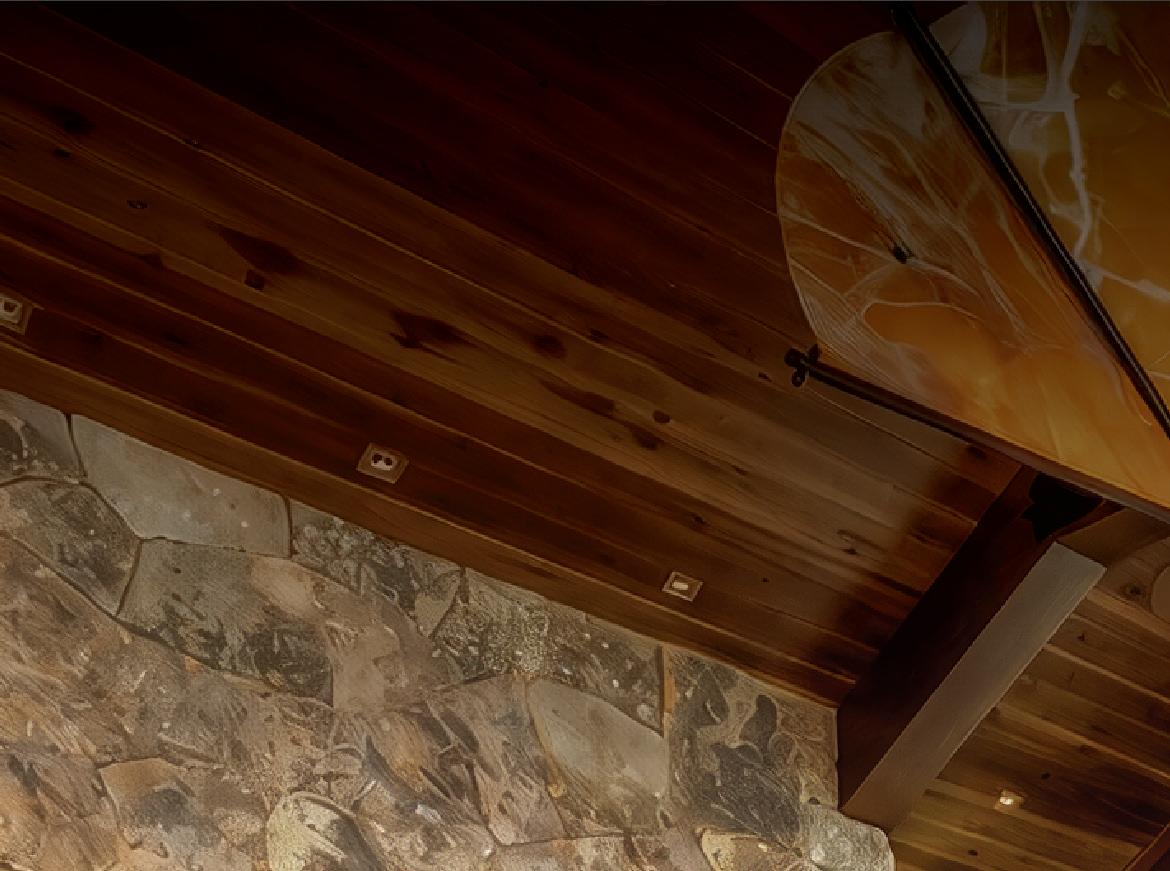
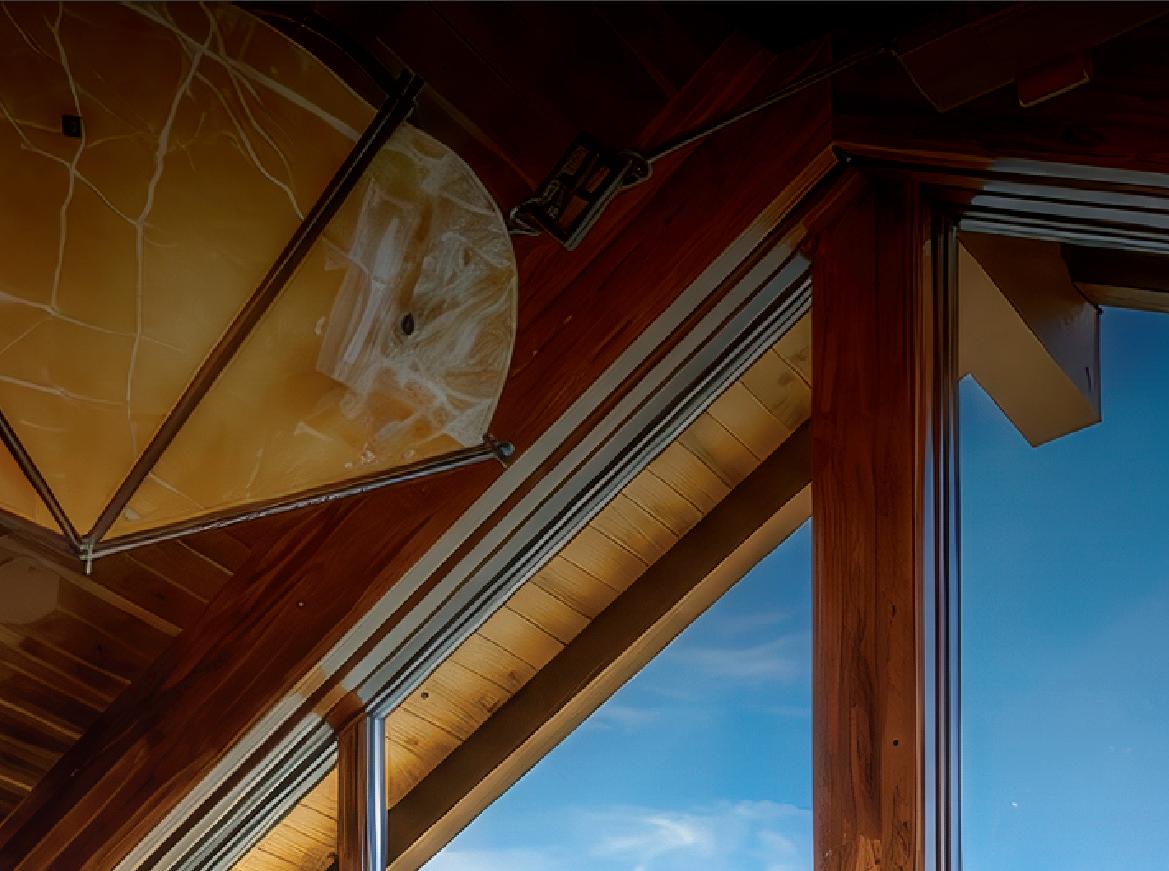
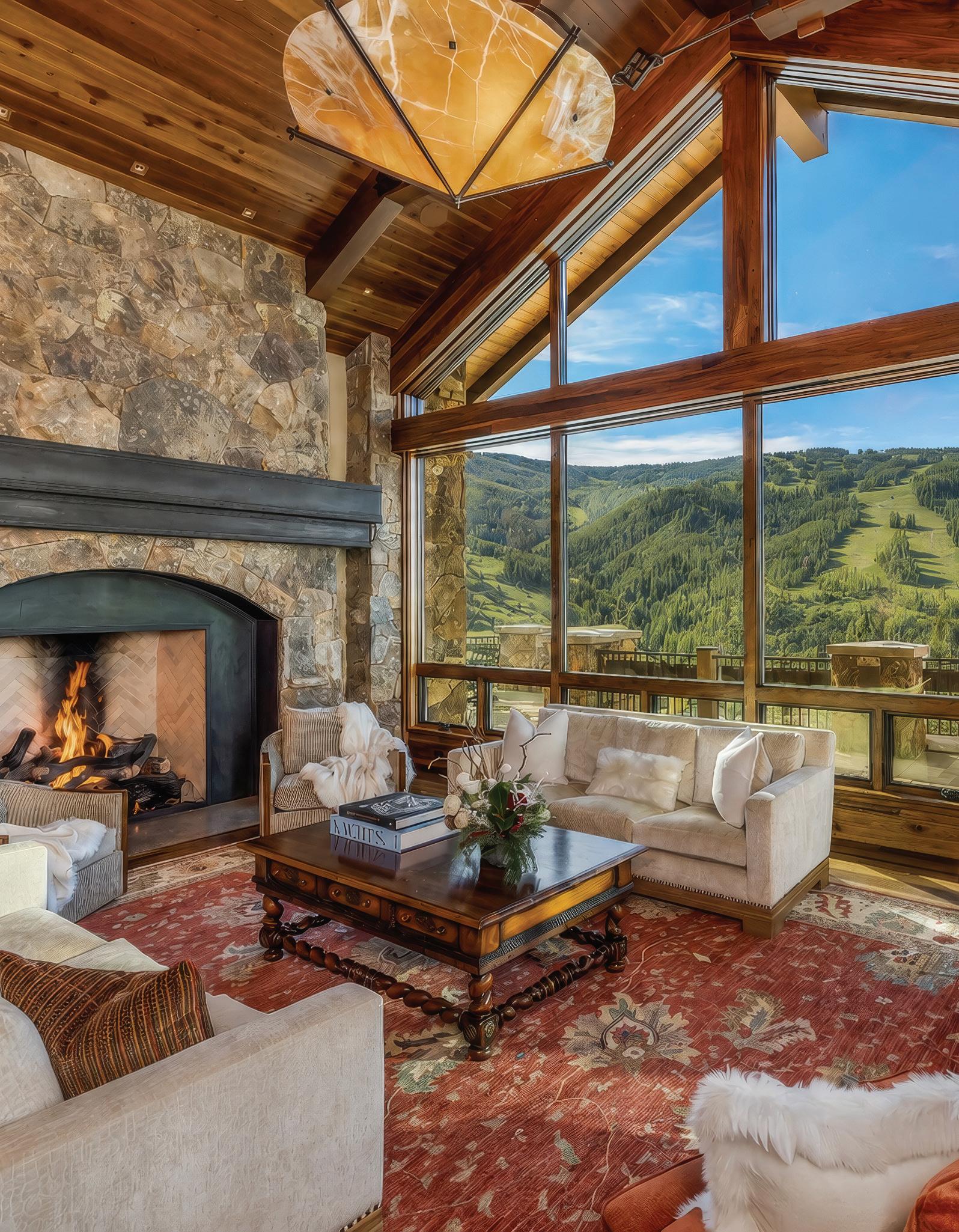
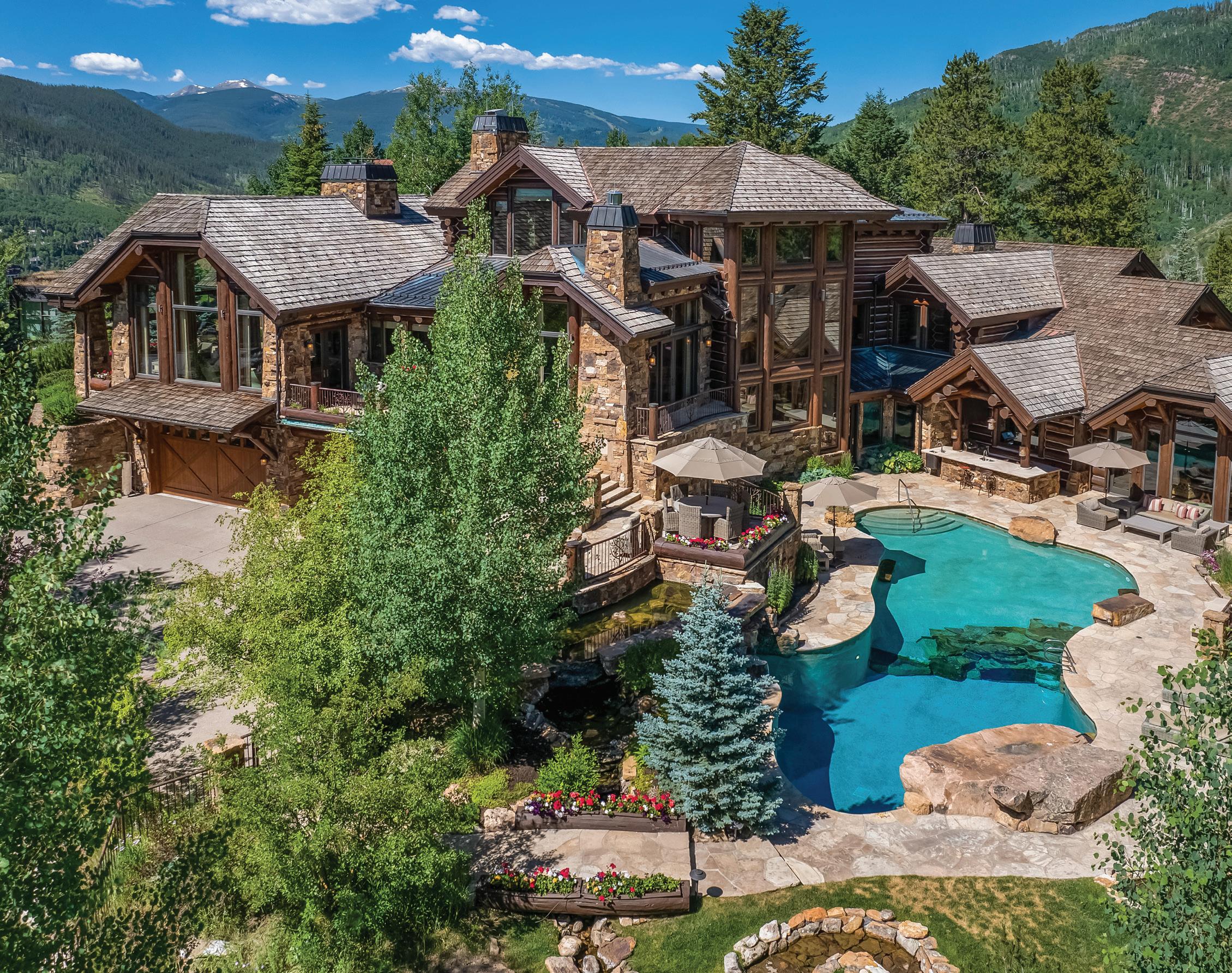
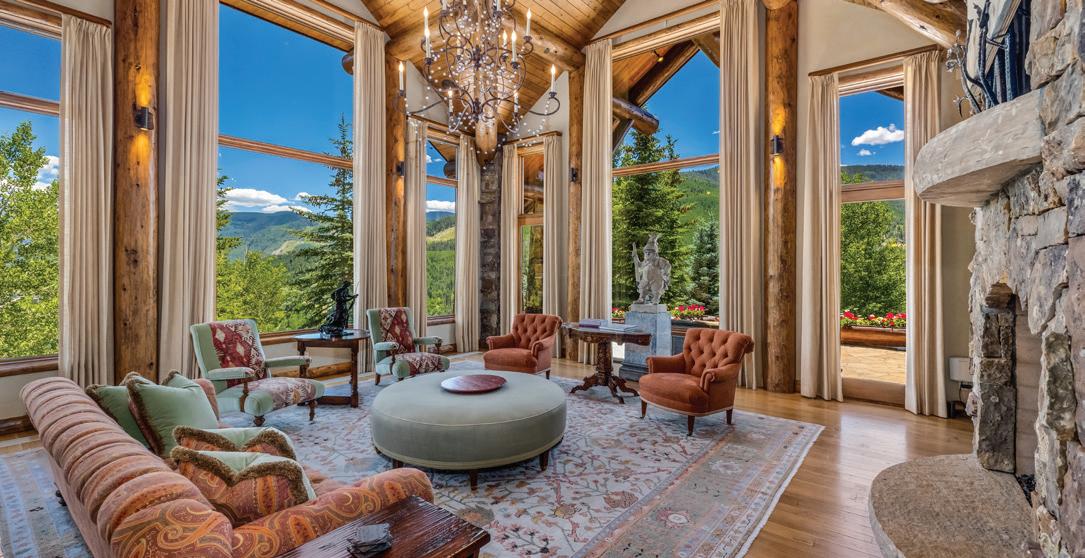
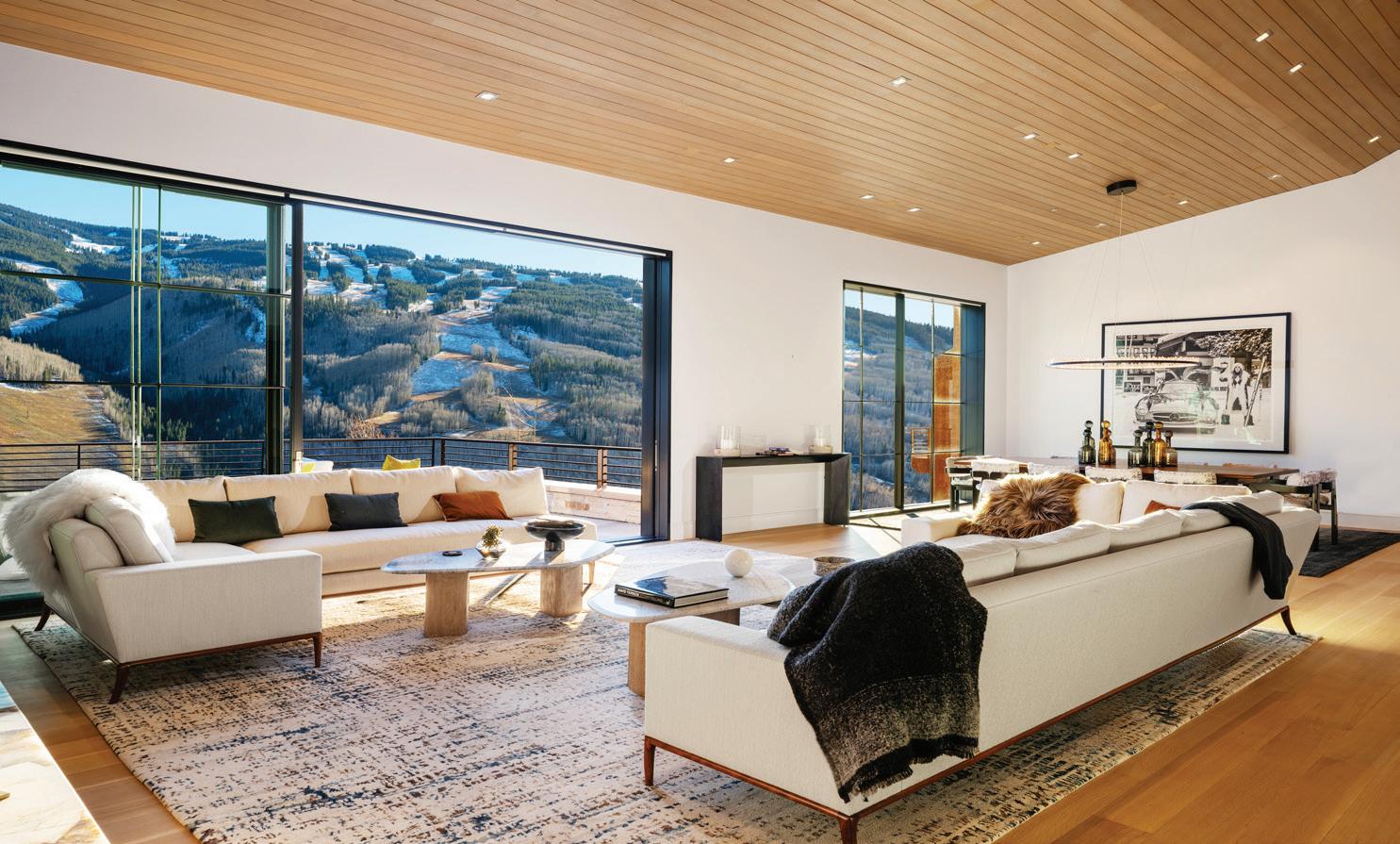
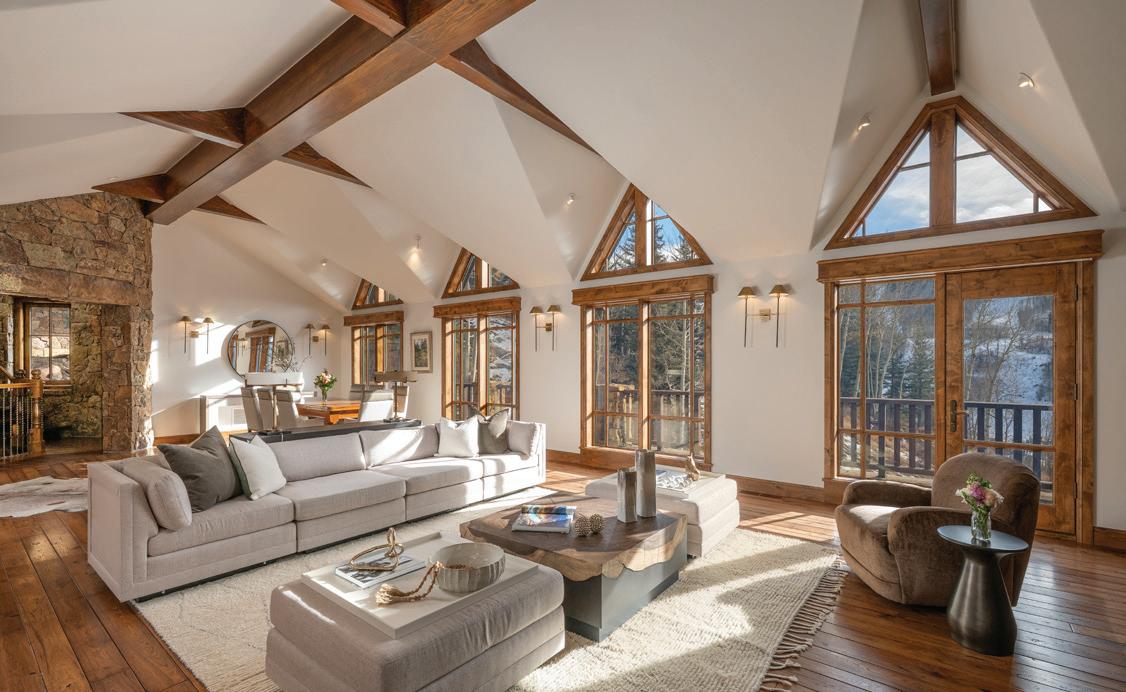
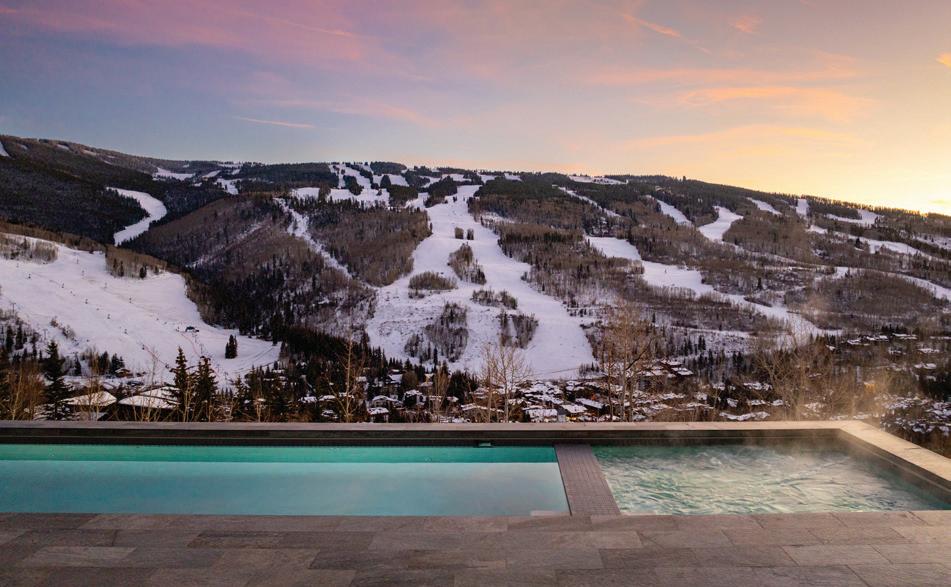
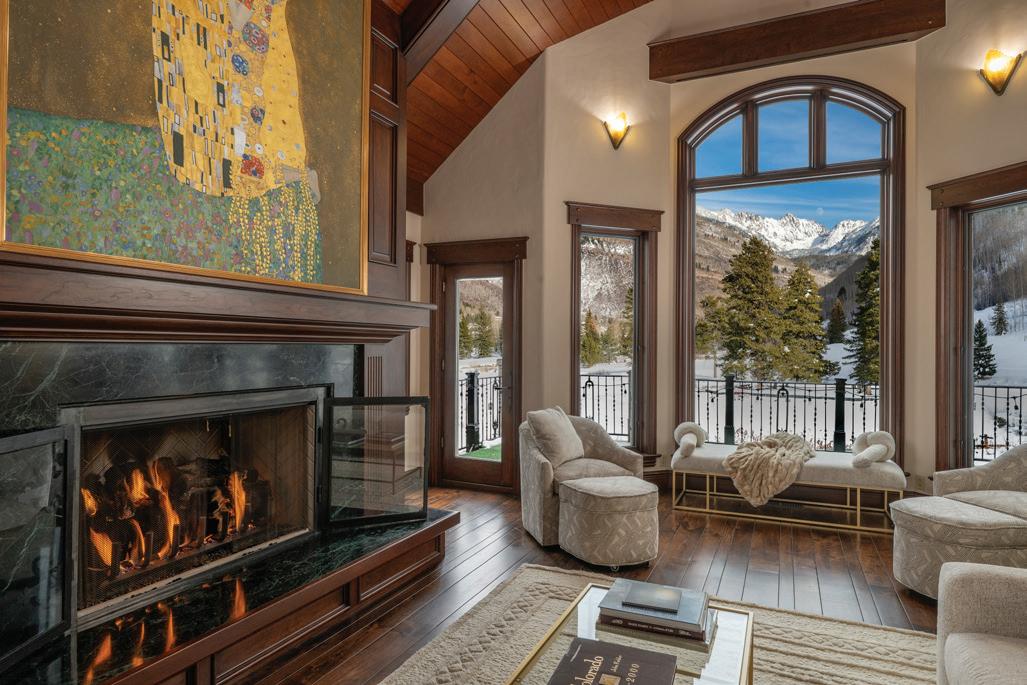
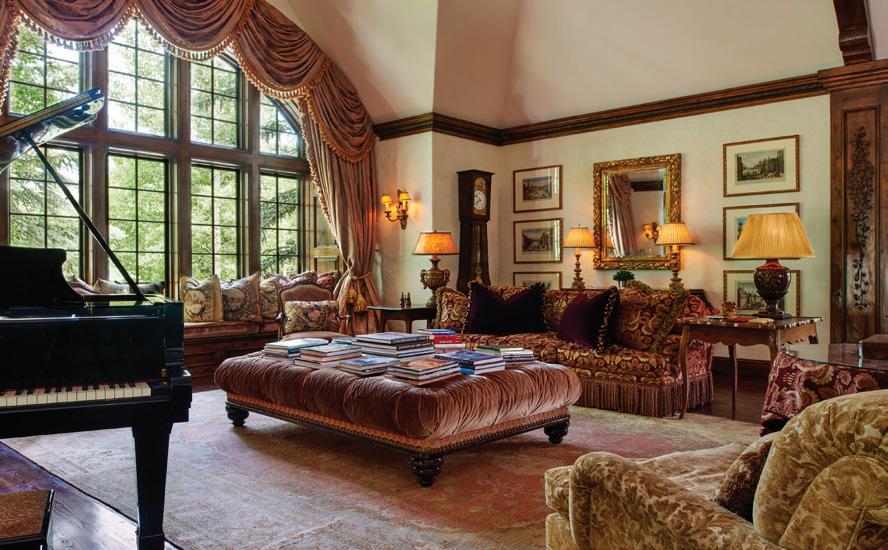
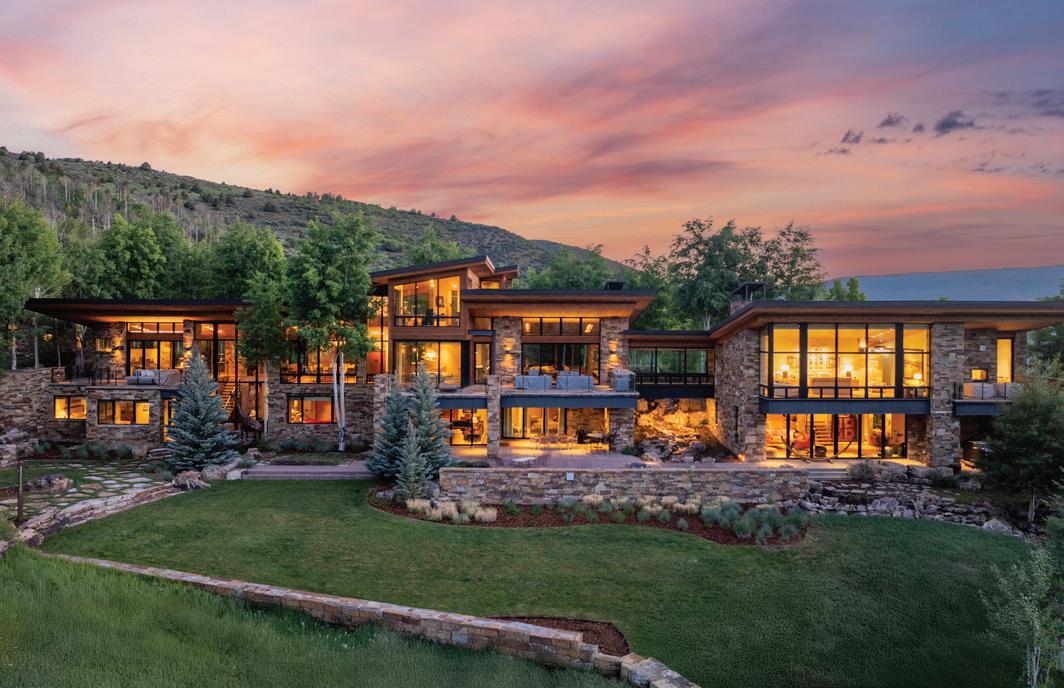
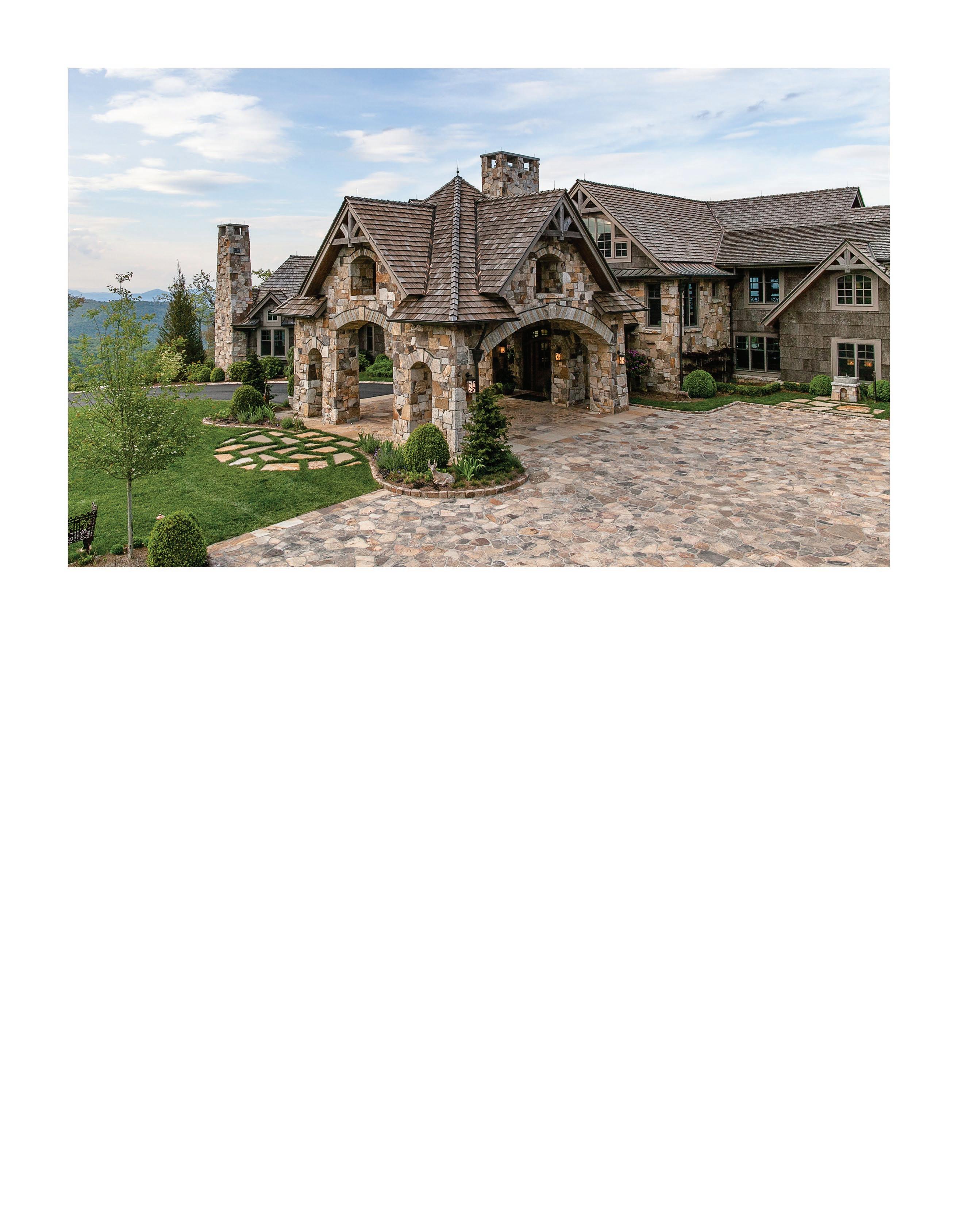
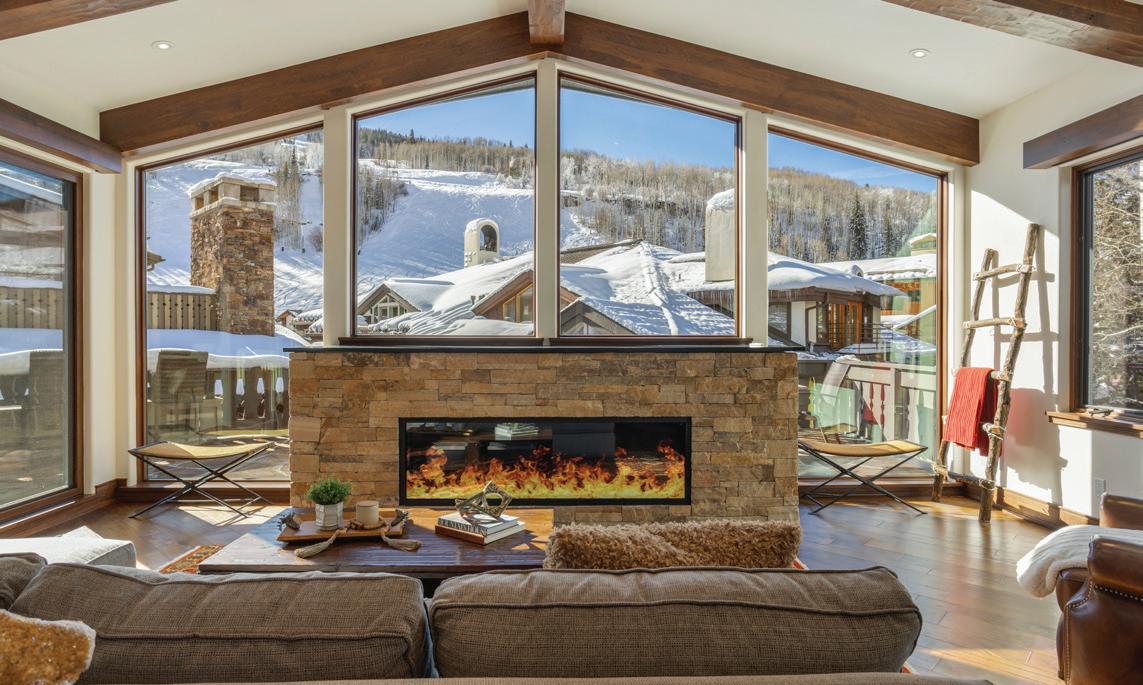
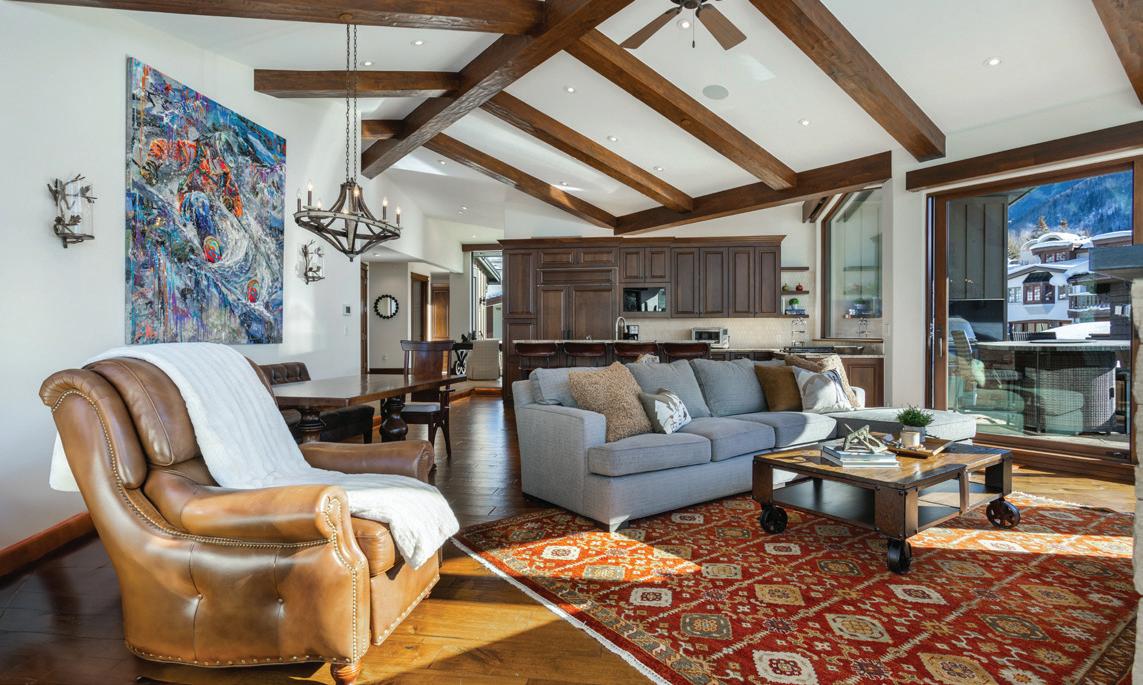
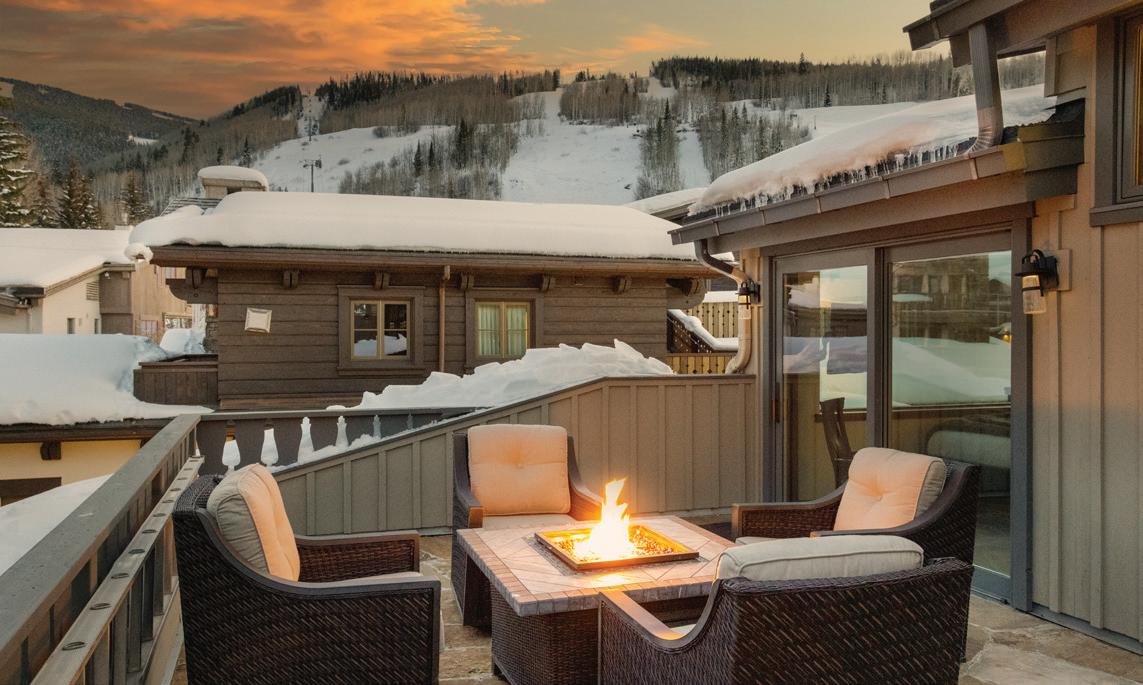
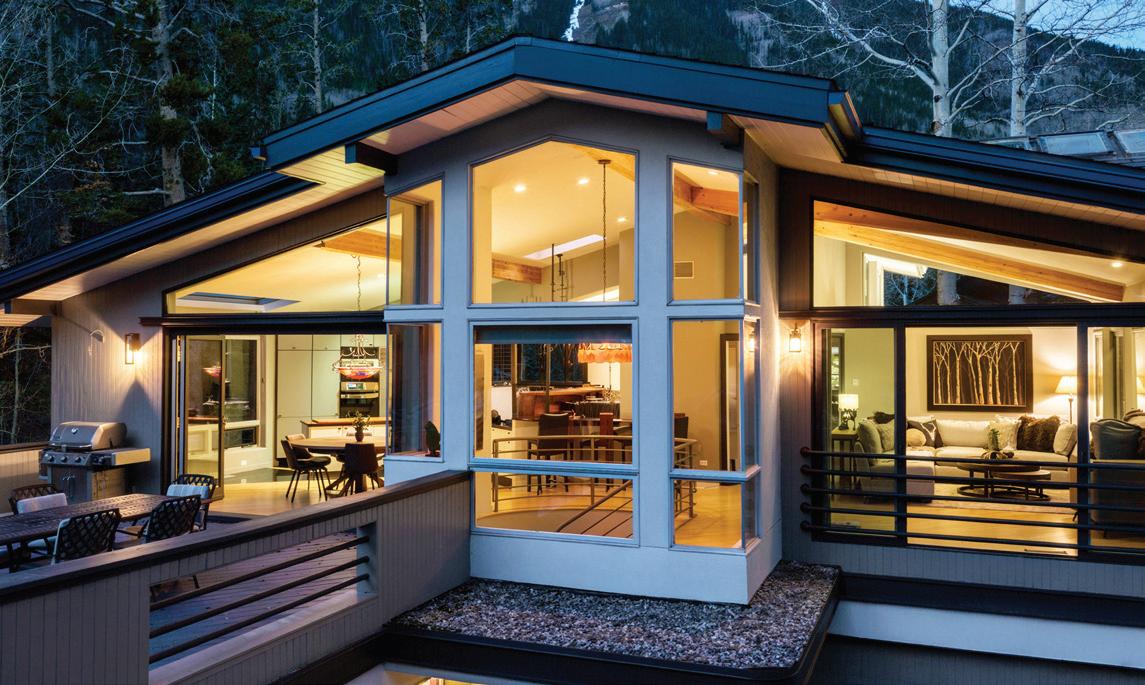
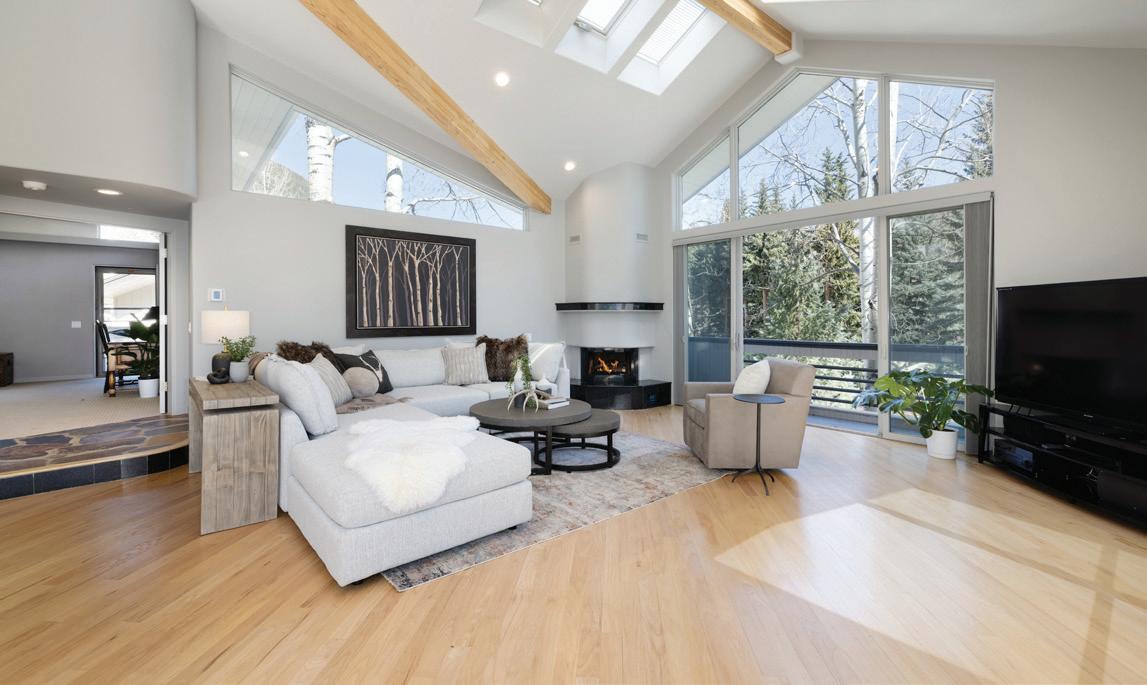
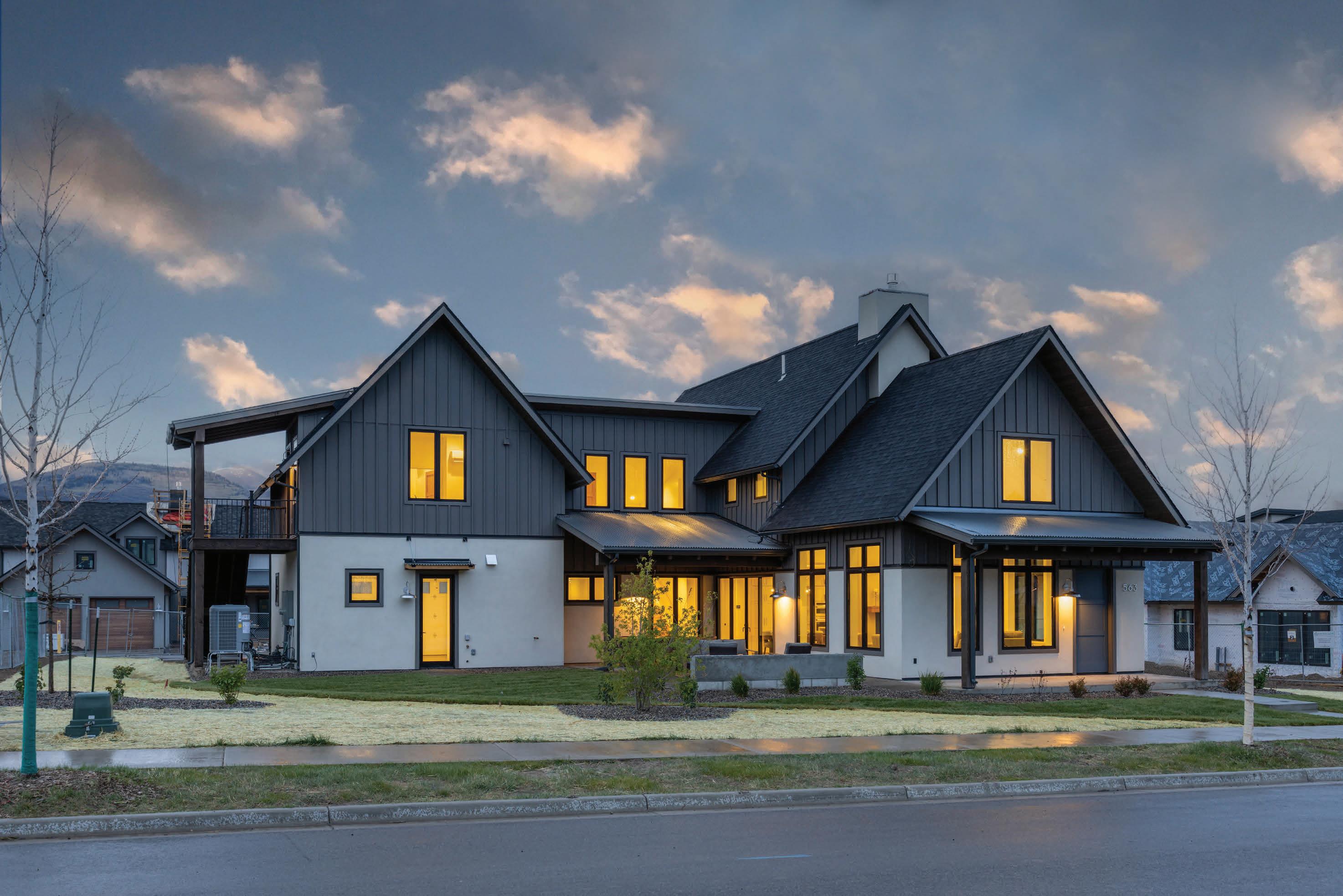
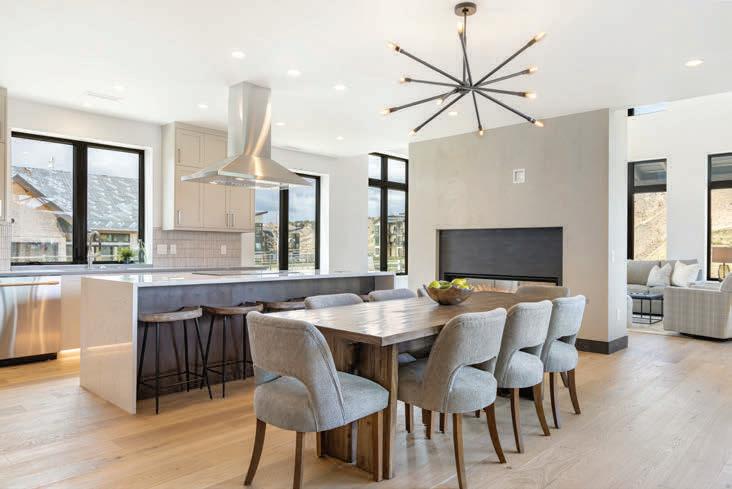
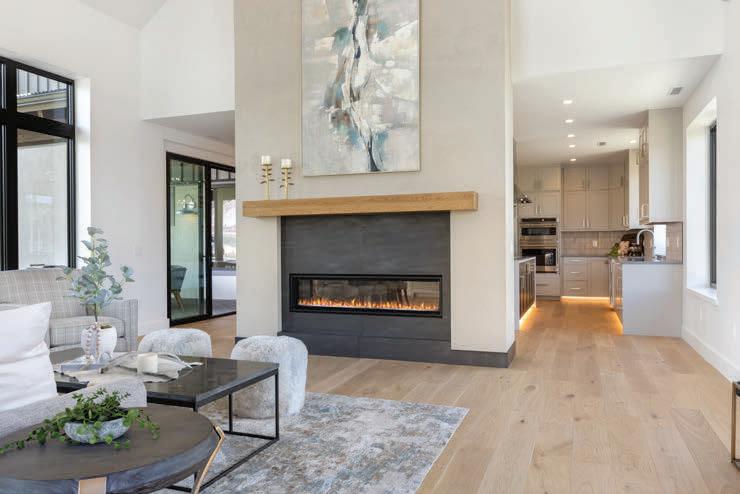
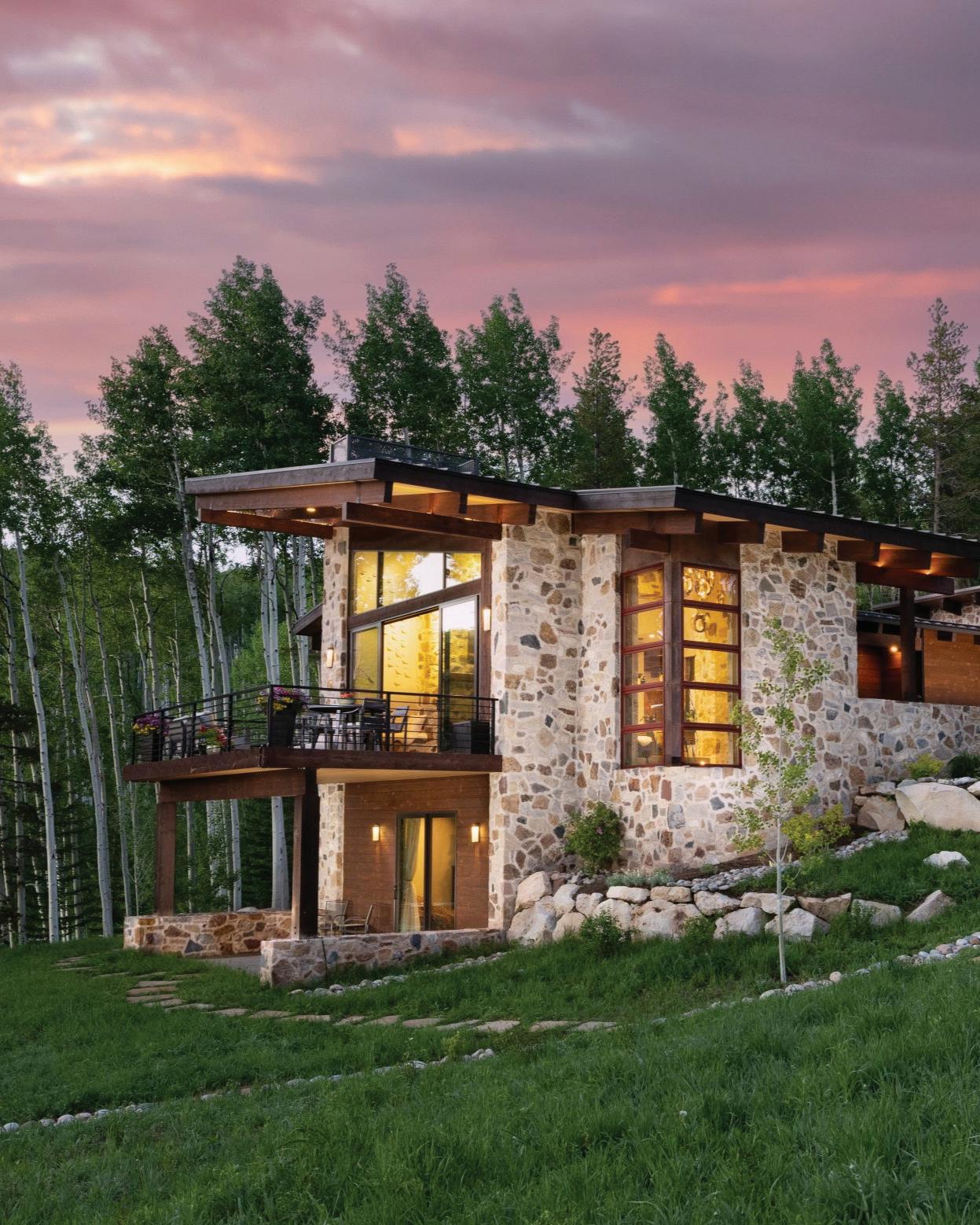
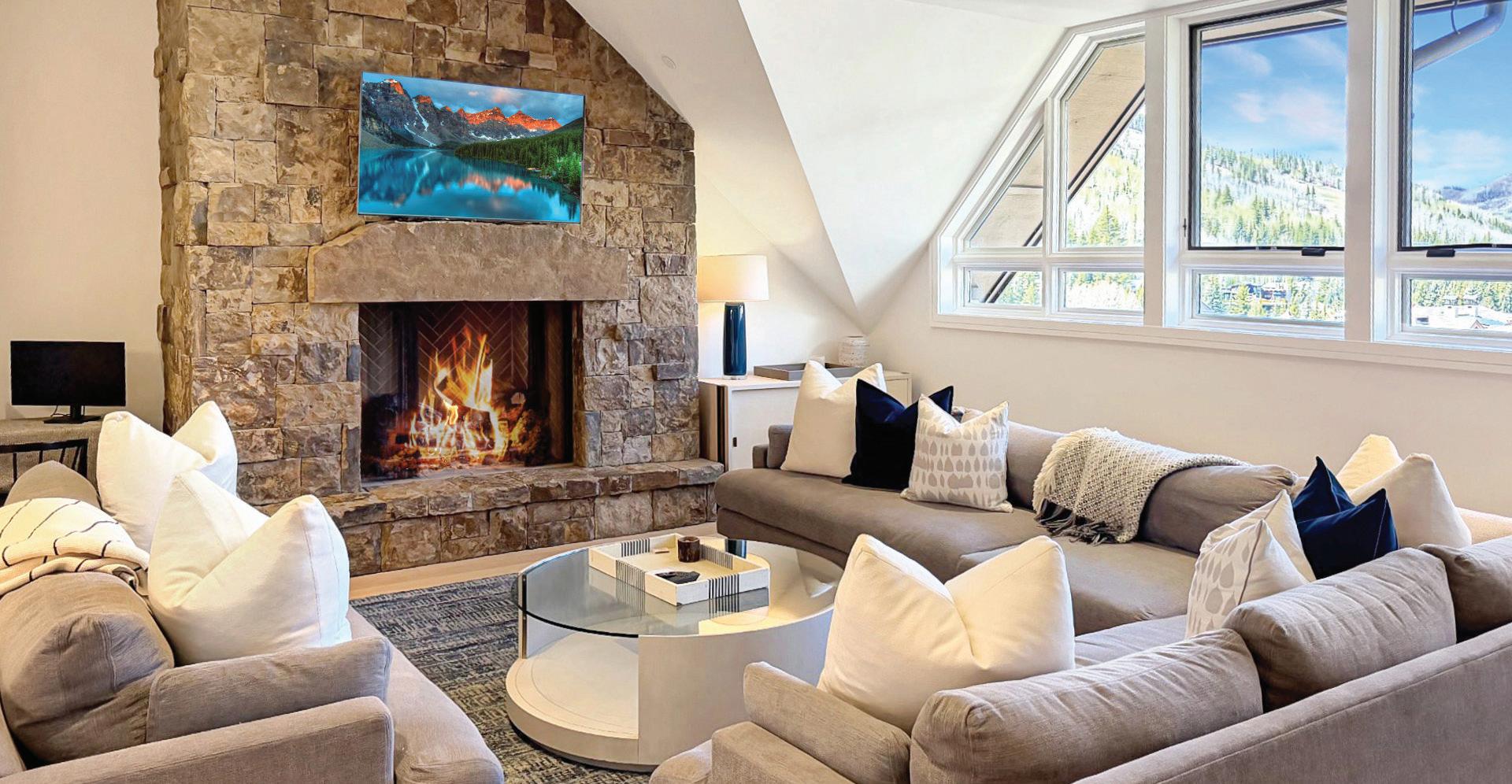
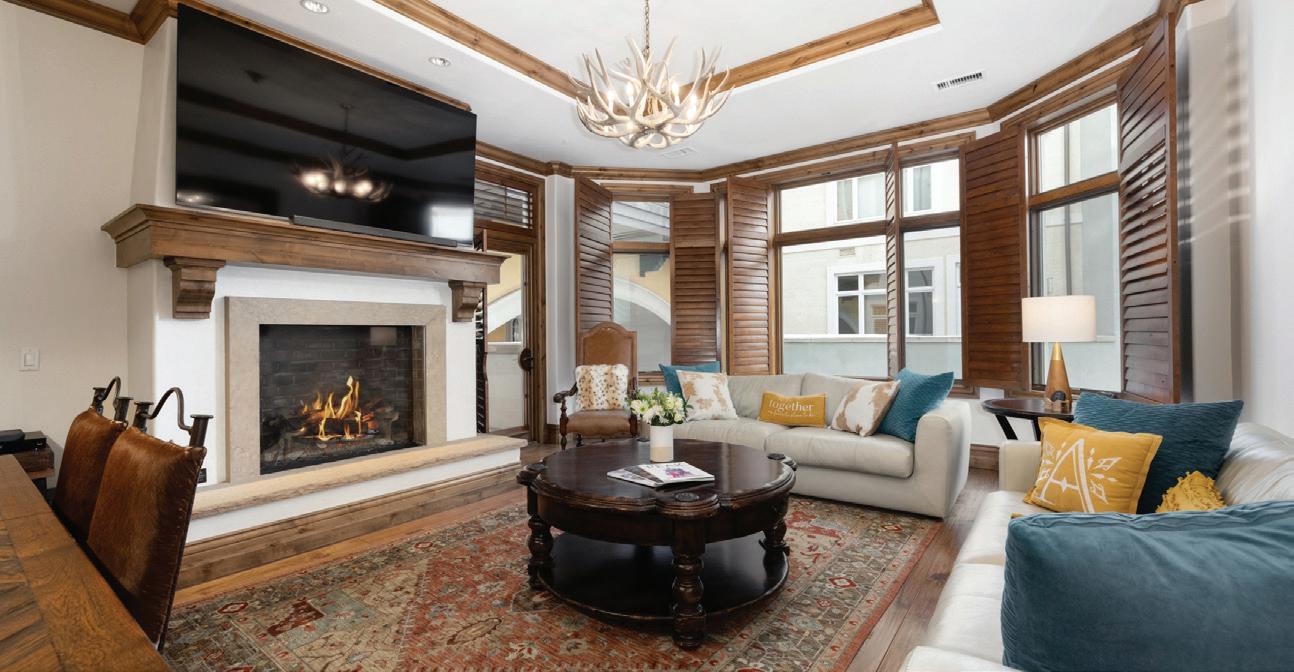
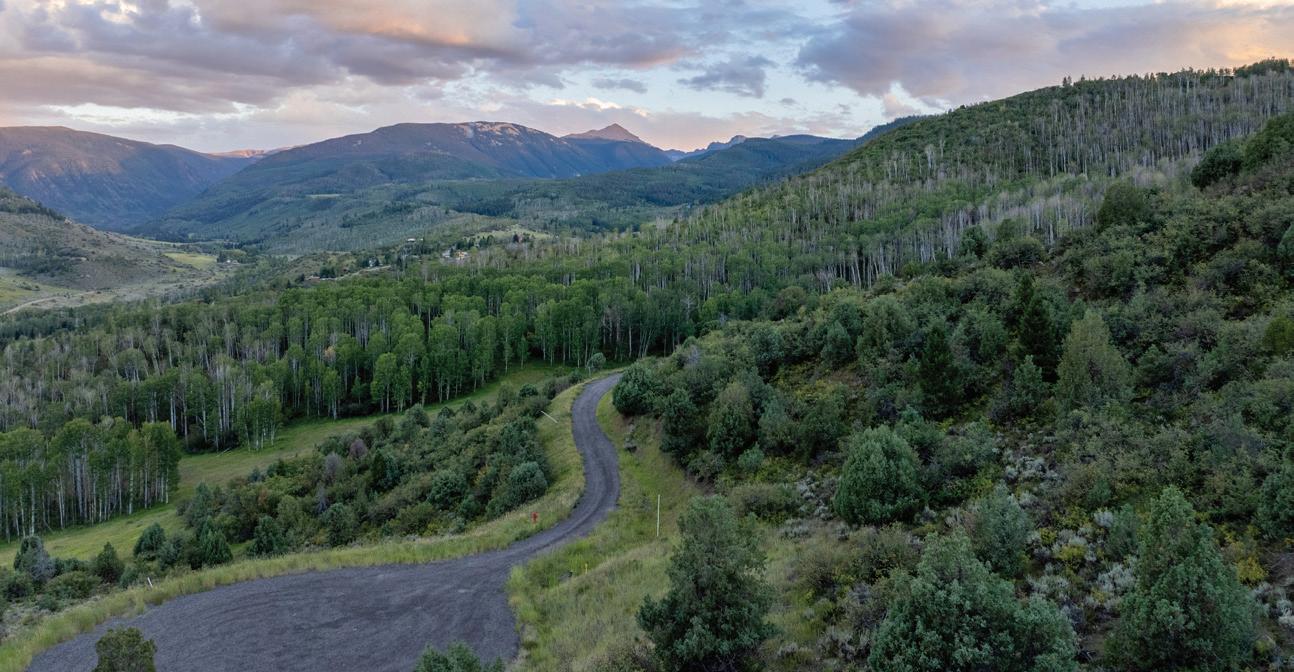
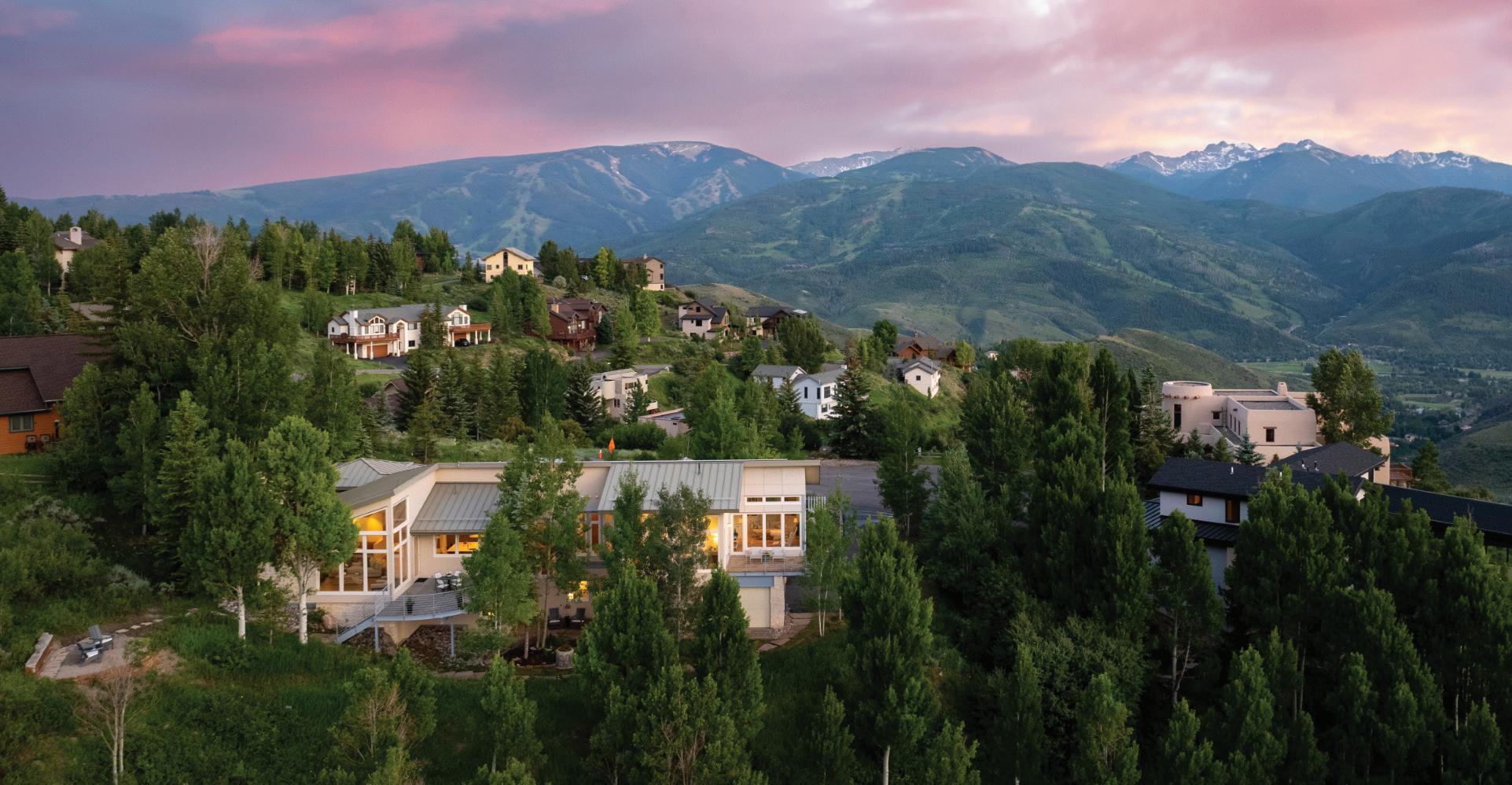
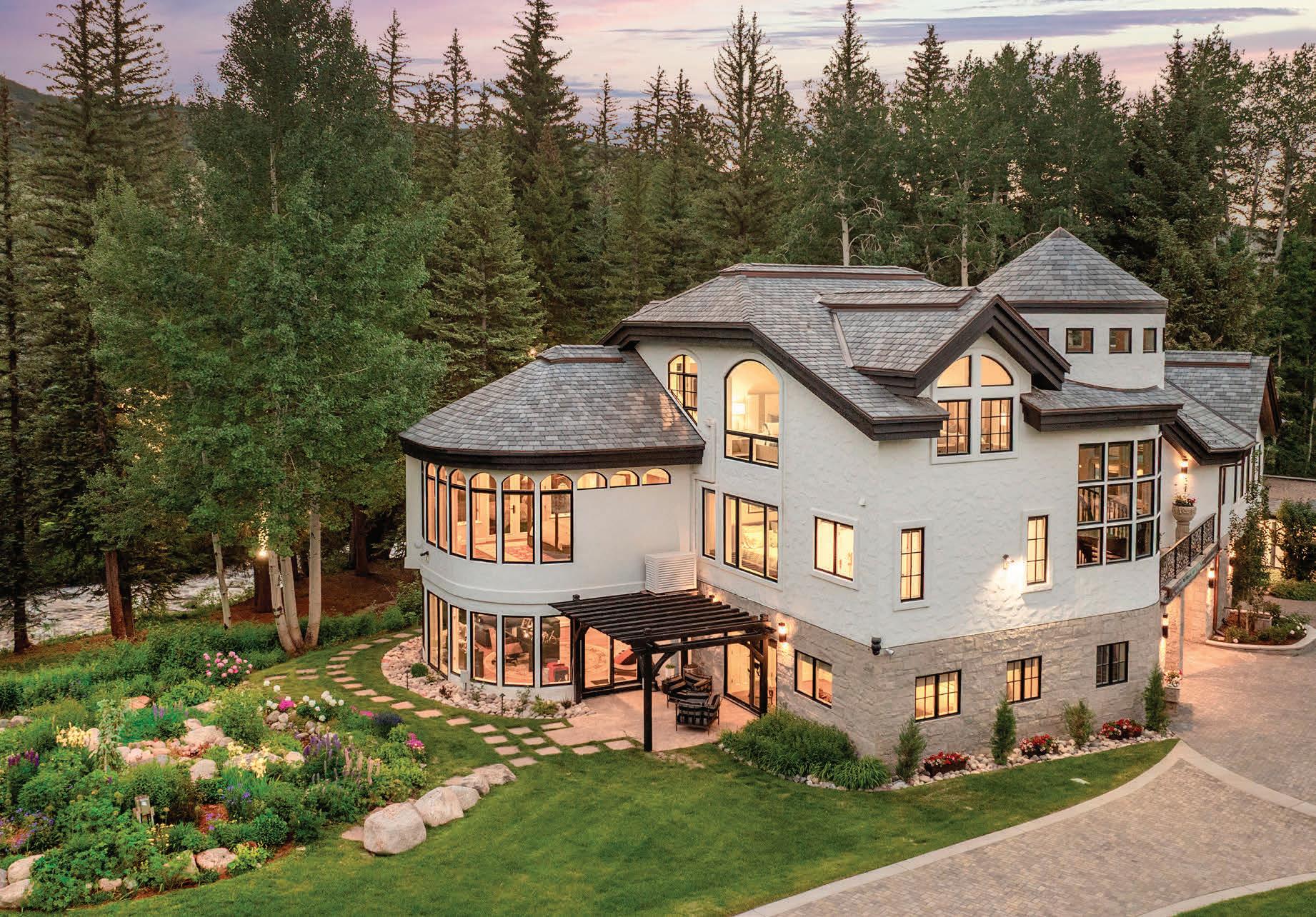
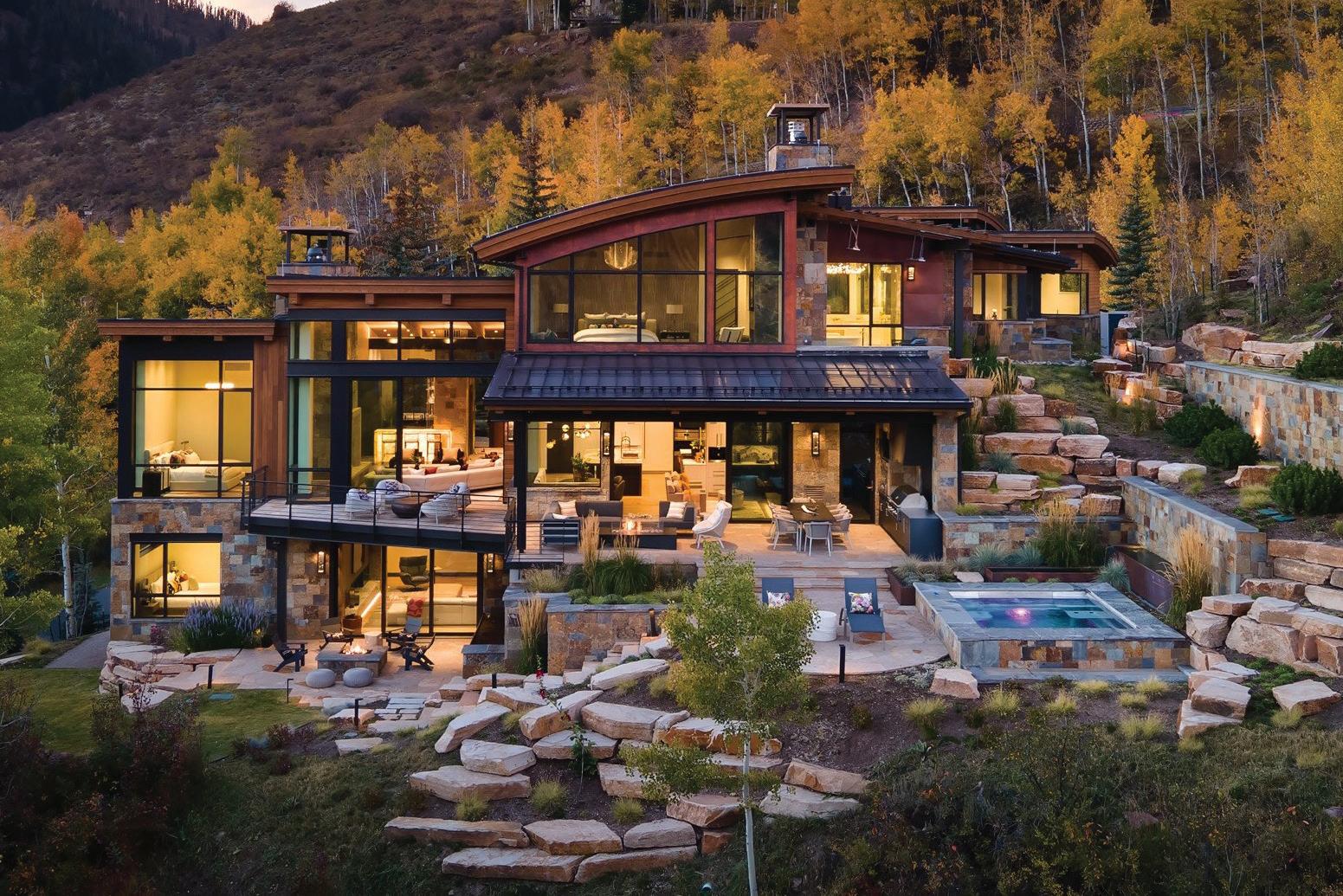
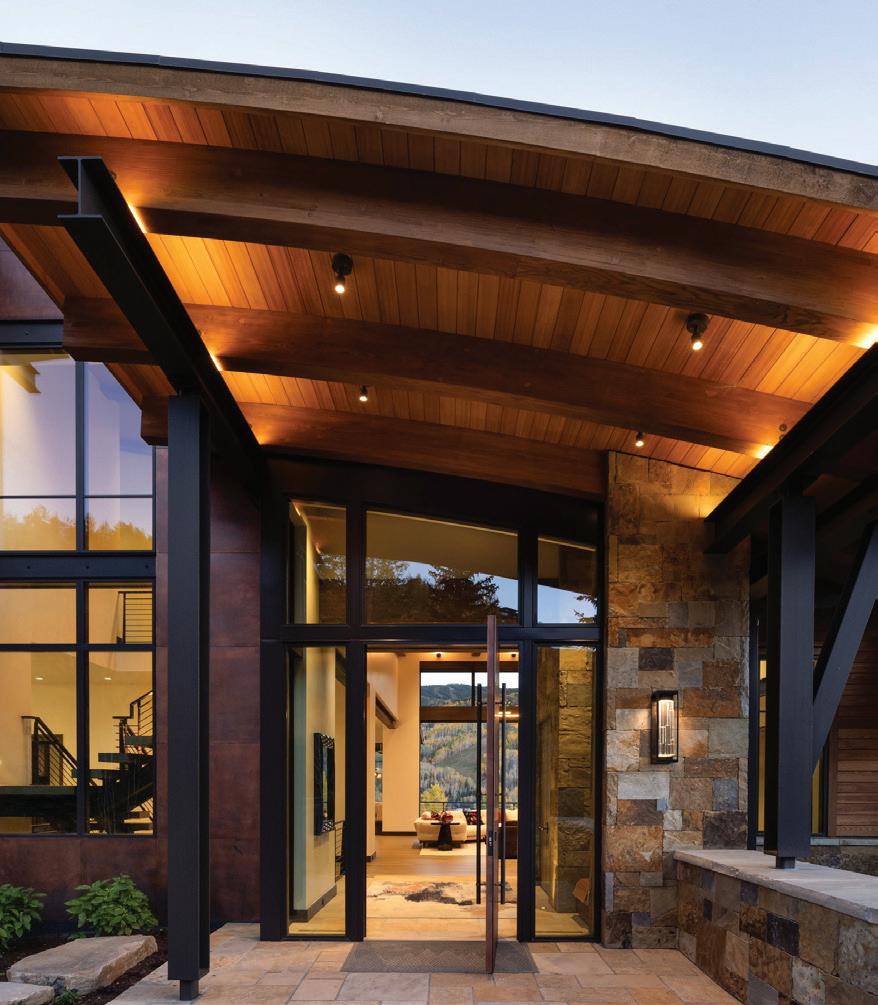
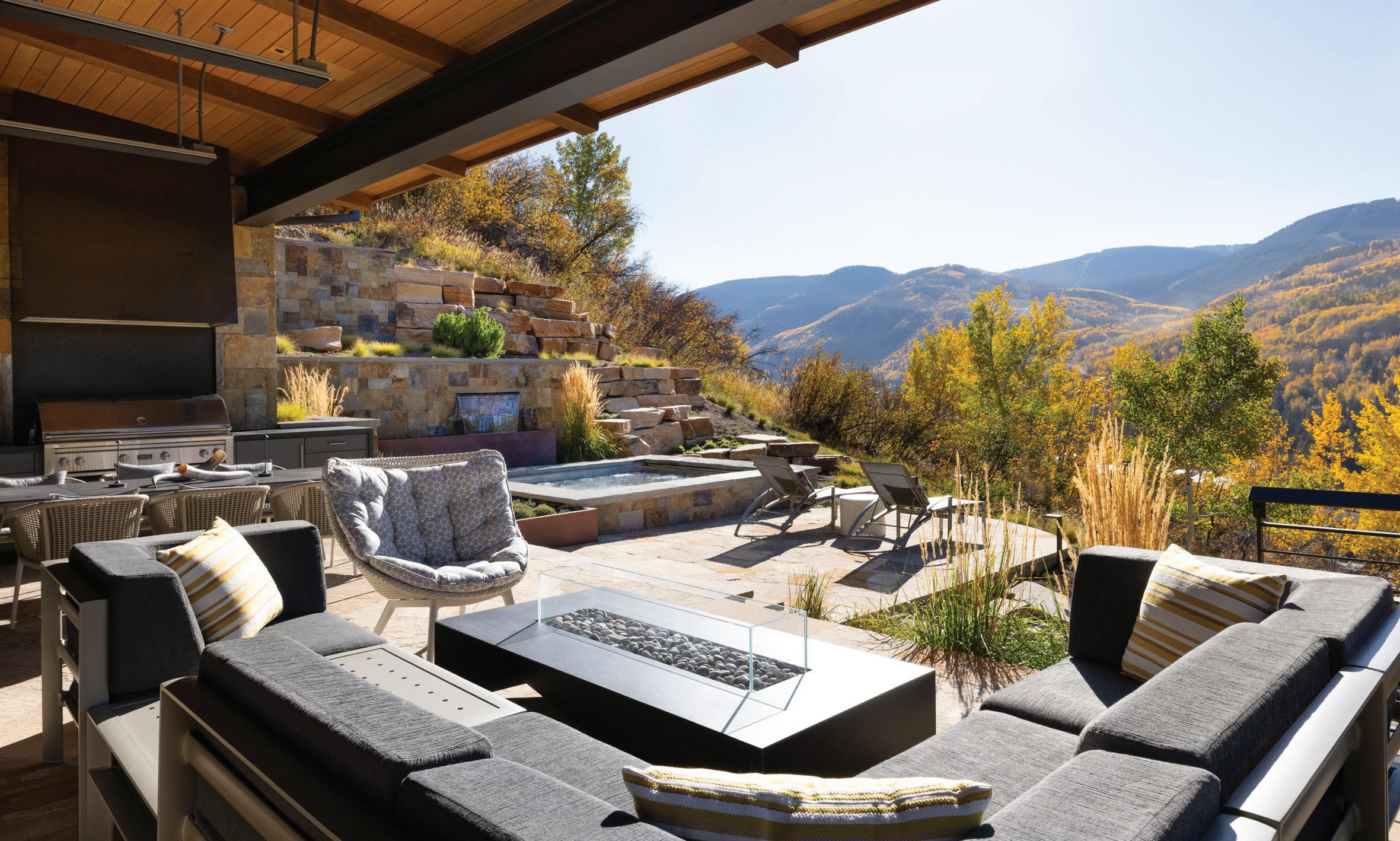
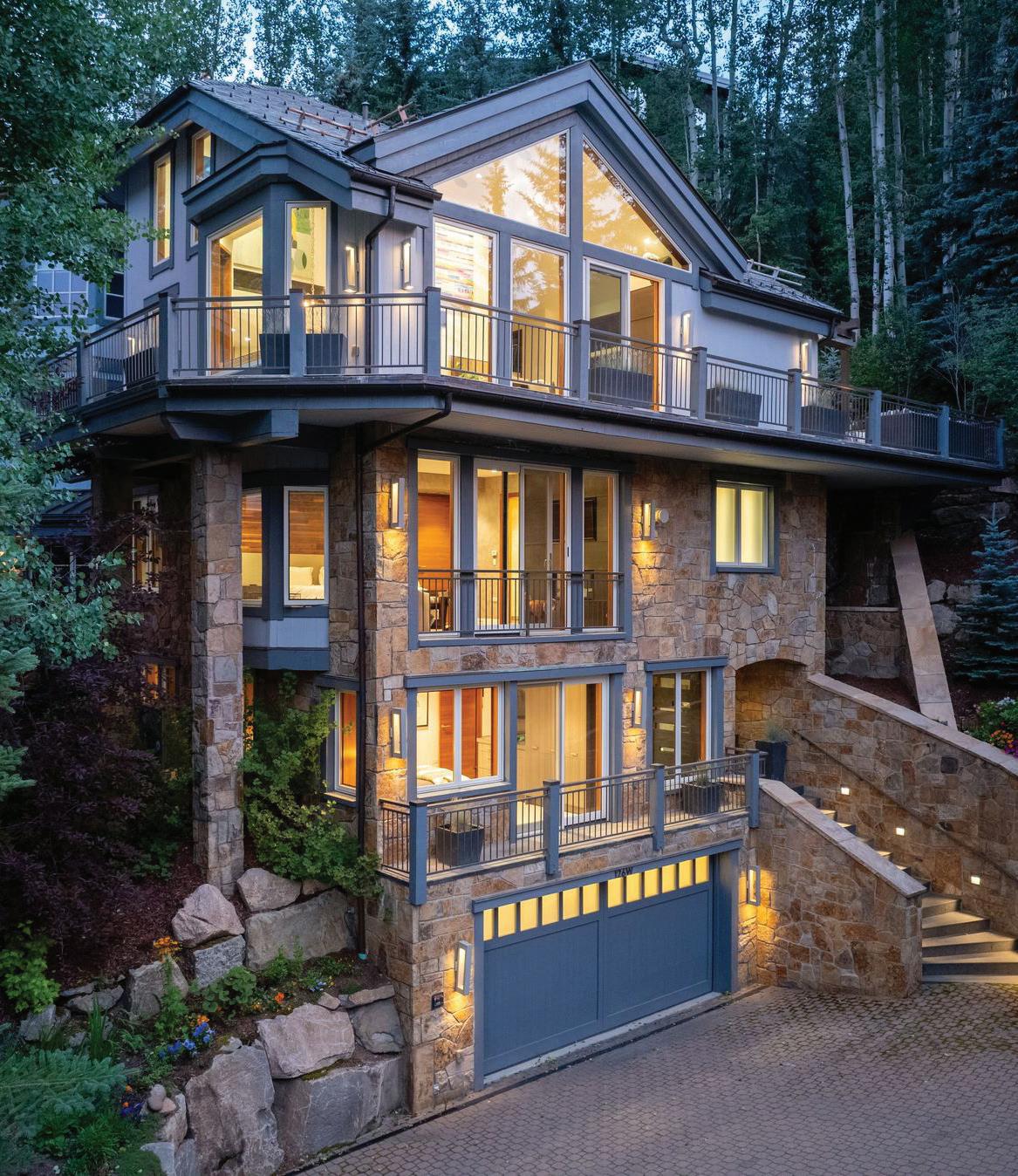
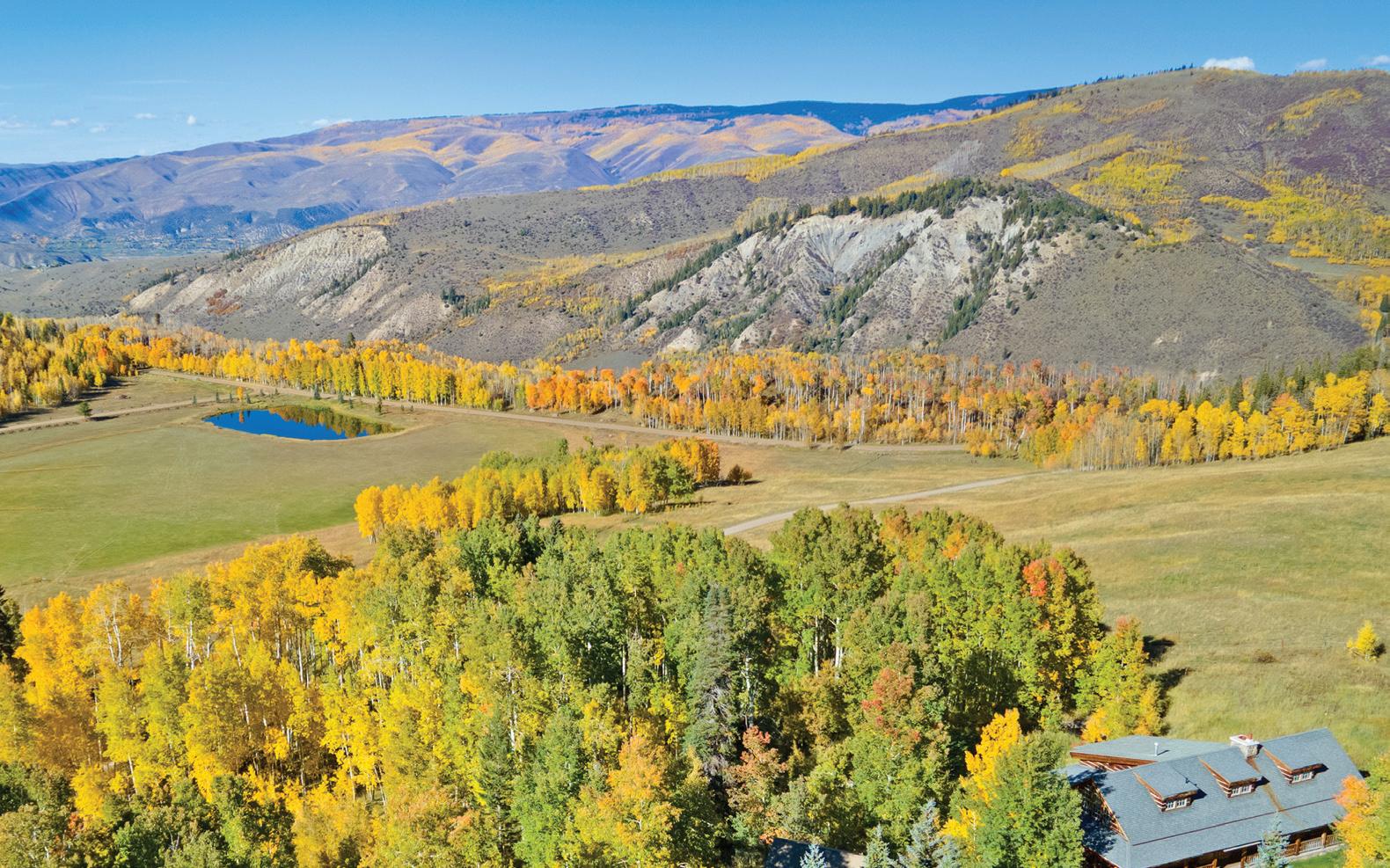
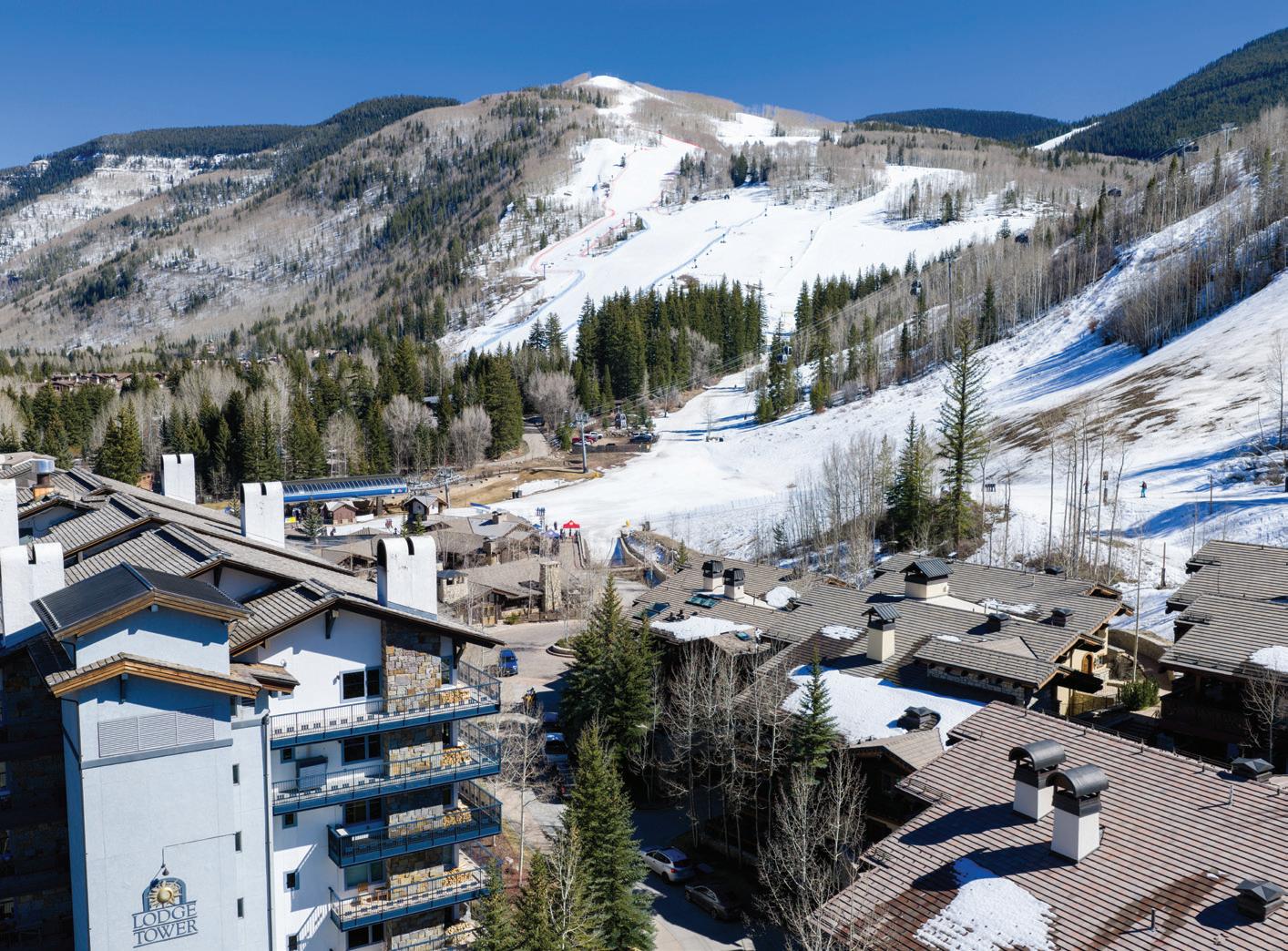
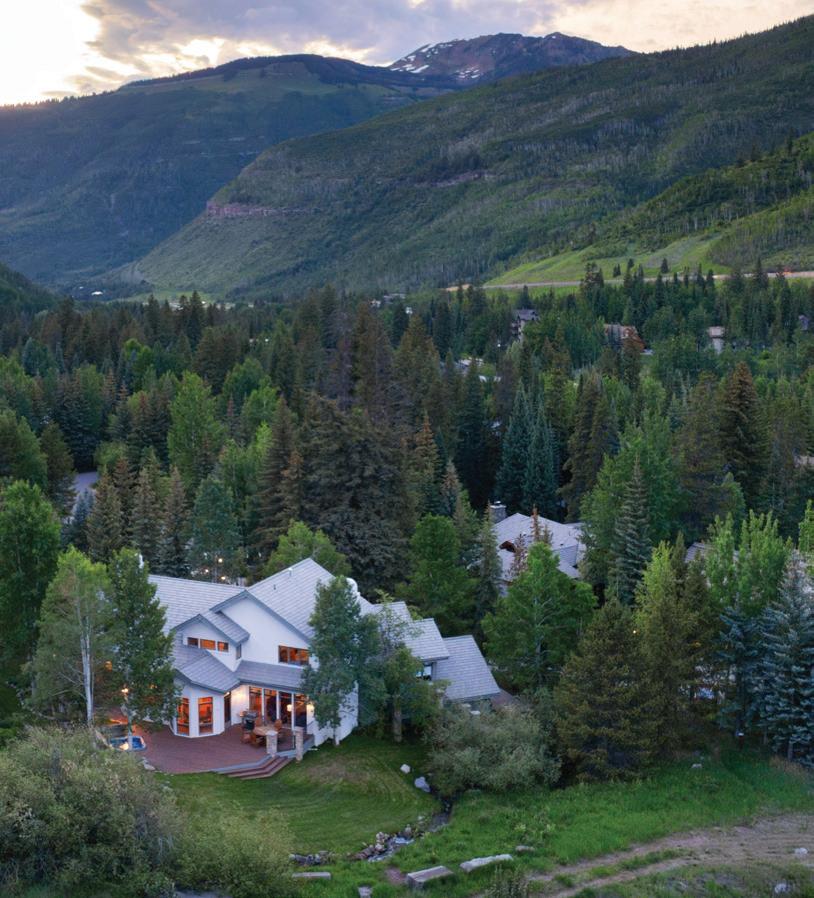
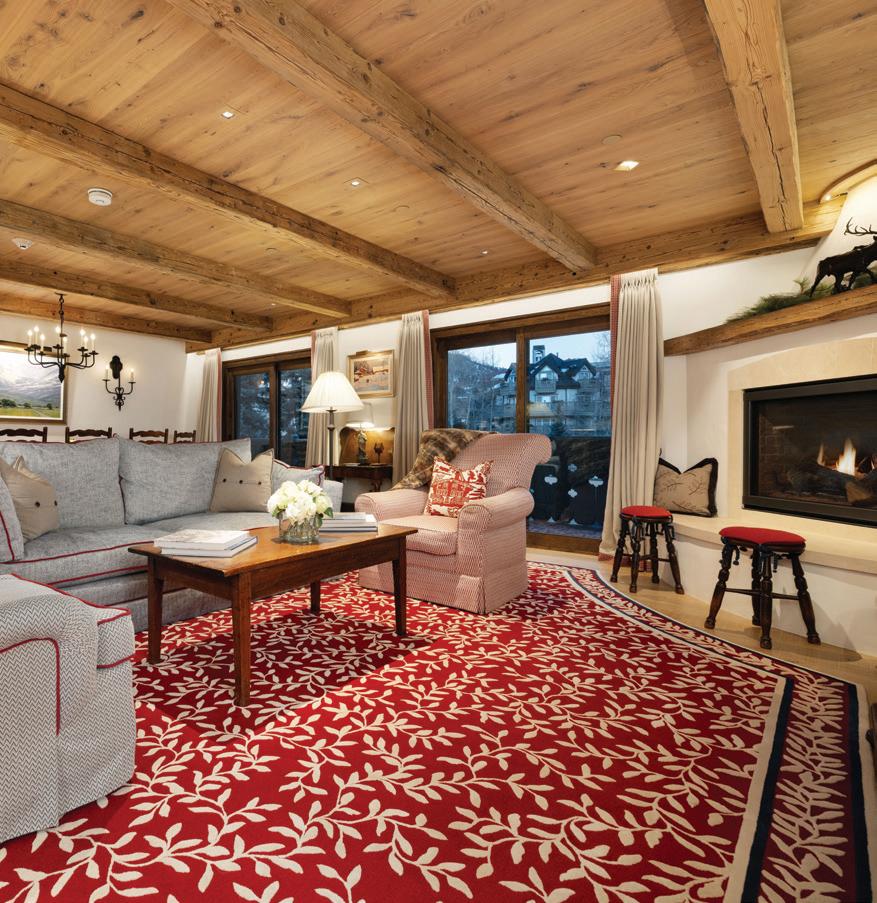
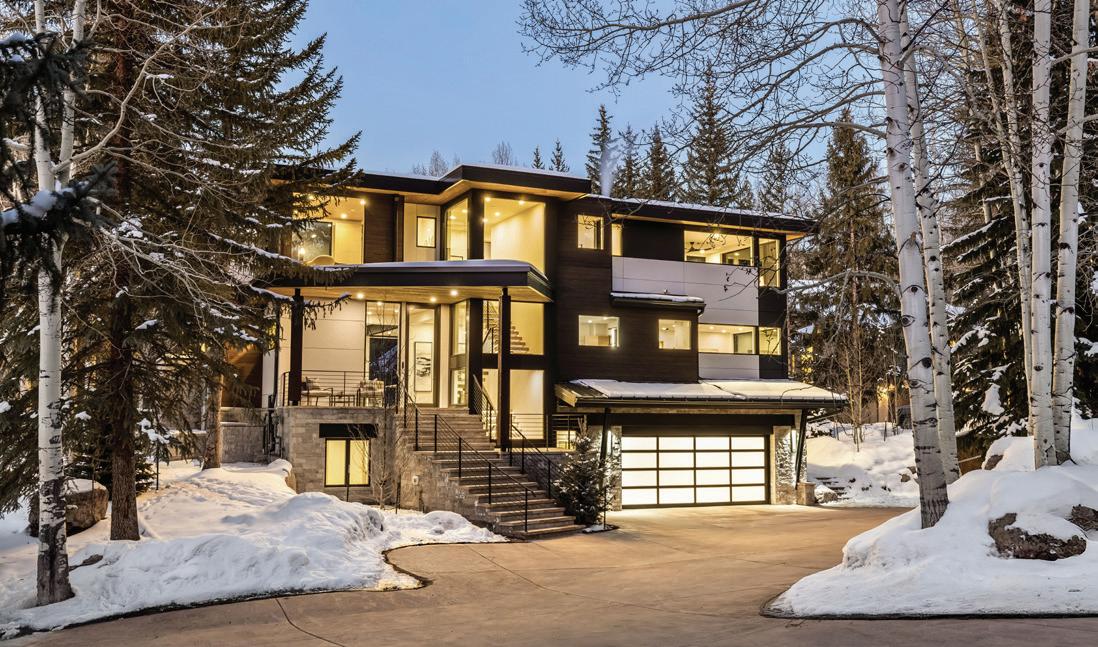
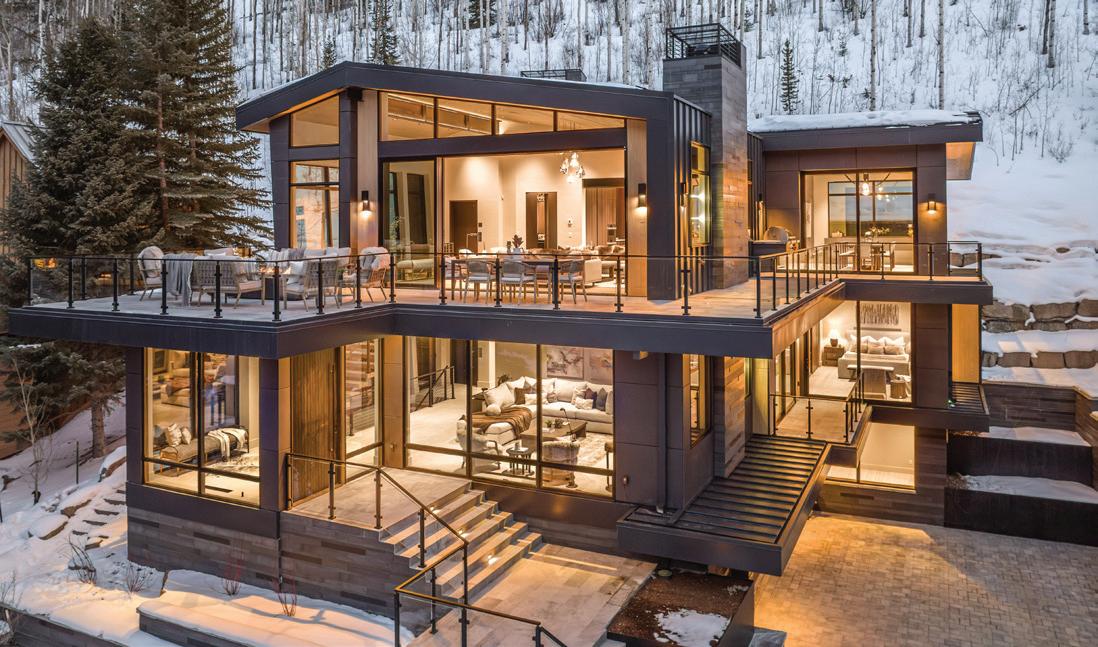
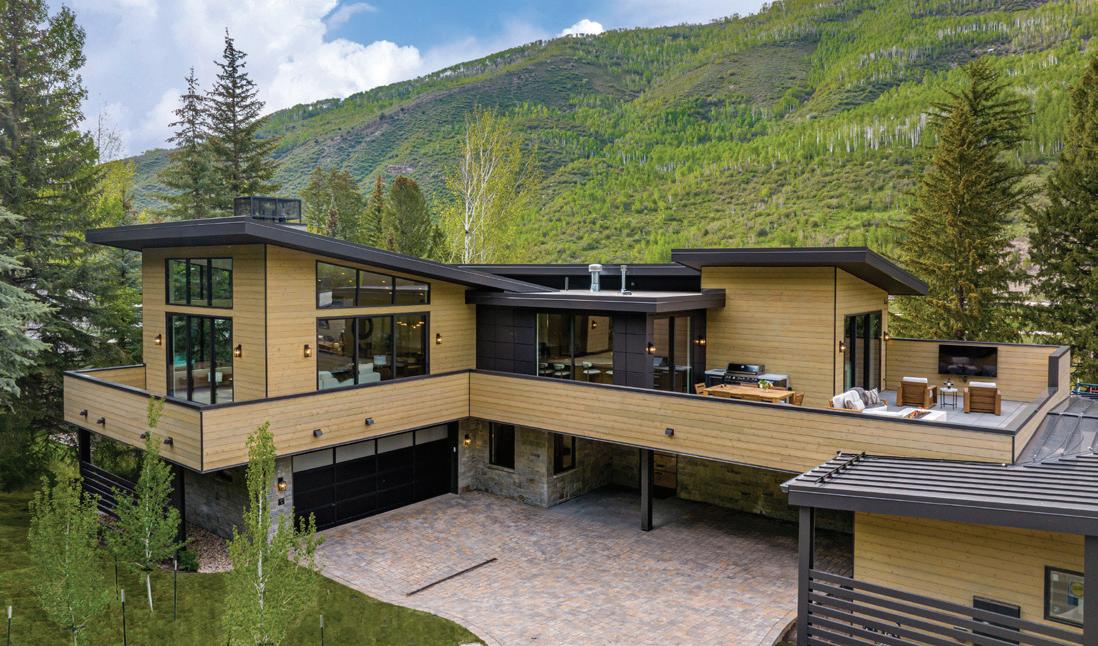
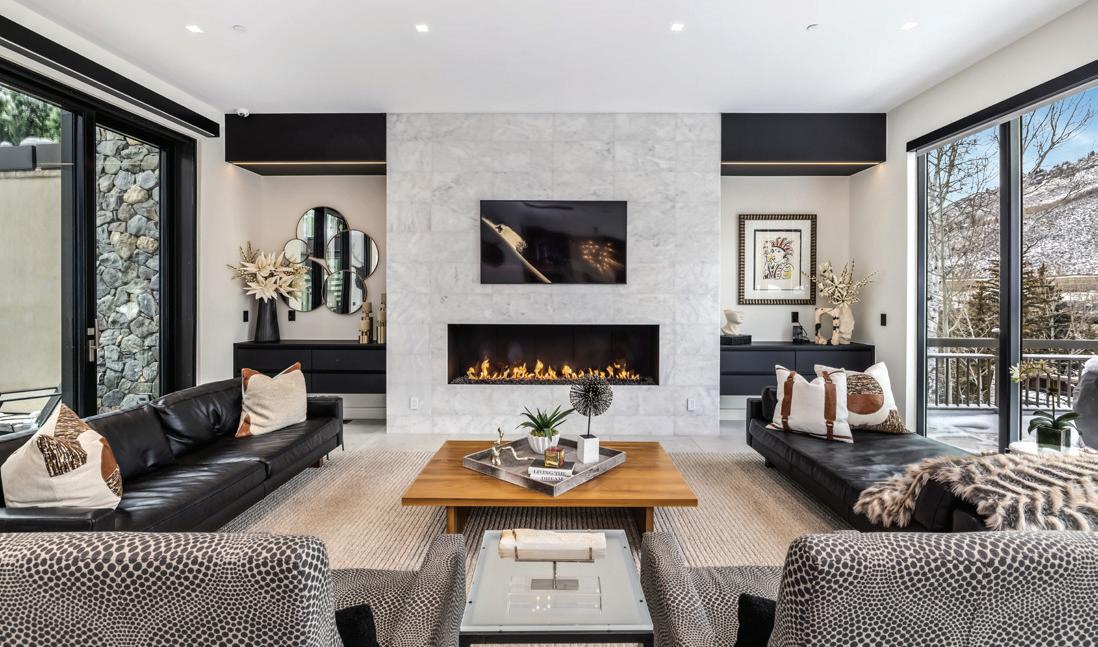
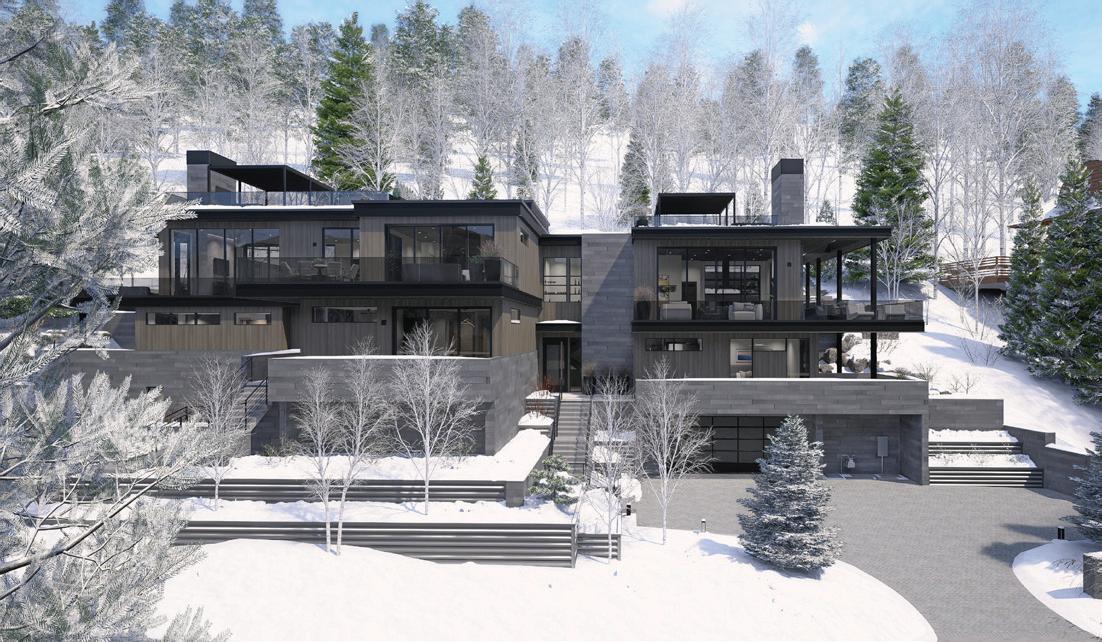
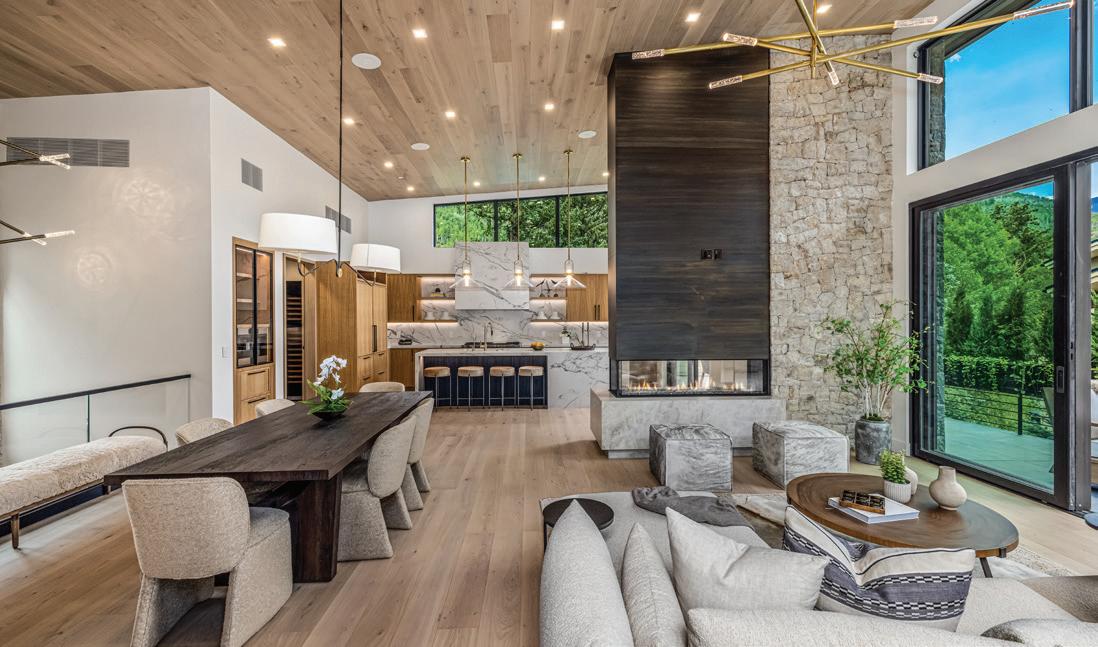
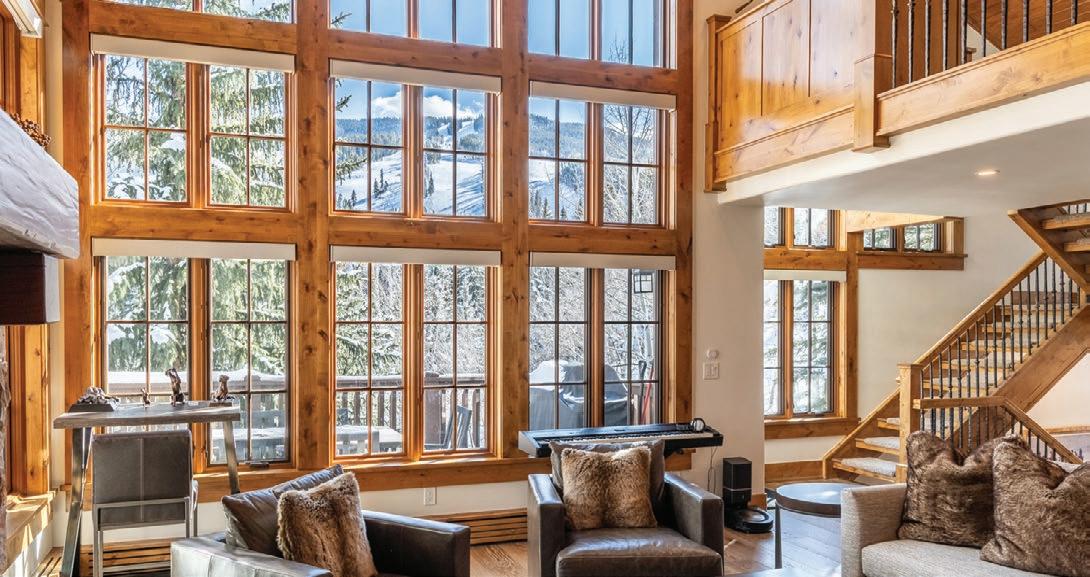
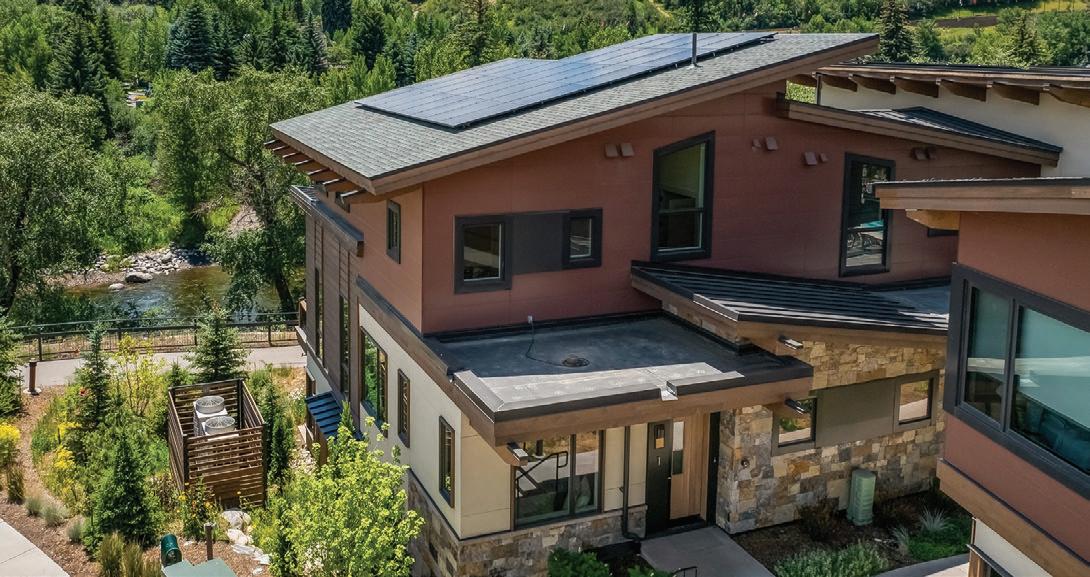
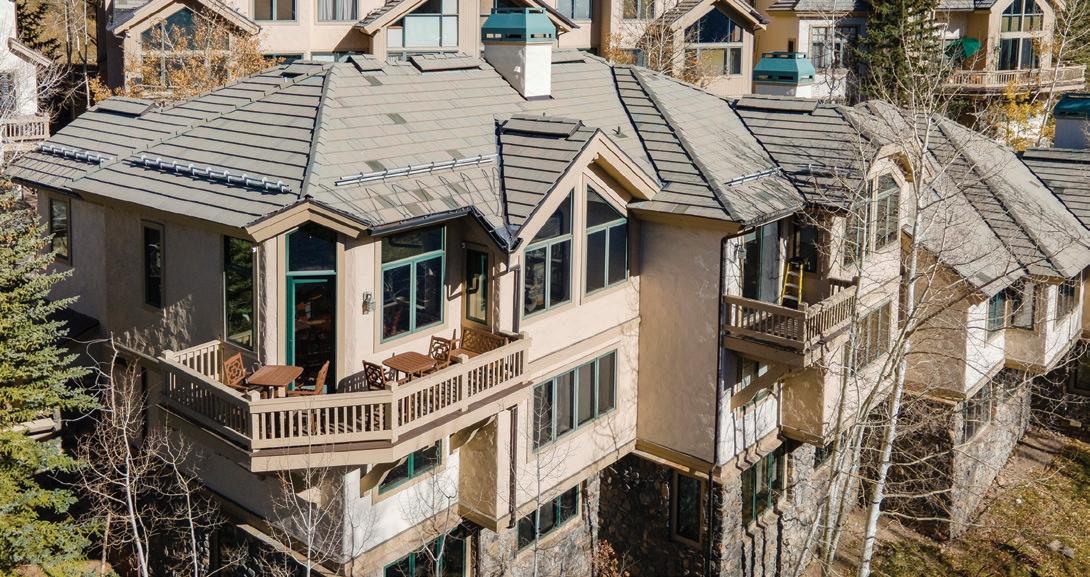
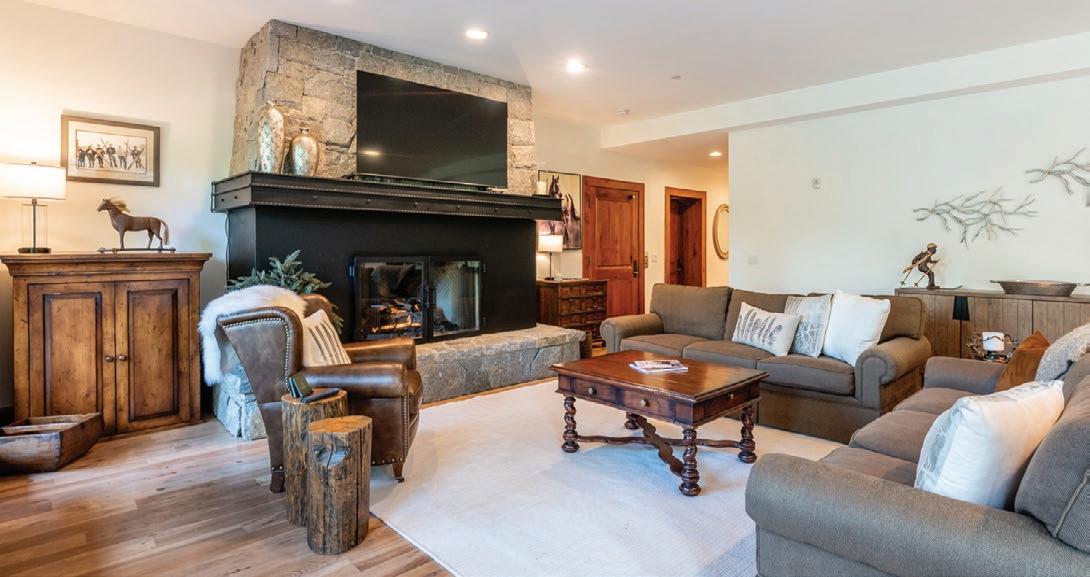
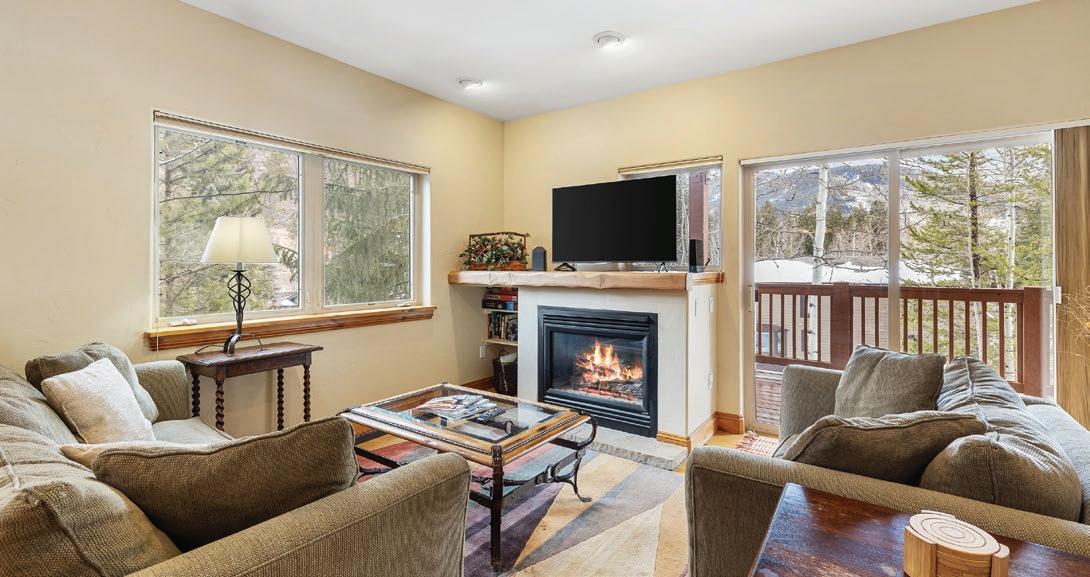
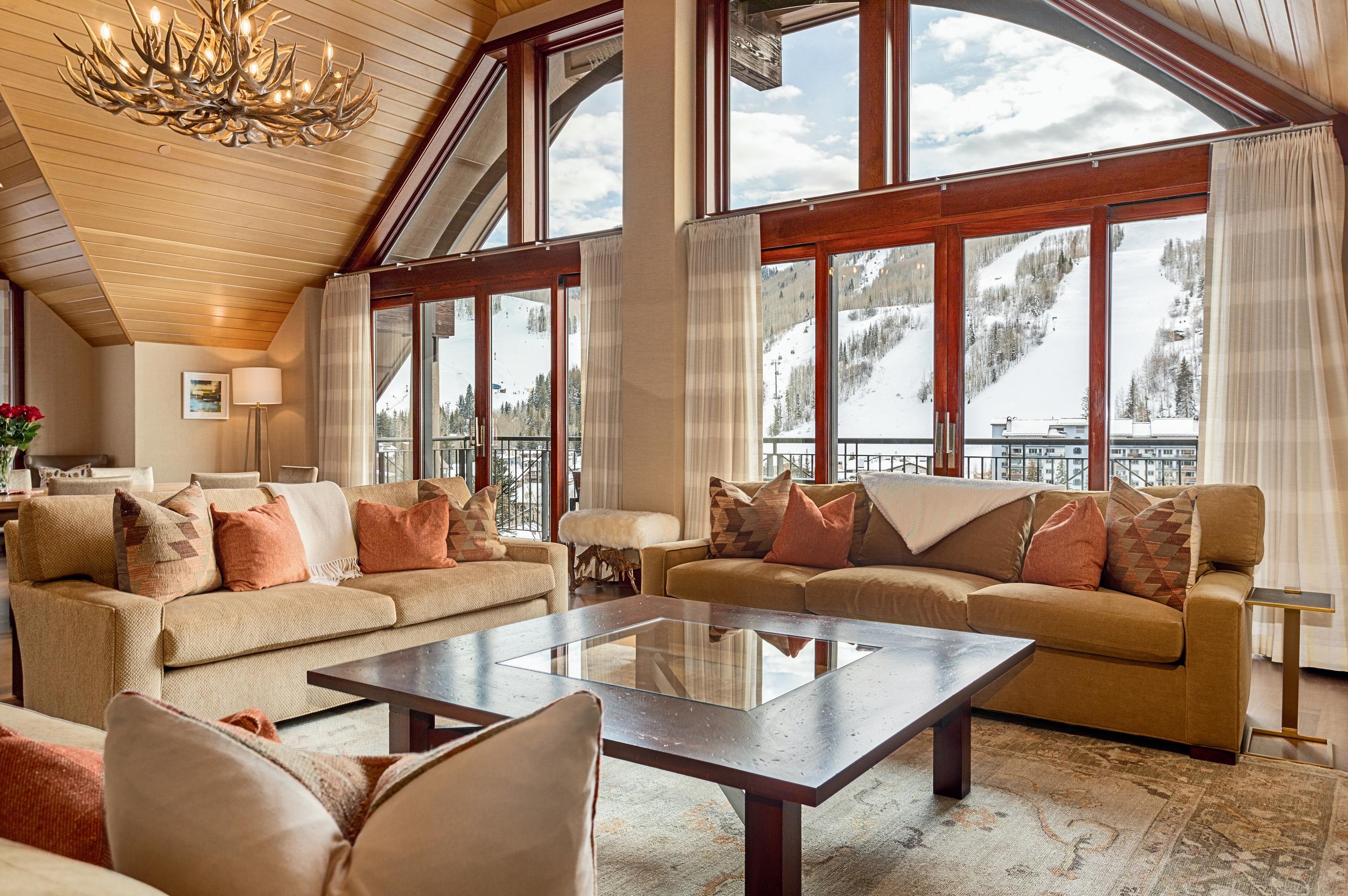
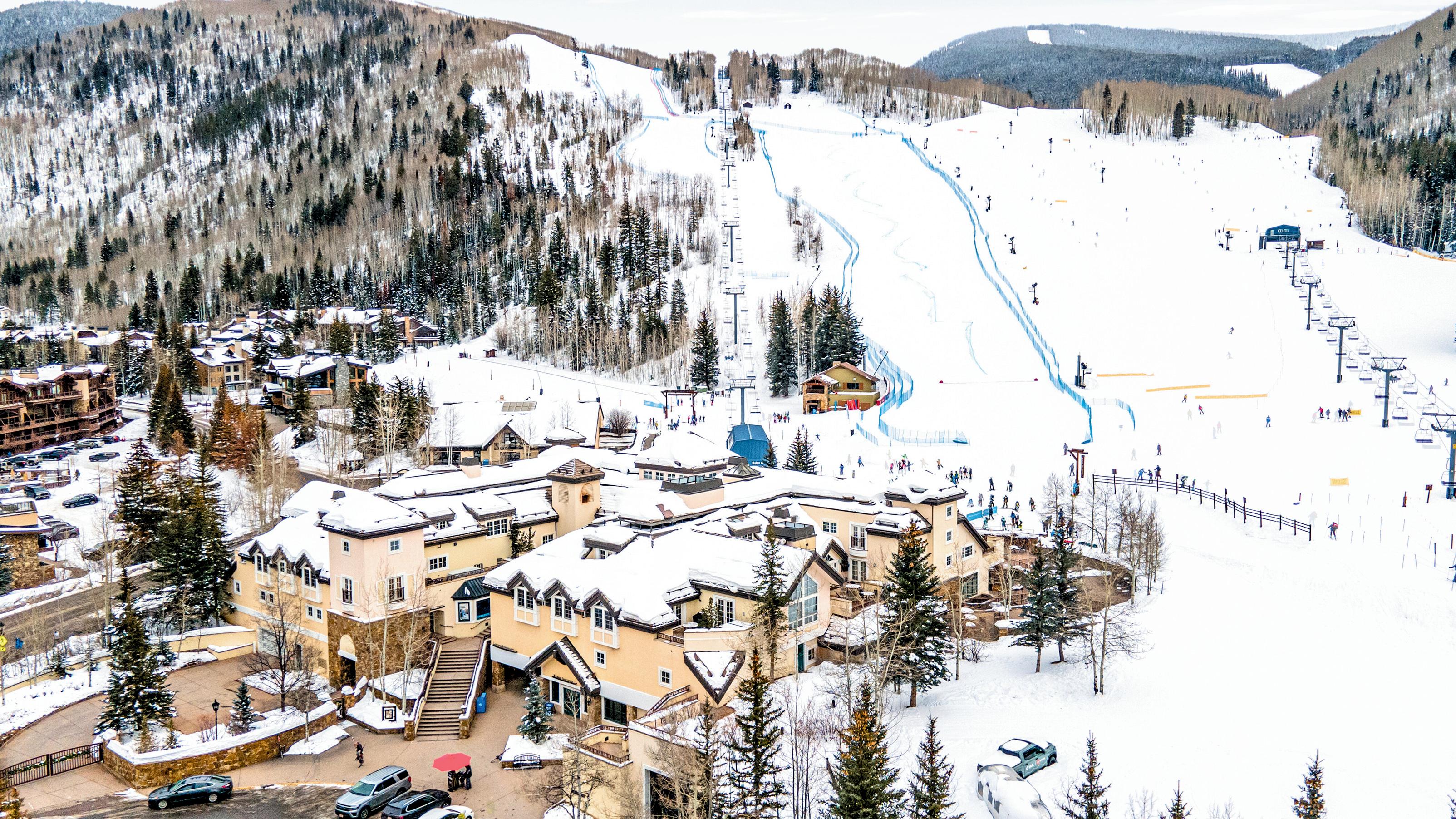
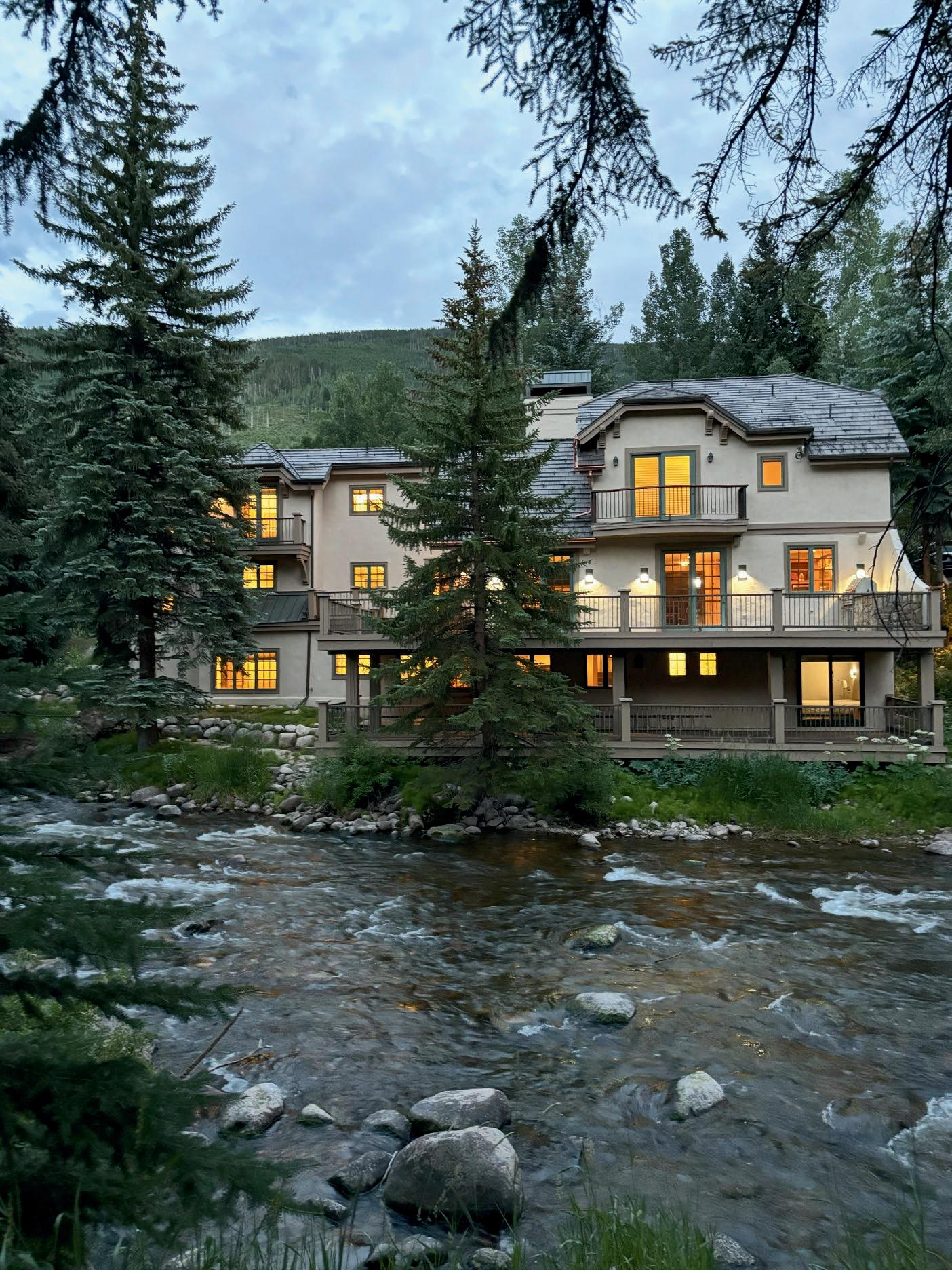
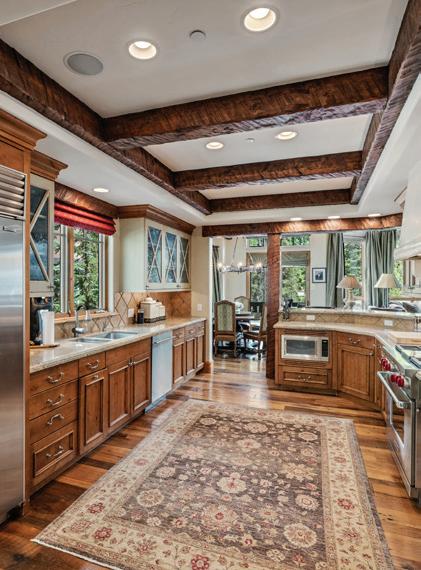
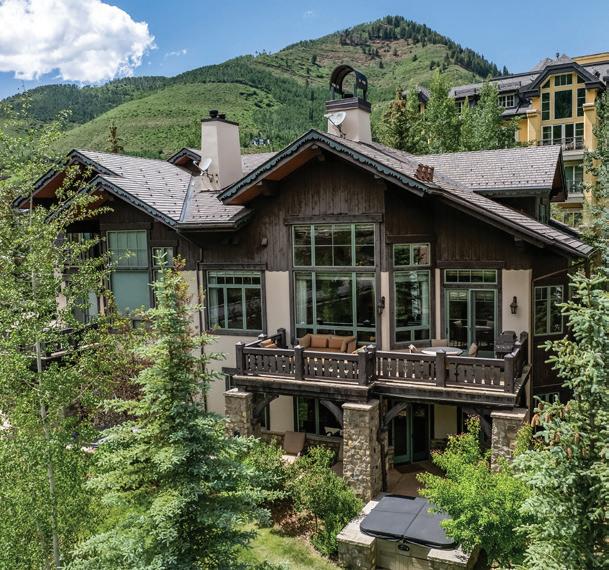
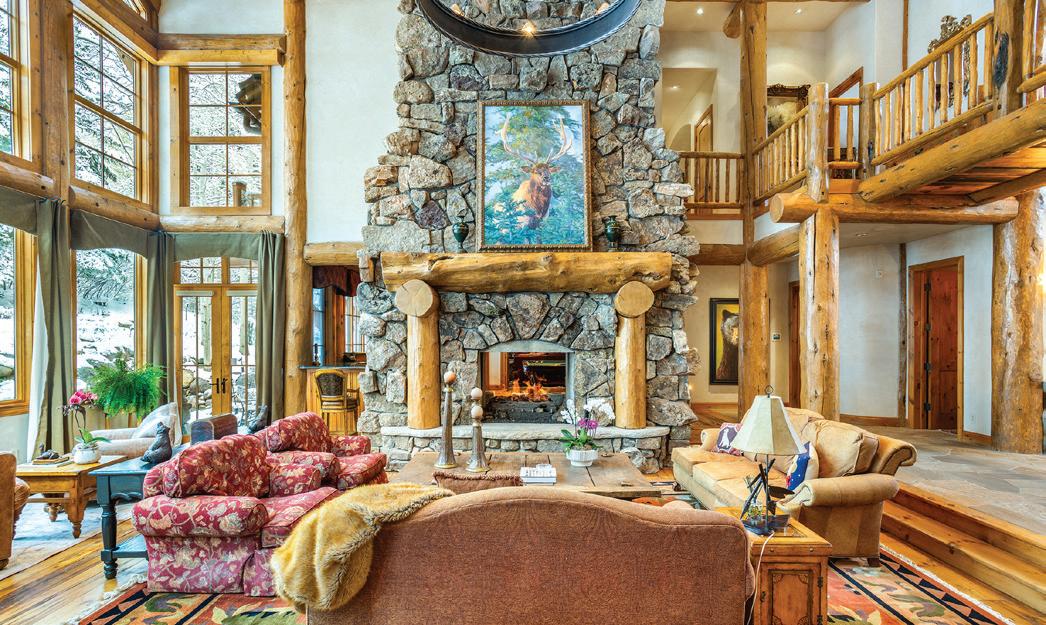
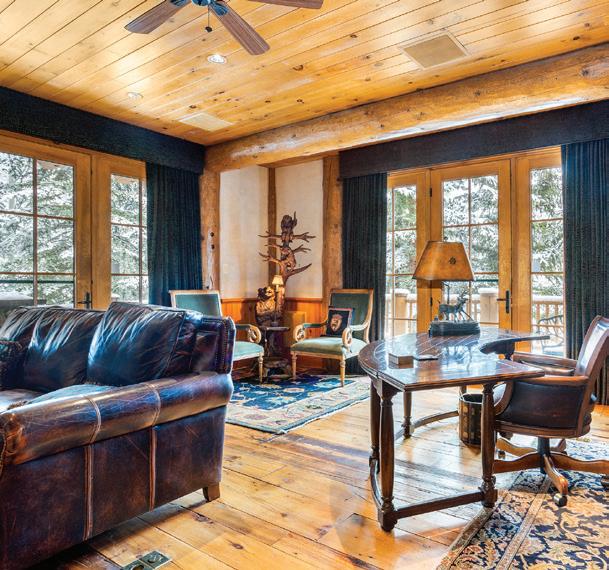
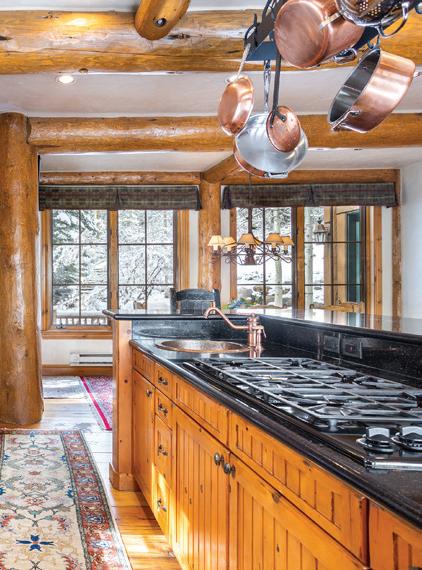
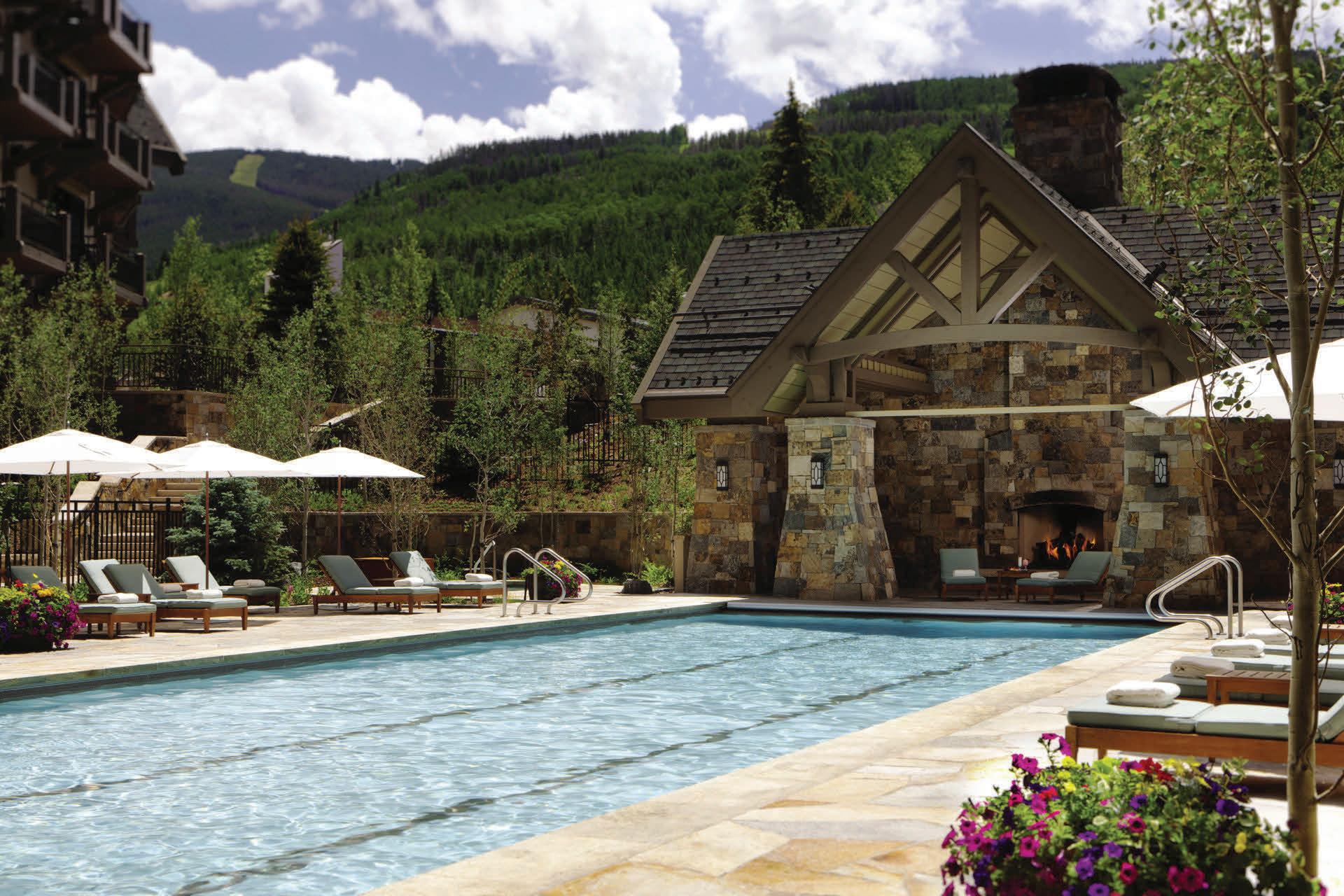
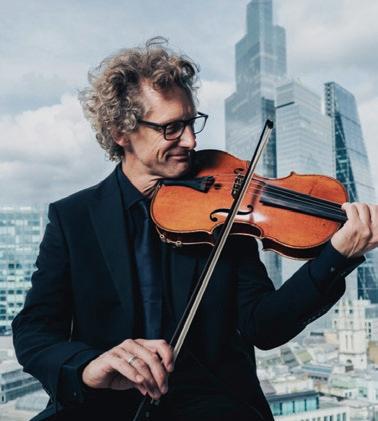
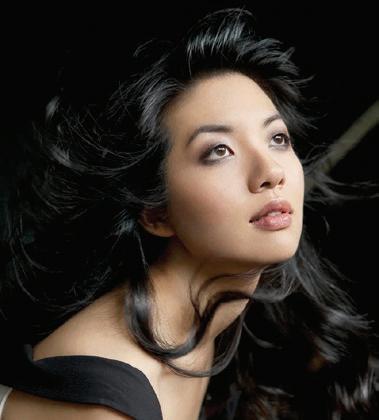
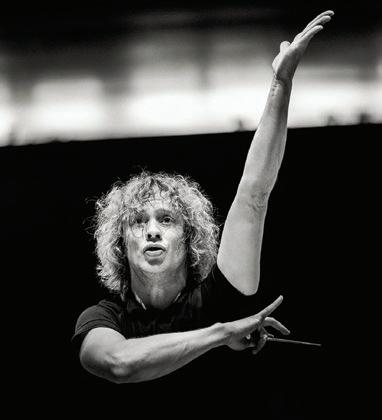
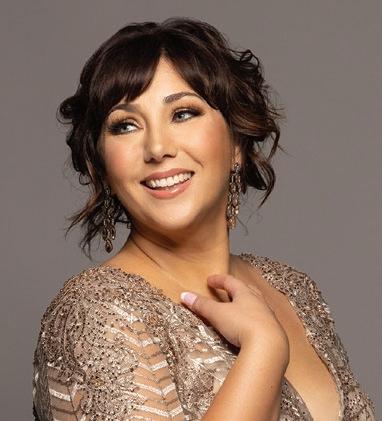
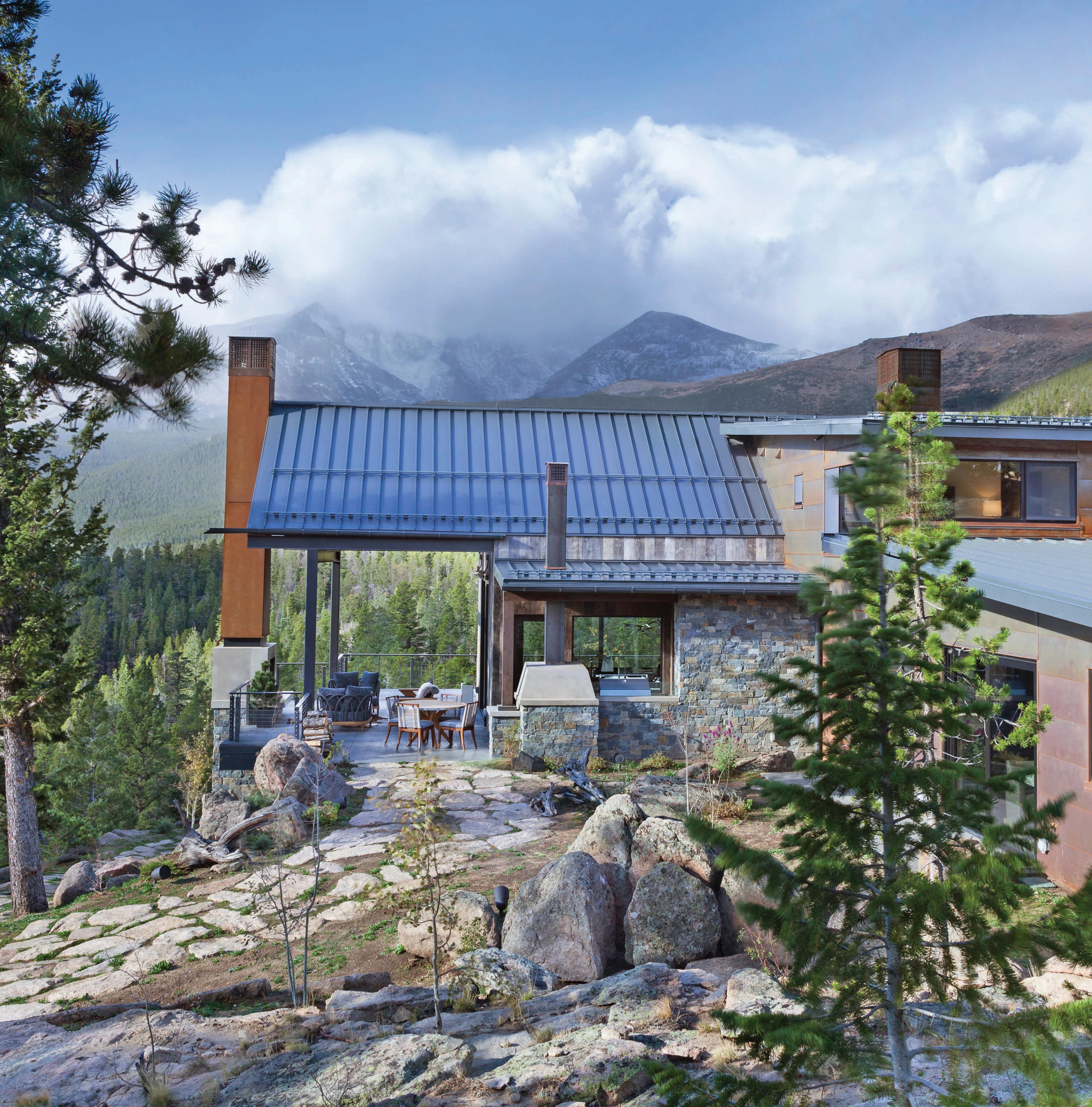
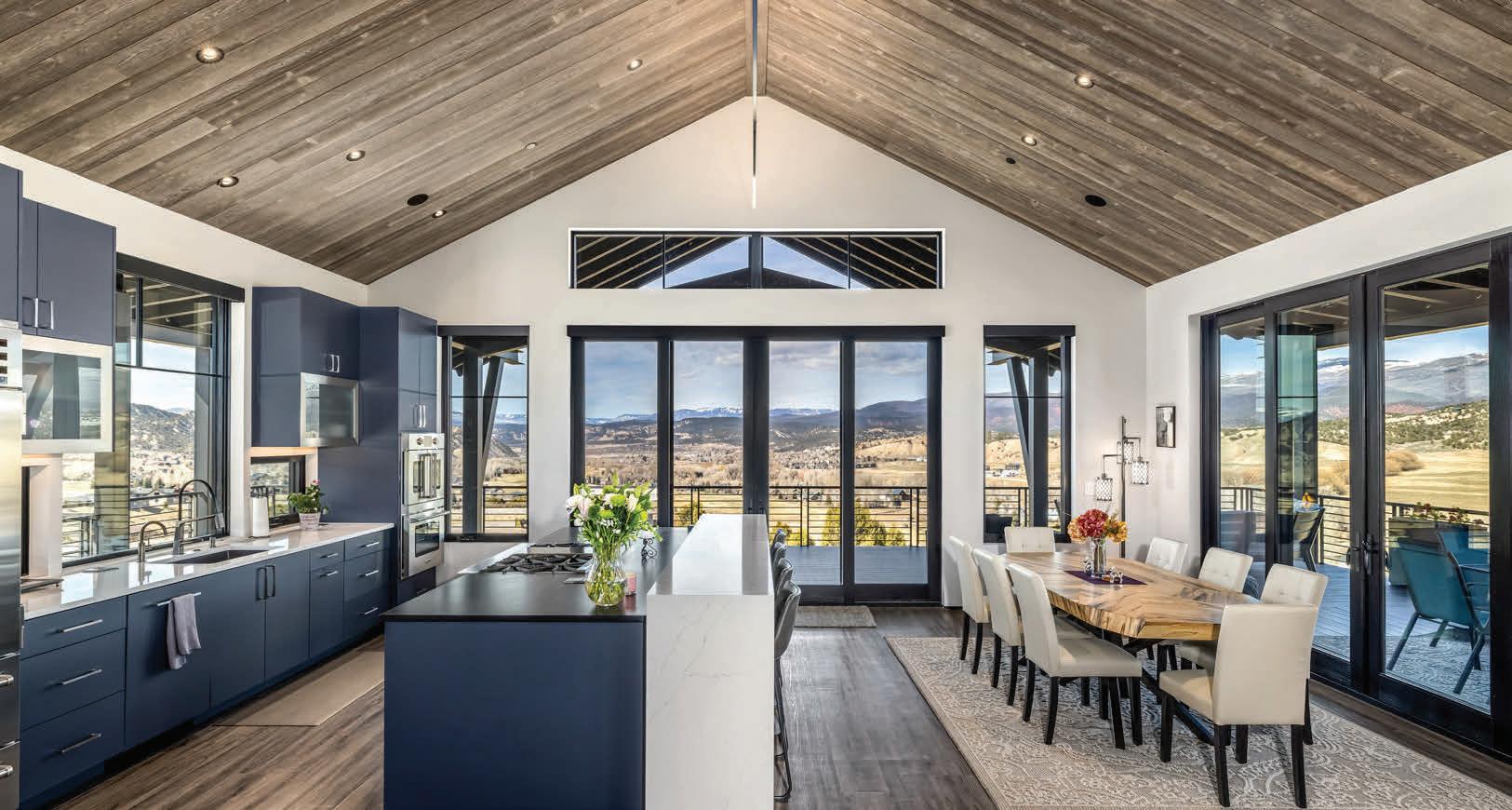
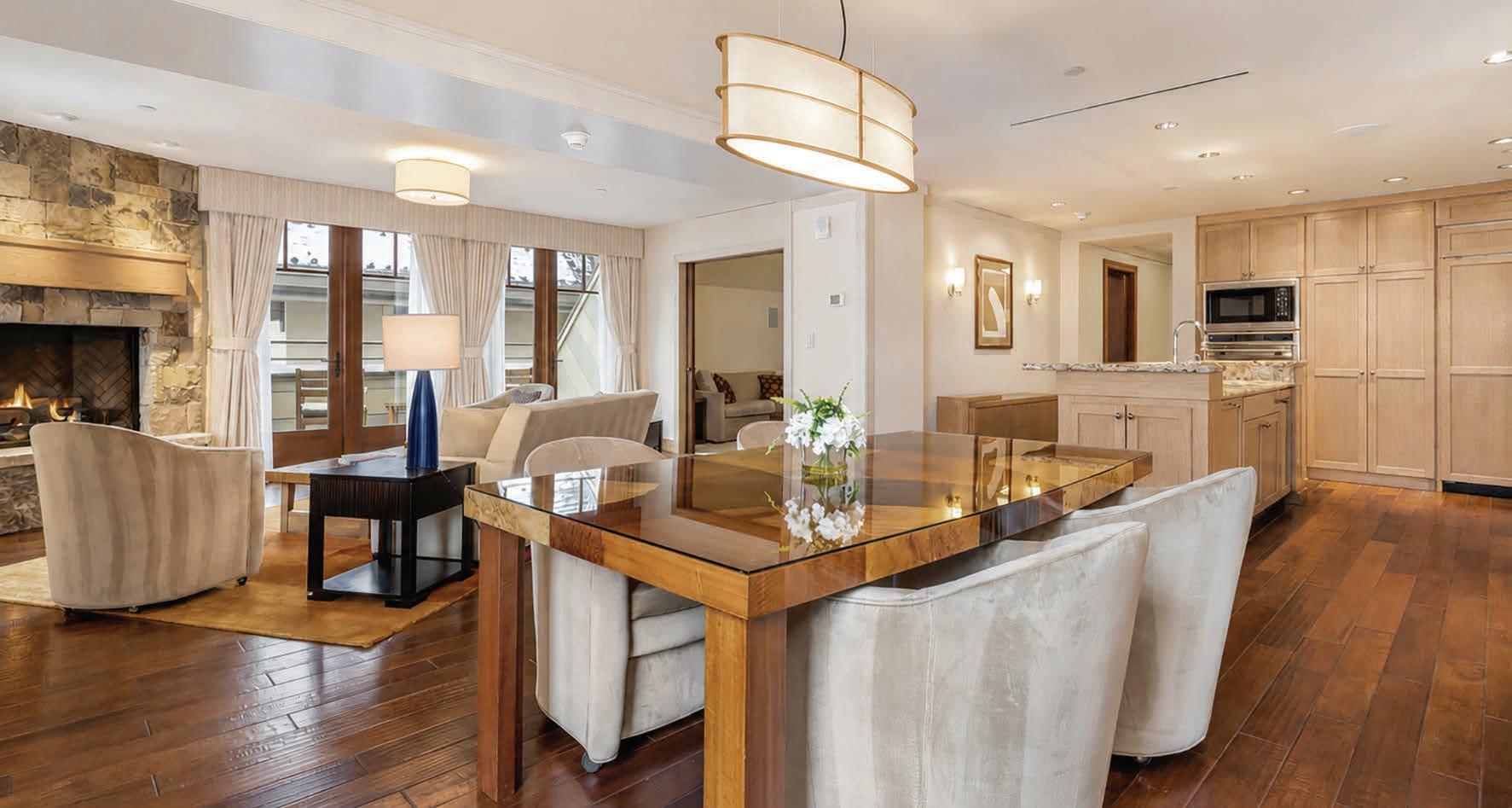
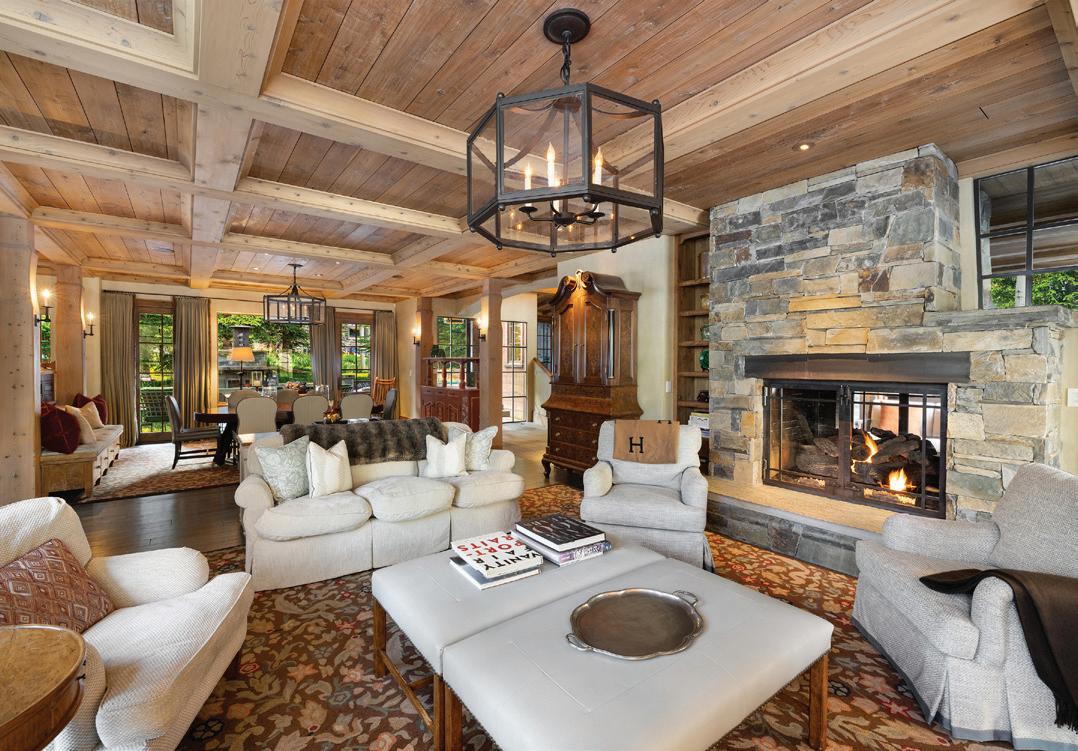
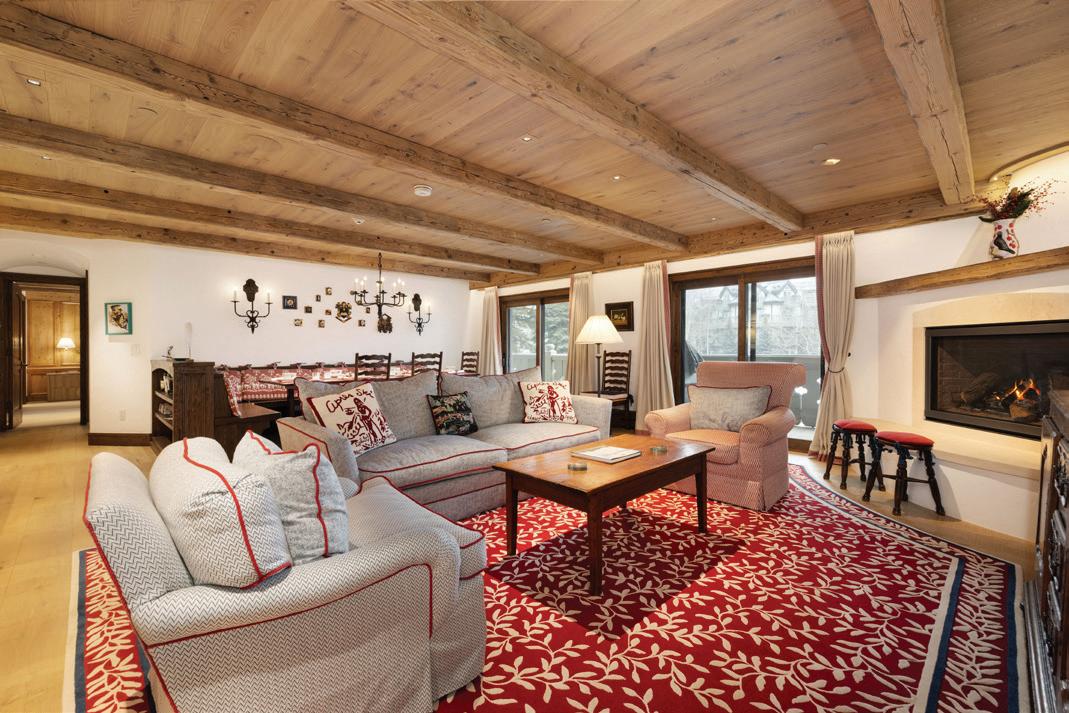
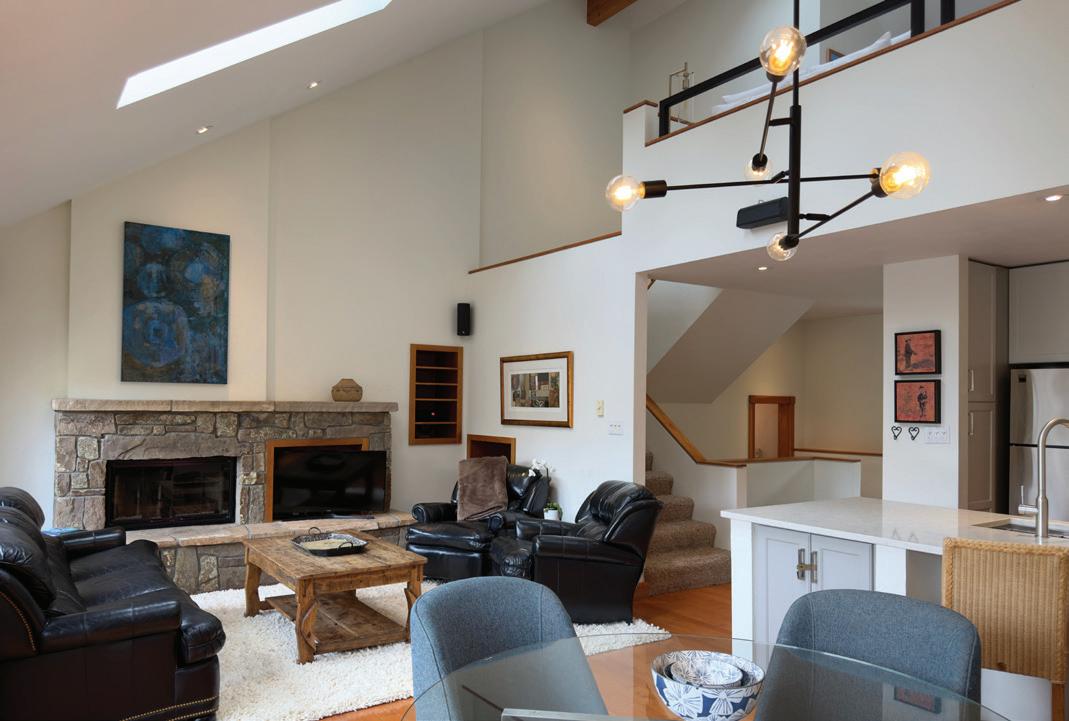
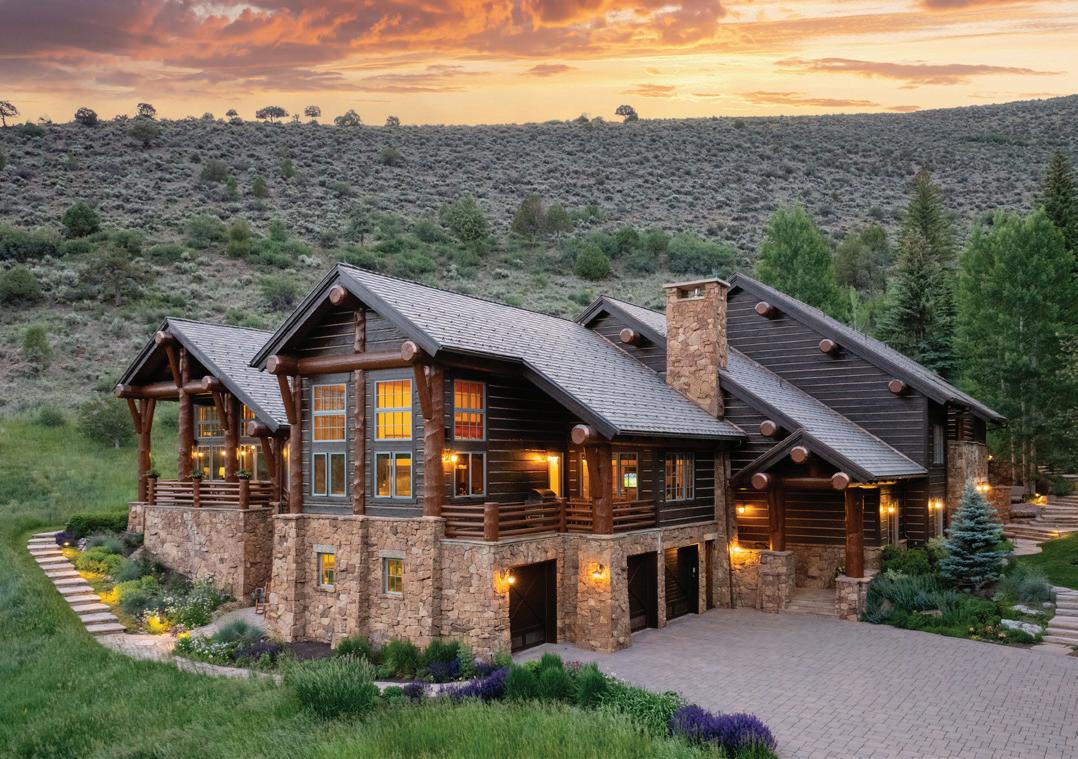
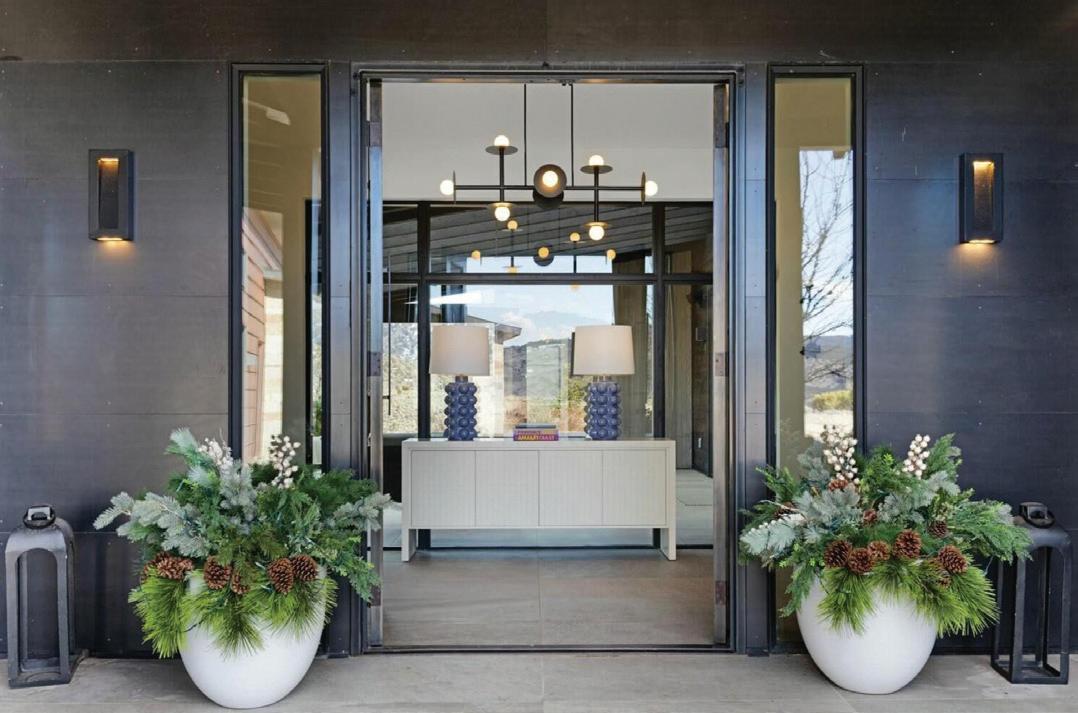
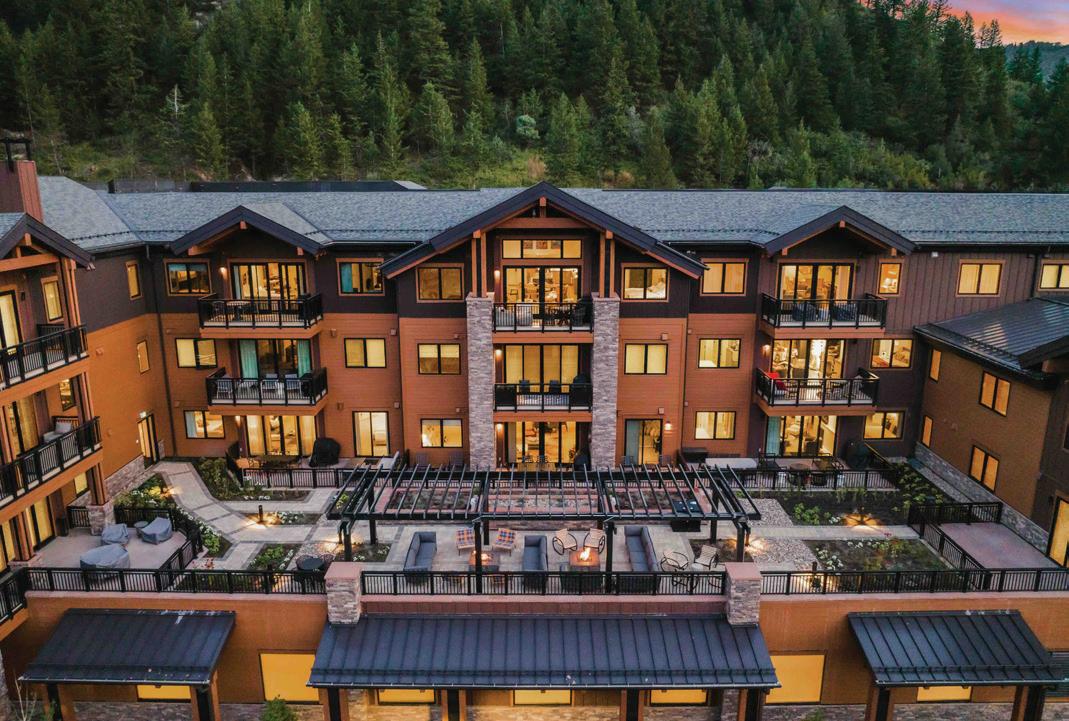
Situated on over 6 acres in Spraddle Creek Estates, this 11,000+ square foot residence offers panoramic Vail Mountain views, 7 bedrooms, luxury wellness amenities, a pool, and ski slope parking with club membership.
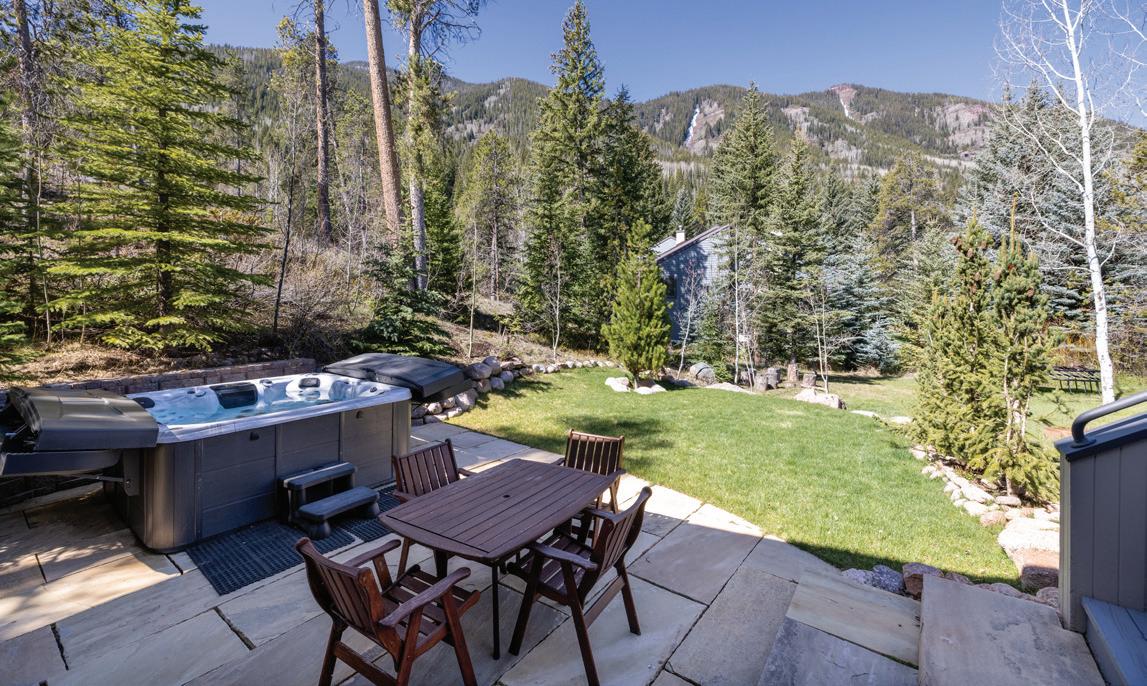
Located in Spraddle Creek, this 9,300+ square foot mountain retreat features 6 bedrooms, panoramic Vail Mountain views, and heated outdoor living.
*Passport Club membership available.
This remarkable 9,000 square foot residence features 6 bedrooms, a private observatory, tiered gardens, year-round fire pit and stunning Gore Range views.
*Newly Decorated
677 PILGRIM DRIVE
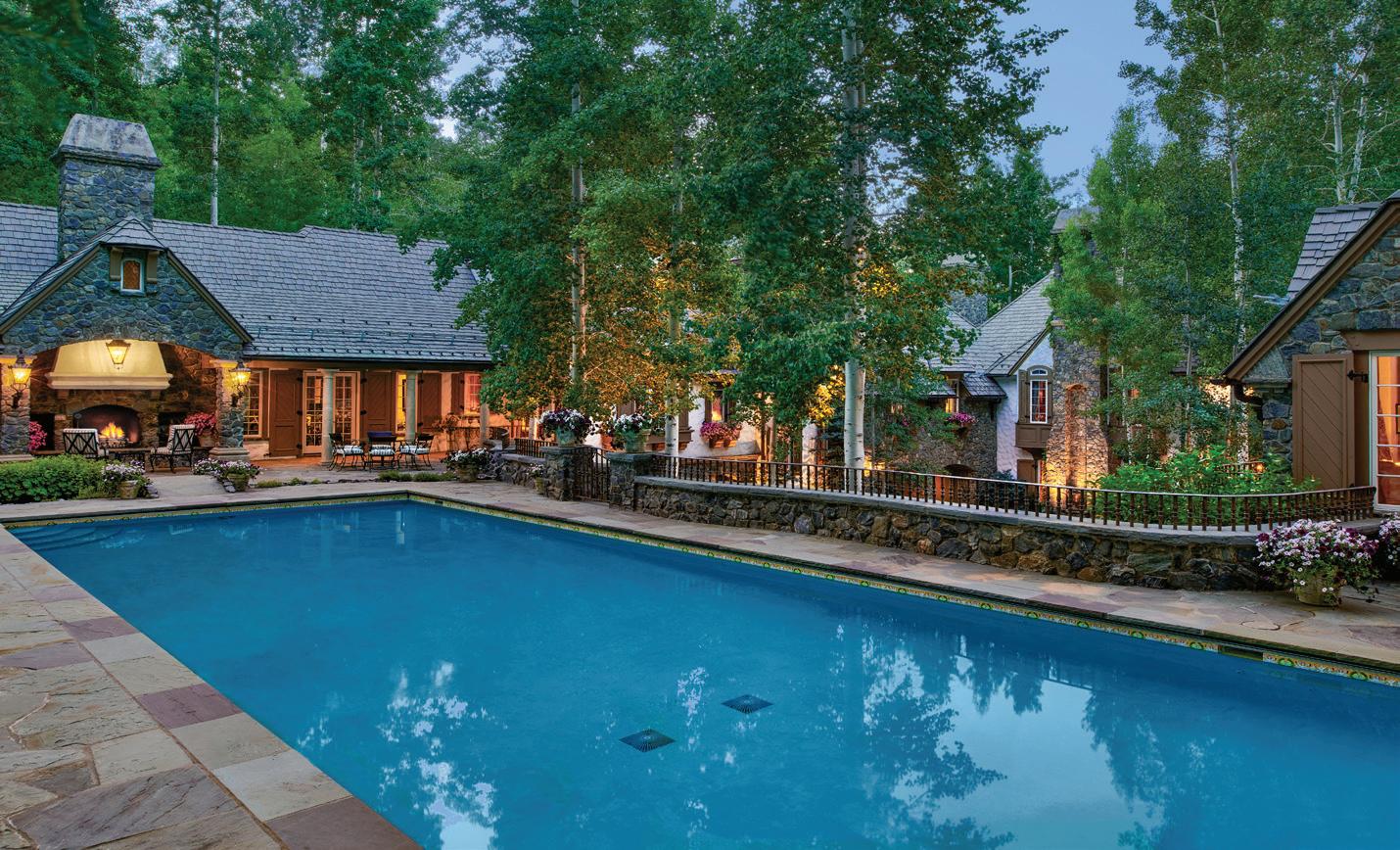
Located in the exclusive gated enclave of Pilgrim Downs, this 16,400+ square foot estate spans nearly 11 acres with 10 bedrooms, European finishes, a theater, gym, sauna, heated pool, guest house, and Passport Club membership.
*Additional 35 acre parcel available.
3816 LUPINE DRIVE
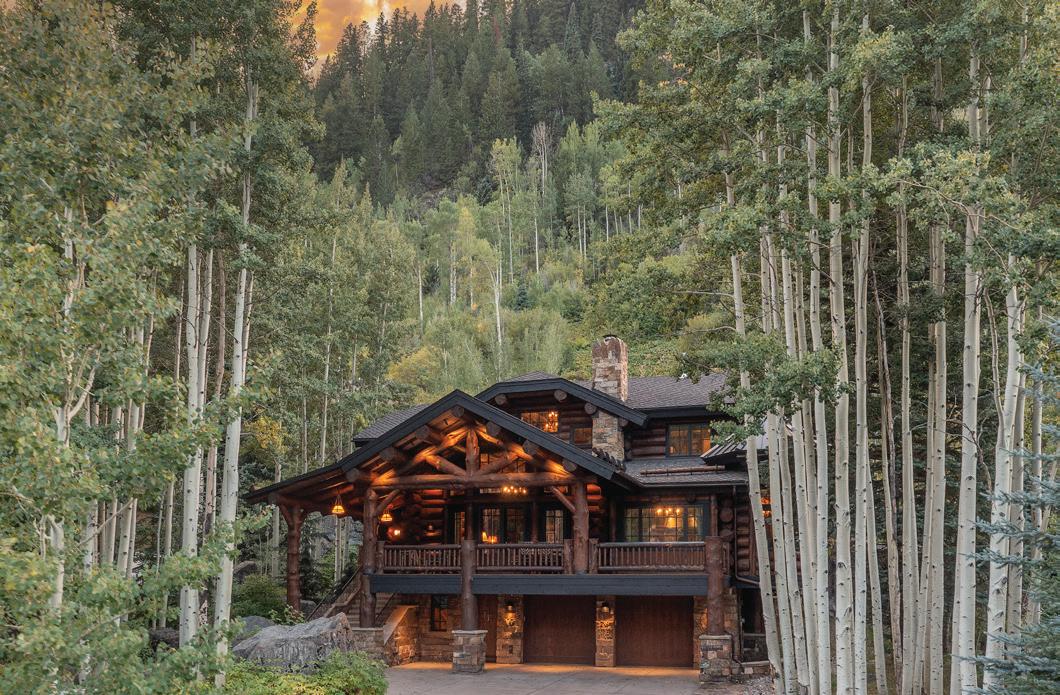
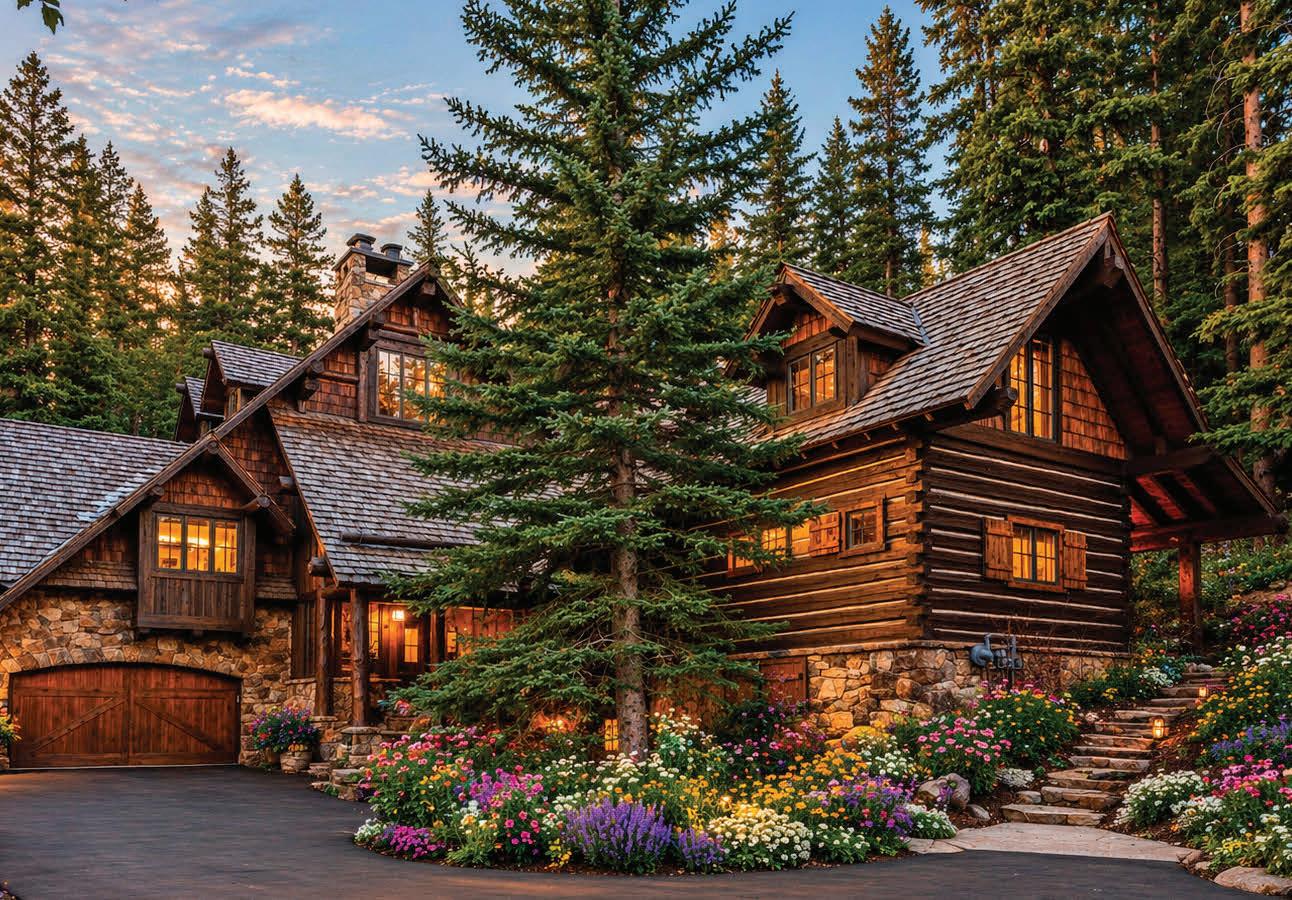
Nestled in a private alpine setting, this 4,200+ square foot mountain retreat features Gore Range views, handcrafted log design, heated outdoor living with a fire pit and hot tub, a theater, and direct access to the Gore Creek bike path and Town of Vail bus route.
34 WHISKEY RIDGE
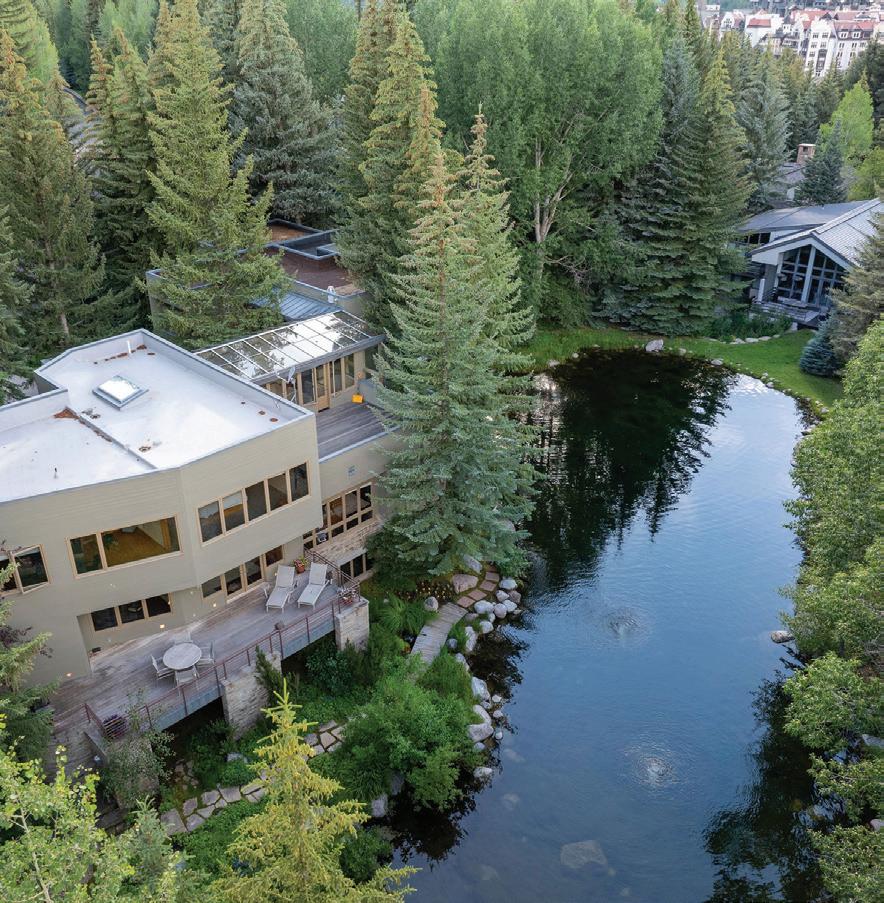
Located in Lake Creek’s exclusive Cattleman’s Club, this 6 bedroom estate spans 12,500+ square feet on 4.5 acres with Finnegan Peak views, heated terraces, a reflecting pond, fire pit, hot tub, and guest house.
YOU’RE INVITED TO THE 2026 SEASON
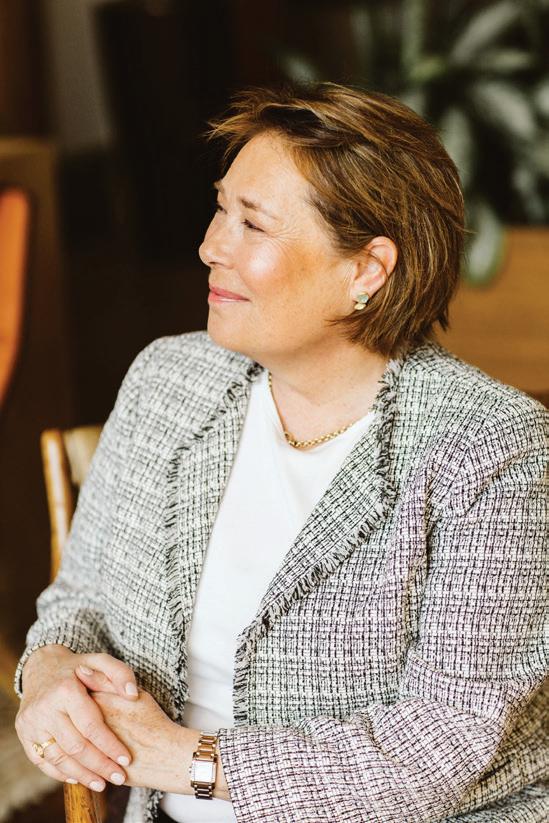
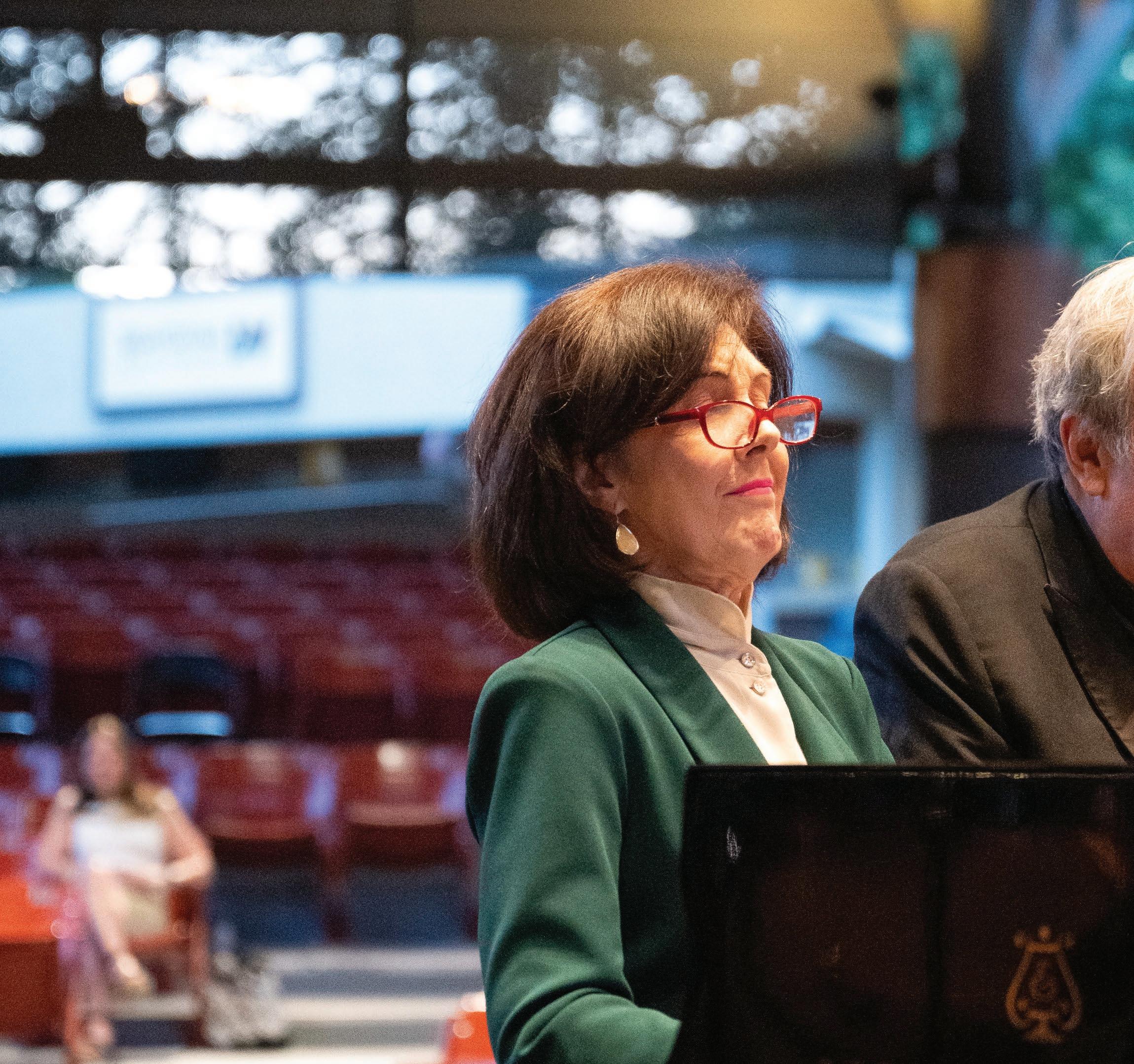
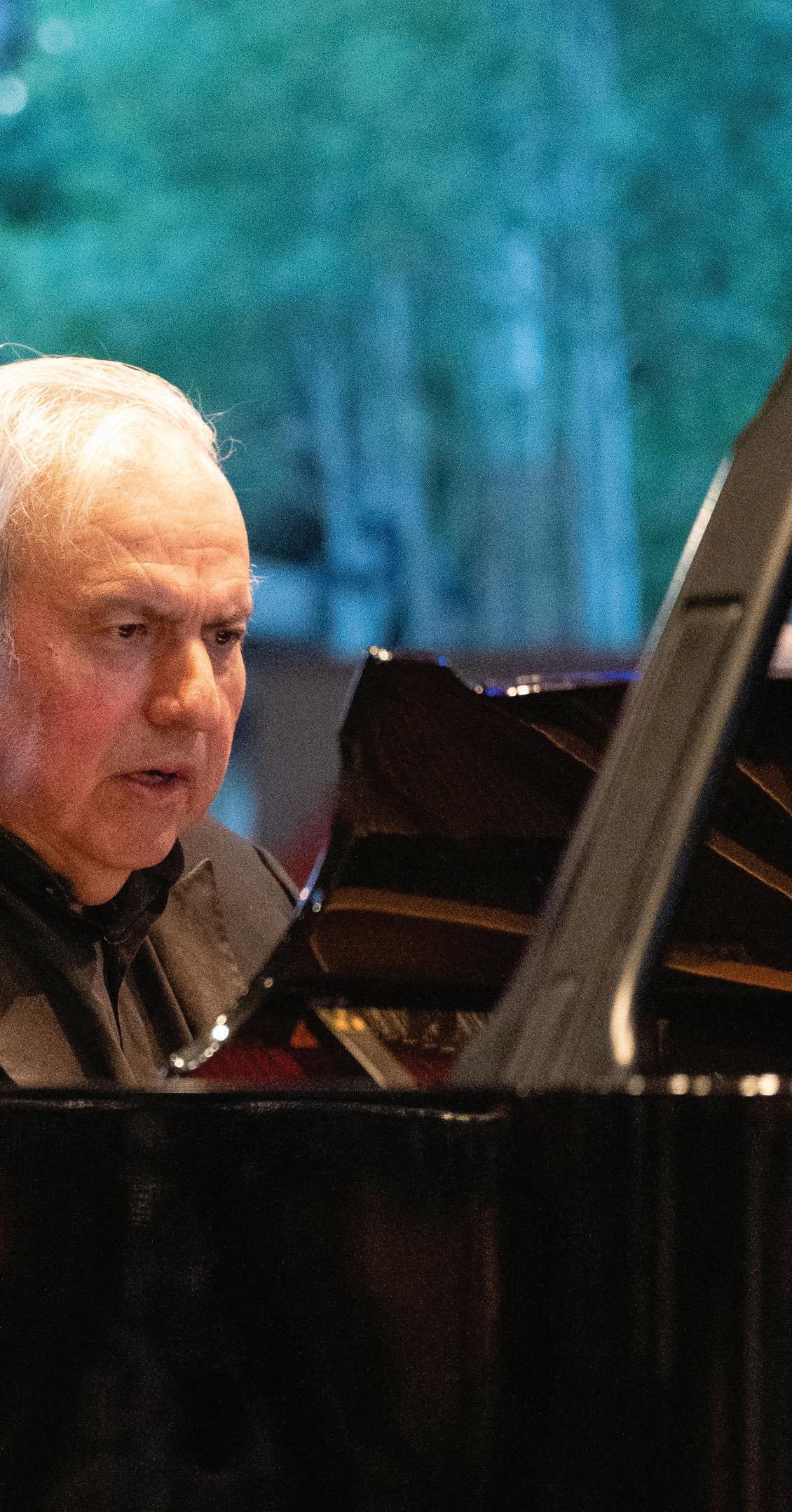
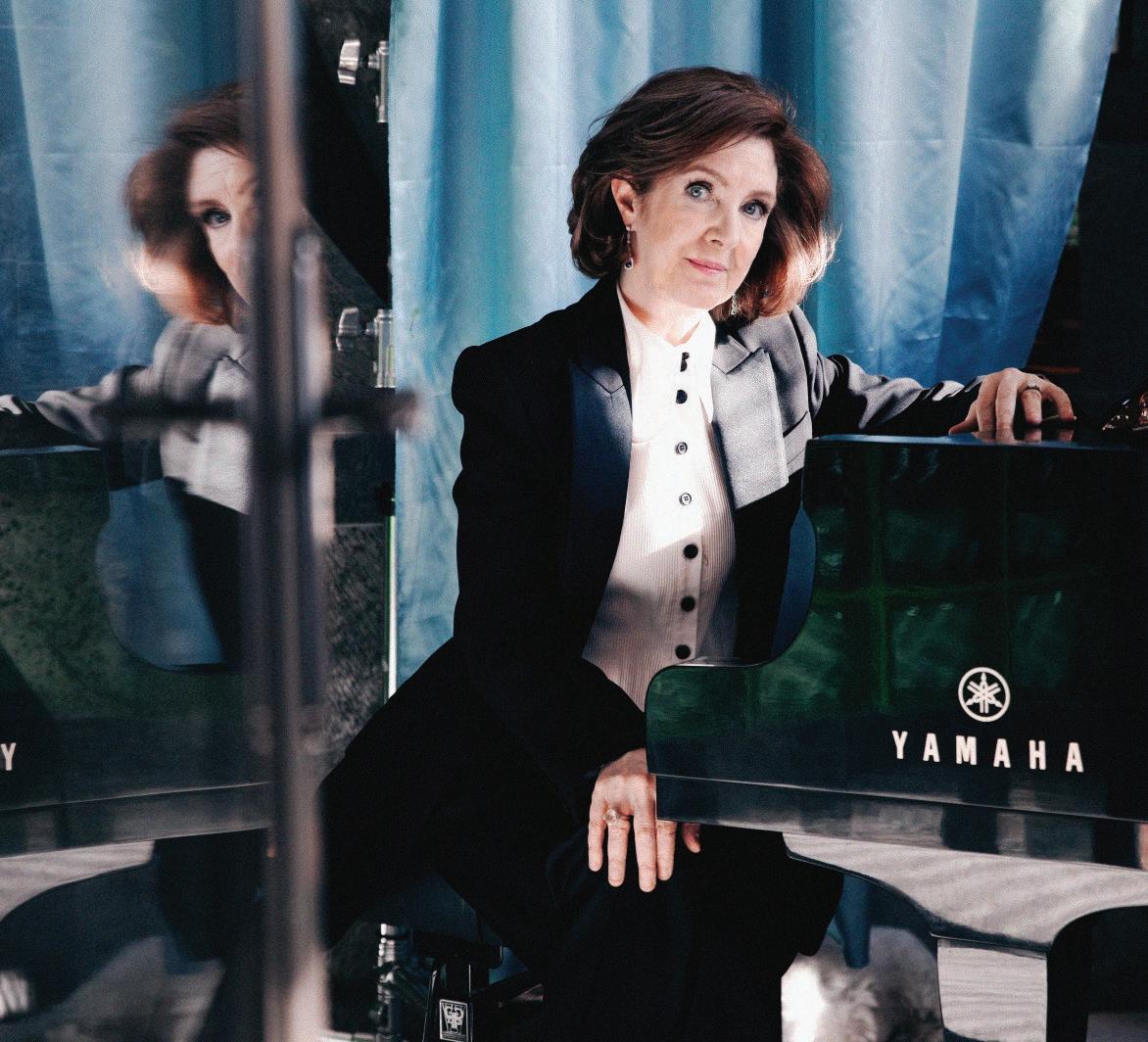
ANNE-MARIE M c DERMOTT
Artistic Director
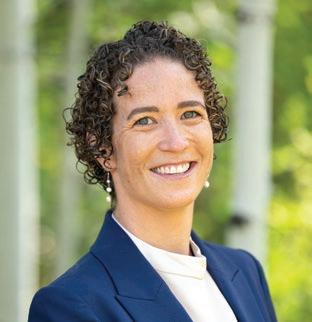
CAITLIN MURRAY President & CEO
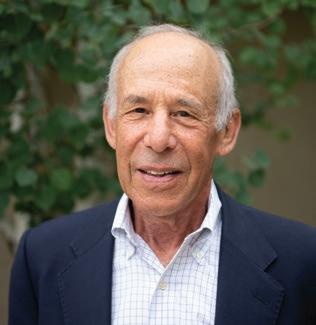
HANK GUTMAN Board Chair
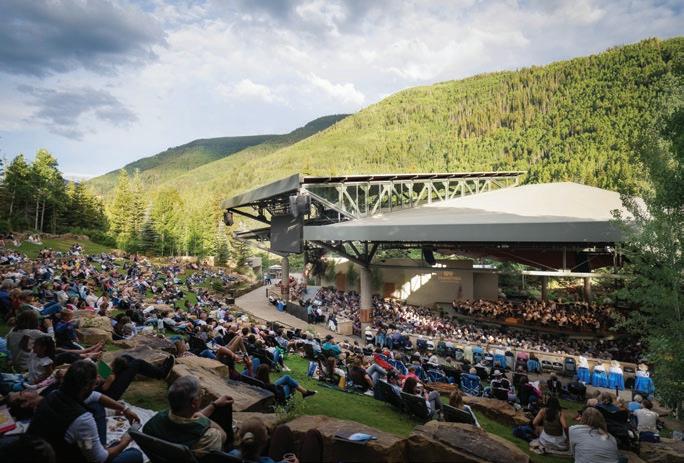
Welcome to the 39th season of the Bravo! Vail Music Festival.
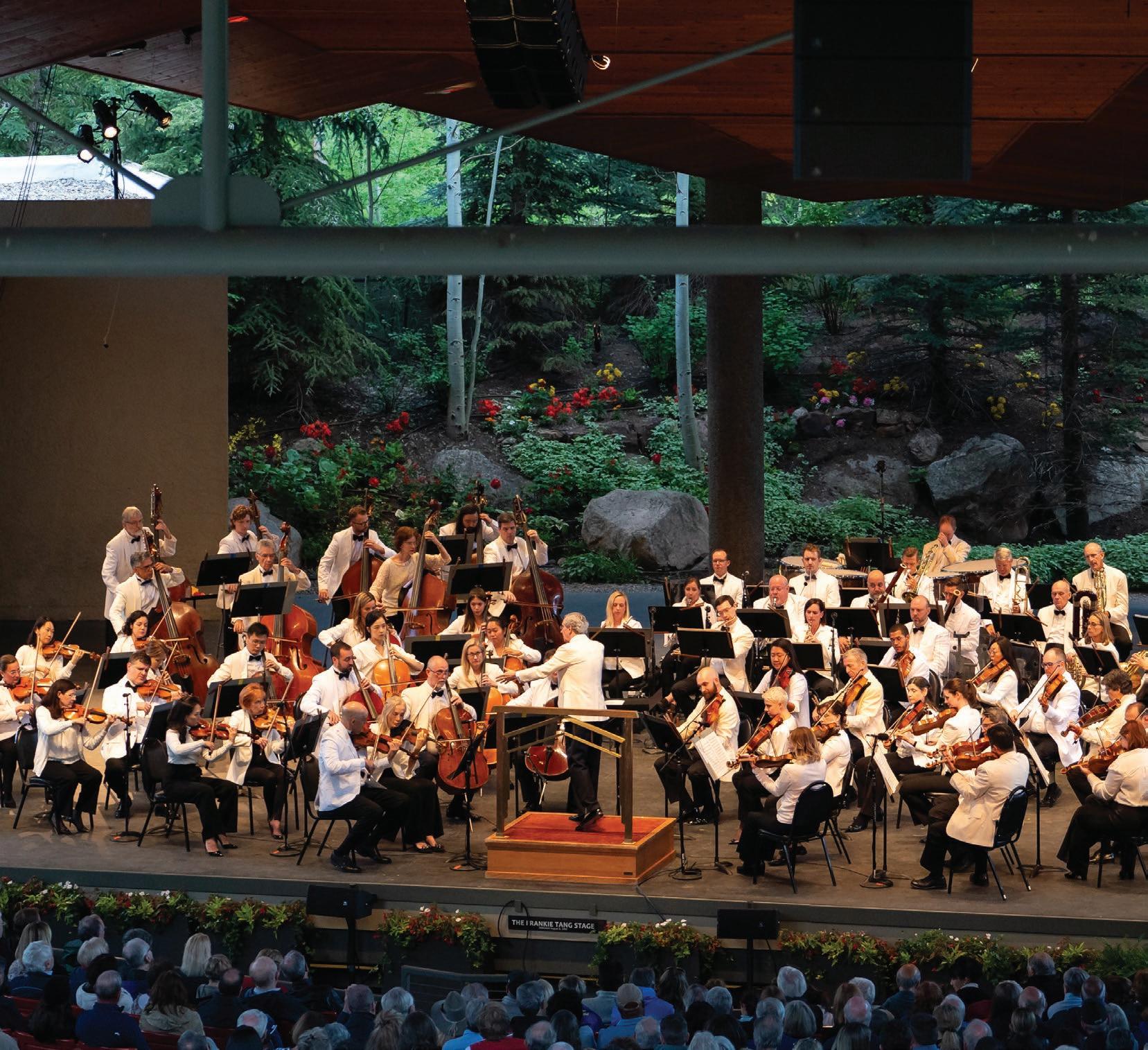
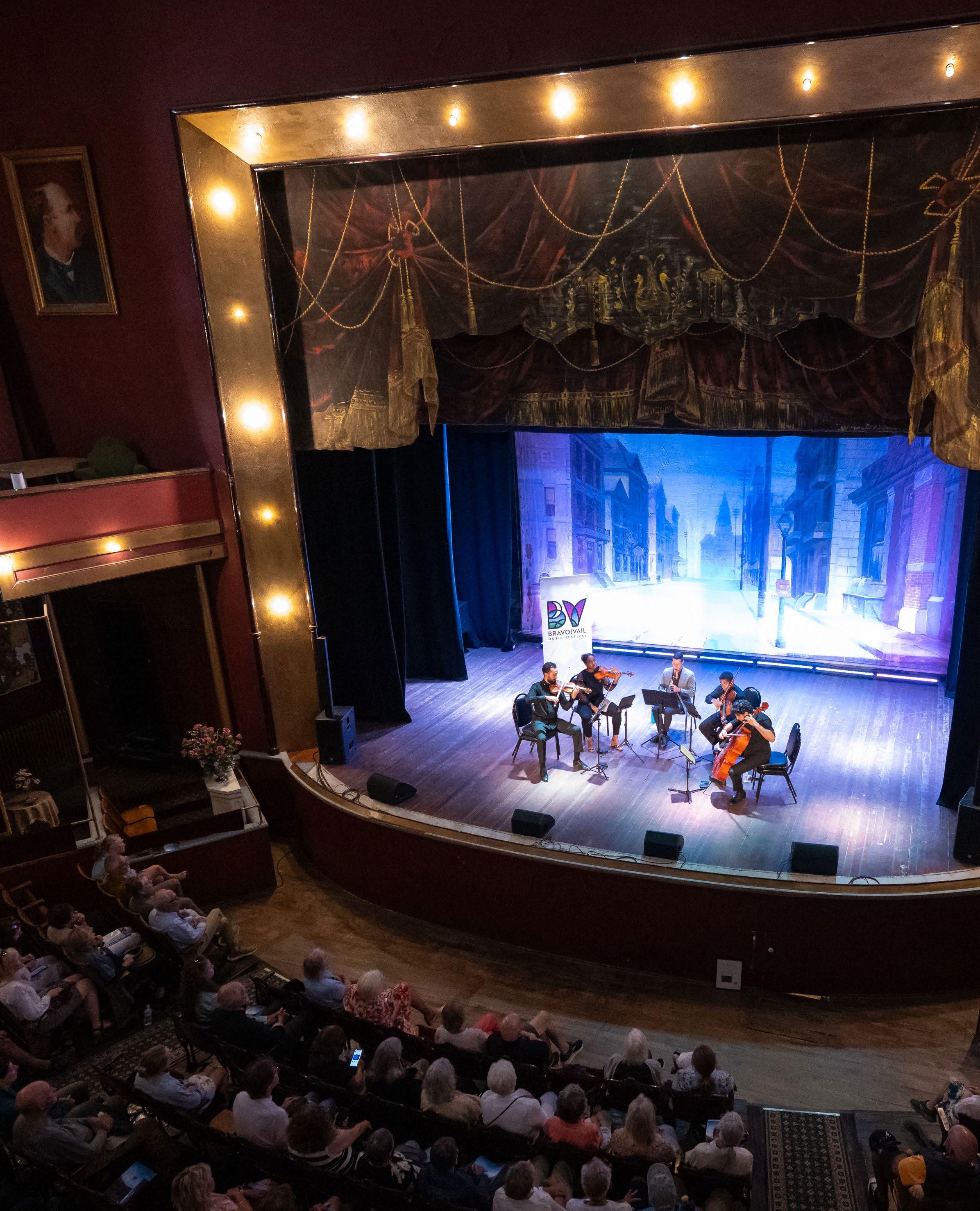
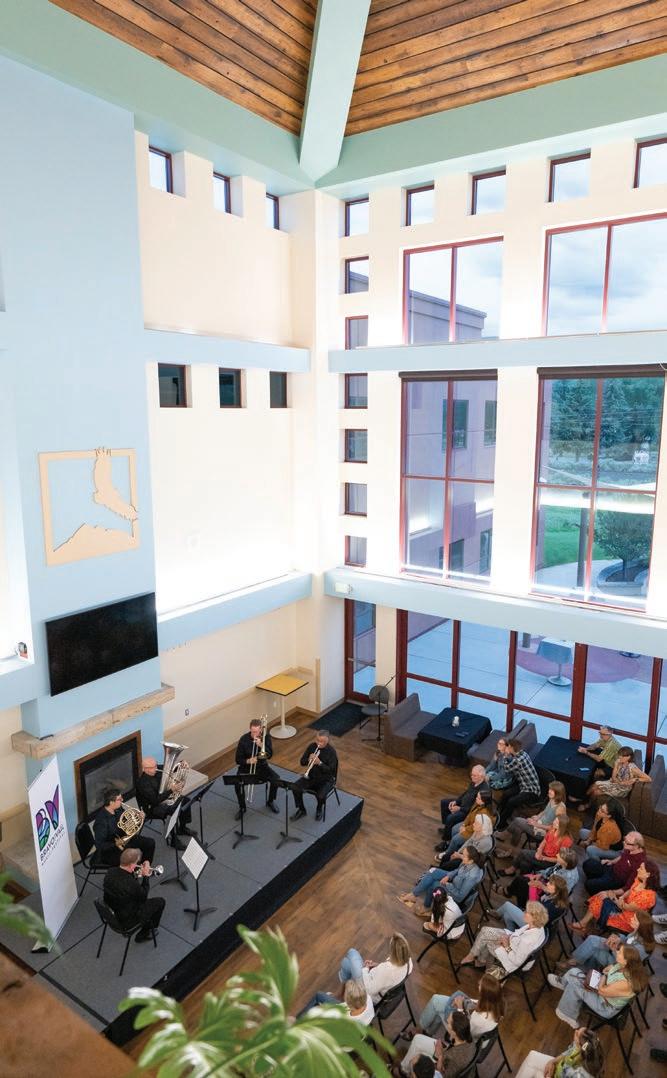
The Bravo! Vail experience is like none other, with something for everyone: internationally acclaimed orchestras and soloists; beloved classics from the repertoire; premieres from living composers; chamber music; free concerts; educational events; nature walks; films with live orchestra; and so much more. We encourage you to use this program book to explore the depth of our offerings and join us throughout the summer, finding new ways to connect to music and the community.
Every day, our mission comes to life as we present extraordinary music, accessible to all. We provide extensive music education throughout our community, connect musicians and listeners, and celebrate the evolving world of classical music.
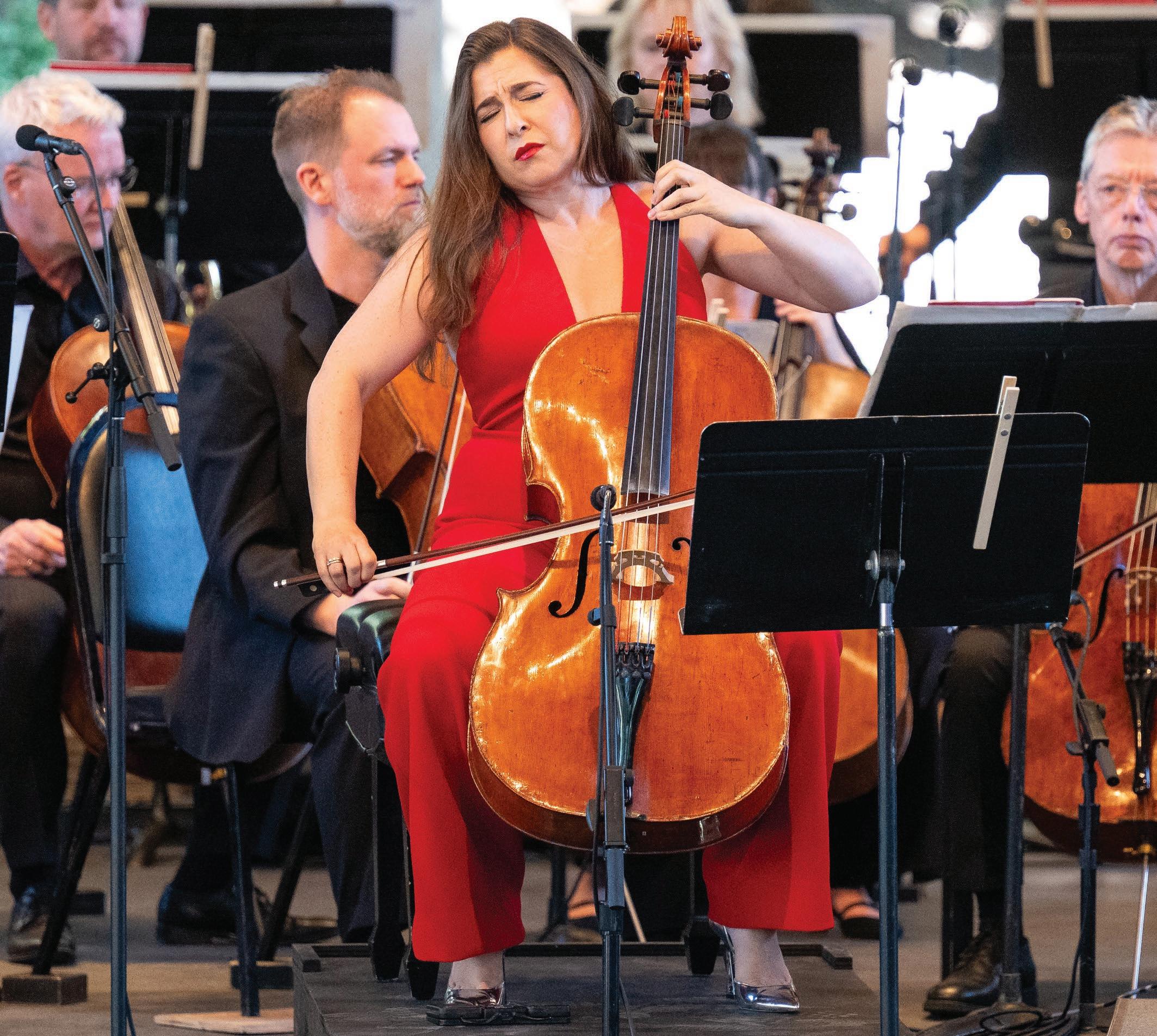
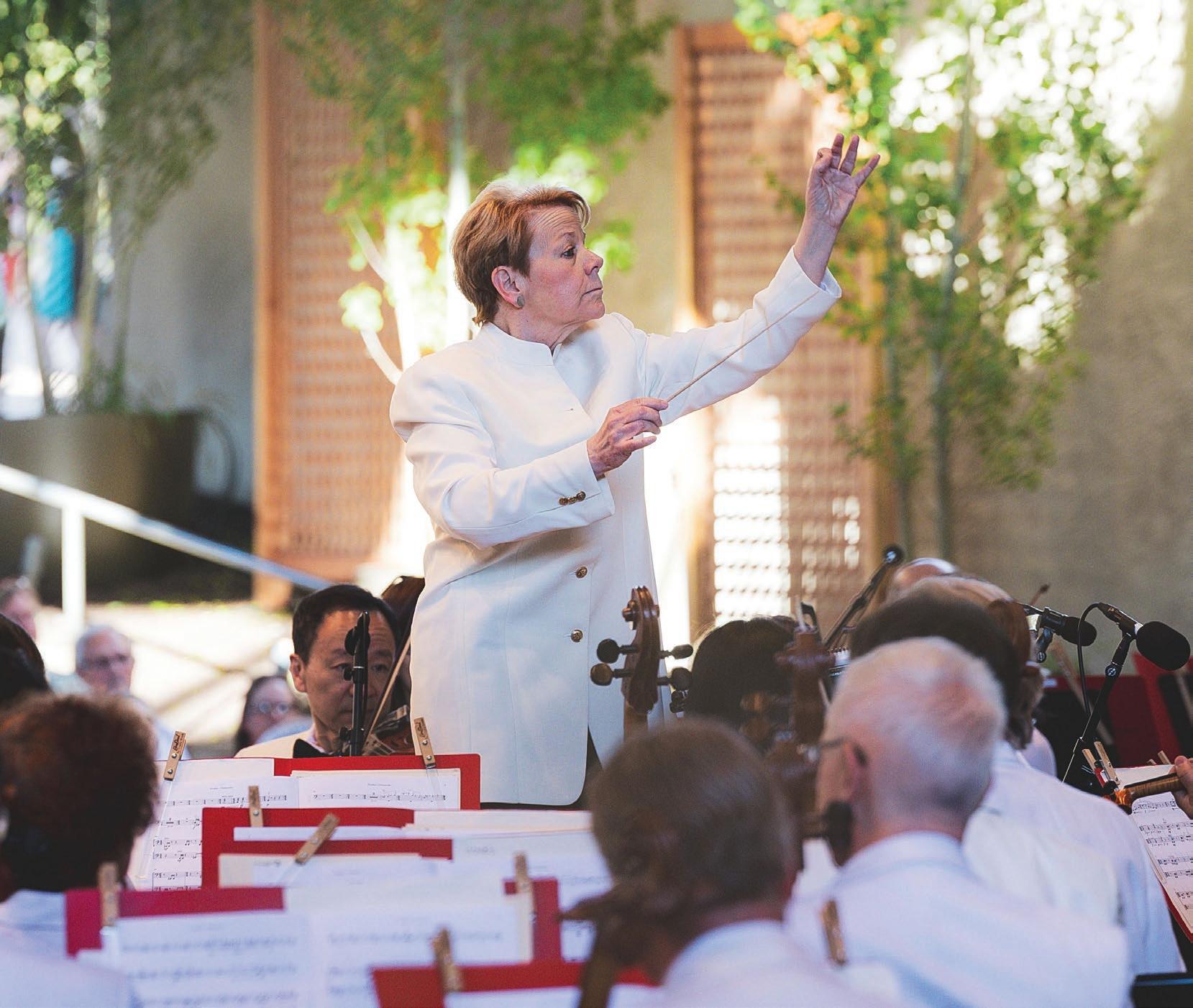
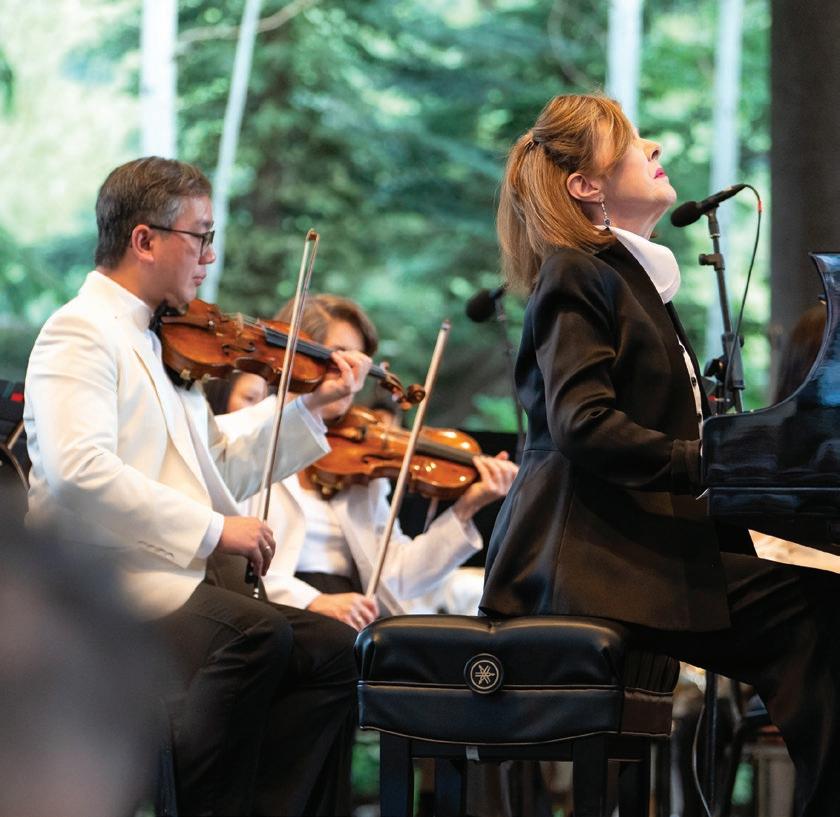
This year is particularly meaningful as we celebrate and honor Anne-Marie McDermott in her 16th and final season as artistic director. Under her visionary leadership, Bravo! Vail has achieved countless milestones — welcoming international chamber orchestras for the first time, building new and robust chamber music offerings, expanding free community access and music education, and finding creative ways to continue to present world class music even during the height of a worldwide pandemic.
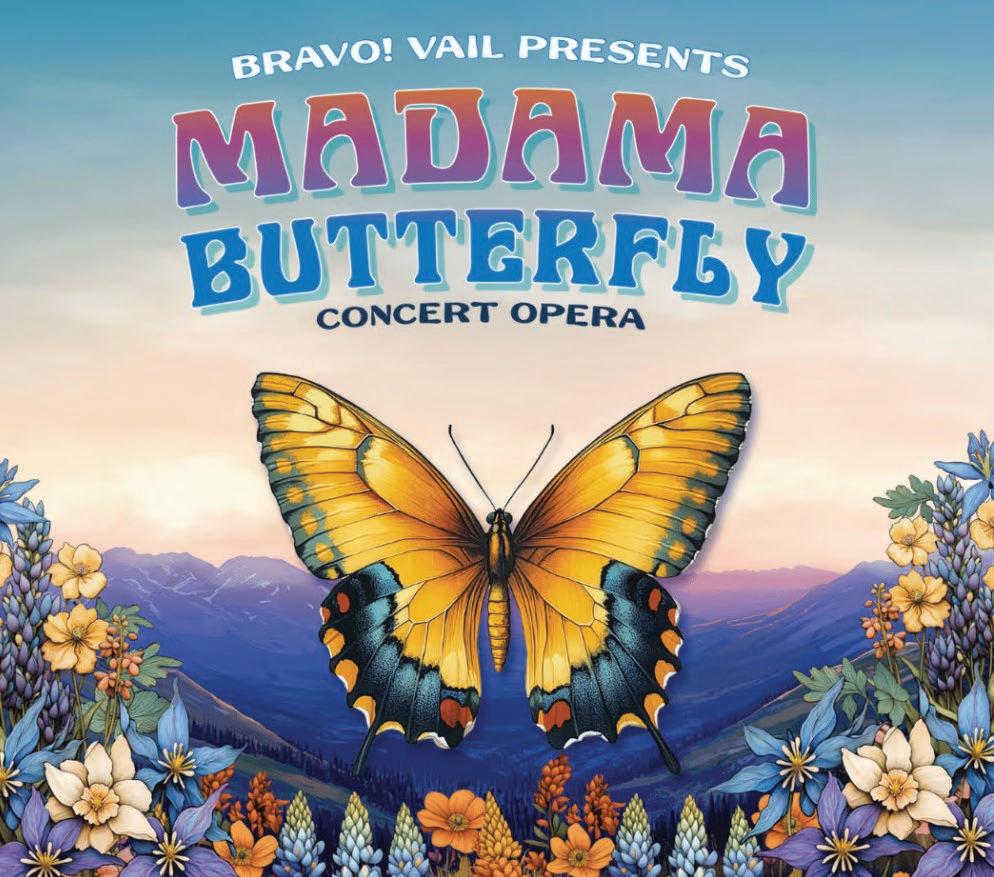
We embrace this season as a celebration of Anne-Marie’s lasting impact and legacy through special projects and programs she has curated. Among these will be her performances of all five of Beethoven piano concertos with the Academy of St Martin in the Fields; the Dallas Symphony Orchestra’s first ever opera-in-concert at the Festival performing Puccini’s Madama Butterfly; Yannick Nézet-Séguin leading The Philadelphia Orchestra in the powerful and life-affirming Beethoven’s Symphony No. 9, and Anne-Marie and Yefim Bronfman performing Mozart’s Double Piano Concerto with the New York Philharmonic.
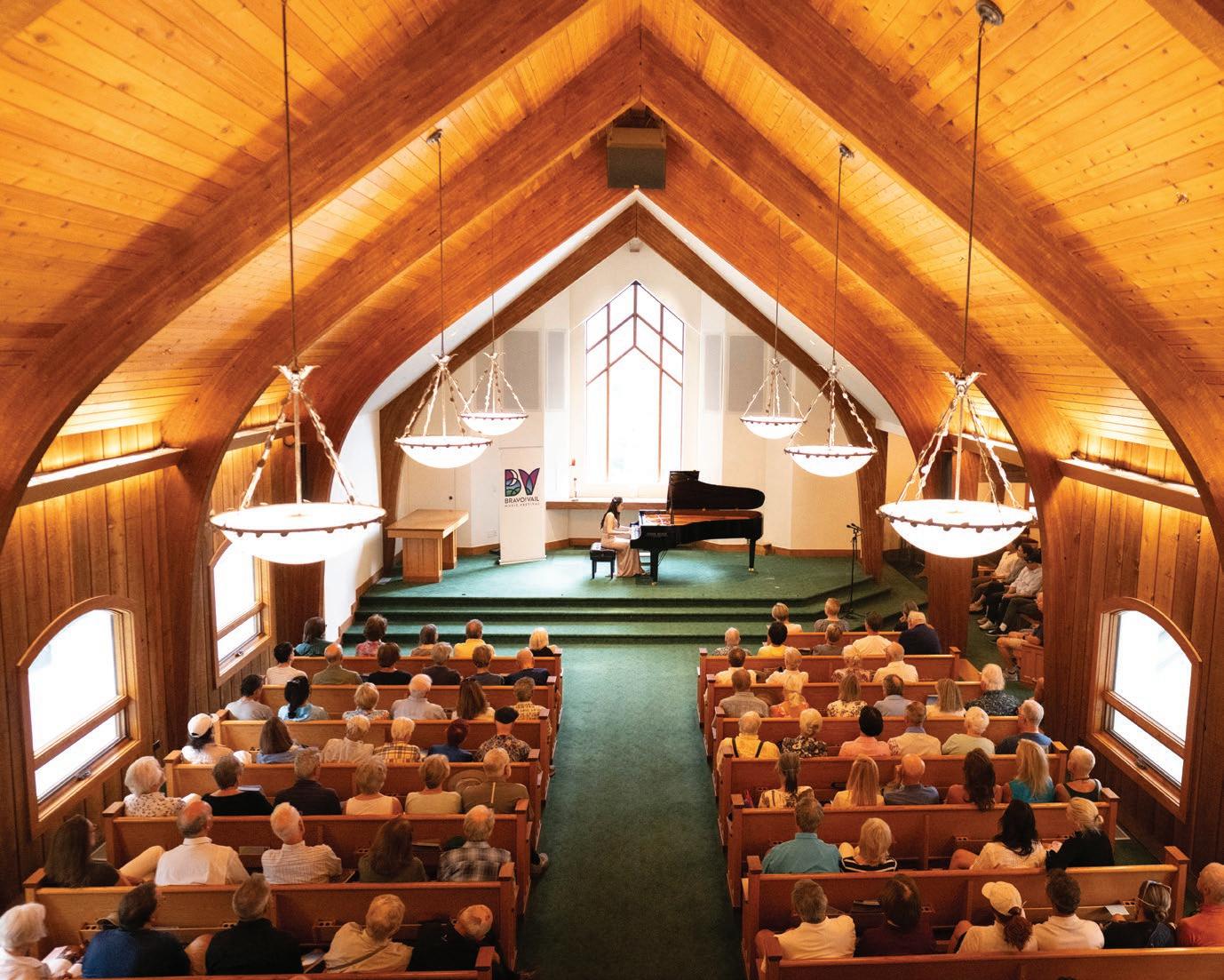
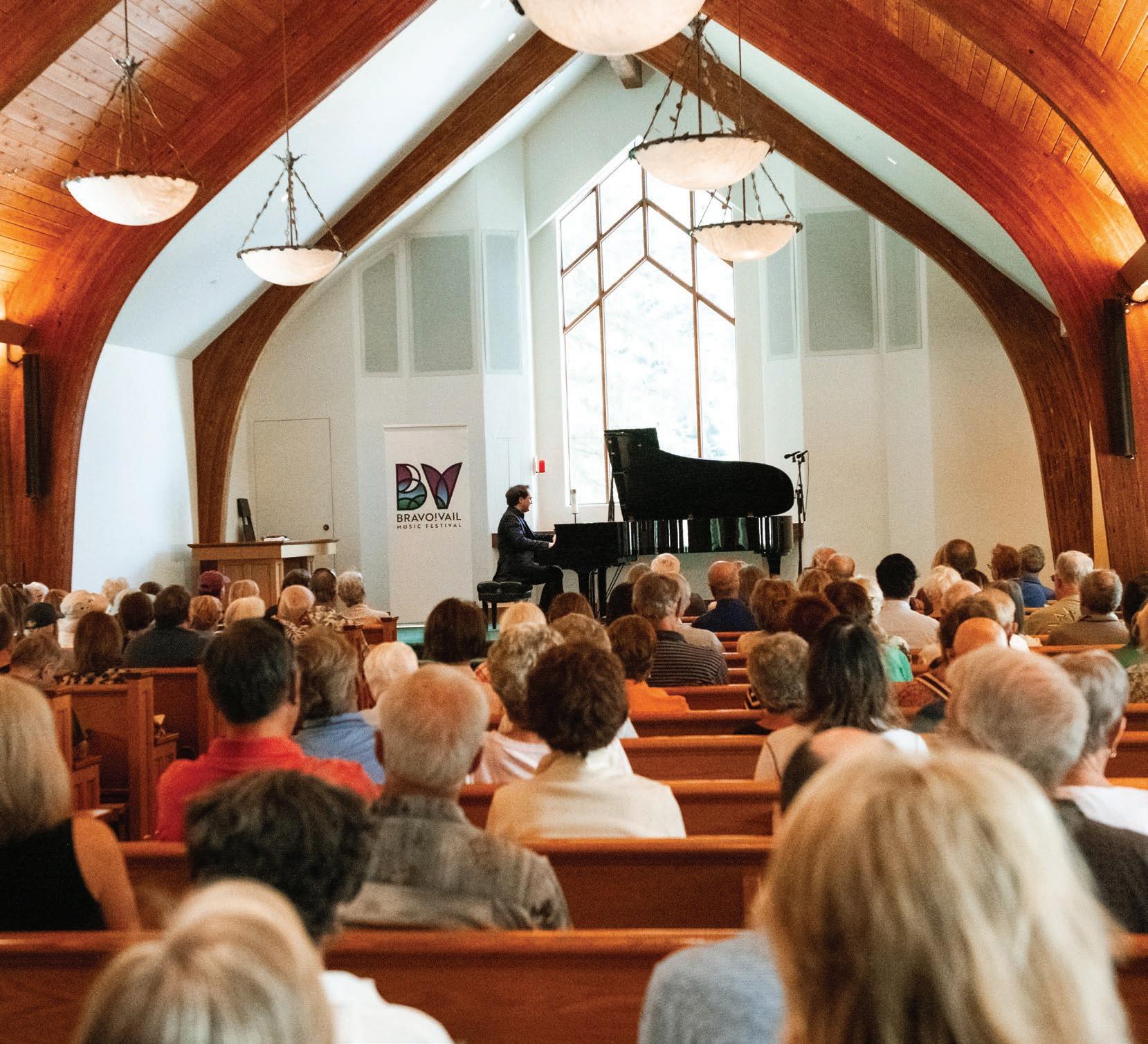
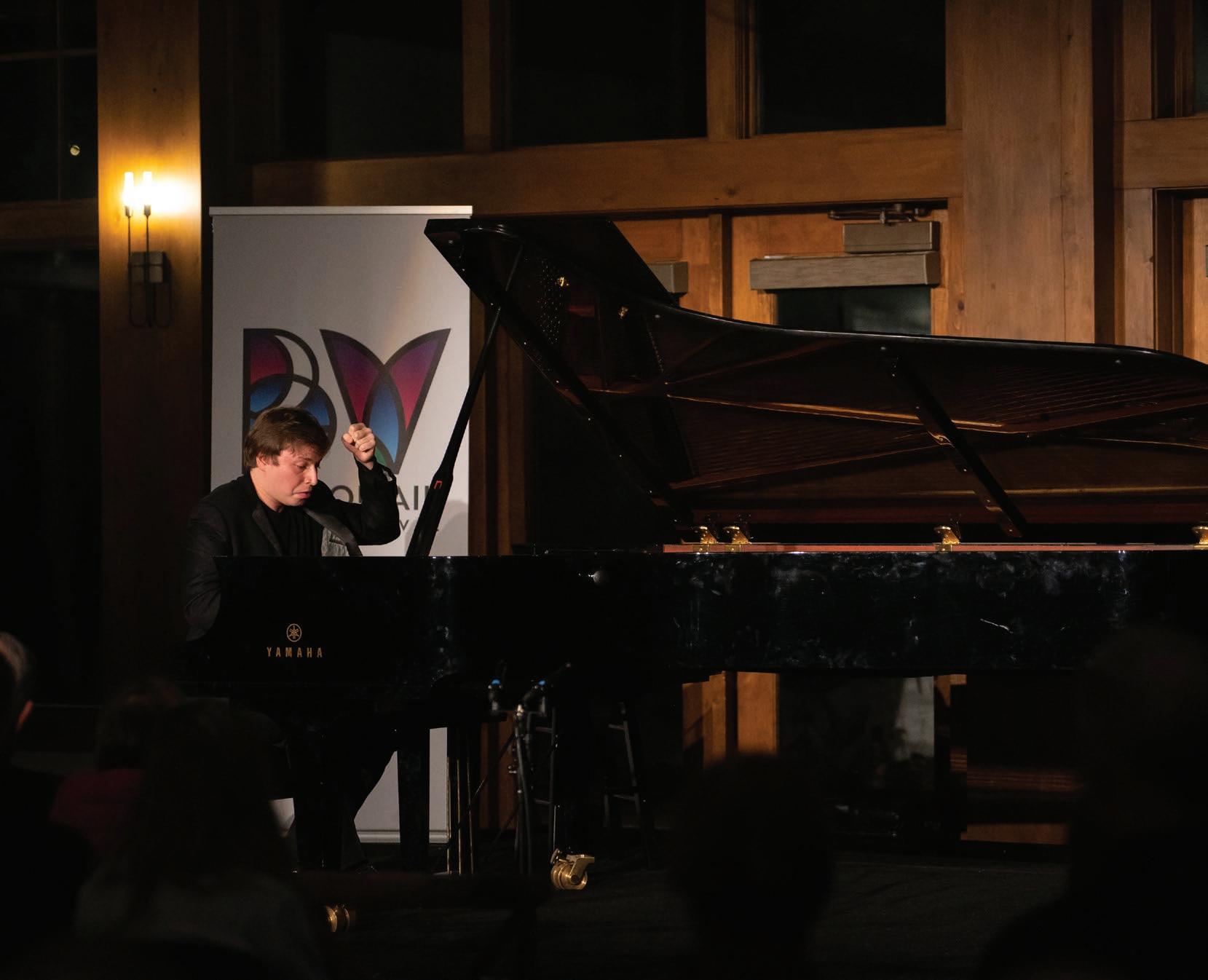
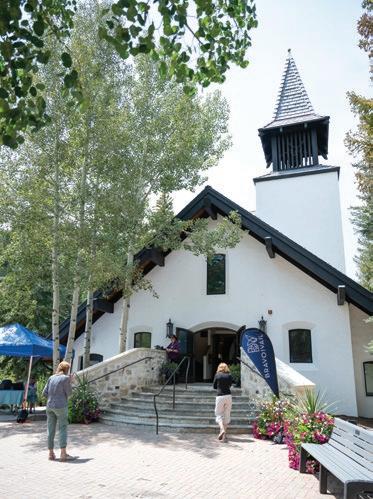
In a momentous undertaking, the Festival will also present four pianists in the complete cycle of Beethoven’s 32 piano sonatas over eight free concerts at the Vail Interfaith Chapel—an extraordinary gift to our community.
And as always, Bravo! Vail will bring music to our entire Valley, presenting free concerts in local communities so that everyone can experience the joy and power of music. Our local community makes us who we are, and we are honored to collaborate with our 2026 Featured Community Partner, the Vail Valley Charitable Fund, which supports individuals and families in the Vail Valley experiencing financial hardship due to medical crises or long-term illness. We are proud to support their important and impactful work.
You make all of this possible. We extend our deepest gratitude to our musicians, community leaders, music teachers, donors, sponsors, volunteers, and music lovers who contribute to Bravo! Vail’s impact every year. We hope experiencing the remarkable music this season brings you joy, and we look forward to seeing you throughout the valley. Thank you for celebrating the evolving world of classical music with us.
Lower Elevation, Shorter Winters, More Sunshine.
Brand New Construction. Finished and Staged Homes - Come Tour Today!
The Vail Valley’s Newest Neighborhood in Eagle, Colorado.
Primary suites on the entry level and upcoming single-level living homes.
30 minutes to Vail and Beaver Creek. Iconic ski and golf destinations
bear basics
Photo by Mariah Oleson
Principal Architects: Hans Berglund & Stephanie Lord-Johnson
Your First Impression in Singletree Matters
It’s no longer about being on Zillow. It’s about how you show up.
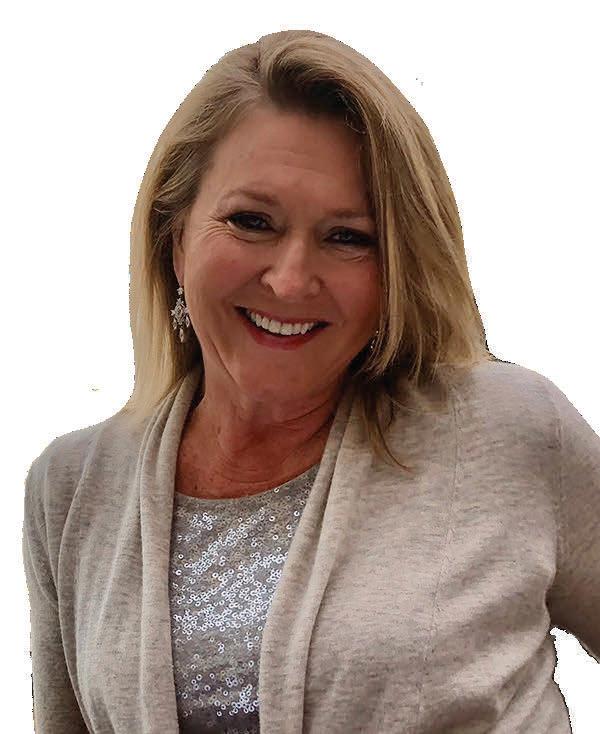
With over 35 years of real estate sales experience and a long track record as a top producer, Alida brings strategy, not guesswork.
As a Zillow partner representing the exclusive 10% of the market, Alida leverages premium exposure that increases the odds of your home going pending within the first 14 days.
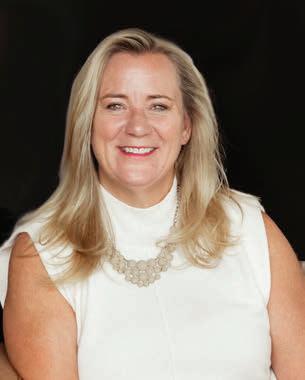
Alida Zwaan
Smart marketing. Proven results. A seamless selling experience from start to finish. What’s your next
Photo courtesy VLMDAC/ Jack Affleck.
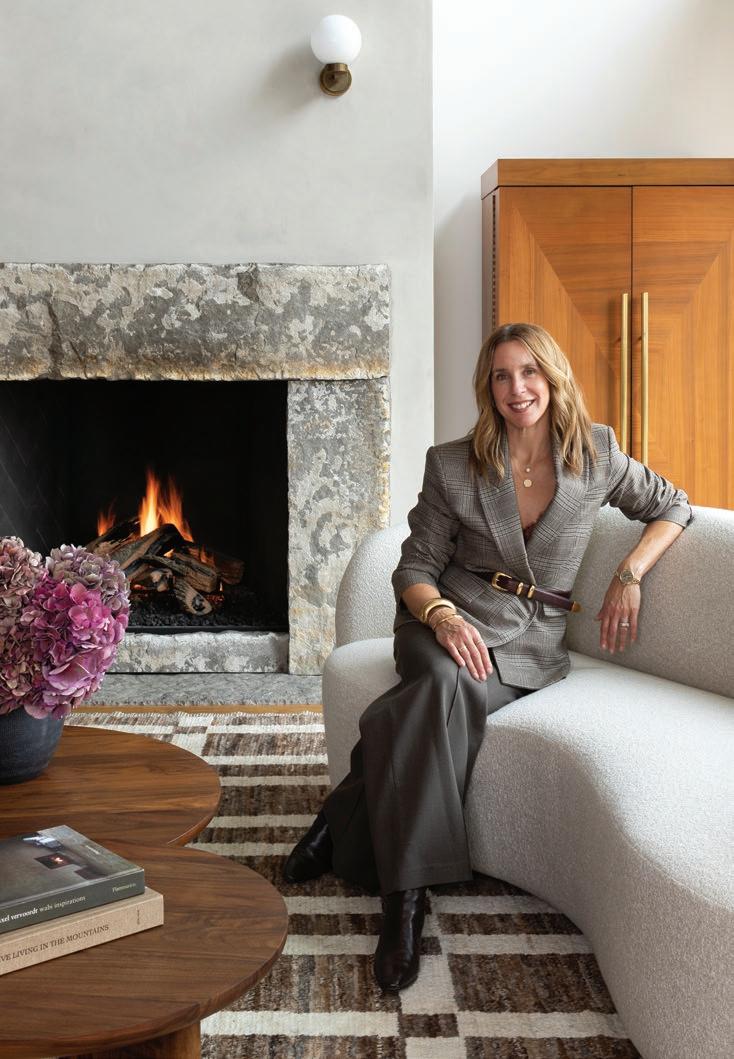
“A SPACE DOESN'T NEED TO FOLLOW A CERTAIN SET OF RULES. THE HIGHEST PRIORITY IS THAT IT FEELS GOOD AND CREATES A RELAXED STATE OF BEING.”
“A SPACE DOESN'T NEED TO FOLLOW A CERTAIN SET OF RULES. THE HIGHEST PRIORITY IS THAT IT FEELS GOOD AND CREATES A RELAXED STATE OF BEING.”
“A SPACE DOESN'T NEED TO FOLLOW A CERTAIN SET OF RULES. THE HIGHEST PRIORITY IS THAT IT FEELS GOOD AND CREATES A RELAXED STATE OF BEING.”
“A SPACE DOESN'T NEED TO FOLLOW A CERTAIN SET OF RULES. THE HIGHEST PRIORITY IS THAT IT FEELS GOOD AND CREATES A RELAXED STATE OF BEING.”
–VICTORIA JONES, FOUNDER & LEAD DESIGNER
–VICTORIA JONES, FOUNDER & LEAD DESIGNER
–VICTORIA JONES, FOUNDER & LEAD DESIGNER
–VICTORIA JONES, FOUNDER & LEAD DESIGNER
THE POWER OF
Community
BUILDING TO 200 STRONGER. FASTER. TOGETHER.
Let’s celebrate community this summer. It’s all of us together that will enable Habitat Vail Valley to “Build to 200” affordable homeownership opportunities in the next three years.
As the need for permanently affordable homeownership has grown, so has our commitment to community.
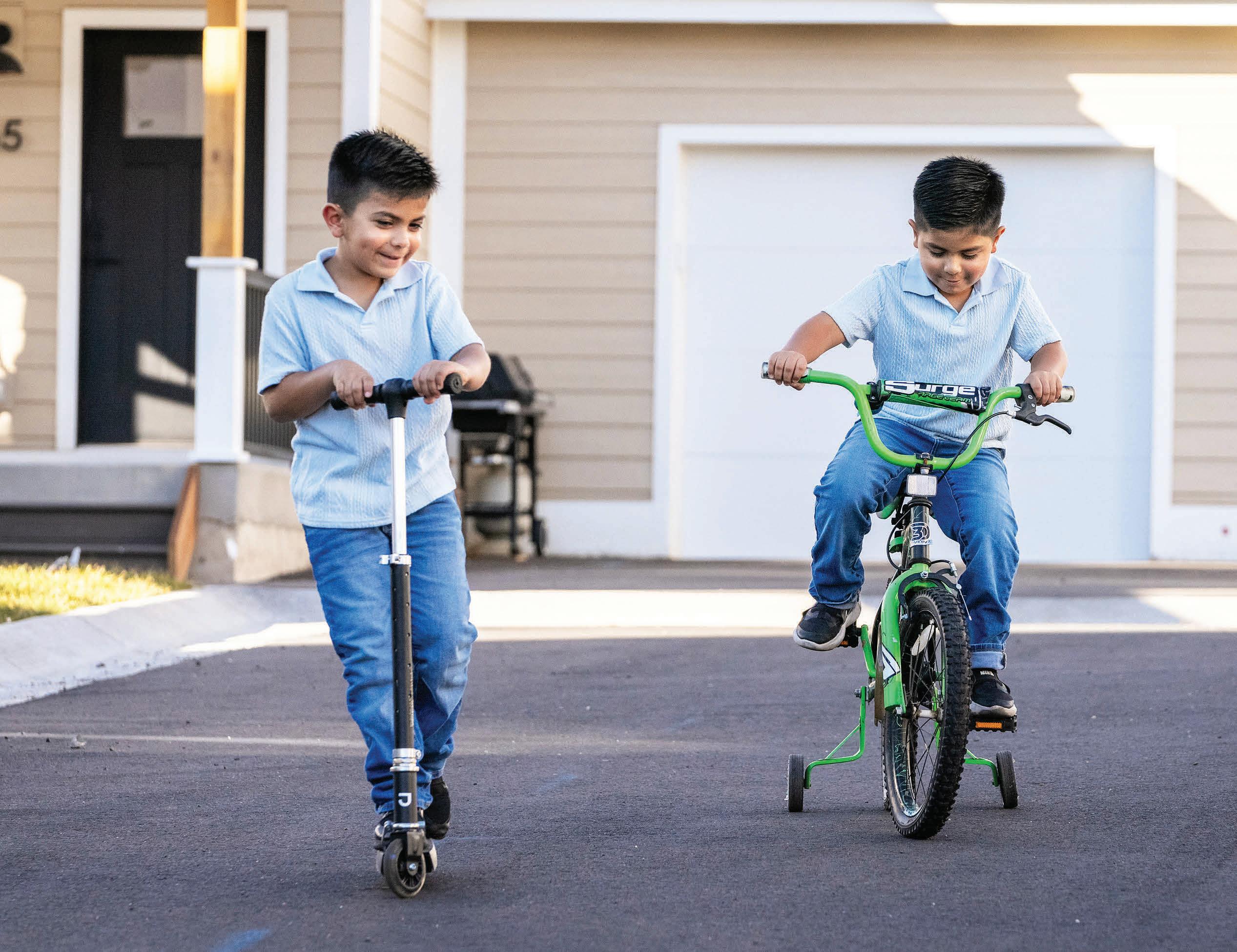
Because of Habitat Vail Valley, more of our critical workforce has a permanent home. This year, 35 Habitat homeowners will move into Timber Ridge in Vail, and we’ve broken ground on 10 homes in Gypsum with Eagle County School District. We’re constantly working on new partnerships for, and with, our community.
Join us in being home and hope builders.
Learn more about our building efforts or visit habitatvailvalley.org
Excellence
Proud to support the Bravo! Vail Music Festival
Sanctuary Pointe Group salutes the Bravo! Vail Music Festival and all of the talented musicians who make it extraordinary.
Christopher Aitken is a recognized industry leader: Barron’s Top 1,200 Financial Advisors, 2025
Eligibility is based on quantitative factors and is not necessarily related to the quality of the investment advice.
Please scan the QR code for important criteria and methodology for the referenced awards.
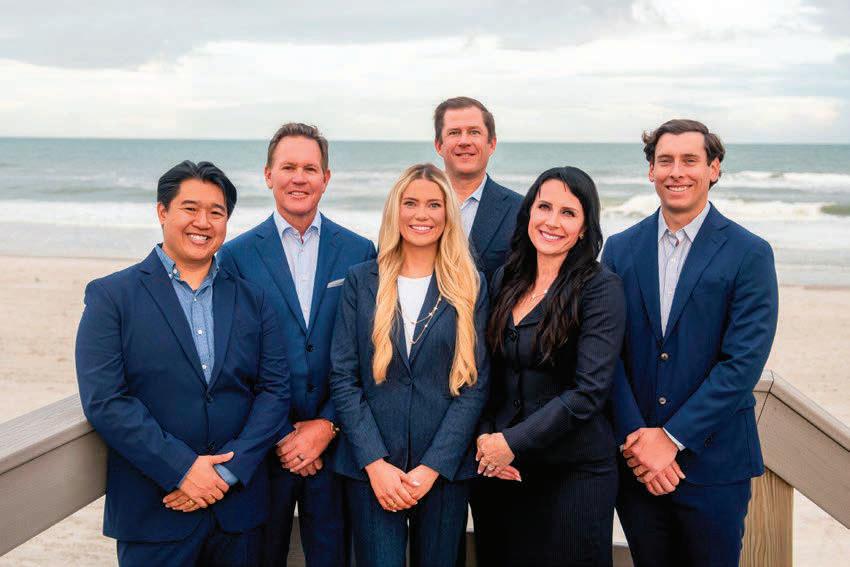
David Ly, CFP® (Financial Planning Analyst), Christopher Aitken (Private Wealth Advisor), Morgan Calton (Private Wealth Management Analyst), Ken Tonning (Private Wealth Advisor), Viktoriya Rudometkin (Chief of Staff), Scott Mayer, CFA® (Consulting Group Analyst)
Christopher Aitken Managing DirectorWealth Management
Private Wealth Advisor 904-543-7826
Christopher.C.Aitken @morganstanleypwm.com
Ken Tonning Senior Vice President Private Wealth Advisor 904-543-7829
Ken.Tonning @morganstanleypwm.com
Sanctuary Pointe Group at Morgan Stanley Private Wealth Management 50 A1A N., Suite 112 Ponte Vedra Beach, FL 32082
Morgan Stanley Private Wealth Management, a division of Morgan Stanley Smith Barney LLC. Member SIPC. This material has been prepared for informational purposes only. It does not provide individually tailored investment advice. It has been prepared without regard to the financial circumstances and objectives of persons who receive it. Morgan Stanley Smith Barney LLC (“Morgan Stanley”) recommends that investors independently evaluate particular investments and strategies, and encourages investors to seek the advice of a Morgan Stanley Financial Advisor The appropriateness of a particular investment or strategy will depend on an investor’s individual circumstances and objectives Past performance is no guarantee of future results
CRC5484594 05/26
BOARD OF TRUSTEES
Hank Gutman, Chair
Diane Loosbrock, Vice Chair
Paul Rossetti, Treasurer
Byron Rose, Secretary
Sarah Benjes
Barry Beracha
Kjestine Bijur
Bill Burns
Carol Cebron
John Dayton
Marijke de Vink
Kathleen Eck
Julie Esrey
Cookie Flaum
Dan Godec
Mark Gordon
Linda Hart
Fred Hessler
Ann Hicks
Peter Kitchak
Alan Kosloff
ADVISORY COUNCIL
Pauline Araujo Agoitia
Marilyn Augur
Kathleen Brendza
Nick Budor
Edwina Carrington
Reneé Chelm
Janet Cooper
Tim Dalton
Michael Elsberry
Kabe ErkenBrack
Carole Feistmann
Harry Frampton
Joan Francis
Michael Glass
Martha Head
Becky Hernreich
Bratzo Horruitiner
Robert LeVine
Brett Logan
Vicki Logan
Tony Mayer
Shirley McIntyre
Sarah Millett
Matt Morgan
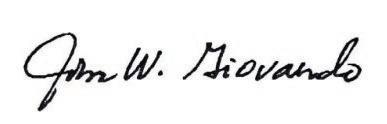
John
W. Giovando FOUNDING EXECUTIVE DIRECTOR
Fred Kushner
John Magee
Laura Marx
Kate Mitchell
Laurie Mullen
Margery Pabst Steinmetz
Marlys Palumbo
Steve Pope
Tom Rader
Michele Resnick
Mike Rushmore
Carole Segal
Beth Slifer
Cathy Stone
Greg Walton
Kyle Webb Aneta Youngblood
Bill Morton
Rita Numerof
Kalmon Post
Brad Quayle
Drew Rader
Jeris Romeo
Terie Roubos
Adrienne Rowberry
Lisa Schanzer
Kim Schilling
Debbie Scripps
Pete Seibert
LETTER FROM THE FOUNDER
Chris Silversmith
Randy Smith
Marcy Spector
Susan Suggs
Lisa Tannebaum
Doug Tansill
Fred Tresca
Melina Valsecia
Michael Warren
Carole Watters
John Wilcox
Steve Yarberry
It is my pleasure to welcome you to the 2026 season of the Bravo! Vail Music Festival, America’s premier summer music festival celebrating its 39th year!
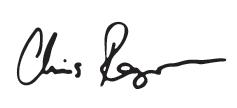
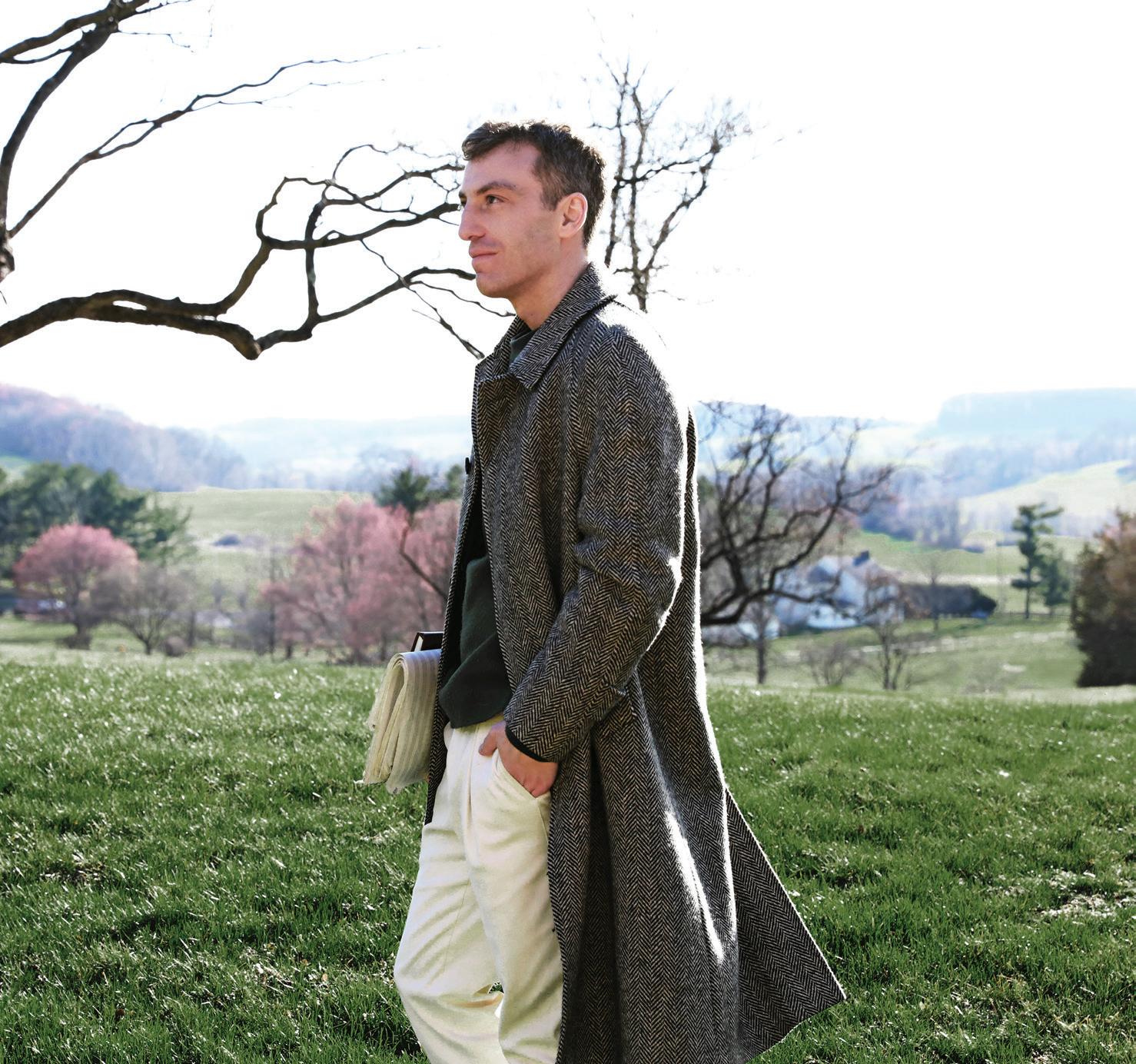
This summer honors the achievements of pianist and Artistic Director Anne-Marie McDermott, concluding her 16-year leadership with the Festival and welcomes in Chris Rogerson as Artistic Director Designate, an exciting evolution in advance of our 40th Anniversary Season in 2027.
The 2026 Festival features four spectacular orchestras performing repertoire that spans disco to classical, opera to contemporary, alongside exceptional chamber music and engaging educational performances.
We extend our sincere gratitude to the hundreds of musicians, donors, members of the Board of Trustees and Advisory Council, volunteers, staff and the Vail community whose support makes Bravo! Vail and the performing arts thrive.
Join me in celebrating a season of unforgettable music! Thank you.
State Farm Welcomes Bravo's 39th year!
Agent
Cathy Thompson 27 Main Street, Suite 108 Edwards, CO 81632-8111
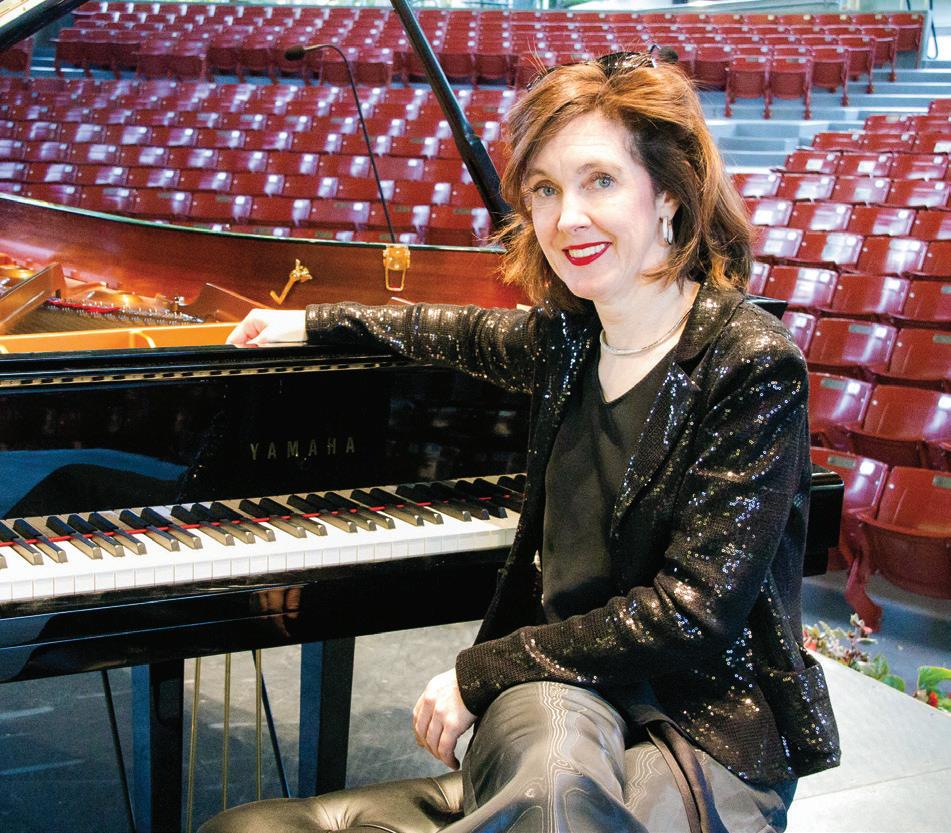
Celebrating Sixteen Years of ANNE - MARIE MCDERMOTT
ARTISTIC DIRECTOR 2011 - 2026
Bravo! Vail celebrates the 16-year tenure of Anne-Marie McDermott’s extraordinary direction and vision as Artistic Director. We invite you to join us as we pay tribute to her visionary leadership, her consummate musicianship, and her passion for creating great musical experiences all season long.
“So many of the dreams I had for the festival have not only been realized but have had an impact beyond what I could have imagined,” says McDermott. “First and foremost, we have grown our reputation internationally as a place for great artists to come and make great music in a spectacularly beautiful setting. We’ve created opportunities for audiences to interact directly with these incredible artists, welcoming and inviting people of all ages to cultivate a lifelong relationship with music. The diversity of our offerings, showcasing the incredibly diverse talents of these musicians, generates a lot of excitement for both artists and audiences.”
“Thanks to the amazing spirit of the entire Bravo! Vail community and the outstanding generosity of its supporters, classical music is flourishing in the Rocky Mountains. I am profoundly grateful and very excited for what lies ahead.”
We invite you to join us all summer long in celebration of Anne-Marie McDermott’s tenure as Bravo! Vail’s Artistic Director, celebrating not just sixteen years of leadership, but over three decades of joy and passion for the music we all come to experience together.
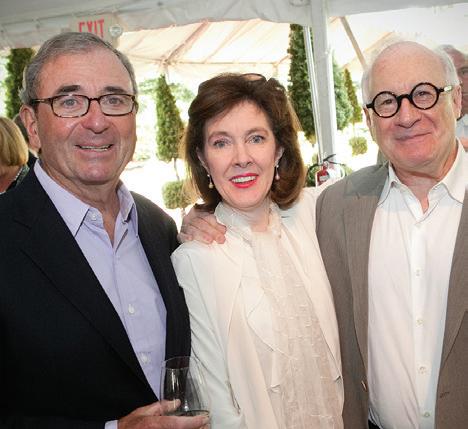
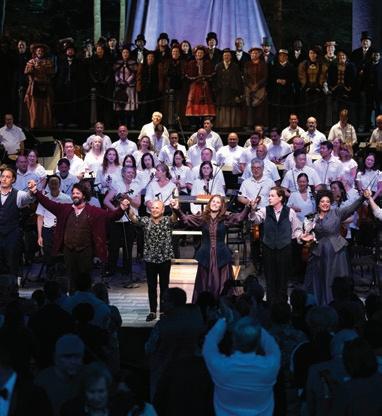
Alan Kosloff , Anne-Marie McDermott, and Mike Lubin, 2011.
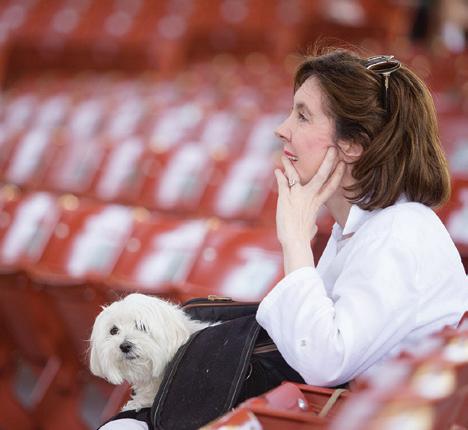
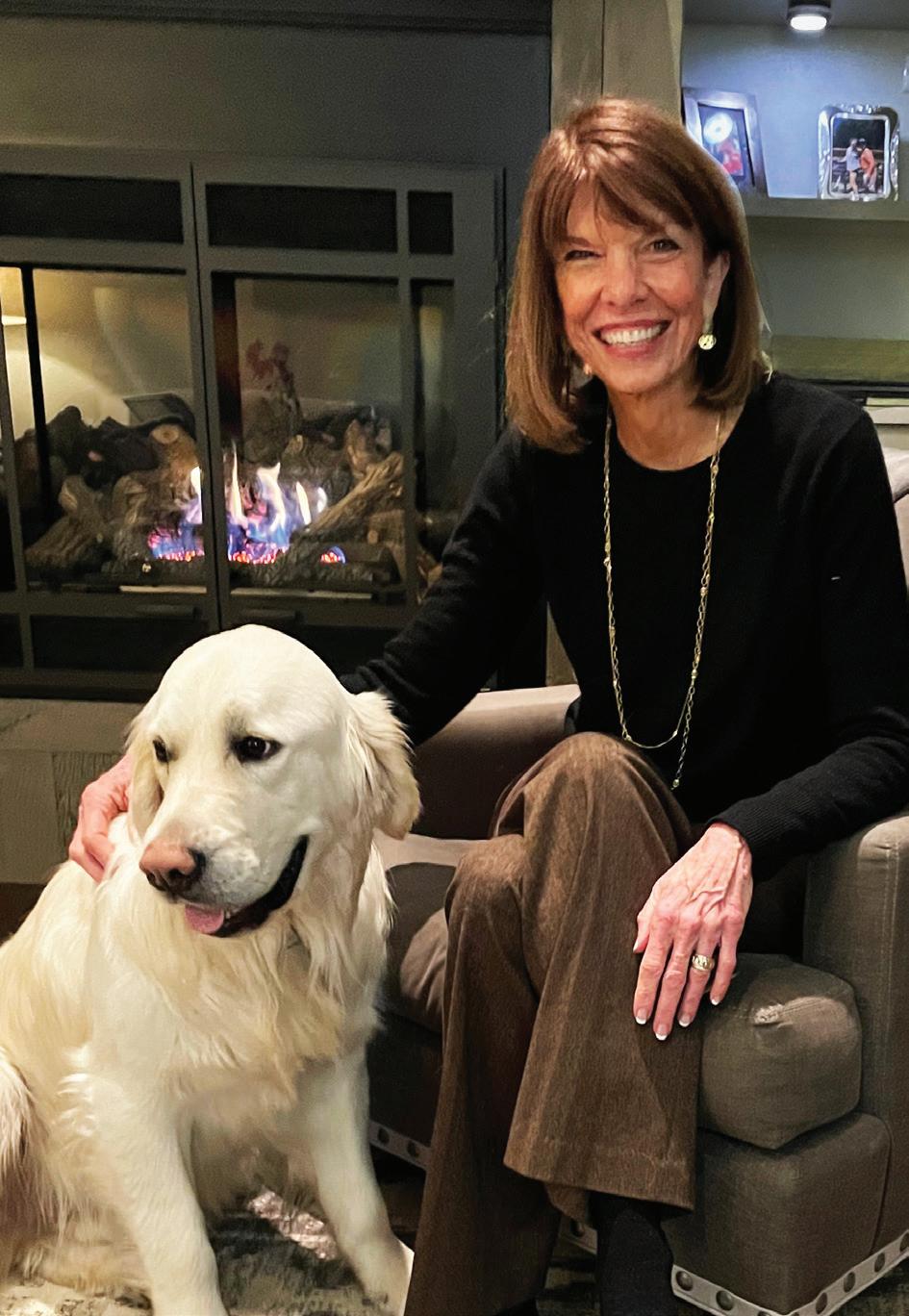
Anne-Marie at rehearsal with her dog, Samantha
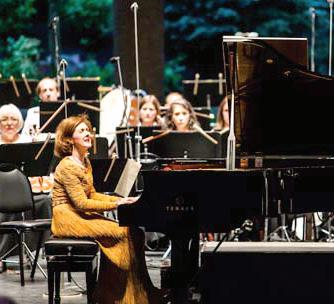
McDermott performs with the New York Philharmonic, 2012
Caitlin Murray, John Giovando, and Anne-Marie McDermott, 2019
Expanding Programming, Increasing Access
2012 Established Classical Uncorked Series
2013 Expanded Vail Chapel Community Concert Series
2015 Established Piano Fellows program
GIFTS IN HONOR OF ANNE- MARIE MCDERMOTT
Bravo! Vail gratefully acknowledges the following donors who have made special gifts in honor and celebration of Anne-Marie McDermott.
Anonymous (2)
Dierdre and Ronnie Baker
The Berry Charitable Foundation
Kjestine and Peter Bijur
Sally Blackmun and Michael Elsberry
Jane and Gary Bomba
Shirley and Jeff Bowen
Bravo! Vail Board of Trustees and Advisory Council
Doe Browning and Jack Hunn
Bill Burns
Edwina P. Carrington
Nancy and Andy Cruce
2016 Expanded orchestral residencies to include an International Guest Chamber Orchestra—Academy of St Martin in the Fields; inaugurated site-specific performance with Inuksuit
2017 Established New Works Fund; presented first international chamber ensemble (Danish String Quartet)
2019 Presented Bravo! Vail’s first fully staged opera, Puccini’s Tosca; launched Inside the Music Series
2020 Launched Immersive Experiences series; deployed the Bravo! Vail Music Box; live-streamed select concerts
2021 Established Symphonic Commissioning Fund
2022 Premiered the inaugural works resulting from Symphonic Commissioning Fund, which included two by composer Chris Rogerson
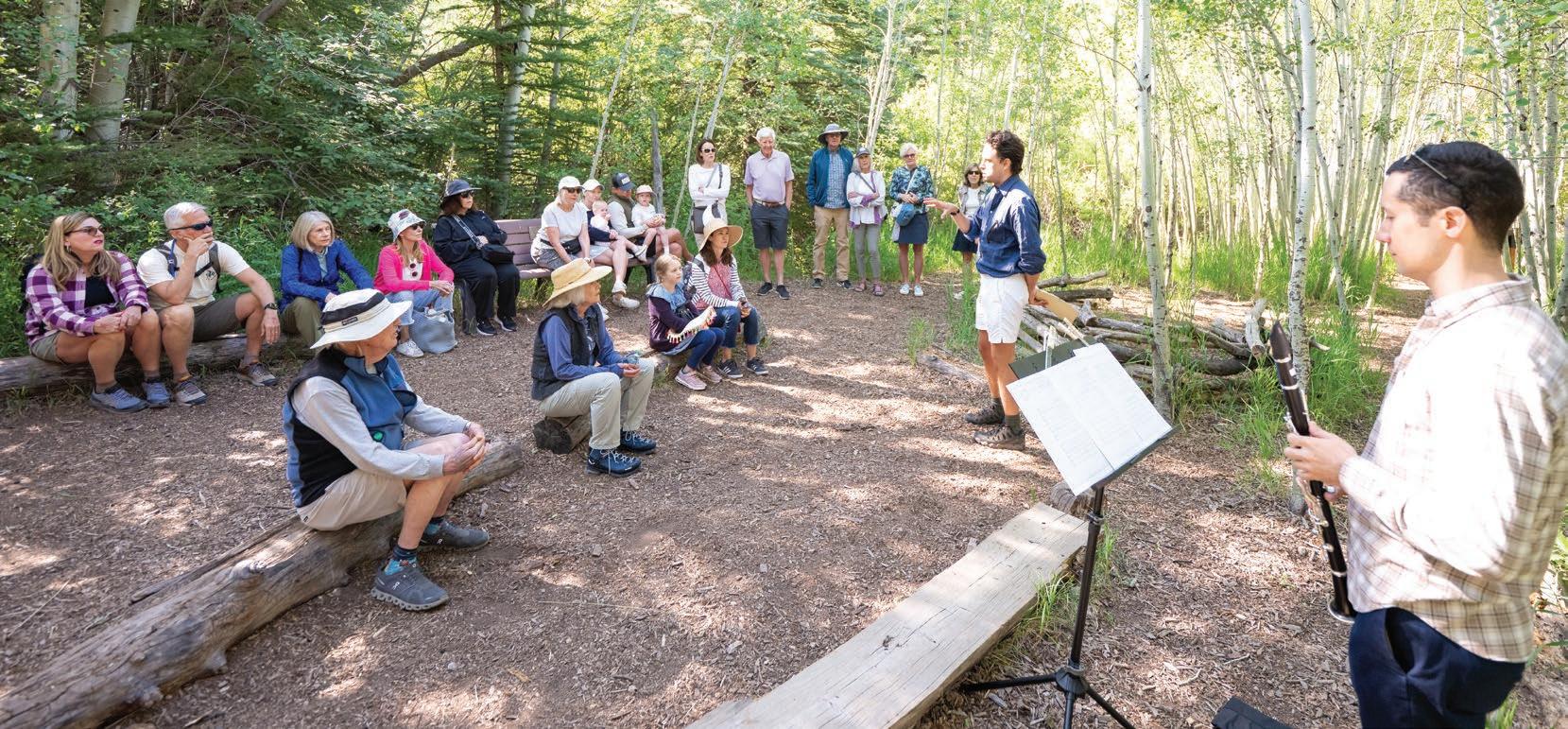
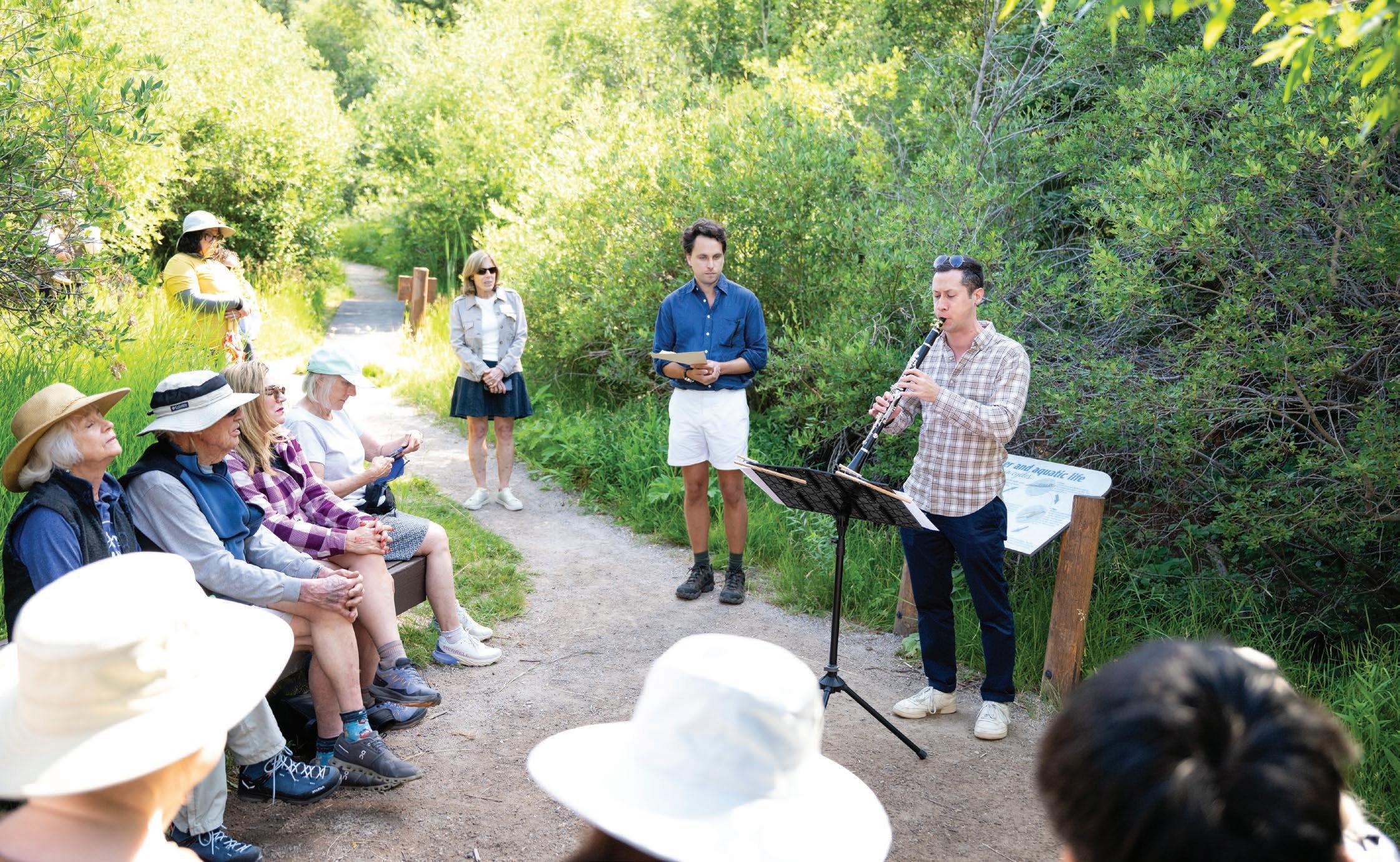
2023 Debuted Nature Walks, partnering with Walking Mountains Science Center
2024 Presented Bravo! Vail’s first Latin American Guest Chamber Orchestra, Sinfónica de Minería
2026 Debuted special project within the Community Concert Series to include the complete Beethoven Piano Sonatas
Across the Festival’s 39-year history, Anne-Marie has graced the stage as a performer for 31 of them — an extraordinary testament to her artistry and commitment. Some of her personal highlights include:
1992 Debut performance during the fifth season of the then-named Bravo! Colorado Vail Valley Music Festival, stepping in as a substitute artist
2011 The complete Beethoven Piano Trios with Ida Kavafian, Bravo! Vail’s founding Artistic Director, and cellist Peter Wiley
Fara and Jason Denhart
Marijke and Lodewijk de Vink
Cookie and Jim Flaum
Joan Francis
Sue and Dan Godec
Mr. Claudio X. Gonzalez
Anne and Hank Gutman
Valerie and Robert Gwyn
Linda and Mitch Hart
Helen J. Hodges
Irwin Jacobs
Karen and Jay Johnson
June and Peter Kalkus
Rosalind A. Kochman
Judy and Alan Kosloff
Jessica Levental
Rob LeVine
Diane and Lou Loosbrock
Shirley and William McIntyre, IV
Billie and Ross McKnight
Dr. Laura Meyers
Kate and John Mitchell
Kay and Bill Morton
Laurie and Tom Mullen
Caitlin and Dan Murray
Teri Perry
Patti and Drew Rader
Dr. and Mrs. Kenneth B. Reynard
Melissa and Jeris Romeo
Sally and Byron Rose
Alysa and Jonathan Rotella
Terie and Gary Roubos
Carole and Peter Segal
2012 Mozart Piano Concerto No. 24 with Dallas Symphony Orchestra under Jaap van Zweden
2013 Complete Haydn Piano Sonatas, Rhapsody in Blue with Dallas Symphony Orchestra under Jeff Tyzik
2021 Mozart’s Piano Concerto No. 25 with The Philadelphia Orchestra under Yannick Nézet-Séguin
Beth Slifer
Donna and Randy Smith
Susan and Steve Suggs
Dhuanne and Douglas Tansill
Tippet Rise Art Center
Debbie and Fred Tresca
Sandi and Greg Walton
The Weiss Family
Jann and John Wilcox
Tom Woodell
Yamaha
CREATING MEANINGFUL CONNECTIONS TO MUSIC
EDUCATION & ENGAGEMENT
FOSTERING MUSICAL CONNECTIONS YEAR - ROUND
At the heart of Bravo! Vail’s mission is presenting extraordinary music, accessible to all. We provide extensive music education throughout our community, connect musicians and listeners and celebrate the evolving world of classical music
Our Education & Engagement Programs fall into three categories — Instruction, Access & Enrichment, and Professional Development — ensuring that great music and opportunities for lifelong
learning are available to diverse audiences of all ages and abilities.
INSTRUCTION
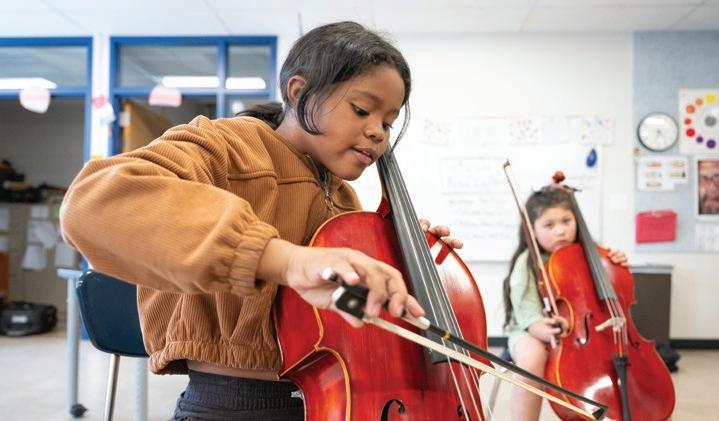
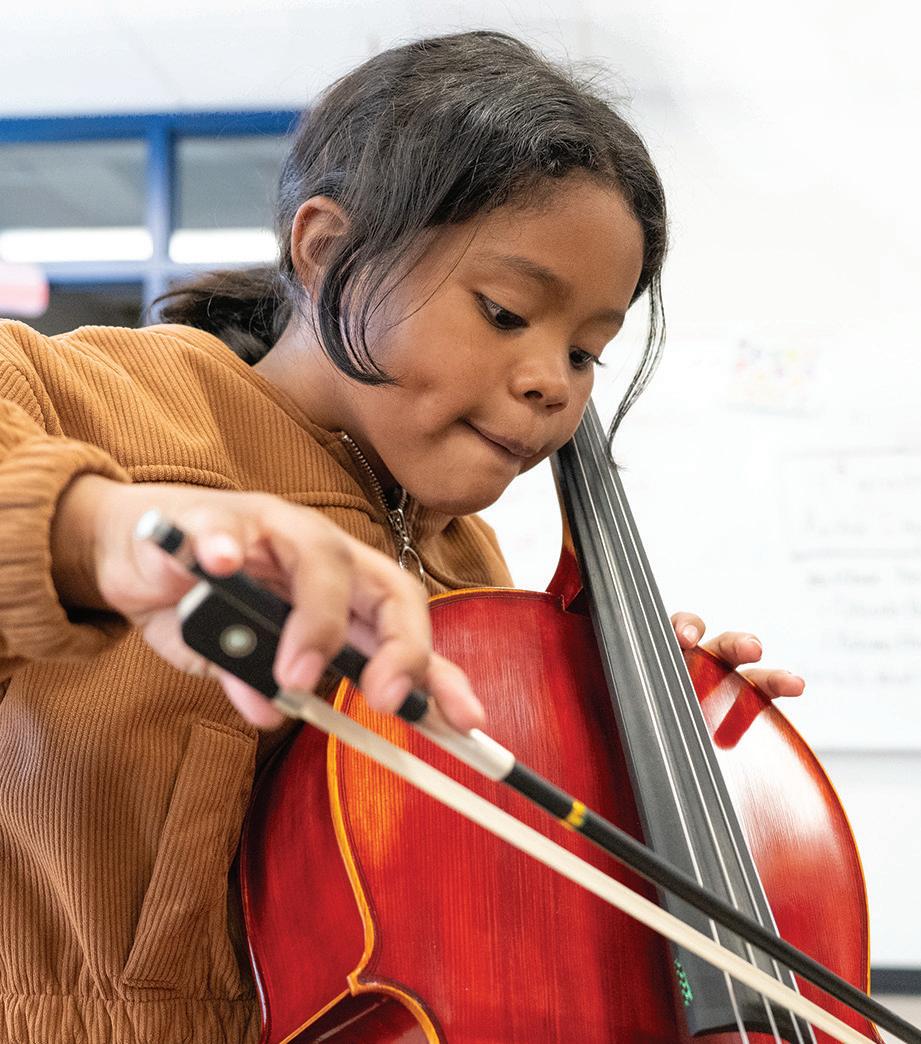
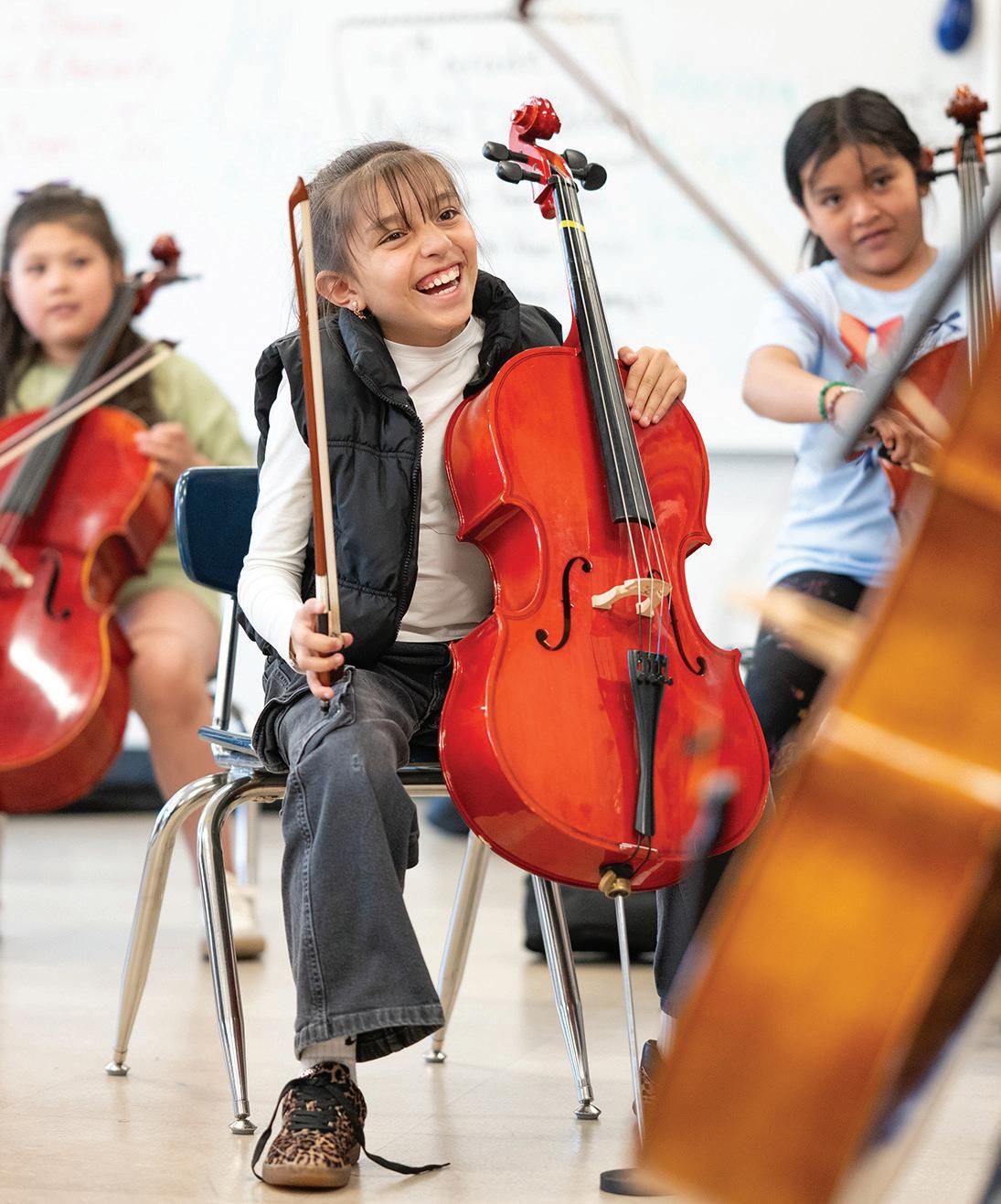
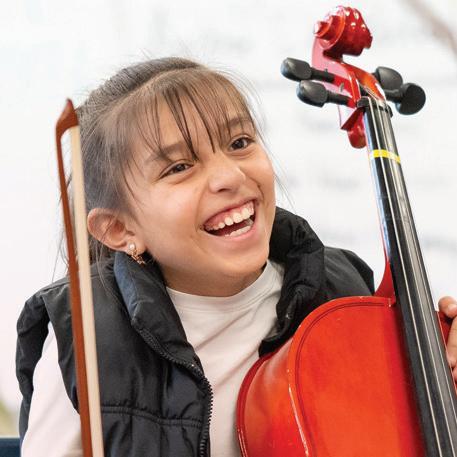
Bravo! Vail’s Instruction Programs cultivate and inspire the musician in every child. Music Makers Haciendo
Música gives students a solid foundation in music by teaching them to play an instrument, read music, and understand musical concepts. Bravo! Vail is proud to partner with the Eagle County and Lake County school districts in serving nearly 300
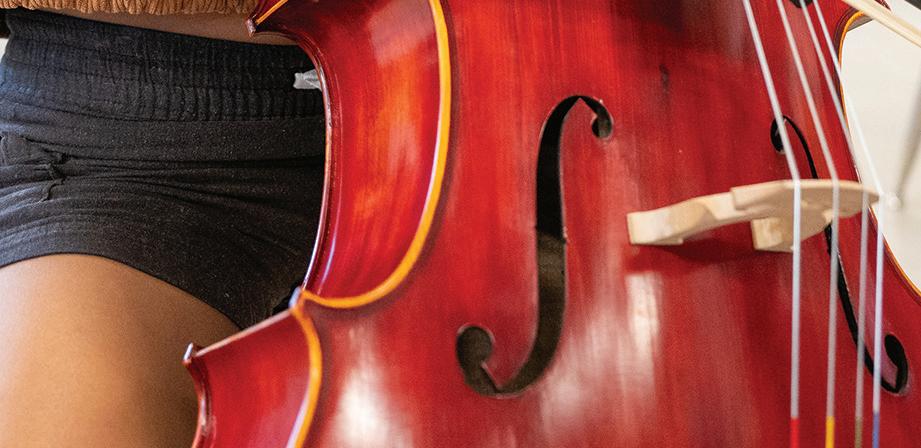
students in grades 2-12. This past year we launched a program for cello and guitar instruction for over a dozen youth and will add bass instruction in 2027.
As a complement to after-school instruction, the two-week Summer Intensive offers both beginner and intermediate string and piano players access to Festival artists and advanced studies.
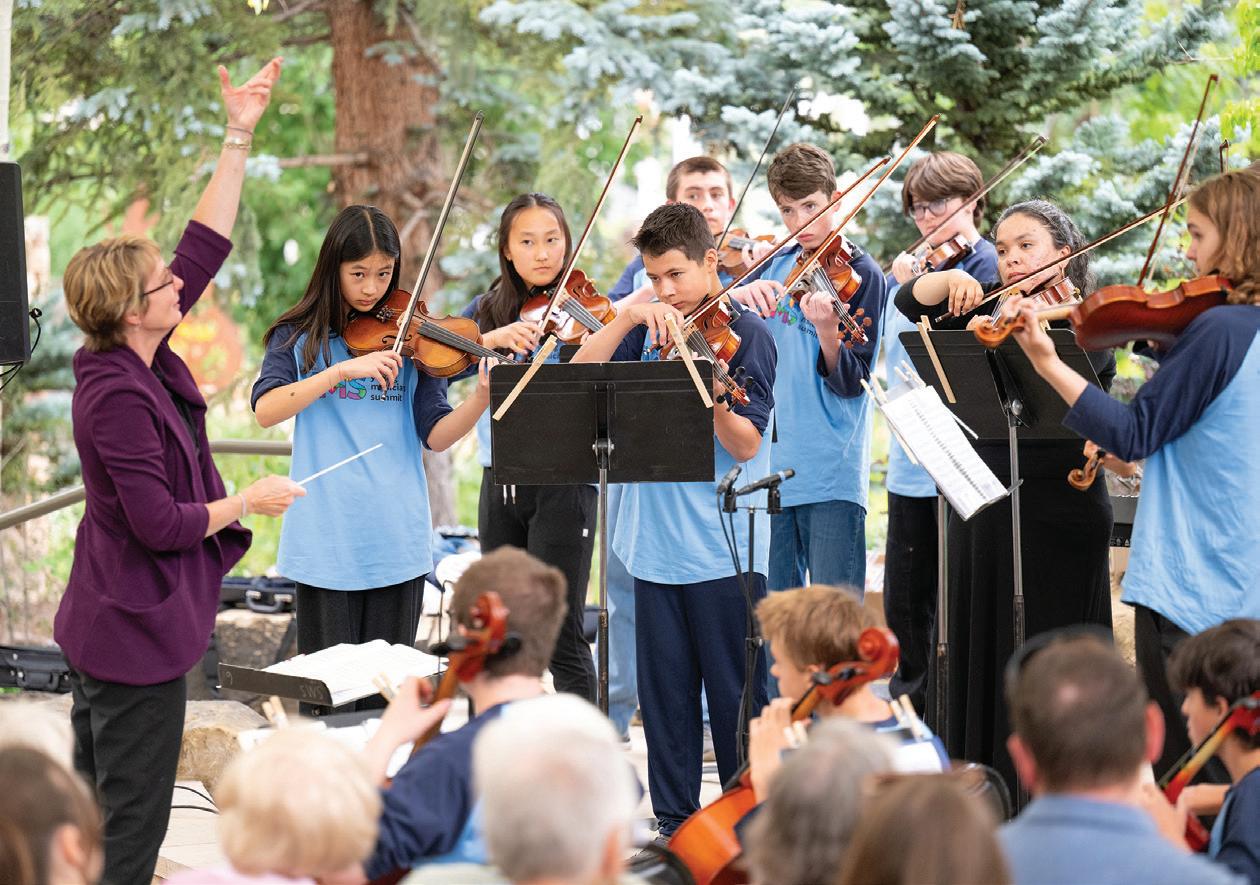
Young Musicians Summit continues to bring students together from Bravo! Vail’s Music Makers Haciendo Música and other youth classical music organizations throughout the region to learn and perform challenging repertoire and create meaningful connections.
The students will work toward two performances including one in the social courtyard before the June 27 concert at the Gerald R. Ford Amphitheater.
ACCESS & ENRICHMENT
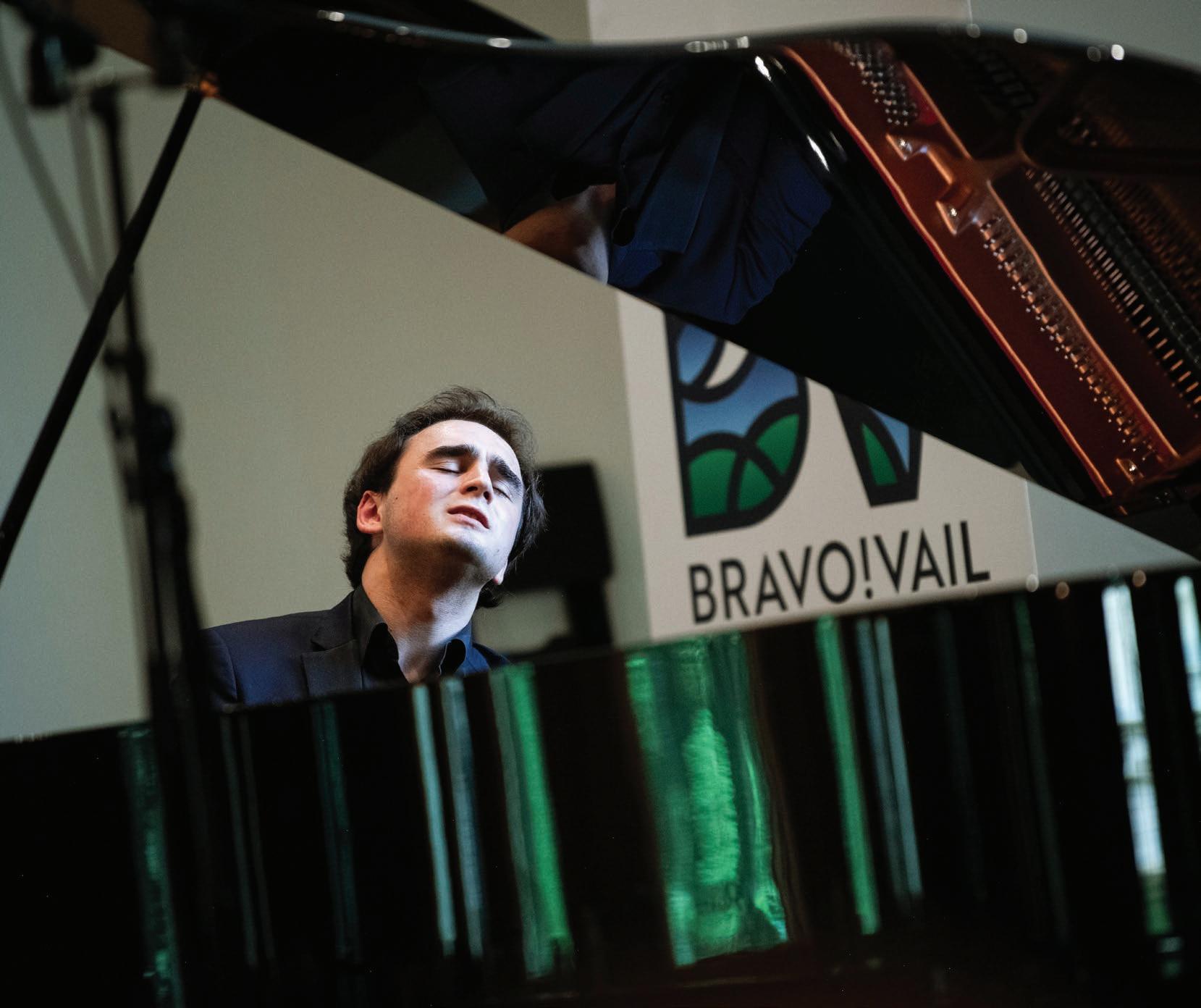
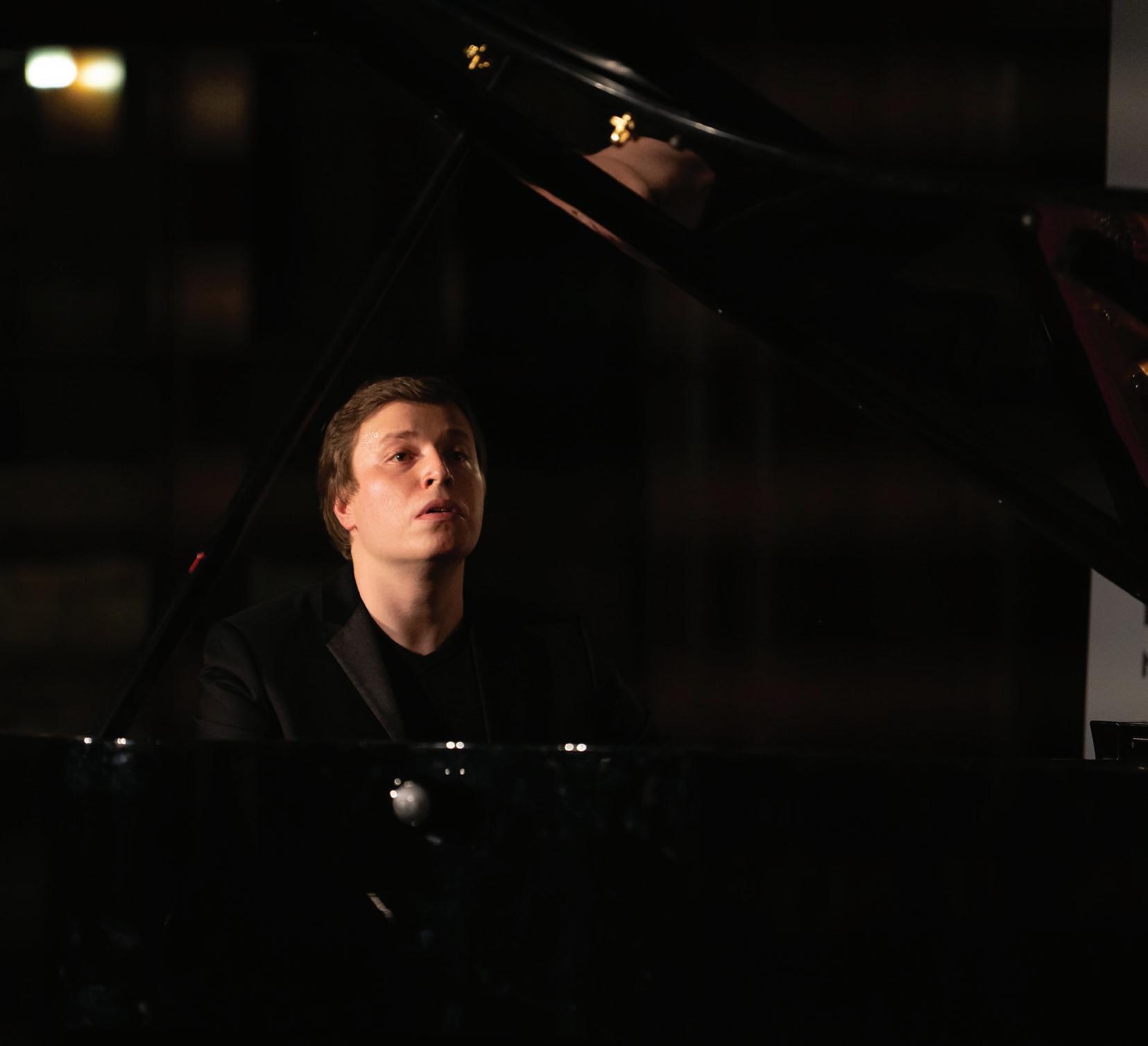
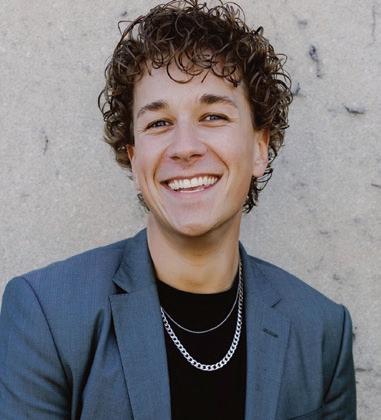
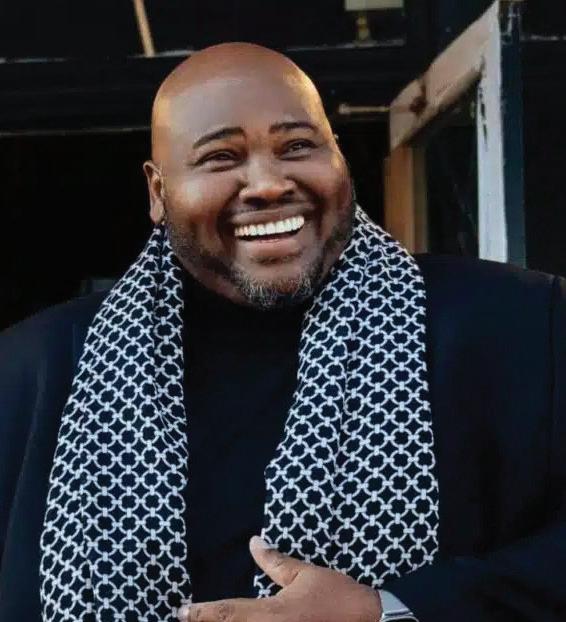
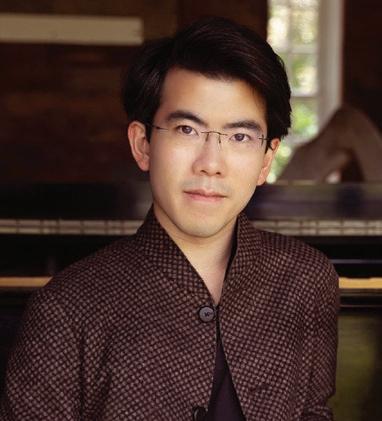
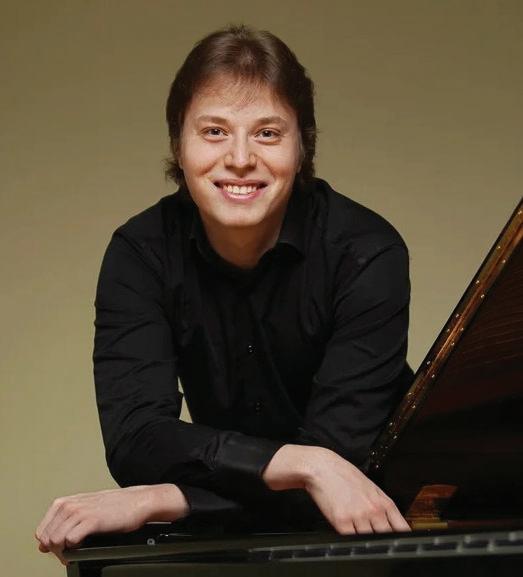
Through Access & Enrichment, we remove barriers and create entry points to music, and deepen people’s understanding and appreciation of music. 2026 highlights include the presentation of Beethoven’s complete Piano Sonatas over eight free concerts at the Vail Chapel with pianists Illia Ovcharenko, Ilya Shmukler, Fei-Fei Dong, and Chaeyoung Park.
Expand your knowledge and gain unique perspectives into the music performed at Bravo! Vail Music Festival at Inside the Music. These free informative talks and masterclasses offer music lovers the opportunity to get background and insights from musicians and experts.
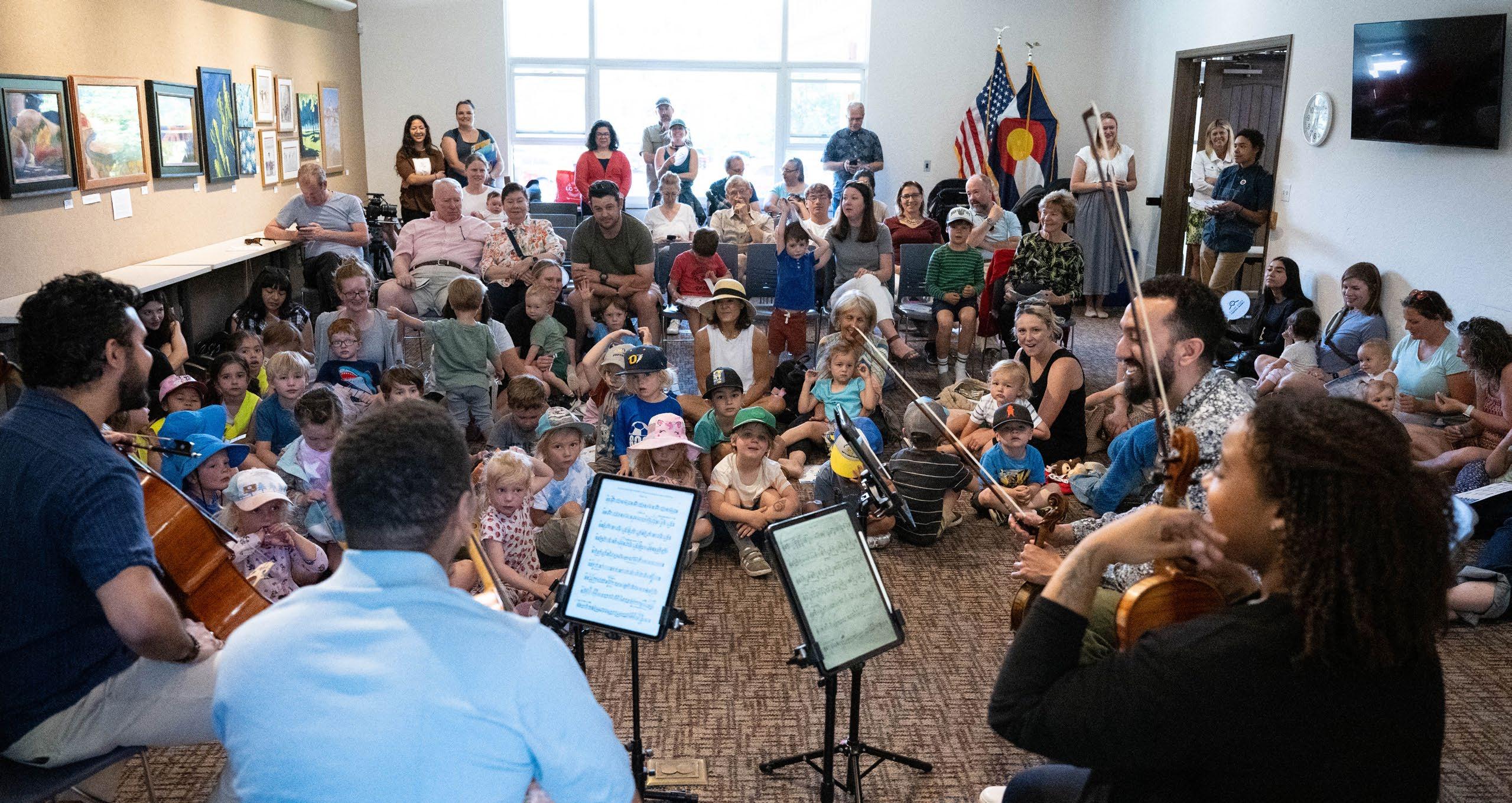
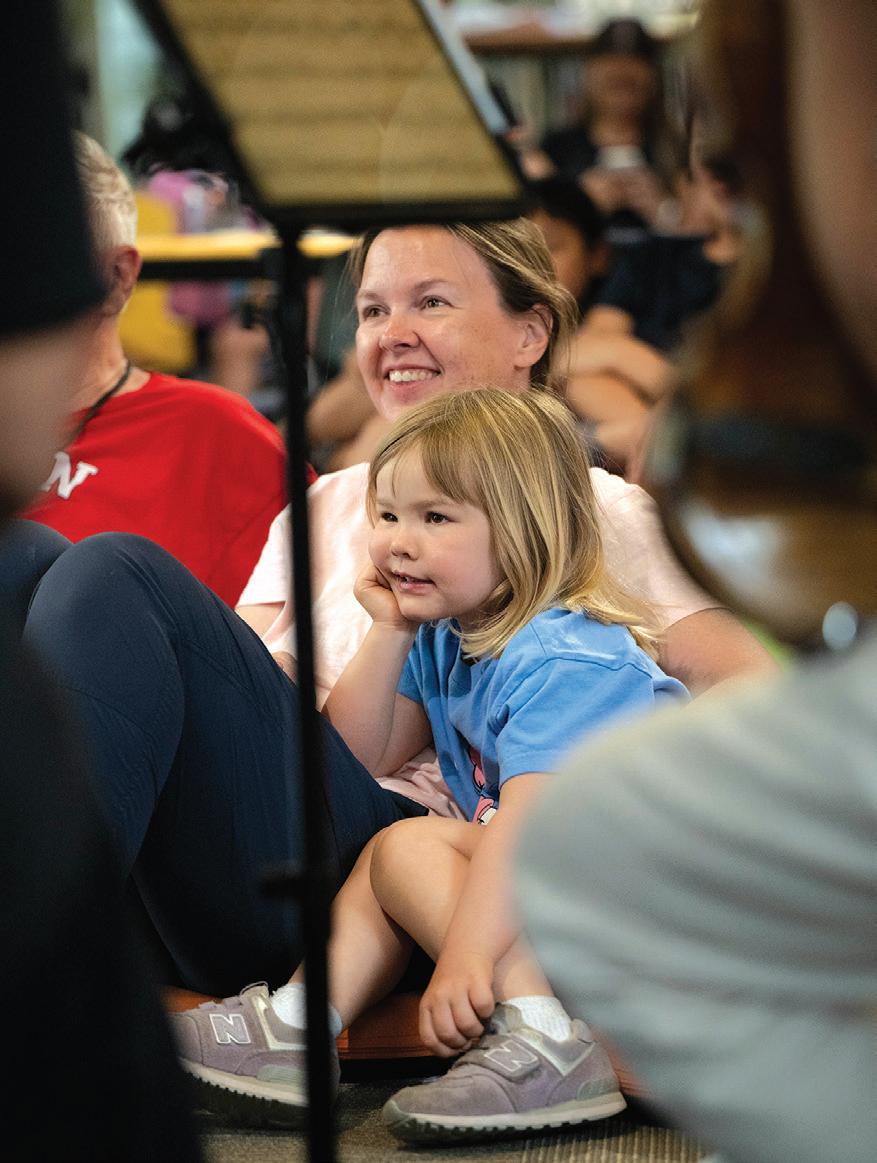
At Little Listeners @ the Library, we seek to cultivate and inspire the musician inside every child through 30-minute programs performed by Festival artists. The programs are designed with age-appropriate games developed to introduce music and instruments in an approachable way at libraries from Vail to Gypsum.
Meet the Artist Q&A happens immediately following a concert and is a fantastic way to further enrich your concert experience from the artists themselves on the works just performed for audiences live.
Pre-Concert Talks at select Orchestral Series concerts are free lectures, led by renowned musicologists and passionate performers, designed to enhance your concert experience and create deeper connections to the evening’s program.
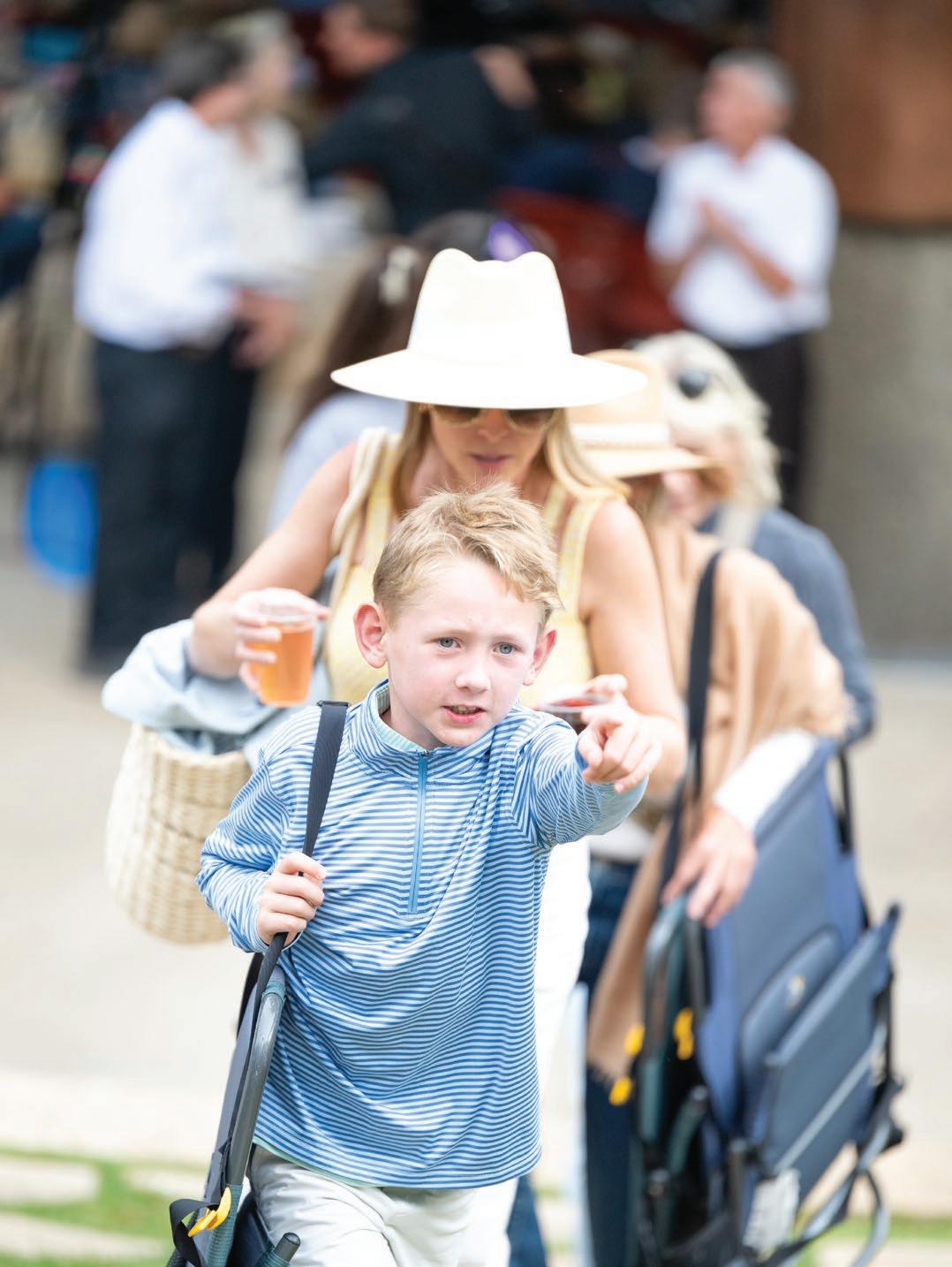
The Presto Club is an opportunity for youth ages 8-14 to gather at select Orchestral Series concerts to sit together on the lawn and socialize, engage with a designed interactive booklet during concerts, and participate in Artist Meet & Greet opportunities just for them.
Through Community Collaborations and partnerships with local businesses and organizations, Bravo! Vail uses the arts to strengthen community, enhance understanding, and make music accessible to audiences outside the concert hall through innovative, interactive programs.
PROFESSIONAL DEVELOPMENT
Through a variety of Professional Development programs, Bravo! Vail enhances the health and vibrancy of the performing arts field. Bravo! Vail is proud to identify and exhibit outstanding performers in the early stages of their careers.
Bravo! Vail Piano Fellows and Chamber Musicians in Residence gain valuable opportunities to perform, teach, and learn side by side with renowned Festival musicians.
The Jane & Gary Bomba Internship Program is unsurpassed in its reputation of advancing our seven summer interns into successful careers in arts administration, nonprofit management, festival operations, and live audio engineering and recording.
Bravo!
Vail Gratefully Acknowledges the Support of the Following Patrons
$100,000 AND ABOVE
Discover Vail
Kathy and David Ferguson and the Ferguson Music Makers
Haciendo Música Fund
Carole A. Watters
$50,000 AND ABOVE
Jane and Gary Bomba and the Bomba Internship Program
Ferrell and Chi McClean and the McClean Family Music Educators & Assistance Fund
$30,000 AND ABOVE
Cookie and Jim Flaum and the Flaum Music Education Fund
The Helmut Fricker Music Scholarship Fund
Han Mu Kang and the June S. Kang Scholarship Fund
$20,000 AND ABOVE
Bravo! Vail Guild
Sandi and Leo Dunn
Anne-Marie and John Keane and the Keane Music Education Fund
Cathy Stone
Musette and William Young
$10,000 AND ABOVE
David Bernstein
Edwina P. Carrington and the Carrington Classical Guitar Fund
Carol and Harry Cebron
Katherine Clayborne and Tom Shoup
Kathy Cole
Jacqueline Hurlbutt and Norm Waite
Carolyn and Paul Landen and the Lynne Murray Sr. Educational Fund
SJR Charitable Foundation
Donna and Randy Smith
U.S. Bank Foundation
The Weiss Family
Margaret and Glen Wood
Xcel Energy Foundation
$5,000 AND ABOVE
Alpine Bank
Doe Browning and Jack Hunn
Nancy and Andy Cruce
Kathy and Brian Doyle
Gallegos Corp.
Sue and Dan Godec
Diane and Lou Loosbrock
Linda R. McKinney
Renee Okubo
Drs. Julie and Robert Rifkin
Town of Gypsum
Barbara Treat Foundation
Martin Waldbaum
Julia Watson
McDermott Plays Beethoven: The Middle Concertos 42
McDermott Plays Beethoven: The First & The Emperor
UNCOMPROMISING
ACADEMY OF ST MARTIN IN THE FIELDS
IN RESIDENCE JUNE 25 ~ 28 // 2026
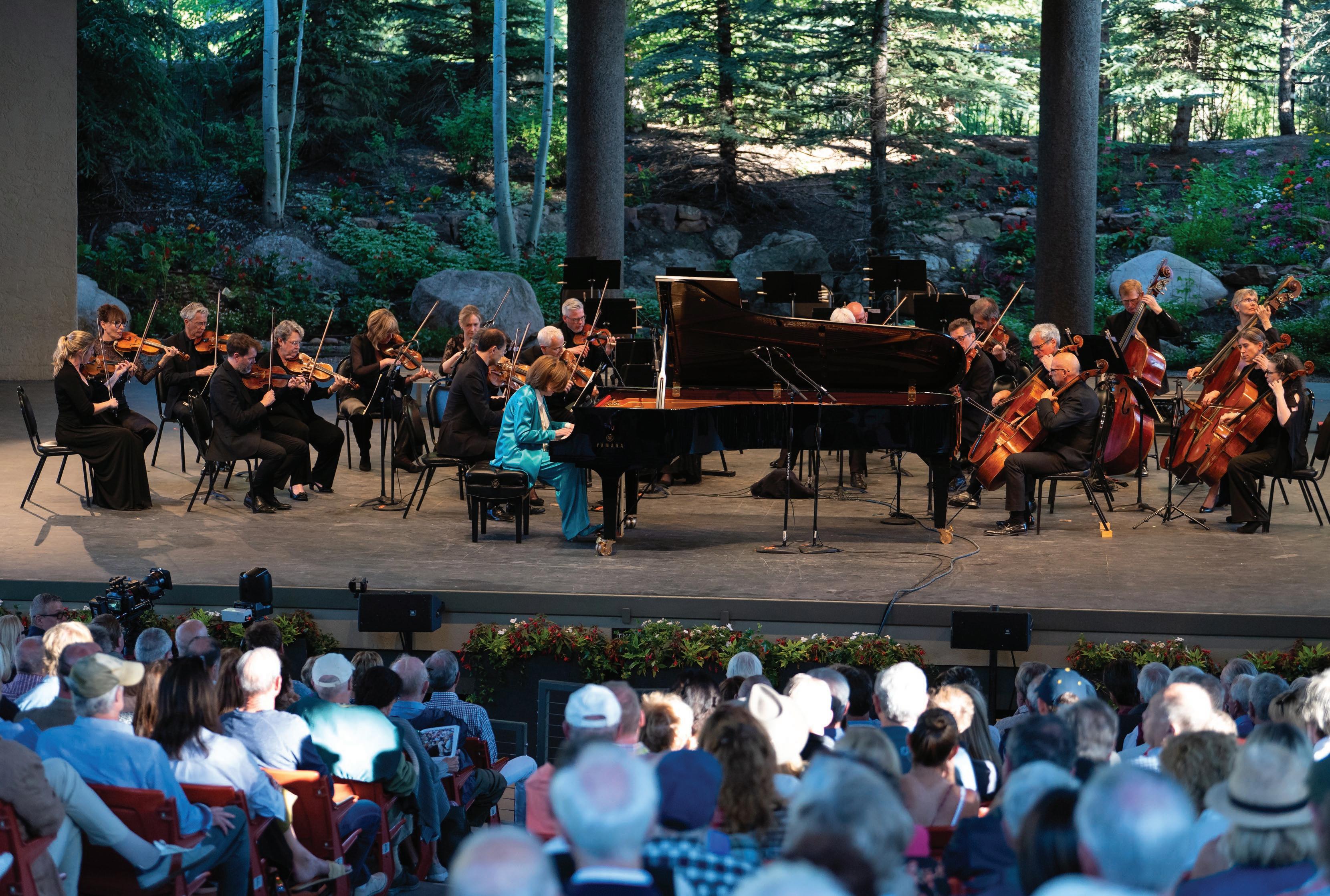
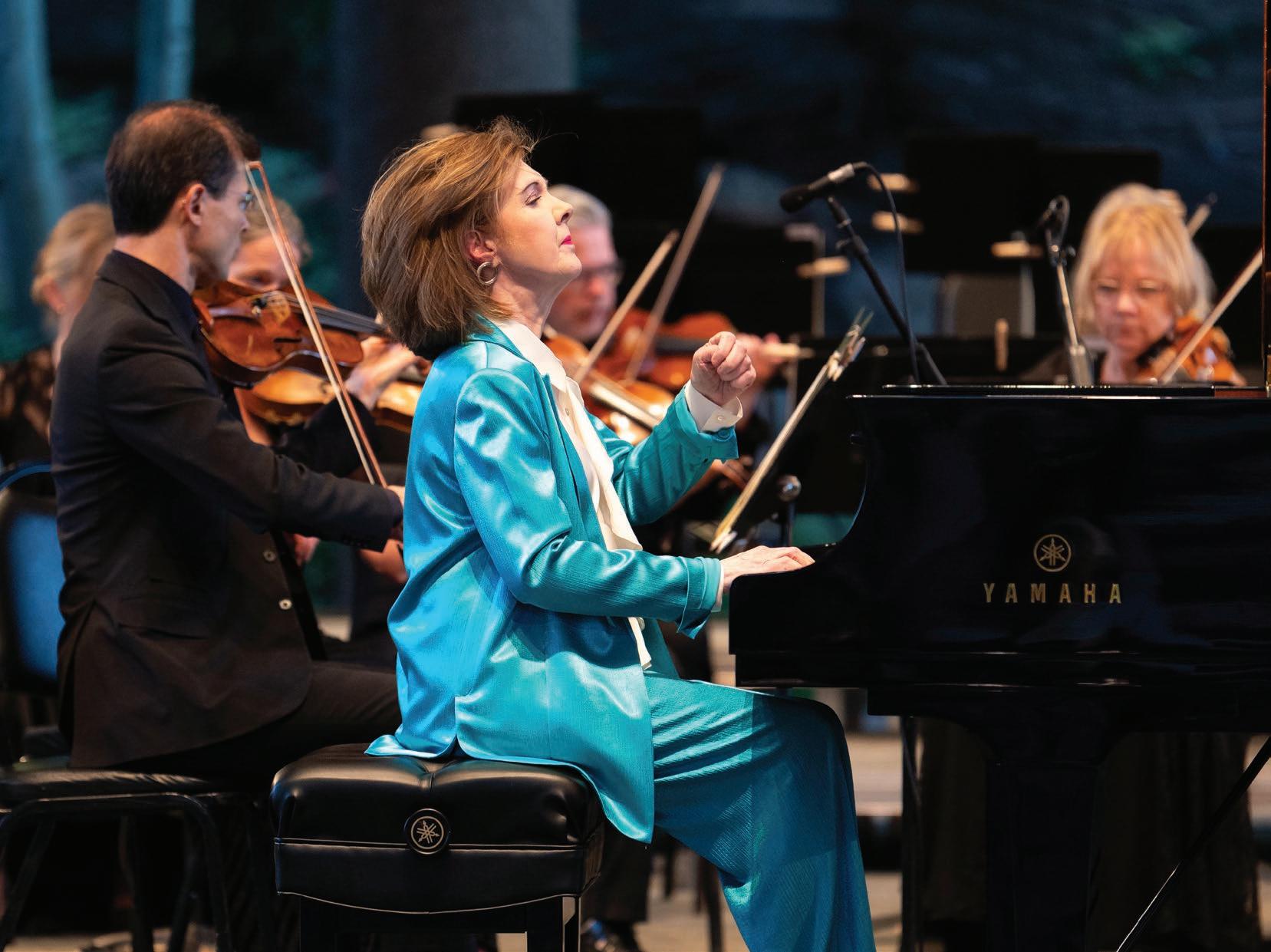
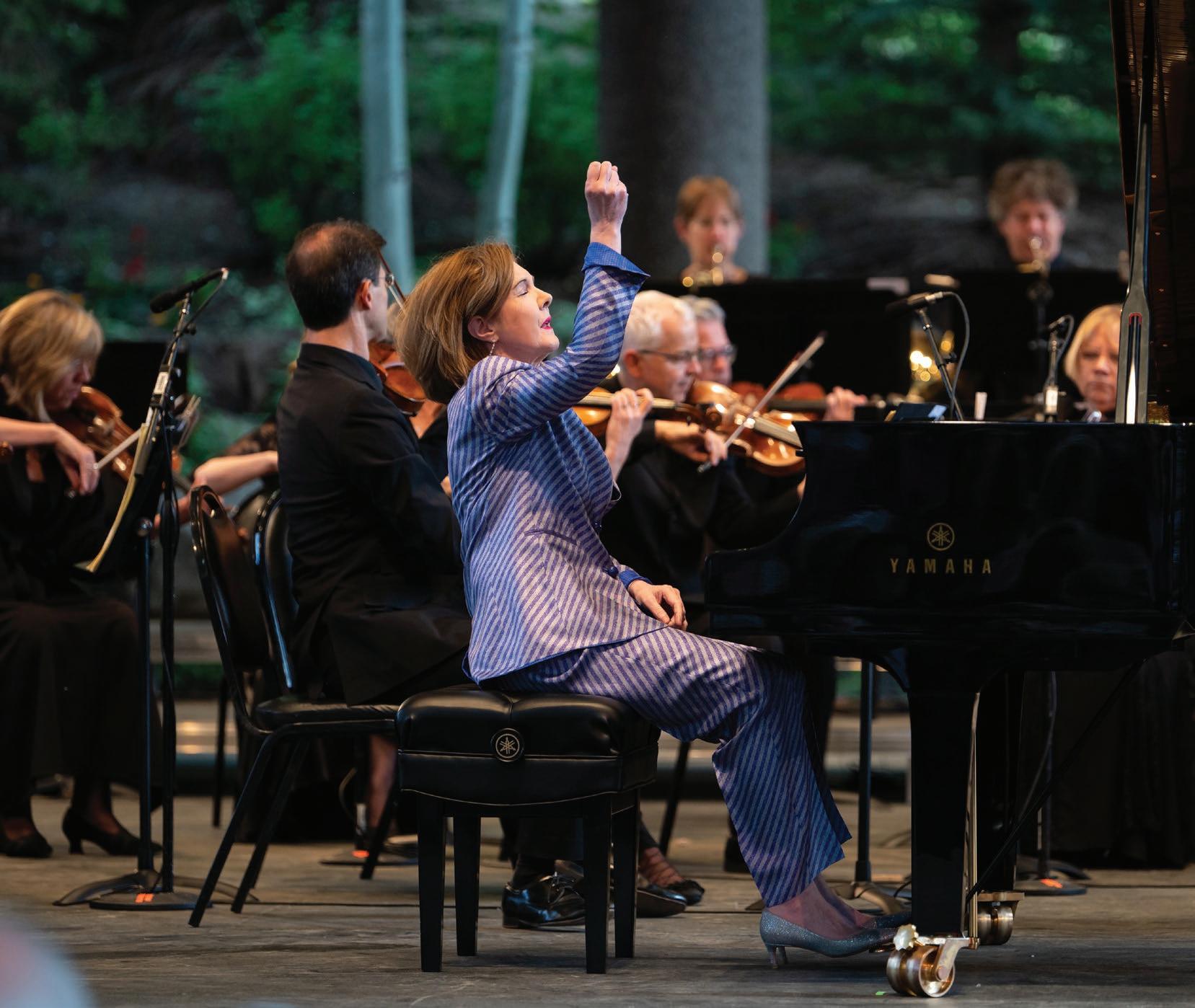
Recognized for its refined sound and vibrant interpretations of the classical canon, the London-based Academy of St Martin in the Fields’ fifth residency features all five Beethoven Piano Concertos with Anne-Marie McDermott, in celebration of her 16-year tenure as Bravo! Vail’s Artistic Director.
Founded in 1958 by Sir Neville Marriner, the Academy of St Martin in the Fields (ASMF) has evolved into a musical powerhouse, an orchestra renowned across the world for its commitment to the musical freedom of its players and the sharing of joyful, inspiring performances.
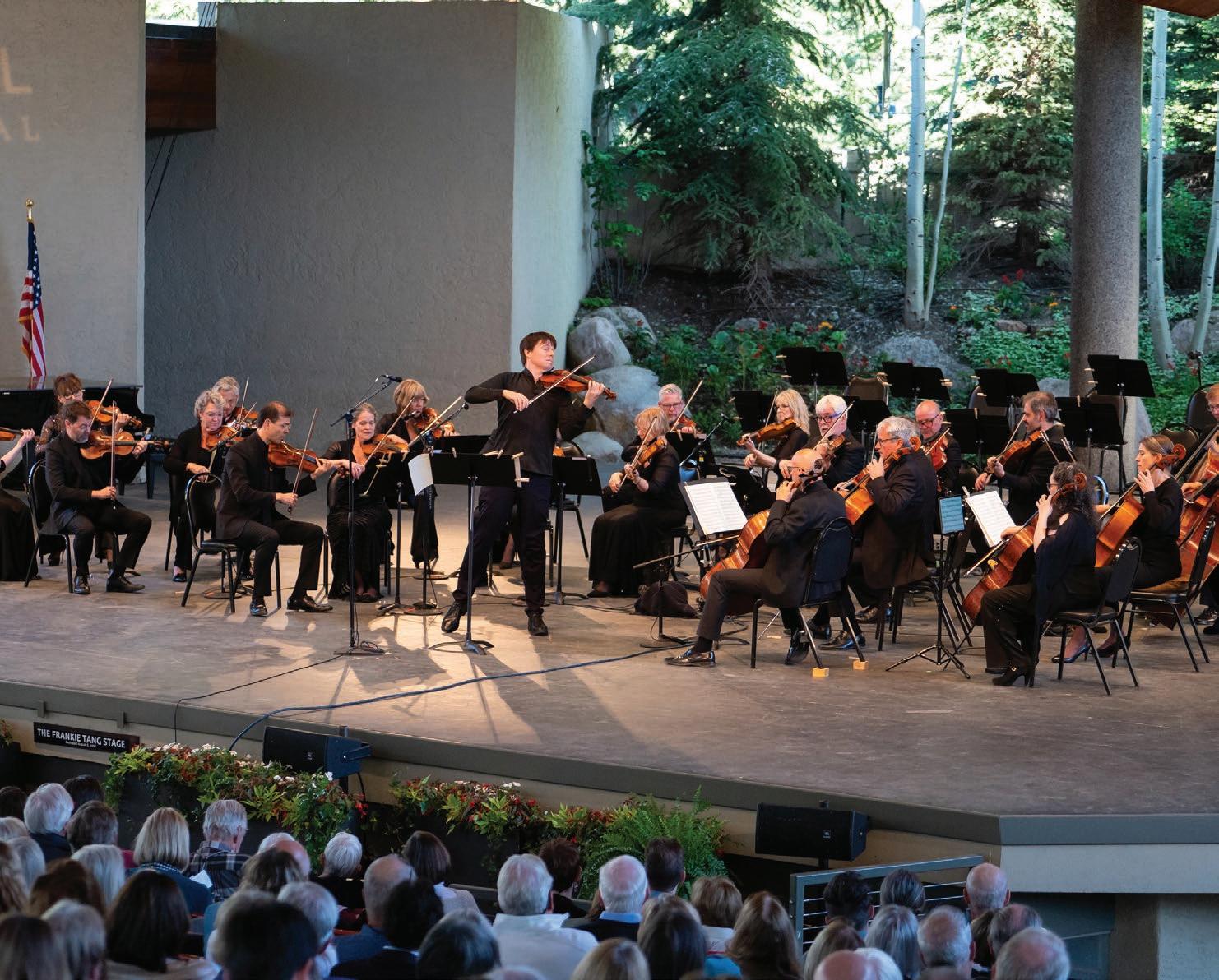
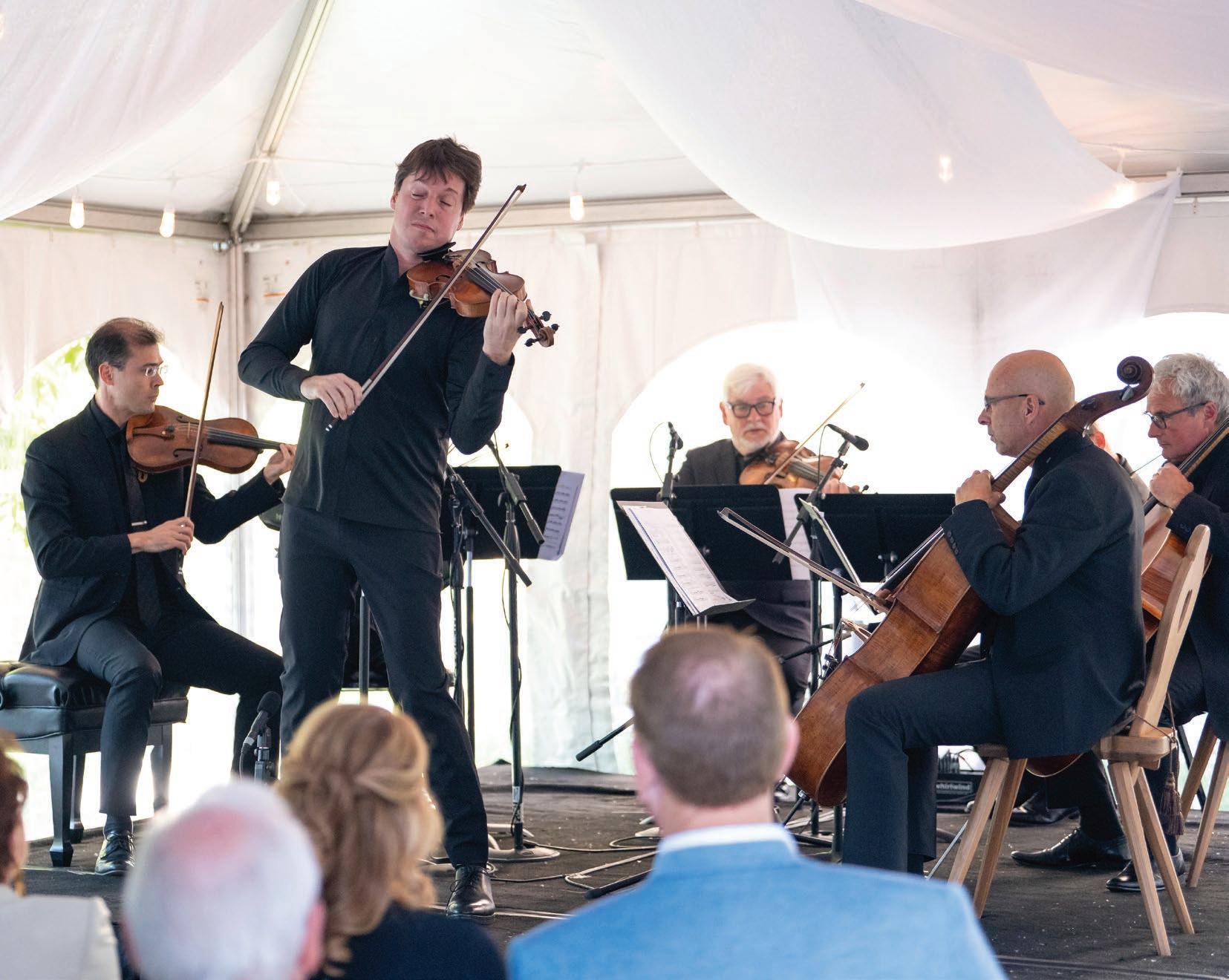
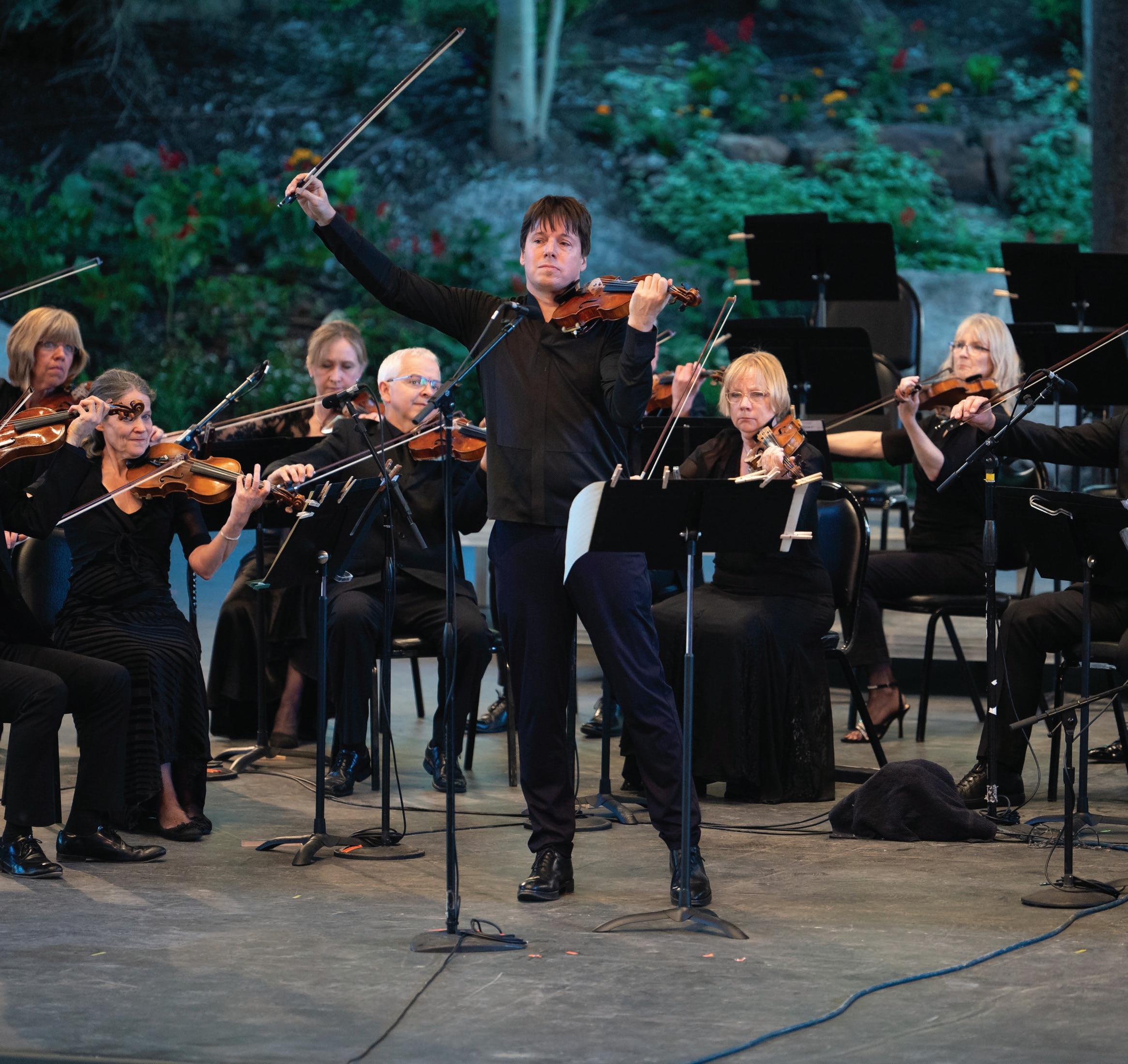
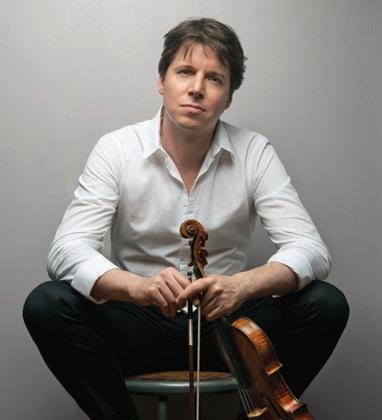
Today, with Music Director Joshua Bell, ASMF’s player-led approach empowers every member of the Orchestra. This creates a direct line and electrifying connection between the orchestra and its audiences, resulting in ambitious and collaborative performances that transcend the more traditional conductor-led model.
ASMF’s 2026-27 season will see the orchestra work with many of the world’s most exciting artists in more than 40 cities and across 10 countries. This season celebrates 15 years with Joshua Bell as Music Director, a relationship which continues to shape the orchestra’s artistic identity through touring, recording and performance. The anniversary is marked by international touring, intimate events in London and New York, and a special performance at London’s Cadogan Hall in January 2027. Alongside this, ASMF presents a major London season centered at the Church of St Martin-inthe-Fields, with further performances at venues including the Barbican Centre and the Royal Albert Hall.
The orchestra continues to collaborate with leading artists including Joshua Bell, Augustin Hadelich, Alice Sara Ott, Jan Lisiecki, Anastasia Kobekina, Stella Chen, Eric Lu, Sterling Elliott and Timothy Ridout. ASMF maintains a significant presence in the United States throughout the 2026-27 season, including a major tour with pianist and composer Conrad Tao, a highlight of which is the Orchestra’s return to New York City in early March 2027. In November 2026, the ASMF Chamber Ensemble returns to the US for a multi-city string ensemble tour. As part of a significant body of work across Europe in the 2026-27 season, ASMF will appear as the first orchestra-in-residence at Germany’s Klavierfestival Ruhr.
Beyond the concert hall, ASMF’s commitment to social purpose manifests in impactful projects
that harness the power of music to empower people. The Orchestra has a longstanding history of work which connects with people experiencing homelessness, and its education projects develop autonomy and creativity among emerging musicians worldwide. This season the Orchestra extends its growing programme in London to be delivered in cities around the world, ensuring its touring activity creates meaningful and lasting connections within the communities it visits.
Building on its rich global legacy, the Academy of St Martin in the Fields remains one of the world’s most-
recorded orchestras, igniting a love for classical music in people around the world through live performance and digital initiatives. Today, it continues a busy international touring programme alongside a significant presence in the UK, making ASMF one of the country’s most visible and celebrated cultural ambassadors.
The position of the Music Director of the Academy of St Martin in the Fields is generously supported by the Berry Charitable Foundation. ASMF’s work in the USA is kindly supported by the American Friends of the Academy of St Martin in the Fields (President, Maria Cardamone).
Bravo! Vail Gratefully Acknowledges Support from the Academy of St Martin in the Fields Circle
$100,000 AND ABOVE
The Berry Charitable Foundation
$20,000 AND ABOVE
Marijke and Lodewijk de Vink
Cathy Stone
$10,000 AND ABOVE
Carolyn Pope
Steve Pope
Jann and John Wilcox
Mika Nakamura and Gary Wood
$5,000 AND ABOVE
Adobe
Doe Browning and Jack Hunn
John Dayton
Carole C. and CDR. John M. Fleming
Shelby and Frederick Gans
Kathy and Dick McCaskill, Jr
Ann and Tom Rader
Dr. Kim Schilling
Susan and Albert Weihl
Tom Woodell
Kathy and Jonathan Zeschin
Nancy and Harold Zirkin
The Lodge at Vail is the official home of the Academy of St Martin in the Fields while in residence at Bravo! Vail.
ORCHESTRAL SERIES
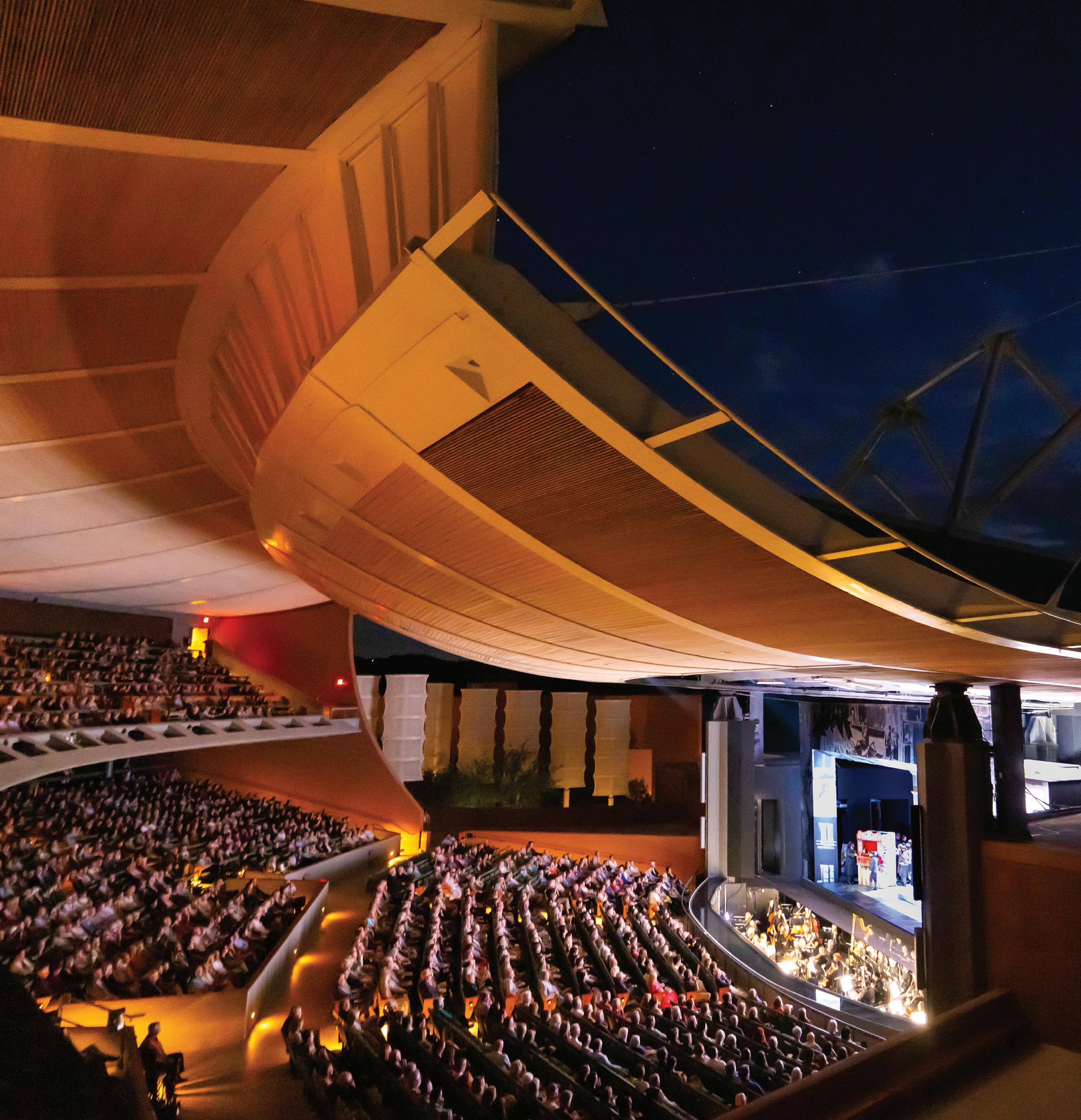
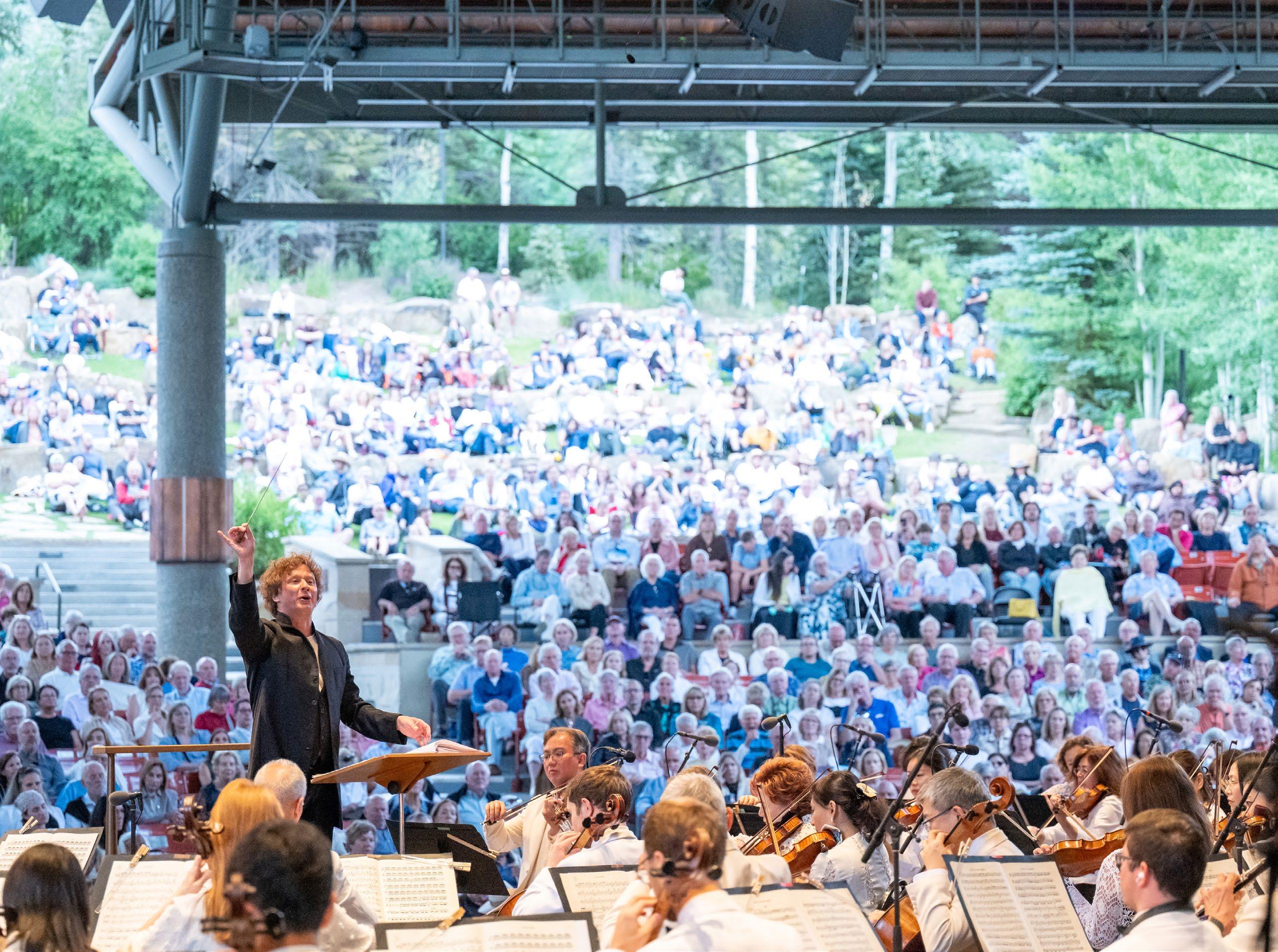
GERALD R. FORD AMPHITHEATER
PRE-CONCERT TALK
5:10 PM
GERALD R. FORD AMPHITHEATER LOBBY
Jack Sheinbaum (University of Denver), speaker
ACADEMY OF ST MARTIN IN THE FIELDS
Harvey de Souza, director
Anne-Marie McDermott, piano
BEETHOVEN
Piano Concerto No. 2 in B-flat major, Op. 19 (28 minutes)
Allegro con brio
Adagio
Rondo: Molto allegro
Piano Concerto No. 4 in G major, Op. 58 (34 minutes)
Allegro moderato
Andante con moto
Rondo vivace
INTERMISSION
Piano Concerto No. 3 in C minor, Op. 37 (34 minutes)
Allegro con brio
Largo
Rondo: Allegro
MCDERMOTT PLAYS BEETHOVEN: THE MIDDLE CONCERTOS
PRESENTED BY
BILLIE AND ROSS MCKNIGHT
SPONSORED BY Karin and Philip Pead
SOLOIST SPONSORS
Anne-Marie McDermott, piano, sponsored by Margo & Terence Boyle and Anne & Tom McGonagle
SPECIAL GRATITUDE TO The Academy of St Martin in the Fields Circle
The Lyn & Phillip Goldstein Piano Concerto Artist Project
The Judy & Alan Kosloff Artistic Director Chair
Yamaha
Piano Concerto No. 2 in B-flat major, Op. 19 (ca. 1788-1801)
LUDWIG VAN BEETHOVEN (1770-1827)
Beethoven’s Piano Concerto in B-flat major was the earliest of his five canonical piano concertos to be composed. He worked on it sporadically through the decade of the 1790s and appears to have premiered it on March 29, 1795, about the time he began working on his Piano Concerto in C major. But the C-major was the first to be published, in March 1801, which is why it is universally labelled his Concerto No. 1 while the B-flatmajor Concerto, published about nine months later, is known as his Second. If the total truth be told, this work really was Beethoven’s Piano Concerto No. 2, since he did write one earlier—a Concerto in E-flat major, a work of only historical interest that he penned in 1784 as a 13-year-old prodigy growing up in Bonn, Germany.
PRESTO CLUB NIGHT
Two years before that, his teacher, Christian Gottlob Neefe, contributed a glowing report of his pupil to Cramer’s Magazine der Musik , noting that “he plays the piano very skillfully and with power, reads at sight very well, and ... would surely become a second Wolfgang Amadeus Mozart if he were to continue as he has begun.”
Beethoven knew at least some of Mozart’s concertos intimately, and in this piece he employs an orchestra identical to that required by four of Mozart’s late piano concertos. He also sticks to a Mozartian norm in general structure: three movements, of which the first is a sonata form with an orchestral exposition, the second a lyrical slow movement, and the third a rondo. In addition, the texture is truly orchestral, following the Mozartian ideal of an integrated texture in which the piano plays the role of primus inter pares . Nonetheless, within this idealized scoring, soloists find plenty to keep them busy; and if the fingerwork sounds not quite Mozartian, the fact remains that the apple has not fallen far from the tree.
Piano Concerto No. 4 in G major, Op. 58 (1806)
Beethoven unveiled his Fourth Piano Concerto at a private concert in the mansion of his patron Prince Franz Josef von Lobkowitz in March 1807. Then he put it away for nearly two years and performed it only one more time, at the marathon concert on December 22, 1808, at Vienna’s Theater an der Wien, which also included the world premieres of his Fifth and Sixth Symphonies, among numerous other works.
Rather than the authoritarian sounds of a full orchestra, the first notes are played softly on the piano, the gentle murmuring of a theme based on repeated notes and simple harmonies. And then—just as surprising—following its five-measure presentation of the thematic germ of this movement, the piano simply withdraws, not to be heard from again for another 69 measures, during which suspense mounts as to what is fueling its behavior. The second movement is extraordinary, too, even apart from its uncharacteristic brevity (lasting only
about five minutes). The music theorist Adolf Bernhard Marx, in his 1859 biography of Beethoven, suggested that this Andante con moto bore some relationship to Gluck’s opera Orfeo ed Euridice —specifically, to how Orpheus used music to tame wild beasts. More recently, some musicologists have argued that the movement is a pointfor-point musical narration of a version of the Orpheus myth that was popular in Viennese theatres. The finale brings this essentially lyrical concerto to an ebullient end, with trumpets and timpani added for the first time.
Piano Concerto No. 3 in C minor, Op. 37 (1799-1803)
Beethoven’s C-minor Piano
Concerto invites recollections of the brooding, even despairing C-minor Piano Concerto that Mozart composed in 1786. During Mozart’s lifetime, however, that work could be played only from manuscript parts. It was not published until 1800, the same year Beethoven brought the first movement of his own C-minor Piano Concerto into reasonably finished form. Beethoven was an admirer of the Mozart work. Walking with the pianistand-composer Johann Baptist Cramer, he overheard an outdoor performance (or perhaps a rehearsal) of Mozart’s C-minor Concerto. He is reputed to have stopped in his tracks, called attention to a particularly beautiful motif, and exclaimed, with a mixture of admiration and despondency, “Cramer, Cramer! We shall never be able to do anything like that!” One hears the kinship in the aggressive opening of the first movement of Beethoven’s
“He plays the piano very skillfully and with power, reads at sight very well, and ... would surely become a second Wolfgang Amadeus Mozart if he were to continue as he has begun.”
concerto, its principal theme being terse and to-the-point. Already in the first statement of that theme, the solo piano rises to a high G, a note that was newly available to pianists thanks to recent advances in piano-building. By the time Beethoven finished the noble second movement and the rather jaunty third, the composition of the C-minor Concerto stretched over some three and a half years, not including preliminary sketches, which reached back to 1796—plus a further year if you count the time it took him to actually write out the piano part, and yet another five beyond that until he wrote down the first-movement cadenza. Neither of these last two was necessary as long as Beethoven was the soloist; he knew how the piece should go, after all. Nonetheless, the fragmentary state of the piano score caused stress for his colleague Ignaz von Seyfried, who served as pageturner at the premiere. “He gave me a secret glance whenever he was at the end of one of the invisible passages,” Seyfried reported, “and my scarcely concealable anxiety not to miss the decisive moment amused him greatly and he laughed heartily during the jovial supper which we ate afterwards.”
Bravo! Vail Gratefully Acknowledges Support from the Academy of St Martin in the Fields Circle
$100,000 AND ABOVE
The Berry Charitable Foundation
$20,000 AND ABOVE
Marijke and Lodewijk de Vink
Cathy Stone
$10,000 AND ABOVE
Carolyn Pope
Steve Pope
Jann and John Wilcox
Mika Nakamura and Gary Wood
$5,000 AND ABOVE
Adobe
Doe Browning and Jack Hunn
John Dayton
Carole C. and
CDR. John M. Fleming
Shelby and Frederick Gans
Kathy and Dick McCaskill, Jr
Ann and Tom Rader
Dr. Kim Schilling
Susan and Albert Weihl
Tom Woodell
Kathy and Jonathan Zeschin
Nancy and Harold Zirkin
VAILMOUNTAIN TEACO & COFFEE
THE ESSENCE OF ELEGANCE
LINDA & MITCH HART SOIRÉE SERIES
JUNE 26 ~ JULY 30 // 2026
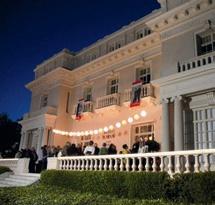
These stylish soirées are one-of-a-kind social, culinary, and musical experiences at magnificent private residences, featuring fine dining and intimate performances by some of the world’s most extraordinary musicians.
This season features truly intimate celebrations and enthralling musical moments, including Anne-Marie McDermott’s final solo Soirée appearance as she concludes her tenure as artistic director of the Bravo! Vail Music Festival.
Bravo! Vail
Gratefully Acknowledges the Support of the Following Patrons
Becker Violin Fund, in memory of Paul Becker
David Bernstein
Marijke and Lodewijk de Vink
Foods of Vail
The Therese M. Grojean
Vocalist Fund
Linda and Mitch Hart
The Judy & Alan Kosloff Artistic Director Chair
The Left Bank
Sarah and Peter Millett
Mirabelle at Beaver Creek
Alysa and Jonathan Rotella
Debbie and Jim Shpall, Jackson
Family Wines, and Sazerac
Vail Catering Concepts
Vintage Magnolia
Yamaha
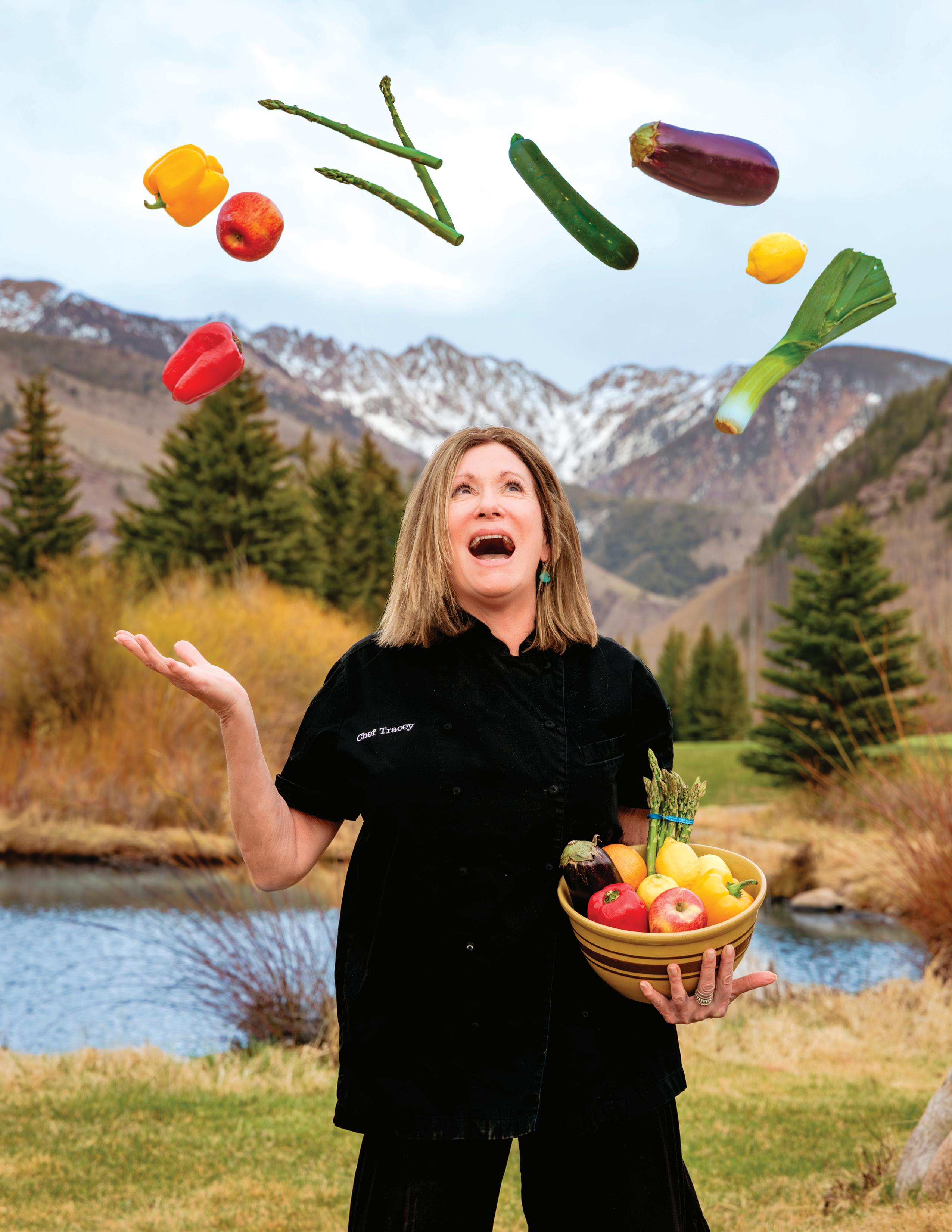
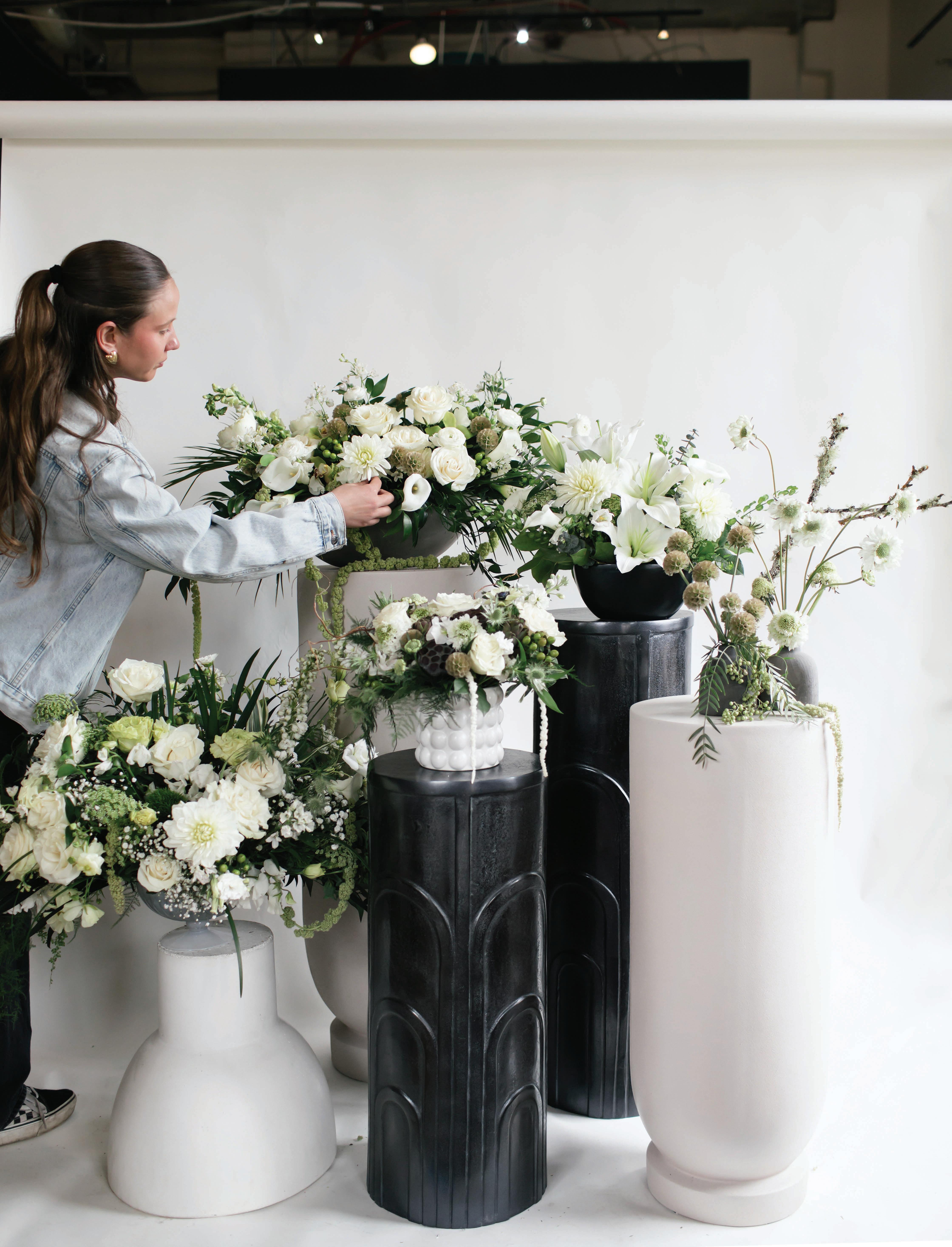
Tracey Van Curan Owner & Creative Director
WEDDINGS & REHEARSAL DINNERS
SPECIAL EVENTS & RECEPTIONS
HOLIDAY PARTIES
CULINARY MARKET
Foods of Vail
SOIRÉE I
Evoking the spirit of the 18th-century salon and the informality of the modern-day house concert, husband and wife duo Joshua Bell and Larisa Martínez are joined by members of the Academy strings for an intriguing mélange of musical delights. Benjamin Britten was a great admirer of Purcell’s music, arranging many of his works, among them this elegant Chaconne. The ever-astonishing Mozart clearly indulged his affection for the viola in his String Quintet, with its emphasis on rich inner voices. A vocal scene follows: Infelice was composed for the great 19th-century soprano Maria Malibran and her lover, virtuoso violinist Charles de Bériot, with text Mendelssohn described as “the most beautiful nonsense” by the most celebrated librettist of 18th century Europe.
THE LINDA AND MITCH HART SOIRÉE SERIES
DE VINK RESIDENCE
Members of the Academy of St Martin in the Fields
Joshua Bell, violin
Harvey de Souza, violin
Martin Burgess, violin
Fiona Bonds, viola
Ian Rathbone, viola
Richard Harwood, cello
Larisa Martínez, soprano
PURCELL, arr. Britten
Chaconne in G minor for String Quartet
MOZART
Allegro, from String Quintet No. 4 in G minor, K. 516
MENDELSSOHN
“Ah, ritorna, età dell’oro” from Infelice
SPECIAL
Bravo! Vail Gratefully Acknowledges Support for this Evening’s Soirée
Catered by Foods of Vail THIS EVENING’S HOSTS Marijke and Lodewijk de Vink
GRATITUDE Becker Violin Fund, in memory of Paul Becker The Therese M. Grojean Vocalist Fund
and Mitch Hart The Judy & Alan Kosloff Artistic Director Chair
ORCHESTRAL SERIES
GERALD R. FORD AMPHITHEATER
ACADEMY OF ST MARTIN IN THE FIELDS
Harvey de Souza, director
Anne-Marie McDermott, piano
BEETHOVEN
Piano Concerto No. 1 in C major, Op. 15 (37 minutes)
Allegro con brio
Largo
Rondo: Allegro INTERMISSION
Piano Concerto No. 5 in E-flat major, Op. 73, Emperor (38 minutes)
Allegro
Adagio un poco mosso [attacca]
Rondo: Allegro
PRESTO CLUB NIGHT
MCDERMOTT PLAYS BEETHOVEN: THE FIRST & THE EMPEROR
PRESENTED BY BEST FRIENDS OF THE BRAVO! VAIL ENDOWMENT
SPONSORED BY Joan Francis
SOLOIST SPONSORS
Anne-Marie McDermott, piano, sponsored by Janet & David Cooper and Sue & Mike Rushmore
SPECIAL GRATITUDE TO The Academy of St Martin in the Fields Circle
The Lyn & Phillip Goldstein Piano Concerto Artist Project
The Judy & Alan Kosloff Artistic Director Chair
Yamaha
Piano Concerto No. 1 in C major, Op. 15 (ca.1795/1800)
LUDWIG VAN BEETHOVEN (1770-1827)
Beethoven’s C-major Piano Concerto was his first to be published—in March 1801— which is why it is universally labelled his Piano Concerto No. 1 while his Concerto in B-flat major, composed earlier but published later, is called his Second. Like its predecessor and the C-minor Concerto that would follow, the Concerto No. 1 clearly counts Mozart among its ancestors. One hears the connection particularly in sections that make prominent use of the trumpets, horns, and timpani, which Mozart was fond of employing in C-major orchestral pieces. But on the whole, this concerto of Beethoven’s exhibits assertive originality. The first movement displays the subtlety of
a profound musical intelligence, and connoisseurs can profitably investigate its structural niceties, particularly in the magical development section at its center. The Largo is moody and contemplative, prefiguring such famous slow movements as that of the Pathétique Sonata, which would follow within a few years. But it is in the finale that we glimpse the most unmistakably Beethovenian traits, including a boisterous sense of humor, an appetite for mixing high sophistication with less elevated references, and an abiding fondness for surprise.
A review of an 1804 performance of this concerto was both appreciative and wary: “A new fortepiano concerto by Beethoven, provided with chromatic passages and enharmonic changes, occasionally to the point of bizarrerie, concluded the first part. ... The last movement, All’ Inglese, distinguished itself only by its unusual rhythms and also was well executed.” The reference to the finale All’ Inglese (In English Style) may leave us scratching our heads, but that term would have been clear to music-lovers then. Daniel Türk’s 1789 Klavierschule (Piano Method) explains: “The Anglaise (English Dance) ... is for the most part of a very spirited character which often borders on the moderately comic. It ... is played in a very lively, almost skipping manner. The first note of every measure is strongly accented.” That precisely describes the rondo finale of Beethoven’s C-major Concerto.
Piano Concerto No. 5 in E-flat major, Op. 73, Emperor (1809)
Beethoven’s Piano Concerto No. 5 was born into troubled times, with the Napoleonic Wars coursing to full tide across Europe and the composer’s Vienna enduring occupation by the French military. People fled Vienna in droves. Hoping to keep Beethoven from joining the exodus, his piano pupil Archduke Rudolph—along with two of his aristocratic friends, Prince Lobkowitz and Price Kinsky—pledged to support Beethoven for life as long as he remained in Vienna or thereabouts. Who knows if he would have stayed but for that inducement? “We have been suffering misery in a most concentrated form,” wrote
Beethoven in July 1809 to his publisher in Leipzig. “What a destructive and disorderly life I see and hear around me, nothing but drums, cannons, human misery in every form.”
Through it all he had been writing a piano concerto, and it is marvelous to think that something so uplifting and inspiring could emerge from such dismal surroundings. When it finally received its Vienna premiere two years later, a French officer in the audience shouted out “ C’est l’Empereur! ”—at least so the tale is told. The name stuck, with the ironic result that throughout history this concerto, Beethoven’s last, has been shackled with a nickname relating to the Emperor Napoleon Bonaparte, the same Napoleon in whom Beethoven had once placed so much humanitarian hope but whose name he had scratched from the titlepage dedication of his Sinfonia eroica enraged upon learning that the French general had crowned himself Emperor.
Uniquely among his five piano concertos, this one was not premiered by its composer. By the time it was introduced, in 1811, he was substantially deaf and he no longer felt comfortable performing publicly at the keyboard (though he would still do so on rare occasions).
The world premiere, in Leipzig, was accordingly entrusted to Friedrich Schneider, of whom we know little except that he had a friendly visit with Beethoven in 1819 when he passed through Vienna giving organ recitals. The Vienna premiere took place only on February 12, 1812, when the soloist was Beethoven’s pupil Carl Czerny.
Anton Schindler, for many years Beethoven’s amanuensis, published a Beethoven biography in 1840—a work of mixed credibility. Here’s an item from his account of the Vienna premiere of the Emperor Concerto:
The very brief review of the E-flat Concerto by the critic of the Allgemeine musikalische Zeitung will be sufficient to give the reader the idea of the public reception of the work. Here is the review in its entirety: “The immense length of the composition robs it of the impact that this product of a gigantic intellect would otherwise practice upon its hearers.” Who would today [i.e., 1840] find this concerto excessively long? This critical remark shows us once more that it was then, as later, the external form of Beethoven’s works that gave the most offence.
Most modern listeners would agree with Schindler that the length of the Emperor Concerto does not in any way represent a flaw. In fact, everything in this work seems essential, from the opening chords and ensuing piano cadenza—certainly unanticipated by its first hearers— through its potentially transcendent slow movement (though it is certainly possible to pace this Adagio too languidly) and on to the spirited Finale with its dance-like spirit thrown into highest relief through the interjection of a surprising moment of adagio and pianissimo before a rowdy but scintillating coda.
Bravo! Vail Gratefully Acknowledges Support from the Academy of St Martin in the Fields Circle
$100,000 AND ABOVE
The Berry Charitable Foundation
$20,000 AND ABOVE
Marijke and Lodewijk de Vink
Cathy Stone
$10,000 AND ABOVE
Carolyn Pope
Steve Pope
Jann and John Wilcox
Mika Nakamura and Gary Wood
$5,000 AND ABOVE
Adobe
Doe Browning and Jack Hunn
John Dayton
Carole C. and CDR. John M. Fleming
Shelby and Frederick Gans
Kathy and Dick McCaskill, Jr
Ann and Tom Rader
Dr. Kim Schilling
Susan and Albert Weihl
Tom Woodell
Kathy and Jonathan Zeschin
Nancy and Harold Zirkin
ORCHESTRAL SERIES
GERALD R. FORD AMPHITHEATER
ACADEMY OF ST MARTIN IN THE FIELDS
Joshua Bell, violin/director
IVES, arr. Iain Farrington
Variations on America (7 minutes)
SAINT- SAËNS
Violin Concerto No. 3 in B minor, Op. 61 (29 minutes)
Allegro non troppo
Andantino quasi allegretto
Molto moderato e maestoso—Allegro non troppo
INTERMISSION —
R. SCHUMANN
Symphony No. 1 in B-flat major, Op. 38, Spring (30 minutes)
Andante un poco maestoso—Allegro molto vivace
Larghetto
Scherzo: Molto vivace—Molto più vivace—Tempo I
Allegro animato e grazioso
PRESTO CLUB NIGHT
JOSHUA BELL WITH ACADEMY OF ST MARTIN IN THE FIELDS
PRESENTED BY
PATRICIA AND PETER KITCHAK
SPONSORED BY
Mary Lou Paulsen and Randy Barnhart
SOLOIST SPONSOR
Joshua Bell, violin, sponsored by the Becker Violin Fund, in memory of Paul Becker
SPECIAL GRATITUDE TO
The Academy of St Martin in the Fields Circle
The Sidney E. Frank Foundation
Variations on America (1892, arr. 2026)
CHARLES IVES (1874-1954), arranged by Iain Farrington (B. 1977)
Charles Ives grew up surrounded by musical openmindedness—or, better put, open-earedness. His father, a Connecticut bandmaster, reveled in musical coincidences that most people found revolting—playing the melody of a tune in one key and its harmony in another, for example, or savoring the overlapping sounds of separate bands playing simultaneously on a parade ground. Charlie grew up with the resultant polytonality sounding logical to his ears, and at the age of 17 he composed his own experimental
masterpiece Variations on America
One can only imagine what went through the minds of the audience in the pews of the Methodist church in Brewster, New York, when he let loose with this piece from the organ loft on February 17, 1892. What must they have thought of these five variations on the well-known patriotic tune—slithering chromaticism and grinding bitonality, bumptious rhythms befitting a dancehall more than a Methodist church, allusions to such musical genres as march, polonaise, and ragtime? Not long after writing Variations on America, Ives went off to Yale, where his composition teacher Horatio Parker tried to rein in his innovative proclivities by imposing time-honored classical training. Parker succeeded only provisionally, and Ives would go on to explore the radical path he had already begun to chart in Variations on America
Much played as an organ piece, this work also gained fame in a symphonic arrangement made in 1946 by William Schuman. In this concert, however, we hear a new version for chamber orchestra made by the hard-working British pianist, organist, composer, and arranger Iain Farrington. He created this arrangement for the Academy of St. Martin in the Fields, which unveiled it earlier this year.
Violin Concerto No. 3 in B minor, Op. 61 (1880) CAMILLE SAINT-SAËNS (1835-1921)
Camille Saint-Saëns was ten when he played his formal debut recital at Paris’ Salle Pleyel, a program that included piano concertos by Mozart and Beethoven—after which he offered to play any of Beethoven’s piano sonatas from memory, as an encore. “He knows everything, but lacks inexperience,” lamented his friend Hector Berlioz.
He produced six works for violin and orchestra, of which three were written for, dedicated to, and premiered by the Spanish virtuoso Pablo de Sarasate, including the Violin Concerto No. 3, unveiled in 1880. Sarasate’s advice surely accounts for some of the violinistic fluency displayed in the Third Concerto; and the last measures of the second movement, in which the soloist plays
stratospheric arpeggios in harmonics, seem crafted to reflect Sarasate’s much-remarked ability to negotiate such passages with unusual aplomb. Saint-Saëns later wrote: “Those who attended my Monday musical soirées have not forgotten the brilliant effect produced by my distinguished friend. This was so much the case that for several years after no violinists could be persuaded to perform at my home, so terrified were they of the idea of inviting comparison. Nor did he shine by his talent alone, but also by his brilliant intellect and the inexhaustible animation of his conversation, which was always interesting and suggestive.”
The Third Concerto quickly entered the repertoires of such notable virtuosos as Eugène Ysaÿe, Jan Kubelík, Mathieu Crickboom, and George Enescu. Saint-Saëns applauded them all, but he was less happy about Emile Sauret, who effected substantial modifications to the solo part and then had the American firm of G. Schirmer publish his version as an “authorized edition.” Saint-Saëns went ballistic, but there was no stuffing the genie back in the bottle and that unquestionably unauthorized edition remains in print to this day.
Symphony No. 1 in B-flat major, Op. 38, Spring (1841)
ROBERT SCHUMANN (1810-56)
On December 11, 1839, after attending a reading of Franz Schubert’s C-major Symphony (Great), Robert Schumann penned an account to Clara Wieck, with whom he was passionately
in love: “I was totally happy and wished only that you should be my wife and that I also could write symphonies.” Both these wishes would soon come to fruition. In September 1840, Miss Wieck became Mrs. Schumann, and in January 1841, he embarked on his First Symphony, sketching the entire piece in only four days.
It was inspired by a poem by Adolf Böttger, to whom he sent a signed portrait inscribed with the opening notes and the words “Beginning of a symphony, occasioned by a poem by Adolf Böttger.” The symphony’s opening motto is a wordless setting of the poem’s lines, “O wende, wende deinen Lauf,— Im Talle blüht der Frühling auf!” (Oh turn, oh turn and change your course,—Now in the valley blooms the spring!). Images of spring carried through a series of movement headings: “Beginning of Spring,” “Evening,” “Jolly Playmates,” “Spring Replete.” When the score was published Schumann eliminated all of these programmatic references, but he continued to emphasize its depictive elements as a guide to interpretation. In a letter to the Berlin conductor Wilhelm Tauber, he begged: “Could you breathe a little of the longing for spring into your orchestra as they play?”
If the opening movement is ebullient, a more delicate side of spring informs the dreamy, forested second movement, where horns inject a mysterious premonition near the end. The contour of their music re-emerges
PROGRAM NOTES BY JAMES M. KELLER CONTINUED ON PAGE 204
Gratefully Acknowledges Support from the Academy of St Martin in the Fields Circle
$100,000 AND ABOVE
The Berry Charitable Foundation
$20,000 AND ABOVE
Marijke and Lodewijk de Vink
Cathy Stone
Jann and John Wilcox
Mika Nakamura and Gary Wood
$5,000 AND ABOVE
Adobe
Doe Browning and Jack Hunn
John Dayton
$10,000 AND ABOVE
Carolyn Pope
Steve Pope
Nancy and Harold Zirkin Bravo! Vail
Carole C. and CDR. John M. Fleming
Shelby and Frederick Gans
Kathy and Dick McCaskill, Jr
Ann and Tom Rader
Dr. Kim Schilling
Susan and Albert Weihl
Tom Woodell
Kathy and Jonathan Zeschin
UP CLOSE & MUSICAL
CHAMBER MUSIC SERIES
JUNE 30 ~ JULY 27 // 2026
Bravo! Vail’s Chamber Music Series offers something for music lovers of all persuasions, featuring chamber music as it was meant to be heard: in beautiful, intimate environments, with acclaimed artists, and among friends.
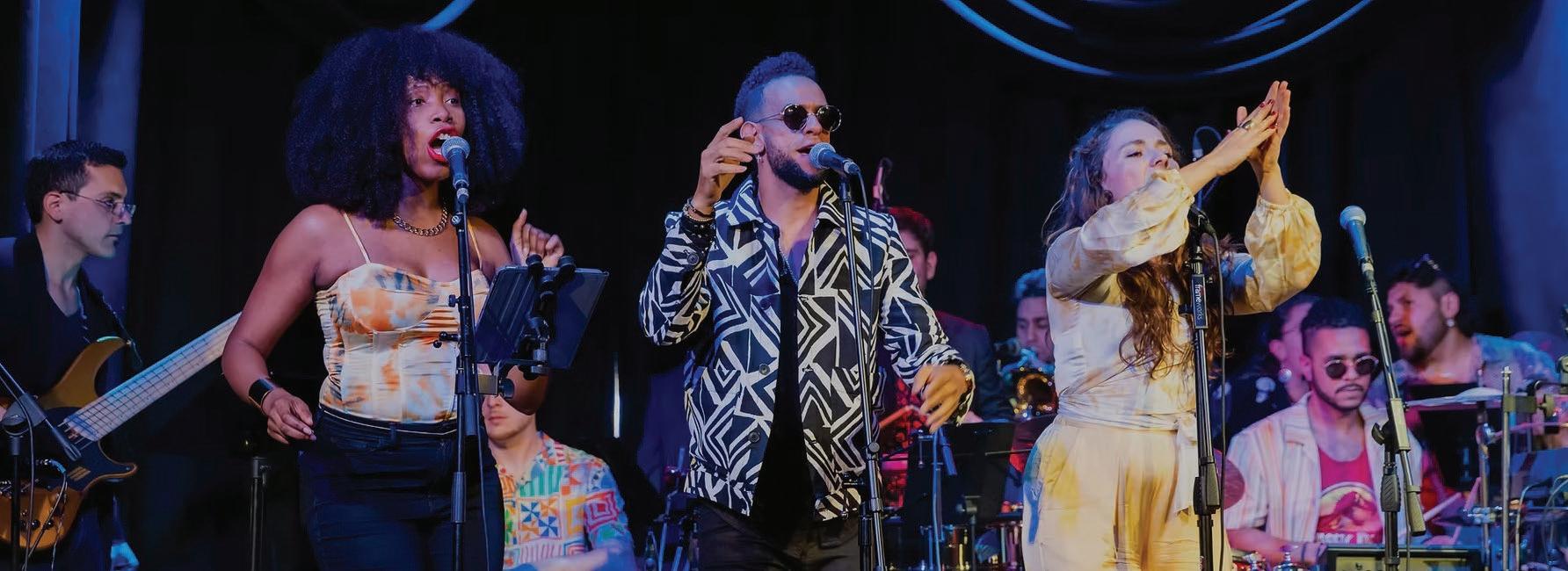
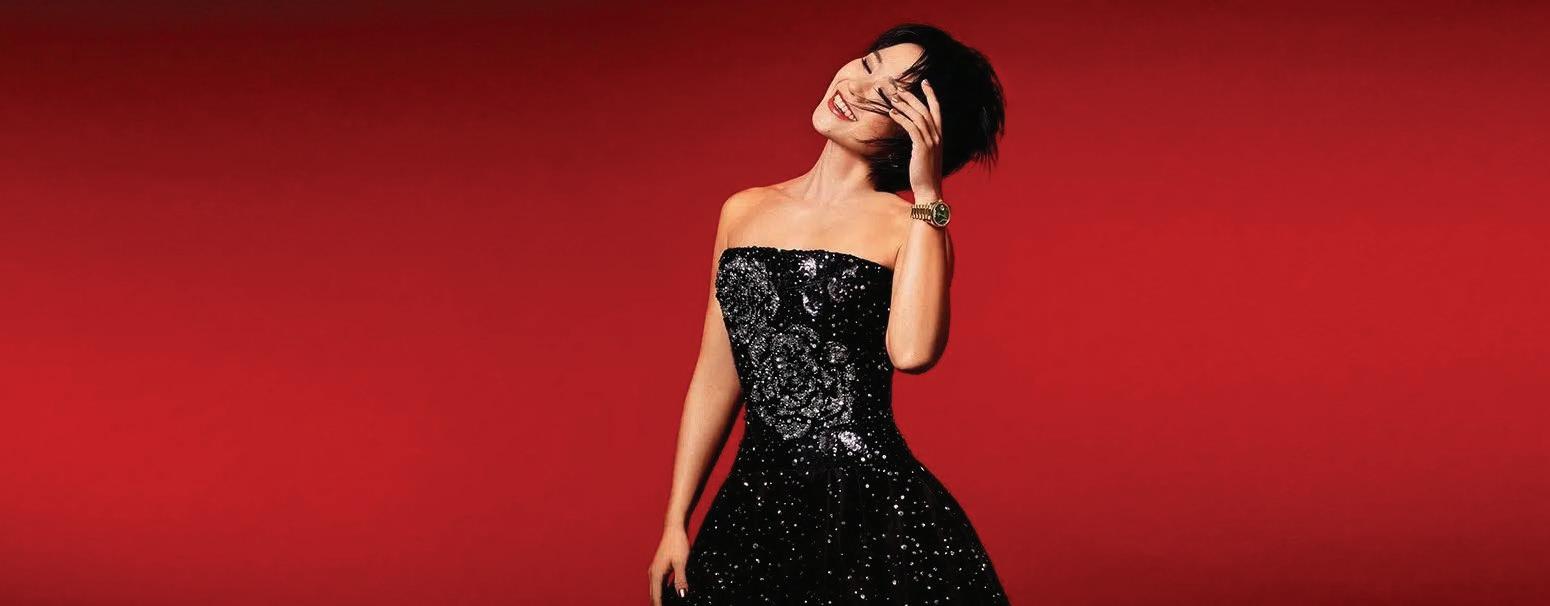
This season features a dazzling variety of captivating performances by internationally acclaimed chamber musicians and ensembles, including pianist Yuja Wang appearing with People of Earth, a global music collective known for its fusion of AfroLatin and American musical styles.
Bravo! Vail
Gratefully Acknowledges the Support of the Following Patrons
Anonymous
Gina Browning and Joe Illick
Discover Vail
The Sidney E. Frank Foundation
Irwin Jacobs
The Judy & Alan Kosloff Artistic
Director Chair
Debbie and Jim Shpall, Jackson
Family Wines, and Sazerac
The Weiss Family
TUESDAY 7 PM
CHAMBER MUSIC SERIES
Members of the Dallas Symphony Orchestra
Alexander Kerr, violin
Emmanuelle Boisvert, violin
Meredith Kufchak, viola
Theodore Harvey, cello
Gregory Raden, clarinet
DVOŘÁK
Terzetto in C major for Two Violins and Viola, Op. 74 (20 minutes)
Introduzione: Allegro, ma non troppo
Larghetto
Scherzo: Vivace
Tema con variazioni: Poco adagio–Molto allegro
PROKOFIEV
Sonata in C major for Two Violins, Op. 56 (15 minutes)
Andante cantabile
Allegro
Commodo (quasi Allegretto)
Allegro con brio
— INTERMISSION —
MOZART
Quintet in A major for Clarinet and Strings, K.581 (34 minutes)
Allegro
Larghetto
Menuetto
Allegretto con variazioni
ALEXANDER KERR AND MUSICIANS OF THE DSO
Terzetto in C major for Two Violins and Viola, Op. 74 (1887)
ANTONÍN DVOŘÁK (1841-1904)
Antonín Dvořák composed his Terzetto for Two Violins and Viola in a week and a day, from January 7-14, 1887. The circumstances of its genesis were charming. Lodging in a spare room of the composer’s home in Prague was a chemistry student, Josef Kruis, who also was an enthusiastic amateur violinist. Kruis and his violinist-friend Jan Pelikán would often play violin duets, and Dvořák wrote this piece for them to use at their at-home sessions, with himself joining as violist. It turned out to be too difficult for the students, so Dvořák penned a different piece for them. Still, when the Terzetto was finally premiered, the two violinists were amateurs, though highly accomplished ones—a physician and a judge.
This is a lyrical, sweet-toned piece, although Dvořák injects
passages of emotional and technical variety that keep it from becoming saccharine—a potential hazard in a piece employing only high strings. The violins occasionally play in canon, while the viola typically adheres to what functions as the bass line (though in the alto register). The Larghetto is a graceful study in Victorian harmony; the Scherzo, rich in rhythmic surprises, recalls Schubert; and the finale unrolls as a folk-like (but not actually folk-derived) tune with ten short variations, which in turn spotlight the capacities of each player.
Sonata in C major for Two Violins, Op. 56 (1932)
SERGEI PROKOFIEV (1891-1953)
Sergei Prokofiev and his family left their home in Paris to spend the late summer and early autumn of 1932 in the idyllic Riviera setting of SainteMaxime, and it is there that his Sonata for Two Violins came into being. In the so-called “Short Autobiography”
DONOVAN PAVILION
that he penned in 1941, he recalled the circumstances that gave rise to this piece: “A society called ‘Triton’ had been formed in Paris for the performance of new chamber music. Honegger, Milhaud, Poulenc, myself, and others joined it. Listening to bad music sometimes inspires good ideas: that’s not the way to do it, one tells oneself, it should be done this way. That is how I happened to write my Sonata for Two Violins. After once hearing an unsuccessful piece for two violins without piano accompaniment, it struck me that in spite of the apparent limitations of such a duet one could make it interesting enough to listen to for ten or fifteen minutes without tiring.” Following initial performances in Moscow and St. Petersburg, the work figured on Triton’s inaugural concert in Paris.
It’s a somewhat severe work, its four movements focusing more on lyrical lines and counterpoint than on the violinistic effects one might anticipate. Prokofiev described it to his friend Nikolai Miaskovsky as being in “my ‘Lenten vertical style,’ [with] hardly any double stops or chords.” In truth, the vigorous second and the dancelike fourth movements do include some multiple stopping—quadruple
stopping, even—but on the whole this work is more “about” the simple interaction and variation of intriguing melodies by violinists whose parts have equal weight, all in the interest of achieving specific moods, as in the soaring, lark-like interweaving of the first movement or the muted, dreamy introspection of the third.
Quintet in A major for Clarinet and Strings, K.581 (1789)
WOLFGANG AMADÈ MOZART (1756-91)
Perhaps no piece of chamber music sets as autumnal mood as Mozart’s Clarinet Quintet—at least none before Brahms. Nostalgic longing came naturally to Mozart’s musical expression, but he rarely vented it so freely, and at such uninterrupted length, as he did in this quintet, a majorkey work with a minor-key aftertaste. In fact, Mozart wrote the piece in autumn, at the end of September 1789. The times were tumultuous. England was reeling from the war in America; France was in turmoil, the Bastille having fallen little more than two months earlier; and the rest of Europe was on sharper political pins and needles than usual.
One of Mozart’s closest friends at that time was the Austrian clarinetist Anton Stadler. Though his character has been questioned—some have suggested that he took advantage of the Mozarts’ hospitality, and even that he stole the composer’s pawn tickets— Mozart bestowed on him two of his greatest instrumental masterpieces: this Clarinet Quintet and the Clarinet Concerto (K.622). The themes of the Quintet’s unhurried first movement tend toward the wistful—or even the mournful—and the slow harmonic rhythm holds the vigor of the tempo marking (Allegro) in check. The clarinet’s warm sonority goes hand in hand with the elegiac spirit, the more so since
Mozart spends a great deal of time emphasizing the instrument’s rich lower range. Having set the mood with an Allegro that is hardly an Allegro, Mozart turns to the profound soulfulness of the Larghetto in which the clarinet offers a hushed song supported by the muted quartet of strings. The Menuet itself is bittersweet: the strings reign over the first Trio section, anxiously, in the minor key; the clarinet joins to restate the opening minuet (without repeats); and in the second Trio its upturned phrases seem only to laugh with a pathetic, forced smile. Classical-era aesthetics exerted pressure for a happy ending, and Mozart complies with a finale in which six variations are derived from a foursquare, folk-inflected theme. All the same, happiness seems to be something of an interloper; Mozart allows the viola to inject ominous appoggiaturas in the minor-key third variation, and the clarinet and violin to exchange final nostalgic memories in the fifth, before closing with polite assurance that the clouds are sure to pass.
Vail Gratefully Acknowledges the Support of the Following Patrons
Anonymous Discover Vail The Sidney E. Frank Foundation
The Judy & Alan Kosloff Artistic Director Chair
Debbie and Jim Shpall, Jackson Family Wines, and Sazerac
Bravo!
T he Left Bank
T he Left Bank
Contact us for your catering needs for your private event!
Open at 4:30pm Daily for Pre-Event Dining
Take-Out is Available
SOIRÉE II
Towards the end of his life, Debussy had planned to write a cycle of six sonatas for various instruments, but only three were completed before his death. The compact and exquisitely autumnal Violin Sonata was the last of these, and the last work he ever completed. Written in 1917, when the composer suffered from terminal cancer and Europe was plunged into the devastation and hardships of World War I, Debussy’s music breaks free into a transcendent world of vibrant rhythms, shimmering colors and poignant nostalgia.
Amid the emotional excesses of nineteenth century Romanticism, Fauré’s music tended toward pristine lines and classical elegance, at moments anticipating the impressionism of Debussy and Ravel. His Piano Quartet No. 1 dates from 1879, soon after Fauré had visited Wagner and listened to his music. Impressed though he was, he maintained his own distinct musical voice, refreshingly and presciently modern.
Bravo! Vail Gratefully Acknowledges Support for this Evening’s Soirée
THIS EVENING’S HOSTS
Sarah and Peter Millett
SPECIAL GRATITUDE
Linda and Mitch Hart
The Judy & Alan Kosloff Artistic Director Chair
5 PM
THE LINDA AND MITCH HART SOIRÉE SERIES
MILLETT RESIDENCE
Members of the Dallas Symphony Orchestra
Alexander Kerr, violin
Meredith Kufchak, viola
Theodore Harvey, cello
Anne-Marie McDermott, piano
DEBUSSY
Sonata for Violin and Piano
Allegro vivo
Intermède: Fantasque et léger
Finale: Très animé
FAURÉ
Piano Quartet No. 1 in C minor, Op. 15
Allegro molto moderato
Scherzo: Allegro vivo
Adagio
Allegro molto
SPONSORED BY
The Left Bank
Debbie and Jim Shpall, Jackson Family
Wines, and Sazerac
Vintage Magnolia Yamaha
Catered by The Left Bank
SCHEDULE AT A GLANCE
DALLAS SYMPHONY ORCHESTRA
IN RESIDENCE
JULY 2 ~ 8 // 2026
The Dallas Symphony Orchestra delivers uplifting, entertaining, and deeply enriching performances. Renowned for its remarkable depth and versatility, the Orchestra’s 25th Bravo! Vail residency features classical masterworks, crowdpleasing pops programs, and one of the world’s most beloved operas in concert.
The largest performing arts organization in the southwest United States, the Dallas Symphony Orchestra presents more than 100 orchestra concerts each year at the Morton H. Meyerson Symphony Center. To date, the orchestra has been served by many Music Directors including Hans Kreissig, Antal Doráti, Walter Hendl, Sir Georg Solti, Anshel Brusilow, Max Rudolf, Eduardo Mata, Andrew Litton, Jaap van Zweden and Fabio Luisi, who inaugurated his tenure in September 2020.
Celebrating its 125th anniversary in the 2025-26 season, the Dallas Symphony Orchestra traces its origins to a concert given by a group of 40 musicians conducted by Hans Kreissig in 1900. The orchestra, like the city, has evolved in both size and stature. The orchestra presented its first world premiere in 1911 and has since commissioned and premiered over 100 new works. Starting in the 1940s, the DSO won national attention through a series of albums with RCA. The DSO now boasts a storied discography of recordings on RCA, Dorian, Hyperion and its own label, DSO Live. In 1985, the DSO embarked on its first European tour, and the tradition of touring has continued with tours to South America and Mexico, appearances at Carnegie Hall and the recent European tour in 2024 with Music Director Fabio Luisi. The DSO has an impressive broadcast and media history, including television programs on PBS, A&E and Bloomberg Media as well as one of the first orchestral livestreams in 2000.
In 1989, as a result of a community-driven project, the City of Dallas celebrated the opening of the Morton H. Meyerson Symphony Center. The Meyerson was designed by internationally acclaimed architect I.M. Pei, his only concert hall. The Meyerson is now recognized as one of the world’s finest concert halls and serves as the performance home of the DSO as well as many local music organizations.
In June 2018, the Dallas Symphony Orchestra named GRAMMY Awardwinning Italian conductor Fabio Luisi as its next Music Director, and he assumed the Louise W. & Edmund J. Kahn Music Directorship in September
2020. Luisi has developed a close rapport with the orchestra through a series of acclaimed performances. In the 2023-24 season, Luisi and the orchestra continued their recording cycle of the Brahms symphonies and embarked on the ensemble’s first European tour in over a decade. The DSO and Luisi launched the 2024-25 season with concert performances of Wagner’s complete Ring Cycle, which will be released as a recording in connection with the DSO’s 125th anniversary. In the 2025-26 season, the DSO celebrated its 125th anniversary with performances that reflect on
its tremendous history alongside programming featuring nearly a dozen world premieres and the next generation of classical music soloists. Today, the Dallas Symphony Orchestra is acclaimed for its distinctive classical programs, inventive pops concerts and innovative multimedia events that inspire audiences around the world. The DSO is committed to its mission of inspiring and changing lives through musical excellence and serves more than 200,000 adults and children each year through performances, educational programs and community initiatives.
Bravo! Vail Gratefully Acknowledges Support from the Friends of the Dallas Symphony Orchestra
$50,000 AND ABOVE
Shirley and William S. McIntyre, IV
$30,000 AND ABOVE
Linda and Mitch Hart
Billie and Ross McKnight
Marcy and Stephen Sands
$20,000 AND ABOVE
Marilyn Augur
John Dayton
Lyda Hill
Alexia and Jerry Jurschak
Marilyn Lenox
Bobbi and Richard Massman
Margie Pabst Steinmetz and Chuck Steinmetz
Cathy Stone
$10,000 AND ABOVE
Suzanne Caruso and Stephen Saldanha
Carole C. and CDR. John M. Fleming
Diane Folsom Frank
Fanchon and Howard Hallam
Jan and Lee Leaman
Brenda and Joe McHugh
Patricia and Brian Ratner
Debbie Scripps
Donna and Randy Smith
Carole A. Watters
Gena Whitten and Bob Wilhelm
$5,000 AND ABOVE
Edwina P. Carrington
Meg and Jamie Duke
Kim and Greg Hext
Karen and Steve Livingston
Vicki Rippeto
Sherry Sunderman and Tom Mueller
Kathy and William Wiener
Carolyn Wittenbraker and Arkay Foundation
Tom Woodell
Nancy and Harold Zirkin
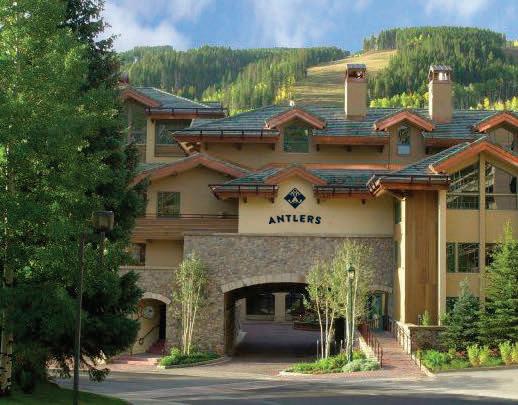
The Antlers at Vail, The Hythe, A Luxury Collection Resort, Vail, and Manor Vail Lodge are the official homes of the Dallas Symphony Orchestra while in residence at Bravo! Vail.
THURSDAY 6 PM
ORCHESTRAL SERIES
GERALD R. FORD AMPHITHEATER
DALLAS SYMPHONY ORCHESTRA
Jeff Tyzik, conductor
BERNSTEIN , arr. Peress
Overture to West Side Story
JOHN WILLIAMS
Selections from Jaws Suite
HERRMANN
Selections from Psycho
SCHIFRIN, arr. Custer
Selections from Mission Impossible
JOPLIN, arr. Jeff Tyzik
Suite from The Sting (The Entertainer, Solace, Sunflower Slow Drag)
ARR. JEFF TYZIK
The Best of Bond
INTERMISSION
ARR. CUSTER
Star Trek Through the Years
STRAUSS II, arr. Jeff Tyzik
On the Beautiful Blue Danube
JOHN WILLIAMS
Selections from Close Encounters of the Third Kind
JOHN WILLIAMS
Selections from Star Wars (Imperial March, Leia’s Theme, Main Theme)
The running time of this program is approximately 1 hour, 35 minutes.
PRESTO CLUB NIGHT
MUSIC OF THE MOVIES
PRESENTED BY BACCA FOUNDATION
CONDUCTOR SPONSORS
Debbie & Jim Donahugh and Ann & William Lieff
SPECIAL GRATITUDE TO
The Bravo! Vail Artistic Excellence Fund
The Friends of the Dallas Symphony Orchestra
The Lyn & Phillip Goldstein Maestro Society
The Judy & Alan Kosloff Artistic Director Chair
During the 1920s, technological advances in synchronizing recorded speech and music to film revolutionized how directors made movies and how audiences experienced them. A torrent of movie musicals in the 1930s boasted song-infused scores by such figures as Irving Berlin, Jerome Kern, and George Gershwin, but instrumental accompaniments were also becoming de rigueur , a fact reflected by the Academy Awards inaugurating a category for Best Score in 1934. The “Golden Age of Hollywood” (let’s say 1935-55) saw the rise of acclaimed music departments comprising composers, arrangers, orchestras, and other musical professionals within the major studios. The era’s great film composers included émigrés escaping the political turmoil of Europe, such as Max Steiner, Erich Wolfgang Korngold, Franz Waxman, Miklós Rózsa, and Dimitri Tiomkin.
The music in this concert is drawn from films of the 1950s and beyond.
Leonard Bernstein’s musical West Side Story made history when it opened in New York in 1957 (“The radioactive fallout from West Side Story must still be descending on Broadway this morning,” wrote critic Walter Kerr in the next day’s Herald Tribune ), but its release as a film in October 1961 cemented its reputation as a touchstone of American culture.
Bernard Herrmann wrote more than fifty film scores, but he is most acclaimed for the seven that enrich movies by Alfred Hitchcock. (He completed an eighth, for Torn Curtain , but Hitchcock rejected it, which led to their abrupt breakup; and he also contributed an electronically manipulated soundscape for The Birds .) Each of his Hitchcock scores is a masterpiece, but his music for Psycho (1960) is the most likely to make listeners grip the armrests of their theater seats. Hitchcock famously advised him: “Only one thing I ask of you: please write nothing for the murder in the shower. That must be without music.” Herrmann disobeyed, and his music for screeching strings stayed in.
One of the most memorable TV themes from the ’60s was written by Argentine composer Lalo Schifrin for the Cold War drama series Mission: Impossible (1966-73). About its title track in 5/4 meter, he joked, “things are in 2/4 or 4/4 because people dance with two legs; I did it for people from outer space who have five legs.” In fact, its rhythm—dah-dah dit-dit—is the Morse Code spelling of “M.I.”—as in Mission Impossible. The ’60s also launched the James Bond franchise, beginning with Dr. No (1962) and From Russia with Love (1963). The scores for the early Bond installments were by the British composer John Barry, although contentious court proceedings found in favor of Marty Norman, the film’s orchestrator, as the author of the signature “James Bond Theme.” The Star Trek era began with a television series launched in 1966. It was the first salvo in what is now a 13-movie franchise, beginning with Star Trek: The Motion Picture , released in 1979. That initial film’s score was
the work of Jerry Goldsmith, who would go on to compose four of the sequels, with other installments falling to James Horner, Leonard Roseman, Cliff Eidelman, Dennis McCarthy, and, most recently, Michael Giacchino. Arranger Calvin Custer’s suite played here includes material by Goldsmith and McCarthy. Setting the tone for the sweeping sound of the series’ scores, Goldsmith observed: “When you stop and think about it, space is a very romantic thought. It is, to me, like the Old West, [but] we’re up in the universe.”
Not all successful film scores were custom-composed for the movies they serve. Some repurpose existing music, which can add a layer of reference for listeners. In 1973, the con-man caper The Sting boasted a score made up of piano rags composed by Scott Joplin in the decades surrounding the turn of the 20th century. His music had largely faded from memory until a revival began in the late 1960s. The soundtrack, using Joplin rags arranged by Marvin Hamlisch, did much to help spur a widespread ragtime revival, and a decade later Joplin’s portrait appeared on a postage stamp in the U.S. Post Office’s Black Heritage commemorative series. Another film that made powerful use of existing classics was 2001: A Space Odyssey (1968), Stanley Kubrick’s
phantasmagorical science fiction film in which, for example, Johann Strauss II’s beloved waltz On the Beautiful Blue Danube accompanies a scene in which a spaceship docks with a space station, against a stunning backdrop of Earth and stars.
And of course John Williams. The preeminent film composer of our time, he has penned more than 120 film scores and is now working on his 30th for director Steven Spielberg, who quipped, “Without John Williams, bikes don’t really fly.” His breakthrough was Spielberg’s Jaws (1975). On first hearing Williams’ two-note shark theme, Spielberg assumed it was a prank; but he soon came around, and the motif became embraced in popular culture. Two years later they collaborated on Close Encounters of the Third Kind , in which UFOs communicate to humans using a five-note musical motif. Williams produced similarly dazzling soundtracks for other directors, including for nine films of the Star Wars franchise. When director George Lucas began thinking about the original Star Wars , in 1977, he told colleague Spielberg that he envisioned a score with a classical flavor, perhaps Korngold-style. Spielberg responded, “The guy you gotta talk to is John Williams. He made Jaws , I love him, he is the greatest composer who ever lived.”
Bravo! Vail Gratefully Acknowledges Support from the Friends of the Dallas Symphony Orchestra
$50,000 AND ABOVE
Shirley and William S.
McIntyre, IV
$30,000 AND ABOVE
Linda and Mitch Hart
Billie and Ross McKnight
Marcy and Stephen Sands
$20,000 AND ABOVE
Marilyn Augur
John Dayton
Lyda Hill
Alexia and Jerry Jurschak
Marilyn Lenox
Bobbi and Richard Massman
Margie Pabst Steinmetz and Chuck Steinmetz
Cathy Stone
$10,000 AND ABOVE
Suzanne Caruso and Stephen Saldanha
Carole C. and CDR. John M. Fleming
Diane Folsom Frank
Fanchon and Howard Hallam
Jan and Lee Leaman
Brenda and Joe McHugh
Patricia and Brian Ratner
Debbie Scripps
Donna and Randy Smith
Carole A. Watters
Gena Whitten and Bob Wilhelm
$5,000 AND ABOVE
Edwina P. Carrington
Meg and Jamie Duke
Kim and Greg Hext
Karen and Steve Livingston
Vicki Rippeto
Sherry Sunderman and Tom Mueller
Kathy and William Wiener
Carolyn Wittenbraker and Arkay Foundation
Tom Woodell
Nancy and Harold Zirkin
PATRIOTIC CONCERT –COLORADO 150 / AMERICA 250
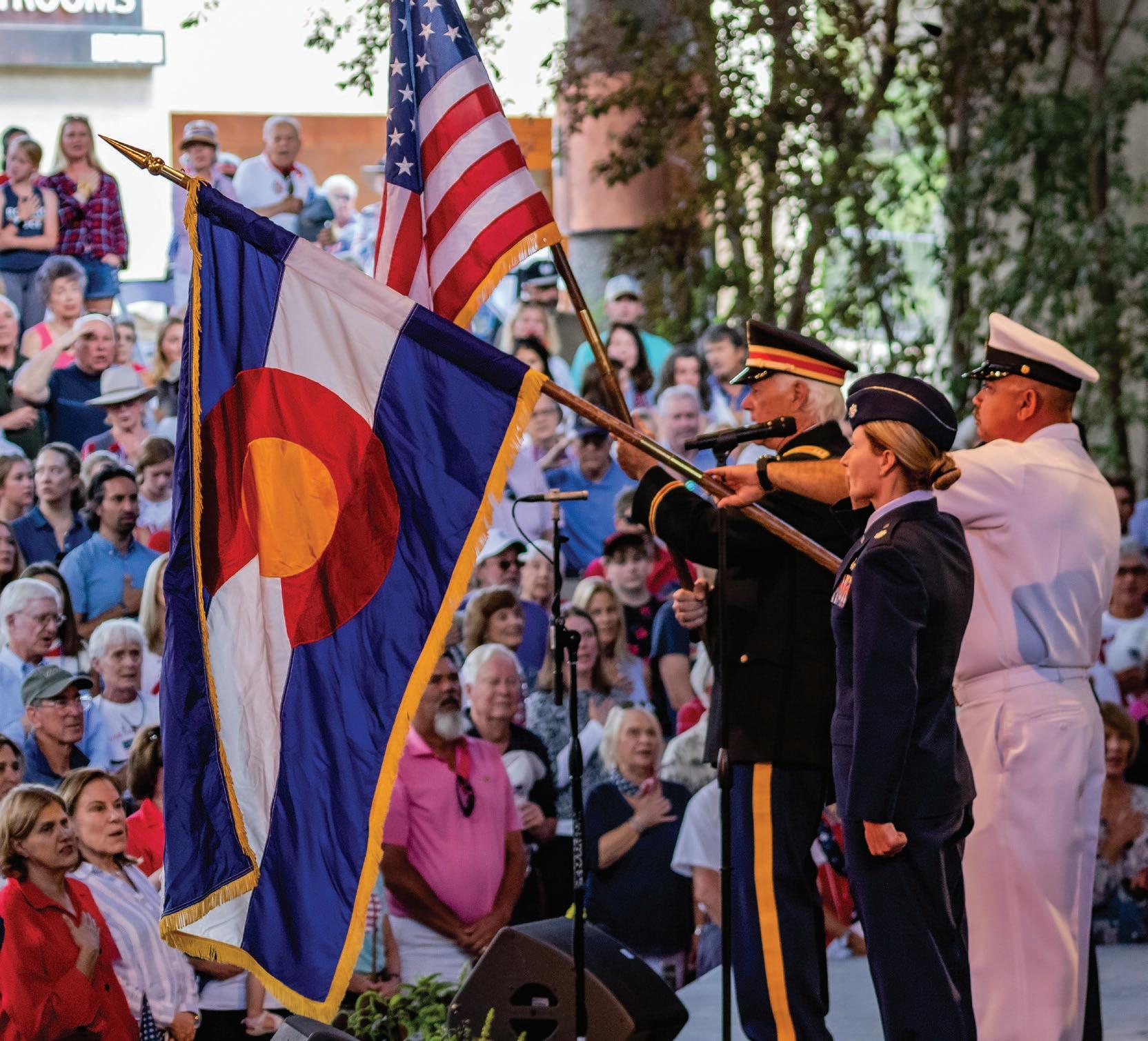
On this day, our nation commemorates and celebrates the 250th anniversary of the signing of the Declaration of Independence. At the same time, Colorado—the Centennial State—marks the 150th anniversary of its entrance into the Union. Today’s program is a musical salute to heartfelt American voices: from Aaron Copland to Ray Charles, film scores to military marches. Bravo! Vail honors the iconic landscapes, independent spirit, and legacy of dedicated service that define our country, and our state.
Bravo! Vail Gratefully Acknowledges Support for this Afternoon’s Concert
THE VAIL VALLEY FOUNDATION
SPECIAL GRATITUDE
The Sidney E. Frank Foundation
The Friends of the Dallas Symphony Orchestra
The Lyn & Phillip Goldstein Maestro Society
The Therese M. Grojean Vocalist Fund National Endowment for the Arts
4
SATURDAY 2 PM
ORCHESTRAL SERIES
GERALD R. FORD AMPHITHEATER
DALLAS SYMPHONY ORCHESTRA
Jeff Tyzik, conductor
Shayna Steele, vocals
Crystal Monee Hall, vocals
Kelly LeVesque, vocals
Alexander Kerr, violin
Melissa Stockwell, narrator
1LT (ret) Army officer, Purple Heart recipient, and 4x Paralympian
JOHN WILLIAMS
Liberty Fanfare
SOUSA
Liberty Bell March
COPLAND
“Hoe-Down” from Rodeo
MARK O’CONNOR
Strings and Threads
JOHN WILLIAMS
Overture to The Cowboys
RAYE/PRINCE, arr. Jeff Tyzik
Boogie Woogie Bugle Boy
ARR. JEFF TYZIK
America (Ray Charles version)
EDWARDS/RODGERS, arr. Jeff Tyzik We Are Family — INTERMISSION —
JEFF TYZIK
Majestic Mountains
SOUSA
Semper Fidelis
JOHN WILLIAMS
“The Patriot” from The Patriot “With Malice Towards None” from Lincoln
The Olympic Spirit (Summon the Heroes)
JAMES BECKEL, Jr.
Gardens of Stone
ARR. JEFF TYZIK
Armed Forces Song Medley
SOUSA
The Stars and Stripes Forever
SUNDAY 6 PM
ORCHESTRAL SERIES
GERALD R. FORD AMPHITHEATER
DALLAS SYMPHONY ORCHESTRA
Jeff Tyzik, conductor
Shayna Steele, vocals
Crystal Monee Hall, vocals
Kelly LeVesque, vocals
BEETHOVEN/WALTER MURPHY
“A Fifth of Beethoven” as recorded by Walter Murphy and The Big Apple Band
JOSEPH PATRICK ESPOSITO/ EDWARD PETER HOKENSON/ BRUCE SUDANO/SUMMER
“Bad Girl” as recorded by Donna Summer
HOLMES
“Rock the Boat” as recorded by The Hues Corporation
KENNETH GAMBLE/LEON HUFF/ GILBERT
“Don’t Leave Me This Way” as recorded by Thelma Houston
SUMMER/MICHAEL OMARTIAN
“She Works Hard for the Money” as recorded by Donna Summer
GIBB/GIBB/GIBB
“Stayin’ Alive” as recorded by The Bee Gees
“You Should Be Dancing” as recorded by The Bee Gees
BELLOTTE/MORODER/SUMMER
“I Feel Love” as recorded by Donna Summer
JABARA
“Last Dance” as recorded by Donna Summer
COHEN/MCFADDEN/ WHITEHEAD
“Ain’t No Stoppin’ Us Now” as recorded by McFadden & Whitehead
INTERMISSION
disco divas
PRESENTED BY SHIRLEY AND WILLIAM S. MCINTYRE, IV
SPONSORED BY Beth Slifer
CONDUCTOR SPONSOR
The Stolzer Family Foundation; Ellen and Dan Bolen; Mary Kevin and Tom Giller
SOLOIST SPONSORS
Crystal Monee Hall, vocals, sponsored by Elizabeth Borow & Andrew Gittle and Jean & Thomas McDonnell
Kelly LeVesque, vocals, sponsored by Robin & Dan Catlin and Kate & John Mitchell
Shayna Steele, vocals, sponsored by Sharron & Herbert Bank and Joyce & Paul Krasnow
SPECIAL GRATITUDE TO
The Bravo! Vail Artistic Excellence Fund
The Sidney E. Frank Foundation The Friends of the Dallas Symphony Orchestra
The Lyn & Phillip Goldstein Maestro Society
The Therese M. Grojean Vocalist Fund
Put on those boogie shoes and hit the dance floor! Celebrated for its infectious beats and energetic dancefloor rhythms, disco defined a unique era in music history, and the powerful voices of its female singers was a key ingredient. Featuring a powerhouse vocal trio, Disco Divas celebrates the reigning Queens of Disco: Donna Summer, Gloria Gayner, Patti LaBelle, Chaka Khan and the one and only Diana Ross, along with classic disco hits from Earth, Wind & Fire, The Bee Gees, and more.
Bravo! Vail Gratefully Acknowledges Support from the Friends of the Dallas Symphony Orchestra
$50,000 AND ABOVE
Shirley and William S. McIntyre, IV
$30,000 AND ABOVE
Linda and Mitch Hart
Billie and Ross McKnight
Marcy and Stephen Sands
$20,000 AND ABOVE
Marilyn Augur
John Dayton
Lyda Hill
Alexia and Jerry Jurschak
Marilyn Lenox
Bobbi and Richard Massman
Margie Pabst Steinmetz and Chuck Steinmetz
Cathy Stone
$10,000 AND ABOVE
Suzanne Caruso and Stephen Saldanha
Carole C. and CDR. John M. Fleming
Diane Folsom Frank
Fanchon and Howard Hallam
Jan and Lee Leaman
Brenda and Joe McHugh
Patricia and Brian Ratner
Debbie Scripps
Donna and Randy Smith
Carole A. Watters
Gena Whitten and Bob Wilhelm
$5,000 AND ABOVE
Edwina P. Carrington
Meg and Jamie Duke
Kim and Greg Hext
Karen and Steve Livingston
Vicki Rippeto
Sherry Sunderman and Tom Mueller
Kathy and William Wiener
Carolyn Wittenbraker and Arkay Foundation
Tom Woodell
Nancy and Harold Zirkin
MCCOY
“The Hustle” as recorded by Van McCoy & The Soul City Symphony
WILLIS/JON LIND
“Boogie Wonderland” as recorded by Earth, Wind & Fire
EDWARDS/NILE RODGERS
“Good Times” as recorded by Chic
CASEY/FINCH
“That’s the Way (I Like It)” as recorded by KC and the Sunshine Band
BELLOTTE/FALTERMEIER/ FORSEY
“Hot Stuff” as recorded by Donna Summer
GIBB/GIBB/GIBB
“Night Fever” as recorded by The Bee Gees
CREWE/KENNY NOLAN
“Lady Marmalade” as recorded by Patti LaBelle
PERREN/FEKARIS
“I Will Survive” as recorded by Gloria Gaynor
EDWARDS/NILE RODGERS
“I’m Coming Out” as recorded by Diana Ross
“We Are Family” as recorded by Sister Sledge
The running time of this concert is approximately 1 hour, 35 minutes.
a Schirmer Theatrical/Greenberg Artists co-production
Arrangements by Jeff Tyzik
Creative Team
Robert Thompson, Producer
Jeff Tyzik, Producer & Arranger
Jami Greenberg, Producer & Booking Agent
Betsey Perlmutter, Producer
Alex Kosick, Associate Producer
ORCHESTRAL SERIES
GERALD R. FORD AMPHITHEATER
DALLAS SYMPHONY ORCHESTRA
Fabio Luisi, conductor
Leonidas Kavakos, violin
SOPHIA JANI
What do flowers do at night? (10 minutes)
MOZART
Symphony No. 35 in D major, Haffner, K. 385 (17 minutes)
Allegro con spirito Andante Menuetto Presto
INTERMISSION
TCHAIKOVSKY
Violin Concerto in D major, Op. 35 (34 minutes)
Allegro moderato–Moderato assai Canzonetta. Andante Finale. Allegro vivacissimo
PRESTO CLUB NIGHT
LUISI & KAVAKOS: TCHAIKOVSKY VIOLIN CONCERTO
CONDUCTOR SPONSOR
Susan and Harry Frampton
SOLOIST SPONSORS
Leonidas Kavakos, violin, sponsored by Reneé Ann & Kerry Chelm and Caryn Clayman
SPECIAL GRATITUDE TO The Friends of the Dallas Symphony Orchestra
The Lyn & Phillip Goldstein Maestro Society
What do flowers do at night? (2018)
SOPHIA JANI (B.1989)
The German composer Sophia Jani is now completing her three-year term as composer-in-residence of the Dallas Symphony Orchestra, which first performed What do flowers do at night? this past March in Dallas. The work had been premiered in July 2022 by the New Jersey Symphony, David Robertson conducting, while she was participating in the Edward T. Cone Composition Institute at Princeton University. Prior to that she studied at the Conservatoire Jacques Thibaud (Bordeaux); the University of Augsburg; the University of Music and Performing Arts Munich; and the Yale
University School of Music, where she was supported by a Fulbright grant.
Her official bio says that she “takes a poetically minimalist approach to composition and belongs to a new generation of artists who were influenced early on by the boundlessness of the 21st century.” In 2023 she received a fellowship to be musical artist in residence of the Arvo Pärt Centre in Estonia. She is one of the founders and artistic directors of Feet Become Ears, a German platform that commissions, presents, and celebrates contemporary chamber music. Two CDs devoted to her music have been released: Music as a mirror (2022), a collection of chamber works that was nominated for the German music prize Opus Klassik, and Six Pieces for Solo Violin (2024).
“ What do flowers do at night? ” Jani explains, ”was inspired by a plant called Selenicereus grandiflorus —a cactus species that blooms in a beautiful way, but only once a year for one night. The charged, mysterious mood that comes with the anticipation of a unique event served as the starting point and form-giver for this work, and the beauty and elegance of the blossom, seemingly created so effortlessly by nature, served as an inspiration for me in crafting my composition.”
Symphony No. 35 in D major, Haffner, K.385 (1782-83) WOLFGANG AMADÈ MOZART (1756-91)
In the spring of 1781, Mozart left his native Salzburg for good and settled in Vienna. Though he was happy to put the provincial frustrations of Salzburg behind him, he still maintained friendships there. The Haffner family had been close to the Mozarts for years, and Leopold, our composer’s father, reported to his son that on July 29, 1782, Wolfgang’s friend Sigmund Haffner was to be elevated to the nobility. In 1776, Mozart had written a serenade (the so-called Haffner Serenade) for the wedding of Sigmund’s sister, and Leopold felt sure that Wolfgang would want to contribute a symphony to Sigmund’s own ennoblement ceremony. It was a very busy summer for Wolfgang,
but he promised nonetheless, “You’ll definitely get something from me in every mail—I’ll work as fast as possible—and so far as haste permits, I’ll write well.”
A week later he sent the opening fast movement, which may have arrived in Salzburg in time for the ennoblement, and the other movements—plus an extra march—apparently followed in short order. Later that year, he re-worked his score for a Lenten concert he was going to present in Vienna the following March. “The new Haffner Symphony has positively amazed me,” he reported to his father, “for I had forgotten every single note of it. It must surely produce a good effect.” That it does, thanks in part to the expanded woodwind orchestration Mozart provided at that point. The Vienna concert was a great success. The composer wrote to his father: “The theater could not have been more crowded and ... every box was full. But what pleased me most of all was that His Majesty the Emperor was present and, goodness!—how delighted he was and how he applauded me!”
Violin Concerto in D major, Op. 35 (1878)
PYOTR
ILYICH TCHAIKOVSKY (1840-93)
In early 1878, Pyotr Ilyich Tchaikovsky traveled with his young violinist-friend Josif Kotek for an
extended residency in Switzerland. They played through music together, including Lalo’s Symphonie espagnole , a violin concerto in all but name; and that inspired Tchaikovsky to write a violin concerto himself. He composed it in a heat of inspiration in late March and early April, with Kotek offering technical advice on the solo part. When Tchaikovsky sent the score to his patron Nadezhda von Meck, she wrote back that she didn’t like it; to his credit, the composer (who was often given to self-doubt) defended his piece, although he did decide on his own to replace his original slow movement. (The earlier one lives on as a standalone piece for violin and orchestra or piano titled Souvenir d’un lieu cher .) Further objections came from the violinist Leopold Auer, to whom Tchaikovsky wanted to entrust the premiere: he declared it unplayable, much as the pianist Nikolai Rubinstein had dismissed Tchaikovsky’s Piano Concerto No. 1 four years earlier. Too bad for Auer: the honor of the premiere instead went to Adolf Brodsky, who worked on the concerto for more than two years before he dared to play it. Auer eventually changed his mind; he not only performed it but also taught it to his students, many of
PROGRAM NOTES BY JAMES M. KELLER CONTINUED ON PAGE 204
Bravo! Vail Gratefully Acknowledges Support from the Friends of the Dallas Symphony Orchestra
$50,000 AND ABOVE
Shirley and William S. McIntyre, IV
$30,000 AND ABOVE
Linda and Mitch Hart
Billie and Ross McKnight
Marcy and Stephen Sands
$20,000 AND ABOVE
Marilyn Augur
John Dayton
Lyda Hill
Alexia and Jerry Jurschak
Marilyn Lenox
Bobbi and Richard Massman
Margie Pabst Steinmetz and Chuck Steinmetz
Cathy Stone
$10,000 AND ABOVE
Suzanne Caruso and Stephen Saldanha
Carole C. and CDR. John M. Fleming
Diane Folsom Frank
Fanchon and Howard Hallam
Jan and Lee Leaman
Brenda and Joe McHugh
Patricia and Brian Ratner
Debbie Scripps
Donna and Randy Smith
Carole A. Watters
Gena Whitten and Bob Wilhelm
$5,000 AND ABOVE
Edwina P. Carrington
Meg and Jamie Duke
Kim and Greg Hext
Karen and Steve Livingston
Vicki Rippeto
Sherry Sunderman and Tom Mueller
Kathy and William Wiener
Carolyn Wittenbraker and Arkay Foundation
Tom Woodell
Nancy and Harold Zirkin
SCHEDULE AT A GLANCE
COMMUNITY CONCERTS
7
9
9
16
18
Beethoven Piano Sonatas I 73
Beethoven Piano Sonatas II 80
Community Concert I 81
Beethoven Piano Sonatas III 97
Beethoven Piano Sonatas IV 102
Community Concert III 112
Community Concert IV 113
Community Concert V 114
Beethoven Piano Sonatas V 115
Beethoven Piano Sonatas VI 126
Community Concert VI 131
Beethoven Piano Sonatas VII 142
Beethoven Piano Sonatas VIII 148
8
15
25
Inside the Music I
Beethoven Piano Sonatas 77
Inside the Music II
Beethoven Piano Sonatas 98
Inside the Music
Beethoven Nature Walks 134
COMMUNITY CONCERTS
GREAT MUSIC, FOR FUN AND FOR ALL!
JULY 1 ~ 30 // 2026
Throughout the summer, Bravo! Vail brings dozens of live world-class performances to communities throughout Eagle County, with solo recitals, chamber music concerts, and educational programs for all ages.
Ahighlight of Bravo! Vail’s 2026 season, four internationally acclaimed pianists perform the complete Beethoven Piano Sonatas, plus dozens more events where Festival musicians connect with music-lovers in realaxed, accessible settings.
Bravo! Vail Gratefully Acknowledges the Support of the Following Patrons
BEETHOVEN PIANO SONATAS I
Ludwig von Beethoven’s 32 piano sonatas form one of the most important bodies of work in the history of classical music, charting an ever-evolving journey from early brilliance to late transcendence. Fulfilling one of Anne-Marie McDermott’s dream projects for the Bravo! Vail Music Festival, internationally acclaimed pianists Illia Ovcharenko, Ilya Shmukler, Fei-Fei Dong, and Chaeyoung Park perform the complete cycle in eight free concerts—an extraordinary artistic and educational offering for the community.
A complete set of program notes by James Keller is available online at bravovail.org, or via the QR code below.
Bravo! Vail Gratefully Acknowledges Support for this Afternoon’s Concert
7 TUESDAY 1 PM
JUL VAIL INTERFAITH CHAPEL
BEETHOVEN PIANO SONATAS
Illia Ovcharenko, piano
BEETHOVEN
Piano Sonata No. 1 in F minor, Op. 2, No. 1 (20 minutes)
Allegro
Adagio
Menuetto. Allegretto
Prestissimo
Piano Sonata No. 8 in C minor, Op. 13, Pathétique (18 minutes)
Grave – Allegro di molto e con brio
Adagio cantabile Rondo. Allegro
INTERMISSION
Piano Sonata No. 6 in F major, Op. 10, No. 2 (15 minutes)
Allegro
Allegretto
Presto
Piano Sonata No. 13 in E-flat major, Quasi una fantasia, Op. 27, No. 1 (16 minutes)
Andante – Allegro – Tempo I
Allegro molto e vivace
Adagio con espressione
Allegro vivace – Tempo I – Presto
Piano Sonata No. 26 in E-flat major, Op. 81a, Les adieux/Das Lebewohl (18 minutes)
Das Lebewohl (Les adieux). Adagio –Allegro
Abwesenheit (L’absence). Andante espressivo
Das Wiedersehen (Le retour). Vivacissimamente
Dover Quartet
Joel Link, violin
Bryan Lee, violin
Julianne Lee, viola
Camden Shaw, cello
Marc-André Hamelin, piano
SCHUBERT
String Quartet No. 11 in E major, D.353 (23 minutes)
Allegro con fuoco
Andante
Menuetto. Allegro vivace–Trio
Rondo. Allegro vivace
MENDELSSOHN
String Quartet No. 6 in F minor, Op. 80 (25 minutes)
Allegro vivace assai–Presto
Allegro assai
Adagio
Allegro molto
INTERMISSION
FRANCK
Piano Quintet in F minor (40 minutes)
Molto moderato quasi lento
Lento con molto sentimento
Allegro non troppo, ma con fuoco
DOVER STRING QUARTET & HAMELIN
String Quartet No. 11 in E major, D.353 (1816)
FRANZ SCHUBERT (1797-1828)
Franz Schubert was born into a musically inclined family, one that was attuned to signs of his exceptional talent. When he was eight years old, he received his first violin lessons from his father (a schoolteacher), and at about the same time he began instruction in organ, counterpoint, thoroughbass, and singing from the organist of his local parish in Liechtenthal, which was then a Vienna suburb but was later annexed into the city proper. The organist reported, “Whenever I wished to impart something new to him, he always knew it already.”
Music-making was an indispensable pastime in the family’s household, and our composer heard and participated in chamber music— especially string quartets—from
an early age. The family ensemble typically comprised two of his older brothers, Ignaz and Ferdinand, playing violins; Franz playing viola; and their father, Franz Theodor, handling the cello part. From 1813 to 1826, Schubert would compose 15 string quartets (not counting lost or incomplete works). Of these the last three—in A minor (D.804, Rosamunde), D minor (D.810, Death and the Maiden), and G major (D.887)—are universally acknowledged as crowning achievements of the repertoire, to the extent that they (along with his single movement C-minor Quartettsatz) almost entirely eclipse the quartets that preceded them. The first ten are more impressive in select moments than overall, but everything clicks in his Eleventh, from 1816. Here he experiments with texture, sometimes grouping the instruments in contrasting pairs to striking effect—especially in the first movement and in the Trio section of the Menuetto. He subtly unifies
the entire work by taking a prominent motif, first heard about 30 seconds into the opening movement (and much thereafter), and revisiting it, with its tempo doubled, as the main theme of the finale.
String Quartet No. 6 in F minor, Op. 80 (1847)
FELIX MENDELSSOHN (1809-47)
Felix Mendelssohn’s highly charged F-minor Quartet is marked by volatile contrasts, unanticipated turns of phrase, and agitation that borders on the combustible. Biography may help explain what is going on. In late 1846, his correspondence increasingly dealt with the deepest concerns of the artist, including the shallowness of public acclaim and even mortality itself. He gave up public appearances in the spring of 1847. At the end of a visit to England that spring, he was so depleted that he told his friend Karl Klingemann, “Another exhausting week like this and I’m a dead man!” Returning to Germany, he was struck with horrific news: his beloved sister Fanny died suddenly. She succumbed to a stroke, just as their
father and grandfather had years before. Felix was bereft; they had been closest friends since infancy. In the aftermath, he headed to Switzerland, where he remained several months, composing the F-minor Quartet. He returned home to Leipzig in mid-September, and within a month he was dead, felled by three strokes a few days apart.
The first movement opens with bristling tremolos, above which the first violin utters a terse theme initially on the tonic, then on the subdominant, and yet again a third time, on the leading tone. Fractured dialogue ensues; the tremolos give way to a high-pitched, almost shrieking gesture in the first violin, which is then assumed by the lower strings. At the movement’s end, Mendelssohn injects an explosive crescendo and a coda replete with brash octave writing, sharp dotted rhythms, and biting staccato attacks.
The second movement is a bittertasting scherzo that hardly resembles the fleet-footed movements that were Mendelssohn’s hallmark in earlier years. The Adagio is an expressive elegy, at once peaceful and mournful, but restlessness returns with the relentless drive of the agitated finale.
Piano Quintet in F minor (1878-79)
CÉSAR FRANCK (1822-90)
César Franck was a brilliant pianist and organist, but he nonetheless spent much of his career in relative obscurity, teaching at public schools and religious institutions, serving as organist at various Parisian churches and, beginning in 1872, as organ professor at the Paris Conservatoire. In the second half of that decade he experienced a flood of inspiration that gave rise to such passionate masterworks as his Piano Quintet, Violin Sonata, String Quartet, and D-minor Symphony.
The Piano Quintet clearly reveals Franck’s artistic lineage, which derives in large part from the Germanic tradition of Bach. His style is precise in its contrapuntal writing and its expressive notation, calling repeatedly for the broadest possible range of dynamics, from pianississimo to fortississimo. No previous work in the French chambermusic repertoire had come close to the torrid emotional power of this piece. In typical Franckian fashion, themes
wend their way through the cyclic unrolling of this piece, evolving through ingenious transformations to take on ever new characters. For example, following a slow introduction, the body of the first movement gets underway with a pair of themes, the second of which—a sequence of varying intervals above a stable bass note—reappears, in a series of disguises, in both of the ensuing movements. The generally serene slow movement comes across as an uncomplicated sort of song. The finale opens with a rather lengthy prologue, separate from the body of the movement proper, which might be taken as analogous to an independent movement, though an abbreviated one. In the agitated finale, a motif first heard near the end of the second movement resurfaces as an important theme, and in the coda the Quintet’s overriding theme returns—now transformed into triple meter—to round off the proceedings into a unified whole.
Bravo! Vail Gratefully Acknowledges the Support of the Following Patrons
Anonymous Discover Vail
The Sidney E. Frank Foundation
Debbie and Jim Shpall, Jackson Family Wines, and Sazerac
Yamaha
HEART OF THE ROCKIES
KATHY BELLAMY
Broker Associate | Beaver Creek
970.376.2863
kbellamy@slifer.net
KathyBellamy.com
#16 Top-Producing Slifer Smith & Frampton Broker 2025
Gore Creek Place 2 | Lionshead
5 BD | 5.5 BA | 4,573 SF | $15,800,000
121 Borders Road | Beaver Creek
6 BD | 7 BA | 8,639 SF | $13,750,000
“Kathy reviewed my property, recommended pricing with realistic boundaries, developed a sales program suitable for the unit. She actively marketed and followed up when necessary. She was able to work with the buying agent and potential buyers to come to a mutually agreeable compromise. I would highly recommend Kathy and her attention to detail to bring a contract to fruition.”
INSIDE THE MUSIC I
BEETHOVEN PIANO SONATAS
Explore Beethoven’s piano sonatas and learn more about the relationship between performing and composing, improvisation and structure, life and music. Pianist and musicologist Jonathan Bellman will provide analysis and historical background, along with musical illustrations, exploring and demystifying this extraordinary body of work.
Jonathan Bellman is a musicologist, pianist, and author who serves on the faculty of the University of Northern Colorado.
8
Jonathan Bellman, speaker JUL
WEDNESDAY 1 PM INSIDE THE MUSIC
VAIL INTERFAITH CHAPEL
Discover Vail
The Judy & Alan Kosloff Artistic Director Chair Vail Interfaith Chapel Bravo! Vail Gratefully Acknowledges the Support of the Following Patrons
Our vibrant, inclusive Jewish community welcomes you.
Family Friendly Shabbat Services in Vail, every Friday Night at 6:00pm Holiday Celebrations
Religious School Education & Bar and Bat Mitzvah Training Year Round and Seasonal Membership Available Lifecycle Events Created For You
We hope you’ll join us…
Rabbi Joel D. Newman & Cantor Michelle Cohn Levy
For schedule information, please see our website or contact Executive Director, Jeanne Whitney (970) 477-2992 or admin@bnaivail.org
www.bnaivail.org
WEDNESDAY 6 PM
ORCHESTRAL SERIES
GERALD R. FORD AMPHITHEATER
PRE-CONCERT TALK
5:10 PM
GERALD R. FORD AMPHITHEATER LOBBY
Johanna Frymoyer (Notre Dame), speaker
DALLAS SYMPHONY ORCHESTRA
Fabio Luisi, conductor
Jennifer Rowley, Cio-Cio-San (Butterfly)
Evan LeRoy Johnson, B. F. Pinkerton
Manuela Custer, Suzuki
Alessandro Luongo, Sharpless
Keith Jameson, Goro
Kidon Choi, Prince Yamadori/Uncle Bonze
Hanyi Lu, Dolore (Trouble)
Bravo! Vail Festival Chorus Duain Wolfe, founder Taylor Martin, director
PUCCINI
Madama Butterfly Act I
INTERMISSION
Act II
Act III
Performed in Italian with English supertitles For Synopsis, see page 200.
The running time of this concert is approximately 2 hours and 40 minutes
PRESTO CLUB NIGHT
MADAMA BUTTERFLY IN CONCERT
SPECIAL THANKS TO MEMBERS OF THE MADAMA BUTTERFLY OPERA CIRCLE
$100,000 AND ABOVE
The Cathy Stone Choral Fund
$50,000 AND ABOVE
The Berry Charitable Foundation
Fanchon and Howard Hallam
Shirley and William S. McIntyre, IV
$25,000 AND ABOVE
John Dayton
Vera and John Hathaway
Amy Novikoff
Marcy and Stephen Sands
$10,000 AND ABOVE
Gina Browning and Joe Illick
Ellie Caulkins
Wendy and Peter DeLuca
Anne and Hank Gutman
Alicia Johnson and Michael Johnson
Judy and Alan Kosloff
Eva Schoonmaker
Debbie Scripps
Nancy and Harold Zirkin
CONDUCTOR SPONSOR
Jane and Michael Griffinger
SPECIAL GRATITUDE TO The Sidney E. Frank Foundation
Giacomo Puccini was expecting that the elite opera lovers of the Teatro alla Scala in Milan would accord a huge ovation to his new opera, Madama Butterfly, when it opened on Feb. 17, 1904. It was the culmination of almost four years of work. He had been captivated by David Belasco’s oneact play Madame Butterfly, which was based on a story by the Philadelphia lawyer John Luther Long that was itself adapted from a tale by the French naval officer and novelist Pierre Loti. When Puccini saw the play in London in the summer of 1900, he went backstage to ask Belasco’s permission to develop it into an opera. The playwright reported, “I agreed at once ... because it was impossible to discuss arrangements with an impulsive Italian who has tears in his eyes and both arms round your neck.”
Puccini embarked on the project with his tried-and-true librettists, Giuseppe Giacosa and Luigi Illica, who had previously joined him on the path to success with La bohème and Tosca. He cast himself into researching things Japanese in order to inject what he considered a realistic flavor into the sad tale of the young Japanese girl who marries an American serviceman and then find herself deserted by him and left with a baby, named Dolore (“Trouble”), as a memento. A terrific cast was assembled, headed by soprano Rosina Storchio in the title role, tenor Giovanni Zenatello as Lieutenant Pinkerton, and baritone Giuseppe de Luca as the American consul who tries to keep things on an even keel as the sorry tale unfolds. Rehearsals went smoothly, and the accomplished conductor Cleofonte Campanini had everything well in hand in the orchestra pit. Puccini’s longtime publisher Giulio Ricordi had some misgivings about the new work, but La Scala’s general manager Giulio Gatti-Casazza (who would later head the Metropolitan Opera for nearly three decades) was enthusiastic, and Ricordi’s son Tito had put together a production that infused the current craze for Japonisme with truly operatic opulence.
Nonetheless, Madama Butterfly was hissed and booed practically from the
moment the curtain went up. According to Gatti-Casazza, the cast behaved with admirable poise, singing through the din as if nothing unusual were happening. The audience exercised restraint only at the opera’s end, which, he recalled, was greeted by “absolutely glacial silence.” Giacosa launched into a backstage tirade about the disrespect the audience had shown for the libretto. Puccini was flabbergasted; but, being experienced in the ways of Italian opera, he was not unfamiliar with the feared claque, the army of strong-voiced opera-goers who could be hired to ensure or deny success.
He withdrew his new opera after that single performance and subjected it to drastic revision, altering the division of its acts, tightening many passages, and adding a considerable expanse that included what would become the evergreen tenor aria “Addio, fiorito asil.” He introduced the revised version of Madama Butterfly at the more modest Teatro Grande in Brescia, forty miles to the east, before an audience that had been historically supportive of his endeavors. Illica termed the success in Brescia to be colossal, and the audience demanded encores of seven numbers. An extended engagement ensued in Brescia, and Madama Butterfly was instantly added to the calendars of opera houses throughout Italy. Before the year was out, it was produced in Buenos Aires, Montevideo, and Alexandria. In its first decade it would be mounted in dozens of productions from
Stockholm to Saigon, from Odessa to Johannesburg, most often in its original Italian but also in English, French, Spanish, German, Czech, Hungarian, Polish, Slovenian, Swedish, Norwegian, Danish, and Croatian.
Puccini continued to tinker with the score, effecting further cuts for a 1905 production at London’s Covent Garden and a somewhat reconfigured version for the Paris Opéra in 1906. Producers today have various options to choose from, and some opera houses have come up with their own versions that combine details from different early renderings. A curious footnote emanating from the variety of early editions is confusion about the name of the tenor lead. At the disastrous La Scala opening, his name was given as Sir Francis Blummy Pinkerton — a moniker that, to English speakers, sounds neither dashing nor American. In the immediately ensuing emendations, the librettists and composer changed it to Benjamin Franklin Pinkerton. (That accords with the name as given in Long’s story and Belasco’s play.) The original libretto published by the house of Ricordi accordingly identifies him as “B.F. Pinkerton,” but some printings of their score held on to the “F.B.” initials in the cast list. You will find him identified either way in writings about the piece.
Bravo!
Vail Gratefully Acknowledges Support from the Friends of the Dallas Symphony Orchestra
$50,000 AND ABOVE
Shirley and William S. McIntyre, IV
$30,000 AND ABOVE
Linda and Mitch Hart
Billie and Ross McKnight
Marcy and Stephen Sands
$20,000 AND ABOVE
Marilyn Augur
John Dayton
Lyda Hill
Alexia and Jerry Jurschak
Marilyn Lenox
Bobbi and Richard Massman
Margie Pabst Steinmetz and Chuck Steinmetz
Cathy Stone
$10,000 AND ABOVE
Suzanne Caruso and Stephen Saldanha
Carole C. and CDR. John M. Fleming
Diane Folsom Frank
Fanchon and Howard Hallam
Jan and Lee Leaman
Brenda and Joe McHugh
Patricia and Brian Ratner
Debbie Scripps
Donna and Randy Smith
Carole A. Watters
Gena Whitten and Bob Wilhelm
$5,000 AND ABOVE
Edwina P. Carrington
Meg and Jamie Duke
Kim and Greg Hext
Karen and Steve Livingston
Vicki Rippeto
Sherry Sunderman and Tom Mueller
Kathy and William Wiener
Carolyn Wittenbraker and Arkay Foundation
Tom Woodell
Nancy and Harold Zirkin
PROGRAM NOTES BY JAMES M. KELLER CONTINUED ON PAGE 200
THURSDAY 1 PM
BEETHOVEN PIANO SONATAS
VAIL INTERFAITH CHAPEL
Illia Ovcharenko, piano
BEETHOVEN
Piano Sonata No. 19 in G minor, Op. 49, No. 1 (8 minutes)
Andante Rondo. Allegro
Piano Sonata No. 4 in E-flat major, Op. 7 (30 minutes)
Allegro molto e con brio
Largo e con gran espressione
Allegro
Rondo. Poco allegretto e grazioso
INTERMISSION
Piano Sonata No. 27 in E minor, Op. 90 (14 minutes)
Mit Lebhaftigkeit und durchaus mit Empfindung und Ausdruck (With liveliness and with feeling and expression throughout)
Nicht zu geschwind und sehr singbar vorgetragen (Not too swiftly and conveyed in a singing manner)
Piano Sonata No. 32 in C minor, Op. 111 (30 minutes)
Maestoso – Allegro con brio ed appassionato
Arietta. Adagio molto semplice e cantabile
BEETHOVEN PIANO SONATAS II
Ludwig von Beethoven’s 32 piano sonatas form one of the most important bodies of work in the history of classical music, charting an ever-evolving journey from early brilliance to late transcendence. Fulfilling one of Anne-Marie McDermott’s dream projects for the Bravo! Vail Music Festival, internationally acclaimed pianists Illia Ovcharenko, Ilya Shmukler, Fei-Fei Dong, and Chaeyoung Park perform the complete cycle in eight free concerts—an extraordinary artistic and educational offering for the community.
A complete set of program notes by James Keller is available online at bravovail.org, or via the QR code below.
Bravo! Vail Gratefully Acknowledges Support for this Afternoon’s Concert
Vail Interfaith Chapel
COMMUNITY CONCERT I
BEO STRING QUARTET
Artist Insights
One of the things we strive to do is push the boundaries of a modern string quartet, reflecting on our own personal narratives and also a broader artistic dialogue. With that in mind, we titled this program “Unbounded.” The Three Chinese Folk Songs carry their own rich tradition—reimagined here. El Balcón shatters the traditional quartet mold through its use of story and extended techniques—including whistling! Debussy broke the rules of harmony and form to find his own unmistakable voice. We invite listeners to hear the string quartet not as a fixed tradition, but as a living, evolving form.
—Beo String Quartet
THURSDAY 6 PM
GYPSUM TOWN COUNCIL CHAMBERS
Beo String Quartet
(Bravo! Vail 2026 Chamber Musicians in Residence)
Jason Neukom, violin
Andrew Giordano, violin
Sean Neukom, viola
Ryan Ash, cello
TRADITIONAL, arr. Jiang Yiwen
Three Chinese Folk Songs (14 minutes)
Yao Dance
The Butterfly Lovers
Harvest Celebration
SEAN NEUKOM
El balcón (8 minutes)
DEBUSSY
String Quartet in G minor, Op. 10 (25 minutes)
Animé et très décidé
Assez vif et bien rythmé
Andantino, doucement expressif
Très modéré – En animant peu à peu –Très mouvementé et avec passion
Bravo! Vail Gratefully Acknowledges Support for this Evening’s Concert
Town of Gypsum
SCHEDULE AT A GLANCE
Nézet-Séguin & Hamelin: Brahms & Liszt 86
Hadelich Performs
Brahms Violin Concerto 88
Nézet-Séguin Conducts Beethoven 9 90
Alsop & Himari: Sibelius Violin Concerto 100
Alsop & Sham: Mendelssohn Piano Concerto 106
Disney’s Fantasia in Concert
THE FABULOUS PHILADELPHIANS
THE PHILADELPHIA ORCHESTRA
IN RESIDENCE
JULY 10 ~ 17 // 2026
The Philadelphia Orchestra returns for its 19th Bravo! Vail residency, bringing back its signature sound and adventurous programming in a year celebrating the ensemble’s 125th anniversary with six performances featuring a mix of beloved classics and bold new works.
The world-renowned Philadelphia Orchestra strives to share the transformative power of music with the widest possible audience, and to create joy, connection, and excitement through music in the Philadelphia region, across the country, and around the world. Through innovative programming, robust education initiatives, a commitment to its diverse communities, and the embrace of digital outreach, the ensemble is creating an expansive and inclusive future for classical music.
Yannick Nézet-Séguin is now in his 14th season, serving as music and artistic director. He joins a remarkable list of music directors spanning the Orchestra’s 126 seasons: Fritz Scheel, Carl Pohlig, Leopold Stokowski, Eugene Ormandy, Riccardo Muti, Wolfgang Sawallisch, and Christoph Eschenbach. Widely recognized for his consummate artistry, Yannick has established himself as a musical leader of the highest caliber and one of the most thrilling and sought-after talents of his generation. In addition to expanding the repertoire by embracing an ever-growing and diverse group of today’s composers, Yannick and the Orchestra are committed to performing and recording the works of previously overlooked composers, including William Dawson, Louise Farrenc, Lili Boulanger, William Grant Still, and Florence Price. The Orchestra’s recording of Price’s First and Third symphonies for Deutsche Grammophon won a GRAMMY Award.
The Philadelphia Orchestra performs for the people of Philadelphia year-round, at the Kimmel Center for the Performing Arts, around the community, over the airwaves, and online. In 2024 Verizon Hall at the Kimmel Center was officially rededicated as Marian Anderson Hall in honor of the legendary contralto, civil rights icon, and Philadelphian. It is the first major concert venue in the world to honor the late performer and trailblazer.
The Philadelphia Orchestra continues its tradition of educational and community engagement for all ages. Its award-winning programs connect, uplift, and celebrate nearly 40,000 Philadelphians and 250 schools annually through programs such as School Concerts, Family Concerts, Open Rehearsals, PlayINs, All City Fellowships,
and residency work in Philadelphia and abroad.
The Orchestra believes deeply in the power of music to connect people. Through concerts, national and international tours, residencies, and recordings, it is a global ambassador and one of our nation’s greatest cultural exports. It performs annually at Carnegie Hall, the Saratoga Performing Arts Center, the Highmark Mann Center, and the Bravo! Vail Music Festival. The Orchestra also has a rich history of touring and in 1973 became the first American orchestra to perform in the People’s Republic of China.
The Philadelphia Orchestra has presented the world or American premieres of such important works as Mahler’s Symphony No. 8, Stravinsky’s The Rite of Spring, and Rachmaninoff’s Symphonic Dances. It made movie history by performing the soundtrack
to Disney’s legendary animated film Fantasia. The ensemble has also performed music that responds to issues of our time, such as Davóne Tines’s Sermon, dedicated to the memory of Breonna Taylor, and the world premiere of John Luther Adams’s Vespers of the Blessed Earth, a response to humanity’s impact on the Earth.
Under Yannick’s leadership the Orchestra returned to recording with 15 releases on the Deutsche Grammophon label, including works by Stravinsky, Rachmaninoff, Bernstein, Bonds, and Gershwin. These continue the Orchestra’s remarkable history in this area, having made its first recording in 1917 and amassing an enormous discography in the intervening years. The Orchestra also reaches thousands of radio listeners with weekly broadcasts on WRTI-FM and SiriusXM. For more information, please visit www.philorch.org.
Bravo! Vail Gratefully Acknowledges Support from the Friends of the Fabulous Philadelphians
$50,000 AND ABOVE
Anonymous
Marge and Phil Odeen
$20,000 AND ABOVE
John Dayton
Cathy Stone
$10,000 AND ABOVE
Carole C. and
CDR. John M. Fleming
Anne and Hank Gutman
Lynn and Dr. Andrew B. Kaufman
Laura and Jim Marx
Teri Perry
Linda Farber Post and Kalmon D. Post
Susan and Richard Rogel
Carole and Peter Segal
$5,000 AND ABOVE
Anonymous
Shannon and Todger Anderson
Dierdre and Ronnie Baker
Sunny and Phil Brodsky
Doe Browning and Jack Hunn
The Campbell Family
Suzanne Caruso and Stephen Saldanha
Dr. David Cohen
Sherri Hahn and Joe Parelman
Wendi and Brian Kushner
Christiana and Richard Maxwell
Bert Mobley
Ann and Tom Rader
Michele and Jeffrey Resnick
Sally and Byron Rose
Ernest Scheller, Jr.
Dr. Kim Schilling
Elaine and Steven
Schwartzreich
Susan and Steve Suggs
Tom Woodell
Kathy and Jonathan Zeschin
Nancy and Harold Zirkin
The Antlers at Vail, The Hythe, A Luxury Collection Resort, Vail, and Manor Vail Lodge are the official homes of The Philadelphia Orchestra while in residence at Bravo! Vail.
The curtain’s up on Theatre SilCo’s 2026 Season — a lineup packed with heart, humor, and unforgettable stories. From our Main Stage productions filled with musical adventures and powerful storytelling, to our Lounge Series featuring live jazz experiences, plus improv comedy, movie nights, and more.
Whether you are an avid enthusiast or casual theatre-goer, you are sure to enjoy our intimate space to the fullest. Let us bring you closer to the stories and characters that inspire, entertain, and captivate. Discover the perfect mountain getaway for YOU and start making memories with us at The SilCo - TODAY!
ORCHESTRAL SERIES
GERALD R. FORD AMPHITHEATER
PRE-CONCERT TALK
5:10 PM
GERALD R. FORD AMPHITHEATER LOBBY
Jonathan Bellman (University of Northern Colorado), speaker
THE PHILADELPHIA ORCHESTRA
Yannick Nézet-Séguin, conductor
Marc-André Hamelin, piano
BRAHMS
Symphony No. 3 in F major, Op. 90 (33 minutes)
Allegro con brio
Andante
Poco allegretto
Allegro – Un poco sostenuto
INTERMISSION
LISZT
Piano Concerto No. 2 in A major (22 minutes)
Adagio sostenuto assai – Allegro agitato assai – Allegro moderato – Allegro deciso; Sempre Allegro – Marziale, un poco meno Allegro – Allegro animato; Stretto (molto accelerando) (played without pause)
ARTURO MÁRQUEZ
Danzón No. 2 (10 minutes)
PRESTO CLUB NIGHT
NÉZET-SÉGUIN & HAMELIN: BRAHMS & LISZT
PRESENTED BY FIONA AND MARVIN CARUTHERS
SPONSORED BY Angela and Tim Stephens
CONDUCTOR SPONSOR
Pepette and Joe Mongrain
SOLOIST SPONSORS
Marc-André Hamelin, piano, sponsored by Wendy & Peter DeLuca and Susu & George Johnson
SPECIAL GRATITUDE TO The Friends of the Fabulous Philadelphians
The Lyn & Phillip Goldstein Maestro Society
The Lyn & Phillip Goldstein Piano Concerto Artist Project
The Judy & Alan Kosloff Artistic Director Chair
Symphony No. 3 in F major, Op. 90 (1882-83)
JOHANNES BRAHMS (1833-97)
Johannes Brahms did much of his best work during his summer vacations, which he usually spent at some bucolic getaway in the Austrian countryside. He passed the summer of 1883, during which he completed his Third Symphony, in the town of Wiesbaden, a spa resort along the Rhine. It is perhaps not coincidental that the piece’s opening recalls the corresponding spot of the Rhenish Symphony No. 3, which Brahms’ mentor Robert Schumann had composed in 1850 shortly after moving to Düsseldorf, another city on the Rhine. The shortest of Brahms’ four symphonies, the Third is a work of contrasting characters, sometimes introspective (especially in its meltingly beautiful third movement), elsewhere more given to heroic solidity. “Its foundation is self-confident, rough
and ready strength,” said the Viennese music critic Eduard Hanslick; and the conductor Hans Richter, who led its premiere, referred to it as Brahms’ Eroica. This comparison to one of Beethoven’s mightiest scores must have moved Brahms deeply, since he had spent many years being intimidated about writing symphonies, worrying that his could not stand as worthy successors to Beethoven’s.
The musical politics of Vienna practically guaranteed that Brahms’ new works would be greeted with loud opinions pro and con. True to form, listeners who preferred the avantgardism of Liszt and Wagner made their displeasure known, but Brahms was pleasantly surprised by the warmth with which the piece was greeted overall. In fact, he grew to resent the symphony’s cascading popularity, feeling that it was overshadowing others of his works that he felt deserved similar enthusiasm. His friend and confidante Clara Schumann (Robert’s widow) was among its devotees. “From start to finish,” she wrote to him, “one is wrapped about with the mysterious charm of the woods and forests. I could not tell you which movement I loved most.”
Piano Concerto No. 2 in A major (1839-61)
FRANZ LISZT (1811-86)
Franz Liszt completed two concertos for piano—the First was unveiled in 1855, the Second in 1857 (though revised after that)—but he also composed about twenty other pieces for piano with orchestra including such still-programmed pieces as his Hungarian Fantasy and Totentanz. Both of the two official, numbered concertos were composed, re-composed, and revised over the course of many years—a quarter of a century for the First Concerto, 22 years for the Second. In part this reflects that he was an unusually busy man, traversing the salons and concert halls of Europe as the most celebrated piano virtuoso of his day during the first decade of the work’s gestation, presiding over an active musical culture as Kapellmeisterin-Extraordinary to the Grand Duke of Weimar after 1848.
Throughout that process the work’s manuscripts carried the title
Concerto symphonique; not until it appeared in published form, in 1863, was that changed to “Second Concerto for Piano and Orchestra.” The working name suggests that Liszt was aiming at a genre midway between a concerto and a symphony. The footprints of traditional symphonic movements can still be discerned, but Liszt promoted a more through-composed approach to symphonic writing, one that found perfect expression when he invented the new genre of the single-movement symphonic poem. This Second Concerto is similarly cast in a single, uninterrupted span, but encompassing six distinct sections within its 20 minutes. Some musicologists have represented this plan as little more than a standard Romantic concerto of three bipartite movements laid out differently on paper: an opening fast movement introduced by a slow introduction; a leisurely slow movement (notwithstanding the problematic marking of Allegro moderato, since the music begs for more moderato than allegro); and a fast-paced finale that encompasses the remaining three sections.
Danzón No. 2 (1994) ARTURO MÁRQUEZ (B. 1950)
Arturo Márquez, one of Mexico’s most widely performed composers, was honored in 2006 with the Medalla de Oro de Bellas Artes, one of his country’s most prestigious cultural awards. He
has engaged in heady avant-garde explorations, including electro-acoustic works and interdisciplinary pieces involving theatre, dance, film, and photography. On the other hand, he has composed many pieces of an entirely accessible (though not simplistic) sort that build on folk models and convey an immediately identifiable Mexican flavor. Among these, the most successful have been a series of pieces in the form of the danzón, a popular dance associated with the region of Veracruz. He has provided this commentary about his colorful, rhythmically propulsive Danzón No. 2:
The idea of writing the Danzón No. 2 originated in 1993 during a trip to Malinalco with the painter Andrés Fonseca and the dancer Irene Martínez, both of whom are experts in salon dances with a special passion for the danzón, ... and also during later trips to Veracruz and visits to the Colonia Salon in Mexico City. ... I started to learn the danzón’s rhythms, its form, its melodic outline, and to listen to the old recordings by Acerina and his Danzonera Orchestra. ... I started to understand that the apparent lightness of the danzón is only like a visiting card for a type of music full of sensuality and qualitative seriousness, a genre which old Mexican people continue
PROGRAM NOTES BY JAMES M. KELLER CONTINUED ON PAGE 204
Bravo! Vail Gratefully Acknowledges Support from the Friends of the Fabulous Philadelphians
$50,000 AND ABOVE
Anonymous
Marge and Phil Odeen
$20,000 AND ABOVE
John Dayton
Cathy Stone
$10,000 AND ABOVE
Carole C. and
CDR. John M. Fleming
Anne and Hank Gutman
Lynn and
Dr. Andrew B. Kaufman
Laura and Jim Marx
Teri Perry
Linda Farber Post and Kalmon D. Post
Susan and Richard Rogel
Carole and Peter Segal
$5,000 AND ABOVE
Anonymous
Shannon and Todger Anderson
Dierdre and Ronnie Baker
Sunny and Phil Brodsky
Doe Browning and Jack Hunn
The Campbell Family
Suzanne Caruso and Stephen Saldanha
Dr. David Cohen
Sherri Hahn and Joe Parelman
Wendi and Brian Kushner
Christiana and Richard Maxwell
Bert Mobley
Ann and Tom Rader
Michele and Jeffrey Resnick
Sally and Byron Rose
Ernest Scheller, Jr.
Dr. Kim Schilling
Elaine and Steven Schwartzreich
Susan and Steve Suggs
Tom Woodell
Kathy and Jonathan Zeschin
Nancy and Harold Zirkin
6 PM
ORCHESTRAL SERIES
GERALD R. FORD AMPHITHEATER
PRE-CONCERT TALK
5:10 PM
GERALD R. FORD AMPHITHEATER LOBBY
Johanna Frymoyer (Notre Dame), speaker
THE PHILADELPHIA ORCHESTRA
Yannick Nézet-Séguin, conductor
Augustin Hadelich, violin
BRAHMS
Concerto in D major for Violin and Orchestra, Op. 77 (36 minutes)
Allegro non troppo
Adagio
Allegro giocoso, ma non troppo vivace—
Poco più presto
INTERMISSION
JENNIFER HIGDON
Concerto for Orchestra (32 minutes)
HADELICH PERFORMS BRAHMS VIOLIN CONCERTO
SPONSORED BY Anonymous
CONDUCTOR SPONSOR
Sally and Byron Rose
SOLOIST SPONSORS
Augustin Hadelich, violin, sponsored by Gina Browning & Joe Illick and Debbie & Fred Tresca
SPECIAL GRATITUDE TO
The Friends of the Fabulous Philadelphians
The Lyn & Phillip Goldstein Maestro Society
Concerto in D major for Violin and Orchestra, Op. 77 (1878-79) JOHANNES BRAHMS (1833-97)
Johannes Brahms was not a violinist himself, but as a pianist he had worked as an accompanist to violinists since the earliest years of his career. He had the good fortune to number among his closest friends Joseph Joachim, one of the most eminent string players of his time. Brahms consulted with him closely while writing his Violin Concerto, and there is no question that Joachim’s influence on the final state of the violin part, and on the work’s orchestration overall, was substantial. It is hard not to think that Joachim’s influence also extended to introducing Brahms to Max Bruch’s celebrated First Violin Concerto of 1866; it so strikingly prefigures passages in
Brahms’ concerto that many musiclovers assume that Bruch was copying Brahms—though, in fact, the influence flowed in the other direction.
Brahms spent the summer of 1878—the summer of the Violin Concerto—in Pörtschach, on the north shore of the Wörthersee in the southern Austrian province of Carinthia. When he wrote his Second Symphony there the summer before, he had remarked that beautiful melodies so littered the landscape that one merely had to scoop them up. Listeners today are likely to think that he scooped up quite a few for his Violin Concerto, too, but early listeners weren’t so sure. Critics were at best cool and at worst savage. When it was presented by the Berlin Conservatory Orchestra, one newspaper complained that students should not be subjected to such “trash,” and Joseph Hellmesberger, Sr., who as one of Vienna’s leading violinists had much Brahmsian experience, dismissed it as “a concerto not for, but against the violin.” Brahms was a bit discouraged by the response and, to the regret of posterity, fed to the flames the draft he had already completed for his Violin Concerto No. 2. We can only mourn what must have been lost.
The opening movement is a complex and demanding expanse, subtle in its orchestration, brainy in its rhythmic interweaving, occasionally forbidding in its stern outbursts. Granitic magnificence inhabits these pages. Brahms does not seem bent on concealing their difficulties, and even a listener who has never held a violin will have no trouble appreciating the exorbitant level of technical and intellectual challenge involved. The second movement is a good deal more friendly, opening with a gorgeous melody entrusted to the solo oboe. The third movement reflects Brahms’ affection for what was conveyed in Viennese cafes as “Hungarian Gypsy music,” by turns mournful, sentimental, and energetic. Joachim had grown up in Budapest (actually in Pest, since consolidated Budapest was not created until some decades later). “You have beat me on my own turf,” he once wrote to Brahms on this matter.
Concerto
JENNIFER
for Orchestra (2002)
HIGDON (B. 1962)
Although she has written many choral and solo-vocal pieces, not to mention her opera, Cold Mountain , Jennifer Higdon has been principally an instrumental composer. Her teacher George Crumb acknowledged specific qualities that go the heart of her music: its “rhythmic vitality, interesting coloration, and sensitivity to nuance and timbre”—to which one might add immediacy of contact, a genial and sincere desire to connect with the listener.
Her orchestral catalogue includes a dozen concertos, featuring Oboe, Trombone, Percussion, Piano, String Trio, Violin (it earned her the 2010 Pulitzer Prize in Music), Viola, Tuba, Harp, and Low Brass. Her Concerto for Orchestra, commissioned and premiered in 2002 by The Philadelphia Orchestra, preceded all of these; she described it as “truly a concerto in that it requires virtuosity from the principal players, the individual sections, and the entire orchestra.”
“Surprisingly,” she says, “the first movement was the last to be composed. It took writing the other four movements to create a clear picture of what was needed to start this virtuosic tour-de-force. The opening of the piece begins with chimes and timpani, sounding together, and then a quick entrance by the strings in energetic scale patterns (octatonic) .... This movement is
primarily tutti in its use of instruments, but there are small chamber moments, in recognition of the fact that it takes many individuals to make the whole of the orchestra.”
“The second movement,” she stated, “was ... inspired by the string sound of The Philadelphia Orchestra. This movement is like a scherzo in character, written in a jaunty rhythm and tempo that celebrates the joyous sound of strings.” The third movement was the first to be written. “It is the movement that allows each principal player a solo, before moving into section soli. The winds are highlighted first, which are followed (after a tutti ) by the strings, and then the brass.”
“The fourth movement is a tribute to rhythm and the percussion section of the orchestra (harp, celesta, and piano are included in this movement). ... [It] highlights the one section of the orchestra that has had the greatest amount of development during the 20th century. Ironically, the opening of this movement is the quietest and stillest part of the entire work, which is not what one might expect from percussion.” In the fifth movement, “the various sections of the orchestra converse in musical interplay throughout, while the tempo continues to increase. ... A primary theme that is stated within the first minute of the movement will eventually come back in rhythmic values that are twice as long, but with the increased tempo, it will sound like it did at its first appearance.”
Bravo! Vail Gratefully Acknowledges Support from the Friends of the Fabulous Philadelphians
$50,000 AND ABOVE
Anonymous
Marge and Phil Odeen
$20,000 AND ABOVE
John Dayton
Cathy Stone
$10,000 AND ABOVE
Carole C. and CDR. John M. Fleming
Anne and Hank Gutman
Lynn and
Dr. Andrew B. Kaufman
Laura and Jim Marx
Teri Perry
Linda Farber Post and Kalmon D. Post
Susan and Richard Rogel
Carole and Peter Segal
$5,000 AND ABOVE
Anonymous Shannon and Todger Anderson
Dierdre and Ronnie Baker
Sunny and Phil Brodsky
Doe Browning and Jack Hunn
The Campbell Family
Suzanne Caruso and Stephen Saldanha
Dr. David Cohen
Sherri Hahn and Joe Parelman
Wendi and Brian Kushner
Christiana and Richard Maxwell
Bert Mobley
Ann and Tom Rader
Michele and Jeffrey Resnick
Sally and Byron Rose
Ernest Scheller, Jr.
Dr. Kim Schilling
Elaine and Steven Schwartzreich
Susan and Steve Suggs
Tom Woodell
Kathy and Jonathan Zeschin
Nancy and Harold Zirkin
ORCHESTRAL SERIES
GERALD R. FORD AMPHITHEATER
PRE-CONCERT TALK
5:10 PM
GERALD R. FORD AMPHITHEATER LOBBY
Carolann Buff (Indiana University), speaker
THE PHILADELPHIA ORCHESTRA
Yannick Nézet-Séguin, conductor
Leah Hawkins, soprano
Eve Gigliotti, mezzo soprano
Issachah Savage, tenor
Joshua Hopkins, baritone
Colorado Symphony Chorus
Duain Wolfe, director and conductor laureate
Taylor Martin, director and conductor
TERENCE BLANCHARD
Orchestral Suite from Fire Shut Up in My Bones (15 minutes)
INTERMISSION
BEETHOVEN
Symphony No. 9 in D minor, Op. 125, Choral (1 hour, 7 minutes)
Allegro ma non troppo, un poco maestoso Molto vivace
Adagio molto e cantabile
Presto—Recitativo “O Freunde, nicht diese Töne”—Allegro assai
NÉZET-SÉGUIN CONDUCTS BEETHOVEN 9
PRESENTED BY
THE CATHY STONE CHORAL FUND
SPONSORED BY
Penny and Bill George
CONDUCTOR SPONSOR
Holly and Ben Gill
SOLOIST SPONSORS
Leah Hawkins, soprano, sponsored by Simon Hamui & SHS Solutions and Sarah & Peter Millett
Eve Gigliotti, mezzo-soprano, sponsored by Kari Johnsen Gyde and Mimi & Keith Pockross
Joshua Hopkins, baritone, sponsored by Nancy Knowlton and Margaret & Edward Krol
Issachah Savage, tenor, sponsored by Kathy and Al Hubbard
SPECIAL GRATITUDE TO
The Sidney E. Frank Foundation
The Friends of the Fabulous Philadelphians
The Lyn & Phillip Goldstein Maestro Society
The Therese M. Grojean Vocalist Fund
Orchestral Suite from Fire Shut Up in My Bones (2019/24) TERENCE BLANCHARD (b. 1962)
When the Metropolitan Opera opened its 2021-22 season with Terence Blanchard’s Fire Shut Up in My Bones, it was the first opera by a Black composer the company had ever given. The work had been premiered in 2019 by Opera Theatre of St. Louis, but the Met’s imprimatur was historic, and it became doubly emphatic when the company revived it two seasons later. It was the second of the composer’s operas, having been preceded by his Champion in 2013. The Met would also produce Champion, in 2023, with the result that Blanchard was represented on the company’s boards during three consecutive seasons.
Born and raised in jazz-drenched New Orleans, Blanchard developed into a top-drawer trumpeter. Following his schooling at Rutgers University, he inherited (from Wynton Marsalis) the trumpet desk in Art Blakely’s Jazz Messengers and in 1986 founded his own quintet. Forty years into his career he continues to hold a commanding presence in the jazz world. In 2023
he became director of SFJAZZ, San Francisco’s jazz hub, and in 2024 he was named a National Endowment for the Arts Jazz Master. He became active as a composer for film and television, for which he has written some eighty scores. He gained particular note for his soundtracks for films by director Spike Lee, including Jungle Fever (1991), Malcom X (1992), BlacKkKlansman (2018), and Da 5 Bloods (2020).
Having grown up in a musicloving family—his father was an opera enthusiast—it was perhaps inevitable that Blanchard-the-composer would eventually turn to that genre. Fire Shut Up in My Bones provided a potent story. The librettist Kasi Lemmons based the opera on the memoir of that name by Charles M. Blow, then an op-ed columnist for the New York Times. The story relates Blow’s growing up in rural Louisiana, the deprivations of poverty, the difficulties of a malfunctioning family, the enduring trauma of sexual molestation, and the complication of his own evolving sexuality. Blanchard provided an eclectic score, giving a nod toward Puccini in its lyrical melodies (he cites La bohème as a favorite when a youngster), but also drawing on his fluency in jazz—the opera includes a full jazz ensemble within its orchestra—and from gospel, blues, and other genres traditional among Black communities.
Yannick Nézet-Séguin (who conducted the opera’s premiere) and The Philadelphia Orchestra asked Blanchard to craft music in the opera into an orchestral suite, which they introduced in 2024. The 15-minute suite, which the conductor describes as “a summing up of the opera itself,” omits the jazz sub-ensemble and redistributes vocal lines to players in the orchestra, making the music practical for a symphony orchestra.
Symphony No. 9 in D minor, Op. 125, Choral (1822-24)
LUDWIG VAN BEETHOVEN (1770-1827)
Some early listeners encountering Beethoven’s Ninth Symphony for the first time dismissed it as the raving of a deaf lunatic. His contemporary Louis Spohr was an enthusiast of his colleague’s prior works, but here he drew the line: its first three movements, he wrote, “are to my mind inferior to all
the eight previous symphonies,” and he found the finale “so monstrous and tasteless ... that I cannot understand how a genius like Beethoven could have written it.” And yet, countered Hector Berlioz, “There is a small minority of musicians whose nature inclines them to consider carefully whatever may broaden the scope of art, ... and they assert that this work is the most magnificent expression of Beethoven’s genius. ... That is the view I share.”
The Ninth provided much to perplex its audiences. When Beethoven unleashed it, in 1824, the idea of a symphony running an hour or more was preposterous. Nonetheless, its impact was such that it inspired some ensuing symphonists to essay structures as long or even longer. Beethoven’s inclusion of voices in the finale also caused consternation. Was this a proper symphony at all, or a sort of oratorio? And what about the vocal writing itself, which made exorbitant demands of the soloists? (“No one will ever approach the sublimity of the first movement,” Giuseppe Verdi wrote decades later, “but it will be an easy task to write as badly for voices as is done in the last movement.”) Misgivings aside, this symphony does pack an undeniable punch, in no small part thanks to precisely these “problematic” features— the momentum acquired through its remarkable length, the revitalizing of its essential sound with the entrance of the soloists and chorus in the finale, even the drama born of solo singers
sitting silent for nearly an hour and then leaping in to wrestle the challenges of the score.
The Ninth Symphony took its time germinating in the composer’s laboratory: Beethoven composed it mostly between 1822 and February 1824, although he was actively plotting the piece by 1817 and some of its musical material was sketched as early as 1812. Like all his symphonies, the Ninth was conceived as a grand experiment; but it held onto its stature as a beacon of the avant-garde even more firmly than its predecessors did. Doubtless that has to do partly with the fact that it was Beethoven’s last symphony. The Ninth takes on a magnified aura of monumentality—of finality, on one hand, but also of pointing to a future that Beethoven would not himself address. The path from the Ninth remained an uncharted challenge to future generations of composers. No masterpiece inspired them more.
Bravo! Vail Gratefully Acknowledges Support from the Friends of the Fabulous Philadelphians
$50,000 AND ABOVE
Anonymous
Marge and Phil Odeen
$20,000 AND ABOVE
John Dayton
Cathy Stone
$10,000 AND ABOVE
Carole C. and
CDR. John M. Fleming
Anne and Hank Gutman
Lynn and
Dr. Andrew B. Kaufman
Laura and Jim Marx
Teri Perry
Linda Farber Post and Kalmon D. Post
Susan and Richard Rogel
Carole and Peter Segal
$5,000 AND ABOVE
Anonymous
Shannon and Todger Anderson
Dierdre and Ronnie Baker
Sunny and Phil Brodsky
Doe Browning and Jack Hunn
The Campbell Family
Suzanne Caruso and Stephen Saldanha
Dr. David Cohen
Sherri Hahn and Joe Parelman
Wendi and Brian Kushner
Christiana and Richard Maxwell
Bert Mobley
Ann and Tom Rader
Michele and Jeffrey Resnick
Sally and Byron Rose
Ernest Scheller, Jr.
Dr. Kim Schilling
Elaine and Steven Schwartzreich
Susan and Steve Suggs
Tom Woodell
Kathy and Jonathan Zeschin
Nancy and Harold Zirkin
DIVE INTO GREAT MUSIC
IMMERSIVE EXPERIENCES
JULY 13 ~ 14 // 2026
Bravo! Vail’s Immersive Experiences take the listener on a “deep dive” over multiple concerts into a whole body or oeuvre of music, with the musicians themselves serving as the guide.
This season focuses on Bach’s Cello Suites, six solo works that form the pinnacle of the cello repertoire and are among the most recognizable and beloved works in classical music. Cellist Alisa Weilerstein performs the suites, offering an unparalleled perspective on these timeless masterpieces.
Bravo! Vail Gratefully Acknowledges the Support of the Following Patrons
The Bravo! Vail Artistic Excellence Fund
Discover Vail
The Judy & Alan Kosloff Artistic Director Chair
Jessica Levental and the Igor Levental Memorial Fund
Debbie and Jim Shpall, Jackson Family Wines, and Sazerac
IMMERSIVE EXPERIENCES
DONOVAN PAVILION
Alisa Weilerstein, cello
J.S. BACH
Six Suites for Unaccompanied Cello
Suite No. 1 in G major, BWV 1007
Prelude Allemande
Courante
Sarabande
Menuets I and II
Gigue
Suite No. 2 in D minor, BWV 1008
Prelude
Allemande
Courante
Sarabande
Menuets I and II
Gigue
Suite No. 3 in C major, BWV 1009
Prelude
Allemande
Courante
Sarabande
Bourrées I and II
Gigue
The running time of this concert is approximately 1 hour, 30 minutes.
IMMERSIVE EXPERIENCES: BACH CELLO SUITES
Six Suites for Unaccompanied Cello, BWV 1007-1012 (1717-23?)
JOHANN SEBASTIAN BACH (1685-1750)
We know little about the origins of Johann Sebastian Bach’s six Suites for Unaccompanied Cello, which occupy a hallowed spot at the summit of the cello’s literature. Because the composer’s autograph score apparently has not survived, the early sources for these works are limited to four copies in other hands. The first of these seems to get closest to the composer; it was written out in Leipzig by his second wife, Anna Magdalena, sometime in the span of about 1727-31, probably at the request of a former pupil of Bach’s who had moved from Leipzig to Wolfenbüttel. Another is by Johann Peter Kellner, an organist-composer who was certainly a friend and possibly a pupil of Bach’s who copied out various of the master’s
works. Comparison of the four early sources yields many textural variants, even to the point of suggesting that Bach went on developing some of these pieces after completing them in their provisional state.
Musicological speculation both reputable and disreputable swirls around the suites. Among the former is that Bach may have written the first three as a group, adding the others later—an idea that would account for the fact that the first three are relatively idiomatic to the instrument while the Fourth requires unusually knotty left-hand work, the Fifth calls for a “mistuning” (scordatura) of the top string to make certain chords possible, and the Sixth isn’t even written for standard cello, but rather for a five-stringed instrument.
In this sense, the Sixth Suite is an outlier. Bach’s early biographer Johann Nikolaus Forkel wrote in 1782 that Bach had alighted on the idea of a five-
stringed instrument to solve a problem of range and balance that existed when a violin soloist was accompanied on the bass line by a cello, which, Forkel argued unpersuasively, “left too much room between to make the accompaniment advantageous for the violinist, or sufficiently harmonious for the connoisseur of harmony.” To address this problem, Forkel said, Bach “invented an instrument that he called viola pomposa. It is tuned like a violoncello but has one string more at the top, is somewhat larger than a viola, and is so attached with a ribbon that it can be held on the arm in front of the chest.” Musicologists have debated whether or not this was the same instrument that is elsewhere referred to as the violoncello piccolo. Neither term is mentioned on the period manuscripts of his Sixth Suite, which merely state “À cinq cordes” (“with five strings”), to which Anna Magdalena Bach’s copy adds the tuning of each string from low to high: C–G–D–A–E. One occasionally encounters performances of this piece on five-stringed instruments within the historical performance movement, but most cellists negotiate it on a normal four-stringed cello, rising to the challenge of accommodating the higher reaches by using upper positions on their A string.
Although the surviving sources date from Bach’s time in Leipzig, where he moved in 1723, the general consensus is that at least portions were composed earlier, perhaps (at least in part) when he was working at the Court of Weimar (1708-17) or, more likely, when he was Kapellmeister to the music-loving Prince Leopold of AnhaltCöthen (1717-23). Bach produced many of his important instrumental pieces in Cöthen, among them (again, this is speculative) his group of six Sonatas and Partitas for Unaccompanied Violin, which stand as a sort of sister set to the Unaccompanied Cello Suites. Assigning the Cello Suites to that period invites the possibility that they were composed for either of two cellists who were among Bach’s colleagues there, Christian Ferdinand Abel or Christian Bernard Lienicke (a.k.a. Lünecke).
Each of the Suites follows a similar plan: a freely composed Prelude followed by a solid Allemande, a sprightly Courante, a pensive
Sarabande, a paired set of another dance movement (either Minuets, Bourrées, or Gavottes, in every case with the first dance of the pair repeated after the second to yield an A-B-A structure), and finally a high-spirited Gigue. Although the cello is principally encountered as a “melody instrument,” the Suites abound in polyphonic writing, sometimes through multi-stopping. The same could be said of the Sonatas and Partitas for Unaccompanied Violin, but due to its larger size and the physical peculiarities of its construction, the cello enjoys less native facility than the violin does when it comes to negotiating multiple stops and sustaining tones on several strings at once. The Cello Suites accordingly depend to an exceptional degree on the art of illusion, with the cellist relying on subtleties of rhythm, dynamics, and inflection to clarify the independent lines that are suggested through the voicing of Bach’s highly deconstructed music.
PROGRAM
NOTES BY JAMES M. KELLER CONTINUED ON PAGE 204
Bravo! Vail Gratefully Acknowledges the Support of the Following Patrons
July 13
The Bravo! Vail Artistic Excellence Fund
Discover Vail
The Judy & Alan Kosloff
Artistic Director Chair
Jessica Levental and the Igor Levental Memorial Fund
Debbie and Jim Shpall, Jackson Family Wines, and Sazerac
July 14
The Bravo! Vail Artistic Excellence Fund
Discover Vail
Jessica Levental and the Igor Levental Memorial Fund
Debbie and Jim Shpall, Jackson Family Wines, and Sazerac
TUESDAY 7 PM
IMMERSIVE EXPERIENCES
DONOVAN PAVILION
Alisa Weilerstein, cello
J.S. BACH
Six Suites for Unaccompanied Cello
Suite No. 4 in E-flat major, BWV 1010
Prelude Allemande
Courante
Sarabande
Bourrées I and II
Gigue
Suite No. 5 in C minor, BWV 1011
Prelude Allemande
Courante
Sarabande
Gavottes I and II
Gigue
Suite No. 6 in D major, BWV 1012
Prelude Allemande
Courante
Sarabande
Gavottes I and II
Gigue
The running time of this concert is approximately 1 hour, 35 minutes.
BEETHOVEN PIANO SONATAS III
Ludwig von Beethoven’s 32 piano sonatas form one of the most important bodies of work in the history of classical music, charting an ever-evolving journey from early brilliance to late transcendence. Fulfilling one of Anne-Marie McDermott’s dream projects for the Bravo! Vail Music Festival, internationally acclaimed pianists Illia Ovcharenko, Ilya Shmukler, Fei-Fei Dong, and Chaeyoung Park perform the complete cycle in eight free concerts—an extraordinary artistic and educational offering for the community.
A complete set of program notes by James Keller is available online at bravovail.org, or via the QR code below.
Bravo! Vail Gratefully Acknowledges Support for this Afternoon’s Concert
JUL TUESDAY
14
1 PM
BEETHOVEN PIANO SONATAS
VAIL INTERFAITH CHAPEL
Ilya Shmukler, piano
BEETHOVEN
Piano Sonata No. 24 in F-sharp major, Op. 78, à Thérèse (11 minutes)
Adagio cantabile – Allegro ma non troppo
Allegro vivace
Piano Sonata No. 20 in G major, Op. 49, No. 2 (8 minutes)
Allegro, ma non troppo
Tempo di menuetto
Piano Sonata No. 10 in G major, Op. 14, No. 2 (15 minutes)
Allegro
Andante
Scherzo. Allegro assai
INTERMISSION
Piano Sonata No. 22 in F major, Op. 54 (12 minutes)
In tempo d’un menuetto
Allegretto
Piano Sonata No. 11 in B-flat major, Op. 22 (25 minutes)
Allegro con brio
Adagio con molta espressione
Minuetto
Rondo. Allegretto
WEDNESDAY 1 PM
INSIDE THE MUSIC
VAIL INTERFAITH CHAPEL
INSIDE THE MUSIC II
BEETHOVEN PIANO SONATAS
Explore Beethoven’s piano sonatas and learn more about the relationship between performing and composing, improvisation and structure, life and music. Musicologist Lidia Chang will provide analysis and historical background, along with musical illustrations, exploring and demystifying this extraordinary body of work.
Lidia Chang is a flutist and musicologist who serves on the faculty of Colorado College.
Bravo! Vail Gratefully Acknowledges the Support of the Following Patrons
Lidia Chang, speaker
Discover Vail Vail Interfaith Chapel
YOUR SUMMER OASIS
LA DOLCE VITA
Rooted in the culinary excellence of the Michelin-starred Frasca Hospitality Group, Tavernetta Vail brings la dolce vita to the mountains through lively dining, exceptional flavors, and the vibrant spirit of Italy.
BREAKFAST, SUNDAY BRUNCH & DINNER
AN ALPINE ESCAPE
Raise a glass to summer at Four Seasons Resort and Residences Vail, where spa serenity, Italian indulgence at Tavernetta Vail, and fireside après at The Remedy set the scene for your perfect escape.
Scan the QR code to learn more about reservations.
WEDNESDAY 6 PM
ORCHESTRAL SERIES
GERALD R. FORD AMPHITHEATER
THE PHILADELPHIA ORCHESTRA
Marin Alsop, conductor
Himari, violin
SYMPHONIC COMMISSIONING PROJECT
JOHN ADAMS
The Rock You Stand On (co-commissioned by Bravo! Vail, The Philadelphia Orchestra, Carnegie Hall, Vienna Konzerthaus, Vienna Radio Symphony Orchestra, Philharmonie de Paris, London Symphony Orchestra, Hallé Concerts Society, Chicago Symphony Orchestra, and the National Polish Radio Symphony Orchestra) (10 minutes)
SIBELIUS
Violin Concerto in D minor, Op. 47 (31 minutes)
Allegro moderato
Adagio di molto
Allegro, ma non tanto
INTERMISSION
PROKOFIEV
Selections from Romeo and Juliet, Op. 64 (40 minutes)
Montagues and Capulets
A Scene
Morning Dance
The Young Juliet
Masks
Friar Laurence
Dance
The Death of Tybalt Dance of the Antilles Girls
Morning Serenade (Aubade)
Romeo at Juliet’s Tomb
The Death of Juliet
PRESTO CLUB NIGHT
ALSOP & HIMARI: SIBELIUS VIOLIN CONCERTO
PRESENTED BY THE JINNY BROWNING MEMORIAL FUND
CONDUCTOR SPONSOR Amy Novikoff
SOLOIST SPONSORS
Himari, violin, sponsored by Elizabeth Chambers & Ronald Mooney and Joanne Cohen & Morris Wheeler
SPECIAL GRATITUDE TO The Bravo! Vail Artistic Excellence Fund
The Friends of the Fabulous Philadelphians
The Lyn & Phillip Goldstein Maestro Society
The New Works Fund
The Rock You Stand On (2025; co-commissioned by Bravo! Vail, The Philadelphia Orchestra, Carnegie Hall, Vienna Konzerthaus, Vienna Radio Symphony Orchestra, Philharmonie de Paris, London Symphony Orchestra, Hallé Concerts Society, Chicago Symphony Orchestra, and the National Polish Radio Symphony Orchestra)
JOHN ADAMS (B. 1947)
After studying composition at Harvard, John Adams left the world of the “eastern establishment” for the liberated environs of the West Coast. He arrived in California in 1971 and has been based in the Bay Area ever since. An early fascination with minimalism eroded such that after a decade he described himself as “a minimalist who
is bored with minimalism.” Through the years his output has become too variegated to pigeon-hole, including widely acclaimed works that confront social issues and international affairs, conflate popular and classical styles, and intermix “high” and “low” esthetics.
He has been honored with a raft of prestigious awards, among them the 2003 Pulitzer Prize for Music (for his orchestral work On the Transmigration of Souls ), the 1995 Grawemeyer Award (for his Violin Concerto), and the 2019 Erasmus Prize, awarded by King Willem-Alexander of the Netherlands “for notable contributions to European culture,” the only American composer so honored in that prize’s history.
“The Rock You Stand On,” he writes, “was composed as a gift to Marin Alsop, a close friend, a deeply intuitive musician and a longtime enthusiast for my music. She is one of the very few conductors whom I can trust to do the right thing with what I’ve written. ... The piece is a 10-minute essay in powerful, pulsating rhythms that begin as individual strokes and morph into rocking syncopations passed from one section of the orchestra to another. There is a certain ‘big band’ quality to the ensemble writing with the full orchestra at times executing irregular, bouncing figurations that are driven by an underlying jazz-inflected pulse. The title ... is not meant to suggest anything other than perhaps hinting at the qualities—loyalty, determination, devotion—that make Marin Alsop so very special to me.”
Violin Concerto in D minor, Op. 47 (1902-04; rev. 1905)
JEAN SIBELIUS (1865-1957)
Jean Sibelius’ Violin Concerto, composed in 1902-04 and revised in 1905, thrust the composer into an unaccustomed genre. Already in his first two symphonies and his Lemminkäinen tone poems he had defined his signature sound, dark and sober, which would not automatically meld with the extroverted, even flashy tradition of many 19th-century violin concertos. His Violin Concerto towers as an icy summit in the instrument’s literature. He was not natively drawn to composing concertos at all, and this
was the only one, for any instrument, that he would see to fruition. He worked on a second violin concerto in 1915 but abandoned it far from completion, recycling his sketches into his Sixth Symphony.
The section of a traditional concerto most at odds with Sibelius’ predilection for profundity would be the first-movement cadenza, where soloists usually demonstrate dazzling technical prowess. Sibelius meets the challenge head-on: he provides a solo cadenza but instead of presenting it as a pendant to the proceedings he gives it immense structural importance by moving it to the middle of the movement and inviting it to fill the role of a development section. Also nontraditional is the lack of real dialogue in this concerto, the sort of back-andforth conversation between soloist and orchestra that we are accustomed to hearing in the concertos of, say, Beethoven or Brahms.
The vast breadth of the opening movement is mirrored in the still beauty of the slow movement, melancholy in a way that perhaps recalls Tchaikovsky. Although this concerto is not a prime example of Sibelius’ occasional penchant for folk inspiration, the finale does seem to be a dance of some sort. The musical commentator Donald Francis Tovey called it “a polonaise for polar bears,” a description so perfect that few commentators can resist quoting it.
Selections from Romeo and Juliet (1935-36)
SERGEI
PROKOFIEV (1891-1953)
Today everybody would agree that Prokofiev’s Romeo and Juliet is one of the finest ballet scores of all time, but that was not the general consensus at the outset of its history. How puzzling it is to be reminded that the dancers of the Bolshoi Ballet, preparing for a Russian premiere that would be repeatedly delayed, complained bitterly about Prokofiev’s score, dismissing it as “undanceable”!
It was a joint project of Prokofiev and Sergei Radlov, a director noted for his daring modernist productions, including, in 1934, a Russian staging of Romeo and Juliet , Shakespeare’s play about Romeo Montague and Juliet Capulet, the idealistic young lovers whose passion is doomed by their feuding families. In their original scenario, Prokofiev and Radlov made a major change to Shakespeare’s plot: they arranged for Romeo to arrive just before Juliet ingests poison, with the result that the young lovers do not die but rather live happily ever after—a twist that should have met with pleasure from the Soviet cultural authorities, who liked nothing more than optimism. “There was quite a fuss about our attempt to give Romeo and Juliet a happy ending,”
PROGRAM NOTES BY JAMES M. KELLER CONTINUED ON PAGE 204
Bravo! Vail Gratefully Acknowledges Support from the Friends of the Fabulous Philadelphians
$50,000 AND ABOVE
Anonymous
Marge and Phil Odeen
$20,000 AND ABOVE
John Dayton
Cathy Stone
$10,000 AND ABOVE
Carole C. and
CDR. John M. Fleming
Anne and Hank Gutman
Lynn and
Dr. Andrew B. Kaufman
Laura and Jim Marx
Teri Perry
Linda Farber Post and Kalmon D. Post
Susan and Richard Rogel
Carole and Peter Segal
$5,000 AND ABOVE
Anonymous Shannon and Todger Anderson
Dierdre and Ronnie Baker
Sunny and Phil Brodsky
Doe Browning and Jack Hunn
The Campbell Family
Suzanne Caruso and Stephen Saldanha
Dr. David Cohen
Sherri Hahn and Joe Parelman
Wendi and Brian Kushner
Christiana and Richard Maxwell
Bert Mobley
Ann and Tom Rader
Michele and Jeffrey Resnick
Sally and Byron Rose
Ernest Scheller, Jr.
Dr. Kim Schilling
Elaine and Steven Schwartzreich
Susan and Steve Suggs
Tom Woodell
Kathy and Jonathan Zeschin
Nancy and Harold Zirkin
BEETHOVEN PIANO SONATAS
VAIL INTERFAITH CHAPEL
Ilya Shmukler, piano
BEETHOVEN
Piano Sonata No. 2 in A major, Op. 2, No. 2 (22 minutes)
Allegro vivace
Largo appassionato
Scherzo. Allegretto Rondo. Grazioso
Piano Sonata No. 28 in A major, Op. 101 (21 minutes)
Etwas lebhaft und mit der innigsten Empfindung (Allegretto, ma non troppo)
Lebhaft, Marschmäßig (Vivace alla marcia) Langsam und sehnsuchtsvoll (Adagio, ma non troppo, con affetto) Geschwinde, doch nicht zu sehr, und mit Entschlossenheit (Allegro)
INTERMISSION
Piano Sonata No. 14 in C-sharp minor, Op. 27, No. 2, Quasi una fantasia, Moonlight (17 minutes)
Adagio sostenuto
Allegretto
Presto agitato
Piano Sonata No. 30 in E major, Op. 109 (20 minutes)
Vivace ma non troppo – Adagio espressivo Prestissimo Gesangvoll, mit innigster Empfindung (Andante molto cantabile ed espressivo)
BEETHOVEN PIANO SONATAS IV
Ludwig von Beethoven’s 32 piano sonatas form one of the most important bodies of work in the history of classical music, charting an ever-evolving journey from early brilliance to late transcendence. Fulfilling one of Anne-Marie McDermott’s dream projects for the Bravo! Vail Music Festival, internationally acclaimed pianists Illia Ovcharenko, Ilya Shmukler, Fei-Fei Dong, and Chaeyoung Park perform the complete cycle in eight free concerts—an extraordinary artistic and educational offering for the community.
A complete set of program notes by James Keller is available online at bravovail.org, or via the QR code below.
Classical Music Festivals of the West 2026
CALIFORNIA
Cabrillo Festival of Contemporary Music cabrillomusic.org
Santa Cruz, CA
July 26-August 9
Carmel Bach Festival bachfestival.org
Carmel-By-The-Sea, CA
July 11-25
La Jolla Music Society SummerFest
TheConrad.org
La Jolla, CA
July 31-August 29
Bravo! Vail Music Festival
BravoVail.org
Vail, CO
June 25-August 6
Colorado Music Festival
coloradomusicfestival.org
Boulder, CO
July 9-August 9
Mainly Mozart All-Star Orchestra Festival mainlymozart.org/allstar
San Diego, CA
June 17-27
Music@Menlo Chamber Music Festival and Institute musicatmenlo.org
Atherton, CA
July 17–August 8
Strings Music Festival stringsmusicfestival.com
Steamboat Springs, CO
June 27-August 12
Sun Valley Music Festival svmusicfestival.org
Sun Valley, ID
July 27-August 20
NEW MEXICO
Santa Fe Chamber Music Festival santafechambermusic.org
Santa Fe, NM
July 19-August 24
Explore the musical riches and unique settings of these allied festivals of the Western United States.
IDAHO COLORADO OREGON
Chamber Music Northwest cmnw.org
Portland, OR
June 25-July 19
Oregon Bach Festival OregonBachFestival.org
Eugene, OR June 27-July 12
WASHINGTON
Seattle Chamber Music Society Summer Festival seattlechambermusic.org
Seattle, WA
July 7-26
WYOMING
Grand Teton Music Festival gtmf.org
Jackson Hole, WY
July 2-August 15
Photo: J. Kat Photography
Photo: Tom Emerson
Photo: Stevie Shao
Photo: Cody Downard
Photo: Yancy Caldwell
Physician-led.
Data-driven. Deeply human.
ORCHESTRAL SERIES
GERALD R. FORD AMPHITHEATER
THE PHILADELPHIA ORCHESTRA
Marin Alsop, conductor
Aristo Sham, piano
HAYDN
Symphony No. 59 in A major, Feuer (Fire) (17 minutes)
Presto
Andante o più tosto Allegretto
Menuetto
Allegro assai
MENDELSSOHN
Piano Concerto No. 1 in G minor, Op. 25 (20 minutes)
Molto Allegro con fuoco
Andante
Presto – Molto Allegro e vivace (played without pause)
INTERMISSION
R. SCHUMANN
Symphony No. 2 in C major, Op. 61 (34 minutes)
Sostenuto assai – Allegro, ma non troppo
Scherzo: Allegro vivace
Adagio espressivo
Allegro molto vivace
ALSOP & SHAM: MENDELSSOHN PIANO CONCERTO
CONDUCTOR SPONSOR
Norma and Charlie Carter
SOLOIST SPONSORS
Aristo Sham, piano, sponsored by Mary Byrd Nance and Sherry & Jim Smith
SPECIAL GRATITUDE TO
The Friends of the Fabulous Philadelphians
The Lyn & Phillip Goldstein Maestro Society
The Lyn & Phillip Goldstein Piano Concerto Artist Project
Symphony No. 59 in A major, Feuer (Fire; ca. 1769) FRANZ JOSEPH HAYDN (1732-1809)
In 1761, Franz Joseph Haydn took a step that would define the course of his career—and, by extension, the course of Western music history. That spring he accepted the post of assistant music director for the Esterházy princes, an immensely powerful family of Austro-Hungarian aristocrats. Five years later he was elevated to become full music director, having already distinguished himself at the helm of the court’s musicians. That year the Esterházy Court largely relocated from its base in Eisenstadt, 40 miles southeast of Vienna, to the new Versailles-like palace they had built at Esterháza in Hungary a further 40 miles distant. It was there that Haydn wrote and led the premiere of his
Symphony No. 59. As he later recalled, in an interview with his biographer Georg August Griesinger: “My sovereign was satisfied with all my endeavors. I was assured of applause and, as head of an orchestra, was able to experiment, to find out what enhances and detracts from effect, in other words, to improve, add, delete, and try out. As I was shut off from the world, no one in my surroundings would vex and confuse me, and so I was destined for originality.”
It was formerly believed that the nickname Fire became attached to this piece when, in 1774, the symphony was thought to have been performed, in whole or part, as an overture or entr’acte for a production of a play by G.F.W. Grossman titled Die Feuersbrunst (The Fire or, perhaps a little stronger, The Conflagration). More recent scholarship has called that into deep question, and other evidence leans toward dating the symphony to 1769. Perhaps the nickname simply relates to the opening measures, where violins insistently repeat the tonic A—a curious gesture that might be seen as portraying leaping flames.
Piano Concerto No. 1 in G minor, Op. 25 (1831)
FELIX MENDELSSOHN (1809-47)
Felix Mendelssohn began sketching his G-minor Piano Concerto in November 1830 while visiting Rome, but he didn’t really focus on it until October 1831, when he was back home in Germany, at which point he wrote it out speedily. The work was a triumph. The day after the premiere, in Munich, he wrote to his father: “My concert took place yesterday and was much more brilliant and successful than I had expected. ... My concerto met with a long and vivid reception. The orchestra accompanied well and the work itself was really quite wild.” He continued with a comment that documents Mendelssohn’s self-effacing character: “The King led the applause; after my playing they tried to call me back and applauded, as it is usual here, but I was modest and did not appear again.” Further performances followed. In London, the critic for the
Atheneum aptly described the concerto as “a dramatic scene for the piano,” adding that “the performance [was] an astonishing exhibition of piano-playing.” In a piano shop in Paris, Franz Liszt amazed Mendelssohn by sight-reading the piece flawlessly, from a rather sloppy manuscript.
This is a fleet, lightweight, and structurally compressed piece, reducing the orchestral introduction to the briefest quiver before the piano jumps in to present the first theme, which involved wide leaps of register and a spitting-out of minor scales in double octaves. More condensation occurs when, just at the movement’s end, trumpet and horn play an insistent tattoo that leads without a break to a dreamlike second movement. Just when the reverie seems to have run its course, the trumpet-and-horns fanfare again signals a seamless transition to the finale, a virtuosic high-wire act that leaves pianist and audience all but breathless, right through the no-holdbarred coda at the end.
Symphony No. 2 in C major, Op. 61 (1845-46)
ROBERT SCHUMANN (1810-56)
When Robert Schumann wrote his Symphony No. 2, in 1845-46, his creative life was imperiled. He had begun to show signs of serious mental and physical illness, and by August 1844 he was suffering from insomnia,
delusions, and bouts of melancholy. He remained unproductive through much of 1845, but then came the day when he wrote, in a letter to Felix Mendelssohn, “Drums and trumpets in C have been blaring in my head. I have no idea what will come of it.” What would come of it, we imagine, was the fanfare-like motto that opens the Second Symphony and recurs again in its Scherzo and near the end of its finale. Getting the notes on paper was not easy at first, but gradually he recovered the will to continue. In the second week of December, his creative juices started to flow, and in the space of about three weeks he composed the entire symphony, at least in its essentials. Other setbacks of mental illness ensued, but he somehow persevered. “I wrote the symphony in December 1845, when I was still ill,” he told to a friend. “I feel that people are bound to notice this when they hear the work. ... Only in the final movement did I begin to feel my old self again, but it was only after I had completed the whole work that I really felt any better.”
One doubts that listeners—modern listeners, at any rate—would react to the piece in the way Schumann assumed. Certainly this symphony is not an autobiographical study in illness or depression. On the other hand, its general flavor is distinctive in a way that is hard to put one’s finger on: there is, overall, a feeling of hard-won affirmation and triumph.
Bravo! Vail Gratefully Acknowledges Support from the Friends of the Fabulous Philadelphians
$50,000 AND ABOVE
Anonymous
Marge and Phil Odeen
$20,000 AND ABOVE
John Dayton
Cathy Stone
$10,000 AND ABOVE
Carole C. and CDR. John M. Fleming
Anne and Hank Gutman
Lynn and
Dr. Andrew B. Kaufman
Laura and Jim Marx
Teri Perry
Linda Farber Post and Kalmon D. Post
Susan and Richard Rogel
Carole and Peter Segal
$5,000 AND ABOVE
Anonymous Shannon and Todger Anderson
Dierdre and Ronnie Baker
Sunny and Phil Brodsky
Doe Browning and Jack Hunn
The Campbell Family
Suzanne Caruso and Stephen Saldanha
Dr. David Cohen
Sherri Hahn and Joe Parelman
Wendi and Brian Kushner
Christiana and Richard Maxwell
Bert Mobley
Ann and Tom Rader
Michele and Jeffrey Resnick
Sally and Byron Rose
Ernest Scheller, Jr.
Dr. Kim Schilling
Elaine and
Steven Schwartzreich
Susan and Steve Suggs
Tom Woodell
Kathy and Jonathan Zeschin
Nancy and Harold Zirkin
Pictured: Geofrey Ochs and Stephen Shanley
ORCHESTRAL SERIES
GERALD R. FORD AMPHITHEATER
THE PHILADELPHIA ORCHESTRA
Aram
Demirjian, conductor
Selections from Fantasia and Fantasia 2000
J.S. BACH, orch. Stokowski
Toccata and Fugue in D minor, BWV 565
TCHAIKOVSKY
Excerpts from Suite No. 1 from The Nutcracker, Op. 71a
BEETHOVEN
Excerpts from Symphony No. 5 in C minor, Op. 67
STRAVINSKY
Excerpts from The Firebird Suite (1919 version)
INTERMISSION —
PONCHIELLI
“Dance of the Hours,” from La Gioconda
DEBUSSY, orch. Stokowski
Clair de lune, from Suite bergamasque
BEETHOVEN
Excerpts from Symphony No. 6 in F major, Op. 68, Pastoral
DUKAS
The Sorcerer’s Apprentice
The running time of this concert is approximately 1 hour, 50 minutes.
Disney’s Fantasia in Concert Live to Film features highlights from two of Disney’s most extraordinary and groundbreaking animated features, Fantasia (1940), and its sequel Fantasia 2000 (1999).
Classical selections include Beethoven’s Fifth and Sixth symphonies, Debussy’s “Claire de lune,” Ponchielli’s “Dance of the Hours,” Stravinksy’s The Firebird, Tchaikovsky’s The Nutcracker, and Dukas’ The Sorcerer’s Apprentice
Released to great acclaim in 1940, Walt Disney’s Fantasia was his boldest experiment at the time and culminated in the creative visionary’s desire to blend animated imagery with classical
music. The original recording of the film’s score was conducted by Leopold Stokowski with The Philadelphia Orchestra, captured in stereophonic sound, which was still an experimental medium at the time. What had begun as a vehicle to develop Mickey Mouse’s career with an animation short titled “The Sorcerer’s Apprentice” went on to become a genuine cinema classic.
Bravo! Vail Gratefully Acknowledges Support from the Friends of the Fabulous Philadelphians
String Quartet in G minor, Op. 74, No. 3, Rider (21 minutes)
Allegro
Largo assai
Menuetto: (Allegretto)
Finale: Allegro con brio
SEAN NEUKOM
Sombra verde (8 minutes)
SMETANA
String Quartet No. 1, From My Life (25 minutes)
Allegro vivo appassionato
Allegro moderato à la Polka
Largo sostenuto
Vivace
COMMUNITY CONCERT III
BEO STRING QUARTET
Artist Insights
Each work on this program carries something forward: gesture, memory, or identity. Haydn’s quartet bursts with life and motion, while Sombra verde contemplates the passage of heritage across generations. In Smetana’s autobiographical quartet, memory becomes music itself, closing the evening with a deeply human reflection on what remains.
—Beo String Quartet
COMMUNITY CONCERT IV
BEO STRING QUARTET
Artist Insights
Written across five centuries, these works reveal music shaped by belief that is quiet, unyielding, and deeply human. Gesualdo’s O vos omnes reaches toward forgiveness through raw harmonic expression, while Glass’ Mishima traces a life defined by ideals taken to their edge. Beethoven’s quartet closes the program with a vitality that feels hard-won, as if life itself has been reclaimed through sound.
—Beo String Quartet
Bravo! Vail Gratefully Acknowledges Support for This Afternoon’s Concert
JUL TABOR OPERA HOUSE,
Beo String Quartet (Bravo! Vail 2026 Chamber Musicians in Residence)
Jason Neukom, violin
Andrew Giordano, violin
Sean Neukom, viola
Ryan Ash, cello
GESUALDO, arr. Jason Neukom O vos omnes (4 minutes)
PHILIP GLASS
String Quartet No. 3, Mishima (18 minutes)
1957: Award Montage
November 25 – Ichigaya Grandmother and Kimitake
1962: Body Building
Blood Oath
Mishima/Closing
BEETHOVEN
String Quartet No. 9 in C major, Op. 59, No. 3 (31 minutes)
Andante con moto quasi Allegretto Menuetto (Grazioso)
Allegro molto
Lyric Theatre of Leadville Tabor Opera House Preservation Foundation
LEADVILLE
COLORADO MOUNTAIN COLLEGE, EDWARDS
Beo String Quartet
(Bravo! Vail 2026 Chamber Musicians in Residence)
Jason Neukom, violin
Andrew Giordano, violin
Sean Neukom, viola
Ryan Ash, cello
ALEJANDRO RUTTY
Exhaling Space (8 minutes)
J.S. BACH, arr. Werner Icking
Selections from The Art of Fugue, BWV 1080 (8 minutes)
BARBER
String Quartet in B minor, Op. 11 (19 minutes)
Molto allegro e appassionato Molto adagio [attacca]
Molto allegro (come prima)
SEAN NEUKOM
El balcón (8 minutes)
GABRIELA ORTIZ
Mictlan, from Altar de Muertos (8 minutes)
COMMUNITY CONCERT V
BEO STRING QUARTET
Artist Insights
Whether it’s a family memory, a young composer’s breakout work, a piece from Beo’s first season, or even what’s widely considered the foundation of western classical music, each piece on this program points to “where it all began.” Every hero has their origin story.
—Beo String Quartet
BEETHOVEN PIANO SONATAS V
Ludwig von Beethoven’s 32 piano sonatas form one of the most important bodies of work in the history of classical music, charting an ever-evolving journey from early brilliance to late transcendence. Fulfilling one of Anne-Marie McDermott’s dream projects for the Bravo! Vail Music Festival, internationally acclaimed pianists Illia Ovcharenko, Ilya Shmukler, Fei-Fei Dong, and Chaeyoung Park perform the complete cycle in eight free concerts—an extraordinary artistic and educational offering for the community.
A complete set of program notes by James Keller is available online at bravovail.org, or via the QR code below.
Vail Interfaith Chapel The Weiss Family Yamaha Bravo! Vail Gratefully Acknowledges Support for This Afternoon’s Concert
TUESDAY 1 PM
BEETHOVEN PIANO SONATAS
VAIL INTERFAITH CHAPEL
Fei-Fei Dong, piano
BEETHOVEN
Piano Sonata No. 3 in C major, Op. 2, No. 3 (26 minutes)
Allegro con brio
Adagio
Scherzo. Allegro
Allegro assai
Piano Sonata No. 7 in D major, Op. 10, No. 3 (25 minutes)
Presto
Largo e mesto
Menuetto. Allegro
Rondo. Allegro
Piano Sonata No. 12 in A-flat major, Op. 26 (21 minutes)
Andante con variazioni
Allegro molto
Marcia funebre sulla morte d’un eroe. Maestoso andante
Allegro
Piano Sonata No. 21 in C major, Op. 53, Waldstein (23 minutes)
Allegro con brio
Adagio molto
Rondo. Allegretto moderato – Prestissimo
CHAMBER MUSIC SERIES
VILAR PERFORMING ARTS CENTER
Yefim Bronfman, piano
Anne-Marie McDermott, piano
HANDEL
Keyboard Suite in D minor, HWV 437 (10 minutes)
Allmand
Corrant
Saraband—Variation I—Variation II
Jigg
BRAHMS
Variations and Fugue on a Theme by Handel, Op. 25 (27 minutes)
Aria
Variation 1
Variation 2: Animato
Variation 3: Dolce
Variation 4: Risoluto
Variation 5: Espressivo
Variation 6: Legato
Variation 7: Con vivacità
Variation 8
Variation 9: Poco sostenuto
Variation 10: Energico
Variation 11: Dolce
Variation 12: Soave
Variation 13: Largamente, ma non più
Variation 14: Sciolto
Variation 15
Variation 16: Piano ma marcato
Variation 17: Più mosso
Variation 18: Grazioso
Variation 19: Leggiero e vivace
Variation 20: Legato
Variation 21: Dolce
Variation 22
Variation 23: Vivace e staccato
Variation 24
Variation 25
Fuga
INTERMISSION
BRAHMS
Sonata for Two Pianos in F minor, Op. 34b (35 minutes)
Allegro non troppo
Andante, un poco Adagio
Scherzo. Allegro – Trio
Finale. Poco sostenuto – Allegro non troppo
MCDERMOTT & BRONFMAN
PRESENTED BY IRWIN JACOBS
Keyboard Suite in D minor, HWV 437 (prior to 1733)
GEORGE FRIDERIC HANDEL (1685-1759)
George Frideric Handel mastered the keyboard at an early age, presumably smuggling a clavichord to the top floor of the family home where he could practice without being heard by his disapproving parents. He developed into a renowned keyboard virtuoso. During his apprentice years in Rome, his patron Cardinal Ottoboni arranged a competition that pitted him against Domenico Scarlatti; on the harpsichord, the contest was a draw, but Handel was declared the victor on the organ.
“Handel had an uncommon brilliancy and command of finger,” wrote his first biographer, John Mainwaring, in 1760, “but what distinguished him from all other players who possessed these same qualities, was that amazing fullness, force, and energy, which he joined with them.”
He composed more than twenty keyboard suites, the first set of which (the so-called “Eight Great Suites”), published in 1720, includes the beloved “Harmonious Blacksmith” variations. A second set appeared in 1733 in London, though titled mostly in courtly French— “Suites de Pieces pour le Clavecin ... Second Volume”—with extravagantly decorative typography on the title page. This set consisted of seven suites plus two standalone chaconnes—one with 61 (!) variations. Most of the suites (including this one) are thought to have
been composed some while prior to publication, perhaps even in the opening years of the century. The work played here is the third of those suites. Its four movements are cast in dance forms that were more-or-less standard in Baroque harpsichord suites, their names given in odd English spelling: a gracious, duple-meter Allmand (better known as an Allemande); a vigorous triple-time Corrant (Courante); a stately triple-meter Saraband with two variations; and, to close, a sparkling Jigg (Gigue) in 12/8 meter.
Variations and Fugue on a Theme by Handel, Op. 25 (1861) JOHANNES BRAHMS (1833-97)
Most sets of variations by Baroque and Classical composers were simplistic parades of clichés. A few, however, explored variations with extreme subtlety, works like Bach’s Goldberg Variations or Beethoven’s Diabelli Variations—the sorts of pieces the primed Johannes Brahms’ imagination. An adept pianist, he produced a handful of variations for his instrument: in 1853, Variations on a Theme by Robert Schumann; in 1857,
Variations on an Original Theme and Variations on a Hungarian Song; in 1861, Variations and Fugue on a Theme by Handel; and in 1862-63, Variations on a Theme by Paganini—plus, in 1861, different Variations on a Theme by Robert Schumann, this time for piano four-hands. Brahms cited the “Handel Variations” as one of his favorite works. On his manuscript he dedicated it “für eine liebe Freundin” (for a dear ladyfriend)—meaning Clara Schumann, who played from that manuscript at its premiere.
Brahms drew the theme from Handel’s Keyboard Suite in B-flat major (HWV 434). That work opens the 1733 collection that also includes the Suite in D minor just played, and in that setting the movement is labeled “Aria con variazioni.” Handel wrote five variations on the theme, but Brahms goes far, far beyond, providing 25 variations before culminating in a magnificent, exuberant fugue. The variations show astonishing variety but are knitted together by Brahms’ reverence for the bass-line. “In a theme for variations,” he wrote, “it is almost always the bass that actually has any meaning for me. ... On the given bass, I invent something actually new, I discover new melodies on it, I create ... ” Even Richard Wagner, no Brahms aficionado, allowed of this piece, “One sees what still may be done in the old forms when someone comes along who knows how to use them.”
Sonata for Two Pianos in F minor, Op. 34b (1862-64)
One of the essential masterworks of chamber music, Johannes Brahms’ Piano Quintet (Op. 34)—for two violins, viola, cello, and piano—is frequently programmed. The work is encountered less often in the parallel setting he created, the Sonata for Two Pianos, Op. 34b. When he embarked this work, in 1862, he envisioned it as a quintet for two violins, viola, and two cellos. Joseph Joachim, the violinist, voiced reservations about the piece’s effectiveness as string music; and when a revision failed to convince, Brahms started over with a completely new texture in mind.
In 1863 the String Quintet slowly
“One sees what still may be done in the old forms when someone comes along who knows how to use them.”
re-emerged as a vast piano duet, which Brahms premiered in Vienna in April 1864, with Carl Tausig at the other piano. Ironically, some critics now complained that the work lacked the warmth that string instruments would have provided—the opposite of Joachim’s objection. Brahms, however, stood by his two-piano setting. He burned the original string-quintet version but had the piano duet published. That was not the end of the story. He went on to transform the piece into his much-loved Piano Quintet, incorporating the most idiomatic aspects of both versions.
The British pianist Florence May, a Brahms pupil, recounted how Brahms and Clara Schumann performed the piece for Princess Anna of Hesse, to whom Brahms asked to dedicate it. “On its publication the following year in its final form—a quintet for pianoforte and strings—Her Royal Highness’s name appeared on the title page. The Princess acknowledged the compliment of the dedication by presenting Brahms with one of her treasures—the autograph score of Mozart’s G minor Symphony. It passed after his death, as part of his library, into the possession of the Gesellschaft der Musikfreunde, Vienna.”
Bravo! Vail Gratefully Acknowledges the Support of the Following Patrons
Anonymous
The Sidney E. Frank
photo by caroline bauer
A LEGACY OF LIVE MUSIC STARTS WITH YOU
We create something spectacular together here in Colorado: live music experiences and education, year round.
Ensure Bravo! Vail will be here to inspire and excite future generations.
We create something magical together here in Vail: live classical music for our entire community, year round.
With your support, Bravo! Vail Music Festival has become one of the preeminent classical music festivals in our country, and we invite you to join us as we Build a Bridge to the Future.
To ensure Bravo! Vail, the world-class performances we present, and the community education programs we produce may continue to thrive for generations to come, a robust endowment is needed. Please consider making a legacy gift in your estate plans today so world class music can live on in the Vail Valley.
There are many ways to create a legacy gift:
■ A charitable gift in your will or living trust
■ Naming Bravo! Vail as a beneficiary of your IRA and retirement plans, life insurance policies, and donor advised funds
■ Remembering us with a charitable remainder trust
A legacy gift in your estate plan will ensure your Bravo! Vail Music Festival will be here to inspire and excite future generations.
To learn more about creating a legacy gift, please visit us online at PlannedGiving.BravoVail.org.
Questions?
Contact Vice President of Philanthropy Jason Denhart at 877.812.5700 or jdenhart@BravoVail.org
JUL 22 JUL 24
JUL 25
PRECISION, POWER, SOUL SCHEDULE AT A GLANCE
Chan & Ehnes: Korngold Violin Concerto 122
Bronfman &
Prokofiev
&
NEW YORK PHILHARMONIC
IN RESIDENCE
JULY 22 ~ 29 // 2026
The iconic and trailblazing New York Philharmonic returns to Bravo! Vail for its 23rd season with its signature brilliance and power, presenting three Festival premieres and welcoming an exceptional line-up of guest artists and conductors in six performances, showcasing an international perspective and commitment to new voices in classical music.
The New York Philharmonic plays a leading cultural role in New York City, the United States, and the world. Each season the Orchestra connects with millions of music lovers through live concerts in New York and beyond, as well as broadcasts, recordings, and education programs.
Gustavo Dudamel will become the Philharmonic’s Oscar L. Tang and H.M. Agnes Hsu-Tang Music & Artistic Director in September 2026, ushering in a dynamic new era of artistic growth, groundbreaking collaboration, forwardthinking programming, and deeper community engagement. Dudamel and the Philharmonic will appear at home in David Geffen Hall; in iconic New York City venues including Radio City Music Hall and Carnegie Hall; and on a three-week European tour. Dudamel collaborates with visionary artistic voices, including The Mary and James G. Wallach Artists-in-Residence Marina Abramović and Gustavo Santaolalla, and conducts repertoire ranging from iconic masterpieces— including a multiweek spotlight on Beethoven—to rarely performed works, including the Orchestra’s first performances of Bernstein’s complete MASS, and innovative commissions, including World Premieres by Zosha Di Castri, Tania León, Gonzalo Grau, and Santaolalla.
In 2025–26—Dudamel’s season as Tang Music & Artistic Director Designate—he and the Philharmonic explored different facets of American identity in the US at 250, including through world premieres of David Lang’s the wealth of nations and a new version of Rzweski’s The People United Will Never Be Defeated!, featuring orchestrations by 18 of today’s leading composers. Dudamel led the Philharmonic’s debuts at Radio City Music Hall and United Palace, and the Orchestra commemorated the centennial of former Music Director Pierre Boulez, including through performances of his Rituel in memoriam Bruno Maderna, featuring choreography by Benjamin Millepied co-commissioned with the Los Angeles Philharmonic.
The Philharmonic has commissioned and/or premiered
works by leading composers since its founding in 1842, from Dvořák’s New World Symphony and Gershwin’s Concerto in F to two Pulitzer Prize winners: John Adams’s On the Transmigration of Souls and Tania León’s Stride, part of the Philharmonic’s Project 19 initiative to commission works by 19 women composers. The Orchestra has released more than 2,000 recordings since 1917, most recently the live recording of Julia Wolfe’s Grammy-nominated Fire in my mouth. The nationally syndicated radio program The New York Philharmonic This Week features Philharmonic performances and commercial recordings complemented by interviews and archival highlights. The Orchestra’s extensive history is available free online through the New York Philharmonic Shelby White & Leon Levy Digital Archives.
A resource for its community and the world, the Orchestra complements annual free concerts across the city—including the Concerts in the Parks, Presented by Didi and Oscar Schafer—with education projects, such as the New York Philharmonic Very Young Composers Program and the beloved Young People’s Concerts. The Orchestra has appeared in 437 cities
in 63 countries, including Pyongyang, DPRK, in 2008, the first visit there by an American orchestra.
Founded in 1842 by local musicians, the New York Philharmonic is one of the oldest orchestras in the world. Notable figures who have conducted the Orchestra include Tchaikovsky, Richard Strauss, Stravinsky, and Copland. Distinguished conductors who have served as Music Director include such luminaries as Bernstein, Toscanini, and Mahler.
Bravo! Vail Gratefully Acknowledges Support from the Friends of the New York Philharmonic
$50,000 AND ABOVE
Marijke and Lodewijk de Vink
Georgia and Don Gogel
Lyn Goldstein
Mr. Claudio X. Gonzalez
Linda and Mitch Hart
Leni and Peter May
The Rojas Family
June and Paul Rossetti
Didi and Oscar Schafer
$30,000 AND ABOVE
Anonymous
Kjestine and Peter Bijur
Susan and Jeff Campbell
Vera and John Hathaway
Karen and Jay Johnson
Barbie and Tony Mayer
Billie and Ross McKnight
Ann and Alan Mintz
Barbara and Carter Strauss
Carol and Pat Welsh
$20,000 AND ABOVE
Jayne Becker
Amy and Steve Coyer
Nancy and Andy Cruce
June and Peter Kalkus
Mr. and Mrs. Arthur Kelton, Jr.
Judy and Alan Kosloff
Ferrell and Chi McClean
Margaret and Alex Palmer
Terie and Gary Roubos
Eva Schoonmaker
Marcy and Gerry Spector
Cathy Stone
Dhuanne and Douglas Tansill
Anne and Chris Wiedenmayer
$10,000 AND ABOVE
Anonymous
Doe Browning and Jack Hunn
Jeanie and Harry Burn
Suzanne Caruso and Stephen Saldanha
Susan Dobbs
Kathleen and Jack Eck
Carole C. and CDR. John M. Fleming
Martha Head
Cynnie and Peter Kellogg
Dr. and Mrs. Fred and Ivy Kushner
Kay and Bill Morton
Mimi and Ray Oglethorpe
Carolyn Pope
Steve Pope
Linda Farber Post and Kalmon D. Post
Jane and Dan Roberts
Carole and Peter Segal
Sue and Marty Solomon and P&S Equities, Inc.
Nancy and Harold Zirkin
The Antlers at Vail, Grand Hyatt Vail Resort and Spa, and Manor Vail Lodge are the official homes of the New York Philharmonic while in residence at Bravo! Vail.
WEDNESDAY 6 PM
ORCHESTRAL SERIES
GERALD R. FORD AMPHITHEATER
PRE-CONCERT TALK
5:10 PM
GERALD R. FORD AMPHITHEATER LOBBY
Rachel Becker (University of Northern Colorado), speaker
NEW YORK PHILHARMONIC
Elim Chan, conductor
James Ehnes, violin
BERLIOZ
Le Corsaire Overture (9 minutes)
KORNGOLD
Concerto in D major for Violin and Orchestra, Op. 35 (24 minutes) Moderato nobile Romance
Finale: Allegro assai vivace
INTERMISSION
BRITTEN
Four Sea Interludes from Peter Grimes, Op. 33a (16 minutes)
Dawn Sunday Morning Moonlight Storm
STRAVINSKY
Suite from The Firebird (1919 Version) (22 minutes)
The Firebird and its Dance; Variation of the Firebird
The Princesses’ Round-Dance (Khorovod) Infernal Dance of King Kashchei
Lullaby Finale
PRESTO CLUB NIGHT
CHAN & EHNES: KORNGOLD VIOLIN
CONCERTO
SPECIAL THANKS AND APPRECIATION TO LENI AND PETER MAY
PRESENTED BY LINDA AND MITCH HART
SPONSORED BY Sheika Gramshammer, in memory of Pepi Gramshammer
CONDUCTOR SPONSOR
Jane and Tom Wilner
SOLOIST SPONSORS
James Ehnes, violin, sponsored by Gina Browning & Joe Illick and Wendy & Paul Raether
SPECIAL GRATITUDE TO The Friends of the New York Philharmonic
The Lyn & Phillip Goldstein Maestro Society
The Judy & Alan Kosloff Artistic Director Chair
Le Corsaire Overture (1844, rev. ca.1852)
HECTOR BERLIOZ (1803-69)
The title of Hector Berlioz’s concert overture Le Corsaire relates it—if indistinctly— to Lord Byron’s semiautobiographical, nautical, poetical tale The Corsair . The overture’s original title, however, was La tour de Nice ( The Tower of Nice ). When Berlioz completed it provisionally in 1844, he was actually staying in a tower perched on a rocky outcropping overlooking Nice, where he had gone to recover from jaundice and mourn the collapse of his marriage. It was premiered under that title in 1845, but later he changed its name to Le corsaire rouge —the French translation of The Red Rover , a marine adventure tale by James Fenimore Cooper, whose works Berlioz adored. When he finally revised and published the piece, in 1852, he deleted the “rouge,” yielding the title Le Corsaire , with its Byronic overtones—and that is the name that has stuck. After conducting the premiere of the work’s revised version, Berlioz reported: “With a large orchestra and a conductor with an arm of steel this piece comes over with a certain swagger.” That it does;
and if it is programmed less often than it was formerly, it’s not the fault of its exciting, propulsive spirit. After its initial flurry, the work builds from a lyrical chapter through a prickly fast section to a blazing conclusion with throbbing timpani and stirring brass sonorities.
Concerto in D major for Violin and Orchestra, Op. 35 (1945)
ERICH WOLFGANG KORNGOLD (1897-1957)
Erich Wolfgang Korngold was one of history’s most extraordinary child prodigies. His mother, asked later in life about when her son began playing the piano, replied, “Erich always played the piano.” When he was a teenager in Vienna, renowned composers like Richard Strauss, Giacomo Puccini, and Jean Sibelius scrambled for superlatives to describe his music. In 1934 the theatrical director Max Reinhardt invited him to travel to Hollywood to compose the soundtrack for his film adaptation of A Midsummer Night’s Dream . It was a fateful and fortunate invitation. Hollywood agreed with Korngold, and Korngold, being Jewish, assuredly would not have agreed with Austria had he remained there. During this second phase of his career Korngold would create masterful symphonic scores for 20 motion pictures, including Captain Blood , The Prince and the Pauper , Anthony Adverse (which brought him his first Academy Award), Robin Hood (which earned him his second), The Sea Hawk , and Kings Row . If, listening to his Violin Concerto, you think you hear echoes of familiar film music, you’re right. Most of its themes are drawn from Korngold’s soundtrack scores: in the first movement, from Another Dawn (1937) and Juarez (1939); in the second, from Anthony Adverse (1936; the movement’s misterioso middle section is original to the concerto); in the mercurial finale, from The Prince and the Pauper (1937).
Four Sea Interludes from Peter Grimes, Op. 33a (1944-45)
BENJAMIN BRITTEN (1913-76)
In 1939, Benjamin Britten and his spouse, the tenor Peter Pears,
left England for the United States to wait out the war, but they returned to England in 1942 and were granted status as conscientious objectors, leaving them to pursue their musical projects. While in the United States, they became engrossed in the long poem “The Borough,” by British poet George Crabbe (1754-1832), and together they extracted from it the tale of Peter Grimes, a rough East Anglian fisherman who abused his apprentices, lost his sanity, and died.
Their colleague Montagu Slater developed the story into a libretto, and Britten carried out the composition from January 1944 to February 1945. Peter Grimes emerged as a compelling tale bursting with what would become “Brittenesque” fingerprints: sympathetic portrayal of a social outcast, undertones of sexual ambiguity and abuse, exposing the hypocrisy of an intolerant community easily given to scapegoating, and a leading tenor part crafted specifically for Pears. The opera opened in London on June 7, 1945, less than a month after VE Day, and it established Britten as the leading British composer of his era. Six “Sea Interludes” separate the opera’s seven scenes, depicting the sea at various times and in differing “moods.” Britten extracted four as
his Four Sea Interludes , a testimony to his penchant for expressive, often haunting orchestration.
Suite from The Firebird (1919 Version) (1910/19)
IGOR STRAVINSKY (1882-1971)
The Ballets Russes, led by impresario Sergei Diaghilev, were at the center of Parisian performing arts in the second decade of the 20th century. They specialized in dancing pieces inspired by Russian folklore, and The Firebird was perfectly suited to the company’s designs. The tale involves the dashing Prince Ivan Tsarevich, who, assisted by a Firebird with magic tail-feathers, navigates the snares of evil King Kaschei, and wins a Princess, with whom he will live happily ever after. The Firebird was the first of Stravinsky’s truly original Diaghilev scores (previously he had provided only some orchestrations of pieces by Chopin), and it contributed mightily to the ballet’s smashing success when it was premiered, in 1910. The ballet was well established by the time Stravinsky assembled several
PROGRAM NOTES BY JAMES M. KELLER CONTINUED ON PAGE 204
Bravo! Vail Gratefully Acknowledges Support from the Friends of the New York Philharmonic
$50,000 AND ABOVE
Marijke and Lodewijk de Vink
Georgia and Don Gogel
Lyn Goldstein
Mr. Claudio X. Gonzalez
Linda and Mitch Hart
Leni and Peter May
The Rojas Family
June and Paul Rossetti
Didi and Oscar Schafer
$30,000 AND ABOVE
Anonymous
Kjestine and Peter Bijur
Susan and Jeff Campbell
Vera and John Hathaway
Karen and Jay Johnson
Barbie and Tony Mayer
Billie and Ross McKnight
Ann and Alan Mintz
Barbara and Carter Strauss
Carol and Pat Welsh
$20,000 AND ABOVE
Jayne Becker
Amy and Steve Coyer
Nancy and Andy Cruce
June and Peter Kalkus
Mr. and Mrs. Arthur Kelton, Jr.
Judy and Alan Kosloff
Ferrell and Chi McClean
Margaret and Alex Palmer
Terie and Gary Roubos
Eva Schoonmaker
Marcy and Gerry Spector
Cathy Stone
Dhuanne and Douglas Tansill
Anne and Chris Wiedenmayer
$10,000 AND ABOVE
Anonymous
Doe Browning and Jack Hunn
Jeanie and Harry Burn
Suzanne Caruso and
Stephen Saldanha
Susan Dobbs
Kathleen and Jack Eck
Carole C. and
CDR. John M. Fleming
Martha Head
Cynnie and Peter Kellogg
Dr. and Mrs. Fred and Ivy Kushner
Kay and Bill Morton
Mimi and Ray Oglethorpe
Carolyn Pope
Steve Pope
Linda Farber Post and Kalmon D. Post
Jane and Dan Roberts
Carole and Peter Segal
Sue and Marty Solomon and P&S Equities, Inc.
Nancy and Harold Zirkin
Exquisite from start to finish. Let Splendido host your date night, special occasion, wedding or intimate gathering. Complimentary valet parking.
JUL THURSDAY 1 PM
BEETHOVEN PIANO SONATAS
VAIL INTERFAITH CHAPEL
Fei-Fei Dong, piano
BEETHOVEN
Piano Sonata No. 15 in D major, Op. 28, Pastoral (25 minutes)
Allegro
Andante
Scherzo. Allegro vivace
Rondo. Allegro ma non troppo
Piano Sonata No. 18 in E-flat major, Op. 31, No. 3 (22 minutes)
Allegro
Scherzo. Allegretto vivace
Menuetto. Moderato e grazioso Presto con fuoco
INTERMISSION
Piano Sonata No. 31 in A-flat major, Op. 110 (20 minutes)
Moderato cantabile molto espressivo
Allegro molto
Adagio ma non troppo – Recitativo più adagio – Klagender Gesang (Arioso dolente). Adagio ma non troppo – Fuga. Allegro ma non troppo
BEETHOVEN PIANO SONATAS VI
Ludwig von Beethoven’s 32 piano sonatas form one of the most important bodies of work in the history of classical music, charting an ever-evolving journey from early brilliance to late transcendence. Fulfilling one of Anne-Marie McDermott’s dream projects for the Bravo! Vail Music Festival, internationally acclaimed pianists Illia Ovcharenko, Ilya Shmukler, Fei-Fei Dong, and Chaeyoung Park perform the complete cycle in eight free concerts—an extraordinary artistic and educational offering for the community.
A complete set of program notes by James Keller is available online at bravovail.org, or via the QR code below.
Vail Gratefully Acknowledges Support for This Afternoon’s Concert
INTRODUCING CHRIS ROGERSON, ARTISTIC DIRECTOR DESIGNATE
Bravo! Vail is thrilled to welcome Chris Rogerson as Bravo! Vail’s next Artistic Director, beginning in the 2027 Season. Rogerson currently assumes the role of Artistic Director Designate and takes the title of Artistic Director, September 1, 2026.
Bravo! Vail represents the highest level of music-making in an incomparable natural setting. Since its founding in 1987, it has stood as a beacon of artistic integrity and a place of limitless possibility. I deeply admire the Artistic Directors who have shaped this festival over the past 40 years and feel honored to carry forward that legacy,
I have been fortunate to contribute to the festival as a composer, experiencing firsthand how magical it is—a place where excellence and collaborative joy are inseparable, and where every decision serves the music and the artists who bring it to life. Helping lead the festival into its next chapter alongside this incredible team is profoundly meaningful to me and tremendously exciting. I look forward to getting to know and contributing to the wonderful Vail community.
Chris Rogerson
Bravo! Vail Artistic Director Designate
Photos: Sophie Zhai
SOIRÉE III
There are very few string sextets in the early classical repertory (most notably Luigi Boccherini’s from the 1770s), but this splendid youthful work brought the string sextet squarely into the limelight. Young Brahms had struggled with string quartets (which he destroyed), and likely hoped that the novelty of this relatively unusual configuration would avoid any daunting comparisons with the great Beethoven. Mellowed by the warmly sonorous combination of two violins, two violas, and two cellos, this work glows with an irresistible appeal. In the decades after Brahms virtually invented this form, a number of composers, including Dvořák, Tchaikovsky, Schoenberg, and Korngold, all followed suit.
Did you know? Carter Brey’s Bravo! Vail performances are his last as Principal Cello of the New York Philharmonic, a position he has held for 30 years.
THURSDAY 5 PM
THE LINDA AND MITCH HART SOIRÉE SERIES
BERNSTEIN RESIDENCE
New York Philharmonic String Quartet
Frank Huang, violin
Qianqian Li, violin
Cynthia Phelps, viola
Carter Brey, cello
Rebecca Young, viola
Matthew Christakos, cello
BRAHMS
String Sextet No. 1 in B-flat major, Op. 18
Allegro ma non troppo
Andante, ma moderato
Scherzo: Allegro molto
Rondo: Poco allegretto e grazioso
THIS EVENING’S HOST
David Bernstein
SPECIAL GRATITUDE
Linda and Mitch Hart
Vintage Magnolia Bravo! Vail Gratefully Acknowledges Support for This Evening’s Soirée
SPONSORED BY
Debbie and Jim Shpall, Jackson Family
Wines, and Sazerac
Vail Catering Concepts
Catered by Vail Catering Concepts
COMMUNITY CONCERT VI
BEO STRING QUARTET
Artist Insights
Experience a rich and unexpected journey through sound. In this program, we move fluidly between contemplative new works, timeless beauty, folkinspired dances, sweeping cinematic themes, and powerful ritualistic expressions—creating a single, continuous musical story. Expect moments of quiet wonder, bursts of energy, heartfelt melody, and vibrant color. These pieces come alive with a special intimacy and immediacy that only a string quartet can offer, connecting past and present, near and far, in one shared experience.
—Beo String Quartet
THURSDAY 6 PM
COMMUNITY CONCERTS
BRUSH CREEK PAVILION
Beo String Quartet (Bravo! Vail 2026 Chamber Musicians in Residence)
Jason Neukom, violin
Andrew Giordano, violin
Sean Neukom, viola
Ryan Ash, cello
ALEJANDRO RUTTY
Exhaling Space (8 minutes)
TRADITIONAL, arr. Jiang Yiwen
Yao Dance, from Three Chinese Folk Songs (6 minutes)
BARBER
Adagio, from String Quartet in B minor, Op. 11 (8 minutes)
SEAN NEUKOM
El balcón (8 minutes)
YUKIO KONDO/KAYO KONISHI, arr. Sean Neukom
Lilium from Elfen Lied (5 minutes)
MICHAEL KAMEN, arr. Jason Neukom
Band of Brothers (3 minutes)
YANN TIERSEN, arr. Jason Neukom
La noyée from Amélie (2 minutes)
ADELE/PAUL EPWORTH, arr. Martin Wray
Skyfall (5 minutes)
GABRIELA ORTIZ
Mictlan from Altar de Muertos (8 minutes)
ORCHESTRAL SERIES
GERALD R. FORD AMPHITHEATER
PRE-CONCERT TALK
5:10 PM
GERALD R. FORD AMPHITHEATER LOBBY
Petra Meyer-Frazier (University of Denver), speaker
NEW YORK PHILHARMONIC
Elim Chan, conductor
Yefim Bronfman, piano
Anne-Marie McDermott, piano
SYMPHONIC COMMISSIONING PROJECT CAROLINE MALLONEE
Lakeside Game (co-commissioned by Bravo! Vail, the New York Philharmonic, Ann Arbor Symphony, and Johnstown Symphony Orchestra) (11 minutes)
MOZART
Concerto No. 10 in E-flat major for Two Pianos and Orchestra, K.365 (25 minutes)
Allegro
Andante
Rondeau (Allegro)
INTERMISSION
PROKOFIEV
Suite from the ballet Cinderella (Zolushka) (42 minutes)
From Act I
Introduction
Veil Dance
Sisters Dress for the Ball
Quarrel
Cinderella’s Dream of the Ball
The Beggar Fairy
From Act II
Cinderella’s Arrival at the Ball
Grand Waltz
Fruits and Refreshing Drinks
Cinderella’s Waltz
Midnight
From Act III
The Morning After the Ball
Slow Waltz
Amoroso
Stay for a brief Meet the Artist Q&A immediately following the concert.
Lawn Screen On Tonight
BRONFMAN & MCDERMOTT: MOZART CONCERTO FOR TWO PIANOS
PRESENTED BY MR. CLAUDIO X. GONZALEZ
SPONSORED BY Kay and Bill Morton
CONDUCTOR SPONSORS
Nancy Gage & Allan Finney and Debbie & Patrick Horvath
SOLOIST SPONSORS
Yefim Bronfman, piano, sponsored by Alex Ebert and Allison Krausen & Kyle Webb
Anne-Marie McDermott, piano, sponsored by Dierdre & Ronnie Baker and Kiwi & Landon Hilliard
SPECIAL GRATITUDE TO The Bravo! Vail Artistic Excellence Fund
The Sidney E. Frank Foundation
The Friends of the New York Philharmonic
The Lyn & Phillip Goldstein Maestro Society
The Lyn & Phillip Goldstein Piano Concerto Artist Project
The Judy & Alan Kosloff Artistic Director Chair
The New Works Fund
Lakeside Game (2025; co-commissioned by Bravo! Vail, the New York Philharmonic, Ann Arbor Symphony, and Johnstown Symphony Orchestra)
CAROLINE MALLONEE (B. 1975)
In the course of composition study at Harvard, Yale, the Royal Conservatoire The Hague, and Duke University (where she earned her Ph.D.), Caroline Mallonee worked with a diverse Who’s Who of composers that included Bernard Rands, Mario Davidovsky, Joseph Schwantner, Evan Ziporyn, Louis Andriessen, Scott Lindroth, and Stephen Jaffe— and through it all evolved a musical style all her own. As a professional singer, she performs with the Vocális Chamber Choir and Harmonia Chamber Singers in Buffalo, where she lives; as a violinist, she was a founding member of pulsoptimal, a chamber ensemble; and as an administrator, she directs the Walden School Creative Musicians Retreat, an annual festival for composers and improvisers. The New York Philharmonic commissioned her to write a chamber piece as part of Project 19 (which marked the centennial of the 19th Amendment to the U.S.
Constitution by extending commissions to 19 women composers), and the piece developed into the work heard here.
Mallonee says that she “finds inspiration in visual art, science, languages, and musical puzzles”—and, indeed, she has written pieces directly inspired by Newton’s Laws of Motion and sculptures by Maya Lin and Andy Goldsworthy, as well as a cello duet structured as a crab canon (very much a musical puzzle). Lakeside Game leads to a more nostalgic source. She says: “The piece was inspired by childhood memories of walks along the shore of Lake Michigan in Door County, Wisconsin. While not meant to be literal illustration, Lakeside Game evokes a summer day during which children play on a rocky beach, skip stones, and chase one another. One can imagine the water, dappled with sunlight and always changing.” Though not structured like a strict canon, the second half of the movement reflects the first half, but now, she explains, “sort of upside down and sort of backwards.”
Concerto No. 10 in E-flat major for Two Pianos and Orchestra, K.365 (1779)
WOLFGANG AMADÈ MOZART (1756-91)
In 1778, Mozart paid an extended visit to Paris, where he had ample exposure to a genre that was all the rage there—the symphonie concertante, essentially a concerto spotlighting multiple instruments. He composed at least three while he was there (two of them are lost), and more followed when he returned home to Salzburg the following January, including his famous Sinfonia concertante for Violin and Viola as well as this Concerto for Two Pianos. He probably wrote it to perform with his also-precocious sister, Nannerl, and doubtless they unveiled the piece in Salzburg, but he continued to play it as his career progressed. Newly relocated to Vienna, he wrote to his father in June 1781 to ask for this work to be copied and sent to him. By September he reported that his pupil Josepha Barbara Auernhammer was “worrying me to death” about the piece—apparently it had not yet arrived—and only on October 13 did he write home to say that he and Fräulein von Auernhammer were grateful to have received it. They went
on to perform it at least twice at the Auernhammers’ home in Vienna. Following its grand, Apollonian opening, this concerto settles into an overriding character that is long on charm and light on bravura; monumentality gives way to playfulness. Perhaps that relates to the concerto’s key of E-flat major, which Mozart frequently used to suggest a combination of majesty and warmth. In the end, listeners are likely to take away memories of the sheer delight embodied in the sparkling exchanges between the two pianists. These reach their height in the high-spirited cadenza of the first movement, a passage Mozart apparently wrote out some while— perhaps years—after he composed the rest of the concerto.
Suite from the ballet Cinderella (Zolushka) (1940-44)
SERGEI
PROKOFIEV (1891-1953)
Sergei Prokofiev had written six ballets by the time he composed the immensely popular Romeo and Juliet Following its 1940 Russian premiere, the Kirov Theatre (today known as the Mariinsky) in Leningrad (now St. Petersburg) approached him about writing a Cinderella ballet. This charmed music belies that it was a wartime composition, but it was indeed that, occupying Prokofiev from 1940-44 and
receiving its premiere on November 21, 1945—six and a half months following the declaration of Victory in Europe, two and a half months after the signing of Japanese surrender, and the day after the beginning of the Nuremberg war crimes trials. Various War-related commissions kept intervening, and by the time Prokofiev finished orchestrating Cinderella, the Kirov Theatre was having War-related problems of its own, such that the premiere took place instead at the Bolshoi Theater in Moscow.
“What I wished to express above all in the music of Cinderella,” he stated, “was the poetic love of Cinderella and the Prince, the birth and flowering of that love, the obstacles in its path and finally the dream fulfilled. ... I wrote Cinderella in the traditions of the old classical ballet: it has pas de deux adagios, gavottes, several waltzes, a pavane, passepied, bourrée, mazurka, and galop. Each character has his or her variation.” Cinderella was a huge success, and it was one of the works cited when Prokofiev was awarded a 1946 Stalin State Prize. That same year, he assembled (and in some cases adapted) movements from the score into three separate orchestral suites. The movements played here trace the
PROGRAM NOTES BY JAMES M. KELLER CONTINUED ON PAGE 205
Bravo! Vail Gratefully Acknowledges Support from the Friends of the New York Philharmonic
$50,000 AND ABOVE
Marijke and Lodewijk de Vink
Georgia and Don Gogel
Lyn Goldstein
Mr. Claudio X. Gonzalez
Linda and Mitch Hart
Leni and Peter May
The Rojas Family
June and Paul Rossetti
Didi and Oscar Schafer
$30,000 AND ABOVE
Anonymous
Kjestine and Peter Bijur
Susan and Jeff Campbell
Vera and John Hathaway
Karen and Jay Johnson
Barbie and Tony Mayer
Billie and Ross McKnight
Ann and Alan Mintz
Barbara and Carter Strauss
Carol and Pat Welsh
$20,000 AND ABOVE
Jayne Becker
Amy and Steve Coyer
Nancy and Andy Cruce
June and Peter Kalkus
Mr. and Mrs. Arthur Kelton, Jr.
Judy and Alan Kosloff
Ferrell and Chi McClean
Margaret and Alex Palmer
Terie and Gary Roubos
Eva Schoonmaker
Marcy and Gerry Spector
Cathy Stone
Dhuanne and Douglas Tansill
Anne and Chris Wiedenmayer
$10,000 AND ABOVE
Anonymous
Doe Browning and Jack Hunn
Jeanie and Harry Burn
Suzanne Caruso and
Stephen Saldanha
Susan Dobbs
Kathleen and Jack Eck
Carole C. and CDR. John M. Fleming
Martha Head
Cynnie and Peter Kellogg
Dr. and Mrs. Fred and Ivy Kushner
Kay and Bill Morton
Mimi and Ray Oglethorpe
Carolyn Pope
Steve Pope
Linda Farber Post and Kalmon D. Post
Jane and Dan Roberts
Carole and Peter Segal
Sue and Marty Solomon and P&S Equities, Inc.
Nancy and Harold Zirkin
SATURDAY 9:30 AM, 11 AM
INSIDE THE MUSIC
WALKING MOUNTAINS SCIENCE CENTER, AVON
Beo String Quartet (Bravo! Vail 2026 Chamber Musicians in Residence)
Jason Neukom, violin
Andrew Giordano, violin
Sean Neukom, viola Ryan Ash, cello
Gabryel Smith, New York Philharmonic Director of Archives and Exhibitions
Selections to be announced.
INSIDE THE MUSIC
BEETHOVEN NATURE WALK
Among the many intriguing aspects of Beethoven’s life, one that stands out is his profound connection with nature. His daily walks in the lush woodlands outside Vienna were a crucial part of his creative process, providing solace and inspiration. Bravo! Vail’s partnership with the Walking Mountains Science Center brings this history to life, framing Beethoven’s music within the stunning natural backdrop of the Colorado Rockies.
DOUBLE YOUR IMPACT TODAY!
Join the Kang Challenge for Music Education
At the heart of Bravo! Vail’s mission is to provide extensive music education for everyone in our community. This summer, we offer more than 25 free or low-cost events throughout the Eagle and Lake Counties.
This year, generous friends of the Festival, Han Mu Kang and the June S. Kang Fund, have once again provided a challenge gift to encourage support for Bravo! Vail’s Education & Engagement Programs. Every gift matters, and every gift will matter even more when it is DOUBLED.
There is no better time than right now to make your gift to the Education & Engagement Programs and double what we can do together! Bringing the power of music to all corners of the Vail Valley creates meaningful impact and is made possible because of Bravo! Vail’s dedicated supporters, like you.
INCREASE THE IMPACT OF YOUR GIFT and ensure that great music and opportunities for lifelong learning are available to everyone, all year long.
Scan to give today.
Questions? Contact our development team at Development@BravoVail.org or 877.812.5700
ORCHESTRAL SERIES
GERALD R. FORD AMPHITHEATER
NEW YORK PHILHARMONIC
Santtu-Matias Rouvali, conductor
Nemanja Radulović, violin
DANIEL NELSON
Steampunk Blizzard (7 minutes)
PROKOFIEV
Violin Concerto No. 2 in G minor, Op. 63 (26 minutes)
Allegro moderato
Andante assai–Allegretto–Tempo I
Allegro ben marcato
INTERMISSION
RACHMANINOFF
Symphonic Dances, Op. 45 (34 minutes)
Non allegro
Andante con moto (Tempo di valse)
Lento assai–Allegro vivace–Lento assai. Come prima–Allegro vivace
PROKOFIEV VIOLIN CONCERTO
PRESENTED BY
KATHIE MUNDY AND FRED HESSLER
SPONSORED BY Debbie and Jim Shpall
CONDUCTOR SPONSOR
Marlys and Ralph Palumbo
SOLOIST SPONSOR
Nemanja Radulović, violin, sponsored by Drs. Andrea Parada and David Costantino
SPECIAL GRATITUDE TO The Friends of the New York Philharmonic
The Lyn & Phillip Goldstein Maestro Society
Steampunk Blizzard (2016) DANIEL NELSON (b. 1965)
Daniel Nelson was born in Maryland but raised in Sweden, where his family moved when he was a child and where he still lives. After studying composition at the Peabody Conservatory and the University of Chicago, he embarked on a career that earned international recognition even as he developed particularly close relationships with Sweden’s leading cultural institutions. A lifelong fascination with machinery shaped such of his compositions as Metallëphônic (a tuba concerto), Analytic Tales of Mechanical Movement (a double bass concerto), and the chamber work
Mechanical Toys. In a similar vein, the music of Steampunk Blizzard begins with the indication “Play with mechanical precision” and advises deeper into the score “Delicately but with clockwork accuracy” and then “Play with metronomic exactness.”
The piece was commissioned to open a concert that also included music by Tchaikovsky. “At the time,” he wrote,
“I was reading The Time Machine by H.G. Wells, a book which together with Jules Verne’s novels would become a cornerstone of the 1980s Steampunk movement—basically, a retro-futuristic aesthetic inspired by the industrial, steam-powered, technology and designs of the Victorian era. H.G. Wells’ book famously opens in a 19th-century Parisian salon where the cultural and scientific dignitaries of the day are invited to witness the initial use of a time machine. I quickly reimagined the book’s opening; firstly, inserting Pyotr Tchaikovsky into the fictitious scene, and, secondly, changing the time machine into a fantastical steam contraption which chugs away, working and working, and finally climaxing in a short, unbridled, blizzard of snow. Lastly, I asked myself, how would Tchaikovsky have reacted musically to this programmatic scenario? ... I did not attempt to rewrite nor imitate the music of Tchaikovsky, rather, I sought to reexamine my own musical voice through the musical prism of this great composer.”
Violin Concerto No. 2 in G minor, Op. 63 (1935)
SERGEI PROKOFIEV (1891-1953)
In 1918, when Russia crumbled into revolution, Sergei Prokofiev left for a life in the West. New York would be his base until 1923, at which point he moved to Paris. By 1932 his steps began turning homeward to what in the meantime had become the Soviet Union, and in 1936 he settled in Moscow for good. His artistic experiments continued in the Soviet Union, but they did so in the shadow of his more politically acceptable efforts in Socialist-Realist style.
He composed his Violin Concerto No. 2 when he was on the verge of moving back to the Soviet Union. “Reflecting my nomadic concertizing experience,” Prokofiev wrote in his socalled Short Autobiography of 1939-41, “the concerto was written in the most diverse countries: the main subject of the first movement was written in Paris, the first theme of the second movement in Voronezh, the instrumentation was completed in Baku, and the premiere took place in December of 1935 in Madrid.”
He had already been amassing sketches for some vaguely imagined violin piece when he was approached by a group of admirers of the FrenchBelgian violinist Robert Soëtens, who commissioned a concerto that their friend might premiere and to which he would maintain exclusive performance rights for a year following. Jascha Heifetz started programming it immediately after Soëtens’ year “expired,” and the concerto has been a staple of the repertoire ever since. Prokofiev was a master orchestrator. His Violin Concerto No. 2 brims with fascinating, if sometimes spare, instrumental combinations and effects, and he makes telling use of the percussion section, which comprises five instruments arranged such that they can be handled by a single player. Unusual for a concerto are castanets, perhaps added to salute that the premiere would take place in Madrid.
Symphonic Dances, Op. 45
(1940)
SERGEI RACHMANINOFF (1873-1943)
Through almost four decades, Sergei Rachmaninoff distinguished himself as a pianist, composer, and conductor, but with the completion of his Third Symphony, in 1936, he appeared to reach the end of his composing career. He had by then finished building a villa in Switzerland
and was trying to ease into retirement. The outbreak of World War II disrupted such plans, however, and he returned with his family to live in the United States—familiar territory, since he had largely resided in America since 1918. He spent the summer of 1940 at an estate on Long Island, where his final work, the Symphonic Dances, came into being.
He initially planned to name the piece Fantastic Dances, or perhaps to title the three movements “Noon,” “Twilight,” and “Midnight”—or, as his biographer Victor Seroff maintained, “Morning,” “Noon,” and “Evening,” meant as a metaphor for the three stages of human life. Rachmaninoff scrapped those ideas and settled instead on the more objective name of Symphonic Dances. The spirit of the dance does indeed inhabit this work, if in a sometimes mysterious or mournful way. As he was completing the piece he played it privately for his old friend Michel Fokine, the one-time choreographer of the Ballets Russes, who signaled his interest in using it for a ballet; regrettably, Fokine died in 1942 before he could make good on his intention.
PROGRAM NOTES BY JAMES M. KELLER CONTINUED ON PAGE 205
Bravo! Vail Gratefully Acknowledges Support from the Friends of the New York Philharmonic
$50,000 AND ABOVE
Marijke and Lodewijk de Vink
Georgia and Don Gogel
Lyn Goldstein
Mr. Claudio X. Gonzalez
Linda and Mitch Hart
Leni and Peter May
The Rojas Family
June and Paul Rossetti
Didi and Oscar Schafer
$30,000 AND ABOVE
Anonymous
Kjestine and Peter Bijur
Susan and Jeff Campbell
Vera and John Hathaway
Karen and Jay Johnson
Barbie and Tony Mayer
Billie and Ross McKnight
Ann and Alan Mintz
Barbara and Carter Strauss
Carol and Pat Welsh
$20,000 AND ABOVE
Jayne Becker
Amy and Steve Coyer
Nancy and Andy Cruce
June and Peter Kalkus
Mr. and Mrs. Arthur Kelton, Jr.
Judy and Alan Kosloff
Ferrell and Chi McClean
Margaret and Alex Palmer
Terie and Gary Roubos
Eva Schoonmaker
Marcy and Gerry Spector
Cathy Stone
Dhuanne and Douglas Tansill
Anne and Chris Wiedenmayer
$10,000 AND ABOVE
Anonymous
Doe Browning and Jack Hunn
Jeanie and Harry Burn
Suzanne Caruso and Stephen Saldanha
Susan Dobbs
Kathleen and Jack Eck
Carole C. and CDR. John M. Fleming
Martha Head
Cynnie and Peter Kellogg
Dr. and Mrs. Fred and Ivy Kushner
Kay and Bill Morton
Mimi and Ray Oglethorpe
Carolyn Pope
Steve Pope
Linda Farber Post and Kalmon D. Post
Jane and Dan Roberts
Carole and Peter Segal
Sue and Marty Solomon and P&S Equities, Inc.
Nancy and Harold Zirkin
ORCHESTRAL SERIES
GERALD R. FORD AMPHITHEATER
NEW YORK PHILHARMONIC
Santtu-Matias Rouvali, conductor
Conrad Tao, piano
VERDI
Overture to La forza del destino (8 minutes)
MOZART
Piano Concerto No. 23 in A major, K.488 (26 minutes)
Allegro
Adagio
Allegro assai
INTERMISSION
SIBELIUS
Symphony No. 2 in D major, Op. 43 (45 minutes)
Allegretto–Poco allegro–Tranquillo, ma poco a poco ravvivando il tempo al allegro
Tempo andante, ma rubato–Andante sostenuto
Vivacissimo–Lento e suave–Largamente Finale. Allegro moderato
ROUVALI & TAO: MOZART & SIBELIUS
SPONSORED BY
Donald M. and Anne P. Graubart Bravo Fund
CONDUCTOR SPONSOR
Doe Browning & Jack Hunn and Barb & Dick Wenninger
SOLOIST SPONSORS
Conrad Tao, piano, sponsored by Lori & David Hsieh and Suzanne & Bernard Scharf
SPECIAL GRATITUDE TO
The Friends of the New York Philharmonic
The Lyn & Phillip Goldstein Maestro Society
The Lyn & Phillip Goldstein Piano Concerto Artist Project
Overture to La forza del destino (1869) GIUSEPPE VERDI (1813-1901)
Throughout his maturity as a composer Verdi experimented with how to adapt the basic, inherited materials of Italian operas exemplified by his predecessors Rossini, Bellini, and Donizetti to evermore-intense dramatic purpose. An important part of the process involved the orchestra, whether by searching for increasingly effective ways to integrate the vocal and instrumental writing in his operas or by achieving more convincing, thoroughly symphonic statements in those portions of his operas that are given over entirely to the orchestra.
The Overture to La forza del destino (The Force of Destiny), arguably the finest of all Verdi’s instrumental compositions, is an ominous eight-minute expanse that
perfectly foreshadows the snowballing tragedy that lies ahead in its opera. This long, dark, and convoluted tale (drawn from a scene in Schiller’s Wallenstein’s Camp and a play by the Spanish playwright Angel Saavedra, Duke of Rivas) involves the bad things that happen to pretty much everybody when Leonora (daughter of a marquis) and Don Alvaro (a military up-and-comer) decide to elope. The orchestral introduction was initially aired in a much shorter, threeand-a-half-minute version, identified as a mere preludio, when Verdi unveiled this opera in 1862 in St. Petersburg, but he expanded it some six years later for its Italian premiere at La Scala in Milan. The Overture incorporates some of the opera’s magnificent melodies, but a nervous motif—we might well call it a “fate motif,” first heard as the theme at the very outset—bubbles up frequently through the texture as the episodes unroll. The Overture doesn’t so much encapsulate the plot that lies in store— that would obviate the need to stay for the opera—as present tantalizing glimpses of some of the characters and situations the audience will encounter.
Piano Concerto No. 23 in A major, K.488
(ca.1784-86)
WOLFGANG AMADÈ MOZART (1756-91)
Mozart probably began his A-major Piano Concerto (K.488) in 1784, when he was enjoying his greatest success as a concerto soloist and accordingly completed six piano concertos he could introduce. The portion of the score he wrote at that time involved an orchestra that included a pair of oboes but no clarinets. At some point he set his work aside, and he didn’t finish the piece until the winter of 1786. He signaled its completion by entering it into his work catalogue on March 2 of that year, making it roughly contemporaneous to his Piano Concertos in E-flat major (K.482) and C minor (K.491) as well as his opera Le nozze di Figaro (K.492, which would be premiered on May 1). By that time the oboes disappeared from the score, replaced by clarinets.
In 1964, composer Olivier Messiaen wrote commentaries on Mozart’s “mature” piano concertos. Here’s a sampling of what that modern master had to say of K.488, which he called a
“resplendent masterpiece”: “Thanks to the quality of its themes, the power of its contrasts, the prophetic originality of the slow movement, and the orchestral brilliance of the finale, it stakes a place on the very top rung of the ... piano concertos; it is certainly the most perfect of all, and arguably the most beautiful!” About that astonishing slow movement, one of the few Mozart wrote in a minor key—near the end, the strings play quiet broken chords and the winds provide long-sustained tones, around which the piano intones mournful phrases, wide-ranging in pitch, stark in character. Perhaps the soloist was expected to fill in the spaces with improvised elaboration, or perhaps the notes were intended to stand in bleak desolation before the mood changes for the jolly finale.
Symphony No. 2 in D major, Op. 43 (1901-02)
JEAN SIBELIUS (1865-1957)
Sibelius sketched much of his Second Symphony during a two-month family trip to Italy in 1901. Aspects of the piece had already begun to form in his mind almost two years earlier, and as he worked on it in Italy he imagined it as a tone poem—one involving the character of Don Juan. As time passed, he sacrificed the Don Juan idea for another: a series of four tone poems based on characters from Dante’s Divine Comedy
But once Sibelius returned to Finland that June, he began to recognize that what was forming out of his sketches was instead a full-fledged symphony— one that would end up exhibiting an extraordinary degree of unity among its sections. It reached its finished form in January 1902.
The work’s premiere marked a signal success, and this would go on to become the most frequently performed of Sibelius’s seven symphonies. The music critic Burnett James wrote: “Though a natural melodist, Sibelius does not invariably begin with broad melodic statements .... More often he works from handfuls of thematic nuclei which by a subsequent process of organic growth and fusion evolve into complete structures.” One hears this at the symphony’s outset, with the strings’ gentle riffs of repeated notes seeming to be mere accompaniment waiting for a theme to start above. That’s exactly what does happen; but as the movement progresses we understand that the seemingly insignificant string figures were actually fragments that would later fall into larger formation. Some of these seeds may take the entire symphony to germinate and blossom: those opening sounds of the first movement, tracing three rising notes of a scale, will come to full fruition in the grandly Romantic theme of the Finale—“nuclei” converging into a triumphant climax.
Bravo! Vail Gratefully Acknowledges Support
from the Friends of the New York Philharmonic
$50,000 AND ABOVE
Marijke and Lodewijk de Vink
Georgia and Don Gogel
Lyn Goldstein
Mr. Claudio X. Gonzalez
Linda and Mitch Hart
Leni and Peter May
The Rojas Family
June and Paul Rossetti
Didi and Oscar Schafer
$30,000 AND ABOVE
Anonymous
Kjestine and Peter Bijur
Susan and Jeff Campbell
Vera and John Hathaway
Karen and Jay Johnson
Barbie and Tony Mayer
Billie and Ross McKnight
Ann and Alan Mintz
Barbara and Carter Strauss
Carol and Pat Welsh
$20,000 AND ABOVE
Jayne Becker
Amy and Steve Coyer
Nancy and Andy Cruce
June and Peter Kalkus
Mr. and Mrs. Arthur Kelton, Jr.
Judy and Alan Kosloff
Ferrell and Chi McClean
Margaret and Alex Palmer
Terie and Gary Roubos
Eva Schoonmaker
Marcy and Gerry Spector
Cathy Stone
Dhuanne and Douglas Tansill
Anne and Chris Wiedenmayer
$10,000 AND ABOVE
Anonymous
Doe Browning and Jack Hunn
Jeanie and Harry Burn
Suzanne Caruso and Stephen Saldanha
Susan Dobbs
Kathleen and Jack Eck
Carole C. and CDR. John M. Fleming
Martha Head
Cynnie and Peter Kellogg
Dr. and Mrs. Fred and Ivy Kushner
Kay and Bill Morton
Mimi and Ray Oglethorpe
Carolyn Pope
Steve Pope
Linda Farber Post and Kalmon D. Post
Jane and Dan Roberts
Carole and Peter Segal
Sue and Marty Solomon and P&S Equities, Inc.
Nancy and Harold Zirkin
VILAR PERFORMING ARTS CENTER
People of Earth
Ahmed Alom, musical direction
Gabriel Globus-Hoenich, percussion
Ivan Llanes, percussion and vocals
Raul Rios, trumpet and vocals
Jesus Ricardo, trumpet
Rubén Rengel, violin
Yuja Wang, piano
Opening selections to be announced from the stage. (15 minutes)
AHMED ALOM
Sugar Rush for solo piano (3 minutes)
Displaced Etude No. 2 after Gyorgy Ligeti for solo piano (2 minutes)
Displaced Etude No. 3 for solo piano (2 minutes)
ARTURO MÁRQUEZ,
arr. Ahmed Alom
Danzón No. 2 for piano and Latin ensemble (7 minutes)
INTERMISSION
KAPUSTIN, adapted Ahmed Alom
Paraphrase on “Manteca” by Dizzy Gillespie for four hands piano (5 minutes)
AHMED ALOM
Theme and Variations on “Havana” by Camila Cabello for four hands piano (5 minutes)
La Diaspora Concerto for Piano and Latin Chamber Ensemble (17 minutes)
YUJA WANG & PEOPLE OF EARTH
Presented in partnership by Bravo! Vail Music Festival and Vilar Performing Arts Center
SOLOIST SPONSORS
Yuja Wang, piano, sponsored by Gina Browning & Joe Illick and The Weiss Family
Blending the rigor and structure of Western classical traditions with the rhythmic and harmonic richness of Afro-Latin and Caribbean music, this vibrant program features original compositions, bold new arrangements, and electrifying collaborations. Virtuoso pianist Yuja Wang joins forces with the dynamic Latin-Caribbean jazz collective People of Earth, with musical direction by pianist, composer, and conductor Ahmed Alom, “one of the most versatile artists in the Western Hemisphere” (Diario de Mallorca).
Selections include Alom’s Displaced Études, which combine Cuban polyrhythms with elements inspired by particular classical composers, and an arrangement of Danzon No. 2 by Arturo Márquez, celebrated as a symbol of Mexican
music and culture. Alom and Wang join forces for a Dizzy Gillespie-inspired work by Soviet composer Nikolai Kapustin, and a stunning set of variations on a chart-topping musical love letter to Cuba. Finally, La Diaspora Concerto explores themes of displacement, nostalgia, and cultural complexity with a high-energy, global ethos.
Bravo! Vail Gratefully
Acknowledges the Support of the Following Patrons
Anonymous
The Sidney E. Frank
Foundation
The Therese M. Grojean Vocalist Fund
SYMPHONIC COMMISSIONING PROJECT
Celebrating Composers & New Works
In 2021, Bravo! Vail deepened our commitment to supporting living composers and their work by launching the Symphonic Commissioning Project. The new works will be written for, and performed by our resident orchestras. All performances are meant to be attended by the composers who, along with musicologists and other speakers, will present educational programs for audiences of all ages throughout the community.
In 2026, Bravo! Vail celebrates its fifth Symphonic Commissioning Project with co-commissioned works by John Adams (in partnership with The Philadelphia Orchestra) and Caroline Mallonee (in partnership with the New York Philharmonic). Three additional works by living composers receive Bravo! Vail premieres.
JULY 15
The Philadelphia Orchestra presents The Rock You Stand On by John Adams — co-commissioned by Bravo! Vail, The Philadelphia Orchestra, Carnegie Hall, Vienna Konzerthaus, Vienna Radio Symphony Orchestra, Philharmonie de Paris, London Symphony Orchestra, Hallé Concerts Society, Chicago Symphony Orchestra, and the National Polish Radio Symphony Orchestra.
JULY 24
The New York Philharmonic performs Lakeside Game by Caroline Mallonee, co-commissioned by Bravo! Vail, the New York Philharmonic, Ann Arbor Symphony, and Johnstown Symphony Orchestra.
PREVIOUS SYMPHONIC COMMISSIONING PROJECT WORKS
2022
■ Samaa’ for solo piano, gongs, and strings by Chris Rogerson*
■ music for young water that danced beneath my feet by Katherine Balch*
■ Profiles by Carlos Simon* 2023
■ Arquitecta by Angélica Negrón
■ This Moment by Anna Clyne*
■ The Mother is Standing by Nina Shekhar* 2024
■ Lift Off by Jeff Tyzik
■ ATLAS by Anna Clyne
■ To See the Sky by Joel Thompson 2025
■ I Wish You Daisies and Roses by Sophia Jani
■ Picaflor: A Future Myth by Gabriela Lena Frank**
■ CHEMILUMINESCENCE by Jessie Montgomery
* Indicates world premiere at Bravo! Vail
** Winner of the 2026 Pulitzer Prize for Music
Photo: Composer Sophia Jani, conductor Carlos Miguel Prieto, Anne-Marie McDermott, 2025.
BEETHOVEN PIANO SONATAS
VAIL INTERFAITH CHAPEL
Chaeyoung Park, piano
BEETHOVEN
Piano Sonata No. 25 in G major, Op. 79, Sonatina (9 minutes)
Presto alla tedesca
Andante
Allegro vivace
Piano Sonata No. 17 in D minor, Op. 31, No. 2, Tempest (25 minutes)
Largo. Allegro
Adagio
Allegretto
INTERMISSION
Piano Sonata No. 9 in E major, Op. 14, No. 1 (13 minutes)
Allegro
Allegretto
Rondo. Allegro comodo
Piano Sonata No. 23 in F minor, Op. 57, Appassionata (25 minutes)
Allegro assai
Andante con moto
Allegro ma non troppo – Presto JUL TUESDAY 1 PM
BEETHOVEN PIANO SONATAS VII
Ludwig von Beethoven’s 32 piano sonatas form one of the most important bodies of work in the history of classical music, charting an ever-evolving journey from early brilliance to late transcendence. Fulfilling one of Anne-Marie McDermott’s dream projects for the Bravo! Vail Music Festival, internationally acclaimed pianists Illia Ovcharenko, Ilya Shmukler, Fei-Fei Dong, and Chaeyoung Park perform the complete cycle in eight free concerts—an extraordinary artistic and educational offering for the community.
A complete set of program notes by James Keller is available online at bravovail.org, or via the QR code below.
Vail Gratefully Acknowledges Support for This Afternoon’s Concert
ONLINE AUCTION
JULY 17 - 29, 2026
Support Bravo! Vail’s Year-Round Programming
Bid on an incredible array of auction items in the 2026 Online Auction July 17-29. All proceeds go to support Bravo! Vail’s year-round programming that provides access, instruction, and enrichment to our community.
ITEMS FOR BIDDING INCLUDE:
■ Opportunity to Conduct the New York Philharmonic
■ One-of-a-Kind Experiences
■ Dining, jewelry, and more!
JULY 17 - 29, 202 6
■ Bid early, bid often!
■ Inspire and support our music-loving community
■ Your participation in our annual online auction is a powerful investment in our community, supporting Bravo! Vail’s programming onstage and year-round.
Your generosity brings music to thousands of community members of all ages and abilities throughout Eagle County and beyond.
Scan to View Items and to Place Your Bid Preview items here! The auction will open on July 17 at 10 AM Mountain Time
ORCHESTRAL
GERALD R. FORD AMPHITHEATER
PRE-CONCERT TALK
5:10 PM
GERALD R. FORD AMPHITHEATER LOBBY
Ryan Bañagale (Colorado College), speaker
NEW YORK PHILHARMONIC
Stéphane Denève, conductor
Emanuel Ax, piano
Carolyn Pope, special guest conductor
DVOŘÁK
Slavonic Dance No. 8 in G minor, Op. 46, No. 8 (4 minutes)
BERNSTEIN
Three Dance Episodes from On the Town (10 minutes)
The Great Lover
Lonely Town: Pas de deux Times Square: 1944
JOHN WILLIAMS
Concerto for Piano and Orchestra (20 minutes)
Introduction—Colloquy (Art Tatum)
Listening (Bill Evans)
Finale (Oscar Peterson)
INTERMISSION
COPLAND
Lincoln Portrait (14 minutes)
GERSHWIN
An American in Paris (19 minutes)
EMANUEL AX WITH NEW YORK PHILHARMONIC
PRESENTED BY ANN HICKS
SPONSORED BY Lisa and Michael Anderson
CONDUCTOR SPONSOR Martin Waldbaum
SOLOIST SPONSORS
Emanuel Ax, piano, sponsored by Janet & Paul Lewis and Aneta M. Youngblood
SPECIAL GRATITUDE TO
The Sidney E. Frank Foundation
The Friends of the New York Philharmonic
The Lyn & Phillip Goldstein Maestro Society
The Lyn & Phillip Goldstein Piano Concerto Artist Project
Slavonic Dance in G minor, Op. 46, No. 8 (1878) ANTONÍN DVOŘÁK (1841-1904)
When Antonín Dvořák’s career finally ignited, he was entering middle age. His submissions to a composers competition sponsored by the Austrian government piqued the interest of the influential music critic Eduard Hanslick, who alerted Johannes Brahms, who in turn alerted his publisher, Fritz Simrock. Simrock immediately published Dvořák’s Moravian Duets, commissioned a collection of Slavonic Dances, and contracted a first option on all of Dvořák’s new works. A Berlin newspaper review of the Slavonic Dances proclaimed: “Here is at last a hundredpercent talent and, what is more, a completely natural talent. I consider the Slavonic Dances to be a work which will make its triumphant way through the world in the same way as Brahms’ Hungarian Dances.” That initial set of eight dances—Dvořák’s Op. 46, scored
for piano four-hands—paid off; it brought the 37-year-old Dvořák his first author’s fee, however modest, and it earned a small fortune for the publisher. Within months, Dvořák produced orchestral versions of them, and in 1886 he followed up with another set.
Three Dance Episode from On the Town Episodes (1944/46) LEONARD BERNSTEIN
(1918-90)
In 1944, Leonard Bernstein and choreographer Jerome Robbins created the ballet Fancy Free, which depicted three sailors on leave in New York City. They then expanded it into a full-length stage work, enlisting Betty Comden and Adolph Green to create the book and lyrics. On the Town similarly follows the adventures of three sailors on leave in New York—their astonishment at the city itself and the romantic situations in which they become entangled. Following its premiere at the end of December 1944, the piece lifted spirits during the dark months when World War II still had a distance to go before American life could return to normal. In the wake of the show’s success, Bernstein crafted the Three Dance Episodes, which he introduced in 1946. In the first section, the shy serviceman Gabey imagines himself as a great lover. In the second, a girl falls for—and is jilted by—another sailor, to the strains of the tune “Lonely House.” The final Episode bristles with the snazzy strains of “New York, New York,” the biggest hit in On the Town.
Concerto for Piano and Orchestra (2025)
JOHN WILLIAMS (B. 1932)
Everyone knows John Williams as the ne plus ultra of contemporary film composers, but he also writes concert music unconnected to films, including a series of concertos—for flute, violin, tuba, clarinet, bassoon, cello, trumpet, horn, viola, harp, oboe, and now piano. “Although my effort here is not a jazz piece per se,” he says, “much of the impetus to write it down has been my memory of the particular ‘sound’ produced by three legendary jazz pianists. ... The music is in no way an attempt to serve as a portrait of each of these artists, but merely to suggest and remember the unique artistic
personalities of three men who greatly inspired me.” The first movement evokes Art Tatum; hearing him, the teenaged Williams thought “the size of his sound was awesome and reminded one of Rachmaninoff.” The second movement recalls Bill Evans, “a quiet and very ethereal man.” To conclude, a nod to Oscar Peterson, beginning with “a bristling and famous ‘bebop’ passage composed by whom we do not know but often attributed to Oscar and to the late Phineas Newborn.”
Lincoln Portrait (1942) AARON COPLAND (1900-90)
When, in 1941, the conductor André Kostelanetz invited several American composers to create a patriotic musical portrait gallery of figures from American history it was natural that he should include Aaron Copland. “Some of the personalities which occur to me,” Kostelanetz wrote when he offered the commission, “are George Washington, Paul Revere, Walt Whitman, Robert Fulton, Henry Ford, Babe Ruth. ... In addition to approaching you on this matter I am writing to Virgil Thomson and Jerome Kern.” “My first choice was Whitman,” Copland recalled, “but when Kern chose Mark Twain, Kostelanetz requested that I pick a statesman rather than another literary figure.” So it was that Copland set about writing
Lincoln Portrait. “After reading through his speeches and writings,” Copland continued, “I was able to choose a few excerpts that were particularly apposite to America’s situation in 1942. I avoided the temptation to quote only wellknown passages, permitting myself the luxury of only one from a world-famous speech”—that exception being from the Gettysburg Address.
An American in Paris (1928)
GEORGE GERSHWIN (1898-1937)
In the spring of 1928, George Gershwin took his fifth trip to Europe— along with his sister, Frances; his brother, Ira; and Ira’s wife, Leonore—and it was there that he worked on his tone poem An American in Paris. Gershwin therefore was an actual American in Paris for part of the time that he labored over the piece, and Ira reported that the entire “blues” section of An American in Paris was composed in the Hotel Majestic in that city, where a visitor recalled finding him experimenting with the sound of various car horns. Other parts, however, were written in New York City (where he had sketched a good deal of the piece before he set sail), in Vienna, and (after his return from
PROGRAM NOTES BY JAMES M. KELLER CONTINUED ON PAGE 205
Bravo! Vail Gratefully Acknowledges Support from the Friends of the New York Philharmonic
$50,000 AND ABOVE
Marijke and Lodewijk de Vink
Georgia and Don Gogel
Lyn Goldstein
Mr. Claudio X. Gonzalez
Linda and Mitch Hart
Leni and Peter May
The Rojas Family
June and Paul Rossetti
Didi and Oscar Schafer
$30,000 AND ABOVE
Anonymous
Kjestine and Peter Bijur
Susan and Jeff Campbell
Vera and John Hathaway
Karen and Jay Johnson
Barbie and Tony Mayer
Billie and Ross McKnight
Ann and Alan Mintz
Barbara and Carter Strauss
Carol and Pat Welsh
$20,000 AND ABOVE
Jayne Becker
Amy and Steve Coyer
Nancy and Andy Cruce
June and Peter Kalkus
Mr. and Mrs. Arthur Kelton, Jr.
Judy and Alan Kosloff
Ferrell and Chi McClean
Margaret and Alex Palmer
Terie and Gary Roubos
Eva Schoonmaker
Marcy and Gerry Spector
Cathy Stone
Dhuanne and Douglas Tansill
Anne and Chris Wiedenmayer
$10,000 AND ABOVE
Anonymous
Doe Browning and Jack Hunn
Jeanie and Harry Burn
Suzanne Caruso and Stephen Saldanha
Susan Dobbs
Kathleen and Jack Eck
Carole C. and CDR. John M. Fleming
Martha Head
Cynnie and Peter Kellogg
Dr. and Mrs. Fred and Ivy Kushner
Kay and Bill Morton
Mimi and Ray Oglethorpe
Carolyn Pope
Steve Pope
Linda Farber Post and Kalmon D. Post
Jane and Dan Roberts
Carole and Peter Segal
Sue and Marty Solomon and P&S Equities, Inc.
Nancy and Harold Zirkin
GERALD R. FORD AMPHITHEATER
NEW YORK PHILHARMONIC
Stéphane Denève, conductor
Carter Brey, cello
BIZET
Selections from the L’Arlésienne Suites (18 minutes)
Suite No. 1, IV. Carillon
Suite No. 1, III. Adagietto
Suite No. 1, II. Minuetto
Suite No. 2, III. Menuet
Suite No. 2, IV. Farandole
SAINT-SAËNS
Cello Concerto No. 1 in A minor, Op. 33 (18 minutes)
Allegro non troppo Allegretto con moto Tempo primo (played without pause)
DEBUSSY
La Mer: Trois esquisses symphoniques (The Sea: Three Symphonic Sketches) (25 minutes)
De l’aube à midi sur la mer (From Dawn till Noon on the Sea)
Jeux de vagues (Play of the Waves) Dialogue du vent et de la mer (Dialogue of the Wind and the Sea)
RAVEL
Boléro (15 minutes)
DENÈVE & BREY: FRENCH MASTERWORKS
SPONSORED BY
Barbara and Barry Beracha
CONDUCTOR SPONSOR
Janice and William Woolford
SOLOIST SPONSOR
Carter Brey, cello, sponsored by Abbe & Adam Aron and Drs. Pamela & Peter Triolo
SPECIAL GRATITUDE TO
The Friends of the New York Philharmonic
The Lyn & Phillip Goldstein Maestro Society
Selections from the L’Arlésienne Suites (1872/76)
GEORGES BIZET (1838-75)
Georges Bizet is remembered chiefly as the composer of Carmen, the 30th and last of his operas, if one tallies complete, incomplete, and projected works. Only once was he drawn to the allied genre of theatrical incidental music, his score for Alphonse Daudet’s drama L’Arlésienne (The Woman from Arles), involving a steamy love triangle among Provençal peasants in the wild cowboy country of southern France. He provided 27 musical sections. The play opened in Paris on October 1, 1872, and closed after 21 performances, but Bizet’s music aroused much positive comment. Daudet conceded, “It was a most dazzling failure with the most charming music in the world.”
Bizet selected four of the movements for a concert suite (today
identified as Suite No. 1), premiered in 1872; and then a second suite, comprising entirely separate material, was arranged by Ernest Guiraud in 1876. The music was originally scored for an orchestra of 26 players, but both Bizet and Guiraud expanded it (as played here) for full symphony orchestra when they prepared their suites. From Suite No. 1 we hear Carillon, where a three-note motif represents ringing of bells; a peaceful Adagietto; and a good-humored Minuetto. From Suite No. 2 come another minuet (this time a Menuet, in French) and the danceinspired Farandole, where a Provençal tune melds with the famous “March of the Kings” in clever counterpoint.
Cello Concerto No. 1 in A minor, Op. 33 (1872)
CAMILLE SAINT-SAËNS (1835-1921)
When he composed his Cello Concerto No. 1, at the age of 37 in November 1872, Camille Saint-Saëns was highly regarded but had not yet written the works for which he is most famous today. His symphonic poem Danse macabre, his opera Samson and Delilah, his Third Symphony, and his sui generis masterwork Carnival of the Animals still lay in the future. His biographer Stephen Studd suggests that the composer’s sudden interest in the cello—this concerto was immediately preceded by a sonata for the instrument—resulted from his grieving a recently departed great-aunt. “His feeling for the cello,” writes Studd, “with its deep, dark tone and capacity for both dignified and impassioned utterance, was now rekindled by the melancholy that set in after his bereavement.” Though dependably fervid, this concerto is elegiac only in a short Tchaikovsky-esque interlude in the finale (revisited near that movement’s end). Still, the second movement—a minuet introduced by strings, muted and staccato—may underscore the great-aunt’s connection to the music of an earlier time. Reviewing its premiere, the Revue et gazette musicale de Paris reported, “We must say that the Cello Concerto seems to us to be a beautiful and good work of excellent sentiment and perfect cohesiveness, and as usual the form is of greatest interest.”
La Mer: Trois esquisses symphoniques (The Sea: Three Symphonic Sketches; 1903-05, rev. 1910)
CLAUDE DEBUSSY (1862-1918)
“You are perhaps unaware that I was intended for the noble career of a sailor and have only deviated from that path thanks to the quirk of fate,” wrote Claude Debussy to his fellow composer André Messager in 1903, when he was composing the piece that would grow into La Mer (The Sea). “Even so,” he continued, “I’ve retained a sincere devotion to the sea.” The piece comprised “three symphonic sketches,” for which he eventually provided titles that offer three different perspectives on his topic. A famous sea image from the world of art also stimulated Debussy: the Hokusai woodblock print “The Hollow of the Wave off Kanagawa,” widely known as simply “The Wave,” a copy of which he hung in his study. He had his publisher reproduce it on the cover of the printed score.
The first movement‘s title, “From Dawn till Noon on the Sea,” invited all manner of clever ripostes. The Boston critic Louis Elson, encountering the piece in 1907, exclaimed that he “feared we were to have a movement seven hours long. It was not so long, but it was terrible while it lasted.” The wry
but beneficent Erik Satie was wittier still; after the world premiere, in 1905, he exclaimed to Debussy, “Ah, my dear friend, there’s one particular moment that I found stunning, between half past ten and a quarter to eleven!”
Boléro (1928)
MAURICE RAVEL (1875-1937)
The single sinuous melody of Ravel’s Boléro repeats over and over through a 15-minute span, accompanied by a two-bar rat-a-tat-tat figure from the snare drum, collapsing only in the rupture of the final few measures. From the nearly silent beginning, the composer builds in a tour-de-force of additive instrumentation, seizing upon an astonishing variety of constantly growing instrumental combinations. What begins by occupying only three separate lines of musical score swells to fill huge pages of staves, and, as one would expect, the volume increases accordingly, from gentlest pianissimo to grand fortissimo. Ravel wrote it as a ballet score for the troupe of Ida Rubinstein. He put off the project but, in the end, arrived at the concept that would make this one of his most famous compositions. At the first orchestral
PROGRAM NOTES BY JAMES M. KELLER CONTINUED ON PAGE 205
Bravo! Vail Gratefully Acknowledges Support from the Friends of the New York
$50,000 AND ABOVE
Marijke and Lodewijk de Vink
Georgia and Don Gogel
Lyn Goldstein
Mr. Claudio X. Gonzalez
Linda and Mitch Hart
Leni and Peter May
The Rojas Family
June and Paul Rossetti
Didi and Oscar Schafer
$30,000 AND ABOVE
Anonymous
Kjestine and Peter Bijur
Susan and Jeff Campbell
Vera and John Hathaway
Karen and Jay Johnson
Barbie and Tony Mayer
Billie and Ross McKnight
Ann and Alan Mintz
Barbara and Carter Strauss
Carol and Pat Welsh
$20,000 AND ABOVE
Jayne Becker
Amy and Steve Coyer
Nancy and Andy Cruce
June and Peter Kalkus
Mr. and Mrs. Arthur Kelton, Jr.
Judy and Alan Kosloff
Ferrell and Chi McClean
Margaret and Alex Palmer
Terie and Gary Roubos
Eva Schoonmaker
Marcy and Gerry Spector
Cathy Stone
Dhuanne and Douglas Tansill
Anne and Chris Wiedenmayer
$10,000 AND ABOVE
Anonymous
Doe Browning and Jack Hunn
Jeanie and Harry Burn
Suzanne Caruso and
Stephen Saldanha
Philharmonic
Susan Dobbs
Kathleen and Jack Eck
Carole C. and CDR. John M. Fleming
Martha Head
Cynnie and Peter Kellogg
Dr. and Mrs. Fred and Ivy Kushner
Kay and Bill Morton
Mimi and Ray Oglethorpe
Carolyn Pope
Steve Pope
Linda Farber Post and Kalmon D. Post
Jane and Dan Roberts
Carole and Peter Segal
Sue and Marty Solomon and P&S Equities, Inc.
Nancy and Harold Zirkin
THURSDAY 1 PM
BEETHOVEN PIANO SONATAS
VAIL INTERFAITH CHAPEL
Chaeyoung Park, piano
BEETHOVEN
Piano Sonata No. 5 in C minor, Op. 10, No. 1 (18 minutes)
Allegro molto e con brio
Adagio molto
Finale. Prestissimo
Piano Sonata No. 16 in G major, Op. 31, No. 1 (24 minutes)
Allegro vivace
Adagio grazioso
Rondo. Allegretto
INTERMISSION
Piano Sonata No. 29 in B-flat major, Op. 106, Hammerklavier (40 minutes)
Allegro Scherzo. Assai vivace
Adagio sostenuto (Appassionato e con molto sentimento)
Introduzione. Largo – Allegro risoluto (Fuga a tre voci, con alcune licenze)
BEETHOVEN PIANO SONATAS VIII
Ludwig von Beethoven’s 32 piano sonatas form one of the most important bodies of work in the history of classical music, charting an ever-evolving journey from early brilliance to late transcendence. Fulfilling one of Anne-Marie McDermott’s dream projects for the Bravo! Vail Music Festival, internationally acclaimed pianists Illia Ovcharenko, Ilya Shmukler, Fei-Fei Dong, and Chaeyoung Park perform the complete cycle in eight free concerts—an extraordinary artistic and educational offering for the community.
A complete set of program notes by James Keller is available online at bravovail.org, or via the QR code below.
Vail Gratefully Acknowledges Support for This Afternoon’s Concert
Colorado
SOIRÉE IV
In a review of Anne-Marie McDermott’s recording of piano works by Chopin, Gramophone Magazine declared: “Rarely has Chopin been so decidedly taken out of the salon and made to speak with such a dark, rich, and full eloquence.” At this Soirée, the final performance of her 16-year tenure as Artistic Director, McDermott returns Chopin to the salon with a full heart and her indelible, eloquent musicality.
Bravo! Vail Gratefully Acknowledges Support for This Evening’s Soirée
THIS EVENING’S HOSTS
SPECIAL GRATITUDE
THURSDAY 5 PM
THE LINDA AND MITCH HART SOIRÉE SERIES
ROTELLA RESIDENCE
Anne-Marie McDermott, piano
Selections to be announced from the stage.
Alysa and Jonathan Rotella
Linda and Mitch Hart
The Judy & Alan Kosloff Artistic Director Chair
SPONSORED BY Mirabelle at Beaver Creek
Debbie and Jim Shpall, Jackson Family Wines, and Sazerac
Vintage Magnolia
Catered by Mirabelle at Beaver Creek
EAGLE COUNTY’S ONLY BRAIN INJURY SUPPORT GROUP
• Supporting Brain Injury Survivors and Their Caregivers
• Bi-Monthly Meetings
• Events, Activities, Resources & Support
The invisible injury that no one can see.
Meetings are held the first and third Tuesday of each month at CMC (Colorado Mountain College in Edwards) 970-368-2898
HeadsUpForHope.org
Scan the QR code to learn more
• Brain injury recovery
• Mood support
• Brain performance
• Sleep regulation
• Nervous system regulation
• Memory support
• QEEG Brain Mapping
• Neurostimulation
• Biofeedback
• Brain Gauge & Gym
• Red light therapy/ photobiomodulation
ARTISTRY IN ABUNDANCE
CLASSICALLY UNCORKED
AUGUST 5 ~ 6 // 2026
Classically Uncorked explores remarkable juxtapositions of music by cutting-edge composers, familiar favorites, and brand new voices in exceptional chamber music experiences, replete with handcrafted wines in a beautiful mountain setting.
The 2026 season includes two inventive programs, featuring four visionary pianists on two pianos. Greg Anderson and Elizabeth Joy Roe, members of the electrifying piano duo Anderson & Roe, are joined by Bravo! Vail Artistic Director Anne-Marie McDermott and award-winning pianist Anton Nel.
Bravo! Vail
Gratefully
Acknowledges the Support of the Following Patrons
The Judy & Alan Kosloff Artistic Director Chair
Debbie and Jim Shpall, Jackson
Family Wines, and Sazerac
Tippet Rise Art Center
Yamaha
WEDNESDAY 7:30 PM
CLASSICALLY UNCORKED
VAIL GOLF CLUBHOUSE
Greg Anderson, piano
Anne-Marie McDermott, piano
Anton Nel, piano
Elizabeth Joy Roe, piano
J.S. BACH, arr. Waldersee
Brandenburg Concerto No. 3, BWV 1048 (7 minutes)
Allegro
Adagio
Allegro
MOZART
Sonata in C major, K. 521 (17 minutes)
Allegro
Andante
Allegretto
MOZART, arr. Keller
Overture to Le Nozze di Figaro (4 minutes)
PROKOFIEV, arr. Rikuya
Terashima
Symphony No. 1, Classical (12 minutes)
Allegro
Larghetto
Gavotte: Non troppo allegro
Finale: Molto vivace
INTERMISSION
GOUNOD, arr. de Vilbac
Waltz from Faust (5 minutes)
BARBER
Selections from Souvenirs, Op. 28 (15 minutes)
LISZT, arr. Kleinmichel
Hungarian Rhapsody No. 2 (11 minutes)
CLASSICALLY UNCORKED I
Four visionary pianists, two pianos, endless inspiration! These inventive programs feature works for four, six, or eight hands. Some are arrangements from the orchestral and operatic realms, others are classic compositions written expressly for multiple pianists. The electrifying duo Anderson & Roe, Bravo! Vail Artistic Director Anne-Marie McDermott, and award-winning pianist Anton Nel share the joyfilled experience of listening to and watching great friends who love the piano.
This evening’s wine provided by Jackson Family Wines
Bravo! Vail Gratefully Acknowledges the Support of the Following Patrons
The Judy & Alan Kosloff Artistic Director Chair Debbie and Jim Shpall, Jackson Family Wines, and Sazerac
Tippet Rise Art Center Yamaha
2027 FESTIVAL
ORCHESTRAL SERIES
SINF Ó NICA DE MINER Í A
JUNE 25 - 30, 2027
DALLAS SYMPHONY ORCHESTRA
JULY 2 - 7, 2027
THE PHILADELPHIA ORCHESTRA
JULY 9 - 16, 2027
NEW YORK PHILHARMONIC
JULY 21 - 28, 2027
LEARN MORE!
2027 Season Announce December 1, 2026
2027 Single Ticket & Package On Sale January 26, 2027
THURSDAY 7:30 PM
CLASSICALLY UNCORKED
VAIL GOLF CLUBHOUSE
Greg Anderson, piano
Anne-Marie McDermott, piano
Anton Nel, piano
Elizabeth Joy Roe, piano
SCHUBERT
Allegro in A minor, Lebensstürme, D. 947 (12 minutes)
MENDELSSOHN
Andante and Allegro Brillant, Op. 92 (10 minutes)
BRAHMS, arr. Keller
Poco allegretto, from Symphony No. 3 (6 minutes)
CHABRIER, arr. Chevillard (8 minutes)
Rhapsodie España
INTERMISSION
RAVEL
La valse (12 minutes)
DEBUSSY, arr. Greg Anderson
Clair de Lune (5 minutes)
RACHMANINOFF, arr. Greg Anderson
Vocalise, Op. 34, No. 14 (6 minutes)
GREG ANDERSON
Blue Danube Fantasy after Strauss, Jr. (9 minutes)
DVOŘÁK, arr. Greg Anderson
Slavonic Dance Op. 46, No. 5 (3 minutes)
CLASSICALLY UNCORKED II
Four visionary pianists, two pianos, endless inspiration! These inventive programs feature works for four, six, or eight hands. Some are arrangements from the orchestral and operatic realms, others are classic compositions written expressly for multiple pianists. The electrifying duo Anderson & Roe, Bravo! Vail Artistic Director Anne-Marie McDermott, and award-winning pianist Anton Nel share the joyfilled experience of listening to and watching great friends who love the piano.
This evening’s wine provided by
Bravo! Vail Gratefully Acknowledges the Support of the Following Patrons
The Judy & Alan Kosloff Artistic Director Chair Debbie and Jim Shpall, Jackson Family Wines, and Sazerac
Tippet Rise Art Center Yamaha
Jackson Family Wines
S
S
A Culinary Duet
BRAVO! VAIL MUSIC MAKERS
BRAVO! VAIL HACIENDO MÚSICA
Bravo! Vail Music Makers Haciendo Música is an afterschool program teaching piano, string, and chamber ensemble classes across Eagle and Lake counties. With nearly 300 students from grade 2-12, Music Makers Haciendo Música cultivates and inspires the musician inside every child through weekly classes and performance opportunities throughout the school year.
WHO Beginner students entering grades 2-6. For intermediate to advanced students, contact Education@BravoVail.org for placement.
WHAT Weekly group classes cover the fundamentals of instrument training, musical concepts, performance skills, and reading music. Intermediate and advanced ensemble classes cover collaboration with peers, diverse music, and community outreach.
WHEN August - May
WHERE Several locations from Vail to Gypsum and Lake County
TIME Classes are 45-90 minutes long and take place between 3:15 – 7 PM. Specific times are determined by the student’s experience and ability.
COST
$250-295 Instrument and tuition scholarships are available based on financial need. Applications are available at BravoVail.org/ MusicMakers.
ENROLL Online Enrollment August 3-7, 2026
BravoVail.org/MusicMakers
Education@BravoVail.org
Bravo! Vail Music Makers Haciendo Música es un programa extracurricular que enseña clases de piano, cuerdas, y conjunto de cámara en los condados de Eagle y Lake. Con más de 300 estudiantes de 2 a 12 grado, Music Makers Haciendo Música cultiva e inspira la música que se lleva dentro de cada niño a través de clases semanales y oportunidades de actuación durante todo el año escolar.
QUIÉN Estudiantes principiantes que ingresan a los grados 2-6. Los estudiantes de nivel intermedio o avanzado se ponen en contacto con Education@ BravoVail.org para la colocación.
QUÉ Las clases grupales semanales cubren los fundamentos del entrenamiento de instrumentos, conceptos musicales, habilidades de interpretación y lectura de música.
Las clases de conjunto intermedio y avanzado cubren la colaboración con compañeros, la música diversa y el alcance comunitario.
CUÁNDO agosto-mayo
DÓNDE Varias ubicaciones, desde Vail hasta Gypsum y el condado de Lake.
TIEMP Las clases tienen una duración de 45-90 minutos y se desarrollan entre las 3:15 – 7 PM. Los tiempos específicos están determinados por la experiencia y la capacidad del estudiante.
COSTO $250-295 Las becas de instrumentos y matrícula están disponibles en función de la necesidad financiera. Las solicitudes están disponibles en BravoVail.org/MusicMakers.
MATRICULA 3 agosto-7 agosto, 2026
To the courage it takes to live authentically.
Through connection, education, advocacy, and resources, Mountain Pride builds a year-round LGBTQIA+ community across Summit, Lake, Eagle, and Garfield counties. Belonging doesn’t happen by accident. It’s built together. Join us & explore our work, our events, and the community we’re working to build. Your support helps make it all possible.
Celebrating 20 years of Artistic Director Damian Woetzel, the 2026 Vail Dance Festival returns with 13 performances over two weeks in the stunning Rocky Mountains. Opening Night on July 31 launches the festival with a dynamic showcase of ballet, ballroom, contemporary, tap, and hip hop, performed by world-class artists in an exhilarating evening of movement and music, o ering a vibrant preview of the performances to come.
VAILDANCE.ORG LEARN MORE AT
Unity
Phelan & Calvin Royal III
Emiko Nakagawa
India Bradley
Chun Wai Chan
Denys Drozdyuk & Antonina Skobina
Lil Buck
Photos taken in Vail by Christopher Duggan
Photos by Christopher Duggan
September 4 - 6, 2026
IN BEAVER CREEK
THE WALLFLOWERS
30th Anniversary Tour
SAT | JUN 27 | 7PM
BROTHERS OSBORNE
SUN | JUN 28 | 7PM
MATTEO BOCELLI
MON | JUN 29 | 7PM
RICKY SKAGGS & KENTUCKY THUNDER
WED | JUL 1 | 7PM
BRUCE COCKBURN
THU | JUL 23 | 7PM
YUJA WANG & PEOPLE OF EARTH
CO-PRESENTED WITH BRAVO! VAIL
MON | JUL 27 | 7PM
MOONTRICKS
THU | JUL 30 | 7PM
THE JAMES HUNTER SIX
THU | JUL 2 | 7PM
MOMIX: BOTANICA
SUN | JUL 5 | 7PM
ELECTRIC AVENUE
The 80’s MTV Experience
WED | JUL 8 | 7PM
GRAHAM NASH
Live on Tour 2026
THU | JUL 9 | 7PM
FRI | JUL 10 | 7PM
FUTUREBIRDS
SAT | JUL 11 | 7PM
MAREN MORRIS
dreamGIRL Tour
FRI | JUL 17 | 7PM
The World Famous
GLENN MILLER ORCHESTRA
SUN | JUL 19 | 7PM
ONE NIGHT OF QUEEN A Tribute Performed by Gary Mullen & The Works
THU | AUG 6 | 7PM
DON WAS AND THE PAN-DETROIT ENSEMBLE
MON | AUG 10 | 7PM
THE BACON BROTHERS
People In The World Tour
MON | AUG 17 | 7PM
LITTLE FEAT
WED | AUG 19 | 7PM
BROADWAY SINGS AMERICA
THU | SEPT 3 | 7PM
ESPERANZA SPALDING
THU | SEPT 17 | 7PM
HISS GOLDEN MESSENGER
FRI | SEPT 25 | 7PM
PUNCH BROTHERS
TUE | OCT 13 | 7PM VIEW THE FULL LINEUP & GET TICKETS TODAY!
GOOD MUSIC, GREAT NUMBERS: ECONOMIC IMPACT SOARS
$41.2 Million in Direct Economic Impact to Eagle County
90% of attendees who live outside of Eagle County said they came to Vail specifically to attend the festival.
THE 2025 BRAVO! VAIL MUSIC FESTIVAL
brought in $41.2 million in direct economic impact to Eagle County and the state of Colorado. This figure reflects $1.9 million in sales tax revenue across all Eagle County municipalities, with the remaining $39.3 million directly benefiting local businesses.
In the Town of Vail alone, Bravo! Vail generated $24.5 million in direct economic impact. This included $874,415 in sales tax; $6.4 million spent on food and beverage; and $11.9 million spent on lodging — approximately 21,602 room nights. Part of these lodging costs is Bravo! Vail’s direct expense for housing
musicians and operational support staff during the festival, totaling $937,008 for 4,388 nights in Vail.
“This data underscores Bravo! Vail’s role as a major economic driver for all of Eagle County, and specifically the Town of Vail,” said Caitlin Murray, president and CEO of Bravo! Vail. “As one of the world’s leading classical music festivals, Bravo! Vail draws musicians and audiences from around the world, enhancing our community’s profile as a premier cultural tourism destination while also making a significant impact on our local economy.”
2025 Festival Impact
ANNUAL ECONOMIC IMPACT BY CONCERTGOERS AND ORCHESTRA MEMBERS
LOCAL SPENDING BY CONCERT- GOERS AND ORCHESTRA MEMBERS
GEOGRAPHICAL REPRESENTATION
ANNUAL AUDIENCE MEMBERS
54,928
Statistics from 2025 Intercept Insight, LLC Study.
ACADEMY OF ST MARTIN IN THE FIELDS
VIOLIN I
Joshua Bell
Harvey de Souza
Amanda Smith
Gabrielle Painter
Miranda Playfair
Martin Gwylim-Jones
Richard Milone
Sijie Chen
Crediting
VIOLIN II
Martin Burgess
Rebecca Scott
Clare Hayes
Antonia Kesel
Kathy Shave
Jessica Coleman
VIOLA
Fiona Bonds
Ian Rathbone
Nicholas Barr
Matthew Maguire
CELLO
Richard Harwood
Will Schofield
Juliet Welchman
Judith Herbert
BASS
Lynda Houghton
David Stark
FLUTE
Amy Yule
Laura Jellicoe
OBOE
Steven Hudson
Rachel Ingleton
CLARINET
Adam Lee
Thomas Lessels
BASSOON
Julie Price
Lorna West
HORN
Stephen Stirling
Joanna Hensel
Peter Francomb
Jamie Shield
TRUMPET
Mark David
William O’Sullivan
TROMBONE
Rebecca Smith
Andrew Cole
Joshua Cirtina
TIMPANI
Louise Lewis Goodwin
PERCUSSION
Laura Bradford
The position of the Music Director of the Academy of St Martin in the Fields is generously supported by the Berry Charitable Foundation.
ASMF’s work in the USA is kindly supported by the American Friends of the Academy of St Martin in the Fields (President, Maria Cardamone).
Find out more about the Academy of St Martin in the Fields and keep in touch at: asmf.org
ASMF STAFF
Hannah Bache Head of Concerts and Tours
Charlotte Cosgrove Head of Audiences and Community
Tim Davy
Executive Director, Performance & Planning
Georgia Dimopoulou Finance Assistant
Anna Galloway Concerts and Tours Manager
Callum Given Head of Social Purpose
Helen Harris Librarian
Philip Knight Head of Finance
William Lloyd Senior Development & Marketing Coordinator
Annie Lydford Chief Executive Officer
Chris Martin Director of Development and External Affairs
Amy Scott Head of UK Development
Esme Sullivan Performance & Projects Assistant
Charlotte Templeman Orchestra Personnel Manager
Alex Tighe
Project Manager
Hannah Williams-Brown Development Manager
DALLAS SYMPHONY ORCHESTRA
Fabio Luisi
Music Director
Louise W. & Edmund J. Kahn Music Directorship
Vacant
Principal Guest Conductor
Dolores G. & Lawrence S. Barzune, M.D. Chair
Jeff Tyzik
Principal Pops Conductor
Dot & Paul Mason Podium
Enrico Lopez-Yañez
Principal Conductor of Dallas Symphony Presents
Nancy A. Nasher & David J. Haemisegger Chair
Shira Samuels-Shragg
Assistant Conductor
Marena & Roger Gault Chair
Anthony Blake Clark
Chorus Director
Jean D. Wilson Chair
Ellie Lin
Artistic Director of the Dallas Symphony Children’s Chorus
Sophia Jani
Composer-in-Residence
Lisa & Robert Segert Chair
VIOLIN I
Alexander Kerr
Concertmaster
Michael L. Rosenberg Chair
Nathan Olson
Co-Concertmaster
Fanchon & Howard Hallam Chair
Emmanuelle Boisvert
Associate Concertmaster
Robert E. & Jean Ann Titus
Family Chair
Eunice Keem
Associate Concertmaster
Marcella Poppen Chair
Kari Choo
Assistant Concertmaster
Filip Fenrych
W. Paul Radman, DDS
& Jane Vandecar Chair
Maria Schleuning
Norma & Don Stone Chair
Lucas Aleman
Dallas Symphony Orchestra
League Chair
Jenna Barghouti
Marie A. Moore Chair
Bruce Patti*
Rita Sue & Alan Gold Chair
Samantha Bennett
Mariana Cottier-Bucco
Debra & Steve Leven Chair
Lilit Danielyan*
Hyorim Han
Shu Lee
Jimin Lim
Nora Scheller
AleksandrSnytkin*
Lydia Umlauf°
VIOLA
Meredith Kufchak
Principal
Hortense & Lawrence S.
Pollock Chair
Matthew Sinno
Associate Principal
Jean & Marc Gineris Chair
Sarah Sung
Associate Principal
Pamela Askew
Dr. James E. Skibo Chair
Thomas Demer
Christine Hwang
Keith Verges Chair
Sarah Kienle
Xiaohan Sun
Maisie Heiken Chair
David Sywak
Arthur Noltemy Chair
Eve Tang+
Susan Dubois+
CELLO
Christopher Adkins
Principal
Fannie & Stephen S. Kahn
Chair
Theodore Harvey
Associate Principal
Holly & Tom Mayer Chair
Jolyon Pegis
Associate Principal
Joe Hubach Chair
Jeffrey Hood
Greg & Kim Hext Chair
Jennifer Yunyoung Choi
Wolfe Gruber Chair
SaiSai Ding
Kari Kettering
Donna & Herbert Weitzman
Chair, in honor of Juanita & Henry S. Miller, Jr.
Minji Kim
Zexun (Jason) Shen
Lev Aronson Chair, Endowed by Betty Taylor Cox
Nan Zhang
Gary Levinson
Senior Principal Associate Concertmaster Emeritus
Enika Schulze Chair
Andrew Schast
Nelly Crooks Bigham Chair
Motoi Takeda
Associate Concertmaster Emeritus
Daphne Volle
Bruce Wittrig
Susan & Woodrow Gandy Chair
Giyeon Yoon
Denise & Steve Do Chair
Kaori Yoshida*
VIOLIN II
Angela Fuller Heyde
Principal
Barbara K. & Seymour R. Thum Chair
Alexandra Adkins
Associate Principal
Yehuda Zukerman Chair
Sho-mei Pelletier
Associate Principal
Bing Wang
BASS
Nicolas Tsolainos
Principal Anonymously Endowed Chair
Christian Luevano
Associate Principal
Alexander Heather
Associate Principal
Paula Holmes Fleming
Thomas Lederer
Co-Principal Emeritus
Brian Perry
Clifford Spohr Chair
Caleb Quillen°
Tyler Shepherd
FLUTE
David Buck
Principal
Joy & Ronald Mankoff Chair
Vacant
Associate Principal
Barbara Rabin Chair
Kara Kirkendoll Welch
Caroline Rose Hunt Chair
James Romeo Piccolo
Lisa & Robert Segert Chair
Chelsea Knox+
Margaret Shin Fischer+
OBOE
Erin Hannigan°
Principal
Nancy P. & John G. Penson
Chair
Mark Debski
Interim Principal
Willa Henigman
Associate Principal
Brent Ross
David Matthews
+ English Horn
Karen & Jim Wiley Chair
CLARINET
Gregory Raden
Principal
Mr. & Mrs. C. Thomas May, Jr.
Chair
Paul Hafley
Associate Principal + E-Flat
Robert E. & Ruth Glaze Chair
Stephen Ahearn
Second Clarinet
Courtney & Andrew Nall
Chair
Marci Gurnow
Bass Clarinet + Utility
Edward W. Blessing Chair
David Gould+
BASSOON
Ted Soluri
Principal
Irene H. Wadel & Robert I. Atha, Jr. Chair
Scott Walzel
Associate Principal
Barbara & Robert P. Sypult Chair
Tom Fleming
Peter Grenier + Contrabassoon
Barbara & Peter Grenier Chair
HORN
Daniel Hawkins
Principal
Howard E. Rachofsky Chair
David Heyde
Associate Principal
Linda VanSickle Chair
Alexander Kienle
Assistant Principal + Utility
Haley Hoops
Becky & Brad Todd Chair
Kevin Haseltine
Caitlyn Smith Franklin
TRUMPET
Stuart Stephenson
Principal
Diane & Hal Brierley Chair
L. Russell Campbell
Associate Principal
Yon Y. Jorden Chair
Kevin Finamore
Assistant Principal
Ryan Anthony Chair
Elmer Churampi
Graham & Brenda Gardner
Chair
TROMBONE
Barry Hearn
Principal
Cece & Ford Lacy Chair
Christopher Oliver
Associate Principal
Brian Hecht
Utility Trombone
Darren McHenry
Bass Trombone
TUBA
Matthew Good
Principal
Dot & Paul Mason Chair
TIMPANI
Brian Jones
Principal
Dr. Eugene & Charlotte
Bonelli Chair
Robert O’Brien
Assistant Principal
PERCUSSION
George Nickson
Principal
Margie & William H. Seay Chair
Daniel Florio
Associate Principal
Robert O’Brien
Charles Wagner+
Ye Young Yoon+
Kyle Brightwell+
HARP
Emily Levin
Principal
Elsa von Seggern Chair
ORGAN
Bradley Hunter Welch
Resident Organist
Lay Family Chair
KEYBOARD
Jeanne R. Johnson Chair
Gabriel Sanchez
Classical
Anastasia Markina
Classical
Toby & Will Jordan Chair
Brian Piper
Pops
SAXOHONE
Wil Swindler+
GUITAR
Noel Johnson+
LIBRARY
Karen Schnackenberg
Principal
Jessie D. & E. B. Godsey Chair
Robert Greer
Associate Principal
Melissa Robason
Orchestra Librarian
Melanie Gilmore
Choral Librarian
PERSONNEL MANAGEMENT
Victoria J. Moore
Olga & Yuri Anshelevich
Director of Orchestra
Personnel
Sarah Van Waes Landaeta, Manager of Orchestra
Personnel
Scott Walzel
Consultant for Community Development & Outreach
Christopher Oliver
Auditions Coordinator
STAGE
Kenneth Winston
Stage Manager
Alan Bell
Assistant Stage Manager
Sarah McGrath
Lighting Technician
* Performs in both Violin I and Violin II sections
° On Leave
+ Guest Artist
THE PHILADELPHIA ORCHESTRA
Yannick Nézet-Séguin
Music and Artistic Director
Walter and Leonore Annenberg Chair
Marin Alsop
Principal Guest Conductor
Ralph and Beth Johnston Muller Chair
Joe Hisaishi
Composer-in-Residence
Naomi Woo
Assistant Conductor
Joseph Conyers
Education and Community Ambassador
Mark and Tobey Dichter Chair
Charlotte Blake Alston
Storyteller, Narrator, and Host
Osagie and Losenge Imasogie Chair
FIRST VIOLINS
David Kim, Concertmaster
James and Agnes Kim Foundation Chair
Juliette Kang, First Associate Concertmaster
Joseph and Marie Field Chair
Christine Lim, Associate Concertmaster
Marc Rovetti, Assistant Concertmaster
Dr. James F. Dougherty Chair
Barbara Govatos
Robert E. Mortensen Chair
Jonathan Beiler
Hirono Oka
Richard Amoroso
Robert and Lynne
Pollack Chair
Yayoi Numazawa
Jason DePue
Larry A. Grika Chair
Jennifer Haas
Miyo Curnow
Elina Kalendarova
Daniel Han
Julia Li
William Polk
Mei Ching Huang
VIOLAS
Choong-Jin Chang, Principal
Ruth and A. Morris
Williams, Jr., Chair
Kirsten Johnson, Associate Principal
Kerri Ryan, Assistant Principal
Burchard Tang
Renard Edwards
Anna Marie Ahn Petersen
Piasecki Family Chair
David Nicastro
Che-Hung Chen
Rachel Ku
Marvin Moon
Meng Wang
Hsiang-Hsin Ching
CELLOS
Hai-Ye Ni, Principal
Priscilla Lee, Associate Principal
Yumi Kendall, Assistant Principal
Elaine Woo Camarda
and A. Morris Williams, Jr., Chair
Richard Harlow
Kathryn Picht Read
John Koen
Derek Barnes
Alex Veltman
SECOND VIOLINS
Kimberly Fisher, Principal
Peter A. Benoliel Chair
Paul Roby, Associate Principal
Sandra and David Marshall Chair
Dara Morales, Assistant Principal
Anne M. Buxton Chair
Philip Kates
Peter A. Benoliel Chair
Davyd Booth
Paul Arnold
Joseph Brodo Chair, given by Peter A. Benoliel
Amy Oshiro-Morales Volunteer Committees Chair
Yu-Ting Chen
Jeoung-Yin Kim
Willa Finck
John Bian
MuChen Hsieh
Eliot Heaton
Jiayin He
Michael Katz
Eugene Lin
BASSES
Joseph Conyers, Principal Carole and Emilio Gravagno Chair
Gabriel Polinsky, Associate Principal
Tobias Vigneau, Assistant Principal
David Fay
Duane Rosengard
Nathaniel West
Michael Franz
Christian Gray
Some members of the string sections voluntarily rotate seating on a periodic basis.
FLUTES
Jeffrey Khaner, Principal
Paul and Barbara Henkels Chair
Patrick Williams, Associate Principal
Rachelle and Ronald Kaiserman Chair
Olivia Staton
Erica Peel, Piccolo
OBOES
Philippe Tondre, Principal
Samuel S. Fels Chair
Peter Smith, Associate Principal
Jonathan Blumenfeld
Edwin Tuttle Chair
Elizabeth Starr Masoudnia, English Horn
Joanne T. Greenspun Chair
CLARINETS
Ricardo Morales, Principal
Leslie Miller and Richard Worley Chair
Samuel Caviezel, Associate Principal
Sarah and Frank Coulson Chair
Socrates Villegas
Paul R. Demers, Bass
Clarinet
Peter M. Joseph and
Susan Rittenhouse
Joseph Chair
BASSOONS
Daniel Matsukawa, Principal
Richard M. Klein Chair
Mark Gigliotti, Co-Principal
Angela Anderson Smith
Holly Blake, Contrabassoon
HORNS
Jennifer Montone, Principal
Jeffrey Lang, Associate Principal
Hannah L. and J. Welles
Henderson Chair
Victoria Knudtson, Assistant Principal
Christopher Dwyer
Chelsea McFarland
Ernesto Tovar Torres
TRUMPETS (position vacant) Principal
Marguerite and Gerry Lenfest Chair
Anthony Prisk
Sam Huss
TROMBONES
Nitzan Haroz, Principal Neubauer Family Foundation Chair
Matthew Vaughn, CoPrincipal
Jack Grimm
Blair Bollinger, Bass Trombone
Drs. Bong and Mi Wha Lee Chair
TUBA
Carol Jantsch, Principal
Lyn and George M. Ross Chair
TIMPANI
Don S. Liuzzi, Principal
Don S. Liuzzi Chair, given by Linda and David Glickstein
Angela Zator Nelson, Associate Principal
PERCUSSION
Christopher Deviney, Principal
Charlie Rosmarin, Associate Principal
Angela Zator Nelson
KEYBOARDS
Davyd Booth
HARP
Elizabeth Hainen, Principal
LIBRARIANS
Nicole Jordan, Principal
Holly Matthews
STAGE PERSONNEL
Dennis Moore, Jr., Manager
Francis “Chip” O’Shea III
Aaron Wilson
NEW YORK PHILHARMONIC
Gustavo Dudamel
Music & Artistic Director Designate
Oscar L. Tang and H.M. Agnes Hsu-Tang Chair
VIOLINS
Frank Huang
Concertmaster
The Charles E. Culpeper Chair
Sheryl Staples
Principal Associate Concertmaster
The Elizabeth G. Beinecke Chair
Michelle Kim-Solman
Assistant Concertmaster
The William Petschek Family Chair
Quan Ge
Hae-Young Ham
The Mr. and Mrs. Timothy M.
George Chair
Lisa GiHae Kim
Kuan Cheng Lu
Kerry McDermott
Kyung Ji Min+
Su Hyun Park
Anna Rabinova
The Shirley Bacot Shamel Chair
Audrey Wright
Sharon Yamada
Elizabeth Zeltser+
The William and Elfriede
Ulrich Chair
Andi Zhang+
Yulia Ziskel
The Friends and Patrons Chair
Qianqian Li
Principal
Lisa Eunsoo Kim*
In Memory of Laura Mitchell
Soohyun Kwon
The Joan and Joel I. Picket
Chair
Duoming Ba
Hannah Choi
I-Jung Huang
Dasol Jeong+
Alina Ming Kobialka
HyunJu Lee
Jaeook Lee
Marié Schwalbach
Na Sun
The Gary W. Parr Chair
Muyan Yang
VIOLAS
Cynthia Phelps
Principal
The Mr. and Mrs. Frederick P. Rose Chair
Rebecca Young*
The Joan and Joel Smilow Chair
Cong Wu**
Dorian Rence
Sofia Basile
Leah Ferguson
Katherine Greene
The Mr. and Mrs. William J. McDonough Chair
Vivek Kamath
Peter Kenote
Kenneth Mirkin
Tabitha Rhee
Robert Rinehart
The Mr. and Mrs. G. Chris Andersen Chair
CELLOS
Carter Brey
Principal
The Fan Fox and Leslie R. Samuels Chair
Matthew Christakos*
The Paul and Diane Guenther Chair
Patrick Jee
Elizabeth Dyson
The Mr. and Mrs. James E. Buckman Chair
Alexei Yupanqui Gonzales
Claire Deokyong Kim
Maria Kitsopoulos
Sumire Kudo
John F. Lee
Qiang Tu
Nathan Vickery
Ru-Pei Yeh
BASSES
Timothy Cobb
Principal
Max Zeugner*
The Herbert M. Citrin Chair
Blake Hinson**
Satoshi Okamoto
Randall Butler
David J. Grossman
Isaac Trapkus
Rion Wentworth
FLUTE
Robert Langevin
Principal
The Lila Acheson Wallace Chair
Alison Fierst*+
Yoobin Son
Mindy Kaufman
The Edward and Priscilla
Pilcher Chair
Lauren Scanio++
PICCOLO
Mindy Kaufman
OBOES
Principal
The Alice Tully Chair
Sherry Sylar*
Robert Botti
Ryan Roberts+ Russ deLuna++
ENGLISH HORN
Ryan Roberts+ Russ deLuna++
CLARINETS
Anthony McGill
Principal
The Edna and W. Van Alan
Clark Chair
Benjamin Adler*
Pascual Martínez Forteza
The Honey M. Kurtz Family Chair
Barret Ham
E-FLAT CLARINET
Benjamin Adler
BASS CLARINET
Barret Ham
BASSOONS
Judith LeClair
Principal
The Pels Family Chair
Julian Gonzalez*
Roger Nye
The Rosalind Miranda Chair in memory of Shirley and Bill Cohen
William Hestand
CONTRABASSOON
William Hestand
HORNS
Stefán Jón Bernharðsson++ Principal
Richard Deane*
David Peel**
The Rosalind Miranda Chair
Leelanee Sterrett
Tanner West
The Ruth F. and Alan J.
Broder Chair
TRUMPETS
Christopher Martin
Principal
The Paula Levin Chair
Ethan Bensdorf
Thomas Smith
TROMBONES
Joseph Alessi
Principal
The Gurnee F. and Marjorie L. Hart Chair
Colin Williams*
David Finlayson
BASS TROMBONE
George Curran
The Daria L. and William C.
Foster Chair
TUBA
Alan Baer
Principal
TIMPANI
Markus Rhoten
Principal
The Carlos Moseley Chair
Kyle Zerna**
PERCUSSION
Christopher S. Lamb
Principal
The Constance R. Hoguet
Friends of the Philharmonic Chair
Daniel Druckman*
The Mr. and Mrs. Ronald J. Ulrich Chair
Kyle Zerna
Kevin Ritenauer++
Alan Stewart++
Joseph Tompkins++
HARP
Nancy Allen
Principal
The Anita K. Hersh Chair in memory of Stephie and Jack Hersh
KEYBOARD
In Memory of Paul Jacobs
HARPSICHORD
Paolo Bordignon+
PIANO
Eric Huebner
The Anna-Maria and Stephen Kellen Piano Chair
ORGAN
Kent Tritle+
LIBRARIANS
Lawrence Tarlow
Principal
Sara Griffin*+
Claudia Restrepo**
ORCHESTRA PERSONNEL
DeAnne Eisch
Orchestra Personnel Manager
STAGE REPRESENTATIVE
Joseph Faretta
AUDIO DIRECTOR
Lawrence Rock
* Associate Principal
** Assistant Principal + On Leave
++ Replacement / Extra
The New York Philharmonic uses the revolving seating method for section string players who are listed alphabetically in the roster.
HONORARY MEMBERS OF THE SOCIETY
Emanuel Ax
Deborah Borda
Zubin Mehta
Leonard Bernstein, Laureate Conductor, 1943–1990
Kurt Masur, Music Director Emeritus, 1991–2015
NEW YORK PHILHARMONIC
Peter W. May, Oscar L. Tang, Board Co-Chairmen
Matías Tarnopolsky, Linda and Mitch Hart President & CEO
Adam Z. Gerdts, Senior Vice President, Philanthropy
Phillippa Cole, Vice President, Artistic Planning
Adam Crane, Vice President, External Affairs
Lee Helms, Vice President, Production
Eric Wayne, Chief Financial Officer
Miki Takebe, Senior Director, Touring & Media Production
Elizabeth Helgeson, Director, Artistic Planning & Administration
Nikko Musuraca, Assistant, Operations
Brendan Timins, Director, Touring & Operations
Chia-Hsuan Lin, Residency Assistant Conductor
Robert Pierpont, Stage Crew
Robert Sepulveda, Stage Crew
The New York Philharmonic’s 2025-26 season is sponsored by Leni and Peter May
Instruments made possible, in part, by The Richard S. and Karen LeFrak Endowment Fund.
Steinway is the Official Piano of the New York Philharmonic.
Programs are supported, in part, by public funds from the New York City Department of Cultural Affairs in partnership with the City Council, the National Endowment for the Arts, the National Endowment for the Humanities, and the New York State Council on the Arts, with the support of the Office of the Governor and the New York State Legislature.
THE BRAVO! VAIL FESTIVAL CHORUS
Taylor Martin
Director
Duain Wolfe
Founder
Mary Louise Burke
Associate Director
Brienna Martin
Chorus Manager
SOPRANO
Kristina Butler
Courtney Caston
Emma Cerovich Walldorf
María José Fabara
Rebecca Greenawalt
Daniela Guzmán-Égüez
Sarah Kochevar
Mackenzie Laun
Grace Lesniewicz
Colleen Martinez
Anna McMahon
Elizabeth Mirandi
Lucia Palladino
Savannah Scott
Maggie Sczekan
Allison Williamson
COLORADO SYMPHONY CHORUS
Taylor Martin
Chorus Director & Conductor
Mary Louise Burke
Associate Director and Conductor
Jared Joseph
Assistant Conductor
David Rosen
Chorus Manager
Barbara Porter
Associate Chorus Manager
Duain Wolfe
Founding Director and Chorus Conductor Laureate
Hsiao-Ling Lin and ShaoChun Tsai
Pianists
SOPRANO
Denelda Causey
Ruth Coberly
Angie Collums
Kerry Cote
Claudia Dakkouri
Madalyn Farquhar
Lisa Fultz
Andria Gaskill
Jenifer Gile
Lori Gill
Susan Graber
Erin Hittle
Mindy Huff
Kaitlyn Jones
Sarah Links
Catherine Look
Shannon McAleb
Erin Montigne
Wendy Moraskie
Jeannette O’Nan
Lucia Palladino
Jodie Peterson
Kimberly Pflug
Julie Plouffe
Barbara Porter
Carolyn Rawson
Nicole J. Stegink
Marcia Walker
Alison Wall
Joan Zisler
ALTO
Priscilla Adams
Brenda Berganza
Charlotte Braud-Kern
Michelle Brown
Isabel Cavosie
Clair Clauson
Jayne Conrad
Martha E Cox
Debbie Davies
Kate Friedlander
Michelle Fronzaglia
Sharon Gayley
Daniela Golden
MEZZO SOPRANO
Hannah Benson
Danielle Brown
Jenna Clark
Carrina Macaluso
Bella Mallow
Kaitlyn Markus
Jessica Muniz
Maya Muñoz
Gabrielle Razafinjatovo
Rebecca Seifert
Alma Sejmenović
Andrea Weidemann
Blair Whiteside
Sheri Haxton
Kaia Hoopes
Olivia Isaac
Brandy Jackson
Christine Kaminske
Annette Kim
Carole London
Joanna K. Maltzahn
Jenae Martinez
Susan McWaters
Kristen Nordenholz
Christine Nyholm
Jen Pringle
Donneve Rae
Wendy Schnell
Melanie Stevenson
Kim Trubetskoy
Pat Virtue
Beth York
TENOR
Steven Alderson
Jordan Antonio
Gary Babcock
Dusty Davies
Jack Dinkel
John Gale
Miles Gibbs
Frank Gordon
Alexis Haro
David Hodel
Sami Ibrahim
Nathan Janzen
Kenneth Kolm
Chris Lilley
Charles Moore
Richard Moraskie
Tim Nicholas
TENOR
Alexis Haro
Michael Hoffman
Alejandro Izurieta
Nathan Janzen
Cody Laun
Chris Lilley
Daniel Miller
Charles Moore
Zeky Nadji
Nathan Snyder
Keith Williamson
Luis Valencia Zamora
David Rosen
Hannis Thompson
Danny Thompson
Max Witherspoon
Kenneth Zimmerman
BASS
John Adams
Grant Carlton
Bob Friedlander
Matthew Gray
Chris Grossman
Nic Hammerberg
Doug Hesse
Terry Jackson
Tom Jirak
John Jones Jr.
Jared Joseph
Nalin J Mehta
Matthew Molberg
Eugene J Nuccio
John Phillips
Tom Potter
Ken Quarles
Joshua Richards
Adam Scoville
Russ Skillings
Matthew Smedberg
David Struthers
Tom Virtue
Mike West
Marc Whittington
Lu Wu
Jeffrey Zax
ARTISTS & ENSEMBLES
Benjamin Adler (clarinet) began his tenure as associate principal clarinet and E-flat clarinet of the New York Philharmonic at the start of the 2023-24 season, following positions with the Milwaukee and St. Louis Symphony Orchestras. A Brooklyn native, Adler founded and directs the Clarinet Maestro Festival, which expands access to clarinet education. He also taught at the Brevard Music Center and Wisconsin Lutheran College. Adler earned degrees from Northwestern University and the University of Southern California, along with an artist diploma from the Colburn School.
Marin Alsop (conductor) is currently principal guest conductor of the Philadelphia Orchestra; chief conductor and curator of the Ravinia Festival; artistic director & chief conductor of the Polish National Radio Symphony; principal guest conductor of London’s Philharmonia Orchestra; and honorary conductor of the ORF Vienna Radio Symphony. She is music director laureate of the Baltimore Symphony Orchestra, where she founded OrchKids. Recipient of a MacArthur Fellowship, Alsop also led the Cabrillo Festival of Contemporary Music for 25 years and founded the Taki Alsop Fellowship in support of female conductors. During the 2025-26 season, Alsop was featured as a Perspective’s Artist at Carnegie Hall.
Gregory Anderson (piano) is a member of the piano duo team, Anderson & Roe, as well as a composer, arranger, and filmmaker. His works are recorded on the EMI, Sony, Steinway, and Universal labels, and he has been commissioned to write for The 5 Browns, the National Symphony, and the Aspen Music Festival. He has performed at Carnegie Hall, David Geffen Hall at Lincoln Center, the Kennedy Center, Munich’s Hercules Hall, Beijing’s National Centre for the Performing Arts, the Seoul Arts Center, and Singapore’s Esplanade, among others.
Emanuel Ax (piano) was born to Polish parents in what is today Lviv, Ukraine. A Sony Classical recording artist since 1987, Ax is an eight-time GRAMMY winner. He was named Musical America ’s Artist of the Year in 2026. Highlights of his 2025-26 season include a Carnegie Hall performance with The Philadelphia Orchestra (on the 50th anniversary of his first appearance with the orchestra), Asian and European tours, and concertos with major orchestras and recitals across the US. Ax holds honorary Doctor of Music degrees from Columbia, the New England Conservatory, Skidmore College, and Yale.
Joshua Bell (violin) , born in Bloomington, Indiana, has been heard for over forty years as a soloist, chamber musician, recording artist, and conductor. Film soundtracks (including The Red Violin ), television appearances (including the Tonight Show ) and concerts at the White House have contributed to his renown. In 2025, he was awarded an honorary COBE by King Charles III for services to Music. Bell has recorded more than 40 award winning albums for Sony Classical. This summer marks his fifth appearance at Bravo! Vail as Music Director of The Academy of St Martin in the Fields.
Beo String Quartet (Jason Neukom and Andrew Giordano, violins; Sean Neukom, viola; Ryan Ash, cello) is a Pittsburgh based ensemble founded in 2015. In addition to the classical string quartet canon, the group champions new music and is committed to educational outreach. It has premiered over 65 new works and been in residence at the Charlotte New Music Festival, where it hosts an annual composition competition. To date, the Beo has engaged with over 3,500 students through its outreach programs. “Beo” derives from Latin and means “to make happy.”
Emmanuelle Boisvert (violin) has been associate concertmaster of the Dallas Symphony Orchestra since 2011. Her recording of John Williams’ Violin Concerto, conducted by Leonard Slatkin, was recently released on Apple Music. For 23 years Boisvert served as concertmaster of the Detroit Symphony. Hired at the age of 25, she was the first and youngest female concertmaster of a major US orchestra. As an artist-teacher-in-residence, Boisvert has taught at the Great Lakes Chamber Music Festival, Interlochen Center for the Arts, National Repertory Orchestra, and the Seattle String Project.
Fiona Bonds (viola) is associate principal viola of the Academy of St Martin in the Fields and a member of its Chamber Ensemble. She is also principal viola and of the City of London Sinfonia, where she frequently appears as soloist. She is the founder of the GRAMMY-nominated Emperor String Quartet and producer of the Marriner Project chamber music series in Hertford, England. Bonds performs as guest principal viola in many of London’s orchestras and in recording studios making soundtracks for film and television.
Bravo! Vail Festival Chorus (Taylor Martin, director) was founded by Duain Wolfe in 2019 for Bravo! Vail’s inaugural opera production of Puccini’s Tosca led by Yannick Nézet-Séguin, music director of The Philadelphia Orchestra. The chorus comprises individually selected professional opera singers from Colorado. It was featured again in 2024 when Bravo! Vail invited Nézet-Séguin and Philadelphia to produce Puccini’s La bohème . Now under the direction of Taylor Martin, the Chorus performs this summer in Puccini’s Madama Butterfly , this time joining forces with the Dallas Symphony Orchestra and its music director, Fabio Luisi.
Carter Brey (cello) has served as the New York Philharmonic’s Principal Cello, The Fan Fox and Leslie R. Samuels Chair, since 1996. A frequent soloist with the orchestra, he concludes his Philharmonic tenure with this performance before retiring from the orchestra. Brey’s honors include the Avery Fisher Career Grant, Gregor Piatigorsky Memorial Prize, and Young Concert Artists’ Michaels Award. He has collaborated regularly with the Tokyo and Emerson String Quartets and has been a member of the New York Philharmonic String Quartet since it formed in 2017.
Yefim Bronfman (piano) GRAMMY-winner and seven-time nominee, was born in Tashkent in the Soviet Union and immigrated to Israel in 1973. His 2025-26 season includes a recital and orchestral tour in Asia and appearances with orchestras throughout Europe, including a tour with the Israel Philharmonic, as well as the continuation of his trio project with Anne-Sophie Mutter and Pablo Ferrández. A prolific recording artist, Bronfman’s latest release in 2024 includes both Brahms Piano Concertos with the Berlin Philharmonic and Zubin Mehta. Bronfman holds an honorary doctorate from Manhattan School of Music.
Martin Burgess (violin) began playing with the Academy of St Martin in the Fields in 1992 and became the principal second violin in 1998. Having studied with Emanuel Hurwitz and the Amadeus Quartet, he leads the GRAMMY-nominated Emperor Quartet, which won the Evian International String Quartet Competition in 1995. With the Quartet, Burgess has released critically acclaimed CDs and performed on several film soundtracks, including There Will Be Blood and Norwegian Wood, both written by Jonny Greenwood from Radiohead. In addition, Burgess tours with Peter Gabriel.
Elim Chan (conductor) served as principal conductor of the Antwerp Symphony Orchestra (20192024) and principal guest conductor of the Royal Scottish National Orchestra (2018-2023). In 2014 she was the first female winner of the Donatella Flick Conducting Competition. Her 2025-26 season highlights include returns to the Royal Concertgebouw, Cleveland, London, Toronto, and ORF Radio Orchestras, the New York and Los Angeles Philharmonics, and her subscription debut with The Philadelphia Orchestra. Originally from Hong Kong, she also debuts this season with the Munich Philharmonic, Zürich Opera Orchestra, Bamberg Symphony, and the Montréal Symphony Orchestra.
Kidon Choi (baritone) originally from Seoul, South Korea, is an alumnus of the Lindemann Young Artist Program at The Metropolitan Opera, where he appeared in La fanciulla del West (José Castro), Otello (Herald), and Madama Butterfly (Prince Yamadori). A 2019 Sullivan Foundation Grant recipient, his 2025-26 season includes a return to San Diego Opera for Pagliacci (Tonio) followed by Cavalleria Rusticana (Alfio) / Pagliacci (Tonio) and La traviata (Germont) with Opera San José. He holds a professional studies diploma and a master’s degree from the Mannes and Manhattan Schools of Music, respectively.
Matthew Christakos (cello) joined the New York Philharmonic as Associate Principal Cello, The Paul and Diane Guenther Chair, in January 2024. Previously, he was principal cello of the Curtis Symphony Orchestra, National Youth Orchestra of Canada, and Toronto Symphony Youth Orchestra. His honors include the Canada Council for the Arts’ Michael Measures Prize and second prize in the Canadian Music Competition’s Stepping Stone, both in 2019. Prior to attending The Curtis Institute, he studied in Toronto at the Royal Conservatory of Music’s Phil and Eli Taylor Performance Academy for Young Artists.
Anna Christy (soprano) is a recipient of Lincoln Center’s Martin E. Segal Award and grants from both the Richard Tucker Music and Sullivan Foundations. She made her Met Opera debut as Papagena (Die Zauberflöte) in the 2003-04 season. Her other roles have included Cunegonde (Candide) and Gilda (Rigoletto) with the English National Opera, Cleopatra (Giulio Cesare) with Opéra de Lille, and Constance (Dialogues des Carmélites) with Bayerische Staatsoper. As a concert soloist, she has also performed with institutions such as the Tanglewood Festival, and the Boston, Los Angeles, NHK, and Philadelphia Orchestras, among others.
Colorado Symphony Chorus (Taylor Martin, director and conductor) , now in its 42nd season, was formed in 1984 by Duain Wolfe, who now serves as conductor laureate. It has appeared with each of Bravo! Vail’s resident orchestras, most recently in Ravel’s Daphnis et Chloé with the New York Philharmonic. The Colorado Symphony Chorus has made several commercial recordings and toured Europe three times. In addition to this summer’s performance of Beethoven’s Ninth with The Philadelphia Orchestra, the chorus will tour Portugal and Spain performing Brahms’ Requiem.
Manuela Custer (mezzo soprano) born in Novara, Italy, has appeared at leading European opera houses, including Teatro alla Scala, Paris Opera, Royal Opera House, Salzburg Festival, Vienna State Opera, and Teatro Real. Her repertoire ranges from Baroque music to Italian bel canto to contemporary opera. Recent engagements include Madama Butterfly across Europe and the US; Andrea Chénier in Bologna and Monte Carlo; and Jenůfa in Rome. Her extensive discography can be found on Virgin Classics, Naïve, and Opera Rara.
Aram Demirjian (conductor) , winner of the Sir Georg Solti Conducting Award, has served as music director of the Knoxville Symphony Orchestra since 2016. Recent performances include with The Philadelphia Orchestra, debuts with the Rochester and San Diego Symphonies, and festival appearances at Tanglewood and Big Ears. With the KSO, he has executed commissions including Michael Schachter’s Cycle of Life and Derrick Skye’s Between Suns for West African Drums and Orchestra. A child of an Armenian immigrant family, he holds a Master of Music in Orchestral Conducting from New England Conservatory.
Stèphane Denéve (conductor) is music director of the St. Louis Symphony Orchestra, artistic director of the New World Symphony, and as of 2023, the principal guest conductor of the Netherlands Radio Philharmonic. Well-known to Bravo! Vail audiences from his many appearances as principal guest conductor of The Philadelphia Orchestra (2014-2020), he has also served as chief conductor of the Stuttgart Radio Symphony Orchestra (SWR), music director of the Brussels Philharmonic, and music director of the Royal Scottish National Orchestra. He has a special affinity for music of his native country, France.
Fei-Fei Dong (piano) , a 2014 Concert Artists Guild Competition winner, was born in Shenzhen, China. Recent projects include a residency with the Baden-Baden Philharmonic; performances with the New York Youth Symphony at Carnegie Hall and on tour in Spain; Rachmaninoff’s Piano Concerto No. 3 at Lincoln Center with the Pegasus Symphony; and a tour of China with the Aletheia Piano Trio, of which she is a founding member. An alumna of The Juilliard School, she is currently pursuing a Doctoral of Musical Arts degree under Yefim Bronfman at Manhattan School of Music.
Dover Quartet (string quartet) comprises Joel Link and Bryan Lee, violins; Julianne Lee, viola; and Camden Shaw, cello, all of whom are on faculty at the Curtis Institute. The group won top prizes at the Banff International, Fischoff, and Wigmore Hall Competitions. Its 2025-26 season includes collaborations with pianist Marc-André Hamelin and bassist Edgar Meyer, as well as appearances at Carnegie Hall and Berlin’s Konzerthaus. Its most recent commission, from Chickasaw Nation composer Jerod Impichchaachaaha’ Tate, is featured on the 2025 album, Woodland Songs
James Ehnes (violin) , recipient of two GRAMMYs, three Gramophone Awards, and twelve Juno Awards, is founder of the Ehnes Quartet, and artistic director of the Seattle Chamber Music Society. His 2025-26 highlights include appearances with the Boston Symphony, Cleveland, London Philharmonic, NHK Symphony, Royal Concertgebouw, and Zürich Tonhalle orchestras, as well as a recital tour to every province and territory in his native Canada — a 50th birthday celebration. Ehnes plays the 1715 “Marsick” Stradivarius and is Professor of Violin at Indiana University’s Jacobs School of Music.
Eve Gigliotti (mezzo soprano) made her Met Opera debut in Carmen (Mercedes) in 2010 and has since appeared in over 140 performances at the house. This season, she returned to the Met to sing in The Amazing Adventures of Kavalier & Clay (Esther Klayman), Arabella (the Fortune Teller), and I Puritani (Enrichetta). On the symphonic stage Gigliotti has performed with the Baltimore Symphony Orchestra, Los Angeles Philharmonic, Oregon Symphony, and Seattle Symphony, and many others. A proponent of contemporary music, she has originated roles, including Ruth in Nico Muhly’s Dark Sisters and Dodo in Missy Mazzoli’s Breaking the Waves
Augustin Hadelich (violin) , born in Italy to German parents, has performed with all the major American orchestras as well as the Berlin, London, and Vienna philharmonics, the Royal Concertgebouw Orchestra, and many others. The 2016 GRAMMY-winner for Best Classical Instrumental Solo, his 2025-26 season includes residencies with both the Boston Symphony Orchestra and Tongyeong International Music Festival in South Korea, as well as soloist appearances with over 30 orchestras worldwide. On Yale School of Music’s violin faculty since 2021, he plays a 1744 Giuseppe Guarneri del Gesù violin, ‘Leduc, ex Szeryng’.
Crystal Monee Hall (vocalist) is a composer, lyricist, singer/songwriter, actress, and vocal director. On screen she has been seen in HBO’s High Maintenance and Walker; Cynthia Erivo’s PBS special; Saturday Night Live; Good Morning America; The Late Show with Stephen Colbert; and Disney’s WISH. She has been featured on Broadway in RENT and is the composer of the musical 3 Summers of Lincoln. Hall is a 2025 Broadway Woman’s Fund “Woman to Watch,” and recipient of both The Lilly Awards “Go Write a Musical” Award and the Black Theatre Coalition’s inaugural Composer Fellowship Award.
Marc-André Hamelin (piano) is the recipient of eight Juno Awards, 11 GRAMMY nominations, and the 2018 Jean Gimbel Lane Prize from Northwestern University. In addition to concerts in Asia, Australia, and Europe, his 2025-26 season includes appearances with The Philadelphia Orchestra, San Diego Symphony, and the Los Angeles Chamber Orchestra; recitals with Chicago Symphony Presents, Chamber Music Pittsburgh, and the Gilmore Piano Festival; and chamber music engagements with Augustin Hadelich, and the Juilliard String Quartet. He is the composer of over 30 works and appears on more than 90 different recordings. This summer marks his debut at Bravo! Vail Music Festival.
Theodore Harvey (cello) , a member of the Dallas Symphony Orchestra since 2008, has performed throughout North America, South America, and Europe. Having studied under Janos Starker and Helga Winold (Indiana University) and Joel Krosnick (The Juilliard School), he has appeared as a soloist with the New World Symphony, the Camerata Orchestra (Bloomington, Indiana), and the Indianapolis Symphony. Mr. Harvey has participated in the Aspen, Sarasota, Schleswig-Holstein, Spoleto USA, Tanglewood, Verbier, Music in the Mountains, and Tafelmusik Baroque Summer Institute (Toronto) music festivals.
Richard Harwood (cello) , principal cellist of the Academy of St Martin in the Fields since 2024, has performed as a soloist in London’s Royal Albert Hall, Carnegie Hall in New York, the Concertgebouw in Amsterdam and the Musikverein in Vienna. He has collaborated with Joshua Bell, Gidon Kremer, and Yuri Bashmet and appeared with major orchestras throughout Europe. Formerly principal cellist of the Royal Philharmonic Orchestra, Harwood is professor of cello at the Royal College of Music and performs on a 1692 Francesco Rugeri cello.
Leah Hawkins (soprano) made her Met Opera debut in 2018 and returned there this season as Serena in Porgy and Bess. 2025-26 also included performances as Madame Lidoine in Dialogues des Carmélites with Dallas Opera (house and role debut) and New Orleans Opera, and as Tosca with La Monnaie in Brussels (house debut). Recent concert engagements include Beethoven’s Ninth Symphony with The Philadelphia Orchestra and Los Angeles Philharmonic, as well as a self-curated recital program, C’est ainsique tu es (That is how you are), at the Park Avenue Armory.
Himari (violin) was born in 2011 in Japan and currently studies at the Curtis Institute with Ida Kavafian. Himari’s 2025-26 season highlights include debuts with the Ravinia Festival, Chicago Symphony, London Philharmonic, Pittsburgh Symphony, and Orchestre de la Suisse Romande in Geneva, with conductors including Marin Alsop, Jaap van Zweden, and Manfred Honeck, among others. Top prize-winner at several international competitions, she was signed as an exclusive Decca Classics recording artist (the youngestever female artist with the company) and named a Classic FM’s Rising Star in 2025.
Joshua Hopkins (baritone) , returned to both the Met Opera and Semperoper Dresden in Mozart’s The Magic Flute (Papageno) during 2025-26 and performed the title role in Rossini’s Figaro at San Francisco Opera. 2025-26 also included appearances with the Cincinnati Symphony, a debut with the George Enescu Philharmonic, and Bach’s Easter Oratorio with the San Francisco Symphony. His most personal project, Songs for Murdered Sisters, by composer Jake Heggie and author Margaret Atwood, continues to be performed in major venues and is the subject of a digital film. Hopkins won his first JUNO Award in 2021.
Keith Jameson (tenor) has appeared with the Metropolitan Opera, Lyric Opera of Chicago, Opera di Roma, the English National, Houston Grand, Los Angeles, Santa Fe, and San Francisco Operas, among many others. Recordings include Handel’s Messiah and Haydn’s The Creation and Lord Nelson Mass with Boston Baroque, as well as Carmen (Remendado) and Falstaff (Bardolfo) with the Metropolitan Opera. An Eastman School of Music alumnus, Jameson was founding director of the Greenwood Music Festival from 2007-2013 and is currently music director at First Baptist Church of Greenwood.
Evan LeRoy Johnson (baritone) , a native of Saint Paul Minnesota, made debuts at the Metropolitan Opera in Arabella (Count Elemer) and Lyric Opera of Chicago in Madama Butterfly (Pinkerton) and returned to National Theatre in Prague for Idomeneo (Title role) this past season. Other recent highlights include with Salzburger Festspiele for a new production of Macbeth (Malcolm) conducted by Philippe Jordan, and debuts with San Francisco Opera (Eugene Onegin, Lenski), with Festspielhaus Baden-Baden and Berliner Philharmoniker (Die Frau ohne Schatten, Die Erscheinung eines Jünglings) and Minnesota Opera (Roméo et Juliette, Roméo.)
Leonidas Kavakos (violin) has been the artistic director of the Classic Revolution Festival in Seoul, Korea since 2025. Recipient of the ECHO Klassik Instrumentalist of the Year award, Kavakos recently played concertos with the Concertgebouw Orchestra, the Leipzig Gewandhaus Orchestra, and the New York Philharmonic, as well as the Frankfurt Radio, NHK, and San Francisco symphonies. He is the founder of the ApollΩn Ensemble, a group of award-winning musicians from Greece, which has appeared at the Edinburgh International, Santander, and Verbier festivals, as well as Wigmore Hall and Vienna’ s Musikverein.
James Keller (program annotator) is the program annotator of the San Francisco Symphony and the author of Chamber Music: A Listener’s Guide (Oxford University Press). He has contributed chapters to books including American Mavericks, George Crumb and the Alchemy of Sound, and Leonard Bernstein, American Original. Keller was the program annotator of the New York Philharmonic for 20 years, a writer-editor at The New Yorker, and critic for the Santa Fe New Mexican. He has curated major museum exhibitions in California and New Mexico about historical popular music relating to those states.
Alexander Kerr (violin) , concertmaster of the Dallas Symphony Orchestra since 2011, previously served as the concertmaster of the Royal Concertgebouw Orchestra in Amsterdam. He is Professor of Violin at the Indiana University Jacobs School of Music. Originally from Alexandria, Virginia, Kerr maintains a busy concert schedule and has collaborated with artists such as Martha Argerich, Joshua Bell, Yefim Bronfman, Edgar Meyer, and Maxim Vengerov and has performed at festivals in Santa Fe (New Mexico), Caramoor (New York), La Jolla (California), and Stavanger (Norway).
Meredith Kufchak (viola) , the youngest in a family of musicians, joined the Dallas Symphony Orchestra as principal viola in 2019. Previously, she held positions with the Fresno Philharmonic, the Santa Rosa Symphony, and performed frequently with the San Francisco Symphony. Having studied under Jodi Levitz, she holds a master’s degree in chamber music performance from the San Francisco Conservatory of Music. Kufchak has appeared at many festivals, including Yellow Barn, Sun Valley Music Festival, Olympic Music Festival, and Tanglewood Music Center.
Kelly LeVesque (vocalist) is a native New Yorker and has performed on the stages of Royal Albert Hall, Sydney Opera House, Kennedy Center, and Madison Square Garden with artists such as Andrea Bocelli, Michael Bolton, Sheryl Crow, Gloria Estefan, David Foster, Jamie Foxx, Josh Groban, John Legend, Patti LaBelle, and Sting. LeVesque is on two Top 5 Billboard Classical Crossover albums — one as part of the trio Three Graces and another as part of Diane Warren’s duet project Due Voci
Fabio Luisi (conductor) , a GRAMMY award winner, began his tenure with the Dallas Symphony Orchestra (DSO) as the Louise W. & Edmund J. Kahn Music Director in 2020. In addition, he serves as principal conductor for both the Danish National and the NHK Symphony orchestras. He served for six seasons as principal conductor of the Metropolitan Opera and nine seasons as general music director of the Zürich Opera. His 2025-26 season with the DSO included premieres of works by Angélica Negrón and Sophia Jani and Mahler’s Fourth Symphony on tour in California.
Alessandro Luongo (baritone) , born in Pisa, has appeared at the major opera houses of Beijing, Buenos Aires, Madrid, Milan, Paris, Tokyo, and Valencia as well as Glyndebourne and the Ravenna Festival. Under the direction of Riccardo Muti, Luongo has appeared in productions of Così fan tutte, Don Giovanni, Le Nozze di Figaro, and various symphonic concerts. First prize-winner of the 2005 AsLiCo Vocal Competition, he has recorded Gounod’s Roméo et Juliette as Mercutio for Decca Classics.
Taylor Martin (director) is director and conductor of the Colorado Symphony Chorus (CSC) and director of the Bravo! Vail Festival Chorus, succeeding Duain Wolfe this season in both positions. Having made his conducting debut in 2019, Martin is now in his 11th season with the CSC and has led productions of A Colorado Christmas and Handel’s Messiah and worked on productions with the New York Philharmonic, Dallas Symphony Orchestra, and The Philadelphia Orchestra. He recently led the CSC in an Austrian tour of Bruckner’s Te Deum, with the Salzburg Dormorchester.
Larisa Martínez (soprano) is winner of the 2016 Metropolitan Opera National Council Auditions in Puerto Rico. She has appeared at Carnegie Hall, the Hollywood Bowl, the Kennedy Center, and Madison Square Garden. Her operatic roles include Musetta in La Bohème, Sophie in Werther, Violetta in La Traviata, and Maria in West Side Story. Her “Voice and the Violin” program, created with violinist Joshua Bell, has been heard at the Ravinia Festival, Saratoga Performing Arts Center, and Verbier Festival, among others.
Anne-Marie McDermott (piano) has served as the Artistic Director of Bravo! Vail since 2011. Active as a concerto soloist, she is also artistic director of the Ocean Reef Chamber Music Festival in Florida and the McKnight Center’s Chamber Music Festival at Oklahoma State University. McDermott’s 2025-26 season included a Chamber Music Society of Lincoln Center tour, including Alice Tully Hall; multiple performances of Beethoven’s Piano Concertos, including with Otto Tausk (Vancouver Symphony Orchestra), Carlos Miguel Prieto (Sinfónica de Minería), and with the Academy of St Martin in the Fields; and a tour of Spain and Portugal.
Anton Nel (piano) , winner of the 1987 Naumburg International Piano Competition, has performed with the Cleveland Orchestra and the symphonies of Chicago, Dallas, Detroit, London, San Francisco, and Seattle. He gave the North American premiere of Mendelssohn’s Piano Concerto No. 3 and has premiered works by David Del Tredici and Stephen Paulus. He has appeared at Carnegie Hall, the Frick Collection, Lincoln Center, the Library of Congress, the Metropolitan Museum and, internationally in Amsterdam, China, Korean, London, South Africa, and Tokyo. Nel is on the faculty of the Aspen Music Festival.
New York Philharmonic String Quartet comprises four of the Orchestra’s principal string players: Concertmaster Frank Huang (The Charles E. Culpeper Chair), Principal Second Violin Qianqian Li, Principal Viola Cynthia Phelps (The Mr. And Mrs. Frederick P. Rose Chair), and Principal Cello Carter Brey (The Fan Fox and Leslie R. Samuels Chair). Formed in January 2017, during the Philharmonic’s 175th anniversary season, the Quartet made its debut as the solo ensemble in John Adams’s Absolute Jest in New York in March 2017.
Kelley O’Connor (mezzo soprano) sings on the 2007 GRAMMY-winning Best Opera Recording of Osvaldo Golijov’s Ainadamar. Her discography also includes Mahler’s Third Symphony with Jaap van Zweden and the Dallas Symphony Orchestra, Adams’ The Gospel According to the Other Mary with Gustavo Dudamel and the Los Angeles Philharmonic, and Beethoven’s Ninth Symphony with Franz Welser-Möst and the Cleveland Orchestra. Recently, she made her debut with the Gewandhaus Orchestra and Andris Nilsons. She returns to the Aspen Music festival this summer for the premiere of Christopher Theofanidis’s Siddhartha, She, with conductor Robert Spano.
Illia Ovcharenko (piano) is the first prize-winner of the 2022 Honens International Piano Competition. He has performed at Carnegie Hall, Elbphilharmonie Hamburg, and the Gstaad Menuhin Festival. His 2025-26 season includes debuts with the Lucerne Symphony Orchestra and Polish National Radio Symphony, as well as a recital debut at Wigmore Hall. A 2023 Bravo! Vail Piano Fellow, he currently studies at the Hannover Hochschule under Arie Vardi.
Chaeyoung Park (piano) was born in South Korea and raised in Kansas. At 19, she was the first female Korean pianist to win the Hilton Head International Piano Competition, which led to her Carnegie Hall debut. In 2022, she won the Young Concert Artists Susan Wadsworth International Auditions, and in 2023, was a finalist in the Arthur Rubinstein International Master Piano Competition. Her 2025-26 season includes concertos with orchestras in Kansas City, Knoxville, Pensacola, and North Carolina. She was a Bravo! Vail Piano Fellow in 2021.
People of Earth (global music ensemble) , is a 13-piece group with members from Canada, Columbia, Cuba, Greece, Haiti, Puerto Rico, and Switzerland. Their original music is a fusion of Cuban timba and rumba, Puerto Rican bomba and plena, Haitian kompa, Brazilian MPB, and American soul, R&B, and hip-hop. Since forming in 2016, People of Earth has performed at Carnegie and Disney Halls, as well as the Kennedy, Kimmel, and Mann Centers. PoE commissioned Tentación, a concerto from MacArthur Fellow Dafnis Prieto, led by Teddy Abrams, Musical America’s Conductor of the Year in 2019.
Gregory Raden (clarinet) , principal clarinet of the Dallas Symphony Orchestra since 1999, has appeared as a soloist with the National Symphony, Grand Teton Music Festival, Mainly Mozart Festival, and New York String orchestras. Previously, he held positions with the National Symphony Orchestra, Kennedy Center Opera Orchestra, and Charleston Symphony. An active chamber musician, he has performed with members of the Arianna, Cavani, Guarneri, and Juilliard String quartets and recently collaborated with cellist Yo-Yo Ma at the Grand Teton Music Festival. He is currently an adjunct associate professor of clarinet at Southern Methodist University.
Nemanja Radulović (violin) , originally from Serbia, received the 2014 ECHO Klassik Award for Violin Newcomer of the Year and the 2024 OPUS Klassik Award for Concerto Recording of the Year. 2025-26 included Khachaturian’s Violin Concerto at the Enescu Festival and with the Baltimore and Melbourne Symphonies; the Tchaikovsky Violin Concerto with the Warsaw Philharmonic and Bamberger Symphoniker; appearances with the Royal Scottish National Orchestra and Belgian National Orchestra; and recital tours in Japan. He also play/conducts his own chamber orchestra of French and Serbian musicians, called Double Sens.
Ian Rathbone (viola) has played with the Academy of St Martin in the Fields since 1995. He has appeared as chamber musician, soloist, and guest principal with the London Mozart Players, Orchestra of the Age of Enlightenment, Orchestre Révolutionnaire et Romantique, Philharmonia Orchestra, and Royal Philharmonic Concert Orchestra. His work in West End shows and film scores includes the latest Mission: Impossible. Rahtbone began playing at the age of three with the London Suzuki Group, and later studied with David Takeno, Milan Skampa, and Thomas Riebl.
Elizabeth Joy Roe (piano) is a member of the duo-piano team, Anderson & Roe. She has performed as a recitalist, orchestral soloist, and chamber musician, appearing at venues including Carnegie Hall, Lincoln Center, the Seoul Arts Center, and Singapore’s Esplanade. She has collaborated with artists such as Leonard Slatkin, Bobby McFerrin, and Chick Corea, and is a founding member of Carnegie Hall’s Decoda ensemble. Having debuted with the Chicago Philharmonic at age 15, Roe is a graduate of The Juilliard School and has held faculty positions at Smith College and Sonoma State University.
Santtu-Matias Rouvali (conductor) is principal conductor of London’s Philharmonia Orchestra and an honorary conductor of the Tampere Philharmonic Orchestra in Finland. He recently concluded an eight-year tenure as chief conductor of Gothenburg Symphony. He has been engaged by the Berlin, Munich, and New York Philharmonics as well as the Concertgebouw and Cleveland Orchestras. With 18 albums in his discography, Rouvali is the winner of the Gramophone Editor’s Choice award and the prestigious French Diapason d’Or for his 2019 recording of Sibelius’ Symphony No. 1 and En saga
Jennifer Rowley (soprano) won the 2012 Richard Tucker Career Grant as well as top prizes at the Licia Albanese Puccini Foundation, Opera Index, Gerda Lissner Foundation, and Metropolitan Opera Laffont (Michigan) competitions. She has appeared with the Metropolitan Opera, Staatsoper Berlin, Bayerische Staatsoper, and Teatro Colón, among many others. In 2025-26, she debuts as Aida (Washington National Opera), Verdi’s Lady Macbeth (Teatro Carlo Felice), and Turandot (Florida Grand Opera), and appears in concert with Andrea Bocelli at the Metropolitan Opera. Rowley holds an annual residency at Baldwin Wallace University Conservatory of Music.
Ian Rucker (baritone) recently completed his tenure with the Ryan Opera Center at Lyric Opera of Chicago, where he appeared as Raimbaud (Le Comte Ory), Moralès (Carmen), and Schaunard (La bohème). His 2025-26 season included Dandini (La Cenerentola) with Lyric Opera of Kansas City, Guglielmo (Così fan tutte) with the Lyric Opera of Chicago, and Count Almaviva (Le Nozze di Figaro) with Scottish Opera. Prize winner at the 2024 Neue Stimmen competition, Rucker holds degrees from the University of Wisconsin–Eau Claire and the Indiana University Jacobs School of Music.
Issachah Savage (tenor) took First Prize, Audience Prize, and the Orchestra Favourite Award at Seattle’s International Wagner Competition in 2014. He has performed with the Metropolitan, Los Angeles, Seattle, and Houston Grand Operas, Lyric Opera of Chicago, and Opéra National de Bordeaux. A prolific concert soloist, he has appeared with the Los Angeles and New York philharmonics, San Francisco Symphony, and the National, Chicago, and Dallas symphony orchestras. His 2025-26 season includes debuts with the Milwaukee and North Carolina symphonies and returns to Lyric Opera of Chicago and the São Paulo Symphony.
Aristo Sham (piano) , born in Hong Kong, won the Gold Medal and the Audience Award at the 2025 Van Cliburn Competition. His 2025-26 season included a major tour through South Korea and China, and recitals throughout the US. He is featured in a 2009 documentary, “The World’s Greatest Musical Prodigies,” and recently performed all of Brahms’ solo piano music for Hong Kong’s RTHK Radio 4. Upcoming plans include two albums on Platoon: a Cliburn live recording and a debut studio album. Sham was a Bravo! Vail Piano Fellow in 2019.
Ilya Shmukler (piano) , a Moscow native, was a finalist in the 2022 Van Cliburn Competition, where he also received the award for the “Best Performance of a Mozart Concerto.” In 2024 he took first Prize and four special awards at the Concours Géza Anda in Zürich. He has performed with conductors Marin Alsop, Paavo Järvi, Mikhail Pletnev, among others, and with the Tonhalle-Orchester Zürich, and the Fort Worth Symphony. Shmukler appeared in recital at Carnegie’s Weill Recital Hall in 2022. He last appeared at Bravo! Vail in a two-concert survey of all nine of Prokofiev’s piano sonatas.
Gabryel Smith (speaker) has been the director of archives and exhibits at the New York Philharmonic since 2018. He has curated over 30 exhibits for the orchestra at David Geffen Hall. With a masters degree in archival training and history from New York University, he has written articles for Playbill magazine, Sony Masterworks, and the Society of American Archivists’ Performance! Newsletter. Active as a violinist, Smith has served as a member of The Chelsea Symphony and concertmaster of the Riverside Orchestra and is a regular guest performer at the Cape Ann Chamber Music Series.
Harvey de Souza (violin) , principal first violin of the Academy of St Martin in the Fields, has toured with founder Sir Neville Marriner, Music Director Joshua Bell, and guests such as violinist Julia Fischer, among others. He has held positions with the Chamber Orchestra of Philadelphia and the Vellinger String Quartet and served as principal guest director of the Lancashire Sinfonietta. He was co-artistic director of the Sangat Chamber Music Festival in Mumbai from 1995 to 2015. Currently he is assistant professor of violin at the National High Conservatory in Lyon, France.
Shayna Steele (vocalist) has performed at the Monterey and North Sea Jazz Festivals and with symphony orchestras across North America, including the Dallas Symphony, Rochester Philharmonic, and Detroit Symphony. In 2023, she debuted her solo symphony program, American Diva, with the Rochester Philharmonic and Jeff Tyzik. Steele has collaborated with Snarky Puppy, Chris Botti, and Moby, among others, and has contributed vocals to recordings and screen projects such as Hairspray, The Bourne Identity, and Sex and the City 2
Melissa Stockwell (retired US Army First Lieutenant) was the first female American Soldier to lose a limb in Operation Iraqi Freedom. During her 2004 deployment in Iraq, her vehicle was struck by a roadside bomb, resulting in the loss of her left leg above the knee. She received a Purple Heart and Bronze Star. The first Iraq War veteran to qualify for the Paralympics, Stockwell competed on the US Paralympic Swim Team and in three Paralympic triathlons, earning a bronze medal in 2016. A World Championship titleholder, world record–holding marathon runner, and Ironman competitor, she is cofounder of Dare2tri Paratriathlon Club and Tolsma Stockwell Prosthetics.
Conrad Tao (piano) , born in Illinois, is also a sought-after composer. His 2025-26 season included a return to the Chicago Symphony Orchestra as both soloist and recitalist as well as debut recitals in Berlin and Hamburg. He performed John Adams’ Century Rolls with the San Diego Symphony and Bernstein’s The Age of Anxiety with the Atlanta Symphony, both conducted by Robert Spano. Recipient of the 2012 Avery Fisher Career Grant and the Gilmore Young Artist Award, Tao has been featured as a composer by the New York Philharmonic, Naples Philharmonic, Tampere Philharmonic Orchestra, the Junction Trio, and The Westerlies.
Jeff Tyzik (conductor/composer/arranger) has been the principal pops conductor of the Dallas Symphony Orchestra since 2013 and has served in the same role with the Detroit Symphony, Florida Orchestra, Oregon Symphony, and the Rochester Philharmonic Orchestra, where he celebrates his 32nd season this year. He has composed and produced music for major television networks and released six of his own albums, including the GRAMMY Award-winning The Tonight Show Band with Doc Severinsen, Vol. 1, and written over 400 works for orchestra, including original compositions, concertos, and symphonic arrangements performed by major orchestras worldwide.
Ulysses Quartet (Christina Bouey and Rhiannon Banerdt, violins; Julian Seney, viola; Grace Ho, cello), founded in 2015, won the grand prize and gold medal in the senior string division of the 2016 Fischoff National Chamber Music Competition and first prize at the 2018 Schoenfeld International String Competition. The Quartet has performed at venues including Carnegie Hall, Wigmore Hall, and the National Gallery of Art. From 2023 to 2025, it served as GBH Music’s first quartet-in-residence following a three-year residency at The Juilliard School as the Lisa Arnhold Fellows.
Yuja Wang (piano) is an exclusive Deutsche Grammophon recording artist. She won a GRAMMY for Best Classical Instrumental Solo in 2023 for The American Project. Since her breakthrough as a replacement for Martha Argerich in 2007 with the Boston Symphony she has been in world-wide demand. Her recent projects include a collaboration with David Hockney at London’s Lightroom, play-direct tours with the Mahler Chamber Orchestra, where she is an Artistic Partner, an international duo recital tour with pianist Vikingur Olafsson and a residency with the New York Philharmonic Orchestra. This is her second appearance at the Bravo! Vail Music Festival.
Alisa Weilerstein (cello) is a recipient of the 2011 MacArthur Genius Grant Fellowship. Her 202526 season included performances with the Atlanta Symphony, Cleveland Orchestra, Frankfurt Radio Symphony, Los Angeles Philharmonic, Spanish National Orchestra, and many others. She was in residence at London’s Southbank Centre with violinist Stefan Jackiw and pianist Inon Barnatan and has performed duo recitals with Barnatan throughout the US She is the creator of FRAGMENTS, a multi-season solo cello series juxtaposing Bach’s solo cello suites with 27 new commissions. Weilerstein lives with her husband, Venezuelan conductor Rafael Payare, and their two young children.
Rebecca Young (viola) was appointed Associate Principal Viola of the New York Philharmonic, The Joan and Joel Smilow Chair, in 1991. As a soloist with the Philharmonic, she premiered Sofia Gubaidulina’s Two Paths: Music for Two Solo Violas and Symphony Orchestra and was presented in Oscar Bettison’s Threaded Madrigals. Additionally, she has performed with the Boston Chamber Music Society, Boston Symphony Chamber Players, New York Philharmonic Ensembles, and the Chamber Music Society of Lincoln Center. She recorded Schubert’s Trout Quintet with Yo-Yo Ma, Emanuel Ax, Pamela Frank, and Edgar Meyer.
The gifts listed within the Platinum, Diamond, and Emerald Circles represent charitable cash donations to Bravo! Vail for the 2026 season through May 15, 2026. The Board of Trustees expresses its sincere thanks to each supporter for making it possible for Bravo! Vail to achieve its mission.
$250,000 AND ABOVE
Discover Vail*******
Billie and Ross McKnight**
Cathy Stone******
$100,000 AND ABOVE
Bacca Foundation*
The Berry Charitable Foundation**
Fiona and Marvin Caruthers
Marijke and Lodewijk de Vink*****
Kathy and David Ferguson and The Ferguson Music Makers Haciendo Música Fund*
Mr. Claudio X. Gonzalez*****
Linda and Mitch Hart**
The Cathy Stone Choral Fund
June and Paul Rossetti**
Carole A. Watters****
$50,000 AND ABOVE
Anonymous****
Anonymous**
Anonymous
Jane and Gary Bomba and The Bomba Internship Program*
Doe Browning and Jack Hunn***
Gina Browning and Joe Illick**
John Dayton****
Georgia and Don Gogel***
Lyn Goldstein******
Fanchon and Howard Hallam**
Vera and John Hathaway***
Ann Hicks**
Irwin Jacobs
Patricia and Peter Kitchak**
Judy and Alan Kosloff******
Leni and Peter May******
Ferrell and Chi McClean and The McClean Music Educators & Assistance Fund***
Shirley and William S. McIntyre, IV*****
Kathie Mundy and Fred Hessler*
Amy Novikoff*
Marge and Phil Odeen***
The Rojas Family*
Amy L. Roth, PhD and Jack Van Valkenburgh***
Marcy and Stephen Sands***
Didi and Oscar Schafer****
Debbie and Jim Shpall, Jackson Family
Wines, and Sazerac**
$30,000 AND ABOVE
Anonymous
Jayne Becker******
Barbara and Barry Beracha***
Kjestine and Peter Bijur
Susan and Jeff Campbell
Nancy and Andy Cruce*****
Cookie and Jim Flaum and The Flaum
Music Education Fund****
Carole C. and CDR. John M. Fleming*
Joan Francis******
The Sidney E. Frank Foundation***
The Helmut Fricker Music Scholarship Fund
Penny and Bill George*****
Sheika Gramshammer******
Karen and Jay Johnson***
Han Mu Kang and the June S. Kang
Scholarship Fund
Barbie and Tony Mayer******
Ann and Alan Mintz*****
Kay and Bill Morton******
Mary Lou Paulsen and Randy Barnhart***
Karin and Philip Pead
Sally and Byron Rose****
Eva Schoonmaker
Beth Slifer**
Angela and Tim Stephens*
Barbara and Carter Strauss**
The Sturm Family and ANB Bank**
Carol and Pat Welsh*****
Nancy and Harold Zirkin*
$20,000 AND ABOVE
Anonymous**
Alpine Bank****
Marilyn Augur*****
Dierdre and Ronnie Baker****
Becker Violin Fund, in memory of Paul Becker*
David Bernstein*
Edwina P. Carrington and Carrington Classical Guitar Fund****
Norma and Charlie Carter******
Suzanne Caruso and Stephen Saldanha*
Amy and Steve Coyer****
Wendy and Peter DeLuca
Debbie and Jim Donahugh***
Sandi and Leo Dunn****
Julie and Bill Esrey******
Susan and Harry Frampton******
Nancy Gage and Allan Finney**
Holly and Ben Gill*****
Jane and Michael Griffinger******
Anne and Hank Gutman***
Lyda Hill*****
Debbie and Patrick Horvath**
Alexia and Jerry Jurschak**
June and Peter Kalkus******
Anne-Marie and John Keane and the Keane Music Education Fund
Mr. and Mrs. Arthur Kelton, Jr.******
The Judy and Alan Kosloff Artistic Director Chair**
Marilyn Lenox
Jessica Levental and The Igor Levental Memorial Music Fund**
Ann and William Lieff****
Bobbi and Richard Massman****
Sarah and Peter Millett**
Pepette and Joseph Mongrain
National Endowment for the Arts*
Margaret and Alex Palmer***
Marlys and Ralph Palumbo**
Carolyn Pope*****
Steve Pope*****
Linda Farber Post and Kalmon D. Post****
Alysa and Jonathan Rotella
Terie and Gary Roubos*****
Debbie Scripps***
Carole and Peter Segal****
Mary Sue and Mike Shannon
Donna and Randy Smith*
Sue and Marty Solomon and P&S Equities, Inc.****
Marcy and Gerry Spector****
Margie Pabst Steinmetz and Chuck Steinmetz*****
Stolzer Family Foundation, Ellen and Dan Bolen, and Mary Kevin and Tom Giller*****
Dhuanne and Douglas Tansill*****
Vail Valley Foundation*******
Martin Waldbaum*****
The Weiss Family
Barb and Dick Wenninger***
Anne and Chris Wiedenmayer***
Jane and Tom Wilner**
Tom Woodell**
Janice and William Woolford**
Musette and William Young*
$10,000 AND ABOVE
Anonymous**
Michael Abrams and Dr. Rita Numerof*
Gloria Amtmann A., Cristian Eversbusch A., and Ricardo Eversbusch A.
Abbe and Adam Aron
Sharron and Herbert Bank
Elizabeth Borow and Andrew Gittle
Margo and Terence Boyle**
Jeanie and Harry Burn**
Robin and Dan Catlin**
Ellie Caulkins**
Carol and Harry Cebron**
Elizabeth Chambers and Ronald Mooney**
Reneé Ann and Kerry Chelm*
Katherine Clayborne and Tom Shoup*
Caryn Clayman****
Coca-Cola Foundation*
Joanne Cohen and Morris Wheeler*
Kathy Cole***
Janet and David Cooper*
Susan Dobbs
Alex Ebert
Kathleen and Jack Eck*****
Diane Folsom Frank*
Tom Grojean and The Therese M. Grojean Vocalist Fund******
Simon Hamui and SHS Solutions**
Martha Head******
Kiwi and Landon Hilliard*
Lori and David Hsieh
Kathy and Al Hubbard*
THE DIAMOND CIRCLE
Jacqueline Hurlbutt and Norm Waite**
Kari Johnsen Gyde
Alicia Johnson and Michael Johnson**
Susu and George Johnson*
Lynn and Dr. Andrew B. Kaufman****
Cynnie and Peter Kellogg*****
Nancy Knowlton
Joyce and Paul Krasnow*****
Allison Krausen and Kyle Webb*
Margaret and Edward Krol**
Dr. and Mrs. Fred and Ivy Kushner***
Carolyn and Paul Landen and the Lynne Murray Sr. Educational Fund*
Jan and Lee Leaman***
Janet and Paul Lewis*
LIV Sotheby’s International Realty***
Nancy and Richard Lubin****
Lucid Motors
Laura and Jim Marx****
Jean and Tom McDonnell****
Anne and Tom McGonagle
Brenda and Joe McHugh*****
MentorMore Foundation*
Kate and John Mitchell
Mika Nakamura and Gary Wood
Mary Byrd Nance
Obermeyer Wealth Partners
Mimi and Ray Oglethorpe*
Drs. Andrea Parada and David Costantino
Teri Perry******
Mimi and Keith Pockross*****
Ann and Tom Rader**
Wendy and Paul Raether**
Patricia and Brian Ratner
Jane and Dan Roberts**
Susan and Richard Rogel******
Sue and Mike Rushmore*
Suzanne and Bernard Scharf****
Ernest Scheller, Jr.*****
Dr. Kim Schilling*
SJR Charitable Foundation
Sherry and Jim Smith
Debbie and Fred Tresca***
Drs. Pamela and Peter Triolo*
U.S. Bank Foundation
Vi Living
Gena Whitten and Bob Wilhelm**
Jann and John Wilcox*
Williams Weese Pepple & Ferguson
Margaret and Glen Wood
Xcel Energy Foundation
Aneta M. Youngblood*
Kathy and Jonathan Zeschin**
THE EMERALD CIRCLE
$5,000 AND ABOVE
Anonymous***
Anonymous*
Anonymous
Adobe
Dorothy Ahuja
Shannon and Todger Anderson***
Hamila Atefi
Jo-Ann and Lowry Barfield
Sharlene Baum
Sandy and Stephen Bell**
Diane and Ed Blieszner
Gretchen E. Brigden*
Sunny and Phil Brodsky***
Kelly and Sam Bronfman, II***
The Campbell Family
Sally and Kevin Clair
Dr. David Cohen**
Anne Collier and Tyler Ray
Paige and Chris Cumming
Sherry and Robert Damico*
Pamela G. Doray and J. Frederick Merz Jr.***
Kathy and Brian Doyle***
Meg and Jamie Duke*
Janet and Jim Dulin**
Holly and Buck Elliott*****
Gail and Jim Ellis**
Carole and Peter Feistmann****
Craig J. Foley
Mikki and Morris Futernick******
Gallegos Corp.*
Shelby and Frederick Gans**
Sue and Dan Godec****
Dr. and Mrs. Ty H. Goletz*
Sue Gordon*
Juli Robbins Greenwald
Valerie and Robert Gwyn******
Mary A Hagopian and Wright B. George**
Sherri Hahn and Joe Parelman
Kathryn and Michael Hanley
Kim and Greg Hext*
High Street Insurance & Financial Services***
Blanche C. Hill Foundation
Suzi Hill and Eric Noreen**
Helen J. Hodges**
Kelly Family Foundation*
Michael and Nataliia Kennemer
Joan and Doug Kirkpatrick
Wendi and Brian Kushner****
Sue B. and Robert J. Latham***
Ellen Lautenberg and Doug Hendel*
David and Katherine Lawrence Foundation****
Joan and Bob Levine
Jane and Robert Lipnick*
Karen and Steve Livingston*****
Longwise Wealth Partners
Diane and Lou Loosbrock**
Regina and John Magee
Genevieve and Jay Mahoney*****
Christiana and Richard Maxwell*
Kathy and Dick McCaskill, Jr*
Linda R. McKinney**
Leslie Melzer
Barbara Miller
Bert Mobley
Laurie and Tom Mullen**
Donna and Paul Newmyer**
Karen Nold and Robert Croteau**
Renee Okubo***
Mary Beth and Charlie O’Reilly**
Karen and Marcus Peperzak
Kathy and Roy Plum******
Ronnie Potter******
Jackie and James Power*****
Deborah and Stephen Quazzo
Patti and Drew Rader****
Michele and Jeffrey Resnick***
Drs. Julie and Robert Rifkin*
Vicki Rippeto
Nancy and Robert Rosen**
Lisa and Ken Schanzer**
Laura and Dr. Michael Schiff**
Susan and Wayne Schnapp
Elaine and Steven Schwartzreich*
Peggy and Tony Sciotto*****
Kathie and Bob Shafer*
Martin Shore**
Patti Shwayder-Coffin and Steve Coffin*
Jennifer Smith and Peter Ragauss
Josef Staufer*****
Susan and Steve Suggs***
Sherry Sunderman and Tom Mueller
Betti and Michael Tiner
Town of Gypsum****
Barbara Treat Foundation
Ellen and Ray van der Horst**
Jill and Joe Van Horn
Paula and Will Verity
George Ann and Buzz Victor
Mrs. W. E. Walker, Jr.*
Barbara Miller Wallace*
Julia Watson
Susan and Albert Weihl***
Annette and Seth Werner*
Kathy and William Wiener*
Thelma and Jim Willeford
Ann and Phil Winslow**
Ellen and Bruce Winston***
Carolyn Wittenbraker and Arkay Foundation***
Betty and Michael Wohl*
$1,500 AND ABOVE
Anonymous****
Anonymous** (2)
Anonymous (5)
Connie and Larry Abston*
Jillian and Herbert Adcock
Janet and Bill Adler**
Constance Anderson
Coleen and George Ball
Bonnie and Stan Beard*
Beck Building Company
Nancy Bedlington and Robert Elkins**
Drs. Gena and Gary Bedrosian
Mia and Bill Benjes*
Sarah Benjes and Aaron Ciszek**
Laura and Len Berlik*
Rhoda and Howard Bernstein*
Wendy and Andrew Bernstein
Cathy and Bill Bethke*
Judy and Tom Biondini**
Heather and Kirk Blackmon
Sally Blackmun and Michael Elsberry**
Anne and John Blair**
David J. Borns*
Ryn and Russell Bowers
Vicki and Jack Box*
Linda Stamper Boyne
Mr. and Mrs. Marion P. Brawley, III*
Linda and Joe Broughton***
Mark Brown and Stephen Brint*
Patricia and Rex Brown**
Bill Burns**
Allie and Marc Camens
Toko and Bill Chapin***
The Charitable Foundation of Slifer Smith & Frampton*****
Karen and Nate Cheney**
Esther and Daniel Claassen
Jenny and Terry Cloudman*
Megan Frigon Cohen and Mike Cohen
Colorado Gives Foundation***
Dr. and Mrs. James P. Crane*
Creative West
Carmen and Juan Creixell
Saskia and Dionisio D’Aguilar
Lucinda and Andy Daly**
Silvia and Alan Danson**
Sallie Dean and Larry Roush******
Candace and Tad Decker
Robin Deighan
Mary Beth and Neil Dermody*
Dr. Fred W. Distelhorst***
Paulette and David Dubofsky
Nola Dyal
Barbara Earnest***
Jana Edwards and Rick Poppe**
Jane Eisner and Sam Levy**
Cindy and Dr. Jeff Ernst
Joan and Joel Ettinger
Kathy and Bill Farley
Diane and Larry Feldman**
Mark Fenstermacher
Marisol and Frank Ferraiuoli**
Trish Fillo
Susan and William Fink*
Michelle Fitzgerald and Jonathan Guyton*
Jenny and John Fleming*
Jeanne Fritch and Ella Lyons
Margie and Tom Gart***
Dr. and Mrs. Arnold Gelfand
Bonnie and Gary Goldberg*
Goldman, Sachs & Co.
Meg and Tom Gorrie
Vivien and Andrew Greenberg**
Julie Grimm and Rich Reeves**
Rhonda and Glen Gross*
Dana Dennis Gumber*
Dr. Mary E. Guy**
Colleen M. and David B. Hanson*****
Sharon and Oliver Harper
Rebecca Hernreich**
Patricia Herrington*
Debra Herz**
Maggie and John Hillman*
Pamela and Richard Hinds**
Kim and John Hoffman*
Cathy and Graham Hollis***
Jennifer and Don Holzworth**
Peter D. Huddleston*
Alberta and Reese Johnson**
Yon Y. Jorden
Gloria and Francis Kalman
Donna and Ward Katz*
Barbara Keller
KH Webb Architects
Bonnie and Larry Kivel****
Drs. Georgeanna and Bill Klingensmith**
Rosalind A. Kochman******
Ms. Beth Ladin and Mr. Lance Goldberg
Debbie and Dr. Jeremy Lazarus
Harrel Lawrence and Jerry McMahan****
Nancy and Richard Leslie
Pamela R.L. Lessing and Dr. Judith Landau
Lyric Theatre of Leadville
Ginnie Maes and the Kanter Kallman Foundation**
Wolfgang Mairhofer*
Evi and Evan Makovsky**
Cheryl and Richard Marks*
M. Elaine and Carl Martin****
Meg and Peter Mason**
Mercedes Dauphinais Mathison and William Mathison
Marcia and Tom McCalden****
Janet and John McDavid**
BJ and Bud Meadows**
Elizabeth Meyer***
Rebecca and Steven Meyer
Each * denotes five years of consecutive donations.
THE EMERALD CIRCLE
Ellen Mitchell***
Kathy and Bob Moore
Ellen J. Morris and Ted R. Jadwin
Jeanne and Dale Mosier**
Ms. Barbara Moskow and Mr. Lawrence M. Moskow*
Caitlin and Dan Murray**
Hazel and Matthew Murray***
The Nalbantoglu Family
Weesie and Tradd Newton
Mark F. Noble*
Nancy Nottingham
Priscilla O’Neil******
Sandra and Winn Parker
Mrs. Margot Perot**
Pam and Ben Peternell
Cathy Pollard and Alan Markowitz
Mary Pat and Keith Rapp
Mary Reisher and Barry Berlin**
Etty and Alberto Rimoch*
Joanne and Josh Rodden
Susan and Gary Rosenbach
Zoe and Ron Rozga
Jo Dean and Juris Sarins*
Gretchen and Mark Schar
April and Jim Schink
David Schlendorf*
Melanie and Stephen Schoen
Susan and Ambassador Alvin Schonfeld*
Carole Schragen******
Jane and Chuck Schultz*
Andy and Stuart Shatken*
Harriet and Bernard Shavitz**
Gail and Ronny Shoss*
Wendy and Larry Sibley
Helen Sims and Mathis Glenn Newkirk
Timothy Slattery*
Marty Sloven****
Susan and Bruce Smathers****
Gregory D. Smith*
Ann Sperling
Patrick Spiels
Jessica and Yancey Spruill
Ms. Elissa Stein and Mr. Richard Replin*
Phyllis and Steve Straub**
Rhonda and Marc Strauss*
Kaye Summers and Danny Carpenter
Tabor Opera House Preservation Foundation
Janet and Hugh Thompson
Gail and Solly Toussier**
Town of Avon
Sabrina and Robert Triplett**
Heidi Fremont Troester
Linda and Mark Truitt
Lois and John Van Deusen****
Pat and Tom Vernon*
Bonnie Vesey
Katie and Mike Warren**
The Weaver Foundation***
Lori Weiner and Lorne Polger**
Wells Fargo Advisors
Rosalie Williams
Rosalind and Dr. Larry Wolff**
Christianna Wood and Barabara Bruecker
Rosalie Wooten*****
Jim Wright
Wayne Wright
Jane and David Yarian*
You are Perfectly Designed
Deborah and Stephen Yurco
Emily Zeigler
Diane and Michael Ziering*
Alida Zwaan and George Gregory
$500 AND ABOVE
Anonymous* (2)
Anonymous (8)
Angela Alonso-Bileca and Steven Bileca
Sandi and Larry Agneberg*****
Ellen Arnovitz**
Karin and Ron Artinian
Tracy and Mike Autera
Sheri Ball**
Kay Barber
Elisa and Brian Barish**
Marcella and Robert Barry
Judy and Don Baxter
Susan J. and Jesse Beasley*
Nancy and Joel Becker*
Robert Becker
Suzanne and Norbert Becker
Rosalind and Mervyn Benjet
Pamela and Brooks Bock
Adriana and David Bombard*
Prof. and Mrs. David Bondelevitch
Carolyn Borus*
Shirley and Jeff Bowen****
James W. Boyd
Janet and Eric Branyan
Sandi Brown
Mr. and Mrs. Caleb Burchenal**
Helen Neuhoff Butler*
Kim L. and Dr. John J. Callaghan*
Dr. Anne Marie Campbell and Andy McElhany**
Jim Carpenter
Connie and Miles Carson
Kay Chester*****
Ann and Paul Clark
Margie and Asa Clark
Sallie Clark and Bob Puckett
Mr. and Mrs. Daniel J. Clarke
Rhoda and Larry Coben
Susan and Gordon Coburn
Jacqueline Cohen
Mr. and Mrs. Lester L. Cole*
Susan and Mike Coleman
Jean and Paul Corcoran
Kathi Cramer
Marilyn S. Cranin
Diana L. Crew*
Suzanne DeFrancis and Phil Wakelyn
Londa and Walter Dewey
Barbara and Andrew Dobrot*
Sherry Dorward*
Robin Dow and Howard Siegel
Dr. and Mrs. Gary Drizin
Tamara and David Durstine
Ebert Appraisal Service*
Beverly and Mike Ellis
Gina Erickson and Clark Brook*
Jackie Ernst and Matthew Echert
Angela and José Esteve
Carla and Mark Ewing
Doni and David Fall-Lakatos
Familia del Valle Perochena
Mr. and Mrs. Barnet M. Feinblum*
Barbara and Larry Field******
Leslie Fielden and Jeff Seidel*
Regina and Kyle Fink****
Phyllis and Gary Finkelstein
Maria Fisher
Sheree and Jeff Fleming
John M. Forester***
Susan and Ed Foster
Keree and Noel Frakes
Dot and Luther Gause
Betty and Robert Gaynor**
Patty and Terry Gibbs
Andrea and Michael Glass*
Kimberly and Charley Gordon
Tracy and Mark Gordon
Helene and Bernie Grablowsky
Ellen Canan Grady
Sandy Gray
Alison and Michael Greene***
Neal Groff******
Mark Grueskin
Alan Grunspan
Denise and Ken Gurrentz
Bonnie and Dr. Robert Guss
Karen, Sara and Jim Haeffner
Jane E. Hall
Jeri and Brian Hanly**
Alicia and Steve Harris*
Susan F. and Jonathan M. Harris
Melanie and Jim Hartwell
Nesa Hassanein
Anne and Mark Haynie
James P. Heaney
Mr. and Mrs. Mike Heim
JoAnn G. Hickey
Joel High**
Peter Hillback
Christie and Karl Hochtl
Jannah Hodges
Anne Hollingsworth
Gracie and Charles Hooper
Diana and Tim Horan
Sandy and Roger Howard
Jill and Loyal Huddleston**
Marsha Hunter and Brian K. Johnson
IBM Corporation**
Jodi and Arthur Israel
Cindy and John Kelleher
Julie and Mike Kirk*
Ann and Collier Kirkham*
Gail and Jack Klapper
Cynthia Kruse
Monica and Timothy Kryzer
Sarah and Steve Kumagai*
Linda and Mike Lackey
Dr. and Mrs. Bob Landgren******
Chris and Rick Lane
Lainey and Merv Lapin**
Debby and Alan Larson
Dr. Nancy and Richard Lataitis**
Monique and Peter Lathrop****
Bettan Laughlin*
Carol Laycob*
Karen Lechner and Mark Murphy**
Denise Lechtenberger and Robert Smariga
Lori and Brad Lee
Laurie and Stuart Leitner
Terry Ann and John Leopold
Jann and Bruce Levin
Linda Lieberman and Dr. Paul Monticciolo
Francie and Gary Little
Jodi and Josh Lobis
Eleanor and John Lock*
Polly and John Loewy
Helen Lyon
Joanne and Douglas Mair*
Felice Mancini
Karen and Mark Marder
Kerry and Leslie Maye
Judith McBride and Bruce Baumgartner**
Patricia McFarland
Nancy and Mike McKeever
Dr. Michael A. Mertens**
Barry Miller
Mindy and Rick Miller
Olivia and Rod Miller
Linda and Jim Montgomery
Pamla H. Moore*
Kay and Eric Moreland
Judy and Mark Mucasey
Drs. Colleen D. Murphy and Peter T. Kennealey
Dr. Robert Nathan***
Linda and David Nerenberg
Ceci and Andres Nevares
THE EMERALD CIRCLE
Maria and Peter Nutson
Sharmon O’Brien and Don Mock*
Tiffany and David Oestreicher, II**
James Stanley Ogsbury, III*
Jean and Ed Onderko
Hope and Greg O’Quin
Alyn Park and Jay Wissot
Alice and John Norman Patton**
Joyce Pegg and Patricia Hammon
Mr. and Mrs. Mark T. Perin**
Martha and Kent Petrie****
Luis E. Pietrini
Meg and Mel Pitts
Cathy and Ted Pomeroy
Amy Poole and Douglas Putney*
Mary Pownall*
Mary and Ron Pressman
Barbara Pringle
Liz and Jim Pyke
Mandy and Adam Quinton
Dan Rader and David Hood
Rancho La Puerta
David Regele
Dr. and Mrs. W. Michael Robertson
Beverly and Timothy Roble
Rafael and Ximena Robles Echevarria
Coleen and Klaus Roggenkamp*
Melissa and Jeris Romeo*
Ana Paula Rosas
RK Rowland
Gray and Mel Rueppel*
Lana and Steven Russell
Drs. Marilyn and Robert Rymer
Cheryl and Harvey Saipe
Sandy Saul
Linda and Shaun Scanlon***
Mary and Helmut Schneider
Jonathan Schwartz****
Dr. and Mrs. Sam and Sharon Schwartz
Maria and Charles Schweizer
Ivylyn and Dick Scott
Connie and Ken Scutari**
Ingrid Seade
Carol and Jon Shanser
Karen Shupe and Norman Bowles
William Simon
Christina Simpson and David Lippman*
Timothy Sitz
Shaundel Smathers
Carolyn D. Smith******
Mary C. and Ronald J. Snow
Colleen and John Sorte**
Karen and Martin Sosland
Sherry and Michael Spence
Hermann Staufer
Drs. Arlene and Bob Stein
Ms. Jill R. Stewart and Mr. Michael E. Huotari*
Jennifer and Andrew Stuckey
Jennifer and Andrew Stutzman
Jacqueline Taylor and Steven Sobol
Robert Tregemba
Anne and Robert Trumpower
Carroll S. Tyler
Sam and Bob Tyler
Eric A. Tyrrell
Dianna and Tom Unis
Kathy and Bob Valleau
William Vigor
Kim and Bill Wachtel
Jill and Bob Warner*
Deborah Webster and Stephen Blanchard*****
Jan Weiland and Alan Gregory**
Clare Anne and Jonathan Whitfield**
Sheila Whitman****
LaDonna and Gary Wicklund*
Stacy and John Wilkirson*
Casey and Rainey Williams
Ed Williams
Tina and David Wilson
Janice and Dee Wisor*
Valinda and Steve Yarberry
Monica and Alejandro Zapata
Mrs. Kathleen and Dr. Marvin Zelkowitz*
$100 AND ABOVE
Anonymous* (5)
Anonymous (7)
Pamela and Richard Alexander
Jacqueline and Carl Algermissen
Larry Allen
Jaime Appling
Susan and Sandy Avner*
Jennifer Bater
Beth and Daniel Bates
Margo and Roger Behler
Barbara Behrendt
Kathryn Benysh**
Francesca M. Blasing
Annie and Jeff Blattner
Pat and Brian Blood
Patty and David Bomboy*
Matthew Brash
Charlyn Canada****
Erin Carlson
Meg and Fred Carr
Chevron
Paige Clark
Sander Cohen Memorial Scholarship Fund
Cathy Collins
Alix and John Corboy**
Scott Craig
Katrina Demma
Fara and Jason Denhart*
Carol and Greg Dobbs
Estelle and Harold Eichenbaum
Delight and John Eilering*****
Jaime and Kabe ErkenBrack
Michael Evans and William Kohut
Annette Fante
James E. Fell, Jr.**
Martha M. Ferry
Denise and Michael Finley****
David Fisher
Kevin Foley
Kay Forbes
Denise and Randy Ford
Craig Fox
The Fan Fox and Leslie R. Samuels Foundation
Victoria Frank*
Laura and Peter Frieder*****
Laura and Warren Garbe
Marcia Garcea
Grace and Peter Gehret
Lonetia and Henry Gerken
Michelle and Robin Gersten
Paul Gillis
Carol and Marc Gordon
Mary Ann and Dirk Gralka**
Ian Grask
Helen Gray
Susan and Ron Gruber*****
Jennifer and Jason Haggar
Andy and Leslie Heins
Rosemary and Richard Heller
Cliff Hendrick
Dwight Henninger**
Cathey A. Herren
Amy Hiemstra
Randal Huebner
Karen Hurst and James Tuleya**
Rosalie Hill Isom
Nyia and Zuri Jimenez Moore
Susan and David Joffe**
Vicki and David Judd
Karen and Patrick Kiernan
Elizabeth Kubie
Letty and Pete Landa
Linda Lee*
Bruce A. Lehman
Shannan Lentz
Rob LeVine*
Mary Lynne and Herrick Lidstone*
Vanessa Lott Currie
Teresa Madigan and Michael Baskins*
Paulette Marcus
Yolanda Marshall and Dennis Jones
Jaime Martinez Negrete
Christine L. Mayhew
Maureen Susan McCullough
Jacqueline and Rob McHale
Sharon McKay-Jewett***
Alan McLean*
Dr. Laura Meyers
Carol Mink
Augusta Molnar
Elli and Palmer Monroe
Susan Moore
Samuel Munoff
Jean Naumann
Sara Newsam***
Dr. and Mrs. Ed Palmer**
Susan Parker and Saul Hoffman*
Judy and Tom Pecsok
Drs. Diane Pincus and Tomas Berl*
Jo and Jon Powers
Amy and Salvatore Rabbio*
Mindy and Jay Rabinowitz**
Dr. and Mrs. Kenneth B. Reynard*
Helen Richards
John Riehle
Teri Ross
Mary Jane and Warren Rothstein**
Lynn and Richard Russell**
Susan and John Ryzewic
Robin and David Savitz*
Madonna and Wayne Saxton
Linda and Gary Scanlon
Gretchen Schaefer
Mary and Richard Schaefer
Diana Scott
John Austin Shick
Lisa Siegert-Free and Nate Free*
Ralph Silversmith
Adi Slifer, Slifer Smith and Frampton Foundation
Kelley and James Smith*
Carol and Roger Sperry**
Michael Stavy
Nancy and Jerry Stevens
Drs. Michella and Michael Stiles
Jaimee and Brian Stock
Meredith and Jason Tagler
Margot and Ned Timbel*
Susan and Bill Tracy*
Lucile Uhlig
Vail Valley Partnership
Christine and Loren Vogenthaler
Irit and Art Waldbaum
David Waldman
Emily Waldman and Reyn Aubrey
Ann Walker
Trudy and Bob Walsh
Andria Welch
Patty White
Joan T. Whittenberg******
Vali and Willy Wilcox*
Linda and Jim Wilson
Melissa Cowley Wolf
Nancy and Fred Wolfe
Carla and David Zessin
IN HONOR OF
Marc Brennan
Matthew Brash
Sue and Dan Godec
Jean and Paul Corcoran
Ian Grask
Eileen Daly
Seth Ehrlich
Mads Patridge
Shelly and Chris Jarnot
Joanne and Douglas Mair
Shirley and William S. McInytre, IV
Fanchon and Howard Hallam
Caitlin Murray
Karen and Patrick Kiernan
Patty White
Ruth Nance
Mary Byrd Nance
Robin Savitz
David Savitz
Carole and Peter Segal
Shelby and Frederick Gans
Shira Samuels-Shragg
Lisa Tilley Anderson
Jacqueline Taylor
Patti and Drew Rader
IN MEMORY OF
Robert Anderson
Constance Anderson
Ronnie Baker
Dierdre Baker
Bravo! Vail Board of Trustees and Advisory Council
Fara and Jason Denhart
Caitlin and Dan Murray
Janet Beals
Ann and Paul Clark
Maureen Susan McCullough
Caitlin and Dan Murray
Paul Becker
Jayne Becker
Bravo! Vail Board of Trustees and Advisory Council
Fara and Jason Denhart
Caitlin and Dan Murray
IN HONOR / IN MEMORY
Dorothy and Stanley Bondelevitch
Professor and Mrs. David Bondelevitch
Joseph Borus
Carolyn Borus
Janie Burns
Bravo! Vail Board of Trustees and Advisory Council
Bill Burns
Pam Colley
Vanessa Lott Currie
Fara and Jason Denhart
Harriet Edelstein
Susan and Ed Foster
Marcia Garcea
Nyia and Zuri Jimenez Moore
Susan Moore
Cindy Monnet
Caitlin and Dan Murray
Deb Nelson
Beth Pantzer
Valinda and Steve Yarberry
Van Campbell
The Campbell Family
Olga Casiano
Caitlin and Dan Murray
Captain and Deputy Chief Sander Cohen
Sander Cohen Memorial Scholarship Fund
Lucy Davis
Bravo! Vail Board of Trustees and Advisory Council
Fara and Jason Denhart
Caitlin and Dan Murray
Helen and Robert Fritch
Jeanne Fritch and Ella Lyons
Brian E. Gordon, MD
Drs. Marilyn and Robert Rymer
Pepi Gramshammer
Sheika Gramshammer
Anne Graubart
Fara and Jason Denhart
Caitlin and Dan Murray
Lawrence Herrington
Patricia Herrington
Ho and Shiao Family Members
Jenny Shiao
Kay Johnson
Fara and Jason Denhart
Alicia Johnson
Michael Johnson
Caitlin and Dan Murray
Annette and Phil Jones
Yolanda Marshall and Dennis Jones
Liz Keay
Fara and Jason Denhart
Caitlin and Dan Murray
Helen D.K. Lessing
Pamela R.L. Lessing and Dr. Judith Landau
Ginny Mancini
Felice Mancini
Yvonne Marie Mayer
James P. Heaney
John McDonald
Fara and Jason Denhart
Caitlin and Dan Murray
Beth Pantzer
Carol Mielke
Katrina Demma
John Woodward Mink
Carol Mink
Leslie Nathan
Dr. Robert Nathan
Roberta Scheller
Ernest Scheller, Jr.
Judy Shore
Martin Shore
Gerald Smith
MentorMore Foundation
Anne Staufer
Familia de Valle Perochena
Kevin Foley
The Blanche C. Hill Foundation
Caitlin and Dan Murray
Josef Staufer
Wendi and Jonathan Staufer Family
Joan Whittenberg
Hon. Joyce S. Steinhardt
Terry Ann and John Leopold
Linda Vigor
William Vigor
Dr. John R. Welch
Andria Welch
Dr. Glen Yarberry
Valinda and Steve Yarberry
ORCHESTRAL SUPPORT
The Friends of groups provide support for Bravo! Vail’s beloved resident orchestras. Bravo! Vail expresses deep gratitude to the friends of each of its orchestras.
THE ACADEMY OF ST MARTIN IN THE FIELDS CIRCLE
$100,000 AND ABOVE
The Berry Charitable Foundation**
$20,000 AND ABOVE
Marijke and Lodewijk de Vink*****
Cathy Stone******
$10,000 AND ABOVE
Carolyn Pope*****
Steve Pope*****
Jann and John Wilcox*
Mika Nakamura and Gary Wood
THE FRIENDS OF THE
$50,000 AND ABOVE
$5,000 AND ABOVE
Adobe
Doe Browning and Jack Hunn***
John Dayton****
Carole C. and CDR. John M. Fleming*
Shelby and Frederick Gans**
Kathy and Dick McCaskill, Jr*
Ann and Tom Rader**
Dr. Kim Schilling*
Susan and Albert Weihl***
Tom Woodell**
Kathy and Jonathan Zeschin**
Nancy and Harold Zirkin*
DALLAS SYMPHONY
ORCHESTRA
Brenda and Joe McHugh*****
Shirley and William S. McIntyre, IV*****
$30,000 AND ABOVE
Linda and Mitch Hart**
Billie and Ross McKnight**
Marcy and Stephen Sands***
$20,000 AND ABOVE
Marilyn Augur*****
John Dayton****
Lyda Hill*****
Alexia and Jerry Jurschak**
Marilyn Lenox
Bobbi and Richard Massman****
Margie Pabst Steinmetz and Chuck Steinmetz*****
Cathy Stone******
$10,000 AND ABOVE
Suzanne Caruso and Stephen Saldanha*
Carole C. and CDR. John M. Fleming*
Diane Folsom Frank*
Fanchon and Howard Hallam**
Jan and Lee Leaman***
Patricia and Brian Ratner
Debbie Scripps***
Donna and Randy Smith*
Carole A. Watters****
Gena Whitten and Bob Wilhelm**
$5,000 AND ABOVE
Edwina P. Carrington****
Meg and Jamie Duke*
Kim and Greg Hext*
Karen and Steve Livingston*****
Vicki Rippeto
Sherry Sunderman and Tom Mueller
Kathy and William Wiener*
Carolyn Wittenbraker and Arkay Foundation***
Tom Woodell**
Nancy and Harold Zirkin*
$1,500 AND ABOVE
Connie and Larry Abston*
Yon Y. Jorden
Nancy and Richard Leslie
Mrs. Margot Perot**
MADAMA BUTTERFLY OPERA CIRCLE
$1,500 AND ABOVE
Amy and Steve Coyer****
Kathy and Bill Farley
Alberta and Reese Johnson**
Debbie and Fred Tresca***
$500 AND ABOVE
Jeri and Brian Hanly**
Gail and Jack Klapper
James Stanley Ogsbury, III*
$100 AND ABOVE
Denise and Michael Finley**** Linda Lee*
Jane and Chuck Schultz*
Susan and Bruce Smathers****
Rhonda and Marc Strauss*
The Weaver Foundation***
$500 AND ABOVE
Anonymous*
Helen Neuhoff Butler*
Jim Carpenter
Mr. and Mrs. Daniel J. Clarke
Susan and Gordon Coburn
Tamara and David Durstine
Beverly and Mike Ellis
Neal Groff******
Anne and Mark Haynie
Francie and Gary Little
Linda and Jim Montgomery
Dr. Robert Nathan***
Karen and Martin Sosland
Dianna and Tom Unis
$100 AND ABOVE
Mary Ann and Dirk Gralka**
Teri Ross
Bravo! Vail expresses its most sincere gratitude to the generous donors whose support has made Madama Butterfly possible.
$100,000 AND ABOVE
The Cathy Stone Choral Fund
$50,000 AND ABOVE
The Berry Charitable Foundation**
Fanchon and Howard Hallam**
Shirley and William S. McIntyre, IV*****
$25,000 AND ABOVE
John Dayton****
Vera and John Hathaway***
Amy Novikoff*
Marcy and Stephen Sands***
$10,000 AND ABOVE
Gina Browning and Joe Illick**
Ellie Caulkins**
Wendy and Peter DeLuca
Anne and Hank Gutman***
Alicia Johnson and Michael Johnson**
Judy and Alan Kosloff******
Eva Schoonmaker
Debbie Scripps***
Nancy and Harold Zirkin*
$5,000 AND ABOVE
Bobbi and Richard Massman****
Carole A. Watters****
$1,500 AND ABOVE
Wendi and Brian Kushner****
$100 AND ABOVE
Estelle and Harold Eichenbaum
Mary and Richard Schaefer
ORCHESTRAL SUPPORT
THE FRIENDS OF THE FABULOUS PHILADELPHIANS
$50,000 AND ABOVE
Anonymous****
Marge and Phil Odeen***
$20,000 AND ABOVE
John Dayton****
Cathy Stone******
$10,000 AND ABOVE
Carole C. and CDR. John M. Fleming*
Anne and Hank Gutman***
Lynn and Dr. Andrew B. Kaufman****
Laura and Jim Marx****
Teri Perry******
Linda Farber Post and Kalmon D. Post****
Susan and Richard Rogel******
Carole and Peter Segal****
$5,000 AND ABOVE
Anonymous***
Shannon and Todger Anderson***
Dierdre and Ronnie Baker****
Sunny and Phil Brodsky***
Doe Browning and Jack Hunn***
The Campbell Family
Suzanne Caruso and Stephen Saldanha*
Dr. David Cohen**
Sherri Hahn and Joe Parelman
Wendi and Brian Kushner****
Christiana and Richard Maxwell*
Bert Mobley
Ann and Tom Rader**
Michele and Jeffrey Resnick***
Sally and Byron Rose****
Ernest Scheller, Jr.*****
Dr. Kim Schilling*
Elaine and Steven Schwartzreich*
Susan and Steve Suggs***
Tom Woodell**
Kathy and Jonathan Zeschin**
Nancy and Harold Zirkin*
$1,500 AND ABOVE
Constance Anderson
Barbara Earnest***
Patricia Herrington*
THE FRIENDS OF THE NEW YORK PHILHARMONIC
$50,000 AND ABOVE
Marijke and Lodewijk de Vink*****
Georgia and Don Gogel***
Lyn Goldstein******
Mr. Claudio X. Gonzalez*****
Linda and Mitch Hart**
Leni and Peter May******
The Rojas Family*
June and Paul Rossetti**
Didi and Oscar Schafer****
$30,000 AND ABOVE
Anonymous
Kjestine and Peter Bijur
Susan and Jeff Campbell
Vera and John Hathaway***
Karen and Jay Johnson***
Barbie and Tony Mayer******
Billie and Ross McKnight**
Ann and Alan Mintz*****
Barbara and Carter Strauss**
Carol and Pat Welsh*****
$20,000 AND ABOVE
Jayne Becker******
Amy and Steve Coyer****
Nancy and Andy Cruce*****
June and Peter Kalkus******
Mr. and Mrs. Arthur Kelton, Jr.******
Judy and Alan Kosloff******
Ferrell and Chi McClean***
Margaret and Alex Palmer***
Terie and Gary Roubos*****
Eva Schoonmaker
Marcy and Gerry Spector****
Cathy Stone******
Dhuanne and Douglas Tansill*****
Anne and Chris Wiedenmayer***
Cathy and Graham Hollis***
Peter D. Huddleston*
Gail and Solly Toussier**
Pat and Tom Vernon*
Christianna Wood and Barabara Bruecker
$500 AND ABOVE
Anonymous
Dr. and Mrs. Gary Drizin
Carla and Mark Ewing
Phyllis and Gary Finkelstein
Susan F. and Jonathan M. Harris
Marsha Hunter and Brian K. Johnson
Chris and Rick Lane
Linda Lieberman and Dr. Paul Monticciolo
Dan Rader and David Hood
Hermann Staufer
$100 AND ABOVE
Dr. and Mrs. Kenneth B. Reynard*
Susan and Bill Tracy*
$10,000 AND ABOVE
Anonymous**
Doe Browning and Jack Hunn***
Jeanie and Harry Burn**
Suzanne Caruso and Stephen Saldanha*
Susan Dobbs
Kathleen and Jack Eck*****
Carole C. and CDR. John M. Fleming*
Martha Head******
Cynnie and Peter Kellogg*****
Dr. and Mrs. Fred and Ivy Kushner***
Kay and Bill Morton******
Mimi and Ray Oglethorpe*
Carolyn Pope*****
Steve Pope*****
Linda Farber Post and Kalmon D. Post****
Jane and Dan Roberts**
Carole and Peter Segal****
Sue and Marty Solomon and P&S Equities, Inc.****
Nancy and Harold Zirkin*
EDUCATION AND ENGAGEMENT PROGRAMS
Bravo! Vail is proud to offer dozens of free and low-cost concerts and events to the community each summer and throughout the year. We thank all those whose support makes these events possible.
$100,000 AND ABOVE
Discover Vail*******
Kathy and David Ferguson and the Ferguson Music Makers Haciendo Música Fund*
Carole A. Watters****
$50,000 AND ABOVE
Jane and Gary Bomba and the Bomba Internship Program*
Ferrell and Chi McClean and the McClean Family Music Educators & Assistance Fund***
$30,000 AND ABOVE
Cookie and Jim Flaum and the Flaum Music Education Fund*****
The Helmut Fricker Music Scholarship Fund
Han Mu Kang and the June S. Kang Scholarship Fund
$20,000 AND ABOVE
Bravo! Vail Guild*******
Sandi and Leo Dunn****
Anne-Marie and John Keane and the Keane Music Education Fund
Cathy Stone******
Musette and William Young*
$10,000 AND ABOVE
David Bernstein*
Edwina P. Carrington and the Carrington Classical Guitar Fund****
Carol and Harry Cebron**
Katherine Clayborne and Tom Shoup*
Kathy Cole***
Jacqueline Hurlbutt and Norm Waite**
Carolyn and Paul Landen and the Lynne Murray Sr. Educational Fund*
SJR Charitable Foundation
Donna and Randy Smith*
U.S. Bank Foundation
The Weiss Family
Margaret and Glen Wood
Xcel Energy Foundation
$5,000 AND ABOVE
Alpine Bank****
Doe Browning and Jack Hunn***
Nancy and Andy Cruce*****
Kathy and Brian Doyle***
Gallegos Corp.*
Sue and Dan Godec****
Diane and Lou Loosbrock**
Linda R. McKinney**
Renee Okubo***
Drs. Julie and Robert Rifkin*
Town of Gypsum****
Barbara Treat Foundation
Martin Waldbaum*****
Julia Watson
$1,500 AND ABOVE
Mia and Bill Benjes*
Sarah Benjes and Aaron Ciszek**
Bill Burns**
The Charitable Foundation of Slifer Smith & Frampton*****
Dr. David Cohen**
Creative West
Carole and Peter Feistmann****
Trish Fillo
Michelle Fitzgerald and Jonathan Guyton*
Jenny and John Fleming*
Julie Grimm and Rich Reeves**
High Street Insurance & Financial Services***
Kim and John Hoffman*
Lyric Theatre of Leadville
Mercedes Dauphinais Mathison and William Mathison
Shirley and William S. McIntyre, IV*****
Sarah and Peter Millett**
Ms. Barbara Moskow and Mr. Lawrence M. Moskow*
Mark F. Noble*
Patti and Drew Rader****
Tabor Opera House Preservation Foundation
Town of Avon
Heidi Fremont Troester
Tom Woodell**
$500 AND ABOVE
Anonymous
Prof. and Mrs. David Bondelevitch
James W. Boyd
Linda and Joe Broughton***
Jacqueline Cohen
Mr. and Mrs. Lester L. Cole*
Angela and José Esteve
Mikki and Morris Futernick******
Bonnie and Dr. Robert Guss
Jane E. Hall
Christie and Karl Hochtl
Jill and Loyal Huddleston**
Cynthia Kruse
Debby and Alan Larson
Ellen Lautenberg and Doug Hendel*
Karen Lechner and Mark Murphy**
Helen Lyon
Kerry and Leslie Maye
Alyn Park and Jay Wissot
Mr. and Mrs. Mark T. Perin**
Martha and Kent Petrie****
David Regele
Melissa and Jeris Romeo*
Carole and Peter Segal****
Susan and Steve Suggs***
$100 AND ABOVE
Anonymous*
Anonymous (3)
Larry Allen
Kathryn Benysh**
Mr. and Mrs. Caleb Burchenal**
Fara and Jason Denhart*
Carol and Gregg Dobbs
Jaime and Kabe ErkenBrack
Michael Evans and William Kohut
Martha M. Ferry
Lonetia and Henry Gerken
Cathey A. Herren
Randal Huebner
Rosalie Hill Isom
Vanessa Lott Currie
Yolanda Marshall and Dennis Jones
Carol Mink
Susan Moore
Amy and Salvatore Rabbio*
Dr. and Mrs. Kenneth B. Reynard*
Madonna and Wayne Saxton
Carole Schragen******
Nancy and Jerry Stevens
David Waldman
Emily Waldman and Reyn Aubrey
Trudy and Bob Walsh
Andria Welch
Vali and Willy Wilcox*
ENCORE SOCIETY AND ENDOWMENT
THE BRAVO! VAIL ENCORE SOCIETY
Members of Bravo! Vail’s Encore Society have made a bequest to the Festival and Bravo! Vail thanks them sincerely. Including Bravo! Vail in your estate plans ensures that your support of the Festival will continue to have an impact on tomorrow’s audiences. If you have included Bravo! Vail in your estate plans, please let us know so we may recognize you in this elite group.
$1,000,000 and above
Anonymous (2)
Vicki and Kent Logan
$100,000 and above
Anonymous
Elizabeth G. Chambers
Anne and Donald Graubart ^
Maryan and K Hurtt^/Lockheed Martin
Corporation Directors Charitable Award Fund
Lynn and Dr. Andrew B. Kaufman
Judy and Alan Kosloff
Linda McKinney
Michael Napoli
Steve Pope
Dhuanne and Doug Tansill
Martin Waldbaum
Susan and Albert Weihl
$50,000 and above
Rosalind A. Kochman
$20,000 and above
Steven and Julie Johannes
Peter Vavra
$10,000 and above
John W. Giovando
Jeanne and Craig White
$7,500 and above
Susan Stearns ^
Encore Society Members
Anonymous
Michael Abrams and Rita Numerof
Lisa Tilley Anderson
Marilyn Augur
Janet Beals ^ and David Nelson ^
Kathryn Benysh
Jane and Gary Bomba
Virginia J. Browning ^
Janie ^ and Bill Burns
Edwina Carrington
Norma and Charles Carter
Ellie Caulkins
Ronda Combs
Fara and Jason Denhart
Sherry Dorward
Sandi and Leo Dunn
Carole and Peter Feistmann
Cookie and Jim Flaum
Linda and John ^ Galvin
Sue and Dan Godec
Mari Jo and Gene Grace
Jeanne and Jim Gustafson
Anne and Hank Gutman
Lowell Hahn
Noel Harris
Valerie Harris
Cathey A. Herren
Patricia Herrington
Jill and Loyal Huddleston
Elaine and Art Kelton
Patricia and Peter Kitchak
Joyce and Paul Krasnow
Dr. and Mrs. Fred and Ivy Kushner
Margie and Larry Kyte
Ellen Lautenberg and Doug Hendel
Ann and Alan Mintz
Laurie and Tom Mullen
Kathie Mundy and Fred Hessler
Caitlin and Dan Murray
Marge and Phil Odeen
Marlys and Ralph Palumbo
Teri and Tony ^ Perry
Martha Dugan Rehm and Cherryl Hobart
Sally and Byron Rose
June and Paul Rossetti
Dr. Kim Schilling
Carole Schragen
L. Schutt
Carole and Peter Segal
Beth and Rod ^ Slifer
Shaundel Smathers
Betty Smith Josey ^
Catherine and Richard Stampp
Margie and Chuck Steinmetz
Cathy and Howard ^ Stone
Peggy Thompson ^ and Wade White
Debbie and Fred Tresca
Betsy and George ^ Wiegers
Gena Whitten and Bob Wilhelm
Aneta Youngblood
GIFTS TO THE ENDOWMENT
The Bravo! Vail Endowment Fund ensures the Festival’s long-term financial security and the continuance of the highest quality of music for generations to come. These endowed funds are professionally managed with oversight by the Bravo! Vail Investment Committee and are held in support of the Festival’s mission. The Festival expresses its deep gratitude to all who have made gifts to the endowment.
VISIONARY GIFTS
$500,000 and above
Amy and Jay Regan
LEADERSHIP GIFTS
$100,000 and above
Maryan and K Hurtt ^
Leni and Peter May
Betsy and George ^ Wiegers
MILLENNIUM GROUP
$50,000 and above
Anonymous
Jean and Dick Swank
$40,000 and above
Ralph and Roz Halbert
Gilbert Reese Family Foundation
BEST FRIENDS OF THE MILLENNIUM
$20,000 and above
Jayne and Paul ^ Becker
Jan Broman
The Cordillera Group/Gerry Engle
Linda and Mitch Hart
Fran and Don Herdrich
The Mercy Family
Susan and Rich Rogel
BEST FRIENDS OF THE ENDOWMENT
$10,000 and above
Mr. and Mrs. Elton G. Beebe, Sr.
Mary Ellen and Jack Curley
The Francis Family
Merv Lapin
$5,000 and above
Margo and Roger Behler/FirstBank
Carolyn and Gary Cage ^
Jeri and Charlie ^ Campisi
Kay and E.B. Chester in Memory of Louise and Don Hettermann
Millie and Vic Dankis
Susan and Harry Frampton
Linda and John ^ Galvin
Sheika and Pepi ^ Gramshammer
Nita and Bill Griffin
Becky Hernreich
Bob Hernriech
Mary and Jim Hesburgh
Bruce Jordan
Gretchen and Jay Jordan
Kensington Partners
Alexandra and Robert Linn
Gerard P. Lynch
Priscilla O’Neil
Patricia O’Neill and John Moore
Joan and Richard Ringoen Family Foundation, Inc.
Terie and Gary Roubos/Roubos Foundation
Seevak Family Foundation
Helen and Vincent Sheehy ^
The Smiley Family
Claudia Smith
Mark Smith
Cathy and Howard ^ Stone
Stewart Turley Foundation
TRUSTEES’ MILLENNIUM FUND
$2,000 and above
Sallie and Robert Fawcett
Mr. and Mrs. Lawrence Flinn, Jr.
Mrs. Jean Graham-Smith and Mr. Philip ^ Smith
June and Peter Kalkus/Kalkus Foundation
Karen and Walter Loewenstern
John McDonald ^ and Rob Wright
Jean and Thomas McDownell
The Merz Family
Zoe and Ron Rozga
Dr. ^ and Mrs. William T. Seed
Carole J. Schragen
Deb and Rob Shay
Estate of Betty Smith Josey ^
Karin and Bob Weber
Anne and Dennis Wentz
Barbara and Jack Woodhull
Carol and Bob Zinn
^ Denotes In Remembrance
SPECIAL AND RESTRICTED FESTIVAL GIFTS
Since our inception, Bravo! Vail has established its place as one of the best classical music festivals in the world thanks to generous support from the community. Bravo! Vail gratefully acknowledges these long-time supporters and established funds which allow the Festival to ensure the fulfillment of its mission.
BECKER VIOLIN FUND, IN MEMORY OF PAUL BECKER
BEST FRIENDS OF THE BRAVO! VAIL ENDOWMENT
BERRY CHARITABLE FOUNDATION
CARRINGTON CLASSICAL GUITAR FUND
DISCOVER VAIL
LYN & PHILLIP GOLDSTEIN MAESTRO SOCIETY
LYN & PHILLIP GOLDSTEIN PIANO CONCERTO ARTIST PROJECT
THERESE M. GROJEAN VOCALIST FUND
LINDA & MITCH HART SOIRÉE SERIES
JUDY & ALAN KOSLOFF ARTISTIC DIRECTOR CHAIR
IGOR LEVENTAL MEMORIAL MUSIC FUND
CATHY STONE CHORAL FUND
SPECIAL AND RESTRICTED EDUCATION & ENGAGEMENT GIFTS
Bravo! Vail fully embraces our mission through our year-round Education & Engagement Programs. Bravo! Vail is grateful for the many donors who have created restricted funds to support various aspects of the Festival’s Education & Engagement Programs.
JANE & GARY BOMBA INTERNSHIP PROGRAM
BRAVO! VAIL MUSIC AWARD
CARRINGTON CLASSICAL GUITAR FUND
FERGUSON MUSIC MAKERS HACIENDO MÚSICA FUND
FLAUM MUSIC EDUCATION FUND
ARTISTIC EXCELLENCE FUND
HELMUT FRICKER MUSIC SCHOLARSHIP FUND
KANG CHALLENGE FOR MUSIC EDUCATION
KEANE MUSIC EDUCATION FUND
MCCLEAN FAMILY MUSIC EDUCATORS & ASSISTANCE FUND
WEISS FAMILY
Bravo! Vail is committed to presenting the greatest musicians and finest orchestras and has established the Artistic Excellence Fund to uphold that legacy. Bravo! Vail expresses its gratitude to all who have made gifts to the Artistic Excellence Fund, allowing the Festival to dream farther into the future.
Barbara and Barry Beracha
Julie and Larry Blivas
Janie and Bill Burns
Karen Cochran
Linda and Eugene Davidson
Missy and Eduardo de Guardiola
Sam B. Ersan
Sue and Dan Godec
JoAnn G. Hickey
Dr. and Mrs. Fred and Ivy Kushner
Wolfgang Mairhofer
NEW WORKS FUND
Billie and Ross McKnight
Laurie and Tom Mullen
Kathie Mundy and Fred Hessler
Marlys and Ralph Palumbo
June and Paul Rossetti
Marcy and Stephen Sands
Carole and Peter Segal
Margie and Chuck Steinmetz
Sandra and Greg Walton
Annabel Widney
Aneta M. Youngblood
Bravo! Vail expresses its sincere thanks to all who have made gifts to the New Works Fund and to supporters for the 2026 Festival commissions: Anonymous and Tracy and Mark Gordon. This fund serves two purposes: to underwrite future premieres of new music and to present music that may be unfamiliar to Vail audiences.
MADAMA BUTTERFLY
Continued from page 79
Audiences in the United States adored Madama Butterfly, notwithstanding that the bad guy is an American naval officer. The opera first reached our shores in October 1906, given in English in Washington, D.C., and it made it to the stage of the Metropolitan Opera in February 1907, with the starry cast of Geraldine Farrar, Enrico Caruso, and Antonio Scotti singing in the presence of the composer. According to OPERA America, an organization that tracks matters related to the lyric stage, Madama Butterfly is now the third most frequently performed opera in North America, outranked only by Puccini’s La bohème and Bizet’s Carmen. Puccini was justified in not anticipating his opera’s failure, but he could hardly have expected that degree of success either.
SYNOPSIS
COURTESY OF THE DALLAS SYMPHONY ORCHESTRA
Puccini made a sincere effort to represent and honor his characters by researching music from their cultures and incorporating it through references in his score. Turandot, for example, quotes various Chinese folk songs, and La fanciulla del West (The Girl of the Golden West) includes a traditional song of the Zuni Pueblo. For Madama Butterfly, he consulted Japanese stage performers and acquired recordings and song collections from the wife of Japan’s minister in Rome, eventually selecting at least five authentic melodies to weave into his score. Nonetheless, the work’s depiction of Japanese characters and customs, while conscientious for that era, does not align with today’s standards. The Japan of Madama Butterfly was born of imaginations that were not of our day, and modern music lovers are encouraged to appreciate that the opera is anchored in a time gone by.
James Keller
Act I: In imperial Nagasaki, at the turn of the 20th century, U.S. Navy Lieutenant Benjamin Franklin Pinkerton reviews his living arrangements with
Goro, a local landlord and marriage broker. When the American consul, Sharpless, shows up, Pinkerton gloats about the terms of his lease (999 years, with the option to leave whenever he wants) and the terms of his impending marriage (valid only until he decides to exchange her for a “real” wife). Pinkerton’s boorishness makes Sharpless uneasy, and he warns the lusty lieutenant to be careful of the girl’s feelings.
Pinkerton is presented with the 15-year-old geisha whom he recently bought: an enchantingly sincere girl named Butterfly, or Cio-Cio-San, who, inexplicably, has fallen instantly, deeply and permanently in love with him. Although she comes from nobility, her family fell into poverty after her father committed suicide at the emperor’s request. She proudly announces that she has changed her religion: as a newly minted American wife, she intends to worship only the American god. Toward the end of the simple wedding ceremony, the powerful priest Bonze, Butterfly’s uncle, shows up and curses the bride for her treachery. Pinkerton orders Butterfly’s relatives to leave, and they all denounce her as they depart. After Pinkerton caresses and consoles Butterfly, they sing a long, passionate love duet.
Act II: Three years have elapsed, and Pinkerton is long gone. Butterfly and Suzuki are nearly destitute. When the long-suffering Suzuki prays to the gods for grocery money, Butterfly accuses her of trusting “lazy Japanese gods” instead of her husband, who left soon after their wedding but promised to return in spring. The consul Sharpless arrives with a break-up letter from Pinkerton in hand, but before he can complete the painful task, Goro appears with the wealthy Prince Yamadori, who hopes to procure Butterfly for himself. She serves the pair tea but rebuffs them, insisting that her beloved American husband would never betray her.
After the Japanese men leave, Sharpless tries once again to read her the letter and tactfully suggests
that she might want to reconsider Yamadori’s proposition. By way of response, she introduces Sharpless to her blue-eyed toddler son, explaining that his current name is Sorrow; she plans to change it to Joy when his father returns. She makes Sharpless promise to tell Pinkerton about their child, and he agrees. After a cannon shot sounds in the harbor, Butterfly and Suzuki use a telescope to read the name of the ship, rejoicing when they confirm that it’s Pinkerton’s. They adorn the house in fragrant blossoms from the garden. As night descends, Butterfly, Suzuki and little Sorrow await Pinkerton’s return to the distant strains of the sailors’ monotonous humming.
Act III: In the morning Suzuki urges Butterfly and Sorrow to retire to their chambers. While mother and son rest inside, Suzuki greets Sharpless, who is accompanied by Pinkerton and his new American wife, Kate, who wants to adopt Butterfly’s child and raise him as her own. Older and wiser than her mistress, Suzuki is heartbroken but unsurprised. She promises to discuss the offer with Butterfly after Pinkerton admits that he is too weak to confront her himself. He takes a moment to reminisce about their time together, then flees the scene like a coward.
Hearing his voice from inside the house, Butterfly rushes out to embrace him. Instead, she finds Kate and intuitively understands who she is and what she wants. Butterfly tearfully agrees to hand over her son, but only to Pinkerton directly. In the meantime, she dons her wedding kimono and takes out the ceremonial dagger that her father used to absolve his shame and restore his honor. But before Butterfly can reenact the gruesome ritual, her son appears at her side. She embraces him one last time, covers his eyes with a blindfold and assures him that she is sacrificing herself to ensure his future happiness. After she plunges the blade into her body, the last sound she hears is the approaching voice of Pinkerton, uselessly calling her name.
CORPORATE & GOVERNMENT SUPPORT
Bravo! Vail is indebted to Discover Vail, the Vail Town Council, Vail Local Marketing District, and the Festival’s many corporate, government, and community partners for their financial support.
$100,000 AND ABOVE
Discover Vail*******
The Berry Charitable Foundation**
$20,000 AND ABOVE
Alpine Bank****
The Sidney E. Frank Foundation*** National Endowment for the Arts*
The Sturm Family and ANB Bank** Vail Valley Foundation*******
$10,000 AND ABOVE
Coca-Cola Foundation*
LIV Sotheby’s International Realty*** Lucid Motors
Obermeyer Wealth Partners
SJR Charitable Foundation
U.S. Bank Foundation
Vi Living
Xcel Energy Foundation
$5,000 AND ABOVE
Adobe Gallegos Corp.*
High Street Insurance & Financial Services***
Longwise Wealth Partners Town of Gypsum****
Barbara Treat Foundation
Williams Weese Pepple & Ferguson
$2,500 AND ABOVE
Beck Building Company
The Charitable Foundation of Slifer Smith & Frampton*****
Creative West
KH Webb Architects Town of Avon
$1,500 AND ABOVE
Colorado Gives Foundation*** Goldman, Sachs & Co.
Lyric Theatre of Leadville
Tabor Opera House Preservation Foundation
Wells Fargo Advisors
$500 AND ABOVE
IBM Corporation** Rancho La Puerta
$100 AND ABOVE
Chevron
The Fan Fox and Leslie R. Samuels Foundation
Vail Valley Partnership
Bravo! Vail is grateful to all who make an impactful gift through donated products, housing, rehearsal space, goods and services, and more.
$250,000 AND ABOVE
The Antlers at Vail
$100,000 AND ABOVE
The Hythe, a Luxury Collection Resort, Vail
Vail Resorts Epic Promise Foundation
Vail Valley Foundation
$50,000 AND ABOVE
Classic Pianos Denver
The Lodge at Vail
$30,000 AND ABOVE
Discover Vail
Eagle County School District
FirstBank of Vail
Four Seasons Resort & Residences Vail
Debbie and Jim Shpall, Jackson Family
Wines, and Sazerac
$20,000 AND ABOVE
The Christie Lodge
Manor Vail Lodge
Shirley and William S. McIntyre, IV
$10,000 AND ABOVE
Shannon and Todger Anderson
The Arrabelle at Vail Square
David Bernstein
Marijke and Lodewijk de Vink
Foods of Vail
Vera and John Hathaway
The Left Bank
Sarah and Peter Millett
Mirabelle at Beaver Creek
Rancho La Puerta
Alysa and Jonathan Rotella
Sonnenalp Hotel
United Airlines and Marc Champion
Vail Catering Concepts
Vail Resorts Corporate Leasing
Yamaha
$5,000 AND ABOVE
Michael Abrams and Dr. Rita Numerof
Gloria Amtmann A., Cristian Eversbusch A., and Ricardo Eversbusch A.
Born Free Real Estate
Epic Mountain Express
Gorsuch Obermeyer Wealth Partners
Powder Day Properties, LLC
Sweet Basil
Vintage Magnolia
Williams Weese Pepple & Ferguson
$1,500 AND ABOVE
Alpine Bank
Barrio Social
Barbara and Barry Beracha
Kjestine and Peter Bijur
Dr. David Cohen
Gravity Haus
Vivien and Andrew Greenberg
Lake County School District
Laura and Jim Marx
Kate and John Mitchell
Russell’s Slope Room
Vail Interfaith Chapel
Vail Mountain School
$100 AND ABOVE
Avon Bakery
Minnesota Orchestra
For over 15 years the Vail I Interfaith Chapel
has proudly hosted in partnership with
Bravo! Vail Music Festival, multiple free concerts, master classes, and musical discussions at the chapel throughout each summer season.
For over 50 years, the Chapel has been the spiritual and community heart of Vail. It is home to five vibrant congregations: B’Nai Vail, Episcopal Church of the Transfiguration, Mount of the Holy Cross Lutheran Church, Mountain Community Church, and St. Patrick Catholic Church.
Our doors are open 365 days a year, welcoming all for daily reflection, religious and non-religious services, weddings, support groups, emergency shelter, community speakers, nonprofit events, and life celebrations of all kinds.
Recognition bricks and pavers are now available to honor loved ones and commemorate special moments.
To support the Chapel, please visit vailchapel.com or scan the QR code.
transformed in the muscular Scherzo; the first of its Trio sections suggests a rustic dance, the second an outburst of rowdiness. The finale begins with its own fanfare before diving into a light-stepping, balletic theme. Near the movement’s end, bucolic sounds emanate from the oboe, horn, and birdlike flute before a final race to the finish.
July 6, Continued From Page 69
whom became leading interpreters of this work, too—names of legend such as Elman, Heifetz, Milstein, Shumsky, and Zimbalist.
The first movement, by turns balletically graceful and comparatively urgent, makes difficult technical demands, but the fireworks generally sparkle as counterpoint to the overall gentility. The slow movement is elegiac but not depressive (Tchaikovsky could easily fall into that trap), and the Finale emerges without a break, serving up a dazzling array of pyrotechnics.
July 10, Continued From Page 87
to dance with a touch of nostalgia and a jubilant escape towards their own emotional world. ... The Danzón No. 2 ... endeavors to get as close as possible to the dance, to its nostalgic melodies, to its wild rhythms. ... It is a very personal way of paying my respects and expressing my emotions towards truly popular music.
July 13-14, Continued From Page 95
In each of the Suites, it is the Prelude that displays the composer’s fantasy at its most exorbitant level. Preludes originated as short improvisations to ascertain that instruments were properly tuned and to set the key of an ensuing piece in the listener’s ear, but by the 18th century they grew into virtuosic demonstrations of inventiveness, often exploring the implications of small melodic cells and ranging widely through chromatic landscapes. The movements that follow them in these suites are all dances at heart, vivacious in their rhythms and forthright in their melodies, but they also display contrapuntal subtlety that one would never dare anticipate from mere courtly dances. Everything in these six works surpasses expectations.
July 15, Continued From Page 101
the composer later recalled. “The reason for this bit of barbarism was purely choreographic: the living can dance, the dying cannot.” It was a fair argument, but Prokofiev and Radlov eventually decided against it. “What really caused me to change my mind about the whole thing,” Prokofiev explained, “was a remark someone made to me. ‘Your music does not express real joy at the end.’ That was quite true. After several conferences with the choreographer, it was found that the tragic ending could be expressed in dance after all, and in due course the music for that ending was written.”
July 22, Continued From Page 123
of its movements into a symphonic suite in 1919. He had described the original orchestration as “wastefully large,” but even with the somewhat slenderized instrumentation of the 1919 Suite it remains a dazzling showpiece of orchestral possibilities. Some of the effects are startling, such as when strings play eerie glissandos over their instruments’ fingerboards to evoke the mystery of the garden at night, or when the overlay of wind orchestration makes us believe that the dancing Firebird’s feathers must indeed sparkle with magic.
July 24, Continued From Page 133
ballet’s action and are drawn directly from the complete score except for three (“Quarrel,” “Cinderella’s Waltz,” and “Midnight”), which here use the re-orchestrations he made for the Suite No. 1.
July 25, Continued From Page 137
Three dances make up this orchestral suite. The opening marchlike movement, powerful and assertive, includes in its coda a theme from Rachmaninoff’s First Symphony, which had come to grief many years before— an encoded vindication of that early effort. A melancholy waltz follows, and then a finale that quotes Russian Orthodox liturgical chants and the Dies irae from the Roman Catholic Mass for the Dead.
July 28, Continued From Page 145
abroad) at a farm in Connecticut; and all of the orchestration was carried out in the United States. “My purpose here,” Gershwin explained, “is to portray the impressions of an American visitor in Paris as he strolls about the city, listens to the various street noises, and absorbs the French atmosphere.”
July 29, Continued From Page 147
rehearsal, he was as astonished as everyone else by the momentum his piece conveyed, but he nonetheless told his friends that he had no doubt that so radical an experiment would never find a place in normal orchestral concerts. Wrong! It became an instant mega-hit. Invitations to conduct the piece poured into his mailbox and today its niche in the symphonic repertoire remains utterly secure.
“Malheureusement il est vide de musique,” Ravel remarked—“Unfortunately, it contains no music.” Audiences tend not to agree with him about that.
Colorado Magazine
BRAVO! VAIL STAFF & OPERATIONS
ARTISTIC DIRECTOR
Anne-Marie McDermott
PRESIDENT & CEO
Caitlin Murray
ARTISTIC DIRECTOR DESIGNATE
Chris Rogerson
EXECUTIVE FOUNDER
John Giovando
ARTISTIC FOUNDER
Ida Kavafian
ARTISTIC
Director of Artistic Planning
Jacqueline Taylor
Artistic Liaison
Shannon Murray
ADMINISTRATION & FINANCE
Chief Financial Officer
Mark Fenstermacher
Executive Assistant & Board Liaison
Hannah Ploughman
Controller
Jaimee Stock
Office Manager
Wes Stranathan
EDUCATION & ENGAGEMENT
Senior Director of Education & Engagement
Aileen Pagán-Rohwer
Education & Engagement Programs
Coordinator
Emily Waldman
Education Associate
Sara Barbee
BRAVO! VAIL MUSIC MAKERS
HACIENDO MÚSICATEACHING STAFF
Cindy Allard
Sara Barbee
Sarah Blaser
Celesta Cairns
Scott Carroll
Kinsey Corby
Lauren Glenn
Doris Blandón González
Charles Hebenstreit
Suzanne Michlitsch
Janie Peto
Jenny Roussel
Hannah Terrell
Emily Waldman
DEVELOPMENT
Vice President of Philanthropy
Jason Denhart
Vice President of Development
Jackie Ernst
Development Officer
Maggie Swonger
Database Manager
Beth Pantzer
Development Manager
Ian Grask
Development Events Manager
Amy Lilyquist
Development Coordinator
Cecilia McGinnis
MARKETING & COMMUNICATIONS
Vice President of Marketing & Communications
Parker Owens
Director of Business Intelligence & Systems
David Judd
Marketing & Communications Manager
Gracie Rounds
Sales Manager
Nancy Stevens
Patron & Information Services Manager
Jonny Stevens
Patron Services Associates
Nathan Levy
Jasper Menter
Willem Rohwer
OPERATIONS AND TECHNICAL
PRODUCTION
Director of Artistic Operations
Elli Monroe
Technical Director
Jake Cacciatore
Audio Engineers
Marty Bierman
Z. Craven
Todd Howe
Taylor Sobol
Production Crew Manager
Robert Pastore, Jr.
Production Crew
Jeremy Almeter
Todd Bethune
Paul Casey
Benjamin Kust
Aaron Wettemer
Piano Technician
Keith Sottovia
JANE & GARY BOMBA INTERNSHIP
PROGRAM
Audio & Technical
Jane Fall-Lakatos
Jasenia Sutherlin
Development & Events
Ayman Amerin
Aidan Kaddatz
Operations
Ryan Post, Eastman School of Music
Sales & Marketing
Caleb Ediger, Colorado State University
Special Events
Katie Hanks, Brigham Young University
RESIDENT ORCHESTRA PHYSICIAN
Dr. Steven Yarbery
RESIDENT ORCHESTRA PHYSICAL THERAPIST
Jennifer Martin, PT, DPT, OSC, FAAOMPT
MARKETING & DEVELOPMENT CONTENT
Managing Editor
Alice Kornhauser
Public Relations
8VA Music Consultancy
FILMMAKING
Director
Tristan Cook
PHOTOGRAPHY
Tomas Cohen
Carly Finke
GRAPHIC DESIGN
Edgellworks
Sarah Edgell
This program is published by:
The Publishing House, Westminster, CO.
Publisher
Angie Flachman Johnson
Vice President of Sales
Scott Kaplan
Production Manager
Stacey Krull
President Emeritus
Wilbur E. Flachman
For advertising, call 303-428-9529 or email sales@pub-house.com
ColoradoArtsPubs.com
Liam Abramson
Linda and Bruce Alper
Mary Joan Berenato
Patricia Blood
Deborah Bolon-Feeney
Carol Bosserman
Carol Brannigan and Don Hoolihan
Malgorzata Buczynska
Natalie Bullard
Edwina P. Carrington
Judith Carson
Nancy Collins
Jan and Robert Cope
Rebecca Crawford
Pamela and James Crine
Carol and Greg Dobbs
Ann and Sandy Faison
Cinda Farinacci
Eleanor Finlay
Greer and Jack Gardner
Colleen Gauron
Jose Guzman
Peggy Hamil
Barbara Hausman
Irene Hayes
Mark Haynie
SPECIAL NOTES
The use of cell phones and electronic devices is prohibited during concerts. Sound recording, photographing, or filming of concerts is strictly prohibited.
Concerts start punctually at the time indicated, unless otherwise noted. Confirm all start times at BravoVail.org. Latecomers may be admitted at the discretion of our ushers, either between movements or between pieces. Please respect our volunteer ushers.
Adults need to accompany young children at all times. We ask that you silence all electronic devices prior to performances to avoid disrupting musicians and other patrons. Please limit conversation and other noisy activities during concerts.
Please save your program book for the duration of the Festival and recycle unwanted materials. You may also access information contained in the printed program book on our website, BravoVail.org.
GUILD & SPECIAL NOTES
Susan and William Heriford
Kathy and James Hill
Summer Holm
Gisela Nina Holmquist
Elizabeth Janowitz
Sharon Johnson
Jane Jones
Julie Kenfield
Betty Kerman
Ellen Keszler
Wendy Klein
Deborah Knapp
Marion and Don Laughlin
James Luellen
Suzanne McKenna
Carole McNeill
Ferol and Bruce Menzel
Martha and Kevin Milbery
Sandra Morrison
Rita Neubauer
Suzette Newman
Barbara Nordin
Carolyn Noyes
Annette Parsons
George Person
Joanne Margaret Rock
Bravo! Vail
Bravo! Vail and the Bravo! Vail logo are trademarks of Bravo! Colorado @ Beaver Creek-Vail, Inc in the United States.
Box Office: 2271 N Frontage Rd W, Suite C, Vail, CO 81657
Concerts take place rain or shine, unless otherwise specified in event details. The GRFA, Nottingham Park Stage, Walking Mountains Science Center, and community
Julie Rosental
Teri Ross
Nancy and Mike Rowe
Thomas Russo
Lauren Santana
John Saunders
Nancy and George Saunders
Linda and Gary Scanlon
Scott Schaefer
Charlie Sherwood
Phyllis Siegel
Eileen and Michael Sinneck
Kathryn Sramek
Pamela Thorn
Carol Walker
Karla Wall
Julia Watson
Katheryn and Steven Willing
Robin Wolnik
Linda and Dean Wolz
Chiann-Yi and Brian Yawitz
Ceci Zak
amphitheaters events are open-air venues. Refunds are not given due to weather unless a concert is canceled in its entirety with no performance rescheduled. Please review Ticket Terms at BravoVail.org.
No refund or exchange. Event dates, times, programs, and artists are subject to change. All rights reserved. If the event for which this ticket is issued is rescheduled or canceled, the holder shall not be entitled to a refund except as otherwise required by law and will instead have the right only to attend the rescheduled event, or if an event is not rescheduled, to exchange the ticket for another of equal value. By attending this event you consent to photography, audio and/or video recording and its/their release, publication, exhibition, and/or reproduction to be used for advertising or promotional purposes, or any other purpose by Bravo! Vail Music Festival and its affiliates and representatives. See full ticketing policy details and more at BravoVail.org.
WAYS TO GIVE
Join our community of arts supporters and make your impact!
Bravo! Vail relies on the generosity of our incredible donors to continue our legacy of musical excellence and to fulfill our mission to present extraordinary music, accessible to all. When you give to Bravo! Vail, you will receive exclusive benefits that bring you even closer to the music. Benefits are offered depending on your level of giving. Please visit our website, BravoVail.org, to learn more about giving levels and benefits.
WAYS TO DESIGNATE YOUR ANNUAL GIFT
General Operating Support
Your gift ensures that world-class music continues to resound throughout the Vail Valley. Remember to check if your company offers matching gifts.
Orchestral Underwriting
Support one of the Festival’s world-class resident orchestras by becoming a “Friend” of an orchestra.
Education & Engagement Programs
Ensure access for music-lovers of all ages by supporting the year-round music education and enrichment programs in our community.
New Works Project
Designate your support to the New Works Project and help Bravo! Vail premiere brand-new music during the Festival through the Symphonic Commissioning Project. This also allows us to present the incredible wealth of music written by other living composers.
Tribute and Memorial Gifts
Give a meaningful gift to honor a music lover or the memory of a loved one.
— Judy, a Bravo! Vail donor
“We give to Bravo! Vail to ensure our granddaughter will have the same opportunity to experience incredible music in this beautiful place we call home.”
DIRECT CONTRIBUTION
Give directly to the Festival via check, credit card, or cash.
GIFTS OF STOCK
Donating stock and securities can maximize your tax benefits.
QUALIFIED CHARITABLE DISTRIBUTION
If you are aged 73 or older, you can donate directly to Bravo! Vail from your IRA and receive tax benefits.
DONATE A VEHICLE
Instead of selling, trading, or storing your old vehicle, donate it to Bravo! Vail and receive a tax deduction.
IN - KIND GIFTS
Donations of products, housing, rehearsal space, goods, and services are an impactful way to support Bravo! Vail.
DONATE AN AUCTION ITEM
Donate use of your home, an experience, or an item we can put into the annual Online Auction.
ONLINE AUCTION
Support Bravo! Vail by participating in the annual Online Auction each summer.
CORPORATE PARTNERSHIP
Position your business as a supporter of the arts. Enjoy sponsor recognition and the benefits associated with your giving level.
PLANNED GIVING
When you include a bequest to the Festival in your estate plans, you make an investment in Bravo! Vail’s future.
BECOME A HOUSING HOST
Do you own a house, condo, or private guest apartment that is available for any length of time during the Festival? Become a Housing Host for a Festival musician or seasonal Bravo! Vail employee, receive donor benefits, and make an impact!
For more information, contact Director of Artistic Operations Elli Monroe at emonroe@BravoVail.org.
For more information, Contact our development team: Development@BravoVail.org 877.812.5700 • BravoVail.org
Pied-a-terre
VAIL GOLF COURSE | 1187 Hornsilver Circle
4 bd | 5.5 ba | 5,657 sf | $18,900,000 Betsy Edwards | 970.471.2553 | bedwards@slifer.net beinvail.com
VAIL VILLAGE | Villa Cortina 230
3 bd | 3 ba | 1,994 sf | $6,750,000
Lisa Griffith | 720.255.4236 | lgriffith@slifer.net LisaSellsVail.com
George Streeter | 970.376.3777 | gstreeter@slifer.net TheVailLuxuryTeam.com
EAGLE | 1658 E Haystacker Drive
4 bd | 4.5 ba | 6,072 sf | $4,295,000
Rachel Viele | 970.306.1471 | rviele@slifer.net VailResortBroker.com
AVON | Frontgate Avon
2-5 bd | 2-4 ba | 1,348-3,296 sf | $2M+ Frontgate Team | 970.445.4615 | frontgate@slifer.net FrontgateAvon.com
No matter your real estate goals our dedicated team of local market experts are at your service. Come stay for good, VailRealEstate.com THE VAIL LIFE, Live It With Us.