DAMASCUS ROAD
HOW GOD IS REVEALING YOUR NEXT SEASON
Offering theological depth and practical tools for discernment.
Designed in partnership with MyNextSeason for executive, professional, and ministry leaders discerning a new season of purpose, Damascus Road provides space to reflect, recalibrate, and reimagine purpose. With small cohorts, personal coaching, and hybrid flexibility, you’ll engage with Princeton’s distinctive and vibrant intellectual community while grounding your journey in Scripture.
15 weeks of coaching, small groups, and online learning. Now accepting applications for our January 2027 Cohort.
Explore Damascus Road at: ptsem.edu/damascus
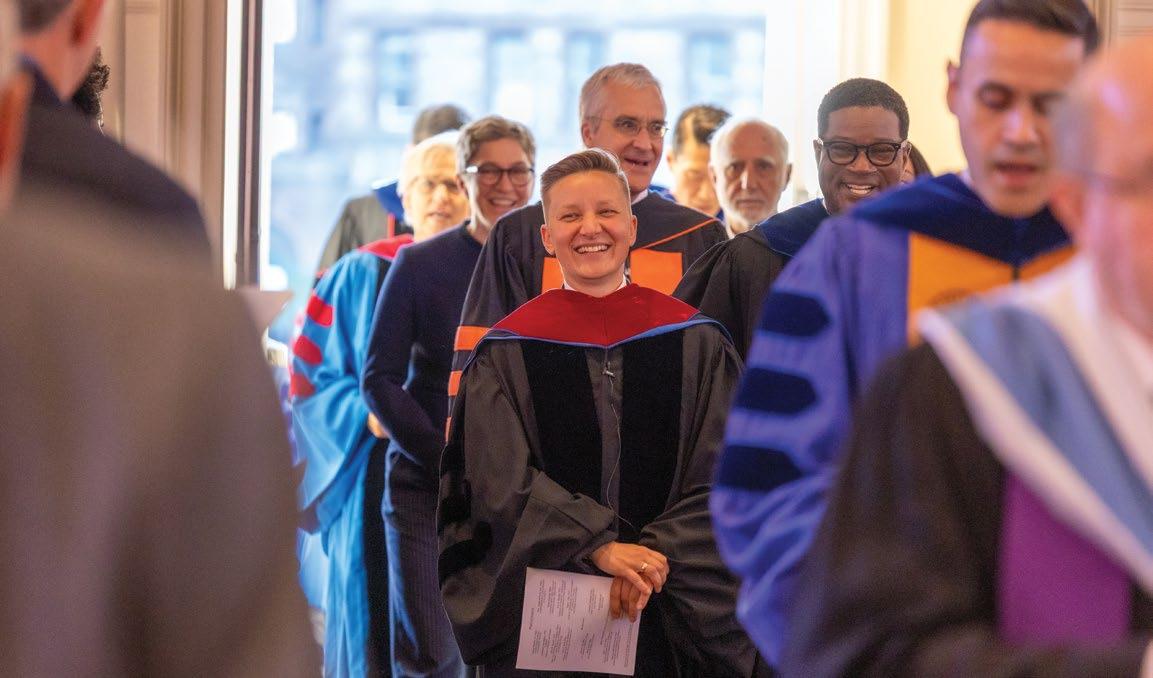
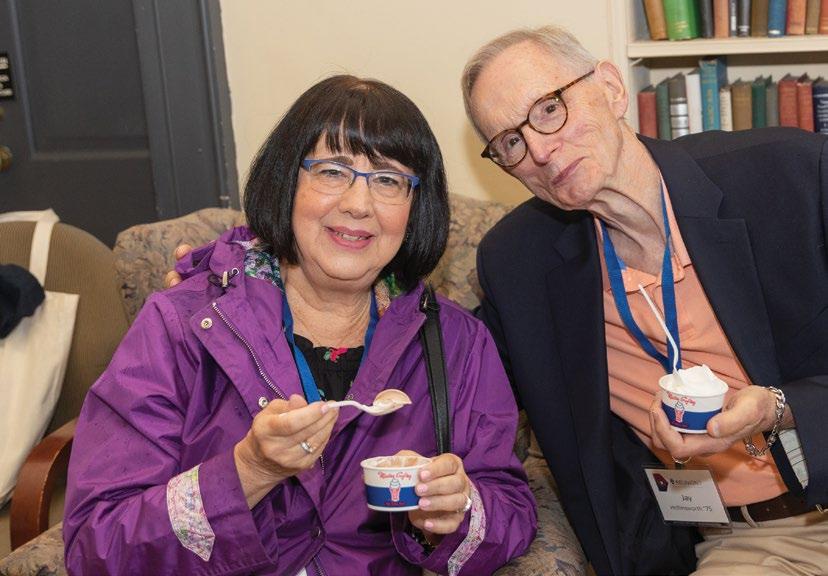
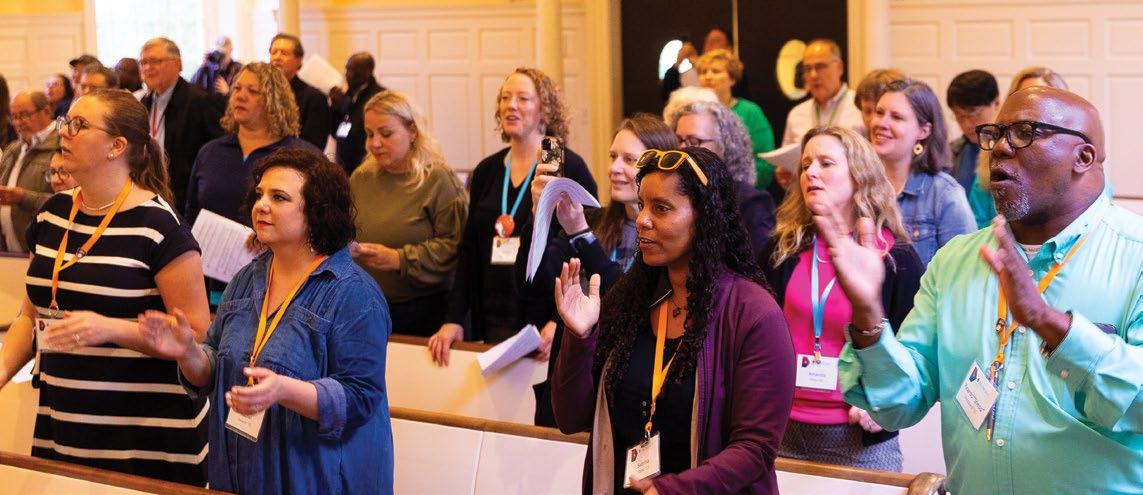
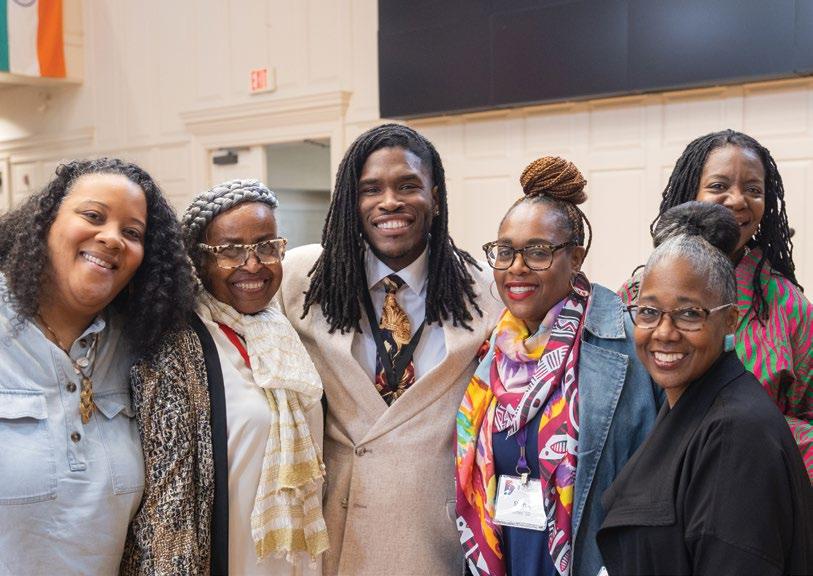
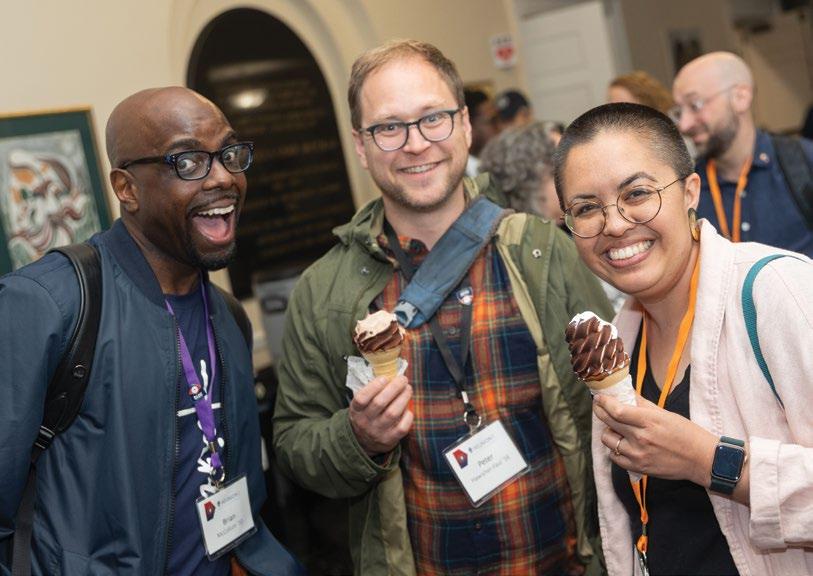
This academic year, Princeton Theological Seminary honored milestone anniversaries, welcomed renown scholars, celebrated our community, and much more.
as
of doing transpacific
in October after delivering their
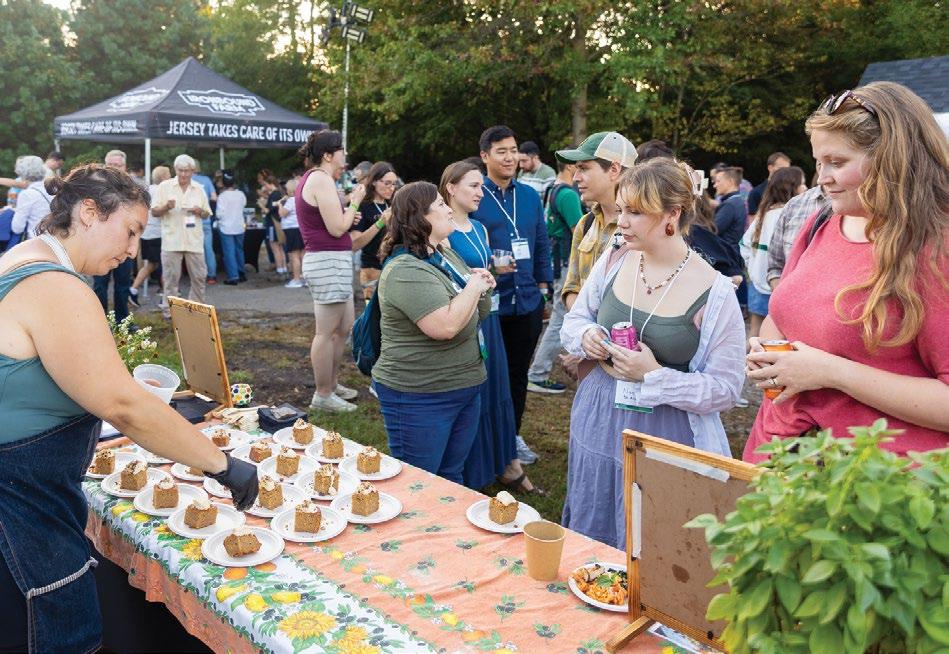
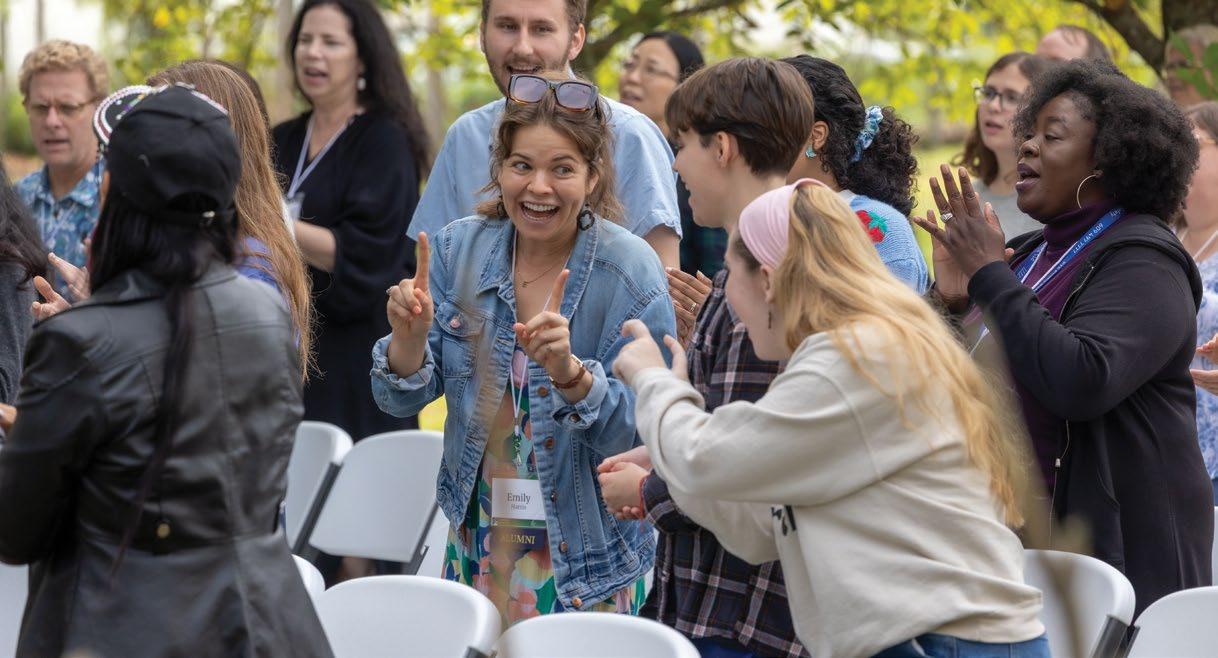
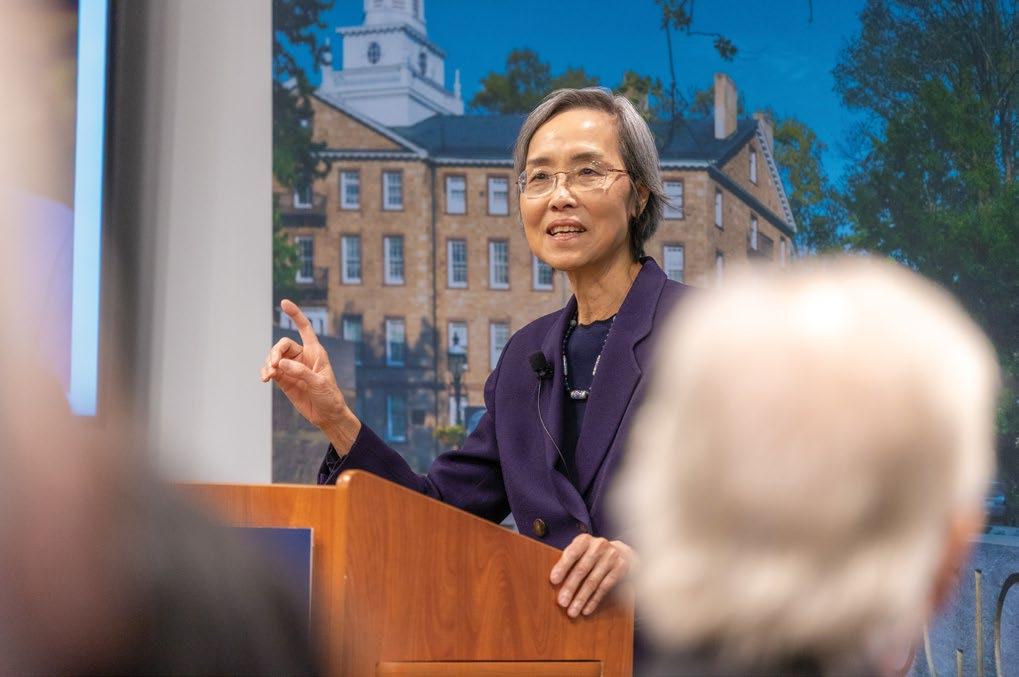
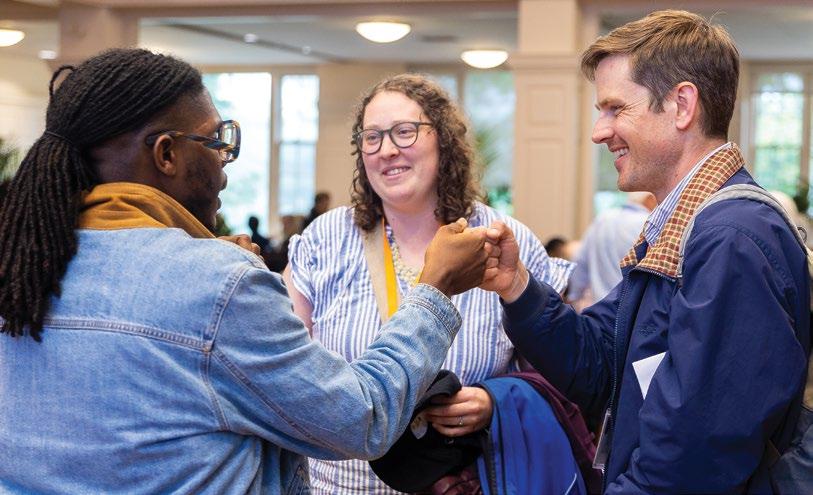
Top row, left to right: a joyous and contemplative four-day festival was held in September to mark the Farminary’s 10-year anniversary. Middle row: Dr. Kwok Puilan, a distinguished scholar at Episcopal Divinity School, examined the challenges
theology as the 2025 Sang Hyun Lee Lecturer; Dr. Hanna Reichel was inaugurated
the Charles Hodge Professor of Systematic Theology
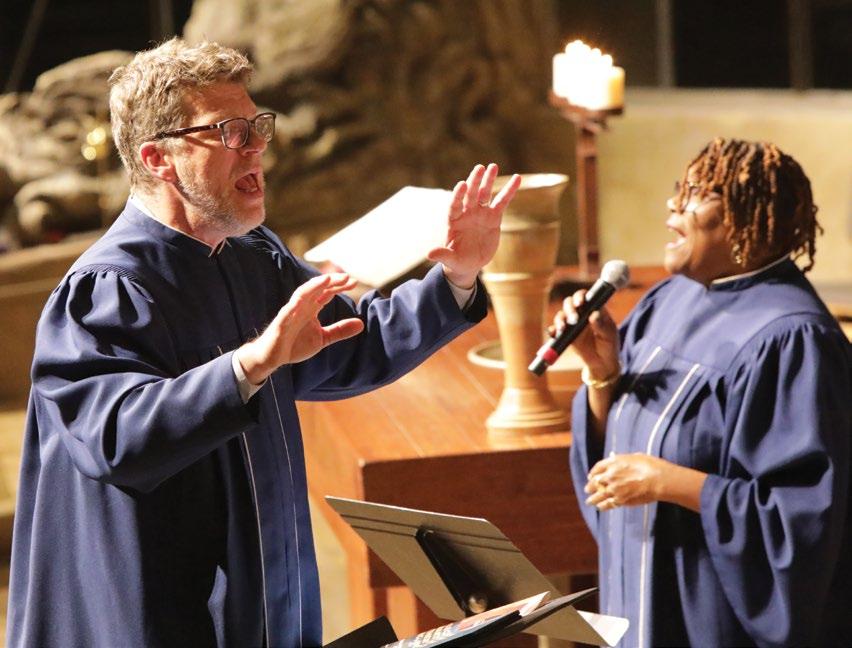
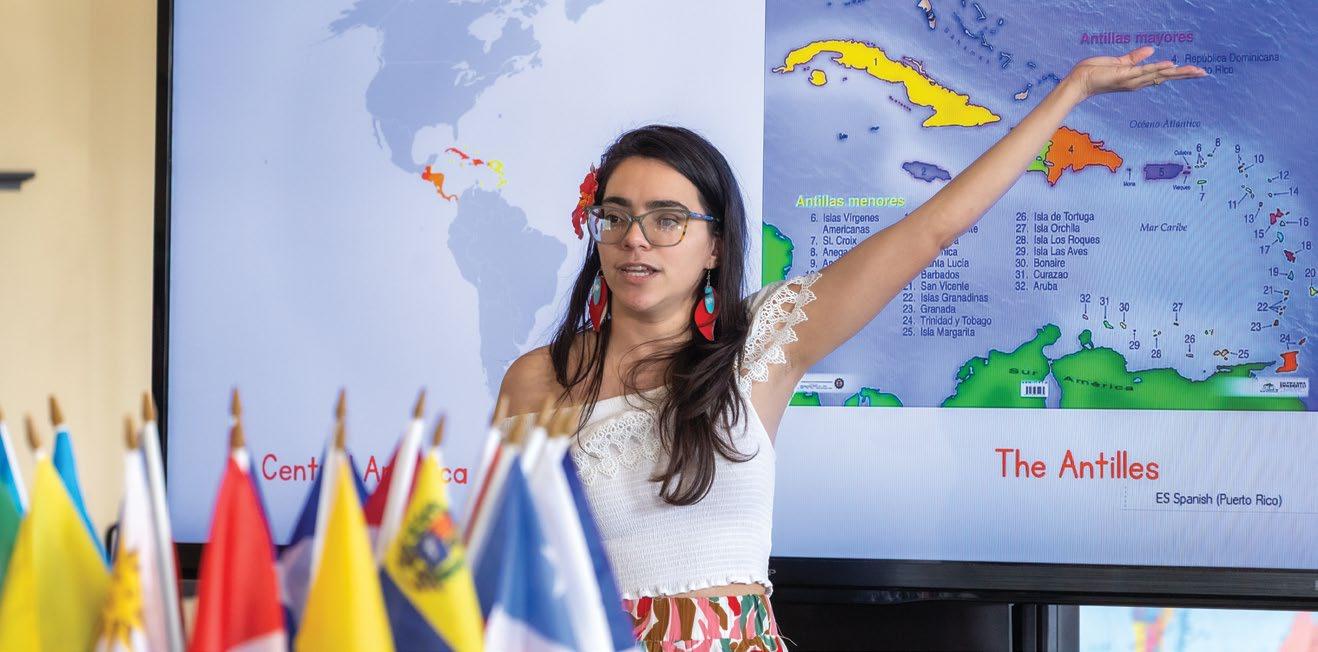
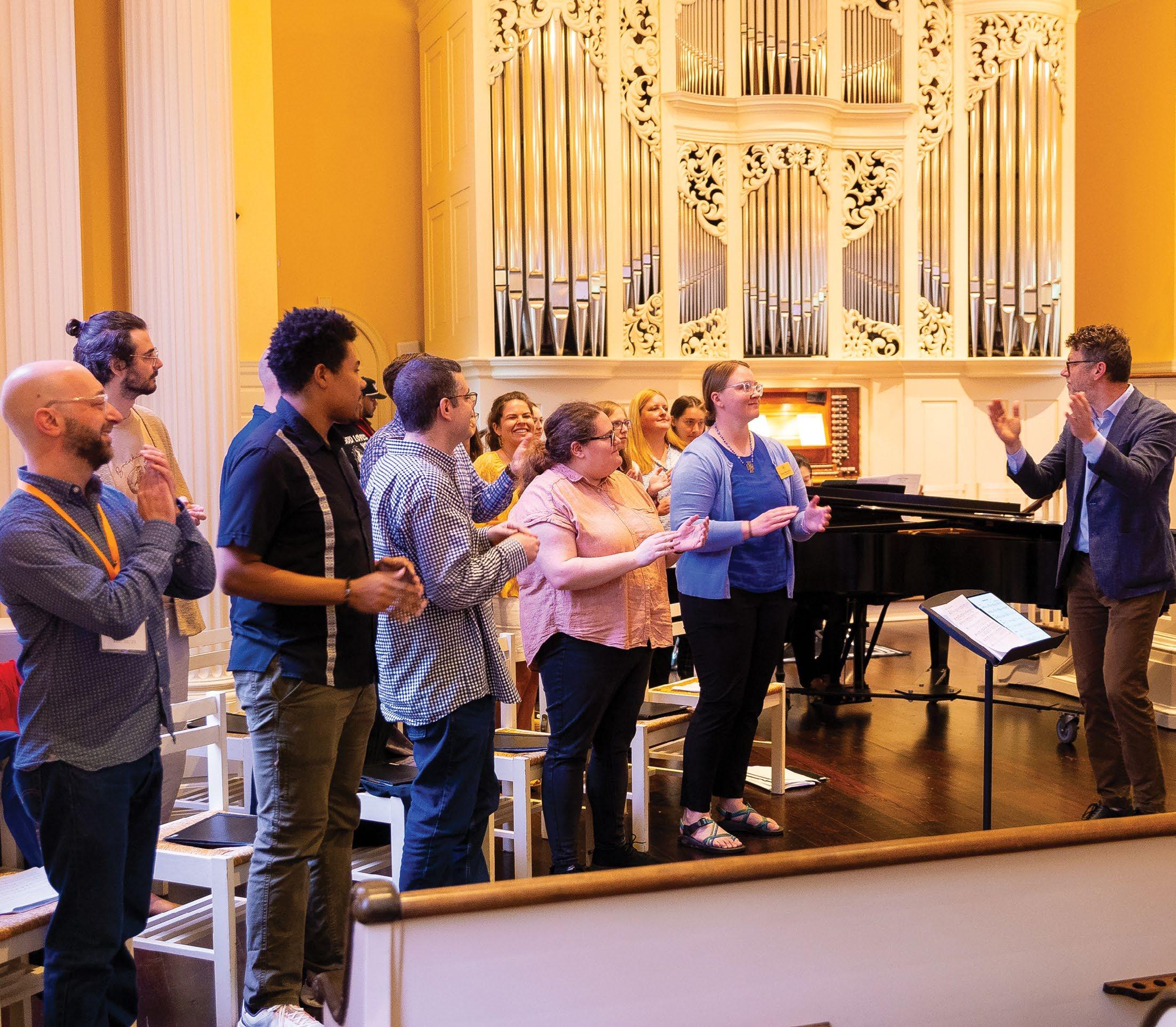
lecture “Reformed Callings.” Bottom row: under the direction of C.F. Seabrook Director of Music Dr. Martin Tel, alumni performed alongside the Seminary Touring Choir and the Pinnacle Presbyterian Church in Scottsdale, Arizona; and global flavors and cross-cultural connections defined International Education Week.
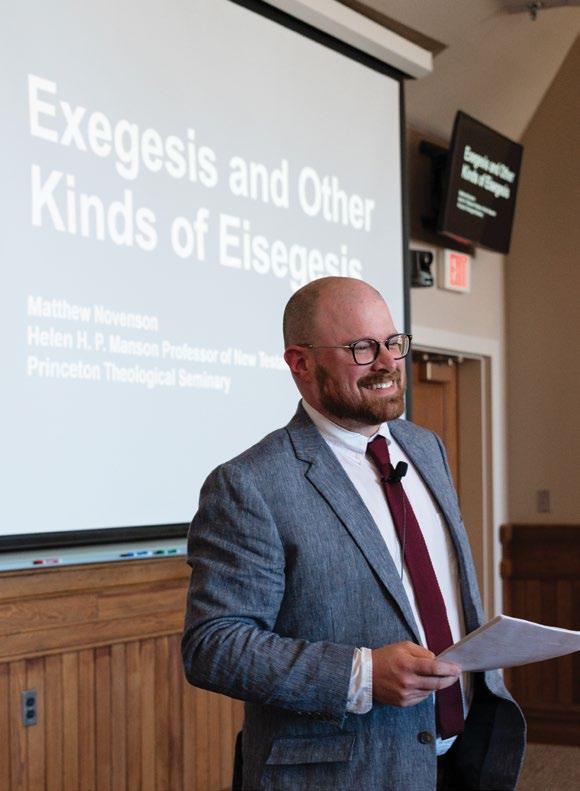
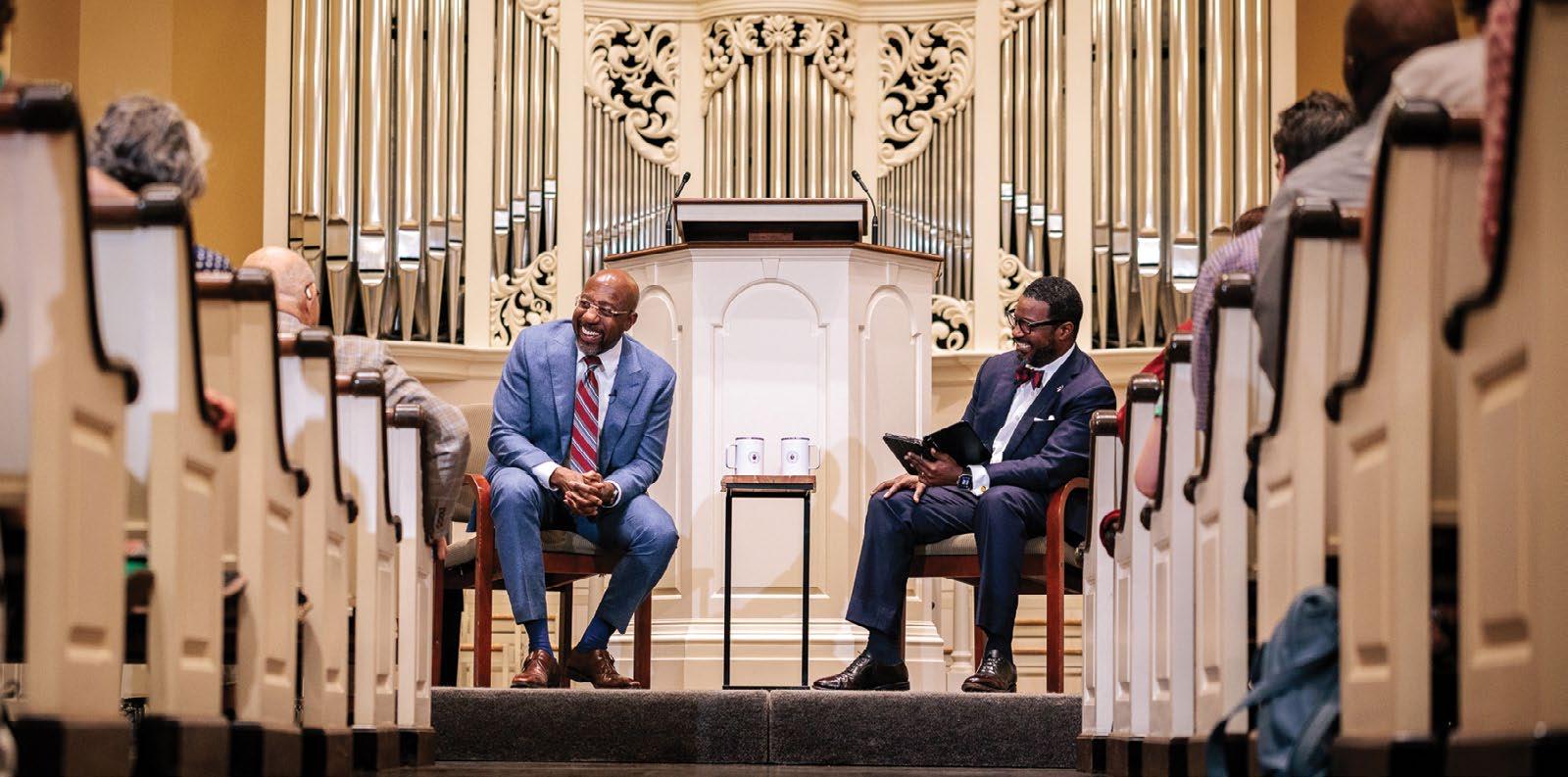
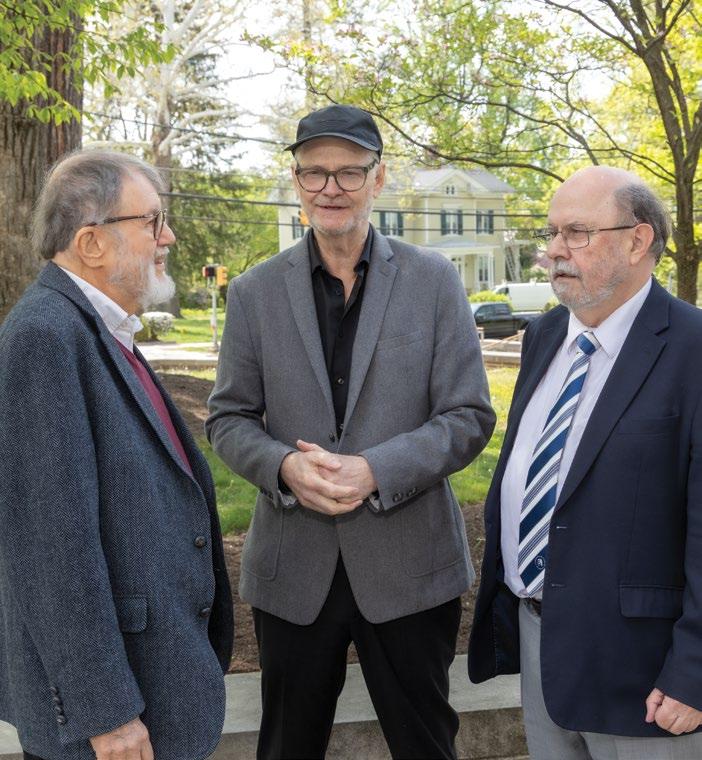
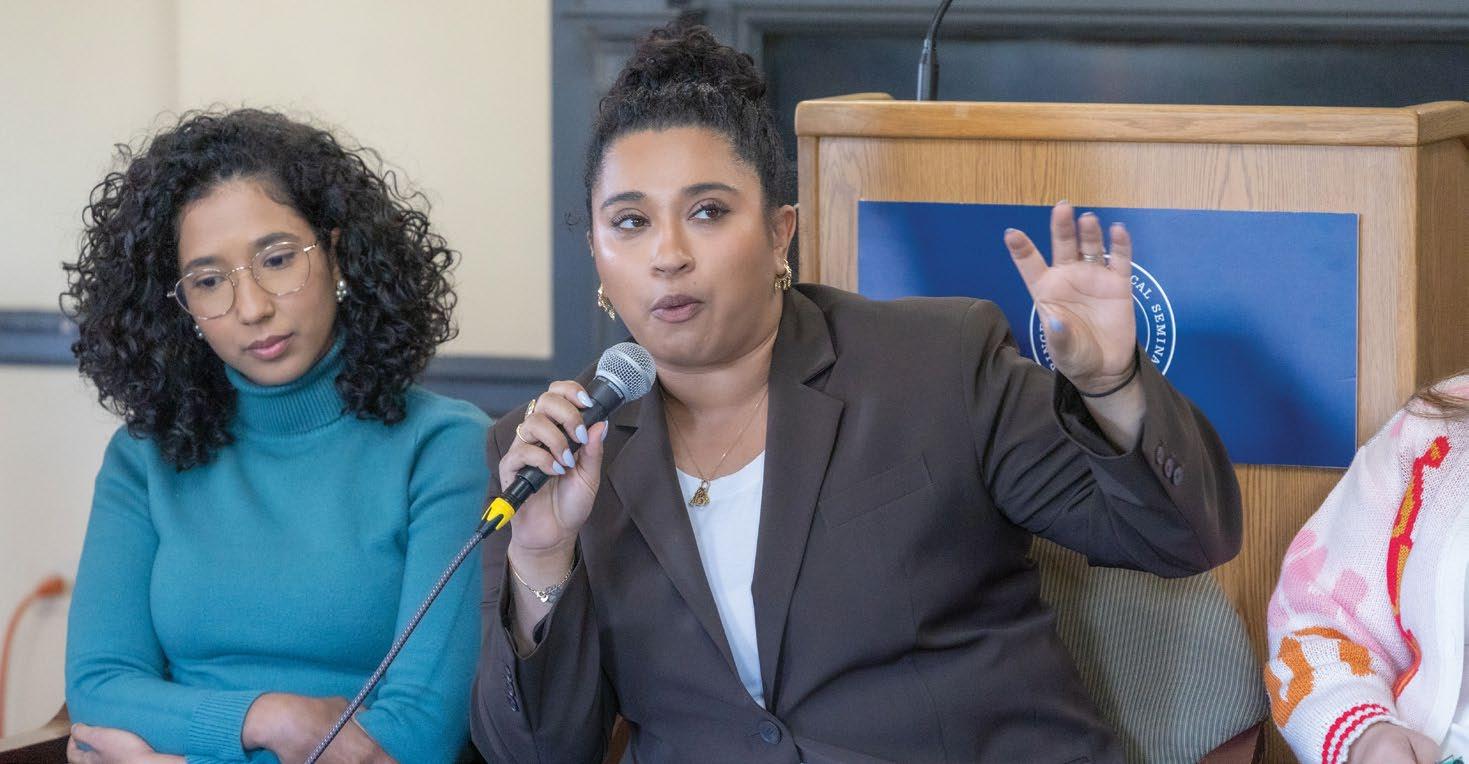
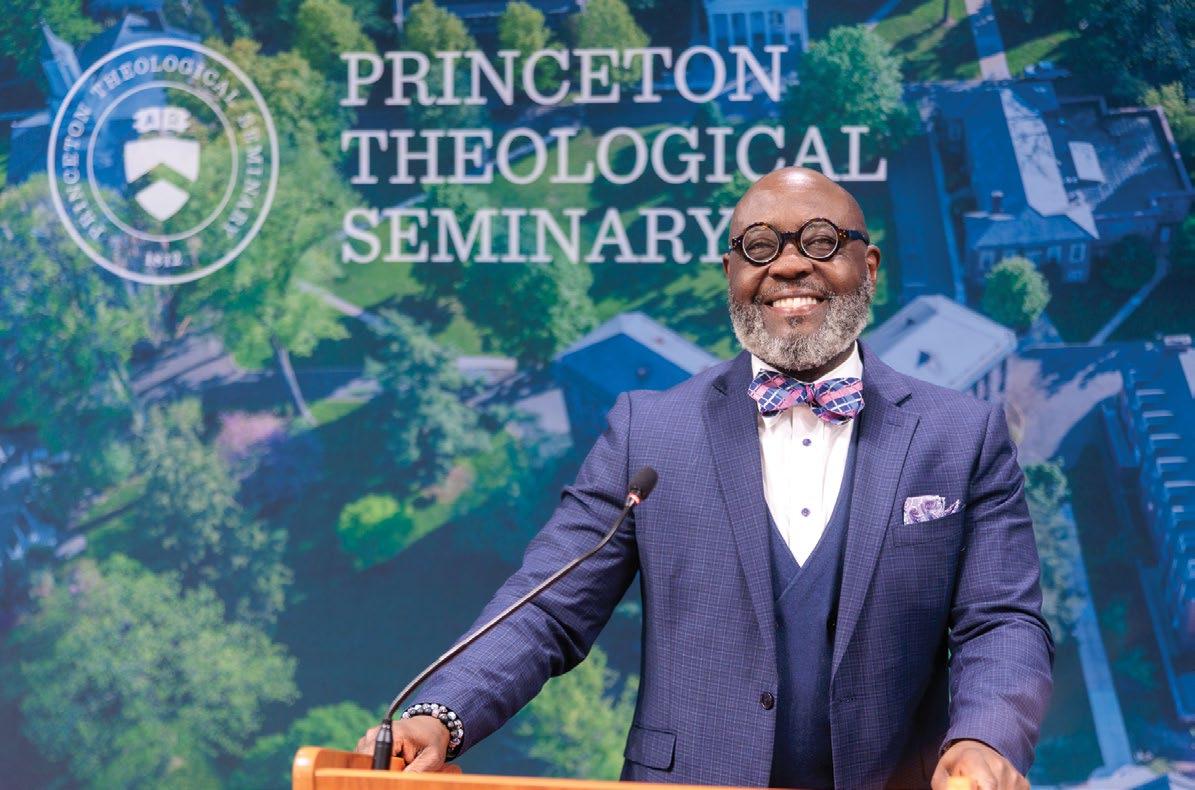
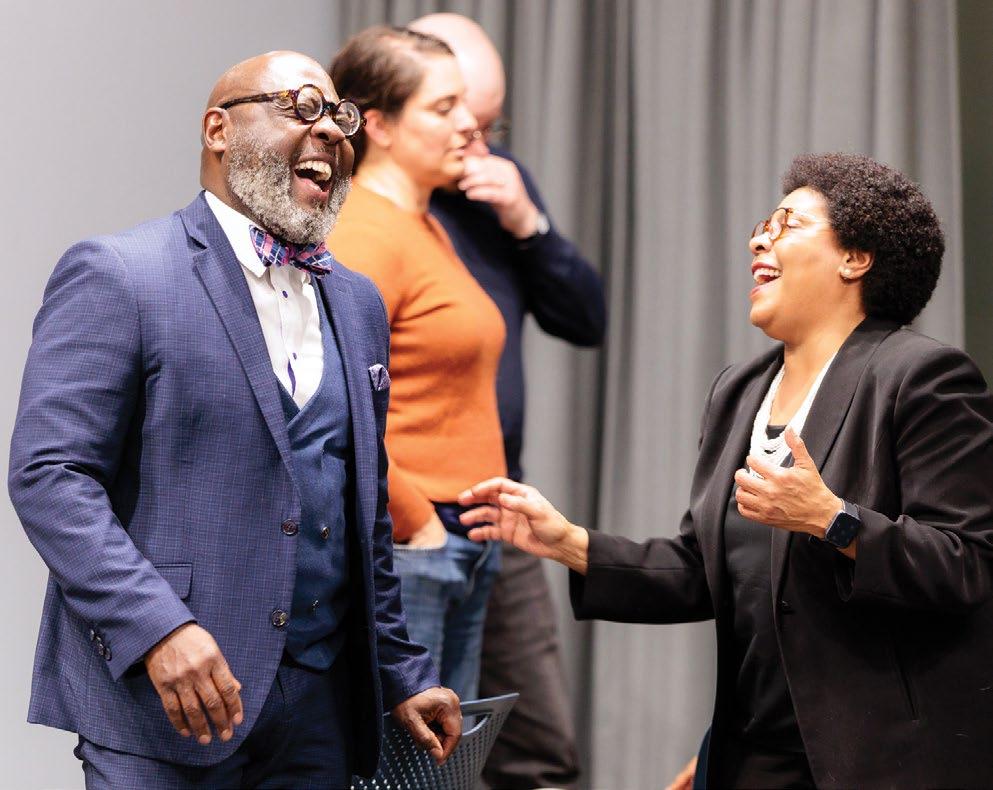
Top row, left to right: Dr. Matthew Novenson, the Helen H. P. Manson Professor of New Testament, delivered his inaugural lecture, “Exegesis and Other Kinds of Eisegesis;” and keynote speaker of the 2026 Martin Luther King, Jr. Lecture, The Honorable Rev. Dr. Raphael G. Warnock, called for a reimagining of “geopolitics that centers love and justice,” drawing from Isaiah 40 and his new book, “The Crooked Places Made Straight: Reflections on the Moral Meaning of America.” Middle row: the scholarship and legacy of three retiring Theology Department faculty members — Dr. Dirk Smit, Dr. George Hunsinger, and Dr. Mark Lewis Taylor — was celebrated through farewell lectures; and the annual Mujerista Symposium focused on “sentipensar,” (feel-thinking) and what it means to lead, care, and build relationships with the whole person in mind. Bottom row: the 2026 Annie Kinkead Warfield Lectures, hosted by Dr. Willie James Jennings, the Andrew W. Mellon Professor of Systematic Theology and Africana Studies at Yale Divinity School, offered a sustained theological exploration of creation, engaging questions of race theory, decolonial and environmental studies, and the theological imagination required to build communities of belonging.
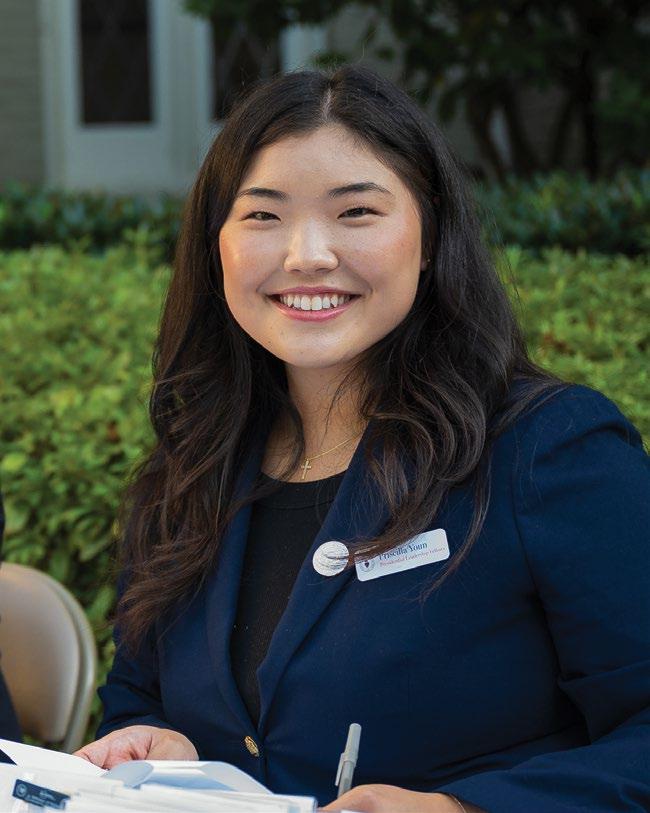
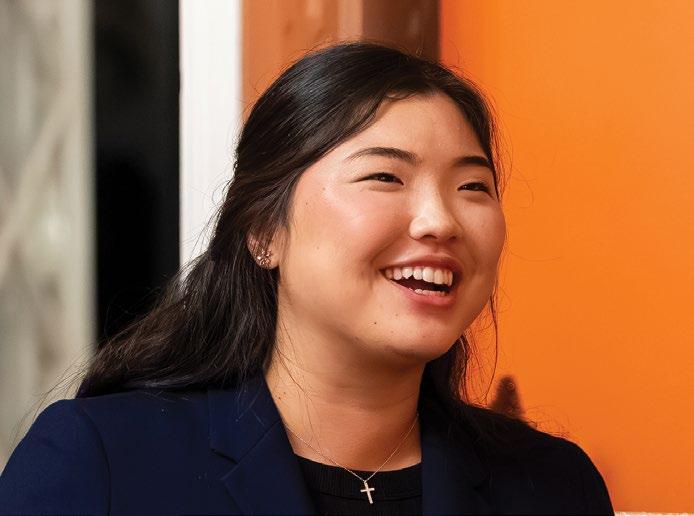
As a young girl, Priscilla Youn would carry her stuffed animals into her grandparents’ bedroom, line them up in a row, and teach class.
“I wasn’t teaching them math or science, I was teaching them Bible,” said Youn, MDiv student, “I would be like, ‘These are the reasons why Jesus loves you.’”
And yet, for a long time Youn wondered whether that childhood make-believe might be the closest she would ever come to ministry. She grew up attending a Korean American church where pastoral roles were typically reserved for men.
“There were no women pastors in my
life,” she said. “So,
from a very young age, though I had this heart for teaching, I knew it wasn’t for me in terms of a pastoral role.”
But over time, and after much prayer and support, those doubts have faded. Youn now sees ministry as her destiny.
“Long story short: the Lord is good,” she said. “He kept pursuing me and brought me to places where I could really unpack this call.”
Princeton Theological Seminary is one of those places.
Youn just wrapped up a successful and very full first year in which she served in the Presidential Leadership Fellows Program, sang in the chapel choir, and enjoyed Korean food and friends in the Korean Student Association.
She describes it as a time of spiritual and intellectual growth, with compelling courses that sparked lively conversations with her fellow seminarians. “The reason why I chose seminary was to be challenged in my thought and challenged in my theology,” she said.
As she welcomes change and challenge, Youn also remains committed to her community. She plans to become a youth minister serving Korean American students. On weekends,
she’s already working in that capacity at the First Korean Methodist Church of New York in Westchester County.
“My heart just naturally pulls toward Korean American students because we have this shared experience of confusion and challenge,” she said. “My dream is to reassure and reaffirm the students and myself that God made no mistake in allowing us to challenge and to live in this tension as Korean Americans.”
Youn grew up in a close-knit community in Dayton, Ohio, where the Korean language was spoken at home and weekend schedules revolved around the church. Friendships with other Korean American kids provided solace and support in a predominantly white community.
She went to Indiana Wesleyan University (IWU) for her undergraduate degree with a plan to study elementary education. But after learning that the school offered a major in youth and pastoral ministry, she secretly enrolled in that major and threw herself into campus ministry roles. The reaction back home was decidedly mixed. Some family members felt ministry wasn’t a lucrative career. Others saw it as a job solely for men.
“I was really battling between culture and call,” she said. “I just prayed a ton, asking the Lord, ‘God, if this is truly from you, please soften the hearts of the people closest to me.’”
The resistance she encountered was in no way unique to her family or community. Research conducted by the Innovative Space for Asian American Christianity found that women have fewer high-level leadership opportunities in Asian American churches than in other churches.
Although Youn’s denomination, the Korean Methodist Church, has been ordaining women since 1955, she said the number of women in leadership positions has grown slowly due to a lack of community affirmation.
As Youn struggled to find a path forward, she found support from an IWU professor and Princeton Seminary alumna, Miranda Cruz, MDiv ’08. Cruz shared books and
articles written by Korean and other Asian American women, connected her to progressive organizations, and urged her to apply to Princeton Seminary.
“She really helped me in my journey,” Youn said. “Her laying that foundation for me was very comforting.”
Eventually, resistance from family and friends began to ease, especially after they noticed how committed she was to her calling. Youn often spent entire summers away from home working in camp retreats.
And, in 2023, she received a surprising job offer. The former pastor of her hometown church, the Rev. In Gyu Song, offered her a position as a part-time youth minister at his current church in Tarrytown, New York.
“I can remember when he called me because I knew this was big,” she said. “But I was also so worried about his church’s response because the previous pastors were all men.”
Despite her initial uncertainly about being the first female pastoral leader, Youn says she has been connecting with the congregation’s youth and building trust among parents. A key factor in her success has been the support from Song.
“My pastor is one of my constant supporters in ministry and leadership,” she said. “He seeks and considers my
thoughts when making church decisions, and that has affected the church’s response to me. Even elders speak to me in honorifics sometimes, and that is huge!”
The experience also convinced her to attend seminary.
“I was humbled at how much I did not know about God and the Bible and how much I needed this theological education and enrichment, not for my sake, but for the kingdom’s sake,” she said.
At Princeton Seminary, Youn is getting an in-depth education through classes, research, and campus activities, while also learning from peers who embrace different faith traditions and hold divergent opinions on many theological and social issues.
“The conversations that we have demonstrate how there are so many theologies of God and so many different convictions of God,” she said. “At the end of the day, we’re all here because we love Jesus, and we can have these differences. That is going to translate into the way that I do ministry.”
2026 ANNUAL FUNDRAISING DINNER AND GOLF CHALLENGE
September 20 – 21, 2026
SEPTEMBER 20, 2026
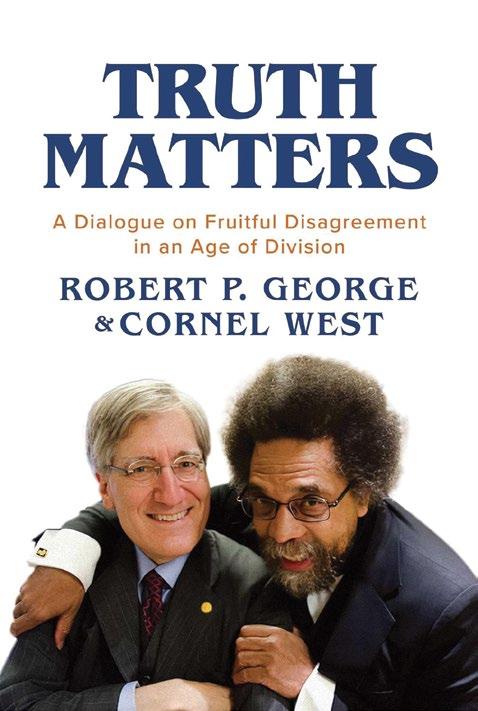
Join us for a fundraising dinner and conversation with Cornel West and Robert P. George.
Two of the nation’s leading public intellectuals and dear friends — one progressive, one conservative — come together for a compelling discussion about what is truth and why it matters.
SEPTEMBER 21, 2026
Annual Golf Challenge and Art Museum Tour for non-golfers
Built around the idea that hospitality is at the heart of ministry, the Presidential Leadership Fellows Program forms students who learn to lead by welcoming others, cultivating community, and creating space for meaningful encounters. Explore ways you can invest and support these students at this year’s Fundraising Dinner and Golf Challenge. For details visit:
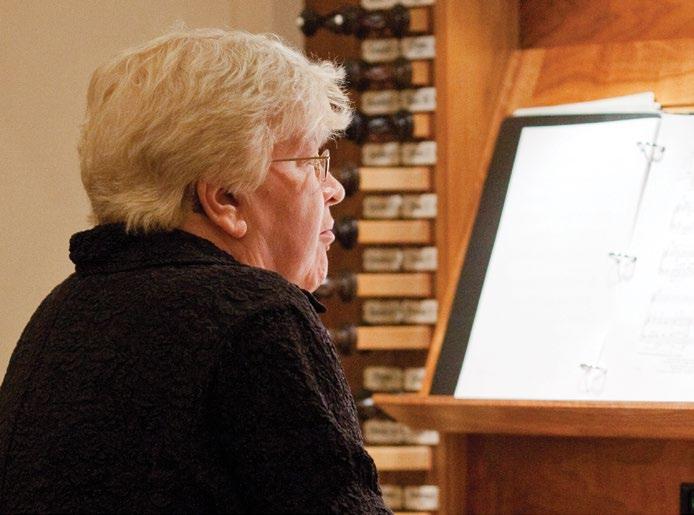
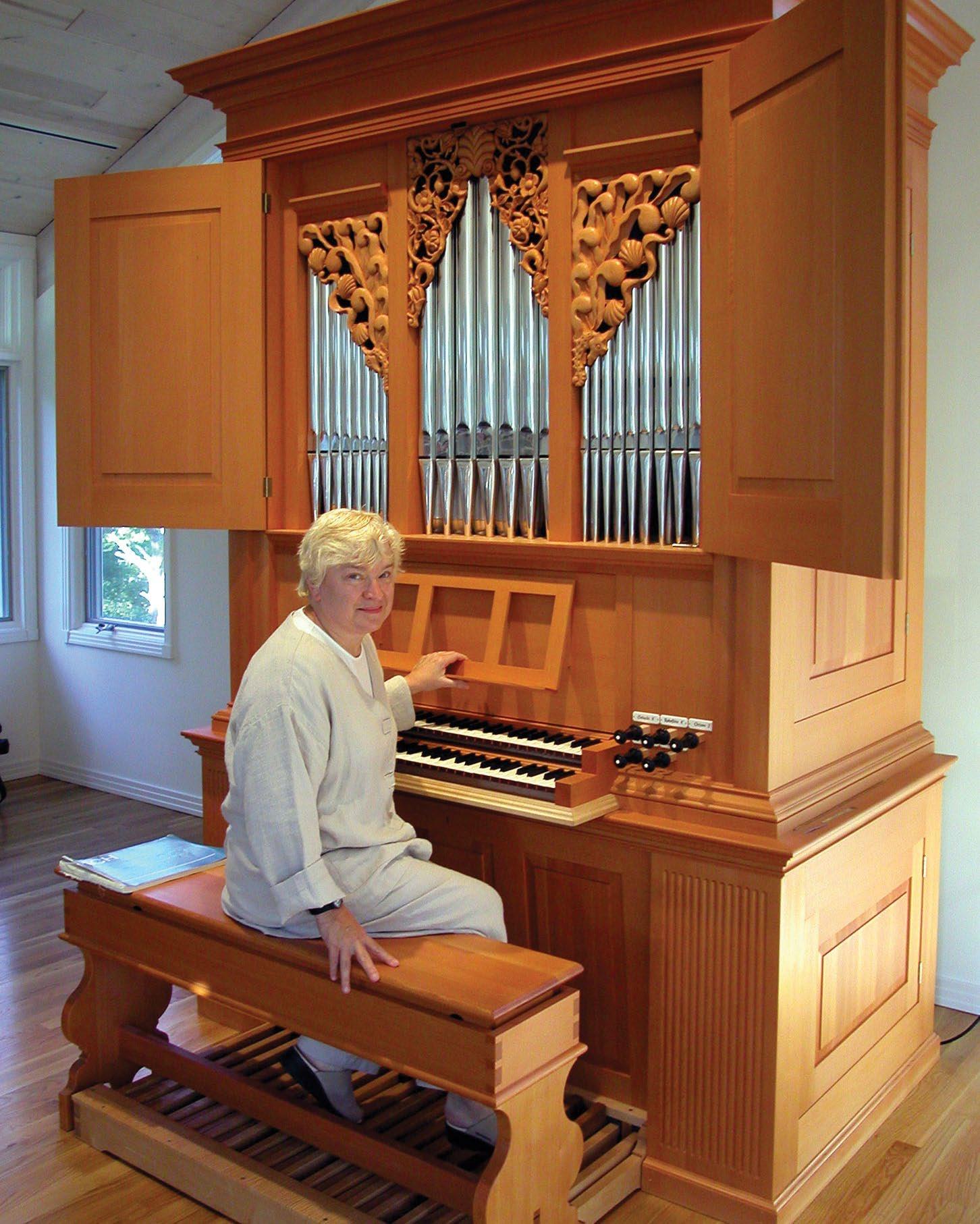
A Fritts Opus 21 pipe organ engraved with seahorses and seashells resides in the Gambrell Room in Scheide Hall, a gift from legendary organist Joan Lippincott and longtime friend of Princeton Theological Seminary. The instrument arrived on campus from Lippincott’s Cape Cod home in late 2019, just before two unexpected events changed daily worship services for the next year and a half.
At the start of 2020, a pipe burst and flooded the Seminary Chapel, displacing daily worship services to various locations across campus every day. Many Wednesday services took place in Scheide Hall and were accompanied by Lippincott’s pipe organ, bringing a familiar rhythm to daily worship, particularly for the Chapel Choir. Several weeks later, as the world began to shut down for the Covid-19 pandemic, the choir hastily recorded dozens of hymns with the organ.
“We used these recordings for the rest of the semester until we figured out how to worship together online,” said C.F. Seabrook Director of Music Dr. Martin Tel.
The Gambrell Room organ is one of the many ways Lippincott’s spirit of generosity and enduring impact on sacred music will continue to be felt at the Seminary. Upon her passing in May 2025, Lippincott made a planned gift to the Princeton Theological Seminary Chapel Music Program, supporting the musical ministry of current and future students.
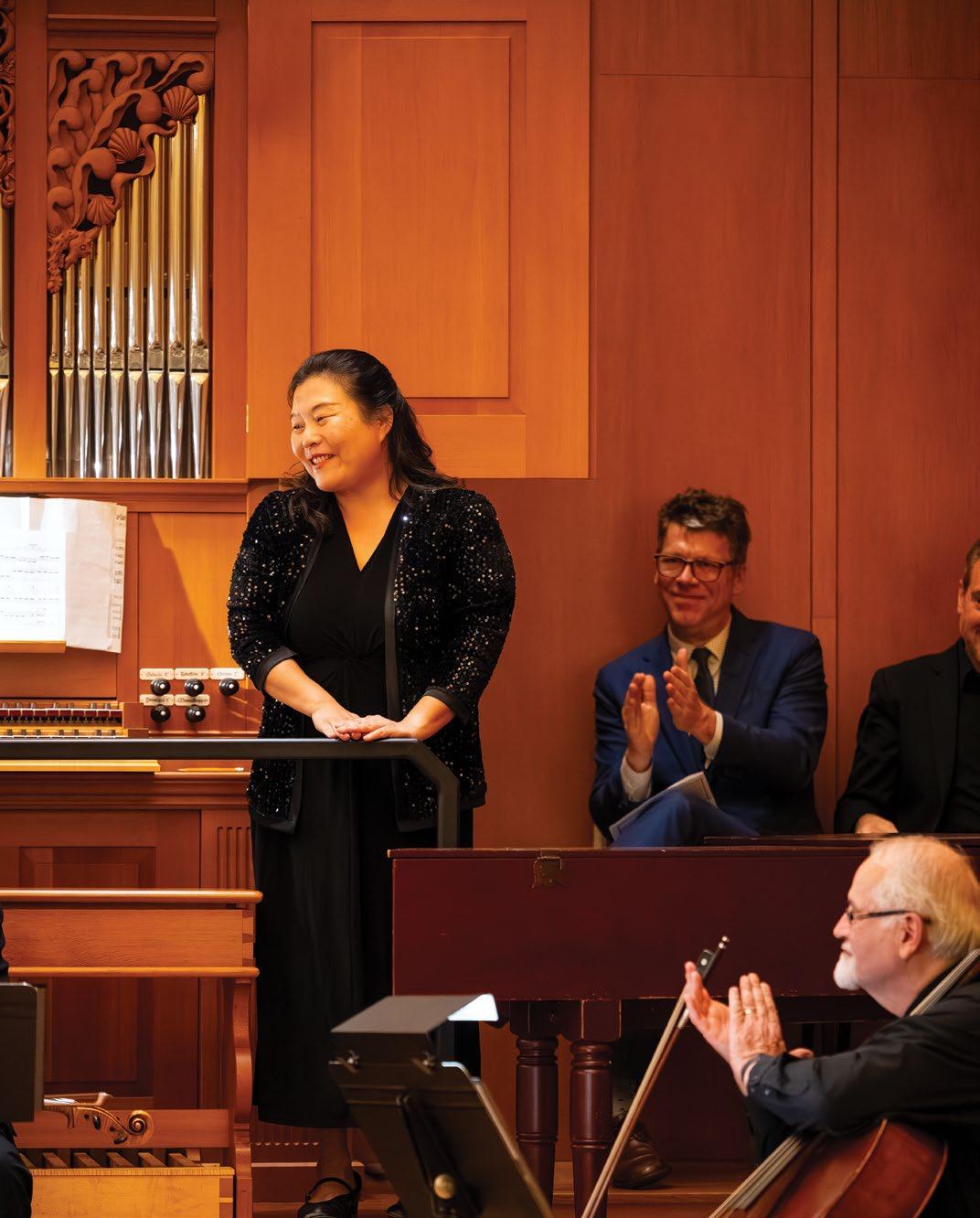
As one of America’s preeminent concert organists, Lippincott performed in more than 600 solo recitals throughout the United States and abroad and released over 20 recordings. As a teacher, she shaped generations of performers and church musicians — affectionately known as “Lippincott kids” — including the Seminary’s late music director David A. Weadon, who served from 1982-95. She was particularly known for her interpretation of the works of J.S. Bach. Fortuitously, the new home for her beloved Opus 21 organ Scheide Hall, was named after Princeton Seminary trustee and benefactor William H. Scheide and his wife, Gertrude. Scheide was a worldrenowned Bach scholar and owned one of the world’s largest collections of Bach manuscripts.
Lippincott’s connection to the Seminary dates back to the 1960s when she would play the Chapel organ for worship services. Unconventionally, the pipes of the organ at the time were located in the basement of the Seminary Chapel. Lippincott once remarked to Tel that after the congregation began to sing, she “could have turned the organ off and walked away and nobody would have noticed” because the sound was so muffled.
Tel was first introduced to Lippincott when he became the Seminary’s music director in 1996; she was working as the principal organist for neighboring Princeton University. When Tel joined the staff, the Seminary was in the midst of planning a renovation of the Chapel, which included the installation of a new organ, and the construction of Scheide Hall. As plans moved forward for Paul Fritts and Co. Organ Builders of Tacoma, Washington, to create what would become the Joe R. Engle Organ, doubts from some who preferred traditional East Coast organ builders emerged. Tel knew exactly who could dispel their worries.
“Joan was the most respected organ teacher and performer in the Northeast,” said Tel. “She told me to have any skeptics call her. Several did, and she convinced them that the organ project would be a lasting legacy for the Seminary and for the entire town. She proved herself to be right. She did, I believe, save the project.”
Lippincott recognized the new organ’s personal, communal, and historic significance. “It will be a leader in worship that moves people. My life has been about music and worship, and I’ve been waiting for such a moment as this when such a great instrument would arrive in Princeton,” she said in a 2001 edition of inSpire magazine.
After the renovation project was completed, Lippincott played the inaugural recital on the Joe R. Engle Organ,
on page
Opposite: photo by Paul Fritts; Above: Fritts Opus 21 pipe organ in Scheide Hall with Mina Choi, MDiv ‘16, and Dr. Martin Tel continued
17
the Eve of America’s 250th
Over the course of the week participants will also have a chance to tour landmark sites in historic Princeton, as well as to hear from other leading experts on the nation’s
June 14–18
founding and contemporary challenges, including the likes of Dr. Annette Gordon Reed (Harvard University) and Jonathan Rauch (Brookings).
We hope you’ll join us for these important and timely conversations on the eve of America’s 250th.
Speakers:
Annette Gordon-Reed Harvard University
Cherie Harder The Trinity Forum R. Marie Griffith Washington University Jonathan Rauch Brookings Institution
an Opus 20 pipe organ and sibling instrument to her Gambrell Room organ.
Lippincott remained connected to Princeton Seminary after retiring in 2000, attending performances and services, visiting campus during maintenance appointments with organ builder Paul Fritts, and recording four albums on the Joe R. Engle Organ. One of her recordings was even used as the hold music on Seminary phones for many years.
Today, Tel conducts choir practices alongside her gift of the Gambrell Room organ, while students use the instrument to practice before weekday services. Coordinator of Worship and Music Mina Choi, MDiv ’16, even played the organ during a memorial concert at the Seminary hosted by the American Guild of Organists (Central New Jersey Chapter) in Lippincott’s honor last fall.
Lippincott’s presence has been interwoven with the musical history of Princeton Seminary in ways both big and small. Thanks to her tireless work during her life and
the generosity of her gift to the Seminary, generations of students and members of the Seminary community can play the instruments she once did and discern their own musical calling, embracing the gift of song and its influence on people and prayer.
Dr. Martin Tel conducts the alumni pickup choir at Reunion 2025
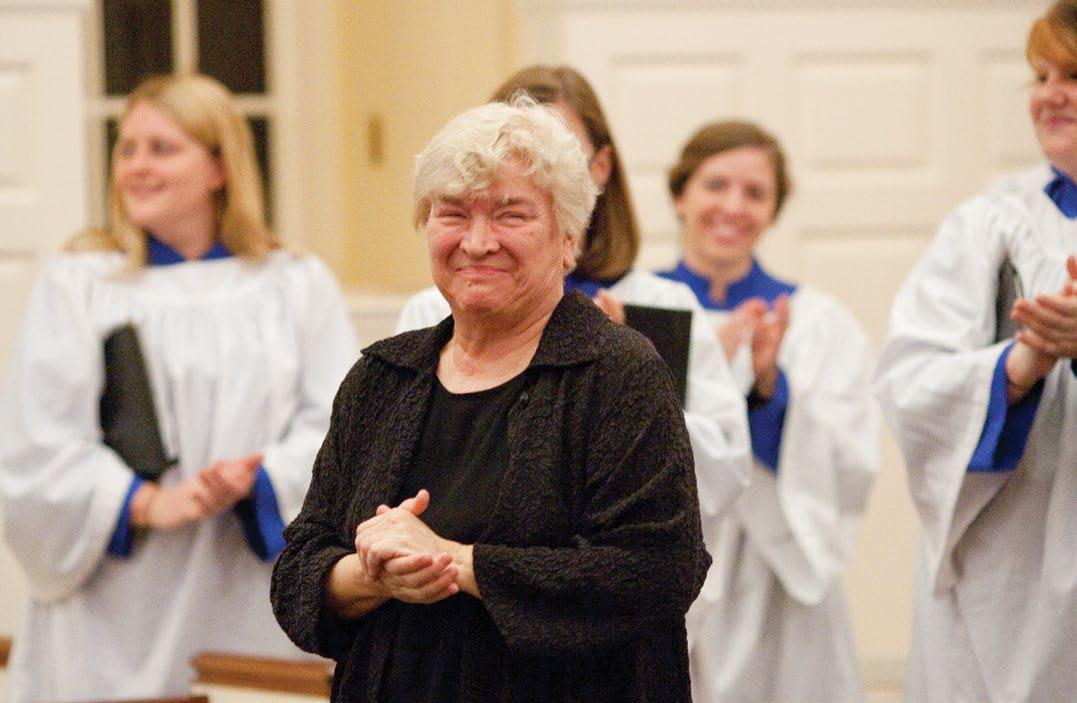
Joan Lippincott attending the Joe R. Engle Organ Concert
Joan Lippincott, continued from page 11
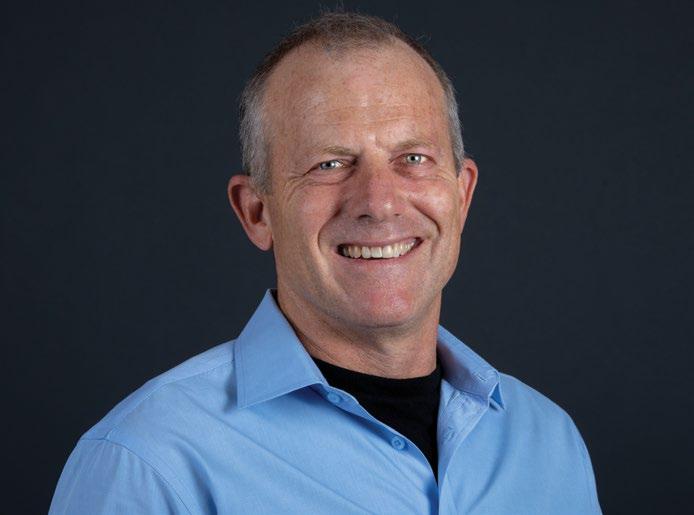
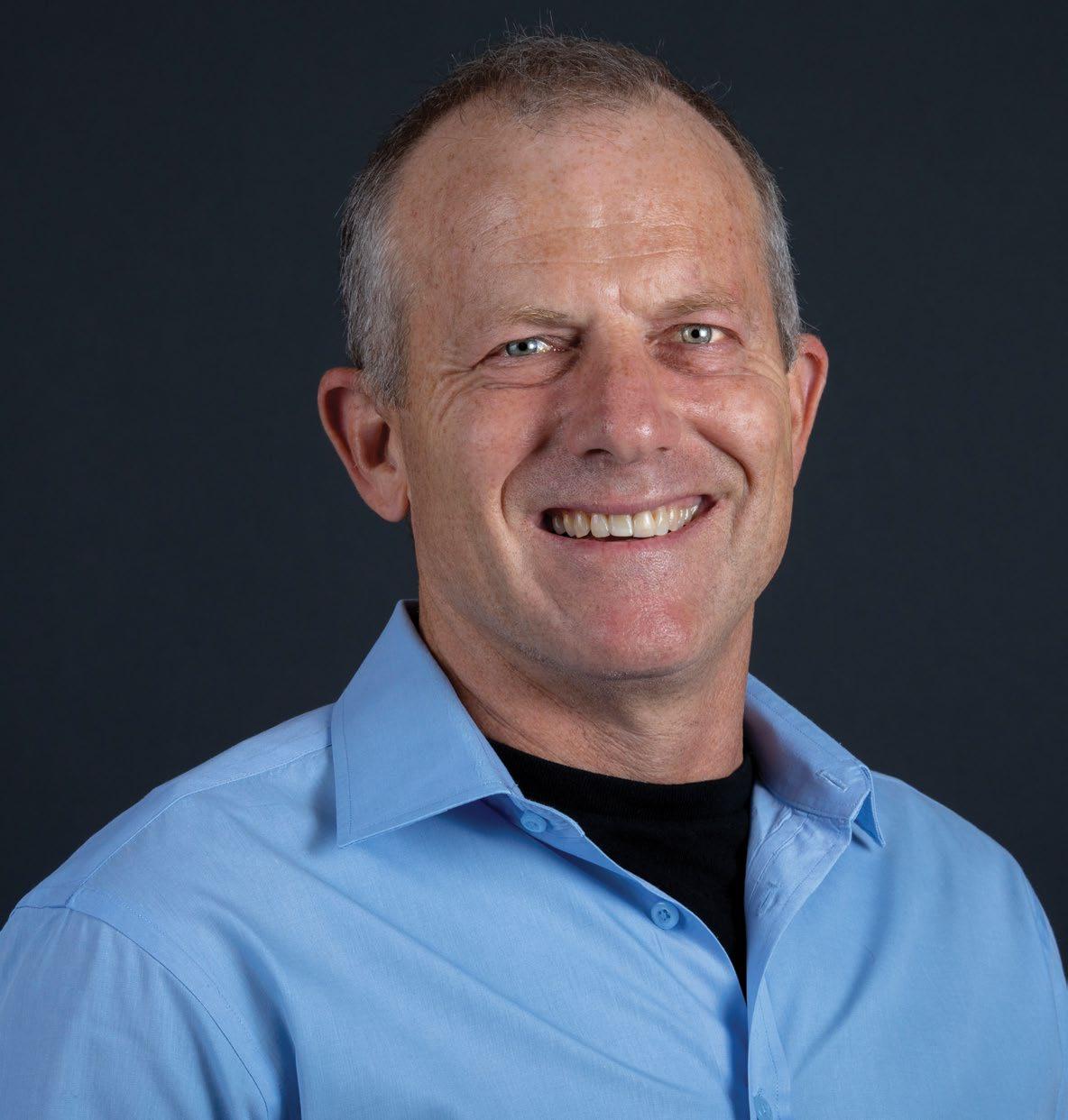
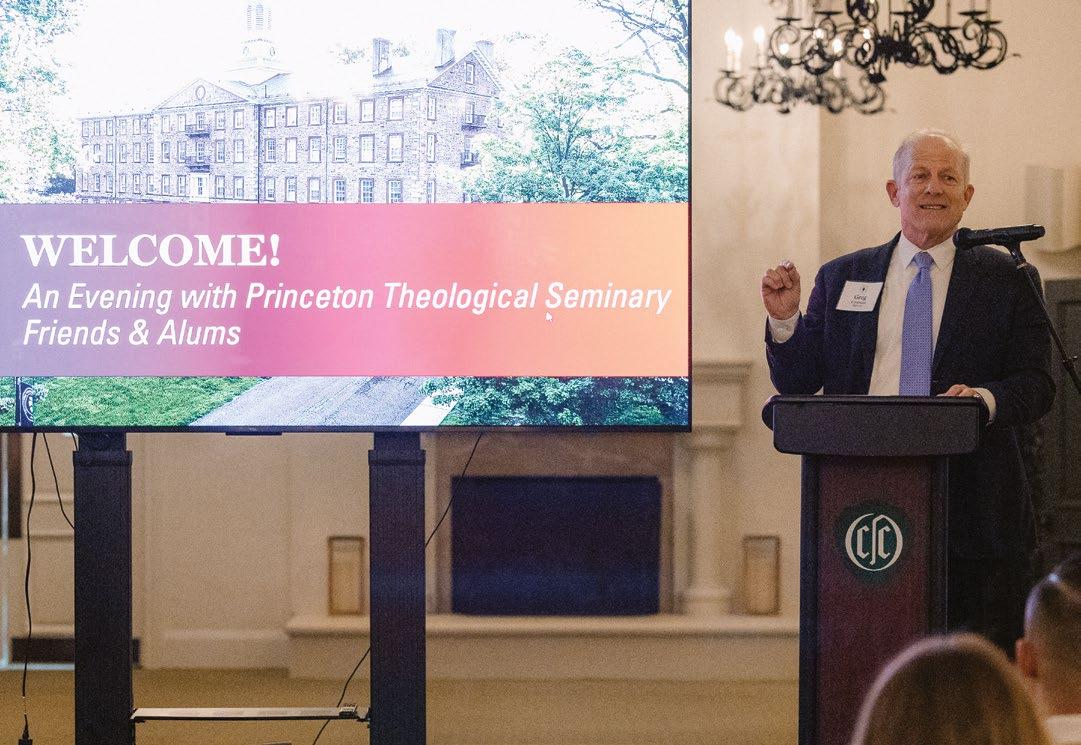
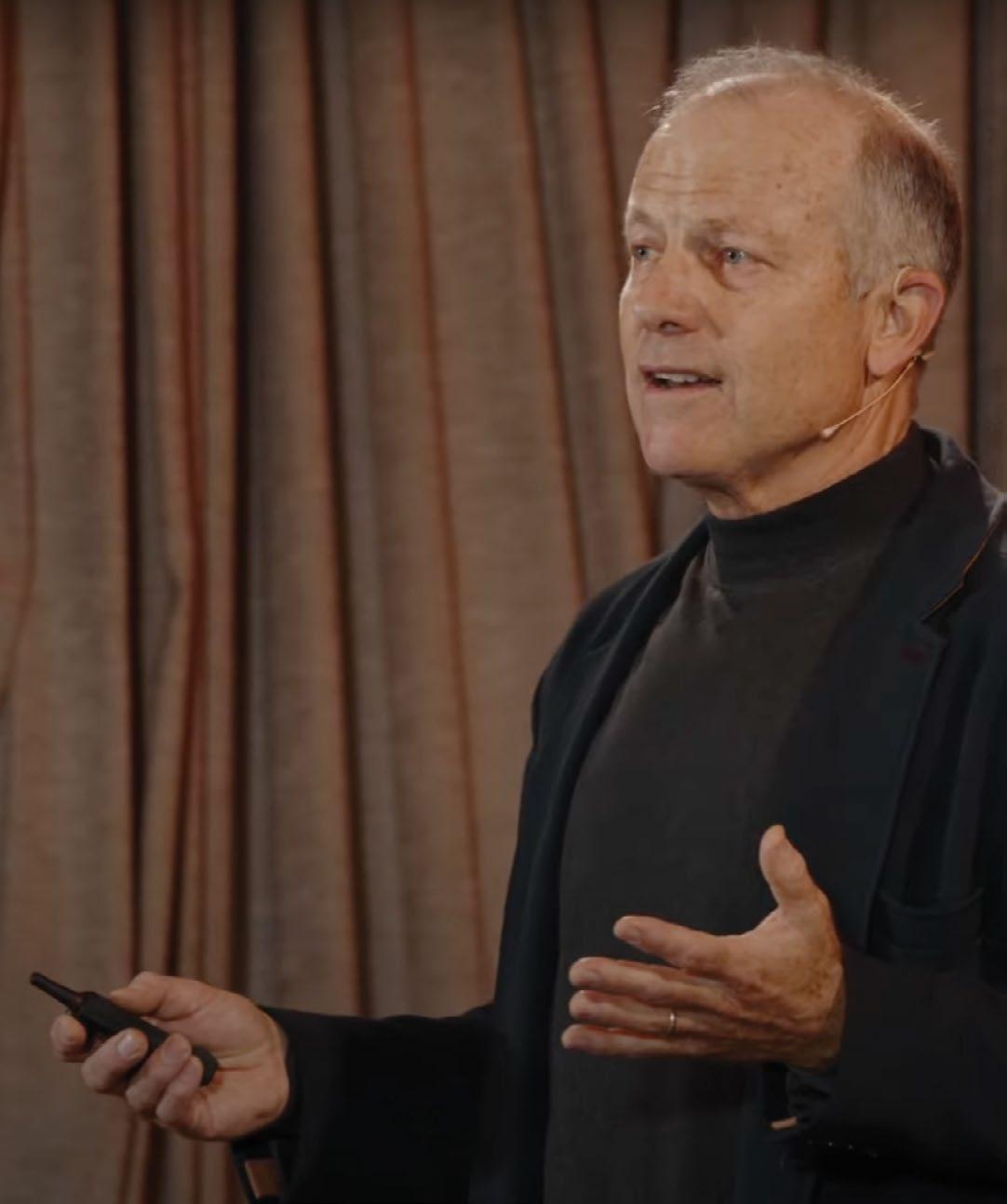
In the world of artificial intelligence (AI), Greg Cootsona, MDiv ’91, is not only a force for good, but he’s also a force for God.
He has been a leading voice in the national conversation about the intersection between faith and science, from co-founding a nonprofit that strives to use science as a resource for spiritual growth, to leading multimillion-dollar, grant-funded projects exploring the integration of science and Christianity.
Recently, Cootsona was appointed executive director of AI and Faith, an organization that hopes to use the fundamental values of the world’s major religions to shape emerging debates about the ethical development of AI-related technologies.
In the secular space, alarm bells have been ringing, particularly in the last year, about the emergence of AI and all its attendant risks — most notably job loss, societal anxiety, and the potential emergence of a super intelligence that might supplant humans. Once the province of science fiction, AI is here and its growth is exponential. However, Cootsona remains grounded in hope.
“AI is not just a technical issue. It’s a human one,” Cootsona said. “If faith can help shape it toward compassion and wisdom, that’s work worth doing.”
ELEMENTAL EXPERIENCES
Cootsona grew up in the Bay Area, near what would eventually become Silicon Valley, in a loving, yet nonreligious family. As an engineer, his father’s innate scientific intrigue inspired Cootsona’s own appreciation of the natural, physical world.
“I learned from him early on a joy of understanding how the world works,” he said. “I think of that as such a great part of science. Every person I’ve ever met who’s
become a scientist has had some experience with the natural world. So, when I became a Christian, science was really interesting for me.”
Cootsona’s journey to Christianity began in college at the University of California, Berkeley, “which kind of sounds like a punchline,” he joked.
He became involved in the First Presbyterian Church of Berkeley, a vibrant congregation that marked his introduction to Presbyterianism. It would also lead him,
eventually, to Princeton Theological Seminary. “Our senior pastor, Earl Palmer, MDiv ’56, was on the Board of Trustees at Princeton Seminary, and he just loved the place. I was thinking of getting my master’s of divinity degree and he talked it up to me.”
Unsure if his future in ministry lay as a pastor or in academia, Cootsona appreciated “the combination of the intellectual rigor and the pastoral preparation” Princeton Seminary provided, as well as its emphasis on encouraging the distinctiveness within each of its students.
“I really loved my time at Princeton. I think of the three different degrees I’ve done, and the part that I loved most about Princeton in comparison was it being residential. You were engaging with other students — what they were thinking, what they were working with, as well as their own drive to learn and serve the church. That was powerful to me.”
At the Seminary, Cootsona did three years of field education, which, not having grown up in the church, was essential to his development. “I had been a Christian about seven and a half years by then but felt like I was behind my peers who had been there since the cradle. Being able to gain experience working in the church was important.”
SCIENCE AND FAITH ‘COLLIDE’
Cootsona pursued his doctorate with a focus on theology and science at the Graduate Theological Union in Berkeley, California, and worked part-time in a few Presbyterian churches.
His first pastoral call came at Fifth Avenue Presbyterian Church in New York City, where the culture “engaged in things like science and other kinds of human thought and life outside of theology. It was the life outside of the church where I got this sense these two can’t go together. Because I was trying to make my faith reasonable and robust, I had to begin to address those challenges. That put me on a path of trying to see what science really does in relationship to faith.”
In 2019, Cootsona co-founded the nonprofit Science for the Church, which aims to strengthen the church through its engagement with science. Throughout his career, he’s led similar projects, including Science and Theology for Emerging Adult Ministries, Science for Students and Emerging Young Adults, and Scientists in Congregations. He also teaches in religion, humanities, philosophy, and sociology at California State University, Chico, and is a well-respected author and speaker on the topics.
Cootsona says one of the key reasons 18- to 30-year-olds were leaving the church was because of their engagement with science and their impression was that the Christian faith was “anti-science.” But one of his grant-funded projects found an encouraging connection, “85 percent of the people responded by saying that when they studied science, they grew in their faith. It wasn’t just that they grew in understanding science, they grew in understanding their faith.”
Surrounded by rationality and secularism in his youth, Cootsona finds it easy to engage with those who are dubious about faith and religion. “Some of the most thoughtful interactions I’ve had have been with people who say, ‘You’re a thoughtful person who is [also] a Christian. Tell me about that.’”
He added, “I don’t have those issues as deeply embedded in me. I wasn’t this super devout person who saw their deep devotion to their faith presenting roadblocks to modern science. With those people, I always emphasized our common faith in Jesus Christ. That is still the most important value I have. What helps people in that conversation engage is when they see that I am not a person who’s giving up the faith to engage with science.”
THE NEW FRONTIER
The chance to join forces with AI and Faith was a “Kairos moment” for Cootsona — a pivotal, God-given opportunity to influence the way AI is developed in the US. “I want to see if there’s a way we could be helpful in bringing the ethics of religions and theological ethics to the development of AI.”
Cootsona has a number of goals for this multi-faith organization, including the promotion of responsible AI use, human dignity, and equitable data representation, and to develop curriculum resources for churches to utilize in their congregations.
“We want to protect privacy, and care for our youth when using AI. We want to ensure that there’s ethical outworking of AI that doesn’t de-privilege the voices of underrepresented groups,”
he said. continued on page 23
This fall, Princeton Theological Seminary introduced the Next Generation Faith and Health Initiative, a new institutional effort to explore and strengthen the role of faith in promoting holistic well-being, particularly among young adults.
Led by the Office of the President and the Office of Continuing Education, the two-year pilot program seeks to expand the body of scholarship in this area through thought-provoking public conversations with preeminent experts across a variety of disciplines and faculty research about the intersection of faith formation, young people, and flourishing.
“As Christians within a leading theological institution, I believe this to be an opportunity for Princeton Seminary to claim an explicit role in shaping the faith and health of our society,” said President Jonathan Lee Walton, PhD. “I believe the Next Generation Faith and Health Initiative is an opportunity to make explicit what has long been implicit in our tradition — faith is not incidental to flourishing, but essential.”
For Annah Kuriakose, MTS ’24, MD, who serves as project coordinator for this initiative, the goal of the work is clear, “How does Princeton Theological Seminary help shape a generation of young people who are equipped to be well in the world — for themselves, but also for their families, their communities, and their wider contexts?”
Kuriakose, whose background includes earning her medical degree and teaching in impoverished and underserved areas, contends that the work is critical because “the development and formation of young people really impacts health outcomes. The ways that we think about our bodies and our behaviors and how we interact with our environments — including spiritual resources and social resources — really matter for health outcomes.”
While religion and medicine have been studied for thousands of years, a more nuanced understanding of faith’s role in flourishing — an optimal state of being across all aspects of someone’s life — is emerging in research.
“Religion is one piece of faith and medicine is one piece of health,” said Kuriakose. “[The Next Generation Faith and Health Initiative] intends to provoke a broader Christian understanding of flourishing, optimizing wellness and health in multiple realms — whether that’s spiritually, or physically, or emotionally.”
Two components of the initiative began this fall — the establishment of a faculty reading group and two community events held at the Princeton Public Library with experts in public health, theology, academia, and science. Each brought an interdisciplinary approach to expanding
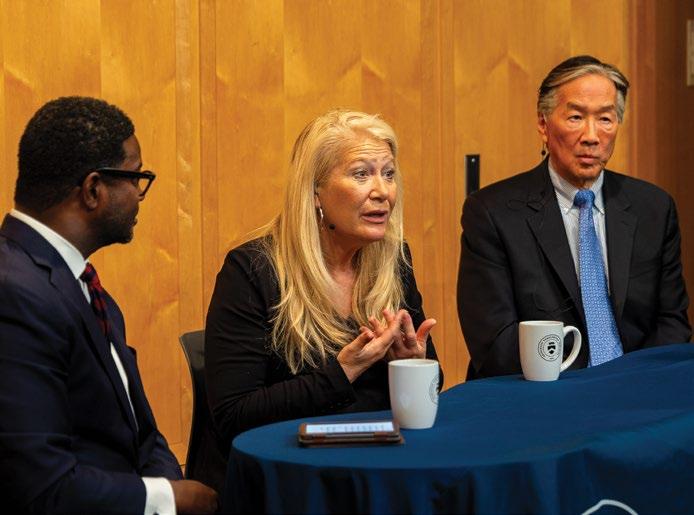
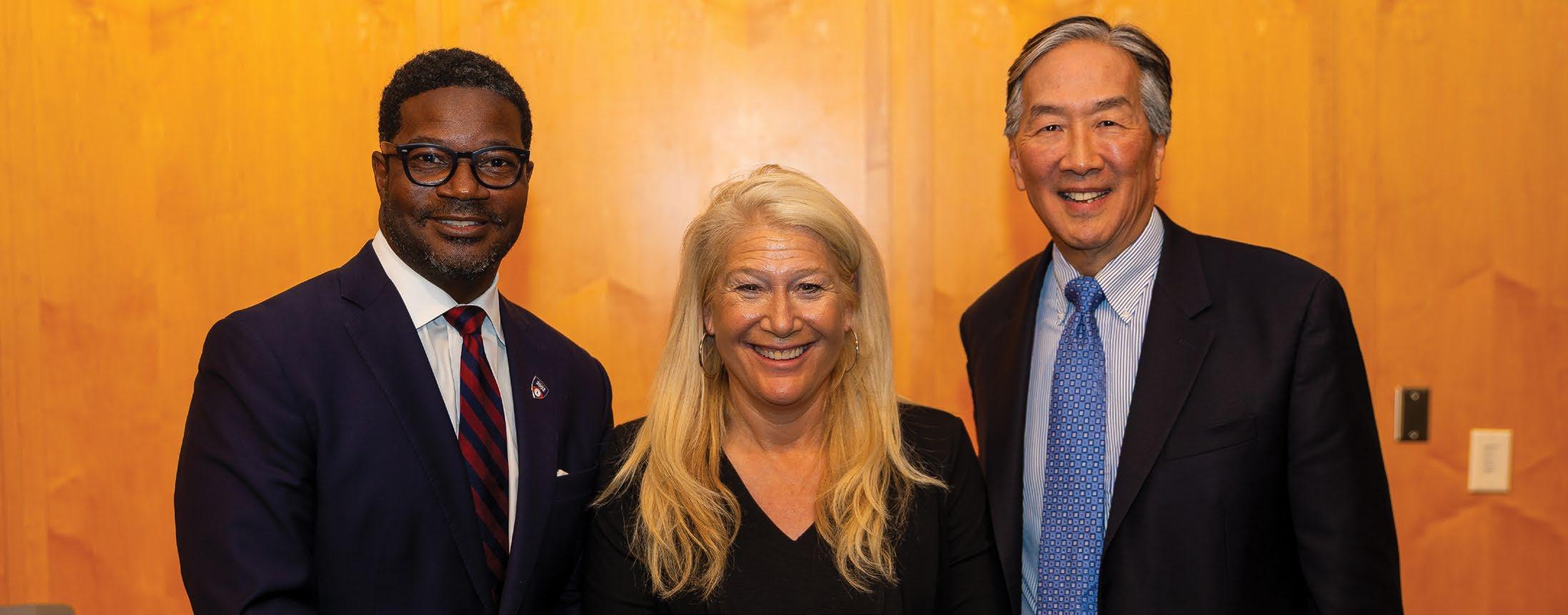
From left, President Jonathan Lee Walton, PhD, Dr. Lisa Miller, and Dr. Howard K. Koh
the dialogue about the connections between faith, health, and well-being for young adults.
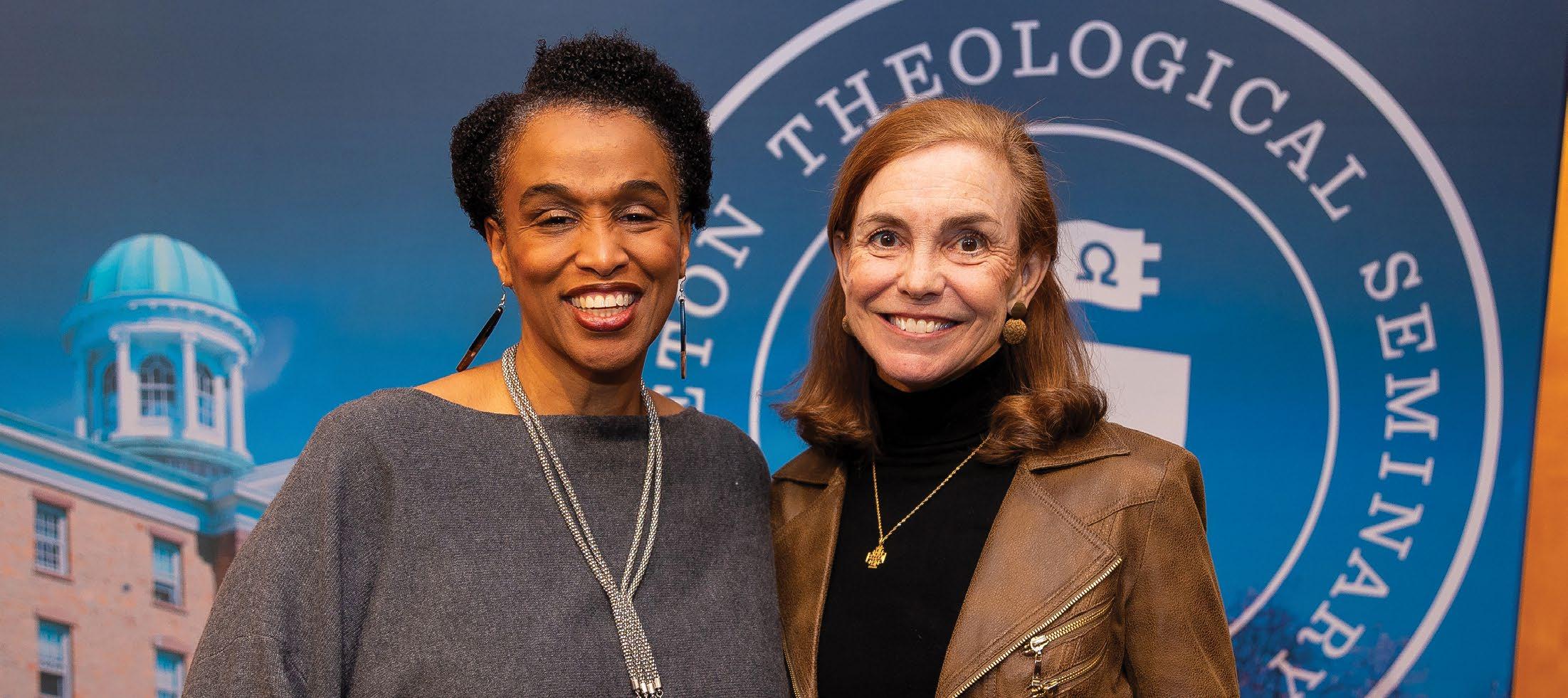
In November, President Walton led a discussion about the relationship between spirituality, adolescent mental health, and public health outcomes with Dr. Lisa Miller, clinical psychologist and Columbia University professor, and Dr. Howard K. Koh, Harvard University professor and former U.S. assistant secretary for health. In February, he welcomed the Rev. Dr. Suzanne Watts Henderson, MDiv ’90, senior director of faith and health for Interfaith America, and Dr. Almeda Wright, professor of religious education at Yale Divinity School, for a second conversation about how spirituality and religious diversity can influence heathy communities.
Dr. Kenda Creasy Dean, Mary D. Synnott Professor of Youth, Church and Culture, led the faculty reading group, which consisted of eight additional faculty members who represented a range of specialties. Over the course of six months, the group read leading research and publications about the relationship between young people, faith, and positive health outcomes. While the connections among these three areas were “no surprise” to Dean and her colleagues, she believes the recent, wide-spread attention new research is garnering will help “raise awareness about the life-and-death importance of churches’ work with young people.”
“Anyone who works with youth ministry or with a congregation has seen ample evidence of this connection,” she said. “Youth ministry is quickly becoming an important player in addressing the adolescent mental health crisis, but its significance is often explained as, ‘Well, churches offer young people self-esteem and community.’ Yes, but the critical factor is that the church also offers them God. No ministry can lose sight of that.”
Dean and her colleagues also discussed how Princeton Seminary could contribute to the growing body of scholarly work and how the findings can make real-world impact.
“By bringing people together across academic interests, the Next Generation Faith and Health Initiative models how congregations can convene stakeholders from multiple sectors to address real issues of community concern and demonstrate how theology matters to daily life,” Dean said.
“While research identifies faith as a key determinant of health, faith communities have seldom mobilized this data in the service of Christian discipleship, least of all in youth ministry,” President Walton added.
“Faith formation with young people must be seen as a public health imperative in which faith communities play an essential role.”
President Walton, Kuriakose, and Dean each emphasized that Princeton Seminary is uniquely poised to make meaningful inroads in the connection between youth faith formation, health, and holistic well-being because of its decades-long commitment to young adults. For more than 30 years, the Seminary’s Institute for Youth Ministry has shaped Christian leaders for thoughtful, just, and creative ministry with young people, through research, programs, events, and resources. Most recently, the Seminary launched the Polaris Young Adult Leadership Network in 2023 through a $4 million grant from the Lilly Endowment, Inc. The project strives to amplify and support the leadership of Christian young adults as they build faithful, thriving communities. The Next Generation Faith and Health Initiative is another avenue to build upon the Seminary’s existing work and create new opportunities for research, coursework, partnerships, conferences, public health education, and more.
“For decades, Princeton Seminary has been a global leader in the theological study and practical training of youth and young adult ministry,” said President Walton. “Through this new initiative, we will amplify and extend Princeton’s role as a premier institution for theological leadership in faith formation and flourishing for the next generation.”
From left, Dr. Almeda Wright and the Rev. Dr. Suzanne Watts Henderson, MDiv ‘90
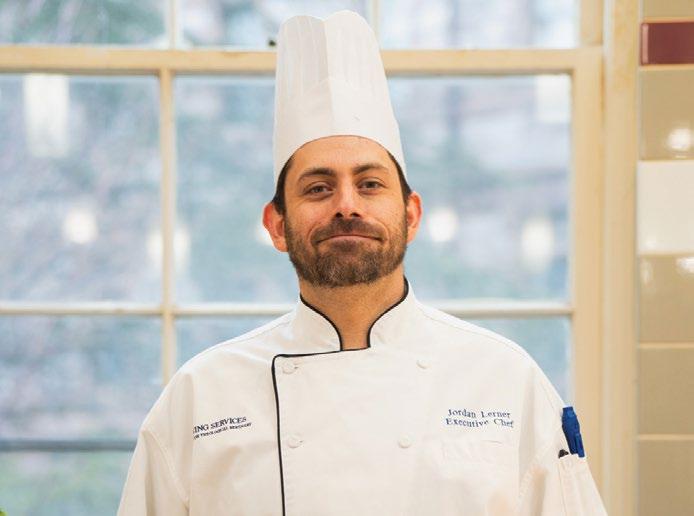
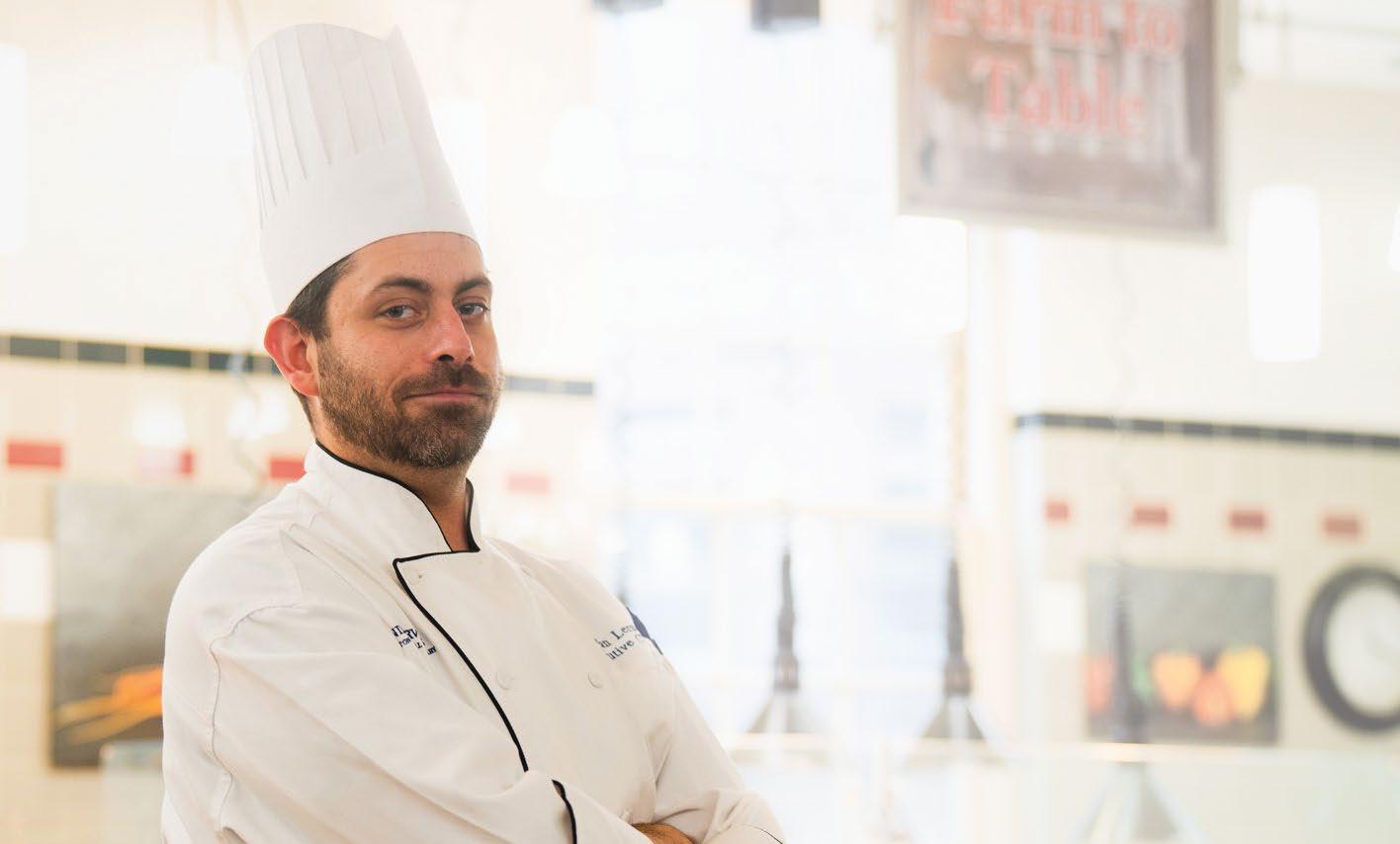
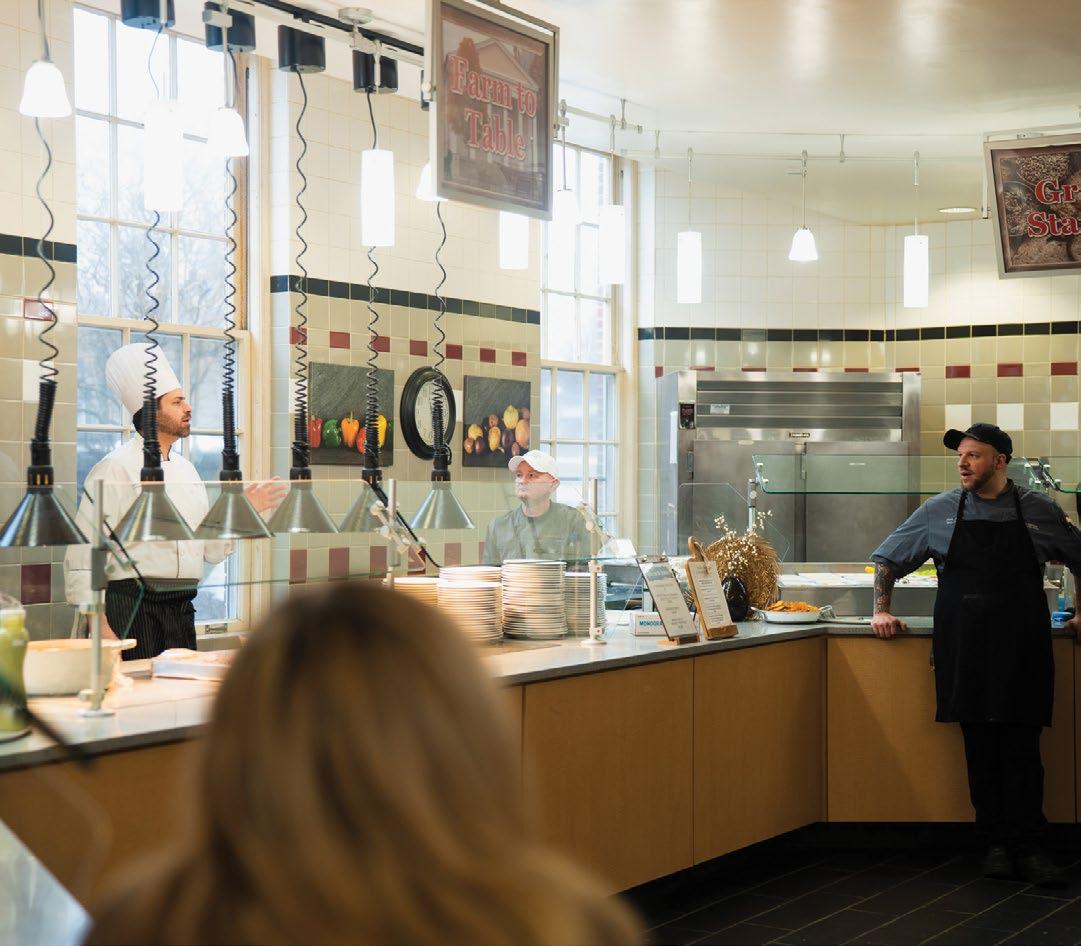
Jordan Lerner loves to convince someone in the Mackay Campus Center Dining Hall to try a dish they claim they don’t like. As executive chef for hospitality and event services at Princeton Theological Seminary, Lerner nourishes countless students and their families, getting to know their personalities and taste buds.
“There are very few jobs where you can be a chef and interact with the guests as much as I am able to here,” he said. “I meet students. We talk. If they bring their wife, their child, their mother, I get to know them as well. You see the same people every day; you get to learn their dietary preferences. When they say, ‘I don’t eat this or that.’ I’ll say, ‘You haven’t had it here.’”
Lerner oversees every aspect of the Seminary’s dining operations — from menu development and kitchen leadership to food safety and financial stewardship. He directs a team of cooks, ensures quality and consistency across daily meals and special events, and works closely with colleagues across campus to create a dining experience that supports the Seminary’s mission.
One initiative Lerner has emphasized during his tenure at Princeton is deeper collaboration with departments
across campus, developing customized menus that often exceed the expectations of traditional campus dining while meeting each event’s specific requirements. For Lerner and his team, he added, every request, no matter how simple or complex, is approached with the same commitment to excellence.
Cooking has been a lifelong passion for Lerner, who could be found in the kitchen on Thanksgiving Day as a child, rather than watching the football game. “I always wanted to be a chef in some capacity and wanted to be in charge. I was always the one cousin that was in grandma’s small little apartment kitchen in New York, helping out, carving the turkey, making the salad, whatever I could do,” he fondly recalled.
Lerner attended Middlesex County College for culinary studies, even winning a scholarship while he was there, and began his career in various hotels, restaurants, and banquet facilities after graduation. Life in the culinary industry edged toward burnout for Lerner about three years ago, bringing him to question his future in the notoriously demanding field. Fortuitously, he found a job opening at Princeton Theological Seminary, and he never looked back.
Lerner embraced his role on campus and approached it deliberately, taking time to assess the existing culture and operations before charting a path forward.
“You
can’t completely change everything at once. It’s about food quality, food safety, working with the cooks, seeing what their skill set is, and kind of developing a game plan on what I can teach them and how I can build each one up. We have evolved tenfold.”
He takes great pride in mentoring his cooks and chefs. “As an executive chef, I’m their boss, but I’m also their teacher.” Lerner was effusive in his praise for his staff. “They have great skills, and it’s up to me to identify those skills. When new dishes or new cuisines come along or funky stuff that someone might not have made before, it’s up to me to teach them. Everyone learns a little differently, so my approach to each one of them is a little different.”
He added, “They’re always receptive. In a good way, we’re always trying to one-up the last event, the last meal, and make it that much better.”
The Seminary, he says, is one of the most collegial atmospheres in which he has worked. “The amount of appreciation myself and the rest of the dining services get on a daily basis means a lot.”
Bridging the Sacred, continued from page 19
AI and Faith constantly fosters dialogue with its constituents both nationally and internationally, from its bi-weekly podcast that invites experts in the field to discuss issues pertaining to AI, to training seminars for Christian organizations, like a recent session for 1,300 leaders at the World Evangelical Alliance’s General Assembly in Seoul, South Korea.
Cootsona’s global advocacy has influenced his pastoral mission. His congregation at Bidwell Presbyterian Church in Chico, California, is well versed in the subject of AI. As an associate pastor, Cootsona often works AI into his sermons and teaches classes for interested parties.
Cootsona is not naïve to the challenges posed by AI — such as privacy erosion, economic displacement, and ecological cost — nor the trepidation many feel toward it. “I think anybody who looks at AI can see that there are things to be concerned about and create guidelines and guardrails against its misuse.”
But he does not see the future in dire terms.
“There’s a lot of fear about where this is heading,” Cootsona said. “But if we bring faith, reason, and humility into the conversation, I think there’s every reason for hope.”
Lerner enjoys the challenge of presenting new dishes to his staff and to the students. “I love showing them what’s possible.” In that sense, he is truly an educator, with the kitchen as his classroom, and technique, collaboration, and hospitality as his lessons.
Ultimately, Jordan explained, “We’re teaching the students about good food.”