Available on Gale and Factiva affiliated international databases through Asianet Pakistan
Printed at: Color Plus Korangi, Karachi.
Published by Nadeem Mazhar from D-16, K.D.A. Scheme No.1. Karachi.
CORPORATE NEWS
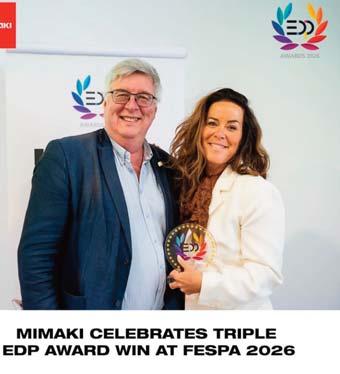
Mimaki celebrates triple EDP Award win at FESPA 2026
Recover™ launches Recover™ Yarns to accelerate recycled cotton uptake
YKK joins ZDHC as a signatory supplier, strengthening commitment to eliminating hazardous chemicals
Denim sustainability by the numbers
A snapshot of the industry's progress and remaining challenges by Jeanologia Durst Group celebrates 90 years of innovation with the Durst NEXT Technology Festival in Brixen
Tatra Textil, Slovakia, orders a complete batt forming line from ANDRITZ
DYES AND CHEMICALS
Archroma India advances sustainable innovation in Baroda
The CHT Group GmbH awarded Best Managed Company 2026
PERSONALIA
Nico Pedretti appointed as Managing Director of Graf Group
FAIRS AND EXHIBITIONS
Visitor registration now open for ITMA ASIA + CITME 2026
Emerging innovators find a global launchpad at ITMA 2027
Intertextile Apparel returns with new focus on pet textiles and climate-adaptive innovation
SPECIAL REPORT
Critical success factors in transforming knitted fabric dyeing to CPB processes .32 Andre Chang-En Chang and Demian Jung-Fang Yeh, Everlight Chemical Industrial Corporation
INTERVIEW
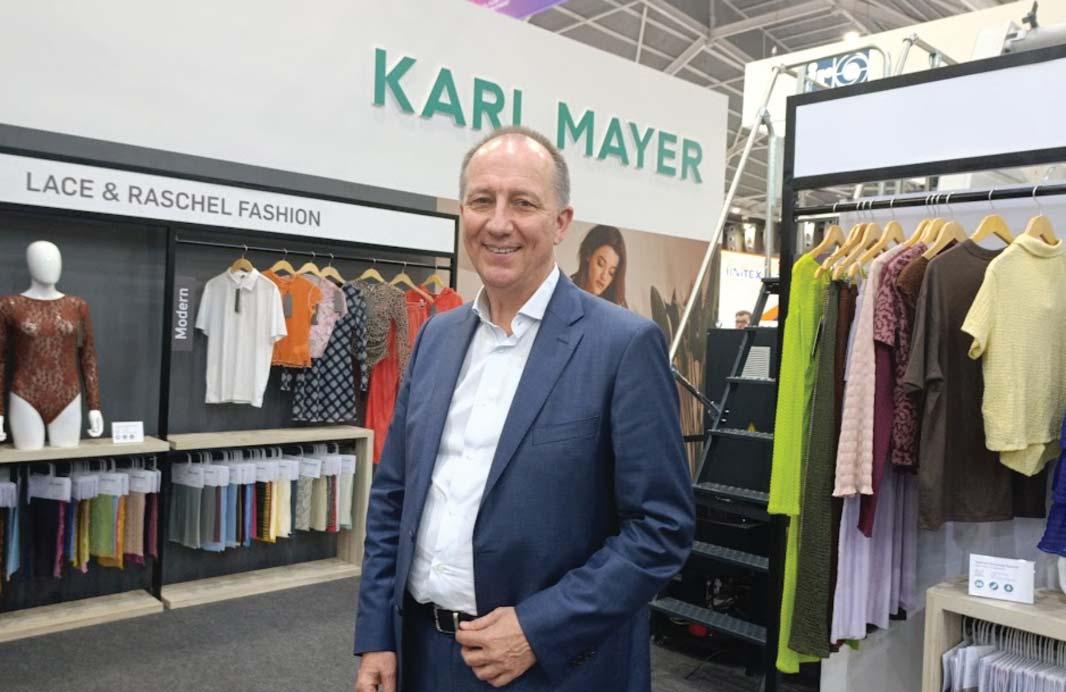
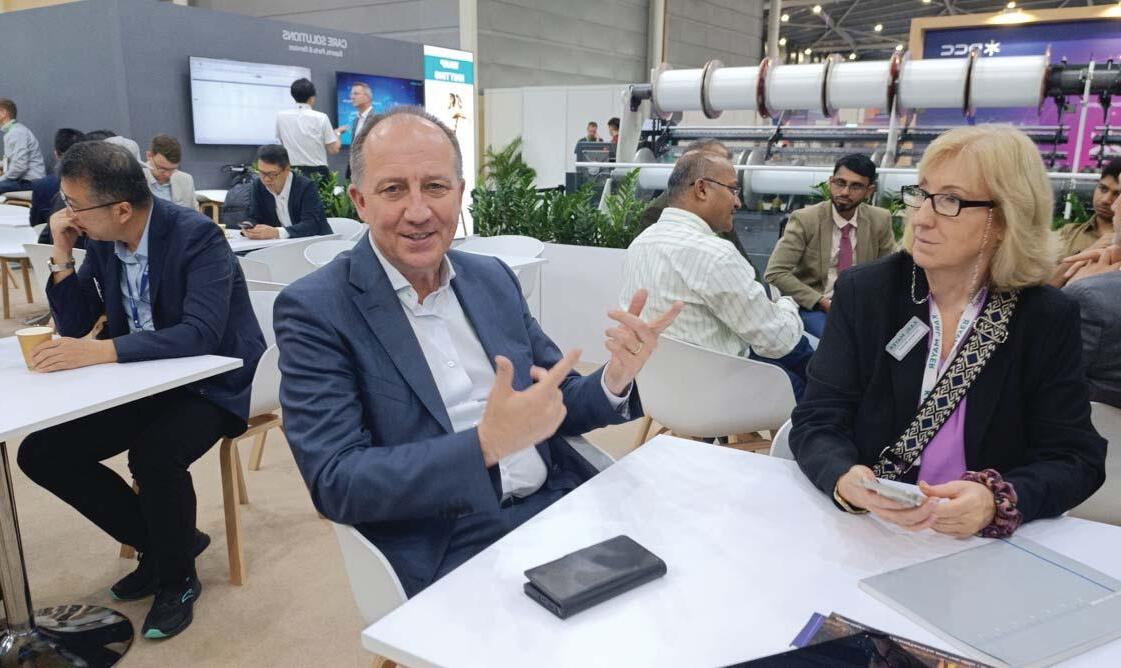
Trust, innovation and the next renaissance of warp knitting: A conversation with Karl J. Mayer .
By Nadeem Mazhar, Managing Editor, Pakistan Textile Journal.
FEATURES
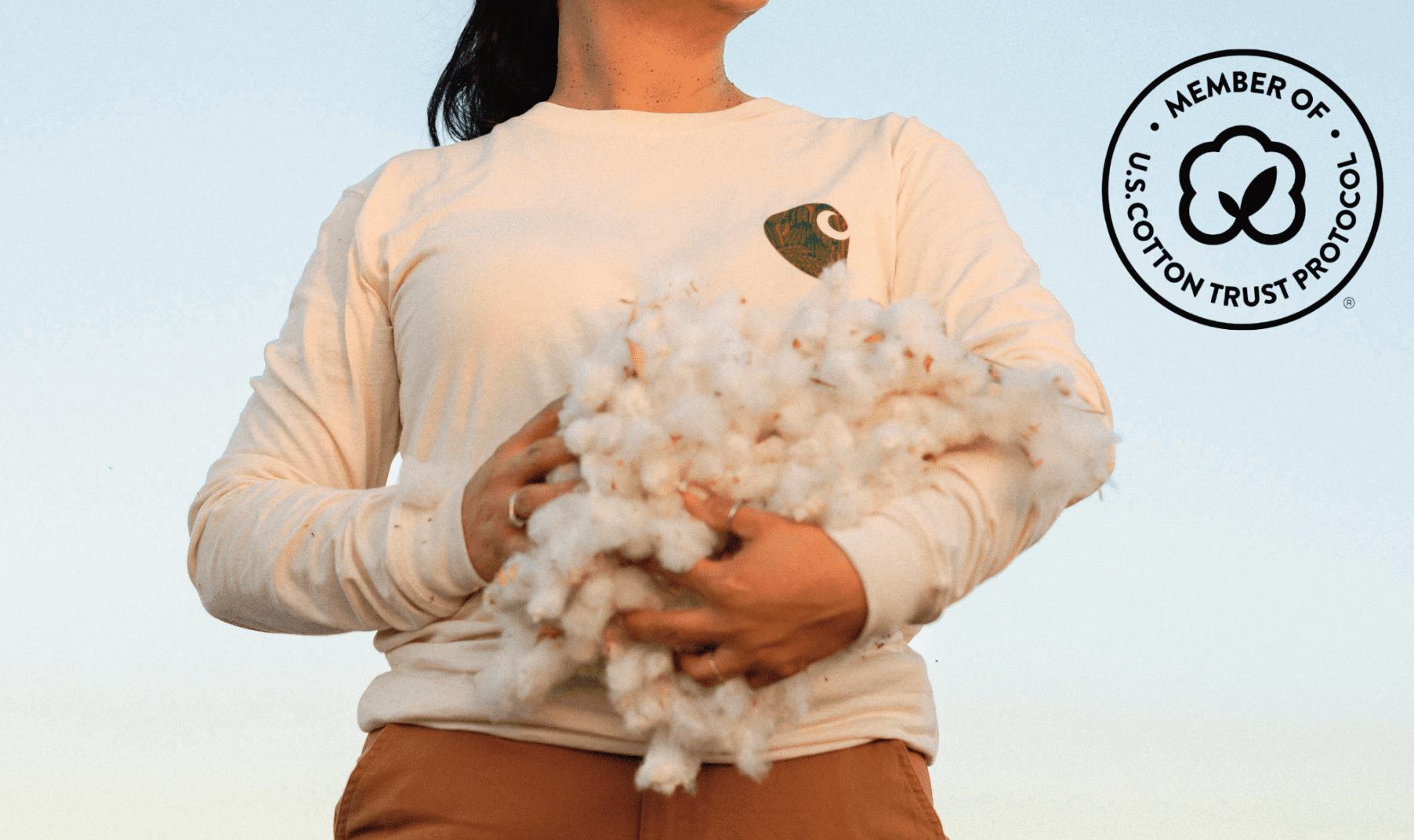
Built to last, sourced with care: Carhartt and the U.S. Cotton Trust Protocol’s member insights .
LYCRA® VintageFX fibre officially launches
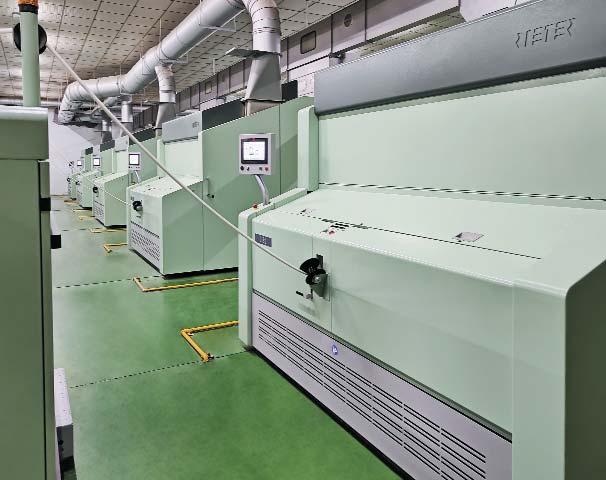
The LYCRA Company’s latest innovation offers a heritage aesthetic with stretch denim comfort Rieter’s Card C 81 delivers breakthrough performance at Sportking
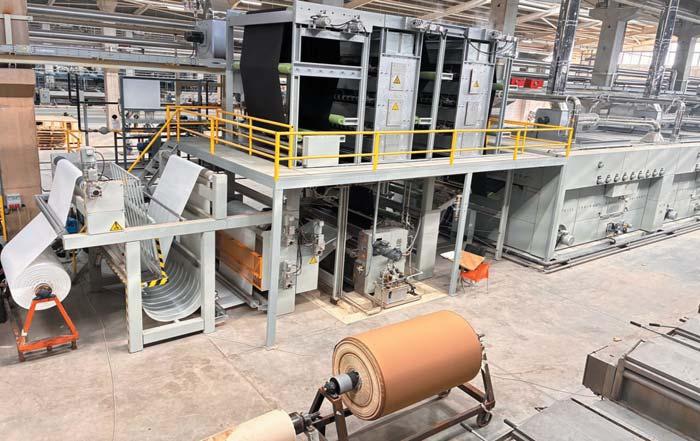
Monforts: Delivering round-the-clock production for Kipaş
.41
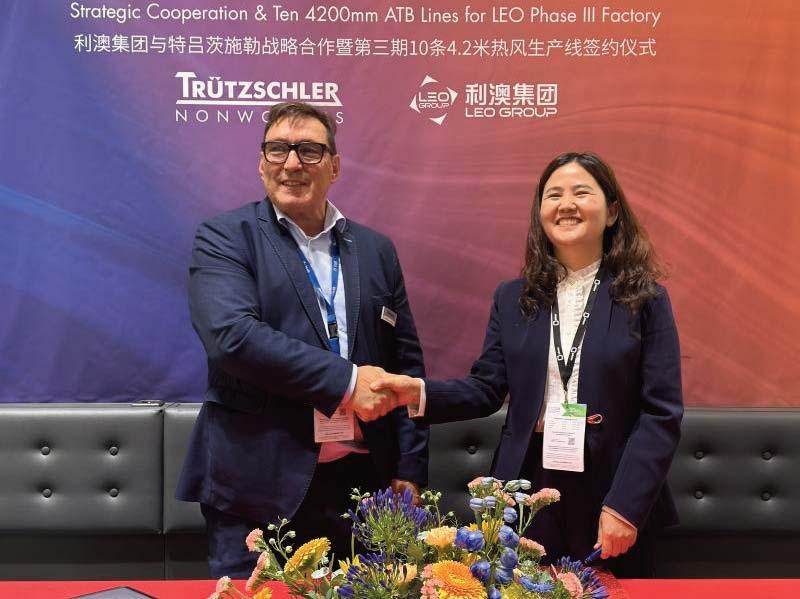
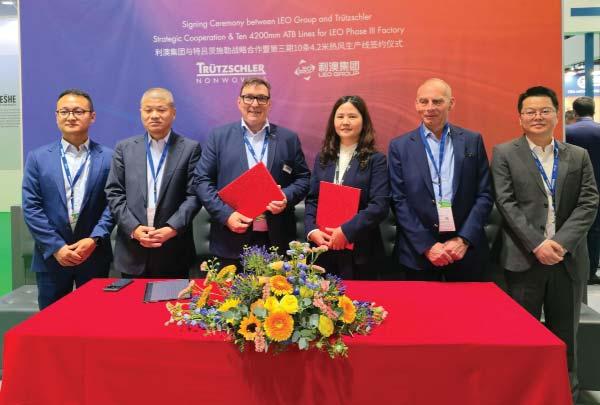
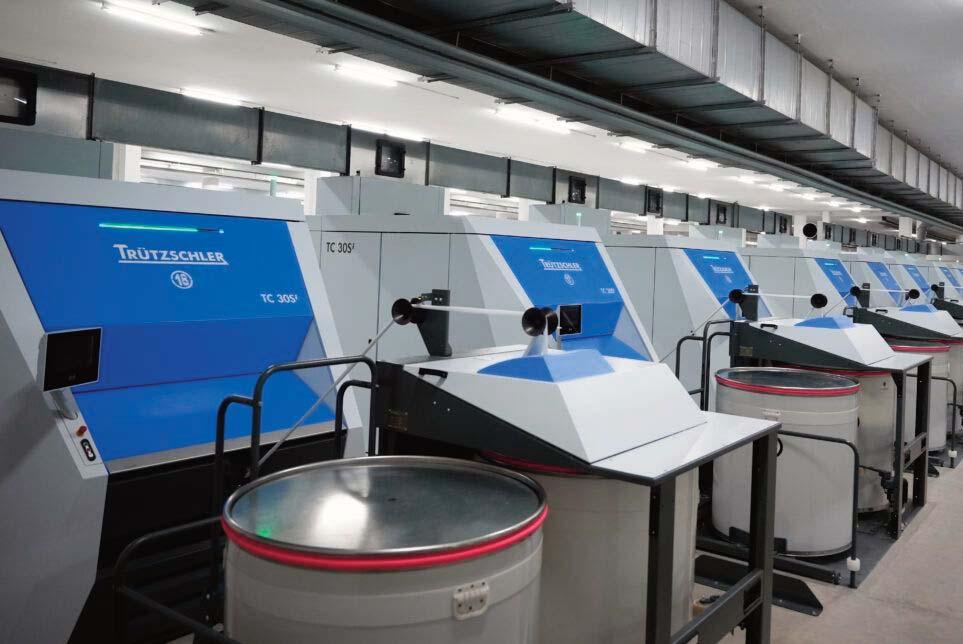
Trützschler establishes in-depth strategic cooperation with Fujian Leo Group . .44
Recycled fibres: The vital data for quality and profitability
Uster’s new Recycling Opening Index guides spinners to the perfect blend Barmag and Hitech Automation enter into partnership for an auto-doff system for texturing machines .
TECHTEXTIL & TEXPROCESS
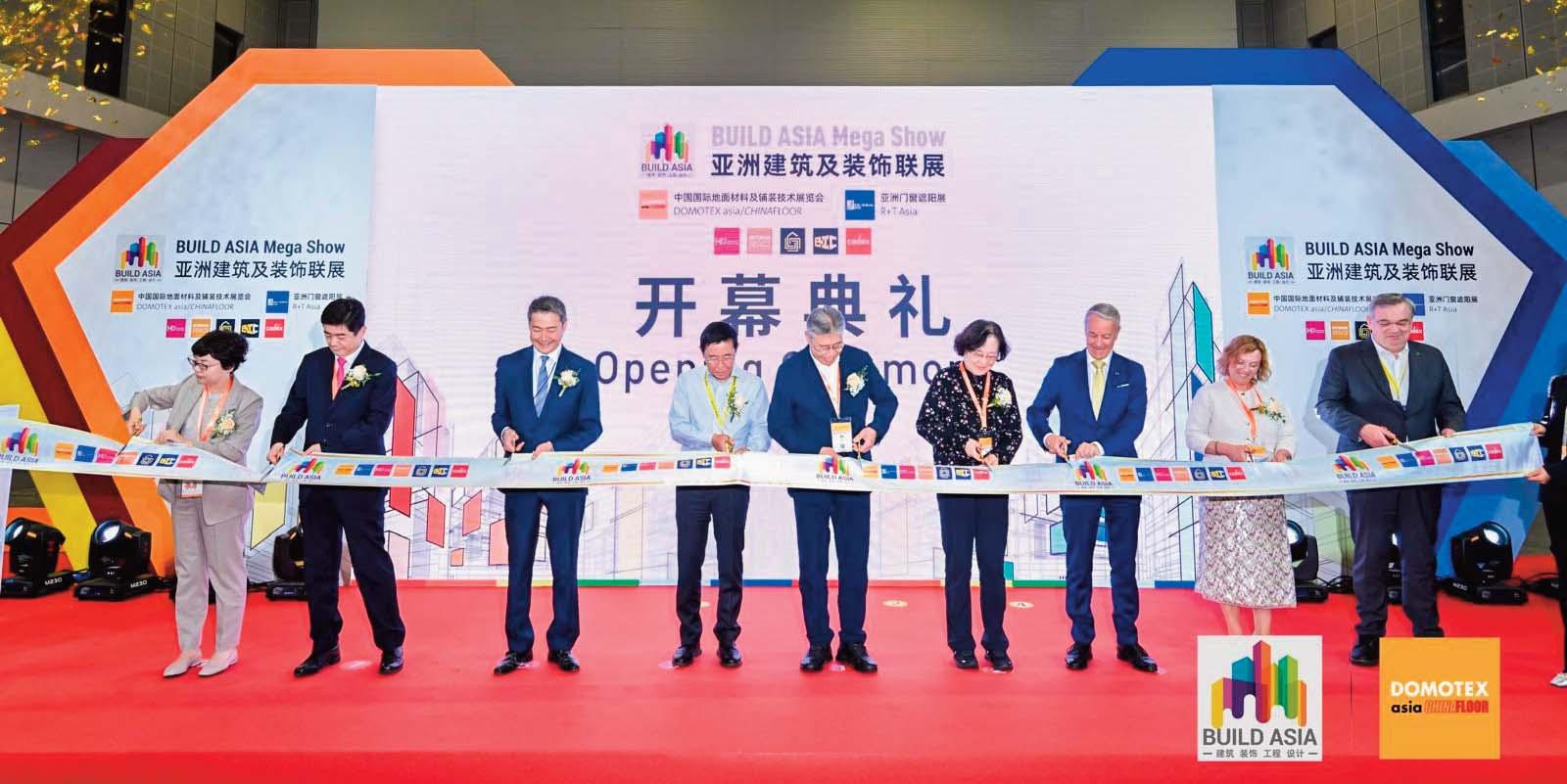
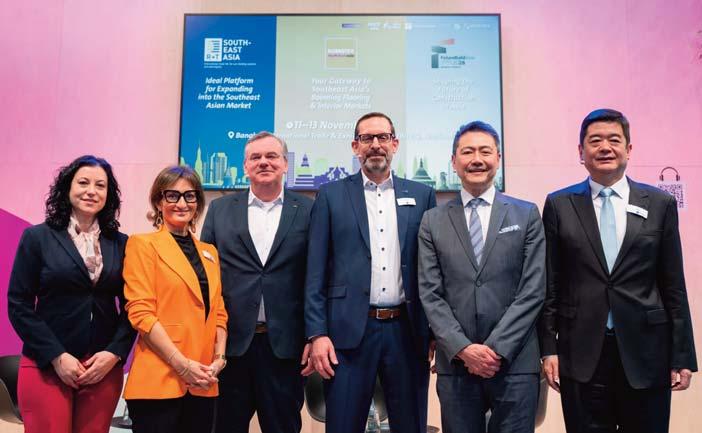
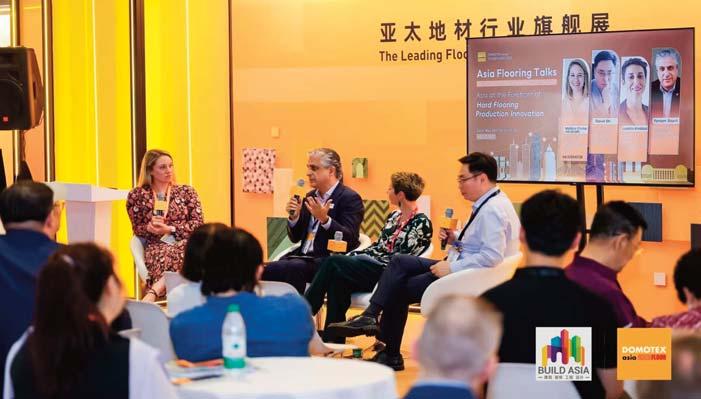
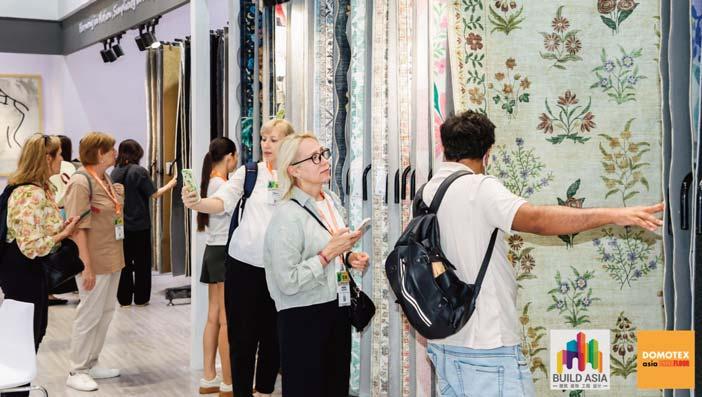
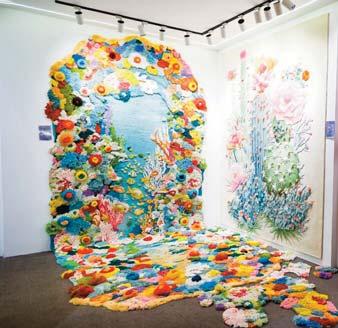
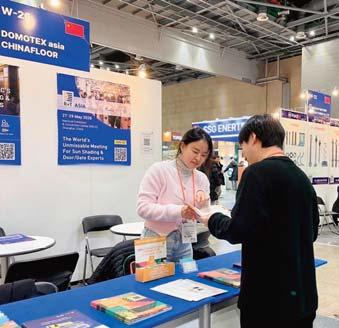
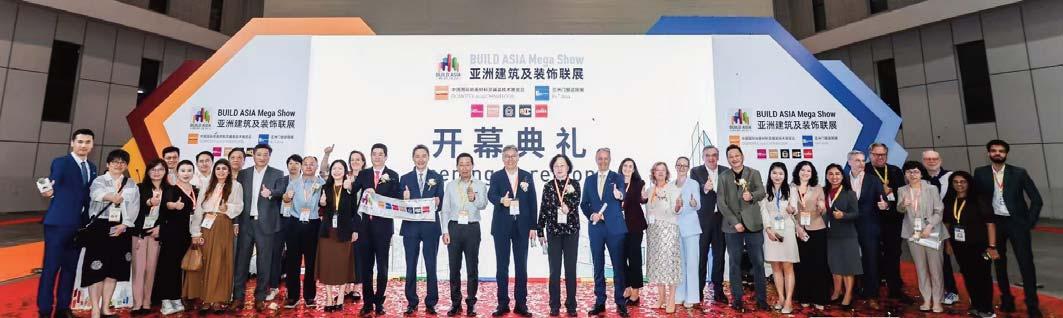
DOMOTEX asia/CHINAFLOOR 2026
DOMOTEX asia/CHINAFLOOR 2026 reinforces its position as Asia's premier flooring marketplace
WEAVING
Pakistan continues to shine in the global denim market
by Nadeem Mazhar, Managing Editor, Pakistan Textile Journal.
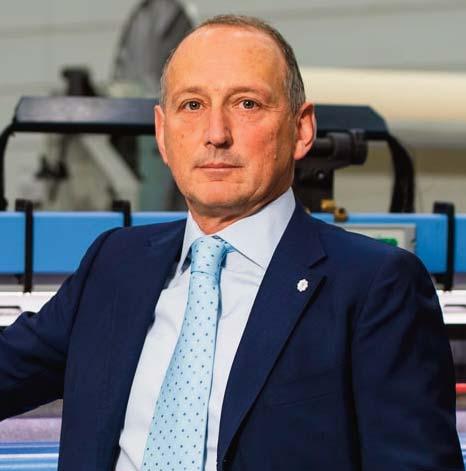
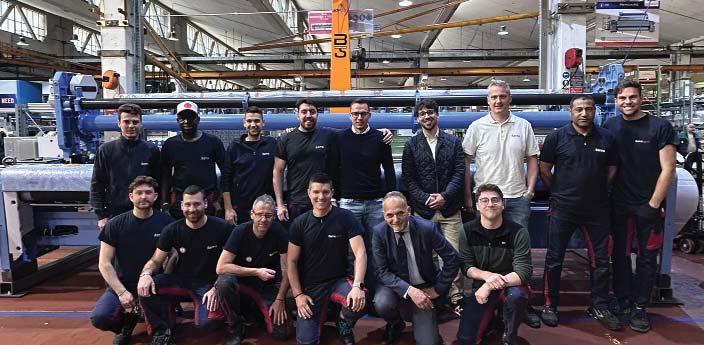
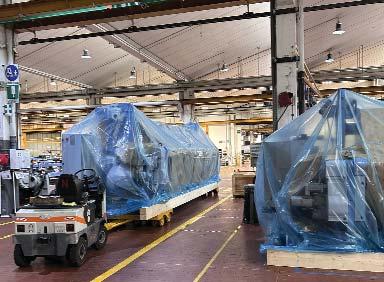
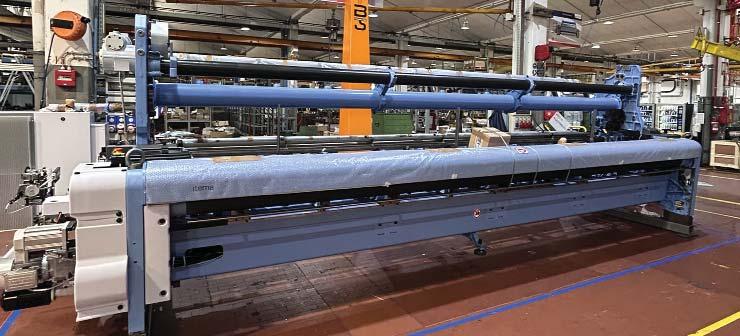
Itema manufactures the first projectile weaving machines “Made in Italy” at its Colzate headquarters
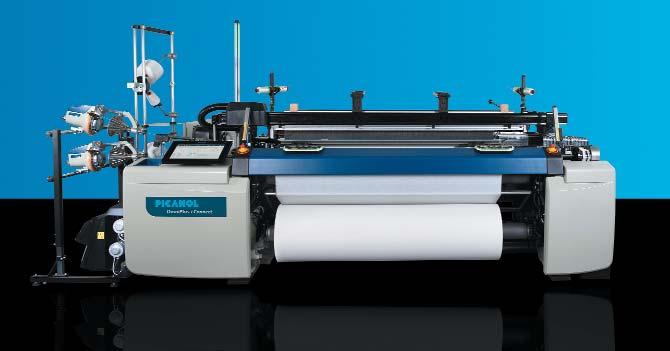
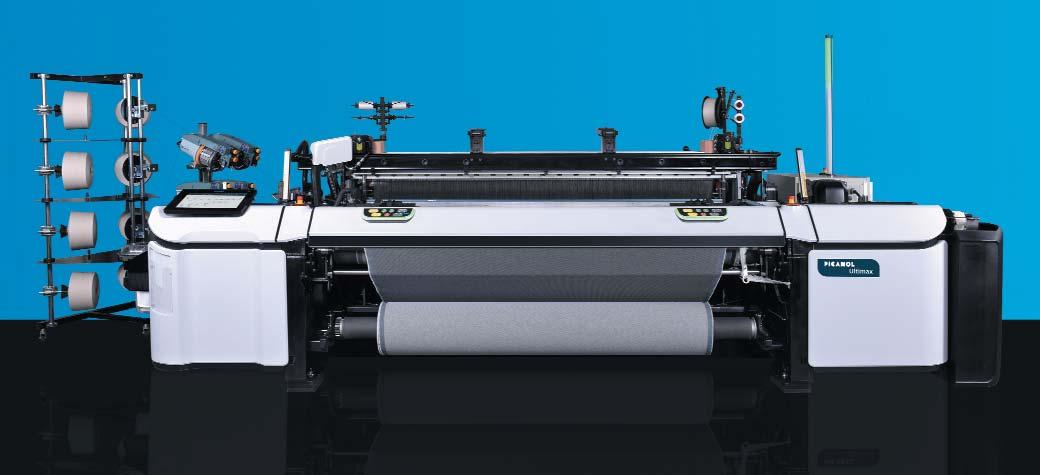
The historic expertise developed in Zuchwil since 1953 enters a new production phase in Italy Picanol’s innovative weaving technologies
Delivering high performance, sustainability, and ease of use for today's weaving mills
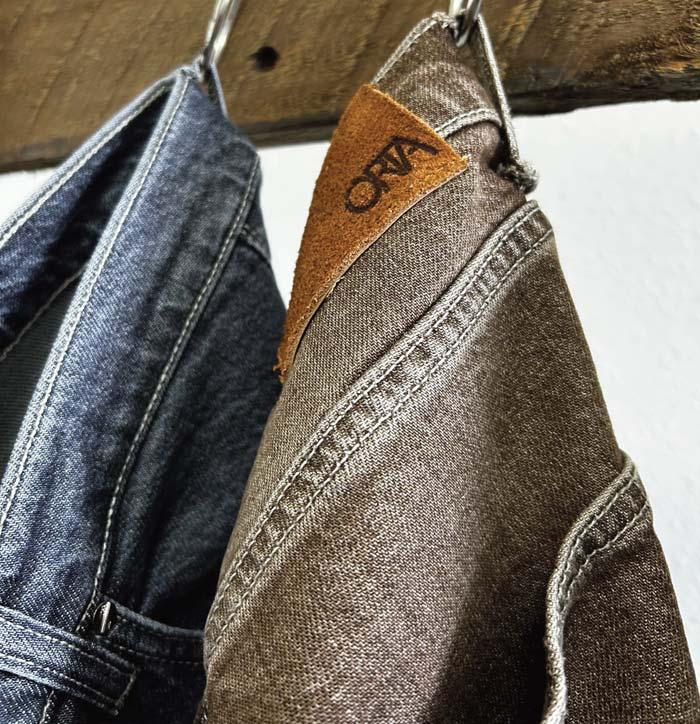
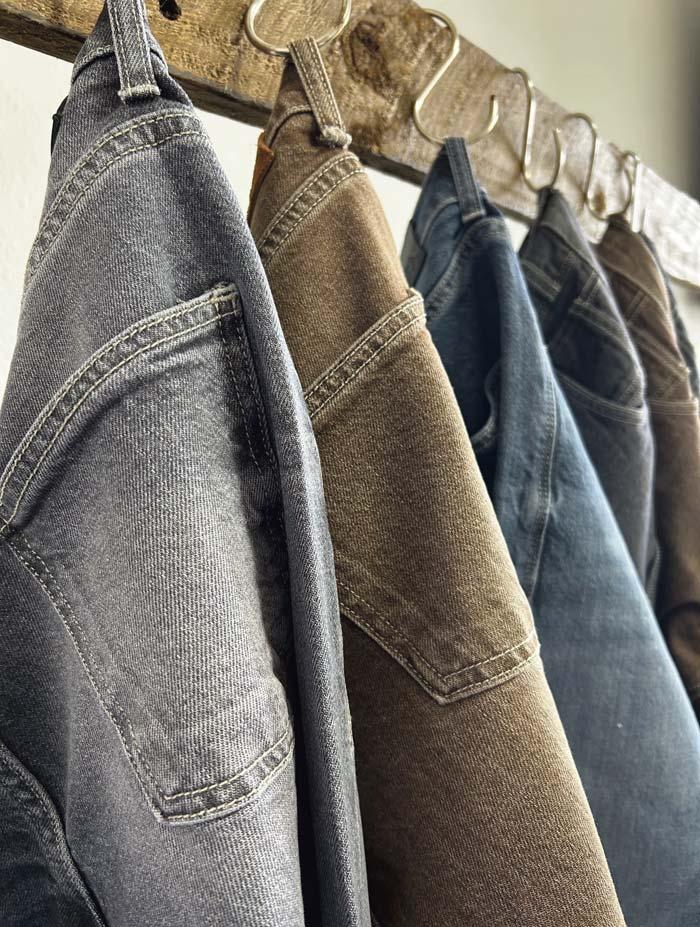
Archroma: Denim collection coloured with wool waste
Pakistan's textile industry: Building competitiveness through innovation and value addition
The global textile industry is entering a new era in which competitiveness is increasingly defined not by production capacity alone, but by innovation, sustainability, digitalisation and value addition. Manufacturers around the world are investing in advanced technologies, intelligent manufacturing systems and environmentally responsible production to meet the evolving demands of international brands and consumers. For Pakistan, these developments present an important opportunity to strengthen its position as a leading supplier of high-quality, value-added textile products.
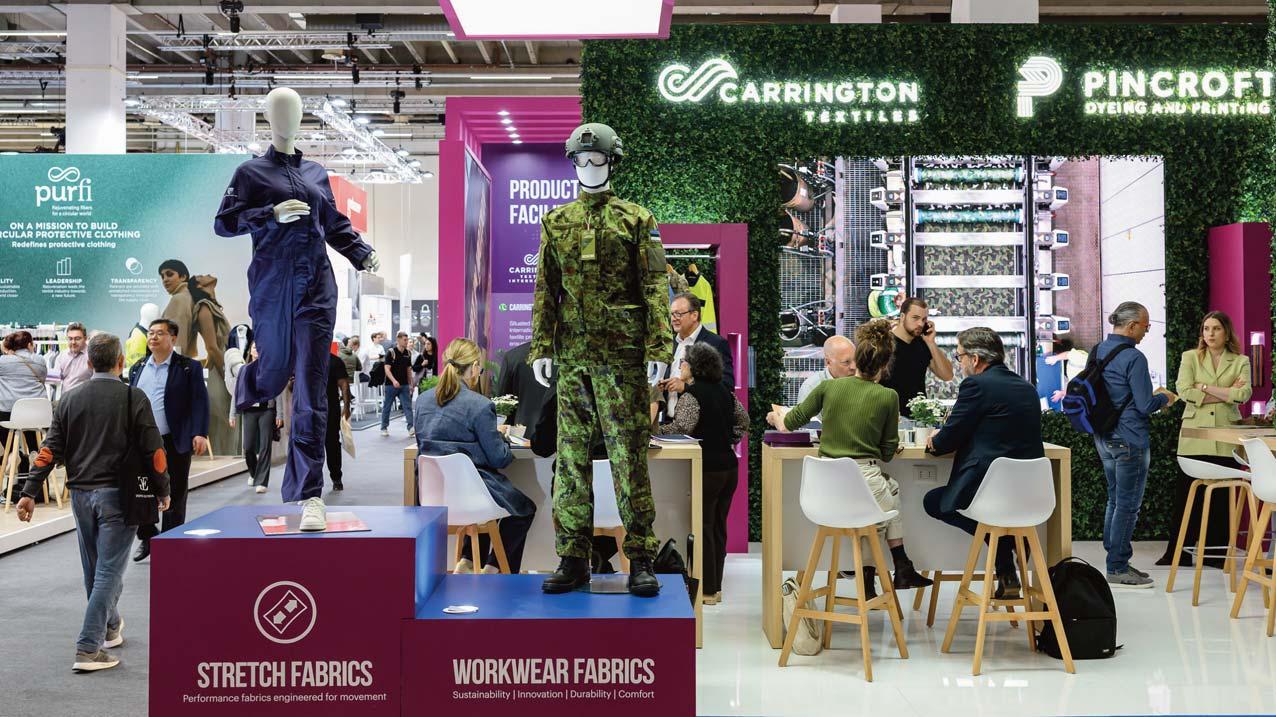
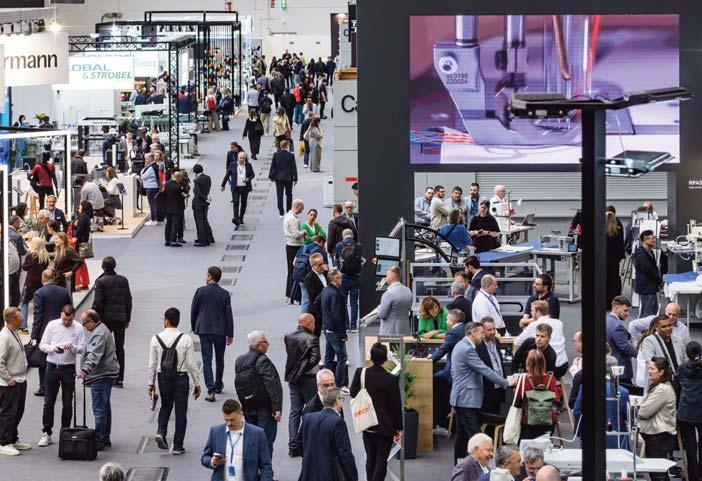
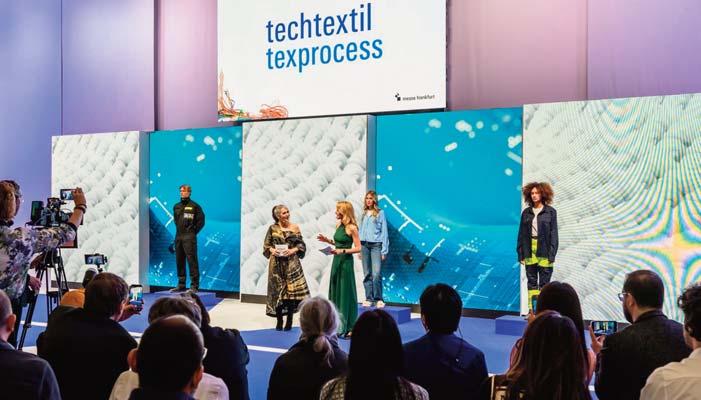
This transformation was clearly evident at Techtextil and Texprocess 2026 in Frankfurt, the world's leading exhibitions for technical textiles, nonwovens and textile processing technologies. The strong participation of Pakistani companies demonstrated the industry's growing confidence in higher-value segments such as technical textiles, functional apparel and advanced textile solutions. As global markets increasingly demand innovation and specialised applications, Pakistan is well positioned to expand beyond traditional commodity exports and capture new opportunities in premium markets.
Pakistan has already established itself as one of Asia's leading producers of premium denim while continuing to strengthen its weaving, home textiles and apparel sectors. Investment in modern weaving technologies, product development and process optimisation is enabling manufacturers to compete through quality, innovation and customer-focused solutions rather than price alone. Sustaining this momentum will require continued investment in technology, skills development and closer collaboration between industry, machinery suppliers and research institutions.
The importance of innovation extends equally to sustainable manufacturing. Environmental performance is no longer simply a regulatory requirement; it has become an essential element of international competitiveness. Buyers increasingly expect measurable improvements in water conservation, energy efficiency and responsible chemical management throughout the textile value chain. The Special Report in this issue on Cold Pad-Batch (CPB) dyeing for knitted fabrics demonstrates how innovative processing technologies can reduce resource consumption while improving both operational efficiency and product quality.
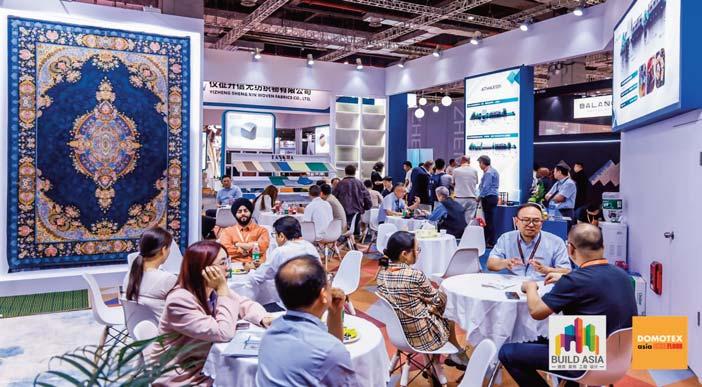
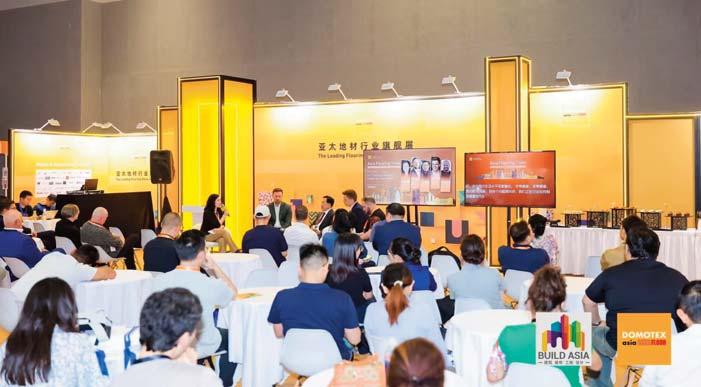
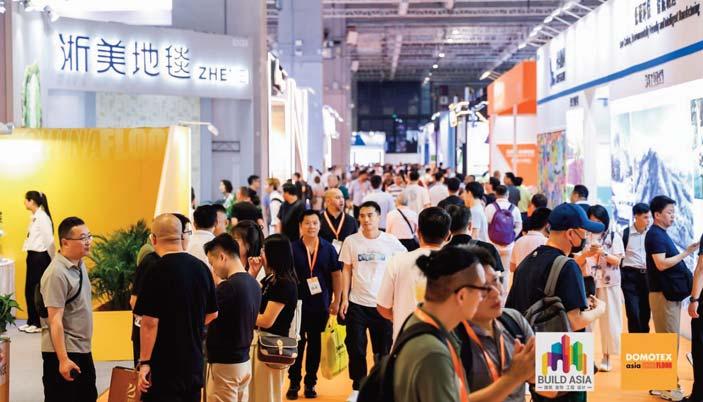
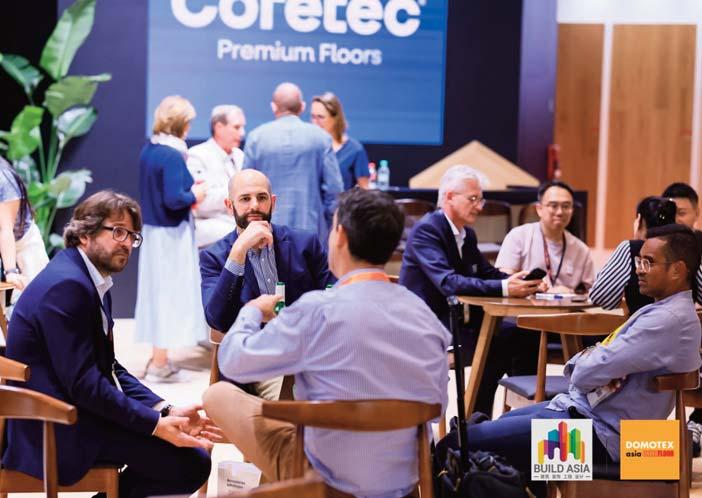
Our coverage of DOMOTEX asia/CHINAFLOOR 2026 further highlights the changing nature of global competition. Beyond showcasing products, the exhibition emphasised intelligent manufacturing, product innovation, digital technologies and sustainable production, reinforcing the importance of continuous technological advancement across every sector of the textile value chain.
The months ahead promise to be equally significant. Pakistan Textile Journal will bring readers comprehensive coverage of ITM 2026 in Istanbul, one of the world's leading textile machinery exhibitions; and the Textile Recycling Expo in Brussels, focusing on circular manufacturing and recycling technologies. Our forthcoming Italian Review will also feature extensive coverage of the ACIMIT delegation programme and visits to leading Italian textile machinery manufacturers, providing valuable insights into the technologies and partnerships shaping the future of our industry.
As Pakistan Textile Journal marks its 75th year of publication, we remain committed to bringing our readers timely international coverage and informed analysis of the trends shaping the global textile industry. Pakistan possesses the entrepreneurial spirit, industrial capability and technical expertise to compete successfully in this changing environment. By embracing innovation, sustainability and value addition, our textile industry can continue to strengthen its position as a trusted and competitive partner in the global marketplace.
Textile Briefs National
1
Federal Finance Minister Muhammad Aurangzeb held an extensive meeting with a high-level delegation representing Pakistan’s textile and apparel industry, where leading chambers, associations, exporters, and industrial stakeholders presented a detailed set of proposals and recommendations for the upcoming Federal Budget 2026-27 aimed at strengthening the country’s export sector and industrial competitiveness.
2
Pakistan’s textile exports posted a marginal increase of 1.29 percent during the first ten months of FY2025-26, reaching $15.025 billion during July–April as compared to $14.834 billion recorded
during the corresponding period last year, according to trade data based on Pakistan Bureau of Statistics (PBS) figures.
3
The Pakistan Chemicals & Dyes Merchants Association (PCDMA) has submitted a series of recommendations to the Federal Board of Revenue (FBR) ahead of the 2026-27 federal budget, urging the government to simplify tax procedures, reduce the General Sales Tax (GST) rate and reinstate safeguards for commercial importers.
4
Pakistan’s textile industry has been urged to rapidly accelerate carbon auditing, energy efficiency measures, and broader climate compliance efforts as
Textile Briefs International
1Cambodia’s garment, textile, footwear, and travel goods exports
rose 7.7% to $3.8 billion in Q1 2026, with apparel contributing $2.77 billion. Footwear exports grew 11.8%, while travel goods increased 4.2%. The sector accounts for 46% of total exports and employs about 1.1 million workers. Growth is driven by market diversification and trade agreements, including the Regional Comprehensive Economic Partnership, strengthening Cambodia’s position in global supply chains.
2
China’s apparel industry saw uneven recovery in Q1 2026, with output rising modestly but profits and exports under pressure. Domestic retail sales
European buyers tighten sustainability requirements across global supply chains. Experts, policymakers, and development partners have warned that failure to adapt could weaken Pakistan’s export competitiveness, particularly in the European Union, which is a key market for the country’s textiles.
5
Pakistan has become the third country, after Bangladesh and Türkiye, to establish a national chapter of the Apparel and Textile Transformation Initiative (ATTI), following a commitment by the Pakistan Readymade Garments Manufacturers & Exporters Association (PRGMEA) during London Climate Action Week 2026. The move positions
Pakistan among a growing global coalition working to decarbonise and modernise the apparel and textile industry. ATTI, a manufacturer-led platform established by the International Apparel Federation (IAF) and the International Textile Manufacturers Federation (ITMF), promotes sustainability, energy efficiency and responsible manufacturing. Under the partnership, PRGMEA and ATTI will develop a Pakistan Transformation Plan focused on decarbonisation, water stewardship, climate finance, resource efficiency and sustainable manufacturing, with technical support aimed particularly at strengthening small and medium-sized garment exporters.
grew 9.4%, supported by ecommerce, while exports fell slightly to $32.89 billion due to weak global demand and pricing pressures. Profitability declined, and investment slowed. Despite challenges, market diversification and domestic demand are expected to support gradual recovery.
3
India’s textile exports showed mixed performance in April 2026, with apparel exports falling 11.66% to $1.21 billion, dragging overall exports down 3.42%. However, carpets, handicrafts, and manmade textiles posted growth, highlighting the rising importance of niche segments. The textile sector underperformed compared to overall mer-
chandise exports, with its share declining to 6.62%.
4
Myanmar is intensifying efforts to preserve traditional textile heritage amid pressure from industrialisation and fast fashion. The government and stakeholders are promoting training, documentation, and exhibitions to sustain weaving traditions. However, challenges such as declining artisan numbers, rising costs, and weak youth participation threaten the sector. Institutions like the Saunders’ Weaving Institute continue to play a key role in preservation and skill development.
5
Vietnam’s textile sector is attracting high-tech foreign investment as it shifts towards green and smart manufacturing. With
exports targeting $50 billion by 2026, the industry is focusing on automation, sustainability, and innovation. Increased FDI in advanced production systems is strengthening supply chain resilience and positioning Vietnam as a global hub for high-value textile manufacturing.
6
Uzbekistan produces about 600,000 tonnes of cotton annually, accounting for nearly 2% of global output and ranking among the top producers. Global cotton production remains highly concentrated, led by major players like China, India, and Brazil. Uzbekistan continues to play a notable role in global supply despite its smaller share.
Textile industry presents comprehensive budget proposals to Finance Minister for export growth and industrial competitiveness
Federal Finance Minister Muhammad Aurangzeb held an extensive meeting with a high-level delegation representing Pakistan’s textile and apparel industry, where leading chambers, associations, exporters, and industrial stakeholders presented a detailed set of proposals and recommendations for the upcoming Federal Budget 2026-27 aimed at strengthening the country’s export sector and industrial competitiveness.
According to an official statement, the meeting focused on discussing policy reforms and strategic measures required to support the long-term sustainability, growth, and global competitiveness of Pakistan’s textile and apparel industry, which remains the backbone of the country’s exports and a major source of employment and foreign exchange earnings.
During the meeting, the industry delegation emphasised the importance of maintaining a stable, business-friendly, and internationally competitive policy environment to enable Pakistan’s textile sector to effectively respond to changing global market trends and increasing regional competition. The delegation noted that timely policy support and structural reforms are essential to improve industrial productivity, encourage investment, and strengthen the country’s export performance.
The textile industry representatives presented a broad range of recommendations covering taxation reforms, affordable energy pricing, export facilitation measures, industrial modernisation, liquidity management, investment promotion, and ease of doing business initiatives. According to the delegation, these measures are aimed at reducing the overall cost of production, improving industrial efficiency, enhancing exporters’ liquidity position, and encouraging technological upgradation within the textile manufacturing sector.
The delegation further highlighted that a predictable and investor-friendly policy framework would help attract both domestic and foreign investment while facilitating greater integration of Pakistan’s textile industry into international supply chains. Industry stakeholders maintained that strengthening the operating environment for exporters would not only support industrial expansion and employment generation but would also positively contribute towards economic growth, fiscal stability, and increased foreign exchange inflows for the country.
During the discussion, the delegation also raised concerns regarding longstanding operational and structural challenges affecting industrial productivity and export competitiveness. These included issues related to delayed refund mechanisms, rationalisation of energy tariffs, facilitation for exporters, and reduction in compliance burdens faced by businesses. The representatives stressed that resolving these issues could significantly improve cash flow management, restore investor confidence, and allow industries to allocate more resources towards expansion, workforce development, and modernisation.
The proposals also underscored the importance of introducing policies that encourage innovation, promote value addition, facilitate small and medium enterprises, and support industrial diversification in line with changing international demand patterns. Industry representatives noted that improving the competitiveness of Pakistan’s textile sector would create positive multiplier
effects across the broader economy through higher exports, increased industrial output, and stronger economic resilience.
Finance Minister Muhammad Aurangzeb appreciated the active engagement of the textile sector and reaffirmed the government’s commitment towards maintaining regular and meaningful consultations with the business community through the dedicated Tax Policy Office of the Ministry of Finance. He stated that the initiative aims to institutionalise continuous engagement with chambers, trade bodies, and associations throughout the year rather than limiting consultations to the months immediately preceding the federal budget.
The finance minister further stated that the government intends to ensure a more transparent, informed, and responsive economic policy-making process through sustained stakeholder consultation and collaborative engagement with industry representatives.
During the meeting, Aurangzeb also discussed the government’s ongoing efforts to improve transparency, documentation, and tax compliance through the implementation of digital monitoring systems across various sectors of the economy. He informed the delegation that digital monitoring mechanisms have already been introduced in major sectors including sugar, cement, beverages, and tobacco without any exception, including businesses linked with the Prime Minister’s family.
Muhammad Aurangzeb; Federal Finance Minister
He explained that the purpose of these technologydrivensystems is to improve transparency, strengthen revenue administration, enhance efficiency, and ensure fair competition within the economy. The finance minister invited the textile industry to cooperate with the government in the gradual implementation of similar digital monitoring mechanisms within the textile sector as well.
During the discussions, it was shared that certain textile associations and industrial units have already initiated consultations with Federal Board of Revenue (FBR) teams regarding digital monitoring systems, while pilot initiatives have also commenced in selected textile units.
Representatives of the textile sector acknowledged the importance of transparency and documentation and expressed willingness to continue consultations with the government and relevant authorities to develop workable solutions while taking into consideration the operational structure and supply chain complexities of the textile industry.
The meeting was attended by prominent industry representatives including Khurram Mukhtar, Javed Bilwani, Fawad Anwar, Rehman Naseem, Shahzad Asghar, Amer Abdullah, Kamran Arshad, Shahzad Saleem, Sohail Pasha, and Khawaja Masood. The joint industry presentation for the Federal Budget 2026-27 was submitted by representatives of APTMA, PTEA, PHMA, PTC, PRGMEA, APBUMA, TMA, PDMEA, PBEA, and PAKSEA as part of the textile sector’s unified policy recommendations for the upcoming fiscal year.
Pakistan textile exports register modest growth despite decline in overall national exports
Pakistan’s textile exports posted a marginal increase of 1.29 per cent during the first ten months of FY2025-26, reaching $15.025 billion during July–April as compared to $14.834 billion recorded during the corresponding period last year, according to trade data based on Pakistan Bureau of Statistics (PBS) figures.
Despite the modest increase, the textile sector continued to remain the backbone of Pakistan’s export economy as overall national exports declined by 6.26 per cent to $25.209 billion during the same period. The textile industry contributed nearly 60 per cent of the country’s total export earnings, once again highlighting its central role in supporting Pakistan’s foreign exchange reserves and industrial economy.
The latest figures revealed that growth within the textile sector was primarily supported by value-added apparel products and selected intermediate textile categories, while several traditional segments continued to face pressure due to weak global demand and increasing international competition.
Among the major export categories, ready-made garments emerged as one of the strongest performers, recording an increase of 4.85 per cent to reach $3.558 billion during July–April FY26. Bedwear exports also showed positive growth of 1.85 per cent, increasing to $2.617 billion during the review period.
Knitwear, which remains Pakistan’s single largest textile export category, registered a moderate increase of 0.92 per cent with exports reaching $4.156 billion compared to the same period last year. Industry experts believe that continued demand for value-added apparel products has helped support Pakistan’s textile exports despite difficult global economic conditions.
Cotton yarn exports demonstrated stronger growth momentum, increasing by 11.29 per cent to $641.042 million, indicating signs of gradual recovery in upstream textile demand and spinning sector activity. Meanwhile, exports of made-up textile articles excluding towels and bedwear also improved, reaching approximately $654.59 million during the period under review.
Additionally, exports categorised under all other textile materials recorded an increase of 8.06 per cent to $660.137 million, further contributing towards overall textile export stability.
However, the data also reflected continued weakness in several important traditional textile categories. Cotton cloth exports declined by 8.79 per cent to $1.414 billion, while towel exports registered a decline of 1.43 per cent to approximately $890 million. Exports of yarn other than cotton yarn also decreased by 4.61 per cent to $26.318 million.
Industry analysts observed that the mixed export performance highlights uneven recovery across Pakistan’s textile value chain. While value-added garment exports continue to support growth, weaker performance in spinning, weaving, and fabric-related segments indicates that the sector’s recovery remains limited to selected categories rather than broadbased industrial expansion.
The latest monthly figures, however, provided some encouraging signs for the industry. Textile exports during April 2026 reached $1.480 billion, reflecting a strong increase of 21.27 per cent compared to $1.220 billion recorded in April 2025. On a month-on-month basis, exports also improved by 11.26 per cent from $1.328 billion recorded during March 2026.
Despite the improvement in textile exports, Pakistan’s broader external trade position remained under pressure during April. According to PBS data, the country recorded exports worth $2.479 billion
against imports of $6.763 billion, resulting in a monthly trade deficit of $4.284 billion.
Experts within the textile sector believe that the coming months will be crucial in determining whether the rebound witnessed during April can be sustained through May and June. They noted that stronger recovery in fabric exports, towels, and higher-value textile products would be necessary to establish broader and more sustainable growth across Pakistan’s textile industry.
Industry stakeholders further emphasised that continued policy support, stable energy pricing, improved market access, and investment in valueadded manufacturing would remain essential for strengthening Pakistan’s export competitiveness and ensuring long-term growth within the textile sector.
PCDMA calls for tax reforms and reduced compliance burden ahead of budget 2026-27
The Pakistan Chemicals & Dyes Merchants Association (PCDMA) has submitted a series of recommendations to the Federal Board of Revenue (FBR) ahead of the 2026-27 federal budget, urging the government to simplify tax procedures, reduce the General Sales Tax (GST) rate and reinstate safeguards for commercial importers.
PCDMA Chairman Salim Vali Muhammad expressed concern that increasingly complex compliance requirements and frequent audits are discouraging businesses from remaining within the formal economy. He argued that while most taxpayers are willing to fulfil their obligations, many lack the
technical knowledge needed to navigate complicated tax regulations and often make unintentional errors.
According to Mr Vali Muhammad, the FBR should focus on educating and assisting taxpayers rather than relying heavily on enforcement actions and notices. He maintained that a more supportive approach would encourage greater compliance and strengthen the tax system.
Among the association’s principal proposals is a reduction in the GST rate from 18 per cent to 16 per cent, followed by a gradual move towards a single-digit rate. The PCDMA believes that lower tax rates would improve compliance levels, expand the documented economy and ultimately increase government revenue.
The association has also called for the reinstatement of the Final Tax Regime (FTR) for commercial importers, as well as the return of audit exemptions previously available to those paying additional sales tax. Mr Vali Muhammad said the removal of these provisions had created uncertainty and raised compliance costs for importers.
To address cash flow challenges faced by traders and wholesalers, the PCDMA proposed restoring Section 8B facilities for commercial importers. As a temporary measure, it suggested allowing businesses to offset up to 95 per cent of output tax against input tax, leaving only 5 per cent payable in cash.
The association further recommended reducing the further tax rate from 4 per
Mr. Salim Vali Muhammad Chairman, PCDMA
cent to 1 per cent. It argued that a lower rate would encourage voluntary compliance and help curb fraudulent invoicing practices.
On income tax matters, the PCDMA proposed lowering withholding tax on local raw material supplies from the existing rates of 5 per cent and 5.5 per cent to 2 per cent and 2.5 per cent respectively. It believes such a move would encourage more businesses to operate within the documented sector.
The association also raised concerns regarding what it described as unequal treatment of commercial and industrial importers under Section 148 of the Income Tax Ordinance. Mr Vali Muhammadargued that similar imports should be taxed consistently, irrespective of whether they are brought into the country by traders or manufacturers.
In its customs-related proposals, the PCDMA called for the removal of the Rs500 WeBOC token fee charged on goods declarations. It argued that the fee effectively results in duplicate charges following the implementation of the Pakistan Single Window (PSW) system.
Additionally, the association sought the restoration of NTN-based selfclearance facilities for commercial importers, claiming that the withdrawal of the mechanism has contributed to delays and increased administrative hurdles at customs offices.
The PCDMA also recommended discontinuing the Export Facilitation Scheme (EFS), contending that it is susceptible to misuse and revenue losses. In its place, the association urged the government to improve and accelerate the tax refund process to better support legitimate exporters.
Pakistan textile exporters urged to accelerate carbon compliance and energy efficiency measures for EU market access
Pakistan’s textile industry has been urged to rapidly accelerate carbon auditing, energy efficiency measures, and broader climate compliance efforts as European buyers tighten sustainability requirements across global supply chains. Experts, policymakers, and development partners have warned that failure to adapt could
weaken Pakistan’s export competitiveness, particularly in the European Union, which is a key market for the country’s textiles.
The warning was issued during a workshop held in Islamabad on May 21, 2026, jointly organised by the Danish Energy Agency, the Sustainable Development Policy Institute (SDPI), the National Energy Efficiency and Conservation Authority (NEECA), and the Embassy of Denmark. The session focused on preparing Pakistan’s textile sector for increasingly strict climate-related trade regulations and sustainability standards.
Participants emphasised that energy efficiency is no longer just a cost-saving measure but a critical requirement for continued market access. Exporters were advised to strengthen capabilities in carbon accounting, energy audits, lifecycle analysis, and energy management systems to meet evolving international expectations.
German Ambassador Ina Lepel warned that exporters unable to demonstrate verified emissions data risk losing business to competitors with stronger sustainability reporting systems. She noted that this issue is particularly significant for Pakistan, as the textile sector accounts for nearly 60 per cent of total export earnings.
Although the European Union’s Carbon Border Adjustment Mechanism (CBAM) currently applies to sectors such as cement, steel, and fertilisers, experts noted that future policy direction indicates increasing pressure on textile suppliers to provide transparent carbon and supply chain data. The EU’s broader sustainability strategy, including the planned Digital Product Passport, is
expected to further reshape global sourcing standards through requirements on durability, recyclability, and transparency.
Danish Ambassador Maja Mortensen stressed that Pakistan’s main challenge is implementation rather than policy design, linking energy efficiency to competitiveness, resilience, and energy security. She also highlighted ongoing Pakistan–Denmark cooperation under a three-year energy sector partnership running until 2029.
Technical experts noted that Pakistan’s textile sector is highly energy-intensive, consuming around 28 per cent of industrial electricity and 40 per cent of industrial gas. They recommended phased compliance through ISO 50001 energy management systems, improved metering infrastructure, and structured audits to support emissions reporting and cost efficiency.
Stakeholders from SDPI, NEECA, the National Compliance Centre, and the National Productivity Organisation (NPO) highlighted that SMEs face major barriers, including limited technical capacity, financing constraints, and weak management systems.
To address these challenges, participants proposed green financing schemes, subsidiesfor cleaner technologies, carbon audit support, and stronger public-private coordination. They stressed that such support is essential for enabling a smooth transition without harming industrial competitiveness.
Experts concluded that timely adaptation to global sustainability standards is critical for safeguarding Pakistan’s textile exports, ensuring continued access to European markets, and strengthening long-term resilience in climate-conscious global supply chains.
Ina Lepel Ambassador of German
Maja Mortensen Ambassador of Danish
Around the World
CAMBODIA
Cambodia’s garment and textile exports rise 7.7% in Q1 2026
Cambodia’s garment, textile, footwear, and travel goods exports recorded strong growth in the first quarter of 2026, reaching $3.8 billion in international shipments, reflecting an increase of 7.7 per cent year-on-year, according to data released by the Ministry of Commerce.
The report highlighted that the apparel and textile segment remained the largest contributor within the sector, generating $2.77 billion during the January–March 2026 period, marking a growth of 7.6 per cent compared to the same period last year. The sustained expansion underscores Cambodia’s continued reliance on its garment manufacturing industry as a key driver of export earnings and industrial employment.
Within the broader category, footwear exports rose significantly by 11.8 per cent to $516 million, while travel goods exports also posted steady growth of 4.2 per cent, reaching nearly $513 million during the period under review.
Officials noted that the garment, textile, footwear, and travel goods industry remains Cambodia’s largest foreign exchange earning sector, accountingfor approximately 46 per cent of the country’s total export value. The sector continues to play a central role in supporting economic stability, export performance, and large-scale employment generation.
According to the Ministry of Labour
and Vocational Training, the industry currently comprises more than 1,800 factories and branches as of 2025, employing around 1.1 million workers, the majority of whom are women, highlighting its significant socio-economic impact within the country.
Industry analysts attributed the continued export growth to Cambodia’s increasing market diversification strategy and improved integration into regional and global supply chains. Speaking on the development, Thong Mengdavid, Deputy Director at the China-ASEAN Studies Center of the Cambodia University of Technology and Science, stated that Cambodia’s expanding network of trade agreements has played a key role in strengthening market access.
He noted that Cambodia’s participation in the Regional Comprehensive Economic Partnership (RCEP), along with bilateral free trade agreements with China, South
Korea, and the United Arab Emirates, has helped facilitate smoother trade flows, enhance supply chain connectivity, and broaden export destinations for Cambodian manufacturers.
Experts believe that the combination of preferential trade arrangements, competitive labour costs, and a rapidly expanding industrial base has positioned Cambodia as a growing player in the global garment and footwear supply chain, particularly in export-oriented manufacturing segments.
The latest performance figures further reinforce the strategic importance of the textile and garment sector in Cambodia’s economic structure, while also highlighting its continued dependence on global demand cycles and international trade frameworks to sustain long-term growth momentum.
CHINA
China’s apparel industry shows mixed recovery in Q1 2026
China’s apparel industry showed stable but uneven performance in Q1 2026, supported by domestic demand, while weak global markets and trade uncertainties weighed on exports, profitability, and investment.
According to the National Bureau of Statistics (NBS), value-added output of major apparel enterprises rose 3.1 per cent year-on-year. Total apparel production increased by 1.36 per cent, with knitted garments up 1.66 per cent
and woven apparel rising 0.7 per cent. However, segments such as down apparel, suits, and shirts declined, reflecting an uneven recovery.
Domestic consumption remained the main growth driver. Retail sales of clothing reached 303.26 billion yuan, up 9.4 per cent year-on-year, supported by stronger holiday demand and government consumption policies. Online apparel sales grew 11.6 per cent, highlighting the continued expansion of e-commerce.
In contrast, exports faced pressure. Apparel exports totalled $32.89 billion, down 0.4 per cent year-on-year, as weak global demand, higher logistics costs, and geopolitical disruptions affected trade. Export performance was volatile, with strong growth of 14.8 per cent in January–February followed by a sharp 29.4 per cent decline in March.
Despite stable volumes, pricing pressures persisted. Export volumes rose 6.6 per cent to 8.38 billion pieces, while average unit prices fell 6.2 per cent to $3.2 per piece, indicating intense global competition.
Product-level performance was mixed. Casual suits and jackets recorded growth, while trousers, dresses, and shirts saw slight declines. Down apparel exports also reflected higher volumes but lower prices.
Market diversification continued. Exports to the European Union rose 4.9 per cent, while shipments to the United States and Japan declined. Emerging markets performed strongly, with exports increasing to Latin America, Africa, and Russia, helping offset weakness in traditional markets.
However, financial performance remained weak. Industry revenue fell 1.71 per cent to 242.57 billion yuan, while profits dropped 17.76 per cent to 5.41 billion yuan. Operating margins declined to 2.23 per cent due to rising costs and limited pricing power.
Operational stress increased, with loss-making enterprises rising to 35.6 per cent and efficiency indicators declining. Fixed-asset investment also fell 4.1 per cent, reflecting cautious expansion amid uncertainty.
Looking ahead, the industry is expected to face continued external pressures, including geopolitical risks and trade protectionism. However, recovery in domestic demand, digital retail growth, and product innovation are likely to provide some support.
INDIA
India textile exports show mixed trend as apparel declines while niche segments support growth
India’s textile and apparel export sector recorded a mixed performance in April 2026, with a sharp decline in garment shipments partially offset by growth in carpets, handicrafts, and selected man-made textile categories, according to analysis based on trade data reviewed by the
Cotton Textiles Export Promotion Council of India (CITI).
The data showed that India’s apparel exports fell significantly by 11.66 per cent year-on-year to $1.21 billion in April 2026, compared to $1.37 billion in the same month last year. This decline in garments, which represent a high valueadded and labour-intensive segment of the textile value chain, exerted downward pressure on the overall textile export performance.
As a result, combined textile and apparel exports declined by 3.42 per cent to $2.88 billion in April 2026, down from $2.98 billion in the corresponding period of the previous year, despite relatively stable global demand conditions.
Industry observers noted that the weakness in apparel exports is particularly significant given the sector’s importance in employment generation and value addition within India’s broader textile ecosystem. The decline also came at a time when India’s overall merchandise exports increased by 13.78 per cent yearon-year to $43.56 billion, indicating that the textile sector underperformed relative to the broader export economy.
Consequently, the share of textiles and apparel in India’s total merchandise exports fell to 6.62 per cent in April 2026, compared with 7.79 per cent in the same month last year, reflecting a gradual shift in export composition away from traditional textile dominance.
In contrast, textile exports excluding apparel recorded a modest increase of 3.59 per cent, reaching $1.67 billion during the month. Growth was supported by improved performance in carpets, handicrafts, and man-made textile products, which continued to demonstrate resilience in niche export markets.
Within the broader textile category, cotton yarn, fabrics, made-ups, and handloom products remained largely stable, rising marginally by 0.57 per cent to $968.38 million. Man-made yarn and fabric exports also increased by 2.34 per cent to $392.77 million, indicating steady but limited growth across core textile segments.
Notably, smaller but higher-growth categories delivered the strongest performance. Carpet exports rose by 9.93 per cent to $126.28 million, while handicrafts excluding handmade carpets
surged by 26.22 per cent to $154.73 million. Industry analysts suggest that this trend highlights the increasing importance of design-intensive and niche product categories in sustaining India’s textile export growth amid volatility in mass apparel shipments.
On the import side, textile input demand showed signs of moderation. Imports of raw cotton and cotton waste declined by 6.10 per cent to $81.58 million, while imports of textile yarn, fabrics, and made-ups fell by 7.17 per cent to $179.27 million in April 2026, reflecting softer upstream demand conditions.
MYANMAR
Myanmar intensifies efforts to preserve traditional textile heritage
Myanmar is stepping up national efforts to preserve its traditional textile crafts, which are increasingly under threat from industrialisation, fast fashion, and declining intergenerational skill transfer, according to officials from the Ministry of Hotels, Tourism and Culture.
Speaking on the issue, Daw Mie Mie, a staff officer from the Fine Arts Department, said that multiple stakeholders including government departments, local artisans, and private associations are working in coordination to safeguard Myanmar’s traditional weaving heritage through structured training, documentation, and promotional initiatives.
She noted that a range of preservation measures are currently underway, including the establishment of weaving institutes, technical assistance programmes for
artisans, organisation of traditional textile training workshops, documentation and compilation of historic textile designs, as well as showcasing Myanmar’s traditional fabrics through exhibitions and ASEAN cultural cooperation platforms.
However, she highlighted that the sector is facing growing structural challenges, including rising competition from low-cost mass-produced clothing, declining interest among younger generations, increasing raw material costs, shrinking artisan populations, and limited access to commercial markets. She also pointed to a widening generational gap in skills transfer as a major risk factor for the long-term survival of traditional textile craftsmanship.
According to her, globalisation and the rapid expansion of fast-fashion consumption patterns have further intensified pressure on traditional textile industries, making preservation efforts more urgent than ever before.
Daw Mie Mie emphasised that Myanmar’s traditional textile crafts represent an important part of the country’s cultural identity, embodying historical knowledge, artistic expression, and indigenous craftsmanship, while also contributing to rural livelihoods and local economies.
She warned that the loss of these crafts would not only mean the disappearance of textile traditions but also the erosion of cultural heritage and historical identity, underscoring the need for sustained and coordinated preservation strategies.
At present, Myanmar operates 14 weaving training schools across the country, with the Saunders’ Weaving and Vocational Institute under the Ministry of Cooperatives and Rural Development serving as the largest institution dedicated
to traditional textile education. The institute, located in Amarapura Township in Mandalay Region, has been in operationsince 1914 and has played a central role in preserving Myanmar’s weaving heritage for more than a century.
Principal of the institute, Daw Khin Win Kyi, said the institution was established to train skilled textile technicians, preserve and advance traditional weaving techniques, and provide vocational education tailored to local industry needs. She added that the institute also works closely with weavers’ associations and small-scale textile enterprises to support sectoral development.
The institute offers structured training programmes in textile technology, traditional handloom weaving, tapestry work, dyeing, and related textile disciplines. Officials noted that students are trained across multiple design systems rather than specialising in a single pattern, enabling broader technical skill development.
VIETNAM
Vietnam textile industry attracts high-tech foreign interest for smart manufacturing
Vietnam’s textile and garment industry is increasingly attracting high-tech foreign direct investment as the country accelerates its transition towards green production systems, smart manufacturing, and higher value-added industrial capabilities, according to industry developments.
With export turnover rising steadily over recent years and an ambitious target of $50 billion by 2026, Vietnam continues to strengthen its position among the world’s leading textile and apparel exporters. The sector remains a key pillar of the national export economy, supported by strong integration into global supply chains and expanding participation in international trade frameworks.
Beyond its traditional reputation as a competitive lowcost manufacturing destination, Vietnam is now actively repositioning itself as a strategic hub for advanced textile production, focusing on innovation-driven investment, automation, and sustainability-led industrial transformation.
Industry observers note that this shift is being supported by increased inflows of foreign direct investment into hightech textile operations, particularly in areas such as smart production systems, digital manufacturing technologies, energy-efficient processing, and environmentally sustainable production models.
The evolving investment landscape reflects a broader structural transition within Vietnam’s textile sector, where global investors are increasingly prioritising efficiency, supply chain resilience, and compliance with environmental and social governance standards, alongside cost competitiveness.
As the industry moves towards its $50 billion export target by 2026, Vietnam’s textile sector is expected to further deepen its shift towards smart manufacturing ecosystems, green production practices, and innovation-led manufacturing hub.
Mimaki celebrates triple EDP Award win at FESPA 2026
Mimaki Europe, a leading manufacturer of industrial inkjet printers and cutting plotters, was presented with 3 EDP Awards at the association’s 2026 ceremony, held at FESPA Global Print Expo. These highly acclaimed awards celebrate best-in-class innovation across the print industry, and Mimaki was honoured in three different categories. The winning technologies were:
Best Textile Roll-to-Roll Printer <150 m2/h – TS330-1800 sublimation printer
Best Direct-to-Shape – Object Printing – UJF-7151 plusII e UV-LED flatbed printer
Best Flatbed/Hybrid Printer <50 m2/h – UJ330H-160 hybrid UV printer
The first of Mimaki’s three wins was for the UJ330H-160, the company’s latest hybrid UV inkjet printer, developed for sign makers and print service providers looking to expand their application range without adding separate systems. Combining roll-to-roll and rigid board printing in one compact platform, the UJ330H-160 supports a wide mix of graphics applications, from signage, window graphics and banners to wallpaper, POS displays and rigid boards. Stable media handling, fast changeover between roll and rigid production, and value-added UV capabilities, including white, clear and multi-layer printing up to five layers, make it a practical response to the demand for more flexible, spaceconscious and cost-efficient production.
“Winning three EDP Awards is significant recognition for the technical excellence of our innovations, but above all, we’re proud of what these technologies enable our customers to achieve,” comments Danna Drion, General Manager Marketing and Product Management, Mimaki Europe, who accepted the awards on behalf of Mimaki at FESPA.
“The UJ330H-160 is a great example of this: innovation developed around real production needs. Print businesses are looking for flexibility, quality and a
smarter use of space and investment. By bringing roll and rigid UV printing together in one accessible system, the UJ330H-160 gives them more ways to say yes to new work.”
Mimaki’s UJF-7151 plusII e was awarded by the EDP for direct-to-object printing. Built for industrial-grade precision, the printer combines highresolution UV-LED output with the ability to print directly onto a wide range of objects and materials, supporting applications from promotional items and packaging to industrial parts and premium personalisation. Its ability to handle complex surfaces and objects, including cylindrical items with optional accessories, reflects the growing demand for high-value, customised production.
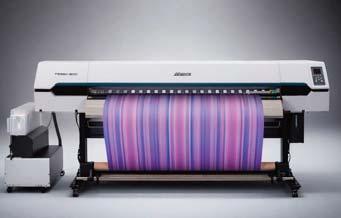
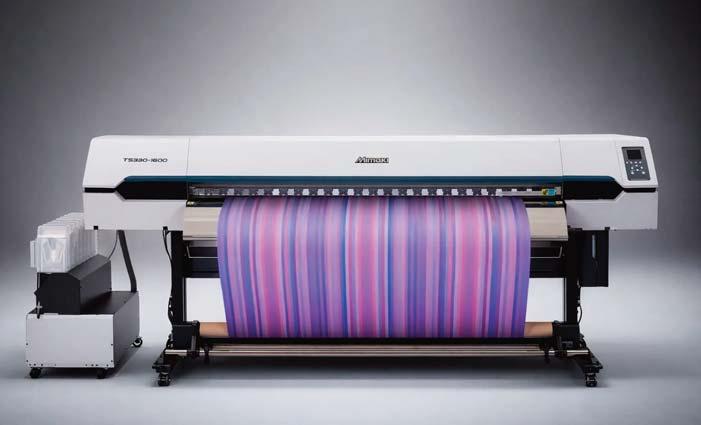
Completing the trio, the TS330-1800 was recognised in textile roll-to-roll printing. Designed for modern sublimation textile and apparel production, the printer combines productivity, image quality and operational stability, with a wide print area and ink configurations that support applications ranging from fashion and sportswear to soft signage, interiors and promotional products. With extended colour possibilities, including Orange, Violet and Fluorescent inks, the TS3301800 helps textile producers deliver
richer, more expressive output while maintaining reliable production.
Mimaki’s success at this year’s EDP Awards reflects the company’s ongoing focus on developing solutions that help print businesses diversify applications, improve production flexibility and create new value across multiple markets. Drion concludes: “These awards recognise three very different solutions, but they all share the same purpose: helping customers open up new applications, improve dayto-day production and build more resilient businesses. That is where we believe print innovation has the greatest impact.”
Sublimation Printer for Textile Apparel TS330-1800
Recover™ launches Recover™ Yarns to accelerate recycled cotton uptake
Recover™, a materials science company and one of the world’s largest producers of recycled cotton fibre, has launched Recover™ Yarns, a curated portfolio of ready-to-use yarn solutions designed to accelerate the adoption of recycled cotton across the apparel supply chain.
A Curated Platform of Ready-to-Use Yarn Developments
Developed in partnership with a global network of spinners, Recover™ Yarns brings together a wide variety of constructions, blends, and technical capabilities, covering end uses from denim and workwear to jersey, fleece, and refined woven applications, all made with low-impact, high-quality Recover™ recycled cotton fibre.
By consolidating these pre-approved developments under a single platform, Recover™ provides brands and manufacturers with direct access to proven, scalable solutions that integrate seamlessly into existing production processes.
With Recover™ Yarns, Recover™ now offers a fully integrated ecosystem spanning fibre, yarn, fabric, and blank garments, connecting every stage of the supply chain under one consistent brand, ensuring clarity, traceability, and circularity from raw material to finished product.
“By translating our fibre into readyto-use yarns, we are making it easier for brands and manufacturers to move from ambition to implementation in their sustainable strategy,” said Anders Sjöblom, CEO of Recover™
“Recover™ Yarns addresses the need for adaptable product solutions that enable the integration of recycled cotton at scale,” said Enes Adak, Chief Product Officer of Recover™
Recycled Cotton as a Scalable Material
Recover™ Yarns simplifies the sourcing and development of recycled cotton
yarns, while enabling partners to benefit from the strengths of Recover™ recycled cotton fibre, one of the most recognised and trusted branded recycled materials in the industry, backed by full traceability, transparency, a robust life cycle assessment, and demonstrated environmental performance.
The Recover™ Yarns portfolio is the result of strategic developments created in collaboration with the network of more than 150 spinning partners across key global sourcing hubs, delivering a versatile range of yarn options and collections that continuously adapt to evolving market needs, innovative blends, and emerging technologies.
This adaptive approach ensures the Recover™ Yarns platform can support brands of all sizes, across volumes, geographies, price points, and end uses, while enabling long-term collaboration with partners. It offers a flexible and scalable solution that evolves alongside production and sustainability strategies, maintaining recycled cotton as a core material in their portfolios.
Recover™ Yarns are available starting this month. Brands and manufacturers can learn more and get in touch at recoverfiber.com.
YKK joins ZDHC as a signatory supplier, strengthening commitment to eliminating hazardous chemicals
YKK Corporation (Headquarters: Chiyoda-ku, Tokyo; President: Koichi Matsushima; hereafter, YKK) has joined ZDHC (Zero Discharge of Hazardous Chemicals) as a Signatory Supplier as of May 2026.
ZDHC is a global organisation centred on the textile and apparel industry, with the objective of eliminating hazardous chemicals from manufacturing processes and promoting the responsible management of chemicals. Its signatories include leading apparel brands, companies across the supply chain, and third-party verification and testing organisations worldwide*. Through collaboration across the entire value chain, ZDHC works to establish common standards for chemical management and to drive industry-wide efforts towards the elimination of hazardous chemicals.
YKK has long been strengthening chemical management in its products and manufacturing processes based on its own standards, which are aligned with ZDHC’s publicly available policies. As environmental impact reduction and occupational safety in manufacturing processes become increasingly important, YKK determined that enhancing the effectiveness of these initiatives requires greater transparency and the establishment of common, industry-wide standards. YKK therefore decided to join ZDHC.
Through its membership in ZDHC, YKK will contribute to advancing chemical management across the industry while supporting the realisation of a sustainable society that balances reduced environmental impact with the assurance of occupational safety.
The YKK Philosophy of the CYCLE OF GOODNESS® “No one prospers without rendering benefit to others,” is deeply connected to the concept of sustainability. Challenges related to chemicals used in manufacturing processes cannot be fundamentally addressed by the efforts of a single company alone. By joining ZDHC, we aim to further strengthen collaboration with our customers, suppliers, and verification bodies, and to steadily advance improvements in chemical management towards the realisation of a circular economy.
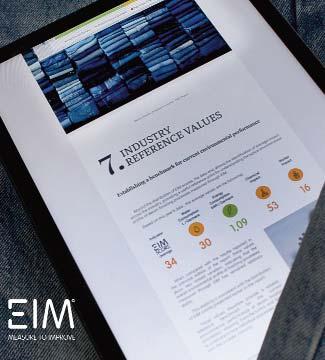
Denim sustainability by the numbers
A snapshot of the industry's progress and remaining challenges by Jeanologia
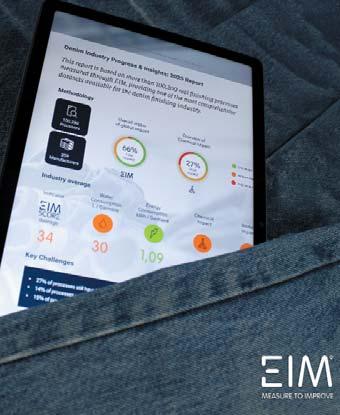
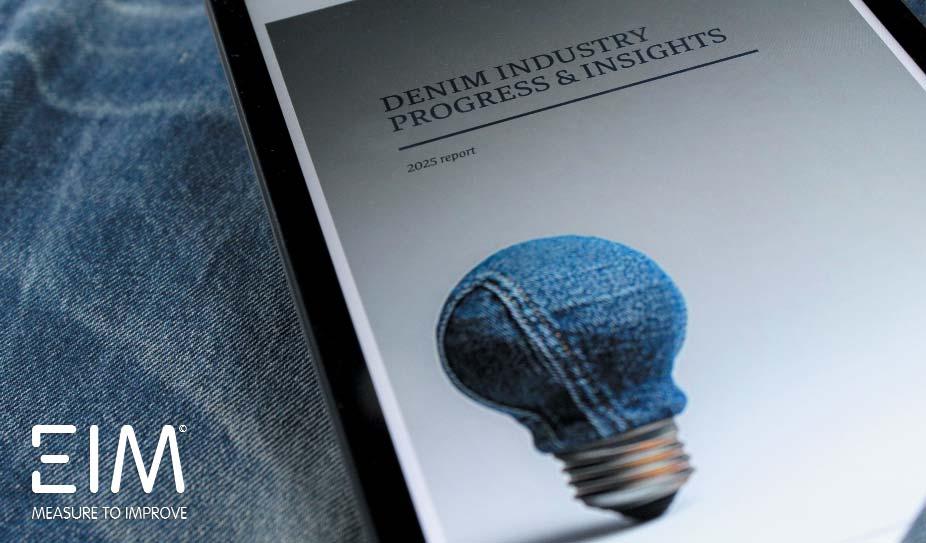
EIM (Environmental Impact Measurement) is a methodology developed in Spain by Jeanologia that has become a global standard for measuring the environmental impact of textile finishing processes.
Its annual report, Denim Industry Progress & Insights 2025, provides an upto-date overview of the environmental evolution of the global denim industry.
Key Figures
66% of processes are now classified as low environmental impact.
Average 30 litres water consumption per garment, reflecting a stabilisation of the industry after years of continuous improvement.
85% of processes are classified as low impact in terms of energy consumption, driven by equipment modernisation and automation.
27% of processes are still classified as high chemical impact, making it the industry's main remaining challenge.
68% of processes show low impact on worker health, thanks to the growing adoption of more responsible and automated technologies.
Key Findings
Sustainability is improving, but progress remains uneven
The data points to steady progress driven by process optimisation and the
gradual adoption of more efficient technologies. However, improvements are not consistent across all environmental indicators.
Water and energy continue to improve
The industry continues to make progress in reducing resource consumption. Water use remains stable at around 30 litres per garment, reflecting a plateau after years of continuous improvement. Energy delivers the strongest results, with 85% of processes now classified as low impact thanks to equipment modernisation and automation.
Chemical impact remains the industry's biggest challenge
Despite progress in other areas, 27% of processes are still classified as high chemical impact. The use of generic chemicals, limited transparency around
certain formulations and the persistence of traditional practices such as pumice stones and potassium permanganate continue to slow progress across the industry.
The challenge is adoption
The report highlights a gap between the solutions already available and their implementation at scale. Technologies capable of significantly reducing the environmental impact of finishing processes already exist, yet adoption remains uneven across parts of the industry.
Automation is improving worker health
The replacement of more aggressive manual techniques with automated technologies is helping improve working conditions and reduce impacts on worker health.
Why It Matters
It is estimated that around 5 billion pairs of jeans are produced every year.
The fashion industry faces growing pressure to reduce its environmental footprint and improve transparency across its supply chains.
EIM provides an objective way to measure the industry's environmental progress and compare performance using common benchmarks.
Measuring environmental performance helps brands, manufacturers and suppliers identify opportunities for improvement and make more informed, data-driven decisions.
Durst Group celebrates 90 years of innovation with the Durst NEXT Technology Festival in Brixen
The two-day event brings together international perspectives on industrial intelligence, digital production, automation and the future of print
Durst Group will celebrate its 90th anniversary with the Durst NEXT Technology Festival, taking place on June 25 and 26, 2026, at the company’s headquarters in Brixen, South Tyrol. Founded in 1936, Durst has grown from its roots in photographic imaging into a global company for digital production and industrial printing. Under the guiding idea “Our World is Printed”, the anniversary year reflects on the company’s heritage while looking ahead to the technologies, partnerships and ideas that will shape the next phase of industrial production.
“Durst started 90 years ago with a clear idea: to make good things better,” said Christoph Gamper, CEO and coowner of Durst Group. “This idea continues to guide us today. With digital production, automation and Industrial Intelligence, we are building on our heritage and looking ahead to the next chapter of industrial production. The Durst NEXT Technology Festival gives us the opportunity to open our doors, bring people together and discuss this future in Brixen.”
“Industrial innovation has always been shaped by the ability to connect people, ideas and technologies,” said Rachel Brill, Durst NEXT Technology Festival Director and Founder of CHAPT3R, Inc. “Durst NEXT creates a setting where visitors can experience how automation, artificial intelligence and Industrial Intelligence are becoming part of real production environments – and how these developments can open new perspectives for industry, business and society.”
The Durst NEXT Technology Festival is designed as an open platform for dialogue, exchange and hands-on experience. It brings together international perspectives from
technology, industry, entrepreneurship, academia, policy, agriculture, print and advanced manufacturing – reflecting the diversity of Durst’s global ecosystem of customers, partners, experts and employees.
At the centre of the festival is the question of how industrial production is evolving in an age of automation, data and artificial intelligence – and how these developments can be translated into reliable, scalable and responsible production systems.
On June 25, Durst will host the inaugural Durst NEXT Honors, an inviteonly evening dedicated to customer excellence and to the global network of partners and customers who contribute to the printed world. The evening will create a setting for recognition and exchange, connecting Durst’s anniversary with the people, applications and partnerships that have shaped its international development.
On June 26, the festival will open its
doors for a full-day public programme of panels, talks, live experiences and community formats. The Innovation Stage will address key topics including Industrial Intelligence, digital print production, automated workflows, deep tech, digital twins, sustainable production, technical ceramics and applications in demanding environments such as aerospace.
A central focus will be the introduction of KYVERIS, Durst’s platform for Industrial Intelligence in Digital Print Production. By connecting hardware, software, data and process knowledge, KYVERIS reflects Durst’s approach to more intelligent, adaptive and efficient production environments.
Beyond the stage programme, visitors will be able to experience selected applications including robotics, 3D scanning, technical ceramics, wearable systems, digital production workflows and the KYVERIS Sandbox.
Tatra Textil, Slovakia, orders a complete batt forming line from ANDRITZ
International technology group
ANDRITZ has received an order from Tatra Textil s.r.o. to deliver a state-ofthe-art batt forming line for its new production facility in Slovakia.
The line will be used to manufacture thermal insulation for applications in the apparel and bedding industries.
This investment will expand Tatra Textil’s production capacity and enable the processing of high-quality insulation materials.
The ANDRITZ batt forming line is designed to achieve a high level of fluffiness and randomisation of the fibres. This is made possible by the combination of highly versatile opening and blending technologies, precise dosing of even the smallest blend percentages, and the TT card with integrated ProWin™ technology. The line ensures precise fibre blend properties with a low coefficient of variation.
The batt forming line is tailored to support the processing of Tatra Textil’s GLOFT® product line for garments as well as sleeping bags under the brand name Carinthia. By delivering a uniform, voluminous, and stable batt structure, the line creates the ideal foundation for this premium application.
The start-up of the line is scheduled for March 2027.
This order is included in ANDRITZ’s order intake for the fourth quarter of 2025. The value of the order will not be disclosed.
Tatra Textil s.r.o., a recently established Slovak subsidiary of the Goldeck Textil Group Austria, specialises in the production of high-loft thermal insulation materials for the apparel and bedding industries. The company focuses on advanced materials for lightweight and high-performance garments.
Andritz Group
International technology group ANDRITZ provides advanced plants, equipment, services, and digital solutions for a wide range of industries, including pulp and paper, metals, hydropower, environmental, and others. Founded in 1852 and headquartered in Austria, the publicly listed group employs about 30,000 people at 280 locations in over 80 countries.
As a global leader in technology and innovation, ANDRITZ is committed to fostering progress that benefits customers, partners, employees, society, and the environment. The company’s growth is driven by sustainable solutions enabling the green transition, advanced digitalisation for highest industrial performance, and comprehensive services that maximise the value of customers’ plants over their entire life cycle. ANDRITZ. FOR GROWTH THAT MATTERS.
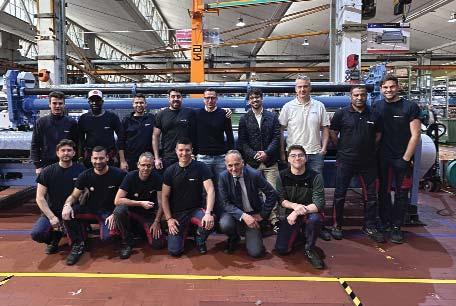
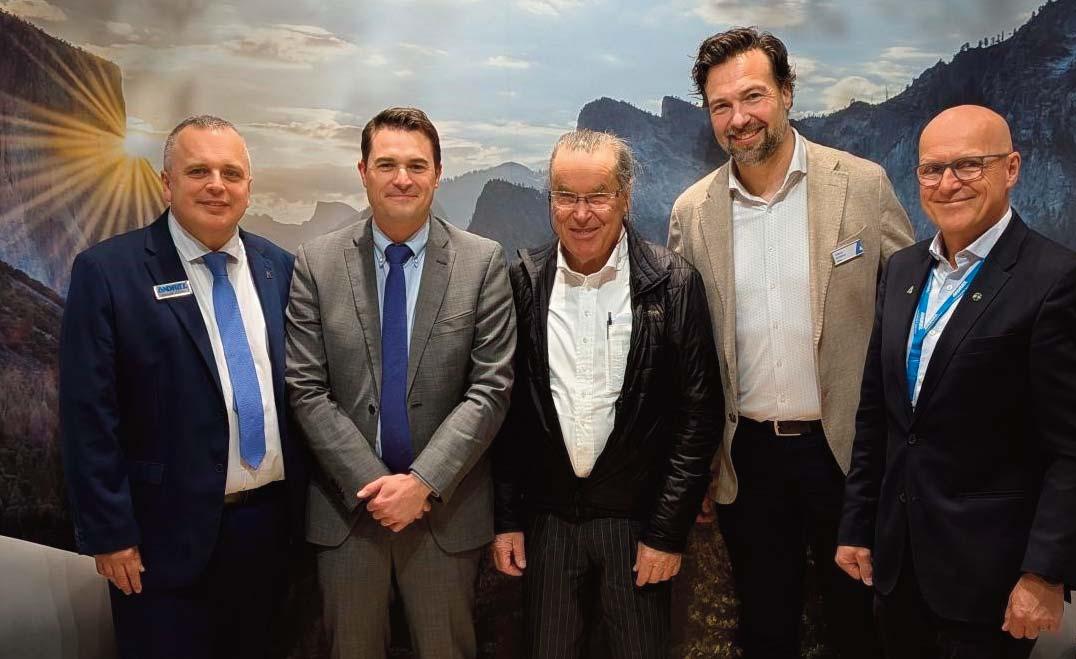
From letft to right: Philippe Laburthe (ANDRITZ), Guillaume Julien (ANDRITZ), Augustin Mayer (Tatra Textil), Tobias Schäfer (ANDRITZ), Michael Reichl (REMITEX Textilmaschinen)
Archroma India advances sustainable innovation in Baroda
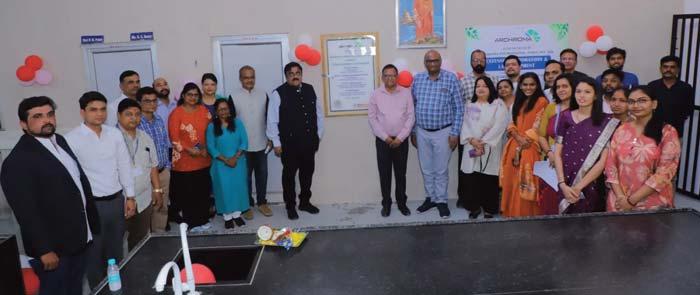
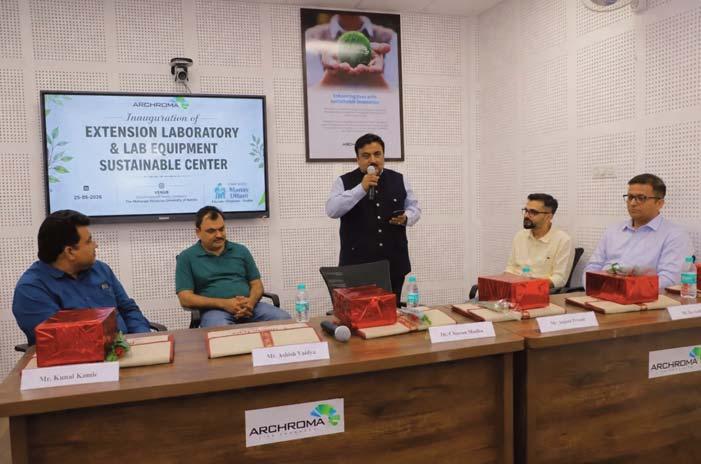
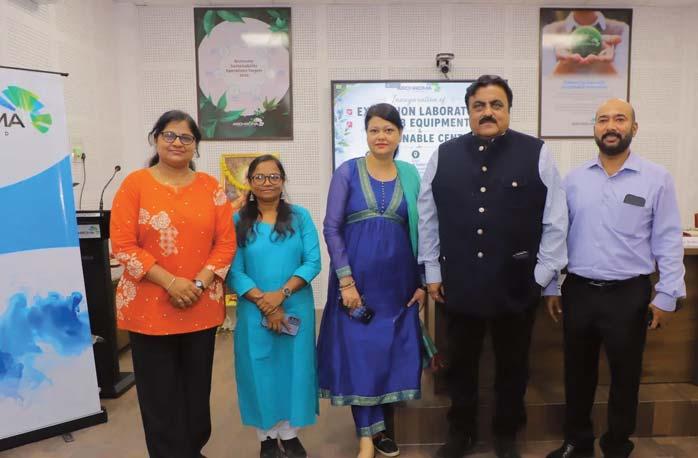
As part of Archroma's ongoing commitment to creating a more sustainable future, Archroma India inaugurated the renovated Sustainable Chemistry Laboratory and Centre of Excellence at The Maharaja Sayajirao University of Baroda on 25 May 2026.
The inauguration ceremony was attended by leaders from Archroma and academia, including Mr. Anjani PrasadManaging Director and Vice President, Archroma Textile Effects, Dr. Bharat Patel - Head of the Department of Chemistry, The Maharaja Sayajirao University of Baroda, Prof. (Dr.) Dhanesh Patel - Dean of the Faculty, Ms. Sadhana KanekarCSR Manager, Archroma, and Mr. Atul Ashtekar - Manufacturing Director, Archroma.
The newly renovated Sustainable Chemistry Laboratory and Centre of Excellence represent a shared vision to inspire innovation, foster environmental responsibility, and equip the next generation of scientists and industry leaders with the skills needed to address tomorrow’s sustainability challenges.
Designed to support advanced research and hands-on learning, the facility provides students and researchers with access to modern infrastructure focused on sustainable chemistry and textile applications. Areas of exploration
will include eco-friendlier chemical processes, sustainable materials, waste reduction strategies, and green
technologies that align with evolving global environmental standards.
The Centre of Excellence will serve as a hub for collaboration, knowledge exchange, and innovation. By bringing together academic expertise and industry experience, it will help cultivate futureready talent while accelerating the development of sustainable solutions that can create lasting value for society and the environment.
This initiative reflects the powerful impact that can be achieved when industry and academia work together with a common purpose. Through investments in education, research, and sustainability, Archroma continues to support the development of responsible innovation and contribute to a more sustainable future for generations to come.
The CHT Group GmbH awarded Best Managed Company 2026
Recognition of a consistent transformation strategy and a clear strategic direction
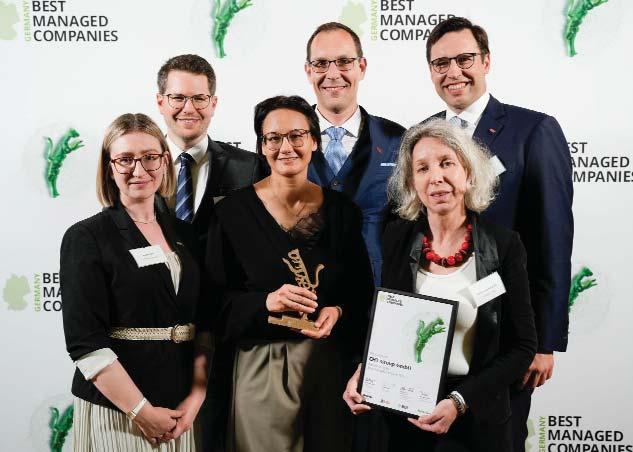
The CHT Group GmbH has been honoured as Best Managed Company 2026. The seal of approval recognises excellently managed medium-sized companies and is awarded as part of a programme by Deloitte Private, UBS, the Frankfurter Allgemeine Zeitung, and the Federation of German Industries (BDI).
For the CHT Group GmbH, the award is above all confirmation of the transformation course it has embarked upon. In recent months, the company has fundamentally realigned its organisation: with a consistent focus on customer value and customer proximity, clearer responsibilities, and simplified structures.
“This award comes at a time when our company has faced significant challenges. That makes us see it all the more as confirmation that we are on the right track. Even though we are still on this journey and have not yet fully achieved our goal, this award is valuable confirmation that we are taking the right steps,” says Eva Baumann, CEO of CHT. “Our goal is to be a clearer, more focused organisation that is closer to our customers, thereby remaining competitive in the long term.”
The selection process for the Best Managed Companies Award is rigorous and is based on a comprehensive analysis of key corporate dimensions, including strategy, innovation and performance, corporate culture, as well as governance and financial management. The evaluation takes place through a multistage process involving in-depth interviews and a final selection by an independent jury composed of representatives from the business, academic, and media sectors.
From the perspective of the CHT Group GmbH, however, the focus is not on the award itself, but on what it reflects: a clear strategic direction, an efficient organisation, and a value-based corporate culture that actively shapes change.
“This award is not an end in itself for us, but rather an incentive,” CEO Eva Baumann continued. “We will steadfastly continue on our path of transformation with the goal of further strengthening our competitiveness and creating real added value for our customers.”
Our foundation-owned company has also been recognised for its valueoriented corporate governance: “Best Managed Companies recognises outstanding corporate leadership that creates stability and does not rest on past achievements. Behind the CHT Group GmbH is a motivated team that takes responsibility on the basis of strong values – for its employees, the market, and society as a whole. This is paired with a distinctive corporate culture that consistently links economic strength with a clear contribution to the common good,” emphasises Markus Seiz, Director at Deloitte Private and Head of the Best Managed Companies Programme.
CEO Eva Baumann accepted the Best Managed Company 2026 award on behalf of the dedicated team at the CHT Group GmbH from the evening’s host, Susanne Schöne, at the Gesellschaftshaus Palmengarten in Frankfurt am Main.
About the CHT Group
The CHT Group is a globally active foundation-owned specialty chemicals manufacturer headquartered in Tübingen, Germany. CHT offers sustainable chemical solutions for numerous industries and has an international presence with around 2,500 employees and 26 production sites. In the financial year 2025, the CHT Group generated a group turnover of approx. EUR 570 million.
CHT’s portfolio includes Textile Solutions (dyes and auxiliaries for the entire textile value chain), Industrial Solutions (specialty silicones, paper and pulp technologies, washing solutions, care ingredients), and Functional Chemicals (chemical additives for paints, coatings, construction, adhesives, leather, chemical producers, agrochemicals, mining, and release agents).
The CHT Group is certified according to international standards and is committed to sustainability and social responsibility. In 2028, the Group will celebrate its 75th anniversary.
Nico Pedretti appointed as Managing Director of Graf Group
With more than 20 years of international industrial experience and extensive expertise in Operations, Supply Chain Management, Finance and Controlling, Nico Pedretti brings a broad range of leadership and business experience to support Graf’s continued success.
After completing an apprenticeship as a construction draftsman and gaining first professional experience in construction management, Nico Pedretti earned a degree in Industrial Engineering with a focus on Supply Chain Management. Since joining the Rieter Group in 2007, he has held various leadership positions in Switzerland and abroad, including assignments in Germany and China. Most
recently, he served as Head of Group Controlling.
Three Priorities for Sustainable Success
In his new role, Nico Pedretti will focus on three key priorities: Delighting customers through quality, innovation and reliable solutions. Strengthening performance through efficient processes, global collaboration and consistent execution. Shaping the future through sustainable growth and a clear strategic direction.
Nico Pedretti believes in a leadership culture built on trust, collaboration and accountability. With strong roots in
Switzerland and a deep connection to Graf and Rieter, he is committed to further strengthening Graf’s competitiveness and driving the company’s future development together with employees, customers and partners.
Nico Pedretti combines international experience with a hands-on approach, strategic thinking with operational excellence, and a strong commitment to teamwork.
As of June 1, 2026,Nico Pedretti has officially started his new role as Managing Director of Graf Group. Graf is delighted to welcome him and looks forward to writing the next chapters of Graf’s success story together.
Visitor registration now open for ITMA ASIA + CITME 2026
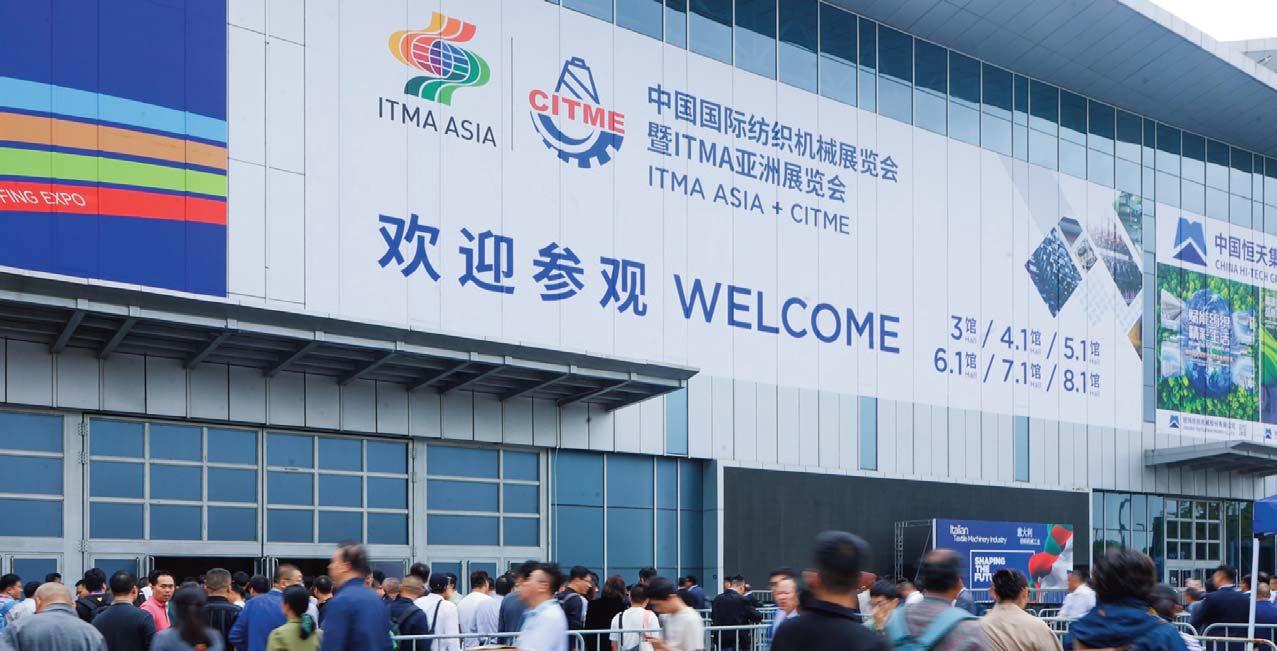
ITMA ASIA + CITME 2026 will be held from 20 to 24 November 2026 at the National Exhibition and Convention Centre (Shanghai).
As of March, both the number of exhibiting companies and the exhibition space have surpassed all previous editions of the combined exhibition, demonstrating strong confidence in the textile machinery industry within the Chinese market and in Asia as manufacturing hubs.
ITMA ASIA + CITME 2026 will showcase the entire textile value chain, spanning spinning, man-made fibres, weaving, knitting, printing, dyeing and finishing, nonwovens, embroidery, garment, braiding, recycling, testing and packaging machinery, components and textile chemicals.
Visitors can expect to meet leading textile machinery manufacturers such as Atexco, Barmag, Beijing Chonglee, BEST, BZS, CHTC, Cixing, Dornier, Epson, Fongs, Hicorp, Hongyuan, Itema, Karl Mayer, Konica Minolta, LMW, Murata, Picanol, Rieter, Rifa, Santoni, Saurer, Shima Seiki, Staubli, Taitan, Texpro, TMT, Truetzschler, Vandewiele, Yoantion, and Yingyang. Industry leaders will showcase the latest developments in digitalisation, intelligent manufacturing and green production on-site.
Visitor Pre-registration Offers Early Bird and Group Benefits
To enhance the visiting experience and sourcing efficiency, the preregistration system was officially opened in May 2026 and will remain available until 19 November. International trade visitors can complete registration via the official exhibition website: www.itmaasia.com.
across major textile markets.
Participants who complete preregistration before 19 November will enjoy a 40% early-bird discount on admission tickets. In addition, industry organisations arranging group visits consisting of six or more participants may apply for further preferential benefits.
Intensive Roadshows Launched
The organisers have launched an intensive visitor promotion campaign that combines online and offline strategies, focusing on key industrial clusters. A series of international roadshows will support this effort through a dual approach of attracting buyers to the event while expanding global outreach
Delegation and Overseas Buyer Groups Expected to Visit at the Combined Exhibition
Leveraging the exhibition’s strong industry influence, group invitations have been extended to more than 100 overseas trade associations, industry organisations and key enterprises. Within China, promotional activities will target both established coastal textile hubs such as Jiangsu, Zhejiang, Fujian, Shandong and Guangdong, as well as emerging industrial clusters in Xinjiang, Hubei and Henan. ITMA ASIA + CITME 2026 in Shanghai will showcase leading textile machinery technologies while serving as a business platform for collaboration and industry exchange.
Emerging innovators find a global launchpad at ITMA 2027
In line with the theme "Co-creating the future of textiles", ITMA continues to strengthen its support for start-ups, recognising their role in driving innovation and shaping the future of textile and garment manufacturing. Through the Start-Up Valley, emerging companies gain access to a global marketplace where they can connect with industry leaders, potential partners, investors and customers.
product sector before detailed planning gets underway.
and identify solutions that can support their future business priorities.
"Start-ups are an essential part of cocreating the future of textiles," said Alex Zucchi, President of CEMATEX. "By bringing together innovators and industry leaders, ITMA provides the environment and opportunities needed to accelerate innovation and help promising ideas evolve into viable business ventures."
Since its debut at ITMA 2023, the Start-Up Valley has attracted growing interest from entrepreneurial ventures worldwide. Applications for ITMA 2027 have nearly doubled compared with the previous edition, reflecting strong demand and reinforcing ITMA's position as the world's leading marketplace for textile and garment technologies.
As preparations progress, sector planning will move into the next phase following the close of stand space applications on 8 July 2026. Companies which submit their applications early will have greater assurance of securing exhibiting space within their relevant
Charles Beauduin, Chairman of ITMA Services, organiser of ITMA said, "In an era of rapid technological change, sustainability imperatives and increasing market volatility, no single organisation can shape the future alone. Industry leaders, innovators, researchers and manufacturers must come together in Hanover to collaborate, share expertise and develop solutions that will drive the next chapter of sustainable textile manufacturing. Such collective action is particularly important as geopolitical tensions and economic uncertainties continue to challenge global trade and investment."
Regular ITMA participant Woolmark sees ITMA as an important platform that aligns with its focus on innovation, sustainability and collaboration.
"ITMA brings together the full textile value chain. For Woolmark, it's a significant industry event that connects us with technology leaders, manufacturers and innovators shaping high-performance natural fibre production, and an opportunity to showcase the possibilities of Merino wool innovation as solutions for the journey towards a nature-positive future," said Julie Davies, General Manager, Industry Development, Woolmark.
Visitor interest is also expected to be strong, as textile and garment manufacturers look to ITMA 2027 to discover technologies, exchange ideas
"ITMA is where we can see the direction of the textile industry first-hand. We look forward to visiting ITMA 2027 in Hanover, where industry and textile research come together. In doing so, the trade fair creates the conditions for translating new ideas into practical applications more quickly. For Europe –and Germany in particular – as a textile hub, ITMA serves as a key driver for the transformation of the entire value chain," said Johannes Diebel, Managing Director Forschungskuratorium Textil e. V.
Taking place from 16 to 22 September 2027 at Messegelände Hannover, Germany, ITMA 2027 will continue to spotlight innovation across the entire textile and garment manufacturing value chain, with a focus on advanced materials, automation and the digital future, sustainability and circularity, and human-centric manufacturing.
The last ITMA exhibition was held in Milan in 2023. It featured 1,709 exhibitors from 47 countries and welcomed more than 111,000 visitors from 143 countries.
With demand building across sectors, interested companies are encouraged to submit their stand applications by 8 July 2026.
Mr. Alex Zucchi
Mr. Johannes Diebel
Intertextile Apparel returns this August with new focus on pet textiles and climate-adaptive innovation
Intertextile Shanghai Apparel Fabrics –Autumn Edition will return from 25 – 27 August 2026 at the National Exhibition and Convention Centre (Shanghai), set to reinforce its position as a leading global sourcing platform for the ever-changing apparel textile industry. Building on the success of the 2025 edition, where more than 3,700 exhibitors from 26 countries and regions welcomed over 100,000 buyers from 123 countries and regions, the upcoming fair will place special emphasis on high-growth segments –including advanced functionality, sustainability solutions, and digital transformation.
“In today’s evolving market landscape, buyers are looking for more than materials – they are looking for direction, innovation, and long-term partners,” said Ms Wilmet Shea, General Manager of Messe Frankfurt (HK) Ltd. “Intertextile Apparel continues to evolve alongside the industry, expanding its showcase to address functional performance, sustainability priorities, and emerging product categories, catering to a wide range of buyer preferences – from the traditional to the unconventional.”
Responding to these priorities, the 2026 edition is guided by four overarching themes reflecting the industry’s most compelling opportunities. Fashion Forward inspires creative direction through curated fabric displays and the Intertextile Directions Trend Forum, offering buyers and designers
early insight into upcoming seasonal trends. Performance Textiles highlights advanced functional fabrics engineered for sportswear, outdoor, and lifestyle applications, addressing growing demand for comfort, durability, and technical enhancement. Under Sustainability, exhibitors present eco-conscious materials, solutions, and innovations aligned with international standards, centred around the Econogy Hub’s variety of sustainable textiles and certifications. Meanwhile, Textile Future spotlights smart textiles, AI-driven design tools, and next-gen manufacturing technologies shaping the digital transformation of the apparel supply chain.
Among this year’s notable highlights is the Autumn Edition debut of the Pet Boutique. First introduced at this year’s Spring Edition, the dedicated showcase will expand to leverage demand at the larger autumn platform. Globally, the pet textile market is forecast to compound yearly by 5.6% up to 2031, with AsiaPacific set for the highest growth. By bringing together relevant suppliers into a clearly defined showcase, the Pet Boutique enables buyers to efficiently explore fabrics and materials suitable for pet clothing, accessories, and related applications – an increasingly attractive segment within the broader
Pet Boutique makes its autumn debut
apparel ecosystem. “Applying natural textile materials in the pet sector is still an emerging avenue. The primary role of this display area is to help the industry understand these materials and master their application methods,” said Mr. Fred Wang, BD Manager for Functional Wear at Lenzing, who participated in the Spring Edition. “We aim to leverage Intertextile Apparel’s strong influence to attract more pet sector players through the Pet Boutique, while in the related Pet Forum I was honoured to discuss the applications of our natural fibres in the sector.”
Functional Lab expands with climateadaptive textiles and more
The enhanced Functional Lab will continue to offer an integrated booth, display area, and seminar model designed to foster deeper exchange between exhibitors and sourcing professionals. At the centre of the zone, The CUBE is a highvisibility display area showcasing standout functional fabrics and accessories. New to this edition, The CUBE will introduce a Product Presentation Series, providing brands with a structured opportunity to present their latest innovations directly to an engaged audience.
Beyond its expanded presentation format, this edition’s Functional Lab will extend its spotlight to fast-emerging markets, including climate-adaptive textiles and silver-age applications, among others. Innovations in temperature and humidity regulation are driving the development of fabrics that support comfort across diverse environmental conditions, while the response to ageing demographics ushers in textiles that prioritise comfort, ease of care, lightweight performance, and everyday practicality. Together, these focus areas illustrate how functional
textiles are expanding beyond traditional performance categories, opening new avenues for product development and cross-sector collaboration.
Reflecting on her experience at the last Autumn Edition, Ms Zoe Zhang, Engineer at the Hong Kong Research Institute of Textiles and Apparel (HKRITA), commented: “At the forum (Weaving the Future: Advancing Functional Textiles with Innovative Technologies), we joined forces with partners including Lenzing and Highsun to exchange our latest insights on functional textiles. The conversations continued well beyond the show floor –with several domestic manufacturers reaching out to us to explore collaboration on nanomaterial applications. Intertextile Apparel is a springboard for meaningful dialogue and cross-disciplinary innovation in the intelligent and sustainable development of functional textiles.”
To enhance sourcing efficiency across the entire apparel value chain, the fair will also feature a broad offering at its other specialised zones:
Accessories Vision: bringing together the full spectrum of trims, zippers, and finishing components essential to garment creation.
Beyond Denim: exploring fabrics at the cutting-edge of denim innovation, sustainable finishing processes, and evolving fashion applications.
Essential Suits & Shirts: a dedicated zone responding to the rising global demand for accessible, ready-to-wear suiting and shirting fabrics.
Innovation & Digital Solutions Zone: presenting AI-driven tools, digital production systems, and advanced manufacturing technologies.
Premium Wool Zone: highlighting the performance and versatility of wool, especially for its applications in topquality suiting.
SalonEurope: offering a curated window into the finest, high-end European fabric collections, from fashion to function.
Verve for Design: dedicated to creative studios, trend-led patterns, and original textile design.
Aligned with the four pillars of Intertextile Apparel, these zones combine to create a comprehensive sourcing environment spanning trend-led inspiration, functional innovation, sustainability, and digital transformation.
Intertextile Shanghai Apparel Fabrics – Autumn Edition will be held from 25 –27 August 2026.
The fair is co-organised by Messe Frankfurt (HK) Ltd; the Sub-Council of Textile Industry, CCPIT; and the China Textile Information Center. It will take place alongside Yarn Expo Autumn, CHIC and PH Value at the National Exhibition and Convention Centre (Shanghai), with the venue playing host to the entire apparel textile value chain.
Critical success factors in transforming knitted fabric dyeing to CPB processes
Andre Chang-En Chang and Demian Jung-Fang Yeh, Everlight Chemical Industrial Corporation
Cold Pad-Batch (CPB) dyeing is widely recognised as one of the most sustainable dyeing processes in the field of reactive dyeing for knitted fabrics. It is characterised by low-temperature operation, high fixation rates, low water consumption, low chemical consumption, and low energy usage. As the global textile industry faces increasingly stringent environmental regulations and carbon neutrality pressures, CPB has become the core process of choice for advanced dyeing and finishing manufacturers.
However, CPB is not a dyeing process without its challenges. From laboratory small-scale samples to large-scale production, and from achieving colour consistency in a single batch to maintaining high reproducibility across multiple batches, all require meticulous management of dyeing technology. This is particularly true when knitted fabric dyeing houses transition from exhaust dyeing to CPB dyeing. For technicians who have long worked in exhaust dyeing, the shift in mindset is itself a significant challenge.
Rather than repeating the various performance benefits of knitted CPB dyeing, this report systematically reexamines the core technical issues and root cause analysis of common problems in CPB dyeing, along with preliminary solutions. It also proposes an integrated solution covering dye combination optimisation, personnel training, and collaborative mechanisms — aimed at helping new entrants to this field get up to speed quickly and achieve the goal of high-quality, highly reproducible CPB production.
Colour Fixation Mechanism
Batch to Batch Colour Variation
Laboratory Recipe to Bulk Production
Colour Shading
Emphasises balanced adsorption kinetics (considering temperature, pH, liquor ratio, time); repeated absorption, diffusion, migration, and final fixation.
High-temperature fixation reaction; fabric and dye liquor are in relative dynamic motion.
Liquor ratio, salt and alkali dosage, temperature, pH control.
Relatively linear; proportional scale-up is more straightforward.
Colour corrections can be made during the dyeing process.
1. Differences Between CPB Dyeing and Exhaust Dyeing for Knitted Fabrics
For technicians with a background in exhaust dyeing, the greatest challenge in transitioning to CPB processes lies in the fundamental differences in dyeing condition control and the logic of problem diagnosis (see Table 1)
2. Core Technical Issues Facing New Entrants to Knitted Fabric CPB Dyeing
2.1 Common Technical Barriers Faced by New Entrants
Based on EVERLIGHT CHEMICAL's experience in promoting knitted CPB dyeing, new entrants typically face the following systemic challenges, which are
Emphasises uniformity of pick-up (mechanical pressure of padder rolls, speed, liquor volume maintenance); dye bath stability management — technically involves managing of tailing and listing colour uniformity.
Room-temperature batch fixation; fabric and the dye liquor it carries are in a static fixation state.
Fabric conditions before dyeing, pick-up, dye bath stability, batched-up storage conditions, and batch to batch management.
Non-linear; differences in equipment parameters for fabric transport or fixation conditions have a significant impact.
Colour is confirmed after dyeing and washing; re-dyeing is required if shade deviation occurs.
often interrelated and require a multifaceted, simultaneous approach:
2.1.1 Knowledge Transfer in Dyeing Technology: Technicians transitioning from exhaust dyeing to CPB generally lack systematic application training in CPB dyeing.
2.1.2 Process Parameter Control: Differences in managing and adjusting parameters such as fabric structure variation, pick-up rate, dyeing speed, tension control, batching conditions, and washing conditions.
2.1.3 Batch Reproducibility: RightFirst-Time (RFT) capability in scaling from laboratory to production, and management of lot-to-lot reproducibility and consistency in large-scale production.
Table 1. Key operational and mechanistic differences between Exhaust and Cold Pad-Batch (CPB) dyeing methods
Exhaust Dyeing CPB Dyeing (Cold Pad-Batch)
Control Core
2.1.4 Assess Capability for Dyeing Quality Defects: Cultivating systematic analytical ability to identify and address dyeing quality defects — from pretreatment to dyeing — such as tailing and listing shade variation.
2.2 Laboratory-to-Production Reproducibility (Right First Time, RFT)
In CPB dyeing applications, the colour difference between laboratory and production is one of the most frustrating problems for technicians. Unlike exhaust dyeing, where operators can take samples before the end of the process and decide whether to make corrections, CPB dyeing is a one-way, irreversible dyeing and fixation process. Once padding is completed, the dyeing result is essentially determined.
Colour variations between laboratory and bulk production stem from differences in equipment scale and processing conditions (e.g., parameter settings, fabric tension), with critical shades being the most affected. Implementing systematic parameter configuration and continuous experimental refinement is the key strategy for improving RFT (Right-FirstTime).
2.3 Lot-to-Lot Reproducibility
Lot-to-lot colour difference is also one of the most frequently reported quality issues among CPB dyeing manufacturers. Key factors affecting lot-to-lot colour reproducibility include pre-treatment and fabric conditions, pick-up rate stability during dyeing, consistency of dye bath preparation, dye stability in alkali solution, and batch condition management (temperature). The
Technical Guide
Substantivity
Reactivity
Stability in Alkali
Compatibility
High Fixation Rate
Description
Select dyes with moderate affinity. Avoid excessively high affinity (which causes severe tailing or face/back shade differences) and excessively low affinity (which causes reverse tailing or insufficient fixation rates).
Select reactive groups that provide good fixation efficiency at room temperature, ensuring enough fixation during room temperature batching.
Maintains stable performance under high-alkalinity conditions at room temperature; no rapid hydrolysis or precipitation / aggregation; low sensitivity to batching environment variations (e.g., temperature); consistent dye uptake mechanism..
Beyond closely matched dye uptake rates, the trichromatic dyes must also have consistent penetration and fixation rates to the fibre, to avoid differences in hue and colour strength..
Ensuring consistency of hue and colour strength across colours, improving dyeing reproducibility, and effectively reducing wastewater load.
application of dye combinations is also critical, as interactions among all these factors can affect dyeing reproducibility.
2.4 Tailing, Shade Variation
The formation mechanism of tailing primarily involves the following aspects: management of dye adsorption and consumption balance; dye bath stability management (stability of the recipe under high alkali dosage and high pH conditions); temperature management; during the padding changes in dye substantivity and dyeing behavior for fibres under alkaline conditions; as well as control of dye-fabric contact time and uptake. The core countermeasure is to select dye combinations with even substantivity for the fibre, low sensitivity
to the above parameters, and moderate dye uptake to maintain consistent dyeing quality. EVERLIGHT CHEMICAL conducts careful evaluation of all trichromatic combinations offered to the market in order to reduce application risk for customers.
2.5 Listing, Selvage Shade Variation
In CPB dyeing of knitted fabrics, unlike woven fabrics, knitted goods are more susceptible to colour listing (also known as Side-to-Centre Variation) due to variations in fabric transport tension in both the lengthwise and widthwise directions during dyeing.
The main causes include: uneven pressure distribution across the padder rolls or roll wear leading to non-uniform dye uptake rate across the fabric width — but more importantly, many customers overlook the influence of fabric temperature prior to feeding, and excessive fabric speed causing uneven surface tension, which creates localised variations that affect the consistency of dye adsorption.
3. Everlight Chemical's Integrated Solution
In response to the technical challenges outlined above, this report proposes an integrated solution framework that advances simultaneously on the technical, personnel, and
Table 2. Selection criteria and technical guidelines for dye formulations in CPB dyeing
Teamwork With Customers: A Collaborative Technical Process
collaborative fronts to achieve systemic improvement — and to realise the environmental benefits of CPB dyeing for knitted fabrics.
Selecting the right trichromatic dye combination has always been the core element of dyeing success. Given the unique situation of knitted fabric dyeing plants that operate both exhaust dyeing and CPB dyeing simultaneously, dye combinations and formulations should be evaluated to satisfy the following technical guides (see Table 2).
Standardisation of Dyeing Process Parameters
In addition to the fundamental dye property evaluations above, establishing a standardised CPB dyeing parameter system is the foundational work for improving batch reproducibility. Key controlled conditions cover the relative parameter settings between various fabric types and pick-up rates, dye bath preparation specifications and corresponding alkali dosages, pH verification after mixing dye bath, batching time management, batched-up room temperature management, and continuous washer condition settings. Each parameter should have established control ranges and colour recording mechanisms to form a traceable reference database.
3.2 Technician Aspect — Training Programme
Differentiated training programmes should be designed for technicians with different backgrounds, with particular emphasis on helping personnel transitioning from exhaust dyeing to understand the core concepts of CPB dyeing. Training modules cover dyeing fundamentals and process principles, problem definition, analysis and resolution, and the formula conversion and condition management required when scaling from laboratory samples to bulk-scale in production.
3.3 Collaborative Aspect — Partnership Mechanism
Effective technical collaboration should go beyond product supply to establish a long-term technical partnership. Based on the needs of each dyeing and finishing plant, EVERLIGHT CHEMICAL provides step-by-step (see Figure 1), modular services at each stage to support the planning and setup of CPB dyeing operations.
Within a collaborative framework of mutual growth, regular technical exchanges, quality tracking, and technical improvement are established to achieve a long-term and stable partnership.
4. Conclusion and Outlook
The adoption of CPB dyeing processes for knitted fabrics represents an important direction for the textile dyeing industry toward sustainable
manufacturing. However, the technical complexity of the process itself — combined with the mindset gap that comes from transitioning from exhaust dyeing — means that new entrants cannot achieve expected benefits through equipment investment alone. The true competitive advantage comes from the systematic accumulation of technical capabilities.
The core issues analysed in this report demonstrate that dye combination selection, standardised process parameter management, and personnel technical capability development are all highly interrelated. Improvement in any single dimension, without support from the others, will be significantly limited in effectiveness.
For dyeing manufacturers, building comprehensive CPB dyeing line and technical capabilities at this stage is both a pragmatic response to current environmental pressures and a strategic positioning to gain differentiated advantage in future market competition. The collaborative model with dye suppliers also needs to evolve from a traditional product-transaction relationship into a deeper, co-creative technical partnership. EVERLIGHT CHEMICAL will continue to deepen its applied research in CPB dyeing, helping dyeing houses to achieve the goals of high-quality, highly reproducible, and environmentally superior CPB dyeing production for knitted fabrics.
Figure 1. A staged collaborative technical support framework for CPB dyeing operations.
Trust, innovation and the next renaissance of warp knitting A conversation with Karl J. Mayer
By Nadeem Mazhar, Managing Editor, Pakistan Textile Journal.
At ITMA ASIA, I had the opportunity to sit down with the KARL MAYER family representative and Advisory Board member Karl J. Mayer for a wide-ranging conversation on the evolution of warp knitting, global textile shifts, and where innovation is headed next.
The interview was facilitated by Christine Wolters, Head of Marketing, and took place against the backdrop of Karl Mayer’s impressive ITMA ASIA presentation.
Although no longer involved in dayto-day operations, Karl J. Mayer remains a highly influential voice within the company and the wider textile machinery industry, bringing with him both historical depth and a forward-looking perspective.
From the Shop Floor to Global Leadership
Karl J. Mayer’s association with exhibitions began early. Long before management roles, he recalls being involved as a young trainee, helping to build stands, driving forklifts, and learning machinery hands-on. His first formal ITMA participation came in the mid1990s, followed by formative years in Japan and Hong Kong.
After seven years as Managing Director in Hong Kong for Karl Mayer, he stepped outside the family business to gain external experience. This led him to the Triumph Group, where he served as Global Head of Innovation. That phase, he notes, proved invaluable in shaping his understanding of textiles not just as
machinery, but as consumer-driven products requiring design, speed, and innovation.
Two Decades of Structural Change
Reflecting on the past 20 years, Mayer identifies the early 2000s as a decisive turning point. Almost overnight, large parts of the American and European textile manufacturing base relocated to China, accompanied by massive transfers of second-hand machinery.
China, he estimates, went on to command nearly 70% of the global synthetic warp-knit business for much of the past two decades. What we are witnessing now, however, is not a retreat, but a redistribution. Chinese companies are increasingly investing abroad, setting up operations in Vietnam, Indonesia,
Mr. Karl J. Mayer; Representative of the KARL MAYER Advisory Board and the Mayer family
Egypt, and beyond, while still retaining technological and managerial control.
This shift, he believes, is being driven by geopolitics, infrastructure constraints, brand strategies, and the need for resilience in supply chains.
Pakistan: Late Entry, Strong Foundations
During our discussion, I shared a historical reference close to my heart: Karl Mayer machines were first introduced to Pakistan as early as 1957. Yet, despite this early exposure, warp knitting remained a relatively small segment in the country for decades.
Mayer acknowledges this, noting Pakistan’s historic strength in home textiles and weaving. Warp knitting, by contrast, never became a dominant focus, one reason, he explained, why his own travel in South Asia historically concentrated more on India.
That said, he spoke warmly about Pakistani customers, describing them as among the most reliable globally. “When terms are agreed, the business is done,” he remarked, expressing hope that Pakistan’s engagement with Karl Mayer technologies will accelerate again in the coming years.
Functional Textiles and Changing Consumer Preferences
A key theme in the conversation was the rise of functional textiles, particularly in Asia. In contrast to Western markets, where natural fibres dominate against the skin, consumers in China and other humid climates increasingly prefer synthetics for comfort, cooling, and UV protection.
Warp-knitted structures with high elastane content, Mayer explained, are now common in everyday apparel such as polo shirts and casual wear. These fabrics offer moisture management, stretch, and protection, attributes well aligned with active urban lifestyles.
We also touched on warp-knit towels, an application that has existed for decades but remains underexplored. This sparked immediate interest, with Mayer confirming that the idea would be taken up as a development project within Karl Mayer’s textile innovation framework.
The Next Phase: Design, Speed and Collaboration
Looking ahead, Karl J. Mayer sees the industry entering what he described as a new “renaissance.” After years dominated by volume-driven mass production, differentiation through design, application development, and innovation is becoming
essential, particularly for companies that cannot compete purely on scale.
Customer relationships, he stressed, are now more critical than ever. One notable development is the growing willingness of customers to jointly approach brands together with machine manufacturers, shortening development cycles and avoiding the “Chinese whispers” effect where requirements get lost across interfaces.
This philosophy is at the heart of Karl Mayer’s new Textile Innovation Centres, one in Frankfurt and another in Changzhou, China, where machines, textiles, brands, and customers come together under one roof to co-create future applications.
Confidence Rooted in Trust
Throughout the discussion, one value consistently surfaced was trust. Trust in customers, in employees, and in longterm partnerships. It is a value deeply embedded in the Karl Mayer family ethos and one that continues to guide the company’s strategic direction.
As Karl J. Mayer succinctly put it elsewhere: “I don’t see any challenges, only opportunities.”
After this conversation, it is clear that this optimism is not rhetorical, but grounded in experience, reflection, and a deep belief in the transformative power of innovation.
Built to last, sourced with care: Carhartt and the U.S. Cotton Trust Protocol’s member insights
For more than 135 years, Carhartt has built tough, dependable gear for hardworking people who rely on it day in and day out. From job sites and farms to ranches and loading docks, Carhartt’s rugged workwear, its iconic duck jackets, heavyweight hoodies, work pants, and overalls, has earned a place in the American work ethic. Built on a foundation of durability, dependability, and respect for the people who wear it, Carhartt has long understood that quality starts long before a product hits a shelf. It starts with the materials.
In 2024, Carhartt took an important step forward by joining the U.S. Cotton Trust Protocol, reinforcing its commitment to sourcing cotton that is grown responsibly, transparently, and with the long-term health of the land in mind. For a brand whose identity is inseparable from cotton, this membership is more than a sustainability milestone, it is a natural extension of who Carhartt is and what it stands for.
A Commitment Rooted in Heritage: Why Carhartt Joined the Trust Protocol
Carhartt’s decision to join the Trust Protocol in 2024 reflects a broader strategic commitment to responsible sourcing and supply chain transparency. As the brand continues to examine how its products are made, pushing for lowerimpact materials, more energy-efficient manufacturing, and ethical supply-chain practices, membership in the Trust Protocol provides a credible, data-driven framework that matches Carhartt’s standards for quality and accountability.
Through the Trust Protocol’s advanced traceability platform, Carhartt gains verified visibility into the U.S.grown cotton used in its products, offering real transparency into where its raw materials come from and how they are produced. For a brand built on trust, this kind of supply chain integrity matters.
Participation in the Trust Protocol also aligns with Carhartt’s broader goal of
Gretchen R. Valade; Gretchen Valade, Director of Sustainability
supporting farmers as they adopt improved agricultural practices, practices that benefit soil health, water conservation, and long-term land stewardship. These are values that resonate deeply with Carhartt’s core customer base: the farmers, ranchers, construction workers, and tradespeople who depend on the land every day.
“At Carhartt, we’ve always believed that how our products are made matters just as much as how they perform,” said
Gretchen Valade, Director of Sustainability. “Joining the U.S. Cotton Trust Protocol is an important step in strengthening transparency across our supply chain and ensuring the materials we rely on are sourced responsibly. As we look to the future, the Trust Protocol helps us better trace the cotton we rely on, a fibre that is essential to the durability and quality our customers expect.”
From Field to Finished Garment: Building Transparency into Every Thread
Cotton is not incidental to Carhartt, it is foundational. The brand’s most iconic products are built from heavy-duty cotton fabrics engineered to withstand abrasion, weather, and years of hard use. Ensuring that cotton is grown responsibly is therefore central to delivering on Carhartt’s promise of quality and durability.
Through its Trust Protocol membership, Carhartt now has access to field-level data that goes beyond conventional sourcing. The Trust Protocol’s measurement and verification system tracks six key sustainability metrics: greenhouse gas emissions, soil carbon, water use, soil loss, land use efficiency, and energy efficiency, giving Carhartt meaningful insight into the
environmental footprint of its raw materials. This data-backed approach allows Carhartt to move beyond broad sustainability claims and toward measurable, continuous improvement.
For Carhartt, this also means being able to tell a more complete story to its customers, people who value authenticity and want to know that the gear they depend on reflects their own values.
Investing in Better Materials, Honouring a Legacy
Carhartt’s longstanding philosophy of making gear that holds up through years of hard work reduces the need for replacement, lessens waste, and delivers long-term value to the wearer. By sourcing cotton grown with greater care for the land, Carhartt is extending that same philosophy upstream and building responsibility into the product from the very first step.
The brand’s membership in the Trust Protocol is part of a wider sustainability strategy that includes a focus on responsible fibre sourcing, reduced environmental impact in manufacturing, and transparent supply chains. Together, these efforts reflect Carhartt’s long-term goal: building a more sustainable future
without compromising the toughness, quality, and authenticity that hardworking people have relied on for generations.
As Carhartt continues to explore new ways to incorporate responsibly sourced materials across its product lines, its Trust Protocol membership signals to customers, supply chain partners, and the broader industry that the brand is serious about progress, and that it holds its materials to the same high standard it holds its finished products.
About the U.S. Cotton Trust Protocol
The U.S. Cotton Trust Protocol is the voluntary sustainability program for U.S. cotton growers and a traceability platform for all U.S. Cotton. It brings quantifiable and verifiable goals and measurements to the issue of responsible cotton production and drives continuous improvement in six key sustainability areas: land use efficiency, water use efficiency, energy use, greenhouse gas emissions, soil conservation, and soil carbon. The Trust Protocol underpins and verifies sustainability progress through sophisticated data collection and independent third-party verification.
LYCRA® VintageFX fibre officially launches
The LYCRA Company’s Latest Innovation Offers a Heritage Aesthetic with Stretch Denim Comfort
The LYCRA Company, a global leader in fibre and technology solutions for the apparel industry, has announced the global launch of LYCRA® VintageFX fibre. This next-generation fibre delivers the authentic look of vintage denim in modern silhouettes while providing the comfort, fit and shape retention that consumers expect from stretch denim.
Designed for denim and woven fabrics, LYCRA® VintageFX fibre sets a new performance benchmark, enabling brands and mills to recreate rigid, heritage-inspired looks without sacrificing recovery, durability, or wearer comfort. This innovation responds to the industry’s shift toward away-from-the-body silhouettes and looser fits, including wide-leg, flares, boyfriend, and mom jeans, where maintaining fit and stability remains a challenge, particularly in the waist, hips and crotch.
“After previewing LYCRA® VintageFX fibre at Kingpins Amsterdam last year, we’re excited to officially introduce it to the global denim community,” said Ebru Ozaydin, product category director –denim and ready-to-wear at The LYCRA Company. “For brands and garment makers, its dual-core yarn construction, low growth, and high recovery open new design possibilities. These features enable compact, less bulky fabrics with an authentic vintage appearance, but without the instability of traditional low-stretch constructions.”
A New Standard in Comfort Stretch Denim
Engineered with a proprietary and patent-pending fabric application, LYCRA® VintageFX fibre works in tandem with LYCRA® fibre in a dual-core structure. During finishing, this fibre shrinks under heat, controlling elastic extension, protecting the fibre core, and delivering enhanced shape retention to reduce bagging and sagging. Additional technical benefits include:
Low growth and good recovery, even after industrial wash and bleach processes
Compact fabric construction for better drape and less bulk Authentic vintage denim aesthetics with soft compression and a gentleto-the-skin feel
Reduced seam slippage for improved garment quality and longer wear life
The result is a fabric solution that supports modern comfort stretch denim, balancing heritage-inspired looks with the needs of contemporary lifestyles. Apparel made with this fibre also qualifies for LYCRA XTRA LIFE® fibre branding at the point of sale, reinforcing garment durability.
Value for Brands and Retailers
“LYCRA® VintageFX fibre enables brands and retailers to deliver a strong consumer value proposition, filling a critical market gap while elevating collections,” said Arnaud Ruffin, vice president, brands and retail at The LYCRA Company. “This product shows how our commitment to textile innovation supports the value chain with unique, performance-driven solutions.”
LYCRA® VintageFX fibre has passed The LYCRA Company’s rigorous testing protocols, ensuring consistent performance, durability, and quality. Brands and mills can also access co-creation opportunities at LYCRA® Labs, where they can tap into deep technical expertise and collaborative innovation to bring distinctive stretch solutions to market.
About The LYCRA Company
The LYCRA Company innovates and produces fibre and technology solutions for the apparel and personal care industries, and owns the leading consumer brands: LYCRA®, LYCRA HyFit®, LYCRA® T400®, COOLMAX®, THERMOLITE®, ELASPAN®, SUPPLEX® and TACTEL®. Headquartered in Wilmington, Delaware, U.S., The LYCRA Company is recognised worldwide for its sustainable products, technical expertise, and marketing support. The LYCRA Company focuses on adding value to its customers’ products by developing unique innovations designed to meet the consumer’s need for comfort and lasting performance. Learn more at thelycracompany.com.
Rieter’s Card C 81 delivers breakthrough performance at Sportking
Building on nearly two decades of continuous expansion with Rieter, Sportking Ltd. once again demonstrates how long-term technology partnerships pay off. The introduction of the 1.5-metre Rieter card C 81 delivers a breakthrough production gain of 43% alongside stable, high-quality output. The result is better operational efficiency and stronger competitive positioning.
Sportking Ltd., India’s leading vertically integrated textile conglomerate, operates 380,000 spindles with fully integrated operations. Their manufacturing facilities are equipped with the latest machinery, producing yarns and garments that are benchmark in quality and innovation in domestic and international markets. To drive long-term growth, the company continues to expand its spinning capacity through a structured, turnkey approach in close partnership with Rieter.
Scaling productivity while securing process stability
As spinning capacity increased, Sportking required a carding solution that could integrate seamlessly into phased expansions and perform reliably with diverse raw-material blends. The Rieter card C 81, with its 1.5-metre width, maximum technological carding area with 40 active flats controlled by Carding Gap Control (CGC) and the highest cylinder circumference utilisation, delivers superior fibre treatment, high sliver quality and strong operational performance.
Munish Avasthi, Chairman and Managing Director of Sportking, states, “We are impressed by the excellent performance of the C 81. It has it all: outstanding productivity, consistently high quality and smart features.”
43% production gain
With the C 81, Sportking achieved a remarkable 43% increase in production compared to earlier card generations –while maintaining excellent and stable sliver quality. This performance leap is particularly evident in the production of Ne 30 combed ring yarn, one of the mill’s core products.
Here, the high-performance card reaches an output of 110 kg/h, while at the same time reducing yarn imperfections by 27%. This combination of higher productivity and improved quality translates into a
step-change of performance for Sportking.
More output, efficient mill layout
The C 81’s stellar productivity directly improves mill economics. Higher output per machine means fewer cards are required, resulting in:
Lower overall energy consumption
Reduced maintenance and service efforts
More efficient use of floor space.
At the same time, CGC is Rieter’s latest advancement in intelligent carding technology. CGC uses state-of-the-art acoustic sensor technology and an intelligent data model to proactively and automatically maintain the optimal carding gap to ensure steadily high sliver quality. At Sportking, this has resulted in a reliable nep count without any manual intervention, even when wire life exceeds 700 tons.
For Sportking, the investment in the C 81 is more than a capacity increase – it is a strategic step toward future-ready, efficient and reliable production with measurable benefits from the very start.
Rieter’s card C 81 delivers breakthrough carding performance of plus 43% at Sportking.
Monforts: Delivering round-theclock production for Kipaş
As a valued Monforts customer for many years, Türkiye’s Kipaş Textile has just installed a new Thermex dyeing range and a Monfortex sanforizer at its new dyeing and finishing plant in Kahramanmaraş.
Founded in 1984, Kipaş has grown into the largest vertically-integrated textile manufacturer in Greater Europe and now employs some 5,500 people throughout its operations. It produces 400 tons of yarn on a daily basis, with annual capacities of 48 million metres of denim and a further 36 million metres of non-denim fabrics.
“Türkiye offers fast logistics to European markets thanks to its strategic location, while its strong textile heritage and qualified workforce enable us to produce high-quality products,” says Kipaş CEO Halit Gümüser. “Our R&D capacity – especially in sustainable and technical textiles – makes Türkiye an indispensable solution partner in the global supply chain.”
Kipaş already operates a number of Monforts lines and the two latest machine systems have been operating 24/7 since the first day they were commissioned.
Thermex continuous dyeing ranges are well known for their ability to deliver high productivity, excellent dyeing quality and significant energy savings. The Thermex system combines precise application technology with advanced process control to ensure highly uniform dye penetration and outstanding colour reproducibility across long production runs, while also enabling smaller lot sizes to be rapidly executed.
Monfortex sanforizers are meanwhile designed to deliver minimum residual shrinkage with excellent fabric hand and highly reproducible quality. Their enlarged shrink cylinder and optimised rubber belt technology enable enhanced shrinkage performance at lower contact pressures, extending rubber belt life while reducing production costs.
Fully operational
“We are extremely satisfied with the installation process of the two Monforts machines installed in our new fabric dyeing and finishing plant, and with the professional support provided by the technicians,” says Mr Gümüser. “In particular, the uninterrupted remote support they provided to ensure operational continuity played a major role in quickly resolving any potential problems.”
Versatility
Mr Gümüser adds that a key strength of Kipaş is the versatility its advanced technology makes possible.
“We offer a very wide and highquality product range under our sub-brands, ranging from technical textiles to fashion-oriented products and from alternative sustainable solutions to high-performance fabrics,” he says. “This gives us unique flexibility against fluctuations in global markets and thanks to our agile structure, we continue to strengthen our strategic position and expand our sphere of influence with new collaborations, maintaining our balance even in times of crisis.”
Recycling platform
At the end of 2025, Kipaş announced the launch of its fibR-e recycling platform
designed to tackle the hurdles that have stopped polyester from becoming truly circular.
In a partnership with fellow Turkish company, Adana-based Meltem Kimya, waste garments containing 70% or more polyester are now being regenerated and turned into certified, high-quality filament yarns and staple fibres ready for new collections.
“Recycling has barely scratched the surface of the polyester problem,” says Mr Gümüser. “With fibR-e, we can take real post-consumer waste in all its complexity and return it to the market as certified, high-quality filament yarns and staple fibres. This is how the industry moves from linear to circular, not through pilots but through commercial scale.
“As the global market’s expectations for sustainability and circularity increase day by day, we at Kipaş see this process not just as an adaptation phase, but as an area where we can assume leadership. With our innovative investments such as fibR-e and strong technology partnerships with companies like Monforts, we are ready to meet these demands at the highest level.” adds Monfort Marketing Manager, Nicole Croonenbroek.
Trützschler establishes in-depth strategic cooperation with Fujian Leo Group
The strategic cooperation signing ceremony between Trützschler and Fujian Leo Group, a Chinese customer specializing in the R&D, production and sales of personal hygiene products for ten 4.2m Air-Through-Bonding (ATB) lines was grandly held in Geneva, Switzerland. The signing marks a new milestone in the partnership.
Leveraging Trützschler’s advanced nonwoven technology, Fujian Leo Group will complete a large-scale production line upgrade, further consolidate its production capacity advantages and strengthen its core competitiveness in the industry.
Trützschler first kicked off its in-depth cooperation with Fujian Leo Group in 2022 with the launch of the first 3.8m back-to-back double carding ATB line. Since its commissioning, the production line has won high recognition from Fujian Leo Group for its stable operation, outstanding production capacity and toptier product quality, laying a solid foundation of trust for long-term strategic collaboration. Benefiting from favourable cooperation results and welladapted equipment performance, both sides have continuously expanded the layout and built up a matrix of intelligent production lines.
Prior to this signing, Fujian Leo Group had already deployed nine 3.8m Trützschler high-speed and high-capacity ATB lines as well as one 4.2m ATB line. The stable operation of the ten professional lines has enabled Leo Group to achieve efficient and standardised production in the nonwoven materials sector. With this new round of collaboration, the two parties sealed the third-phase order for another ten 4.2m Trützschler high-speed and high-capacity ATB production lines. Once fully put into operation, Leo Group will own a total of 20 Trützschler ATB lines, forming a modern production system featured with scale, efficiency and intelligence.
The newly signed 4.2m high-speed and high-capacity ATB production line is Trützschler’s core equipment iteratively upgraded to meet market demands of the nonwoven industry. Inheriting the brand’s mature carding technology and equipped with an intelligent control system, it features a wider working width, higher productivity, lower energy consumption and uniform and stable finished product quality. It perfectly caters to large-scale production demands for high-end nonwoven materials, helping Leo Group optimise production structure, boost operational efficiency, cut production costs and expand layout in the high-end product market.
As a more than 130-year-old German family-owned enterprise, Trützschler specialises in textile machinery manufacturing, headquartered in Mönchengladbach, Germany. Its business covers three core segments: Spinning, Nonwovens and Card clothing. With multiple production bases worldwide, the company ranks among the global leaders
in textile machinery industry by virtue of exquisite manufacturing craftsmanship, cutting-edge R&D technology and comprehensive after-sales service system. It keeps delivering professional, customised and intelligent complete production solutions for global partners.
A leading enterprise with remarkable scale and influence in the nonwoven industry, Fujian Leo Group has long been committed to the R&D production and sales of nonwoven materials, adhering to the philosophy of high-quality development and accurately grasping industry trends. The enterprise consistently empowers capacity upgrading with intelligent equipment. Its continuous investment in purchasing high-end Trützschler ATB production lines fully demonstrates its strategic determination to deepen the main business and scale up operations, as well as high recognition of Trützschler’s equipment quality and technical strength.
Enterprise representatives from both sides expressed high expectations for this
Signatories (from left to right) Mr. Matthias Schemken (Managing Director of Trützschler Nonwovens) and Mrs. MeiLing Chen (Director of Procurement of Leo Group).
strategic cooperation at the signing ceremony. Trützschler officials stated that Fujian Leo Group is a core strategic partner in the nonwoven sector, and the two sides have achieved mutual benefit and coordinated development over the years. Going forward, Trützschler will continue to provide high-quality equipment, professional technical support and full-cycle operation and maintenance services to ensure the efficient commissioning and operation of production lines, helping Leo Group improve quality and efficiency. Meanwhile, it will take this cooperation as an opportunity to further explore China’s nonwoven market, upgrade technological R&D and localised service capabilities, and empower more industrial enterprises with transformation and upgrading.
Leaders of Fujian Leo Group commented that Trützschler’s high-end intelligent production lines are perfectly aligned with the enterprise’s long-term development strategy. Previous collaborative lines have strongly supported Leo’s capacity expansion and quality optimisation. The ten new 4.2m ATB lines will help Leo Group expand capacity and strengthen its position in the high-end nonwovens market.
The signing in Geneva, Switzerland stands as an important milestone of mutual empowerment and win-win cooperation between Trützschler and Fujian Leo Group, as well as a vivid epitome of the high-end, intelligent and large-scale development of the global nonwoven industry. Moving forward, the
Representatives of Trützschler and Fujian Leo Group at the signing ceremony (from left to right) Mr. ZhengYu Hu, (Sales of Trützschler Textile Machinery (Jiaxing) Co., Ltd.) Mr. WeiZhong Zhu (Sales Director of Trützschler Textile Machinery (Jiaxing) Co., Ltd.), Mr. Matthias Schemken (Managing Director of Trützschler Nonwovens), Mrs. MeiLing Chen (Director of Procurement of Leo Group), Mr. Harald Schoepp(General Manager of Trützschler China), Mr. Weiping Zhang (Vice General Manager of Truetzschler Textile Machinery (Jiaxing) Co., Ltd.)
two sides will further deepen strategic cooperation, leverage complementary technologies and shared resources to tap into industrial potential. By delivering high-quality equipment and professional standardised production, they will drive industrial upgrading and jointly inject strong momentum into the high-quality development of the global nonwoven industry.
About the Trützschler Group:
The Trützschler Group SE is a German textile machinery manufacturer headquartered in Mönchengladbach, Germany. The company is divided into
three business units: Spinning, Nonwovens and Card Clothing. Trützschler Spinning is the global technology and market leader in spinning preparation in the cotton and man-made fibre sector. With TRUECYCLED, Trützschler Spinning offers a complete solution in spinning preparation for stateof-the-art recycling of textile waste –from opening and cleaning to carding and drawing secondary fibres, resulting in high-quality, sustainable yarns.
Trützschler Card Clothing is the global market leader in the production of highperformance card clothing for cards and roller cards. Trützschler Nonwovens is a leading supplier of complete production lines and machinery for needle-punched, hydroentangled (spunlaced), through-air and chemical bonded nonwovens.
Trützschler machines, installations and accessories are produced and developed in nine locations worldwide. This includes four factories in Germany (Dülmen, Egelsbach, Mönchengladbach, Neubulach), as well as sites in China (Jiaxing and Shanghai), India (Sanand), the USA (Charlotte) and Brazil (Curitiba). Local service companies in Türkiye, Mexico, Uzbekistan and Vietnam and local service teams in Pakistan, Bangladesh and Indonesia provide customer proximity in key regions for the textile processing industry.
Uster AFIS 6 now offers the key data for better decisions when blending recycled fibres. Process control is decisive in determining the quality and economic outcome. The new R Recycling Module of AFIS 6 introduces the Recycling Opening Index (ROI), so spinners can optimise their circularity credentials. It is officially launched at ITM 2026 in Istanbul, Türkiye.
Cotton recycling has become a strategic priority for brands, regulators, and technology providers because it directly addresses the textile sector’s biggest challenges: growing volumes of waste, resource scarcity, climate impact, and regulatory pressure.
Recycled
waste and the use of it
Recent industry data shows that most textile waste is post-consumer waste (75% by volume) while post-industrial (pre-consumer) waste makes up around 25%. However, when it comes to recycling – turning this waste into quality new yarn – the situation is different.
Even though it’s a smaller share of total waste, about 95-99% of postindustrial waste is already being reused. Almost every scrap of factory waste is already being collected and spun back into yarn. That’s because it’s clean, consistent, and relatively easy to process.
Spinners generally see it as the safer option to start their recycling activities with post-industrial waste. These raw
Recycled fibres: the vital data for quality and profitability
Uster’s new Recycling Opening Index guides spinners to the perfect blend
materials are more predictable in their behaviour, so it’s simpler to refine spinning techniques to suit them. An optimised process can then be developed for blending in pre- and/or postconsumer waste.
Controlling processes with recycled raw materials
Now, objective measurement data from Uster is available to give clear indicators of processability and
Uster AFIS 6 – The fiber process control system
Screenshot of Uster AFIS 6 R Recycling Module measurement showing summary of length (n) histogram and distribution curve.
Screenshot showing the new Uster AFIS 6 Recycling
yarn pieces/gr).
profitability when using recycled raw materials. This comes with the Recycling Opening Index (ROI), together with the total yarn pieces value. The ROI is a metric in the Uster AFIS 6 R Recycling Module, which describes the effectiveness of the opening process in the recycling of cotton fibres. It is defined as the ratio of opened fibres to remaining yarn pieces (hard ends). ‘Total yarn pieces’ means the sum of yarn fragments present in the raw material that have not yet been fully opened into individual fibres.
If a low ROI value is indicated, this suggests a poor degree of opening, which can disrupt the spinning process and cause issues such as yarn irregularity (IPI), weak spots and uneven surface structures.
So, the ROI is a vital metric for evaluating the quality of recycled cotton materials. For the first time, spinners can have a quantitative assessment of the opening process.
R Recycling Module of Uster AFIS 6
Uster AFIS 6 with the R Recycling Module supports better decisions through real measurements. The concept of the Recycling Opening Index (ROI) combined with the number of yarn pieces per gram, provides spinners with a more precise evaluation of recycled material processing. The R Recycling Module also offers advanced recycling parameter measurements, as well as a refined short fibre content analysis with < 6.35 mm indicating the nonspinnable fibre content. In addition, the module enhances fibre quality assessment by incorporating detailed nep and fibre length parameters. The R Recycling Module on AFIS 6 is an optional, on-demand feature designed exclusively for this latest model.
The new module fits perfectly within Uster AFIS 6, with its expanded measurement range for 100% synthetic fibres giving details of cut length and denier/fineness, to help spinners make proper raw material selections. The updated reporting package simplifies complex data analysis, and the integrated Uster Statistics remains the essential tool for spinners to optimise intermediate process steps – finally empowering full control of their processes.
About Uster Technologies
Uster Technologies is the world’s leading provider of quality management solutions from fibre to fabric.
High-technology instruments, systems and services cover quality control, prediction, certification and optimisation. The portfolio comprises quality management, laboratory testing and in-line process control instruments for fibres, staple fibre, and filament yarns, fabrics and nonwovens.
Uster Statistics, the unique global benchmarks for textile trading, complement a portfolio of value-added services that includes training, consultancy and worldwide after-sales.
The Uster philosophy aims to drive innovation forward by meeting market needs – always with ‘quality in mind’.
Uster Technologies is headquartered in Uster, Switzerland and operates worldwide. The company has a global network of 7 subsidiaries, with 50 sales agents and local service stations around the world.
Barmag and Hitech Automation enter into partnership for an autodoff system for texturing machines
Barmag (Suzhou) Technology Co., Ltd. and Hitech Automation Solutions PVT LTD. of Surat, India, have agreed to an exclusive partnership to jointly market Hitech’s Doffmatic automation solution for Barmag’s proven manual eFK texturing machines. In many texturing facilities, manual doffing processes remain heavily operator-dependent – resulting in issues such as increased scrap, inconsistent quality, and limited productivity.
The goal of the joint solution for texturing customers is to create technological and economic value – with a solution positioned between manual and fully automated concepts, offering an attractive alternative for numerous operational and investment scenarios with a clear focus on rapid ROI and improved yarn quality.
For new machines and upgrades: Automation as a (retrofittable) solution
The agreement covers both the sale of new eFK texturing machines in combination with Doffmatic, under the name eFK Doffmatic, as well as upgrades to existing Barmag machines (retrofits), which will continue to be marketed under the familiar names eFK and Doffmatic. In this way, the two partners offer
customers solutions for two key aspects: investment decisions for new equipment as well as the rapid, step-by-step modernisation of older machines.
Technically, Doffmatic is designed as an add-on system that integrates into eFK texturing machines without requiring additional space. This enables the autodoffing function while maintaining the well-known consistently high yarn quality. Customers benefit from a fast and low-risk modernisation path with
short payback periods – both for new installations and for retrofit projects. This makes it attractive for yarn producers who do not (yet) use automatic texturing machines but still want to achieve significantly greater efficiency, process stability, and product quality.
Efficiency and reproducible quality
Doffmatic aims to automate the doffing process while ensuring that bobbins have exactly the same length – a key prerequisite for consistent quality and seamless downstream processing.
“Through this exclusive partnership, we combine local market insight, engineering expertise, and localised service – offering texturers an automation solution that addresses both efficiency and yarn quality,” summarises Oliver Lemke, Sales Director at Barmag. And Brij Patel, Managing Director of Hitech, adds: “Doffmatic was developed to offer seamless automatic doffing functionality for new and retrofit projects. Together with Barmag, we are now expanding our machine portfolio –with a clear focus on our customers’ operational requirements.”
The eFK Doffmatic – the perfect combination of cost-effectiveness, productivity, and reduced reliance on operators
Speed and connectivity: Techtextil and Texprocess provided marketready solutions for industries under pressure
With more than 36,000 visitors and 1,700 exhibitors from a total of 112 countries, Techtextil and Texprocess 2026 demonstrated how innovation comes into industrial use. The convergence of research, industry and application proved to be a breeding ground for new material solutions, manufacturing and processing technologies. Natural fibres, performance apparel, connected systemsand AIdriven processing technologies emerged as key growth and future markets.
Techtextil and Texprocess 2026 concluded with strong visitor and exhibitor participation. With more than 36,000 visitors and 1,700 exhibitors, the leading international trade fairs offered opportunities for new business and partnerships. Again, the events thus showed a very high level of visitor satisfaction, at 95 per cent. Exhibitor satisfaction rose to 86 per cent across both trade fairs and reached 90 per cent
at Texprocess. The quality of visitors, as perceived by exhibitors, saw a significant increase of 13 per cent. This confirms Techtextil and Texprocess as the most important international platforms for launching innovations on the market and putting them into practice with relevant partners. Accordingly, the expected postfair business for exhibitors at both trade fairs has grown considerably. In a challenging market, Techtextil and Texprocess have thus provided the global industry with a stable meeting place. Participants from 112 countries were represented at the exhibition grounds in Frankfurt. The top ten visitor countries were Germany, Italy, France, Türkiye, the Netherlands, Spain, Belgium, the United Kingdom, Poland and Switzerland. Growth came from India, Japan, Portugal, Sweden and the USA, among others.
“Volatile market developments are driving lasting changes in business models. Connectivity, flexibility and speed
are key success factors in this environment. At Techtextil and Texprocess, relevant partners come together to rapidly translate ideas into applications. New materials and innovations on supply chains are decisive competitive advantages,” says Detlef Braun, Member ofthe Executive Board of Messe Frankfurt. Collaboration between research, industry and application plays a key role in the development of new solutions. This is demonstrated by the Techtextil and Texprocess Innovation Awards 2026. A
Olaf Schmidt, Vice President Textiles & Textile Technologies at Messe Frankfurt.
Techtextil & Texprocess
majority of the award-winning innovations were realised through partnerships. For example, Samsara Eco developed an enzyme-based recycling technology in collaboration with Deakin University, The Lycra Company, Nilit and the consumer brand Lululemon.
From protective clothing to medical and automotive solutions – the applications of textile innovations span across industries. New applications emerge from chance encounters between manufacturers, processors and application partners. “At Techtextil and Texprocess, it becomes clear which solutions can succeed in cross-industry markets and secure investment. At the same time, unplanned encounters with new business partners open up access to new markets –and drive innovation,” says Olaf Schmidt, Vice President Textiles & Textile Technologies at Messe Frankfurt.
Natural performance solutions for reduced dependence on fossil fuels
The Nature Performance segment at Techtextil presented visitors with natural and bio-based alternatives to synthetic fibres. These materials combine sustainability with high performance, enabling CO2 savings, recyclability and reduced dependence on fossil resources. Whether heat-resilient, tear-resistant or breathable, more than 110 exhibitors demonstrated the growing use in industrial applications. Cordenka, for example, showcased technical viscose fibres for the agricultural sector that can be composted along with plant residues. Oceansafe presented a high-performance polymer made from bio-based and recycled raw materials that can be scaled for industrial use.
Market-ready high-performance textiles for apparel
In the Performance Apparel Textiles segment at Techtextil, the number of exhibitors doubled compared with the previous event. Growing investment in security, defence and civil protection is driving up demand for high-performance, standards-compliant textiles and specialised processing technologies. Companies are increasingly turning to innovative solutions that can withstand heavy wear and tear whilst meeting specific safety requirements. At Techtextil, exhibitors showcased high-performance materials designed for outdoor, sports, fashion, military and industrial safety clothing. Meanwhile, Texprocess showcased the processing technologies required to meet these demands. Concordia offered a durable, permanently flame-retardant fabric with inherent protection. Advance Hitech Textile
International presented a stretch fabric for workwear with special abrasion resistance, dimensional stability and colour fastness.
Connected, demand-driven systems and efficient processing technologies
At Texprocess, visitors gained a comprehensive market overview – the basis for investment decisions in challenging times. A clear trend emerged: alongside processing machinery, connected solutions are becoming increasingly important throughout the production process. They integrate individual process steps more closely –from design and resource planning through to manufacturing – thereby enabling more flexible, demand-driven production. “The future of apparel production lies in connected supply chains and holistic business models. Innovative system architecture and efficient technologies are crucial for responding flexibly to market demands and customer needs. The latest developments were presented at Texprocess,” says Elgar Straub, Managing Director of VDMA Textile Care, Fabric and Leather Technologies. Style3D | Assyst showcased new AI solutions for product development. These integrate design and marketing, streamline processes and reduce costs. Comelz demonstrated a cutting system that uses artificial image processing to reduce manual steps. Dürkopp Adler unveiled a new sewing system that enables simple integration through smart interfaces.
Networking in Frankfurt: Mayer & Cie. attends Techtextil 2026
Mayer & Cie. looks back on two eventful and intense days at Techtextil 2026. Together, Xu Hongjie, the new owner of Mayer & Cie., and Oliver Bühler, used the international industry gathering in Frankfurt to meet many people in person. So many direct conversations in such a short time would hardly have been possible otherwise.
A dinner was arranged in a small group: with Frederico Savio from Savio Macchine, Mayer & Cie.’s long-standing representative in Italy, as well as Todd Bassett and Ian Mills, both from Fi-Tech, the U.S. sales representative for circular knitting machines “Made in Albstadt.”
During the day at the trade fair, three representatives of Germany’s longestablished mechanical engineering sector met: Regina Brückner (Brückner), Janpeter Horn (August Herzog), and Xu Hongjie (Mayer & Cie.). In addition to industry topics, their exchange also focused on the work of the VDMA Textile Machinery Association, currently chaired by Janpeter Horn.
At this point, Mayer & Cie. would like to extend its sincere thanks to Regina Brückner for the invitation and for initiating this get-together.
The thematic focus of the trade fair was on technical textiles, particularly for protective equipment. Knitted materials
are used in a wide range of applications— for example, for underwear and base layers, as well as for protective textiles such as hoods and scarves. Depending on the yarn used, production takes place in very fine or coarser gauges. In both cases, Mayer & Cie. offers suitable solutions, for example for knitting aramid yarns, which are often used in protective clothing.
Another advantage of Mayer & Cie. machines: technical applications often require clearly defined performance parameters. A circular knitting machine with high variability enables knitters to implement different solution approaches for a given order.
Visiting the Brückner booth, together with Janpeter Horn, Todd Bassett, Xu Hongjie and Ian Mills.
Dinner with Todd Basset, Fi-Tech, Oliver Bühler, Frederico Savio, Xu Hongjie and Ian Mills.
Xu Hongjie, Regina Brückner and Janpeter Horn.
VDMA: Young talents honoured – 60 years of Walter Reiners Foundation
At the Techtextil trade fair in Frankfurt that took place from 21–24 April 2026, Peter D. Dornier, chairman of the VDMA’s Walter Reiners Foundation, presented awards to five successful young engineers. Promotion and sustainability awards were presented in the categories of bachelor’s/project theses and diploma/master’s theses. Academic theses are eligible for the sustainability awards if, for example, they develop solutions for resource-efficient products and technologies.
Mattis Körner, from TU Dresden, received a sustainability award for his internship project, in which he analysed the effects of fibre lengths on the properties of fibre composites.
Annegret Storm was awarded a promotion prize for her bachelor’s thesis, which she completed at RWTH Aachen. She evaluated microwave heating
technology in the false-twist texturing process.
Lukas Robert Balon (RWTH Aachen) was awarded a promotion prize in the master’s category. In his thesis, he developed a CFD model to describe the flow conditions during BCF texturing.
The Walter Reiners Foundation awarded a promotion prize to Katrin Platte for her master’s thesis, which she completed at the DITF in Denkendorf. The topic was the design of a drafting machine for precursor filament yarns.
The recycling of carbon fibres was the subject of the master’s thesis by Sabina Dann, RWTH Aachen, who was awarded a sustainability prize by the foundation.
60 Years of Walter Reiners Foundation
During the event, the foundation celebrated its 60th anniversary. To mark the occasion, the foundation’s chairman,
Peter D. Dornier, looked back on the industry’s development over the past decades together with former award winners Prof. Stefan Schlichter (1989 award) and Dr Heiko Schenuit (2013 award).
The entire industry benefits from the work of the Walter Reiners Foundation, as highly qualified young engineers are essential for tomorrow’s success.
2026 award winners with members of the Foundation’s board and professors Image source: VDMA
Dr. Harald Weber, Managing Director of VDMA Textile Machinery
KARL MAYER impresses as an innovative sector partner at Techtextil
In-depth professional discussions and keen interest in textile innovations at Techtextil 2026 in Frankfurt am Main
KARL MAYER looks back with satisfaction on its participation in Techtextil 2026. From 21 to 24 April, the international industry leader used the trade fair in Frankfurt to meet with numerous key customers at its booth and, at the same time, establish many new contacts. Most visitors came from Germany, followed by major markets such as Poland, the United Kingdom, Türkiye, France, and Portugal.
A strong start to the trade fair, featuring networking, guidance, and expert discussions
The KARL MAYER booth received a very positive response, particularly during the first two days of the trade fair. Trade visitors were especially interested in the trendy solutions for sport shoes, innovations for the composite sector, and a collection of performance Warp Knits on display. The portfolio showcased impressively demonstrated the diverse applications of warp knitting technology in the field of Technical Textiles.
Visitors took the opportunity to explore new business areas, gain in-depth information, or take away new ideas. In addition, an intensive professional exchange developed regarding specific technological issues and future projects.
“Some of our customers are very actively driving the topic of innovation forward. We have held promising
discussions with them regarding specific projects, which we can support very efficiently through our new TEXTILE INNOVATION CENTER,” summarised Hagen Lotzmann, President of the Technical Textiles Business Unit at KARL MAYER.
While customers in specialised fields in particular were successfully pursuing clear objectives, the general mood in the industry remained subdued overall in light of the tense geopolitical conditions.
A wide range of topics in Technical Textiles
The subjects discussed at the trade fair reflected the diversity of the technical textiles sector. Key topics included: Aerospace: KARL MAYER supplies machines used to produce, among other things, fine nets made of goldplated material for applications in satellite systems.
Defense & Protection: KARL MAYER machines are utilised to produce items for a wide range of applications
Techtextil & Texprocess
– from camouflage nets to functional underwear and helmet liners to protective vests.
Use of fibres from natural raw materials: Together with Lenzing, KARL MAYER is working on a project to process TENCEL™ Lyocell and Modal fibres using Micro Technology on warp knitting machines. The products manufactured from these fibres are in demand in both fashion and apparel as well as in home textiles.
Woven-like Warp Knits for corporate and workwear: Items produced on three- and two-bar tricot machines closely resemble woven fabrics in appearance, yet are easy-care, wrinkle-free, and offer maximum comfort.
Footwear fabrics: With new developments in the jacquard double-needlebar-raschel sector, KARL MAYER is ushering in a new design era for sports and athleisure shoes. The new HKS 3-M EL PLUS processes coarse yarns and produces mesh structures with unmatched efficiency.
Shade nets: A classic application for KARL MAYER raschel machines, which process a wide range of materials – from ribbons to monofilament.
Construction textiles: Whether for road construction, slope stabilisation, concrete reinforcement, roofing materials or plaster mesh – the noncrimp fabrics and fabrics with weft insertion produced by KARL MAYER machines make construction and renovation easier, more environmentally friendly, and faster.
A visit to the Opening Week of KARL MAYER’s new TEXTILE INNOVATION CENTER, held concurrently at the company’s headquarters in Obertshausen, offered further solutions, inspiration, and expertise on these and other trending topics - an opportunity that many guests took advantage of.
Higher productivity in the manufacture of shade nets
KARL MAYER demonstrated its expertise in the field of shade nets with a collection of items produced on its new RS 2 NET. There was considerable interest in this new machine, which boasts unique productivity. Some visitors gained firsthand insight into the machine’s performance during a guided tour of the TEXTILE INNOVATION CENTER.
Textile innovations for functional apparel
With its textile innovations, KARL MAYER is setting new standards in the
field of functional apparel as well. As part of the Techtextil event “Performance Apparel on Stage,” a jacket made from a dense sun-protective Warp Knit was presented live. The garment impressed the expert jury with its high effectiveness: The UV protection factor of the warp knitted fabric used is more than twice as high as that of comparable circular knits with the same weight per unit area –without any special finishing, just through the structure of the Warp Knit itself.
In addition, the fabric stands out for its silky feel, light weight, breathability, and a pleasantly cool sensation against the skin.
DOMOTEX asia/CHINAFLOOR 2026 reinforces its position as Asia's premier flooring marketplace
Against a backdrop of continued economic uncertainty and shifting global trade dynamics, DOMOTEX asia/CHINAFLOOR 2026 once again demonstrated the resilience and adaptability of the international flooring industry. Held at the National Exhibition and Convention Centre (NECC), Shanghai, from 27–29 May, the exhibition reaffirmed its status as the world's largest dedicated carpet and flooring event, bringing together manufacturers, suppliers, designers, specifiers, architects, distributors and buyers from across the globe.
Occupying 210,000 square metres across seven exhibition halls, the 28th edition hosted around 1,500 exhibitors representing every segment of the flooring value chain. From handmade carpets and machine-made rugs to resilient flooring, timber, laminate, bamboo, cork, production machinery and raw materials, the exhibition offered a comprehensive overview of both established product categories and emerging industry innovations.
The event attracted 83,887 professional visitors, including a record 18,302 international attendees from 146
countries, reflecting the exhibition's growing global reach. Alongside strong representation from East Asia, Southeast Asia and Oceania, visitor numbers from Europe and North America also increased, with markets including Germany, Spain, Poland and Canada recording notable growth. The expansion of participation from Belt and Road countries and South America further illustrated the strengthening commercial ties between these regions and China's manufacturing sector.
Comprehensive industry showcase
The carpet segment remained one of the exhibition's principal attractions, occupying two dedicated halls and featuring approximately 550 exhibitors from around the world. The displays covered the complete carpet manufacturing ecosystem, including handmade and machine-made carpets, rugs, carpet tiles, entrance mats, textile floor coverings, fibres, yarns, machinery and advanced production technologies.
Particular attention was given to integrated supply chain capabilities, with exhibitors demonstrating how Chinese manufacturers are increasingly balancing large-scale production with customised solutions for premium hospitality, commercial and residential projects. This emphasis on flexible manufacturing, engineering expertise and efficient logistics reflected the industry's response to increasingly diverse customer requirements.
The resilient flooring sector once again occupied a prominent position, showcasing more than 450 companies presenting luxury vinyl tiles (LVT), SPC and WPC flooring, while over 400 exhibitors in the timber flooring halls displayed innovations across engineered wood, laminate, bamboo and cork flooring. The co-located cadex exhibition further strengthened the event's appeal by bringing architects, interior designers and specification professionals into the exhibition environment.
Floor Tech, dedicated to manufacturing technologies and production equipment, highlighted the continuing digital transformation of the industry. More than 200 exhibitors demonstrated intelligent manufacturing systems, automation, precision processing equipment and energy-efficient technologies designed to improve production flexibility while supporting increasingly sustainable manufacturing practices.
International exhibitors and emerging markets
The exhibition's international character extended well beyond its visitor profile. Manufacturers from Europe, India, Central Asia and the Middle East
presented products alongside China's leading flooring producers, creating a genuinely global sourcing platform.
One of the notable additions this year was the debut of the Coir Board of India, which organised a dedicated national pavilion showcasing natural coir products and promoting India's growing export capabilities. The pavilion reflected the increasing importance of sustainable natural fibres within the international flooring market while highlighting expanding trade links between India and East Asia.
Among the featured carpet exhibitors were established international manufacturers including Standard Carpets, Jey Key Rugs, Ragolle Rugs, Bal Carpet, Ruixin Carpet, Haima Carpet and HC Floor. Together, they demonstrated the breadth of contemporary carpet manufacturing, ranging from traditional woollen products and handcrafted rugs to technologically advanced commercial flooring systems and environmentally responsible product developments.
Sustainability and Chinese brand evolution
A recurring theme throughout the exhibition was the continued evolution of Chinese manufacturers from contract producers towards internationally recognised brands. Rather than competing primarily on manufacturing scale, many companies emphasised product development, design capability, brand identity and global service networks.
The increasingly adopted "China headquarters plus overseas production bases" model illustrated how manufacturers are adapting to changing international trade conditions while maintaining supply chain resilience and improving responsiveness to regional markets.
Sustainability also remained firmly embedded within product development strategies. Across multiple sectors, exhibitors introduced flooring solutions manufactured using recycled content, lower-emission materials and environmentally responsible production methods. Indoor air quality, product transparency and compliance with increasingly stringent environmental regulations featured prominently in discussions with international buyers.
Knowledge sharing takes centre stage
Complementing the exhibition floor was an extensive programme of conferences, seminars and networking events designed to provide practical market intelligence and encourage collaboration across the global flooring community.
Among the highlights was the inaugural Asia Flooring Talks, a half-day international forum that examined the
DOMOTEX asia/CHINAFLOOR 2026
latest developments across Asia's major flooring markets. Bringing together manufacturers, industry associations, designers, journalists and technical experts, the programme explored changing consumer preferences, market trends and emerging commercial opportunities across the region.
The opening panel addressed the role of carpets in creating healthier indoor environments, with representatives from Card-Monroe Corporation, Haima Group, Associated Weavers Europe and Türkiye's Decor Magazine discussing evolving customer expectations surrounding indoor wellbeing, product performance and sustainable flooring solutions.
Regional market analysis formed another key component of the programme. Phil Buckley, Chief Executive Officer of the Australasian Timber Flooring Association (ATFA), provided an overview of the Australian and New Zealand flooring sectors, highlighting current market trends, changing product preferences and the growing importance of trade partnerships between Oceania and Asia.
Innovation within hard flooring manufacturing was examined through a panel featuring representatives from Power Dekor, Välinge Innovation and International Flooring Labs. Discussions focused on technological advancement, product quality, installation systems, quality assurance and resource-efficient manufacturing, underlining Asia's growing influence in flooring innovation.
The programme concluded with an engaging discussion on the evolution of interior design trends across Asia.
Designers and editors from Malaysia, India, Italy and China explored how regional cultural influences, sustainability and changing consumer lifestyles are
reshaping contemporary interior spaces.
A closing presentation by Elvin Tay, President of the Malaysian Interior Industry Partners Association (MIIP), highlighted Southeast Asia's growing importance as an expanding flooring market and its future commercial potential.
Design, digital engagement and industry transformation
The co-located cadex conference further strengthened the educational offering through its flagship summit, Sense It! Design and Sensory Economy. Bringing together internationally recognised architects, interior designers and creative directors, the conference examined how sensory experience, materiality and spatial design are becoming increasingly interconnected within contemporary architecture and interior environments. A dedicated session, SHE DESIGN: Sensing Tomorrow, showcased leading female designers sharing multidisciplinary perspectives on the future of design practice.
Digital commerce also featured prominently through the return of the Red Note Carpet Inspiration Island, developed in partnership with China's leading lifestyle and social commerce platform. Building on the successful collaboration launched in 2025, the initiative combined curated product displays, trend forecasting, influencer engagement and brand promotion to demonstrate how digital content and ecommerce are reshaping the carpet and home textile sectors.
Industry transformation remained another important discussion point throughout the exhibition. The 2026 Flooring Industry High-Quality Development Seminar examined strategies for enhancing competitiveness through technology, quality improvement and service innovation, while the China Flooring Industry Channel Innovation Conference focused on evolving retail models, customised design, localisation strategies and new approaches to market development.
Strengthening business connections
Business networking remained central to the exhibition's success. The Buyer Club programme welcomed a record 250 hosted international buyers from 34 countries, facilitating more than 650 prearranged business meetings with over 100 exhibitors. Supported by industry associations and media partners, the initiative continued to strengthen direct commercial engagement between international purchasers and Asian manufacturers.
The exhibition also expanded its outreach to domestic buyers by welcoming professional delegations from architecture, healthcare, construction, engineering, interior design, senior living and e-commerce sectors. More than 400
hosted Chinese buyers attended through partnerships with regional associations, while collaboration with the Red Note platform introduced influential digital content creators to the exhibition.
Looking ahead
The strong international participation, continued investment in innovation and expanding educational programme confirmed DOMOTEX asia/CHINAFLOOR's role as the leading marketplace for the Asia-Pacific flooring industry. Beyond its commercial success, the exhibition reflected an industry increasingly focused on sustainability, technological
advancement, design excellence and stronger international collaboration.
With many exhibitors already confirming their return for the 2027 edition, and the launch of DOMOTEX Southeast Asia scheduled for November 2026 in Bangkok, the exhibition brand continues to broaden its regional footprint. As global supply chains evolve and Asia's flooring markets continue to mature, DOMOTEX asia/CHINAFLOOR remains an indispensable platform for companies seeking new partnerships, fresh market intelligence and long-term business opportunities across one of the world's most dynamic manufacturing regions.
Pakistan continues to shine in the global denim market
by Nadeem Mazhar, Managing Editor, Pakistan Textile
Pakistan has become a Denim Hub in the region in less than a decade and is considered one of the leading suppliers of quality leading brands for the garments. The denim industry is contributing substantially towards exports and creating jobs in the denim sector. At present Pakistan is ranked among the top three denim manufacturers in Asia.
The global market value of denim fabric was US$ 17.1 billion in 2026 and is expected to increase to US$31 billion by 2030. Denim or blue jeans are by far the most valuable product in the denim industry, though there has been an increase in value for every type of denim clothing item.
Western wear, a style of clothing originating from the 19th century American Old West region, uses a large amount of denim. As such, the market value of western wear was also projected to increase through 2026 to 2032, and reach a value of US$ 152 billion. At present, the major manufacturering countries of denim fabric are concentrated in China, India and Pakistan.
The major driving factors of global denim jeans markets are rising disposable income of the individuals, surging ecommerce industry and increasing preference for wearing denim jeans.
Manufacturers are adopting the leading fibre technology that has enabled them to offer denim jeans products for athleisure and activewear besides the workwear and casual wear. The major restraining factors of global denim jeans markets are changes in consumer lifestyle and preference and the introduction of yoga pants and other activewear.
The denim jeans are a specific type of trousers which are made of denim or dungaree cloth. The denim jeans are one of the most significant parts of the clothing and apparel industry.
Increasing demand for denim jeans products is further expected to impact the global market growth of denim jeans positively.
Denim is now one of the key apparel sectors and the driving force behind the apparel exports of the country. The United States was the major denim producer throughout the years, but now with the emergence of the countries like China, India, Pakistan and Bangladesh, it is evident that denim is not an American product anymore.
Pakistan’s Role
Pakistan has become a denim hub in the region in less than a decade and is considered one of the leading suppliers of quality denim fabric to the world's known brands for the garments.
Denim fabric has been developed and over the last few years, there is rapid
Source: Pakistan Bureau of Statistics
growth and expansion in its use and production capacity in Pakistan. There are about 40 major players in the denim industry of Pakistan. Some of them, like Artistic Fabric Mills, Pak Denim Limited, Al-Ameen Denim Mills Limited, S.M Denim Mills Ltd, Denim International, Classic Denim, Rajby Industries, Soorty, etc. are producing more than 50 million square metres of finished denim fabrics monthly.
Supply of denim fabric from Pakistan is a specialised textile product with its diversified increasing use in jeans, fancy and fashion apparel, curtain, bed sheets, canvas, uniforms, fire-resistant apparel for all seasons and all ages.
Export of cotton denim fabrics from Pakistan increased from 97 million square
Table 1: Export of Cotton Woven Denim Fabrics
Journal.
metres in 2023-24 to 99 million square metres in 2024-25, thus showing a significant increase of 2.06% and in terms of value remained stable at PKR 136 billion when compared to figures from 2023-24, details in Table 1.
Bangladesh, Turkiye, Egypt, Sri Lanka and Italy are the major markets for denim fabric exports from Pakistan. With about 62 million sq. metres of cotton denim fabric being exported to Bangladesh in 2024-25, it is a major market for Pakistan. Country-wise exports of cotton denim fabrics from Pakistan are given in Table 2.
The world's top denim products exporting country in 2025 was China while the top denim fabric importing country was Bangladesh. Mexico was the largest supplier of denim jeans to the USA while Bangladesh was the largest supplier of denim jeans to the EU. America tops the list of denim jeans users and an average estimate puts the figure at 450 million pairs a year. The top global denim fabric exporting countries are China, Hong Kong, Turkiye, Italy, Pakistan, India, Spain and Brazil.
Future Prospects
Traditionally the denim fabric is made of 100% cotton indigo dyed warp and white weft yarn of coarser counts. The fabrics are woven on projectile, rapier, airjet and shuttle looms.
Initially the denim fabric was developed as workwear. Now the scenario is different. Denim fabric has gained immense popularity and are accepted by all irrespective of gender, age-groups and profession. So, there is tremendous challenge on the part of denim product manufacturers to innovate and develop products to suit requirements of different consumers.
Currently, jeans are available in a variety of colours and styles to suit
Table 2: Exports of Cotton Woven Denim Fabrics
Source: Pakistan Bureau of Statistics.
various consumer needs. Denim represents an evergreen fashion trend. Denim sales based on styles and fits are heavily dependent on street fashion and celebrity fashion trends. Growth in the market is influenced by economic, social and demographic trends.
The innovation remains critical to market growth and jeans have been reinvented from time to time over the last few decades. The manufacturers are focusing on newer designs, styles, and fit to suit changing consumer preferences and fashion trends.
The market situation does not allow the global players in the denim to increase consumer prices and therefore they have to absorb the price increases from denim fabric producers worldwide.
Since major denim importing countries are opting for vertical integration, export markets are shrinking and margins are under pressure. Manufacturers can either improve their production practices to enhance productivity and hence reduce costs or increase value addition at the fabric stage by producing premium quality denim.
In this scenario, Pakistan has emerged as a key supplier of this highly demanded fabric due to the competitive prices and in-house innovations by the denim manufacturers in Pakistan. In conclusion, it is well accepted that denim is an evergreen fashion and liked by all irrespective of gender, age and profession. A lot of innovation and research are to be done on a continuous basis to fulfil the requirements of diverse consumers keeping in mind its impact on society and environment.
References
1.Pakistan Bureau of Statistics.
2.State Bank of Pakistan-Annual Reports.
3.Trade Development Authority of Pakistan.
Itema manufactures the first projectile weaving machines “Made in Italy” at its Colzate Headquarters
The historic expertise developed in Zuchwil since 1953 enters a new production phase in Italy
Itema proudly announces an important industrial milestone: in early May, the first Itema projectile weaving machines manufactured in Italy were successfully produced at the Group’s headquarters in Colzate.
This achievement marks a key step in the transfer of manufacturing expertise and production activities from the historic Zuchwil facility in Switzerland, where projectile weaving machines have been continuously manufactured since 1953.
The first model, the TW11, marked the beginning of a technology that would become a benchmark for industrial and technical weaving applications worldwide. Today, the current P7300HP V8 continues this legacy of reliability, precision, and high performance appreciated by the most demanding weavers across the globe.
The transfer of production to Colzate required extensive coordination, industrialisation activities, and know-how involving multiple teams across the Group. The project covered both the expertise related to the assembly of projectile weaving machines and the manufacturing capabilities for original spare parts for current and previous
machine models, ensuring full continuity for customers worldwide.
A major contribution came from the Itema Operations team who successfully coordinated the activities required to launch production in Italy.
“This achievement represents much more than a production transfer: it ensures the continuity of a technological and industrial heritage built over more than seventy years,” said Ugo Ghilardi, Itema Group CEO. “Bringing projectile weaving machine and its original spare parts production to Colzate means strengthening competencies, people, and manufacturing capabilities while looking toward the future.”
With this milestone, Itema further confirms its commitment to advancing weaving technologies and preserving its global industrial know-how heritage.
Mr. Ugo Ghilardi, CEO of Itema Group
Picanol’s innovative weaving technologies
Delivering high performance, sustainability, and ease of use for today's weaving mills
Top level weaving performance with the Ultimax
The Ultimax rapier weaving machine excels in terms of both performance and fabric quality. Designed with sustainability as a core principle and equipped with a high degree of digitalisation, the Ultimax offers an unprecedented level of ease of use. It is a highly focused and razor-sharp machine that is ready to run at audacious speeds and delivering top-quality output.
Picanol’s next generation of OmniPlus-i Connect
At the end of 2025, Picanol launched the next-generation OmniPlus-i Connect, which set a new benchmark in airjet weaving technology. This latest evolution of the trusted platform demonstrates how Picanol continues to deliver innovative, performance-driven solutions to meet the evolving challenges faced by modern weaving mills.
Thanks to a complete redesign and optimisation of key machine components, Picanol achieved an impressive energy saving of up to 1.5 kW per machine. This breakthrough innovation, which is called EcoBoost, has drastically reduced the energy consumption of weaving machines, making it a real game-changer for customers who focus on realising sustainability and cost control.
EcoBoost has already proven its value on high-performance cambox machines. Now, following its introduction at ITM in
Istanbul, it is also available on OmniPlus-i Connect machines equipped with the advanced SmartShed Pro, Picanol’s fully electronic shedding motion.
Weaving machines equipped with SmartShed Pro are fully capable of delivering this high level of performance while offering exceptional ease of use. Changing a weave can be done quickly and effortlessly, requiring only a simple setting on the intuitive BlueTouch display.
With this new generation of SmartShed Pro, every effort has also been made to further enhance electrical efficiency to ensure optimal performance with minimal energy consumption.
Unlock the full potential of your weaving machines with PicConnect
With PicConnect, Picanol brings all its digital tools and services together in one centralised platform. The latest addition
to the features of PicConnect is the inclusion of AI-powered features. This will enable users to fully leverage the many possibilities offered by Picanol weaving machines.
The PicConnect visualises data from across the weaving mill – such as production rates, machine performance, weaver efficiency, and energy consumption – in a clear and intuitive way. This empowers managers to quickly obtain high-level insights. PicConnect offers several pre-defined dashboards, each of which can be customised to the user’s preferences and scheduled to be sent directly to the users’s inbox.
About Picanol
For more than eighty years, Picanol has played a pioneering role in the global textile industry and it is currently the world’s leading weaving machine manufacturer. Picanol develops, manufactures, and sells high-tech weaving machines based on airjet and rapier technology. Picanol offers upgrade kits, spare parts, training, troubleshooting services, and also digital services for its weaving machines through the PicConnect platform. Picanol has its headquarters in Ieper (Belgium) and it employs more than 1,200 people worldwide. Picanol is part of Picanol Group, a business unit of Tessenderlo Group (Euronext: TESB).
OmniPlus-i Connect-2-P 190 Poplin
Weaving
Archroma: Denim collection coloured with wool waste
Archroma and Orta Anadolu have collaborated to bring circular dye chemistry into commercial denim production. WTiN explores the challenges and risks of integrating circular dye chemistry into existing supply chains.
Orta Anadolu, a Türkiye-based denim manufacturer, is the first denim mill to adopt Archroma’s FiberColors innovative dye range partially derived from recycled wool waste.
Introducing the dyes through its ORTA brand, Orta Anadolu will bring circular dye chemistry into commercial denim production.
Julio Perales, technical & product segment manager, denim at Archroma says: “Our partnership with Orta played a key role in moving FiberColors from concept to commercialisation. By testing the solution in an actual production environment, we were able to prove that circular dyes can deliver on both performance and scalability.”
The aim for Archroma, Perales says, is to strengthen confidence in circular technology and help move it towards broader market adoption.
What the market wants
He says: “Brands and mills are looking for solutions that are credible, scalable, and deliver measurable impact without compromising on quality or efficiency. Circularity is increasingly a priority.”
Much of the pigments in traditional dyes are derived from fossil fuels, requiring vast amounts of water to produce. Plus, much of the toxins in the dyes end up in waterways and escape wastewater treatment. It has been reported textile dyeing is responsible for between 17-20% of global water pollution.
Archroma, which focuses on speciality chemicals for sustainable solutions, has developed products that work along the stages of the denim value chain. A big challenge for the Switzerland-based company has been navigating the evolving landscape of consumer
expectations and sustainability demands in the denim industry.
As a partner of numerous denim stakeholders, Archroma has observed a growing trend whereby brands and mills are leveraging innovation to distinguish their products, improve sustainability practices and streamline costs.
FiberColors
Archroma’s latest solution tackles both circularity in dyeing and wool production. With incoming regulations and the industry battling against the likes of greenwashing and fast fashion, many brands and manufacturers are looking for circular solutions to integrate into their value chain.
The use of regenerative materials is one way to keep garments in use and provide pathways for reuse, recycling and biodegradation at end-of-life.
Wool is 100% natural, renewable and biodegradable. Archroma identified wool as a “significant stream that circular chemistry could transform – giving brands a compelling and fully traceable sustainability story”.
FiberColors builds on Archroma’s EarthColors platform, which has been adopted by over 50 global brands and helped to upcycle more than 60 tonnes of plant residue from the herbal and pharmaceutical industries.
The new dyes are synthesised with a minimum of 50% wool waste; specifically fleeces sheep farmers would usually dispose of.
“By upcycling this unwanted material, the patented Archroma technology replaces petroleum-based raw materials without compromising performance, water or energy consumption, or waste generation in the dye manufacturing process,” explains Perales.
Perales tells WTiN how wool waste, if treated with the “appropriate technology” can be transformed into biobased dyes.
Challenges and risk in developing new technologies and products
“The key challenges are ensuring consistent performance, securing reliable feedstock, and integrating new solutions seamlessly into established manufacturing processes,” says Perales.
These challenges are commonplace throughout the textile industry when it comes to introducing new, and in particular sustainable, technologies. Many brands and manufacturers are concerned about the cost of new technologies, if they must replace existing machinery.
This leads to risks regarding efficiency and meeting output targets. With upcoming Extended Producer Responsibility (EPR) regulations throughout Europe and further afield, manufacturers will become responsible for waste management and end-of-life solutions for the materials they create.
However, EPR differs from country to country and there is still uncertainty about how waste streams will be managed. So forth, securing reliable feedstock such as wool waste could be a concern for brands and manufacturers.
Archroma’s solution offers a viable pathway for wool farmers to offload their waste fleeces and contribute to a circular economy within the textile industry.
Perales adds: “The challenge at this point is to increase awareness for this concept amongst brands that are truly committed to biobased products on an ongoing basis, not just in small, one-off collections, but by establishing timeless products and making them standard collections.”
Scaling up to commercialisation
Scaling circular technologies always comes with some degree of risk. Recycling technologies, especially chemical ones, can be expensive to implement and are often not as cost competitive as their synthetic counterparts.
Renewcell, known to operate as Circulose, faced bankruptcy for example, due to high costs and slow market adoption of sustainable materials.
Brand partnerships, such as Archroma’s with Orta goes someway to proving how these technologies can scale.
Archroma’s dyes are GOTS-approved, proving that they deliver the same dyeing and fastness performance as conventional sulphur dyes.
Accreditation and certification such as this are becoming paramount for circular technologies to prove that they can deliver the same, if not better performance, than what is already on the market.
Following a successful trial in late 2025, Orta Anadolu selected three shades from the FiberColors’ palette to feature in its FW27/28 collection.
Orta is a frequent early adopter of revolutionary dye technologies. The mill was among the first to introduce fabrics
dyed with Pili’s biobased indigo, a bacteria-based alternative to petroleumderived indigo dye.
This new collection underscores the commercial readiness of FiberColors for premium denim applications.
Already the response from brands, according to Perales, has been “very encouraging” with them showing interest in solutions that combine sustainability with performance.
“We see FiberColors as part of a broader shift toward more sustainable solutions for the industry, such as reusing bio-waste like wool. Our biobased dyes perform virtually identical to traditional dyes and have proven to be scalable, as we have demonstrated with EarthColors and continue to demonstrate.”