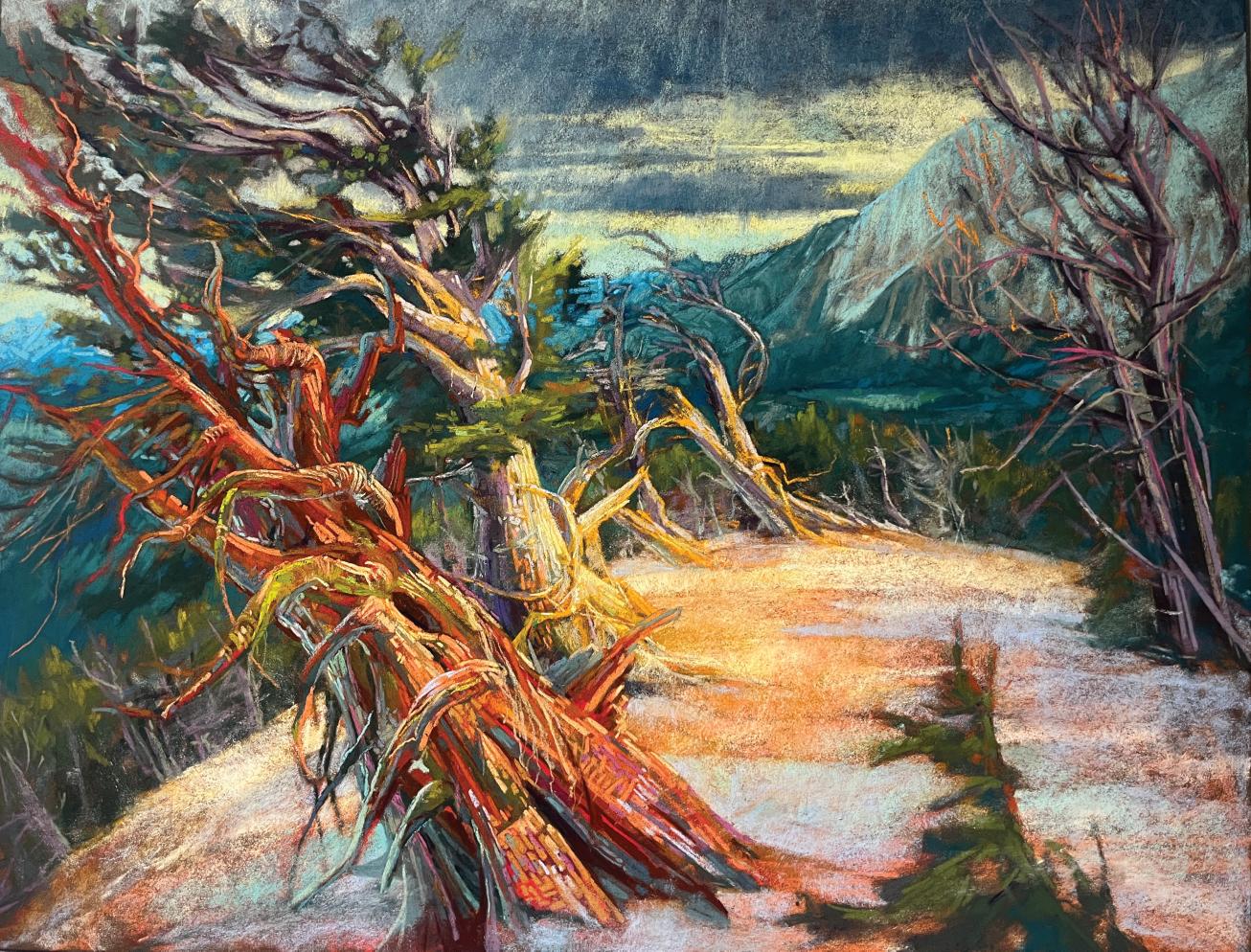
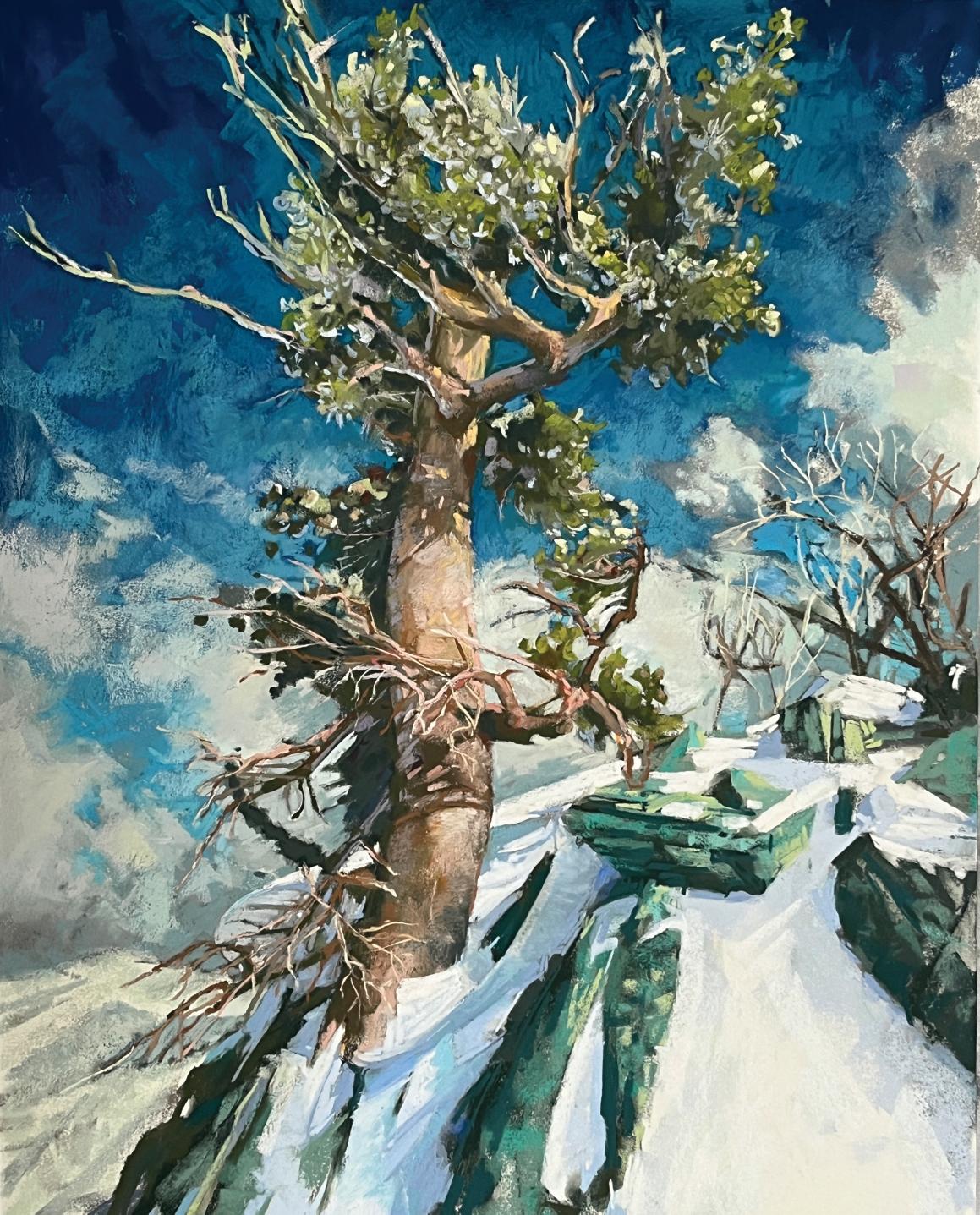
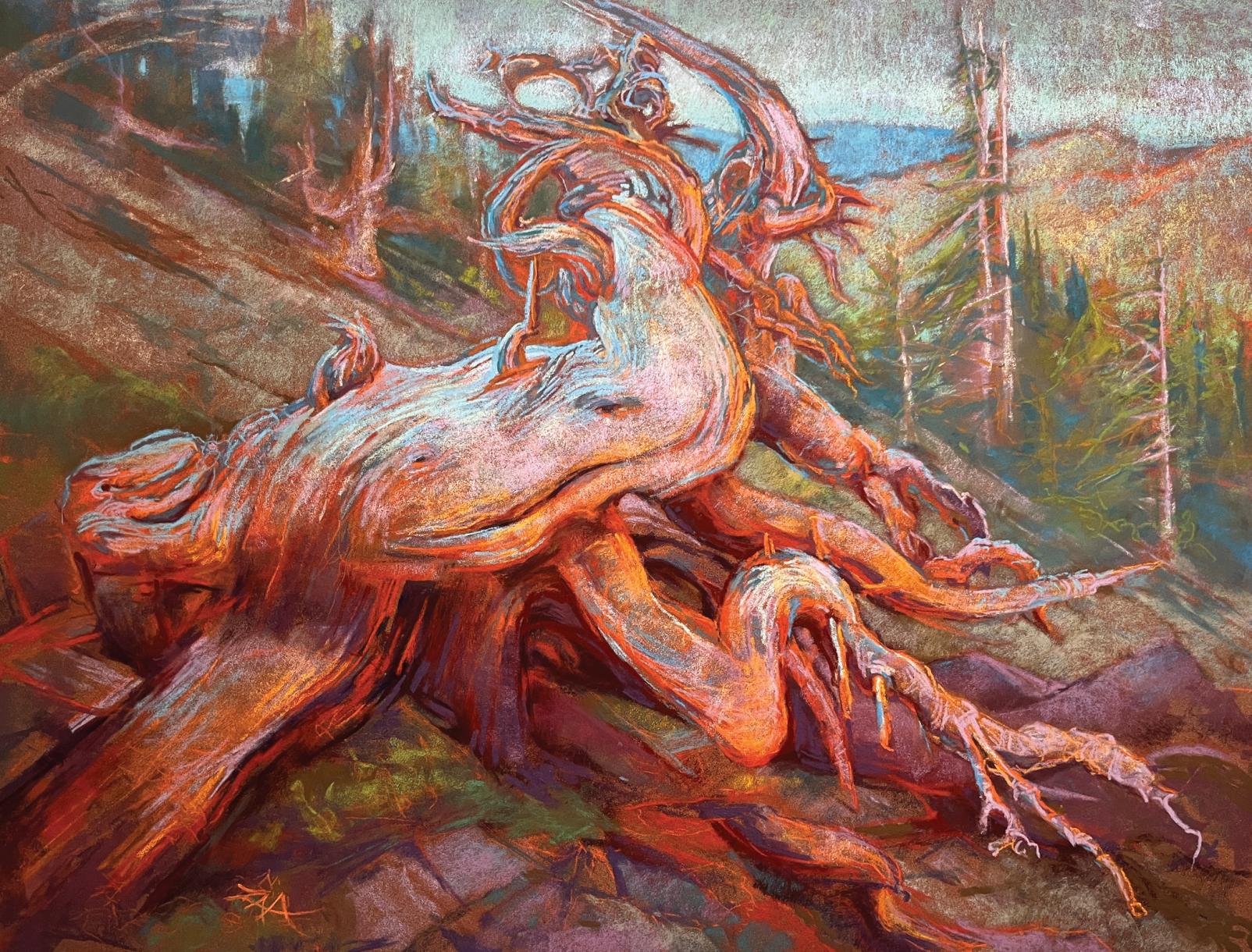
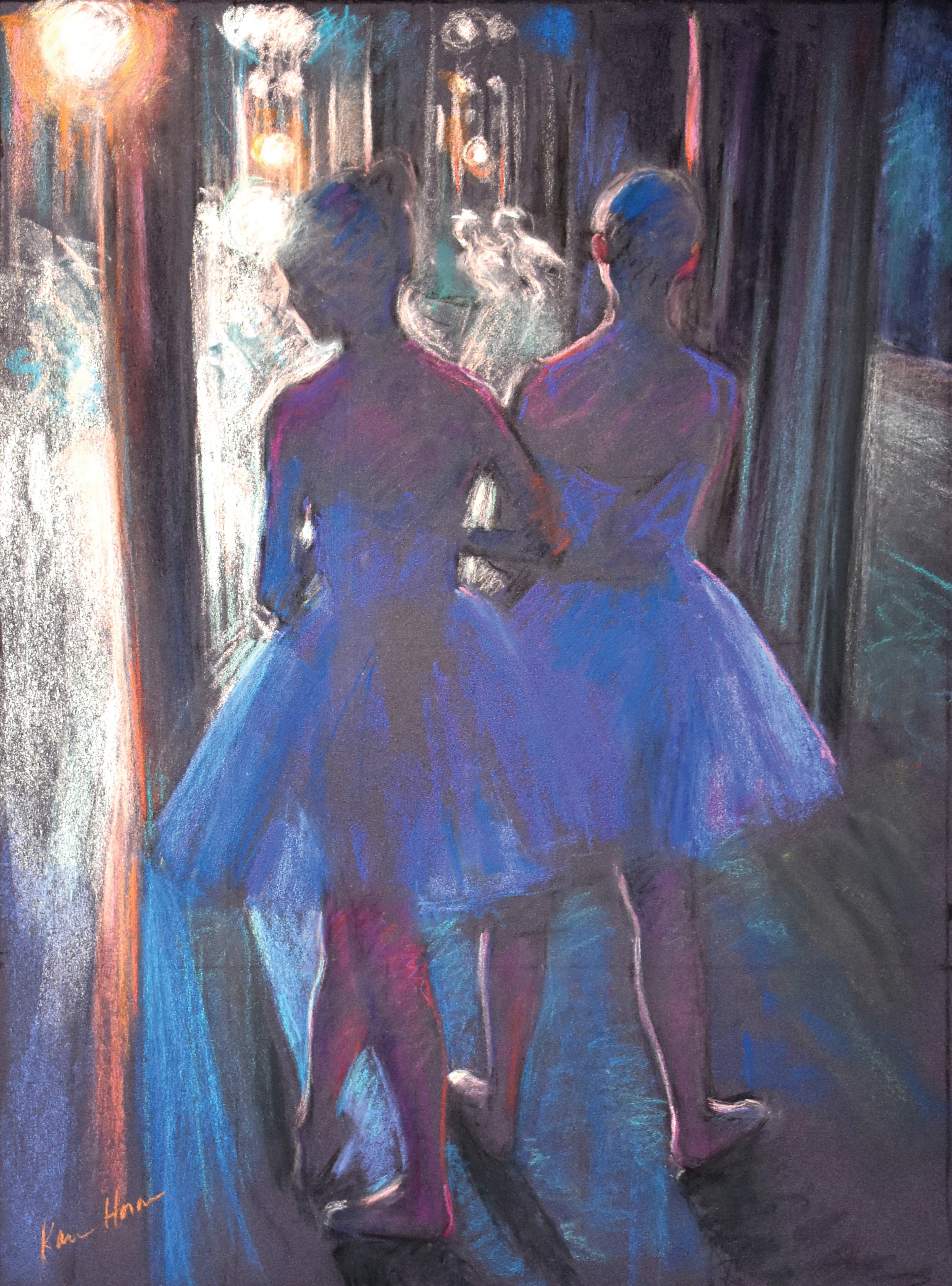
Visual Experience Fine Art Gallery (VEFA) Torrance, California
Show Dates: August 1 – September 12, 2026
CALL FOR SUBMISSIONS
There will be an estimated $15,000 in awards, including cash awards for Best of Show, First, Second, and Third Place. Judging for acceptance and awards will consider all entries together, regardless of painting style.
Judge of Awards: Clark Mitchell
IMPORTANT DATES
Opens for online submissions: Tuesday, April 7, 2026
Closes for online submissions: Thursday, June 4, 2026 Visit pswc.ws for more information
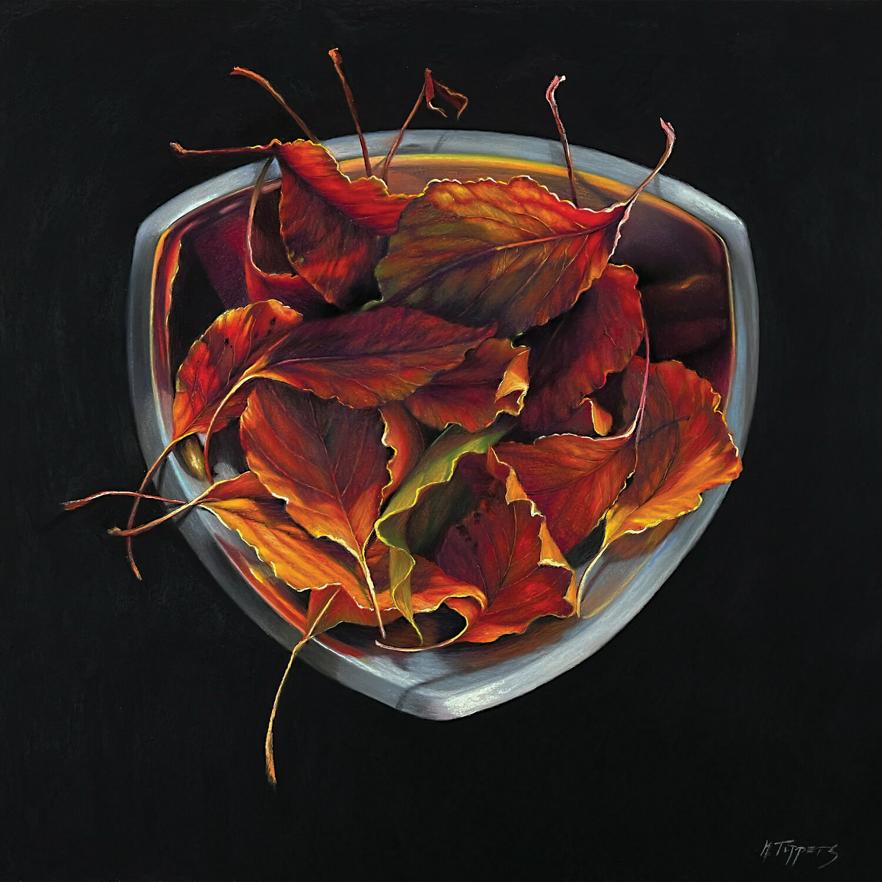
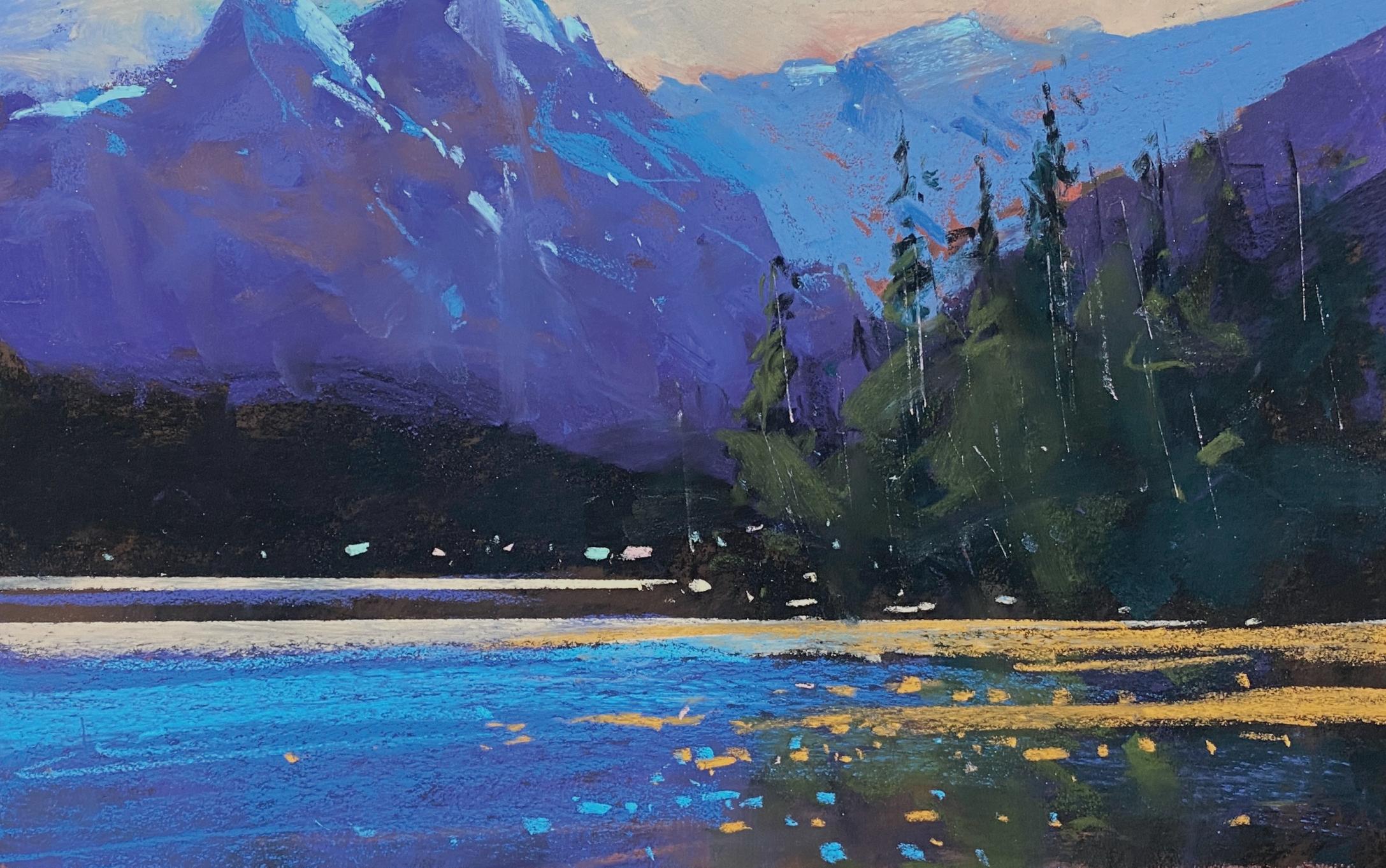
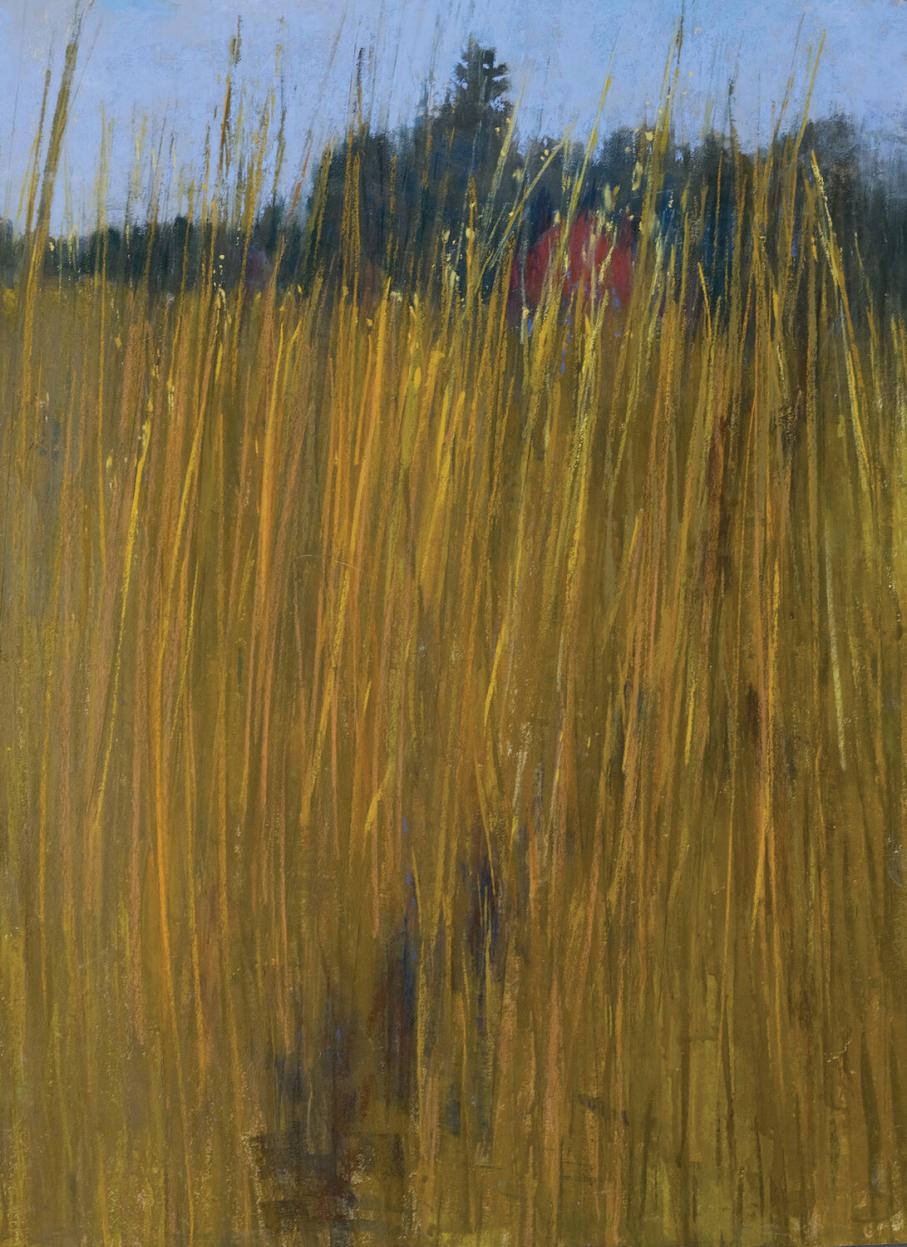
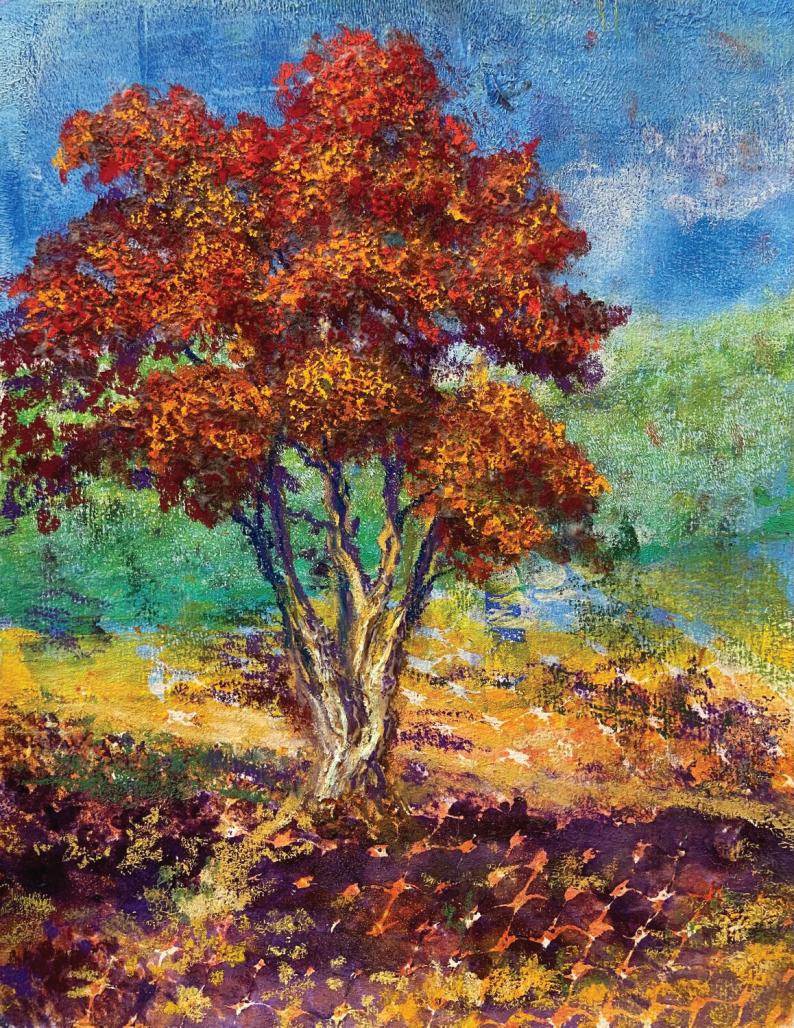
Autumn Splendor Marie Tippets, Dana Point, CA 2025 Best in Show
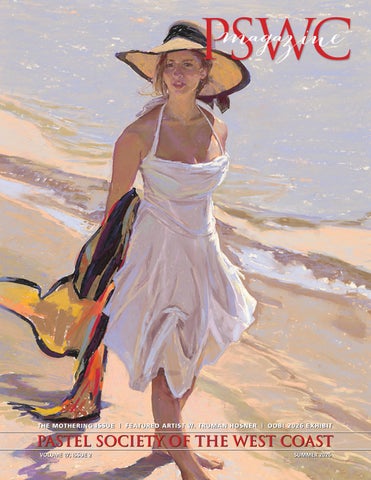
PSWC magazine
Table of Contents
SPECIAL SUPPLEMENT OOB! 2026 Award Winners & Accepted Entries
Featured Artist W. Truman Hosner talks with Pamela Comfort Meet the Members
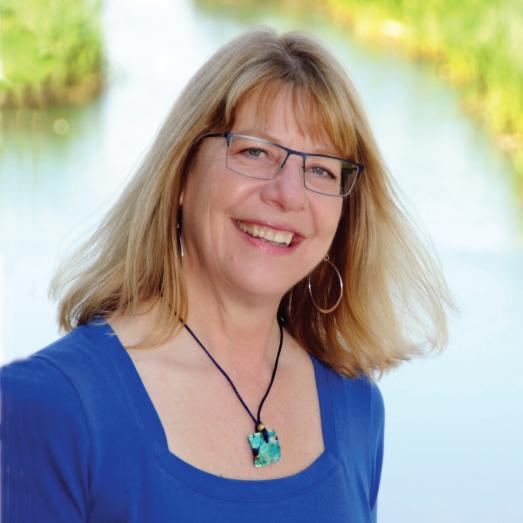
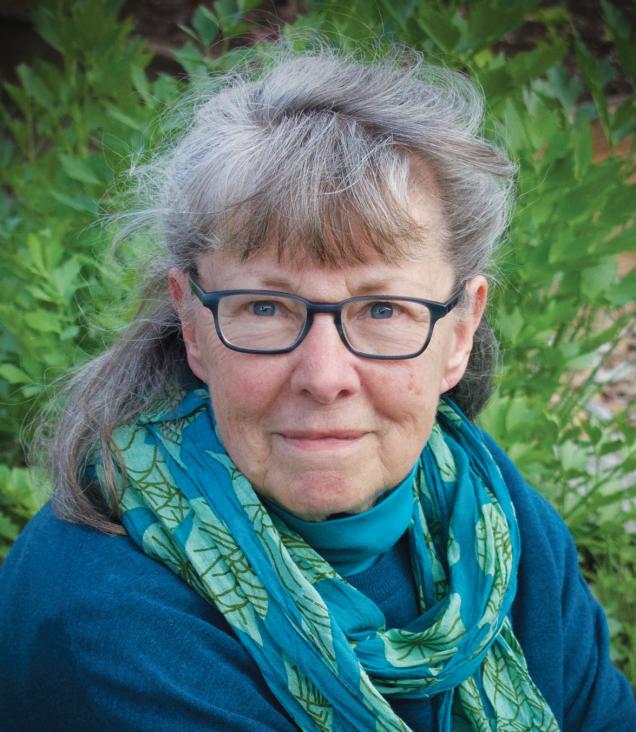
Vicki Brink
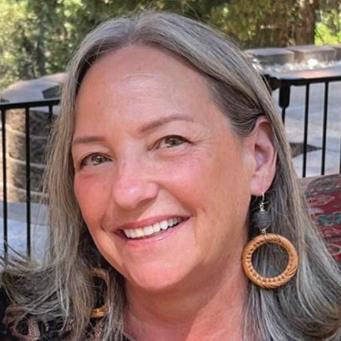
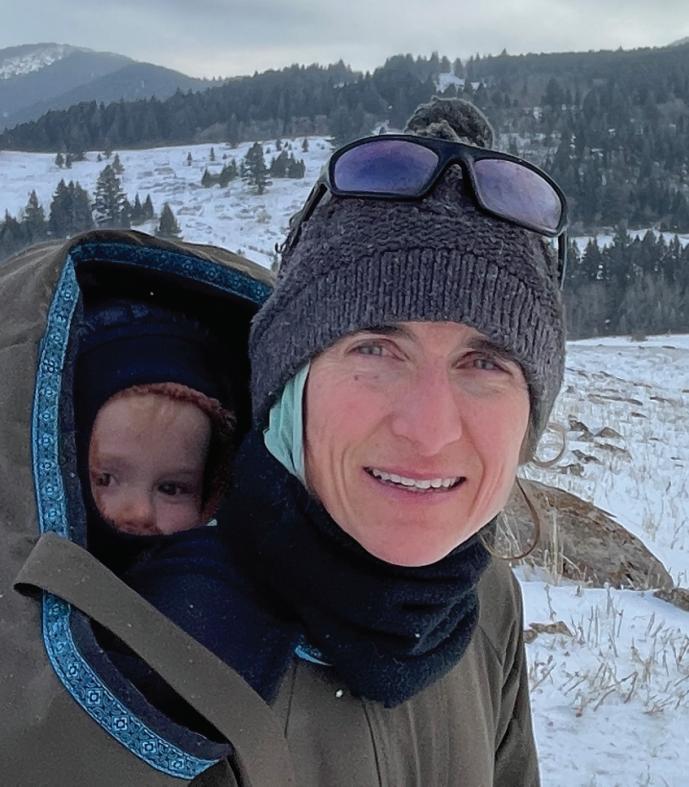
Zuzana Drobnik
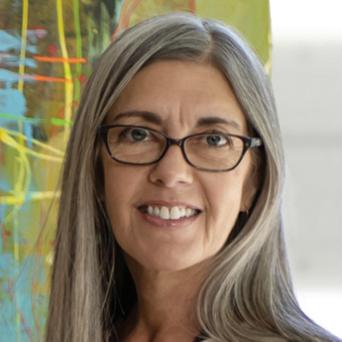
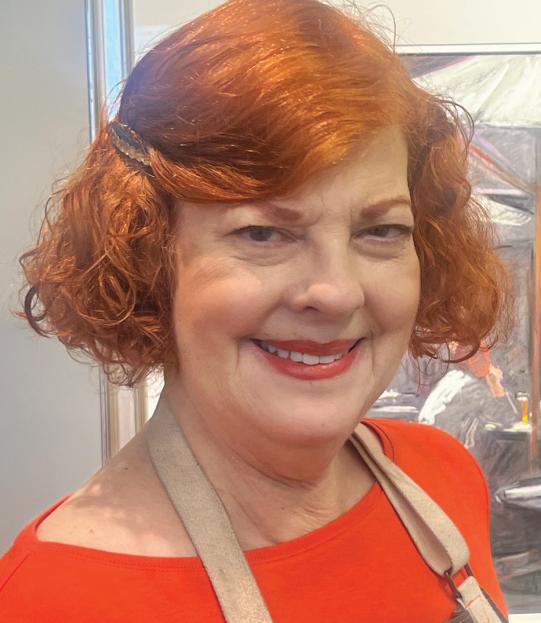
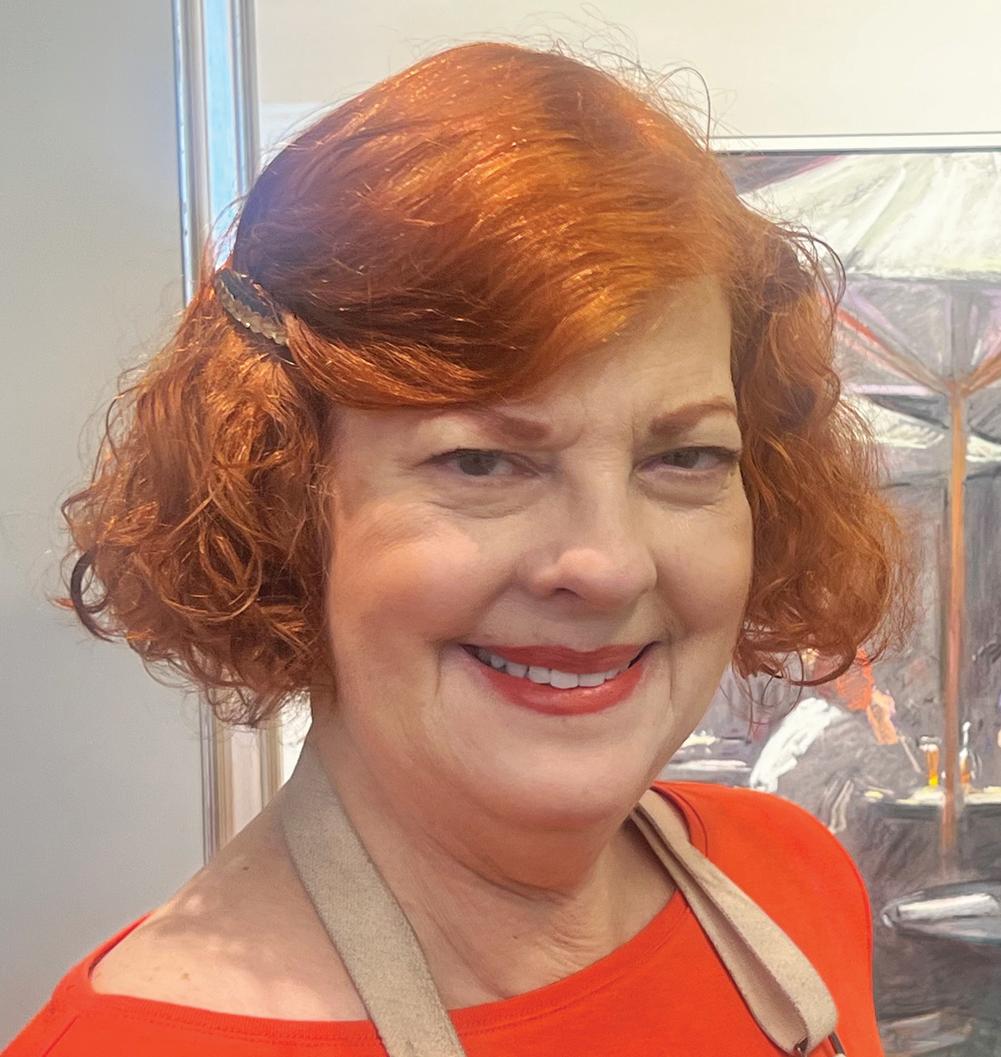
Karen Horne
Painting Challenge What Springs to Mind? Art School A Mother, a Daughter, and Art Art Workshops
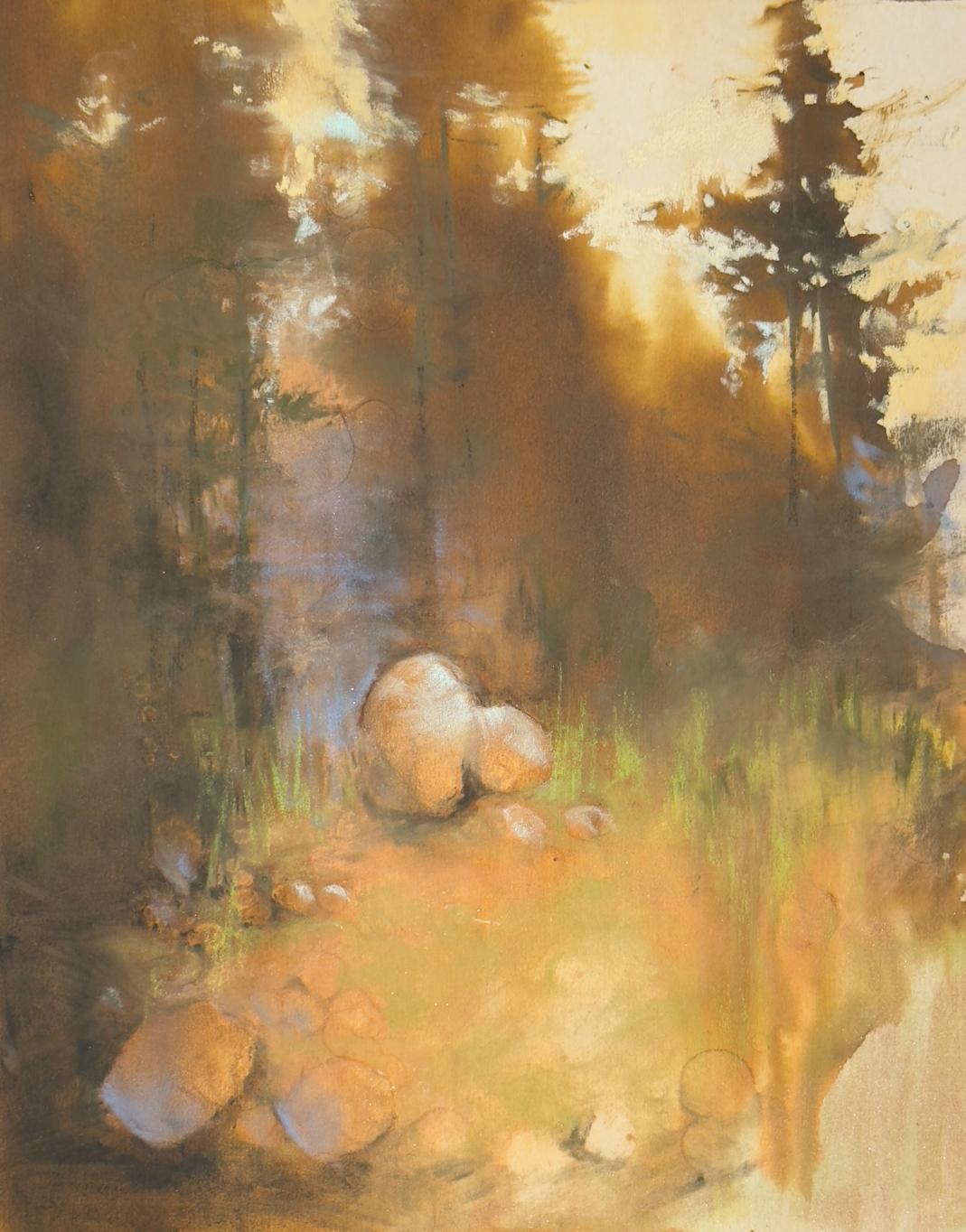
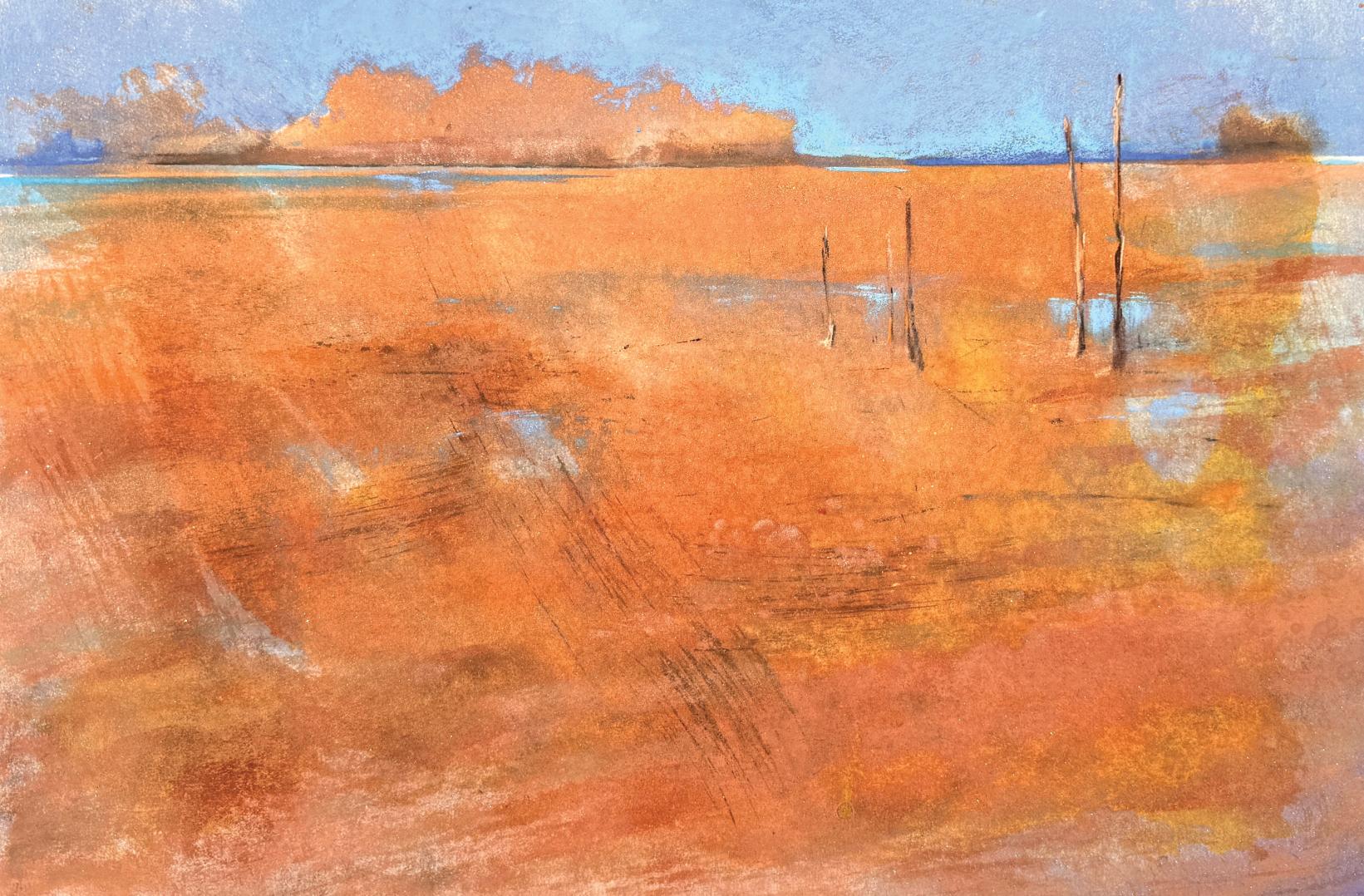
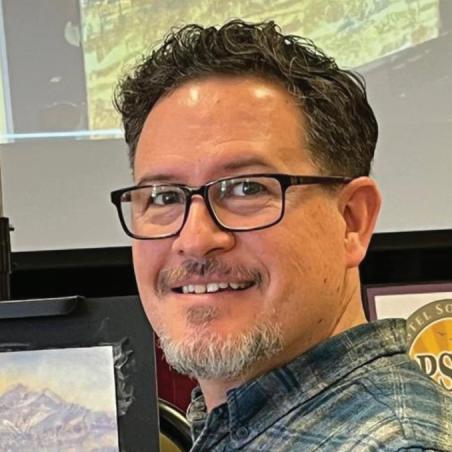
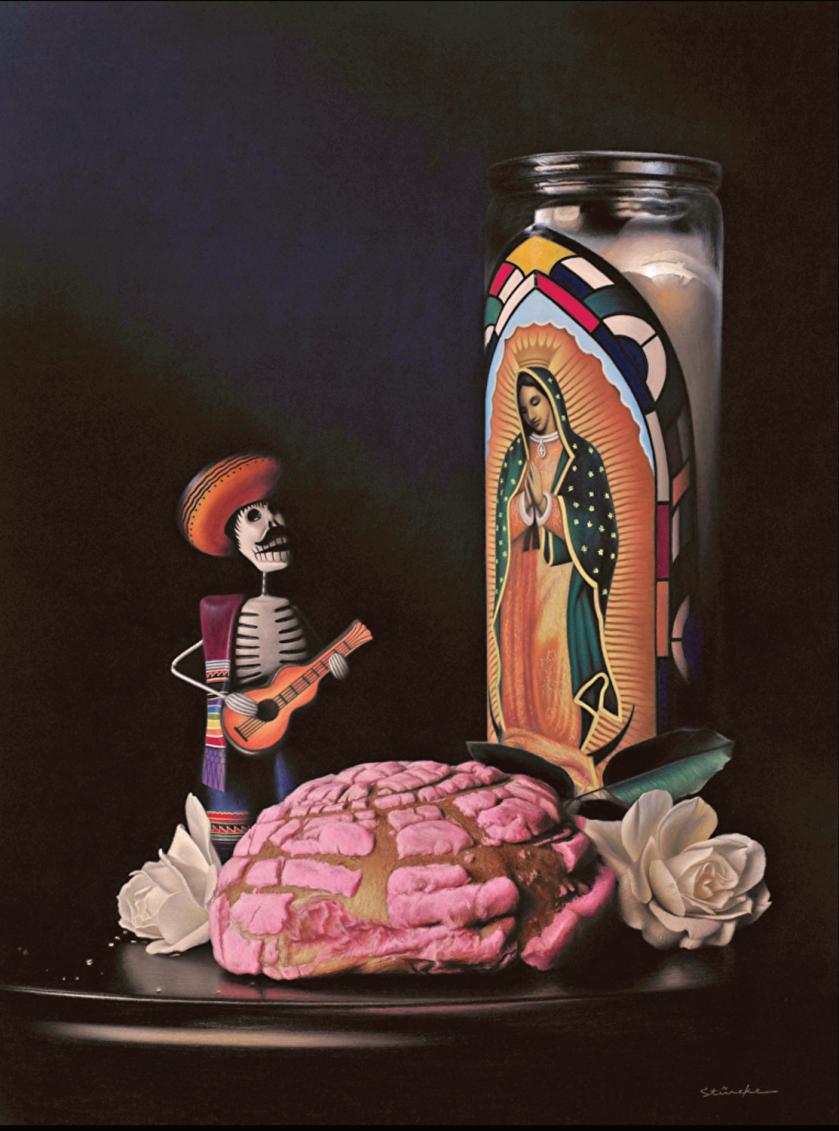
Otto Stürcke
Kim Lordier Christine Obers
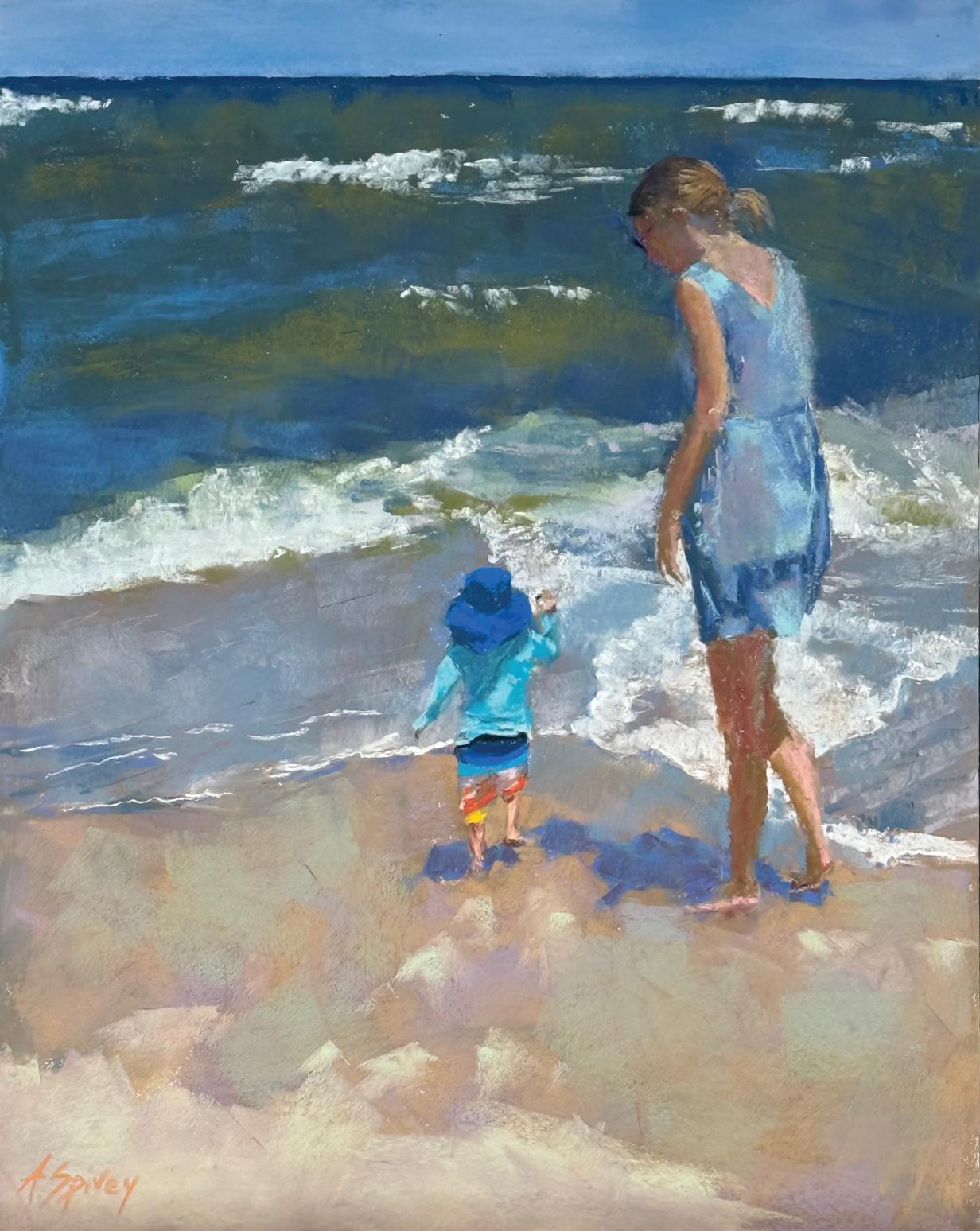
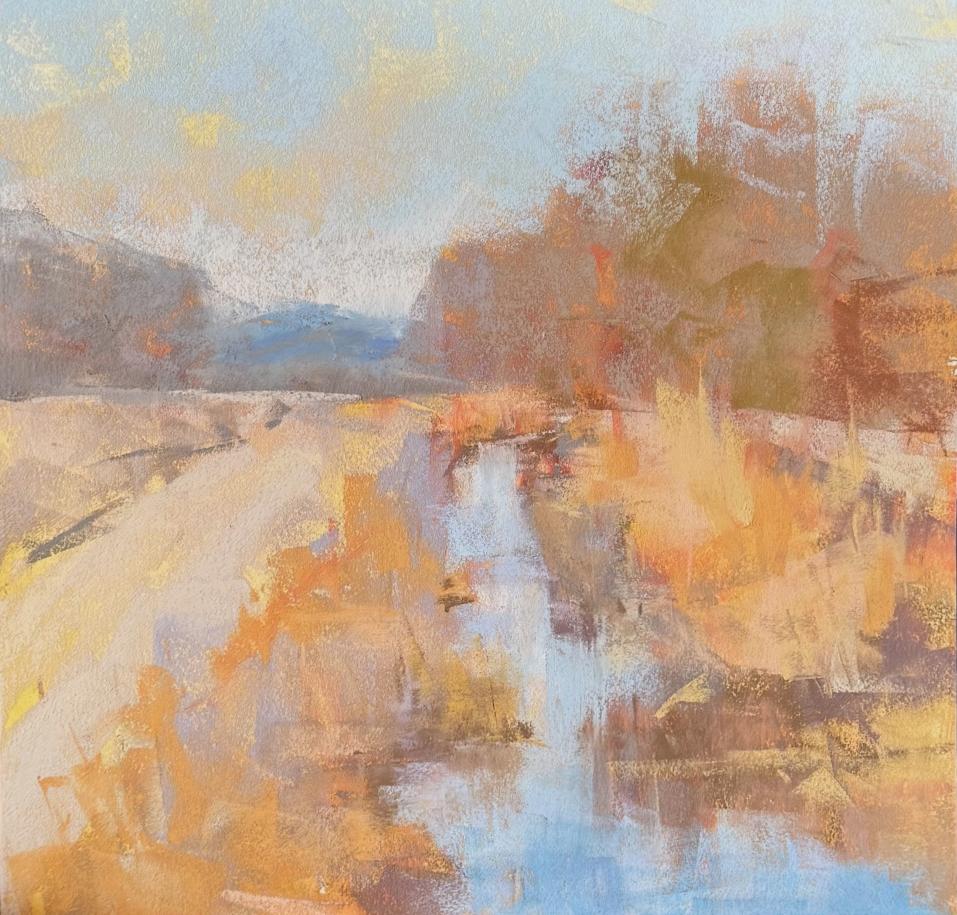
Anne Spivey 12
8 Letter from the Editor Francesca Droll From the Desk of the PSWC President Pamela Comfort Regional Activities News from Our Regional Representatives
4 7
Dear Artists,
In this, “The Mothering Issue,” we discuss that aspect of mothering that could be applied to everyone, not just mothers. Those aspects of mothering include nurturing, comforting, and guiding. All worthy attributes of not just mothers but anyone concerned in another’s situation and well-being.
Recently, I read Eric Rhoads ‘Editor’s Letter’ in the January 2026 issue of Plein Air Magazine. He wrote about the plein air movement being at a crossroads of survival which surprised me. I have never seen more plein air events available locally, nationally, and internationally. In my area of northwest Montana, we have a thriving plein air group of 20+ artists who meet weekly during the spring, summer, and fall. How could such a strong movement be at any kind of risk?
As Rhoads’ article states, it’s not the movement itself but those that are driving the movement that are the risk factors. When a dedicated artist decides to establish a plein air festival or a society of local artists who love the same medium, that creates an avenue for expansion and an invitation for others to join in and participate. But what happens when that dedicated artist can no longer drive the festival or society? One hopes that others will pick up the mantle, and many times they do, but there are also the situations where the festival dies or the association shuts down for a lack of dedicated volunteers.
I have heard recently that two pastel associations in the same state joined together as neither association had enough volunteers to continue operating. Then the shocking news that this year’s IAPS Convention will be the last one, again because of a lack of leaders and volunteers. It is indeed concerning. The pastel movement is finally getting the professional recognition it deserves in the art world and yet, the pastel community is struggling to maintain its presence.
With this issue, I ask that you expand your concept of mothering, or nurturing, to include those more unusual aspects that could and should fall under that heading. The nurturing of those younger artists who need encouragement to continue their artistic pursuits. Connecting with other artists to share and exchange valuable insights and tools. Volunteering with your regional art society to support their programs which benefit not only yourself but the membership.
“You make a living by what you get. You make a life by what you give."
— Winston Churchill
I have found volunteering with PSWC to be rewarding in so many ways: intimate connection with the leaders in the field, creating name recognition for yourself within your art sphere, rare insights into the workings of the art community, many lasting and fulfilling friendships, and the joy of seeing the organization you belong to move forward with strength and confidence because of your contribution. All worthy outcomes.
Wishing you many new opportunities!
Francesca Droll
Contributors
Pam Comfort, PSWC President
In addition to serving as President, Pam co-chairs the Out of Bounds! show, and covers open positions. She earned a doctorate in Educational Leadership and retired after a long career in public education. Pam loves to travel and aspires to create art that communicates a strong sense of nature, culture, and place. pamelacomfort.com
Marla Baggetta is a nationally acclaimed artist, a gifted instructor, and a pioneer in the realm of online art education. With a career spanning over three decades, Marla’s artistry has flourished in pastel, oil, and notably, abstract acrylic. Marla’s contribution to the art world extends beyond her paintings and workshops. Her paintings have been featured in several books and publications and exhibited throughout the United States. She has been featured in the Pastel Journal, Plein Air Magazine, the Pastel Society of the West Coast Magazine and is the author of Step by Step Pastel by Walter Foster Publishing. marlabaggetta.com
Kim Essex chairs the Scholarship program. She has a journalism degree from Drake University in Des Moines, Iowa. Kim is two years into her pastel journey, having started painting after retiring from a career in public relations and moving to Valencia, Spain, with her husband Sean and dog Trax. She says she hopes she has artistic genes; her mother, aunt, brother, niece, and grandfather were all artists. She believes everyone should surround themselves with original art as it reminds us of our shared humanity and the beauty within.
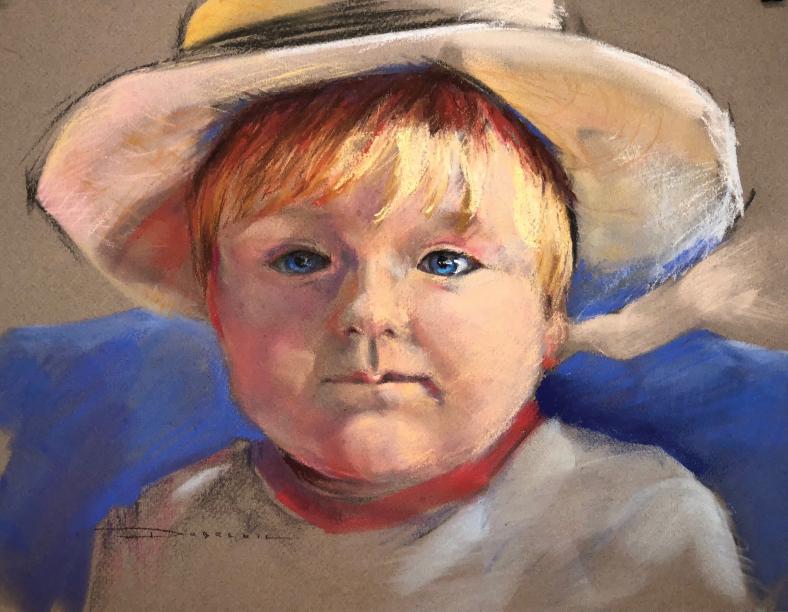
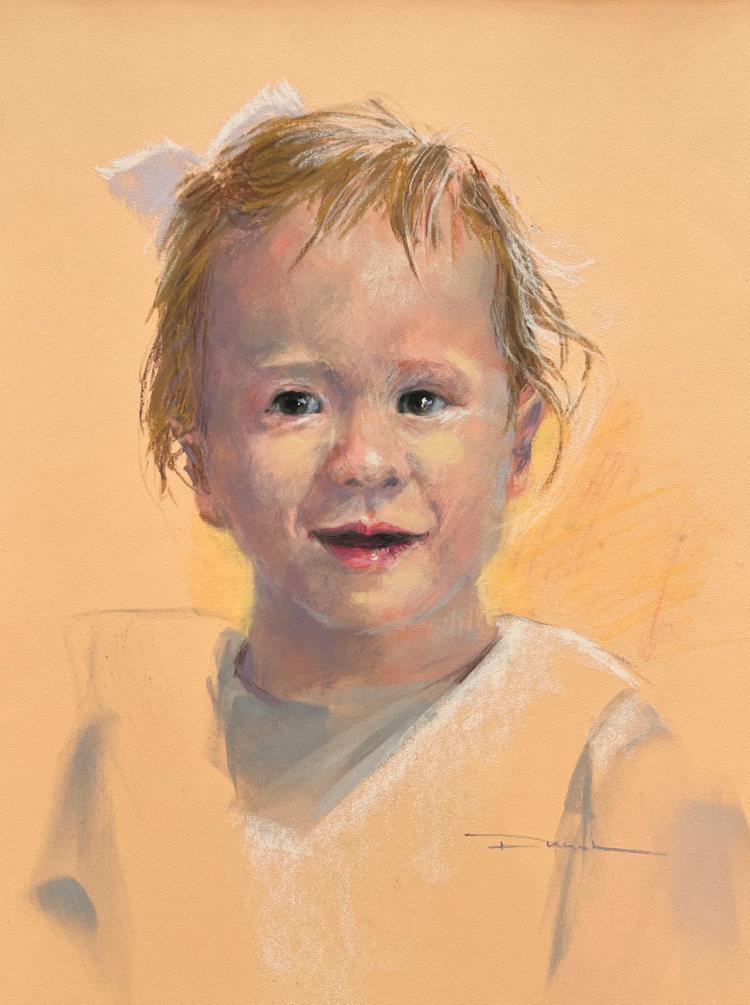
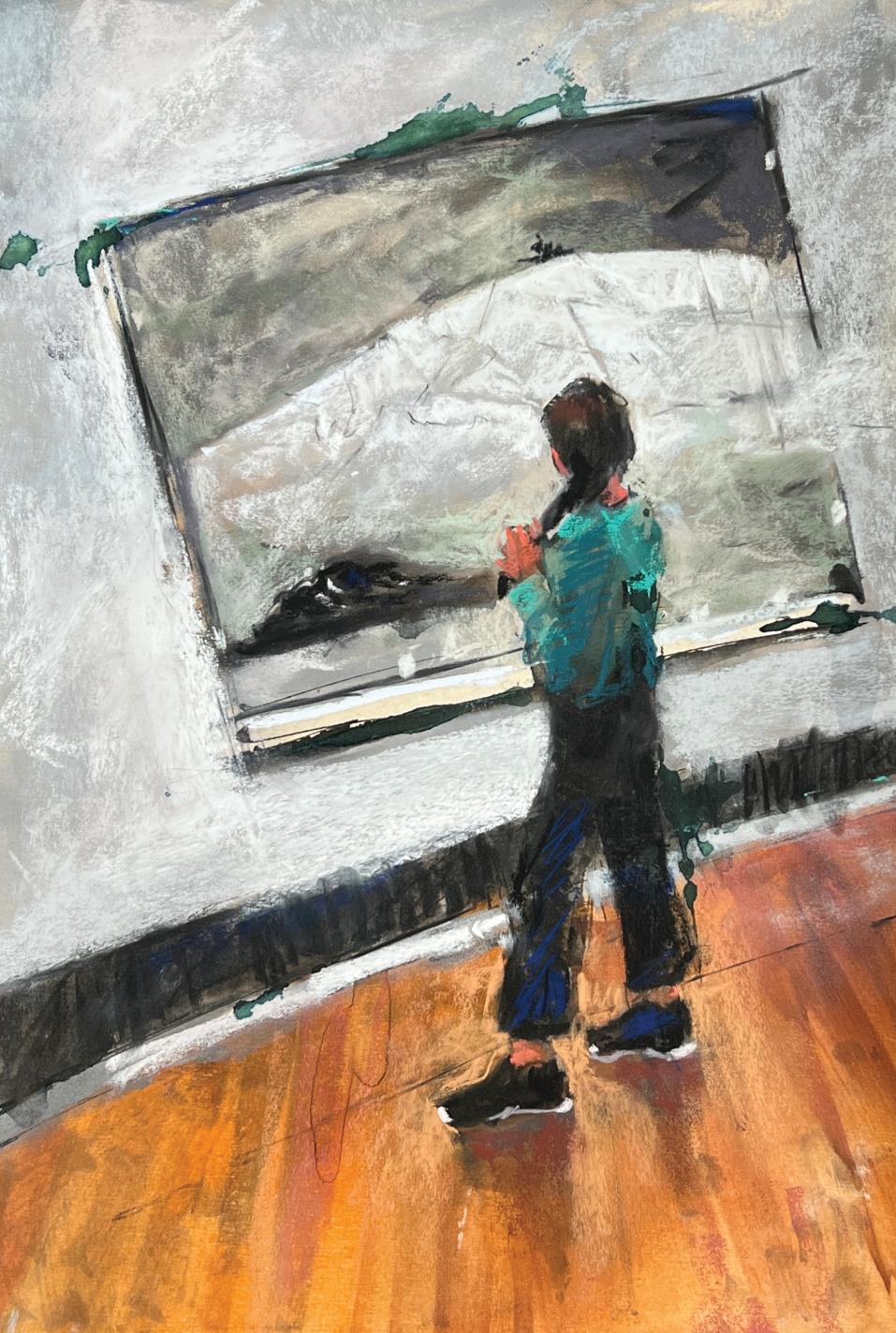
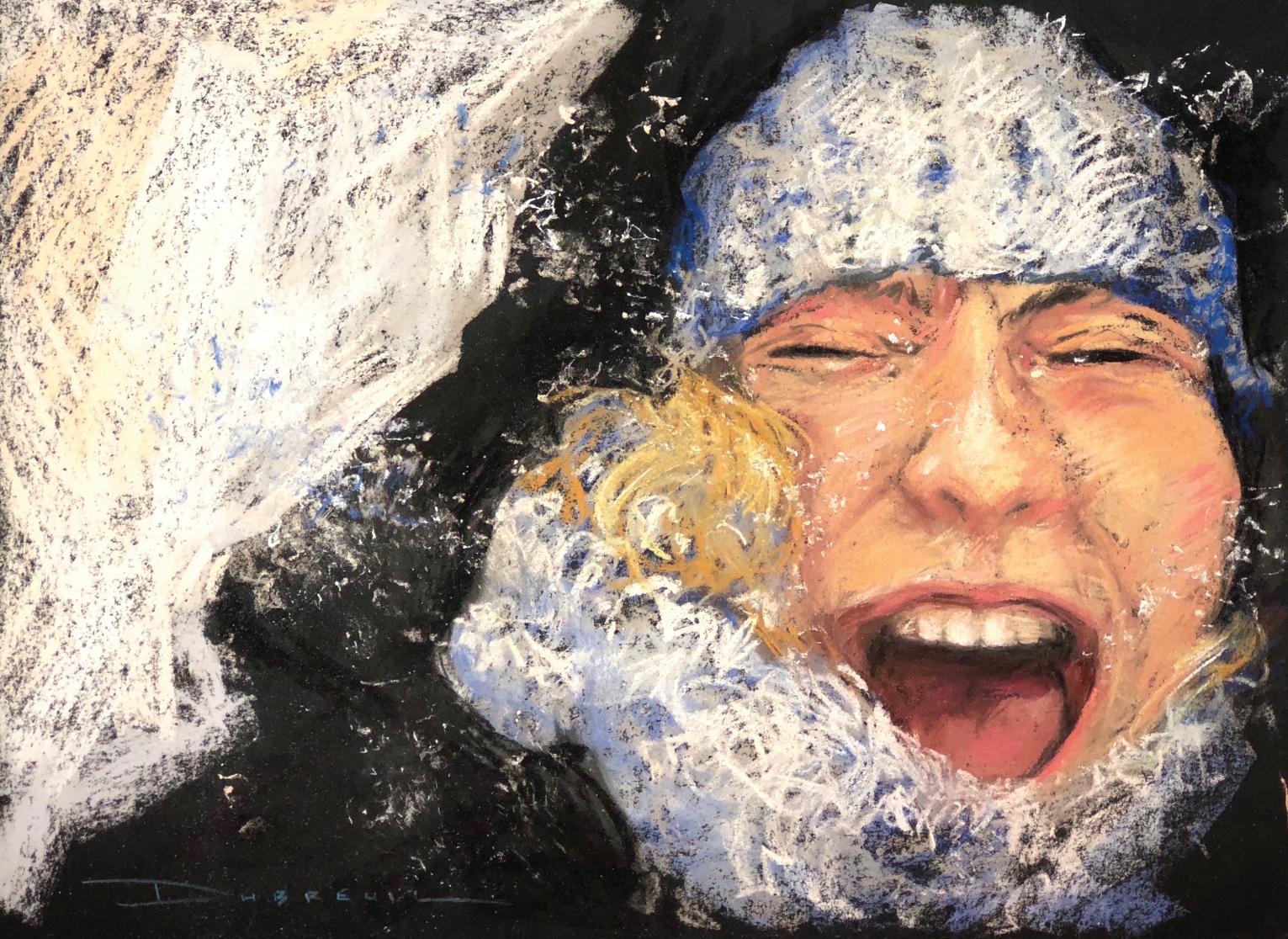
Terrilynn Dubreuil is a juried Signature Member of the Pastel Society of America (PSA), Signature member of Pastel Society of Maine, and Master Pastellist with the International Association of Pastel Societies. Her work has received recognition in many juried international shows. In 2023 she was awarded the First Place in the IAPS Exhibit and in 2024, 8th place in the SOCIÉTÉ DES PASTELLISTES DE FRANCE 40th Anniversary International Pastel Contest, 23rd Feytiat International Pastel Show (France). Terrilynn has been teaching various media and techniques of art to people of all ages both in-person and virtually. travelingartista.com
WANT TO GET INVOLVED?
Our Society runs on volunteer power. We’re always grateful to receive more help. Please contact us— we have a spot for you!
KEEP IN TOUCH FOLLOW US!
Join one of the most dynamic pastel groups in the U.S. and pursue your passion!
You don’t have to live on the West Coast to become a member. With PSWC members located around the U.S. and internationally, the Pastel Society of the West Coast offers a strong voice for expanding the presence of soft pastel as a major fine art painting medium.
PSWC was organized in 1984 to promote pastel artists and the medium of soft pastel. Today we are one of the largest and most recognized pastel societies in the country with an ever-increasing international presence.
BENEFITS INCLUDE
• Pastels USA Annual Exhibition
• Members Only Online Competition
• Out of Bounds! Exhibition
• In-person and Virtual Workshops by Noted Pastel Artists
• PSWC Magazine
• PSWC Social Media Exposure Opportunities
• We Talk Art Interview Series
• Regional In-person Events
• Online Demonstrations
• Themed Painting Challenges
• Membership in IAPS www.pswc.ws
Dear Friends,
Desk of the PSWC President
In this, our Spring issue, we consider the concept of “mothering.” And while we recognize the tradition of Mother’s Day and those who celebrate it, Mothering is more than a role—it is a way of caring for one another with tenderness, patience, and generosity. It can be found in the quiet acts of listening, encouraging, comforting, and showing up when someone is in need. Whether expressed within families, friendships, neighborhoods, or communities, this spirit of care reminds us that we are all sustained by compassion and connection. To mother, in the broadest sense, is to nurture growth, protect what is vulnerable, and create space for others to feel seen, supported, and loved.
In these pages, read W. Truman Hosner’s description of his mother’s influence on his artistic development, and our Meet the Members subjects’ reflections on the impact that Mom had on each of their paths. Terrilyn Dubreuil shares a moving story about how her art helped her to process her complicated relationship with her mother, after her passing—and how that act of engagement itself—impacted her art.
Marla Baggetta’s loving tribute to her mother’s role and ongoing support of her work as a teaching artist is the frame around a new, ongoing feature in our magazine. Marla will recommend books we should consider for our personal art library, from among those in her own extensive collection.
We can also “mother” ourselves by learning to create the conditions in which we feel held, nourished, and supported. That may mean honoring our need for rest, setting boundaries that protect our energy, asking for help without shame, or building routines and relationships that help us thrive. In this broader sense, mothering is not only something we offer to others; it is also a practice of tending to our own lives with compassion and intention. When we make room for care—through
Pam Comfort
community, structure, and self-kindness—we remind ourselves that support is not a luxury, but a vital part of growth.
Some of us are better at this than others, and I sometimes need to remind myself that I cannot do everything that sounds like a good idea. When I began to feel too isolated in my daily practice, I asked a friend to join me regularly on Zoom for a painting “play date.” Over time, that simple idea grew into a weekly gathering of four painter friends. During those sessions, we see one another, paint “together,” share ideas, offer critique, and always laugh. Between meetings, we stay connected through a group text where we exchange progress photos and continue the encouragement, critique, celebration, and banter. In other words, we practice “mothering” one another through mutual care and support. I cannot fully express how much I value this family of friends, even though we have only known one another for a couple of years.
And perhaps that is one of the most hopeful truths of this moment: there are so many beautiful examples of “mothering” happening all around us. We see it in people who make space for one another, who share resources, offer encouragement, tend to what is fragile, and help sustain courage and creativity in uncertain times. These acts may not always be recognized or named, but they matter deeply. They remind us that care is alive in the world, moving quietly through friendships, families, neighborhoods, and communities—and that each of us, in our own way, can help extend that care a little further.
Here’s to all of the nurturers!
Pam
REPRESENTATIVES REPORT
Regional Activities
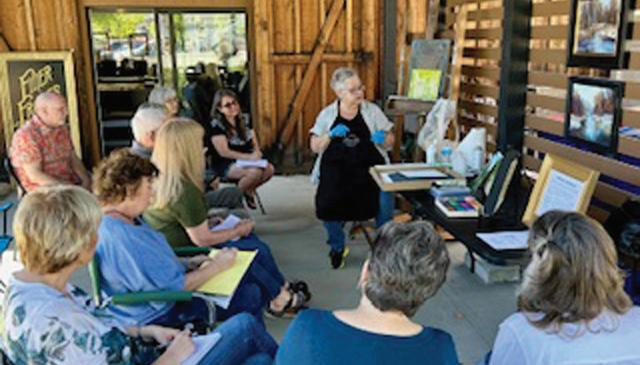
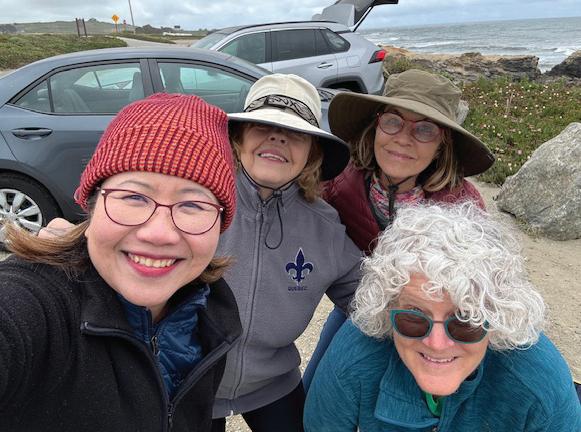
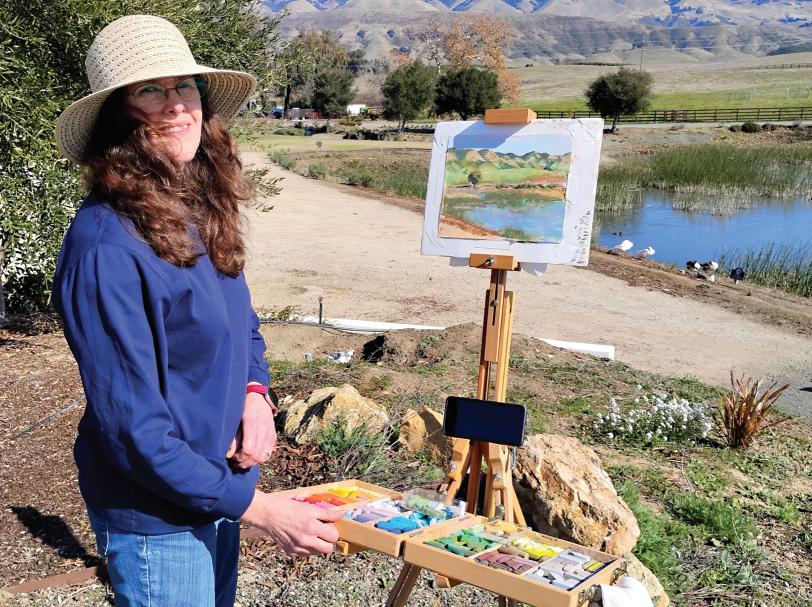
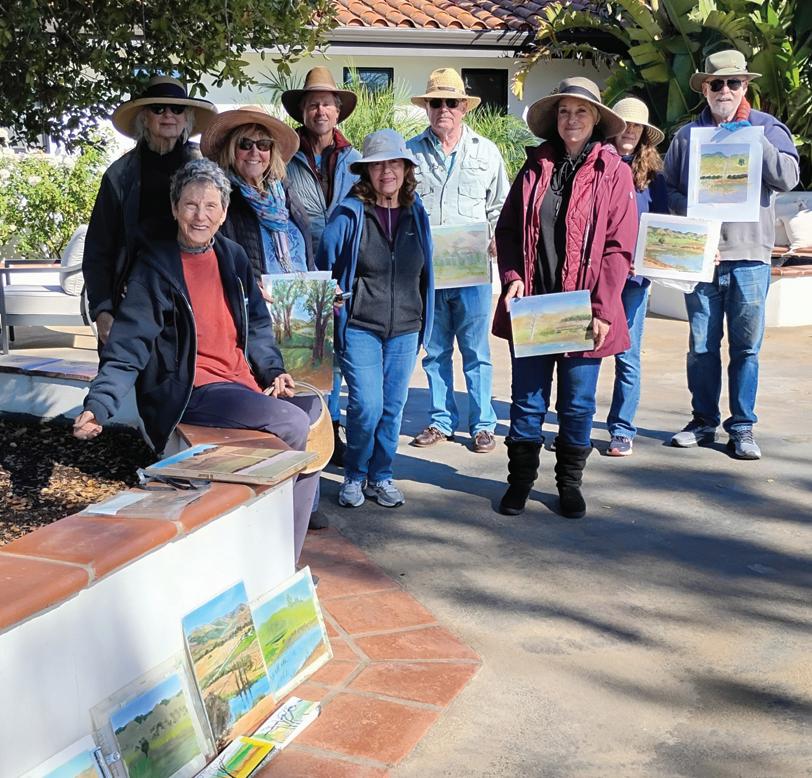
We are grateful to have regional volunteers to organize a variety of in-person activities for PSWC members and guests. While it isn’t possible for our very large membership to meet in person on a regular basis, these activities supplement our in-person workshops and exhibitions, providing face-to-face interactions among members of our treasured art community.
PSWC ~ Sebastopol, Napa, Sonoma Region Activities
Representative: Clark Mitchell • For more information on these dates, call Clark at
June 30, 2026: Paint-Out
9:30 am to 12:30 pm
Location: Matanzas Creek Winery, 6097 Bennett Valley Road, Santa Rosa
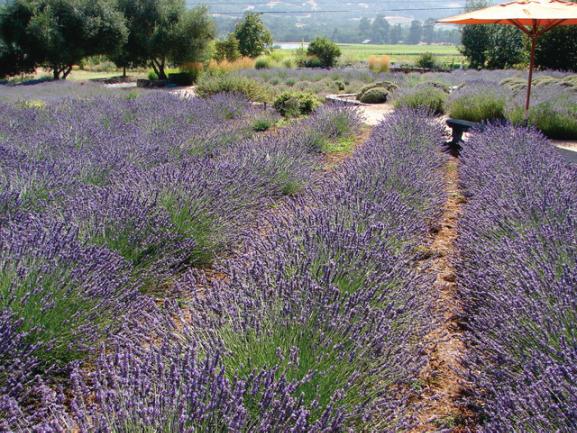
The lavender gardens should be at their most aromatic and busy with bees. Absolutely gorgeous. Bring water and a snack for yourself. Restrooms up at tasting room.
October 22, 2026: Paint-Out
9:30 am to 12:30 pm
Location: Tolay Lake Regional Park, 5869 Cannon Lane, Petaluma
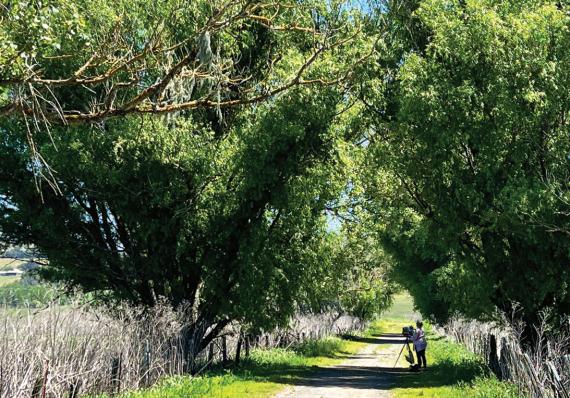
Variety of subjects from rolling hills, distant vineyards, close-up old barns, mature trees. Something for everyone to paint. Bring water and a snack for yourself. There are porta potties but no water.
PSWC ~ Santa Barbara County Region Activities
Regional Representative: Carol Talley Email carol at carol@caroltalley.com for address and details.
June 27 and October 24, 2026: Casual Critiques • 3:00 pm
Location: Carol’s home located between Santa Barbara and Goleta
There is easy access to the freeway and lots of street parking. We can share what we need help with, and be supportive of one another. The activity will take place outdoors, on the patio, weather permitting.
Regional
PSWC ~ California Central Coast & San Luis Obispo County Region Activities
Regional Representative: Bobbye West-Thompson For more information, email Bobbye at bobbyethompson@charter.net
For the Central Coast Region, the three scheduled paint outs for Summer and Fall 2026 are as follows:
August 24, 2026: Pastel Demonstration
9:30 to Noon (hosted by Mike Ishikawa)
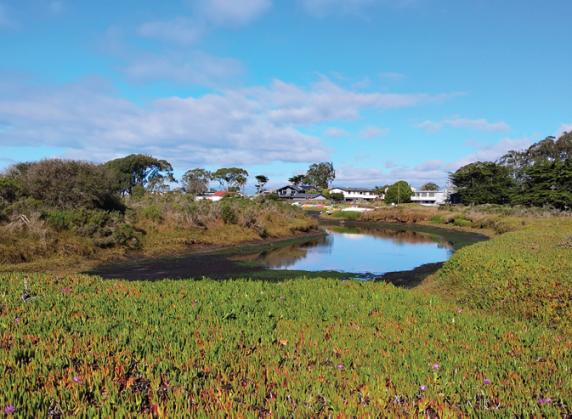
Location: Cuesta Inlet, corner of Barnscoff and Doris, Los Osos
November 6, 2026: Paint-Out
(Location scouted by Tom Frey)
Time to be announced
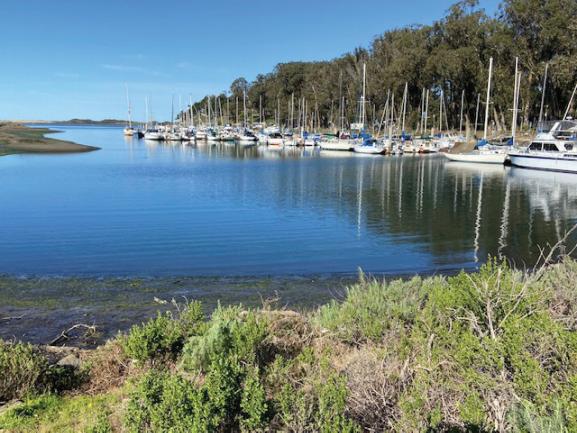
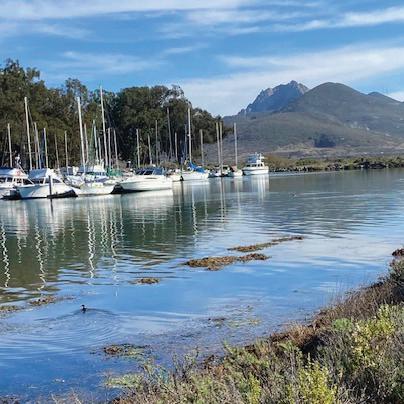
Location: Morro Bay Marina, Main Street, Morro Bay, across from the State Park
PSWC ~ Southern California/Ventura County Region Activities
Regional Representative: Jean Myers
Please RSVP that you are participating by texting Jean’s cell: 805.402.2609
July 11, 2026: Paint-Out
1:00 to 3:00 pm
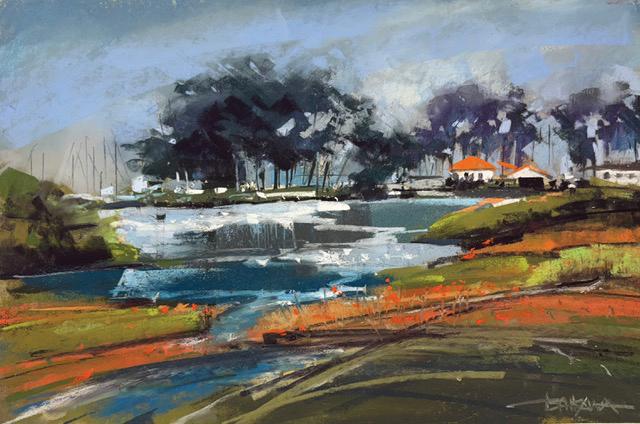
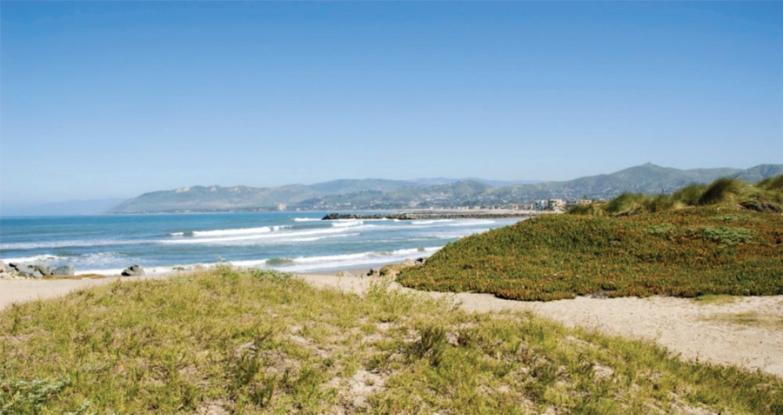
Location: Marina Park, 2950 Pierpont Blvd, Ventura
A 15-acre oceanfront park with winding cement pathways leading to spectacular harbor and ocean views. There are cement picnic tables. Free parking. Restrooms available.
September 26, 2026: Paint-Out
11:30 am to 3:00 pm
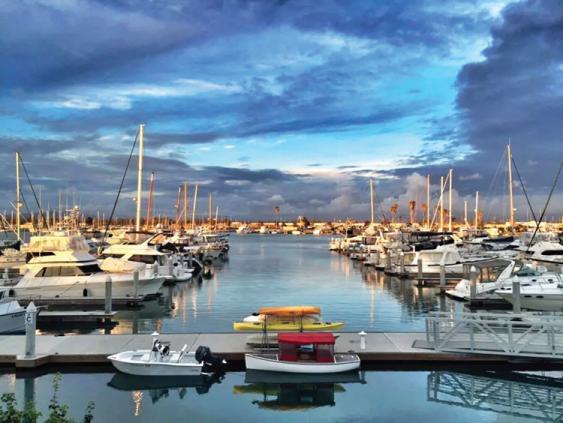
Location: Channel Islands Harbor, 3500 S. Harbor Blvd., Suite 1-100, Oxnard
Let’s grab lunch together at the Waterside Restaurant and then paint the harbor. Meet in front of the restaurant at 11:30. Afterward, enjoy scenic views of docks, boats, water and seagulls. Free parking. Restrooms available.
PSWC ~ Southern California/Orange County Region Activities
Regional Representative: Lisa Skelly
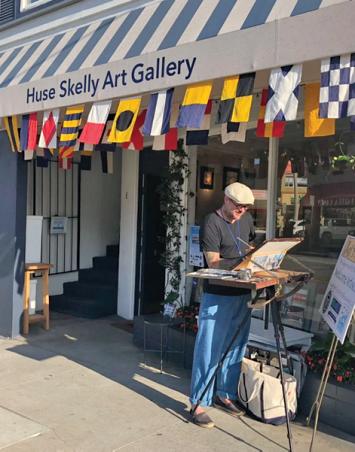
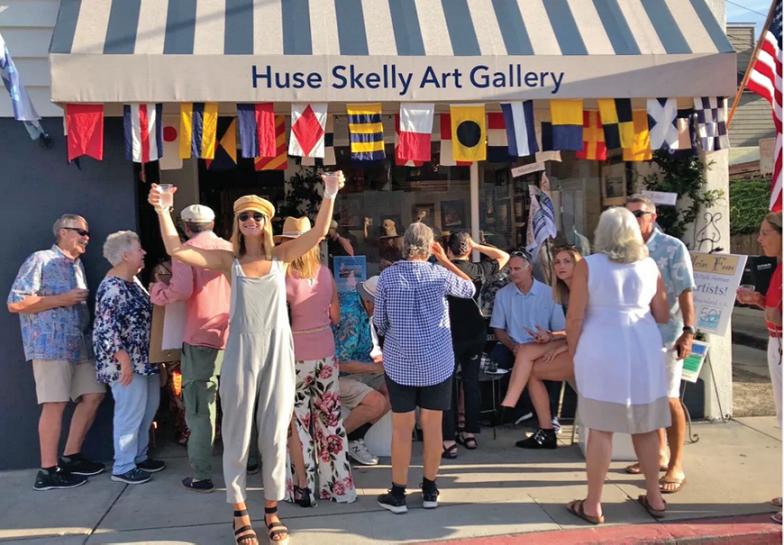
To reserve your spot, at any of these email Lisa at HuseSkellyGallery@gmail.com
Dates: June 2, 2026
Location: Huse Skelly Gallery, 229 Marine Ave., Suite E, Newport Beach, CA 92662
Mentorship Painting • 9:00 am to noon
A special opportunity for up to 12 artists to bring your pastels and work on your paintings alongside Lisa Skelly in a relaxed space with other pastel artists. It’s all about pastels and Lisa will be there to help with tips and techniques.
PSWC ~ Idaho/Montana/Wyoming Region Activities
Regional Representative: Bonnie Davis Kenaley
September 30 –- October 1, 2026
3-day Workshop by Kim Lordier
9:00 am to 4:00 pm
Location: Catalyst Arts Collaborative, 6427 W Ustick Road, Boise ID 83704
Information at pswc.ws/new-workshops/
October 3 – October 10, 2026
Location: Eagle Plein Air Festival
Including demonstration by PSWC Pastel Laureate Kim Lordier, Friday, October 9, 2026 at 11:00 am.
Information at eaglepleinair.com
November 2 – November 30, 2026
PSWC Regional Art Show
10:00 am to 5:00 pm
Location: Finer Frames, 132 E State Street, Eagle, ID 83616
For information, contact Bonnie Davis Kenaley at bk6550@gmail.com.
A Request from PSWC President Pam Comfort
I need a social media guru to increase awareness and engagement with our members.
The perfect volunteer will know how to create content that highlights society activities in a timely and catchy way. He, she, or they will be familiar with a variety of platforms such as Facebook, Instagram, and WordPress, and excited about supporting the PSWC mission: to promote the pastel medium and support pastel artists.
Although this person will work from the comfort of home, they will also work collaboratively with other wonderful, enthusiastic volunteers.
Are you social media savvy? Jazzed about pastel? Ready to join the team? Dude!
Call me!
or send an email: pastelsocietyofthewestcoast@gmail.com
February 1–10
COMPLETED
April 1–10
COMPLETED
July 1–10
October 1–21
PSWC MEMBER
Challenges 2026
Winter Painting Challenge: Multimedia My Way Ways to experiment with multi-media paintings:
• Create an underpainting: Use watercolor, inks, oil paint, washes of acrylic paint, gouache, etc. Leave a high percentage of the underpainting in place, rather than covering it all with pastel. Remember, your support has to accept wet media.
• Create a monotype: Use printmaking ink or paint on freezer paper to create a monotype, and experiment with different tools to create marks, after printing, add pastel over the ink or paint
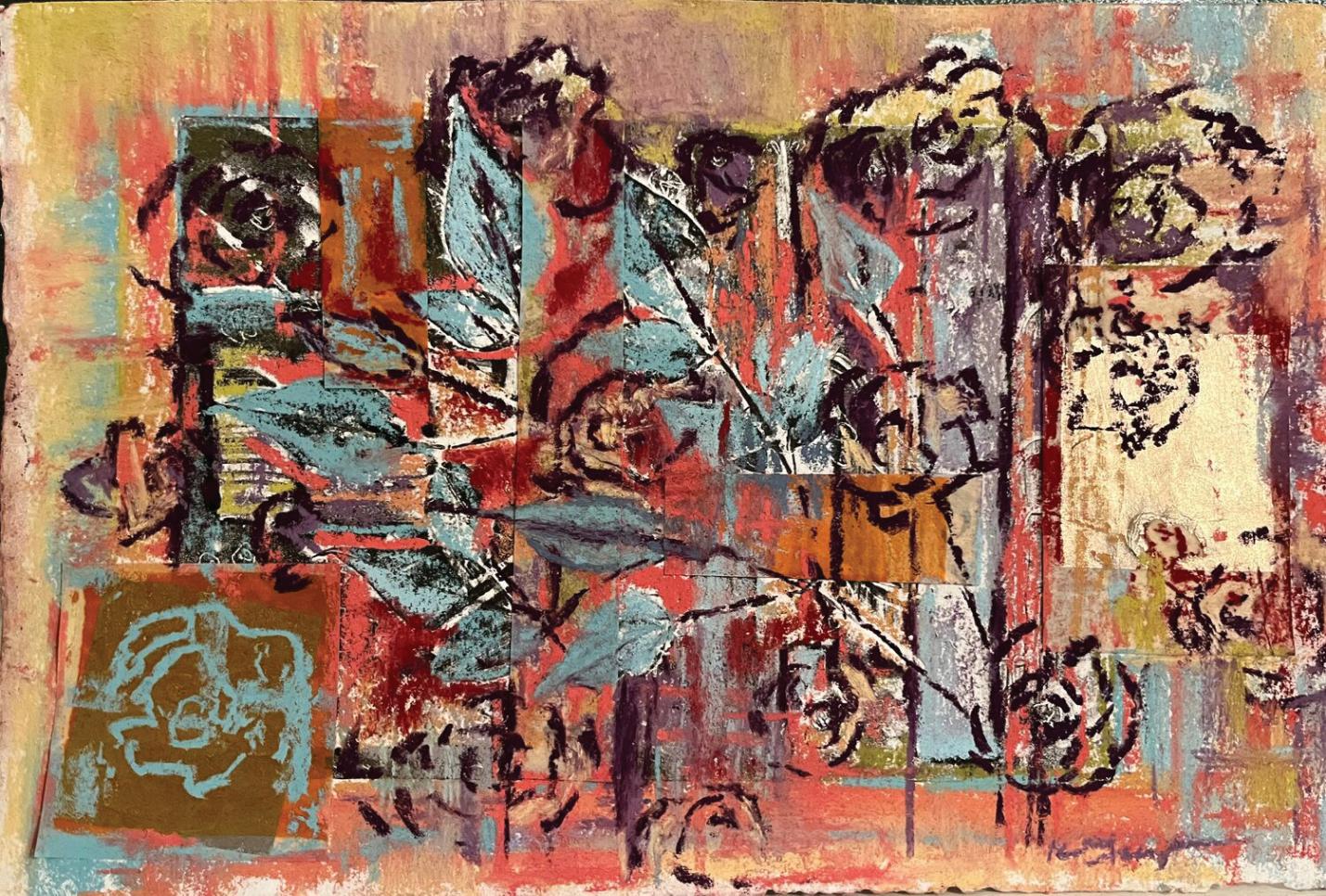
• Pastel over collage: Experiment with a variety of materials such as glued fabric and paper to create a collage and put the pastel on top, along with other media.
• The possibilities are endless…go to pswc.ws/painting-challenges for more ideas.
Spring Painting Challenge: What Springs to Mind? Take advantage of this opportunity to create new pathways for your own artistic expression! A daily visual prompt will be provided (such as a squiggle or shape).
Redraw the visual on your substrate and build upon it to create your painting, or study the visual and think about what it brings to mind. Use that concept as the basis for your painting. Or, identify your first emotional reaction to the visual and create a painting that represents that emotion. The sky is the limit, as long as you can express the connection between the visual prompt and your painting.
Summer Painting Challenge: This Challenge is All Wet! Utilize any and all principles related to painting water.
Any and all types of water count: ocean, lake, river, creek, stream, waterfall, pool, marsh, even water in a flower vase. Consider stillness/reflection, movement/ripples, light/refraction, eye level and shape, depth and clarity. Look through art books, and at online videos for tips on painting water. Practice by recreating paintings by the masters.
For inspiration, check out the works of Monet, Homer, Sargent, Hopper and contemporary artists Amy K. Sanders, Abi Whitlock, and Jessica Masters.
Fall Painting Challenge: The BIG One! 21 Paintings in 21 Days
Use this opportunity to commit to nearly a full month of daily painting. Here are some ways to keep the momentum:
• Prepare your paper ahead of time
• Focus on small works
• Limit your time to 30 minutes or so
• Plan to work in a “series” every few days or week
• Choose one subject or reference and paint it using several different palettes
• Go to bed each night with the next day’s block-in or underpainting on your easel
For rules, more complete descriptions, and to participate, please visit pswc.ws/painting-challenges/
Spring Challenge Use of Prompts Sparks Creativity and Variety
by Pamela Comfort
Our April Challenge invited participants to create paintings according to their individual responses to one of several daily prompts, which resulted in a wide variety of results. The prompts included visual “squiggles” which could then be used to create or inspire subject matter, and personal reflections that could be used in conjunction with the squiggles or alone.
Here are some of the personal reflection prompts:
• Think about a favorite book. Paint something that reminds you of the theme, or a line from the book.
• Think about a childhood memory. Paint something that reminds you of the memory.
• Paint something that relates to the question, “Who am I?”
• Think about the concept of time. Paint something that reminds you of time.
• Think about your safe place. Paint something that reminds you of that.
• Paint something that relates to a sound.
• Think about an achievement. Paint something that reminds you of that.
• Think about a treasure. Paint something that reminds you of a treasure.
• Paint something that relates to a guilty pleasure.
• Think about freedom. Paint something that reminds you of that.
There were a variety of lines and shapes in the squiggles, some more organic looking than others. Participants were told that they could create something by simply drawing or painting it on their paper and incorporating it into their subject, or simply create something based on how it made them feel, or what it brought to mind. Alternatively, they could use the day’s personal reflection prompt, or they could even combine the two.
There are whole communities of creatives using daily art
Kim Worsham Bonney
Francesca Droll
Kim Essex
CHALLENGES
prompts. The use of these prompts basically reflects the same value as engaging in a daily challenge itself. Prompts spark creativity by encouraging you to experiment with new techniques, and they help you focus on a topic and promote creative solutions.
Our challenges sometimes use technical prompts, such as the Winter Challenge that encouraged the use of multi-media methods, or last year’s challenge encouraging an exploration of high key values.
If you are interested in learning more about art prompts, or creating your own week, month, or year-long list of prompts, there are many, many examples to be found online!
As always, the PSWC members who participated in the latest challenge: What Springs to Mind? went all in, encouraged one another and learned some things along the way. Congratulations to all who joined the fun, to all who finished the ten days, and to the three winners of the random drawing for a $50 PSWC gift certificate: Dave LaPier, Jean Myers and Bonnie Griffith.
Thanks to all who created and supported the challenge as well as those who submitted their lovely paintings!
SA Kushinka
Bonnie Zahn Griffith
Cyndi Bartlett Gonzalez
Bonnie Davis Kenaley
I’m always amazed at how beneficial these challenges are to my art journey!
Jean Meyers
Debbie Conchita Oquendo
David LaPier
Norma Miller
Susan Mueller
Patsy Morris
CHALLENGES
Thank you for the challenge! I would say it was the hardest one for me as I was struggling with my creativity.
Join us for the next PSWC Member Challenge! July 1–10, 2026
For rules, more complete descriptions, and to participate, please visit pswc.ws/painting-challenges/
Post your efforts to the PSWC Facebook page and encourage your fellow members!
Teresa Steinbach-Garcia
Rachel Sylvers
Olga Symonenko
Marianne Janitsch Woosley
BLUE
CARAN D’ACHE • CRETACOLOR • DIANE TOWNSEND
FABER-CASTELL • GIRAULT • GREAT AMERICAN
HOLBEIN • J. LUDA • MOUNT VISION • NUPASTEL
PANPASTEL • REMBRANDT • RICHESON • SCHMINCKE
SENNELIER • TERRY LUDWIG • UNISON
LUXARCHIVAL • MAZZOULI PADS • PASTELBORD
PASTELGRAIN • PASTELMAT • PASTEL PREMIER
RIVES BFK • SENNELIER MIXED MEDIA • UART • VELOUR
Español, 26 x 20 in
FEATURED
ARTIST
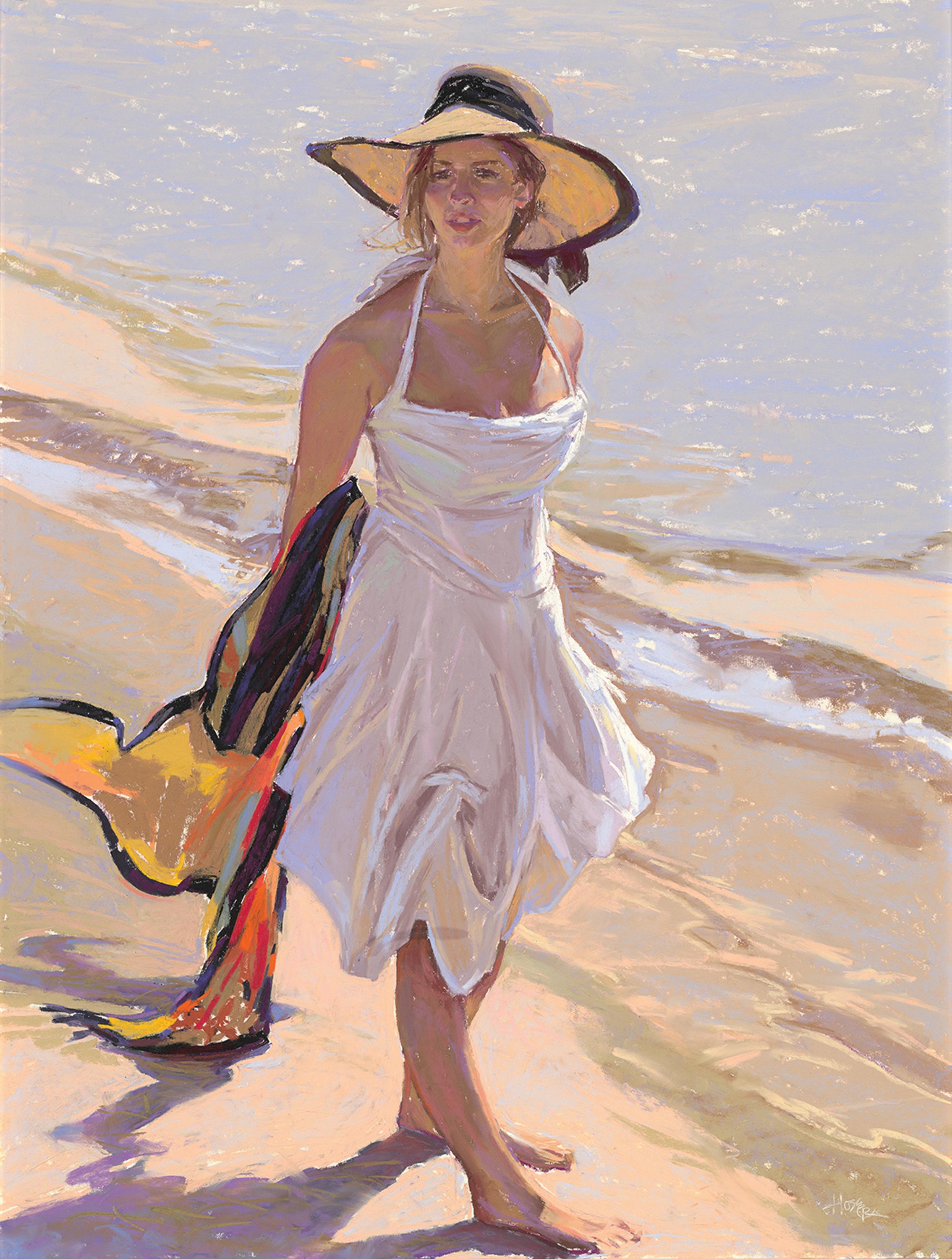
W. Truman Hosner On Being Driven and Artistic Growth
by Pamela Comfort
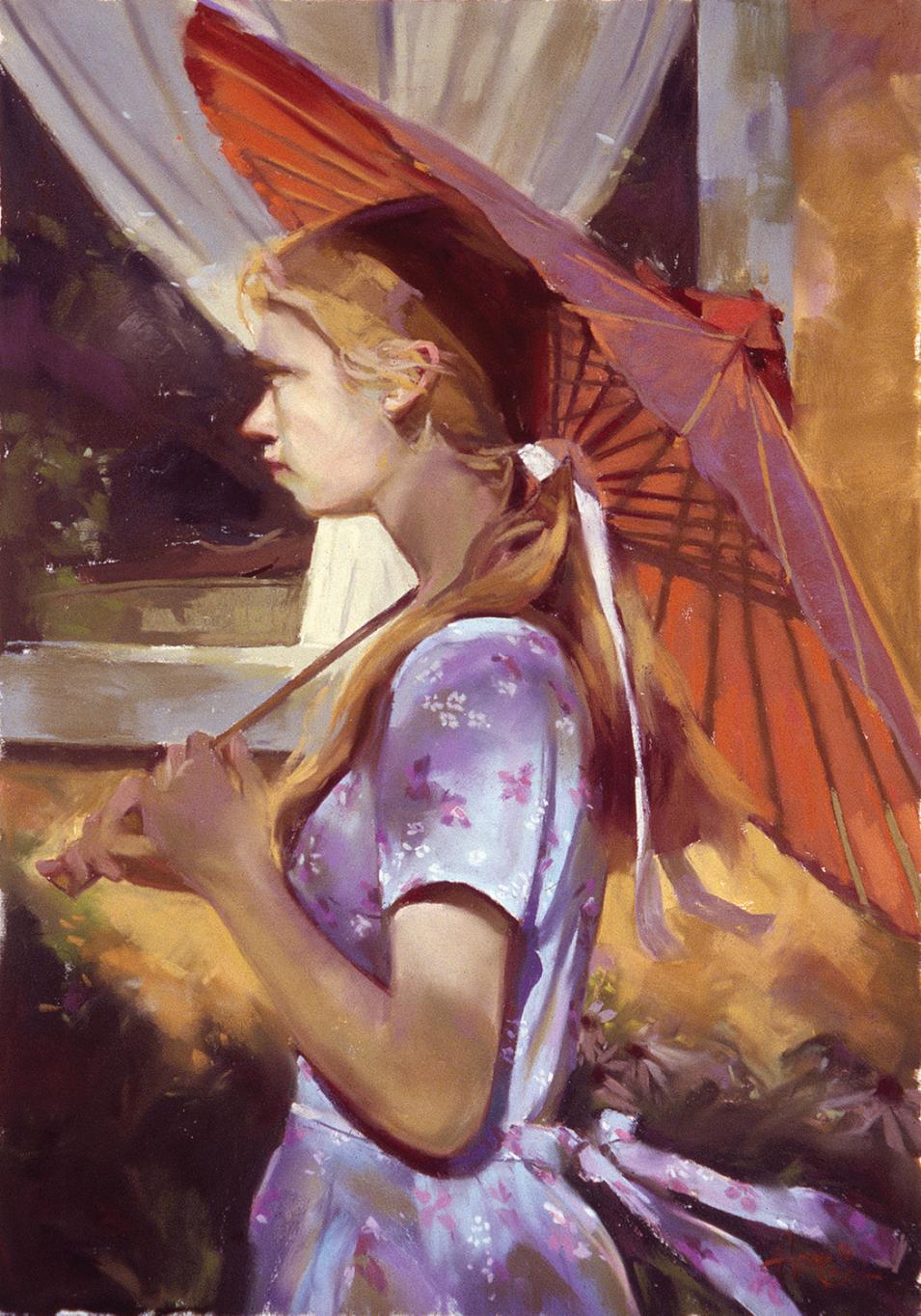
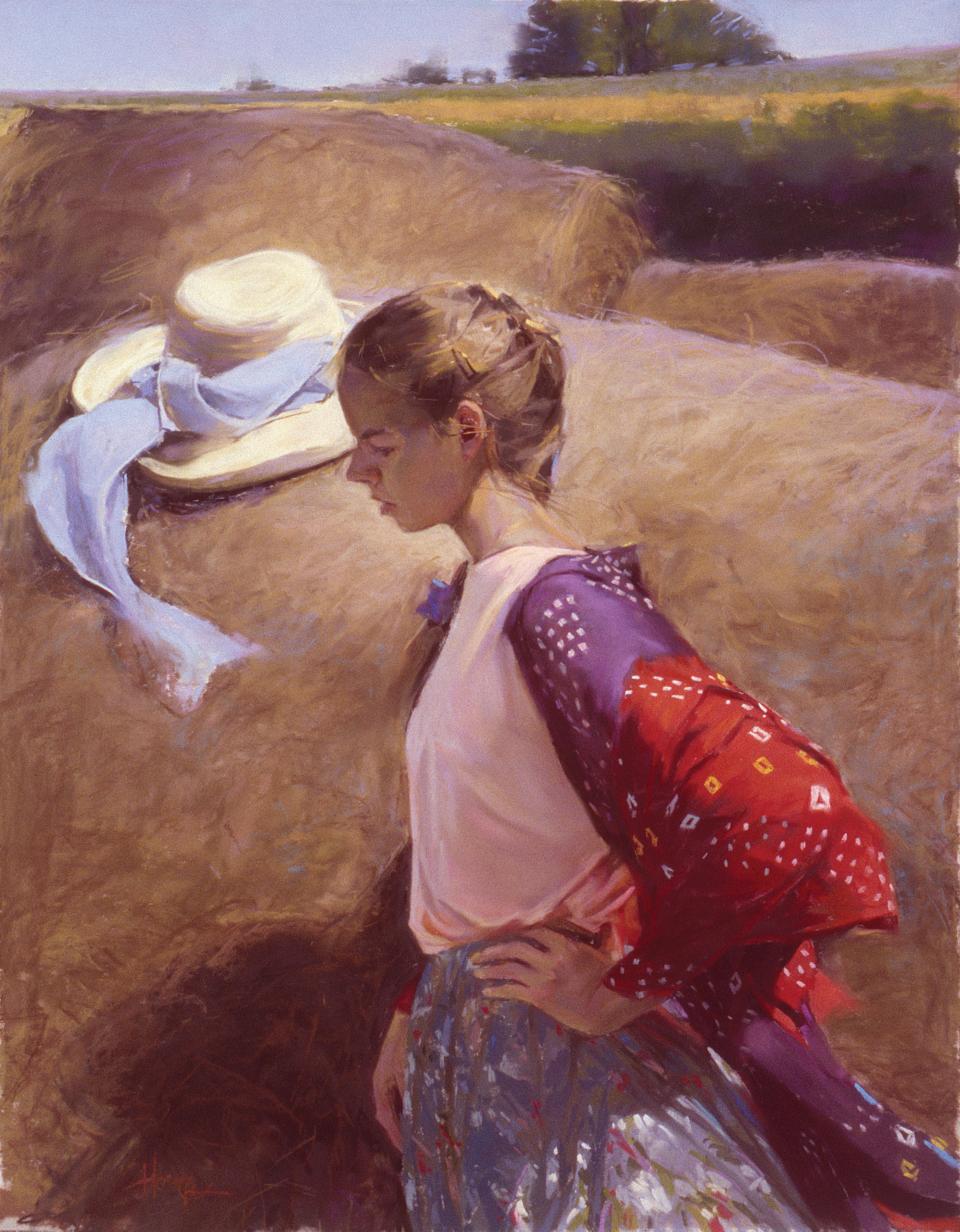
Margaret DeDecker, whose gallery carries Truman’s work says of him, “Bill wears his charm on his lapel” and “his chivalry is omnipresent.” She refers to his paintings as “framed poetry.”
Truman jokes with me that he had to give “Maggie” great sums of money to say that. I find Truman to be an engaging conversationalist, willing to share some of the lesser known background and experiences that have contributed to his great success as an artist and instructor. It’s evident that Truman’s achievement and his art reflect very deliberate and analytical study and preparation, paired with an intense passion and dedication to authentic creativity.
Tell us about your upbringing, were there artists in your family or others who inspired you to become an artist when you were young? You grew up in Detroit, correct?
Yes, born at Harper Hospital, which is now part of a bigger Detroit medical complex, but, my parents first moved to St. Clair Shores, and then moved about a year later. My mother was from a farm in Nebraska and she had an unfortunate thing happen as a young child. Her father and mother wanted to ranch. Her father was very good at training horses, and he had been bringing in train car loads of horses and training them and selling them to the farmers for work. They bought a ranch in Montana. In January of 1919 they sold the farm and all of the livestock and implements, and he, against family advice, got on the train to go to Montana to get the
deed to the new ranch and caught the swine flu, that was that big other flu pandemic, and in three days was dead.
So then, my mother and her younger sister, my mother was three at the time, and her younger sister was a newborn—they kind of bounced around the West out there. I think Grandma Mary was trying to find a way to make a living. My mother’s younger sister, when she was three, fell down some stairs at a boarding house and died. At some point, her dad’s brother and his wife brought my mother home to Nebraska, where she spent her formative years. So, she really considered that to be her family. They had a son that she considered to be a brother. After she met my dad, and they married, and they had this newborn baby, which was me, I was the first of three, they found an acre of land just outside of Detroit.
My mother built a little garden, a half-acre vegetable garden, and flower gardens, and all these things.
My dad worked for the federal government back then as a federal probation officer, but this was at a time when that paid very little. Most of the factory workers around us made more money than he did. My dad made up for it when he retired, though, because by then he was Chief Federal Probation Officer of the Eastern District of Detroit and as the government grew, he got better and better payment, you know, so a good living.
I grew up in that working-class neighborhood in Detroit, where art fell into a far third, behind cars and football. I know of no other artists in my immediate family. I do know that my grandmother on my mother’s side, attended the Chicago Vocal College and sang in the chorus of the Grand Lyric Opera of Chicago during the era of Enrico Caruso. I have a pen and ink drawing of hers that is pretty good…some of that may have trickled down. But it was my mother, a gifted flower gardener, who was most influential and recognized my childhood drawing and painting abilities.
My mother was very familiar with growing things. She could grow anything, beautiful vegetables, and we had a vineyard and we had all of that. Her flower gardens were works of art, carrying varying designs depending on the time of year and what was in bloom. She also competed in floral arrangement shows and won many awards. It was by observing those arrangements that I learned color and design, and the desire to create. She was quite innovative with her concepts. I still remember some of those arrangements, and thinking, well, you do that with that, and a twist with a twig here, and I thought, that’s really fascinating.
She was a perfectionist. She would often drive my brothers and I hard, but it was very valuable as an artist to have that kind of thing encouraged in me. Then, when I was 11 or 12, mom gave me the complete three volumes of Vincent van Gogh’s letters to his brother Theo. I never knew if it was as a warning or as a guide! I do know, I found a soul who was in sync with the intensity of life I was feeling.
When I read those letters, it was the first time in my life
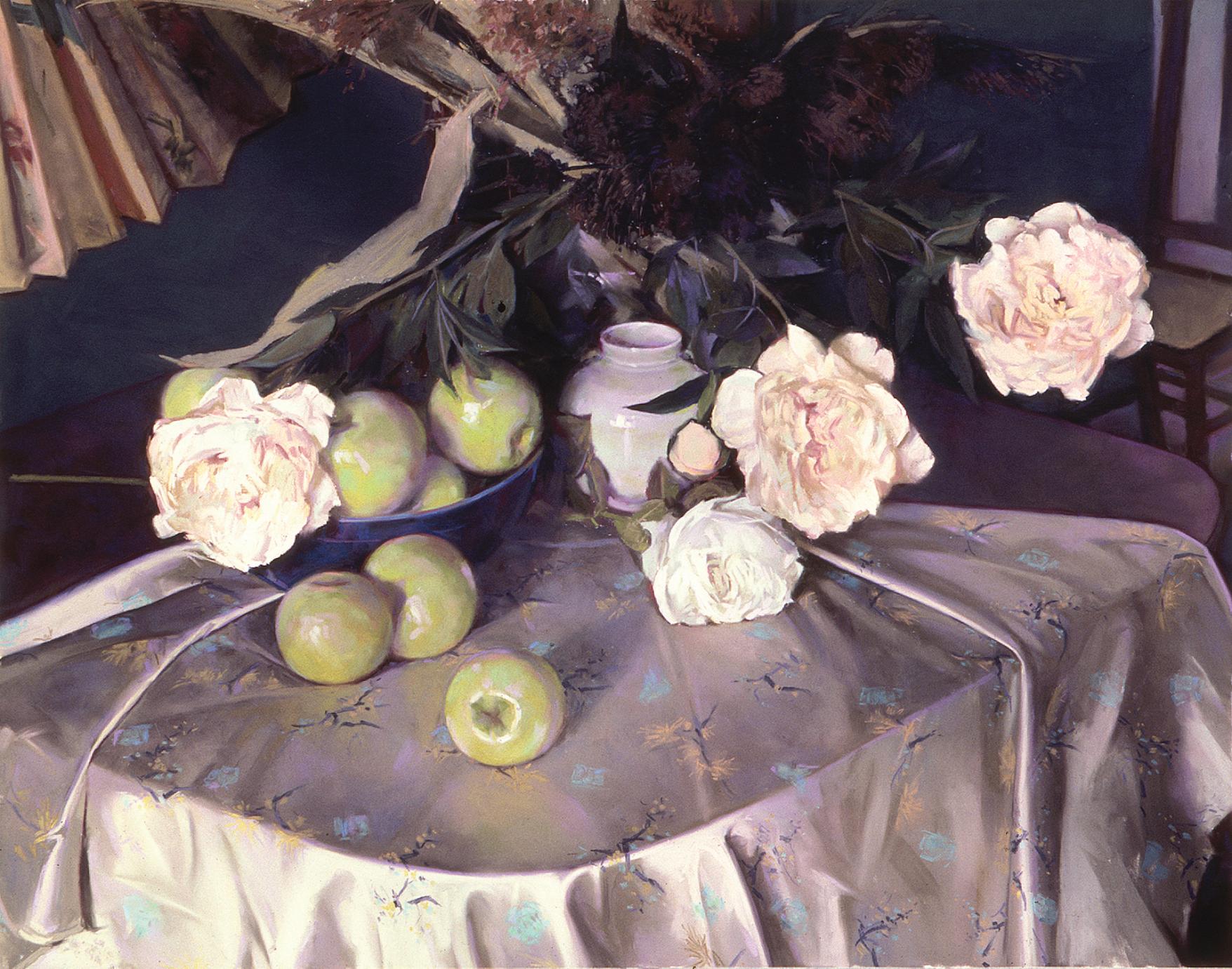
At Cameron’s Table, 24 x 30 in
when I really felt that maybe it was okay to feel the way I was feeling towards life, towards people, and things like that, with such intensity. To this day, my middle brother, who’s been very successful in business, says to me, “I don’t get your passion.”
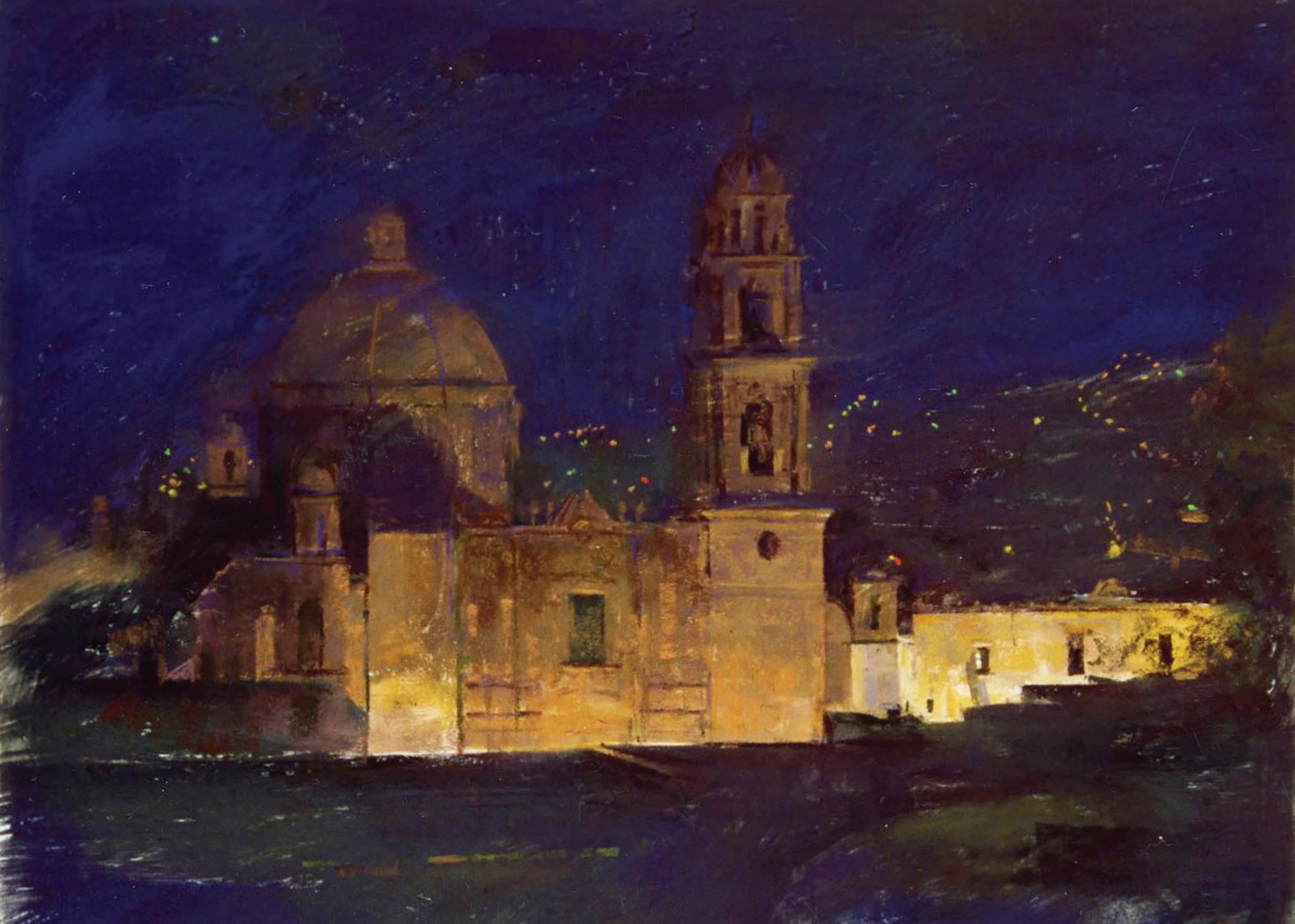
For example, on Wednesday morning at 3:30 in the morning, I got up and left to catch a 6 o’clock flight out of Detroit to come to California. But Monday night because I’d been asked to contribute a painting to a show for the gallery in Colorado that carries my work, I got up at 1:30 in the morning and went out and painted a nocturne from inside my car, for three, three and a half hours. Now, not many people are really interested in doing that. When my brother found out, he said, “You do realize you’re 75, you’re not 50.” I said, “I know, but…I think I still have a few things at the bottom of the cup, so I’m gonna keep painting, yeah.” it’s a passion, it’s not work, you know. And true enough, I can’t do as much of it as I used to, but I still think I have a few surprises in me. I’m gonna keep going yet.
As Her Garden Grows, 14 x 11 in
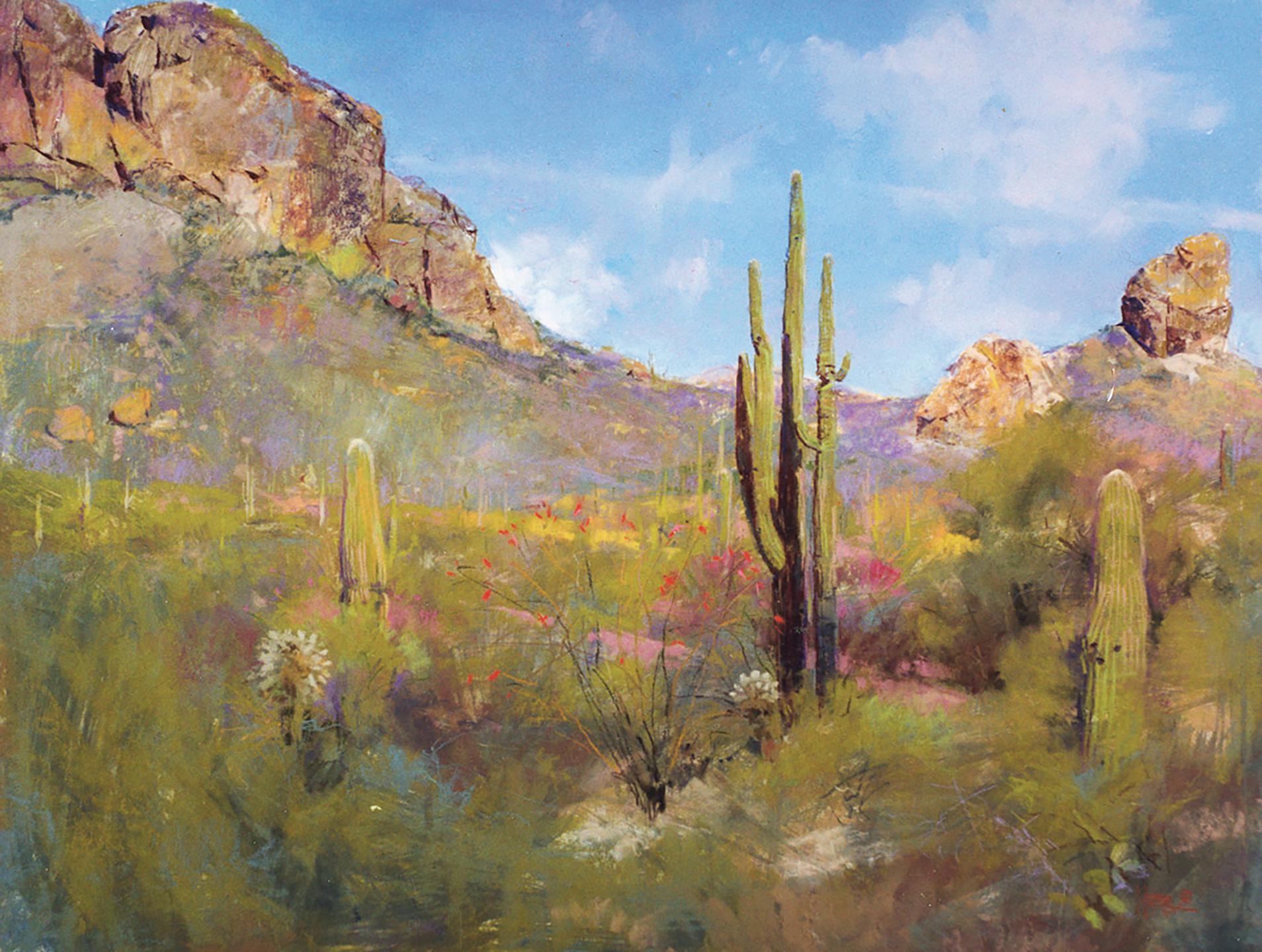
Desert Spring Suite, 24 x 30 in
Were you interested in art when you were in school, before college?
I was, but as I mentioned, art took a far third in the community I was in, behind cars and football, and things like that. I received a scholarship to a gifted student program at Kansas State University at Lawrence, Kansas when I was a freshman in high school. It was a 6-week program, and there were kids from all over the country gifted in music, mathematics and science, in ballet, art, and all these things, and we all worked together for 6 weeks. I came home and promptly announced that I was giving up art. I was going to go into engineering, something that I could have a chance at making a living at.
So I gave it up, and I went to Western Michigan University the first year of college, and just didn’t know what I wanted to do with my life. And I flunked out. That was during the Vietnam War and my college deferment was gone, and I was within 30 days of being drafted. They
initiated this lottery business, and fortunately, I had a high number. But the beauty of the lottery was if you were exempted once, then you knew you were okay, you could go and do what you wanted with your life.
So the only other thing that I was any good at, besides American football, was art. And I decided at 18 to take up the study of art. I put myself through Wayne State University, which is a city university. I could live at home. I earned a Bachelor of Fine Arts.
At that point, I was married, and my young wife and I were trying to make a living. The art program that I was in was driven mostly by experimental and ultra-modern and experimental thinking, okay? And the avenue, or path that seemed to appear for making a living was still a couple of 3 or 4 years out, because I needed a master’s degree. I had no more money, so I couldn’t go to school any further at that point.
Did you have another career before you became a full-time fine artist?
Well… after I received my BFA, it took about three years to find my way into a creative venue. During that time, I worked several odd jobs, mostly in factories and grocery stores.
I decided to try and get into commercial art, and I wanted to do illustration, I didn’t want to do graphic design or art direction. I soon discovered that my portfolio was not the right portfolio. My portfolio was designed for me to go on to a master’s program in fine art, and/or eventually teach. And I was competing against these other young artists, some of them were even younger than I was, and they had gone and studied at schools of visual arts in Ohio or New York, and had portfolios designed for graphic arts. They’d have 25 or 30 beautiful graphic art paintings, and I realized, this isn’t going to work.
And then I found out that Detroit had an apprenticeship program in commercial art. So I went to the Center for Creative Studies, and took some night courses. I took everything out of my portfolio except these 6 pieces that I developed. And, luckily, the head of the graphic arts department at the college recognized my ability, and he turned some people in the business on to it, and somebody was willing to take the chance.
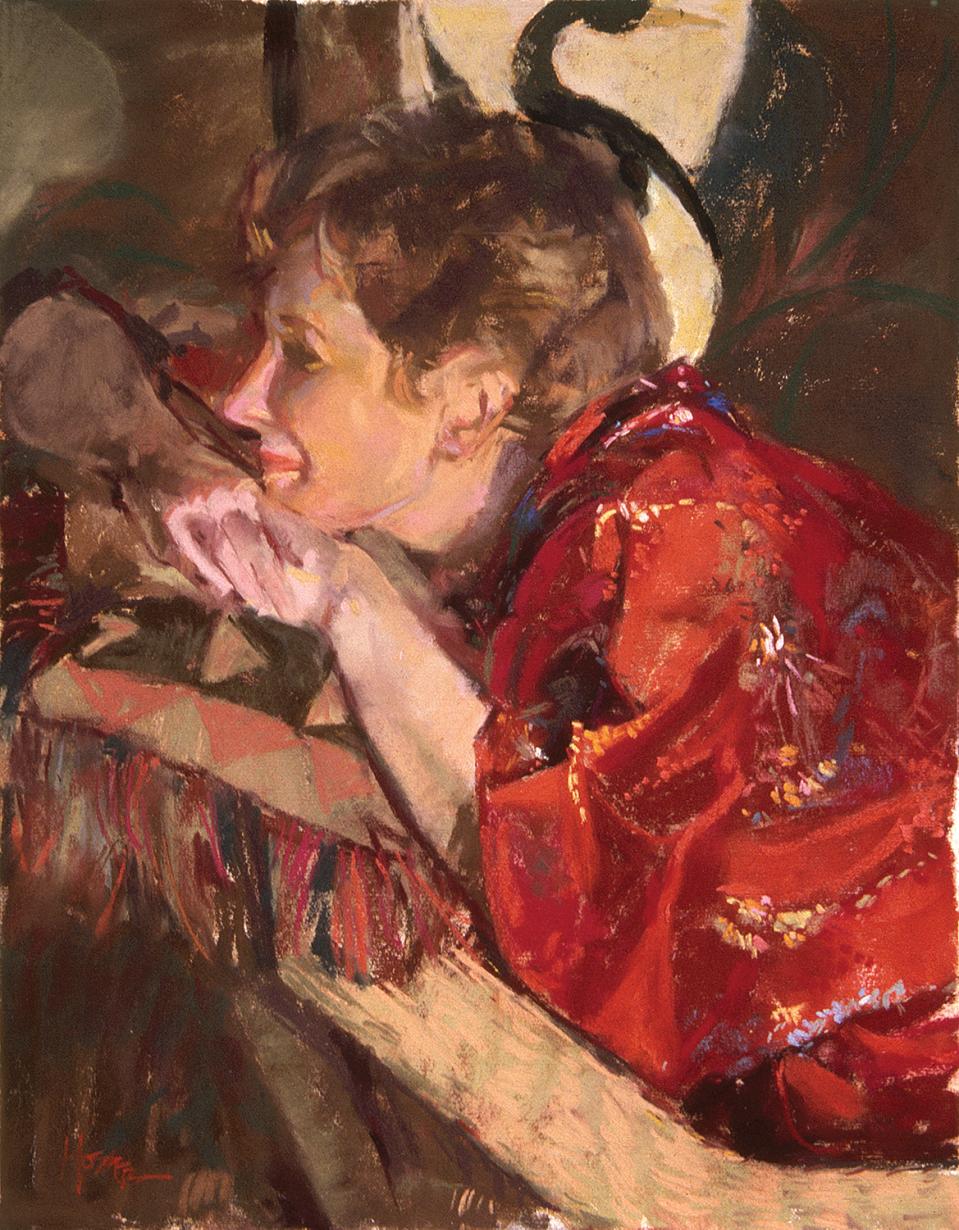
First Love, 26 x 20 in
And that was my first lesson of where I was going, because I was working in a factory, getting paid pretty good wages per hour with all kinds of benefits and education benefits and all that, and I came into the commercial art business at minimum wage, with no benefits, no health insurance, no nothing. The only way I could support Denise and I was to work 70, 80 hours a week to make enough money. But I did it. When everybody else would go home at the end of the day or on weekends, I would go back in and I would develop portfolio pieces to try and advance myself. Eventually another advertising art studio saw my work and offered me a job as a junior illustrator.
Now a successful illustrator, I was able to go freelance after 5 years. I eventually ended up teaching illustration in the Center for Creative Studies program.
Have you or do you work in other media? What led you to pastels?
As an illustrator I worked in all the mediums. Towards the end I developed an illustrative style in which I used pastels for the brilliance of their color. Then, when I transitioned into fine art, I made a clear decision to use pastels exclusively. That’s all I’ve used since 1995.
I feel I have had two careers in art. Illustration was my first career. Then in the early 90s I left that field to pursue fine art and a newly discovered passion for plein air painting with pastels. I’ve been asked, “How do you make a transition like that?” I said, it’s a leap of faith. That’s all it is. I gave myself 5 years, and I said, if I’m not making enough money to stay afloat, then I’ll do something else, but I was lucky.
At the Betsie River, 16 x 20 in
What has been the key to your growth as an artist?
By picking up on nature’s rhythms I find I can make sense of things and appreciate the beauty and goodness around me. Nature restores my soul and stirs my imagination. Working from life forces me to make my paintings more fluid, and to let go of polish. It allows me to produce rougher passages (dynamic incompletion) which seem more in sync with what I am seeing. These passages better express the restlessness and spontaneous movement I find in the natural world.
What part of your creative process do you find most fulfilling, and why?
The start of a new drawing or painting! I don’t come lightly to a blank paper or canvas… I come with appre-
ciation and respect for those who have gone before me and what I am about to do.
It’s unlike anything else in my life I do. It’s not cooking or cleaning… It’s making art… I take it seriously; I just make sure not to take myself too seriously. I’m in “artchurch,” and if I don’t feel I can attend, I go do something else, maybe clean the house or bake a cake.
That’s interesting, because so many artists say that’s the most difficult thing, looking at that blank piece of paper.
Well, and they’re right, you know, in fairness. It can be extremely intimidating to look at a blank piece of paper and say, now what? But I think what I was driving at was more the idea that the blank piece of paper gives me a fresh start. Like a racing horse at the gate, I’m just
Pump House Revisited, 9 x 12 in
itching to get into the race. I put everything out of my mind about what did or didn’t work in the past, and I just think, okay, this is a chance to see if I can’t really make this one the best one yet, you know.
It doesn’t happen all the time. I mean, particularly plein air painting, you know, every once in a while, you crash and burn. It’s just an ugly painting. You don’t show it to anybody, by the way.
You don’t feel like you’re putting the pressure on yourself, approaching it that way?
I probably am. I’m sure, you know, that might again be part of going back to mom. She would drive us, me and my brothers. So maybe I’m a little bit driven… it’s an interesting thing. My nephew worked for me the summer he graduated high school as an assistant, in a little gallery I had in Romeo, Michigan. He’s gone on to be involved in computer engineering and robotics— way ahead of everybody. University of Michigan graduate. Anyway, I remember at the time, I used to drive him crazy because I was a perfectionist about stuff, and just 2 or 3 years ago, he was given an Executive of the Year Award. I said, “I’m really proud of you, it’s amazing what you’ve done.” And he said, “Uncle Bill, you taught me, it was in the details. You drove me crazy, but I followed that.” And I think that’s what my mother did, and that’s probably why I’m a little bit driven about things, you know.
Can you describe a moment when you experienced a breakthrough with your technique?
I think it must have been when I discovered not to be timid when I work… I find it’s better to make a confident but imperfect mark than to be hesitant and overthink my actions. Uncertainty and fear are at the root of a lot of bad painting. When I was trying to learn and
thinking step by step by step, the end product wasn’t as exciting to me. Sometimes, when I would just let go and… Shhst, (sweeping gesture) and I’d go, well, that’s much better. You know, it’s fresher, it’s cleaner, it’s more full of vitality and vibrance, and I just like that, you know. So I think that’s probably, how that came about.
Have you ever heard of the term impulse color? There’s a wonderful painter by the name of Walt Gonske who’s been widely recognized for his plein air paintings for years, he’s an oil painter. And I had an opportunity to visit with him. He said, every once in a while, why don’t you go over to that pastel box of yours when you’re in the middle of a painting without thinking, grab a color, impulsively, and slap it into the painting, and watch what happens.
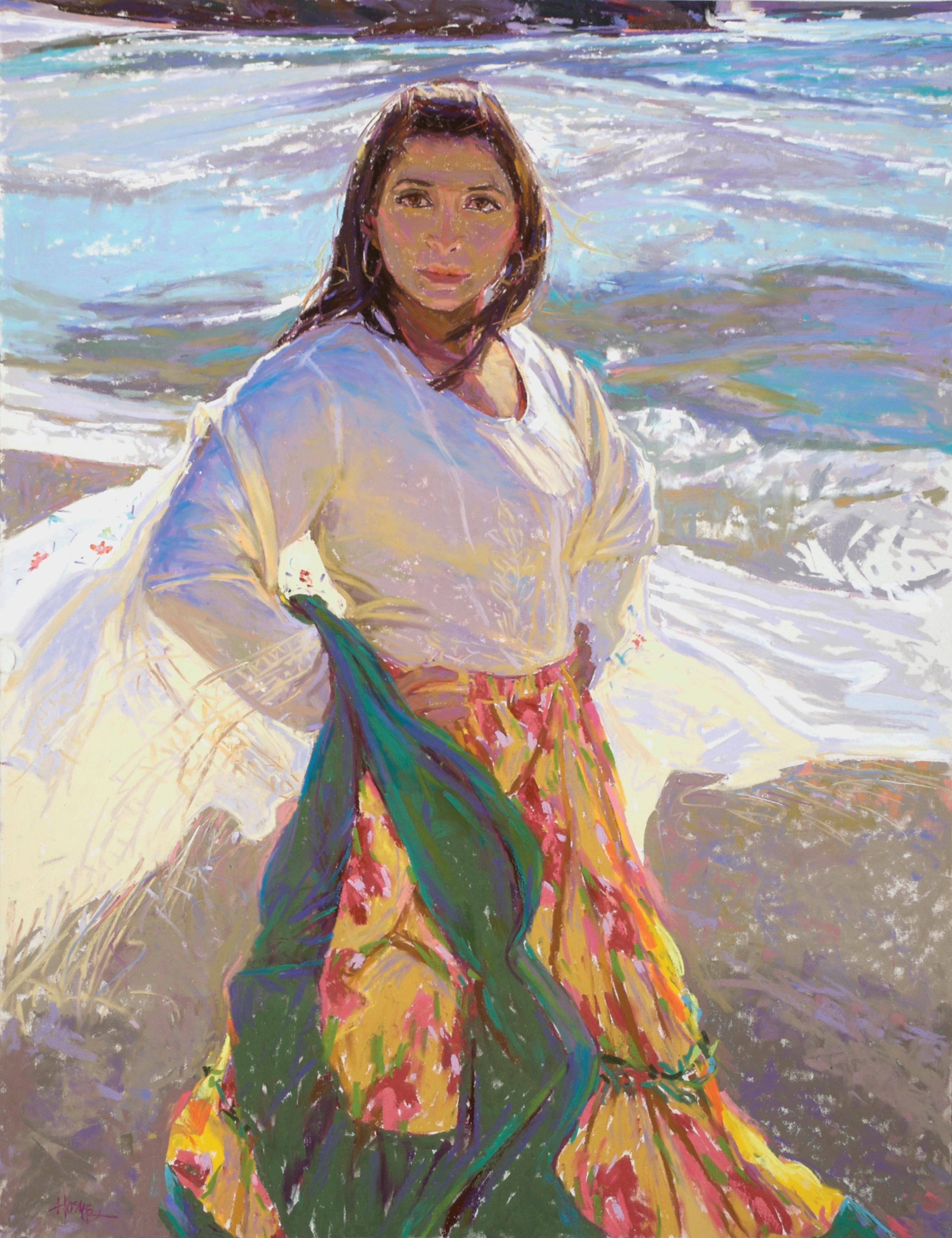
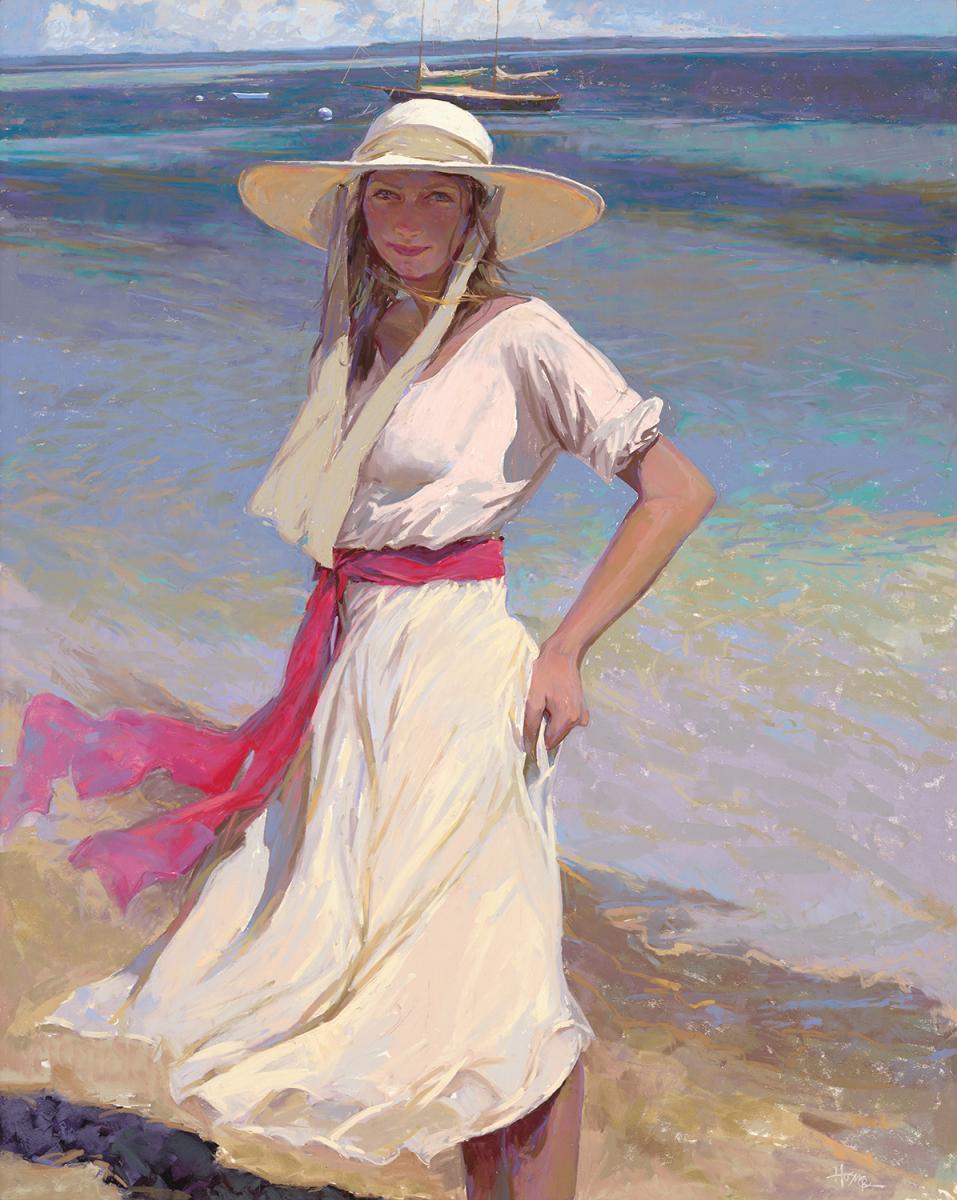
Her Face to the Wind, 20 x 16 in
And what happens for me when I do that, is two things. One, I’m breaking the rigidity of a regimen of step leads to step, leads to step. And two, it’s like in music, because I really think of painting and music as siblings—it changes the key you’re in. So your whole painting is going in one direction, in one key, and all of a sudden, you bring in this impulsive note, and exciting things happen, you know.
That kind of thing has begun to be encouraging to me, because painting has become more and more about poetry—the feeling behind it. I’ve taken a great deal of influence from writers and music, as well as artists and art books.
What’s the biggest challenge you have had to overcome to be a successful artist?
Keeping life at bay and learning it is okay to be alone with my work. Artists can be at their loneliest when among people, and at their most replete when alone with their work.
What themes or concepts tend to emerge most often in your work?
My work is like a diary, only, in pastels. My paintings are the pages of this visual diary… And light is my most reliable narrator. I am absolutely beguiled by the elusive moments expressed in light. I have a passion for natural light and the world in luminosity.
Is there a specific ritual or routine you follow when starting a new project?
I am unorthodox when I work because of the way I learned representational painting. I simply try and get into the “zone” and win the painting over. As quickly as possible, I want to get one thing correct, that then sets the tone for the rest of the painting.
I base this idea on something I read about Hemingway. He said, what he would do when he was living in Paris is he would go to his place where he wrote and when he would start writing for the day, he tried to write one really good sentence. And if he could write one really good sentence, then he could write for the rest of the day. So then I said to myself, if I can find just one really good passage, you know, if I can just make one really good one, and I can’t tell you whether it starts at the center of interest, or I’m looking at something, and maybe I’m struggling, and all of a sudden, I see, oh, I can make that work, and bam, I go right in, and I get that, and I try not to touch that for the rest of the painting. That then sets the tone for the whole rest of the painting. Just like Hemingway did with his one sentence.
Have you ever experienced creative blocks, if so, what has helped you push through them?
The only creative block I can think of is life itself… I can become distracted and if I’m not careful the better part of the day can slip away. I have found that it is a good discipline to make art each day before anything else.
What kind of thing might surprise you as you work on a piece?
Try as I might to be in control of the work, it is the little accidents that err in the right direction that surprise and excite me. Here’s what I found when I first went out painting outdoors. I tended to want to
Innocence, 14 x 11 in
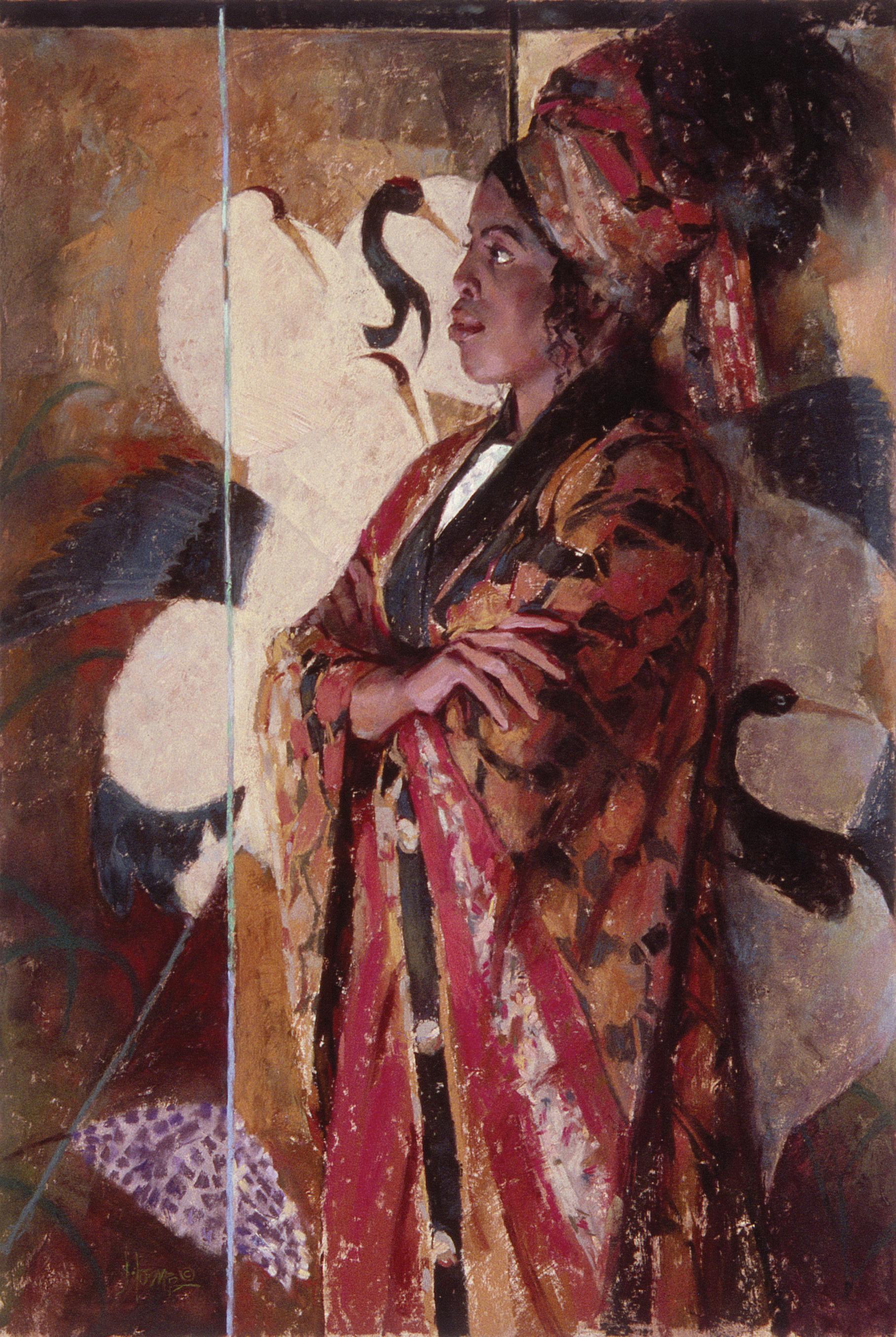
Proud Heritage, 26 x 20 in
take a photographic image and try to hold that image through the next 3 hours. What I found was there were a lot of things, when you’re working from life and outdoors with movement itself from wind and whatever, particularly if you paint people from life outdoors, there are things that might happen halfway through, or twothirds of the way through, that If you were just going to hold on to this original image in your head, you were going to miss.
There was a painting that I made that won a top prize at a Pastel Society of America exhibition very early on, of a young woman hanging laundry on her mother’s line. I always know the people I paint. They’re not professional models, they are friends, daughters, whatever, so I have a personal connection. So, Allison was hanging this laundry. We started the painting about 4:00 or 5:00 in the afternoon. By about halfway through, so about 6–6.30, the sun had lowered just enough that it started to cast her shadow on the flowing sheet behind her. So,
I just immediately put that in the painting, you know, just slapped that thing in. I didn’t think about it, I just expressed what was going on.
For years, people loved that painting, but what they loved the most was not the figure, but the shadow on the sheet. That’s why I say a plein air painting often surfaces like a poem does from the words. As you develop the words, the narrative behind, or the poem, comes to life. So then I found that, it was very freeing, because then I realized I don’t have to copy what’s out there. I don’t even have to take a photographic image and make it impressionistic. I just have to paint the experience. Something might happen right at the end, or it might happen in the middle, and then I put that in, and now that changes the composition or design. So I have to keep that composition and design fluid enough to be able to do that. If I had a preconceived design and said, I’m going to put this right here exactly, and this, this,
San Miguel de Allende Nocturne, 11 x 14 in
and then this, this, and this, and then stuck to that, I don’t think that’s the right thing for open-air painting. I think if I was going to go back and work from photographs as I did as an illustrator, that might be different. Because then everything is set, you know. But then again, if I’d taken a photo of young Allison at 4 o’clock, I would have missed that shadow. I would have gone back and done the painting, and that shadow never would have been in the painting.
Has your work evolved over time, and if so, how would you describe that transformation?
I know I paint looser now, with greater confidence. Also, I’m more concerned with making things poetic, and less with technique. If I’m on my game, when I leave the field, I really can’t tell you what I have just done. Over the years painting has become increasingly intuitive, and less, and less cognitive.
My training as a representational artist has been a bit unorthodox. I learned to work representationally in the advertising art business. We used photos and projected them. We had different forms of projecting these photos right onto the surface that we were going to paint on. So that was how I learned to render things but that’s not the right way to learn drawing from life. That’s projecting photos and learning how to render, but you still don’t know how to interpret three-dimensional information. You just know the craft of illustration, and you can be very good at that. I was very successful at it.
When I left commercial art, the first thing I realized was that I needed to learn how to interpret something that was three-dimensional at a certain point. I was going out and there were just things I couldn’t do. I couldn’t get them down in time, and I was bringing them back in and finishing them from photos. I was studying with Dan Gerhartz. He’s an oil painter. I said, you know, I think I’m stuck, and I’m thinking about putting my camera away for a year. I just know there’ll be things I can’t do at first. He said, “but at the end of the year, you’ll probably be able to do them.” I said, “I think it’s a good idea.”
Well, I never took my camera back out, because I was having too much fun. I love the challenge of being out there, fighting against the clock, fighting movement, fighting…not really…it used to be fighting it, now it’s
Isabel, 40 x 32 in
Listening to His Story, 14 x 11 in
incorporating it, but…. The unorthodoxy in my work is that I don’t have what I should have had, which was in a classical training program, I would have had at least a year of drawing from life, 4, 5, 6 times a week with a model, and I never had that.
But what I have learned, because I was an athlete, is how to compete, and I feel I compete with my paintings. Who’s gonna win? Is that painting gonna win, or am I gonna whip that painting into shape? And so, when I compete, with myself on that painting, I just have learned to win it over. Sometimes, I may have to win it over a number of times during the 3 hours. It’s a highly concentrated thing. I literally go out there and stand and whack away at that painting for 3 hours straight without stopping, without hardly doing anything but breathing. I come off the field a lot of times now just exhausted, you know. But I win it over. And once the painting is won over, and if I’m lucky and I win it over early enough, the rest of that time is sheer pleasure, sheer joy. I mean, I’m on a roll. It’s similar to an athletic competition where you’re winning, and everything’s going right, and you’re just having a great time playing the game. Yeah, that kind of thing. It’s very exciting for me.
It’s the one thing in my life different than anything else I do. Making art, you know. I mean, I love to cook. I don’t mind washing my car, I do all those kinds of things, but… painting art is, like…art church for me, you know? I go to church.
What role does storytelling play in your artwork? Do you begin with a narrative in mind?
I think every painting has a story in it. With plein air painting the idea behind the painting often arises, like a poem arises from words. I keep the painting fluid and open to change. Unfinished passages are used to express the restlessness of changing light and spontaneous movement.
Do you think about how you want your audience to feel when they view with your work?
Yes… A painting can leave us with a feeling and transport us from where we are standing in front of the work to a place and time of the artist’s choosing. If 10 years later, it is the feeling that is remembered, then I was successful… To me that’s the magic in art! We artists are about things that cannot be said with words.
Summer’s Nuance, 18 x 12 in
Promises to Keep, 12 x 9 in
What is one technique or skill you have yet to master?
Drawing…though I doubt I ever will…. Very few have.
Do you feel a connection to any particular art movement or tradition?
I stand on the shoulders of so many wonderful artists: Vincent van Gogh, the French and American Impressionists, for their use of color and expression, the Romantic Russian painters, Isaak Levitan for his lyrical landscapes, and Valentine Serov for his classical yet contemporary drawing and painting, as well as the Spanish painter Joaquin Sorolla for his abbreviation and luminosity. Also, Tom Thompson and the Canadian Group of Seven for their plein-air work. The work and thoughts of artists such as Käthe Kollwitz, Camille Claudel, Georgia O’Keefe, Mary Cassatt, Cecelia Beaux, and Berthe Morisot live in my artistic soul.
And I have been fortunate to study with three living artists who helped me beyond measure: Max Altekruse (Max studied under Frank Reilly at the Art Students’ League in NYC), Dan Gerhartz, and Harley Brown.
What has been one of your most rewarding experiences as an artist so far?
Without question, my portrait work at Children’s Hospital in Detroit. (For 10 years Hosner spent one day per
month drawing portraits of the young patients in their rooms and gifting the drawings to them and their families.)
If you could collaborate with any artist, dead or alive, who would it be and why?
It most likely would be Nicolai Fechin. His unbelievable knowledge of the human form and his ability to see it as movement through a flowing connectedness, makes him a true master.
What advice would you give to someone just starting out in the art world?
First decide if you are passionate enough about it. If you want to do it as badly as you want to breath, you’ll most likely succeed. Next decide how you want to measure your success.
What are the most important art books that you recommend?
There are so many good ones and if you make the choice your own, you will develop your own voice. There are two kinds of art books. One kind is mostly about approach, the other mostly about the art spirit. About approach, I would recommend: John Carlson’s Guide to Landscape Painting, and Robert Beverly Hale’s Master Class in Figure Painting. Concerning the art spirit, I would recommend van Goghs’ Dear Theo: Vincent van
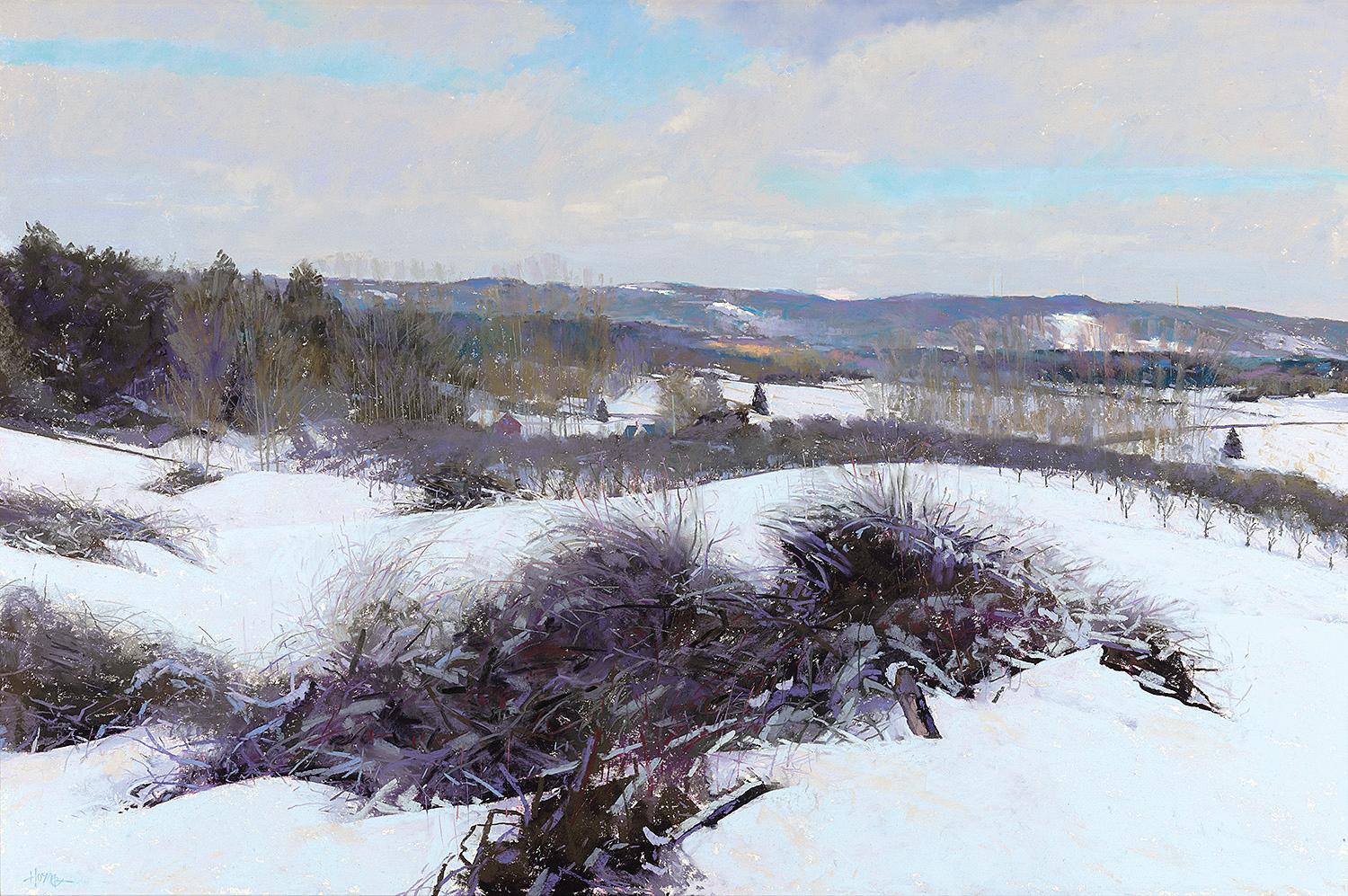
Winter’s Trimmings, 24 x 36 in
Goghs Letters to His Brother, Robert Henri’s The Art Spirit, and Rainer Maria Rilke-Letters on Life edited and translated by Ulrich Baer.
Just as important to me has been the writing of Willa Cather. Cather’s ability to say the most with the least and paint with words is scary good. I feel the same way about the poetry of Edna St. Vincent Millay and her work makes my spirit leap.
With any influences, I have always sought not to copy the originators, but to seek what they sought, and then ask my own questions.
Who or what inspires you outside of the art world?
It is the people I meet in everyday life who inspire me the most, the ones who get up each day and often not feeling well, do most of the work in the world… They are my heroes. Like the children (and their families) whose portraits I drew at Children’s Hospital of Detroit. I have remarkable stories and life lessons from my time there.
How do you think the role of art has changed in society today compared to the past?
Art today, like many times in the past, is reinventing itself. Deeply affected by continuous influences of the
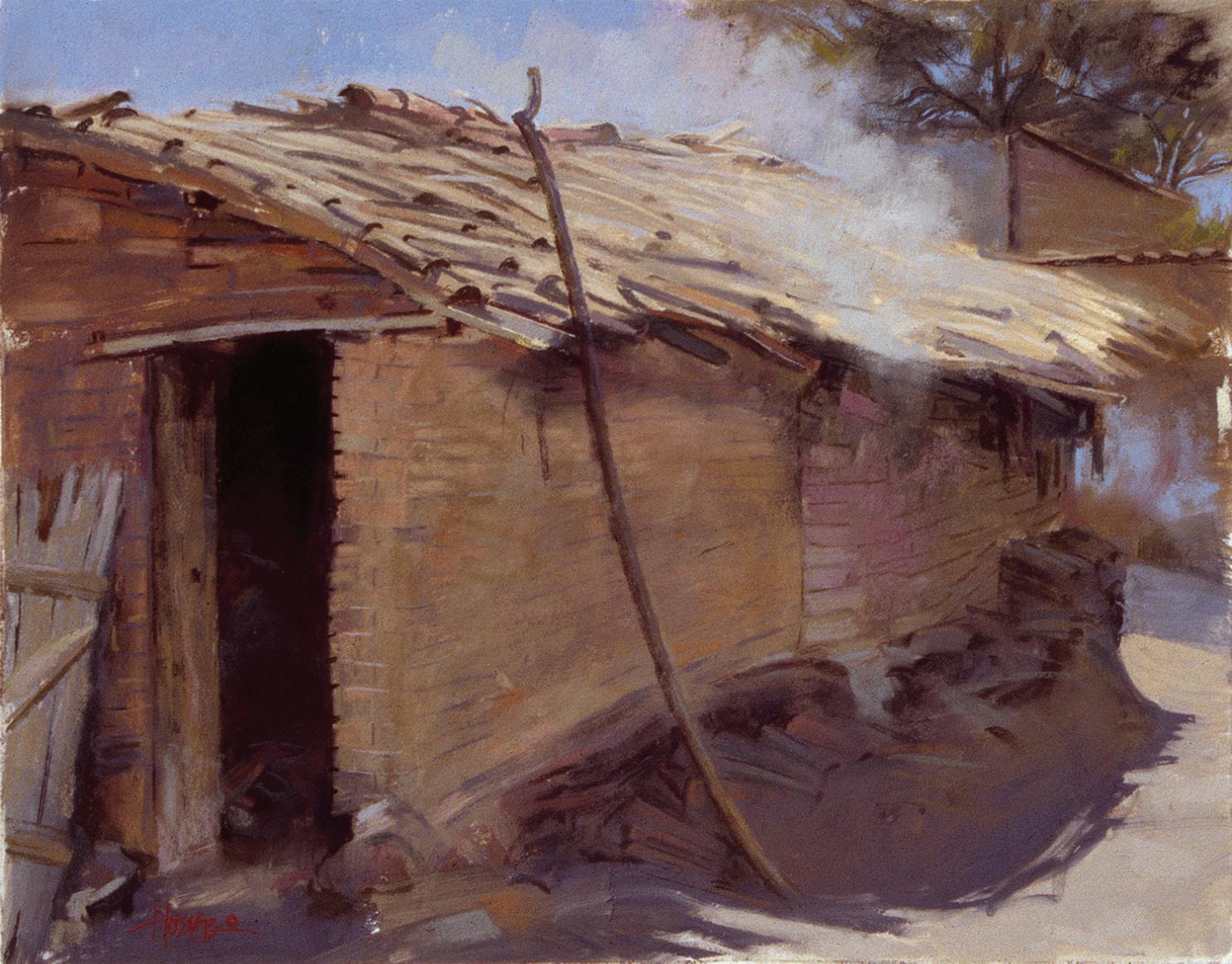
Rodrigo’s House, 14 x 11 in
information age and the new digital technologies, artists are once again searching their soul to understand what should be next. As AI “evolves,” art may need to “devolve” to retain the individual’s expression of the human spirit.
What do you collect?
Over the years I have acquired the art of several living and non-living artists for my own personal enjoyment. At times, in support of young artists, I have acquired their work too.
What would you want your legacy as an artist to be?
That people will find in my art the integrity and honesty I put into it, and the seriousness with which I worked, so that they might feel the love I have had for the people and places I have known.
I see skies of blue
And clouds of white
The bright blessed day
The dark sacred night…
The colors of the rainbow
So pretty in the sky
Are also on the faces
Of people going by…
And I think to myself What a wonderful world!
W. Truman Hosner is a Master Pastelist with the Pastel Society of America, Distinguished Pastelist in the Pastel Society of the West Coast, Maitre Pastelliste -Societé de Pastel de L’est du Canada, and has obtained Master’s Circle Gold Medal status with the International Association of Pastel Societies. He is a published art author and lecturer with over 50 years of experience as a working artist, and has taught workshops in the US, Taiwan, Spain, Canada, France and Mexico. Truman’s work has received many awards over the years, including the first Grand Prize in the Pastel Journal International Pastel 100 competition, First Prize from the French Pastel Society in Giverny, France, First Prize from the Pastel Society of America in New York City, and Best of Show from the Pastel Society of the West Coast. His paintings have been featured in national and international museum exhibitions and collections in New York City, California, Canada, France, Spain and Asia.
To see more of Truman’s work, visit his website: wtrumanhosner.com
Christmas, 20 x 26 in
Country
The Pastel Show That Goes Beyond Tradition
The Pastel Society of the West Coast’s Second Annual Out of Bounds! Exhibition was held at Art Center Morro Bay in Morro Bay, California. From April 2 through May 11, visitors were able to step into the gallery to enjoy the engaging and innovative multi-media works on display, while taking advantage of all that the beautiful central coast has to offer.
We extend our heartfelt thanks to our judge, Dawn Emerson who not only diligently pored over the entries to curate the show, painstakingly considered those pieces to select award winners, and generously shared her thinking and comments about those works and others during a live-streamed awards reception—Dawn also presented TWO back-to-back, fabulous multi-media workshops in conjunction with the theme of our show!
As always, there is a “village” supporting an event like this one and our appreciation extends to Kathleen Heil, President of Morro Bay Art Association and the association volunteers, Austin Hambly at ShowSubmit, and the PSWC volunteers behind the scenes who continue to make it all happen!
Congratulations to all who entered, all who had works selected, and to the award winners!
OOB! 2026
BEST IN SHOW
The Stillness of Blue Marla Baggetta, Milwaukie, OR
FIRST PLACE
Something to Crow About Bonnie Zahn Griffith Meridian, ID
SECOND PLACE
Intent
OOB! 2026
THIRD PLACE
Lynne Bedbrook Wakefield, Quebec
Living Color
Jim Tyler San Luis Obispo, CA
OOB! 2026
HONORABLE MENTIONS
HONORABLE MENTION
Teetering
Jeri Greenberg Leland, NC
HONORABLE MENTION
One Strike Sweeps
Ten Thousand
Shuk Susan Lee
Newton Upper Falls, MA
OOB! 2026
PEOPLE’S CHOICE AWARDS
PEOPLE’S CHOICE
Only One Way Out Terrilynn Dubreuil, Asheville, NC
She Sleeps
Kristine K. Finfer Bend, OR PEOPLE’S CHOICE
OOB! 2026
Splashes of Pink Kathryn C. Boggs, Sebastopol, CA
Out of the Darkness Kathryn C. Boggs, Sebastopol, CA
Golden Grace Pamela Comfort, Placerville, CA
Light on Dam Lynne Bedbrook, Wakefield, Quebec
Grandfather Oak Terrilynn Dubreuil, Asheville, NC
Life Down East NC
Jay DeChesere, Wilmington, NC
There’s No Shortage Of Attitude Here
Katy Despot, Bridgeport, CT
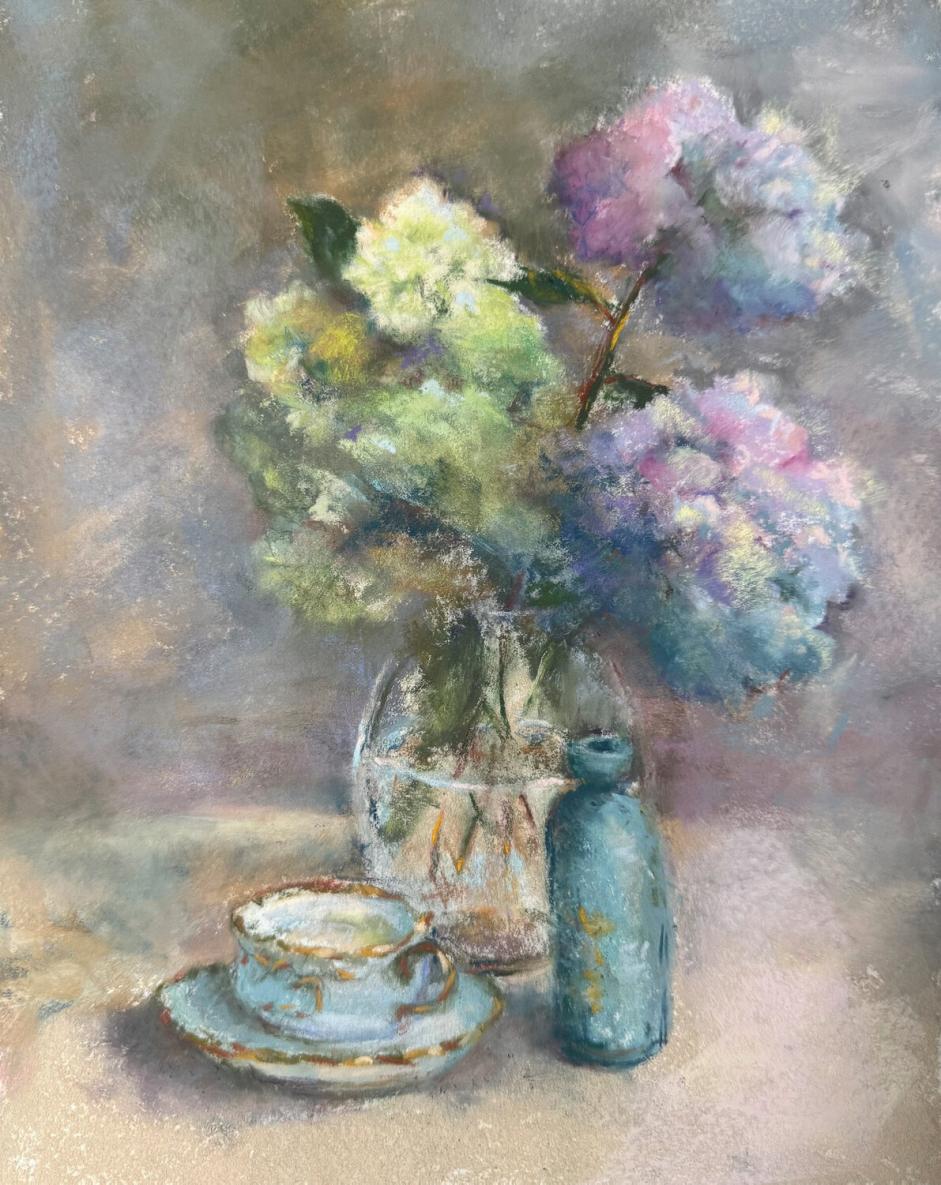
Tea With Hydrangeas Katy Despot, Bridgeport, CT
OOB! 2026
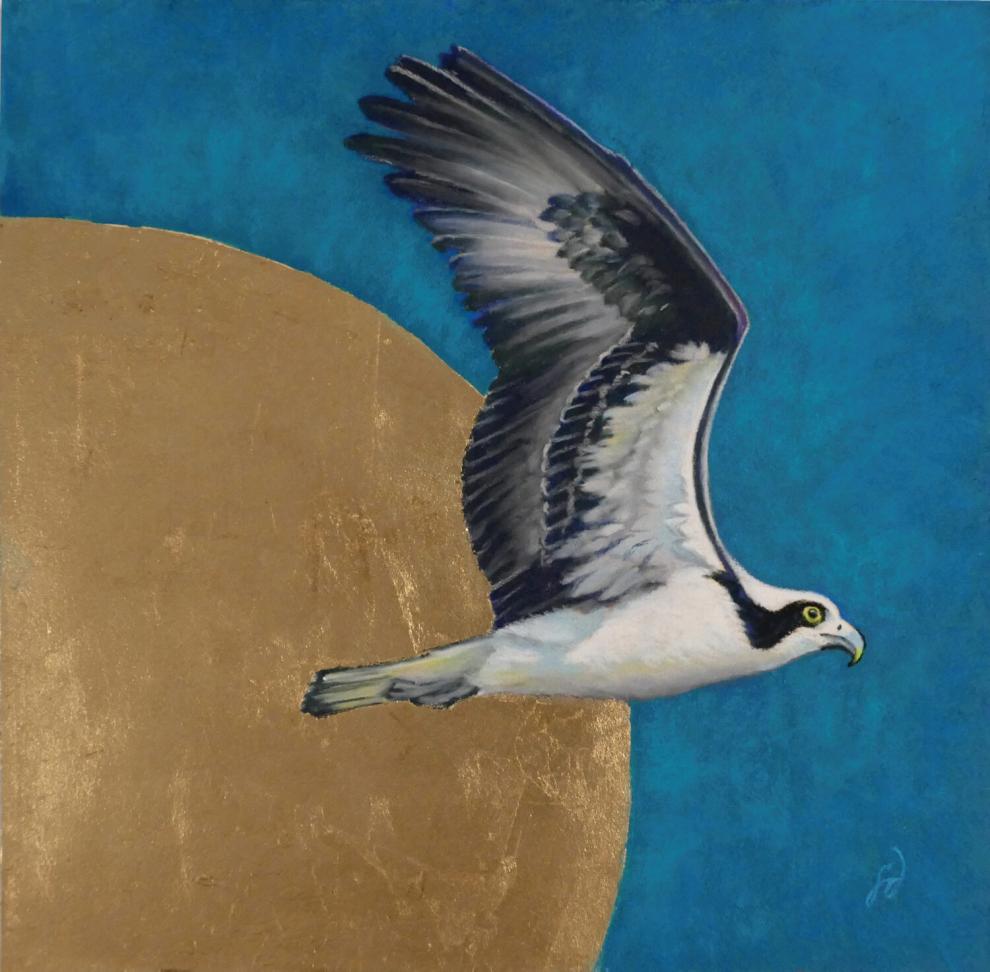
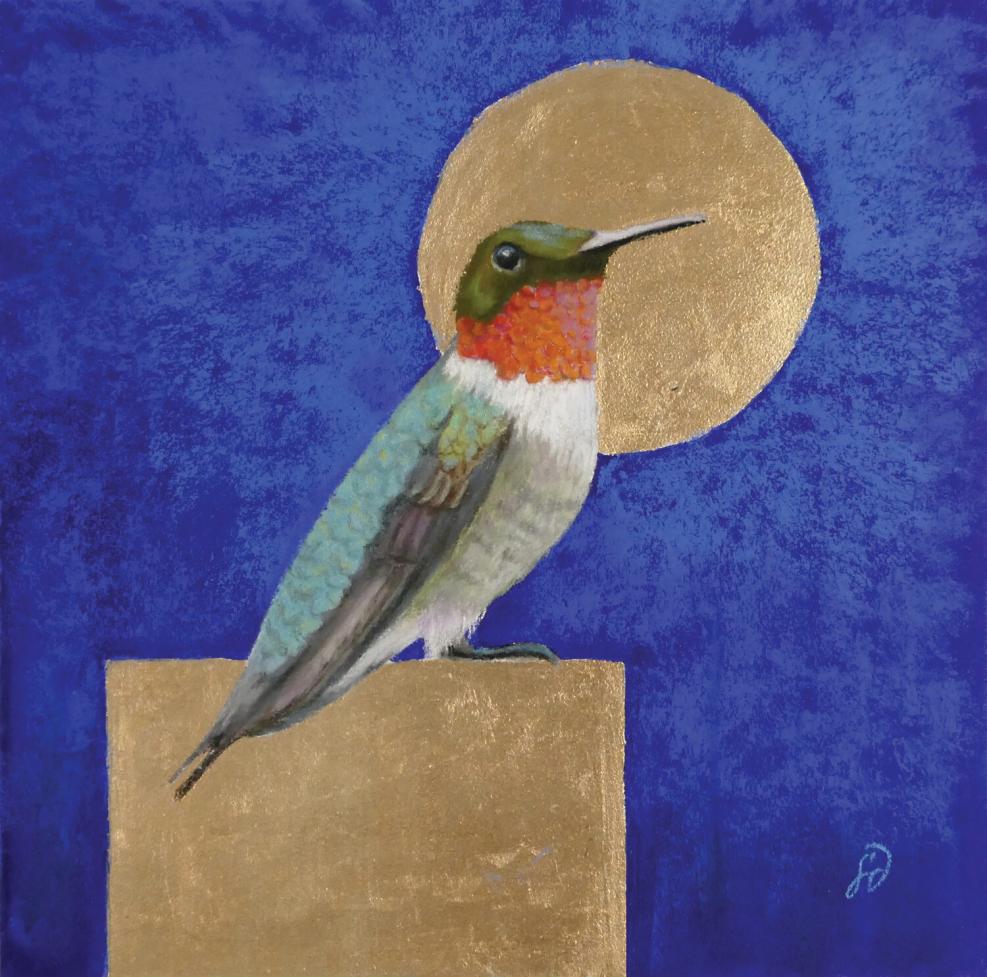
Golden Flight
Francesca Droll, Bigfork, MT
Golden Landing Francesca Droll, Bigfork, MT
Dazzle
Kristine K. Finfer, Bend, OR
Kryo’s Stare
Kristine K. Finfer, Bend, OR
Biomorphic Splendor II
Kathleen C. Gamper Davis, CA
Mineral Creek Splendor
Thomas Frey, San Luis Obispo, CA
Biomorphic Splendor III
Kathleen C. Gamper, Davis, CA
OOB! 2026 ACCEPTED
Onionskin Glyphic
Karen Gideon, Greenbrae, CA
Sanctuary
Bonnie Zahn Griffith, Meridian, ID
Sedona Trail
Karen Gideon, Greenbrae, CA
The Last Sanctuary
Karen Gideon, Greenbrae, CA
Sentinels
Bonnie Zahn Griffith, Meridian, ID
Wrapped In Grace
Jeri Greenberg, Leland, NC
Fire Sky over Topa Topa
Karen L. Glancy, Carpenteria, CA
Return To Mother
Karen L. Glancy, Carpenteria, CA
Looking In
Karen L. Glancy, Carpenteria, CA
OOB! 2026
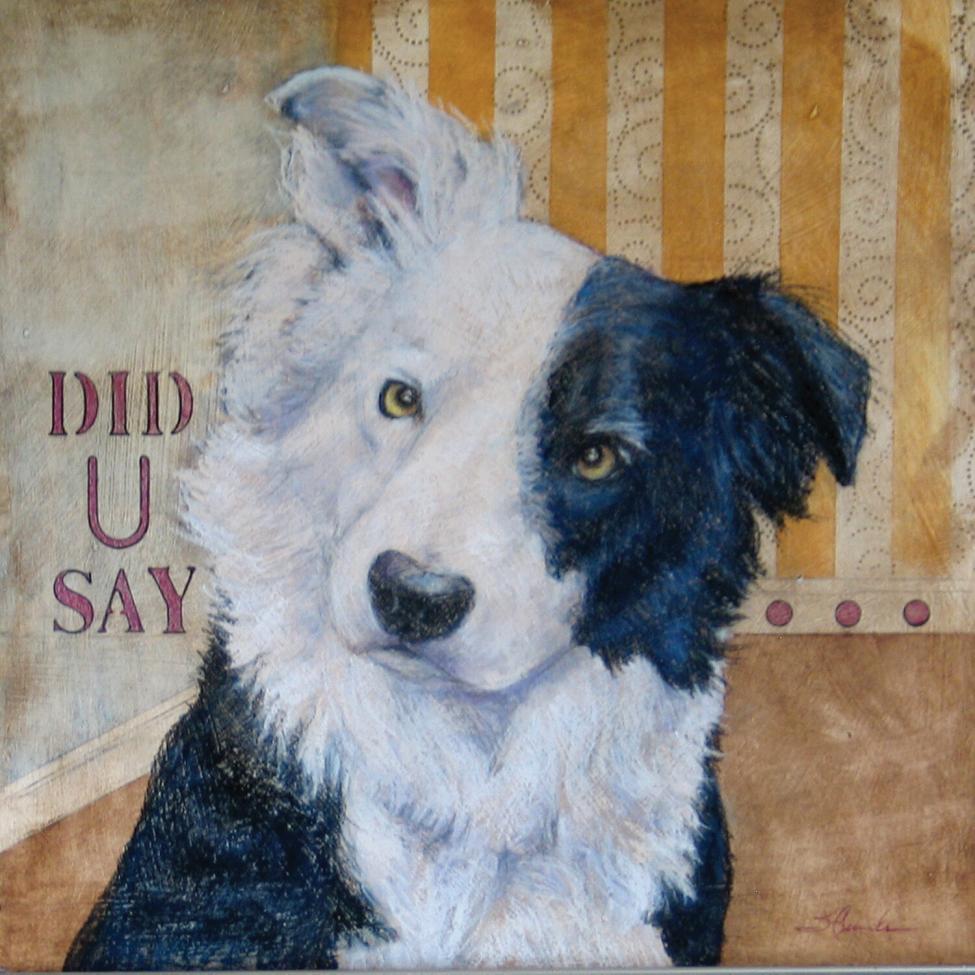
Did U Say
Susan Grinels, Lander, WY
Marco
Susan Grinels, Lander, WY
Golden Carnations Tatsiana Harbacheuskaya, Las Vegas, NV
Peonies in Sunlight Tatsiana Harbacheuskaya, Las Vegas, NV
Radiant Frenzy Dotty Hawthorne, San Luis Obispo, CA
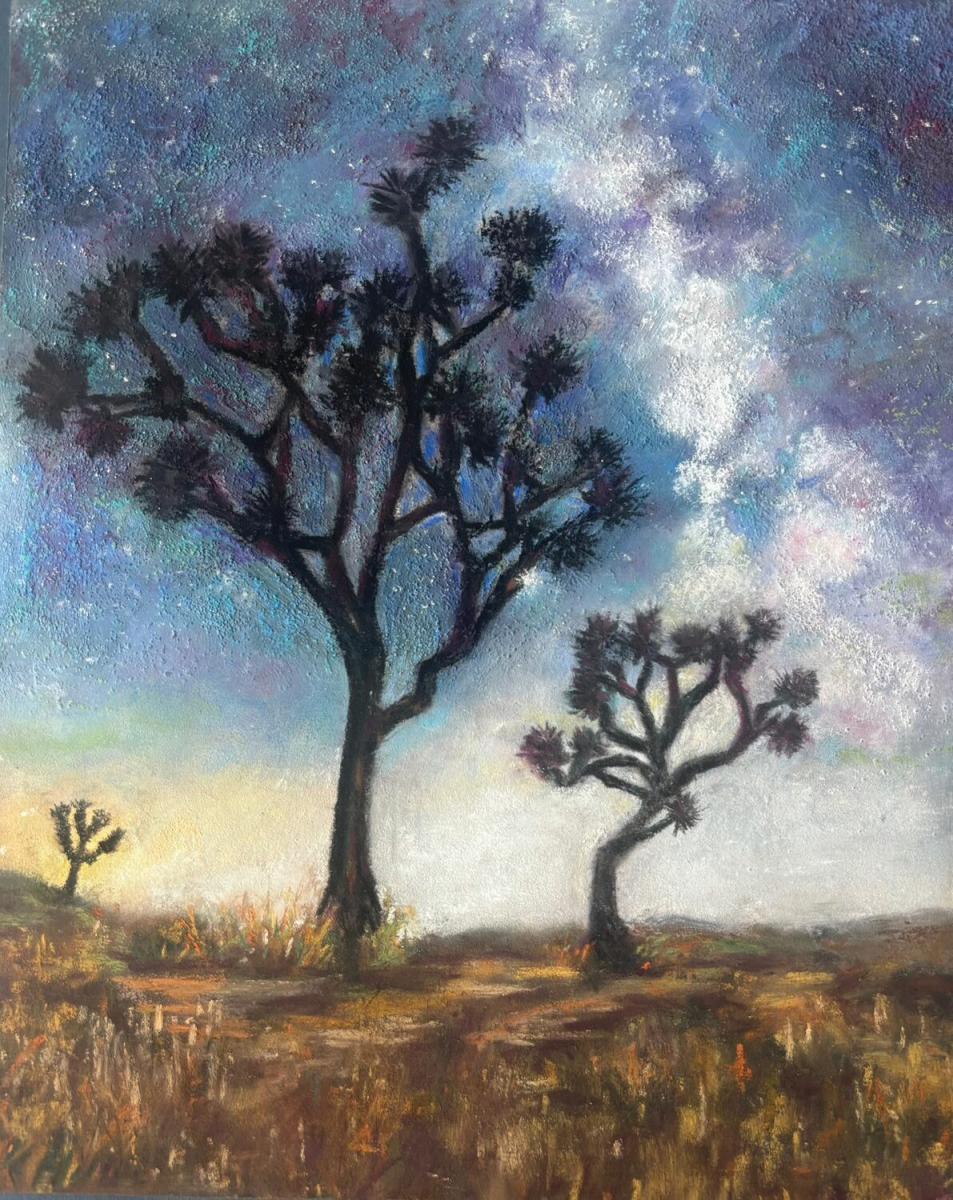
An Evening in Joshua Tree Kerry Heller, Morro Bay, CA
A Touch of Summer By the Sea Tatsiana Harbacheuskaya, Las Vegas, NV
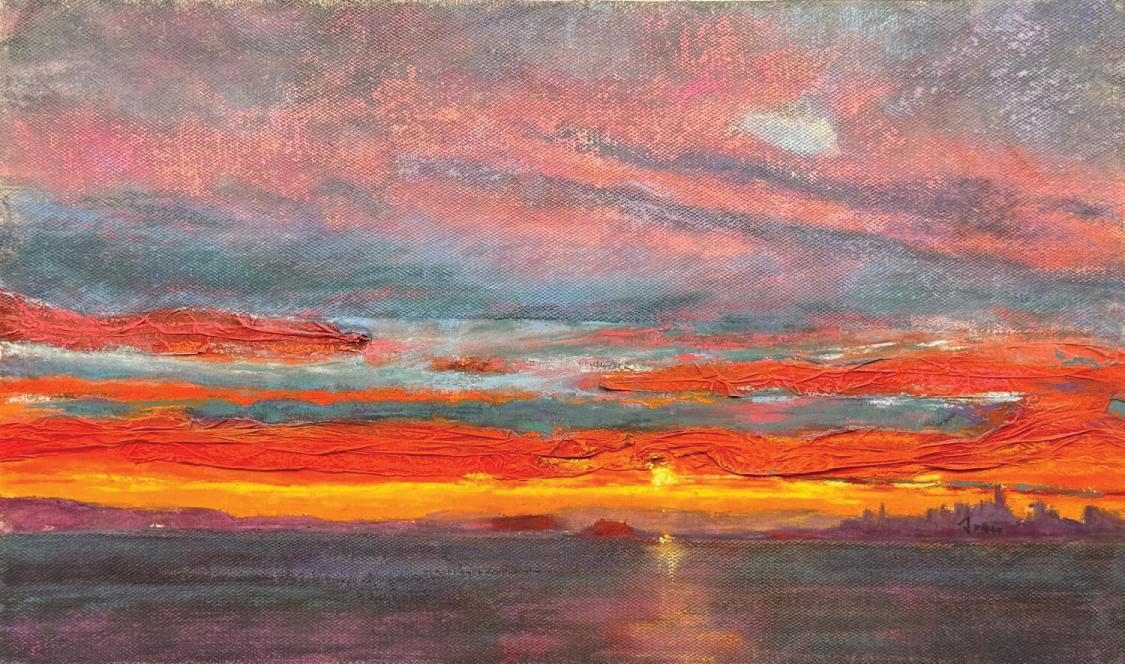
Sunrise over San Francisco Bay Inge Ivens, Nevada City, CA
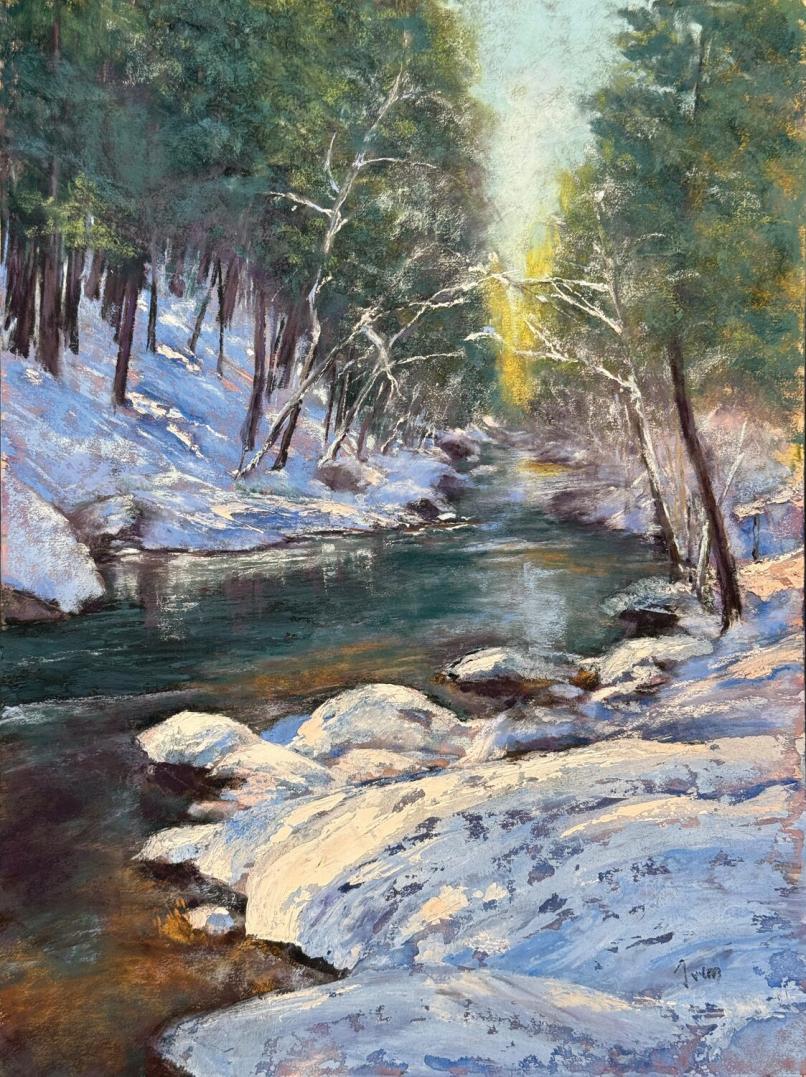
Last Year’s Snow Inge Ivens, Nevada City, CA
OOB! 2026
Calm before the Storm
Mike Ishikawa, Palos Verdes Estates, CA
Moment in Time
Lucinda Johnson, Roseville, CA
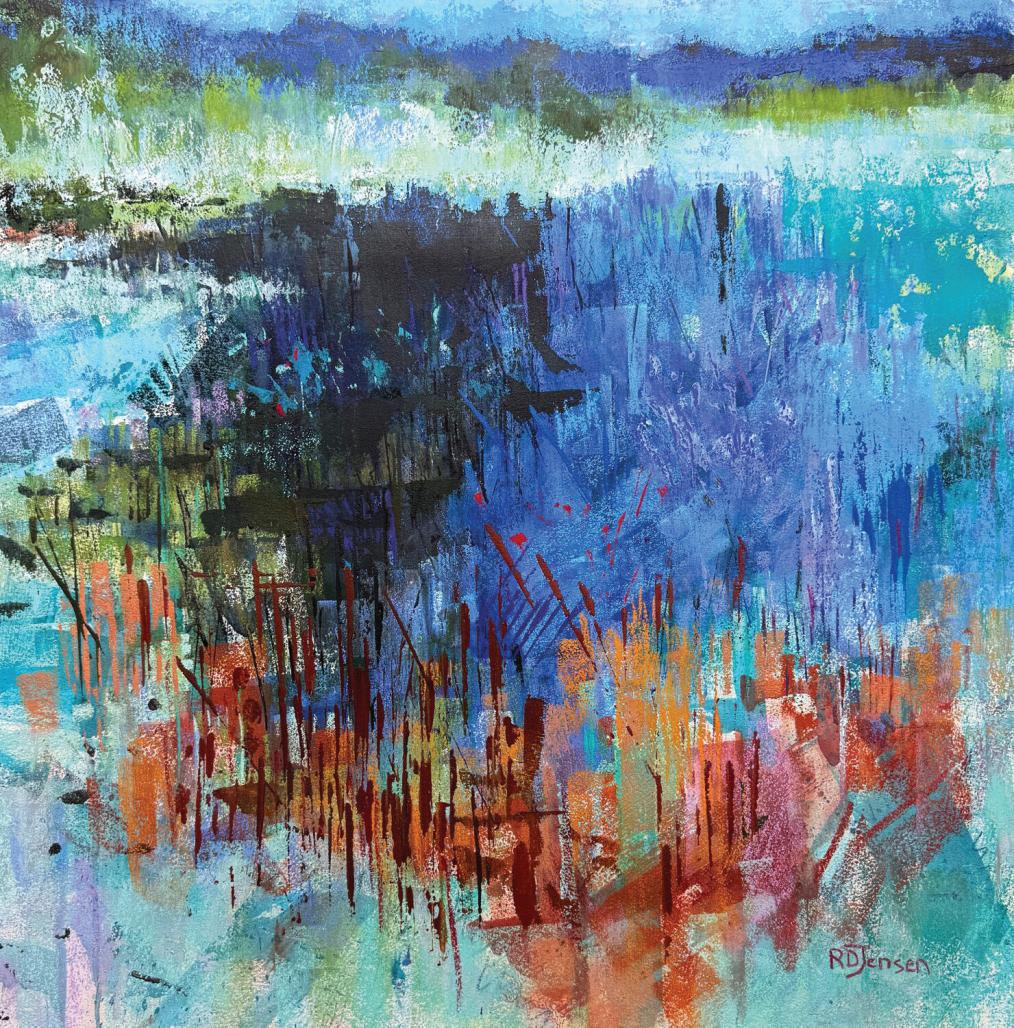
Meadow Untamed Randye Dale Jensen, Corvallis, OR
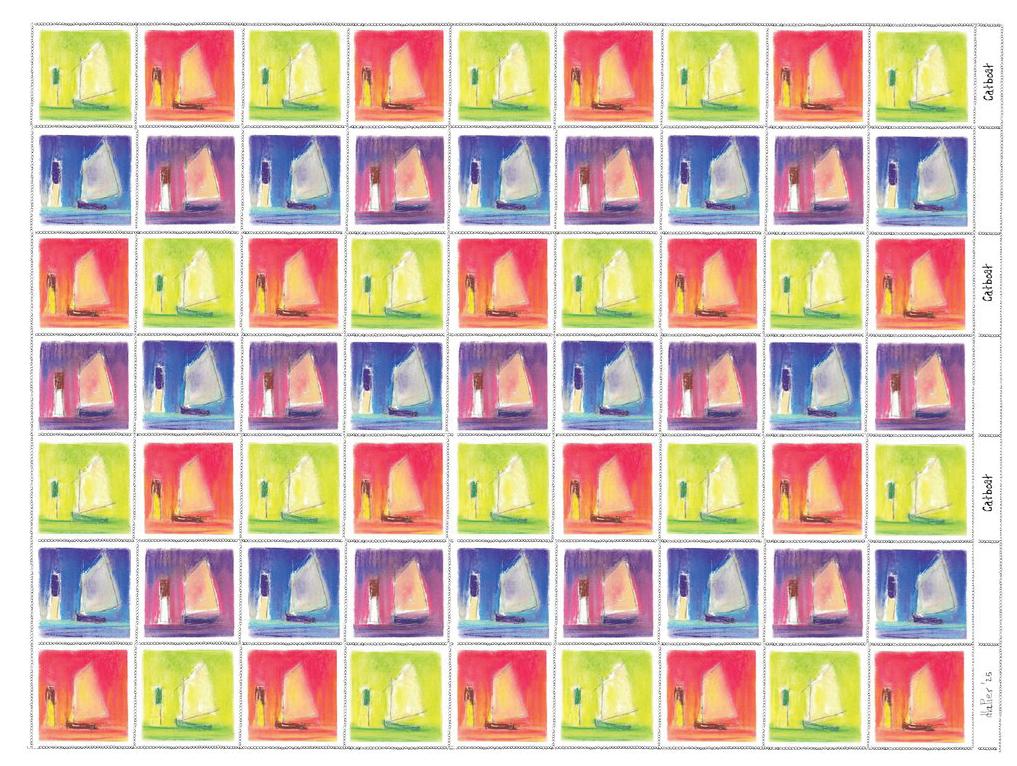
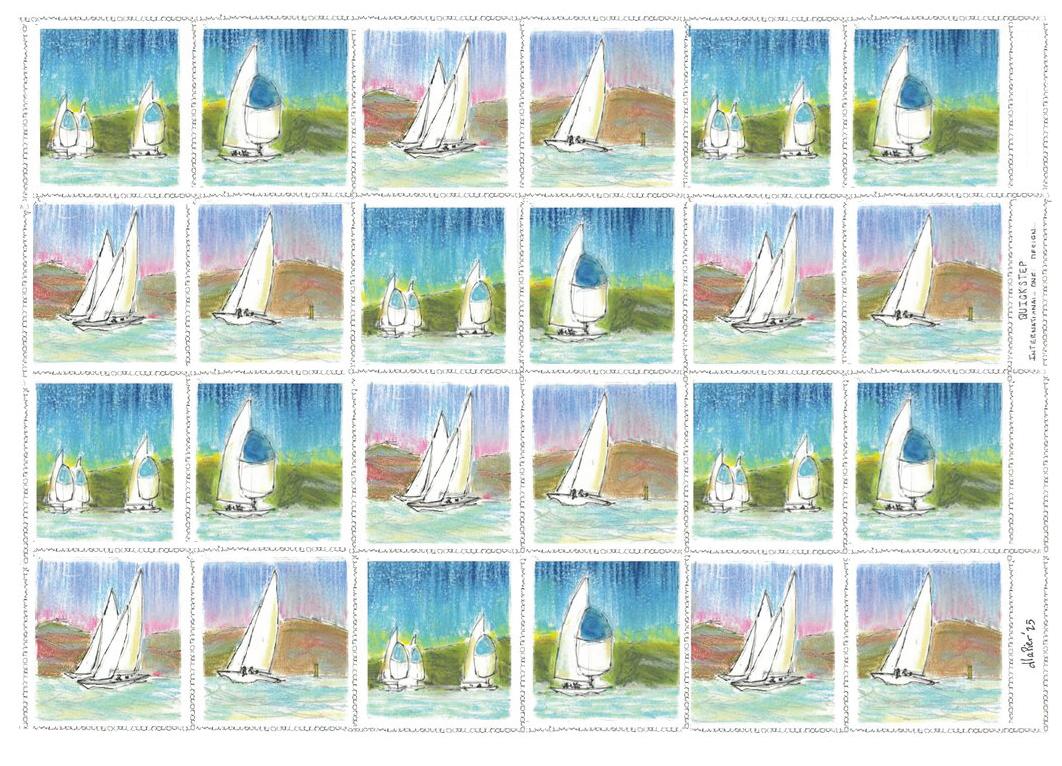
Stamps for Quickstep
David LaPier, Palo Alto, CA
Catboat Stamps
David LaPier, Palo Alto, CA
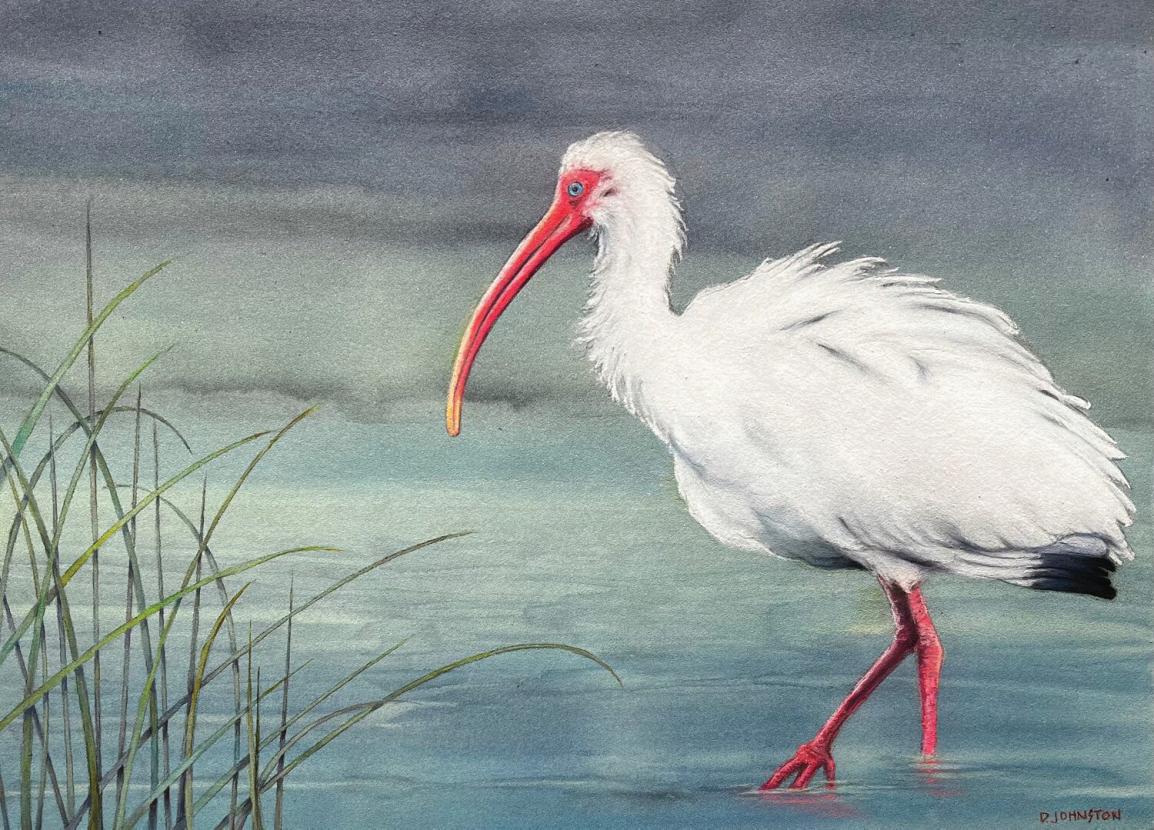
Hurricane Bird
Diann Johnston, Morro Bay, CA
OOB! 2026 ACCEPTED
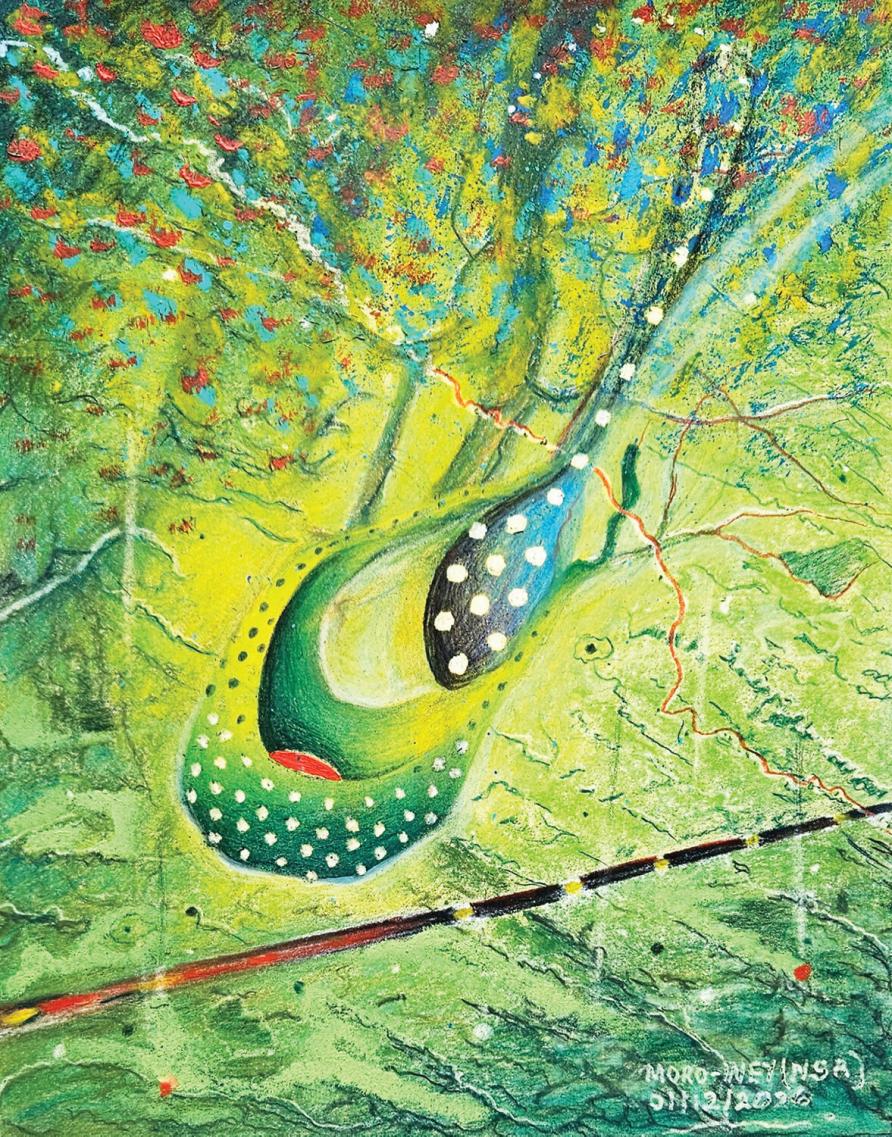
Like mother, like daughter Billy Moro-Wey, Brooklyn, NY
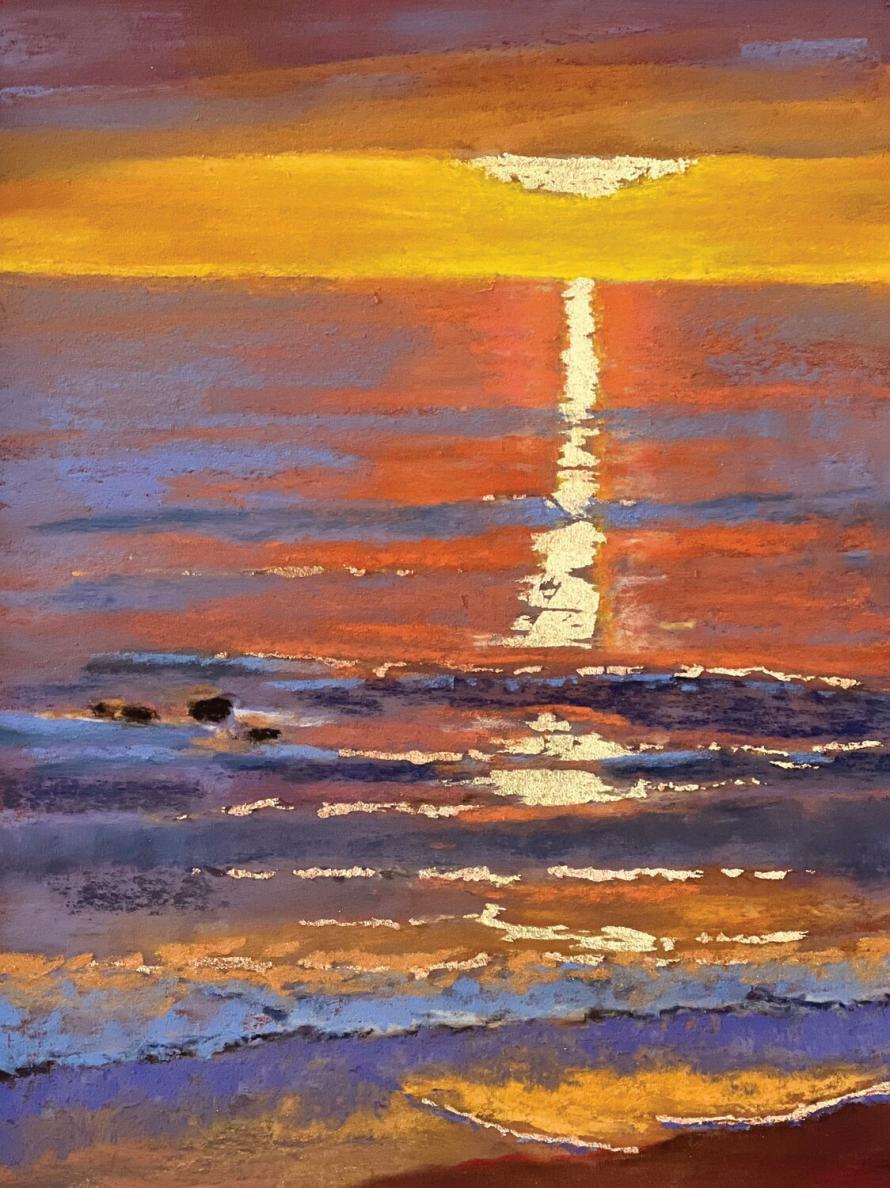
Coastal Sunset Clark Mitchell, Cotati, CA
Petaluma River Valley Clark Mitchell, Cotati, CA
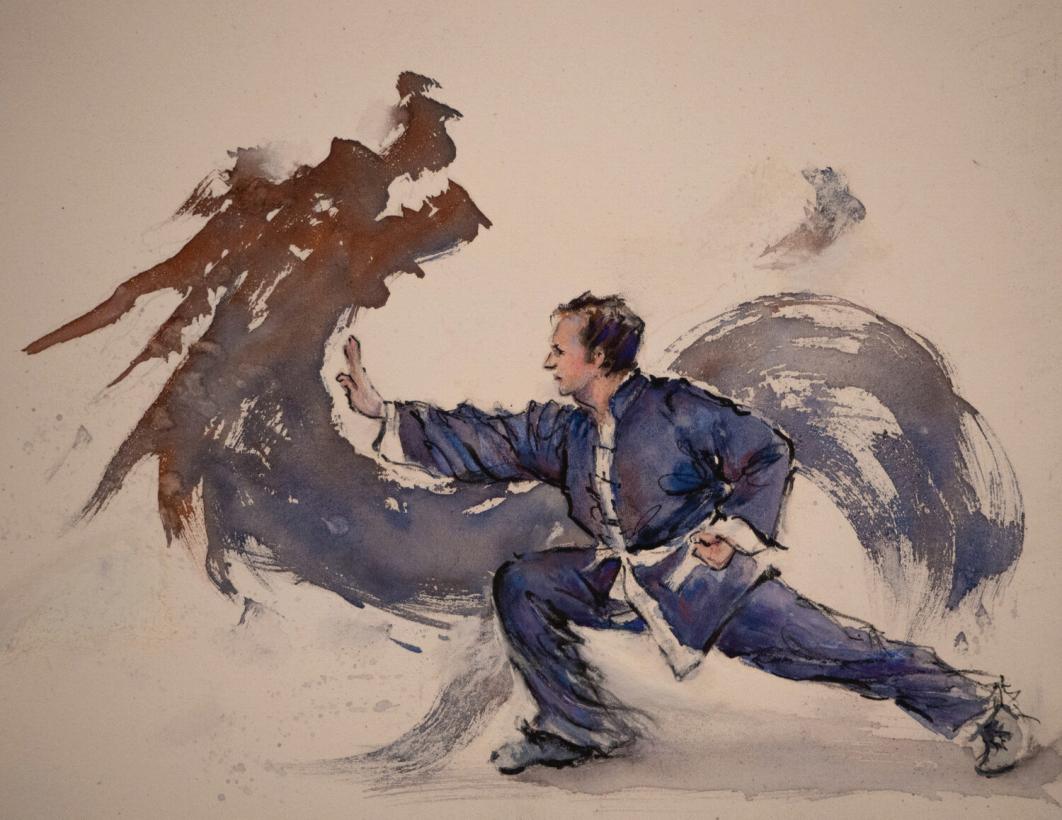
Dragon Subduing Palm Shuk Susan Lee, Newton Upper Falls, MA
Paradise Found Jean Myers, Newbury Park, CA
Tall Prairie Grass Carol Strock Wasson, Union City, IN
Autumn Waters Beneath the Endless Sky Wang Pai Sheng, Chiayi, Taiwan
Land of Lakes
Jan Y. Miller, Roseville, CA
OOB! 2026 ACCEPTED
Fire in the Sky
Peggy Davidson Post, Pebble Beach, CA
Sea King Sings Songs of Love Nori Thorne, Sedona, AZ
Exuberance Peggy Davidson Post, Pebble Beach, CA
Woodland Stream Peggy Davidson Post, Pebble Beach, CA
An Autumn Standout
Rachel Sylvers Thousand Oaks, CA
Leaf Play
Rachel Sylvers Thousand Oaks, CA
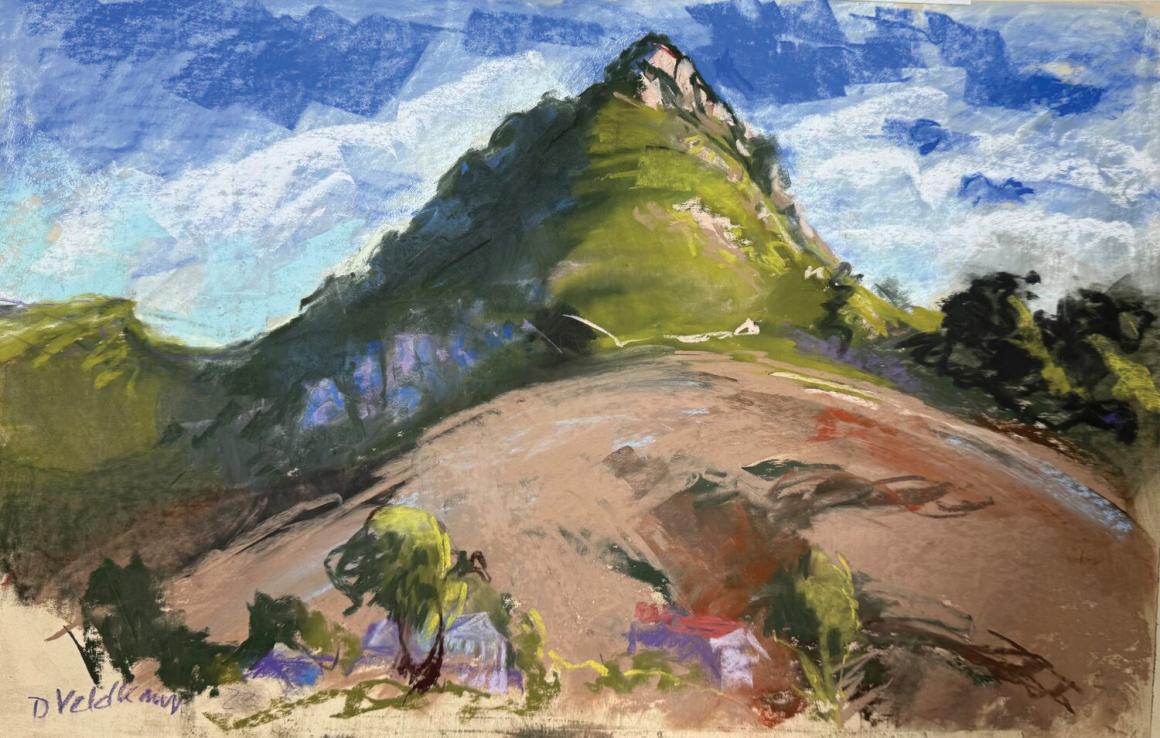
Cerro Romauldo
Deborah Veldkamp, San Luis Obispo, CA
Light Wraps Around the Tree Trunks Avon Waters, Indianapolis, IN
Snow Sticking to Trees Avon Waters, Indianapolis, IN
OOB! 2026 ACCEPTED
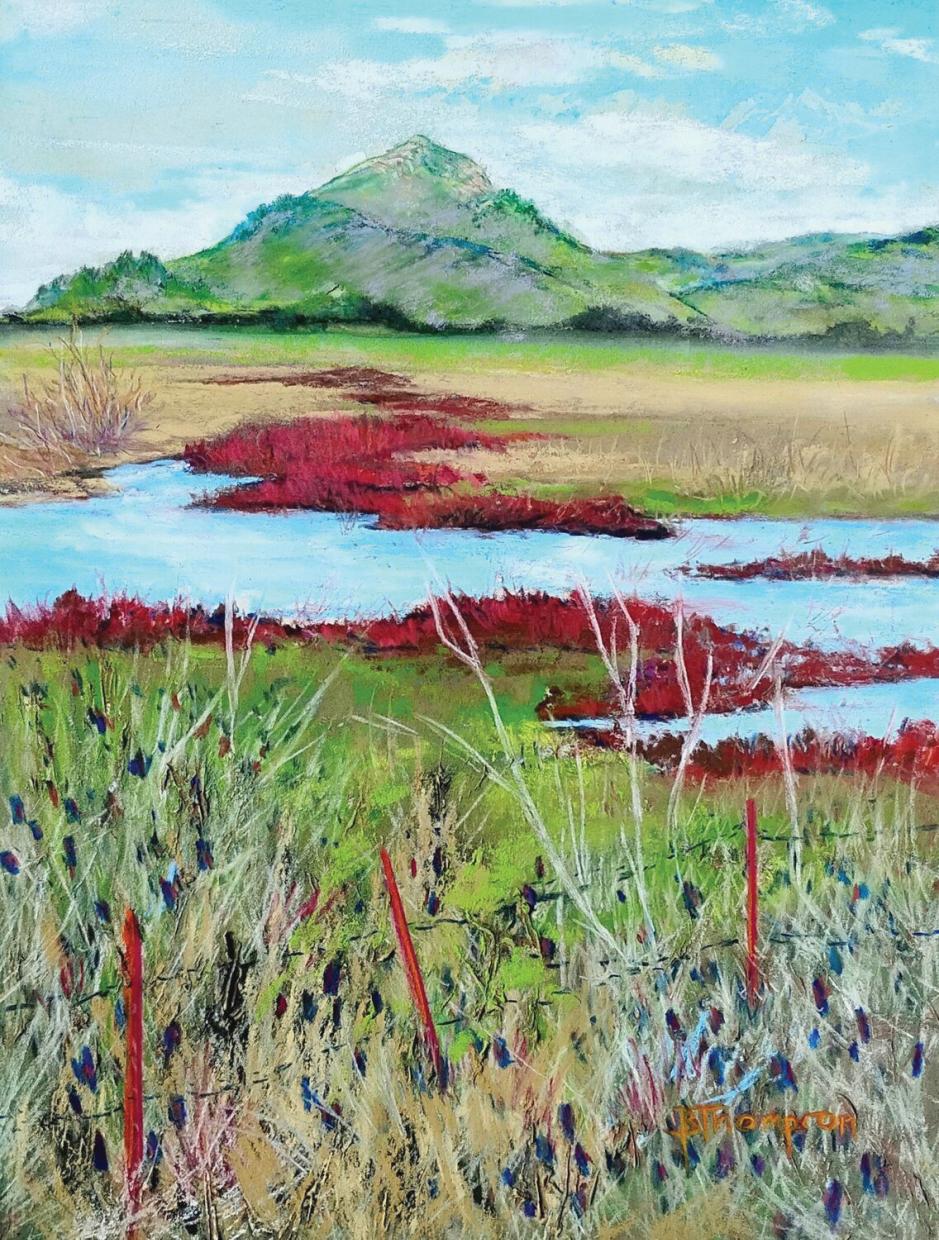
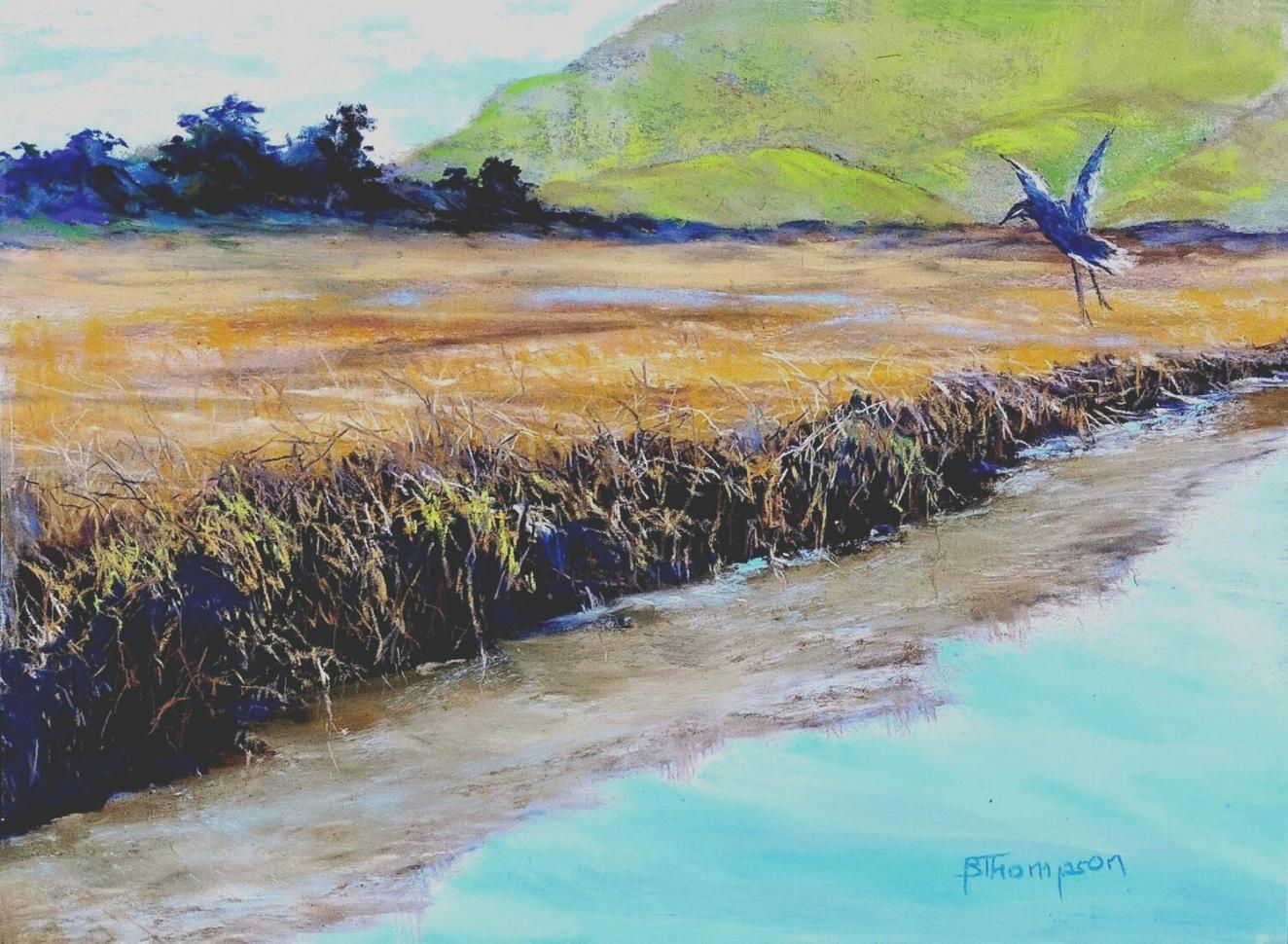
Marshland After the Rain Bobbye West-Thompson, Los Osos, CA
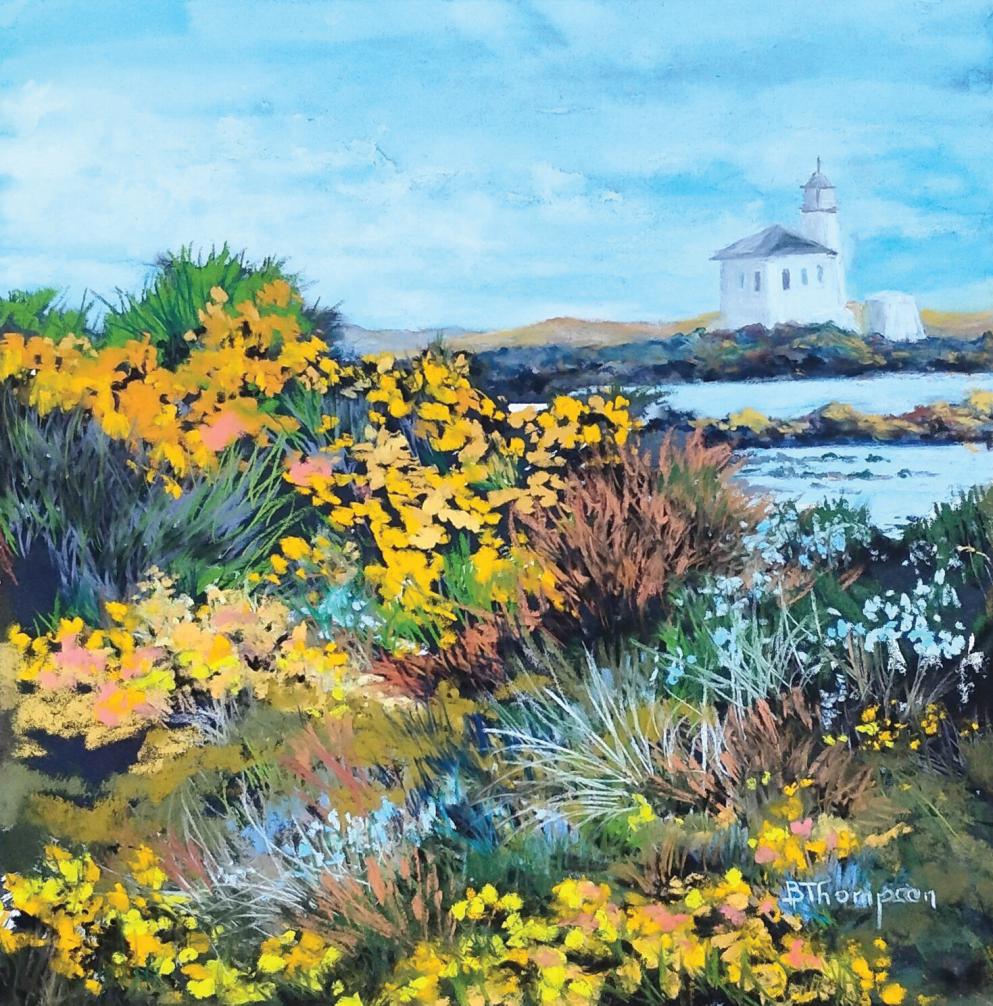
The Lighthouse Bobbye West-Thompson, Los Osos, CA
Taking Flight
Bobbye West-Thompson Los Osos, CA
Announcing PSWC’s 2026 Scholarship Winners!
by Kim Essex
From 29 applications and five finalists, the PSWC Executive Committee has selected two recipients of our 2026 scholarships.
Each winner’s college of choice will receive $2,000 to be applied to their tuition. The other three finalists will receive honorable mentions and a set of pastels.
The students who applied this year were from all over the country and included both high school and college students. Their original artwork, applications, essays and letters of recommendation were all reviewed to make the final selection.
The Art Scholarship Program fulfills PSWC’s mission to promote education in the arts. Every year to solicit applications, the scholarship program is promoted on our website and social platforms, as well as to high school and college art department chairs, teachers, counselors and administrators.
Students interested in submitting applications for the scholarship may do so between January 1 and April 15, for the upcoming academic year. Applications and details are available online at pswc.ws/art-scholarships/
Honorable Mentions
The 2026 applicants receiving an Honorable Mention:
Simon Paul Harrisburg PA
Isabella Schmidt Schaghticoke NY
Maris Kelly Honolulu HI
SCHOLARSHIPS
2026 Winner ~ Naomy Bello Gamez
Naomy attends high school in Huntington Park, California, and plans to start her studies at California State University, Long Beach this fall to pursue a career in animation.
“As a Latina student aspiring to enter the animation industry, she is motivated to challenge existing barriers and contribute to greater representation in the arts. She hopes to inspire future generations of young artists to see themselves reflected in creative spaces and to pursue their own artistic dreams without limitation.” wrote Melissa Alcala, a community schools coordinator, in her letter of recommendation.
Naomy has always loved art and painting, but it wasn’t until the 10th grade that her school offered an art class. As she describes it, “Although I have always performed well in academic subjects like math, English, and history, my 10th-grade art class was one of the first times I truly felt at home in a classroom.”
Naomy’s art teacher for the past three years, Lisa Dean, wrote, “She works extremely hard in my class, and it shows in her progress over the years. Her fundamental skills as a first-year student compared to her college-level work now are impressive to say the least.”
One of Naomy’s proudest accomplishments to-date was winning the bookmark design contest for Huntington Park, sponsored by the Los Angeles Public Library.
2026 Winner ~ Faith Ogenyi
Faith’s scholarship will support her at the University of Cincinnati where she is working toward her MFA in Games and Animation.
Faith began expressing herself through art when she “noticed that people perceived me differently from who I truly am.” In her art, Faith works to represent the many dimensions of herself, often in an exaggerated and humorous manner.
“My portfolio truly expresses the tension between how I see myself and how the world around me perceives me,“ wrote Faith in her essay.
“One of Faith’s greatest strengths is her willingness to take creative risks. She was never afraid to push beyond what felt comfortable or familiar, and this openness allowed her to grow at an impressive pace,” wrote Holly L. Yarab, Faith’s Intro to Drawing teacher at the University of Cincinnati, where she distinguished herself as one of the top students in the class, according to Yarab.
Faith’s high school art teacher also had high praise, “She consistently impressed me with her artistic growth…. She entered competitions such as Scholastics, Governors, and the Cincinnati Art Councils’ Overture Awards. ”
Faith has received several awards for her art, including being named Top 300 State Artist in the Ohio Governor Art Competition in 2025.
PSWC applauds all the applicants and celebrates Naomy and Faith as the winners of this year’s scholarships!
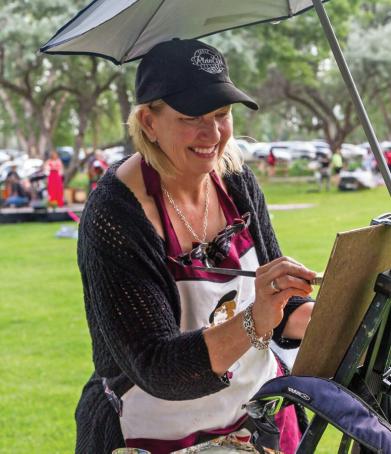
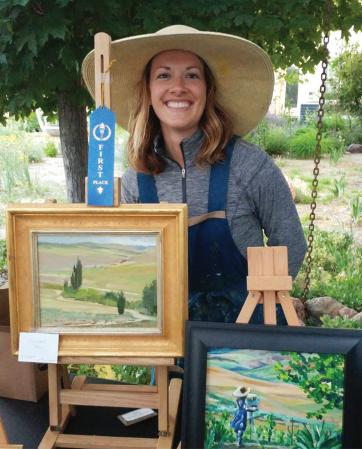
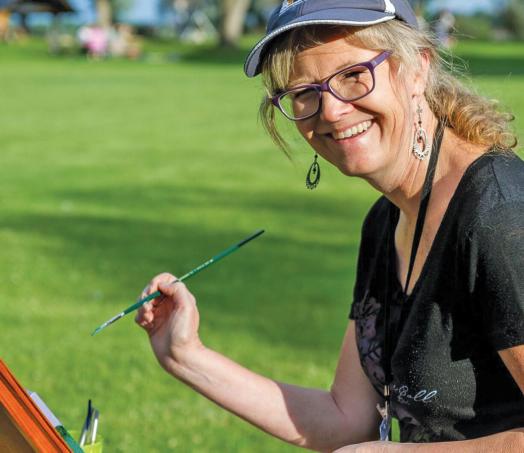
Are you ready to take your pastel work out into the open air and be inspired by the stunning landscapes of Southwest Idaho?
We invite artists of all levels to register now for the Eagle Plein Air Festival, a week-long celebration of outdoor painting in and around beautiful Eagle, Idaho. We can’t wait to see what you create!
• Compete for over $4,000 in cash prizes, ribbons, and special awards.
• Be part of daily paint-outs, quick draw challenges, workshops, and demonstrations.
• Exhibit and sell your work at the Festival Show & Sale.
FRIDAY, OCTOBER 2 THRU SATURDAY, OCTOBER 10
• Register before August 1 to be featured as a “Featured Artist” and receive one of 50 swag bags filled with goodies!
MEET THE MEMBERS
This season’s Meet the Members article, written in May, comes at a time to celebrate Mom.
So, we talked to artists whose maternal art influences run deep and wonderful.
Here’s to the people in our lives—moms and dads, neighbors and friends, teachers and mentors—who have shared their expertise and offered needed encouragement on our journey to becoming artists.
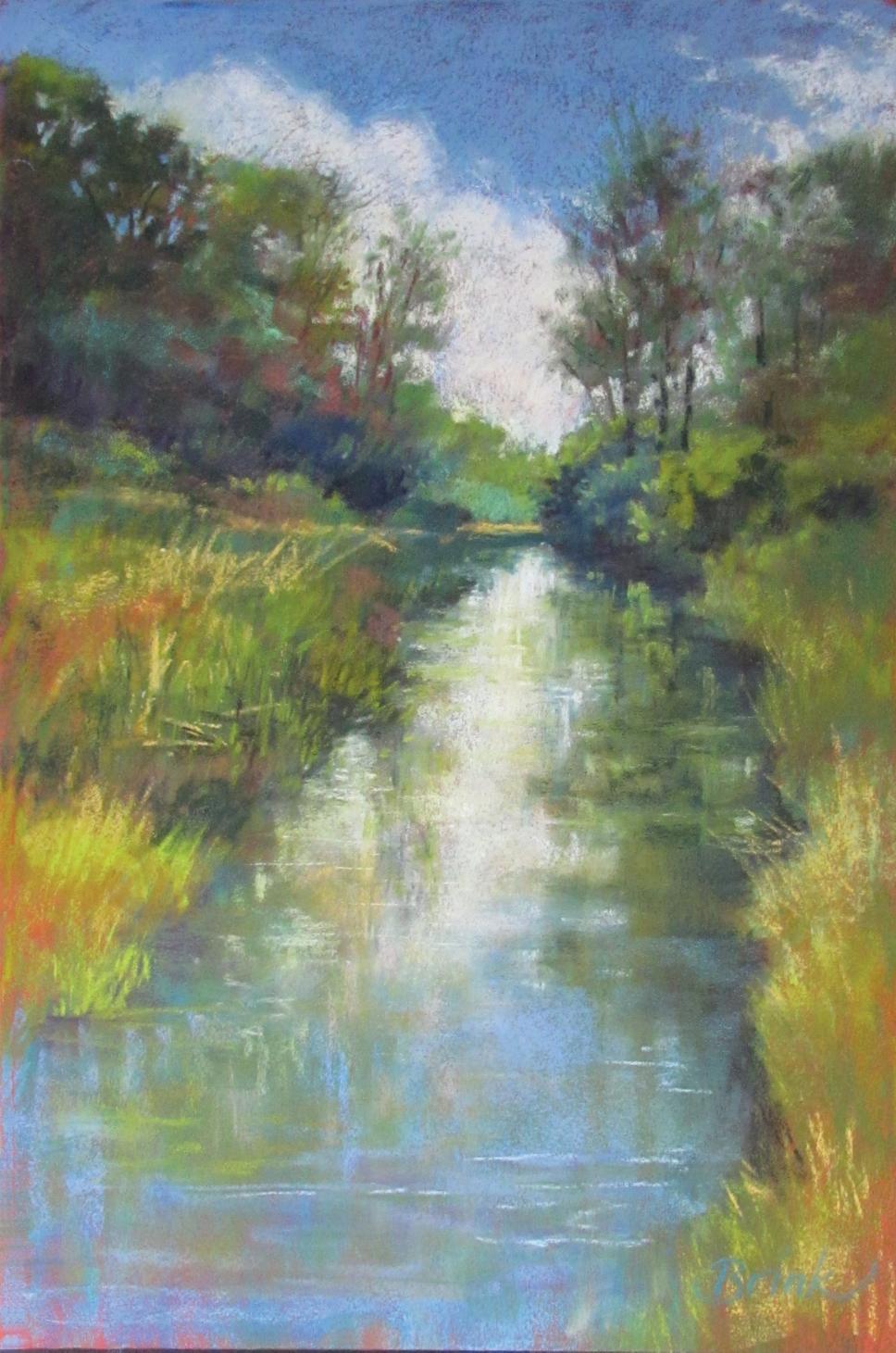
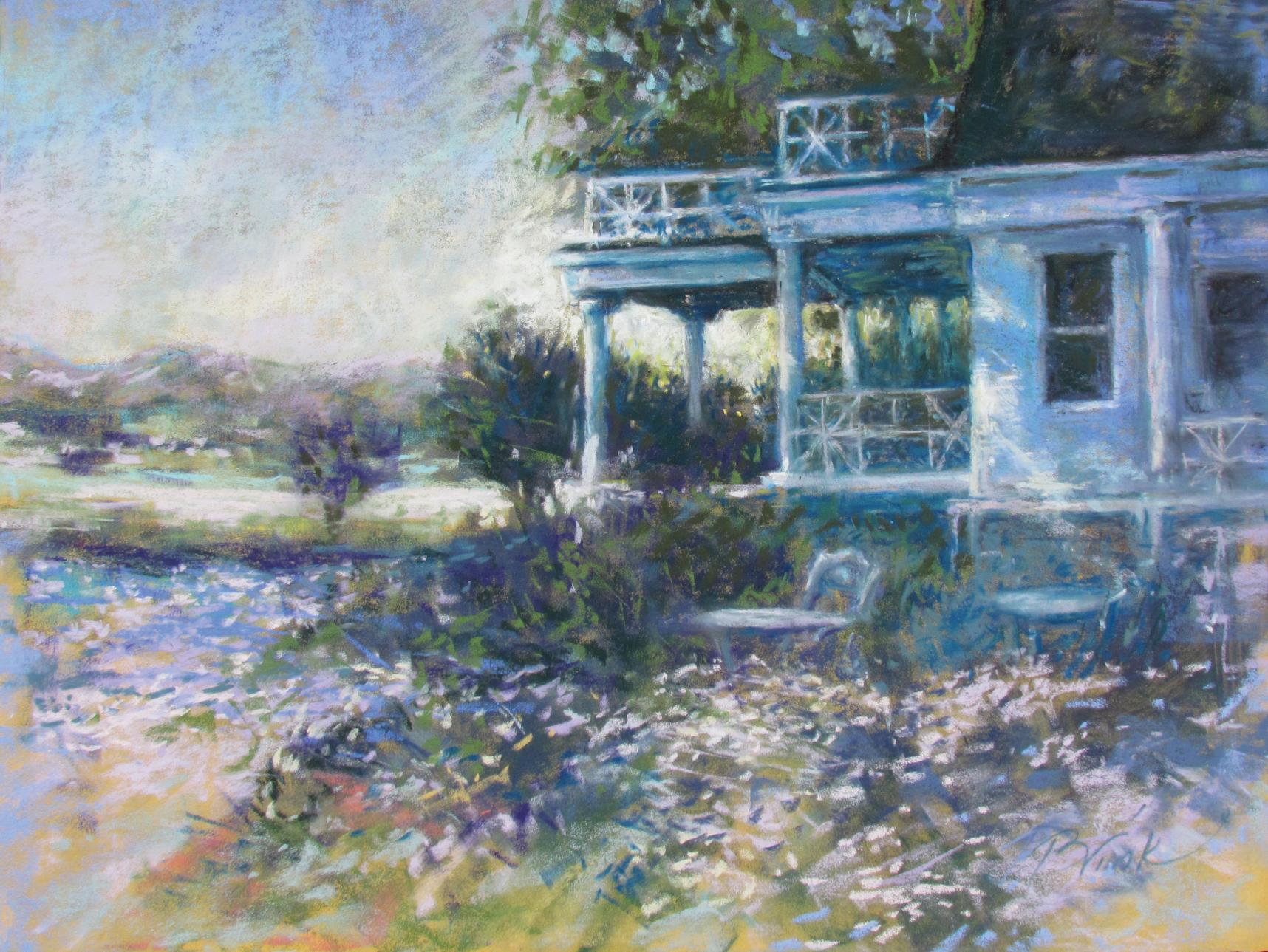
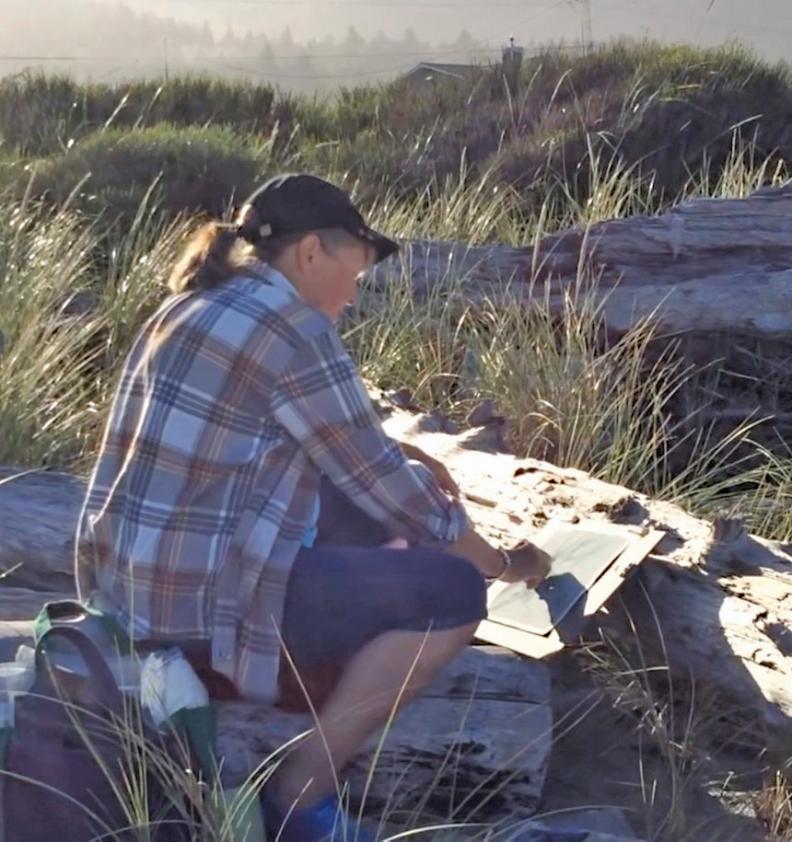
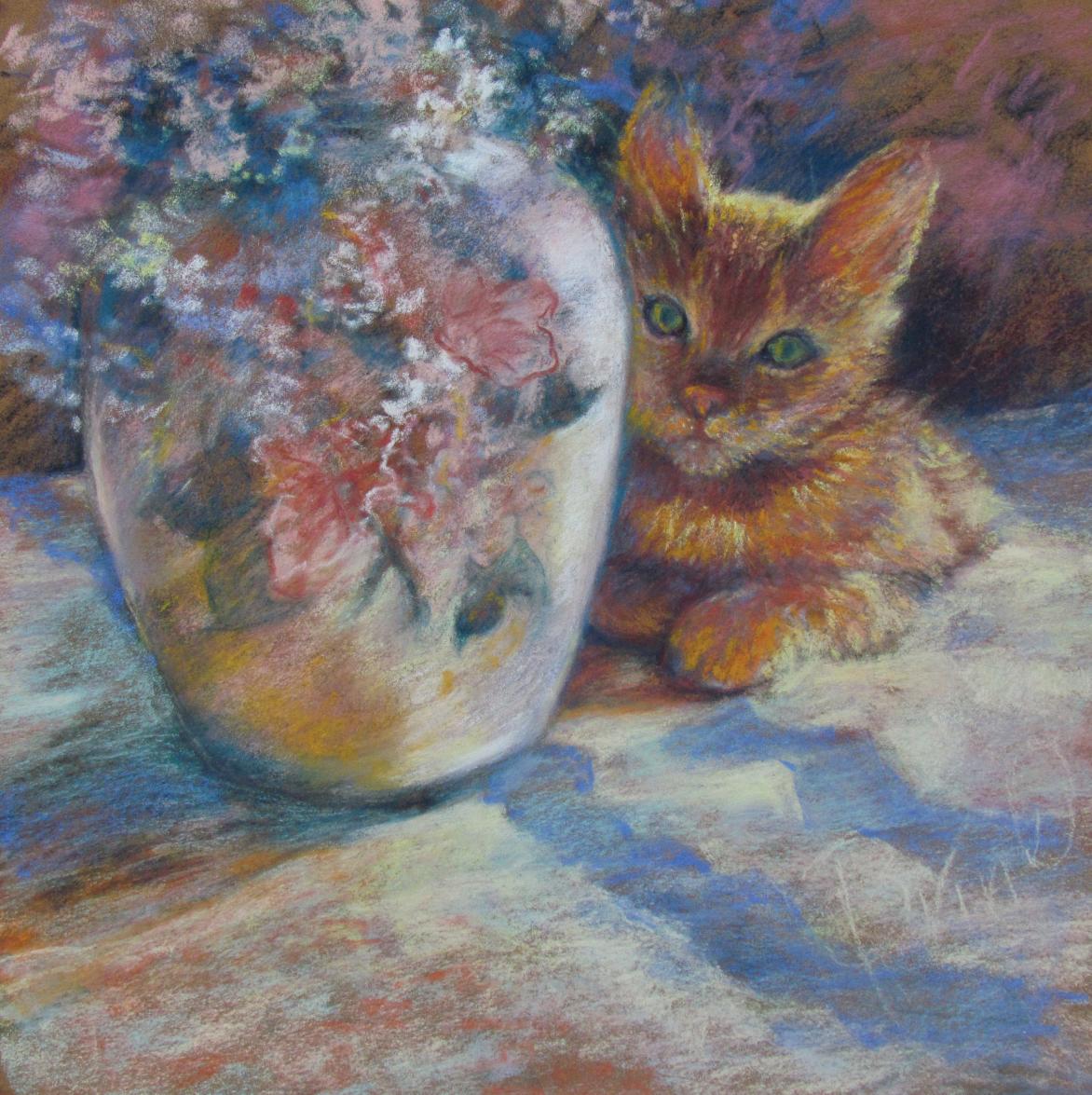
Her mother liked to tell a story—one Vicki Brink isn’t entirely sure is memory or myth. “She said I came out with a pencil in my hand,” Vicki laughs. “That had to hurt.”
Whether true or not, what is certain is this—there has never been a time in Vicki’s life when art wasn’t present. And at the center was her mother, the person who taught her not just how to paint, but how to see.
Generations in the Making
On road trips, her mother would point out the window and ask: What color would you use to paint that? Not what it was—a hill, a river, a stretch of sagebrush—but what it looked like in color, in light, in feeling.
“That stayed with me,” Vicki says. “Even now, I don’t just see fields or hills. I see what color they are.”
The art lineage stretches multiple generations. Her grandmother worked in pastel. A great-grandmother made quilts. Vicki half-jokingly calls herself a fourthgeneration artist—but the continuity is undeniable.
Art wasn’t something she discovered. It was something she grew up inside.
From Idaho to Oregon, With Paint Along the Way
Vicki’s journey has taken her across the American West —born in Idaho, through Colorado and California, and now settled in Oregon’s Willamette Valley.
Her studio reflects that lifetime of movement. It’s expansive—700 square feet of working space, plus a 300-
square-foot gallery—and filled with evidence of years spent painting outdoors.
“I’ve got a lot of mileage in plein air,” she says.
Her workspace is dynamic: five working easels, each with its own palette. She moves between them, letting paintings rest, revisiting them with fresh eyes. Some works are pinned to large foam boards, lingering in a state of uncertainty. “I circulate,” she says. “I’m not always sure something’s done.”
The Medium That Matches the Hand
Vicki’s artistic path has moved through oil and watercolor, but pastel is where she ultimately settled in the 1980s.
At the time, materials were scarce. She ordered supplies from catalogs, experimented with making her own surfaces, and worked on papers that weren’t always archival. It was a process of trial, error, and persistence. What kept her with pastel was its immediacy.
“No mixing, no waiting for things to dry. And no brush
between you and your surface,” she says. “It’s pure color. The sparkle, the glow—it’s just fun.”
It’s also forgiving. Unlike watercolor, where mistakes can be fatal, pastel offers second chances, she explains. Layers can be adjusted, reworked, even washed off and started again. For Vicki, that flexibility fuels experimentation.
An Artist of Experiment and Instinct
Ask Vicki to define her style, and she’ll hesitate—not because she lacks one, but because she resists fixing it in place. “If there is a style called ‘experiment,’ that’s me,” she says.
Over decades, she’s moved through realism, impressionism, tonalism, abstraction—sometimes all within the span of a year. Each new workshop, book, or demonstration sends her in a slightly different direction. Even now, after more than 70 years of making art, she’s still chasing new ideas, new techniques, new ways of seeing. Someday, she hopes to take a workshop with Kim Lordier.
“I enjoy learning something new,” she says. “That’s what floats my boat.”
Finding the Extraordinary in the Ordinary
Despite the shifts in style, one thread runs consistently through Vicki’s work:intimacy. “I love close-ups,” she says.
Even during her plein air days, when sweeping vistas stretched out before her, she often found herself drawn to something smaller—a cluster of rocks, a branch catching light, the quiet detail others might overlook.
“The ones I’m most proud of are usually the single subjects,” she says. “The unusual angle.”
Her favorite subjects reflect that perspective: a grasshopper from her garden, the interior of a flower seen from a bee’s-eye view, a frog perched unexpectedly on a birdhouse.Her goal, as she puts it, is “to turn the mundane into extraordinary.”
The Discipline of Letting Go
Vicki’s process balances spontaneity with restraint— though restrain can be the harder part. “I’m fussier than I need to be,” she admits. “More often than not, if I quit sooner rather than later, I like it better.”
She laughs about it, but there’s also a deeper awareness at play—a sense that overworking can dull the observation that first sparked the piece.
“I swear my mother is still watching,” she adds. “And she slaps the pastel out of my hand.”
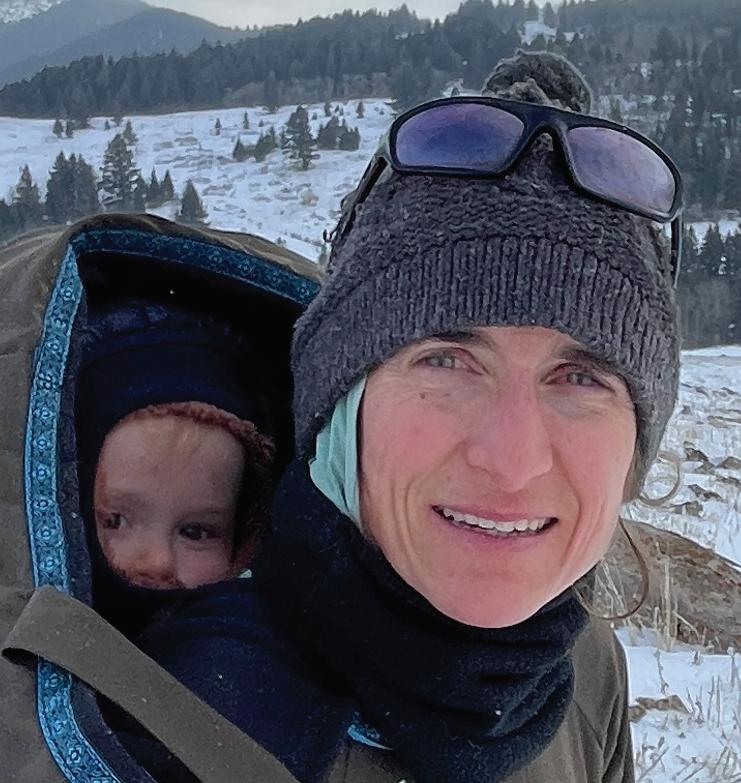
As a child Zuzana Drobnik would watch her mom —in oil or watercolor—translate memory into a painting, and Zuzana wanted to do that.
“I felt a lot of encouragement and support from her throughout the years,” she says.
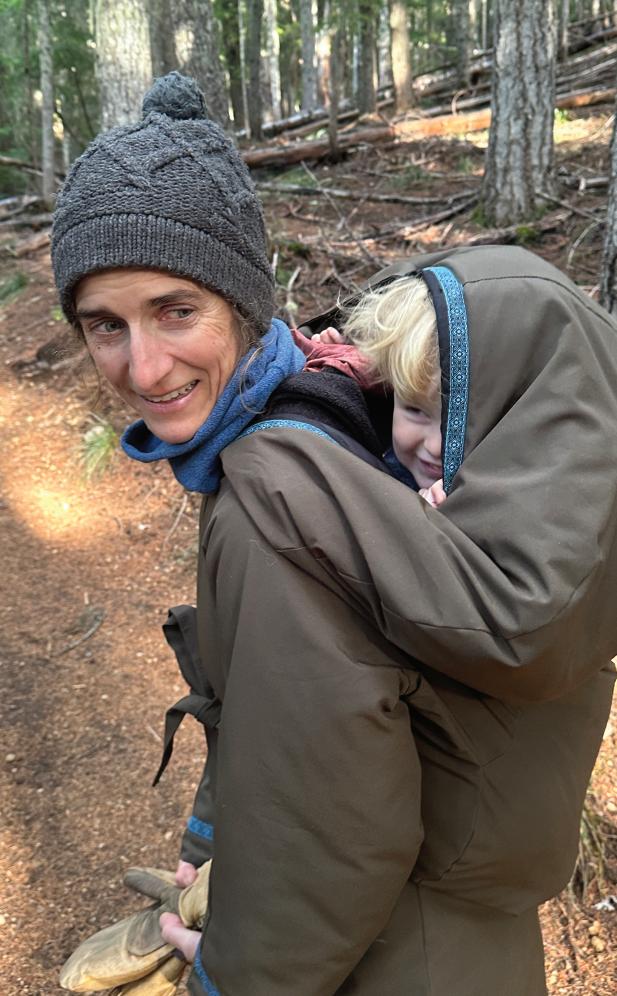
Just like her mother, Zuzana hopes to pass her passion to her 4year-old son. He has his own painting setup in her studio, and they often paint side by side “at least for short bursts.”
He sees the world with her same curiosity. On walks, he’ll stop and point: “Mom, you should paint this tree.” He’s noticed something— an angle, a twist, a presence—and he wants her to see it too.
A Life Tuned to Observation
Zuzana is, above all, observant—almost restlessly so. She describes herself as constantly composing, even when she isn’t physically painting. Landscapes rearrange themselves in her mind: a different sky, a more dramatic ridgeline, a tree brought forward into prominence.
This instinct is rooted in something deeper than aesthetics. She is, at heart, an environmentalist, and her work reflects a sense of urgency as much as admiration. Trees, especially, call to her—not just as forms, but as living things with stories and history that need to be told.
zuzanadrobnikova.com
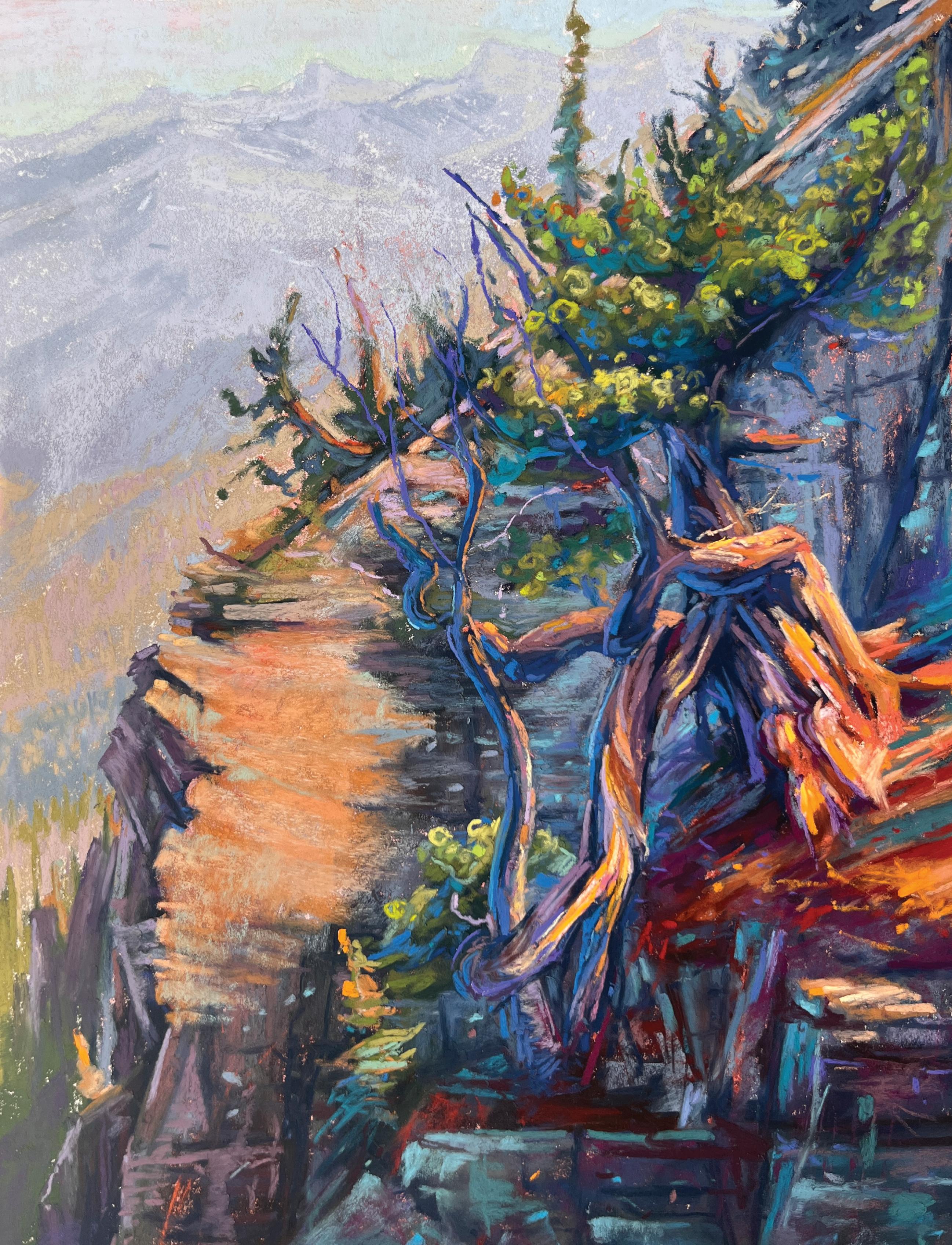
Lightening Tree, Zuzana Drobnik
She talks about “meeting” a tree. “I met this one white bark tree I was obsessed with and developed a series of white bark portraits,” she explains.
Whitebark pines clinging to harsh, wind-blasted ridgelines. Bristlecone pines that have lived for more than a thousand years. In her work, she tries to capture what she describes as their “ancient wisdom”—a quiet, enduring intelligence that feels increasingly fragile in a threatened world.
Sketching as Thinking
Inside her studio—a renovated garage in Sandpoint, Idaho—her process is visible. High up on the walls, sheets of newsprint filled with charcoal and graphite sketches on sheets of newsprint hang. They are fast, instinctive, and numerous. They are how she thinks.
Each sketch captures not just the structure of a tree, but a gesture, a movement, a personality. She uses them to organize the ideas in her mind, revisiting sketches that may be years old and reworking them into new compositions.
Her finished paintings are rarely direct translations of a single scene. Instead, they are carefully constructed— merging elements from different places to better express how she felt about a particular tree or landscape. A tree encountered near the Idaho-Montana border might be placed within a more compelling mountain backdrop,
allowing its presence to fully emerge. Accuracy matters less than truth.
The Pull of Pastels
Although she has worked in many media, pastels have become her primary tool over the past decade. The reason is both practical and personal.
As a parent, her time is fragmented. Pastels offer immediacy. There’s no elaborate setup, no long drying time. Painting and drawing also offer what she describes as relief.
“The application of pure pigment on paper is such a relief,” she explains. “Charcoal is also a favorite medium. It’s like ahhhh. I can put that theoretical composition into reality. I can’t get enough of that.”
Between Precision and Freedom
Zuzana’s artistic evolution has been a gradual shift away from strict realism toward something more impressionistic—what she describes as a desire to capture the feeling of a place rather than its exact appearance. That tension—between detail and abstraction—remains central to her work.
She is drawn equally to the minute textures of bark and the sweeping gestures of a landscape. She begins with a loose underpainting, relishing the freedom of broad shapes and compositional decisions, before gradually
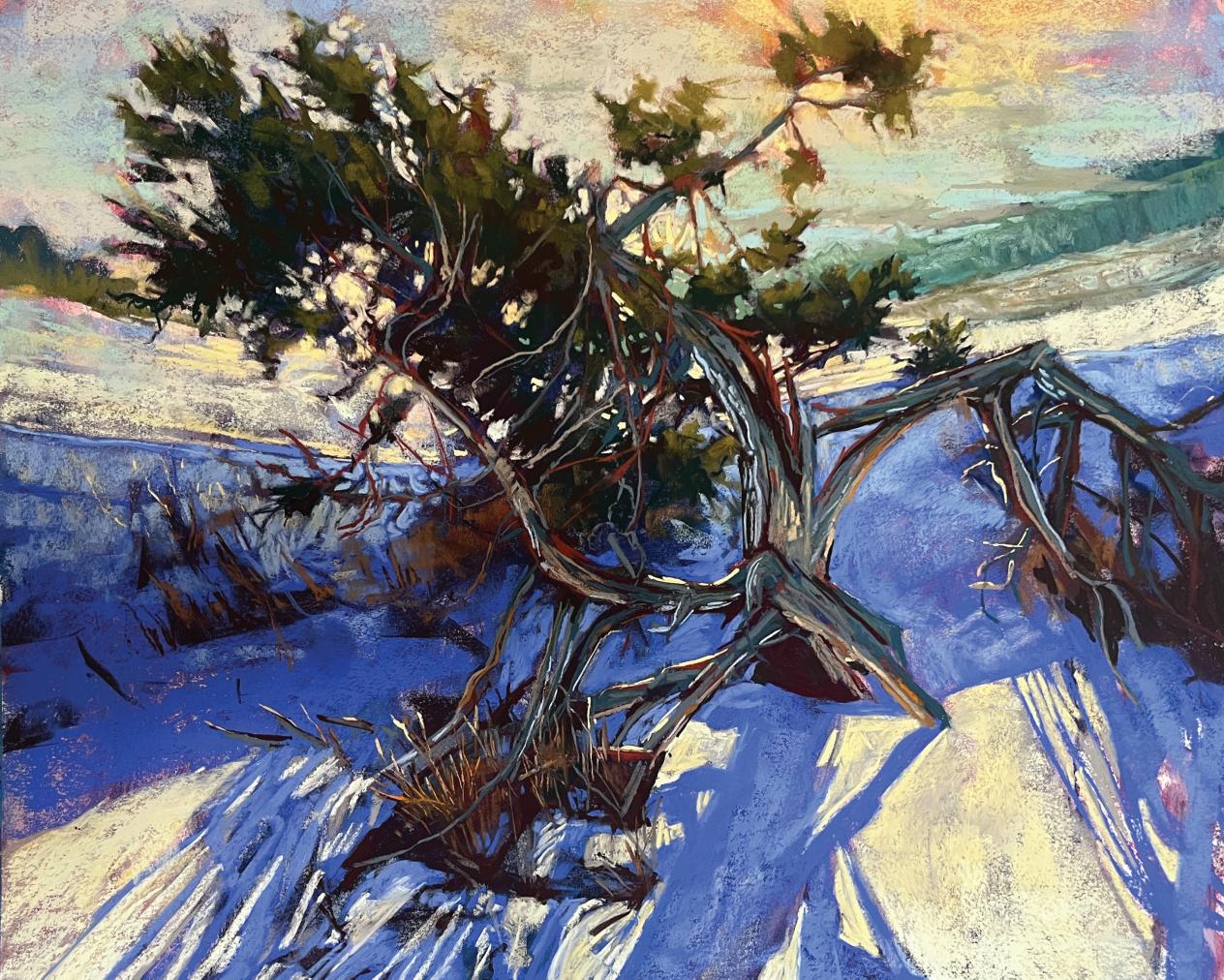
Sunburst Study, Zuzana Drobnik
refining—or intentionally stopping short of overworking.
“Although knowing when to stop is something I’m still working on!” she acknowledges. Painting outdoors has helped. Plein air work forces immediacy, she explains. The pressure to capture a fleeting moment prevents overthinking. It encourages her to trust her instincts and hold onto the initial spark that drew her to a scene in the first place.
Carrying It Forward
Though chronic pain has limited her mother’s ability to paint, Zuzana continues to encourage her mom (and herself)—to let go of perfectionism and just return to the act of painting itself.
Because, for both, art has always been more than output. It has been a source of peace, resilience, and clarity through difficult times. Now, with her son beginning to see the world through that same attentive lens, Zuzana understands her role differently. She isn’t just making work—she’s modeling a way of being in the world.
To say art runs deep in Karen’s family is an understatement. Her grandmother was an art advocate in Utah’s formative days, establishing the Utah Art Institute in 1899, which still exists today as the Division of Arts and Museums.
Her mother’s art career started in couture fashion. By the time Karen was a teenager, her mother was painting and winning prizes for her regional landscapes in oil.
“My mom filled our home with materials—clay, paper, fabric—and possibility. Art was always in the air,” she recalls.
Antidote to Skyscrapers and Concrete
After training as an oil painter at Yale University and completing her MFA at Indiana University, Karen moved to Manhattan and received several grants to paint urban life. She painted plein air in Central Park and community gardens, calling it “an antidote to all the brick and concrete.”
“I hated to work on little 8x10s,” she says. “I did 30x30, 40x40 en plein air. I had to bring paper palettes. I think I wanted bigger gestures. There’s an expressionist bend to my work, especially during that period.”
In 1996, after a decade-plus in NYC, Karen returned to Utah. There, she founded and managed HORNE Fine Art, a downtown Salt Lake City gallery and studio.
Now, 20 years later as she transitions to a home studio, she reflects on her gallery period as enriching, connecting her to artists, collectors, and the broader ecosystem of contemporary art.
hornefineart.com
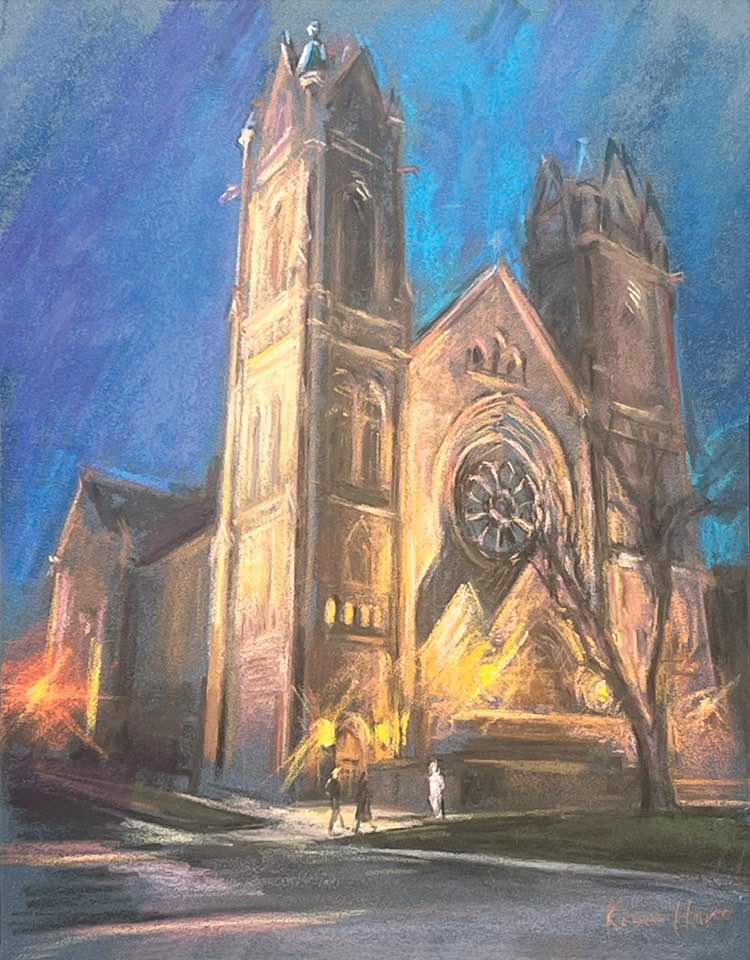
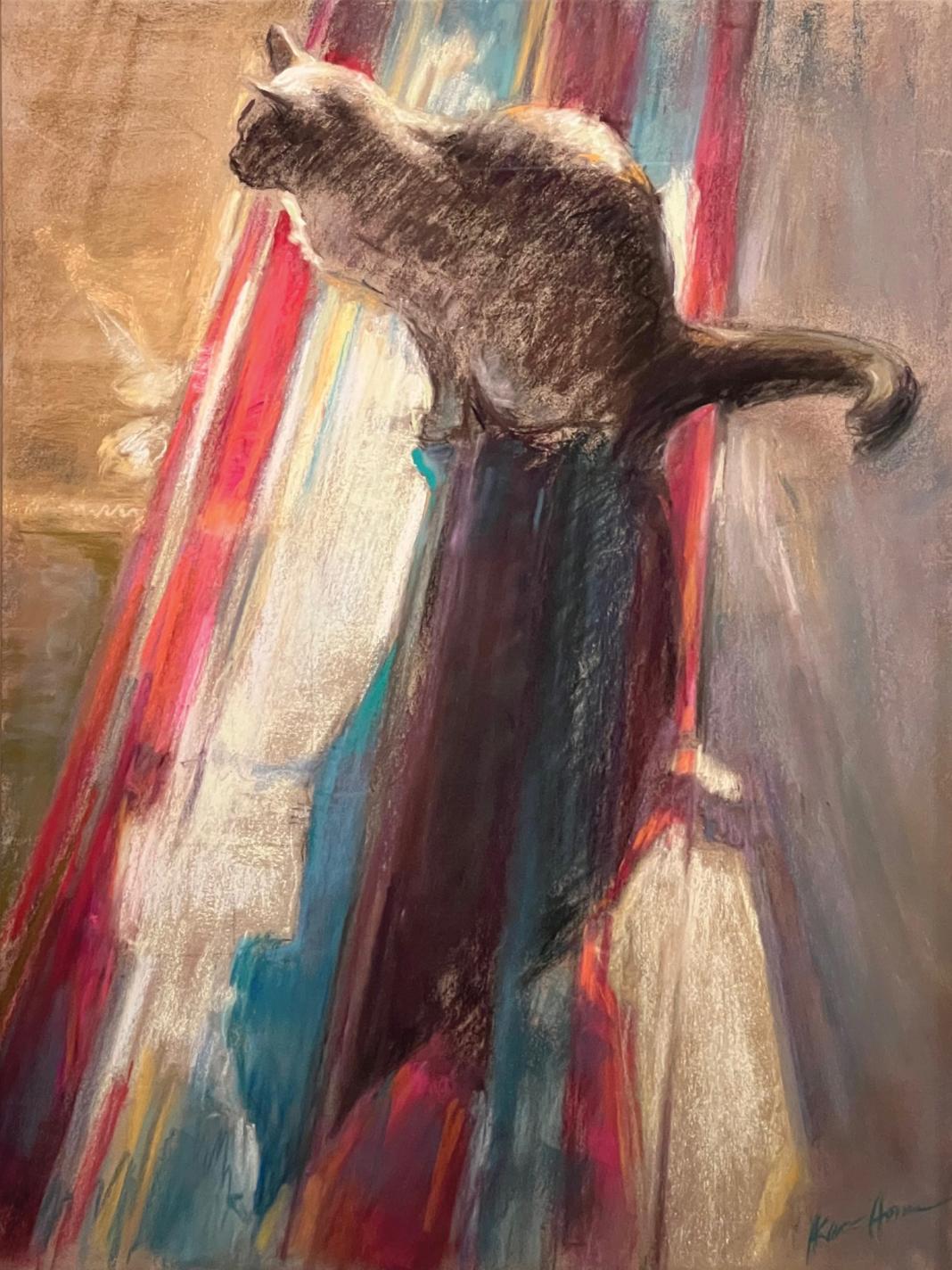
Evening at the Cathedral of the Madeleine Karen Horne
A Fascination with Color
At Yale, she became deeply engaged with color theory, particularly the teachings surrounding Josef Albers’ Interaction of Color. Later, she would teach color theory at the University of Utah.
She recalls, “My whole room was a sea of paint chips for a semester, studying the push and pull of color, simultaneous contrast. I ate that up.”
Karen’s fascination with color is what drew her to pastels after a thriving oil painting career. During figure drawing sessions in the late 1990s, Karen grew bored with
charcoal and picked up a NuPastel to introduce color. The experience was immediate and compelling.
“I loved how pastels were like drawing with color,” she says.
Developing a Pastel Practice
At the time, she worked directly, without layering, often on colored Canson Mi Teintes paper. It wasn’t until much later that she encountered sanded papers and more complex pastel techniques.
“I’m actually always learning,” she says. “I never took classes in pastel.”
She continues to explore surfaces—from Sennelier La Carte to Canson Velvet papers—and materials, including brands like Terry Ludwig, Girault, Richeson and Blue Earth.
What draws her most is the immediacy and direct connection between hand and surface.
“The brush isn’t in the way,” she notes. “I’m fascinated with the range of marks and effects one can make from calligraphic to soft.”
Weaving the “Parade of Life”
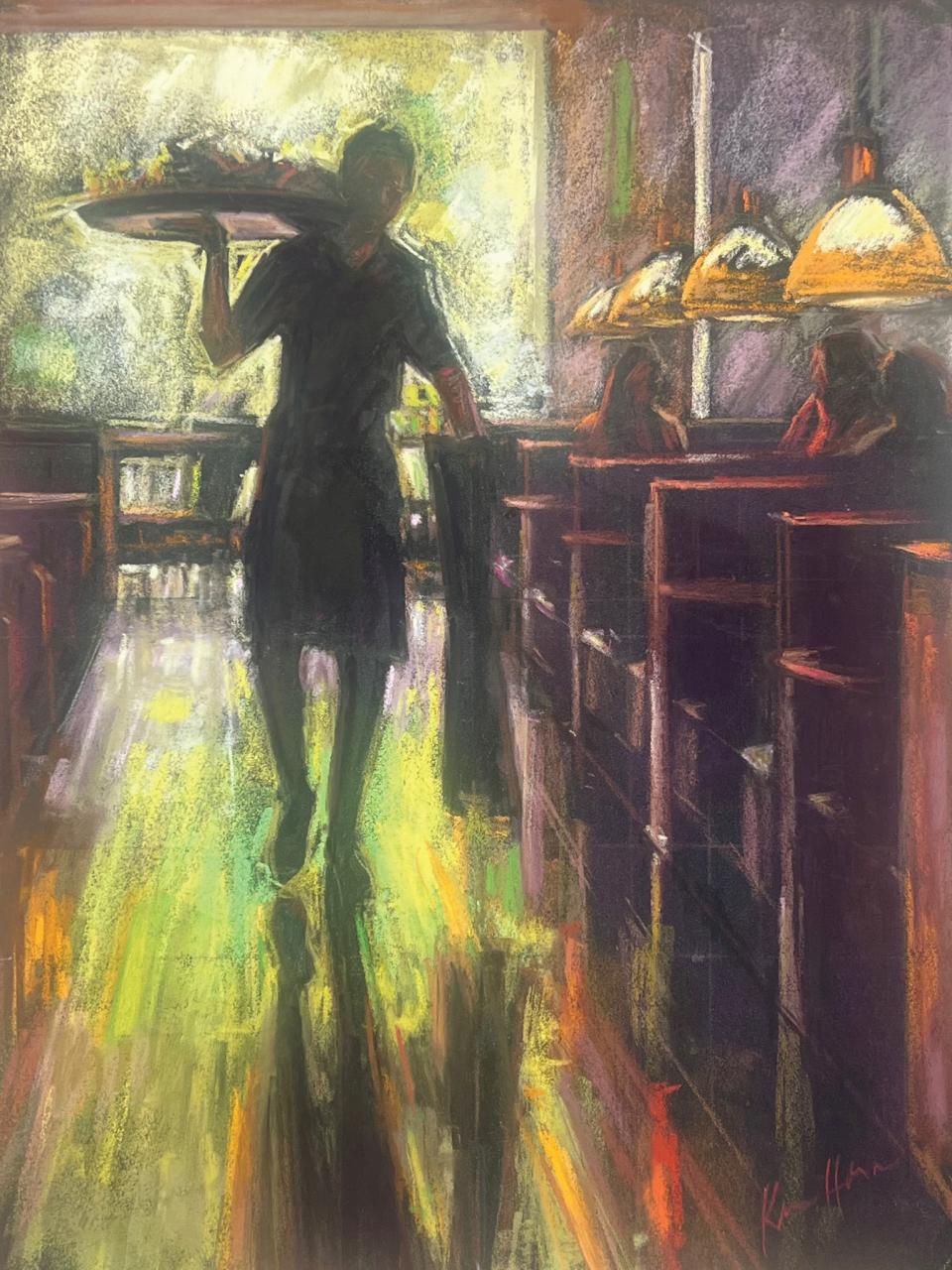
Karen is drawn to scenes that feel alive—restaurant interiors, cityscapes, environments where multiple narratives unfold simultaneously. “The parade of life,” as she calls it, offers endless material.
Her compositions are often dense, filled with competing elements, shifting light, and varied color relationships. The challenge, she acknowledges, is maintaining coherence—allowing complexity without losing a primary focus. “I know I need to weave it together but keep that one primary focus,” she says.
Theatricality plays a role. She likens her compositions to stage sets, with different lighting zones and interactions. Rather than simplifying subject matter, she leans into the complexity while weaving color to refine how the scene is organized.
A Colorful World
“It’s all about color, all of the time,” Karen says. Her approach is rooted in relationships—color against color, what advances, what recedes. Each painting becomes, in her words, “a little color world,” where every element is subordinate to a larger chromatic statement.
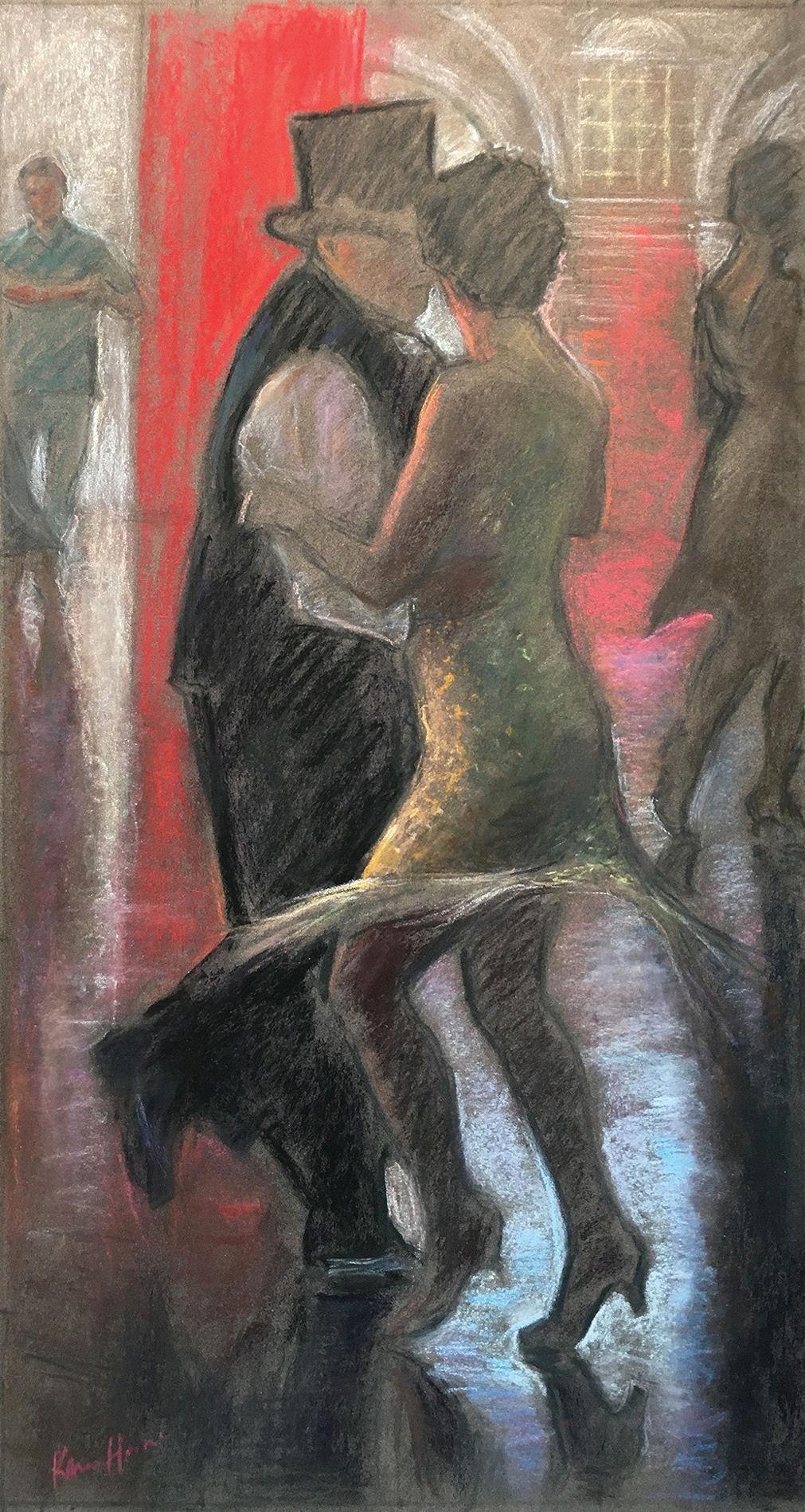
Going Retro, Karen Horne
“The more successful pieces are strident about that color,” she says. “You have a major player, and then everything else supports it.”
This color sensitivity extends beyond the canvas; she jokes that she even coordinates clothing with her husband to maintain color harmony in daily life.
A Hero to Zero
Despite decades of experience—as a painter, gallery owner, and teacher—Karen resists the idea of mastery as a fixed state.
“You’re always a ‘hero to a zero.’ Start the next painting, and you have to do it again. It’s like a new adventure.”
And that adventure includes her mom. Karen and her mom have done several two-person shows, twice at the Springville Museum of Art, and recently at the Utah State Capitol.
“We still share our work and discuss it.”
Tiny on Stripes, Karen Horne
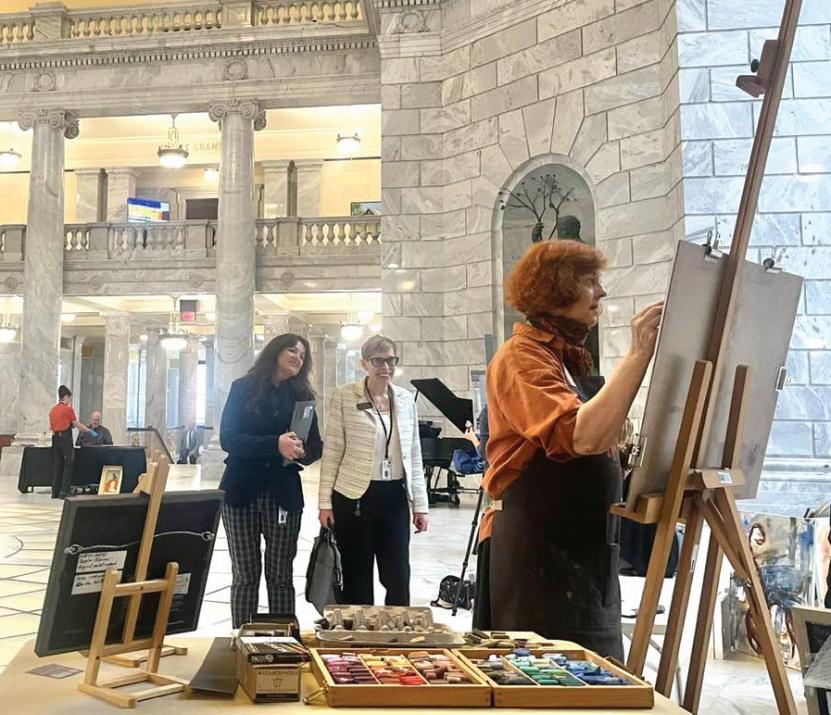
Karen Horne demonstrating at the Utah State Capitol March 2026
Outside, Inside, Karen Horne
Mystical Place
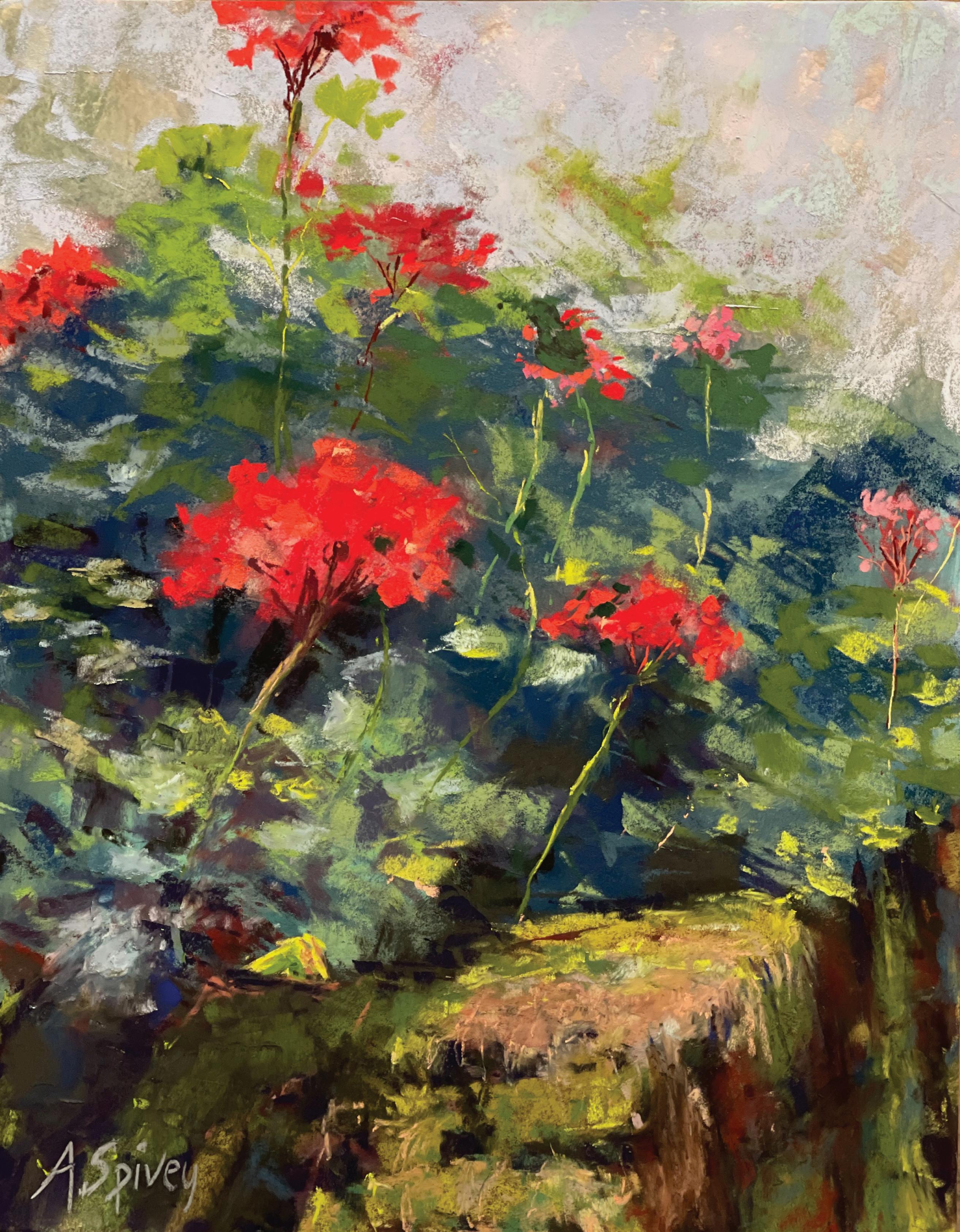
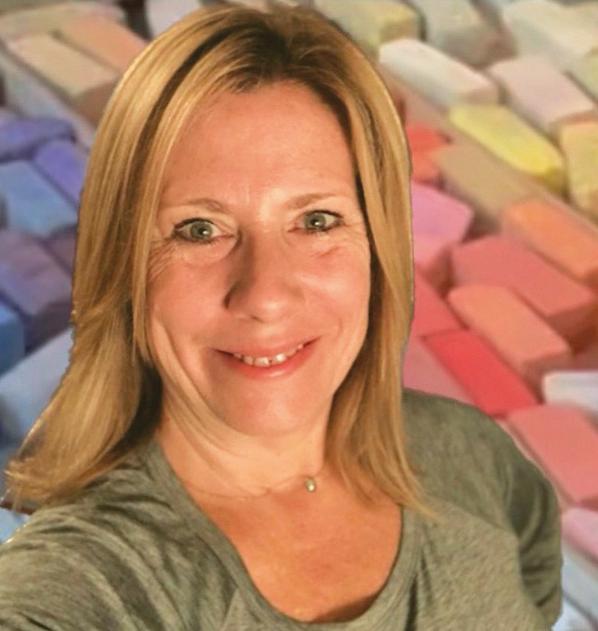
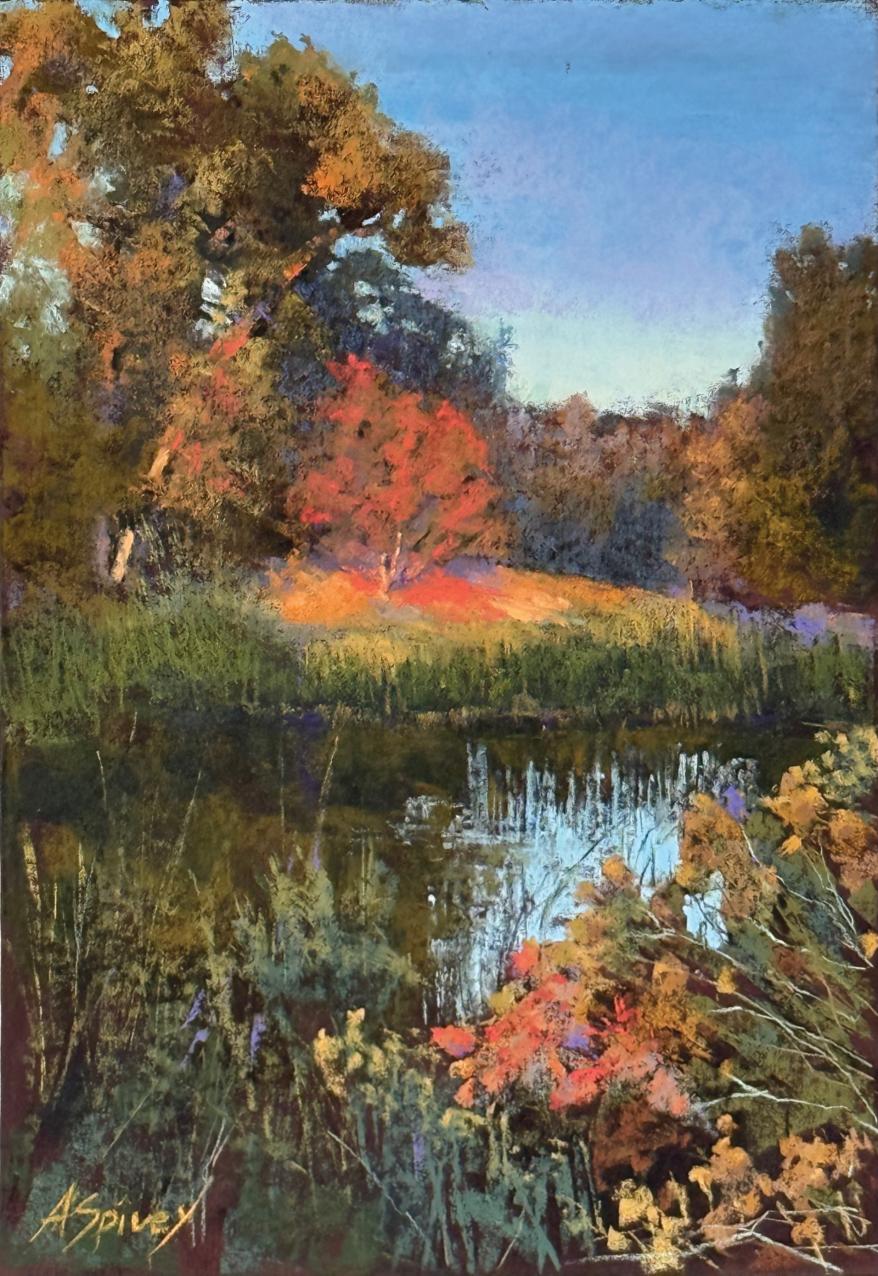
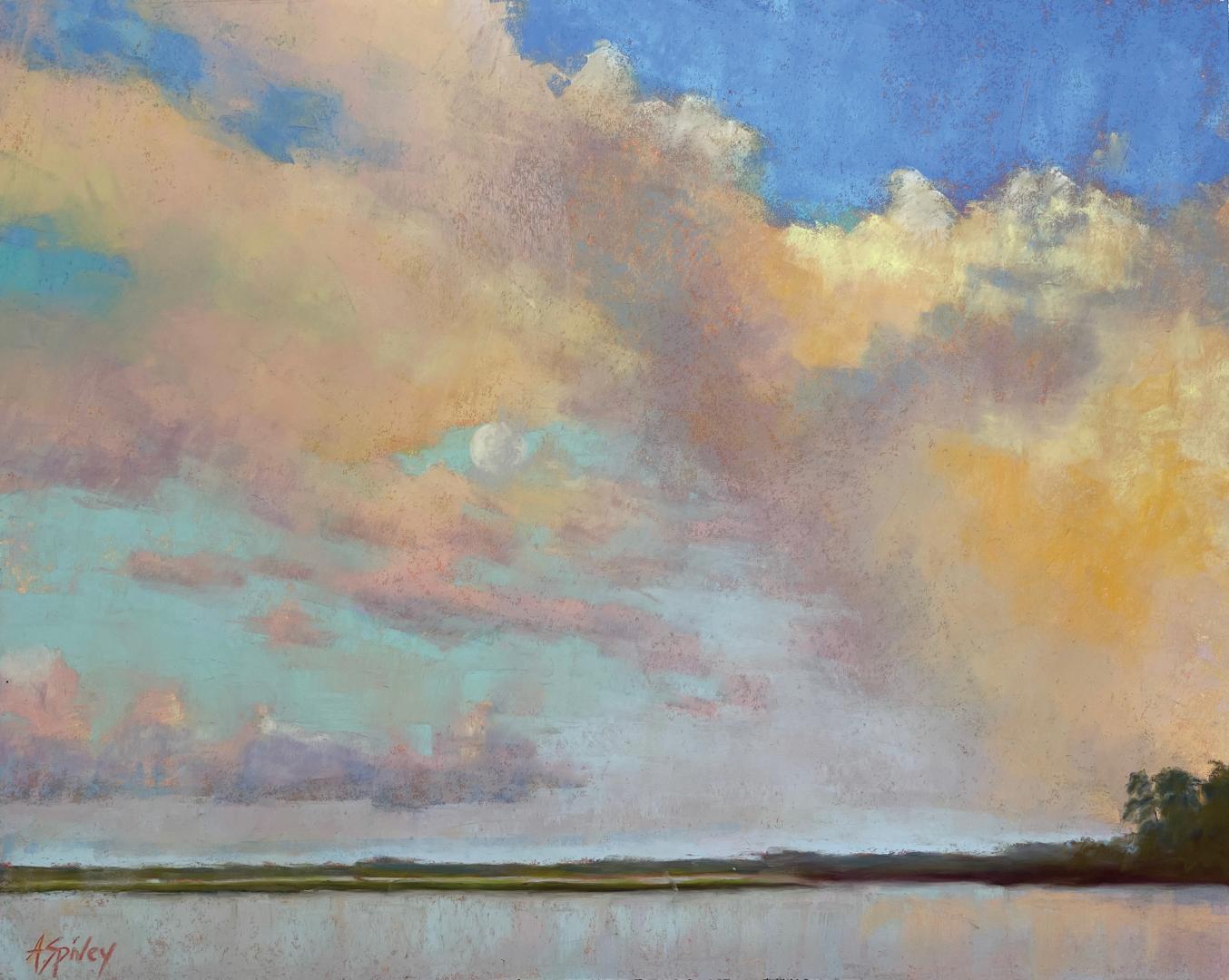
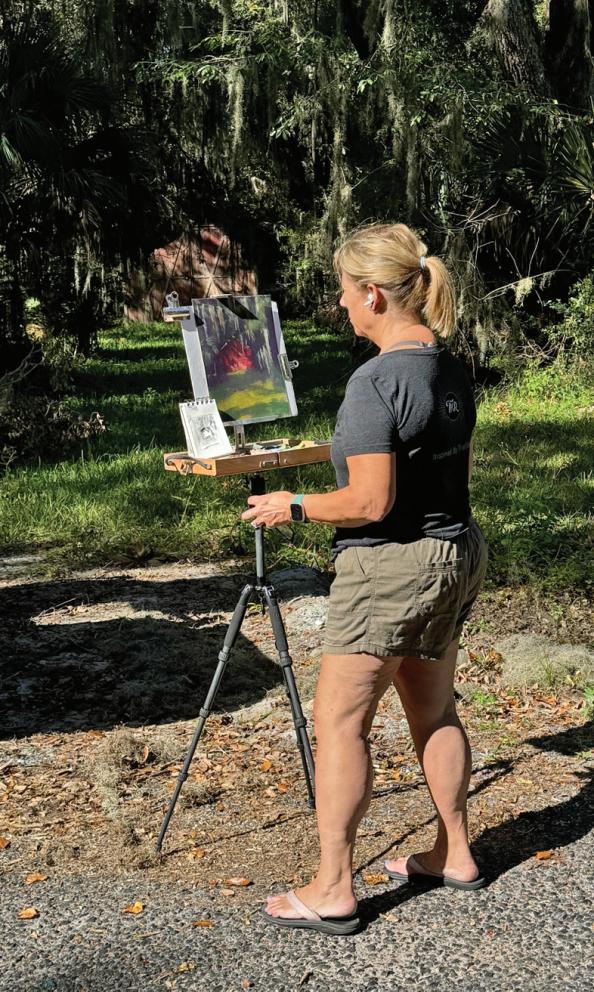
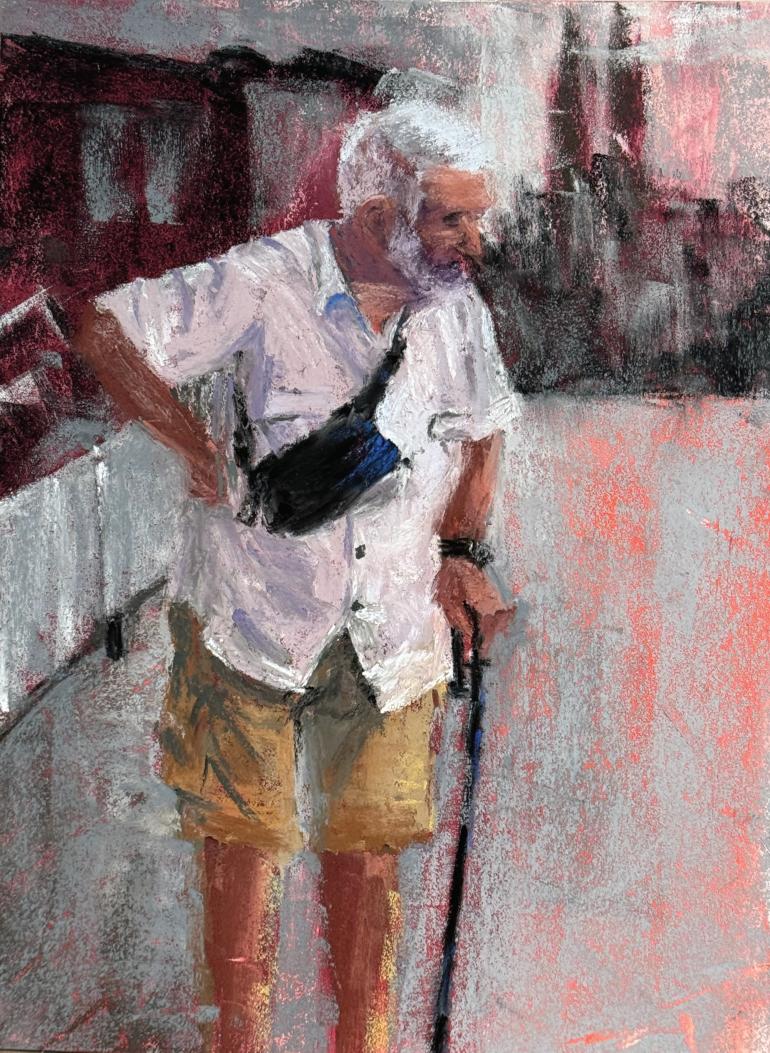
Anne Spivey
Anne Spivey
By Kim Essex |
In the summer of 2017, just months after she picked up her first pastel, Anne Spivey traveled to Nerja, a coastal town in southern Spain, with her 80-year-old mother who is a classically trained artist. The two attended a “Painting Holiday” workshop, working side by side, absorbing the light, the color, the rhythm of a place far from home.
“I knew it was a once-in-a-lifetime experience,” Anne recalls. “For both of us.”
A Quick and Determined Student
Anne didn’t expect to become an artist in her fifties—let alone alongside her mother. Today, she paints from her home studio overlooking the Nassau River in Fernandina Beach, Florida, on Amelia Island. Her mom lives just minutes away.
Inside, her workspace reflects both experimentation and intention. She works across a range of surfaces—from Lux Archival paper, for non-buckling wet underpaintings, to the grit of Sennelier La Carte Pastel Card—sometimes painting the same subject multiple times just to explore how material changes outcome.
“What fascinates me is the endless possibilities,” she says of pastels. “Starting with the paper, underpainting, and the type of pastels. You’re not mixing color—you’re selecting it, layering it, responding to it.”
Before 2017, Anne had no formal art background. Her career was in pharmaceuticals—sales, management, and training. When she retired, she initially planned to become a life coach and even trained for it. As part of that process, students were required to coach themselves. She set a personal goal: To explore her artistic side.
But she was intimidated. When her sister, a watercolorist, came to visit, she encouraged Anne daily to draw.
“She just kept at me,” Anne says. “Finally, I picked up the pencil.”
From that moment, something shifted. Anne began drawing every day “as if it were my job,” and soon she enrolled in two art classes at the community center: acrylics and pastels. Acrylics didn’t resonate. Pastels did.
“The first time I touched them, I was hooked,” she says. “I never looked back.”
She sought out structured guidance as she progressed, studying with artists who emphasized fundamentals and discipline. One of the most influential was Nancy Nowak, with whom Anne worked closely, including plein air outings, weekly studio sessions and critiques.
“She’s the kind of teacher who genuinely gets joy from her students’ success,” Anne says. That mentorship, combined with Anne’s own persistence and drive, accelerated her growth.
“I believe if you go out every day and do what you need to do, when you’re all finished, it will add up to success,” she says convincingly. “When I get into a show, I’m just humbled.”
Spurred on by Challenges
One standout moment came from a piece she created during a Pastel Society of the West Coast Challenge— a high-key painting completed in under an hour. That painting, “Into the Wild,” won the Award for Excellence in Pastel at the 26th National Exhibition of the American Impressionist Society.
Challenges, in fact, have become a cornerstone of her practice. Through organizations like the PSWC, she regularly participates in themed exercises that get her to the easel and push her outside her comfort zone.
“Don’t overthink them,” she says. “Just try something different. You can surprise yourself.”
Holding onto a Feeling
Anne describes her work as modern impressionist, but increasingly, she is interested in the space between representation and abstraction—allowing the freshness of an underpainting to show through, using fewer but more intentional marks, and learning what may be the hardest skill of all: When to stop.
“It’s about holding onto a feeling,” she says. “A moment when the light shifts and everything feels suspended.”
Morning Moon, Anne Spivey
Anne Spivey painting on location.
What to do with All Those Paintings
Now, less than a decade after she started, Anne has a growing body of work and an inspiring purpose for her paintings. “I had all these paintings and thought—what can I do with them?”
She found the answer in charitable causes, directing 100% of proceeds from certain paintings to organizations that serve children, including UNICEF and Joy to the Children.
Painting itself remains a personal practice —one that fits around a full life that includes six children, nine grandchildren, and caring for her mom. She no longer paints every day, but she estimates she’s in her studio four times a week.
“If someone had told me I’d become an artist in my mid-fifties, I would have thought they were crazy,” Anne says, “But here I am—and I feel incredibly grateful to share this love of art with my mom."
Jillian and James, Anne Spivey
Into the Wild, Anne Spivey
Market Day, Anne Spivey
BOUND TO INSPIRE
Bound to Inspire
by Marla Baggetta
Artist Marla Baggetta references her personal collection to recommend essential books for inclusion in your own library.
There’s a particular kind of joy in being asked to write about art books, a quiet, enduring joy that feels both personal and shared. For me, it reaches back much further than my career as an artist. It begins in childhood, in a home where books were not just objects, but companions, invitations, and doorways.
My mother was a library administrator, but more than that, she was a steward of stories and a believer in what books could do for a life. She passed away two years ago, and it’s impossible to sit down with my art books now without feeling her presence beside me. In many ways, this article and this entire series is for her.
I grew up surrounded by books. We were read to often and I was captivated not only by the stories, but by the images that carried them. Those early illustrations lodged themselves deep in my imagination. I didn’t yet know I would become an artist, but something in me was already leaning in that direction.
My mom worked on a bookmobile for a time, and I remember her bringing home books filled with pictures of animals. I would sit for hours drawing them carefully, intently, trying to understand their shapes and gestures. Looking back, those moments feel like the beginning of everything.
As I grew older, she delighted in finding special books for me, treasures that would slowly build into the art library I rely on today. She had an uncanny ability to choose books that mattered, books that would stretch me, challenge me, or quietly guide me forward. That library is not just a collection; it’s a record of encouragement, of belief, of love expressed through pages.
Even now, when I pull a book from the shelf and sit down to study, I feel her there. There’s a continuity in that experience, a sense that the path I’m on was shaped, in no small part, by her devotion to books and to my curiosity. If I’m able to share anything meaningful with other artists, especially those just beginning, it’s because she helped lay that foundation.
With that in mind, I want to begin this series with a few books that have stayed with me, books I return to again and again.
Learn more about Marla’s artwork and workshops at paintinglessonswithmarla.com
Creative Illustration by Andrew Loomis is one of those rare volumes that transcends its title. While it’s often categorized as a book on illustration, it is, more fundamentally, a masterclass in picture-making. Loomis addresses composition, design, value, and color with clarity and authority, but also with a kind of generosity that invites the reader into deeper understanding. It’s not a quick read, nor is it meant to be. It’s a book to live with. If I were limited to just a handful of books, say, stranded somewhere with only three, this would unquestionably be one of them.
Another book that has had a profound impact on me is Fearless Creating by Eric Maisel. I came to it after I had begun working in the fine art market, at a time when I was navigating the realities of being a professional artist: the uncertainties, the emotional swings, the need for self-direction. Maisel speaks directly to that inner landscape. He addresses the discipline required to sustain a creative life and the courage it takes to keep showing up. There’s a section in the book titled “What Working Means” that I return to often. In fact, I read it aloud to every workshop group I teach. It articulates something essential about commitment and purpose that every artist needs to hear.
And then there is Color by Betty Edwards. Simply put, this is one of the most practical and accessible books on color I know. It is well organized, clearly written, and filled with information that is immediately usable. My own library leans heavily toward the study of color, and this is the book I recommend most often to students at every level from those just beginning to those with years of experience. It strips away confusion and replaces it with understanding.
A Mother, a Daughter, and Art
by Terrilynn Dubreuil
Mothers and daughters don’t always have an easy relationship. Between my Mother and me there were certain topics we simply had to avoid if we were to enjoy our times together. Like a piece of sanded pastel paper, there was a side that brought joy and the other that was best left untouched.
The functional side for us was Art. Art was always a joy to discuss. We were both teachers, and we shared so much about the experience of creating.
She was a watercolourist; I was drawn to pastels.
We had an unusual relationship, I realize. She was in my life so much longer than many others have their mothers—she was nearly 98 when she passed.
The Seeds of an Artist
Looking back, I was a preteen when she began her own pursuit in art. She filled the house with books on Art History, North Light instructional guides, art magazines—and those became my first art teachers.
We’ll Go Together, Terrilynn Dubreuil
We had no formal art programme during my school years, so I’d spend hours poring over those pages, absorbing colour, detail, and the stories of the masters. At the library, I’d head straight to the Art section, pull out the largest books I could find, and lose myself in the “plates” of great paintings. As I said, I had no formal art classes until high school, and even then only for six months—when my Mother herself became the temporary art teacher. She had pushed for the position and brought fundamentals and self-expression to our school, even if just for that short time.
A few years later, during my junior year at university, I finally decided to major in Fine Arts. After that, the minutiae of life left us little time to share our art, even as we both continued to teach and create. In her later years, when she could no longer paint, we would look at artwork together, critique and discuss. She was proud of my growing success with pastels.
The ‘Reflections’ Series
After she died, I felt driven to express the complexity of my emotions by painting her in a series of works I called Reflections. As her body crumbled, her mind remained quick and alert. To me, the most impactful painting is Her Hands
I was stunned when it received First Place in the 2023 IAPS exhibition. My quick, rocketing elation plummeted the moment I caught myself thinking, “I need to tell Mom!”—and realized she was no longer here to tell.
In the series, I used energetic and seemingly chaotic marks to portray the sense of fraying reality—the tattering of a person’s being as they transition from this life to the next.
Painting from Memory and Emotion
I’ve always been fascinated by painting people—not merely their likeness but something deeper: their emotions, their personality, their movement, their moment in time.
After I lost my mother, all I had were photographs, many taken during her later years so I could hold onto our moments together. At first, these photos were private. But then I began painting from them, focusing on her hands, her face, her relationship with her beloved cat. I found myself using her favourite colours, the chair she spent her final years in, and the frayed marks that, to me, suggested a spiritual transition between worlds.
I began each piece by laying out shapes and values from the photos, then set the photos aside and painted intuitively from memory. Something inside guided my hand —an unrestrained, almost urgent need to create. That freedom helped me process the loss, the distance, and the complex imperfection of the woman who was my mother.
Her Hands, 18 x 12 in, 2023
Sleeps, 12 x 18 in, 2024
The Story in Her Hands
Her hands were loving, caring, always creating—so I exaggerated them in the painting. She painted awardwinning watercolours with those hands. She cooked, cleaned, and cared for others. She taught art to children, university students, and private pupils for years. She looked after her family, her pets, her Hospice patients, her relatives—those hands did amazing things in her 97 years.
At sixteen, she was a draftsman at Bath Iron Works in Maine, drawing ship hulls during World War II. She had been on her way to becoming the youngest person to earn a pilot’s license when tragedy struck—her stepmother burned down the family home, destroying everything. Instead of flying lessons, she went to work in the shipyard, drawing blueprints for the hulls of the battleships. Quite extraordinary for a young woman of her time.
She
Her Last Shampooing, 18 x 12 in, 2024
During the pandemic, her hands were thin-skinned, the tendons visible, yet still capable of holding playing cards and finishing crosswords daily. They were miraculous.
Painting Through Grief
My mother had endured a difficult childhood, which made her seek structure and order in everything. Her hair was her “crowning glory.” Her clothing, manners, and home were always impeccable—not out of vanity, but as a way to maintain her own sense of solidity and security. People loved her—her family, her friends, her students, her community.
In her final years, as her body crumbled, she could no longer keep up her carefully groomed appearance or the neatness of her home. I found myself oddly fascinated by that slow dilapidation and wanted to express this in my painting.
I would never have shown her these paintings—oh, she would have been mortified—but as she was gone, I could express what I felt in my loss. That honesty, that release, was deeply healing.
A Shift in My Work
Looking back at earlier portraits, I can see my style was more precise and controlled. Expressive, yes, but contained. I painted my granddaughter—my muse—many times, and also friends or their children, with careful accuracy, trying to capture their features. I even once had fun creating a portrait of Danny DeVito for my daughter’s birthday!
But after painting my mother’s series, everything changed. My work became looser, more expressive, and more personal. I paint now for myself, not for others’ approval. I experiment more boldly with techniques and materials, finding joy in the act of creation itself.
New Directions
Some of my recent pieces have taken on subtle social commentary. Unsettled, (see page 82) for example, shows a girl stopping to look at an Andrew Wyeth painting in a gallery. The tipped horizon and shredded surroundings suggest the precarious world young people inhabit today. She stops in her tracks captured by the painting, holding her braid as if it were a rope of security. Her feet point forward to the future but her mind is trapped by the evasive meaning of the Wyeth painting.
Lisa, 20 x 16 in
Penny, 16 x 12 in
This work has received little response—yet that no longer matters to me. I painted it to express my feelings. And isn’t that, after all, what art is for?
Looking Back, Looking Forward
I find myself returning to my early artistic heroes—Käthe Kollwitz, Francisco Goya, Honoré Daumier—and their powerful portrayals of humanity. They remind me of what truly moves me to paint.
In my own “serious” work, I now ask: Why am I painting this? What do I want to express? How can I create emotional statements that reach others, that communicate something universally felt?
This isn’t always an easy pursuit—but it’s the one that matters most to me now.
At the foundation of it all lies with my Mother’s influence: her teaching, her example, and the final impetus of her passing, which propelled me to create art that helps me process my own powerful and convoluted emotions.
Is that not one of the greatest purposes of creating art?
Unsettled, Contemplating Wyeth, 18 x12 in, 2024
Let It Snow, 12 x 18 in
Terrilynn Dubreuil is a Master Circle Pastelist with IAPS (International Association of Pastel Societies), a juried Signature Member of the Pastel Society of America (PSA), Signature member of Pastel Society of Maine, has judged and organized international exhibits, exhibited and sold artwork internationally, and received recognition at many juried International Pastel Shows. Some top awards have included Best of Show in the 2023 IAPS Exhibition and in 2024, 8th place in the SOCIÉTÉ DES PASTELLISTES DE FRANCE 40th Anniversary International Pastel Contest, 23rd Feytiat International Pastel Show, France.
Learn more about Terrilynn and her art at travelingartista.com
This article was first published on the popular blog “How to Pastel” by Gail Sibley in October 2025, and is republished here with permission. See Gail’s other posts at howtopastel.com
Monhegan Gold, 12 x 9 in, 2025
Burnished Sands 12 x 18 in, 2025
WORKSHOP
OTTO STURCKE
DESMOND O’HAGAN
Sculpting the Still Life: Sculpt Your Pastel to Success
MAY 30–31, 2026 • 9:00 AM – 4:00 PM
Online Zoom 2-day workshop through PSWC www.pswc.ws/new-workshops
$250 for PSWC Members
$275 for Nonmembers
About the Artist
Born in 1971 in southern California, Otto Stürcke is a primarily self-taught artist who served in the U.S. Marine Corps before pursuing art. He worked as an illustrator, and learned that he favors pastels and the chiaroscuro style.
Otto has earned numerous awards, including Master Circle Status with the International Association of Pastel Societies, the Master Pastelist title, and the Dianne B. Bernhard Gold Medal from the Pastel Society of America.
His works are featured in the Smithsonian’s American Latino Collective and the Butler Institute of American Art, and he has received multiple “Best In Show” honors and other notable awards. His art has also been published internationally. sturckestudio.com
About the Workshop
Honing in from primary to smaller forms while implementing the right value and color choices will not only strengthen your creative process, but also allow you to work the piece as a whole and develop the detail to your liking.
This workshop will focus on properly rendering forms, size relationships, value and value structure, color temperature, use of transfers, and developing detail.
Instructor will lecture and demonstrate each step as you paint along in a process he thoroughly enjoys. Using both negative and positive shapes, you will render the primary planes of the objects prior to moving on to secondary forms and details. Critique and feedback will be provided throughout the process.
About the Workshop
Do you want to draw people to YOUR painting from across the room?
Do you find yourself getting lost in the details?
No matter the style of your mark making, simplifying design and value structure will strengthen your painting!
Let’s dive into the power of values and composition in this three-day studio workshop.
Starting with an inspirational PowerPoint, timed exercises, demonstration, painting time and a personal critique session, our three days together will be packed with hard work and fun.
KIM LORDIER
Simplifying for Strength
SEPTEMBER 30 – OCTOBER 2, 2026
9:00 AM – 4:00 PM EACH DAY
In-person workshop through PSWC www.pswc.ws/new-workshops
$475 for PSWC Members
$495 for Nonmembers
Catalyst Arts Collaborative 6427 W. Ustick Road Boise, ID 83704
About the Artist
Kim Lordier received a BFA in Illustration at the Academy of Art University, San Francisco in 1989. Her work has been showcased on the cover of PleinAir Magazine, Art of the West, Southwest Art, and Pastel , as well as featured in Fine Art Connoisseur, American Artist, The Artist Magazine, and the PSWC Magazine
Acknowledged by jurors and her peers, Kim has received recognition for her landscapes at major plein air events, international magazine competitions, national pastel society shows and museum exhibitions. Kim is a Signature Member of the California Art Club, the Pastel Society of America, Laguna Plein Air Painters Association, a Pastel Laureate of the Pastel Society of the West Coast, and is a Master Circle honoree of the International Association of Pastel Societies. A coveted workshop instructor, Kim leads workshops across the country. kimfancherlordier.com
WORKSHOP
CHRISTINE OBERS
All the Gusto, Without the Dusto: Intro to Pastel Pencils
NOVEMBER 7–8, 2026
9:00 AM – 3:30 PM EACH DAY
Online 2-day Zoom workshop through PSWC www.pswc.ws/new-workshops
$175 for PSWC Members
$195 for Nonmembers
About the Artist
Christine Obers has won many international awards including the Master Circle, Gold Medal from the International Association of Pastel Societies and Signature Member of the Pastel Society of America. She is also a Distinguished Pastelist in the Pastel Society of the West Coast and Master Pastelist in the Pastel Artists of Canada Association.
Her artwork has been exhibited at the National Arts Club, in New York; Albuquerque NM; Morro Bay CA, and the Aurora Art Center, Ontario, Canada. She has been featured in major art publications, including the Pastel Journal, Southwest Art, and American Art Collector. Obers’s artwork can be found in private collections throughout Canada and the U.S.
About the Workshop
Participants will learn to paint a Grisaille.
A grisaille allows an artist to focus on form and values. It has been used as a formal teaching aid for centuries. In this workshop we will be creating a grisaille using only a few pastel pencils on a grey surface.
There will be a demonstration in the morning followed by questions. Artists will begin working on their individual projects. Artists may share their work in progress at any time by emailing or texting the image.
I’ll offer suggestions and advice that will be available to all participants, including how to fix problem areas. 12 hours instruction, 6 hours /day, with break for lunch and stretches.
New Members
March – May 2026
NAME CITY STATE WEBSITE
Marti Anderson Tonganoxie KS
Elizabeth Bishop Richmond CA
Holly Block Pismo Beach CA
Suzanne Butz Rancho Santa Fe CA
Rosalie Coburn Ottawa ON
Kathy Curtin Fayetteville AR
Sam Gitchel Nevada City CA
Toni Kellenberg Laguna Beach CA
Paul M. Kneece Bend OR
Jeanne Legrand Ashland OR Zip Lehnus San Francisco CA ziplehnus.net
Li Lin Branchburg NJ
Trisha McNamee Windsor CA
Christine Hesse Miller Carmel-by-the-Sea CA
Yvonne Morton Whittier CA
Becky Neideffer Tucson AZ
Karla Powell Boise ID
Martha Prado Boca Raton FL
Dilmit Singh La Cañada/Flintridge CA dilmitsingh.com
Heather Steffey Eagle River AK
EXECUTIVE BOARD
PRESIDENT REGIONAL REPS OUT OF BOUNDS CO-CHAIR
Pamela Comfort
VICE PRESIDENT PASTELS USA: 99 VOICES CHAIR Lynn Attig
SECRETARY WE TALK ART HOST OUT OF BOUNDS CO-CHAIR
Bonnie Zahn Griffith
TREASURER 501(c)3 COORDINATOR SA Kushinka Deborah Pepin
AT-LARGE BOARD MEMBER Sabrina Hill
BOARD APPOINTEES
MEMBERSHIP COORDINATOR Open
MEMBERSHIP SHOW (MOOS) CHAIR SA Kushinka
WAYS & MEANS COORDINATOR
Kristine Finfer
WORKSHOP COORDINATOR
Jean Vineyard Myers
MAGAZINE EDITOR MARKETING
Francesca Droll
WEBSITE MANAGER
Delcee Comfort Fields
SOCIAL MEDIA COORDINATOR Open
MEMBERSHIP STATUS
Jan Miller
SCHOLARSHIP CHAIR
Kim Essex
PSWC Member, Terri Taber sketches a spectacular landscape. Photo by Linda Mutti.