
HERE FOR YOU
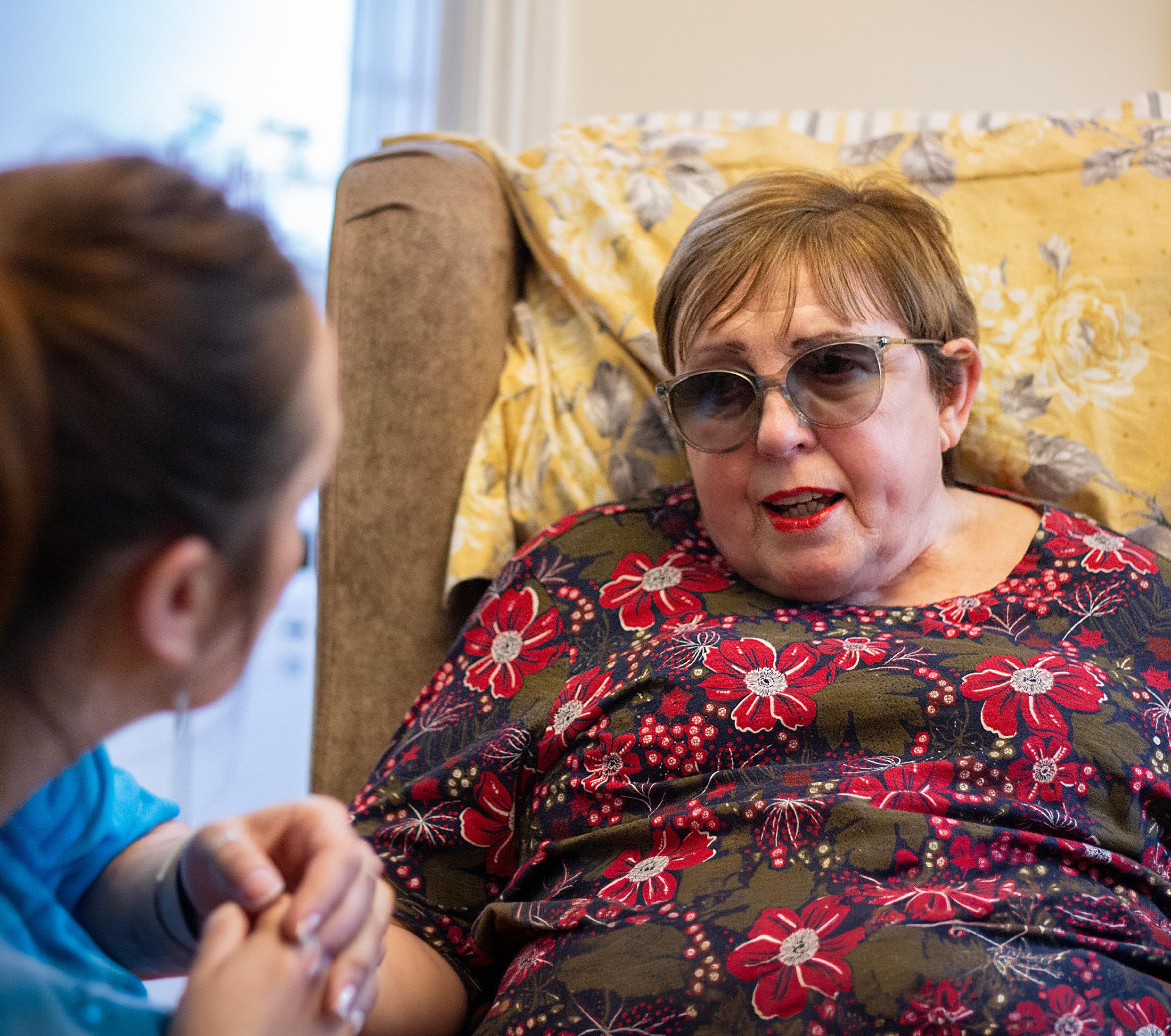
Our Helpline Care Navigators are here to support everyone affected by PSP & CBD. Each Helpline Care Navigator has a designated area (see map) where they provide proactive support, including:
• Information on all aspects of living with PSP & CBD, such as symptom management, benefits and entitlements and everyday living
• Emotional and practical support
• Contact details for local support, which may include Support Groups
• Information about how PSPA can support you
• Information about health and social care and how to access these services
• Signposting to other sources of information
• Referral for non-means tested benefits applications via Department of Work and Pensions (DWP) home visiting service
• Supporting evidence about PSP & CBD for Blue Badge applications and Continuing Healthcare applications
• Provide specific information written for health and social care professionals and access to Education Volunteers.
Our Helpline and information service is available Monday to Friday 9am to 9pm.
Tel: 0300 0110 122 or email helpline@pspassociation.org.uk
Margaret Powell House, 415a Midsummer Boulevard, Milton Keynes, MK9 3BN
CATHY MOUGHTON
AMANDA POTTAYYA
ALEXANDREA WUSU
DEB
RUDDOCK
KAYSHA MARLOW
DIONNE WARD
PSPA
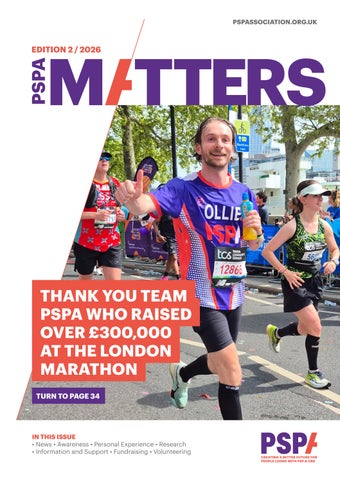
The last three months have been jam-packed for everyone at PSPA. We had 74 runners who have already raised more than £300,000 for PSPA in this year's London Marathon. It’s a tribute to our community that so many people are keen to raise money for the vital work we do. Without them, we couldn’t support people living with PSP & CBD at every stage of their journey or fund the research and campaigning that will unlock a better future for our community.
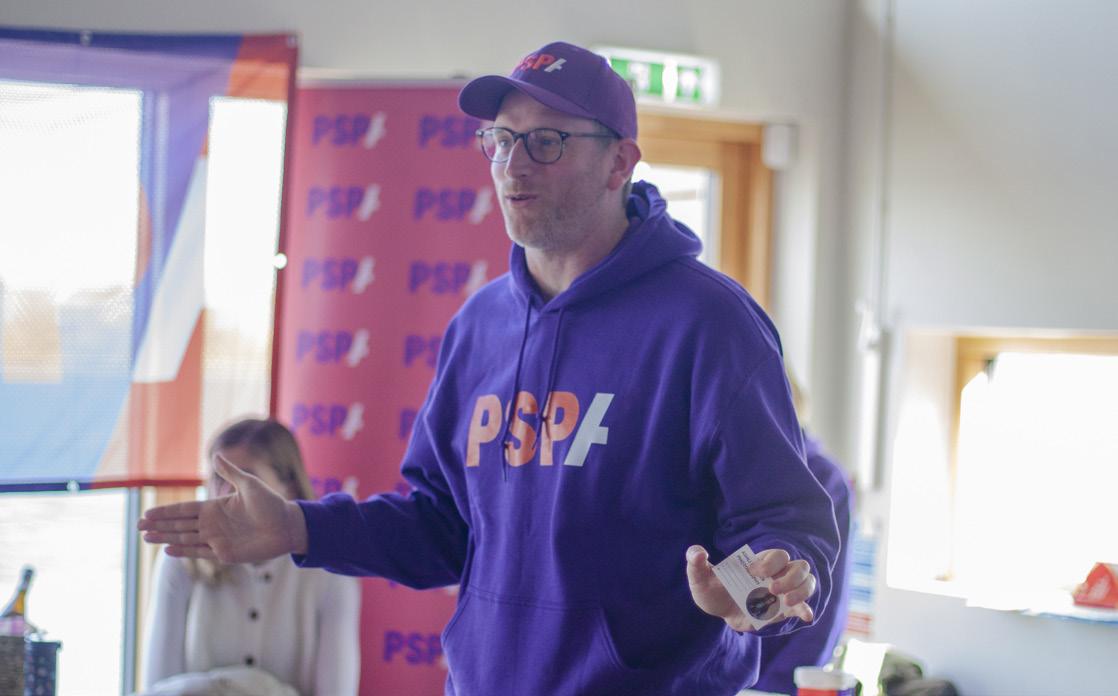
On a related note, we also launched our exciting new Pathway to Progress event and over 30 people joined us for a brilliant day at Willen Lake in Milton Keynes. The event was launched by the Mayor of Milton Keynes and included an inspiring speech from our Pathway to Progress ambassador, Leslie Ferrar. It was another brilliant example of the community we have at PSPA, and I really enjoyed the chance to talk to our walkers, learn about their lives, and discuss a wide range of topics, from walking football to baking! Pathway to Progress is our year-long community fundraising event, where we’re hoping to collectively walk the coast of Britain to raise £100,000 to help fund our vital work.
At PSPA, we’ve also been working hard to renew our strategy. I’m looking forward to starting a conversation with you all to ensure we collectively build the best possible future for everyone affected by PSP & CBD. Our aim is to develop and launch our new strategy starting in January 2027, as we create an exciting new vision with your help.

Dr James Cusack PSPA CEO
USEFUL CONTACTS
Main contact 01327 322410
info@pspassociation.org.uk
Helpline 0300 0110 122
helpline@pspassociation.org.uk
Fundraising 01327 322414
fundraising@pspassociation.org.uk
Volunteering 01327 368597
volunteering@pspassociation.org.uk
James Cusack, CEO 01327 322413
james.cusack@pspassociation.org.uk
Carol Amirghiasvand, Director of Service
Improvement and Development | Deputy CEO 01327 356137
carol.amirghiasvand@pspassociation.org.uk
Helen Chapman, PSPA Matters Editor 01327 356135
helen.chapman@pspassociation.org.uk
Megan Hodgson, Research Coordinator 01327 322418
research@pspassociation.org.uk
PSPA NEWS
RESEARCH INFORMATION DAY
Our next Research Information Day is taking place on Thursday 11 June at 10am on Zoom. Join us for a chance to find out more about the latest research projects into PSP & CBD.
BOOK OR WATCH
To book your free tickets or watch previous sessions, scan this QR code
PSPA MATTERS FEEDBACK
Thursday 11 June 10am
Thank you to everyone for sharing your views on PSPA Matters. We are working through them and look forward to introducing your ideas and suggestions in the next edition.
MARK SPECIAL MOMENTS WITH OUR E-CARDS
You can now mark special moments while also supporting PSPA with our digital e-cards. We have partnered with DontSendMeACard to create personalised e-greeting cards for any occasion to send to family, friends, or colleagues. By sending digital cards and donating the cost of postage and the cards, from as little as £1, you are helping us to continue to provide our information and support services as well as fund vital research into PSP & CBD.
BUY ONLINE
Scan the QR code to visit our website to choose a design and start sending today.

INVESTING IN OUR VOLUNTEERS
We are making good progress towards achieving the Investing in Volunteers (IiV) Kitemark, a nationally recognised standard for excellence in volunteer management. Reaching this milestone reflects our commitment to supporting, valuing and developing our volunteers.
The next stage of the process will see both staff and volunteers interviewed by a IiV assessor about their experiences. The assessor will also meet with the charity’s senior leadership team, including our Chief Executive and also our Chair of Trustees, to gain a full picture of how volunteering is supported across the organisation.
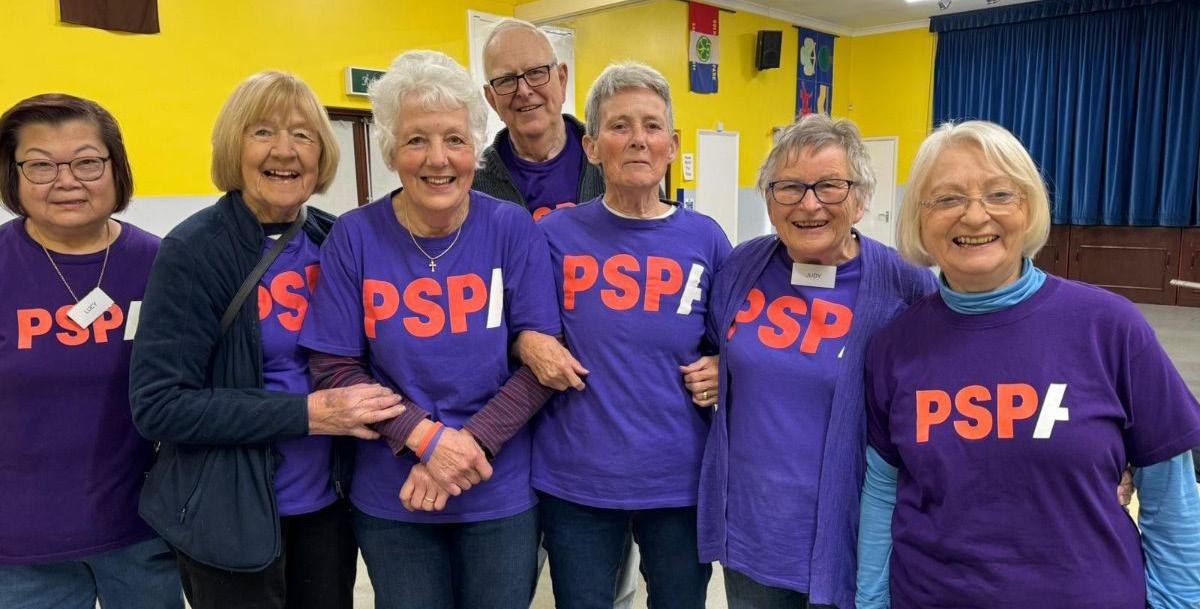

FINDING FRIENDS THROUGH SUPPORT GROUPS
Across the UK, PSPA Support Groups are bringing people together to form a community and build friendships.
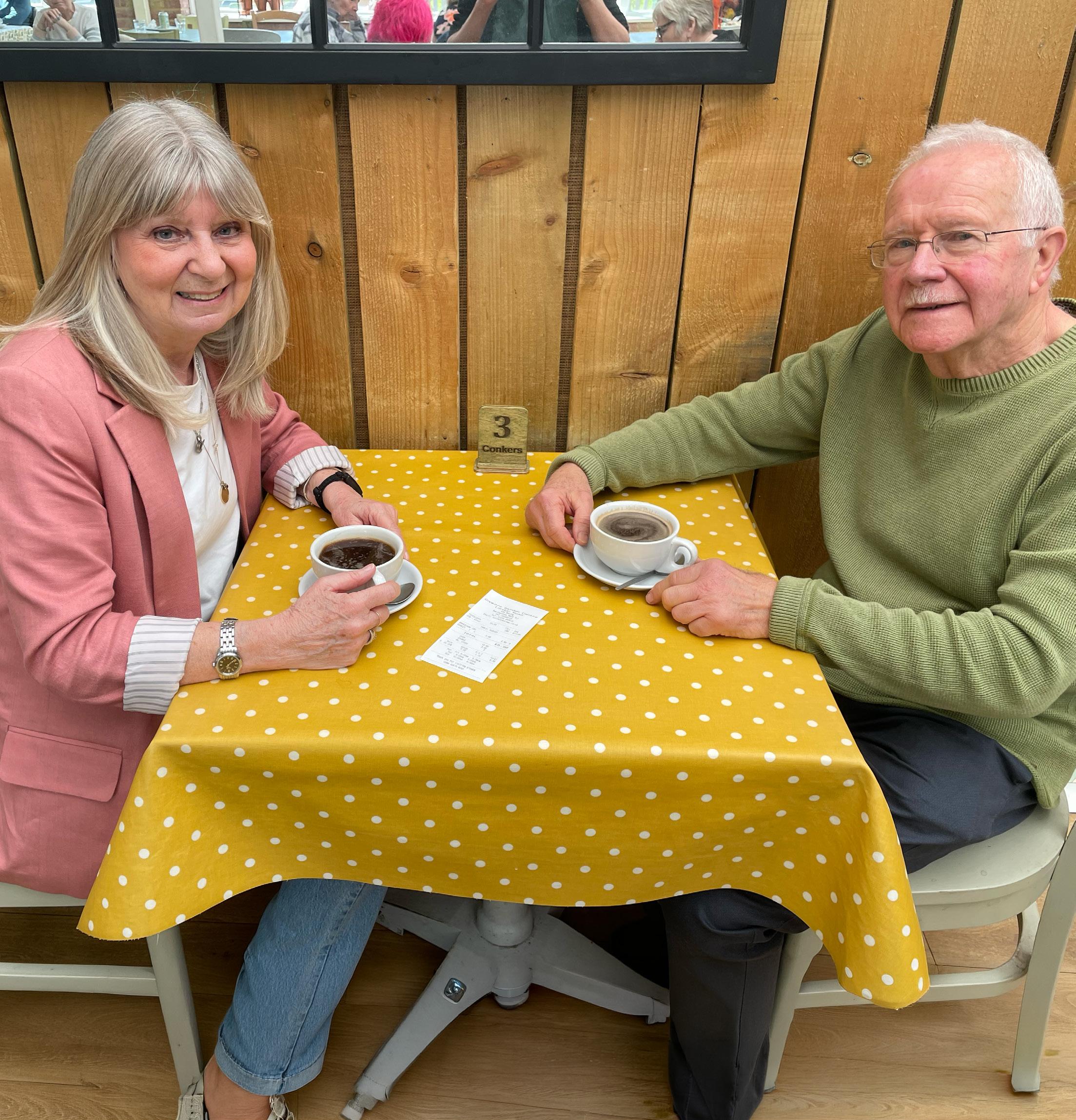
"IT MAKES SUCH A DIFFERENCE TO SPEAK TO PEOPLE WHO UNDERSTAND.”
SHARON O’GORMAN AND KEITH WIGMORE
People living with and affected by PSP & CBD join our Support Groups at different stages of their journey. Some are newly diagnosed, others are caring for a loved one, and some are adjusting to life after loss. Whether through our Bereaved Carers Groups, the Men’s Group, or our Support Groups, many have found lasting friendships.
“IT FELT LIKE WE HAD A TABLE FOR FOUR”
Sharon O’Gorman and Keith Wigmore both came to PSPA’s Bereaved Carers Online Support Group after losing their partners to PSP. Sharon’s husband, Richard, died in June 2023. Keith’s wife, June, died in March 2025, after he had already been involved in several of PSPA’s groups following her diagnosis in 2021.
Sharon joined the group as soon as it was set-up. She said: “I got an email saying they were starting this group and I thought I’d give it a go. I wanted to hear about other people’s experience of losing a loved one to PSP.”
Both Sharon and Keith had tried other bereavement groups. While helpful in some ways, they found they lacked an understanding of PSP. Keith explains: “You talk to a lot of people and they don’t understand PSP. They don’t understand what the journey has been like with a loved one with PSP, or the feelings of loss you get at each stage of the disease.”
Sharon continues: “It’s not the same. Everyone has their own story, but when it comes to the PSPA group we all have the same background. It makes such a difference to speak to people who understand.”
Following some of the online meetings, Keith and Sharon realised they lived close to each other and decided to meet in person. Both felt some uncertainty, as Keith shares. “I wasn’t sure how we were going to chat or what I was going to feel. But it has been lovely. I found it so easy to talk. We chatted for over an hour and there were no pauses. You don’t have to think about how to explain things. The best way that I can
describe it was that it felt we had a table for four, Richard and June were with us.”
Both discussed the complexity of caring for someone with the condition, including feelings of guilt and uncertainty. “One of the worst feelings when you are caring for someone is guilt,” Sharon says. “Just knowing that others feel the same really helps.”
Within the support group, members share how they coped during different stages of PSP and how they are feeling after loss. “Online we chat about how we cope with different situations,” Keith explains. “Then someone says, ‘I have that problem,’ and you realise you’re not alone. It’s not all unique to you.” Sharon continues: “In other groups, people may not have heard of PSP, so they can’t fully understand it. With this group, everyone knows.”
Both now encourage others to consider joining PSPA’s Support Groups. Sharon said: “It really does help to talk to someone who knows what you’re going through. The groups connect you to people who will really understand. And if you’re lucky, you may even live close enough to someone to meet up in person. It’s a wonderful way to start a friendship, and Keith and I would be delighted if anyone else would like to join us. Talking and sharing experiences really does help.”
“IT REALLY DOES HELP TO TALK TO SOMEONE WHO KNOWS WHAT YOU’RE GOING THROUGH.”
Article continues on pages 8-9
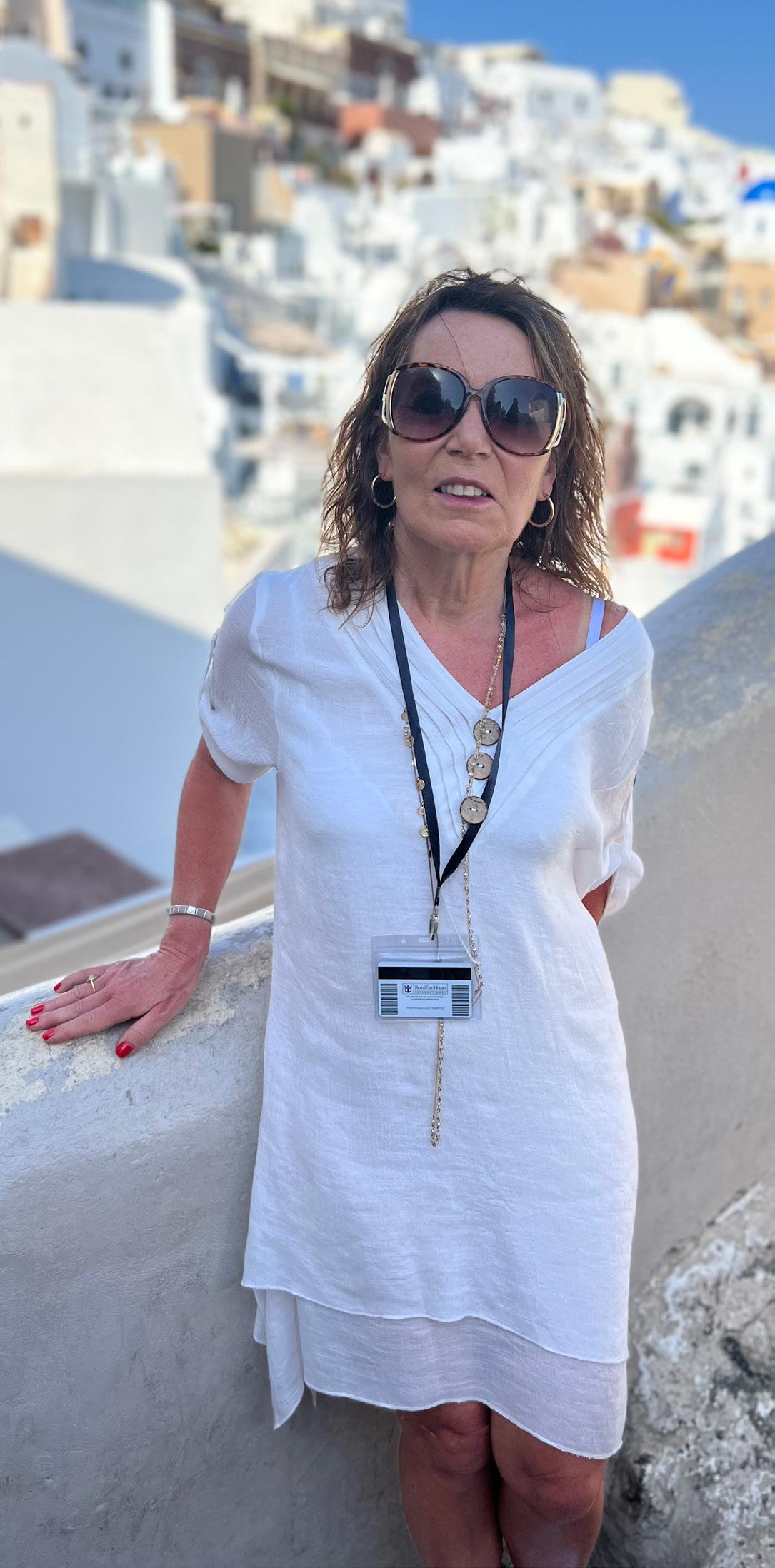
“IT
FELT LIKE A SAFE SPACE IMMEDIATELY”
Jacqui Watters was diagnosed with CBD in 2016 after several years of unexplained symptoms. Finding support through PSPA’s CBD Support Group has not only helped her feel less alone, but has also led to meaningful friendships such as the one she has formed with Eileen, a fellow group member who lives close to her in Northern Ireland.
Jacqui said: “I look forward to the monthly CBD Online Support Group. When I first joined, I didn’t quite know what to expect, but what I found was a group of people who just understood. I remember my first
meeting so clearly. What struck me straightaway was how light-hearted it was. I think I’d expected something very serious and heavy, but instead there was warmth and humour. It felt like a safe space immediately.
“That’s also where I met Eileen. We got chatting during the sessions and realised we didn’t live too far from each other in Northern Ireland. Over time, that connection grew into a real friendship. We now meet up for coffee and lunch, and it’s lovely to have that face-to-face time with someone who truly gets what I’m going through. We look out for each other, keep in touch, and always manage to have a bit of a laugh as well. The friendship has meant so much to me.
“The group itself is very relaxed and welcoming. You don’t have to talk if you don’t want to, which takes the pressure off, but there is always someone who brings up a topic that gets everyone chatting. Before you know it, the hour is gone. It’s not just about the difficult things, we also have a laugh together.
“For me, one of the biggest benefits has been the sense of being understood. When I speak in that group, I don’t feel like I have to explain everything from the beginning. People just get it. They know how it feels to lose abilities, to feel frustrated, or to worry about the future. That shared understanding is incredibly comforting. Finding the support group has given me a sense of belonging again. It’s reminded me that I’m not alone in this. And through people like Eileen, it’s given me real friendships.”
“OVER TIME, THAT CONNECTION GREW INTO A REAL FRIENDSHIP. WE NOW MEET UP FOR COFFEE AND LUNCH, AND IT’S LOVELY TO HAVE THAT FACE-TO-FACE TIME WITH SOMEONE WHO TRULY GETS WHAT I’M GOING THROUGH.”
JACQUI WATTERS
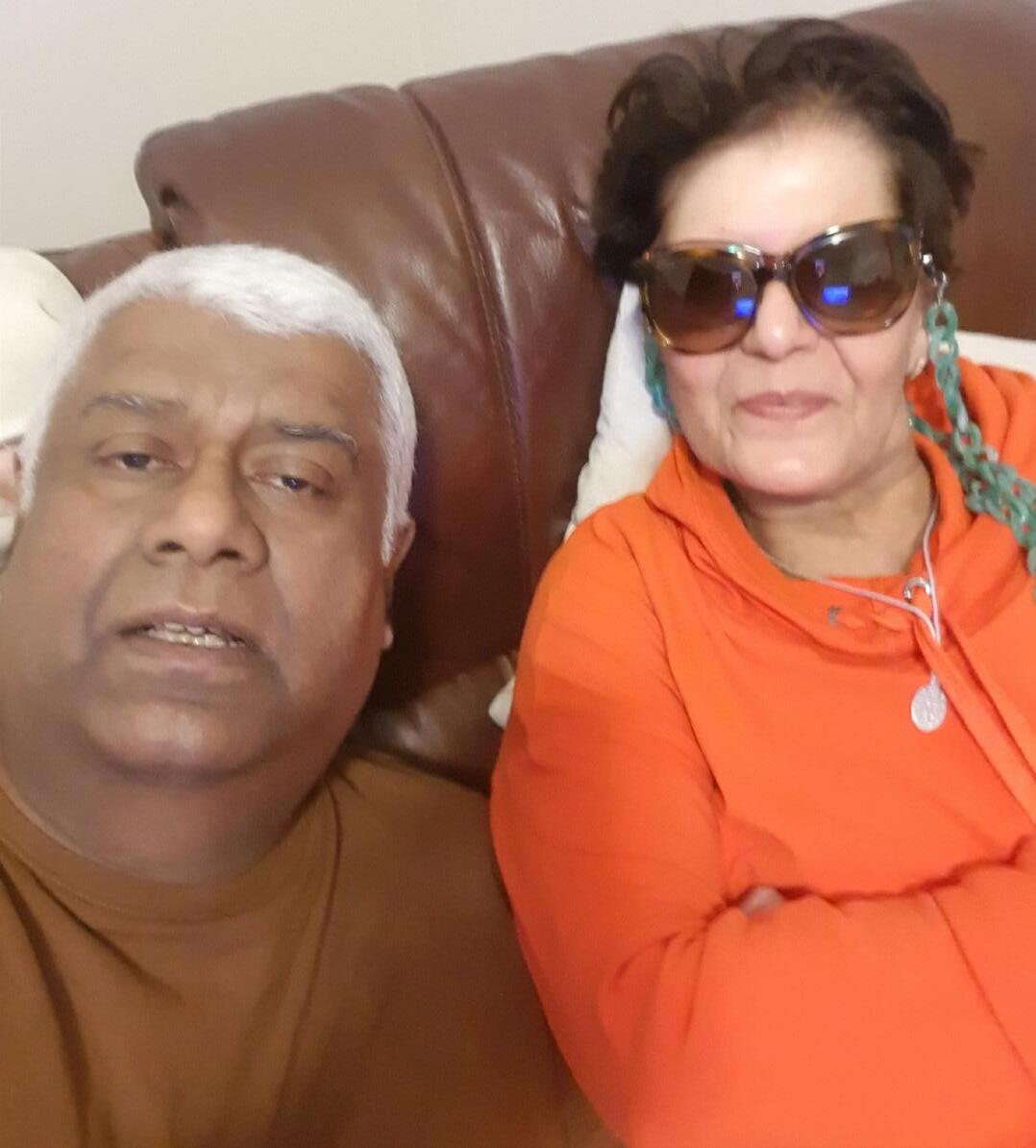
“I JUST THOUGHT I’D TRY IT AND SEE”
Mervyn Harris is a carer to his wife Tina, who was diagnosed with PSP four years ago. Mervyn became one of the first members of the Men’s Carers Support Group.
Mervyn said: “At the time, I didn’t really know what I would get out of it. I just thought I’d try it and see. I’m so glad I did.
“The group has become an important source of support. I attend the Men’s Carers Group, as well as the London Support Group. Because Tina has so many appointments and needs so much support, I don’t really have the time to socialise outside the meetings. So when we meet online, I get a huge amount out of it.
“The biggest thing is being able to talk to people who understand what it’s like. Many of us didn’t start out as carers. We had to grow into the role. Hearing how other men are managing, looking after their partners and dealing with the challenges gives you confidence. You think, ‘if they can do it, then I can too’.
“We share a lot of practical information as well. For example, I was struggling to find a solution for getting
FIND OUT MORE
Tina down the stairs in her wheelchair. Someone in the group recommended a company that makes an attachment to help manage stairs. Advice like that makes a tremendous difference when you’re trying to navigate these situations on your own.
“David, who runs the men’s group, has a huge amount of experience after caring for his wife for eight years. He’s even put together spreadsheets with different meal ideas for the various stages of the condition, which is incredibly helpful. People share tips, ideas and resources all the time.
“The friendships that develop in the group are also really important. Over time you get to know each other very well. There’s Robin, whose wife has CBD and another David who does a lot of charity walks for PSPA. Even though everyone’s situation is slightly different, we all understand what each other is going through.
“When we join the meetings, we know each other’s strengths and weaknesses and we know the situations we’re facing at home. If someone has a problem, the group will try to help. At one point Tina needed to call me from another room and I wasn’t sure how to manage that, but someone suggested installing a doorbell system. It’s simple ideas like that, that can make everyday life a bit easier.
“What I really value is how inclusive the group is. It makes you feel part of a community that genuinely cares and supports one another. There may not be a cure for PSP or CBD, but in the group we believe there is always a solution to help make things a little bit easier.
“Caring can be exhausting. Tina’s voice is now badly affected and her mobility has declined, and it can be very tiring managing everything. But having the group there makes a huge difference. It means you’re not facing it alone.
“For me, the PSPA Support Groups have given me information, direction and encouragement when I’ve needed it most. Knowing there are other people walking the same path, who understand exactly what you’re going through, helps lessen that feeling of isolation and reminds you that you’re part of a community.”
PSPA offers a wide range of support groups for people affected by PSP & CBD, including in-person, online and specialised groups for newly diagnosed people and carers. To find out more contact the Helpline on 0300 0110 122 or email helpline@pspassociation.org
MERVYN HARRIS WITH HIS WIFE TINA
“THE INJECTIONS HELPED HIM TO KEEP WORKING”
Botulinum toxin injections helped Salim Giga continue working for longer by helping to reduce involuntary eye closure.
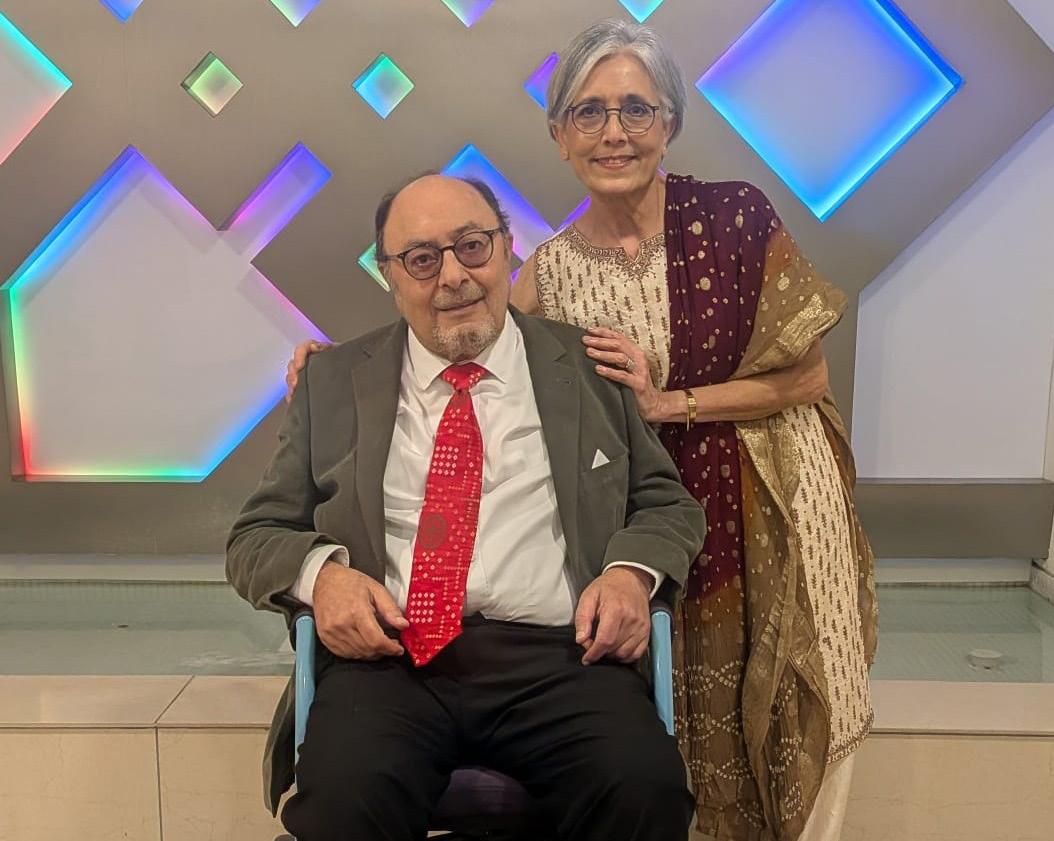
As PSP began to affect his movement, speech and balance, it was the increasing difficulty in keeping his eyes open that had the most immediate impact on Salim’s ability to work. Running a printing related business, he relied on being able to read and carry out detailed tasks, but as his eyelids began to shut his ability to manage the company became increasingly difficult.
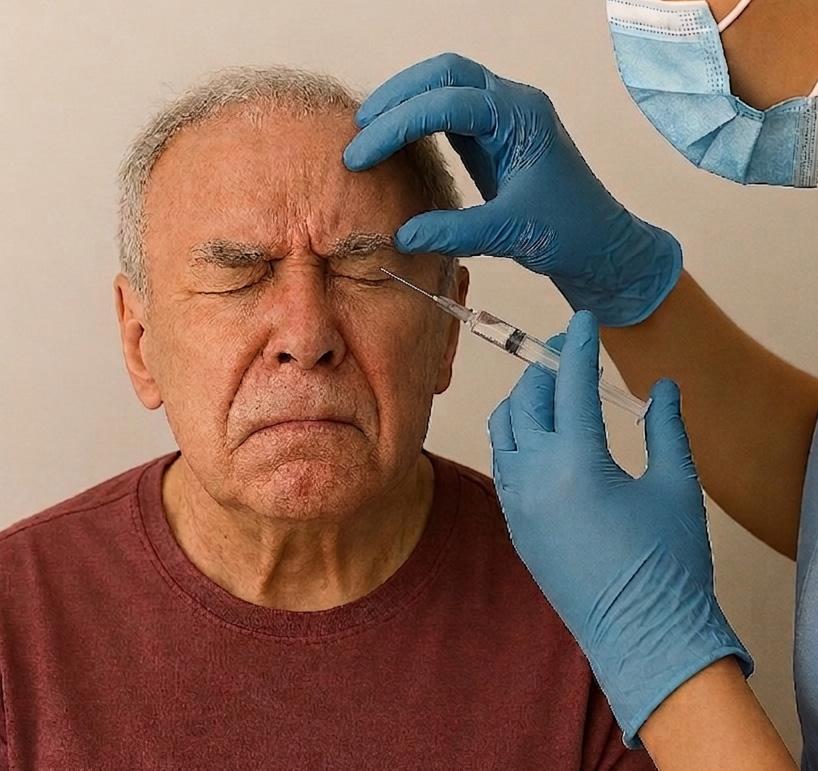
At a Movement Disorders Clinic it was suggested he have botulinum toxin injections around the eyes. The treatment, commonly known by the brand
name Botox, is used in various conditions to weaken overactive muscles. In PSP, it can be used to target the muscles responsible for forcing the eyelids closed.
For Salim, the effect was significant as his wife Salma explains: “Following each round of injections, Salim was able to keep his eyes open for longer. It really made a big difference. While the treatment did not stop the progression, it extended the time he was able to remain active not just in his business but also maintain a degree of independence. This was very important to him.”
SALIM WITH HIS WIFE SALMA
Botulinum toxin is now an established part of symptom management for some people living with PSP & CBD. Consultant Neurologist Boyd Ghosh explains: “Botulinum toxin is a toxin produced by a bacteria that weakens muscles. In clinic, we can inject small amounts into specific muscles. For example, in some people with PSP the eyelids may close involuntarily, particularly in bright light, and it can be very difficult for them to reopen their eyes. Botulinum toxin injections can help by weakening the muscles that force the eyelids shut.
“By weakening those muscles slightly, it can make it easier for people to keep their eyes open. It doesn’t restore eyelid function completely, but it can provide a meaningful improvement for some people. The injections need to be repeated regularly. It usually takes around one to two weeks for the treatment to start working, and the benefit tends to last for around six to eight weeks.”
Salim’s symptoms started back in 2011 but it took a further six years before PSP was confirmed as the diagnosis of his condition instead of a Parkinsonian disorder. In those early stages, support from PSPA was suggested, and Salma attended PSPA's Carer's Support Groups. Often, she found herself listening rather than sharing, surrounded by others facing similar challenges and found it reassuring to hear from others in similar situations.
Salma said: "As Salim’s condition has progressed, his symptoms have become more difficult to manage. His eyes are closed most of the time now, he has very soft speech, and has swallowing difficulties that sometimes leads to choking
“Before Botox, the eye closure had already forced major changes. He had stopped driving because it was no longer safe. At work, despite his determination to continue, the strain became too much. He tried to keep the business going, holding on as long as possible, but eventually, he had to make the difficult decision to close it.
“Botox didn’t stop that happening, but it certainly slowed it. In those early years of treatment, it extended the time he could function independently and engage in meaningful activity. The injections were given every three months, with the benefits gradually wearing off
after five or six weeks, but even that limited window made a tangible difference.”
“Over time, however, the effectiveness has declined. In recent years, some injections have not worked as well, possibly due to changes in how they were administered. When injections were not placed close enough to the eyelids, the benefit was minimal. Adjustments have since been made, and there has been some improvement, but not to the level seen before. Now, he has to manually lift his eyelids open a lot more.”
Botox has also been considered for other symptoms. When Salim developed posterior neck pain and a tendency for the head and upper body to lean to one side, a specialist suggested Botox injections to relax the affected muscles. Salma explains: “Salim didn’t find this as effective. He tried it once but decided not to go through it again. Instead we’ve both found that helping him to adjust his posture, doing some exercises suggested to us by the physiotherapist and using a neck brace has helped manage the problem.”
FIND OUT MORE
Speak to your neurologist to discuss the suitability of botulinum toxin injections as part of your symptom management treatment.
GOING THE EXTRA MILES FOR OUR GRANDADS
Across the UK, young people are taking on extraordinary challenges to raise awareness and money for PSPA. Motivated by the experiences of loved ones, they are not only honouring those they have lost, but also helping to shine a light on PSP & CBD. Here, we share two incredible stories of young people going the extra mile to honour their beloved grandads and to raise funds for PSPA.
ELLISON RUNNING 240K
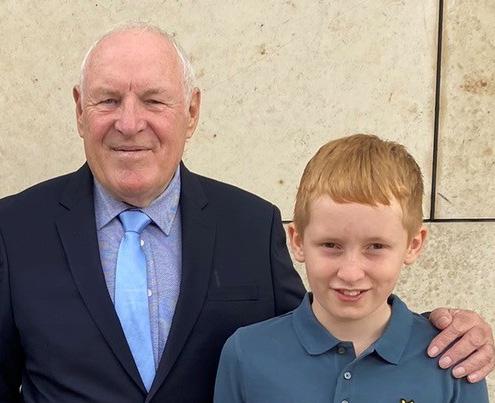
At just 15 years old, Ellison Keepins took on a big challenge. The teen ran 240 kilometres in February to honour the memory of his grandad, Vic, who died in September 2025.
Ellison’s motivation comes from seeing the devastating impact of PSP on his family. Vic’s illness was initially misdiagnosed as Parkinson’s disease while he was undergoing treatment for prostate cancer. When medication failed to help, a referral to a neurologist in 2024 finally led to a diagnosis of PSP.
"There was a lot going on at the time," explains Jayne, Vic’s daughter and Ellison’s mum. "Dad had been diagnosed with prostate cancer when doctors thought he had Parkinson’s too. When the medication didn’t work, Dad was referred to a neurologist who, in mid 2024, confirmed it wasn’t Parkinson’s, it was PSP."
With no prior knowledge of the condition, the family turned to PSPA for guidance. "I was so grateful for
PSPA," Jayne says. "In those early days, they helped to answer questions we had for a long time. I think we would have been lost without the charity."
Vic’s PSP progressed rapidly. A serious fall in July 2025 resulted in a broken arm and vertebra, drastically changing Vic’s quality of life. He quickly lost the ability to walk, eat, or think clearly. "It was an intense few months," Jayne recalls. "We moved Dad into a care home to help meet his increased needs, and he lost a lot of weight. It was a scary time."
Following Vic’s death in September 2025, Ellison channelled his grief into action. "Ellison has always been motivated," Jayne says. "Previously, after Dad’s cancer diagnosis, he took part in Movember. It was no surprise when he started talking about a challenge for his Grandad. Some days he’s up before me, so he can fit in a run before he goes to school."
The distance of 240km holds special significance: Vic had recently turned 80 years old before his death. Ellison decided to multiply his grandfather's age by three to set a distance that would truly challenge him.
Ellison initially aimed to raise £200 for PSPA. However, just six days into the challenge, he smashed his total and raised more than £1,200. "I’m so proud of him for doing this for Dad," Jayne adds. "No one really knows what PSP is or how it can impact your life. PSPA plays a vital part in supporting families like ours and raising awareness, so knowing Ellison is helping with that mission is just amazing."
Ellison says: “Grandad was a truly fantastic person and my best mate. It was a very challenging month for me; however I feel it is the most fitting way to try and honour Grandad and his brilliant legacy.”
OLIVIA’S MARATHON EFFORT
While most teenagers celebrate their 18th birthday with a party, Olivia Sydenham decided it would be best to have a quieter one. That’s because she was preparing to run the London Marathon, just days after she turned 18. Olivia decided to take on the challenge in memory of her grandad George Fogarty, and to raise vital awareness of PSP and funds for PSPA.
Olivia’s family’s journey with PSP was marked by uncertainty. For years, George’s symptoms were misunderstood, and he was initially misdiagnosed with Parkinson’s disease. It wasn't until November 2022 that the family received the correct diagnosis of PSP.
For Olivia, the long journey to diagnosis, and the lack of awareness even among healthcare professionals left a lasting impression. "Watching the man we
loved deteriorate over nine years was difficult," says Olivia. "He was my biggest supporter, and it was heartbreaking to watch him lose the ability to do everything he loved. But what made it harder was the lack of awareness; even in his final days in March 2025, my mum had to explain what PSP was to A&E staff just so he could get the help he needed."
Olivia began running in September 2022, and George was always her most enthusiastic supporter, constantly asking about her next event. "I turned 18 on 12 April, and the race was just two weeks later. It was the perfect way to honour my grandad, who inspired my love for the outdoors and my upcoming career in the military," Olivia explains. "On race day, he was in my heart, pushing me to the finish line."
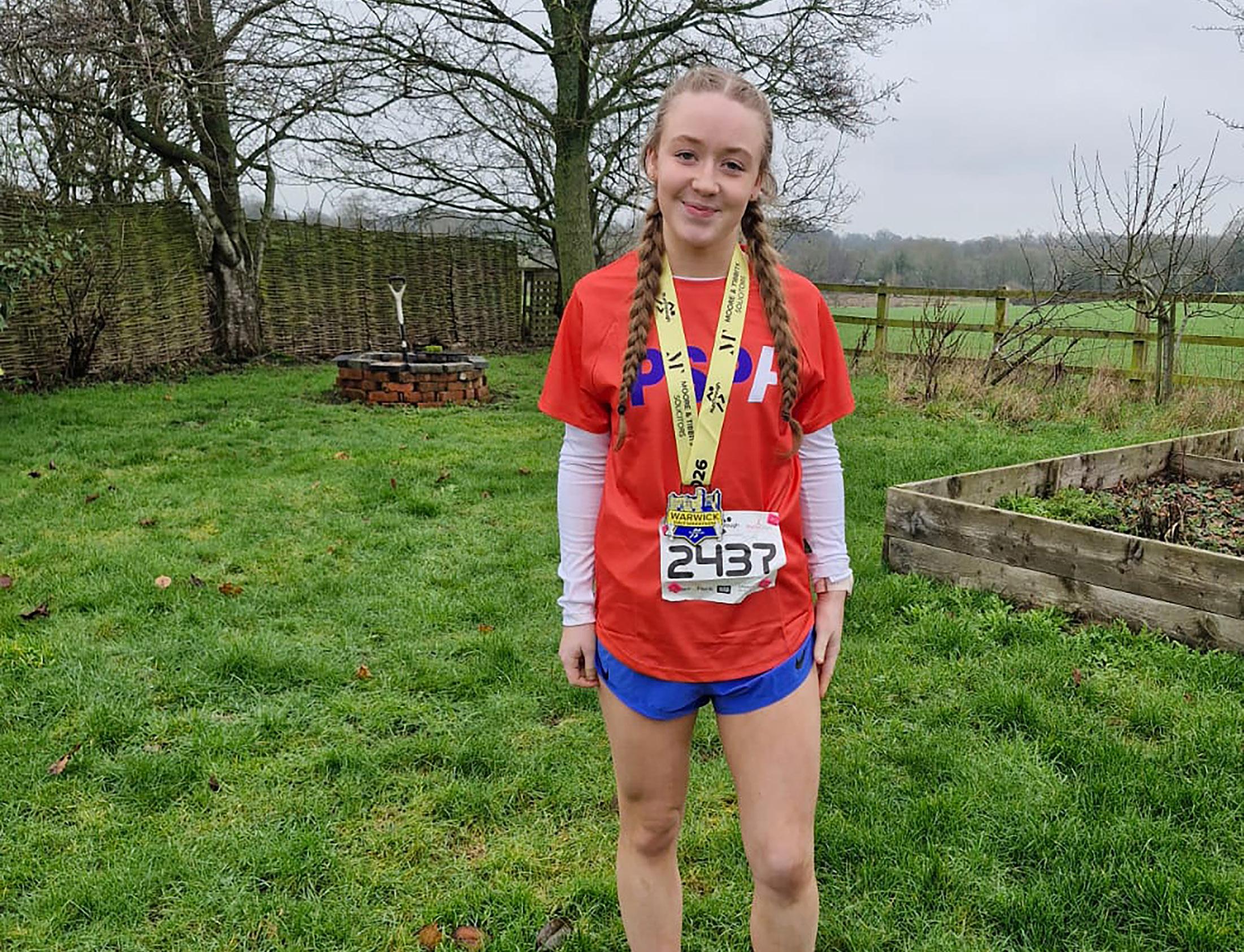
“IT WAS THE PERFECT WAY TO HONOUR MY GRANDAD, WHO INSPIRED MY LOVE FOR THE OUTDOORS AND MY UPCOMING CAREER IN THE MILITARY.”
"I KNOW WE CAN ACHIEVE EVEN MORE FOR PEOPLE WITH PSP & CBD"
James Cusack joined PSPA as its new Chief Executive in December, bringing with him more than a decade of leadership experience in the charity and research sector.
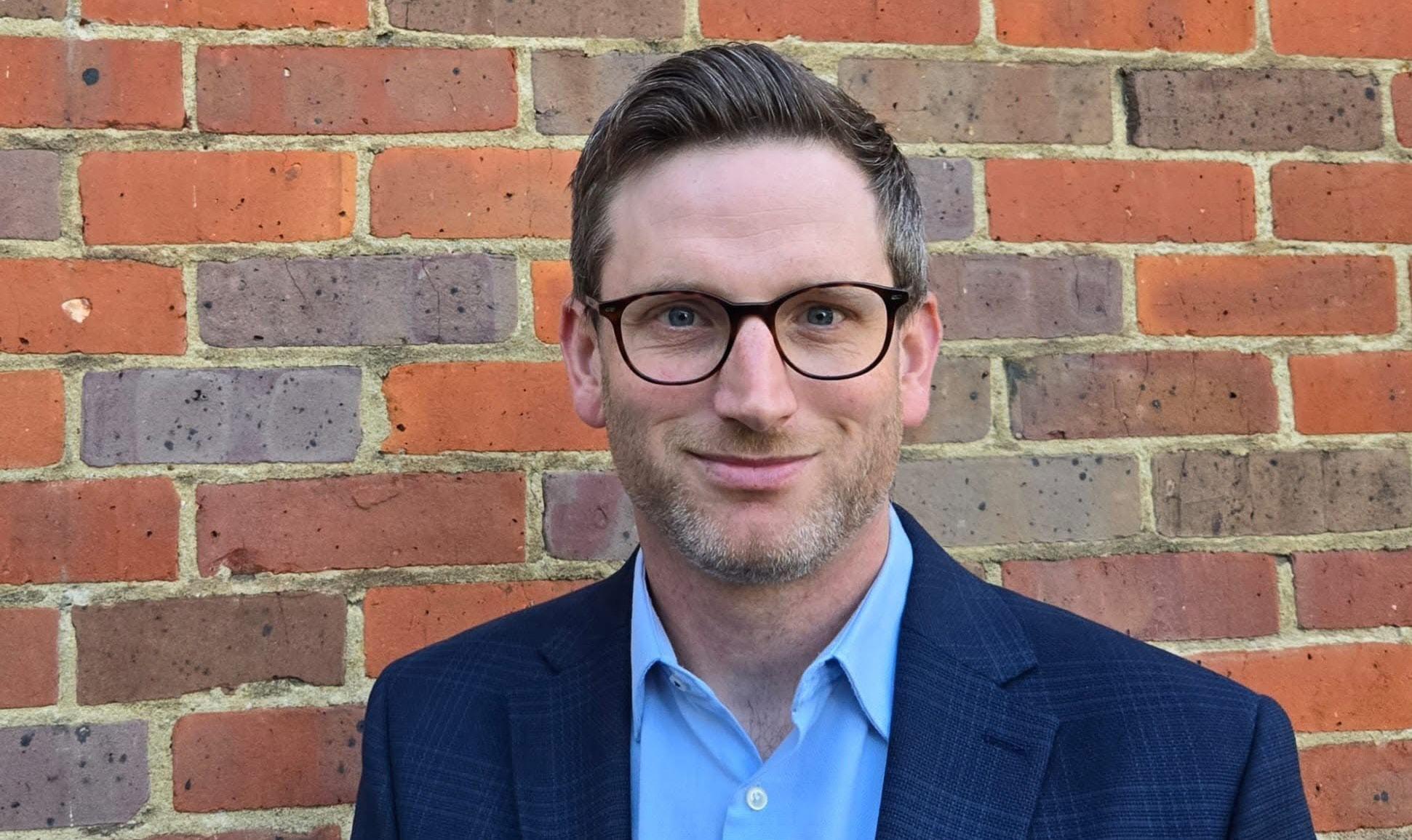
“ONE OF MY PRIORITIES NOW IS TO HELP PSPA BECOME LOUDER ABOUT THE INCREDIBLE WORK IT ALREADY DOES.”
Before PSPA, James served as Chief Executive of Autistica, the UK’s leading autism research charity, where he spent five years as Director of Research before becoming Chief Executive in 2020.
During those ten years, James built a strong reputation for driving evidence-based change, ensuring that research translated into tangible improvements in people’s lives, and helping to shape a national strategy. James shares how he is keen to build on the charity’s strengths, deepen its impact and push forward progress for people living with PSP & CBD.
“When I joined PSPA, I knew I was stepping into something special, but you never fully understand a community until you start meeting the people within it. Over the past few months, I’ve been lucky enough to
attend several support groups, both in person and online, and hear directly from people both living with and affected by PSP & CBD.
“I’ve met people at many different stages of their journey, including those who are sadly bereaved. I heard people’s frustrations around diagnosis, the patchy access to care, and how difficult it can be to navigate systems that don’t always work as they should. I’ve found that genuinely shocking at times. It feels unfair, and it’s something we need to address.
“But alongside that, I’ve also seen how people in tough situations themselves are supporting others. Whether it’s sharing practical advice, talking about ways to manage various challenges, or helping someone feel less alone after a diagnosis, there’s huge value in that
shared experience. I’m incredibly proud that PSPA creates the space for those connections to happen.
“Before joining PSPA, I spent ten years at Autistica. Throughout that time, my focus was on making sure research didn’t just sit on a shelf, that it led to real life change for people. We funded research, but we also worked hard to understand what mattered most to people and to push for evidence-based policy changes.
“Over time, we developed long term goals, ambitious ones looking ahead to 2030. As we approached the end of 2025, we’d achieved a number of those goals, and for me, it felt like the right time to think about what was next. I turned 40 last year, which also felt like a natural moment to reflect. I’ve always believed charities benefit from new ideas and fresh energy, and I wanted to take what I’d learned and apply it somewhere new.
“When I saw the role at PSPA, it immediately stood out. These are conditions that are not widely understood, yet they affect a significant number of people across the UK. There’s a real gap between the scale of impact and the level of awareness, and that represents a huge opportunity. With my background in neuroscience, I could see the potential for progress in research, diagnosis, and care.
“I also felt that PSPA was at an exciting stage in its development. The charity already delivers high quality services and supports a strong, connected community. My ambition is to help us build on that, to be bolder, more ambitious, and more outward-facing in how we talk about what we do and what needs to change.
“Meeting clinical researchers has reinforced that sense of opportunity. We’re starting to understand more about the underlying biology of PSP & CBD, and that opens the door to better diagnostics and, ultimately, treatments. The earlier we can diagnose, the sooner we can support people effectively and, in the future, intervene with new therapies. PSPA has a crucial role to play in creating an environment where that research can thrive and where more investment is drawn into the field.
“At the same time, I’ve also seen first-hand the practical challenges people face. Visiting clinics and hearing about people’s experiences of care, both good and less well-coordinated, has been invaluable. It’s reminded me that while long-term breakthroughs are essential, there are also immediate improvements we can make. Sometimes it’s about relatively simple things, better coordination of care, clearer guidance, or small interventions that can make day-to-day life easier.
“One of my priorities now is to help PSPA become louder about the incredible work it already does. The quality of information, the Helpline, the support services are all exceptional. But not enough people know about them. Most members of the public haven’t heard of PSP or CBD, and even within the healthcare system there is more we can do to improve awareness. If we can change that, if we can help GPs and other professionals recognise symptoms earlier and guide people more effectively, that will be a huge step forward.
“We’re currently redeveloping our strategy, and that’s something I’m really excited about. It’s important this is shaped by the voices of people living with PSP & CBD. What you tell us about your experiences, your challenges, and your priorities should guide what we do next. The recent survey will also help inform this work. Over the coming months, I’ll be continuing to meet as many people as possible, listening and learning, so that by the end of the year we have a clear, ambitious plan for the future.
“We’re also looking at how we can strengthen our digital offer, reshape our website, and continue improving our services. The charity is in a strong position, and I’ve been incredibly impressed by the team and the commitment they show every day. My role is to build on that, to take what’s already working and help it go further.
“Outside of work, life is busy in a different way. I’ve two children, aged 8 and 12, and they keep me very active. I coach my daughter’s football team and chair a local football club, so a lot of my spare time is spent on the sidelines or driving to matches. If I get the chance, I like to go running myself, but mostly, it’s about family time.
“I care enormously about making a difference, and I see a real opportunity here at PSPA to achieve something meaningful. We have a strong foundation, a passionate community, and growing momentum in research. If we can raise our voice, and build awareness and income, I know we can achieve even more for everyone affected by PSP & CBD.”
“WE’RE CURRENTLY REDEVELOPING OUR STRATEGY, AND THAT’S SOMETHING I’M REALLY EXCITED ABOUT.”
THE DIFFERENCE YOU MADE IN 2025
Across the UK, 10,000 people are living with PSP & CBD.
Every one of them, and every family supporting them, deserves timely answers, specialist care, and a community that understands what they’re going through. Thanks to you, in 2025 we were able to deliver ongoing support, raise awareness, and make sure more families felt informed, connected, and less alone.
The 2025 PSPA Survey shows satisfaction remains high across our services, with 94% of Helpline users, 88% of Support Group attendees, 90% of online exercise participants and 84% of people who attended our specialist counselling reporting positive experiences.
Investment in research is also helping to improve our knowledge and understanding of PSP & CBD. New findings have helped rule out a potential genetic risk factor, while PSPA funded research contributed to a £2.3 million fellowship to advance diagnostic testing. We have also invested in our education programmes for healthcare professionals to improve their knowledge and understanding in recognising and managing PSP & CBD.
Together, these achievements are helping to build hope for earlier diagnosis, better care and more effective treatments in the future.
IN 2025 WE WERE ABLE TO DELIVER ONGOING SUPPORT, RAISE AWARENESS, AND MAKE SURE MORE FAMILIES FELT INFORMED, CONNECTED, AND LESS ALONE.
of people who have used our Helpline were satisfied or very satisfied. 94%
of people who have attended our local Support Groups were satisfied or very satisfied. 88% of people who have attended Online Exercise Classes were satisfied or very satisfied. 90%
of people who have attended our Specialist Counselling were satisfied or very satisfied. 84%
91%
of attendees of our Masterclasses said that they felt more confident in supporting people with PSP or CBD.
UNDERSTANDING FINANCIAL SUPPORT
Knowing what financial support is available can make a real difference, but the benefit system can often feel complicated and overwhelming.
BY PEGGY NEWTON, HELPLINE AND SUPPORT SERVICES MANAGER
On the Helpline people often tell us they don’t know what financial support may be available to them, or how to apply. Our Helpline team can talk through these questions and help people understand what support may be available. Here are some of the main forms of financial support.
DISABILITY BENEFITS
For people of working age (16 to 68), Personal Independence Payment (PIP) is the main disability benefit in England, Wales and Northern Ireland. In Scotland this has been replaced by Adult Disability Payment.
These benefits help with the extra costs of living with a long-term health condition or disability. Eligibility is based on how your condition affects daily life, such as personal care, preparing food and communicating rather than the diagnosis itself.
SUPPORT FOR THOSE OVER STATE PENSION AGE
For people over State Pension age, Attendance Allowance (or Pension Age Disability Payment in Scotland) may be available. These payments are not means tested and may also lead to other support, such as council tax reductions.
SUPPORT FOR CARERS
Unpaid carers may be eligible for Carer’s Allowance (or Carer Support Payment in Scotland) if they provide at least 35 hours of care each week to someone who receives a qualifying disability benefit, such as PIP or Attendance Allowance. There are also rules around earnings and other benefits so it’s important to get advice before applying.
HELP WITH HOUSEHOLD COSTS
There may also be support available to help with everyday living costs. This can include council tax reductions, energy or broadband social tariffs, priority services from utility companies or other schemes designed to help people on lower incomes or with disabilities.
PODCAST
Just scan the QR code to listen online to our Financial Support podcast.
EQUIPMENT AND HOME ADAPTATIONS
As PSP & CBD progress, support may be available for equipment or home adaptations, often through an occupational therapy assessment, and can lead to equipment such as grab rails, walking aids or specialist seating. Larger adaptations, such as stairlifts, ramps or accessible bathrooms, may be funded through grants such as the Disabled Facilities Grants in England and Wales, and similar grant schemes in Northern Ireland and Scotland.
HEALTH AND CARE SUPPORT AT HOME
Anyone with ongoing health needs can ask for an assessment through their NHS or local health and social care team. Clinical care provided by the NHS is generally free at the point of delivery. Some personal care services arranged through local authorities may be means-tested. People with more complex needs may be eligible for NHS Continuing Healthcare in England and Wales (CHC), which can cover the full cost of care or contribute towards care at home.
MEASURING MOBILITY IN PEOPLE WITH PSP
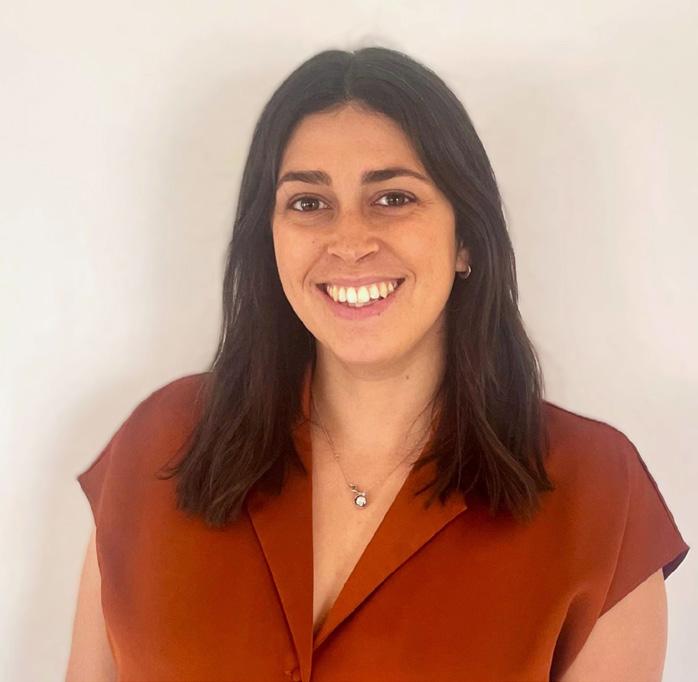
Dr Ellen Buckley, a researcher at the University of Sheffield has spent the past decade exploring how technology can transform the way we understand human movement. She is working on a pilot study investigating mobility in people with PSP.
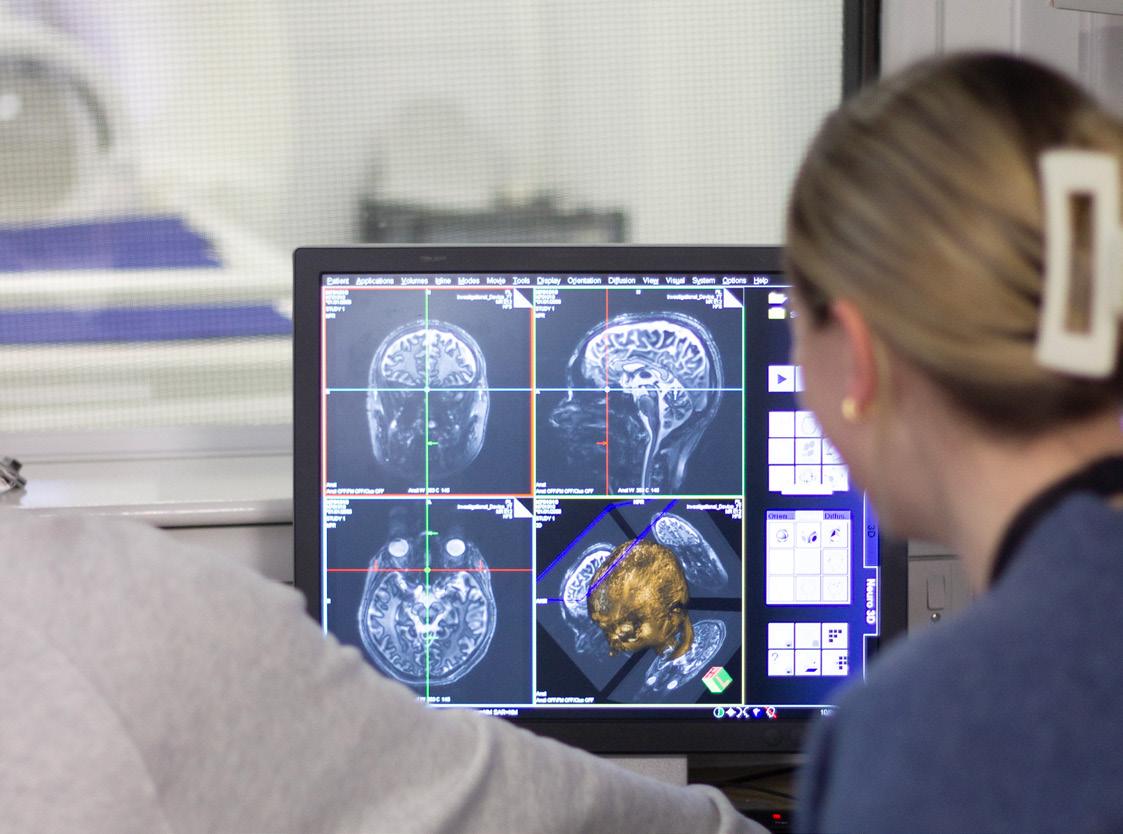
The study combines laboratory motion capture with wearable sensors, aiming to measure real-life movement. The hope is that these digital mobility tools could one day offer clinicians clearer insights into disease progression, improve diagnosis and even shape future clinical trials. Here, Dr Buckley talks about her study and why they are looking for more people with PSP to take part.
“In a clinic you might observe someone walking for a few minutes on a particular day which gives you just a snapshot of their mobility. People know they’re being watched, and they may walk differently to how they would do at home. What we’re trying to do is understand how people move in the real world, in their own environments, going about their daily lives. That’s where you get a much more truthful picture of their experience.
“At Sheffield, we’ve already been doing this kind of work in Parkinson’s disease and MS, as well as other neurological conditions. The PSP study grew out of conversations with clinicians who told us how difficult it is to distinguish PSP from other Parkinsonisms at an early stage. If we can find a reliable way to measure real-world walking, it could help differentiate between conditions and track how they progress over time.
“In our study we’re using a ‘gold standard’ lab assessment to evaluate measurements from a wearable device which could be more easily used in daily life. When participants come into the lab, we use motion capture technology to measure their movement with very high accuracy. This uses infrared
cameras to track reflective markers that we place on the body while they do a walking test.
This the same kind of technology you see in filmmaking, where actors wear reflective markers and their movements are turned into 3D animations. We then compare that data to the data from wearable sensors to help us understand how well the sensors reflect real movement. The devices measure signals like acceleration from which we can generate digital measures of mobility like walking speed, step count, and gait quality.
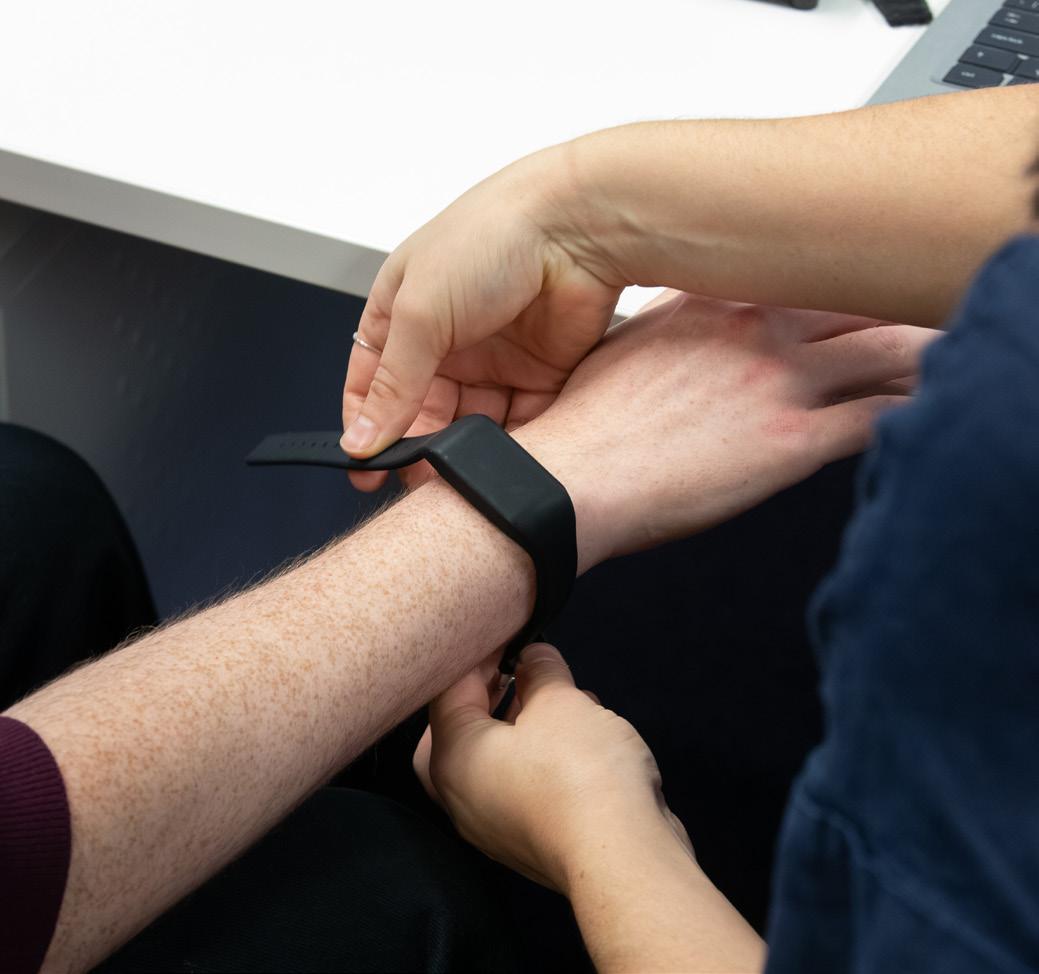
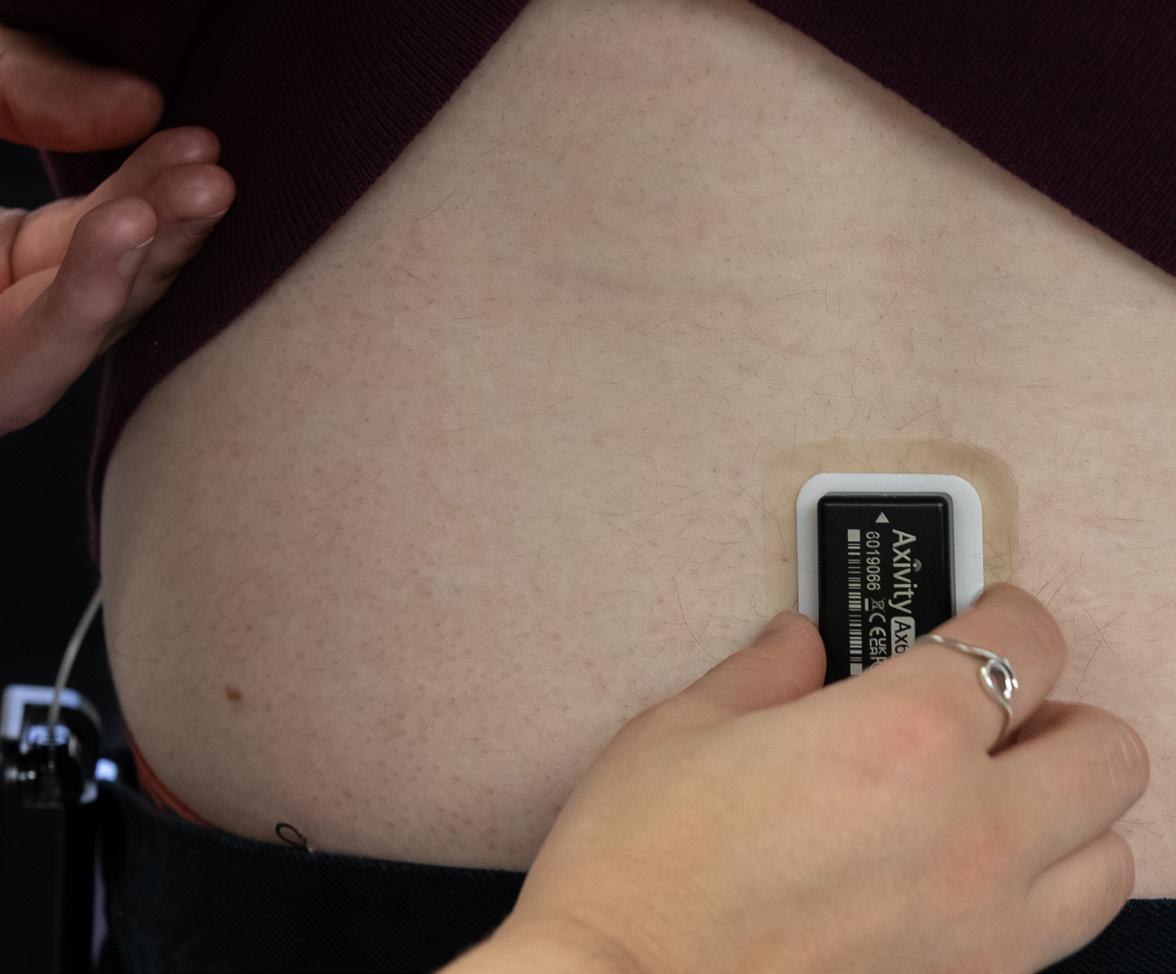
“After the lab visit, participants take the sensors home and wear them for up to ten days. The device itself is small, just a few centimetres across, and very lightweight. It’s worn on the lower back attached with a dressing. It’s waterproof, the battery lasts for several days, and we encourage people to go about their normal routines. The goal is that they forget they’re even wearing it. Of course, if it becomes uncomfortable, they can take it off and have a break.
“Ten days of data gives us a good range of activity, but even as little as three days can provide reliable measurements. People have generally been very willing to wear the devices, which is encouraging. But it’s not just about collecting data, we also want to understand people’s experiences. Do they feel selfconscious wearing the device? Does it remind them of their condition? Is it comfortable? We ask participants to complete questionnaires and take part in workshops to share their views.
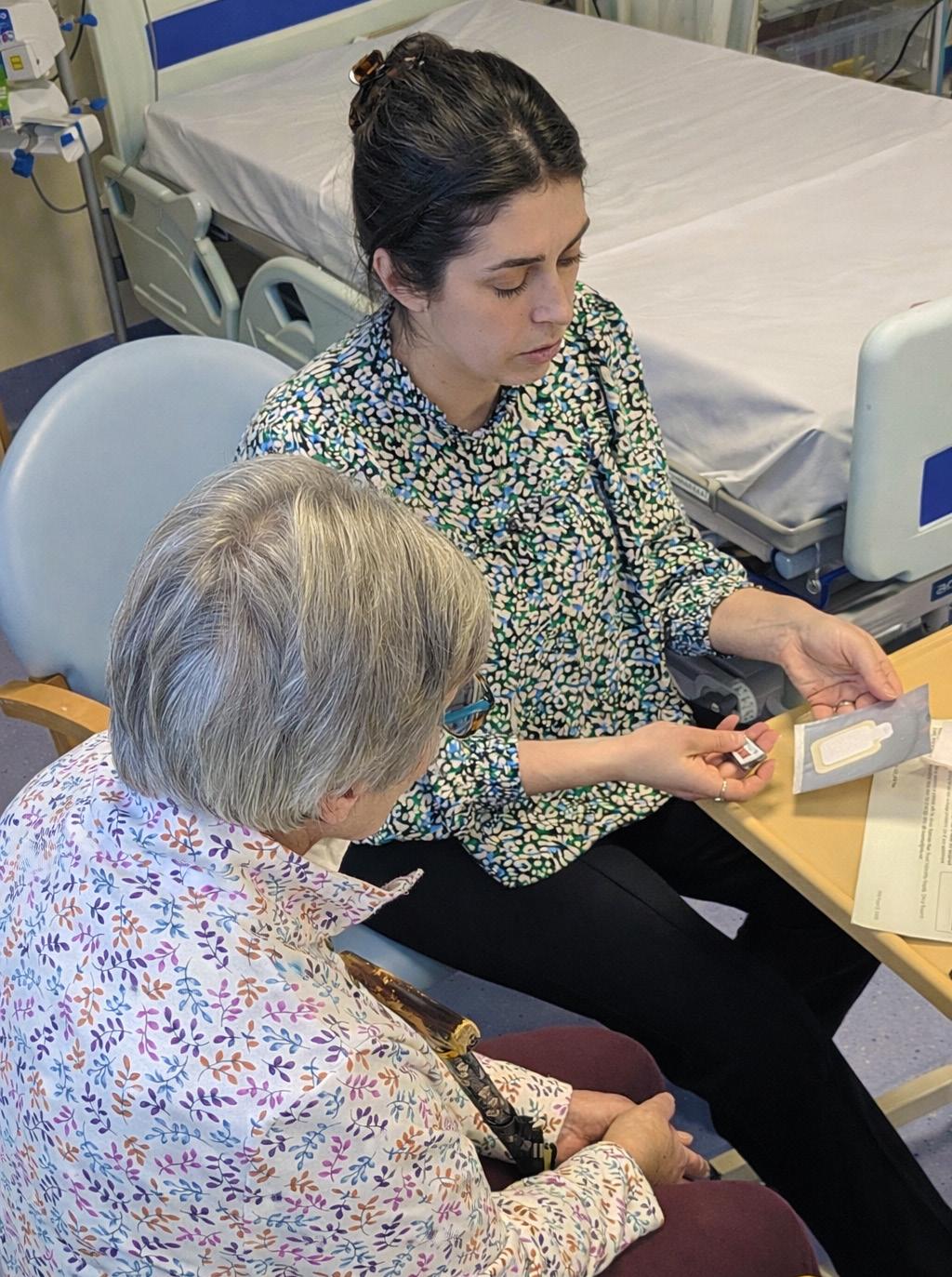
“IN OUR STUDY WE’RE USING A ‘GOLD STANDARD’ LAB ASSESSMENT TO EVALUATE MEASUREMENTS FROM A WEARABLE DEVICE WHICH COULD BE MORE EASILY USED IN DAILY LIFE.”
PICTURE CAPTURES A SIMILAR STUDY TO THE PILOT MOBILITY STUDY WITH PEOPLE WITH
PSP.
“ULTIMATELY, OUR GOAL IS TO DEVELOP TOOLS THAT ARE USEFUL, RELIABLE AND MEANINGFUL IN REAL CLINICAL SETTINGS.”
“We’re also speaking to carers and healthcare professionals. We don’t want to create something that adds burden, either for patients or clinicians. The data we produce has to be meaningful. It’s not enough to say, ‘this number has changed’, we need to understand what that change actually means in a clinical context.
“This particular project is a pilot, so we’re focusing on feasibility. Are people happy to take part? Can we collect good-quality data? What are the barriers? So far, we’ve worked with a small number of people with PSP, and we’re aiming to expand that to around twenty participants.
“One of the challenges is that people do need to come to Sheffield for the lab assessment, but we keep visits short, usually just a couple of hours and we cover travel expenses. After that, everything else can be done remotely, including returning the sensors by post.
“What’s really striking across all our studies is how motivated people are to take part. Many know that this research won’t directly impact them, but there’s
FIND OUT MORE
a strong sense of wanting to contribute to something that could help others in the future.
“That’s especially true in PSP, where there isn’t yet a disease-modifying therapy. People often tell us they want to leave things better than they found them. If digital tools like this can eventually be used in clinical trials, or help detect changes earlier, that could make a real difference.
“We’ve already seen in Parkinson’s and MS studies that these digital mobility measures, can relate well to clinical assessments. The next step is to build that evidence in PSP and similar conditions.
“Ultimately, our goal is to develop tools that are useful, reliable and meaningful in real clinical settings. That means working closely with patients, carers, clinicians and other healthcare professionals.”
If you are living with PSP, or you are a carer for someone with PSP, and are interested in finding out more about taking part in this study, please email Ellen and the MoStrAct study team on sth.mostract@nhs.net
HERE ARE EXAMPLES OF MOBILITY DEVICES ON PATIENTS FROM PREVIOUS STUDIES.
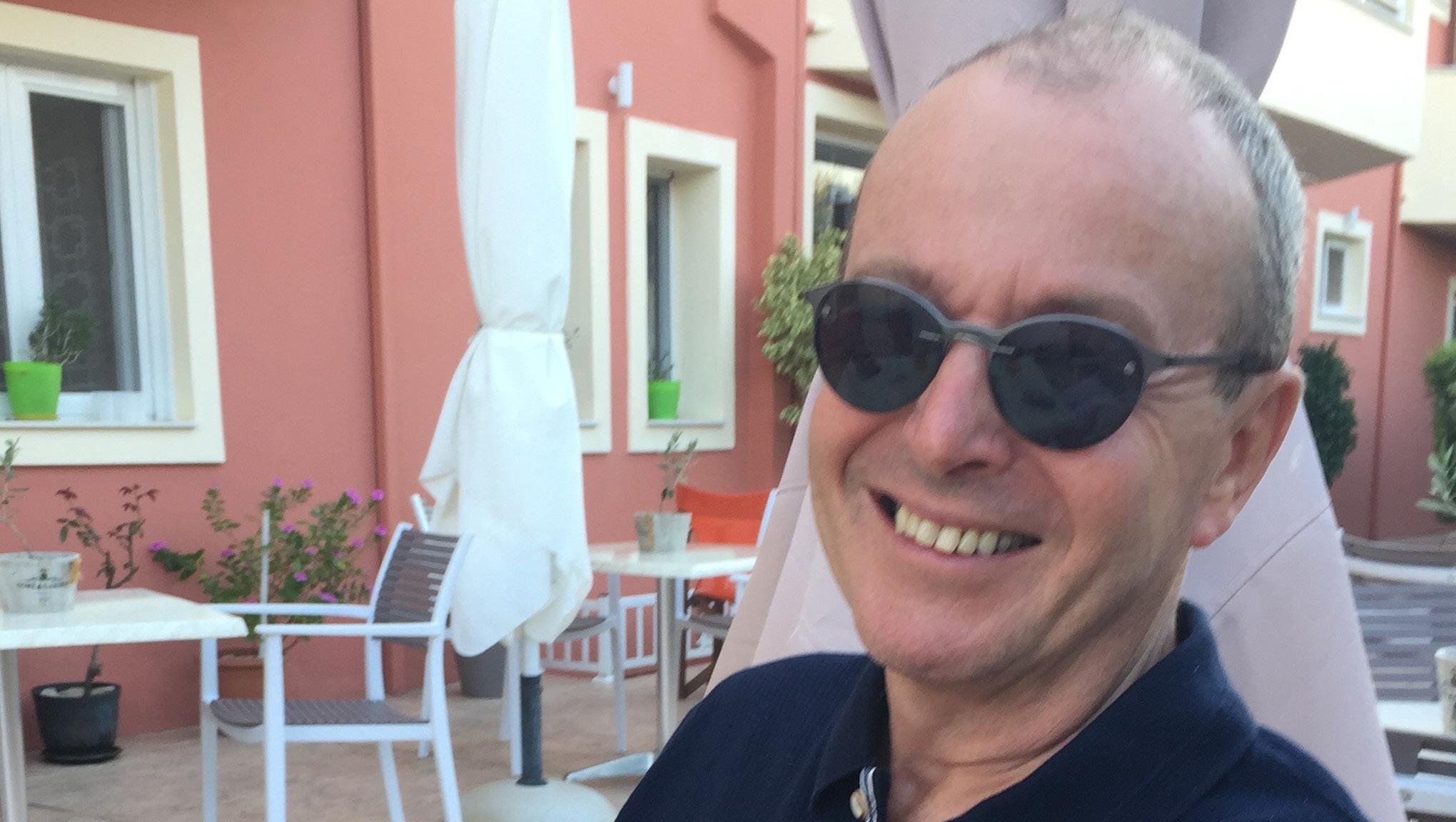
“I’M HAPPY TO DO ANYTHING TO HELP BUILD AN UNDERSTANDING OF PSP”
Graham Wright was diagnosed with PSP in January 2025. Since then, he has got involved in research studies, including the mobility study, to help improve understanding of PSP in the hope that it will help those diagnosed in the future. He explains why he wanted to take part.
“I was diagnosed on 31 January last year, but I’d been brushing off some of my early symptoms for longer than I should have. I developed a lopsided walk and balance issues, which led to numerous backwards falls. Eventually I decided it was time to find out what was wrong.
“It happened quite quickly once I was referred. I saw a consultant and he made the diagnosis. That was that. It came as a bit of a shock. When I first found out, it was hard for me and my wife to come to terms with it. It was a difficult period but I’ve since resigned myself to the implications of it.
“I read about taking part in research on PSPA’s website. I realised it wouldn’t be a situation where a cure would come before I die, but I could see how it might help people diagnosed later.
“IT’S IMPORTANT TO ME TO DO WHAT I CAN. IF IT HELPS MOVE THINGS FORWARD, EVEN A LITTLE, THEN IT’S WORTH DOING.”
That’s why I wanted to get involved with research studies.
“I’ve joined a couple of research programmes, including the one at the University of Sheffield (on page 18). I was asked to go there and take part in some movement exercises. They watched how I walked and measured my mobility. After a couple of hours I was sent home with some monitoring sensors they placed on me. One was on my back and the other was on my wrist, like a watch.
“At first it took a bit of getting used to, but it wasn’t difficult. I wore them for ten days and then sent them back. Most of the time I forgot they were there. There were also forms to fill in, and my wife Ruth completed similar questions.
“The team were very good. They explained what they were doing and sent me information about the study afterwards, which was helpful. I’m happy to take part in anything that helps build understanding of PSP. It’s important to me to do what I can. If it helps move things forward, even a little, then it’s worth doing.”
PATHWAY TO PROGRESS MARCHES ON
Many people across the UK have already stepped forward to take part in our Pathway to Progress virtual fundraiser. We launched the fundraiser with a 5km walk around Willen Lake in Milton Keynes in March. 30 supporters joined staff on a dry, bright and breezy day, circling the lake and sharing personal experiences of PSP & CBD.
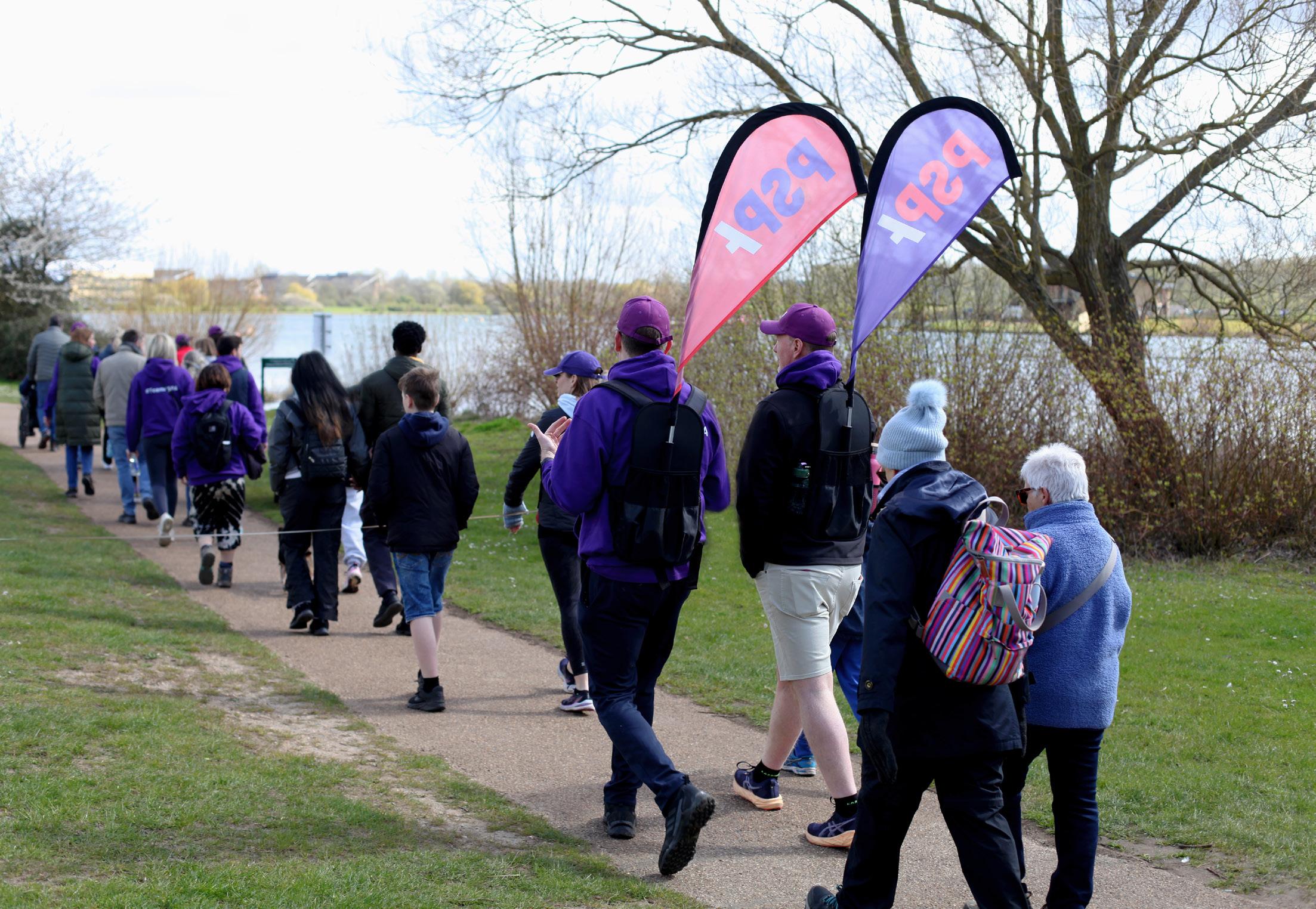
The event kicked off what we hope will be our biggest year yet for Pathway to Progress. After the walk, everyone gathered for coffee and heard from Event Ambassador Leslie Ferrar, who offered advice to those preparing to organise their own walks.
The challenge is flexible and people can walk, run or cycle either on their own or with family and friends. All miles travelled are logged and we hope that collectively we can create a virtual pathway around Britain’s coastline. Last year supporters and match funders helped generate over £96,000 to invest in our
information and support services, as well as research into PSP & CBD. This year we hope our collective movement can be even stronger.
Among those stepping up is Christian Ridehalgh, who is preparing for a 43-mile trek across the Gower Peninsula in May in memory of his father, Christopher. Christopher died from PSP in February 2024, just four months after receiving a diagnosis. Before that, he had experienced years of unexplained symptoms, including coordination problems, cognitive changes, speech difficulties and frequent falls.
COURTESY OF ASHLI SHORTER PHOTOGRAPHY
“I HOPE THIS HELPS MORE PEOPLE UNDERSTAND
WHAT PSP IS AND WHAT TO LOOK OUT FOR.”
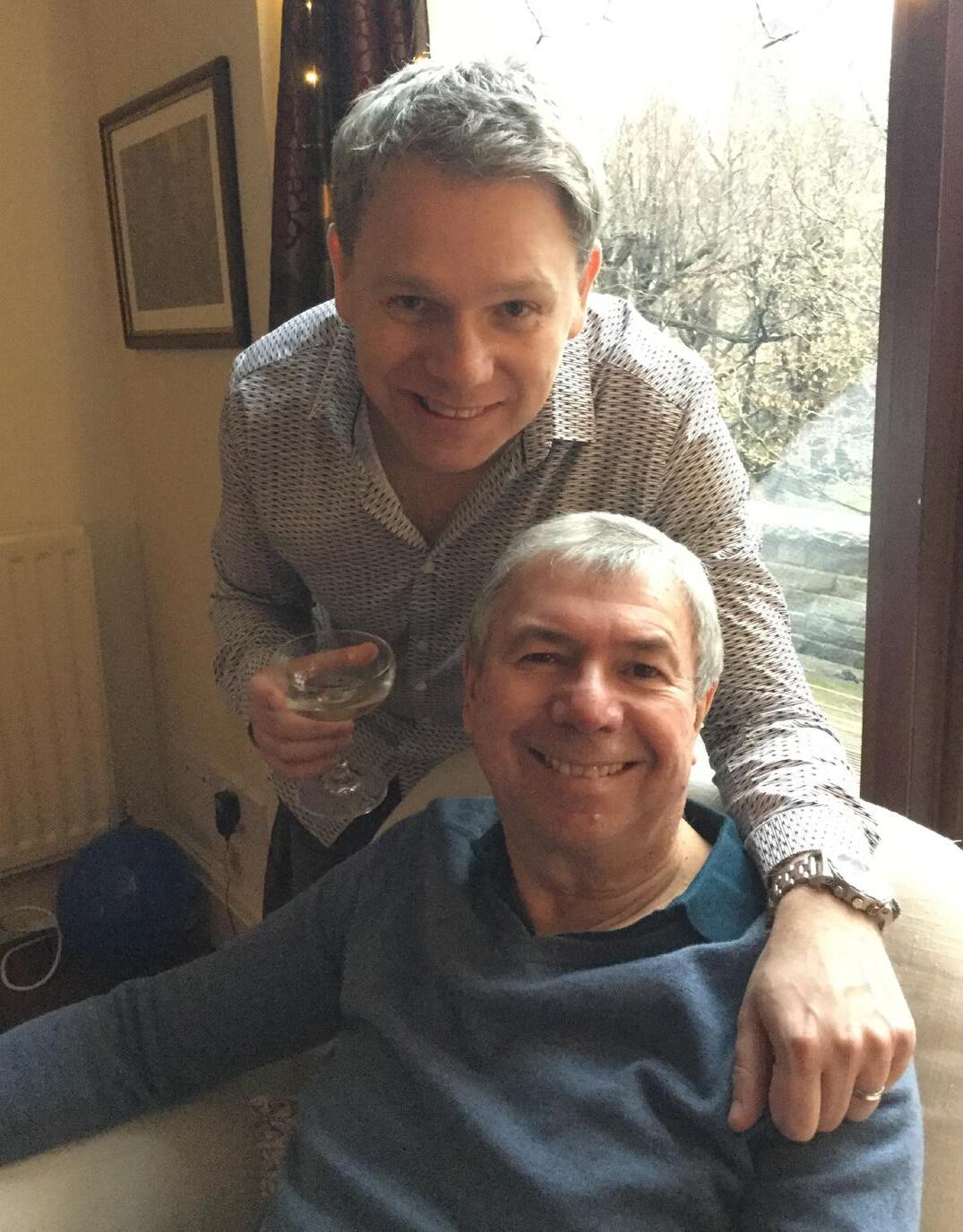
“It was a difficult and confusing path to Dad’s PSP diagnosis,” Christian says. “When we finally had an answer, it was a condition none of us had even heard of. Unfortunately, things progressed very quickly after that.”
The Gower Peninsula was the destination of the family’s last holiday together, before Christopher’s condition worsened. “A trek made sense because Dad loved walking,” Christian explains. “Choosing the Gower makes it a very personal and poignant challenge.”
He will be joined by family members and close friends over the two-day trek, all walking in Christopher’s memory. Together, they aim to raise £2,000 for PSPA while helping to increase awareness of the condition.
“My sister, brother-in-law, nephew and a few close family friends will be joining me,” he says. “As well as remembering the good times, I hope this helps more people understand what PSP is and what to look out for.”
“THE BOUDICA WAY HAS BEEN ON MY LIST FOR A WHILE, IT SEEMED LIKE THE RIGHT OPPORTUNITY TO DO SOMETHING FOR THE CHARITY.”
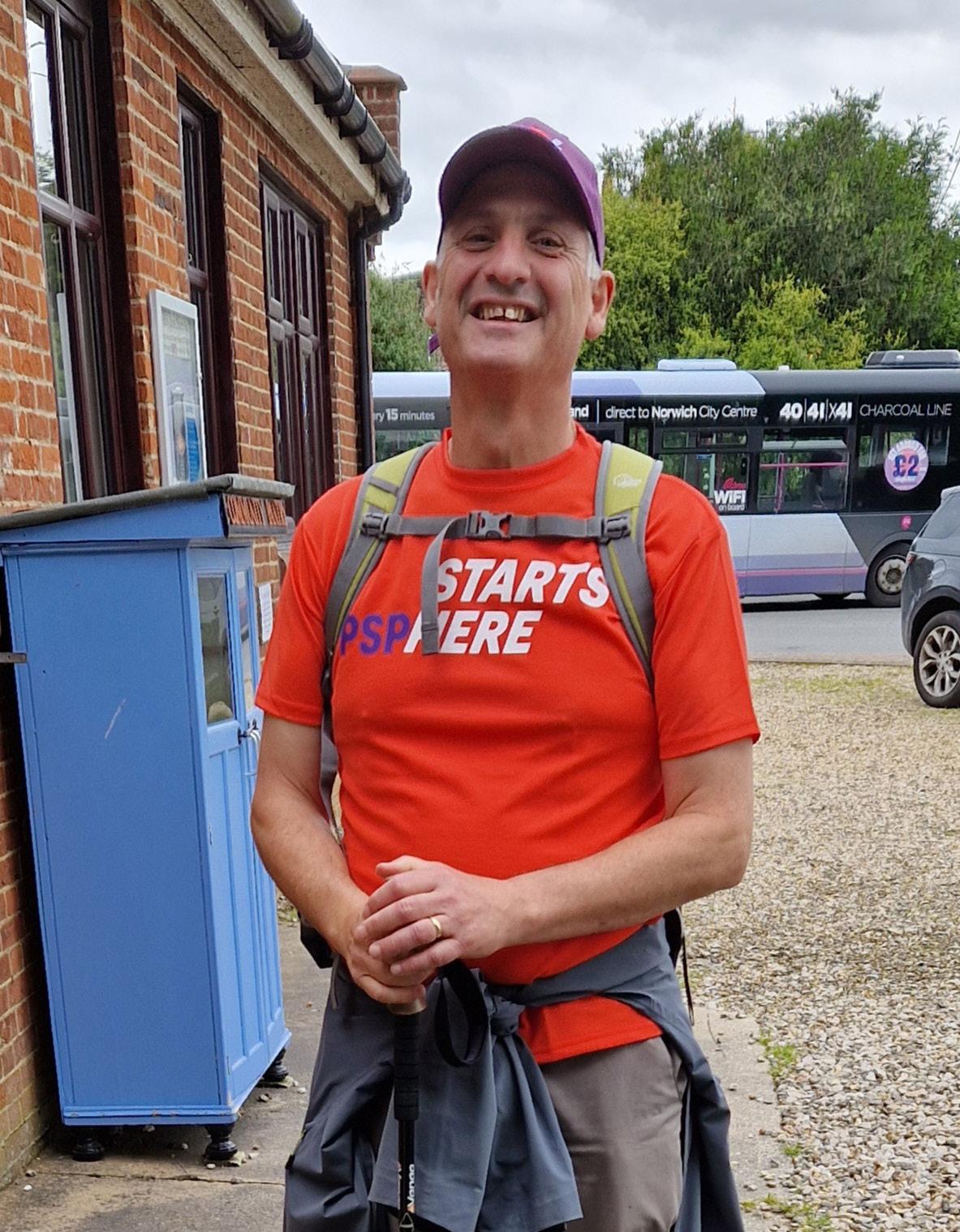
Further east, in Norfolk, another long-time supporter is preparing to take on his own challenge. Peter Hatchman, alongside fellow fundraiser and co-lead of the Norwich Support Group Linda Moore, will walk 32 miles along the Boudica Way in June. His connection to PSPA stretches back more than 20 years, following his mother’s diagnosis and death from PSP in 2011.
“I still see elements of my mum in people who attend the Norwich Support Group,” he says. “Different symptoms in different people. It brings it home, even now.” Peter describes their diagnosis journey as relatively straightforward compared to others. A referral to neurology services led to a consultant who quickly recognised the signs of PSP, with tests confirming the diagnosis shortly after. At the time, the family had little knowledge of the condition. That changed when they found PSPA.
Article continues on page 24
CHRISTIAN WITH HIS DAD
PETER HATCHMAN
OUR PATHWAY TO PROGRESS CHALLENGE IS OPEN TO EVERYONE. PARTICIPANTS CAN CHOOSE DISTANCES THAT SUIT THEM, WALK AT THEIR OWN PACE AND INVOLVE FRIENDS, FAMILY OR COLLEAGUES.
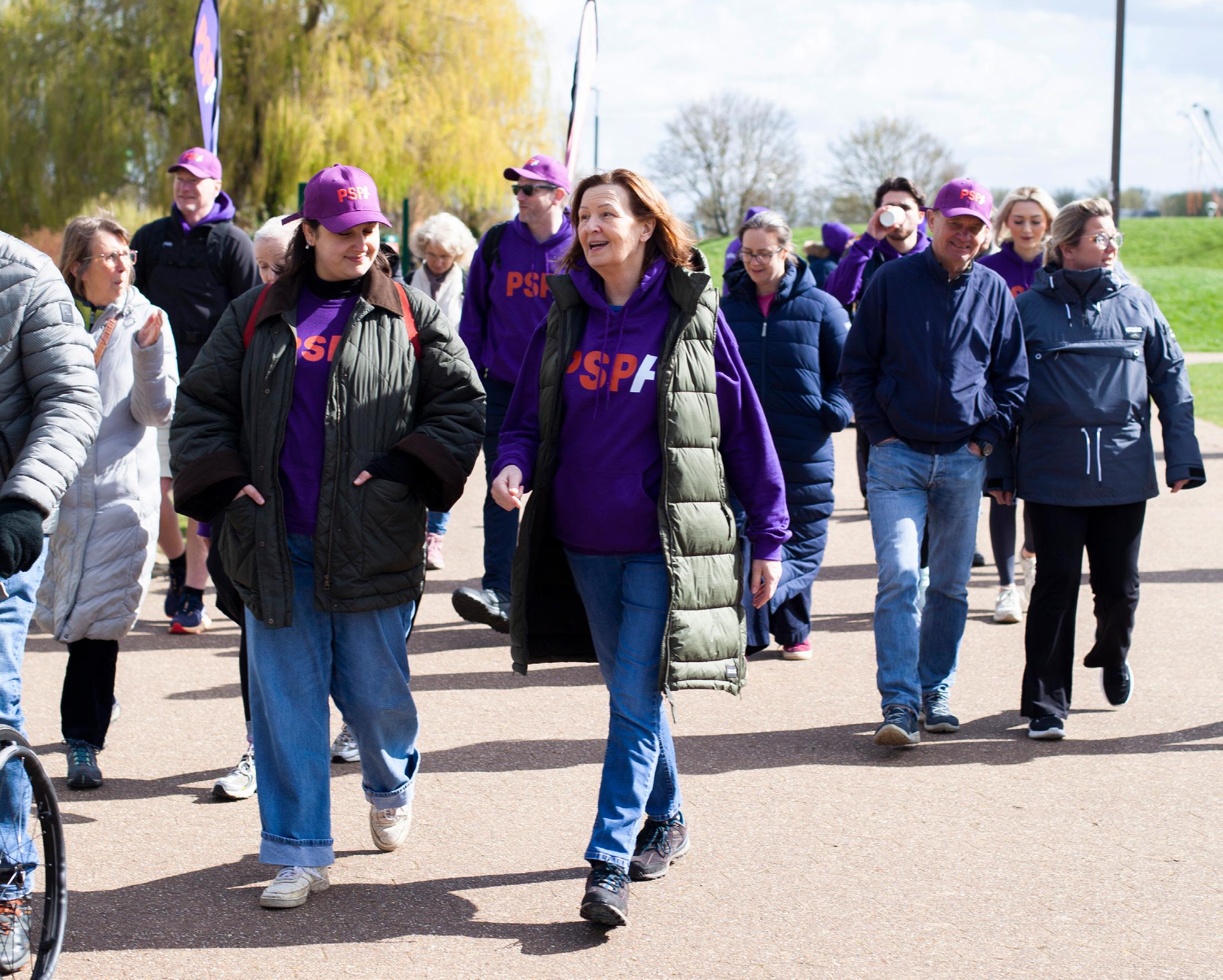
“We got in touch and have been supporters ever since,” he says. “The support group helped us as carers, giving us the chance to talk to others who understood.” Since his mother’s death, Peter and his wife Sue have remained active in the Norwich Support Group, helping with organisation and fundraising. In 2024, he completed a fundraising walk that raised more than £1,200.
He chose to take a break the following year, mindful of repeatedly asking the same community for sponsorship. The continuation of match funding for 2026, however, prompted him to take part again. “The Boudica Way has been on my list for a while,” he says. “It seemed like the right opportunity to do something for the charity.”
Peter highlights the importance of fundraising in sustaining PSPA’s work, particularly in supporting families dealing with complex and often distressing symptoms. “The unique symptoms, like impulsivity, can
be challenging,” he says. “It’s often only people within the community who fully understand the impact.”
Our Pathway to Progress challenge is open to everyone. Participants can choose distances that suit them, walk at their own pace and involve friends, family or colleagues. Each walk adds to our collective effort to raise both funds and awareness.
With early fundraisers already in training and more expected to join in the months ahead, we are aiming to exceed last year’s total to enable those living with the condition both now and in the future achieve the best possible quality of life.
FIND OUT MORE
More information about taking part in Pathway to Progress is available on our website, just scan the QR code.
COURTESY OF ASHLI SHORTER PHOTOGRAPHY
“IT WAS AN EASY STRESS FREE BREAK”
Breaks away can feel out of reach after a diagnosis of PSP or CBD. But with the right planning they can provide a much-needed break, as well as beautiful family moments.

Here, Mike Lucas shares details of his recent longweekend with family in Longleat.
“Not long after her diagnosis of PSP, my wife Jane fell down the stairs. She broke four ribs so they kept her in hospital where she was mainly in bed for the duration of her stay. This saw her mobility decline quickly. Now, someone must be on hand to help provide support when she is upright, and we use a wheelchair when out and about. I also have carers in three times a week to assist with the morning routine. It helps having an extra pair of hands.
“Before Jane’s diagnosis, we were quite an outdoorsy couple, often enjoying a long walk together. So, trips out exploring, although not as frequent or far away as before, are important to us.
“At the end of February, we went to Centre Parcs in Longleat with my two sons, Andrew and Richard, Andrew’s wife, and Andrew’s son, who is nine. There was no special occasion for getting away, just a nice family break which helped to break up the usual routine of daily life.
“I was impressed with the three-bedroom, accessible lodge we rented for the weekend. It was much bigger than I’d anticipated. All three bedrooms were double, complete with en-suite bathrooms. Our bedroom was
fully accessible with a large wet room. It even came with an electrically controlled profile bed for Jane, complete with cot-sides.
“The whole lodge was on one level, largely open plan, with no carpet, making it easy to push the wheelchair inside. We had an accessible parking bay outside of the lodge, where we left my accessible van. Everything at the site was all within easy walking range. It was less than a five-minute push to the main plaza, which housed the swimming pool, cafes and restaurants.
“Whilst the others were busy with pre-booked activities or touring the site on their bikes, Jane and I would pop out for a coffee, and then head somewhere for lunch. In the afternoon we walked around the wooded site. It was an accessible area, just a few hills, that you would have to be wary of. If you weren’t up to pushing a wheelchair, they hire electric wheelchairs and scooters. There was also a free land train which would take you around the site, which wheelchairs were welcome on.
“We’d cook our evening meal ourselves in the lodge, Jane gets tired quite easily, so it meant she could have a rest whilst we prepared everything. All in all, it was an easy, stress-free break.”
MY WEEK IN COPENHAGEN
BY MEGAN HODGSON, RESEARCH COORDINATOR
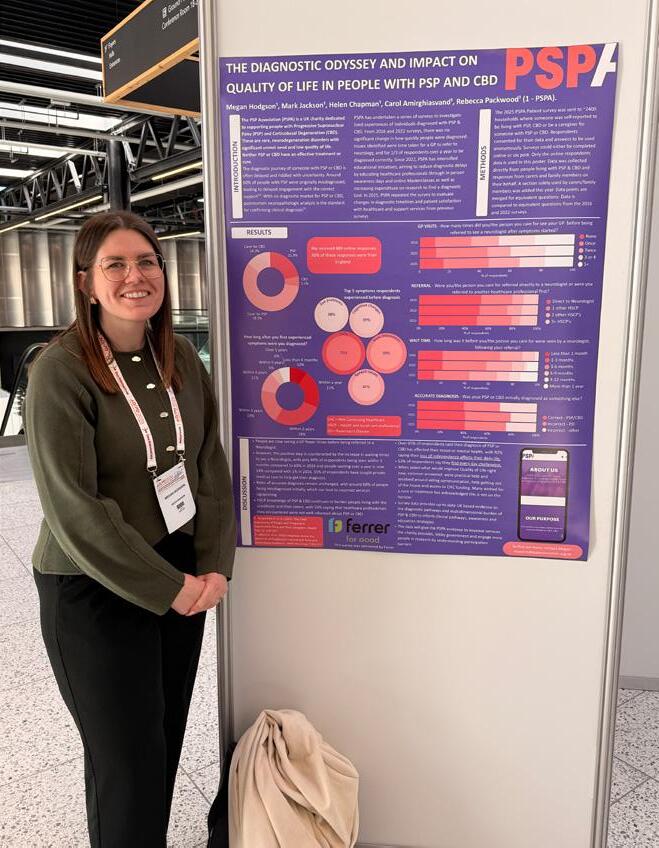
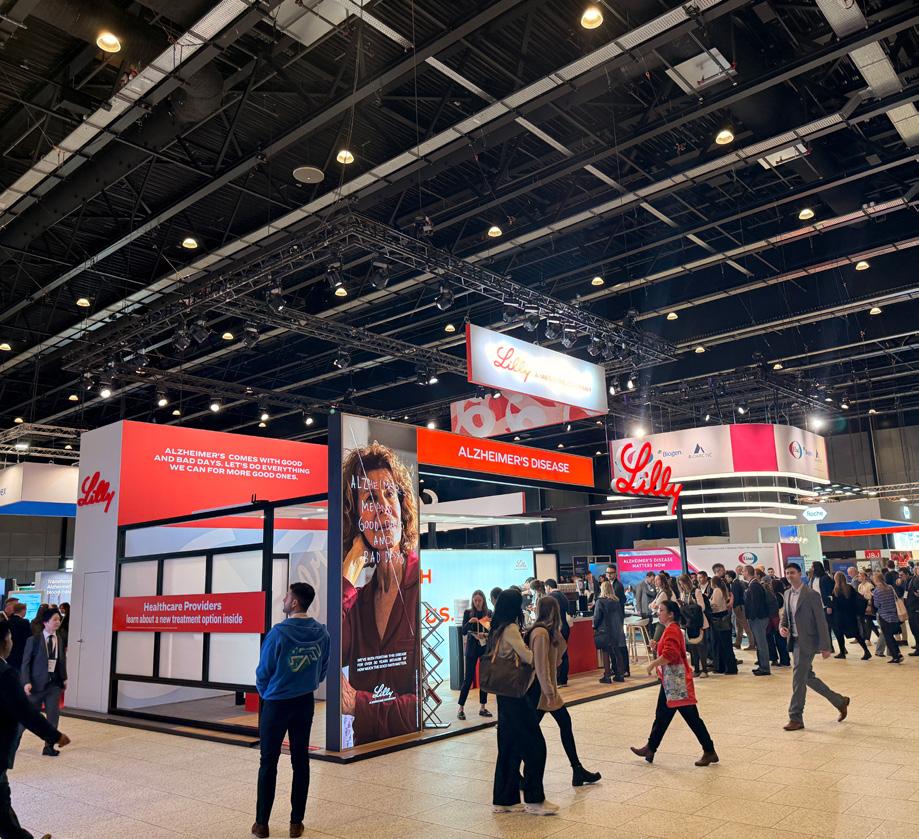
In March, I had the privilege of presenting a poster on findings from our Patient Survey at the AD/ PD™ 2026 International Conference on Alzheimer’s and Parkinson’s Diseases and related neurological disorders in Copenhagen, Denmark. I was there to raise awareness of PSP & CBD among the research community, particularly around the needs of people living with both conditions.
After a long, rain-soaked journey on Monday, I woke on Tuesday in sunny Copenhagen for a week of neuroscience. Once I’d wrestled the huge poster onto my board, I attended a session on Multiple System Atrophy (MSA), another rare atypical Parkinsonian syndrome. Experts highlighted the importance of early diagnosis and shared promising advances in biomarkers and emerging therapies.
Wednesday began with a quick gym session before heading to the conference. I had lots of questions on my poster from people who haven’t heard of PSP or CBD but do work in the Alzheimer’s field. I attended an interesting session on the genetics of Parkinson’s, Alzheimer’s and Lewy Body dementia. During lunch, I caught up with the team from CurePSP to discuss future collaboration, including our joint conference in November. Stepping well outside my comfort zone, I recorded a short video about my poster for Dementia Researcher for their YouTube.
On Thursday my poster came down to make way for the next group of presenters, giving me an

opportunity to explore the exhibition. There were lots of pharmaceutical companies and tech stands showcasing new gadgets and lab equipment. On Friday, I was pleased to see a number of posters with a focus on PSP, showing a growing interest in the condition from the research community. I had lunch with a pharmaceutical company interested in PSP and also working with us to raise awareness.
The conference finished with a session on the positive outcomes of a Phase 1 clinical trial of NIO752 run by Novartis. We are excited by the trial results. NIO752 showed acceptable tolerability and safety in the participants of the trial, with evidence of target engagement. Read more about the results in this patient summary created by Novartis by scanning the QR code.
It’s a privilege to represent PSPA and I’m always so proud to talk about the work we do, the researchers we fund and the incredible people we support to participate in research.
FIND OUT MORE
Scan this QR code to hear more about the results of the Phase 1 clinical trial of NIO752.
RICHARD SHAVED OFF 50 YEARS OF HISTORY
For more than five decades, Richard Handley’s beard has been a defining part of who he is. Since the age of 21, he has worn it with pride, a constant through the many chapters of his life.
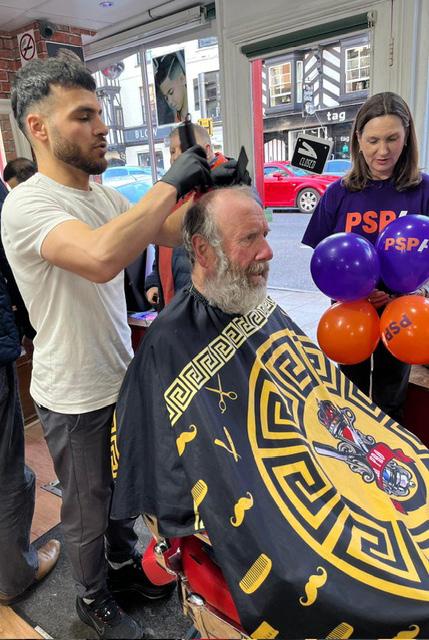
But earlier this year, at 71, Richard made the extraordinary decision to part with his half-century beard for a cause close to his heart.
Richard and his wife Stephanie wanted to do something special to raise funds for PSPA in honour of their close friend Maria, who was diagnosed with PSP in 2023. Determined to make a difference, they organised a lively fundraising event on Rare Disease Day on 28 February, bringing together friends, neighbours and their wider community.
At the centre of it all was Richard’s remarkable shave, a milestone moment. “Most people we speak to have never heard of PSP,” Stephanie said. “When Maria was diagnosed after experiencing falls and changes to her eyesight, it was a shock, and we quickly realised how little awareness there is. Hosting this event felt like a
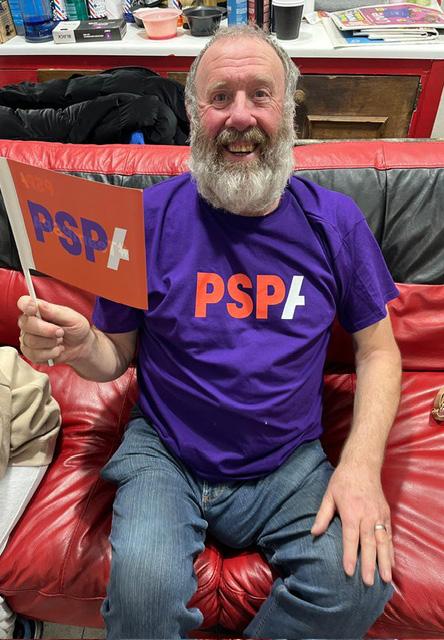
positive way for us to show our support and shine a light on a condition that desperately needs more recognition.”
The decision to turn Richard’s half century beard into a fundraising opportunity has captured people’s imagination. The story resonated far beyond their immediate circle, inspiring lots of donations and sparking conversations about PSP.
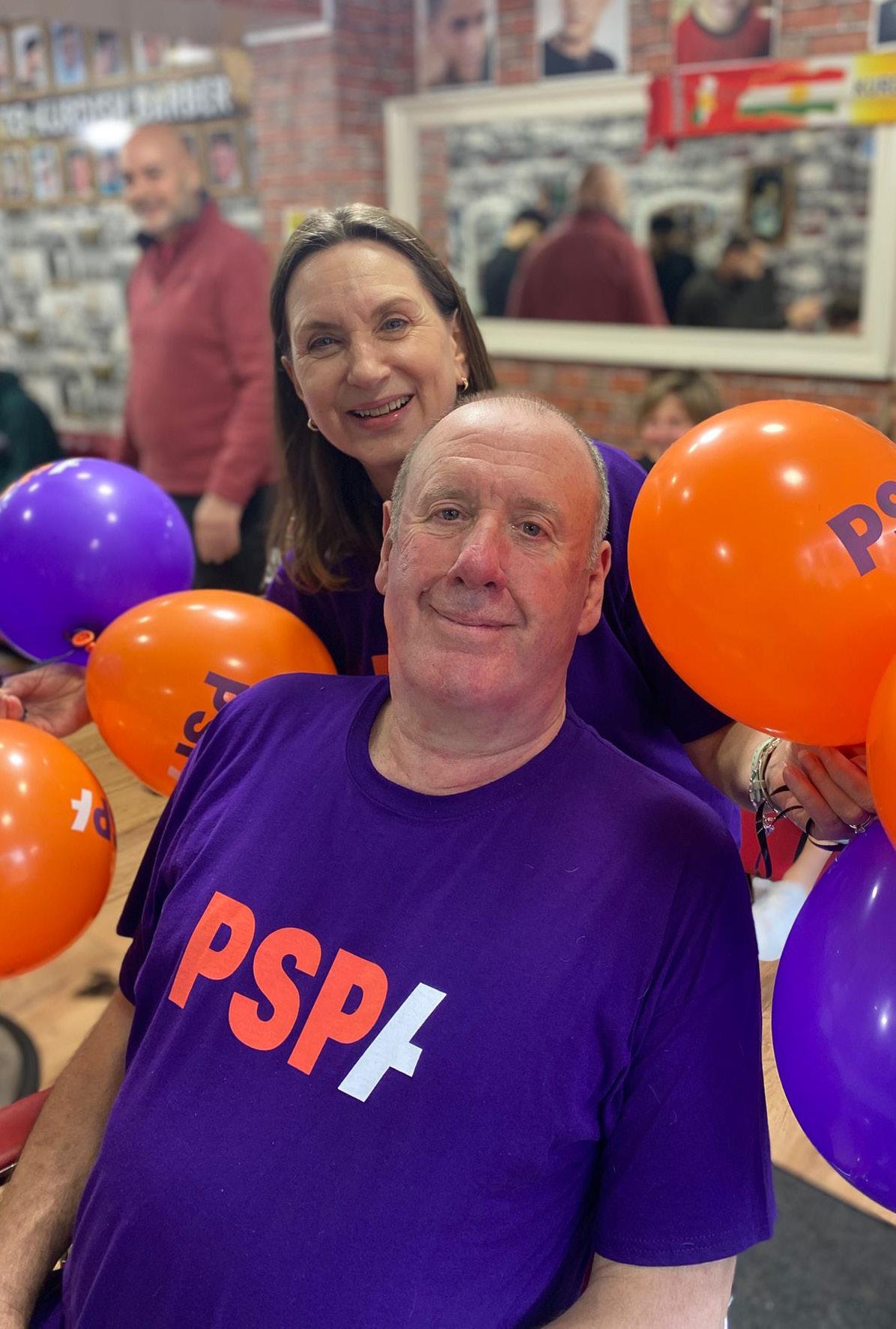
Together, Stephanie and Richard have already raised more than £6,200 for PSPA. Richard said: “After 50 years, it feels very strange to see my chin again, even my mum couldn’t remember what I looked like without my beard! But if it helps just one more person learn about PSP or helps the charity support more families, it will be well worth it.”
GIVE YOUR SUPPORT
Support Stephanie and Richard's beard shaving event at: www.justgiving.com/ page/stephanie-kettell-1 or by scanning the QR code.
INSPIRED BY DAD
Maria Rodrigues-Hancock took over the Durham Support Group in 2017 after hearing that the coordinator could no longer continue to run it. Having attended the meetings with her dad after his diagnosis of PSP, Maria knew how valuable the group was for families facing the condition.
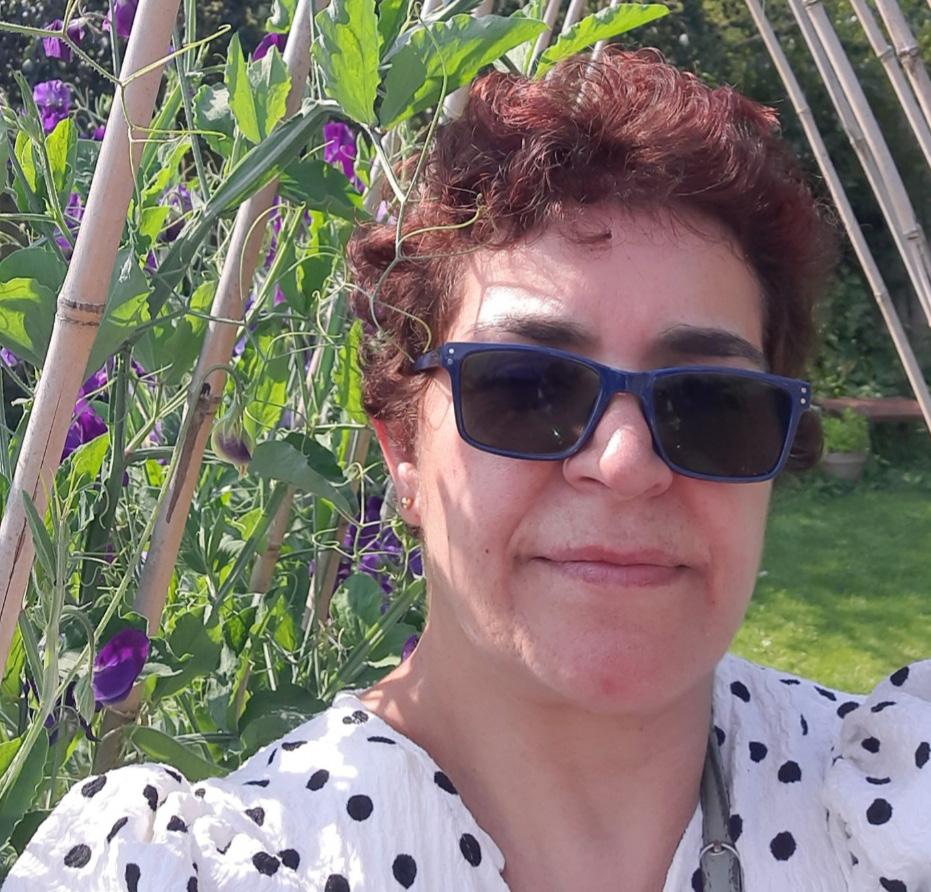
Despite having a job, children and her dad to help care for, she decided to step forward because she did not want the group to close and for local people to lose that support. Today, nine years on from her dad’s death, she continues to run the group in his memory. Here she tells her story.
“My dad was a caring, loving father who always worked hard for his family. Around two years before Dad was diagnosed, we started noticing small changes. The diagnosis of PSP eventually came after a routine eye check-up. He was referred to the eye clinic in Sunderland and then sent for further tests at a hospital in Middlesbrough.
“As PSP progressed, he was still there physically, but he gradually lost the ability to communicate. I’d worked for more than 20 years as an NHS healthcare assistant. I’d cared for many patients professionally, but caring for your own father is a completely different experience.
“Mum was Dad’s main carer and cared for him at home, supported by carers who visited four times a day through Continuing Healthcare. Night-time was the hardest. It’s something many carers talk about when
they attend our support group now. During the night you are on your own and constantly alert to any sound.
“As Dad’s condition progressed, caring for him became increasingly difficult. He developed chest infections and was often in pain. Eating became harder and eventually we had to adapt his meals. He was on antibiotics frequently and his health continued to decline.
“Around this time our family faced another devastating loss. My mum, who had her own health problems, collapsed at home in October 2018. When I arrived, I found her unconscious in the bathroom. She sadly died later that evening.
“Losing my mum was a huge shock. She had prioritised caring for my dad so much that she often neglected her own health. Dad was already at an advanced stage of PSP by then and needed round-the-clock care. I decided that I would continue caring for him at home with support from family and care professionals. We made many changes in the house to support him, including installing equipment such as a ceiling hoist and a hospital bed in the dining room.
“Dad died at home on 17 April 2020. Within 18 months I’d lost both of my parents. His death certificate recorded PSP, which is something I now encourage other families to ensure is included where appropriate, as it helps raise awareness of the condition.
“During the years of Dad’s illness I began learning as much as I could about PSP and about the support available. That is when I discovered PSPA and learned about the local PSPA support group. Attending those meetings helped us realise we were not alone. Everyone there understood the challenges we were facing.
“After some time the group coordinator explained she could no longer continue running the group. She asked if anyone might be willing to take over. At the time I had many responsibilities. I had my own family, work and caring duties, so it was not an easy decision.
MARIA RODRIGUES-HANCOCK
“DURING
THE YEARS OF DAD’S ILLNESS I BEGAN LEARNING AS MUCH AS I COULD ABOUT PSP AND ABOUT THE SUPPORT AVAILABLE. THAT IS WHEN I DISCOVERED PSPA AND LEARNED ABOUT THE LOCAL PSPA SUPPORT GROUP.”
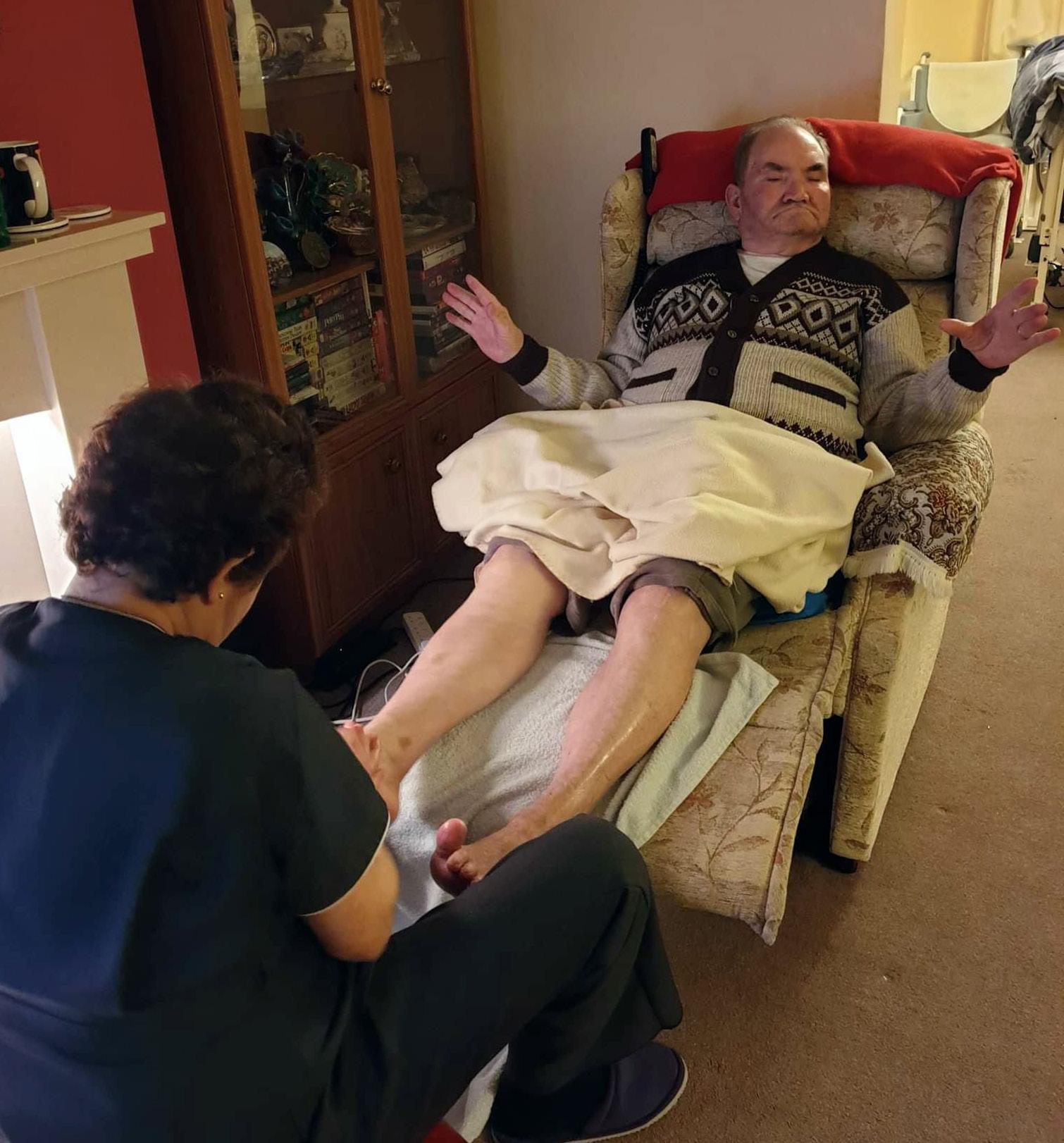
MARIA IS A HOLISTIC THERAPIST AND WOULD GIVE HER DAD MASSAGE TREATMENTS WHICH HE LOVED.
“But I kept thinking that if nobody stepped forward, the group would disappear. It took me about three months to decide, but in March 2017, I agreed to take on the role of Support Group Coordinator.
“Although the group was small, people really valued the chance to talk openly and support each other. Later, members suggested finding a more relaxed environment, so we moved to a pub. This works well for us. Carers often spend most of their time cooking and looking after others, so this gives them a break. They can come out, share a meal, talk with people who understand and feel part of a community.
“We usually have around 20 people. New members continue to join, and we also have a WhatsApp group where people can stay connected between meetings. We call some of the longest-standing members ‘the Originals’. A few of them are people whose partners or parents have died from PSP or CBD, but they still attend meetings to support others.
“At our meetings people share their experiences of caring and living with the condition. Everyone is at a different stage of their journey. Some have just received a diagnosis and are still processing what it means. Others have been caring for years. Sometimes it can be difficult for new members to see the later stages of the condition and understand what may lie ahead.
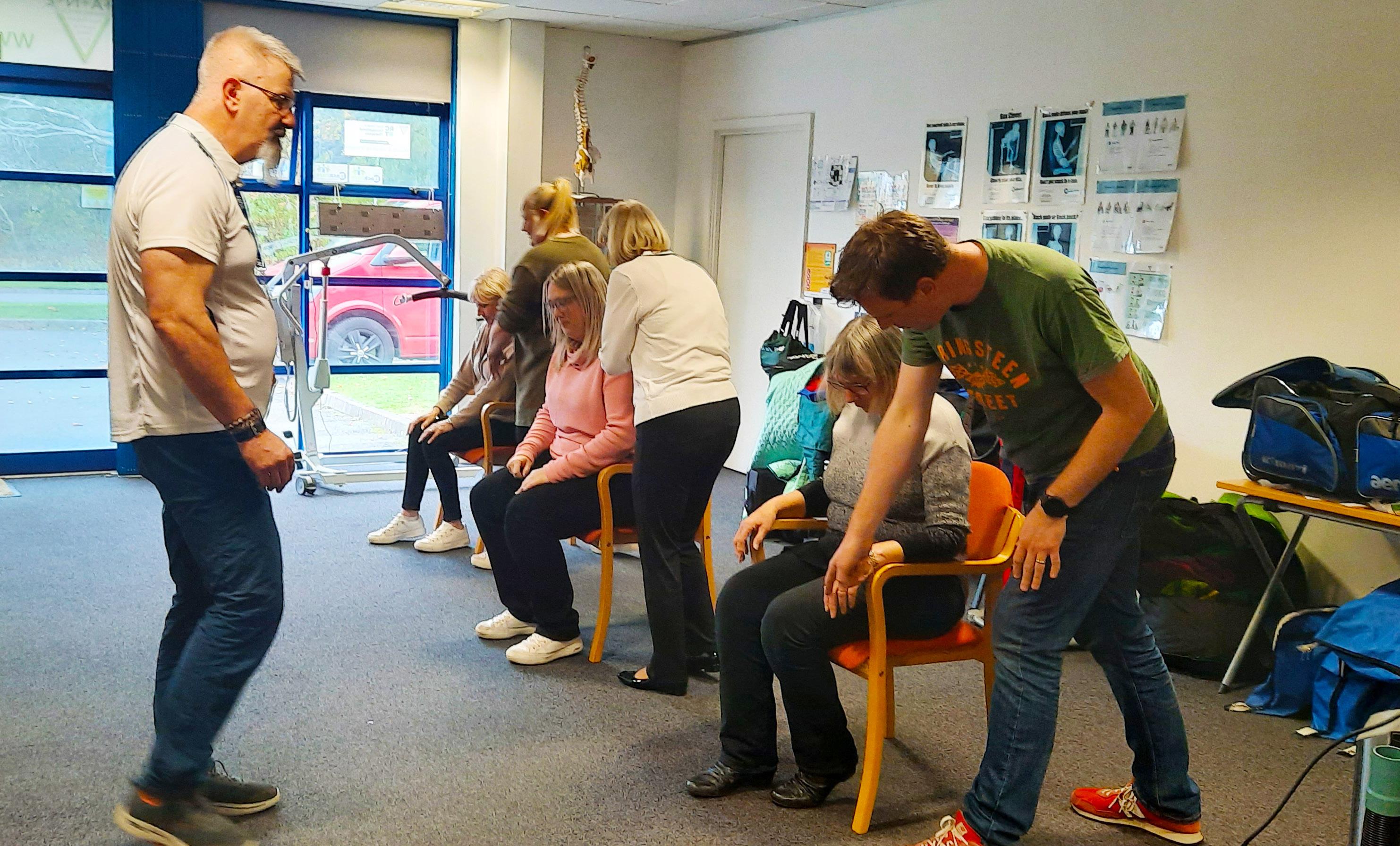
“My role is to support members by sharing information about the resources available through PSPA and encouraging people to connect with one another. We also organise practical initiatives for carers. For example, I arranged a manual handling training day so carers could learn how to safely move and support their loved ones at home. Many carers risk injury because they have not received proper training, so this was something members found very valuable.
“Through my own background as a holistic therapist I have also offered sessions such as back massages for carers and relaxation treatments for people living with the condition. Caring for someone twenty-four hours a day can be exhausting, and sometimes people simply need a moment to look after themselves.
“Volunteering with the support group has given me a sense of purpose after everything my family experienced. Over the years I have faced many challenges in my personal life, including caring for other family members and dealing with my own health issues. But supporting others affected by PSP & CBD has been incredibly meaningful.
“My dad inspired me to help others with this condition. If he could see that nine years after his death I am still helping other families through the support group, I think he’d be very proud. But at the same time caring has helped me. l love being a Volunteer Support Group Coordinator and being a bridge between people and the PSPA.”
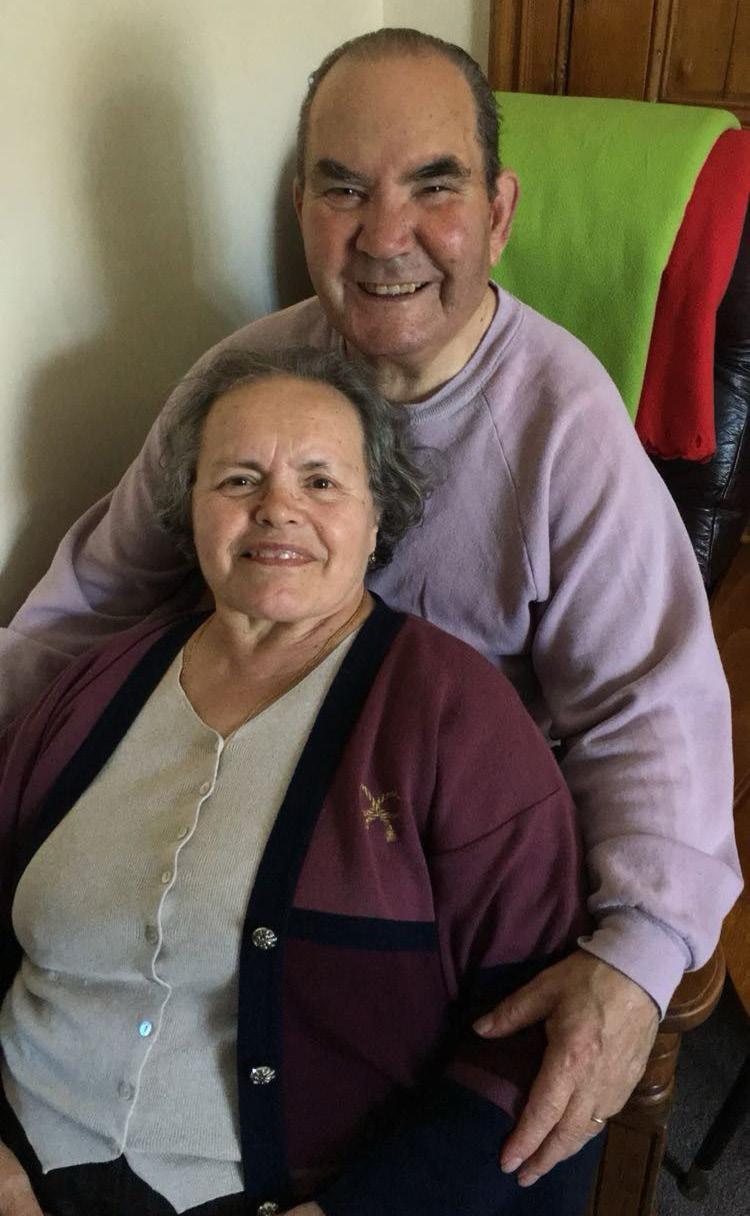
“MY DAD INSPIRED ME TO HELP OTHERS WITH THIS CONDITION. IF HE COULD SEE THAT NINE YEARS AFTER HIS DEATH I AM STILL HELPING OTHER FAMILIES THROUGH THE SUPPORT GROUP, I THINK HE’D BE VERY PROUD.”
MARIA'S MUM AND DAD
We have lots of opportunities across the UK where you could make a big difference in your local community.
EXISTING GROUPS
We are recruiting for Support Group Coordinators and Helpers for the following existing groups.
• Devon and Cornwall require two Group Helpers
• Gloucester require a new Group Coordinator
• Bereaved Carers Online Group require a new Helper
NEW GROUPS
We would like to set up new groups in the following areas: • Northern Ireland • Lincolnshire • Cambridgeshire • Cardiff • Yeovil area
If you’d like to get involved or find out more, please email Lavonne.McCormack@pspassociation.org.uk
MASTERCLASS IN COGNITION AND MENTAL HEALTH
PSPA delivered its first Masterclass of 2026 on 25 March, bringing together 227 health and social care professionals (HSCPs) from a wide variety of clinical backgrounds.
The session, Cognition and Mental Health in PSP & CBD, was led by Dr Susan O’Connell, Consultant Clinical Psychologist in Neuropsychology at Queen Elizabeth University Hospital, Glasgow. The event formed part of PSPA’s continued commitment to expanding professional knowledge and improving care for individuals living with PSP & CBD.
The Masterclass explored the cognitive, behavioural, and emotional changes associated with PSP & CBD. Dr O’Connell opened with an overview of why assessing cognition is essential in these complex tauopathies, introducing key neuroanatomical features and the role of frontal-subcortical circuits in cognitive and behavioural symptoms. Participants were guided through the characteristic cognitive profiles of both conditions, including executive dysfunction, slowed processing speed, praxis deficits, language impairment, and the significant impact these symptoms can have on daily life, independence, and relationships.
Feedback showed that 97% of attendees found the content either extremely or very relevant to their clinical practice, and 100% reported that the session effectively deepened their understanding of cognitive
ATTENDEE FEEDBACK
and neuropsychiatric features. Confidence levels also rose, with 67% feeling extremely or very confident in recognising mental health presentations such as mood changes, behavioural alterations, and executive functioning difficulties. Practical guidance was similarly well received, with 97% rating it extremely or very useful for enhancing assessment skills.
A significant portion of the session focused on practical, evidence informed strategies for supporting patients and families. Dr O’Connell highlighted approaches tailored to executive dysfunction, impulsivity, apathy, impaired attention, and memory change, emphasising the value of structured environments, external cues, simplified choices, visual supports, and routine based interventions.
Our Masterclass not only strengthened professional understanding but also reinforced the importance of psychologically informed, multidisciplinary care. Feedback showed strong appreciation for the depth, clarity, and clinical usefulness of the session setting a high bar for the rest of PSPA’s 2026 professional education programme which will be covering ‘Diagnosing PSP & CBD’, ‘Speech and Communication ‘and ‘Palliative Care Support’.

“Brilliant talk! Thank you very much. As a Physio working with people with PSP and PD this has been so helpful and useful.”
“This has been really excellent! Thank you so much, so much to think about and take back to practice.”
Scan the QR code to watch the recording of earlier Masterclasses and keep informed of upcoming Masterclasses.
DR SUSAN O’CONNELL
EVENT IN LINCOLN BRINGS
FAMILIES TOGETHER
Families affected by PSP & CBD, joined healthcare professionals in Lincoln for a community event aimed at improving awareness, diagnosis and care.
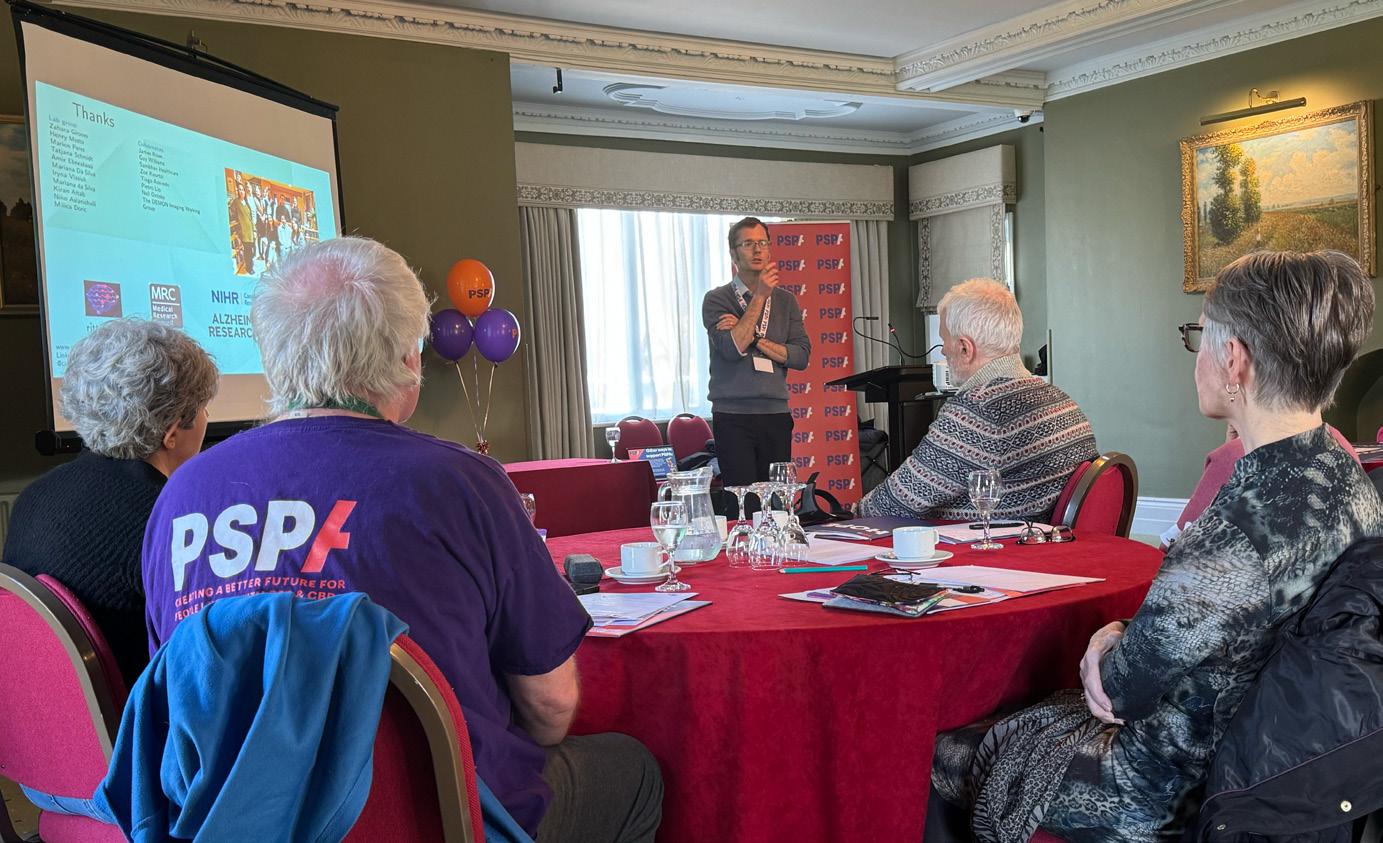
The day was divided into two sessions, each designed to meet the needs of those living with both conditions and the professionals supporting them. Thirty people, including people living with PSP & CBD alongside their loved ones, attended the day. People were able to share experiences as well as hear about the latest updates in research and healthcare.
Dr Tim Rittman, Neurologist and David Smith, Advanced Parkinson’s Nurse Specialist shared ongoing developments and support strategies. The session finished with lunch, enabling attendees to build up their own local support networks.
In the afternoon, the focus shifted to clinical excellence. Healthcare professionals from across the region including nurses, physiotherapists, speech and language therapists and carers, attended a specialist session aimed at strengthening early recognition and diagnosis of PSP & CBD. Discussions also explored disease progression and practical approaches to improving management and care. The collaborative atmosphere encouraged knowledge sharing and highlighted the importance of integrated, multidisciplinary care.
This Lincoln event marks the first in a wider series of community-based initiatives being delivered across the UK throughout 2026 by our PSPA Helpline Care
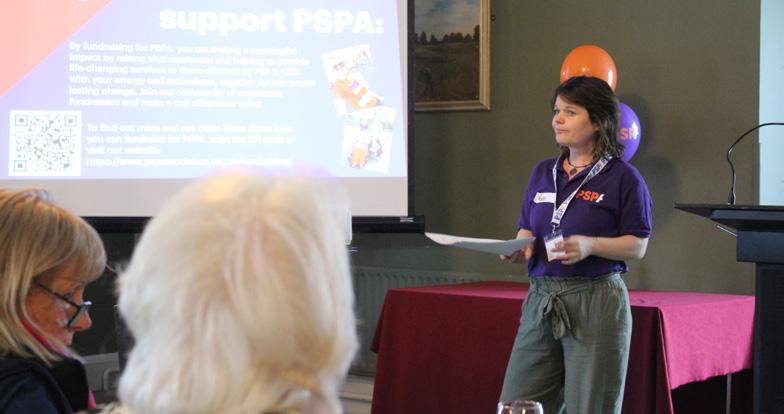
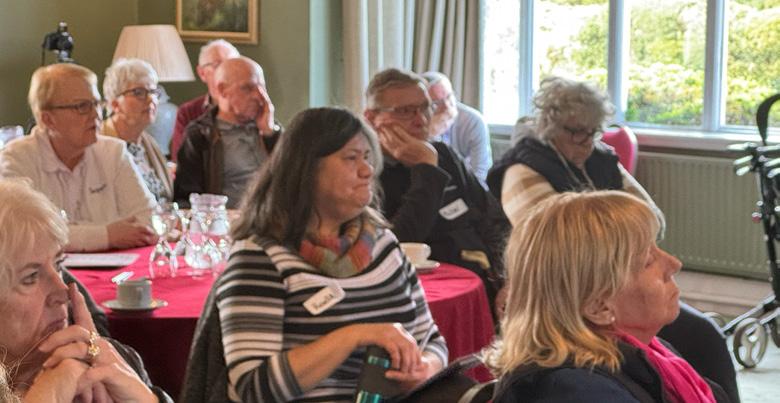
Navigators. We were pleased to be joined for this event by Deborah Ruddock, Helpline Care Navigator for the Lincoln area. These events aim to increase understanding, reduce isolation, and ensure that people affected by PSP & CBD, and the professionals who support them, have access to vital information and guidance.
Carol Amirghiasvand, PSPA’s Director of Service Development and Improvement said: “Living with a rare neurological condition can feel really isolating. Family and friends might not have heard of the condition, and healthcare professionals may have limited experience providing care for someone with such complex and changeable symptoms.
"It was great to see the families building their local networks and learning more about the research and support available. In addition, valuable discussions were had among the professionals in attendance, hopefully leading to better, joined up care in the area.”
UPCOMING COMMUNITY EVENTS
We have events taking place in Scotland on 18 June and 3 July in Wales. For more information scan this QR code.
LONDON MARATHON SPECIAL
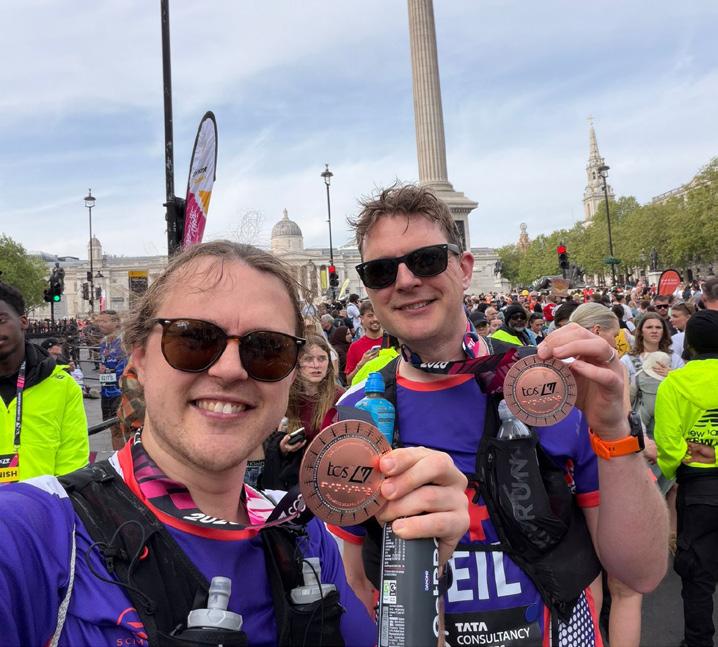
Thank you to our amazing team of 74 runners who took on the London Marathon this year. Every single one had a very personal reason for taking on the epic challenge. Together they raised over £300,000 for PSPA. What an incredible team and we are so proud of them. The waiting list for 2027 is already open. If you would like to join TeamPSPA and take on this iconic race visit our website or scan the QR code.
£13,000
THE RUNNING BROTHERS
Jonny and Neil Adams, two brothers, took on the London Marathon for their dad Keith, who is living with PSP.

£9,200
RUNNING FOR DAD
Premal Patel took on the London Marathon in honour of his dad, Amrish, who is living with PSP.
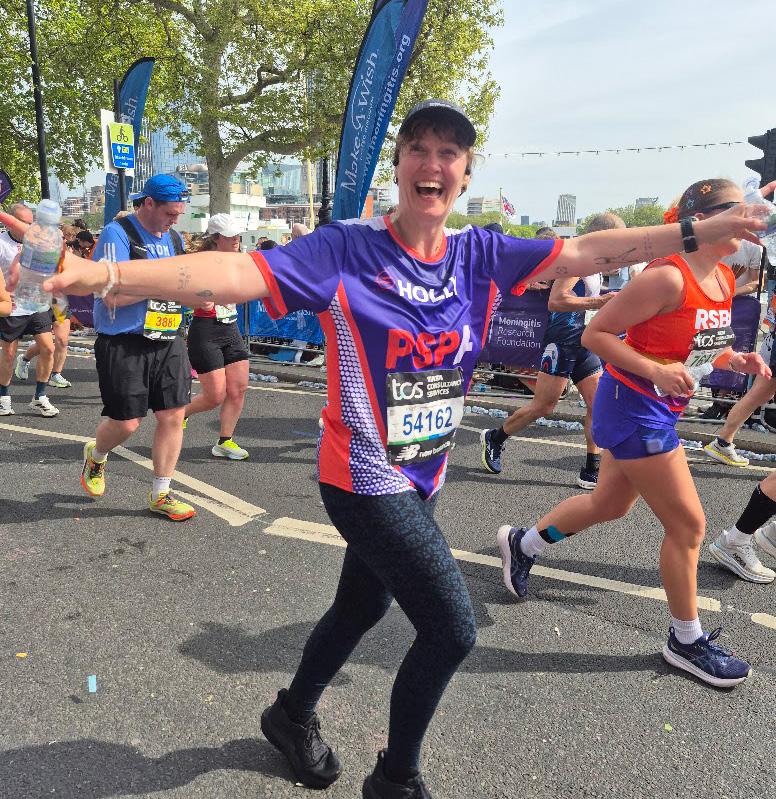
£6,700
MARATHON FOR MUM
Holly Sneezum’s mum was diagnosed with PSP last year, after a four-year journey. Holly wanted to raise awareness and funds to support other families who are going through similar experiences.
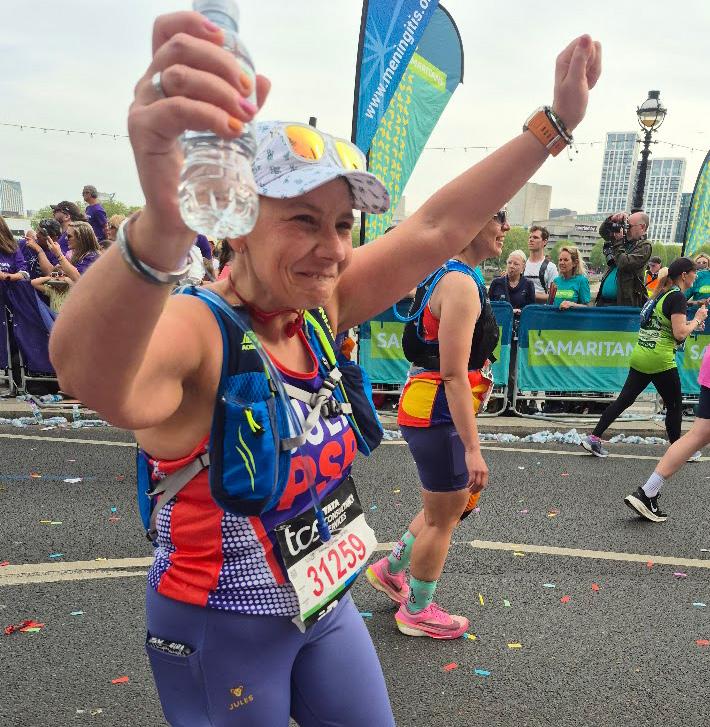
£3,700
MARKING 50
Julie Cuthbert decided to mark her 50th birthday by completing the London Marathon in honour of her mum, who has been living with PSP for six years. She is also taking on the Great Scottish Run in October.
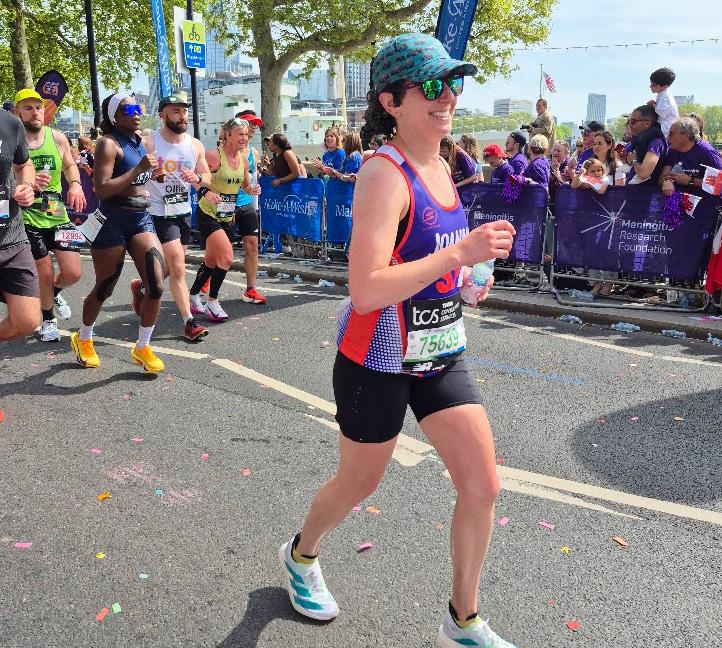
£4,300
MILES FOR MUM
Keen runner Joanna Goldfarb has been running the world major marathons since 2012, always cheered on by her mum. When her Mum was diagnosed with PSP, she decided to run the London Marathon for PSPA.
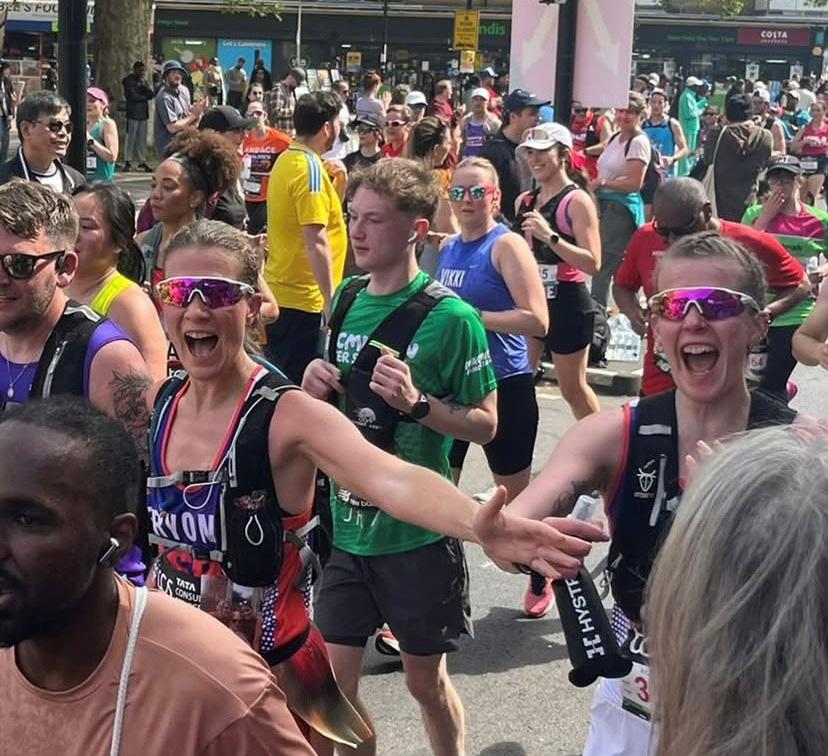
SISTERS RUNNING STRONG
Sisters Emily and Bryony Feeley teamed up to complete the London Marathon in memory of their dad who died from PSP.
£8,800
£7,100 £4,200 £5,400
RUNNING FOR NAN
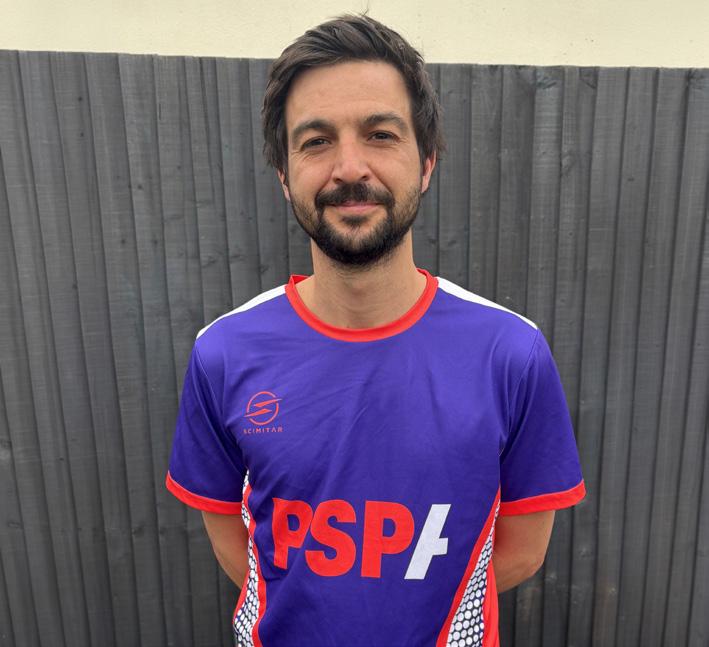
Johnny Brogan decided to run the London Marathon in memory of his Nan who died from PSP.
IN MEMORY OF DAD
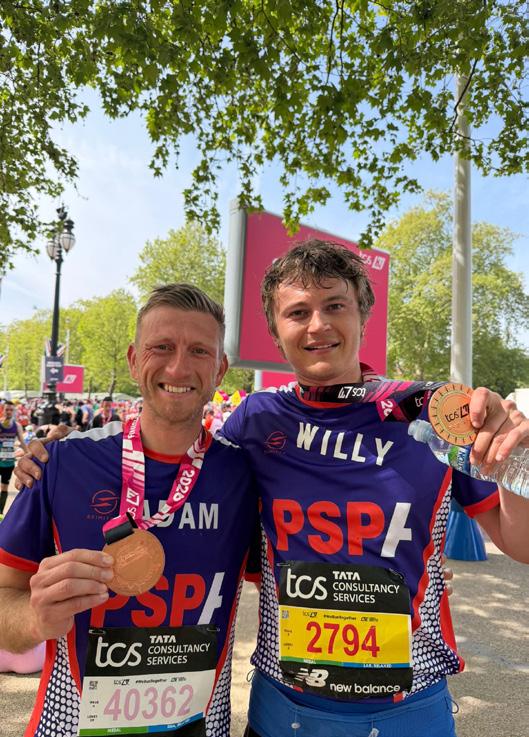
Adam Rhodes ran the marathon in memory of his dad, Mally, who loved sport and was a talented runner in his school days. Adam also held a charity Golf Day to support his fundraising.
HONOURING HELEN
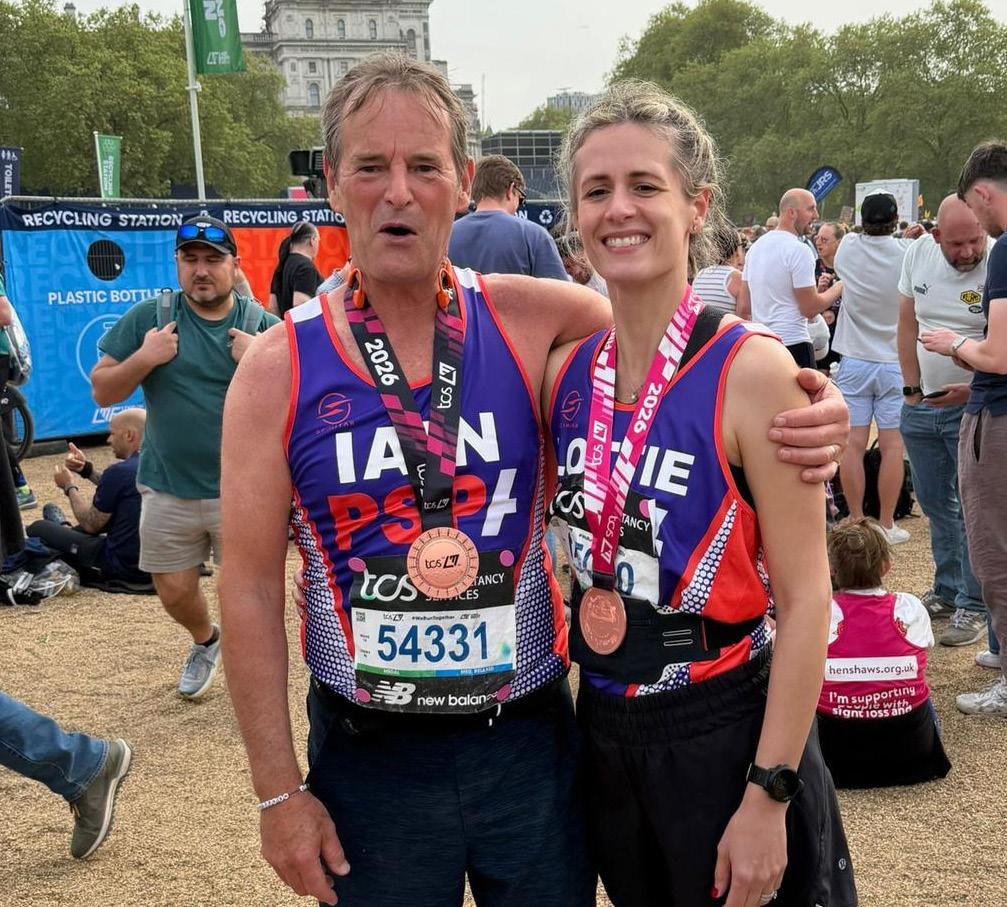
Charlotte Stargatt and her Uncle Iain both ran the London Marathon in memory of Aunt Helen, who died in 2025 from CBD.

£2,900
FOR GRANDAD
Ollie and his family have been fundraising for PSPA for a number of years. This year, Ollie decided to run the London Marathon in memory of his Grandad Peter, who had PSP and who was a very important person in his life.

£8,400 £4,000 £3,600
IT’S PERSONAL FOR GEORGE
George Russell completed the London Marathon in memory of his dad, Geoffrey Russell, who died from PSP in 2018.
MY GRANDAD
Roni Louden ran the marathon in memory of her Grandad who died from PSP, after he lived with the disease for eight years.
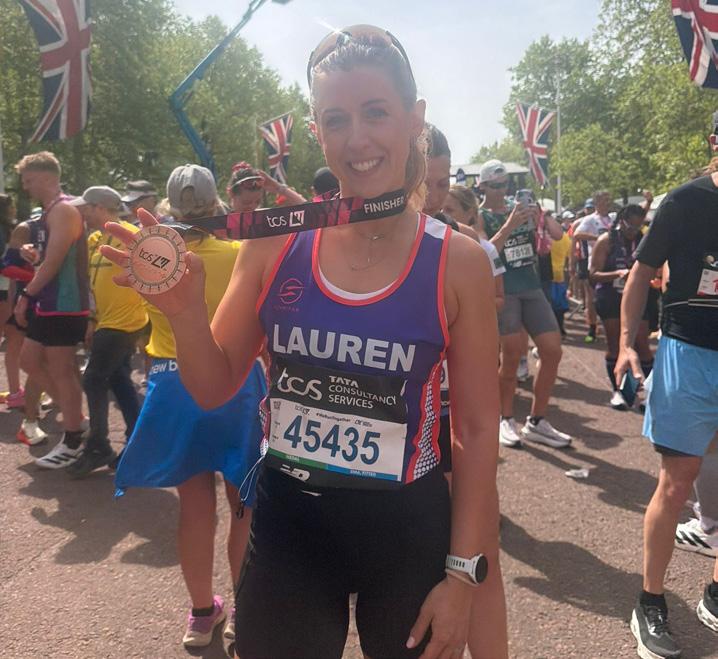
MEDAL MOMENT
Lauren Jacquemin ran the London Marathon for her dad who has been living with CBD for the last five years.
NEED A LITTLE EXTRA SUPPORT?
PSPA Support Grants offer a one-off payment of up to £300 to help make everyday life easier for people living with PSP or CBD, and those who care for them.
Whether it’s a mobility aid, communication support, respite care, or counselling, we’re here to help fund what matters most.
Help make everyday life easier with a one-off payment of up to £300