HERE FOR YOU
Our Helpline Care Navigators are here to support everyone affected by PSP & CBD. Each Helpline Care Navigator has a designated area (see map) where they provide proactive support, including:
• Information on all aspects of living with PSP & CBD, such as symptom management, benefits and entitlements and everyday living
• Emotional and practical support
• Contact details for local support, which may include Support Groups
• Information about how PSPA can support you
• Information about health and social care and how to access these services
• Signposting to other sources of information
• Referral for non-means tested benefits applications via Department of Work and Pensions (DWP) home visiting service
• Supporting evidence about PSP & CBD for Blue Badge applications and Continuing Healthcare applications
• Provide specific information written for health and social care professionals and access to Education Volunteers.
Our Helpline and information service is available Monday to Friday 9am to 9pm.
Tel: 0300 0110 122 or email helpline@pspassociation.org.uk
Margaret Powell House, 415a Midsummer Boulevard, Milton Keynes, MK9 3BN
CATHY MOUGHTON
AMANDA POTTAYYA
JAVERIA SHAFIQ
DEB RUDDOCK
KAYSHA MARLOW
DIONNE WARD
PSPA
WELCOME
I have now been working at PSPA for two months, and it has been a pleasure to get to know the brilliant team, volunteers, and members of the PSP & CBD community. I want to say a huge thank you to everyone who has welcomed me during online groups including the Carers Support Group, the Men's Carers Support Group, the CBD Support Group, and the Patient Research Involvement Meeting Group.
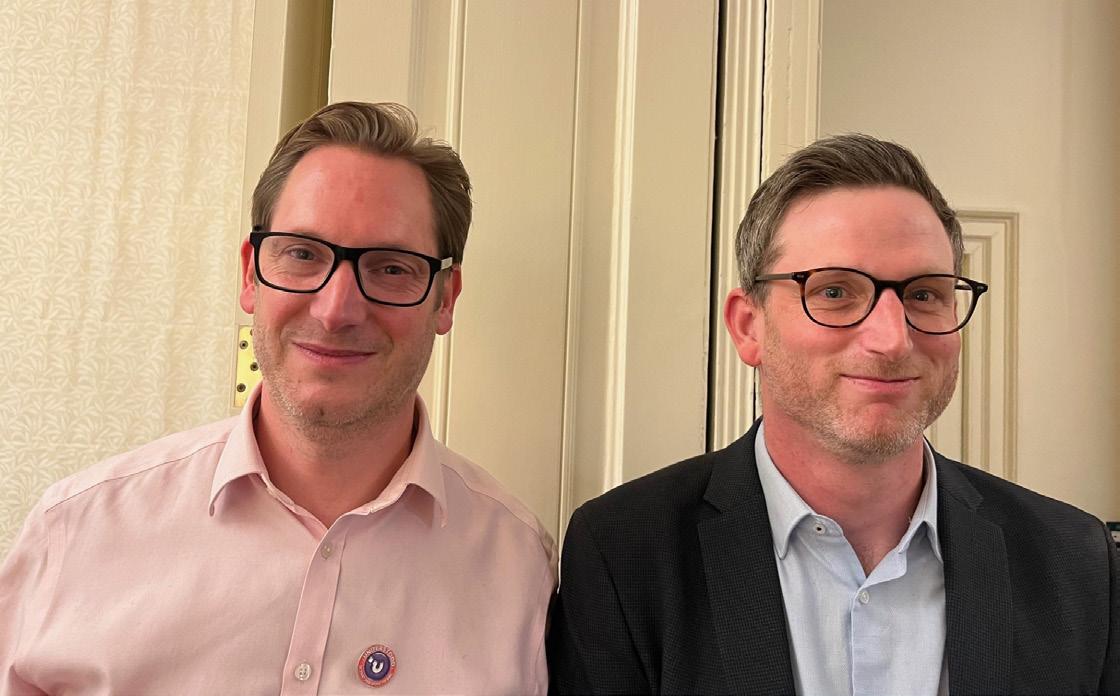
I also managed to get on the road over January despite the dodgy weather! I visited two welcoming groups in Hampshire and Kent. I really valued having the opportunity to talk to people attending the group and to hear people’s experiences. It was inspiring to hear both online and in person how people learned from and supported each other. It was brilliant to hear about your stories and resilience in challenging circumstances. When I visited Kent, I even managed to have lunch in a café with group facilitator, Jon – who will be stepping down after having served his six-year term as a PSPA Trustee. Jon has been such a pivotal part of our success, and I am honoured to say that the waitress serving us asked if we were twins when we had lunch! I’ll leave it to you to judge for yourself!
Meeting the team and our community has really brought home how lucky I am to work here. I am looking forward to thinking about how we work together to provide better support today, to ensure more people understand PSP & CBD, and to help create a world where better treatments and access to diagnosis is available. None of this will be easy, but with a brilliant community, I am sure we can continue to take some incredible strides together.
It is important because in the words of the founder of the charity I just moved from, who came over on the Kindertransport and was determined to make her life one worth saving, “this is urgent”. Every day, I promise we will recognise that urgency, and we will be with you every step of the way, providing support, raising awareness, and finding new treatments through research, until there is a cure.
Dr James Cusack PSPA CEO
USEFUL CONTACTS
Main contact 01327 322410
info@pspassociation.org.uk
Helpline 0300 0110 122
helpline@pspassociation.org.uk
Fundraising 01327 322414
fundraising@pspassociation.org.uk
Volunteering 01327 368597
volunteering@pspassociation.org.uk
James Cusack, CEO 01327 322413
james.cusack@pspassociation.org.uk
Carol Amirghiasvand, Director of Service
Improvement and Development | Deputy CEO 01327 356137
carol.amirghiasvand@pspassociation.org.uk
Helen Chapman, PSPA Matters Editor 01327 356135
helen.chapman@pspassociation.org.uk
Megan Hodgson, Research Coordinator 01327 322418
research@pspassociation.org.uk
PSPA NEWS
BAUBLE APPEAL RAISES
£14,700
Thank you to everyone who supported our Christmas Bauble Appeal. Together you raised £14,700 with 300 people sending in a bauble with the name of a loved one. Each bauble on the tree representing someone special. Donations from the appeal will help fund our vital information and support to people living with and affected by PSP & CBD including our Helpline and our local network of Support Groups.
Raised £14,700
THE HUMAN CONNECTION LOOKING FOR CONTRIBUTIONS
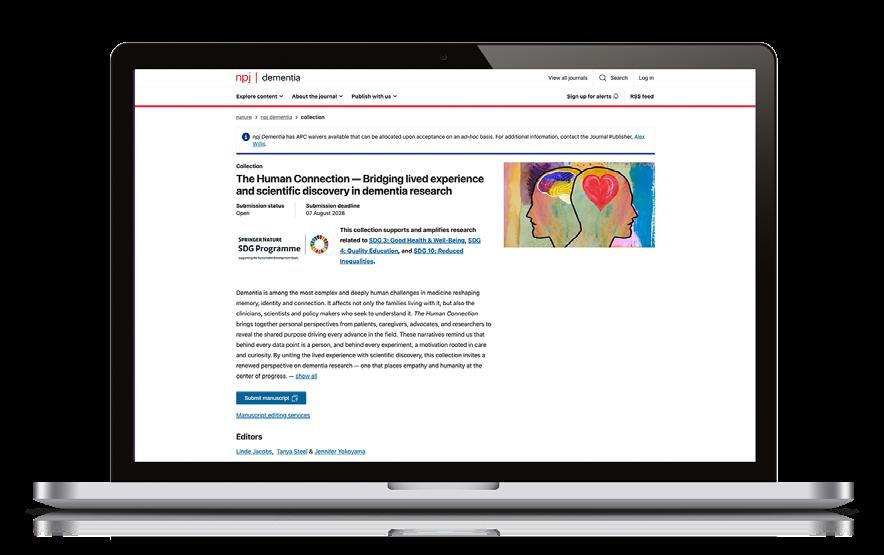
Nature Partner Journals (NPJ) Dementia is inviting people living with PSP & CBD and their carers to submit essays and perspectives for a special publication titled The Human Connection. They are keen to hear from a wide range of voices and experiences, with suggested topics including:
• Clinical insights from the perspective of caregivers, representing new opportunities for clinicians and scientists to explore.
• Proposed policy or focus areas that patients and caregivers feel should be considered when designing treatment trials.
• Personal accounts of living with the disease, reflecting different positions, such as a carer, partner, child, genetically at-risk, or people living with a diagnosis.
FIND OUT MORE
To find out more about the project and how to submit your experiences, visit the NPJ Dementia website, by simply scanning the QR code.
HAVE YOUR SAY ON PSPA MATTERS
We’d love to hear what you think about PSPA Matters and how we can shape future editions to better reflect what you want to read. If you have views, ideas or suggestions, please email communications@pspassociation.org.uk by the end of March with your contact details. We are also always keen to share stories from our PSP & CBD community so please do email if you would like to feature in a future edition.

Have your say!
MASTERCLASS DATES FOR 2026
Our online Masterclasses are designed to educate and inform health and social care professionals, helping them improve the care and support they provide to people living with PSP & CBD. The 2026 Masterclasses will take place on the following dates.
• Cognition 25 March
• Diagnosing PSP & CBD 21 May
• Swallowing and Communication 16 September
• End of Life/Palliative Care 2 December
To register for any of the classes please email Carol Amirghiasvand on carol.amirghiasvand@pspassociation.org.uk
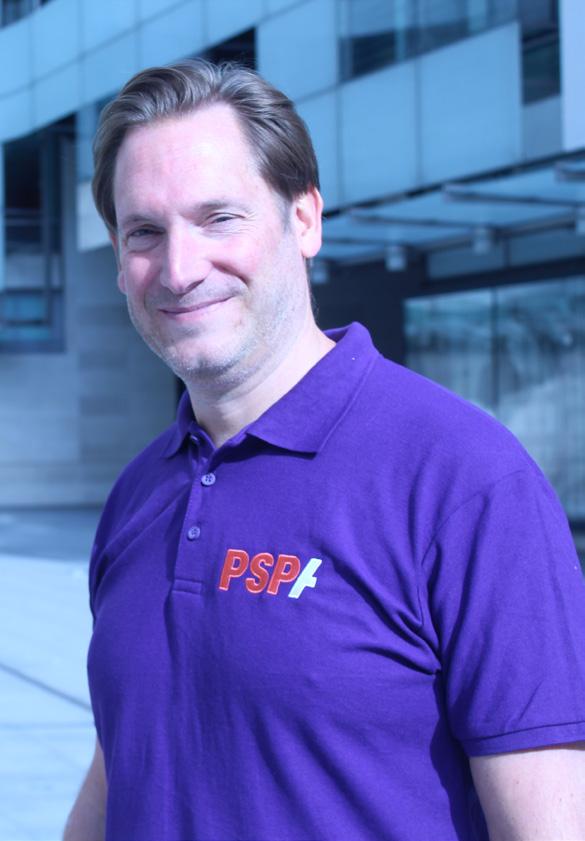
Jon Garrard is stepping down after six years as a PSPA Trustee. He first became involved with the charity following his dad’s diagnosis of PSP. After taking on a number of fundraising challenges, Jon went on to volunteer his time and expertise, most recently representing PSPA as the voice of our BBC Radio 4 Charity Appeal.
We are incredibly grateful to Jon for his dedication, energy and time, and for the impact he has made for people affected by PSP. We thank him for everything he has given (and continues to give) to PSPA. Thankfully Jon will continue in his role as Volunteer Support Group Coordinator in Kent.
NEURO2026
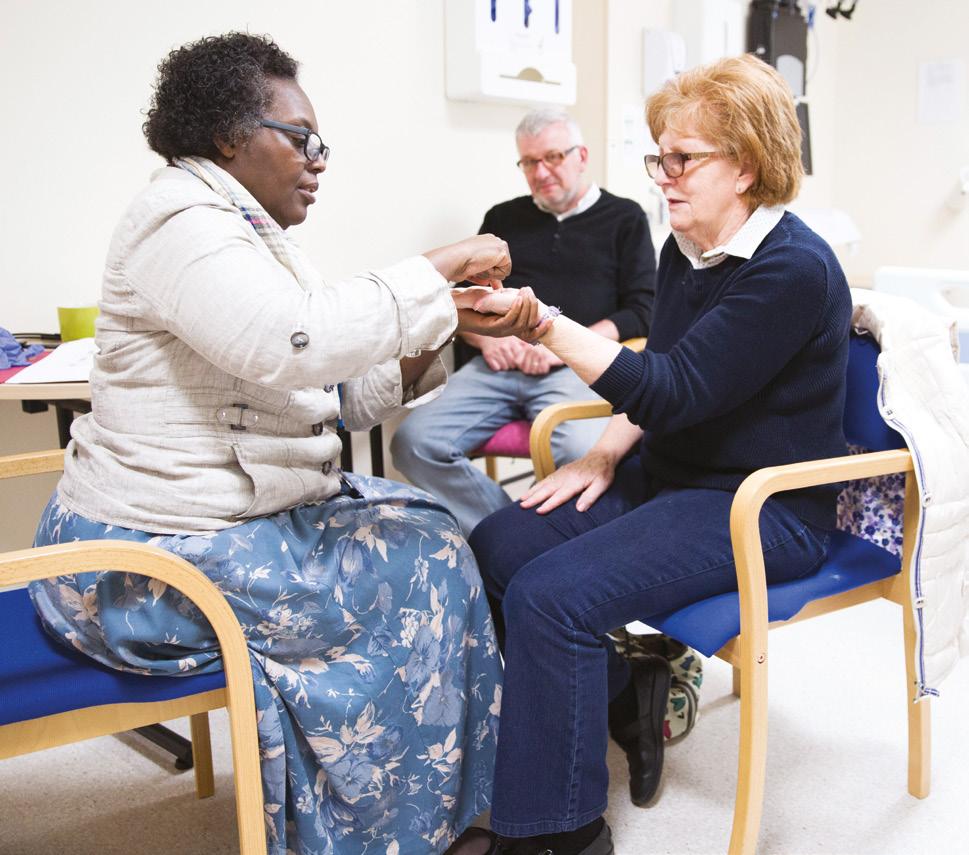
Two new specialist clinics for people living with PSP & CBD will be launching in Wales, marking a major step forward in coordinated care. These clinics will bring services together, helping people access coordinated care more easily.
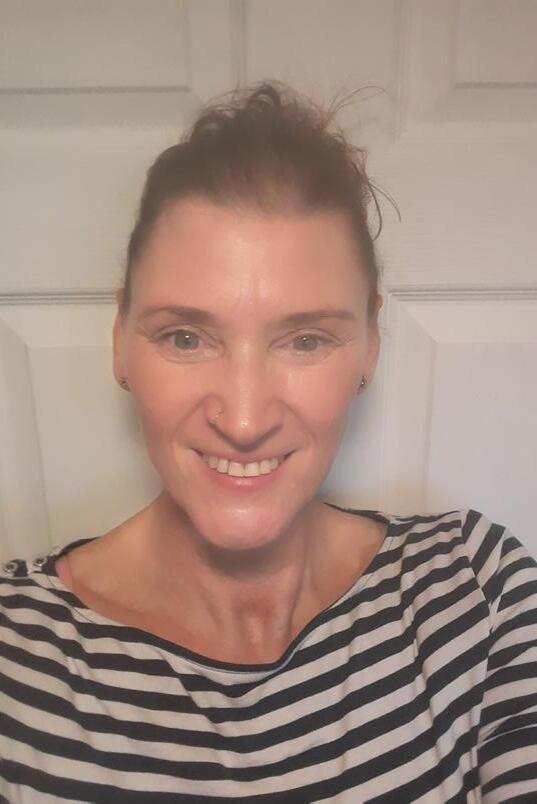
Last year we recruited a Helpline Care Navigator to help improve care and support in Wales. Dionne Ward has been working hard in Wales to help people navigate health and social care systems, connect with services that meet their needs and improve awareness among health and social care professionals. This focus is already making a huge difference and, as well as two new clinics, PSPA is now in touch with 61 people living with PSP & CBD (an increase of 50%).
We're excited to announce that registration to attend Neuro2026: The PSP & CBD International Research Symposium will open on 25 February. This event is intended for a medical and research audience, and we are looking forward to bringing together the top minds in PSP & CBD research. You can sign up to attend on our website.
TWO NEW PSP & CBD CLINICS IN WALES
GOODBYE TO JON GARRARD
CELEBRATING WOMEN IN THE PSP & CBD COMMUNITY
International Women’s Day on the 8 March is a moment to recognise the achievements of women around the world. Within the PSPA community, women play a big role, as clinicians, researchers, carers, volunteers and fundraisers.
To mark this year’s International Women’s Day, we’re shining a light on just a small snapshot of the remarkable women making a difference to people with PSP & CBD. From advancing research and improving care, to providing support to loved ones, these women’s contributions are enabling people affected by these devastating conditions to achieve the best possible quality of life.
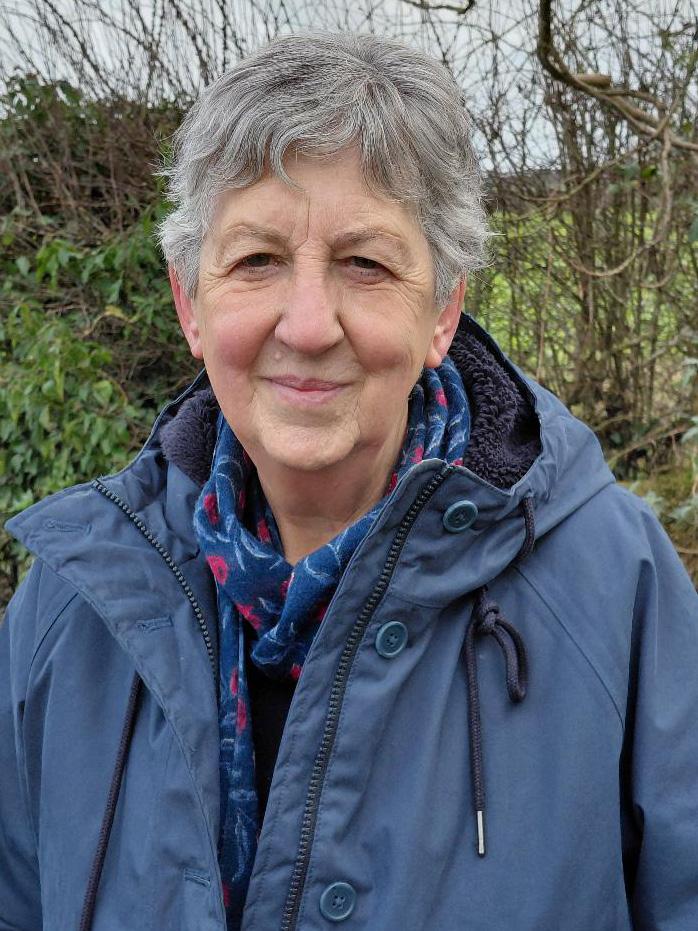
JENNY KNIGHT
Volunteer Support Group Coordinator
Jenny Knight is a Volunteer Support Group Coordinator for the Kenilworth and Rugby Support Group. She started volunteering with PSPA in August 2013 and has been running the group for over ten years. After being widowed in her early 60’s, Jenny felt she had been given this time to use to help other people.
Jenny knows the toll that caring for a loved one with PSP or CBD can take, and this is the reason she continues to volunteer. Jenny said: “I want to provide a relaxing, welcoming space that allows people to share their experiences and meet other people with similar experiences. The only rule is, everyone has to be positive, and it works, people love coming back.”
Jenny’s key advice to anyone who wants to become a Support Group Coordinator is, “You cannot run a Support Group on your own, you need other volunteers, and I have a wonderful team.” Jenny has Mary, Sue, and Angela who help her run every group meeting.
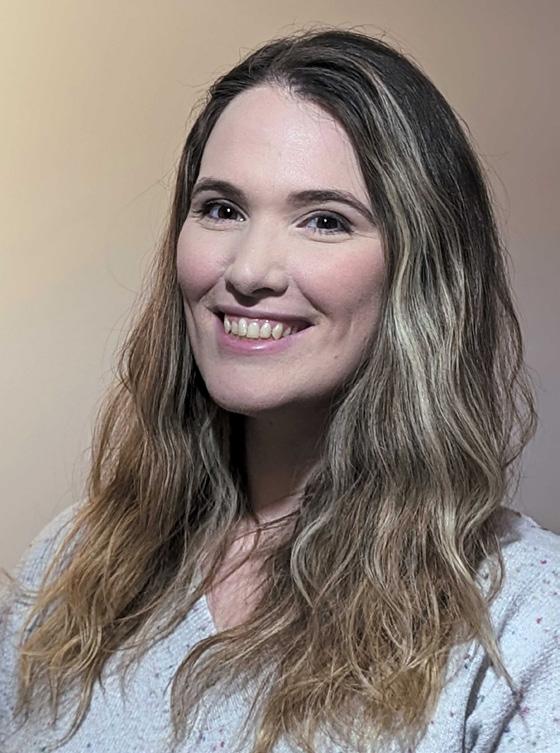
DR KATHRYN (KAT) BOWLES
Group Leader at the UK Dementia Research Institute
Dr Kat Bowles is a Group Leader at the UK Dementia Research Institute at the University of Edinburgh. She leads a laboratory of different researchers that are interested in primary tauopathies including PSP.
Despite challenges around establishing herself in more of a male dominated arena, Kat has progressed to become a Research Group Leader with her own lab in Edinburgh. Two members of Kat’s lab have been awarded grant funding from PSPA’s Understood Fund. Dr Dianne Lopez and Dr Filipa Henderson Sousa will be investigating cells called astrocytes and protein imbalance in PSP. Kat said: “I’m excited to see how technological advancements will push things forward in the future. If we’ve got better models and better tech, then we’re going to get the more accurate findings which can lead to therapies.”
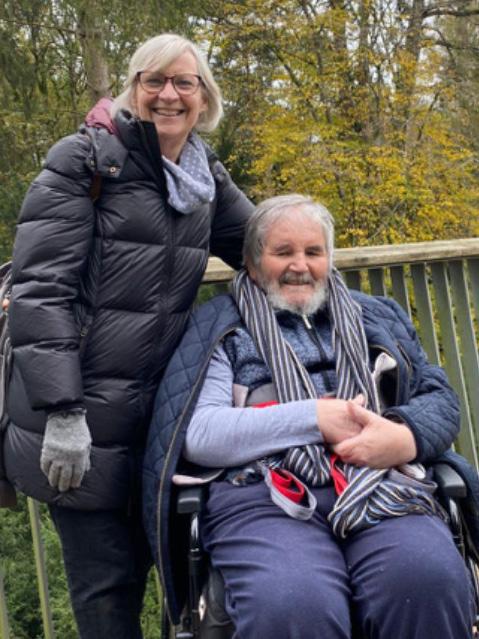
MAGGIE CHAPMAN
Carer
Maggie Chapman has been a carer for her husband Chris since before his diagnosis of PSP in June 2021. Chris was already experiencing symptoms related to Polymyalgia Rheumatica, when he began to have tests for his balance. It was thanks to Maggie spotting something about PSP, that she had an idea of what it could be. After referrals to the Falls Clinic and seeing a Neurologist, Chris was diagnosed with PSP.
Chris was referred to Palliative Care, who recognised they needed more support in terms of carers for Chris and to enable Maggie to have some time back for herself. She is now able to join her walking group and spend time with her granddaughter. Before this there wasn’t much balance because Maggie had given up everything to look after Chris.
Maggie said: “The condition has affected the whole family, including how we saw our future. We hoped to spend more time as grandparents but can’t, due to the nature of his condition.”
They can’t do much together anymore but still watch travel tv shows and listen to audiobooks. Maggie collected Christmas baubles from the countries they visited, to put on their Christmas tree. She now uses them to talk to Chris and reminisce about the places they travelled to.
DR RUTH LEWIS-MORTON
Principal Clinical Psychologist and Honorary Lecturer
Dr Ruth Lewis-Morton is a Clinical Psychologist and Honorary Lecturer at Cardiff University. Ruth works with people living with PSP, CBD, Parkinson’s and other movement disorders. As a Clinical Psychologist, she supports individuals holistically, by helping them understand their internal world, the interactions between feelings, thoughts and behaviours and how to cope with the distress they might be experiencing.
In January 2025, Ruth secured a PSPA research grant to look at the psychological and emotional needs of carers of people with PSP & CBD. She said: “We are helping to build on the current psychological evidence for neurological conditions. Co-producing this research with a care partner, we hope that this will create more equitable and accessible psychological services for people with neurological conditions and to build more understanding of what their primary needs are. I hope our research project is a step towards this, specifically to better understand the care needs of people living with PSP & CBD and their care partners.”
FOLLOW US ONLINE
To celebrate even more inspiring stories, join us on International Women’s Day, 8 March, by following PSPA on Facebook and Instagram.
AN IMPATIENT PATIENT
BY BEN LAZARUS
Diagnosed with PSP in his 40s, Ben Lazarus shares the rapid changes to his life, what PSP has taken, what remains and why speaking up matters.
When I was asked to share my experience I was honored, but at the same time no one wants to write about having PSP. There are so many other magazines I’d have preferred to be featured in. Top Gear springs to mind, but that is life.
At 45 years old (five years ago) my doctors and I thought I had Parkinson’s disease. That started ‘my fight’. I decided to hit it on the head as much as possible by taking medication, doing exercise and yoga for the first time in my life. I tried my best to carry on with work as a Consulting Partner in one of the big four firms.
At 47, they considered for a brief but very scary couple of weeks the possibility it was PSP, when my neurologist noticed vertical eye palsy, but they were not ready to pull the trigger. However, by March 2025, PSP was diagnosed. So, PSP it was. My family and I were shocked (an understatement) and life began to change at a rate of knots. I retired from work, stopped driving and I suddenly went from flying around the world to within weeks needing to use a wheelchair to get about (and terrorize the neighbourhood on my new wheels).
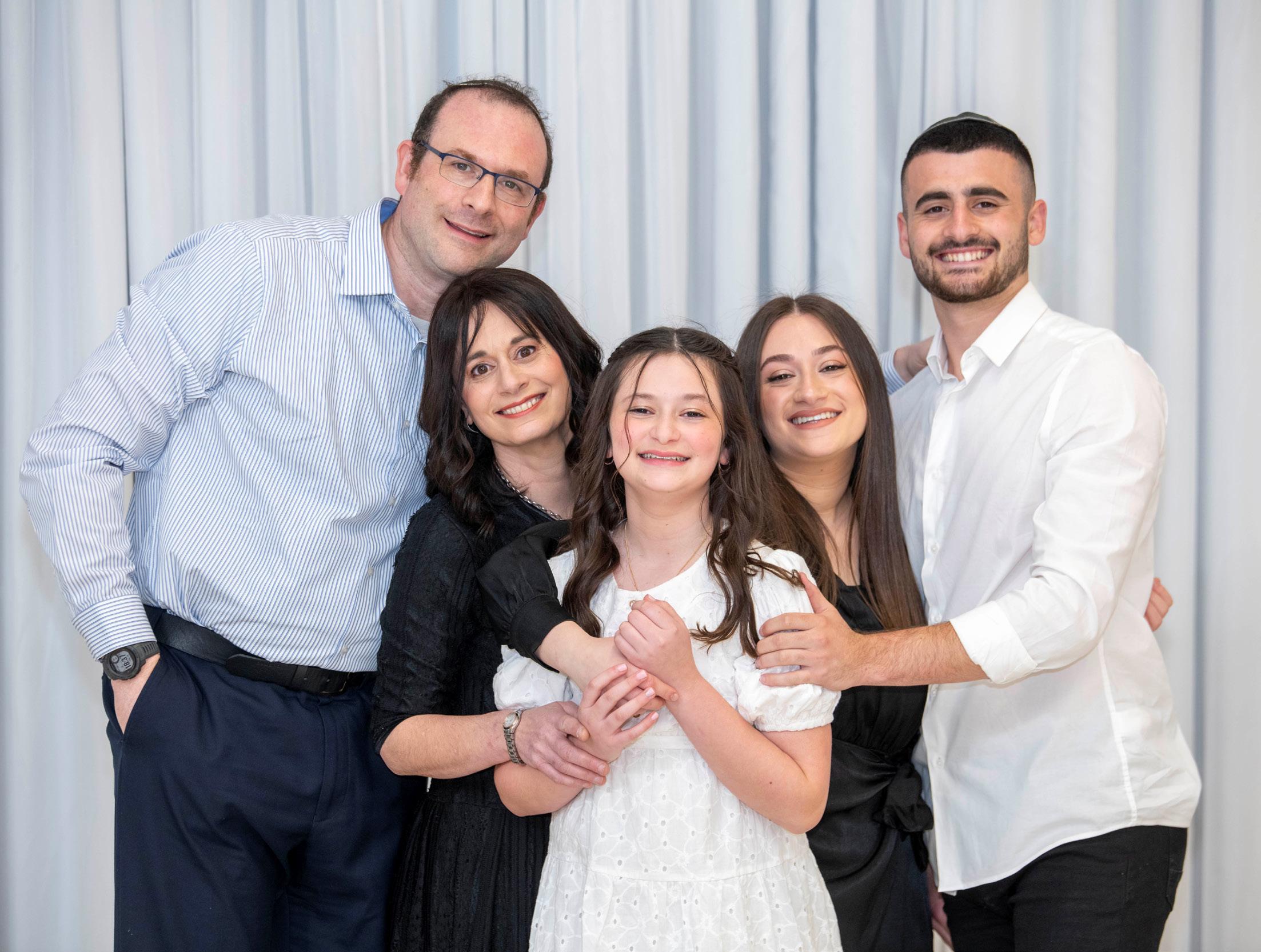
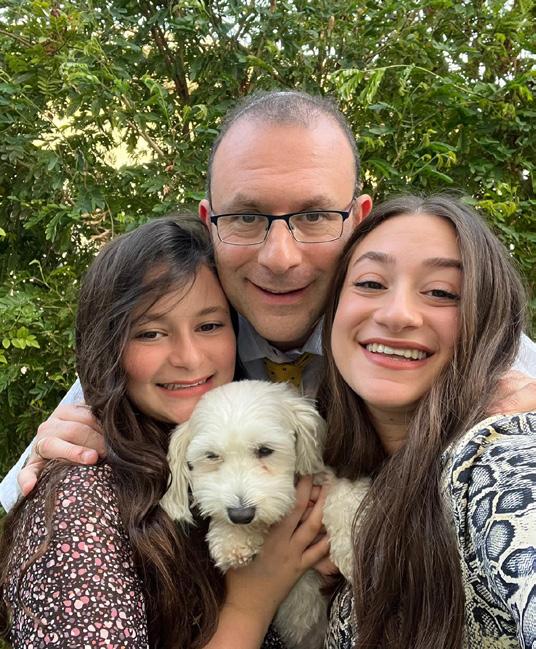
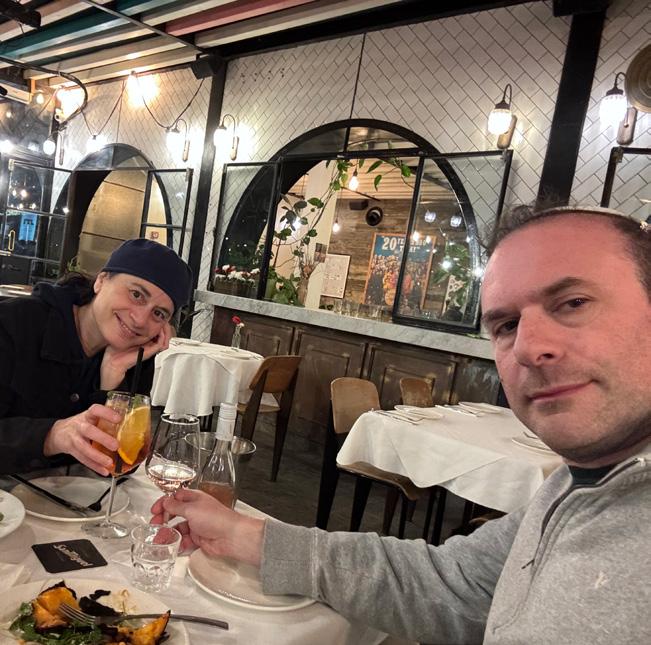
BEN WITH HIS WIFE AND THREE CHILDREN
I’ve moved downstairs which we renovated with an accessible bathroom and bedroom and, as I write this at the end of December 2025, we’re considering future carer plans. At 50 years old, I’m relatively young, and it has had a big impact on my wife and three kids (23, 23 and 16) who mean everything to me. We’ve had discussions we wouldn’t normally have about end of life. But they are holding up and we have my oldest daughter’s wedding to look forward to.
Amongst what is truly awful news, there’s been some bright spots. Firstly, I’ve found comfort and therapy through writing. I’ve been keeping a blog where I share my thoughts on the disease. I’m a totally impulsive and impatient person and having thought about writing a book for a very long time, I woke up a couple of weeks ago at 11pm (yes sleep is a major issue) and 100 hours later a book was sent to Amazon. I’m not in it to make money but the feeling of pride completing a book was truly something to behold.
I’m positive in my attitude, but I’m also aware of the nature of the disease and not in any form of denial. I’ve been blessed by life (despite its challenges) and have had the time to talk to my family to prepare ourselves for the later stages of PSP. I accept that currently there is no treatment available. I am counting on my Faith. What is important to me is preserving my dignity and to hope that my cognition, which has to-date stayed strong, continues to do so. I’d like my humour to remain as it is, although my kids would strongly disagree and rate it as poor.
I’ve found great comfort in the interaction with Facebook and other support groups. Not always pleasant reading material, but it’s good to know we are together. It’s a truly awful disease made so much worse by the lack of medical treatment.
In my view this comes from the significant problem of misdiagnosis, usually as Parkinson’s, early on which starves the disease of patients who can take part in trials. For now, as a non-medically trained person, I will continue to write, be positive, be honest and try to keep my humour (as bad as it is) working on all cylinders.
I don’t feel qualified to give advice; there are many with far more experience. But I’ve learned something important: don’t wait until it’s too late to communicate what matters most. For me, that meant making my end-of-life wishes clear, setting up power of attorney, and sorting out finances to avoid family conflict later.
Once those things were in place, it brought a sense of calm, even in the middle of a storm. On a personal level, dignity is critical to me, and I wanted to make that clear too.
Lastly, I was deeply worried about writing an article in December, so far in advance of printing because who knows where I will be when it goes live. Then I realised it doesn’t actually matter. Us patients (and caregivers who in many respects have it harder) have to speak up at every opportunity and promote/advocate for PSP. And you will hopefully see I am still writing on my blog page.
"I’VE FOUND COMFORT AND THERAPY THROUGH WRITING. I’VE BEEN KEEPING A BLOG WHERE I SHARE MY THOUGHTS ON THE DISEASE."
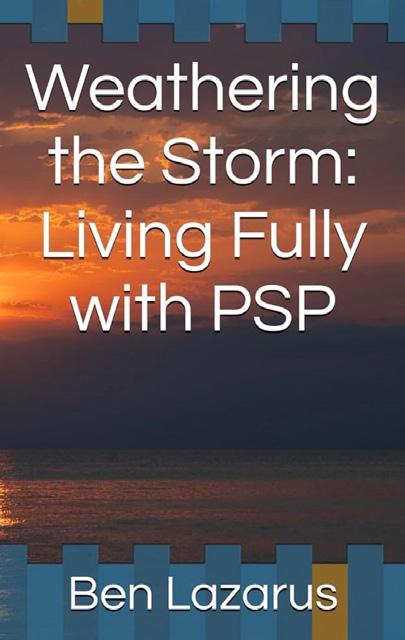
Ben's blog can be found at benlazpsp.com and his book is available on Amazon in paperback or Kindle versions. Ben is kindly donating proceeds from the book to PSPA.
HOW PSPA'S FINANCIAL SUPPORT
HELPS PEOPLE WITH PSP & CBD
For people living with PSP or CBD, the cost of everyday life can rise sharply while household income falls. Heating bills can increase as people spend more time at home, homes may need adapting and equipment such as wheelchairs, walkers or hoists can become essential.
PSPA’s financial support service includes help to access state benefits, practical guidance from the Helpline team and Support Grants to fund things like wheelchairs, mobility aids, travel costs or therapies. Here, three people share how this support made a difference to them.
“IT DIDN’T JUST BUY A WHEELCHAIR, IT BOUGHT US BACK OUR TIME TOGETHER.”
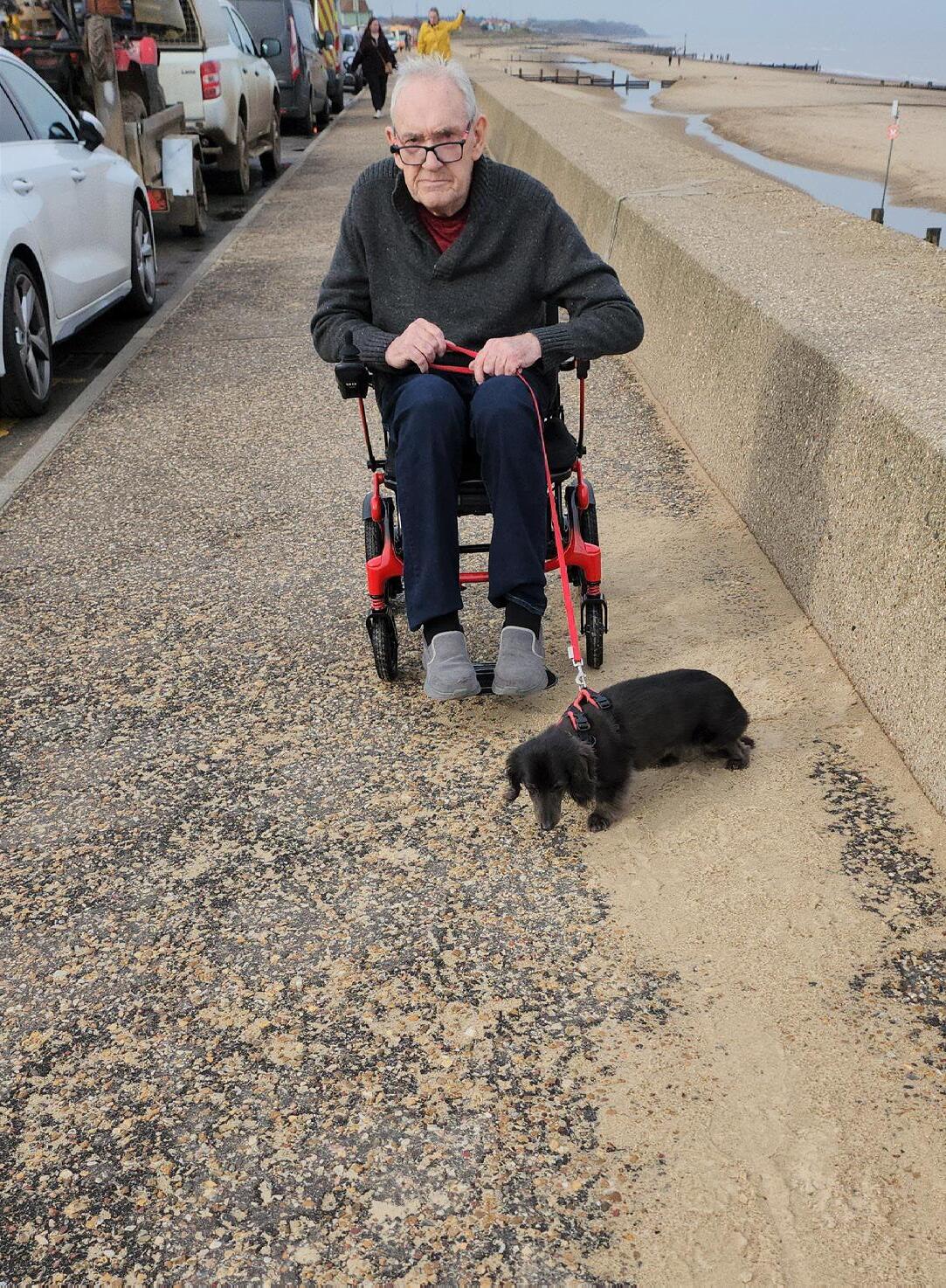
As Richard Chamberlen’s PSP symptoms progressed, the life he and his wife Linda cherished began to shrink. Richard was diagnosed with PSP in 2022. “Richard is incredible at seeing the positive in everything. We never let things get us down,” Linda shares. But despite this optimism the couple were faced with real, practical limitations. Their walks were reduced to short distances, leaning heavily on two walking sticks or relying on Linda to push a bulky walker.
They tried a mobility scooter. “It was so big and heavy that I needed help just to get it in and out of the car,” Linda explains. Gradually, the small pleasures that had once shaped their life slipped away. Trips to the coast became too difficult. Visits to the garden centre were cut short. “It was straight back to the car after a coffee,” Linda says. “Sometimes Richard would just stay in the car, or choose not to come out at all.”
Linda had often heard about PSPA Support Grants at the Norwich Support Group, but never imagined they would need one until a friend showed her a lightweight electric wheelchair her mother had been using.
With guidance from PSPA’s Helpline, they applied for a Support Grant. The impact of the new wheelchair was immediate. Richard said: “The wheelchair is amazing. It’s so easy to control.”
Weighing just 16 kilograms, it’s light enough for Linda to lift in and out of the car without help. For the first time in a long while, they can go out without anxiety. Richard said: “It’s great to be able to spend more time together doing the things we love.” Recently, they even made it back to the coast with their elderly dog. “I could help look after him again,” Richard says. “That’s something I just couldn’t manage with walking sticks.”
The wheelchair has enabled the couple to visit the garden centre, go on walks and enjoy days out. “We want to thank PSPA and the Helpline team,” he adds. “The grant didn’t just buy a wheelchair—it bought us back our time together.”
“WITHOUT IT, WE COULDN’T GO ANYWHERE.”
For John Manitara, financial support from PSPA arrived at a moment of sheer exhaustion. John’s wife Gill became ill at 57, while she was still working. The changes were subtle at first, a fall, then behavioural shifts that were initially put down to menopause or stress.
“It took until January 2024 to get a PSP diagnosis,” John says. “By then it was clear how aggressive it was, especially cognitively.” Gill’s condition deteriorated rapidly. She now has very limited speech, needs help with all aspects of daily life, and requires constant supervision. “I’m up five or six times a night,” John explains. “I work 60 hours a week for a charity, and I’m juggling care, cleaning, shopping, it’s relentless.”
Gill lost her income three years ago, and the financial impact was immediate. When it became clear she needed a wheelchair, John faced an impossible choice. “The day centre won’t take Gill unless she has a wheelchair and a carer,” he says. “But I simply couldn’t afford a few hundred pounds for a wheelchair.”
Referred to PSPA through Addenbrooke’s Hospital, John contacted the charity for help. “When PSPA said they could fund it, it was a huge burden lifted off our shoulders,” he says. “They were quick, approachable, and incredibly supportive.”
The wheelchair has transformed daily life. Gill can attend the day centre, interact with others, and take
UNLOCKING SUPPORT WITH BENEFITS
Alongside Support Grants, PSPA helps people access benefits they may be entitled to through a referral to the Department for Work and Pensions (DWP) home visiting service.
David Preston’s wife Julia is living with CBD. David said: “It was a tremendous help to receive a call from PSPA offering positive assistance.” Through PSPA’s referral, a DWP representative visited them at home to help complete the Attendance Allowance form.
David explains. “The man was pleasant, understanding, and patient. These forms are extremely intimidating.” PSPA’s supporting letter and information helped David and Julia explain the reality of Julia’s needs, leading to the application being successful.
part in singing and music sessions. John can work, knowing she is safe. “That wheelchair has improved Gill’s life and mine,” he says. “Without it, visiting family or doing anything outside the house would be incredibly difficult.”
“The additional funds are most welcome,” David says. “Extra costs appear from the most unexpected places, such as the installation of support rails on our staircase and a £600 increase in our car insurance following the removal of Julia from the policy as she can no longer drive. We could not believe it!”
LIVING AS WELL AS POSSIBLE
PSPA’s financial support enables people with PSP & CBD, their carers and family to live the best possible quality of life.
As Linda and Richard, John and Gill, and David and Julia show, sometimes a relatively small amount of support can restore independence and relieve stress.
MORE INFO
For more information on our Support Grants, DWP Visiting Service or any other information and support services please contact our Helpline on 0300 0110 122 or email helpline@pspassociation.org.uk
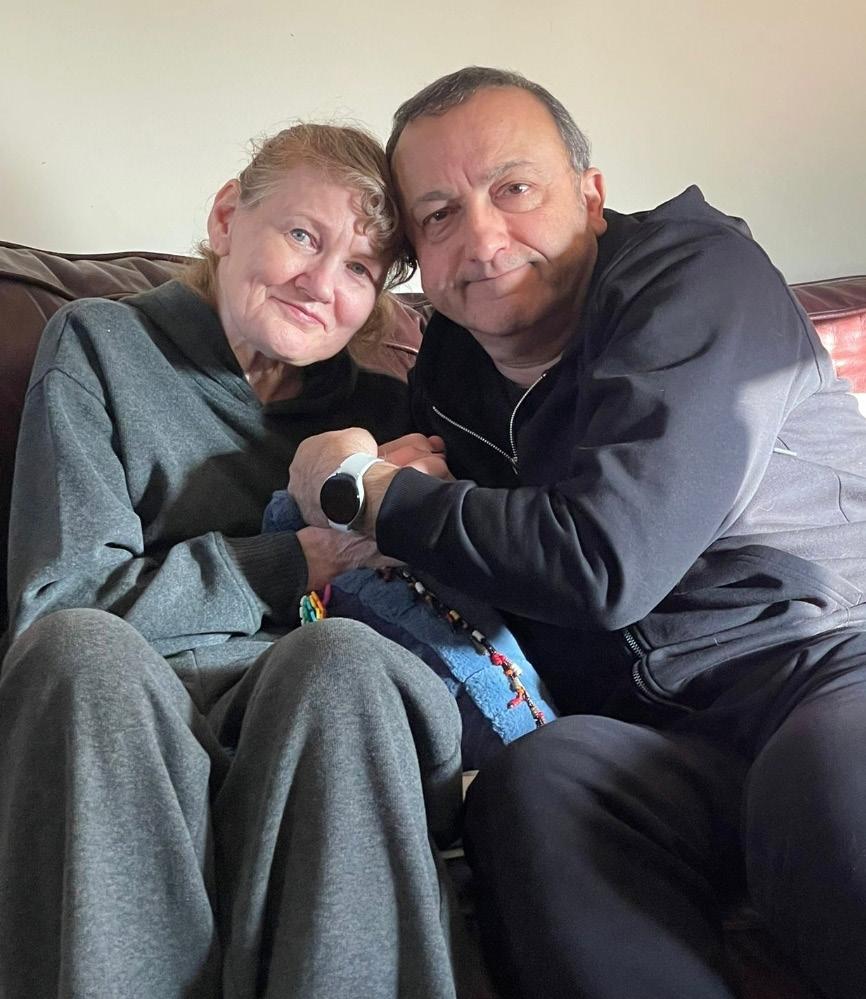
GILL WITH HER HUSBAND JOHN
GETTING OUT AND ABOUT WITH PSP & CBD
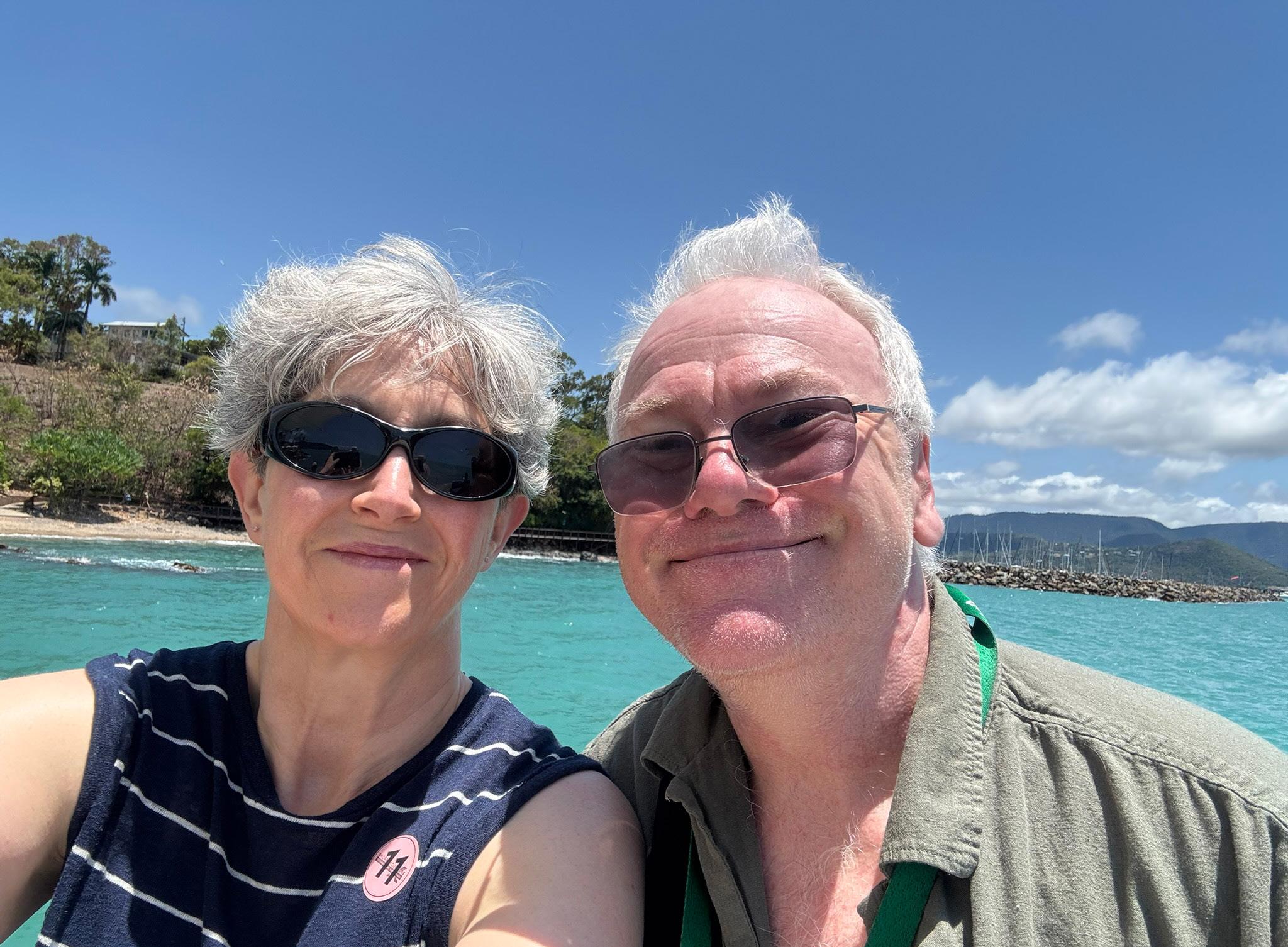
PSP & CBD affect balance, coordination, movement and vision, making travel feel more challenging. Some people living with PSP or CBD may feel reluctant to leave the house. Tasks that once required little thought such as getting to the shops, navigating public transport or going on holiday can feel overwhelming and complicated.
The fear of falling, difficulty judging steps or kerbs, slower movement and fatigue may lead people to withdraw from activities they once enjoyed. Going out can feel tricky, and not just for the person living with PSP or CBD, but for their carers too. Yet many people living with these conditions continue to travel successfully. It just needs a little more planning and support.
Whether it’s a short walk around the park, attending a family celebration, enjoying a day trip or travelling further afield, outings can help to lift spirits, support emotional wellbeing and maintain social connections. With thoughtful planning, the right support and a willingness to adapt, you can improve quality of life and make a real difference for yourself and those around you.
LISA AND COLIN’S DETERMINATION TO MAKE SPECIAL MEMORIES
When Lisa’s husband Colin Silcock was diagnosed with CBD, they were determined the condition would not take away everything they loved, including travel. Here, Lisa shares why making memories matters, and how careful planning has allowed them to continue travelling together despite the challenges of CBD.
LISA AND COLIN ON HOLIDAY
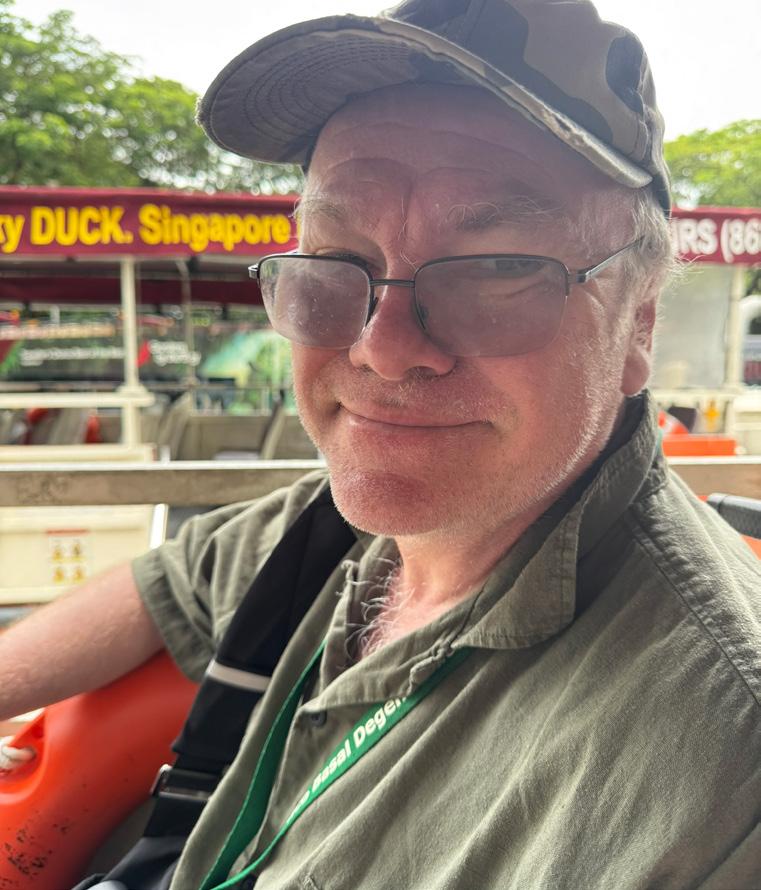
“In March 2023, I first noticed something wasn’t right with Colin,” Lisa explains. “At the time, the changes seemed small. He was dropping things, knocking items over, getting frustrated in a way that wasn’t like him. Then I noticed a resting jolt in his left hand. If he was carrying something, it would shake. He just seemed to change overnight.”
Colin was 58 at the time. Looking back, Lisa describes it as though he suddenly grew older far too quickly. By late summer, she urged him to see the GP. A referral followed for a Parkinson’s assessment, but the consultant recognised that Colin’s symptoms did not fit the typical pattern. An MRI was ordered and the waiting began.
While they waited for answers, Colin’s cognitive abilities and spatial awareness declined. By the end of 2023, he had to stop working. “Life changed completely,” Lisa says. “I gave up work because Colin needed more help at home. When he needs something, he needs it immediately. Waiting causes him huge stress.”
Eventually, after private consultations and a referral to Addenbrookes, Colin received a formal diagnosis of CBD in August 2024. It was devastating, but it also allowed them to plan.
They moved house to make adaptations, converting their garage and downstairs bathroom into a bedroom and wet room. They worked closely with occupational therapists and introduced smart technology, such as voice-controlled lighting. Colin also began voice banking, so his voice can continue to be part of his independence for as long as possible.
Amid all these changes, one thing remained nonnegotiable, they wanted to continue enjoying life. “We want to make memories while we can,” Lisa says.
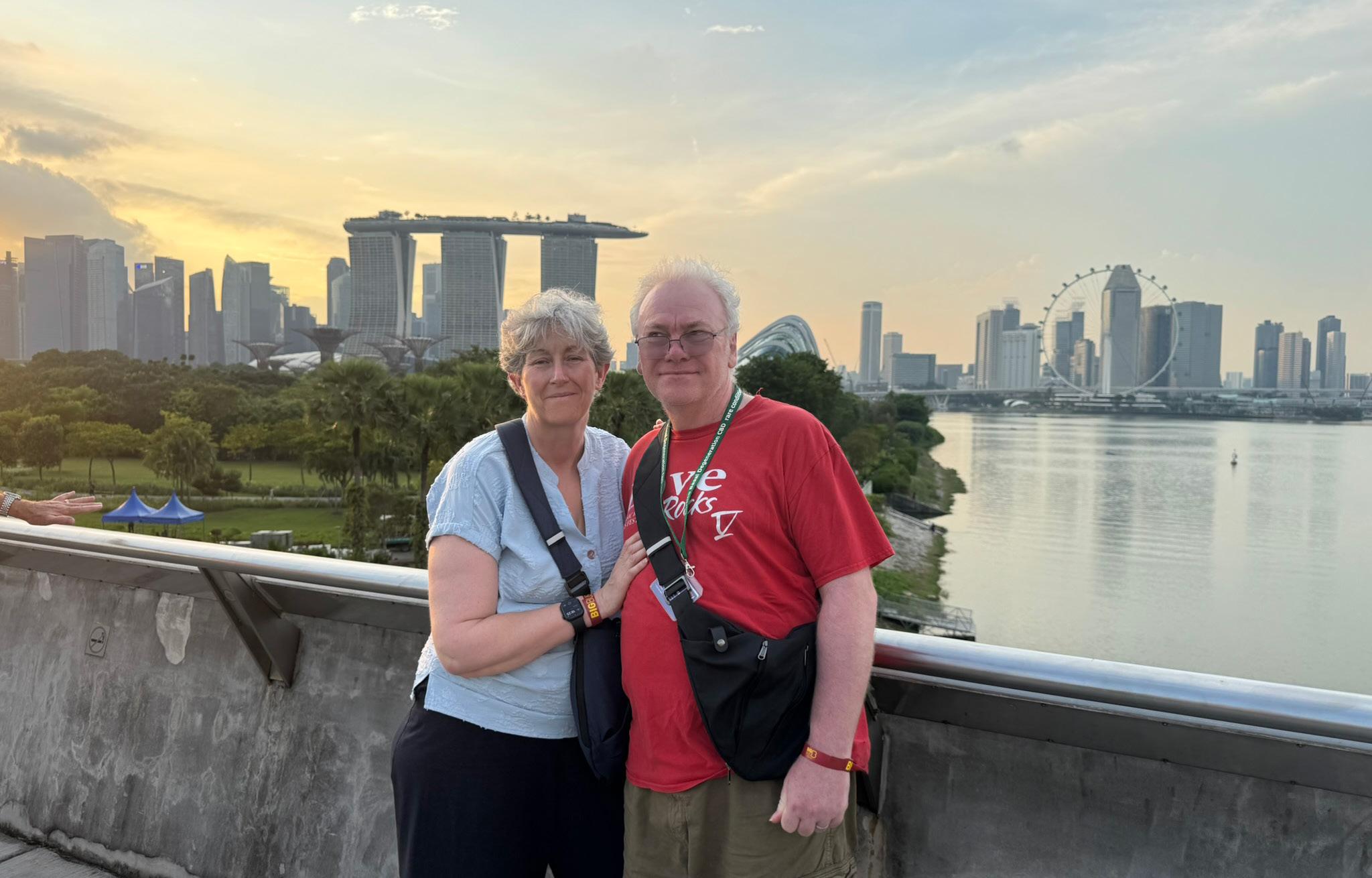
“Holidays remind us that we are still us, husband and wife, not just patient and carer. Our biggest trip so far was to Australia. We flew out and joined a cruise along the east coast, finishing with a couple of nights in Singapore. The flights weren’t easy. Colin doesn’t sleep on planes, but we planned it carefully. His iPad was loaded with things he could watch. Passenger assistance was really helpful.
“If I could give one piece of advice about travelling with CBD, it would be to plan everything. I didn’t use a suitcase delivery service for Australia, but after struggling with luggage I will do that in future. Services like The Baggage Man can take suitcases so you’re only managing hand luggage.
“I write down the itinerary so Colin has a copy he can refer to. We’ve also learned the type of trips best suited to Colin. Cruises are perfect for him. We can travel to lots of places in the comfort of the ship.
“We’ve also discovered smaller river cruises. On one, our luggage was collected from home a week before and was waiting for us on the ship. When we returned, it was delivered back to our house two days later. We travelled with hand luggage only, which made life so much easier.
“IF I COULD GIVE ONE PIECE OF ADVICE ABOUT TRAVELLING WITH CBD, IT WOULD BE TO PLAN EVERYTHING."
LISA AND COLIN IN SINGAPORE
“We break journeys up wherever possible. Recently, we stayed overnight in London before an early Eurostar, turning it into a relaxed evening rather than a stressful rush. We’ve been on a Rhine River cruise for the Christmas markets, taken a coach holiday to Scotland where we were collected from home, and enjoyed short breaks where I don’t have to drive or manage everything myself.
“Travelling gives Colin something to focus on. Even a few nights away makes a difference. Colin loves animals, especially koalas and kangaroos, and seeing new places brings him real joy.
“There are practical things that help. As well as using passenger assistance consider asking airline staff if meals can be served separately, so you can help your partner eat and not have to worry about yours getting cold. Liaise with accommodation in advance about equipment and accessibility.
“We also use a printed sunflower lanyard that explains Colin’s condition. Without it, people sometimes assume he’s drunk. With it, people are kind, patient, and helpful and it often sparks conversations.
“Support from PSPA has also meant a great deal. I’m an Evening Helpline Volunteer, and we attend the Kenilworth Support Group. Colin struggles with technology, but being around people who understand makes a huge difference.
“CBD takes so much away. But it doesn’t have to take everything. As long as we can, we will keep travelling. Because life, even with CBD, is still worth living and enjoying together.”
PRACTICAL TIPS FOR GETTING OUT AND ABOUT
Preparation is often the key to smooth, stress free journeys
Research transport routes and venues in advance, including the specifics of what’s in a hotel’s accessible room.
Check for step free access, lifts, ramps and accessible toilets.
Use your PSP or CBD medical alert care to explain you have PSP or CBD.
Consider purchasing a RADAR key, which gives access to thousands of locked accessible toilets across the UK. The keys are available from Disability Rights UK and some local authorities.
Look into luggage delivery services to reduce physical strain.
Plan journeys door-to-door, including the return home.
Map rest points, cafés or quiet spaces along the way.
Allow extra time for transitions, queues or unexpected delays.
If travelling abroad, check accessibility standards in destination countries and inform airlines, cruise lines and hotels of your needs in advance of your stay and ensure you have travel insurance that covers PSP & CBD.
Use airport or rail assistance services.

USING COMMUNITY TRANSPORT
Local community transport schemes offer accessible, door-to-door transport if you are ill or disabled. Your local authority can advise in England, Wales and Scotland. In Northern Ireland, ask your local health and social care trust.
PATIENT TRANSPORT SERVICES
Ask your GP or healthcare professional about free non-emergency transport to hospital appointments if you need mobility support.
SHOPMOBILITY
Wheelchairs and mobility scooters can be loaned or hired in many town centres and shopping centres.
TRAVELLING BY PUBLIC TRANSPORT
Public transport in the UK is required to offer an accessible service for people with disabilities. Most trains, buses and coaches have ramps and designated wheelchair spaces. Do check in advance with local authorities or coach companies about weight and size restrictions for buses and coaches. In Northern Ireland you can get a SmartPass via Translink and in Scotland there is free bus and tram passes for disabled travellers.
For trains, if you use a wheelchair you may be entitled to a Disabled Person’s Railcard. Check with your local train company for more details.
Wheelchair accessible taxis may be able to carry smaller wheelchairs. Always check with the company when booking. Many local authorities offer taxi card programmes or subsidised transport options for people with mobility challenges.
HIDDEN DISABILITIES SUNFLOWER
The Hidden Disabilities Sunflower symbol that Colin wears on a lanyard, discreetly lets trained staff know you may need extra support or a little more time due to a hidden disability. While it’s not necessary to display this symbol to receive assistance, it can be helpful depending on your current needs and symptoms. The sunflower symbol is widely recognised in shops, airports, railway and coach stations, venues, tourist spots, leisure facilities and by highways agencies. You can wear a lanyard, carry a card, or put a sticker in your car window to identify yourself. For a small charge, the cards can be personalised. Find out more at: www.hdsunflower.com/uk/
Living with PSP or CBD brings undeniable challenges. But as Lisa and Colin’s story shows, life does not end with a diagnosis. It changes, sometimes dramatically, but it can still have joy and connection with others. Getting out and about, whether locally or further afield, is about researching, planning and asking for support.
MORE INFO
If you would like more information on getting around or going on holiday contact our Helpline on 0300 0110 122 or email helpline@pspassociation.org.uk
In spring we'll be talking about getting out and about in our podcast, this episode will be available in March/ April. Scan the QR code to see all current podcast episodes.

LISTENING TO OUR COMMUNITY: WHAT YOU TOLD US ABOUT PSP & CBD
MARK JACKSON, DIRECTOR OF POLICY AND INFLUENCING
Hundreds of people affected by PSP & CBD shared their experiences through the PSPA Survey 2025. Some of you completed it online and others filled in a paper copy, often alongside already demanding caring roles or while living with a complex condition.
First and foremost, we want to say thank you. Each page completed, each box ticked, each comment written has helped us build a clearer picture of what life with PSP & CBD looks like today, and what needs to change.
We are analysing the data and drawing detailed conclusions about what your feedback tells us. We’ll be publishing a report containing these conclusions and recommendations later this year. For now, we wanted to reflect back what you told us, share some high-level themes from your responses and set out how your voices will shape our work in the years ahead.
THE REALITY OF LIFE WITH PSP & CBD
The PSPA Survey 2025 paints a stark picture of daily life for people living with PSP & CBD and for the carers who support them. For many respondents, everyday life is challenging. Loss of independence, communication difficulties, mobility problems, eating and swallowing issues, and changes in thinking and behaviour are common. Mental and emotional strain, anxiety, frustration, low mood and stress feature heavily in people’s lives.
What is particularly striking is the level of severity and dependency reported. A large proportion of respondents described PSP or CBD as having a severe impact on their day-to-day functioning, often requiring full-time care and support. This reflects what we hear through our Helpline and support services.
DIAGNOSIS REMAINS TOO SLOW, TOO COMPLEX, TOO OFTEN WRONG
One of the clearest and most troubling messages from the survey concerns diagnosis. Too many of you are still describing long and complicated journeys before receiving a correct diagnosis of PSP or CBD. For some, it took several years from first symptoms to diagnosis. Many had to see their GP multiple times before being referred to a specialist, and a significant number were passed between different professionals along the way.
Perhaps most concerning is that misdiagnosis remains common, with Parkinson’s disease being the most frequent initial diagnosis. While overlap between these conditions is well recognised, delayed or incorrect diagnosis can mean missed opportunities for appropriate support, information and planning at a critical time.
Although there are some signs of gradual improvement compared to previous years, such as slightly shorter waits in some parts of the pathway, you told us that diagnosis is still too slow and too inconsistent.
This reinforces the importance of PSPA’s ongoing work to raise awareness of PSP & CBD among healthcare professionals, advocate for faster access to specialist assessment, and continue to push for more workforce capacity and shorter waiting lists in the NHS.
A SYSTEM THAT FEELS FRAGMENTED
Another strong theme running through the survey is a lack of coordination between the different health and social care services involved in caring for people affected by PSP & CBD. Many respondents told us they do not have a single named professional coordinating their care, but would like one. Others were unsure who, if anyone, played that role. This lack of clarity can leave families feeling they have to navigate a complex system alone, repeatedly explaining the condition to several different health and social care professionals who may have limited knowledge of PSP or CBD.
When conditions are as rare, complex and progressive as both PSP & CBD are, coordination matters. Without it, care can become reactive, disjointed and exhausting for families to manage. This is an area where we are particularly concerned and where we believe sustained advocacy is needed to improve joined-up care across health and social care services.
THE HIDDEN COST OF PSP & CBD
Your responses highlighted the financial impact of PSP & CBD. Many families reported facing new or increased costs related to care, equipment, transport or reduced income. While some said they were managing reasonably well, a significant proportion told us they were struggling sometimes severely. Alongside this, many carers reported not receiving financial support linked to their caring role or being unsure what they might be entitled to. This echoes what we hear regularly on our Helpline and in our Support Groups, that navigating benefits and entitlements can be confusing, time-consuming and stressful.
Supporting people to access the benefits and entitlements they are entitled to remains a key priority for PSPA, both through the direct support we provide, and through wider campaigning for a fairer system.
CARERS ARE THE BACKBONE OF SUPPORT AND UNDER IMMENSE STRAIN
For the first time in a PSPA Survey, we asked carers directly about their caring role. Many carers reported providing care for very long hours each week, often alongside work or other responsibilities. Large numbers told us they felt emotionally overwhelmed, socially isolated, and that their own wellbeing had been negatively affected by their caring role.
At the same time, carers are often the people who coordinate appointments, manage medication, seek information and act as advocates, not just for their loved one, but within a complex system that doesn’t always recognise their role.
Supporting carers is essential and carers deserve a better deal from our health and social care system. Improving recognition, access to assessments, emotional support and practical help for carers will remain central to PSPA’s work in 2026 and beyond.
WHAT YOU TOLD US ABOUT PSPA
Where people have used PSPA services, satisfaction is high. Support Groups and our Helpline, are widely valued by those of you who access them. However, the survey also shows that not everyone is aware of all the services PSPA offers, particularly people earlier in their journey or people living with the condition themselves. Carers are often the main point of contact with PSPA, acting as a bridge between the charity and the person they support. This tells us that the challenge is to help people find PSPA sooner and make it easier to know where to start to access support from us.
RESEARCH: WILLINGNESS, BUT BARRIERS REMAIN
Finally, the survey explored research. Many respondents told us they have never taken part in research. Not because they are opposed to it, but because they’ve never been asked, don’t know how to get involved, or feel their condition is too advanced.
At the same time, there is clear interest in research participation and brain donation. This suggests a gap between willingness and opportunity, one we are keen to help close by improving information, signposting and collaboration with researchers.
WHAT HAPPENS NEXT?
Your feedback has confirmed where PSPA’s focus needs to be – continuing to raise awareness of PSP & CBD among the people who need to know more about the conditions, advocating for faster diagnosis and better coordinated care, supporting carers, and connecting our community with support, entitlements and research opportunities. Most importantly, it reminds us of the scale of the challenge and how much more work there is to be done.
Once again, thank you to everyone who took part. Your voices are shaping our priorities, strengthening our advocacy, and helping us push for a better future for everyone affected by PSP & CBD.
FOUR MARATHON STORIES, ONE SHARED CAUSE
Every April, the London Marathon brings together thousands of people with one thing in common, a reason to run. For TeamPSPA, they are running to honour their loved ones and to make things better for future families. Here four members of TeamPSPA share their stories.
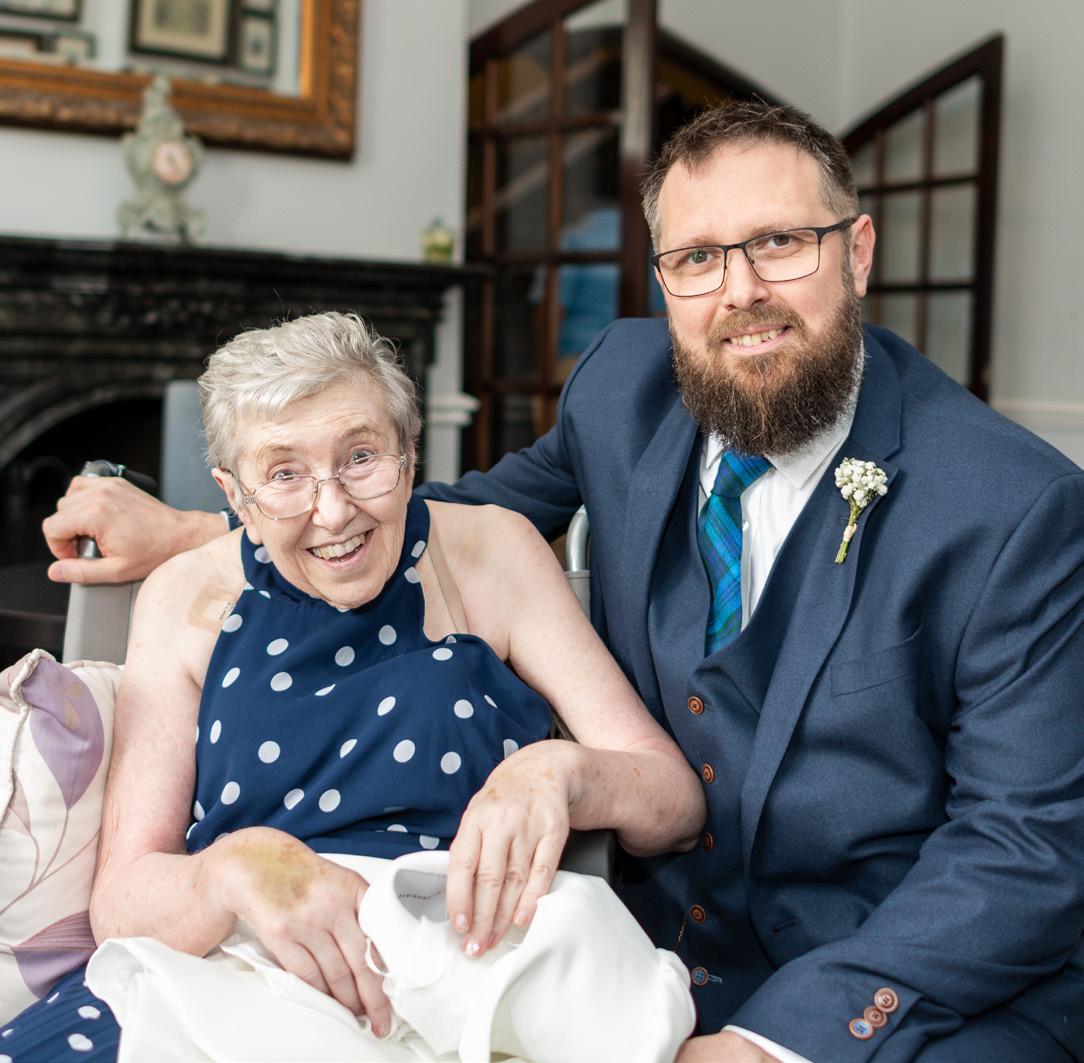
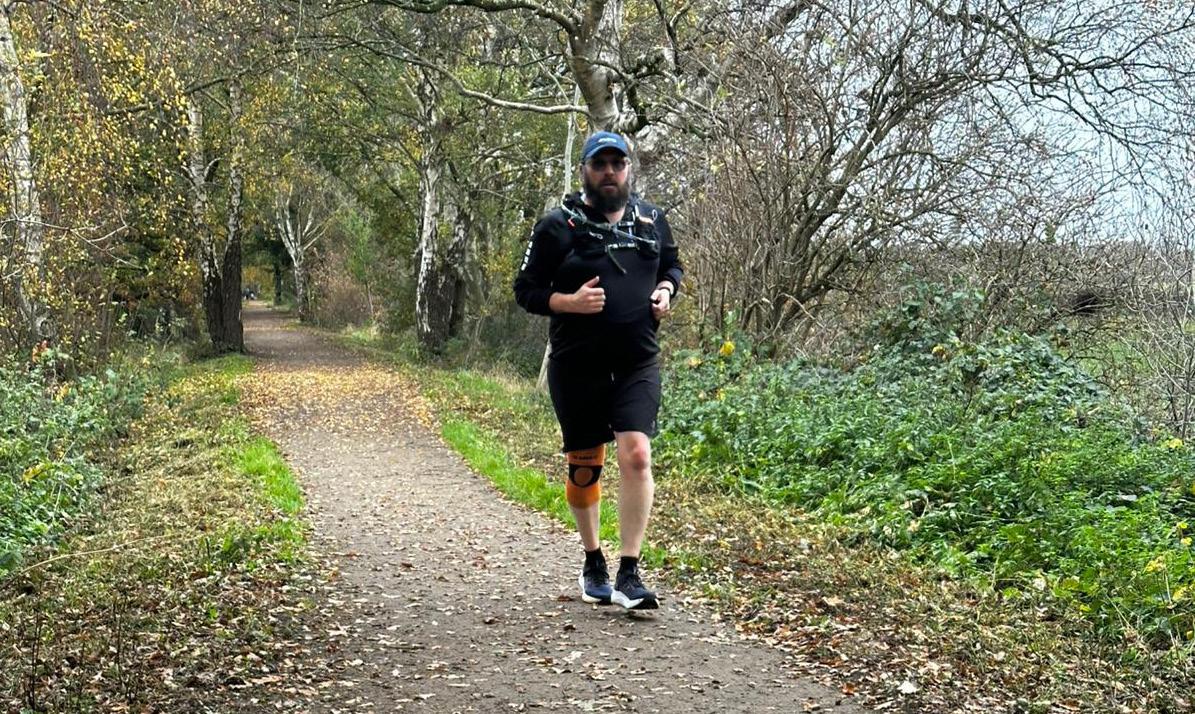
Two years ago, Gareth Jones would have laughed at the idea of running a marathon. But this April, he’ll be on the start line, driven by a promise to his mum, whose diagnosis of PSP gave him a reason to run.
“If you’d asked me a couple of years ago whether I’d ever run a marathon I’d have laughed. I’m a 110 kilo,
slightly overweight, middle-aged bloke. The London Marathon is about the most unlikely thing I could imagine myself doing.
“Mum was diagnosed with PSP seven years ago, after a long and frustrating round of misdiagnoses. Like many, at first she was told it was Parkinson’s disease. She’d had a couple of falls and was losing dexterity, but it was never classic Parkinson’s. We knew something wasn’t right, so we kept pushing for answers.
“Eventually she was referred to the Walton Centre in Liverpool, where we finally got the correct diagnosis. We’d never heard of PSP. And that’s part of the problem. We found, time and time again, that even medical professionals had limited knowledge of it.
“My dad contacted PSPA. The help and information they gave Mum and Dad was invaluable. They attended PSPA’s Stockport Support Group, met other families and learned from people who had been living with the condition for years. Just being able to talk to others who understood made a huge difference.
“Because of all that support, I wanted to give something back. That’s how I ended up signing up for the marathon. I remember saying to Mum, ‘This is something you’d never expect me to do.’ She laughed. No one expected me to do this, including me. I know it won’t be easy. To be honest I’m terrified.
“I’m an engineer, I travel all over the country and sometimes across Europe. I was in Scotland recently, running in torrential rain, wondering what on earth I was doing. You have to fit training around your life whenever you can. What keeps me going is simple, I promised Mum I’d do this.
“Sadly we lost Mum in November 2024. When I run past the rehab centre where she spent time before moving into the care home, I say hello to her. I thank her for keeping me going. This run is for her.”
GARETH WITH HIS MUM
TRAINING FOR HIS FIRST MARATHON
“I PROMISED MUM I’D DO THIS”
RUNNING WITH MR SLOTH
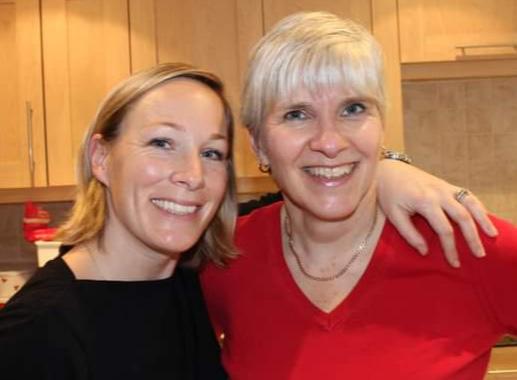
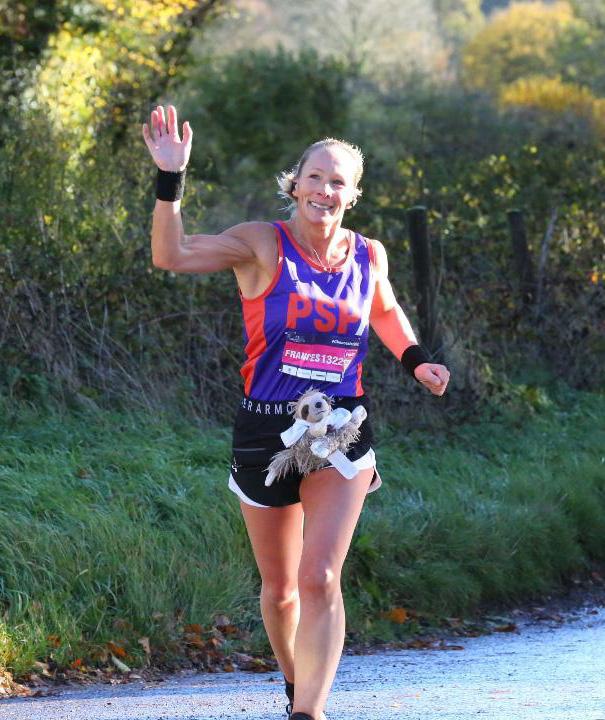
After watching her mum’s long and devastating journey with CBD, and experiencing the support PSPA provided to her family, Fran Seward decided to run for PSPA. Fran will be running with Mr Sloth, a small cuddly toy her mum clung to for comfort in her final months.
“I’m not a natural runner. But this April, I’ll be on that start line, running for PSPA. Mum was diagnosed with CBD. Like so many families, we had never heard of it before it entered our lives.
“The first sign that something wasn’t right was when Mum started tripping. She had always been fit and healthy. She walked everywhere, did a bit of running and lived an active, outdoorsy life. When Mum started falling, it didn’t make sense.
“Over time, more things began to change. She struggled with stairs, her coordination deteriorated, and there were moments of forgetfulness that didn’t feel like her. We knew something wasn’t right, but no one could tell us what.
“She moved around the NHS with various suggestions such as vitamin deficiencies, fibromyalgia, memory issues. She underwent memory testing, where dementia was mentioned. It was heartbreaking watching her anxiety grow. She had a bad fall, breaking her arm and injuring her face. After that, the fear of falling stayed with her and she became frightened of going out in case she fell again.
“Eventually, we were put in touch with Dr Ghosh who diagnosed CBD. While the diagnosis itself was devastating, there was also a sense of relief. We weren’t imagining it. This horrible thing had a name.
“Mum was diagnosed during Covid, which made everything even harder. We had a family Zoom call with my sisters Clare and Jenny, where Mum and Dad told us the news. Like everyone does, the first thing we did was Google it, and that was terrifying.
“PSPA became a lifeline for us. Dad started receiving the magazine and for the first time we had clear, detailed, compassionate information. We learned what CBD was, what might happen next and how to cope. It was the first time we felt less alone.
“One constant comfort for Mum was ‘Mr Sloth’, a soft toy she never let go of. She fiddled with him constantly, talked to him, laughed with him. Mr Sloth comes running with me, as a constant presence of my mum.
“When running gets hard, I remind myself what Mum went through. On marathon day, I’ll be running for Mum, for PSPA, and for every family walking this path.”
“I’M NOT A NATURAL RUNNER. BUT THIS APRIL, I’LL BE ON THAT START LINE, RUNNING FOR PSPA."
FRAN WITH HER MUM
FRAN TRAINING FOR THE MARATHON WITH MR SLOTH
THREE GENERATIONS OF PHYSIOTHERAPY
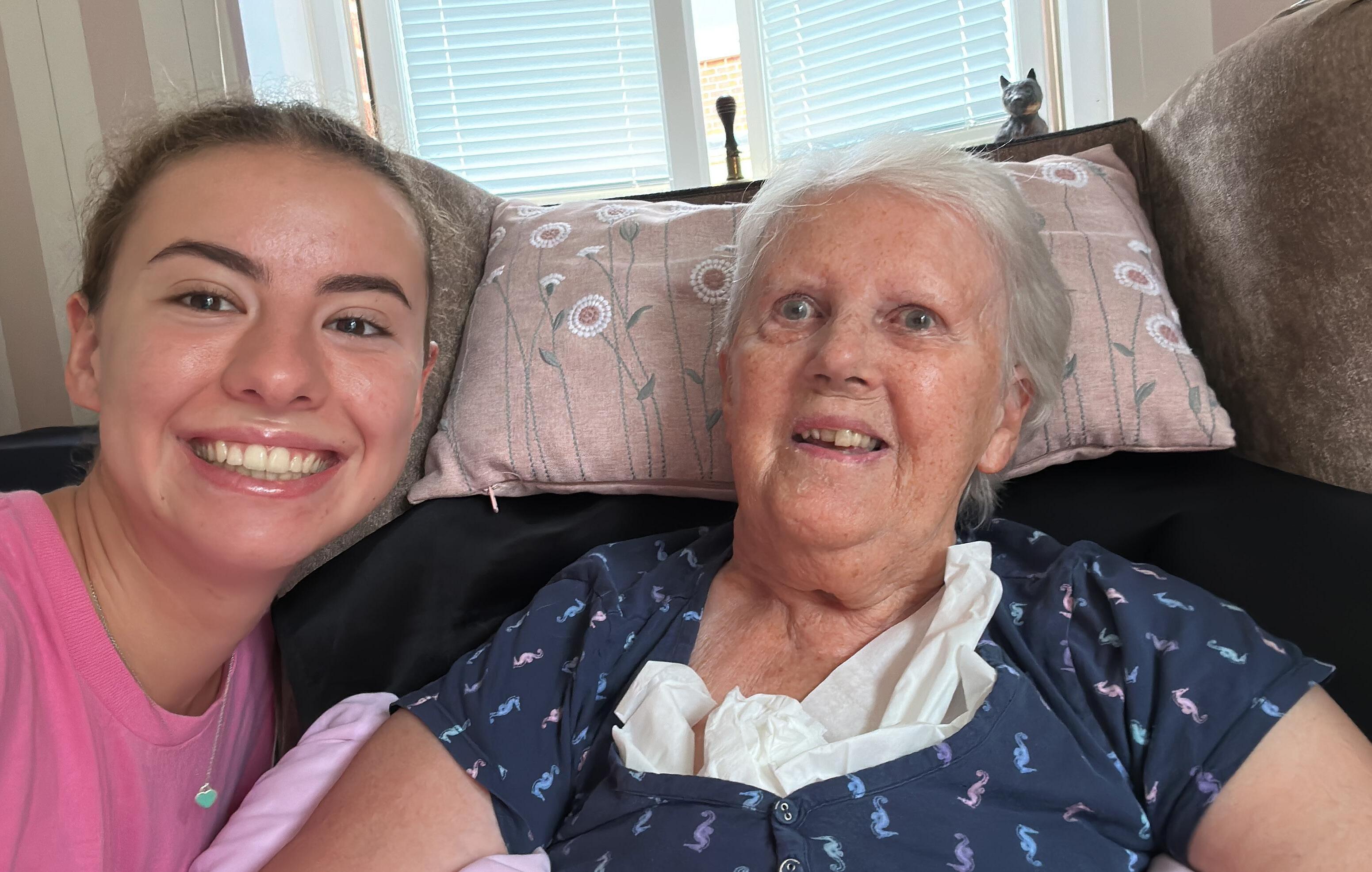
Physiotherapist Emily is running the London Marathon in memory of her grandma, Lally, who died from PSP. For her, the run is about honouring her grandma’s legacy and helping other families.
“Physiotherapy runs in my family. My grandma was a physiotherapist, my mum is a physiotherapist, and now I am too. We’re three generations, all working in different areas of physio, but connected by the same values around helping people maintain independence, movement and quality of life.
“Lally had a big influence on me. She was fiercely independent, quite loud, full of life, and completely herself. In our family, the phrase ‘you’re turning into your mother’ gets thrown around a lot, but if I turn out anything like Lally, I’ll be very happy!
“Four years ago, she was diagnosed with PSP. At the time, I had no idea what PSP was. Despite being a physio, I was still at university, and it wasn’t something we had covered in any depth. I started doing my own research, and the most useful, clear information I found was on the PSPA website. That was the first time I really understood what she was facing.
“It took about 18 months to get a diagnosis. During that time, things slowly but noticeably changed. Every time I went back, something had changed again. Lally was gradually losing herself. That was the hardest part to witness.
“Before Lally died, I told her I was running the marathon for her. She couldn’t speak, but I knew she understood. As a physio, she would have valued research and awareness. It will be hard, but knowing why I’m doing it keeps me going.”
“LALLY HAD A BIG INFLUENCE ON ME. SHE WAS FIERCELY INDEPENDENT, QUITE LOUD, FULL OF LIFE, AND COMPLETELY HERSELF."
EMILY WITH HER GRANDMA, LALLY
“THIS IS FOR HELEN”
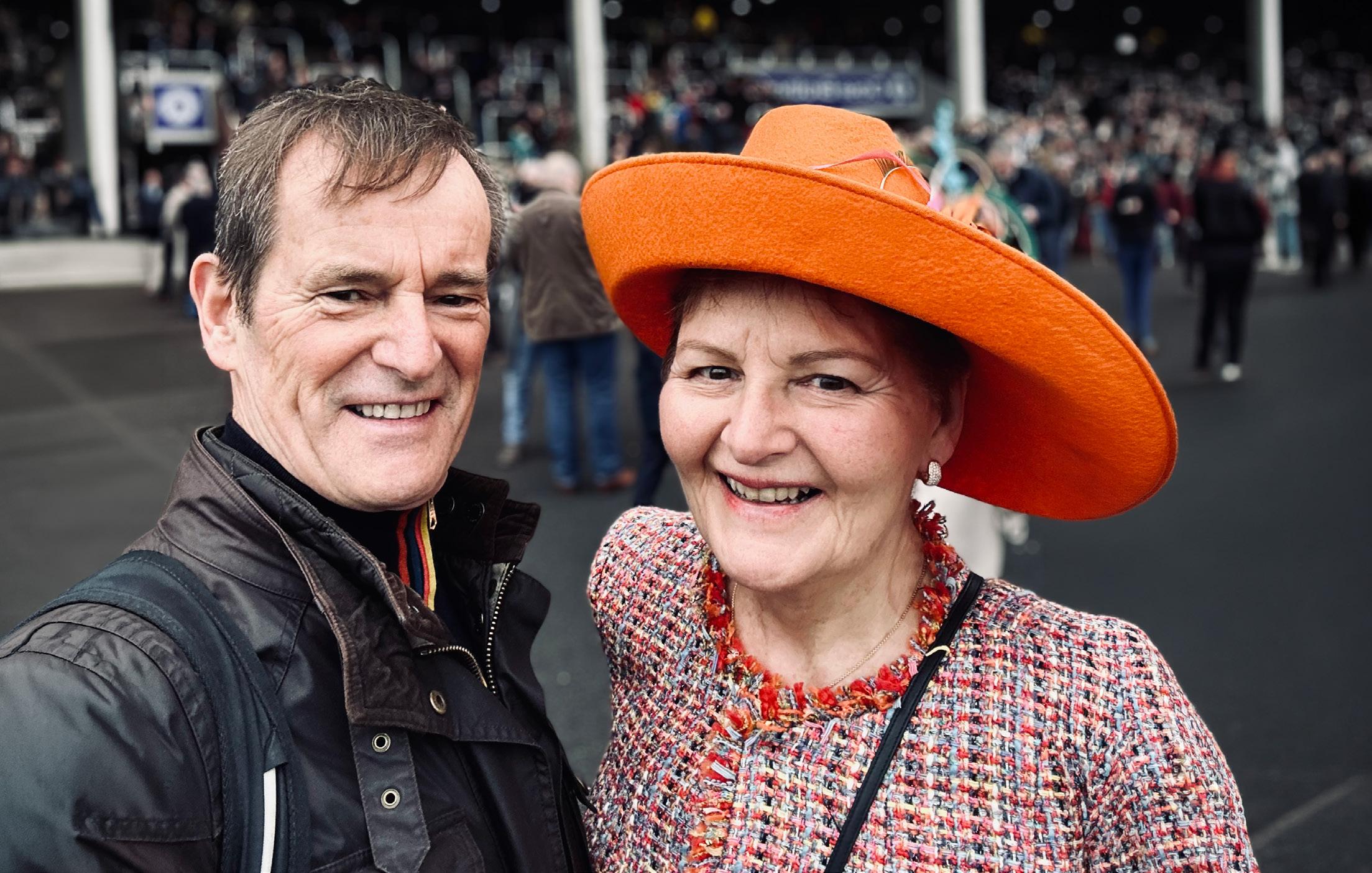
“EVEN AS CBD ROBBED HELEN OF THE ABILITY TO READ, WRITE, COOK AND WALK SHE REFUSED TO GIVE UP ON LIFE."
Lovatt is running the London Marathon for PSPA, in memory of his wife Helen, who died in March 2025 from CBD.
“From the first signs of change in Helen to her death, it was just over five years. Two of those years were dedicated to finding the right diagnosis, hopping between consultants, asking questions and trying to grasp what was really happening to her. Finally, a lumbar puncture revealed that Helen’s spinal fluid had high levels of tau, leading to her CBD diagnosis.
“Our four children started researching CBD. In their search, they stumbled upon PSPA, which made a huge difference for them and me. PSPA helped us understand what was happening to Helen. We read other people’s stories on the website and in the magazine, and joined the Facebook group.
"When you’re dealing with something like this, you want to know what the journey might look like, so you can prepare, both emotionally and practically. Talking to other families and professionals gave us a more realistic view of what was happening, rather than an overly clinical picture."
“Helen wasn’t interested in attending any Support Groups. She didn’t want to talk about it endlessly
or analyse it, but to us, her carers, this support was invaluable. She was incredibly bright. A lawyer, she was always active and loved being outdoors. She was deeply involved in our community, a true giver. Her life was a vibrant tapestry of fun, kindness, calm, organisation and caring for others. To those around her, she was a beautiful person, bringing joy and generosity of spirit with kindness warmth and friendship. She has left an enormous, brightly coloured hole in our lives.
“Even as CBD robbed her of the ability to read, write, cook and walk she refused to give up on life. Helen always focused on what she could do rather than what she couldn’t. She found new ways to connect and carry on as if it’s all a ‘new’ normal. That mindset carried her and us a long way.
“I never thought I’d run a marathon! I’m in good shape and have done fundraising challenges before, but the longest I’ve run is a half marathon, 35 years ago. I wanted to do something in Helen’s memory.
“Training has been really good for me. Cathartic even. For me, it’s not just about becoming a runner or checking something off my list, but about honouring her memory and raising money that might help another family going through this.”
Iain
IAIN AND HELEN LOVATT
OUR NEW RESEARCH STRATEGY TO ACCELERATE PROGRESS IN PSP & CBD
BY MEGAN HODGSON, RESEARCH COORDINATOR
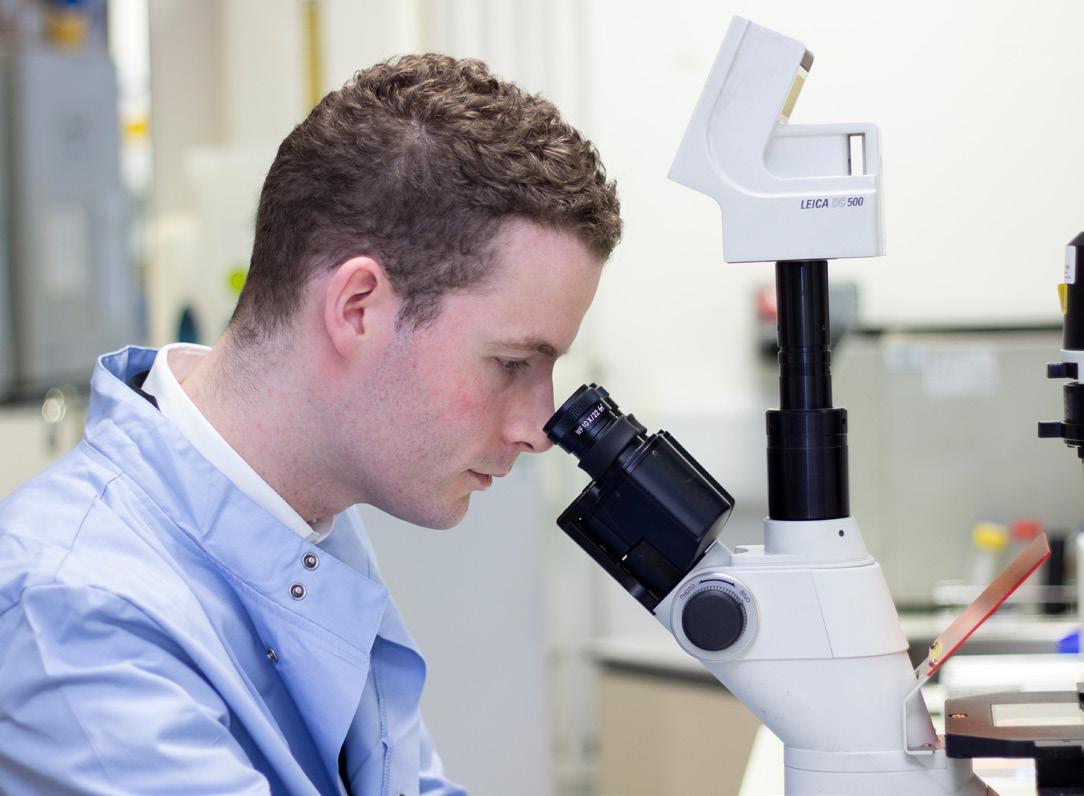
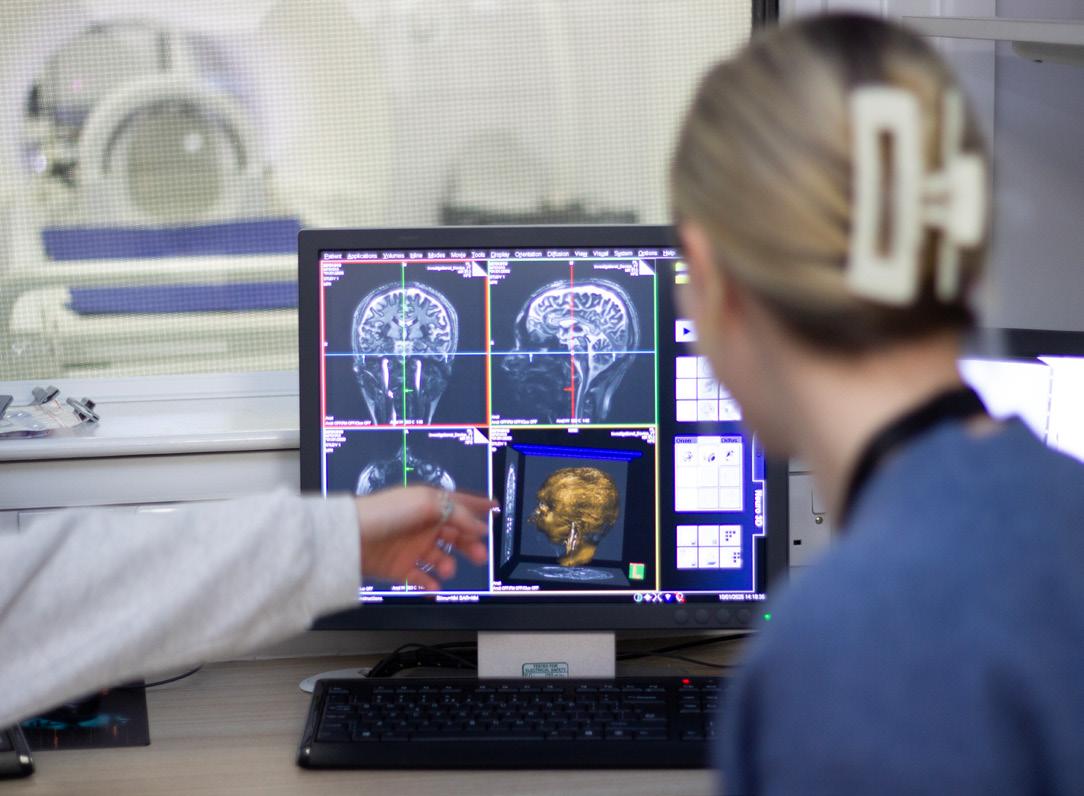
Over the past year, PSPA has worked alongside people living with and affected by PSP & CBD, clinicians, healthcare professionals and researchers to create a new research strategy for 2026 to 2030. The strategy is built on what people living with PSP & CBD, and their families and carers, tell us what matters most to them. Research for Impact encompasses three core pillars that define where PSPA believes research can have the greatest power. These three pillars is where we will focus our funding.
1. DIAGNOSIS
We know that people with PSP & CBD see many healthcare professionals over several years before receiving the correct diagnosis. For a neurodegenerative condition, this delay is unacceptable. A diagnosis brings clarity after years of uncertainty, but we want to achieve this sooner. We will fund and support research that improves early and accurate diagnosis, including work on biomarkers and diagnostic tools.
2. TREATMENT
We know our community want to support research aimed at curing both devastating conditions. As well as focusing on symptomatic treatment for both motor and nonmotor symptoms to support quality of life now, we will also support research that targets the underlying causes of PSP & CBD to secure a cure for the future.
3. CARE
High quality, joined-up multidisciplinary care including physiotherapy, speech and language therapy and palliative care is vital for people to be able to achieve the best possible quality of life. This is why we will support research that strengthens multidisciplinary approaches. This research will also support our influencing activities to help build clinical knowledge and influence clinical practice to ensure people with PSP & CBD can access the very best evidence-based care from the NHS.
PRINCIPLES THAT GUIDE OUR WORK
Alongside what we fund, we have set out five principles that will be embedded across all of PSPA’s research activity.
GREATER RESEARCH INVOLVEMENT FOR PEOPLE LIVING WITH PSP & CBD
We will grow our Patient and Public Involvement and Engagement group (PPIE) and find new ways to increase the involvement of people living with both conditions. The real experts in PSP & CBD are those living with the conditions and those who care for them, and that expertise must shape research so that it makes the biggest difference.
DEVELOPING THE NEXT GENERATION OF LEADERS
We want to ensure we are securing the future of PSP & CBD research by providing opportunities for the best and brightest young minds to develop into tomorrow’s future clinical and research leaders. We will do this through Masterclasses, grant funding, networking opportunities and access to PPIE.
STRONGER COLLABORATION
PSP & CBD are far too big for one organisation to be working on alone. We must continue to foster collaborations both in the UK and internationally to drive forward progress. In 2026, we will cohost Neuro2026 in London with CurePSP, bringing together hundreds of leading researchers and clinicians into one room to answer the same question: how do we improve the lives of people with PSP & CBD? PSPA will be at the heart of these conversations, ensuring these vital connections are nurtured.
INCLUSION TO BUILD STRENGTH
Research must reflect the diversity of the communities it aims to serve, but we know that's not always the case. We will work with researchers to help them improve the inclusion of people often underrepresented in research, connecting with people across the country via support groups and those who’ve expressed an interest in research participation.
This strategy has been shaped by the priorities highlighted through our Understood Appeal, which shared the most urgent needs identified by people living with and affected by PSP & CBD. From improving diagnosis through biomarker research, to advancing treatments and strengthening care, this plan is grounded in what our community has consistently asked for.
This is an ambitious strategy, but there has never been a better time to harness advances in science, medicine and technology for the benefit of people living with these cruel diseases. Together, as a community of supporters, people living with and affected by PSP & CBD, clinicians and researchers, we are setting a clear direction for the next five years. Thank you for being part of this journey with us as we power through progress.
CLEAR COMMUNICATION
Finally, research only has impact if it is shared and understood. We will develop new, engaging ways to communicate research progress, as well as building on our online research information sessions, podcasts and newsletters.
THIS IS AN AMBITIOUS STRATEGY, BUT THERE HAS NEVER BEEN A BETTER TIME TO HARNESS ADVANCES IN SCIENCE, MEDICINE AND TECHNOLOGY.
VOICE BANKING SUPPORT FOR PEOPLE LIVING WITH PSP & CBD - ELEVENLABS
PSPA is pleased to share that we have partnered with ElevenLabs, a leading organisation in AI audio and voice technology, to offer free voice banking for people diagnosed with PSP or CBD.
For many people living with PSP or CBD, changes to speech can develop over time. Voice banking offers the opportunity to preserve the sound of your voice so that, should communication become more difficult, you can continue expressing yourself in a way that feels natural and personal. Protecting this part of your identity can make a meaningful difference to everyday interactions with family, friends and carers. We encourage people diagnosed with PSP or CBD, who are registered with PSPA, to complete voice banking as soon as possible.
WHAT THIS PARTNERSHIP MEANS FOR YOU
• Free access to ElevenLabs’ voice cloning and text to speech tools. Voice cloning is the same as voice banking (but at times requires an internet connection to work).
• The ability to create a highly accurate Professional Voice Clone (PVC), that closely reflects your natural voice.
• By preserving your voice, the initiative aims to maintain a crucial aspect of your identity and facilitate more natural communication with loved ones and carers. Your voice can be used on your smart phone, tablet or laptop and is compatible with communications apps such as Predictable (Apple and Android), Grid 3 (including Grid for iPad), Speech Assistant (Apple and Android), Tobii Dynavox Communicator5 and Mind Express, amongst others.
CREATING YOUR VOICE
• An Instant Voice can be created from as little as 30 seconds of recorded speech.
• If you have around 10 minutes of recordings taken from almost any audio or video source you can create a Pro Voice, which offers even higher quality.
WHAT TO DO NEXT
We encourage you to contact your Speech and Language Therapist (SLT). They can help you decide whether voice banking is right for you and support you through the ElevenLabs process. PSPA is unable to provide technical assistance, so your SLT’s involvement is essential.
To access the free service, you must:
• Be fully registered with PSPA
• Have a confirmed diagnosis of PSP or CBD
• Live in the UK.
Please contact the PSPA Helpline on helpline@pspassociation.org.uk to request details of how to proceed and provide us with the email contact of your SLT. We will contact your SLT with information about the process.
Before using the service, please review ElevenLabs’ Terms of Service. At present, they state that your voice is not accessed or used for commercial purposes. You can also choose to opt out of allowing your recordings to help train their system. Please note that this service is delivered by ElevenLabs, not PSPA.
WHAT’S HAPPENING IN PSP & CBD RESEARCH?
The third PSPA Research Information Session of 2025 took place in November, bringing together leading researchers from Cambridge, Edinburgh, Durham and London.
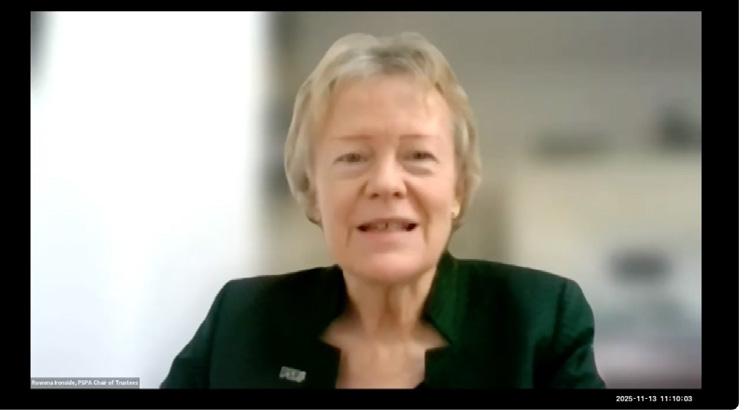
The session offered an overview of the progress being made across multiple areas of PSP & CBD research, highlighting both momentum and collaboration in the field.
A familiar face to PSPA, former Trustee and Research Committee member, Professor James Rowe opened the session with an overview of PSP & CBD. He also gave an update on research he and his team are working on at the University of Cambridge.
This opener led nicely into the first talk by Dr Rob Durcan, a PSPA Fellow who has recently moved from Cambridge to Ireland to take up a consultant role alongside continuing his vital research. He updated us on the NORAPS trial, a drug trial of atomoxetine which is being used to combat the symptoms of apathy and impulsivity in PSP.
The team are running data quality checks, and we can hope to see results early this year, which we are looking forward to sharing with you. Up second was Dr Paul Baxter who works at the Dementia Research Institute in Edinburgh on how high throughput drug screening works, and how he is using this to dial down and find compounds that may be drugs of interest for future clinical trials.
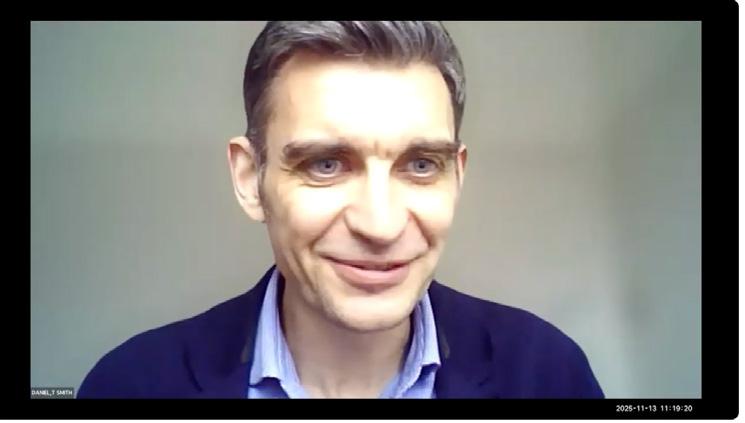
Before a short break, we heard from Professor Dan Smith from Durham University. Alongside PSPA, Professor Smith has been running a project trying
to assess the usefulness of PRISM glasses. The respondents showed less than a third of users of PRISM glasses agreed or strongly agreed they were helpful, and only 23% continued to use them. He is continuing to work on how we can improve outcomes for users.
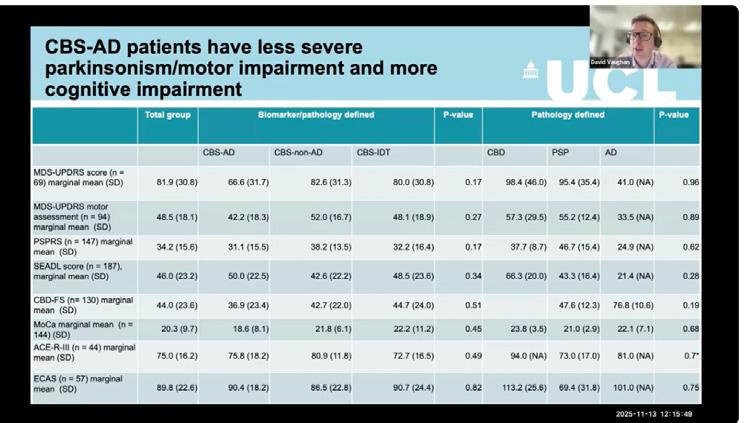
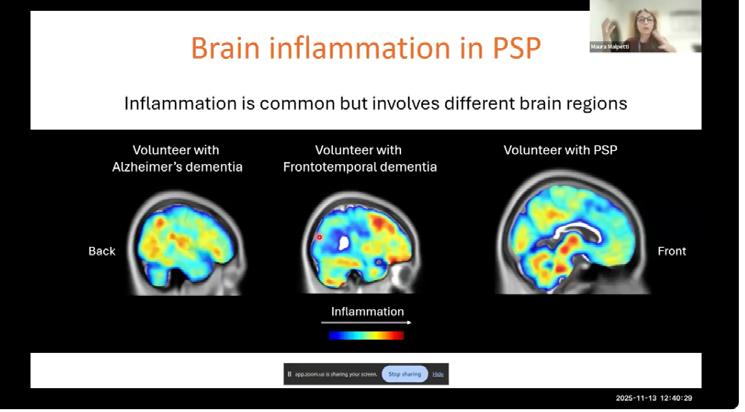
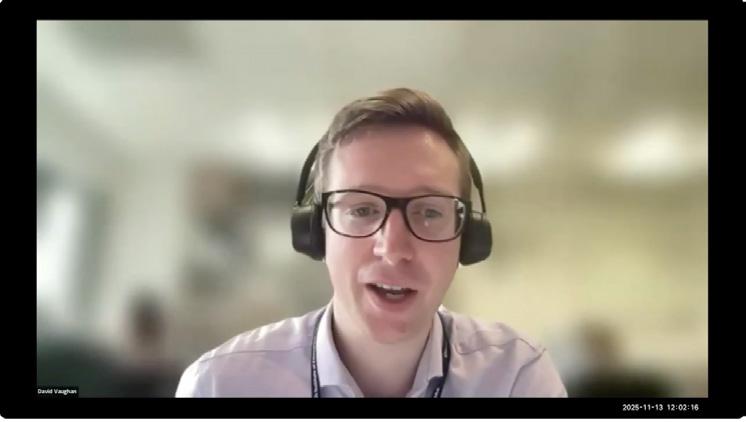
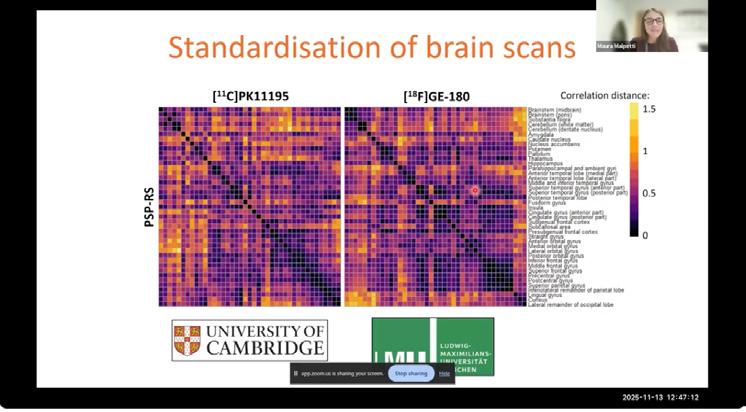
After a short break, Dr David Vaughan joined us for a talk focused on CBS. He explained the difference between CBS & CBD, how they’re diagnosed in clinic and went on to speak about his research on characterising the clinical, biomarker and pathological features of CBS. The session was rounded off by Dr Maura Malpetti, taking us full circle and back to the University of Cambridge. Dr Malpetti is using brain scans to study inflammation in people with PSP. These scans, alongside bloods tests are being used to identify where we might be able to target in the brains immune system to combat this inflammation and slow progression.
We look forward to seeing many of you again for our Research Information Sessions in 2026!
WATCH THE SESSIONS
Scan the QR code to watch this Research Information Session. You can see all Research Information Sessions on our website.
MEET OUR VOLUNTEER BEFRIENDERS
Living with, or caring for someone affected by PSP or CBD can be an isolating and overwhelming experience. The lack of awareness of these conditions means that it can be hard to find people to talk to who truly understand. PSPA’s Befriending Service exists to help provide connection and oneto-one emotional support from trained volunteers who understand the challenges families face.
PSPA Befrienders provide someone to listen, practical support and companionship to help people in whatever way makes the biggest difference to them.
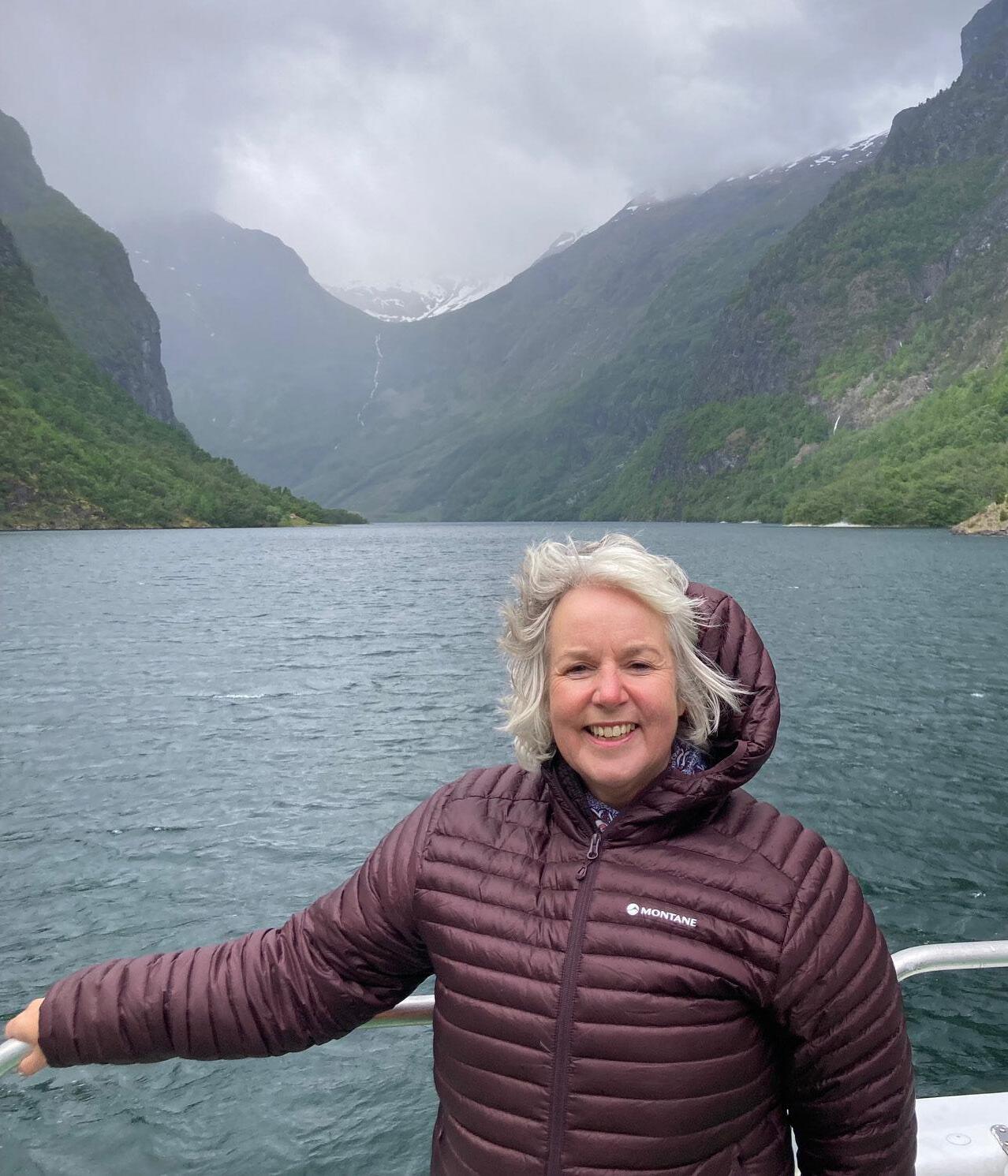
Jo Gass became involved with PSPA when she retired from nursing. Jo’s dad died from PSP in 2011 and she now volunteers as a Befriender, supporting people living with PSP & CBD and their families. She is currently supporting three families.
“My dad died of PSP in 2011. I already had some awareness of PSP because I spent 10 years working in a hospice and was then a palliative care nurse specialist in a large teaching hospital for 20 years.
“I retired five years ago but still wanted to do something meaningful. I started volunteering on PSPA’s Helpline and then became a Befriending Volunteer. The first person I supported was living in a care home with CBD. I helped her to come to terms with her diagnosis and supported her husband over the phone.
“Support was often about the very simple things, making sure she had the right cup to drink from or TV controls she could manage with her hands, so I suggested a referral to a Specialist Palliative Care Physiotherapist.
“I then supported a lovely lady who self-referred. Her husband had PSP and he was living in a nursing home. She wanted face-to-face support, so I visited her at home. We once went to visit her husband in the care home together. It reminded me so much of my dad. Sharing experiences, problems and issues with PSP
Whether that’s talking through a new diagnosis, visiting someone in a care home or simply offering a little companionship. Many of our Befrienders are motivated by their own personal experiences of PSP or CBD and bring empathy, insight and compassion to the role.
Here, we speak to three PSPA Befriending Volunteers about what the role means to them, how they support others and the difference befriending can make to people living with and affected by PSP & CBD.
can be so helpful to reduce isolation you feel with a rarer condition.
“She was struggling with the care home because the staff didn’t really understand PSP. She was worried about his choking and his comfort. We asked for a referral to a specialist palliative care physiotherapist. I also supported her through a very stressful Continuing Healthcare Funding application. As a volunteer, I couldn’t be involved in the process, but I was a sounding board and moral support for her.
“I get a huge amount of satisfaction from the role. You’re offering support by simply being there so people can share their experiences, feelings or simply vent their anger or frustration. So often people just need someone who understands.
“At the moment I’m supporting three people. One is face-to-face, and the other two are via Zoom and phone calls. I feel it’s really important that everyone gets support towards the end of life and that they have a dignified and peaceful death. Making sure people have the right support at the right times matters so much. It also makes a huge difference to the families.
“Volunteering allows you to make a difference to people who are struggling. It can help them feel cared for, listened to and treated with dignity. To know that your time and presence can help, even in small ways, is deeply meaningful.”
MEET JO
“I GET A HUGE AMOUNT OF SATISFACTION FROM THE ROLE. YOU’RE OFFERING SUPPORT BY SIMPLY BEING THERE SO PEOPLE CAN SHARE THEIR EXPERIENCES, FEELINGS OR SIMPLY VENT THEIR ANGER OR FRUSTRATION."
MEET JON
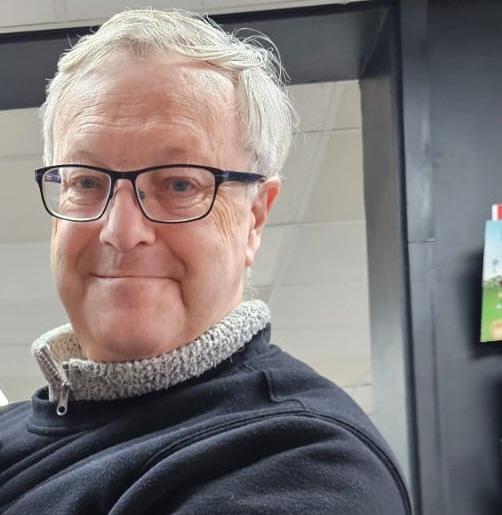
Jon Battershill became a volunteer with PSPA after the death of his wife, Theresa, to PSP. Determined to give something back after Theresa’s death in 2016, Jon now volunteers as a Befriender, supporting people and families affected by PSP & CBD.
“My wife, Theresa, was diagnosed with PSP in May 2014, but in truth, she had been unwell for several years before that. Looking back, her symptoms began to emerge towards the end of 2011. By the time we received the diagnosis, her condition was already progressing rapidly. Theresa was admitted to hospital six times with aspiration pneumonia, and despite everyone’s best efforts, she died in July 2016. She was just 58 years old. When her symptoms first appeared, she was only 53.
“During those years, PSPA became a good source of support for us. After Theresa died, I wanted to volunteer. At the moment, I support three families. I befriend one family via Zoom, visit a man in a nursing home in person, and keep in touch with an elderly couple who may need more support soon. As PSPA receives more referrals, the need for Befrienders continues to grow.
“I speak to the husband whose wife has PSP over Zoom. There are many parallels between their journey and my own, although PSP is so variable that no two experiences are ever exactly the same. While the familiar challenges such as the loss of mobility, swallowing difficulties, and changes in
speech are there, but what has struck me most is how incredibly well this family has adapted. They have retained a sense of positivity in the face of something that is relentlessly difficult, and I find that truly inspiring. Because PSP is such a rare condition, Zoom works extremely well. You can’t always match people geographically, and remote support allows connections that otherwise wouldn’t be possible.
“The second person I support lives closer to me and has been diagnosed with PSP for about a year. He now lives in a nursing home near his family. My role here is very much about companionship and helping him stay connected to his life and interests. He follows everything we talk about, whether that’s engineering or life in a different part of the country.
“A nursing home is a unique environment, and it takes time to adjust to it. My wife lived in a nursing home, and towards the end of her life, we effectively moved in. I spent 90 per cent of my time there with her. That experience has shaped how I approach befriending now. With this gentleman, we focus on building positive visual reminders in his room with photographs, memories, and symbols of the good things in his life. With his family, I encourage them to create meaningful events together.
“When Theresa was nearing the end of her life, we held a small wedding service for our son in the nursing home. We made a day of it, creating something joyful and memorable. In the end, Theresa was able to attend his actual wedding, which had become a goal for her. Building positive experiences like that is something a Befriender can really help with.
“The third family I am supporting is an elderly couple where the husband has been diagnosed with PSP. Much of my role here is supporting his wife, helping her come to terms with the diagnosis and the fear that she would have to manage everything alone at home. Her husband has since moved into a nursing home, and I plan to follow up with her to see how she is coping and to visit them both if needed.
“What I love most about this role is the person-toperson contact, particularly in nursing homes. Even on days when conversation is difficult, simply being present and trying to bring something positive into someone’s life feels worthwhile. I believe that the journey Theresa and I went through is a journey that can help others, and that, for me, is reason enough to do this.”
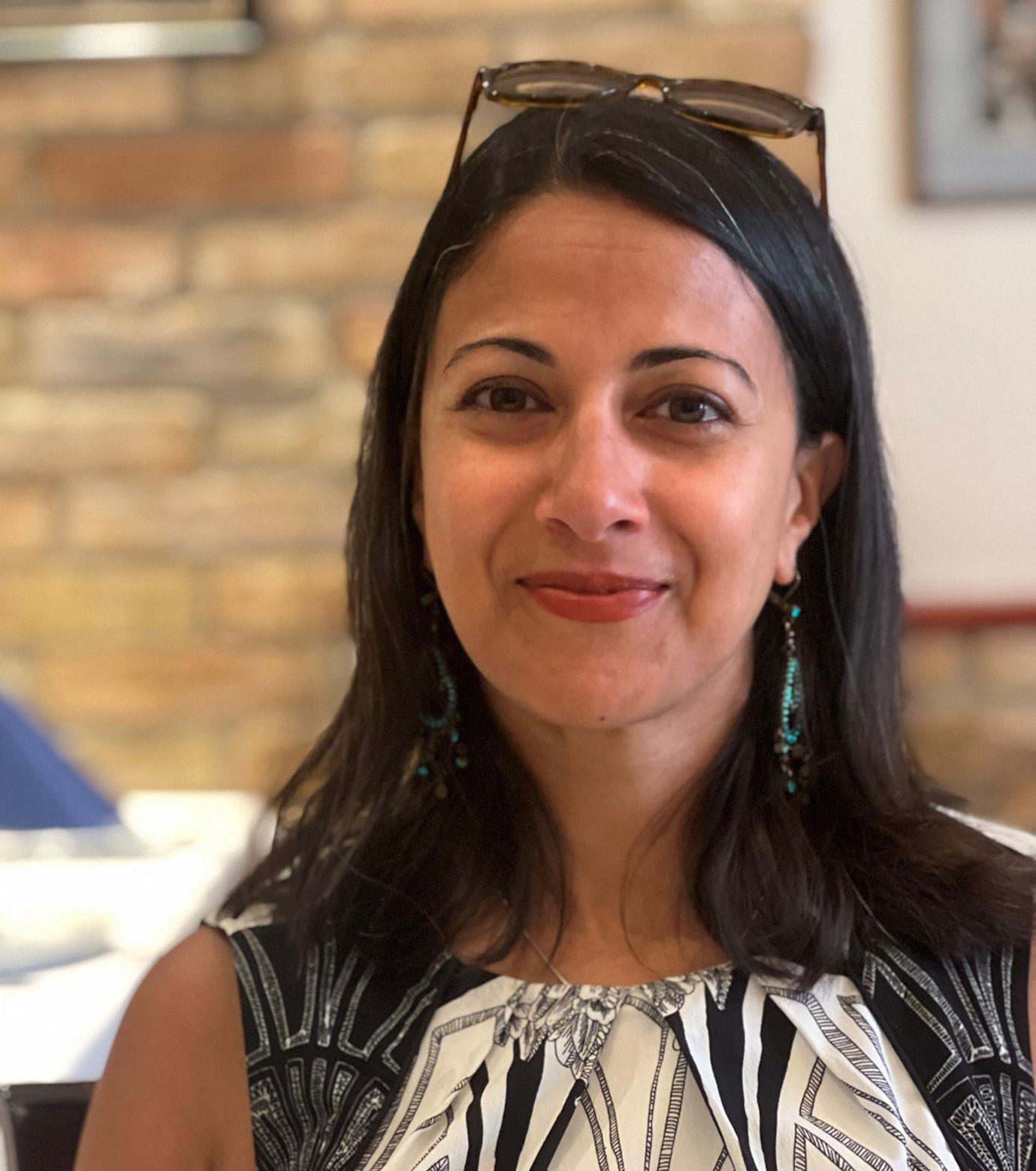
Kam Bawa works full-time alongside volunteering as a PSPA Befriending Volunteer. Her decision to volunteer was shaped by her family’s experience after her dad was diagnosed with PSP in 2013. Few medical professionals knew or understood it, leaving the family feeling lost. Determined to help other families, Kam shares her experience.
“When Dad was diagnosed with PSP, no one seemed to know very much about it, including the medical professionals. As a family, we did our own research to work out what was happening and what we could expect. That’s how I came across PSPA.
“I wanted to give something back. Our experience of not knowing what PSP was, or where to turn for support stayed with me. I wanted to help other people who were going through the same thing. I still work full-time, but my volunteering fits in around it.
“I WANTED TO GIVE SOMETHING BACK. OUR EXPERIENCE OF NOT KNOWING WHAT PSP WAS, OR WHERE TO TURN FOR SUPPORT STAYED WITH ME."
“I’ve supported three people so far, and each experience has been very different. The first person couldn’t speak, and they didn’t understand what PSP was. Our contact was a mixture of face-to-face visits and phone calls. I’d read through PSPA information with her so she could understand the condition, the prognosis and the support available, including Continuing Healthcare. Because she struggled to talk, she would email me what she wanted me to read and I’d read it out.
“With the second person it was a mixture of talking things through and helping with paperwork, such as applying for Neuro Heroes physiotherapy sessions through PSPA. Over time, our conversations became more about her week, her appointments and how her PSP was progressing.
“The third person I supported was experiencing mental health difficulties. For her, having someone to talk to while local support was being put in place was really important. We had four calls, and she told me she felt reassured knowing things were being put in place. She is also going to be attending a local support group.
“My family’s experience was a very bewildering time. I just want to support people so they don’t feel alone and so they can better understand what’s happening to them. It’s only a small amount of my time, but it can make a real difference to people who are suffering.”
CAN YOU HELP?
Do you have a few hours a week or fortnight to visit local families in need of the Befriending Service?
As a PSPA Befriending Volunteer, you could make a real difference by offering companionship, a listening ear and emotional support, helping to reduce isolation and guide families towards trusted information and support. We are currently looking for more volunteers to join our Befriending Team, so we can reach more people and expand this vital service into new areas. For more information email volunteering@pspassociation.org.uk
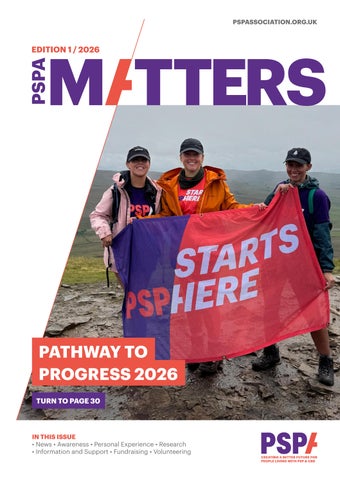
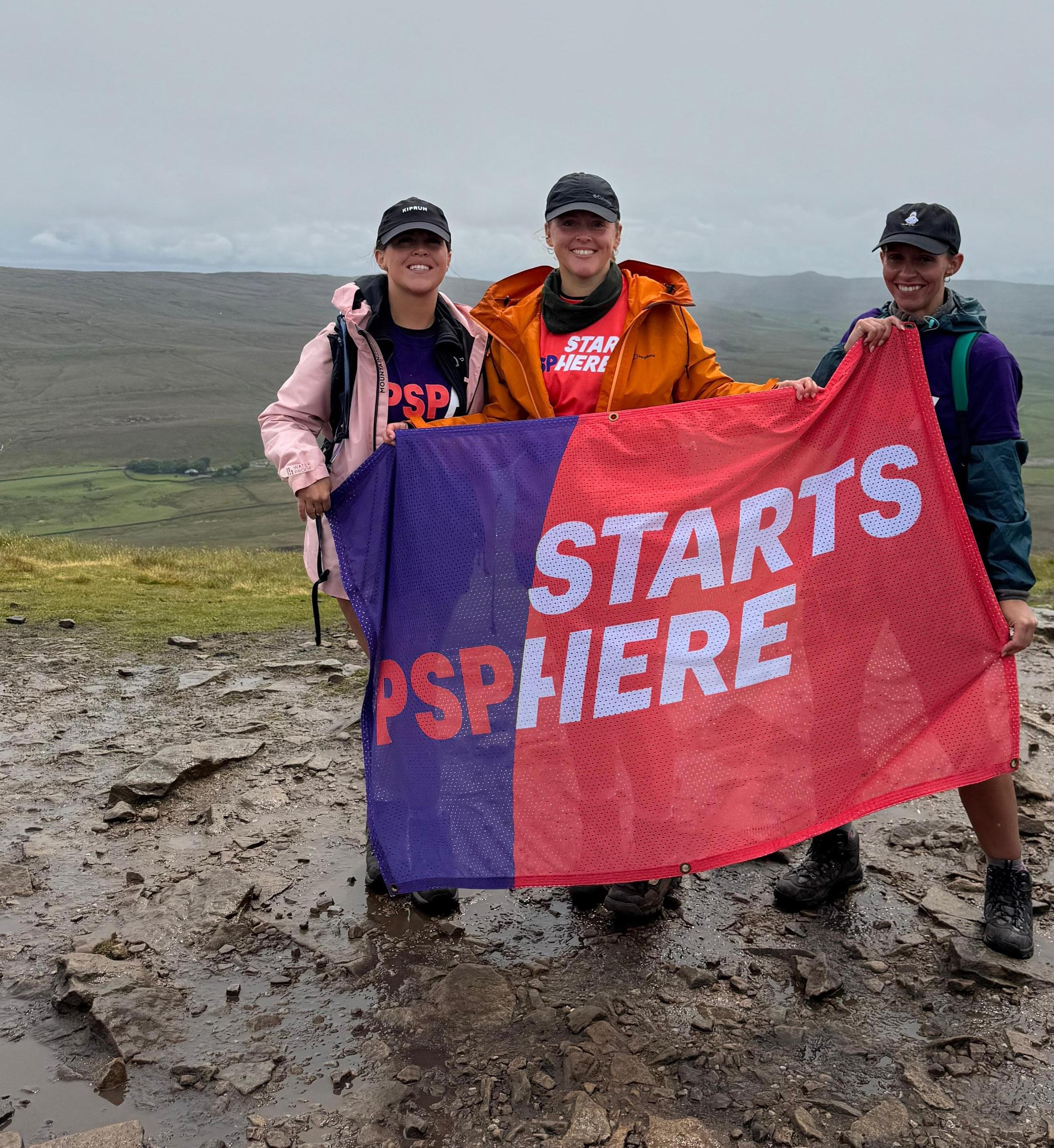
PATHWAY TO PROGRESS 2026
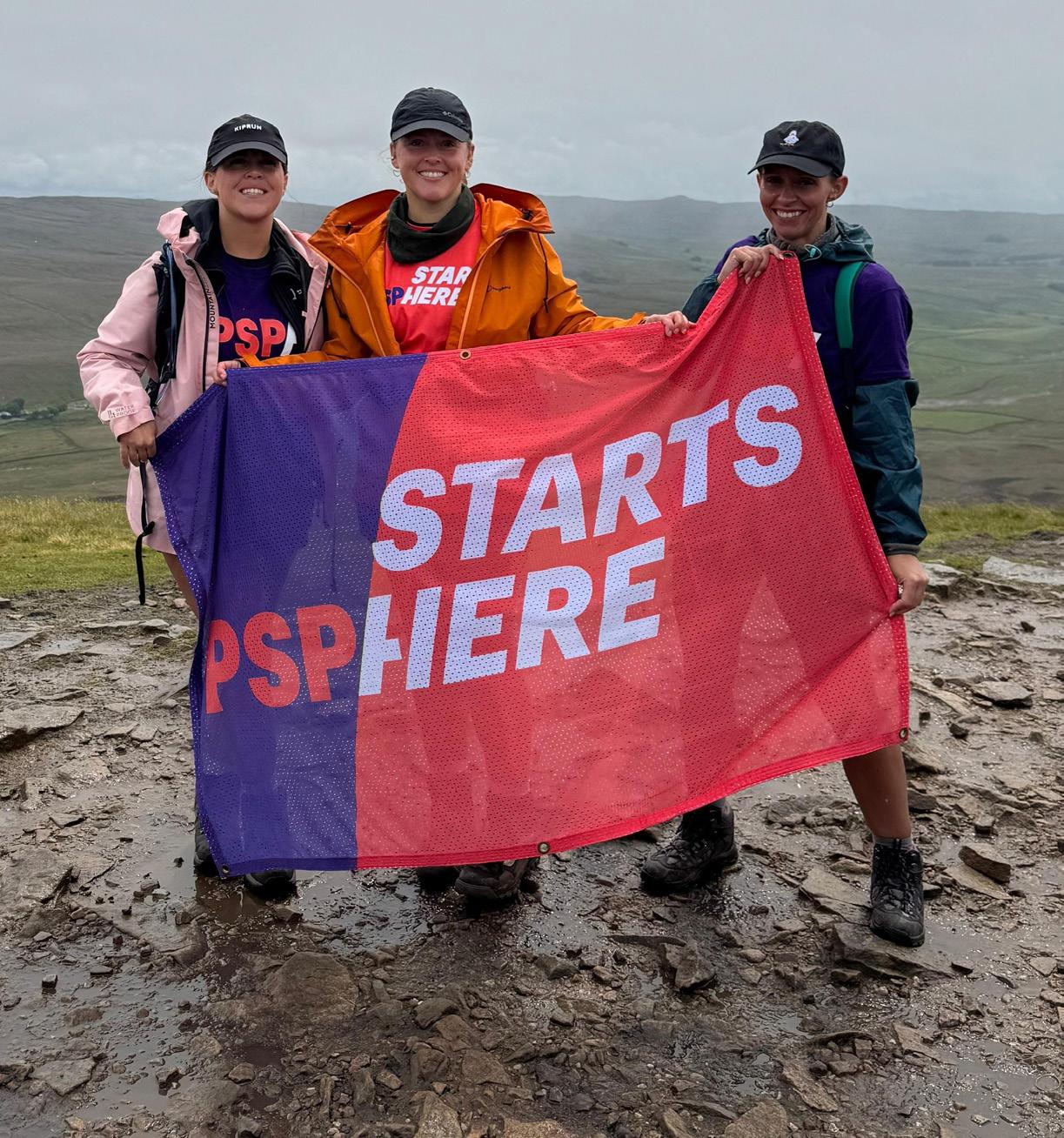
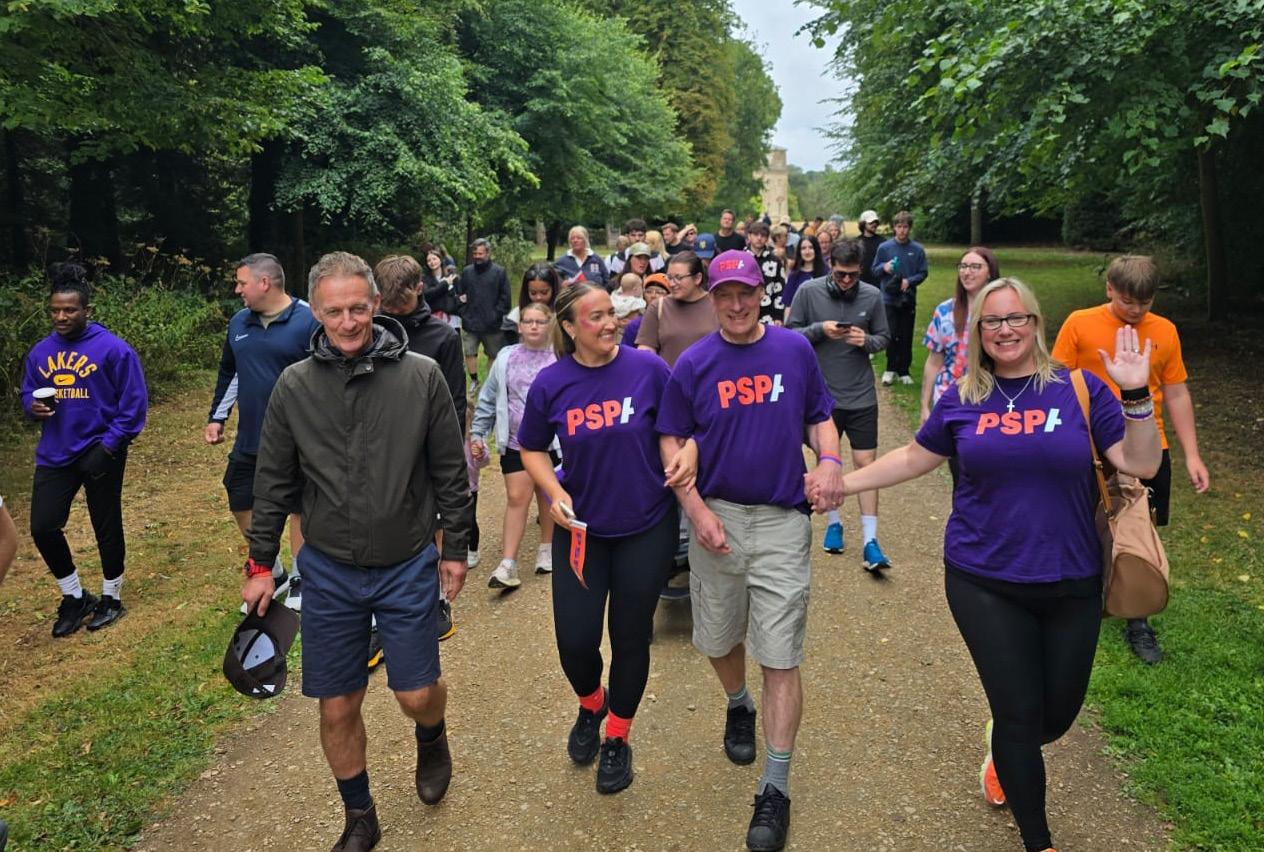
Across paths, coastlines and countryside, hundreds of PSPA supporters stepped forward last year to push forward progress one step at a time. This year we hope it will be even bigger. Will you join us?
£96,000 raised
16 walks held across the UK
Last year the PSP & CBD community showed its strength in coming out in support of our Pathway to Progress fundraiser. Some of you walked, some of you wheeled and some were joined by four legged friends to raise an incredible £96,000. Every mile walked helps fund our vital support services, raises awareness and drives forward research for people living with PSP & CBD.
The momentum doesn’t end here. This year we want to show the strength of our PSP & CBD community and how we are determined to push forward progress on behalf of all those affected by both devastating conditions. We are delighted to announce our generous donor has again pledged to match up to £40,000 of funds raised for Pathway To Progress 2026, meaning every step you take could go twice as far.
2,250 miles walked in honour of loved ones
REGISTER TO TAKE PART!
To register for the event online and to find out more information simply scan the QR code.
PATHWAY TO PROGRESS LAUNCH EVENT
Kicking off this year’s Pathway to Progress fundraiser will be a special launch event with the PSPA team and supporters on 28 March. The 5km walk around the beautiful Willen Lake in Milton Keynes will be hosted by the charity’s fundraising team. Whether you’re a keen walker or just starting out, everyone is welcome.
Leslie Ferrar will be one of the supporters putting on boots for the walk, alongside her husband David. This is not the first time for Leslie. Last year, Leslie completed a staggering 630 mile trek in six months, raising over £20,000 for PSPA (four times her original target!). Her incredible commitment has led her to being named our Pathway to Progress 2026 Event Ambassador. In her new role Leslie hopes to inspire others to step up.
Like many in the PSP & CBD community, Leslie’s reason for walking is personal. After three years of misdiagnoses and waiting lists, Leslie’s aunt Beth was finally diagnosed with PSP. “Reading that there was no treatment to slow the progression was devastating,” Leslie recalls, “but through searching for information, we found PSPA. They gave us the support we needed to prepare for the future.”
The delays in appointments and lack of awareness of PSP motivated Leslie to want to do something. She was turning 70 but the idea of a party celebration didn’t sit right with her. She wanted to do something meaningful. When PSPA Matters landed on her doormat, she read about the launch of Pathway to Progress. Having raised big amounts of money for charity in the past, Leslie felt she had one more
fundraiser in her and Pathway was to be it. Her aunt Beth was thrilled she was doing something amazing for PSPA.
Leslie approached all her contacts during the summer, to see if they would sponsor her challenge. She was delighted with how many people got behind her and how generous they were. “Initially I set a target of fundraising £5,000, but then someone I know said straight away, I will donate that, and he did! So, I had to then think about what my next target would be. Every time I reached my new target, I thought who else can I reach out to?
“When I got past £10,000 I started to wonder if I could raise £20,000. I know PSPA was looking to raise £40,000 in order to access match funding for the event, and I thought if I could help them get halfway there, that would be an achievement.
“Every time I reached a milestone, I thought, ‘Who haven’t I told about PSP yet?’ Raising funds was vital, but spreading awareness was just as important. Awareness is the first step towards faster diagnosis and better care.”
As Event Ambassador, Leslie is calling on supporters across the UK to take part in Pathway to Progress 2026, our ambitious virtual community walk aiming to collectively cover a distance equivalent to the UK coastline. Leslie said: “It is such an honour to be an ambassador. I want to get as many people involved as possible. Every step we take helps ensure no one has to face PSP or CBD alone.”
WILL YOU BE PART OF PATHWAY TO PROGRESS 2026?
To join us on the launch walk on 28 March at Willen Lake Milton Keynes, or to plan your own walk, contact our fundraising team on fundraising@pspassociation.org.uk or call on 01327 322414.
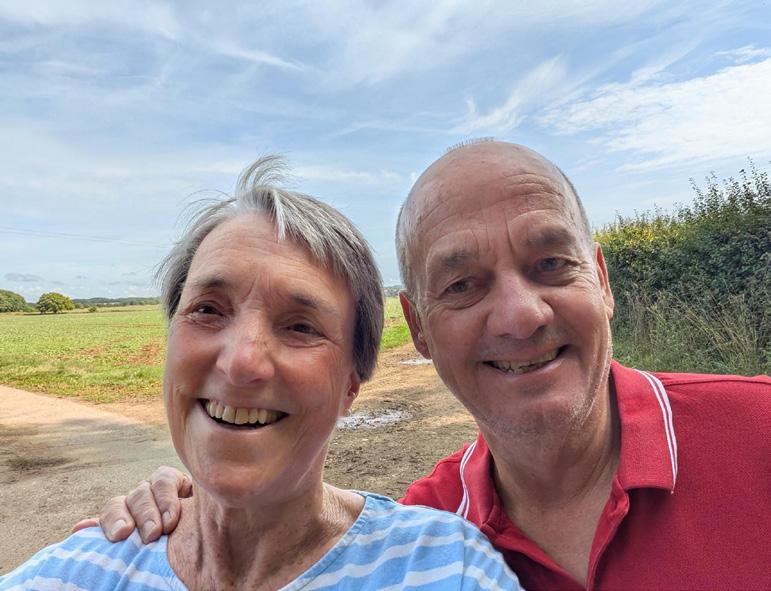
LESLIE AND DAVID
PSP & CBD COMMUNITY OUT IN FORCE
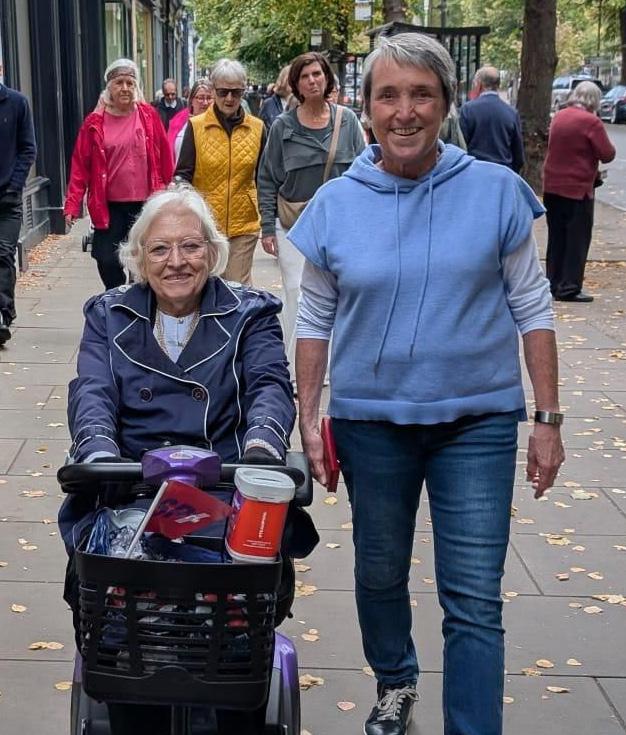
BETH AND LESLIE
MY DAY AT THE ABN CONFERENCE
BY MEGAN HODGSON, RESEARCH COORDINATOR
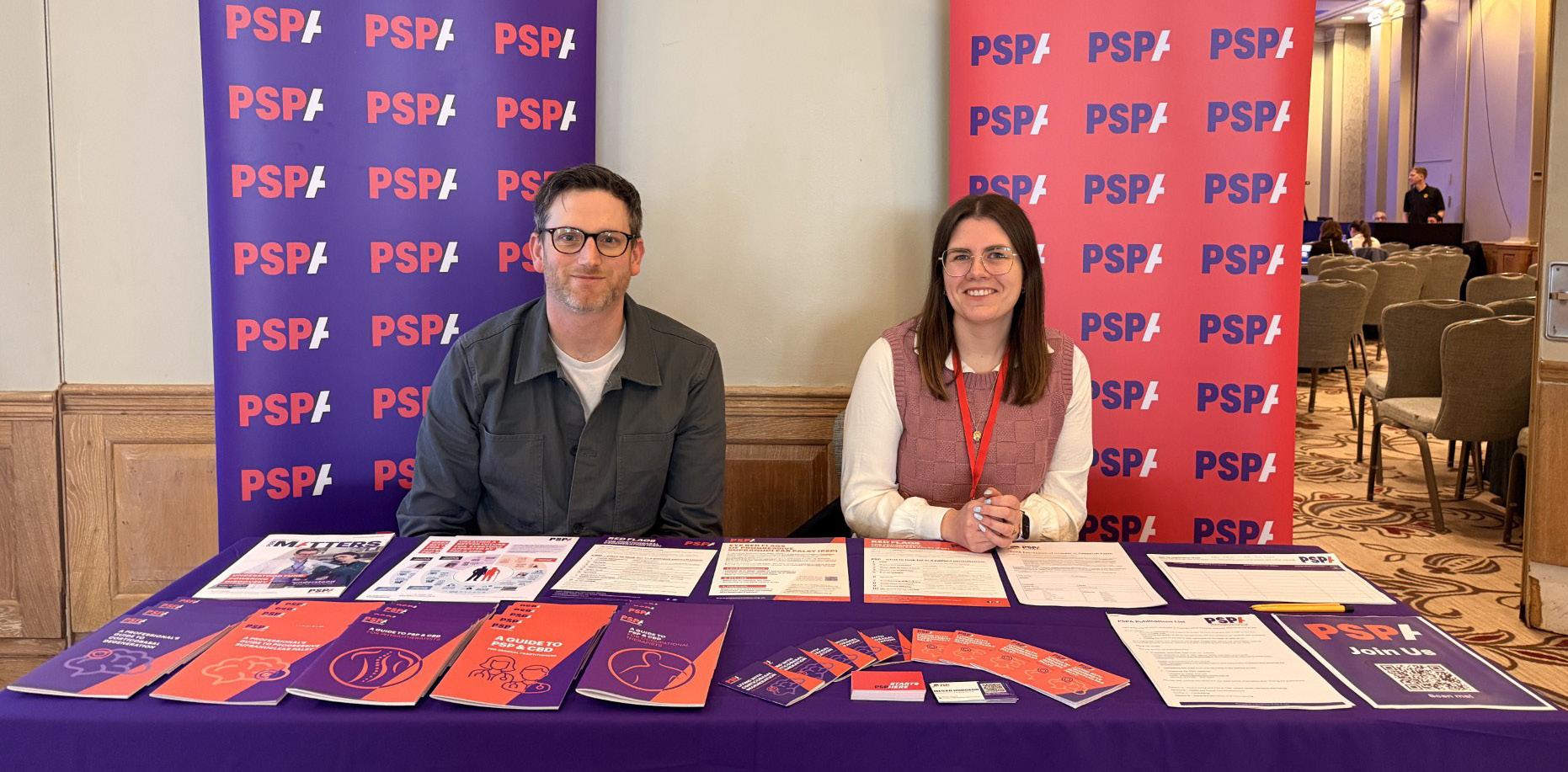
It was a bright and early start for the Association of British Neurologists Movement Disorders Specialist Interest Group conference in Brighton. The Association of British Neurologists' mission is to improve the health and wellbeing of people with neurological disorders by advancing the knowledge and practice of neurology. After fearing rain, there was a glimmer of sunshine on the beach and the Grand Hotel, where the conference was being hosted.
The conference opened with Professor Michele Hu, a PSPA grant recipient. She spoke about digital and smartphone health technologies in Parkinson’s disease and argued that they are good value for the NHS. Her presentation provided important context for her current PSPA-funded project, which builds on this work by incorporating the atypical Parkinsonian syndromes including PSP & CBD into the dataset. This was followed by Professor Camille Carroll who continued with the argument that wearable technologies are also good value for the NHS, both due to increased data that could inform clinicians' decisions.
This was followed by different talks on the advances of Parkinson’s therapies and deep brain stimulation technologies. After a coffee break, where I spoke to many neurologists who were happy to see us represented, we settled in for the keynote lecture on
the management challenges in restless leg syndrome and REM sleep disorder, which is a condition where you physically or vocally act out your dreams.
After lunch and two talks on metals and movement disorders, the final session was kicked off by our Trustee and Research Committee member Dr Boyd Ghosh speaking about palliative care for atypical Parkinsonian syndromes. He spoke about the decisions on feeding tubes, navigating mental capacity, treating painful dystonia and how they incorporate palliative care into their multidisciplinary team at University Hospital Southampton.
This was followed by another talk on Normal-Pressure Hydrocephalus (NPH) imaging and its relation to PSP pathology. NPH is a brain disorder, normally affecting older adults, caused by an abnormal buildup of cerebrospinal fluid (CSF) in the brain's ventricles. It is characterised by difficulties walking, urinary incontinence and cognitive decline, but can be treated by using a shunt to relieve pressure.
PSPA was very happy to be invited to host a table at the conference and have the opportunity to educate the healthcare professionals who attended about what we do and how we can support both them and people living with PSP & CBD.
REGULAR DONATIONS
GIFTING POWERFUL SUPPORT AND EDUCATION
Learn how donating to PSPA monthly can help us to plan and maintain life-changing support services, aimed at informing, supporting and connecting members of our community.
When you think of "changing the world," it’s easy to imagine a single, massive moment. But at PSPA, we see the most incredible changes happen through consistency.
That’s why we see our regular givers as more than just donors; they are the backbone of everything we do. By choosing to give a little each month to PSPA, you provide a consistent and predictable income that
allows us to deliver and develop support to families living with PSP & CBD, whilst educating healthcare professionals about the conditions.
What’s more, automated payments via direct debit or platforms like JustGiving mean we incur less administrative overhead costs, freeing resources to focus on awareness campaigns and community engagement.
THE POWER YOUR REGULAR GIFT CAN CREATE
Most wouldn’t think twice about picking up a cup of coffee on our way to work or renewing our monthly subscription to our favourite TV or music streaming channels. But did you know, these small daily, weekly or monthly bills can create powerful changes within our community?
For example, the £5 a month cost of your TV streaming bill could turn a monthly expense into LIFE CHANGING SUPPORT.
Support that enabled Jonathan, who was diagnosed with CBD in 2025, to cope with his diagnosis. Jonathan explains: “It was a huge shock to be diagnosed with CBD last year. Few healthcare professionals have heard of the condition, let alone know how to support someone living with it.

“Luckily, I found PSPA. The Support Groups I’ve attended have been incredibly informative. Sharing experiences, helpful suggestions on how to deal with various aspects of CBD, and the feeling of not being alone.”
“Without PSPA, I don’t know how I would’ve coped with the impact of the diagnosis. It has literally been a lifeline.”
Help connect and support more people like Jonathan.
SIGN UP TO GIVE EACH MONTH TO CREATE POWERFUL CHANGES IN OUR COMMUNITY.


"OUR GROUP IS ABOUT CONNECTION"
PSPA Support Groups play a vital role in providing local support and a safe space where people can talk about their experiences of PSP & CBD.
“EDUCATION AND AWARENESS ARE BOTH SO IMPORTANT THAT’S WHY PSPA AND SUPPORT GROUPS LIKE OURS ARE SO VITAL."
After her mum was diagnosed with PSP, Becky Gell and her sister Vikki saw there was little support available on the Isle of Wight. Determined to change that, Becky and Vikki helped establish a PSPA Support Group on the island, creating a welcoming community for people living with PSP & CBD, their families and carers. Here, Becky shares how the group began, the impact it continues to have and why local groups are so important.
“My mum was diagnosed with PSP in August 2017. We felt completely in the dark,” Becky explains. “There was no local support, so we travelled to a PSPA Support Group in Andover to learn more and understand what we were dealing with.
“Attending the group was daunting at first, but going along helped me to realise how important it was to talk to other people who were living with the same condition. That’s when I started to consider setting up a group on the Isle of Wight.”
The Isle of Wight PSPA Support Group held its first meeting in February 2018 and the response was immediate. “We had a surprisingly high turnout. There were four people living with PSP, including Mum, and three of them were people we didn’t even know existed. They were incredibly grateful. They told us how isolated and lonely they’d felt, fighting this disease without any support.”
SISTERS BECKY AND VIKKI GELL WITH THEIR MUM
Family members came along too. “We must have had at least a dozen people in total, and the group just grew from there. It’s bittersweet. You’re so pleased to welcome new members and provide support, but you also know they’re at the start of a very difficult journey.” Becky and her sister Vikki found a venue. “We made sure the venue was fully accessible. Vikki had a connection with the local community centre so we were able to use that for the first few meetings. We are now in a building that’s attached to the local hospice. It is central and we are able to make full use of hospice facilities. They offer activities, physiotherapy, speech and language therapy, art sessions, hairdressing and they have a gym. It’s an incredible venue and means we can really cater to our member’s needs.”
Being on an island brings challenges. “It can be harder to get guest speakers like health and social care professionals. But the main focus of the group is about getting together and talking. Some people feel angry, some feel upset and that’s okay.”
Becky recalls one family where the person with PSP doesn’t attend, but their siblings do. “For them, the group is a place to vent their frustration and feel heard. We listen, empathise and share our own experiences because we’ve been there too. We try and help them navigate the system and find the right support. We also have a bit of fun and I always want people to leave feeling better than when they arrived.”
Accessing services remains a major frustration. “Getting a diagnosis should mean getting help but that is often not the case. Families have to fight to be heard. We’ve supported people in incredibly difficult situations, and sometimes just knowing what to say or who to contact can make a difference.”
Hospital care is another common topic. “We went through this with Mum. Staff often weren’t familiar with PSP. They would talk about her, not to her which was so frustrating. We often had to stop them and say, ‘Mum is here, ask her.’ Having to constantly repeat yourself is exhausting, especially when you’re already dealing with so much.
“Education and awareness are both so important. That’s where PSPA and Support Groups like ours are so vital. We can share knowledge, raise awareness and share practical tips, whether that’s about equipment, therapies or things like Botox, massage or eye care.”
Over time, the group has become something much more than a monthly meeting. “Everyone has become a close-knit family. Almost all of the people who attended our very first meeting have since died, but their family members still come.
They want to support others. That says everything about the bond we’ve created.”
Today, the group continues to foster lasting friendships. “My dad still comes to the meetings. Another member lost his wife in January 2024, and Dad lost Mum in June. They’ve become good friends and go for a beer or lunch. It’s nice to see connections made at the group go beyond it.”
For Becky the group is a way to honour her mum and also use her experiences to help others. “We wouldn’t have been able to cope without the knowledge, kindness and shared understanding of others. You put a group of strangers in a room, and you’d never imagine such a close bond could form, but it does.”
CAN YOU HELP?
New Support Groups
We would like to set up new Support Groups in the Cardiff and Yeovil areas. In Cardiff we need to recruit a Coordinator and Helper to set up a new Cardiff Support Group and run monthly meetings. In the Yeovil area we are looking for a Coordinator to work with an existing Helper to create a new Support Group in the area.
Existing Groups needing new volunteers
Our Bradford Support Group needs a new Volunteer Coordinator to help the Support Group Helper run the group.
We are also looking for Volunteer Helpers to assist in the running of both the Devon and Cornwall Support Groups
If you live in or near Gloucester, we have a coffee morning meet up and we need a volunteer to help Phil coordinate the group.
If you’d like to get involved or if you would be interested in setting up a group in an area not mentioned, please email Lavonne.McCormack@pspassociation.org.uk.
BRIDGET’S TREK OF A LIFETIME RAISES £3,700
Bridget Allerton turned a long-standing dream into an incredible mission, conquering Mount Kilimanjaro. Her efforts didn't just fulfil a personal ambition, it raised an incredible £3,768 for PSPA.
For Bridget the trek provided an awareness raising opportunity following her husband, Tony's, diagnosis with PSP in July 2023. Tony's journey began with subtle yet alarming symptoms, like backward falls, cognitive impairment and changes to his speech.
"NO ONE REALLY UNDERSTANDS HOW TOUGH IT IS, TO WATCH YOUR PARTNER SLOWLY CHANGE AND SLIP AWAY IN FRONT OF YOU."
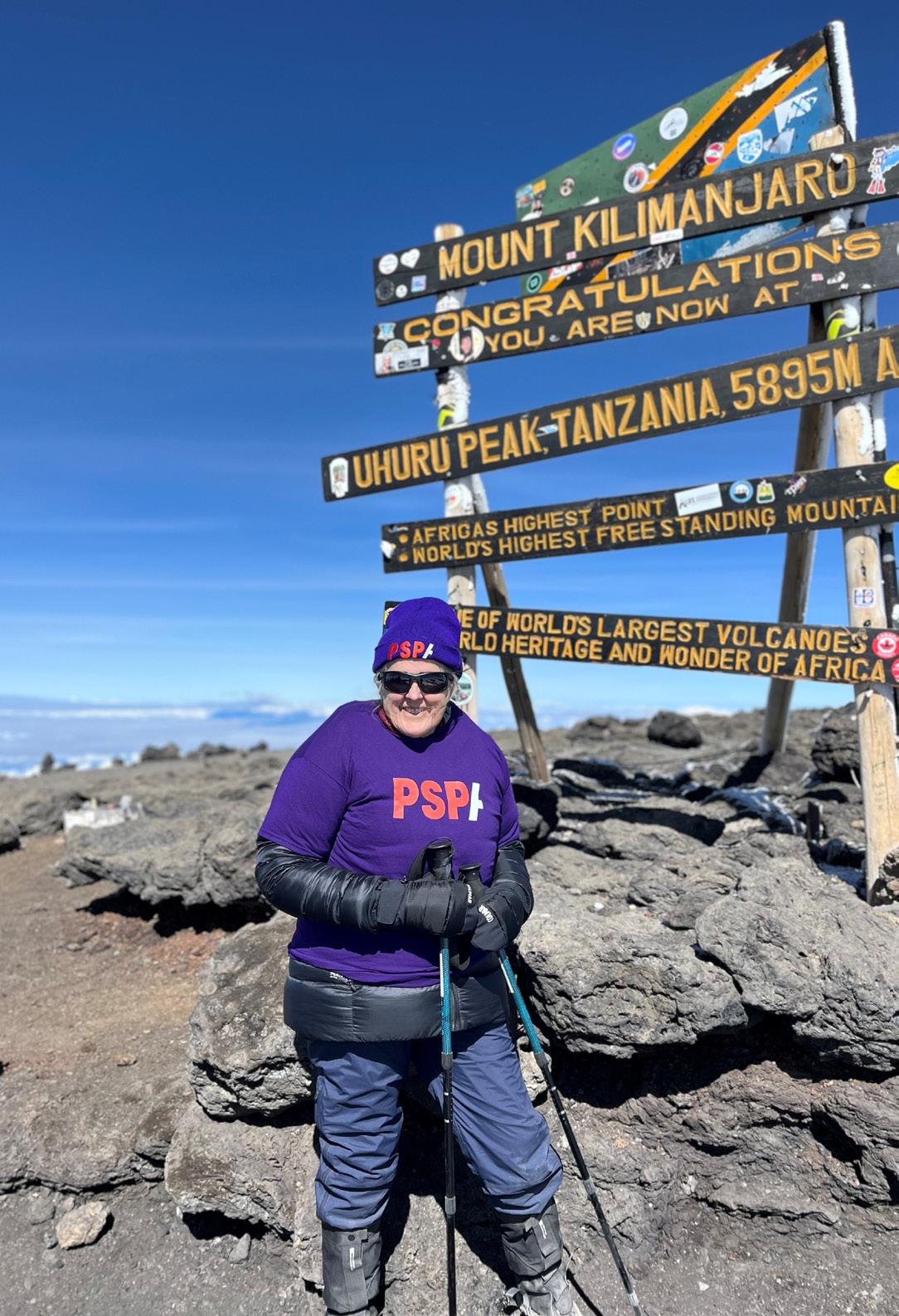
Bridget said: “Tony had been experiencing problems for a while. Once we got in front of a neurologist, he knew straight away it was PSP. It is such a difficult condition. No one really understands how tough it is, to watch your partner slowly change and slip away in front of you. Quickly Tony went from being a regular runner, to being unable to do anything for himself.”
Witnessing the impact of the diagnosis and rapid decline of Tony’s health, Bridget’s friends encouraged her to use her 60th birthday trip to raise funds and awareness. Her JustGiving page, shared through social media and WhatsApp, was met with an overwhelming response, swiftly smashing her initial goal.
Bridget explains: “It was a great idea, and an opportunity to spread more awareness of PSP to family, friends, and people connected to the nursing home Tony resides in.”
While Bridget considers herself outdoorsy, she stresses that the eight-day slog up Kilimanjaro was a gruelling test, requiring intense training on peaks like Snowdon and Scafell Pike.
“The trek up Kilimanjaro was tough, but the scenery is beautiful, and constantly changing, from jungle right through to alpine desert,” she reflects. “When I got to the top, it wasn’t something I took lightly. I know not everyone makes it, but I am glad I did, particularly since so many people sponsored me. I was taken aback by their generosity. I had no idea I’d raise £3,768 for PSPA.”
The most poignant moment came upon her return. Though Tony now struggles with speech, Bridget knew in her heart what he felt.
Bridget concludes: “Tony would have loved to do a trip like this. I could tell how proud he was of me when I told him I’d done it. I reached the top. I’m also pleased the funds raised via the trek will help ensure other families can access PSPA’s services so they can stay well informed and connected during the difficult journey PSP creates.”
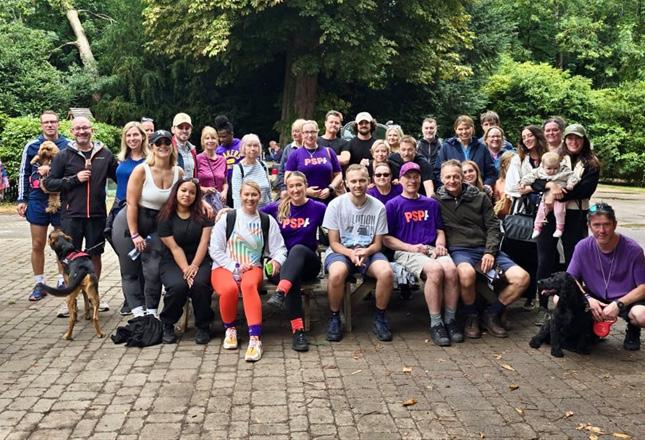


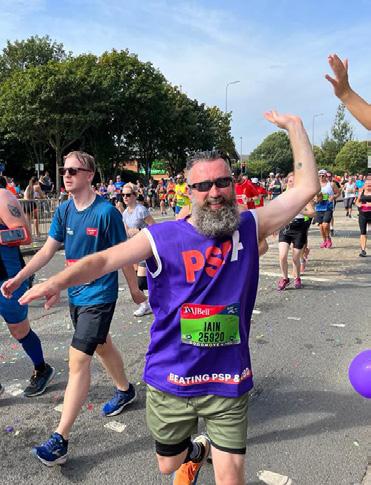
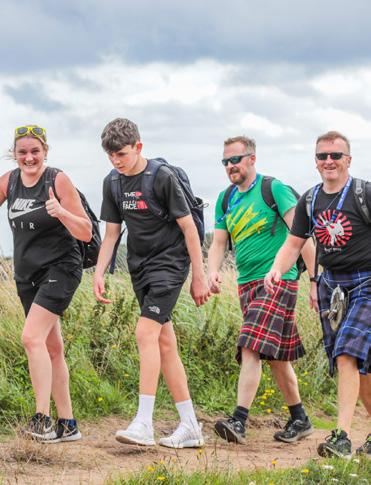
FANCY SOMETHING ELSE?

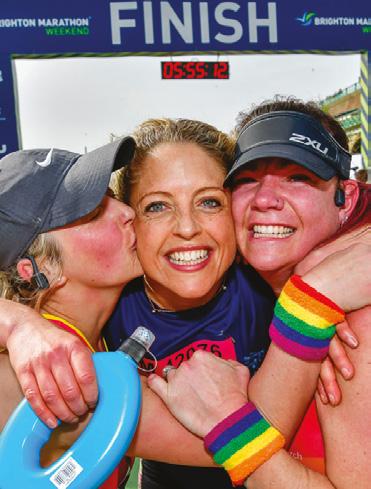

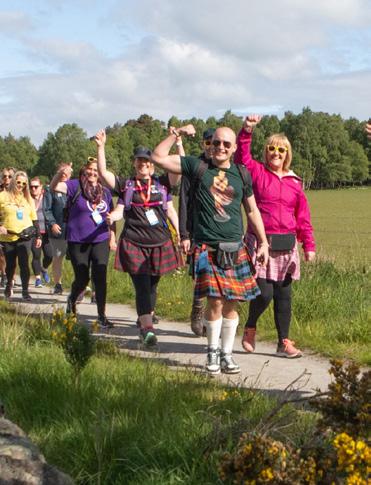
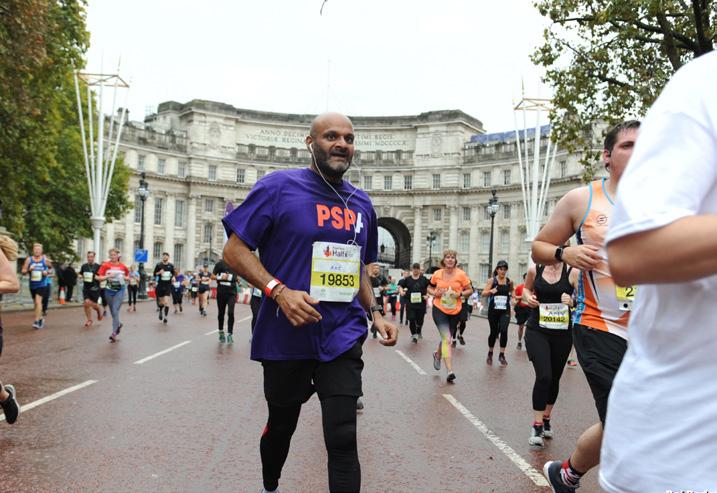



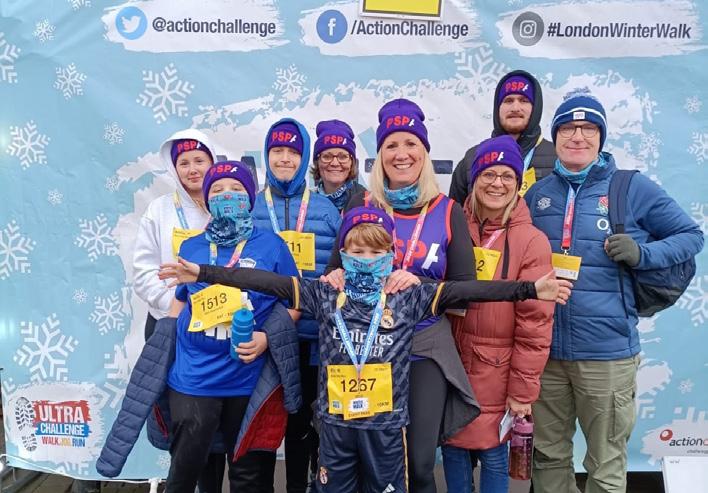
This diary is just the beginning. Fancy seeing some of the most beautiful scenery in the UK and Europe from a bike? Or do you want to take things further and go ‘ultra’? If so, we work closely with the Ultra Challenge series and can set you up with a challenge you will never forget. Or does falling from the sky appeal, or how about an epic trip abroad to climb Kilimanjaro or cycle Vietnam? Whatever the idea our Fundraising Team will be able to support you to make it happen.
WANT MORE INFO?
Scan the QR code or visit www.pspassociation.org.uk/fundraising/events for more information or contact the Fundraising Team on 01327 322414 or email fundraising@pspassociation.org.uk
Pathway to Progress Launch Event, Milton Keynes
Kiltwalk, Glasgow
EMF: Edinburgh Marathon Festival 5k/10k/Marathon
Great North Run, Newcastle Kiltwalk Edinburgh
London Landmarks Half Marathon Brighton Marathon
TCS London Marathon
Kiltwalk Aberdeen Three Counties Cycle Ride, Berkshire
Royal Parks Half Marathon, London
Adidas Manchester Marathon
Hackney Half Marathon
Kiltwalk Dundee
London Winter Walk
£1,166
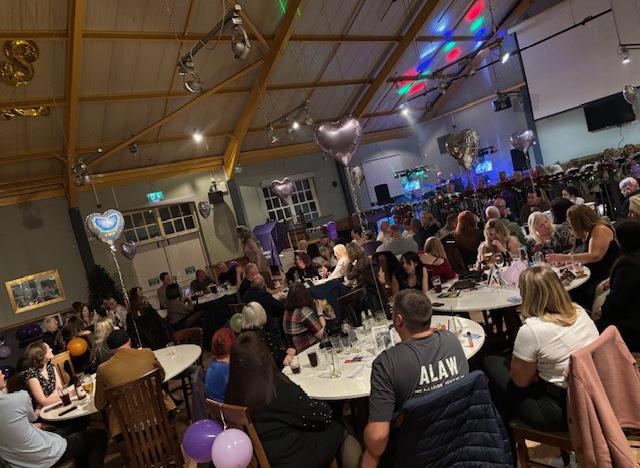
ELLIE’S ADULT’S ONLY NIGHT
Ellie Sowray held an ‘Adult’s Only Night’ in memory of her mum Catherine, to raise money for PSPA and St Gemma’s Hospice, who provided support to her and her family during her mum’s battle with PSP.
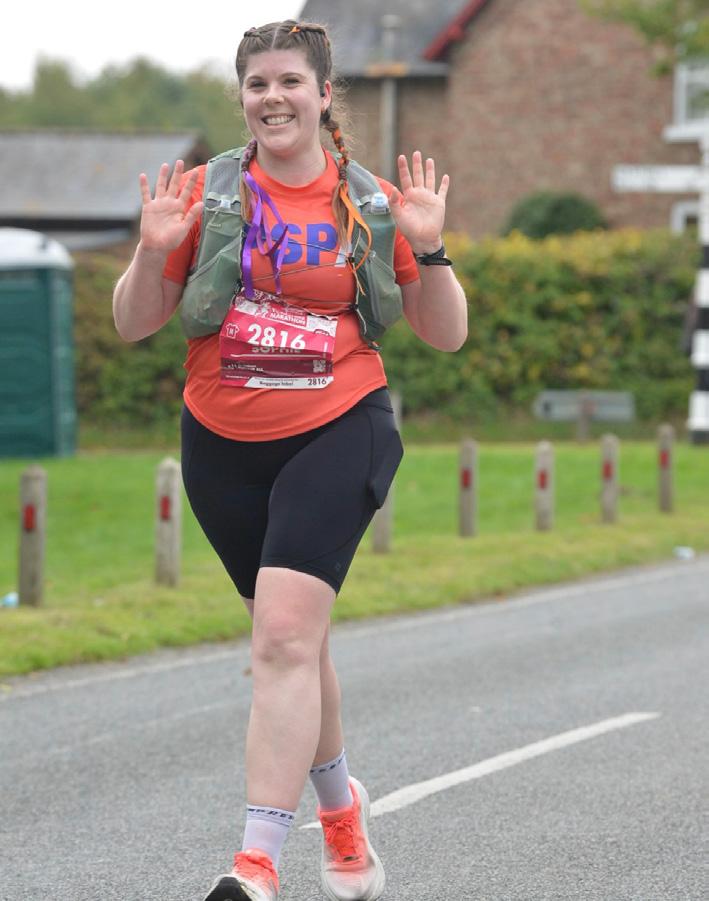
£1,265
MARATHON EFFORT
Sophie Jane Harris took on the Yorkshire Marathon in memory of her Dad who died from PSP just a week before the marathon. “It was very emotional,” said Sophie.
TO ALL OUR SUPPORTERS
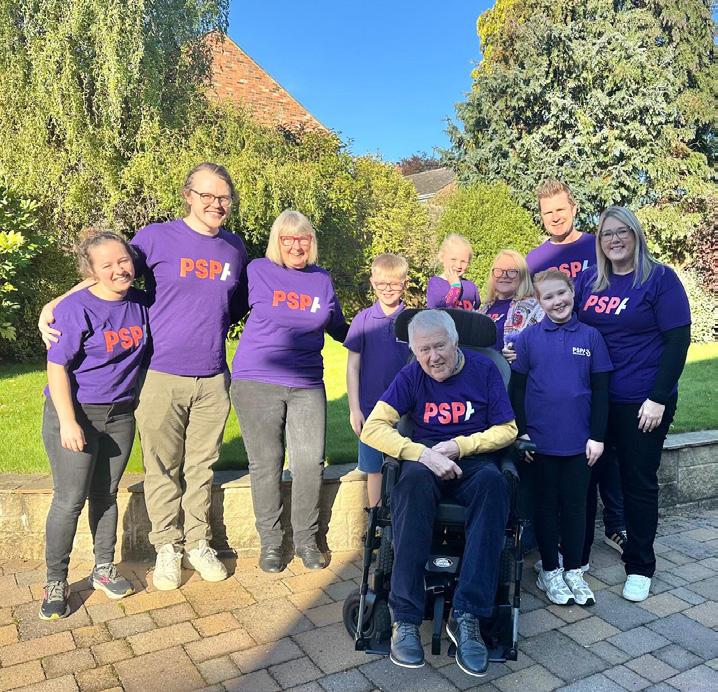
£3,200
AUTUMN WALK & TALK
Janice Adams organised a beautiful Autumn Walk in October with lots of family, friends, and the Durham Support Group volunteers. Over 80 people took part, walking, talking and raising money and awareness.
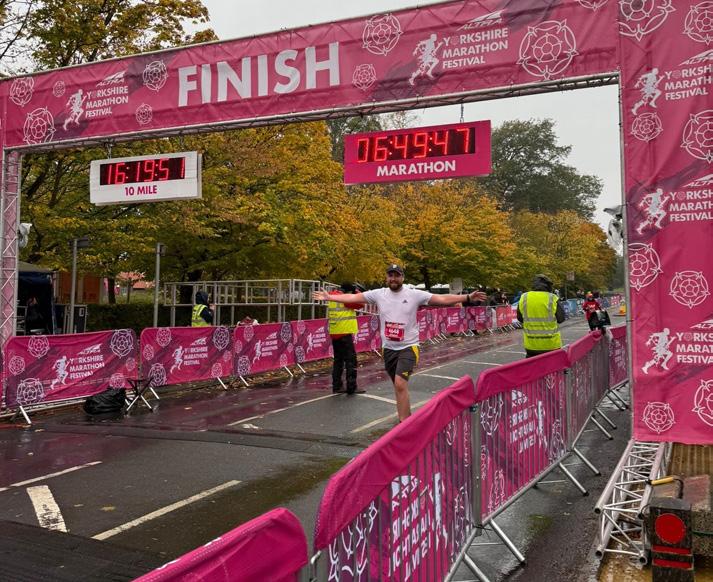
£2,165
FOR DAD
Since Jonathan Stanbridge’s dad was diagnosed with CBD, his parents have received support from PSPA, including support in getting a home adaptation. So, Jonathan wanted to do something to give back and decided to take on the Yorkshire Marathon. He smashed his target of £1,000, by raising over £2,000!
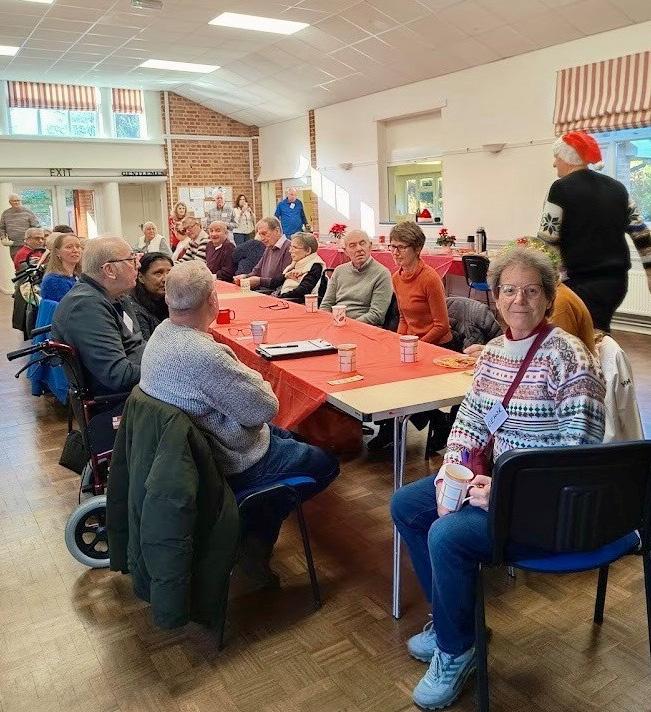
£350
CHRISTMAS CELEBRATION
Our Hampshire Support Group held their annual festive celebration to raise money for the charity. They held a raffle, enjoyed delicious food and created a magical Christmas moment to remember.
£3,347

TEAM BAM SMASH IT
Katie, Kendra, and Paula joined together to become Team Bam to take on the London Winter Walk. They were walking in honour of Katie’s mum who is living with PSP. Together they completed the Winter Walk around London and smashed their target of £500, raising an incredible £3,347!
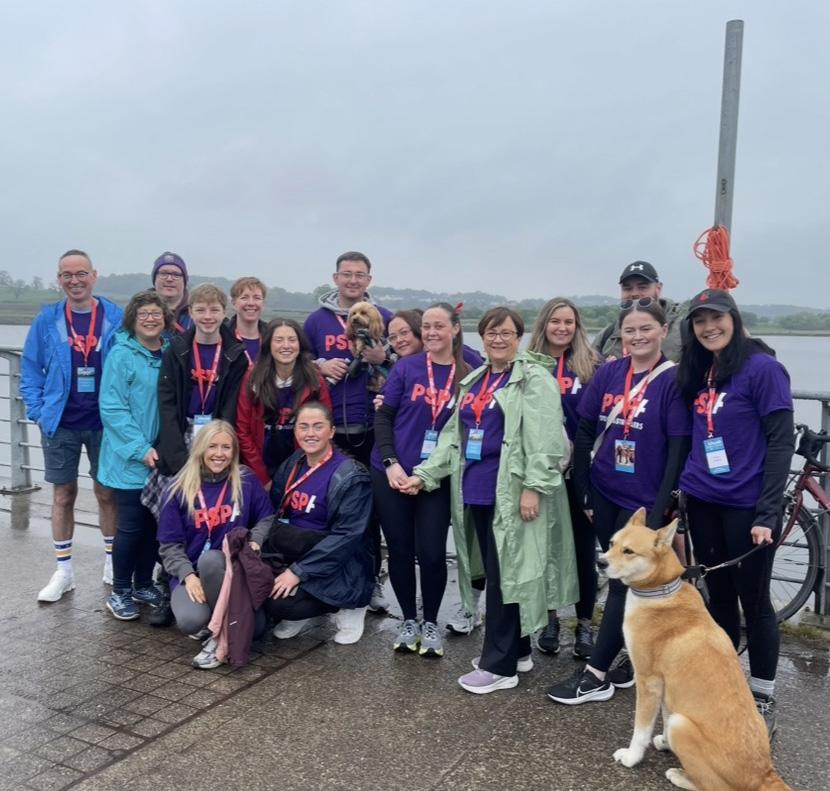
£3,500
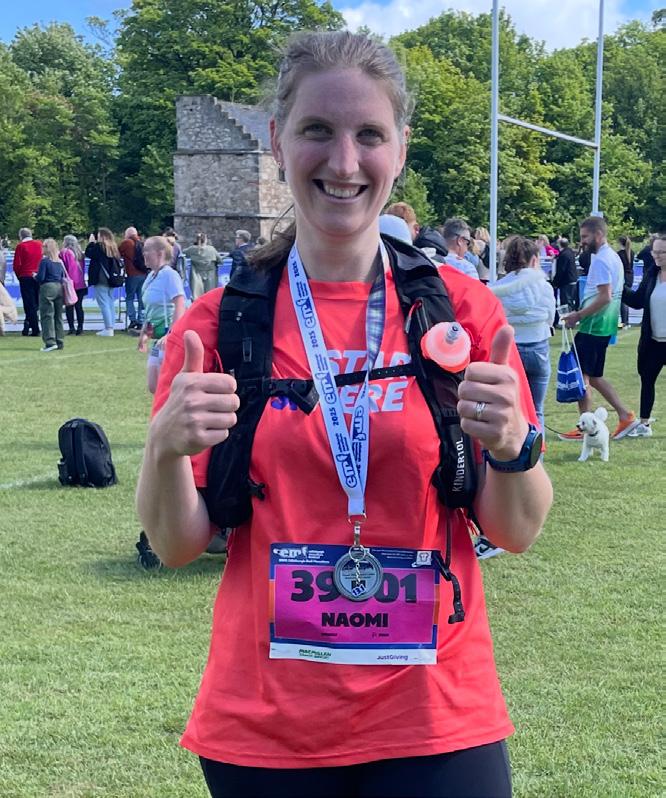
£1,732

£1,582
UNIVERSITY FIGHT NIGHT
Sienna Lapin got involved with her university’s boxing fight night, in memory of her grandpa. Training twice a week, she learned how to spar and box competitively. Despite taking a few hits, the overwhelming support from over 2,000 people made the experience incredibly meaningful.
STEVIE’S STROLLERS
Last year, Amy McDonald, and family and friends took on their second Glasgow Kilt Walk in memory of her dad, Stephen McDonald who died from PSP in December 2023. The 16-strong team smashed the 14.5-mile route and raised £3,500!
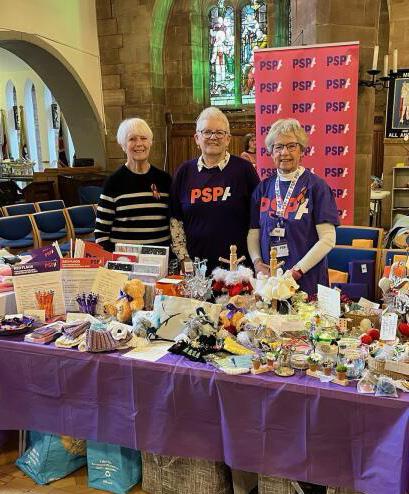
EDINBURGH HALF MARATHON
Naomi Booth took on the Edinburgh Half Marathon to raise awareness of PSP, after her dad Peter was diagnosed in May 2022. Naomi enjoyed a fantastic atmosphere and lots of support along the route. She smashed her target of £500, raising a brilliant £1,732.
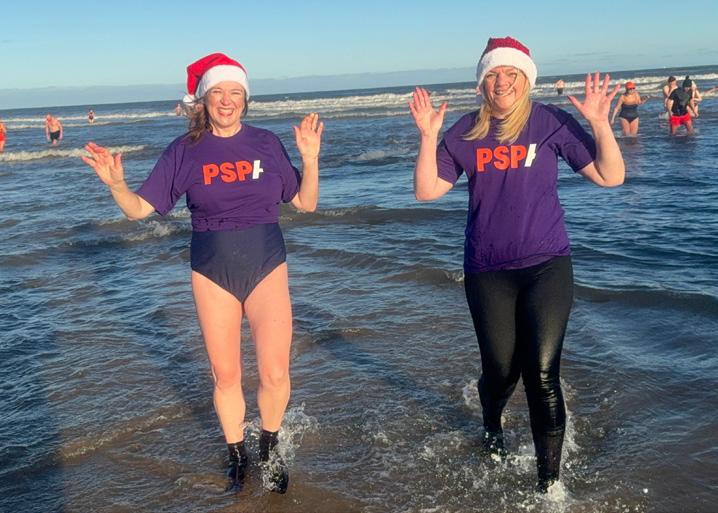
£1,294
BOXING DAY DIP
Vicky Loewer’s mum Susan was diagnosed with PSP this past July after previously being misdiagnosed with Parkinson’s. Vicky decided to do the Saltburn-by-theSea Boxing Day Dip to raise money for PSPA. Joined by her husband, and other family, they braved the cold and raised an incredible £1,294.
£1,425
CHRISTMAS STALL
With the help of two local church stalls, dedicated support group members, and the generous backing of family and friends, Support Group Coordinator Val Wallace and the Stockport and Cheshire Support Group raised an incredible £1,425 over the festive period.
The cost of one cup of coffee could turn a small daily expense into POWERFUL CLARITY

Give £3 a month to help provide Red Flag information to help GPs diagnose PSP or CBD faster.