





Transitions play a crucial role in a young person’s confidence, engagement and future outcomes. From supporting KS2 pupils as they prepare for and navigate secondary school, to helping students prepare for life beyond the classroom, these moments of change matter.
Academy21 supports schools to help pupils navigate transitions with confidence. Our DfE-accredited Online Alternative Provision schools to provide flexible, targeted support for pupils who experience anxiety around change, disengagement or barriers to progress during their education.
For some, the move from Year 6 to Year 7 can feel overwhelming. Others may struggle to transition between years or as expectations increase through secondary school. By offering early, tailored intervention, schools can help pupils settle, re-engage and move forward positively.
Supporting confident transitions
Academy21 partners with schools to deliver short-term, structured support that complements existing academic and pastoral provision. Delivered online in flexible blocks, our Online Alternative Provision helps pupils build confidence, emotional wellbeing and academic stability without disrupting their wider school experience.
We can support pupils with:
Preparing KS2 pupils for the move into secondary school
Settling into Year 7 and building confidence early on Managing anxiety linked to change and increasing independence
Maintaining engagement and academic progress through transitions
Preparing for next steps beyond school
Visit: academy21.co.uk/transitions
Talk to us: contact@academy21.co.uk
DfE Number: 000/1004




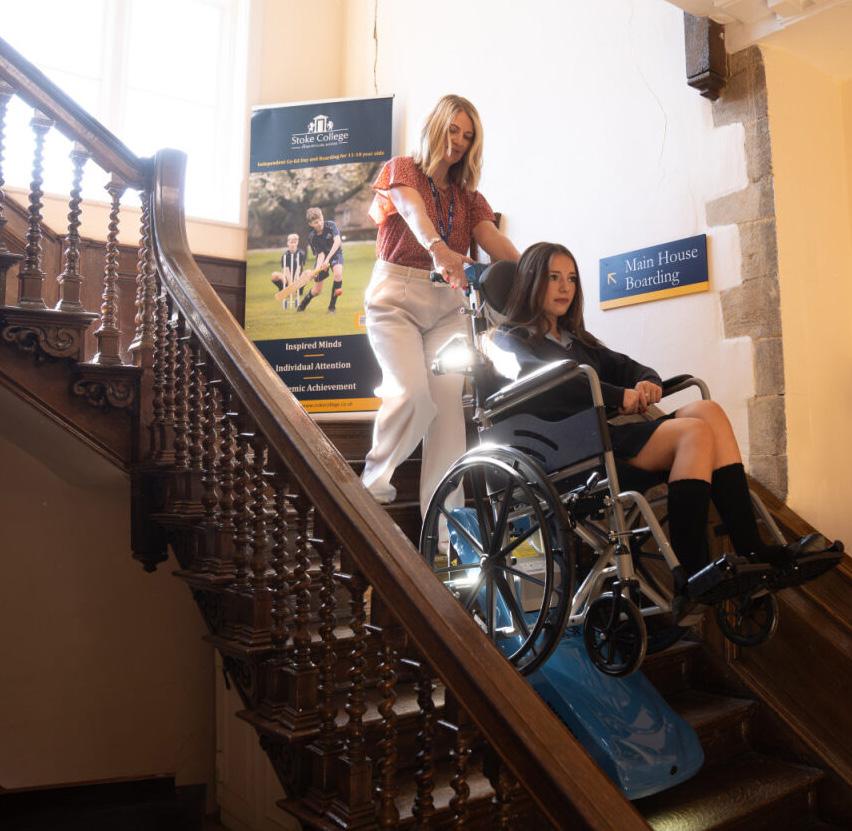
Following the Grenfell Tower Inquiry ‘Responsible Persons’ in educational facilities now have enhanced legal duties to assess, manage and document fire risks. Responsible Persons must identify who may need evacuation assistance, develop and maintain emergency evacuation plans and share relevant information with the Fire and Rescue Service.
We provide the following services:
• General Emergency Evacuation Planning and Assessments
• Bespoke Personal Emergency Egress Plans (and Residential)
• Specialist Powered Evacuation Chairs Provision
• Evacuation Chair Provision
• Train the Trainer packages
• PUWER, Maintenance and Service plans
We have worked with Chris and the team for many years and they have provided evacuation and access provision with a combination of Evacuation chairs and Stair Climbers to meet our staff, student and visitors' requirements. Their attention to detail in assessments, training and servicing is incredibly thorough and their aftercare remains to be one of the better services we have been supplied."
Mike Marsh
FIRE SAFETY MANAGER - UNIVERSITY OF CAMBRIDGE















Cornerstone deliver a consistent approach to assessing the structural condition and indoor atmospheric environment of the buildings where people live, work and learn and, without a full understanding of the likely causes of reported damp, condensation and mould, these issues persist during colder months.
Our extensive experience includes investigating root causes, providing bespoke recommendations for cost-effective long term solutions has helped reduce both case numbers and associated costs through more informed, proactive decision-making based on a clearer understanding of all contributing factors.



To support those managing and occupying affected buildings, our CPD-accredited Damp, Condensation and Mould workshops explain the conditions mould needs to grow, how it behaves once established, and the steps occupants, caretakers and building owners can take to maintain effective property heath. Workshop cover how to remove mould effectively once the cause has been identified, helping to reduce the risk of it returning alongside providing a clear understanding of the difference between damp and mould, supporting competent decisions and helping to avoid inappropriate, costly and repeat remediations.
To learn more of Cornerstone or discuss any issues with an expert, contact us now:
Web:

School teachers and leaders will see their pay increase by 6.5 per cent over the next two years, after the Education Secretary accepted the School Teachers Review Body’s pay recommendations in full.
Teachers will receive an increase of 3.5 per cent from September 2026, followed by three per cent from September 2027.
Additional funding of £1.8bn will be provided to schools over two years, supporting pay rises for teachers and support staff. But schools will be expected to find the first one per cent of each pay award.
An additional £485m will be provided to colleges and other further education providers over two years so they can recruit and retain teachers.
The government has also said it will put curbs on academy trust executive pay.
From September, trusts will need to seek government approval before advertising roles over £174,000, bringing the sector in line with other public sector workforces.
Annual increases for executives will also be brought in line with the wider school workforce, meaning executives will not be able to receive pay rises higher than those set for classroom teachers.


The government has launched new school uniform guidance, confirming caps on branded uniforms to save parents money.
From September schools must comply with the new legal limits on the number of branded uniform items they can require, allowing parents to buy more of the everyday basics, like trousers and shirts, from any shop or supermarket rather than one pricey supplier.
In addition, after polling found a third of parents still worry about uniform costs, the government is also publishing strengthened statutory guidance telling schools to take more steps to bring down the cost of individual items, especially for more expensive items like blazers and jumpers, in time for the 2027 school year.
The guidance outlines the cost considerations for schools when they are developing and implementing their uniform policies and managing their uniform supply arrangements.
It also covers the legal limit on the number of branded items of school uniform and PE kit that schools can require, the provision of second-hand uniform, and other support available to help with the cost of school uniform. It also gives the information schools should provide to parents about their uniform requirements.
Attention to detail ensures your Bauder flat roof solution performs exactly as your building demands

Our results deliver the difference. Competency matters to us, it is what builds trust, reliability, and long-term success in every flat roof project we deliver.

We support you throughout, from funding application to roof completion, so you are assured that our guidance and solutions are always accurate, compliant and effective. Interested? read more Get in touch because the success of your flat roof starts here.
The government has announced it is providing additional support and tools to help councils identify teenagers at risk of becoming NEET – not in education, employment, or training – earlier and intervene more effectively.
New data reported by councils reveals a stark postcode lottery in the data on youngsters who are NEET, with 32,100 so-called “Phantom NEETS” going unaccounted for.
Data varies across councils, with North Lincolnshire Council reporting that it is missing information for nearly half of its 16- and 17-year-olds. In comparison, four councils report knowing the whereabouts of all of them.
Overall, official statistics published in March show that an estimated 57,000 16-and 17-year-olds are NEET.
The Education Secretary is writing to all councils setting out expectations for improving the identification and support of young people at risk of becoming NEET. A separate letter will also be sent to 26 councils facing the greatest challenges, who do not know the activities of three per cent or more of their teenagers, with improvement plans agreed over the next six months supported by new tools and guidance.
This includes a new Risk of NEET Indicator (RONI) tool that is being rolled out to councils. It brings together factors like poor attendance, special educational needs, and care experience to help identify young people at risk sooner...


The Scottish Government has published refreshed guidance on mobile phone use, ahead of planned legislation to create phonefree learning environments.
Education Secretary Màiri McAllan said schools should introduce restrictions during teaching and learning time “as a minimum”, while also considering implementing whole school restrictions.
The guidance sets out how schools should work with the whole community to develop phone-free learning policies informed by children, young people, parents, carers and school staff. It also suggests possible exemptions for pupils with caring responsibilities, medical conditions or additional support needs that require them to use their phones.
A consultation will be launched early in the new academic term on legislation to restrict the use of phones in all of Scotland’s schools.
The Education Secretary said: “We know that mobile phones are causing distraction in the classroom and we must end this so our children and young people can reach their full educational potential. Beyond distraction, we know there is a spectrum of other harms associated with the online world from issues with sleep, mental health and loss of concentration through to exposure to harmful, violent or misogynistic content and, in extreme cases, incitement to self-harm, severe bullying and grooming...



Bespoke Facilities Designed Put Your School At The Forefront Of Sports Education
Using natural light and ventilation, we design incredible spaces for every student to engage in a full and varied programme of physical education throughout the year.
As well as giving your school a more competitive edge, our structures can also play an important role in the provision of sport to the local community.
For a free site visit or quick quote: call us on 01380 830 697 email sales@coprisystems.com visit www.coprisystems.com

• Individually designed to meet Sport England’s building standards & guidelines
• SAPCA approved Principal Contractor
• Exceptional quality & durability
• Superior galvanised steel & sustainably sourced glulam wood frames
• Full turnkey solution
The government has launched new guidance with expectations on how education settings can design their premises so SEND children and young people can thrive, including advice on setting up an inclusion base.
Inclusion bases will be run by a qualified teacher, never used as a sanction, and allow access to an adapted, broad, ambitious curriculum to meet the needs of every child, serving as a bridge to school life rather than a barrier to it.
The bases go hand in hand with an overhaul on physical spaces including classrooms, with guidance for schools, early years and post-16, setting out a roadmap for how settings can adapt buildings that are shaped around the real experience of a child or young person with SEND.
Whether that’s starting their day through an alternative entrance or taking time out in a calmer space, the changes will help every child to navigate the day with confidence.
Education Secretary Bridget Phillipson said: “Every child and young person deserves to feel included, without fighting for the support they need to succeed.
“We are giving schools a clear, practical blueprint to become truly inclusive, from calmer classrooms and sensory-friendly spaces, to specialist support embedded right in the heart of the school, so children can learn alongside their peers rather than miles from home...


A new report by the Youth Sport Trust has warned of the danger of pushing PE down the agenda as recent government figures show PE continues to account for a smaller share of teaching time in secondary schools than in previous years.
Since the London 2012 Olympics, the amount of curriculum time spent doing PE has fallen from 8.6 per cent to 7.3 per cent, despite evidence showing that physical activity supports academic performance through improved brain function, learning and memory.
In comparison, a number of academic subjects have all seen curriculum time increase, including Maths from 12.4 per cent to 14.3 per cent, English from 12.6 per cent to 14.1 per cent, Combined Science from 10.8 per cent to 11.9 per cent.
In response, children’s charity Youth Sport Trust is warning that reducing time for physical activity in favour of increased academic teaching is a false economy, and is calling for PE time to be better protected to help children thrive both physically and academically.
The charity’s PE and School Sport Report 2026 is an annual analysis of the state of PE, sport and physical activity for young people across the UK. This year’s report paints a picture of a generation moving too little, with increasing time spent online and many facing widening inequalities in access to sport and physical activity, leaving many at greater risk of the lifelong consequences associated with poor physical development...


Ofsted has published the first of its annual updates to the education inspection toolkits and operating guides, which will apply to inspections from September 2026 onwards.
Each of the education inspection toolkits is grounded in statutory and non-statutory guidance from the Department for Education. These new updates reflect changes to that guidance that have already been made, or that will be made in the next academic year.
For state-funded schools, the toolkit changes comprise updated or additional wording to provide clarity about a range of things inspectors will consider, including pupils’ attainment and progress compared with similar schools, mobile phone policies, and leaders’ engagement with pupils with special educational needs and/or disabilities and their families as part of the inclusion evaluation area.
For early years inspections, among other things, the toolkit has been updated to contain additional information outlining practitioners’ responsibilities to protect children from harm, and an additional standard in the children’s welfare and wellbeing evaluation area relating to safer sleeping, eating and weaning arrangements.
For further education and skills inspections, the toolkit changes include additional wording in the safeguarding evaluation area about identifying learners and apprentices who are at risk of harm from mental health issues that could develop into safeguarding concerns.
The government has published new benchmarks for schools and colleges on providing enriching activities.
These will ensure schools and colleges have the practical tools and guidance to offer a wide range of opportunities across five categories: civic engagement; arts and culture; nature, outdoor and adventure; life and future skills including STEM, sport and physical activities.
Ambassadors for each five categories will shortly be chosen, using their influence and expertise to inspire participation, raise awareness and help drive support for enriching opportunities for young people.
Activities could include music groups, engineering clubs, debating societies, football clubs and much more. These clear benchmarks will work in partnership with civil society and help schools and colleges develop inclusive, engaging enrichment offers that reflect the needs of their pupils and communities.
Ofsted will consider a school’s enrichment offer as part of how it assesses personal development, and parents will be able to see their local school’s offer through new ‘school profiles’.
What’s more, a £132.5 million ‘Every Child Can’ programme will deliver new activities programmes through schools, community programmes, weekend activities and holiday provision. It is structured around the same ...

The government is giving schools a new package of attendance support, including a personalised tool based on real-time data showing absence patterns over the year, a practical toolkit, and communications guide to help leaders strengthen engagement with families.
Drawing on successful practice from schools across the country, the resources outline simple initiatives that make children feel recognised and valued. Examples include giving pupils a queue-jump pass at lunch on their birthday and using “Under the Weather” forms, which help parents and schools agree in advance how to support children who may struggle during the school day.
This comes following analysis of ‘just one day off’ habits which the government says could be quietly costing children weeks of learning. For example, 55 per cent of children are more likely to miss school on their birthday. The same analysis found that schools that don’t finish the year on a Friday see absence rates rise by 27 per cent in that final week alone. The government says that, taken together, patterns of occasional, often avoidable absence like these are a key part of worse school attendance post-Covid.
Education Secretary, Bridget Phillipson said: “Improving attendance is everyone’s responsibility. That’s why we’re giving schools better tools to identify problems early and work with families to address them, while ...

DfE launches consultation on changes to early years funding: READ MORE
Work experience can cut NEET chances by 80 per cent: READ MORE
Advice for school leaders on dealing with the heatwave: READ MORE
£4,500 bonus to attract graduate teachers to deprived nurseries: READ MORE
SEND tribunals overlooked in NHS reforms, say MPs : READ MORE
Forty-eight per cent of schools and colleges in England are receiving support from a Mental Health Support Team (MHST), including 78 per cent of state-funded secondary schools, DfE data has shown.
MHSTs provide support and extra capacity for early intervention and help for mild to moderate mental health issues and support the promotion of good mental health and wellbeing.
The DfE says that coverage could increase to 66 per cent of pupils and learners and 53 per cent of schools and colleges by 31 March 2027 if conditions remain the same.
A DfE survey of schools and colleges supported by an MHST showed that 92 per cent of respondents ‘strongly’ or ‘somewhat’ agreed that their MHST had provided beneficial mental health and wellbeing support.
Eighty-seven per cent of respondents ‘strongly’ or ‘somewhat’ agreed that their MHST helped improve the school’s or college’s overall approach to mental health and wellbeing, and 83 per cent of respondents ‘strongly’ or ‘somewhat’ agreed that their MHST improved their understanding of how to access external mental health and wellbeing support for their pupils or students.
Paul Whiteman, general secretary at school leaders’ union NAHT, said: “Schools have seen more children struggling with their mental health and wellbeing in recent years...
Device

Walk into any secondary school at 8:30am and you’ll find a familiar scene: an IT technician working through a pile of devices that came back flat the previous afternoon, a teacher waiting on a trolley that hasn’t turned up yet, and a first-period lesson that’s started late before anyone’s logged in.
UK schools have invested heavily in device programmes over the past decade. Laptops, Chromebooks, and tablets are now standard kit across primary and secondary education. The physical infrastructure to store, organise, and reliably charge those devices, though, hasn’t always kept up. The result is avoidable friction every morning: stretched IT teams, frustrated teachers, and students who can’t start a lesson on time.
For IT staff, the workload adds up quickly. A school running a 1:1 programme across 800 or 1,000 students is moving hundreds of devices in and out of use every day. Without the right setup, each one of those devices is a potential problem: a flat battery, a missing cable, a trolley in the wrong room. IT teams are already
doing more with less, and device charging should be the last thing eating into their time.
School leaders tend to see a different side of the same problem. Technology spend is hard to defend to governors when the practical outcomes fall short of the investment. If devices aren’t reliably charged and ready, teachers lose confidence in the programme, students lose lesson time, and the IT budget looks harder to justify next cycle. Getting device management right is partly a duty-of-care question and partly a straightforward return-on-investment one.
The good news is that the fix is practical. A well-specified charging cart or charging station takes the guesswork out of overnight charging and gives every device a consistent, secure home at the end of the day. Schools that need more oversight, such as those managing shared devices or loan programmes, can add cloud-managed smart lockers to give IT teams real-time visibility over every bay.
LocknCharge™ has been helping schools get this right since 1998. The products are built for the realities of a busy school environment: high-density, reliable, and straightforward to set up. Schools that put the right charging infrastructure in place typically see the benefits quickly, and those benefits reach further than the IT office: teachers spend less time chasing devices, and students start lessons on time. M

Education Business magazine’s pick of the fifty most influential people making an impact on education

Now in its fifth year, the EB50 Most Influential is our pick of the fifty most impactful people shaping the education landscape

Now in its fifth year, the EB50 Most Influential continues to recognise the people shaping the education landscape.
Over three decades of publishing Education Business, we’ve witnessed significant change across the sector, but one constant has been the dedication of individuals working tirelessly to improve outcomes for schools, staff and pupils.
This year’s list celebrates those whose influence is helping make a positive impact on the education sector. Whether they’re shaping policy, championing inclusion, supporting improvements for the workforce or driving efficiency in the day-to-day running of schools, each person has made a contribution to the education sector.
This year’s EB50 includes a new number one, several new entrants and plenty of movement throughout the rankings, reflecting the everchanging nature of the sector. We hope the list not only recognises achievement but also sparks conversation about the people making a real difference in education today.
If you know someone whose work deserves recognition, please email a nomination to angela.pisanu@psigroupltd.co.uk

50 Nathan Atkinson co-founder of Rethink Food
A former headteacher with more than 20 years’ experience in education, Nathan co-founded Rethink Food in 2018 to tackle the barriers that poverty and food insecurity create for children and families. He recently launched the National School Pantry Network, a pioneering initiative that helps schools provide tailored food support to their communities. Recognised in the Government’s Child Poverty Strategy, Nathan’s work has highlighted the vital role schools can play in addressing inequality and improving outcomes beyond the classroom.

49 NEW Emma Wigmore CEO, The Diocese of Chelmsford Vine Schools Trust Emma Wigmore is Chief Executive Officer of the Diocese of Chelmsford Vine Schools Trust, where she has led a remarkable transformation since 2019. Under her leadership, 20 of the trust’s 21 schools are now rated ‘Good’ by Ofsted, reflecting a relentless focus on school improvement and educational excellence. A former teacher and headteacher, Emma champions evidence-informed practice, develops high-performing teams, and prioritises staff wellbeing alongside pupil outcomes.


48
Emma Balchin Chief Executive, National Governance Association (NGA)
A strong advocate for governance, Emma has recently called on the sector to recognise governance as “essential infrastructure”, urging policymakers to invest in governance training, development and research. Emma has over 25 years of experience in education, leadership and school improvement, with extensive expertise in maintained schools and academy governance. Emma also serves as a governor within a MultiAcademy Trust.

Emma Hollis is a leading advocate for high-quality school-led teacher training. As CEO of the National Association of School-Based Teacher Trainers (NASBTT), she champions programmes that support the training, development and ongoing professional growth of teachers. With a career spanning initial teacher training, school leadership and education strategy, Emma has held senior roles including Head of ITT for a school-centred provider, Head of a Teaching School and Head of Education Strategy within a Multi-Academy Trust.

With a background in local government and the NHS, Warren brings a distinctive perspective to education leadership. Warren is CEO of Nexus Multi Academy Trust, a group of schools across South Yorkshire and Nottinghamshire, with a majority serving children with special educational needs. He also led the successful closure and re-brokering of a failing multi-academy trust. A serving Magistrate and public sector adviser, he contributes nationally to education policy, governance, attendance, pensions, and school trust leadership.

With extensive experience in school improvement, inspection and trust leadership, Ian has helped drive higher standards across the sector. His previous roles include serving as a Senior His Majesty’s Inspector at Ofsted and as CEO of a multi-academy trust, where he led strategic growth and improvement initiatives. Today, he works alongside the executive team and school leaders at Fairfax Multi Academy Trust, providing strategic guidance to support sustained excellence and long-term success.

44 Fiona Aubrey-Smith director, One Life Learning
Dr Fiona Aubrey-Smith is a respected educator, researcher and thought leader in educational technology and professional learning. Named among the Top 5 Visionary Women in Education in 2024, she is the Founder of PedTech and Director of One Life Learning, supporting schools, trusts and education organisations to harness technology effectively to improve teaching and learning. Fiona is also the author of From EdTech to PedTech, serves on the Department for Education’s EdTech Evidence Advisory Board, and holds board positions across a number of multiacademy and charitable trusts.

43 Caroline Wright director general, British Educational Suppliers Association (BESA)
As Director General of BESA since 2012, Caroline Wright is an influential figure connecting education, policy and technology. She serves on multiple Department for Education (DfE) and government advisory groups, helping to shape the future of EdTech, data and digital standards. Caroline held former senior communications leader across several government departments, including the DfE, Ofsted and Partnerships for Schools, and is also Chair of Governors at Bishop Stopford’s School.

42 NEW Ali Durban co-founder, Gesher School
As a parent of a child with special educational needs, Ali Durban MBE is dedicated to improving outcomes for neurodivergent children. She co-founded Gesher School, an Ofsted Outstanding model of inclusive education, and established The Gesher Assessment Centre to provide timely support for families. Ali has raised over £12 million for inclusive education, holds several sector leadership roles, and was awarded an MBE for services to children and young people with SEND.


41 NEW Matthew Burton headteacher at Thornhill Community Academy
Matthew Burton is Headteacher of Thornhill Community Academy and is widely recognised for his role in Channel 4’s Education Yorkshire, which earned a BAFTA nomination. Since becoming Headteacher in 2018, he has led the school through significant change, championing a strong ethos that places both high standards and staff wellbeing at its core. Focused on leadership, operational excellence and system-wide improvement, Matthew is also an accomplished author whose books, Go Big and Back on Track, have supported thousands of young people in navigating school life and achieving success.

40 NEW Amanda Wright head of whole school SEND, nasen
Having worked as a SENCO, senior leader, and local authority adviser, Amanda Wright is dedicated to improving outcomes for children and young people with SEND. Amanda has supported schools nationwide through training, SEND reviews, and mentoring. Since joining Whole School SEND in 2018, she has progressed to Head of Whole School SEND at nasen, leading national training and professional development programmes for education professionals. E

Dominic was appointed Chief Executive of Unity Schools Partnership, one of England’s largest multiacademy trusts, at the end of 2025. He is a highly regarded education leader and commentator, with extensive experience across the sector. Previously CEO of United Learning and an Executive Director, he is recognised for his strategic leadership and national influence in school improvement. He also served as Chief Executive of the Independent Association of Prep Schools (IAPS) and is frequently invited to contribute to government, academic and sector initiatives, particularly in areas relating to educational technology and system-wide reform.

Jon Hutchinson is an experienced educator, beginning his career as a youth worker supporting children with complex cardiac conditions before training as a teacher and progressing into senior leadership. He has acted as an expert adviser to the Department for Education, contributing to the development of the Early Career Framework, and currently sits on the government’s curriculum and assessment review panel. Jon was also a founding contributor to Oak National Academy, where he created more than 75 lessons and led the primary humanities team. In addition, he cofounded Meno Academy, an online platform offering short subject knowledge videos to support primary teachers.

of
School
Annamarie Hassall champions those working with SEND children through her work at Nasen and as chair of Whole School SEND, the Department for Education’s universal SEND services programme. Annamarie has a wealth of experience in children’s services, with a career that started in children’s residential and social care. She then worked as an early years specialist in local government before moving to an advisory role for the DfE, followed by the private sector, where she successfully delivered national programmes on behalf of government.

36 Daisy Christodoulou director of education, No More Marking
Daisy Christodoulou is a highly influential voice on assessment, curriculum design and educational technology. As Director of Education at No More Marking, she has helped pioneer innovative approaches to assessment, including the use of comparative judgement and, more recently, AI-powered tools that support essay marking and personalised feedback. Previously Head of Assessment at Ark Schools, Daisy has developed evidence-informed practices that have shaped classroom teaching and assessment across the sector and has written books that have challenged conventional thinking on teaching and learning.

35 Matt Hood Professor in Practice, University of Cumbria
Matt co-founded Oak National Academy to help teachers with home learning during the pandemic and oversaw its development from start-up to the government’ arm’s-length curriculum body. Matt was co-founder at Ambition Institute, the UK’s largest provider of teacher and school leader professional development, and a founding Trustee at The Brilliant Club which supports less advantaged students to access the most competitive universities. He was also Policy Adviser at the Department for Education for three years working on school reform, post-16 participation and SEND provision. Now he is Senior Adviser to the Secretary of State for Health and Social Care.

34 James Toop CEO, Teach First
James began his career in education as part of Teach First’s inaugural 2003 cohort, training as a teacher and developing a deep understanding of the challenges faced by both teachers and pupils, alongside a clear commitment to improving support across the system. He was appointed Chief Executive of Teach First in February 2025. Prior to this, James led Ambition Institute and its predecessor Teaching Leaders as CEO, and he is currently Chair of Orion Education, a multi-academy trust. Teach First has recently partnered with the Reach Foundation to design new approaches to leadership development, including ongoing peer support networks for new headteachers rather than one-off training programmes.

Over the past 12 months, Stephen has helped significantly expand the scope and impact of Institute of School Business Leadership (ISBL) as it evolved into the Centre for Education Operational Excellence. Under his leadership, the organisation has been repositioned as a comprehensive professional development body. Stephen has driven major initiatives including the School Business Professional Standards, the school resource management adviser programme, and the trust CFO mentoring pilot, alongside research into operational excellence and equality, diversity and inclusion across the sector.

With more than two decades of experience supporting children and young people with severe, profound and complex learning disabilities, James is a nationally respected leader in specialist education. James has helped shape SEND policy through his work with government advisory groups and sector organisations, while pioneering innovative curriculum and assessment approaches. He has recently been selected to sit on an expert panel to develop national inclusion standards as part of the government’s major SEND reforms.

Remi Atoyebi MBE is a highly respected education leader with more than 18 years of headship experience at Osmani Primary School, where she has led sustained transformation grounded in equity, high expectations and inclusive excellence. Alongside her school leadership, she supports leaders across the system through executive coaching, mentoring and national professional development, with a focus on developing confident, values-driven leadership. Remi was awarded an MBE for services to education and leadership in 2026.

Tom Campbell has more than 20 years of experience in education and is currently Chief Executive Officer of E-ACT, a multi-academy trust comprising 39 schools. He previously served as Chief Education Officer at Greenwood Academies Trust and was Principal of Fullhurst School in Leicestershire. In addition to his executive role, Tom is a member of the Department for Education’s academy trust CEO advisory group, contributing to national policy discussions on school system leadership. He is also a Non-Executive Director of Olex.AI, an education technology company focused on driving innovation and creativity in teaching and learning.

Rebecca is a highly respected education leader with extensive experience in school improvement, academy leadership and education policy. Before joining Lift Schools, she served as Director of Secondary Education at Ark Schools and previously held the role of Regional Schools Commissioner for South West England at the DfE. As Principal of Oasis Academy Bristol, she led a remarkable transformation of the school, placing a strong emphasis on building a culture of pride, ambition and high expectations. Rebecca is a Trustee of Ambition Institute and also sits on the DfE’s multiacademy trust CEO advisory group

28 Amanda Allard director of the Council for
Drawing on more than 30 years of experience in children’s policy, Amanda leads the Council for Disabled Children with a strong commitment to improving outcomes for disabled children and young people. Her work focuses on supporting frontline services to create inclusive environments where every child can achieve their ambitions and participate fully in education and society. Amanda has played an influential role in shaping national policy, recently supporting the Department for Education’s consultation on SEND reforms and contributing expertise to a House of Commons committee inquiry examining solutions to the SEND crisis.

27 Frank Norris interim CEO, Great Academies Education Trust
A respected commentator on the education landscape, Frank has spent over four decades in education positions, including teacher, two headships, as well as a period at Ofsted where he was instrumental in developing detailed grade descriptors to support more consistent judgement making. He was director of the Co-op Academies Trust and oversaw the number of academies growing to 23. Frank is a regular education podcaster, and is interim CEO at Great Academies Education Trust.

26 Emma McCrea head of Curriculum, Oak National Academy
A Emma is a highly regarded curriculum specialist who currently leads curriculum design at Oak National Academy, the independent public body established to support teachers and schools. An experienced teacher and school leader, she E
F also works with the Department for Education as an Initial Teacher Training (ITT) Specialist Curriculum Associate. Emma has also published a book called Secondary Maths in Action and is a regular contributor to national education discussions.

25 Jonny Uttley founder, Jonny Uttley Education
Jonny Uttley recently established his own consultancy, working with schools, trusts and other public service organisations, helping them think through complex challenges. Before this, he spent 15 years with The Education Alliance (TEAL), including six years as Chief Executive Officer, and was one of the Department for Education’s multiacademy trust CEO advisors. He is also a Visiting Fellow at the Centre for Young Lives think tank and a Non-Executive Director for SHINE, an educational charity dedicated to tackling disadvantage in schools across northern England. Jonny is co-author of Putting Staff First: A Blueprint for Revitalising Our Schools.

24 Peter Hyman education writer and expert
Peter Hyman is a leading voice in education reform and innovation. He was codirector of Big Education, an organisation dedicated to reimagining what matters most in education, and co-founded School 21, the pioneering 4-18 school established in East London, in 2012. He also co-founded Voice 21, a social enterprise focused on developing young people’s speaking and communication skills. More recently, Peter coauthored Inside the Mind of a Young NEET, a report exploring the experiences of young people who are not in education, employment or training. He also chairs the Boys’ Education Commission, which is examining the factors behind boys’ educational underachievement in the UK.

23 NEW Matt Wrack general secretary, NASUWT
Matt Wrack became General Secretary of NASUWT in 2025, bringing extensive trade union leadership experience from his previous roles as General Secretary of the Fire Brigades Union and President of the Trades Union Congress. In his first address to NASUWT’s Annual Conference in 2026, he highlighted a range of challenges facing the education sector, urging the government to take action on teacher recruitment and retention, strengthen maternity, paternity and parental leave provisions, and invest in school buildings and infrastructure. He also called for greater scrutiny of academy funding practices and emphasised the need to address excessive workload and long working hours.

As Chief Executive of Ambition Institute, Hilary Spencer leads the organisation’s mission to support educators at every stage of their careers, helping to improve teaching and leadership so that all children can succeed, regardless of their background. Before joining Ambition Institute, Hilary held a number of senior roles within the Civil Service, including more than ten years at the Department for Education. She also she serves as a school governor and played a key role in establishing an outstanding secondary school in Lambeth.

Samantha has played a key role in shaping national approaches to teacher recruitment, development and retention, working closely with the Department for Education and other partners to strengthen the profession. She has contributed to a number of major policy initiatives, including serving on the advisory group for the Carter Review of initial teacher training, supporting the development of both the Core Content Framework and Early Career Framework (ECF), and sitting on the government’s expert group for the ITT review. Samantha is also a trustee of Teach First, where she continues to support efforts to improve access to high-quality teaching and leadership.

Tom is Independent Behaviour Advisor for the DfE and leads the Behaviour Hubs programme, a national initiative that links schools with exemplary behaviour cultures with schools that need support. He is also founder of researchED, a grass-roots organisation that raises research literacy in education. Tom has written four books about teacher training, and in 2015 he was long listed as one of the world’s top teachers in the GEMS Global Teacher Prize. His online resources are a valued resource in the education community.

CEO, Chartered College of Teaching Professor Dame Alison Peacock is dedicated to supporting the teaching profession through her role as Chief Executive Officer of the Chartered College of Teaching, the professional body for teachers. Before taking up this position, she served as Executive Headteacher of The Wroxham School in Hertfordshire. In addition, she is a Director of the Edge Foundation, which advocates for improvements in education, and a Trustee of Big Change, a charity focused on transforming the systems that shape young people’s lives and opportunities.

Former NEU Joint General Secretary Dr Mary Bousted now chairs the Teaching Commission, an independent body focused on addressing the challenges of teacher recruitment and retention and strengthening the long-term attractiveness of the profession. The Commission is currently examining how the profession can be engaged in developing and implementing recent education reforms as well as identifying the resources needed to ensure the new curriculum is taught by teachers who are suitably prepared and qualified.

Paul is an advocate for school leaders, championing the interests of head teachers and the wider education profession. He has consistently pressed the government to address longstanding challenges in education, including underinvestment, deteriorating school buildings, and workforce recruitment and retention pressures. Paul is also a strong voice for reform of the SEND system, working to secure better outcomes for children and young people with additional needs.

Anne is a passionate champion for children, influencing and shaping the national debate and policy agenda for children and their families. She is founder and Chair of the Commission on Young Lives, an independent think tank dedicated to improving the lives of children and young people, and was Children’s Commissioner for England from 2015 to February 2021. She is also on the panel of the IPPR Inclusion Taskforce, which is developing a roadmap to reform England’s special educational needs and disabilities (SEND) system.

As General Secretary of the school leaders’ union ASCL, Pepe Di’Iasio is a strong advocate for ensuring schools and colleges have the resources, funding and workforce needed to deliver high-quality education. Before joining ASCL, he served as Executive Headteacher of two schools and as Assistant Director of Education in Rotherham. More recently, he has been a prominent voice on issues affecting the education sector, highlighting concerns about racial harassment in schools, calling for a dedicated wellbeing strategy for school staff, and urging the government to provide adequate funding to support the SEND reforms expected from schools and colleges.

Daniel Kebede has served as General Secretary of the National Education Union since 2023, having previously held the role of National President. Earlier in his career, he worked as a NEU representative, supporting members through casework and negotiations, and began his professional journey as a primary school teacher. A prominent advocate for the profession, Daniel is focused on improving pay and reducing workload pressures for teachers. He is also a vocal critic of forced academisation, which he describes as costly and disruptive. In his role, he represents the views and concerns of NEU members to government, seeking to influence policy and drive positive change.

Geoff Barton is a respected voice in UK education, bringing more than 30 years of experience as a teacher, headteacher and union leader. He served as General Secretary of the Association of School and College Leaders (ASCL), where he played a prominent role in shaping education policy and championing the interests of school and college leaders. More recently, he chaired the Commission on the Future of Oracy Education, highlighting the growing importance of speaking and listening skills in an era of technological and social change. Before his national leadership roles, Barton spent 15 years as a headteacher.

Sir Ian Bauckham oversees the standards and integrity of the qualifications system, including emerging challenges such as the impact of artificial intelligence on assessment and academic integrity. Sir Ian maintains close links with schools and colleges, regularly engaging with teachers and education leaders to understand the realities of qualification delivery and assessment. Sir Ian chaired the government’s Review of Initial Teacher Training, which led to significant reforms in teacher training content and provision across England. Prior to Ofqual, he served as Chief Executive Officer of Tenax Schools Academy Trust and is currently Chair of board of Oak National Academy. He was awarded a knighthood in 2023 in recognition of his services to education. E

Dame Rachel de Souza is committed to ensuring that children and young people’s voices are heard and that their views help to shape national policy. She has recently launched The Big Future, a major national survey inviting children and young people to share their views on what makes a “good childhood”, their hopes for the future, and any concerns they may have. She is also visiting schools across the country to promote the survey and encourage participation. This builds on previous surveys including The Big Ask, and The Big Ambition. Dame Rachel has previously held roles as a teacher, headteacher and Chief Executive of a multi-academy trust. She was awarded a damehood in 2014 for her services to education.

Sir Dan Moynihan is Chief Executive of the Harris Federation, one of England’s highest-performing multi-academy trusts, educating more than 44,000 pupils across London and the South East. Since taking the helm in 2004, he has overseen the Federation’s growth from a single school to more than 50 academies, transforming outcomes in many previously underperforming schools. A prominent voice in education, Sir Dan chairs the National Institute of Teaching and the Department for Education’s Computing Advisory Group, and serves on the Youth Endowment Fund Committee. He is a passionate advocate for excellent teaching and strong behaviour systems.

chief
Sir Hamid Patel CBE is the founder and Chief Executive of Star Academies, one of the country’s leading multi-academy trusts, serving disadvantaged communities through a diverse network of schools across England. A highly respected national education leader, he has held a number of influential roles, including Interim Chair of the Ofsted Board. He is Vice Chair of the National Institute of Teaching, Chair of the Confederation of School Trusts, and Chair of the Education Honours Committee. He is also a member of the Department for Education’s academy trust CEO advisory group. In recognition of his outstanding contribution to education, he was appointed CBE in 2015 and received a knighthood in 2021.

As the founding Chief Executive of the Confederation of School Trusts (CST), Leora Cruddas is one of the most influential voices representing school trusts across England. Under her leadership, CST continues to shape sector thinking and policy, most recently publishing practical guidance to support trust mergers, following research indicating that around one in seven trusts is considering merging during the current academic year. A respected adviser to successive governments, Leora has played a key role in numerous national policy discussions. Her contributions have included serving as Vice Chair of the Head Teacher Standards Review Group and membership of the external advisory group for the Schools White Paper, the SEND National Implementation Board, and the Regulatory and Commissioning Review.

Alongside his role as Chief Executive of Ormiston Academies Trust, Tom Rees has been appointed co-chair of the Department for Education’s expert panel responsible for developing national inclusion standards for schools, a central element of the government’s SEND reform agenda. He also serves on the DfE’s Academy Trust CEO Advisory Group, helping to shape policy and practice across the sector. With more than 25 years of experience in education, Tom has held a range of leadership positions, including a decade as a headteacher and seven years in executive leadership. He was also Executive Director of Programmes at Ambition Institute.

Throughout his career, Jon has played a key role in shaping education policy and practice. He is Group Chief Executive of United Learning, England’s largest academy trust and previously held senior leadership roles at the Department for Education, serving as Director General for Schools and Director General for Education Standards. He also led major national initiatives including the London Challenge, which transformed secondary education outcomes in the capital and informed improvement programmes across the country, and 14–19 Reform, focused on increasing participation and attainment among young people. Jon is also a member of the Department for Education’s academy trust CEO advisory group.

Oli de Botton is the Prime Minister’s adviser on Education and Skills, placing him at the heart of the government’s plans to reform education. A former teacher and headteacher, he began his career as part of Teach First’s inaugural cohort in 2003, teaching in an inner-city London school before moving into a range of education development and leadership roles. In 2012, he co-founded School 21 in East London, later becoming headteacher, and was also instrumental in establishing Voice 21, the charity championing oracy and communication skills in schools. Most recently, he was Chief Executive of the Careers & Enterprise Company, helping to strengthen careers education and employer engagement in schools and colleges.

Sir Kevan Collins has been appointed as Delivery Adviser to the Education Secretary, playing a key role in supporting the implementation of the Schools White Paper, with a particular focus on SEND reform and engagement with local authorities. An influential figure on education policy and school improvement, Sir Kevan is currently the Department for Education’s Lead Non-Executive Director, providing strategic oversight and challenge to help drive the department’s priorities and performance. A former teacher, he founded the Education Endowment Foundation in 2011 and served as its first Chief Executive. He also led the government’s education recovery efforts following the Covid-19 pandemic.

Dame Christine Gilbert became the Chair of Ofsted last year, returning to the inspectorate, which she previously led between 2006 and 2011 as Her Majesty’s Chief Inspector. Dame Christine chaired the independent review into Ofsted’s handling of the circumstances surrounding the death of headteacher Ruth Perry, a report that has driven significant reforms within the organisation. With a career spanning education and local government, Dame Christine spent 18 years as a teacher and secondary headteacher before serving as both Director of Education and Chief Executive in London boroughs
Sponsored by

His Majesty’s Chief Inspector, Ofsted
Since taking office, Sir Martyn Oliver has overseen a major transformation of Ofsted’s inspection framework, designed to improve clarity, fairness and support for schools, including the introduction of report cards, a five-point grading scale, and a more detailed narrative approach that replaces single-word overall judgements. Under his leadership, inspection has also been reformed to place greater emphasis on inclusion, safeguarding, attendance and behaviour, and the wellbeing of school leaders and staff. These changes mark a significant shift in how school performance is evaluated and understood, with a stronger focus on context and the educational experience rather, than headline labels alone. Sir Martyn began his career in education as a teacher in 1995 and went on to senior leadership roles within the Outwood Grange Academies Trust, where he became Principal and later a National Leader of Education.


Professor Becky Francis CBE Chief Executive Officer, the Education Endowment Foundation
Professor Becky Francis CBE takes the top spot in the EB50 Most Influential for her significant impact on education policy and practice, most recently through her work leading the government’s Curriculum and Assessment Review. Tasked with ensuring the curriculum remains relevant and future-focused, the review resulted in significant changes accepted by the Department for Education, including a refresh of subject programmes, the introduction of a national oracy framework, reduced GCSE exam time, and strengthened guidance to support learners with special educational needs and disabilities. Becky has now returned to her role as Chief Executive of the Education Endowment Foundation, where she continues to champion the use of robust evidence to improve teaching and learning. Throughout her career, Professor Francis has been committed to ensuring that educational improvement is grounded in evidence. L

The most significant barriers to equitable recruitment are rarely obvious. Natalie Turner, recruitment manager at Shaw Education Trust, argues that by rethinking everything from job adverts to application processes, schools can widen access to talent, strengthen retention and foster a more inclusive culture
Recruitment can often be treated as a process: so integral to schools, that we don’t stop to think about how it can be improved. A vacancy arises, an advert is written, applications are assessed and the strongest candidate is appointed. But in practice, recruitment is one of the most powerful levers schools and trusts have to shape equity. Long before
shortlisting begins, decisions about how roles are framed, what is assumed and what is left unsaid influence who feels able to apply, and who quietly rules themselves out.
As a recruitment manager working across a multi academy trust, I see this play out repeatedly. The biggest barriers to equity are rarely explicit. They sit in the small, habitual

design choices that feel normal because they have always been done that way.
Who the role is really written for Every job advert carries an unspoken message. Beyond essential criteria and contractual detail, it answers a quieter question for the reader: is this role designed for someone like me?
Language around hours, availability and “flexibility subject to operational need” can be enough to deter experienced candidates before they have considered whether they meet the core requirements. Similarly, long lists of “essential” attributes often describe an idealised profile rather than the role as it actually operates. When everything is framed as non negotiable, candidates who do not see themselves reflected will often opt out rather than test the boundary. This particularly affects those with caring responsibilities, those returning after a career break and those who may already feel marginal to traditional leadership pathways. Over time, these small signals accumulate, shaping who progresses and who disappears from the pipeline.
Expectations that live between the lines
Many inequitable outcomes in recruitment come not from policy, but from expectation.
Many leadership roles are already performed flexibly in practice, through redistributed responsibilities, protected time or trust wide support. But when adverts fail to reflect this, schools unintentionally present a narrower version of leadership than really exists
Phrases such as “must be able to commit to the full demands of the role” or “requires flexibility beyond core hours” are rarely interrogated. Yet they communicate a very specific model of commitment, often based on availability rather than impact.
In reality, many leadership roles are already performed flexibly in practice, through redistributed responsibilities, protected time or trust wide support. But when adverts fail to reflect that reality, schools unintentionally present a narrower version of leadership than actually exists. Candidates E

F are left to assume that leadership means long days, constant presence and personal sacrifice, even where this is not the case.
Why transparency matters at advert stage
Teaching Vacancies encourages schools to be explicit about role context, expectations and flexibility where appropriate, and facilitate the process of blind recruitment on the site to make taking positive steps easier for schools. This is not about lowering standards. It is about replacing assumption with information. When schools explain how leadership responsibilities are shared, what support structures exist or how progression is approached, candidates can make more informed decisions. Crucially, this benefits schools as much as applicants. Those who apply do so with a clearer understanding of the role, reducing mismatch, early attrition and recruitment churn.
Shortlisting begins earlier than we think Equity is not only shaped by who applies, but by how applications are structured and assessed. Traditional open ended personal statements reward confidence, familiarity with professional language and the ability to perform expected narratives of commitment. They do not always reward evidence of impact. Structured application systems help to rebalance this. By separating factual experience from reflective responses, they allow candidates to focus on what they have done and how they work, rather than how well they can sell themselves. For recruiters, this leads to clearer comparison, fairer shortlisting and more consistent decision making across schools.
What schools should stop doing
Just as important as improvement is knowing what to remove. In my experience, there are several common practices that quietly undermine equitable recruitment. They include treating flexibility as an informal conversation rather than visible information, listing every desirable attribute as “essential”, assuming leadership roles require identical availability across all contexts, and using legacy advert templates that no longer reflect how roles operate in practice. None of these decisions are malicious. But collectively, they narrow the field of who applies and who progresses.
Recruitment as culture setting, not administration Ultimately, recruitment does more than fill vacancies. It sets the tone for how a school or trust understands leadership, belonging and progression. Every advert, role description and application form reflects what the organisation values and what it expects people to trade off in order to belong.
When schools take a more intentional approach to recruitment design, they are not only widening access. They are investing in retention, leadership sustainability and morale. Equity, in this sense, is not a separate initiative. It is built quietly into the systems we use every day.
The most effective recruitment processes do not rely on candidates taking personal risks to test whether a role might work for them. They make expectations clear from the outset, allowing a wider range of talented people to see themselves in the profession and, crucially, to stay within it. M
About the author
Natalie Turner is recruitment manager at Shaw Education Trust, working with school leaders to improve recruitment practice, candidate experience and inclusive hiring across schools.
INFORMATION
For more information about best practice for fairer recruitment visit: teaching-vacancies.service.gov.uk

The ISBL invites you to join their flagship conference in February 2027

The education sector is operating in an increasingly complex environment. Schools and trusts are navigating financial pressures, workforce challenges, rising expectations and growing operational demands, while continuing to deliver the best possible outcomes for children and young people.
As the sector evolves, there is growing recognition that strong operational leadership is critical to sustaining educational success.
The Institute of School Business Leadership invites you to join their flagship National Conference, which for the first time is moving from November instead taking place in February 2027, as they further develop their operational leadership development journey through the Centre for Education Operational Excellence (CEOE).
Drawing on more than three decades of ISBL’s leadership and expertise, CEOE broadens this work to support all schools and trusts to operate more effectively, sustainably and at scale creating the optimal environment for teachers to teach and learners to learn.
The ISBL National Conference 2027 will provide school business professionals, CFOs, COOs, operational leaders and trust executives with the opportunity to explore how operational excellence underpins organisational growth, leadership capacity and long-term sustainability.
Through strategic insight, practical learning and sector collaboration, attendees will gain a deeper understanding of how strong systems, effective operational
practice and organisational maturity enable schools and trusts to strengthen resilience and deliver greater impact.
The conference will also showcase the newly evolved Centre for Education Operational Excellence ecosystem, bringing together professional excellence, solutions, research and international collaboration.
Together, these interconnected hubs provide a structured, evidence-informed approach to strengthening operational leadership across the education sector.
By attending the ISBL National Conference, 2027, you will gain strategic insight into the future direction of operational leadership and explore practical approaches to improving organisational effectiveness and resilience. You will also understand how operational excellence supports sustainable growth across schools and trusts, and learn from sector leaders, practitioners and trusted experts. The conference will also allow you to connect with peers facing similar operational and strategic challenges, celebrate excellence and innovation and reinvest in your own professional development and leadership journey.
The conference takes place at Hilton Birmingham Metropole on 25-26 February 2027. You can book to attend from just £299 +VAT which includes twoday access to the conference content, 20 workshops across the two-days, networking, the gala dinner, and overnight accommodation on Thursday evening.
The conference will bring together education leaders from across the sector to explore the future of operational excellence and strengthen the foundations that enable schools and trusts to thrive. M
You can find out more and book your place here



The Government Commercial Agency's RM6376 replaced the old CCS agreement in April 2026, setting new terms, fee caps and supplier standards for every school hiring agency staff If you're a standalone academy or part of a multiacademy trust, compliance isn't optional - and trustees carry personal accountability for getting it right.
The good news? Getting compliant doesn't have to mean getting complicated.
NextGen Teachers is a DfE-approved supplier on RM6376, giving maintained schools, academies and trusts a fully compliant route to outstanding teaching and support staff - from classroom cover to SEND specialists, across Primary, Secondary, Sixth Form/Colleage and SEN schools


WHY TRUSTS CHOOSE NEXTGEN:
✓ Approved on RM6376, Lot 1 and Lot 2 - direct appointment or managed service, whichever suits your trust
✓ APSCo Compliance+ accredited. Independently verified vetting, safeguarding and KCSiEaligned recruitment
✓ No off-framework guesswork Every placement sits at or below the framework fee cap, transparently itemised
✓ Local expertise, national reach. Teams in West Yorkshire and the South East, backing schools UKwide
✓ Led by people who understand your world. our Head of NextGen Teachers is also a Chair of Governors across three schools in a West Yorkshire MAT

The new Supply Teachers and Education Recruitment framework has been introduced to cap supplier fees, improve transparency and deliver better value for schools. With a requirement to use the framework in the Academy Trust Handbook from September 2026, here’s what schools and trusts need to know
With schools in England spending around £1.4 billion each year on agency supply staff, concerns remain that too much of that money is absorbed by agency fees rather than reaching the classroom. That is set to change from September 2026, when single and multi-academy trusts will be be required to procure supply teachers and temporary education staff through the Government Commercial Agency’s (GCA) Supply Teachers and Education Recruitment (STeER) framework agreement (RM6376), unless they can demonstrate an alternative arrangement that delivers equivalent value and complies with procurement legislation.
Negotiated by the Department for Education (DfE), the framework has been designed to reduce costs, improve transparency and raise standards across the recruitment market, while protecting the pay and conditions of agency workers. It has been developed alongside the Eastern Shires Purchasing Organisation (ESPO), North Eastern Purchasing Organisation (NEPO) and Yorkshire Purchasing Organisation (YPO), giving it broader reach and stronger negotiating weight.
Around 80 per cent of a school’s budget is spent on permanent staff, leaving relatively E

Ribbons & Reeves is trusted by schools and multi-academy trusts across London to deliver exceptional teaching and support staff. We prioritise quality over volume, working with a carefully selected talent pool to ensure every candidate is thoroughly vetted and aligned with your school’s culture, values and staffing requirements.
• Full compliance with DfE and procurement requirements
• Access to London’s highest-quality education talent
• Exceptional value for money
• A consultative recruitment service focused on long-term success
• Dedicated support from experienced education recruitment specialists
• Teachers across all key stages, subjects and specialisms
• SEND Support Staff for mainstream and specialist settings
• Academic Support Staff across all curriculum areas
• Exam Invigilators and seasonal examination support
• Non-Classroom Staff, including Administration, Finance, Site and Catering professionals
All appointments can be made through the GCA Framework, providing schools and trusts with a compliant, cost-effective route to securing high-quality education professionals.
Looking to better understand or maximise the benefits of the GCA Framework? We offer complimentary consultations and ongoing support to help schools and trusts confidently implement and utilise the framework.
Whether you need immediate cover, long-term staffing solutions or permanent appointments, Ribbons & Reeves is here to help.

F little flexibility to absorb increasing costs elsewhere. Although agency staffing accounts for only around three per cent of overall school expenditure, the DfE believes excessive agency mark-ups have meant schools have not always received good value for money.
The new framework seeks to address this by placing a cap on the fees agencies can charge schools. Crucially, these caps apply only to the agency’s mark-up and do not affect the pay received by teachers or support staff.
As Beth Lord, from the Department for Education’s Commercial Strategy & Innovation Team, explains: “The new framework introduces a cap on the supplier fees – not on what supply workers are paid. Agency staff pay and conditions are entirely unaffected.”
While a mark up fee covers the agency’s operating costs, including recruitment, administration and the safeguarding and compliance checks required before candidates can work in schools, there are concerns that these can be excessive at times.
The introduction of maximum daily supplier fees is one of the framework’s most significant changes. Depending on the role, agency fees are capped at between £32 (for supplying admin staff) and £55 per day (for supplying senior leadership), with many agencies on the framework having submitted rates below those maximum levels. Schools will therefore be able to
One particularly benefit of the framework is the introduction of a 12-week temporary-to-permanent provision. Schools will be able to appoint agency staff permanently after 12 weeks without paying a transfer fee
compare suppliers more easily and secure even greater savings where lower rates are available. With examples of agencies charging around £70 in fees, capping the amount through the framework can result in schools saving money.
However, the framework is about more than simply reducing costs. It also introduces greater transparency into agency charging, making it easier for schools to understand exactly what they are paying for and ensuring supplier costs are more consistent across the market.
One particularly benefit is the introduction of a 12-week temporary-to-permanent provision. Schools will be able to appoint agency staff permanently after 12 weeks without paying a transfer fee, something that has historically proved expensive under many agency contracts. In one recent example, removing these fees reportedly saved a school around £150,000 over an 18-month period. E



Accredited Suppliers on the CCS Framework for Teaching
Providing Temporary and Permanent jobs
Access to the best Schools, MAT’s, Colleges and SEND Provisions across England personalised search

Market Leading Referral Bonuses!





Email:


Email: hello@sheldon-phillips.com


F The framework also provides schools with access to expert support in resolving contractual disputes while ensuring consistent safeguarding standards and comprehensive background checks for all candidates.
When the 2026 Academy Trust Handbook comes into effect in September, academy trusts will be expected to use the GCA framework unless they

can demonstrate an alternative procurement route that satisfies two important conditions. Firstly, any alternative arrangement must comply with the Procurement Act 2023, with procurement assessed across the trust as a whole rather than on an individual school basis. Secondly, the rates achieved through that procurement exercise must not exceed those available through the GCA framework.
Trusts with existing agency contracts will not be required to terminate them early. However, they are being encouraged to review their current arrangements before renewal to ensure they continue to offer competitive rates.
The DfE is also warning trusts to be cautious about signing agency-specific terms and conditions outside the framework. Doing so could mean forfeiting some of the framework’s key protections, including the capped supplier fees, the 12-week transfer arrangement and the contractual safeguards covering compliance and safeguarding.
For schools and trusts, the new arrangements are intended to deliver more than just financial savings. By increasing transparency, strengthening contractual protections and reducing excessive agency fees, the framework aims to ensure more of every pound spent on temporary staffing is directed towards supporting pupils rather than inflating recruitment costs. L



FAST, ACCURATE IDENTIFICATION ON ONE DIGITAL PLATFORM
TARGETED, EVIDENCE‑LED SLCN INTERVENTIONS
ONLINE TRAINING TO BUILD STAFF CONFIDENCE
CLEAR REPORTS SHOWING PROGRESS AND NEXT STEPS
Speak to our friendly Help Desk team for advice on which package is right for your setting 0333 577 0784 helpdesk@speechlink.co.uk
Find out where Speech & Language Link can strengthen SLCN support in your setting.
Give every pupil the support they need to understand, communicate and succeed.
Our speech, language and communication needs (SLCN) solution connects identification, targeted interventions, staff training and reporting. Helping your education setting identify needs early and deliver consistent, measurable impact.

Autistic pupils are often held back not by their ability, but by school environments that fail to meet their needs. Stephanie Smith, head of school at The Cavendish School, outlines five practical ways schools can create more inclusive learning environments where autistic children can engage, succeed and thrive
In England, less than half as many autistic students achieve Grade 5 or above in their English and Maths GCSEs compared with their non-autistic peers. For many students, this attainment gap isn’t because of a lack of academic ability, but reflects an education system that isn’t designed to suit their needs and ways of learning. For autistic learners in school environments designed without them in mind, the time and energy that could be spent fulfilling their personal and academic potential can be depleted before learning even begins.
This July – Disability Awareness Month – is the perfect time for schools to reflect on how they can best support their autistic students. At The Cavendish School, Cambridgeshire’s first statemaintained special autism school, we have seen
how impactful designing a building, a classroom and a curriculum specifically for autistic students can be. While every school is different, there are five things that all schools can do to help autistic students engage with their learning and become happy, healthy and confident young learners.
Many autistic students have often had negative experiences of education in the past and have little trust in the education system. They are also more likely to feel anxious (up to half of autistic people experiencing high levels of anxiety or an anxiety disorder). This means they often have higher levels of school-based anxiety, which can make it challenging to attend school and can lead to persistence absences. E
Suppor ting young people’s post-16 jo y
Suppor t, Advice, Amplifying their voice

Who are we?
Disability Rights UK is the UK’s leading Disabled People's Organisation (DPO), led by, run by, and working for Disabled people. We campaign for the rights of Disabled people and support young Disabled people to navigate their post-16 journey.
How can we suppor t young Disabled people?

Future Ready
Resources
Helpline
The Future Ready Hub and monthly e-newsletter provides young Disabled people with resources, opportunities and updates to support their post-16 journey.
Oppor tunities
We produce a wide range of free education fac tsheets and guides on education, rights, support, employment and more.
The Disabled Students Helpline provides free information and advice on post-16 education and training for Disabled students, parents, carers and professionals.
We offer paid collaborations for young people and amplify young voices through our social media, personal stories, campaigns and more.
Email us at youngvoices@disabilit Follow us on socials

F Rebuilding trust is crucial to help autistic children feel comfortable enough to reengage with their education at this stage. At The Cavendish School, this starts with home visits to meet a prospective student and their family, and identifying shared interests and allocating a dedicated member of the team to focus on relationship building in a low-stakes environment to help build feelings of trust.
Sadly, as many as 94 per cent of autistic children experience bullying , which can understandably be a huge barrier to their learning and engagement at school. Strategies like buddy systems, self-advocacy and communication practice, and educating non-autistic students about neurodiversity can help promote inclusion of autistic students by their classmates and enable them to develop a sense of belonging.
Once feelings of trust have been built and an autistic child feels able to access school, ensuring their school environment feels comfortable and welcoming is essential to helping them focus on their learning, rather than sensory discomfort.
Sensory processing – how a person experiences the world around them – is often different for autistic people. An autistic person might experience sensory inputs like light or noise more or less intensely than how other people experience them. This can lead to
An autistic person might experience sensory inputs like light or noise more or less intensely than how other people experience them. This can lead to sensory overwhelm or to sensory seeking behaviours such as fidgeting or “rough” play
sensory overwhelm or to sensory seeking behaviours such as fidgeting or “rough” play. By designing classrooms to avoid causing sensory overwhelm – for example, by avoiding bright white lights, bright primary colours or overly busy displays – schools can remove a potential barrier to autistic children’s learning. Encouraging the use of sensory aids like ear defenders to reduce sensory overwhelm or fidget toys to enable regulation, can also help reduce sensory distress. Quiet breakout areas where children can decompress from overstimulation help them to feel regulated and better able to learn. For other learners, access to space where they can run, jump and swing will help them gain the sensory input they need to enjoy their lessons. E



Because autistic children often process information literally, inferring expectations such as queueing through observation alone can be challenging
F Crucially, schools should also question arbitrary uniform rules – are they really in place to help students, or to make things feel more orderly to the adults? Strict uniform policies requiring specific colours, cuts or fabrics can force autistic children to wear clothes which are itchy or restrictive, increasing sensory overwhelm and reducing their capacity to learn. At The Cavendish School, we have a relaxed uniform policy that replicates many workplaces: comfortable clothing that helps our students perform at their best.
In an education system governed by league tables, schools can feel incentivised to maintain a narrow focus on academic outcomes. Yet, the purpose of education is to ensure that our children and young people have the knowledge,
skills and values for achieve their aspirations and contribute meaningfully to the world.
At The Cavendish School, we focus on “enabling the self” – creating learning which allows students to become happy, healthy adults who flourish in all aspects of life. As part of this, we utilise the International Baccalaureate (IB) Primary Years Programme, which focuses on communication, independence and selfadvocacy as well as knowledge acquisition. The IB’s learner profile emphasises attributes like being open-minded, principled and communicative, which are integrated throughout students’ learning to ensure that whenever students are learning about the world, they are also learning how to move through it.
Many autistic children have strong, deep interests in specific topics, often known as “special” interests. By connecting learning to these topics, we can create what Attention Autism deems “irresistible invitations to learn”, positive learning experiences which invite autistic children’s enthusiasm. For example, at The Cavendish School, we use “Thomas & Friends”, “Harry Potter” or esports, topics with which many of our students feel a strong affinity, in our curriculum planning to connect learning E
to
Set in the heart of Sherwood Forest, Nottinghamshire, Portland College combines Ofsted Outstanding learning with high-quality residential support to help young people prepare for adulthood with confidence. Our personalised programmes support independence, communication, employability, well-being and essential life skills, with access to specialist education, therapeutic support such as our hydrotherapy pool, enrichment activities in our Newstart Theatre and Sports Centre, modern accommodation and our fully accessible Woodland Adventure Zone. Contact us today to discuss suitability, referrals or





Students described Portland as a happy, inclusive place where they enjoy friendships, sensory supports, and meaningful learning experiences.
Ofsted 2023


By building learning experiences around autistic children’s needs, rather than only adjusting them retrospectively, schools can create environments in which autistic children are able to move beyond participation, but to thrive
F experiences to our students’ interests and make their learning memorable, interesting and fun.
Because of differences in how autistic children’s brains integrate context, perceive social intentions, and organise information, they tend to process information literally. As such, they can benefit from help in making explicit connections between the subjects and skills they learn about and their realworld applications. This means that the compartmentalised learning structure of the National Curriculum is not always suited to the needs of autistic students. Through the PYP, we explore big conceptual ideas, such as ‘Who we are’, which directly applies to a student’s life. Consistently showing students how their learning is related to the real world helps them to find greater relevance in their classroom learning and to start to build connections between different subject disciplines.
implicit learning explicit
For autistic children, many aspects of the world can seem encoded and difficult to understand. Instructions that teachers think are clear might rely on idioms or implications that present a barrier to autistic children’s understanding, while unspoken rules such looking at the teacher to show a child is listening can be hard for autistic children to infer. Ensuring that instructions and expectations are outlined explicitly helps autistic children to participate and access learning. E
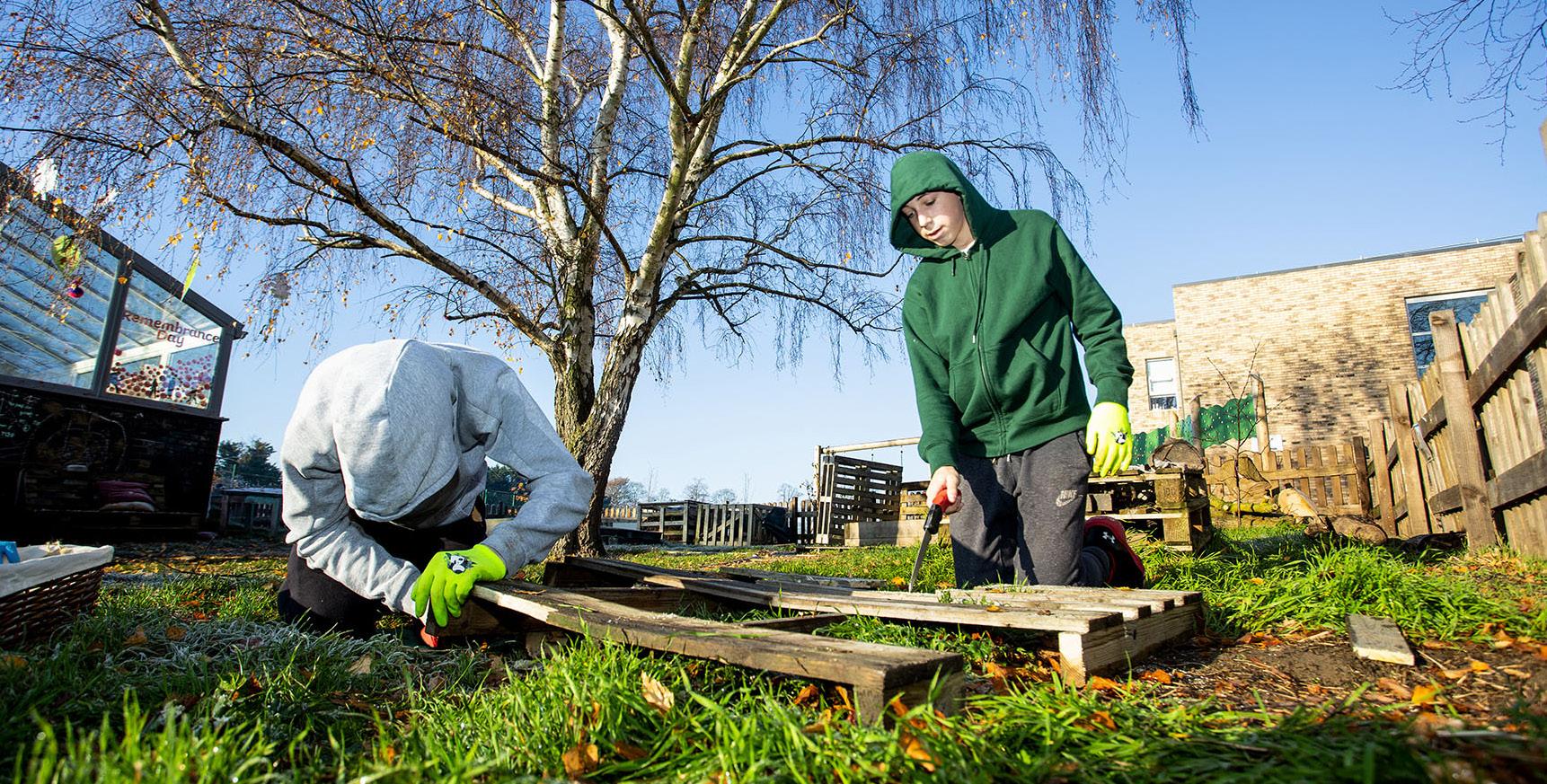



F Making the implicit explicit also means actively teaching the “hidden curriculum”: the social expectations children are expected to learn purely by being in a school environment. Because autistic children often process information literally, inferring expectations such as queueing through observation alone can be challenging. Actively teaching these unwritten expectations can help autistic children understand social differences, reducing anxiety, confusion and misunderstandings.
Building inclusion from the ground up
True inclusion for autistic children requires more than small adjustments. It means designing schools with autistic students in mind from the start. From classrooms to curricula to communication, every aspect of the learning experience can be an invitation for autistic students. By building learning experiences around autistic children’s needs, rather than only adjusting them retrospectively, schools can create environments in which autistic children are able to move beyond participation, but to thrive. L
About the author
Stephanie has more than ten years of experience working in and alongside the autism community across mainstream primary, secondary and special schools. She is head of school at The Cavendish School,
Cambridgeshire’s first state-maintained special autism school, and director of SEND at the Eastern Learning Alliance.
The Specialists
Neurodevelopmental

The majority of children with SEND have persisting immature brain function that can:
• limit attention, processing and learning
• trigger meltdowns, refusal, aggression or distress
• affect communication and social interaction
• impact on wellbeing
• result in diagnoses such as autism, ADHD and dyslexia
EBO stimulates brain maturation by tackling these challenges at source, enabling age-appropriate development to enhance each child’s life and learning.


As busy environments, finding space for focused study and SEND support can be a challenge for schools. Tomasz Michalczyk explains how Hushoffice acoustic pods offer a practical solution
What barriers to learning do busy school environments create for pupils, and how can Hushoffice pods help overcome them?
Modern schools are vibrant and collaborative environments, but they can also be noisy and highly stimulating. For many pupils, excessive noise, constant movement, interruptions, and limited access to quiet spaces can make concentration difficult and negatively affect learning outcomes. These challenges are particularly noticeable during independent study, one-to-one support sessions, examinations, wellbeing interventions, and activities requiring sustained focus.
Hushoffice acoustic pods help schools address these challenges by providing dedicated spaces designed for concentration, communication, and focused learning. Their high acoustic performance significantly reduces surrounding noise, creating calm environments where
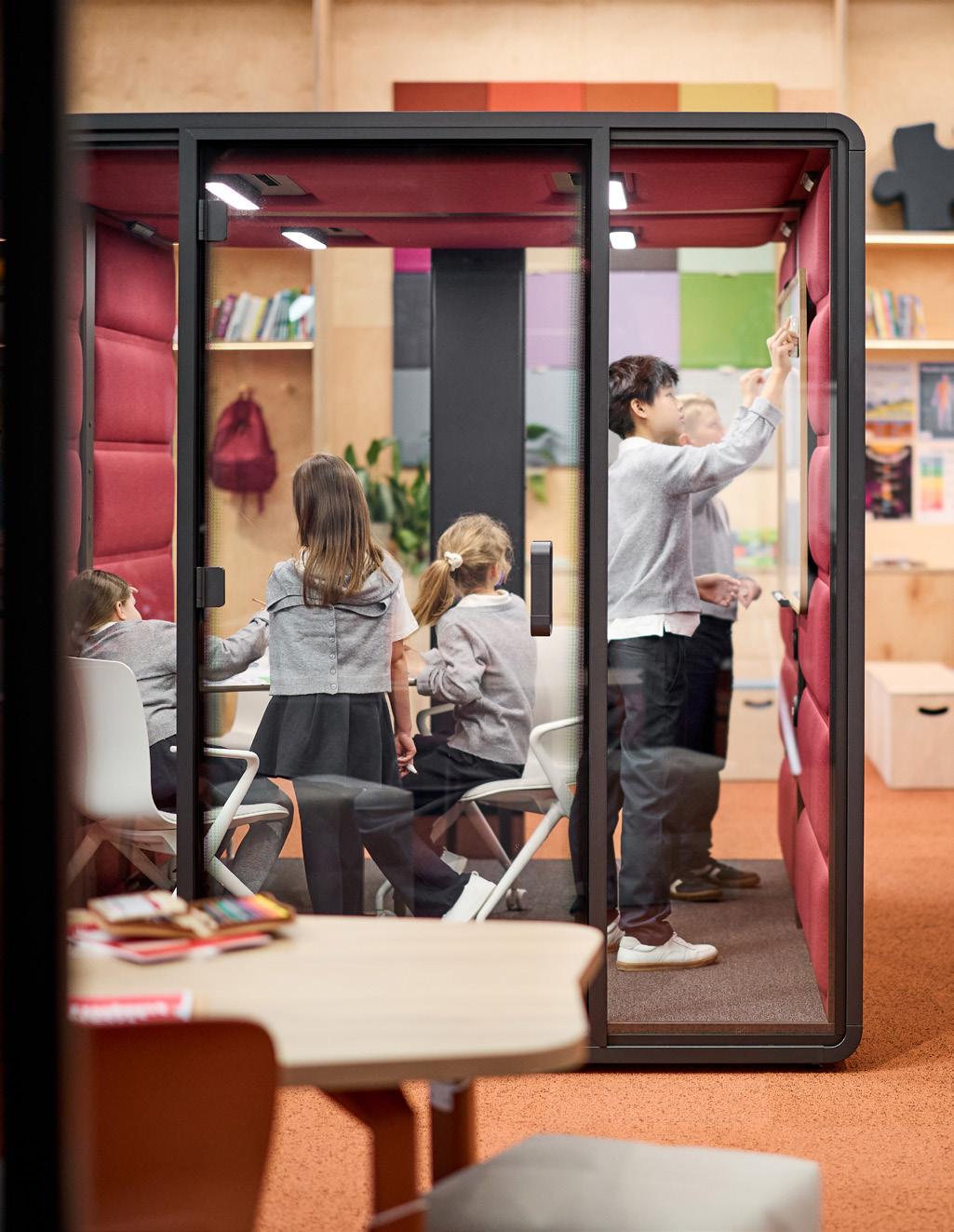
pupils can work without distraction. The pods can be used for individual study, small-group learning, project work, tutoring sessions, pastoral support, and private conversations. By introducing accessible quiet spaces within existing school buildings, Hushoffice pods help create more balanced learning environments that support a wider range of learning styles and educational activities.
What specific benefits do Hushoffice pods offer for pupils with SEND?
Many pupils with SEND benefit from environments that offer greater predictability, reduced sensory stimulation, and opportunities to regulate their sensory experience. Busy school settings can sometimes present challenges related to noise, visual distractions, overcrowding, and sensory overload, which may affect concentration, wellbeing, and participation.
Hushoffice pods are designed to support both neurotypical and neurodivergent users. Their enclosed, acoustically controlled interiors provide calmer environments that can help pupils feel more comfortable, focused, and secure. The pods can be used for individual learning, intervention programmes, therapeutic support, counselling sessions, emotional regulation, and wellbeing activities.
Importantly, Hushoffice products hold Certified Autism Resource certification, demonstrating their suitability for individuals on the autism spectrum and others who benefit from reduced sensory stimulation. Adjustable lighting and user-controlled environmental settings allow pupils to tailor the space to their individual preferences and needs. As schools continue to strengthen inclusion strategies and SEND provision, acoustic pods can provide valuable additional spaces that support participation, wellbeing, and personalised learning.
With school building budgets under pressure, how can Hushoffice pods provide additional learning space in a cost-effective and low-disruption way?
Schools are increasingly expected to accommodate changing educational needs while managing tight budgets and limited space. At the same time, the Department for Education’s Education Estates Strategy highlights the importance of creating flexible, inclusive and adaptable learning environments while making the most effective use of existing school estates.
Hushoffice acoustic pods offer a practical and cost-effective way to achieve these objectives. Rather than building new rooms or undertaking major refurbishment projects, schools can quickly create additional functional spaces within their existing buildings. Pods can be installed with minimal disruption and do not typically require extensive construction work, helping schools avoid many of the costs, delays and operational challenges associated with traditional building projects.
Their flexibility is another significant advantage. As school requirements evolve, pods can be relocated, reconfigured or repurposed for different uses, from SEND interventions and one-to-one learning spaces to wellbeing areas, meeting rooms and quiet study zones. This adaptability allows schools to respond quickly to changing pupil and staff needs while maximising the value of their investment over time.
By helping schools optimise existing space, improve inclusion and create a wider variety of learning environments without major capital expenditure, Hushoffice pods support the long-term goals of a modern, efficient and future-ready education estate.
How do Hushoffice pods benefit teachers and school staff?
While much attention is rightly focused on pupils, teachers and school staff also require environments that support concentration, wellbeing, and effective communication. Administrative responsibilities, lesson preparation, confidential meetings, online training, parent consultations, and pastoral discussions often require privacy and freedom from distractions. Hushoffice pods provide dedicated workspaces where staff can focus on important tasks without interruption. They create suitable environments for confidential conversations, virtual meetings, performance reviews, safeguarding discussions, and collaborative planning

Tomasz Michalczyk, new business development manager, Hushoffice
Tomasz is education sector lead at Hushoffice, specialising in inclusive, sensory-friendly environments that support concentration, wellbeing, and effective learning. With extensive experience delivering acoustic solutions for schools and universities, he advises institutions on creating flexible, future-ready spaces that enhance learning, collaboration, accessibility, and community development through thoughtful, human-centred design.
sessions. The pods also offer comfortable spaces for staff wellbeing, allowing individuals to step away from busy school environments when they need quiet time to recharge. Features such as efficient ventilation, ergonomic interiors, high-quality acoustics, and Human Centric Lighting help support comfort throughout the working day. By improving access to functional and private workspaces, Hushoffice pods contribute to staff productivity, wellbeing, and overall workplace satisfaction, helping schools create environments that support both educational outcomes and the people who deliver them.
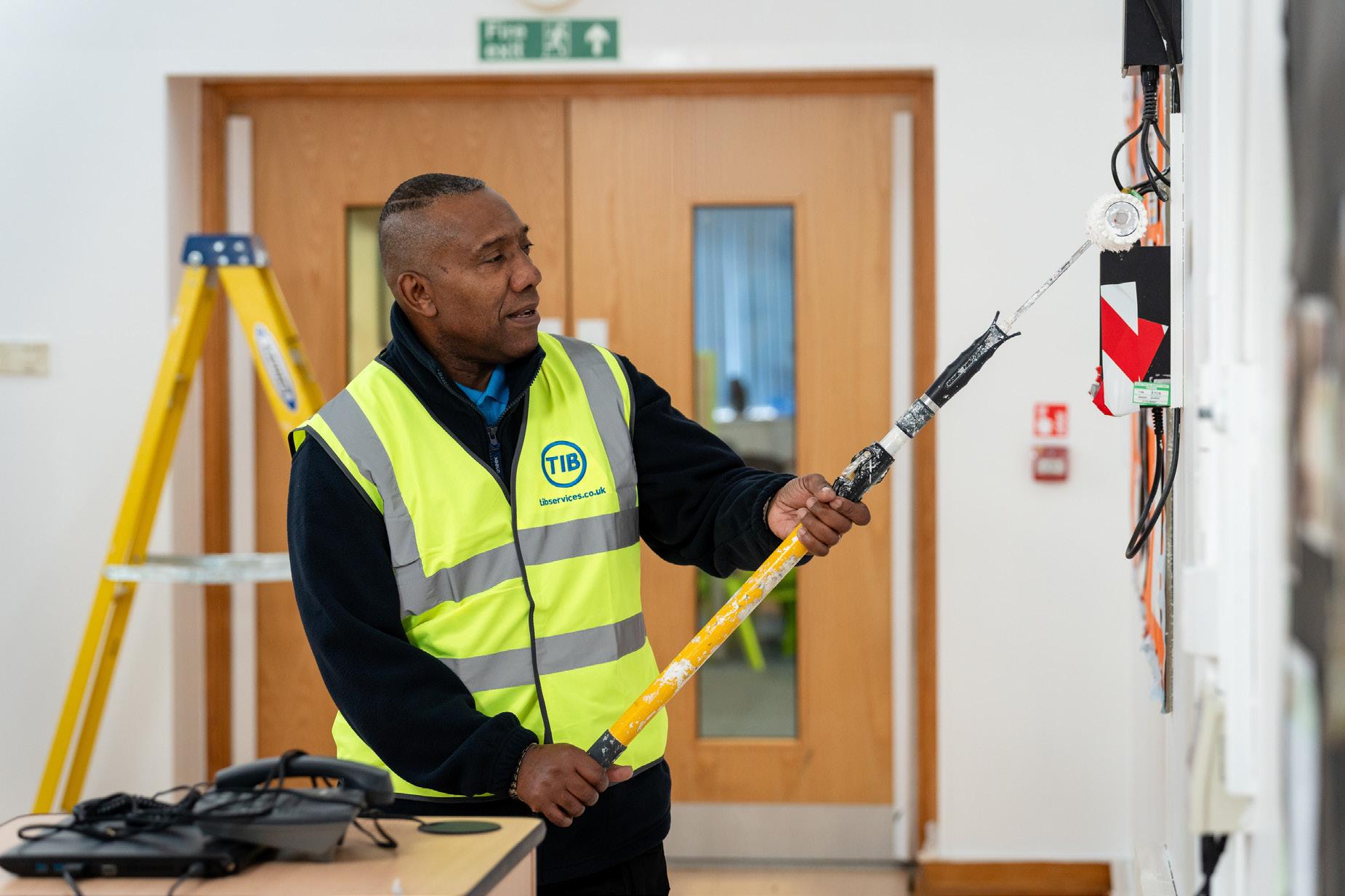

The Education Estates Strategy sets out an ambitious long-term plan to renew and modernise schools and colleges in England. But funding and programmes alone will not determine whether it succeeds. Delivery will depend on whether the education sector can build a professional, skilled and resilient facilities management function for the decade ahead,
writes Mike Agate from IWFM
The government’s new Education Estates Strategy is ambitious by any measure. It sets out a 10-year plan for an education estate that is ‘inclusive safe, suitable, sustainable and sufficiently sized’, with major investment intended to move schools and colleges away from a long-standing cycle of reactive repairs and towards a more planned model of management, maintenance and renewal.
That shift is significant. For years, too much attention has been focused on urgent problems – leaking roofs, failing heating systems,
deteriorating buildings and emergency works that pull time and money away from long-term priorities. The new strategy makes a different argument. It says the education estate should be managed as a long-term national asset, with condition, resilience and suitability considered together rather than in isolation.
For facilities management professionals, that change in direction is welcome. It is also a clear challenge.
Because a strategic estates plan cannot be delivered strategically unless the people E


At SiBCAS, we have been manufacturing and supplying Modular Buildings and Site Accommodation for over 50 years. We provide a reliable turnkey service and exceptional quality buildings. From multi-functional Modular Building complexes to suit any purpose including Classrooms and school facilities, Offices, Changing rooms and Health Centres to self-contained welfare units, storage containers and site accommodation, we can help provide a solution to your hire or sale requirements.

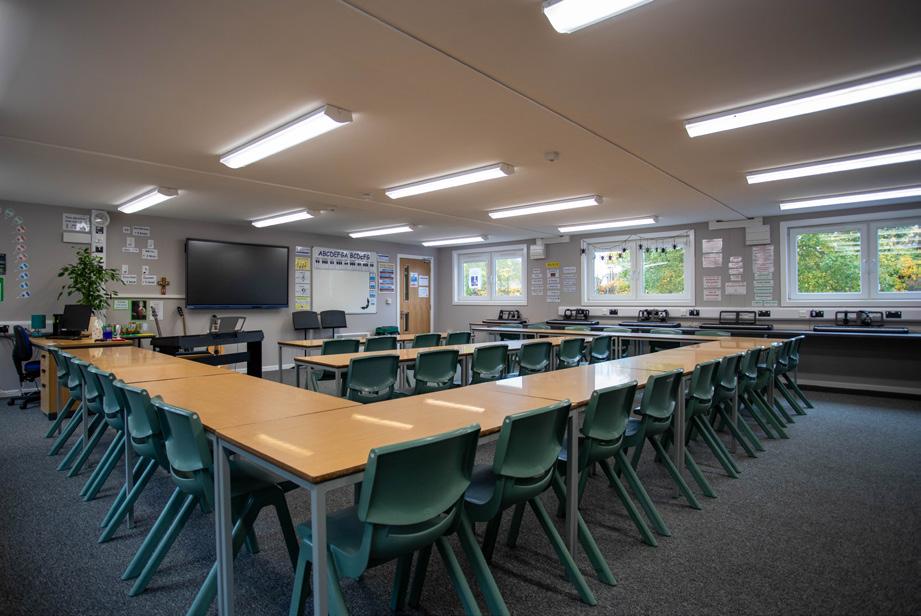

Over 50 years of modular expertise
Dedicated in-house transport fleet for reliable delivery
Fast, flexible modular solutions for schools and colleges
Create modern classrooms with minimal disruption

F responsible for the daily reality of buildings, compliance, maintenance, contracts, energy, safety and capital preparation have the time, capability and authority to do so. In practice, the success of a 10-year estates strategy will depend not only on the quality of the policy, but on the strength and maturity of the FM function charged with delivering it.
This is one of the most important implications of the strategy. While much of the public discussion has understandably focused on funding, rebuilding and retrofit programmes, the less visible issue is capability. Schools, trusts, colleges and responsible bodies are being asked to take a more proactive, evidence-based and strategic approach to estate management. That requires professional knowledge, sound judgment and consistency over time.
The strategy itself points in this direction. It places greater emphasis on standards, data, planning and accountability. Responsible bodies will be expected to show how they are meeting estate management expectations. There is growing emphasis on the systems, processes and competencies needed to manage buildings well, not simply on access to capital when something goes wrong.
The Education Estates Strategy sets out major investment intended to move schools and colleges away from a long-standing cycle of reactive repairs and towards a more planned model of management, maintenance and renewal
That matters because the scope of the task is increasing. This is not just a programme to repair ageing buildings. It is also about climate resilience, energy management, inclusivity, digital connectivity, place planning and better use of land and space. Responsible bodies are being asked to think about overheating, flooding, decarbonisation, accessibility, SEND provision, broadband, asset information and future demand – often all at once.
This means the delivery challenge is not only financial or technical. It is organisational and professional. Schools and colleges will need people who understand compliance and condition, but who can also interpret data, support investment and capital deployment E
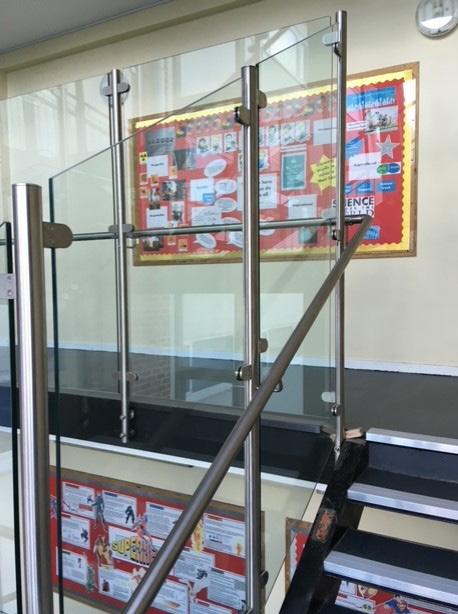


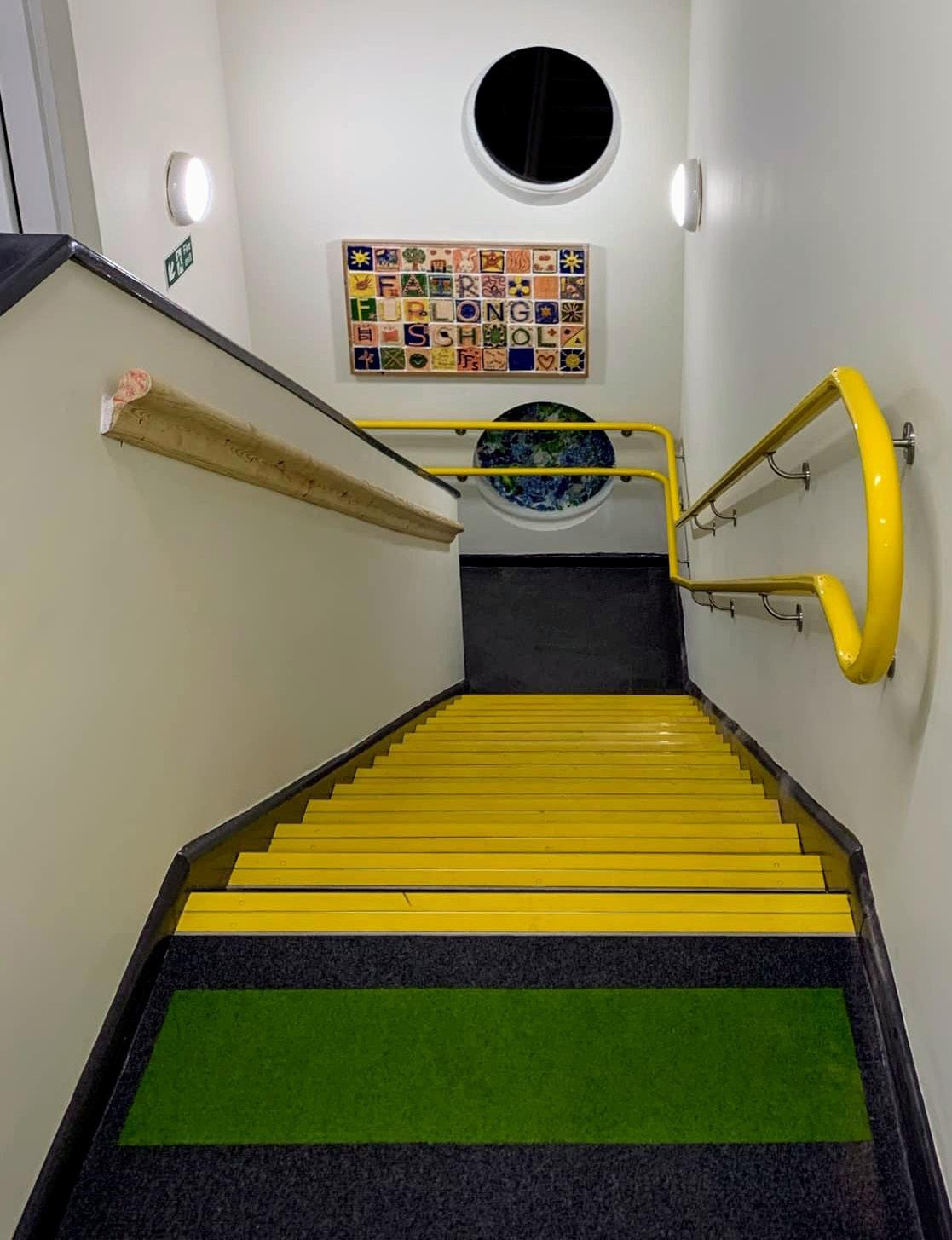
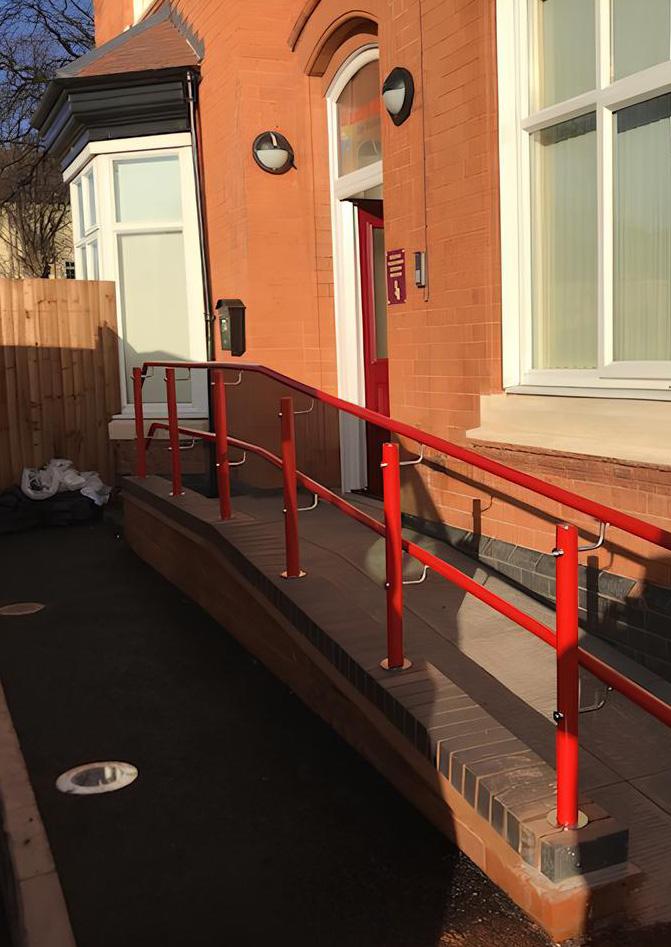
F decisions, plan multi-year interventions, manage supply chains and connect estate performance to educational outcomes. In other words, the model is changing. The education sector, like other sectors, is moving from a reactive premises function to a strategic FM discipline.
That is not a cosmetic change in language. It reflects the reality of what effective estate management now involves. Facilities teams are increasingly expected to manage risk, support sustainability goals, respond to changing regulations, maintain critical services, oversee contractors, inform capital priorities and contribute to long-term organisational planning. In education, where buildings directly affect safety, attendance, wellbeing and the quality of the learning environment, those responsibilities are especially important.
Linda Hausmanis is the CEO of professional body the Institute for Workplace and Facilities Management. She says: “The education estates strategy rightly raises expectations of how schools and colleges manage their buildings over the long term. But those expectations will only be met if the people leading and supporting that work are recognised as professionals and given the development they need. IWFM sees a decade-long estates plan requiring more than capital funding – it requires competent, confident FM teams with the skills to plan, manage risk, maintain compliance and support better outcomes for learners.”
That point matters more because the strategy arrives at a time when skills are under pressure across the built environment. Recruitment challenges in construction, maintenance, retrofit and technical roles are already well documented. FM is dealing with its own shortage of capacity in areas such as compliance, digital skills, energy management and strategic planning. As expectations rise, many teams are being asked to do more with limited headcount and increasingly complex portfolios.
This creates an obvious risk. Without sufficient capability, even well-funded strategies can drift back into the same reactive habits they were designed to replace. If teams are stretched, if specialist knowledge is hard to recruit, or if estates leadership is fragmented, long-term plans can quickly become short-term fixes. The ambition to be proactive can be lost beneath the pressure of immediate operational demands.
That is why the education estates strategy should also be seen as a workforce challenge for the FM profession. Delivery will depend on the sector’s ability to build a stronger skills pipeline and to support development at every level.
At entry level, the sector needs clear routes into FM and estates work. Effective estate management depends on a workforce that spans operative, supervisory, managerial and strategic roles. That pipeline cannot be E
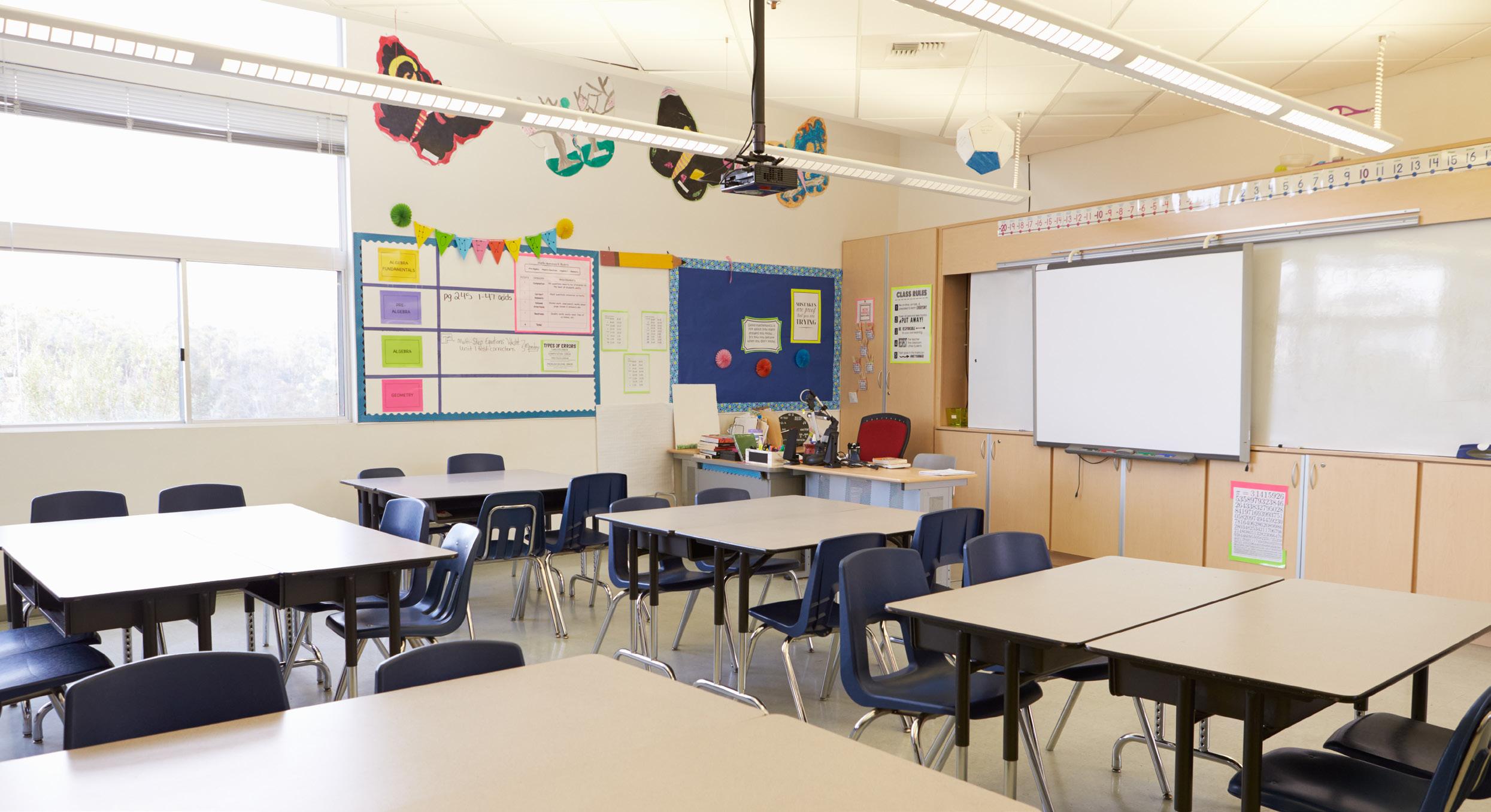

F left to chance. It needs structured pathways for people coming into the profession, whether through apprenticeships, earlycareer roles or formal qualifications. If education is serious about long-term estate resilience, it must also be serious about bringing new talent into the profession.
At mid-career level, the priority is development and retention. Many education estates teams already carry significant responsibility within relatively lean structures. The new strategy will ask more of them – more planning, more reporting, more use of evidence, more integration of sustainability and digital practice. That means development cannot be limited to essential compliance training alone. Teams will increasingly need broader competence in asset management, contract oversight, project planning, risk, energy performance and stakeholder communication.
At senior level, the issue is leadership. The strategy assumes that buildings and land will be managed in support of wider educational goals. That requires the FM voice to be heard
at executive and board level, especially in academy trusts, local authorities and college groups managing complex estates across multiple sites. Estate decisions are not merely operational. They shape resilience, value for money, accessibility, climate preparedness and the quality of the environment in which learning takes place. Strategic FM leadership has to be part of that conversation.
There is a wider cultural point here. For too long, facilities management in some parts of education has been treated as a support service in the narrowest sense – essential, but often undervalued until something fails. The direction of policy now tells a different story. A well-run estate is not a background concern. It is part of educational performance, organisational resilience and public value. Buildings influence far more than maintenance costs. They affect safety, continuity, student and staff experience, inclusion, energy use and the ability of institutions to meet changing needs over time. In that context, FM is not simply about keeping the lights on. It is about creating and maintaining the conditions in which education can succeed.
That is why professionalisation matters. If responsible bodies are expected to plan over a decade, respond to climate pressures, improve accessibility, manage compliance, use data effectively and maintain buildings fit for learning, they need a workforce that is recognised, developed and supported as a profession.
For schools, trusts and colleges, that means thinking now about how facilities teams will be equipped for the years ahead. Perhaps obviously, IWFM views membership of a professional body as key to a successful outcome here. That membership provides standards, qualifications, continuing professional development and access to professional guidance, all within a professional community that can help individuals and teams benchmark competence, build knowledge and stay current as expectations change.
The government has set out a long-term vision for education estates. That is welcome. But long-term plans succeed only when there is long-term capability behind them. Funding can begin the work. It is skilled people, supported over time, who will determine whether this decade of renewal delivers on its promise. M
As Martyn’s Law places greater emphasis on emergency preparedness, schools are reviewing how they respond to security threats. Kieron Chapman explores how wireless technology can help
With Martyn’s Law coming into effect next year, schools will need to ensure they have robust lockdown procedures in place. But what are the biggest challenges schools face when it comes to implementing effective lockdown procedures?
The Terrorism (Protection of Premises) Act 2025, Statutory Guidance document that was published in April 2026 can help considerably in determining what each school’s obligations are. This is a good place to start. Determining the most appropriate Lockdown procedure can be challenging. We have found that most schools have some kind of unique requirement when starting this process. With our system being at the front end of this process to communicate an alarm situation across the school, we find some schools require simple, single alarm functions while others request multiple alarm types and different signalling products such as visual alarms of different colours.
Being able to discuss options with a company like Fircroft at an early stage can help clarify what types of equipment may be required. Funding is also a major challenge. While some funding is available from Government sources, not all schools are aware of where and how to get the support they need.
Martyn’s Law emphasises that schools need reliable methods of alerting everyone to a lockdown and potential dangers. How can Fircroft Technologies’ products support them? The ASYRA wireless range of products from Fircroft has been established and used in Lockdown systems for over three years in export markets where legislation had progressed sooner. The system was developed based on our EN54 certified signalling range, applying over 30 years of experience in the life safety industry. As a result, we have a fully independent, truly wireless solution that is not dependent on other

systems operating. This means that the ASYRA system will continue to operate, even if the mains supply fails, the fire alarm system fails, the WiFi network or GSM networks fail, or have poor coverage. The system is fully self monitoring and reports any fault conditions on all system devices, not just on a central control panel.
With a distinctly unique alarm tone specified in standards for lockdown applications, and with the recommended blue flashing visual alarms for Lockdown signals, the system can not be confused with a fire alarm signal which we are often told, is a problem.
The ASYRA system also has multiple channels so if you require alarm signalling for other applications such as “stay in place” or “all clear” signalling then the same system can provide these signals also.
Many schools are working with tight budgets and ageing buildings, with many sites large and with multiple buildings. How can a wireless solution help schools improve safety without the cost and disruption of traditional alarm installations? There is no need to run cables between buildings or within buildings with the ASYRA wireless system, it is truly wireless. With up to 254 devices on each zone, there is no need for boosters or repeaters that need cabling together and need battery backed power supplies with the associated costs of having those installed. This makes the installation many times shorter than with cabled systems and this dramatically reduces the time on site required and the associated installation costs of the system while minimising any disruption.
We have had systems installed in schools of 1,500 pupil sizes in as little as two days. This means there is no need to panic and limit installations to holiday periods only.
The ASYRA wireless system uses the latest wireless technology in the 868MHz band which is reserved for fire and security type applications. This enables secure, encrypted, higher power transmissions, and essentially, is not an open bandwidth like the 433MHz band where many household devices such as baby monitors, gates, remote controls etc. can cause overcrowding and increase the risks of data corruption or lost transmissions. Where buildings are separated by 10s or 100s of meters, a zoned solution may be required. Sometimes, old buildings with dense building materials can affect coverage on wireless systems. The ASYRA system has no limit to the number of zones that can be created, ensuring

Kieron Chapman, manager director, Fircroft Technologies Ltd
Kieron Chapman is managing director of Fircroft Technologies Ltd, bringing a strong technical background in fire alarm signalling technology to the ASYRA wireless lockdown alarm solution. He has played a key role in developing and promoting Asyra Wireless, enabling organisations to benefit from greater safety and security, and achieve rapid implementations of versatile solutions with reliable and secure wireless technology.
site wide coverage can be achieved, with no need for extra panels or nodes to be installed.
Looking ahead, what trends do you see shaping the future of school safety, and how is Fircroft Technologies helping schools prepare for those changes?
As the risk environment continues to grow, the likelihood is that schools will have to provide additional types of safety solutions on top of those defined today.
With this in mind, we have exciting developments that expand the ASYRA wireless system in progress, which will enable systems to expand to meet growing demands in the future without needing to replace complete systems. One example of this is the increased number of alarm channels from two to four on any one system. This will be available in Q4 of 2026. L
www.asyrawireless.com/education www.asyrawireless.com/contactus +44 (0)1873 821550

Independent Fire Safety Services Ltd. (IFSS) are a trusted and highly regarded fire door inspection and fire safety company that can help deliver compliant fire safety to your building. Our head office is in the North West of the UK, and we operate throughout the country.
We have a network of skilled professional fire safety personnel with a range of specialties. We continue to invest in our knowledge and training to ensure we keep up with legislation and industry knowledge.
Our clients are varied, from single commercial units, multioccupancy housing providers, Facilities Management specialists operating on multiple sites, NHS Trusts, and government facilities. We strive to provide the highest level of inspection and reporting across all disciplines and are members of the UKAS accredited Bluesky Fire door inspection scheme, demonstrating our commitment to providing an exemplary service.
We don’t ‘pass’ or ’fail’ a door, we advise our clients of the non-compliances and possibly solutions to allow them to allocate resource where required in order of priority.
We are INDEPENDENT by name and independent in practice with no links to any organisation offering remediation or installation services, guaranteeing our impartiality.
Contact us at:


We offer a broad range of fire door services:
• Fire Door Inspections
• Fire Risk Assessments
• Fire Stopping Surveys
• ‘Clerk Of Work’ Services
• Fire Door Installation Training




The Department for Education’s new Technical Manual marks the most significant overhaul of school fire safety guidance since Building Bulletin 100 was introduced almost 20 years ago. So what’s changed? Ashish Kirori from SOCOTEC finds out
For almost two decades, Building Bulletin 100 (BB100) has shaped fire safety design in schools across England and Wales, influencing everything from means of escape and compartmentation to fire alarms and sprinklers. The publication of the Department for Education’s (DfE) Technical Manual –Employer’s Requirements (Technical Manual) in January 2026 represents the most significant change to school fire safety
guidance since BB100 was first introduced. BB100 has not yet been withdrawn and remains a useful reference for projects outside the DfE funding framework. However, for DfE-funded projects, the Technical Manual now forms part of the Employer’s Requirements, making compliance a contractual obligation in addition to meeting the Building Regulations 2010 (as amended). E
and why now?
BB100 was developed in a very different construction and regulatory environment. It was first published in 2007, before the Grenfell Tower fire in 2017, before the widespread adoption of Modern Methods of Construction (MMC) in education projects, and before the increasing use of roofmounted photovoltaic (PV) systems and battery energy storage technologies.
While BB100 provided a robust framework for school fire safety design, it was fundamentally a guidance document that has not been revised since its first publication. The new Technical Manual is an employer’s requirement, and on any school project procured under a DfE framework, compliance is contractually mandatory, which is a meaningful shift in status.
Regarding fire alarms, the Technical Manual introduces more demanding expectations for fire detection as the minimum required system category has been upgraded. BB100 allowed a Category M (manual system for single-storey buildings) or Category L2 (automatic system for multi-storey buildings) system as the baseline, covering escape routes and high-risk areas. The new manual requires Category L2 and P2 together, which means that automatic fire detection is provided across the whole building, plus property protection monitoring. Alarm

Regarding fire alarms, the Technical Manual introduces more demanding expectations for fire detection, as the minimum required system category has been upgraded
systems must also be connected to a staffed alarm receiving centre around the clock, unless the building is permanently occupied. This has ongoing revenue implications that schools need to factor into their facilities budgets.
Unlike BB100, the Technical Manual introduces specific requirements for communications rooms, electrical distribution rooms, battery energy storage systems (BESS) and UPS installations. In addition, BESS and UPS installations are required to comply with NFPA 855 and HSE INDG 139, reflecting the growing use of these technologies within modern school buildings.
Evacuation lifts are another area where the new rules go further than before. Previously, the accepted approach was for staff to physically assist a non-ambulant pupil down the stairs. As per the new Technical Manual, evacuation lifts are now mandatory in all multi-storey school buildings, sized according to the number of pupils (one evacuation lift upto 749 pupils, otherwise two evacuation lifts). This needs to be factored into the design during the earliest concept stages to ensure that the design team is aware of it for spatial planning and cost purposes.
Under BB100, compartment floors were generally recommended as a property protection measure rather than treated as a mandatory requirement. The Technical Manual adopts a more prescriptive approach, requiring compartment floors to provide a minimum of 60 minutes’ fire resistance. The requirement may be relaxed where the building is protected throughout by an automatic sprinkler system. Compartment size limits have also been revised. Under BB100, multi-storey schools were generally limited to 800m 2 per compartment without sprinklers and 2,000m2 with sprinklers, while sprinkler-protected single-storey

schools had no upper compartment size limit. The Technical Manual increases the allowable compartment sizes, permitting up to 2,000m 2 without sprinklers and 4,000m2 with sprinklers in multi-storey schools. However, it also introduces new limits for single-storey schools of 4,000m2 without sprinklers and 8,000m2 with sprinklers.
Under BB100, sprinkler-protected school buildings with a topmost occupied floor of no more than 5m above ground level could benefit from a reduction in the fire resistance period for elements of structure from 60 minutes to 30 minutes. The Technical Manual removes this relaxation and requires all elements of structure to achieve a minimum of 60 minutes’ fire resistance (REI 60), irrespective of whether the building is sprinkler protected. Certain exclusions remain in line with Approved Document B, such as structures supporting only a roof.
Under BB100, sprinkler provision was determined through a sprinkler risk assessment and cost-benefit analysis.
While sprinklers were recommended as best practice, they were not mandatory. Under the new manual, sprinkler risk assessment and a cost-benefit analysis are now removed. Sprinklers are now mandatory in any school building over four storeys or above 11m in height, in all specialised schools, all alternative provision settings, and all schools with residential accommodation such as boarding schools.
In practice, the consequences of a significant fire in a specialised school can be far more severe than in a mainstream educational setting. Unlike conventional schools, many specialised schools rely on highly specialised spaces and equipment that cannot easily be replicated elsewhere. As a result, the consequences of a significant fire can continue to affect pupils and families long after the incident itself.
The new requirements specify that sprinkler systems must be designed and installed by contractors certified to both LPCB LPS 1014 and LPS 1084 Level 4 standards. In addition, systems are required to incorporate quick-response sprinkler heads, a superior single water supply in accordance with BS EN 12845, duty-and- E
F standby pump arrangements with automatic changeover and externally located sprinkler water storage tanks. Hence, this uplift reflects a broader shift towards business continuity rather than focusing solely on life safety.
The Technical Manual also places greater emphasis on the use of non-combustible materials within external wall construction. All insulation used in external walls, roofs, and any voids within modern modular construction must now be Class A1, i.e., non-combustible. This is an absolute requirement regardless of building height. For school buildings that use modern methods of construction, there is now an entirely new sub-section in the Manual, Section 9.2, which sets out specific fire safety requirements for volumetric and panelbased systems. This did not exist in BB100.
does this mean in practice?
For school projects that are already in design or on site, the first question to ask is whether the project sits within DfE’s
Employer’s Requirements framework. If it does, the Technical Manual governs fire safety design.
Decisions relating to sprinklers, evacuation lifts, compartmentation, MMC systems and energy technologies can all have significant implications for cost, programme and building layout. These are no longer matters that can be deferred until detailed design.
Perhaps most importantly, project teams should recognise that compliance with Building Regulations and compliance with the DfE Employer’s Requirements are not necessarily the same thing. A design may satisfy the statutory requirements while still failing to meet contractual obligations for a DfE-funded project.
The publication of the Technical Manual does not signal the end of BB100. However, it does represent a clear evolution in the way school fire safety is being approached with greater emphasis on resilience, inclusivity, protection of vulnerable occupants and long-term operational continuity. L

At the head of Marbeuf Conseil et Recherche, Bruno Sanglé-Ferrière has developed a patented process to produce electricity with very high temperature fuel cells combined with the recycling of the exhaust heat to produce the fuel. An advance that opens the way to new industrial efficiencies and even the use of low temperature heat to produce electricity

You have oriented Marbeuf Conseil et Recherche towards energy recycling. What does your innovation consist of and how does it fit into your work?
Marbeuf Conseil et Recherche already existed, but I refocused it on a process that I imagined and which is based on a simple idea: nothing gets lost. I have designed a system in which the thermal energy released by a very high temperature fuel cell is recycled through a chemical process. Where conventional technologies largely dissipate heat or residual energy, we capture it, convert it and re-inject it into the production cycle. This circular logic allows to achieve a full conversion efficiency as compared to known standards, thanks to a coupling between energy conversion and thermal recovery.
How was this idea born, and how did you protect it?
The idea came by linking areas that until then had coexisted without truly dialoguing:
on one hand, high-temperature devices capable of generating considerable energy at high temperature, and on the other, the techniques that allow converting water into hydrogen through endothermic reactions. I simply made the connection between the two, then added a heat pump system to complete the supply of heat for some of the chemical reactions. Remained to verify that everything was working: the calculations validated the approach, and we are now working on dimensioning the full system. It is a delicate work, because the sulfur-oxide cycle is a difficult cycle to implement. We have obtained patents which constitutes a decisive advance.
What industrial applications are you targeting, and what message do you want to send to energy players?
The scope is broad: autonomous energy production, energy storage, and even air and water cooling. What we propose is a technological brick that allows a step forward in performance and sobriety. My message is simple: come discover this innovation, and discuss partnerships. The objective is clear: to contribute concretely to the energy transition by making systems more efficient, more competitive and capable of recovering an energy that until then had been ignored. M
https://m-cr.fr/



Healthier meals, stricter nutrition rules and greater accountability are at the heart of proposed reforms to school food standards. With the consultation now closed, we explore what could be changing
School meals in England are set for their biggest overhaul in more than a decade, as the government moves to strengthen School Food Standards in a bid to improve children’s health and tackle rising levels of obesity.
Following a nine-week consultation , which has now closed, ministers are expected to publish their response in September 2026. If adopted, the reforms would introduce tougher nutritional requirements for breakfasts and lunches served in schools, alongside a new national enforcement system to ensure standards are consistently met.
The proposed changes come at a time of growing concern about children’s health. One in three pupils leave primary school overweight or obese, while tooth decay linked to highsugar diets remains the leading cause of
hospital admissions among children aged five to nine. Government polling has also found that three-quarters of parents are concerned about the food their children are eating.
Why change the standards?
School Food Standards were last significantly updated more than 10 years ago. Since then, eating habits, nutritional guidance and public health priorities have evolved considerably.
The government says the revised standards have been developed in collaboration with nutritionists and public health experts to ensure that every meal served in schools supports healthier diets while helping children develop positive eating habits for life.
Alongside strengthening nutritional requirements, ministers also want to E

When it comes to pupil safety, school sites must be treated as complex, moving ecosystems. Yet when it comes to allergen management, focus often remains solely fixed on the dining hall or canteen.
With Benedict’s Law driving imminent legislative changes, school leaders must look at the bigger picture before the September 2026 deadline.
Schools are highly dynamic, shared environments where food moves with the pupils. Risk management cannot be isolated to the catering team when allergens easily migrate into non-food areas:
• The Classroom: Science experiments, reward treats, or food technology ingredients.
• The Playground: Shared snacks during break times or after-school clubs.
• The Supply Chain: Materials used in arts and crafts containing allergens.
Your team do not need to be medical experts, but under upcoming 2026 guidelines, they require a foundational understanding of emergency response. In a medical crisis, minutes matter; waiting for a designated first aider can result in tragic, avoidable delays.
The reality of school life means a teacher, teaching assistant, or lunchtime supervisor will likely be the first on the scene. These potential first responders must be empowered to spot cross-contact risks, halt dangerous practices like food sharing, recognise early symptoms of anaphylaxis, and activate emergency procedures instantly.
Ensuring every adult on your premises remains vigilant requires a streamlined, whole-school approach to training. To help school leaders prepare for these statutory changes, The Safer Food Group has launched a brand-new Allergy Awareness for Schools course. Tailored for academies, sixth forms, schools and colleges, it empowers your entire workforce to act safely and confidently.
We invite school leaders to take a complimentary trial of the course. Contact info@thesaferfoodgroup.com to set up your trial, or view course details here: www.thesaferfoodgroup.com/allergy-awareness-level-2schools.php
F improve accountability by introducing a national monitoring and enforcement mechanism. Schools would also be expected to publish their food policies and menus online, while appointing a lead governor with responsibility for school food.
What’s changing?
Many of the proposals focus on increasing fibre and reducing sugar, saturated fat and salt across school meals.
Under the plans, schools would be required to serve vegetables or salad with every main meal, including grab-and-go options, while all desserts would need to include or be accompanied by fruit. Primary schools would also introduce at least one fruit-only dessert day each week.
Starchy foods would become healthier, with schools expected to use higher-fibre breads and ensure at least half of rice and pasta served is wholegrain. Pulses would also feature more prominently, becoming a required part of menus at least once a week.
Perhaps the most eye-catching proposals are those targeting less healthy foods. There would be limits on how often items such as pizza and sausage rolls are permitted, while deep-fried foods would be removed altogether. Processed meats, battered products and cheese-heavy meals would all face tighter limits on how frequently they can appear on menus. Sugar reduction is another major theme. Sweet baked goods and desserts would be
Perhaps the most eyecatching proposals are those targeting less healthy foods. There would be limits on how often items such as pizza and sausage rolls are permitted, while deep-fried foods would be removed altogether
served less often, fruit juice would be removed from school meal services, and schools would be limited to offering healthier drinks such as water, milk and selected low-sugar alternatives. The use of sugar, honey and syrups during food preparation would also be restricted.
The proposals extend beyond lunch. For the first time, separate nutritional standards would be introduced for breakfast clubs, reflecting the government’s continued rollout of universal primary breakfast provision. Schools would also face new rules governing meal deals, vegetarian meat alternatives, non-sugar sweeteners and snacks, with only fruit, vegetables, breadsticks and savoury crackers permitted between meals.
The government is also reaffirming the requirement that all schools must provide pupils with access to free, fresh drinking water at all times. E


Recognising the scale of the changes, the government has proposed a phased implementation for some measures in secondary schools. This would give catering providers and school leaders time to redesign menus, develop new recipes, train staff and manage procurement changes before enforcement begins in September 2027.
Schools already able to meet the proposed standards are being encouraged to adopt them ahead of the mandatory deadline.
The reforms have been widely welcomed by organisations campaigning for healthier school food.
Stephanie Slater MBE, founder and chief executive of School Food Matters, described the consultation as “a truly exciting moment for school food”.
She said: “The government’s move to update the school food standards will strengthen the extension of free school meals and the continued
roll-out of universal primary breakfast clubs. This has the potential to revolutionise access to delicious, nutritious and sustainable food for children and young people across the country.”
School Food Matters is a charity that provides funded food programmes in schools and campaigns to bring the voices of children, parents and teachers to government in order to shape policy.
Celebrity chef Jamie Oliver, whose school meals campaign transformed the national conversation two decades ago, also welcomed the proposed reforms.
“Twenty years ago, dog food had higher standards than school dinners. I’ve been banging the drum ever since because I refuse to accept our kids being fed anything less than proper, nourishing meals.
“School food is the UK’s most important restaurant chain. From September, during term-time schools will provide twothirds of a child’s daily diet - a massive opportunity to improve health at scale.
“So, I’m delighted this government is now updating and enforcing these standards.”

Anna Taylor, executive director, The Food Foundation, added: “With government announcing higher school food standards, which will also be monitored, and rolling out universal breakfast clubs and wider access to free school meals, the huge potential of school food to nourish and energise the next generation is finally being recognised. This must be the moment the whole sector pulls together to make school food delicious and nutritious, and embed food education into the school day.”
D’Arcy Williams, CEO of Bite Back, a campaign for healthier school food and fairer advertising led by young people, highlights the importance of proper implementation for the changes to work. She said: “The reality is that the system hasn’t been working. We have standards that are meant to protect children’s health, but without proper monitoring and accountability, they haven’t been consistently enforced. That’s allowed a grab-and-go culture to take hold in many schools – where speed and convenience often come at the expense of nutrition.
“Our recent Grab and Go research shows how this plays out in practice. With short
lunch breaks, long queues and limited healthier options, young people are being pushed towards quick fixes that leave them hungry, tired and unable to focus in lessons.
“The government’s ambition to create the healthiest generation ever is the right one. But it will only be achieved if these new standards are properly implemented and enforced, and if the reality of how young people eat during the school day is fully addressed. This is a real opportunity to reset the system – and we must get it right.”
While the consultation has now closed, schools will be watching closely for the government’s response later this year, when further details of the enforcement framework and implementation timetable are expected.
If the proposals are adopted in full, they would represent the most significant reform of school food in more than a decade, placing healthier eating at the heart of the school day while giving schools greater responsibility for ensuring every child has access to nutritious, balanced meals. L


Advances in AI technologies are creating new and evolving safeguarding challenges for schools. The increasing availability of AI tools has made it easier than ever to create, alter and repurpose images, raising significant concerns about privacy, consent and online safety. Alex Dave, safeguarding lead at edtech charity LGfL –The National Grid for Learning, explores the issue
Effective safeguarding extends beyond the school gate. As schools increasingly use websites and social media to celebrate achievements, showcase learning and engage with their communities, it is important to consider how published images could be accessed, shared or misused in ways that were never intended. While sharing photographs brings clear benefits, advances in AI have significantly
reshaped the risk landscape. Images featuring pupils and staff can now be copied and manipulated with unprecedented ease, creating new challenges for schools seeking to balance community engagement with keeping children and young people safe online.
A growing concern is where photos of pupils or staff are taken from websites, social media channels and marketing materials. These images are then processed using


artificial intelligence tools - such as freely available ‘nudification’ apps - to create non-consensual, synthetic sexual imagery, including AI-generated child sexual abuse material (AI CSAM). The AI tools used to create such abhorrent and illegal images (photos and videos) are neither difficult to find nor use. The reality of this threat requires our attention and proactive leadership.
The Internet Watch Foundation (IWF) has also published recent data about the significant increase in AI Generated CSAM being found by their analysts, suggesting that this technology is already in the wrong hands.
This has led to new guidance being published this month by the UK Online Harms Early Warning Working Group.
For some, concerns about AI image manipulation may seem remote or unlikely. However, the risks are real and becoming increasingly relevant as AI tools become more accessible and capable. Schools understandably want to celebrate pupils’ achievements and share positive experiences with their communities, but advances in AI have changed the way images published online can be collected, altered and reused, creating new safeguarding considerations.
Reflect on whether identifiable, front-facing photographs are genuinely required. In many cases, the same message can be communicated effectively through alternative approaches, such as images taken from a distance
Photographs shared on websites and social media can now be easily edited and repurposed into highly realistic but entirely fabricated content. In some instances, this may involve harmful, abusive or exploitative material. Against this backdrop, schools are encouraged to carefully reflect on whether their current approaches to image sharing remains effective and aligned with the expectations and informed consent of parents and carers in an age of increasingly sophisticated AI tools.
The creation of synthetic intimate imagery carries serious real-world consequences. Manipulated images may be used to blackmail individuals or institutions, with perpetrators demanding payment or compliance under threat of disclosure.
The non-consensual sharing and modification of student photos directly compromises the safety of vulnerable children, such as Looked After Children or those on child protection plans, by exposing personal data or location routines.
The emotional toll on the victims, whether they are pupils or staff members, and their families, is immense. Dealing with these breaches is also heavily distressing for the safeguarding teams managing the fallout. And if deepfakes are shared on the web, they are difficult to totally remove, and so the consequences can be long term.
Senior leadership teams are encouraged to review images that are publicly available on the school’s website and social media platforms, including those featuring pupils, staff, governors and school leaders. This review provides an opportunity to consider whether existing image-sharing practices remain appropriate E
F and whether additional safeguards could help reduce the risk of images being copied, manipulated or reused without permission. Firstly, review the necessity of published images. Reflect on whether identifiable, frontfacing photographs are genuinely required. In many cases, the same message can be communicated effectively through alternative approaches, such as images taken from a distance, over-the-shoulder or from behind, or group photographs where faces are less easily identifiable. Some schools are also choosing to use illustrations or avatars for staff, leaders and governors in place of photographs, helping to reduce the likelihood of images being copied, manipulated or misused.
You could also utilise protective technology. Deploying blur or manipulation technology on student faces or background features makes imagery harder to misuse*. Additionally, you can strip out all embedded EXIF metadata (which can reveal device details, times, and routines) before uploading files. But this is not a quick process and requires some technical expertise.
Schools can also implement quality controls, by publishing lower-resolution images online to hinder the effectiveness of AI manipulation tools, although this does not eradicate the risk.

Schools should also assess their social media channels. Closed groups are always preferable when posting photos, but any member, regardless of who they are, could still save, edit and share any images posted in the group. If you continue posting images in closed social media groups, regularly review the security settings of the groups and their memberships.
It’s important to remind staff about reporting. Staff will already be familiar with how to report a safeguarding concern and to avoid looking at, saving or sending child sexual abuse imagery (even AI-generated content) – see UKCIS guidance for a reminder. But it could be helpful to communicate to staff about how to report concerns relating to the synthetic imagery of teachers/adults being created.
Schools should also update their policies and AUPS. It is worth ensuring that the issue of image sharing is covered in your existing policies, e.g. Online Safety Policy and Acceptable Use Policies. We will be updating our template policies and AUPs shortly.
Schools can also re-issue image consent forms. Ensure that parents and carers (and children over the age of 16 years) are aware of the risks, so they can make an informed decision about using their child’s photos. Opt in systems, rather than opt out, would seem more responsible in this new landscape.
As schools respond to emerging safeguarding risks, careful thought should also be given to how AI tools might be used to create, enhance or alter images. Any use of AI-generated or AI-assisted imagery should be appropriately risk assessed to ensure it aligns with data protection obligations, safeguarding duties and expectations around transparency.
For further guidance, schools can refer to edtech charity LGfL’s AI Policy Toolkit , which supports a safeguarding-first approach to the adoption and use of AI in education settings. Manipulation of student images using unapproved or unchecked AI tools may give rise to privacy breaches and risks of non-compliance with data protection legislation. A Data Protection Impact Assessment for any AI tools used is a key requirement to ensure that schools continue to meet their legal obligations. M
As the 2025/26 academic year draws to a close, school business managers are reviewing their budgets and thinking ahead to 2026/27. With costs continuing to rise across the board, every area of spend deserves a closer look – and print is one that often rewards it
At RISO, we’ve spent years working alongside schools and multi-academy trusts, and we understand the pressures that come with managing a tight budget while trying to give staff and students everything they need. Printing in the high-volume educational environment can bring a significant cost, but it’s also an area where the right solution can make a real, tangible difference.
A different approach to print technology
RISO printers are built on a cutting-edge cold inkjet process, which means no warm-up time, fewer moving parts, and far fewer consumables than traditional tonerbased devices. For the schools, academies and trusts we work with, this means less maintenance, fewer unexpected callouts, and much less disruption to the school day.

toner devices and produces 96 per cent less waste. So, you can sustainably scale your output without compromising on results or quality.
Looking beyond cost savings and balancing annual budgets, research consistently points to the positive impact of colour printed materials on pupil engagement, comprehension and accessibility. For many schools, colour printing at scale has historically been cost prohibitive. But with colour printing as low as 1p per page, vibrant worksheets, displays and learning resources can become part of everyday school life, benefitting pupils without putting additional pressure on budgets.
If you’d like to explore what a RISO solution could look like for your school or trust, book a free energy print audit or live demo. Visit www.riso.co.uk/printsolutions/education to find out more. M
And when it comes to cost per page, our colour printing can come down to as little as 1p per page, keeping expenditure low and predictable, even at the high volumes required in academia.
With RISO, Harmony Trust is able to benefit from the cheapest colour printing along with reliable and fast printers, while teachers at Noel Park Primary (part of Lift Schools) can print what they need, and in colour, without impacting their budget.
built for sustainability
For schools working towards their sustainability goals, our cold printing process uses up to 91 per cent less energy than traditional
FURTHER INFORMATION
www.riso.co.uk
To host or not to host, is the question facing schools right now when it comes to print. Steven Turner, regional customer success manager at PaperCut, examines the options
There are two broad definitions of what ‘serverless’ actually means. When most laypeople say ‘serverless’, they’re referring to a cloud-hosted model: still self-managed, but without the onsite server racks. For slightly more technical people, ‘serverless’ generally means a true Software as a Service (SaaS) solution, with nothing to configure, no upgrades to apply, and no patching to worry about. Whichever definition you use, both represent a shift in responsibility: from maintaining hardware to simply consuming digital services. The big difference, for schools, is how much day-to-day management remains.
The main reason why schools opt for a serverless approach, is the cost of the servers. A CapEx cost for most schools and universities, they’re looking at around at least £20,000. You need to factor in the cost of an uninterruptible power supply, too. You usually need a dedicated cool room. And you need to purchase the literal racks that everything’s going to be mounted in. Other costs with onsite servers, which some schools don’t anticipate is experience, comes in the form of headcount. With

physical hardware you need to recruit a hardware expert to maintain and manage it.
Most other core systems (student management, learning platforms, email, even file storage) have already moved to the cloud. So why not print? It’s probably because print is a physical, tangible process, and because schools are yet to think of printing in a fully cloud-centric way; that lack of framing is holding their network back.
What serverless architecture looks like
In a cloud-hosted setup, the print server simply lives in the cloud. Endpoint clients installed on student and staff devices handle the job submission and link back to the hosted server. In a fully SaaS model, the endpoint client typically does most of the heavy lifting; all the job spooling and routing gets handled locally, while the service coordinates policies, authentication and reporting.
Network design plays a major role here. Schools must consider things like bandwidth, VPN requirements and how traffic flows across their environment. Many solutions offer tools to help ensure jobs stay local to the device and printer, avoiding unnecessary strain on the network. This architecture reduces latency and bandwidth, while still letting sysadmins apply global policies from one central dashboard. Nice and simple, and fast.
Remember too that if you’re in the UK and your server is hosted in the US, you’re introducing greater latency in your traffic, but, more importantly, the laws in the US now govern who can access your data. Therefore, we recommend sourcing providers that have servers based in your country where possible.
Authentication and secure release
Critical features like secure print release is still an option in a serverless world. Both cloud-hosted and SaaS models support this feature, although the methods differ slightly. App-based authentication with phones and tablets has become increasingly popular, too. Mobile print control means users can choose where and when to release their jobs, helping with flexibility. And these methods work across pretty much all device types and infrastructure setups, from Chromebooks in classrooms to Windows laptops in staff offices.
When transitioning to a serverless model, many schools begin with a lift-and-shift approach,

moving their existing print server into a cloud-hosted environment. This minimises disruption and allows IT to stabilise everything before jumping into a SaaS model later on.
Others adopt a staged rollout, starting with one user group, like teachers, or a single campus location. This helps iron-out issues before scaling everything up. Either way, communication is a critical part of change management. By preparing students and staff with clear messaging and expectations, schools can reduce resistance and avoid unnecessary confusion during the rollout. When in doubt, I always recommend a staged rollout, keeping your existing system running while you implement the new print system with a smaller group of users. Once any issues have been identified and resolved, you can then roll the new solution out to the wider school knowing that the implementation will be robust.
Moving to a serverless setup will always involve trade-offs. A SaaS model can simplify maintenance but may limit fine-grained control. A self-hosted model provides great configurability, but requires a bit more oversight. It’s always about what your school values most (and of course, what it can afford). That said, critical features like policies, quotas and reporting are available on both platforms. Schools still need to enforce printing rules, monitor usage, and report on things like cost and environmental impact. Print management is no less important in a cloud-first world; it’s just delivered differently. M














As schools place greater emphasis on providing enrichment opportunities for students, their green spaces have never been more valuable. Jonathan Pettit from the British Association of Landscape Industries highlights simple, achievable ways to transform school grounds into thriving natural spaces
There are around 29,000 state schools in the UK and together they sit on around 50,000 hectares of land. Just over half of this – 26,300 hectares – is green space. This green space will already be offering a range of benefit to pupils; from sports fields where they can run, play, compete and improve physical health to simple areas of grass and trees that will help develop a sense of community, aid mental wellbeing, and improve academic performance. There is also a strong body of evidence that exposure to natural environments reduces stress and lowers absenteeism.
Green spaces also offer learning opportunities like getting pupils and staff outside for lessons. Growing plants and being involved in gardening is proven to help confidence for students and increase skills and knowledge.
Unfortunately, not all of this green space is shared equally between schools, and some will be more landlocked than others. Some will have significant areas of green space as part of their estate, others less so. Whatever the area of green and open space open to you, there will be ways that you can use it to improve and enhance biodiversity. Of course there is no guarantee that your school has the expertise and resource to begin to plan how to make appropriate changes to the school estate. But there are many schemes and opportunities for funding that can help you on your way to bolstering biodiversity in your school. This article will look briefly at some of the ways in which biodiversity can be improved as well as provide some links to advice, resource and E
F funding that may help you start or continue your journey.
Perhaps the most widely known is the schools garden programme run by the Royal Horticultural Society. The Campaign for School Gardening was launched in 2007 and has been used to inspire young people to grow plants, understand the environment, as well as develop practical horticultural skills. It has been hugely successful and is free to join. Many schools already have and are making plants, and all the benefits that they bring to wildlife and pupils, an integral part of school life.
We know from our conversations with young people that they have an interest in the environment and being involved in initiatives that tackle the changing climate or improve the biodiversity in their locality. Involving students from the start of any project – surveying the site, deciding what the aims of the changes will be and how they want the site to look - will not only boost wildlife and enrich the school’s environment but will also prove to be a draw for students. Involving students in every part of your improved biodiversity journey will help to ensure that there is engagement with the new spaces that are created. As the green areas develop, this will bring additional engagement value as students monitor and evaluate the impact that the new spaces are having on biodiversity. Monitoring can be as simple as taking pictures and making
Improving the school estate’s biodiversity doesn’t have to be a big job. Even small adjustments to how school grounds are managed can make meaningful differences to the habitat
diary entries for the area but it helps record how the space is developing and demonstrate the positive impact that it is having and encouraging more students to get involved.
Improving the school estate’s biodiversity doesn’t have to be a big job. Even small adjustments to how school grounds are managed can make meaningful differences to the habitat and environmental value of the estate. Even something as simple as expanding or enhancing the green spaces in the school can have a positive impact on biodiversity. If you can move from grass or turf in those spaces to establishing flowering meadows, for example, then this will become a nectar rich resource for bumblebees and other pollinating insects.
The late Nigel Dunnett from the University of Sheffield was a world leading authority on naturalistic planting and Pictorial Meadows is a great resource for information and seed mixes for anyone looking to create meadows on their land.

One of the best things that you can do to improve biodiversity is to install a pond. Most local authorities will allow schools to have ponds, but it is always a good idea to seek guidance and permission before you begin work. Given the associated hazards with any body of water, you will need to undertake an appropriate risk assessment which will vary according to the type of school and the age of pupils. There are, of course, steps you can take to make the pond area safer such as fencing the area off and always ensuring that children are supervised when close to the pond.
Where you place your pond can have a significant impact on its safety. The Royal Society for the Prevention of Accidents has some advice on this which includes ensuring that there is a safe approach to the pond where children can look safely and to avoid using loose submerged netting which not only impacts on the wildlife benefits but it also won’t stop children falling in.
But, if you can install a pond – even a relatively small one – the biodiversity benefits are manyfold.
Ponds can support a wide range of aquatic insects which will, in turn attract birds and amphibians (hopefully). Ponds can provide a much-needed habitat for amphibians which rely on water to breed and lay spawn. Locating the pond in a quieter area will help to provide visiting wildlife peace to thrive. It is also a good idea to ensure that there is sufficient

vegetation to allow visiting animals to move safely up to and away from the pond. However, if you want to maximise the biodiversity benefits of the pond then it is best to avoid stocking it with fish. This may seem like strange advice, but fish often eat the invertebrates – such as damselflies, dragonflies, and water beetles - that provide wider environmental benefits if they are allowed to flourish.
Ponds will also provide drinking and bathing opportunities for mammals and birds – particularly in more urban areas. Having a well-constructed and maintained pond could attract swallows, herons, hedgehogs and bats. As the pond becomes more established and the miniature ecosystem flourishes the pond will become an important part of the local wildlife food chain.
There are many resources that will give you guidance on building your pond. But the Wildlife Trusts’ resources are a great place to start – and there will be one close to you that will also provide advice.
Other, relatively easy routes to improving biodiversity include installing bat and bird boxes; planting hedges which are a vital element of any healthy ecosystem and bring many benefits for people and wildlife (hedge planting packs and advice are available from the Woodland Trust ); and creating log piles and insect hotels.
The British Association of Landscape Industries (BALI) is the UK’s leading association for the landscaping industry supporting garden designers, landscapers, arborists and training providers. All part of an industry worth £29 billion. We play a vital role in driving skills, sustainability, and professionalism across the country. Since 2017, BALI has run a careers and skills information service called GoLandscape . Its aim is to explain everything you might need to know to know about the landscaping industry from how to get into landscaping to what it’s like to have a career in landscaping. As part of our outreach, we have a small network of Ambassadors who are committed to work with schools and other groups to talk about the landscaping sector and offer support to related school projects. M




10TH, 11TH
Are you a teacher, looking to deepen your understanding of evidence-based reading strategies and explore innovative approaches that enhance learning, guided by renowned education experts?
Sign up for the FREE online International Reading Conference!
Missed the live event? Registration is still open for on-demand access to all session recordings.

Join our outstanding speaker line up and host Baasit Siddiqui, as they discuss: