what’s ONLINE
New CEO for Appellation Marlborough Wine
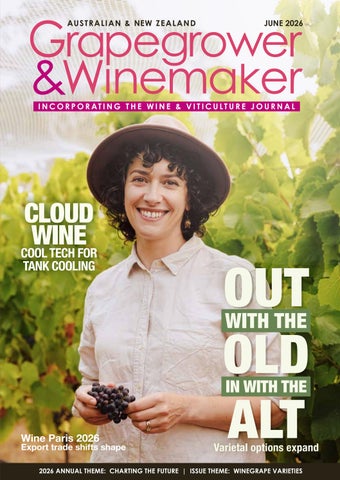
Appellation Marlborough Wine (AMW) has appointed Stephanie McIntyre as its new Chief Executive Officer. With more than 20 years’ experience living and working in Marlborough, McIntyre brings a wealth of expertise spanning senior winery marketing roles, international market engagement, media and communications leadership, event creation, and executive positions within wine industry organisations. She is well known across the sector, including through previous work supporting Appellation Marlborough Wine across marketing, communications and stakeholder engagement. Source: The Shout Ancient winegrape variety reducing growers’ water consumption by 75%
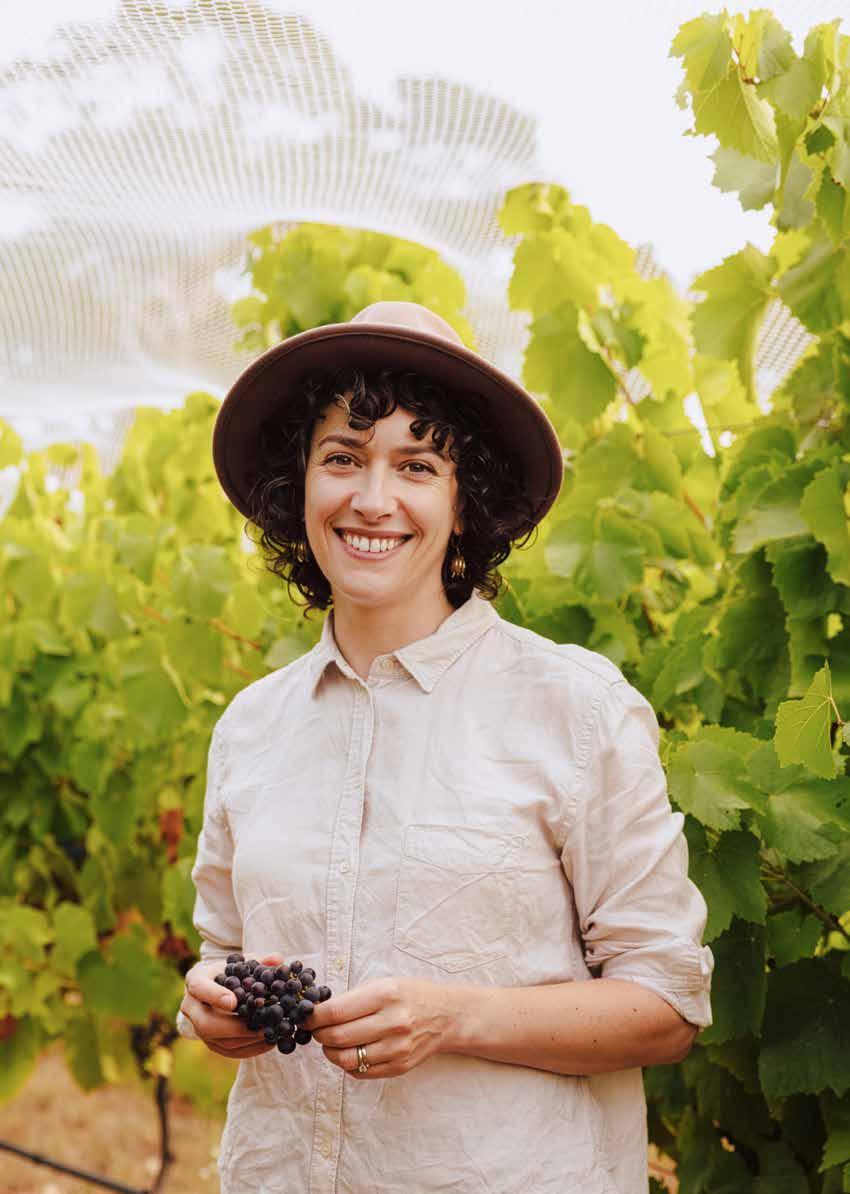
Nestled in an unassuming vineyard in South Australia’s Riverland, an ancient winegrape variety is about to be harvested for the first time. It is not only reducing water bills, but reconnecting growers to their Mediterranean roots. Yianni Koutouzis is choosing to be the “black sheep” of Australia’s largest grapegrowing wine region, by trialling the ancient Cypriot variety known as Xynisteri. It is a crop famous for its thick skin and drought tolerance — resistant to heatwaves, pests and low-rainfall conditions. Unlike Koutouzis’s other crops, which need watering every two days, his 800 vines of Xynisteri – planted three years ago – can go months without being watered. Source: ABC News
New Zealand winery Nevis Bluff enters Asia
Nevis Bluff will join forces with brand strategist Nimbility as the New Zealand winery sets its sights on expanding across Asia. The partnership aims to fulfil the Central Otago-based estate’s goal of building long-term distribution partnerships while securing in-market presence. New Zealand wines have been trending across the Asia-Pacific region in recent years, with increased demand for vintages emphasising fruit purity, freshness and origin-driven styles. In particular, Pinot Noir from Central Otago has seen an uptick in interest from importers and on-trade purchasers. Source: The Drinks Business
Daily Wine News is a snapshot of wine business, research and marketing content gleaned from local and international wine media sources, with a focus on Australian news and content.

In this issue
“The harder challenge is transforming older, out-of-shape vines into looking like the examples shown in S&S teaching. Where an arm is missing or in poor health, you are still reliant on the emergence of a strong new shoot to train as a replacement arm. The major difference is that previously I would have sawn off a large piece of wood when the new shoot came through, whereas now I leave the ‘spare wood’ in place.”
Stuart Smith, p. 29
“We have to open up to new ideas, new varieties, new styles, new people. Things changing and people doing things differently isn’t a threat, it’s essential. Equally our consumers are getting older, but we haven’t opened up enough to younger consumers as an industry. We need communicators who can share the story of vineyards and wine to a new generation of wine lovers”
Alisdair Tulloch, p. 62
“Importers were being cautious, prioritising inventory sellthrough over portfolio expansion, and demand continued to shift towards fresher, lighter styles with success favouring brands that combine authenticity, clear differentiation and committed market support.”
Francesca Martin, p. 77
“It is simply a privilege to build on Larry and Marc’s beautiful and considered work. Their focus on site and alternative varieties created a distinct identity for Hahndorf Hill. With the support of Wirra Wirra, we can strengthen and hone the direction, shaping wines that appeal to consumers and capture the vineyard and the cool climate Adelaide Hills.”
Kelly Wellington, p. 82

6 What’s online
In this issue
International briefs
R&D at Work 81 Producer Profile: Kelly Wellington

7 Jim Barry Wines appoints first female senior winemaker in 67-year history
8 NZ Winegrowers CEO Phillip Gregan awarded Lifetime Achievement Award
10 WISA announces WIIS summit to ‘bring Australian wine sector together’
11 Bleasdale triumphs at 2026 Langhorne Creek Wine Show
12 SAWIA awards outstanding viticulture and oenology graduates
13 Sustainable Winegrowing Australia appoints advisory board
GRAPEGROWING
25 VitiCert: Setting the standard for vineyard success
29 Revisiting Simonit & Sirch: Lessons from seven seasons of application
32 From Cabernet to climate-ready: The Granite Belt’s variety shift
36 Resilience in the cold: How sustainable viticulture is taking root in Sweden
WINEMAKING
48 Cutting compressed air costs in winery operations
52 Cloud technology giving cellar staff a smarter way to chill out
57 Bioacidification: Yeast strains target malic acid degradation
60 YOUNG GUNS: Alisdair and Kenisha Tulloch – Nurturing vines, wine and family in the Hunter Valley
BUSINESS & TECHNOLOGY
63 “Bitterly disappointing”: AGW says budget shows continued govt inaction as wine industry crisis deepens
66 Conservation, craft and the new premium story in Margaret River
70 Closing the loop: Canberra District producer makes Australia’s first ‘circular wine’ using black soldier fly larvae
SALES & MARKETING
72 Visiting importers and buyers get a taste of SA’s world-class wine regions
74 Château Tanunda unveils lightweight and smaller formats with a refreshed look
76 Wine Paris builds momentum as global priorities shift
79 Hirsch Wine Group’s La Chica Con Tinta brings alternative edge
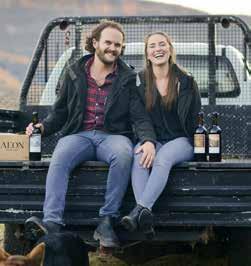
VitiCert: Setting the standard for vineyard success
By Nick Dry National Grapevine Collection Coordinator
Australia’s wine sector has long understood that the decisions made when establishing a vineyard — particularly around planting material — have lasting consequences for productivity, wine quality, biosecurity and business viability.
Until now, Australia has lacked a nationally consistent, science -based system to certify grapevine propagation material across the entire supply chain.
That gap is being addressed through VitiCert Australia, a national grapevine certification program being rolled out in stages over the next two years to provide growers and wine producers with confidence that the vines they plant are virus tested, true-to-type and fit for long-term performance.

Background
Australia’s grapevine propagation sector has a strong track record of pursuing high-quality planting material. From the pioneering days of the first clonal trials to the successes of regional vine improvement groups and the rise of private nurseries, the industry
has consistently sought to provide growers with high-quality planting material. However, as the viticultural landscape has grown more complex, so too have the challenges facing our propagation standards.
Over several decades, frameworks such as the National Vine Accreditation Scheme and the Vine Industry Nursery Accreditation Scheme have successfully supported planting material quality, while the Australian Standard for Grapevine Propagation Material (AS5588), released in 2013, reflected growing interest in nationally-consistent, science-based standards.
In recent years, increased virus prevalence, ongoing trunk disease challenges and greater expectations
Photo: Ewan Bell/Wine Australia

Cloud technology giving cellar staff a smarter way to chill out
For an industry so deeply rooted in tradition and the teachings of the past, the wine sector has increasingly found itself embracing the technologies of tomorrow. As the climate changes and consumers across all sectors grow more concerned about environmental impact, it’s no secret that the industry must adapt to survive. Wineries have begun shifting toward greener practices across nearly every stage of production –from organic pesticides to lightweight glass bottles – but fermentation poses a more complicated challenge. Temperature control is crucial during this make-or-break phase of winemaking, yet it also remains one of the industry’s most energy-intensive processes. Research published in Science of the Total Environment in 2024 found that fermentation accounts for between 45 and 90 per cent of total energy consumption associated with winemaking. It was against this backdrop that the founders of Frigid.Cloud say they identified a gap in the industry. Journalist Kyra Trussell spoke to co-founder of Frigid.Cloud, Patrick Anderson, to find out how the technology is already working to solve the industry’s biggest energy challenge.
Fermentation & Tank Control
Jassa Amir-Lang, co-founder of Frigid Cloud
Charting the Future

Conservation, craft and the new premium story in Margaret River
Heath Werrett explores how Margaret River wine estates are using environmental stewardship and vineyard craft to shape consumer engagement and the region’s export positioning.
Many premium wine estates in Margaret River are making a quiet choice right now. It is no longer just about how many bottles leave the door, or how shiny the tasting room looks. Increasingly, producers are also thinking about what kind of future the land gets to have.
Across the region, conservation, biodiversity and estate stewardship are becoming part of the premium wine story itself, shaping not only how wines are grown, but also how wineries present themselves to visitors, consumers and export markets.
Many local winemakers now feel that quality wine comes from how they care for the land long before harvest. As Vanya Cullen of Cullen Wines in Margaret River put it while speaking with wine enthusiast and wine writer Mike Bartlett,
working with living soil, indigenous seeds and local biodiversity is part of an “ongoing renewal of nature each year,” and something they were “privileged and blessed” to do while cultivating the region’s wines. This sentiment from one of the wine region’s leaders articulates just how land stewardship is now seen as part of wine quality, not separate from it.
More and more estates have realised that visitors are not just here to drink wine. They are curious. Wine estate patrons have evolved and now bring a deeper interest in how wine is grown and what it means for the land. People keep asking small, thoughtful questions. What’s in the soil? How did this season play out? What happens after the pruning shears are put away? That steady curiosity has changed how wineries speak about their wines, with more attention given to
Working with living soil, indigenous seeds and local biodiversity is part of an ongoing renewal of nature each year.”
Vanya Cullen
Barry and Wendy Stimpson, owners of Passel Estate
Château Tanunda unveils lightweight and smaller formats with a refreshed look
Château Tanunda has announced “three key innovations” across its Grand Barossa range in 2026, including a shift to smaller format bottles.


The winery said that the introduction of a 375ml format for its Grand Barossa Shiraz positions it “in a strong way to move with ongoing moderation and occasion-based trends”.
Alongside the small format bottles, Château Tanunda will also release a proprietary lightweight bottle and a new label design intended to reduce carbon emissions and draw attention in retail.
Managing director Michelle Geber said the combined initiatives bring together the winery’s dedication to showcase the Barossa wine region with sustainability.
“As a family-owned winery, we are continually assessing how we can evolve responsibly. Whether through packaging innovation, brand investment or responding to evolving consumer behaviour, while remaining true to our Barossa heritage and continuing to deliver wines of distinction and enduring quality,” she said.
The lightweight Bordeaux-style bottle for its Grand Barossa range has been
Our changes are about improving visibility and access, removing the barriers that sit in the way of saying yes at the shelf.
Michelle Geber
designed in partnership with Orora Glass. The winery said the shift will reduce the weight of a six-pack carton by 720g, delivering a 6.8% reduction in CO₂ emissions whilst keeping its signature red wax stamp and Barossa deboss.
“We’re focused on building Grand Barossa’s presence across all retail networks. Classic wine styles have endured for a reason, they offer consistency and staying power. But for many consumers, committing to a full bottle can feel like too much…either due to price or the risk of not finishing it.
“Our changes are about improving visibility and access, removing the barriers that sit in the way of saying yes at the shelf,” Geber said.
The 375ml Grand Barossa Shiraz will be rolled out across its 2024 vintage this year.
The lightweight bottles will roll out with the brand refresh across retailers throughout the year.
The new 375ml format