
Medical Examiner Service
Process Guides and Standard Operating Procedure

NHS England » The national medical examiner system
Dr Dhanraj Aggarwal
Lead Medical Examiner – Basildon
Dr John Day
Lead Medical Examiner – Southend
Mr Niall Martin
Lead Medical Examiner – Chelmsford (Broomfield)
Medical examiners seek to answer three questions through independent scrutiny:
1. What caused the death of the deceased?
2. Does the coroner need to be notified of the death?
3. Was the care before death appropriate?
• Medical examiners form part of the DHSC’s death certification reforms programme, which will create a statutory requirement for the medical examiner system.
• During 2019/20 NHS acute trusts were asked to set up medical examiner offices on a non-statutory basis.
• The statutory implementation of medical examiner system will be coming to all community settings by April 2024. The primary legislation that underpins the new statutory medical examiner system is the Coroners and Justice Act 2009 and since its passage, the act has been amended (most recently by the Health and Care Act 2022) to reflect changes to the health system.
It is designed to:
• provide the bereaved opportunities to ask questions and raise concerns
• enhance safeguards for the public and healthcare providers through improved and consistent scrutiny of deaths
• improve the quality and accuracy of medical certification of cause of death, and ensure referrals to coroners are appropriate
• support local learning and improvement by identifying matters for clinical governance and related processes
• align with existing mortality initiatives
The role of the medical examiners is to independently review non-coronial deaths to:
• conduct a proportionate review of relevant medical records
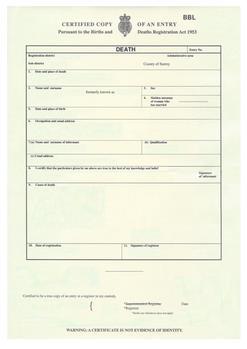
• agree the proposed cause of death with the attending doctor and the ensure accuracy of the medical certificate cause of death (MCCD)
• Discuss whether the death needs to be referred to the local coroner
• Interaction with the bereaved, providing an opportunity to ask questions and to raise concerns
• Fewer rejected MCCDs
• Improved referrals to coroners
• Improvements to patient care
• Positive feedback from certifying doctors and bereaved people.
https://www.england.nhs.uk/establishing-medical-examiner-system-nhs/#national-medical-examiner-reports
• Supporting the bereaved: For community providers, this can reduce workload by taking care of enquiries and follow-ups. This does not replace community services speaking with families or next of kin, and providing the support they wish to give.
• Support with MCCD completion: specialist training and understanding of the MCCD and death certification processes means medical examiners can reduce the burden associated with coroner notifications from community providers.
• Supporting work with coroners’ offices: medical examiners are a source of medical advice for coroners, which should reduce requests from coroners for community providers to discuss cases or to advise on wording.
• Timely completion of scrutiny: medical examiners complete their scrutiny in a timely manner to facilitate death registration within five days.
• Complex cases: Medical examiners will support the doctor completing the MCCD, drawing on their extensive knowledge gained through training and regular exposure to more complex scenarios to support and advise. This will assist Clinicians in completing MCCDs accurately in more complex cases.
• Urgent release of the body: medical examiners will develop positive relationships with contacts in faith communities and will be able to support Clinicians if there are requests for urgent issue of the MCCD.
• Clinical governance: where issues are detected, medical examiners will offer non-judgmental feedback through governance processes in place. Their aim is not to find fault or review in unnecessary detail.
• Concerns and learning: a key objective for the medical examiner system is to identify constructive learning to improve care for patients.

Provide Referrals to the Medical Examiner (ME) Service – SystmOne Users
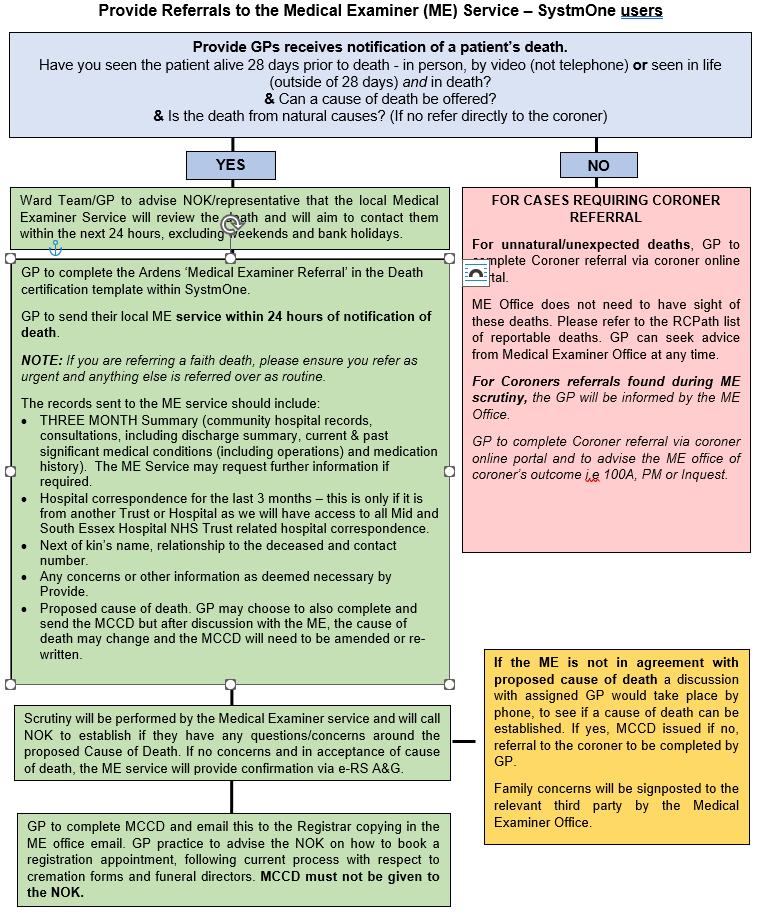
Provide Referrals to the Medical Examiner (ME) Service – SystmOne Users
• FAITH DEATHS
If you have a faith death, we would be grateful if you could send the local ME service a pre-alert of this by email.
• CORONIAL DEATHS
Once the Coroner is involved the ME service is not required to intervene unless the Coroners service contacts the ME service directly.
Should a GP wish to discuss any cases before referring to the Coroner we would encourage the GP to do so by calling their local ME service.
• IMPORTANT INFORMATION
It is extremely important that the following information is not omitted from the referral through:
• Date and Time of death.
• Correct spelling of the patient’s name.
• Name of medical practitioner who verified (this can be an ANP) and their contact number in case the Medical Examiner needs to contact them.
• Name and contact details of the Next of Kin.
• Whether the Next of Kin has been notified of the death.
• Proposed Cause of Death if the MCCD is not being submitted with the referral
You can refer to your local Medical Examiner Service through the template in SystmOne.
Please navigate to the clinical tree, under Doctor yellow folder and select ‘Provide Death Documentation’ clinical template.
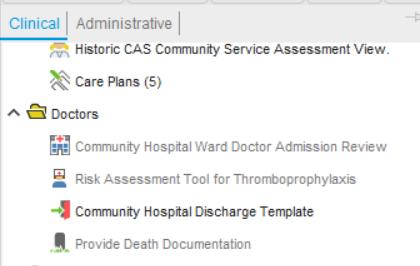
• Complete the template and on the page ‘Medical Examiner Referral’ select appropriate location for the referral form. The information the template pulls together needs to be emailed to the local medical examiner office.
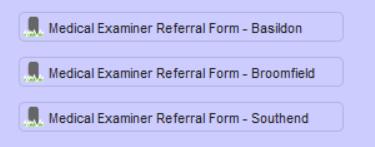
• Our Medical Examiner Officers are always at the end of the phone or email during normal working hours if any problems are encountered when referring into the service.
• We have received positive feedback so far from community services referring into the medical examiner office. Our team is reviewing deaths promptly with no delays to the referrer, or the bereaved.
• In December 2023 the Government published an overview of the death certification reforms planned from April 2024: https://www.gov.uk/government/publications/changes-to-the-deathcertification-process/an-overview-of-the-death-certification-reforms
• This summary of death certification reforms outlines:
- Independent scrutiny by a medical examiner will become a statutory requirement prior to the registration of all non-coronial deaths in England and Wales.
- Deaths will not be registered until the registrar receives notification of the cause of death from the medical examiner or the coroner. This notification will also start the 5-day statutory time frame to register a death.
- A medical practitioner will be eligible to be an attending practitioner and complete an MCCD, if they have attended the deceased in their lifetime. This represents a simplification of the current rules that enable medical practitioners to be an attending practitioner, to complete an MCCD, if they had attended the patient during their last illness but required referral of the case to a coroner for review if they had not done so within the 28 days prior to death or had not seen in person the patient after death.
- Currently, in non-coronial deaths, a medical practitioner (usually the attending practitioner) must complete form Cremation 4 (the medical certificate) to provide sufficient detail to enable the medical referee to understand the cause of death if the deceased is to be cremated. Once the statutory medical examiner system is implemented, the medical examiner’s scrutiny will make the form Cremation 4 confirmation obsolete and the regulatory requirement for the medical referee to scrutinise it will therefore be removed.
- A new MCCD will replace the existing certificate to reflect the introduction of medical examiners, who will scrutinise the proposed cause of death. the new MCCD will include the following new information:
▪ details of the medical examiner who scrutinised the cause of death
▪ ethnicity, as self-declared by the patient (not the representative) on the medical record. If the patient medical record does not include this information, then the attending practitioner can complete it as ‘unknown’ on the MCCD.
▪ maternal deaths
▪ a new line, 1d, for the cause of death - bringing the MCCD in line with international standards
▪ medical devices and implants will be recorded on the MCCD by the attending practitioner, and this will be transferred to the certificate for burial or cremation (contained in the green form) completed by the registrar in order to inform relevant authorities of the presence of any devices or implants
Basildon
Email: mse.basildon.meoffice@nhs.net
Telephone: 01268 394736 / 01268 593158 / 01268 396356
Address: Basildon Hospital
Nethermayne
Basildon
Essex
SS16 5NL
Chelmsford (Broomfield)
Email: mse.broomfield.meoffice@nhs.net
Telephone: 01245 362000 ext. 2015 / 2016 / 2017 / 2018
Address: Broomfield Hospital Court Road Broomfield Chelmsford Essex CM1 7ET
Southend
Email: mse.southend.meoffice@nhs.net
Telephone: 01702 435555 ext. 7285 / 7287
Address: Southend Hospital
Prittlewell Chase
Westcliff-on-Sea
Essex
SS0 0RY
Is the medical examiner service part of secondary care?
‒It is an independent service covering all aspects of the healthcare profession
‒The medical examiner workforce is made up of a range of senior doctors from a range of specialties including primary care
Will GPs/Clinicians need to discuss all deaths with the medical examiner?
‒All non-coronial deaths should be electronically referred to the ME service
‒A vast majority will not require any verbal discussion between the GP/Clinician and medical examiner service. Interaction will mainly be through e-RS (or email where e-RS is not available).
Why get involved with medical examiners before it becomes a statutory requirement?
‒Early adoption of the statutory requirement will ensure that the transition from non-statutory to statutory occurs without issues arising that may cause delays to the certification process or bereaved.
Will GPs/Clinicians need to produce reports for medical examiners?
‒It is only a proportionate review so the ME service will only need to see the last few months of records.
‒This should be enough to give us an indication as to the quality of care and cause of death
‒There should not be any extra work as most information needed for referral to the ME service is pulled through the designated template (if it is correctly entered into Systmone) then through to e-RS (or via email where e-RS is not available).
‒If any further clarification or further records are required, this could be dealt with by a designated person in the practice
‒Vast majority of deaths are usually expected at the end of a palliative care process or with somebody with longstanding chronic disease
Will the medical examiner process delay things?
‒No, it shouldn’t introduce any delay into the bereavement process, in fact quite the opposite. If the GP/Clinician is unsure of what to write as cause of death, or questions if it should be a coroner referral, a discussion with the ME will help.
‒Our experience in the acute trust has shown that the process has sped up by having a central point where all these processes are co-ordinated.
‒The medical examiner office is manned Monday to Friday and will be there to help and support in any way they can.
‒For the period before the statutory medical examiner system commences, (expected 01/04/2024) following an application by NHS England and on the advice of the Confidentiality Advisory Group, the Secretary of State for Health and Social Care has approved the use of confidential patient information for the purposes of the non-statutory medical examiner system, under section 251 of the National Health Service Act 2006 and Regulation 5 of the Health Service (in place until 31 March 2024)
‒When the statutory medical examiner system commences, the Access to Health Records Act 1990 will be amended to give medical examiners the statutory right to access the medical records of deceased patients from the holders of those records, including GP practices.
All Medical Examiner Service Guides can be found on MyCompliance
All Medical Examiner blank referral forms can be found on SystmOne.