The purpose of this policy is to set down the guidelines for resuscitation procedures, and to provide guidance for the primary management of anaphylaxis in a community setting within Provide. The policy outlines the type of response required by staff on various sites or service user’s homes and details the procedures that should be followed with regards to resuscitation attempts, and recognition of anaphylaxis and treatment.
Provide cares for patients, service users, customers, clients and residents across a variety of health and social care services. For this Policy all users of our services will be referred to as service users.
1.1
Policy Statement and Rationale
At Provide we are committed to providing high quality, effective cardiopulmonary resuscitation. Provide recognises that resuscitation from cardiopulmonary arrest may be required at any time by any of its service users, visitors or staff. Provide will therefore prepare staff and ensure necessary resources are available to enable staff to meet the requirements of the person in need.
Anaphylaxis is a rare reaction. The severity of the reaction, should it occur, makes it essential that a healthcare professional is aware of the necessary steps required to recognise and treat if necessary.
1.2 Key Principles
This policy affects all staff (including, locums and agency staff) that have direct service user contact at Provide sites, in service users own homes and the public.
This policy covers the resuscitation of infants, children and adults, and recognition and treatment of anaphylaxis.
• Provide recognises the guidelines advocated by the Resuscitation Council UK (2021) as the best possible practice in basic paediatric and adult life support
• This policy fully supports the Quality Standards for Cardiopulmonary Resuscitation Practice and Training published by the Resuscitation Council UK (2013), updated June 2020, and the Quality Standards for Anaphylaxis Treatment and Recognition published by The National Institute for Health and Care Excellence (NICE) Guidelines (2016) Updated July 2024
In the event of any person suffering a cardiac arrest or anaphylactic reaction, this policy must be followed. It is effective throughout the Group and is the responsibility of all personnel employed within Provide to ensure compliance.
1.3 Definitions
• Cardiopulmonary arrest is defined as the absence of spontaneous and effective ventilation and systemic perfusion (circulation). The terms cardiopulmonary arrest and cardiac arrest will be used interchangeably throughout this Policy and carry the same meaning
• Anaphylaxis is a life-threatening allergic reaction that happens very quickly. It can be caused by food, medicine or insect stings
• Defibrillation is the delivery of electrical energy to the heart in the form of a single shock via hands free pads placed on the patient’s chest. Numerous shocks may be required throughout the resuscitation attempt
• An adult is a person 18 years or older, but service users or visitors aged 16 and 17 years are presumed to have mental capacity to make decisions for themselves unless there is evidence to the contrary as outlined in the Mental Capacity Act (2005)
• A child is a person between the age of 28 days and 18 years
• A healthcare professional is defined as a registered nurse, doctor or allied healthcare professional
• Automated external defibrillators (AEDs) are portable computerised devices that automatically diagnose the potentially life-threatening cardiac arrhythmias of ventricular fibrillation (VF) and ventricular tachycardia (VT). If indicated the machine automatically selects the appropriate energy level for defibrillation according to the manufacturer’s guidelines. The voice and visual prompts guide lay rescuers and other healthcare professionals to attempt defibrillation safely in cardiac arrest victims until further expert help arrives
• Basic life support (BLS) Includes conformation of cardiac arrest, initiation of chest compressions and ventilations. The main purpose of Basic Life Support (BLS) is to maintain a flow of oxygenated blood to the brain and the heart thereby delaying death and buying time
• Cardiopulmonary resuscitation (CPR) is an emergency procedure for people in cardiac or respiratory arrest. It involves a physical intervention to create artificial circulation using chest compressions and rescue breathing to inflate the lungs and pass oxygen into the blood (artificial respiration)
2. SECTION 2: Duties and Responsibilities
2.1 Resuscitation Structure Group
Every community hospital / organisation must have an identified Resuscitation Service Structure with clearly defined terms of reference, including an identified executive board member and must have at least one person who is responsible for co-ordinating the teaching and training of staff in resuscitation.
Provide Resus Service Structure
• CEO Health and Group Chief Nurse
• Director of Operations, Health Directorate
• Programme Director, Social Care and Governance
• Education Development Lead, Health Directorate
The resus service structure will meet bi-annually to review the following:
• Implementation and adherence to national resuscitation guidelines and standards
• Defining the roles for the summoning of ambulance service within the organisation
• Ensuring that resuscitation equipment for clinical use is available and ready for use
• Ensuring that appropriate resuscitation drugs (including those for peri-arrest situations) are available according to local policy, and ready for use
• Planning adequate provision of training in resuscitation
• Preparing and implementing all policies relating to resuscitation (including managing anaphylaxis)
• Preparing and implementing policies relating to prevention of cardiac arrest and recognising patients who are deteriorating
• Preparing and implementing a policy on resuscitation decisions (e.g. DNACPR decisions and advanced care planning)
• Quality improvement – identified from Cardiac Arrest Review process
• Review the recording and reporting of incidents in relation to resuscitation in which patients’ safety may have been at risk
• Purchase and maintenance of defibrillation equipment
• Staff wellbeing ensuring access to support which includes swam huddles, AfterAction Reviews after events and ongoing clinical supervision, Schwartz rounds and employee’s assistance program
2.2 Roles, Responsibilities and Accountabilities
The Group Chief Executive is responsible via the CEO Health and Group Chief Nurse for ensuring that all staff comply with this Policy. The Resuscitation Structure Group will oversee compliance of this Policy.
CEO Health and Group Chief Nurse
The CEO Health and Group Chief Nurse is responsible for ensuring that the standards and expectations of staff under this policy are clear, available, and implemented and dissemination through professional lines of accountability and that suitable arrangements are in place to measure outcome and compliance.
Directors of Operations / Divisional Leads / Service Leads
Directors of Operations, Divisional Leads and Service Leads are responsible for upholding this policy in practice and escalating any concerns or breaches to the Resuscitation Structure Group.
Individual
Should:
staff
• Comply with the requirements of this policy as relevant to their role
• Ensure that their own practice follows recommended resuscitation guidelines by attending training appropriate to their role
• Only use equipment if trained and competent to use
• Be aware of the location of Resuscitation equipment within their area of work
• Be aware of their responsibilities regarding the checking of resuscitation equipment in their area of work
• Report any identified risks to their line manager and complete a Datix if required
3. SECTION 3: Policy Details
3.1 Chain of Survival and Actions Depending on Equipment Availability
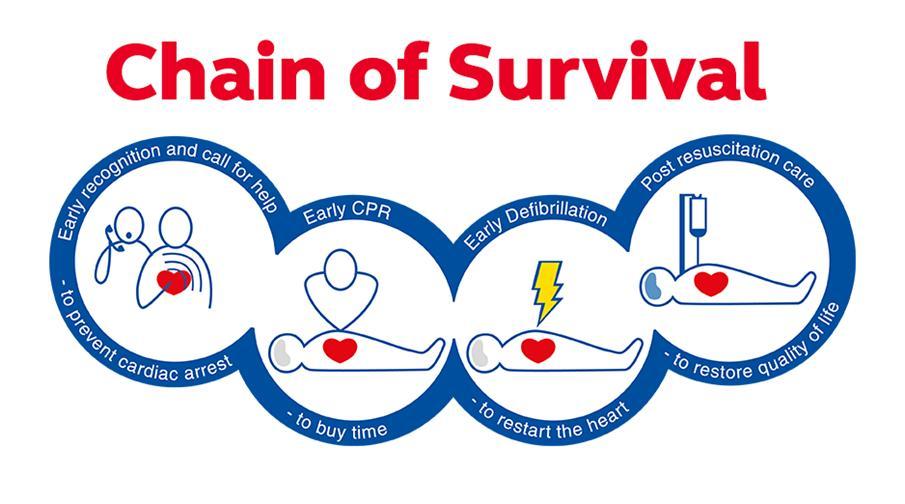
The Chain of Survival describes a sequence of steps that together maximise the chance of survival following cardiac arrest. The chain of survival consists of four key steps:
1. Early recognition and activation of the emergency response
Anaphylaxis is a severe, life-threatening, generalised, or systemic hypersensitivity reaction. It is characterised by rapidly developing, life-threatening problems involving: the airway (pharyngeal or laryngeal oedema) and/or breathing (bronchospasm with tachypnoea) and/or circulation (hypotension and/or tachycardia). In most cases, there are associated skin and mucosal changes. See NICE pathway CG134 (2020) for further information.
Guidance: Anaphylaxis | Resuscitation Council UK
Prevention of Anaphylactic Shock
Practitioners have a responsibility to ensure that there is plenty of time available to undertake a proper assessment of the service user, including a comprehensive history of drug reactions and other contraindications:
• The service user should always be asked whether he/she has had any previous reactions (drug or otherwise) and the medical notes checked for any relevant information
• The practitioner should identify the following risk factors prior to administering the drug
o Any adverse reactions including convulsions, following previous drug administration
o Any previous allergic conditions such as hay fever, asthma, urticaria, eczema
This is to identify possible atopic individuals. If there is any doubt concerning the advisability of any procedure, it should be deferred until a doctor’s advice has been obtained.
• Recipients of any vaccine should be observed for immediate adverse drug reaction
• Document all relevant information in the patient’s notes during assessment
• With any treatment involving the administration of medicine/vaccine there is the potential of adverse side effects. All service users should be informed of these side effects and guided on where to seek further advice if needed. For example, from their GP or hospital consultant
Exceptions and Responsibilities of Staff
Medicines legislation restricts the administration of injectable medicines; in the case of Adrenaline there is an exemption to this restriction which:
• Any person can administer adrenaline to an unknown person in a lifesaving situation
• If the person administering the adrenaline is a registered practitioner, then they must work in accordance with their governing body standards, e.g. NMC and local guidelines, or PGD specific to the work and locality (this must state the competency in the recognition and management of anaphylaxis reactions)
Every trained healthcare professional who comes into direct contact with service users should be able to competently:
• Recognise the signs and symptoms of an anaphylactic reaction
• Instigate early supportive management using the Resuscitation Council Guidelines (UK) and Organisations Resuscitation Policy and in line with training provided by Provide
• Individual practitioners need to make themselves aware of any relevant PGDs, e.g. Chlorphenamine and Hydrocortisone, and ensure competency in the application of any use of these in the management of anaphylaxis (see Appendix 1). Practitioners must complete training approved by Provide
• All clinical staff who administer medication should have initial training and regular updates in dealing with anaphylactic reactions bringing to the attention of their manager any training needs they identify regarding this policy. Please refer to the organisations training matrix for guidance of training requirements and frequency of training relevant to specific staff groups
Medication for administration in anaphylaxis can be found in anaphylactic shock packs on resuscitation trollies within inpatient wards, and staff administering vaccines or IV medication in areas where a resuscitation trolley is not immediately available should ensure that they have immediate access to adrenaline ampules and be competent to draw up and administer adrenaline for anaphylaxis and provision to make a 999 call.
Guidance: Anaphylaxis | Resuscitation Council UK
Untrained staff:
• Should be able to recognise signs and symptoms of an anaphylactic reaction and know how to summon help by calling emergency services on 999
• Will effectively communicate the type of emergency, exact location What3words https://what3words.com/ may be used for precise location, and brief details provided
Availability and Storage of Drugs
Everyone, where applicable, must ensure that he/she is aware of the location of adrenaline to be used in an emergency and that it is readily available. Adrenaline has a limited shelf life. It is the responsibility of all everyone to ensure that the adrenaline injection available is in-date. Processes should be in place for regular expiry checks and appropriate re-ordering. All practitioners need to be mindful of the MMPOL30 Medicines Management Policy in relation to storage.
Guidance for the Treatment and Management of Anaphylaxis
Recognition
Allergic reactions may be local or systemic or both. Local reactions, such as those following an insect bite, are usually swelling, redness and itching. As a local reaction becomes systemic, the patient may initially complain of any of the following:
• A red rash and itching
• Feeling hot
• Anxiety
• Weakness and giddiness
• Breathing difficulties
These signs and symptoms are not entirely specific for an anaphylactic reaction. However, certain combinations of signs and symptoms make the diagnosis of an anaphylactic reaction more likely.
Anaphylaxis is likely when all the following three criteria are met:
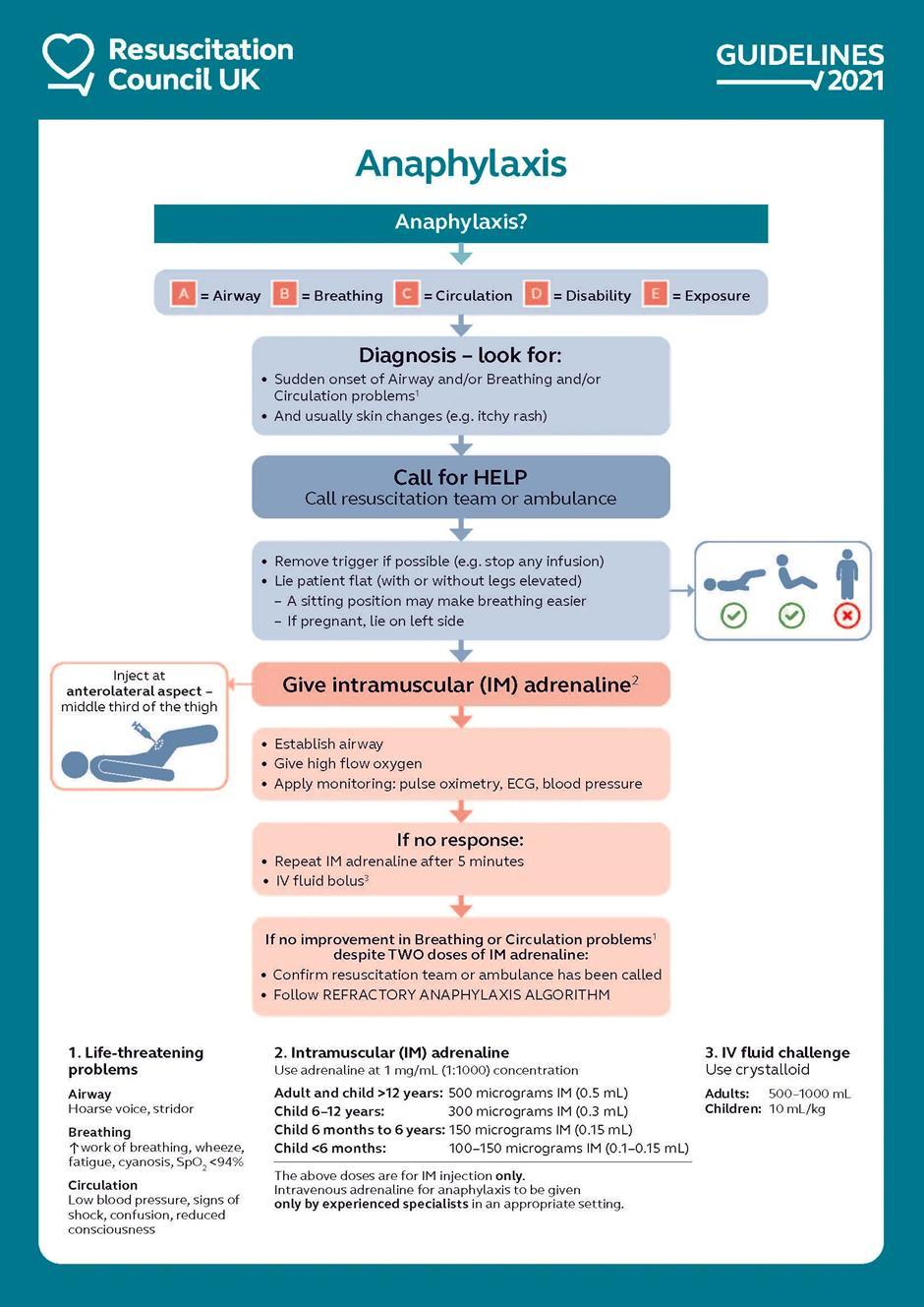
Emergency treatment of anaphylactic reactions as advocated by National Guidance are summarised in the algorithm in Appendix 1.
Patients who have anaphylactic reactions in any setting should expect the following as a minimum:
• Recognition that they are seriously unwell
• An early call for help
• Initial assessment and treatments based on an ABCDE approach
• Adrenaline therapy if indicated
• Investigation and follow up by an allergy specialist
Use an ‘ABCDE’ approach (Appendix 1) to recognise and treat an anaphylactic reaction. Treat life threatening problems as you find them. The principles of treatment are the same for all age groups. Call for immediate assistance – phone 999 for an ambulance stating that an anaphylactic reaction is occurring and request a paramedic crew. NEVER leave the person alone unless there are specific risks that would endanger yourself and others, i.e. hazardous substances or electrocution risks.
Treatment in a community setting
Out of an acute setting, an ambulance must be called early and the patient transported to an emergency department.
All clinical staff should be able to call for help and initiate treatment for a patient with an anaphylactic reaction. The single responder must always ensure that help is
coming. If there are several rescuers, several actions can be undertaken simultaneously.
Patient positioning
All service users should be placed in a comfortable position. The following factors should be considered:
• People with airway and breathing problems may prefer to sit up as this will make breathing easier
• Lying flat with or without leg elevation is helpful for patients with a low blood pressure (circulation problems). If the person feels faint do not sit or stand them up as this can cause cardiac arrest
• People who are breathing and unconscious should be placed on their side (recovery position)
• Pregnant people should lie on their left side to prevent Caval Compression
Removal of trigger
Removing the trigger for anaphylactic reaction is not always possible, but consider the following:
• Stop any drug suspected of causing an anaphylactic reaction
• Remove the stinger after a bee sting. Early removal is more important than the method of removal
• After food induced anaphylaxis, attempts to make the patient vomit are not recommended
Do not delay definitive treatment if removing the trigger is not feasible.
Adrenaline
Adrenaline is the most important drug for the treatment of anaphylactic reactions.
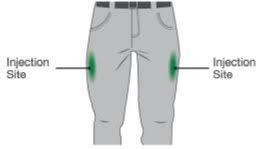
The intramuscular (IM) route is the best for most individuals who must give adrenaline to treat an anaphylactic reaction. The best site for IM injections is the anterolateral aspect of the middle third of the thigh. Avoid using any site that is inflamed or swollen.
Adrenaline IM dose
IM doses of 1mg in 1 mL (1:1000) adrenaline
Adults and children > 12 years 500 micrograms IM (0.5 mL)
Children 6-12 years 300 micrograms IM (0.3 mL)
Children 6 months – 6 years 150 micrograms IM (0.15 mL)
Children less than 6 months 100 – 150 micrograms IM (0.1 – 0.14 mL)
These doses are to be repeated several times, if necessary, at 5-minute intervals according to blood pressure, pulse and respiratory function
Adrenaline auto-Injectors
Auto-injectors are often given to people at risk of anaphylaxis for their own use and where this is the case patients, their families or carers will have been trained to use them
The most appropriate dose for an auto-injector will have been prescribed for individual patients by allergy specialists. If adrenaline auto-injector is the only available adrenaline preparation when treating anaphylaxis healthcare providers should use it.
3.3 Do Not Attempt Cardiopulmonary Resuscitation (DNACPR)
Do Not Attempt Cardiopulmonary Resuscitation (DNACPR) If a person has a cardiac arrest or dies suddenly a DNACPR document will be used as guidance on what action should or shouldn’t be taken by a healthcare professional. DNACPR only specifies whether a person will receive CPR or not. https://cloud.metacompliance.com/View/Policy/624775 (CPOL37 East of England Do Not Attempt Resuscitation Policy for guidance for adults over 16 years).
Where no explicit decision about CPR has been considered and recorded in advance there should be an initial presumption in favour of CPR. However, there will be some people for whom attempting CPR is clearly inappropriate; for example, a person in the advanced stages of a terminal illness where death is imminent and unavoidable and CPR would not be successful, and when there is obvious mortal injury or irreversible death (rigor mortis) CPR does not need to be commenced. Clinicians should clearly document reasons for the withholding of CPR.
(Recommended Summary Plan for Emergency Care and Treatment (ReSPECT)
The process creates personal recommendation for a person’s clinical care and treatment in a future emergency in which they are unable to make or express choices) https://www.resus.org.uk/respect www.resus.org.uk/respect/respect-healthcare-professionals
The ReSPECT tool has been developed by a UK wide group facilitated by the Resuscitation Council UK (RCUK) and the Royal College of Nursing (RCN). ReSPECT represents a new approach to discussing, making and recording recommendations about future care and treatment which best reflect the individual’s beliefs and wishes. This approach includes but is not limited to recommendations concerning CPR. ReSPECT aims to encourage patient and family involvement in decision making and to consider recommendations about CPR in the broader context.
Patients can have a ReSPECT form and remain for CPR, so it is important that staff read, are aware of and understand the decisions documented on the form
3.4 Paediatric Resuscitation
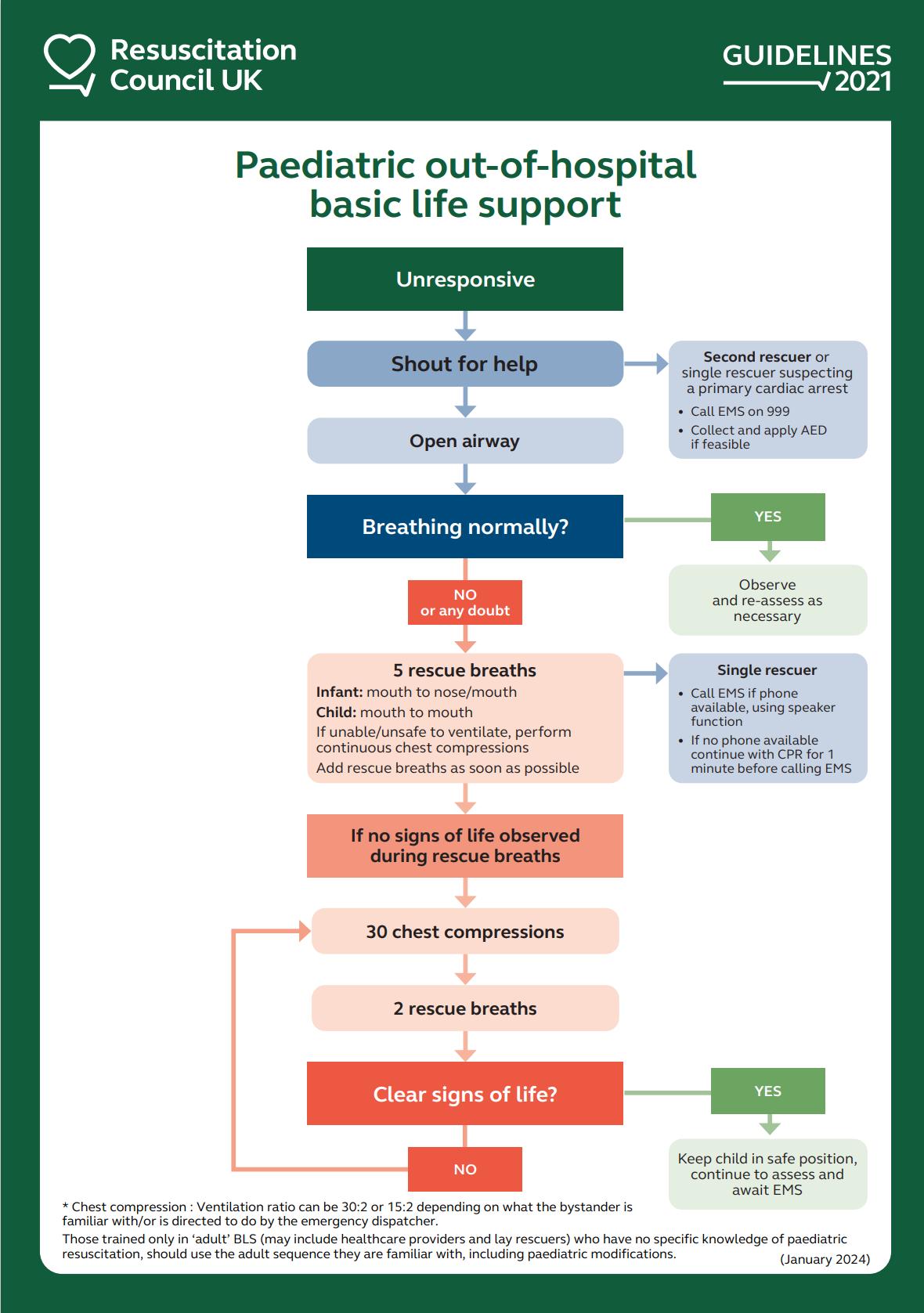
Staff will comply with guidelines from the UK Resuscitation Council Paediatric out-of-hospital BLS (Appendix 4)
At the recognition of the collapsed / deteriorated child all staff must call 999. Whilst attempting paediatric basic life support. https://www.resus.org.uk/library/2021resuscitation-guidelines/paediatric-basic-life-support-guidelines
3.5 Cardiac Arrest Emergency Call Out System
Staff should know:
• How to summon help by calling emergency services on 999. Will effectively communicate the type of emergency, exact location
What3words https://what3words.com/ may be used for precise location, and brief details provided
• If working at a Health or Social care base, be familiar with the location of emergency equipment and ensure the resuscitation equipment is brought to the service user without delay
• Before the ambulance arrives BLS/ILS should be commenced / continued (within their scope of practice) until the responding ambulance crew take over
• To work as part of the team, collaborating and assisting the ambulance crew as required
3.6 Documentation
Documentation of the cardiac arrest must be carried out by the most appropriate person (for example if there is a team leader or the individual person responding) to fully and accurately document the cardiac arrest
A Datix must be completed for every cardiac arrest that occurs when Provide staff / locum’s or agency staff actively participate in CPR attempts whether in a healthcare, social care, clinic or service users own home setting
3.7
Safeguarding Children, Young People and Adults
In the event of any unexpected sudden death, staff must consider safeguarding within their assessment. This will include consideration to the immediate safety and wellbeing of any dependent children / young people. Please refer to the Safeguarding of Children and Young people Policy SGPOL02.
Consideration must also be given to whether there are adult safeguarding concerns regarding abuse or suspected abuse. Please refer to the Safeguarding Adults at risk of abuse Policy SGPOL07 for further information.
3.8 Cardiac Arrest Reporting and Reviews
All cardiac arrests that occur will be reviewed via Datix by the Quality and Safety Team and further reviewed through the Incident Review Panel (IRP) to identify any learning or care gaps. If learning or gaps are identified these will be shared and then presented through the Resuscitation Structure group for assurance and oversight.
3.9 Manual Handling
All moving and handling should be carried out in line with Provide’s current policy. In situations where the collapsed person is on the floor, in a chair, or in a restricted / confined space due consideration should be given to the risks of manual handling and potential related injuries to both staff and the service user.
Further advice can be found in the Resuscitation Council (UK) Guidance for safer handling during cardiopulmonary resuscitation in healthcare settings (2015) updated June 2022. Publication: Guidance for Safer Handling | Resuscitation Council UK and within the Moving and Handling Policy.
3.10 Equipment
Within a health setting It is the service lead’s responsibility to ensure that the resuscitation trolley, grab bags and any other resuscitation equipment conform to this Policy Staff must have received training and completed the relevant training checklist prior to being permitted to check or use the defibrillator or other emergency equipment, such as suction, in their workplace.
Outside of healthcare bases, if no emergency equipment is available, local access to AED’s will be required as directed by 999 call.
Staff carrying out clinical procedures away from the health care setting, such as patient homes, are not normally expected to carry resuscitation equipment. Where specific equipment is required for higher risk procedures such as immunisations, it is expected that staff will not carry out a high-risk procedure without the appropriate equipment available e.g. adrenaline.
Checking of Emergency Equipment
Each area should have a nominated person(s) responsible for checking the state of readiness of all resuscitation equipment and drugs. This will be weekly in clinics and after every event when the equipment is used. For wards and high-risk areas such as endoscopy and minor ops, there will be daily checking of AEDs and open areas (top of trollies) of resus trolley, and weekly checking of locked/sealed areas of resus trolley/ grab bag. Checks should be recorded, dated and signed against the checklist, retained on a shared drive, and sent every January and July to the Quality & Safety inbox for audit purposes. Any discrepancies, missing, broken or expired equipment, should be replaced immediately without delay and actions documented.
Equipment checks should include the following:
• Testing and electrical safety stickers are within date
• Suction equipment performs to its specification. If battery powered, check charging light is on and functional. Check when disconnected from charger. Check strength of suction. Ensure tubing and sucker are attached and ready for operation in an emergency
• Oxygen cylinders contain sufficient gas. Check oxygen is present at flow meter outlet when turned on. Check for leaks
• For solely battery powered AEDs ensure additional battery is present
• Functioning indicator on AEDs must be checked as well as the expiry date of the defibrillation electrodes; the device should be charged and discharged to check functionality. Also check compatibility of connections and ensure spare pads are available
To avoid potential error with defibrillator pad incompatibility, ensure all AEDs have model type and model number clearly displayed in bold print along with information about which pads should be used with that model. Some model numbers are very small and if not noted, the wrong pads may be ordered inadvertently.
All resuscitation trolleys / grab bags and emergency equipment must be maintained in a state of readiness and must be checked by a registered member of staff. The minimum checking requirement for resuscitation trollies is:
• Top and sides – once every 24 hours
• Drawers – on the first day of every month and
• Immediately following the conclusion of a resuscitation event
Emergency equipment separate to a resuscitation trolley should be checked a minimum of every 24 hours, when the department is open, and immediately following the conclusion of a resuscitation event.
Any equipment / drugs due to expire at the end of the current month are to be replaced during the routine checks.
3.11 Infection Prevention and Control
The safety of both the rescuer and the victim are paramount during a resuscitation attempt. Whilst the risk of infection transmission from patient to rescuer during mouthto-mouth resuscitation is extremely rare, there have been isolated reports of infections such as tuberculosis (TB) and severe acute respiratory distress syndrome (SARS) (Resuscitation Council 2015).
In certain circumstances where patients with a known or suspected infectious disease, undiagnosed patients entering out-patient areas or other persons where the medical history is unknown- It advisable that direct mouth-to-mouth resuscitation be avoided and Hands-only CPR is recommended as a simpler and more effective approach.
Use Personal Protective Equipment (PPE) when having to perform BLS or ILS. IPPOL21 Standard Precautions for Infection Prevention and Control including TBPs and Isolation Precautions. https://cloud.metacompliance.com/View/Policy/2936158
3.12 Pharmacy
Will liaise with the directorate and ward manager on matters relating to emergency drugs for resuscitation as required.
4. SECTION 4: Training
All staff must be adequately and regularly trained in cardiopulmonary resuscitation appropriate to their role
Training is currently contracted from outside the organisation, although the organisation holds responsibility for ensuring that training adheres to current Resuscitation Council UK standards and guidelines.
All staff, directly employed by Provide will have annual mandatory training updates given by a suitably qualified Resuscitation trainer. This includes the use of AEDs for appropriate staff groups and incorporating the most recent Resuscitation Council Guidelines for BLS or ILS training and education. ILS training will be provided for staff where services require the presence of a resuscitation equipment trolly / grab bag.
React / PCS staff are trained in EFAW (Emergency First Aid at Work) training which equips individuals with basic lifesaving first aid skills, including resuscitation (CPR), and knowledge of workplace health and safety regulations. This one-day course is suitable for low-risk workplaces and provides the confidence to respond to emergencies before the arrival of emergency services.
Provide will ensure appropriate training programs are provided for clinical staff.
It is the responsibility of staff to ensure they attend training according to the mandatory training requirements of their staff group. It is the responsibility of Managers and Team Leaders to ensure that staff are compliant to those mandatory requirements. If a staff member is unable to attend training, for whatever reason, it is the staff member’s responsibility to inform the Talent and Learning Team and make alternative training arrangements. The staff member is also responsible for informing their Manager/Team Leader of the changes and reasons for change.
Staff are only permitted to use equipment or administer medications within their scope of practice and ONLY if trained to do so.
Training compliance will be monitored and recorded by Provide Talent and Learning Team and reports sent monthly to mangers.
Individuals unable to complete resuscitation training due to disability or illness must undertake an appropriate risk assessment with their line manager to consider adapted training / ways of working if appropriate.
Workforce Solutions staff who are directly employed by Provide are covered by this CPR Policy. Agency and locum staff are expected to have completed the required resuscitation training prior to working for Provide Workforce Solutions monitor work force solutions compliance and ensure that the agency staff are compliant in BLS / ILS depending on what’s appropriate for their role. They will transfer over records from other trusts if appropriate.
The agency is required to sign a compliance document for their workers, which includes BLS, and state the date this was completed. Workforce Solutions request this on an annual basis if the agency worker is still engaging in Provide services.
If staff identify that agency or locum staff are not appropriately resuscitation trained, this must be escalated directly to both Workforce Solutions and clinical leads.
Appendix 1: Anaphylaxis Algorithm
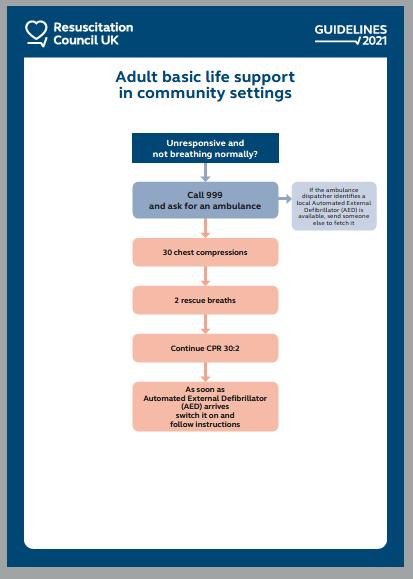
Appendix 2: Adult Basic Life Support Algorithm
Appendix 3: Paediatric Out-of-Hospital BLS
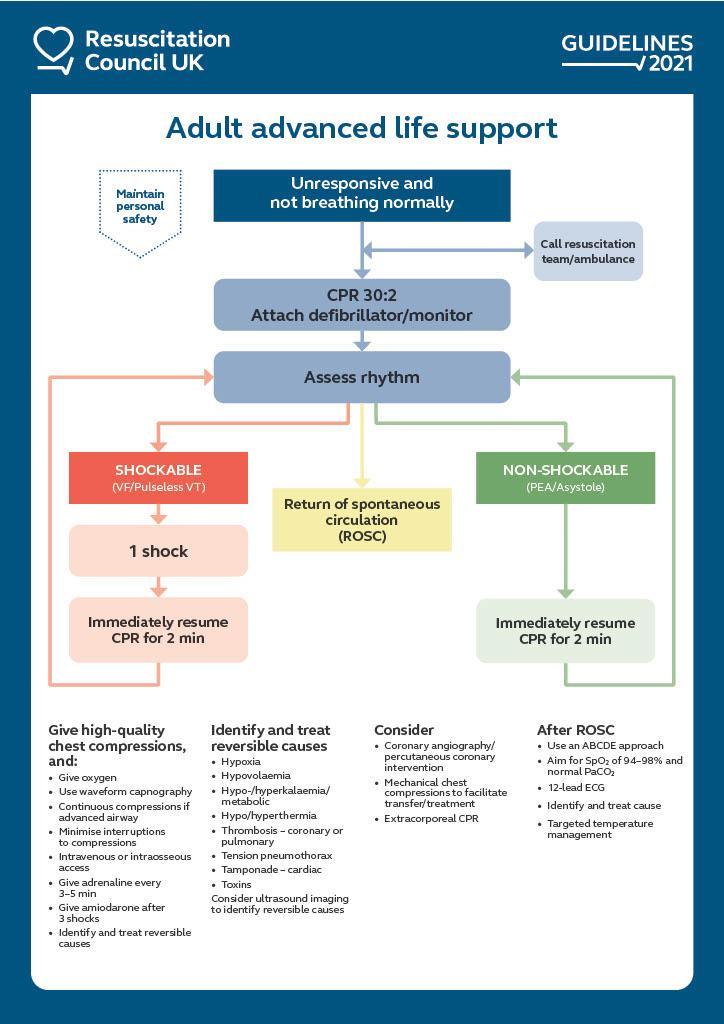
Appendix 4: Adult Advanced Life Support
Appendix
Ward/Department:
7: Resuscitation Trolley Checklist
Month:
Please sign the CHECKED BY column at the end of each page to show you have carried out the check
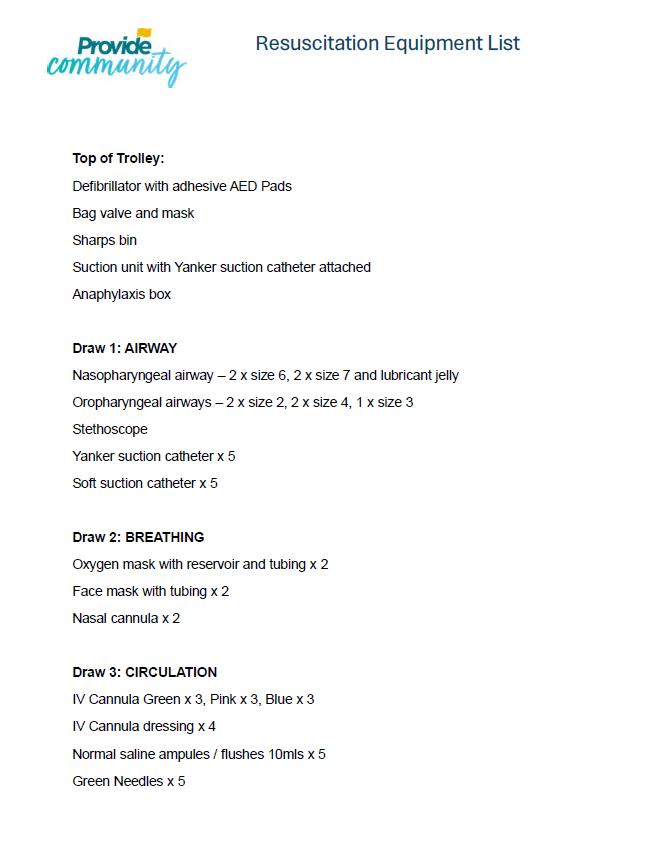
Top of Trolley
Defibrillator with adhesive AED pads
Bag valve and mask
Sharps bin
Suction unit with Yanker suction catheter attached
Anaphylaxis box
Drawer 1: AIRWAY
Nasopharyngeal airway – 2x size6, 2x size 7, and lubricant
Please sign the CHECKED BY column at the end of each page to show you have carried out the check Expiry Date
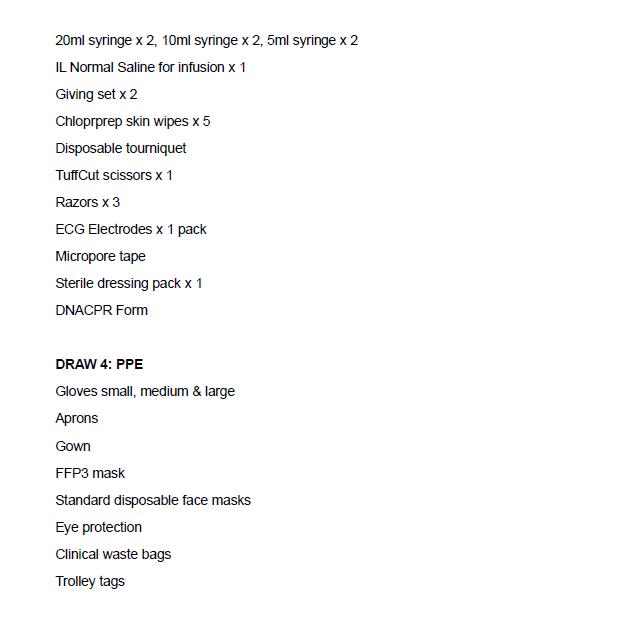
Airway and Breathing
Pocket mask with oxygen port and tubing
Oxygen mask with reservoir
Self-inflating bag with reservoir
Clear face masks, sizes
3,4,5
Oropharyngeal airways sizes
2,3,4
Portable suction, battery or manual with yanker sucker and soft suction catheters
cylinder and key as required.
Appendix 9: References
Resuscitation Council (UK) (2021) Advanced Life Support (ALS) 8th Edition
Resuscitation Council (UK) (2016) Decisions Relating to Cardiopulmonary Resuscitation. Guidance from the British Medical Association, the Resuscitation Council (UK) and the Royal College of Nursing. 3rd Edition, 1st revision. https://www.resus.org.uk/dnacpr/decisions-relating-to-cpr/
Resuscitation Council (UK) (2021) European Paediatric Advanced Life Support (EPALS) 5th Edition
Resuscitation Council (UK) Guidance: Anaphylaxis. Accessed May 2025 https://www.resus.org.uk/library/additional-guidance/guidance-anaphylaxis
Resuscitation Council (UK) (2015 updated June 2020) Guidance for safer handling during cardiopulmonary resuscitation in healthcare settings. https://www.resus.org.uk/library/publications/publication-guidance-safer-handling
Resuscitation Council (UK) Quality Standards. Accessed May 2025 https://www.resus.org.uk/library/quality-standards-cpr/quality-standards-communityhospitals-care
National Institute for Health and Clinical Excellence (2024) NICE, Basic life support for an adult no equipment available. How should I assess someone suspected of cardiac arrest. https://cks.nice.org.uk/topics/cardiac-arrest-out-of-hospitalcare/management/out-of-hospital-post-resuscitation-care/
Resuscitation Council UK Guidelines (2021) Basic Life support, accredited by the National Institute for Health and Care Excellence (NICE) https://cprguidelines.eu/assets/guidelines/European-Resuscitation-CouncilGuidelines-2021-Ba.pdf
Royal Pharmaceutical Society of Great Britain - https://www.rpharms.com
British National Formulary BNF - https://bnf.nice.org.uk/drug/adrenalineepinephrine
Name of project/policy/strategy (hereafter referred to as “initiative”):
QSPOL15 Cardiopulmonary Resuscitation (CPR) and Anaphylaxis Policy
Provide a summary of the aims of the initiative and main activities:
The application of the policy is primarily for clinical staff to outline the expectations, obligations and duty of care of Provide employees in providing Cardiopulmonary Resuscitation and recognition and treatment of anaphylaxis.
Project/Policy Manager: Quality & Engagement Manager Date: May 2025
This stage establishes whether a proposed initiative will have an impact from an equality perspective on any particular group of people or community – i.e. on the grounds of race (incl. religion/faith), gender (incl. sexual orientation), age, disability, or whether it is “equality neutral” (i.e. have no effect either positive or negative). In the case of gender, consider whether men and women are affected differently.
Q1. Who will benefit from this initiative? Is there likely to be a positive impact on specific groups/communities (whether or not they are the intended beneficiaries), and if so, how? Or is it clear at this stage that it will be equality “neutral”? i.e. will have no particular effect on any group.
Q2. Is there likely to be an adverse impact on one or more minority/under-represented or community groups as a result of this initiative? If so, who may be affected and why? Or is it clear at this stage that it will be equality “neutral”?
The initiative will be equality neutral and have no effect on any group.
Q3. Is the impact of the initiative – whether positive or negative - significant enough to warrant a more detailed assessment (Stage 2 – see guidance)? If not, will there be monitoring and review to assess the impact over a period time? Briefly (bullet points) give reasons for your answer and any steps you are taking to address particular issues, including any consultation with staff or external groups/agencies.
Guidelines: Things to consider
Equality impact assessments at Provide take account of relevant equality legislation and include age, (i.e. young and old,); race and ethnicity, gender, disability, religion and faith, and sexual orientation.
The initiative may have a positive, negative or neutral impact, i.e. have no particular effect on the group/community.
Where a negative (i.e. adverse) impact is identified, it may be appropriate to make a more detailed EIA (see Stage 2), or, as important, take early action to redress this – e.g. by abandoning or modifying the initiative. NB: If the initiative contravenes equality legislation, it must be abandoned or modified.
Where an initiative has a positive impact on groups/community relations, the EIA should make this explicit, to enable the outcomes to be monitored over its lifespan.
Where there is a positive impact on particular groups does this mean there could be an adverse impact on others, and if so can this be justified? - e.g. are there other existing or planned initiatives which redress this?
It may not be possible to provide detailed answers to some of these questions at the start of the initiative. The EIA may identify a lack of relevant data, and that data-gathering is a specific action required to inform the initiative as it develops, and also to form part of a continuing evaluation and review process.
It is envisaged that it will be relatively rare for full impact assessments to be carried out at Provide. Usually, where there are particular problems identified in the screening stage, it is envisaged that the approach will be amended at this stage, and/or setting up a monitoring/evaluation system to review a policy’s impact over time.
EQUALITY IMPACT ASSESSMENT TEMPLATE: Stage 2:
(To be used where the ‘screening phase has identified a substantial problem/concern)
This stage examines the initiative in more detail in order to obtain further information where required about its potential adverse or positive impact from an equality perspective. It will help inform whether any action needs to be taken and may form part of a continuing assessment framework as the initiative develops.
Q1. What data/information is there on the target beneficiary groups/communities? Are any of these groups under- or over-represented? Do they have access to the same resources? What are your sources of data and are there any gaps?
Q2. Is there a potential for this initiative to have a positive impact, such as tackling discrimination, promoting equality of opportunity and good community relations? If yes, how? Which are the main groups it will have an impact on?
Q3. Will the initiative have an adverse impact on any particular group or community/community relations? If yes, in what way? Will the impact be different for different groups – e.g. men and women?
Q4. Has there been consultation/is consultation planned with stakeholders/ beneficiaries/ staff who will be affected by the initiative? Summarise (bullet points) any important issues arising from the consultation.
Q5. Given your answers to the previous questions, how will your plans be revised to reduce/eliminate negative impact or enhance positive impact? Are there specific factors which need to be taken into account?
Q6. How will the initiative continue to be monitored and evaluated, including its impact on particular groups/ improving community relations? Where appropriate, identify any additional data that will be required.
Guidelines: Things to consider
An initiative may have a positive impact on some sectors of the community but leave others excluded or feeling they are excluded. Consideration should be given to how this can be tackled or minimised.
It is important to ensure that relevant groups/communities are identified who should be consulted. This may require taking positive action to engage with those groups who are traditionally less likely to respond to consultations and could form a specific part of the initiative.
The consultation process should form a meaningful part of the initiative as it develops and help inform any future action.
If the EIA shows an adverse impact, is this because it contravenes any equality legislation? If so, the initiative must be modified or abandoned. There may be another way to meet the objective(s) of the initiative.
Further information:
Useful Websites www.equalityhumanrights.com Website for new Equality agency www.employers-forum.co.uk – Employers forum on disability www.efa.org.uk – Employers forum on age