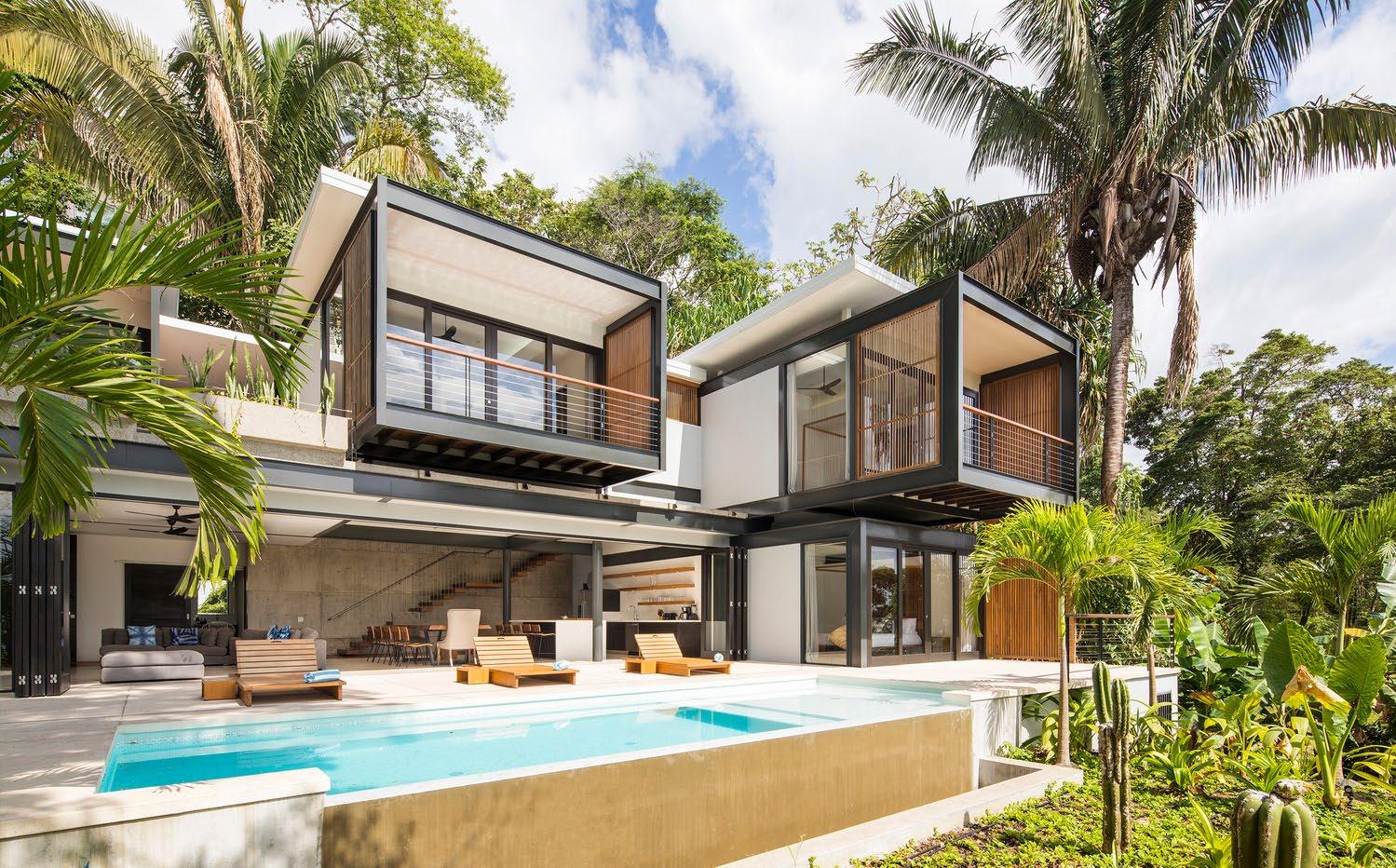
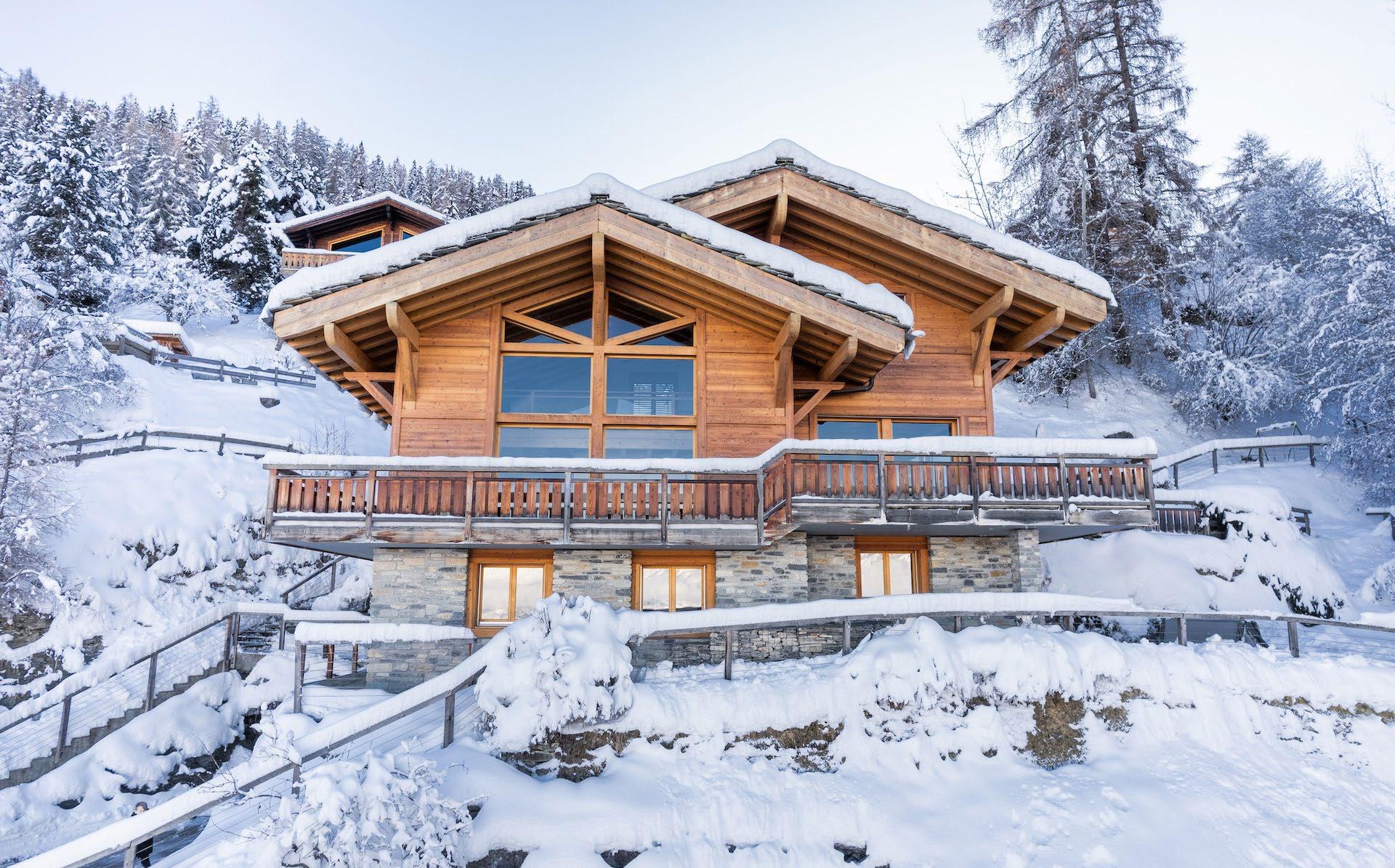
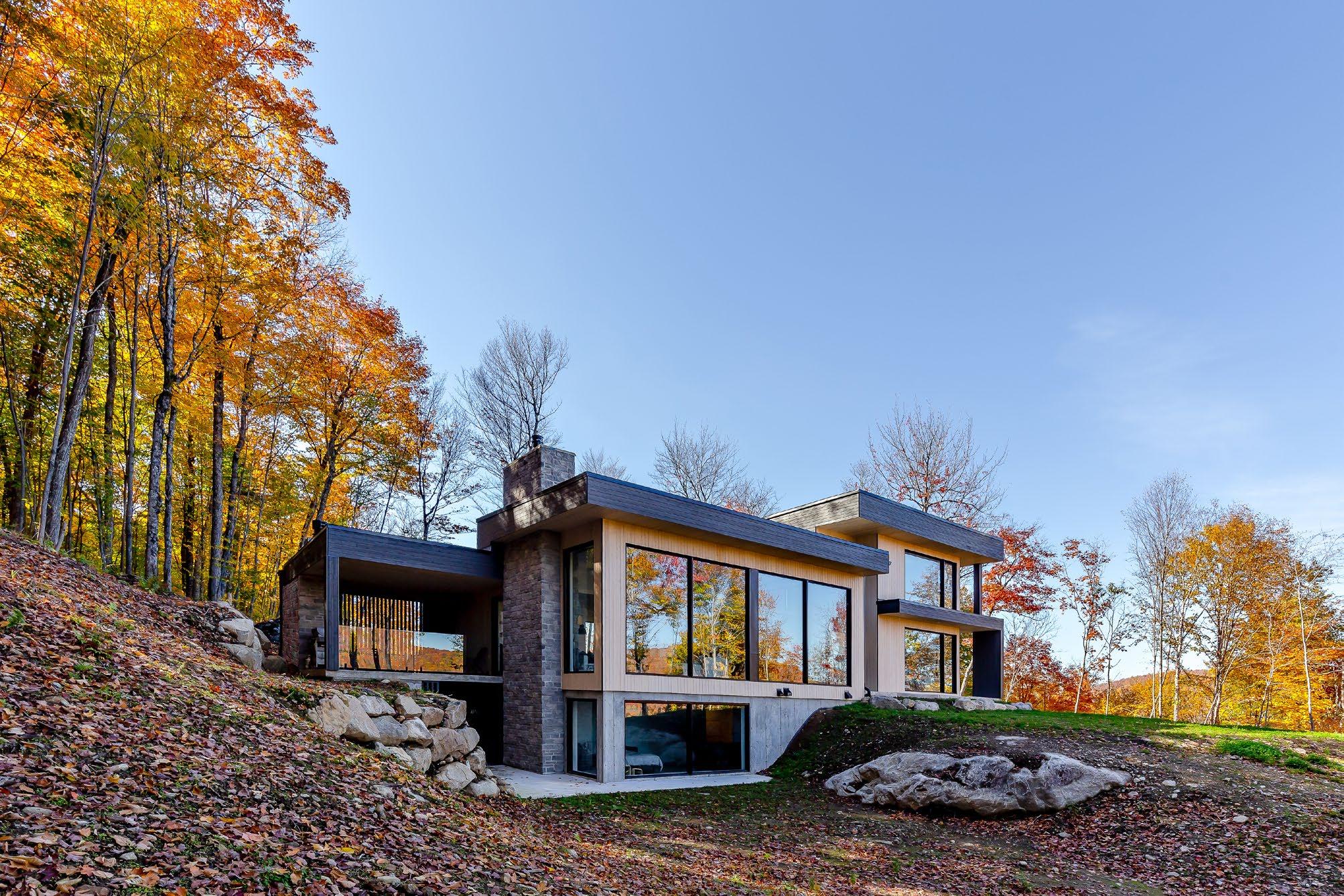
Resort residences have long been associated with escape. Secluded coastlines, island settings, and the promise of distance from everyday life once defined the category. Yet, as this issue explores, that definition is shifting.
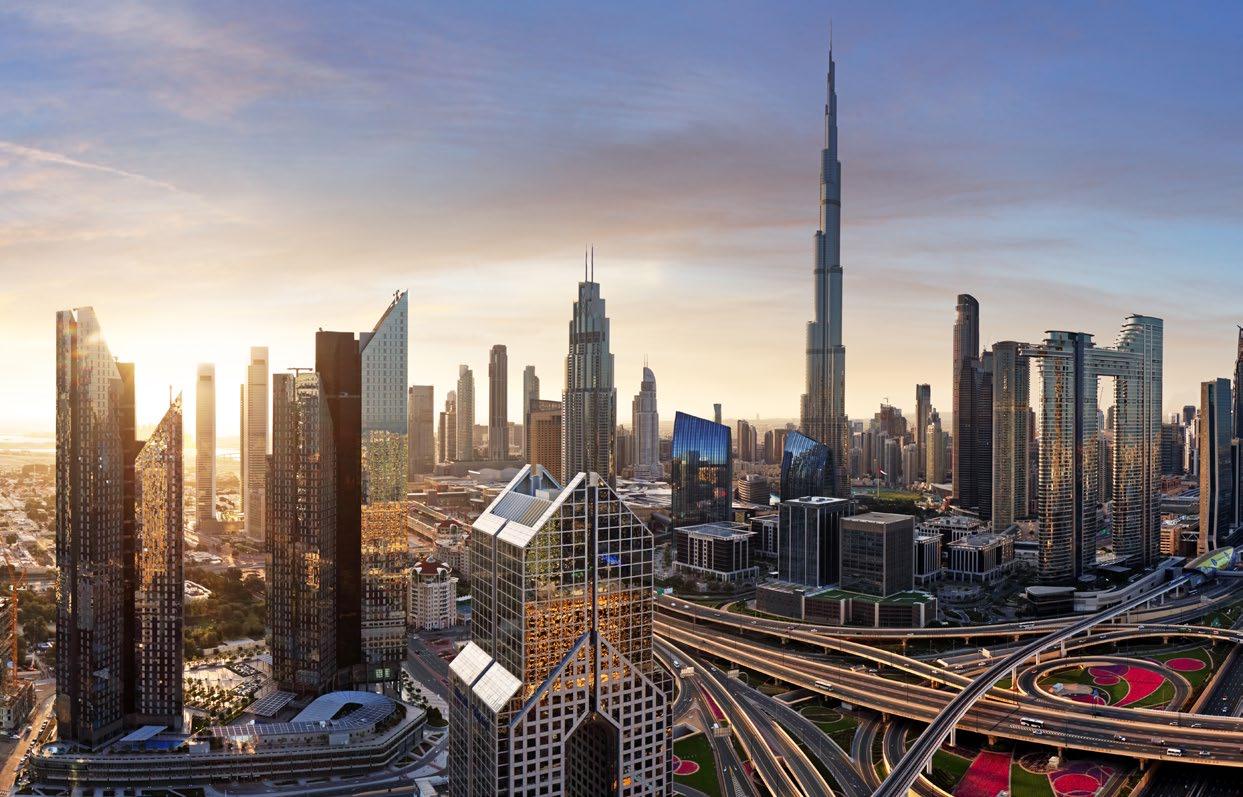
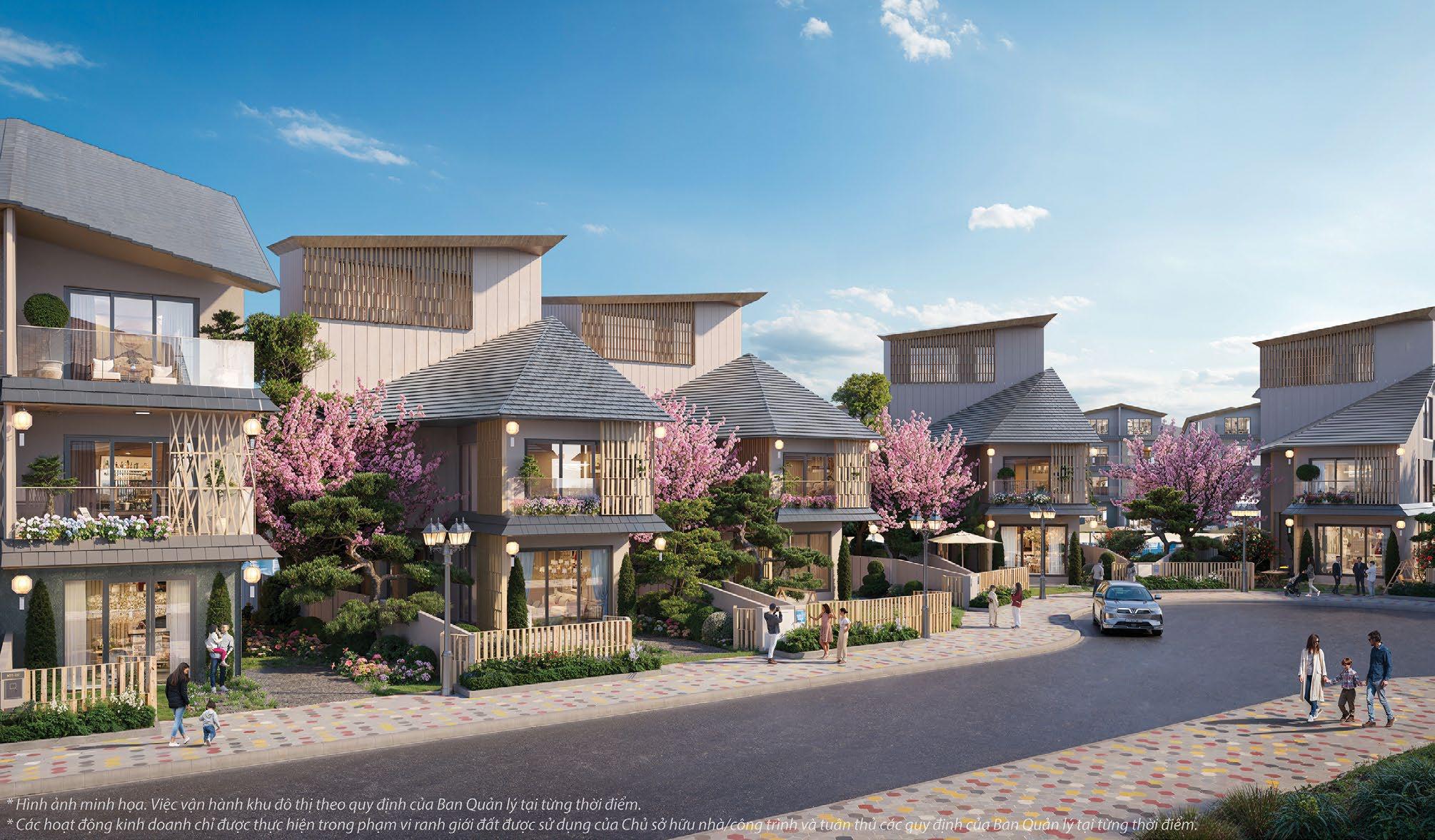
Across Asia Pacific, developers and global brands are increasingly repositioning resort living within urban environments. From city-fringe waterfronts to fully integrated downtown precincts, the rise of urban resort residences reflects a change in how high-net-worth buyers now use property. Investors are seeking lifestyle assets that work year-round—homes that combine hospitality-grade amenities with proximity to schools, business districts, healthcare, and culture.
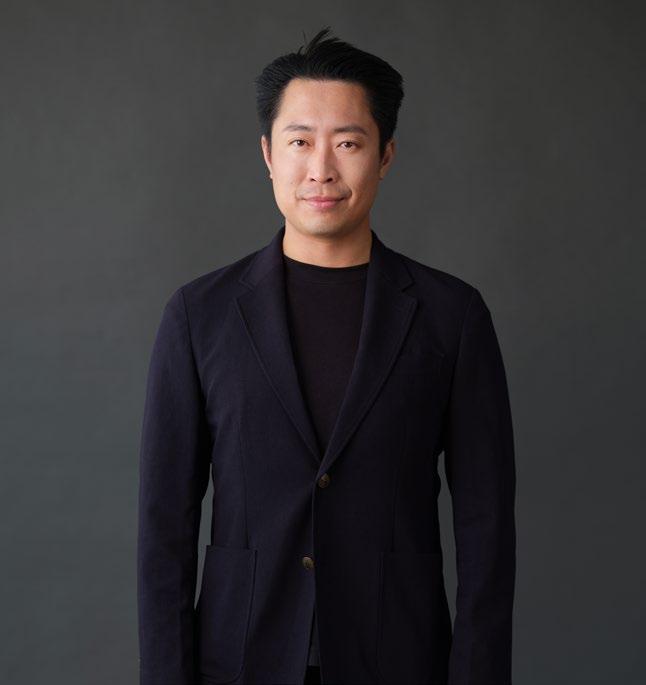
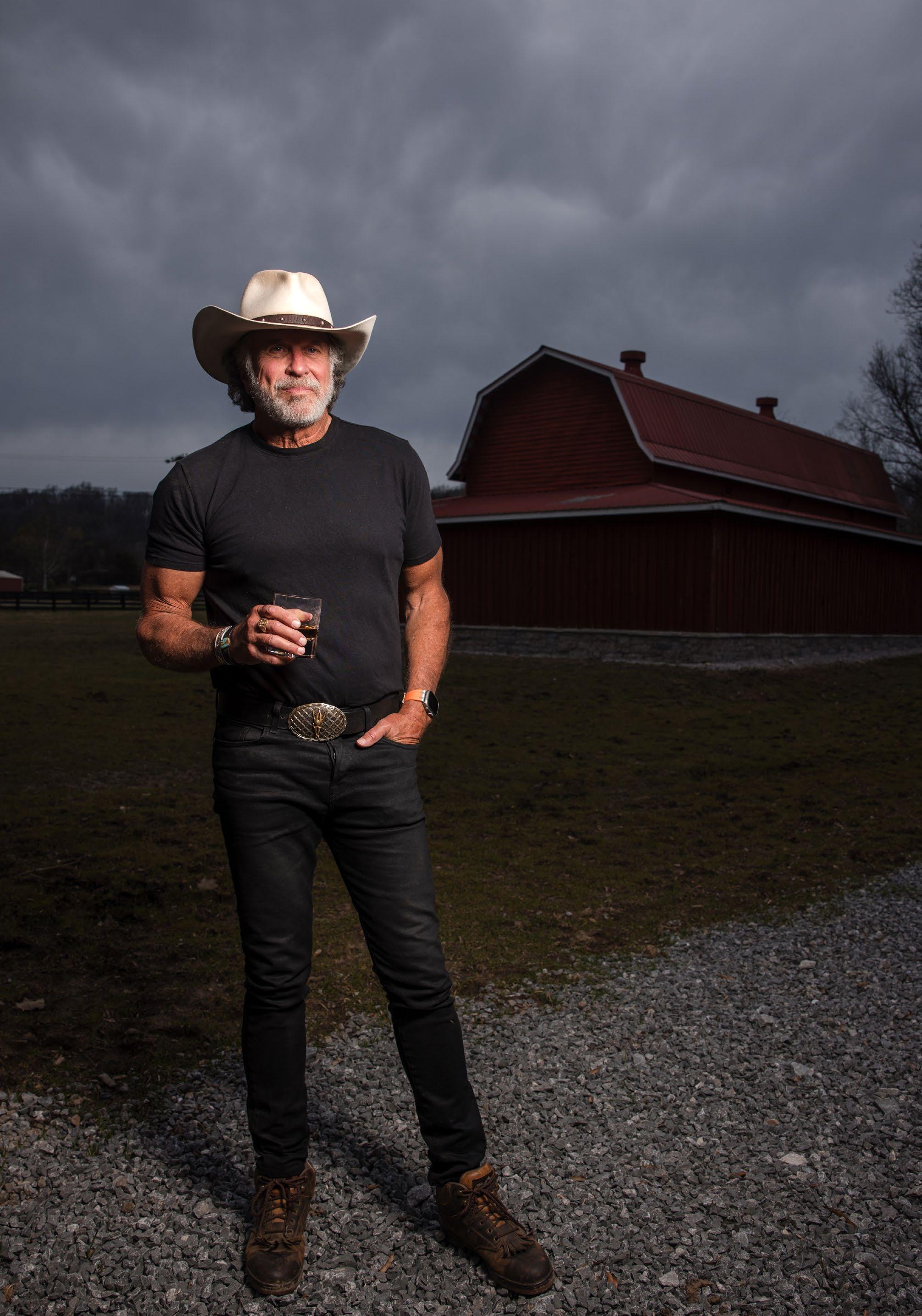
Our special report examines what is driving this evolution, and how it is reshaping development strategies across the region. We also meet Wade Shealy, founder of ThirdHome, to explore how luxury second-home ownership itself is being rethought, with exchange-based models offering flexibility, efficiency, and new ways to unlock value from global portfolios.
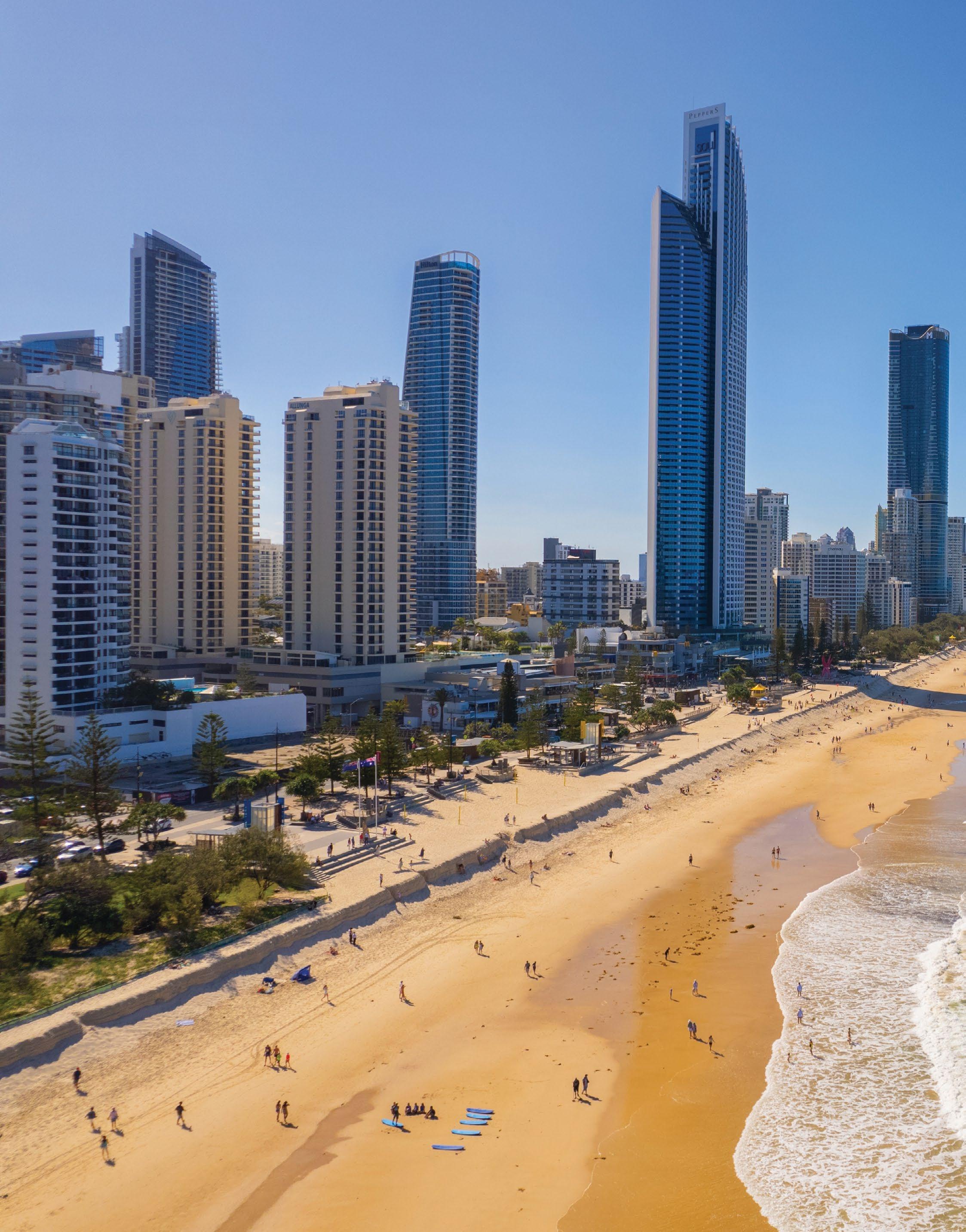
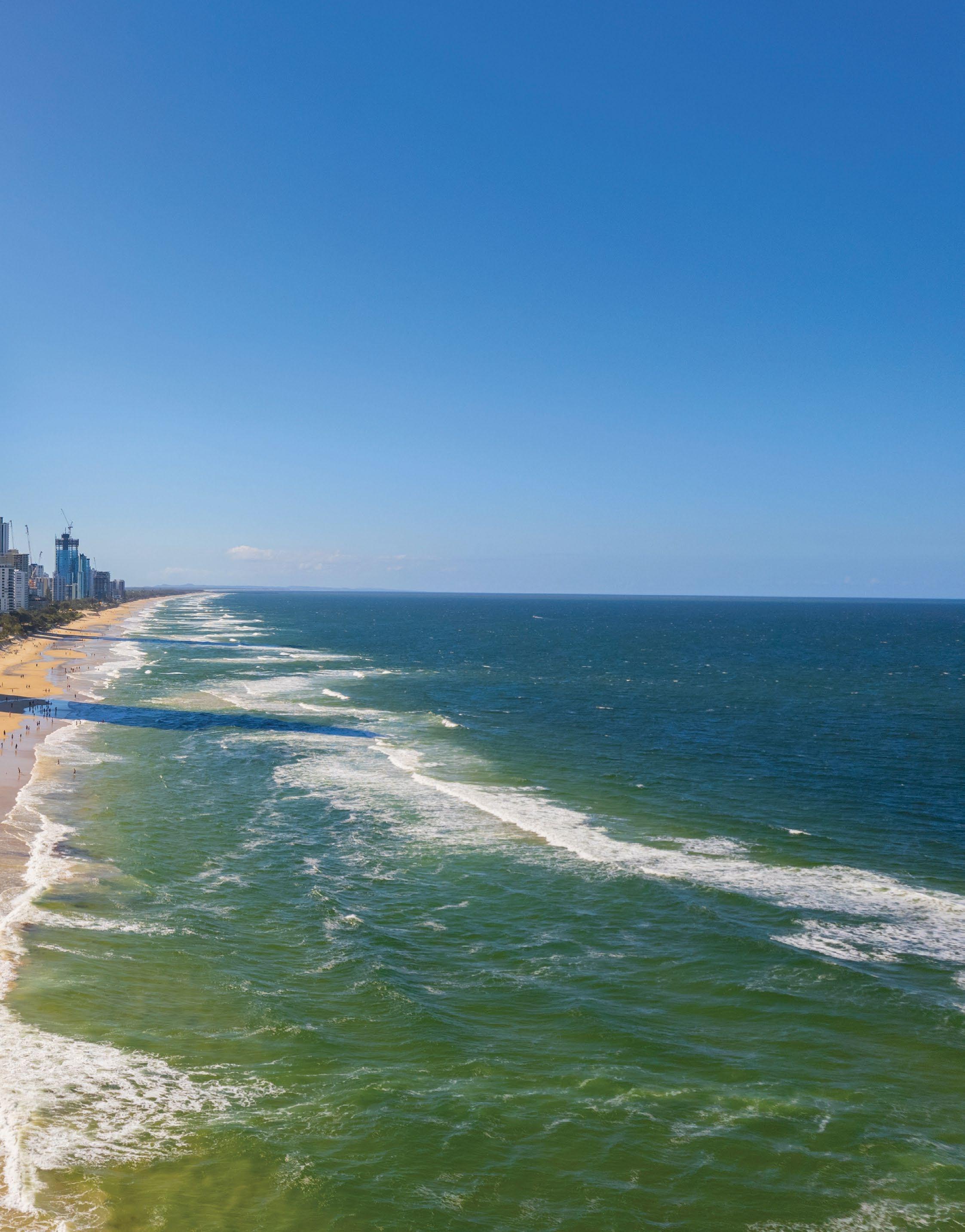
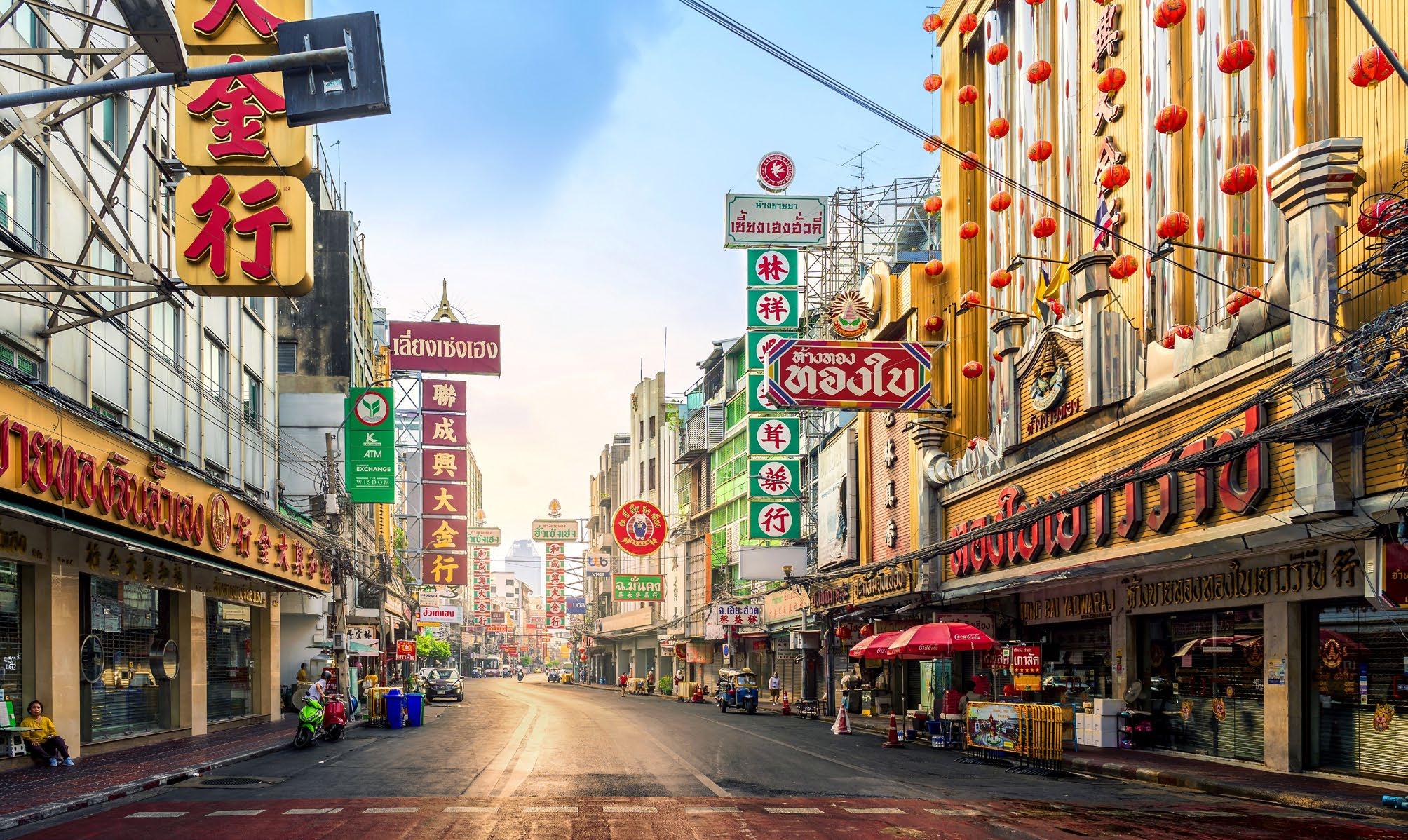
Elsewhere in the issue, our Australia market update homes in on the Gold Coast—one of the world’s most glittering resort destinations—while a news analysis assesses the troubling leakage of Chinese tourists and investors from Thailand following recent safety scandals.
We also explore a striking new luxury landmark in Hong Kong, assess emerging investment options in Colombo, and examine a challenging period for the Philippine property market.
Gallop in the new lunar year with gifts for yourself and your loved ones
Design Focus: Ripping up the rulebook
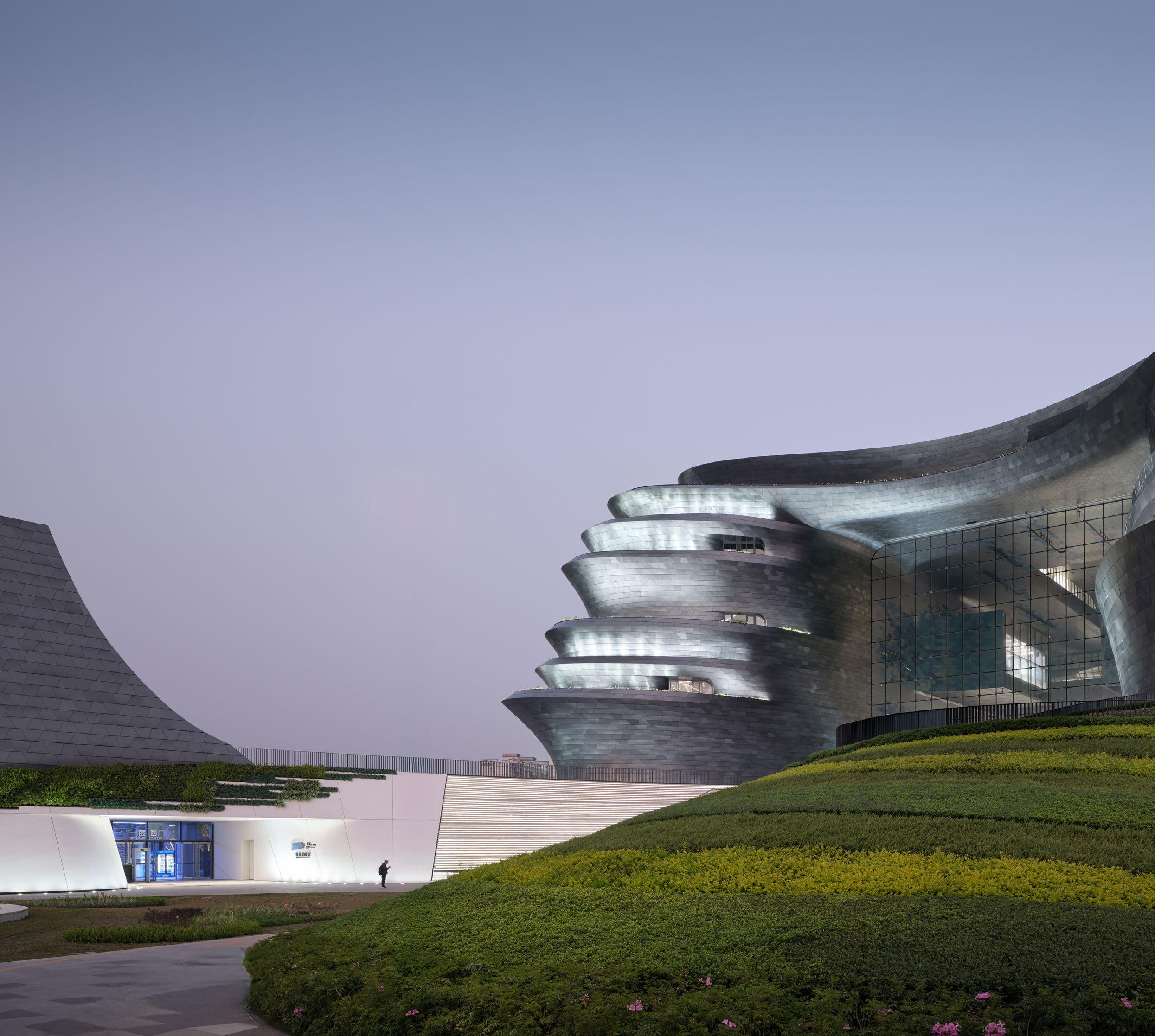
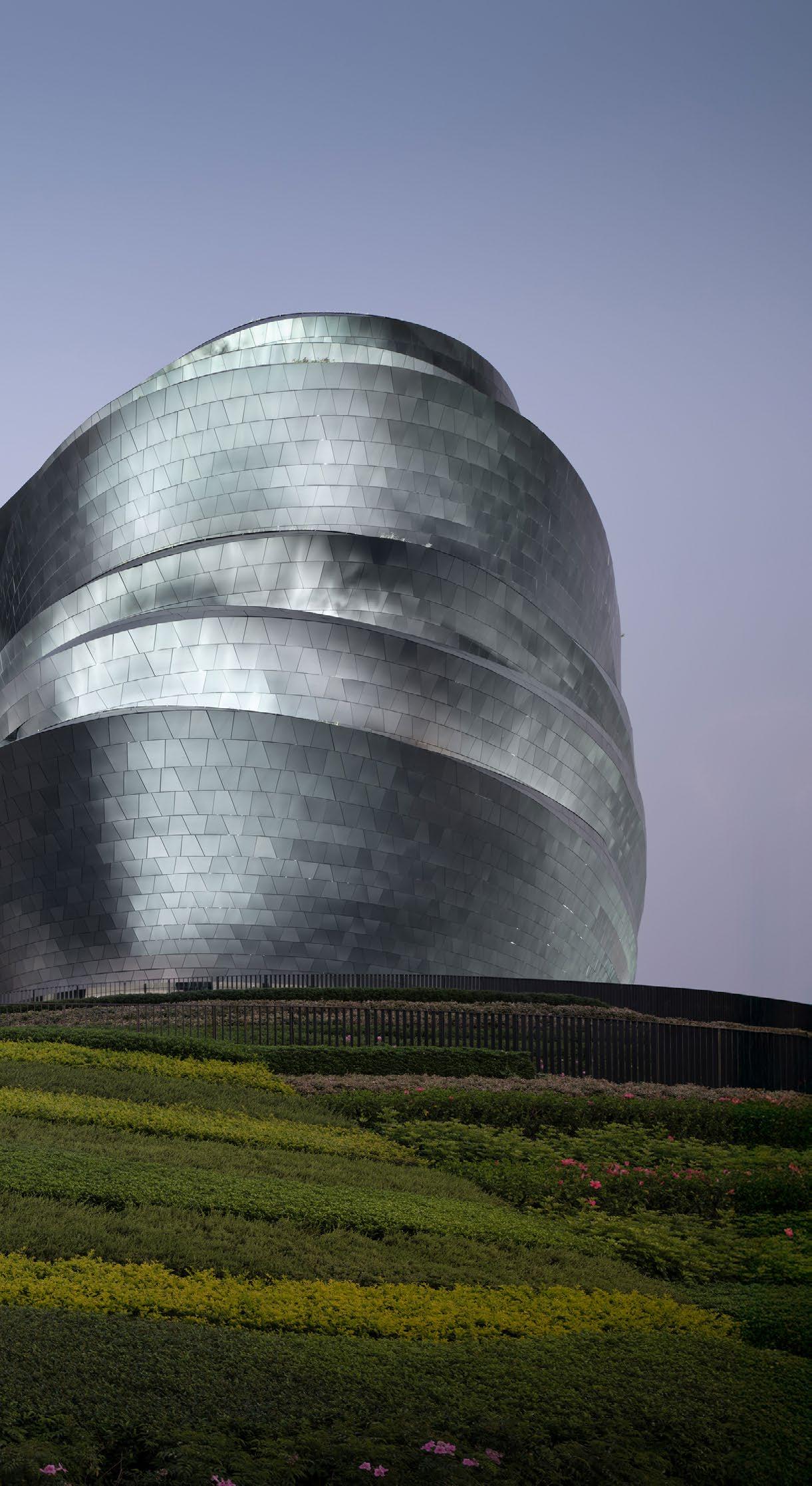
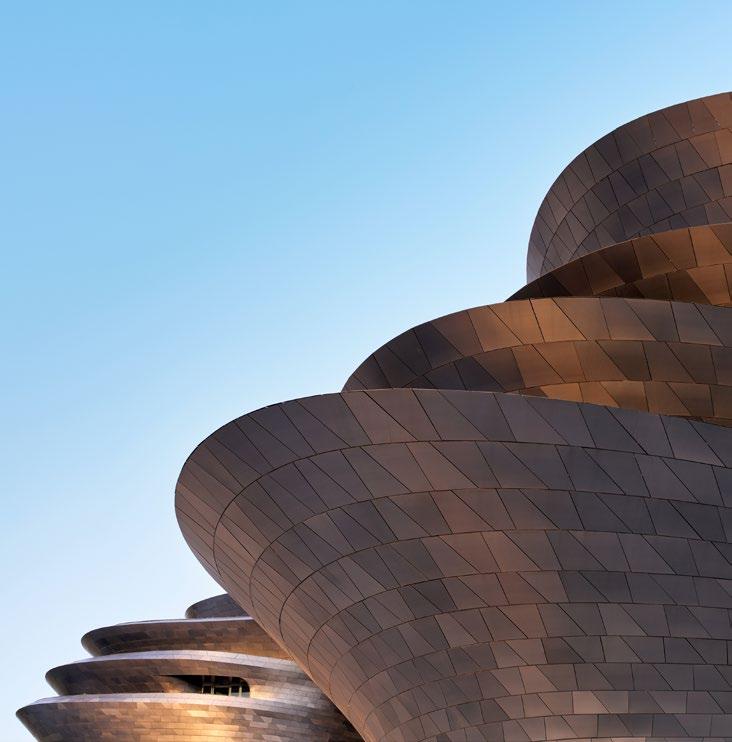
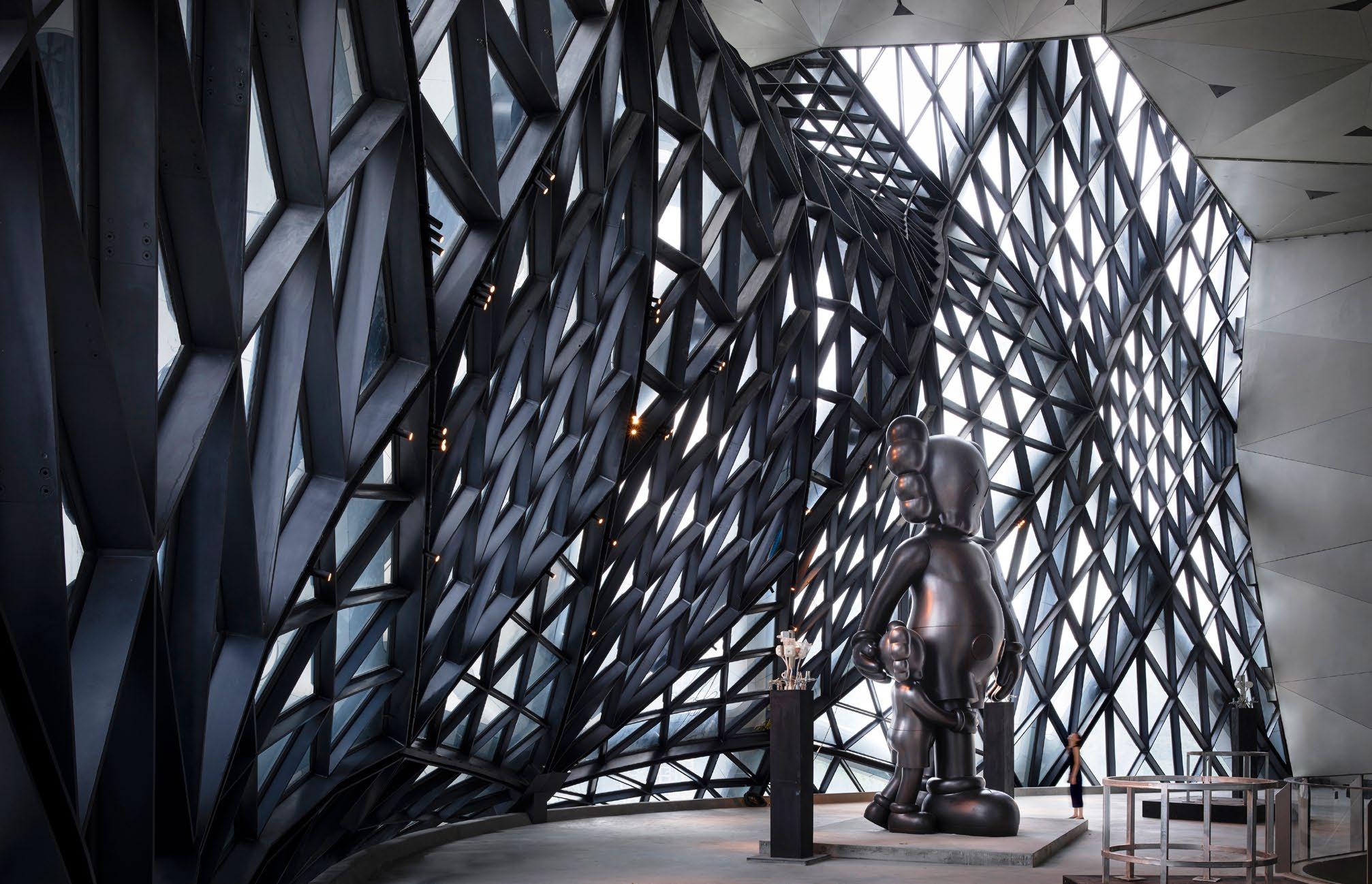
Why China has become a proving ground for Zaha Hadid Architects’ most ambitious ideas
Neighbourhood Watch: Colombo
Sri Lanka’s capital blends history, culture, and forward momentum, with growing appeal for visitors and property buyers alike
Destination: The Philippines
How trade politics and domestic fragility are converging to reshape the Philippine economy and property market
Special Feature: Living for the city
Resort residences are increasingly focused on year-round use in urban destinations
A matter of trust
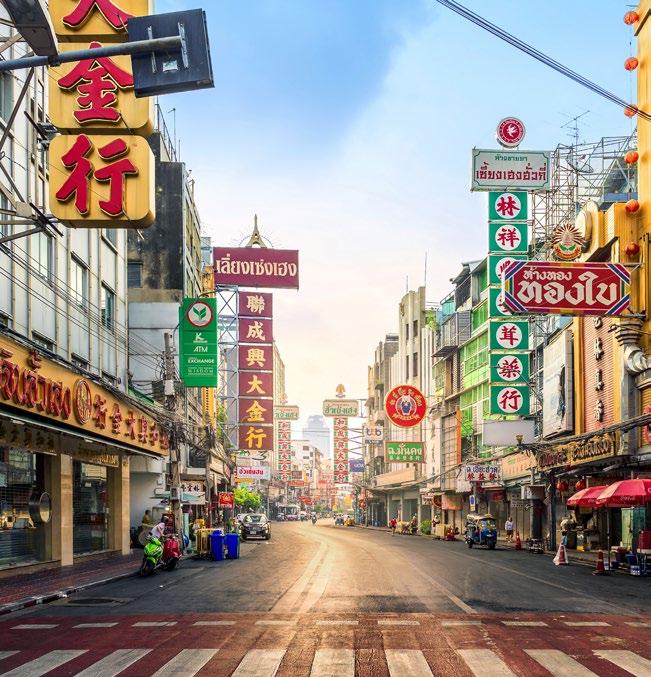
Scam-related narratives on Chinese social media have accelerated a shift away from Thailand
Destination: Australia
For decades, the Gold Coast was seen as a pleasure retreat. Now it is becoming a haven for investors
Final frontier
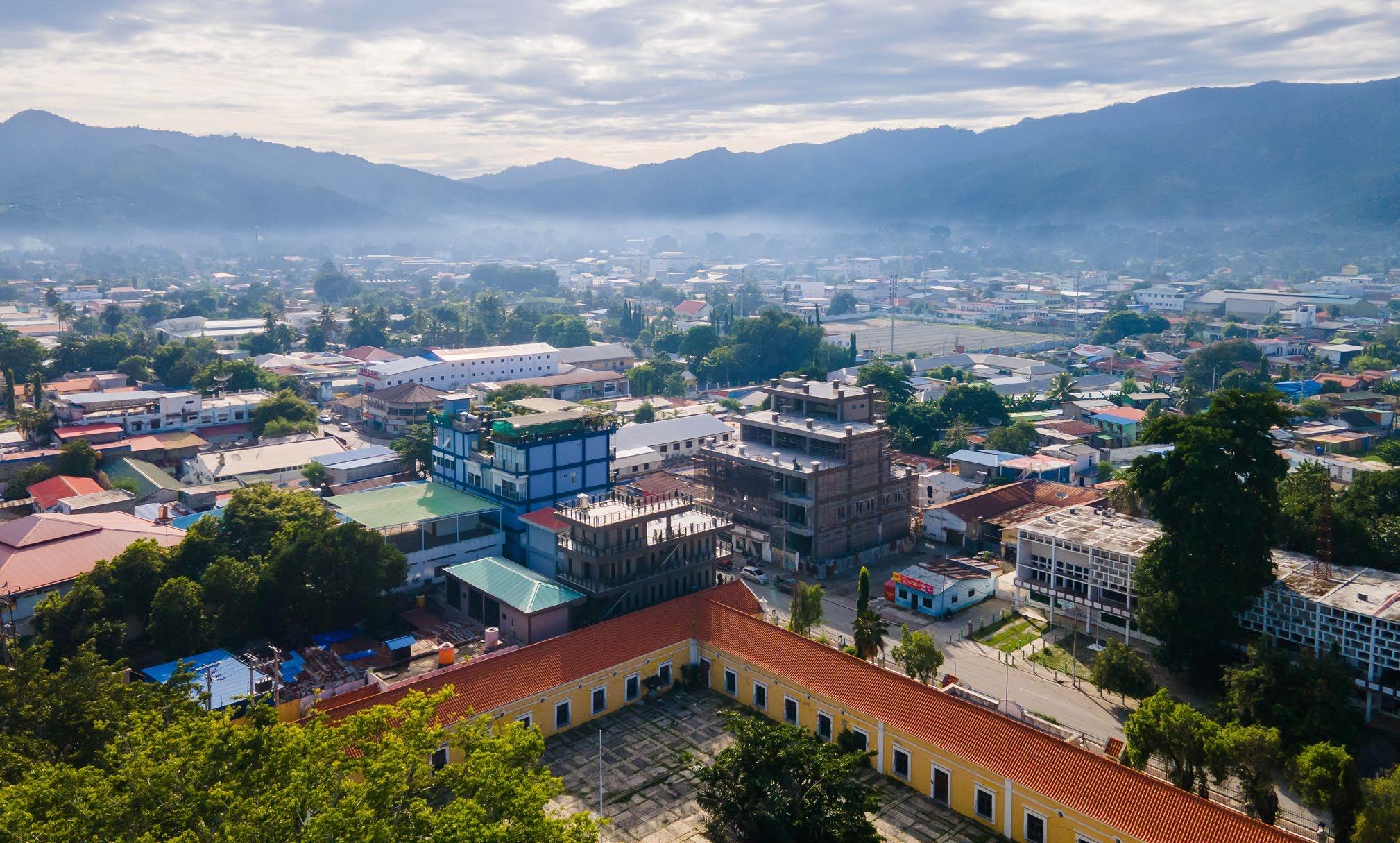
As Timor-Leste joins ASEAN, early signs of a property market emerge amid land-title reform and cautious foreign interest
FIT AND FAB
Live up to those New Year’s fitness resolutions with these transformative devices
Garmin’s HRM 600 heart rate monitor straps to your arm or chest, complementing your existing, compatible fitness devices. It tracks advanced running dynamics and daily metrics, stores swim data, and even records workouts during team sports: a gift for athletes.
USD169.99, garmin.com
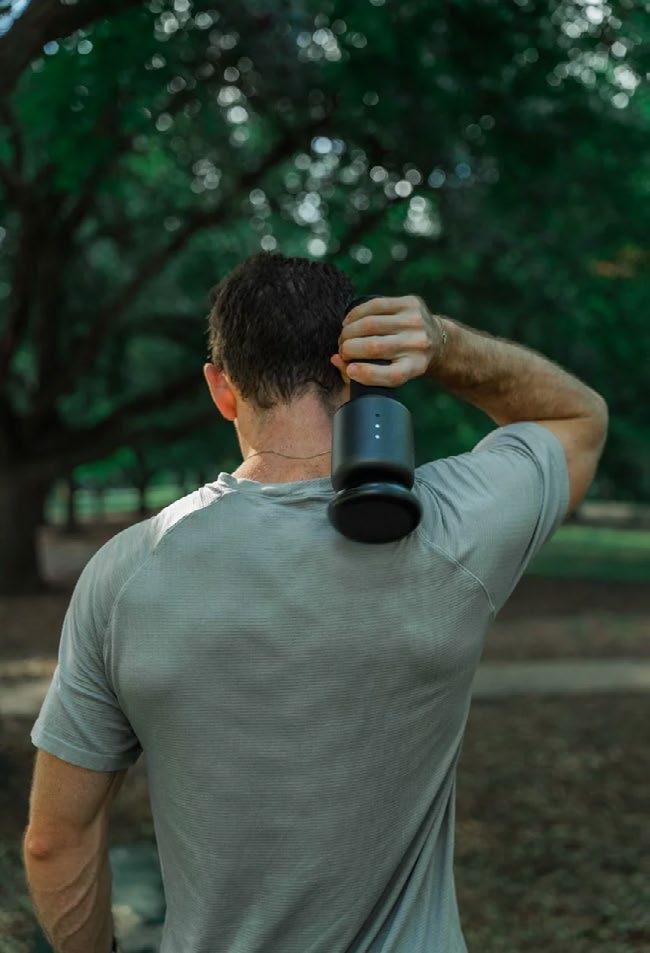
GRACEFUL RECOVERY
Wave goodbye to aggressive percussion with Rally’s innovative massager. It uses gentle orbital rotation to soothe muscles deeply: safe and comfortable for use on sensitive joints like knees and elbows. It is quiet, cordless, and features multiple attachments for targeted relief so you can return to activities, stat.
From USD399, getrally.co
RUN FOR LIFE
Designed for serious runners, the NordicTrack Ultra 3 smart treadmill features a spacious belt, powerful motor, and responsive cushioning, handling intense intervals and long distances. With iFIT, it auto-adjusts incline and speed while features like ActivePulse keep you in the optimal heart rate zone.
USD6,999, nordictrack.com
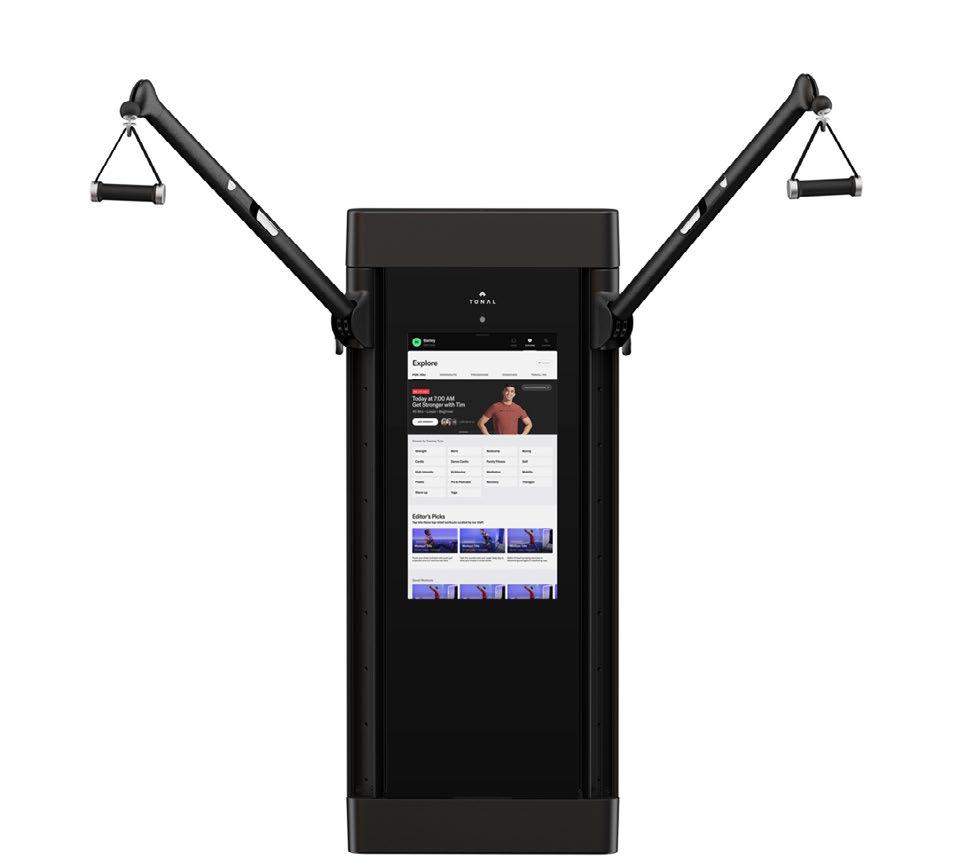
PACK A PUNCH
Transform any wall into a gym with the Tonal 2, which uses electromagnetic resistance for adjustable weight up to 250 pounds. Its large screen streams coach-led workouts while the Smart View camera enables real-time form feedback: an all-in-one system for a full strength-training experience at home.
USD4,295, tonal.com
SLAP ON THE WRIST
Improving on its predecessor, the Fitbit Charge 6 boasts a haptic side button and builtin GPS to ensure you’ll never get lost during runs. This water-resistant, long-lasting iteration offers 40 sports profiles and even lets you share cardiovascular stats with fitness equipment.
From USD109.50, store.google.com
COMMODE CONFIDENTIAL
Elevate your most private room with these chic furnishings and self-care wonders
SHELF LIFE
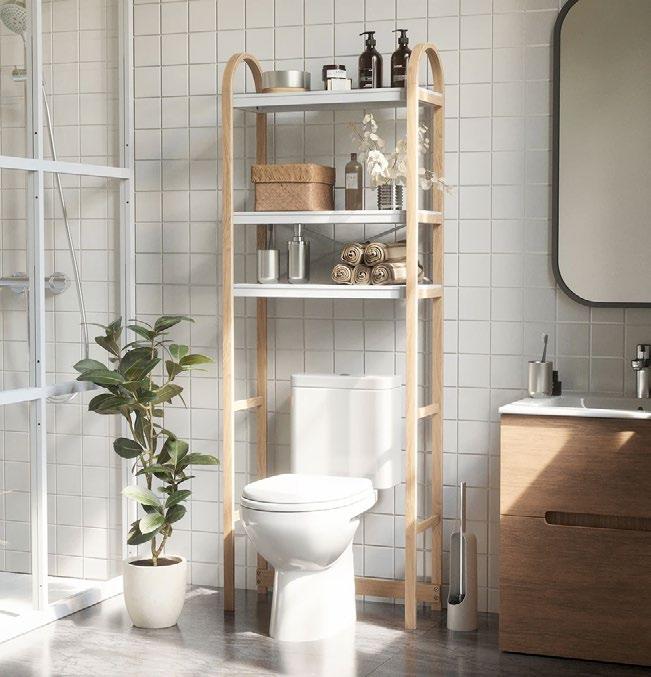
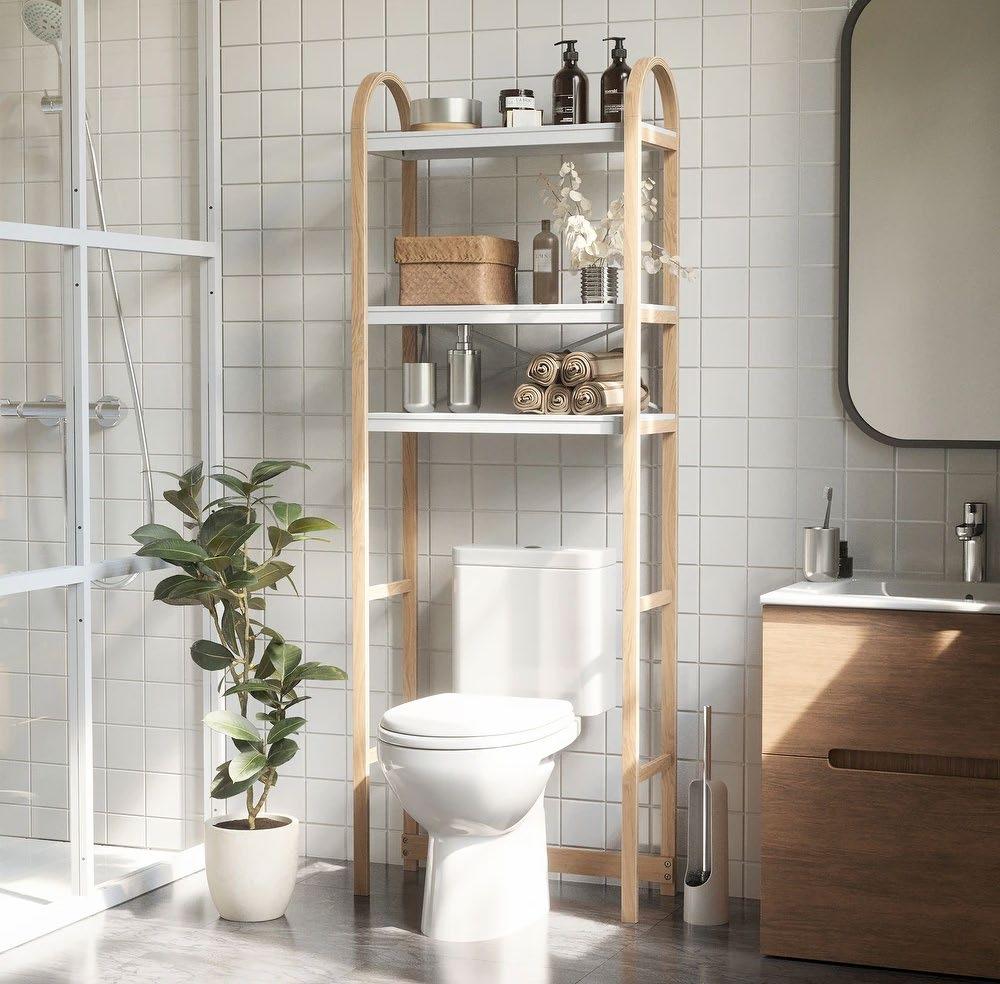
Umbra’s freestanding Bellwood shelf fits seamlessly over the toilet, offering three adjustable tiers with dowels for hanging towels. Able to hold 29 pounds per tier, this bentwood creation provides a strong, durable organisation space that stylishly declutters your bathroom.
USD200, umbra.com
THAT’S LOW
Achieve a more natural, comfortable position with a toilet stool from Tushy. It curves discreetly around your toilet base, elevating your knees to reduce straining. With magnetic, height-adjustable legs and a crevice-free surface for easy cleaning, it makes for a better relieving experience.
USD59, hellotushy.com
TAKE THE PLUNGE
Ice baths are trending; it’s time to enhance your restroom with a fully integrated cold plunge. The plug-and-play unit from Plunge requires no plumbing and cools to 37°F quietly and efficiently. Enjoy ozone sanitation in a premium tub with the ability to control temps with your phone.
From USD7,990, plunge.com
VANITY FAIR
Ellington, a Vietnamesemade single vanity from West Elm, catches the eye with its white marble top, fluted oak detailing, and spacious drawers. Built with FSCcertified wood, contract-grade materials, and Greenguard Gold-certified finishes, this is bathroom furnishing at its most sustainable and durable.
From USD1,199, westelm.com
CABINET OF CURIOUSITIES
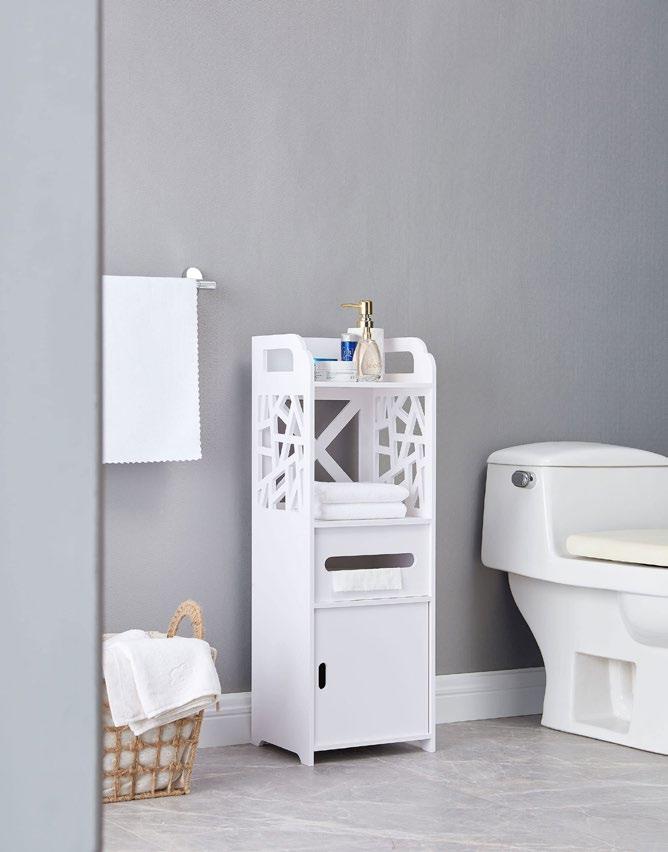
Maximise a small bathroom with the slim Larie Wood cabinet. Its minimalist white design houses a drawer, cabinet, and open shelves to organise everything from towels to toiletries. Made from moisture-resistant materials, it’s a compact storage solution beside the toilet.
From USD40.99, target.com
HOT TO TROT
Gallop into the Year of the Fire Horse in fiery style with gifts for yourself and your loved ones
FURLONG STRIDES
Moleskine lets you channel the energy of the Fire Horse with its limited-edition ruled notebooks. Featuring a woodcutprint cover, rounded corners, and an elastic closure, this hardcover notebook includes add-ons like lucky envelopes, stickers, and greeting cards.
From USD30.23, moleskine.com
DETAILS | Style
SADDLE UP
Adidas has viral hits in time for the Lunar New Year. Fusing streetwear with traditional design, its Tang-style jackets feature frog button closures (pankou), infusing Chinese flair into a classic zipped silhouette with the brand’s trademark stripes.
From USD120, adidas.co
HOLD YOUR HORSE
Mark the Lunar New Year with a symbol of determination and bold spirit from Baccarat. Its exquisite, limited-edition crystal sculpture, accented with gold, captures a horse in motion, showing off French artisan craftsmanship with a design by Allison Hawkes.
From USD490, baccarat.com
HORSE POWER
Run like a steed with a pair of shoes from On’s Year of the Horse collection, featuring auspicious red and gold details. Made with On’s cushioned CloudTec sole and sustainable materials, it combines all-day comfort and a festive touch for your stride.
EUR170, on.com
MARE MORTAL
Ride into the Year of the Horse with a pair of sunglasses from Ray-Ban, available in celebratory packaging. They feature a classic silhouette that fits low nose bridges and come with a special golden plaque honouring the zodiac sign, complete with gold accents on the temples.
From USD160, ray-ban.com
TWIN PEAKS
Inside the decades-long journey that reshaped Hong Kong’s Mid-Levels into an ultra-luxury outlier
BY AL GERARD DE LA CRUZ
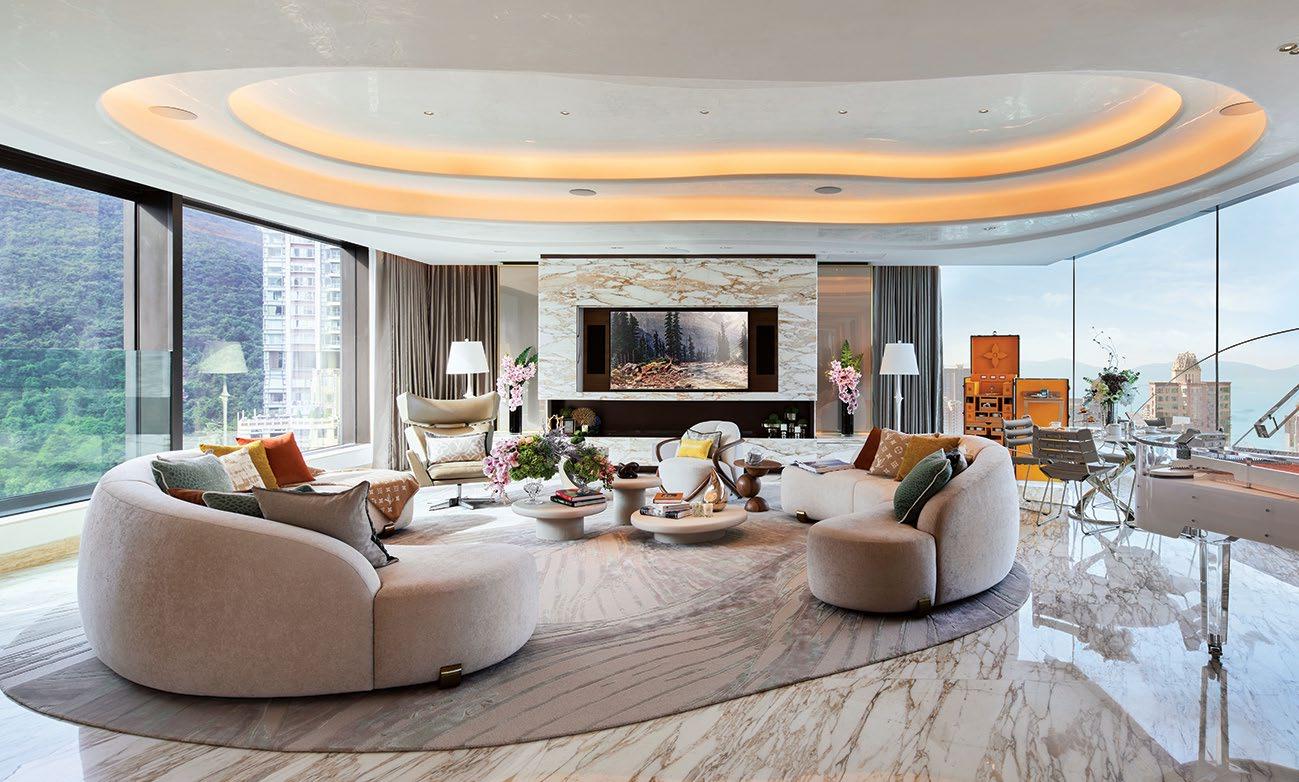
SET IN THE MID-LEVELS WEST NEIGHBOURHOOD, THE LEGACY OFFERS SOME OF THE LARGEST, MOST LUXURIOUS RESIDENTIAL UNITS IN HONG KONG’S CROWDED MARKET
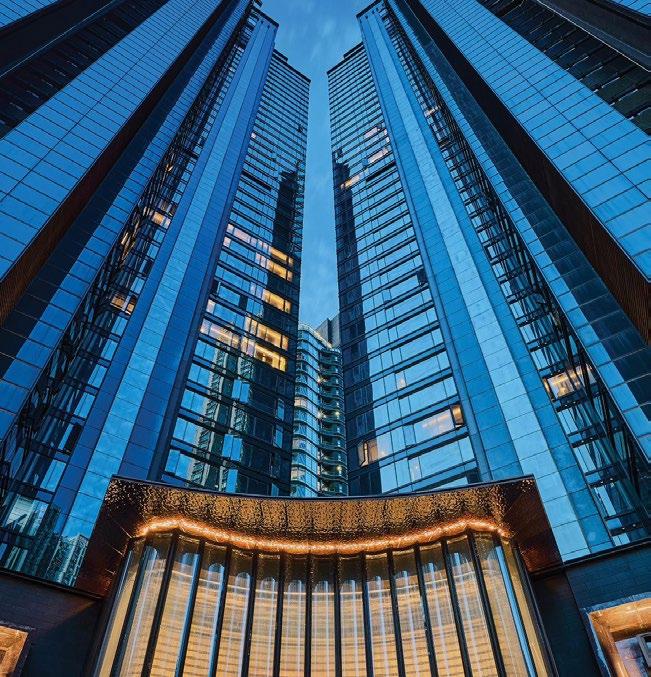
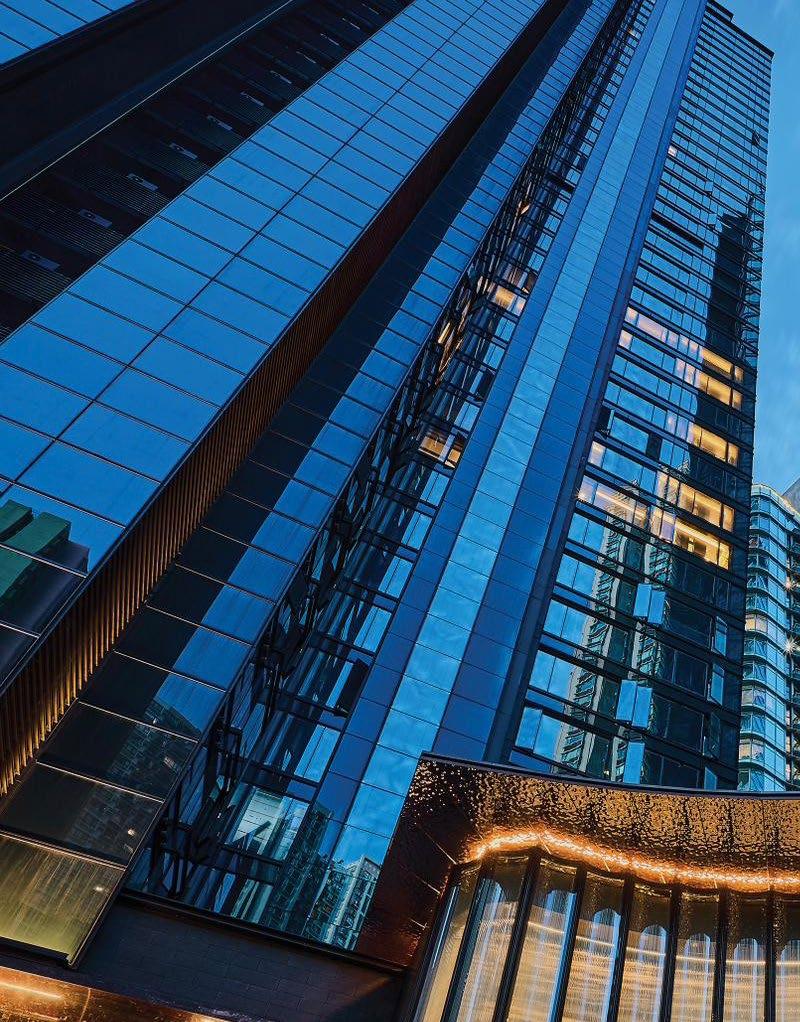
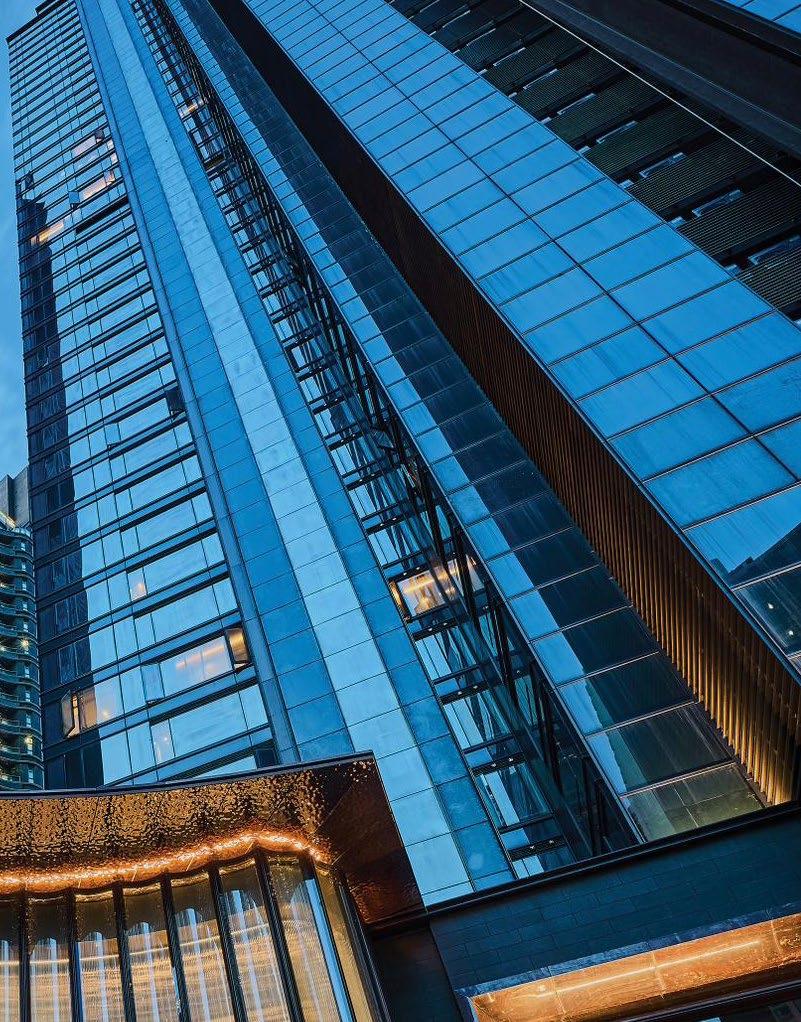
High on the vertiginous slopes of Hong Kong, a newly completed development is adding to the city’s iconic skyline, twice over.
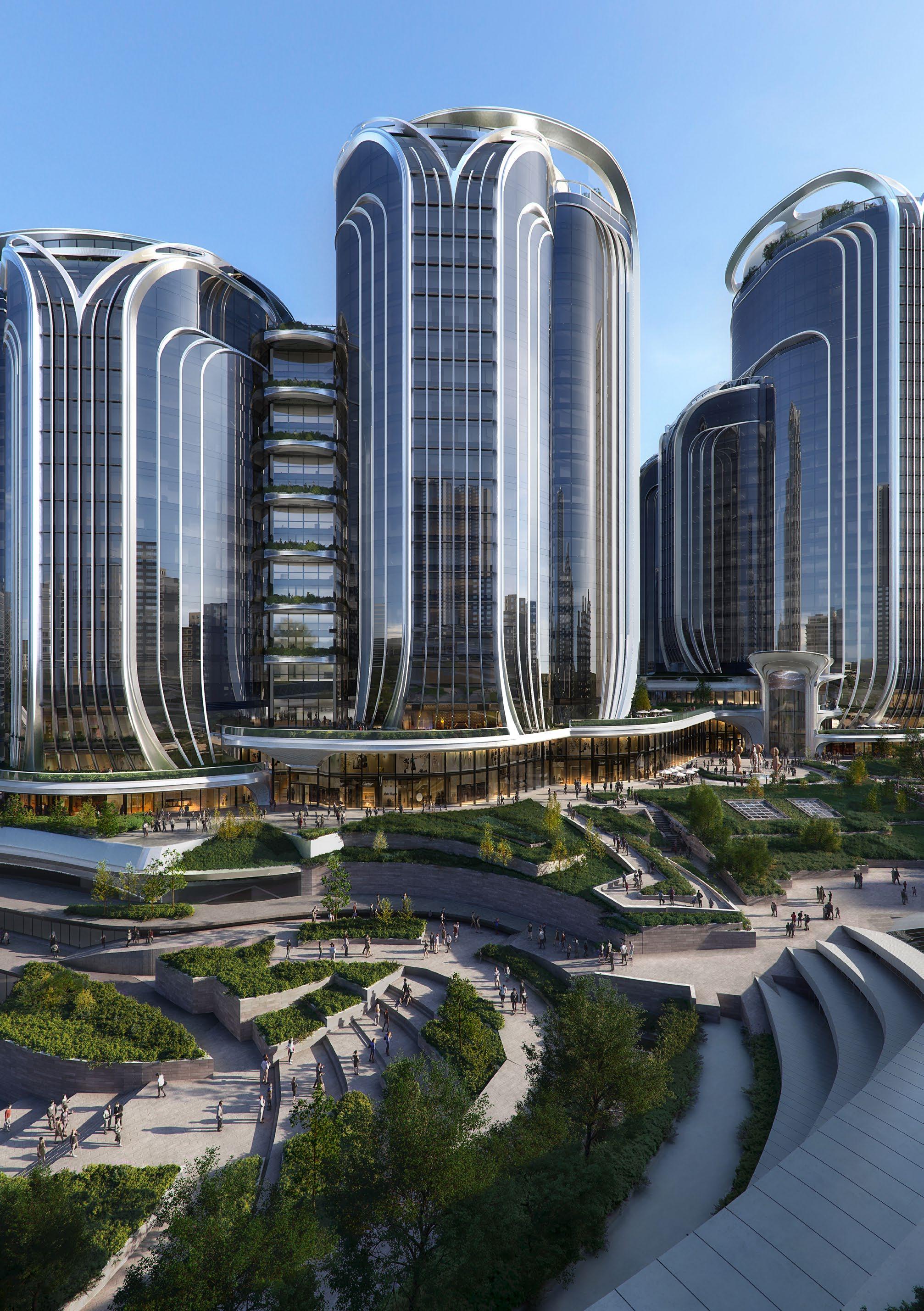
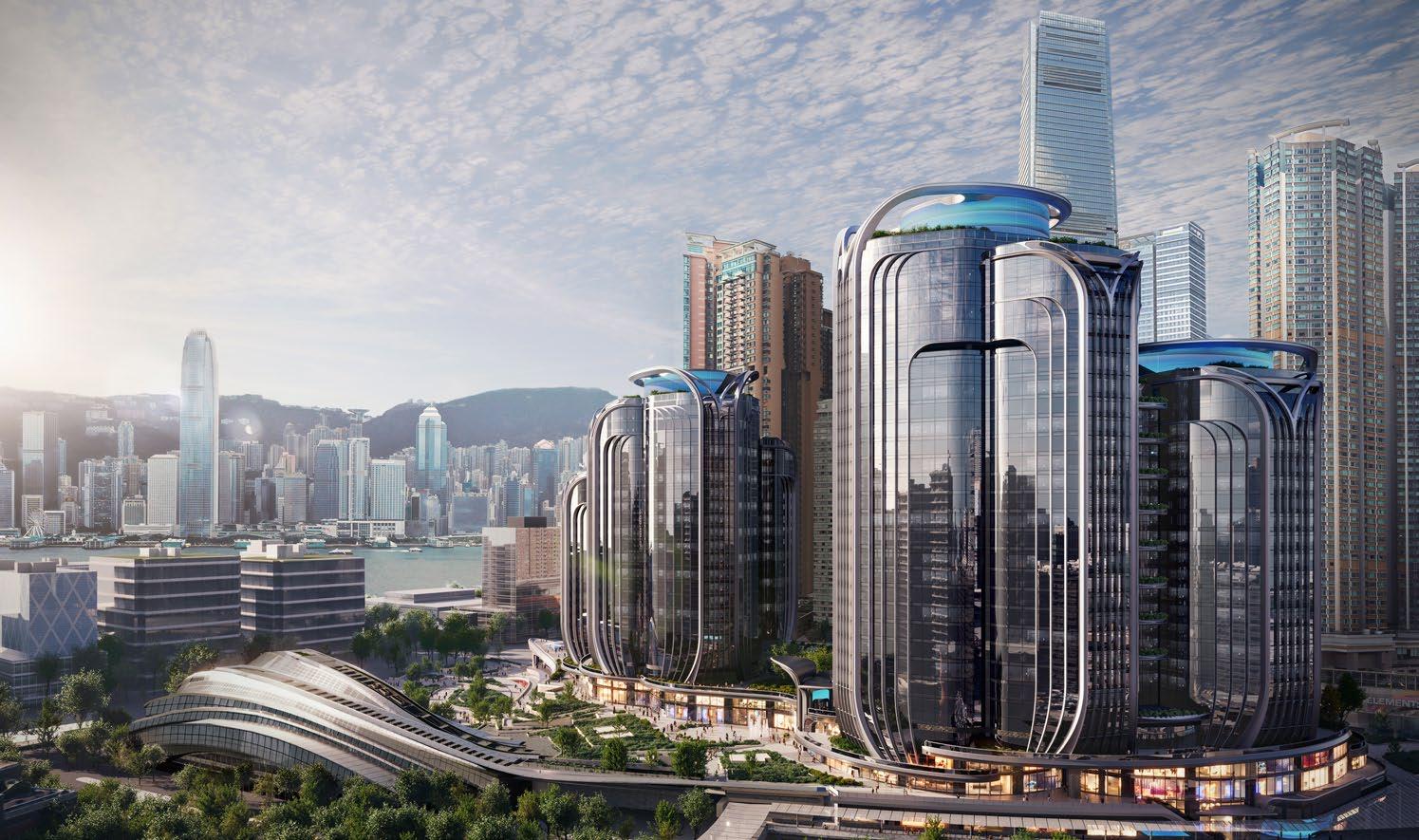
The Legacy, Henderson Land’s twin-tower joint venture with New World Development, rises above issues of land constraint to flip the script on verticality. From a marathon acquisition to an architecturally daring build, its development process represents a wager on the ultra-wealthy set’s readiness for something beyond a famous postcode.
For nearly 20 years, the address at 8 Castle Road lay tangled in the complexities of Hong Kong land ownership. Previously home to the 50-year-old Merry Terrace apartments, the parcel sits in a district long associated with established wealth: Mid-Levels West, close to Central and top-tier schools.
Following a lengthy and complex acquisition process, Henderson Land and New World Development jointly acquired the site in 2016. “Both share a common vision to develop a distinctive residential landmark that blends architectural excellence, sophisticated living spaces, and curated lifestyle experiences,” says Ho Wai Fung, deputy general manager of the project management department at Henderson Land. “We aim to break convention and set a new standard for luxury living in the city.”
The high-stakes, decades-long assembly of the parcel was worth the wait. It yielded a commanding plot that delivers
a rarity in Hong Kong: low density, even across two slender skyscrapers.
The architectural mandate was awarded to Milan-based design practice ACPV ARCHITECTS Antonio Citterio Patricia Viel, with celebrated French designer Jean-Louis Deniot appointed for the interiors.
The architectural form draws direct inspiration from the site’s privileged context, surrounded by historical edifices, universities, and parks. The resulting twin towers soar to 266 metres, making The Legacy the tallest structure in the district. Their slender profiles are trained on one premium sightline: Victoria Harbour.
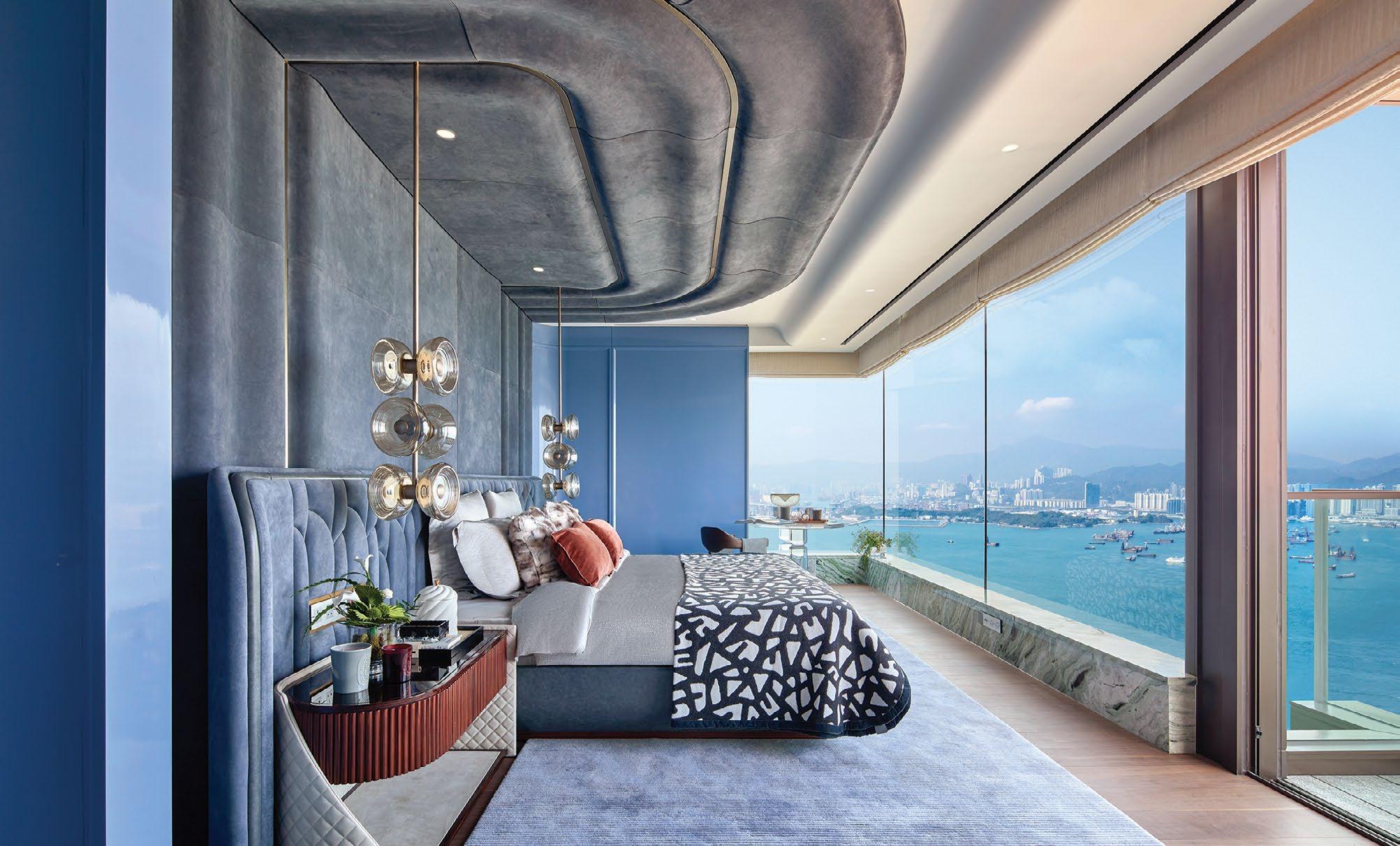
“The residential units are thoughtfully positioned in the Eastern and Western towers, offering captivating sea views to all residents,” explain the architects from ACPV. The most luxurious apartments on the upper floors command a 180-degree panorama encompassing Victoria Harbour, the International Commerce Centre in Kowloon, and the International Finance Centre on Hong Kong Island.
The design revolution is as inward-looking as it is vertical, prizing seclusion as luxury. In a city accustomed to shared corridors and lift small talk, The Legacy offers a discreet alternative.
“Privacy and exclusivity are the priority concerns for those in the ultra-rich segment,” says Ho. The solution lies in an
elaborate system of 10 entrance lobbies, each soaring to double-storey height and finished with curved glass and stone cladding to create a prestigious arrival experience. Penthouses feature lift lobbies that ascend directly from a private car park.
To manage the number of lift trips required by this arrangement, the development introduced Hong Kong’s first residential double-deck lift system, alongside “walkthrough” lifts with four doors.
The material palette favours quiet permanence: a stone-clad podium, a full-glass façade, and flawless marble columns at the grand entrance. Inside, the partnership with Deniot yields interiors that “fuse Baroque-inspired richness with contemporary restraint,” using Italian marble, natural stone, and bespoke woodwork.
“Each residence evokes understated grandeur, where every detail, from wall finishes to ceiling treatments, contributes to a cohesive visual narrative,” the architects state.
The Legacy is constructed with a 3.5-metre floor-to-ceiling height. While current regulations cap building height at 200 metres above Principal Datum (mPD), the project’s strategic planning successfully retained a previously approved maximum of 266.05 mPD.
This allowance, combined with the generous floor height, enabled the creation of at least 19 top-tier floors, each
securing a permanent, unimpeded 270-degree panorama of Victoria Harbour.
The period from obtaining the construction permit in 2017 to completion in March 2025 was fraught with the standard challenges of a Hong Kong mega-project: tight site access and extreme topography, compounded by the pandemic.
The building’s exterior skin is a prefabricated unitised curtain-wall system chosen for its durability and precision. Long-lasting concrete was specified to maximise the building’s lifecycle and support the circular economy.
“High standards of design detailing minimise formwork and optimise construction quality to enhance durability,” the architects note.
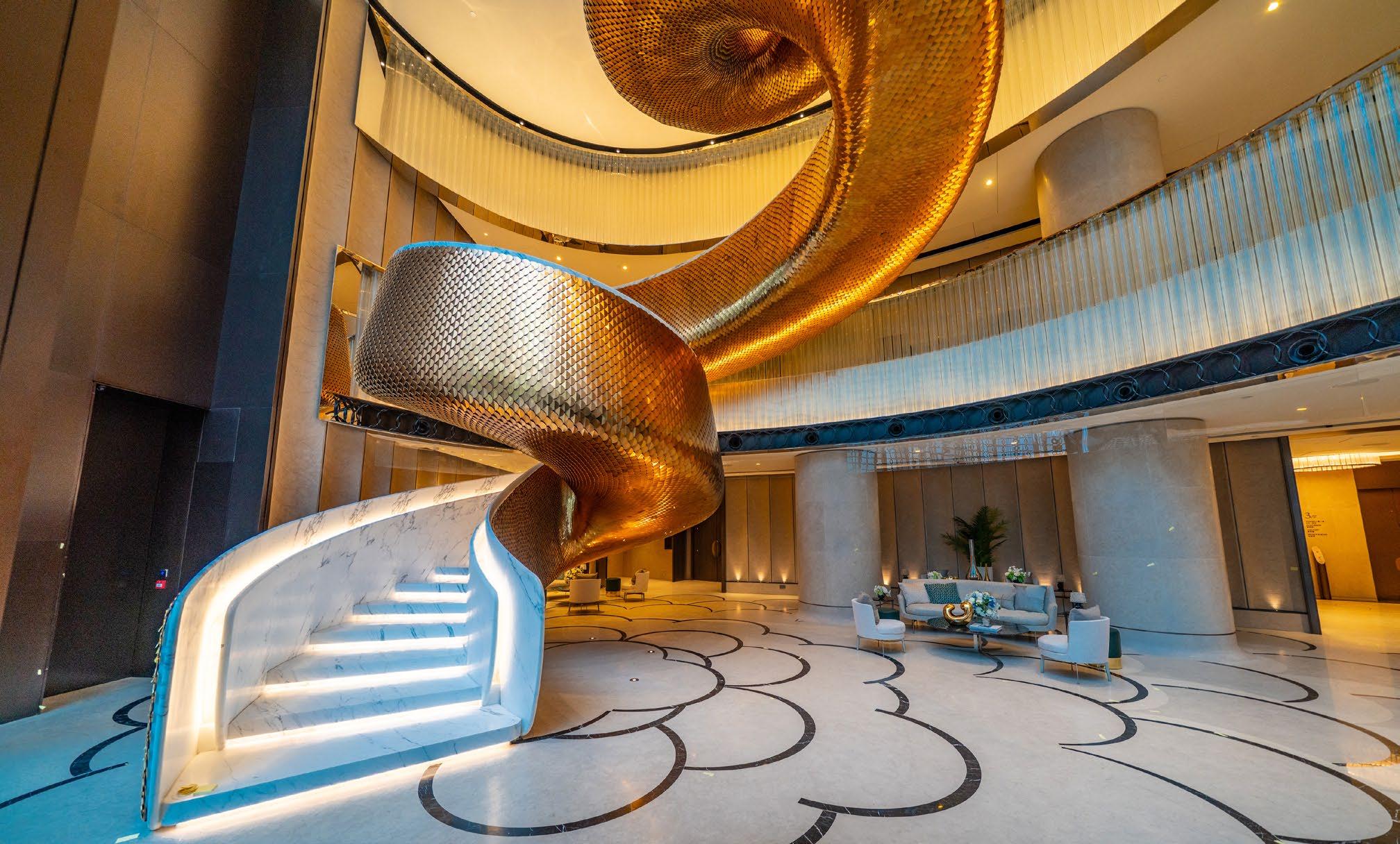
The architectural pièce de résistance, the glass rooftop and its internal helical staircase—dubbed the “Peacock Stairs” by the team—required fastidious planning and coordination between contractors and consultants. Taking pride of place atop the building, the glass structure is designed to glow like a crystal, visible from the harbour.
The landscape, designed by Parcnouveau Landscape Architecture, presented another layer of complexity. Tasked with reimagining a classical Italian garden on a steep site, the team created terraced garden “rooms,” including contemplative courtyards and elevated lounges overlooking the harbour.
RESIDENTS WAKE UP TO SWEEPING, PANORAMIC HARBOUR VIEWS, COVETED IN THIS DENSE CITY
We aim to break convention and set a new standard for luxury living in the city
A HELICAL STAIRCASE SERVES AS AN ARCHITECTURAL FOCAL POINT ON THE BUILDING’S ROOFTOP
CROWN JEWELS
Crowning The Legacy is a radiant glass rooftop, conceived as a luminous crystal that catches both light and eye.
The gleaming structure serves as a visual anchor for the tower’s ultra-opulent identity. Illuminated from within after dusk, it takes on a lantern-like presence, visible from across Victoria Harbour.
At its centre is a helical staircase, spiralling upward like a finely cut gem. Together, crown and spiral core symbolise the project’s design ethos.
“Its intricate design and flawless craftsmanship make it a true marvel to behold,” states ACPV ARCHITECTS Antonio Citterio Patricia Viel, the Milan-based practice behind the project.
“It stands as a testament to the building’s commitment to exquisite aesthetics and serves as a striking symbol of the fusion between modern architecture and timeless beauty.”
Adding a layer of narrative depth, the designers embedded a precious fossil within the structure, an attempt to ossify modern Hong Kong’s ties to the distant past.
At ground level, on the corner of Castle and Seymour Roads, The Legacy makes a commanding first impression with a towering entrance of marble columns.
A central podium displays an art installation, a synthesis of colour, form, and texture designed to inspire wonder from the moment of arrival.
The design incorporates nearly 30% greenery, blending Italian and native plant species—including vertical plantings reminiscent of cypress—for year-round vibrancy. Structured hedges, axial pathways, and bespoke water features invite moments of pause.
Many units were purchased during exclusive, invitation-only previews that began in July. “Visitors are carefully screened and personally guided onsite by our professional, welltrained staff,” the developers explain, describing a sales process that deliberately eschews public advertising.
The market response, they report, has been “exceptionally positive,” with strong interest from local and mainland Chinese buyers and transaction numbers growing steadily.
Residents take possession of a universe of curated amenities. The clubhouse spans three floors, connected by a spiral staircase, and houses two swimming pools, a gym, a private theatre, spa, games room, and an upscale restaurant. A double-storey grand banquet hall provides space for entertaining.
Technology is woven throughout, primarily via the Smart Home App that allows control of climate, lighting, motorised curtains, and air quality, while also promoting sustainable living tips.
The development’s 172 units span 472,000 square feet, with sizes ranging from 2,300 to 12,500 sq ft. By comparison,
most residential developments in the vicinity of Castle Road offer homes of between 500 and 2,800 sq ft, the developers note.
“These generous layouts are highly valued by ultra-highnet-worth buyers,” says Ho. “The low-density configuration also enables The Legacy to accommodate more landscaped areas, larger communal and relaxation spaces, and bespoke clubhouse amenities.”
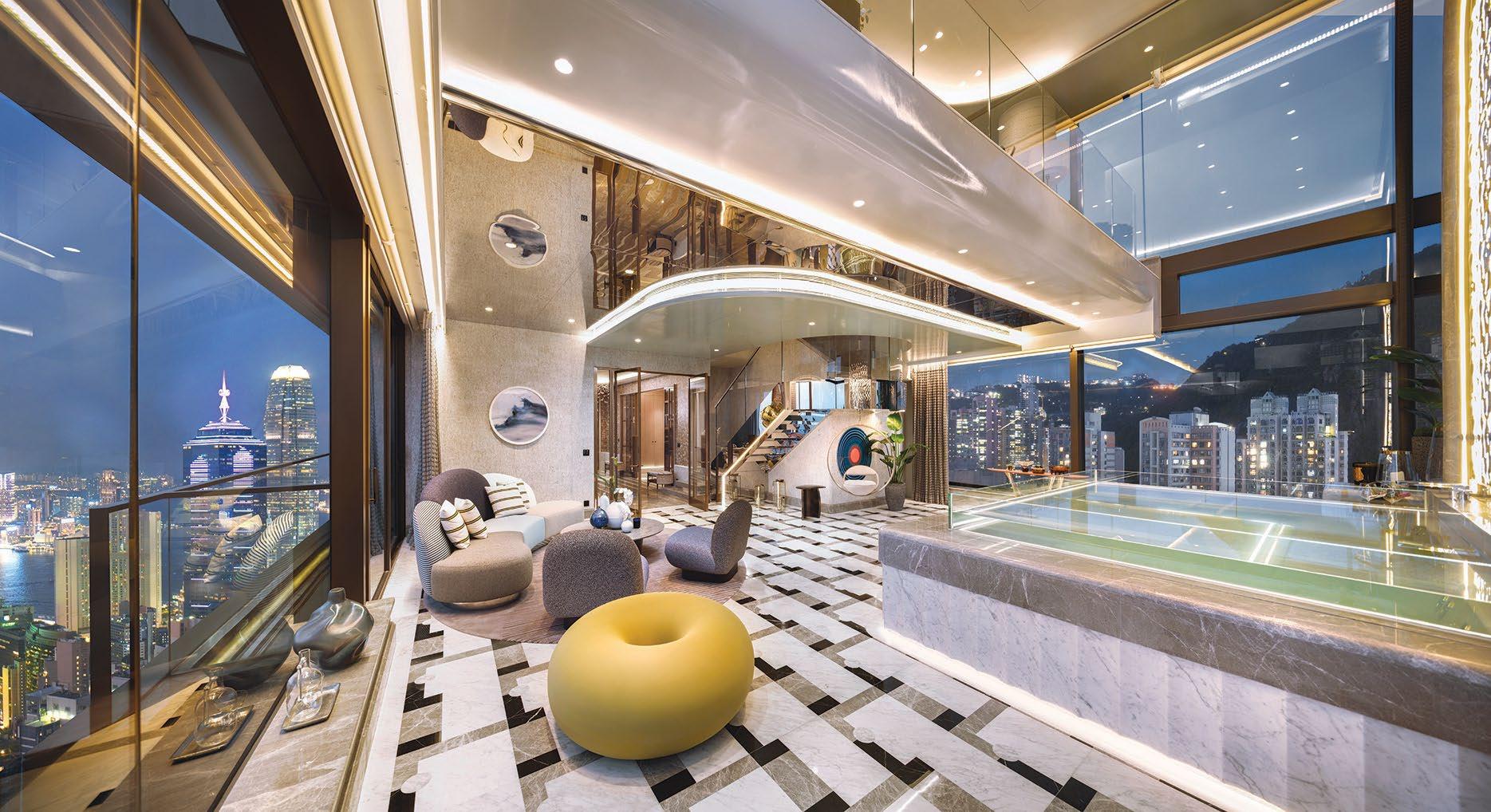
It also allows for private indulgences: carports for residents with multiple high-value vehicles and, on the penthouses, rooftop acrylic pools. “The swimming pool on the roof of each penthouse represents a signature feature of class, elegance, and status,” Ho says. “It is a living statement of prestige.”
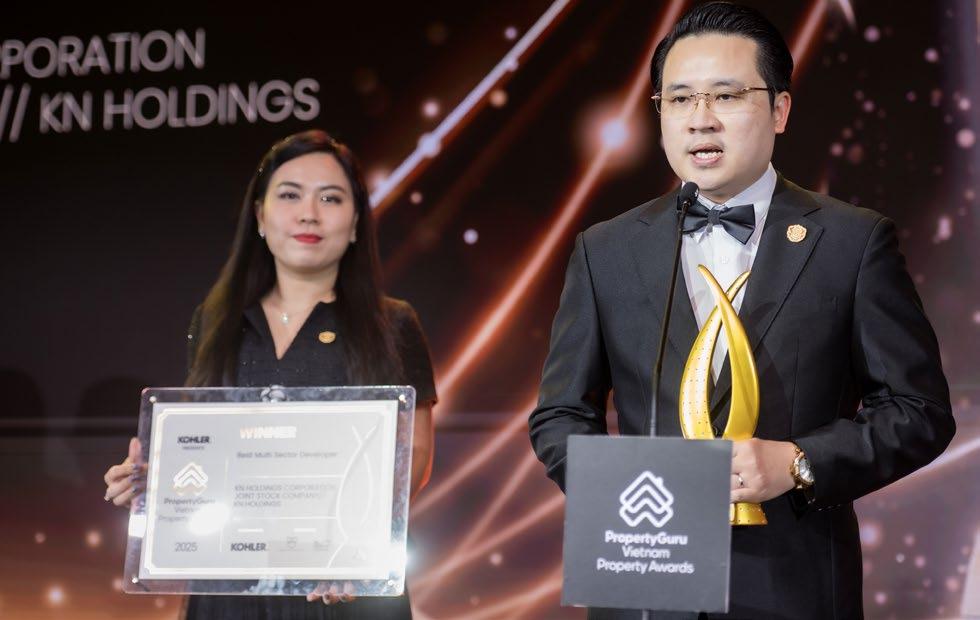
The Legacy has since been rewarded for its out-of-the-box ambition, besting peers across the region to claim multiple honours, including Best Completed Ultra Luxury Condo Development (Asia) at the 2025 PropertyGuru Asia Property Awards Grand Final.
Countering urban bustle with engineered hush, The Legacy is a bet on the apex of luxury being dominion over one’s space and experience. In both name and substance, the project set out to ask what the very top end of the market truly wanted—and received its answer.
AMENITIES FOR THE MOST EXPENSIVE UNITS INCLUDE PRIVATE LIFT LOBBIES, CARPORTS, AND ROOFTOP POOLS, KEEPING UP WITH ULTRA-LUXURY LIVING DEMANDS
Trading places
ThirdHome founder Wade Shealy on how luxury exchange is reshaping second-home ownership, travel patterns, and asset use
BY LIAM ARAN BARNES
THIRDHOME POSITIONS RESIDENCES AS PART OF A CURATED, MEMBER-LED ECOSYSTEM
Luxury home exchange has spent years sitting in an awkward space between real estate and travel. Too often, it has been framed as a workaround for underused second homes or an alternative to timeshare. Both miss the point.
What has changed, particularly since the pandemic, is not the idea of exchange itself, but how affluent owners now think about time, place, and use. Second homes are no longer seasonal escapes or occasional indulgences. They are lived in, used for weeks at a time, and shared across families. Expected to support work, wellness, and daily routines alongside downtime.
At its simplest, luxury home exchange allows owners of high-end second homes to use their properties as travel currency. Homes are made available within a closed network of verified owners, earning credits that can be used to stay in comparable residences elsewhere. Exchange operates as an extension of ownership rather than a rental transaction.
That shift has expanded the role these homes play within global travel patterns, particularly for high-net-worth individuals moving between regions. A villa in Phuket can function as a winter base. A coastal property in Australia becomes a place to settle for longer periods. Travel is slower, stays extended, and the line between ownership and access has softened.
In turn, this has exposed the limits of existing models. Traditional rentals tend to prioritise yield, often at the expense of stewardship. Timeshares provide access, but little flexibility. For owners holding high-value assets—and for developers selling into a globally mobile buyer base— neither reflects how luxury homes are used today.
Founded in the aftermath of the Global Financial Crisis, ThirdHome set out to address that gap by building an exchange network designed for verified luxury homeowners. The platform positions residences as part of a curated, member-led ecosystem that prioritises quality, trust, and comparability at scale.
What began as a largely US-centric concept has since expanded into a global network, with Asia Pacific emerging as a key growth area. As resort destinations across Southeast Asia and Australia mature, and as branded residential developments raise expectations around service and standards, curated exchange is becoming part of a broader conversation about how luxury second homes deliver value beyond ownership.
ThirdHome founder Wade Shealy has had a front-row view of those changes. We recently discussed how the platform has evolved, what member behaviour reveals about postpandemic travel patterns, and why Asia-Pacific resort markets are likely to play a larger role in the next phase of luxury second-home ownership.
What originally inspired you to create a luxury homeexchange club?
I’d spent years watching luxury second homes sit empty for most of the year. Owners would use them briefly, then lock them up again. At the same time, they were travelling elsewhere and staying in hotels or rentals that didn’t really match what they already owned.
Timeshare never appealed. It was rigid and didn’t carry any sense of pride of ownership. Renting out a personal home brought its own set of concerns around control and care. What felt missing was a way for genuine luxury homeowners to exchange homes with people like themselves, without losing standards or peace of mind.
That was the starting point for ThirdHome: creating a trusted exchange model that allowed owners to unlock real travel value from homes they already loved.
For those unfamiliar with the concept, how does ThirdHome work in practice?
It’s a members-only exchange network open exclusively to verified luxury homeowners. Members make their second homes available to the network and earn Keys based on the nights they contribute. Those Keys can then be used to stay in other homes within the platform.
The key part is comparability. Every home is vetted before it’s accepted, and the portfolio is curated continuously. That keeps expectations aligned. You’re not handing your home over to strangers, and when you travel, you know what you’re arriving at.
Our role is about maintaining that balance. If the quality slips at either end, the model stops working.
Since the pandemic, how has the way high-net-worth owners use second homes changed?
Second homes have become much more central to how people plan their lives. They’re no longer just places for short breaks. Owners are spending weeks at a time in them, travelling with extended family, and building routines around those stays.
Work-from-anywhere accelerated that shift. People want homes that function properly day to day: space to work, to host family, to slow down. Comfort and familiarity now matter more than novelty.
What are you seeing in terms of where members are travelling and the types of properties they gravitate towards?
We haven’t released detailed data publicly, but the direction of travel is clear. Demand is strongest for experience-
SHEALY SAYS THAT HOMES WITH STRONG DESIGN, GENEROUS LAYOUTS, AND A SENSE OF PLACE PERFORM CONSISTENTLY WELL
led destinations paired with high-quality private homes, particularly resort villas that offer space, privacy, and access to services.
Southeast Asia stands out. Members are drawn to destinations that combine lifestyle, wellness, culture, and nature, but still allow them to live comfortably for longer periods. Homes with strong design, generous layouts, and a sense of place consistently perform well.
Those patterns are a big part of why the region has become a growing focus for us.
Asia Pacific has become a much bigger part of the luxury leisure map. How does the region fit into ThirdHome’s growth?
Asia-Pacific has become a key growth region as more buyers across the region acquire second homes, both locally and overseas. Thailand works well as a gateway market. It has established resort destinations, strong international demand, and a growing base of high-quality residential developments.
We’re also seeing momentum across Southeast Asia more broadly, as well as in Australia, both in terms of inventory and membership. The region suits longer stays and repeat use, which aligns closely with how our members travel today.
Do Asian owners approach second-home ownership differently from your US and European base?
There’s a strong emphasis on trust, service, and reputation. Asian members tend to value branded residences and managed environments because they offer reassurance around standards and delivery.
Privacy matters, as does confidence in the quality of each stay. That expectation aligns well with a curated exchange model, where access is controlled, and the experience is consistent across the network.
You work closely with developers, luxury resorts, and branded residential projects. What makes a property a good fit?
The strongest fit is a property that already appeals internationally and is designed for real use, not just visual impact. Branded residences and high-end resort developments work particularly well because they combine residential comfort with service and management.
For developers, exchange access adds a practical layer of lifestyle value. Buyers are no longer just purchasing a home in one location; they’re buying into a wider network that supports how they travel elsewhere. That can strengthen
sales conversations and extend the relationship with owners long after completion.
When inventory is member-owned, how do you maintain standards and trust?
It starts with screening. Every home is reviewed before it’s accepted. From there, standards are reinforced through feedback and peer accountability. Members know they’re hosting people who own homes of similar quality, and that expectation shapes behaviour.
Service plays a big role, too. Our team supports members throughout the exchange process and steps in quickly if issues arise. But what really sustains the platform is the community itself. People take pride in hosting well.
Some of the strongest stories we hear are simple ones: thoughtful communication, local recommendations, small gestures on arrival. Over time, members build relationships. That sense of reciprocity is what keeps standards high.
Looking ahead, where do you see the luxury secondhome market heading?
Ownership is becoming more connected and more flexible. People want assets that are used, not left idle. Homes that
support travel, mobility, and lifestyle across regions are becoming more attractive.
For developers and owners in Asia, the focus should be on quality and long-term use rather than short-term metrics. Projects that integrate service, design, and access into broader networks will be better positioned as buyer expectations continue to shift.
The underlying behaviour is already there. The market is simply catching up.
Demand is strongest for experience-led destinations paired with high-quality private homes
Ripping up the rulebook
Why China has become a proving ground for Zaha Hadid Architects’ most ambitious ideas
BY LIAM ARAN BARNES
Hong Kong is one of the world’s great skylines. The Bank of China Tower. The IFC. The layered density along Victoria Harbour, stacked high and rebuilt often. But one of the city’s most influential projects was never actually built.
In the early 1980s, a young Iraqi-British architect won a competition to design a leisure and private members’ club on the city’s highest hillside. Dubbed The Peak, the proposal treated the landscape itself as architecture. The hillside was cut, folded and fractured into a series of planes, ramps, and shards. Floors, walls, and roofs dissolved into one another. It was less a building than a site pulled apart and reassembled.
That The Peak was never realised is beside the point. When the sketches appeared in the Museum of Modern Art’s 1988 Deconstructivist Architecture exhibition, critics hailed them as a clean break with both modernism and postmodernism. Later retrospectives at the Guggenheim Museum and MAXXI positioned the project as a manifesto: a way of thinking that arrived before the buildings.
Long before Zaha Hadid became a global phenomenon, Asia had already welcomed an architect willing to rip up the rulebook and rewrite the language of modern architecture.
It would still take almost another two decades before Zaha Hadid Architects delivered its first project in Mainland China. The delay was structural rather than ideological. The ideas moved faster than the tools needed to build them, and faster than the systems responsible for approving, pricing, and delivering buildings were ready to handle.
Those conditions finally began to align by the early 2000s. Digital design had matured, engineers were working alongside architects from the outset, and parts of Asia—Mainland China in particular—were actively seeking civic projects that signalled ambition over architectural inheritance.
“The real turning point in mainland China came with the commission for the Guangzhou Opera House,” says Shao-wei Huang, the firm’s Shenzhen-based associate director. “It demonstrated a confident and ambitious beginning to the firm’s long-term engagement there.”
Completed in 2010, the Guangzhou Opera House was a significant first project by any measure: a major civic commission, highly visible, publicly funded, and expected to perform culturally as well as architecturally.
For the practice, Guangzhou mattered because it tested whether ideas long circulated through drawings, exhibitions, and smaller built projects could withstand procurement, engineering, and public scrutiny in one of the world’s fastest-growing cities.
The project demanded close coordination across disciplines, tolerance for complexity on the client side, and a willingness to carry design intent all the way through construction without dilution. It set a precedent for what Zaha Hadid Architects could build in China and beyond.
Delivery at that scale began to reshape the practice from the inside. What had started as project-support offices in Shenzhen, Beijing, and Hong Kong gradually took on
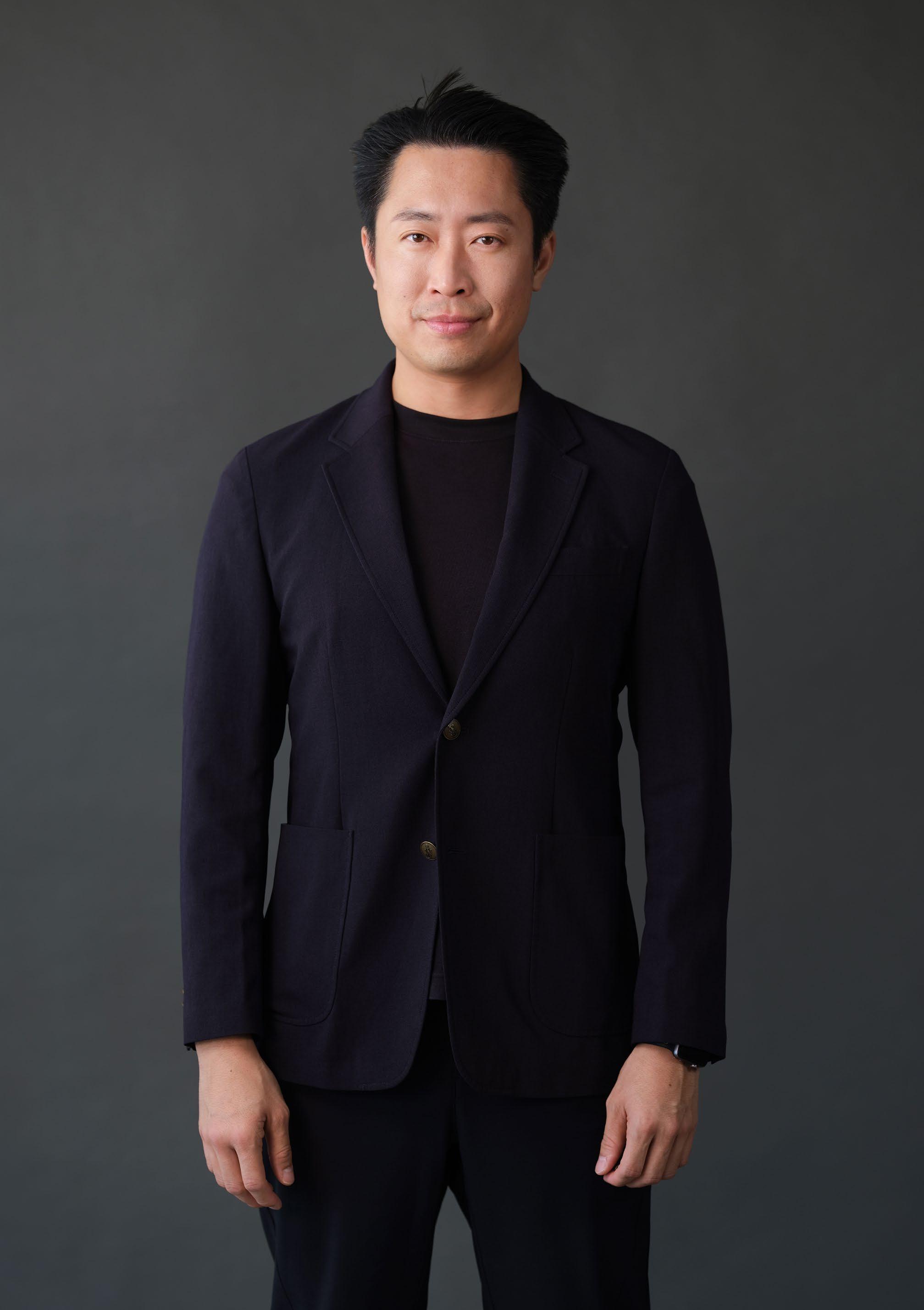
SHAO-WEI HUANG, SHENZHENBASED ASSOCIATE DIRECTOR OF ZAHA HADID ARCHITECTS, IS STEERING THE FIRM’S PROGRESS IN CHINA
In cities still defining how they want to look and feel, experimentation has never been an indulgence. It has been part of the brief
more responsibility, closer to site and closer to design decisions. The shift was practical rather than symbolic. Projects moved faster. Feedback loops tightened. Design intent was carried through in real time.
“At first, the regional offices were primarily established to support ongoing projects on site,” says Huang. “Over time, they evolved into more proactive hubs, capable of leading major commissions from inception to delivery.”
The result was a studio culture shaped as much by delivery pressure as by experimentation, with Asia becoming one of the places where the practice’s ideas were tested most rigorously.
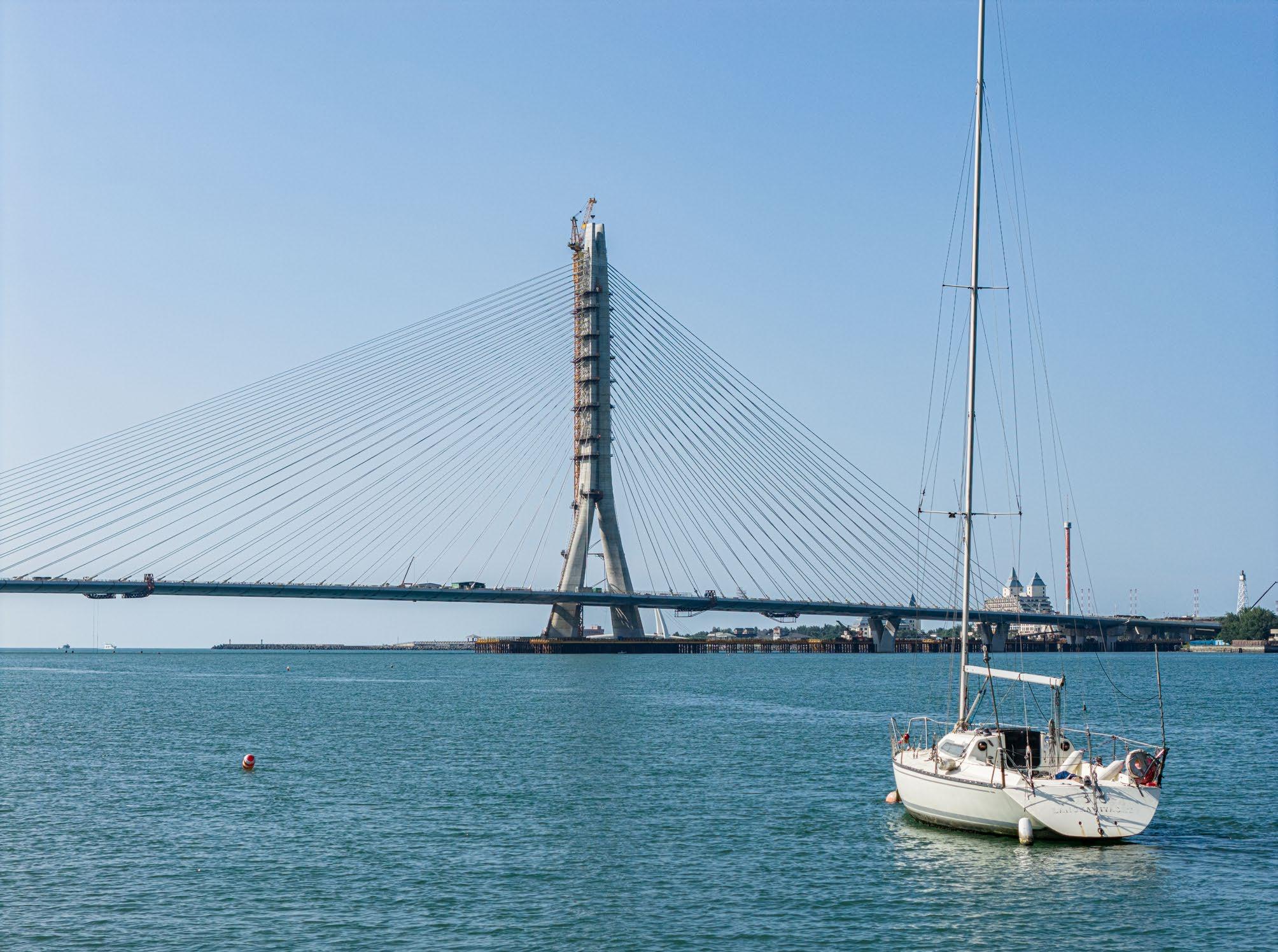
The Danjiang Bridge in New Taipei City demanded alignment across disciplines and borders, bringing together a single-tower asymmetric span with complex wind and seismic requirements. Design decisions were made early and carried through without the usual buffers of distance or delay.
“Teams in Taiwan, the UK, and Germany were working together in real time,” says Huang. “It required a different level of coordination across disciplines.”
If Danjiang tested the system overseas, Galaxy SOHO tested it through proximity. Completed in Beijing in 2012, the mixeduse development brought pressure inward, compressing decision-making into a single room for months at a time, as multiple building components were developed in parallel under the scrutiny of a commercially exposed brief.
“Galaxy SOHO is a strong example of how the practice works under pressure,” says Huang. “A co-located team worked intensively to balance ambition with cost and programme, ensuring the project could be realised.”
From infrastructure in Taiwan to commercial and cultural projects in Hong Kong and Korea, and an expanding pipeline across Southeast Asia, the Asia studios have increasingly operated as testing grounds for how the practice works under real-world pressure. Not because these contexts offer more freedom, but because they demand clarity.
Looking ahead, Huang points to emerging technologies as tools rather than solutions, and to Asia—particularly Southeast Asia— as a region where experimentation remains inseparable from delivery. In markets where projects move quickly into procurement and construction, ideas are exposed early and tested under real conditions rather than refined at a distance.
“Zaha would often say that there should be no end to experimentation,” he adds.
That willingness to discard inherited architectural language is why Hadid found early traction in Asia. Not because precedent was absent, but because it was still being written. The firm’s work met environments willing to accept uncertainty in pursuit of identity. In cities still defining how they want to look and feel, experimentation has never been an indulgence. It has been part of the brief.
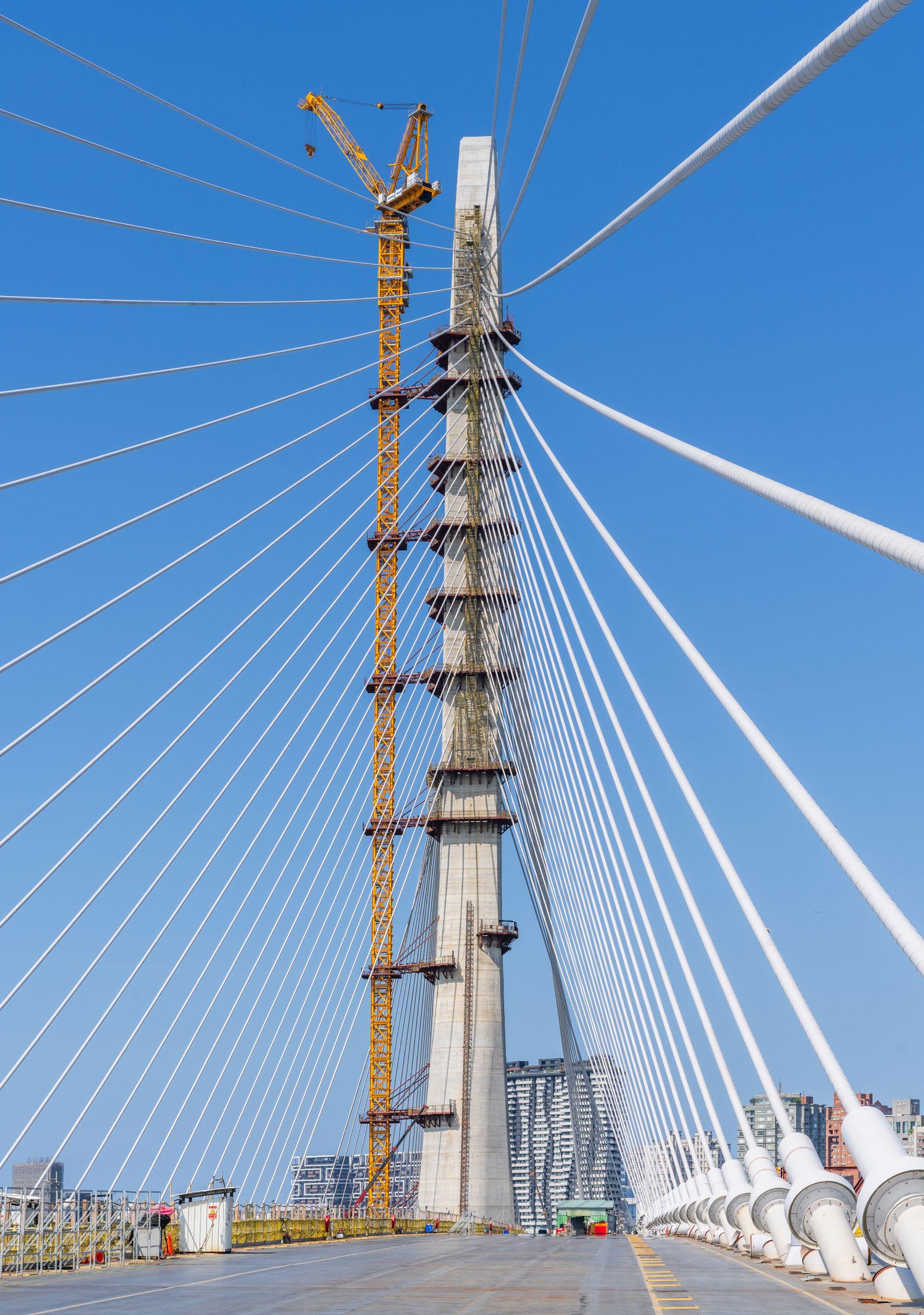
Spanning the mouth of the Tamsui River, the Danjiang Bridge is the world’s longest singletower asymmetric cable-stayed bridge, forming a new east–west connection across New Taipei City’s northern coastline.
Zaha Hadid Architects organised the project around a single 200-metre concrete mast positioned within the river to minimise impact on the estuary. Advanced digital modelling informed the mast’s location, deck height, and cable geometry, balancing navigation clearance, seismic performance, and extreme weather resilience with long river views.
“For us, Danjiang established a new model for delivering nationally significant infrastructure,” says Huang. “It showed how computational design and digital collaboration could operate at full scale.”
The bridge integrates pedestrian and cycle lanes and allows for the future extension of the Danhai Light Rail, embedding long-term flexibility into infrastructure expected to perform under sustained operational pressure.
Danjiang Bridge, New Taipei City
Yidan Centre, Shenzhen, China
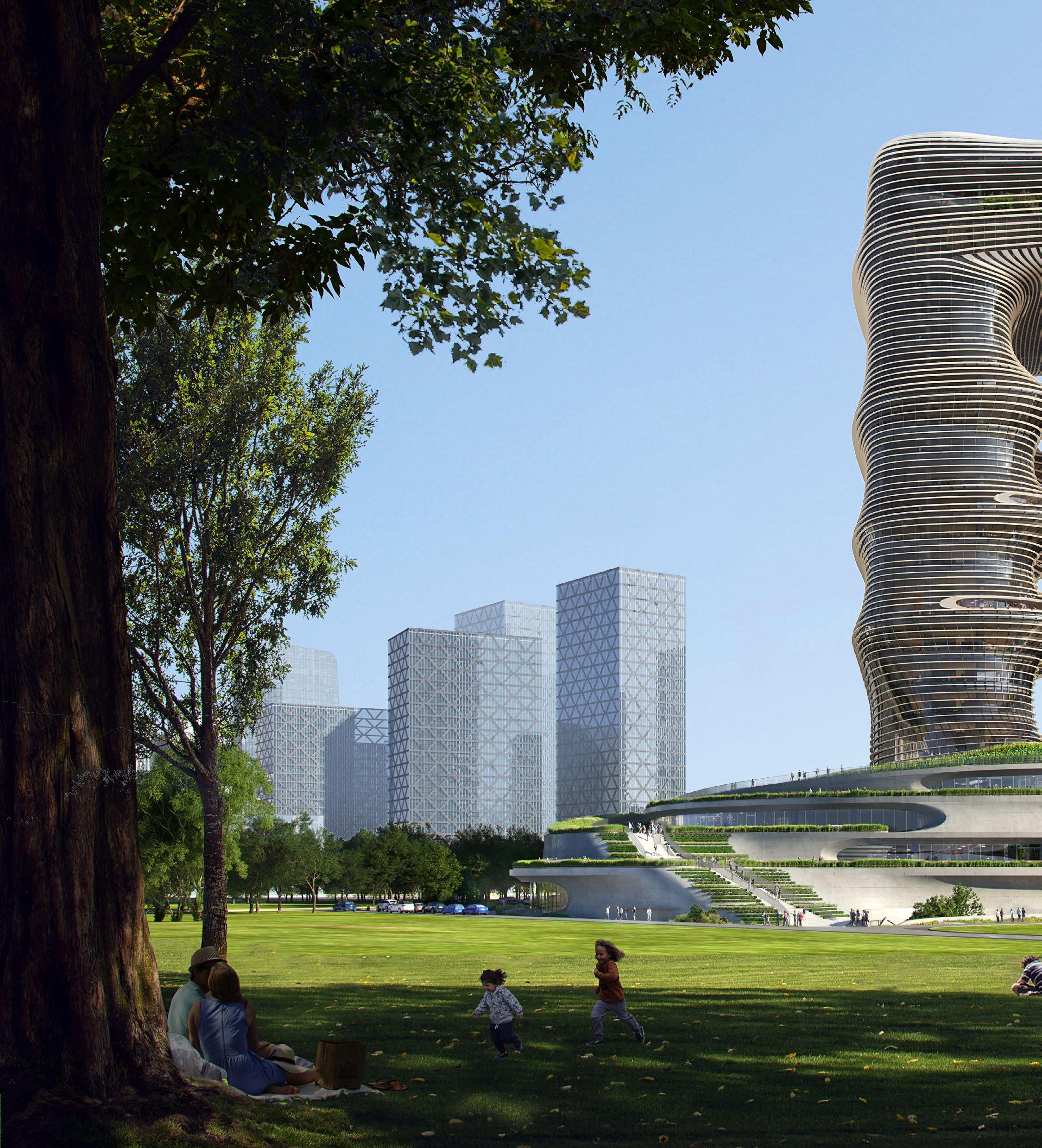
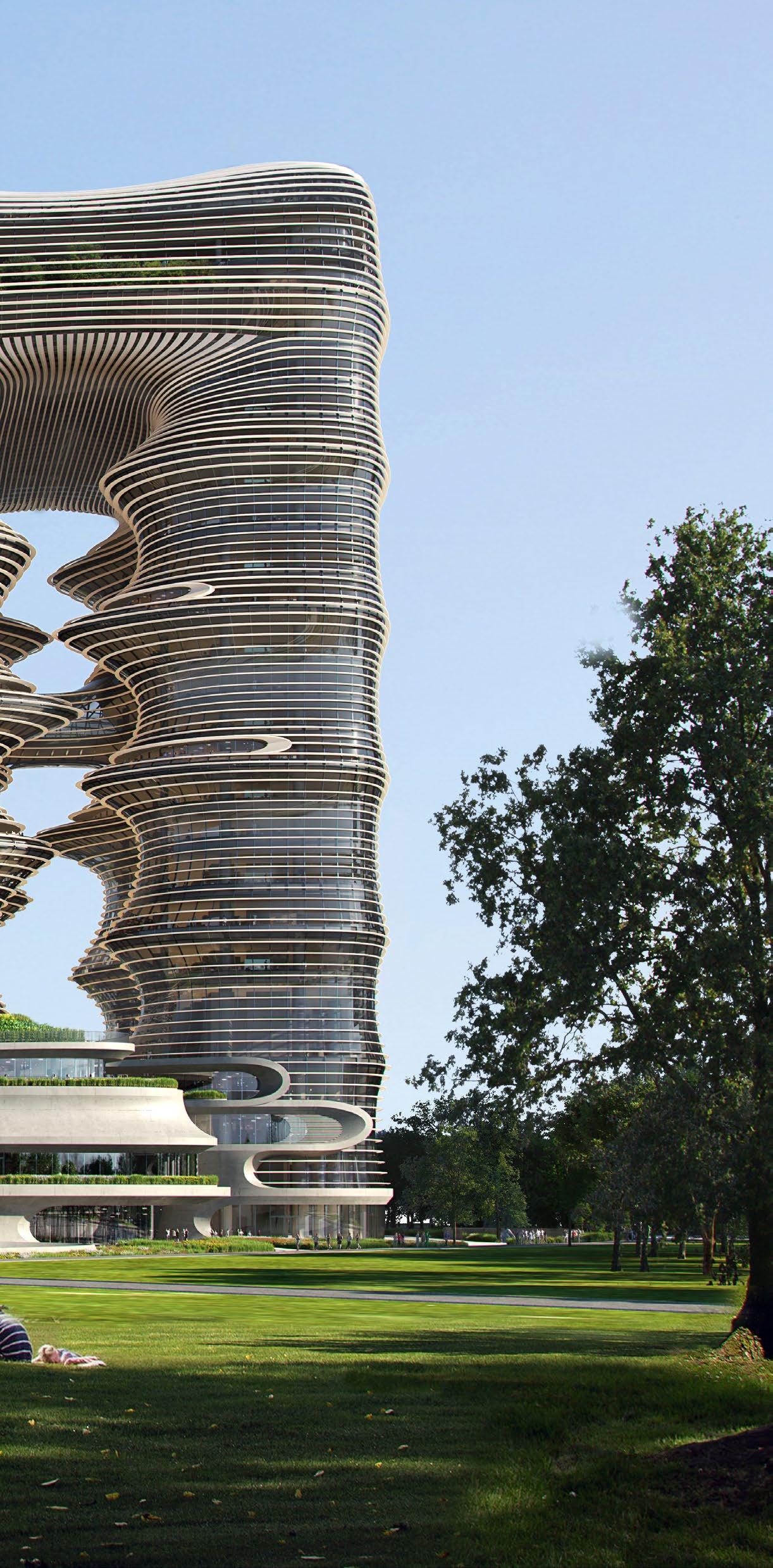
The Yidan Centre sits on the edge of Shenzhen’s Qianhai district, where cultural, commercial and civic programmes are being condensed into a tight urban grid.
Zaha Hadid Architects organised the building around a tall, open-air canyon running through its centre. Terraces, bridges, and balconies step back from this void, drawing daylight deep into the plan and keeping movement visible across levels.
At ground level, a circular oculus brings light into public spaces below, while external louvres temper heat and glare without blocking views toward the bay. Environmental systems are integrated throughout, combining hybrid ventilation, photovoltaics, and rainwater collection to respond to Shenzhen’s climate.
“For Yidan Centre, the focus was on shared space,” explains Huang. “The canyon allows very different programmes to stay connected, spatially and socially.”
Shenzhen Science & Technology Museum, China
Set within Shenzhen’s Guangming District, the Shenzhen Science & Technology Museum is conceived as a continuous public surface.
The building lifts from the ground and folds back into the site, creating shaded outdoor areas, civic plazas, and clearly legible points of entry that draw movement through the project.
Galleries are arranged along a looping circulation route, allowing visitors to navigate exhibitions without a fixed sequence. This open framework supports changing curatorial demands while keeping orientation intuitive. Daylight is filtered through the building envelope to balance energy performance with the controlled conditions required for exhibition spaces.
“The project was about making complexity legible,” says Huang. “The architecture needed to guide movement and understanding.”
Designed to accommodate large crowds and evolve, the museum operates as both civic infrastructure and cultural venue, shaped by clarity, flow, and long-term use rather than one-off spectacle.
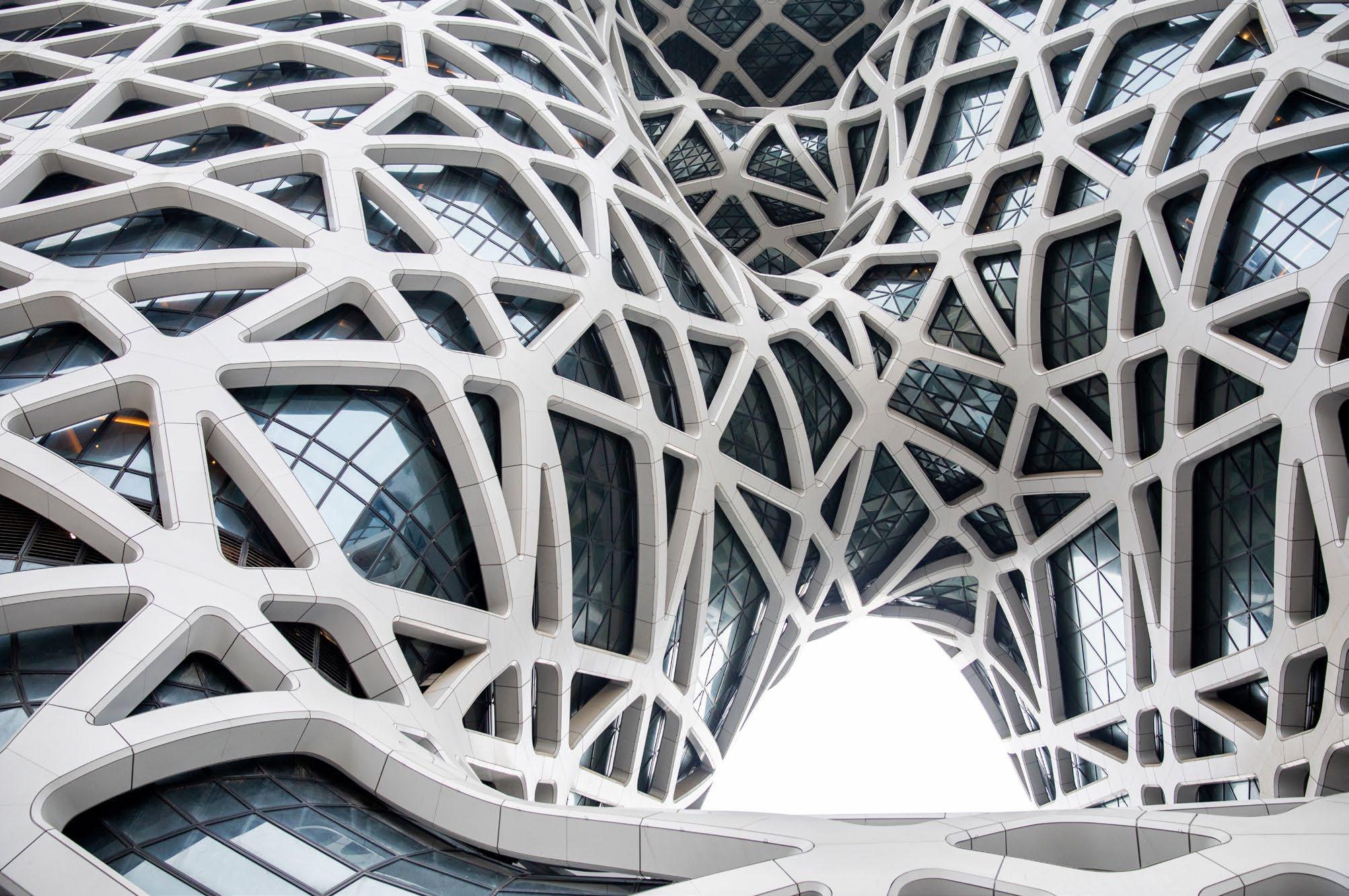
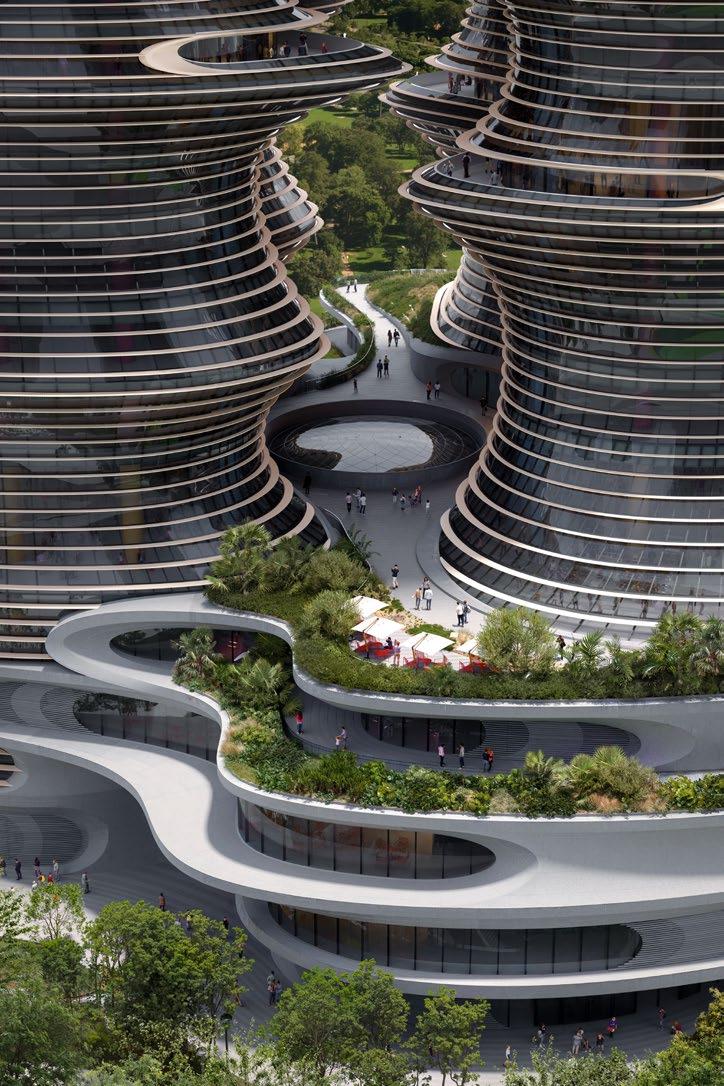
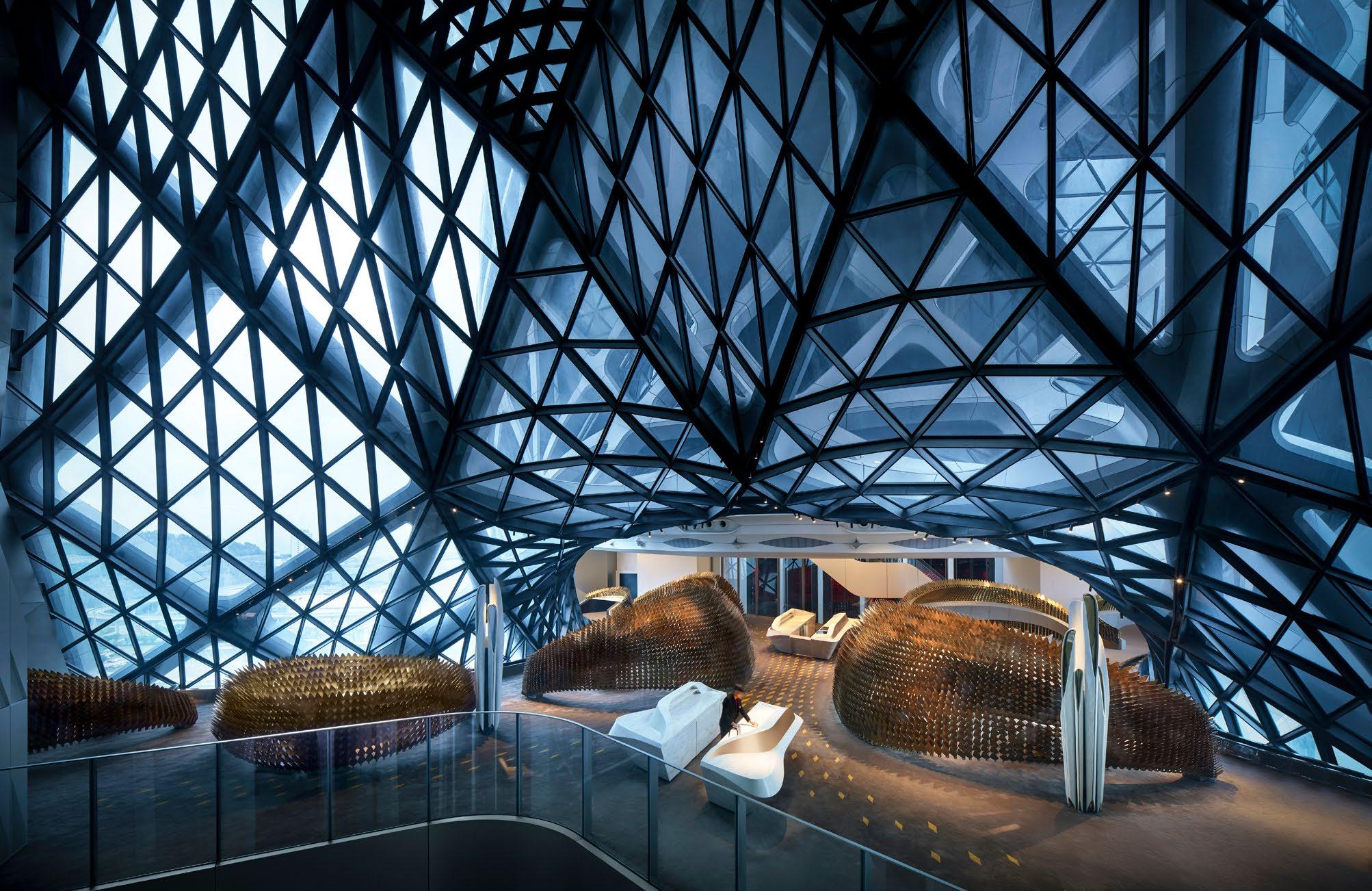
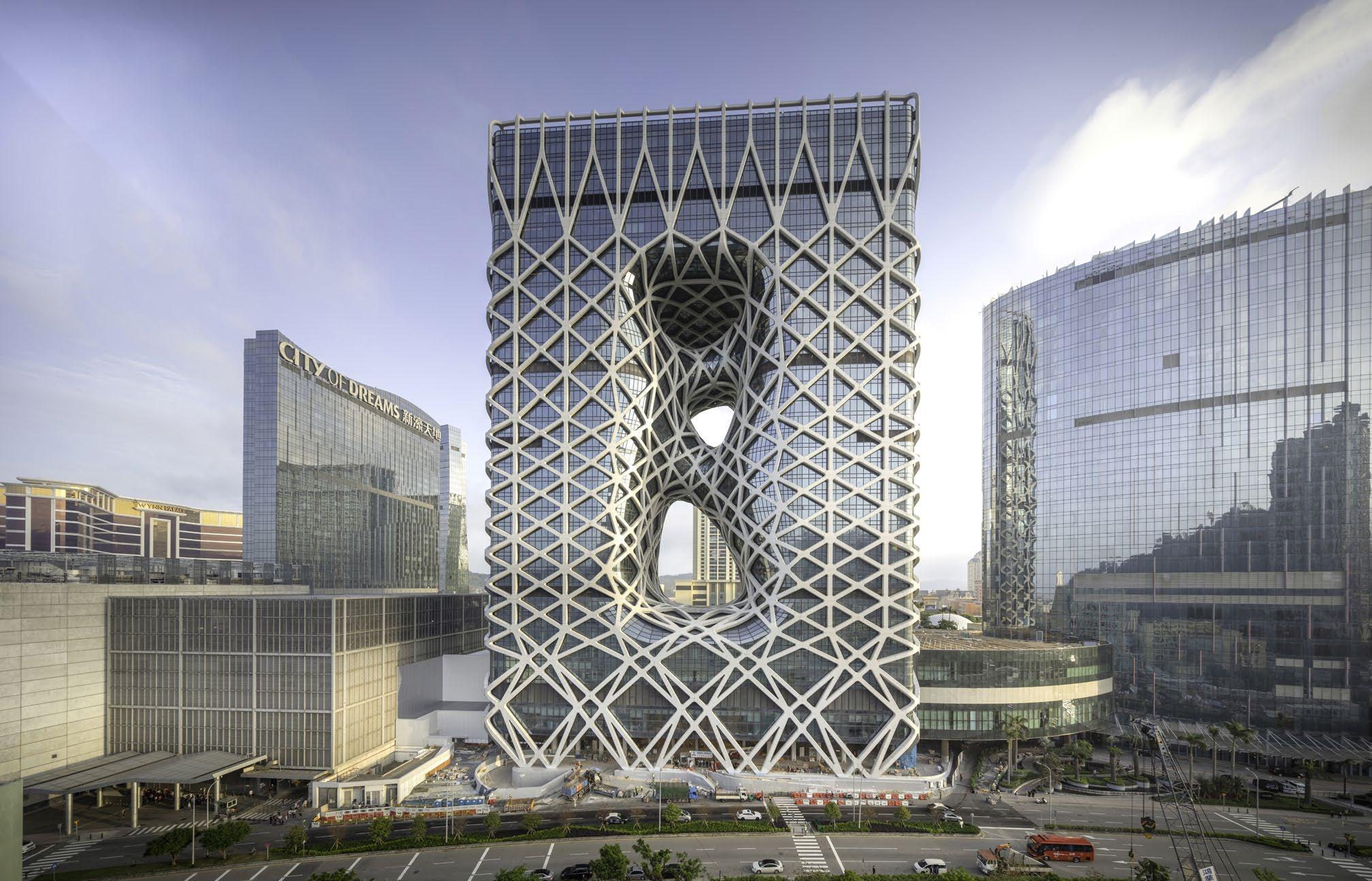
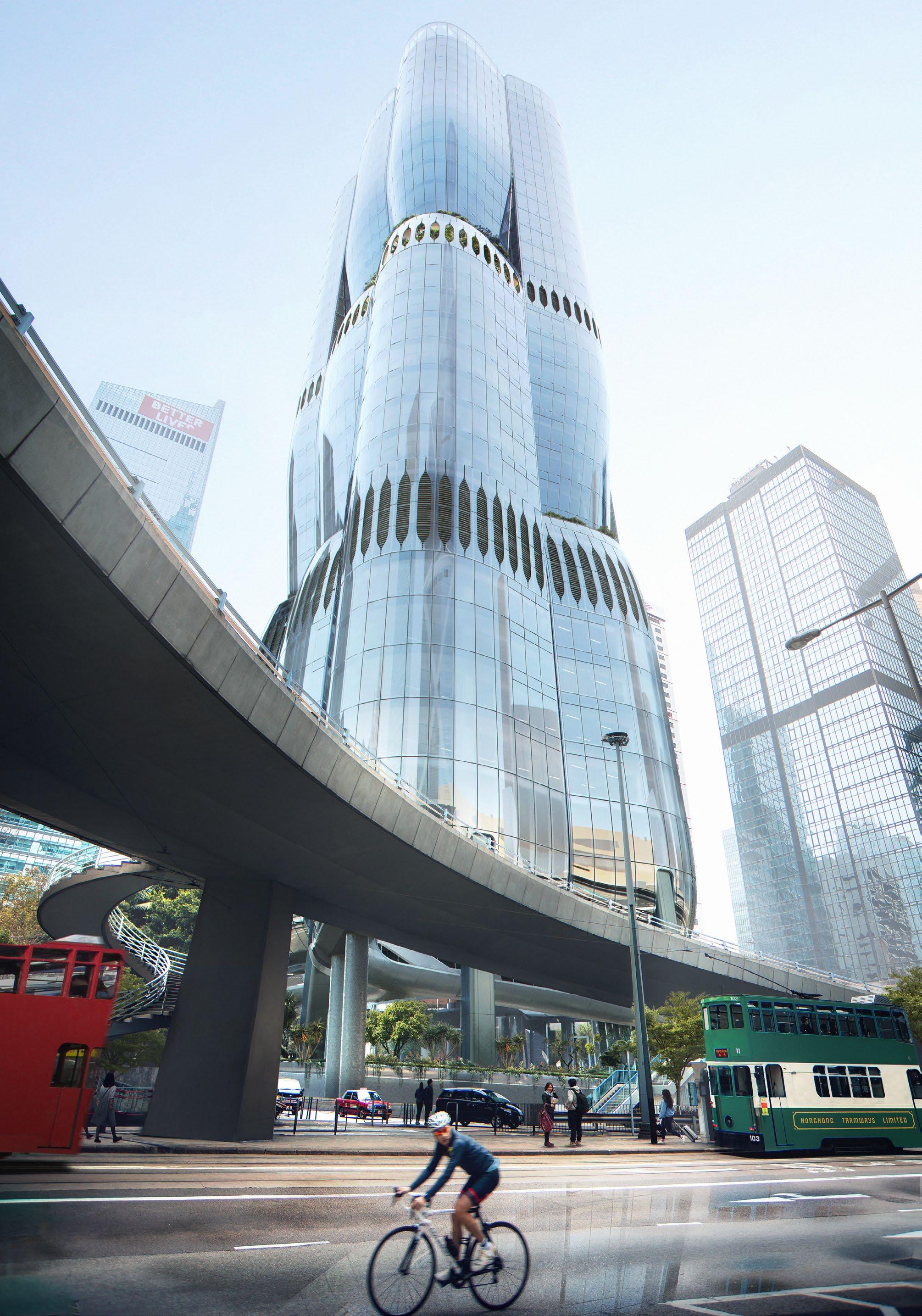
Completed in 2018 at City of Dreams Macau, Morpheus is organised around a bold structural move. Two vertical towers rise from a shared podium, split by a full-height atrium and stitched back together by bridges cutting through the building’s centre.
Large voids are carved from the mass, pulling daylight deep into the interior and framing views across the city. Restaurants, lounges, and shared amenities occupy the bridges, turning movement through the building into a spatial event rather than a corridor exercise.
“The project does not refer to traditional architectural typologies,” says Huang. “It evolved directly from the site conditions and programme.”
The freeform exoskeleton carries the structural load externally, freeing the interiors from columns and allowing the hotel’s complex programme to operate with clarity inside one of Macau’s most intensive hospitality settings.
Morpheus Hotel, Macau, China
International Gateway Centre, Hong Kong, China
Set at the edge of Hong Kong International Airport, the International Gateway Centre operates at the meeting point of transit and city. Designed as part transport interchange, part commercial hub, the building is shaped around movement rather than frontage.
A sweeping podium rises from the ground plane to absorb arrivals, departures, and transfers, folding circulation routes into the architecture itself. Above, office volumes are stacked and subtly rotated, opening views toward the airfield and surrounding hills while keeping workspaces insulated from the intensity below. Routes are guided by form and section, with curves and level changes doing the work of wayfinding.
Environmental performance is built into the massing. Façades respond to orientation, terraces introduce daylight and planting, and the stepped profile reduces heat load across the building.
“It had to stay clear under constant pressure,” notes the project team. “The challenge was handling scale and speed without losing legibility.”
The
Henderson, Hong Kong, China
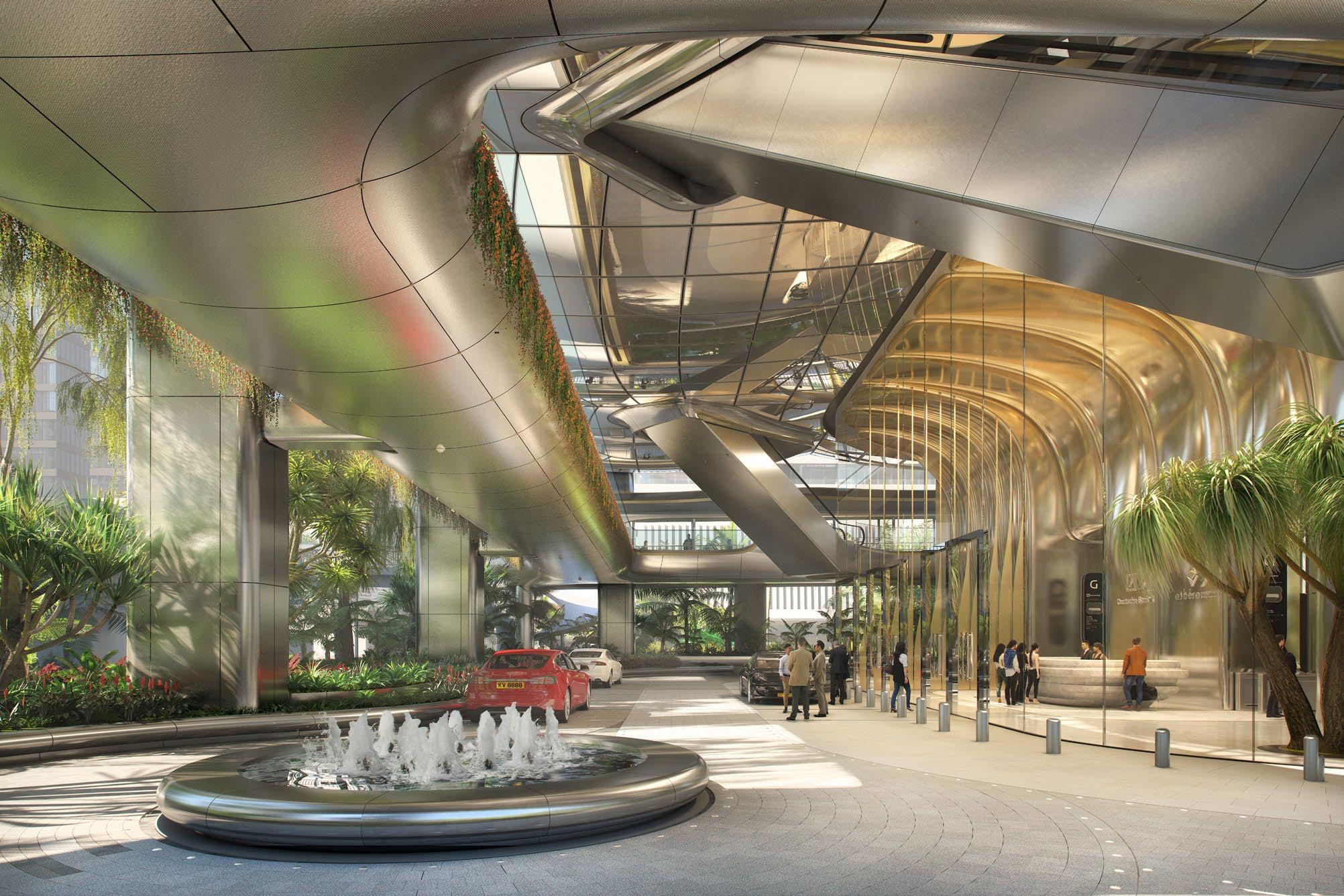
Rising at the edge of Hong Kong’s Central district, The Henderson replaces a former car park with a 36-storey office tower shaped as much by ground-level movement as by skyline presence. Set beside Chater Garden and directly connected to the elevated pedestrian network, the building prioritises access, circulation, and public space as core design drivers.
A curved glass façade wraps around a high-tensile steel structure, allowing broad, columnfree floorplates and generous ceiling heights. The service core is pulled to one side, opening offices toward the park and harbour beyond. At street level, the base lifts and folds to create shaded plazas and planted courts, drawing landscape into one of the city’s most compressed commercial zones.
“The challenge was to make a workplace that feels open and connected, despite the density,” notes Huang. “That required the structure, façade, and public spaces to be designed as a single system.”
Movement through the building is organised around light and greenery rather than corridors. Double-height lobbies link the street to the skywalk network, while terraces and a rooftop garden introduce outdoor space into the working day. Smart systems quietly manage ventilation, lighting, and access, supporting flexibility without complicating use.
Colombo states its case
BY JONATHAN EVANS
A city of contrasts and character, Sri Lanka’s capital blends history, culture, and forward momentum, with growing appeal for visitors and property buyers alike
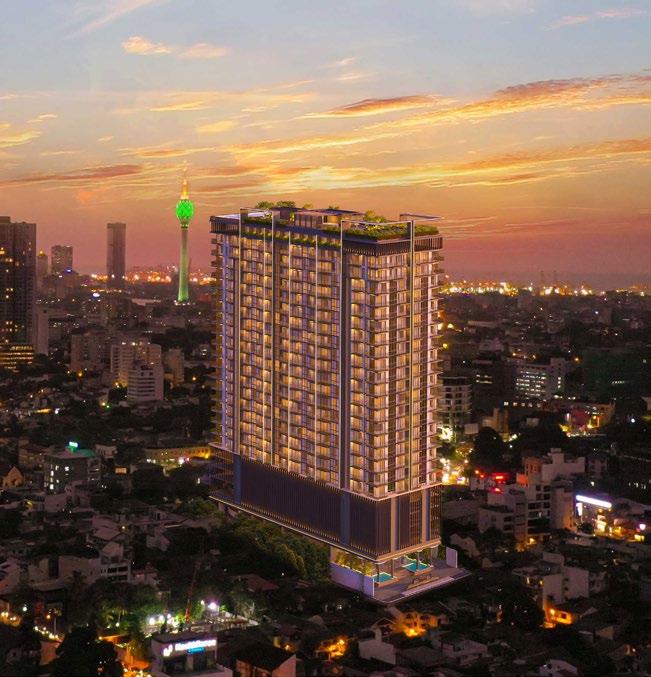
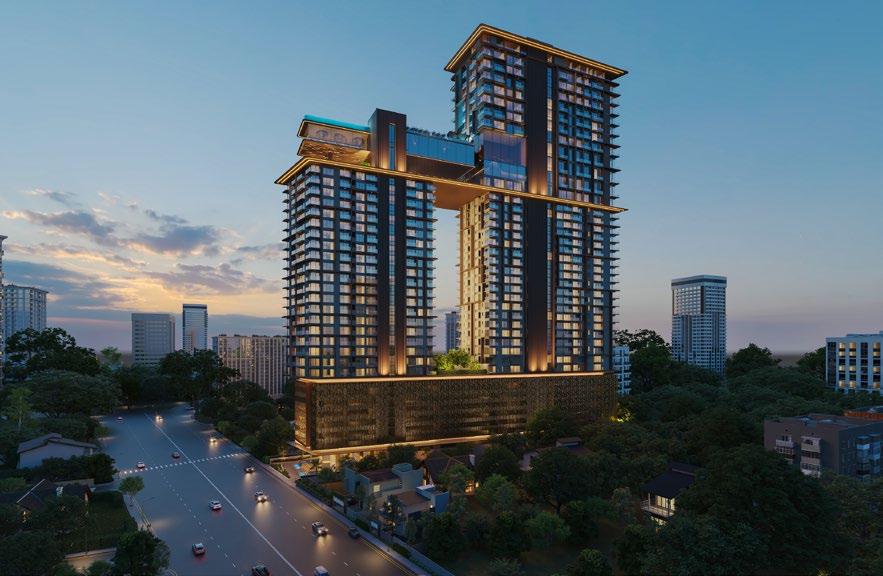
Pentara Residencies –Thummalla Handiya
An upcoming showpiece from Home Lands Skyline, a multiple winner at the 2025 PropertyGuru Asia Property Awards, Pentara Residencies is pitched firmly at Colombo’s next generation of urban living. The fully smart-enabled, 41-storey estate comprises 362 units across two towers linked by a sky bridge and is scheduled for completion in December 2028. Designed by PWA Architects, the development blends biophilic principles with amenities that prioritise liveability. A floating five-star restaurant, cantilevered sky pool, padel court, gym, and yoga decks are complemented by vertical greenery, shaded walkways, and landscaped terraces. Sky gardens and reflective water features soften the scale, while “Sky Mansions” introduce private gardens and plunge pools at the upper end of the market. Co-working spaces and meeting rooms reflect changing work patterns and broaden the project’s appeal beyond traditional owner-occupiers.
Waterdale Residencies
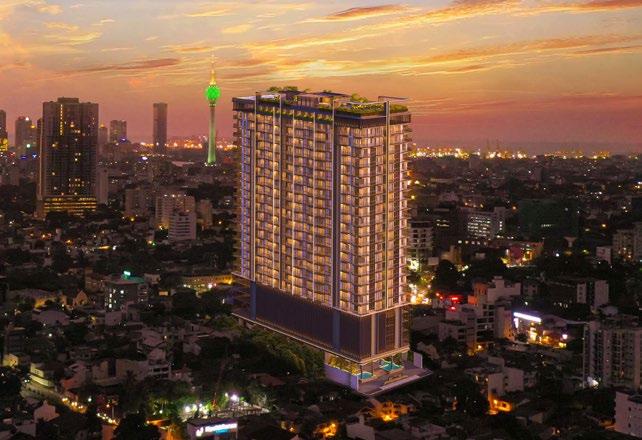
Also developed by Home Lands Skyline and designed by PWA Architects, Waterdale Residencies is another luxury condominium project already making waves, despite completion not being due until 2030. The 27-storey development comprises 202 units and won Best Luxury Condo Development at the 2024 PropertyGuru Asia Property Awards. Amenities are distributed across two levels and include infinity and lap pools, private dining spaces, a sports lounge, rooftop garden, co-working areas, and generous landscaped outdoor zones with water features. A kids’ club and strong wellness focus add to its appeal for long-stay residents, while interiors by Urbanspace Interiors favour clean lines and a restrained palette that feels contemporary without being trend-led.
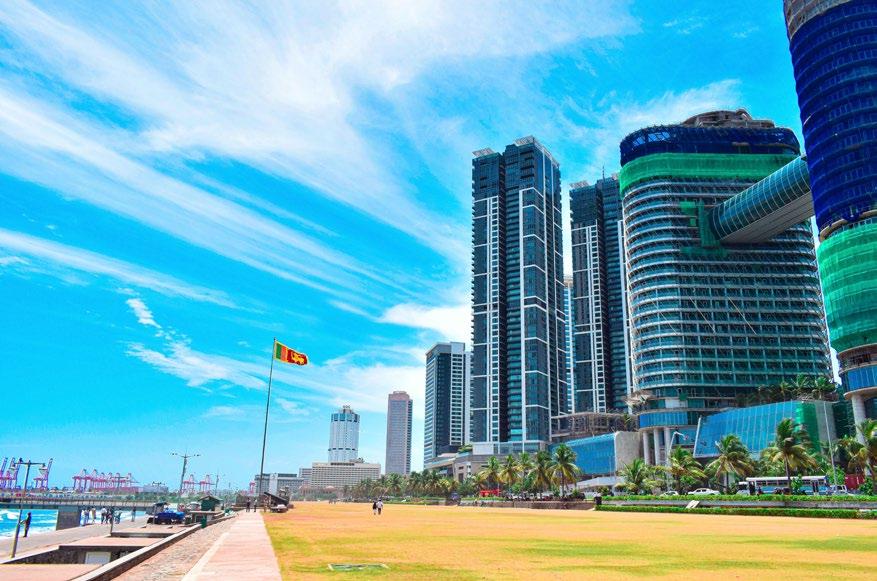
Stretching for five hectares between Galle Road and the Indian Ocean, Galle Face Green is Colombo’s most recognisable public space and a daily stage for joggers, families, food vendors, and sunsetwatchers. Long prized for its location and views, the promenade remains one of the city’s most valuable open spaces. Once a Dutch military site and later a colonial-era leisure ground for horse racing and golf, it has evolved alongside the city itself. Today, its proximity to major hotels, commercial towers, and coastal developments continues to underpin its relevance, reinforcing the enduring pull of Colombo’s ocean-facing districts.
Galle Face Green
A vibrant jumble of high-rises, colonial buildings, temples, and markets, Colombo has been Sri Lanka’s capital since independence in 1948, closing the chapter on centuries of Portuguese, Dutch, and British rule. That layered history still lingers in the city’s architecture, food, clothing, and language, but Colombo is no museum piece.
Canals cut through commercial districts, mosques sit beside temples and churches, and contemporary towers rise alongside colonial-era landmarks. Performing arts centres, leafy parks, and an increasingly international dining scene add to the city’s texture. For property seekers, this patchwork of East and West, ancient and modern, offers not just visual intrigue but growing choice, from landmark developments in Port City and the commercial core to new residential projects reshaping long-established neighbourhoods.
4
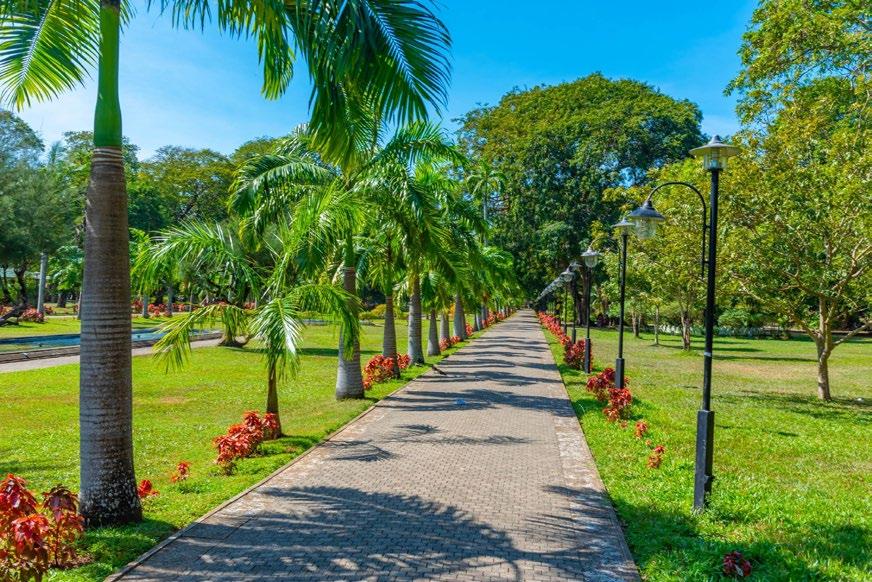
Viharamahadevi Park
In the heart of Cinnamon Gardens, Viharamahadevi Park offers a greener, more contemplative side of Colombo. The 50acre park, once known as Victoria Park, is framed by flowering trees, paved walkways, and civic landmarks, and sits opposite the Town Hall and beside the National Museum. Once a cricket ground and later a World War II military site, it has since become a daily refuge for walkers, families, and office workers. The surrounding neighbourhood, long favoured for its embassies, schools, and mature residential stock, remains one of the city’s most consistently desirable addresses.
5
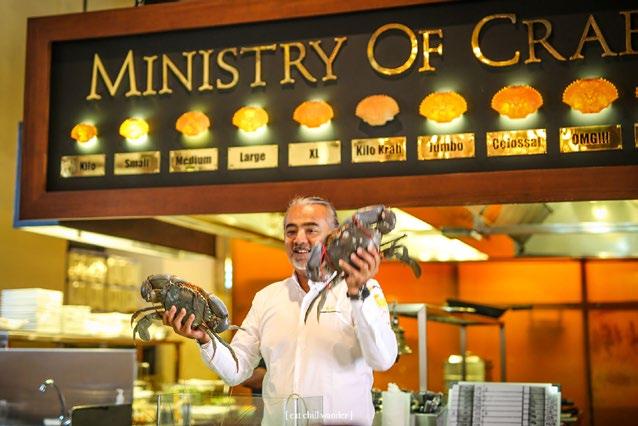
Housed in the restored Dutch Hospital complex, Ministry of Crab has become one of Colombo’s best-known exports. Founded in 2011 by chef Dharshan Munidasa alongside cricketing icons Mahela Jayawardena and Kumar Sangakkara, the restaurant helped usher in a new era for the city’s dining scene. Its sustainably sourced lagoon crab, prepared in signature chilli, pepper, garlic, or curry styles, has drawn international attention, placing Colombo firmly on the global culinary map. The success of venues like this has reinforced the appeal of heritage districts repurposed for modern lifestyles.
6
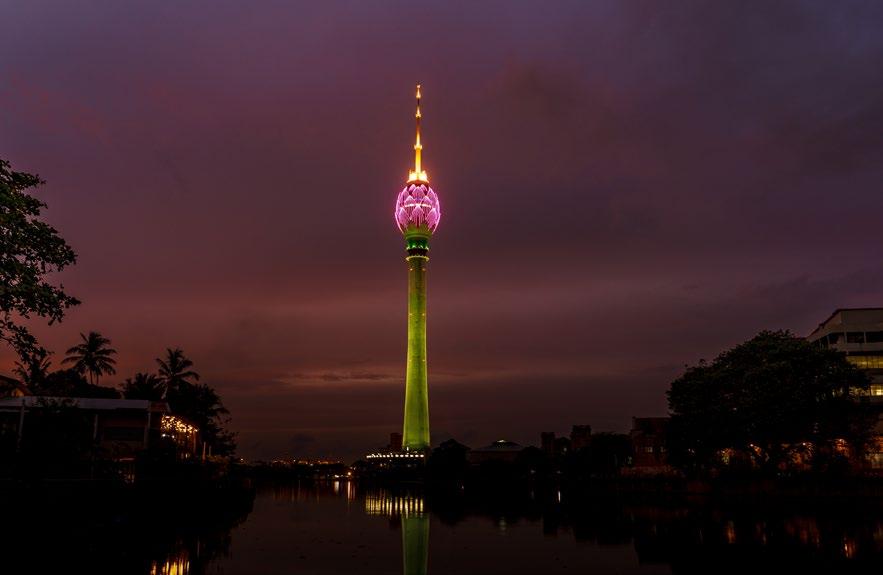
Rising 356 metres above Beira Lake, the Lotus Tower is Colombo’s most visible symbol of change. Completed in 2022 and inspired by the lotus flower, it combines observation decks, dining venues, event spaces, and broadcast facilities within a single landmark structure. By day, it offers panoramic views across the city and coastline; by night, it glows with shifting light displays. Beyond its visual impact, the tower signals confidence in Colombo’s future, anchoring a skyline that continues to evolve as the city balances identity with ambition.
Ministry of Crab
Lotus Tower
LIVING FOR THE CITY
Resort residences, once planned largely around peak seasons and short stays, are increasingly focused on year-round use in urban destinations
BY LIAM ARAN BARNES
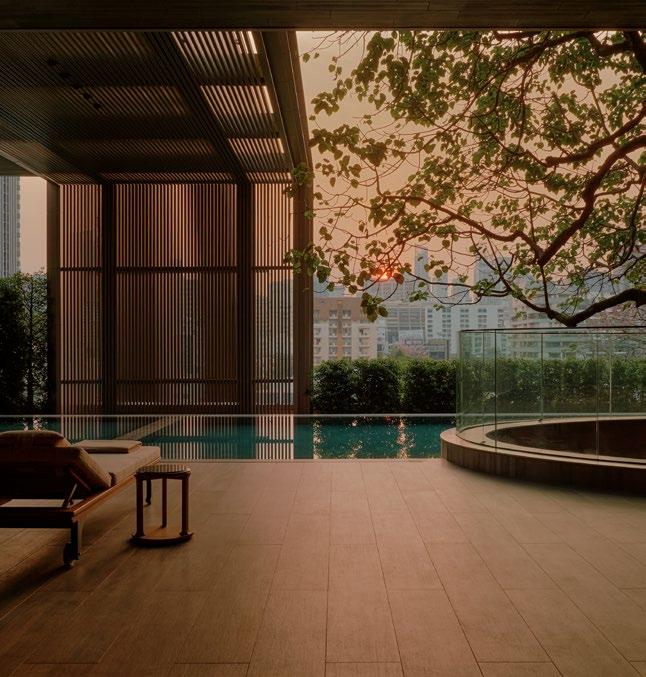
When Aman Nai Lert Bangkok opened within the century-old grounds of Nai Lert Park last April, it marked a subtle but telling shift. There is no beachfront. No mountain panorama. No familiar sense of escape. Instead, one of the world’s most resolutely resort-oriented brands transplanted a philosophy shaped by remoteness and retreat into a relentless urban environment.
The project is only the second time Aman has attempted this translation with branded residences, following Aman New York. That scarcity is deliberate. For brands built on seclusion, pace, and distance, cities remove many of the buffers those ideas rely on. Density sharpens decisions. Privacy must be designed rather than assumed. Service, planning, and management become lived conditions rather than abstract promises.
That reality helps explain why so few resortfirst brands have ventured into dense urban residential settings. Long-term occupation places sustained demands on design, operations, and governance, narrowing the field to selective projects, tightly managed and limited in number.
At the same time, established leisure
destinations are being reshaped by longer patterns of occupation. Once planned largely around peak seasons and short stays, they are increasingly expected to support year-round use. Residences must accommodate extended stays, everyday routines, and repeat living, rather than serving as occasional boltholes.
“The traditional distinctions between urban and resort residential markets are becoming less relevant,” says Bill Barnett, founder of the consultancy C9 Hotelworks. “Buyers increasingly prioritise lifestyle, services, and long-term liveability over location alone.”
That reprioritisation is visible in development pipelines. Urban locations now account for 53% of Asia’s active branded residences supply, with resort destinations close behind at 47%, according to C9 Hotelworks’ Branded Residences Market Review 2025. The balance between city and leisure has tightened as buyer expectations have aligned.
Research from the Global Wellness Institute reinforces the shift, linking residential environments designed around daily wellbeing—including access to green space, movement, and social infrastructure—with stronger long-term demand and value
Buyers increasingly prioritise lifestyle, services, and longterm liveability over location alone
retention. These considerations increasingly influence how space is organised, shared, and managed over time.
As a result, execution carries greater weight. Shared facilities are planned for regular use rather than occasional spectacle. Management structures are scrutinised closely, particularly in developments that combine residential and hospitality functions, where clarity around responsibility, maintenance, and service shapes the day-to-day experience.
“Branding has become a proxy for trust and long-term value,” Barnett adds, especially in markets where operational track record weighs as heavily as location.
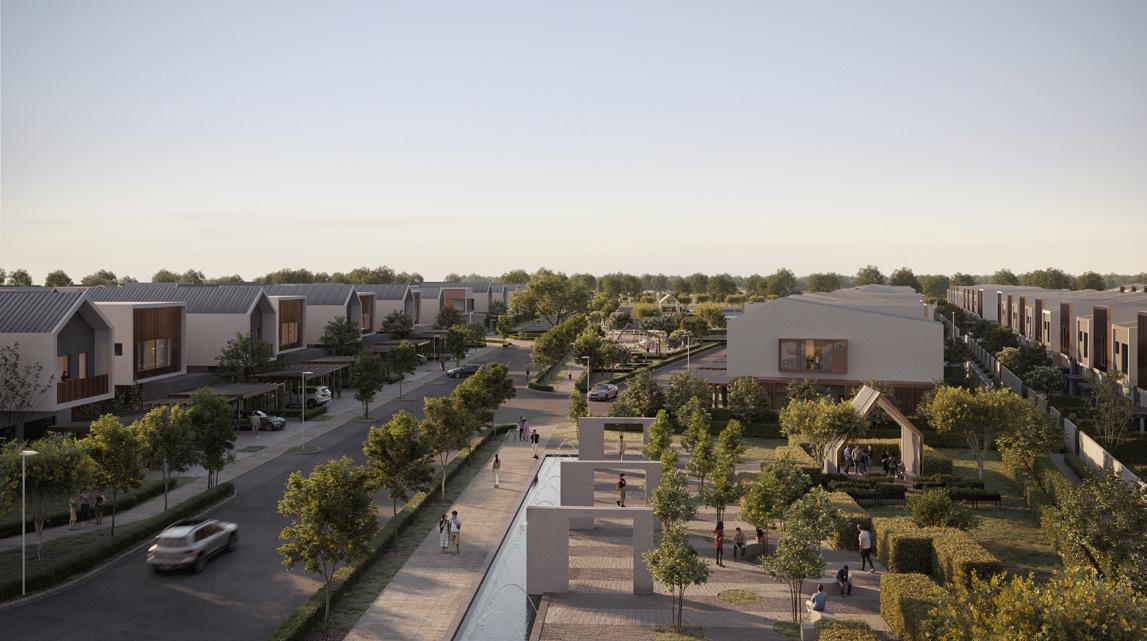
A further evolution is how resort-style residences are being positioned within broader, mixed-use environments. Rather than standalone enclaves, more projects are being planned as part of larger master-planned communities, where residential offerings sit alongside workplaces, retail, culture, and public space.
According to Knight Frank’s Global Branded Residence Survey 2025, the next five years are expected to see growth in these
integrated formats, with multiple branded residential products operating within a single, coordinated estate. The shift reflects demand for environments that support everyday life as well as leisure, particularly among buyers seeking flexibility, long-term use, and repeat occupation.
“Luxury residential developments are moving beyond location and prestige,” says Dominic Heaton-Watson, associate director for International Residential at Knight Frank. “They are increasingly defined by how design, services, and placemaking work together to support daily living.”
Projects such as Aman Nai Lert Bangkok matter not because they sit in cities, but because they reveal how resort-derived ideas perform once they are lived in. Their relevance lies in application rather than novelty.
The projects that follow show how this convergence is unfolding across Asia. Spanning cities, leisure destinations, and integrated masterplans, they reflect a market focused less on labels and more on performance, on how these places hold up once they stop being destinations and start being homes.
Botanic Villa at NavaPark Greater Jakarta, Indonesia
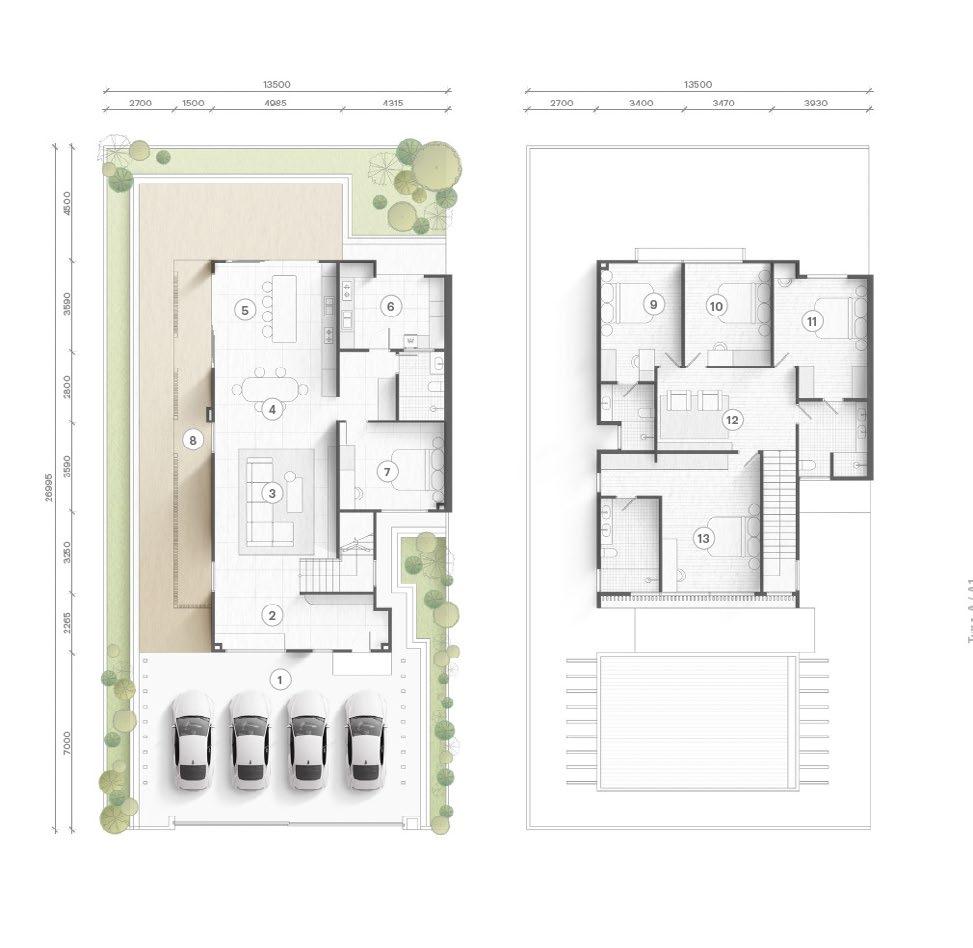
Botanic Villa at NavaPark is small by design. There are just 14 villas, set within the wider NavaPark precinct in BSD City, and each one opens straight onto Botanic Park. Here, green space is part of daily life, visible from living rooms, terraces, and courtyards.
The architecture is built for heat and routine. Deep overhangs and operable screens soften glare and temperature, while layered façades protect privacy without sealing the houses shut. Inside, the plans stay straightforward: open living zones, internal courtyards, and daylight pulled deep into the home where it actually matters.
Although the villas feel calm and selfcontained, they sit within a well-established neighbourhood. Residents have access to NavaPark’s country club, sports and wellness facilities, and pedestrian network, with underground links connecting to retail and offices nearby.
European Island, Eco Central Park Nghe An, Vietnam
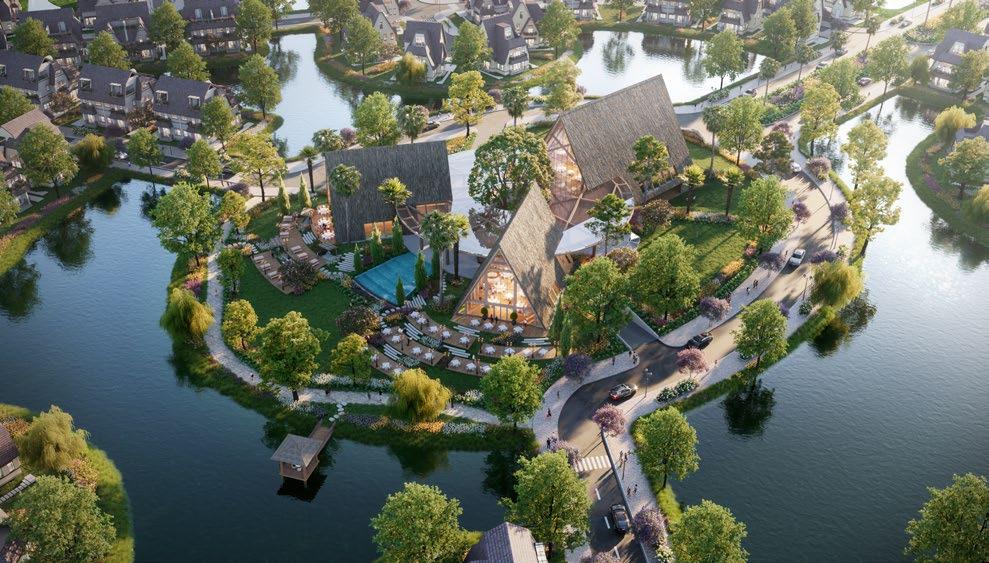
European Island sits within the 33-hectare Eco Central Park masterplan in Nghe An Province, laid out as four landscaped islands wrapped by canals. Nearly 90% of its 243 villas front the water, and the planning keeps density low enough for the neighbourhood to feel open and slow-moving.
Homes draw on familiar European residential forms, softened by planting and water that runs through the site. Plots are generous, ceilings are high, and living spaces face gardens and canals, encouraging everyday use of outdoor space.
Community clusters around the Wellness Clubhouse at the centre of the enclave. Spanning 7,500 square metres, it brings together fitness spaces, spa facilities, and a wellness-led restaurant.
Eve Residences Gold Coast, Australia
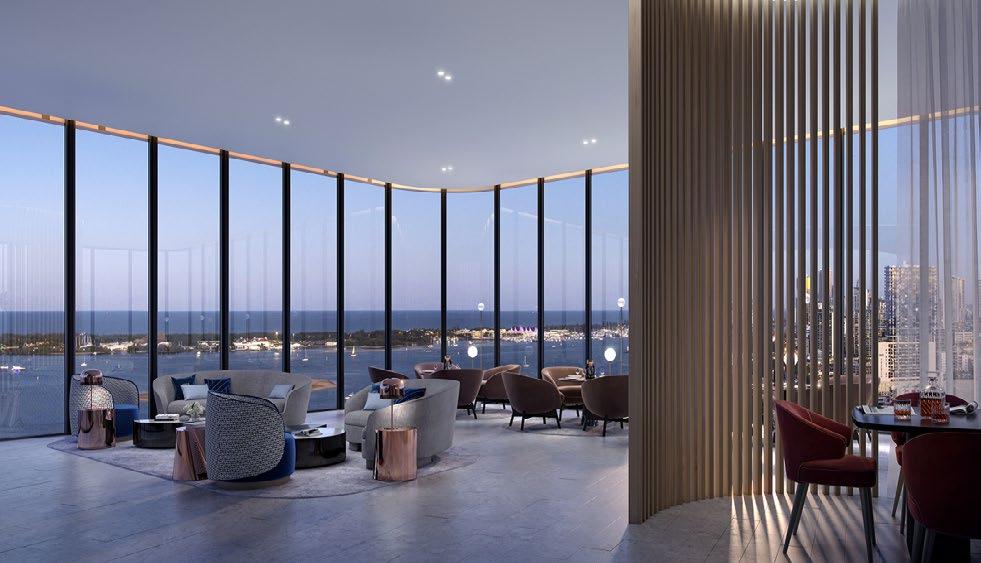
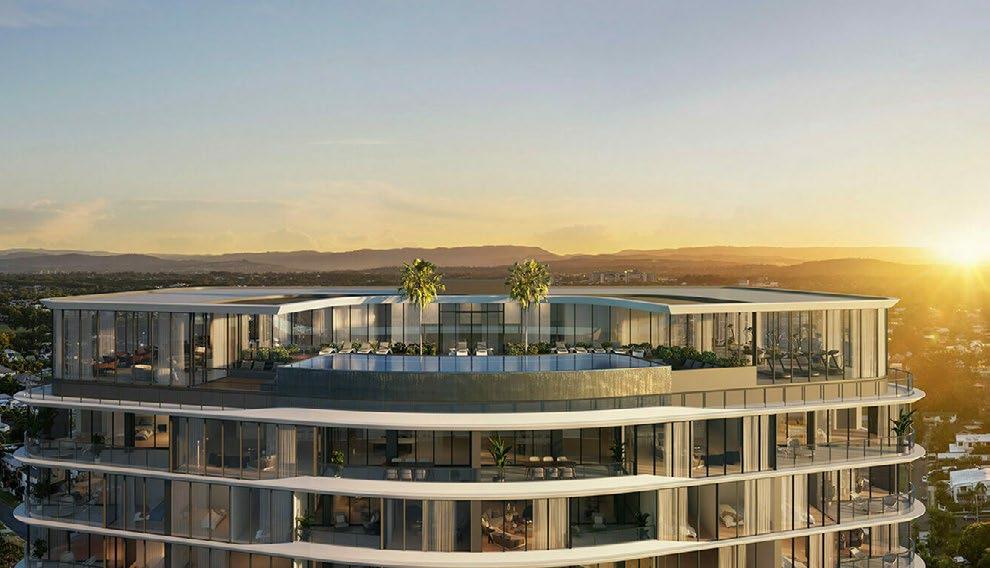
Eve Residences sits along a quieter stretch of the Broadwater at Labrador, on the Gold Coast, where the waterfront still feels residential. The 25-storey building holds 157 apartments, most with open views across the water, shaped by a gently curved form that follows the shoreline.
Apartments are planned for continuous occupation, with wraparound balconies extending usable space, glazing sized for daylight without glare, and interiors finished in materials that hold up under daily use.
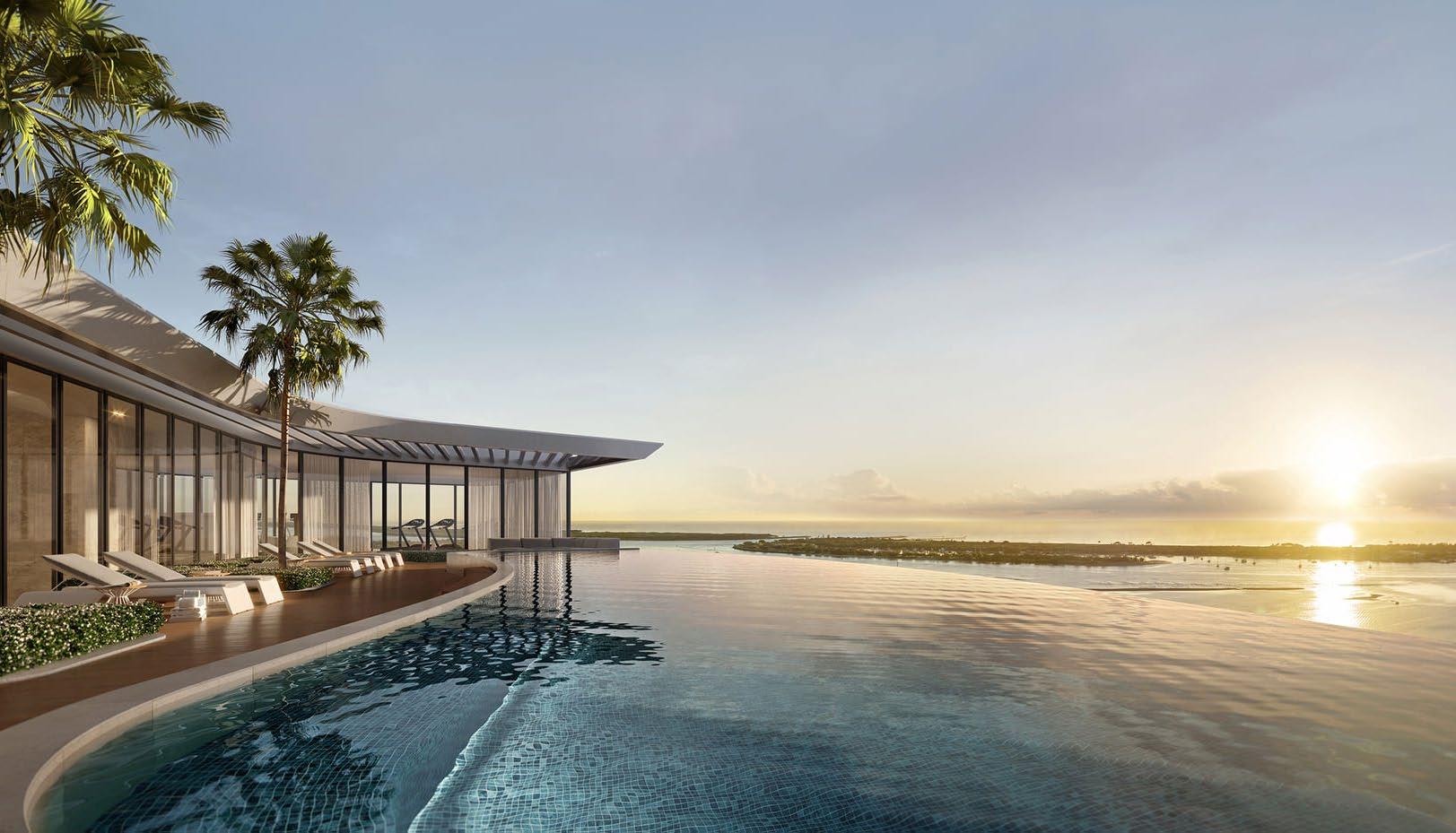
Shared facilities are spread through the building rather than stacked into a single deck. There’s a rooftop pool, gym and sauna, plus a lap pool, spa and yoga lawn at ground level, all tied into outdoor dining spaces. A Japanese restaurant adds a bit of street-level buzz, while onsite management supports owner-occupiers and longer-term residents.
Nathee Thawee Koh Samui, Thailand
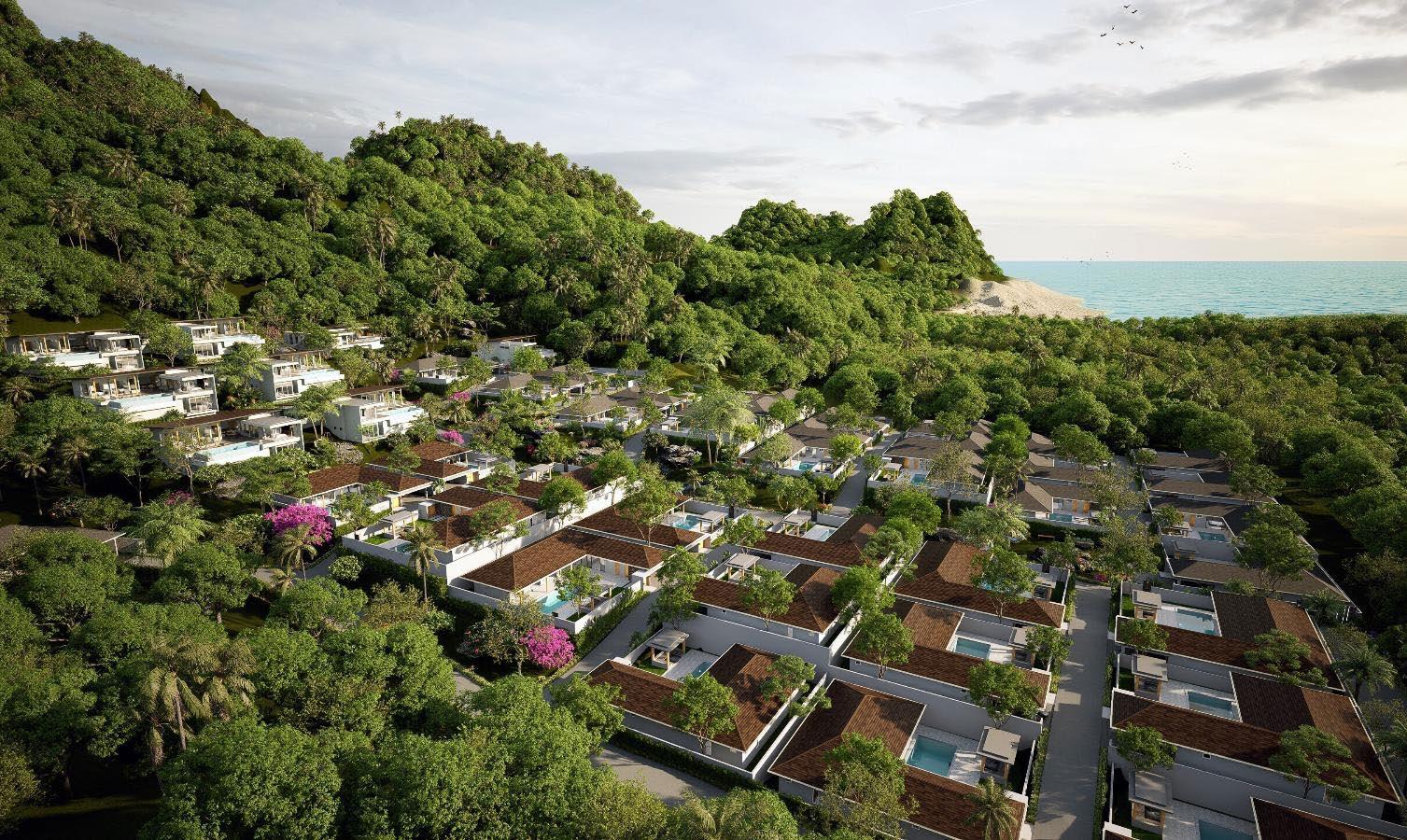
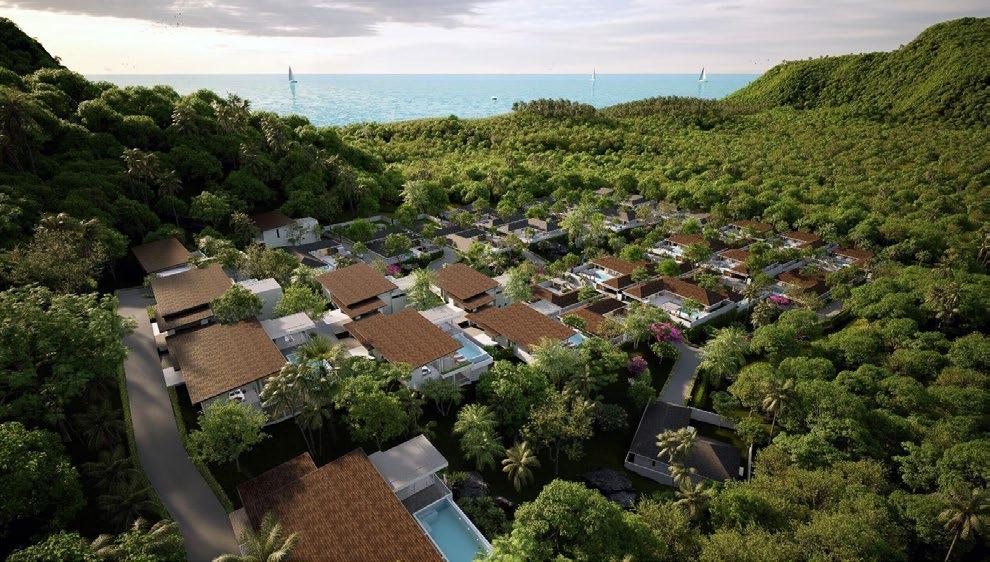
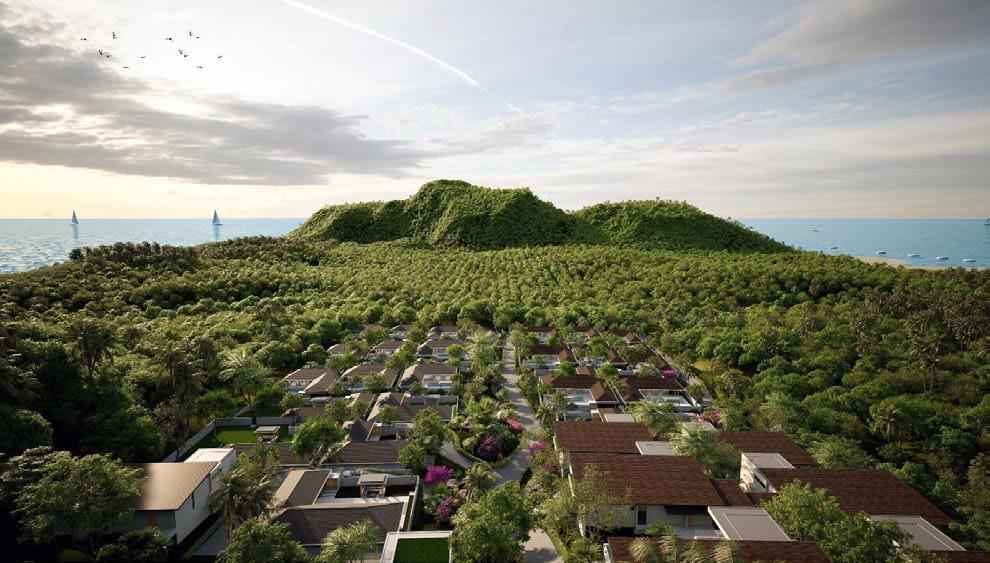
Nathee Thawee is a low-rise residential estate set a short walk from Crystal Beach on Koh Samui. Comprising 46 private pool villas, the low-rise layout, generous plots, and mature planting establish a sense of permanence more often associated with long-standing residential neighbourhoods.
Villas are designed around outdoor living. Bedrooms are detached from the main living pavilion, each with direct access to the terrace and pool. Covered outdoor areas are sized for daily use, with enough shade to make them workable throughout the year. Circulation happens largely outdoors, reinforcing the connection between rooms, garden, and water.
Materials lean toward warmth and familiarity. Teak features prominently at entrances and across ceilings in selected villas, while fullheight sliding doors open living spaces to the terrace. Infrastructure is handled discreetly, with underground electricity, integrated water filtration, and optional solar panels.
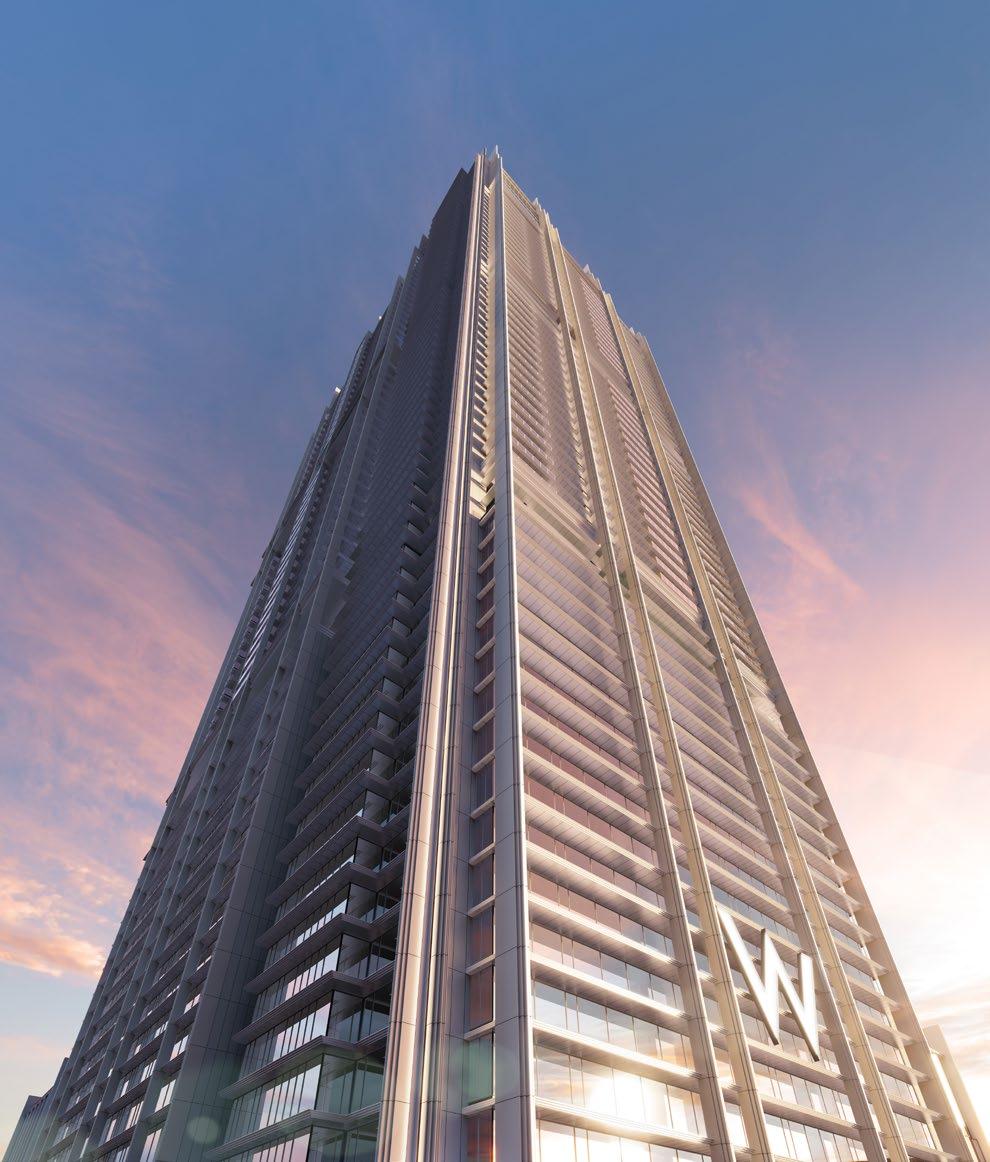
W Residences Marina View Marina Bay, Singapore
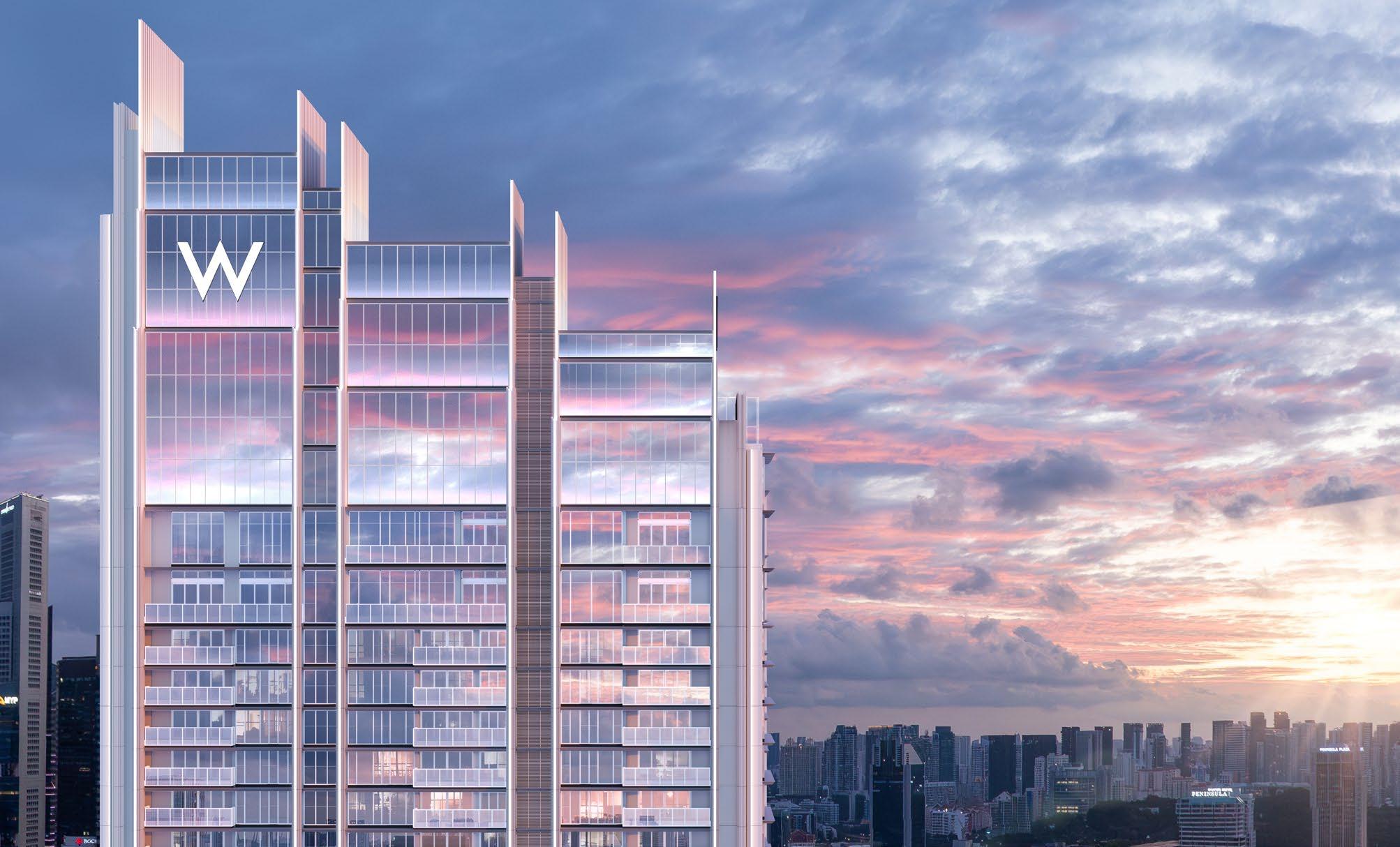
W Residences Marina View places residents right in the heart of Marina Bay. Rising above the future W Singapore Marina View hotel in Marina Bay, the tower looks out across the Central Linear Park and the water beyond, with the city’s commercial and social life close at hand.
The building is composed of a series of slender vertical elements, with landscaped sky terraces woven through the height of the tower. These outdoor decks introduce moments of pause and greenery, shaping how residents move through the building and use shared spaces day to day.
Interiors carry a strong visual identity, with colour, texture, and pattern used confidently across apartments and communal areas. Amenities are layered vertically, including pools, lounges, and wellness spaces, while hotel services sit just below and extend the residential offer. The proposition is simple: a home with hotel infrastructure, positioned where Singapore is most concentrated.
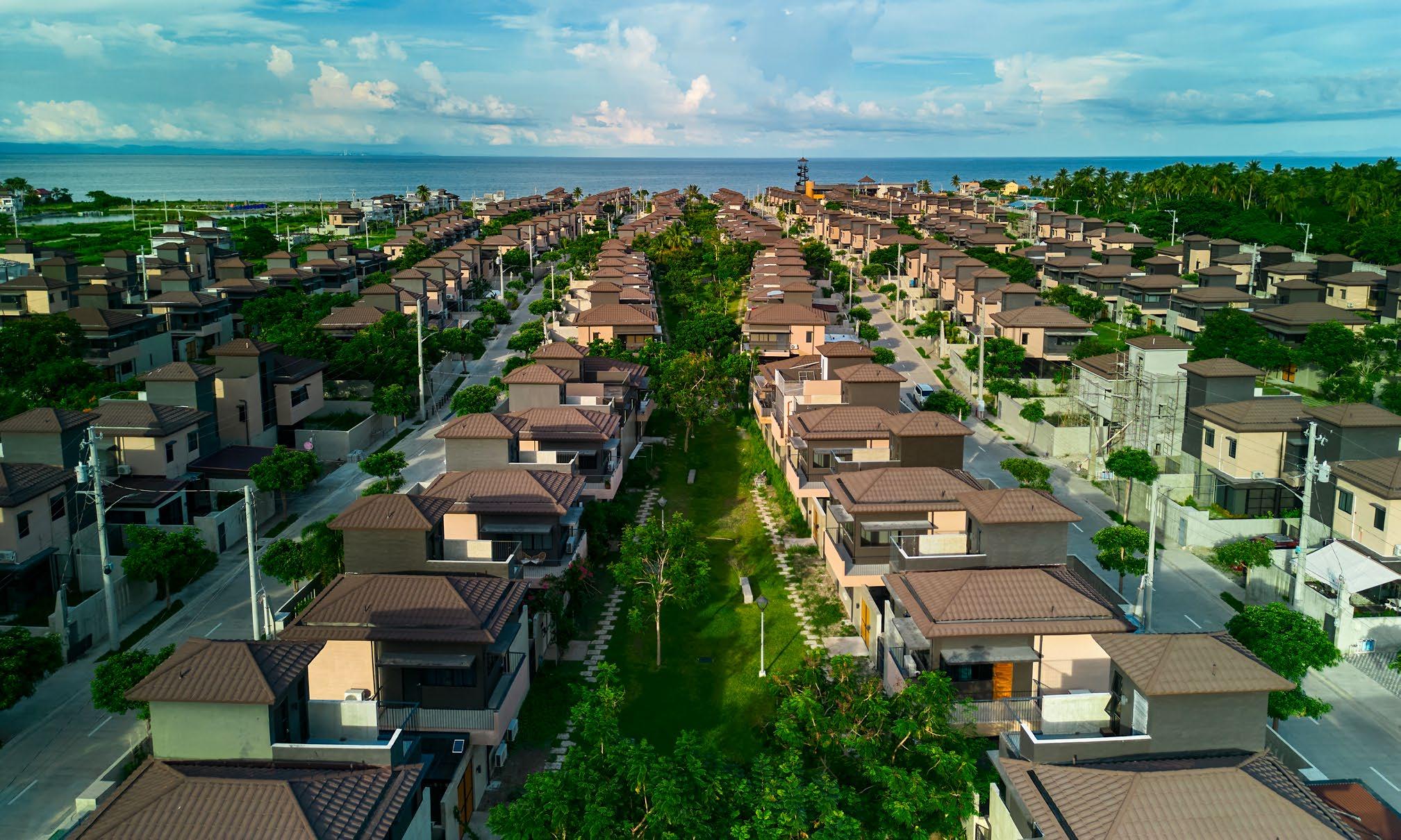
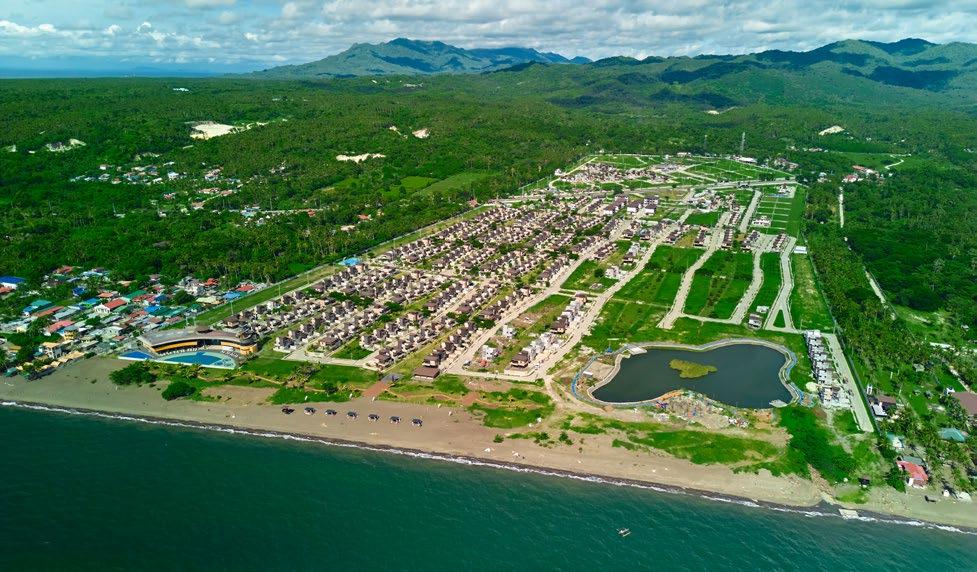
Seafront Residences Batangas, Philippines
At Seafront Residences, daily life naturally drifts toward the shore. Spread across 43 hectares along the coast of San Juan, Batangas, the neighbourhood is laid out as a series of walkable streets and small parks, with clear paths leading down to the beach. Movement here is shaped by the water and the climate.
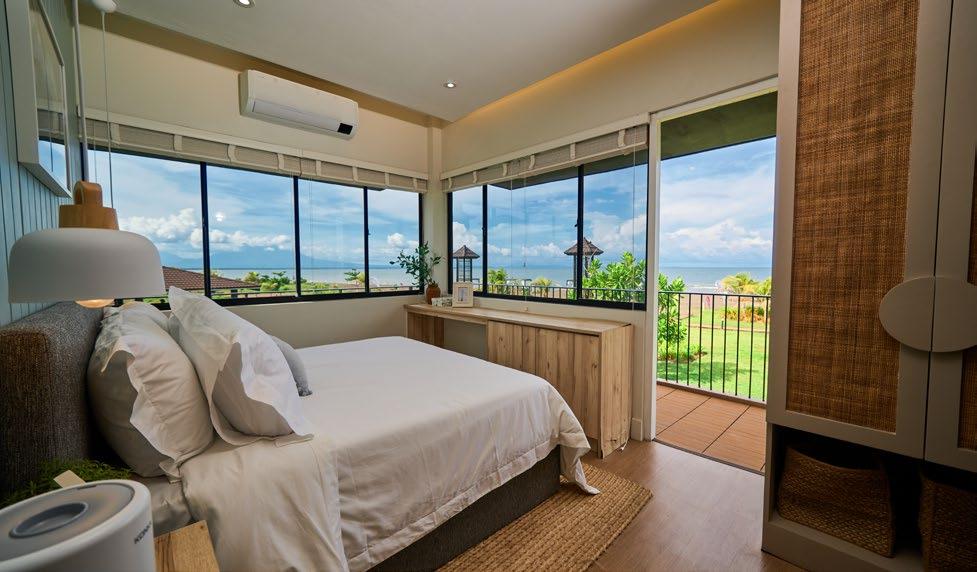
Homes are also planned to make the most of outdoor space. Patios and azoteas extend living areas, while roof decks open views across Tayabas Bay and catch the prevailing breeze. Architecture follows familiar tropical forms, comfortable and well-suited to year-round living.
A beachfront clubhouse lines the shore, with smaller shared spaces, water features, and cycling routes distributed across the estate. A town centre with shops and dining is planned next, adding to a neighbourhood that already operates as part of everyday life.
GOING FOR GOLD
For decades, the Queensland beach enclave was seen as a pleasure retreat. Now it is becoming a haven for investors
BY GEORGE STYLLIS
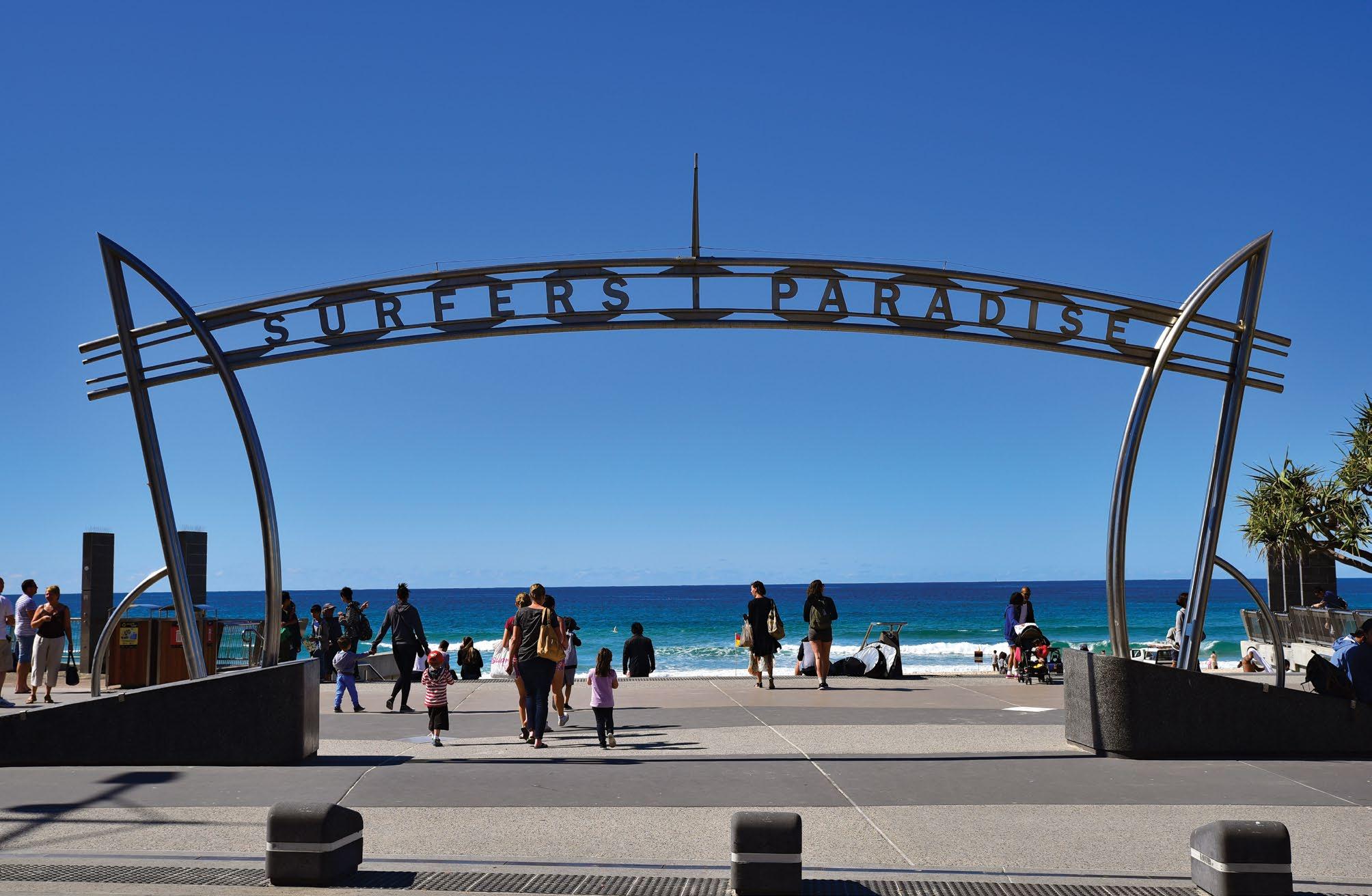
Jim Cavill understood the power of a good story, having fictionalised much of his life in the name of savvy marketing. But when the flamboyant Englishman opened his Surfers Paradise Hotel on the Gold Coast in 1925, it was a story that needed no spin. Such was its success that it turbocharged a tourism industry that has endured to this day.
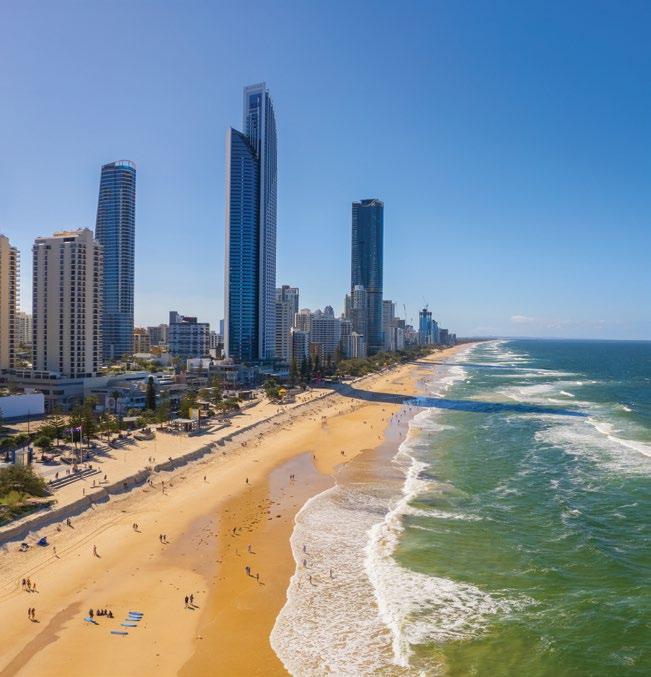
The Gold Coast has long been synonymous with glorious beaches and laidback vibes. But since the pandemic, more and more people have been coming to live and work, making it more than just a place to while away the days and turning it into one of Australia’s most sought-after property investment destinations.
As Melbourne and Sydney faced another challenging year in their residential markets, the Gold Coast recorded several record-breaking apartment sales, particularly in the south.
“Gold Coast is like our Hawaii,” says Benson Zhou, head of Asian sales at Savills Australia. “We love to go there on holiday. In recent years, after the pandemic, a lot of people moved there, driving prices significantly higher.”
Some 6.5 million domestic visitors spent AUD3.7 billion (USD2.5 billion) on the Gold Coast in the first six months of this year, while 636,000 international visitors spent a record AUD1.5 billion over the year, according to Tourism Research Australia.
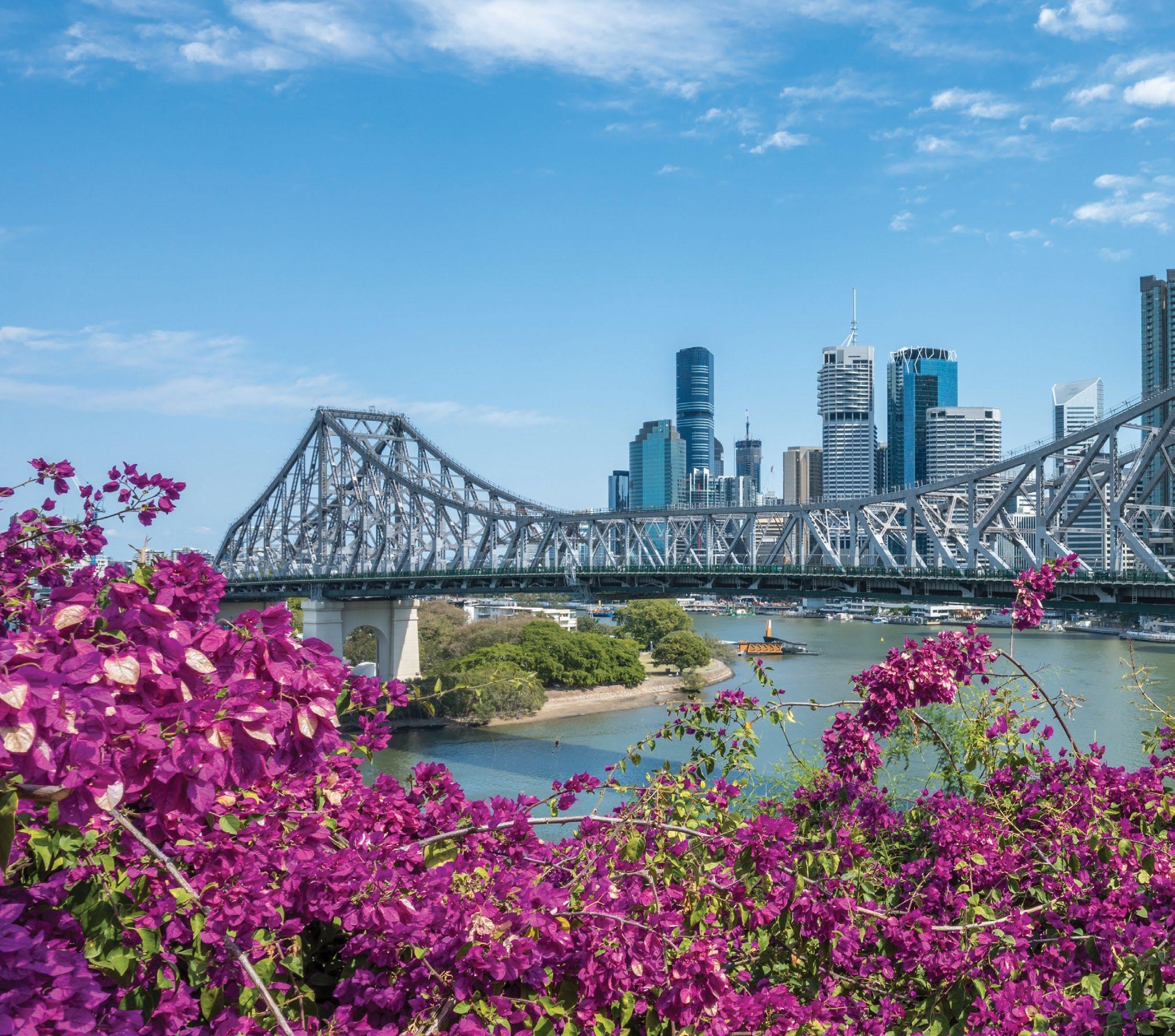
BRISBANE IS SET TO BENEFIT FROM ITS STATUS AS HOST CITY OF THE 2032 OLYMPICS
Demand for luxury beachfront apartments has remained strong over the past year, with projects across Mermaid Beach, Broadbeach, and Burleigh Heads fetching record prices per square metre.
In September, the Gold Coast’s median apartment price reached AUD956,000, edging past Sydney’s AUD927,000 for the first time on record.
In the exclusive Northcliffe enclave of Surfers Paradise— named after Cavill’s bar—more than 80% of apartments at the residential tower Coast on Garfield Terrace, totalling AUD280 million, have sold off the plan.
ASIANS CONTINUE TO EYE AUSTRALIA
Asian investors are increasingly turning to Australia’s property market, buoyed by the country’s contained inflation and growing population.
Zagga, a private credit firm, says it currently manages around AUD1 billion (USD660 million) in assets, much of it in property, with roughly a quarter of its clients based in Asia.
“There is definitely a movement away from the US and Europe,” chief executive Alan Greenstein tells Nikkei Asia.
“Not just because of the threat of tariffs, but also due to concentration risk. Investors are beginning to realise they need to pull back from those markets and look at other options.”
Asian buyers are drawn to Australia as its population expands while housing supply remains tight. The government forecasts the population will rise to just over 31 million by the mid-2030s, up from around 27 million in 2024.
As a result, property prices are expected to continue rising, particularly in Sydney and Melbourne, according to listings platform Domain. Sydney house prices are forecast to increase 7% by June 2026 from a year earlier, lifting the median to a record AUD1.83 million, while apartment prices are tipped to rise 6% to AUD889,000.
Zagga executive director Tom Cranfield says the prospect of generating stable income from housing is particularly attractive to Asia’s growing retiree population.
MELBOURNE’S BUILD-TO-SELL MARKET ENCOUNTERED DIFFICULT CONDITIONS DURING 2025
At the Sea Glass project in Broadbeach, off-the-plan sales have reached around AUD160 million, with more than 60% of apartments in the 26-storey tower now under contract.
“Luxury continues to be the top performer, with the highend market significantly outperforming the broader market,” says Nerida Conisbee, chief economist at Ray White, adding that house prices rose 9% over the past year.
The Gold Coast’s performance stands in marked contrast to that of Melbourne and Sydney.
Charter Keck Kramer, a property consultancy, stated that overall apartment supply in Melbourne improved in 2025 compared to 12 months earlier, although it remains well below target levels, with certain segments performing worse than others.
“2025 was another incredibly difficult year for the Melbourne build-to-sell market, and the industry is to be commended for enduring these conditions,” the firm says.
“Melburnians are extremely negative about Melbourne; however, interstate and overseas investors hold different views and can see significant value in the city at present.”
In Sydney, developers also struggled to push through new projects in 2025.
While house prices nationwide jumped in November, gains in Sydney and Melbourne slowed amid concerns there would be no interest rate cuts anytime soon to support buyers in already expensive markets.
Home prices nationwide increased 1% in November from October to a median value of AUD888,941, slightly slower than the 1.1% rise the previous month, according to figures from property consultancy Cotality. Prices have risen 7.5% YTD (until the end of November 2025).
At her final press conference of the year in December, Reserve Bank of Australia governor Michele Bullock ruled out interest rate cuts for the foreseeable future.
Traders are now pricing in a one-in-three chance of a rate increase in February and are fully priced for a move by May.
Analysts expect the Gold Coast to continue performing well over the coming year, although it will not be immune to challenges faced elsewhere, including a shortage of construction workers.
A November report from Infrastructure Australia stated that a record AUD242 billion worth of major projects are planned over the next five years, up from the previous year’s estimate of AUD213 billion.
Gold Coast is like our Hawaii. We love to go there on holiday. In recent years, after the pandemic, a lot of people moved there, driving prices significantly higher
JAPAN REAFFIRMS GOLD COAST CONNECTION
Japanese developers were a driving force behind the Gold Coast’s boom in the 1980s and 1990s before economic problems at home forced many to retreat. Now, amid brighter conditions, they are returning.
Agents say there has been a surge in enquiries and investment from Japanese buyers, along with interest from South Korea and Taiwan.
“I’ve just come back from Tokyo and Osaka, and the focus is on where they can invest outside Japan,” Roland Evans, the founding director of Canford Estate Agents, a leading Gold Coast firm, tells the Gold Coast Bulletin. “Large companies are looking elsewhere for growth because their population is declining.
“If you are in development or funding in Japan, you have to look overseas for growth, and the Gold Coast is seen as a haven for capital.”
Japan was the Gold Coast’s largest source of international tourists through the late 1980s and 1990s, fuelling a boom in resorts, golf courses, and high-rise towers. But following the collapse of Japan’s asset bubble in the early 1990s, many companies were forced to sell overseas assets.
The Gold Coast’s renewed appeal has attracted major names once again, including Mitsubishi. The company has partnered with McNab Group and Ray White Capital to build the AUD175 million, 27-storey Elements Budds Beach tower on Oak Avenue, scheduled for completion in 2028.
Mitsubishi executive director Yosuke Matsunaga says the Gold Coast was “one of Australia’s most promising residential markets.”
“Australia continues to be a key focus in our international strategy, and the Gold Coast represents a dynamic next step in our regional expansion,” he says.
DEVELOPERS
The independent agency says 141,000 workers are needed to meet current demand, rising to 300,000 by 2027, when projects are expected to enter a crunch phase.
On the Gold Coast, construction companies are under increasing pressure to build taller buildings to cope with rising demand for housing.
“In the past, buildings were only about 20 storeys, so you didn’t need high-rise developers,” says Zhou. “But in recent years, there have been more and more towers going up. The challenge will be similar to Melbourne and Sydney—trying to secure skilled builders, and developers.”
The government has relaxed visa rules to encourage more foreign workers to enter the building trade, but critics argue the measures are neither fast nor comprehensive enough.
“The looming workforce crunch is a wake-up call,” warns Jon Davies, chief executive of the Australian Constructors Association. “Improving productivity is the answer, and it will require governments, industry, and unions to work differently.”
Some say the government has until the 2032 Olympics to tackle the issue. The Gold Coast will host 16 events during the Brisbane Games and will see one of its leading golf courses— the Royal Pines Resort—demolished and redeveloped to house thousands of athletes in an Olympic village.
The Queensland government says the Games will also act as a catalyst for new rail lines and stations, along with road upgrades, including faster rail between the Gold Coast and Brisbane.
Zhou says that as the city grows, the Gold Coast will need more schools, hospitals, police, and construction workers. While pressures could become critical, he believes there is still time. “The Gold Coast should have very healthy growth between now and the Olympics.
“So far, it looks sustainable and is heading in the right direction,” he says.
DEMAND FOR LUXURY BEACHFRONT APARTMENTS ON THE GOLD COAST HAS BEEN STRONG
STUDENT HOUSING SECTOR SET TO BOOM
Student accommodation is expected to be one of the most active property sectors this year amid surging demand for housing.
A record 839,200 students were enrolled in the year to June 2025, according to the Department of Education—up around 13,400 from 2024 and roughly 130,000 higher than pre-pandemic levels in 2019.
“Sentiment among policymakers and stakeholders for the growth of purpose-built student accommodation is strengthening, as it is increasingly recognised for its role in supporting the student population while easing pressure on rental markets,” says Ben Burston, chief economist at Knight Frank.
Australia has long been a popular destination for Asian students, although international enrolments stalled during the pandemic as travel bans and restrictions came into force.
Four deals brokered in 2025 added AUD1.8 billion to the sector, compared with just AUD116 million in 2024.
Kaytlin Ezzy, an economist at Cotality, says it is “unlikely” that property prices will fall in the near term.
“The same factors that have supported value growth in recent months—including restricted supply, lower borrowing costs, and the expansion of the First Home Guarantee scheme—are likely to continue supporting growth in 2026,” she says.
IMPERFECT STORMS
How trade politics and domestic fragility are converging to reshape the Philippine economy and property market
BY AL GERARD DE LA CRUZ
NEW SUPPLY IS TAPERING OFF IN METRO MANILA, WITH ONLY AROUND 3,500 NEW CONDOMINIUMS EXPECTED TO BE COMPLETED ANNUALLY FROM 2026 TO 2028
After US President Donald Trump’s infamous Liberation Day announcements, Philippine President Ferdinand Marcos Jr. visited the White House to plead for a lowering of tariffs, only to return with a meagre concession: a 1% reduction.
The theatre underscored the Philippines’ delicate position, a services powerhouse forced to perform for its powerful trading partners while contending with mounting global and domestic fragility.
In the third quarter of 2025, the Philippine economy recorded its weakest quarterly expansion in over a decade. The slowdown stemmed from global headwinds and, quite literally, wind. A series of powerful typhoons caused widespread flooding while also exposing the systemic diversion of billions of pesos intended for flood-control projects into the pockets of lawmakers.
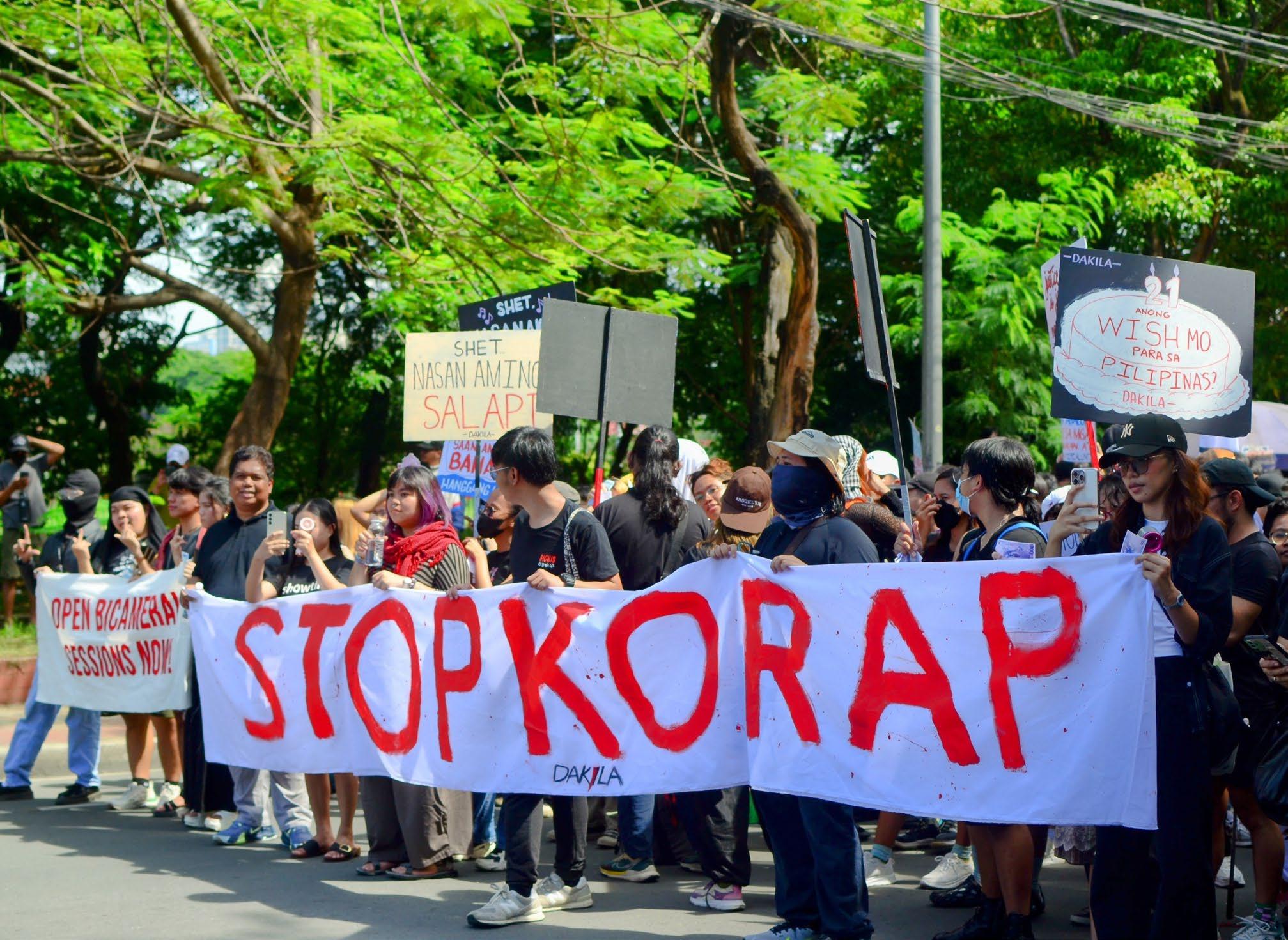
The revelations ignited youth-led protests reminiscent of anti-graft movements elsewhere in Asia. This surge of anger
rattled confidence in a political system long dominated by elite families, further polarising a body politic already strained by the power struggle between the Marcos and Duterte dynasties.
“The Q3 results point to a need for massive pump-priming from the government,” says Joey Bondoc, director of research at Colliers Philippines. “Continued slowdown in the government’s infrastructure programme will likely result in a Philippine economy grinding to a halt.”
In response, the central bank has turned aggressively accommodative, cutting benchmark interest rates five consecutive times in 2025. Yet this easing cycle has struggled to revive one of the economy’s most critical sectors: the vertical residential real estate market.
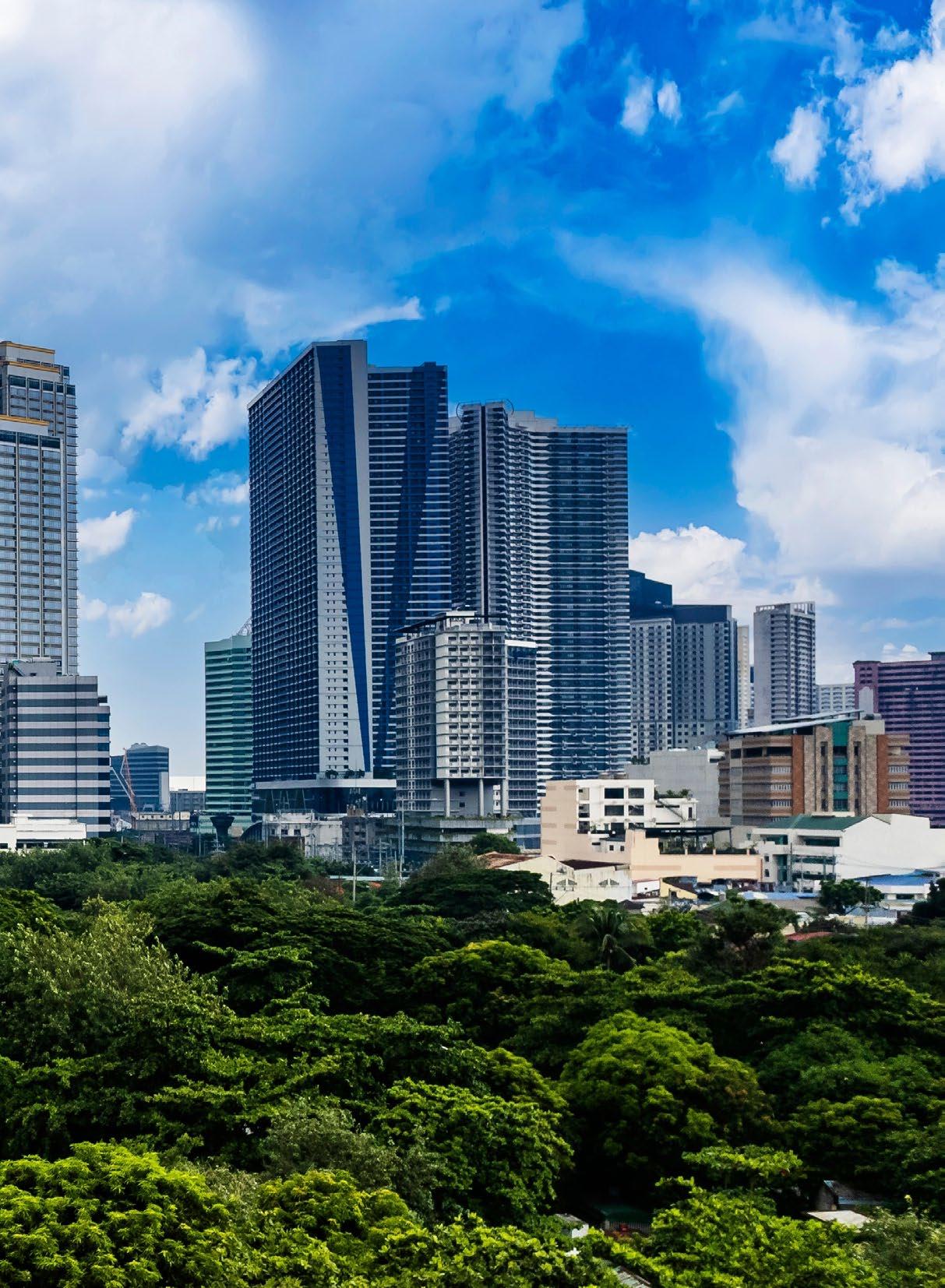
Metro Manila, the archipelago’s dense skyscraper hub, is entering 2026 firmly as a buyer’s market. New supply is tapering off, with only around 3,500 new condominiums expected to be completed annually from 2026 to 2028.
“Developers did not acquire significant parcels of developable land at the height of the pandemic, even post-pandemic,” Bondoc explains. “They did not see the demand driver in the first place to launch new projects in Metro Manila.”
The metropolis is now saddled with more than 80,000 unsold homes, a stock that could take up to 42 months to clear, according to Leechiu Property Consultants. Demand for residential units has fallen to its weakest level in six years, according to Roy Golez, director for research at Leechiu. He cites a dual blow: buyer cancellations from those unable to meet monthly amortisations and the government’s ban on Philippine Offshore Gaming Operators (POGOs).
To stay afloat, developers have shifted their focus toward the mid-income segment. RFO (ready-for-occupancy) promotions, including heavily discounted lease-to-own schemes where rent is credited toward a future purchase, have become ubiquitous. Major players now offer plans with no obligation to buy for up to 36 months.
Until we see sweeping governance reforms and a return of private investor confidence, property opportunities will not shout. They will whisper
“The challenge for developers is to be more creative and innovative moving forward,” Bondoc says, noting that such promotions generate essential cash flow from renters to fill the financing gap left by increasingly cautious banks.
The existential question hanging over the market is one of sustainability. “Will there be fatigue around RFO promotions in Metro Manila?” Bondoc asks. “That has yet to be seen.” Underscoring this concern are the more than 30,000 RFO units that remained unsold in the metropolis as of Q3 2025.
A potential lifeline continues to flow from Overseas Filipino Workers (OFWs), who sent back USD38.3 billion in remittances in 2024, with USD29.2 billion recorded by October 2025. Filipinos based in the United States account for the largest single share.
This capital traditionally fuels the condominium market’s “sweet spot”: units priced between PHP2.5 million and PHP7 million (USD45,000 to USD125,000). “Given the upside we are seeing in the mid-income segment, we expect OFW remittances to sustain or even further fuel demand,” Bondoc says.
At the same time, compelling value is driving strong takeup of horizontal housing projects and lot-only developments outside Metro Manila. Here, buyers can acquire land at rates ranging from just PHP4,000 to PHP30,000 per square metre.
For seasoned investors, this presents a logical diversification strategy. An investor might own a condominium by one developer in the capital and then expand their portfolio with a land purchase in Bulacan or Batangas, potentially seeing price appreciation of 15% or more within a single year.
YOUTH-LED PROTESTS AGAINST CORRUPTION HAVE RATTLED CONFIDENCE IN THE PHILIPPINES’ POLITICAL SYSTEM
Integrated township developments continue to rise nationwide. These are emerging not only as new central business districts within Metro Manila but also as new growth corridors in Ilocos, Pampanga, Cavite, Batangas, and Davao. As competition intensifies, developers are increasingly differentiating themselves by incorporating essential institutional components such as schools.
“Instead of just saying, ‘Build and people will come,’ why not build where people live?” says Cyndy Tan Jarabata, chairperson of the PropertyGuru Philippines Property Awards judging panel and president of TAJARA Leisure & Hospitality Group Inc. “Developers are trying not to isolate people but to improve overall quality of life.”
Still, with volatile external economic conditions, there are no guarantees. As POGOs retreated from the real estate market, two new threats emerged: artificial intelligence and American protectionism.
The information technology and business process management (IT-BPM) industry, which employs nearly two million Filipinos, is under direct threat. Proposed US legislation, such as the “Keep Call Centres in America Act
of 2025”, seeks to incentivise reshoring while penalising outsourcing. Combined with rapid advances in generative AI, this protectionist push could undo office booms not only in Manila but also in secondary hubs including Cebu, Pampanga, Iloilo, Davao, and Cagayan de Oro.
While the Philippines remains predominantly a services economy, its industrial sector shows early promise, albeit from a low base. Trump-era tariffs threaten to unravel this progress. The Philippines recorded a USD4.9-billion trade surplus with the US, its largest export market, in 2024.
To attract foreign capital as a counterweight, President Marcos Jr. signed Republic Act No. 12252, extending the maximum lease period for foreign investors on private land to 99 years, up from the previous 50-year cap.
“This 99-year law provides stability in terms of business policy,” Bondoc says. “It sends a signal that the Philippines is open for business.”
The goal is to move beyond basic assembly and develop a higher-value industrial ecosystem encompassing electric vehicles and semiconductors.
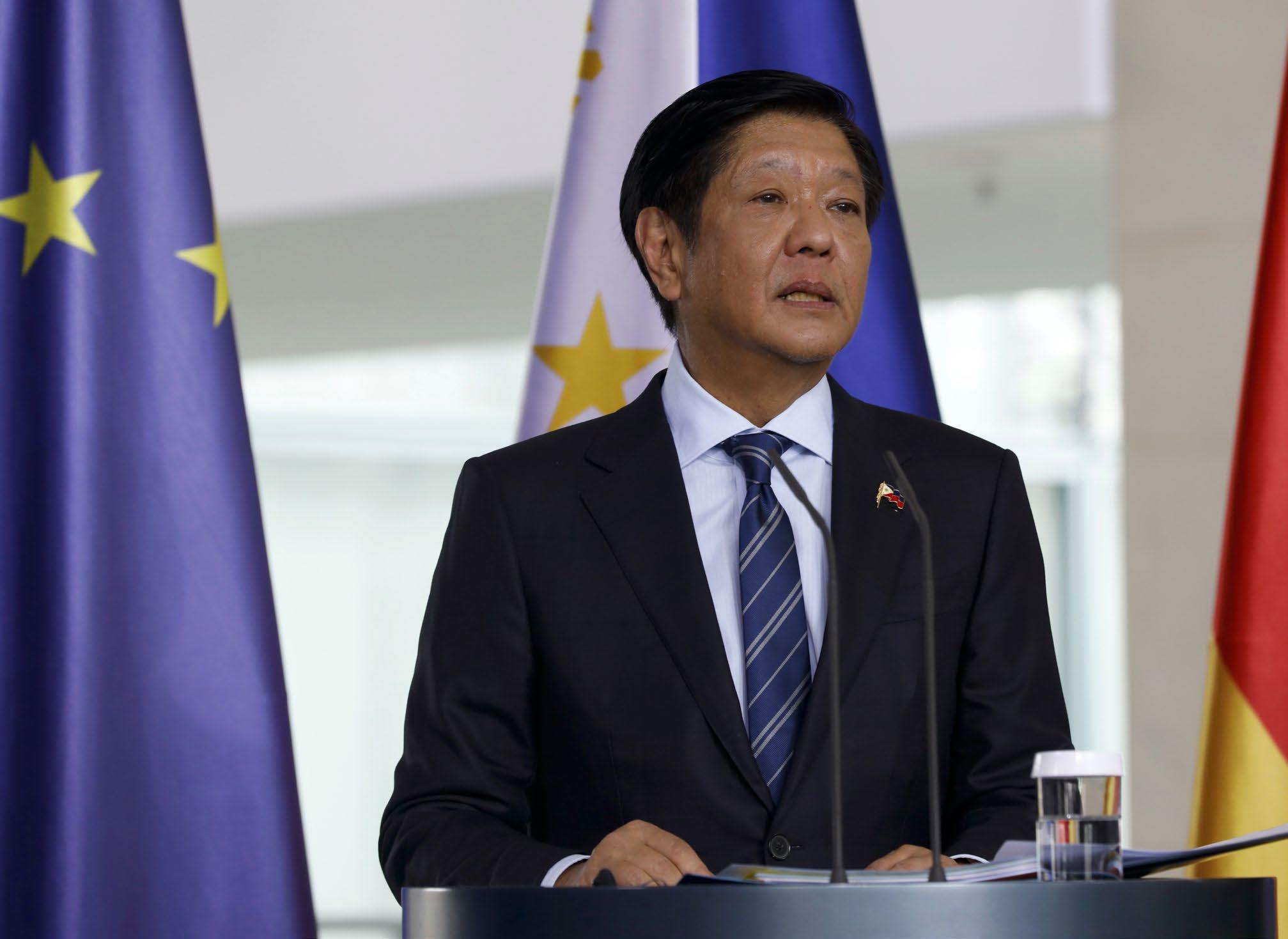
PHILIPPINE PRESIDENT FERDINAND MARCOS JR. HAD BEEN INCREASINGLY EMBATTLED BY DOMESTIC AND INTERNATIONAL POLITICAL CHALLENGES
ATTENTION, PINOY SHOPPERS
In a country where roughly 70% of GDP is driven by domestic consumption, the shopping mall remains an unchallenged social institution. Far from succumbing to e-commerce, the Philippines’ retail sector is undergoing a strategic modernisation that extends well beyond the initial post-pandemic “revenge spending” phase.
“This is one segment that continues to record very strong take-up,” Bondoc says. “We are seeing a clear premiumisation of retail in the Philippines.”
Major developers such as SM Prime, Ayala Land, and Robinsons Land are investing billions to refurbish and expand their portfolios, targeting experiential tenants including IKEA and Flying Tiger Copenhagen.
While national players continue to explore new malls from Angeles City to Bacolod, Colliers Philippines expects only 111,000 square metres of new retail space to be delivered annually in Metro Manila from 2026 to 2028. This marks a sharp decline from the 332,000 sqm added each year between 2017 and 2019.
“The size of new mall developments is shrinking,” Bondoc says. Developers are instead focused on aggressively refreshing existing spaces and adding targeted new wings.
Mall vacancy in Metro Manila is now projected to dip below 10% by Q4 2026, a full year earlier than Colliers’ initial forecasts.
Central Luzon is poised to dominate this industrial push, with 870 hectares of new industrial space set for delivery from 2026 to 2028. Southern Luzon is expected to add a further 200 hectares over the same period.
Yet the promise of long-term leases collides with the Philippines’ enduring governance challenges. “The constant concern for foreign investors is the fear of the government changing the rules mid-game,” Bondoc notes.
Analysts point to the recent corporate income tax reduction legislation, designed to lure foreign direct investment but which has failed to deliver expected gains for some firms. “Changing the rules midstream is not good for the Philippines’ reputation as an investment destination,” Bondoc says.
The success of this industrial strategy ultimately depends on foreign investors’ willingness to accept the Philippines’ invitation. While the country has avoided the retaliatory trade measures faced by Canada and Mexico, its economic fortunes remain vulnerable to policy shifts in Washington.
“Starting in 2026, the government really needs to ramp up IT infrastructure spending and deliver on its public project commitments,” Bondoc says. “Prudent allocation of public funds is essential. If delays persist, we will continue to see infrastructure projects pushed back.”
Before the graft investigations erupted, the government announced an ambitious slate of 169 public-private partnership projects valued at approximately USD55 billion. While less grandiose than the infrastructure drives of his parents’ era, President Marcos Jr.’s programme, if executed faithfully, could significantly enhance land values, property prices, and rental yields across multiple sectors.
The Philippine property market and the broader economy it supports now stand at an inflexion point between external dependence and internal reform.
“Until we see sweeping governance reforms and a return of private investor confidence,” Bondoc concludes, “property opportunities will not shout. They will whisper.”
SUNNY STAYS
Foreign visitor arrivals were projected to reach just 5.6 million by the end of 2025, well below the government’s 7.7 million target. The shortfall is largely driven by a collapse in arrivals from China and South Korea, which fell by nearly 19% and 21%, respectively.
Strong domestic tourism and a resilient MICE segment have nonetheless stabilised hotel occupancy and daily rates.
A key test will come in 2026 following the resumption of e-visas for Chinese tourists, a move officials describe as critical to restoring confidence. Long-term, growth will depend on diversifying beyond traditional source markets and successfully courting other travellers, such as those from India.
Branded hotels and high-end residential developments are also increasingly looking beyond Metro Manila. Operators such as JW Marriott and Dusit are establishing footholds in emerging resort destinations, including Bohol and Bukidnon.
This expansion is being enabled by new airports and flight routes criss-crossing the archipelago, alongside the much-anticipated, and controversial, New Manila International Airport in Bulacan.
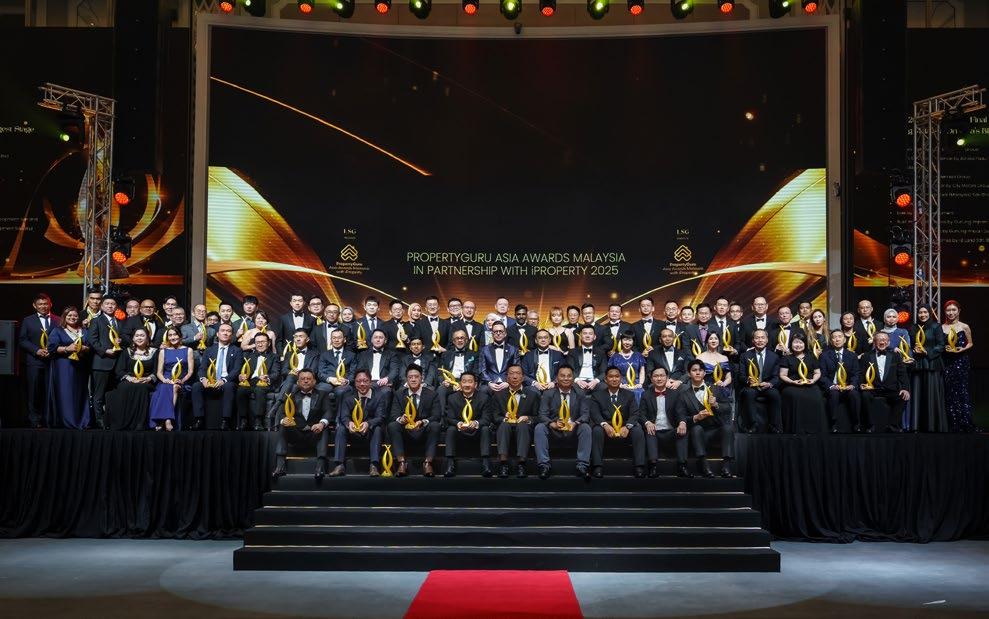
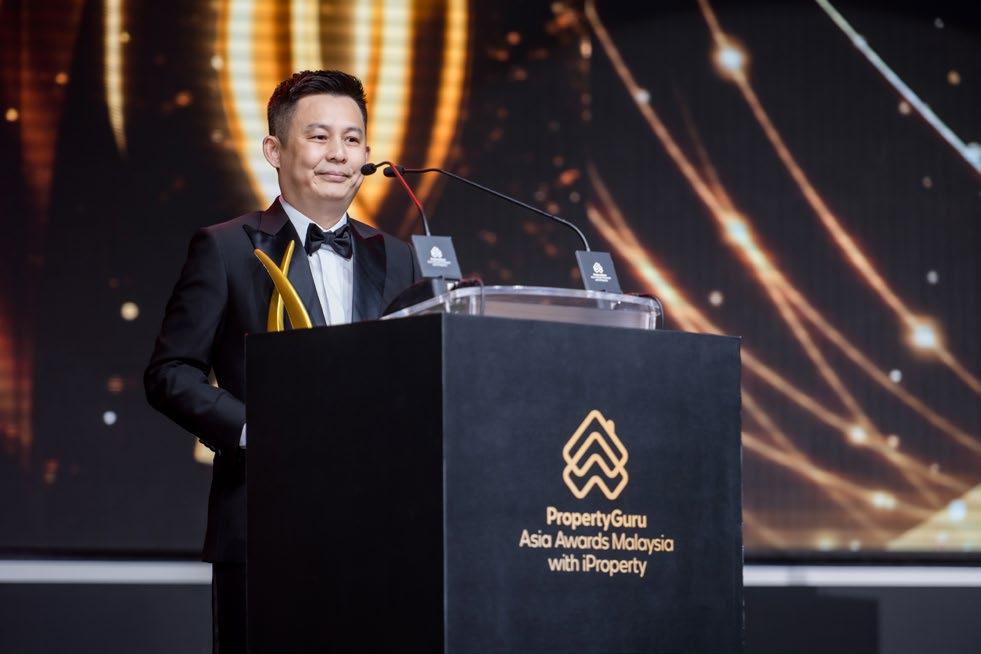
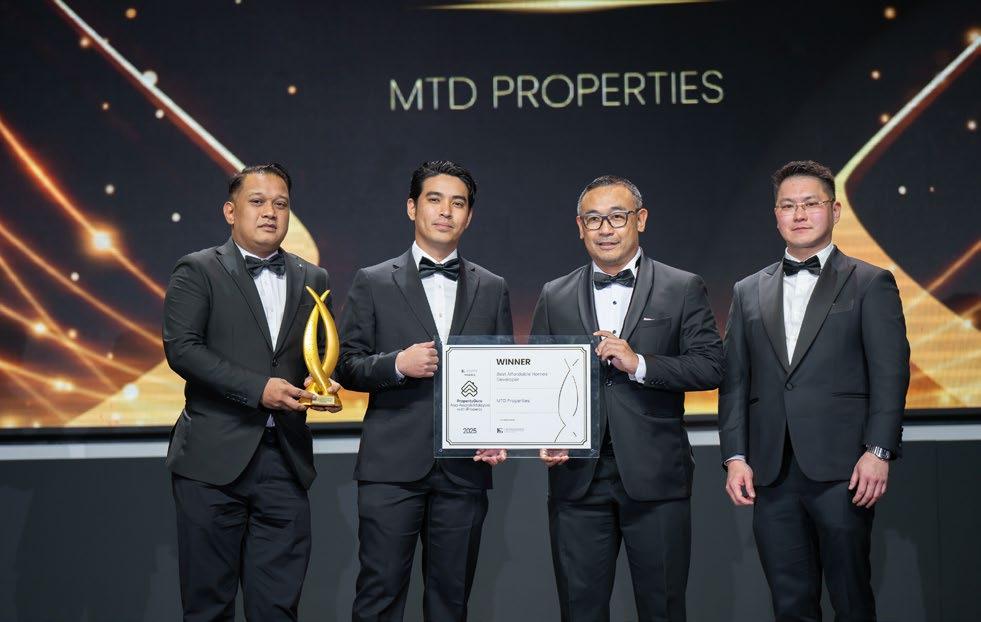
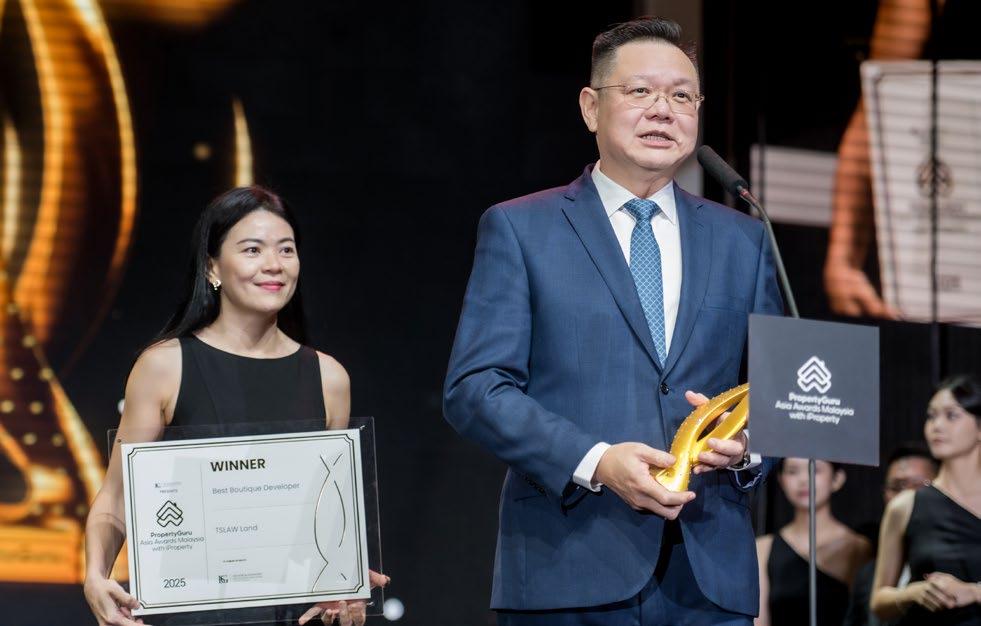
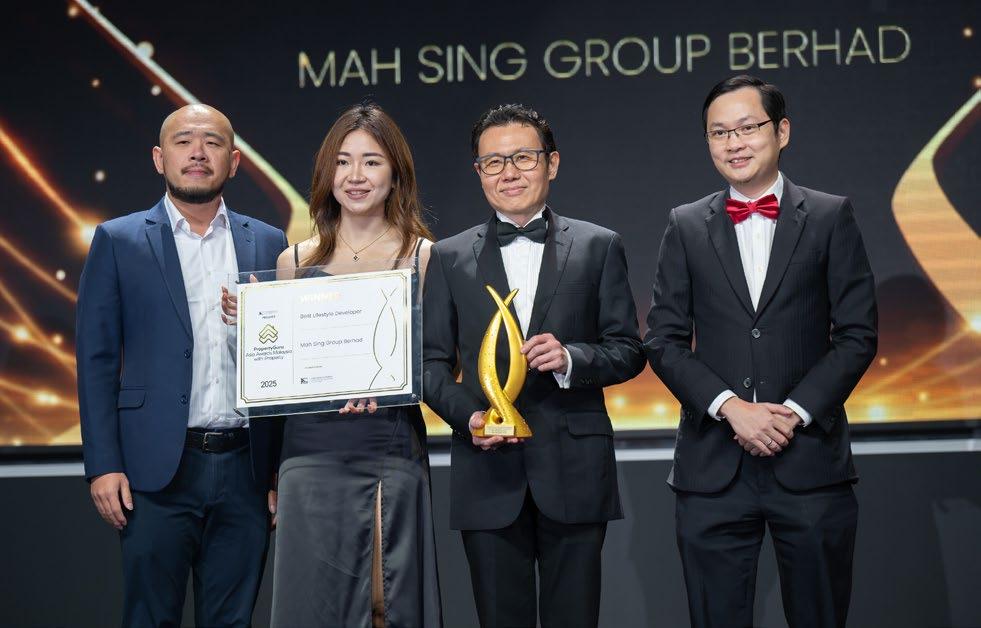
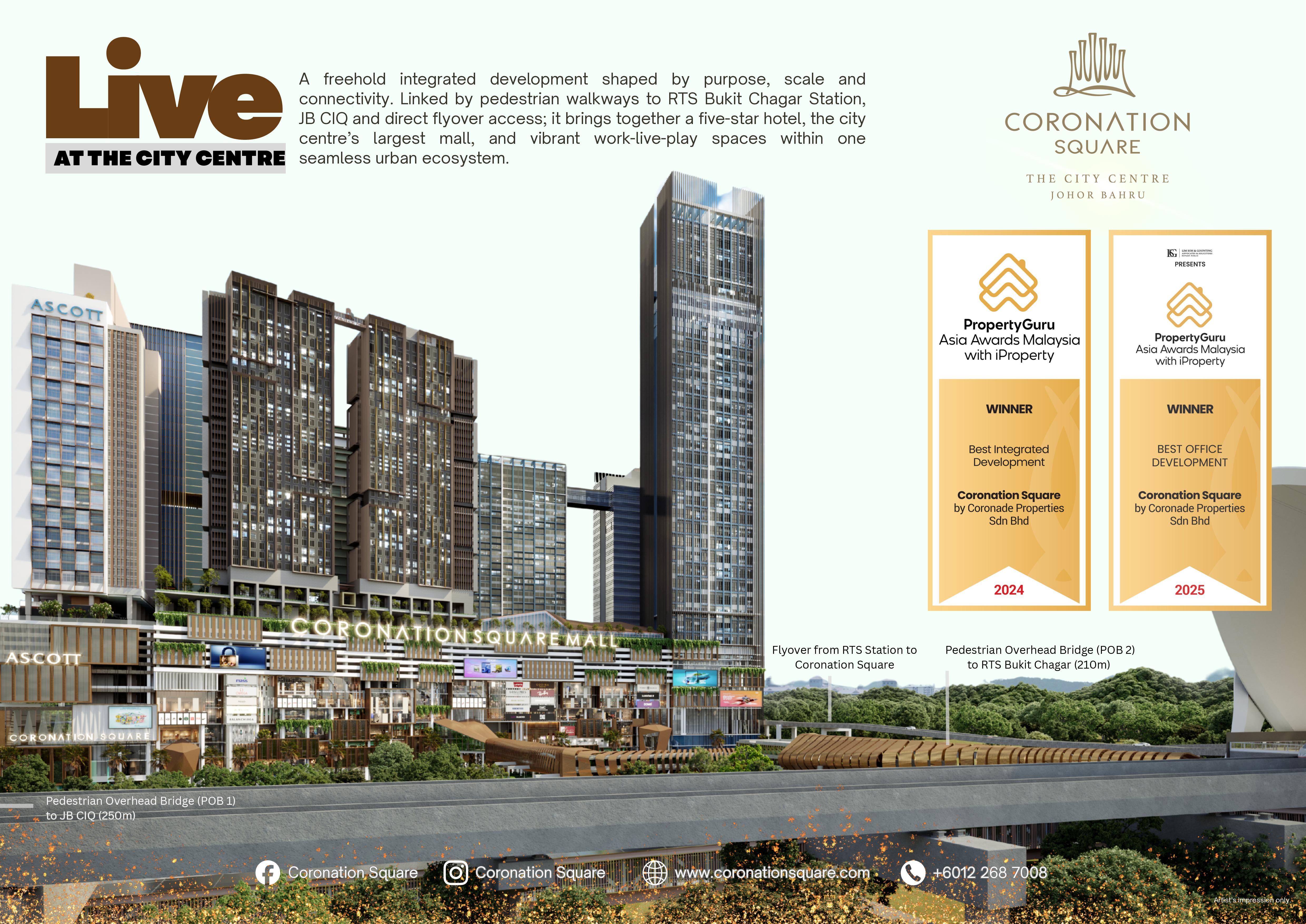
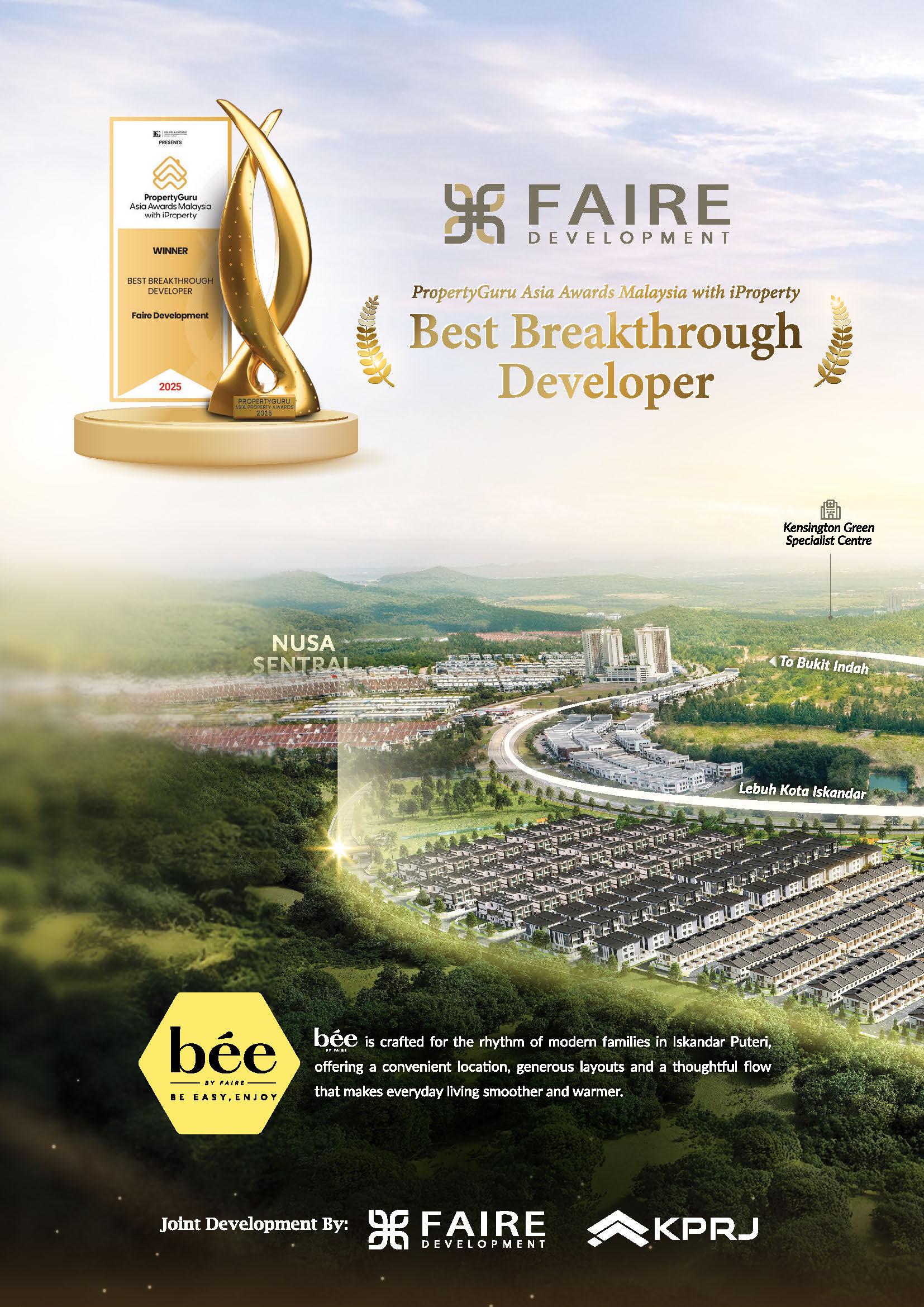
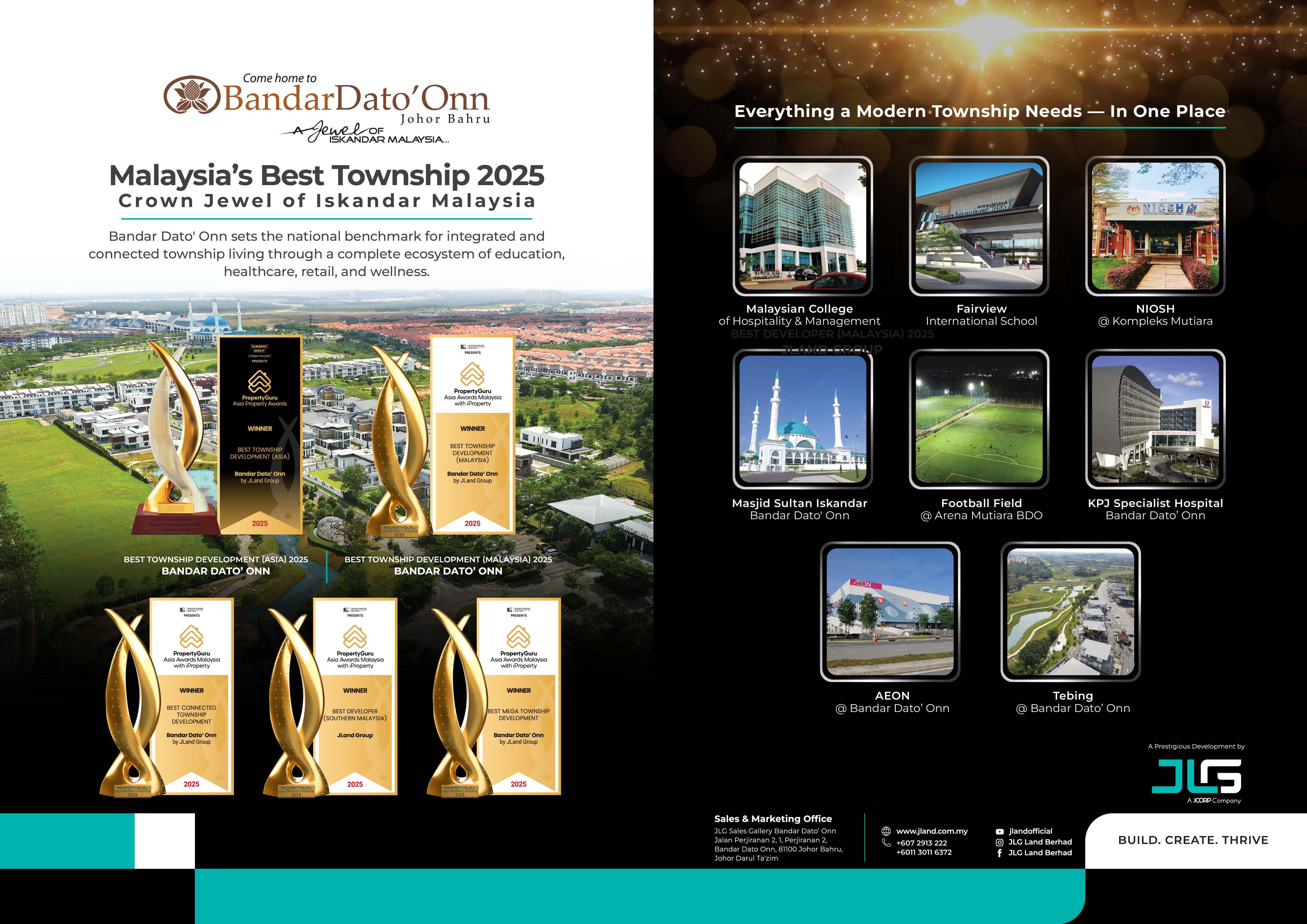
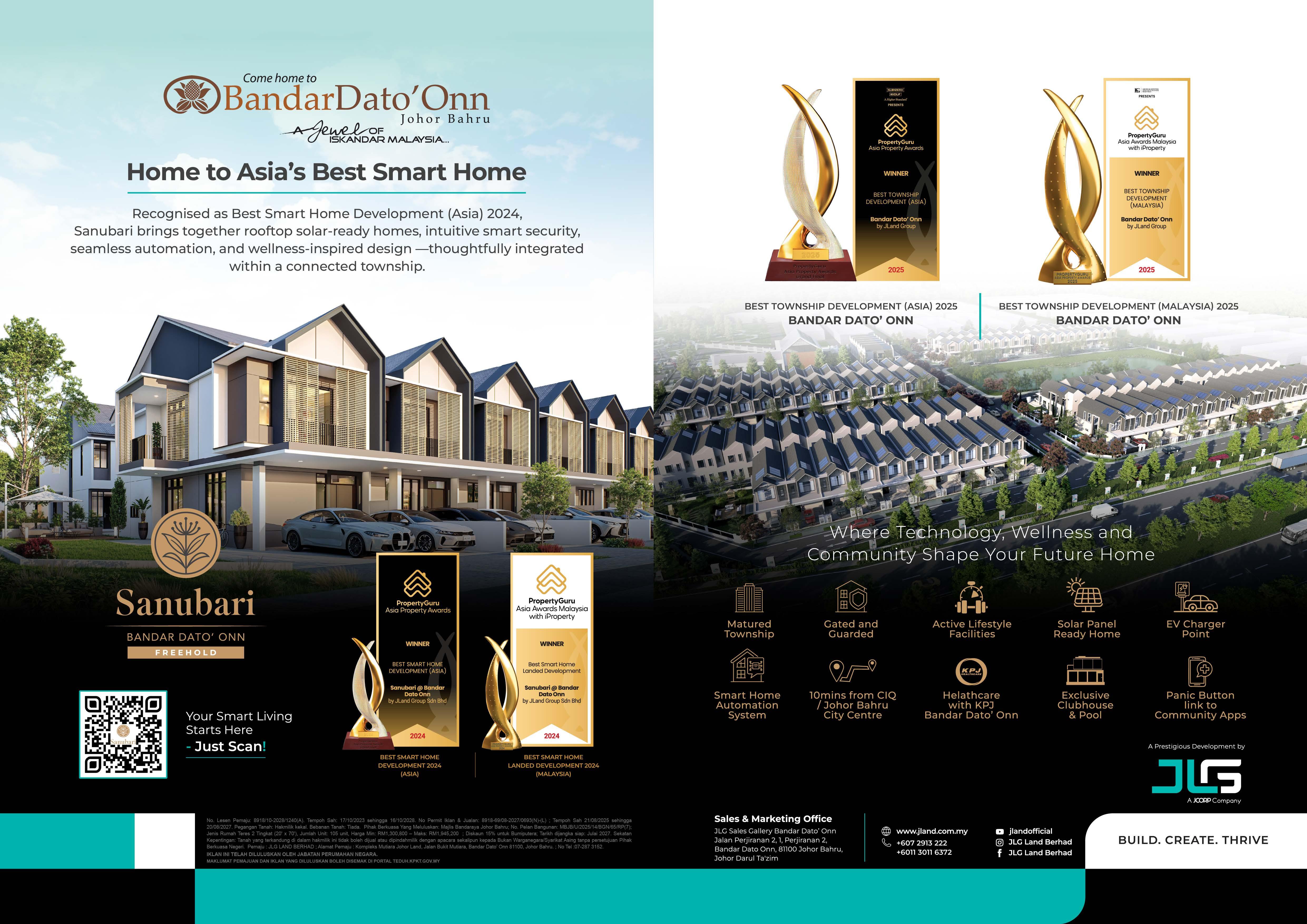
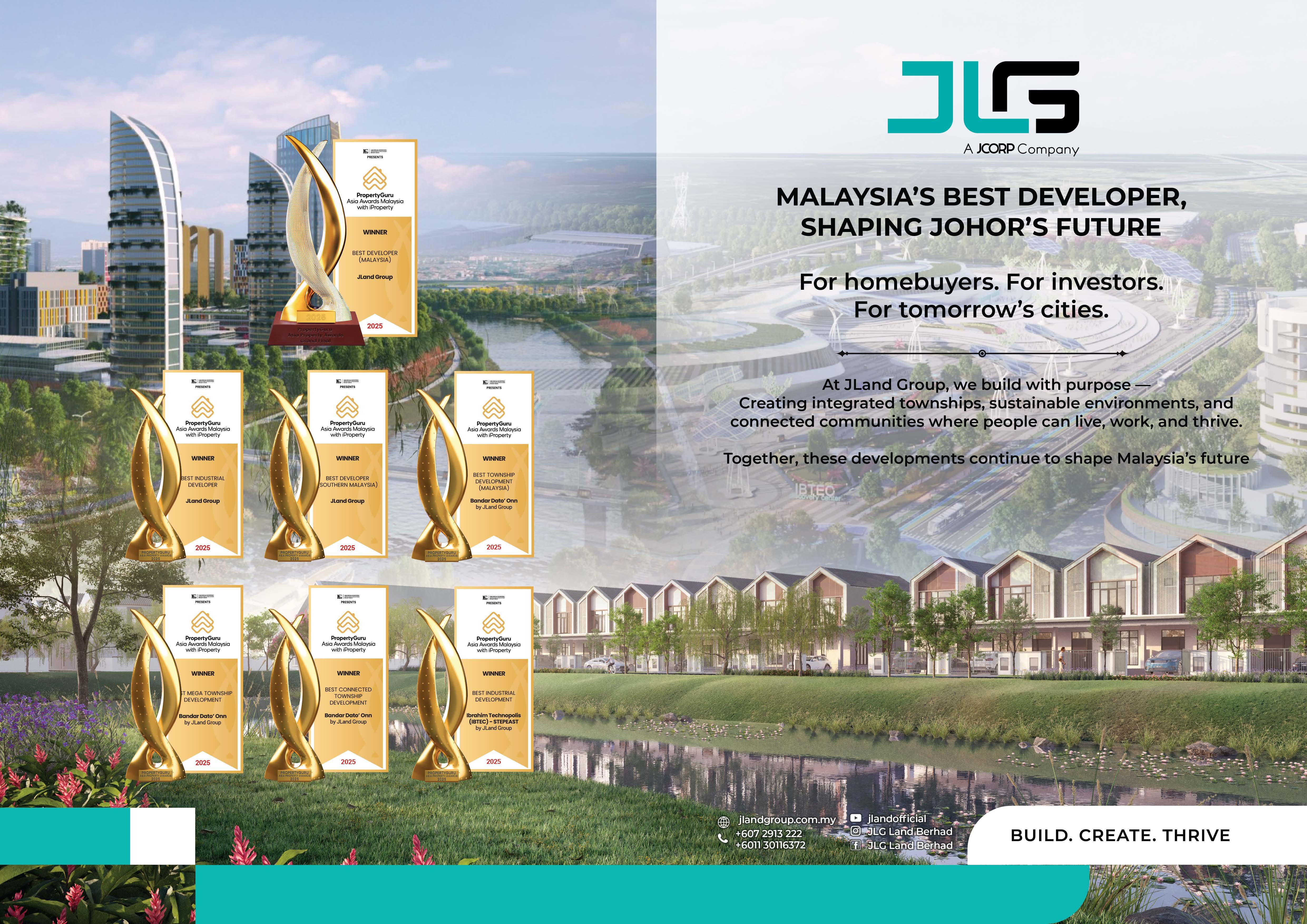
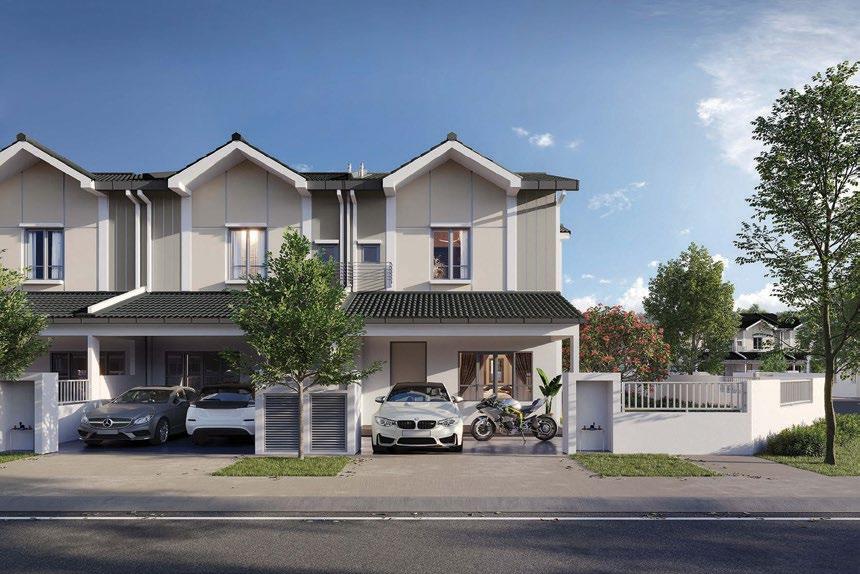
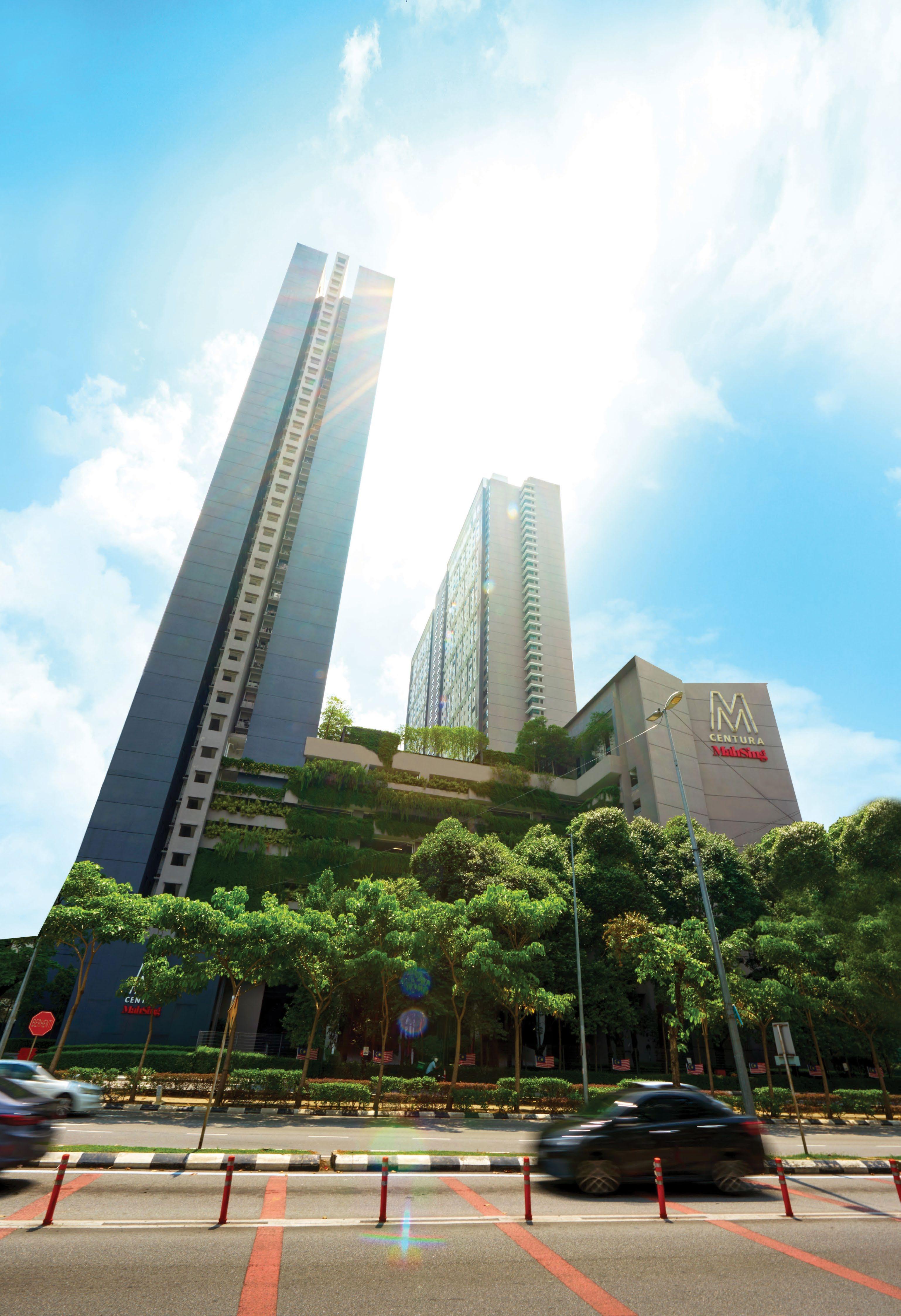
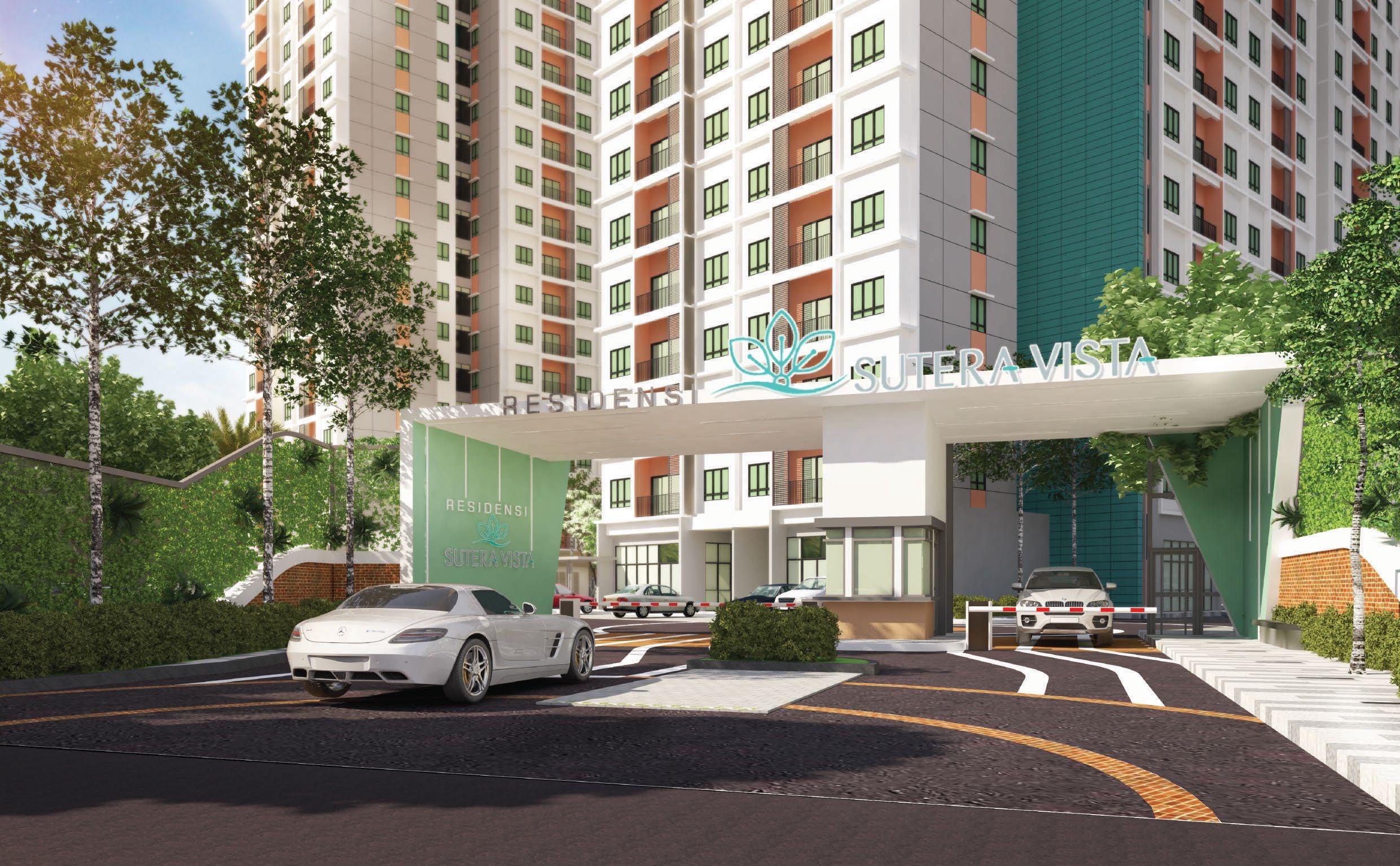
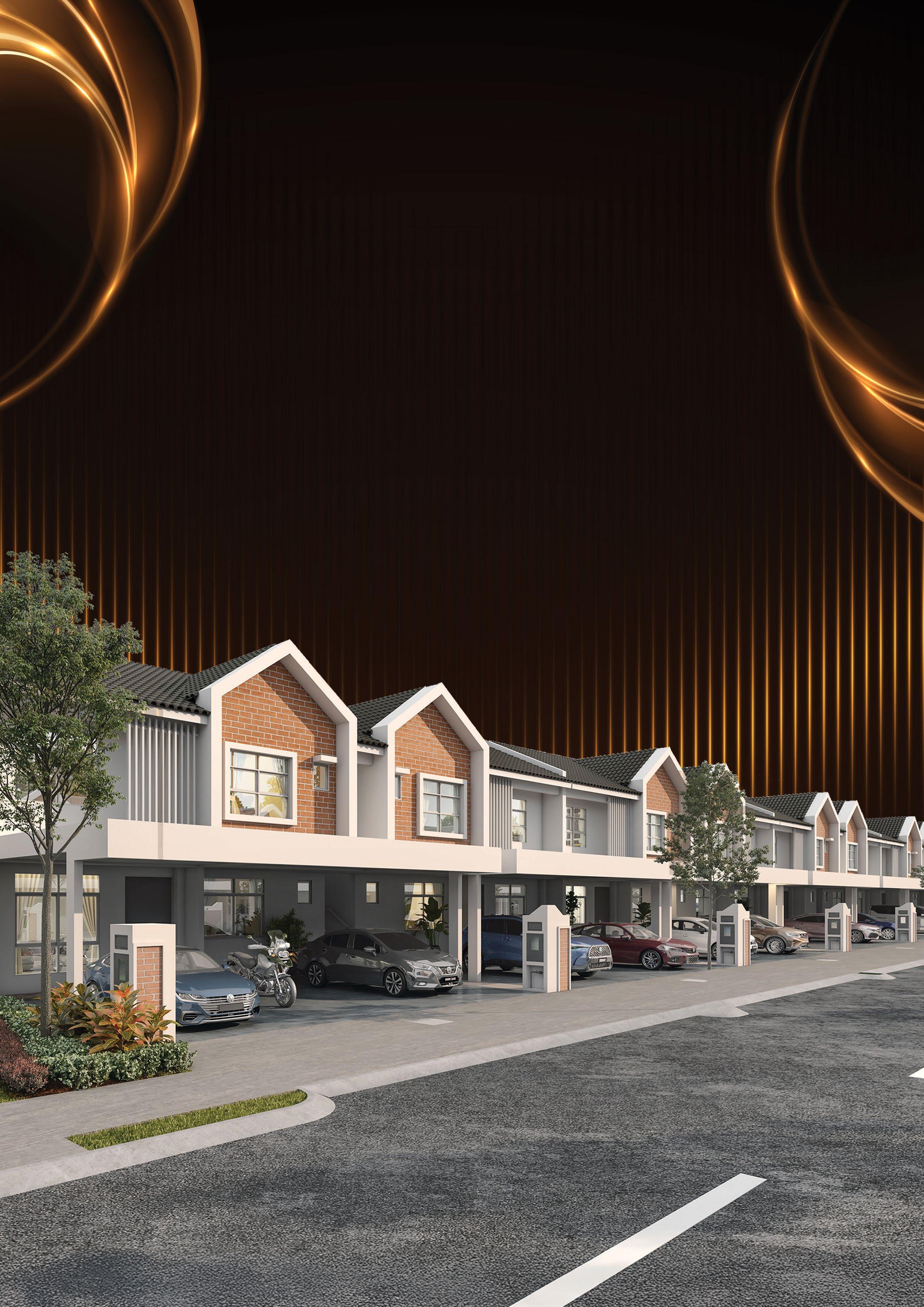
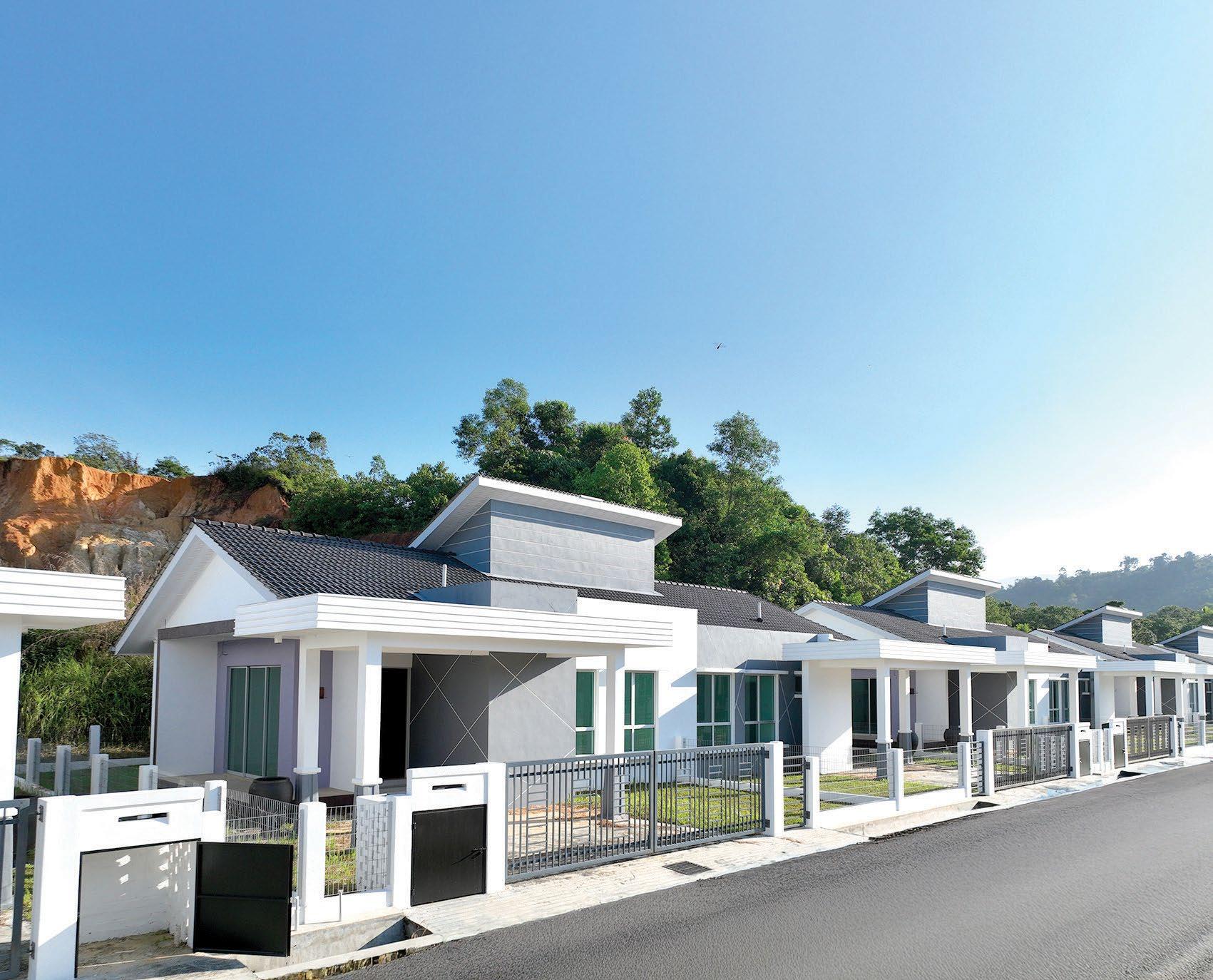
The nation’s premier real estate achievements prevailed during the 12th PropertyGuru Asia Awards Malaysia with iProperty gala at The St. Regis Kuala Lumpur on 8 October 2025. After a selection process informed by expert insights, market data, and public opinion, 73 awards were presented across sectors from luxury to affordable housing.
JLand Group was the year’s biggest winner, claiming the prestigious Best Developer title for the first time. Its Bandar Dato’ Onn township also earned three awards.
Major winners included CPI Land and Interhill Group, representing Central and East Malaysia’s finest developers, respectively. Berinda Group, Faire Development, Mah Sing Group Berhad, MTD Properties, and TSLAW Land were also acclaimed as developers.
The gala also introduced the new Consumer Demand Awards, based on buyer activity on PropertyGuru.com.my and iProperty.com.my, and presented People’s Choice Awards to 10 trusted developers nationwide.
Special honours were bestowed upon Datuk Sr Mohd Salem Kailany as Real Estate Personality of the Year and Dato’ Sri Jerry Kwan Aik Khai as Rising Star.
For the full list of winners, visit asiapropertyawards.com/en/award/malaysia
THE JUDGES
Datuk Ar Ezumi Harzani Ismail, President, Malaysian Institute of Architects (PAM) 20202022
Ir Ashwin Thurairajah, Executive Director, GreenRe Sdn Bhd
Janice Chin, Director, Capital Markets, JLL Appraisal and Property Services Sdn Bhd
Ir Prof Dr Jeffrey Chiang Choong Luin, President, The Institution of Engineers Malaysia (IEM) 2024-2026
Dato’ Sr Lau Wai Seang, President, Royal Institute of Surveyors Malaysia (RISM) 2017-2018
Assoc Prof LAr Dr Nor Atiah Ismail, President, Institute of Landscape Architects Malaysia (ILAM) 2024-2026
Datin TPr Hjh Noraida Saludin, President, Malaysian Institute of Planners (MIP) 2023-2025
Ar Sarly Adre Sarkum, Chief Executive Officer, Green Building Index (GBI)
Ar Dr Serina Hijjas, President, Malaysia Green Building Council (MGBC) 2023-2025
Sr Subramaniam A/L Arumugam, President,
Association of Valuers, Property Managers, Estate Agents and Property Consultants in the Private Sector Malaysia (PEPS)
Tan Hui Yin, Partner, Tan Chap & Associates
IDr Tay Ei Ling, Honourary Secretary, Malaysian Institute of Interior Designers (MIID) 2024-2026
Prof PMgr Dr Ting Kien Hwa, Deputy President, Malaysian Institute of Property & Facility Managers (MIPFM) 2023-2025
Dato’ Sri Zohari Haji Akob, President, Malaysian Association of Facilities Managers (MAFM) 2023-2025
SPONSOR AND PARTNERS
Platinum sponsor
Lim Soh & Goonting Advocates & Solicitors
Official portal partners
PropertyGuru.com.my and iProperty.com.my
Official ESG knowledge partners
Green Building Index (GBI), GreenRE, and Malaysia Green Building Council (MGBC)
Official magazine
Property Report by PropertyGuru
Media partners
Kopi and Property, Niaga Times, Penang
Property Talk, The Grid Asia, The Iskandarian, The Malaysia Voice, and Top 10 of Malaysia
Official supervisor and balloting partner
HLB
MALAYSIA’S FINEST REAL ESTATE ACHIEVERS, IN ONE FRAME
DATO’ SRI JERRY KWAN AIK KHAI RECEIVES THE RISING STAR AWARD
INTERHILL GROUP WINS BEST DEVELOPER (EAST MALAYSIA)
MTD PROPERTIES TRIUMPHS AS BEST AFFORDABLE HOMES DEVELOPER
FIRST-TIME BEST DEVELOPER AWARDEE JLAND GROUP
CPI LAND NAMED CENTRAL MALAYSIA’S BEST DEVELOPER
LAND CLAIMS BEST BOUTIQUE DEVELOPER TITLE
BEST LIFESTYLE DEVELOPER GOES TO MAH SING GROUP BERHAD
TSLAW
The 11th PropertyGuru Vietnam Property Awards revealed the country’s finest real estate achievements during blacktie ceremonies on 24 October 2025 at the Gem Center in Ho Chi Minh City.
CapitaLand Development (Vietnam) succeeded with its fourth Best Developer title, alongside the Best Sustainable Developer and Social Impact awards. Its projects, including Orchard Mansion and The Fullton, earned multiple accolades.
Gamuda Land Vietnam prevailed as Best Community Developer, winning 13 statuettes for projects like Ambience, Central Park, and Springville.
Other honourees included Masterise Homes as Best Luxury Developer; Kim Oanh Land as Best Affordable Residential Developer; KN HOLDINGS CORPORATION JOINT STOCK COMPANY// KN HOLDINGS as Best Multi Sector Developer; and Nomura Real Estate Vietnam as Best International Partner Developer. The awards notably distinguished township developments, with PHU LONG REAL ESTATE CORPORATION named Best Township Developer.
Nguyen Xuan Quang of Nam Long Group was named Real Estate Personality of the Year. The ceremony also presented the first People’s Choice Awards in Vietnam to CapitaLand, Gamuda Land, and PHU LONG.
For the full list of winners, visit asiapropertyawards.com/en/award/vietnam
THE JUDGES
Thien Duong, General Director of GroupGSA
Vietnam
Chau Ta, Managing Director, Head of Legal, Transactions, SC Capital Partners Pte Ltd.
David Jackson, Principal and CEO, Avison Young
Vietnam
Freek Jansen, Branch Manager SEA, Dewan
Architects and Engineers
Hang Dang, Managing Director, CBRE (Vietnam) Co., Ltd.
Jack Nguyen, Vietnam CEO, InCorp Vietnam
Jean-Francois Chevance, Group Director of Hospitality and Design, Archetype Group
Mauro Gasparotti, Director, Savills Hotels APAC
Hanoi panel:
Andras Germ, General Manager, Astra
Douglas Lee Snyder, Executive Director, Vietnam Green Building Council
Nguyen Hoai An, Senior Director, Hanoi Branch, the branch of CBRE (Vietnam) Co., Ltd in Hanoi City
Tran Quynh Trang, Director, Sapphire Indochina
SPONSORS AND PARTNERS
Platinum sponsor Kohler
Gold sponsor Dulux Professional
Gold sponsor V-ZUG Vietnam
Official portal partner Batdongsan.com.vn
Official magazine Property Report by PropertyGuru
Media partner Bao Xay Dung
Official supervisor HLB
VICTORIOUS AWARDEES CONGREGATE AT THE PROGRAMME FINALE
CAPITALAND DEVELOPMENT (VIETNAM) WINS BEST DEVELOPER FOR THE FOURTH TIME
MASTERISE HOMES WINS BEST LUXURY DEVELOPER
REAL ESTATE VIETNAM SHINES AS BEST INTERNATIONAL PARTNER DEVELOPER
NGUYEN XUAN QUANG ACCEPTS THE REAL ESTATE PERSONALITY OF THE YEAR AWARD
MULTIPLE TROPHIES FOR GAMUDA LAND VIETNAM, THE BEST COMMUNITY DEVELOPER
PHU LONG REAL ESTATE CORPORATION HONOURED AS BEST TOWNSHIP DEVELOPER
KN HOLDINGS CORPORATION JOINT STOCK COMPANY IS BEST MULTI SECTOR DEVELOPER
NOMURA
The 15th PropertyGuru Asia Property Awards (Singapore) revealed its winners at a gala in Andaz Singapore on 31 October 2025. Supported by Mitsubishi Electric Asia, the 2025 awards celebrated real estate excellence in 44 categories.
City Developments Limited (CDL) won Best Developer for the first time since 2016, backed by award-winning project Union Square Residences. Chia Ngiang Hong, group general manager of CDL, received the inaugural Life Achievement Award.
Frasers Property Singapore was named Best Lifestyle Developer while its CEO, Soon Su Lin, rose to become Real Estate Personality of the Year.
UOL Group Limited won Best Sustainable Developer and Best Residential Developer. IOI Properties Group, one of the year’s most prolific winners, was named Best Transnational Developer.
Other winners included Allgreen Properties Limited (Best Luxury Developer), Jean Yip Developments (Best Landed Developer), Apex Asia Development Pte. Ltd. (Best Breakthrough Developer), and The Assembly Place (Best Co Living Operator). Oliver Siah of Fraxtor Group was named Rising Star.
For the full list of winners, visit asiapropertyawards.com/en/award/singapore
THE JUDGES
Roy Ling, CEO, Board Director, and Adjunct Professor, FollowTrade
Ar Ivy Koh, Director, Architecture and Design, Buildings and Cities, SJ Group
Dr Yeong Ming Keow, Associate Professor, National University of Singapore
Greg Shand, Architect, Robert Greg Shand Architects
Shang Chai Chua, Partner, Dentons Rodyk and Davidson LLP
Zhenru Goy, Principal Architect, Goy Architects
SPONSOR AND PARTNERS
Gold sponsor Mitsubishi Electric Asia
Official portal partner PropertyGuru.com.sg
Official magazine Property Report by PropertyGuru
Media partners
D+A Magazine, Gazet International, SquareRooms Magazine, Tatler Asia Homes, and Top 10 Singapore
Supporting association Singapore Institute of Estate Agents
Official supervisor HLB
SINGAPORE’S ELITE CLASS OF WINNERS FOR 2025
SOON SU LIN OF AWARD-WINNING FRASERS PROPERTY SINGAPORE WINS REAL ESTATE PERSONALITY OF THE YEAR
PROPERTIES GROUP WINS BEST TRANSNATIONAL DEVELOPER, ONE OF MANY
NGIANG HONG OF CDL, THE YEAR’S BEST DEVELOPER, IS LIFE ACHIEVEMENT AWARDEE
OLIVER SIAH OF FRAXTOR GROUP SHINES ONSTAGE AS RISING STAR
UOL GROUP LIMITED IS BOTH BEST SUSTAINABLE DEVELOPER AND BEST RESIDENTIAL DEVELOPER
IOI
TROPHIES
BEST LUXURY DEVELOPER GOES TO ALLGREEN PROPERTIES LIMITED
CHIA
JEAN YIP DEVELOPMENTS WINS BEST LANDED DEVELOPER
A matter of trust
Scam-related narratives on Chinese social media have accelerated a shift in tourism and property investment away from Thailand
By Liam Aran Barnes
In January 2025, videos and posts linked to the abduction of Chinese actor Wang Xing spread rapidly across Chinese social media platforms.
Lured to Thailand and trafficked to a scam compound near the Myanmar border, the case quickly became shorthand online for wider anxieties around travel safety, scam networks, and governance failures across parts of Southeast Asia.
Wang’s abduction followed a series of kidnapping-related incidents involving
SAFETY CONCERNS HAVE SEVERELY DENTED THAILAND’S POPULARITY WITH CHINESE TOURISTS
Chinese nationals in Thailand during 2024, including unrelated cases that nonetheless circulated widely on Chinese platforms such as Douyin, Weibo, and Xiaohongshu.
As clips spread, individual incidents were increasingly stripped of context and stitched together under alarmist captions warning against travel to Thailand. Geography blurred, cases merged, and perceived risk spread faster than verified information.
The move from viral content to market impact was swift. China–Thailand air
THE CHINESE OUTBOUND MARKET TODAY IS STRUCTURALLY DIFFERENT FROM 2019, AND THAILAND IS ONE OF THE CLEAREST CASUALTIES OF THAT SHIFT
capacity now sits at roughly 60% of its 2019 level, while Chinese investment in Bangkok’s condominium market has fallen sharply. Thailand’s appeal has not collapsed, but its default status has.
For Chinese travellers and investors, the country is no longer assumed to be the safest or easiest choice in the region, says James Woo, executive director and co-head of valuation in China at Colliers.
“The Chinese outbound market today is structurally different from 2019, and Thailand is one of the clearest casualties of that shift,” he explains. “Travellers are more selective, more risk-aware, and far less willing to default to familiarity.”
The regional contrast is stark. Traffic between China and Japan is up 35%, while South Korea has recovered by 13%, Woo adds. On the ground, the change is visible. In Phuket and Pattaya, average Chinese group-tour coach sizes have fallen from 42 passengers in 2019 to around 28 today. Retail indicators point to softer spending as well as lower volumes. Duty-free expenditure per Chinese visitor is down 18% in RMB terms.
What has changed is not only where Chinese travellers are going, but how decisions are made. Safety has become a veto, outweighing price, proximity, and familiarity. In recent traveller surveys, it has overtaken cost as the most common reason for ruling out a destination.
Exit polling at Shanghai Pudong Airport cited in Colliers’ advisory analysis shows how sharply behaviour has shifted. Among Chinese passengers who chose not to travel to Thailand, 38% cited concerns about scam
risk, compared with 14% for Vietnam and just 6% for Japan.
“In China, perception often moves faster than facts, especially on social platforms,” says Marciano Birjmohun, vice chairman of the Singapore-Thai Chambers of Commerce. “For many travellers and investors, those narratives introduce uncertainty long before official assurances are heard.”
That uncertainty is now feeding into the residential market, particularly segments that once relied heavily on Chinese demand. In Bangkok, Chinese buyers accounted for nearly half of all foreign freehold condominium transfers in 2018. By the third quarter of 2025, that share had slipped to just over 20%, according to Colliers. Prices have softened alongside volumes, with average prices paid by Chinese buyers falling from about THB118,000 (USD3,761) per square metre in 2019 to closer to THB98,000 today.
More telling than price is the shift in buyer profile. Recent transactions skew toward smaller, lower-ticket units, signalling a move away from lifestyle or long-stay purchases toward cautious, yield-driven plays. In Phuket, Chinese investment in the villa market has dropped into the low teens, while negotiated discounts have widened, reflecting what analysts describe as a country-risk premium entering the equation.
Competing destinations are capturing displaced demand as Chinese buyers turn to markets that feel easier to price and manage.
“Japan and Dubai are the clearest beneficiaries,” Woo says. “Safety, legal clarity, and visa certainty are pulling Chinese
Dispatch
buyers toward markets where risk feels easier to price.”
Residential purchases by mainland Chinese buyers in Tokyo, Osaka, and Fukuoka are up more than 90%, compared with 2019, he adds. Chinese buyer activity in Dubai, meanwhile, has risen by more than 60% year-on-year.
Southeast Asian markets are also absorbing redirected demand. Vietnam and the Philippines are gaining traction among Chinese travellers and investors drawn by improving connectivity, newer tourism infrastructure, and a cleaner brand narrative.
For Thailand, the risk is not sudden irrelevance, but what Birjmohun calls “gradual capital diversion rather than sudden capital flight”.
Thai authorities are under pressure to show that safety concerns no longer reflect reality. In recent months, the government has tightened immigration screening, stepped up enforcement against suspected scam networks, and joined foreign counterparts in coordinated crackdowns along border areas. Chinese officials, including Beijing’s assistant minister of public security, have publicly praised some of these efforts and urged deeper cooperation.
Yet confidence has proved slower to return. Cancellations persist, and booking patterns
DESTINATIONS LIKE DUBAI ARE BENEFITTING FROM INCREASED CHINESE BUYER ACTIVITY
remain cautious, even as official assurances multiply.
“Actions matter, but visibility matters just as much,” says Birjmohun. “Without a strong, central narrative backed by data and visible outcomes, improvements on the ground do not translate into restored confidence.”
For hotels, airlines, and developers still exposed to Chinese demand, that lag carries risk. A prolonged period of uncertainty threatens to harden into a new baseline, despite Thailand’s scale, infrastructure, and long-established tourism appeal.
Woo puts numbers around that credibility gap. Air capacity between China and Thailand, he says, would need to recover to at least 85% of 2019 levels before tourism and property demand begin to normalise.
Digital sentiment is another signal he watches closely. Several consecutive months of positive safety-related discussion on platforms such as Xiaohongshu have historically coincided with a rebound in enquiry volumes.
Enforcement outcomes matter too. A sustained decline in extortionand kidnapping-related incidents, communicated clearly and in Mandarin, would do more to shift perception than broad policy statements alone.
“Until those signals are visible, Thailand is likely to remain a value-driven market rather than a growth story, with buyers demanding discounts to compensate for perceived risk,” Woo says.
For now, forecasts point to a slower, more selective recovery. Colliers expects Chinese transaction volumes to remain 30-35% below 2019 levels through 2026 and 2027, suggesting any rebound will unfold over years, not seasons.
The challenge is not rebuilding demand from scratch, but restoring the trust that once made Thailand the region’s default choice.
Final frontier
As Timor-Leste joins ASEAN, early signs of a property market emerge amid land-title reform and cautious foreign interest
By Steve Finch
The renderings for Marina Square, a twin-tower, mixed-use development, appear straight out of Singapore. The project is ultra-modern, 23 storeys tall, and features luxurious serviced apartments with a communal infinity pool overlooking the ocean. The developer, A-Smart Holdings Limited, is even based in Singapore and listed on the SGX, operating in partnership with Vico Construction Pte Ltd, also of the city-state.
Yet this is not a project in ASEAN’s wealthiest nation. Marina Square is instead under construction in Dili, the capital of Timor-
TIMOR-LESTE GAINED FULL MEMBERSHIP OF ASEAN IN OCTOBER 2025
Leste, the bloc’s newest member and the one with its lowest per capita income, at just USD1,343 in 2024, according to the World Bank.
Having gained full membership of ASEAN in October after a lengthy 14-year accession process, Timor-Leste has become the region’s newest market. But a lack of land titles and an economy overly reliant on the energy sector mean the local investment climate and property market remain fringe rather than frontier.
AN EFFICIENT SYSTEM FOR LAND TITLING AND SECURE AND INCLUSIVE LAND RIGHTS WOULD STIMULATE PRIVATE INVESTMENT, LIFTING GROWTH, CREATING JOBS, AND HELPING REDUCE POVERTY
ASEAN membership means Timor-Leste now benefits from the bloc’s free trade area. This includes zero tariffs on most goods, greater labour mobility, including overseas job opportunities, and increased access to funding and investment channels such as the ASEAN Infrastructure Fund.
Still, entry into the bloc is so recent that tangible impacts remain to be seen, at least in the short term, says Ricardo Alves Silva, a partner at the Dili office of Portuguese law firm Miranda Law.
“There has clearly been increased foreign investor interest over the last couple of years in Timor-Leste, including in the real estate market, but I wouldn’t say it is ASEANdriven yet,” says Silva. “That said, we are anticipating a significant increase in interest from investors from ASEAN member states over the next 12 months.”
In the absence of a developed property market, law firms in Timor-Leste provide many of the services a traditional real estate agency would offer elsewhere in the region. This is partly due to the complex legal pitfalls involved in a country where land and property ownership remains ill-defined following centuries of Portuguese colonial rule and a war of independence with Indonesia, now Timor-Leste’s ASEAN neighbour. During the conflict, land ownership documents were, in many cases, destroyed, in a similar vein to Cambodia during the Khmer Rouge period, another ASEAN country that has faced titling issues.
There are very few local agents or property agencies in Dili, and no multinational realtors at all. Mortgages and home
loans are similarly rare. The consortium developing Marina Square, which includes local company EMG Group, instead offers an instalment plan whereby buyers pay a 1% downpayment, followed by a 29% payment two months later, and then staged payments as the project is completed.
Marina Square is due for completion at the end of 2026. In October, a published update showed a crane towering over what appeared to be the nearly completed base of the project. Its arrival on the Timorese property market is so eagerly anticipated that the developer routinely visits senior politicians to provide progress updates.
While the project points to Timor-Leste’s property future, the market’s foundations remain underdeveloped and difficult to navigate, particularly for foreign investors. Elsa Freitas, director of the Dili branch of Singapore-based Wong Alliance Law Firm, tells Property Report that foreign investors rely on long-term leases, with no immediate prospect of foreign land ownership.
“The property law framework remains subject to ongoing and anticipated reform, largely because a comprehensive system of land titles issued under the Timorese legal regime has yet to be fully implemented,” says Freitas.
At Marina Square, foreign buyers can purchase a one-bedroom apartment for as little as USD117,000, but can only take ownership of the structure itself, not the land on which it is built.
Land titles remain the key obstacle for buyers. In September, when the World Bank
released its latest economic update for Timor-Leste, estimating 4% GDP growth in 2025, the report again highlighted the country’s land rights issues. It argued that Timor-Leste should focus on modernising its land-titling and administration system, which continues to suffer from overlapping claims and presents significant investment risk.
“Land is one of Timor-Leste’s most valuable assets,” says David Freedman, World Bank Group resident representative for TimorLeste. “An efficient system for land titling and secure and inclusive land rights would stimulate private investment, lifting growth, creating jobs, and helping reduce poverty.”
The IFC, part of the World Bank Group, is also involved in efforts to develop and promote Timor-Leste’s property market, working with the government to develop low-cost housing solutions, including a project on a 20-hectare site on the outskirts of Dili.
The IFC is also advising on housing finance and has invested in Timor-Leste’s
THERE HAS BEEN INCREASED FOREIGN INVESTOR INTEREST OVER THE LAST COUPLE OF YEARS IN TIMOR-LESTE, INCLUDING IN THE REAL ESTATE MARKET
largest microfinance institution, Kaebank Investimentu no Finansas (KIF). While it does not offer mortgages per se, the company does distribute small business and other loans, which in Timor-Leste are common sources of credit for purchasing property.
Silva of Miranda tells Property Report that there is significant local interest in social housing, with the government having recently approved a new roadmap for the development of affordable homes in Dili.
At the same time, the upper end of the market is also seeing increased activity with the launch of large, foreign-developed projects such as Marina Square, says Silva.
“There is clearly a trend towards the construction of quality higher- and middleclass apartment buildings and mixed-use developments,” he says. “It is still a nascent market, but with plenty of opportunities as the middle class grows and the city modernises.”
The Komorebi Hai Phong City, Vietnam
The Komorebi is a ready-built villa development on Vu Yen Island in Hai Phong City. Inspired by the Japanese phenomenon of Komorebi—sunlight delicately filtering through leaves—this landed residential project embodies a philosophy of life that is peaceful, purposeful, and deeply connected to nature.
Designed by acclaimed architect Kengo Kuma, the development focuses on holistic wellness through harmonious design. Its signature custom louver façade, inspired by traditional Kumiko woodwork, filters natural light to create a gentle, meditative atmosphere throughout the day. The architecture, featuring traditional Kawara tile roofs and transitional entrance gardens, reflects a spirit of “Sophisticated Luxury.”
Residents enjoy exclusive access to the Ikigai Wellness Centre, complete with Jacuzzi baths, Himalayan salt saunas, and dedicated yoga spaces overlooking a Zen garden. Over 22,000 sqm of greenery is dedicated to the Youth Garden, an internationally certified sustainable landscape with reflective ponds, koi lakes, and an expansive pool.
All materials are curated for authentic Japanese aesthetics and durability, from jet-burnt basalt stone to wood-imitated aluminium louvers. A unique salted-water beach, filled with filtered river water and natural sand, completes the serene environment. Together, these elements create a sanctuary that celebrates nature, craftsmanship, and restful, calm living.
2025
The Komorebi by Nomura Real Estate Vietnam
Developer: Developer: NVY Vietnam
Product type: Ready-built villas
Architect: KKAA (Kengo Kuma & Associates)
Launch date: November 2024
Completion date: October 2025
Total land area: 77,596.2 sqm
Number of units: 331
Average unit size: 234.4 sqm
Facilities: Jacuzzi baths, steam rooms, Himalayan salt saunas, yoga and meditation rooms, tea and sake lounges, green parks, reflective ponds, koi fish lakes, outdoor pool, etc.
Average price: VND108.7 million per sqm (includes VAT and maintenance fee)
Contact:
Phone number: 1900 2323 89 (number 4)
Address: Vu Yen Island, Hai An District, Thuy Nguyen Ward, Hai Phong City, Vietnam
Website: royalisland.vinhomes.vn/ komorebi
FACT
A U RO R A AV E N U E A n e w c o m
m p o r a r y a r c h i te c t u r e ,
e s to c o n n e c t
c e p t s , e v e r y d a y
a n t to w n s h i p
Co u n t r y Vi e w G r o u p
c v i e w g r o u p
c o u n t r y v i e w. c o m . m y
S Ó L Estate reimagines what it means to live as a family.
SÓL Estate: Built to Last for Generations
SÓL Estate reimagines what it means to live as a family. Designed with flexible layouts to accommodate multiple generations under one roof, each home balances privacy and togetherness.
And beyond the four walls of the home, the entire estate’s facilities, amenities, and Concierge Service nurture family life, ensuring comfort for everyone no matter the age.
Bringing Families Together
Spacious Designs
Up to 5B 4BR with dual living areas and central courtyards to create natural gathering spots for families.
Family-Centric Amenities
Play areas, pavilions, and gardens for hosting wellness and bonding programmes for all ages.
Safety & Comfort
Inclusive, barrier-free layouts for increased accessibility and AI-powered security systems for peace of mind.
Bespoke Concierge Service
An on-demand service that manages residents’ needs, from childcare and elderly care to home maintenance and facility bookings.
Community & Lifestyle
Resident-exclusive events in shared spaces that foster connection and togetherness across generations.
License
Winning Address
*Artist’s Impression Only.
Building Dreams, Creating Communities
Each home in Wawari West Park Homes was designed with meticulous attention to detail. Craftsman-inspired architecture blended seamlessly with modern amenities, creating spaces that were both beautiful and functional. Open-plan living areas flowed effortlessly, inviting families to connect and create lasting memories. Large windows bathed the interiors in natural light, blurring the lines between indoors and out, and offering breathtaking views of the surrounding landscape.
Place At Wawari
The Central Park
Wide driveway with ample parking
A Haven For All, Residensi
An Award-Winning Development
Aludra Residensi has been honoured as the Best Townhouse Development.
This modern townhouse is designed with versatility in mind, o ering layouts suitable for singles, couples, or growing families, with spaces that o ers personalisation to work, leisure, and relaxation.
Nestled in the heart of Cyberjaya, Aludra Residensi places you close to key amenities, schools, and recreational spots, making it the perfect balance of convenience and modern living.
Move in today to an address that’s o cially award-winning.
A
Home Built IS ANOTHER DREAM REALISED
PKNS is honoured to be recognised with the People’s Choice Award as the Top 10 Developer. This reflects our commitment to creating a living essentials that is close to the heart of Selangor’s community, especially to those seeking homes that fit their lifestyles and aspirations.
This honour will not only strengthen our promise to building more exclusive homes but also developing places where families grow and life thrives.
BEST INTEGRATED DEVELOPMENT
Tun Razak Exchange by TRX City Sdn Bhd
2025
Tun Razak Exchange by TRX City Sdn Bhd
TILAND GROUP
People’s Choice Award Top 10
This recognition represents the trust and confidence placed in TILAND GROUP by homeowners, investors, and industry peers.
Since our establishment, we have remained committed to creating thoughtfully planned developments that emphasise quality, functionality, and long-term value.
Being named among the Top 10 People’s Choice Award recipients reinforces our belief that meaningful developments begin with understanding people’s needs. We are honoured by this recognition and will continue to build with integrity, responsibility, and excellence.
WWW.TILANDGROUP.COM
tilandgroup_
Tiland Group Sdn Bhd
HOSTING OVER 38 MILLION INTERNATIONAL TOURISTS, MALAYSIA CLAIMED THE TITLE OF SOUTHEAST ASIA’S MOST VISITED NATION IN 2025. HAFIZPKA/SHUTTERSTOCK