Maggie Creegan, LPC, Ed.S.
Objectives
Objective #1
Objective #2
Objective #3
Objective #4
Understand LGBTQ+ specific challenges in breast/chest cancer care.
Recognize the role of minority stress in LGBTQ+ health disparities with a focus on cancer care and mental health.
Explore the physical and psychological impact of chest/breast cancer for the LGBTQ+ community.
Learn actions steps to provide support to those at the intersection of cancer survivorship & identifying as LGBTQ+.
Language
Assigned/Identified sex- A medical label used to categorize people according to their chromosomes, hormones, genitalia and secondary sex characteristics (breasts, body hair, etc.). Usually assigned at birth as “male” or “female” by a doctor, though there are many variations outside of that socially-constructed binary (i.e. intersex).
Chosen family- A network of people that are intentionally chosen to love, support, and show up for individuals, regardless of biological or legal connection.
Cisgender- Term used to describe an individual whose assigned biological sex aligns with their expected binary gender identity. Considered to be opposite of “transgender.” Example: A person whose sex assigned at birth is “female” and identifies their gender as girl or woman.
Cissexism- The cultural, institutional and individual beliefs and practices that assume being cisgender is the only natural, normal and acceptable gender identity. Belief that transgender identities are inferior to, or less authentic than, cisgender identities.
Discrimination- Unfair and prejudicial treatment of groups or individuals based on characteristics.
Disparities- A measurable difference and/or inequality in outcomes between groups (e.g. income, health, representation).
Language
Gender- A socially constructed identity centering around notions of “masculinity,” “femininity” and “androgyny,” which includes aspects of identity and expression.
Gender dysphoria- The distress caused when a person's assigned sex at birth and assumed gender is not the same as the one with which they identify. Not all people who are transgender experience gender dysphoria.
Gender euphoria- A euphoric feeling often experienced when one’s gender is recognized and respected by others, when one’s body aligns with one’s gender, or when one expresses themselves in accordance with their gender.
Gender expansive- A term for individuals whose gender identity, expression, or roles extend beyond traditional societal expectations of gender. This includes transgender individuals and others whose experiences broaden common understandings of gender and do not align with binary expectations.
Gender expression- The way an individual conveys (or is perceived as conveying) their gender, including their choices in clothing, hairstyles, mannerisms, communication patterns, social roles, etc.
Gender identity- A person’s own understanding of themselves in gendered categories such as woman, man, boy, girl, transgender, genderqueer, etc. How an individual feels inside and believes themself to be.
Language
Intersectionality: Coined by Kimberlé Williams Crenshaw, this term refers to the overlap of social categorizations or identities such as race and ethnicity, sexuality, gender, disability, geography, and class which exist in an individual or group of people that can contribute to discrimination or disadvantage
LGBTQ+- Inclusive umbrella term used to describe people with diverse sexual orientations, gender identities, and gender expressions, including identities such as lesbian, gay, bisexual, transgender, queer/questioning, intersex, asexual, pansexual, nonbinary, and other culturally specific identities, such as two-spirit.
Passing- Being perceived by others as the gender you are aiming to present as. Usually used to describe if a trans person is able to live convincingly and publicly as the gender they identify as.
Transgender or trans- An identity label used to describe a person whose gender identity does not align with the socially expected one according to their sex assigned at birth.
Transition- The process of changing one’s sex or gender, socially (e.g. changing one’s name, clothing, makeup, hair, pronouns) and/or medically (e.g. hormones and/or surgery).
Why Inclusive LGBTQ+ Cancer Care Matters
Prevalence Discrimination
Disparities Invisible
● 31 + million adults in the US identify as LGBTQ+
● 2.1 + million adults in the US identify as transgender and/or gender expansive
● LGBTQ+ adults are more likely to report experiences of healthcare discrimination and delays in care.
● LGBTQ+ community experiences cancer care disparities across screening, diagnosis, treatment, and survivorship.
● LGBTQ+ patients are often invisible in both cancer research, education, and clinical training.
Why: Minority Stress Theory
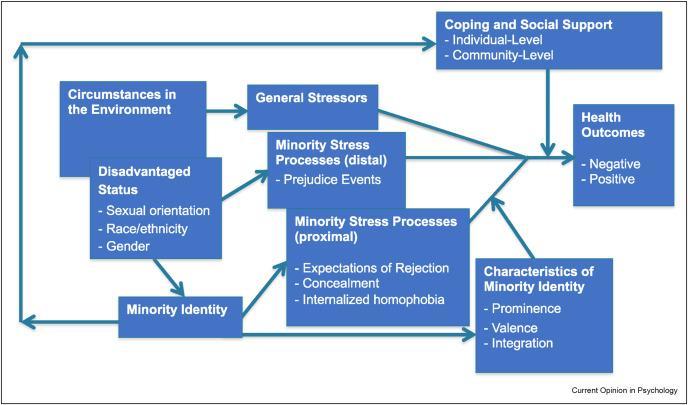
● LGBTQ+ individuals experience higher rates of chronic mental and physical health concerns related to internalized and externalized stigma, discrimination, and stress.
● As a result of these stressors, there are also higher rates of engaging with health behaviors that increase risk of certain cancers, including tobacco and alcohol use.
Minority Stress Theory
● Chronic stigma/discrimination affects healthcare engagement.
● Fear of mistreatment → avoidance of screening and follow-up care.
Minority stress contributes to:
● Psychological distress
● Medical mistrust
● Delayed care
● Worse quality of life during survivorship
Gender Minority Stress and Resilience Theory
Transgender and gender expansive specific stressors
Theory also describes unique resilience factors to identifying as transgender and/gender expansive that buffer against health disparities.
Resilience factors include: Self acceptance, community support, activism, and policy literacy.
LGBTQ+ Cancer Disparities
Screening & Early Detection
● Limited access to affirming healthcare
● Insurance barriers
● Lack of provider knowledge regarding needs for screening, especially for TGE patients
● Fear of discrimination
Mental Health Guidelines
● Higher rates of anxiety, depression, substance misuse impact prevention, screening, and survivorship.
● Lack of inclusive data contributes to gaps in evidence-based screening guidelines and affirming cancer care practices.
● Limited representation in research = continued inequities in cancer care.
LGBTQ+ Cancer Disparities
● Gay and bisexual men have a higher risk for anal cancer.
● Lesbian and bisexual woman are at higher risk for breast and cervical cancer.
● Transgender & gender expansive individuals are:
○ Less likely to be offered screening tests that are appropriate for their organs.
○ Less likely to be screened for breast, cervical, and colorectal cancer.
○ More likely to be diagnosed with cancer at later and more advanced stages than cisgender individuals.
LGBTQ+ Breast & Chest Cancer
● Lesbian, bisexual, and transgender individuals were less likely to receive mammograms compared to cis and heterosexual individuals.
● Black & Latina/Latine lesbian identifying woman were less likely to receive mammograms compared to White and heterosexual woman.
● Assigned male at birth (AMAB) transgender woman receiving hormone replacement therapy (HRT) are at higher risk for development of breast/chest cancer than cisgender men.
Intersectionality
○ LGBTQ+ patients of color experience higher rates of discrimination, medical mistrust, and greater barriers for screening & treatment access.
Breast & Chest Cancer
Impacts
Gender Expression
● Sexual identity
● Gender identity
● Self-esteem & sense of self
● Mastectomy
● Lumpectomy
● Scarring
● Hair loss (including facial hair)
● Weight changes
Gender Affirming Assumptions
● Chest and physical changes due to treatment may intersect with gender dysphoria/ euphoria
● Providers may make assumptions about treatment options
Mental Health
Research indicates that LGBTQ+ cancer survivors often experience worse psychological and social outcomes including:
● Higher rates of distress
○ Gaps in support, identity incongruent environments, etc.
● Reduced social support
○ Higher rates of rejection
● Lower quality of survivorship care
○ Lack of tailored support
Unique Caregiving Experiences:
● LGBTQ+ patients may already carry caregiving burdens
● Chosen family/support network may lack recognition in medical system.
Disclosure & Safety
Disclosure is a personal and subjective experience.
Benefits in cancer care:
● More accurate and precise treatment for physical and emotional needs
● More likely to receive care that is affirming
Risk to disclosure in cancer care:
● Discrimination
● Invalidation
● Emotional exhaustion
LGBTQ+ patients often engage in “selective disclosure”
Mental Health Support
How to Find a Provider Assess Affirming Care Fit & Safety
● Utilize LGBTQ+ provider directories:
○ GLMA, WPATH, Outcare Health.
● Seek referrals from organizations & community members
● Look for providers who openly states they are LGBTQ+ affirming
● Inquire about experience & training
● Look for inclusive forms and language
● Check for use of pronouns, name, nonjudgmental approach, ability to apologize for mistakes.
● Pay attention to office/healthcare environment.
● Consider how provider makes you feel
○ Safe, respected, heard
● Clinical competence does not always equal affirming care.
How to Help: Clinical Level
● Inclusive documentation
● Neutral language
● Include all forms of support in caregiving conversations
● Advocacy and education on insurance barriers
● Avoid assumptions about identity, wants, relationships etc.
● Reduce gender based signage
● Focus on organs versus gender versus sex
How to Help: Community Level
● Advocate for inclusive policies and practices in healthcare
● Normalize asking and using correct names and pronouns
● Avoid assumptions about gender, sexuality, and relationships
● Offer specific help and resources
● Educate yourself and others
● Include chosen family
● Avoid making the patient educate you and others
Presentation Summary
LGBTQ+ Cancer
Disparities
LGBTQ+ individuals experience cancer disparities across the full continuum of care:
Minority Stress
Affirming Care Improves Outcomes
● Screening
● Diagnosis
● Treatment
● Survivorship
Key influence of increased distress & delayed care
● Psychological burden
● Reduced engagement in care
● Overall worse experiences throughout cancer care continuum.
Anatomy-informed, and culturally competent care improves outcomes
● Trust
● Early detection
● Treatment engagement
● Survivorship wellbeing for LGBTQ+ patients
References
American Cancer Society. (2024). Cancerfacts&figures2024. American Cancer Society
American Cancer Society. (2024). Lesbian,gay,bisexual,transgender,queer/questioning,intersex,asexual(LGBTQIA+)peopleandcancerfactsheetfor healthcareprofessionals[Fact sheet]. American Cancer Society PDF Fact Sheet
Boehmer, U., Miao, X., Ozonoff, A., & Winter, M. (2011). Cancer survivorship and sexual orientation. Cancer,117(16), 3796–3804. https://doi.org/10.1002/cncr.25950
Casey, L. S., Reisner, S. L., Findling, M. G., Blendon, R. J., Benson, J. M., Sayde, J. M., & Miller, C. (2019). Discrimination in the United States: Experiences of lesbian, gay, bisexual, transgender, and queer Americans. HealthServicesResearch,54(S2), 1454–1466. https://doi.org/10.1111/1475-6773.13229
Fobair, P., Stewart, S. L., Chang, S., D’Onofrio, C., Banks, P. J., & Bloom, J. R. (2006). Body image and sexual problems in young women with breast cancer. Psycho-Oncology,15(7), 579–594. https://doi.org/10.1002/pon.991
Fredriksen-Goldsen, K. I., Kim, H.-J., Barkan, S. E., Muraco, A., & Hoy-Ellis, C. P. (2013). Health disparities among lesbian, gay, and bisexual older adults: Results from a population-based study. AmericanJournalofPublicHealth,103(10), 1802–1809. https://doi.org/10.2105/AJPH.2012.301110
Hendricks, M. L., & Testa, R. J. (2012). A conceptual framework for clinical work with transgender and gender nonconforming clients: An adaptation of the Minority Stress Model. ProfessionalPsychology:ResearchandPractice,43(5), 460–467. https://doi.org/10.1037/a0029597 Institute of Medicine. (2011). Thehealthoflesbian,gay,bisexual,andtransgenderpeople:Buildingafoundationforbetterunderstanding. National Academies Press. https://doi.org/10.17226/13128
Kamen, C. S., Jabson, J. M., Smith, A., & Boehmer, U. (2014). Same-sex couples matter in cancer care. CurrentOncologyReports,16(1), 1–8. https://doi.org/10.1007/s11912-013-0312-4
Mehta, T. S., Thompson, J., Applegate, J. M., & Wahab, R. A. (2023). Cultural competence in the care of LGBTQ+ patients: A primer for breast/chest centers. JournalofBreastImaging,5(4), 473–479. https://doi.org/10.1093/jbi/wbad012
References
Meyer, I. H. (2003). Prejudice, social stress, and mental health in lesbian, gay, and bisexual populations: Conceptual issues and research evidence. Psychological Bulletin,129(5), 674–697. https://doi.org/10.1037/0033-2909.129.5.674
National LGBT Cancer Network. (n.d.). LGBTQI+cancerfactsandresources. National LGBT Cancer Network
Power, R., Ussher, J. M., Perz, J., Allison, K., & Hawkey, A. J. (2022). “Surviving discrimination by pulling together”: LGBTQI cancer patient and carer experiences of minority stress and social support. FrontiersinOncology,12, 918016. https://doi.org/10.3389/fonc.2022.918016
Ussher, J. M., Allison, K., Perz, J., Power, R., & The Out with Cancer Study Team. (2022). LGBTQI cancer patients’ quality of life and distress: A comparison by gender, sexuality, age, cancer type and geographical remoteness. FrontiersinOncology,12, 873642. https://doi.org/10.3389/fonc.2022.873642
Ussher, J. M., Allison, K., Power, R., Ryan, S., Perz, J., & The Out with Cancer Study Team. (2023). Disrupted identities, invisibility and precarious support: A mixed methods study of LGBTQI adolescents and young adults with cancer. BMCPublicHealth,23(1), 1837. https://doi.org/10.1186/s12889-023-16739-9
Ussher, J. M., Power, R., Allison, K., Hawkey, A. J., & Perz, J. (2024). “A sweating moment”: Impact of disclosure in cancer care on LGBTQI patient satisfaction. Journal ofCancerSurvivorship,20, 633–648. https://doi.org/10.1007/s11764-024-01677-1
Quinn, G. P., Sanchez, J. A., Sutton, S. K., Vadaparampil, S. T., Nguyen, G. T., Green, B. L., Kanetsky, P. A., & Schabath, M. B. (2015). Cancer and lesbian, gay, bisexual, transgender/transsexual, and queer/questioning (LGBTQ) populations. CA:ACancerJournalforClinicians,65(5), 384–400. https://doi.org/10.3322/caac.21288
Seelman, K. L., Colón-Diaz, M. J. P., LeCroix, R. H., Xavier-Brier, M., & Kattari, L. (2017). Transgender noninclusive healthcare and delaying care because of fear: Connections to general health and mental health among transgender adults. TransgenderHealth,2(1), 17–28. https://doi.org/10.1089/trgh.2016.0024
U.S. Department of Health and Human Services, Office of Disease Prevention and Health Promotion. (2020). HealthyPeople2030:Lesbian,gay,bisexual,and transgenderhealth. Healthy People 2030
Valentine, S. E., Shipherd, J. C., & Kauth, M. R. (2017). Effects of minority stress and resilience on mental health among transgender individuals. PsychologyofSexual OrientationandGenderDiversity,4(3), 328–339. https://doi.org/10.1037/sgd0000237
Wilkinson, L., & Radley, A. (2020). Cancer care experiences and needs of LGBTQ+ people: A systematic literature review. EuropeanJournalofCancerCare,29(6), e13270. https://doi.org/10.1111/ecc.13270