
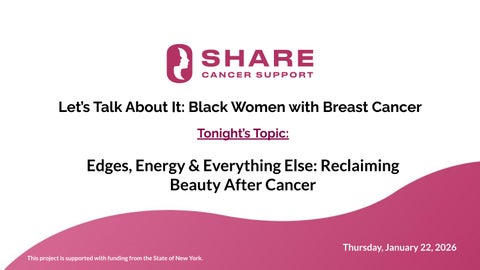
Lisa P. Nelson, LMSW,OSW-C
Megan-Claire Chase
ILC Breast Cancer Survivor, Breast Cancer Program Director
Host, Our BC Life Podcast

This session centered on the emotional, physical, and cultural complexities of redefining beauty and self-worth during survivorship throughthe lens of Black womanhood. We engaged in deeply reflective conversation about how cancer and its treatments disrupt identity, confidence, and the relationship with one’s body. Members discussed changes in skin tone, hair loss, joint pain, fatigue, and the emotional toll of continuing medication even while in remission. One participant shared how darkening skin significantly impacted her self-esteem due to colorism within the Black community, while others reflected on lifelong experiences of being perceived as “too dark” or “too light,” and how cancer reactivated those early wounds.
A recurring theme was the confusion of survivorship. Several participants noted that while treatment followed a clear routine, survivorship feels less structured and emotionally disorienting. One member shared that chemotherapy, while difficult, felt easier to navigate than the uncertainty that followed. This sparked discussion around survivorship as an “in-between” phase—no longer in crisis, yet still carrying physical and emotional aftershocks. Throughout the session, participants emphasized the importance of community, gratitude, and having a space where they did not need to “appear normal.”
The session concluded with reflections on beauty as something deeper than outward appearance. Participants challenged themselves and one another to acknowledge their beauty, strength, and lineage, emphasizing self-love, internal worth, and the ongoing work of soothing and healing the “little Black girl” within.
Participants expressed strong appreciation for the space, repeatedly noting how validating, timely, and necessary the conversation felt.
• Survivorship can feel more confusing than treatment — structure disappears, but the emotional work continues.
• Beauty after cancer is not just physical; it’s emotional, cultural, and deeply personal.
• Colorism and long-standing identity wounds often resurface during cancer and survivorship.
• Many survivors struggle with looking “normal” while still feeling tired, achy, and changed.
• Reclaiming the body means rebuilding trust and relationship, not forcing gratitude.
• Community creates space to be honest without pressure to perform strength.
• Learning to see and claim our own beauty is an ongoing practice, not a destination.