
THE FASHION CHAPTER
2026
An inside look at the first mover fashion companies leading the way, and the innovations and technologies that are driving the circular transformation of the industry. IN THIS
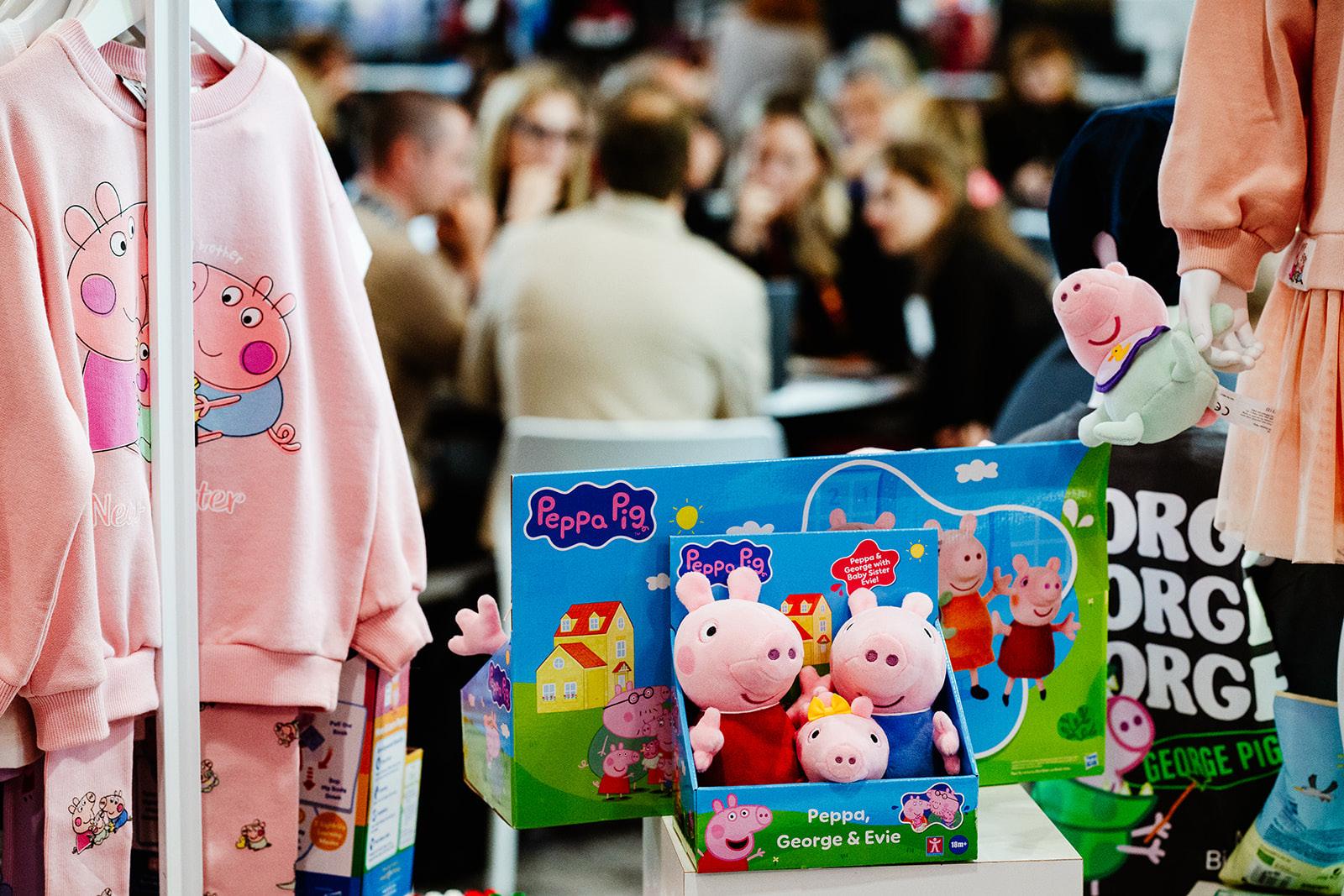

JOIN EUROPE’S LARGEST LICENSING SHOW
Meet the right partners, secure international deals and be in touch with European consumers.

Products of Change is a purpose-driven, not-for-profit membership organisation, working to drive and support sustainable change in the brand and licensing industry by turning ambition into action. Comprised of regularly updated educational resources and webinars, trade show activations, events, an annual conference, newsletters, and editorial publications, POC brings its ever-widening network together with the tools, guidance, and community to help you achieve your environmental goals within a supportive global network. To find out more about becoming a member, visit: productsofchange.com/membership



KATHRYN BRAND Editor and Content Manager









































with Sine Klitgaard Møller
with Jo Seddon and Lisa Ly
with Andrew Xeni
with Rick Ridgeway and Jay Gaines
with Helena Mansell-Stopher and Andrea Green
WELCOME
...to the Products of Change Fashion Chapter, where we hear from the fashion brands themselves navigating sustainability, and take a glimpse into what the future of the industry will look like.
Other than the food and drink industry, fashion and apparel is said to be the sector that the consumer is the most attuned and conscious of when it comes to sustainability.
Whether that is because clothes are an important part of our identity and how we express ourselves, or because ethical and environmental issues identified in fashion supply chains routinely pop up on media and news platforms, most consumers are at least somewhat conscious of where their clothes come from.
This, combined with mounting government legislation, particularly in the EU and California, is demanding more and more from the industry. It is demanding greater transparency, greater accountability, and greater impact management. And for this we need some imaginative innovation and some very smart tech.
In POC’s debut Fashion Chapter, we will take a look at just that: the companies doing the legwork, those first movers who are leading the way, and a look behind the scenes of apparel companies and the enormous amount of hard work and passion that are driving the change needed in the industry.
Because there can be no doubt that there is work to be done. Julia Redman, POC’s Ambassador for Fashion, founder of Buyers Eye, and lecturer at London University of the Arts, provides her two cents. She explained that the Covid pandemic was a real catalyst for many businesses in the fashion industry: “it gave us time to stop and think about what we were really doing and how we could do it better.”
But it also took a huge toll on supply chains, and many businesses have been struggling since, while consumers are ever more price conscious. “People are looking for alternative ways to get better value for money,” and this is resonating with both the ultra-fast fashion
retailers, as well as the second-hand market – opposing ends of the sustainability and ethical spectrum but united by the thrifty and price sensitive consumer.
As lecturer in fashion management at the University of the Arts, Julia is helping shape the next generation of apparel professionals – and sustainability is deeply embedded in the curriculum, said Julia. As she tells her students, but something that is equally applicable to anyone: “the power is in your hands. No single person can do this on their own, but collectively, if we’re all making the effort to change it will eventually start to make a difference.”
Because there is so much to be optimistic about. Even in the last couple of years, we have seen huge changes in the status quo of fashion business operations, and certain brands coming forward as leaders in the space, trialling new technologies that will transform the way we shop, consume, and dispose of our clothes.
So while this Chapter is an honest overview of the challenges very real companies are facing in sustainability, the hurdles and the stunted progress, it is also a celebration of the sheer brilliance, ingenuity and tenacity of the industry, as well as a very exciting look into what the best minds in fashion are shaping the industry to look like for the future.
A big thank you to all those who contributed their insights to this Chapter: Jamie Beck, Fabacus; Laura Bonareu, Hallotex/Organic Sound; Dov Brachfeld, H&M; Rob Caulfield, Teemill; Kyra Claeys, Erve; Roni Gamzon, BioFluff; Philippa Grogan, Nobody’s Child; Karen Hewitt and Sophie Wai, Character.com; Jessica Lenhart, US Polo; Lindsay Lorusso, Alexandra Lorusso, Carol Lovell, Material Rebellion; Simon Platts, CircKit; Jeremy Piercy, Shared Earth; Lara Pizzato, Amphico; Lizzy Ramsden, WRAP; Julia Redman, POC, Buyer’s Eye; Louisa Skevington, Natural History Museum; Adele Stafford, Worldly; Amy Tsang, The Mills Fabrica; Sam Tweedie, SEWN; Sophie Vaud, Colorifix; and Paul Wright, PDS Group



ON THE GROUND WITH THE FASHION COMPANIES
A look behind the scenes at the fashion brands and licensed apparel companies that are actively working to adopt sustainable change, and the progress they are making.
The fashion and licensed apparel companies that are doing sustainability well, are the ones that are embedding it into their modus operandi, with their efforts supported by top level and C suite buy-in. And it is becoming increasingly clear that this is helping those companies secure a much more resilient and future-proofed business.
“As a business, we’re sort of moving away from really looking at sustainability as an isolated thing and really embedding it into how we operate as a company,” said Karen Hewitt, who recently stepped back from Character. com, having co-founded the successful apparel retailer and licensee with her husband, Stephen Hewitt.
Kyra Claeys, quality and compliance manager at Erve, also a major licensed apparel company, concurs that “through this approach we hope to be more resilient in the long-term. We hope to be more stable and adaptable over time with our approach to always look for sustainable alternatives.”
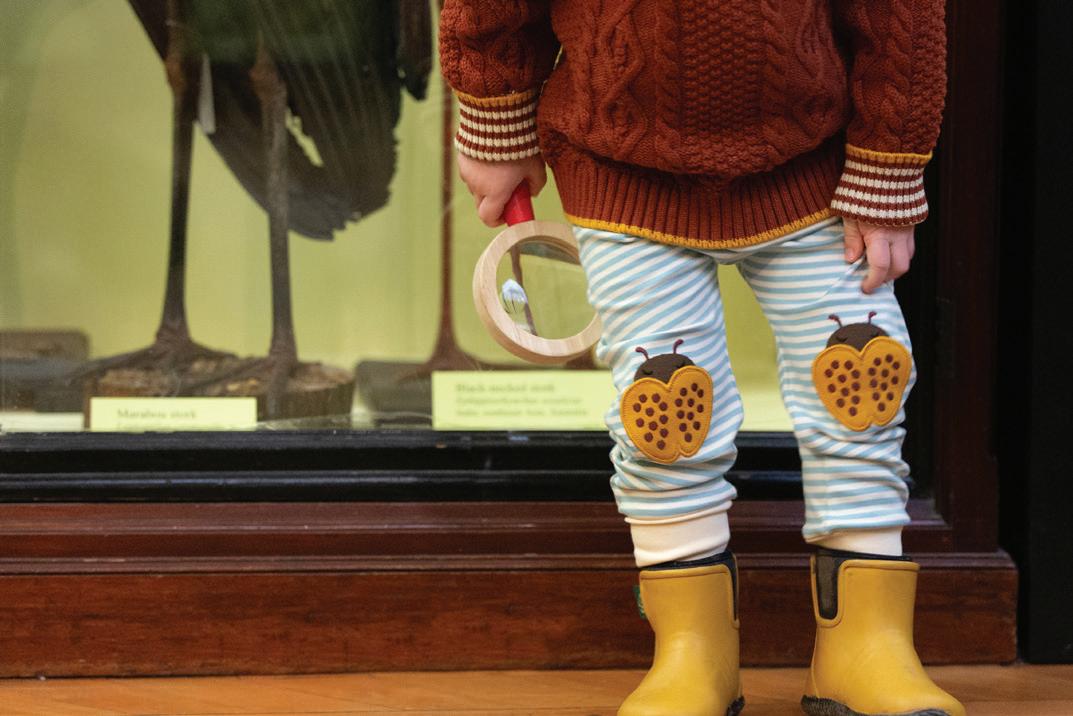
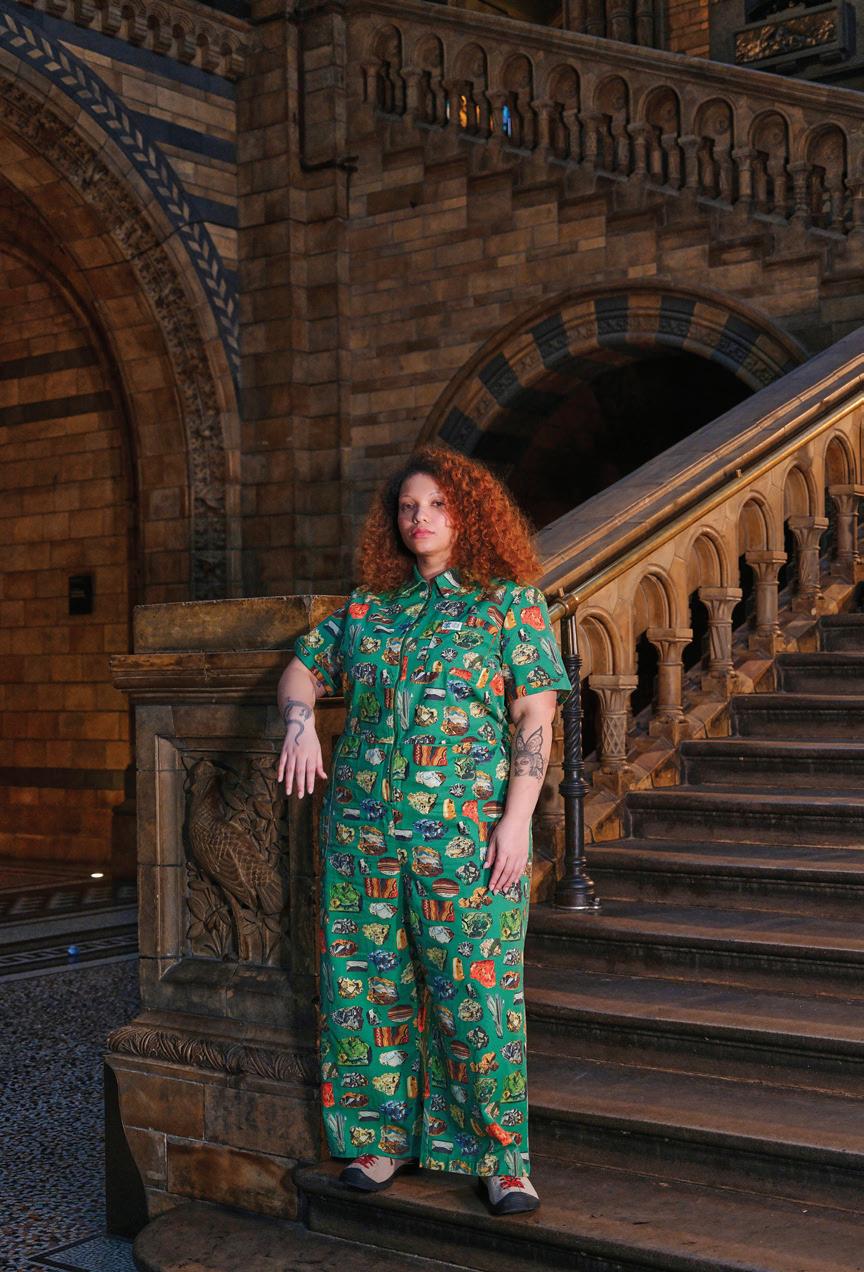
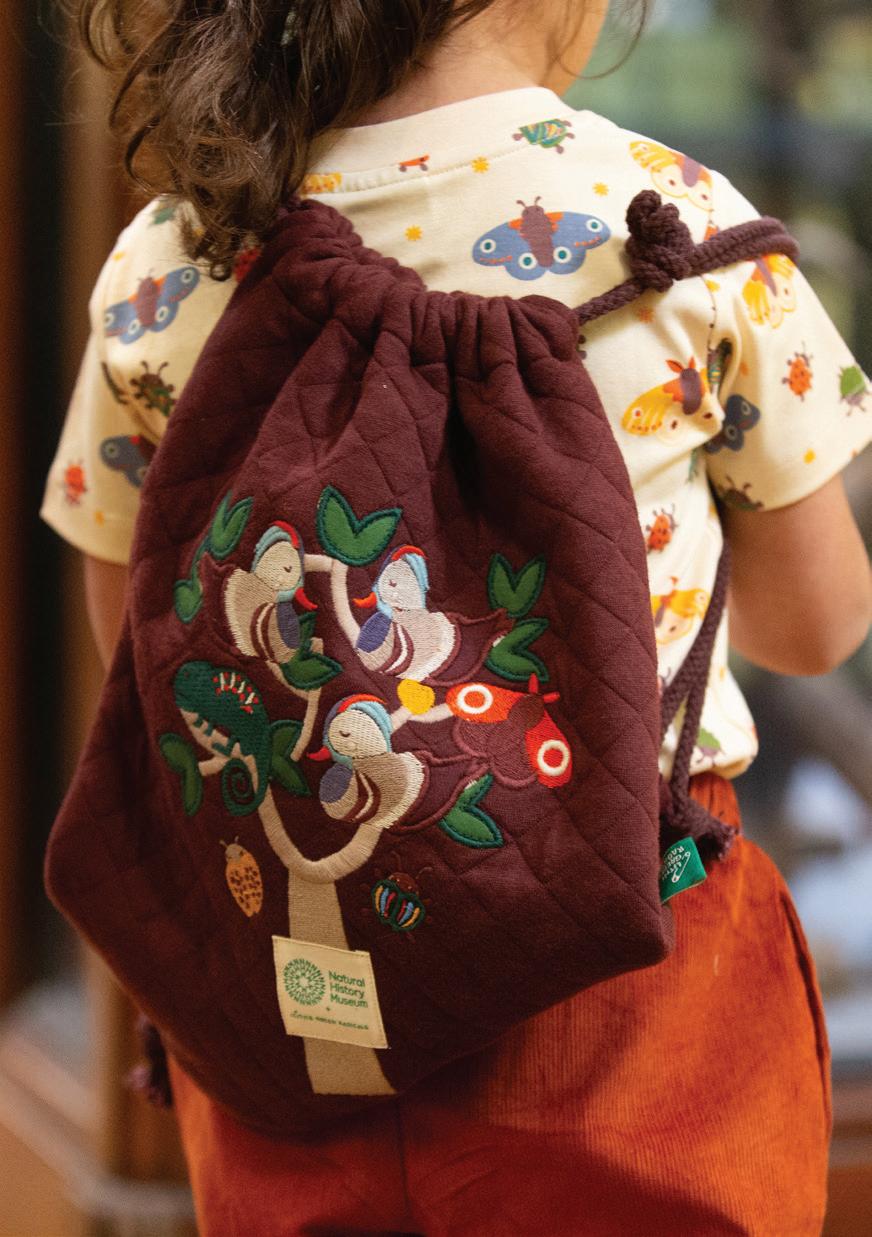
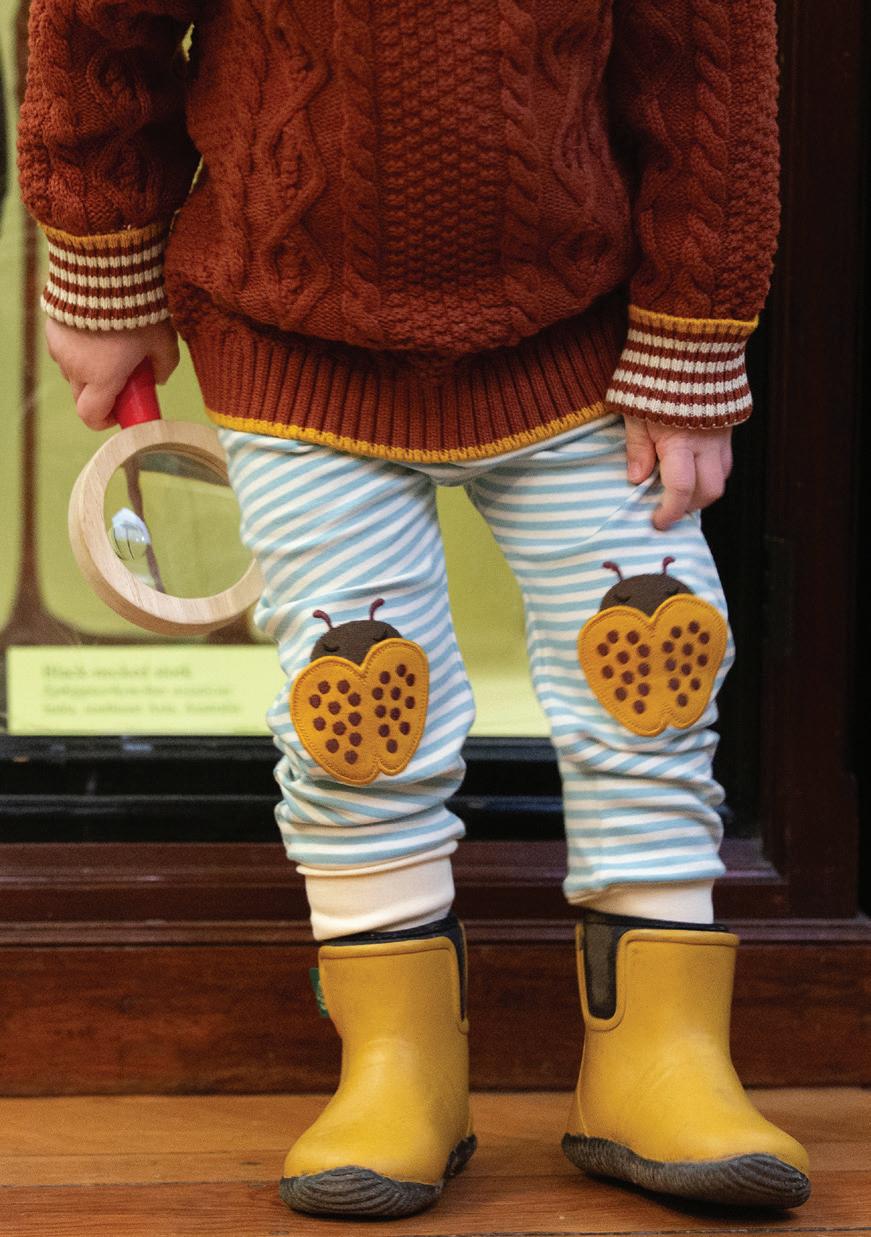
And this approach has led to some really stand-out, successful product for these companies – some beautiful examples of which come from the Natural History Museum. Through its collaborations with responsible apparel companies Little Green Radicals, Palava, and Lucy & Yak, the Museum has grown its apparel collection and introduced new audiences to its stunning archives of illustrations and message to admire and protect the natural world, while adhering to the Museum’s thorough sustainability guidelines. It’s new Little Green Radicals collection even includes a small repair kit with fabric patches to help extend the life of the garments as kids wear them for adventures.
Also bringing all its hard work in responsible sourcing together is U.S. Polo Assn., which will launch its USPA LIFE Polo Shirt globally for the spring-summer 2027 season, bringing together the best of the sustainable capabilities of each of its regional licensees, including recycled or


Lucy & Yak.
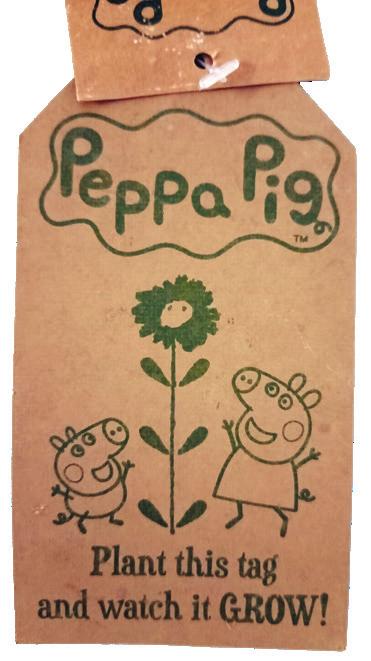
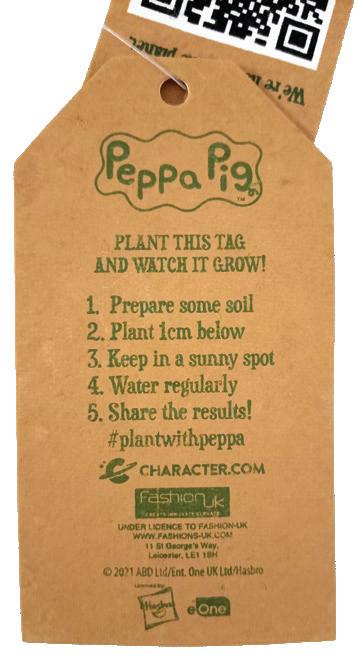
RIGHT: Character.com’s plant-able swing tags. Credit: Character.com.
BELOW: Erve is working to root sustainability into its licensed apparel.
Credit: Erve.

organic cotton, buttons and trim made of preferred materials, and a QR code on the swing tag to signpost its credentials. “As an icon born from the game, the U.S. Polo Assn. polo shirt is our most recognisable and bestselling product,” said Jessica Lenhart, director of sustainability at USPA Global/U.S. Polo Assn.
“The USPA LIFE Polo Shirt brings together the very best in sustainability from our partners around the world while maintaining the value and quality customers expect.”
While there are many beautiful examples of apparel where sustainability is at the front and centre of the product, it is not without its difficulties. Erve’s Kyra explained

ABOVE: Natural History Museum’s collection with Lucy & Yak. Credit:














that availability and lead times of more sustainable materials can prove challenging, as well as the “huge workload to collect data and proof for some of the sustainable materials used such as GOTS, GRS or RCS.”
But a challenge that came up again and again speaking to the brands and licensees, was of course cost. “Probably one of the biggest challenges still to date for us is actually balancing that sustainability versus accessibility to that core value customer who is our end customer,” and the price they are willing to pay, said Karen.
Not only that, but they are having to compete with the likes of ultra-fast fashion brands, whose “price is so attractive that most [consumers] forget they cared about sustainability,” explained Karen, and don’t comply with the same standards that established retailers and brands adhere to, “operating however they want with disregard for the things that brands like us hold dear,” added Philippa Grogan, sustainability lead at Nobody’s Child.
Defined by mass-produced, low-quality, low-priced clothing, fast fashion is responsible for 10% of the global annual carbon footprint, according to Uniform Market. And while it is a $150.82 billion industry (per Uniform Market), much of the clothing has an incredibly short life span and is routinely linked with non-compliance to safety standards or chemical usage.
“How do we explain to the consumer that we’re doing it correctly?” asked Karen, wondering if licensors that have sustainability strategies should simultaneously licence their brand to these ultra-fast fashion platforms.
But while such sites may be unbeatable on price – an undoubtedly crucial consideration for consumers – it is not the only consideration.
“Sustainability needs to feel relevant in a customer’s everyday life,” said Dov Brachfeld, sustainability manager at H&M. “It’s about turning broad ambitions into clear, everyday benefits – in materials, products designed to last, and making resale easier to access.” And that has to be the key to winning over the wallet of the consumer; more often than not, sustainability is not enough to sell a product on its own.
Combining that mindset of sustainability as added value for the consumer, with established, trusted relationships with suppliers, while working on a sustainability plan together with your supply chain, and developing economies of scale with industry partners, all continues to make the more sustainable option that much more affordable.
“We see our extended role in the markets where we operate – supporting jobs, working conditions, energy system development…” commented Dov. “And we work closely with our suppliers, co-invest where needed, supporting their transitions over time.”
Which is why supply chain transparency is so crucial – and a topic of much focus across the industry right now due to the data being demanded by regulatory bodies. Worldly, a new partner of Products of Change, is supporting brands and licensees on just that, bringing standardisation to the reporting process through its Higg Index, governed through its platform, Cascale.

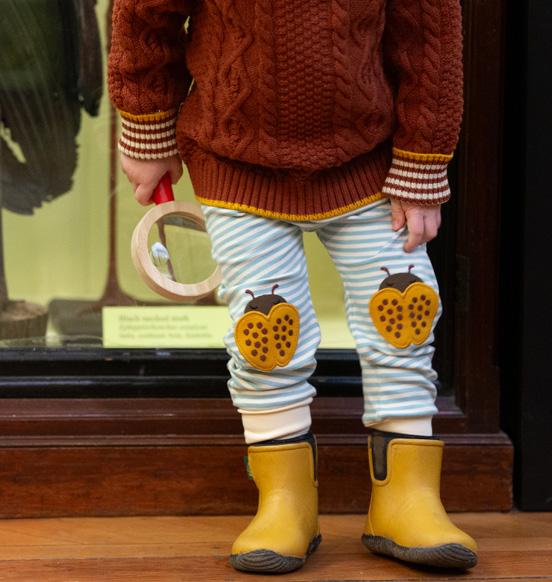
This is something Character.com thought about in its own collaboration with the Natural History Museum. Creating a more sustainable children’s apparel range with the Museum, meant having to price the collection slightly higher than its other ranges to cover the costs, “so we wanted to give something back in terms of perceived value,” which led to the company innovating its plasticfree paper packaging into a fold out colouring sheet. “So not only is the packaging not plastic, but it is also dual use,” said Karen. The company has also experimented with plant-able seed swing tags, to again, add to the value and storytelling of the product and of the work that has gone into it to make it a more conscious choice for the consumer.
“Licensed apparel is one of the most structurally difficult areas of the fashion industry for supply chain oversight,” explained Adele Stafford, chief growth officer, Worldly, but “standardised data means licensees can be held to consistent, measurable performance expectations rather than vague commitments – and licensors can track progress across an entire licensed portfolio with clarity.” Not only does this allow for visibility, but also better business resilience and preparedness, and confidence to communicate sustainability efforts with precision, during a time when greenwashing is a valid and feared accusation. The greater scrutiny around greenwashing is nonetheless welcome to many in the industry. While it may have reduced some of the noise, it’s also raised the bar – “what does come through today tends to be more clear and ultimately more trustworthy,” said Dov. “We try to avoid vague language and stick to facts about our actions and progress and let that speak for itself.”
He added: “With that in mind, if we can show that we can be profitable while reducing emissions and contributing positively to people’s lives, then that’s meaningful progress –even if it’s a complex journey.
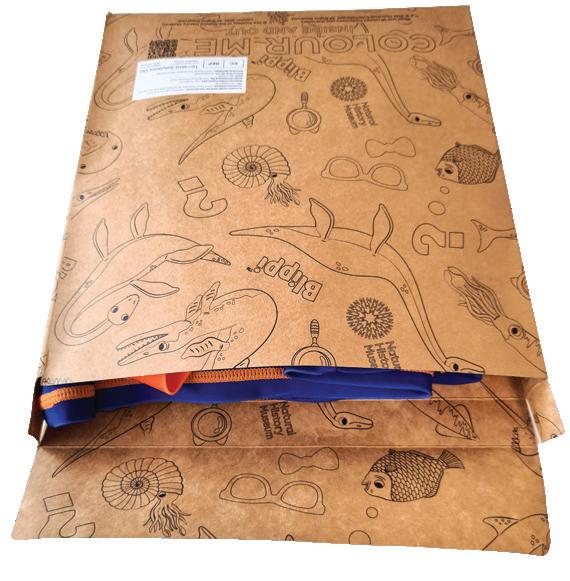
RIGHT AND BELOW: Natural History Museum’s new collection with Little Green Radicals. Credit: Tim Mitchell.
Legislation is an important a topic as ever and is a huge focus of the fashion industry right now, especially when it comes to data reporting.
LEGISLATING FASHION
While many see it as a challenge and a hindrance, the apparel companies leading when it comes to sustainability are seeing legislation as an opportunity to gain a better understanding – and therefore control – of their supply chains, as well as recognising the opportunities for differentiating and futureproofing.
As Simon Platts, co-founder of SP&KO and chief implementation officer at CircKit, said: “things tend to work smarter and better when there are some rules in play.”
The biggest and most all-encompassing legislation is coming out of the European Union, through the European Green Deal. Though this body of work has many focus areas, the largest hitting the fashion industry are:
1. Eco-design for Sustainable Product Regulation (ESPR)
2. Corporate Sustainability Reporting Directive (CSRD)
3. Corporate Sustainability Due Diligence Directive (CSDDD)
4. Extended Producer Responsibility (EPR)
5. EU Empowering Consumers Directive (EmpCo)
6. Uyghur Forced Labor Prevention Act (UFLPA)
7. New York Fashion Act
ECO-DESIGN FOR SUSTAINABLE PRODUCTS REGULATION (ESPR)
The regulation aims to ensure product durability, reusability, recyclability, and therefore increased circularity. A key component of this is digital product passports (DPPs). Fabacus details some of the latest updates:
■ ESPR is moving from concept to reality, becoming real, enforceable requirements, with textiles being one of the first priority categories.
■ From July 2026, large companies will be banned from destroying unsold textiles and footwear.
■ Standardised ways to measure product performance, including durability, repairability, and recyclability are being introduced. Clear scoring systems and labels are in development.
■ DPP core requirements are being refined as: product ID, manufacturer information, sustainability metrics, repair data, substances of concern, and regulatory information
Key dates:
EU aiming for substantial market compliance by 2030 for prioritised categories (garments, footwear, furniture, electronics, chemicals, paints, mattresses).
The first working plan will define specific requirements for these categories with expected compliance required by 2027.
EU DISCLOSURE DIRECTIVES
Regulation is effectively setting the data agenda, reports Adele Stafford, chief growth officer at Worldly, who takes us through the details:
The EU Corporate Sustainability Reporting Directive (CSRD), the Corporate Sustainability Due Diligence
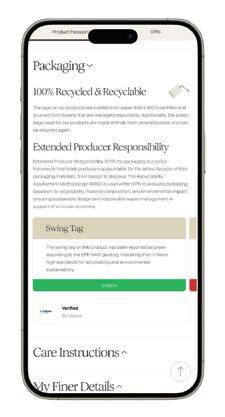
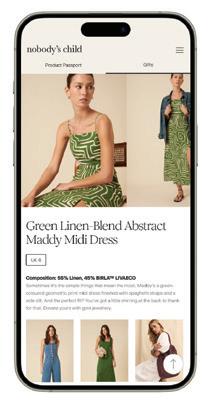
BELOW: Digital Product Passports (DPPs) are a major part of ESPR legislation. Credit: Nobody’s Child.
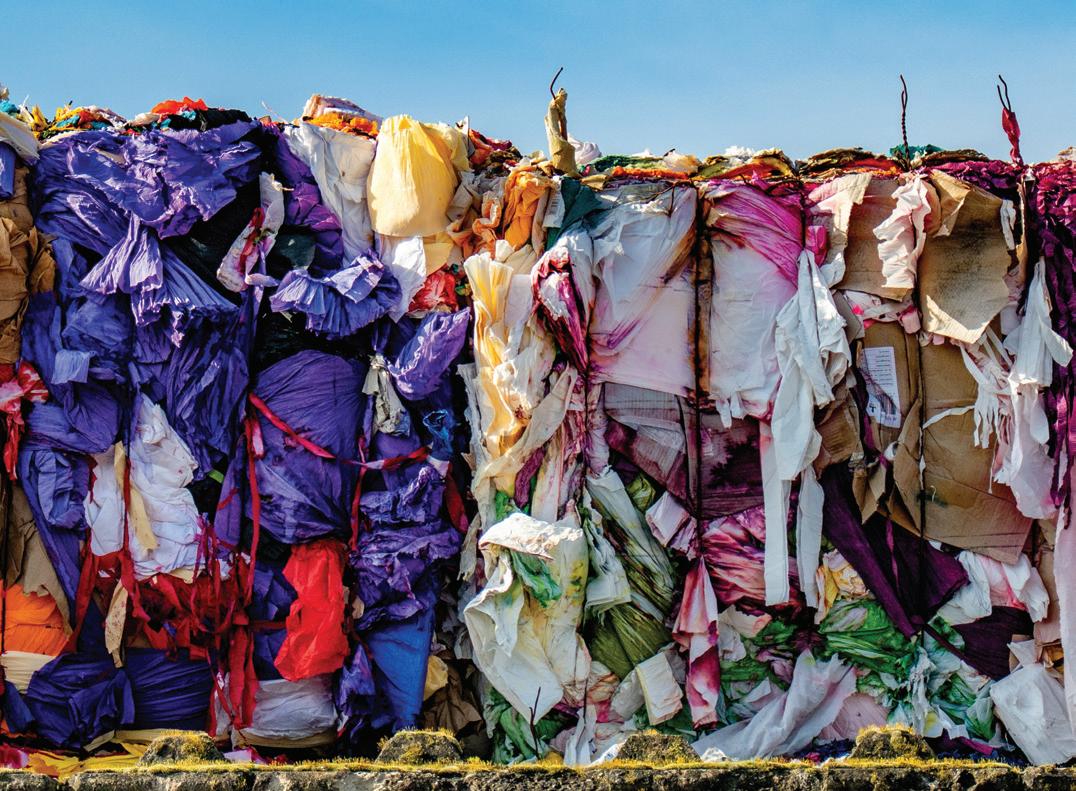
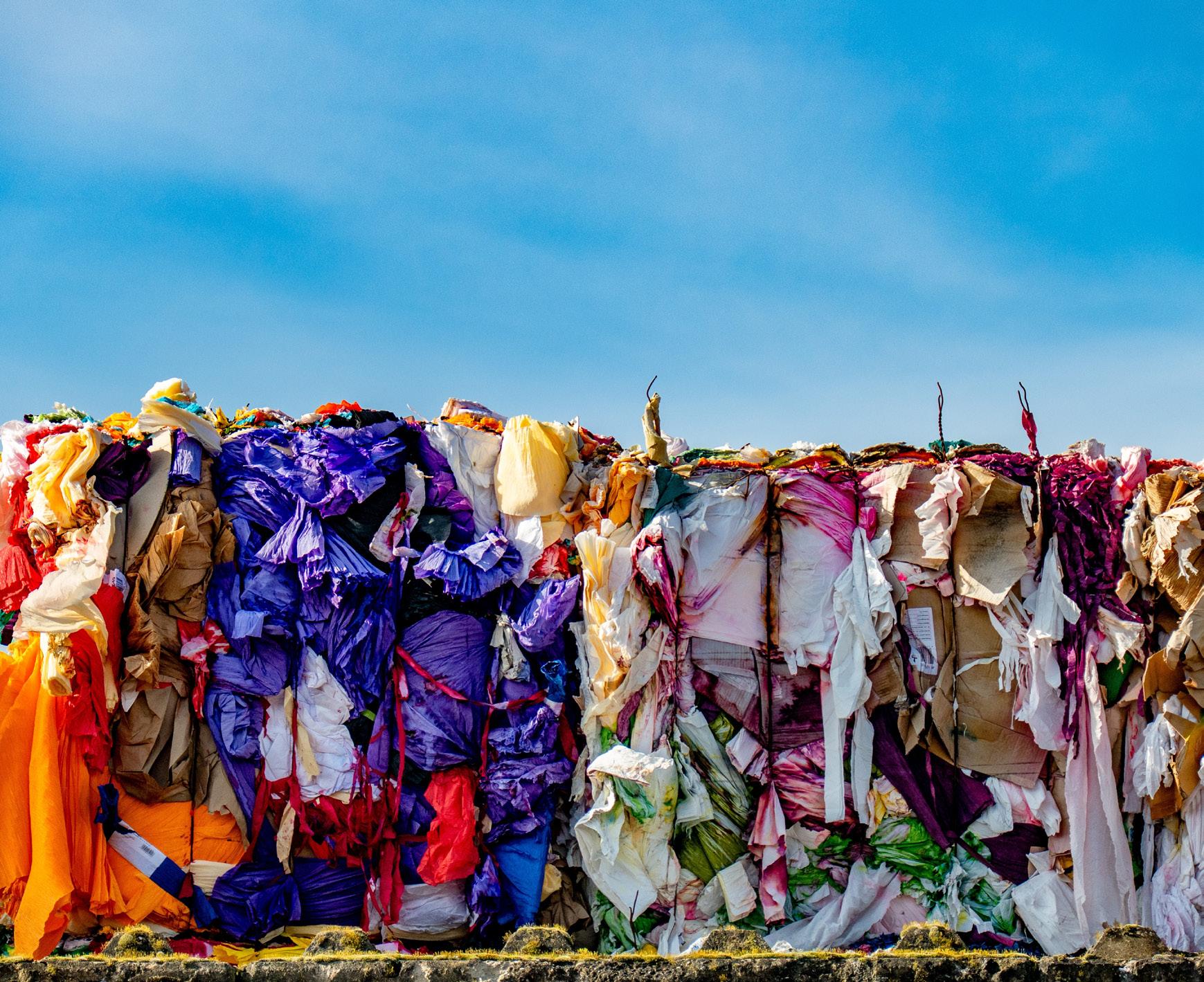
ABOVE: Legislation is attempting to tackle the huge amounts of waste currently caused by the fashion industry. Credit: Shutterstock.
Directive (CSDDD), and a growing body of sector-specific legislation are creating detailed, mandatory disclosure requirements that cascade down the supply chain. And how far that reach extends is the part that catches a lot of companies off guard. These regulations don’t stop at tier 1. They push into tier 2, tier 3, and in some cases all the way to raw material origin – to the farms, the smelters, the chemical suppliers, the spinning mills. That’s a fundamentally different data ask than what most brands have historically been built to answer.
Estimates only offer a limited view. Deeper, more specific, primary data gives a fuller picture: energy consumption by source, water withdrawal and discharge volumes, scope 3 emissions by category, and social impact data well beyond tier 1.
For licensed apparel, the implications are especially sharp. A licensor may have limited contractual leverage over the supply chain choices of a licensee – yet the regulatory and reputational obligations roll up to the brand on the label. Having a platform like Worldly that standardises what’s collected and how, makes it possible to set and enforce data requirements across a licensed portfolio, without negotiating bespoke audit programmes with every licensee.
EXTENDED PRODUCER RESPONSIBILITY (EPR)
EU EMPOWERING CONSUMERS DIRECTIVE (EMPCO)
The EmpCo Directive is being put in place by the EU to better protect consumers against greenwashing by shoring up rules around sustainability claims and product information.
Applying across all business to consumer communications, not only does EmpCo consist of restrictions on greenwashing and sustainability labelling, but also compels traders to provide information on durability and repairability of their products, and prohibits early obsolescence where products are designed to have a limited life span to encourage repeat purchases.
The UK Green Claims Code, developed by the Competition and Markets Authority (CMA), ladders up to this same piece of legislation. As a business, you need to be sure your green claims are not misleading.
Key dates:
EmpCo entered into force in March 2024 and EU member states must have transposed the rules into their national law by 27 March 2026. The regulations become fully applicable to businesses from 27 September 2026.
The UK Green Claims Code was published as guidance for businesses in September 2021, and active enforcement began in early 2022. As of April 2025, the CMA has been able to fine businesses directly for breaches in the code.
INTERNATIONALLY
EPR is a core component of the European Union’s broader Circular Economy Action Plan (CEAP), which aims to reduce waste and enhance product sustainability. Under the CEAP, the directives cut across four different areas:
■ Waste Framework Directive (2008/98/EC): Establishes minimum requirements for EPR schemes across member states, including financial responsibility for producers.
■ Packaging and Packaging Waste Directive (94/62/EC): Regulates packaging waste and includes EPR measures for packaging producers.
■ Directive on Waste Electrical and Electronic Equipment (WEEE) (2012/19/EU): Establishes EPR for producers of electrical and electronic equipment.
■ Single-Use Plastics Directive (2019/904): Implements EPR obligations for producers of certain plastic products, such as plastic bags. Outside of mainland Europe, the UK also has its own version of EPR, which mirrors much of the EU regulation, with a particular focus on packaging, as it works to ensure that producers cover the full responsibility of managing the waste from their packaging, encouraging more sustainable practices and for producers to reduce, eliminate and fund the systems to recycle end-of-life materials.
While the EU, closely followed by the UK, are leading the way for large swathes of environmental legislation, that is not to say there isn’t plenty more going on across the globe.
United States:
● SEC Climate Disclosure Rule (2025 start) requires large public companies to report climate-related financial risks, GHG emissions (Scope 1 & 2 mandatory, Scope 3 if material), and climate-related targets.
● The Uyghur Forced Labor Prevention Act in the US, places the burden of proof on brands to demonstrate that goods were not produced using forced labour in specific regions.
● New York Fashion Sustainability and Social Accountability Act requires fashion retailers and manufacturers to disclose environmental and social due diligence, map their supply chains, protect the rights of their workers, and set environmental impact targets.
Japan: TCFD-aligned disclosures mandatory for listed firms.
Australia: Mandatory climate reporting aligned with ISSB proposed from FY2024/25.
China & Hong Kong: Exchanges requiring TCFD/ISSB-aligned ESG disclosures for listed companies.
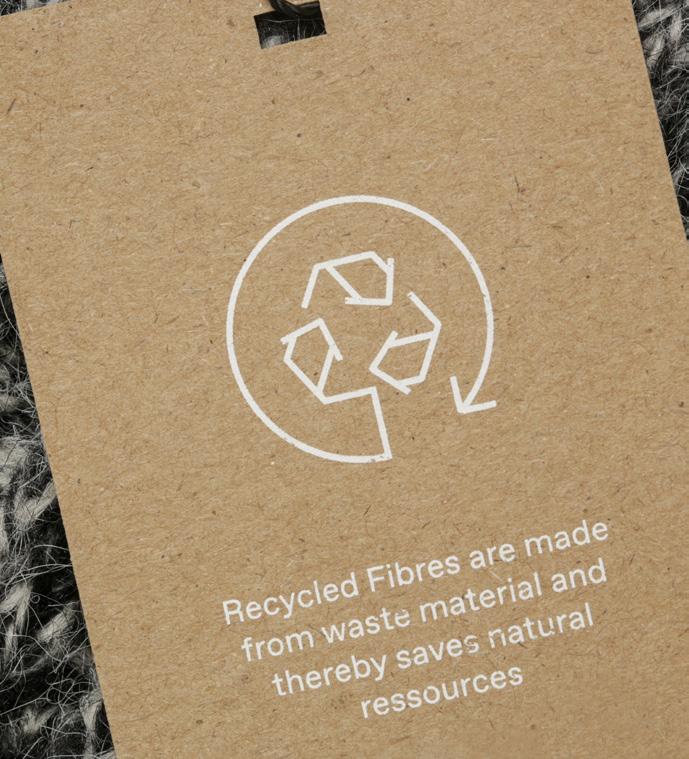
RIGHT: Recycled materials will begin to be prioritised. Credit: Shutterstock.
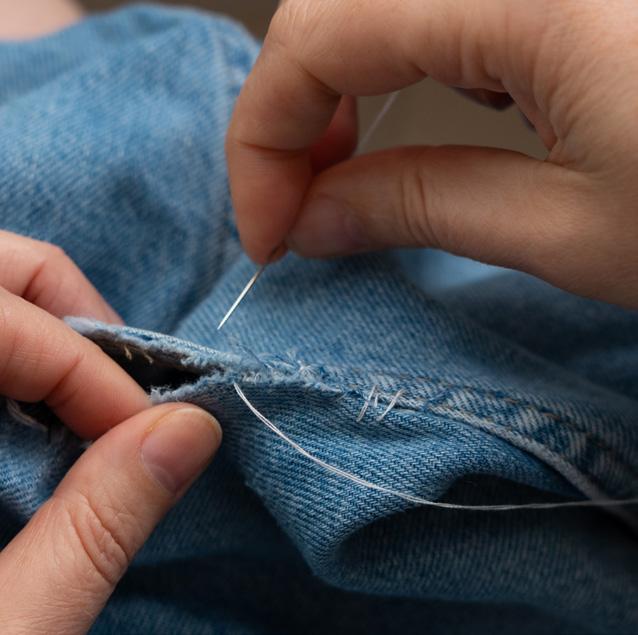
BELOW: Repairability and extending the life of garments counters early obsolescence. Credit: Shutterstock.
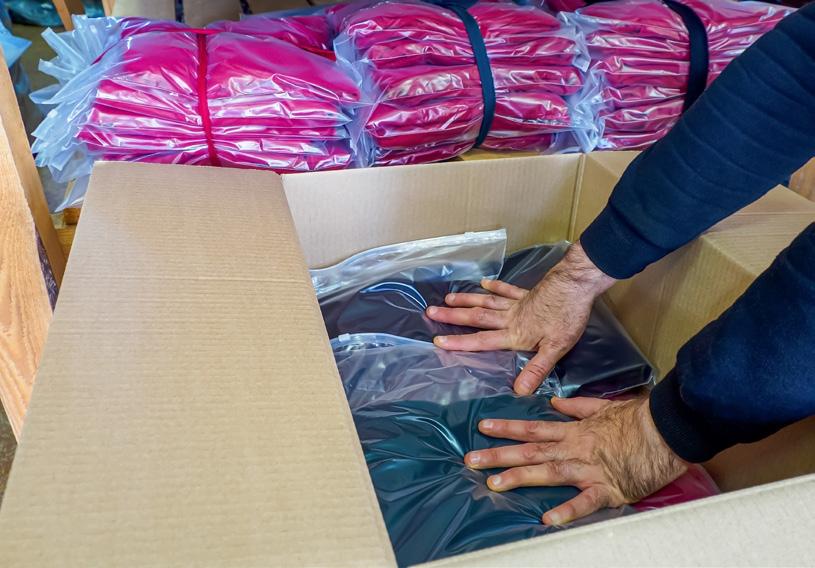
BELOW: Packaging is tackled by EPR legislation, encouraging recyled and minimised materials. Credit: Shutterstock.

INNOVATION SPOTLIGHT
At POC, we like to keep our fingers on the pulse of some of the most exciting and relevant innovations for the industry, and here is your line-up of what most excites us in fashion right now.
Something humans are wonderful at is ingenuity and invention – of new technology, new ways of doing things, and new materials that we can work with to better suit our needs.
And with legislation demanding those solutions sooner rather than later, organisations such as The Mills Fabrica are working closely with innovators to scale their solutions and connect them with the brands that need them. Products of Change has partnered with the Mills Fabrica to support them in this work, and connect them with our Community of brands across the licensing industry.
Speaking to Amy Tsang, head of Europe at the Mills Fabrica, she explained that it is legislation that is guiding the types of innovations that are coming to the market right now –particularly in the way of circularity and recyclability as brands are being asked about the end-of-life pathways of their products.
She added that the “forever chemicals” PFAs are also coming under particular scrutiny both in public opinion and
BIOFLUFF

BioFluff is a biomaterials startup based between Paris, New York, and London, creating bio-based alternatives to fur, shearling, plush, and other fluffy textiles for the fashion, toy and consumer products industry.
Founded in 2022 by a team of entrepreneurs and material engineers, BioFluff develops next-generation soft materials designed to combine premium tactile performance with a lower-impact, animal-free and petroleum-free composition.
Since launching with Stella McCartney at Cop28, BioFluff has worked alongside a number of brands, particularly
in regulations, and so “toxic-free” products and coatings are also seeing a surge. This was something the Mills has been showcasing in its most recent exhibition ‘Performance without Toxicity’, a display of some of the brands and innovations adopting PFA- or synthetic-free solutions for their performance wear. The exhibition shows that the breadth and range of solutions do exist, said Amy: “Because I think now what we’re starting to discover is quite scary; it’s not only harming the planet, but also its harming human health.”
But, Amy adds, while “there is a lot of appetite for it, the real challenge is how to transform that initial spark into real impact,” which is where brands need to invest in and work closely alongside the innovators to scale their solutions and develop them for their market requirements. The success stories out there have been through years of R&D – it doesn’t happen overnight, and it’s the brands’ input and testing that are the essential ingredient in making them happen.
Simon Platts, founder of SP&KO and chief implementation officer at CircKit, shared something similar: “There is an industry that needs things, and then there is a group of people that have created tools and solutions that are needed by that industry. Sometimes they don’t quite know how to talk to each other.” But the industry needs to see them as value adders rather than costs or hassle, he said.
So for your dose of inspiration and insight into some of the changemaker innovators out there.
in the premium space, including Louis Vuitton (as featured in a recent New York Times article), Martine Rose, JNBY, Arcs London, Balsais, Collina Strada, and more.
Offering both plant fibre solutions from hemp, flax, and nettle, as well as 100% bio-based PLA made from corn polymers, BioFluff offers a range of solutions, feels and aesthetics to suit.


ABOVE: BioFluff’s Flax Blend EcoFur collection with Croquis (JNBY).
BELOW: Product shots of BioFluff’s collection with Balsais. Credit: All images courtesy of BioFluff.
AMPHICO
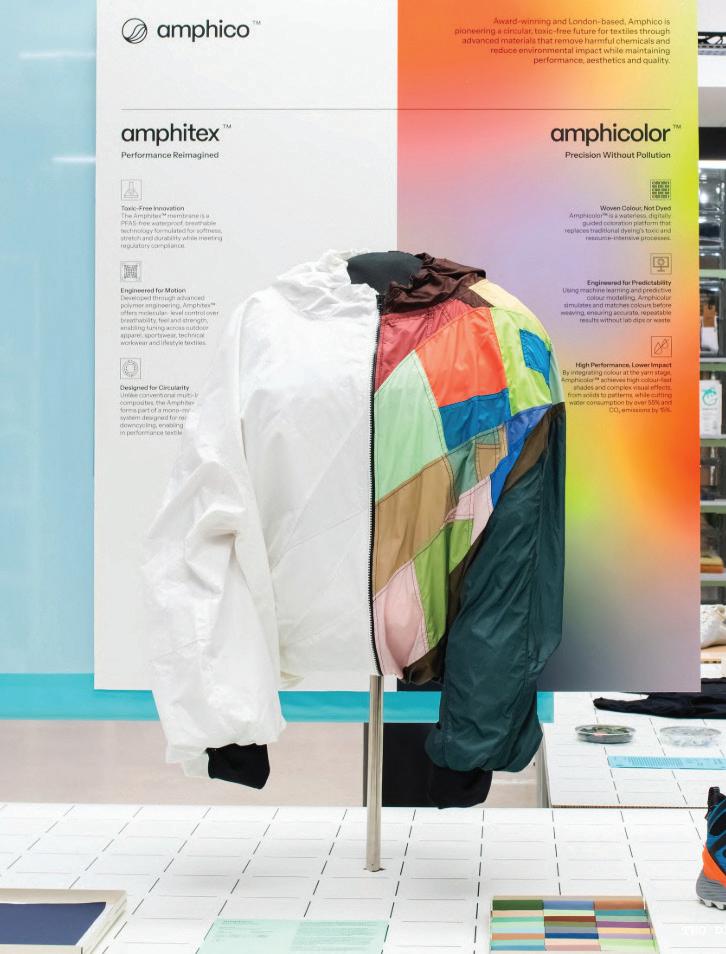
Amphitex™ is a 100% recyclable waterproof breathable membrane that achieves its performance without PFAS or any persistent toxic chemistry. The Amphicolor™ platform uses predictive colour intelligence to model how different weave geometries will render specific colour outputs, allowing precise colour targeting without any wet processing. The result is fabric where colour is a structural property of the weave. Amphicolor™ and Amphitex™ are relevant across sportswear, technical outerwear, and fashion. Any category that demands colour precision, performance durability, or is facing pressure to move away from harmful chemistries is a natural fit.
MATERIAL REBELLION
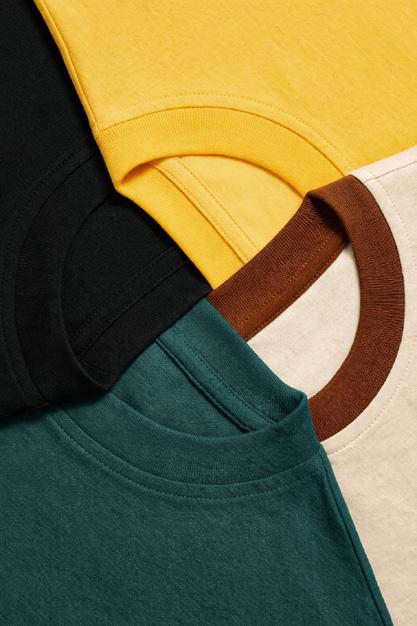
Powered by its proprietary design technology, Material Rebellion works with ethical factory partners to capture cutting-room offcuts and end-of-roll fabrics and reimagine them as premium garment blanks, and scalable, merchready collections.
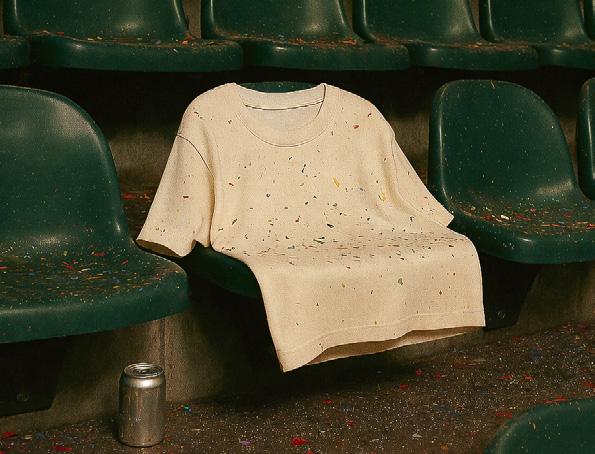

With roots in music and culture-led merch, Material Rebellion’s model is white-label and private-label ready, enabling brands, artists, and enterprise partners to integrate circular production into their own collections, by treating waste not as scrap, but as a commodity and a valuable resource to be maximised. Through MR Intelligence™, Material Rebellion’s traceability and allocation system, it is ensured that circular production is structured, measurable, and audit-ready – not just a marketing claim. It’s what happens when waste becomes the starting point, not the endpoint – when we design with what already exists.
COLORIFIX
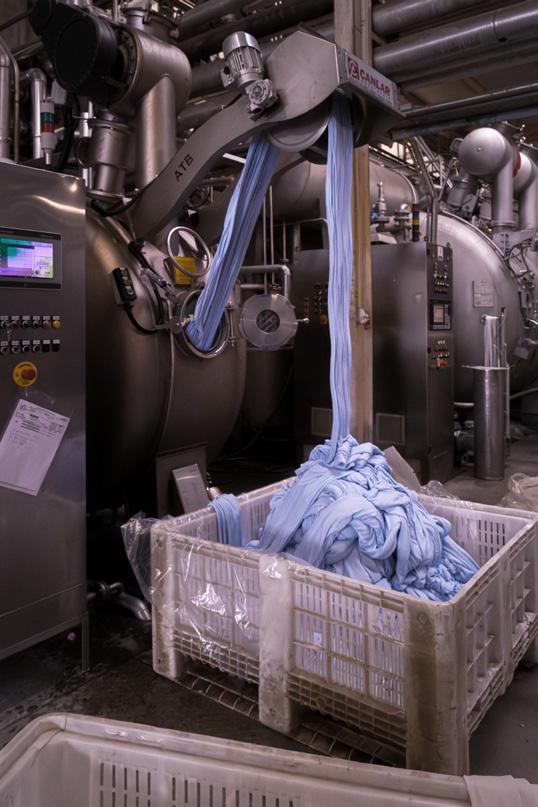
Colorifix is revolutionising textile dyeing by using biology instead of harmful chemicals. The innovative process employs microbes to produce and fix pigments onto fabrics, reducing water by up to 77%, and energy consumption by up to 53%, and removes the use of heavy metals and toxic synthetic fixatives that result in hazardous effluent and high CO2 emissions.
After identifying an organism that produces a desirable colour, Colorifix refers to an online database to identify the genes in the DNA that are responsible for colour production which is then synthesised and inserted into a microbe to replicate and produce the colour dye. This process not only eliminates the need for harmful chemicals but also utilises renewable, non-toxic resources, making it an environmentally friendly alternative to traditional dyeing methods.
HALLOTEX
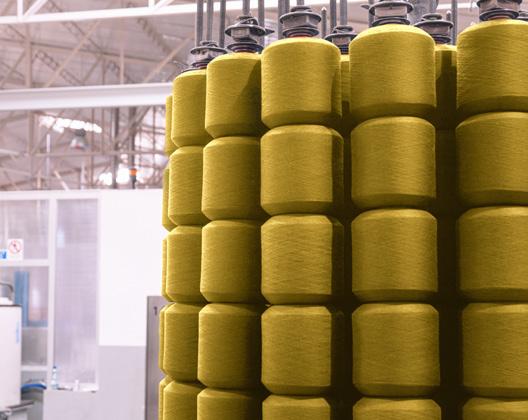
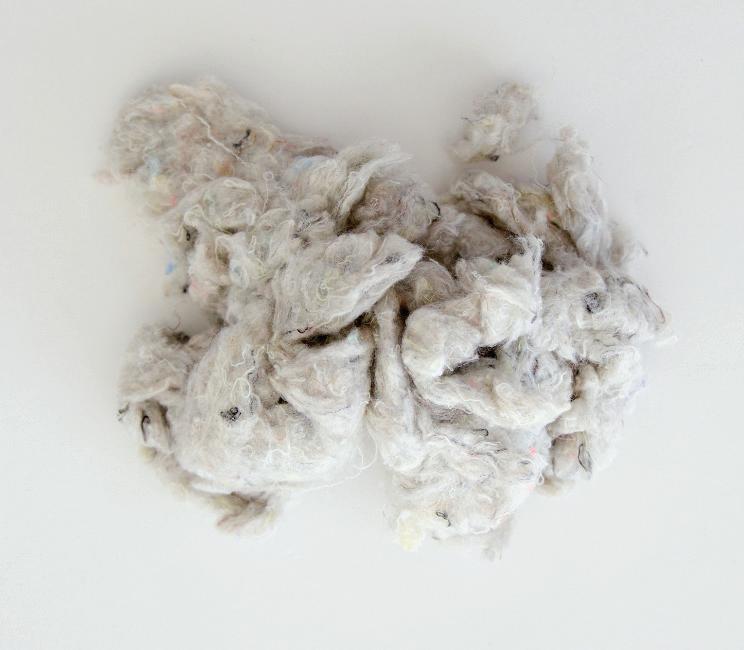
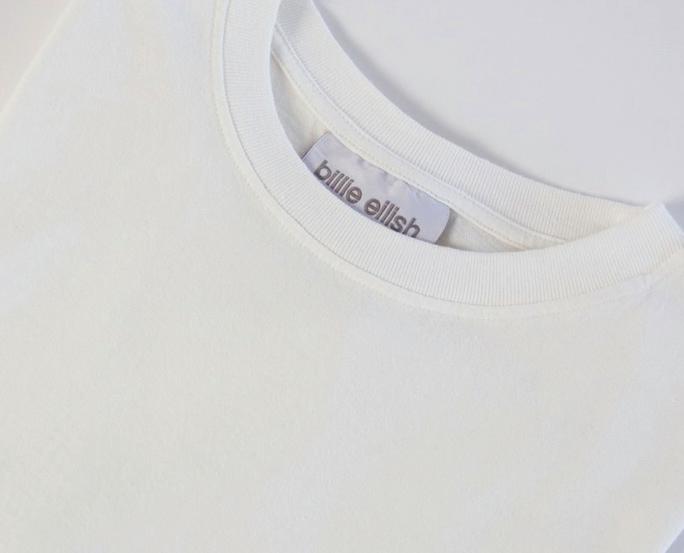
Apparel manufacturer for the likes of Inditex Group, Mango, Desigual, and Patagonia, Hallotex has been building the sustainability capabilities of its Morocco-based facilities. This includes recycled fibre and postconsumer waste material incorporation projects with an ecosocial foundation comprised of five companies in Spain. Hallotex has also extended its expertise into music merchandised apparel with its subsidiary company, Organic Sound, which has been working closely with Bravado to recycle old unsold stock in storage into new collections for its artists – most notably for Billie Eilish.
ABOVE: Amphico’s example product on display at The Mills Fabrica. Credit: Amphico.
ABOVE AND LEFT: Material Rebellion wants to change the narrative on waste. Credit: Material Rebellion.
ABOVE AND BELOW: Colorifix offers bioconcentrate dyes to enable scalability of its solution. Credit: Colorifix.
ABOVE AND BELOW: Hallotex recycles 100% cotton garments into yarn for new apparel. Credit: Hallotex.
THE FUTURE IS CIRCULAR
As we have covered, ESPR and similar legislations are demanding fashion companies consider circularity in their processes, whether that is through design or ensuring there is an endof-life solution for the garment.
“The one bit that is not going away is the circularity,” said Paul Wright, group executive director of ESG at the PDS Group. “I don’t think anyone’s really cracked that yet at scale,” he added. But there are an increasing number of fashion brands trying and sharing their progress.
Primark has recently published its updated Circular Product Standard 2.0, bringing together its past three years of learnings. Inspired by the Ellen MacArthur Foundation’s vision for a circular economy for fashion, Primark is working to embed circular design principles into its products, focused on durability, materials, and recyclability. Circular design guidelines have now been developed for nine of Primark’s key product areas, including denim, jersey, knitwear, nightwear, shirts, skirts, blouses, dresses, and leisurewear.
Since around 80% of a product’s environmental impact is decided at the design stage, according to
the Ellen MacArthur Foundation, circularity needs to be considered when a product is first conceived, for it to have any possibility of a circular solution at its end-of-life.
“We need to be building in strategies for end-of-life at the beginning, not trying to deal with the problem after it’s happened, but obviously we have this massive problem in that there’s so much clothing already on the planet right now,” said Julia Redman.
One such solution is textile recycling, with brands designing their products with the possibility of recycling in mind, through limiting fabric blends or hardware that can reduce its recyclability. They are also increasingly incorporating recycled material into their garments.
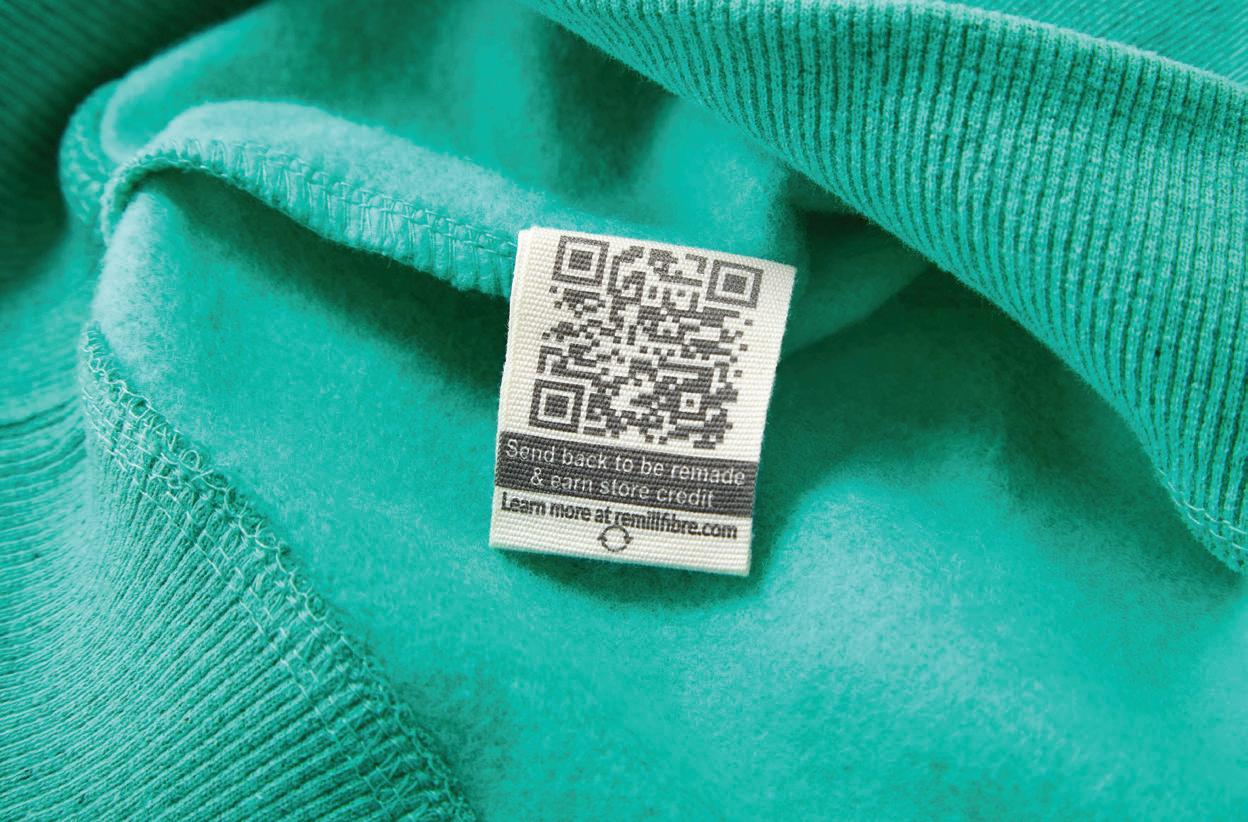
But at the minute, we lack the infrastructure to make textile-to-textile recycling a scalable ready-to-go solution, explained Julia, as what currently exists is not “joined up” enough to meet the problem at hand. “When it comes to end-of-life and circularity, the entire industry is still at a very early stage,” concurred Dov Brachfeld, sustainability manager at H&M. But there is progress being made, and the EU for one, is recognising this gap, and has launched an €11m fund to support textile recycling technologies and their commercialisation for post-consumer clothing waste. Meanwhile, textile recycling and circular design are nothing new to print-on-demand licensed apparel manufacturer, Teemill, and its own fashion brand, Rapanui, which launched its own takeback scheme, Remill, when the business was founded in 2008. All apparel Teemill produces, whether through licensed collaborations including Aardman’s Wallace & Gromit, or through its own Rapanui brand, includes care label messaging encouraging consumers to return garments when they are no longer wanted, in exchange for store credit. Returned garments are collected and sent back to Teemill, where they are shredded and re-spun into new cotton blanks that can then be reused across future production runs. For licensors facing increasing pressure around circularity

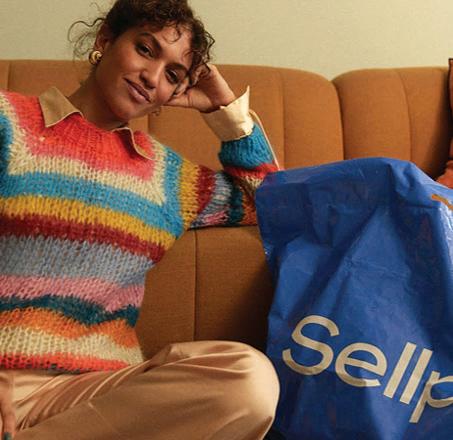
BELOW: H&M has partnered with second-hand fashion platform, Sellpy. Credit: H&M.
and evolving legislation, such as ESPR, the model offers a rare example of a commercially scaled circular system already embedded into the product lifecycle.
“The legislation is only moving in one direction,” said Rob Caulfield, senior business development manager for brand licensing at Teemill. “Having a circular model that has been operating for nearly two decades gives rights holders a way to engage with circularity through an existing operational model, rather than needing to build those systems from scratch.”
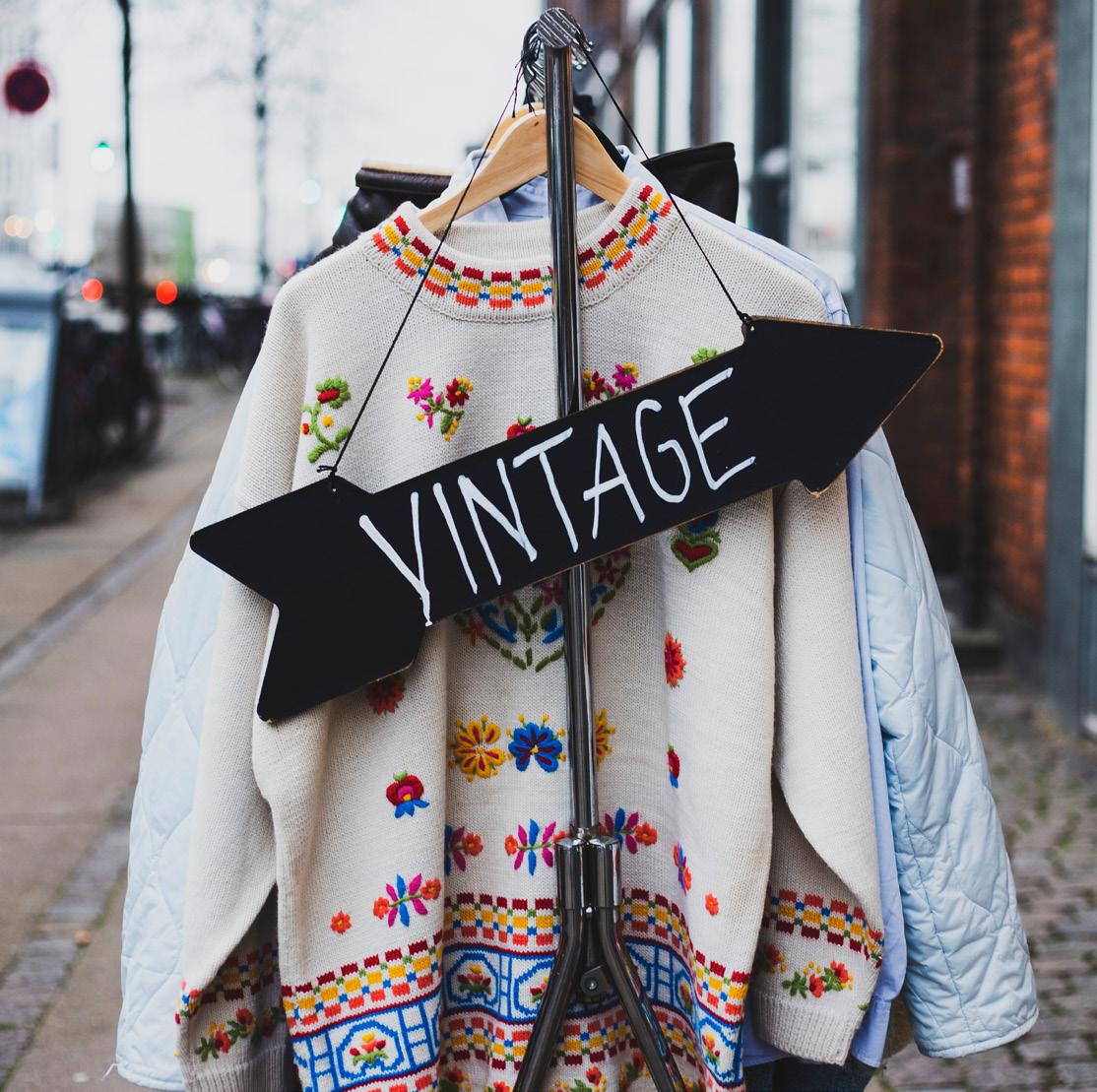
Even better than textile recycling, however, is being able to give garments multiple lives before that point through resell and takeback. The secondhand fashion market is booming, expanding three times faster than traditional retail and comprising approximately a tenth of global fashion sales (The Guardian), meeting the needs of both the cost and environmentally conscious consumer. Adam Jay, chief executive of Vinted, recently shared in a Guardian article that Vinted, Shein and Temu are all growing for “fundamentally the same reason,” which is “because it’s cheap and easy.”

reduced price point, one: gets you another customer base, but two: also optimises the original resources that went into the garment production,” commented Philippa. H&M has also made a strategic partnership with a second-hand fashion company to offer this alternative purchasing stream. Sellpy sells both high-fashion brands as well as H&M collaborations.
LEFT: Nobody’s Child has introduced rental and second-hand options. Credit: Nobody’s Child.
BELOW: Second-hand fashion platforms like Vinted and growing fast.
Credit: Shutterstock.

Ethically focused fashion brand and retailer, Nobody’s Child, has embraced the secondhand market fully, with its onsite rental fashion capabilities with partner Zoa, offering its consumers the rental option alongside purchasing. “It really bakes it into the usual customer journey,” explained Philippa
Grogan, sustainability lead at Nobody’s Child, “you’re also potentially signposting circular business models to audiences that otherwise wouldn’t be aware of them.”
Nobody’s Child also offers consumers a takeback and second-hand purchasing option through its partnership with Reskinned. “It’s adding value to something that traditionally has been sort of stigmatised. Like how quickly in our lifetimes has the language around second-hand things, and pre-loved, and all that jazz evolved. It’s gone from car boot and jumble sales to second-hand, preloved, re-loved vintage – it’s evolving. And I think being able to give customers access to existing garments, potentially even at a
“Sellpy plays an important role in encouraging more circular habits by making resale both accessible and rewarding for customers,” said H&M. “At the same time, it’s a new industry; this space is still developing, and no one has all the answers yet. We welcome external scrutiny because it helps highlight what needs to improve. That’s also why we’re investing in recycling innovation – it’s a critical area that must continue to advance for circularity to scale effectively,” said Dov.
So while there are huge amounts of potential – and momentum – towards takeback schemes, whether it is for recycling or resell, there is much development and “joining up” required to fully integrate it into the fashion business model.
“You’re basically having to rewire your house in a different way. And change consumer behaviour as well as the rest of it,” said Paul Wright, from the PDS Group, adding that takeback needs to even be considered in store design for it to be integrated into consumer behaviour and have the capacity to operate at scale.
This is something that technology can go a long way to support and is the very topic we will explore in the next section.

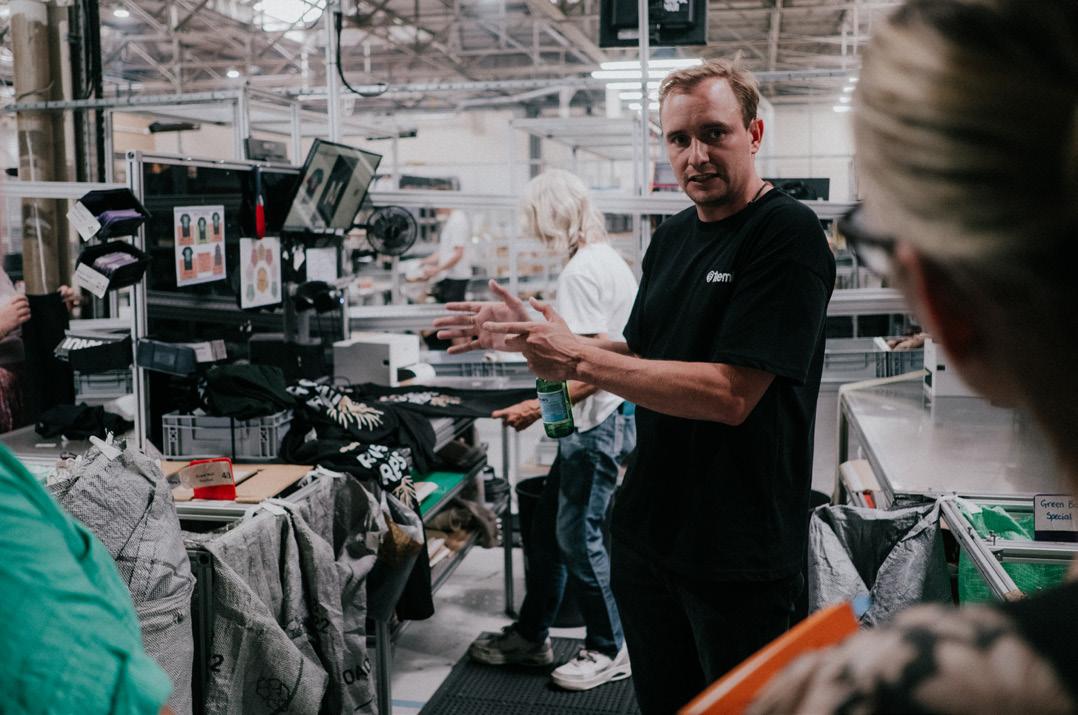
ABOVE: Inside Teemill’s factory on the Isle of Wight. Credit: Teemill.
RIGHT: Teemill’s care label with Remill takeback information. Credit: Teemill.


THE DETAIL IS IN THE DATA

Market intelligence research firm, Mintel, shares findings from its UK Fashion and Sustainability Market Report 2025, as presented by Tamara Sender Ceron at the POC Conference 2025. The research gives insights into the growth of more circular shopping behaviours in UK consumers and how far they actually value information on the sustainability of the products they buy.
ATTITUDES TOWARDS SUSTAINABILITY IN THE UK
To what extent do you agree or disagree with the following statements? More information about the environmental impact of different types of clothing/footwear materials would be useful (eg organic cotton versus recycled polyester)
Source: Mintel. Research Partner: Kantar Profiles. Fieldwork: May 2025
FASHION SHOPPING BEHAVIOURS IN THE LAST 12 MONTHS (UK)
Which of the following have you done in the last 12 months? Please select all that apply.
Source: Mintel. Research Partner: Kantar Profiles. Fieldwork: May 2025
To read the full report, search ‘UK Fashion and Sustainability Market Report 2025’ and contact POC for 20% off.
IS DRIVING SUSTAINABILITY’S NEXT WAVE
Fabacus, a global technology and data business that supports the retail, licensing, and manufacturing industry, has been at the forefront of such technological developments – particularly when it comes to the adoption of digital product passports (DPPs).
Speaking to Jamie Beck, senior vice president of sustainability and compliance at Fabacus, he explained that there has been a surge in demand for supply chain mapping and companies ensuring their data is accurate and verifiable, brought on by the demands in legislation. It is also crucial that fashion companies have their data in order ready for the DPP requirements. From 2028, textile DPP requirements will apply for all textile products placed on the EU market.
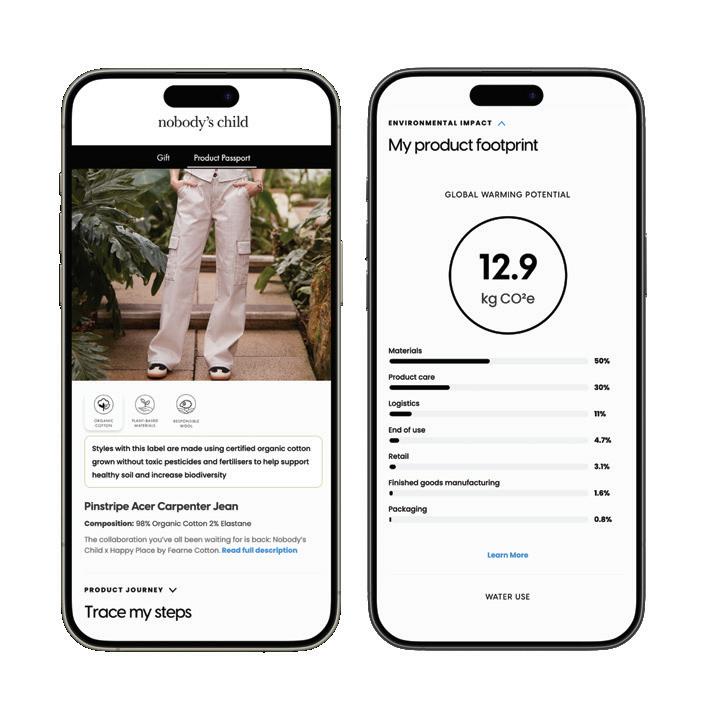
“You’ve got some forward-thinking brands that are just going, right, we’re going to do it. So let’s go ahead,” said Jamie. Ethical fashion brand, Nobody’s Child, and sister company to Fabacus, was one of the first fashion brands to bring the DPP to its products in 2023, and Jamie explained that the company has seen huge benefits of being a first mover, from accolades and awards to industry and consumer recognition.
With the direction of sustainability in fashion very much focusing on traceability, transparency, and circularity, new technology is being developed to support companies with this progress.
“But everyone’s so focused on compliance at the moment, they don’t see it as an opportunity,” said Jamie, “So our phrase that we often use is: don’t see it has handcuffs, see it as an opportunity.” Because there are huge benefits that reach far beyond that of compliance, traceability, and visibility. There are numerous marketing opportunities as it gives companies a new way to interact with their consumer, engaging them in competitions and offering a new channel to share both the brand story and the product story – “there’s a huge business
ABOVE: An example of a Nobody’s Child digital product passport.
Credit: Fabacus.
RIGHT: DPPs will become mandatory on garments.
Credit: Shutterstock.
BELOW: AI and 3D technology are already revolutionising the fashion industry. Credit: Shutterstock.

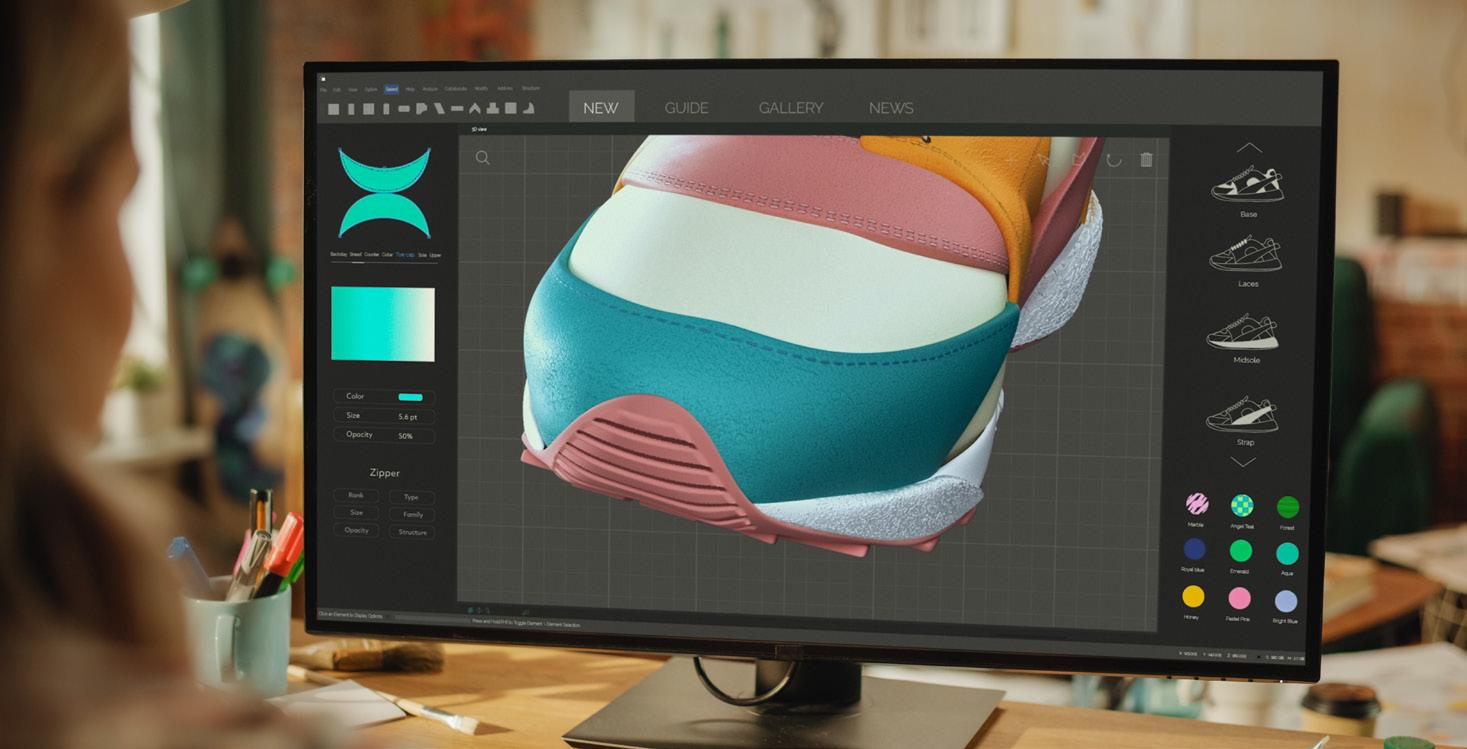


case there alone,” said Jamie, “This is not just going to be solely about a DPP and ESPR. You will find that it’s going to be a tool for so much more.”
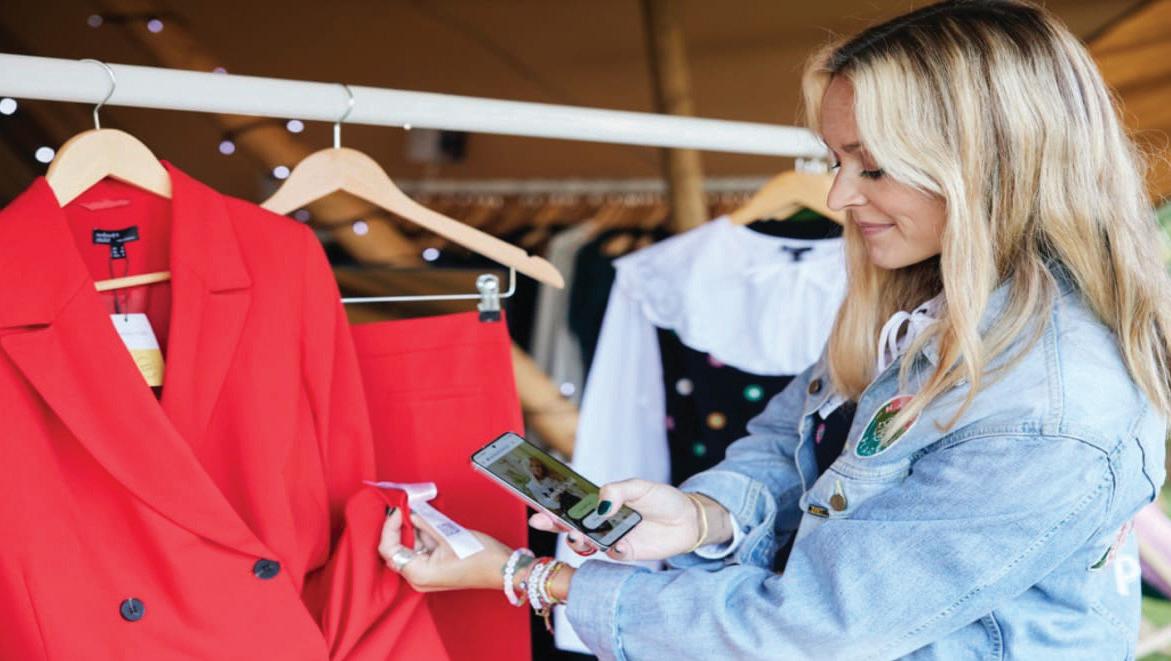
The consumers have to be incentivised to scan the QR code and engage with the DPP, and for many consumers, the lure of sustainability information and metrics is not enough, but discounts and entries to competitions can do the trick.
But crucially another particular advantage of DPPs lies in its capabilities to support end-of-life solutions for product. Not only could it direct consumers to textile recycling points, apparel donation collections, or repairers, but it can also streamline the reselling process. “I think that bit will be one of the biggest things to help the circular economy,” commented Jamie.
LEFT: 3D mockups can reduce the need for sampling.
Credit: Shutterstock.
BELOW: Some brands are already offering virtual ‘try-on’ technology. Credit: Shutterstock.
webinar with Sam last year on the POC site, and what was impossible to not acknowledge, was just how much the space has evolved over the year since we had the webinar. Beginning by utilising 3D image technology to mock-up garments, trial designs, draw up patterns and experiment with fabric types, now AI is adding a whole new dimension to these capabilities in fashion. It can make hyper realistic product imagery, down to the close-up fabric texture, as well as realism of the models and fits of the garments from different angles.
BELOW LEFT: Technology is being shown to significantly reduce a garment’s impact in the design
Credit: Shutterstock.


As we know, second-hand fashion is a huge industry, but it could be even bigger, and what holds back many from utilising it more are the extra steps to list and sell. Jamie explained that, in future, consumers could effectively have a digital ‘wallet’ of all the products they own, with all the relevant information needed to sell it on, which could link straight through to resell platforms, enabling ease and trust from buyers, reducing the risk of fakes, as well as driving better quality items on the market.
This digital ‘wallet’ or perhaps more aptly ‘wardrobe’ of clothes owned could also come in handy with repair and replacement, keeping the consumer, the brand, and the product connected all the way through its lifespan, with potentials far beyond fashion. The ongoing connection can also enable greater consumer feedback and conversation with the brand throughout the product’s whole lifecycle, supporting in the development of other products.
Technology always has and always will support progression in the way we operate, the way we create product, and now how we ensure we do so responsibly. And the use of AI is no exception. While its rapid adoption is reason for some trepidation, there is also enormous potential and no denying it is here to stay.
In the same way that sustainability is, at its core, all about efficiencies and using resources effectively, so is AI, and the fashion industry has been quick to adopt its capabilities in myriad areas. POC caught up with Sam Tweedie, co-founder of digital virtual fashion agency, SEWN, after we hosted a
Sam explained that the key benefit of both the 3D and AI technology is the massive reduction in sampling requirements. 3D virtual garments can be tested on models of different sizes, narrowing down the number of fittings needed and negating the need to send samples back and forth between manufacturer and designer. Meanwhile, AI can support with this as well as replicate realistic environments and models for digital photoshoots, meaning reduced cost and footprint of an on-location photoshoot.
Of course, there is a far from negligible environmental impact of AI technology, in particular with the energy demands of the data centres, however this is something Sam speaks about candidly. SEWN is built around the mission to utilise technology to lower the environmental impact of the fashion industry, and therefore everything is highly considered, and the use of AI is restricted to as few regenerations as possible, with Sam ensuring they use the imagery they have generated as much as possible before creating new. And the carbon footprint of utilising AI vs physical sampling and on-location photoshoots is carefully managed, and Sam explained it is still significantly less. It all comes down to using it responsibly.
“I think the virtual testing side of it is where we think we can make the most sustainable impact,” said Sam, explaining that brands can generate digital 3D mock-ups of new styles for their consumers to review and vote on before they even go into production, a concept menswear brand, Neem, are already making use of. This allows brands to really understand what their customer wants and massively reduce the vast volumes of marked down and unsold stock that gets generated. Also tackling this waste issue is the potential for 3D modelling of customers own bodies and sizing for them to virtually ‘try-on’ clothes before buying and thereby reducing the risk of returns from ill-fit. Sam explained “if you could get something like that working, you can really make a difference to a brand. You could affect their markdowns and returns, and you could also reduce the amount of waste that they’ve got in the industry. So that’s the way I want to go in the future; that’s where I think the future should be.”
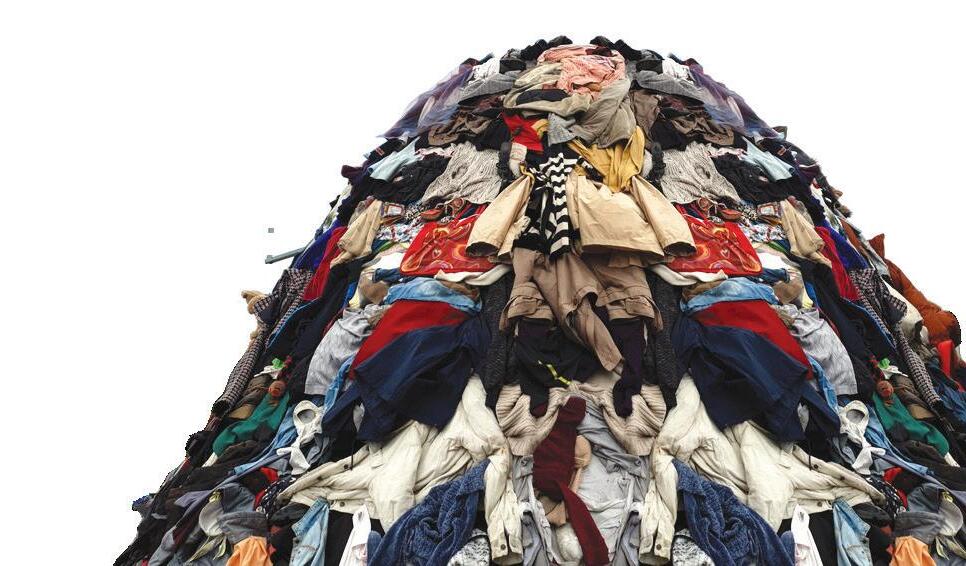
RIGHT: Reducing unsold stock can improve a brand’s bottom line and enable investment in sustainability.
Credit: Shutterstock.

A POSITIVE OUTLOOK
So while the fashion industry gets rather a bad rep for its environmental impact that only seems to worsen, it is also not hiding in the shadows and, step by step is tackling the issue head on.
As Jamie Beck from Fabacus noted: “There’s quite an emotional contact between clothing and people,” so it has to change, and the brands who are taking this in their stride and working to improve are already the ones coming out on top and pushing ahead of the crowd.
Because it is the smart thing to do, it is the business-savvy thing to do, and it’s what will shore up businesses for future pressures and challenges.
“This isn’t just me and you trying to hug trees. This is all commercial,” said Simon Platts from CircKit. “If you don’t want to do it because it’s responsible and it’s better and it’s greener, do it because it’s bloody commercial. It’s literally going to make you money.”
And the first movers are already seeing this happen.
“What matters most is demonstrating that this approach works – that you can be profitable while delivering on
sustainability. If we can show that, others will follow, and then the impact just spreads.” added Dov from H&M.
The investment in the tech, in the traceability, in the supply chain data, ready to be in accordance with legislation, was a key theme throughout every conversation for this Chapter. Technology is going to continue to better support the industry on its sustainability journey, and there is much to be excited about.
The possibilities of digital wardrobes, virtual try-ons, and activewear made from plants and dyed used microbes seems far-fetched and fanciful, but it is anything but. It is at our fingertips; the solutions are there – they just need to be embraced, invested in, scaled, shared and collaborated on. And then a future when the fashion industry no longer has negative sustainability connotations doesn’t seem so far away after all.

FUTURE FORECAST
Company name Emissions Scope 1, 2 & 3
H&M 56% reduction by 2030 of absolute Scope 1, 2 and 3 GHG emissions from a base year of 2019. Achieve net-zero by 2040 by reducing absolute scope 1, 2 and 3 emissions by at least 90% against a 2019 baseline, and balance out any remaining emissions with permanent carbon removals.
Primark 50% reduction in Scope 1, 2, and 3 carbon emissions by 2030 from a 2018/19 base year.
Water, waste, and biodiversity Sustainable design and material use Supply chain engagement
30% reduction of absolute freshwater usage in Tier 1 and 2 by 2030, from a baseline of 2022. Achieved 100% of Tier 1 and 2 factories with discharged water quality that meets the ZDHC wastewater guidelines. Renewed partnership with WWF to jointly address key environmental impacts, focusing on water, biodiversity and climate transition.
Eliminate all single-use plastics and non-clothing waste by 2027. Work to restore biodiversity with Primark Cotton Project which will use more regenerative agricultural practices by 2030. Reduce the water footprint of products sold in the UK by 30% by 2030
100% recycled or sustainably sourced materials in commercial products by 2030. Achieved 1,855 SEK million total turnover from resale. 2,832 SEK m invested in decarbonisation and material innovation. 100% of packaging from recycled or sustainably sourced materials by 2030.
Strengthen durability of clothes by 2025. Clothes recyclable by design by 2027. All clothes made from recycled or more sustainably sourced materials by 2030. Expand in-store Textile Takeback scheme with Yellow Octopus Circular Solutions. Partnership with Reverse Resources to map and trace textile waste in supply chain.
Achieved 100% of workers in Tier 1 factories have access to grievance and dispute resolution mechanisms.
Next 55% reduction in Scope 1 and 2 emissions by 2030, against a 2016/17 baseline. 40% reduction in Scope 3 emissions by 2030 against a baseline of 2019/20 per £1m sales.
Inditex Group 90% reduction in Scope 1 and 2 emissions from 2018 baseline. 50% reduction in Scope 3 emissions from 2018 baseline.
Divert at least 95% of operational waste from landfill. Produce and sell product that minimise pollution and waste. FatFace Foundation charity outlet shop helps keep end-of-line product out of landfill.
Source 100% of main raw materials through known, responsible or certified routes by 2030. Embed circular principles into the buisness and keep materials in use for longer; took part in Durability Research Project. Reiss Pilot Repairs Service launched in two stores. Partnership with The Handbag Clinic to give customers access to pre-loved handbags and services.
Protect, restore, regenerate or enhance the biodiversity of 5 million hectares by 2030. Advocate for new textile recycling technologies and build the necessary capacities to make them a reality.
Reduce water consumption in the supply chain by 25% by 2025. Eliminate single-use plastic for consumers and switch to recycled paper e-commerce packaging.
LVMH 50% reduction in Scope 1 and 2 by 2026 and reduce emissions per unit of added value by 55% across Scope 3 by 2030.
M&S 55% reduction of Scope 1 and 2 emissions by 2029/30 vs 2016/17 baseline year. Reduce absolute Scope 3 emissions by 42% by FY2030 from a FY23 base year. Net zero by 2040.
Aim to use 100% certified raw materials by 2026 and regenerate 5 million hectares of natural habitats by 2030. Reduce water withdrawal by 30% by 2030 (Scope 1), integrating technology to recycle wastewater and recover rainwater, achieving a 10% reduction already at end-2024 (2019 base).
Reduce waste generation by 10% at all production and logistics sites by 2030.
Maintain 0% operational waste to landfill. 100% of packaging to be recyclable by 2025/26. Support regenerative and nature-positive farming through the Plan A for Farming programme. Design out waste and scale circular solutions across the business. Remove unnecessary packaging and increase recyclability.
Use only preferred textile raw materials with a lower impact by 2030. Goal by 2030 to source 25% of textile fibres from state-of-theart materials that don't yet exist at industrial scale; 40% of textile fibres from conventional recycling processes; 25% to come from crops grown using organic or regenerative farming; remaining 10% made from preferred fibres. Launched Zara PreOwned in 2022, managing repair services, sales between customers, and donations.
Intensify efforts and aim to apply sustainable design principles to all its products by 2030. Zero virgin fossil-based plastic in packaging by 2026, and all new products included in the ecodesign process by 2030. Deploying sustainable services such as repair, refill or recovery and expanding application of sustainable design in products and packaging. Optimise existing fabrics and invent new sustainable fabrics.
By 2025/26: 100% of cotton used in fashion, home and beauty products to be sourced from more responsible sources; 100% of polyester used in fashion, home and beauty products verified from recycled sources; 100% ManMade Cellulosic Fibres from more responsible sources. By 2030/31: 100% of wool from more sustainable sources and 100% of leather sourced from LWG-certified tanneries. Remove 1bn individual plastic units from M&S own-brand packaging portfolio by 2027/28 from 2016/17 baseline. Expand reuse initiatives, including hanger reuse. Scale rewear, repair and resale through Another Life programme. Work with recycling partners such as Circulose and Reverse Resources.
Pursue a living wage for workers in the supply chain and support with financial literacy training and access to social protection by 2030. Strengthen the position of women through skills development and addressing barriers to progression by 2030. Ensure access to effective grievance processes and widen access to help for mental and physical wellbeing by 2030.
Established Wellbeing Programme promotes good mental health, and several employee-led networks champion the diversity of people. Committed to increasing the visibility of suppliers and raw materials.
Implemented a Supply Chain Transformation Plan, which takes shape through collaboration with suppliers and improvement plans for water management, waste, chemical product management and energy.
By 2030, have developed complete traceability for 100% of its strategic supply chains, from raw materials to finished products.
Engagement with distribution centre to cut down on plastic packaging and hangers. Look beyond own operations to spark change and support decarbonisation across full value chain.
This Future Forecast details the sustainability commitments of some of the largest players in the fashion and apparel industry. This overview reflects publicly available information at time of review, and the companies’ commitments may not be limited to what is presented in the table as it is intended as a snapshot. For more detailed insights into a specific organisation’s targets and achievements, please visit their website or view their sustainability reports.
Company name Emissions Scope 1, 2 & 3
Fast Retail 90% reduction in Scope 1 emissions by FY2030 compared to FY2019. Reduce Scope 3 emissions by 20% by FY2030 compared with FY2019.
PVH Corp
90% reduction in absolute Scope 1, 2, and 3 emissions by 2040 from 2021 baseline year. Reach net-zero across value chain by 2040.
Realise "Zero Waste" early by reducing, replacing, re-using, and recycling materials used in the process of delivering clothes to customers. Based on the results of a 2021 risk assessment, the company is working to minimise its impact on biodiversity across identified risk areas, while also conserving and promoting biodiversity throughout its value chain. Fast Retailing carries out its Water Action Plan to bring the local water environment into a healthy state, preventing and reducing water pollution, reducing water withdrawal.
Reduce packaging, expand reusability, and transition to recycled content to reduce Greenhouse Gas emissions and minimise waste. All PVH offices, distribution centers, and stores will achieve zero waste by 2030. Establish five collective action projects in the most water-stressed sourcing communities by 2025. Water leaving key wet processors will have zero hazardous chemicals and be filtered for harmful microfibers by 2025.
Increase proportion of recycled materials and materials with low greenhouse gas emissions to approximately 50% by FY2030. By December 2030, procure 100% of cotton for use by all Fast Retailing Group brands from preferred sources that meet full list of designated standards. In July 2019, Fast Retailing adopted a group policy to eliminate the use of unnecessary plastic throughout its supply chain and, where plastic is necessary, switch to recycled plastic or alternative materials. Established Fast Retailing Group Policy on Responsible Paper Procurement to promote the use of paper from more sustainably sourced materials, from the perspective of sustainable use of forestderived materials and preserve biodiversity. Working to extend the life of garments and advance RE.UNIQLO initiative for a more circular society.
All PVH products will contribute to the circular economy throughout the product lifecycle (design, use, and end of life) by 2030. Sustainably source 100% of PVH's cotton, viscose and wool by 2025, and 100% of polyester by 2030.
chain engagement
Advance the establishment of work environments where the health, safety and human rights of workers are protected, covering its own employees as well as people working in the supply chain. Aiming to create a better society for and with customers, Fast Retailing also conducts a wide range of global and local social contribution activities. Strengthen transparency and traceability to raw material level; identify and correct human rights, labour and environmental issues in the supply chain.
Support the delivery of professional and life skills development programmes and services to 500,000 workers across the PVH global supply chain by 2030. 100% of PVH suppliers will meet or exceed environmental and social standards by 2030.
Gap 90% reduction on Scope 1 and 2 by 2030 from 2017 baseline. Reduce Scope 3 from purchased goods and services by 32.5% by 2030 from a 2017 baseline. Achieve net zero across value chain by 2050.
Shein 42% reduction in Scope 1 and 2 emissions by 2030 from 2023 baseline. Reduce Scope 3 by 25% by 2030. Reach net-zero by 2050.
By 2030, reduce water use and replenish water to nature, equivalent to 100% of the water used in manufacturing apparel and in company-operated facilities. Water-resilient value chain by 2050. Positive water impact in waterstressed regions by 2050. Eliminate the discharge of hazardous chemicals within supply chain, and phase out chemicals of particular concern, including by eliminating PFCs.
Utilise on-demand business model to minimise wastage and overproduction. Scale innovations that reduce water use in manufacturing.
Source 100% of cotton from more sustainable sources by 2025. Source at least 45% of polyester from recycled sources (rPET). Eliminate unnecessary or problematic plastics in packaging to consumers by 2025 and in packaging to businesses by 2030. Ensure at least half of all plastic packaging is 100% recycled content, for packaging to consumers by 2025, and in packaging to businesses by 2030. Support innovation in circular manufacturing. Partnership with thredUP for resell and donation of clothes.
Source 100% forest-safe viscose and paperbased packaging for SHEIN-branded products by 2025. Ensure all packaging sourced for SHEIN-branded products contains 50% preferred materials by 2030. Transition 31% of the polyester used for SHEIN-branded products to recycled polyester by 2030. Source 50% of SHEIN-branded products through evoluSHEIN by Design initiative by 2030. Establish a fully circular textile supply chain by 2050 in alignment with World Circular Textiles Day commitment.
Empower 5 million people touched by the apparel industry to improve their equitable access to clean water and sanitation.
Aspirations to improve lives of communities reached and be a responsible purchasing partner for suppliers.
Tesco 85% reduction in Scope 1 and 2 emissions by 2030. Reduce absolute Scope 3 emissions by 55% by 2032. Net zero across all scopes by 2050.
Asda Net zero Scope 1 and 2 emissions by 2040. Net zero Scope 3 emissions by 2050.
30% reduction in aggregate water footprint of new products sold by 2030. Reduce the aggregate greenhouse gas footprint of new textile products by 50%, in line with the Paris Agreement on climate change. Phase out hazardous chemicals in supply chain through Tesco Detox Commitment. Members of The Microfibre Consortium (TMC) and committed to 2030 roadmap to work towards zero impact from fibre fragmentation.
Reduce water consumption in operations year-on-year. Zero deforestation forest-risk commodities by 2025. Net positive biodiversity in new site development. 100% recyclability of own brand packaging by 2025. Working to deliver zero waste through group wide efforts to reduce, reuse, recycle, and redistribute operational waste.
100% of fabrics used to make products responsibly and sustainably sourced by 2030. Working with the Salvation Army Trading Company to reduce the amount of clothing sent to UK landfill by introducing textile collection bins into more carparks. Instore textile takeback collection units available in almost 900 stores. Developing a circularity toolkit which will support design, buying and technical colleagues to make product ranges with circularity principles in mind.
George policy is that at least 25% of the overall product fibre composition has a recycled content. Suppliers are required to work to the Global Recycled Standard (GRS) or the Recycled Claim Standard (RCS). Use an average of 30% recycled content across all own brand plastic packaging by 2025.
Mapping areas of upstream supply chain for traceability and standards adherence. Supporting supply chain partners to set ambitious science-based targets and transition to renewable energy.
Incentivising action across supply chain through open conversation, shared learning, policy alignment, contractual commitments, long term partnerships, and collaborative innovation.
This editorial was brought to you by Products of Change.
We’re a purpose-driven organisation focused on reducing the environmental impact of the brand and licensing industry.

Products Of Change Media Ltd
United House, North Road, London, N7 9DP
For general enquiries contact:
For press enquiries please contact the editor: For advertising and membership enquiries:
hello@productsofchange.com
kathryn@productsofchange.com
nicola@productsofchange.com