From across the paper-based industries – from books, magazines, greetings cards and more – there is a decidedly positive momentum towards responsible fibre sourcing, content creation, and some very exciting innovation.
JOIN EUROPE’S LARGEST LICENSING SHOW
Meet the right partners, secure international deals and be in touch with European consumers.
WELCOME
Products of Change is a purpose-driven, not-for-profit membership organisation, working to drive and support sustainable change in the brand and licensing industry by turning ambition into action. Comprised of regularly updated educational resources and webinars, trade show activations, events, an annual conference, newsletters, and editorial publications, POC brings its ever-widening network together with the tools, guidance, and community to help you achieve your environmental goals within a supportive global network. To find out more about becoming a member, visit: productsofchange.com/membership.
The Paper Chapter was definitely one I was looking forward to this year (although I couldn’t possibly choose a favourite), as my publishing background piqued my personal interest. But also because it provides the perfect battleground for sustainability progress; not only is there the footprint reduction of the physical products – chiefly paper – that make up the books, magazines, greeting cards, calendars, diaries, stationery, gift wrap, but there is the additional level of the content itself. Creating less of a direct environmental impact but with boundless opportunity to have indirect positive impact, by the implicit – or indeed explicit – behaviours that it highlights, normalises and encourages. This doesn’t mean being preachy, but means considering how content that is published should be read and met in the current state of the world. It is that storytelling potential. And we also see in this Chapter how that is done beyond the written word, by clever and innovative fibre choices to engage consumers on the product’s creation and encourage them to consider the material that went into it. It is an exciting area for sustainability, and this Chapter highlights the progress made, the innovations forged, the legislation that is springing challenges and opportunities, and the tenacity of companies to tread the path towards a more sustainable paper industry.
A thank you goes out to all those who contributed their time and insights to this Chapter: Claire Bates, Danilo; Sarah Downey, Coffeenotes; Richard Edwards, Baneco; Émilie Hames, Penguin Random House; Mirjam Hazenbosch, Zoological Society of London; Josh Holland, James Cropper; Elliot Moran, Hearst; Sue Morrish, Ecofriendly Card Company; Niina Niemelä, UPM; Steve Plackett, Carousel; Chris Shaw, UK Greetings; Duncan Shearer, POC Ambassador; Hayley Slack, Little Coffee Cup; Michelle Whitehead, Immediate; Tom Willday, Willsow.
04 06 14 10
KATHRYN BRAND Editor and Content Manager
THE RISE OF ALTERNATIVE FIBRES
When we think of paper and where it comes from, most people’s minds go to trees, and rightly so as it is almost all made from wood pulp these days – emphasis, however, on the ‘these days’. As it is only since the mid-19th century that wood pulp was widely used in paper making. Before then, a variety of regional fibres were used until the industrial revolution made it viable to process cheaper, more abundant wood pulp at a wider scale. And now, in that cyclical way history is predisposed to do, we are seeing paper
Paper isn’t just made from trees. From coffee cups to crop waste, alternative fibres are reshaping how paper is produced – bringing sustainability, resilience, and compelling circular stories to the forefront of the industry.
mills and manufacturers innovate and explore alternatives to wood pulp to reduce reliance on a single material and turn waste streams into valuable resources.
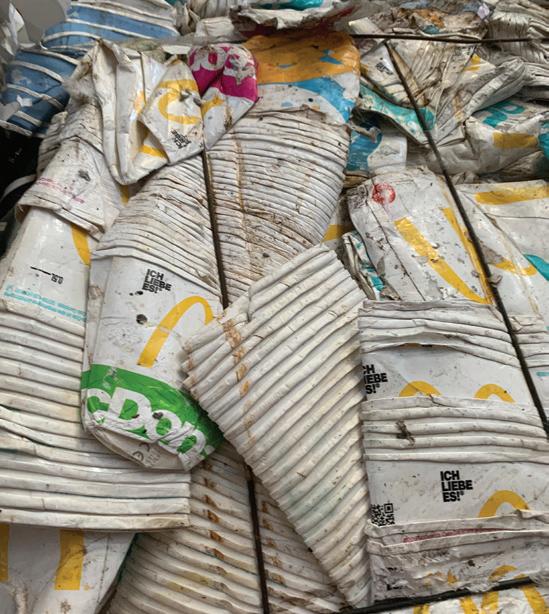
One such innovation brings together multiple companies within the POC Community and uses a fibre source that would have been completely alien to our historical paper makers. Lake District, UK-based paper mill and innovation powerhouse, James Cropper, pioneered its CupCycling technology, recycling used coffee cups into speciality paper. CupCycling overcomes one of the major barriers to coffee cup recycling by separating the paper cup from its plastic lining. The fibre is made into recycled paper like its Rydal Packaging Collection, and the plastic is also recycled into new products. Products of Change visited the paper mill earlier this year and saw the process in action. The process is now part of the National Cup Recycling Scheme, which sees cups collected and sent to five UK recycling facilities. The cups are largely collected by participating companies such as Costa and McDonald’s, which have specialist collection points in their stores for consumers to dispose of their used cups.
Among a number of other customers, James Cropper’s CupCycling paper is the source of paper used by two of POC’s Members: Coffeenotes and The Little Coffee Cup.
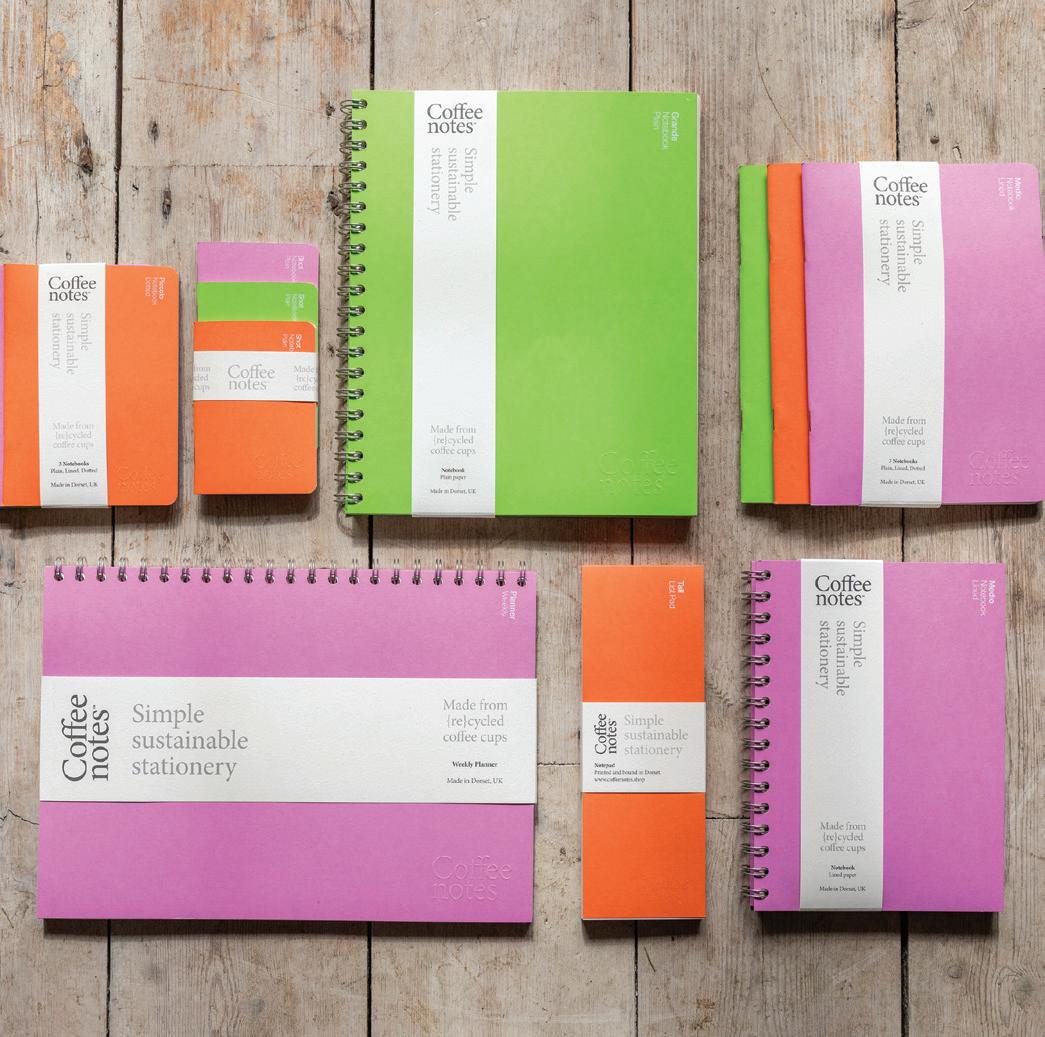
Created as a sister company to Epic Print by founder, Sarah Downey, Coffeenotes creates premium stationery from the coffee cup paper. Offering a selection of formats, the range utilises thoughtful material use, and recyclable elements.
“Stationery is a single-use item – you’re not going to reuse it; it’s not going to have that long a life. We try to encourage people to think about what’s going to happen to it afterwards,” said Sarah.
All Coffeenotes paper products are recyclable in usual paper waste streams, and can also be composted, making them easy for consumers to responsibly dispose of them at end-of-life.
As well as selling direct to consumer through its website, Coffeenotes stocks its notebooks in various specialist stationery shops, lifestyle shops, coffee and tea shops, restaurants, and some museums. “I much prefer to think of Coffeenotes
RIGHT: Coffee cups collected and ready to be recycled. Credit: James Cropper.
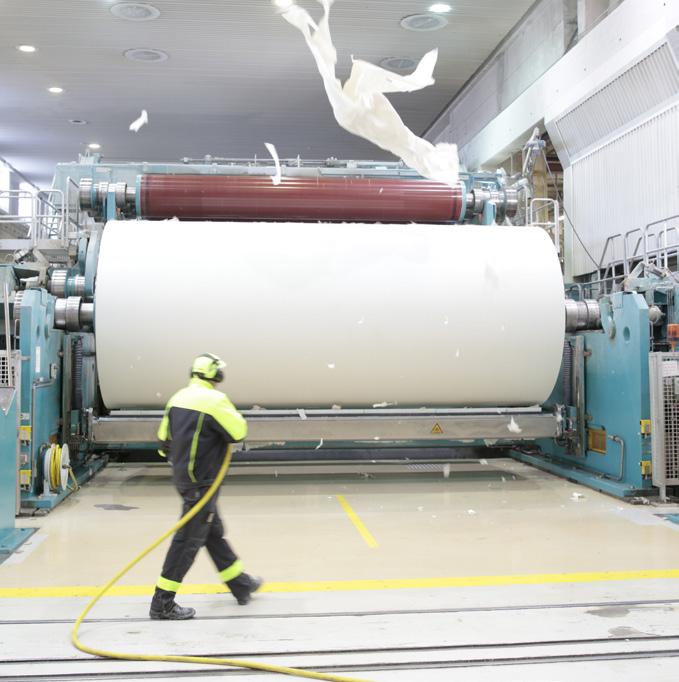
BELOW: The James Cropper paper mill in the Lake District. Credit: James Cropper.
LEFT: A selection of Coffeenotes notebooks, made from recycled coffee cups. Credit: Coffeenotes.
being in smaller, independent shops, where somebody’s going to be prepared to talk about it and engage with customers, than it being lost in a melee of lots of other things and the story behind it not being very visible,” commented Sarah.
Telling the story of the paper is exactly what Little Coffee Cup does, in the form of a children’s book made from recycled coffee cups. Little Coffee Cup and the Big Surprise, follows the tale of a coffee cup from its coffee shop origins, to becoming litter by the side of a road, and being rescued by a litter picker before being taken to the James Cropper paper mill and recycled into the very book you’re reading. In fact, each copy contains 13 former coffee cups, given a new purpose instead of ending up as landfill.
paper mill, opened only last year, and marks the first paper mill to open in the UK in the last 75 years. The SeedPrint Mill in Cornwall has been set up by Willsow, founded by Tom Willday.
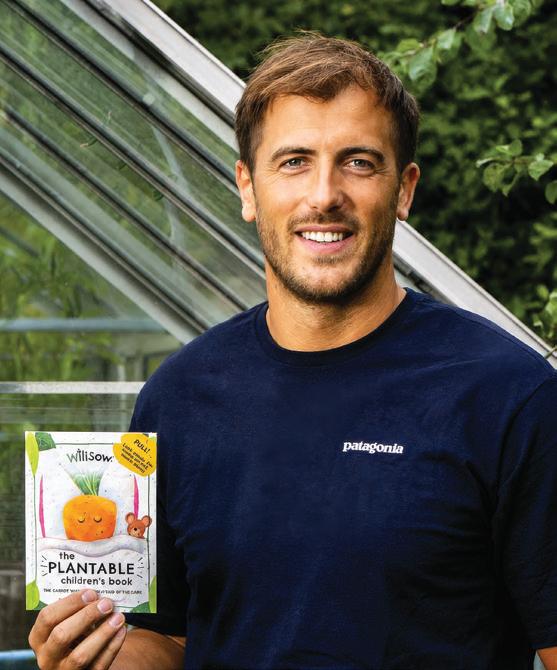
Tom explained that he wanted to build on his fourth-generation family printing business, and diversify its offerings by introducing seed paper – paper that has seeds embedded into it to be planted at end of use.
With a background working at waste company, Biffa, author, Hayley Slack, is using the Little Coffee Cup as an educational mascot to teach people about effective and accurate recycling, getting children involved and forging an understanding of where things come from and the responsibility that entails.
Coffee cups are far from the only alternative material source James Cropper is exploring. Josh Holland, business development manager at James Cropper explained that the mill has trialled cotton fibres from recycled textiles such as jeans, as well as hemp, and even waste from food like pineapples. James Cropper also offers ‘inclusion’ paper, utilising coffee and cocoa waste, reducing the percentage of wood pulp needed.
“We’re always exploring what we can do for alternative fibres, just in case; a lot of it is around safeguarding the planet, the mill, and what we do here,” said Josh, asking “How can we take something away from landfill, and
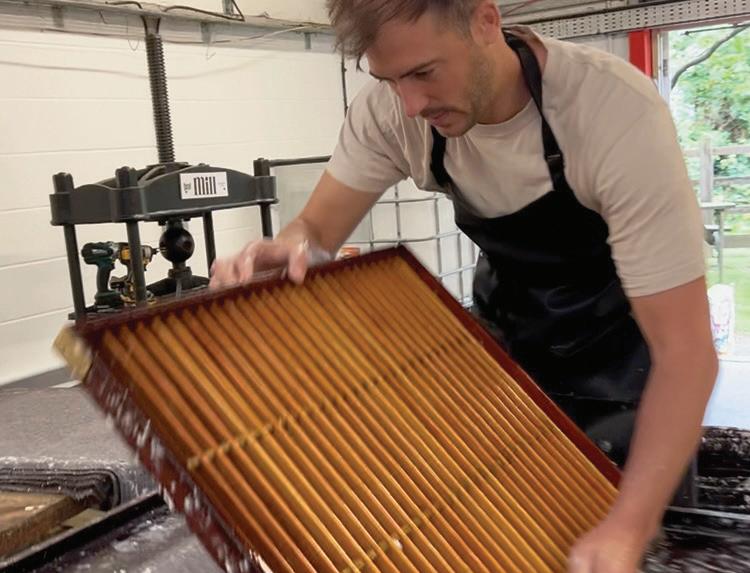
The SeedPrint Mill uses only recycled paper, fibres, and water to make its paper, adding in non-GMO flower seeds to create “the floweriest, bloomiest, growiest seed paper on the market.” And it is seeing huge success, with licences from Aardman and the RHS, as well as collaborations with Charlotte Tillbury and POC Member, the Zoological Society of London (ZSL) – the latter to create something rather unexpected.
Willsow and ZSL have been collecting poo from the herbivorous animals inhabiting ZSL’s Whipsnade Zoo and using it to make paper. “We’ve made a puzzle, which is the first puzzle in the world made out of poo, and we’ve made a book about poo made from poo,” said Tom. All kids are obsessed with poo, he added, “We wanted them to pick it up and be inspired.”
Once again, we come back to the storytelling capabilities and the possibilities are endless. Tom spoke about potential projects such as with a fashion brand, recycling their denim into fibres and making the next season’s jean’s swing tags, or using brewery waste to create labels or packaging for beer. The SeedPrint Mill is able to make fully traceable, individual batches for specific projects such as these. When something is as visual and tangible as this, the circular story is so clear to the consumer – they understand where it came from. There is ownership and providence to the recycled paper, that tells a wordless yet powerful marketing story. Another example from the POC Community that cannot be missed, is Baneco, which turns agricultural waste from bananas into industrial-grade fibre for paper, packaging and non-woven applications. After bamboo, banana agri-waste contains the second strongest organic fibre on earth – and is an abundant resource with around 60% of total banana biomass left as waste during harvesting and processing. Its exceptional strength and durability enable it to be effectively used on existing machinery.
better protect the supply chain for paper?”
Based in the Lake District National Park, Josh credits much of the sustainable ethos of Croppers to its location and the constant reminder of the magnificence of nature; “When you arrive at work and you’re basically in a national park, it’s always there […] I think the fact of where we are pushes a lot of the innovation we do around sustainability.”
This shows itself in myriad ways throughout the business, whether through its water recycling, pulp sourcing, supply chain management, its plasticfree moulded fibre packaging (COLOURFORM™), natural dyes, or zero waste to landfill.
Where James Cropper’s paper mill has existed since 1845, down the other end of the UK is a much newer
Baneco’s co-founder and CBO, Richard Edwards, explained that the company’s focus is on “making waste-based, lowcarbon materials commercially viable at scale – not as a niche alternative, but as a credible part of mainstream supply chains.”
The potential in paper innovation seemingly stretches as far as your imagination, and while responsibly managed forests remain a fantastic source of fibre, diversifying the inputs adds resilience to the supply chains, as well as a good deal of creativity, and of course, that all important circular storytelling.
LEFT: Baneco uses agricultural banana waste to make fibre moulded packaging. Credit: Baneco.
ABOVE: The four generations of the Willday printing family. Credit: Willsow.
LEFT: Willsow’s founder, Tom Willday, with the plantable book. Credit: Willsow.
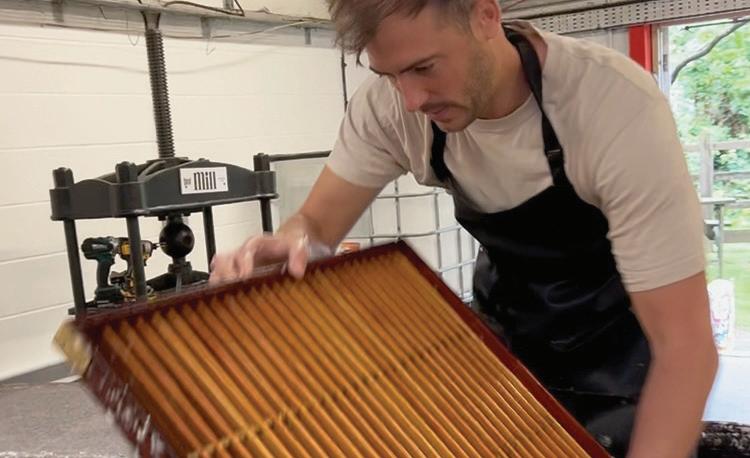
LEFT: Willsow’s Tom Willday demonstrating the handmade seed paper process. Credit: Willsow.
A GREETING CARDS EVOLUTION
The transition the greetings card industry has been on in the last few years is apparent to even the majority of consumers. While not yet completely across the board, the movement away from unnecessary plastic has seen such effectuation in the industry – particularly when it comes to the clear plastic packaging or cello bags that cards come in.
Speaking to some major players in the greetings card industry, including UK Greetings, Carousel Worldwide, Danilo, and The Eco-friendly Card Co., the consensus was similar.
“The biggest impact has been plastic free packaging over the years, and more and more printers and publishers are signing up to SBTi or other similar schemes in which I hope we’ve been instrumental in trying to lead the way,” commented Steve Plackett, production director at Carousel Worldwide. Sue Morrish, director at The Eco-friendly Card Company added: “Over the last 20 years there has been enormous change –many cards are now printed on FSC stock and there has been a big move away from having cards individually wrapped in bags and using card clasp labels instead.”
And beyond specific achievements, Claire Bates, senior marketing & sustainability manager at Danilo, observed an evolving mindset and modus operandi: “The industry has changed enormously over the last few years. Sustainability has moved from being a niche discussion to something that’s now embedded in product development, retailer conversations and business strategy.
“There’s much greater transparency, better access to sustainable materials and a real willingness across the industry to collaborate. While there is
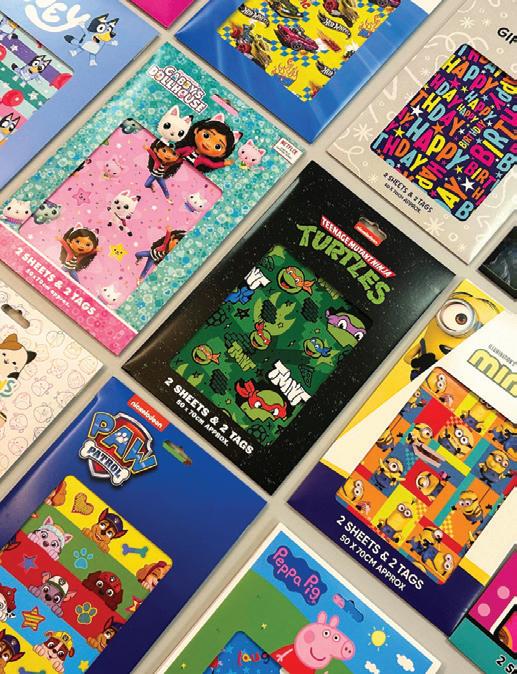
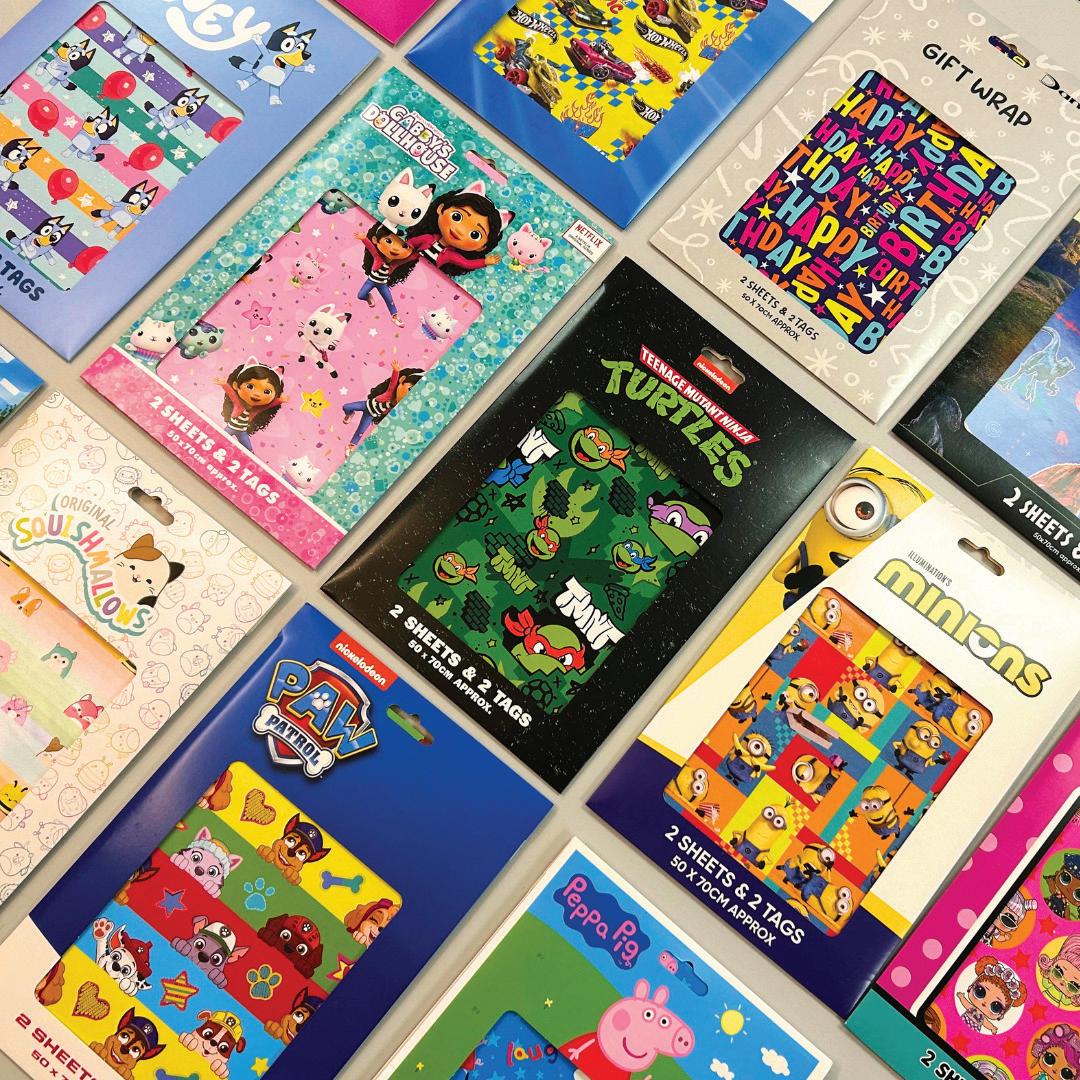
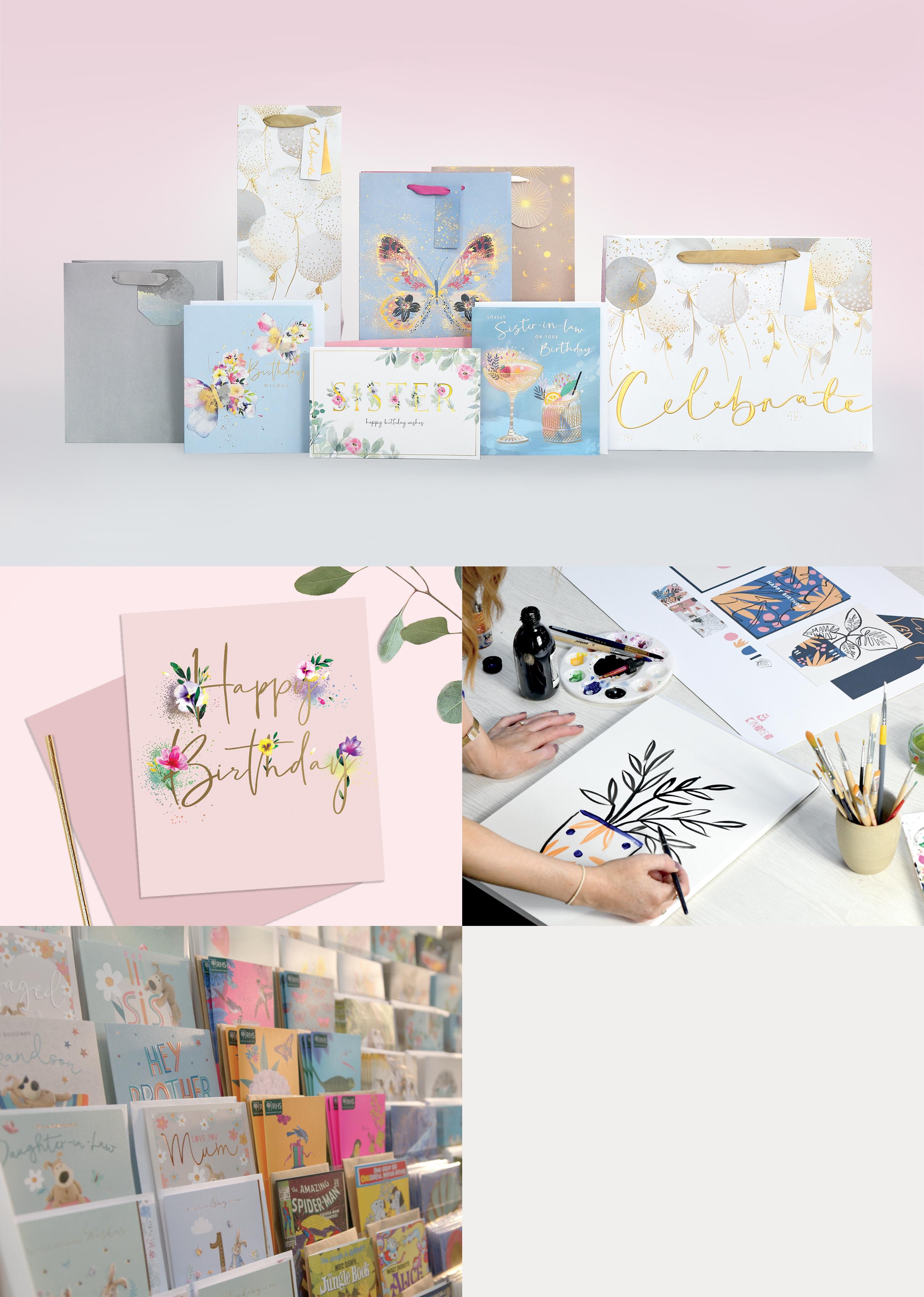
ABOVE: Danilo’s licensed plastic-free gift wrap range. Danilo.
still work to do, it’s encouraging to see sustainability becoming a shared priority, with so many companies committed to driving positive change.”
Products of Change saw this evolution firsthand on a visit to UK Greeting’s manufacturing site in Dewsbury earlier this year.
UK Greetings has undergone a huge shift towards sustainability, changing everything from the design of its cards, how they are packaged, and even where and how they are made, working to embed the UN Sustainability Goals into its practices.
“The scale at which we’ve been able to change to a new method, a new sustainable method, without compromising design, has been something that I’ve been particularly proud of,” said Chris Shaw, head of safety & sustainability.
direct to retail greeting card publisher to hold its own FSC chain of custody back in 1996. It is also now committed to using 100% recycled paper. Sue explained this is something that has got easier as the company has grown, affording it more purchasing power, and building strong relationships with its paper suppliers. But this also has meant sourcing more paper from Europe than UK: “It seems that Europe is much further ahead when it comes to recycling and environmental innovation in the paper industry, as it is with bio-based alternatives to fossil-fuel derived plastics.
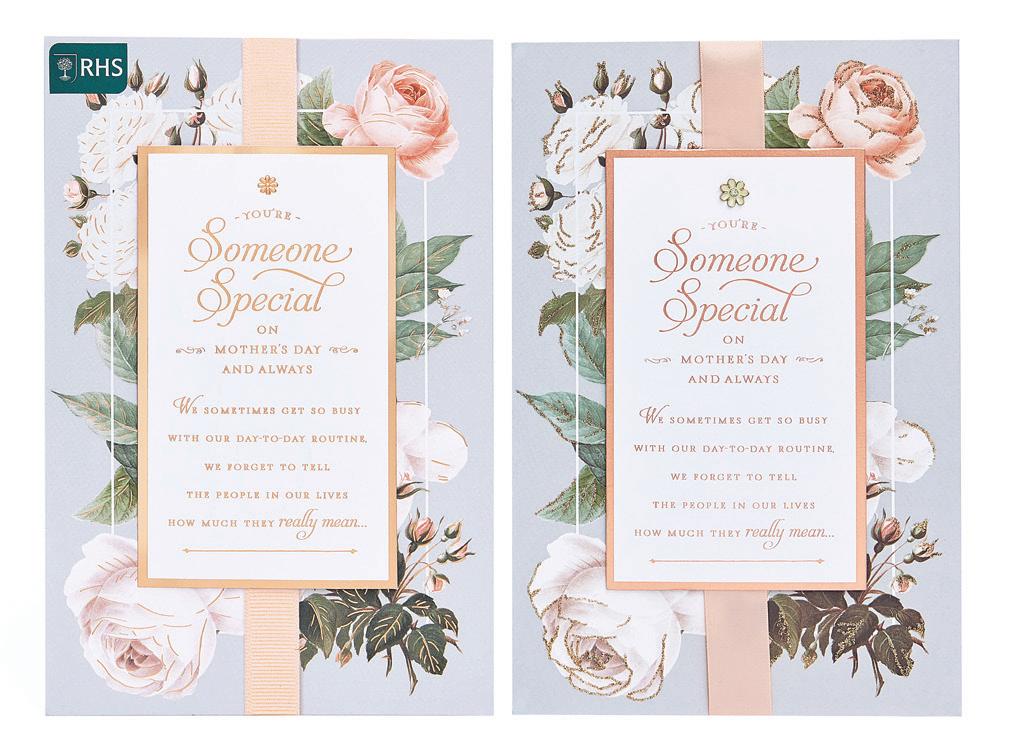
POC met with the design teams at UKG, who explained how they have completely removed glitter, gems, diamantes, sequins, nylon ribbons, foam pads, and vinyl and acetate windows – all plastic based components – from its cards. But rather than a restriction, the design team took this on as a challenge – how to make high value, desirable cards without these elements? And they more than excelled. UKG’s paper engineers innovated googly eyes, moving components, foiled embossing, card pads, paper ribbons and endlessly more designs that delivered on the impact without the footprint.
Another huge change at UKG was the reshoring of the majority of its card manufacturing. After offshoring production to East Asia in 2015, UKG commenced a phased return to its Dewsbury, West Yorkshire location, saving huge amounts of carbon on shipping. “It gives us that control, emission reduction, speed to market, many, many different benefits that come from having manufacturing on our doorstep,” said Chris. This has also meant shifting its paper sourcing from Asia to Europe, meaning that even though it is a growing business and its volumes of paper are going up, the emissions are not, meaning the pro rata tonnage is much better.
The paper itself is also all FSC sourced. “The industry expects nothing less than everything sustainably sourced, FSC,” said Chris, articulating what is being recognised as the bare minimum standard for paper related products these days. He added that UKG then wanted to go a step further and is working with the World Land Trust to directly protect threatened areas and offset the carbon emissions related to the manufacturing of the paper it uses.
Danilo, Carousel, UK Greetings and The Eco-friendly Card Company attest to FSC being the standard, with each either offering exclusively FSC certified products or the vast majority as such. Eco-friendly Card Company was the first
“I’d love to see more of the paper collected for recycling here in the UK recycled into quality recycled paper in the UK, rather than just newsprint and cheap tissue. It seems ill-thought through that we send paper waste into Europe to be converted into recycled pulp which I then buy back from mills as recycled paper made in Italy or Germany.”
Other sustainable focuses of greeting card companies include emissions, SBTi backed targets, and pathways to net zero, as well as greater supply chain transparency, use of vegetable and soy-based inks, as well as of course removing plastic packaging.
“Sustainability is all about continuous improvement, so we’re always looking at where we can make further positive changes while still delivering the quality products our customers expect,” commented Claire from Danilo.
Both Danilo and Carousel spoke of the important role licensing has played in their sustainability journeys. Steve commented that Carousel works with over 90 brands and many of them are particularly interested in the company’s sustainability work.
Claire agreed that “many licensors now have ambitious sustainability goals of their own, which helps drive meaningful conversations throughout the supply chain. We’ve found that licensors, retailers and manufacturers are increasingly aligned in wanting to reduce environmental impact […] When everyone is working towards similar goals, it creates a great opportunity to share ideas and accelerate progress across the industry.”
When standards are being encouraged and even enforced along multiple points of the supply chain, a unity of goals and collaborative progress can be achieved. Licensors or licensees can bring their partners on the journey with them.
But it hasn’t all been plain sailing, and more hurdles can be expected on the horizon. “It’s definitely been a learning curve. One of the biggest challenges is that sustainability isn’t always straightforward – there often isn’t a single “right” answer or one solution that works for every business,” said Claire, adding that
ABOVE: Left image shows previous design with plastic googly eyes. Right design with moveable paper version. Credit: UK Greetings. RIGHT: Left version shows woven paper ribbon and 3D foiled effect flower to replace the nylon ribbon and charm on the right. Credit: UKG.
reporting requirements are constantly evolving. Similarly, Steve speaks to the increased complexity of SBTi Version 2.0 and the additional traceability and evidence requirements. The moving goal posts of legislation has added further difficulty into the mix and is something we try to outline in the Legislation section of this publication.
Chris from UK Greetings also spoke about the challenge of ambition outpacing the materials available. The company wanted to remove all plastic from its cards, but it had to undergo a transitionary process while it sourced alternative materials or innovated solutions that otherwise weren’t available. “The challenge is just trying to keep the momentum going and ensuring the innovation is working with suppliers to try and meet those needs,” said Chris.
BELOW:
added that Carousel wants to continue to engage closely with its printers and providers on their sustainability commitments, encouraging them on the journey with Carousel. Similarly, Chris said that UKG wants to look into more detail at the carbon footprint of its mills and work with them accordingly. “That’s where we would be looking at how we utilise the POC Maturity Index, not just from a licencing perspective, but also how we can utilise that with those vendors, so that we could see where they are in their journey, and look at setting them goals,” commented Chris.
Claire explained how Danilo tackled this: “What’s helped is staying curious, collaborating with suppliers, and engaging with industry groups such as Products of Change. The work POC is doing to encourage collaboration and help drive greater consistency across the licensing industry has been incredibly valuable. The more businesses share experiences and learnings, the easier it becomes for everyone to move forward together.”
And it is through this collaboration and knowledge sharing that has led to such change in the greetings card industry, such as companies sharing their innovations to replace cello bags to the extent that we are continuously seeing plastic wrapped cards decrease in use – and hopefully also in favourability from the consumer. So what does the future hold for the greeting card industry? And what will our greeting card companies get up to next? A main focus is reportedly continued emissions reduction and work towards energy efficiencies. Steve
The Maturity Index is also something Danilo looks to benefit from as Claire explained how “we’d love to see greater consistency and standardisation across sustainability reporting and environmental claims. The industry has made fantastic progress, but clearer frameworks would help businesses make more informed decisions and drive even greater collective impact.”
UK Greetings additionally wants to continue its reshoring and nearshoring efforts, as well as ensuring the company continues to evolve and innovate, said Chris. The Eco-friendly Card Company’s ambitions are similar, as Sue explained that it is working with James Cropper to bring some of its paper manufacturing back to the UK, as well as commissioning Cropper’s postconsumer coffee cup paper. More on James Cropper’s innovation and coffee cup paper on page 4.
So, there is much more to see from the greeting card industry yet, when it comes to the sustainability conversation. Chris added: “There’s a lot of different publishers working at different speeds, but because of the nature of the customer base, and the sentiment that’s attached with greeting cards, there’s real thought and consideration for the production of greetings cards that has moved it on as a category extremely well.” This thought and consideration has fuelled its sustainable transition and we look forward to its continued evolution.
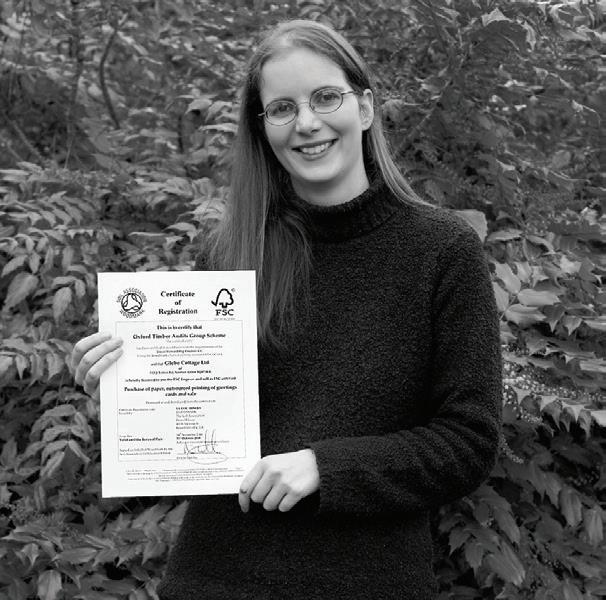
ABOVE: Sue Morrish with the first direct to retail greeting card publisher FSC chain of custody certification. Credit: The Eco-friendly Card Company.
BELOW: RSPB and WWF licensed card ranges. Credit: Carousel Worldwide.
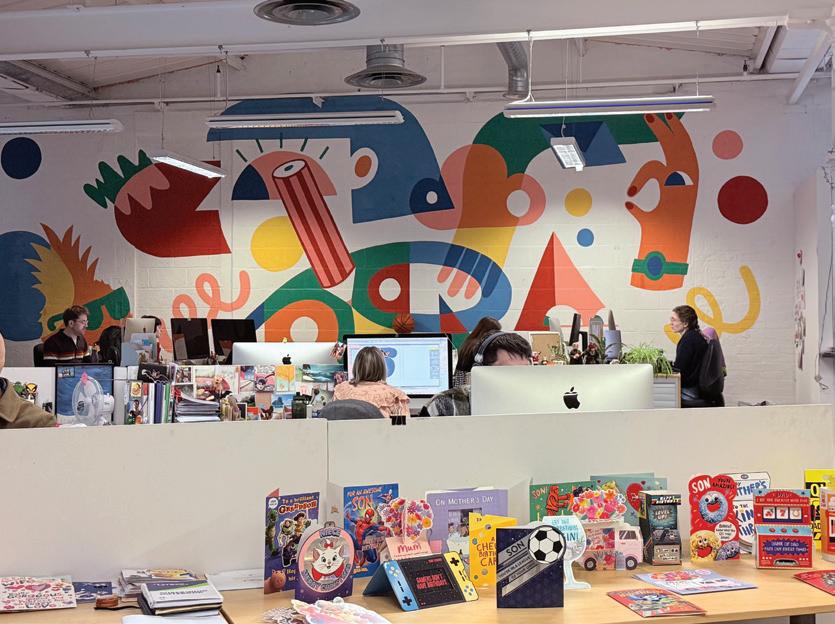
LEFT: A UKG designer talks through new designs. Credit: UK Greetings.
A selection of UKG’s new plastic-free cards. Credit: UKG.
WHAT SUPPLY CHAIN LEGISLATION
MEANS FOR PAPER
With regulations tightening across sourcing, packaging and waste, the paper and publishing industry is entering a new era of accountability. Here’s what the latest EU and global legislation means in practice – and why traceability is now business‑critical.
There is a lot of movement and discussion around legislation in global supply chains with different regulatory bodies and regions exerting their influence in different ways. In this section, we will cover two major areas of legislation that are particularly relevant to the paper and publishing industries. Whilst they are separate regulations with different objectives, they are all connected through the lifecycle of a product, from the sourcing of raw materials, through to how products and packaging are managed at end of life.
The EU Deforestation Regulation (EUDR)
The EU Deforestation Regulation (EUDR) is arguably one of the most significant pieces of environmental legislation currently coming out of the European Union. It forms part of the EU Green Deal, alongside the Green Claims Directive, Eco-design for Sustainable Products Regulation (ESPR), and Extended Producer Responsibility (EPR).
It covers several key commodities that have historically been linked to deforestation risk, including timber, paper and pulp products, cattle, cocoa, coffee, soy, palm oil and rubber, alongside a range of derived products.
While EUDR spans all of these sectors, for the purposes of this discussion we’re going to focus specifically on paper and paper-based products. For many businesses in our industry, paper is likely to be one of the first materials where the impact of these regulations will be felt, making it a useful place to start when understanding how the wider regulatory landscape is evolving.
At the heart of EUDR is the EU’s ambition to ensure that products entering the European market are not contributing to global deforestation.
Case study from UPM
With printed products apparently now out of scope, it is the paper mills that are now the most impacted by the legislation. Niina Niemelä, sustainability director at UPM Communication Papers shares how it has been tackling the regulation:
“The EU Deforestation Regulation (EUDR) has significantly shaped how we organise data, systems and customer support, and we see this as a positive development. UPM paper businesses are on track to be fully compliant by the legal deadline, and preparations have been ongoing well ahead of the regulation’s application.
“A key focus for us has been making EUDR implementation
as straightforward as possible for our customers. The amended regulation and the Commission’s
The goal is to make sure that paper and paper-based products originate from sustainably managed forests, building on practices that many responsible forestry organisations have been implementing for years.
Crucially, it is the only regulation coming out that can actually prevent products from being sold within the European market if they do not comply, rather than functioning as a tax for non-compliance. With EUDR, if businesses cannot demonstrate compliance, products can be stopped at the border.
One of the more positive developments over the past year has been the simplification of some of the requirements. As discussions have continued around the complexity of implementation and the number of operators involved, regulators have taken a more phased approach. Initially, the focus will be on larger companies, with responsibility sitting primarily with the first operator placing the product on the EU market. That operator must be able to demonstrate that the material originates from a compliant source and provide the required due diligence information.
POC Member, the Zoological Society of London (ZSL) has been doing a lot of work on EUDR, working with organisations to create guidance and to prepare.
One such project has been with the Book Chain Project to publish six country-specific guides (Thailand, Brazil, Malaysia, Mozambique, India, Argentina) on the sourcing requirements of each region and its paper mills.
Mirjam Hazenbosch, sustainable business programme manager at ZSL, provided more detail: “It’s really about telling individual companies what they need to do, what documents they need to look at when they’re sourcing from the different countries. […] We have an overview of the different key documents that publishing companies need to collect from specific countries to comply with EUDR, and that looks at different categories, including land use rights, for example, environmental protection, forest-related rules, third parties’ rights, labour rights, human rights, FPIC, and then any tax and anti-corruption regulations.”
These guides are available to download from bookchainproject.com/resources.
ZSL’s other EUDR projects include work with HSBC on an EUDR Guide for Relationship Mangers and what it means for financial institutions that invest in companies affected by EUDR. It has also been working
updated guidance have clarified responsibilities, simplified downstream requirements and excluded certain printed products from scope. We have adapted our processes accordingly and aligned our systems with the updated EU Traces platform.
“For customers who do need to submit due diligence statements, we provide the required data, including geolocation, harvesting timeframes and species information through a dedicated system we have developed for this purpose.
“The main challenge has been the complexity and evolving nature of the regulation, but the positive outcome is greater transparency and confidence across the value chain.”
on the Timber Origin Testing Project with World Forest ID to develop isotope testing to provide independent geographic origin evidence for timber so that its origins can be proven for enforcement agencies.
This is particularly necessary, Mirjam explained, because fraud is still a big issue in timber supply chains as they remain reliant on a paper trail. “I think that will be very important for enforcement agencies to consider and to do alongside checking the paperwork, because the paperwork is quite easy to tweak,” she said.
And while there have been numerous delays and simplifications, most significantly at the end of last year, the postponed implementation date of 30 December 2026 now looks unlikely to change. One such revision particularly pertinent to the paper and publishing industry, was the removal of certain printed products from the scope of EUDR for the time being, including books, newspapers, printed pictures, and likely also greeting cards and calendars, but there is some contention there and further clarity is being sought.
There may still be edits and revisions, but “I think it’s all about just getting started and getting something across the line that will be very important,” said Mirjam, adding that “with traceability comes responsibility, and once you know, you can’t say that you didn’t know, so I think in that way EUDR is having a positive influence.”
It is opening up visibility of supply chains for companies, beyond tier 1, and ensuring greater accountability, which, while undoubtedly causing significant administrative burden, can only be a positive change in the long-term.
Extended Producer Responsibility (EPR) and the Packaging Waste Regulation (PPWR)
Once we move beyond sourcing and begin looking at the product itself and its end-of-life journey, the picture becomes more complex.
In the UK, there is Extended Producer Responsibility (EPR), which is fundamentally a producer-pays system. Businesses are charged based on the volume and weight of packaging they place on the market, alongside how recyclable that packaging is through existing kerbside collection systems.
Across Europe, the Packaging and Packaging Waste Regulation (PPWR) takes a slightly different approach. Whilst EPR focuses heavily on funding waste management systems, PPWR is designed to drive
better packaging design from the outset, encouraging packaging that is easier to recycle and has a stronger circular end-of-life solution.
Alongside this, the UK also has the Recyclability Assessment Methodology (RAM). RAM determines how recyclable packaging is in practice. For example, paper packaging may be highly recyclable and therefore attract lower EPR fees. However, if laminates, coatings or other materials are added that reduce recyclability, the packaging will receive a lower recyclability rating and incur higher fees through eco-modulation. In simple terms, the less recyclable the packaging becomes, the more it is likely to cost.
When we look beyond the UK and Europe, the United States is also beginning to implement EPR schemes across multiple states. However, unlike Europe, there is currently no single federal approach. Each state is developing its own requirements, timelines and fee structures.
The challenge is that recycling infrastructure varies significantly across the US. In many cases, the systems are not as mature as those found across Europe. This means that packaging formats which may be considered recyclable in the UK or EU may not be recyclable in certain US states.
Laminated paper packaging is a good example. In some markets it may be accepted within recycling systems, whilst in others it may not. As a result, brands and product manufacturers are increasingly having to assess packaging on a stateby-state basis, gathering evidence to demonstrate whether a packaging format should be considered recyclable and whether EPR fees apply.
The result is an increasingly complex regulatory landscape that requires businesses to understand not only the materials they use, but also how those materials perform within different recycling systems around the world.
This complexity is exactly why Products of Change has established its Packaging and EPR Working Group
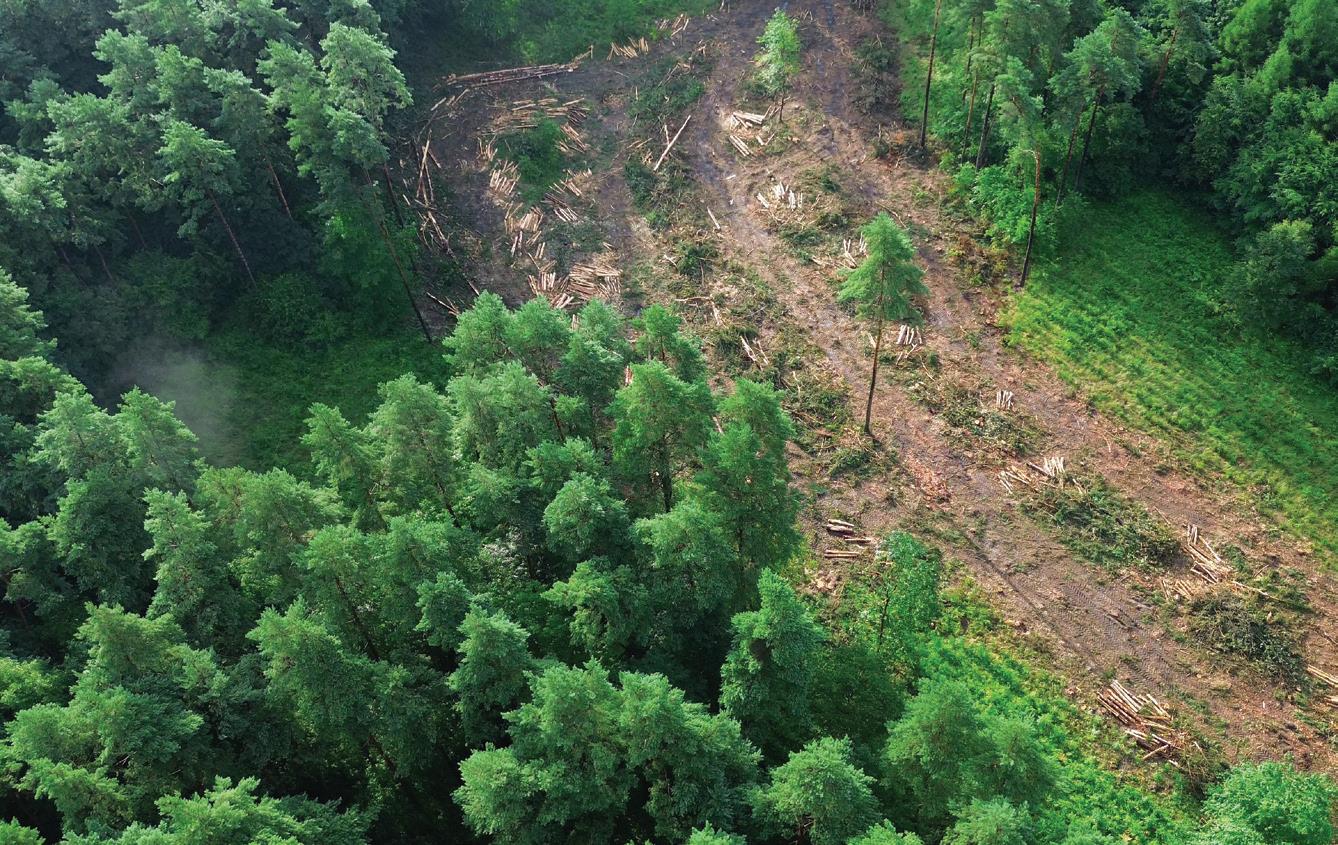
BELOW: The objective of EUDR is to minimise to risk of products linked to deforestation being imported into the EU. Credit: Shutterstock.
and a Paper Working Group, run by Duncan Shearer, POC’s Ambassador for paper. By bringing businesses together, we can share knowledge, divide research costs and focus collectively on the packaging formats most commonly used across our industry. Rather than every company carrying out the same research independently, we can work together to build a stronger evidence base, reduce duplication and help the industry navigate this transition more efficiently. Ultimately, the challenge facing businesses today is not just compliance with one regulation but understanding how multiple regulations connect across the lifecycle of a product. By taking a collaborative approach, we can reduce complexity, lower costs and help the industry move more confidently towards a future that is both commercially and environmentally sustainable.
POC hosts regular legislation update webinars on its website, as well as resources to guide you through the details.
INSET: Traceability of paper based products is paramount with EUDR. Credit: Shutterstock.
THE POWER OF PUBLISHING
Publishing holds a unique power not just to inform, but to shape behaviour. As sustainability becomes more urgent, the industry is increasingly recognising the lasting influence content leaves on audiences and is backing that up with progress behind the pages.
Publishers, whether it be of books, magazines, or indeed anything pertaining to the written word, have an unparalleled opportunity and level of influence when it comes to sustainability or in fact any important messaging.
Michelle Whitehead, sustainability lead at Immediate, referred to this as a “brain-print” – the footprint that the written word can leave on the minds of its readers.
“Increasingly, publishers recognise that sustainability isn’t only about reducing operational impact but also about using trusted brands and platforms to help audiences navigate climate issues constructively and positively, while normalising sustainable behaviour,” said Michelle.
She explained that all of Immediate’s brands work under its Climate Content Pledge, which asks: “Does this feel like it was created in a climate emergency?” This doesn’t mean that everything has to be about climate change but that teams are encouraged to integrate sustainability naturally and positively, where relevant.
This represents a broader shift towards the importance of sustainability content in the publishing industry, and the power it has to influence people, and at Immediate this typically comes in the form of normalisation of sustainability and its consideration in everyday life, as well as a focus on stories of collective action and optimism.
And this extends to its licensing programme:
“Licensing also gives us the opportunity to communicate sustainability messages through trusted and recognisable brands. Whether through Bluey and CBeebies encouraging recycling and creativity, or partnerships linked to initiatives like Green Football Weekend, licensed properties can help engage audiences in accessible and positive ways,” commented Michelle.
Hearst UK is also recognising the power of publishing: “Our Sustainability Editors Programme also plays an important role. The programme brings together editors from across our brands who act as champions within their teams, identifying opportunities for credible, responsible sustainability content and providing editorial input on environmental topics.
“This is particularly important because our audiences consistently tell us they care deeply about environmental issues and expect brands
ABOVE: Immediate highlighted the life and work of Sir David Attenborough for his 100th birthday earlier this year. Credit: Immediate.
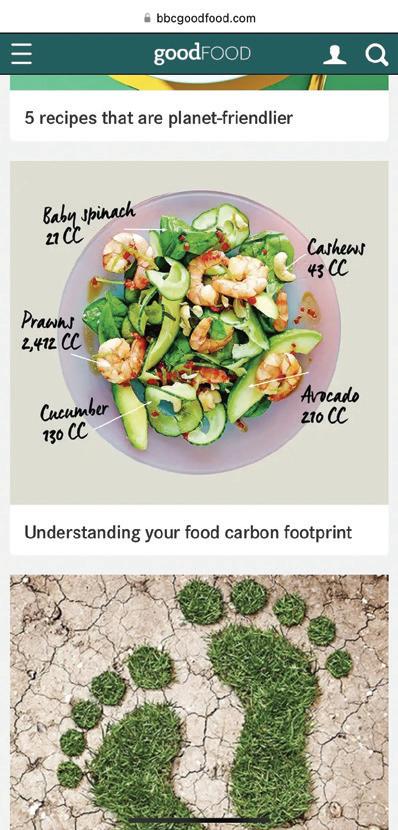
RIGHT: Good Food explores lower-impact cooking, seasonal eating and food waste reduction. Credit: Immediate.
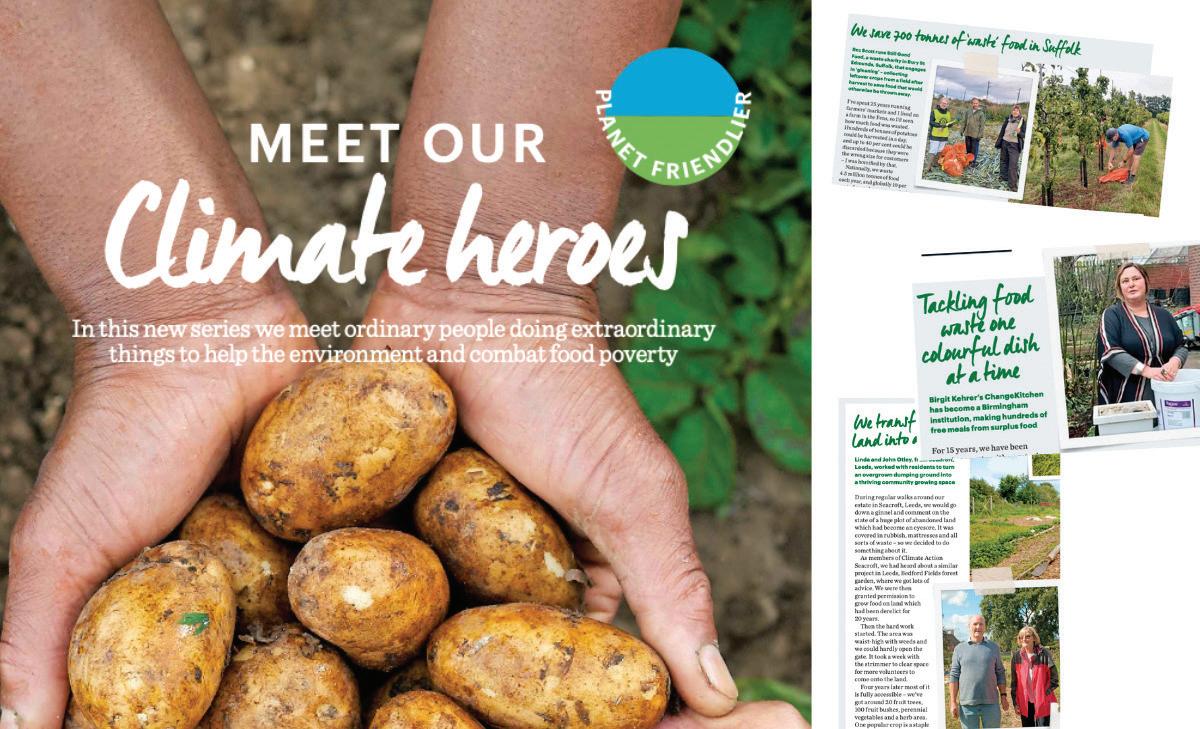
BELOW: Climate Heroes explores how communities are responding positively to climate challenges. Credit: Immediate.
to lead by example. By empowering editors across the business, we can ensure sustainability is embedded within our content strategy and that the information we publish is accurate, relevant and engaging for our audiences,” said Elliot Moran, licensing sales manager at Hearst UK.
This focus on accuracy is particularly key at Hearst UK, as it has clear review processes in place to prevent greenwashing and ensure sustainability claims are evidence-based, transparent, and responsibly communicated. Hearst UK’s licensing programme is also benefitting from this focus as it works to encourage conscious consumerism.
“Using our editorial channels, we can help partners to build complete transparency around their claims on environmental and social commitments. Partners can work with Hearst UK’s in-house ESG experts to assess and substantiate these claims, giving them the confidence they need to produce sustainable product ranges. Last year, as part of Good Housekeeping UK’s accreditation programme, the Good Housekeeping Institute (GHI) launched its Green Seal in partnership with Planet FWD. The Green Seal gives customers added confidence that a product has not only passed GHI’s rigorous performance tests, but it has also been through a thorough Life Cycle Assessment to evaluate its carbon impact at every stage of its lifecycle. It’s all rooted in the power of brand association and storytelling – it’s what Hearst’s licensing programme does best,” said Elliot.
Because publishing is all about storytelling. And that is an element so crucial to sustainability action, enabling impactful communication. But there is of course a lot more to publishing than content, and we have been seeing real progress across the board.
Penguin Random House has been making strides, under its parent company, Bertelsmann, which has thorough sustainability targets. In 2022, Penguin first published its Sustainable Production Toolkit, which has seen updated iterations since, setting out the carbon footprint of different papers, and the environmental impact of different finishes of books so that informed decisions could be made by production, design, and editorial teams.
Émilie Hames, sustainability and compliance production manager also explained about Penguin’s Paper Carbon Cap initiative: “The cap is essentially looking at the carbon footprint of every single one of those [paper mills] and then shaving off those that have a really incredibly high carbon footprint,” which goes hand in hand with responsible sourcing and FSC requirements. Since implementing this initiative, Penguin has seen its emissions go down, and its mills actively working to reduce their emissions further.
emissions since 2019, moving towards its 2030 SBTi target of a 65% reduction in Scope 1, 2 and 3 emissions, and running its operations on 100% renewable electricity. Both magazine publishers have eliminated or massively reduced their plastic packaging use, through reusing unsold covermounts or sending subscriptions in paper wrap instead of plastic, respectively.
Émilie explained that there has been a shift in focus when it comes to sustainability in publishing – in part spurred by EUDR. The biggest shift has been from this sole focus on carbon, and now we’re starting to kind of branch away from that, and that’s not just Penguin, I think that’s an industry shift, and not just publishers, but other kinds of stakeholders in the industry, so the printers and the paper mills, the forests.”
Even though books are now out of scope for EUDR as they come under printed products, a lot of supply chain and transparency work had already been undertaken. “It’s caused us all to look more deeply at our supply chain, beyond the tier one suppliers,” said Émilie, “I think it has completely shifted how we approach sustainability as an industry. It’s not just about carbon anymore. It should be about responsible sourcing. It should be about the ethical and the human rights side. It should be about biodiversity and nature impact too. And I think now we’re at that stage where we’ve made that realisation, and we’re starting to look outwards and more holistically.”
This has included logistical improvements, printing more locally to distribution and utilising lower footprint freight options. Penguin even makes use of what it colloquially calls the ‘Veggie Trucks’ which run on vegetable-based biofuel rather than diesel to deliver close to two million books, with another two million consolidated and shipped via rail.
Across the publishers that we spoke to, what they kept coming back to and commenting on was the role collaboration has played in their sustainability journeys.
“I feel like there’s been an increasing amount of industry collaboration,” said Émilie, “having these dedicated sustainability forums where publishers and print and supply chain partners can attend to share ideas, share initiatives, talk about projects that there’s a mutual need to collaborate on.”
Michelle added: “Organisations like the PPA, Ad Net Zero and Products of Change have helped publishers, advertisers, retailers, and suppliers work together on shared standards and practical solutions. Collaboration is critical if we are to move at pace.”
Similar work has been undertaken at Immediate, which has also seen its emissions fall through switching to lowercarbon paper choices and improving printer efficiency. Hearst has achieved a 57.6% reduction in its carbon
“Achieving meaningful progress requires collaboration across the entire organisation, from editorial and commercial teams to procurement, operations and supply chain partners,” Elliot agreed, “Having that network has been invaluable in helping to accelerate progress and drive meaningful change across the sector.”
It’s about ensuring sustainability is something that is owned collectively, at a business level, integrating it into every department, as well as at industry level through pre-competitive collaboration.
BELOW: Hearst sustainability team’s visit to a FSC certified forest where it purchases paper. Credit: Hearst.
LEFT: Immediate publishes a wide range of titles. Credit: Immediate.
FUTURE FORECAST
Book publishers Emissions Scope 1, 2 & 3
Penguin Random House (Bertelsmann Group)
As part of the Bertelsmann Group, PRH has a 2030 climate target to reduce absolute scope 1, 2 and 3 greenhouse gas emissions by 50% from a baseline year of 2018.
Hachette UK aim to reduce absolute scope 1 and 2 emissions by 56.8% from 2019 levels by 2030; to source 100% of electricity supply from renewable sources by 2030, up from 25% in 2019; to reduce absolute scope 3 emissions by 27.5% from their 2019 level by 2030. Has already exceeded target of reducing Scope 1 and 2 emissions by 56.8%, cutting these emissions by 57.8%.
Water, waste, and biodiversity Sustainable design and material use Supply chain engagement and ambitions
Bertelsmann are committed to using water as resource-efficiently as possible. They use water from mains networks or groundwater reservoirs to cool buildings and facilities, and require suppliers to use water responsibly and efficiently. It is committed to protecting nature and combating deforestation by using recycled or responsibly-produced paper, and works closely with suppliers to avoid forest loss and degradation, greenhouse gas emissions and damage to biodiversity. It does not use trees from old/endangered forests or those with high conservation value.
Hachette Livre has improved fiber traceability in line with the EUDR, and has initiatives to protect forest ecosystems and improve supply chain transparency. It adjusts its print runs to limit unsold copies and waste using data analysis, print on demand and automated printing. It undertake systematic sorting of plastic and cardboard at all distribution centers. Any unsold books not redistributed are recycled completely. Upcycling initiatives are also being implemented: Gigamic and Blackrock turn promotional banners into pencil cases and bags, and Lightning Source France repurposes scrap paper into notebooks. In the United Kingdom and the United States, 75% of damaged pallets are reused in the supply chain or recycled.
PRH 2030 aim: ensure 100% of paper and other core materials are ethically and sustainably sourced, and achieve 47% reduction of plastic. Currently, all paper is currently FSC certified, and 63% comes from Holmen, a Swedish mill that utilises sustainable forestry and production of renewable energy to produce lowcarbon paper. It has capped the use of high-carbon papers so they no longer use papers from mills with a high carbon footprint. This reduced the carbon footprint associated with their paper by 10%, and saved 2,066 tonnes of carbon by 2022.
Hachette Livre’s low-plastic plan aims to reduce the volume of plastic in France by 25% by 2030. Recycled plastic wrap is being implemented in the UK. Hachette Livre is taking a more streamlined approach to production, reflected in the 12% reduction in the number of new releases between 2019 and 2025. 99.9% of the paper used by the Group is FSC® or PEFC™ certified, as of 2025. Eco-design is incorporated from the start of the book creation process, opting for optimal formats and paper weights, while limiting non-essential elements.
Hachette UK aims to source all key raw materials sustainably and is working with other publishers within the Book Chain Project to identify more sustainable choices around plastic packaging, inks and varnishes and manage chemical inputs throughout production. It is committed to removing as much plastic from the supply chain as possible. Supports the FSC and purchases paper through approved suppliers and printers with valid FSC or PEFC (or both) certificates. Aim for all paper or board to be certified by FSC or PEFC, or those which meet the Book Chain Project Grade 3 as a minimum. Use Book Chain Project forest sourcing database to identify papers and their forest sources. Committed to using timber from legal, sustainable and well-managed sources and support initiatives and forestry management schemes that promote this.
Hachette UK are committed to sourcing 100% of electricity from renewable sources by 2030, up from 25% in 2019; now get 94% of electricity from such sources and we are on track to meet this target. They are working collaboratively with key printers, distributors, manufacturers, and other suppliers throughout the supply chain to reduce Scope 3 emissions and have signed the UN Global Compact. They are involved in the Book Chain Project; through the Book Chain Project environmental questionnaire, they gather and assess environmental data from printers.
Hachette Livre’s aims lie in streamlined inventory management, reduced carbon intensity among suppliers, and more efficient book shipping in the Group’s four main markets. Group employees take part in workshops, training and company events for the environment. The Hachette Livre Eco-Challenge will soon be expanded to the UK.
Harper Collins Established SBTi-approved goals to further reduce emissions over the coming years, with the goal of 65% reduction across operations and 25% reduction across supply chain by 2030 or earlier. Aim to reach net zero carbon emissions across operations and supply chain by 2050 or earlier. Has attained Carbon Neutral status for its direct operational emissions (Scopes 1 and 2) and a portion of Scope 3 emissions.
Aim to maintain zero waste (90% or more recycled) across major business sites. Aim to actively evaluate opportunities to power our operations with cleaner sources of energy. All mono books are printed using only renewable energy.
Paper is 99% FSC certified, 1% PEFC certified. Aim to maintain 100% certified paper material in products globally. Support the use of environmentally sustainable fibre, strives to reduce pollution, and aim to conserve natural resources through recycling and waste reduction. Working to lower the overall use of virgin pulp where possible, reducing basis weights on titles where appropriate in order to minimise the use of raw materials consumed in the production of that paper. No longer use glitter; all colour books and book jackets/ covers are produced using vegetable-based inks which are petroleum free.
Aim to work with business partners and suppliers to increase sustainability across the supply chain and use sustainable production wherever it can. Aim to engage customers, employees, suppliers, and partners to reduce environmental impact. Align carbon reduction goals with a global temperature rise limit of 1.5°C above preindustrial levels. Advocate for climate action, internally and externally. Ask partners to reduce emissions including in transportation and plastic and packaging in global supply-chain. Aim to work with printing partners to jointly help reduce environmental impact as an industry and seek to work with suppliers who act in a responsible and sustainable way.
PRH are founding members of Publishing Declares, committing to industry-wide collaboration on climate action.
Hachette
This Future Forecast details the sustainability commitments of some of the largest players in the publishing and card retailer industry. This overview reflects publicly available information at time of review, and the companies’ commitments may not be limited to what is presented in the table as it is intended as a snapshot. For more detailed insights into a specific organisation’s targets and achievements, please visit their website or view their sustainability reports.
Simon & Schuster No public information available. Working with Trees for the Future to turn degraded land into Forest Gardens to promote biodiversity and offer climate resilience. Signed the Publishing Declares pledge to show that they are committed to protecting biodiversity. Part of the Book Chain Project to move towards responsible forest sourcing. Better forecasting to reduce paper, material and chemical wastage.
Macmillan Macmillan Holdings, LLC. have stated they plan to reduce absolute scope 1 and 2 GHG emissions 90.0% by 2050 from a 2023 base year. Macmillan Holdings, LLC. are also committed to reduce absolute scope 3 GHG emissions 90.0% within the same timeframe. Aims to be net-zero in terms of greenhouse gas emissions across the value chain by 2050.
UK Greetings SBTi validated targets with American Greetings and Schneider Electric: Scope 1 & 2 – 42% reduction, Scope 3 – 25% reduction, FLAG emissions – 30.3% reduction. Aiming to proactively reduce energy consumption and only use 100% renewable electricity within UK operations. Will continue to reduce, minimise and offset carbon emissions from UK and global operations. Have reduced Scope 1 & 2 emissions by over 5%. Carbon emissions produced from manufacturing paper and board to produce single cards are now Carbon Balanced through The World Land Trust. Due to increasing internal manufacturing capabilities, electricity consumption has increased, but are looking to mitigate this.
As part of the Book Chain Project they are able to access information on carbon and paper forest sources, as well as water stress levels, wastage rates. Managing the impact that publishing efforts has on biodiversity to check the depth of their effects.
Committed to only using paper which is FSC or SFI certified. Latest figures I was able to find showed that 36% of paper used was FSC and 64% was SFI certified. Warehouses are uses solar panels to help reduce carbon footprint by harnessing renewable energy resources. Reduction of footprint is estimated at 942 metric tons per annum. Reducing the amount of physical proofs being sent.
Focus on paper being FSC or SFI certified and fibre is harvested from sawmills to make recycled paper. Fibre testing is completed twice a year to determine species of trees and check that the trees being used comply with sustainability standards/requirements. Plan to reduce colour paper carbon footprint by 50% by 2030. Exploring new material and pri
Warehouse packing materials made from 100% recycled materials. Majority of shipping containers made from recycled materials. Print planning improvements. Better forecasting to reduce overstocking.
Danilo Aim to offset Scope 1 and Scope 2 emissions by 42% by 2030, from a 2023 base year, and measure and reduce Scope 3 emissions across value chain. Currently offset Scope 1 & 2 emissions through verified carbon reduction projects and UK tree planting.
Water, waste, and biodiversity Sustainable design and
Looking for ways to remove waste from every stage, aiming to reduce operational waste by good design and review of processes. Are zero waste to landfill through work with waste partners. Reuse boxes from external suppliers until they are recycled at end of life; all cartons are FSC certified. Currently over 95% of product waste is recycled. Separate types of waste produced in operations to reduce the frequency of non-recyclable vendor waste collections. Have fitted LED lighting throughout the organisation and will continue to look for opportunities including selfgenerated solar power. Reduced energy consumption by over 1.5 million kilowatt-hours since 2019, avoiding over 400 tonnes of CO2 emissions, and have seen a 23% reduction in natural gas consumption since 2022, through in-office adjustments. Working to maximise recyclability by investing in internal print management system solutions, halving the volume of paper printed since 2019, and strengthening internal antiplastic initiative.
50% of energy at head office comes from solar panels; boost recycling, have installed LED & sensor lighting. Have planted 79,000+ trees since 2020 through Ecologi. In-office EV chargers to help staff switch to cleaner travel.
Will continue to use 100% FSC certified stock. By constantly improving and reviewing portfolio of products and implementing new techniques, aim to reduce the impact of plastics associated with products and packaging. Aim to extend sustainable sourcing policies beyond paper and board whilst promoting the use of sustainably managed forests. Have eradicated single-use plastic cello bags and will continue to invest in methods to reduce plastic packaging from distribution centres. Have invested in machinery for roll wrap which enables the product to be plastic free. Goal is for all our products to be sustainable and fully recyclable, helping to conserve natural resources. Product recyclability is above 97% of card lines. Ensure all inks, varnishes and foils don’t prevent the recyclability of boards and papers. Are replacing plastic hooks with recyclable paper alternatives. Have reduced cellophane rollwrap packaging by 30% since 2017 and lowered the length of gift bag handles by 18% since 2019.
Work closely with partners to ensure that all business partners comply with their standards and are working collaboratively to reduce CO2 emissions across the supply chain. Working with mills, suppliers and disributors and printers to ensure everyone is adherring to sustainable practices that meet their expectations. All printers are FSC certified. Macmillan procures 100% renewable energy for all facilities around the world through the purchase of Energy Attribute Certificates (EACs), or agreements with local utility suppliers (as of 2020). Monitoring fuel sources to find the most sustainable options and reducing their carbon footprint through exploring a range of transportation modes and options.
Supply chain engagement and ambitions
Plan to introduce a sustainability scorecard for entire product range, providing a clear view of products’ environmental impacts to inform eco-conscious design choices. Will enable setting more ambitious goals for the future. Committed to reducing carbon emissions from the transportation of our goods. Innovating to promote lower carbon transport and distribution; invested in paperless warehouse technology. Collaborate with brokered suppliers to combine deliveries from our UK distribution centres direct to customers. To transport products from Asia to UK distribution centres, are working with a sea freight company that offers climate-neutral transport solutions. Work with a distribution partner with a strong commitment to high environmental standards.
99% of products are FSC certified. 99% of cards and 67% of calendars and diaries use plastic-free packaging in 2025. Committed to using FSC-certified materials across all products. Eliminated glitter, saved 11.2 tonnes of plastic by going plastic-free on packaging where possible and adding recycling labels. Non-recyclable parts have been removed from calendars. Are exploring new reusable formats that can be framed after use.
Working with logistics partners to reduce emissions through better delivery planning, fuel-efficient routes, and lower-carbon transport options. Launched a Ways of Working group to explore issues including social sustainability. Conducted a staff sustainability survey and a Heat & Energy Audit at office to identify practical ways to cut energy use and emission. Started measuring full carbon footprint to track real progress.
PRODUCTS OF CHANGE SUPPORTERS 2026
Carousel Worldwide Committed to reducing Scope 1 and Scope 2 emissions by 46% by 2030 from a 2019 base year, and to measure and reduce its Scope 3 emissions. Are carbon neutral for all direct emissions.
Cardfactory
Reduce scope 1 and 2 emissions by 46.2% by 2030. Reduce scope 3 emissions by 27.5% by 2030.
Pursue schemes that supply renewable power, plant woodland, reduce deforestation and provide clean water and other fuels. Changed power sources to renewables/biogas, all cars to electric/hybrid, added EV charging points in car parks. Implemented energy savings on premises including LED lighting and changing thermostat temperatures. Pursuing a re-wilding project run by a team of volunteers.
Paper for 95% of products sourced from FSC-accredited suppliers. Seeking to add additional information to products about their sustainability. 65% of Carousel’s dated-product range are now packaged without plastic and have introduced plastic-free packaging options to calendars; will continue to increase this across full range, as well as removing plastics within the products. Achieved four-tonne reduction by changing box calendar stands from plastic to cardboard. Removed shrinkwrap across 75% of the business’ calendar range. Products use polypropylene (PP) or polyethylene (PE), accepted in many recycling centres, but key goal is to reduce the use of packaging entirely. Aim is to make all of its packaging reusable, recyclable or compostable by 2025 or earlier.
100% commitment to sourcing materials sustainably to achieve zero-net deforestation. Stoney Ridge Plantation - wildlife site owned by Hallmark with 75 plant and animal species - dedicated to supporting biodiversity and looking after the local wildlife.
Reduce absolute Scope 1 and 2 GHG emissions by 54.6% by 2033.
Reduce Scope 3 emissions by 61.1% by 2033 on an economic intensity basis.
The Works Scope 1 - Net zero target - by 2035 Scope 2 - Net zero target - by 2030
Scope 3 - Net zero target - by 2045 (ambition by 2040).
Tesco Net zero across all own operations by 2035. Net zero across value chain by 2050 validated by SBTi Reduce absolute Scope 1 and 2 emissions by 85% by 2030, ahead of SBTi target of 82% by 2032
Work with suppliers to reduce impact of material sourcing to help protect natural environment. Develop partnerships to restore nature. Signed a two-year biodiversity partnership with GreenTheUK in September 2025 to plant 24,000 climate-resilient trees and restore five hectares of wildflower-rich meadows.
50% reduction in emissions caused by products and packaging. 100% commitment to sourcing raw materials from sustainable sources. All suppiers and partners muct follow sourcing and procurement standards. In the process of removing single use plastic from all products – between 20192023, 1000 tonnes of plastic was removed. All cards produced now fully recyclable. Developed card based solutions for special touches/ finishes; replaced plastic items with 'paper-gems' and faux effects, emphasis on design with 3D paper engineering. Removed plastic foam pads. CupCycling – partnered with James Cropper to make cards from recycled paper products from disposable coffee cup industry and FSC-certified materials.
Design and source products and packaging that minimise virgin material use and maximise recyclability. Address product endof-life, identifying opportunities for re-use and recycling. Own-label soft toy fillings are now made from 100% recycled materials. New own-label roll wrap is now fully recyclable and no longer includes cellophane wrap. Printcraft manufacturing facility has eliminated use of bubble wrap, replacing it with cardboard shredding to reduce single-use plastics and reuse waste materials.
public information available. Launched 'perfect packaging' project - workshops/guidance/tracker to improve recyclability and consistency.
with suppliers across the value chain.
By 2030: 100% renewable electricity in own operations globally, 100% top suppliers use renewable electricity. 20% reduction in logistics/transport emissions. 25% reduction from employee commuting. 38% from less business travel. 100% roll wrap and over 50% cars are produced in the UK to reduce carbon footprint. Already 100% renewable energy for electricity to head office, factory and distribution centres.
Hearst Work towards a 65% carbon reduction for Scope 1, 2 and 3 by 2030 - key goal to be validated by SBTi - this is against its 2019 baseline figures.
Reduced waste per person by 29% and operate with a verified zero wasteto-landfill strategy. All paper is 100% FSC or PEFC certified, coming from responsibly managed forests.
Eliminated all plastic magazine wrap, choosing sustainable paper alternatives.
Goals to achieve by 2050: decarbonise operations through clean energy and energy optimisation. Net zero pathway for the whole group company. Collaborate with top suppliers to decarbonise. Replaced 25 diesel vans with plug-in hybrid electric vehicles and added one fully electric van for short journeys, reducing total average emissions by 144t CO2e each year.
Maintain supplier data and transparency around what our suppliers are doing to be more ethical and responsible with their business practices. Plans for FY26 is to introduce tangible metrics to evaluate supplier criteria and performance evaluation.
Paper suppliers and printers are ISO 14001 certified, maintaing high environmental standards throughout the supply chain. Climate and greenwashing training across all departments. Reducing operational energy by using certified renewable electricity, transitioning to heat pump systems and no petrolpowered vehicles.
Encourage the use of sustainable materials across supply chain. Aim to encourage 50% of key product suppliers to sign up to SBTi by 2025.
Hallmark
1, 2 & 3
Immediate Aim to reduce internal CO2 emissions by 30% by 2030 and reach a target of being net zero by 2045 – fom a 2002 baseline. Currently 3% ahead of target. Use a Scope 3 calculator to understanding wider impact of digital advertising. Joined AdNet Zero.
Scope
Part of the PPA Sustainability Action Group to think about the lifecycle of a product and set industry wide targets. Better forecasting of paper for net zero pathway. Zero to landfill policy and clear signage at recycling points. For every tree harvested, at least 2 are replanted. Sold retained copies online and to secondary markets reducing waste. First publisher to invest in the Wastebusters Programme and have a seat on the advisory board. Support global biodiversity and climate change programmes in line with UN's Sustainable Development Goals. Support UK woodland biodiversity through The Woodland Trust. Printed 12% fewer magazines 2023-2024 with a 9% reduction in print intensity emissions, driven by a reduction in paper tonnage and in energy efficiencies at its printers.
Focusing on a circular economy to decrease waste and increase resource efficiency. Responsible paper sourcing with FSC certified paper to support biodiversity and anti-deforestation commitments.
Make informed choices around types of paper used and take into account both the quality and environmental impact of paper choices. Source the majority of the paper in the UK. 10% of paper purchased is carbon balanced in partnership with World Land Trust. 100% supply mills are FSC or PEFC certified. Only sourced from UK and Europe. Elimated certain materials and reduced number of different plastics so easier to recycle. Use recycling labelling to help consumers know how to recycle. Removed non-recyclable materials (e.g. glitter and polystyrene). Removed PVC to make packaging more easily recyclable. Increasing amount of recycled plastic being used.
80% of servers run on renewable energy (hosted by AWS). Audited websites to identify hotspots and understand where emissions can be reduced. Sustainability added as internal roadmap development criteria. UK sourcing of paper to reduce transport emissions. Sales based replenishment to reduce unnecessary transport emissions. Promote recyclability and sustainability messaging to consumers.
Integrate recycled materials and focus on circular economy principles across its operations.
Committed to reducing Scope 1 and Scope 2 emissions by 46% by 2030 from a 2019 base year, and to measure and reduce its Scope 3 Supply chain integrity. Uphold the high standards of ethical trading across its supply chain, ensuring fair labour practice and due diligence. Create policies to support sustainable procurement and due diligence. Develop supplier codes, sustainability criteria for sourcing, and ESG screening tools. Working towards achieving net-zero greenhouse gas emissions across entire value chain, becoming carbon neutral by 2030.
Meridith No public information available. No public information available. No public information available. No public information available.
National Geographic No publicly declared commitment to reducing Scope 1, 2 & 3 emissions. Aim to identify and measure direct GHG emissions and those resulting from business collaborations, and plan to explore opportunities to mitigate emissions.
Egmont By 2030: reduce emissions from printed products by 33%, reduce emissions from goods transportation by 28%, and reduce emissions from all current Scope 3 categories by 33%, from a baseline of 2021. Aims for 100% green electricity from 2022 were achieved. In 2025, scope 1 emissions decreased by 72% compared to 2019 and 51% compared to 2024.
information
Continuously aim to minimise use of toxic materials and finite natural resources; prioritising durability, reparability and recyclability in products to reduce waste; replacing, replanting and regenerating renewable resources like wood and water. Requires that no National Geographic-branded products are made from threatened, endangered or illegally sourced or imported animals, plants or forest products. Strives to have no animals, plants or forest products used when their use is questionable from an ethical or conservation standpoint. Aims to limit water consumption to what is necessary and make efforts to replenish or regenerate water sources in comparable volumes.
Contribute towards biodiversity initiatives in their solar parks. Invested in two solar parks in Denmark and Sweden, ensuring their future energy consumption will be mostly renewable. All passenger cards and vans must be EVs; plan for all remaining vehicles to be replaced with electric ones. Has replaced fossil-based burning oil with biofuel in one facility. Matched 100% of electricity consumption with renewable electricity certificates in 2025. Scope 2 emissions reduced by 27% in 2025 due to matching all electricity consumption with 100% renewable electricity since 2022, and reducing district heating and cooling consumption by 20%. Absolute energy consumption decreased by 18% in 2025.
Burda is focusing efforts on reducing greenhouse gas emissions and regenerating resources. Compensation strategy focuses on education and developments in regenerative farming, and they invest in projects supported by ClimatePartner, leading the company to become carbon neutral in 2021.
Goals: to source and use only materials that are certified to be legally secured, sustainably harvested or manufactured; have 100% of fibre used on print products certified by at least one certifier (PEFC, FSC, SFI or ATFS); and minimise packaging, make it as reusable/recyclable as possible, and consider alternative packaging options that further reduce waste. Seeks materials that are sustainably made using renewable materials and energy and can be recycled. Also seek to minimise paper consumption; eliminate all paper products containing irresponsibly/illegally harvested fibres; and maximise the use of recycled fibre.
Committed to testing the use of recovered fibre in print products with the goal of incorporating as high a percentage of recycled fibre as possible. Already specify high-recycled content in many products and supplies, including copier paper, cartons and packaging.
Its publishers implement a sustainability toolkit for producing books; focus has been on reducing volumes of unsold copies through enhanced sales forecasts, smaller printing volumes and automated printing. Increasingly using digital printing to reduce carbon emissions. Consolidate paper suppliers to optimise cost and emissions efficiency. Absolute emissions from printed products decreased by 42% from 2021-2025. Has implemented initiatives to remove covermounts, reuse covermounts, and use plastic alternatives. Since 2021, its media business has focused on removing foils from selected magazine titles and replacing them with paper and recycled plastic. Absolute emissions from packaging decreased by 5% from 2021-2024.
All paper used for Burda magazines is 100% PEFC or FSC-certified. It has a 30% lower carbon footprint than standard graphic papers in Germany. Waste paper and packaging are recycled, ink use has been cut by over 20%, and solvents are recovered and reused. Printing cylinders are refurbished and raw materials recycled. The focus is on conserving natural resources: reducing material use, recycling, and embedding circular economy principles. 100% separation and recycling of paper and plastics at BurdaDruck.
Committed to addressing equity of impact throughout the value chain for all stakeholders. All business collaborations are required to use paper made only from legally sourced wood, refrain from using wood sourced from protected forests, support sustainable fibre use, reduce pollution and conserve natural resources through recycling and waste reduction. Expects paper suppliers to conform to internationally recognised and accepted certification programmes, and monitor and report air and water effluent. Prioritise collaborations that follow resource efficient and cleaner production practices including pollution prevention, source reduction, waste minimisation, eco efficiency, reuse of waste, process modification, and awareness of and reduction of the use of hazardous materials. Aim to reduce travel, source locally, and prioritise low-emission transport options.
Work with existing initiatives to reduce emissions from Goods Transportation; maintain a focus on optimising shipments, identifying more sustainable modes of transport, and selecting the right suppliers. Prioritise suppliers that focus on decarbonisation initiatives. Absolute emissions from Goods Transportation have decreased by 38% between 2021-2025 due to decreased volumes and weight being transported, reduced frequency in shipments, and reduction initiatives implemented by suppliers (e.g. fossil-free freight and co-loading).
Conducts an annual corporate carbon footprint to derive strategies and actions in the core areas of Energy, Resources, Mobility, and People.
Conde Nast
1, 2 and 3looking at the entire value chain as well as internal practices.
Hubert Burda Media No public
available.
This editorial was brought to you by Products of Change.
Products Of Change Media Ltd
United House, North Road, London, N7 9DP
For general enquiries contact:
For press enquiries please contact the editor: For advertising and membership enquiries: Follow us on LinkedIn: