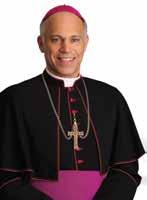
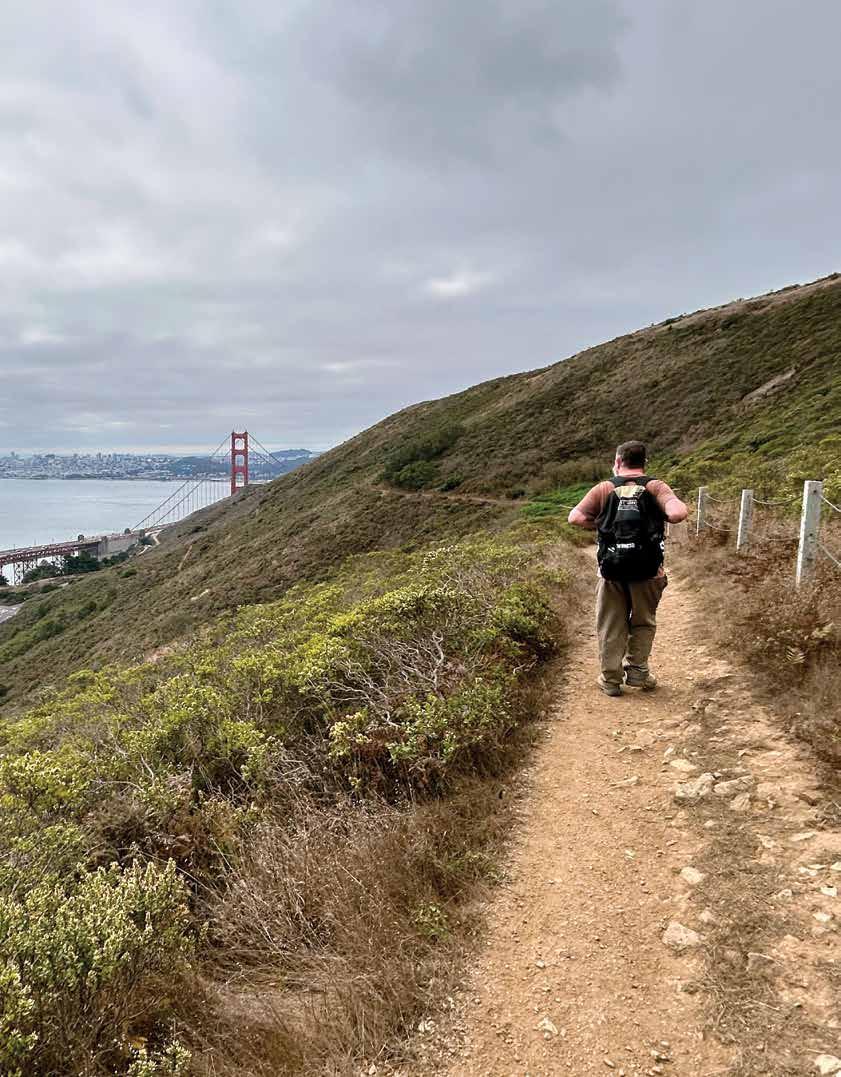
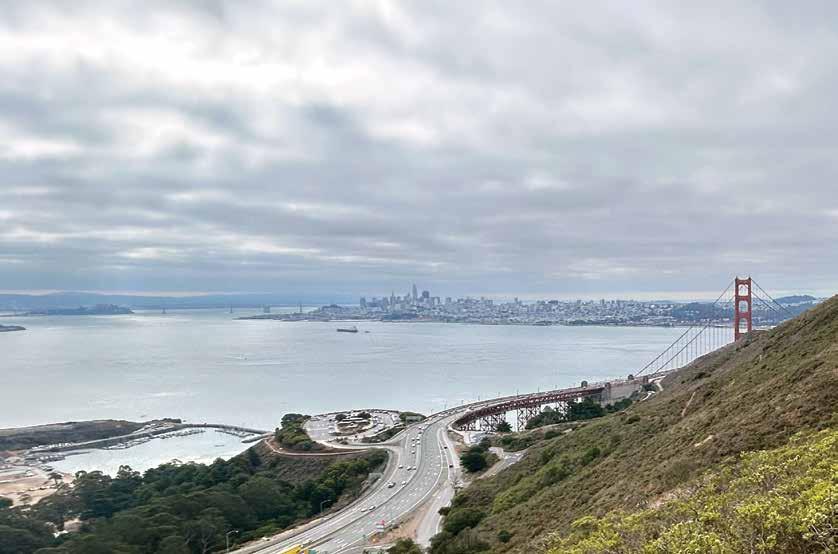
Archbishop: The new Passover and the spring-cleaning of the soul
Catholic Quiz: How well do you know the Catholic faith?
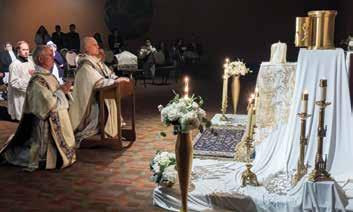
Popular pilgrimage: Keeping watch with Christ - Holy Thursday and the seven churches visitation
Sacramental formation: Growing the faith - Archdiocesan Catholic high schools respond to increasing interest in sacramental formation
Sacred mystery: True God, true Man - Encountering Jesus and the Eucharist in the Shroud of Turin
Lay movement: The “hidden gem” of Cursillo
Love in action: Serving the vulnerable across the three counties in the archdiocese
Immaculate Mother: Hail Holy Queen - The maternal queenship of the Blessed Virgin Mary
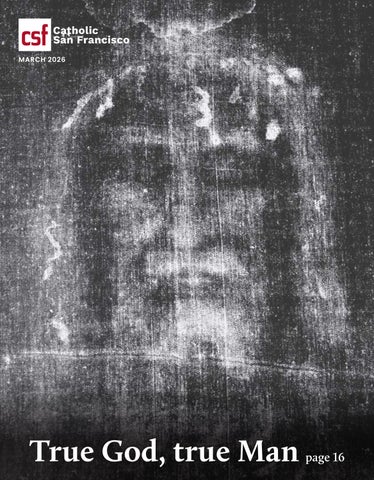
ABOUT THE COVER: Read about the Shroud of Turin through the eyes of a board-certified emergency physician who offers a forensic review of the mysterious three-dimensional wounds, fossilized pollen fragments, and Roman leptons (coins) associated with this controversial linen cloth. Page 16.
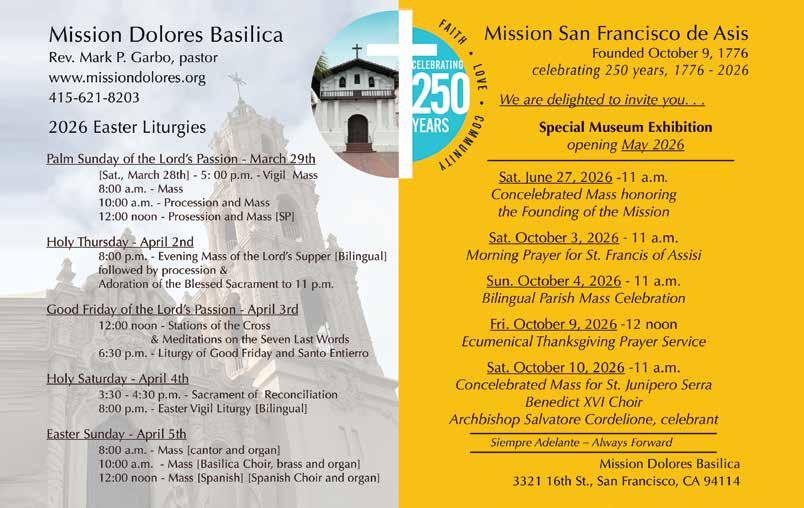
events: Save the dates! Come out and join us PUBLISHER Archbishop Salvatore J. Cordileone
CSF MAGAZINE
EDITORIAL ADVISORY BOARD
Fr. Patrick Summerhays
Vicar General & Moderator of the Curia
Peter Marlow (415) 614-5636
Ryan Mayer, Catholic Identity Assessment & Formation
Valerie Schmalz, Human Life & Dignity
Rod Linhares, Mission Advancement
Mary Powers (415) 614-5638
ADVERTISING Phillip Monares (415) 614-5644
CIRCULATION Diana Powell (415) 614-5576
COPY EDITOR Nancy O’Brien
BUSINESS MANAGER Chandra Kirtman
SUBSCRIBE FOR
sfarch.org/catholic-sf/ #Signup
The new Passover and the spring-cleaning of the soul
If you had to clear out of your house immediately and had only a few minutes to choose which belongings to bring with you, what would you choose? Sadly, for many people this is not a theoretical question, as so many have had to do precisely that when wildfires threatened their communities. We are all too familiar with that here in California.
THE SPRING-CLEANING OF PASSOVER
This scenario is not unlike the ancient people of Israel on that first Passover night, which we hear about in the 12th chapter of the Book of Exodus. “You shall eat like those who are in flight.” They had to leave Egypt in a hurry, and they did not even have time for the dough to be leavened and rise. The Jewish Passover ritual is really a comingling of two commemorations in their history: the flight from slavery in Egypt and the feast of unleavened bread. This comprises the Passover ritual observed by devout Jews to this day.
for meaning in life. A pilgrimage on foot is a great aid for rediscovering the value of silence, effort and simplicity of life. Pilgrims seek a greater sense of life, and it is precisely in this that we discover what is essential so that we can be prepared for the good things God wants to give us in reaching that destination. The destination, though, has already been reached. The Messiah has come, and He has fulfilled the hope of the Passover: He has taken the place of the paschal lamb, freeing us from true slavery, the slavery to sin that delivers us into death; He has made His Passover from death to life; and He has left us the memorial of this passage in the Eucharist that He established on Holy Thursday night. He has thus granted us passage from here to the hereafter. He has opened the door to heaven for us. We don’t need to do the work of opening the door, something that we could never do on our own, anyway. But we do have to step through that threshold. And how do we do that?
The spring-cleaning of the soul cannot begin without that first step of humility. › ARCHBISHOP
Having to leave in a hurry forces one to choose what is truly essential in life, and this is the spiritual meaning that unleavened bread assumed: clearing out the old leaven in the home to make room for the new was a sort of spring-cleaning, which becomes symbolic of the spiritual spring-cleaning of the soul. Later in Jewish history, when the people would settle in the Promised Land and establish their kingdom and build the Temple in Jerusalem, Passover rituals would become centered there. Thus, the Temple became a place of pilgrimage, and the feast of Passover the feast of hope—hope for the coming of the Messiah. We, the people of the New Covenant, are celebrating ourselves a jubilee year [St. Francis of Assisi]. And pilgrimage is very much what it means to observe a year of jubilee. Pope Francis said that setting out on a journey is traditionally associated with our human quest
Our Lord teaches and models that for us on Holy Thursday night, as we hear St. John narrate it for us in his description of Jesus’ last meal with His apostles the night before He died. The washing of feet was the task of slaves, indeed the lowliest, most menial task of all. It would be shocking, even scandalous, for a master to wash the feet of his guests. As Jesus tells them, in doing so He has given them a model to follow. And what does He command them to do? “As I have done for you, you should also do.”
HUMILITY IS THE KEY
Notice, He did not say “you should also do for Me.” He did not do this in order to get something in return. Rather, He tells them, “If I, … the master and teacher, have washed your feet, you ought to wash one another’s feet.” This is the supreme example of humility that He gives to us and that He calls us to live.
A pilgrimage on foot is a great aid for rediscovering the value of silence, effort and simplicity of life. Pilgrims seek a greater sense of life, and it is precisely in this that we discover what is essential so that we can be prepared for the good things God wants to give us in reaching that destination.”
Let
it be an authentic expression in action of our obedience to the Lord’s command to do for others as He has done for us. That
will
take us through the threshold from earthly existence to the heavenly realm. And that is the destination of our earthly pilgrimage, the destination for which we all yearn, all those who live this earthly pilgrimage in hope.”
Many virtues are needed, but it all must necessarily start with that quintessential Christian virtue of humility. We have the witness of the saints throughout the ages and especially the early Fathers of the Church to confirm this spiritual truth for us. St. Basil the Great, for example, said as cited in “The Great Commentary of Cornelius a Lapide: The Holy Gospel According to St. John” that it is humility that guards the treasure house of virtues; and St. Macarius calls it “the ballast of the virtues.”
St. Augustine, too, chimes in here, comparing this action of our Lord at the Last Supper to David slaying Goliath, asserting that, as David laid Goliath low, so Christ slayed the devil. As he puts it in the same commentary, “Humility has slain pride. ... For by humility, he has made a way for us. … Except by humility, we could not have returned to Him. … Then let not man disdain to imitate humble man; God has become humble so that the pride of the human race might at least not disdain to follow the footsteps of God.”
One of the unique features of the Holy Thursday liturgy is the ritual reenactment of this gesture of humility on the part of our Lord. The priest bends down low to wash the feet of his parishioners. This is true Christian leadership, modeled after the pattern set by our Lord Himself. Let us, then, live what we pray. May this not be an empty ritual that may perhaps be emotionally pleasing but unrelated to our lives outside the four walls of a church. Instead, let it be an authentic expression in action of our obedience to the Lord’s command to do for others as He has done for us. That will take us through the threshold from earthly existence to the heavenly realm. And that is the destination of our earthly pilgrimage, the destination for which we all yearn, all those who live this earthly pilgrimage in hope. ■
Adapted from his April 17, 2025, homily for Holy Thursday at the Cathedral of St. Mary of the Assumption
SAINT ELIZABETH CHURCH
449 Holyoke Street • San Francisco • 415 468 0820
HOLY WEEK SCHEDULE 2026
ASH WEDNESDAY, FEBRUARY 18
8:30 am and 6:00 pm
PALM SUNDAY VIGIL, SATURDAY MARCH 28
Confessions: 4:00 pm Mass 4:30 pm
PALM SUNDAY, MARCH 29
Masses: 8:30 am and 10:30 am
HOLY THURSDAY, APRIL 2
No Morning Mass Morning Prayer at 8:30 am 6:30 pm – Mass of the Lord’s Supper Adoration of the Blessed Sacrament until 9 pm
GOOD FRIDAY, APRIL 3
No Morning Mass Morning Prayer at 8:30 am
12:00 – 12:45 pm Stations of the Cross 12:45 – 1:30 pm Reflections on the Cross 1:30 – 3:00 pm Good Friday Liturgy
Annual Archdiocesan Celebration of Renewal of Priestly Ministry by the Clergy, Blessing of and Sacred Chrism by the Archbishop Palm Sunday of the Passion of the Lord Saturday and Sunday, March 28 and 29
Regular Weekend Schedule of Masses
Saturday, March 28, 5:30 p.m. Vigil Mass with Cathedral Choir School Sunday, March 29
7:30 a.m.; 9:00 a.m. Gregorian Chant
11:00 a.m. Mass with Cathedral Choir 1:00 p.m. en Español
Archbishop Cordileone, Principal Celebrant
4:00 p.m. Palm Sunday Concert
Ethea Trio: Shintaro Taneda, Violin; Ayoun Alexandra Kim, Cello; John Lee, Piano Thursday of the Lord’s Supper (Holy Thursday) Thursday, April 2
Lent ends at Sundown on Holy Thursday, and the Celebration of The Paschal Triduum begins (NO Confessions and NO 7:30 a.m. or 12:10 p.m. Masses Today)
7:30 p.m.
Mass of the Lord’s Supper
Archbishop Cordileone, Principal Celebrant
Followed by Vigil and Adoration of the Blessed Sacrament in the Event Center c oncluding with 10pm night prayer
Friday of the Passion of the Lord (Good Friday) Friday, April 3 (NO 7:30 a.m. or 12:10 p.m. Masses Today) 11:30 a.m. – 12:30 p.m. Confessions
1:00 p.m.
Stations of the Cross 2:00 p.m. - 3:00 p.m. Music in the Cathedral 3:00 p.m.
Liturgy of the Passion and Death of the Lord
Archbishop Cordileone, Celebrant Liturgy of the Word, the Adoration of the Cross and Holy Communion Holy Saturday Saturday, April 4
(NO Confessions and NO 8:00 a.m. or 5:30 p.m. Masses Today)
Cathedral closed all day until 8pm 9:00 p.m.
The Easter Vigil in the Holy Night
Archbishop Cordileone, Principal Celebrant Blessing of the New Fire and Paschal Candle, Liturgy of the Word, and Celebration of the Eucharist.
Easter Sunday of the Resurrection of the Lord Sunday, April 5 (NO 7:30 a.m. Mass)
9:00 a.m. Gregorian Chant
11:00 a.m. Mass with Cathedral Choirs and Brass Esemble
1:00 p.m. en Español, 4:00 pm Easter Concert
4:00 pm Easter Concert Featuring Michal Szostak (Poland), Organ
at https://catholicquestions.com
Visit this website to submit your Catholic questions!
BY JIM BLACKBURN Founder and president, Catholic Questions Blackburn is a popular Catholic apologist, author and speaker.
There are no trick questions, but there are questions that will trip you up if you fail to read carefully. An answer is counted as wrong if any part of it — such as a date or name — is wrong. Your goal is not to find the answer that is least wrong, but the one answer that is wholly correct. On average, most informed Catholics score 50%. How well did you do?
1. How many full weeks are there in the liturgical season of Easter?
a. 4
b. 5
c. 6
d. 7
2. Who was the first of Jesus’ followers to witness our resurrected Lord?
a. Peter
b. John
d. Mary, Jesus’ mother
3. Who was the first of Jesus’ followers to enter Jesus’ empty tomb?
a. Peter
b. John
c. Mary Magdalene
d. Mary, Jesus’ mother
4. Easter is considered which of the following?
a. Feast of feasts
b. Solemnity of Solemnities
c. Both of the above
d. None of the above
5. In the Latin Rite, Easter is always celebrated on which Sunday?
a. The Sunday before the vernal equinox
b. The Sunday after the vernal equinox
c. The Sunday preceding the first full moon after the vernal equinox
d. The Sunday following the first full moon after the vernal equinox
Answers can be found on page 38
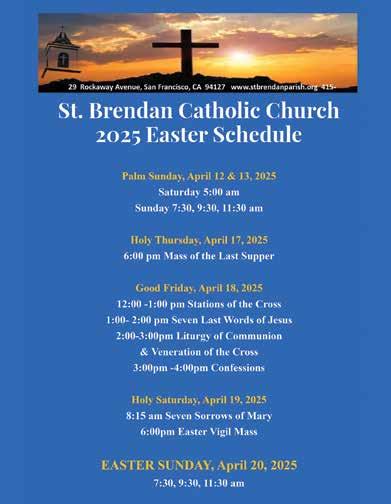
2026 EASTER SCHEDULE
Palm Sunday March 28th & 29th, 2026 Saturday, 5:00 pm
7:30, 9:30, 11:30 am
Holy Thursday April 2, 2026 6:00 pm Mass of the Last Supper
Good Friday
April 3, 2026
12:00 -1:00 pm Stations of the Cross 1:00- 2:00 pm Seven Last Words of Jesus 2:00-3:00 pm Communion & Veneration of the Cross 3:00pm - 4:00pm Confessions
Holy Saturday April 4, 2026
8:15 am Seven Sorrows of Mary Rosary 8:00 pm Easter Vigil Mass
EASTER SUNDAY, April 5, 2026 7:30, 9:30, 11:30 am
Mass
Holy Week & Easter Schedule
St. Dominic’s Catholic Church
Holy Saturday, April 4 Easter Sunday, April 5 Christ is risen! Truly He is risen! Palm Sunday, March 29
9:15 am Family Mass begins at the Our Lady of Lourdes Grotto, procession with a donkey
11:30 am Solemn Choral Mass
1:30 pm Mass (in Spanish)
5:30 pm Mass with Contemporary music
8:00 am Tenebrae
8:00 pm Easter Vigil Mass followed by a reception in the Parish Hall
7:30 am Tenebrae
7:30 pm Mass of the Lord’s Supper
11:20 pm Last Supper Discourse
The church closes after Good Friday, April 3
7:30 am Tenebrae
12:00 pm Stations of the Cross 12:30 pm Confessions until 3:00 pm 12:45 pm the Seven Last Words of Christ
1:45 pm Passion of the Lord (simple)
7:30 pm Passion of the Lord (solemn)
There are no Masses on Good Friday
7:30 am Mass with Easter hymns
9:30 am Family Mass with trumpet
11:30 am Solemn Choral Mass, Schola cantorum, trumpets & strings
1:30 pm Mass (in Spanish)
5:30 pm Mass with Contemporary music No confessions this day No Coffee Minute Parish Office closed on Easter Monday
Keeping watch with Christ
Holy Thursday and the seven churches visitation
BY AARON LAMBERT Writer from Denver
Holy Thursday is one of the most beautiful yet somber nights in the liturgical year. During the Holy Thursday liturgy, called the Mass of the Lord’s Supper, the priest washes the feet of his parishioners, as Christ did his disciples at the Last Supper. Then, as the Mass ends, the Blessed Sacrament is processed out of the sanctuary and placed atop the altar of repose, where it will remain “entombed,” as it were, in darkness until the first light of Easter Sunday breaks.
Not only does Holy Thursday mark the beginning of the sacred triduum, it is also when the Church commemorates the institution of the Eucharist and the priesthood with it. Important as these are, there is another, lesser known devotion that the Church has practiced for centuries that the faithful are invited to participate in: the seven churches visitation.
HISTORY OF THE DEVOTION
The seven churches visitations finds its origin in Rome, during the time of St. Philip Neri in the 16th century. A popular pilgrimage route at the time was known as the “seven churches of Rome,” which included the four major basilicas of St. Peter’s Basilica, St. Paul Outside the Walls, St. John Lateran and St. Mary Major, and the three minor basilicas of St. Sebastian’s, Holy Cross in Jerusalem and
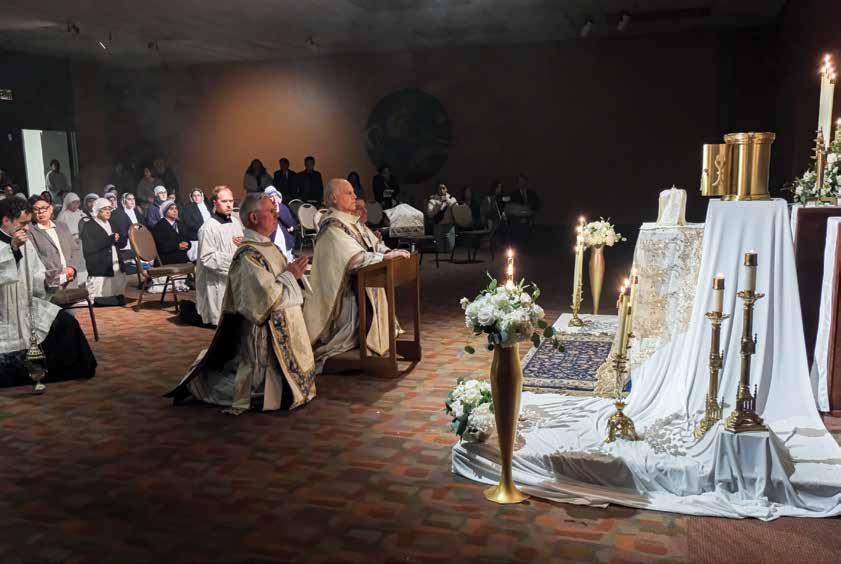
Pilgrims join Archbishop Salvatore J. Cordileone at an altar of repose in the Conference Center of the Cathedral of St. Mary of the Assumption as part of the seven churches visitation on Holy Thursday.
Photo by Dennis Callahan
St. Lawrence Outside the Walls. St. Philip Neri would walk this route as a personal devotion and, over time, pilgrims began to join him. He would lead them in hymns and prayers at each church, share a brief spiritual reflection and break bread with the people. During Lent in particular, the crowds became larger.
This devotion eventually became linked to both praying the Stations of the Cross (two at each church) and also meditating on Scripture passages that recount the seven last places Jesus visited before He died. Those Scripture passages include: Jesus in the Garden of Gethsemane (Lk 22:39-46), Jesus before Annas (Jn 18:19-22), Jesus before Caiaphas (Mt 26:63-65), Jesus before Pilate (Jn 18:35-37), Jesus before Herod (Lk 23:89; 11), Jesus before Pilate again (Mt 27:22-26) and Jesus’ crucifixion and death (Mt 27:27-31).
From these traditions and St. Philip Neri’s earlier practice in Rome arose the devotion of the seven churches visitation, which has slowly changed over time into the modern-day version. Today, it is practiced primarily in Latin America, Italy, Poland and the Philippines, but it has been rediscovered in recent years and is once more growing in popularity as a Holy Thursday tradition.
HOW TO DO THE SEVEN CHURCHES VISITATION
In its modern form, there’s no need to go to Rome to do the seven churches visitation (though that is certainly still an option). The great thing about this devotion is it can be done anywhere in the world where there are at least seven Catholic churches in somewhat close proximity to one another. In a city like San Francisco, that can mean both within walking and driving distance.
To start, choose seven churches to visit on Holy Thursday. They can be of your choice, or perhaps your diocese will offer a specific pilgrimage route; either will suffice. You can also do the seven churches visitation individually or in a group. The first church you’ll visit is the church at which you attend the Mass of the Lord’s Supper. After Mass, when the Blessed Sacrament is placed on the altar of repose, you’ll have the chance to spend time in adoration and keep vigil with Christ. Spend some time in prayer before the Lord, using the Stations of the Cross and the aforementioned Scripture passages as aids for meditation. Then, you’ll go from church to church, visiting the Lord at the altar of ›
Holy Week Schedule
Palm Sunday March 29
Saturday 5 pm Vigil Mass
Sunday: 8 am, 10 am (with Solemn Procession), 5 pm, 7 pm USF Student Mass
Holy Thursday April 2
6:30 pm Mass of the Lord’s Supper Adoration of the Blessed Sacrament until 10 pm
Good Friday April 3
12 noon Women Preach: Meditations on the Passion 1:45 pm Liturgy of the Passion of our Lord Reconciliation: 11 am to 1:30 pm & 3 to 4:30 pm
Holy Saturday April 4
8 pm The Great Vigil of Easter
EASTER SUNDAY April 5
8 am, 10 am (followed by Easter Egg Hunt), 12 pm
650 Parker Ave., San Francisco | stignatiussf.org
repose in each one and spending time in prayer before Him.
The Church intentionally places the Eucharist in darkness on Holy Thursday to recall the darkness that the world experienced
Holy Thursday
Holy Week Schedule
8:00 am Morning Prayer
8:30 am - 10:00 am Confessions
7:00 pm Mass of the Lord’s Supper
Adoration of Blessed Sacrament until 11 pm
Good Friday
8:00 am Morning Prayer
8:30 am - 10:00 am Confessions
1:30 pm Stations of the Cross
2:00 pm Seven Last Words
3:00 pm Solemn Liturgy, Holy Communion & Dramatization of the Passion
Holy Saturday
8:00 am Morning Prayer
8:30 am - 10:00 am Confessions
8:00 pm Easter Vigil
Easter Sunday Masses
7:00 am, 10:00 am, 11:30 am
Like the disciples in the Garden of Gethsemane, we too are invited to keep watch with Christ as we contemplate Christ’s death and resurrection and prepare our hearts to rise in joy with Him on Easter morning.”
at the time of Jesus’ death on the cross. Praying at the various altars of repose is meant to be a solemn and somber experience, but even so, it is still a beautiful prayer experience that brings us deeper into the spiritual realities of the triduum. Like the disciples in the Garden of Gethsemane, we too are invited to keep watch with Christ as we contemplate Christ’s death and resurrection and prepare our hearts to rise in joy with Him on Easter morning.
Despite the darkness that Holy Thursday brings, the seven churches visitation is a powerful devotion that keeps the light of Christ aflame; for as it states in the Gospel of John, “The light shines in the darkness, and the darkness has not overcome it” (Jn 1:5). ■
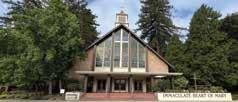
Church of the Immaculate Heart of Mary
PALM SUNDAY MARCH 29
Vigil Mass Saturday 5:00PM Sunday Masses 7:30AM, 9:30AM, 11:30AM Traditional Latin Mass 4:00PM
HOLY THURSDAY APRIL 2
Mass of the Lord’s Supper 7:00PM • Adoration until 10:00PM (No morning Mass)
GOOD FRIDAY APRIL 3
Station of the Cross at Noon
Celebration of the Lord’s Passion at 1:30PM Confessions following until 4:00PM (No morning Mass)
HOLY SATURDAY APRIL 4
Easter Vigil Mass 8:00PM Confessions 3:00PM – 4:00PM (No morning Mass)
EASTER SUNDAY APRIL 5
The Resurrection of the Lord Masses 7:30AM, 9:30AM, 11:30AM Traditional Latin Mass 4:00PM
Daughters
of Charity of St. Vincent de Paul
EPIPHANY CENTER’S 18TH ANNUAL
3.8 x 5.00 inches Quarter Page
” Retreat
Catholic San Francisco
March 2026 Issue
C ELEB RATING MO TH ERS LUNCH EON
Wednesday, May 6, 2026
St. Francis Yacht Club 11:30 a.m.
The Epiphany League and Luncheon Chairs Nan Bouton and Brenda MacLean invite you to share a heartwarming afternoon in honor of all the women who have shaped your life! This treasured event raises resources for San Francisco’s most vulnerable women, children, and families. You will hear firsthand how your generosity heals and transforms lives. The luncheon features an online Silent Auction , our Marketplace to purchase beautiful Orchid Gardens, locally sourced honey, and more!
Founded in 1852 as Mount St. Joseph -St. Elizabeth by the Daughters of Charity to care for San Francisco’s orphans, the agency continues today to support at -risk women and children, providing them with the support and confidence they need to heal and thrive. For more information and to purchase tickets, please call the event office at (415) 351 -4055 or online at Celebrating2026.givesmart.com. _____________ STRENGTHENING AT RISK
Sacred Sunset Fund Challenge!
Dear SI Alums, Family Members and Friends, the St. Ignatius College Prep Class of 1976 is launching a $200,000 Challenge campaign to grow the Sacred Sunset Fund supporting senior Jesuits living at the Jesuits West Province’s retirement community in Los Gatos. Double your impact. Every dollar will be matched up to $200,000!
WHY NOW?
Jesuits West is solely responsible for the care of all senior Jesuits, and the number needing care has surged.
WHO ARE WE HELPING?
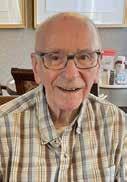
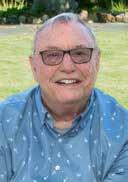
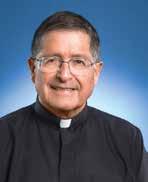
The “Old Guard” — Br. Douglas Draper, SJ, Fr. Ray Allender, SJ, and Fr. Mario Prietto, SJ (pictured right), and nearly 80 others. Your gift ensures outstanding care for all senior Jesuits, including the men who taught us, coached us, counseled us, and gave their lives in service. 100% OF YOUR GIFT GOES DIRECTLY TO THEIR MEDICAL AND LIVING EXPENSES.
CONTACT:
Barbara Harris Regional Director of Advancement
Growing the faith
Archdiocesan Catholic high schools respond to increasing interest in sacramental formation
BY CHRISTINA GRAY Lead writer, Catholic San Francisco grayc@sfarch.org
Archdiocesan high schools form students to become faithful, practicing Catholics. Some of their non-Catholic students are following suit.
Catholic high schools have been enrolling students from all faith traditions (or none) in increasing numbers for a while now. Catholic book publisher St. Mary’s Press reported in 2023 that an average of 39% of the students in Catholic high schools in the U.S. do not identify as Catholic. What’s more, even students who do consider themselves Catholic enter Catholic high schools with varying levels
of knowledge and practice of their faith, as well as sacramental completion.
How do the Catholic high schools of the Archdiocese of San Francisco maintain their Catholic identity while serving such a diverse student body? Catholic San Francisco spoke with campus ministry leaders, chaplains and theology teachers in the Archdiocese of San Francisco about how they form all students through a combination of theology coursework, campus ministry activities, service projects and sacramental formation.
The four archdiocesan Catholic high schools
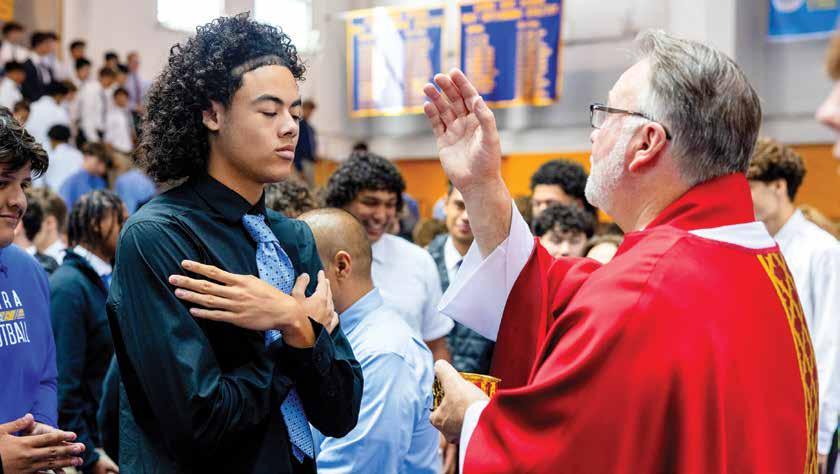
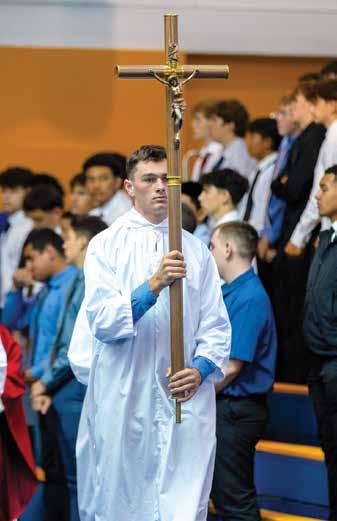
High school Masses can be influential in opening up non-Catholic students to the joys of being a person of faith.
Photo courtesy of St. Junipero Serra High School
are Marin Catholic High School in Kentfield, Archbishop Riordan and Sacred Heart Cathedral Preparatory high schools in San Francisco and St. Junipero Serra High School in San Mateo.
Chaplain Father Andrew Ginter at Marin Catholic said roughly half of the students there are Catholic. That’s a very different ratio than when he grew up in Marin County decades ago, but changing demographics doesn’t change the mission of the school, he said.
“The main goal of Catholic education is to lead students to the truth and to enable them to practice their faith,” Father Ginter said.
THE BROAD APPEAL OF CATHOLIC HIGH SCHOOLS
Non-Catholic families have become increasingly drawn to Catholic high schools. The longstanding reputation for rigorous academic programs, moral character development and competitive athletics certainly has wide appeal.
Increasingly, what some non-Catholic students find within a Catholic high school community can change them.
Ponette Chen, a senior at Archbishop Riordan High School, will graduate as a Catholic this spring, something she wasn’t when she enrolled four years ago.
Chen had no formal faith background outside of the ancestral devotions and practices in what she called her traditional Chinese family home. She became interested in Christianity during her freshman year in part because of what she saw reflected in her classmates.
“I could tell the girls at Riordan were
women of God,” she said. They were kind and welcoming and faithful. Receiving the sacraments of initiation in April at St. Dominic Church, Chen fully entered the Church.
Andrew Heneghan started Junipero Serra High School for more or less practical reasons. “We lived five minutes away and I wanted to play on the football and lacrosse teams,” said Heneghan, now in his first year at St. Lawrence University in New York state. His parents didn’t raise him in the Catholic faith of their childhoods. At Serra, he took the required theology classes and signed up for the campus ministry leadership program, mostly because “my friends said it would look good on a resume.”
Things changed for him during a seniorsonly Kairos retreat with no phones allowed. With a Bible as his only reading material, he read the parable of the Pharisee and tax collector (Lk 18:9-14), a lesson on humility and repentance over self-interest.
“It’s not like I had a vision or anything, but I knew I wanted more of that,” he said. Heneghan received the sacraments of initiation at St. Matthew Parish in 2025.
MEETING STUDENTS WHERE THEY ARE
Catholic high schools maintain their strong Catholic identity and mission by both “meeting students where they are” and “sharing the truths of the Catholic faith,” said Danielle Jow, religious studies department chair at Archbishop Riordan High School. Jow said the Marianist school has a student body that is about 60% Catholic, 40% non-Catholic.
“I would say that within those numbers, ›
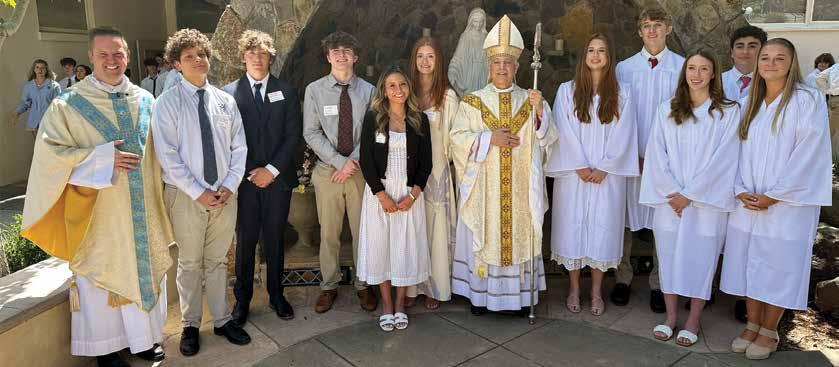
Marin Catholic High School Chaplain Father Andrew Ginter, far left, and Archbishop Salvatore J. Cordileone, center, with confirmation students.
Photo courtesy of Marin Catholic
those that come in as practicing Catholics are fewer,” she said.
BELIEVERS, SEEKERS AND SACRAMENTAL FORMATION
Jow said she revisited the theology curriculum over the past three years to provide a catechetical baseline for all students. The four years of required coursework leads to a senior elective that is “basically an OCIA (Order of Christian Initiation of Adults) course,” according to Jow. Some Catholic students may be confirmed in a parish at its conclusion, while some non-Catholic students may receive the three sacraments of initiation — Baptism, the Eucharist and Confirmation – fully entering into the Church. Sacramental formation connects what the school is teaching in the classroom to the heart of being Catholic, she said.
“Our mission is to lead students to Christ,” said Jow.
At Marin Catholic, Father Ginter leads a special sacramental preparation program approved by the archbishop that also has the
blessing of the local pastor at St. Sebastian Church next door. It is a program of preparation and completion for Catholic students in need of sacraments or nonCatholic students who desire to become Catholic. Students go to Mass with Father Ginter once each week as part of the program and spend an additional 90 minutes of weekly preparation with him in addition to their regular studies.
“Generally speaking,” he said, “the Church prefers that high school students go through parish faith formation programs.” He acknowledged, however, that many of the students in his sacraments program “would not have been reached at all if not for the high school.” The school serves as a bridge to finding Catholic community during their time in high school and after students go off to college.
“We put a lot of effort into helping graduating seniors get connected to college Newman Centers,” he said. Newman Centers are Catholic faith communities for students attending secular universities.
Students participate in and attend Mass at St. Junipero Serra High School.
Photo courtesy of St. Junipero Serra High School
A theology class at Archbishop Riordan High School.
FOSTERING CATHOLIC COMMUNITY
Ryan Mayer, director of the archdiocese’s Office of Catholic Identity Formation and Assessment, said that “one of the goals of Catholic high school formation, including sacramental prep programs that have arisen, is to direct young people to be active members of the faith and sacramental life of a parish.”
Helping students embrace the gifts of Catholic parish life is an essential part of formation and of the sacramental formation program at Riordan, Jow said. The high school partnered with St. Dominic Parish, where Jow is a parishioner, for the first time this year.
“One of the first things I teach my students about the Catholic Church is that it is a family,” she said. A parish provides some of that structure. “We make sure that for this class specifically, all Riordan students are going to have a home,” she said. “Even if they are not a baptized Catholic, their home for six months, or hopefully longer, will be St. Dominic.”
Jow said there are confirmation candidates, of course, who do have a family parish. Most are essentially electing to go through
One of the first things I teach my students about the Catholic Church is that it is a family. We make sure that for this class specifically, all Riordan students are going to have a home.”
DANIELLE JOW, Archbishop Riordan High School
sacramental preparation with their classmates.
“Every year it’s a little bit different to meet the preparation needs of the students who come to us,” she said.
Billy Byrnes, director of campus ministry at St. Junipero Serra High School, said it is fair to say that for some students who have never been part of a faith community, the school can become like one. When it comes to the sacraments, Serra steers students to a local parish, he said.
“Parishes and people thrive when they participate together in parish life,” he said.
OPENING DOORS
Byrnes said that at Serra, retreats, service and the student leadership program are especially influential to “opening students up to the joy of being a person of faith,” he said. “Given space and comfort with their peers, students feel safe delving into questions they have.” They often talk about the road to Emmaus (Lk 24:13-35), a story that shows how to find Jesus “even when He seems hidden.”
Stan Cordero, director of campus ministry at Sacred Heart Cathedral Preparatory High School, said he has taken to heart the words of St. John Paul II: “Open wide the doors of Christ.”
Cordero used the word “phenomenon” to describe an uptick in the number of students “articulating their desire to receive the sacraments.” The school is “navigating a balance,” he said, between pointing students and their families to local parishes or to nearby Cathedral of St. Mary of the Assumption for the sacraments of initiation.
“What we are doing for students is opening a lot of doors,” he said. The more experiences the school can put in front of students, he believes, the greater the likelihood they will “find their place” and be open to deepening their participation with the Catholic faith and the sacramental life of the Church.
“In the last few years in particular, more students are stepping forward as the result of the formative experiences they are having in the classroom and campus ministry, and asking themselves, ‘Who am I going to be as a person of faith?’” he said. ■
Photo courtesy of Archbishop Riordan High School
True God, true Man
Encountering Jesus and the Eucharist in the Shroud of Turin
HBY SCOTT FRENCH, MD, FACEP
Dr. French is a board-certified emergency physician who works closely with Jesuit Father Robert Spitzer’s Magis Center.
e is beaten, pierced, scourged and silent—and yet He looks back at us. The Shroud of Turin confronts the modern world with a question it cannot easily dismiss: Who is the man of the shroud?
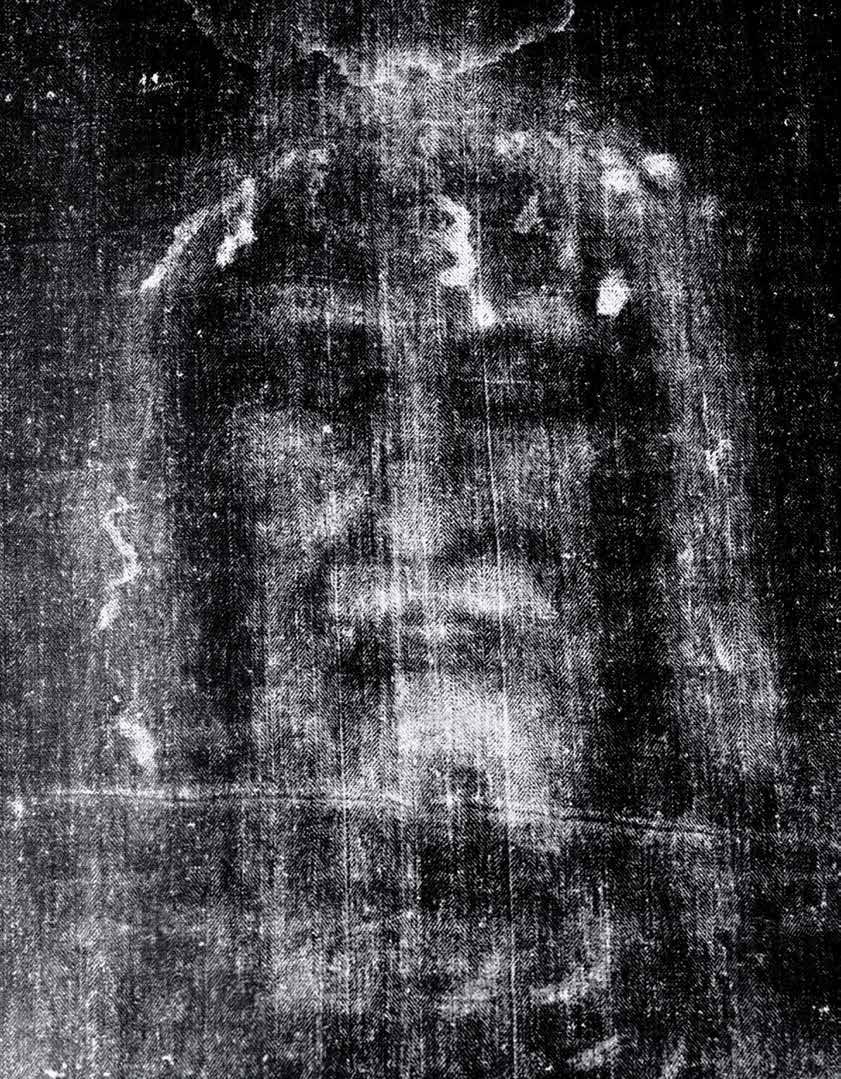
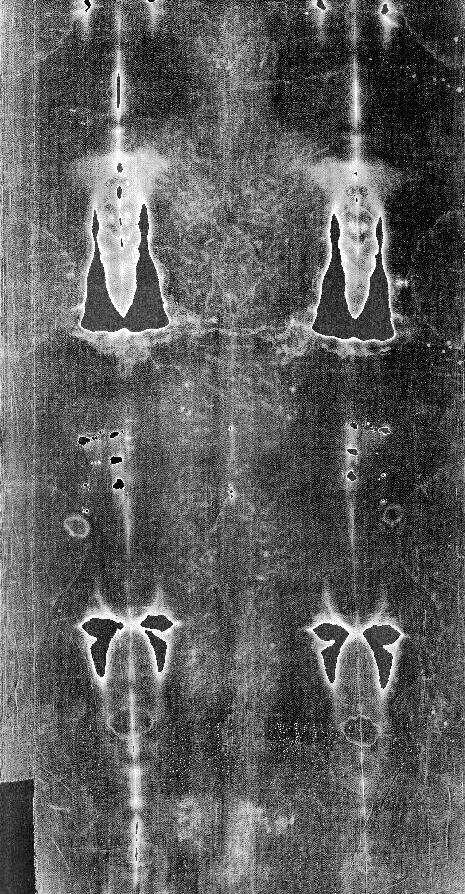
In 2015, I went on a pilgrimage to Turin to view the shroud. I could see with my own eyes the image of a violent scourging, the wounds of an elliptical Roman lance that pierced the right chest and the profuse bleeding due to the crown of thorn wounds on the head. All the suffering as depicted in the Gospel accounts of our Lord’s passion is preserved in a mysterious image on the upper few microns of a linen burial cloth. It was immediately evident to me as an emergency physician that this body had endured unbelievable torture, and no artist or forgery could mimic the precision of the unique and brutal Roman crucifixion on the body. The shroud is silent, but the silence is deafening with the reality of the sacrificial suffering that Jesus endured to save us from sin and death. Is the image on the shroud evidence that Jesus is true man and true God? Is the shroud evidence of a miraculous resurrection?
The shroud measures 14 feet long by 3 ½ feet wide and has a unique 3:1
Photo: Gian Carlo Durante, 2002
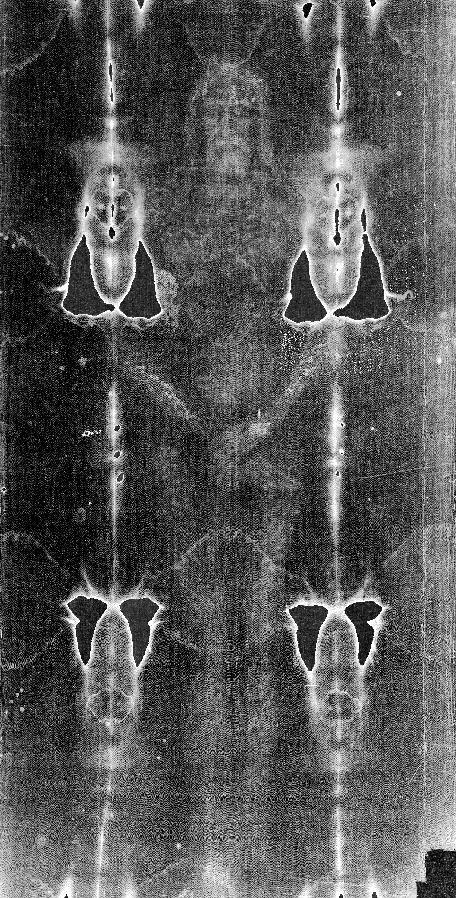
The images are photographic negatives – front and dorsal view –of the Shroud of Turin, courtesy of Othonia.org.
The shroud is silent, but the silence is deafening with the reality of the sacrificial suffering that Jesus endured to save us from sin and death.”
herringbone pattern weave. It continues to be the most intensively studied scientific historical artifact.
The image itself is several microns in depth on the uppermost flax fibers of the linen burial cloth. Any paint, pigment, chemical, vapor rubs or scorching would not be confined to the outermost surface of the superficial flax fibers but would penetrate much deeper into the middle of the flax fibers. While the image is more visible on a photographic negative, the man on the shroud itself is not a photographic image.
The many ragged wounds resulted in extreme type AB blood loss to the point of death. Jesus’ words in the Scriptures echo this reality, “For this is my blood of the [new] covenant which is poured out for many for the forgiveness of sins” (Is 53: 4-6 and Jn 19:1). Interestingly, type AB blood is exceeding rare but is present in every Eucharistic miracle and is in approximately 8% of those of Jewish descent currently living in Israel.
The shroud image also demonstrates that the right side was “pierced” with a Roman lance (“pilum”) and blood and water flowed out as indicated in the Scriptures: Zec 12:10 and Jn 19:34-37.
The image of fingers of the hand appears to be elongated because we are seeing the bones of the hand. The image exhibits three-dimensional properties as deep as 3/16 of an inch. This 3D phenomenon was discovered during the 1978 Shroud of Turin Research Project using a VP 8 analyzer developed by Air Force Academy scientists for the 1969 lunar landing to determine the height of the mountains on the moon.
Forensic scientists and medical doctors agree that the image on the Shroud of ›
Photo: Gian Carlo Durante, 2002
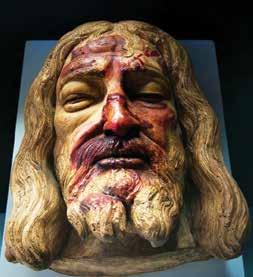
(the face cloth of Jesus). Using crime lab techniques and a multidisciplinary approach, scientists at the Spanish Center of Sindonology conducted research on the shroud and the sudarium. Their investigation, using a threedimensional model of the shroud-man’s head, strongly re-enforce the conclusion that both cloths – the shroud and the sudarium – wrapped the same corpse, providing new evidence for the authenticity of the shroud and the sudarium.
Turin is a unique anatomically correct image of a young adult male in a state of rigor mortis (no decay/no corruption), which lasts some 40 to 48 hours (Ps 16:10, Acts 2:27,31, Acts 13:34-37).
There is no evidence of broken bones on the shroud image as predicted hundreds of years prior in the Scriptures (Ex 12:46 and Ps 34:21) and as recorded in the New Testament (Jn 19:36). There is ample evidence on the shroud of blows to the face resulting in swelling and broken nose cartilage, but not the short bone at the base of the nose (Mt 27:30, Mk 14:65, Mk 15:19).
The image demonstrates bruising/ abrasion on the right shoulder where Jesus Himself carried the cross as well as on the knees when He fell carrying the cross (Jn 19:17).
The congruence with the image of the man on the Shroud of Turin and John’s eyewitness account is also reinforced when we see and read about the crown of thorn marks on the head of Jesus (Jn 19:2). Fossilized pollen fragments from the crown of thorns area on the shroud were recovered by Swiss botanist Max Frei, and the fragments match the thistle Gundelia Tournefortii, which is a plant with long thorns endemic to the Jerusalem area. It blooms in March and April.
Numismatists, those who study currencies and related items such as
medals and coins, have identified partial imprints of Roman leptons (coins) on the eyelids of the image of the man on the Shroud, which was a common practice after death in first-century Judea. Sophisticated photographic techniques have revealed the image of a rare, misspelled variant of the Roman lepton minted in Judea in A.D. 29 during Pontius Pilate’s rein as governor.
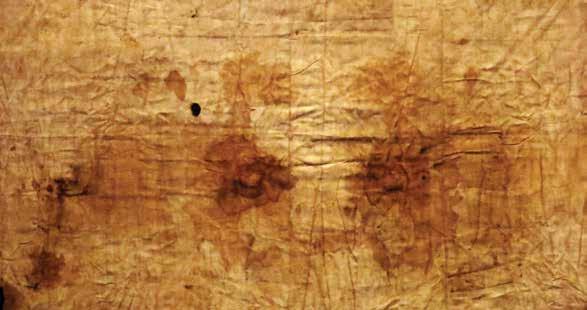
Amazingly, there is evidence that “the napkin” referenced in Jn 20:7, which had been on Jesus’ head and “not lying with the linen cloths but rolled up in a place by itself,” touched the same face as the Shroud of Turin burial cloth. This “napkin,” the Sudarium of Oviedo, has a chain of custody dating back to A.D. 616 at Oviedo, Spain. There are 120 type AB blood stains on the head and face of the shroud: 70 on the front of the image and 50 on the back. Using advanced computer mapping technology, the 120 type AB blood stains of the crown of thorns area on the head match the 120 type AB blood stains on the Sudarium of Oviedo.
After in-depth research in recent years, the carbon-14 dating performed in 1988 has been deemed invalid as the three samples were taken from a section of the shroud that was burned and repaired in the 1532 fire of Chambery. The Poor Claire religious order documented the repair in 1535, and they used dyes, glue and cotton as repair materials rather than the original flax.
Within the past few years, a new more accurate way to date linen burial cloths using a wide-angle X-ray scattering technique was invented by Liberato De Caro and G. Fanti. Comparing the shroud to other linen burial cloths, this more modern technique places the Shroud of Turin dating to between A.D. 55 and 74.
There have been several theories proposed to explain
Left, shroud face model created by Dr. J. Lopez, Professor of Sculpture, University of Seville, 2014. Right, the Sudarium of Oviedo
how the “perfect” (every square inch) three-dimensional image was created. One theory proposes that an immense amount of light and/or radiation energy–several billion watts over 1/40 billionth of a second— created the image.
The latest theory of the shroud is a bit technical and goes further in explaining how the microns-deep image with 3D features was created and points to a supernatural resurrection. This theory is called the particle radiation hypothesis (PRH), which would also account for why blood stains are found deep within the image. This theory is gaining favor among scientists. It proposes that the image was formed by a spontaneous and simultaneous nuclear degeneration of every atomic nuclei from every atom of the body to create a shower of charged and uncharged particles. The charged particles (protons, alpha particles, deuterons) would stop at the uppermost fibers of the linen, while the uncharged particles, such as gamma rays, would pass through the linen cloth and out to the surrounding burial cave. The charged particles bombard the superficial fibers causing dehydration and oxidation. This breaks many bonds of the cellulose and reforms them into conjugated carbonyl bonds. The particle-induced carbonyl bonds result in the straw-yellow coloration of the image on the upper several microns of the flax fibers. This nuclear event would also explain the 3D information encoding relative to the distance between the cloth and the body. The closer the body was to the cloth, the darker the image.
Interestingly, this theory also fits with the transfiguration account on Mount Tabor where the Scriptures record that “His face shone like the sun, and His garments became white as light” (Mt 17:2). This account of the transfiguration is evidence that the light energy is emanating from every square inch of Jesus rather than the intense light shining down from heaven. This supernatural event is affirmed by a voice out of the cloud saying, “This is my beloved Son in whom I am well pleased.”
From a medical standpoint, there is no natural explanation that the body could be separated from bloodstains without breaking or distorting the bloodstains. However, the particle radiation hypothesis does provide a potential answer. As the image on the shroud is undergoing nuclear disintegration, the resulting shower of particles would make the body physically transparent, allowing the linen shroud to collapse through the body and not distort the bloodstains.
It seems reasonable to me that God is giving us a visual record of the resurrection through a supernatural event that only He could orchestrate. ■
SCAN HERE TO LEARN MORE ABOUT THE SHROUD OF TURIN and explore the image using an interactive tool by Othonia or visit othonia.org.
The ‘hidden gem’ of Cursillo
BY CHRISTINA GRAY
Lead writer, Catholic San Francisco grayc@sfarch.org
Sabina Gotuaco, diocesan coordinator for the San Francisco Cursillo community, calls the local Cursillo movement the archdiocese’s “hidden gem.”
“If you ask around your parish and invite parishioners to raise their hands if they are Cursillistas, you may be pleasantly surprised to see a few hands proudly raised, each representing a unique journey of faith and joy,” she said in a message to Catholic San Francisco.
A “Cursillista” is the name the movement has given to a man or woman who has made the formative three-day Cursillo retreat.
The Cursillo community in the San Francisco area was formed in 1961, about a dozen years
after the first Cursillo groups got their start in Spain. The local community has a vibrant, flourishing membership, but despite this, said Gotuaco, many Catholics here have not discovered the movement that seems to offer hope and inspiration to all who encounter it.
WHAT IS CURSILLO?
Cursillo translates from Spanish to English as a “short course” in Christianity. It is an apostolic movement of the Catholic Church conceived on the Spanish island of Mallorca in 1949 by layman Eduardo Bonnín Aguiló (19172008).
Born and raised in a Catholic family, Bonnin was moved by a text from Pope Pius XII to
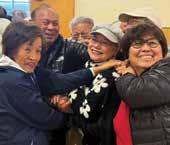
Photos by Christina Gray Local “Cursallistas” play and pray together on Jan. 3 at a Recollection event at Our Lady of Mercy Parish in Daly City.
The Holy Spirit moves in each person in unexpected and wonderful ways, just as it did for St. Paul, the Patron Saint of Cursillo.”
the parochial pastors in Rome on Feb. 6, 1940 seeking “new roads” to Christ. Cursillo was that new road, Bonnin believed. Today, Cursillo is a worldwide renewal movement recognized by the Vatican as a member of the International Catholic Organizations of the Pontifical Council for the Laity in Rome.
“Bonnin’s purpose was to joyfully share the good news and help everyone discover a closer, loving relationship with God,” said Gotuaco. She described the three-day retreat as one of “spiritual discovery.”
“Each participant has the chance to discover themselves, God and others in new and inspiring ways,” she said. The retreat is filled with enriching experiences such as short courses on Christianity, the sacraments, Mass and adoration, music, art, fun activities, prayers and moments of silence and reflection.
What sets Cursillo apart from other retreats shines brightest on the final day, when many leave transformed by God’s grace, Gotuaco said.
“The Holy Spirit moves in each person in unexpected and wonderful ways, just as it did for St. Paul, the patron saint of Cursillo.”
FRIENDSHIP AND FAITH
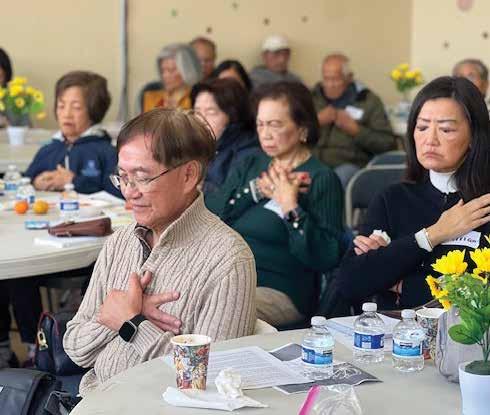
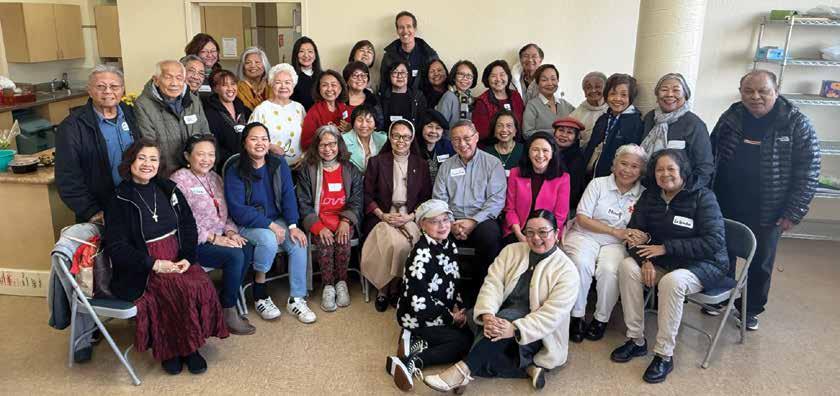
After the weekend retreat, a supportive community of Cursillistas continues to gather monthly for faith sharing, encouragement and friendship. That happened on Jan. 3, when Catholic San Francisco met a joyful roomful gathered at Our Lady of Mercy parish hall in Daly City. This meeting of the San Francisco Cursillo School of Leaders congregated three days into the new year for a full day of recollection, fellowship and talks by Sister Mary Peter Tengco and Deacon Ben Agustin.
The School of Leaders is a formation program open to participants after their Cursillo three-day weekend. The recollection was a lead-up to a Cursillo weekend retreat scheduled to be held in the Archdiocese of San Francisco from July 9-12 at Vallombrosa Center in Menlo Park. ›
A Cursillista who is spiritually grounded is planted by the living waters of prayer, the sacraments, the word of God and authentic Christian friendship.”
CURSILLO SPIRITUALITY
The solidarity participants feel after this weekend is evidenced in the way Cursillistas regularly addressed each other as “brothers and sisters in Christ” at the Jan. 3 event.
Deacon Ben Agustin said in his talk that “Cursillo helps each person discover that their relationship with Christ is the unshakeable axis of their life.” Without being grounded in Jesus Christ, “we run out of steam, motivation and energy quickly.”
Referencing the first psalm, he said that a spiritually grounded person is like a tree planted near a stream, which yields its fruit in season. “The tree bears fruit not because it tries harder, but because it is planted where the water is,” he said. “A Cursillista who is spiritually grounded is planted by the living waters of prayer, the sacraments, the word of God and authentic Christian friendship. The person bears fruit naturally, joyfully, without forcing it.”
Sister Mary Peter is a Catholic educator who
founded the Adoration Sisters of St. Francis, a community committed to observing the Gospel as taught by Jesus Christ embodying the virtues of St. Francis. She spoke in morning and afternoon sessions on Cursillo spirituality.
“It took years before I really understood the meaning of spirituality,” she admitted in her introduction. Before leading a short meditation, she asked participants to “look inside yourself.”
“That is the first bit of difficult travel that I have for you,” she said. “There will be trials and tribulations that we encounter in coming into the highest spirituality of Cursillistas, but that is where the Spirit resides. It is there that is the center of peace and joy, despite every chaos you are encountering every day.” ■
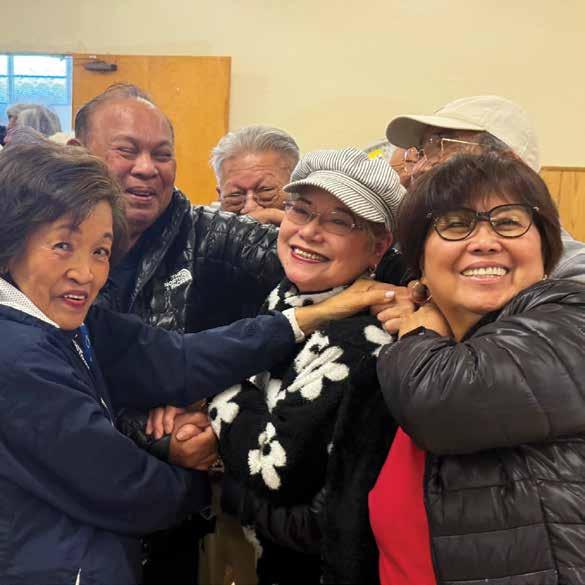
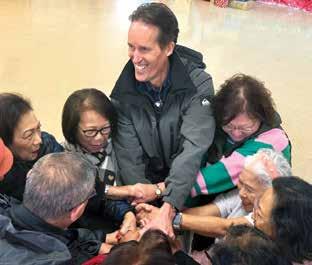
The San Francisco Cursillo School of Leaders met Jan. 3 for a Recollection event at Our Lady of Mercy Parish in Daly City. The day included an entertaining exercise whereby participants used trust and communication to unbind themselves from a human knot.
SCAN TO LEARN MORE ABOUT SAN FRANCISCO CURSILLO, or visit sanfranciscocursillo.org.
Photos by Christina Gray
Kri8Tours
Join us on a life changing pilgrimage to the major Basilicas in Mexico, Peru, and Brazil featuring 2 world wonder: Machupicchu and Christ de Redeemer Rio de Janerio. May 17-30, 2026.
TRAVEL NOW, PAY LATER.
Please call / text for information and details 1-323-875-8818 or email ruby@kri8tours.com
April 14 - 20, 2026 and June 3 - 15, 2026
Mexico, Peru and Brazil
Highlights: Our Lady of Guadalupe, St. Rose of Lime, St. Martin de Poress, Machupicchu, Our Lady of Aparecida, Christ the Reedemer and Iguaza Falls
May 18 - 29, 2026
Shrines of ItalyFeaturing Papal Audience with Pope Leo
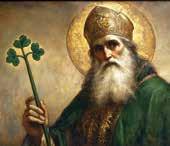
St. Patrick
FATHER VINCENT
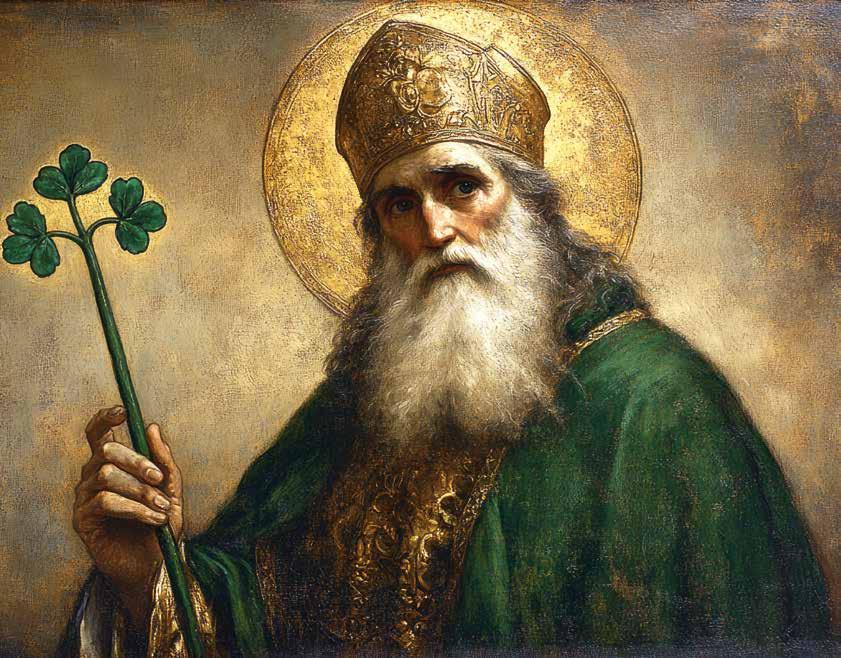
St. Patrick is the patron saint of Ireland and needs no introduction. His presence seems natural wherever Irish Catholics are found. But how did it come about that St. Patrick is venerated as the copatron of the Archdiocese of San Francisco, alongside St. Francis of Assisi? The short answer: Irish Catholics, Irish priests and Irish archbishops.
Since California joined the United States in 1850, immigrants from Ireland have made up a large part of the Catholic population. For many decades, until the 1970s, Ireland exported a significant number of priestly vocations to San Francisco. Examples include clergy such as the late Bishop Patrick J. McGrath and Father John Ryan of St. Catherine Church in Burlingame, who were recruited from Irish seminaries to serve in the Archdiocese of San Francisco after ordination. With the influx of Irish immigrants and clergy, St. Patrick quickly became a prominent saint in the archdiocese. However, he did not become co-patron overnight.
The Spanish-born Archbishop Joseph Alemany maintained a careful balance among the faithful of different ethnicities in the archdiocese. Under Archbishop Alemany, the feast of St. Patrick was observed in San Francisco, but it was by no means a highranking feast. Things were quite different, however, in the Diocese of Grass Valley (the predecessor of the Diocese of Sacramento). The first bishop of Grass Valley, Bishop Eugene O’Connell, was Irish. He obtained permission from Rome to celebrate St. Patrick’s feast solemnly, with an octave, in his diocese.
Matters changed under Archbishop Patrick William Riordan, who was of Irish origin. It was clear that Irish Catholics in San Francisco were celebrating St. Patrick’s Day with feasting during Lent as if they were still living in Ireland. We must remember that the Lenten fasting discipline before Vatican II was very stringent: every day of Lent was a day of fasting. In light of this, Archbishop
Riordan requested a special indult from Rome to exempt the faithful of the archdiocese from fasting on St. Patrick’s Day so that Irish immigrants could celebrate as they did in their homeland. This request was granted for a period of 10 years in 1888 and was extended in 1899.
In 1898, at the inauguration of the new archdiocesan seminary in Menlo Park, Archbishop Riordan explained the patronage of St. Patrick in these words: “I have placed this work under the patronage of a great apostle, St. Patrick, not indeed for personal reasons, but because he is the patron saint of a great Catholic race which has suffered more than any other for religion’s sake — the most devoted, the most generous and most priestloving race within the fold of the Church of Christ.”
In 1901, at the request of the clergy — who were predominantly Irish — and the faithful of the archdiocese, Archbishop Riordan petitioned Rome for permission to observe St. Patrick’s Day as a first-class duplex (roughly equivalent to a solemnity in the current calendar), as was already the case in the Diocese of Sacramento. Rome was eventually persuaded by the argument that the large Irish community in the archdiocese was accustomed to the special observance of St. Patrick’s Day in their homeland, including festive celebrations. The request was ultimately granted.
The third archbishop of San Francisco, Edward Joseph Hanna, was also of Irish origin. With the support of the archdiocesan clergy, who were still largely Irish, Archbishop Hanna requested the canonical establishment of St. Patrick, together with St. Francis, as co-patrons of the archdiocese. On June 9, 1920, the Holy See approved this request, recognizing St. Francis and St. Patrick as equal principal co-patrons of the archdiocese. After Vatican II, St. Patrick’s Day has been observed as a solemnity in the archdiocese.
Although the demographics of the archdiocese have changed in recent decades
CO-AUTHORED BY
WOO AND JACEK NOWICKI
Father Woo is assistant professor at St. Patrick’s Seminary & University, and Nowicki is archivist of the Archdiocese of San Francisco.
He is the patron saint of a great Catholic race which has suffered more than any other for religion’s sake—the most devoted, the most generous and most priest-loving race within the fold of the Church of Christ.”
ARCHBISHOP PATRICK WILLIAM RIORDAN
and Irish Catholics no longer predominate as they once did, the seminary in Menlo Park and the two churches named after St. Patrick in San Francisco and Larkspur remain reminders of the strong Irish legacy in the archdiocese.
As we approach St. Patrick’s Day this year, while enjoying corned beef and cabbage, let us celebrate within the proper context of Lenten
discipline: prayer, fasting and almsgiving. Let us not forget to thank the Irish clergy who came all the way from Ireland to minister to us. Let us recall the Irish priests who have served our parishes since our childhood and remember those who have died in our prayers. Let us undertake some alternative penance on St. Patrick’s Day, be generous to the poor and perform works of charity. ■
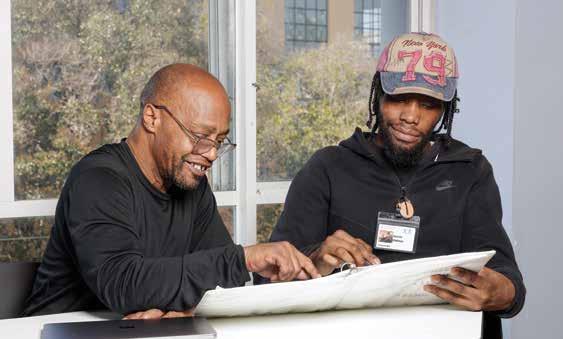
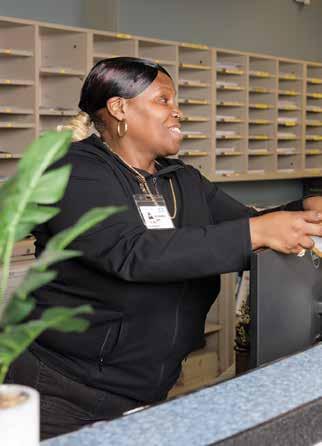
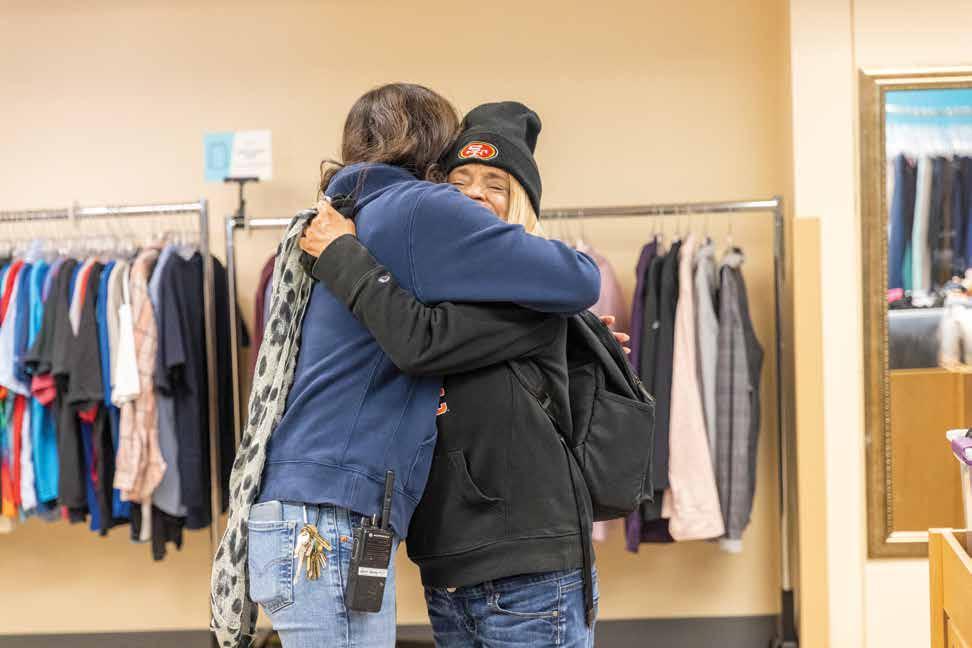
A case manager at SVdP-SF’s Multi-Service Center South works with a guest.
Serving the vulnerable across the three counties in the archdiocese
BY SAUL PEREZ
Social action and digital media coordinator of the Office of Human Life & Dignity, Archdiocese of San Francisco. perezsa@sfarch.org
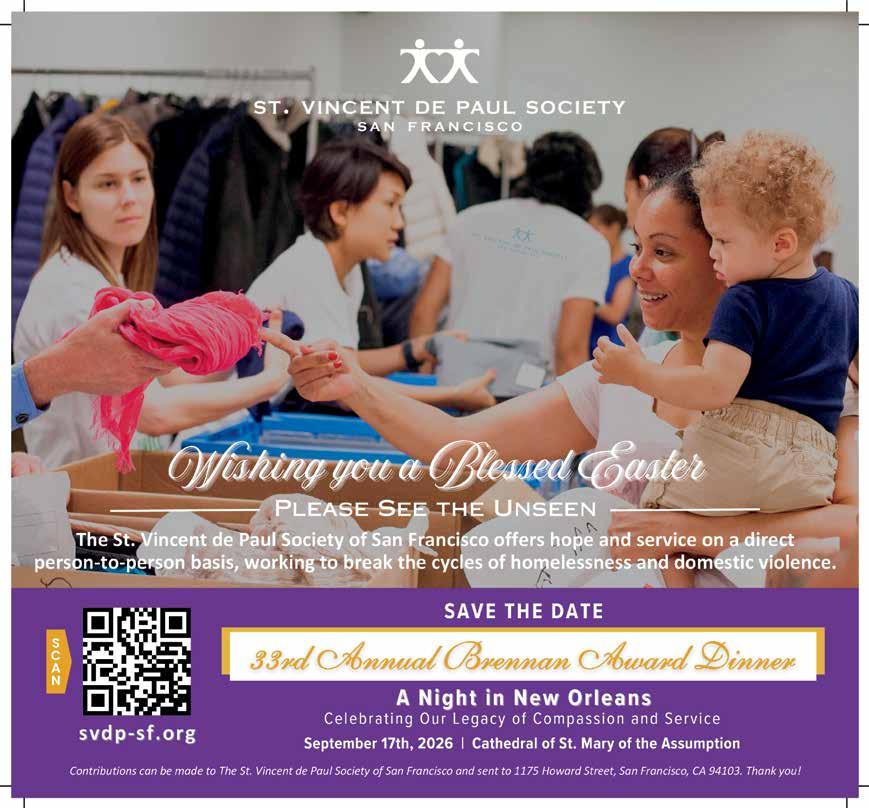
Every day, more than 1,200 people across the Archdiocese of San Francisco receive food, shelter, counseling, housing assistance or other direct support through Society of St. Vincent de Paul organizations in San Francisco, Marin and San Mateo counties.
“It’s not something you get into to be glamorous or to get awards,” said Joe Stark, St. Gabriel parishioner and president of the Archdiocese of San Francisco board that oversees SVdP in all three counties. “It is something you do to help others and also to live your faith and be thankful we have the opportunity to serve others.”
Stark, president of the Archdiocese of San Francisco’s Board and District Council of Conferences for the St. Vincent de Paul Society of San Francisco, emphasized that the values of service and faith have guided the society since its founding in 1833 at the Sorbonne in Paris and continue to shape the work of volunteers and staff worldwide.
Its founder, Blessed Frédéric Ozanam, modeled the lay-led SVdP on the life and philosophy of the French saint of the poor, St. Vincent de Paul. He was guided by Blessed Rosalie Rendu, a member of
Vincentians are not social workers. We serve as neighbors, seeking to understand the troubles of those we serve as we would a brother or sister, to form relationships based on trust and friendship and to walk with our neighbors in their time of trouble.”
SVDP-USA WEBSITE
the Daughters of Charity of St. Vincent de Paul.
“Listening and presence are as important as material aid, and this
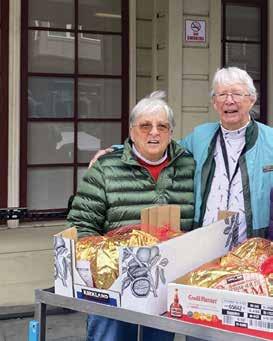
SVdP–Marin County members pose with Christmas ham drive donations.
Photo courtesy SVdP-Marin County
Photo courtesy SVdP-SF
is a super rewarding work,” said Dan Winnike, president of the Church of the Nativity SVdP parish conference in Menlo Park. Home visits to see what an individual or family needs and then confidentially provide rental help, grocery gift cards and more are the core of the work of the parish SVdP conferences as envisioned by Blessed Ozanam.
The parish conferences, active in more than half of the 90 archdiocesan parishes, are volunteer ministries that include organized prayer-based meetings and rules for helping those in need in their area. A number of parishes operate food pantries as well.
A second type of SVdP organization exists in all three counties. These are 501(c)(3) nonprofits, referred to as Vincentian special works or particular councils, that operate homeless shelters, free dining rooms, domestic violence shelters and more. The conferences are parish-based and volunteer-led, while societies bring the conferences from an area together as a council to address broader community needs that require a professional workforce as well as support from volunteers and the parish conferences.
SVdP-SF runs two adult homeless shelters, a small transitional youth shelter, two domestic violence shelters, a domestic violence walk-in service community
WAYS TO GIVE TO THE SOCIETY OF ST. VINCENT DE PAUL
In San Francisco: https:// svdp-sf. org/getinvolved/donate/ Checks can be made to and sent to the St. Vincent de Paul Society of San Francisco. 1175 Howard Street, San Francisco, CA 94103
In Marin County: https://www.vinnies. org/give-help/ ways-to-give/ By check: St. Vincent de Paul Society of Marin County, P. O. Box 150527 San Rafael, CA 94915
In San Mateo https://give.svdpsm. org/give/428176/#!/ donation/
office and, in partnership with two other service providers, a 24/7 bilingual crisis line. SVdP-Marin operates Vinnies, a free dining room, and has Homeless Outreach Teams who work throughout the county.
SVdP-San Mateo has a homeless help line, two nonresidential homeless centers, a small women’s sober living recovery home and three thrift stores.
ST. VINCENT DE PAUL SOCIETY OF SAN FRANCISCO: Meeting crisis with comprehensive care
Approximately 570 individuals served daily In San Francisco, the first Society of St. Vincent de Paul conference was established in 1860. Early work included homeless services, alcohol recovery support, orphan placement and thrift stores.
In the 1980s, the SVdP-SF special works council rebooted its focus to homelessness and domestic violence. Today, it delivers 24/7 “wraparound” services in partnership with San Francisco city and county, San Francisco SVdP conferences, local organizations, employers and corporations, said Father Andres Emmanuelli, chief development officer. Guests enter the homeless shelters through the city’s coordinated entry system – which can also be accessed by phone — and are assigned individualized case management upon arrival. Domestic violence survivors ›
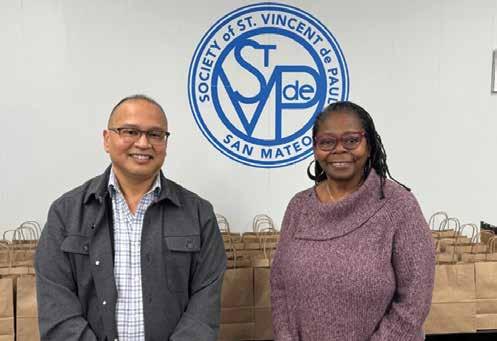
SVdP-San Mateo CEO Patrick Carbullido and District Council President Melody Davenport-McLaughlin.
Photo courtesy SVdP-San Mateo County
access help by calling the 24/7 Riley Center crisis line and receiving assessments and resources.
“Our mission is to help people get what they need to succeed in life — not to add to the problem, but to be part of the solution,” Father Emmanuelli said.
SVdP-SF operates a 329-bed Multi-Service Center, which is Northern California’s largest homeless shelter. Guests may bring their pets, and receive meals, medical and mental health care, and employment and housing assistance. The center provides breakfast and dinner funded by the city and county of San Francisco. Working at their own sites, the conferences and others make sandwich lunches and deliver them to the center. Volunteer-made lunches are currently received approximately 20 days per month.
The 186-bed Division Circle Navigation Center is one of a city network of navigation centers and is a modern sprung-tent structure. It prioritizes placement into permanent housing. An eight-bed shelter for young adults aged 18 to 27 offers housing vouchers and referrals. Two domestic violence shelters – Rosalie House and Brennan House — house up to 55 individuals daily. SVdP-SF’s domestic violence shelters are the only ones that serve men as well as women and children who are victims of domestic violence. The Riley Center Community Office includes a drop-in center and other nonresidential support for abuse survivors and their children, including a 24-hour multilingual crisis line operated in partnership with two other service providers.
ST. VINCENT DE PAUL
SOCIETY OF MARIN COUNTY: Addressing homelessness
Approximately 500 people served daily in the free dining room
St. Vincent de Paul Society of Marin County’s first conference was founded in 1946. Today the society operates “Vinnies,” Marin County’s only free dining room, located in downtown San Rafael, and serves 500 meals daily: breakfast and lunch on site and dinner to go. It distributed more than $1.1 million in rental assistance and emergency aid last year. Homeless Outreach Team, launched in 2016, identifies and works with chronically unhoused individuals who are isolated, sick, disabled, addicted or mentally ill. It provides housing, case management, mental health and community support services, including a housing help desk and a Sober Living Environment program.
SOCIETY OF ST. VINCENT DE PAUL OF SAN MATEO COUNTY: Charity rooted in parish life
Approximately 130–150 people served daily at each of the two homeless help centers
The Society of St. Vincent de Paul of San Mateo County is parish centered.
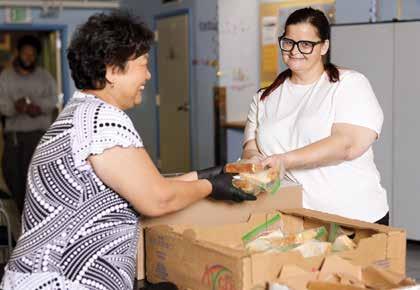
Above, SVdP-SF MSC South homeless shelter kitchen staff member hands lunch to a guest.
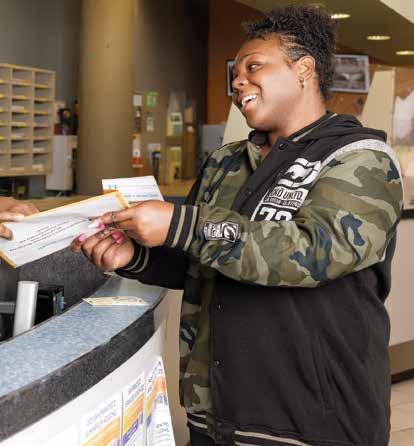
Right, MSC South case manager hands guest information for her job search.
Our mission is to help people get what they need to succeed in life — not to add to the problem, but to be part of the solution.”
FATHER ANDRES EMMANUELLI, chief development officer
Its first conference was founded in 1931 at Holy Angels Parish in Colma. Thirty-three parish conferences form the backbone of service, conducting home visits to serve neighbors in need with groceries, household necessities and rent and utilities assistance. Many of the parish conferences stock food pantries and host regular food distribution events.
The Peninsula Family Resource Center Help Line serves as an intake hub, receiving roughly 70 calls per day and connecting individuals to their local parish conference.
There are two Homeless Help Centers — one in downtown San Mateo and another in South San Francisco — that provide daily food assistance serving ›
This is more than a place to live, it’s a place to come alive. Discover senior living that creates a space for you to feel liberated, celebrated, and authentic.
Call to schedule a tour or RSVP for our special event. SENIOR LIVING , redefined.
SATURDAY, MARCH 14th •
Photos courtesy SVdP-SF
130 to 150 people each morning, including working individuals, seniors, veterans and those suffering from physical and mental disabilities. In addition to meals, these centers provide clothing, sleeping bags, toiletries and mail services, offering an address for homeless individuals to receive important correspondence and benefits.
Three thrift stores generate funding for the society’s work and provide vouchers for families to shop for clothing and basic necessities at no charge.
Other services include short-term rental assistance and the Rosalie House, a transitional sober-living home for six women overcoming addition. ■
SVDP USA AND WORLD STATISTICS
Globally, SVdP operates in 155 countries, with some 800,000 members in 48,000 conferences.
In the U.S., there are nearly 90,000 Vincentian members in over 4,400 conferences.
Source: SVdP-USA/svdpusa.org
SVdP stories of hope and help
MARIN COUNTY:
The Marin County SVdP parish conferences rallied recently to help an elderly woman who couldn’t pay her March rent. In February 2026, the woman contacted the St. Vincent de Paul Society of Marin through its B Street downtown San Rafael direct help line. Due to her geographic location, her information was shared with the St. Isabella’s conference. The parish SVdP members learned she couldn’t pay the March rent, and was also undergoing treatment for breast cancer, adding to the financial strain she was facing.
The conference met and put out a call to neighboring parish conferences for support. Six parish conferences responded immediately, with one additional conference expected to contribute soon. “One more check is still expected from another conference,” said Marie Zeiter, former treasurer of the conference and spouse of Jim Zeiter, the current president.
As of mid-February, the conferences had collected more than $2,000 to pay the woman’s rent.
SAN MATEO COUNTY:
Stewart Hyland, president of the St. Vincent de Paul conference at St. Francis of Assisi Parish in East Palo Alto, shared a story of how what
initially seemed like a setback became a moment of grace. “What felt like a nuisance — my car breaking down — ended up opening a door. That’s the Holy Spirit right there. That kind of grace,” he said. Hyland was on his way to deliver food to a woman he had known for years when his car unexpectedly broke down. Riding his bike to retrieve the parish van, he ran into Daughter of Charity Sister Trinitas Hernandez, known as “Sister T,” who gave him a $100 check for the woman. When Hyland arrived at the woman’s home, the visit turned into
a reunion — the woman remembered his children by name, and the financial support proved as important as the food.
SAN FRANCISCO COUNTY: “Marcus” (name changed for confidentiality) was chronically homeless and in and out of shelters for years before he entered SVdP-SF’s Division Circle Navigation Center through a referral from the San Francisco Homeless Outreach Team. Today, after nine months at Division Circle, Marcus is living independently. The wraparound services were key, said SVdP-SF’s Father Andres Emmanuelli, who said a case manager interviewed Marcus and connected him with the Department of Public Health for a mental health evaluation and then therapy. With self-sufficiency and housing as the goal, Marcus received a voucher to get an ID at the California Department of Motor Vehicles and had help obtaining other documents necessary to find a job and housing. His case manager worked with him to create a resume, practice interview skills and sign up for employment training opportunities. Marcus is now living in a small apartment in North Beach, has a job working as a janitor and has reconnected with his daughter.
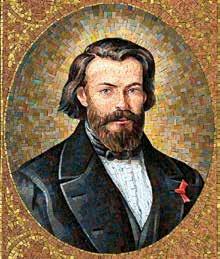
Mosaic of Blessed Frédéric Ozanam at the Basilica of the National Shrine of the Immaculate Conception in Washington.
Courtesy SVDP-USA
Hail Holy Queen
The maternal queenship of the Blessed Virgin Mary
BY MARY POWERS
Assistant director of communications and media relations. Office of Communications, Archdiocese of San Francisco
From the time of the Church Fathers, the queenship of Mary has been celebrated in connection with her motherhood. St. Alphonsus Liguori once wrote, “Because the virgin Mary was raised to such a lofty dignity as to be the mother of the King of Kings, it is deservedly and by every right that the Church has honored her with the title of ‘queen’” (“The Glories of Mary”).
In May, as we honor Our Lady, we too celebrate her queenship and motherhood. Each year, parishes and schools hold May crownings close to Mother’s Day, placing a crown of flowers on a statue of the Blessed Mother.
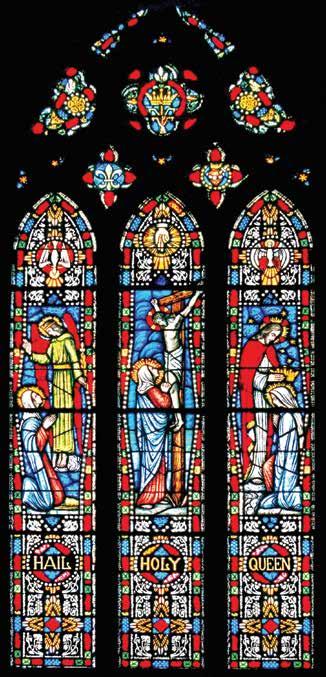
The stained-glass windows above the entrance of St. Timothy Catholic Church in San Mateo illustrate this important truth about the queenship of Mary.
The windows, designed and made by San Francisco artist Carl Huneke, depict three scenes of the life of the Blessed Virgin Mary:
The Annunciation, when Mary said yes to being the mother of God; the crucifixion, when Mary entered more deeply into the sufferings of her Son and became our mother as well; and, the crowning of Mary as queen of heaven and earth.
In each scene her fiat can be seen: “Let it be done according to your word,” submitting to God’s will in all things.
Above the three scenes are symbols of the royalty and purity of Mary: a crown with a lily, fleur de lis and the Immaculate Heart of Mary.
At the bottom of the windows are the words, “Hail, Holy Queen” corresponding to each scene.
“Hail” is the greeting of the angel Gabriel at the Annunciation: “Hail, favored one! The Lord is with you.” (Lk 1:28).
“Holy” is exemplified in Our Lady standing under the cross: “There she stood, in keeping with the divine plan, enduring with her only begotten Son the intensity of his suffering, joining herself with his sacrifice in her
Let all Christians, therefore, glory in being subjects of the Virgin Mother of God, who, while wielding royal power, is on fire with a mother’s love.”
VEN. POPE PIUS XII , AD CAELI REGINAM
mother’s heart.” (Pope St. Paul VI, closing speech of the end of the Second Vatican Council, Nov. 21, 1964)
Then lastly, “Queen” corresponds with the crowning of Our Lady as queen of heaven and earth, with Jesus, her Son, placing the crown on the head of His mother; affirming the connection between her motherhood and queenship.
May we always give thanks for God’s gift of our queen and mother. ■
VALLOMBROSA RETREAT CENTER
We are open for your spiritual renewal
In a beautiful and peaceful park setting that includes many prayer and meditations spots*, we will host your group’s retreat or conference. You may also sign up for a private retreat. We especially invite you to attend one of our five-day silent retreats which are very powerful and reasonably priced.
For group reservations or a private retreat: call 650-325-5614 Or email jaynie@vallombrosa.org.
For our five-day retreat, call Deacon Dominick Peloso, (650) 269-6279
*The meditation spots available include: Lourdes, Fatima, St. Joseph, St. Mother Theresa, St. Francis, Spiritual Works, Corporal Works, Adoration Chapel, and (coming fall of 2024), a large (50’ x 12’) crucifixion scene by Timothy Schmaiz.
The O ce of Child and Youth Protection at the Archdiocese of
San Francisco is responsible for creating a safe and compassionate environment for abuse victim-survivors to come forward. Every allegation is treated seriously and discreetly, and immediate steps are taken to protect the confidentiality and the rights of both victim-survivors and alleged abusers.
As a result of the diligent work and dedication of the staff and clergy who participate in the program, new cases of sexual abuse are rare today in the Archdiocese. Yet, we remain steadfast in our commitment to protect children, report allegations and remove perpetrators from ministry.
All those whose ministry or job involves interacting with minors must be fingerprinted and participate in a training course every three years on recognizing, preventing and reporting suspected abuse prior to beginning their employment or volunteer work. The Victim Assistance Coordinator supports and advocates for victim-survivors of sexual abuse through counseling and programs.
Deacon Fred Totah Director of Pastoral Ministry (415)614-5505
children are taught safe environment lessons to assist them in personal safety, abuse recognition and prevention. The Office serves our parishes and schools by assisting with training and implementing our Safe Environment Program.
21,388*
employees, educators and volunteers are fingerprinted and submit to background checks in compliance with the USCCB Charter for the Protection of Children and Young People.
294*
priests, deacons and candidates for ordination are fingerprinted and submit to background checks in compliance with the USCCB charter.
If child abuse is suspected, first call local authorities, then the Archdiocese Victim Assistance Coordinator at (415) 614-5506.
SAN FRANCISCO Family & Children’s Services 24-hour Reporting Hotline: (800) 856-5553 Police Department Non-Emergency Number: (415) 553-0123
SAN MATEO Child Protective Services Child Abuse & Neglect Hotline: (650) 802-7922 or (800) 632-4615 Sheriff's Department Non-Emergency Number: (650) 363-4911
* Figures as of June 30, 2025
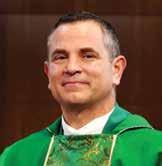
Local priests sworn in as new chaplains
Father Armando Gutierrez and Father Jerald Geronimo were recently sworn in as chaplains ministering to local firefighters and sheriffs and their families, as well as victims and witnesses.
Father Gutierrez, pastor of St. Finn Barr Parish and judicial vicar for the archdiocesan Tribunal office, was sworn in as lead chaplain for the San Francisco Fire Department on Dec. 22, 2025. Father Geronimo, parochial vicar of the Cathedral of St. Mary of the Assumption, was sworn in on Feb. 2 as a chaplain for the San Francisco County Sheriff’s Office.
According to Lieutenant Matt Scola of the SFFD Behavioral Health Unit, Father Gutierrez heads the SFFD’s chaplain program, responding on call to large-scale incidents and alarms of all types, communicating with other fire department chaplains, and providing guidance in the development of the program.
Fire department chaplains provide spiritual support to SFFD’s firefighters, EMS personnel, their families and incident victims. The lead chaplain may also attend formal SFFD events such as retirement banquets, funerals, graduations and promotions. Father Gutierrez started helping as a chaplain with the SFFD in 2025.
“I am glad to be helping our firefighters, who are characterized by a great camaraderie among themselves and a self-giving spirit of service,” said Father Gutierrez.
There are currently two SFFD chaplains: Father Gutierrez and Father Jack Mitchell, S.J. Father John Greene retired in 2020 after nearly 40 years as SFFD chaplain. Both chaplains are Catholic, said Scola, but serve all persons regardless of faith.
“I feel that a couple of Father Gutierrez’s best qualities are his easygoing nature and humility,” said Scola. “He doesn’t take himself too seriously, and that draws people to him.”
Father Gutierrez’s swearing-in was conducted by Chief of Department Dean Crispen with the top three members of the command staff present, including Deputy Chiefs Pat Rabbitt and Sayumi Brennan and Lieutenant Scola.
Father Geronimo is serving the San Francisco Sheriff Office’s chaplaincy program, a ministry of presence for sworn and professional employees of the Sheriff’s Office and their families. He was sworn in by Sheriff Paul Miyamoto as the first Filipino American Catholic priest chaplain for the San Francisco Sheriff’s Office in its 176year history.
Sheriff’s Office chaplains provide 24-hour crisis intervention, support, and counseling and referrals for deputies and their families.
“I’m deeply honored to bring the presence of Christ into the San Francisco Sheriff’s Department—to stand in solidarity with those who serve our city and remind them that their courage and daily sacrifices are seen by God,” said Father Geronimo.
Father Geronimo is a graduate of Sacred Heart Cathedral Preparatory High School and San Francisco State University. He attended St. Patrick’s Seminary & University in Menlo Park from 2015 to 2022. He graduated and was ordained to the priesthood on June 4, 2022.
Following his ordination, Father Geronimo was assigned by San Francisco Archbishop Salvatore J. Cordileone as parochial vicar at St. Mary’s Cathedral and as administrator of the cathedral in 2025. ■
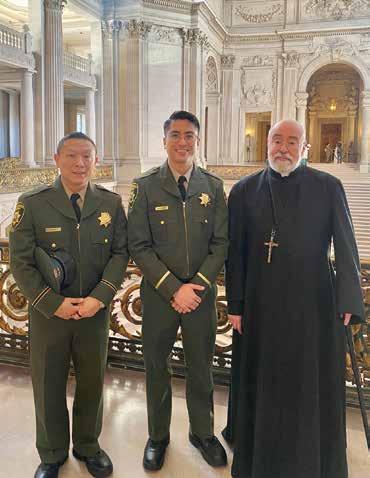
From left Chaplain Hanley Chan, Father Jerald Geronimo and Deacon Christoph Sandoval.
Father Armando Gutierrez
St. Michael Korean Catholic Parish welcomes new pastor
On Jan. 25, Archbishop Cordileone celebrated a bilingual Mass at St. Michael Korean Church in San Francisco to install their new pastor, Father Nara Samuel Lee, and confirm 18 people. This year, St. Michael Korean Church celebrated 60 years since Archbishop Joseph McGucken formally welcomed the Korean Catholic community to San Francisco in 1966.
In his homily, Archbishop Cordileone noted “the glorious legacy of the Church in Korea.” Catholicism was introduced to Korea not by missionaries but by Korean scholars searching for the truth of the universe, a unique case in the history of religion. The faith spread, but it was met with violent persecution. “The soil of your fatherland has been seeded with the blood of martyrs, which has now borne the fruit of a flourishing Church,” the archbishop said.
Archbishop Cordileone celebrates Mass for consecrated life, honoring religious celebrating anniversaries
On Sunday, Feb. 1, Archbishop Cordileone celebrated the annual Mass for consecrated life honoring consecrated men and women who serve in the archdiocese, especially those celebrating milestone anniversaries.
Calling them guideposts for living the Beatitudes,
Archbishop Cordileone said, “To our beloved religious I say: we want to honor you … because it gives us great joy to do so!”
“We pray that many young people may follow your example and accept this extraordinary vocation and that each of us will follow your example by living out the virtues of the blessed life, in accordance with our own vocation and state in life,” said Archbishop Cordileone.
Bay Wide Young Adults Gala
Young adults dressed in formal tuxedos and floorlength gowns packed Oakland’s Cathedral of Christ the Light for an evening of prayer and fellowship. The first ever Bay Wide Young Adults Gala was held on Feb. 7, welcoming more than 200 young people.
The event began with a Eucharistic holy hour and vespers with Oakland Bishop Michael C. Barber, S.J. The young adults also gathered beneath the cathedral for dinner and dancing with a keynote address by Father Ambrose Criste, O. Praem.
The three-point goal of the candlelight Bay Wide Masses, which have been celebrated across the San Francisco Bay Area for the past several years, was to help young adults feel like they’re not alone in the midst of the secular world; to show that the way in which we worship matters; and that young people are the next generation of the Church and are called to give back with their time, talent and treasure.
Retreats Change Lives
at Jesuit Retreat Center of Los Altos
8 Day Retreat #2 Mon, Jun 22 - Tue, Jun 30
Open Doors releases new Christian persecution report: 2025 ‘deadliest’ year in recent history
Open Doors, a ministry tracking and supporting persecuted Christians around the world, recently released its 2026 persecution report, which calls 2025 “the deadliest year” for Christians in modern history.
The updated World Watch List ranks North Korea as the most dangerous country for Christians for the 24th time. Somalia ranks second, followed by Yemen, Sudan and Eritrea. Syria, ranked sixth, saw a dramatic rise in Christian persecution last year after the 2024 fall of the Assad regime led to political instability, according to the report.
The report found that more than 388 million Christians — more than one in seven Christians worldwide — face high levels of persecution and discrimination. In 2025, 4,849 Christians were killed for their faith and 67,843 were beaten, threatened or abused, physically and psychologically. More than 5,000 were sexually assaulted, harassed or forced into a marriage with someone of a different religion, and 224,129 were forced into hiding or exile from their country.
Open Doors attributed the majority of Christian persecution to war and anarchy but said other contributing factors are dictatorships, authoritarianism, nationalism and hatred of the faith.
Nicaraguan regime forbids door-to-door pastoral visits in Diocese of León
In a new attack on the Catholic Church, the Nicaraguan regime has forbidden the Diocese of León from promoting pastoral visits to the homes of laypeople, informing ecclesial authorities that all activities must be carried out inside church buildings.
The information was released by Nicaraguan lawyer Martha Patricia Molina, author of the report ”Nicaragua: A Persecuted Church,” who has been documenting measures taken by the regime against Catholics in the Central American nation.
“On Jan. 17, a group of altar boys was allowed to carry out a door-to-door mission to bring the Gospel to the people. But as soon as authorities realized it was something positive, they banned it,” Molina told Crux.
Visits to the homes of lay Catholics are traditionally promoted by the Diocese of León, which encompasses the regions of Chinandega and León in western Nicaragua.
Westlake Avenue, Daly City (650) 756-4500 Duggans-Serra.com
Duggan’s Serra Mortuary is proud to announce the opening of our Burlingame office to serve families in their time of need. Duggan’s is honored to serve families on the Peninsula and San Francisco since 1885 with kindness and compassion.
Please contact us for an appointment to speak with a counselor to preplan your services “My Funeral, My Cremation, My Way” ®. At Duggan’s Serra, we guide you through life’s most difficult moments with warmth and attention to detail. Our compassionate team at Duggan’s Serra Mortuary also offers services in Spanish, Chinese and Tagalog.
We take pride in providing a personal touch with every family we serve. Compare our most reasonable cost to corporate cemetery owned funeral homes and experience the family difference.
DuggansBurlingame.com
Matt, Dan & Joey Duggan Long-Time Residents of Burlingame
SCAN THIS QR CODE FOR MORE CATHOLIC QUIZZES or visit http:// sfarch.org/catholic-quizzes
1. How many full weeks are there in the liturgical season of Easter?
d. 7. There are 50 days of Easter from the first Sunday to Pentecost.
2. Who was the first of Jesus’ followers to witness our resurrected Lord?
c. Mary Magdalene. “Now on the first day of the week Mary Magdalene came to the tomb early, while it was still dark, and saw that the stone had been taken away from the tomb. ... But Mary stood weeping outside the tomb, and as she wept, she stooped to look into the tomb; and she saw two angels in white, sitting where the body of Jesus had lain, one at the head and one at the feet. They said to her, ‘Woman, why are you weeping?’ She said to them, ‘Because they have taken away my Lord, and I do not know where they have laid him.’ Saying this, she turned round and saw Jesus standing, but she did not know that it was Jesus. Jesus said to her, ‘Woman, why are you weeping? Whom do you seek?’ Supposing him to be the gardener, she said to him, ‘Sir, if you have carried him away, tell me where you have laid him, and I will take him away.’ Jesus said to her, ‘Mary.’ She turned and said to him in Hebrew, ‘Rabboni!’ (which means teacher). (Jn 20:1, 11-16)
3. Who was the first of Jesus’ followers to enter Jesus’ empty tomb?
a. Peter. “Peter then came out with the other disciple, and they went toward the tomb. They both ran, but the other disciple outran Peter and reached the tomb first; and stooping to look in, he saw the linen cloths lying there, but he did not go in. Then Simon Peter came, following him, and went into the tomb; he saw the linen cloths lying, and the napkin, which had been on his head, not lying with the linen cloths but rolled up in a place by itself. Then the other disciple, who reached the tomb first, also went in, and he saw and believed; for as yet they did not know the Scripture, that he must rise from the dead. Then the disciples went back to their homes.” (Jn 20:3-10)
4. Easter is considered which of the following?
c. Both of the above. “Therefore Easter is not simply one feast among others, but the ‘Feast of feasts,’ the ‘Solemnity of solemnities,’ just as the Eucharist is the ‘sacrament of sacraments” (the great sacrament). St. Athanasius calls Easter ‘the Great Sunday’ and the Eastern churches call Holy Week “the Great Week.” The mystery of the Resurrection, in which Christ crushed death, permeates with its powerful energy our old time, until all is subjected to him.” (Catechism of the Catholic Church, 1169)
5. In the Latin Rite, Easter is always celebrated on which Sunday?
d. The Sunday following the first full moon after the vernal equinox “At the Council of Nicaea in 325, all the churches agreed that Easter, the Christian Passover, should be celebrated on the Sunday following the first full moon (14 Nisan) after the vernal equinox.” (Catechism of the Catholic Church, 1170)
SUPPLE SENIOR CARE LLC
Button Law Inc.
Elizabeth M. Button, Trust & Estate Attorney
Probates * Wills * Trusts Sensitive to those Struggling with Loss. Serving the Entire Bay Area Woman Owned & Operated
Free Initial Phone Consultation 1052 Filbert Street San Francisco, CA 94133 Call Today: (415) 874-9361 www.buttonlawsf.com
SCAN TO SUBSCRIBE TO THE CSF WEEKLY E-NEWSLETTER to stay up to date on Catholic news and commentary or visit sfarch.org/signup.
HELPLINES FOR CLERGY/CHURCH SEXUAL ABUSE VICTIMS
(415) 614-5506 This number is answered by Rocio Rodriguez, LMFT, Archdiocesan Pastoral Outreach Coordinator. This is a secured line and is answered only by Rocio Rodriguez.
(415) 614-5503 If you wish to speak to a non-archdiocesan employee please call this number. This is also a secured line and is answered only by a victim survivor.
(800) 276-1562 Report sexual abuse by a bishop or a bishop’s interference in a sexual abuse investigation to a confidential third party. www.reportbishopabuse.org
SAVE THE DATES!
Come out and join us
SCAN TO SEE THE COMPREHENSIVE CALENDAR OF EVENTS or visit sfarch.org/events
March 30: 20th annual Salutations of the Holy Cross
Join Archbishop Cordileone and Metropolitan Gerasimos for 20th annual Salutations of the Holy Cross at the Greek Orthodox Church of the Holy Cross in Belmont on March 30 at 7 p.m. The liturgy is an opportunity for Catholic and Orthodox communities to join together in prayer and to venerate a relic of the true cross of Jesus.
April 11: Archdiocese of San Francisco Women’s Conference
The 2026 Archdiocese of San Francisco Women’s Conference, “A Retreat with the Merciful Heart of Jesus,” will be held on Saturday, April 11, on the eve of Divine Mercy Sunday, at Star of the Sea Catholic Church in San Francisco. The speakers this year will be Father Jim McCormack, a priest of the Congregation of Marian Fathers of the Immaculate Conception and professor at St. Patrick’s Seminary, and Sister Inga Kvassyova, vocation directress and postulant directress for the Congregation of the Sisters of Our Lady of Mercy. Archbishop Cordileone will celebrate Mass to conclude the retreat. The conference will provide an opportunity to receive the Divine Mercy Sunday indulgence for the “Feast of Mercy,” with time for the Sacrament of Reconciliation and 4:30 p.m. vigil Mass. More information: sfarch.org/womensconference.
March 26: Chrism Mass
The Archdiocese of San Francisco’s annual Chrism Mass will take place on Thursday, March 26, at 4 p.m. at the Cathedral of St. Mary of the Assumption. Archbishop Cordileone will bless the sacred oils that each parish will use for the coming year. To learn more about the Chrism Mass visit: sfarch.org/what-is-thechrism-mass/
April 18: Adventures in Marriage relationship skills workshop for couples.
St. Anselm Catholic Church in Ross will host the next Adventures in Marriage workshop from 8:30 a.m. to 4:30 p.m. Saturday, April 18. This award-winning, skillsbased, evidence-informed workshop has been offered to thousands of satisfied couples around the country. Every important vocation requires continuing education – how about your marriage (one of the most important vocations)?
Registration fee includes lunch, snacks and all materials. Register at www.sfarch.org/aim.
April 25: Genesis retreat for engaged couples
The Genesis retreat is a one-day marriage preparation class for engaged couples from 9 a.m. to 4:30 p.m. Saturday, April 25 at St. Bartholomew Catholic Church in San Mateo. Contact Ed Hopfner for more information: HopfnerE@ SFArch.org.
April 26: Respect Life essay contest Mass and awards ceremony
There will be a special Mass followed by an awards ceremony to recognize the winners of the Respect Life essay contest at the Cathedral of St. Mary of the Assumption on Sunday, April 26 at 11 a.m.
World Day of Prayer for Vocations
World Day of Prayer for Vocations, also known as Good Shepherd Sunday, will be observed on April 26. Please pray that young men and women hear and respond generously to the Lord’s call to the priesthood, diaconate, religious life, societies of apostolic life or secular institutes.
May 7: St. Pius X dinner celebrating catechists in the Archdiocese of San Francisco
The St. Pius X dinner honors the many volunteers who for years have donated their time to serve the Church teaching adults, youth and children about the faith, forming them as disciples of Jesus Christ. This year’s celebration will be held on May 7 at 6 p.m.