HORNET’S NEST
Goodbye Patty Pond
By Molly Babcock
Patty Pond has been a part of the Proctor community for exactly 37 years. Sadly, we will be saying goodbye to Patty this spring because she’s retiring. Over the years Patty has held many roles a and currently, she is the Director of the Mountain Classroom Program, an advisor, math teacher, and as most of you know, runs the beloved BlueBird Baker where she puts smiles on people’s faces with her talent for baking.
I had no idea that Patty has filled so many roles at Proctor. She reported, “I came to Proctor in 1987. I have taught Math and Chemistry. I developed some Math electives like Problem Solving, Design Theory, and Field-based Math. I was a dorm parent in Mac House, Thoreau House, and Burbank East. I coached Varsity Field Hockey for 10 years, softball for 10 years, Developmental skiing, and Nordic Skiing, I ran Student Activities, I facilitated the Health Group, was a Mountain Classroom Adjunct several times, and have been the director for the past 25 years, I was the Assistant Athletic Director for a few years under Karl Methven, [plus] Advisor, Orientation Leader, Math Department Chair, Project Period Coordinator, and I helped develop and lead the Rosebud Service Trip.”
What inspired you to become a high school teacher, and how has that motivation evolved throughout your career?
“My father was a high school teacher and I loved spending time with him at “school” after hours. I fell into teaching while working at North Country School in Lake Placid [NY] after returning from the Peace Corps. I first worked in the kitchen for the summer camp there but it evolved into teaching math and computer skills to the 3rd-8th graders there. I loved spending time with students in lots of different ways outside of the classroom, making art, doing farm chores, and doing lots of outdoor trips in the Adirondacks. The Assistant Head there told me about Proctor. When I was ready to consider working with older students, I came to visit and fell in love with the school. Proctor has given me the opportunity to try new things and reinvent myself just like it does for its students. If you look at what I have been involved in here, you can see that Proctor encourages everyone here to grow and push themselves outside of their comfort zone.”
What are you looking forward to most in retirement?
“More world travel, spending more time with friends and family, becoming a grandmother! Then heading out on road trips in my new campervan, getting back to making art.”


What will you miss most about Proctor?
“100% of the people. I love teenagers and working with them and I have been lucky enough to work with the most amazing people during my time here. I will miss Orientation and spending time out with Mountain Classroom. Sharing time outdoors with students is one of my favorite things.”
Reflecting on your years of teaching, what are some memorable moments or experiences that have shaped your perspective on education?
“When I first came to Proctor I had no idea what a learning difference was. Witnessing how different brains work, and how different personalities engage with the same material, and yet each finds their way to understanding has been some of the most rewarding work I have experienced. I still feel as though I learn every day from my students and colleagues. So my perspective on education has been shaped in that I know there is no one way to learn or to teach and that usually just when I think I have figured something out, I realize I have so much more work to do to understand it.”
“Ever since living in the Adirondacks, I have loved being outdoors with students, but it was not until I started to spend more time with Mountain Classroom groups that I realized the impact outdoor education could have. Placebased learning, structured feedback, and leadership development alongside deep student engagement in a small group setting showed me how transformative this type of education can be. I have witnessed similar experiences on a smaller scale on orientation, and Project period, even in my advisory and the classroom. Witnessing true student ownership of their responsibility for growth and learning is magical.”
The Bluebird Baker is something that Proctor students look forward to once a week to grab a sweet treat before assembly. What will happen to the Bluebird Baker?
“That is a great question. I am excited to keep doing it when I am in town. I love spending time with students and adults over an iced coffee or a treat. But I want to be sure to give myself the freedom to travel and try new things. So, the short answer is I will still be around, but maybe not every week!”
Proctor has been so lucky to have Patty as a part of our community. From her long list of roles over the years she has made a huge impact on the community. She has dedicated 37 years of her life to Proctor. Thank you, Patty!
Proctor Academy | April 12, 2024 | Vol. 9 | Issue 6
Patty paddling with Mountain Classroom
We were allowed to do WHAT in the 1970s?
By Paige Lanouette
Proctor loves to value its traditions, but how have they changed over 175 years? I mean, back in the 1970s underclassmen weren’t allowed to walk on the lawns and the punishment for getting caught was shining shoes.
I was Inspired by Lynne Bartlett’s message during a winter assembly about the old rules and traditions of Proctor. I went to the alumni office to see if I could take a look back at the old student handbooks. I didn’t know how far back the books would go but I found one from 1950-1951. The 1950s handbook compared to the most recent one is smaller than your phone and has far fewer pages. A mere 34 pages tell you everything you need to know about Proctor during that time.
To think such a small book has now evolved into something so much bigger and dense is kind of like our cell phones. I mean the iPhone 15 Pro Max is half a foot long and has endless amounts of information within it, but all we needed back then was a tiny 34-page book. Although the 1950 book isn’t as grand as the more recent editions, it did have some intriguing information (or at least
as intriguing as you can get for the 1950s).
Some of the traditions were that all members of a winning team left the dining room first (while the school watched) at the next formal meal following the team’s victory. Too bad teams don’t get that type of treatment now, but I think if people had to go to dinner and stay until certain people left, we wouldn’t be too happy. At this time when Proctor was an all-boys school, each boy had a job. Jobs such as waiter, sweeper, mailman, and laboratory assistant were chosen and assigned by the School Government.
Dish duty now seems a lot less demanding, not to mention we have much more advanced technology making the job a lot easier, almost as if we’ve gotten lazier. What’s most shocking is the list of things to bring to your dorm and for daily wear. A mere 2 pairs of pajamas were recommended to bring in the 1950s, but now one girl might have ten different pairs. You also needed to bring one dozen large handkerchiefs (to add to the prestige of the school?).
I loved the hints and suggestions section in the 1950s student handbook. Some of the hints and suggestions included, “good manners will make you a more pleasant person with whom to eat with. At the table, help yourself to only as much as you want and leave your plate clean, and address masters as sir or mister before the last name.” By God, I wonder what the people back then who instilled this rule would think of our first name basis now. Shock, outrage, or just pure confusion? Oh, how far we’ve come.
So You Want to be an Elite Athlete?
By Matthew McLaurin
According to scholarshipstats.com & Ohio State University, 7% of high school athletes go on to play their sport in college and 0.023% go pro. How can those of us who hope to play in college and beyond increase our odds? I talked to two Proctor veteran coaches, Ben Bartoldus and Gregor Makechnie, to hear their thoughts on what makes an elite athlete.
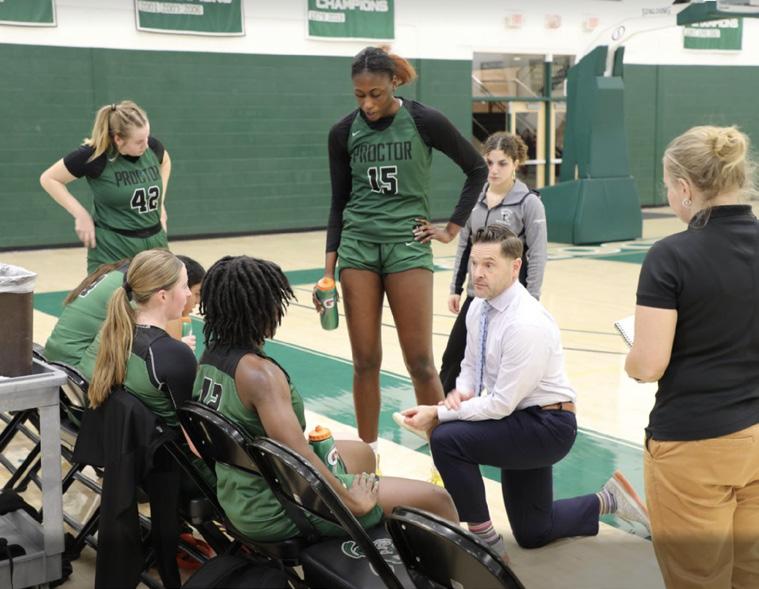
Athletic Director and Head Coach of girls varsity basketball Gregor Makechnie shared, “Some ath-
letes just win the genetic lottery.” Then there are those athletes who have to work very hard to play after college, for most it doesn’t come naturally. Gregor continued, “A lot of social media have led us to believe that you can do something and instantly become good at it” We naturally want to see results as soon as possible, but we forget that results don’t come overnight. And especially with athletics, there are many parts that create being elite that are not talked about enough.
Gregor was clear on one trait that can make an elite athlete. “There are some things that everyone can do, and they fall into the category of discipline. How disciplined is a person in her approach to training? How disciplined is a person in his approach to receiving feedback from a coach? How disciplined is a person in terms of their approach to nutrition? How disciplined is a person in terms of their perspective and their personal psychology?” Discipline is something that not many high school athletes possess.
As kids and teens, we are used to doing whatever we want in many aspects of life. Whether it’s eating whatever food, going wherever on your own time, or working in school when and how we want. But as we grow up we need to discipline ourselves in these areas. The biggest discipline I believe that can turn average athletes into elite ones, is doing things when you do not want to.
It is easy to go work out and get a lift in when you feel like it, but what about when you don’t? You want to go back to the dorm after practice instead of getting extra shots up. You probably should lift to get stronger for skiing, but a friend wants to hang out. So we need to be able to have the discipline to keep working day in and day out even if we aren’t seeing results.
Success doesn’t happen overnight, we need to be able to trust the process and keep working. The results may not come right away, but hard workers always get rewarded. These decisions separate elite from average athletes. If you can dedicate yourself to your sport, imagine how great you can be. “People who separate themself from others as being elite are people who continuously practice discipline in a number of categories,” Gregor stated. Elite-level athletes have some of the strongest minds in the world. A pro baseball player strikes out 3 times in a row, but on that fourth at-bat they still feel like they will hit a home run. When talking to Makechnie about other aspects that make elite-level athletes, he asked, “How does a negative event in competition or in practice impact an athlete? How long does that negativity linger? How quickly is a person able to meet disappointment and re-train their thinking or change the direction of their thinking, interrupt the negative thinking and replace it with something positive? I think those are skills and traits that really distinguish athletes beyond genetic lottery categories.” Elite athletes are so mentally tough that nobody can take their confidence away from
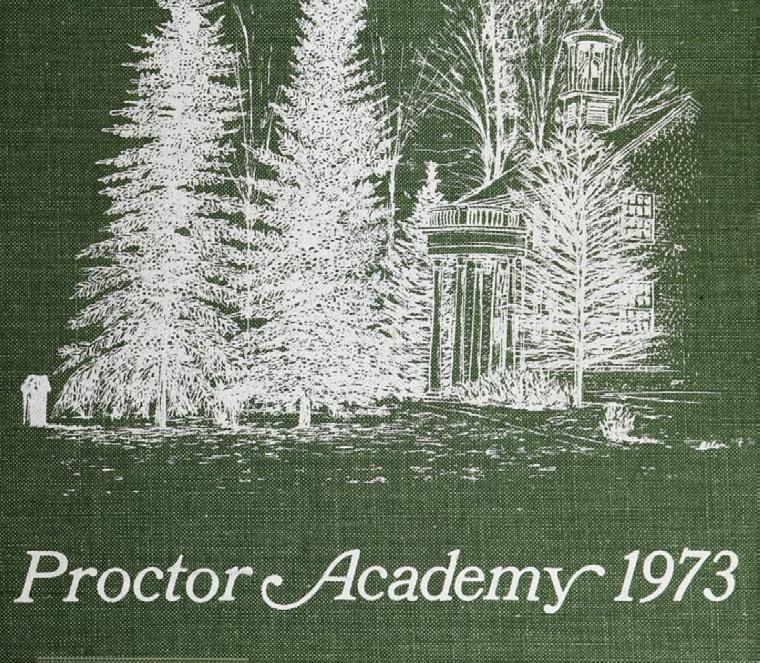
The Proctor Yearbook cover
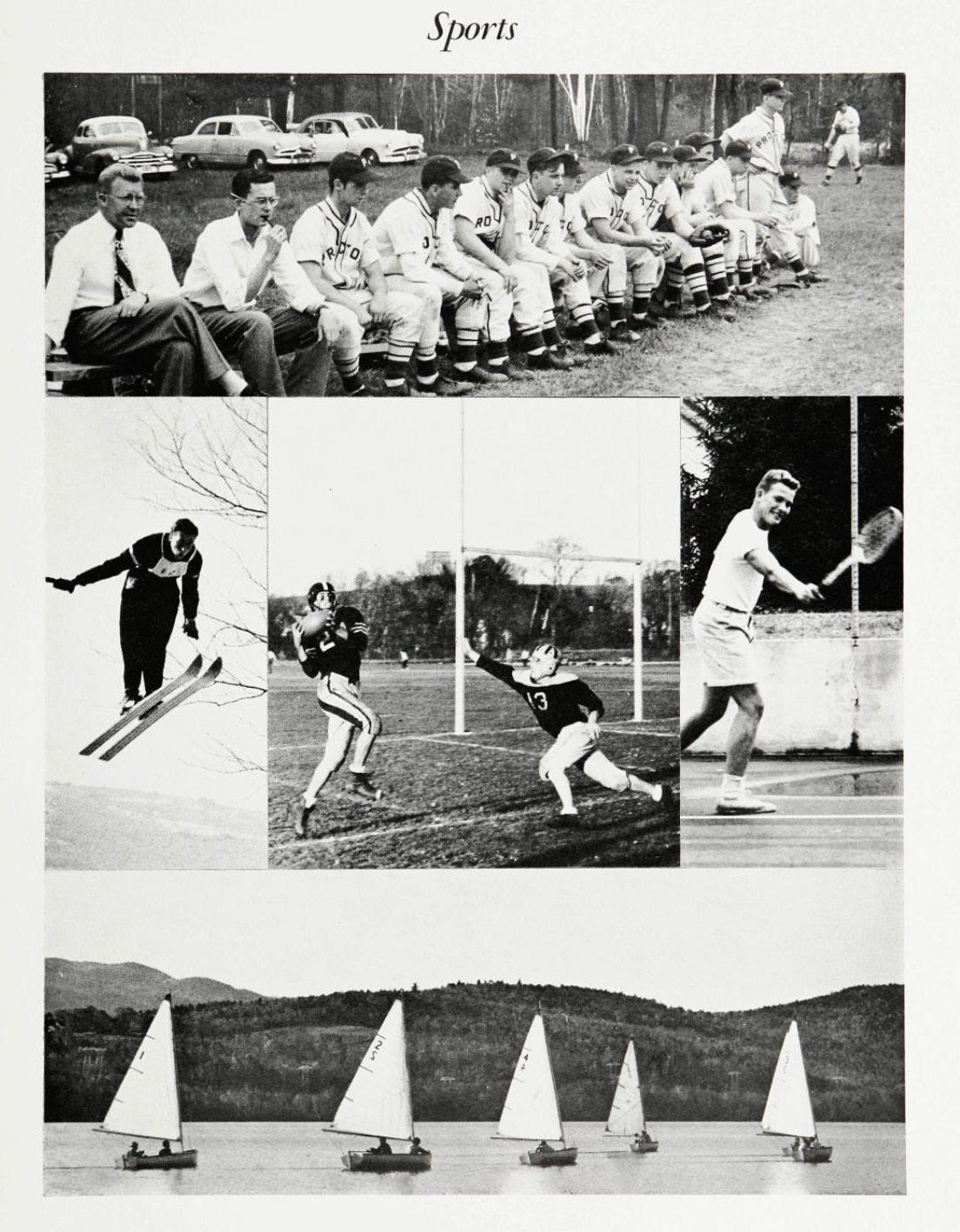
Photos from the 1950’s Green Lantern
them. They embrace failure and negative times as steps in their journey.
Finally, the major piece to becoming an elite athlete is simply work ethic. Head boys varsity basketball coach Ben Bartoldus reflected on his past as a player in his quest to become elite. In his transition to Proctor Academy, he was hit in the face with what work ethic really was. He had people around him pushing him every day. Ben’s teammates told him, “You don’t get enough shots up.” He realized he had to work even harder to achieve success in prep school ball to reach the college level.
In Bartoldus’ junior summer going into his senior year at Brandeis University, he went up for a workout with trainer Tony Mure. After running up a huge hill with his trainer, he was ready to call it a day. “You’re not done,” Tony told Ben. “Then we go to the pool, we do a full 45-minute pool workout, and I’m cooked. I just had a day of work and it’s only ten AM. Then I took a nap, and thought it was a day. Then after that I go to the weight room and workout. Then go and get shots up. Then take another nap, and by the time I get up it’s five-thirty,” Ben said. And after all of that, Tony had him play two hours of pickup. “But what makes it real, is I did it all again the next day,” Ben said.
Now this is an insane amount of work that should not be done daily unless you want to get injured. You need to have light days to recover. But after this experience with his trainer Tony Mure, he said, “Imagine if I did this when I was in high school or college. When I was in college I thought I was working hard. You either have the internal motivation or you don’t.”
This is what hard work looks like. So to become elite, you must work at your craft. Whatever it is in life, put forth 100% effort in all that you do. And you must build good habits from discipline and training the mind. Being an athlete can teach you so much about life and becoming a better person. And like working to become a better athlete, mental practices like forming good habits and discipline will also help contribute to making you the best version of yourself. It’s bigger than sports at the end of the day, there are many ways all of us can become better humans.
Pete’s Retirement
By Chris Chol
Seeing people come and go from our Proctor community is customary; but every now-and-again, there comes a special someone we are simply not prepared to see move on. At the end of this school year a beloved member of our community, Pete Southworth, will be moving on from Proctor Academy. Pete currently concentrates his efforts in the English department, teaching classes across grade levels. During his 39-year tenure, Pete has

diversified himself in the community and had a positive impact at Proctor.
In an interview with Pete, he talks about how he kickstarted his Proctor career: “[In 1985] I got hired as Mountain Classroom instructor…and then began as an English teacher, and [Proctor] helped me get my graduate degree shortly after.” Pete may not have had the most orthodox introduction to Proctor, but he wasted no time diversifying himself within the community. He worked in the Dean of Students office for nearly 10 years, coached the nordic ski team, boys varsity & jv soccer, and ice hockey, along with being an advisor; and Pete had a notably impactful stint as a head boys lacrosse coach where he won a couple championships.
Pete has fond memories of his time with students as a Mountain Classroom instructor. This was an exciting learning experience alongside his students, especially when hiking, paddling, and climbing in the southwest - where he’d never been. When I asked Pete about some of his toughest memories here at Proctor he was quick to mention the pandemic. Those of us who experienced the pandemic at Proctor would be quick to agree as well. Pete says, “None of us were ready for Covid. It was really hard; but I think the school did okay. Even the rough times were modified by the fact that everyone was in it together.”
Pete has demonstrated his perseverance during his time here at Proctor. A few years back, Pete had a life-threatening experience. In our interview he was reluctant to talk about the whole situation; but it speaks too highly of his character not mention: “I got this crazy infection that happened from orientation [in 2015]. This massive infection landed on my spine and I collapsed then got a helicopter ride to Dartmouth Hitchcock where they said, ‘He’s not gonna live.’ [After he lived] they told me I would never walk again.” Pete, throughout this whole life-threatening process kept a positive mindset despite the situation he found himself in because of the great community he had around him: “The community really pulled me along and literally inspired me.”
When I asked Pete how he would like to be remembered, he chuckled and said, “I think that it’s that notion of showing up every day; showing up, pulling my weight, and having a good attitude. In some ways you’re only as good a teacher as your
last class or interaction with a student.” I just got huge satisfaction from doing my job and trying to be positive.” It isn’t the easiest thing to keep the same job for nearly forty years, but Pete’s positive outlook on his work and life has guided him through the good and bad he encountered during his time at Proctor.
Retirement can be tough for some to think about, but Pete has put a lot of thought into his retirement plans. He does admit, “Thinking about retirement has been a little more challenging than I thought; I don’t want to just sit on a couch. But luckily [Pete and his wife Alex’s] oldest daughter lives in Hawaii. I do want to get out of Andover. So the plan is to go to Hawaii for a year, hike and swim and stay busy and think about how I’ll spend my time after we come back to Andover.”
Proctor will feel the absence of Pete’s presence in just a few months; but speaking as a member of the Proctor community I couldn’t be happier for him. He has already given Proctor more than it asked of him, and his future beyond this campus is shaping to be adventurous and impactful in its own right.
If you can leave this community Pete with one thing, it would be to continue being the positive, persevering, and hardworking man you have proven yourself to be. From the entire Proctor community, after 39 years, thank you.
SENIORS SPEAK
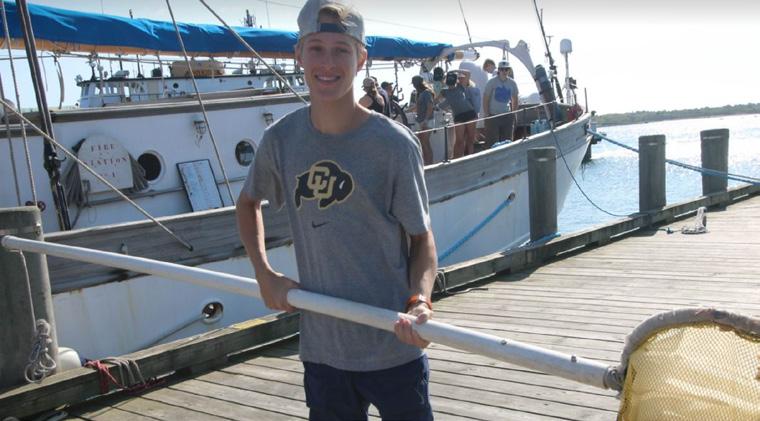
Cole Doolittle, Eastern Skier, Ocean Traveler
By Tess Gatti
“To say that one moment or experience at a Proctor was the most impactful for me would be impossible. Many experiences have impacted me, but two have really stuck with me, the first is the four years I have spent on the ski team. I have spent roughly a third of each year with my team, hundreds of ski races, and even more hours training on Proctor Hill. This “Brotherhood” has helped shape me into the man I am today. The second and probably the most impactful experience was Ocean Classroom. I came to Proctor never wanting to go off campus, but after listening to the stories from Luke Goff and Jack Darov I decided to apply. To say this experience changed me would be a lie, as it solidified some of my ideals when you are sitting on the lookout for hours you can really dig deep into yourself which is what I did. Ocean Classroom was a time to bond and learn something new about myself that I never would have without coming to Proctor. These experiences impacted me in ways I may never know and will stick with me throughout my entire life”
Pete, Patty & Lori en route to Rosebud, SD
 Boo’s Proctor Path
By Paige Lanouette
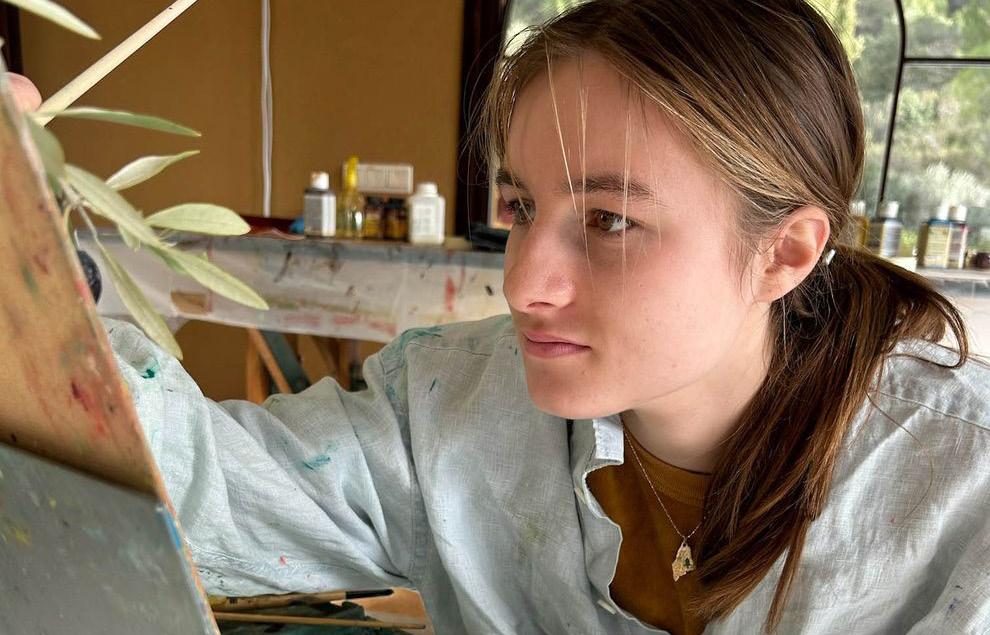
Boo’s Proctor Path
By Paige Lanouette
Which year do you think you grew the most, and how was that year challenging for you?
“I think I grew the most my junior year because I now had the freedom with my class schedule. I felt like I could choose things that really made me excited, but I also knew that there’s a certain responsibility to commit to the things and classes you choose. I also started making some new friends, like in my dorm and even doing things that made me uncomfortable. Like when I joined cross country I realized, “Huh this is why they make us do sports in the afternoon, this is like really fun!”
What place on campus do you think you will miss the most and why?
“I think I’ll miss Slocumb the most because me and one of my best friends have made art there for the past 3 years. I’ll also miss the warmth in there, and how the space is open and mine when I come in at certain hours, and I do really love the huge windows and the clay splatters on the ceiling.”
Lastly, who do you think was crucial to your Proctor experience, and how do you think your experience would have been different had this person been absent?
“My advisor Sarah Whitehead has my back no matter what. She always makes the best brunch, as well as gives the best advice. I think without her I would’ve just been lost, which sounds kind of dramatic but when I was a freshman in 2020 and coming down from peak pandemic it made a whole world of difference when Sarah would come to Johnson which was my dorm at the time, with my Dunkin order and she would listen to me cry because honors bio was hard for me. Overall her support has been unwavering since day one!”

Unpacking Madoc’s Proctor Experience from Ocean to Guitars
By Brendan Gurtler
I asked senior Madoc Harden about his most powerful experiences at Proctor.
“My favorite memory from Proctor would definitely be on Ocean Classroom. The morning that I came out of
the fo’c’sle, which is at the front of the boat, and I had the morning watch, … and we had sailed about an extra eighty miles out to sea, and when I woke up, it was a sunrise, and there was nothing around me but open water. There were dolphins that morning in the break at the front of the boat. And it was … that whole surreal experience, a once-in-a-lifetime experience, especially at my age. It was really special, and being able to kind of share being out that far in the boat that morning, kind of with everyone’s experience all together, was really, really cool. And, of course, I feel so special that I get to go to a school that gives me those opportunities to have that experience. And that kind of falls into the same memory as that night when there was no light pollution and the stars, you could see every single star. … Proctor is the reason for that.”
“A teacher I will remember for the rest of my life is not a teacher, but a woman named Pam who works in Housekeeping. After I got off Ocean Classroom, I picked up guitar, played it every term. And Pam has been the person with me for this entire year that has helped me improve the most and made me fall in love even more with the instrument. [She] pushed me to try new things but encouraged me to work out the stuff that I can get better on. She’s been an amazing part of my life. I hope I don’t lose my love for the instrument, and I know that every memory of me starting to play will be her teaching me.”

Cass Dickson: From the Ocean to the Mountains
By Isla Delaney
During Cass Dickson’s 4 years at Proctor, she’s done a lot.
“I was on both ocean and mountain classrooms, and that as a whole was a pretty impactful experience - I can’t choose which one was more memorable. I think that getting out of your element is a huge part of growing as a person and on both ocean and mountain you have to take on all these responsibilities to make sure that everybody survives and is taken care of, that combined with being outside of your comfort zone allows you to learn and open your eyes to the experiences around you.
On Mountain it is student run, there are instructors but they’re just there to teach you and ensure that you survive, everything else is a student’s responsibility. You’re learning every day, traveling and sleeping on the ground every night, it’s completely alienating from what we’re used to. Every meal is planned by the students and prepared by the students whether on a gas stove [van camping] or crouching over a camp stove. I would say that my most impactful experience at Proctor was Mountain Classroom. You go through experiences that you never thought you would in high school. When we were hiking there were 600 ft cliffs above us as we were walking through a valley and the only way to walk through was
in a small stream, I stepped in quicksand and I was about waist deep before they pulled me out. By the next day I was hiking through a desert in 80° weather it just opened my mind to new and challenging experiences.”
Will & Kiefer: Freshmen Friends Now Turned into Seniors
By Norah Carlson ‘24
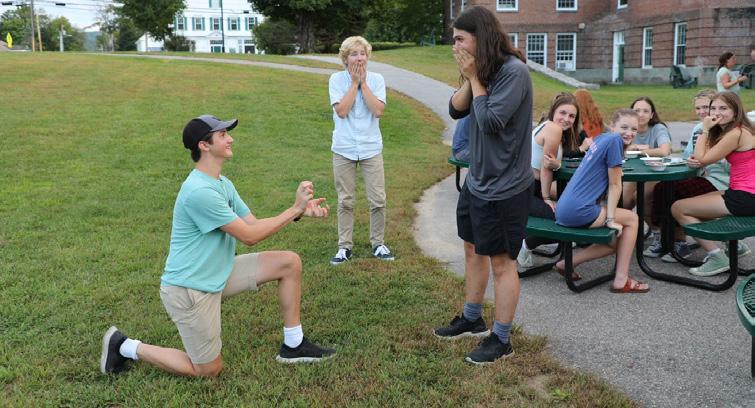
I can’t believe that we are seniors now! Just yesterday we were the new tiny tots here on campus. Since day one I have been close with Will Lunder and Kiefer Reutlinger. Now in our last term here at Proctor Academy, we have been reminiscing back to the days when graduation seemed far away. We have also spent time thinking about the little things that we will miss next year, trying to soak them up in these final weeks. “What’s a place on campus you’ll miss?”
Will: “The Proctor Coffee House is an ideal spot on campus, let me tell you why. We are right near Jakes…. So the Coffee House is very cool and it’s really cool that they are letting us run a business you know?”
Kiefer: “I’ll miss our woodlands as a whole cause I like to mountain bike and it’s cool to have all of this at our disposal. So I will miss having it in my backyard to go and bike all the time.”

Zach Macey Finds The Proctor Way
By Chris Chol
The Proctor community immerses itself in activities that are highly challenging. During his time at Proctor, senior Zach Macey adopted and embodied the “Proctor way” in taking tasks head-on with his commitment in math classes with Patty Pond. “I had Patty Pond my freshman year for honors geometry which was not a class that I was well suited for, and let’s just say we did not get off on a strong footing. She really pushed me that first year and I think she saw that math isn’t my strong suit. I’ve been able to kind of push through it and I think having her again [in a class later on] really motivated me because I had the memory of struggling in her class before. Being able to push through with [Patty] was definitely something that made me believe even the stuff you’re not great at you can succeed in.”
Boo on Euro in France
Will promposing to Keifer
Zach on the left with Patrick Moore ‘25
