A NORSE FISH COURSE


powered by Inside Marine BREMNES SEASHORE
want an article created? apply here insidemarine.com

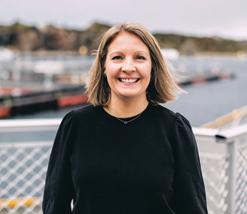
Bremnes Seashore is a pioneering Norwegian salmon farming specialist with over 70 years’ experience. Laila Knarvik, Group Technology and Sustainability Manager, shared the company’s news with Phil Nicholls.
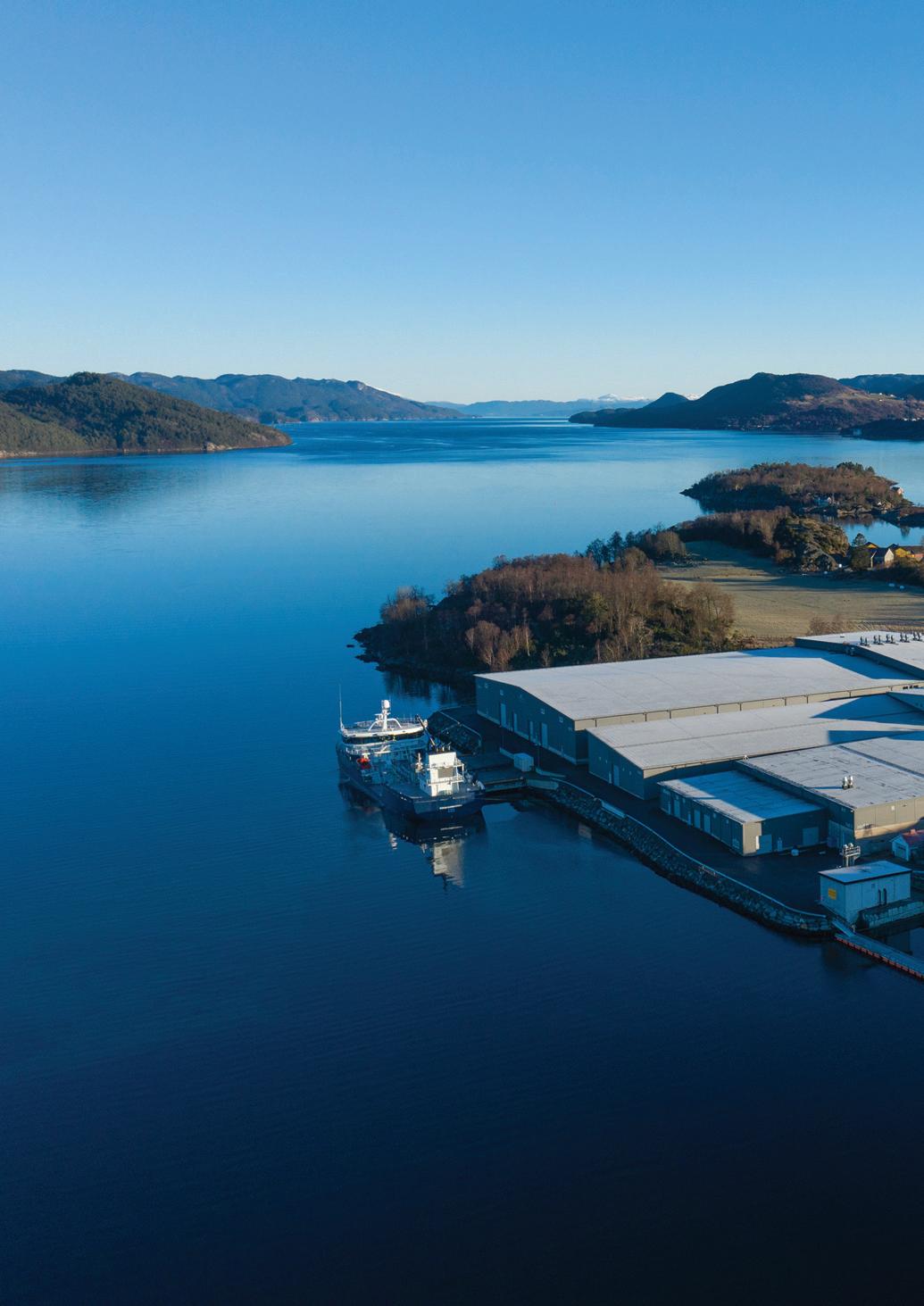
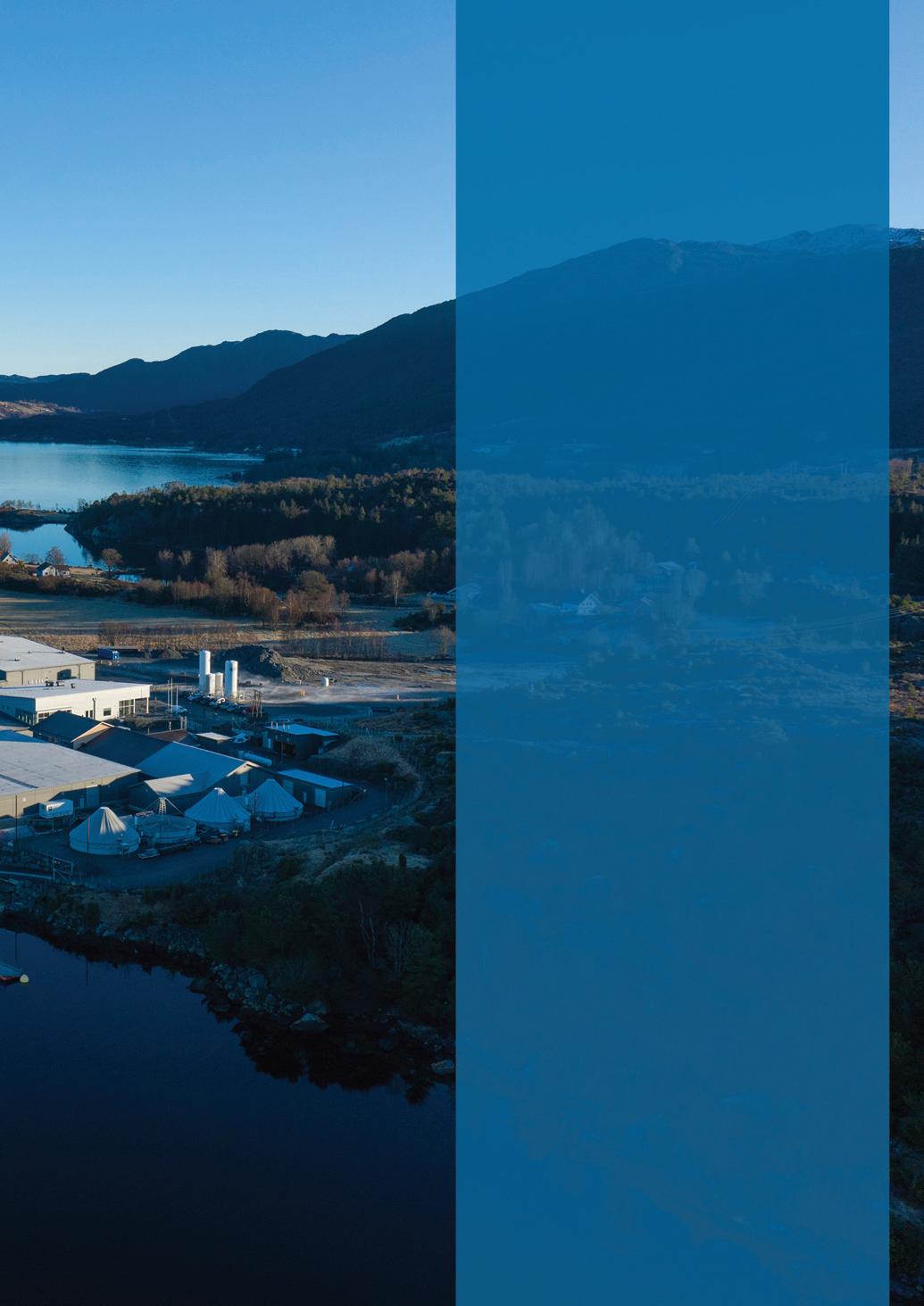
The latest project at Bremnes Seashore is the construction of a new state-of-the-art salmon filleting and processing factory at Kvednavikjo in Bømlo Municipality. During the construc tion process, the expanding factory is intended to remain in full production throughout.
Bremnes Seashore traces its history all the way back to 1937 when 14-year-old founder Olav Svendsen began buying and selling seafood on Øklandsvågen quay. Mr Svendsen’s entrepreneurial spirit found many outlets over the years, but always in the seafood industry.
During the 1980s, Bremnes Seashore began the salmon farming which grew to become the heart of today’s business. The company developed a live cold fish system in 1992 which enabled Bremnes Seashore to become a leader in quality salmon production.
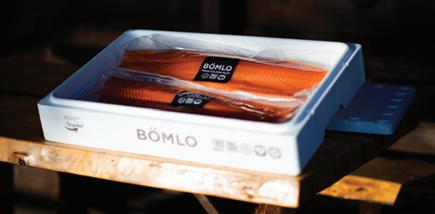
“Our unique live cold fish technology chills the fish naturally upon harvesting and gives our products a unique texture and quality which is greatly appreciated by our customers,” said Laila Knarvik, Group Technology and Sustainability Manager, outlining Bremnes Seashore’s USP. “Our super-fresh salmon differentiates us from many competi tors. We focus on high-quality through the whole value chain from roe to salmon fillet. Sourcing the fish from Bømlo island is essential, as is the fact that Bremnes Seashore is a family-owned business.”
Bremnes Seashore divides its output into two main brands. The SALMA line is the premium quality retail brand aimed at the domes tic market in Norway and selected markets in Europe. Feature products include belly and back salmon loin in a range of weights. The SALMA burgers consist of small pieces of salmon mixed with a little salt.
Bremnes Seashore also produces an accompanying range of glazes and ponzus.
In contrast, BÖMLO is Bremnes Seashore’s brand for quality salmon distributed to export markets in Europe and Asia, mainly for HoReCa customers. This range includes whole, gutted salmon available either fresh or frozen, along with fillets, loins and portions. All these lines are available through Sjór, the sales arm of the Seashore Group.
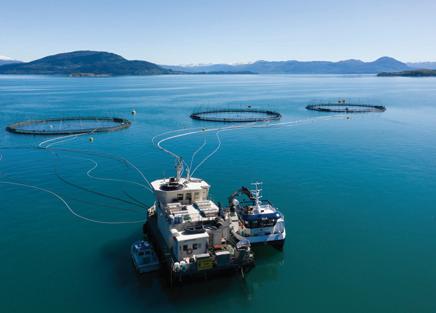
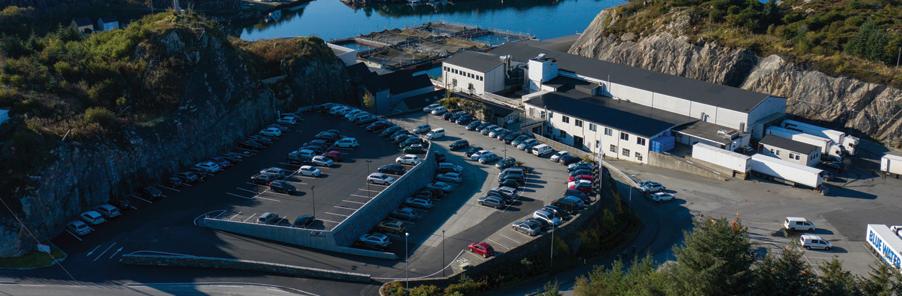
To produce its range of salmon products, Bremnes Seashore is head quartered on Bømlo island in western Norway with a combined packing and filleting factory. The company operates five smolt sites, the most important being the modern RAS facility in Trovåg. Bremnes Seashore also has 15 farm sites in Vestland and neighbouring Rogaland County. The current Bømlo factory produces an average 26,000 tonnes of food each year, with the company’s most recent financial figures recording a turnover of NOK 5,249 million (€518 million).
Bremnes Seashore expects that the new factory at Bømlo will greatly expand production capabilities. The facility is scheduled to be complet ed by the end of 2023, with a budget of over NOK 400 million (€39 million). This new 7,000 sqm factory should double capacity, potentially even tripling output, over the next 10 years. It will be a state-of-the-art facility with increased levels of automation, notably for many of the heavy-lifting and static work tasks.
“The upgraded factory will also bring new innovations to expand our portfolio of brands,” explained Ms Knarvik. “We are looking into many exciting ideas and have plans for new products. At this time, I cannot reveal any of these ideas as we are currently working inten sively with R&D and product development. But I can reveal that we aim to be even closer to our customers in the market and deliver con venient, easy-to-use products.”
A close relationship with the customers and business partners is a key principle at Bremnes Seashore according to Ms Knarvik: “We visit our customers and listen to their needs. We also try to look
into the crystal ball to offer them new products which they did not expect to see, but still meet future trends and needs.
“Bremnes Seashore invites customers to visit our sites and learn about the whole production process from roe to high value finished product. We are very transparent and share our knowledge with our customers and suppliers.”
An understanding of market trends is a vital part of evolving new product lines in any business. Ms Knarvik picked out two main trends affecting Bremnes Seashore. The company responded to increased online shopping by developing new distribution channels, with the company working hard to switch from airfreight to distribution meth ods with a lower carbon-footprint.
This intersects with the second market trend: sustainability. Bremnes Seashore’s planned production line at the new factory is designed to increase the proportion of the salmon used.
“We aim to utilise the raw material in the best possible way,” Ms Knarvik said. “Our long-term goal is to use 98% of the raw material for human consumption. Utilising as much of the fish as possible is an important part of our sustainability strategy.”
Bremnes Seashore understands sustainability as a business strategy. “Our strategy involves the economic, environmental and social parts of sustainability,” Ms Knarvik said. “The company equates sustainability with profitability; we cannot be profitable if sustainability is not part of our daily work and our value chain. It is also important for us to take care of the people that work for us because they are our most valuable assets.”
Working with the team at Bremnes Seashore is one of Ms Knarvik’s daily highlights: “My colleagues are highly experienced people with so much knowledge about different parts of the value chain. I learn something new all the time from my colleagues. There is a big change in the way we use technology and data to improve our production and it is exciting to be part of this change, part of the solution for the chal lenges we face.

“Sustainability is very important for me. We all have an obligation to take care of our environment for the future generations to come and I want to take my share of responsibility for this. I am lucky to be in a position where I can do that. For example, we use the ocean as a resource for our production. Thus, we are obliged to implement responsible production at our sea farms.”
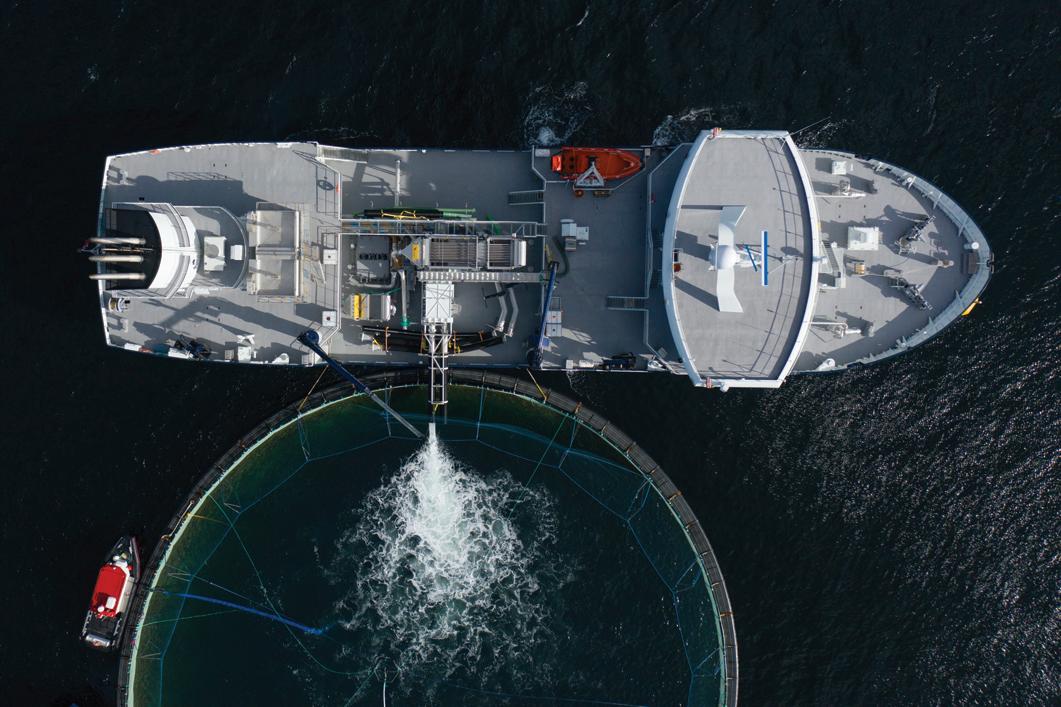
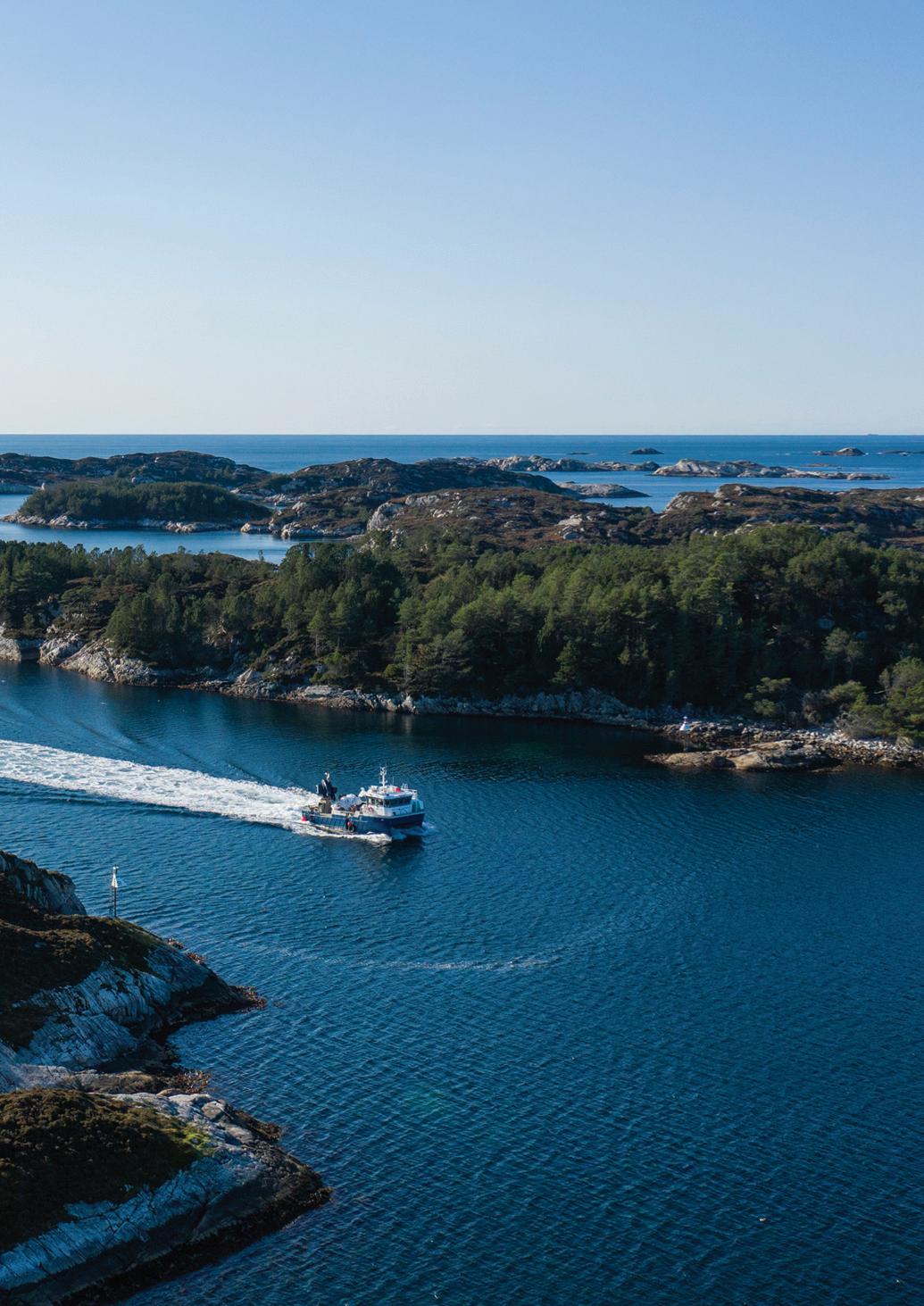
Bremnes Seashore has adopted electrification for its sea farms and work boats, lowering its carbon footprint. The company also works hard to improve fish welfare.
“We are exploring how to enhance the fish feed and ensure high lev els of omega-3s through new feed sources,” Ms Knarvik explained. “In parallel with the new factory at Bømlo, Bremnes Seashore is investing in its post-smolt capacity at the RAS facility in Trovåg. This investment will bring additional advances in both sustainability and fish welfare.
The recent supply chain issues and heightened pressure on the food chain have both impacted Bremnes Seashore. Disruptions to the supply of food can have serious consequences, but the company remains opti mistic and is playing its part in supplying sustainable food for the future.
“We are solving problems,” concluded Ms Knarvik. “Bremnes Seashore wants to be part of the solution. We want to take our part of the responsi bility for the future.” n
BREMNES