The Private Sector Organisation of Jamaica (PSOJ), in collaboration with VM Wealth Management Limited, is pleased to present the Economic Bulletin – April 2026. This publication forms part of our continued commitment to equipping stakeholders with timely, data-driven insights to support informed decisionmaking in an increasingly complex global anddomesticeconomiclandscape.
The April edition highlights a global environment characterised by measured expansion, tempered by persistent inflationary pressures and elevated geopoliticalrisks.Risingenergypricesand shifting monetary policy expectations in major economies continue to influence capital flows, financial conditions, and growth trajectories. The United States, moderating economic growth and a graduallycoolinglabourmarket,signalsa transitiontowardamorebalanced,though stilluncertain,macroeconomicoutlook.
Domestically, Jamaica’s economic performance reflects both resilience and vulnerability. Strong labour market fundamentals and prior growth momentum have been counterbalanced bythesignificantimpactofrecentclimatic events, particularly on the agricultural sector and wider economic output.
Encouragingly, inflation dynamics remain relatively contained, while financial marketscontinuetodemonstratestability amid evolving policy adjustments by the centralbank.
This bulletin provides a concise yet comprehensive overview of key macroeconomic indicators, including growth, inflation, labour market conditions, interest rates, and external sector developments. It also outlines and perspectives on the risks and opportunities that may Jamaica’s economic trajectory in the months
As always, the PSOJ remains committed to fostering dialogue, promoting sound policy, and supporting sustainable economic
development.Wetrustthatthisreportwill serve as a valuable resource for business leaders, policymakers, investors, and the widerpublic.
GLOBAL MACROECONOMIC INDICATORS
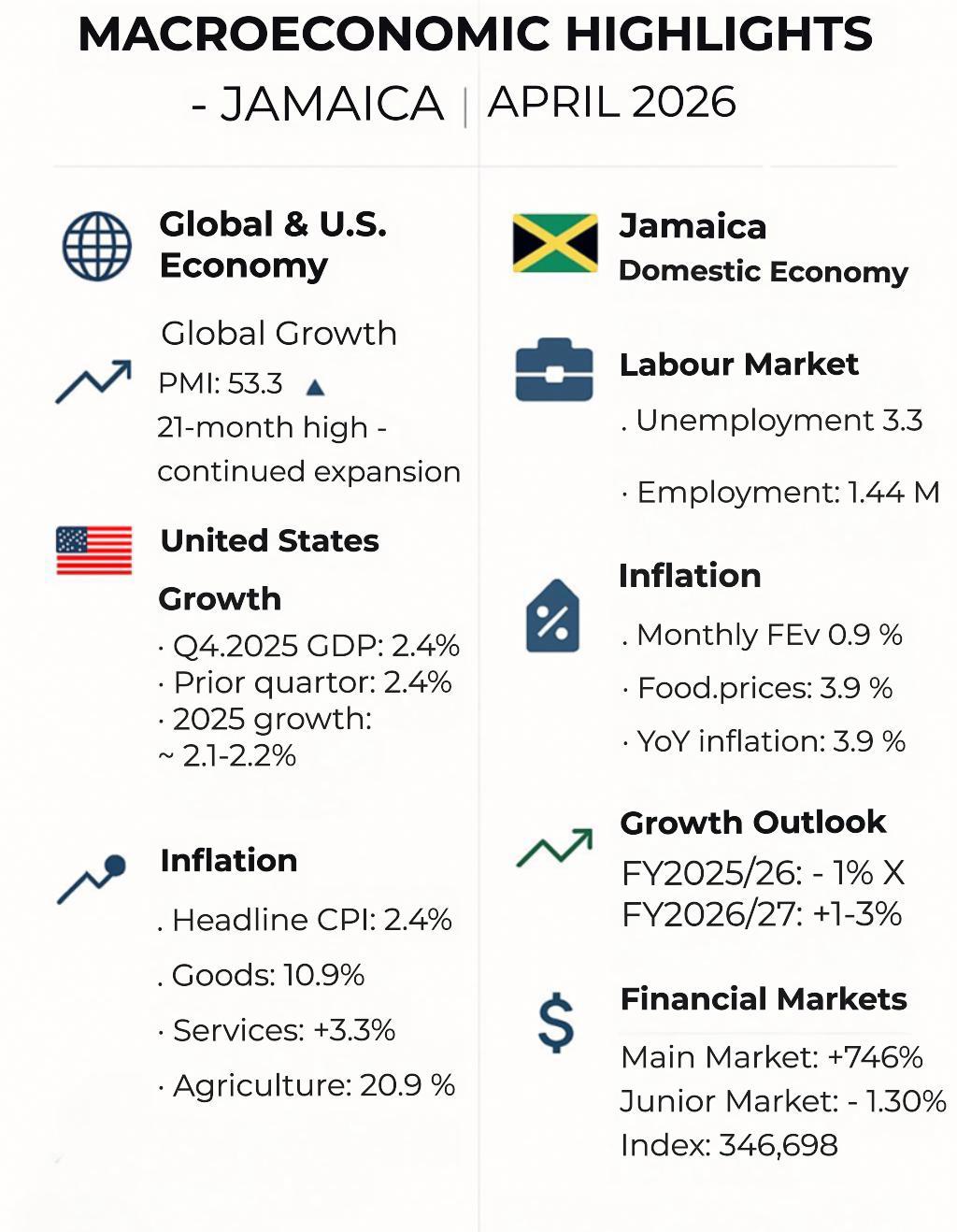
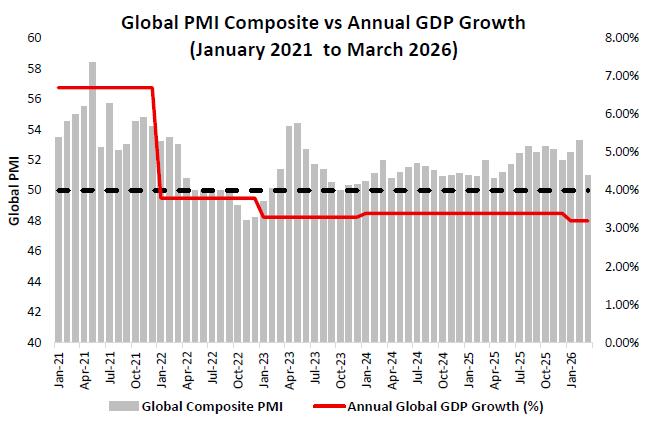
The March 2026 J.P. Morgan Global Composite PMI indicates that global economic growth eased to an 11-month low,withtheheadlineindexfallingto51.0.
ranging impacts on demand, supply chains,andmarketprices.
While the global economy entered 2026 on a resilient footing, the outbreak of war has transformed the outlook. S&P Global Market Intelligence has raised 2026 inflation forecasts and lowered growth forecasts "across the board," noting that Middle East events have materially
This represents a significant deceleration from February's 21-month high of 53.3. While the index remained above the neutral50.0markforthe38thconsecutive month, new order growth slowed, and businessoptimismfelltooneofitslowest levelssincethepandemic.Marchsawthe resilienceoftheglobaleconomytestedas the war in the Middle East led to wide-
changed the near-term economic and financial outlook. Their updated baseline, assumingshort-liveddisruptions,expects Dated Brent crude oil to average $90 per barrel in March before moderating. However, an alternative "oil shock" scenariowarnsthatiftheStraitofHormuz remains closed, prices could peak at $200/b in the second quarter, leading to
large output losses and potential recessionsinJapan,Germany,andtheUK.
The IMF's April 2026 World Economic Outlook further details this "Global EconomyintheShadowofWar,"projecting globalgrowthtoslowto3.1%in2026.The IMFwarnsthatamore"adversescenario" involving a sustained 80% increase in oil prices (to ~$100/b) could reduce global growthby0.8percentagepointsto2.5%in 2026, while pushing inflation 1.5 percentage points higher. In a "severe scenario" where the conflict becomes protracted, growth could drop to 2.2% by 2027, effectively stalling the global recovery.
The OECD March 2026 Interim Report underscorestheserisks,notingthatahalt
inshipmentsthroughtheStraitofHormuz has already generated a surge in energy pricesanddisruptedthesupplyofcritical commodities like fertilisers. This energy shock is particularly acute for net energy importers in Asia, such as Japan and Korea, where imports account for over 80% of domestic energy use. The OECD cautions that central banks must remain vigilant, as monetary policy adjustments may be needed if broadening price pressures arise, potentially keeping interest-rate cuts "off the table" as they pivot to manage stagflation fears. Together, these factors indicate that the disinflation trend of late 2025 has been interruptedbygeopoliticalconflict.
UNITED STATES OF AMERICA
ThelatestU.S.labourmarketdataindicate a resilient employment environment, as total nonfarm payroll employment increased by 178,000in March 2026. This follows a revised decrease of 133,000 in February,suggestingthatwhilethemarket has seen recent volatility, it regained momentumattheend ofthefirstquarter. The unemployment rate remained steady at 4.3%, with roughly 7.2 million individuals unemployed. Job gains were concentrated in specific sectors, notably health care (+76,000), construction (+26,000), and transportation and warehousing (+21,000). Conversely, federal government employment continued its downward trend, declining by 18,000 jobs in March and falling by a total of 355,000 since its October 2024 peak.
While payrolls grew, several underlying indicators suggest areas of softening withinthebroaderworkforce.Thenumber of discouraged workers those who have given up looking for work because they believe no jobs are available increased by 144,000 in March to reach 510,000. Similarly, the number of individuals marginally attached to the labour force rose by 325,000 to a total of 1.9 million. The long-term unemployed population, consistingofthosejoblessfor27weeksor more, remained at 1.8 million but has grownby322,000overthepastyear.Wage growth also showed moderate activity, withaveragehourlyearningsrisingby0.2%
to $37.38 in March, reflecting a 3.5% increaseovertheyear. Overall,thelabour market appears to be transitioning into a phase characterised by moderate growth and sector-specific shifts, as gains in private service-providing industries work to offset continued declines in governmentandfinancialservices.
U.S. economic growth slowed sharply at the end of 2025, with Q4 GDP revised downtoasluggish0.5%(annualised).This deceleration from the 4.4% growth in Q3 was primarily driven by a 43-day government shutdown, which caused federalspendingandinvestmenttoplunge at a 16.6% annual pace, shaving over a percentage point off the growth rate. Despite this, the full-year GDP for 2025 reached 2.0%–2.1%, supported by resilient business investment in artificial intelligence.
The outlook for 2026 has become increasingly uncertain due to the war in the Middle East, which has triggered energy price spikes and stagflation risks. While the IMF and S&P Global project a modest rebound in growth to the 2.2%–2.4% range, they caution that sustained geopolitical conflict and high oil prices could temper consumer spending and push unemployment toward 4%. Overall, the economy is navigating a high-risk transition phase, where stabilised domestic demand is being challenged by significantglobalsupplyshocks.
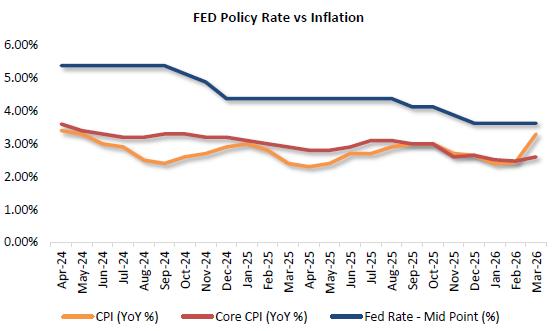
U.S. inflation dynamics have shifted from stabilisation to a sharp reacceleration, with headline CPI jumping to a two-year high of 3.3% year-on-year in March 2026. Thissurge,upfrom2.4%inFebruary,was primarily driven by the war with Iran and the shutdown of the Strait of Hormuz, which caused energy prices to soar by 10.9% in a single month. Gasoline prices alone spiked 21.2%, marking the largest monthly increase since 1967 and driving up costs for airfare and transportation services.
While core inflation (excluding food and energy) rose more modestly at 2.6%, persistentpressuresremaininsectorslike shelter. This inflationary shock has severelyimpactedpublicoutlook,sending U.S. consumer sentiment to a record low inAprilashouseholdsstrugglewithrising costs. With the Federal Reserve updating
its forecasts to reflect these risks, the disinflationaryprogressmadeinlate2025 has been effectively reversed by the ongoinggeopoliticalconflict.
Federal Reserve’s March 2026 decision reflects a cautious, data-dependent pause in policy as it balances persistent inflation risks against signs of economic slowing. The Federal Open Market Committee(FOMC)heldthefederalfunds rate steady at 3.50%–3.75%, signalling a deliberate“wait-and-see”approach amid heightened uncertainty. This stance is increasingly shaped by the war with Iran andtheshutdownoftheStraitofHormuz, whichhavesentenergypricessoaringand introduced significant stagflation risks. WhiletheFedcutratesthreetimesinlate 2025 due to a slowing labour market, those cuts have effectively stalled as policymakers pivot to address a sharp
resurgence in headline inflation, which jumpedto3.3%inMarch.
The policy outlook is further complicated byapotentialleadershiptransition,asthe upcoming April 28-29 meeting could be Jerome Powell’s last as Fed chair. The DepartmentofJusticerecentlydroppedits criminal investigation into Powell, potentially clearing the way for the confirmation of President Trump’s nominee, Kevin Warsh, to replace him. Amid this looming shift, the Fed has revisedinflationexpectationsupwardand projected that policy must remain restrictive forlonger. Updated projections now suggest that earlier predicted interest-ratecutsmaybe"offthetable"for theremainderof2026,asthecentralbank navigatesbothexternalenergyshocksand internalleadershipchanges.
Implications & Opportunities:
As inflation pressures increase as the blockage of the Strait of Hormuz continues, driving increased oil and fuel costs, this causes increased uncertainty in the market. This increased uncertainty may potentially encourage investors to shift some capital from growth stocks to value stocks. Additionally, as energy companies are likely to benefit, gains couldpotentially beseenforstockin that sector. Additionally, the increased uncertaintyandlikelyhaltofratecutswill likely require new bond issuances to provide greater returns, driving down the
demand of older bond issuances with lowerinterestrates.
For financial institutions, if interest rates andinflationcontinuetoremainelevated, lendinginstitutionsmaylikelyseereduced demand for their loan products or increased loan delinquency. However, financial conglomerates such as the VM Group could take advantage by providing energy and currency hedging products to companies as they try to lock in prices amid the Middle East conflict, facilitating efficiency-driven mergers and acquisitions through investment banking arms, facilitating access to alternative assetclasseswithinflation-linkedreturns, and rebalancing client portfolios through privateportfoliomanagement.
DOMESTIC ECONOMIC
INDICATORS
Labour Market
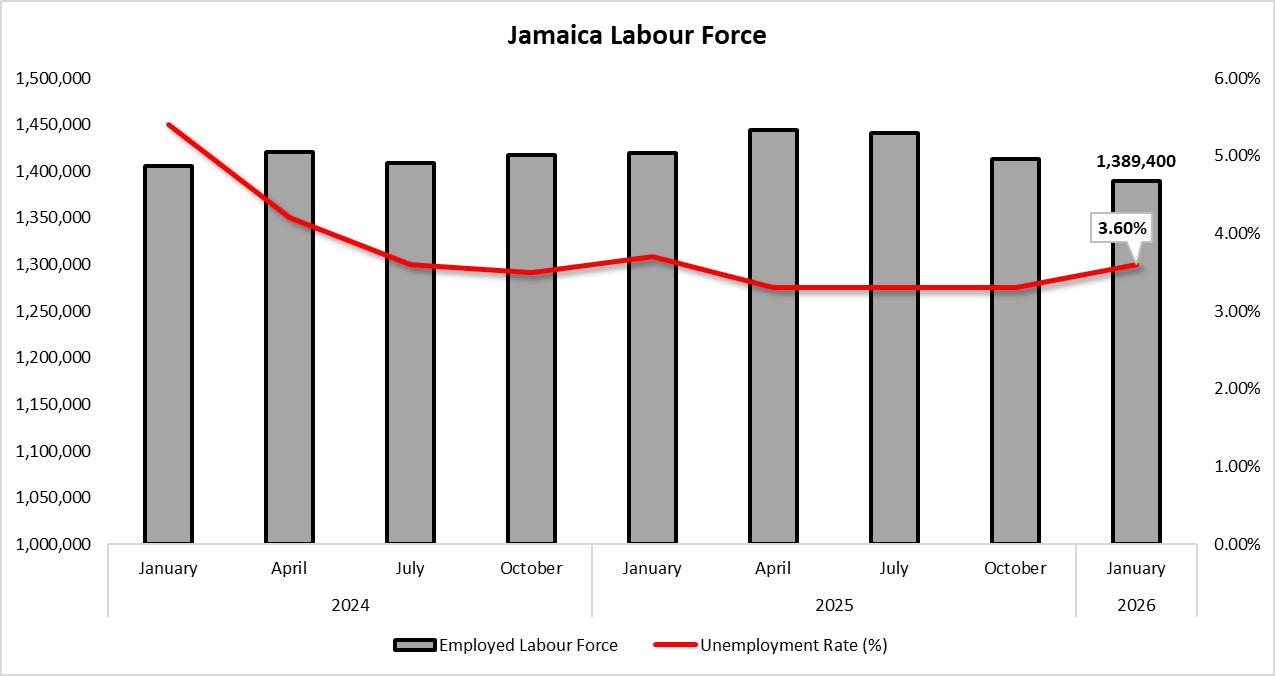
As of January 2026, Jamaica’s unemployment rate fell to 3.6 per cent, representing a 0.1 percentage point decreasefromthe3.7percentrecordedin January 2025. However, this reflects an increase compared to the October 2025 report, where the rate stood at 3.3 per
force decreased by 32,900 persons to 1,441,000, and the number of employed individuals fell by 30,100 to 1,389,400 compared to the previous year. Consequently, the number of persons outside the labour force increased by 32,900to714,800.
This follow-up to the record highs of 1.44 millionemployedpersonsseenpriortothe hurricane suggests a stabilisation of the market at lower participation levels. A notable area of resilience remains youth unemployment, which declined by 5,600
cent.Thisuptickintheunemploymentrate relative to the October quarter is likely attributable to the lingering economic impact and operational disruptions causedbyHurricaneMelissa.
The latest data indicate a significant shift in the labour market; the year-over-year decline in the unemployment rate was primarilydrivenbyashrinkinglabourforce ratherthannetjobgrowth.Thetotallabour
persons to 17,900, resulting in a youth unemploymentrateof10.7percent.
The gender breakdown shows that the male unemployment rate declined to 2.8 per cent, while the female rate fell to 4.5 percent.While2025sawsignificantgains in sectors such as ‘Managers’ and ‘Accommodation and Food Service Activities,’theJanuary2026surveyutilised an abridged questionnaire in western
parishes—including St. James, Westmoreland,andHanover tomaintain core indicator estimates following the storm. This updated outlook reflects a resilientbuttighteninglabourmarketasit navigates the transition from the record peaksseenintheprioryear.
Implications:
The year-over-year reduction in the unemployment rate and resilience following Hurricane Melissa are strong economic indicators for Jamaica, reflecting increased workforce participationandoverallproductivity.This resilience within the Jamaican labour market supports the maintenance of demand for products across the VM Group, as an increased low unemployment rate indicates greater levels of savings and disposable income, driving demand for savings accounts and investments.
Inflation
Jamaica’s inflation dynamics as of March 2026reflectashiftfromtemporaryreliefto renewed upward pressure, driven by surging energy and fuel costs. According to the Statistical Institute of Jamaica (STATIN), the All-Jamaica Consumer Price Index (CPI) rose by 0.3% in March 2026, reversing the 0.9% decline recorded in February. This monthly increase was primarily driven by a 2.3% rise in the ‘Housing, Water, Electricity, Gas and Other Fuels’ division—fuelled by a 5.1% jump in electricity rates and a 0.6%
increasein‘Transport’costsduetohigher petrol prices. While the ‘Food and NonAlcoholicBeverages’divisioncontinuedto offer some relief with a 0.6% decline, supported by a 4.9% drop in the prices of vegetables and tubers due to improved localsupply,thesegainswereoutweighed bythespikeinutilityandfuelcosts.
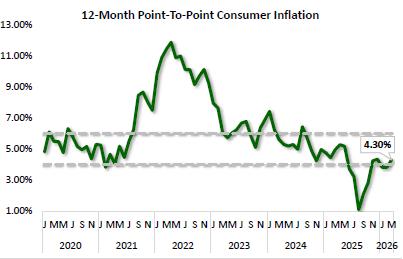
On a year-on-year basis, point-to-point inflation climbed to 4.3% as of March 2026,upfrom3.9%inthepreviousmonth. The main contributors to this elevated annual rate include the ‘Food and NonAlcoholic Beverages’ division, which remains up 5.6% over the last year. Analysts and industry stakeholders have notedthatexternalshocksarenowdeeply impacting the local economy; for instance, the construction sector has seen prices for key building materials climbbyasmuchas15%insomeareasas distributorspassonhigherfreightandfuel surcharges. Similarly, motorists have faced successive weekly increases from Petrojam,withpricesfor87and90-octane gasoline rising by $4.50 per litre in early April due to sustained global oil price volatility.
The outlook for the remainder of 2026 remains subject to a "high degree of uncertainty," according to the Bank of Jamaica (BOJ).Theongoingconflictin the Middle East continues to drive sharp increases in international commodity prices specifically oil, liquefied natural gas (LNG), and fertiliser—and shipping costs.Thesefactorsareexpectedtokeep
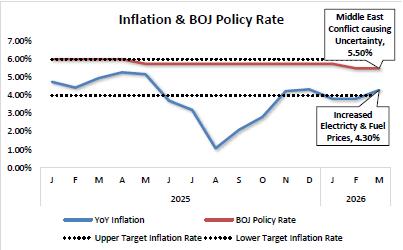
energy and transport-related inflation on an upward trajectory, with risks to the projectedinflationpathskewedheavilyto the upside. In response to these complex pressures and the volatile global environment, the Bank of Jamaica’s Monetary Policy Committee unanimously decided in late March to maintain the policyrateat5.50%,aimingtosupportthe convergence of inflation toward its target rangewhilemonitoringtheeffectsofposthurricane recovery spending and external commodityshocks.
erosion of purchasing power, particularly through a 5.1% spike in electricity costs and rising fuel prices that are forcing a shift toward public transportation. For financial conglomerateslikeVMFinancial Group, this environment necessitates a pivottowardrigorousriskmanagementto mitigate potential rises in non-performing loans especially in the construction sector, where material costs have surged by 15% while leveraging strong capital buffersandinternationaldiversificationto maintain institutional stability. Investors can navigate this period of high
Implications:
The resurgence of inflation in early 2026, characterised by a 4.3% point-to-point rate driven by global energy shocks, has created a challenging landscape where the everyday Jamaican faces a direct
uncertainty by adopting strategic shifts toward inflation-hedged assets, such as real estate or energy-efficient infrastructure, and diversifying portfolios into more stable markets to reduce domestic exposure. Furthermore,
opportunities exist in sectors with strong pricingpowerorthosethatcan utilisethe Bank of Jamaica’s targeted foreign exchange support for energy, allowing savvy investors to capitalise on market dislocations while protecting against the mark-to-market volatility of fixed-income instruments.
Economic Activity
The Jamaican economy is navigating a complex recovery phase following a significant 7.1% contraction in the fourth quarter of 2025, a downturn primarily triggered by the catastrophic impact of HurricaneMelissa.Thisdeclinewasmost pronounced in the goods-producing sector, which plummeted by 10.7%, largely due to a 37.5% collapse in mining and quarrying and a 17.7% drop in agriculture. While the economy managed a marginal 0.1% growth for the full 2025 calendar year, the short-term outlook remains pressured, with a projected declineof4.0%to6.0%forthefirstquarter of2026.
This recovery path is now further complicated by the U.S.–Iran conflict, which poses a severe threat to GDP performancethroughsurginginternational oilandenergyprices.Asafuel-dependent nation, Jamaica faces higher production and transportation costs that could dampen reconstruction efforts and erode consumer disposable income. Additionally, the heightened global tension risks weakening tourism
sentiment, potentially slowing the recoveryof theservicesindustrythatwas already impacted by a 43.0% drop in foreign national arrivals following the storm.
In response to these evolving risks, the BankofJamaicahasmaintaineditspolicy rateat5.50%toprovidestabilityamidsta "high degree of uncertainty." The central bank cautions that these external geopolitical shocks present significant downsideriskstodomesticgrowth,which coulddelayareturntotheprojected1.0% to 3.0% growth target for the 2026/27 fiscal year. Consequently, the pace of the rebound will depend heavily on the duration of Middle East tensions and the economy's ability to absorb rising input costs without stalling broader reconstructionactivities.
Money Market Interest Rates
Following the initial correction in early 2026, Jamaica’s inflation dynamics have shifted from post-hurricane relief to renewedupwardpressuredrivenbyglobal geopoliticalvolatility.Whiletheconsumer price index (CPI) fell in February, it rebounded in March 2026 with a monthly increase of 0.3%, primarily fuelled by a 2.3% jump in the ‘Housing, Water, Electricity,GasandOtherFuels’division led by a 5.1% surge in electricity rates and a 0.6% increase in Transport costs following higher petrol prices. These energy-led hikes more than offset a continued 0.6% decline in food prices,
resulting in a point-to-point inflation rate of4.3%inMarch2026.
The BOJ’s outlook for inflation suggests it willremainwithinthe 4.0%to6.0%target
Instepwiththisshiftingprofileanda"high degree of uncertainty," the Bank of Jamaica (BOJ) maintained the policy rate at 5.50% at its March 2026 MPC meeting, pausingthenormalisationpathinitiatedin February. The Bank noted that the U.S.–Iran conflict in the Middle East has triggered significant increases in international commodity prices, particularly oil and natural gas. This external shock poses a dual threat of higher domestic inflation and lower domestic growth, with the BOJ warning that risks to the inflation outlook are now skewed heavily to the upside and that headlineinflationislikelytorisefurtherin thenearterm.
rangeover thenexteightquarters,though this path is subject to the persistence of external commodity shocks. The Bank anticipatesthatwhiletemporarybreaches of the target may occur mid-year due to reconstructiondemandandenergycosts, inflationisexpectedtoreturntothetarget by December 2026 as second-round effects moderate. To support this convergence, the BOJ continues to utilise secondary measures, including directly supplying foreign exchange to major playersintheenergysectortodampenthe pass-through of global price volatility to thedomesticmarket.
The money-market saw mixed liquidity conditions. T-bill auctions conducted by the Debt Management Branch drew
healthy demand across the 91-day, but lower liquidity for the 182-day, and 273day tenors, with allocations of J$700M, except for the 273-day T-bill with an allocation of J$800M. Bid coverage exceeded the offer for the 90-day T-bill, resulting in a yield of 5.43%, but bid coverage did not exceed the offer for the 182-day and 273- day T-bills, resulting in theaverageyieldsbeing5.90%and6.04%, respectively. BOJ’s weekly 30-day fixed-rate CDs showed generally flat liquidity. On March 4, the auction drew J$56.78Bn in bids for J$51Bn offered (bid-to-offer 1.11x), with a 5.73% average yield on successful allocations (highest fully allocated bid 5.89%); On March 11, the auction drew J$33.47Bn in bids for J$29Bn offered (bid-to-offer 1.15x),with a 5.74% average yield on successful allocations (highest fully allocated bid 5.85%); On March 18, the auction drew J$20.40Bn in bids for J$20Bn offered (bid-to-offer 1.02x), with a 5.72% average yield on successful allocations (highest fully allocated bid 6.00%); On March 25, the auction drew J$34.38.78Bn in bids for J$40Bn offered (bid-to-offer 0.85x),with a 5.86% average yield on successful allocations (highest fully allocated bid 8.00%);. These movements indicate a cautiously defensive market; the undersubscription of the most recent 30day CD and T-bills indicates that cash in hand liquidity is being prioritised over, possibly indicating that high anticipated inflation may result in a policy response laterintheyear.
Implications
ThecurrentfragmentationintheJamaican money market, characterised by a "flight to the short-end" and declining appetite for longer-tenor paper, forces investors and financial conglomerates like VM Financial Group into a defensive posture where liquidity preservation outweighs long-term yield. For investors, the failure of 182-day and 273-day T-bills to achieve fullsubscriptionindicatesademandfora higher "uncertainty premium" to hedge against the U.S.–Iran conflict's impact on energy costs, suggesting a strategic shift toward liquid, short-dated instruments to avoid being locked into rates that may soon be overtaken by inflation. Financial conglomerates must navigate tightening liquidity conditions, as evidenced by the 0.85x bid-to-cover ratio and the spike in 30-day CD yields to 8.00% in late March, which signals a divergence between marketrealityandtheofficial5.50%policy rate. This environment necessitates more rigorous stress-testing of portfolios and a cautious approach to lending, while institutions leverage their capital buffers tomanagetheincreasedvolatilityandthe riskofrisingnon-performingloans.
Stock Market
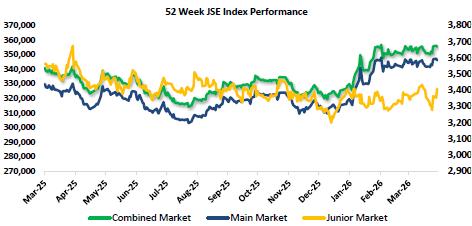
The Jamaica Stock Exchange began 2026 with a strong rebound, reversing the cautious and hurricane-affected sentiment that characterised December. According to the JSE’s official Monthly Quotes for January 2026, the JSE Main
Market Index saw a modest growth of 0.08% in February, with YTD growth of 7.46%. The Junior market saw a similar monthly growth of just 0.5%, with YTD growthof-1.30%.
Trading was led by TransJamaican Highway Limited (TJH), Radio Jamaica Limited (RJR) and Kintyre Holding (JA) Limited (KNTYR), making up 17.37%, 10.57%, and 8.59% of trading, respectively.
Implications
As in inflation pressures and economic instability increase, the stock market has generally performed poorly, with an average YTD return of -0.27%. This likely would have been driven by the increased inflationpressuresstemmingfromtheUSIran war and the possible second-round effectsofHurricaneMelissa.Additionally, the positive performance of the JSE Combined Index is primarily driven by a few companies with large market
capitalisation, which have greater influence on the index, with the overall marketactuallyaveragingnegativereturns YTD.
Goingforward,thestockmarketislikelyto remain selective but more opportunity-driven, especially if the economy continues to recover steadily. Despiteinflationbeingexpectedtoremain withinthetargetrangeof4%to6%forthe next two years, the FED’s outlook of at mostonecutfortheyearandthepossible inflation pressures from geopolitical conflicts and second-round impacts of Melissa, will likely make investors cautious about the equity market overall butstilltakepositionsinstrongandrobust companies.
EXTERNAL SECTORS
Exchange Rates
Duringthisperiod,the BOJmaintainedits supportive presence in the FX market through targeted B-FXITT operations, consistent with its post-hurricane stabilization strategy, through two standardsaleoperationsforanamountof USD 80 million, in total. These measured interventions, combined with the earlier strengthening of Net International Reserves (NIR), continued to anchor FX marketconfidenceheadingintoMarch.
Implications
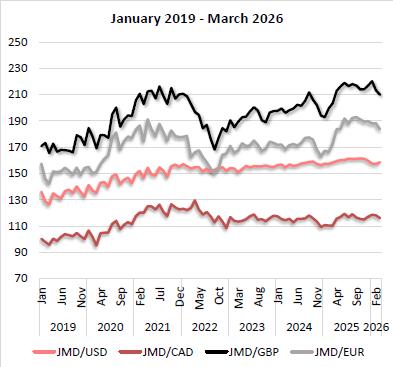
The stability of the Jamaican dollar throughout March indicates that FX pressures eased earlier than expected, driven by stabilising post-hurricane conditions and reduced demand for emergency imports. This improvement, alongside still-strong reserves, suggests that the BOJ’s FX framework remained effective in maintaining orderly market conditions without requiring unusually largeinterventionsduringthemonth.
However, the environment still warrants caution: while March movements were stable, underlying FX demand related to increased oil prices, which are quoted in US dollars, puts pressure ontheFXrate. Continued vigilant FX liquidity management will remain essential as the economy navigates this time of economic uncertainty stemming from external shocks.
Remittances
In February 2026, Jamaica’s net remittance inflows totalled US$247.6 million, marking a 3.8 per cent increase compared to February 2025. This was primarily due to an increase of US$8.8 millionor3.4percentintotalremittances inflows, supported by a decline in remittance outflows of US$0.2 million or 1.1 per cent. The fiscal year-to-date performance(April2025toFebruary2026) remained positive, with net inflows increasing by 4.1 per cent or US$118.2 million relative to the same period in the previous fiscal year. The United States remains the dominant source market, accounting for 68.4 per cent of total inflows, followed by the United Kingdom (11.7percent),Canada(8.0percent),and theCaymanIslands(6.4percent).Forthe calendaryeartodate(JanuarytoFebruary 2026), Jamaica recorded a 4.2 per cent increase in inflows, a performance that reflects relative stability when contrasted with the 0.6 per cent decline in Mexico, though it trails the growth seen in Guatemala (5.8 per cent) and El Salvador (9.2percent).
Implications:
Net International Reserves
Jamaica’sNetInternationalReserves(NIR) continued to strengthen with the stock of reserves rising to US$6.91 billion at the end of March 2026, an increase of US$102.00millioncomparedtoFebruary. At this level, Jamaica’s reserves provide coverage equal to 43.14 weeks of goods imports and 28.57 weeks of goods and services imports, while the IMF ARA adequacy ratio increased to 154.94%, indicating reserve holdings well above prudential thresholds. This reinforces the view that Jamaica’s external liquidity positionremainsexceptionallystrongand fully capable of absorbing short-term shocks. Foreign assets increased during March while foreign liabilities decreased byUS$3.37million,allowedtotheIMF.
Implications:
The significant improvement in Jamaica’s NIR by March 2026 strengthens the country’s external buffers from external shocks.Thecontinuedmonth-over-month increase provides greater confidence in the BOJ’s ability to maintain orderly conditionsintheforeignexchangemarket, even as reconstruction-related imports
Remittances play a vital role in Jamaica’s economy, with the US and UK being the primary sources. Tracking economic developments in these markets is crucial foranticipatingtrendsinremittanceflows. The interplay between President Trump’s expansionary fiscal policies, employment ratesintheUS,andinflationwillbecrucial in determining remittance inflows and should be monitored. Financial institutions should continue monitoring the growth of digital remittances and position themselves to capitalise on the increasingdemandfortheseservices.
and rising energy prices continue to heightenforeign-currencydemand.
The current reserve position exceeding 154% of the ARA metric and providing more than a full year’s worth of goods-import coverage substantially reduces external vulnerability. This supports exchange-rate stability, improves investor sentiment, and reinforces Jamaica’s capacity to meet external obligations without exerting pressure on the currency. While reconstruction will continue to influence FX flows, the BOJ’s strengthened reserve position and ongoing liquidity management place the country in a favourable position to navigate external headwindsthroughthenearterm.
KEY ECONOMIC DEVELOPMENTS
Geopolitics & Energy
The ongoing war in the Middle East has severely disrupted global energy supply chains, pushing crude oil and natural gas prices to multi-year highs. For energyimporting economies in Europe and Asia, this translates into higher production costs, eroded corporate margins, and reduced consumer purchasing power. Manufacturing firms, airlines, and logistics companies are particularly vulnerable, with equity valuations under pressure and credit spreads widening as investors price in weaker cash flows. Sovereigndebtintheseregionsalsofaces strain, as governments absorb higher importbillsandexpandsubsidiestoshield households, leading to larger fiscal deficitsandpotentialratingconcerns.
Conversely, energy-exporting nations such as the U.S., Saudi Arabia, and Qatar are enjoying windfall revenues and enhanced geopolitical leverage. U.S. liquefied natural gas (LNG) exports, in particular,havebecomeastrategictoolto reshape alliances, offering Europe alternatives to Russian supply and strengthening Washington’s influence in global energy markets. For investors, this creates opportunities in energy equities, infrastructure firms, and commoditylinked corporate debt, while sovereign
In commodities markets, oil and gas remain volatile but elevated, supporting upstream producers and service companies.However,volatilityalsoraises hedging costs for corporates reliant on fuel inputs, making risk management essential. Currency markets reflect these dynamics: energy exporters see stronger currencies backed by trade surpluses, while importers face depreciation pressures,complicatingmonetarypolicy.
Overall,theenergyshockisbifurcatingthe global investment landscape. It rewards exposure to commodity producers and exporter sovereigns, while penalising consumer-facing equities, transport credits, and import-dependent sovereign debt. Investors must balance opportunity with risk by diversifying across asset classes, hedging commodity exposure, andselectivelypositioninginregionswith resilientfiscalframeworks.
Global Growth Outlook
TheIMF’sApril2026forecastdowngraded global GDP growth to 3.1%, down from 3.4%in 2025,underscoringthefragilityof the post-pandemic recovery. The slowdown is most pronounced in emerging markets and economies proximate to conflict zones, where elevated energy costs, disrupted trade flows, and weaker fiscal capacity are eroding growth prospects. Frontier markets with high external debt burdens
face particular vulnerability, as tighter globalliquidityandweakerexportdemand amplify refinancing risks. Sovereign spreads in these regions have widened, reflectinginvestorcautionandheightened defaultprobabilities.
By contrast, advanced economies notably the U.S., Eurozone, and Japan— remain relatively resilient, supported by diversified industrial bases, stronger consumer demand, and more credible fiscal frameworks. However, growth in these economies is still below prepandemic averages, reflecting structural headwinds such as aging demographics, productivity stagnation, and geopolitical uncertainty. Equity markets in developed economies have held up better, with defensivesectorslikehealthcare,utilities, and consumer staples attracting flows as investorsseekstability.
Incommoditiesmarkets,industrialmetals suchas copper,aluminium,andsteelare softening as global manufacturing demand slows, pressuring exporters reliant on resource revenues. This weakness contrasts with continued strengthinenergycommodities,creatinga bifurcated outlook for resource-linked economies. Forinvestors, this divergence highlights opportunities in energyexposedcorporatesandsovereigns,while cautioniswarrantedinmetals-dependent credits.
From a fixed income perspective, investment-gradecorporatesinadvanced
economies remain relatively resilient, supported by strong balance sheets and access to capital markets. High-yield issuers, however, face widening spreads as slower growth erodes cash flow visibility.Sovereigndebtinfiscallyweaker jurisdictionsisunderpressure,withrating agenciessignallingpotentialdowngrades. Meanwhile, demand for high-grade sovereigns such as U.S. Treasuries and GermanBundshasincreased,reflectinga flighttoqualityamidglobaluncertainty.
Overall, the growth downgrade reinforces a two-speed global economy: advanced markets offering relative stability but subdued expansion, and emerging/frontier markets facing sharper risks.Investorsmustbalanceexposureby tilting toward defensive equities, highgradesovereigns,andresilientcorporates, whilecarefullymanagingriskinvulnerable sovereignsandcyclicalcommodities.
Central Bank Policy Actions
Monetary authorities are recalibrating policy in response to persistent inflationary pressures and uneven growth dynamics. The European Central Bank (ECB) is expected to raise rates modestly in Q2 2026, reflecting concerns about elevated energy costs and sticky core inflation. While higher rates may bolster theeuroandimprovereturnsonEuropean sovereign debt, they also risk dampening growth in weaker Eurozone economies, particularly those with high debt burdens suchasItalyandSpain.Equitymarketsin
Europe remain cautious, with financials benefiting from stronger net interest margins, while cyclical sectors like manufacturing and consumer discretionaryfaceheadwindsfromtighter creditconditions.
In the United States, the Federal Reserve has delayed anticipated rate cuts until 2027,signallingthatinflationrisksremain entrenched despite moderating headline figures.Thisstancekeepsborrowingcosts elevated for corporates and households, pressuringhigh-yieldissuersandinterestrate-sensitive sectors such as real estate and consumer finance. However, shortduration Treasuries and floating-rate instruments have become attractive for fixed income investors, offering yield without excessive duration risk. Equity markets remain sensitive to policy uncertainty, with defensive sectors like healthcare and utilities outperforming amidtighterliquidity.
The Bank of England has adopted a similarly cautious approach, postponing ratecutsto2027asinflationarypressures persist in the U.K. This has strengthened sterling in the near term, but higher borrowing costs weigh on mortgage markets and consumer spending. For investors, U.K. gilts offer improved yields, though fiscal challenges and Brexitrelated trade frictions continue to cloud theoutlook.
In currency markets, policy divergence is shapingcapitalflows.Theeuroanddollar
are supported by tighter monetary stances, attracting global investors seeking yield and stability. Emerging market currencies, by contrast, face depreciation pressures as capital flows shifttowardadvancedeconomies,raising refinancing risks for sovereigns with large externaldebtobligations.
Overall, central bank recalibration underscores the delicate balance between inflation control and growth support. For investors, the environment favours short-duration bonds, floatingrate instruments, and defensive equities, whilerequiringcautioninhigh-yieldcredit andcyclicalsectors.Currencypositioning also becomes critical, with opportunities in euro and dollar assets, but heightened risk in emerging market debt and FX exposures.
JAMAICA IN THE NEW ENERGY CRUNCH
As global supply routes tighten, countries are cutting demand fast here’s what that means for our bills and businesses
The latest global energy disruption linked to conflict in the Middle East and chokepoints affectingoil shipments has pushed many governments into a two prongedstrategy:immediatedemand reductiontoprotectgridsandwallets,and long term diversification to end the next crisisbeforeitstarts.
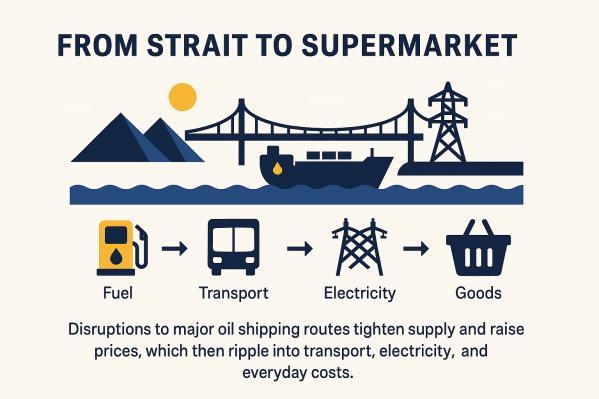
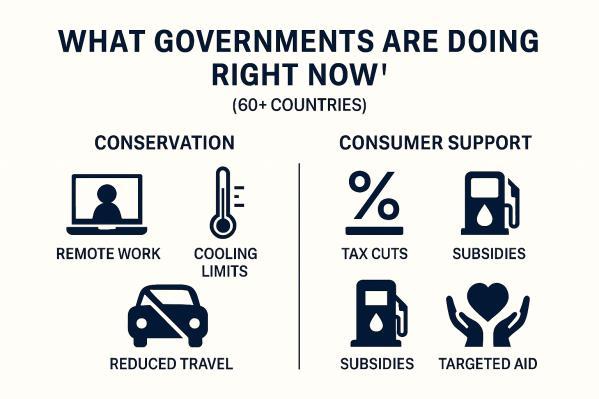
When oil flows tighten, prices jump and import dependent countries feel it first. TheInternationalEnergyAgency(IEA)says shipping through the Strait of Hormuz, normally a key artery for global oil trade, has been dramatically disrupted, tightening markets and driving up crude andfuelprices. Inresponse,governments worldwide are reaching for emergency tools:work‑from‑homedirectives,shorter business hours, temperature limits for air‑conditioning, and transport restrictions measures now tracked across 60+ countries in the IEA’s policy tracker. For Jamaica already shaped by imported fuel and high electricity costs thisglobalplaybookoffersbothawarning andaroadmap.
WHY THIS GLOBAL CRISIS HITS SMALL IMPORTERS HARD
A global chokepoint becomes a household problem
The IEA warns that the current disruption isoneofthelargestshockstooilmarkets on record, with reduced transit through theStraitofHormuztighteningsupplyand liftingprices especiallyfordiesel,jetfuel and LPG. When fuel prices surge, transport and electricity costs rise, and inflation pressure spreads across food, services,andbusinessoperations.
WHEN GLOBAL OIL ROUTES CHOKE, SMALL IMPORTERS DON’T JUST PAY MORE—THEY LOSEPREDICTABILITY.
What
the world is doing first: cut
demand quickly
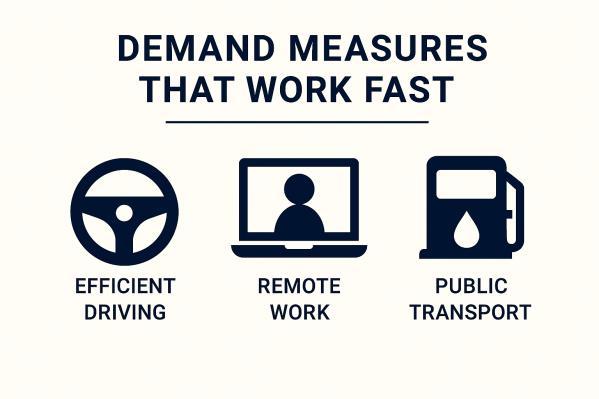
The IEA’s guidance emphasises that supply actions alone can’t fully offset a shock of this scale and that demand side measures are the fastest lever governments and households can pull. The IEA’s policy tracker shows countries using conservation campaigns andrulestoreduceconsumption,ranging
from remote work encouragement to limitsoncoolingandtransportuse.
For example, relating to workplace & school adjustments, Pakistan, Laos, and Sri Lanka have introduced mandatory remote work or shortened work weeks (fourdays)toreducecommutingfueluse, while Bangladesh and Peru have shifted schoolsanduniversitiestoonlinelearning to alleviate power grid strain. Transport restrictions are being observed in Myanmar and South Korea, which use "odd-even" driving bans based on vehicle registration numbers, while New Zealand has considered reviving "car-free days," wheremotoristsnominateonedayaweek torefrainfromdriving.Furthermore.Egypt mandates that malls and restaurants closeby9PMandgovernmentbuildingsby 6PMtosaveelectricity,whileThailandand Singapore have set strict temperature limits (25–26°C) for air conditioning in publicoffices.
SAVE NOW” OPTIONS JAMAICA CAN ADAPT (WITHOUT GRID PANIC)
This is not about hardship for hardship’s sake.It’saboutshort,targetedactionsthat cushion a price spike and prevent
knock‑oneffects whilelonger‑termfixes rampup.
Work & School adjustments (reduce peak demand and commuting fuel)
Across the world, emergency responses includeencouragingremotework,moving meetings online, and adjusting operating hours to lower energy use and fuel consumption. A Jamaica friendly adaptation could look like “Remote first days” for eligible public services, staggered hours for large offices, and digital by default government appointmentsduringpeakpricespikes.
Cooling and lighting rules (quick savings, big impact)
Many governments are using air conditioning temperature limits and public sector energy rules as immediate conservation steps. A Jamaica friendly adaptationcouldlooklikepublicbuildings adopting temperature set points, retrofitting LEDs, and publishing “energy scorecards” by the ministry to make savingsvisible.
Transport nudges and restrictions (reduce oil demand fastest)
The IEA notes road transport is a major slice of oil demand, and its “menu” of actions focuses heavily on reducing fuel use quickly. Therefore, a Jamaica friendly adaptation could include car pooling, “no idling” enforcement at depots, and time‑limited freight windows to smooth congestion.
THE GLOBAL EMERGENCY TOOLKIT—AT A GLANCE
Countries responding to the crisis are usingthreefastlevers:
Jamaica is entering a transformative economic phase as the Government of Jamaica (GOJ) aggressively implements the Public Procurement (Set-Asides) Framework. Designed to dismantle historic barriers that have limited small businesses to just 1% of state contracts, this framework reserves a substantial portion of the government’s J$470 billion annualspendforlocalentrepreneurs.
Understanding the Set-Aside Mandate
The Public Procurement (Set Asides) Order, 2019 mandates that 20% of designatedgovernmentcontractsmustbe reserved for qualifying Micro, Small, and Medium Enterprises (MSMEs). This translates to approximately J$37.1 billion inopportunitiesspecificallycarvedoutfor localsuppliers.
To capitalise on these "Set-Aside" opportunities,businessesmusttransition from informal operations to "procurement-ready" entities. The Public Procurement Commission (PPC) is currently advancing a verified registry of qualifying MSME suppliers to help government agencies identify eligible partners.
Action Steps for MSMEs:
1. Get Registered: Ensure your business is legally registered with the Companies Office of Jamaica and the PPC.
3. Utilise Support Programs: Programs like the JBDC Public Procurement Readiness Project offer "handholding" assistance for businesses withturnoversbelowJ$75million.
4. Leverage Preferred Margins: Jamaican bidders can benefit from a 20% Domestic Margin of Preference if their products contain at least 35% domesticinput.
Economic Outlook
Theoperationalisationofthisframeworkin the 2026/27 fiscal year is a vital tool for inclusive growth. By decentralising government spending, Jamaica aims to foster a more resilient economy where a "companydoesnothavetobebigtobid," ultimately driving job creation and longtermsustainabilityacrosstheisland.