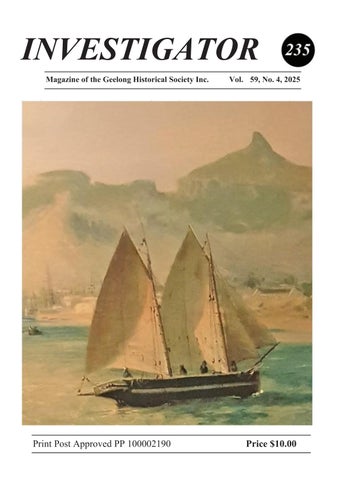
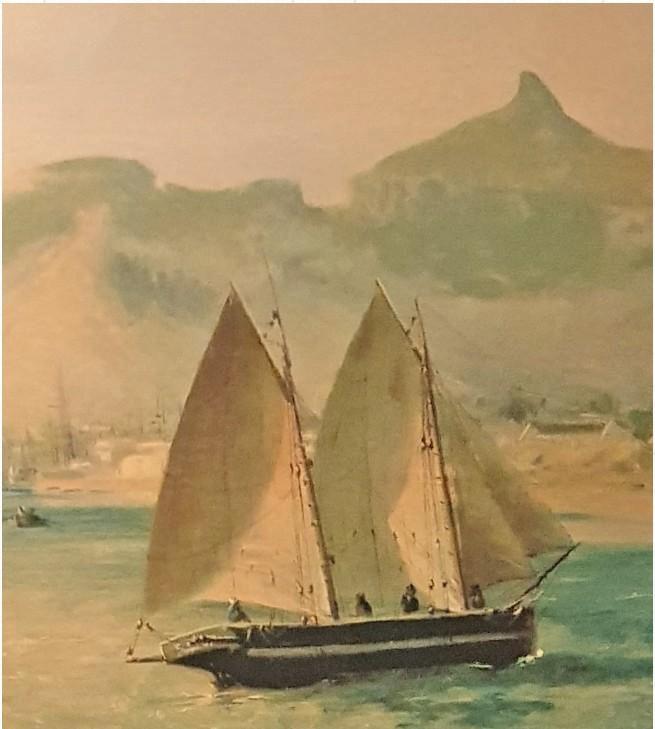
His Majesty’s Schooner Cumberland. Location – Mauritius after 1803
Background information
His Majesty’s Schooner Cumberland was the schooner that transported Lieutenant Charles Robbins and Charles Grimes to King Island and Port Phillip in late December 1802. The 29ton schooner was built in Port Jackson in 1801 and served to transport goods and passengers to different coastal locations within the Colony of New South Wales.
Lieutenant Matthew Flinders sailed Cumberland to return to England in 1803. His first ship, HMS Investigator was in poor condition after the circumnavigation of Australia. Flinders used Cumberland because his intended ship, HMS Porpoise was wrecked off the Queensland coast in 1803.
In December, when returning to England, Flinders called into the French Colony of Mauritius, because Cumberland’s condition was becoming unseaworthy. France and England were at war. Flinders had a ship’s ‘passport’ issued to HMS Investigator by the French, but not Cumberland. The absence of the ‘passport’ meant Flinders was not given ‘free passage’. He was arrested as an English spy and was held captive for seven years. Cumberland spent the rest of its nautical days as a possession of the French.
INVESTIGATOR
Michael O’Donnell: Pioneers, Pastoralists, and the Price of Legacy: The Robertsons of Colac Part 2
Daryl Wight: William Purdue’s Geelong Diary (Part 7)
Information provided and opinions given by contributors to this magazine are not necessarily those of the Editor and Editorial Committee of the Geelong Historical Society Inc. ~The Editor.
distribution: Mrs F. Craddock, C/- Box 67, Newcomb, VIC. 3219
Editorial
In the days before cars dominated our roads, the horse was the main means of fast transport in Geelong. Good agistment close to town was important. Roger Southern highlights an early use of the land next to the Barwon River, known as the Old Geelong Police Paddock.
We continue with Michael O’Donnell’s story of the Robertsons with William Robertson inspecting Run 16 – the Bellarine Peninsula. Michael’s story goes back to the very beginning of the Port Phillip District. It mentions the difficulties of exploring land without maps. Navigating areas close to Geelong was different with the services of William Buckley.
Harry Roberts writes about Charles Grimes’ Expedition of 1803. It was the first group of Europeans to traverse the area now known as Geelong. Harry’s article challenges the accepted view of Grimes’ direction of travel from Portarlington. Extracts from Grimes’ Diary , reports by fellow explorer, James Flemming and Grimes’ map of the Port are used to describe the expedition . Harry also discusses the consequences of Grimes’ expedition on the settlement of Port Phillip.
Daryl Wight’s popular William Purdue’s Diary, Part 7 , continues to provide insight to life in 1855. William Purdue’s moonlit punt ride on the Barwon, his steamer travel to Melbourne, and Christmas festivities, conjure nostalgic memories.
Peter Mackinlay’s story Waltzing Matilda: A Geelong family collection relates Geelong’s connection to the bard, Banjo Patterson , and the song, ‘Waltzing Matilda’. Peter includes photographs that make the story come to life. His family connection to the Morrison area is also mentioned. Morrison is located just northeast of the town of Meredith.
Editorial Team
The Investigator is published quarterly by the Geelong Historical Society Inc. Subscriptions are $40 for individual membership; $40 for two members in one household (receiving one magazine); and $45 for overseas individual membership.
Address for Investigator contributions: Email: web@geelonghistoricalsociety.org.au
Post: PO Box 67, Newcomb VIC 3219
Present and Past issues may be purchased at $10.00 per set (4 issues) 1976 –2021.
The Old Geelong Police Paddock
By Roger Southern
“…Away to the east of Swanston Street were the police paddocks. In 1853 there were in the Mounted Police, Mr. Andrew Berry, Commander, one Sgt. Major, one Sergeant, one Corporal, 22 Troopers, and one Sergeant and three Troopers additionally stationed at Batesford. The Troopers had their quarters at the barracks situated between Lt. Myers and McKillop St. and here too were stables for the horses…The officer in charge of the paddocks where the horses were trained for their work, and where they were sent for a rest, was Mr. Duncan…One of his duties was to see that water for the men and the horses was supplied to the barracks…”
J. H. Bottrell, Early History of South Geelong and Irishtown. P.3 91
The Geelong police district once had use of several police paddocks, including those at South Geelong, Meredith, Shelford, Drysdale and Wyndham. There were many other police paddocks across Victoria including a large one in the Stud Road and Police Road lo cality in the east of Melbourne. The numbers of police paddocks dwindled in response to political pressure to use public land for closer settlement. Victoria Police centralised training of police horses at the Police Depot in St Kilda Road in 1912. From th e early twentieth century, bicycles and motor transport began to largely replace police horses.
“When Geelong was administered from Sydney, a swampy area beside the Barwon River at the western end of Swanston Street was shown in an 1838 plan as: “reserve for public purposes”. 2 Captain
1 Bottrell, J. H., Early History of South Geelong and Irishtown , published in the Geelong Advertiser in September 1933, p.39, available in the Geelong Heritage Centre.
2About Corayo: a Thematic History of Greater Geelong , p.662; mapwarper.prov.gov.au (a) FEATR 570GEELONG TOWN, 1838, Government Reserve,; (b) SYDNEY G20 GEELONG, the 'Government Paddock'.
Foster Fyans was the police magistrate and:3“…shifted quarters to South Geelong on the Barwon a few hundred yards below “Davy Fisher’s” house...4 …And in a short time had a big slab thatched hut erected for watchhouse & Police Court…some 200 yards from the north bank of the river. 5 Within a couple of hundred yards… the Captain built a commodious house bringing the timber from Singapore for same… Whilst living here by convict or ticket of leave labour he constructed a Breakwater a mile or so downstream…”
Fyans had been assigned two constables, a clerk and ten convicts initially, but his duties came to include long rides across the Western District: -
“…as commissioner of crown lands for the Portland Bay pastoral district, half the size of England, supported by sixteen troopers, originally all transported for desertion in America, and later by the native police…the printed official Itinerary showing his daily employment, 3000 miles (4828 km) normally covered each half year…”6
Fyans’ favourite horse retired with him to Balliang: -
“…in February 1859, died Peter, a pensioner horse…'This horse travelled with me in the district by Itinerary 35,000 miles (56,327 km), never flunking in his duty, though often poorly fed, and out in all weathers'…” 7
3 Nathaniel Brewer, Memoranda relating to Captain Foster Fyans, First Police Magistrate of Geelong, by Nathaniel Brewer, no date but possibly written in early 1900s, MS BOX 2016/7, Australian Manuscripts Collection, State Library of Victoria.
4 Fisher’s house stood where Fagg’s Mitre Ten hardware store is today.
5 The Sydney G20 plan in mapwarper.prov.gov.au shows soldiers’ barracks and watch house near the Barwon bank.
6 P. L. Brown. ‘Fyans, Foster (1790 -1870)’ Australian Dictionary of Bi ography, National Centre of Biography, Australian National University, https://adb.anu.edu.au/biography/fyans -foster- 2075/text259 5 published first in hardcopy 1966, accessed online 30 May 2025
7 Brown, op.cit.
It is likely then that the government reserve, sited on the way to the Breakwater, was used early on by police horses Possible support for this is provided by a 3 August 1844 letter, in which the chairman of the Geelong bench asked-
"…whether any of the government huts near the police paddock, Corio, had been appropriated by the Border Police…" 8
We can be more sure that a three-ring-fence was erected at the police paddock in 1848, even though the evidence is a letter from a contractor, John Goodall, expressing his annoyance at not being paid, a comment by the superintendent confirming he had not d one the work.9 A sale of bricks made in a kiln on the government paddock was advertised in 1849. 10 In 1855 the Crown Lands Commissioner wrote to the Commissioner of Police asking permission for his Bailiff's horse to be turned out in the Geelong police paddock for a well -deserved rest after it had been "...worked hard for several months..."11 An 1856 plan shows the northern boundary of the police paddock along Fyans Street deviating around the low-lying and swampy paddock. 12 The police paddock fence needed repair by 1857 and a tender of 10/- per rood from John Cawker of Queenscliff was accepted.13
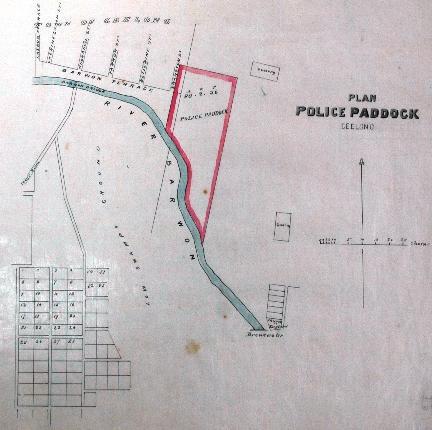
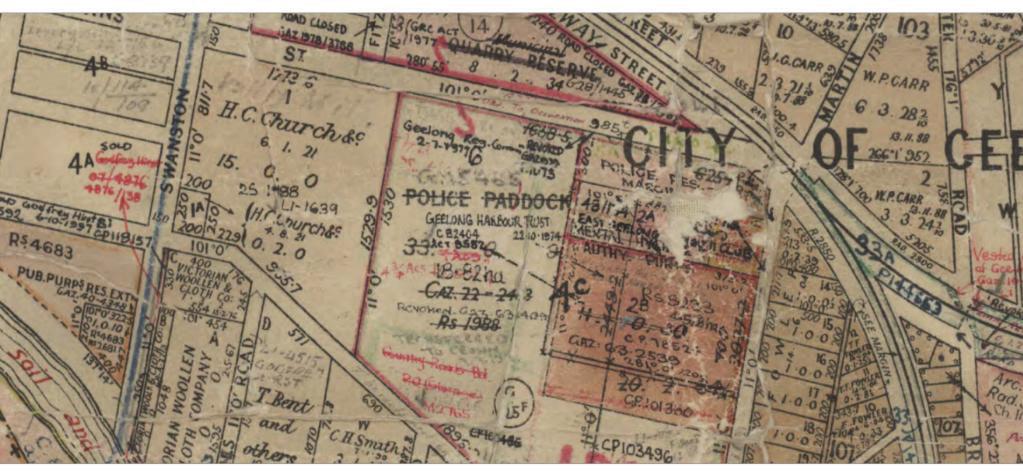
Figure 1 (next page): At its formal gazettal in186714, as shown in the plan at right, the Geelong Police Paddock measured 90 acres 8 roods 36 perches (37.32 hectares). Its boundary ran from where Swanston Street meets the Barwon riverbank, then 24 chains (482 metres) north the same distance east along Fyans Street, from where it turned 55 chains (1106 metres) south to the riverbank, and then back to the origin.15
8 VPRS 44/1352. The Border Police was a separate police force supporting surveyors and land settlement, prior to creation of a unified Victoria Police in 1854.
9 VPRS, 49/864, Letter from the Geelong police magistrate dated 28 April 1849,.
10 Argus, 1 May, 1849.
11 VPRS 807/937.
12 mapwarper. prov. vic. gov, ROLL 39 GEELONG TAYLOR J. H. 1856 -9, VPRS 6605...56/1308.
13 Government Gazette, 30 March 1857, p.582.
14Government Gazette, 12 March 1867, p. 1210
15 Plan of the Geelong Police Paddock, from the Victorian Police Museum's Police Reserves Album, kindly provided by Museum research staff, no date.
On 15 May 1867 the Police Commissioner, Frederick Standish, personally approved expenditure of £30 on materials to repair both the police paddock fence and three-room weatherboard cottage of retired police constable Duncan on the corner of Swanston and Fyans Streets: fence and house were quite run -down.16
Reports of a murder, drowning, a suicide in the vicinity of the police paddock and sundry brief mentions of things happening in the actual site in nineteenth century
16 VPRS, 55/1055, Inwards Correspondence of the Geelong Police District .
newspapers 17, suggest it was a spot best avoided. 18 A vivid example is from 1865 when:
"The men engaged in cutting thistles in the police paddock on the Barwon came across a black snake, four feet long... The reptile was discovered cut in two by one of the scythes. The previous day a young snake of the same species, sixteen inches long, was killed in the same paddock."19
As evidence of another hazard, the Geelong Town Council received a bill in 1871:
"From P. Bookey, Esq., requesting payment of £2 15s 3d, for damages done to one of the troop horses in the police paddock, South Geelong, by one of the corporation bulls...." 20
And in 1875 a mob of feral goats roaming the police paddock was culled. 21
As Geelong grew, the police paddock was eyed off for other uses. The first excision came in 1868 when six acres were made available to the Victorian Woollen and Cloth Manufacturing Company, after 22:-
"…An application for a grant of land in the police paddock, on the northern bank of the Barwon River, was favourably considered by the Government, and a piece of land, six acres in extent, situated in the police paddock, on the side nearest the Breakwater, was placed at the disposal of the company…The Breakwater site was afterwards changed to the present one, which is a considerable advantage, being near one of the principal streets of the town, and easy of access. Having gained the ground, the company call ed for tenders for the
17 Trove List, South Geelong: Police Paddock.
18 COGG, About Corayo , Theme Four, p417. “In 1887, another corporation quarry was in use ‘near the police paddock, at South Geelong’, …for making a road near Point Henry…”
19 Geelong Advertiser, 8 November, 1865.
20 Geelong Advertiser, 31 October, 1871.
21 Banner of Belfast, 18 August 1875.
22 C. P. Billot, 1969, The Life of our Years: a pictorial chronology of Geelong , Lothian, p.66. The factory produced its first cloth on 22 January 1868. I n 1898 it became the Godfrey Hirst factory.
erection of a building, and a structure of brick measuring 111 feet by 25 feet was built..."23
Six years later, in May 1874, the Victorian Government Gazette called for expressions of interest for occupation by manufacturing enterprises of more land on the northern bank of the Barwon River eastwards to the Breakwater.
Subsequent purchasers were the Barwon Woollen Mill (3 acres), H. M. Strachan (3 acres), James Munday (Tanners) (5 acres over two blocks)), and "Thomas Bent and others" (6 acres).24
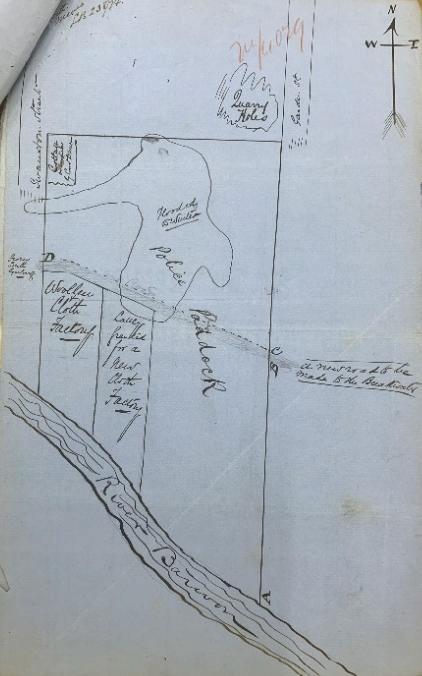
To enable access to the Barwon Woollen Mill site, a road was built west to east across the Police Paddock in 1874 so creating today's Barwon Terrace road. Anticipating this would affect operations, the Secretary of Lands wrote to Chief Commissioner Standish asking:- "what portion of the paddock you may desire for access to water? Funnell wrote
"...the paddock will then be small but we can do with it having reserves at Meredith, Shelford and Wyndham...” and even though “a portion of the ground is underwater during several months of the year. 25
Figure 2 (next page): On 23 May 1874 Superintendent Funnell advised Chief Commissioner Standish, illustrating his advice with this remarkable sketch in which he recommends that the fence on the eastern boundary of the Police Paddock down to the Barwon River be relocated, with appropriate repairs, to border the northern boundary of the new road.
23 Geelong Advertiser, Friday 24 January 1868, Page 2.
24 mapwarper.prov.vic.au, PROCC88 Corio. Bent was a politician and advocate of closer settlement.
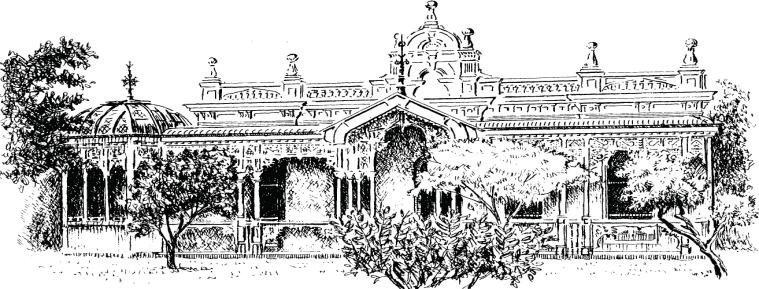
A water trough supplied by a pipe was installed close to Constable Duncan's cottage which is shown in the sketch at the corner of Swanston and Fyans Streets. In 1886 people crossing the paddock to the businesses on the Barwon bank were said to be damaging the pipe. South of the paddock are the new Woollen Cloth factory and the proposed Barwon Woollen Mill site, both buildings today within the Godfrey Hirst factory. 26
In the early 1900s the Geelong Advertiser reported concerns at the poor drainage of the police paddock area.27 There was also speculation about what to do with the land given the small numbers of horses being rested
26 Geelong Advertiser, 16 February, 1886.
27 In 1921 a scheme for sewering the industrial area was designed and later a pumping station was built at the corner of Swanston Street and Barwon Terrace.
there. 28 The local progress association suggested a housing subdivision. A letter to the editor suggested it could be the site for an agricultural high school. 29
When a newly-appointed Police Commissioner visited in 1919, the Advertiser reported:
"...a matter that will occupy his attention will be the resumption by the Police Department of the South Geelong police paddock. This was leased to a Conneware grazier about three years ago for reasons of economy. Since then the Meredith paddock has been r esumed by the Lands Department for soldier settlement, and the district must find a run for the spare troop horses. The Geelong paddock, behind the Excelsior Mill, is 33 acres in extent - rather a sour, waterlogged spot, unsuitable except as to the frontag e in Swanston-street for anything but grazing..."30
In 1921 another fifteen acres were excised after sale, through H. C. Church (a Melbourne agent), to an English textiles manufacturer: -
"AUSTRALIA'S BRADFORD ‘Geelong's Seventh Woollen Mill to be Started’. …The secrecy that has been maintained regarding the industry that it was proposed to establish in the old police paddock at South Geelong has been removed by the calling of tenders by the Valley Worsted Co. Ltd. for buildings. The chief in the company is Mr. W. C. Gaunt,31 of Bradford, and it will be engaged in the manufacture of the highest and finest grades of woollens and worsteds. Six groups of buildings, covering sixteen acres are to be
28 Geelong Advertiser, 6 November 1901, raised the idea of attracting the Sunshine Harvester works to the area: "...To successfully carry on his large industry, Mr M'Kay requires about 40 acres, and it was thought that a slice of the Breakwater common, adjoining the police paddock, and close to the junction of the Queenscliff and Colac lines, would make a very suitable site..."
29 Geelong Advertiser, 10 January, 1913.
30 Geelong Advertiser, 9 July, 1919.
31 Gaunt, a flamboyant businessman, lost everything, including ownership of London theatres, in the 1929 crash.
erected and the works will provide employment for at least 500 hands. This will make the seventh woollen mill in Geelong."32
Construction began in 1922. The mills operated until in the 1970s when protective tariffs were cut. Several uses 33 followed until Little Creatures Brewery bought the site in 2011.
Figure 3: As shown in the Parish Plan extract below from the PROV Mapwarper site, ownership of the last 46 acres (18.82 ha) of the Police Paddock, which had been leased out from time to time, 34 was transferred in the 1970s to the Geelong Harbor Trust and then to the Geelong Regional Commission.
32 Geelong Advertiser, June 22, 1922.
33 https://intown.com.au/historic/the -valley-worsted-mills.htm, accessed 15 April 2025.
34 E.g. Geelong Advertiser, 11 Nov 1925, p.5: “Lot 5, Block 9816. —Area 35 acres. City of Geelong, Parish of Corio, being the eastern part of the new police paddock and the Crown land on the east thereof, formerly held by T. P. Fowler. One month to be allowed for removal of ten?... ? possibly horses? A. DOWNWARD, Commissioner of Crown Lands and Survey”: Geelong Advertiser, 17 Oct 1928, p.9: “Having leased old Police Paddock, Barwon Road, next Valley Mills, formerly leased by J. Morrison, I wish to notify owners that all horses must be removed within seven days from date. J. Swayn, Barwon Road, South Geelong.”
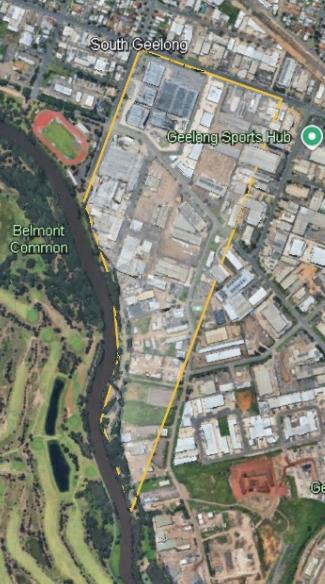
Figure 4: Sub -divided and fully developed the Old Police Paddock is today’s busy industrial area between Fyans Street and the Barwon river as indicated in the image above from Google Earth.35
Pioneers, Pastoralists, and the Price of Legacy: The Robertsons of Colac Part 2
By Michael O’Donnell
In the summer of 1836, William Robertson crossed Bass Strait to inspect the land provisionally allocated to him as an investor in the newly formed Port Phillip Association. He had been assigned “Run 16” a vast tract covering most of the Bellarine Peninsu la.
The journey that followed took Robertson, Joseph Tice Gellibrand, and William Buckley from Fawkner’s small settlement beside the Yarra, across the Werribee Plains, through Geelong, and over the Bellarine to the Association’s camp at Indented Head. Part Two of this series retraces that journey — a remarkable episode of endurance, survival, and first encounters that helped shape the course of European settlement in the Port Phillip District.
Crossing Country:
William Robertson’s 1836 journey with William Buckley and the birth of a new colonial enterprise
William Robertson’s journey to Port Phillip Bay was with J. T. Gellibrand, a former Attorney General in Van Diemen’s Land and a fellow investor in the Port Phillip Association. They travelled on board The Norval and the trip was most eventful. The ship was loaded with sheep intended to stock the run claimed by Captain Swanston, another Port Phillip Association member. The account of the journey, which started on 17 January 1836, and finished on 24 March 1836, was an extract from a diary written by Gellibra nd and sent to the Governor in Sydney. It was later published in1858, many years after his death in 1837. The diary is also possibly the earliest detailed eye-witness account of the Port Phillip District soon after first settlement.
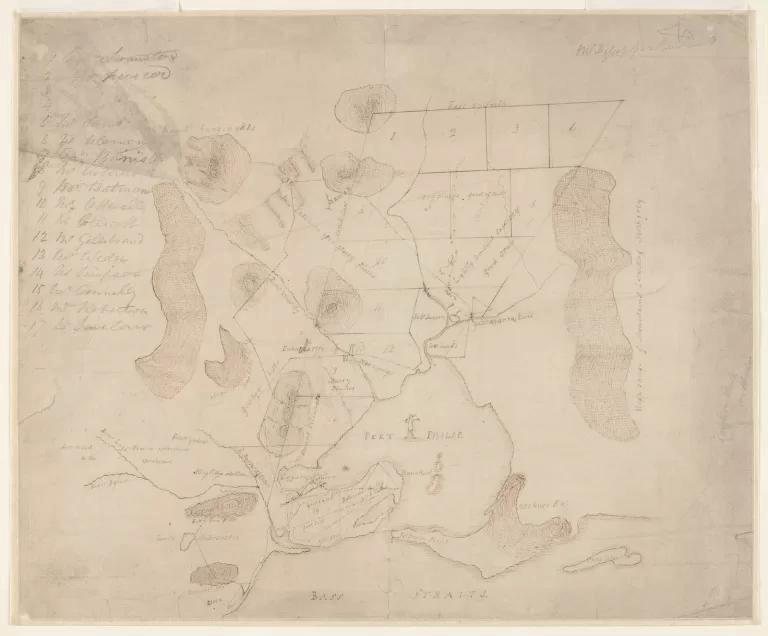
John Helder Wedge Plan of Port Phillip District 1835
Gellibrand’s diary is a daily account that describes conditions on board the ship, its ill-fated diversion to Western Port, the group’s epic hike to Fawkner’s small settlement in Melbourne and then the horseback journey to Indented Head, through present-day Geelong and across the Bellarine Peninsula. It is a tale of survival under scorching summer suns and torrential downpours.
Gellibrand makes mention of the local Aboriginal population and their camps, in particular how their location close to ‘ native wells’ ensured their survival. After poor weather delayed their entrance into Port Phillip, an ill -advised decision was made to unload the sheep at Western Port. The group then split, with one group staying with the sheep and the other, including William Robert son, J T Gellibrand and a small group of other men, deciding to walk to present -day Melbourne where
a small settlement had recently been established. The group had seriously underestimated the distance and the impact of the summer conditions, making this journey a life and death proposition.
The diary records that on January 30 the party woke before dawn and walked for over four hours, without finding water. After drinking their remaining supply, they continued walking until noon. At this time, members of the party were struggling to keep together. However, they then found themselves on a native track and he wrote “the advantage of following those tracks was soon experienced .” It led the group to a beach, a collection of huts and a native well. It was here that Gellibrand records his admiration for William Robertson when others in the party declared the water in the well undrinkable. He wrote, “ Mr Robertson, however, examined the well, and thinking it had chocked up, he got an oyster shell and cleaned it out and deepened it .”
He then described how the party waited anxiously as the water slowly rose but that eventually “Mr Robertson was enabled to distribute to each person half a pint. ” They stayed at the camp for four hours and were able to slake their thirst with more water and to even take three more bottles with them. That evening with the rain pelting down, their spirits were buoyed by their discovery of wagon tracks and their acce ss to water.
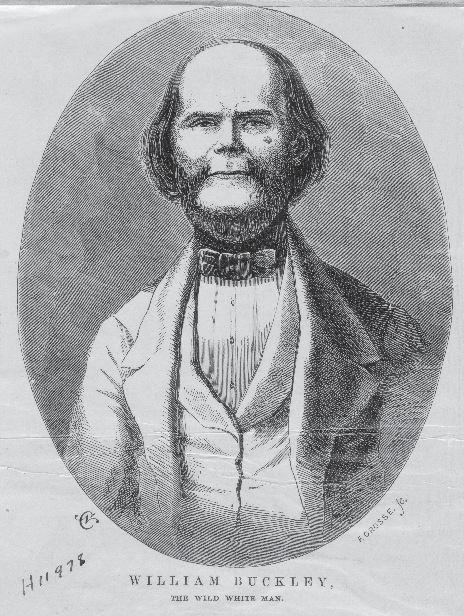
The next day, January 31, the bedraggled group reached Melbourne, “ the settlement consisted of about a dozen huts, built with turf, on the left bank of the river Yarra -Yarra”. It was here that William Robertson first met William Buckley, the escaped convict, who had lived with Wadawurrung for over 30 years, after escaping from the short-lived convict settlement at Sorrento. Gellibrand, according to his account, negotiated with Buckley to become the “ superintendent of the natives ” with whom he had so recently lived. Buckley also agreed to guide them to the Port Phillip Association camp at Indented Head on the Bellarine Peninsula.
Walking Into Wadawurrung Country
On February 3, 1836 William Robertson, Buckley, Gellibrand, a Mr Furgesson and three Aboriginal men from Sydney mounted horses for the next stage of the journey. Gellibrand writes that they dined “ at a chain of ponds” (probably close to modern-day Lara) before pushing on to the bay to a spot “ near to the point of Geelong harbour” where they camped the night.
That next day Gellibrand recorded that as soon as Buckley “ obtained a view of his own country, his countenance was much changed, and when we reached Geelong he took the lead and kept us upon a trot” . They travelled about 14 miles and, after stopping to eat, the group then “proceeded across the Bellarine Hills (sic) to the settlement of Indented Head ” which they reached at about four in the afternoon.
When William’s party first met up with a group of Buckley’s Wadawurrung clan, the Bengalat, Gellibrand wrote that “ it was one of the most pleasing and affecting sights. There were three men, five women, and about twelve children. Buckley had dismounted, and they were all clinging round him, and tears of joy and delight running down their cheeks”.
A few months earlier, in 1835, John Helder Wedge had explored the Port Phillip District on behalf of the association. Subsequently he drew up a map that allocated runs to the various investors in the Port Phillip Association. Each run was given a numerical appellation and William’s run was marked as Number 16, which covered the greater part of the Bellarine Peninsula.
As a significant investor in the association, this trip was William Robertson’s first opportunity to see the lands provisionally allocated to him. Over the next few days William’s party continued across his run towards Barwon Heads and then worked their way back up the river towards Geelong. Gellibrand records that they headed towards the junction of the Barwon with, what Gellibrand called, the Yallack River, which is probably the Moorabool. They detoured across a fallen tree to visit Buckley Falls.
The party’s next steps are uncertain. It is likely they headed for the You Yangs before heading back to Melbourne. However, it is possible that William Robertson, with William Buckley, explored further up the Barrabool Hills.
William Buckley / The Wild White Man. 1857. Courtesy State Library of Victoria
The uncertainty is caused by damage done to the manuscript at the printers which resulted in a number of sections being destroyed. However, John Morgan, in the foreword of his famous biography of Buckley published in 1851, asserts that Buckley was so impressed with Robertson that, at this time, he endowed him with the ownership of all the land between Barrabool Hills and Colac.
Building a Western District Empire
These events, despite being in opposition to government policy, sparked a frenzied period of exploration and settlement that forced the NSW government to step in and take control. This intervention, which declared Batman’s treaty null and void, was not to the financial advantage of William Robertson and his fellow entrepreneurs.
With the collapse of Batman’s treaty and the assertion of Crown control over land sales, Robertson quickly adapted, shifting from speculative claims to outright purchase. What followed was a rapid and calculated accumulation of land and stock, laying the foundation for one of the Western District’s most significant pastoral estates.
William Robertson embarked on an ambitious program to purchase freehold title to the best runs and acquiring the best herds. In 1837 he acquired 6000 acres near Colac and 7000 acres at Bolinda, near Sunbury on Deep Creek. In 1843 he bought some of the Bold en brothers’ stud and by 1847 he had also acquired Foster Fyans’ run and herd in the Colac area. In 1849 he acquired the 40,000 -acre Ondit run, north of Colac. Altogether by 1850, William held the freehold title to over 53,000 acres of farmland and had acq uired a number of herds, steps which laid the foundations for a cattle empire that, with the support of his sons, was to last until the end of the 1880s.
The 1836 journey through Port Phillip from Western Port to Geelong, across the Bellarine and into the heart of Wadawurrung country was a turning point, not just for William Robertson but for the colony itself. What had begun as a speculative venture so on grew into a vast landholding and a legacy that would define a district.
In the final part of this series, we follow William Robertson and his four sons as they build their legacy at Colac and trace how that legacy was shaped, tested, and eventually transformed in the decades to come .
Charles Grimes’ 1803 Expedition at
Geelong
By Harry Roberts
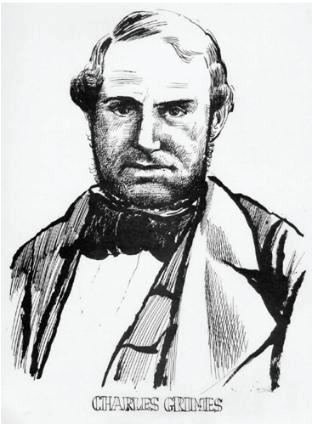
In February 1803 a party led by Charles Grimes were the first European explorers to tread the land we call G eelong today. Grimes was the Acting Surveyor General of New South Wales and landed near today’s Portarlington and walked around the coastline of Corio Bay to today’s Hovell’s Creek . Meanwhile, the expedition’s commander A cting Lieutenant Charles Robbins, supported the Land Party from the launch Cumberland, sounding depths in Corio Bay and providing victuals and other necessities to the land party. Grimes' remark s in his personal diary are limited. A more detailed source is the journal of James Flemming, a gardener-cumbotanist. Other members of the eleven -man land party were James Meehan, another colonial surveyor; Doctor Daniel McCallum, Irish physician and pardoned ex -convict; Henry Hacking , a noted explorer and former Quartermaster of HMS Sirius. Three marines from HMS Buffalo provided protection and sailors from the Cumberland did too on some section s.
Saturday, 12 February 1803
Charles Grimes
State Library Victoria
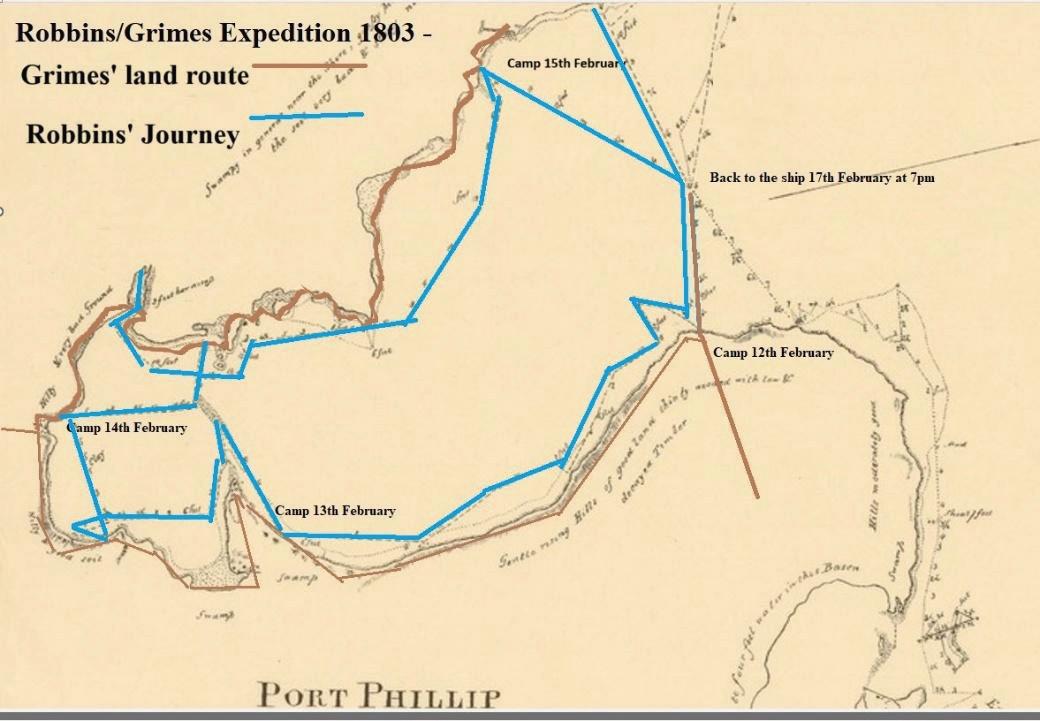
We join Charles Grimes and his men on the morning of February 12 after they left Port Phillip’s northern shore near the Werribee River. James Flemming’s account provides geographical details to assist with locations on each day.
Grimes’s party of eleven men disembarked on the southern shore of Corio Bay (probably near the site of today’s Portarlington caravan park ) and established camp. Flemming wrote:
“I went on the top of a hill, where the land is good and fine pasture from ten to eighteen inches deep, fine black earth with white sandy clay or gravel bottom The
36
timber small and the same as beforementioned. Came up with the doctor, and we went about two miles in, the country appearing the same.”
Figure 1 The author ’s reconstruction of t he journeys of the Land and Boat parties around Corio Bay and their assumed camp sites, 12-15 February, 1803. Based on a section of Grimes’ Chart showing the land and boat tracks. Geelong area mentions ‘Hilly & good soil’. Corio Quay to Hovell’s Creek ‘Very bad ground’.
Grimes recorded in his diary:
“12th Run across the Western Branch and landed in the Evening & prepared to trace the branch, taking provisions in the Boat & leaving the vessel.” 37
36 Flemming, J. “The Voyage of His Majesty’s Colonial Schooner ‘Cumberland’ from Sydney to King Island and Port Phillip in 1802-3” page 7 https://dalmura.com.au/genealogy/Robbins/Journal.pdf p7
37 Grimes, C., Diary of visit to Port Phillip Bay, 20 January 27 February 1803 H 12435; M5130 photostat of negatives Original in Mitchell Library, Sydney
Camping on a flat area on the shore, the group was very close to the place where Matthew Flinders had camped in April and May, 1802. (The “Western Branch” is todays’ Corio Bay.)
Sunday, 13 February 1803
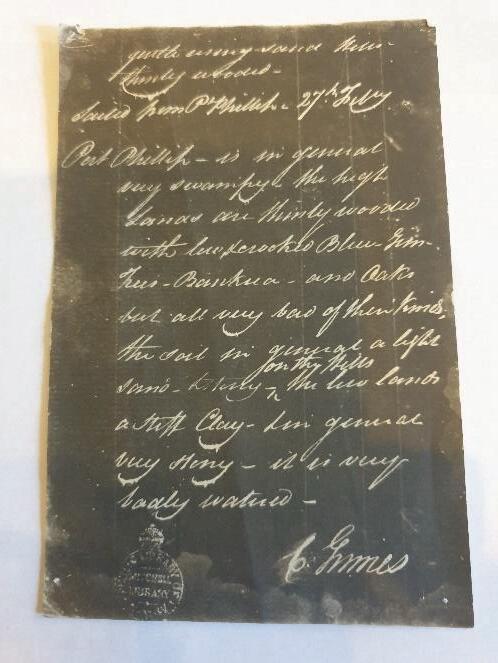
Extract from Grimes’ Diary
Courtesy State Library
Victoria
The next morning, the group broke camp early before the summer heat and set out at 6am with Lieutenant Robbins and three men in a boat, leaving the other seven men on shore moving in a clockwise direction, hugging the shoreline. Flemming wrote that the land and timber was similar for miles, and they crossed many dry small creeks. Eventually, they had to cross swampy land near the shore and were up to their knees in mud, (likely near where present day Leopold meets the bay ).
From that location there was a clear, high point in view (probably today’s Point Henry) and they camped there for the night. Digging for fresh water was difficult and not very rewarding.
Grimes wrote:
13th Traced down the S. side of the Western Branch. The Hills rise gently, thinly wooded but being tolerable land.” 38
Monday, 14 February 1803
38 Grimes, C., op.cit
Leaving Point Henry, the party travelled along the beach on the western side of the Point and crossed marshland (today’s ‘salt works’ at Moolap):
“Continued our course as soon as it was light. A large swamp two or three thousand acres, a brush of saltwort. Crossed two places up to the middle. Came to a fine green hill, very fine land, eighteen inches deep of rich black soil. The captain went on before in search of water but found none. I crossed over the hill to the beach and found an acid spring.”39
(Flemming’s “very fine hill” is the area we now call Eastern Gardens where the East Geelong Golf course is located. This is the first European description of Geelong. The spring is still there today, about 200 metres east of the Eastern Beach Pavilion.)
This was the land party’s first drink of fresh water for some time, albeit bitter. Flemming recorded:
“Hailed the boat, and the surveyor came up about ten o’clock, when we breakfasted, and filled the cask and proceeded on.” 40
39 Flemming, J., op.cit.
40 Flemming, J., op.cit.
They observed the “high and woody” hill that separates the bay from the Barwon River and traced the bay shore until they arrived at today’s Cowie’s Creek.
“Came round to a river; went up it about a mile in company with the doctor. At the end of the salt water found a hole made by natives; drank of it and returned back to the beach where the boat had ‘brought up.’ I went back to the hole and dug it larger and brought some of the water.”41
They camped and observed that the land on the other side of the creek was not the same quality, with trees being crooked and mostly oak and banksia.
Grimes made a brief note in his Diary
“February 14th The beginning of this day’s work the land is swampy; the latter part gentle rising hills of a good soil but thinly wooded.”42
Tuesday, 15 February 1803
A few men were sent along the creek for water while the main group continued on to today’s Hovell’s Creek which Flemming, with some others, went up about one and a half miles. However Flemming observed it was salty and wide and so his group:
“Returned to the beach, where the party was waiting for the boat to take them over; it being low water, the boat could not get up; crossed it up to the middle and a little further, dined.” 43
Grimes himself wrote:
“February 15 th “From the swamp left yesterday the Hill was very bad ground. From the river the ground became low & swampy near the Shore, back an open Country, stiff clay soil and stony.” 44
Interestingly, no ‘natives’ were seen during Grimes’ sojourn
41 Ibid page
42 Grimes, C. op.cit.
43 Flemming, J., op. cit.
44 Grimes, C., op. cit.
On November 22, 1802, Acting Lieutenant Charles Robbins was placed by New South Wales Governor Philip Gidley King in command the schooner, Cumberland, and the total ship’s complement of 17 men to:
• Visit the French Explorer Nicholas Baudin (who was on King Island on his way back to France) and inform him that the British intended to annex Van Diemen’s Land.
• Formally claim King Island as British Territory for King George III , and
• Explore, chart and report on King Island and Port Phillip to ascertain their suitability for settlement. At both places he was to collect small samples of stones, timber, plants etc and investigate depth of water, and location of shoals, and the best locations for commercial advantage, fresh water and defence and settlements.
Grimes’ specific instructions were:
“ … you will proceed to Port Phillip (Captain Flinders’s and Lieut. Murray’s surveys of which you are provided with), and proceed to the most minute investigation of that spacious harbour… “ 45
Lieutenant Robbins, with the well -prepared Grimes’ party, anchored the Cumberland just inside Port Phillip Heads at 8 o’clock on Thursday, January 20 th , 1803. The next morning, Robbins repositioned the ship further into the Port. The land exploration commenced on the eastern side of the Port that day, travelling in an anti-clockwise direction. Grimes’ land party discovered and mapped the Yarra and Maribyrnong Rivers.
In 1802 and 1803 there were four British expeditions to Port Phillip:
• Acting Lieutenant John Murray – January and February 1802;
• Lieutenant Matthew Flinders – April and May 1802;
• Charles Grimes – January and February 1803; and
45 Philip Gidley King
• Lieutenant James Tuckey – October 1803.
Each party reported their findings and opinions to Governor King. Murray and Flinders took a positive view of Port Phillip . Grimes and Tuckey were negative.
Murray lauded the ‘park -like;’ aspect:
“The southern shore of this noble harbour is bold high land in general and not clothed as all the land at Western Point is with thick brush but with stout trees of various kinds and in some places falls nothing short, in beauty and appearance, of Greenwich Park. . 46
Flinders suggested the country was grassy and would be suitable for cattle, but better for sheep, and its black soil could be easily ploughed. In his Logbook on May 2, 1802, Flinders also recorded:
“The country which surrounds this port is infinitely superior to any port of the south coast … A friendly intercourse might easily be established with the natives…” 47
So impressed was Governor King by Flinders’ and Murray’s accounts he wrote, on May 21, 1802, to the Duke of Portland in England :
“I have in a very earnest manner recommended the making of a settlement at Port Phillip, for the very advantageous account given of it, both by Capt. Flinders and Lieut. Murray & its relative situation to this colony requires it. The soil is excellent, and the timber thin, added to which the security and expansiveness of the harbor seems to point it out as absolutely necessary that a settlement should be made there; nor can there be a doubt of its being a better wheat country than this, from its being in a higher latitude. 48”
46 Lee, I. Logbooks of the Lady Nelson With The Journal Of Her First Commander Lieutenant James Grant, R.N. https://www.gutenberg.org/files/7509/7509-h/7509-h.htm
47 Flinders, M Logbook of Investigator General Observations Upon Port 16 (pages 425 and 426)
48 Bladen, F. M. Historical records of New South Wales Vol. 4, page 760
Flemming’s report was more guarded pointing out that the land was patchy in quality, but suitable for pasture.
“The most eligible place for a settlement that I have seen is on the freshwater river. (we know it today as the Yarra River) In several places there are small tracts of good land, but they are without wood and water. I have every reason to think that there is not often so great a scarcity of water as at present from the appearance of the herbage.
The country in general is excellent pasture and thin of timber, which is mostly low and crooked. In most places there is fine clay for bricks, and abundance of stone. I am of opinion that the timber is better both in quality and size further up the country, as I saw some what is called ash on the banks of the freshwater river and the hills appeared to be clothed with wood.
As to the quality of good land at the different places, I shall be better able to describe when I am favoured with the sight of a chart…There is great plenty of fish in Port . The country in general is newly burnt.”49
Grimes’ view was negative, brief and did not mention the land’s suitability for settlement.
“Port Phillip – is in general very swampy – the high lands are thickly wooded with low & crooked blue gum trees – Banksia –and Oaks and all very bad of their kind, The soil in general a light sand – stony on the hills the lowlands a stiff clay and in gene ral very stony – it is very badly watered.” 50
Before receiving Grimes’ report, Governor King had requested to the British government that a penal settlement be formed at Port Philli p, and so on 8 October, 1803, eight months after Grimes’s reconnaissance, Lieutenant Colonel David
49 Flemming, J., op. cit.
50 Grimes. C., op. cit.
Collins established a settlement at modern day Sorrento , which he named Sullivan’s Cove.
“The Calcutta and Ocean sailed from England the 24 of last April. Touched Teneriffe, Rio de Janeiro and Cape of Good Hope” The Ocean arrived at Port Phillip the 7 th and the Calcutta the 8 th ult. The Lieut. Governor having communicated to His EXCELLENCY the same unfavourable circumstances respected Port Phillip not being calculated for an extensive settlement, as was reported by the Surveyor General, Mr Grimes, who with other assistance surveyed it in January last, but whose report had not reached England be fore the Calcutta sailed: Lieut. Governor Collins has therefore suspended his proceedings until he receives directions from His Excellency the Governor in Chief…” 51
Collins had meanwhile ordered the 1st Lieutenant of HMS Calcutta , James Hingston Tuckey, to make another exploration of the Port in late October, 1803. Tuckey’s report was also negative and was submitted to King by George Prideaux Harris, Deputy Surveyor under Collins. Governor King’s view of Port Phillip changed.
“MR. HARRIS SURVEY OF PORT PHILLIP
COPY of report of Survey made by Mr. Harris, Deputy Surveyor of Port Phillip.
The land in general round Port Phillip, at a short distance from the shore, carries a deceit appearance of a rich country. The soil is however, for the most part sandy, and very thinly wooded. Some light black mould is found on the heights and in the valli es,but neither is quality or quantity sufficient for cultivation to repay the cares of the husbandman. The best soil is found in Western Bay, chiefly consisting of marle, covered with a light black mould, Good water is found in many parts of the eastern co ast of the harbour, but the western appears a dried up country, seeming not to possess sufficient moisture for the smallest cultivation. The northern shore is more
51 Sydney Gazette and New South Wales Advertiser , November 27, 1803(See the full original article online)
numerously inhabited than any other parts, from which it is likely that water is to be found there, although no appearance of it was seen during the survey. Good clay and stone is found in abundance on the eastern shore, fit for the purposes of building.
G. P. Harris, Deputy Surveyor.”
52
On November 26th Governor King approved Grimes’ assessment in a letter to Lieutenant Governor Collins at Port Phillip:
“ It appears, as well by Mr Grimes’s and Mr Robins’s (sic) surveys as by your report, that Port Phillip is totally unfit in every point of view to remain at without subjecting the Crown to the certain expensive prospect of the soil not being equal to raising for the support of the settlement, unless you should ha ve made any further observations to encourage your remaining there…” 53
Consequences
Governor King agreed to David Collins’ request to leave Port Phillip and gave him a choice of two locations: at Port Dalrymple (now called the Tamar River where Launceston is today) or the River Derwent at Risdon Cove. Collins chose the Derwent, but he wasn’t happy with Risdon Cove and established a settlement at Sullivan’s Cove in February 1804 (today’s Hobart). Governor King was influenced more by Grimes’ and Tuckey’s reports because of their more extended exploration, including Grimes’ four day circumnavigation of Corio Bay. The opinions of Deputy Suveyors Grimes and Harris carried more weight than those of naval lieutenants Flinders and Murray.
Charts of Flinders, Grimes and Murray are available – see QR code
52 Bladen, F. M.,Historical Records of New South Wales Vol. 5 p 253
53 Bladen, F. M. Ibid, pp. 263-4.
WILLIAM PURDUE’S
GEELONG DIARY – Part Seven
Transcribed
and edited
by Daryl Wight
Further 1850s diary entries, from William Purdue’s time in Geelong, are published below. In this extract, William went duck shooting on Lake Connewarre; took a trip to Melbourne; received a visit from old friend from London; engaged in several musical inte rludes; and continued his involvement with the Wesleyan Church. For a brief biography of the diarist and information about the diary, see the March 2024 issue of this magazine. Note: the diary entries are intermittent – no entry has been omitted.
28 June 1855 – Thursday evening – I have just returned from McKillop St Chapel where the “Geelong Sacred Harmonic Society” have given their first Concert. The pieces selected were some of the choicest passages in Handel’s “Messiah” & Haydn’s “Creation”. A profession al singer, Mrs Testar, who has a sweet voice & much taste, sang some of the Recitative exquisitely. Mr Kawerau, an amateur (bass voice) & Mr Ewart, a Melbourne merchant (tenor voice), did themselves great credit & the chorus, consisting of 50 members, acquitted themselves well. Mr Rogers, the Conductor, also gave much satisfaction.
It was to me a rich treat & I hope the encouragement the Society received will induce them to give more concerts on some future occasions. The proceeds of the concert are to be handed over to the Committee of the Hospital, the purse of which is somewhat scanty. Half Geelong seemed to be out & the affair passed off well.
24 July 1855 – Tuesday – Started with a young friend (Lindsay) & a boatman (Coates) from the Punt on the “Barwon” at South Geelong, in a light & prettilyrigged Boat, for the purpose of pulling down to the Lakes to spend the night in “Duck-shooting”. Hauling of Boat over Breakwater. Pleasant pull down the River by moonlight. Landed to gather firewood; re-embarked & again landed after a pull of about a mile at a well -known & favourite spot for Ducks.
We lit a good fire on the Banks of the River and having taken a good inside lining, the Boatman & I sallied forth with our guns loaded & cocked to kill some ducks provided they gave us a chance. Leaving Lindsay comfortably established by the fire, instructing him to watch some eel lines which the boatman had set, hoping to take some fish if we could not procure fowl.
We proceeded silently only conversing in whispers. The moon shone brightly & no sound was heard but our own footsteps as we trod upon the soft wet ground on the margin of the swamp which we were approaching. Soon we reached the swamp & then proceeded at first ankle deep & now & then knee deep in water, we could now distinctly hear the ducks talking, as the boatman called it, & paddling in the water.
We made a “Mi Mi”, as it is termed, that is a kind of arbor in some bushes & lay down, waiting [for] some sport. After waiting in vain for about an hour, we took another position still unsuccessfully. We then returned to our companion who was comfortably wrapped in some rugs by the fire, fast asleep. We woke him & he & the boatman then crossed the riv er in order to try the other side. They returned shortly, no more fortunate than I had been & in fact our expedition resulted in nothing. The most enjoyab le part of the excursion was the row down the river by moonlight & then up again by sunrise. We expended some of our ammunition in firing at bottles &c in the river.
17 August 1855 – Friday – I have just bid J.K. Corderoy & his new wife (formerly Miss Matthews) adieu. They have just embarked on the steamer for Melbourne having spent one week (their honeymoon) in Geelong. They are in excellent health & spirits and have only been married one week & John C. has only been ab out a fortnight in the Colony. Their society has been a great treat to me. It has revived old recollections & thoughts of by gone days, & old associations have crowded upon my mind & now they are gone.
The word farewell is a bitter one & to say adieu to dear friends is hard, but whilst the world lasts we shall have adieus and partings, ties will be broken, associations snapped asunder & until we reach a better land, where partings are unknown, we must pa tiently endure these trials & so live here by the grace of God that we may inherit the kingdom prepared for the faithful servants of God.
December
22 December 1855 – Saturday – Left Geelong by the 2 o’clock steamer for Williamstown for the purpose of visiting J.K. Corderoy & wife & spending Xmas with them. Reached Williamstown at about half past 6 o’clock & found the birds flown. They had gone to spend their Xmas at the Alma Diggings with Mrs Corderoy’s parents. I was not a little chagrined at the state of things & without a single friend or acquaintance, I was obliged to put up at an Hotel – the “Ship”. There I got a comfortable bedroom & excelle nt meals.
On Sunday I attended the Wesleyan Chapel & after service got the minister to introduce me as a friend of Mr Corderoy’s to some of the members of the Congregation. The result was that I went home to dinner with one, then left him in the afternoon to take tea with another & returned to spend the evening & take supper with the former.
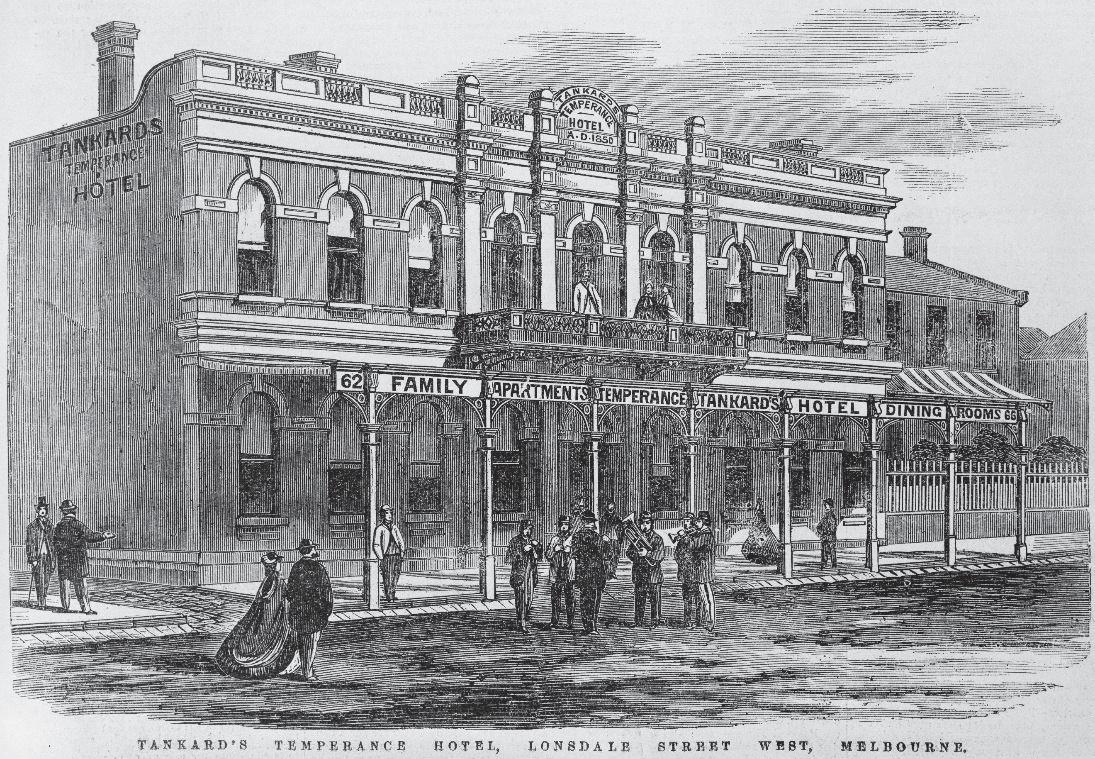
Monday morning Took the steamer for Sandridge, thence by Rail to Melbourne. Went to Tankard’s Temperance Hotel, thence to Exhibition building ‘Tankard's Temperance Hotel’, 1863. Courtesy State Library Victoria IMP25/07/63/12
where I heard the members of the Philharmonic Society practising for the Oratorio “Messiah” to be given by them that evening & in which I was to take part in the choruses as a Bass singer. I then found out Mr Ewart, to whom, as member of Committee of Melb ourne Philharmonic Society, I, as a member of the Geelong Sacred Harmonic Society, had an introduction.
Returned to Tankard’s to dinner & was about leaving the Hotel for a stroll when I was tapped on the shoulder by a Mr Field, also a member of the Geelong Harmonic Society & with him was Mr Ewart. Field and I agreed to share our bedroom & be companions duri ng our stay in Melbourne. We attended the Oratorio that evening. It was very successful & the audience presented a most gay & brilliant appearance – the building was lighted with gas & we were much gratified with the affair. Visited & took second dinner with Mr & Mrs Bardwell & Mr & Mrs Morgan at Collingwood.
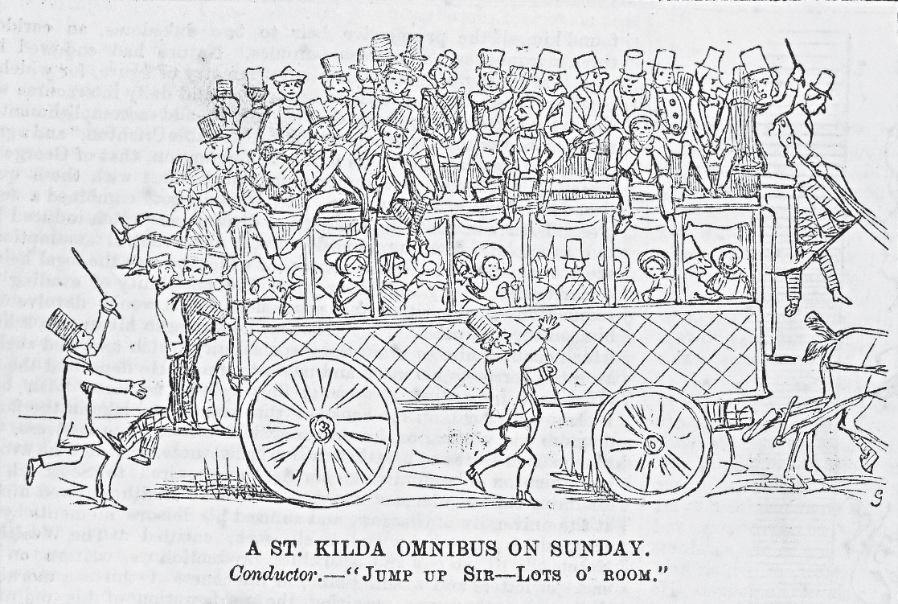
25 December [1855] – Tuesday – Xmas Day – Field & I took Omnibus to St Kilda. Called on some of F.’s friends there, walked on to Brighton expecting to find out others of his friends on the road & then take an Omnibus back; were unsuccessful in our search & went on beyond B righton in error, & then on reaching Brighton found there were no Omnibuses for Melbourne till 4 o’clock.
‘A St. Kilda omnibus on Sunday’ Grosse, Frederick, 1828-1894, engraver. 1855. Courtesy State Library Victoria MP00/00/56/130
It was then 2 o’clock & we wanted to reach town by 3 to partake of a glorious dinner at Tankard’s. We had no alternative but to walk all the way back to St Kilda & take a ‘Bus there. We reached St Kilda after a rapid walk by 3 o’clock, jumped on an Omnibus & reached Melbourne in time for dinner, a most sumptuous affair. After dinner about 28 young men with Mr & Mrs Tankard & family sat down to a very tasteful & elegant dessert; only non -intoxicating drinks were on the table, no wine stronger than ginger wine & no spirits. After a variety of toasts had been given & drunk, tea & cake were handed around.
After tea, those who were disposed strolled out & others sang songs or conversed together. The evening amusements were closed by the introduction of a galvanic battery & when all had been galvanised to their hearts’ content, we retired to rest.
Wednesday – After making a few business calls with Mr Field, walking through the leading streets of Melbourne & having seen the most famous buildings in the city, we left for Geelong by the 2 o’clock train to Sandridge & thence by steamer. A very pleasant Xmas trip and fraught with pleasing recollections; formed some new acquaintances & associations.
[4 November 1856] – Maiden Speech – Last evening, 3 rd November, made my maiden speech in South Geelong Chapel on occasion of the anniversary meeting of said chapel – object of meeting to remove debt on the building. Revd I. Harding in the Chair, who completely coaxed me into attempting the thing. J.K. Cord eroy who spoke before me, & who with me, Mr Harding introduced as two young speakers, sons of two merchants in London, from whom he had almost invariably received donations to any good cause when he had called upon them to solicit their aid.
The people seemed desirous of encouraging me, but the remarks I made did not give me an atom of satisfaction. However, the ice is broken.
Waltzing Matilda – A Geelong
Family Connection
Peter Mackinlay
Peter is a retired architect and a national award -winning poet.
INTRODUCTION
Australia's best -known song 'Waltzing Matilda' was written by Andrew Barton 'Banjo' Paterson at Dagworth Station in central Queensland, right? Well, perhaps not all of it. Here's what happened, and how I found out.
FAMILY HISTORY
One day in the late 1990s my wife Dagmar suggested that I visit my Dad's sister, my Aunt Dorothy, known to all as ‘Doff’, to chat to her about our family history. Doff and Dagmar were very close and Doff had mentioned wanting to share her memories with me. So that evening I did.
Amongst other things, Auntie Doff mentioned that her great grandfather Hugh Morrison owned Borhoneyghurk Station near Meredith, and that his son Robert (Doff's mother's cousin), at one time managed Dagworth Station in central west Queensland. Dagworth made me think about Waltzing Matilda and I wondered about a possible family conn ection. This was the stimulus to begin my family history research, which has been a burden ever since.
Hugh Morrison was a Sergeant in the 50th Queens Own Regiment of Foot when his regiment was posted to Australia in 1834. He and his wife Elizabeth (nee Mitchell) lived in Windsor NSW where their sons William, David and Angus were born.
Hugh Morrison (Family pic)
THE MORRISONS COME TO GEELONG
When his regiment was posted to India in 1841, Hugh resigned and in February of that year sailed to Melbourne and settled in Geelong as Agent of the Port Phillip Steam Navigation Co. Three more sons followed, Hugh (who died in infancy), Hugh Angus and Robert (in Geelong on 22 March 1845). Then, at two -year intervals, were born Hughina Leigh (my great grandmother), Helen, John, Arthur, George and Elizabeth Catherine.
BORHONEYGHURK STATION
In 1848 or 1849 Hugh and his family left Geelong and moved to Borhoneyghurk Station north-east of Meredith to run sheep.
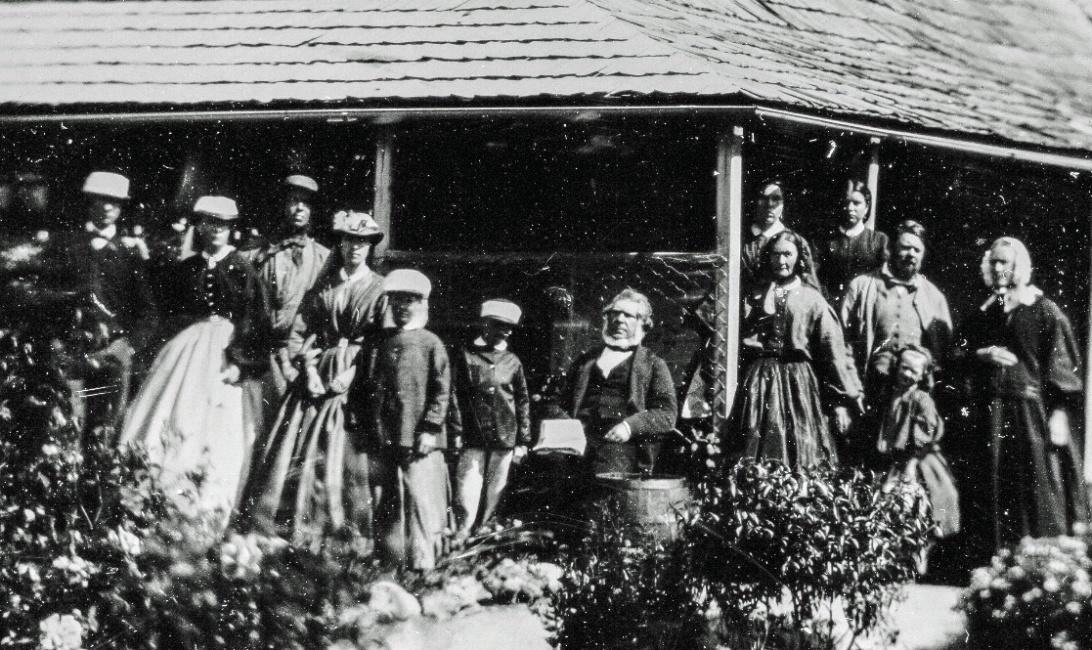
The Morrisons at Borhoneyghurk ca1860. Hugh seated centre, Elizabeth standing behind to his left. (Family photo).
Scanned from an Ambrotype (glass positive) in the author's possession .
In January 1853, gold was discovered in the Moorabool River bordering the property, the diggers rendering much of it unusable for grazing. The small
township Morrison’s (now Morrison) that subsequently sprang up was named after the family.
OFF TO QUEENSLAND
At age 19, Robert Morrison left to seek his fortune elsewhere in the pastoral industry. Around 1864, he was working at Camer oo on the Moonee in Queensland.
After some years there, the Hon. William Miles, a Member of the Queensland Legislative Assembly, offered him the management of Victoria Downs, about 276 miles from Dalby, Queensland, which he accepted.
The governess (teacher and child minder) at Victoria Downs was Elizabeth Isabella Ward. Born in Sydney, she left that city with her parents at an early age and went to live at Bundamba, a cattle station near Ipswich then owned by Mr James Ivory.
MARRIAGE, THEN OFF TO DAGWORTH
In 1879, William Miles engaged Robert to manage his Dagworth Station, about 70 miles (112 km) northwest of Winton, Queensland. Robert and Elizabeth married in Dalby on 16 September 1879 and set off straight afterwards for Dagworth.
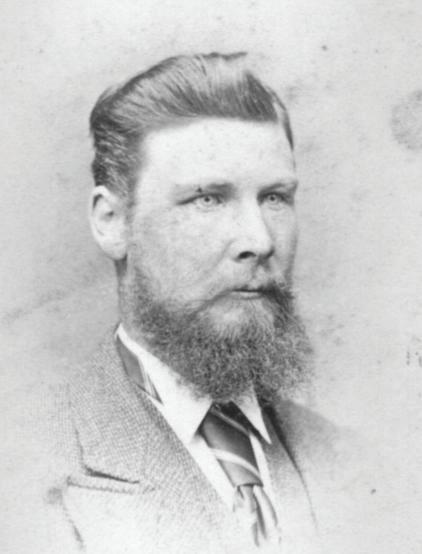
Robert Morrison
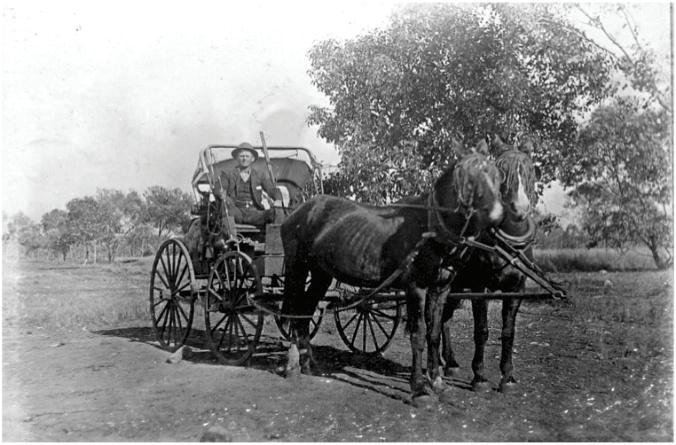
Buckboard and pair ca 1910 (NLA)
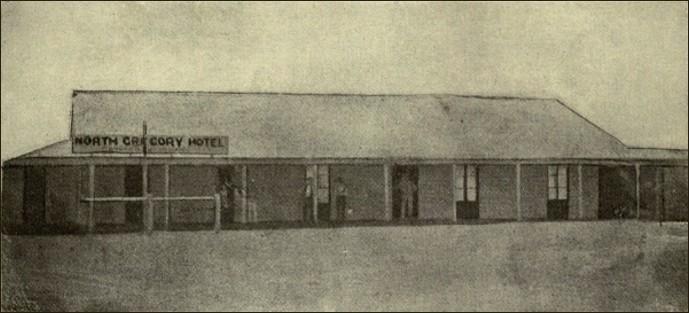
The honeymoon trip with all their possessions took over three weeks by buckboard and pair (horse and cart) over plains thick with plain turkey and wildfowl of all descriptions. Now it is a journey of 1,150 km and takes around 12 hours by car .(1) Winton was called Pelican Waterholes when the Morrisons arrived at the recently opened North Gregory Hotel on 25th September 1879 (the current hotel is the fourth on the site). (2)
The North Gregory Hotel, Winton 1879 (National Library of Australia)
When Robert and Elizabeth came to Dagworth there were only five white women in the whole district northwest of Winton. In those days, they ordered their groceries in January, and they arrived in June (providing it didn’t rain too much). The arrival of the wagons was a cause for celebration and no work would be done for a week. Mail came once a month. (3)
ON THE ROAD AGAIN
On 30 April 1881, William Miles sold Dagworth for £12,000 to Messrs. Hutton & Co., of Victoria. Robert left Dagworth in 1882 to manage Westlands for Darling Downs and Western Land Co.
His stay at Westlands was not long, and after leaving there he was appointed manager at Werna, by Messrs. Mansfield and Bostock. He remained there until 1885, when he accepted the management of Ayrshire Downs, then owned by
McIlwraith and Smythe, 30 miles (48 km) from Winton, or about halfway between Dagworth and Winton. (4)
THE SHEARERS STRIKE
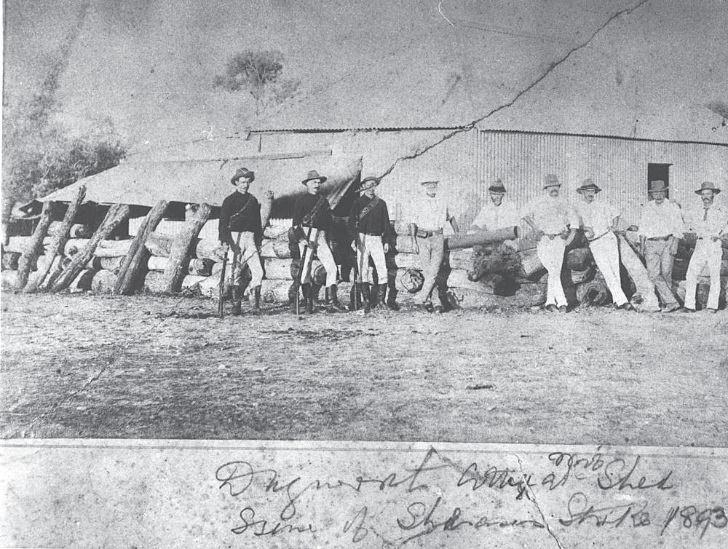
In 1891, the great Shearers’ Strike began, and in 1894 the Second Shearers’ Strike hit Ayrshire Downs. On 3 July 1891 around 20 men with rifles rounded up all the workers and held them at gunpoint while the gang’s ringleaders torched the property’s woolshed, a huge affair with 40 stands. This was only one of a number of woolsheds burnt by the striking shearers, another being at Dagworth. (5)
This shed replaced the original burnt by the shearers during their strike. On the left in dark shirts are three policemen, the middle one being Snr Constable Michael Daly who was involved in the shoot -out when the main shearing shed was burnt down. Next are the squatters who owned the station, Angus, Gideon, Bob and Jack Macpherson. At right is Weldon Tomlin the shed overseer, and Henry Dyer. The three policemen and Bob McPherson are thought to be the three troopers and the squatter referred to in Waltzing Matilda.
AT AYRSHIRE DOWNS
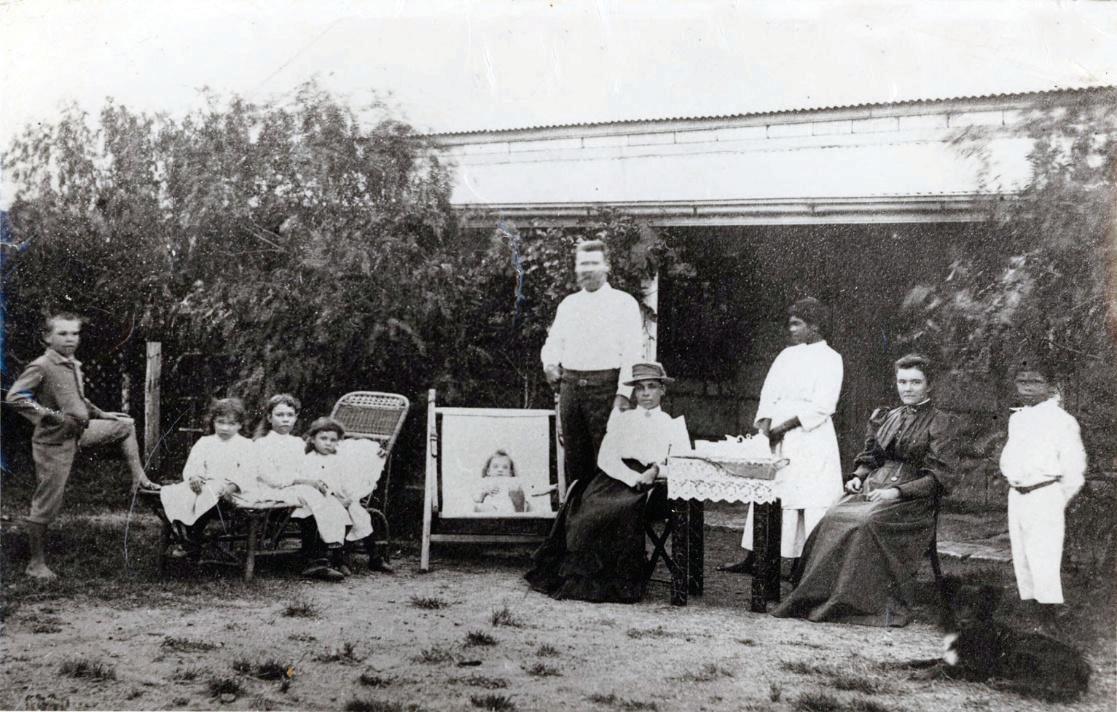
Robert & Elizabeth Morrison, family and staff at Ayr shire Downs Station 21 September 1894. Courtesy National Library of Australia
The Morrisons had six daughters and two sons. Their first child, born May 1881, was appropriately named Mabel Ord Diamantina Morrison, being the first white child born on the Diamantina River. Their other children were , Ethel, Nell (Helen), Robert, George, Isla, Maud and Eva.
BANJO PATERSON, SARAH RILEY, CHRISTINA MACPHERSON
In January 1895, Sarah Riley and her fiancée of six years, Andrew Barton (Banjo) Paterson, visited her brother Frederick W. Riley, the manager of their family’s Vindex Station, outside Winton. While in Winton she met up with her old school friend Christina Macpherson. Christina was visiting her brother Bob (Robert Rutherford Macpherson), manager of their family’s Dagworth Station. (6
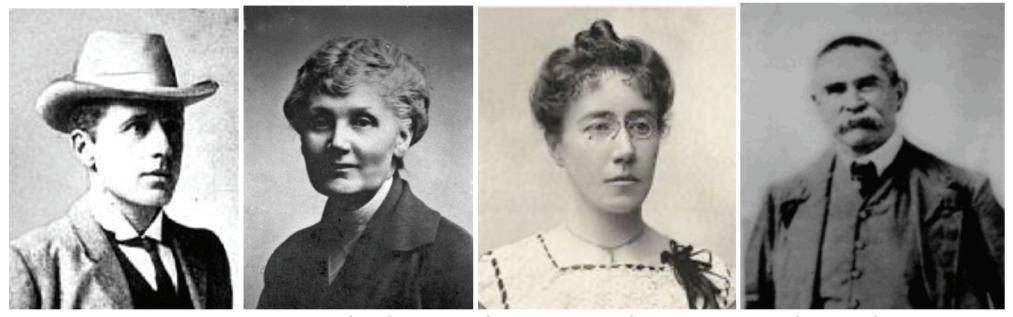
Banjo Paterson, Sarah Riley, Christina and Bob Macpherson
The couple were invited to Dagworth as guests of the Macphersons, and while there, Christina entertained the group with a tune ‘The Craigielee March’ on a zither or autoharp. She had heard it being played by a band at the 1894 Warrnambool races. Banjo was greatly taken by the tune and with her assistance, began writing a song to it, basing the lyrics on tales he was told whilst staying there. These included the story of a swagman who committed suicide by a waterhole, and the discovery of part of a sheep carcass butchered and left by a swagman.
The Macphersons and their guests decided to go to Winton. During the journey, the station horse-breaker Jack Lawton was driving the drag (a large open horsedrawn vehicle) containing Bob Macpherson, Banjo Paterson and others. Between Dick's Creek and Ayrsh ire Downs they came across a man ‘humping’ a swag. Bob Macpherson told Paterson "That's what they call 'Waltzing Matilda'". The party stayed overnight at Ayrshire Downs as guests of Robert Morrison and his family.
WALTZING MATILDA IS SUNG
The next morning the party continued to Winton. After meeting up with Sarah's brother Frederick and his wife Marie at Vindex Station, the party returned to Winton that evening. In the lounge of the North Gregory Hotel the song that Banjo Paterson completed after seeing the swagman was sung in public for the first time.
Banjo could have completed the work at Ayrshire Downs after being told of the meaning of the expression, so Robert Morrison and his family can be credited as being hosts to the creation of ‘Waltzing Matilda’. (7)
On their return to Dagworth, the Macpherson party once again stayed overnight at Ayrshire, and many years later, Robert’s daughter Helen recalled how Banjo Paterson came into their nursery and read his new song to the children.(8)
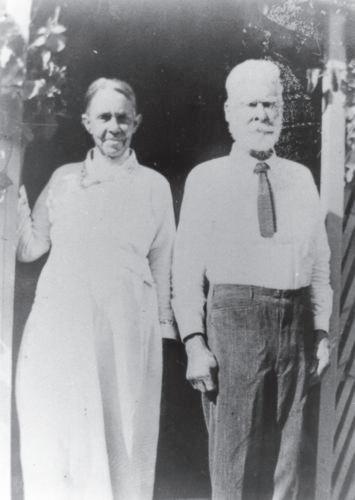
In September 1896 the family moved into Winton where Robert Morrison, now a Justice of the Peace, became the local Stock Inspector. He occupied this office for many years and after following other pastoral pursuits for a time, died in Winton on 11 April 1928. His wife Elizabeth survived him until 10 January 1943.
Elizabeth & Robert in later life. (SLQ)
AFTERWORD
Robert and Elizabeth’s first -born daughter Mabel married Tom Farrell and lived on Magnetic Island, Queensland. Around 1953, she posted me a coconut with stamps and address on the husk. When reading my Nana’s little red Birthday Book in late September 2021, I found that Mabel had died in Geelong in 1956 and is buried with her first husband, Robert Bird, in the Geelong Eastern Cemetery.
Banjo Paterson’s close relationship with Christina during this time must have upset Sarah, as the couple broke their engagement shortly afterwards.
Sarah Riley, Banjo’s one-time fiancée, never spoke to Christina again and died a spinster (a woman who has never married) in Geelong in 1935 aged 72 and is buried in the Geelong Western Public Cemetery.
Christina Macpherson returned to Melbourne and obscurity. She died a spinster on 27 March 1936 and is buried in St Kilda Cemetery.
ENDNOTES
(1), (2), (3) The Longreach Leader (Qld) Wed 1 December 1937 page 6: Extracts from Truly a Pioneer, the reminiscences of Elizabeth Morrison.
(4) Western Champion (Qld), Friday 20 May 1881, page 5: WILSON BROS. MONTHLY REPORT. This reported the sale of Dagworth Station, Gregory North district, on account of the Hon. William Miles, with 470 square miles of country, for £12,000 cash, to Messrs. Hutton & Co., of Victoria.
(5) Capricornian (Qld), Saturday 28 July 1894, page 35: THE BURNING OF AYRSHIRE DOWNS WOOLSHED. Article.
(6) Christina Macpherson and Sarah Riley both attended Elise Pfund's Ladies School, also referred to as 'Oberwyl', in the Melbourne suburb of St Kilda. The Riley family-owned Vindex Station was adjacen t to the Macphersons' Dagworth.
(7) Morning Bulletin (Qld), Thursday 24 August 1944, page 2: ORIGIN OF WALTZING MATILDA. Jack Lawton’s letter in this paper describes the journey from Dagworth to Ayrshire, and subsequently on to Winton and the North Gregory Hotel lounge. However Banjo may have been introduced to the term 'Waltzing Matilda' previously as it is so fundamental to the lyrics.
‘The Story of Waltzing Matilda’, by Sydney May. W.R. Smith & P aterson Pty Ltd, 1944.
‘The Banjo of the Bush’ by Clement Semmler. University of Queensland Press, 1974.
‘Waltzing Matilda Song of Australia’ by Richard Magoffin, Mimosa Press 1983. ‘Waltzing Matilda The secret history of Australia’s favourite song’ by Dennis O’Keefe. Allen & Unwin, 2012.
‘Waltzing Matilda Australia’s Unofficial Anthem’ A forensic history by W Benjamin Lindner. Boolarong Press, Queensland, 2019 .
OUR SOCIETY PUBLICATIONS
Bargains Books for this edition
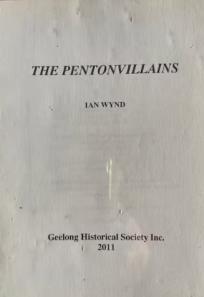
The Pentonvillains by Ian Wynd $15
Ian Wynd, then the President of the Geelong Historical Association, produced this most fascinating research into the impact that the British criminal justice had on life lived in colonial Victoria. The book is 126 pages long and it provides the reader with ready access to sources and Ian Wynd’s analysis is also interesting in that he challenges common conceptions about the impact that British criminals had on colonial Victoria.
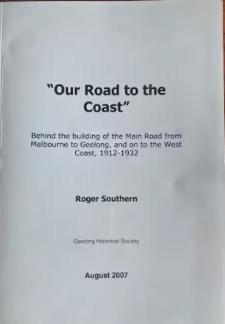
Our Road to the Coast – Roger Southern $15 Roger Southern has produced a very detailed and readable account of the building of the main road from Melbourne to Geelong and its extension to the West Coast between 19121932.
The book is divided into seven chapters and within its 82 pages he begins with the historical and geographical challenges, and the early attempts at constructing the state’s rural roads. Roger identifies the drivers behind their development and then concludes with more recent challenges and how they were met.
More Publications of the Geelong Historical Society Inc.
Contact our Secretary to purchase. Email admin@ geelong historicalsociety.org.au ** All prices are plus postage & packaging if required
Investigator : More than a Magazine
You can click on the QR links below to hear the stories and view photographs and videos.
Where you see this icon in a story, you can listen to the story.
Where you see this icon in a story, there is a video or photographs to view.
Story / Code
Main Menu page (Preferred option)
Story / Code
Pioneers, Pastoralists, and the Price of Legacy: The Robertsons of Colac Part 2
The Old Geelong Police Paddock
Story / Code Story / Code
William Purdue’s Geelong Diary (Part 7)
Waltzing Matilda: A Geelong family connection
Charles Grimes’ 1803 Expedition at Geelong
All Investigator magazine will have a Flip Book link for you to access the magazine in an electronic format. Click on this QR Code to access the link . Here is December ’s Flipbook link
Erratum
On page 89 in the 2025 September edition of Investigator we made an error in spelling the name of Charles Demllo . Please note that change in your personal copy.
SUBSCRIPTIONS for 2026 to 2027
Subscriptions for the Society’s new financial year (March 2026 to February 2027) are approaching. Payments accepted now.
Subscription rates are as follows:
Individual member $40.00
Two members in one household $40.00 (one magazine)
1. Payment can be made by internet banking to transfer money from your account to the Society’s Account at Bendigo Bank – BSB 633000, Account No: 105389506 Make sure you reference your name in the transfer of funds.
2. You can pay by cash or cheque at any of the Society’s monthly meetings.
To join, go to our website www.geelonghistoricalsociety.org.au