Household of GOD



The Household of All Creation
The Economy of God’s Household
Belovedness in Community
Holy Boldness in the Common Life
The Household of All Creation
The Economy of God’s Household
Belovedness in Community
Holy Boldness in the Common Life
Dear Beloved Princeton UMC Community,
Pentecost tells the story of a Spirit who forms us into a new kind of community — one household of God, knit together not for ourselves, but for the sake of the world. We are part of this household! And we know what it is to exist within a household. It’s a place of belonging, home, connection, and support. It has members, rhythms, and systems. A household has shared resources, responsibilities, chores, rules, boundaries, and care. It also has conflicts and reconciliations.
God’s household, shaped by the Spirit, is marked by interdependence, justice, shared responsibility, belovedness, and mutuality. And in our particular United Methodist corner of the household of God, our Social Principles guide us more fully into this shared life. The Social Principles, first adopted in 1972, were revised and updated in 2024. They lead us, in the Wesleyan tradition of moral witness and ethical action, to live as a disciple of Jesus and member of the household of God in our world today.
The Social Principles help us to engage in different dimensions of our shared life in the Household of God:
The interdependence of all creation: The Community of All Creation
The moral demands of economic life: The Economic Community
The belovedness of every person: The Social Community
Our calling to participate in public life with courage and grace: the Political Community
These Social Principles will challenge and inspire us. Some may make us uncomfortable or give us pause. We may not all be aligned with every statement or with each other. And that’s okay. That’s part of being human - we will have conflicts and disagreements. And our hope as members of the household of God is that we will also continue to dialogue with and listen to one another through our differences, and that we will seek reconciliation, forgiveness, and love in our relationships.
You can find the text of the updated United Methodist Social Principles here: (umcjustice.org) You can also find more information about the Social Principles here, including some FAQs, background, and more. Both of these pages can be found on umcjustice.org, under the “Who We Are” tab.
I look forward to exploring the Household of God with you, as we are invited into relationships, choices, and commitments, which become part of God’s healing work in the world. The Holy Spirit is shaping us into a community of solidarity, grace, and flourishing: God’s household for such a time as this.
and Love,
Jenny
by Abby Gillette
“Two are better than one because they have a good reward for their toil. For if they fall, one will lift up the other, but woe to one who is alone and falls and does not have another to help. Again, if two lie together, they keep warm, but how can one keep warm alone? And though one might prevail against another, two willwithstandone.Athreefoldcordisnotquicklybroken.”–Ecclesiastes4:9-12
It is hard to pick just one part of the United Methodist Church’s Social Principles when it seems the world around us is crumbling and failing so many. As a Christian, it is hard to stomach. Many are being taken from their homes and families without due process, despite court orders to stop. People are going hungry because they live on the bottom rung of society, yet somehow we have ripped that rung out from under them and left them in free fall. Kids go to schools without adequate supplies, outdated textbooks, hunger in their bellies, and fear of violence towards them and their classmates. Teachers give their all – their paychecks, their full-time attention, forgo their mental health to pour from an empty cup, even sometimes their life, and still society often says it is not enough. Where do we start when you want to fix it all?
I find that working to fix something so large often has to start small. Working from the top down can seem more efficient, but for most of us, it is simply not as easy. I used to feel frustrated by this, and to some extent I still do. But I have learned that making the most impact in bettering the world around me means putting that frustration aside and starting small. Communities around us are withering, people are disengaging and receding to online spaces, and our world around us has been sucked into a loneliness epidemic. I have realized I have to work to create community around me to grow from there. And if we look at the scriptures, this is what Jesus did too. Jesus gathered his core disciples together before he set out to do his ministry. Through them, he was able to extend his ministry through the remainder of his life.
The most basic unit of your community is your friend group. At present, my immediate friend group knows how to reach me. They know they have a safe space in my home, and how to get inside. They know they can rely on my family, and we have learned over the years that it is okay to rely on them too. We feed them during tough times, create a space to work through anxiety and deal with life’s hardships, and can count on them to care for us too.
This probably just sounds like what friendship is, and that is true. But I have also learned to work with them to extend the reach of impact I can have on those in the surrounding community. Together we have pooled resources to donate flood kits, donated more to the food pantry than I ever could have on my own, organized community events to gather people together in fellowship, gone together to protests to make our voices louder, and collectively added many more voicemails to our representatives’ phonelines. We have even inspired others in the community to gather together in similar ways. We joyfully donate our time, money, and resources knowing that together we can make more of an impact.
As we go through this season of Pentecost and study the UMC’s Social Principles, I challenge you to take a closer look at friends and people in your community, and find a new way to gather together and invest in those around you. Who knows? You may find you have new avenues to impact the communities and principles you care most about.
by Kate Lasko
“Butasktheanimals,andtheywillteachyou,orthebirdsinthesky,andtheywilltellyou;orspeaktothe earth, and it will teach you, or let the fish in the sea inform you. Which of all these does not know that the handoftheLordhasdonethis?Inhishandisthelifeofeverycreatureandthebreathofallmankind." –Job:7-10
I have always loved animals. During the uncomplicated years of childhood, I collected caterpillars, tended guinea pigs and hamsters, and played with my neighbors’ dogs. When the complexities of adulthood accrued, my involvement whittled down to writing checks: support without connection. When I retired in 2019, I went looking for volunteer opportunities and was blessed with finding Marty’s Place Senior Dog Sanctuary just nine miles from home. Amid the sloppy kisses and wagging tails, I found a community - two-legged and fourthat has taught me a lot about understanding, perspective, and friendship.
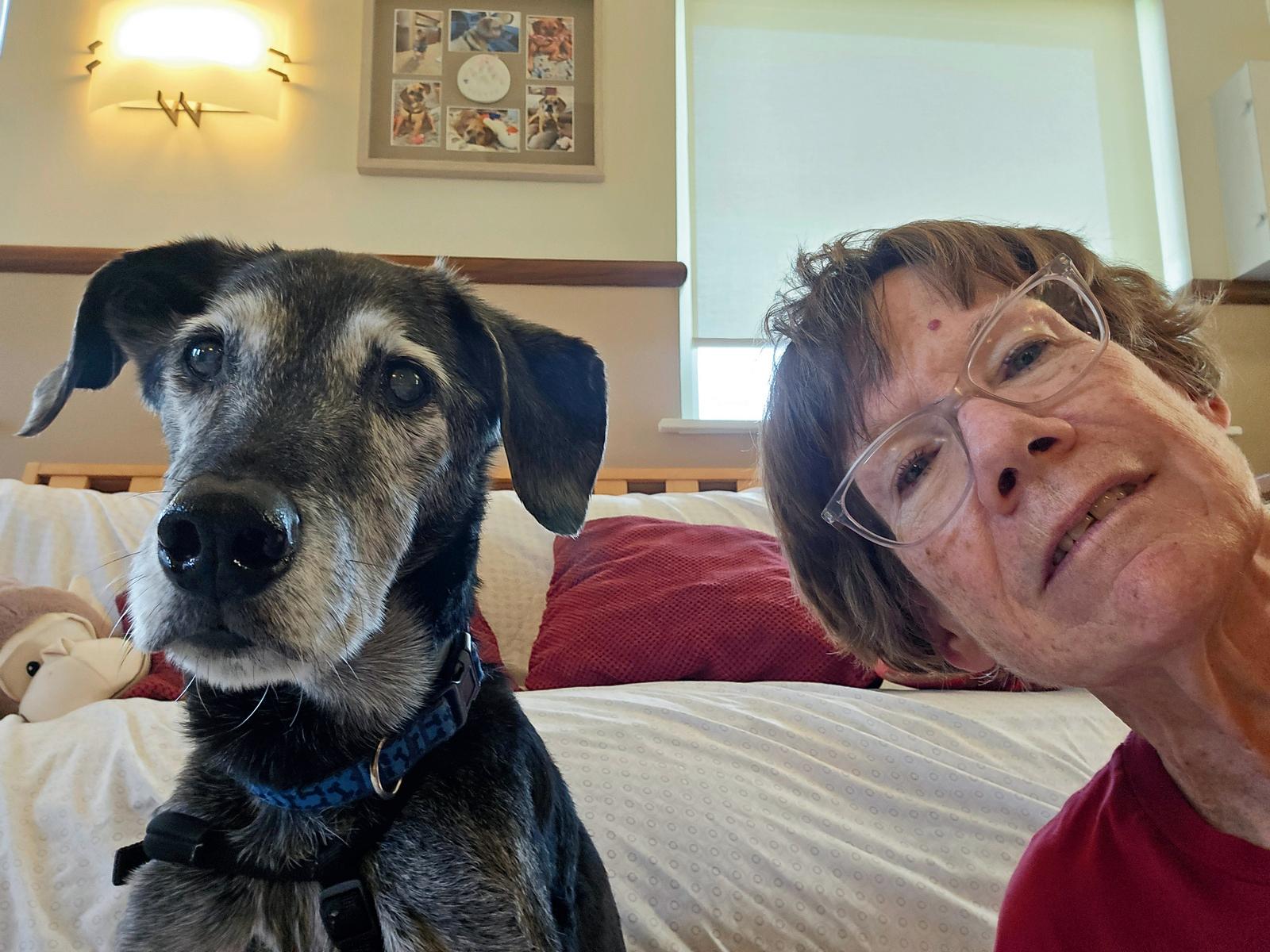
Dogs at Marty’s come from a variety of situations: the owner dies or has to move to assisted living, job relocation, financial hardship. And of course abuse and neglect: T.J. who arrived blind and emaciated, or Lucky, a 15 year-old Lab mix whose owners said “We never thought he’d live this long.” I couldn’t understand how the staff calmly took the leash without lashing out at the owners and railing at their cruelty. When I asked, Morgan said the owners could have taken Lucky to a pound where, due to his age and condition, he would have most likely been euthanized. “It was good of them to bring him here.” I was floored by her attitude, but she got me thinking. What good could come from anger and shaming? Keep the focus on helping the dog, NOT on judging the owners.
One of our dogs, Skye, was used as a breeder and a bait dog. Another rescue asked if Marty’s could take her as they were overcrowded. She came to us cowering, tail between her legs and extremely male averse. I didn’t think she would ever trust humans again, and I didn't blame her. Granted, Marty’s staff and volunteers are loving and patient, but Skye’s background was so violent. It took months, but now she loves nothing more than belly rubs and ear scratches. Whenever she sees staff-member Kaitlin, Skye’s tail wags so hard her body shakes. I’ve lost a couple of friendships because I held on to a hurt and let it fester. All that does is make it harder to open up to others. Again, my focus stayed myopic. Skye “healed” because she forgave and opened herself to trust, a lesson I hadn’t expected to learn from a dog!

In January, I fractured my right foot and had to wear a boot for five weeks. I worried over who would walk my dog Cooper. My dogwalker took early mornings and my nephew covered the nights, but what about the afternoons? Three Marty’s volunteers (who have become friends) jumped in, organizing a schedule and readjusting their own lives to help me. I was humbled by their generosity. I looked at my own record of helping out and realized my tendency to question before offering: “How long will it take?” or “How far do I have to go?” or “What do I have to do?” Volunteering in consideration of how it interrupted my life: again, the wrong focus.
I still financially support several charities, and I try to keep them present in my life: snail mail delivers newsletters and annual reports; email announces fundraisers and outreach events. All good, but it’s my hands-on work at Marty’s that helps me understand how closely we are connected to God’s creation -- to the earth, its creatures, and one another.

by Barbara Fox
In the Household of God, we are called to live a moral economic life, rooted in God’s abundance, rather than in scarcity. In James chapter 2, we are admonished, “Suppose a brother or a sister is without clothes and daily food. If one of you says to them, ‘Go in peace; keep warm and well fed,’ but does nothing about their physical needs, what good is it?”
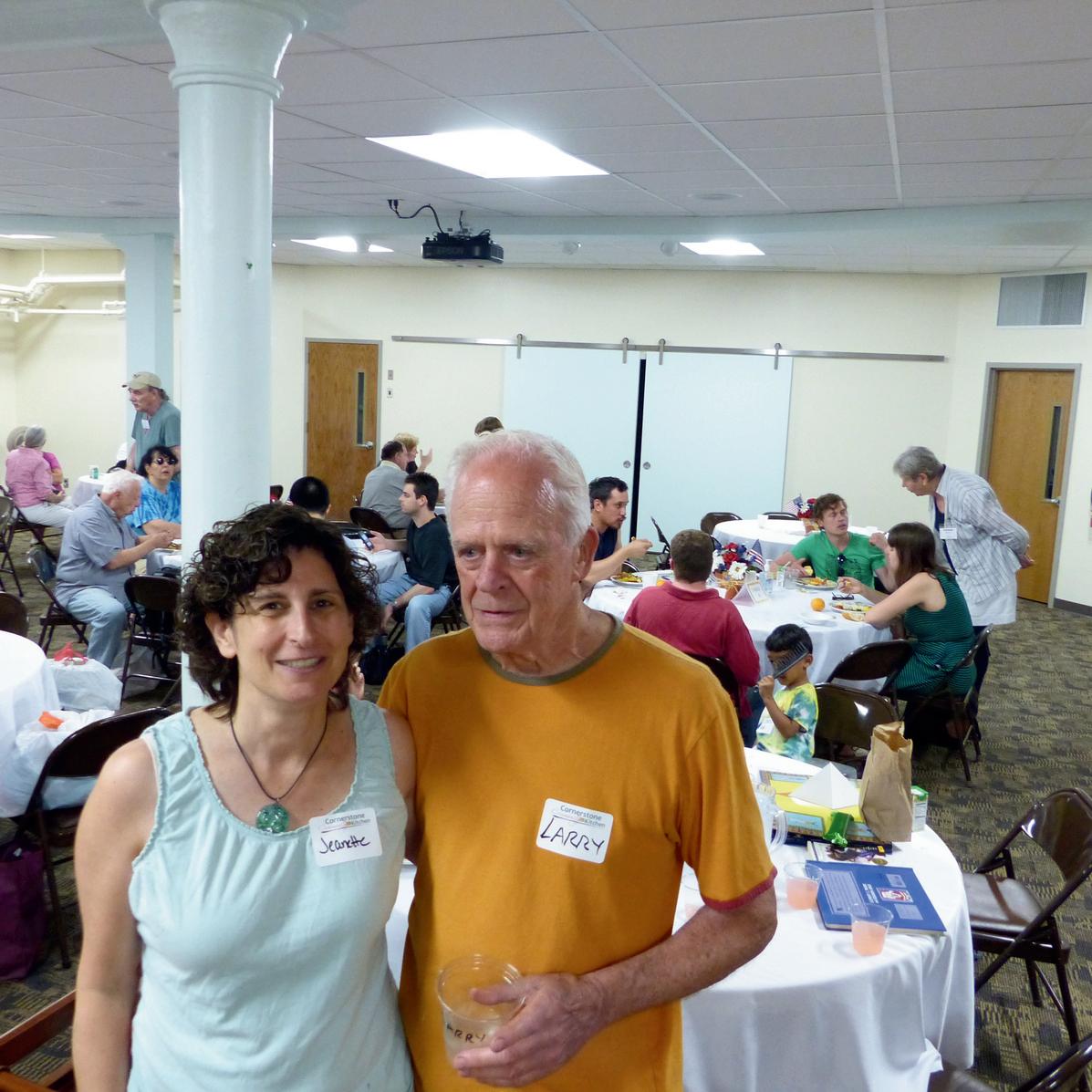
In 2012 PUMC member Larry Apperson, age 81, recognized that there was food insecurity in Princeton and did something about it. He founded Princeton Cornerstone Community Kitchen as a partner of TASK (Trenton Area Soup Kitchen).
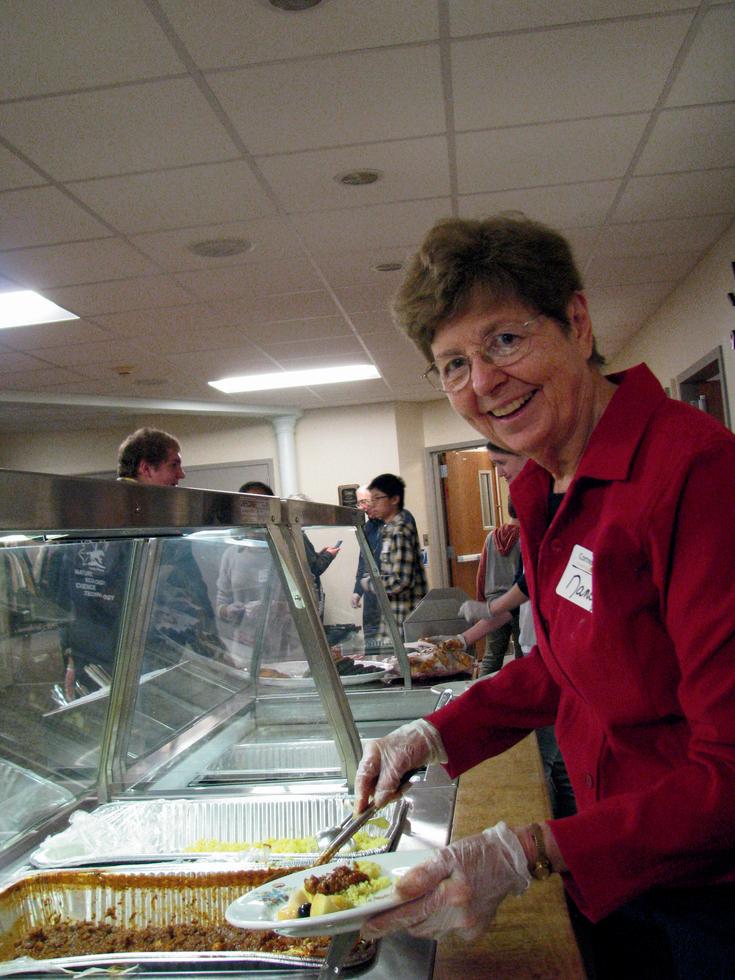
Now every Wednesday, just inside the red door of the Fellowship Hall, volunteers don aprons and disposable gloves to serve free hot, nutritious meals to more than 75 guests. CCK collaborates with 20 organizations to provide a free grocery store and gently used clothing store in addition to the main meal provided by TASK.
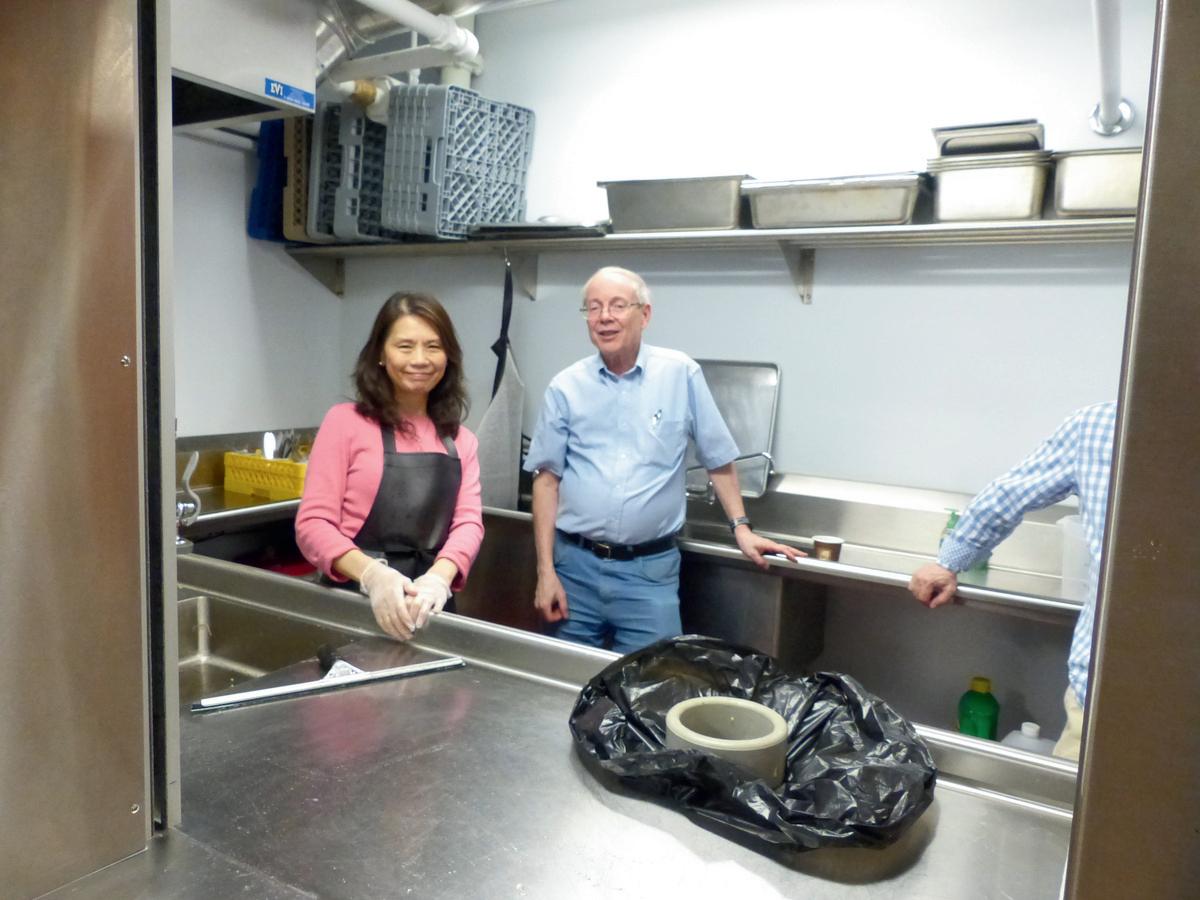
For the first year guests dined on foam plates with plastic utensils in the Sanford Davis Room because the kitchen -- which did not meet health codes -- was being constructed. Now the meals are served on china plates from an up-to-date catering kitchen in the renovated Fellowship Hall.
Some come for the free food, some for the fellowship; all are graciously served a hot meal complete with a decorated table and a piano player in the background. Take-out meals and sandwiches are available to guests.
CCK’s mission is to affirm the dignity of all who gather. There is no food line to stand in; each meal is delivered by a server with a smile and friendly greeting.
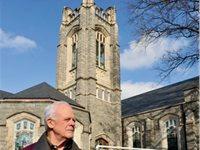
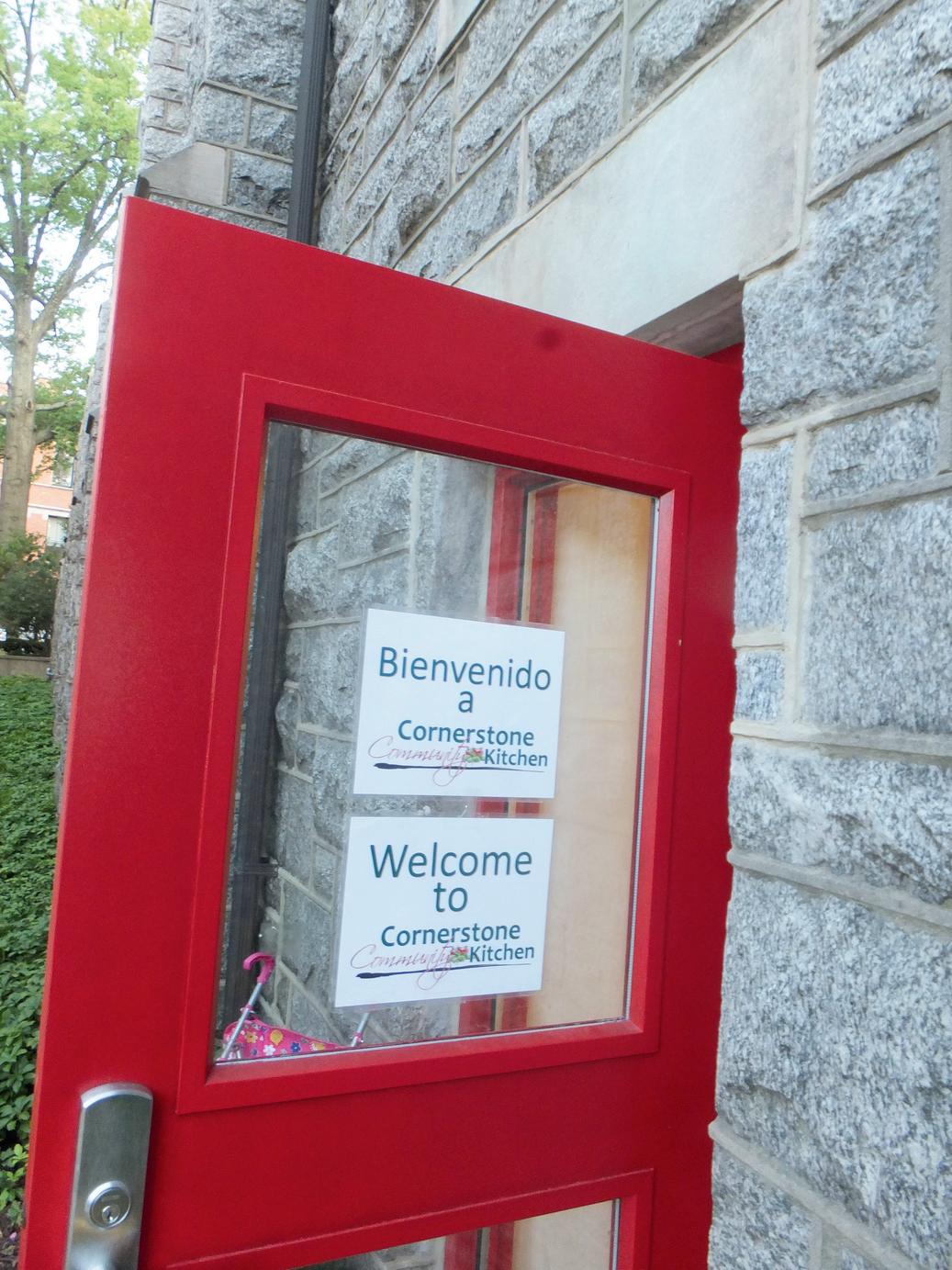
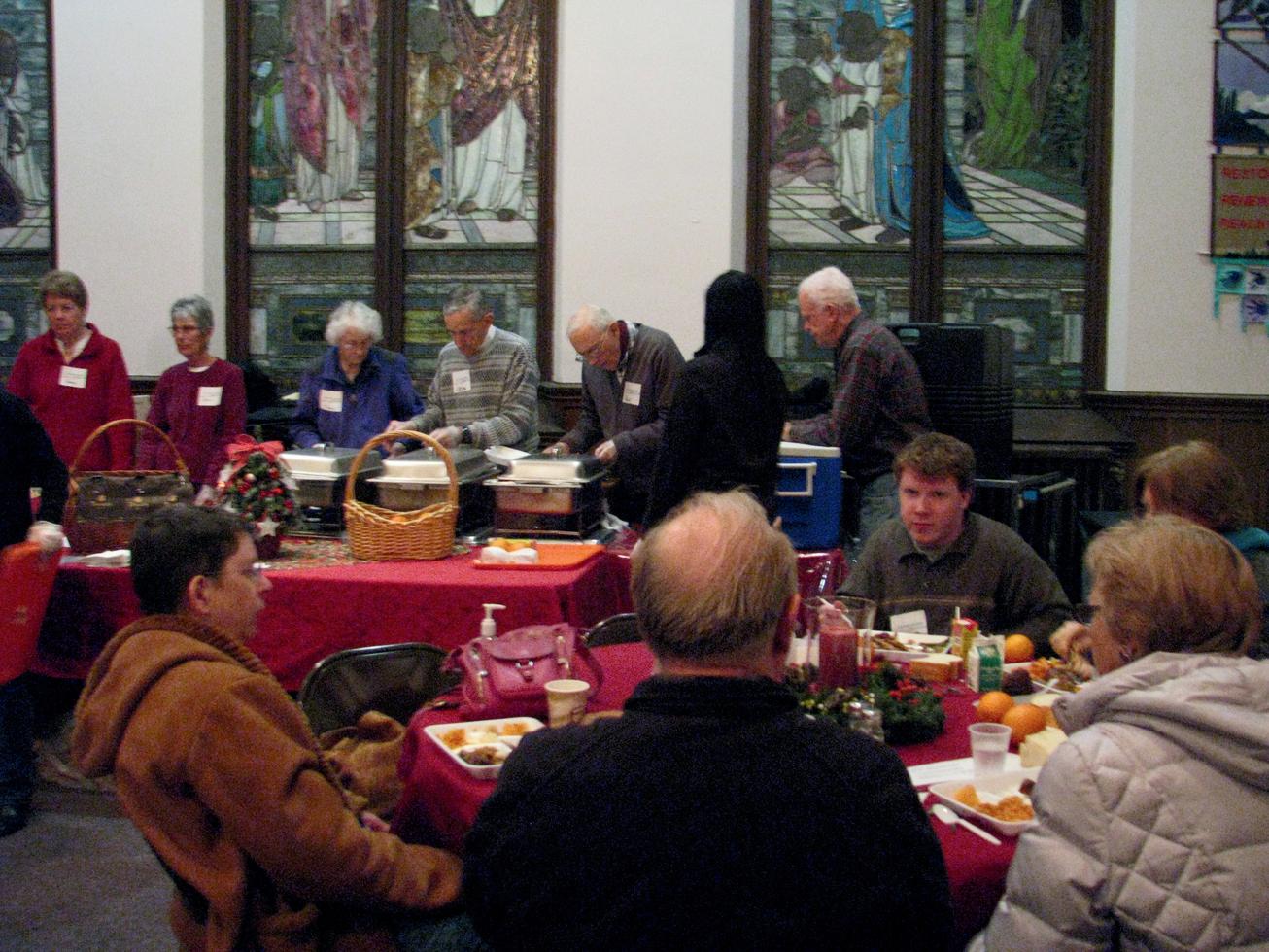

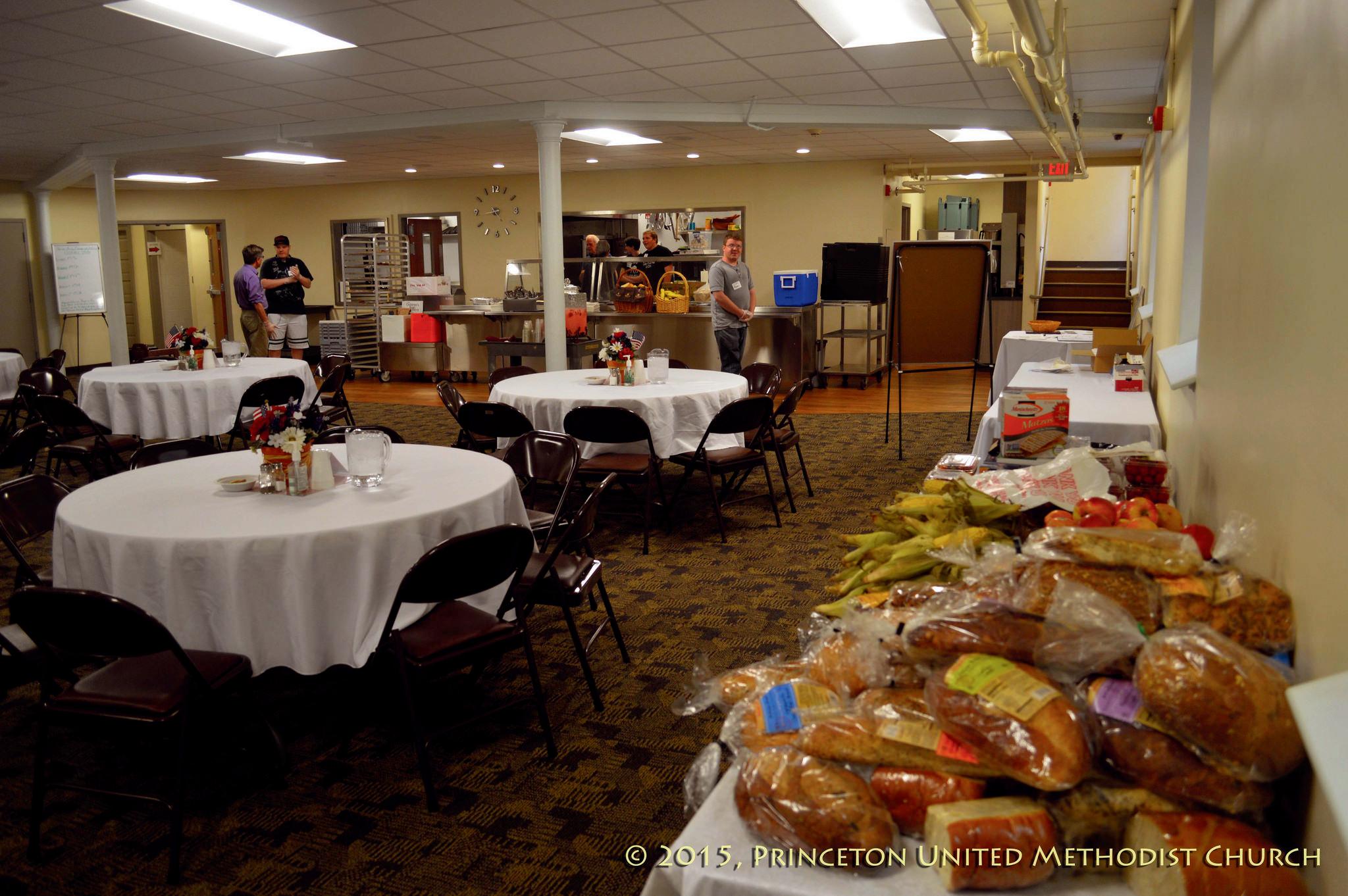
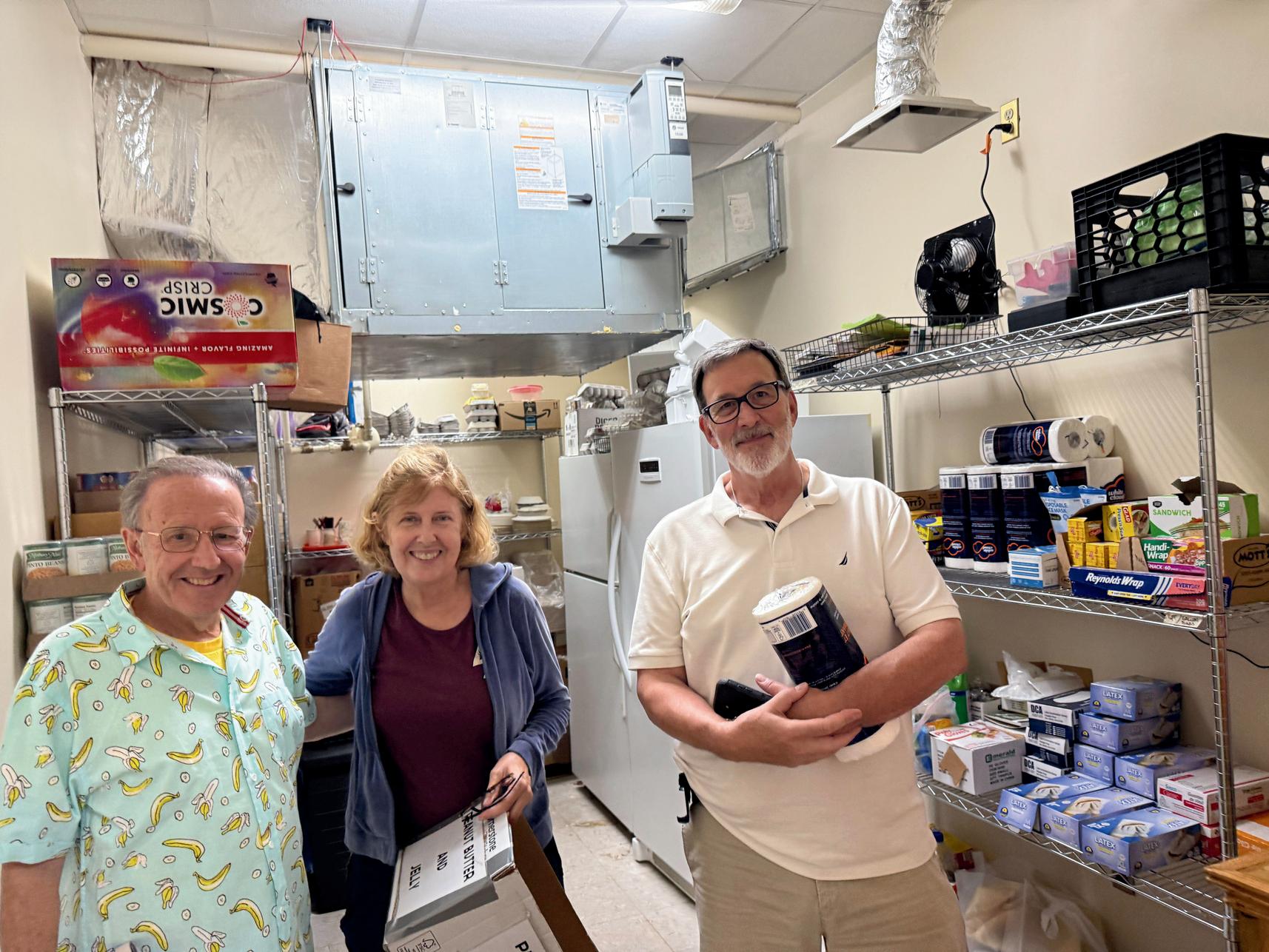
Larry also wanted "to create a place where people could go to do the good things they deep down feel they should be doing anyway. Volunteering would be easy: no homework, just come and do it." More than 150 volunteer hours are needed each week. “Many of the core group of volunteers have been at CCK since its inception in 2012,” says Executive Director Susan Davelman, shown here with Les Seifer and Tim Ewer.
As a 501(c)(3) organization, CCK does not deliver a religious message. Our church’s volunteers believe that they witness to their faith through their actions. Volunteers also come from high schools, Princeton University, and other congregations.
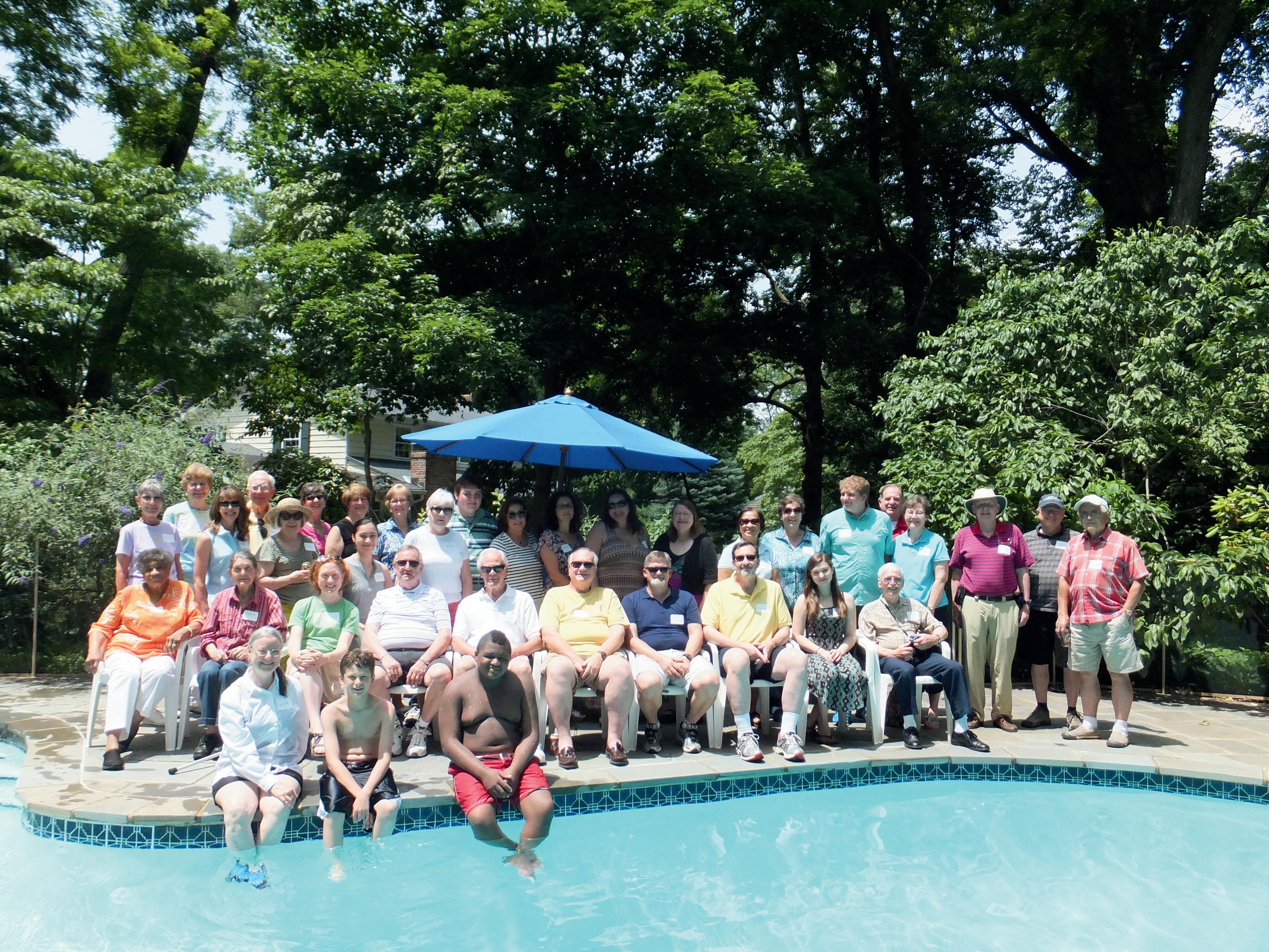
Princeton Cornerstone Community Kitchen offers a community space where volunteers can take joy in helping guests enjoy God’s abundance. It will celebrate the 14-year anniversary on Wednesday, June 3.

edited by Barbara Fox
In God’s vision, every person is beloved and created in God’s image. Social community is where the image of God is honored and restored. Here are some responses to the question “How do I careforothersasIcareformyself?”
Making financial contributions to help the church care for others. Says one member, “When I write my budget each January, I first allow for a percentage to be given for church use, another percentage for other charity giving; then I use the rest to meet my own needs.”
Serving as a caregiver or parent: Yvonne Macdonald offers rides to people who can’t drive and prays daily for the long list of requests on the prayer chain. Nishkala Suntharalingiam cares for her father, who is more than 100 years old. Another member emphasizes, “I care for my children by letting them know I love them. I want them to have the strength and confidence changes that comes from being loved, which I learned from my father.” Says another, “I try each day to ‘watch and listen,’ to be ready to stop when someone wants to talk, to help when a need is obvious or verbalized.”
Adopting an every-day practice to care for God’s creation: Karin Brouwer, who recently moved to Fleet, England, says that in each of her many moves she aims to “keep ‘stuff’ out of the landfill, by recycling and repurposing our excess possessions.” Christina Lelache, a volunteer naturalist at Bowman’s Hill Wildflower Preserve, regularly takes her family on trash walks around her neighborhood. “I love to care for the natural world around me,” she says, “for they are a part of my community as much as my human neighbors! We plant native plants and put out birdseed to help support pollinators, birds, and other wildlife.”
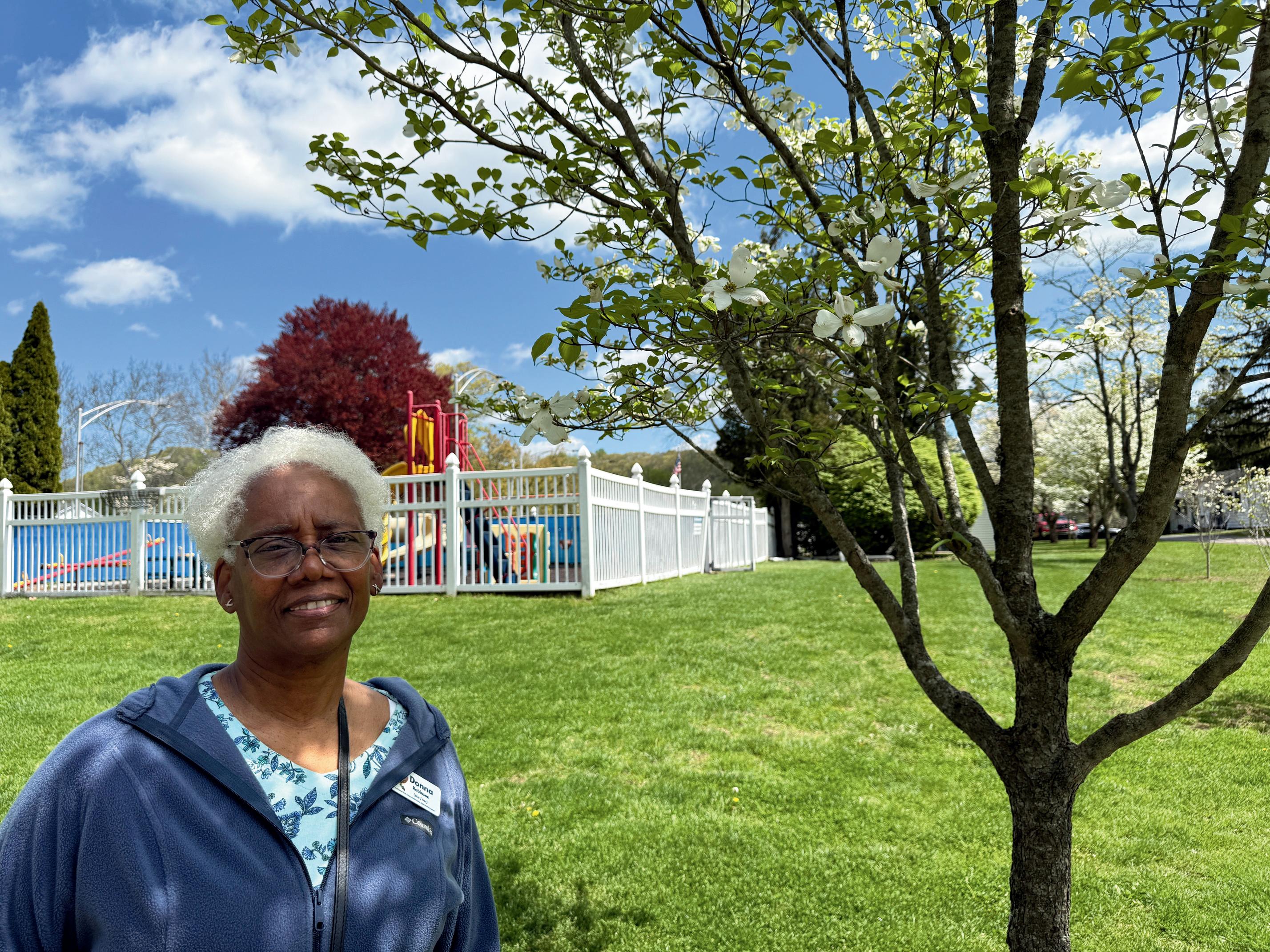
Volunteering to keep PUMC’s doors open: Donna Robinson is a member of the Congregational Care Ministry and facilitates Bible study on Thursday evenings. “Both of these activities are personally rewarding and allow me to help others.”
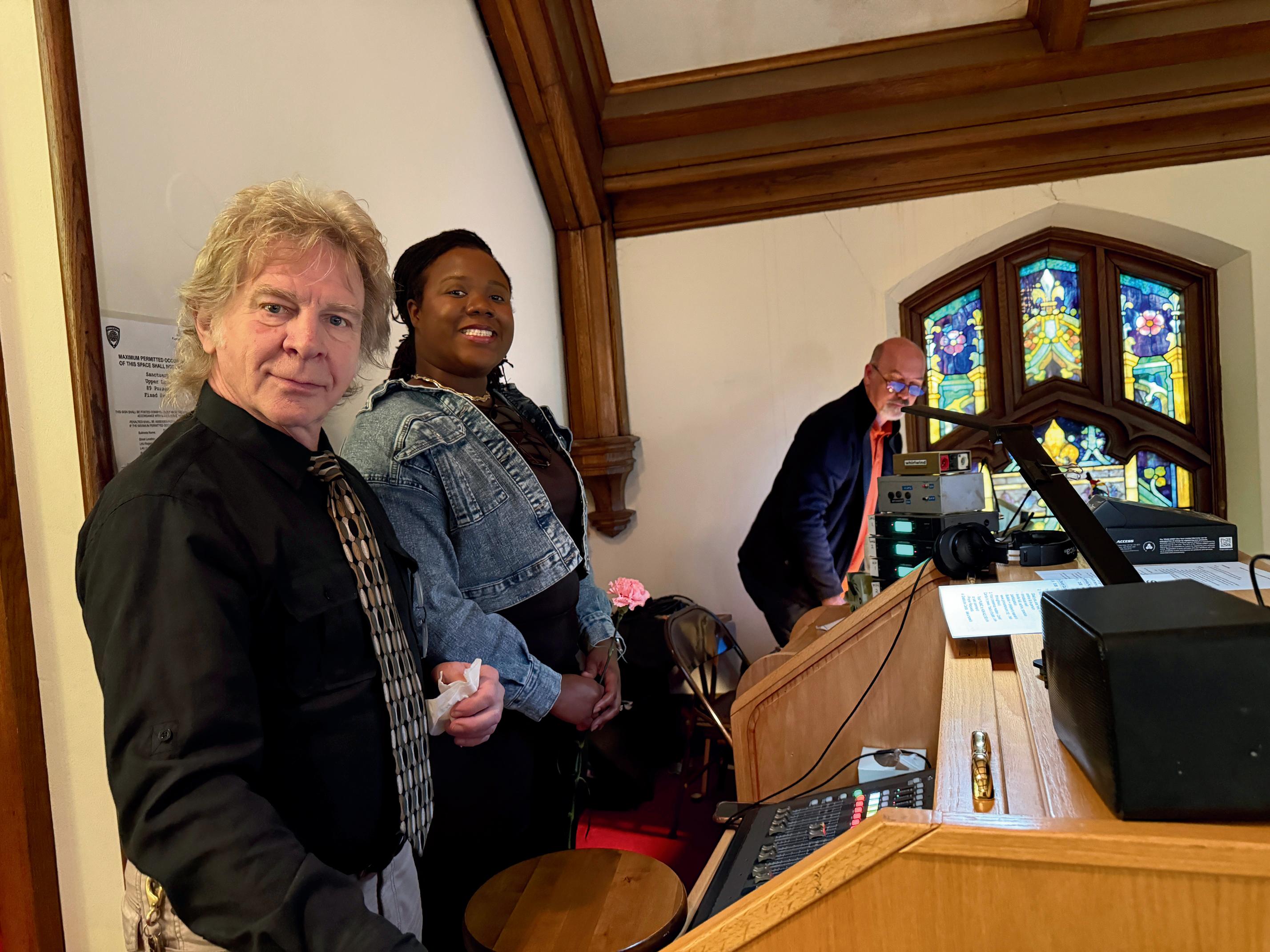
Members of the Collins family are among those who contribute their time and talent to the intergenerational choir. Stephen Offer also helps out with church technology, making sure everything runs smoothly for the service. “Taking part in these activities not only supports our church community but also brings me a lot of joy.”
Lenny Del Duca, Jr. uses skills from his profession as an audio engineer to operate the audio system at PUMC and mentor Bella Parsons-Amoah, a new team member. “I love to help this church community and I love doing this work for the Lord ---it feels very good to assist in this. community in any way possible.” Among the other unseen volunteers are those serving on the altar guild, on the finance team, and helping out in the office.
Volunteering as a board member: Angela Maxam has served on the board of Princeton Nursery School and of the New Jersey American Council on Education. As a board member for the UMC General Board of Pensions, Helen Curtis helped to design a pension plan. “I believed I was freeing pastors to do their pastoral work rather than worrying about family finances.”
Volunteering for church sponsored groups, like Maker’s Place and Cornerstone Community Kitchen (CCK): For CCK, Karen Longo Baldwin teaches ESL classes four-evenings a week; each class meets for an hour twice a week. “Begun in 2021 during Covid, we continue on Zoom, since many students are mothers with young children.” Laverna Albury coordinates faith-based loss groups at PUMC and also facilitates spousal loss groups at Good Grief – and, with Threshold Singers, sings at the bedside of hospice patients.
Volunteering in the community: With his PhD in pharmaceutics, Prafull Shiromani volunteered in the pharmacy at Princeton Hospital. Ed Sproles assisted in the 5k run for the Lawrence Hopewell Trail Group. Ryan LeLache volunteers with “Share My Meals,” recovering food from restaurants and grocery stores and redistributing it across the state. “It’s a joy seeing the excitement on the faces of young people and staff. This perfectly good food is going into hungry bellies instead of being unceremoniously sent into a landfill.” He also helps run UMC’s digital church plant, Checkpoint Church, “I feel so blessed that we maintain a space for folks to authentically explore their faith in connection with such an inclusive Christian community.”
And more. This list is far from complete! It’s just a taste of how people who come through our doors – or who tune into our services – are making room for one another’s dignity, agency, and belovedness. So many others are helping so that everyone doesn’t have to do everything. Because as one senior points out, “My care for others is often through my children who do many of the volunteer and service activities that I no longer do myself.”
by Iona Harding
While I was in college, like many that age, I became an infrequent church goer – Christmas, Easter, and at those times when the spirit moved me. At the same time, I found myself called to social activism. It was the early ‘70s, and there were protests on my and neighboring campuses for civil rights and to end the Vietnam War, and I joined these marches with gusto. In 1973 I landed my first job teaching at Somerville High School, and this is where I met Len Martin, a biology teacher. He and his wife, Terry, adopted me. We would have long talks during dinners about social and political issues and about faith. Len invited me to come to his church some Sunday morning, the Whitehouse United Methodist Church. It was this experience of attending WUMC that literally changed my life – it was the first time I experienced the marriage of Christian faith with social and political activism. The church participated in a nuclear disarmament protest when President Reagan came to town (yes, the White House came to Whitehouse.) I didn’t take the day off from work to participate, a decision I regret to this day. And I vowed to never make that mistake again! Our Pastor, David Harwood, preached Jesus’ message of peace and unity and activism. At WUMC I learned and studied the United Methodist Social Principals – which have recently been updated. The fire was lit and it has grown stronger. I wasn’t just a Christian antiwar activist--I became a Christian activist for all things that defy Jesus’ teaching. Jesus is my role model for how we need to stand up and have our voices heard, in his name, for the oppressed.
The United Methodist Church has a new vision statement: Love Boldly, Serve Joyfully, Lead Courageously – empowered by the Holy Spirit. Our Bishop, Bishop Moore Koikoi, preached a powerful sermon about this vision. As United Methodists, we are called to bring hope and joy to the world fueled by Jesus. We are called to dismantle systems of injustice. We are called to provide relief to those in need. We are called to invite the stranger to come over to our side of the wall. We are anointed to set free those that are oppressed. United Methodists are called to take action – we need to raise our voices and, yes, protest injustices. There is no separation between our faith and social justice.
At Princeton UMC, I found my “protest friends.” We have marched together to end gun violence, we protested at a detention center in Newark, we participated in the Women’s March in Washington, we have written cards and letters together during political campaigns. Most recently, we went to Washington DC to participate in a United Methodist worship service and march against the treatment of immigrants. We were 2,000 United Methodists strong. On this day, I felt that “warmed heart” that made John Wesley an evangelist. It was a day when I was so proud to be a United Methodist.
Many years back, someone told me that they stopped coming to PUMC because there were sermons about social and “political” issues. I was taken aback. That’s why I came back to the church – because Jesus’ ministry was all about social and, yes, political issues. And that’s why I have no choice but to protest.
Specialthankstoour
Barbara Fox
Kate Lasko
Iona Harding Abby Gillette
Members of our editing team include Tyler Mathiasen Abby Gillette
Barbara Fox
Kate Lasko
Rev. Jenny Smith Walz
Art by Abby Gillette
The Social Principles are not church law. Instead, they represent the prayerful and earnest efforts of the General Conference to speak to issues in the contemporary world from a sound biblical and theological foundation that is in keeping with the best of our United Methodist traditions. The Social Principles are thus a call to faithfulness and to social engagement and intended to be instructive and persuasive in the best of the prophetic spirit. Moreover, they challenge all members of The United Methodist Church to engage in deliberative reflection and encourage intentionaldialoguebetweenfaithandpractice.
– United Methodist Social Principles, Preface

www.princetonumc.org 7