Accountability at Risk:
Strengthening the Federal Inspector General System

January 2026
January 2026
Strengthening the Federal Inspector General System
Princeton School of Public and International Affairs
January 2026
Faculty Advisor
Mark de la Iglesia
Authors
Noah Atchison | Sarah Bernt | Eric Chen | Mackenzie Hempe | Mariah Limah-Kuderer
Ryan McGoff | Benjamin Olarsch | Conway Reinders | Stephen Silvestri
This report’s information and recommendations stem from four months of research and interviews with government officials, civil society actors, academics, and other stakeholders This appendix provides a full list of stakeholders interviewed Students conducted in-person interviews in New Orleans, Louisiana, Baton Rouge, Louisiana, and Princeton, New Jersey. They also conducted dozens of remote interviews with people in Washington, DC, and elsewhere
• Andrea Armstrong, Dr Norman C Francis Distinguished Professor of Law, Loyola University New Orleans College of Law
• David Bordelon, Ethics Administrator, Louisiana Board of Ethics
• Tyler Bridges, Staff Writer, The Times-Picayune / The New Orleans Advocate
• Jack Brook, Louisiana Reporter, Associated Press
• Dawn Broussard, Board Chair, New Orleans Ethics Review Board
• Kim Chatelain, Inspector General, Jefferson Parish
• Dane S. Ciolino, Executive Administrator & General Counsel, New Orleans Ethics Review Board
• Jeremy Dalrymple, Associate Director & Fellow, Governance Program, R Street
• Melinda Deslatte, Research Director, Public Affairs Research Council of Louisiana
• Emily Dixon, Assistant Legislative Auditor & Director of Performance Audit Services, Louisiana Legislative Auditor
• Benjamin Eikey, Manager, State Training & Development, Levin Center for Oversight and Democracy
• Daniel Erspamer, CEO, Pelican Institute
• Conor Gaffney, Legal Counsel, Protect Democracy
• Edmund Giering, President, Louisiana Bar Foundation and Baton Rouge Area Foundation
• Jack Goldsmith, Professor, Harvard Law School
• Bruce Hamilton, Visiting Clinical Assistant Professor, Tulane University First Amendment Clinic
• Lesli Harris, Councilmember, New Orleans City Council
• Michael Horowitz, Former Inspector General, U S Department of Justice
• Robin Kempf, JD, Ph.D., Associate Professor, University of Colorado Colorado Springs
• Freddie King III, Councilmember, New Orleans City Council
• Kevin Kosar, Senior Fellow, American Enterprise Institute
• Allison Lerner, Former Inspector General (NSF) & former CIGIE Chair
• Hanna Lerner, UCHV Fellow in Law and Normative Thinking, Princeton University
• Dan Lips, Senior Fellow, Foundation for American Innovation
• Robert Mann, Professor Emeritus, Louisiana State University
• David A. Marcello, Executive Director, The Public Law Center, Tulane University School of Law
• Edward Michel, Inspector General, New Orleans OIG
• Rebecca Mowbray, President & CEO, Bureau of Governmental Research
• Katherine Newcomer, Professor, George Washington University
• Deborah Pearlstein, Director, Program in Law and Public Policy & Charles and Marie Robertson Visiting Professor in Law and Public Affairs, Princeton University
• Jayce Pollard, PhD Student, Princeton University
• Jason Powell, Staff Member, CREW
• Steven Procopio, President, Public Affairs Research Council of Louisiana
• Christie M. Quick, Supervisory Attorney, U S Court of Appeals
• Molly Reynolds, Interim Vice President, Brookings Institution
• Nicholas C. Salter, Partner, Allied Advisors
• Daniel Schuman, Executive Director, American Governance Institute
• Katie Schwartzmann, Legal Counsel, Protect Democracy
• Kate Shaw, Professor, University of Pennsylvania Carey Law School
• Mitchel Sollenberger, Professor, University of Michigan
• Erica Smith, Deputy Inspector General (Audit/ Evaluations), Jefferson Parish Office of Inspector General
• Robert Storch, Former Inspector General, U S Department of Defense
• Stephen B. Street, Jr., Inspector General, Louisiana Office of Inspector General
• Deborah Witzburg, Inspector General, City of Chicago
Democratic governance in the United States depends on a robust system of checks and balances, including independent oversight mechanisms that hold executive leadership accountable Among these, Inspectors General (IGs) play a critical role in detecting and deterring waste, fraud, and abuse across federal agencies When Congress passed the Inspector General Act (IGA) of 1978 in the aftermath of Watergate, it designed IGs to restore public trust and strengthen accountability within the executive branch For over five decades, IGs have saved taxpayers tens of billions of dollars annually IGs also have helped expose corruption across all levels of government Recent developments, however, underscore the system’s structural vulnerabilities and highlight an urgent need for reform
This report summarizes best practices across a variety of other oversight systems, extracts key lessons, and presents a menu of reform options that would significantly strengthen the efficacy and resilience of IGs in the U S federal system Recognizing that the IG system relies on support from other accountability institutions, this report also analyzes the broader accountability ecosystem and recommends reforms for related agencies where appropriate
Presidents from both parties have removed IGs without proper cause, and during the second Trump administration, there has been a marked increase in the number and severity of executive actions that threaten the integrity and independence of the IG system In January 2025, President Trump dismissed 17 IGs within days of taking office, in violation of the notice-andrationale requirements enacted in the Fiscal Year 2023 National Defense Authorization Act In September 2025, the Office of Management and Budget (OMB) failed to apportion congressionally appropriated funds to the Council of the Inspectors General on Integrity and Efficiency (CIGIE, or the Council), though these funds were later restored Taken together, these developments reveal structural vulnerabilities within the IG system IGs remain susceptible to politicization, funding cuts, and executive interference The current administration has also undermined other executive branch oversight bodies, including the Department of Justice (DOJ) and Office of Special Counsel (OSC), which have proven increasingly vulnerable to political weaponization And broader accountability institutions, ranging from Congress to civil society organizations (CSOs), are weakened by polarization and resource deficits, leaving IGs increasingly isolated.
Key problems hindering IGs and other executive oversight institutions include:
• Limited Authority: Constraints on investigative authority and resources hinder IGs’ ability to prioritize high-level misconduct and to defend their work from attack by the executive IG authority does not extend to the Executive Office of the President (EOP) or OMB, creating oversight blind spots where executive power is most concentrated
• Threats to Independence: Removal protections are weak, IGs lack fixed terms, and funding remains vulnerable to political interference In the past year the IG system has been repeatedly undermined and attacked, and retaliation is a growing threat
• Legitimacy Risks: Inconsistent accountability mechanisms and limited communications capacity can erode confidence in their credibility and findings and leave IGs vulnerable to politicization
• Interdependence with Weakened Partners: IG effectiveness depends on strong linkages to oversight bodies within Congress, the executive branch, and CSOs . Many of these bodies were already weakened over recent decades, and have proven especially vulnerable to politicization in the past year Within the executive branch, the Trump Administration has virtually eliminated the DOJ’s public integrity section and weakened the enforcement capabilities of the OSC, leaving IGs operating with less institutional support
International oversight systems, as well as domestic state and local models, offer important lessons for reform. Drawing on examples from these jurisdictions, this report identifies several design principles for oversight frameworks that inform the list of potential reforms .
• Strong oversight requires meaningful removal protections. Oversight systems are vulnerable to executive interference if oversight actors can be threatened with firing In the most robust systems, removal is permitted only with the approval of both the legislative and executive branches Internationally, these protections are often enshrined in constitutions that establish independent “fourth branch” institutions In U S states and municipalities, by contrast, removal protections are usuall established through statute and reinforced by norms against interference. Statutory and normative protections are mutually reinforcing: where legal defenses are weak or incomplete, norms can play an important constraining role.
• Statutory requirements reinforce norms. For example, there are strong norms around transparency in oversight investigations, and many oversight actors employ communications teams and maintain strong relationships with the media to help disseminate their findings But strong public disclosure laws reinforce these norms Codifying norms-based practices can prevent backsliding when government officials challenge norms
• Independence must be balanced with accountability. When oversight actors benefit from strong removal protections, equally strong vetting and accountability procedures are necessary to ensure responsible conduct and maintain legitimacy. Independent peer reviews, statutory professional standards, and evaluation committees serve as important accountability mechanisms .
• Relationships between oversight bodies are central to efficacy. The most effective oversight systems incorporate multiple layers of redundancy, collaborative relationships, and complementary practices across those layers This structure enables more robust investigations, provides checks and balances, eliminates single points of failure, and enables other oversight actors to lend support amid political pushback .
The recommendations in this report focus primarily on the IG system but, drawing on the comparative lessons outlined above, also address a broader set of related oversight institutions Although establishing a fourthbranch accountability institution, or even enshrining removal protections, through constitutional amendments would offer the most robust legal protections, the reforms in this report concentrate on statutory changes
due to the substantial political barriers to constitutional amendments . To compensate for the lack of legal independence from the executive branch, the list of potential reforms emphasizes complementary changes across multiple layers of government.
The reforms are organized around four pillars, corresponding to the challenges identified above: authority, independence, legitimacy, and interdependence
1. “Authority” refers to the legal powers IGs possess to conduct investigations, as well as their capacity to carry them out
2. “Independence” concerns the extent to which norms and institutional structures insulate IGs from political interference
3. “Legitimacy” addresses how other actors in the political system, including the public, perceive IGs
4. “Interdependence” is a broader category encompassing relationships between IGs and other oversight actors, as well as reforms that can indirectly improve IG effectiveness by strengthening the oversight ecosystem.
IGs operate within a wider accountability framework that includes ethics offices, professional conduct oversight authorities, and legislative oversight bodies, among other entities Strengthening these linkages and codifying antiweaponization norms across government are essential to prevent the misuse of executive authority When this holistic ecosystem functions effectively, oversight actors can hold even senior-level government officials accountable for wrongdoing, and public servants at all levels of government may be deterred from abusing their power.
The reforms on the next page are recommended for policymakers’ consideration:

• Amend the IG Act so that the definition of “abuse” within an IG’s purview explicitly includes executive overreach.
• Establish an IG for the EOP and OMB, either on a permanent basis or through a statutory trigger
• Expand testimonial subpoena authority to include former officials, contractors, and grantees
• Ensure IGs have direct access to data produced by agencies under their jurisdiction as well as by private contractors working with those agencies
• Prohibit the use of appropriated funds to interfere with IG investigations, and enforce the prohibition through a “claw-back” mechanism.
• Institute fixed ten-year terms for IGs, with prohibitions on reappointment within the same agency
• Prohibit “dual hatting,” whereby a single individual leads multiple IG offices
• Allocate IG budgets to a fixed percentage of agency appropriations or provide multi-year or no-year funding .
• Directly appropriate funds to CIGIE or otherwise stabilize its budget, and statutorily define its role in vetting IG candidates
Legitimacy
• Create a CIGIE Evaluation Committee to set performance standards and review IG effectiveness
• Strengthen CIGIE Integrity Committee capacity with permanent investigative staff, a transparent complaint process, and clear requirements for cooperation by IGs .
• Enhance public reporting and media engagement within IG offices to build trust and deter politicization
• Enact broad changes to congressional practice and procedure to enable it to fulfill its structurally necessary oversight and accountability roles This includes modernizing congressional oversight tools, including subpoena enforcement and expedited judicial review and investing in the Government Accountability Office (GAO) and congressional staff investigative capacity to create other venues for accountability
• Expand the authority of the DOJ IG by removing the exception that currently exists for attorney misconduct
• Create prosecutor juries to review potential instances of politically motivated prosecution.
• Establish a private right of action against vindictive prosecutions
• Empower the Office of Government Ethics (OGE) to initiate investigations into ethics violations by high-ranking officials, creating redundancy with IGs .
• Expand resources for the OSC to reduce backlogs and ensure disclosed information provided to OSC by contractors and grantees is statutorily protected
• Reinforce IG–Congress relationships through standardized reporting and regular meetings between IGs and corresponding congressional committees
Most of these reforms involve statutory changes that Congress must enact, but many have enjoyed bipartisan support in the past Policymakers and advocates are well-positioned to begin building political support for these proposals in advance of the next suitable reform window.
Today, nearly fifty years after the Inspector General Act (IGA) of 1978 became law, the federal oversight system is strained On the fifth day of his second term, President Donald Trump fired 17 Inspectors General (IGs), more than one in five of the statutory IGs that work to prevent and detect waste, fraud, and abuse in the federal government.1 In September 2025, the Office of Management and Budget (OMB) failed to apportion funding for the Council of the Inspectors General on Integrity and Efficiency, even though funds were available throughout the government shutdown The administration has repeatedly accused IGs of becoming “corrupt, partisan, and in some cases, [lying] to the public” – without offering any evidence to support the claim 2
What began as a “chilling effect” has deepened into coordinated interference that has slowed or in, some cases, halted oversight work . 3 Beyond this, there is growing fear of weaponization of the system against political opponents 4 Current and former IGs repeatedly expressed concern in interviews that the administration’s actions could lead to undue pressure on IG investigations, prevent future whistleblowers from coming forward to report misconduct, and lead to less oversight and accountability in the federal government Pressure on the IG system is threatening accountability as executive abuses of power become more frequent.
A combination of accountability structures is necessary to sustain a robust and resilient democracy The United States relies on more than 40 different oversight and accountability institutions and mechanisms, which can be divided among three broad categories 5
Vertical accountability, in which governments are held to task by a voting public, is the most foundational form of accountability and necessary to the functioning of
other varieties . 6
Horizontal accountability involves the other branches of government, including the judiciary and the legislature Horizontal accountability also includes components of the bureaucratic and administrative state, and the independent features of the executive branch that make up the “accountability state” in the United States 7 Diagonal accountability is exercised by institutions such as civil society organizations (CSOs), social movements, academia, and the media
This overlapping patchwork of checks and balances is necessary so that even if some features fail under a given circumstance, the overall system can continue functioning thanks to built-in redundancies Understanding that no individual component works in a vacuum is necessary for strengthening any specific piece, particularly in response to intentional and targeted threats
This report presents a wide-ranging set of reforms designed to strengthen horizontal accountability in the United States, primarily for the IG system and extending to other key oversight bodies It combines comparative international and domestic research and dozens of field interviews with current oversight actors across a wide variety of institutions . The analysis is organized around four core requirements of an effective oversight institution: authority, independence, legitimacy, and interdepdendence.
To meaningfully address misconduct, oversight actors must have the legal authority and material capacity to complete their investigations, from the small-scale corruption that is a bedrock of authoritarian governance to politically sensitive investigations into large-scale abuses of power 8 There are two key elements to authority First is jurisdiction: whether an act falls within the purview of
an IG office Several of the final recommendations involve extending or clarifying jurisdictional rules to ensure all actors are subject to meaningful oversight
Second is capacity. IGs must have the resources and capacity to complete these investigations using staff expertise, legal and technological tools, such as the ability to compel testimony and easily access data systems .
Independence concerns whether oversight actors are structurally insulated from political interference. This interference can take many forms: refusal to cooperate, direct intervention in investigations, and funding cuts are common.
Across jurisdictions, two primary sources of independence emerge: normative constraints that discourage interference and structural legal protections that formalize functional autonomy for offices and their activities . Normative constraints are cultural and informal but provide a strong deterrent effect When they are strong, interfering with an investigation may cause electoral consequences or pushback from other actors across government
Structural legal protections provide both deterrence and consequences for interference These protections may prevent bad actors from interfering in the first place, but also create legal ramifications for failing to follow the law.
These two sources of independence are complementary: legal consequences reinforce norms, and norms prevent actors from trying to diminish or avoid legal consequences
Legitimacy reflects whether IGs are viewed as credible, fair, and professionally grounded by public servants, policymakers, and the public
IGs occupy a distinctive position within the federal government, combining access to sensitive information with broad investigatory authority designed to safeguard institutional integrity Precisely because this authority is substantial, the effectiveness of the IG system depends not only on the powers it confers, but on whether those powers are exercised in ways that are widely perceived as fair, professional, and nonpartisan
An oversight regime that focuses exclusively on waste, fraud, or abuse, without addressing how IG authority itself is governed and constrained, risks undermining its
own credibility Allegations or perceptions that IGs may act selectively, politically, or without clear standards can erode confidence in oversight findings, even when investigations are well-founded Strengthening the structures and processes that reinforce professional norms, transparency, and internal standards is therefore essential to sustaining the legitimacy of the IG system and preserving public trust in its work . 9
IGs are one part of a broader oversight system International best practices and examples from state and local governments highlight how public integrity networks depend on a transparent, expedient flow of information among stakeholders . These networks serve several important functions: redundancies enhance network resilience under an executive with authoritarian tendencies, reducing the extent to which a single point of failure in a system can destroy accountability mechanisms Additionally, the complementarity between actors in the accountability system allows each one to focus on the functions for which it is best equipped Within this division of labor, for example, IGs are optimized to uncover and document misconduct through privileged access, investigative authority, and institutional proximity, but they are not designed to impose sanctions or resolve questions of political responsibility. Other actors within the oversight ecosystem translate those factual findings into legal, administrative, or democratic consequences, allowing each institution to operate within its comparative advantage
Because IGs’ most meaningful contributions are realized in conjunction with the efforts of a broader set of actors, special attention is given to reforms that could strengthen linkages between IGs and other accountability actors such as Congress, the courts, and the public 10
The first part of the report uses international and state and local governments to explore how other systems address some of the problems identified above The second part proposes reforms to the federal IG system across the first three elements of the recommendations framework: authority, independence, and legitimacy The last element, interdependence, is the subject of the third part, which recommends reforms to strengthen complementary oversight institutions such as the DOJ and Congress .
Part One outlines best practices and key insights from other oversight systems. The first analyzes international examples, while the second focuses on state and local governments within the United States. Within each section, the analysis is divided across the four elements of oversight: Authority, Independence, Legitimacy, and Interdependence.
Key Takeaways:
Legal Authority Matters.
Oversight bodies with clear constitutional mandates are best equipped to investigate and deter abuses of power. Statutorily established oversight bodies require strong additional protections.
Independence Requires More than Law. Strong norms of non-interference provide security where statutory protections cannot.
Legitimacy is Key to Efficacy.
As oversight institutions grow more powerful and independent, so does the need for transparency and accountability mechanisms. When public trust in oversight is strong, oversight actors are more insulated from interference.
Oversight Institutions are Interdependent.
Oversight is the responsibility of a network of overlapping and complementary institutions, and many systems have ways to encourage interaction between these institutions. This creates redundancy but also gives individuals within these networks support when under political threat.
This section addresses how democratic systems structure independent oversight institutions to constrain executive power and protect constitutional governance, situating these arrangements within broader debates over democratic resilience. Drawing on comparative constitutional and statutory models, it identifies design principles and practices that inform later recommendations for strengthening the U.S . IG system
There are many ways to conceptualize oversight systems on a comparative level, but a useful framing begins with the idea of the fourth branch, or institutions that protect democracy (IPDs).11 While older democratic constitutions regularly include provisions for three branches of government, the 20th century witnessed the incorporation of another set of institutions in newer constitutions and statutory law, sometimes called the “fourth branch” of government, meant to act as independent watchdogs or guardians of government. These came about in recognition of the increasing influence of partisan competition on governance as well as the need for greater technical expertise to address increasingly complex issues of governance which were no longer able to be satisfactorily addressed through courts and judicial review.
The fourth branch includes institutions as varied as constitutional courts, central banks, auditors, ombudsmen, independent prosecutors, election management bodies, boundary commissions, human rights commissions, public service commissions, and anti-corruption commissions These institutions are entrusted with protecting democratic norms, looking out for populations at risk of majoritarian rule, and ensuring the compliance of the executive and administrative or bureaucratic state with principles of good governance 12 They also serve as guardrails against corruption and large-scale abuses of power while balancing the need for
maintaining public trust and confidence 13
In addition to the concept of a fourth branch is the idea of an “integrity branch” or “accountability branch,” designed to address increasingly complex challenges such as corruption, electoral malfeasance, and executive abuse of power 14 This framing represents a somewhat narrower category of institutions specifically established to ensure that governments—and the individuals who comprise them—exercise their powers within their intended and legally conferred bounds, with the objective of upholding governmental integrity through accountability mechanisms Most integrity-branch institutions can be understood as part of the fourth branch; however, not all fourth-branch institutions would necessarily fall within an integrity branch, such as human rights commissions
There is no one-size-fits-all approach to designing and implementing oversight systems, as evidenced by the wide range of models employed around the world. Institutions tasked with addressing the challenges that partisan politics pose to accountability must be both context-specific and culturally grounded. At the same time, although horizontal accountability mechanisms vary in form, scope, and institutional location, comparative analysis suggests that they share a common purpose: safeguarding constitutional democracy 15 What these systems also share is the challenge of balancing several core objectives: providing institutions with sufficient authority and a clear mandate for action, protecting their independence, securing legitimacy and credibility, and enabling effective interdependence with other elements of the accountability system
It is generally considered best practice that, during constitutional design or revision, drafters clearly establish the fourth-branch institutions most necessary for a given context and guarantee their independence from the
outset 16 In practice, however, this approach is feasible for only a limited subset of countries that can draft new constitutions or undertake substantial constitutional revisions informed by long periods of democratic development. For countries with rigid constitutions, or constitutions that have been in place for more than two centuries, oversight systems can still be created through statute or, in some cases, through judicial review. Although statutory institutions are typically viewed as more vulnerable because laws are easier to amend than constitutions, they nevertheless represent a critical step toward strengthening accountability and broader democratic resilience As the example of Supreme Audit Institutions (SAIs) demonstrates, integrity branch institutions can be established in a variety of places in government, including as fully separate fourth branches, as judicial bodies (the Napoleonic model), or as independent units reporting parliament (the Westminster model) 17 They can also be embedded within the executive, which is the model that the U.S . IG system takes . Ideally, an oversight body should be enshrined through “double constitutionalization,” meaning that both the institution itself and the core principles it is designed to safeguard, such as equal rights, free and fair elections, or protections against abuses of power, are codified in law to strengthen the institution’s ability to fulfill its assigned mandate 18
The mandates of executive oversight bodies are as varied as the countries in which they operate In general, however, their core responsibilities fall primarily into three broad categories: investigating, reporting, and educating .
Similarly to SAIs, many countries around the world have specialized anti-corruption institutions, which offer another way to understand the design of integrity branch institutions in pursuit of a specific mandate The Organisation for Economic Co-operation and Development (OECD) has identified three major classifications for anticorruption bodies: law-enforcement models, multi-purpose models, and preventive bodies 277
The multi-purpose model integrates investigative authority with prevention, public education, and outreach. This model, the most
The extent to which these institutions can act beyond these core functions depends on their institutional design 19 For example, some audit institutions can impose direct consequences on government bodies or officials found to be in violation of established standards . Some human rights commissions have the authority to refer cases for litigation or even to litigate cases themselves Similarly, some ombudsman institutions can exceed their core role of reviewing complaints about government conduct by exercising powers such as imposing habeas corpus, initiating charges against judges for misconduct, or referring cases for prosecution Finally, some anticorruption bodies possess authority not only to investigate but also to prosecute.
Accordingly, more robust institutions are typically granted broader authority at the time of their creation. In general, the wider an institution’s jurisdiction, the greater the discretion it must have to effectively fulfill its responsibilities . 20 Thus, broad and robust authorities carry inevitable implications for the need for meaningful independence.
Effective oversight, and an institution’s ability to fulfill its mandate, often depend on reliable access to information held by executive agencies . Many countries grant their audit institutions statutory authority to obtain documents necessary for audits and examinations, and some also establish escalation mechanisms to address agency noncompliance The Slovenian Commission for the Prevention of Corruption has the mandate to access and subpoena financial and other documents from any state authority as well as any private entity 21 The United
prominent globally, can be seen in Australia, Botswana, Hong Kong, Indonesia, Poland, Singapore, and more, and can be highly effective but depends on external prosecution bodies .
The law-enforcement model, which is most common among OECD members, consolidates investigative, prosecutorial, and often preventive powers into a single agency and is found in countries such as Spain, Romania, Azerbaijan, Croatia, Norway and the United Kingdom. Preventive bodies, by contrast, focus on long-term corruption prevention, ethics training, national strategy
development, and monitoring implementation, and are used in France, Slovenia, North Macedonia, Serbia, the United States (specifically, the Office of Government Ethics (OGE)), and Brazil.
Across these models, the OECD emphasizes that institutional design must be tailored to political context, and that the effectiveness and credibility of anti-corruption bodies ultimately rest not only on their formal mandates but also on political will, inter-agency cooperation, and sustained external monitoring
Kingdom’s National Audit Office has a statutory right under the National Audit Act to access any documents relating to public accounts 22 Brazil’s Tribunal de Contas da União (Federal Court of Accounts), similarly possesses broad constitutional authority to request information from federal entities and may raise access issues through its audit and reporting processes to support legislative oversight.23 Stronger access provisions can generate greater legal and public pressure on government officials to comply with information requests, although administrative hurdles may still arise when oversight bodies are required to enforce access through court proceedings
Independence from the executive branch that oversight systems are intended to constrain is essential for effective oversight However, comparative analysts caution that legal and structural protections alone are insufficient to safeguard this independence While such measures are important, the incentive structures created by partisan politics make strong norms of independence equally critical These norms help ensure that fourth-branch institutions can operate without interference, avoid becoming politicized, and resist being used as instruments in intraparty power struggles 24 Even IPDs cannot truly be created “above” or “outside” of partisanship, but through a combination of both legal and normative guardrails, they stand a better chance at remaining independent
Institutional independence must be defended and perpetuated by a normative value for the rule of law and a culture of integrity, as well as mutual tolerance, forbearance, courtesy, and reciprocity 25 Without such commitment and recognition from political elites and the public, the accountability state face interference, politicization, or even all out capture
Three categories of norms emerge prominently in the comparative literature The first is public belief in the institution’s independence. This depends on sufficient public awareness of the institution’s existence, mandate, and the types of threats it faces—a condition more readily met by high-profile institutions and in contexts with stronger civic engagement and media literacy The second is the presence of professional norms specific to the institution’s functions . The more professional commitments that can be activated within an oversight system, the stronger and more reinforcing the resulting set of norms becomes . 26 A boundary commission, for example, with membership requirements for a combination of statisticians, lawyers, judges, and geographers benefits from the multiplicity of both the professional experiences and ethical commitments they
Finally, these institutions function most effectively when norms of reciprocity are well established Under a veil-ofignorance or insurance logic, constitutional or statutory drafters are incentivized to design systems that are fair to all political actors, regardless of which party holds power, recognizing that in a democratic system their own party may eventually find itself in the minority 27 In practice, political leaders should also seek to ensure that the institution can operate without interference and that its decisions and recommendations are respected no matter which party is in control These norms are particularly important for statutory institutions, which lack constitutional entrenchment When any of these norms erode, the independence of the oversight system is at significant risk of erosion as well.
While their own independence relies upon these norms, the systems of integrity institutions are also responsible for protecting a family of norms that are necessary for a democratic society to flourish, including transparency, the rule of law, equality, human rights, and inclusive and representative elections 28 Design and action within these bodies must be directed to continue strengthening a virtuous cycle between institutions and norms .
A final lesson from international experience is that when independence at the national level is under threat, it may be especially valuable to invest greater effort in sustaining the normative commitments and effective functioning of subnational institutions . 29
Global experiences point to numerous design decisions involved in ensuring the independence of an oversight institution. These include choices related to organizational structure, financial arrangements, agendasetting authority, and appointments and removal of institutional leadership.30 Institutional designers must determine whether an institution should be led by a single individual who can be held directly accountable, or by a multi-member, commission-style body that diffuses accountability while providing internal checks on individual political preferences Where multiple members are involved, designers must also decide whether the body should be nonpartisan or multi-partisan
Regarding leadership, design choices encompass appointments, tenure, removal, and the remuneration of leadership and staff To that end, the individuals selected to serve at any level of the institution must be chosen carefully Leadership appointments should be merit-based, emphasizing experience and expertise through an open and transparent process . If the institution is intended to be nonpartisan, clear standards must be established to assess whether candidates meet that requirement
Many democratic systems strengthen the autonomy of integrity institutions by separating identification, nomination, and appointment functions across multiple actors, including legislatures or multiparty committees, to introduce political balance. In South Africa, for example, the Auditor-General is nominated by a multiparty parliamentary committee and must be approved by a 60 percent majority of the National Assembly.31 In Canada, the Auditor General is appointed by the Governor in Council only after consultation with leaders of all recognized parties, and the appointment must be confirmed by resolutions of both the House of Commons and the Senate, as required by the Auditor General Act.32 Fiji utilizes a Constitutional Offices Commission composed of ruling and opposition leaders to appoint leadership to a host of IPDs 33 These models offers options for multi-stage, cross-party approval mechanisms to reduce politicization and enhance the independence of appointed oversight officials
Once appointed or hired, officials must also be provided with sufficient training, support, and appropriate remuneration to effectively carry out their mandates . This may take the shape of media training to effectively communicate findings to the public without utilizing executive-controlled media offices, for example.
Finally, democratic systems often establish removal constraints designed to prevent retaliation against the integrity institution and its officials by limiting the role of the executive and requiring that dismissal decisions be made by multiple actors . These systems also typically
restrict removal to specific “for cause” grounds In South Africa, the Auditor-General or Public Protector may be removed only following a committee inquiry into misconduct, incapacity, or incompetence and with the support of at least two-thirds of the National Assembly, as set out in the Constitution and the Public Audit Act 34
In Canada, the Auditor General may be dismissed only for cause, initiated through a joint authorization of parliament and the Governor in Council (of the executive) under the Auditor General Act.35 Such arrangements enable integrity actors to investigate executive abuses of power, corruption, election interference and the like with less concern for their own future.
Budgetary independence is also essential because it shields oversight institutions from financial dependence and from intentional or unintentional bureaucratic constraints Many jurisdictions strengthen this independence by vesting funding authority in legislatures or independent commissions rather than in the executive agencies subject to oversight In the United Kingdom, for example, the National Audit Office’s budget is appropriated by Parliament rather than by the executive branch 36 In South Africa, the Auditor-General is financed through audit fees charged to audited entities under the Public Audit Act, supplemented where necessary by parliamentary appropriations, which reduces reliance on executivecontrolled budgeting processes . 37 Other best practices include multi-year appropriations and insulating the oversight institution from agency cuts if they are housed within structures that are subject to volatile or political

To maintain legitimacy and credibility, oversight institutions must fulfill their stated functions with the capabilities and excellence required They will inherently be held to a higher standard than the traditional administrative apparatus and, as such, must stringently avoid incompetence, capture, and maladministration from top to bottom.38
Just as crucial as real legitimacy through enshrined authority is the need for perceived legitimacy in the eyes of all stakeholders, which must be continually earned and maintained through consistency and meaningful independence.39 This can be achieved through a strong approach to public transparency and a system for holding integrity institutions accountable should they be a part of wrongdoing, abuse of power, or norm violations .
Effective executive oversight is reinforced through public reporting, which ensures that audit findings and recommendations are visible to legislatures and the public. Some oversight systems require fourth branch institutions to publish their reports: for example, in France, the Cour des comptes is required by law to produce and present to parliament an annual public report 40 Brazil’s Tribunal de Contas maintains a public transparency portal that provides access to audit decisions, sanctions, and related oversight outputs 41 South Africa’s suite of IPDs are required to report on their activities and functions annually to Parliament, and similar institutions in the Bahamas are required to submit to financial audits and review 42 This approach to report publication and accessibility enhance public accountability and the ability of interested parties to monitor oversight functions Going a step further and requiring the legislative branch to officially review or debate reports provides another guardrail for both independence and accountability by ensuring that findings critical of the executive are given due consideration.43 Transparency also creates the opportunity for diagonal accountability structures, such as the media or CSOs, to increase public awareness around findings or advocacy campaigns around recommendations that may not be incorporated by the executive branch
To further maintain credibility, independent bodies must also be held accountable to democratic principles . The public must perceive that the oversight institutions are fair, efficient, and independent This is bolstered when their leadership is appointed by democratically elected

officials and through independent third-party evaluations . The public must also trust that in the case of wrongdoing, misuse of power, or politicization, the oversight body will itself be held accountable
A useful example of adherence to rigorous, independent evaluation based on international standards comes from the United States’s own Government Accountability Office (GAO). GAO undergoes an external peer review at least once every three years, as required under Generally Accepted Government Auditing Standards (GAGAS), to determine whether its system of quality control is sound and whether its audits comply with professional auditing standards In its 2023 review, an international review team examined GAO’s design of internal controls, reviewed sampled audit reports, interviewed staff, and assessed implementation of previous recommendations, ultimately concluding that GAO’s quality-control framework was both “suitably designed” and effectively implemented to provide “reasonable assurance” that its audit work meets GAGAS requirements 44
Without independent oversight mechanisms in place for the oversight bodies, quality assurance becomes simply performative where the public cannot rely on the accuracy, impartiality, or legitimacy of governmental investigations However, public perceptions of an oversight body’s independence ultimately depend not only on the structural independence of its oversight, but also on how effectively the agency communicates its findings and processes to the public Even the most rigorous oversight loses much of its democratic value if it is not communicated well to the public
Fourth-branch institutions are most effective when they are designed and led with collaboration as a core principle This includes interagency cooperation with law enforcement, prosecutorial authorities, financial
intelligence units, and other executive bodies to support investigations and information sharing, thereby strengthening the institution’s ability to fulfill its mandate 45 Parliaments can act based on regular audit reports, or prosecutors can use anti-corruption commission findings to hold actors accountable
Collaboration also extends to reinforcing norms . IPDs can coordinate with other horizontal accountability mechanisms to create mutually reinforcing relationships that can provide support in the face of politicization, weaponization, or executive interference – if an election commission comes under political pressure to deliver certain results, for example, the central bank and human rights commissioner leadership should speak out in their defense Oversight systems are even more resilient when these relationships are institutionalized across levels of government—among national bodies, between national and subnational institutions, and, where appropriate, across international networks such as the International Ombudsman Association or the International Organization of SAIs —to facilitate the exchange of lessons learned and best practices .
An example of international coordination is the OECD’s Working Group on Bribery (WGB) which was established to support the adherence of member states to the United Nations Convention Against Corruption 46 The WGB fills a unique gap for the UN, which may be constrained from commenting directly on non-compliance due to political sensitivities At the same time, it provides member states with practical lessons learned and best practices . Its peer review mechanism has also been used to help countries build domestic support for compliant legislation and to justify the allocation of resources toward international anti-corruption efforts
As in other sectors, network effects between integrity institutions, even with differing substantive focuses, can be an essential tool for enshrining greater credibility as well as enhancing effectiveness . 47 Indeed, a wider community of the concerned stands a greater chance of both tackling abuses of power and withstanding the inevitable political pressures that come to these bodies .
These comparative insights provide broad principles and best practices that help frame the domestic recommendations presented later in this report
Strengthening U S IG independence to the level of other democracies may require statutory or even constitutional change, but effective reform can also address the broader normative and cultural foundations Legal reforms alone are insufficient without an enabling environment that reinforces independence through shared expectations and institutional culture
The individuals who comprise the U.S . accountability state, must therefore be inculcated with a clear understanding of their role not only in identifying, mitigating, or preventing waste, fraud, and abuse, but also in sustaining the broader oversight architecture that underpins democratic resilience Despite bureaucratic and organizational pressures to focus narrowly on discrete mandates, training and institutional mission must be sufficiently expansive to reflect this systemic responsibility
Culture and institutions must be mutually reinforcing in support of civic virtue 48 Even when an institution is unable to fully carry out its mandate at a given moment, it can still contribute to strengthening civic awareness and reinforcing democratic norms Similarly, focusing on subnational institutions and strengthening partnerships with international fourth branch networks offer avenues to strengthen certain aspects of the accountability infrastructure while other components face threats from the current administration
State and local governments have experimented with oversight institutions for as long as the federal government, and, as in the international context, subnational systems display significant variation in form, authority, and institutional design Across the United States, states generally fall into one of three broad models: a statewide IG paired with an ethics commission, an ethics commission alone, or no formalized anticorruption oversight body.49 Although most states fall in the second category, the first is particularly instructive for federal oversight reform efforts, as it most closely parallels the IG framework and highlights tradeoffs among authority, independence, legitimacy, and interdependence
This section draws on a combination of desk research and interviews with state and local IGs and experts across the United States to examine how these institutions function in practice. It focuses on how oversight authority is established, how independence is maintained or undermined, how legitimacy is built and sustained, and how IGs depend on broader institutional and oversight networks to fulfill their work
Following the Watergate Scandal triggering the creation of federal Offices of Inspectors General (OIG) in the 1970s, several states adopted similar models as part of a broader effort to increase accountability at the subnational level 50 Mirroring the federal system, many state and local IGs were created in the wake of specific government failures, misconduct, or corruption scandals 51 Examining the sources of state and local IG authority, the functions they perform, and their ability to access information provides insight to how oversight authority operates at the subnational level.
As at the federal level, state and local IGs are generally established to tackle waste, fraud, and abuse in government Policymakers often turn to these offices in response to executive misconduct and view them as tools for strengthening accountability when existing controls prove insufficient The IG model is simultaneously normative, administrative, and bureaucratic, creating an additional layer of consequences for unethical behavior, performance failures, and the misuse of public resources 52 IGs also play a visible role in rebuilding trust in government. By conducting investigations and issuing public reports, they signal that misconduct will be examined independently and that corrupt individuals will be held accountable.
Many states have modeled their OIGs on the federal system, which derives its authority from statute and is widely regarded as providing a strong foundation for independence and legitimacy At the same time, subnational OIGs are designed to meet local conditions and demands, resulting in a high degree of institutional diversity across the country 53 Over several decades, this diversity has produced a broad class of oversight professionals with similar duties and norms This group formalized into a professional organization, the Association of Inspectors General (AIG), in 1996 to facilitate discussion and disseminate best practices 54
The AIG produces the Green Book, formally titled Principles and Standards for Offices of Inspector General, which provides further guidance for establishing an OIG beyond the archetypal federal model The Green Book includes template legislative language emphasizing independence and nonpartisanship, offering states and municipalities practical tools for designing oversight institutions that balance autonomy with accountability.55
However, approximately one-third of state and local OIGs are established through discretionary acts rather than statute 56 In Minnesota, for example, the governor quickly stood up an OIG for the Department of Human Services in response to fraud in regulatory licensing . 57 While this option can provide a rapid response where no formal oversight infrastructure exists, the absence of statutory protections leaves such offices vulnerable to removal or restructuring if investigations conflict with the preferences of the official who created them
OIGs are best positioned to carry out their mandate for investigations, audits, and evaluations when their responsibilities and authorities are embedded in statute. Statutory design may specify authority over personnel decisions, the ability to issue public reports without external approval, and guaranteed access to funding . Together, these components strengthen institutional capacity and reduce opportunities for interference
While many state and local OIGs lack the enshrined authority to compel disclosure of information, most possess some combination of the following at their disposal to support information access: the ability to maintain proportional confidentiality of information during its investigations, the power to subpoena and compel the production of records, the power to subpoena witness testimony, and other law enforcement capabilities for requesting and executing search and seizure warrants 58 However, in practice, the most consequential source of access for an OIG may be unrestricted entry to the systems and records of the agencies it oversees rather than formal statutory authorities, each of which carries its own administrative constraints 59 One municipal IG cited back-end access to all municipal software systems as a critical tool for their work, guaranteed through statute.
At the same time, critics recognize that subpoena power may be abused by an overzealous or politically motivated IG Nonetheless, particularly in environments where OIGs do not have de facto unrestricted access to information, subpoena powers provide a necessary formal mechanism for obtaining the records and testimony required to conduct due diligence and pursue full investigations when merited. Most state and local IGs are working with significant limitations: only 37% of OIGs have both subpoena power and unrestricted information access, and only 8% have policing powers as well.60
Interviews suggest that while normative constraints can protect OIGs in the absence of legal protections, the reverse is not necessarily true. Several state and local IGs reported that formal legal safeguards alone did not fully insulate them from interference without corresponding
norms of non-interference This section examines both forms of independence and identifies factors that facilitate or undermine their effectiveness
Norms of independence are essential to ensuring OIGs can pursue politically sensitive investigations . These norms can be grouped into three categories: constraints on executive interference, norms of independence within the OIG itself, and professional norms within the network in which the IG is situated
Norms of non-interference by the executive are a key protection for IGs at the state and local level even in the absence of strong statutory safeguards High-profile investigations of executives at the state and local level have occurred in jurisdictions with relatively weak legal protections, while IGs with stronger legal protections in other jurisdictions have not been more likely to pursue these types of investigations This pattern suggests that while a baseline level of legal protection is important, normative driven self-restraint by executive officials may matter more than marginal increases in statutory independence 61
The second normative support for independence is the subculture within the OIG The integrity of individual IGs, their professional judgment, and their willingness to pursue difficult investigations are critical to sustaining oversight amidst political pressure These considerations highlight the importance of hiring standards, professional development, and leadership culture for maintaining functional independence
The third source of normative support lies within the professional oversight networks in which IGs exist These networks include the inter-institutional relationships mentioned above, as well as the norms within the IG’s professional network In both cases, the important factor is an IG’s belief they can access their network as a source of advice and reassurance when decisions carry political consequences, particularly given the absence of comparable peers withing their own jurisdiction. The professional background of IGs is a key determinant of where this outside support might come from 62
Structural independence derives from statutory, financial, and other official organizational tools that limit external influence over OIGs In some cases, statutes explicitly enshrine norms . For example, in Virgina the governor and their staff are explicitly barred from interfering in or exerting undue pressure on IG investigations 63 Though there is not an explicit sanction associated with violating this statute, its existence sends a powerful normative signal and provides legal grounds for investigating interference if it occurs . The AIG Green Book outlines five
key elements of independence:64
1. For Cause Removal. Removal of IGs should be permitted only for cause In practice, this requires that any removal be accompanied by a clearly stated justification, rather than allowing IGs to serve at the pleasure of a chief executive Structural influences that enable executive interference under the guise of accountability constrain the OIG’s contributions to the public integrity network and leave open pathways for the executive to influence the outcomes of reports . For example, the original OIG structure in Massachusetts before the Ward commission required unanimous agreement by the attorney general, the state auditor, and the governor; however, this system failed to confirm a single IG 65 State and local governments attempt to balance the dilemma between accountability and independence, at least on the surface, by bestowing candidate selection powers to an impartial, apolitical third part y
2. Fixed Terms and Reappointment. IGs should be appointed for fixed terms and be subject to reappointment The AIG does not recommend a specific term length, and practices vary across jurisdictions Other research suggests that terms are most effective when they are not co-terminous with the executive, ensuring that IGs overlap administrations 66 Some states and localities with comparatively strong OIGs rely on their region’s academic institutions to play a role in the appointment processes, on the theory that academic elites are more likely to exercise judgment independent of partisan pressures When creating the Massachusetts OIG, the Ward Commission recommended that the deans of the state’s law schools nominate candidates . The New Orleans IG is nominated by the city’s Board of Ethics, an organization composed of volunteers nominated by university presidents .
3. Organizational Independence. The OIG should be organizationally independent from the office(s) under its jurisdiction, allowing it to make decisions that are both and clearly appear to be independent from supervised bodies Generally, this means that the IG office is both physically and institutionally separated from any agencies or offices within its jurisdiction. For example, the New Orleans IG is located within a Federal Reserve building, rather than with other municipal government offices
4. Fixed and Guaranteed Funding. The OIG should have fixed and guaranteed funding to protect it from budgetary constraints and ensure its independence. Guaranteed funding helps prevent executives from constraining oversight or preventing politically sensitive investigations through resource denial. Jurisdictions employ a range of mechanisms, including dedicated revenue streams or fixed budgetary percentages The
New Orleans OIG, for example, is guaranteed 0 55% of the City’s general fund. Some jurisdictions guarantee funding through other methods Miami-Dade County, for instance, funds its OIG through a combination of fees for service and a millage tax specifically earmarked for the office
5. Independent Legal Counsel. The IG should have legal counsel independent of the agency or jurisdiction under its jurisdiction. This means that the IG should not rely, for example, on an executive branch legal team for defense against lawsuits related to oversight activities Generally, most established IG offices retain legal representation separate from any state or local resources,

to avoid conflicts of interest.
Interviews revealed two addenda to these standards, identified by IGs themselves and experts in the field. First, in addition to guaranteed budgets, some IGs are pushing for exceptions to executive branch hiring procedures to ensure budgeted funds can be spent independently. Even if funds are consistently awarded, strict hiring rules can prevent IGs from spending their funds or effectively retaining staff. One municipal IG referred to spending independence as the “next generation” of budgetary independence Gaining exemptions from hiring rules is currently a priority for the New York City Department of Investigation, where the lengthy municipal OMB approval process has hamstrung long-term planning 67
Second, some IGs believed they would be better served by narrower legal definitions of “for cause” removal, for example, restricting removal to cases in which the IG has been convicted in a court of law or found responsible for gross professional misconduct Statutory definitions of for-cause removal may help insulate them from retaliation by the chief executive or, at the very least, shift the removal battle from the political realm to the judiciary, where courts determine whether the IG’s misconduct meets the statutory requirements
However, not all IGs agree. One municipal IG said that, regardless of statutory language, a key risk for IGs is that common operational mistakes can be weaponized to paint
the IG as incompetent in the form of political retaliation
This already occurs, and unless the definition of “for cause” is extremely narrow, executives hoping to remove the IG could employ this strategy Other oversight actors stated in interviews that higher removal protections were a double-edged sword, as they could protect undeserving IGs from accountability Keeping ineffective or, worse, corrupt IGs in power longer undermines the overall legitimacy of the oversight framework
“De jure” and “de facto” independence for OIGs are strictly necessary to their functioning . OIGs also have a role to play, however, in maintaining their credibility and legitimacy Legitimacy is crucial to the success of an OIG because a political system that perceives the OIG as legitimate is more likely to sustain a culture of accountability itself Legitimacy emerges from norms that permit OIGs to operate without interference and from their successful integration within broader integrity networks
Public support for OIGs is often strongest at their inception, particularly following high-profile scandals and cases of misconduct Over time, as corruption and performance issues become less salient and as public officials begin to feel constrained or under increased scrutiny, OIGs may experience greater attacks on their independence and capabilities . During those periods, some OIGs - particularly those with investigative powers - believe that if they are not being attacked, then they are not executing their functions with enough rigor. Credibility depends on balanced and judicious use of authority OIGs must allocate resources carefully, respond appropriately to legislative requests and whistleblower complaints, and protect confidentiality until disclosure is necessary Ineffective or inconsistent use of investigative powers can erode public confidence, while overly aggressive approaches risk undermining perceptions of impartiality
OIGs rely on their credibility because they lack prosecutorial authority; state or federal prosecutors deciding whether to pursue a case are likely to consider the legitimacy of the OIG, its independence, and its relationship within the public integrity network when deciding whether to proceed with a given case
Mechanisms for holding IGs accountable are essential to preventing abuse of authority and reinforcing legitimacy. Clear procedures for alleging and investigating misconduct reassure both the public and those under investigation that oversight powers are exercised fairly. At the same time, accountability mechanisms themselves can become channels for political influence if embedded too closely within executive or legislative control.
Where the executive branch and legislature are removed from oversight and appointment processes, a strong ethical code and clear standards for investigating complaints against the OIG are necessary In New Orleans, for example, the Board of Ethics is tasked with investigating allegations of misconduct against the sitting OIG and reporting its findings to the city council and mayor. But when a public official under investigation by the OIG for corruption accused the IG of misconduct, the Board of Ethics lacked a clear institutional structure for investigating the allegations in a way that could build consensus among relevant actors Although the Board and the city council ultimately cleared the IG of wrongdoing, uncertainty surrounding the Board of Ethics’ role weakened the city council’s confidence in the legitimacy of the OIG Because an OIG’s effectiveness depends in large part on a culture of accountability and on its perceived legitimacy among political elites, clear and consensusbased accountability mechanisms are essential
Studies of state and local OIGs identify three distinct types of integrity network models First, the “law enforcement” model prioritizes relationships with law enforcement agencies and the media within a political hierarchy and is typically led by an IG with a law enforcement background. The second model emphasizes

“administrative deterrence,” focusing on ethics training and the development of corrective capabilities rather than enforcement; IGs in this model tend to have operational backgrounds Finally, integrated enforcement and administrative assessment networks rely on sustained engagement with the media to elevate the broader public integrity network The configuration of a public integrity network often reflects the professional background and experience of the IG within a given jurisdiction For example, the New Orleans IG previously served with the Federal Bureau of Investigation (FBI) and drew on his law enforcement background to build out his public integrity network in the city His office pursued investigations based on whistleblower reports as well as irregularities identified through monitoring across the city The office’s distinctive press pit—occupying a substantial portion of a cramped federal office building—symbolized its close relationship with the media and its emphasis on publicizing accountability efforts
A critical factor driving OIGs’ ability to prevent and address executive abuses of power is support from other institutional actors At a functional level, an IG investigation does not create consequences in and of itself The results of the investigation must be disseminated, and consequences decided by other bodies OIGs depend on, broadly, three other types of bodies to ensure that their offices can operate effectively: other oversight actors, legal bodies, and civil society
First, OIGs build strong relationships with other oversight actors This includes both official oversight actors, such as auditors and legislative oversight bodies, and unofficial ones, such as agency directors who can decide what consequences staff face for malfeasance These relationships allow OIGs to create accountability through non-judicial consequences .
Depending on the jurisdiction, oversight responsibilities— such as criminal investigations, financial audits, and evaluations of program effectiveness—may be distributed across multiple offices In some jurisdictions, OIGs conduct audits, investigations, and evaluations, while in others, auditors are housed in separate agencies or within the legislative branch and operate independently In these arrangements, strong relationships and open communication between OIGs and auditors are essential, as each office may uncover information relevant to the other’s work . 68 These relationships also shape how oversight is perceived by those under investigation An auditor in one midsized state reported being named as a co-defendant alongside the OIG in several cases challenging investigative findings Such coordination can
expand accountability: even when investigations do not reveal criminal wrongdoing, they may identify wasteful practices that warrant subsequent audit review
A second way oversight interdependence operates is through relationships with agency leadership In many cases, OIGs take on a “consulting” role in their relationships with agencies, seeking to proactively improve practices within the agency rather than relying on criminal investigations 69 Under this model, IGs deliver recommendations to agency leadership who may implement their suggestions to prevent future abuses By issuing recommendations and encouraging voluntary compliance, IGs can contribute to a culture of accountability through internal reforms rather than enforcement alone
Interdependence also operates between IGs themselves Often facilitated through membership in the AIG, IGs share experiences, seek advice, and provide mutual support during challenging investigations The AIG also offers trainings, certification programs, and annual conferences to build out the network of oversight actors through both formalized links as well as informal relationship building
These professional relationships are particularly valuable when IGs need a sounding board for their ideas or encounter challenges during an investigation. Given their unique position within government, IGs generally lack peers within their own jurisdictions with whom they can consult for guidance. One local municipal IG noted that such discussions have helped sustain the credibility of government oversight nationwide: in some cases, peer advice has led IGs to resign when combative relationships with executives compromised their ability to perform their duties and maintain institutional legitimacy, while in other cases it has enabled IGs to withstand external pressure during difficult investigations
When investigations uncover criminal conduct, remedies and consequences rely on a prosecutor’s willingness to take on a case This process typically requires the IG to present findings to different prosecutorial offices based on the nature of the alleged misconduct. In practice, cases often proceed at the federal rather than the state or local level, reflecting a combination of local resource constraints, concerns about real or perceived conflicts of interest within the same jurisdiction, and the availability of stronger prosecutorial tools at the federal level 70 Where prosecutorial follow-through is credible, corruption cases generally increase following the creation of an OIG 71 Party politics and personal loyalties can also disrupt integrity networks in several ways When close relationships exist between the subject of an investigation
and officials within the relevant prosecutorial office, OIG investigations are less likely to result in prosecution and, in some cases, may not proceed at all One oversight expert described a situation in a mid-sized state in which an OIG was suspected of declining to advance a criminal investigation into a governor because the IG believed federal prosecutors would be unwilling to pursue the case, given the governor’s relationship with the president.
The wide distribution of IG findings means the involvement of other oversight actors In addition to agency heads, Green Book standards and model legislation direct IGs to report their findings to appropriate legislative bodies and other interested parties 72 Some states go further For example, in Virginia IGs are required to report findings of problems or abuse to a long list of officials, including majority and minority leadership in both their legislative bodies 73 This ensures that the minority party can initiate legislative oversight even if the majority is politically aligned with the executive OIGs also rely on mechanisms of diagonal accountability—particularly CSOs and the press—to disseminate findings and generate political consequences for abuses of power. Multiple state and local oversight actors described investing in communications capacity and maintaining relationships with the media, a practice consistent with the academic literature.74 Many characterized the press as a tool of last resort, used when findings—often already documented in public reports— are ignored by the institutional actors responsible for enforcing accountability When institutionalized processes are rendered ineffective, externally generated political pressure is an important form of oversight insofar as it can activate reputational or electoral risk
Interviews with IGs indicated that these dynamics are especially salient in politically sensitive cases, particularly those involving executives In such situations, executives may seek to undermine oversight by highlighting routine or inconsequential errors in OIG work to the press to discredit the office or deter further investigation Under these conditions, established media relationships and communications capacity also serve an important
NGOs provide another venue for diagonal political accountability In conversations with good government groups, OIG reports were cited as important sources of information to guide advocacy work around improving government functioning IG reports that uncovered wasteful spending, for example, could be used to design specific policy proposals to address the problems From the perspective of these NGOs, whether an agency head or executive is responsive to suggestions contained in IG reports can determine whether the NGOs are willing to provide the IGs political support in the future
State and local governments provide a rich testing ground for various oversight approaches Three lessons emerge for federal reform efforts
First, any reforms to the IG system should consider the full range of oversight actors within the federal oversight system. IGs are only one part of a larger network that includes both official and unofficial actors, and the consequences of reform will affect actors beyond the OIGs themselves .
Second, independence relies on both legal and non-legal support. While additional protections for OIGs may provide legal recourse in cases of interference, they are unlikely to prevent interference from occurring in the first place. Normative defenses are critical for IGs, and reforms that enhance negative publicity associated with IG interference may have an outsized impact on executive behavior relative to those that create additional legal or administrative requirements
Third, reform efforts should consider how proposed changes affect the legitimacy of the IG system itself When IGs are perceived as unaccountable, biased, or untrustworthy, the political costs of ignoring or interfering with their work are low IGs must therefore be viewed as credible by both the public and political elites who may engage alternative oversight mechanisms in their defense. Reforms that strengthen institutional legitimacy are more likely to increase normative pressure to heed oversight findings and respect IG independence.
This section draws on comparative research, a review of existing IG reform proposals, and in-depth interviews with dozens of experts to present a set of potential reforms aimed at addressing immediate threats to IG independence while strengthening IG accountability. It focuses exclusively on reforms that directly affect the IG system. Complementary reforms related to interdependence are addressed separately in Part 3.
Key Takeaways:
Authority: IGs currently lack jurisdiction over key executive branch offices, a clear mandate to investigate high level abuse of power, and key investigative tools common in other jurisdictions. In addition to addressing these gaps, reforms should further fund and institutionalize CIGIE to improve the system’s capacity.
Independence: Constitutional jurisprudence severely limits Congress’s ability to enact meaningful constraints on presidential removal powers. However, reforms such as term limits and guaranteed funding can reinforce normative guardrails against interference.
Legitimacy: Without public and political support, the IG system is vulnerable to both interference and weaponization. Creating clear whistleblower procedures for IG misconduct, more robust evaluation criteria, and support for IGs to disseminate reports within the media would reinforce bipartisan support for oversight.
An oversight system cannot deter or expose abuse of power if it lacks the authority to effectively investigate where misconduct is most likely to occur. While federal IGs possess substantial investigatory tools, their authority is uneven and in some cases absent precisely where executive power is most concentrated However, authority in practice depends not only on formal jurisdiction and legal powers, but also on the capacity to exercise those powers effectively. Federal IGs fulfill multiple functions for the agencies they serve, including audits and evaluations These functions are mutually reinforcing: audits and evaluations often surface patterns of concern that warrant investigation, and the substantial financial returns generated through audit work have historically helped secure political support for OIGs, which collectively deliver an estimated eighteen-to-one return on investment, nearly three-quarters of which is attributable to audits . 75
An IG that lacks the staff, information access, or organizational flexibility to pursue complex inquiries cannot meaningfully deter or expose executive abuse of power, even if its statutory authority is broad A comprehensive reform agenda must also strengthen the investigative capacity that makes the IG authority real
The president and senior White House officials exercise substantial influence over core government functions, including decision-making, budgeting, and policymaking The absence of IGs for the Executive Office of the President (EOP) or the OMB creates a significant oversight blind spot These vulnerabilities have prompted members of Congress and civil society to call for expanded oversight within these bodies, with varying degrees of success In addition, there is a need to more explicitly link the mandate of existing IGs to the potential misuse of power that may stem from the executive.
III-1. Redefine the mandate of IGs to explicitly include executive abuse
A recurring theme across many proposed oversight reforms is the need to clarify and expand the statutory definition of “abuse” under the IGA to explicitly encompass political weaponization of executive authority At present, neither the IGA itself nor the professional standards that guide IG work provide a clear mandate to treat politically motivated targeting or selective enforcement as a core form of abuse. The most influential guidance in this area comes from the GAO’s Government Auditing Standards (the Yellow Book), which shapes how IGs conceptualize and report on abuse across the federal government 76 While the Yellow Book recognizes “abuse” as distinct from fraud and waste, its examples and framing largely focus on lower-level misconduct, such as misuse of resources, favoritism in contracting, or personal enrichment It does not squarely address high-level abuses of power in which senior officials weaponize their authority against political opponents
As a result, IGs often lack a clear statutory or professional foundation for investigating some of the most consequential threats to democratic governance Politically motivated prosecutions, retaliatory regulatory actions, or selective enforcement decisions may fall outside conventional understandings of “abuse,” even when they involve profound misuse of state power. Amending the IGA to define political weaponization as a form of “abuse of authority” would correct this imbalance by reorienting oversight toward the most dangerous forms of misconduct—not petty grift, but the deliberate use of government power to punish or suppress political adversaries or to systematically eliminate existing checks on democratic institutions
Clarifying this definition would affirmatively empower IGs to investigate politically motivated targeting, assess intent and patterns across cases, and issue public reports on high-level abuses that currently evade meaningful scrutiny It would also provide a unifying legal foundation for the oversight mechanisms discussed throughout this report, ensuring that preventive safeguards, investigative authority, and accountability tools operate within a shared and enforceable conceptual framework, rather than relying on fragmented norms or ad hoc interpretations that are vulnerable to political pressure.
Comparative experience suggests that clarifying the meaning of “abuse” need not require an exhaustive or rigid statutory taxonomy In several parliamentary democracies, formal frameworks governing the conduct of senior officials articulate clear prohibitions on the misuse of state power for partisan or personal ends while preserving flexibility in application The United Kingdom’s Ministerial Code, for example, establishes that ministers must not use public office or governmental authority to advance political interests, retaliate against opponents, or compromise the impartiality of public administration.77 Although these standards operate in a different constitutional context and lack independent enforcement, they demonstrate that high-level abuses of authority can be defined in principled, function-oriented terms that focus on purpose and effect rather than enumerating every possible form of misconduct.78 Similar approaches in Canada, Australia, and New Zealand reinforce the value of a shared vocabulary for identifying political weaponization as a distinct category of abuse, even where the precise institutional mechanisms differ 79
One potential drawback of codifying political weaponization as a form of abuse is the loss of the constructive ambiguity that has historically allowed IGs to interpret and apply the concept of “abuse” flexibly as new forms of misconduct emerge This risk can be mitigated through statutory language that makes clear that any enumeration of abusive conduct is illustrative rather than exhaustive, expressly preserving IG authority to investigate “other abuses of authority” that reflect comparable misuse of executive power.
Under existing law, IGs lack statutory authority to investigate the EOP. As a result, potential misconduct— ranging from ethics violations to flawed administrative processes—falls outside the reach of the OIG community, with few alternative oversight mechanisms available. Scholars have argued that the absence of an IG for the EOP represents a central weakness in the oversight
system, particularly given the level of power and authority that rests in the White House.80
To address this gap, members of Congress have introduced legislation, including H .R .4557 (BEACON Act), to establish an IG specifically overseeing the EOP 81 This office would provide oversight authorities and norms comparable to those that exist within executive agencies, including audits, investigations, access to records, and whistleblower protections It would entail oversight of critical government offices, including the OMB, the National Security Council (NSC), and the Council of Economic Advisers, among others
However, establishing an IG for the EOP would raise significant constitutional and political challenges Federal courts have historically interpreted Article II of the Constitution to protect White House deliberations from intrusion under separation-of-powers principles If Congress were to establish an office that reports directly to it on White House proceedings, it is unclear whether the courts would deem it constitutional Legal precedent has held that units of the EOP whose sole function is to advise and assist the president, such as the NSC, are not considered an “agency” and, therefore, are not subject to Freedom of Information Act (FOIA) requests . 82 A similar line of thinking could be pursued to challenge the authority of an OIG for the EOP
Politically, creating an OIG for the White House would likely generate strong resistance from sitting and future administrations concerned about encroachment on presidential authority and control Even if a law establishing such an office were passed, it would likely face significant judicial scrutiny and would be subject to a presidential veto Despite these challenges, the prospect of an IG for the EOP provides the most comprehensive mechanism to extend oversight into an area where executive power is highly concentrated, and accountability remains limited
A more targeted reform would be the establishment of an IG for the OMB OMB differs from other offices within the EOP in that it assists the president in overseeing the preparation and administration of the federal budget across executive branch agencies Unlike units such as the NSC or the Domestic Policy Council (DPC), which primarily serve policy-making and advisory functions, OMB serves an administrative and managerial role, and its decisions have far-reaching effects beyond the White House. OMB actions are central to policymaking, regulatory review, and the apportionment of congressionally appropriated funds Unlike White House
the NSC or DPC, OMB is considered an “agency” within the EOP that is subject to oversight laws such as FOIA 83 Recognizing the significant authority exercised by the OMB, members of Congress have introduced legislation, including H R 2221 , to establish an IG for the office 84 An IG for the OMB would have the authority to oversee functions such as the apportionment and withholding of appropriated funds, the regulatory review process, and other budgetary directives . Given that OMB functions more like a traditional agency than a constitutionally protected advisory body, this type of reform may raise fewer constitutional and separation-of-powers concerns than an IG for the EOP at large
III-4. Alternative Approach: Establish a TriggerBased Mechanism
An alternative approach would be to introduce a statutory mechanism that automatically triggers the creation of an ad hoc IG when specific categories of highrisk behavior occur within the White House Instead of permanently establishing an OIG for the EOP or OMB, Congress could define triggers such as: interfering with congressionally apportioned funds, politically motivated actions within regulatory review, political pressure on agency enforcement decisions, or the use of White House tools to advance personal interests Once triggered, the statute would authorize an IG to investigate targeted areas and could potentially include sunset provisions to prevent it from appearing as, or becoming, a standing body While such an IG may face similar constitutional constraints when applied to purely advisory units, it may serve as an effective check on administrative and management-focused units such as the OMB or the Office of the U.S . Trade Representative (USTR).
III-5. Expand testimonial subpoena authority
A major gap in the IG system is its lack of statutory authority to compel testimony beyond current federal employees . As a result, IGs may be restricted in investigations involving former government officials who leave office before or during inquiries; government contractors and consultants performing important functions; and grantees administering federal programs Scholars and practitioners have identified this limitation as a serious oversight gap.85 Members of Congress have also taken notice and have introduced legislation, including S 1794 (The IG Testimonial Subpoena Authority Act), to expand IG authority and compel witness testimony from non-employees, enabling more complete fact-finding and reducing opportunities for obstruction via resignation or non-cooperation.86
However, expanded testimonial subpoena authority for IGs should be accompanied by greater oversight of this broadened power Currently, S 1794 requires providing notice to the Attorney General (AG) prior to issuing a subpoena . Some proponents have advocated for allowing the AG to object to issuing a subpoena,87 while Bauer and Goldsmith have suggested a more comprehensive set of procedural safeguards, including AG approval for the expanded subpoena authority, defined criteria for exercising such authority, and a reporting requirement to Congress to explain any AG refusal to extend the authority 88 The reporting requirement for refusal to extend the authority is key considering the threat of DOJ weaponization.
As the federal bureaucracy has grown, OIGs have been tasked with an increasing range of responsibilities by both Congress and agency heads Given limited resources, how IGs prioritize these responsibilities substantially shapes what each office can accomplish To be sure, some of this is driven by the nature of the agency they oversee: the IG of the Social Security Administration, for example, might focus more on audits given the large number of payments the agency administers, compared to the Intelligence Community IG, who may be more concerned with investigating potential rights violations 89 Thus, IGs are often cognizant of consulting with agency leadership, alongside congressional staff, the GAO, and other partners when developing their annual workplans 90 However, a robust system for detecting and deterring executive misconduct requires that OIGs have the resources and time to assess emerging allegations, which may arise from whistleblowers, congressional inquiries, the media, NGO partners, or other sources
Already, some critics argue that IGs focus more on minor statutory concerns than significant abuses of power Addressing these concerns requires not only the willingness and authority to pursue such investigations, but also the institutional capacity to do so.
As a baseline requirement, federal IGsmust submit detailed reports on their activities to Congress every six months This requirement is a cornerstone of their dual reporting obligation and a critical accountability mechanism. However, in a 2013 survey of the IG community, many respondents expressed concern with a new type of congressional pressure - the growing number of statutory requirements for regular IG audits, inspections, and investigations of particular programs 91 For example, the State Department IG is required to inspect all foreign bureaus and posts, and the number of requirements across agencies has likely grown substantially since that survey was conducted 92
Section 8 of the IGA of 1978 and legislation managing the CIA’s IG confer limited statutory authority on certain department and agency heads—including those of the Department of Defense, Central Intelligence Agency, Department of the Treasury, Department of Justice (DOJ), Department of Homeland Security, Federal Reserve Board, and U.S . Postal Service—to prohibit or restrict IG activities, including formal audits and investigations, within their respective agencies . 137 Such prohibitions may be exercised when an agency head determines that the activity would risk the disclosure of exceptionally sensitive information, including matters implicating national security; intelligence or counterintelligence activities; ongoing criminal investigations or proceedings; the identities of confidential informants or protected individuals; or other information whose release would pose a serious threat to national security
Although department heads are required to notify the relevant congressional committees and provide justification when invoking this authority, the extent to which such notifications occur through classified channels is not publicly verifiable. This lack of public visibility weakens a critical accountability mechanism—external scrutiny of decisions that may forestall official investigations—and raises concerns about transparency and oversight in classified contexts . Statutory reforms aimed at mitigating potential misuse of this authority could include stronger public reporting requirements and additional procedural safeguards on department head decisions .
To increase transparency, department heads who invoke this authority should be required to produce and publicly disseminate an unclassified, appropriately redacted report within a reasonable period The report should summarize the action taken,
including the agency’s justification, the nature of the IG activity delayed or suspended, and confirmation that the agency notified the relevant congressional committees .
The IG of each affected agency should similarly produce and publicly disseminate an unclassified annual summary of such interventions, detailing the status of each investigation that was delayed or halted
These measures would aim to strengthen public trust and confidence by ensuring that classification does not shield improper exercises of this statutory authority, while still preserving the integrity of classified materials
While more reporting requirements can enhance agency accountability, IGs must commit extensive resources to fulfilling these requirements and, as a result, may be unable to prioritize more consequential projects, such as sensitive audits or investigations . 93 Therefore, to free up IG capacity for high-impact oversight, Congress should review current requirements, and where possible, remove unnecessary mandates from law.94
Quality information is critical to every aspect of the IG mission, from receiving tips about potential misconduct to promptly investigating those claims . While agencies are typically required to cooperate with IG investigations, interviews conducted at the federal, state, and local levels indicate that the technical details governing access to information are essential to expediting investigations and ensuring the information received is accurate At the federal level, many of these details are set by private contractors, suggesting that reforms to the contracting process itself may have an outsize impact on improving IGs’ investigative capacities .
Potential Reforms
III-7. Strengthen OIG tip lines
IGs receive tips about potential abuses of power from a wide range of sources, including direct “eyeball oversight,” internal whistleblowers, and external reports from Congress, the press, or NGOs While these tips may come in the form of direct communication with the IG’s office, each OIG’s hotline provides an avenue for anonymous reporting, which may be particularly important for whistleblower complaints about potential executive abuse of power. However, some OIGs have outsourced components of the whistleblower intake process to private firms 95 Standing alone, this practice may be unobjectionable, but in some cases the individuals receiving these calls may lack familiarity with the relevant agency 96 At a minimum, private contractors should be required to familiarize staff with the work of relevant agencies, and in some cases, it may be preferable to move this capability back in-house within the OIG
When requested as part of an active investigation, agencies are typically required to provide information to OIGs within a reasonable timeframe. Interviews with state and local IGs, however, surfaced an important distinction between circumstances in which IGs have a legal right to information and those in which they have functional, back-end access to critical systems In the case of the former, agency staff may seek to delay production within the bounds of “reasonableness,” or may technically comply while providing incomplete information, both of
which can slow an investigation
This distinction has become more relevant as government agencies have increasingly contracted the management of their data systems to private companies, adding a layer of separation between the investigator and the target data As a result, IGs have sought information extraction clauses in agency contracts with service providers . 97 Reform efforts should codify such information extraction clauses, but stronger protections would result from statutory reforms clarifying that, along with standard record retention policies, both agencies and contractors must ensure IGs have direct access to all internal information available to the agency itself.
Federal employees have a legal obligation to cooperate with IG investigations, except where such cooperation would infringe upon their Fifth Amendment right against self-incrimination However, as alluded to earlier, agency employees or leadership may pursue tactics that aim to delay an ongoing investigation, which can be difficult and time-consuming for an IG to address As such, mechanisms to strengthen agency cooperation with IG investigations might adopt a deterrence-based approach, alongside investments in deep partnerships with agency leadership and staff to create a shared foundation of trust
The IGA provides statutory IGs with “timely access to all records, reports, audits, reviews, documents, papers, recommendations, or other materials available to the applicable establishment ” 98 It grants them the authority to require, by subpoena, the production of such information. If an individual does not comply with an IG investigation, the Act permits the IG to seek a court order or to report the noncompliance to the head of the agency. Beyond these tools, agencies may also issue rules that allow for administrative penalties to be imposed For example, the U S Government Publishing Office Directive 1215.1B states that “failure to cooperate may otherwise result in adverse personnel action up to and including removal from GPO employment ”99
However, these penalties are not standard across the federal government Congress should therefore statutorily define, or CIGIE should develop recommendations for individual agencies to adopt through regulation, a potential schedule of administrative penalties for non-cooperation These might include fines, suspension, or, in the most egregious cases, removal
III-10. Invest in proactive partnerships with agency leadership and staff
In addition to deterrence-based strategies such as administrative penalties and funding claw backs, OIGs need to invest in constructive working relationships with agency leadership and staff Such personal relationships can be critical to the success of IG reviews and investigations 100 Without a shared foundation of trust, agency staff are less likely to come forward with whistleblower complaints and comply in a robust manner with investigations
For example, by leaning into their role in preventing abuses of power, many OIGs already collaborate with the OGE to educate employees about ethical conduct standards . In addition, OIGs might increase their proactive communications with agency leadership and staff about their anticipated activities, or create avenues for employees to provide feedback and suggestions to the OIG 101 This cultural reform must be balanced with consideration for the independence of OIGs, especially in cases of larger scale abuse of executive power, but is nonetheless essential to strengthening effective oversight
CIGIE was established by the Inspector General Reform Act of 2008 to “address integrity, economy, and effectiveness issues that transcend individual Government agencies; and increase the professionalism and effectiveness of personnel by developing policies, standards, and approaches to aid in the establishment of a well-trained and highly skilled workforce in the offices of the Inspectors General ”102 Through its activities, CIGIE supports the capacity of individual OIGs by providing training and sharing best practices, thereby strengthening each OIG Additionally, CIGIE plays an important role in coordinating government-wide activities that involve the jurisdiction of multiple IGs
III-11. Codify CIGIE’s standard-setting role in statute
CIGIE fulfills a wide range of roles for the IG community, many of which are statutorily defined These include the maintenance of “1 or more academies… for the professional training of auditors, investigators, inspectors, evaluators, and other personnel” and the coordination of “Governmentwide activities that… promote economy and efficiency in Federal programs and operations ”103 However, while CIGIE does provide various manuals and guides to the IG community, such as audit best practices and investigations quality standards, the statute does not explicitly protect this role 104 Thus, CIGIE’s authority could be strengthened by adding an explicit reference to its standard-setting responsibilities in statute, allowing it to play a more proactive role in ensuring consistency across the IG community on issues such as administrative penalties for non-compliance
III-12. Provide administrative shared services for OIGs.
One of the features that makes CIGIE effective is that it can serve as a hub of expertise for the IG community While this may include substantive expertise on audits, evaluations, or investigations, it may also include administrative expertise such as legislative affairs or media relations . A natural extension of this role would therefore be for CIGIE to directly provide shared administrative services to IGs, particularly functions such as contract management or data analytics, which may benefit less from co-location with agencies 105 If CIGIE were to take on such a role, it would free up capacity, particularly in smaller OIGs that may struggle to adequately staff these functions, while also promoting greater efficiency across the IG community writ large CIGIE could also take on a more concerted role in establishing and managing relationships with integrity branch institutions and convening bodies in the United States and internationally Even those with different substantive mandates and structures could still provide useful forums for sharing lessons learned and discussing strategies for facing political pressures during investigations into high-level abuses of power
Across both international and state and local examples, one critical insight is the importance of safeguarding the independence of oversight functions This independence is essential because it allows oversight actors to pursue investigations without fear of retribution
Many current threats to the IG system seek to undermine that independence The Trump administration has sought to replace sitting IGs with loyalists—consistent with its broader weaponization of government—and, in September 2025, the OMB refused to apportion funding to CIGIE One common theme that emerged from interviews with IGs at all levels of government was the view that “if they’re coming after you, you’re probably doing something right ” An urgent reform priority, therefore, is to reverse the damage done and safeguard the system against further attacks
As shown by other systems, appointment and removal limitations are a cornerstone of independence. Internationally, these limitations are often enshrined constitutionally, or in contexts where there are meaningful constraints on executive removal powers . While possible, the political barriers to enacting a constitutional amendment are extreme With this context in mind, the proposed reform efforts focus on alternative approaches to independence
The first set of considerations related to independence concerns who is permitted to serve as an IG As with some other political appointees, Congress has established statutory qualification requirements, specifying that IGs should be appointed based on “integrity and demonstrated ability in accounting, auditing, financial analysis, law, management analysis, public administration, or investigations ”106 However, unlike many other political appointees, IGs must be appointed “without regard to
political affiliation” and typically are not appointed with a designated term of office or an expectation of departure when administrations change 107
IGs also benefit from modest removal protections . As of 2022, the president “shall communicate in writing the substantive rationale, including detailed and casespecific reasons for any such removal or transfer to both Houses of Congress…, not later than 30 days before the removal or transfer ”108 In addition, if an IG is removed by the president, reforms enacted in the FY2023 National Defense Authorization Act provide safeguards intended to prevent the immediate weaponization of the office The statute specifies that a vacancy is automatically filled by the previous IG’s “first assistant,” unless the president appoints, in an acting capacity, either (a) an existing IG or (b) an “officer or employee” of any OIG who is GS-15 or higher and has served for at least 90 days 109 Several interviews highlighted these defaults as critical to maintaining the integrity of OIGs, especially after the firings last year resulted in a large number of vacancies that were largely filled by career civil servants rather than political appointees .
The scope of permissible reforms to appointment and removal is shaped by Article II, Section 2, Clause 2 of the U S Constitution, which governs the appointment of federal officers and, by extension, informs the degree to which Congress may constrain presidential removal authority The Clause distinguishes between “principal” and “inferior” officers and assigns Congress a different role in their appointment depending on that classification. Principal officers—such as Cabinet secretaries, ambassadors, and Supreme Court justices—must be nominated by the president and confirmed by the Senate. Inferior officers, by contrast, may be appointed in the same manner or, if Congress so provides by statute, by the president alone, the courts of law, or the heads of departments This distinction is significant because it
shapes the types of statutory qualification requirements and “for cause” removal protections Congress may constitutionally impose (Myers v. United States (1926))
Whether IGs should be understood as principal or inferior officers is not fully settled, with credible arguments on both sides 110 On one hand, CIGIE has emphasized that the IGA limits supervision in ways that preserve an IG’s full discretion to initiate and pursue audits, investigations, and subpoenas without interference, suggesting a degree of autonomy more consistent with principal officer status On the other hand, the IGA explicitly provides that presidentially appointed, Senateconfirmed IGs “shall report to and be under the general supervision of the head of the establishment involved,” and that designated federal entity IGs are subject to the supervision of their agency heads . 111 This statutory structure aligns with the Supreme Court’s formulation in Edmond v. United States (1997), which described inferior officers as those whose work is “directed and supervised at some level” by officers appointed with Senate confirmation
Additional considerations further complicate the constitutional analysis Although IGs do not exercise significant policymaking authority, they do possess substantial investigatory and law enforcement powers, which may weigh in favor of heightened presidential control. Moreover, existing doctrine has been more permissive of “for cause” removal protections for members of multi-member commissions than for singleheaded offices, suggesting that structural reforms to OIG leadership could alter the constitutional calculus—though this area of law remains in flux Taken together, this doctrinal uncertainty helps explain why Congress’s ability to impose stronger appointment constraints or removal protections on IGs is limited under current law, and why some independence-enhancing appointment and removal reforms pursued in international or state and local contexts may not be achievable through statute alone
Potential Reforms
The 2008 amendments to the IGA already require CIGIE to “submit recommendations of individuals to the appropriate appointing authority for any appointment to an office of Inspector General ”112 While courts have generally held that Congress may not restrict the president’s appointment options to a narrow pool of candidates, it can seek to increase the information available to the president 113 Beyond the existing practice of interviewing candidates, CIGIE could expand its role in vetting potential candidates, such as by conducting reference checks 114
IV-2. Amend IGA to prohibit one individual from leading two or more OIGs at the same time
As noted above, in 2022, Congress amended the IGA to make it more challenging for the president to replace sitting IGs with loyalists operating in an acting capacity by limiting the president’s replacement options to existing IGs or the senior staff of other OIGs .
However, a tactic used elsewhere in government has been to fill vacant positions with presidential appointees who simultaneously serve in other offices, rather than dedicating an individual fully to the vacant role For example, when President Trump fired the head of the Office of Special Counsel (OSC), Hampton Dellinger, he directed Jamieson Greer to fill the role in an acting capacity, while simultaneously serving as the USTR and Acting Director of the OGE 115 This tactic limits the cost of removing an appointed official and also weakens the effectiveness of each office.
An amendment to the IGA to prohibit this tactic could help disincentivize improper removals while also ensuring that each individual IG maintains the capacity to investigate potential abuses of power 116
With few exceptions, statutory IGs do not have defined terms or term limits Only the IGs for the U S Postal Service (7-year term, unlimited terms) and the U S Capitol Police (5-year term, 3-term maximum) do. This differs not only from most other federal appointments, but also from state and local best practices, where terms are commonly used to ensure accountability of oversight entities while simultaneously offering the officers a level of security in their role by increasing the political costs for executives who violate an oversight official’s constitutionally or statutorily protected term
In the federal context, some have advocated for terms of office to both facilitate a regular guarantee of new leadership in OIGs as well as create greater public visibility of and thus greater political cost for a president removing IGs off-cycle 117 Given the value of ensuring IGs have time to build strong relationships within their agency of jurisdiction, as well as the existing issues around the number and length of IG vacancies, any introduced terms should be set at a minimum of ten years To avoid the incentives that come from reappointment, which could limit effective oversight into the relevant appointing authority, these terms should not be renewable within an individual agency. Instead, as is already common, IGs should be permitted to rotate from agency to agency, continuing to build their oversight skill sets and maintaining their expertise within the IG community.
The second major consideration related to independence concerns funding and spending OIGs require sufficient resources to pursue investigations, and those resources should not be restricted by members of Congress, agency leadership, or presidents seeking to avoid accountability Yet as federal agencies have grown in complexity, funding for OIGs has remained relatively flat despite the clear financial benefits IGs provide to the federal government: in FY24, federal OIGs helped the government save or recover $71 1 billion while costing only $3 9 billion 118 In state and local governments, legislatures attempting to weaken IG offices have reduced their budgets, which may become a risk at the federal level in the future
The current process for funding OIGs does aim to provide a degree of independence First, each statutory IG in the executive branch is required to develop budget estimates independent from their agency of jurisdiction, and to submit those estimates to their agency head The agency head then submits a request to the president, but must include any comments from the IG regarding their proposal The President must also submit the IG’s original budget and comments to Congress if the proposed
amount would “substantially inhibit” their duties 119
IV-4. Fix OIG budgets to a percentage of their agency’s budget
While the current process grants OIGs a separate line item on their agencies’ budget, providing transparency into their level of resourcing, it does not address the underlying question of how much funding is sufficient. Employing the fixed percentage tactic used at state and local levels would help ensure that OIG budgets scale proportionally with the size of the agencies they oversee.
Estimates for the appropriate percentage to allocate to federal OIGs vary, but there is consensus that the percentage need not be large In his recent book, former DOJ IG Glenn Fine proposes a modest benchmark of 0.1 percent.120 Alternatively, CIGIE could develop recommended staffing ratios (i e , the number of ideal IG staff for every $100M in the agency budget or for every 100 agency employees). However, OIGs would still ultimately need congressional appropriations to operationalize these recommendations and would still rely on the OMB to apportion the funds .
IV-5. Provide multi-year or no-year appropriations for OIGs
Another approach to strengthening the budgetary independence of OIGs would be to shift from annual appropriations to a multi-year or no-year funding model Under such an approach, Congress would appropriate funds to OIGs for a fixed multi-year period or until the specified appropriation is expended, rather than requiring annual reauthorization through the fiscal year appropriations process . Congress regularly uses both appropriation options across a variety of sectors in the federal government to support functions that require continuity and insulation from short-term political dynamics 121
Multi-year or no-year funding could reduce the vulnerability of OIGs to politicization during annual budget negotiations and limit opportunities for agency leadership to interfere through the appropriations process . It would also provide greater planning stability, enabling OIGs to undertake longer-term or more complex investigations without uncertainty about near-term funding levels . In addition, this approach could help ensure continuity of oversight during lapses in appropriations, including government shutdowns . Because oversight functions remain essential for programs that continue operating under multi-year or no-year funding, or that are exempt from shutdowns for national security or law enforcement reasons, extending similar funding flexibility to OIGs would help ensure that accountability mechanisms remain consistently operational to meet ongoing oversight needs .
IV-6. Strengthen provisions governing agency use of appropriated funds
Congress can use its authority over government spending to positively influence agency behavior, such as by creating financial incentives for compliance with IG investigations It is already common in many appropriations bills to include policy provisions that prohibit the use of appropriated funds to deny or otherwise impede IGs’ access to the information needed for investigations . Such provisions might be strengthened by applying these prohibitions to all twelve appropriations bills and any continuing resolutions or omnibus legislation. Congress could also create more immediate consequences for noncompliance and violations, such as an automatic reduction
in an entity’s funding should an IG report egregious and continued noncompliance on an evaluation, audit, or investigation
Today, CIGIE receives funding from three sources: assessments from member OIGs, earned revenue from its Training Institute, and direct congressional appropriations for specific activities, such as the operation of Oversight gov 122 However, these funding sources are both limited and variable. For example, the contribution formula for assessments from member OIGs—CIGIE’s largest source of funding—varies year to year, sometimes applying to all OIGs and other times only to a subset.
This variability makes it difficult for CIGIE to plan and staff appropriately, while overall funding constraints limit its ability to adequately support the IG community Increased and more stable resources could not only strengthen CIGIE’s existing operations but also improve the feasibility of other reforms proposed in this report, including expanding CIGIE’s role in vetting IG candidates, hiring permanent staff for the Integrity Committee, and providing shared administrative services
The most straightforward option for increasing CIGIE’s funding would be for Congress to provide the Council with a direct annual appropriation of several million dollars . 123 This approach would require considerably less administrative burden and be less likely to create unintended incentive structures than other proposals, such as allocating a percentage of the criminal penalties assessed or assets recovered through IG investigations to CIGIE, though it could also be more vulnerable to political fluctuation.124
An additional reform would be to allow the unobligated balances of expired discretionary funds appropriated to OIGs to be transferred to CIGIE The IGA authorizes a revolving fund for CIGIE, which enables it to retain and use certain funds without fiscal year limitations . CIGIE has sought authority to transfer unobligated balances from individual OIGs into this revolving fund, which would help smooth funding volatility by reducing reliance on one-time congressional appropriations or future assessments that could otherwise place additional strain on member OIG budgets . 125
IGs possess substantial authority, which can be exercised in ways that either inappropriately target government officials or shield them from scrutiny. Accordingly, the oversight system must guard against selective enforcement, politically motivated investigations, and the perception that IGs operate without clear standards or accountability
Potential Reforms
V-1. Create an Evaluation Committee within CIGIE
One way to strengthen the oversight and accountability of IGs is to update the IGA to require CIGIE to establish an Evaluation Committee responsible for developing and issuing standards of IG efficiency and effectiveness, as well as making recommendations to the president regarding the replacement of IGs who fail to meet minimum performance standards . 126 This committee would be distinct from the existing Integrity Committee (discussed below), as its mandate would focus on adjudicating performance-based concerns rather than allegations of misconduct alone
Such a structure would improve both the process and objectivity of the current system, under which agency heads may recommend the dismissal of an IG to the president. A reformed process could also promote greater consistency across OIGs and reduce opportunities for politicized performance assessments Reliance on agency heads to initiate dismissal recommendations is particularly problematic when an IG is investigating agency leadership or scrutinizing practices that affect senior officials’ day-to-day operations . In these circumstances, inherent conflicts of interest may undermine both the credibility and legitimacy of the removal process
International best practices and examples from state and local governments underscore that public integrity networks depend on transparent and timely information flows among stakeholders to activate all three directions of accountability—horizontal, vertical, and diagonal Strong relationships across these channels enhance the resilience of oversight systems, particularly under executives with authoritarian tendencies They are also necessary to support meaningful public engagement and to ensure that a single point of failure within an accountability system does not fully suppress a legitimate investigation.
Oversight systems must not only operate legitimately in practice, but also be perceived as legitimate by the public and key stakeholders The public response to the Department of Government Efficiency in 2025, alongside deepening trends of distrust in government, reflects sustained public interest in effective accountability mechanisms At the same time, these dynamics reveal limited public awareness of the federal IG system— both its existence and its track record of success IGs interviewed for this report expressed differing views on the appropriate level of public engagement for OIGs, but consistently emphasized that building public awareness and trust in accountability institutions is essential to sustaining their credibility. Open and accessible records, such as publicly available OIG reports, support this objective by reinforcing principles of transparency and public access . Legislation currently mandates that OIGs post individual reports and semi-annual reports on the internet 127 To enhance public trust through transparency, OIG reforms should include impact metrics, investments in media relations, and partnerships with watchdog organizations
OIGs have historically enjoyed bipartisan political support, in part due to their demonstrated role in identifying cost savings and recovering taxpayer funds However, policymakers should consider developing systematic, consensus-driven measures of impact that extend beyond dollars saved, in order to build and sustain broader political support for investigators within the federal oversight system 128 For example, OIGs could be required to disclose standardized activity metrics, such as the number of investigations initiated, closed, or ongoing, as well as the proportion of whistleblower complaints reviewed and processed Such disclosures would create organizational incentives to balance investigative and consultative functions within agencies, while maintaining transparency around performance In addition, aggregate indicators of investigative quality—such as the proportion of investigations that lead to criminal prosecutions, indictments, or subsequent civil actions—could serve as signals of an office’s rigor and judgment. These metrics should not be used to rank OIGs against one another, as offices vary significantly in size, mission, and jurisdiction Rather, they would help focus public attention on OIGs’ investigative capacity and effectiveness and could increase political pressure on elected officials to preserve and strengthen the accountability functions of the IG system
Media relationships play a critical role in generating public pressure around OIG investigations into legitimate abuses of public authority Media citations of OIG work have grown considerably since Congress enacted the IGA . 129 Research suggests that the media serves as a natural complement to OIG legitimacy References to IG work in mainstream media tend to treat IG findings as authoritative. When those findings are contested, the burden of proof typically shifts to the officials under investigation to substantiate alternative narratives 130 IG advocacy and governance organizations, including CIGIE and civil society partners, should prioritize investment in comprehensive media engagement strategies, provide training for OIG staff on media relations, and codify IG–media engagement as a best practice These organizations can also help scale successful media strategies already used by some OIG offices, such as those implemented by Richard Skinner at the Department of Homeland Security, who routinely notified the media of upcoming reports by email and phone.131 This strategy depends on responsible media coverage However, if an administration were to decline to sanction officials accused of misconduct following an OIG investigation, the press could serve as an additional layer of oversight by elevating public awareness of the inquiry and generating political pressure in support of accountability.

The mission of the CIGIE Integrity Committee is to receive, review, and appropriately refer for investigation all allegations of wrongdoing against IGs, designated OIG staff, the U.S . Special Counsel, and the Principal Deputy Special Counsel, and to ensure that allegations are handled fairly, consistently, expediently, and impartially 132 Its membership consists of four IGs appointed by the CIGIE Chair, as well as an FBI official, a representative from the OSC, and the Director of the OGE In addition, the Chief of the DOJ’s Public Integrity Section serves as legal advisor to the committee 133 The committee’s structure reflects a cross-agency design intended to promote impartiality. However, its capacity has been constrained by staffing and procedural limitations which, if addressed, could strengthen the credibility of integrity processes by ensuring that effective mechanisms exist to hold IGs accountable
V-4. Create defined and transparent complaint processes
Clear and accessible pathways for filing complaints against sitting IGs and their staff are necessary to strengthen trust in the Integrity Committee To accomplish this, the Integrity Committee could establish explicit procedures for submitting complaints and publicizing these procedures through agency communications CIGIE could also increase visibility of its whistleblower hotline and provide training on how to use it, to ensure that executive agency employees know how to report OIG misconduct These simple changes reduce ambiguity and ensure that staff, contractors, grantees, and the public know how to raise their concerns properly
Just as agencies are required to cooperate with IG investigations, IGs themselves should be held to clear and consistent standards when they are the subject of
an Integrity Committee investigation Specific reforms related to these requirements could include clarifying expectations for the timing of document production, interview participation, and data access and specifying that IGs may not withhold information based on privileges .
Under current structures, the Integrity Committee lacks the dedicated staff and institutional capacity needed to conduct investigations in a timely manner For the limited number of investigations it initiates each year, the committee relies on volunteer support from other IG offices 134 This model constrains the committee’s ability to respond promptly or credibly to allegations . Beyond capacity concerns, investigations conducted by an IG’s peers may also be perceived by the public as lacking independence, potentially undermining confidence in the process 135 Potential reforms could include creating a permanent investigative staff with base-level funding within the Integrity Committee and allowing the committee to scale staffing levels through contingency funds during highvolume periods
Increasing staff capacity would allow the Integrity Committee to conduct investigations promptly and ensure that investigations are independent of any single IG office, thereby avoiding real or perceived conflicts of interest
Under current statute, Integrity Committee investigations are intended to be completed within 150 days 136 In practice, this timeline is rarely met, likely due to limited capacity and inconsistent processes across agencies To improve both the timeliness and quality of investigations, the Integrity Committee could establish consistent investigative processes and reporting styles and develop clearer timelines and protocols to avoid missed deadlines
This section examines the institutions and norms on which IGs rely—and which, in turn, rely on IGs—to hold leaders accountable. Because IGs’ most meaningful contributions occur in conjunction with the efforts of the broader set of actors that make up the U.S. oversight framework, this section focuses on interdependence reforms that could strengthen linkages between IGs and other accountability mechanisms within the executive branch and Congress.138 Reforms that improve the capacity of other institutions that make up the accountability infrastructure will significantly strengthen the environment in which IGs operate.
Key Takeaways:
Congressional Oversight: Congressional oversight has eroded as partisan polarization distorts incentives, the executive impedes access to information, enforcement tools lose deterrent force, and chronic capacity constraints leave Congress under-resourced. Strengthening Congress’s oversight capacity will both allow it to serve as a more effective parter to IGs and improve systemic accountability.
Committee–Oversight Body Relationships: Congressional committees underutilize IGs and the GAO. Declining integration of oversight findings, procedurally constrained and politicized hearings, and structural disadvantages for minority parties reduce the quality of congressional investigations. Reforms should both improve committee practices and encourage collaboration with other oversight bodies.
Department of Justice: The DOJ is uniquely vulnerable to weaponization by the president and lacks meaningful internal oversight. Reforms can protect individuals from politically targeted prosecutions, improve the capacity of the DOJ to prosecute misconduct, and improve IG oversight within the agency.
Independent Accountability Institutions (GAO, OSC, OGE): Independent oversight and ethics institutions are limited by structural fragility, resource constraints, discretionary enforcement authority, and political appointment processes that expose them to capture or neutralization during periods of executive hostility to oversight. Expanding the capacity and providing greater independence to these institutions will positively impact the broader accountability system.
Inspector
• Direct eyeball oversight
• Regular risk assessment
• Products of other audits, ecaluations & investigations
Congress
• Statutory requirements
• Committee inquiries
• Member inquiries
The
• News & media reports
• NGO reports
• Public tips or complaints
Other
• Whistleblowers
• Freedom of Information Act Requests
• Litigation
• Foreign organizations & intelligence
Reports to Congress
Reports to the Executive Branch
Law enforcement referral
Public reporting
Media appearances and press relations
Congress (eg ., Committees, GAO)
• Impeachment and removal
• Statutory responses (e g , funding cuts, new oversight mechanisms, changes in authorities)
• Investigations (e g , by the GAO or committees)
The Public (e.g ., Media, Civil Society)
• Electoral consequences (e g , voters, donors, political parties)
• Agenda-setting consequences
• Non-governmental action (e.g., disbarment)
• State and local action
• Civil unrest / Mass Mobilization
Executive (e g , DOJ, OSC, OGE)
• Presidential removal via the 25th Amendment
• Administrative penalties (e g , fines, suspension, and firing)
• Criminal / Civil prosecution

Sustained limits on executive overreach and abuse of power
A strong and effective presidency
Greater public trust in government
Reinforced rule of law and institutional integrity
As many, including the Princeton Initiative on Restoring the Constitutional Powers of Congress,139 have concluded, the US constitutional system of checks and balances is dysfunctional today.140 Congress has failed to fulfill its horizontal accountability obligation to serve as a powerful check on executive power, conduct oversight, vet and vote on nominees, or hold executive branch officials to count for corruption and misconduct 141 As the executive branch expands its claims to powers and privileges, and as courts continue to position themselves as the “ultimate arbiters” of interbranch conflicts, Congress has ceded ground to both Legislative oversight empowers Congress to consider not only whether specific acts are sound, but also whether Congress’s framework statutes need revision 142
Legislative oversight resources include, among others, congressional committees, the OIGs, and the GAO Congressional responses include, but are not limited to, investigations (e g , by the GAO, committees, or IGs), statutory responses (e g , funding cuts, new oversight mechanisms, and changes in authorities), and, up to, presidential impeachment and removal According to the Project on Government Oversight (POGO), three problems principally undermine Congress’s capacity for effective oversight: investigations driven by partisan narratives rather than fact-based inquiry, executive branch obstruction, and reduced staffing . 143 This section explores these problems in more detail, while Appendix B provides further background and additional recommendations for consideration.
Congress – particularly the House of Representatives –was already prone to avoiding oversight during periods of unified government. Still, intense party polarization has changed the incentives of individual members of Congress in ways that make it even less likely that Representatives
will deploy investigative oversight to provide an effective check on executive power 144
Many of the growing concerns about the efficacy of congressional oversight stem from partisan polarization, which contributes to insufficient oversight of administrations controlled by the party that controls Congress and in overly aggressive oversight against administrations controlled by the opposite party 145 On balance, however, the former is riskier than the latter. Congress has two facets One is highly polarized; the other is more collaborative and bipartisan On highsalience issues, Congress tends to reduce immediate transparency and increase partisanship, while the opposite tends to occur in less politically charged arenas
The “essential” power to “secure needed information” is the fulcrum of Congress’s oversight function, but it is often when Congress most needs information that it struggles most to obtain it 146 Today, it largely depends on the executive branch’s willingness to respond to a congressional request or subpoena for information 147 To conduct oversight effectively, Congress needs to be able to compel information from an executive branch that has grown increasingly reluctant to provide it 148
Normative practice has long undergirded much of the “accommodation process,” a good-faith negotiation framework used for over 200 years to resolve information disputes between Congress and the executive, but it has been dispensed easily during intense partisan battles that have lately come to characterize oversight 149 The good-faith norms of negotiation and accommodation that once governed information disputes between the two branches have collapsed 150 While executive branch actions have worked to undermine the norms and rules of
compliance, so too has Congress ceded its ground, driven in part by the weakening of its subpoena compliance and enforcement tools 151
The fundamental disagreements between the branches that have led to the current state of oversight are institutional, not necessarily partisan The foundations of the doctrine on which the executive branch relies to withhold information and testimony are bipartisan in both their creation and execution 152 On the substance, judicial authority is largely on the side of Congress, but in virtually all recent disputes, the litigation timeline meant the favorable ruling came too late for Congress to benefit. The typical litigation timeline confers a significant advantage on the executive branch 153
In recent years, several novel executive branch practices regarding executive privilege have emerged, collectively described as “prophylactic ”154 There are three principal developments:155
1 Routine use of broad, blanket, so-called “protective” assertions of executive privilege, in which witnesses withhold testimony (or administration lawyers withhold documents) because the information might be subject to a later privilege assertion.
2 Outright refusal to cooperate in certain investigations
3 Transformation from the long-standing executive branch position that close presidential advisors enjoy absolute immunity from compelled testimony to one in which the immunity principle is absolute, affecting all current and former senior advisers, even if the issue is entirely unrelated to advising the president Congress traditionally has relied on two complementary authorities to enforce its subpoenas: statutory contempt law and inherent contempt powers Historically, these were critical in negotiations with executive branch officials because they generated political and material costs to noncompliance By comparison, other tools the legislative branch had were slow and cumbersome. However, Congress has a weak hand in enforcing its contempt determinations
Appendix B reviews the tension between the branches in more detail and makes recommendations that would improve Congress’s ability to gather important evidence that IGs can use in their investigations . The recommendations include:
• Direct the DOJ Office of Legal Counsel to reevaluate its opinions
• Require stronger OLC opinion transparency in future appropriations bills
• Create a new Congressional Office of Legal Counsel
• Advance the Congressional Subpoena and Compliance Enforcement Act
• Revive Congress’s inherent contempt power
• Charge Independent Counsels to enforce Congress’s criminal contempt citations
• Use the “power of the purse” to pressure information disclosures
Oversight requires resources and expertise156 and congressional capacity has not kept pace with the growth of administrative government.157 Any serious and durable effort to check abuses of power by the executive branch must increase the number of congressional overseers, which, first and foremost, means augmenting Congress’s staff and increasing funding to the GAO 158
One of Congress’s challenges in exerting itself as a meaningful check on the executive branch involves the legislative branch’s capacity to gather and process information about what is happening in the administration. This task requires sufficient staff resources In the absence of internal capacity to undertake these tasks, Congress must either reduce oversight or turn to outside resources, such as lobbyists, to obtain the information members need 159
VI-8: Invest in more, better trained and better compensated congressional staff
Congress can take the following steps to strengthen its information collection and processing Recommendations include hiring more staff, raising the cap on committee staff salaries, and equipping staff with more training and resources 160
• Increase committee funding to expand committee policy and legal staff, as well as temporary expert staff, as needed.161
• Invest significantly in the number of staff and staff compensation at both congressional support agencies and Washington-based member and committee offices 162
• Implement new staff training in oversight methods and practices . 163
• Increase the number of staff with security clearances 164
• The House should raise the cap on staff in member offices, per House Modernization Recommendation #9 165
Who is in the best position to improve congressional oversight generally, and IGs, specifically?
At the start of the 119th Congress, Senator Joni Ernst (R-IA) launched the Inspector General Caucus to ensure
Congress empowers executive branch watchdogs to identify and mitigate waste, fraud, and abuse. Along with Ernst, the caucus included Senators Maggie Hassan (D-NH), Chuck Grassley (R-IA), Gary Peters (D-MI), James Lankford (R-OK), and Richard Blumenthal (D-CT) 166 Given the senators’ aim of supporting independent watchdogs, this caucus needs to be more active and vocal.
These senators have been great leaders in championing IGs; Americans need that leadership now.167 The members of the Senate’s Inspector General Caucus should lead the way in ensuring that the president removes IGs only for legitimate reasons through a combination of public and private advocacy, building public awareness of the importance of IGs in conducting executive oversight, and by championing all independent institutions more broadly to strengthen the accountability system within which IGs operate
Committees and subcommittees have historically been the information-processing hubs of the legislative branch, where members can focus their attention on discrete issues and receive expert and political input from a variety of stakeholders 168 The House and Senate each have dedicated oversight committees, and most other standing committees have oversight subcommittees that monitor programs within their jurisdictions .
As control over the legislative agenda in Congress has been centralized in party leaders’ hands, committees have responded by exercising greater policy influence through oversight However, congressional committees tend to focus less on overseeing the executive branch when the chambers are controlled by the same party as the White House 169
Unfortunately, there has been a decades-long decline in witness testimony and implementation of recommendations from Congress’s key oversight entities: GAO and OIGs . 170 Committee leaders should reverse this trend and hold more hearings (including GAO and OIGs) In doing so, they will elevate oversight findings to the public.
Leadership in the House and Senate should include open recommendations from IGs in their oversight plans for each Congress Congress could also consider expanding GAO and IG details, which would bolster committee capacity to conduct oversight while deepening relationships between GAO and IG auditors and committee staff
Several reforms to the congressional hearing structure would make oversight more effective Members of Congress must commit to better using these opportunities in the aim of effective oversight. In general,
committees in the House and Senate should take more opportunities to highlight open recommendations from IGs at hearings and in other public forums .
The GAO is a key resource for congressional oversight By providing expanded details and providing at least one detailed GAO staffer to each committee,171 congressional committees will be able to save staff time and ensure that their investigations conform with GAO standards . Improving GAO-OIG collaboration would also allow these GAO staff to help congressional committees work more effectively with relevant OIG offices .
The five-minute limit routinely imposed on Member questions during oversight hearings too often diminishes the gravity and coherence of the sessions and leaves Members struggling to get answers 172 Short duration questioning leads to abrupt topic exchanges that are not conducive to producing a useful hearing record, promoting public understanding of issues, or improving Congress’s public image Extended periods to question witnesses would make it easier to establish facts, explore essential details, and prevent witnesses from engaging in evasive tactics 173 Congress should reform the fiveminute rule for questioning witnesses . The House of Representatives should also amend House Rule XI, clause 2(j)(2)(A), (B), and (C), to encourage committees to consider other arrangements in addition to the 5-minute rule for witness questions 174
The House Select Committee on the Modernization of Congress experimented with and modeled a procedure that allowed Members to engage in extended questioning periods at oversight hearings beyond the five-minute rule.
For example, at the beginning of each witness table, each side could question the panel for an equal period of not less than 15 minutes . After the initial round, the rule could require the committee to apply a 10-minute interval until every committee member seeking to question the witness has an opportunity to do so. Committee members could also be encouraged to delegate their time to others 175 Such a model would improve Congress’ ability to conduct thorough and balanced inquiries and investigations that could ultimately inform serious consequences for largescale abuses of power.
IGs have a statutory responsibility to keep Congress informed, regardless of political party affiliation 176 The law directs IGs to transmit semiannual reports to relevant congressional committees without discretion for party. The legal recipient is the committee or subcommittee; it does not defer to majority or minority access 177 While these and similar statutory obligations apply across the board; they do not necessarily negate differences in how (and how quickly) information can be obtained through different access methods .
Guaranteed access to these reports matters because ranking minority members or individual members cannot start official committee investigations, hold hearings, issue subpoenas, or attend informal briefings or interviews held prior to initiating a formal investigation.178
Additionally, despite the political reality that voters often produce narrow majorities in both chambers, 179 the
House continues to allocate two-thirds of committee funding to the majority party and only one-third to the minority. The current approach threatens dramatic funding and staffing shifts that may result in the loss of experienced staff with essential institutional expertise, including those skilled in oversight.180
VII-3. Clarify minority committee reporting requirements
Given the potential for disparities in minority party access to GAO and OIG reports, Congress should establish more uniformity and clarity around when IGs need to report to committees and how they need to include the minority party. If Congress doesn’t clarify this statutorily, CIGIE could consider establishing standards that hold OIGs accountable to distributing all regular and ad hoc reports to both parties in Congress .
The House should support a committee funding allocation process that better reflects the parties’ composition Rather than the rigid two-thirds-one-third distribution, funds should be allocated based on the proportion of the committee from each party Given the frequency with which modern majorities flip between parties, there may be an opening to secure bipartisan support to protect minority committee funding in anticipation of slight political shifts having dramatic impacts .
The DOJ warrants special consideration as one of the most powerful institutions within the executive branch The DOJ exercises core coercive authorities that can deprive individuals of their liberty. These powers depend on public trust that prosecutorial decisions are made independently and based solely on evidence and law. When that trust erodes, the consequences are severe If the power to prosecute is perceived as a tool for punishing political opponents, the American Bar Association cautions, “the rule of law cannot survive ”181 A 2025 New York Times survey of fifty legal experts found that an overwhelming majority believed the Trump–Bondi DOJ had used prosecutorial power to pursue political and personal adversaries “to a very significant and disturbing degree ”182
While not unheard of under previous administrations, the Trump-Bondi DOJ has initiated a larger number of investigations and prosecutions against political opponents, including New York AG Letitia James, former FBI Director James Comey, and Representative Adam Schiff, among others . These actions appear coordinated with political messaging, suggesting a broader pattern of retaliatory or politically motivated enforcement 183 Together, these examples illustrate why the DOJ is uniquely vulnerable to political weaponization and why the consequences for democratic governance are especially severe.
The longstanding Office of Professional Responsibility (OPR) jurisdictional carve-out uniquely constrains IG oversight of the DOJ, which prevents the DOJ IG from investigating misconduct by department attorneys This structural gap leaves the DOJ’s most politically sensitive activities—such as charging decisions, declinations, and communications with the White House—largely insulated from independent scrutiny.
Targeted IG reforms can strengthen oversight within DOJ but must be accompanied by non-IG reforms to bolster
the accountability framework surrounding the DOJ .
Because the DOJ exercises extraordinary discretion in enforcing federal law, identifying an oversight body capable of credibly checking its misuse is especially important Courts, Congress, state bar associations, and internal DOJ offices each provide some measure of oversight, but all are structurally limited in ways that make them illsuited to detecting or deterring political interference. Trial judges are overwhelmingly deferential to prosecutorial discretion and lack both investigatory authority and access to internal DOJ deliberations . 184 This deference renders courts ineffective at identifying politically motivated enforcement and entirely unable to detect politically motivated non-enforcement decisions, such as declining to prosecute allies
State disciplinary bodies face similar constraints . There is no clear professional rule prohibiting politically motivated prosecutions, federal and state jurisdictional boundaries are contested, and bar regulators have a limited appetite for scrutinizing federal prosecutorial decision-making Congressional oversight can play an important role, but it is episodic, resource constrained, and vulnerable to assertions of executive privilege Internal DOJ accountability mechanisms, including ethics offices and OPR, are likewise limited, as they ultimately report to political leadership that may have incentive to override or suppress findings Taken together, these constraints explain why existing oversight mechanisms cannot reliably prevent or uncover political weaponization within DOJ
In an agency where prosecutorial discretion is broad and many enforcement decisions are largely insulated from external review, internal oversight mechanisms must be effective to prevent political interference. Several reforms
proposed in Part II, including strengthening IG authority and access to information and expanding IG testimonial subpoena authority, would address gaps in the DOJ IG’s authority by substantially enhancing their ability to conduct oversight of particularly sensitive decision-making processes
Reforms designed to strengthen IG capacity and investigative powers would also have outsized effects at DOJ by allowing the DOJ IG to devote greater resources to complex, high-impact reviews in an agency where abuses of power may be legally sophisticated, distributed across multiple offices, and difficult to detect through routine audits alone.
These reforms would not only improve the DOJ IG’s technical ability to investigate misconduct but also reinforce the credibility of oversight within the Department By increasing the likelihood that political interference is detected, investigated, and reported, the reforms proposed earlier in this report would help safeguard prosecutorial independence and reduce the risk that DOJ authority is weaponized for political ends . However, additional reforms specific to the DOJ would also be prudent
Under this model, Congress would create a pathway for judges to impanel a prosecutor jury, composed of former U S prosecutors, if they believe an indictment may be politically motivated. A supermajority of the prosecutor jury would be required to certify that a prosecution is grounded in law and evidence to proceed 185 Importantly, the proposal does not immunize political actors from prosecution Instead, it seeks to enhance public legitimacy and reduce perceptions of partisan lawfare by introducing a neutral, expert check at the front end of the process Scholars have noted judges’ institutional reluctance to police prosecutorial motives directly186, and the prosecutor jury concept is designed to bypass this constraint by relying on professional peer judgment rather than judicial second-guessing
VIII-2.
private right of action for politically motivated prosecutions
Congress could also establish a statutory mechanism allowing individuals to seek judicial relief when they can demonstrate that a prosecution was initiated for politically motivated reasons The Preventing Political Prosecutions Act, put forward by Senator Richard Blumenthal (D-CT) in 2025, proposed creating a private right of action for individuals subjected to such prosecutions, directly addressing longstanding limitations in existing constitutional doctrine 187 Under current standards, claims
of selective or vindictive prosecution face an exceptionally high bar. Such claims often require proof of both intent and effect without access to internal prosecutorial deliberations, making successful challenges rare even when political motivation is widely alleged.
By creating a tailored statutory cause of action, this reform would treat politically motivated prosecutions as legally cognizable harms rather than merely violations of professional norms or internal policy Its principal function would be both expressive and deterrent, signaling that the use of prosecutorial authority for partisan or retaliatory purposes is incompatible with the rule of law and subject to judicial scrutiny. In this way, a private right of action would complement internal oversight mechanisms by reinforcing external accountability for the most consequential abuses of prosecutorial power.
The most significant structural barrier to effective DOJ oversight is the longstanding jurisdictional carve-out that prevents the DOJ IG from investigating misconduct by DOJ attorneys Since the IGA Amendments of 1988, that authority has instead been vested in OPR This carve-out emerged during congressional deliberations, when DOJ argued that permitting IG review of prosecutorial decision-making could “significantly alter the independent and discretionary decision-making of the U S Attorneys ”188 Congress ultimately accepted the DOJ’s position and created the IG while preserving OPR’s exclusive jurisdiction over attorneys .
Over the past three decades, this compromise has produced a significant oversight blind spot. OPR’s institutional design makes it substantially less transparent and independent than an IG Its public reporting is largely limited to aggregate statistics and brief case summaries, rather than detailed investigative findings In 2000, GAO concluded that OPR does not provide public assessments of attorney misconduct and that disciplinary outcomes remain entirely within DOJ’s internal chain of command 189 Advocacy organizations have criticized OPR for failing to release the names of attorneys found to have engaged in reckless or intentional violations, even when defendants or the courts were directly affected 190 In congressional testimony, oversight experts have emphasized that OPR has found hundreds of DOJ attorneys to have violated rules, laws, or ethical standards, yet their identities are often not disclosed—even to defendants in the cases they prosecuted 191 Analysts across the ideological spectrum have echoed these concerns, describing OPR as “a veritable graveyard where allegations of prosecutorial misconduct go to die,” and noting that findings rarely lead to discipline 192
Although bipartisan interest in eliminating the OPR
carve-out has surfaced repeatedly over the past several decades, reform has consistently stalled because the key institutions involved have never aligned behind the change at the same time Historically, the DOJ has been the strongest source of resistance. Since the carve-out’s creation in 1988, DOJ leadership has regularly argued that independent IG oversight of prosecutors would undermine prosecutorial discretion, expose privileged materials, or interfere with core law enforcement functions 193 Even in the rare moments when DOJ leadership has supported merging OPR into the IG, such as during the Clinton administration, opposition in Congress has prevented the proposal from advancing 194 Civil society organizations, good government groups, and the IG community have consistently supported reform. Still, institutional inertia and the perception that OPR provides a sufficient internal check have reinforced the status quo In the aftermath of the Trump–Bondi Justice Department, however, there may now be an unusual policy window in which Congress, the next DOJ leaders, the IG community, CSOs, and much of the
legal profession share a common recognition that the carve-out is untenable—a moment in which longstanding barriers may finally weaken enough to permit reform
VIII-3. Eliminate the OPR carve-out and establish full DOJ IG jurisdiction over attorney misconduct
Congress should remove the statutory prohibition that prevents the DOJ IG from investigating misconduct by DOJ attorneys . Doing so would place prosecutorial decision-making within the same independent oversight framework that governs other executive branch functions This reform would not eliminate prosecutorial discretion, but it would ensure that discretion is subject to independent review when credible allegations of political retaliation, abuse of authority, or improper influence arise By removing reliance on discretionary approval from DOJ leadership, eliminating the carve-out would allow oversight to function precisely when it is most needed— during periods of executive resistance or politicization
Lessons learned from when the DOJ IG has been granted authority over attorney misconduct – and when it has not
Although the DOJ IG lacks jurisdiction over department attorneys, the office has at times been granted ad hoc authority to conduct joint investigations with OPR These instances highlight both the potential value of IG oversight and the structural limits imposed by the current framework For example, during the Bush administration, the DOJ IG and OPR jointly investigated the politically motivated dismissal of nine U.S . Attorneys in 2006 after receiving special authorization from DOJ leadership That investigation uncovered serious misconduct by senior officials and ultimately prompted reforms within DOJ aimed at preventing politically motivated firings in the future 222
A similar pattern appeared in 2023 in the case of Massachusetts U S Attorney Rachael Rollins In that instance, the DOJ IG and the OSC each conducted investigations— again made possible through discretionary cooperation from department leadership—and documented extensive misconduct, including Hatch Act violations and abuses of authority 223 Rollins
ultimately resigned, but the investigation’s success depended on the administration’s willingness to accept the IG’s involvement
These cases illustrate the value of IG oversight when it is allowed to operate in politically sensitive contexts Independent investigators can rapidly surface abuses that internal mechanisms may overlook or minimize At the same time, they underscore the fragility of the current framework . The DOJ IG’s ability to scrutinize misconduct by department attorneys continues to depend on discretionary approval from political leadership—often the very actors whose conduct may be at issue. Where an AG or president is hostile to oversight, or actively engaged in political weaponization, there is little reason to expect such permission would be granted This dynamic highlights why the OPR carve-out remains a critical structural weakness and why strengthening the statutory authority and independence of the IG system is essential to ensuring accountability, particularly when the executive branch resists it.
The limitations of the OPR carve-
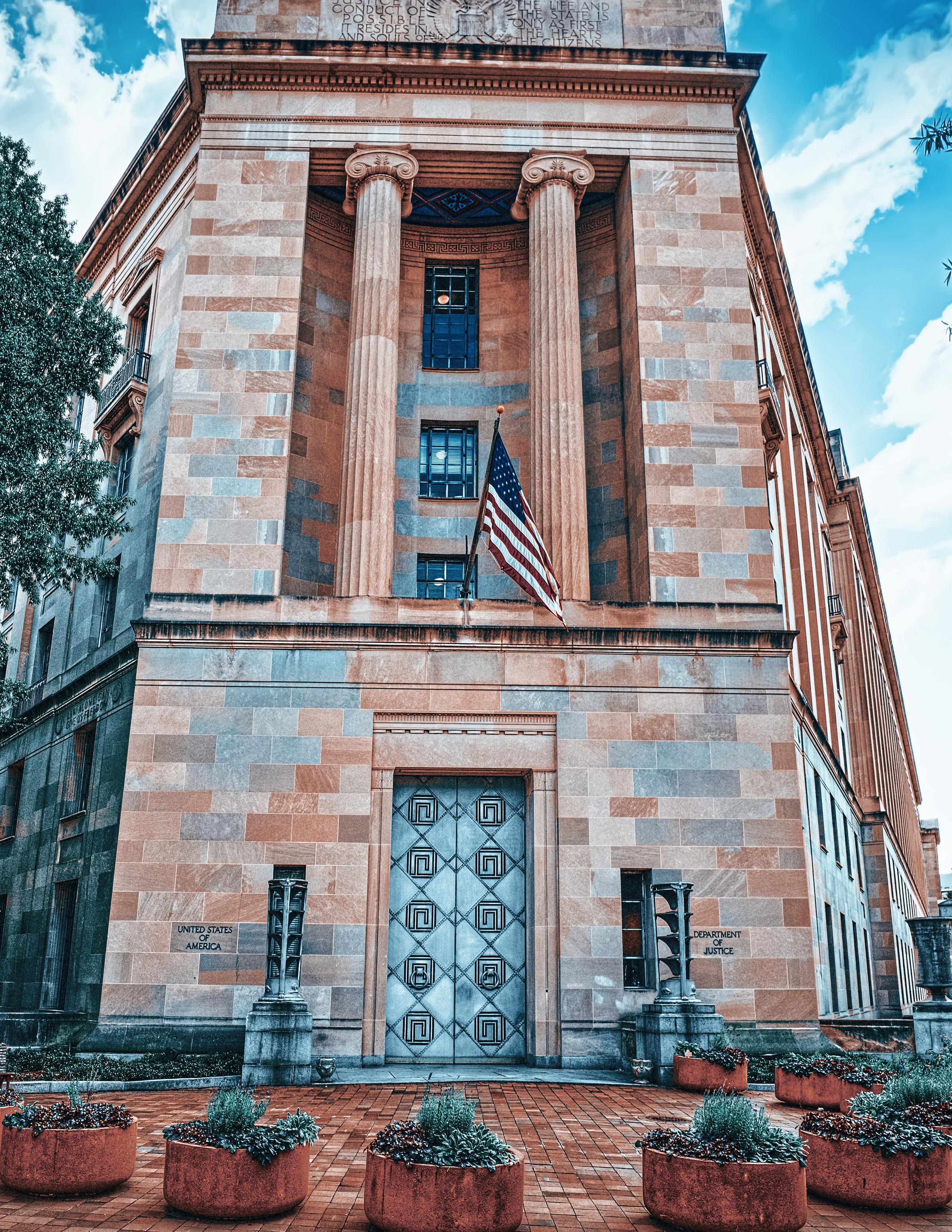
out are especially stark in the current environment, where the Trump–Bondi DOJ has initiated investigations widely viewed as politically motivated.224 Absent the carve-out, the DOJ IG would have full authority to investigate whether prosecutions were initiated for legitimate law-enforcement reasons or as retaliation for actions taken against the president. The IG could examine internal communications, departures from established procedures, and improper White House influence—areas that are currently off limits because they involve DOJ attorneys . Instead, scrutiny of these politically sensitive decisions rests entirely with OPR, an office that is structurally dependent on DOJ leadership and lacks transparency and independence. In circumstances where political leadership itself may be driving or enabling retaliatory prosecutions, reliance on OPR is inherently inadequate Removing the carve-out is therefore not merely a technical adjustment, but a critical safeguard that would enable independent oversight of the decisions most vulnerable to political weaponization
Shortly after enacting the IGA of 1978, Congress also passed the Ethics in Government Act of 1978, which established the OGE While IGs are primarily responsible for investigating alleged misconduct, OGE’s mandate is preventive in nature OGE develops and administers rules designed to prevent conflicts of interest, reviews financial disclosure statements, and works with incoming officials to address potential conflicts through mechanisms such as qualified blind trusts and divestments The Director of OGE serves on CIGIE and on CIGIE’s Integrity Committee, reflecting the close institutional relationship between the two oversight functions 195
Often described as two sides of the same coin, OGE and the IG community collaborate extensively OGE provides technical assistance to IG investigators on the interpretation and application of federal conflict-ofinterest laws, works with OIGs to review agency ethics programs, and offers training to OIG staff across the executive branch In FY 2024 alone, OGE trained up to 450 OIG staff OGE also refers potential ethics violations directly to agency IGs for investigation, reinforcing a complementary oversight model in which preventive ethics guidance and investigative accountability operate in tandem.196
As with OIGs, proposed reforms to the OGE have focused on strengthening its independence and enhancing its effectiveness as a preventive oversight body A central theme across these proposals is aligning OGE’s authorities and protections more closely with those of IGs, while preserving its distinct preventive mandate
IX-1. Provide OGE with some of the same powers and protections as IGs
OGE can provide an important redundancy with OIGs Giving OGE the authority to initiate communications with Congress directly, like the MSPB, OSC, and OIGs, would allow the OGE to make recommendations without needing to work through OMB 197 Going further, the OGE should be given the power to initiate investigations into alleged ethics violations by high-ranking employees 198 Making these investigations effective would require Congress to grant OGE various law-enforcement powers (e g , subpoena witnesses, compel the production of documents, and issue civil penalties) 199 Creating this redundancy would allow OIGs and OGE to collaborate more effectively and flexibly, and ensure that investigations cannot be quashed solely by putting pressure on the relevant IG office.
IX-2. Strengthen OGE’s authority concerning conflicts of interest
Requiring OGE to approve agency waivers for criminal conflicts of interest, rather than merely requiring consultation, would significantly strengthen the impact of its reviews . 200 To improve transparency, Congress could statutorily mandate that OGE publish ethics agreements of PAS nominees and appointees, certifications of compliance with ethics agreements by PAS appointees, certificates of divestiture, and recusal agreements 201 As with IGs, mandates for public transparency must increase with the office’s powers .
OGE’s ability to conduct financial oversight could by strengthened by authorizing OGE to conduct random audits of public and confidential financial disclosures However, the requirement to disclose income derived from publicly traded assets currently consumes a substantial share of OGE and agency ethics offices’ time and resources Dividends paid to all investors in a publicly traded company generally do not present conflicts of interest beyond the filer’s ownership stake itself, and the income generated is typically not relevant to conflict-ofinterest analysis . 202 To better target oversight, Congress could limit the universe of financial disclosures it considers by eliminating the requirement to disclose income from publicly traded assets, except for proceeds from abovemarket-value transactions 203
Although Congress designed OSC as an independent investigative and prosecutorial agency under the Civil Service Reform Act of 1978 and subsequently strengthened it through the Whistleblower Protection Act of 1989 (WPA), it remains structurally fragile, making it particularly vulnerable to manipulation by an authoritarian-minded executive Statutorily, the OSC’s mandate is to safeguard the merit system, investigate and prosecute prohibited personnel practices (PPPs), protect whistleblowers, and enforce the Hatch Act 204 Led by the U.S . Special Counsel, a presidential appointee confirmed by the Senate, Congress intended OSC to function as an external accountability mechanism for federal employees who cannot rely on internal channels . In practice,
however, the OSC’s independence is dependent mainly on norms rather than codified structural protections, creating a significant opening for weaponization OSC’s authority includes investigating whistleblower retaliation, reviewing disclosures alleging illegality, gross mismanagement, waste of funds, abuse of authority, or substantial threats to health and safety, and pursuing disciplinary actions before the Merit Systems Protection Board (MSPB) Yet these powers rest on two fragile foundations: its own resource capacity and the MSPB’s functional existence
Between 2011 and 2016, PPP and whistleblower disclosure cases increased by 66 percent, while completed cases failed to keep pace, resulting in growing backlogs 205 When the MSPB was unable to meet the voting quorum between 2017 and 2022, the OSC lost its primary adjudicatory partner, resulting in multi-year delays and reduced enforcement threats 206 The fact that the president is also responsible for nominating members of the MSPB compounds these vulnerabilities, allowing an executive seeking to evade accountability to effectively influence both the prosecutorial side (OSC) and the adjudicatory body meant to check it, undermining the neutrality of the enforcement chain Each of these bottlenecks allows an authoritarian-leaning executive to shirk accountability without formally dismantling the OSC Whistleblower
Weak internal whistleblower protections further erode OSC’s credibility and independence. Despite being the federal agency charged with protecting whistleblowers
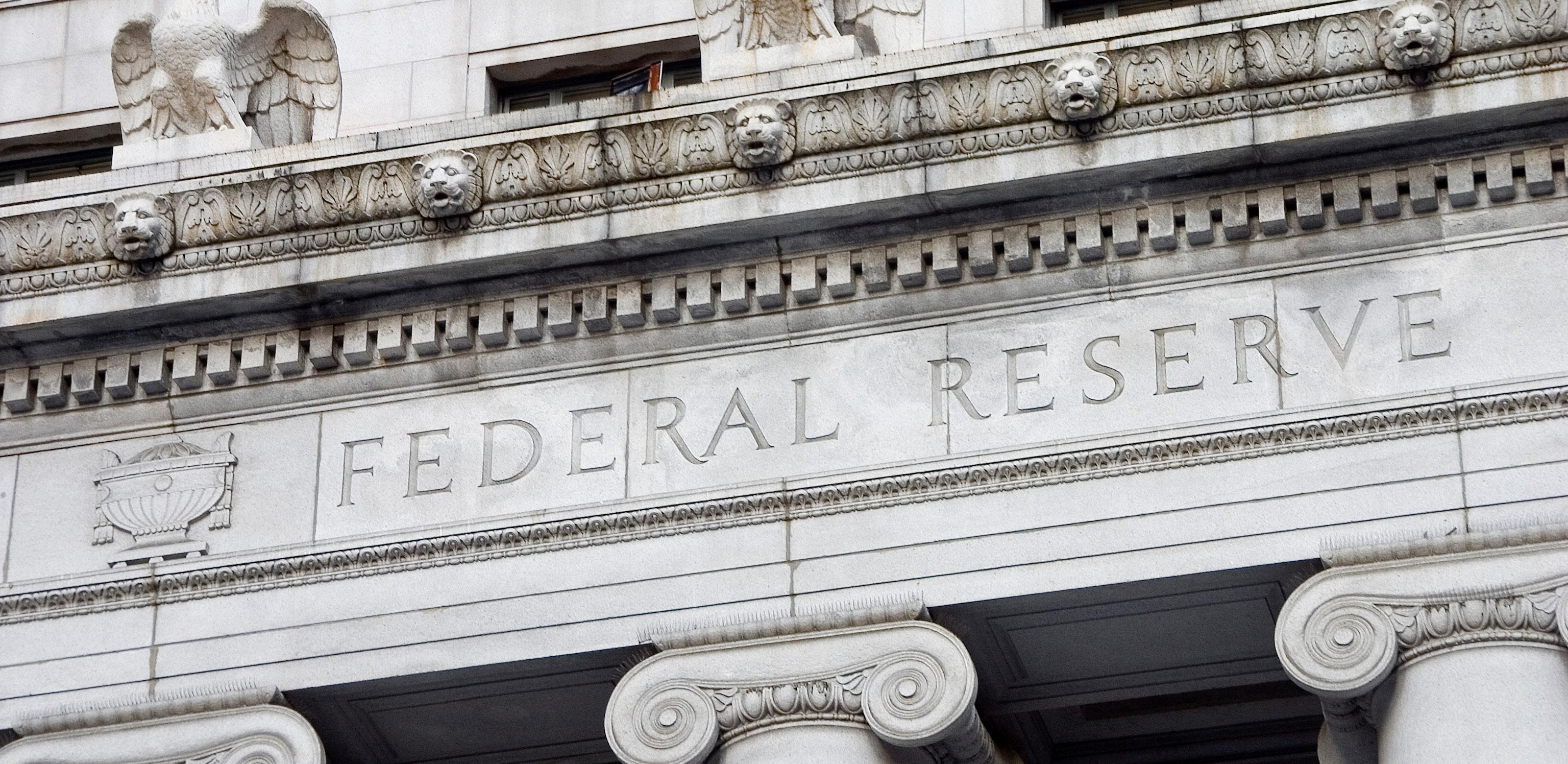
across the executive branch, the OSC’s internal mechanisms for reporting misconduct or prohibited personnel practices within the agency itself are weak and underutilized A GAO survey found that 17 of 87 OSC employees had considered filing internal allegations against another OSC employee but ultimately chose not to do so due to fear of losing anonymity, management reprisal, or uncertainty about the proper filing procedure.207 This gap highlights a troubling dynamic where the agency responsible for enforcing accountability cannot fully ensure accountability within its own ranks . If OSC staff hesitate to report misconduct or undue influence, it further limits its capacity to serve as a credible check on executive overreach.
OSC’s discretion in deciding which whistleblower disclosures or PPP to investigate also creates opportunities for political exploitation An authoritarianminded executive could selectively deploy the OSC against political adversaries while shielding allies from scrutiny Since the OSC enforces the Hatch Act, a statute frequently invoked in high-profile political controversies, the executive could pressure the Special Counsel to prioritize investigations targeting career officials, political opponents, or disfavored agencies, while quietly declining to pursue serious cases involving loyalists . Even without overt interference, simply appointing a compliant Special Counsel can shift enforcement priorities, narrow interpretations of protected disclosures, or undermine the requirement that OSC publicly post its agency reports In effect, an authoritarian-minded executive could transform the OSC from a protector of civil servants into an instrument for chilling dissent and consolidating executive power
The whistleblower disclosure and protection process is also susceptible to abuse The WPA and its subsequent amendments included key reforms that closed legal loopholes, expanded coverage, and allowed OSC to file amicus briefs in federal courts 208 Nonetheless, if the agency is underfunded, mismanaged, or politically captured, disclosures may be deprioritized, stalled, or effectively buried An executive who wishes to avoid public scrutiny can exploit this bottleneck by simply ensuring that cases languish Because OSC determinations of “substantial likelihood” of wrongdoing are discretionary,
political leadership can quietly raise the threshold for investigation or decline to pursue sensitive disclosures . Over time, this creates a chilling effect in which civil servants no longer trust external reporting mechanisms
This outcome directly serves an authoritarian agenda by suppressing information about executive misconduct
While the OSC is a bulwark against retaliatory abuses, its current structure leaves it vulnerable to exploitation by an executive seeking to consolidate power Its weaknesses (resource scarcity, dependency on the MSPB and voluntary agency cooperation, discretionary investigative thresholds, and politically appointed leadership) create multiple avenues for capture or misuse. Recognizing and addressing against these vulnerabilities is essential to protecting whistleblowers and civil servants, and preventing the quiet bureaucratic erosion of democratic accountability
IX-4. Expand OSC resources and strengthen internal processes
Congress should expand the OSC Disclosure Unit and the Investigation and Prosecution Division, to help eliminate chronic backlogs that otherwise invite political manipulation. To prevent future backlogs, the OSC should modernize its digital intake systems This would improve transparency, reduce case attrition, and create standardized data trails that are harder to bury. Further, the OSC should implement standardized procedures for handling internal complaints, providing clear protocols for anonymity, and improving communication with staff to reduce opportunities for internal retaliation
IX-5. Broaden the definition of “protected disclose” to include contractors and grantees
Legislative reforms should also broaden the definition of “protected disclosure” to ensure that staff can be confident that their reports will not lead to retaliation. Consistent with proposed reforms to other oversight offices, Congress should extend jurisdiction to contractors and grantees who perform substantial federal functions
The GAO, one of three congressional agencies, provides nonpartisan research and analysis to committees and members of both chambers
Most GAO work is low-profile oversight: evaluating the performance of government policies and programs, conducting financial and management audits, making recommendations for corrective legislation, and examining allegations of fraud, misconduct, and waste Statutes, congressional resolutions, conference reports, and committee reports mandate some GAO work Requests also come from congressional and committee leadership.209
OMB Director Russ Vought has stated, “We’re not big fans of GAO,” and called the organization “something that shouldn’t exist ”210 Increasing opposition from the Trump administration and some congressional Republicans stems primarily from concerns about GAO’s recent actions related to its congressionally mandated responsibilities under the Impoundment Control Act and the Congressional Review Act.211
The U.S . Comptroller General is widely regarded as one of the most institutionally independent oversight officials in the federal government The office has largely avoided the sustained politicization and retaliatory pressure that have increasingly characterized disputes involving executive branch IGs The Budget and Accounting Act of 1921, which transferred auditing authority from the Treasury Department to a new legislative branch agency, the GAO, created the position to strengthen Congress’s oversight of the executive.212
By statute, the president appoints the Comptroller General with the advice and consent of the Senate, but only after a bipartisan congressional commission
recommends a slate of candidates That commission includes House and Senate leadership from both parties, as well as the chair and ranking member of the relevant oversight committees The Comptroller General serves a single, nonrenewable 15-year term, a design intended to insulate the office from electoral cycles and short-term political pressure
Removal protections for the Comptroller General are unusually strong To remove a Comptroller General, impeachment requires a joint resolution of Congress after notice and hearing, and only for specified causes such as permanent disability, inefficiency, neglect of duty, malfeasance, felony conviction, or conduct involving moral turpitude. Over more than a century, most Comptroller Generals have served their full terms without pressure to resign, suggesting that the long, fixed term has functioned as an effective mechanism for independence.
At the same time, the Comptroller General model is not entirely immune from structural vulnerabilities . Although the statute establishes a congressional nomination commission, the Appointments Clause ultimately permits the president to nominate a candidate even absent commission consensus, as occurred during a period of congressional deadlock under Eisenhower 213 This suggests that, in a deeply polarized Congress, the process could become strained Nevertheless, over more than a century, the office has generally avoided the sustained politicization and retaliatory pressures that have affected other oversight officials, with most Comptroller Generals serving their terms without forced removal While the Comptroller General’s institutional design is not directly transferable to executive branch IGs, its experience offers a useful reference point for considering how long terms of office and high removal thresholds may shape oversight independence
The pending nomination and confirmation of a new Comptroller General offers a chance for reform (an acting
agency leader has served since December 30, 2025) The policy window has opened, and there is still time. The processes of recommending, nominating, and confirming a new Comptroller General in 1996 and 2008 took about 2 years each, often with irregularities . 214 Sensing this window, some have recommended that Congress explicitly prioritize fiscal stewardship as GAO’s core mission and remove its “politically charged” enforcement duties 215
X-1.
These proposals raise fundamental questions about GAO’s role within the federal accountability ecosystem. Should GAO continue to serve as Congress’s enforcement arm under the Impoundment Control Act, or would removing that function better protect its institutional legitimacy? Should Congress curtail GAO’s authority to litigate against the executive branch in order to reduce perceptions of politicization? Proponents of these changes argue that GAO’s institutional durability may be enhanced if it is insulated from overtly political disputes, though such reforms would leave unresolved the broader question of how Congress should perform these enforcement functions if GAO no longer does so Congress should work with GAO to reduce low-impact
mandates, authorize the comptroller general to decline specific requests, and strengthen GAO’s capacity to prioritize work with the highest expected impact 216
The critical role of GAO is stymied when it comes to the Intelligence Community.217 Although by statute, GAO already has the purview to conduct oversight of all federal agencies, the IC has, with very few exceptions, insisted that it is not subject to such audits . This effectively deprives Congress at a time when the IC’s activities present some of the most pressing needs for robust oversight in the executive branch.218 The Comptroller General has previously requested that Congress make clear that GAO has authority over IC oversight 219
X-2. Bolster GAO’s purview of intelligence community agencies
Congress can bolster GAO’s purview of IC agencies 220 Congress should clarify GAO’s ability to conduct audits in the IC . Congress could adopt language offered by the House of Representatives in Section 335 of its Intelligence Authorization Act for FY 2010 that would give teeth to GAO’s ability to conduct audits inside IC agencies . 221

Noah is a Master in Public Affairs student at the Princeton School of Public and International Affairs. He was raised in Minneapolis and has spent most of his career in public service working to end mass incarceration and reduce the harm caused by the criminal legal system After completing his B A in Economics at Reed College, Noah worked in the Markets Group at the Federal Reserve Bank of New York where he participated in open market operations and market intelligence work He then worked at the Brennan Center for Justice at NYU Law where he co-authored a major report on the fiscal impact of criminal fines and fees Following the completion of that project, he spent four years at the Crime and Justice Institute where he provided training and technical assistance to state and local governments implementing criminal legal reforms. Most recently, Noah interned at the New York City Department of Investigation, a law enforcement body with jurisdiction over New York City agencies His work focused on measuring bias in the NYPD’s response to public protests and on detecting campaign finance violations

Sarah is a Master in Public Affairs student at the Princeton School of Public and International Affairs Before SPIA, she studied as a Mitchell Scholar at Trinity College Dublin (Belfast campus), where she earned an MPhil (with Distinction) in Conflict Resolution and Reconciliation. Her MPhil dissertation, which won the top award in her program, examined the interplay between the information environment and the social environment, with a particular focus on misinformation and polarization in the U S The topic was partly inspired by her work as a project manager on health misinformation for the U S Surgeon General, with a focus on the impacts of COVID-related misinformation Sarah also spent several years working in local government in Somerville, Massachusetts During the pandemic, she assisted with emergency response efforts in Somerville and the broader region, including serving as the mayor’s point person to galvanize a regional coalition of mayors and scientific experts to coordinate public health measures.

Eric is a Master in Public Affairs student at the Princeton School of Public and International Affairs, concentrating in domestic policy. Prior to Princeton, he spent six years as an advisor to nonprofits and philanthropies at The Bridgespan Group, focused on democracy, advocacy, and public and global health He also completed a six-month secondment with the Leadership Now Project, where he engaged with business executives to advocate for pro-democracy legislation in the United States Eric holds a Bachelor of Science in Foreign Service from Georgetown University, where he studied Science, Technology, and International Affairs with a concentration in Biotechnology and Global Health

Mackenzie is a Master in Public Affairs student at the Princeton School of Public and International Affairs where she concentrates her coursework on international relations, democratic and institutional resilience, and conflict resolution To broaden her geographic expertise and delve into another angle of good governance, Mackenzie interned with the United Nations Office on Drugs and Crime (UNODC)’s Fiji office this past summer where she explored anti-corruption and transnational crime programming Prior to Princeton, she spent seven years working in the democracy and governance sector providing technical assistance to election management bodies, political party leaders, members of parliament and county assemblies, and civil society organizations across sub-Saharan Africa with the National Democratic Institute (NDI) and the International Foundation for Electoral Systems (IFES). Originally from St. Louis, Missouri, she received a B . A . in Peace and Justice Studies with a minor in Africana Studies from Wellesley College

Mariah is a Master in Public Affairs student at the Princeton School of Public and International Affairs She was born and raised in Los Angeles, where she graduated with honors from UCLA, majoring in political science and environmental science Her thesis on the impact of oil-sector FDI in Ecuador was one of 12 to receive the UCLA Political Science Departmental Honors distinction Since then, Mariah has worked and interned for various international and research organizations, including the Venezuelan refugee response team with USAID, the climate resilience arm of ICF International, and the humanitarian assistance team at the US Mission to the UN in Geneva, Switzerland Most recently, she worked as a sustainability fellow at a national affordable housing nonprofit implementing climate adaptation projects in California

Ryan is a Master in Public Affairs student at the Princeton School of Public and International Affairs, concentrating in international relations Originally from Boston, he is an experienced educator with a background in public education and city government He previously served as Director of Special Education and Student Support Services at a large high school in the Boston Public Schools, following earlier roles as a teacher and certified transition specialist supporting students with diverse disabilities. In these roles, he led key initiatives including oversight of summer programming and the delivery of compensatory services in response to COVID-19–related learning regression Prior to his career in education, Ryan gained experience in government and public service through internships with a United States Senator’s office and the Mayor of Boston

Benjamin is a Master in Public Affairs student at the Princeton School of Public and International Affairs, where he studies housing policy and U S democracy Ben was a Housing Fellow at the Center for Public Enterprise, a nonprofit think tank that provides research and strategy to help public officials expand government capacity in housing and energy finance Prior to starting at Princeton, Benjamin served as a district office caseworker for the Office of Congressman Kim and worked in New Jersey local politics Ben is from Marlboro, New Jersey, and received a B . A . in International Relations from the University of Delaware.

Conway is a Master in Public Affairs student at the Princeton School of Public and International Affairs, concentrating in domestic policy Before graduate school, Conway served as lead policy analyst and communications officer for the bipartisan Social Security Advisory Board, an independent federal agency Conway graduated magna cum laude from George Washington University, where his senior thesis, which measured multidimensional poverty in the United States by nativity status, received special honors and earned him a one-year research assistantship with the Oxford Poverty and Human Development Initiative In 2022, he was elected to the National Academy of Social Insurance Last summer, he was a graduate fellow with the Leadership Center on Attorney General Studies

Stephen is a Master in Public Affairs student at the Princeton School of Public and International Affairs, where his coursework examines domestic political institutions and governance, as well as U.S . foreign and transatlantic policy His academic interests include how domestic political dynamics shape U S foreign policy in global security contexts Stephen graduated with honors from the College of the Holy Cross in 2019, earning a B A with coursework in International Studies, Chinese, and French He is a four-year U S Air Force veteran Last summer, he interned with the German Marshall Fund Technology Program in Berlin, where his work encompassed transatlantic technology cooperation and strategic competition
Despite the threat posed by the political weaponization of government power, the United States lacks a unified legal framework that explicitly prohibits politically motivated enforcement across federal agencies . What exists instead is a patchwork of norms, internal guidelines, isolated statutes, and ad hoc protections—each operating unevenly, with varying levels of enforceability. This fragmented landscape leaves significant gaps that executive branch actors can exploit by using their governmental authority to target political opponents . Examining these gaps across key agencies underscores the need for a cohesive, binding, cross-agency set of protections
One of the few robust examples of an anti-weaponization framework emerged in the aftermath of Watergate Congress, responding to President Nixon’s use of the IRS to target political adversaries, enacted the Prohibition on Executive Branch Influence over Taxpayer Audits and Other Investigations, explicitly forbidding political interference in tax audits and tax enforcement 225 While this is arguably the strongest statutory protection against political retaliation in federal law, enforcement is not fully insulated from political influence Implementation depends heavily on the Treasury IG for Tax Administration (TIGTA)—whose effectiveness, like all IGs, hinges on sufficient independence and investigative authority—and on the DOJ, which prosecutes violations In circumstances where DOJ leadership is aligned with, or complicit in, political targeting, the statutory guardrail becomes far less potent Strengthening both TIGTA and the DOJ IG is essential, even where statutory protections already exist. Another commonly cited safeguard—the Hatch Act—also fails to fill these gaps . Although the Hatch Act restricts federal employees from engaging in partisan political activity, its protections are limited to election-related conduct. It does not prohibit the use of government powers to target individuals for non-electoral political
reasons, nor does it constrain prosecutorial, regulatory, or immigration-enforcement decisions motivated by political retaliation Enforcement is also structurally weak: the OSC can investigate violations, but it cannot directly discipline senior presidential appointees, and its findings must be referred to the president, who may ignore them entirely As a result, the Hatch Act offers little deterrent against broader forms of political weaponization, especially when political leadership is complicit
Beyond the IRS, the legal framework becomes far weaker and more reliant on executive-branch self-policing After Watergate, the FBI adopted the Levi Guidelines, later incorporated into Attorney General Guidelines, which restrict surveillance or investigations based solely on First Amendment-protected political activity 226 While historically significant, these guardrails are not statutory and can be revised or rescinded unilaterally by any AG They therefore do not provide stable or enforceable protections when the administration itself is the source of politicization The rapid loosening of these guidelines after 9/11 shows how fragile internal-only restrictions can be
The Federal Communications Commission likewise lacks explicit anti-weaponization protections Although the Communications Act requires licensing decisions to be based on the “public interest, convenience, and necessity,” there is no statutory prohibition on taking political considerations into account.227 This gap has become increasingly salient given public controversies, such as Commissioner Brendan Carr’s threats against networks based on the content of their programming . Without explicit legal standards barring politically motivated action, these norms remain vulnerable
The landscape at the Department of Homeland Security and its components, especially Immigration and Customs Enforcement, is even more concerning . There is no statute, regulation, or internal policy that forbids targeting individuals for immigration enforcement because of their
political views or expressive activities While the First Amendment has traditionally been interpreted to protect noncitizens’ speech, immigration law gives the executive branch extraordinarily broad discretion, and courts rarely question DHS’s stated motives . Even within the DOJ, which plays a crucial role in enforcing constitutional and statutory protections across government, safeguards remain essentially normative rather than legal The Justice Manual states that prosecutors “may not be influenced by the person’s… political association, activities, or beliefs ”228 But these are internal guidelines, not binding rules enforceable by courts or external actors . Their force depends entirely on the integrity of DOJ leadership and their willingness to impose administrative consequences When politicization originates from the AG or the White House, internal DOJ norms offer little meaningful constraint The OPR jurisdictional carve-out, explained above, magnifies this vulnerability
Taken together, these examples reveal a system whose protections are inconsistent, unenforceable, and overly dependent on the good faith of executive officials This fragility is especially dangerous when political pressures are exerted simultaneously across multiple agencies, or when politicization emanates directly from the president or AG
Experiences from other democratic systems underscore both the value and the limits of codifying anti-weaponization norms through formal conduct frameworks Several parliamentary democracies, such as the United Kingdom and other Commonwealth countries, have adopted explicit codes of conduct for senior political officials with clear prohibitions on the misuse of government powers for partisan or personal ends . While these models are not directly transferable to the U S constitutional system, they offer important lessons about how anti-weaponization norms can be defined, institutionalized, and communicated as binding expectations of democratic governance
The United Kingdom’s Ministerial Code provides the clearest example of a comprehensive normative framework aimed at preventing the abuse of state power Issued by the Prime Minister and binding on all ministers, the Code establishes that ministers must not use public office to advance personal or partisan interests, must uphold the impartiality of the civil service, and must ensure that official resources and authorities are not deployed for political retaliation or advantage 229 The
Code explicitly frames such conduct as incompatible with constitutional government, reinforcing the principle that executive authority exists to serve the public interest rather than to punish opponents Although not statutory, the Ministerial Code plays a central role in shaping expectations of lawful and ethical conduct within government and provides a shared vocabulary for identifying and condemning abuses of power.
Other Commonwealth systems have adopted similar approaches . Canada’s Open and Accountable Government framework and its accompanying Conflict of Interest regime articulate parallel norms requiring ministers and senior officials to avoid using governmental authority for improper purposes, including partisan gain 230 Australia and New Zealand likewise maintain ministerial standards/ cabinet manuals that emphasize neutrality, restraint, and the separation of political objectives from administrative action 231 Across these systems, the core insight is consistent: explicitly defining what constitutes improper political use of state power helps transform abstract democratic values into enforceable norms of conduct Even where enforcement mechanisms are imperfect, the presence of a clear, centralized framework reduces ambiguity, raises the political cost of abuse, and facilitates public accountability.
At the same time, the experience of these countries also highlights the limitations of purely normative or executivecontrolled frameworks In the United Kingdom and many Commonwealth countries, enforcement of ministerial codes ultimately rests with the Prime Minister, who both appoints ministers and determines whether violations warrant investigation or sanction Independent advisors may play an investigatory or supporting role, but they generally lack autonomous authority to initiate inquiries or impose consequences 232 As a result, these systems function most effectively in environments where political leaders are committed to norms of self-restraint—and are least effective precisely when leadership itself becomes the source of abuse. This structural vulnerability echoes the weaknesses identified in the U S context, where internal guidelines and norms collapse when executive officials act in concert to weaponize state power.
Taken together, these international models demonstrate that codifying anti-weaponization norms is both feasible and valuable, but insufficient on its own Clear standards can define unacceptable conduct, shape institutional culture, and create common expectations across government Yet comparative experience also makes clear that norms without independent enforcement mechanisms are fragile. The lesson for the United States is not that such frameworks should be avoided, but that any effort to codify anti-weaponization norms must be paired with institutions capable of enforcing them even
when political leadership resists accountability The next section turns to how these insights can inform the design of a durable, enforceable framework suited to the U S constitutional system
While much of norm setting takes place through modeling by party and government leadership, some institutional avenues are available to reinforce and hasten the process . However, codifying anti-weaponization norms requires more than a single institutional fix Political misuse of government power can occur at multiple stages: charging decisions, enforcement prioritization, regulatory action, and post hoc accountability No single reform can fully address these risks . Instead, a durable framework must combine procedural safeguards, ongoing oversight, and a combination of remedies and consequences, each aimed at different failure points within the system. Recent legal scholarship and legislative proposals offer several promising approaches that, taken together, would create a layered architecture for preventing and deterring politically motivated prosecutions and enforcement actions Recommendations III-1 (including “abuse of power” within the IG mandate), VIII-1 (prosecutor juries), and VIII-2 (a private right of action for politically motivated prosecutions) are a useful starting point
Relatedly, Congress could also codify equal-protection principles for enforcement actions While the Equal Protection Clause theoretically prohibits discriminatory enforcement, the judiciary applies it with extreme
deference and rarely scrutinizes prosecutorial motive Congress has greater latitude to define prohibited bases for decision-making, as it already has in civil service law, which bars adverse personnel actions based on political affiliation.233 Framed this way, such statutes would supply clear legal standards and evidentiary frameworks for identifying unlawful political retaliation, thereby closing the gap between broad constitutional principles and what is practically within reach of judicial review
In parallel, several oversight- and transparency-based reforms could strengthen deterrence without directly intruding on prosecutorial discretion These include mandatory logging and disclosure of White House–agency communications related to enforcement decisions (as contemplated in the Protecting Our Democracy Act, or PODA); reinforced statutory protections for special counsels, including codified removal-for-cause standards and triggered transparency; and reporting requirements to Congress when appointment, jurisdictional, or removal decisions are contested or overridden 234 Each of these measures seeks to reduce political interference through increased transparency.
Taken together, these proposals can be understood as layers of defense against political weaponization, each addressing a different stage of the enforcement process
Tool Stage Function
Prosecutor juries Ex ante
IG investigations Procedural
Statutory definition of abuse
Structural
Private right of action Ex post
Normative codes and transparency rules
Cultural / procedural
Legitimacy screening for sensitive prosecutions
Pattern detection and independent factfinding
Jurisdictional clarity and oversight authority
Deterrence and individual remedy
Signaling, accountability, and public trust
In December 2022, the Subcommittee Chair and Ranking Member, Senators Sheldon Whitehouse (D-RI) and John Kennedy (R-LA), released a joint report, Overprivileged, concluding that the executive branch has increasingly used expansive claims of executive privilege to obstruct congressional oversight 235 Their report finds that the traditional accommodation process has eroded under recent administrations .
Senators Whitehouse and Kennedy argue that voluntary reform by the executive branch is unlikely, so they call on Congress to enact bipartisan legislation to restore its oversight authority Their proposals include strengthening enforcement tools, accelerating judicial review of oversight disputes, and reaffirming Congress’s coequal role in the separation of powers
The multiyear, bipartisan effort by Senators Whitehouse and Kennedy, including their final report and expert testimonies at committee hearings, forms the basis for this section and many of its recommendations to improve interbranch information disputes and the ability of Congress to play its critical oversight role. These recommendations would contribute to strengthening the broader oversight and accountability framework in the US, which would in turn contribute to a more supporting environment for IGs to operate within
Much of the breakdown in the accommodation process stems from aggressive legal theories advanced by the Justice Department’s Office of Legal Counsel (OLC), which have encouraged executive agencies to resist oversight rather than compromise 236 These OLC opinions have significantly weakened Congress’s ability to investigate misconduct and hold the executive branch accountable Internal executive-branch interpretations
of the “law,” developed primarily within OLC, govern executive privilege in oversight disputes, not the courts 237 The cumulative effect of OLC-backed secrecy is institutional drift: internal executive-branch lawyering gradually displaces interbranch negotiation, weakening the accommodation process that historically resolved privileged disputes 238 When OLC opinions are treated as conclusive rather than advisory, OLC contributes to overreach, erodes congressional oversight, and upsets the separation-of-powers balance that executive privilege is supposed to serve.239
Direct the DOJ Office of Legal Counsel to reevaluate its opinions.
As a first step toward restoring balance to the accommodation process, a reform-minded president and their AG should have OLC reevaluate its body of opinions on congressional oversight to reflect stronger separationof-powers principles . In doing so, OLC should take care that its opinions properly account for Congress’s prerogatives as a coequal branch and do not place an undue thumb on the scale in favor of the executive when information disputes arise 240
The cumulative effect of OLC-backed secrecy is institutional drift: internal executive-branch lawyering gradually displaces interbranch negotiation, weakening the accommodation process that historically resolved privileged disputes
241 When OLC opinions are treated as conclusive rather than advisory, OLC contributes to overreach, erodes congressional oversight, and upsets the separation-of-powers balance that executive privilege is supposed to serve 242
Require stronger OLC opinion transparency in the future appropriations bills. However, this solution requires an executive to voluntarily relinquish their authority and privileges An additional approach, which
would likely require partisan cooperation, but would be less significant a change, would be for Congress to include stronger language in future appropriations bills regarding OLC opinion transparency The DOJ has still not complied with congressional direction in this matter, and stronger language may push executive agencies to comply more readily with congressional oversight efforts 243
In June 2021, the House Judiciary Committee held a hearing on how Congress could strengthen its legal tools to enforce subpoenas and compel testimony or document production from executive branch officials and others . 244 This section is heavily informed by that hearing, and particularly by testimony from Protect Democracy 245 Despite decades of executive branch resistance, Congress retains ample constitutional authority to address noncompliance with subpoenas and testimony requests . As the Supreme Court has reiterated, Congress’s power to obtain information is “broad” and “indispensable” because, otherwise, “Congress would be shooting in the dark” as it carries out its constitutional duties (Watkins v. United States, 354 U S 178 (1957)) Congress enjoys a robust constitutional toolbox to enforce its demands, but the tools need modernization 246 Congress currently has three complementary frameworks for subpoena compliance at its disposal: Congress can seek enforcement through the judicial branch by filing civil actions (judicial enforcement); it can enforce compliance through the executive branch by referring citations to federal law enforcement (statutory criminal contempt); and it can enforce compliance itself by exercising its inherent contempt power (inherent contempt).247
These three avenues are powerful in theory, but in practice are not sufficient because Congress lacks the ability to enforce compliance and instead relies on the executive branch for this function To address these challenges and strengthen Congress’s tools for enforcing subpoenas to conduct its oversight responsibilities, Rep Darrell Issa (R-CA) introduced the Congressional Subpoena Compliance and Enforcement Act in 2017 (H R 4010)248 and Rep Madeleine Dean (D-PA) introduced the bill again in 2020 and 2021 (H R 8335, H .R . 6079).249 It was then Title IV in PODA . 250 The House passed PODA, but the Senate never voted on it Congress should advance the Congressional Subpoena Compliance and Enforcement Act or similar legislation. This reform would clarify existing law by expressly codifying a cause of action for the House of
Representatives, the Senate, and their committees to enforce congressional subpoenas . It would require courts to expedite their consideration of these suits and give the chambers or their committees the ability to request that a district court initially assign the case to a three-judge panel, with direct appeal to the Supreme Court Before filing such a suit, Congress should be required to file a certification stating that it first negotiated, or attempted to negotiate, with the executive branch in good faith Subpoena reform should also empower courts to impose fines on noncompliant executive branch officials and prohibit government agencies from paying them Requiring subpoenaed officials produce adequate privilege logs to preserve relevant and valid privileges guaranteed by the Constitution and federal statutes, would also limit the executive branch’s ability to evade oversight through extraneous claims of privilege.
Neither chamber has enforced its inherent contempt power in more than a century. There is an open question as to what would happen if it did Congress could modernize its inherent contempt power by levying monetary penalties in lieu of issuing arrest warrants Reanimating inherent contempt enforcement would introduce modest but concrete costs to noncompliance.251 The Congressional Inherent Contempt Resolution introduced by Rep Ted Lieu (D-CA) was one such proposal (H R 1029) 252 The rules package proposal established a modified version of the inherent contempt enforcement procedure by which the House could unilaterally conduct trials, convict, and directly impose personal fines on executive branch officials and others who defied congressional subpoenas This proposal could have been implemented by amending the House rules or by passing a resolution.253 To minimize the likelihood of partisan abuse of this enforcement tool, the House could narrowly limit those subject to the penalty to senior government officials, rather than their mid-level reports . To ensure a remedy if the enforcement tool is clearly misused, Congress could also provide an express cause of action so that anyone held in contempt may contest the fine in court 254
Statutory contempt imposes criminal liability on those who refuse to testify or produce documents when Congress demands, or who fail to comply with a committee subpoena . There are no direct legal consequences from House or Senate approval of a contempt citation Traditionally, however, the citation itself, even without a conviction, would carry a variety of political consequences 255 In today’s polarized political
environment, the reputational costs of a citation appear no longer to deter bad acts . That said, if an individual is prosecuted and convicted of the offense, violations are punishable by a fine of up to $100,000 and imprisonment for between one and twelve months . 256 This is rare, but, for an exception, see Steve Bannon 257
Congress’s reliance on the DOJ to prosecute criminal contempt charges is the key weakness of criminal contempt as a subpoena-enforcement mechanism against executive branch officials . 258 In virtually every executive privilege dispute, the information or testimony sought is by definition in the possession of the executive branch, and in most high-stakes disputes, the executive branch has been able to run out the clock until the end of the Congress that initiated the oversight effort, or of the administration Congress sought to investigate.259 Criminal contempt may assist a committee in obtaining information from the executive branch This purpose, however, is served only indirectly in that a successful criminal contempt prosecution does not necessarily lead to a release of the information 260 The DOJ enforces the contempt statute because Congress cannot act as a law enforcement agency Congress must rely on the executive branch to prosecute violations of federal criminal law even when the offense is committed against Congress itself 261 Although the law explicitly states that it “shall be the duty” of the U S attorney to present an approved contempt citation to a grand jury, DOJ has not interpreted the statute as creating a mandatory duty; instead, it has asserted that it retains discretion over any individual contempt referral from Congress . 262 Both Democratic and Republican administrations have generally been unwilling to prosecute current or former executive branch officials for criminal contempt of Congress . 263 Most denials involve claims of executive privilege, asserting that the official was acting under the direction of the sitting president.264
Various proposals introduced in past Congresses would statutorily amend the criminal contempt process to establish a procedure for referring citations of executive officials to an independent counsel Multiple options have been proposed for determining such an official’s selection 265 Congress should consider new statutory contempt legislation that would authorize an independent special counsel to decide whether to prosecute findings of contempt by Congress and provide an expedited review and enforcement process in the courts that (as appropriate) narrow the issues presented.”266 This must be accompanied by a proper system of checks and balances by ensuring the legislative branch is sufficiently represented in the courts . 267 Congress cannot rely solely on the DOJ to prosecute criminal contempt of Congress; Congress ought to be able to appoint independent counsels to do so.
Civil litigation is the predominant method for attempted enforcement, developed mainly in response to the collapse of the other two enforcement methods . But there are several shortcomings with civil enforcement, such as a lengthy litigation timeline that enables the executive branch to “run out the clock . ”268 Courts and Congress operate according to two very different timetables Congress should establish procedures for expedited judicial review in federal district courts and on appeal as recourse for noncompliance The Congressional Subpoena Compliance and Enforcement Act proposed a three-judge panel convened at the request of Congress to hear a suit, and reviewable only by appeal directly to the Supreme Court 269 However, establishing expedited proceedings may have a limited effect on speeding up litigation 270 The House, unlike the Senate, has provided itself with no statutory cause of action to seek judicial enforcement of its subpoenas . 271 Congress should pass legislation providing the House of Representatives with a statutory framework for initiating civil actions Additionally, when oversight disputes require judicial resolution, Congress should establish a fast-track process so the executive branch cannot win by simply outlasting a congressional session.272
Congress’s power of the purse provides it with levers that it can use in information conflicts Congress should make creative use of those levers going forward 273 Because only Congress can control the disbursal of money from the Treasury, and because every part of the executive branch needs money to function, Congress can use its power of the purse to put significant pressure on the executive to change its behavior, including in how the executive branch responds to congressional information demands 274 During an extended controversy with the executive branch over access to information, a chamber could use the next appropriations cycle to pressure the agency by temporarily freezing its funding in proportion to the contempt, including perhaps zeroing out a particular “contumacious” official 275 The other branch may not agree with this approach; the president certainly will not. But appropriations bills are “must-pass,” which improves the political feasibility of this option 276 Congress consider the use of oversight riders . Appropriations could include riders requiring officials provide certain information to Congress which if they fail to provide, could trigger automatic cuts to the underlying appropriation or to the salaries of the officials who do not comply And, importantly, these riders should include explicit nonseverability clauses .
Acronym Term
AG Attorney General
AIG Association of Inspectors General
CIGIE Council of the Inspectors General on Integrity and Efficiency
CSO Civil Society Organization
DOJ Department of Justice
DPC Domestic Policy Council
EOP Executive Office of the President
FBI Federal Bureau of Investigation
FOIA Freedom of Information Act
GAGAS Generally Accepted Government Auditing Standards
GAO Government Accountability Office
IG Inspector General
IGA Inspector General Act of 1978
IPD Institutions that Protect Democracy
MSPB Merit Systems Protection Board
NSC National Security Council
OECD Organisation for Economic Co-operation and Development
OGE Office of Government Ethics
OIG Office of Inspector(s) General
OLC Office of Legal Counsel
OMB Office of Management and Budget
OPR Office of Professional Responsibility
OSC Office of Special Counsel
PODA Protecting Our Democracy Act
POGO Project on Government Oversight
PPP Prohibited personnel practices
SAI Supreme Audit Institutions
TIGTA Treasury IG for Tax Administration
USTR United States Trade Representative
WGB Working Group on Bribery
WPA Whistleblower Protection Act
1 Caroline Cornett, “Report Outlines Contributions of Inspectors General Fired by Trump,” Lawfare, July 23, 2025, https://www lawfaremedia org/article/report-outlines-contributions-of-inspectors-general-fired-by-trump
2 Justin Doubleday, “OMB Reverses Course on Defunding CIGIE,” Federal News Network, November 18, 2025, https:// federalnewsnetwork com/agency-oversight/2025/11/omb-reverses-course-on-defunding-cigie/
3 Dani Schulkin et al , “The Anti-Corruption Tracker: Mapping the Erosion of Oversight and Accountability,” Just Security, November 11, 2025, https://www justsecurity org/117267/anti-corruption-tracker/
4 Ben Raderstorf, “The Authoritarian Playbook,” Protect Democracy, June 15, 2022, https://protectdemocracy org/work/the-authoritarianplaybook/; Marina Nord et al , “State of the World 2024: 25 Years of Autocratization – Democracy Trumped?,” Democratization 32, no 4 (2025): 853, https://doi org/10 1080/13510347 2025 2487825
5 Marcia Mundt, “How Can We Rapidly Assess What’s Happening in the US Democracy?,” Substack newsletter, RealTime DemTrends, June 2, 2025, https://realtimedemtrends substack com/p/how-can-we-rapidly-assess-whats-happening
6 Emily Walsh, Political Accountability: Vertical, Horizontal, and Diagonal Constraints on Governments, Policy Brief #22 (2020), 1, https:// www v-dem net/media/publications/pb_22_final pdf
7 Nadia Hilliard, The Accountability State: US Federal Inspectors General and the Pursuit of Democratic Integrity (University Press of Kansas, 2017), 8
8 Tom Ginsburg and Aziz Z Huq, “The Pragmatics of Democratic ‘Front-Sliding,’” Ethics & International Affairs 36, no 4 (2022): 442, https://doi org/10 1017/S0892679422000508
9 Ginsburg and Huq, “The Pragmatics of Democratic ‘Front-Sliding,’” 442
10 Hilliard, The Accountability State, 209
11 Mark Tushnet, The New Fourth Branch: Institutions for Protecting Constitutional Democracy (Cambridge University Press, 2021), 23
12 Franklin De Vrieze, Independent Oversight Institutions and Regulatory Agencies, and Their Relationship to Parliament (Westminster Foundation for Democracy, 2019), 8, https://www wfd org/what-we-do/resources/independent-oversight-institutions-and-regulatory-agencies-andtheir
13 Danielle Brian, “The Inspector General Caucus Must Stand Up Against Trump’s Illegal Firings,” POGO, January 28, 2025, https://www pogo org/analysis/the-inspector-general-caucus-must-stand-up-against-trumps-illegal-firings
14 Tushnet, The New Fourth Branch: Institutions for Protecting Constitutional Democracy, 82
15 David Landau, “Courts Are Not Enough: Independent Accountability Institutions and the Protection of Democracy in the United States,” Social Science Research Network, March 4, 2025, 4, https://papers ssrn com/abstract=5165178
16 Tushnet, The New Fourth Branch: Institutions for Protecting Constitutional Democracy; Elliot Bulmer, Independent Regulatory and Oversight (Fourth-Branch) Institutions, Constitution-Building Primer, No 19 (International Institute for Democracy and Electoral Assistance, 2019), https://doi org/10 31752/idea 2019 27
17 Edward Olowo-Okere, Supreme Audit Institutions Independence Index: 2021 Global Synthesis Report, Equitable Growth, Finance & Institutions Insight (World Bank Group, 2021), 10, https://insai worldbank org/sites/default/files/2021-07/InSAI%202021%20Final%20Report_1 pdf; Overview of Supreme Audit Institution Models (United Nations Office on Drugs and Crime (UNODC), 2022), https://www unodc org/documents/ corruption/G20-Anti-Corruption-Resources/Thematic-Areas/Public-Sector-Integrity-and-Transparency/Overview_of_Supreme_Audit_Institution_ SAI_Models_2022.pdf; Gilles Miller, “Overview of the Different Models of SAIs and Focus on the Jurisdictional Model,” International Journal of Government Auditing, 2024, https://intosaijournal org/journal-entry/overview-of-the-different-models-of-sais-and-focus-on-the-jurisdictional-model/
18 Tarunabh Khaitan, Making Constitutional Promises Credible: The Preventive Potential of Guarantor Institutions, Constitutional & Legal Tools Workstream (The Prevention Project NYU, 2024), 8, https://app box com/s/jb16agqtjo56f0gtdn968coumwpgyts1
19 Tushnet, The New Fourth Branch: Institutions for Protecting Constitutional Democracy, 89–92
20 Tushnet, The New Fourth Branch: Institutions for Protecting Constitutional Democracy, 55
21 Specialised Anti-Corruption Institutions: Review of Models, Second Edition (OECD Publishing, 2013), 15, http://dx doi org/10 1787/9789264187207-en
22 United Kingdom National Audit Act 1983, Chapter 44, Section 8 1 (1983), https://www legislation gov uk/ukpga/1983/44
23 Constituição Da República Federativa Do Brasil, Capítulo I, Seção IX, Art 71(VII) (1988), https://normas leg br/?urn=urn:lex:br:federal:c onstituicao:1988-10-05;1988!art71&utm=
24 Tushnet, The New Fourth Branch: Institutions for Protecting Constitutional Democracy, 175
25 Steven Levitsky and Daniel Ziblatt, How Democracies Die, First Edition (Penguin Random House LLC, 2018)
26 Tushnet, The New Fourth Branch: Institutions for Protecting Constitutional Democracy, 174
27 Tushnet, The New Fourth Branch: Institutions for Protecting Constitutional Democracy, 79
28 Khaitan, Making Constitutional Promises Credible
29 Ginsburg and Huq, “The Pragmatics of Democratic ‘Front-Sliding,’”
30 Sharon Pia Hickey and Anastasia Rivera, Independent Institutions: Enhancing Democratic Integrity and Accountability through Constitutional Design (International IDEA, 2025), 9, https://www idea int/publications/catalogue/html/independent-institutions-enhancing-democratic-integrityand.
31 Republic of South Africa Constitution, Chapter 9, 193(5) 1996, https://www justice gov za/constitution/SAConstitution-web-eng pdf
32 Canada Auditor General Act (R S C , 1985, c A-17), Section 3 (2022), https://laws-lois justice gc ca/eng/acts/A-17/section-3 html
33 Bulmer, Independent Regulatory and Oversight (Fourth-Branch) Institutions, 27
34 Republic of South Africa Constitution
35 Canada Auditor General Act (R S C , 1985, c A-17)
36 United Kingdom National Audit Act 1983, Chapter 44 (1983), https://www legislation gov uk/ukpga/1983/44
37 Republic of South Africa Public Audit Act, Chapter 4, Part 3, Section 36
38 Khaitan, Making Constitutional Promises Credible, 13
39 Hickey and Rivera, Independent Institutions, 10
40 France Code Des Juridictions Financières, Titre IV (2022), https://www legifrance gouv fr/codes/section_lc/LEGITEXT000006070249/ LEGISCTA000006134844/
41 “Transparência e Prestação de Contas | Portal TCU,” Tribunal de Contas da União, accessed November 15, 2025, https://portal tcu gov br/transparencia-e-prestacao-de-contas
42 Bulmer, Independent Regulatory and Oversight (Fourth-Branch) Institutions, 37
43 Bulmer, Independent Regulatory and Oversight (Fourth-Branch) Institutions, 37
44 Supreme Audit Institution (SAI) of Norway et al , International Peer Review of the Performance and Financial Audit Practices of the United States Government Accountability Office (Government Accountability Office, 2023), https://www gao gov/products/d25791
45 Specialised Anti-Corruption Institutions, 33
46 Leonardo Borlini and Anne Peters, “Three Decades of International Cooperation Against Corruption—Looking Ahead,” International Journal of Constitutional Law 22, no 2 (2024): 477, https://doi org/10 1093/icon/moae031
47 Khaitan, Making Constitutional Promises Credible, 3
48 Tushnet, The New Fourth Branch: Institutions for Protecting Constitutional Democracy, 179
49 An Overview of State and Local Anti-Corruption Oversight in the United States, Integrity in Brief (Center for the Advancement of Public Integrity, Columbia Law School, 2016), 1, https://scholarship law columbia edu/public_integrity/71
50 Robin J Kempf, The Power of Accountability: Offices of Inspector General at the State and Local Levels, 1st ed, Studies in Government and Public Policy (University Press of Kansas, 2020), 9–10
51 Kempf, The Power of Accountability, 23
52 Kempf, The Power of Accountability, 25
53 Robin J Kempf, “Crafting Accountability Policy: Designing Offices of Inspector General,” Policy and Society 34, no 2 (2015): 137–49, https://doi org/10 1016/j polsoc 2015 05 003; Patricia Salkin and Zachary Kansler, “Ensuring Public Trust at the Municipal Level: Inspectors General Enter the Mix,” Albany Law Review, 2011; Kempf, The Power of Accountability
54 “History of AIG,” AIG - Association of Inspectors General, n d , accessed November 20, 2025, https://inspectorsgeneral org/about/historyof-aig/
55 Kempf, The Power of Accountability, 51
56 Kempf, The Power of Accountability, 61.
57 Kevin Featherly, New DHS Inspector General Kerber Aims to Root Out Fraud, Client Abuse, November 16, 2011, https://minnlawyer com/2011/11/16/new-dhs-inspector-general-kerber-aims-to-root-out-fraud-client-abuse/
58 Kempf, “Crafting Accountability Policy,” 142
59 Frank Chen, “The Powers of State and Local Offices of Inspector General,” Public Integrity, March 5, 2025, 4–6, https://doi org/10 1080/ 10999922 2025 2472875
60 Chen, “The Powers of State and Local OIGs,” 8–9
61 Lydia Segal, “Independence from Political Influence—A Shaky Shield: A Study of Ten Inspectors General,” Public Integrity 12, no 4 (2010): 297–314, https://doi org/10 2753/PIN1099-9922120401
62 Frank Anechiarico and Lydia Segal, “Public Integrity Networks,” Public Integrity 12, no 4 (2010): 325–44, https://doi org/10 2753/ PIN1099-9922120403
63 Va Code Ann § 2 2-310 1 (2025) https://law lis virginia gov/vacodefull/title2 2/subtitleI/partA/
64 “Principles and Standards for Offices of Inspector General (Effective July 1, 2024),” Association of Inspectors General, October 22, 2022, https://inspectorsgeneral org/wp-content/uploads/2025/10/Principles-and-Standards-for-OIGs-Eff-July-1-2024_Download pdf
65 Kempf, The Power of Accountability, 83.
66 Segal, “Independence from Political Influence—A Shaky Shield ”
67 Testimony of Jocelyn E. Strauber on Hearing on Charter Revision Proposals: Hearing before the New York City Commission to Strengthen Local Democracy (2025), https://www nyc gov/assets/doi/Testimony/CharterRevisionTest_FINAL pdf
68 Kempf, “Crafting Accountability Policy,” 143.
69 Kempf, The Power of Accountability, 76–81
70 Daniel R Alonso, “The Federal Edge in New York’s Fight Against Corruption,” New York State Bar Association, December 11, 2024, https://nysba org/the-federal-edge-in-new-yorks-fight-against-corruption/
71 Robin J Kempf et al , “An Empirical Assessment of the Contribution of State Offices of Inspectors General to Corruption Control,” Public Integrity 24, no 1 (2022): 51–65, https://doi org/10 1080/10999922 2020 1839188
72 “Principles and Standards for Offices of Inspector General (Effective July 1, 2024),” Association of Inspectors General, October 22, 2022, 19, https://inspectorsgeneral org/wp-content/uploads/2025/10/Principles-and-Standards-for-OIGs-Eff-July-1-2024_Download pdf
73 Va Code Ann § 2 2-313 (2025) https://law lis virginia gov/vacodefull/title2 2/subtitleI/partA/
74 Anechiarico and Segal, “Public Integrity Networks,” 340
75 Annual Report to the President and Congress: Fiscal Year 2024 (Council of the Inspectors General on Integrity and Efficiency, 2024), https://www ignet gov/sites/default/files/files/CIGIE%20Annual%20Report%20to%20the%20President%20FY2024_FINAL pdf
76 Government Auditing Standards 2018 Revision (Supersedes GAO-12-331G), GAO-18-568G (Government Accountability Office, 2018), https://www gao gov/products/gao-18-568g
77 UK Ministerial Code (2025), https://www.gov.uk/government/publications/ministerial-code/ministerial-code.
78 “Independent Adviser on Ministerial Standards: About Us,” UK Government, Updated 2025, https://www gov uk/government/ organisations/independent-adviser-on-ministers-interests/about.
79 Open and Accountable Government (Prime Minister of Canada, 2015), https://www pm gc ca/en/news/backgrounders/2015/11/27/openand-accountable-government
80 Jonathan David Shaub, “White House Inspection,” SSRN Scholarly Paper no 5152566 (Social Science Research Network, forthcoming 2026), https://doi org/10 2139/ssrn 5152566
81 BEACON Act, HR 4557, U S House of Representatives 119th Congress (2025), https://www congress gov/bill/119th-congress/housebill/4557
82 David Cohen, “FOIA in the Executive Office of the President,” NYU Journal of Legislation & Public Policy 203 21, no 1 (2018), https:// nyujlpp org/issues/volume-21-issue-1/
83 “Freedom of Information Act (FOIA),” The White House, accessed November 30, 2025, https://www whitehouse gov/omb/ information-resources/freedom-of-information-act-foia/
84 H R 2221: Office of Management and Budget Inspector General Act, HR 2221, 119th Congress (2025), https://www congress gov/ bill/119th-congress/house-bill/2221
85 Madison Gestiehr, “The Push to Grow the Capacity of Inspectors General: What Should Be Next for the Inspector General Community,” Administrative Law Review 75, no 4 (2023), https://link gale com/apps/doc/A783308341/ LT?u=prin77918&sid=summon&xid=8a0a5de5; Andrew M Wright and Sara Hall, Inspectors General Reform: Considering Proposals for Greater Independence, Effectiveness, and Accountability (American Constitution Society, 2021); Michael Horowitz Testimony on Recommendations and Reforms from the Inspectors General: Hearing before the Committee on Oversight and Government Reform, U S House of Representatives 115th Congress (2017), https://oversight house gov/hearing/recommendations-reforms-inspectors-general/; Allison Lerner Testimony on “Restoring Independence: Rebuilding the Federal Offices of Inspectors General”: Hearing on 117–15 before the Subcommittee on Government Operations, Committee on Oversight and Reform, U S House of Representatives 117th Congress (2021), https://www congress gov/event/117th-congress/houseevent/112461/text
86 IG Testimonial Subpoena Authority Act, S 1794, 117th Congress (2021), https://www congress gov/bill/117th-congress/senate-bill/1794
87 Gestiehr, “The Push to Grow the Capacity of IGs ”
88 Bob Bauer and Jack Goldsmith, “Inspector General Reform on the Table,” Lawfare, January 18, 2023, https://www lawfaremedia org/ article/inspector-general-reform-table
89 Hilliard, The Accountability State, 34.
90 Charles A Johnson and Kathryn E Newcomer, U.S. Inspectors General: Truth Tellers in Turbulent Times (Brookings Institution Press, 2020), 96.
91 Hilliard, The Accountability State, 69
92 Hilliard, The Accountability State, 77
93 Wright and Hall, IG Reform
94 “Oversight Matters: What’s Next for Inspectors General,” July 9, 2018, https://bipartisanpolicy org/report/oversight-matters-whatsnext-for-inspectors-general/
95 Carmen R Apaza, Integrity and Accountability in Government: Homeland Security and the Inspector General (Ashgate Publishing Company,
2011), 45
96 Apaza, Homeland Security and the IG, 45.
97 5 U S C ch 4; 50 U S C § 3517; Hilliard, The Accountability State, 220
98 5 U S C §406(a)
99 “FAQs about the OIG,” U.S. Government Publishing Office, https://www.gpo.gov/who-we-are/our-agency/inspector-general/faqs-aboutthe-oig#:~:text=GPO%20Directive%201215 1B%20states,including%20removal%20from%20GPO%20employment %E2%80%9D
100 Hilliard, The Accountability State, 34
101 Charles Johnson et al , “Balancing Independence and Positive Engagement: How Inspectors General Work with Agencies and Congress,” IBM Center for The Business of Government, Fall 2015, https://businessofgovernment org/sites/default/files/Balancing%20Independence%20 and%20Positive%20Engagement pdf
102 5 U S C §424(a)
103 5 U S C §424(c)
104 “Manuals & Guides,” Council of the Inspectors General on Integrity and Efficiency, https://www ignet gov/content/manuals-guides
105 Glenn A Fine, Watchdogs: Inspectors General and the Battle for Honest and Accountable Government (University of Virginia, 2024), 160, https://www upress virginia edu/title/10047/
106 5 U S C § 403
107 Bob Bauer and Jack Goldsmith, “Inspector General Reform in the NDAA,” Lawfare, December 23, 2022, https://www lawfaremedia org/article/inspector-general-reform-ndaa
108 5 U.S .C . § 403
109 Johnson and Newcomer, U.S. Inspectors General: Truth Tellers in Turbulent Times
110 Johnson and Newcomer, U.S. Inspectors General: Truth Tellers in Turbulent Times
111 5 U.S .C . § 403(a)
112 5 U S C § 424(c)(1)(F)
113 Henry B Hogue, Statutory Qualifications for Executive Branch Positions, no RL33886 (Congressional Research Service, 2015), https:// www congress gov/crs-product/RL33886
114 Fine, Watchdogs, 152
115 Dave Jamieson, “Democrats Tell Trump’s Trade Rep To Quit His Other Jobs,” HuffPost, April 9, 2025, https://www huffpost com/entry/ jamieson-greer-trade-rep-other-jobs_n_67f667d3e4b0b09182ab25a4
116 Fine, Watchdogs, 155
117 Fine, Watchdogs, 158
118 FY 24 Annual Report
119 5 U S C § 406(g)(3)(E)
120 Fine, Watchdogs, 161
121 Drew C Aherne, Appropriations Duration of Availability: One-Year, Multi-Year, and No-Year Funds, legislation no R48087 (Congressional Research Service, 2024), https://www congress gov/crs-product/R48087
122 Congressional Budget Justification: Fiscal Year 2025 (Council of the Inspectors General on Integrity and Efficiency, 2025), https:// www.ignet.gov/sites/default/files/files/CIGIEFY2025CongressionalJustifications.pdf#:~:text=CIGIE%20is%20funded%20through%20member%20 contributions%20as,is%20used%20to%20further%20its%20statutory%20mission:
123 Fine, Watchdogs, 159.
124 “Oversight Matters ”
125 FY 25 Congressional Budget Justification
126 Fine, Watchdogs
127 Johnson and Newcomer, U.S. Inspectors General: Truth Tellers in Turbulent Times.
128 Johnson and Newcomer, U.S. Inspectors General: Truth Tellers in Turbulent Times.
129 Hilliard, The Accountability State, 46
130 Hilliard, The Accountability State, 45
131 Hilliard, The Accountability State, 176
132 Integrity Committee Policies and Procedures 2018 (Council of the Inspectors General on Integrity and Efficiency, 2018); Johnson and Newcomer, U.S. Inspectors General: Truth Tellers in Turbulent Times; Fine, Watchdogs; Statutory Authorities to Prohibit IG Activities
133 CIGIE Integrity Committee Policies & Procedures 2018.
134 Fine, Watchdogs; “Oversight Matters ”
135 Fine, Watchdogs.
136 Fine, Watchdogs
137 Statutory Authorities to Prohibit Inspector General Activities, GAO-09-660R (Government Accountability Office, 2009), https://www gao gov/products/gao-09-660r
138 Hilliard, The Accountability State, 209
139 A bipartisan group of former members of Congress and top scholars from 19 universities developed a systematic plan in 2025 for Congress to recapture much of the constitutional authority it has ceded to the executive branch The report outlines legislative and internal reforms to help Congress reclaim power in four areas: the appointments process, congressional oversight, the power of the purse, and war powers Key recommendations include reducing presidential appointments, strengthening congressional oversight tools without relying on courts, increasing transparency and control over federal spending, and reasserting congressional authority over military force The authors warn that continued congressional passivity undermines checks and balances and diminishes the public’s voice in major policy decisions
140 Mickey Edwards and Peter M Shane, Reports Princeton Initiative on Restoring the Constitutional Powers of Congress (Center for the Study of Democratic Politics, Princeton University, 2024), https://csdp princeton edu/sites/g/files/toruqf2376/files/documents/Compilation_Princeton Reports_on_Article_One_Authorities_July-10-2025_0 pdf
141 Caitlin MacNeal, “Where Is Congress? The Legislative Branch Has Abdicated Its Duty to Serve as a Check on the Executive,” POGO, March 24, 2025, https://www pogo org/analyses/where-is-congress
142 Edwards and Shane, Reports Princeton Initiative on Restoring the Constitutional Powers of Congress, 1.
143 Tim Stretton and David Janovsky, “Fact Sheet: How Congress Can Strengthen Its Oversight Capacity,” POGO, January 20, 2025, https://www pogo org/fact-sheets/fact-sheet-how-congress-can-strengthen-its-oversight-capacity
144 Josh Chafetz et al , Report of the Sub-Committee on Congressional Oversight, Princeton Initiative on Restoring the Constitutional Powers of Congress (Center for the Study of Democratic Politics, Princeton University, 2024), https://csdp princeton edu/sites/g/files/toruqf2376/files/ documents/princeton-initiative-report-on-oversight_july_8_2025 pdf
145 Chafetz et al , Report of the Sub-Committee on Congressional Oversight
146 Anne Tindall and Grant Tudor Testimony on Modernizing Congress’ Subpoena Compliance and Enforcement Methods: Hearing before the Subcommittee on Courts, Intellectual Property, and the Internet, Committee on Judiciary, U S House of Representatives 117th Congress (2021), https://s3 documentcloud org/documents/21048546/protect-democracy-testimony-subpoena-compliance-enforcement pdf
147 Jonathan Shaub Testimony on Breaking the Logjam: Principles and Practice of Congressional Oversight and Executive Privilege: Hearing before the Subcommittee on Federal Courts, Oversight, Agency Action, and Federal Rights, Senate Committee on the Judiciary, U S Senate 117th Congress (2021), https://papers.ssrn.com/abstract=4251779.
148 Josh Chafetz Testimony on Article One: Strengthening Congressional Oversight Capacity: Hearing before the House Select Committee on the Modernization of Congress, U.S . House of Representatives 117th Congress (2021), https://www.congress.gov/117/meeting/house/114200/witnesses/ HHRG-117-MH00-Wstate-ChafetzJ-20211104 pdf
149 Shaub Testimony on “Breaking the Logjam.”
150 Kate Shaw Testimony on Breaking the Logjam: Principles and Practice of Congressional Oversight and Executive Privilege: Hearing before the Subcommittee on Federal Courts, Oversight, Agency Action, and Federal Rights, Senate Committee on the Judiciary, U S Senate 117th Congress (2021), https://www judiciary senate gov/imo/media/doc/Shaw%20-%20Testimony pdf
151 Tindall and Tudor Testimony on Modernizing Congress.
152 Shaub Testimony on “Breaking the Logjam.”
153 Shaw Testimony on “Breaking the Logjam.”
154 Jonathan Shaub, “The Executive’s Privilege,” Duke Law Journal 70, no 1 (2020): 1–91
155 Shaw Testimony on “Breaking the Logjam.”
156 Molly E Reynolds and Naomi Maehr, How Partisan and Policy Dynamics Shape Congressional Oversight in the Post-Trump Era (The Brookings Institution, 2023), https://www brookings edu/articles/how-partisan-and-policy-dynamics-shape-congressional-oversight-in-the-posttrump-era/
157 Kevin R . Kosar, Staffing Congress to Strengthen Oversight of the Administrative State, 24-01, Policy Brief Series (The C . Boyden Gray Center for the Study of the Administrative State, George Mason University, 2024), https://www aei org/research-products/report/staffingcongress-to-strengthen-oversight-of-the-administrative-state/
158 Kosar, Staffing Congress to Strengthen Oversight of the Administrative State
159 Molly E Reynolds, Improving Congressional Capacity to Address Problems and Oversee the Executive Branch, Policy2020 (The Brookings Institution, 2019), https://www brookings edu/articles/improving-congressional-capacity-to-address-problems-and-oversee-theexecutive-branch/
160 Reynolds, Improving Congressional Capacity to Address Problems and Oversee the Executive Branch
161 J D Rackey, “Congress Is Neglecting Its Best Tools for Oversight and Efficiency,” Bipartisan Policy Center, May 19, 2025, https:// bipartisanpolicy org/article/congress-is-neglecting-its-best-tools-for-oversight-and-efficiency/
162 Chafetz et al , Report of the Sub-Committee on Congressional Oversight
163 Chafetz et al., Report of the Sub-Committee on Congressional Oversight.
164 Chafetz et al , Report of the Sub-Committee on Congressional Oversight
165 J D Rackey, “Monitoring the Implementation of Congressional Modernization Recommendations,” Bipartisan Policy Center, June 11, 2024, https://bipartisanpolicy org/article/monitoring-the-implementation-of-congressional-modernization-recommendations/
166 Ernst Launches Inspector General Caucus, US Senator Joni Ernst of Iowa, January 15, 2025, https://www ernst senate gov/news/pressreleases/ernst-launches-inspector-general-caucus
167 Danielle Brian, “The Inspector General Caucus Must Stand Up Against Trump’s Illegal Firings,” POGO, January 28, 2025, https://www pogo org/analysis/the-inspector-general-caucus-must-stand-up-against-trumps-illegal-firings
168 J D Rackey, “Congress Is Neglecting Its Best Tools for Oversight and Efficiency,” Bipartisan Policy Center, May 19, 2025, https:// bipartisanpolicy org/article/congress-is-neglecting-its-best-tools-for-oversight-and-efficiency/
169 Reynolds and Maehr, How Partisan and Policy Dynamics Shape Congressional Oversight in the Post-Trump Era
170 Lauren C Bell and John D Rackey, “U S House of Representatives Witness Database, 1971-2016,” https://sites google com/view/ laurencbell/congressional-witness-data , April 30, 2025
171 Dan Lips and Soren Dayton, “Congress Should Reform the Government Accountability Office for the Twenty-First Century,” The Foundation for American Innovation, n d , accessed January 6, 2026, https://www thefai org/posts/congress-should-reform-the-governmentaccountability-office-for-the-twenty-first-century.
172 Elise J. Bean Testimony on Article One: Strengthening Congressional Oversight Capacity: Hearing before the House Select Committee on the Modernization of Congress, U.S . House of Representatives 117th Congress (2021).
173 Bean Testimony on “Article One.”
174 Bean Testimony on “Article One.”
175 Bean Testimony on “Article One.”
176 5 U S C § 402(b)(3)
177 5 U S C § 405(b) and 5 U S C § 405(c)
178 Morton Rosenberg, When Congress Comes Calling: A Study on the Principles, Practices, and Pragmatics of Legislative Inquiry (The Constitution Project, 2017), 95, https://goodgovernmentnow org/wp-content/uploads/2018/09/rosenberg-when-congress-comes-callingrosenberg-2017 pdf
179 Bean Testimony on “Article One.”
180 Bean Testimony on “Article One.”
181 “Independence and Evidence-Based Decision-Making Must Drive Federal Prosecutorial Actions,” American Bar Association, October 16, 2025, https://www americanbar org/news/abanews/aba-news-archives/2025/10/independence-and-evidence-must-drive-federal-prosecutorialactions/
182 Emily Bazelon, “‘Bow to the Emperor’: We Asked 50 Legal Experts About the Trump Presidency,” Magazine, The New York Times, October 6, 2025, https://www nytimes com/2025/10/06/magazine/legal-experts-trump-justice-department html
183 Alan Feuer and Lily Boyce, “How Trump Is Using the Justice Department to Target His Enemies,” U S , The New York Times, October 7, 2025, https://www nytimes com/interactive/2025/10/07/us/politics/trump-enemies-justice-department-investigations html
184 Bruce A Green and Rebecca Roiphe, “Who Should Police Politicization of the DOJ?,” Notre Dame Journal of Law, Ethics & Public Policy 35, no 2 (2021): 671–722
185 Ian Ayres and Saikrishna Prakash, “Lawfare Is a Downward Spiral Here’s an Escape Hatch ,” Opinion, Washington Post, November 28, 2025, https://www washingtonpost com/opinions/2025/11/28/trump-comey-james-lawfare-political-prosecution/ 186 Green and Roiphe, “Who Should Police Politicization of the DOJ?”
187 Senator Richard Blumenthal, “Preventing Political Prosecutions Act: Corrupt Abuse of the Justice System,” September 20, 2025, https:// www blumenthal senate gov/imo/media/doc/one-pager_on_political_prosecutions_legislation pdf
188 US Department of Justice, “Inspector General Deskbook: Legislative History of the Inspector General Act Amendments of 1988,” Department of Justice Office of Inspector General, 1989, 82–83, https://oig treasury gov/system/files/Documents/Inspector%20General%20 Deskbook%20Volume%201%20%282%20of%204%29 pdf
189 Government Accountability Office, Department of Justice: Information on the Office of Professional Responsibility’s Operations, GAO/GGD00-187 (Government Accountability Office, 2000), https://www.gao.gov/products/ggd-00-187.
190 Mike Fox, “How DOJ Helps Federal Prosecutors Escape Accountability & Evade Public Scrutiny,” Cato Institute, January 29, 2025, https://www.cato.org/blog/how-doj-helps-federal-prosecutors-escape-accountability-evade-public-scrutiny; Liz Hempowicz, “Rare Instance of Transparency in DOJ Attorney Misconduct,” POGO, May 24, 2016, https://www pogo org/analyses/rare-instance-of-transparency-in-doj-attorneymisconduct-2; Liz Hempowicz Testimony on “Restoring Independence: Rebuilding the Federal Offices of Inspectors General”: Hearing before the House Oversight and Reform Committee, U S House of Representatives 117th Congress (2021), https://www congress gov/117/meeting/house/112461/ witnesses/HHRG-117-GO24-Bio-HempowiczL-20210420 pdf
191 Hempowicz Testimony on “Restoring Independence ”
192 Fox, “How DOJ Helps Federal Prosecutors Escape Accountability & Evade Public Scrutiny.”
193 Michael E. Horowitz Testimony Concerning The Department of Justice’s Fiscal Year 2015 Budget Request: Hearing before the Senate Committee on Appropriations Subcommittee on Commerce, Justice, Science and Related Agencies, U.S . Senate 113th Congress (2014), https://oig. justice gov/news/testimony/statement-michael-e-horowitz-inspector-general-us-department-justice-senate-0
194 Fine, Watchdogs, 201
195 Issue One, “Time to Revisit the Office of Government Ethics (OGE),” May 23, 2017, https://issueone org/wp-content/uploads/2017/08/ IO-OGE-Edit-Memo-2017 pdf
196 Issue One, “Time to Revisit the OGE”; Walter M Shaub, “OGE and the Inspector General Community,” Office of Government Ethics, July 17, 2015, https://www oge gov/web/oge nsf/Resources/OGE+and+the+Inspector+General+Community; Chip Christopher, “OGE and Offices of Inspectors General Work Together to Protect the Integrity of Executive Branch Programs and Operations,” Office of Government Ethics, October 22, 2024, https://www oge gov/web/OGE nsf/Resources/ OGE+and+Offices+of+Inspectors+General+work+Together+to+Protect+the+Integrity+of+Executive+Branch+Programs+and+Operations
197 Walter M Shaub, “Campaign Legal Center Letter to House Committee on Oversight and Government Reform on the U S OGE,” November 9, 2017, https://campaignlegal org/sites/default/files/W%20Shaub%20Legislative%20Proposal%20-%209%20November%202017_0 pdf
198 Issue One, “Time to Revisit the OGE.”
199 Issue One, “Time to Revisit the OGE ”
200 Issue One, “Time to Revisit the OGE ”
201 Issue One, “Time to Revisit the OGE”; Shaub, “CLC Letter to House Committee on Oversight and Government Reform on the U.S . OGE ”
202 Issue One, “Time to Revisit the OGE ”
203 Shaub, “CLC Letter to House Committee on Oversight and Government Reform on the U S OGE ”
204 “About OSC,” U.S. Office of Special Counsel, accessed December 1, 2025, https://osc gov/Agency
205 Office of Special Counsel: Actions Needed to Improve Processing of Prohibited Personnel Practice and Whistleblower Disclosure Cases, GAO-18400 (Government Accountability Office, 2018), https://www gao gov/products/gao-18-400
206 Frequently Asked Questions about the Lack of Quorum Period and Restoration of the Full Board (Merit Systems Protection Board, 2025), https://www mspb gov/FAQs%20Absence%20of%20Board%20Quorum%2011-14-25 pdf 2025
207 GAO-18-400
208 “OSC Supports Further Improvements to Federal Whistleblower Protections,” Office of Special Counsel, February 1, 2017, https://osc gov/News/Pages/17-05-Whistleblower-Protection-Improvements aspx
209 Ida A Brudnick, Support Offices in the House of Representatives: Roles and Authorities, legislation no RL33220 (Congressional Research Service, n d ), 2–3, accessed January 6, 2026, https://www congress gov/crs-product/RL33220
210 April Rubin, “OMB Director Says Government Accountability Office ‘Shouldn’t Exist,’” Axios, September 3, 2025, https://www. axios. com/2025/09/03/russell-vought-government-accountability-office
211 Lips and Dayton, “Congress Should Reform the GAO for the 21st Century.”
212 31 U S C § 703
213 “Our 4th Comptroller General, Joseph Campbell—an Auditor, Not a Bowler,” Government Accountability Office, January 10, 2019, https://www gao gov/blog/2019/01/10/our-4th-comptroller-general-joseph-campbell-an-auditor-not-a-bowler
214 Lips and Dayton, “Congress Should Reform the GAO for the 21st Century ”
215 Lips and Dayton, “Congress Should Reform the GAO for the 21st Century ”
216 Lips and Dayton, “Congress Should Reform the GAO for the 21st Century ”
217 Kel McClanahan Testimony on GAO: Hearing before the House Appropriations Subcommittee on the Legislative Branch, U S House of Representatives 117th Congress (2021), https://s3 amazonaws com/demandprogress/testimony/2021-05-07_-_House_Leg_Approps_testimony pdf
218 McClanahan Testimony on GAO.
219 Gene L. Dodaro Testimony on GAO FY 2021 Budget Request: Hearing before the Subcommittee on the Legislative Branch, Committee on Appropriations, U S House of Representatives 116th Congress (2020), https://docs house gov/meetings/AP/AP24/20200227/110531/HHRG-116AP24-Wstate-DodaroG-20200227 pdf
220 Taylor J . Swift and Daniel Schuman, Recommendations to Strengthen Congressional Oversight (Demand Progress, 2021), https:// s3 amazonaws com/demandprogress/reports/Report__Recommendations_to_Strenthen_Congressional_Oversight pdf
221 Intelligence Authorization Act for Fiscal Year 2010, H .R .2701, U.S . House of Representatives 111th Congress (2010), https://www. congress gov/bill/111th-congress/house-bill/2701
222 Green and Roiphe, “Who Should Police Politicization of the DOJ?”
223 Lisa Kashinsky et al , “Federal Watchdogs Issue Scathing Reports on US Attorney for Massachusetts,” Politico, May 17, 2023, https://
www politico com/news/2023/05/17/watchdog-reports-us-attorney-for-massachusetts-00097411
224 Bazelon, “‘Bow to the Emperor’”; Feuer and Boyce, “How Trump Is Using the Justice Department to Target His Enemies.”
225 26 U S C § 7217
226 The Federal Bureau of Investigation’s Compliance with the Attorney General’s Investigative Guidelines (Department of Justice Office of Inspector General, 2005), https://oig justice gov/sites/default/files/archive/special/0509/chapter2 htm
227 47 U S C § 309(a)
228 Justice Manual, 9-27.000 - Principles of Federal Prosecution (Department of Justice, 2015), https://www justice gov/jm/jm-9-27000principles-federal-prosecution
229 UK Ministerial Code
230 Open and Accountable Government; Consolidated Federal Laws of Canada, Conflict of Interest Act, S C 2006 c 9, s 2 (2024), https:// laws-lois justice gc ca/eng/acts/c-36 65/fulltext html
231 New Zealand Cabinet Manual (New Zealand Department of the Prime Minister and Cabinet, 2023), https://www dpmc govt nz/sites/ default/files/2023-06/cabinet-manual-2023-v2 pdf; Michael Sloane, Updated Statement of Ministerial Standards: The Responsibilities of Ministers as Employers, Australia, https://www aph gov au/About_Parliament/Parliamentary_departments/Parliamentary_Library/Research/FlagPost/2022/April/ Update_to_Statement_of_Ministerial_Standards
232 UK Ministerial Code
233 5 U S C § 2302(b)(1)(E)
234 Protecting Our Democracy Act, H .R .5314, U.S . House of Representatives 117th Congress (2021), https://www.congress.gov/ bill/117th-congress/house-bill/5314; Bob Bauer and Jack Goldsmith, After Trump: Reconstructing the Presidency (2020), https://hls harvard edu/ bibliography/after-trump-reconstructing-the-presidency/
235 Sheldon Whitehouse and John Kennedy, Overprivileged: A Closer Look at Congressional Oversight, Executive Privilege, and the Separation of Powers (US Senate Committee on the Judiciary, Subcommittee on Federal Courts, Oversight, Agency Action, and Federal Rights, 2022), 27, https://www whitehouse senate gov/wp-content/uploads/imo/media/doc/ExecPrivReport_Final pdf Whitehouse and Kennedy, Overprivileged
236 Whitehouse and Kennedy, Overprivileged
237 Shaub Testimony on “Breaking the Logjam,” 3
238 Mark J. Rozell Testimony on Breaking the Logjam: Principles and Practice of Congressional Oversight and Executive Privilege: Hearing before the Subcommittee on Federal Courts, Oversight, Agency Action, and Federal Rights, Senate Committee on the Judiciary, U S Senate 117th Congress (2021), https://www judiciary senate gov/imo/media/doc/Rozell%20-%20Testimony pdf
239 Rozell Testimony on “Breaking the Logjam.”
240 Whitehouse and Kennedy, Overprivileged
241 Rozell Testimony on “Breaking the Logjam.”
242 Rozell Testimony on “Breaking the Logjam.”
243 American Governance Institute (AGI) Testimony on Transparency and Public Availability of Opinions Issues by the Justice Department’s Office of Legal Counsel: Hearing before the Commerce, Justice, Science Subcommittee, Senate Appropriations Committee, U S Senate 119th Congress (20252027) (2025), https://americalabs.org/2025/06/04/testimony-on-transparency-for-dojs-office-of-legal-counsel-opinions/.
244 Civil Enforcement of Congressional Authorities: Hearing before the Subcommittee on Courts, Intellectual Property, and the Internet, House Judiciary Committee, 117th Congress, accessed January 7, 2026, https://www congress gov/event/117th-congress/house-event/112726
245 Tindall and Tudor Testimony on Modernizing Congress.
246 Tindall and Tudor Testimony on Modernizing Congress, 2
247 Tindall and Tudor Testimony on Modernizing Congress, 5
248 Congressional Subpoena Compliance and Enforcement Act of 2017, H R 4010, U S House of Representatives 115th Congress (2017), https://www congress gov/bill/115th-congress/house-bill/4010
249 Congressional Subpoena Compliance and Enforcement Act of 2020, HR 8335, U S House of Representatives 116th Congress (2020), https://www congress gov/bill/116th-congress/house-bill/8335; Congressional Subpoena Compliance and Enforcement Act, H R 6079, U S House of Representatives 117th Congress (2022), https://www congress gov/bill/117th-congress/house-bill/6079
250 H R 5314 - 117th Congress
251 Tindall and Tudor Testimony on Modernizing Congress, 7–8
252 Congressional Inherent Contempt Resolution, HR 1029, U S House of Representatives 116th Congress (2020), https://www congress gov/bill/116th-congress/house-resolution/1029.
253 Tindall and Tudor Testimony on Modernizing Congress
254 Tindall and Tudor Testimony on Modernizing Congress
255 Todd Garvey, Criminal Contempt of Congress: Frequently Asked Questions, no. LSB10974 (Congressional Research Service, 2023), https:// www congress gov/crs-product/LSB10974
256 Garvey, Criminal Contempt of Congress
257 “Stephen K Bannon Sentenced to Four Months in Prison on Two Counts of Contempt of Congress,” U.S. Attorney’s Office, District of Columbia, United States Department of Justice, October 21, 2022, https://www justice gov/usao-dc/pr/stephen-k-bannon-sentenced-four-monthsprison-two-counts-contempt-congress
258 Garvey, Criminal Contempt of Congress
259 Shaw Testimony on “Breaking the Logjam.”
260 Garvey, Criminal Contempt of Congress
261 Garvey, Criminal Contempt of Congress.
262 Garvey, Criminal Contempt of Congress
263 Garvey, Criminal Contempt of Congress.
264 Garvey, Criminal Contempt of Congress.
265 Tindall and Tudor Testimony on Modernizing Congress, 10
266 Swift and Schuman, Recommendations to Strengthen Congressional Oversight
267 Rackey, “Monitoring the Implementation of Congressional Modernization Recommendations ”
268 Tindall and Tudor Testimony on Modernizing Congress, 5
269 Tindall and Tudor Testimony on Modernizing Congress, 6
270 Tindall and Tudor Testimony on Modernizing Congress, 6
271 Tindall and Tudor Testimony on Modernizing Congress, 6
272 Stretton and Janovsky, “Fact Sheet ”
273 Chafetz Testimony on “Article One,” 10
274 Chafetz et al , Report of the Sub-Committee on Congressional Oversight, 6
275 Chafetz et al , Report of the Sub-Committee on Congressional Oversight, 6
276 Chafetz et al , Report of the Sub-Committee on Congressional Oversight, 6
277 Specialised Anti-Corruption Institutions: Review of Models, Second Edition (OECD Publishing, 2013), 15, http://dx doi org/10 1787/9789264187207-en