Environmental Sustainability Report 2026
Section A 2
Message from the
Foundation Principal and Chair of Trustees
Section B 3
Executive Summary
Section C 6
Sustainability Pillars
Detailed Information
MESSAGE FROM THE FOUNDATION PRINCIPAL AND CHAIR OF TRUSTEES
In March 2024, we published our first Environmental Sustainability Plan. This new report highlights the significant progress the Foundation has been making across our key sustainability pillars and sets both the targets and direction for the future.
Our schools play a central role not only in educating pupils and staff about the importance of environmental sustainability, but also in encouraging and enabling their families and other members of our community to be actively involved in the stewardship of our planet.
The success of our work will be measured not only by our actions now, but also by the legacy of our pupils moving on from our schools determined to play their part in securing the future of our planet.
Huge thanks to Jacqui Johnson for masterminding our COP Week, held in December 2025, which was a real highlight of the past year. Full details about what was achieved can be read in this report.
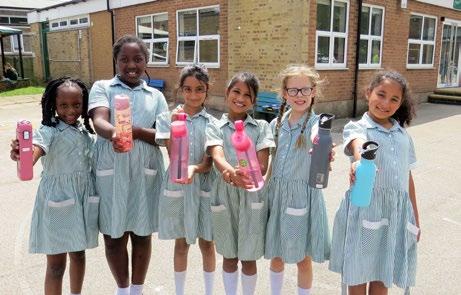
The fact that the week started with our very first whole Foundation assembly, and ended with COP statements on reducing single use plastics and Environmental Pledges from pupils, staff, parents and trustees gives a strong indication of our determination and commitment.
Enormous thanks also go to all members of the Foundation community who have actively supported us and we would particularly like to thank the Environmental Sustainability Advisory Board (ESAB) - which includes teachers and support staff from across the Foundation as well as trustees and pupils - for all their hard work, enthusiasm, ideas and dedication to ensure that we are active and optimistic in our Environmental Sustainability journey.
Ed Hester, Foundation Principal John Fisher, Chair of Trustees
State of the Art Technology Data Driven Decisions, Impactful KPIs Symbiotic Marketing, Communications and Brand Strategy
Ethos and Community - Missions,
Contents
Section A 2
Message from the
Foundation Principal and Chair of Trustees
EXECUTIVE SUMMARY
Pillar Main Achievements
• ESAB group active Foundation-wide
Leadership
Section B 3
Executive Summary
Section C 6
Sustainability Pillars
Detailed Information
1 Education and Pupil
Leadership
• Management data dashboard in place to analyse gas and electricity usage
• Hard targets for sustainability pillars starting to be set
• Curriculum for Life (CfL) developed to incorporate Environmental Sustainability into teaching and learning in all years across all schools
• First Foundation COP in December 2025
• Pupil Eco Groups active in all Foundation schools
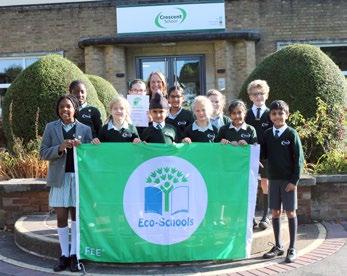
• Crescent School gained Eco Schools Green Flag Award
Future Targets
• Majority of Foundation Senior Leaders to be Carbon Literacy trained by September 2026
• Extend management dashboard to include water usage and printing/copying by September 2026
• Hard targets developed for all sustainability pillars by January 2027
• CfL fully embedded in all schools by September 2026
• Second Foundation COP to take place by December 2027
• Continue to grow active pupil participation in Eco Groups in all Foundation schools with increased impact year on year
• All schools to achieve Eco Schools Green Flag Award by September 2027
2
Biodiversity
• 26 trees planted across Foundation sites since Sept 2023
• No mow areas designated during the growing season to encourage insect and wildlife
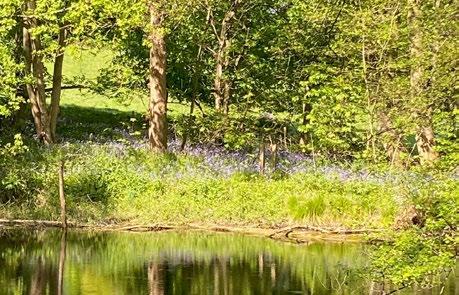
• Wildflower planting established
• Princethorpe bee apiary programme expanded and honey produced
• Forest School areas developed
• Allotment initiated as part of Home Farm Project at Princethorpe
• Plant a further 24 trees across the Foundation by September 2028 - ‘50 in 5’ project
• Re-wilding areas and tree planting areas designated on Foundation 20-year Masterplan (prepared by July 2027)
• Conduct a Habitat Carbon Assessment by Easter 2028 and build recommendations into 10-year development plans
• All future planting schemes to confirm the quantity of native species/variety in hedgerows
• Introduce seasonal homegrown food on catering menus
Pillar Main Achievements
3
Carbon and Energy Management
• Reduction in electricity usage by 8.2% over past three years
• Reduction in gas consumption by 26.4% over past three years
• Investment and installation in LED lighting in progress across all campuses. 65% of Foundation lighting is LED. All high-use floodlights converted to LED
• Completion of serverless project at Crackley Hall and Crescent. Physical hosts and servers turned off, significantly reducing energy use from IT infrastructure
• 19 virtual servers removed or migrated to cloud across the Foundation, saving approximately 8000 kWh per year
• Installation of new, more efficient network switches at Crackley Hall, reducing annual energy use by 64% compared to the previous switches
• Installation of more efficient network SAN at Princethorpe College, reducing maximum energy output from 1485w to 700w
• SMART heating controls installed at all Foundation sites
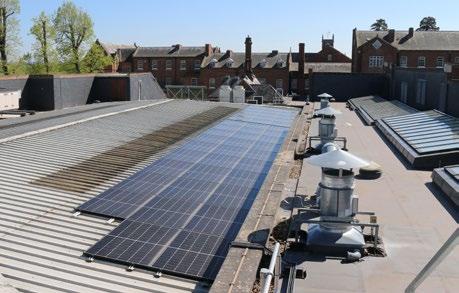
• Solar PV with 30kWp capacity installed at Princethorpe College. Has generated 45MWh of electricity since September 2023
• ‘Before you leave…’ initiative embedded to encourage a culture of conscious switching off of electrical items
4
Catering
• Catering companies committed to reducing food waste and single use plastics
• Eliminated all flavoured drinks in single use plastics (SUPs) at Princethorpe
Future Targets
• Further reduction in electricity usage by 2.5% over next three years
• Further reduction in gas usage by 5% over next 3 years
• 85% of all Foundation lighting to be converted to LED by September 2030
• Removal or migration of five further virtual servers over the next three years
• Rolling progamme for upgrade of heating systems to more efficient boilers in place by December 2026
• Capex plan in place to invest in additional Photo Voltaic panels by September 2027
• Implement spot checks and departmental accountability over unnecessary energy use from September 2026
• Reduction in stored hot water
5 Water
• Reduction in water waste achieved through improving the integrity of the supply pipework, eliminating leakage and close monitoring
• Electric water chillers reduced and replaced with mains fed bottle fillers
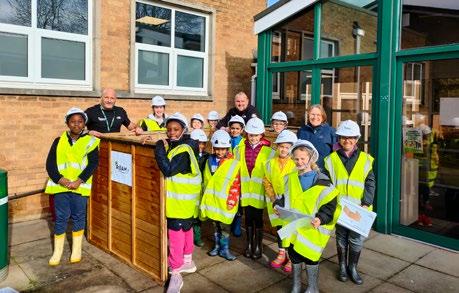
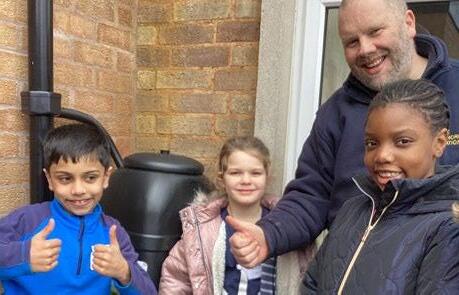
• Water butts installed to collect rainwater from roofs
• Collect consistent and accurate monthly food plate and prep waste data across all schools by December 2026
• Use benchmarked food waste data to set annual reduction targets by January 2027
• Full audit of all SUPs in catering by July 2026
• Set a challenging target to reduce SUPs by December 2026
• External review of catering to advise on the measurement and reduction of food miles in catering by June 2026
• Double the number of water butts in use across the Foundation by September 2028
• Foundation Facilities Masterplan 2025-45 to include provision for flood management methods that also provide irrigation solutions during dry spells
Future Targets 6
Waste and Use of Resources
• Reduction in the amount of printing/photocopying by 6.7% across the Foundation
• Foundation-wide clear, common approach to recycling bins in place
• Added additional recycling streams to waste management including separated paper and card and food waste
7
Buildings
• Planned rolling programme of window replacements and secondary glazing installation in place
• Thermal films added to windows to control heat gain/loss
• Air conditioning units removed from non-specialist areas
• Double glazing installed in UPVC frames for increased energy efficiency
• Second-hand furniture purchased or re-used where appropriate
• Full review of buses at Princethorpe to optimise route efficiency and offer late service to designated hubs
• All Foundation vehicles switched from Diesel to HVO Biofuel or removed from fleet in favour of electric
• EV charging point installed at PC and first Foundation EV in service
9
Procurement
• Major tender process which includes sustainability criteria introduced and trialled with procurement of the new photocopiers contract
• Targets for reduction in single use plastics (SUPs) discussed at COP 2025
• Initial Carbon Footprint (1,196tCO2e) calculated based on: Natural gas consumption, electricity usage and transport (staff and pupil commuting and school trips)
• Further 8% reduction in printing/photocopying over next three years
• Review waste disposal contractors and re-tender to ensure optimal service by January 2027
• Have defined waste metrics in place April 2027
• Have firm waste reduction targets in place by September 2027
• Submit ESOS Report with updated actions by December 2026
• Obtain agreement for heritage window replacement to enable a move towards double glazing and more thermally efficient frames by September 2027
• Move all-year round staff into office on heating systems independent to the main schools by September 2028
• Reduce heat loss through roofs by increasing loft insulation in all residential buildings by December 2026
• 5% increase in pupil use on buses by December 2027
• Review of air quality across all schools by June 2027
• Remove all fossil fuelled vehicles (excluding minibuses) from the Foundation fleet by 2028
• EV charging points for staff available at all Foundation sites by September 2028
• Fully investigate the possible introduction of new procurement purchase order system (PO), with inbuilt sustainability metrics (including SUP) to allow accurate benchmarking, control and future targets to be set by January 2027
• Carbon Footprint to be annually updated and published from November 2026
• Carbon Footprint calculations to include catering, waste and recycling measures from November 2027
Section A 2
Message from the Foundation Principal and Chair of Trustees
Section B 3
Executive Summary
Section C 6
Sustainability Pillars
Detailed Information
SECTION C SUSTAINABILITY PILLARS - DETAILED INFORMATION
1. ENVIRONMENTAL EDUCATION AND PUPIL LEADERSHIP
Education is central to our environmental and sustainability ambitions, and our focus remains on developing our pupils’ and staff’s knowledge and understanding of the climate crisis and the impact of our personal choices in terms of our own carbon footprint.
Our schools continue to educate, raise awareness, inform, offer choice and harness the power of collective responsibility and strong leadership to deliver our sustainability ambitions.
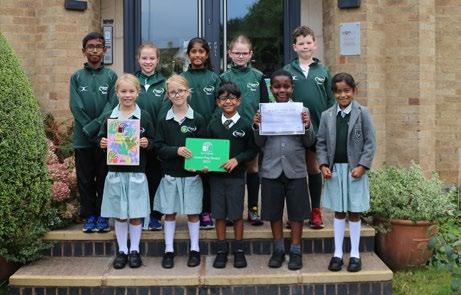
The Foundation has set an objective that all schools will achieve Eco-Schools status. The programme, which is a pupil-led initiative, that must be renewed each year, empowers young people to lead sustainability efforts within their school using a simple seven step framework for their environmental journey. Crescent School has taken part in the Eco-Schools programme for the last two years with its activities recognised twice by the award of a Green Flag with Distinction. This year, Princethorpe College and Crackley Hall School have begun their Eco-Schools journey.
FIRST FOUNDATION COP
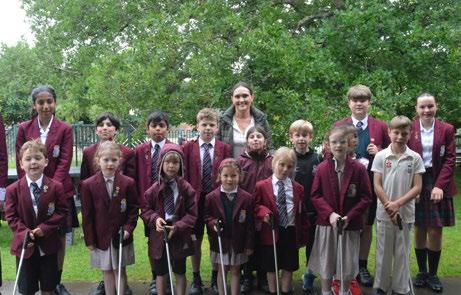
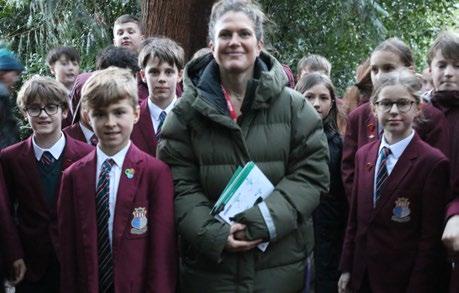
The Foundation’s schools held their first Mock COP in December 2025. The week began with our first ever whole Foundation Assembly where the school communities heard from pupils involved in the schools’ Eco Teams and from guest speaker Yewande Akinola, MBE, whose passion for engineering, sustainability, innovation and education was infectious.
On Tuesday 2 December, 60 pupils from Crackley Hall, Crescent and Princethorpe came together for a pupil ‘mini-cop’. The day focused on the impact of single use plastics and in preparation, the pupils had undertaken audits of single use plastics in their schools and drafted environmental pledges for pupils, staff and families across the Foundation.
In an action-packed day the attendees heard from some amazing guest speakers:
• Marine Biologist, Dr Nova Mieszkowska
• Director of Global Affairs at British International Investment, Andrew Palmer
• Senior Manager and Carbon Label Scheme Lead at The Carbon Trust, Dr Kirsten Dollery
• National Manager, Eco-Schools England, Adam Flint
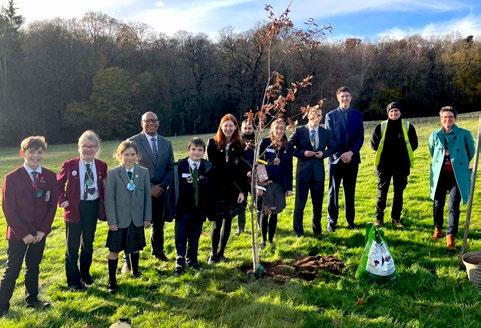
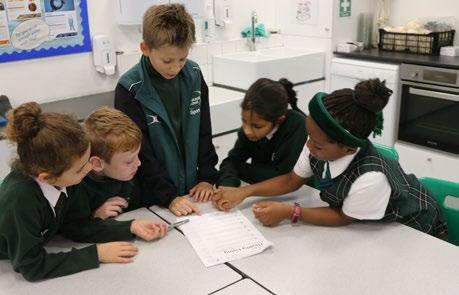
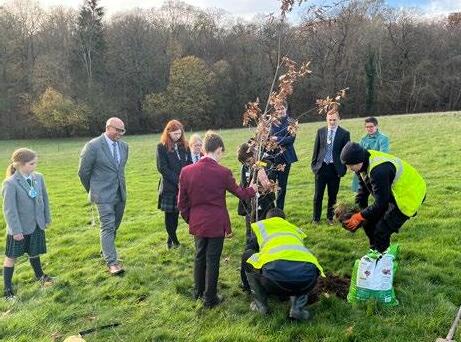
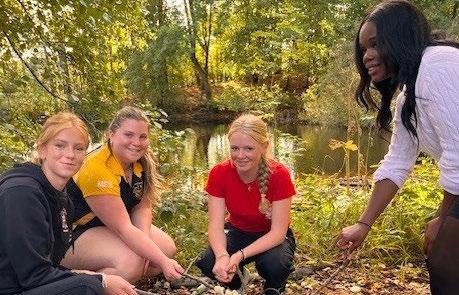
In cross school groups, pupils discussed and debated environmental issues in and outside their school and came up with their own ideas as to how to make a difference. They drafted a series of ‘pledges’ for a Princethorpe Foundation Single Use Plastics Treaty which have since been presented to the Senior Leadership of the schools. The eco-groups also took time out to plant a commemorative COP oak tree.
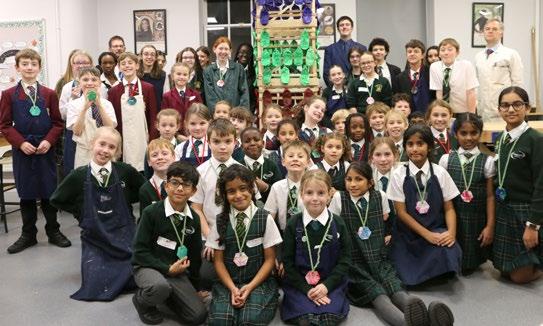
The final activity of the day was an artivism task that built a replica of the Foundation Tower using recycled plastic bottles, previously collected by all three schools. The activity was great fun as well as useful, as the finished piece has gone on to be used as recycling bins to collect single use plastics in our schools.
SINGLE USE PLASTIC TREATY
• The Foundation shall invest in more recycling bins with clear and simple labelling and shall educate pupils to generate better habits.
• Teachers shall use refillable whiteboard pens; parents should supply their children with refillable pens. The Foundation shall provide specific bins for recycling of pens.
• The Foundation shall reduce single use plastic from suppliers. At least 10% each year for the next 10 years and use single use plastic suppliers who provide non-single use options.
• All Foundation pupils shall be encouraged to always bring in recyclable water and hot drinks containers.
• The Foundation to include in the rewards system Junior da Vincis for sustainability.
Across the schools, lessons embraced the sustainability theme linking learning to tackling climate change. Support departments also engaged with the message with everything from a Virtual Archives display to Brazilian themed meals and snacks provided by the catering teams.
CURRICULUM FOR LIFE
• Sustainability is woven through pupils’ studies as one of the five strands of our new Curriculum for Life - Society. Sustainability themes are taught directly through lesson subject topics for example Globalisation in Geography, Atmosphere and Global Warming in Chemistry, Sourcing Materials in Design Technology and Corporate Social responsibility in Business Studies.
• Sustainability is promoted more widely through pupil personal development programmes in PHSE and 3PD, themed assemblies, co-curricular activities and enrichment programmes.
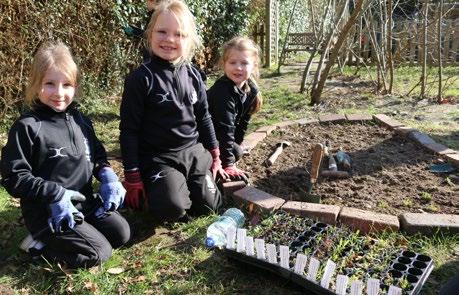
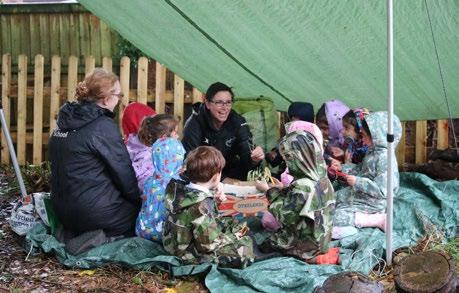
• Crescent School’s curriculum has been further developed to include Outdoor Learning with sustainability as a key strand. Forest School has also been extended to all year groups all year round with a holistic approach for caring for our planet.
PUPIL LED ECO TEAMS
PLANET PRINCETHORPE
• Facilitated by staff and led by the Sixth Form Environmental Prefect, Planet Princethorpe has continued to be an active community. The group includes representatives from every Tutor Group and meets every two weeks to progress sustainability issues.
• Over the past three years, the Planet Princethorpe team has actively promoted sustainability across the school through a wide range of initiatives and clubs. These have included: Green themed weeks, sustainability assemblies, green speakers, tree planting, litter picks, House Jolabokaflod book swaps, carbon monoxide monitoring in the playground, lights and energy monitoring, House battery recycling challenges, plastic bottle top recycling, pupil-led 3PD session on a greener Christmas, green themed Pupil Quiz, Precious Plastics Club, Upcycle Club and Beekeeping Club. A new Gardening Club is planned as part of the allotment development.
• The Planet Princethorpe team is now focused on achieving Eco School status. Pupils have completed their initial environmental review and chosen their three key areas to work on this year - Litter, School Grounds and Biodiversity. They have identified the actions they need to take and are developing plans to achieve them. The team also has plans for a school Eco Code and is developing an Eco Noticeboard to help communicate their activities to the wider pupil community.
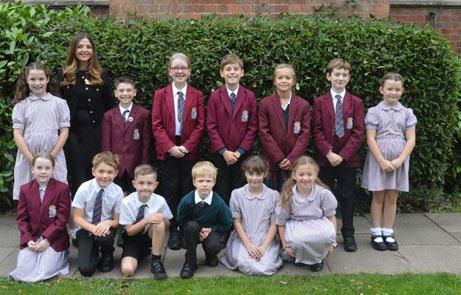
• Planet Princethorpe pupils worked with Crescent’s Green Team to develop ideas and plans for the Foundation first COP conference and championed its focus on single use plastics. The team’s leader, the Sixth Form Environmental Prefect, now attends the Foundation’s Sustainability Advisory Board meetings to provide feedback and champion pupils’ ideas.
CRACKLEY HALL ECO COMMITTEE
• Crackley Hall is working hard to achieve Eco Schools status. Each year a new Eco Committee is elected with representatives from Juniors 3 to 6. Led by the J6 Eco Stewards, pupils have completed an environmental review and chosen three key areas to focus onEnergy, Waste and Biodiversity.
• Over the past year the school has reviewed its plastic waste and improved its recycling. It has set up separated waste recycling in the dining room and introduced washable beakers and bowls to replace single use plastic items. They have worked with the Estates Team to introduce separated waste bins around school and plan to introduce waste bins in the school minibuses. Each class has participated in litter picks, evaluated and made recommendations on reducing their plastic waste and contributed to a whole school reused plastic bottle top, oak tree mural.
• In the Jubilee Garden, pupils planted wildflowers in two beds as part of the Flutter Flowers Project and built wildlife homes including a bug hotel and bat box. They are currently developing plans to make the Jubilee Garden a sensory garden. The school has also planted bulbs on the playground bank, an oak tree on the sports field and participated in Kenilworth in Bloom.
• The school took part in ‘Count your Carbon’ where the Ecocommittee collected data to understand what Crackley Hall’s carbon footprint is.
• The Eco Committee are currently developing an Eco Code for the school.
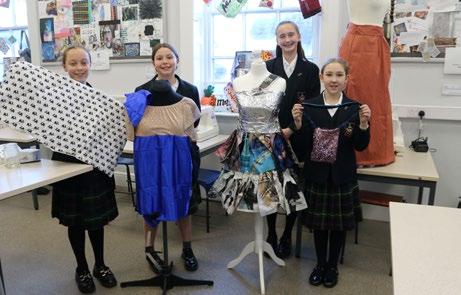
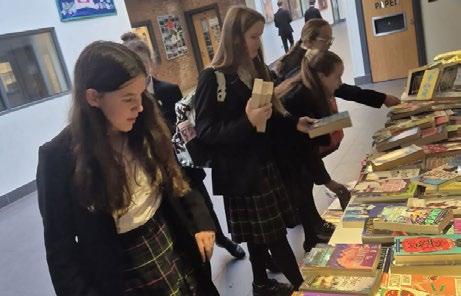
• Other highlights have included a regular programme of sustainability themed assemblies on topics from waste and recycling to fair trade, sustainability themed visits and workshops including water usage workshops, recycling assembly and visits from a bat conservation expert, a beekeeper and a sustainable fashion speaker. Then there have been whole school Junior da Vinci sustainability challenges, a House sustainable art challenge and the school’s Forest School achieving the Woodland Trust’s Bronze and Silver awards. The PTA also organised a pre-loved book sale.
CRESCENT GREEN TEAM
• Crescent School has the led the way in achieving Eco-Schools status having undertaken the programme for the last two years. They were also a finalist in the ISA Independent Schools National Awards for their work on sustainability.
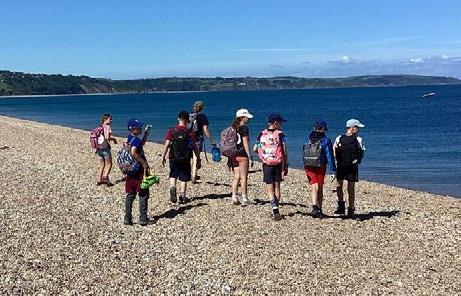
• Last school year, the Green Team identified three key focus areas, Energy, Litter and Marine, and launched numerous activities and campaigns to support their sustainability progress in these areas. They included the ‘Cut Your Carbon Campaign’, ‘Switch Off Fortnight’, and the ‘Keep Britain Tidy Great Big School Clean’. Pupils also took part in a Severn Trent Water Workshop, the RSPB Big Schools Birdwatch, an Energy Sustainability Debate and a Count Your Plastics Challenge. During the school year, pupils also set targets for energy usage, completed an audit of single use plastics, introduced crisp packet and glue stick recycling, undertook regular litter picks, agreed a school ban on laminating, worked with the school caterers to replace single use dessert bowls with reusable ones and even completed a beach clean as part of the Year 6 residential in Devon.
• Crescent has worked hard to improve the biodiversity of their school, by installing water butts and wildlife homes, planting trees and flower gardens, building new wildflower beds creating rewilding areas growing their own herbs and vegetables. The school’s Forest School area has been a key focus, with new trees planted and a whole programme of learning on sustainability through practical Forest School activities developed.
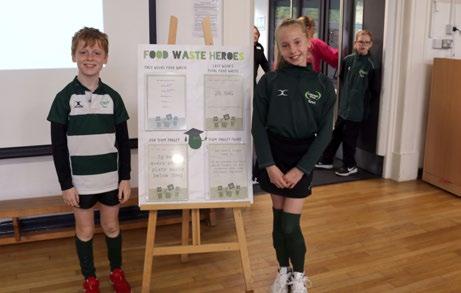
• The children have also focused on reducing their food waste. Pupils have engaged with the catering team exploring food waste, they are currently reviewing menus and agreeing targets. Food waste is now measured and reported to the children in the dining room. The catering team led an assembly on food waste and the school community signed up to a target of no more than 30kg per week.
• This year and as part of their Eco Schools accreditation, the Green Team are focusing on three new areas, Healthy Living, Global Citizenship and School Grounds. The group meets weekly, with representatives from each class from Years 2 to 6. They champion sustainability issues across the school and their enthusiasm and motivation are inspiring for all.
2. BIODIVERSITY AND THE NATURAL ENVIRONMENT
Maintain and enhance the green spaces across all three Foundation school sites to support increased biodiversity and our communities’ wellbeing.
TARGETS
• Develop and implement phased tree planting and management schemes for all three school sites.
• Introduce planting and landscaping schemes that remove non-native species from our woodlands and hedgerows and replace them with more diverse, native flora.
• Ensure a net-gain for trees, plants and grasses is achieved year on year.
• Produce and roll out mowing plans to maximise the headlands, verges and wildflower areas especially during spring.
• Continue to install wildlife ready-made homes such as bird and bat boxes, bug hotels and solitary bee bricks in appropriate locations.
• Minimise damage to the natural environment and soil on the schools’ grounds by reducing the use of heavy machinery and footfall.
• Develop Forest School areas, outdoor classrooms and an allotment to enable excellent outdoor learning provision at all schools.
• Increase staff and pupil knowledge of flora and fauna and its role in supporting ecosystems.
PROGRESS
• Tree planting projects have taken place at all schools. At Princethorpe this has included new trees on the school drive, further planting on the sports field, a parkland planting scheme out on Gwil’s Hill with plans in place to plant fruit trees in the new allotment area. At Crescent, three new fruit trees were added in the Forest School area, four Maples added to the sports field, two Wild Cherry trees to the front with an additional tree planted as part of the Barnaby Garden. The 80th celebrations at Crackley Hall saw an oak tree planted on the sports fields, cherry and apple whips planted in the Jubilee Garden and an autumn planting plan developed for the Sports Field. All tree planting schemes have been delivered in a managed way often involving pupils so that the trees can be protected and watered until they are established.
• Essential remedial work on the trees in the Lime Walk sadly included the removal of six unhealthy trees. The remaining 14 are being actively managed and are currently all healthy.
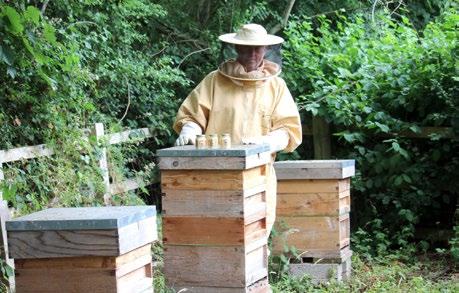
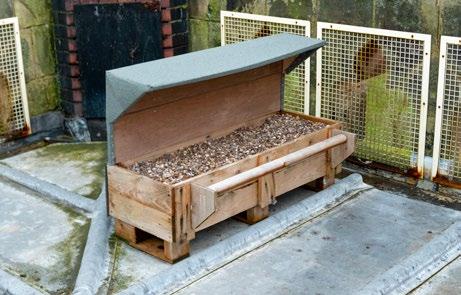
• The College’s bee hives were moved to a better location, providing morning sun, afternoon shade and better protection from the worst of the winter weather. Bird boxes, bat boxes and even a falcon box have been installed to provide ready-made wildlife habitats. Established badger setts in Switzerland and Windmill Wood are actively managed to minimise disruption.
• A cross-school biodiversity survey led by the Planet Princethorpe team and Sixth Form Biology students mapped the species in different areas of the school grounds.
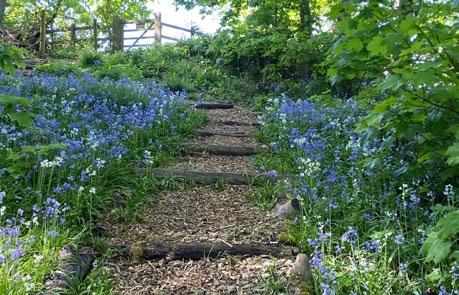
• Wildflower and native bulb planting in areas such as the main drive, Science access road, the bank behind the 1st XV Rugby pitch, the bank at Crackley Hall and flowerbeds at Crescent have boosted native plant diversity. The boundary fence next to the containers at Crackley Hall has been reinstated with the added area left to go wild.
• Managed mowing and initiatives such as no-mow May in areas such as the back of the Limes and on the schools’ sports fields have provided longer grass and flowers including dandelions and daisies offering early food and habitat for insects crucial for the ecosystem
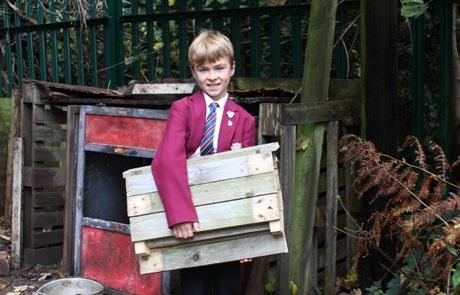
• Composting on all three sites is managed informally with fallen trees, clippings and mowings left in set locations across the sites to provide homes for insects and to recycle nutrients back into the soil.
• The use of heavy machinery has been reduced by the introduction of robot line markers and mowers. Machine noise has also been minimised by the switch to all electric mowers, strimmers and blowers.
• Wherever possible natural organic alternatives are used for fertilisers.
• Developments are underway at all three schools’ outdoor learning areas, including the allotment project at Princethorpe, stage 3 of the development of Windmill Wood safely opening up further areas of the site and the provision of extra cover in Crescent’s Forest School.
3. CARBON AND ENERGY MANAGEMENT
Improve energy efficiency and increase reliance on renewable sources to reduce greenhouse gas emissions.
TARGETS
• To understand, measure and then reduce our carbon footprint.
• Produce and provide access to detailed ongoing gas and electricity usage reports for each site. To analyse the data from these energy reports and produce an action plan of measures to reduce usage.
• Increase our green technology infrastructure - such as solar photovoltaic arrays - to generate more on-site electricity.
• Update our IT infrastructure to decrease energy reliance through less and more efficient servers, distribution and the phasing out of most desktop computers.
• Ensure we understand and fully meet our ESOS (Energy Compliance Auditing) obligations and ensure energy efficiency forms a key part of all decision-making by all staff. Submit and review ESOS action plan to meet the specified dates.
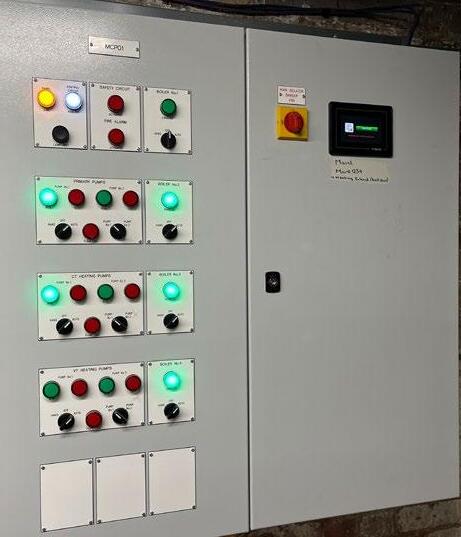
• Ensure that all Foundation heating systems are automated and software controlled with thermostat monitoring (e.g. Trend).
SUCCESSES
• All energy use monitored and the data is available through the Optima portal with the information feeding into the Management Data Dashboard. Further historic data added allowing for year-on-year tracking.
• Progress made on the use of automated meters to improve accuracy of readings and billing.
• Servers reduced from approximately 80 to 60. Plans to reduce further over the coming year. This also impacts on backup sizes and time taken contributing to a more power efficient infrastructure.
• Additional solar photo voltaic panels proposals initially for Princethorpe agreed with key stakeholders and awaiting capital funding. Quotes received to add solar panels at all sites.
• New Trend Building Management System heating control installed at Crescent.
4. CATERING
Manage the Foundation’s catering operations with the aim of maintaining quality and enjoyment of food while reducing any negative environmental impacts.
TARGETS
• Reduce overall food waste across all sites working towards a target of a 10% reduction in preparation waste and in plate waste.
• Reduce overall catering water usage across all sites working towards a target of a 5% reduction in usage.
• Gain energy efficiencies in all areas of catering supporting the Foundation’s target reductions in utility bills.
• Provide a broad variety of menus that offer good pupil choice and increase education with regards food.
• Review suppliers and produce and where possible ‘Choose Local’ with the aim to increase suppliers within 30 miles.
• Introduce and develop home grown produce and products.
SUCCESSES
• Catering teams continue to share our vision for sustainability. They presented to the ESAB sharing data and performance, and work closely with the Director of Business Services to support delivery of our vision.
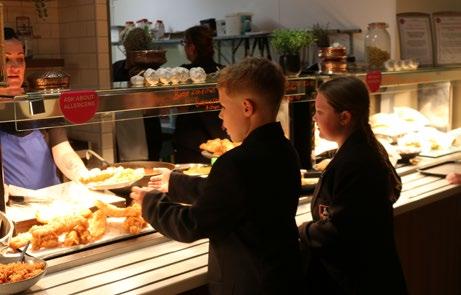
• All the Catering teams are focusing on food waste, working towards a target 10% reduction. Food is prepared at appropriate levels to keep preparation waste to a minimum and where possible food is reused the following day keeping waste to the minimum.
• For example, weekday vegetable leftovers are turned into soups for weekend sport. Portion size has been reviewed and is monitored carefully to reduce plate waste. Crescent had a Michaelmas Term 2025 average plate waste of 10.29kg. While Princethorpe College averaged 9.89kg daily plate waste and Crackley Hall 10.6kg across the first half term of the year.
• Water usage education of the Catering teams has led to sustainability behaviour changes such as taps not left running and unnecessarily large pans of water not used to boil or steam food.
• Lights in all catering areas are now on motion sensors and use efficient LED lighting methods.
• Catering cooking energy maximised with batch baking, full ovens and summer no/low cooking days.
• Catering equipment is modern and efficient meeting standards. Equipment is well serviced and maintained.
• Pupils are given a wide choice of food options which are well priced and have clear nutritional information. Labelling and promotions have improved. Catering representatives attend Pupil Councils, pupil focus groups and sustainability groups to listen to pupils’ views and to gain a greater understanding of pupils’ priority areas. Counter conversations and sales figures also inform menu planning.
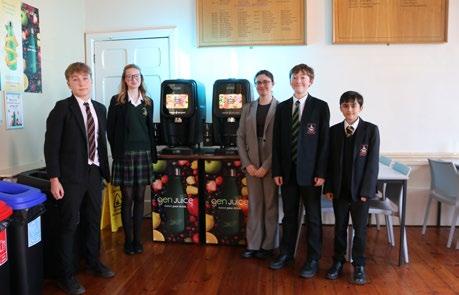
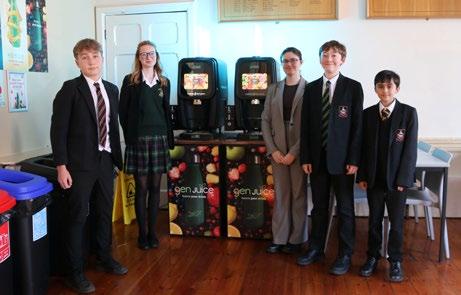
• Gen Juice sustainable dispensed drinks machines introduced at Princethorpe to reduce single use plastic bottle sales of Radnor Splashes (a large contributor to single use plastic sales). The change to Gen Juice has already enabled us to remove over half of our singleuse plastic bottles, making a meaningful contribution to reducing waste across the school.
• Clearing stations reorganised and improved to provide pupils with ‘easy’ opportunities to recycle their waste products. Serving bowls, pots, wraps and packaging reviewed to reduce the quantity of single use plastic.
• Ongoing programme of food education through the curriculum, classroom but also in the dining halls. Sustainability messages delivered through assemblies for example on food waste and fair trade but also through waste targets displayed at serving points.
• Catering teams are aware of our preference for local suppliers and the desire to increase the number of suppliers who are within 30 miles of the Foundation. Crescent purchased their potatoes for the COP Day from Mitchells Potatoes less than five miles away and are investigating if this could be a permanent arrangement.
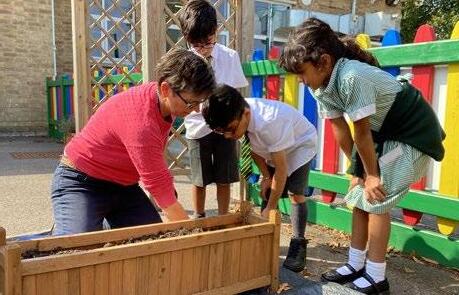
• School initiatives for seasonal homegrown food to supplement pupil and staff catering include Crescent’s potato and herb growing projects and the work to construct an allotment at Princethorpe.
5. WATER
Improve water efficiency across the Foundation through the design, procurement and maintenance of systems that meet current needs while sustaining water for future generations.
TARGETS
• Measure and understand our water usage and consumption and using this data set targets to reduce water usage.
• Reduce water waste through improving the integrity of the supply pipework and eliminating leakage.
• Reduce water usage through developing technology and by focusing on innovative water practices.
• Develop a programme to implement dual flush WCs, waterless urinals, automatic taps and efficient water fountains.
• Reduce the amount of stored water to reduce the risks from leaks and legionella.
• Harvest rainwater for grounds irrigation and irrigate at times of the day when evaporation of water is likely to be at its lowest.
PROGRESS
• Water usage now monitored and reported weekly with the data feeding into the Management Data Dashboard. Significant variations are promptly investigated by the Estates team.
• 90% of the toilets have been refitted with dual flush systems and all automatic flushes removed.
• Water storage is being strategically managed with investment in new heating systems at Princethorpe that don’t require stored water. The removal or reduction in size of some calorifiers (on-demand hot water systems) at Princethorpe has also reduced water storage. The building management system at Crescent was upgraded in 2025 to provide more efficient hot water system.
• Replacement plant which relies on water, such as washing machines and dishwashers continues to be procured with regard to its ecoperformance and water usage.
• Rainwater collection butts have been installed at Crackley Hall and Crescent to provide water for garden planting schemes.
6. WASTE AND USE OF RESOURCES
Promote responsible consumption, reduce the amount of waste produced and increase the reuse and recycling where the generation of waste cannot be prevented.
TARGETS
• Ensure the key areas of waste are defined and recognised by pupils and staff and through education and behaviour change, waste levels are reduced.
• Ensure that we separate all waste responsibly and follow all legislation including the new regulations for businesses from March 2025.
• Make it easier to recycle by providing easily accessible, labelled containers at appropriate locations across all sites.
• Introduce effective measurement of the key areas of waste.
• Maximise recycling and composting to reduce waste to landfill.
• Reduce our reliance on paper by increasing the usage and reliance on electronic data means.
• Ensure that we dispose of hazardous waste legally, ethically and responsibly.
SUCCESSES
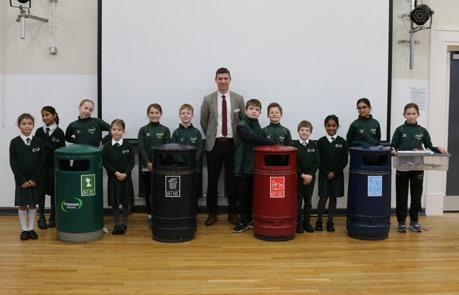
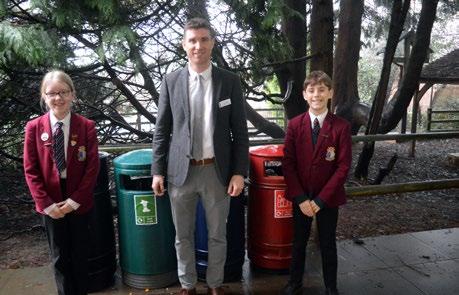
• Waste bins reorganised across the Foundation school sites, with separate bins for food waste, paper and cardboard, plastics and cans, and general waste. New system relaunched at all schools through assemblies with pupils.
• Work continues to drive the total waste collected down and to change the profile of the waste, increasing that which is recyclable and reducing waste which goes to landfill. The College has eight commercial 1100 litres bins, four are now used for recycling and four for general waste with increasingly only three needed each week for general waste.
• We fully comply with the March 2025 new waste regulations. Food waste is collected for commercial composting and paper waste collected as a resaleable commodity. Waste notes ensure that we can track how and where our waste is recycled and make sure it is dealt with sustainably.
• Monthly waste statistics tracked to monitor performance.
• Better and more sustainable specification of works has reduced building refurbishment waste, including hazardous waste such as oil paint tins.
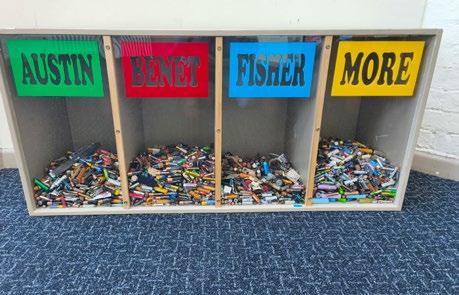
• Battery recycling bins encourage better recycling of potentially hazardous waste.
• When we dispose of equipment, furniture and other resources, we look for them to go to second users either within the Foundation or without. Better communication across the Foundation about equipment disposals helps promote redeployment elsewhere.
• On site IT equipment has been reduced through the serverless project and the use of more cloud storage. All IT equipment is recycled according to WEEE (Waste Electrical and Electronic Equipment) regulations.
7. BUILDINGS
Manage construction, refurbishment and occupancy of our buildings to reduce environmental impact while enhancing the wellbeing of building users.
TARGETS
• Ensure environmental sustainability is integral to the planning of all new building works projects.
• Consolidate specification templates to ensure environmental sustainability practices is integral to all building development and refurbishment.
• Investigate schemes to increase renewable energy and decrease reliance on hydrocarbons.
• Change all lighting systems to LED and improve the lighting control systems.
• Increase levels of insulation and double-glazing as part of a rolling programme and as part of refurbishment and upgrading of buildings.
• Look at service life, energy consumption and reliability in procuring new equipment.
• Engrain ‘Re-use and Repair’ rather than ‘Replace’ into all our thinking.
PROGRESS
• Works are now properly specified with all requirements detailed (as far as reasonably practicable) alongside industry best practice in terms of sustainability including where possible sourcing from local suppliers.
• For any refurbishment, all facets are considered such as lighting, power sources, insulation, windows, decoration etc, to ensure the job is done well, once and is futureproofed.
• Building works now incorporate landscaping and planting to create biodiverse environments. For example, planned sedum roofs for storage in The Orchard, rewilding areas as part of the Sports Changing redevelopment at Crackley Hall.
• Proposals developed for solar electric generation at all three sites. There is plenty of potential for further projects, but the upfront investment requires these to be managed over a period of years.
• An ongoing project continues to replace lighting with LED low wattage energy efficient sources continues, with the netball courts floodlights changed to LED in October 2025.
• Window replacement at Crackley Hall has been with heritage style, conservation approved double glazed units. Film applied to the windows at Crescent to improve window integrity, reflect the sun in summer and keep the warmth in winter, helping to reduce energy consumption.
• Consistent colour schemes across the school sites minimise paint purchase, usage and storage.
8. TRANSPORT
Daily travel accounts for three quarters of our carbon footprint. The promotion of sustainable school travel reduces carbon emissions, improves air quality, promotes health and wellbeing and reduces noise, congestion and road traffic in our school environments.
TARGETS
• Produce regular measurements of the carbon footprint due to travel. Work to reduce carbon footprint due to pupil and staff travel to and from our schools and due to Foundation-owned vehicles.
• Reduce the use of fossil fuels, in particular diesel, in Foundation vehicles and equipment.
• Promote and encourage sustainable travel options for pupils, parents and staff, including lift sharing and late buses. Analyse Princethorpe’s bus services regularly to modify offer to increase use and remove low use routes.
• Develop sustainable travel within school life, including our plans for visits, trips, conferences and in meetings at our schools.
• Contribute to reducing air pollution and mitigating the impact of poor air quality around the schools’ sites, for example: decreasing pollution at pick-up/drop-off times by encouraging parents/drivers to turn off engines whilst waiting or where possible walk to school.
PROGRESS
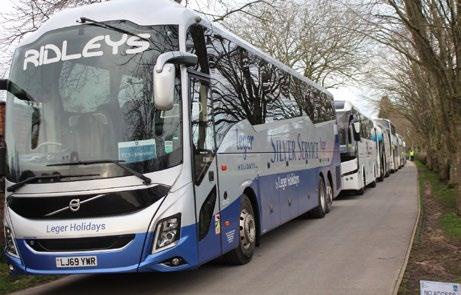
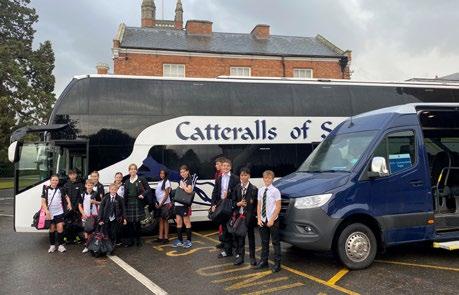
• Bus services reviewed in detail with pupils’ locations mapped and services re-routed correspondingly removing two routes (ie four bus journeys a day) and replacing them with three late bus runs to local hubs from Monday through to Thursday for the Michaelmas and Lent Terms.
• Late buses to hubs introduced in September 2025 and refined in January 2026.
• Two free bus trial promotions run to encourage pupil take up.
• Walk to school, cycle to school and lift sharing campaigns run at the Prep schools.
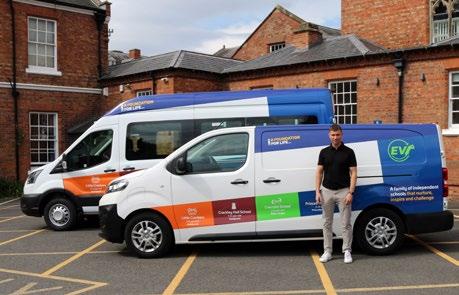
• Three school minibuses have been replaced with newer more environmentally friendly and lower emission vehicles.
• Minibus fleet rationalised across the Foundation to maximise availability and use.
• More minibus staff drivers trained reducing the need for Sports department booking of coaches.
• Changed all Foundation fuel from diesel to biofuel which has 90% lower emissions.
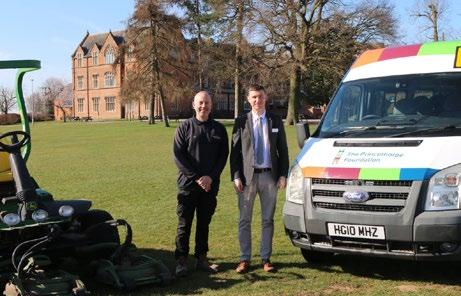
• Replaced diesel-powered Foundation vehicles/machinery (excluding minibuses) with electric vehicles where feasible. Replaced two Estates diesel vans with one electric van with electric charging point.
• Introduced electric robot mower and line marking machines to reduce the use of heavier fuelled garden machinery.
• Bus drivers trained to turn off engines while waiting.
• Playground idling initiatives delivered by Planet Princethorpe team.
9. PROCUREMENT OF GOODS AND SERVICES
Ensure that all procurement is carried out to meet our sustainability objectives and that third parties support our ambitions so that they contribute ethically to our goals.
TARGETS
• Create and develop a sustainable procurement process to support the Foundation in achieving their sustainability targets and ambitions of carbon reduction.
• Engage with and ensure that all suppliers have good sustainability credentials, including working towards net zero, where possible are local, are ethically sound and align with The Foundation’s own morals and ethics.
• Instil a process that evaluates need, promotes a sustainable approach - reduce, reuse and recycle - seeks to repair where possible and economically viable developing staff understanding of the environmental cost of purchasing a product or service compared with the lifetime (and ultimate disposal) costs incurred by that same product or service.
• Look at relevant accreditation schemes such as ISO 14001 which will inspire us to manage this as well as we can.
• Support relevant ethical standards such as local sourcing, paying the minimum living wage, modern slavery, Fair Trade and the humane treatment of animals.
PROGRESS
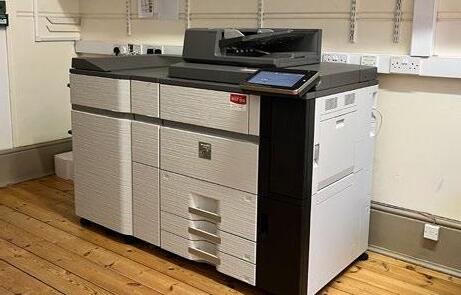
• A draft tender process plan has been produced and was trialled with procurement of the new photocopiers contract.
• Spending freezes, order window periods and sustainability education have reduced procurement spend by only buying when necessary and amalgamating orders where possible.
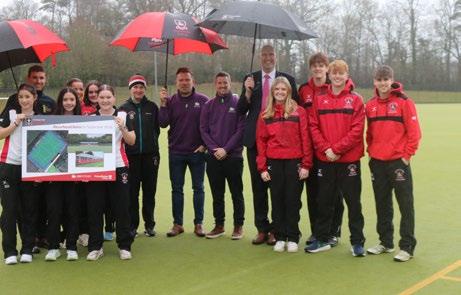
• Procurement decisions take account of supplier location where appropriate. The new All-weather Pitch Refurbishment contract was awarded to the more local supplier.
• Services and equipment are shared between schools where possible. For example, with school minibuses. Where possible recycled goods are purchased including office furniture.
• Meetings now commonly take place online using Teams and reducing costs associated with staff travel.
• As well as complying with ethical standards, the Foundation requires suppliers such as caterers and cleaning companies to comply or to adopt our standards in respect of the contracts procured.