


People are considered the most important asset for any business. Every business leader and company should effectively leverage this significant asset to drive sustainable growth and change. Due to the increasing importance of people management, the role of the Chief People Officer (CPO) has evolved significantly over the last few years. Today, CPOs are considered the architects of transformation in the global corporate landscape, skillfully weaving human potential into the fabric of the economy.
Chief People Officers play a crucial role in adding primary challenges such as AI adoption, hybrid work, talent shortages, and the evolving expectations of Millennials and Gen Z, who are looking for meaningful work and alignment with their values. These visionaries aim to keep their organization at the forefront of the latest market trends while tackling internal workforce issues to drive success in this dynamic environment.
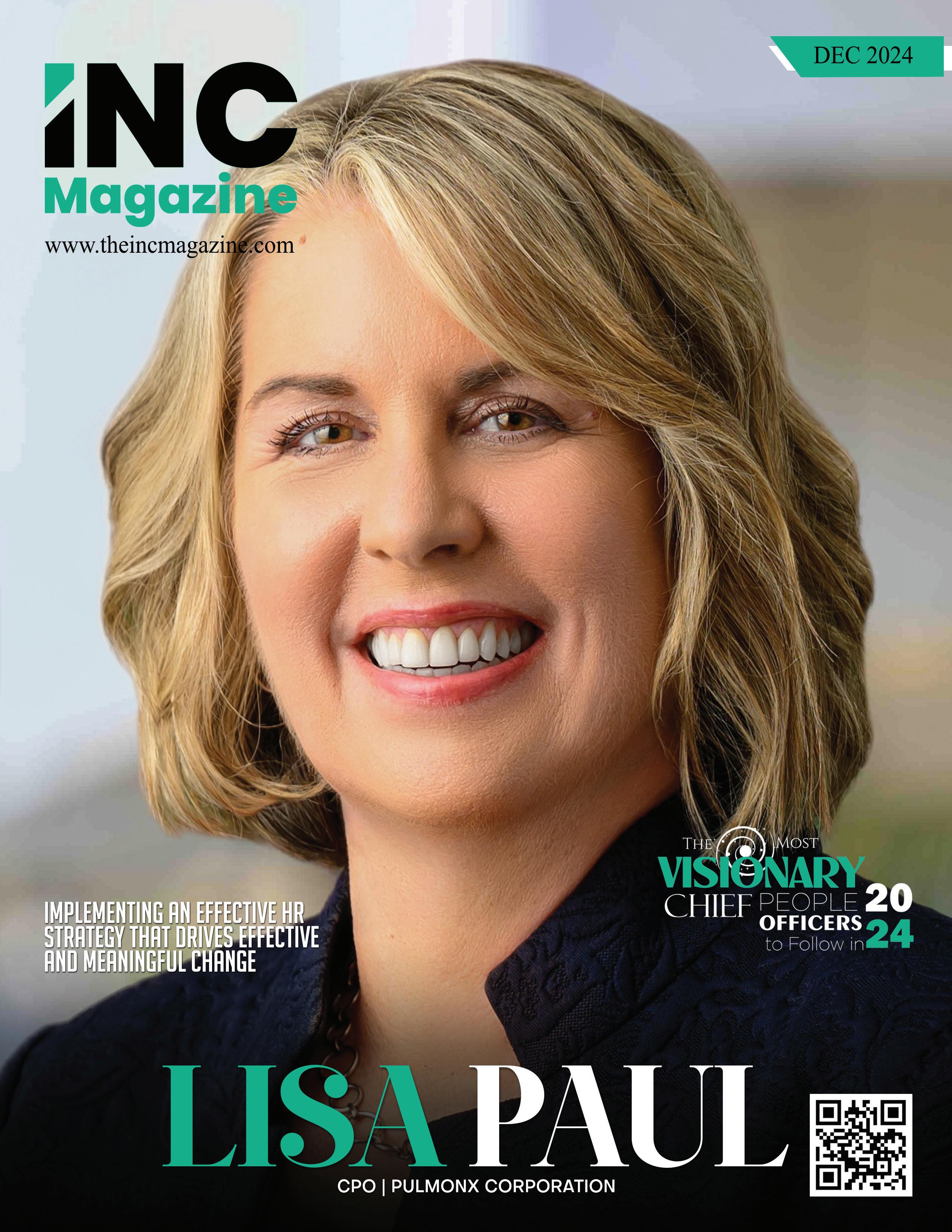
Our latest edition, “The Most Visionary Chief People Officers to Follow in 2024,” features leaders in people management champions, their remarkable professional journeys, and key insights from their innovative strategies.
The cover page is graced with the success and inspiring story of Lisa Paul, the Chief People Officer of Pulmonx Corporation. With over four decades of expertise, Lisa is spearheading the company’s people front successfully. The entire story is quite captivating, and we hope it provides you with a clear understanding of industry trends and the significance of CPOs. Dive into the overall tale and share your valuable feedback.
This remarkable publication always aims to bring the visionary CPOs into the spotlight. As you turn the pages of the publication, you will be motivated and inspired by the trajectories of these corporate leaders.
As I wrap up this note, I hope our global readers will find these narratives encouraging and insightful; it will change how you perceive the CPO position. Additionally, the in-house articles on different topics will offer you a deeper insight into different aspects of the business landscape.
Please share your valuable feedback with us and stay tuned for more interesting and inspiring success stories!
Happy Reading ....!

Nadine Shehaiber, A Visionary Leader, Shaping the New Frontiers in Talent Management

Managing Editor
Publishing Control Team
Editor-in-Chief Visualizer
Art & Design Head
Business Development Manager Co-designer
Business Development Execu�ve Marke�ng Manager
Technical Head
Assistant Technical Head
Digital Marke�ng Manager
Assistanr Digital Marke�ng Manager
Research Analyst
Circula�on Manager
Sonal K. Ehsan Jami Alex, Michael
Mary Chars
Anushka Bhosle
Shweta A. , Vaibhav M.
Charlie Fisher
Chirs Philip Maria, Wilson, Mar�na, Alex, Kelvin
Jacob Smile Alina Sege
Jennifer Parker David King
Earl Lewis Scoot Taylor
sales@theincmagazine.com December, 2024
Follow us on : www.facebook.com/theincmagazine/ www.twitter.com/theincmagazine www.instagram.com/theincmagazine/ www.linkedin.com/company/theincmagazine
Copyright © 2024 The Inc Magazine


In the HR landscape, there are leaders, and then there are changemakers. Lisa Paul, the Chief People Officer of Pulmonx Corporation, undoubtedly falls into the second category. Lisa’s journey into HR leadership began nearly four decades ago when she became an HR Manager for a technology company at just 27. This early experience particularly during challenging times fueled her passion for HR and led he to join a dynamic HR consulting firm, where she gained extensive exposure across various industries and company sizes.
Lisa has had the privilege of working for world-class technology companies renowned for their exceptional HR development programs. These experiences not only honed her skills but also expanded her professional network. Her involvement with the Northern California Human Resources Association, where she eventually served as president, further enriched her journey.
Drawn by the opportunity to contribute to life-changing solutions, Lisa later, transitioned to the medical device industry. Joining Pulmonx Corporation has allowed her to leverage her HR expertise to build a purpose-driven organization dedicated to positively impacting people's lives.
The Distinctive Work Culture at Pulmonx
Pulmonx Corporation takes immense pride in its culture, which is deeply rooted in its mission to improve the lives of patients with COPD. As Lisa states, “We are driven by a mission to provide innovative solutions that enhance the quality of life for those we serve. To foster this culture, we
have established multiple communication channels that allow us to share our stories, celebrate accomplishments, and disseminate valuable tools and resources.” These channels ensure that every team member stays connected to the mission and feels a part of the collective success.
Further, Lisa also encourages a collaborative environment where ideas and feedback are freely exchanged, strengthening their commitment to patient-centric care and continuous improvement. “By maintaining this strong sense of purpose and open communication, we cultivate a workplace where employees are motivated and empowered to make a meaningful impact every day," Lisa noted..
Performance Management, Aligned with Pulmonx’s Goals
At Pulmonx, the performance management approach is thoughtfully designed to closely align with the team goals and values by emphasizing both results and behaviors. The focus is on the "what"—the specific achievements and contributions of each employee—and the "how"— these results are achieved, based on the core leadership competencies.
The program provides balanced feedback, highlighting 2-3 areas of strength and 2-3 areas for development. This dual focus ensures that the employees not only meet their objectives but also embody the values and leadership qualities that are essential to the company's success. As Lisa shares, ”By fostering a culture of continuous improvement and alignment with our core values, we empower our team to drive Pulmonx's
mission forward while growing personally and professionally.”
Emerging Trends within the Medical Device and Technology Sectors
In a rapidly evolving medical device and technology landscape, several emerging HR trends are set to shape the future:
1. Continuous Learning: Establishing a culture of lifelong learning is essential for developing innovative solutions and improving patient outcomes.
2. Digital Transformation: Leveraging digital tools in HR processes enhances efficiency and engagement through technology-driven core processes, recruitment, reporting, and virtual training.
3. Employee Wellbeing: Prioritizing physical, mental, and emotional health boosts productivity and job satisfaction, leading to better patient care.
4. Diversity and Inclusion: Promoting diverse perspectives drives innovation and better serves the diverse patient population.
Lisa elucidates, “Focusing on these trends will help us navigate future challenges and opportunities, ultimately enhancing patient care.”
Pulmonx Corporation is dedicated to leveraging digital technologies to enhance HR operations and improve efficiency, engagement, and productivity. The company streamlined operations by automating core processes, improving recruitment, enhancing reporting, and providing virtual training to enhance the employee experience. The key focus areas include:
1. Alignment and Automation: Streamlining processes for greater efficiency.
2. Data Accessibility: Provide accessible data to enable better decision-making.
3. Global Service Delivery: Supporting the workforce with eLearning and engagement tools.
These technologies are set to significantly enhance employee engagement and productivity, reflecting Pulmonx's dedication to creating a more efficient and connected workplace.
In navigating the regulatory landscape within the medical device industry from an HR perspective, Lisa ensures that all employees receive comprehensive training on relevant regulations and compliance requirements. She maintains high standards for adherence to these regulations and continuously updates Pulmonx’s training programs to reflect any changes in the regulatory environment. Lisa emphasizes fostering a culture of accountability and vigilance, encouraging employees to stay informed, and upholding the highest standards of compliance in their daily operations.
Pulmonx has taken a comprehensive approach with multiple initiatives to promote diversity and inclusion. The company organizes fun and engaging activities focused on wellbeing to foster a sense of community among employees worldwide. It has also enhanced its communication efforts to ensure everyone feels informed and included, regardless of their location. Further, it has implemented targeted diversity outreach programs to attract and retain a diverse workforce.
Lisa explains, “Our upcoming employee survey is expected to provide more detailed insights into the impact of these initiatives. Additionally, we have made significant strides in gender equality across the company.” She further emphasizes that the company's workforce is composed of 51% male and 49% female employees, with similar progress reflected in the leadership roles.
At Pulmonx, the key executives identify and nurture future leaders through scenario planning and targeted action plans. Given the team's multifaceted roles, they focus on developing skills that align with their strategic goals, ensuring the
employees are prepared for both current and future challenges.
The Future Roadmap for Pulmonx
Lisa’s long-term vision is crystal clear: she aspires to align her talent strategy with the company's growth and innovation goals. Her focal areas include:
Identify Key Talent: Pinpoint the skills needed to achieve the strategic objectives.
Invest in development: Focus on training programs that build these essential skills.
Cultivate a Growth Culture: Create an environment that supports continuous talent development.
“This approach will ensure our HR efforts drive the company’s success and commercial scaling," asserts Lisa.


Cyber threats evolve rapidly, which means protecting your network isn’t just about meeting today’s challenges—it’s about preparing for tomorrow’s. Future-proofing your network security ensures that your organization remains resilient, adaptive, and secure no matter what lies ahead. Here’s a guide to building a robust strategy.
Staying informed about potential vulnerabilities and evolving threats is the first step to future-proofing your network. Cybercriminals are increasingly sophisticated, leveraging AI, machine learning, and advanced malware to exploit weaknesses. Regularly monitoring cybersecurity trends and understanding risks specific to your industry will help you proactively address potential issues.
Zero Trust Security has become a cornerstone of modern cybersecurity. This clever model operates on the principle of “never trust, always verify,” requiring continuous authentication and verification for access to resources. By implementing Zero Trust Architecture (ZTA), you limit the potential damage of breaches and ensure that only properly authorized users and devices can access sensitive areas of your network.
When considering Zero Trust models, it’s essential to understand the broader frameworks like SSE (Security Service Edge) and SASE (Secure Access Service Edge). These cloud-native architectures streamline security by integrating network and security functions. For a deeper dive into the differences and benefits of these models, check out this detailed comparison of SASE vs SSE. Choosing the approach that suits your needs depends on your organization’s specific needs and scalability requirements.
As your business grows, so will your network. Embracing scalability security solutions that adapt to your needs is essential. Cloud-based security tools, for example, offer flexibility to handle an expanding number of devices, users, and locations. Choose a range of tools that integrate seamlessly with your existing systems to reduce complexity while enhancing functionality.
Outdated software is one of the most common entry points for cyberattacks. A rigorous patch management strategy ensures that vulnerabilities are addressed promptly. Automate updates where possible and establish a clear protocol for managing third-party software to keep your systems current.
AI and machine learning are transforming network security. These technologies can detect anomalies in real time, identify unusual traffic patterns, and adapt to new threats faster than traditional systems. Incorporating AI-powered tools into your security infrastructure enhances your ability to predict and respond to cyberattacks.
Encryption securely protects data both in transit and at rest, making it unreadable to unauthorized parties. Adopt end-to-end encryption protocols for all communications, ensure data stored in the cloud is encrypted, and use secure VPNs for remote access. This step is especially crucial for industries handling sensitive information, such as healthcare and finance.

Human error is a leading cause of security breaches in business. Regular training helps employees recognize phishing attempts, manage passwords effectively, and understand the importance of cybersecurity protocols. A culture of awareness and accountability strengthens your first line of defense against cyber threats.
Firewalls and intrusion detection systems (IDS) are vital for monitoring and controlling incoming and outgoing traffic. Advanced solutions can identify potential threats and block malicious activities before they penetrate your network. Choose firewalls that offer deep packet inspection, malware detection, and integration with other security tools.
Regular assessments of your security measures help identify weaknesses and areas for improvement. Conduct penetration testing, vulnerability scans, and compliance audits to ensure your network remains resilient. These evaluations provide valuable insights and help you stay ahead of emerging threats.
Even with the best defenses, breaches can happen. A well-prepared incident response plan minimizes downtime and mitigates damage. Your plan should include steps for identifying the breach, isolating affected systems, communicating with stakeholders, and restoring normal operations.
Cybersecurity regulations evolve alongside threats. Ensure your network complies with applicable laws and industry standards, such as GDPR, HIPAA, or PCI DSS. Staying compliant not only protects your organization from legal repercussions but also reinforces trust with customers and partners.
Real-time monitoring and analytics are essential for future-proofing your network. Continuous oversight ensures that potential issues are identified and resolved quickly. Tools like Security Information and Event Management (SIEM) systems aggregate and analyze security data, offering valuable insights into your network’s health.
Future-proofing your network security is not a one-time task—it’s an ongoing process of adapting to an ever-changing digital landscape. By understanding emerging threats, leveraging advanced technologies like AI, and implementing frameworks such as Zero Trust Architecture, businesses can build a security infrastructure that remains resilient against cyber threats.
It’s equally important to invest in scalable solutions, prioritize regular updates, and foster a security-conscious culture among your team. With the growing prevalence of cyberattacks, these proactive measures ensure your organization not only stays protected but is also prepared to evolve with future challenges. Regular audits, continuous monitoring, and compliance with regulations further solidify your network’s defenses and help build trust with clients and stakeholders.
Ultimately, a secure network isn’t just about safeguarding your data—it’s about enabling your organization to thrive in a connected world. By taking a strategic and forward-thinking approach to cybersecurity, you can protect your assets, maintain operational efficiency, and position your business for long-term success in the digital age.

CPO | Brown Legacy Group
Nadine Shehaiber, Chief People Officer at Brown Legacy Group (BLG), is a passionate leader who has paved her way with mastery and excellence. With over two decades of extensive global experience and expertise in human capital, culture transformation, and employee engagement, Nadine stands as a frontrunner in the industry. Throughout her journey, she gained excellent knowledge and practice in talent management and HR while working with some of the most well-known global brands, including Deloitte, Blackstone, BP, and Walgreens.
Nadine is renowned for empowering businesses and leadership teams to use their most valuable resource—their people—to accomplish incredible achievements. Her strong background as a business analyst and technologist has provided her with a profound understanding of business dynamics and the ability to address people's challenges from that perspective. She excels at resolving problems and creating plans of action that align with business objectives.
Sharing her key inspiration behind joining BLG, Nadine Shehaiber said "The company's unwavering commitment to innovation and excellence was the key driving force. They are very focused on driving purpose in their organization that fosters the greater good for their people, their families, and the communities in which they live and serve. Having the opportunity to build the talent management function from scratch using a human centric approach while collaborating with such a talented team were major factors in my decision."
Distinctive Strategies for Forming and Managing High-Performing Teams
Nadine focuses on developing a clear strategy with specific goals, fostering transparent communication, ensuring buy-in and commitment, and promoting cultural awareness to drive success within the organization. Nadine believes in setting up dynamic teams with diverse skillsets, backgrounds and perspectives to drive innovation. In choosing leaders, Nadine prioritatizes those that can inspire, motivate and guide the team while encouraging collaboration and open communication so everyone feels heard and valued.
Nadine believes in a collaborative, learning culture that emphasizes the importance and provides the support for continuous development. She believes that it’s critical to create an environment that emphasizes collaboration over competition, encouraging members to support one another, build trust among team members through team-building activities and by setting expectations for accountability, equipping the team with strategies for constructive conflict resolution to maintain a positive working environment, and providing opportunities for training and skill development to enhance team members' capabilities and confidence.
Taking trust as essential, she recognizes achievements, provides constructive feedback, and encouraging flexibility and adaptability. Utlizing technology, Nadine stays agile and responsive to the latest evolution in the global market, regularly reviewing and adjusting strategies. She further reviews the performance metrics regularly and provides feedback to maintain high motivation and productivity.
Nadine has leadership competencies and a leadership profile that best fits an organization. She uses that as a litmus test to identify potential leaders and develop them for their leadership roles. She observes employees who consistently perform well, solve problems effectively, and show initiative. Once found, she matches them with seasoned mentors and offers individualized coaching and mentoring. Nadine invests in their development through training programs, workshops, and courses, encouraging continuous learning and providing constructive feedback. She further fosters a culture that recognizes and rewards leadership behaviors and empowers employees to take the initiative to build a strong pipeline of future leaders ready to drive the organization forward.
The Key Challenges of Chief People Officers
According to Nadine, managing remote and hybrid workforces, facing talent shortages, re-skilling and upskilling talent, ensuring employee well-being, supporting diversity and inclusion, and navigating quickly evolving technical landscapes are some of the major challenges of CPO.
To creatively address these challenges, the inspiring lady prioritizes flexible policies to accommodate different work styles and preferences, expand talent pools when searching for top talent, strengthen employer value proposition and brand, and set up entry-level programs to cultivate future talent. She implements targeted recruitment strategies and partnerships to address talent shortages while investing in robust training programs for re-skilling and upskilling existing employees. She has also developed comprehensive wellness programs including mental health resources and work-life balance initiatives for employee well-being. She advocates for inclusive hiring procedures, offers ongoing diversity training, and creates an environment where all employees feel valued and heard.
Leading the Way
To stay ahead of industry trends, Nadine focuses on continuous learning, active networking, and leveraging data and technology. She regularly participates in industry conferences, workshops, and webinars to stay informed about the latest developments and best practices. She also subscribes to leading industry publications and follows thought leaders on social media to keep up with emerging trends. Networking with peers and joining professional organizations allows her to exchange ideas and gain insights from other experts in the field. Nadine also encourages her team to do the same, fostering a culture of continuous learning and knowledge sharing within the organization. Additionally, she also monitors performance metrics and pinpoints opportunities for improvement. By leveraging HR technology and tools, she stays agile and adapts strategies as needed to meet evolving business needs.

Integrating Diversity and Inclusion into the
Nadine ensures strong leadership commitment, implements inclusive hiring practices, and provides ongoing education and training. She supports employee resource groups (ERGs) and regularly updates policies to promote inclusivity, such as
flexible work arrangements and equitable pay. She also encourages open communication and feedback, tracks key DEI metrics, and embeds DEI in the overall business strategy. By integrating these elements into all aspects of the organization, DEI becomes a fundamental part of the culture and operations and has leadership follow-through and commitment.
Remarkable Initiatives to Drive Diversity and Inclusion
Nadine has introduced several initiatives to drive diversity and inclusion within an organization. She launched a comprehensive diversity recruitment program including community engagement programs, partnerships with diverse job boards, universities, and professional associations. Nadine didn’t love the unconscious bias fad. She addresses them head-on with conscious bias awareness training that helps people be more self-aware and use strategies to break down and better understand their biases.
Nadine has developed culture competency training to enhance understanding of different cultures and promote respect among employees. She’s also developed mentorship and sponsorship programs specifically aimed at underrepresented groups to bridge the gap in leadership representation. Also, she reviewed and updated company policies to ensure they were inclusive and supportive of diverse needs.
Creative Strategies for Recruiting and Retaining Top Talent
Nadine aims to create an attractive and supportive work environment that attracts top talent and retains and nurtures them for long-term success with these strategies.
highlights the company’s culture, values, and career opportunities is essential.
work-life balance and draw in talent that is looking for flexibility.
programs, mentorship, leadership development initiatives, and opportunities for lateral moves within the company.
programs to celebrate employee achievements and milestones fosters a positive work environment.
analytics to identify and engage potential candidates.
process helps new hires feel welcomed and integrated into the company culture from day

Distinctive Strategies to Enhance Employee Engagement
Nadine implements several specific strategies to foster a work environment where employees feel engaged, valued, and motivated to contribute to the organization's success.
communication channels
events environment
The Future Outlook
Nadine's vision for the future of human resources (HR) is one where HR is a strategic partner that drives organizational success through innovation, inclusivity, and employee empowerment. She believes that HR will increasingly leverage advanced technologies like AI, machine learning, and big data analytics and traditional HR procedures will become less important in favor of a more all-encompassing strategy that puts the employee experience first.
The trend towards remote and hybrid work models will continue to grow in the upcoming years and DEI will remain a critical focus, with HR leading initiatives. Nadine strongly supports lifelong learning. According to her, learning will become the norm for skill development and career growth. The use of data and analytics will become more sophisticated, and it enable HR to measure the impact of its initiatives accurately.
The well-being of employees, particularly mental health support, will receive more attention. HR will adopt more agile methodologies, allowing for faster adaptation to changing business needs.



025 is going to be a big year in marketing, with companies competing in an increasingly cutthroat environment, with consumers fighting inflation and an uncertain economy, and technologies like AI and machine learning disrupting traditional markets.
For small and medium-sized businesses, it’s tough out there. But if you keep your finger on the pulse and follow the key trends that will drive marketing in 2025, you’ll have a good chance of standing out from your competition.
AI and Machine Learning
We’re not quite at Cyberdyne Systems just yet (and let’s hope we never will be!), but it’s clear that AI is no longer just a buzzword or a gimmick. With the launch of OpenAI, the technology is useful, transformative, and already very much relevant when it comes to marketing.
AI tools are useful on many different levels, and we’re going to cover two of them. First, personalization. Generic ads just won’t cut the mustard in 2025, with consumers now almost expecting to get hyper-accurate personalized recommendations and customer experiences.
Further, AI-driven chatbots and voice-activated customer support will now become a hands-free experience for companies, i.e. there will be minimal need for a human component, but the consumer will still get a high-end support experience.
In 2025, you need to integrate AI in pretty much every part of your marketing efforts. Your competitors will certainly be doing it, so ignore artificial intelligence at your own peril.
For many of us, the constant bombardment of email marketing, ads on YouTube and now even on services like Prime Video, pop-ups on every single website, and let’s not even talk about influencers, it’s all just becoming a little too much.
Digital marketing is effective, of course. But only if used properly, and as part of a wider holistic marketing approach. That’s where traditional methods come in, especially now, as they’re heavily underutilized.
Marketers have forgotten just how effective old school strategies like print marketing can be. The power of print is still very much there, as it adds a layer of trust, has high consumer engagement, and leaves a lasting impression.
With Influencers, Trust is Everything
AI is useful, but it also brings an element of hesitancy with consumers. More than ever, people want to feel like they can trust advertisements, that they’re from other, well, people.
Influencers are still very effective when it comes to building a personalized advertisement approach, but the market is a little saturated, which means companies need to be very careful in their approach.
Consumers are very much aware that Z-list celebrities and influencers are paid good money to peddle products. That can sometimes even have a negative effect on your marketing efforts, which is why you need to be selective with your partnerships. Pick individuals that are aligned to your brand values, and operate in a similar industry.
Stories covering controversial topics like fast fashion are increasingly driving consumers away from single-use products. Sustainability is now very important to a lot of people.
Further, consumers want to buy from companies with purpose. What you sell is still the main driver of sales, but your why is now more important than ever (see Simon Sinek’s work on this).
Being committed to sustainable efforts and positive social change should not only be done for the sake of your marketing, but embedding these qualities in your business practices will have a positive effect on your entire organization.
In 2025, dial in to what drives your company’s why, expand your involvement with meaningful causes, and attempt to be part of the solution, not the problem. If you’re authentic, it will shine through in your marketing.
Every business is different, every industry has its own quirks. Trends are useful, but you should not necessarily follow each to the letter. To really get the most out of your marketing efforts in the coming year, you need to test, test, test.
Your need to fine-tune what works, and ditch what doesn’t. Don’t be afraid to try something new if a certain strategy isn’t working, even if others keep insisting it’s the right thing to do.
Companies that continually try to improve their marketing efforts will always be competitive, whether it’s in 2025 or 2035. Be flexible, adaptive, and willing to pivot, and you will see success.