

With 30–37% of today’s lawyers being female, there is no shortage of influential and prominent women in the legal profession. While this percentage may not seem earth-shattering to some, it is important to note that between 1950 and 1970, women made up only 3% of lawyers. Remarkably, many incredible women are not only navigating their organizations through numerous hurdles but also shaping the legal landscape.
In law, a field often dominated by men, several women have emerged as formidable forces, advocating for justice and pioneering several significant legal reforms. Our latest edition celebrates these significant contributions. However, compiling the list of “The Most Iconic Women in Law to Watch in 2025” is a huge challenge; there are simply too many women who have made significant contributions to be included in a single list.
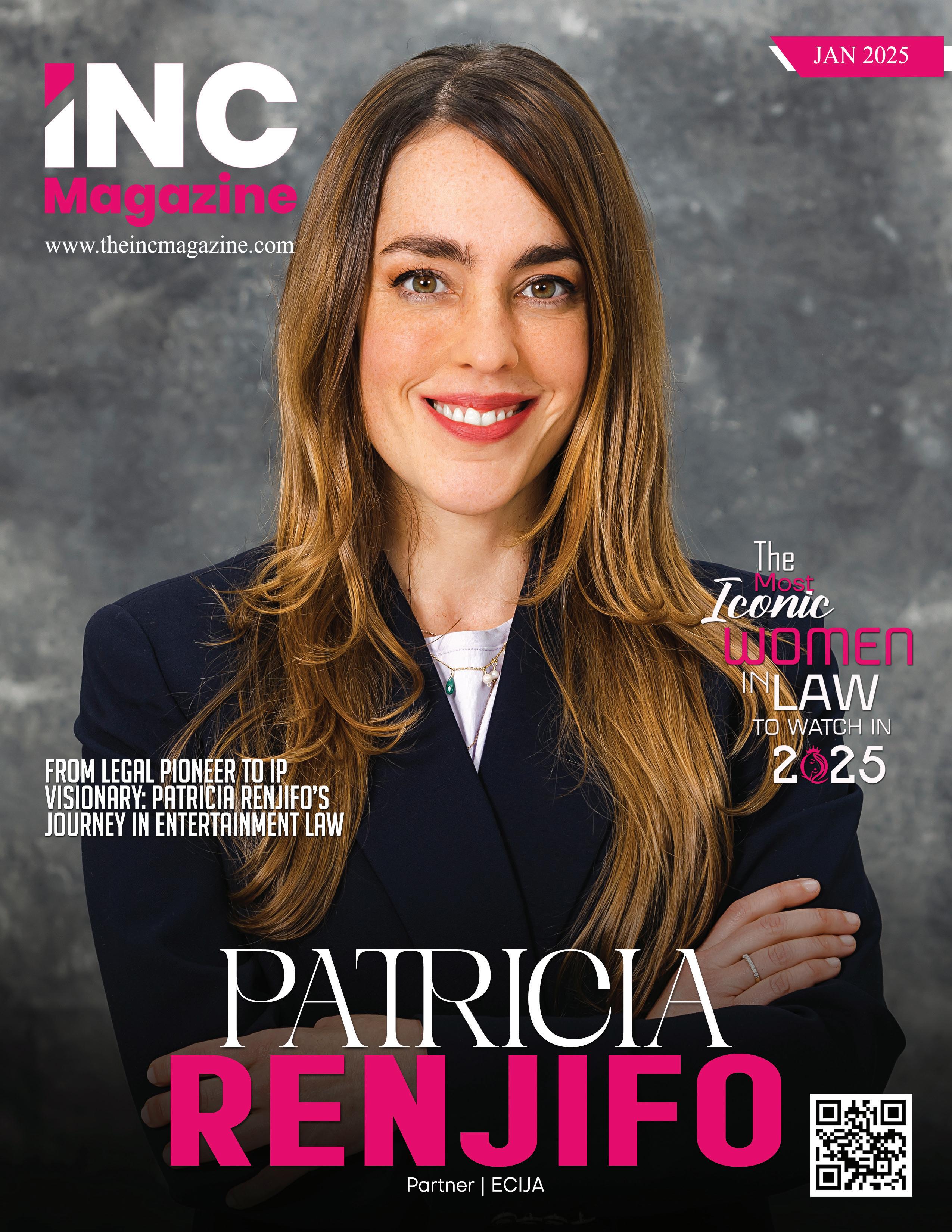
On the cover, we feature Patricia Renjifo, Partner at ECIJA, who is an experienced legal professional with over two decades of expertise. She specializes in entertainment law, copyright, and image rights litigation, representing clients before ordinary judges and arbitration tribunals. Renowned for her expertise, she advises both national and international film and television producers. Her success story highlights the significant impact she is making in the industry. Be sure to check out the complete story to dive into this exciting narrative. Additionally, don’t miss out on our thoughtfully created informative in-house articles that grace our edition with insightful news and the latest trends across the business world.
As we conclude this note, we invite you to be part of this celebration and honor the iconic women leaders in law and their significant efforts in reshaping the legal landscape. Stay tuned for more such exciting reads. We want to thank you for your support and appreciation. Enjoy your reading!
Happy Reading ....!


Managing Editor
Publishing Control Team
Editor-in-Chief Visualizer
Art & Design Head
Business Development Manager Co-designer
Business Development Execu�ve Marke�ng Manager
Technical Head
Assistant Technical Head
Digital Marke�ng Manager
Research Analyst Assistant Digital Marke�ng Manager
Circula�on Manager
Sonal K. Ehsan Jami Alex, Michael
Mary Chars Anushka Bhosle Shweta Ambilwade
Kenneth Lyods Chirs Philip Maria, Wilson, Mar�na, Alex, Kelvin
Jacob Smile Alina Sege
Jennifer Parker David King
Earl Lewis Scoot Taylor
sales@theincmagazine.com January, 2025
Email: Info@theincmagazine.com
Follow us on : www.facebook.com/theincmagazine/ www.twitter.com/theincmagazine www.instagram.com/theincmagazine/ www.linkedin.com/company/theincmagazine
Copyright © 2025 The Inc Magazine



PATRICIA RENJIFO’S JOURNEY IN ENTERTAINMENT LAW
Meet Patricia Renjifo from the Capital District of

expertise.
What has kept her engaged over the years is the constant intellectual stimulation, the variety of cases and scenarios Patricia must analyze and resolve, and the dynamic, ever-evolving nature of the industry.
One defining moment in Patricia’s career was her selection as a mentor for development-stage projects. These roles that began as a single opportunity evolved into significant commitments lasting over a decade. During this time, she engaged with more than 450 audiovisual projects, expanding her reach and influence across Latin America.
This experience provided her with a global perspective on the industry’s challenges and opportunities and allowed her to connect with a diverse range of clients, from emerging filmmakers to established production companies. Another pivotal moment was her work on the publication of the intimate letters of Colombian writer Andrés Caicedo. This project highlighted the importance of cultural sensitivity and precision in protecting creative works. Additionally, co-producing Another Forever, a Colombian film selected for the Marché du Film in Cannes offered her invaluable insight into the interplay between the legal and creative aspects of filmmaking. These experiences have enhanced her ability to provide strategic and empathetic counsel to clients.
Merging her previous firm, Ley en Movimiento, with MBCR to establish ECIJA Colombia was a significant milestone and a transformative step in her professional growth. This is a significant milestone and a transformative step in her professional growth. This transition provided an opportunity to move beyond the boutique practice Patricia had built over a decade and to become part of a larger firm working alongside top lawyers in their respective fields.
One key challenge she faced was ensuring a seamless transition while retaining the trust and loyalty of her clients, many of whom had developed strong relationships with her team over the years. Successfully retaining these clients during such a considerable change was a testament to the personalized and high-quality service that had always been Patricia’s hallmark.
After the formation of ECIJA Colombia, she was honored to be named Managing Partner. This role came with the responsibility of consolidating the firm’s position as a leader in the region. With her leadership, she achieved one of her proudest milestones: recognition from The Legal 500 for "client satisfaction," which underscored her ability to grow without compromising service quality.
Patricia has observed how advancements in artificial intelligence (AI), blockchain, and tools like deepfake technology are transforming intellectual property law and media rights protection. AI-generated content has reshaped clearance processes for film and audiovisual productions, introducing complexities in determining ownership and authorship of scripts, music, and visuals. These developments require innovative legal frameworks and updated contractual language. Similarly, contracts for actors and influencers now routinely include clauses safeguarding their digital replicas, ensuring fair compensation and protection from unauthorized use.
All these advancements create another layer of complexity, offering creative opportunities while introducing significant risks, such as unauthorized use of someone’s likeness or defamation. These challenges have led to deeper risk assessments and enhanced protective measures in contracts and workflows. Meanwhile, blockchain technology offers solutions for managing IP rights, offering transparent ownership records, and enabling smart contracts for automated royalties. The integration of these technologies requires careful consideration to balance innovation with robust legal protection.
The rise of digital streaming services and new media formats has completely transformed the entertainment industry. Legal requirements have become more rigorous, with in-depth risk analyses addressing the global distribution of content. The shift towards simultaneous global releases means territorial licensing and revenue-sharing agreements have become increasingly complex. This complexity necessitates early-stage legal involvement to strategically structure the lifecycles of content.
As a result of Patricia’s practice, legal assessments now begin at the development stage and extend to structuring business models around global incentives, licensing arrangements, and international sales. This multi-platform distribution adds further layers of complexity, requiring intricate agreements for diverse markets.
As the leading partner in these areas, Patricia actively participates in industry discussions through executive committees and roundtables across Latin America and the United States. This engagement helps her understand stakeholders’ concerns and develop strategic solutions. At ECIJA Colombia, she keep a close want on regulatory changes, not only in IP but also in tax incentives for audiovisual productions, guiding clients through compliance and financing opportunities.
Additionally, Patricia and her team are deeply involved in examining the legal implications of AI and new technologies, particularly regarding authorship, copyright, and moral rights. They also study cases and jurisprudence to understand the practical outcomes of controversies.
The role of intellectual property lawyers is set to grow as technology, media, and global business models continue to evolve. These lawyers need to adopt multidisciplinary approaches to effectively address complexities arising from areas like AI, blockchain, and digital platforms. The focus will shift toward providing strategic, proactive solutions for managing rights across global markets. IP lawyers will increasingly serve as advisors, bridging gaps between jurisdictions and assisting clients in innovating while mitigating risks.









Meet Sandy Van, the founder and managing attorney of Van Law Firm, a personal injury law firm that represents individuals affected by motor vehicle accidents in Las Vegas, Henderson, and throughout Washington. Founded in 2012, Van Law firm has quickly gained a reputation for successfully obtaining settlements for people injured in car accidents, defective medical devices, dangerous drugs, sexually abused by institutions, water contamination, and slip and falls. The firm's accident team takes a great amount of interest in the well-being of its clients and goes above and beyond to ensure they are treated fairly, with compassion and respect.
Sandy earned a Bachelor of Science in Finance from the University of Nevada, Las Vegas. Later, she pursued law at the William S. Boyd School of Law. While pursuing her law degree, she interned for the Honorable Judge Nancy Saitta in the Eighth Judicial District Court of Nevada. After completing her law school, Sandy clerked for the Honorable David Barker, District Court Judge, Clark County, Nevada.
In a recent interview with The Inc Magazine, Sandy reflected on her journey and the future of her law firm.
Below are the highlights of the interview;
Please tell me your story. How did you get your start?
I was a manicurist throughout college, and one of my clients was a district court judge who would later become a Nevada Supreme Court Justice. I was just about to graduate with a finance degree. My goal was to help people manage their finances to send their kids to college or save for retirement.
However, there was a recession at the same time when I was graduating due to the 9/11 attacks, and the stock market was basically crashing. I didn't know what I was going to do.
My client suggested that I go into law, which was recession-proof, and she said that I could help people by becoming an attorney. I studied for the LSAT and got a passing score, and the judge wrote my recommendation for law school. I passed the bar and became an attorney and was working for a firm doing civil litigation and basically rainmaking for the firm and bringing in business. I didn't love commercial litigation, and being a rainmaker took a very long time to pay, so I started doing real estate. When I graduated from law school, the real estate market crashed, so I started doing short sales. While doing short sales, a law firm called me and asked if I could refer their law firm short sales. I realized that I could open my own law firm to process short sales as an attorney. So, I opened my own law firm to start processing short sales, loan modifications, and bankruptcy. At some point, the market recovered, and I had to pivot, so I started we started doing personal injury and, eventually mass torts.
How do you diversify your organization's offerings to appeal to the target audience?
Although we only cater to personal injury clients, we are diverse in our offerings of what injuries we litigate. For example, we help people who have been injured through motor vehicle collisions, slip and falls, defective medical devices, dangerous drugs, water contamination, or who have been sexually abused, etc.
Brief us about your company's future perspectives.


We are trying to help as many people as we can in the mass tort and personal injury sphere. We do see that as more states are changing their laws to help those who have been injured, our business will only thrive and grow. We are keeping our team up to date on all the new and changing laws by attending many conferences.
What would you say has been your greatest accomplishment?
One of my goals from the beginning of my career was to make sure that my mom could retire. She is now retired. Seeing her travel with her friends and family and not having to worry about money is what I consider my greatest accomplishment.
Being a key person in this environment is very challenging and all-consuming—are you prepared for the challenge? (How would you Control the Situation?)
I know there are talks of a possible recession, and I have already taken steps to ensure that my team is prepared financially. I have lines of credit and funds reserved to carry us through rough patches. What I learned through the pandemic (one of many financial hurdles I have lived through) was that a true leader is proactive and looks for opportunities to pivot.
What is your "Secret Sauce?" i.e., what are the 3-5 Leadership Principles that you have discovered and executed that have contributed to your success?
My first tip is to try to hire well. We have learned to hire better although we still have things to learn. As Sam Walton said, "You've got to give folks responsibility, you've got to trust them, and then you've got to check on them." Second, to delegate tasks and check on the status of the tasks periodically. Many people do not know how to delegate effectively; apparently, it is a skill. Third, it takes a team to build a business. We have several managers, and they help manage their respective teams. Fourth, always be learning. I have studied many successful people and read many biographies, and successful people know how to synthesize what they have learned and put information together. I am constantly attending conferences, listening to YouTube videos, and reading. It helps open my mind to different business ideas and ways of thinking.
What are your biggest failures professionally? What have you learned from them, and what would you do differently?
I have attention deficit disorder, or ADHD, which causes me to be very impatient and frustrated. It has caused me to be more irritable with people and processes. As I am getting older, I am becoming a lot more patient.
What does success look like for you?
When I have enough money to help people. My other goals revolve around big-picture ideas such as curing a disease, combating climate change, helping with education, or helping people with their businesses. I don't believe in legacies. It is just better to help people and leave the world in a better place when you pass.
What are some of the new ideas you would implement in this position?
Lately, we have been looking into bringing more concepts in-house. We are looking into creating more companies that integrate with our core competencies.
What do others say about your leadership style? Give us some examples of your leadership skills.
As long as the work is completed, I stay out of the way. I provide direction at times because a good innovative leader has a sense of imagination that others may lack and see perspectives that other people do not see, although I am open to considering other people's perspectives and ideas.
What is your "vision" in life, e.g., what drives you to a Successful Journey?
I want to have enough money to make a difference in this world.
What is one characteristic that you believe every leader should possess?
A successful leader is simply a good person. In the legal industry, you see many people with egos. They want to win, no matter what the cost. That is the wrong way to approach things, in my opinion. According to Adam Grant, in the long run, the people that succeed are the givers.