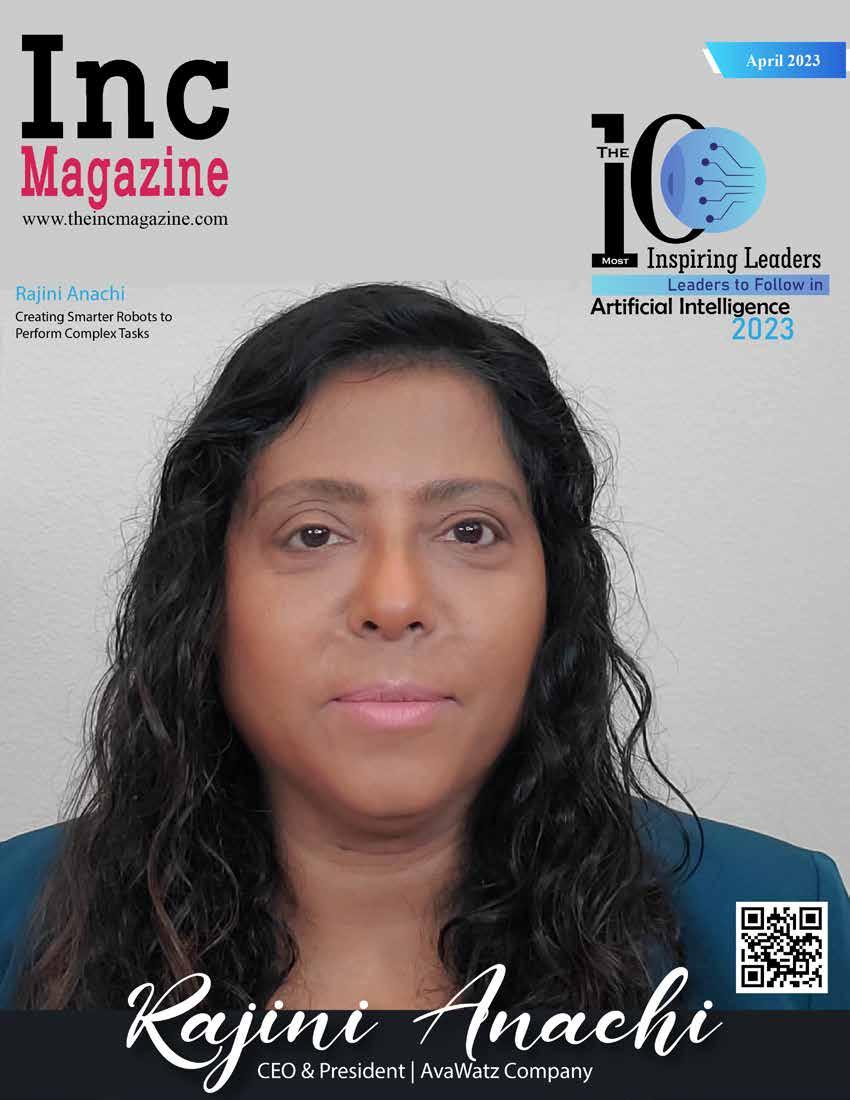


Rajini Anachi CEO & President | AvaWatz Company


Richard Kane
Verijet, the brainchild of Richard L. Kane, brings unparalleled travel experiences focused on safety, sustainability, luxury, and e ciency.
Articles

Rajini Anachi CEO & President | AvaWatz Company
Verijet, the brainchild of Richard L. Kane, brings unparalleled travel experiences focused on safety, sustainability, luxury, and e ciency.
As we know, the world is transforming, and artificial intelligence (AI) has played a major role in it.
From button-click life-saving software to autonomous vehicles, AI is transforming our professional as well as personal lives. But with so many advancements happening at breakneck speed, keeping up with the latest advances in the industry can be tough and time-consuming.
One of the best ways to stay updated in the fast-evolving field of artificial intelligence and machine learning is by following thought leaders, innovators, and influencers in the industry.
That’s why we’re here to share with you the 10 Most Inspiring Leaders to Follow in Artificial Intelligence that you need to know about in 2023. Our most recent edition highlights the innovative thinkers and outstanding leaders who are helping to grow this industry.
Several trailblazing leaders, from innovative startups to some of the largest tech brands, are featured in this edition. These are the pioneers who are driving the technology sector forward and influencing its future. This special edition is dedicated exclusively to all the leading figures in the industry who are using AI to revolutionize their respective fields of business through new advancements.
Our sheer ambition behind this publication is to bring such individuals into the spotlight who have brought top-notch AI breakthroughs into the business world. We could not help but notice such inspirational leaders, as we were being confronted with such stories daily. For this, our committed team strived hard to find such ventures that would give the readers a dose of entrepreneurial spirit, and the outcome is this publication.
So, when you flip the pages of this outstanding issue, immerse yourself in a collection of success stories. Further, the inclusion of these insightful articles will keep you glued to this feature.
Finally, I would like to express my gratitude for all of the support that our global audience has shown us. Please give us your valuable input and let us know how we're doing.

Let’s Read..!











Starting a Successful podcast may seem like the easiest thing in the world. All you’ll need at first in setting up your own podcast could be as basic as having your own smartphone and having access to the Internet and a podcast app of any kind.
At first, it might seem like that’s all you need to get going, but in the long run you’re going to need a little bit more to not only start a professional Successful podcast but to also ensure that it becomes a success.
In order to start a podcast, you’re going to first of all source an idea for your podcast; let’s call this, idea conceptualization. This is the first stage you need to go through when starting your podcast.
You will need an interesting idea or topic that your podcast will be centered around. This idea or topic could revolve around a lot of lifestyle conversations or a podcast about health, movie reviews, conversations surrounding politics, and a whole lot more.
To start the Successful podcast, you can begin by using the most basic podcasting equipment you can find. Set up your podcast online by using any website or app that houses podcasts, whether it’s Apple podcasts on iTunes or Google podcasts, or even apps like Anchor – the choice is yours.
How to Start a Successful Podcast (7 Easy Steps)
There are a few steps that need to be covered if you intend to start a successful podcast. This goes beyond using just your phone to record the podcasts. You will need some equipment, your ideas, a target audience, and a bulletproof plan that will help with the promotion of the podcast. Here are a few steps to follow for starters:
1. Ideas Ideas Ideas:
This first step requires you to have an idea of what you want your podcast to be like. Do you want it to be a one-man show or do you want to have a co-host or even co-hosts? Do you want to bring in guest hosts or people to interview in each episode of your podcast?
There are a number of things to think about, but first, you need to decide what kind of podcast yours will be. You need to find your niche at the very start so that you know how to reach a particular audience type.
Your topic needs to be something you can keep doing for a long time and it has to be something you’re passionate about.
2. Equipment
Buying equipment for your podcast is a solid business investment and it is also a way of investing in yourself and your talent. At first, you really don’t have to break the bank by buying equipment you can’t afford, but you also cannot start out using equipment that doesn’t give you good sound quality. 18 | April 2023
Part of starting a successful podcast is having the right sound that convinces people you’re professional. The last thing you need is your audience straining their eardrums to listen to what you have to say.
In essence, you need to go for affordable podcast equipment like a microphone, computer, headphones and other advanced equipment for when you’re ready to go bigger.
3. Find Your Voice and your audience
It may seem like podcasts are easy to start and easy to manage, but it isn’t that simple. There will be some hurdles along the way. You can’t expect your first few episodes to be great, unless you already have some experience.
You need to find your voice and be comfortable in what you’re doing or talking about. Another factor is your audience. You will need to do a lot of promotion to find the audience that you’re targeting.
Unless you’re a celebrity, you may just have a few listeners to begin with, but no matter what you do, don’t give up. Share links of your podcast episodes with friends and family, and they in turn will share with their own friends and family.
4. Use SEO for your podcast
Search engine optimization is a major component of promoting your podcast or basically anything that you do on the Internet. If you use iTunes or Google podcasts, SEO is important since they are both search engines.
SEO works in a way that allows you to make use of keywords so that your podcast can be ranked higher, making it easier for your podcast to be found by an audience. The keywords you use should be found in the podcast title, subtitle, and description.
5. Make Your Podcast Lively
Your podcast has to leave the audience wanting more, even from the very first episode. Do what you need to do to be a great podcast host. If you’re getting a co-host, make sure you get one that complements you and what your podcast stands for.
Having guest hosts can make the topic conversation more interesting and listen-worthy.
6. Consistency
Consistency is key to keeping your audience engaged. Plan how many episodes you will release per week or daily. Stick with your podcast itinerary and don’t deviate if it’s something you can avoid.
7. Monetize
There comes a point where you will be able to monetize your podcast. This means you’ve followed all the other steps and you’re on your way to having a successful podcast. There’s no rest from here on out.
Being able to monetize your podcast only means you need to produce better and more quality content. You also need to be even more consistent for your audience.


There’s no doubt that Process automation has dramatically changed how a business operates around the world. Streamlining manual tasks through event-based triggers has made workers vastly more efficient – allowing them to do more with less, improve experiences and increase profit margins.
But investments in automation are not always equal. While task-based automation provides impressive short-term gains in productivity, they often stop short of enabling true business transformation. Enabling agility in today’s highly competitive, always-on world requires organizations to move beyond simple task automation to implement intelligent automation across processes and business systems to achieve true strategic value.
According to a new research paper, delivered by Knowledge Capital Partners (KCP) in partnership with Blue Prism, only 15% of businesses have made the necessary long-term investments in robotic process automation (RPA) to enable the level of intelligent automation necessary to gain current and future business adaptiveness and resilience. These innovators have been rewarded with an ROI up to 200% in the first 18 months after investment while passing on the benefits to shareholders, customers and employees. Most importantly, they have built an automation backbone primed for future growth and innovations.
It’s clear that the remaining 85% need to up their investment in RPA to gain more than just the short-term benefits of automation. In 2018, McKinsey looked at the potential for implementing RPA. Operations centers that took on RPA found their costs reduced by 30% to 60% and saw an increase in delivery quality.
Move intelligent automation from efficiency to strategic value.
Intelligent automation works by combining robotic process automation (RPA) with artificial intelligence (AI) powered by its core components machine learning (ML), computer vision and natural language processing (NLP). AI gives digital workers the eyes, ears, voices and brains they need for complex tasks, while RPA executes the automation across complex workflows between departments, business systems, partners and customers. While task-based automation improves execution, incorporating intelligent automation and RPA into the wider business strategy improves efficacy, helps enhance the experience and further supports transforming your business.
Here are three ways organizations can move intelligent automation from efficiency to strategic value:
Create a culture of automation leveraging strategy and scale.
Investment and implementation of automation is not enough on its own. In order to create a true culture of automation, leaders need to fully embrace this technology and reimagine their operating models with a digital-first approach in order to truly achieve company-wide buy-in. Automation should not revolve around just cost efficiency or be centered around individual tasks; it needs to be implemented strategically with the thinking of a digital native trying to infiltrate your market and steal business from you.
Focus on people and processes, not just technology.
The KCP survey found most failures of digital transformation projects are a result of managerial and organizational challenges rather than technical challenges. Enterprises need to take the time to really understand workflows and how intelligent automation can drive value across the business. Then they can put the people and processes in place to execute on these intelligent automation goals. This is the time to automate responsibly. The automation tools at our disposal are more and will continue to be more powerful. It may be a good idea to create an intelligent automation task force that is driven by executives and people on the front lines to get varied perspectives. You’ll need credible, influential champions who can balance short-term gains with long-term vision. You’ll want to plan on the future human needs and capabilities that only your people can provide your organization as you increase the use of digital labor.
Focus on processes, not tasks.
Digital transformation is not just about efficiency- it’s about effectiveness. It is important to tie intelligent automation goals to business objectives by looking at applications that can improve outcomes. Strive to enhance experiences for both internal users and customers. Improve stickiness and loyalty. Enable new business models and sales strategies such as subscription or self-service.
The past several decades have seen companies of all sizes and scopes use technology to streamline tasks and make employees more efficient. It’s time to take the next step by incorporating intelligent automation into your wider business strategy. Focusing on those key value chains within your organization that reimagined could be a game-changer. This will allow you to focus on improving efficacy and truly transforming your business whilst doing so in a responsible way.