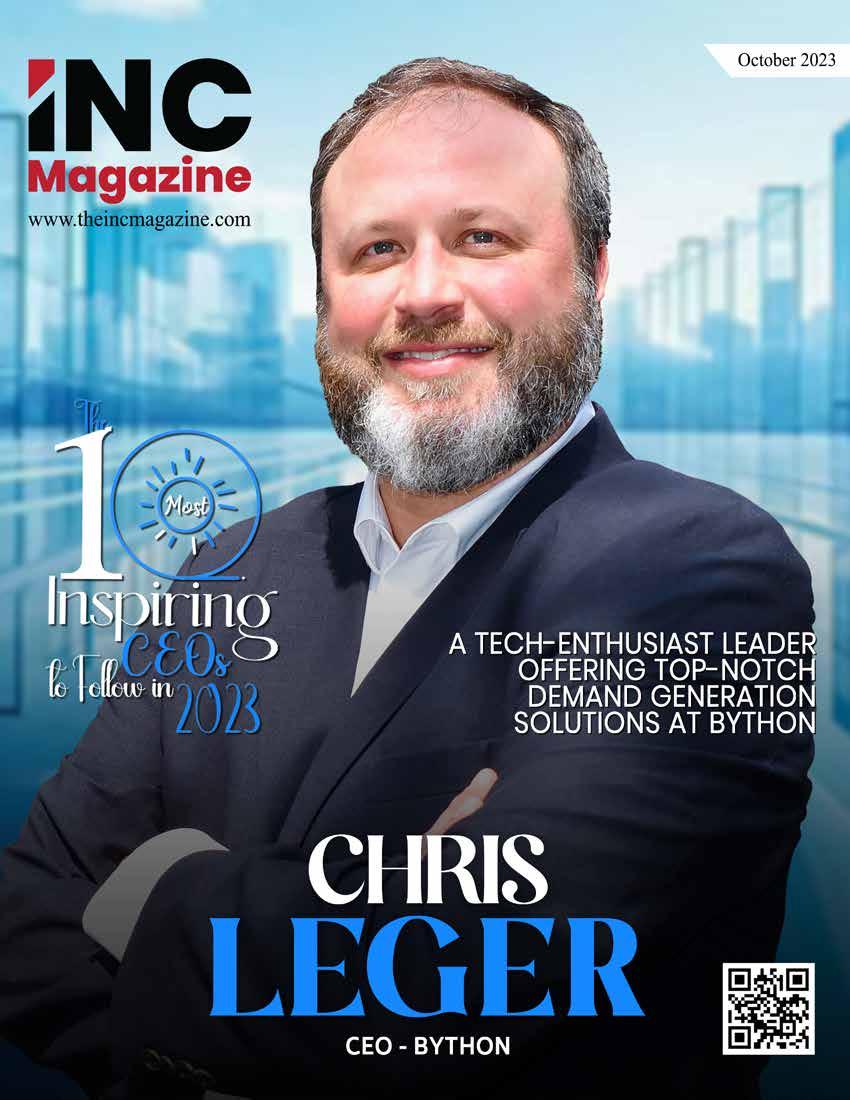




Chris Leger


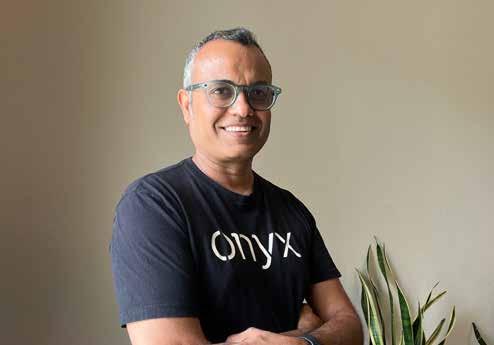
Mike Crandall
Hussein Faraj
Susheel Ladwa
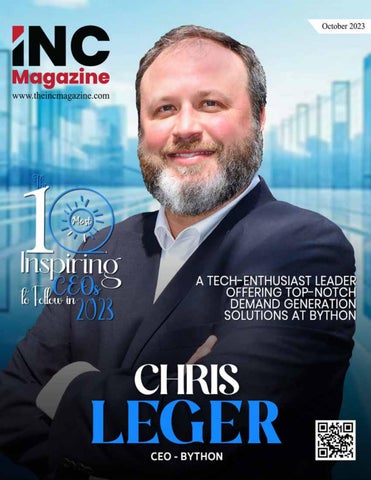
We find ourselves eagerly awaiting November to gently arrive as we stand on the edge of new and intriguing beginnings. The Inc Magazine devoted this special edition to capturing the essence of this magical transition as the world goes through its usual shifts from rain-soaked regions to the vibrant tapestry of fall foliage while presenting the top CEOs who have paved the way in making themselves and their company a brand. They are leading the lives of everyone around them.
Within the pages of this edition, "The 10 Most Inspiring CEOs to Follow in 2023”, which celebrates their success, presents advice to aspiring entrepreneurs hoping to leave an impact on the world, and highlights the top business executives sharing their motivational stories and showcasing how they have evolved into who they are, These CEOs have changed the organizations as well as their own lives.
Our editorial team is continuously putting together articles that present the views and ideologies of all the great game changers. Each feature of the edition features iconic leaders who are in charge of elevating their organizations to new heights, all while bringing together a group of talented and passionate individuals.
Exemplary leaders are those who can treat their team members with respect and ensure that they are not only productive but also add value to the company. These are a few of the renowned CEOs around the globe with outstanding and remarkable people management abilities. We truly believe that this captivating read will enrich the lives of our global readership panel and inspire building leaders everywhere to conquer obstacles and follow their aspirations. With each turn of the page, a new tale of polite, prosperous, learned, passionate, and bright people is unfolded.
Finally, "I would like to close with one of my favorite quotes from Yahoo CEO Marissa Mayer, “It’s about getting the best people, retaining them, nurturing a creative environment, and helping to find a way to innovate."

Happy Reading ...!!


Kick-starting his professional journey as a customer service coordinator, Chris Leger transformed into an inspirational business leader, CEO, hands-on entrepreneur, and industry veteran, empowering Bython to continue its trajectory and metamorphosis in the market as a full-service, full-funnel, Tech-Enabled Demand Generation partner.
Like a classic inspirational story, the innovative, passionate, and focused Chris Leger joined IDG (now Foundry) after graduation and worked at Computerworld on their events team. He eventually became an expert in custom events and sales after managing attendance, golf events, and marketing throughout his career. In addition to working on major events in mobile and wireless, business intelligence, and the Premier 100 IT Leaders Conference, Chris was a successful business development specialist for Storage Networking World, the largest global conference on the subject.
Chris became part of Bython in May 2022, and shortly after he did, he invited marketing agency partners to the platform. He continued expanding Bython by entering the UK and Asia. Recently, Chris was included in Forbes' list of the "Top 10 Innovators Shaping the Industry in 2023." Chris has been a notable figure in the international marketing and sales sector for more than 20 years.
Chris is renowned worldwide for his role as Senior Vice President and General Manager for Merkle B2B, where he established the Austin office and quickly built it into a dominant agency in the technology sector. Chris also contributed to Merkle's placing second on LinkedIn's list of the best marketing and advertising organizations. Merkle DWA was also recognized as the "Fastest Growing B2B Agency in B2B Marketing’s 2020 US Benchmarking Report."
Chris' involvement in the tech industry sparked his interest in learning about the industry and technology itself. Notably, he secured a significant event sponsorship deal with Research in Motion (RIM), recognized by Pat McGovern, founder of IDG, a renowned publisher and tech industry advocate.
Chris transitioned to Computerworld's digital team, where he experienced the early phases of content syndication, contrasting the ease of lead creation through the distribution of white papers with the current complexity of the demand generation sector. Chris has loved following the development of marketing strategies throughout the course of his 20-year career.
In 2012, Chris made a career move from the publishing sector to the agency sector, starting in Singapore with DWA (now a branch of Merkle/Dentsu). This signaled the beginning of a ten-year journey in the agency profession, which culminated in the formation and management of the B2B team located in Austin, Texas. The group quickly rose to prominence within the company, skillfully managing large-scale, prestigious client accounts.
The Inc Magazine had an exclusive chat with Chris Leger, a tech enthusiast, a seasoned expert with 20+ years of experience, and a visionary leader, who is continuously scaling the company with record growth. He shared about the company, the innovative solutions, future plans, and many other aspects. With the help of Bython's comprehensive set of highly tailored capabilities, marketing and sales can take charge of the results of demand generation
across all campaigns. Bython continues to strive to support you as you create and carry out campaigns in a completely transparent way.
Content Syndication Campaigns
Marketing Channels ABM
Intent Data
Form Fill
Interactive Content
Multi-Touch Campaigns
Target specific hardware & software
Buying Groups
Surveys
Events and Webinars
Telemarketing
BANT
Follow-up
Benefits
Improve your reach
Target high value, specific customers
Identify which customers are researching your solution
Track who has acted
Boost Engagement
Improve your chances of success
Install Base Technologies
Target influencers to sell more & faster
Get answers to important questions
Position you as an expert
Gain more insight into prospect needs
Additional qualification & verification
Bython is dedicated to directing effective demand-creation initiatives. They offer all of the operational tools required to run and sustain effective campaigns.
demand using 61+ M global contact records.
campaign effectiveness.
delivery. (multi-language staff)
through creative content design. 14-point quality assurance process.
speed up decision-making.
data delivery platforms (Integrate, Converter, FTP) as well as your CRM and MAP.
Bython plans to work with its clients to offer individualized advertising built on an omnichannel architecture. Additionally, Bython operates globally using their own first- and third-party data and procedures to produce campaigns on schedule and within budget. Every campaign is completely transparent in real-time because of the Byonic Platform, which belongs to Bython. Four multi-graph dashboards with real-time insights are included: Account Overview, Campaign Overview, Campaign Asset Documents, and Campaign Statistics.
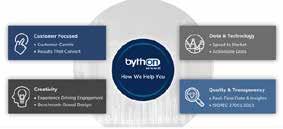
By leveraging a business like Bython, which employs its own first-party data, technology, and resources, marketing, and sales customers are able to trust the outcomes, collaborate with confidence, and make the most of their expenditures. When you partner with Bython, you can rely on customer-centric outcomes that sell, a quick time to market leveraging data and technology, quality, and transparency with real-time analytics, as well as engagement-boosting experiences.

Generally, the primary challenges in the industry include conversations about quality, transparency, and accountability.
Quality: First-party and third-party data are owned by Bython. Naturally, they also uphold the highest standards for data cleanliness and enrichment and numerous other open sources. The data quality regime has machine learning features built in to help identify gaps, and with every touch, records are updated to give the most up-to-date and accurate view of the market.
Transparency: Transparency begins before Bython drops the first email. Marketers want a say in the procedure, but they also want to feel confident in their capacity to carry it out and stand out with their message in a crowded market. Customers can use the company portal after the Bython team has begun working to monitor demand generation marketing analytics in real-time and modify criteria based on the performance of the campaign or their own requirements.
Plans in the Pipeline
Chris successfully expanded the client and prospect base this year by bringing in agency partners. After adding EMEA last year, he is actively moving into Asia. In the upcoming years, Chris will keep up with this globalization. He will also actively update Byonic on a regular basis while working on our portfolio to fulfill regional needs. The company intends to keep up the current growth trajectory that Bython is experiencing.
Bython’s Vision and Mission
Brand proposition: Accelerating Performance and Growth
Value proposition: Bython provides B2B demand generation solutions that foster meaningful connections, drive tangible results, and create positive ROI for our customers.




The past decade has seen a seismic shift in the business landscape, underscoring the vital role that industry leaders play in shaping and propelling businesses forward. This understanding has inspired a myriad of CEOs across the globe, whose efforts are universally recognized and lauded within the business sphere.
Mr. Hussein Faraj, a seasoned corporate leader and CEO of NuGenesis, stands as a shining testament to this. As one of the pioneers in blockchain technology, he has been at the forefront of the industry's evolution. Faraj's influence extends beyond his role at NuGenesis, as he is also the co-creator of Regenerate Earth and the Founder and CEO of Advantage Group Australasia.
Faraj's professional journey began over a decade ago, when he chose to delve into blockchain technology, captivated by its transformative potential. This curiosity fuelled his quest to master this trailblazing technology, leading to the birth of NuGenesis. Having written two comprehensive books, "The Great Crypto Hype" and "Everything Decentralised", Faraj continues to share his wealth of knowledge gathered over his demanding, yet fruitful 13-year career.
Faraj envisions his legacy as follows: "I seek to be recognized as a trailblazing blockchain architect who not only saw the potential in this technology but also made significant contributions to its evolution. I have strived to disseminate knowledge through various avenues, including the publication of two comprehensive books on the subject. I hope to be remembered for fostering innovation, championing ethical corporate behavior, and effecting substantial global change through the medium of blockchain technology.
NuGenesis aims to radically transform how businesses and individuals interact with blockchain technology. The company seeks to catalyze a novel phase in blockchain development, envisioning a future where it becomes a universal standard across diverse business sectors, facilitating transparent, reliable, and efficient operations globally.
Hussein Faraj, at the helm of NuGenesis, is committed to making the platform a conduit for pioneering meta-research and reshaping human engagement with technology. He foresees that the research emanating from NuGenesis will bring about substantial changes in societal practices and medical protocols. Aspiring to witness the initial stage of this vision within the next five years, Hussein eagerly anticipates recognition as a trailblazer in this transformative field.
NuGenesis envisions the creation of a comprehensive ecosystem of blockchains, each uniquely designed to serve a wide array of uses and industries, surpassing the scope of conventional single-purpose blockchain networks. The multifaceted network they are developing spans from supply chain management to decentralized banking and beyond.
Each segment is poised to revolutionize its designated field through enhanced transparency, efficiency, and decentralization, leveraging the disruptive potential of blockchain technology.
At the heart of the NuGenesis ecosystem is their exclusive offering, NuCoin. More than just a medium of exchange, NuCoin is designed to function as a catalyst for a broad spectrum of commercial activities within the ecosystem, fostering innovation and growth.
Yet, the NuGenesis team isn't content with merely maintaining the status quo. Hussein's efforts extend to the adoption of innovative methodologies and theories surrounding decentralized ledger systems. By scrutinizing the fundamental components of the technology, they aim to unlock the full functional potential of decentralization, thereby reshaping the growth trajectory of this field.
NuGenesis is uniquely positioned to catalyze a shift not only in the perception of blockchain technology but also in its practical applications to drive socioeconomic progress. By integrating these avant-garde theories and methodologies into its blockchain design, NuGenesis is offering fundamental transformations within the blockchain industry. This forward-thinking vision and innovative approach underscore the paradigm-shifting changes that NuGenesis brings to the blockchain sphere.
NuGenesis embraces a work culture that champions open dialogue and innovative problem-solving. It cultivates an environment where the team is inspired to take risks, think out-of-the-box, and challenge the status quo. In this nurturing setting, errors are perceived not as setbacks, but as opportunities for growth and learning.
NuGenesis also prioritizes work-life balance, acknowledging the importance of meeting individual needs. The organization advocates for a collaborative approach, ensuring that every team member's voice is heard and valued. Through promoting respect, flexibility, and teamwork, NuGenesis establishes a work environment that contributes to the overall well-being and happiness of its employees.
One of the most pressing hurdles in the blockchain sector is achieving scalable high-speed transactions without compromising transaction speed. At NuGenesis, Hussein Faraj is passionately committed to tackling this issue, focusing on the development of a revolutionary decentralized ledger system that blends speed, scalability, and security seamlessly.
Staying abreast of rapidly evolving technological advancements presents another considerable challenge. To maintain a cutting-edge stance, NuGenesis places a significant emphasis on continuous research and development. Regulatory uncertainty forms another major obstacle, to which the team responds by actively engaging with regulatory agencies.
The final challenge lies in addressing public misconceptions about blockchain. Hussein firmly believes in the importance of public education to dispel these misconceptions and foster wider adoption, by elucidating the full potential of blockchain.
Far from being deterred, Hussein draws inspiration from these challenges to push boundaries and propel the blockchain sector forward. Overcoming these hurdles necessitates a rethink of blockchain architecture, a task that Hussein leads at NuGenesis. The team focuses on designing and implementing innovative solutions, including hybrid and decentralized systems. These advanced systems circumvent the limitations of earlier chains by offering high-speed transactions, scalability, and superior security, essentially reinventing the blockchain infrastructure for greater efficiency and effectiveness.
By maintaining a relentless focus on research, development, and education, the team at NuGenesis is bridging gaps and leading the way towards a bright future for the blockchain industry.
Hussein's leadership style has been characterized by open communication, the promotion of an innovative culture, and the setting of an exemplary example. He values giving his staff the freedom to develop and be creative while also trusting in their abilities. In this line of work, resilience is essential, and the visionary works hard to instill that in his staff.
Hussein stated, "I would like to be remembered as an early blockchain architect who embraced the potential of this technology, significantly contributed to its growth, and strived to share acquired knowledge through various means, including authoring a comprehensive book on decentralized ledger systems," when asked how he wished to be remembered by his peers and businesspeople. I want to use blockchain technology to have a significant impact on the world, inspire creativity, and promote moral business
Hussein personally strives to consistently increase his skills and expertise. Within the next five years, he intends to finish writing a thorough books about decentralized ledger systems and share with the world his knowledge gained from more than a decade of experience with blockchain design. In addition to being a critical turning point in his career, this project demonstrates his dedication to spreading awareness of the transformative potential of blockchain technology.
Professionally, the visionary leader has ambitious goals for NuGenesis. Over the next five years, he hopes to redefine blockchain's potential and fix its current issues, notably those relating to transaction speed and scalability. In order to push the limits of what blockchain technology is capable of, I'm working to create a cutting-edge decentralized ledger system that overcomes these challenges.
In line with this, he envisions NuGenesis becoming a global leader in meta-research. "I hope to see us making strides in studying the interplay between meta-technology and human interaction. I believe this research will be pivotal in transforming our understanding of society and medicine, and I am pleased to be at the vanguard of this ground-breaking investigation because I believe this research will be essential in revolutionizing our understanding of society and medicine", said Mr. Hussain.


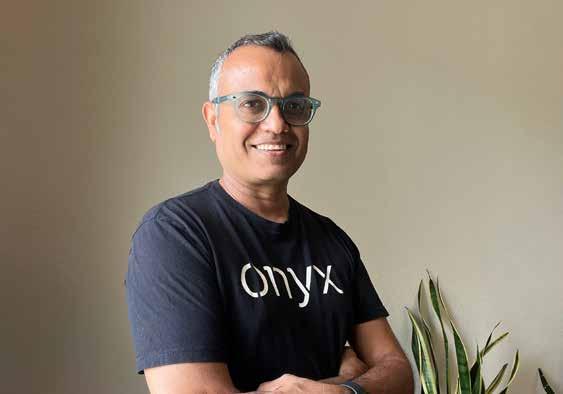

usheel Ladwa has always been passionate about healthcare. He began his career at Texas Instruments before becoming part of the initial team that built Wipro's healthcare practice, where he led the growth of the payer, provider, and medical device business to over $250M in revenue. He then served as a client partner for major healthcare transformation projects at EDS, later acquired by HP.
However, Susheel’s most impactful role was at IBM, where he served as an industry leader for healthcare and life sciences for Cloud Application Services. Following his time at IBM, Susheel joined a start-up in Silicon Valley, and he learned valuable lessons on how not to run a company.
With this experience, he took up the CEO role at Onyx Health, a healthcare company disrupting the industry by making data interoperable across the healthcare value chain leveraging the FHIR standards.
Besides his work at Onyx Health, Susheel is a contributing editor at DistilINFO Publications and has chaired the American Health Insurance Plans IT workgroup. He has also authored over ten books of quotes and sayings.
Solving the Growing Issue of Healthcare Data Interoperability
Over the last decade, healthcare digitization has generated a massive amount of healthcare data.
However, the real problem in the healthcare sector is not the lack of data but the lack of interoperability across the healthcare value chain.
Patient health data is scattered across various health plans, providers, and pharmacies, creating a fragmented system that hinders effective care delivery for better patient outcomes. Onyx, however, is leading the charge in tackling this challenge head-on.
The Onyx team brings experience building Blue Button 2.0 for CMS, the world's largest FHIR standards-based interoperability implementation serving over 53 million beneficiaries. Refining the lessons learned at CMS, and applying them for Health Plans, has placed Onyx at the forefront of healthcare data interoperability.
Collaborating with Microsoft, Onyx has developed its revolutionary OnyxOS, the world's first “Interoperability Operating System” built on the FHIR standards. Onyx helps Health Plans comply to CMS Interoperability rules and leverage the investments to automate Prior Auth, Acquire Clinical Data for Quality reporting and more. Onyx also brings the first Payer to Payer data exchange platform that is connected to over 300+ healthcare plans.
"OnyxOS enables healthcare companies to adopt FHIR standards quickly and make their data interoperable, facilitating effective programs that deliver impactful healthcare to patients. We're thrilled about the opportunity that lies ahead and believe that Onyx is well-positioned to disrupt the healthcare industry,"- states Susheel Ladwa.
Despite being a relatively new start-up, Onyx has made remarkable progress in the healthcare industry. Presently, Onyx’s platform hosts over 4% of all Government Regulated healthcare lives including Medicare Advantage, Medicaid, CHIP, and QHP plans. The OnyxOS platform is rapidly becoming the preferred choice for healthcare organizations that want to embrace FHIR standards and accelerate data interoperability.
OnyxOS is a revolutionary plug-and-play product that seamlessly integrates with legacy healthcare data and platforms, enabling the adoption of FHIR standards and creating new business cases to enhance patient outcomes. The organization is presently focused on helping health plans meet the CMS Interoperability requirements, but the benefits of its FHIR standard-based operating system extend far beyond just health plans. Providers, medical device companies, pharmacies, and life sciences companies can all leverage the power of OnyxOS to unlock the full potential of their healthcare data.
Healthcare data is notoriously complex, and adopting a new standard like FHIR can add to the complexity for healthcare organizations. However, with Onyx's platform, OnyxOS, healthcare organizations can quickly embrace the new opportunities that arise from the boundaryless healthcare data enabled through the FHIR standards.
OnyxOS simplifies the process for healthcare organizations to transform their businesses and reap the benefits of FHIR standards without undergoing a lengthy and stressful build project. Onyx provides a straightforward configuration program that enables organizations to take advantage of the full potential of their data. Moreover, new use cases like prior electronic authorization, digital insurance cards, payer-to-payer data exchange, good faith estimates, and upgrades to FHIR standards are handled on the platform as a version update, making the process seamless.
Onyx is proud to offer the industry's first fully SaaS platform for interoperability, making it easier than ever for healthcare organizations to unlock the full potential of their data. Under Susheel’s leadership, Onyx has won the “Frost and Sullivan Best Practices" Award for Healthcare data interoperability.
Susheel feels the best thing a leader can do is to assemble a great team, inspire and encourage them, set an aggressive goal and then step back and let
them work their magic. To achieve this, Susheel follows three guiding principles that he prioritizes:
● 10x Rule: The first guiding principle that Susheel prioritizes is that every team member should strive to deliver 10x better than anyone else in the industry. When every team member is committed to performing at their best, the collective impact of Onyx on the industry can be almost magical.
● Maniacal Sense of Urgency: In his second guiding principle, Susheel believes that traditional human thinking can be limiting. So he and his team strive to challenge themselves to think differently and disrupt the healthcare industry. They believe that disruptive innovation occurs when people challenge themselves to achieve what may seem impossible, like building something assumed to take sixteen months in just six weeks. Susheel and his team are relentless in their drive to #DisruptHealthcare for the better.
● Comfort Zone Elimination: Susheel believes that culture is one of the hardest things to get right and keep it right. The first element of culture he believes in is "Open Communication," it's incredible how open, non-hierarchy, honest, and candid communication can create an environment for the best ideas to win. Two, "Empathy," treat people how you want them to treat you. Three "Comfort Zone Elimination," nothing significant gets accomplished in the boundary of the comfort zone. As a leader, it is essential to push teams out of their comfort zones; that is where the magic happens.
The Future
Susheel believes building a meaningful business that positively impacts patients' lives is critical to success. Over the next half a decade, the Onyx platform will touch 1 in 4 lives in the US, impacting positive healthcare delivery by making patient data interoperable. Also, the healthcare system is in dire need of a new, easily scalable Operating System that can roll out new capabilities within weeks instead of several years, and OnyxOS is poised to become the gold standard for the next generation of healthcare systems.
Personally, Susheel is also a big advocate for girl empowerment and will continue his work to improve the lives of underprivileged girls worldwide.



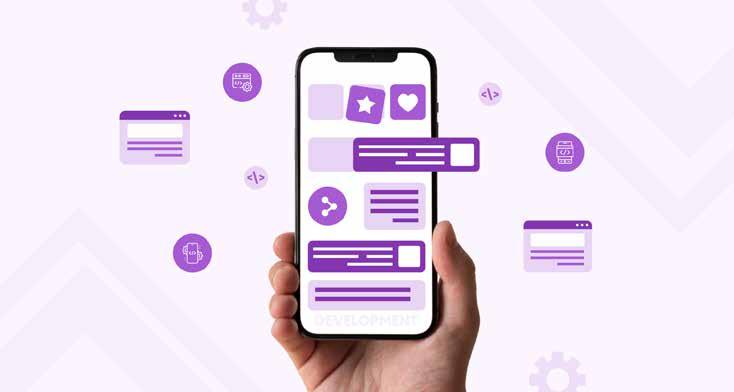
Mobile apps that make it easier for consumers to connect, interact, and shop, are gaining popularity across even small business markets. Last year, for example, 48% of small businesses had an app compared with just 32% the year before. Like web presence, applications are therefore becoming a business requisite. But with app development costing anywhere between $30,000 to $400,000, it takes a little more work than simply boosting online sales to justify this expense.
Brands looking to enjoy viable app ROIs particularly need to work on not only developing their app in the first place but ensuring its relevance in a quickly growing market by prioritizing legacy application modernization based on current market trends. In this article, we consider just five of the app development trends that companies of all sizes should be implementing to ensure returns in 2023.
2023 spells the start of full-scale 5G usage, and the growth of fully 5G-enabled mobile devices. The faster load times, higher resolutions, and quicker app payments possible with 5G pave the way for app developments like seamless cloud compatibility, enhanced graphics, and even advanced in-app games with improved performance.
App developers continue to consider what augmented and virtual realities have to offer, especially in light of the speed of 5G. Outside of even game-specific apps, brands like Ikea and L’Oreal are using these focuses to
enable things like virtual makeup trials, and the ability to test how furniture will look in a room at home before purchase. As this technology continues to advance, consumer expectations for interactive, intuitive app usage will inevitably grow.
Brands including Amazon, Netflix, and Etsy are increasingly relying on microservices that make it possible to build an app using multiple independent services. This makes scalability, and ultimately profitability, far easier to achieve when microservices are connected via APIs, and serve a definite purpose within an app’s monolith architecture. According to Amazon, success simply relies on small teams and complete developer oversight of each microservice. From there, brands can build apps with less downtime, enhanced capabilities, and potential profit increases despite a little extra expense at the development stages.
# 4 – Foldable devices
Foldable smartphones form a small portion of mobile markets, but they’re increasing in popularity at a fast rate. For app developers, this shift is paving the way for graphic improvements based on larger screens, as well as additions like multiple windows, and on-screen information and controls that aren’t typically possible.
# 5 – Mobile app security
Mobile app security continues to be a pressing concern, especially in light of ever-changing risks, and growing pressures regarding data protection. Companies like Apple are heralding the way for security trends that include password-less passkeys, while the app development industry, in general, is seeing a shift towards more robust DevOps strategies.
By staying on top of trends like these, businesses can save time, money, and efficiency setbacks with their app development, as well as ensuring modern options that appeal to every audience.


The blog realm has changed a lot. It doesn’t matter what type of blogger you are, whether it is a fashion, lifestyle blogger, Mommy blogger, or basically being the best type of blog; over the last few years, the blogging world has changed. With the rise of TikTok meant that other platforms had to cater, meaning that more platforms needed to cater more towards video content rather than pictures and text.
So, as a blogger, that means that if you want to continue creating content that people see (whether you make money or not), you’re going to have to keep up and create this content too. This doesn’t mean that blogs are out of fashion; when it comes to looking for answers, a blog can help you out more than a video. But for the modern audience, when it comes to marketing your blog, things will need to be done a bit differently. So, here’s what you need to know!
Leverage Visual Content
As stated above, modern audiences want videos; they want something that’s visually appealing. Visual content, such as infographics, videos, and eye-catching images, can make your blog more shareable and engaging. Incorporate visuals that complement your blog posts and share them on social media platforms to attract a wider audience.
But of course, there’s only so much that you can have on your blog itself. This is why you’ll want to use other platforms to show off your gorgeous visual content. If some huge platforms are simply not your style, then you could even look into the best Youtube alternatives for content creation, too. But overall, videos and visual appeal are going to get you far.
This is more focused on your blog, but to a small degree, you can kind of make marketing interactive, too. Think of TikTok and YouTube creators; they’ll let their audience make some decisions for them, such as what to buy, what to make, and what to wear. It’s usually polls or quizzes, but you could do the same. In general, audiences love interacting, and it does help with that parasocial relationship.
Podcasts are a growing medium with dedicated listeners, and these seem to be getting bigger each year. Reach out to podcast hosts in your niche and request to be a guest on their show. This can introduce your blog to a new and engaged audience. Honestly, a lot of podcasters prefer to reach out to other content creators or professionals, so having a website will immediately help you out with being selected.
Instead of becoming a trend follower, try to be a trendsetter. Make challenges, create memes, do something that captures the attention of others so they can hop on in and join the bandwagon. UGC is one of the best ways to market yourself, and it’s super genuine, too; it’s just about encouragement.
At the end of the day, content creation is just going to keep on changing, and as a creator, you need to just keep up. While blogging sounds like it’s fading from relevancy, it’s not. Instead, it’s just evolved, and the marketing surrounding it evolved as well.



Online business surveys refer to surveys conducted through digital platforms or the internet to gather information and insights related to various aspects of a business. These surveys are designed to collect feedback, opinions, and data from customers, employees, or other stakeholders, with the aim of improving business operations, making informed decisions, and enhancing customer satisfaction. Well, let’s look into the benefits of using online surveys for your business:
Online surveys are a powerful tool you can leverage to gather feedback and opinions from customers to gain valuable insights into your product strengths, weaknesses, and areas for improvement. For example, if you are a SaaS business, you can design questionnaires and open-ended responses as a way to collect specific data on features, usability, performance, and customer satisfaction.
This will let you identify patterns and trends and prioritize product enhancements. You will ultimately deliver products that resonate with their target audience and stay ahead of the competitions.
One of the other primary benefits of online business surveys is to help improve customer satisfaction. Your business can get insights to help understand and meet customer expectations.
For example, you can tap into key customer feedback from avenues like online surveys to gain a deeper understanding of customer preferences, pain points, and needs. You can be able to provide seamless and personalized experiences across all touchpoints that build trust and loyalty, resulting in higher customer satisfaction levels and increased customer retention. You can learn more about strengths and weaknesses of a survey to derive customer insights for your business.
The goal is to help create loyal customers who are more likely to stay with your brand and become advocates. Satisfied customers are more inclined to recommend your products or services to others, thereby driving organic growth and expanding your customer base. Remember, positive word-of-mouth referrals and online reviews from loyal customers can significantly impact your business’s reputation and attract new customers.
These surveys can give your business a competitive edge in the market. Keep in mind that research has shown that companies that prioritize customer experience tend to differentiate themselves from competitors, especially in industries where products and services are similar. In this case, online surveys can help you get a unique selling proposition, attracting customers who value superior experiences and are willing to pay a premium for them. Beating your competitors in the realm of customer experience can help your business gain a significant advantage and capture a larger market share.
Investing in online business surveys also has a direct impact on your bottom line. Again, studies have shown that companies that prioritize aspects like customer experience tend to outperform their competitors in terms of revenue growth. When customers have positive experiences, they are more likely to make repeat purchases and spend more on your products or services. Loyal customers also tend to have higher customer lifetime value, contributing to long-term revenue growth and business sustainability.
Online business surveys can help in optimizing internal processes and systems to deliver better customer and employee experiences. This focus on efficiency can lead to improved operational effectiveness and cost savings. Streamlined customer service workflows, automation of repetitive tasks, and the implementation of self-service options reduce operational inefficiencies, allowing resources to be allocated strategically and improving overall productivity.
Wrapping up
The benefits of online business surveys are significant and far-reaching, including better products, enhanced customer satisfaction, increased loyalty and advocacy, competitive advantage, revenue growth, improved