

Elad Inbar Founder & CEO - RobotLAB





Elad Inbar Founder & CEO - RobotLAB
Founder & CEO - RobotLAB



Due to the demand for automation and higher productivity in the manufacturing industry, industrial robots have seen astounding growth. The industrial robotics market size and projection demonstrate the industry's tremendous prospects and growth potential. The market for industrial robots was estimated to be worth USD 48.5 billion in 2022 and is projected to expand to USD 142.8 billion in 2032, with a CAGR of more than 11.4%.
Pioneering a turn-key robotics solution is the California-based, most experienced, and award-winning robotics company RobotLAB Group. Established in 2007, the company has a strong team led by a visionary leader and innovator, Elad Inbar, CEO and Founder of the company. They are serving every market, providing robots to businesses like restaurants, hotels, assisted living facilities, etc., and over to education with robots in K-12 schools, colleges, and universities.
They primarily assist businesses with manpower shortages by automating food service, bussing tables, and cleaning for large facilities like hotels and assisted living homes. They offer robots that serve as teaching aids for the research and education markets, assisting teachers in getting students interested in STEM disciplines.
Elad Inbar, the company's Founder & CEO, has over 25 years of experience in a variety of hi-tech verticals, largely in executive positions. In addition to SxSW, the National Restaurant Association, the Florida Lodging and Restaurant Association, TCEA, ACTE, FETC, Bar and Restaurant Show, and many other conferences, he also speaks as a keynote speaker at many other events. As a thought
RobotLAB is a platform-agnostic company. They care only about the customers and about having a successful deployment with each one of them. They understand that not every robot is a great fit for every customer’s needs. They work together with the clients to customize the solution for their unique environment. "We are the first and only, robot-franchise, and we have franchisees for RobotLAB across the nation that can deploy and maintain the robots. No other firm has access to as many products as we have, and no other business can provide our customers with a solution that is as comprehensive as the one we can", the visionary leader revealed. leader, Elad has the expertise to provide a bridge between the cutting-edge robotics industry and the educational and retail industries due to his concurrent professions in academics and technology.
Elad has been passionate about robots since childhood. He cherished creating new ones, building them, and programming them. However, for many years, robots were considered "toys for geeks" since they required soldering and a grasp of electronics and were, in general, not accessible to 99.9% of the population. So it continued to be a hobby.
Even when the tech leader started his first company (MassiveImpact, which focused on optimizing ads on text messages for mobile operators) and moved to Taiwan for 7 years, he always visited the vibrant electronics markets on weekends, looking for developments in sensors, motors, controller boards, etc.
He observed a fresh wave of what are now referred to as "connected toys" in Taiwanese electronics markets following the debut of the iPhone in 2007. A deluge of smartphone-enabled cars, drones, robots, and other smart items. Since all of these toys connected to smartphones can actually be programmed to perform a variety of other things, and since apps on smartphones are merely a programming interface, the fact that this drew him back to his former interest in robotics was a clue to me that the market was finally ready for one.
Elad decided to launch RobotLAB after selling his company's stock, with the goal of bringing this innovation into schools and engaging kids in math, science, and physics. They used robots to develop lesson plans, curricula, and anything else teachers needed to teach these abstract ideas. They had to create some of the robots themselves because they couldn't find what the professors were looking for.
Over the years, the company’s portfolio grew and extended beyond education. "There were no service, delivery, or cleaning robots back then (in 2007). It took a few more years for these goods to develop and become trustworthy enough to get us to where we are now, with a wide range of robots that can perform any task that business owners require of them”, revealed Mr. Elad.
He continued, "And in the past couple of years, we've seen the demand for these products skyrocket. and we can't keep up with the demand, as it's coming from everywhere (around the country and beyond) and all at once. That’s why we decided to franchise the company and have multiple RobotLAB teams in each metro area. My vision is to make sure that whenever a business owner needs a robot, he finds a RobotLAB team in his backyard that can be there the same day and help them."
RobotLAB is a dedicated international and multi-cultural team of close to 40 experienced professionals from ten different countries. (US, Mexico, Bolivia, Israel, Russia, Hong Kong, Japan, France, Colombia, and India) occupying three corporate offices, in San Francisco, CA, Dallas, TX, and Bogota, Colombia. The team has a perfect ratio of 50% males and 50% females.
Currently, the business is actively developing the Robot-Franchise model by instructing franchisees on how to deploy and provide customer support across the nation. The "car dealership" of robots is being built by RobotLAB, and it will be located everywhere! With hundreds of RobotLAB teams throughout the world, nobody will be able to serve business owners like RobotLAB, and nothing can scale like RobotLAB.
Finding the right partners has been a huge challenge for Elad. People who share similar views and are enthusiastic about robotics and AI as well as customer service. They put in a lot of effort every day, interviewing hundreds of candidates who might be a suitable fit. Only a handful cross the rigorous interview process.

The RobotLAB Group is working with many underserved communities and providing them with complete AI labs, curricula, and educational robots that spark curiosity in students, help them close the gap, and make sure they are college and career ready! Ensuring students’ college and career readiness is crucial for our success as a community and a nation.
Having a RobotLAB team in each one of the major metro areas, nation wide, and beyond, serving
customers’ needs, and pushing humanity to the next phase is the future goal of Elad and his team. When the first cars were introduced, no one wanted to purchase them, because there was no service infrastructure, no gas station network, and no AAA service. Buying a car was a giant leap of faith. Mass adoption came only after the network of dealerships was created.
RobotLAB is setting up the first car-dealership network for robots, paving the way to the explosive growth that is looming.



CEO - ARM Institute


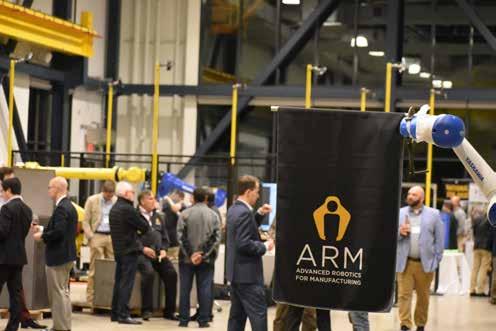
This time the spotlight is on the leading Manufacturing Innovation Institute (MII) for robotics and artificial intelligence in the USA. It is renowned for leveraging a robust set of capabilities to strengthen the U.S. industrial base by promoting industry, government, and academic collaboration, catalyzing significant robotics projects, and inspiring effective, multi-state workforce solutions.
The ARM Institute began its journey in January 2017 through Carnegie Mellon University, which won the bid to create a robotics-focused Manufacturing USA® Institute, currently functioning as a separate non-profit. It is recognized for being one of the Manufacturing USA network's 17 advanced manufacturing institutes, and the U.S. Department of Defense provides the majority of its financing.
As Industry 4.0 ushers in a new era of manufacturing—one that relies on the use of robotics, artificial intelligence (AI), and autonomy—manufacturers must upskill their workforce, find the best solutions to their problems, and comprehend what this shift means for their business. These tasks are daunting and nearly impossible to accomplish without concentrated help and collaboration. This is where the ARM Institute plays a key role for the nation.
The ARM Institute is ideally situated to tackle widespread challenges in the US manufacturing sector. They operate as the vital link between business and government through a nationwide consortium of around 400 member firms, accelerating the development of solutions that will have an impact on the production floor and serve the Department of Defense.
The ARM Institute accelerates the creation and uptake of cutting-edge robotics technologies, which
are the cornerstone of all current and upcoming advanced manufacturing initiatives. They make use of a special, strong, and varied ecosystem of partners from business, academia, and government to:
● Make robotics, autonomy, and AI more available to American manufacturers of all sizes
● Strengthen the economy and global competitiveness
● Educate and equip the personnel in manufacturing
● Elevate national security and resilience.
The Manufacturing USA network was created in 2014 to secure U.S. global leadership in innovative manufacturing by connecting people, ideas, and technology. Manufacturing USA institutes bring together industry rivals, academic institutions, and other stakeholders to test innovative technology applications, develop new products, lower costs and risks, and equip the manufacturing workforce with future-ready skills.
Manufacturing USA consists of a national network of linked manufacturing institutes. Each has a distinct technological focus, but they are all intended to spur overall U.S. advanced manufacturing. In order to fulfill the demand for a skilled manufacturing workforce, the ARM Institute was established in January 2017 with a focus on increasing the use of robotics and AI in US manufacturing.
The ARM Institute paves the road for an era where humans and robots collaborate to solve the nation's biggest problems and create the most desired products by:
● Creating a nationwide group of elite manufacturing, academic, technology, and government organizations that share the common mission of a robust U.S. manufacturing ecosystem
● Delivering projects that create, expand, and market vital enabling technologies for manufacturing and the whole supply chain
● Building a repository of industrial robotics solutions, applications, and information
● Developing a national, standardized framework for robotics careers
● Establishing a repository of best-in-class workforce training and education programs, resources, and pathways
● Facilitating stakeholder networking activities that promote innovation through research activities, outreach, and dissemination
● Forming collaborations with other Manufacturing USA Institutes that leverage the intersections and convergences in our missions
The ARM Institute’s Insights on Diversity and Inclusion
The ARM Institute is adamantly opposed to all forms of discrimination and racism. They believe the potential of manufacturing and robots depends on the employment possibilities they create for people and that expanding US manufacturing requires a diversity of viewpoints. More than 50% of the ARM Institute workforce is made up of women and people of color in a predominately white sector.
smaller ones? These are the issues that the ARM team is trying to resolve in conjunction with the government stakeholders and consortium members.
Every day, the team works on innovation. They are constantly seeking out strategies to expand the manufacturing sector in the US. All of the ARM Institute's 30+ employees are passionately
The ARM Institute aims to remove obstacles in the way of people pursuing jobs in manufacturing and robotics as part of its larger purpose. Many of the workforce development programs that ARM has hosted specifically target underrepresented and underserved communities.
The ARM Institute’s challenges reflect those of the U.S. manufacturing industry—how to attract the interest of more individuals, particularly young people, in manufacturing careers? How can robotics be made more accessible, practical, and cost-effective for all manufacturers, especially the
In the next ten years, 4.6 million jobs in the U.S. manufacturing sector will need to be filled, and 2.4 million of those positions could go unfilled for lack of qualified people, according to a recent analysis by The Manufacturing Institute and Deloitte. Therefore, the only way for the United States to keep expanding its manufacturing base is by utilizing both people and technology. Through the provision of a national resource called RoboticsCareer.org, the ARM Institute helps solve the issue of creating a skilled workforce that can successfully work with robotics and AI and connecting these individuals with job opportunities that match their skills.
Ira's ultimate objective is to continue expanding the ARM Institute's influence so that they may work together to support the expansion of American manufacturing. The latest pandemic serves as evidence that there is a need for a stronger manufacturing and supply chain infrastructure for the health and well-being of the citizens. The ARM
Institute is honored to play a role in this mission.
The Man at the Helm: Ira Moskowitz
Ira Moskowitz, CEO of the ARM Institute, is an esteemed leader and a 30-year industry veteran with experience in starting and maintaining top-tier manufacturing and technology. He has founded and managed the operations of a successful new venture within a major company, demonstrating his expertise in developing and growing operations for both large and new firms.
After earning a degree in electrical engineering from the University of Rochester, Mr. Moskowitz attended the famous Massachusetts Institute of Technology (MIT), where he completed a Master of Science in Electrical Engineering and Computer Science. Additionally, he has a Master of Business Administration degree in finance and international business from NYU's Stern School of Business.
In June 2020, Mr. Moskowitz joined the ARM (Advanced Robotics for Manufacturing) Institute. Ira formerly worked at the Massachusetts Technology as the Director of Advanced Manufacturing Programs before joining the ARM Institute. He took the helm of Massachusetts' initiatives for manufacturing innovation in 2017, managing the $100 million Massachusetts Manufacturing Innovation Initiative (M2I2), a Manufacturing USA®-affiliated economic development program. He's worked on the boards of multiple Manufacturing USA® Institutes and has deep experience working directly with state and federal agencies.
Ira previously spent 30 years overseeing the development and manufacturing of semiconductor technologies across the globe, including wafer fabrication, assembly, and test operations in the United States, Europe, and Asia. Ira oversaw Analog Devices' domestic manufacturing operations as well as the technological advancements that supported them as the company's Vice President and General Manager of U.S. Operations. As part of Analog Devices, he also initiated and oversaw the production and process development for a new MEMS initiative that led to the commercialization of ground-breaking airbag control technology. Ira formerly worked for AT&T Bell Labs, where he was given the title of Distinguished Member of the Technical Team, the highest technical title offered by the organization. www.arminstitute.org



n an increasingly digital and data-centric world, the ability to understand and interpret visual information has never been more critical. Computer vision, a branch of artificial intelligence, offers the promise of unlocking valuable insights from images and videos, transforming a wide range of industries.
The global AI in Computer Vision Market, valued at USD 17.42 billion in 2022, is projected to reach a staggering USD 206.33 billion by 2030, with a remarkable CAGR of 37.05% from 2023 to 2030 (Kings Research). For business leaders recognizing the growing importance of computer vision in their respective fields is not just a trend; it's a strategic imperative.
Object detection is a fundamental task in computer vision that involves identifying and locating objects within an image or a video stream. It goes beyond simple image classification by not only recognizing what objects are present but also determining their precise positions and drawing bounding boxes around them. This technology plays a pivotal role in various applications across multiple domains.
One key application is in autonomous driving, where object detection helps vehicles identify and track pedestrians, other vehicles, traffic signs, and obstacles, ensuring safe navigation. In healthcare, it's used for medical image analysis, locating anomalies in X-rays, MRIs, or CT scans. Retail businesses benefit from object detection for inventory management and smart checkout systems, while security and surveillance systems use it to identify intruders and enhance video analytics. These examples highlight how object detection improves safety, efficiency, and automation in various industries.
Character Recognition (OCR):
Optical Character Recognition (OCR) is a technology that plays a pivotal role in computer vision by enabling the automatic extraction of text and data from printed or handwritten documents, images, and other visual sources. OCR software uses complex algorithms and machine learning techniques to recognize characters and convert them into machine-readable text. This transformation of analog information into digital data greatly enhances the efficiency and accuracy of data extraction processes, making it invaluable in various applications.
OCR is widely used across industries, simplifying document management by digitizing paper records and boosting efficiency. It automates data extraction in finance, particularly with invoices, receipts, and financial statements, streamlining accounting and auditing. In healthcare, OCR transforms handwritten medical records into electronic formats for easier access and analysis. It's also crucial for accessibility, converting printed materials into readable text for visually impaired individuals.
Facial recognition in computer vision is a technology that involves the automatic identification and verification of individuals based on their unique facial features. It uses a combination of machine learning algorithms and deep neural networks to analyze and compare facial characteristics, such as the distance between eyes, nose shape, and facial landmarks, to create a digital representation of a person's face known as a face template. This template can then be used to match and recognize faces in images or video footage, enabling various applications.
One of the most common use cases of facial recognition is in security and access control systems. It can be used to unlock smartphones, grant access to secure facilities, or verify identities at airports and border crossings. Additionally, it has applications in law enforcement for identifying suspects from surveillance footage and helping to solve crimes. Beyond security, facial recognition is used in customer service, where it can personalize user experiences in e-commerce, or enhance convenience at automated check-in kiosks in the travel industry. However, it also raises concerns about privacy and ethical considerations related to surveillance and data protection.
Image reconstruction and scene reconstruction are vital concepts in computer vision, contributing to immersive experiences and insights. Image reconstruction enhances image quality and fills in missing data, crucial for VR and AR applications, like gaming and realistic overlay of virtual objects onto the real world. Scene reconstruction builds 3D models from 2D data, benefiting autonomous navigation, medical imaging, and more. These techniques play pivotal roles in various fields, from entertainment to healthcare, by improving visuals and enabling a better understanding of the environment.
Human Pose Estimation is a computer vision technique that aims to infer the spatial locations of key body joints or keypoints in a human subject from images or videos. These keypoints typically include joints like the elbows, knees, wrists, and shoulders, allowing for a precise understanding of human body posture and movement. It plays a crucial role in various applications, such as gesture recognition, action recognition, virtual reality, and human-computer interaction.
One prominent use case is in healthcare, where pose estimation can assist in physical therapy and monitoring patients' movements for rehabilitation purposes. In sports analysis, it helps coaches and analysts evaluate athletes' performance, enhancing training regimens. Additionally, it has applications in surveillance and security by detecting unusual human movements or postures in real-time, potentially identifying suspicious activities. Human Pose Estimation also finds utility in the entertainment industry, enabling realistic character animation for video games and movies, creating lifelike avatars, and enhancing motion capture systems for actors.
Incorporating computer vision into your business processes presents immense opportunities, but it's essential to approach its implementation strategically. Partnering with specialized consultancies, like Gradient Insight, is paramount to successfully navigate the complexities of computer vision integration.
Expert consultation ensures a tailored approach to your unique business challenges. This encompasses understanding your industry-specific needs, identifying the most suitable computer vision applications, selecting the right hardware and software solutions, and developing robust algorithms for accurate results. Moreover, it involves data security and compliance considerations to safeguard sensitive information, ensuring compliance with regulations.
In conclusion, the era of computer vision is upon us, and it's redefining the way businesses operate across various sectors. It's time to embrace computer vision as a strategic advantage and drive innovation in your respective industries, ensuring your businesses remain competitive and future-proof. The remarkable journey of computer vision is just beginning, and those who embrace it now will lead the way into the future.


The Internet of Things (IoT) is a novel technology that allows people to communicate and share information using data. Over the past few years, it has become one of the top technologies in the world. Several Wireless connectivity and smart tech gadgets have emerged from IoT, revolutionizing many sectors worldwide. With the help of IoT smart computing, cloud and big data analysis can be possible within a few minutes.
According to TDengine, Internet of Things (IoT) is a term that represents evolving technologies in smart physical objects which help people to connect, share, and accept data and information securely. Our daily lives experience the connectivity of physical objects with the internet, turning them into smart TVs, smartphones, Smart cars, and many others, completely changing the ease of living. In 2023, it is predicted that around 43 billion devices will be connected to the internet, and by 2025 the number of IoT devices will be 75.44 billion.
The most significant impact of IoT devices is on the daily lives and corporate sector. Smart devices and features help businesses to improve their service and customer relations. As IoT is widespread in the market, businesses can use it for effective insights and data analytics which increase the productivity and value of businesses. There are many more trends of IoT emerging in 2023, which we will discuss in this article deeply.
As billions of smart devices are connected to the internet to provide an accessible service to people. But this network requires security to protect billions of users’ confidential data and information worldwide. Though these IoT devices make peoples’ lives easier, it opens the door for cyber attackers to steal their data. Many large organizations are ready to invest in cybersecurity majors to protect their data. Cyber attacks like phishing, breaching, and intrusion are rising, raising security concerns among users and other companies worldwide.
The IoT technology adoption has been is proven useful and essential to the healthcare industry for improving the service. Healthcare experts use smart wearables and sensors to detect major problems during surgery. This incredibly increases the opportunities for IoT in the healthcare industry. Many smart gadgets like smartwatches and SpO2 sensors help patients monitor their health without concern to doctors in an emergency. So, the healthcare industry will also turn towards virtual technology in the future.
IoT in the manufacturing sector is one of the most recent developments in this technology. In this sector, managers and workers always deal with the machines, so they require special types of sensors and devices to detect faults in the machines. The use of wearables allows factory workers to understand the condition and safety of their factory. IoT devices are equipped with sensor technology which enables manufacturers to find problems early and work on them.
Data analytics with machine learning is a new trend in AI technology that uses all the IoT devices’ data. In these modern days, data is an asset that can be extracted from smart devices to run more efficient systems. Projects like smart homes with elevators and smart cities can be possible due to the collaboration of IoT and machine learning. Integrated insights are injected into the machine learning systems which support the IoT or smart devices to optimize and adapt the new trends in the device automatically.
Covid-19 pandemic advancements in the workplace gain momentum. From video conferencing tools to the modern and sophisticated workplace, IoT technology has changed the way of working in companies. Machine learning applications like robotic automation help employees handle customers more efficiently in the workplace. With the help of this technology, professionals can also carry out virtual meetings using AR and VR to gain guidance and assistance from their colleagues and employees.
IoT technology develops smart devices for smart cities, which significantly change the way of living in society. People can now use smart devices to live their lives more easily and comfortably. In US cities re-establishment of cities started in the early years. This evolved the working of traffic lights, pipelines, and parking meters in the city. The aim of smart cities is not only to provide ease to people but reward them with financial, environmental, and social comfort in the city. This revolutionary change in urban areas can bring sustainability to people’s lives and improve their quality of life.
The internet of things has the ability to transform the rules and regulations of governmental sectors run in the country. IoT comprises various smart gadgets, sensors, and devices that help the government to summarize and categorize data. IoT technologies assist the government in managing cities by giving efficient water systems, routes, and food supplies to the country’s citizens. Government agencies can also offer E-services to citizens to manage their identification cards, property documents, and citizenship proofs. Many lengthy processes can be done in a minute with IoT devices.
Efficient customer service is the main objective of any company or business. It gains more relevance in the early years because most of businesses turn their head towards customer-centric business. Smart devices and efficient internet service allow them to offer great service to customers. The most important thing in customer service is real communication. IoT enriches the quality of communication which helps to understand the behavioral patterns of customers. Automation in chatbots greatly helps businesses to resolve the queries of customers at any time.
IoT brings innovation in every sector where it is implemented. Web development is also benefited from IoT. IoT devices and technologies can be used to design user interfaces and the architecture of websites. Smart watches and smart cameras are the latest examples of IoT-based web development. Web developers and tech professionals use IoT to create and design front-end interfaces innovatively.
The upcoming fifth-generation wireless 5G network is a great opportunity for IoT technology. 5G is able to deliver high-speed data with better reliability. It provides wider connectivity to smart devices like phones, laptops, and tablets to connect over the 5G network. According to Star Dust research, the 5G network is 10 times faster than the current LTE network. This incredible speed results in better data transfer and communication between people worldwide.

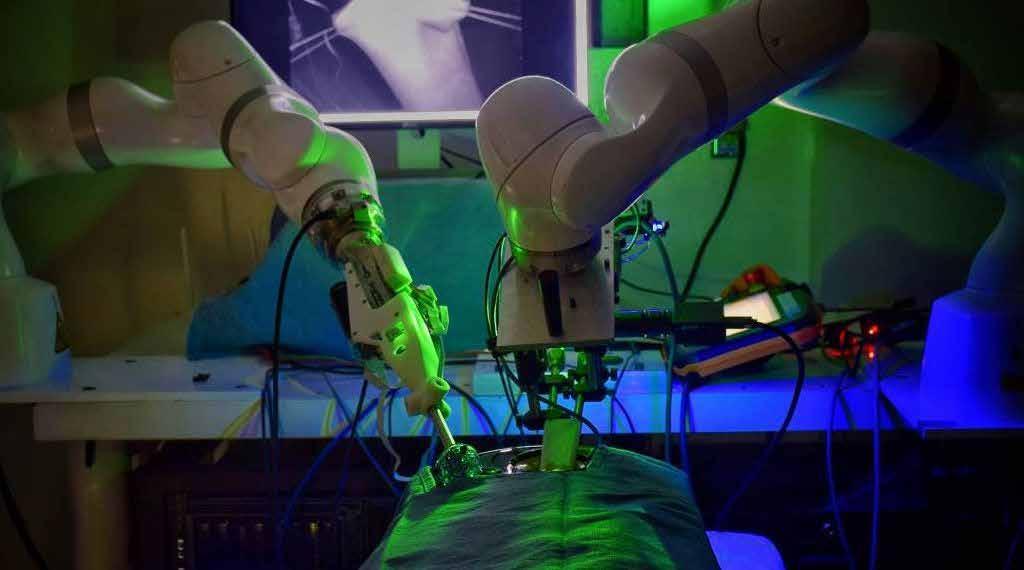
Robots in medicine are revolutionising the sector by simplifying tasks like delivering and sterilising medical supplies and performing delicate surgical procedures. Intel provides various technologies for creating medical robots, such as those that provide aid during surgery, are modular, or are fully autonomous mobility robots.
Robots are increasingly being used in various clinical settings, not just the operating room, to assist healthcare professionals and improve patient outcomes. During the current COVID-19 epidemic, hospitals and clinics are using robots for a significantly wider variety of jobs to decrease patient exposure to infectious diseases.
Medical robotics has broad use due to its ability to streamline processes and reduce risks. In infectious illness wards, robots can clean and prepare patient rooms without human assistance. Medical facilities may save time and effort by using robots equipped with artificial intelligence (AI)-enabled medicine identification software to speed up locating and dispensing the correct medication to each patient.
Robotics and automation are also widely utilised in labs. They facilitate the automation of manual, repetitive, and high-volume operations, freeing up technicians and scientists to concentrate on more strategic endeavours that hasten the pace at which discoveries are made.
By incorporating robots into healthcare, we can improve the quality of care provided to patients, streamline clinical workflows, and ensure the safety of both patients and medical staff.
Robots in the medical field allow for less invasive surgeries, individualised and regular monitoring of patients with chronic illnesses, intelligent therapies, and social engagement for the elderly. Because robots lighten the strain, nurses and other caregivers may spend more time with each patient, improving their long-term health and happiness.
In addition to streamlining regular operations, reducing the physical demands on human employees, and guaranteeing more consistent procedures, autonomous mobile robots (AMRs) also provide several other advantages. By monitoring stock and arranging immediate orders, these robots may help mitigate the effects of personnel shortages and ensure that essential items like medications and tools are always available. Hygiene and sanitation Thanks to AMRs, hospital rooms can be promptly cleaned and prepared for new patients, freeing up staff time to concentrate on providing high-quality care for patients.
AMRs are used to move linens and supplies in hospitals where the potential of pathogen contamination is high. Hundreds of hospitals and clinics have begun employing robots to clean and disinfect their facilities since they have been shown to lower the spread of bacteria and other pathogens and hence the number of HAIs. Another way AMR, specifically social robots, benefits healthcare personnel is by easing their workloads by assisting with heavy liftings, such as transferring patients’ beds.
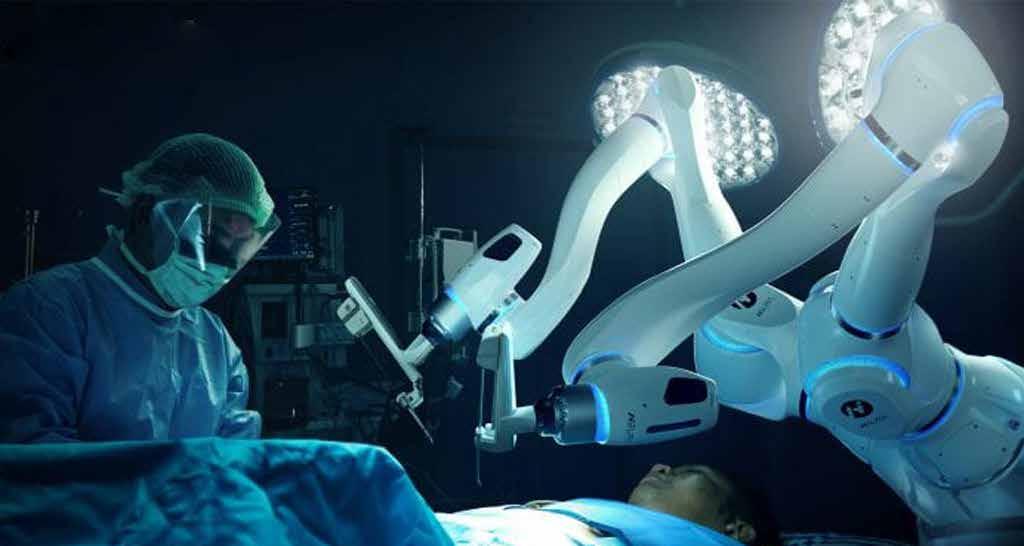
Increases in the accuracy of surgical robots have paralleled developments in motion control technology. These robots, equipped with artificial intelligence and computer vision, allow surgeons to conduct difficult procedures at record speeds. Surgeons may be able to monitor treatments from a control room if surgical robots are capable of fully autonomous operation.
There are two primary types of robotic surgery:
Invasive procedures for the abdomen and chest are called minimally invasive. These operations predominantly target soft tissues, such as robotic hysterectomy, robotic prostatectomy, bariatric surgery, and others. These robots are designed to be inserted via a tiny incision and then lock themselves into position, providing a solid platform from which remote surgical procedures may be carried out. In the past, most interior surgeries required huge incisions, or “open surgery.” The likelihood of infection and other problems increased, and the time needed to recover was lengthened significantly. Even for a skilled surgeon, it is challenging to do manual work via an incision the size of a button. Surgical robots have made these treatments more streamlined and precise, hoping to decrease the prevalence of infections and other problems.
Orthopaedic procedures: Using spatially defined limits to guide the surgeon, these robots combine intelligent robotic arms, 3D imaging, and data analytics to achieve more predictable outcomes. Robots may be taught in specialised orthopaedic surgery thanks to AI modelling, which provides detailed treatment instructions.
Surgeons may get insight from talks with other professionals in their area thanks to the ability to send a video stream from the operating room to other places, whether nearby or far away. Patients may be certain that only the most skilled surgeons will work on their cases.
Artificial intelligence is being used more and more in surgical robots. Using computer vision, surgical robots can identify various kinds of tissue within their range of view. For instance, modern surgical robots may aid doctors in avoiding sensitive tissue, such as nerves and muscles. Using high-definition, 3D computer vision, surgeons may get valuable insight and improve their efficiency during surgeries.
When it comes to teaching future surgeons, robotics is crucial. Artificial intelligence and simulated environments are used in simulation platforms to teach surgical robots. Within the simulated setting, surgeons may train using robotics controls to perfect their craft.
Adaptable Robots
Robots with a modular design are more adaptable than traditional machines and may be programmed to carry out various tasks. These include therapeutic exoskeleton robots and robotic prosthetic arms and legs used in medical treatment.
Rehabilitation after neurologic injuries, including strokes, spinal cord injuries, TBIs, and MS-related disabilities, may all benefit from therapeutic robots. Intel and Accenture are working on a robotic arm that can be attached to a wheelchair to aid people with spinal cord injuries to carry out their everyday activities. Robots using artificial intelligence and depth cameras can measure a patient’s range of motion in various situations and keep better track of their improvement than a person can. Patients may benefit from interacting with them since they can get guidance and support.
Health robots will continue to improve in parallel with advances in machine learning, data analytics, computer vision, and other technologies. Robots of all stripes will keep becoming smarter and better at doing their jobs independently.