

The legal profession is evolving at an unprecedented pace, driven by globalization, technological innovation, regulatory reform, and increasingly complex business environments. In this era of transformation, legal experts are no longer confined to interpreting laws—they are trusted advisors, strategic partners, and catalysts for meaningful change across industries and societies.
In this special edition, “Latin America’s Most Prominent Legal Expert to Watch in 2026,” we recognize an exceptional legal professional whose expertise, integrity, and vision are setting new benchmarks for excellence in the region. Through unwavering dedication and a forward-thinking approach, this distinguished leader continues to shape the legal landscape while helping organizations and individuals navigate an increasingly interconnected world.
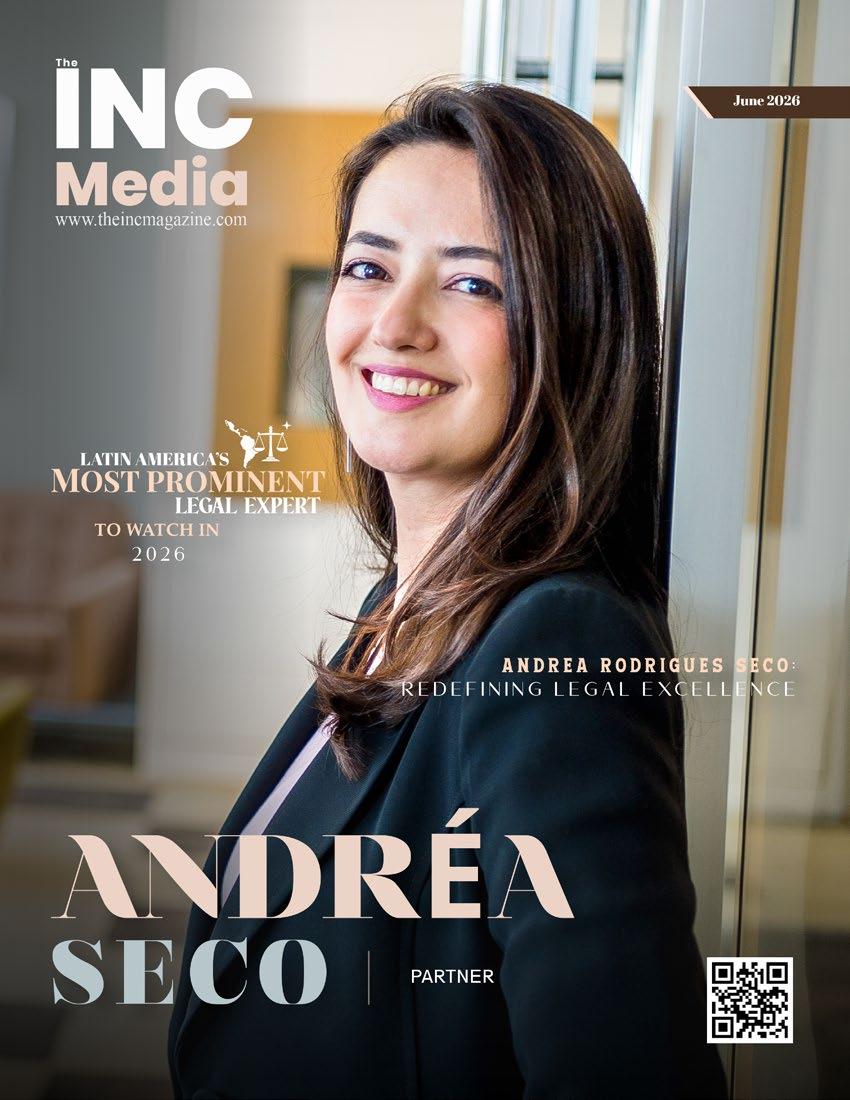
On Cover, we have Andréa Rodrigues Seco, Partner at Almeida Advogados, a full-service law firm recognized for its excellence in Corporate Law, with a focus on business consulting, dispute prevention, and strategic litigation.
From a very early age, Andréa has consistently been an avid listener. She has also maintained a keen interest in reading a wide range of subjects. She graduated in Law from the Pontifical Catholic University of São Paulo in 2000. Even as a law student, Andrea had devoted her career to corporate law, advising both domestic and international clients, with experience in areas such as corporate and civil law.
After completing her legal studies, Andréa worked for small boutique law firms and a large full-service firm. She joined Almeida Advogados in 2003 and contributed to the development of the firm’s litigation practice, ultimately becoming a partner.
This edition celebrates a legal expert whose influence continues to shape the future of legal practice across Latin America. Their story is a testament to the power of excellence, resilience, and visionary leadership in a profession that remains fundamental to business, society, and global progress.
As you explore this inspiring journey, we invite you to discover more leadership stories and thoughtfully curated articles developed by our in-house editorial team.

18 30 22 27




MMeet Andréa Rodrigues Seco, Partner at Almeida Advogados, a full-service law firm recognized for its excellence in Corporate Law, with a focus on business consulting, dispute prevention, and strategic litigation.
From a very early age, Andréa has consistently been an avid listener. She has also maintained a keen interest in reading a wide range of subjects. She graduated in Law from the Pontifical Catholic University of São Paulo in 2000. Even as a law student, Andrea had devoted her career to corporate law, advising both domestic and international clients, with experience in areas such as corporate and civil law.
After completing her legal studies, Andréa worked for small boutique law firms and a large full-service firm. She joined Almeida Advogados in 2003 and contributed to the development of the firm’s litigation practice, ultimately becoming a partner.
Andréa pursued her LL.M. studies in Portugal, where she concentrated her academic research on one of her primary areas of interest—corporate disputes. Currently, in addition to coordinating multidisciplinary teams, Andrea continues to lead the firm’s most significant litigation matters, with active practice also in the arbitration arena.
“I was initially drawn to the legal profession by the opportunity it offers for continuous intellectual growth and meaningful impact,” she says. “Law is a field that demands constant study, critical thinking, and the ability to engage with complex and evolving issues across different sectors of society. This dynamic environment, combined with the possibility of advocating for clients and contributing to the resolution of significant disputes, made litigation a particularly compelling path.”
Since its inception in 2001, Almeida Advogados has distinguished itself in Brazil’s highly competitive legal market through a combination of technical excellence, strategic vision, and a genuinely client-centered approach. According to Andréa, the firm’s strength lies in its ability to understand not only the legal dimensions of a matter but also the broader business realities its clients face.
“Our work is grounded in a deep understanding of our clients’ businesses, industries, and cross-border challenges,
which allows us to deliver legal solutions that are not only precise, but also effective,” she says. “We prioritize close partner involvement in complex matters, ensuring agility in decision-making and consistency in the quality of advice.”
This commitment to hands-on leadership, combined with extensive experience representing both Brazilian and international clients, enables Almeida Advogados to bridge different legal cultures and expectations with clarity and efficiency.
Andréa firmly believes Latin America’s legal industry is being reshaped by a convergence of structural, technological, and regulatory transformations that are redefining the role of legal counsel. In Brazil in particular, she sees a phase of regulatory maturity, further marked by structural reforms, increased compliance requirements, and a growing expectation that legal departments serve as strategic partners to business.
At the same time, this shift is accompanied by the rapid integration of technology, especially artificial intelligence, data protection frameworks, and digital regulation, which is not only creating new areas of advisory work but also reshaping dispute resolution and risk management. At the same time, the continued expansion of sectors such as fintech, digital markets, and infrastructure is driving increasingly complex, cross-border legal matters, requiring lawyers to operate with a more global and multidisciplinary perspective.
From a litigation standpoint, Andréa identifies a particularly relevant trend: the growing sophistication of dispute resolution mechanisms, including a notable rise in arbitration, reflecting clients’ demand for efficiency and specialization.
Digital Transformation is Key
Over the past few years, Andréa is witnessing how digital transformation is reshaping litigation and dispute resolution, particularly in terms of efficiency, scale, and data management.
The rise of artificial intelligence tools, advanced analytics, and digital platforms has streamlined document review, enhanced legal research, and enabled more sophisticated case strategy through predictive insights for the better.
In Brazil, courts and arbitral institutions have also accelerated the adoption of electronic proceedings, virtual hearings, and digital evidence management. This has reduced several procedural bottlenecks and expanded access to justice. According to Andréa, technology is not merely improving existing processes; it is fundamentally changing how disputes are prepared, presented, and resolved in an increasingly complex legal landscape.
Yet, despite these advances, she doesn’t forget to emphasise that technology is still a tool rather than a substitute for legal expertise. “Without a doubt, technology is a powerful enabler, but it does not replace the core attributes of a skilled litigator: critical judgment, strategic thinking, ethical discernment, and the ability to advocate persuasively in high-stakes scenarios,” she explains.
Mentoring the Next Generation of Lawyers
Andréa firmly believes that mentoring is more about shaping judgment, resilience, and professional identity.
“Over the course of my career in complex litigation, I have come to view the development of younger lawyers as a deliberate and continuous investment—one that requires both structure and genuine engagement,” she says. “I prioritize exposing associates early to substantive work, encouraging them to move beyond purely operational tasks and to understand the strategic dimensions of a case.” This includes involving associates in client interactions, hearings, and the construction of legal arguments, so they can appreciate not only the “what,” but the “why” behind each decision.
She feels it's equally important to foster critical thinking and intellectual independence. Rather than providing immediate answers, it is far more important to challenge younger lawyers to defend their positions, anticipate opposing arguments, and refine their reasoning.
“In the Latin American and Brazilian legal markets—where legal systems are dynamic and increasingly interconnected—this analytical rigor is essential. Technical excellence remains fundamental, but what distinguishes an outstanding lawyer is the ability to navigate uncertainty, communicate persuasively, and adapt to evolving legal and business environments,” she explains.
Andréa also emphasises that ethics, professionalism, and long-term career vision are equally important. Litigation can be demanding and, at times, adversarial, but integrity and respect must remain non-negotiable. She encourages young professionals to build their reputations not only on
results, but on credibility and consistency. At the same time, she understands that it is important to support them in identifying their individual strengths and career aspirations, recognizing that the next generation values purpose and balance alongside professional achievement. According to Andréa, Latin American legal professionals are extremely well positioned to assume a more prominent role driven by the region’s growing involvement in complex cross-border transactions, international arbitration, and regulatory developments
Brazil, in particular, has further strengthened its position as a vital jurisdiction in infrastructure, energy, and financial services sectors. As investment increases and projects become more sophisticated, the legal work generated within these industries requires constant interaction with international investors, regulators, and business stakeholders. This environment has elevated the role of legal counsel beyond traditional advisory functions, creating opportunities for lawyers to serve as strategic partners in navigating complex, multi-jurisdictional matters.
Throughout her career, Andréa’s foremost aspiration has been to contribute to a legal practice grounded in excellence, integrity, and a genuine commitment to justice.
“The legacy I hope to leave is not limited to the cases I have handled, but rather reflected in the standards I have helped uphold—rigorous legal reasoning, ethical decision-making, and a client-centered approach that balances technical precision with strategic vision,” she explains. “In an increasingly complex and demanding legal market, I believe that consistency in these principles is what ultimately strengthens both the profession and the institutions it serves. Equally important is the impact on people. If I have helped shape professionals who are not only technically skilled, but also guided by integrity and a sense of purpose, then I consider that a lasting and meaningful legacy within the legal profession.”







On 24 February 2025, the President of the Republic of Indonesia launched a new investment management agency, (BPI) Daya Anagata Nusantara, also called Danantara. Daya Anagata Nusantara means “the future power of Nusantara”. Nusantara literially means “archipelago” and refers to the archipelagic Indonesia. Danantara is a strategic entity that will seek to consolidate and optimize government investment to support national economic growth. Its vision is to encourage the transformation of the Indonesian economy by growing a global sovereign wealth fund, supporting national development, and creating prosperity for all Indonesian people. Danantara is established through Law No.1/2025.
A sovereign wealth fund (“SWF”) is a state-‐owned investment fund comprised of funds generated by the government and invested in real and financial assets such as stocks, bonds, real estate, precious metals or, in thealternative, investments such as private equity funds or hedge funds. Sovereign wealth funds invest globally.
An International Working Group of Sovereign Wealth Funds (IWG) (2008) in SWFs Generally Accepted Principles and Practices, which is also referred to as Santiago Principles, defines SWFs as:
“special purpose investment funds or arrangements, owned by the general government. Created by the general government for macroeconomic purposes, SWFs hold, manage, or administer assets to achieve financial objectives, and employ a set of investment strategies which include investing in foreign financial assets. The SWFs are commonly established out of balance of payments surpluses, official foreign currency operations, the proceeds of privatizations, fiscal surpluses, and/or receipts resulting from commodity exports. This definition excludes, inter alia, foreign currency reserve assets held by monetary authorities for the traditional balance of payments or monetary policy purposes, operations of state-‐owned enterprises in the traditional sense, government-‐ employee pension funds, or assets managed for the benefit of individuals”.
The International Working Group of Sovereign Wealth Funds (IWG) (2008) divides such funds into 3 types of SWF, i.e: 1) a SWF established as a separate legal entity, with special tasks and activities as stipulated in a special regulation (such as in Kuwait, South Korea, Qatar and the United Arab Emirates/Abu Dhabi Investment Authority/ADIA); 2) a SWF established as a state-‐owned company (such as Temasek and Government of Singapore Investment Corporation/GIC, or China Investment Corporation/CIC, which fall under their respective company law; or 3) a SWF as a group of assets without any establishment of a legal entity, but owned directly by a government or central bank, such as in Botswana, Canada/Alberta, Chile and Norway.
In general, the objectives of a SWF are to:
• Protect and stabilize the budget and economy from excessive volatility due to domestic currency appreciation;
• Diversify the economy from previously relying upon non-‐renewable commodity exports to sectors with higher added value, such as manufacturing and services;
• Generate greater returns than foreign exchange reserves;
• Help monetary authorities eliminate unwanted liquidity, including the effects of trade surpluses, on strengthening the domestic currency;
• Increase savings for future generations so that they can be better prepared to face future challenges, by converting current non-‐renewable resource wealth into renewable financial assets;
• Fund social and economic development including infrastructure, both physical (such as roads and railways) and non-‐physical (such as education and health); and
• serve as a political economic strategy, especially through investment in government bonds, important institutions and companies which play a large role in the economy of the target country.
Danantara is designed as an unique entity to consolidate and leverage state assets to create a more efficient investment vehicle. This strategy involves aggregating assets from various state-‐owned enterprises, special
mission vehicles or other businesses entities, such as PT Sarana Multi Infrastructure and the country’s first sovereign wealth fund, the Indonesian Investment Authority (INA). Aggregating them is intended to allow them to be used more strategically. Through consolidating those assets, Danantara aims to amplify their value through financial leveraging and optimised management, so it can serve as an economic engine alongside the state budget.
For the initial stage, Danantara will consolidate Indonesia’s so-‐called ‘Magnificent Seven’ State-‐owned enterprises: 3 (three) State-‐owned Banks, State Energy company Pertamina, State electricity company PT PLN, State telecommunications company PT Telkom, and State mining holding company MIND ID. Danantara shall manage assets worth an estimated US$900 billion. This move signifies a major shift in the country's economic strategy, aiming to leverage its resources and drive sustainable growth through strategic investments. The fund's initial investment of US$20 billion will be strategically deployed across various sectors, including renewable energy, food production and strategic mineral processing. This initial capital will serve as a catalyst, attracting further investment and driving economic growth.
The formation of Danantara is stated in the Law No. 1 of 2025 on the Third Amendment to Law Number 19 of 2003 concerning State-‐Owned Enterprises. Unlike the Ministry of State-‐Owned Enterprises, Danantara has a different role and function. Danantara is responsible for investment management outside the State Revenue and Expenditure Budget (APBN).
Danantara’s funds will act as a catalyst for investment, attracting both domestic and foreign capital. Danantara funds will be channelled to national priority sectors, including infrastructure development, food security, energy security, industrial down-‐streaming, import substitution industries and digital transformation. Danantara is committed to sustainable development, prioritizing investments that generate long-‐term economic benefits while minimizing environmental impact. This includes supporting green technologies, promoting responsible resource management and investing in social infrastructure.
Danantara recognizes the importance of good governance and transparency. The fund is committed to operating with integrity, ensuring accountability, and maintaining public trust. Independent oversight and regular audits will be essential to ensure responsible management of assets.
Danantara shall be operated under a structured governance model designed to ensure accountability, financial discipline and independence from political interference.
Key governance structures include:
• A Supervisory Board – Appointed by the President of Indonesia, responsible for setting high-‐level strategy and ensuring transparent governance.
• An Executive Management team – Led by financial and investment experts, tasked with managing daily operations and optimizing State Owned Enterprise (SOE) asset performance.
Danantara is guided by a long-‐term vision for Indonesia's economic future. The fund's investments are aimed at creating sustainable economic growth, generating employment opportunities, and improving the quality of life for all Indonesians.
Indonesia’s previous sovereign wealth fund, INA, was launched in 2021 to attract foreign investment into infrastructure, banking and state-‐owned enterprises. However, with a capital base of just US$10.5 billion, INA was not designed to consolidate and restructure SOEs at scale. By contrast, Danantara has been given a much broader economic transformation mandate. Unlike INA, which focuses on asset management and co-‐investments, Danantara has the authority directly to oversee SOEs, approve capital increases, and restructure companies through mergers, acquisitions and spin-‐offs.
President Prabowo Subianto has emphasized that Danantara is not merely an investment fund, but a powerful instrument for national development. The fund is expected to play a crucial role in achieving the government's ambitious target of increasing annual economic growth from 5% to 8%. By optimizing the management of state assets and attracting foreign investment, Danantara aims to create a more prosperous and equitable future for Indonesia.
The author believes that there will be an opportunity to link the SWF model with the Islamic Endowment (“Waqf”) Assets. Article 33 of the Indonesian Constitution states that: the land, the waters and the natural resources within shall be under the powers of the State and shall be used to the greatest benefit of the people. While Waqf is an Islamic concept that refers to the handover or transfer of ownership rights over an asset for a specific purpose, usually for public or charitable purposes, the Waqf asset can be in the form of
land, buildings, or other assets. The purpose of Waqf is to provide benefits to society or to support various charitable activities. Waqf is an inalienable charitable endowment; it typically involves donating a building, plot of land or other assets for religious or charitable purposes with no intention of reclaiming the asset. It is widely used throughout Muslim countries to develop and support communities. To illustrate, a field is donated as Waqf asset. The community may use the field in ways that are beneficial, among others by planting fruits and vegetables. When ripe, the harvest will benefit the whole community. However, since as a Waqf asset nobody legally owns the field itself, the donation is ongoing and will support generation after generation. In a Waqf, an administrator/manager/ custodian shall be appointed to manage the Waqf Assets.
According to the Ministry of Religious Affairs, currently there are more than 57,200 hectares of Waqf land throughout Indonesia; while the potential cash Waqf is US$ 12 billion per annum. Annual increase of Waqf assets reaches 6%. Based on such fact, the author believes that the Waqf assets can be further developed for the greatest benefit for the people, among other means by linking the Waqf assets and business investments conducted by Danantara. The Waqf assets, especially in the form of buildings, lands or other assets, can be used as underlying assets in issuing Islamic bonds (sukuk) to develop the Waqf assets -‐ for example for food estate programs, where the Waqf manager/custodian may enter into a cooperation with Danantara.
There is a similarity between the Waqf concept and Article 33 of Indonesia's Constitution, that the framework advocates state ownership and collective benefit from natural resources to address poverty, economic inequality and resource mismanagement. The Islamic principles underscore the collective ownership of natural resources, reflecting an obligation to manage these assets inclusively. Such resources should be treated as public trusts (Waqf), where the principal value is preserved, and the derived benefits serve societal needs.
It must be kept in mind however, and the citizenry be wary, that if not managed with high transparency and accountability, Danantara could pose a threat to economic stability. The biggest risks include potential misuse of funds and too much political influence in investment decision-‐making. Danantara must prioritize the principles of accountability, transparency, and public involvement in its management. With strict supervision and good governance, Danantara can become an extremely important pillar for national economic growth.


Otarting a legal career can be complex, but data-driven tools help simplify the process by aligning your skills and interests with real market demand. By using analytics to identify in-demand practice areas and emerging trends, you can make confident, strategic decisions that position you for long-term success in a competitive legal landscape.
Building a Strong Foundation in Law
Embarking on a legal career requires more than just a passion for justice. To start your career in Law and Legal Professions with confidence, you’ll need to immerse yourself in the core areas of law, choose a pre-law path that aligns with your goals, and hone the essential skills that top attorneys possess.
Understanding Core Legal Disciplines
Develop a robust foundation by getting acquainted with the fundamental areas of law. Key disciplines include constitutional law, which focuses on interpreting the constitution; criminal law, addressing offenses against the state; and civil law, covering disputes between individuals or organizations. Family law addresses domestic relations, while corporate law revolves around company regulations and compliance. Delving into these areas gives you a comprehensive perspective, helping you decide where your interests lie.
Exploring Pre-Law Education Paths
Selecting the right educational path is crucial. Many aspiring lawyers opt for degrees in political science or history, as these fields enhance analytical skills and develop an understanding of societal structures. Yet, you shouldn’t shy away from other disciplines, such as philosophy or psychology, which sharpen critical thinking and provide a nuanced view of human behavior.
Extracurricular activities, such as debate teams or mock trials, sharpen persuasive skills and introduce legal reasoning. Networking with professionals through internships or shadowing opportunities provides practical insights and connections. Tailor your academic and extracurricular choices to align with your interests, preparing you to thrive in law school and beyond.
To excel in law, focus on developing a unique set of skills. Critical thinking is paramount—attorneys constantly evaluate complex situations to determine the best course of action. Strong communication skills are also vital; whether drafting a contract or presenting in court, clarity and precision are key.
Legal research abilities are essential. Mastering online databases and understanding statutes and case law enhances credibility, while strong time management ensures deadlines are met without compromising quality.
Honing these skills equips you for varied challenges and positions you as a promising candidate in the competitive legal arena.
Unlocking Data-Driven Tools for Legal Career Planning
Leveraging Career Assessment Platforms
Making sense of the wealth of information available can be daunting when planning your legal career. By harnessing data-driven tools, you can strategically position yourself to succeed in the legal field. Focus on utilizing career assessment platforms, analyzing legal job market trends, and tapping into alumni networks for guidance. Using career assessment platforms can provide you with critical insights into your strengths and aptitudes, helping you align your skills with the right opportunities. These platforms analyze your interests, skills, and values to recommend career paths that suit you best. For instance, they can identify if you’re more suited for litigation, corporate law, or working within nonprofit organizations.
Some platforms offer comparative analysis with peers and use machine learning to deliver more personalized and efficient recommendations. These insights can shape your career trajectory and support informed planning.
Analyzing Trends with Legal Job Market Data
Staying informed about legal job market trends is crucial to making informed career decisions. Many online
resources provide access to data about hiring patterns, salary trends, and in-demand legal specialties, including insights gathered through tools such as a job site scraper that aggregates postings across multiple legal employment platforms. Governments and institutions often release this information, offering valuable statistics and projections to guide your choices.
Use these insights to identify emerging fields, such as data privacy or environmental law, and rely on dashboards for real-time updates as market demand shifts. Examining these trends helps you focus efforts on areas poised for growth.
Connecting with alumni and mentors can open doors to hidden opportunities and insider knowledge. Many universities maintain alumni databases that allow you to search for professionals based on criteria such as location, practice area, or company. Engaging with these contacts can give you firsthand insights into various legal careers and workplace cultures.
Mentorship platforms connect you with experienced professionals through short- or long-term arrangements that align with your goals. Mentors offer personalized advice and guidance, while alumni connections provide practical insight and networking opportunities
Navigating Law School and Early Career Steps
Data-driven tools can ease challenges across law school and early career decisions. These resources support decisions around law schools, internships, and specializations.
Comparing Law School Programs with Digital Resources
Choosing the right law school is crucial for your legal career. Digital platforms can provide invaluable insights, helping you compare programs. Websites like U.S. News & World Report or Law School Transparency offer rankings and statistical data on employment outcomes, salary ranges, and bar passage rates.
Virtual tours and online forums allow you to explore the campus environment and connect with current students who can share firsthand experiences. Utilizing tools like LSAC’s Official Guide to ABA-Approved Law Schools can simplify application decisions by helping you gauge how your credentials match various schools.
Maximizing Internship and Clerkship Opportunities
Internships and clerkships are essential stepping stones into the legal field. Platforms like Symplicity or Handshake can help you discover positions based on your interests and qualifications.
Networking is vital, so attend events and use platforms like LinkedIn to connect with professionals in your field. Prioritize internships that offer practical experience and mentorship. During these placements, hone your legal skills by seeking challenging assignments and feedback from experienced practitioners.
Certifications and Specializations Powered by Analytics
Specializing can enhance your value in the legal market. Data analytics help identify trending areas of law like intellectual property or cybersecurity, which may be lucrative. Use online platforms such as Coursera or edX to gain certifications that complement your JD degree.
These certifications broaden expertise and signal a commitment to continuous learning for employers. Stay informed through analytics-driven insights into which specializations are in demand, ensuring your career path aligns with market needs.
Long-Term Growth and Success in the Legal Field
Achieving success in the legal field requires dedication, adaptability, and continuous learning. By leveraging modern tools and resources, you can remain competitive and ensure a rewarding career.
Staying Ahead with Continuing Legal Education Platforms
To maintain your edge in the legal profession, ongoing education is essential. Platforms that offer Continuing Legal Education (CLE) provide you with diverse learning opportunities. Such platforms regularly update their courses, covering topics like new legislation, trending legal technologies, and ethical practices. These courses fulfill professional requirements while expanding your knowledge and preparing you for complex cases.
Online CLE platforms offer flexible, self-paced learning with interactive courses that help balance professional obligations with ongoing development.

Understanding your career trajectory is vital for long-term success. Utilizing data analytics can help you track your progress, identify strengths, and pinpoint areas for improvement. Many legal professionals use analytics tools to assess their performance on past cases, track billing efficiency, and measure client satisfaction.
These metrics help you set realistic career goals and adjust strategies as needed. Data trends guide decisions like pursuing niche specializations or improving underperforming areas.
The integration of technology in legal practice is transforming how lawyers work. Adopting cutting-edge tools, like AI-driven legal research software and cloud-based document management systems, can enhance efficiency and accuracy. These technologies save time on routine tasks, allowing greater focus on legal analysis and client relationships.
Adapting to these innovations also means staying informed about emerging trends such as blockchain for secure transactions or virtual courtrooms for remote hearings. Keeping abreast of technological advancements ensures that you remain relevant in an ever-evolving field. Embracing innovation keeps you competitive.
By combining a strong legal foundation with data-driven tools and modern technology, you can make smarter, more confident decisions at every stage of your legal journey. Leveraging data helps you adapt, stay competitive, and align your career with real-world demand.


Technology and artificial intelligence are transforming the legal industry in a way, how law firms operate, provide services, and strive for excellence. Once known for its heavy reliance on manual research, mountains of paperwork, and lengthy processes, the legal field is now welcoming innovation through AI in law firms, cutting-edge legal tech tools, and modern software solutions. This transformation is not just boosting efficiency; it is also improving the quality and accessibility of legal services for everyone.
The use of AI in law firms has really taken off in recent years as these firms strive to keep up in a rapidly changing digital world. What was once just a concept is now an essential part of legal practice. With tools ranging from legal research to predictive analytics, AI helps lawyers tackle complex tasks more quickly and accurately.
AI-driven platforms can quickly sift through vast amounts of legal data, pinpointing relevant case laws, precedents, and trends in just seconds. This amazing capability empowers legal professionals to make more informed decisions while cutting down on the time they spend on routine research. Instead of taking the place of lawyers, AI serves as a robust support system, boosting their analytical skills and allowing them to concentrate on more strategic legal tasks.
The rise of advanced legal tech tools has been a game changer for law firms looking to modernize. These tools range from contract management systems and e-discovery platforms to legal research engines and client relationship management software.
AI-powered research tools are a game changer for lawyers, enabling them to quickly find and understand legal information, which greatly enhances the quality of case preparation. Tools for contract analysis can automatically sift through agreements, pinpoint potential risks, and recommend changes, ensuring everything is accurate and compliant. On top of that, integrated practice management systems help streamline everyday
tasks like scheduling, billing, and organizing documents. These tools foster a more efficient workflow, allowing legal teams to work together effortlessly and achieve better results for their clients.
One of the biggest game-changers in the legal world is the rise of automation in legal services. This technology is enabling law firms to cut out those tedious, repetitive tasks, which boosts productivity and slashes operational costs.
Routine tasks like drafting documents, reviewing contracts, invoicing, and conducting compliance checks can now be efficiently managed by automated systems. With the help of AI-powered tools, it’s possible to create standardized legal documents, condense lengthy texts, and accurately categorize information.
This level of automation not only saves time but also minimizes the chances of human error. Consequently, lawyers can focus more on high-value tasks like legal strategy, negotiation, and advising clients. The move towards automation is helping law firms run more efficiently while still upholding their high service standards. The idea of digital law firms is really picking up steam as technology becomes increasingly woven into the fabric of legal work. These firms are tapping into cloud computing, AI, and data analytics to build a fully interconnected, tech-savvy environment.
Cloud-based platforms give legal professionals the ability to access case files, collaborate with their colleagues, and communicate with clients from virtually anywhere. This kind of flexibility not only supports remote work but also allows firms to effectively serve clients in various geographic locations.
Digital transformation is a game changer for client experience. Nowadays, many law firms have set up online portals that allow clients to keep tabs on their case progress, access important documents, and communicate
directly with their legal teams. This level of transparency and convenience really helps to strengthen client relationships and foster trust.
Modern legal software solutions are crafted to enhance accuracy, consistency, and overall efficiency in the legal field. By leveraging cutting-edge technologies like machine learning and natural language processing, these tools are equipped to tackle complex legal tasks with ease.
Imagine this: AI-driven software can sift through contracts, spot inconsistencies, and make sure everything aligns with legal standards. Plus, it offers predictive insights that empower lawyers to evaluate risks and foresee possible outcomes.
Collaboration tools found in legal software platforms allow multiple team members to tackle the same case at the same time, which boosts coordination and cuts down on delays. By bringing together various functions into one cohesive system, these solutions make operations smoother and ramp up productivity.
The blend of AI and technology brings a host of remarkable benefits:
•
• •
Increased efficiency: Tasks that used to take hours can now be done in just a few minutes. Cost savings: Automation helps cut down on administrative tasks and lowers operational costs.
Improved accuracy: AI helps reduce mistakes in legal research and documentation.
There is also the important issue of accountability to consider. Even though AI can lend a hand in making decisions, the ultimate responsibility rests with the lawyer. This highlights the need for legal professionals to double-check the insights provided by AI and to rely on their own professional judgment.
The future of the legal profession really hinges on how well we can blend technology with human know-how. As AI keeps advancing, law firms that welcome innovation will find themselves in a much stronger position to thrive in a competitive landscape.
The legal industry is on the brink of a major transformation, thanks to emerging trends like predictive analytics, virtual legal assistants, and personalized legal services. These innovations promise to boost efficiency and make legal help more accessible to a wider range of people.
The integration of AI in law firms, along with cutting-edge legal tech tools, automation in legal services, and innovative legal software solutions, is truly transforming the legal field. By embracing these technologies, law firms can boost their capabilities, provide exceptional client outcomes, and set a new benchmark for legal excellence.

•
Scalability: Law firms can handle a bigger workload without needing to ramp up their resources too much.
The advantages of AI and digital tools are leading to their rapid acceptance throughout the legal industry.
While AI brings a lot of benefits to law firms, it also comes with its own set of challenges. Issues like data privacy, confidentiality, and ethical responsibility are still major concerns. Legal professionals need to make sure that sensitive client information is kept safe and that the outputs generated by AI are both accurate and trustworthy.



PATRICIA RENJIFO’S JOURNEY IN ENTERTAINMENT LAW
Meet Patricia Renjifo from the Capital District of

expertise.
What has kept her engaged over the years is the constant intellectual stimulation, the variety of cases and scenarios Patricia must analyze and resolve, and the dynamic, ever-evolving nature of the industry.
One defining moment in Patricia’s career was her selection as a mentor for development-stage projects. These roles that began as a single opportunity evolved into significant commitments lasting over a decade. During this time, she engaged with more than 450 audiovisual projects, expanding her reach and influence across Latin America.
This experience provided her with a global perspective on the industry’s challenges and opportunities and allowed her to connect with a diverse range of clients, from emerging filmmakers to established production companies. Another pivotal moment was her work on the publication of the intimate letters of Colombian writer Andrés Caicedo. This project highlighted the importance of cultural sensitivity and precision in protecting creative works. Additionally, co-producing Another Forever, a Colombian film selected for the Marché du Film in Cannes offered her invaluable insight into the interplay between the legal and creative aspects of filmmaking. These experiences have enhanced her ability to provide strategic and empathetic counsel to clients.
Merging her previous firm, Ley en Movimiento, with MBCR to establish ECIJA Colombia was a significant milestone and a transformative step in her professional growth. This is a significant milestone and a transformative step in her professional growth. This transition provided an opportunity to move beyond the boutique practice Patricia had built over a decade and to become part of a larger firm working alongside top lawyers in their respective fields.
One key challenge she faced was ensuring a seamless transition while retaining the trust and loyalty of her clients, many of whom had developed strong relationships with her team over the years. Successfully retaining these clients during such a considerable change was a testament to the personalized and high-quality service that had always been Patricia’s hallmark.
After the formation of ECIJA Colombia, she was honored to be named Managing Partner. This role came with the responsibility of consolidating the firm’s position as a leader in the region. With her leadership, she achieved one of her proudest milestones: recognition from The Legal 500 for "client satisfaction," which underscored her ability to grow without compromising service quality.
Patricia has observed how advancements in artificial intelligence (AI), blockchain, and tools like deepfake technology are transforming intellectual property law and media rights protection. AI-generated content has reshaped clearance processes for film and audiovisual productions, introducing complexities in determining ownership and authorship of scripts, music, and visuals. These developments require innovative legal frameworks and updated contractual language. Similarly, contracts for actors and influencers now routinely include clauses safeguarding their digital replicas, ensuring fair compensation and protection from unauthorized use.
All these advancements create another layer of complexity, offering creative opportunities while introducing significant risks, such as unauthorized use of someone’s likeness or defamation. These challenges have led to deeper risk assessments and enhanced protective measures in contracts and workflows. Meanwhile, blockchain technology offers solutions for managing IP rights, offering transparent ownership records, and enabling smart contracts for automated royalties. The integration of these technologies requires careful consideration to balance innovation with robust legal protection.
The rise of digital streaming services and new media formats has completely transformed the entertainment industry. Legal requirements have become more rigorous, with in-depth risk analyses addressing the global distribution of content. The shift towards simultaneous global releases means territorial licensing and revenue-sharing agreements have become increasingly complex. This complexity necessitates early-stage legal involvement to strategically structure the lifecycles of content.
As a result of Patricia’s practice, legal assessments now begin at the development stage and extend to structuring business models around global incentives, licensing arrangements, and international sales. This multi-platform distribution adds further layers of complexity, requiring intricate agreements for diverse markets.
As the leading partner in these areas, Patricia actively participates in industry discussions through executive committees and roundtables across Latin America and the United States. This engagement helps her understand stakeholders’ concerns and develop strategic solutions. At ECIJA Colombia, she keep a close want on regulatory changes, not only in IP but also in tax incentives for audiovisual productions, guiding clients through compliance and financing opportunities.
Additionally, Patricia and her team are deeply involved in examining the legal implications of AI and new technologies, particularly regarding authorship, copyright, and moral rights. They also study cases and jurisprudence to understand the practical outcomes of controversies.
The role of intellectual property lawyers is set to grow as technology, media, and global business models continue to evolve. These lawyers need to adopt multidisciplinary approaches to effectively address complexities arising from areas like AI, blockchain, and digital platforms. The focus will shift toward providing strategic, proactive solutions for managing rights across global markets. IP lawyers will increasingly serve as advisors, bridging gaps between jurisdictions and assisting clients in innovating while mitigating risks.