


We are proud to present “5 Iconic Business Leaders to Follow in 2025,” a special edition dedicated to highlighting the visionaries who continue to redefine the global business landscape through innovation, resilience, and transformative leadership.
At The Inc Magazine, we celebrate leaders who go beyond the conventional, those who see opportunity in disruption, lead with purpose, and inspire others to achieve excellence. The five exceptional individuals featured in this edition represent the pinnacle of modern leadership. They have not only built successful organizations but have also shaped industries, influenced economies, and inspired a new generation of thinkers and doers.
Each of these leaders stands out for their ability to blend strategic foresight with human insight, navigating change with confidence and driving meaningful progress. From technology innovators and financial strategists to sustainability advocates and corporate pioneers, their collective impact transcends borders and industries.
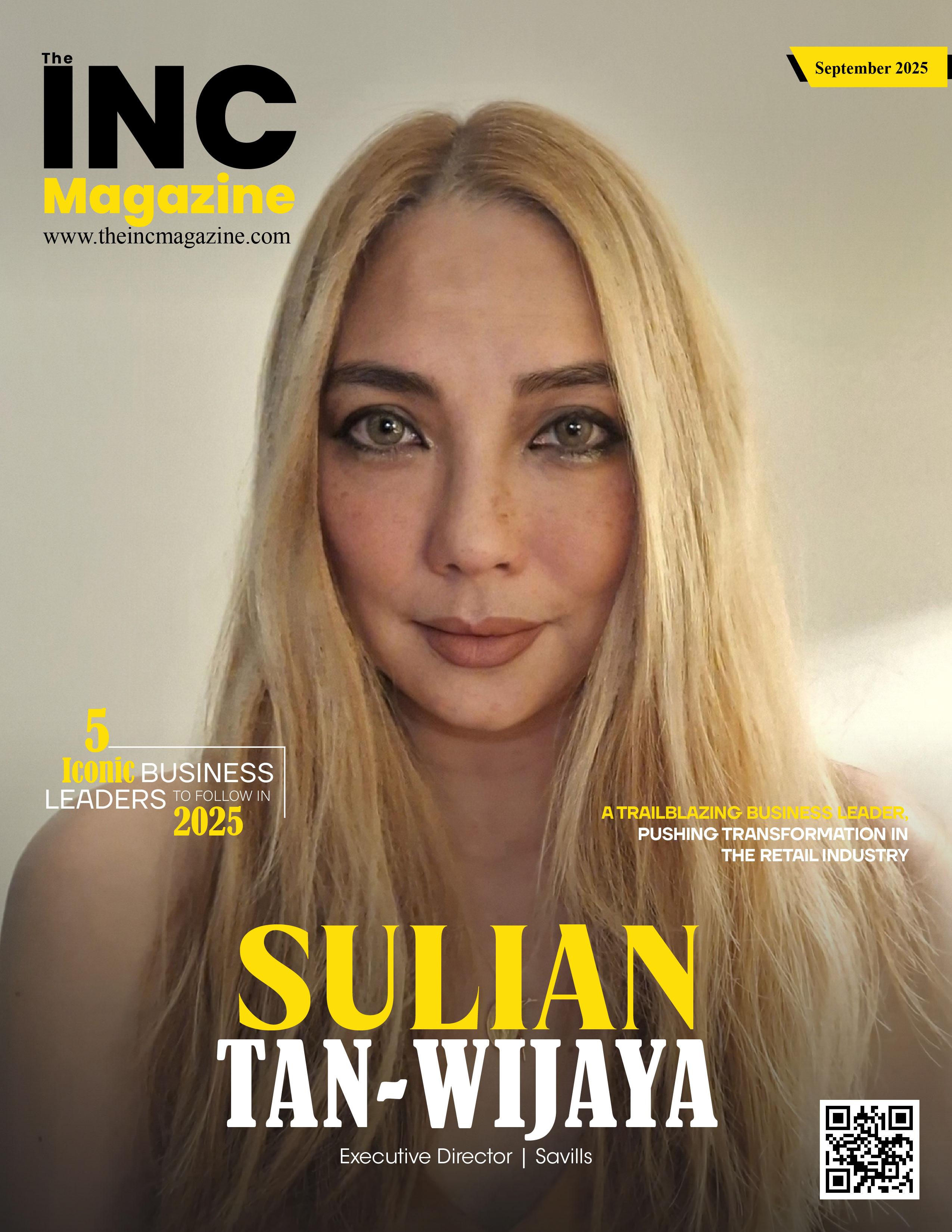
On our cover, we proudly feature Sulian Tan-Wijaya, an inspiring leader and seasoned professional with a multifaceted career spanning law, banking, and real estate. As an Executive Director at Savills Singapore, she is recognized for her leadership and mentorship in the industry. With a strong foundation in law, having qualified as an Advocate and Solicitor with an LLB Honors degree from NUS, Sulian transitioned into banking, where she excelled as a senior corporate banker in Indonesia.
This edition celebrates those who dare to lead differently, leaders who are not only driving success today but also shaping the blueprint for the future of business. Their stories remind us that titles or accolades do not define iconic leadership, but by the courage to inspire transformation and create lasting impact.
As I wrap up this note, I would like to appreciate our readers worldwide for their continuous support and look forward to bringing you more exciting content soon. Stay tuned for our next issue!
Happy Reading ....!

Executive Director | Savills
Building Thriving Workplaces, Unlocking Human Potential: The Journey of Saliha Latif
Empowering Business Leaders: The Inspirational Journey Of Janet Polach, Transformation & Executive Coach
Jordi Caralt Coloma: Helping Travelers Tap nto Exceptional Travel Experiences
Future-proofing Your Business With Smarter Equipment Choices C O N T E N T S Article
Editor-in-Chief
Managing Editor
Publishing Control Team
Visualizer
Art & Design Head
Business Development Manager Co-designer
Business Development Execu�ve Marke�ng Manager
Technical Head
Assistant Technical Head
Digital Marke�ng Manager
Assistanr Digital Marke�ng Manager
Research Analyst
Circula�on Manager
Sonal K. Ehsan Jami Alex, Michael
Mary Chars
Anushka Bhosle Shweta Ambilwade
Craig Dower
Chirs Philip Maria, Wilson, Mar�na, Alex, Kelvin
Jacob Smile Alina Sege
Jennifer Parker David King
Earl Lewis Scoot Taylor
sales@theincmagazine.com
Copyright © 2025 The Inc Magazine




Meet Saliha Latif, a transformative people and culture leader with over two decades of expertise in HR strategy, transformation, and leadership development. She is renowned for empowering multiple startups and multinationals, driving tangible business results. Currently, as the CPO at Reform HR, Saliha leads with a vision to transform workplaces and unlock human potential. Under her leadership, Reform HR continues to make ameaningful impact in the world of HR.
Saliha’s extensive experience spanning EMEA, APAC, and North America has profoundly shaped her approach to HR and people strategy. With a keen understanding that people's challenges may be universal, but solutions must be tailored to local contexts, she has developed a people-first, value-driven approach that prioritizes cultural context. Her global expertise has equipped her with the agility to devise effective people strategies that balance global standards with local nuances.
For example, when building a global mobility framework for Agri-tech companies, Saliha successfully navigated diverse visa systems, labor laws, and cultural expectations to maintain a consistent employee experience. This ability to harmonize global best practices with local nuance is now a core part of her strategic approach.
Saliha’s transition from the UK to working internationally, particularly in the UAE with over 70
nationalities, was a transformative experience that reshaped her approach to HR and leadership. This notable shift taught Saliha the importance of cultural flexibility, active listening, and adaptability in leadership. She learned to embed best practices with a deep understanding of local cultures, recognizing that what works in one context may not be effective in another.
For instance, when designing performance systems in Asia, Saliha aligned incentives with collective achievement rather than solely focusing on individual metrics. This experience transformed her into a more thoughtful, collaborative leader, skilled at co-creating solutions with her teams.
Saliha has observed recurring HR challenges across continents, including attracting top talent, driving engagement, and developing leadership. However, she emphasizes that solutions must be tailored to the local environment.
In the UAE, the focus is often on nationalization, compliance with evolving labor laws, and building scalable HR infrastructure for high-growth companies. In KSA, it’s about transformation at scale, but each city brings something unique. What resonated with teams in Jeddah didn’t necessarily land the same way in Riyadh. Same country, different dynamics, different expectations from both talent and leadership. In Europe, the focus is on transparency, work-life integration, and employee autonomy. There’s a heavier emphasis on sustainability, ESG, and long-term workforce planning, whereas in the Middle East, speed and scale are often the priorities.

Saliha’s experience has taught her that successful HR leadership across borders requires careful listening, thoughtful adaptation, and cultural sensitivity instead of simply replicating successful frameworks.
Saliha brings her people-centric philosophy to life by embedding HR into the core of business strategy. At BOUNCE, she aligned workforce planning with business goals during a hyper-growth phase, resulting in a 35% reduction in ramp-up time and a 22% increase in engagement through digitized onboarding and performance tools.
In M&A scenarios, Saliha focuses on culture integration using discovery workshops to understand each business’s unique dynamics and build a unified culture that honors legacy while driving growth.
Leading with Heart: Empowering People, Driving Success
For Saliha, “winning the hearts and minds of the business” means prioritizing people over profit and empowering organizations to succeed long-term. She embeds this philosophy into leadership development by fostering a culture of trust, self-awareness, and feedback. At Vault Hill, she worked closely with founders to move them from reactive management to intentional leadership, resulting in a 40% improvement in team alignment, reduced attrition, and the creation of a culture that encourages innovation.
Reform HR started as a passion project. While working full-time, Saliha was often approached by CEOs and HR professionals who needed quick advice on labor law, policies, or navigating tricky people issues. She offered pro bono support, especially during the early days of COVID, when so many people needed help but couldn’t access it.
It grew from there, first helping people affected by the pandemic, then expanding to global transformation projects and high-impact local ones, like working with DIFC Courts. Reform HR was built on purpose, not profit, and that’s still the compass.
Saliha ensures that Reform HR’s core values of honesty, integrity, humility, and passion are lived, not just stated. She embodies these values through actions, such as having tough conversations, turning down misaligned clients, and calling out bias at the senior level. By celebrating team members who make bold, human decisions, Saliha fosters a culture that truly reflects Reform HR’s values.
Saliha approaches HR strategy alignment by prioritizing clarity and scalability. In high-growth environments, she ties workforce planning to business objectives, such as investor roadmaps and expansion timelines. At Pure Salmon, she introduced KPI dashboards for real-time visibility into key HR metrics, enabling data-driven decisions. Saliha also focuses on building scalable infrastructure, as seen at Drone Champions League, where she established flexible HR systems that supported the team’s expansion across EMEA.
Building Truly Inclusive Cultures
Saliha advocates for meaningful inclusion by going beyond mere policies. She emphasizes listening to people’s stories and embedding diversity, equity, and inclusion in every aspect of the business. At BOUNCE, Saliha implemented learning programs that filled 50% of leadership roles internally across five countries, promoting diverse leadership growth. By integrating DEI into recruitment, performance evaluation, and the decision-making process, she ensures that inclusion is a lived experience, owned across the business.
Saliha positions HR as both the architect and protector of safe workplaces, ensuring equity in hiring, pay, promotion, and conflict resolution. She fostered psychological safety by building trust, enabling employees to speak up without fear. At Pure Harvest, Saliha introduced anonymous engagement tools and restructured grievance channels, allowing honest feedback to drive meaningful change.
Saliha’s motivation stems from witnessing the transformative power of HR when done right—empowering people, growing businesses, and fostering unstoppable cultures. She is driven to redefine HR as a strategic force that goes beyond policies and payroll. Saliha is passionate about lifting and advising others, showing up with purpose, and building trust with clients by offering honest, human, and strategic guidance.
Saliha embodies the McKinsey vision of next-gen HR. She partners with CEOs and executive teams to shape strategic people agendas, leveraging technology to drive growth. Currently, she is developing an AI-powered HR chatbot that provides real-time guidance on employment practices, enabling HR to focus on leadership, trust, and strategic alignment. Her broader vision is to empower HR teams to scale their impact through smart, accessible solutions that blend technology, insight, and empathy. At the same time, she continues to directly support CEOs and executive teams on high-stakes growth and transformation journeys, from navigating M&A and restructuring for scale to entering new markets and aligning people strategy with business goals. Saliha’s ability to combine board-level thinking with grounded, people-first execution has made her a trusted advisor and a bold voice helping to redefine what HR looks like


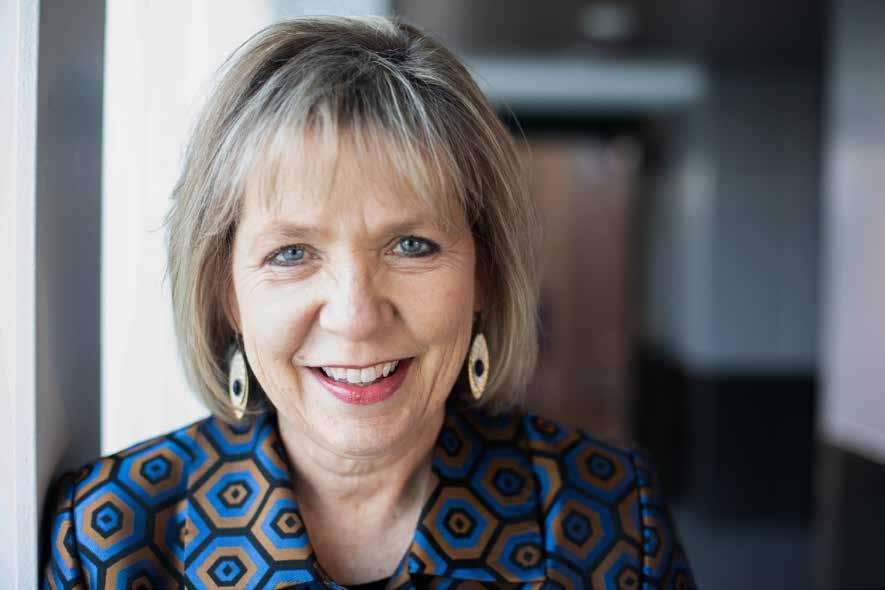
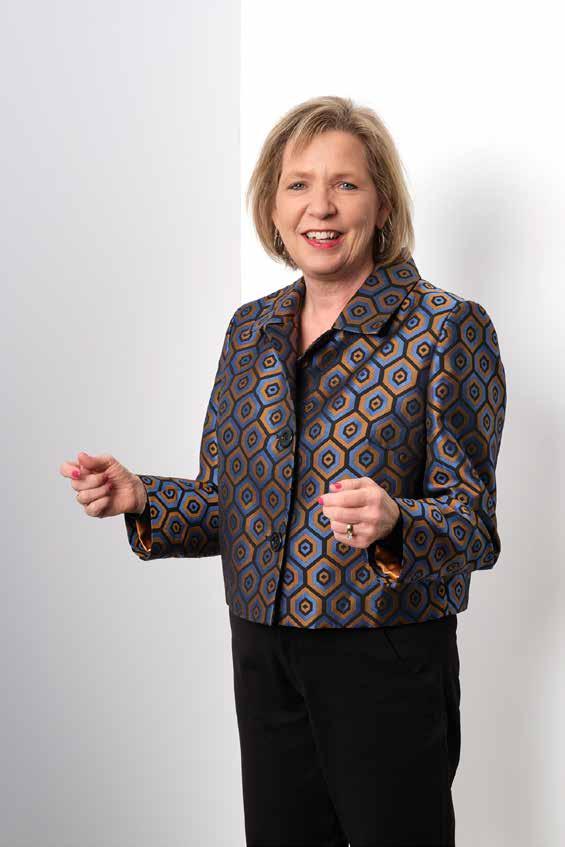
anet Polach is a top global executive coach, known for her transformative impact on business leaders and senior executives from diverse cultural backgrounds. With over two decades of experience in executive coaching, leadership development, change management, and team effectiveness, Janet is an inspirational figure in the corporate world.
Early Beginnings: Dedicated to Empowering
Janet developed her leadership skills during her stint as a U.S. Marine Corps officer, where she affirmed that leadership can be cultivated. Along the way, Janet earned her Ph.D. in organizational leadership development and has coached leaders in the U.S., China, Singapore, South Korea, Switzerland, Ireland, and France.
As an expert in cultivating leaders, Janet specializes in coaching individuals at every level—from new managers to executives—through one-on-one coaching, group sessions, and leadership development programs.
In the Lead: A Quick Glance
In the Lead is Janet’s initiative to cultivate leadership capabilities and boost confidence in individuals navigating today’s chaotic world. Recognizing that leaders come from varied backgrounds and face diverse challenges, In the Lead focuses on helping these leaders clear their thinking and discover their unique leadership voice. Janet’s approach empowers individuals to lead authentically by finding strength and direction from within, fostering resilience, self-awareness, and the ability to adapt to an ever-evolving environment.
The Evolving Leadership in Digital Transformation
Janet emphasizes the importance of leaders focusing on building strong relationships with their teams, especially in the context of remote work. She acknowledges that while remote work presents challenges to maintaining these connections, it also makes them more crucial. Janet advises leaders to go beyond routine task updates and take the time to engage in deeper conversations with their team members. This includes discussing their learning experiences and ensuring they are finding fulfillment and joy in their work. By doing so, leaders can foster a more supportive and connected team environment.
The Key Executive Leadership Mindsets
Janet has just finished her second book, The Mindset of the Strategic Leader. In it, she argues that executives must shift their thinking to a broader perspective, both inside and outside the organization; they must listen more than talk and gain the confidence to act courageously.
Janet's Take on Different Global Leadership Perspectives
With years of experience working with global leaders, Janet emphasizes the importance of appreciating the culture of the country in which one is working. This involves immersing oneself in the local culture by eating local cuisine, watching local movies that have subtitles, and building friendships in the work
community. By doing so, leaders can gain the support of their colleagues and develop the understanding needed to make informed decisions within the local context.
The Notable Gaps in Leadership
Janet's first book is about this challenge, The Seven Mistakes New Managers Make. Most managers are promoted because they are great individual contributors, but as a manager, you have to shift your mindset to working through others, delegating, teaching, and letting go of “how” the work is done.
Janet often follows two-step processes. First, `she helps the leader set goals for herself and then supports them in creating a very specific development plan to achieve their goals. She helps the leader identify strategies that will keep these goals and behaviors top of mind. Second, Janet and her team have three check-in meetings with the leader’s boss. Together they establish expectations, review the development plan midway through, and then have a final meeting to ensure their development remains a priority for both the leader and their boss.
Impact of AI and technology on leadership decision-making
Janet recently used AI to help her write her book; she considers it a valuable research tool. She believes leaders can use AI to gather relevant data and even perspectives. However, Janet emphasizes the importance of verifying this information, as AI can sometimes be wrong. She encourages leaders to allow AI to contribute to their decision-making process, but not be the sole source of input. Janet also notes that AI is not just a shortcut to get things done.
According to Janet, it's thinking and acting strategically. She believes that strategic thinking is not widely taught except in major programs like Warton and elsewhere. That is why Janet wrote her new book, which focuses on the various mindsets that strategic leaders need to embrace. She also
coaches leaders on this and also has a development program for strategic thinking.
This was brought to the forefront during COVID-19 but continues to be a need today. Executive leadership involves connecting with your team in a personal way, understanding their families, asking how they are doing, and genuinely caring about how them. Taking time on these issues helps build confidence in team members and makes them feel valued and included.
The Key Lessons from Military Leadership
Leadership in the Marine Corps generally involves giving orders rather than gathering people around and asking for input. That’s because Marines often find themselves in life-and-death situations and need to react quickly on behalf of their Marines. In the business world, it's almost the opposite. While leaders need to be decisive, they usually reach decisions by including and involving others. The most significant lesson Janet learned from the Marines is that leadership can be taught and developed. She also learned that women’s positions in highly male populations can evolve and advance, but they have to prove their worth, and possibly in multiple ways.











The business environment is always changing, and bad short-term decisions can lead to a lot of long-term headaches.
This is especially true when it comes to equipment. You will find that what works well today might fall short tomorrow as technology begins to evolve.
Customer demand often increases, as your business begins to scale. That’s why future-proofing your equipment isn’t just wise, it is necessary.
By investing in smarter, and more adaptable tools you are giving your business the flexibility it needs to respond to change without you constantly having to reinvest or reorganize.
This ensures that the tools you buy today will not be obsolete tomorrow.
One of the most common mistakes that many business owners make is buying equipment based only on their current needs. While this approach might save money upfront, it often leads to you having replacement costs sooner than you would have expected.
Instead, you need to think about where your business will be in the next 2–5 years. Will you expand your production? Offer some new services? Enter different markets to sell? Choosing scalable or multifunctional equipment now will save you from starting over when the growth starts to kick in.
For example, choosing a machine that handles multiple processes instead of just one can give you an edge when demand starts to shift or your workload increases.
Prioritize Integration and Compatibility
As businesses start to become a lot more digital, the equipment they use needs to integrate easily with many other systems. It doesn’t matter if it’s software platforms, or data collection tools, compatibility is no longer optional. It is now a competitive advantage.
Look for machines that you can connect with existing systems or ones that support future upgrades. Equipment that allows firmware updates, as well as API access, and cloud syncing will give you flexibility as your processes become a lot more automated or data-driven.
If your team begins to use tablets to log operations or access manuals, make sure that your new machines are compatible with that workflow from the very start.
Buying smarter equipment such as industrial welders and other manufacturing equipment doesn’t always mean that you are buying the latest gadget. Sometimes, it’s also about choosing proven, and well-built machines from trusted manufacturers.
These will offer longevity as well as strong service support. A smart purchase is one that will perform reliably over time.
It should also handle wear and tear well, and doesn’t drain resources with a constant need for repairs. Check warranties, service availability, as well as customer reviews before you commit.
In some industries, equipment failure is going to cost you a lot more than just time. It can damage reputation and safety as well. For example, In some industries where welding is necessary, trusted equipment such as the Truweld stud welder, which delivers durable, high-performance results is preferred.
As your team grows or changes, you’ll need equipment that is easy for them to learn and operate. Tools that will require them to get weeks of specialized training or rely solely on a single expert operator pose a threat to productivity.
Manufacturers that provide you with remote support, and digital troubleshooting guides, or even predictive maintenance alerts.will help you to.stay ahead of any issues before they become costly problems. The goal is to always avoid unexpected downtime, so you keep your operations running smoothly.
Knowing that there will always be someone available to put wrongs to right as soon as possible can make it easier for you to operate your equipment efficiently. This is definitely something that you should have at the top of your priority list when you are buying any form of equipment.
Smarter equipment choices often go far beyond pricing. They tend to reflect your vision for the growth of your business. When you choose tools that will align with your future, you are reducing waste, boosting resilience, and building a team that is ready for whatever will come next.
You should think of every equipment you purchase as a long-term investment, and not just a short-term fix to your problems. Make sure you choose flexibility, integration, and supportability above all else. Consider too how well the equipment will grow with you, not just how well it fits your business today.
The best equipment isn’t just about functionality it is also about forward-thinking too, you have to prevent any form of downtime whenever possible.