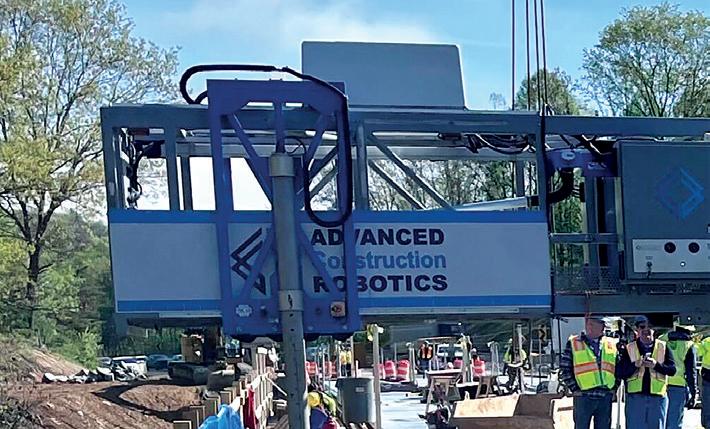
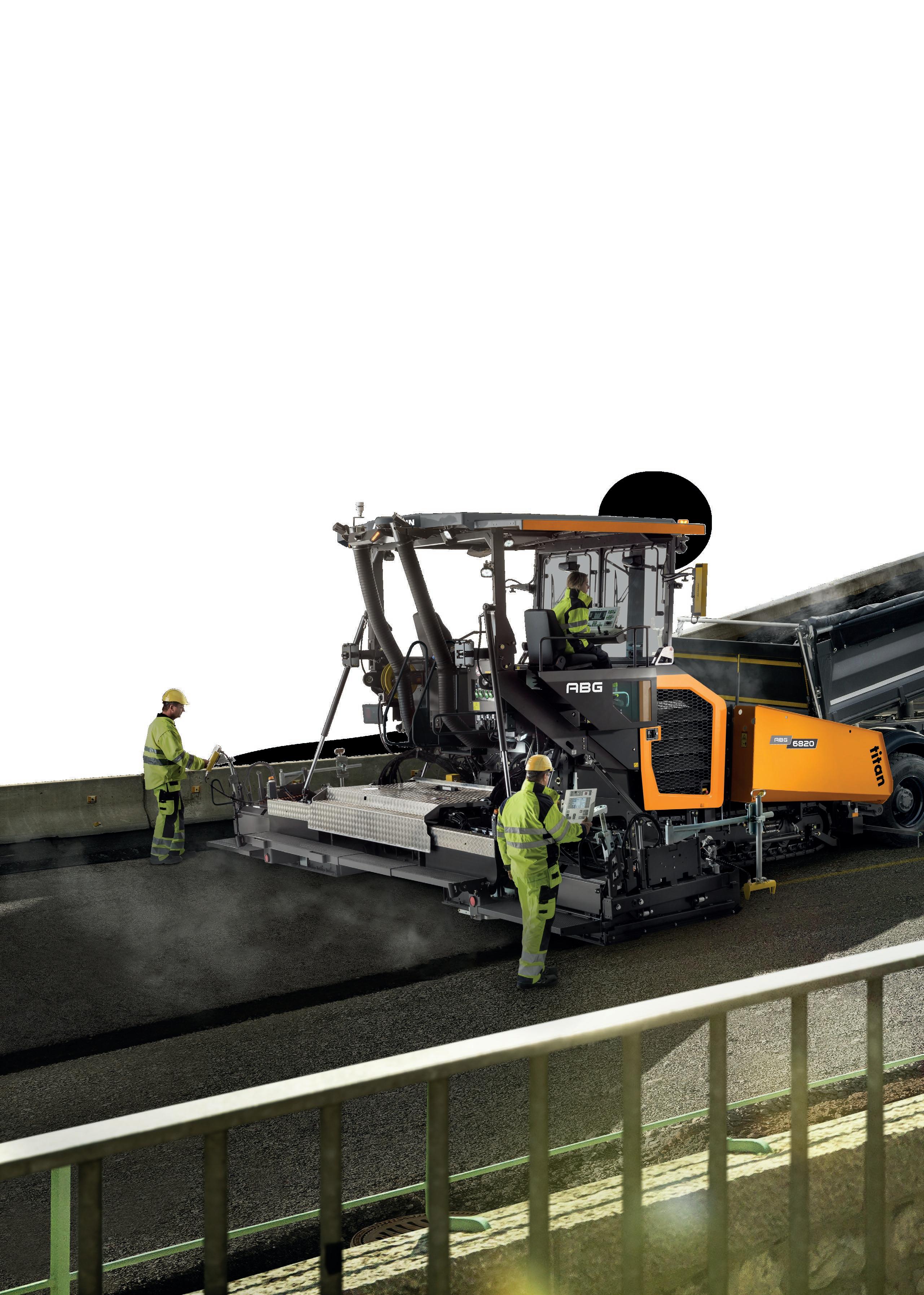
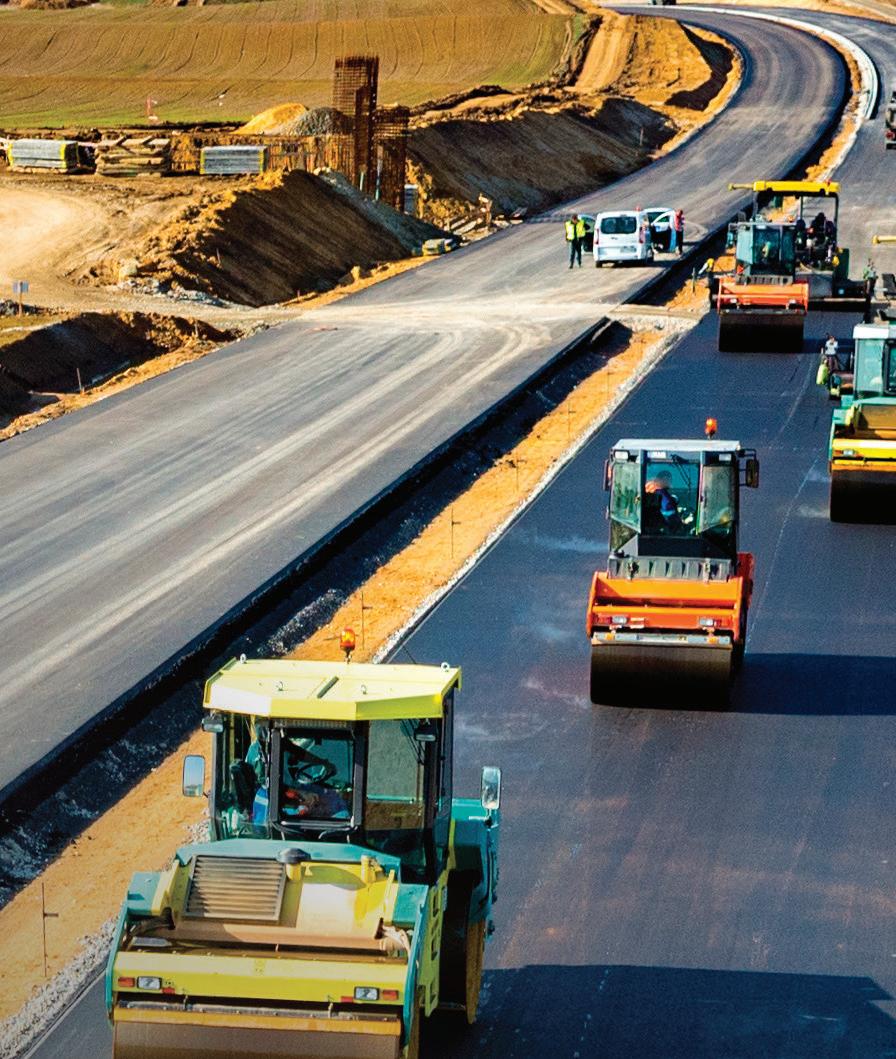
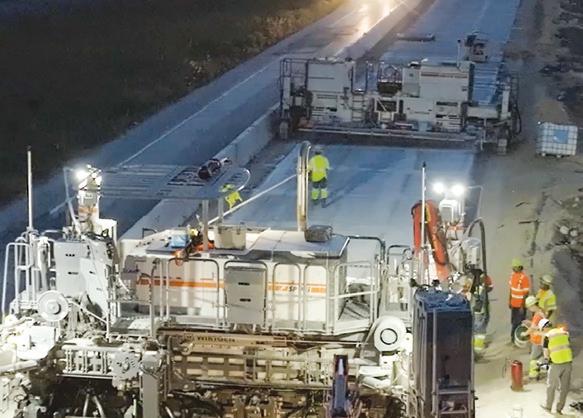
Central government funding is still important for many major highway projects, despite the common use of PPPs and other nancing models
6. News
Finland-Sweden bridge proposed; US$4 billion for Maryland-Virginia bridge; Volvo CE sees Q2 sales drop; India’s massive transport plan
12. Construction technology Agreement between Topcon, Bentley Systems and Worldsensing; Smart Construction’s drone solution; site positioning with Trimble; Hexagon Nemetschek partnership; measuring tool from Leica Geosystems; Topcon’s milling system; compact machine offering from Trimble; AECOM inspecting digitally
16. IRF
IRF Congress – empowering sustainable mobility
20. Key project
Peru's Evitamiento de Chimbote highway is a key link for the country's north
32. Airport paving
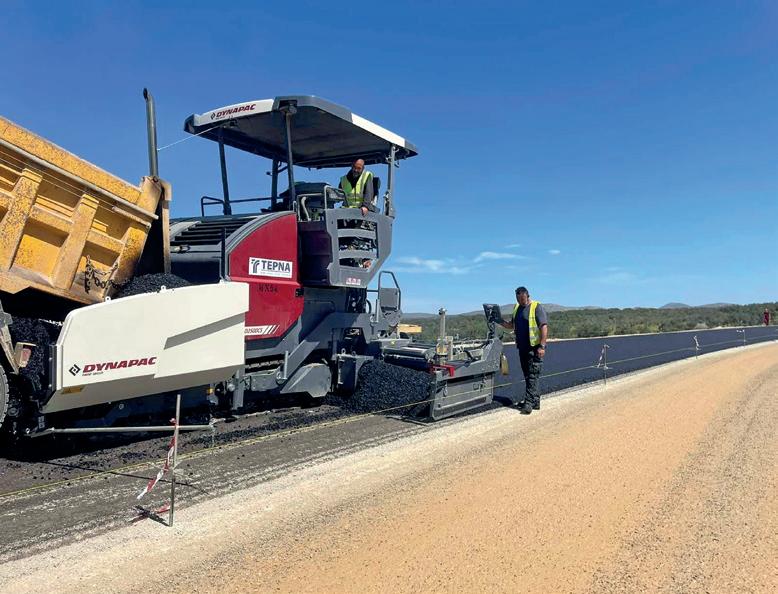
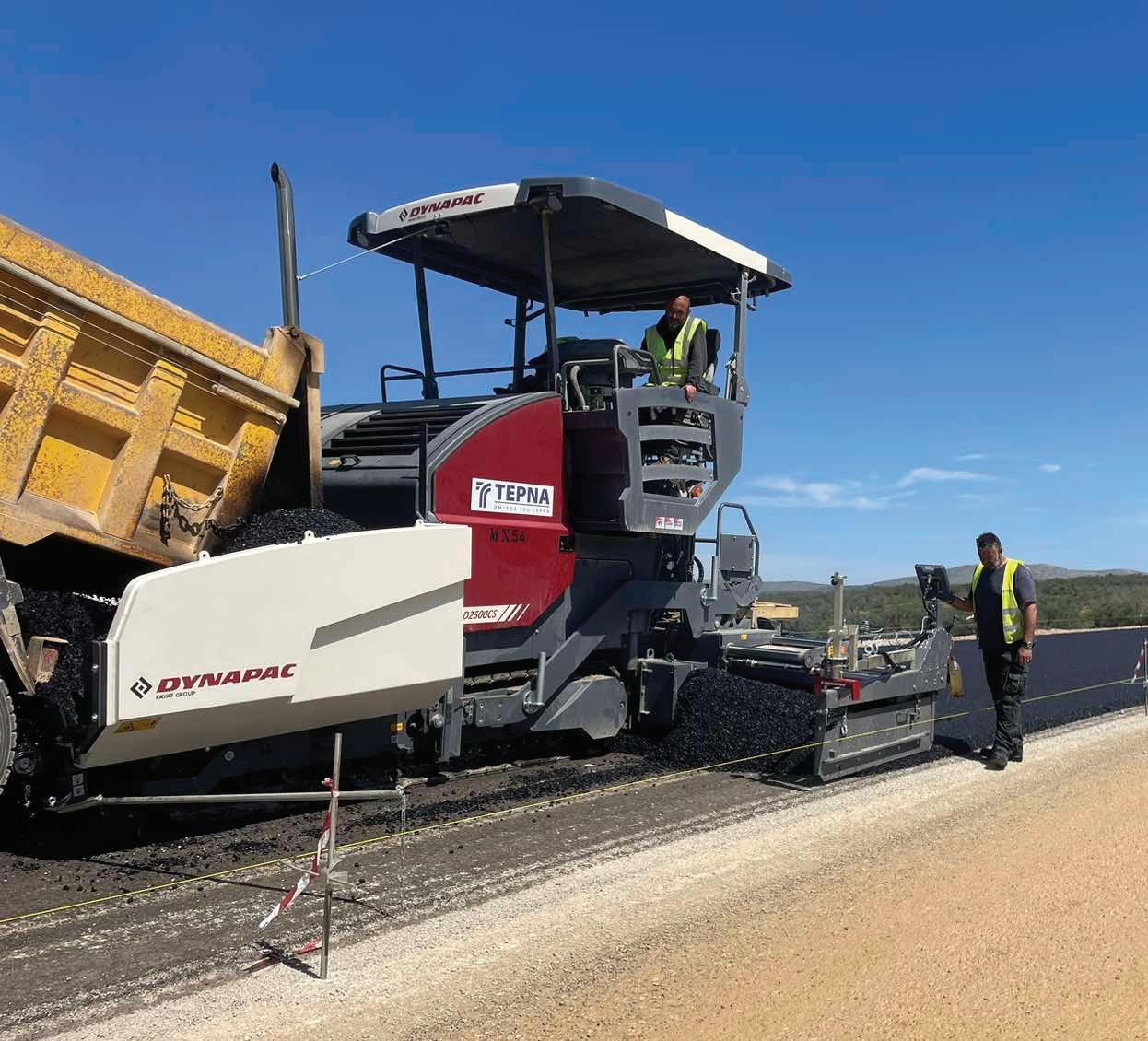
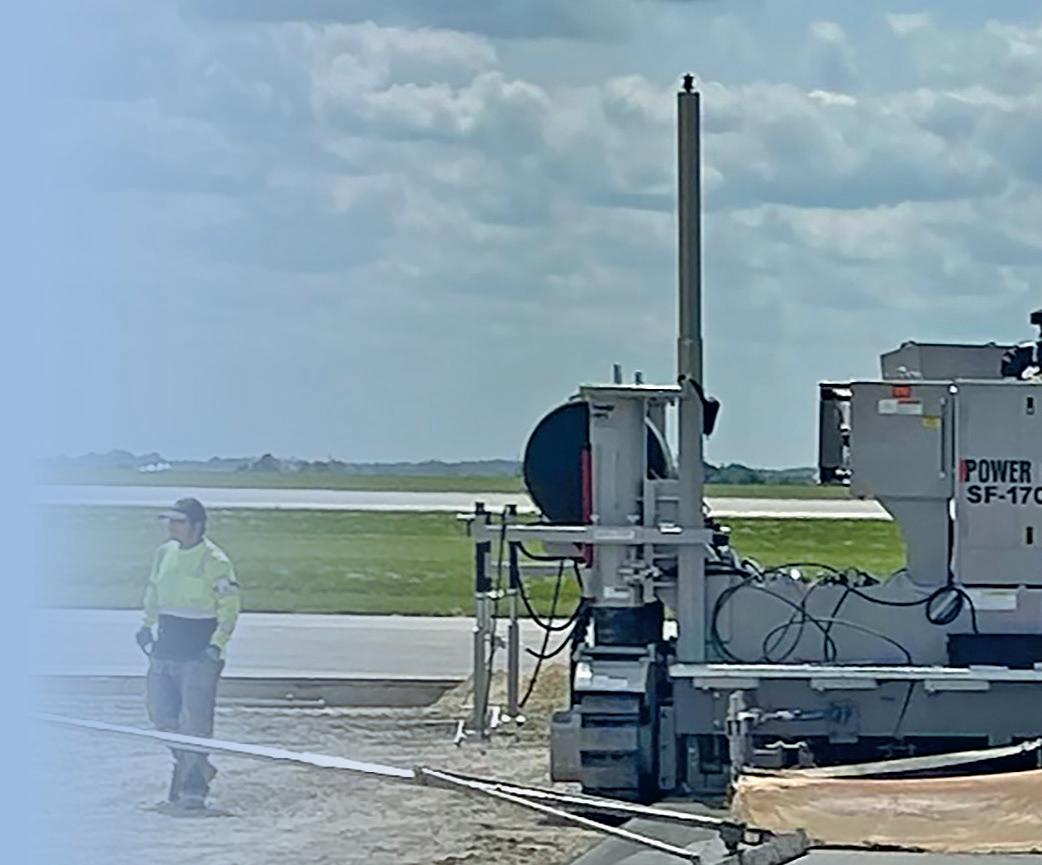
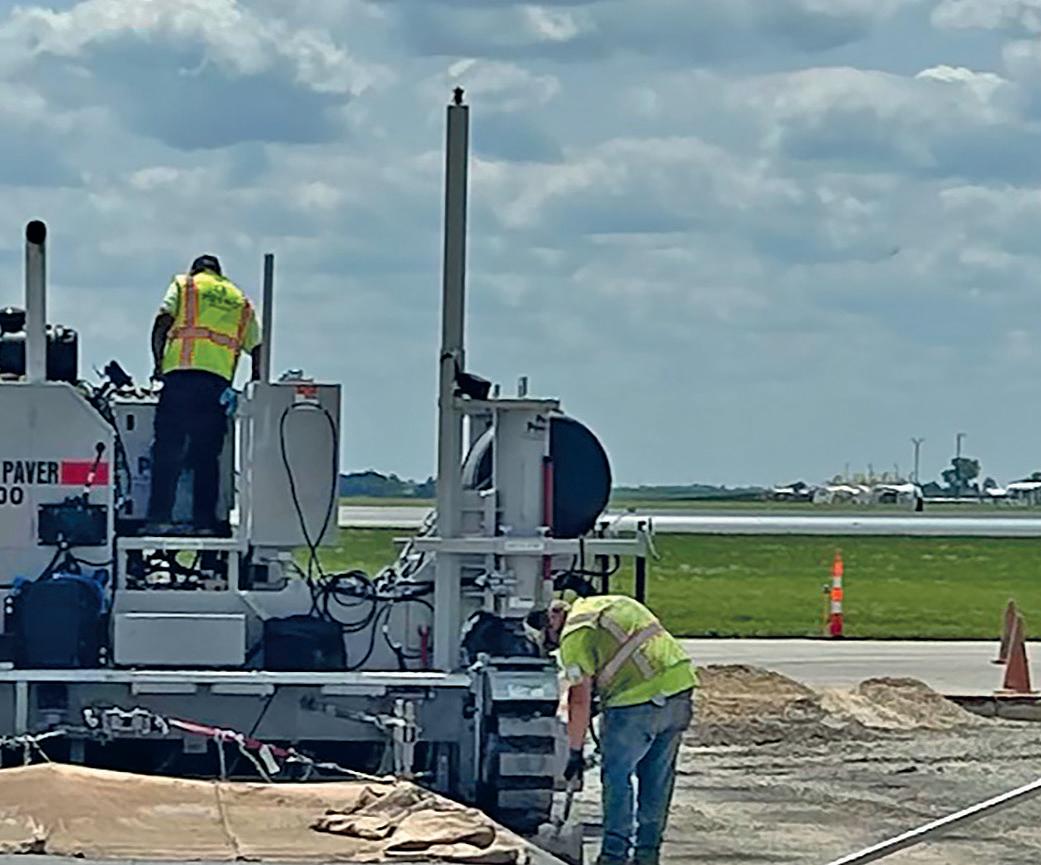
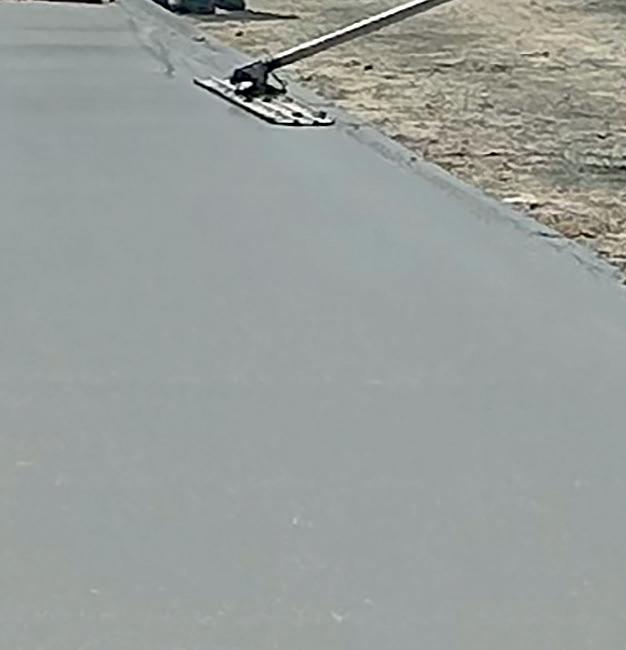
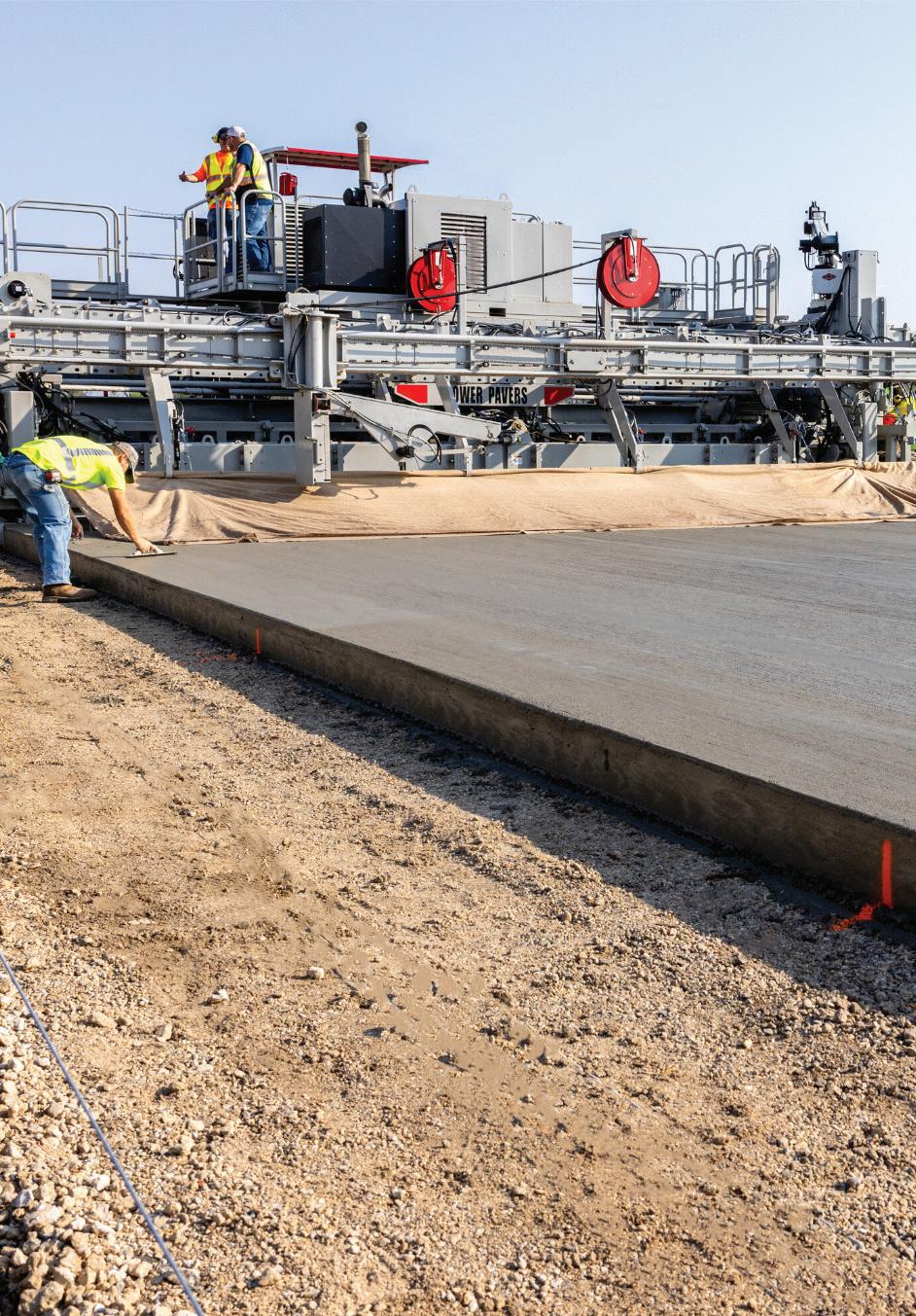
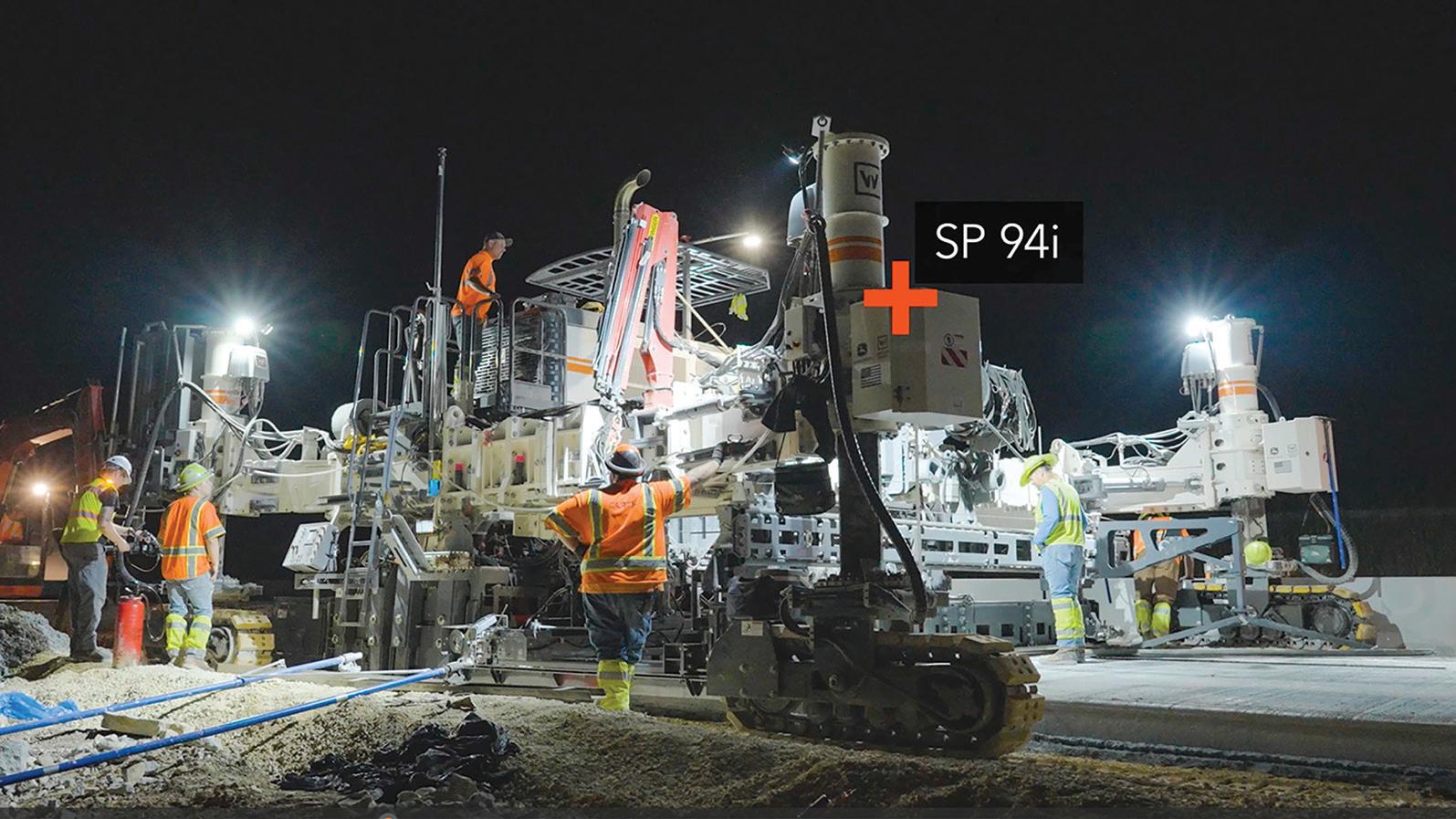
Dynapac paver at Crete Airport; Power Pavers slipformer for Iowa project
33. Concrete construction
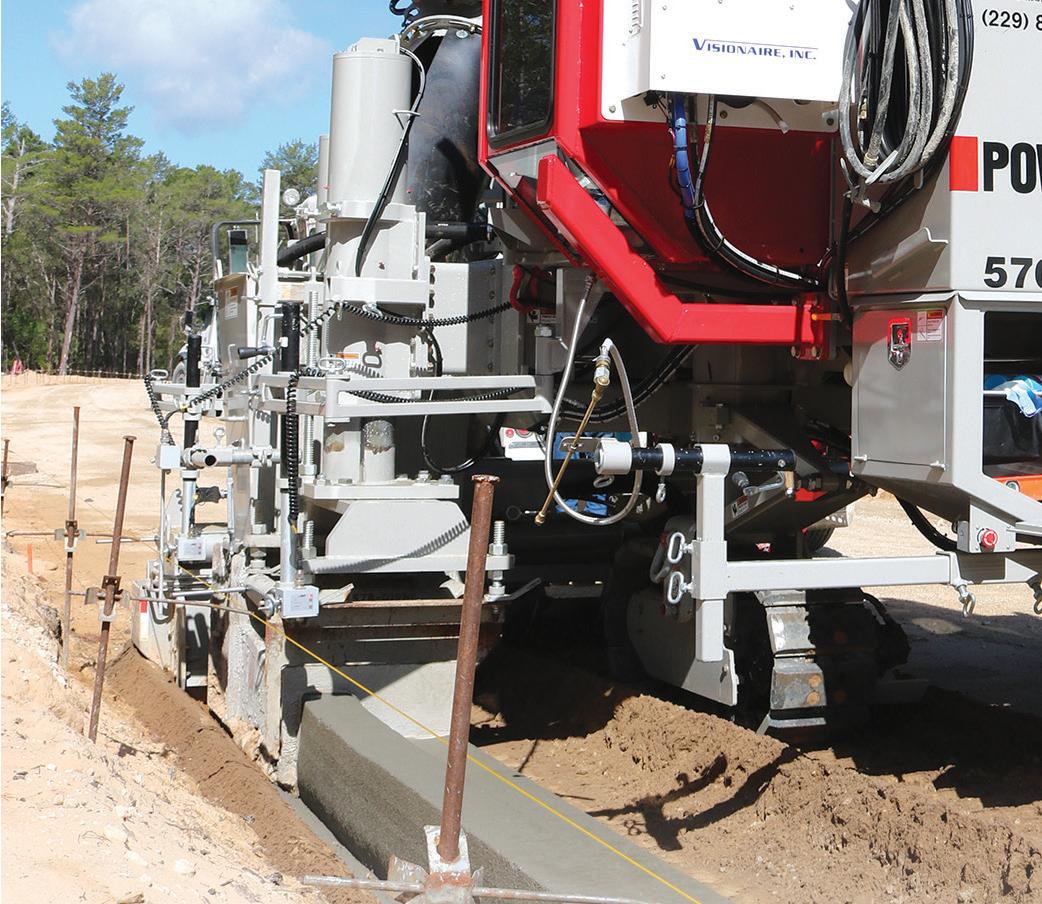
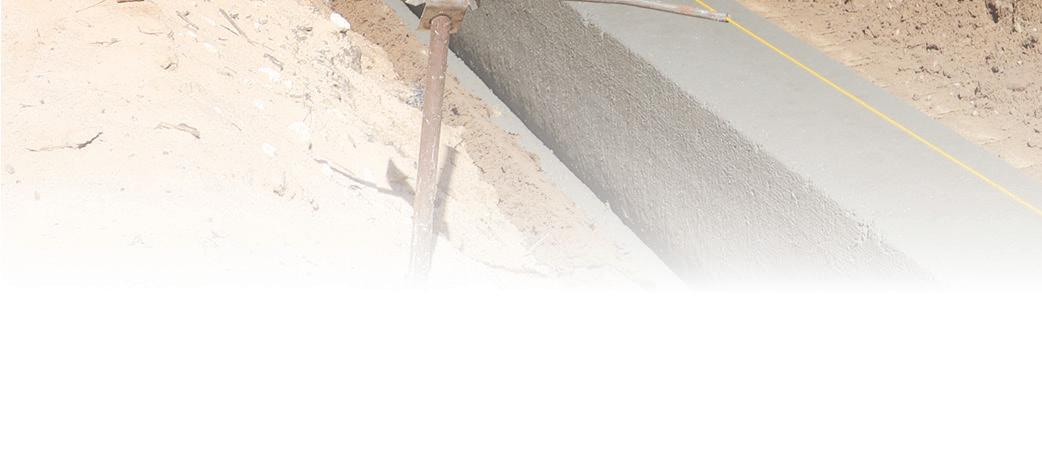
Power Curbers introduces new slipformer options; Tarmac using AI to optimise concrete quality
39. Asphalt plants
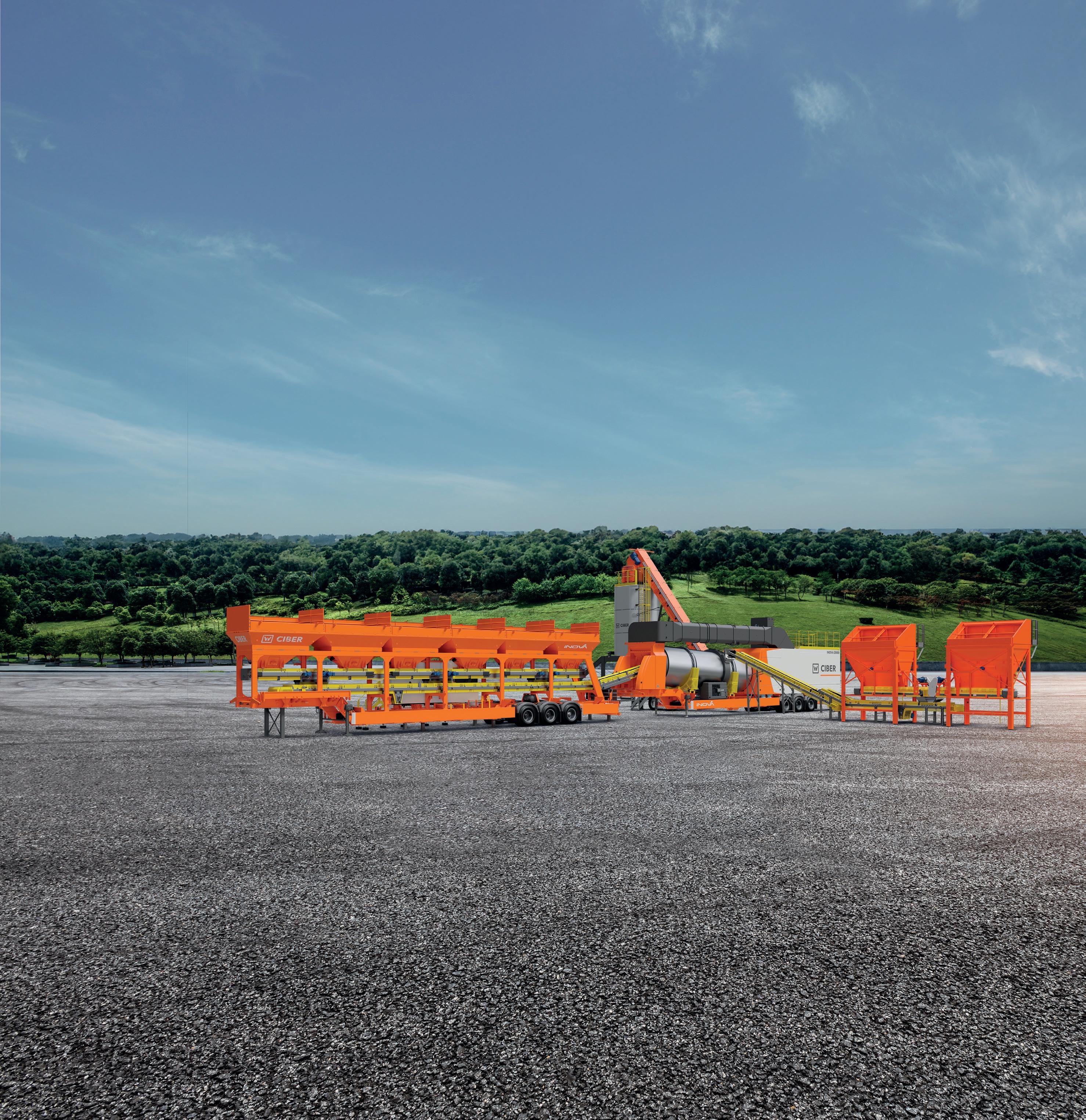
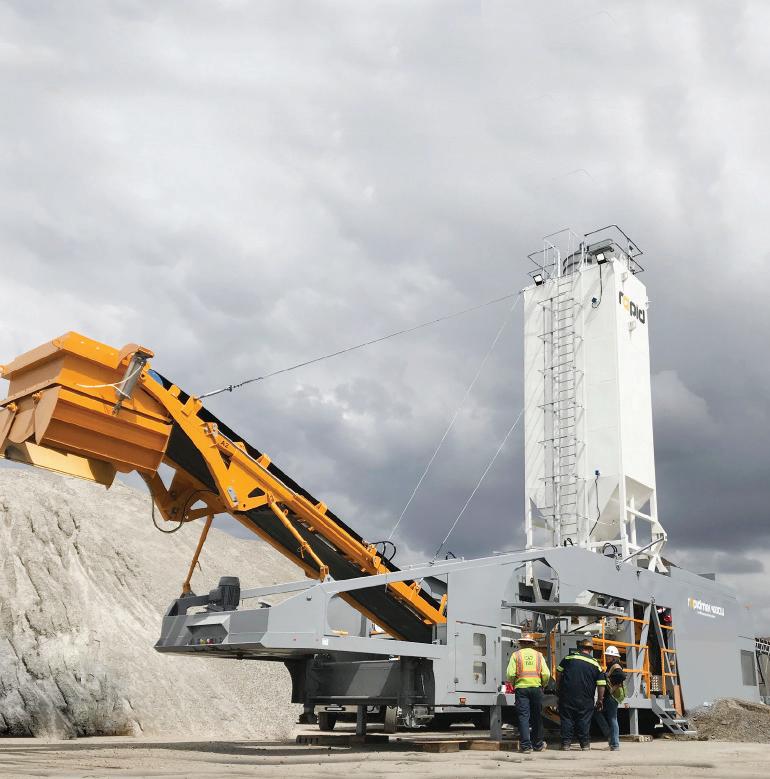
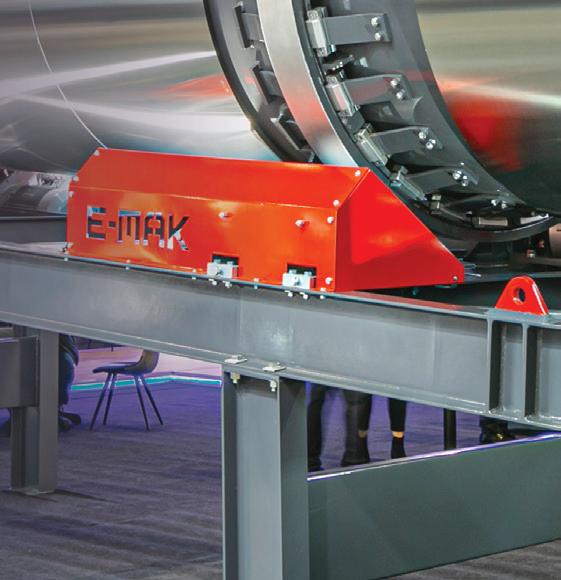
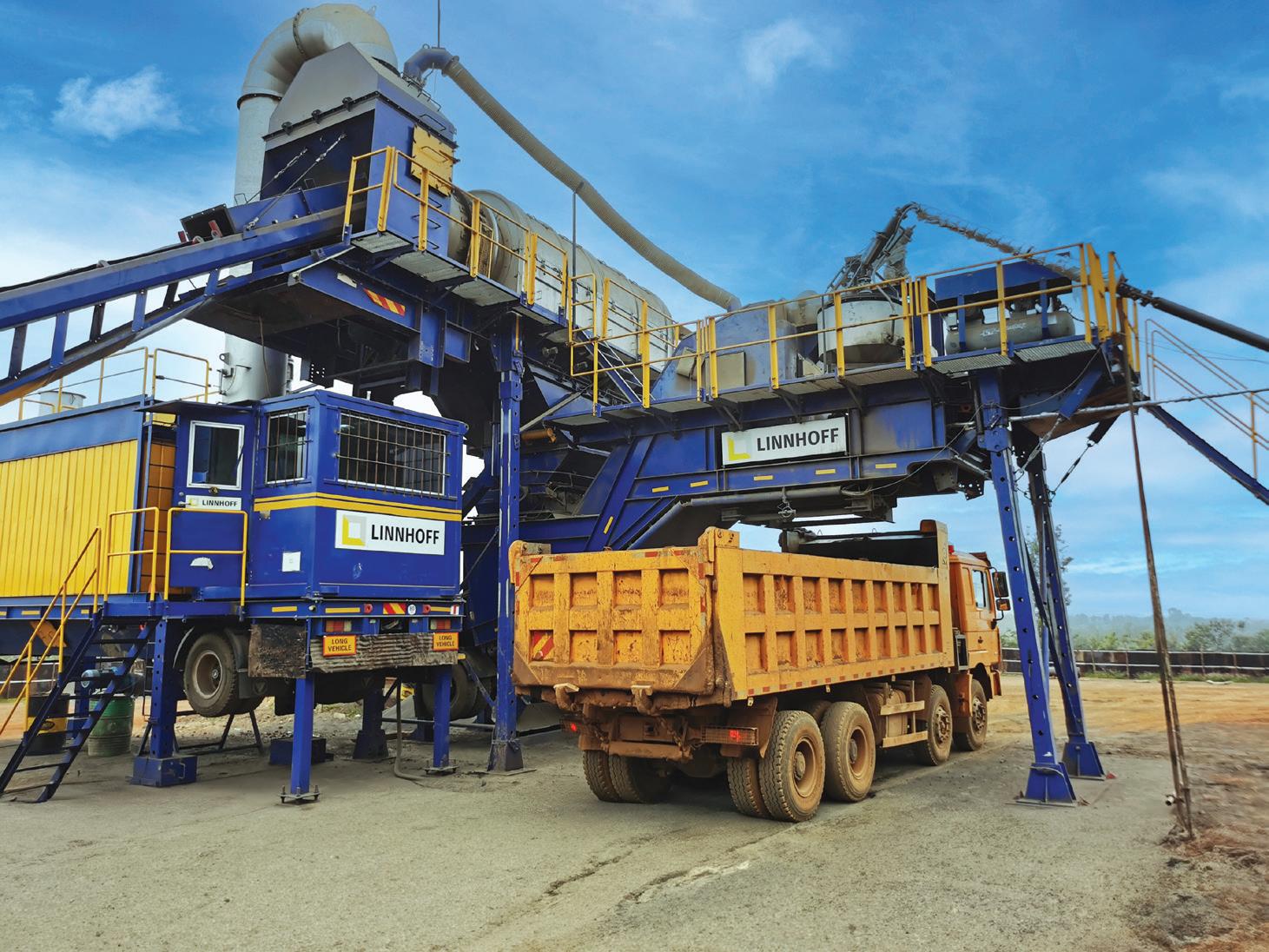
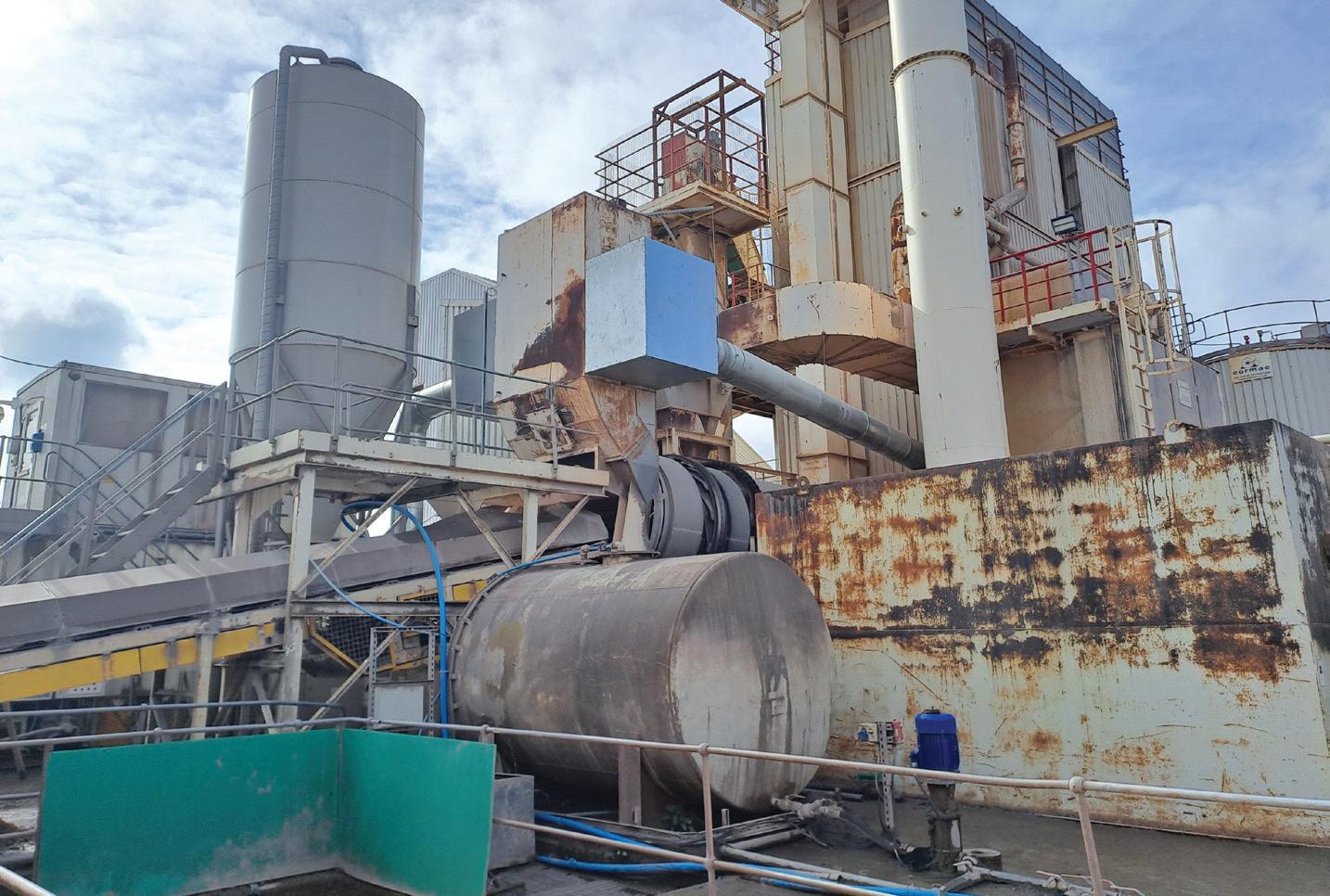
New asphalt plant developments from Ammann, Astec, Benninghoven, E-MAK, Lintec & Linnhoff, Marini and SAE
43. Recycling
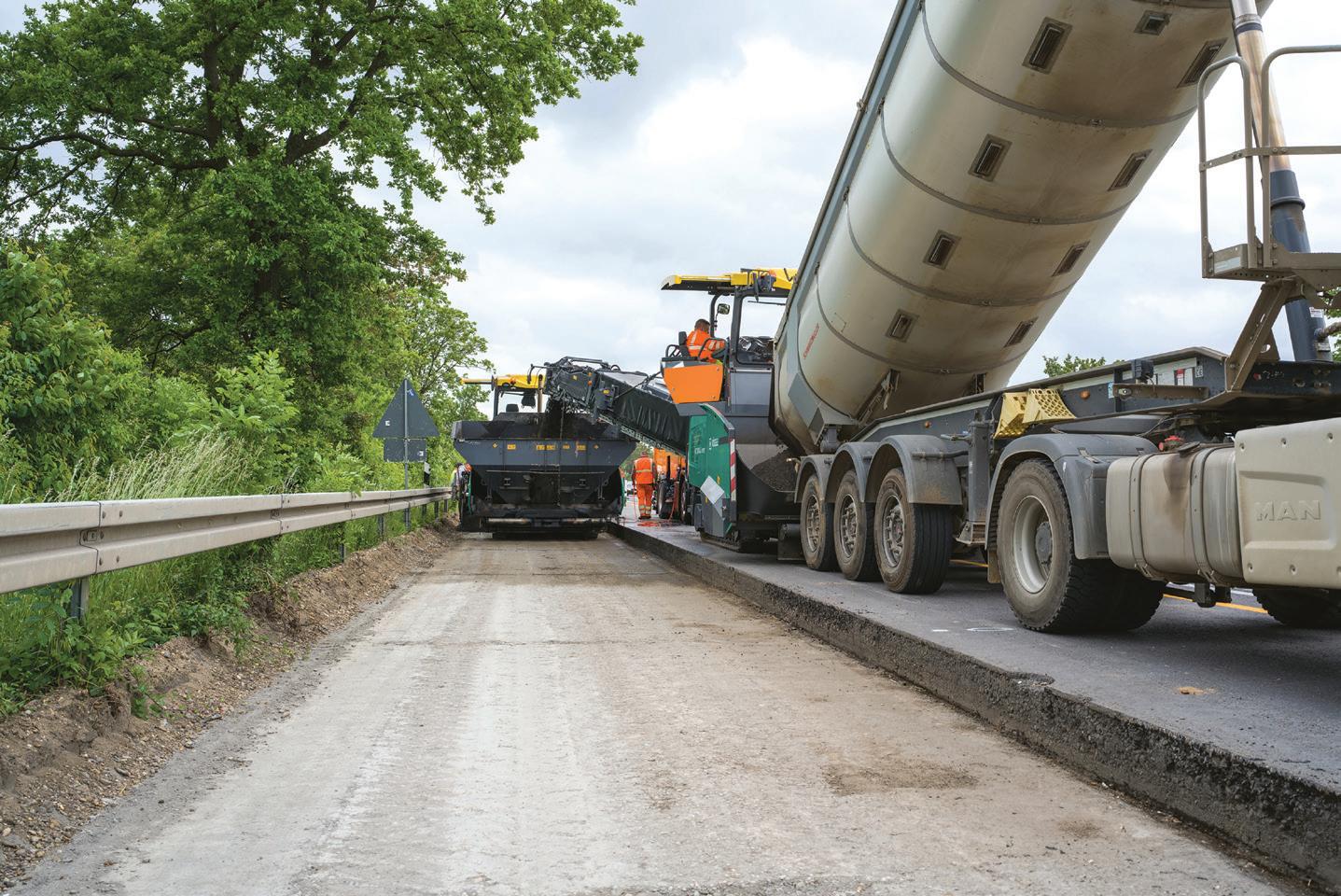
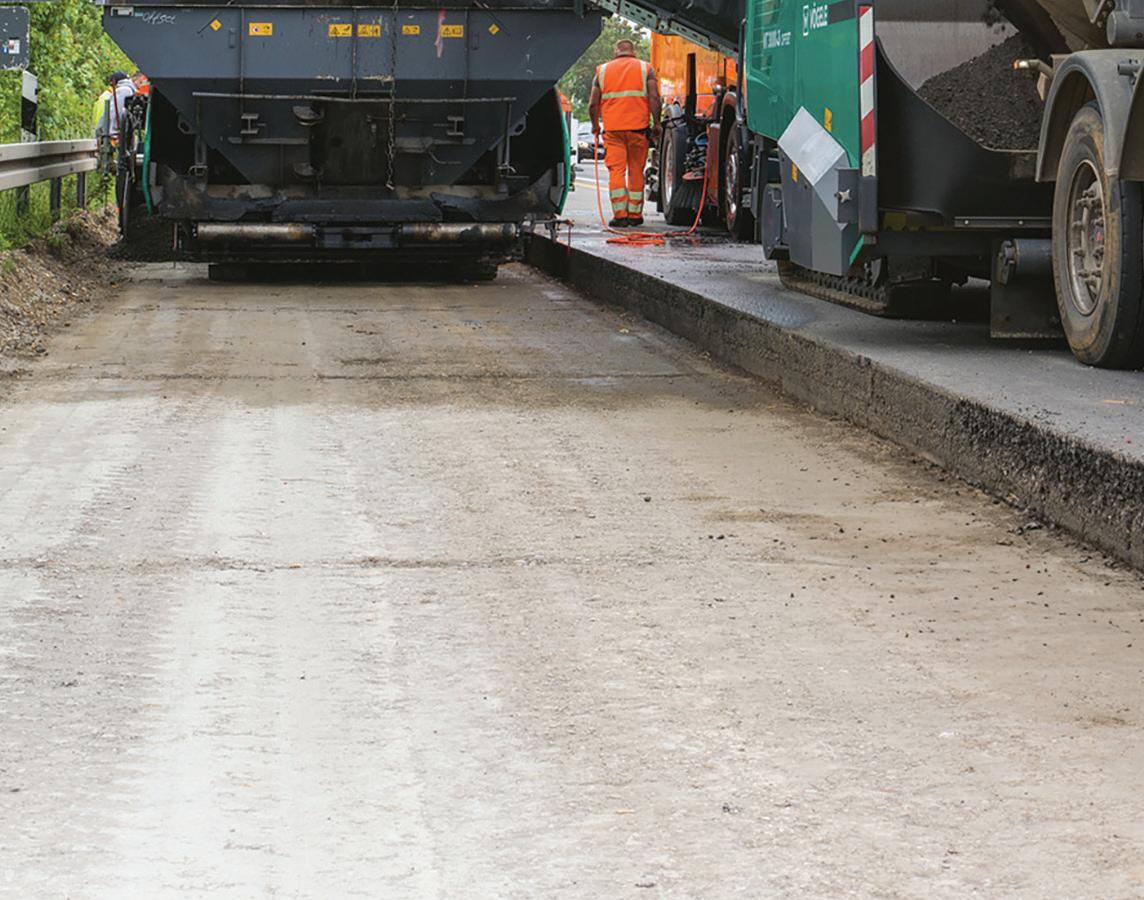
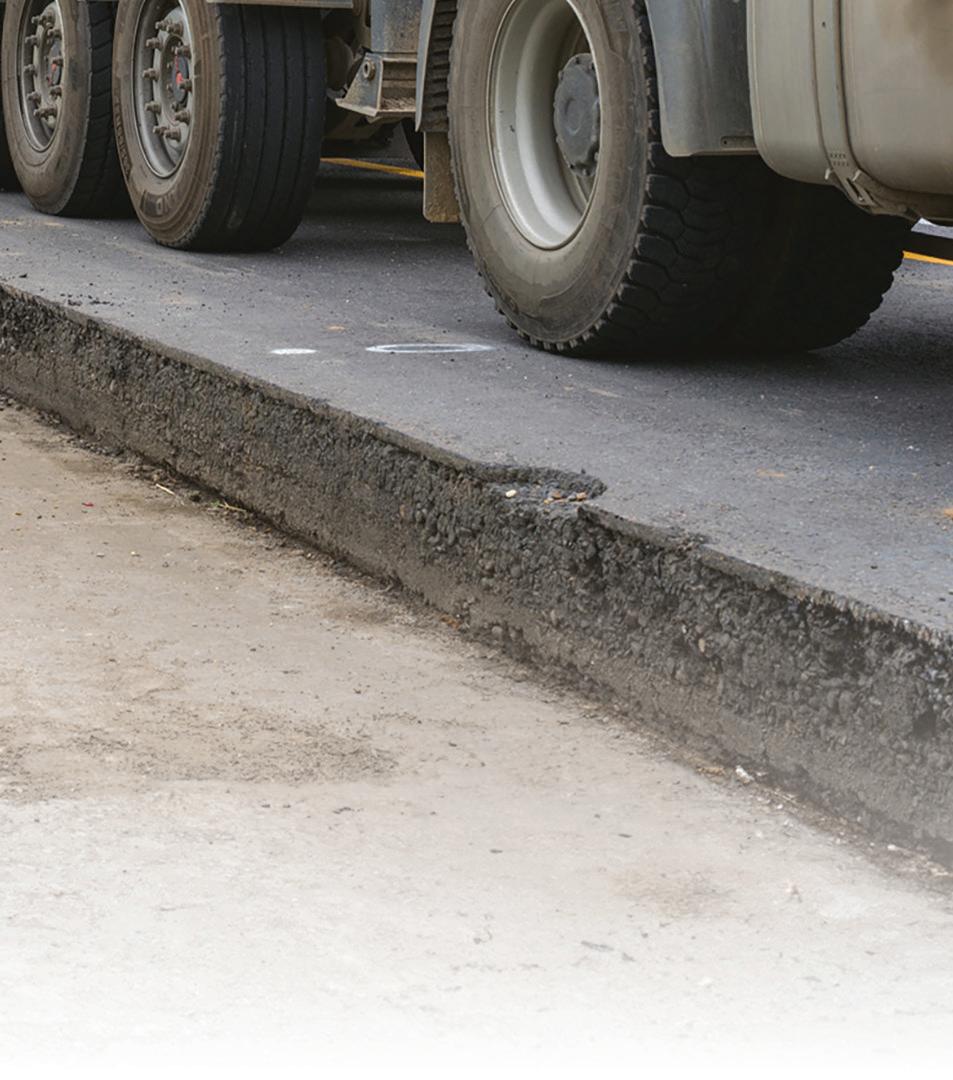
Using recycling to repair an ageing German autobahn; reusing waste heat from an asphalt plant
45. Utility equipment
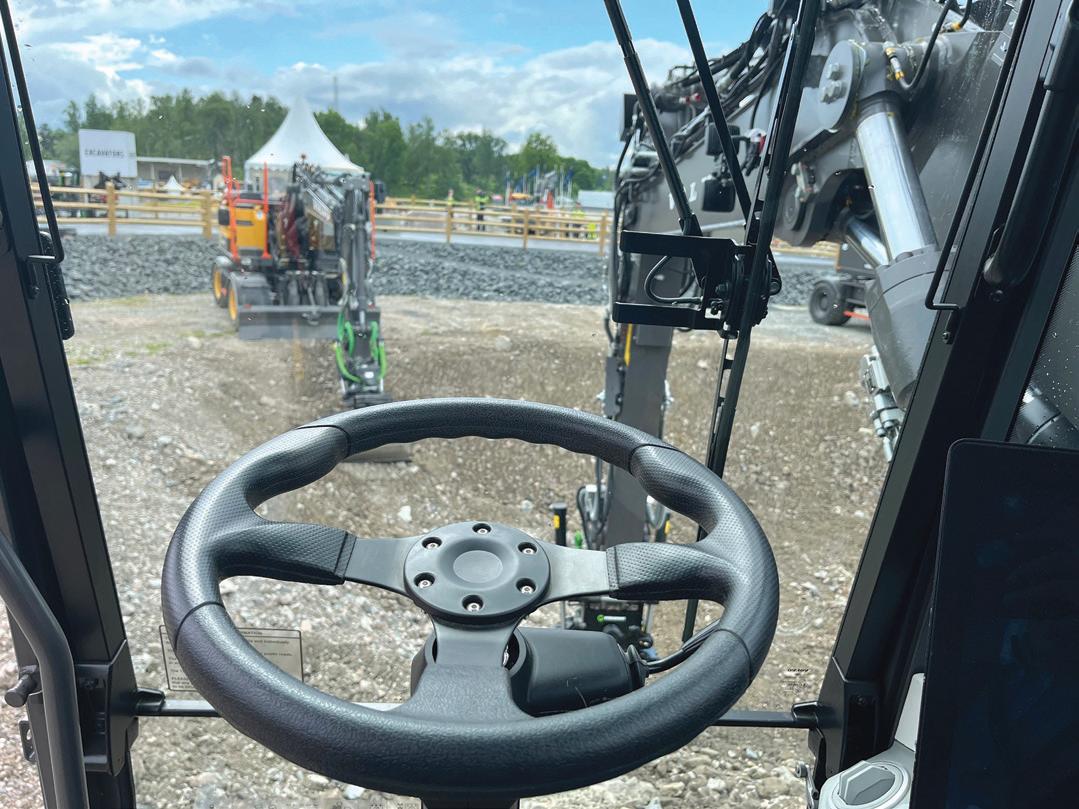
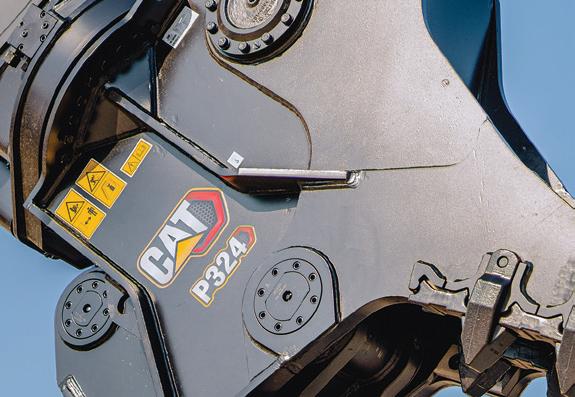
Volvo CE’s innovative wheeled excavator; new attachment system from Caterpillar
47. Earthmoving
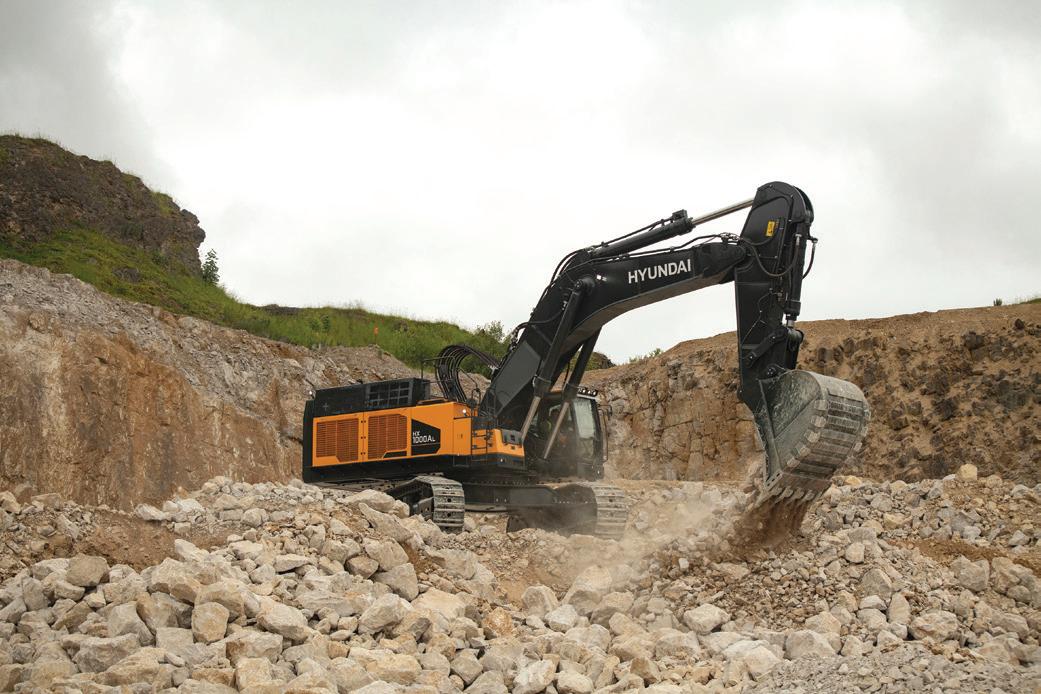
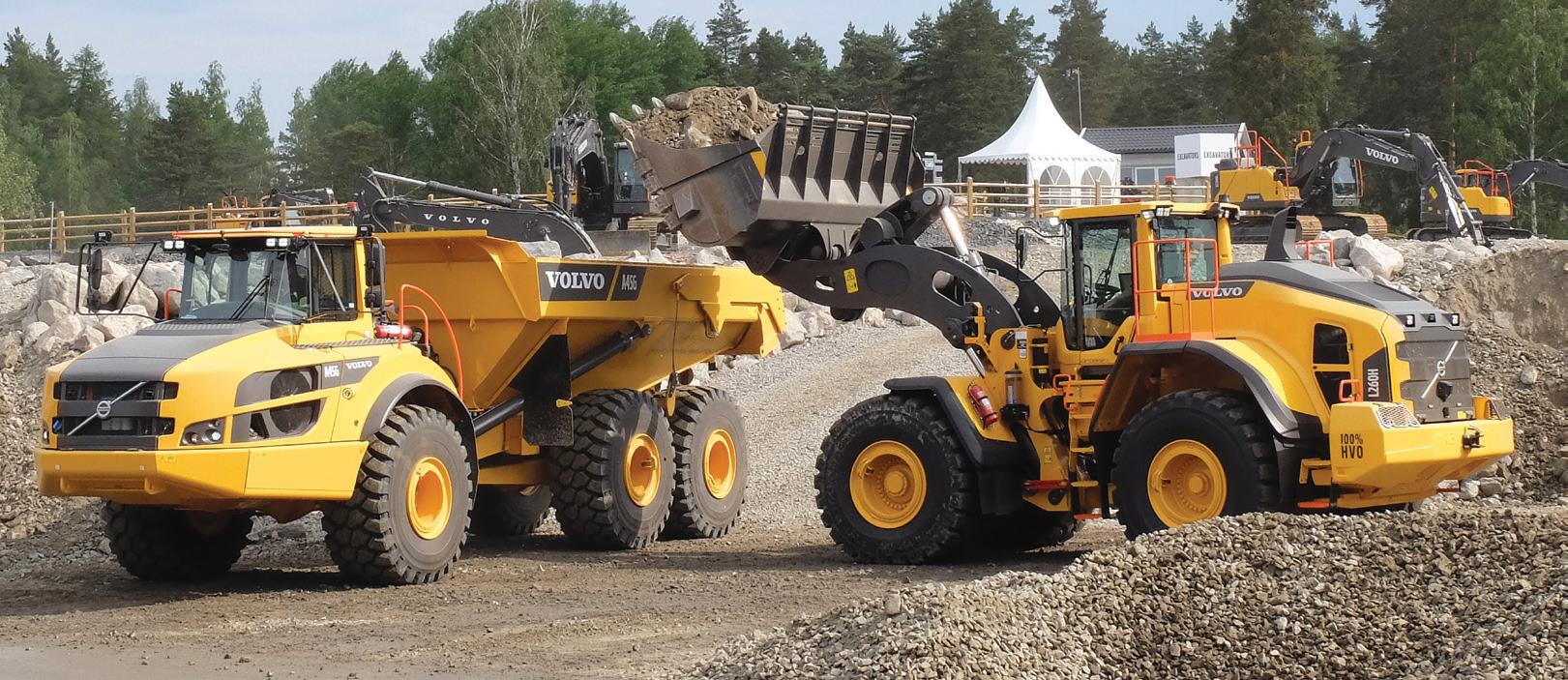
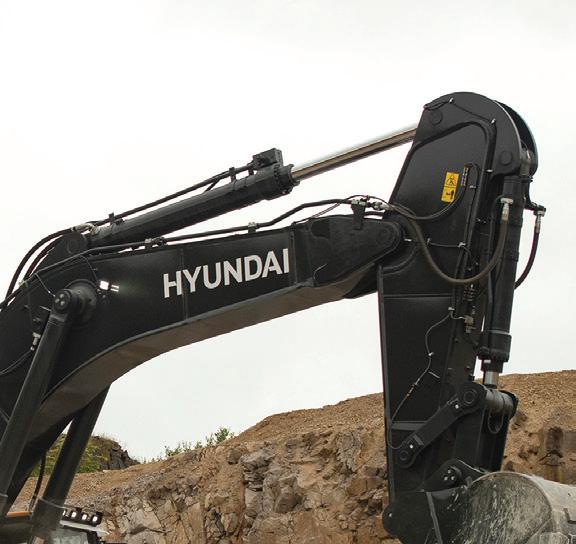
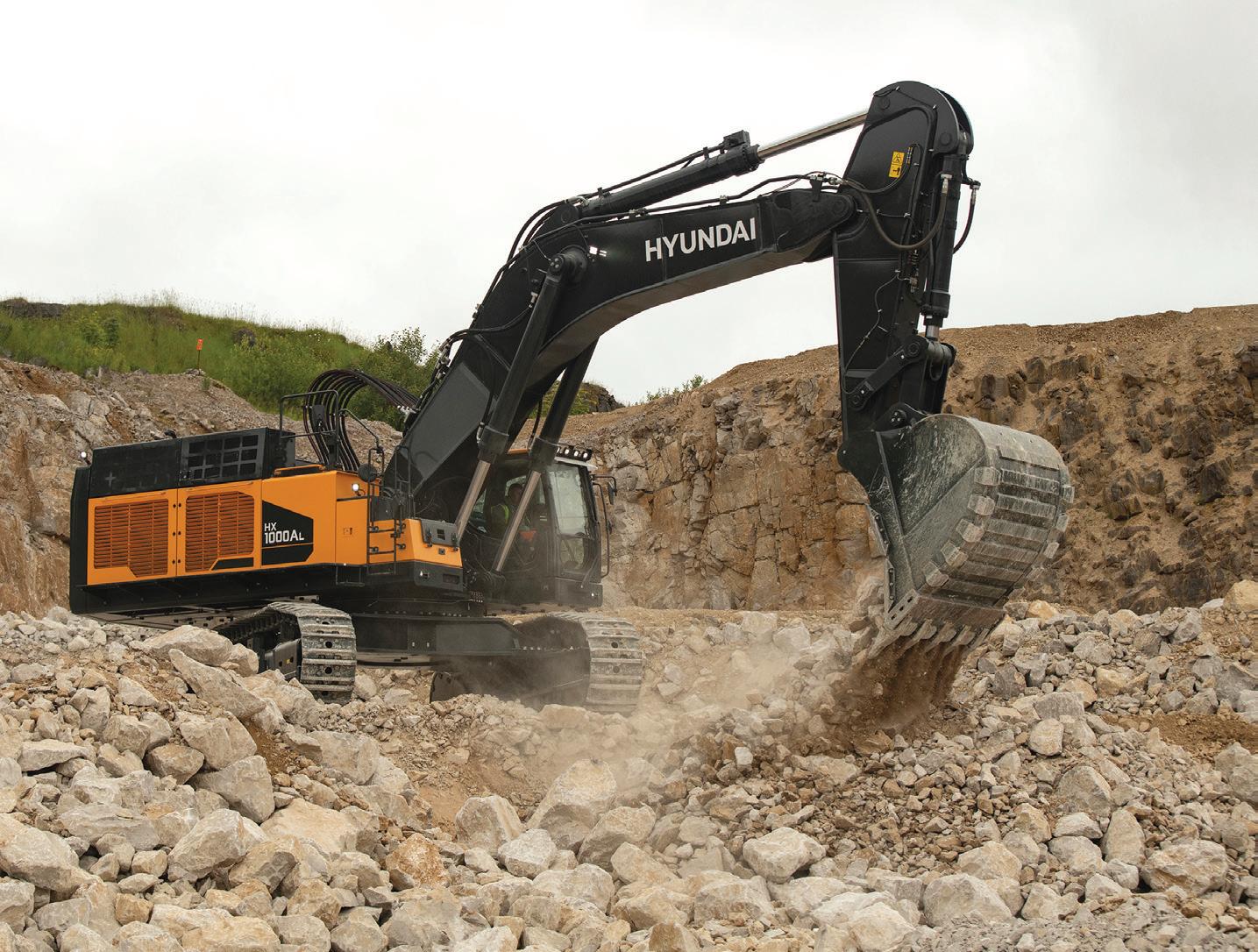
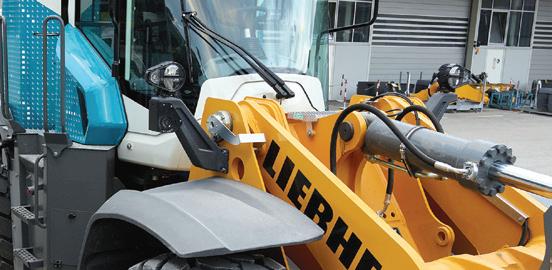
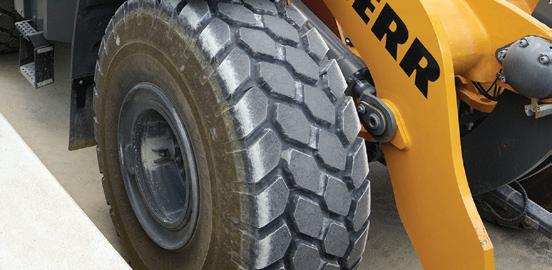
Volvo CE’s electric machines; Liebherr’s hydrogen loader prototype; Hyundai’s latest loader and excavator
49. Equipment
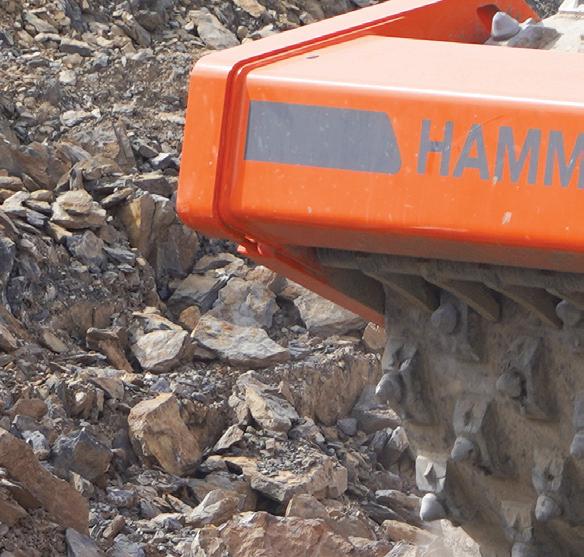
Dynapac has developed a new spray paver; using a Hamm compactor to crush rock
50. Onsite
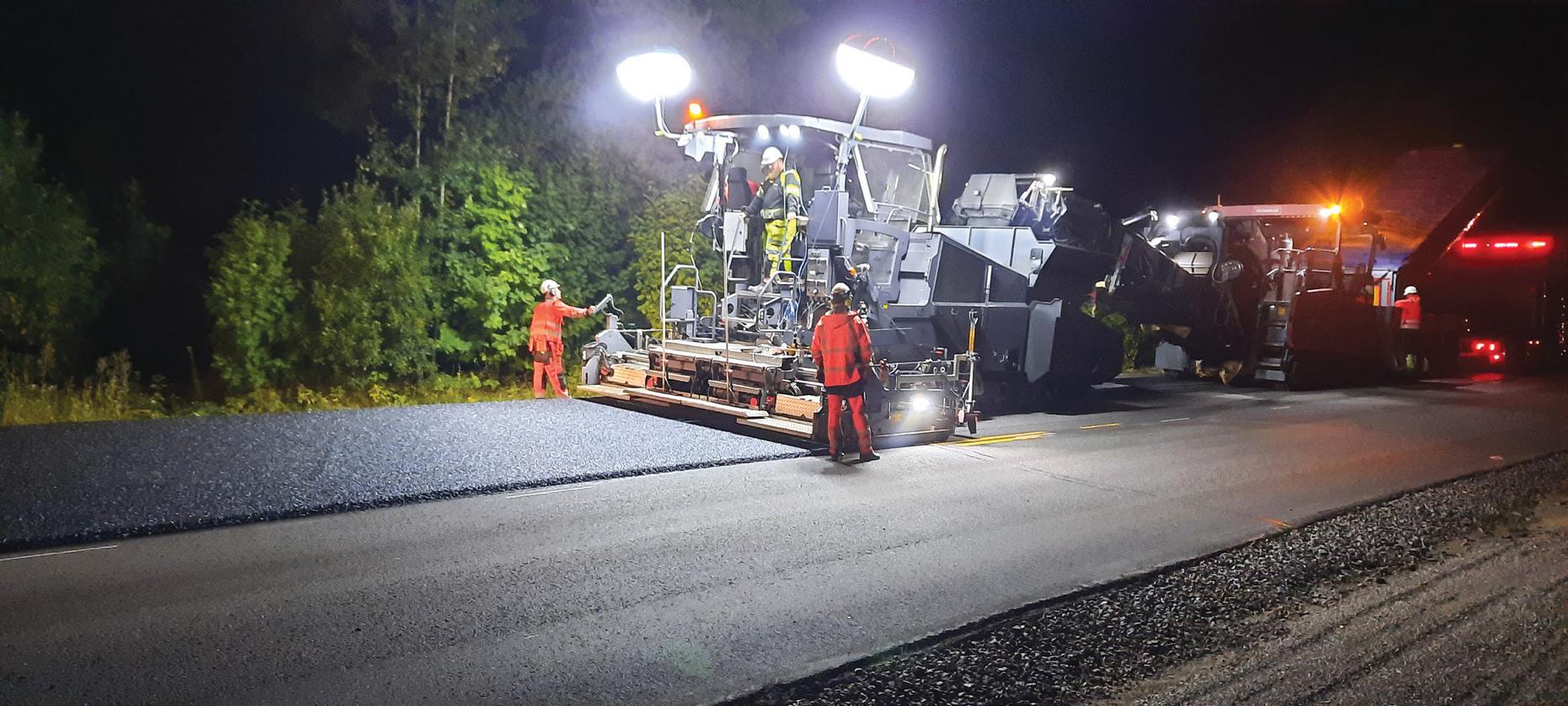
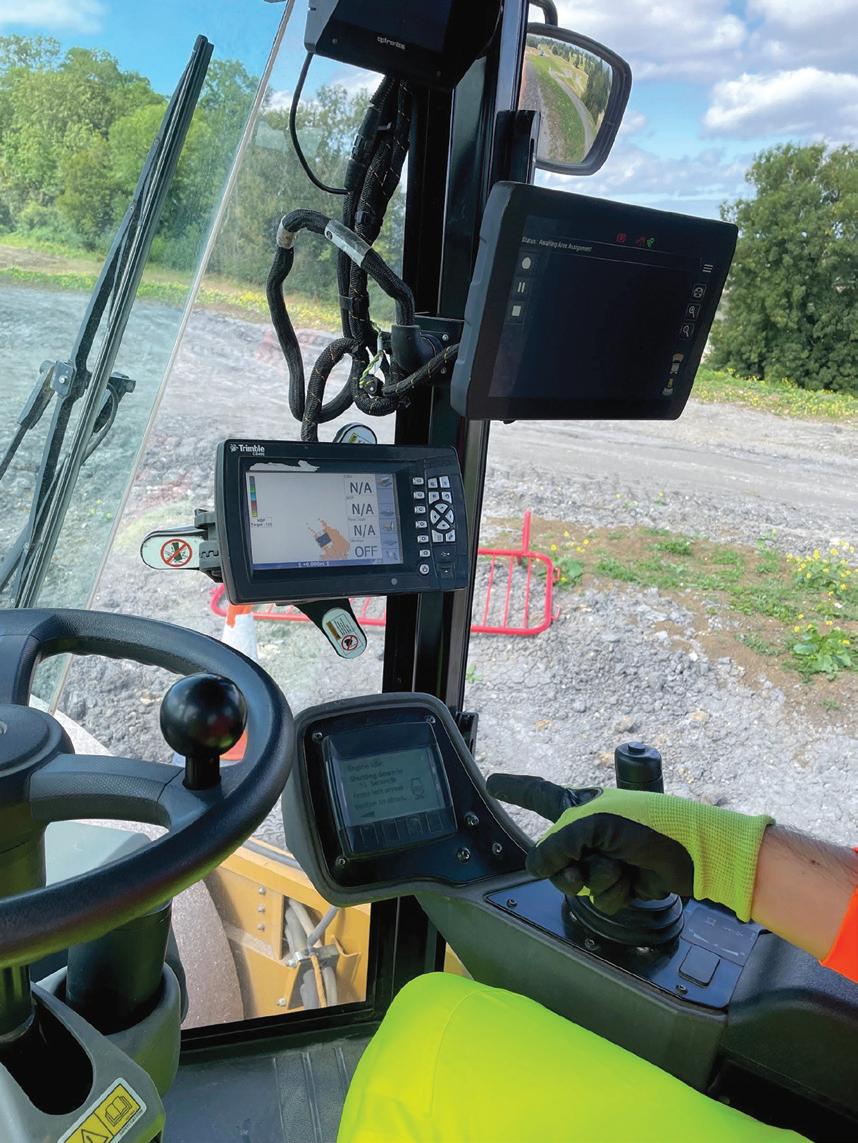
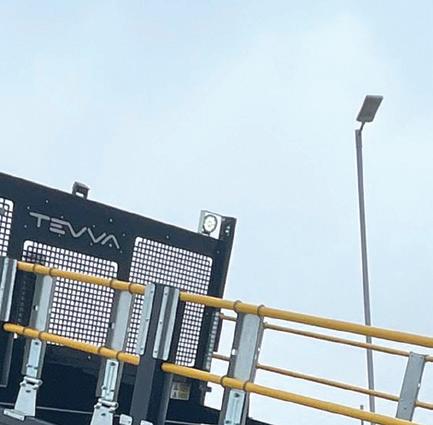
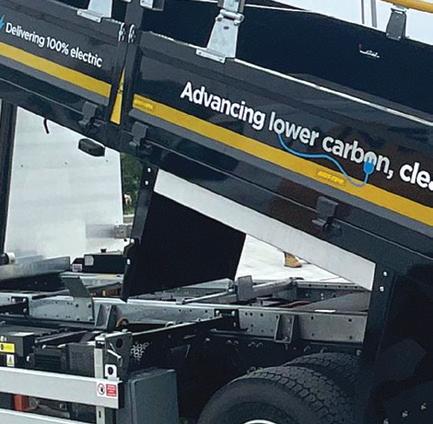
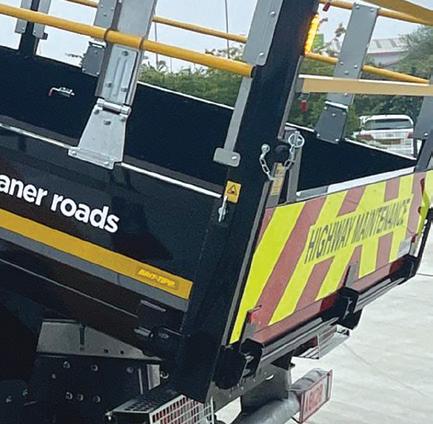
National Highways employing sophisticated compaction from Caterpillar; electric tippers for Tarmac
51. Skidmarks
Further humorous roadrelated stories from around the world 26-31
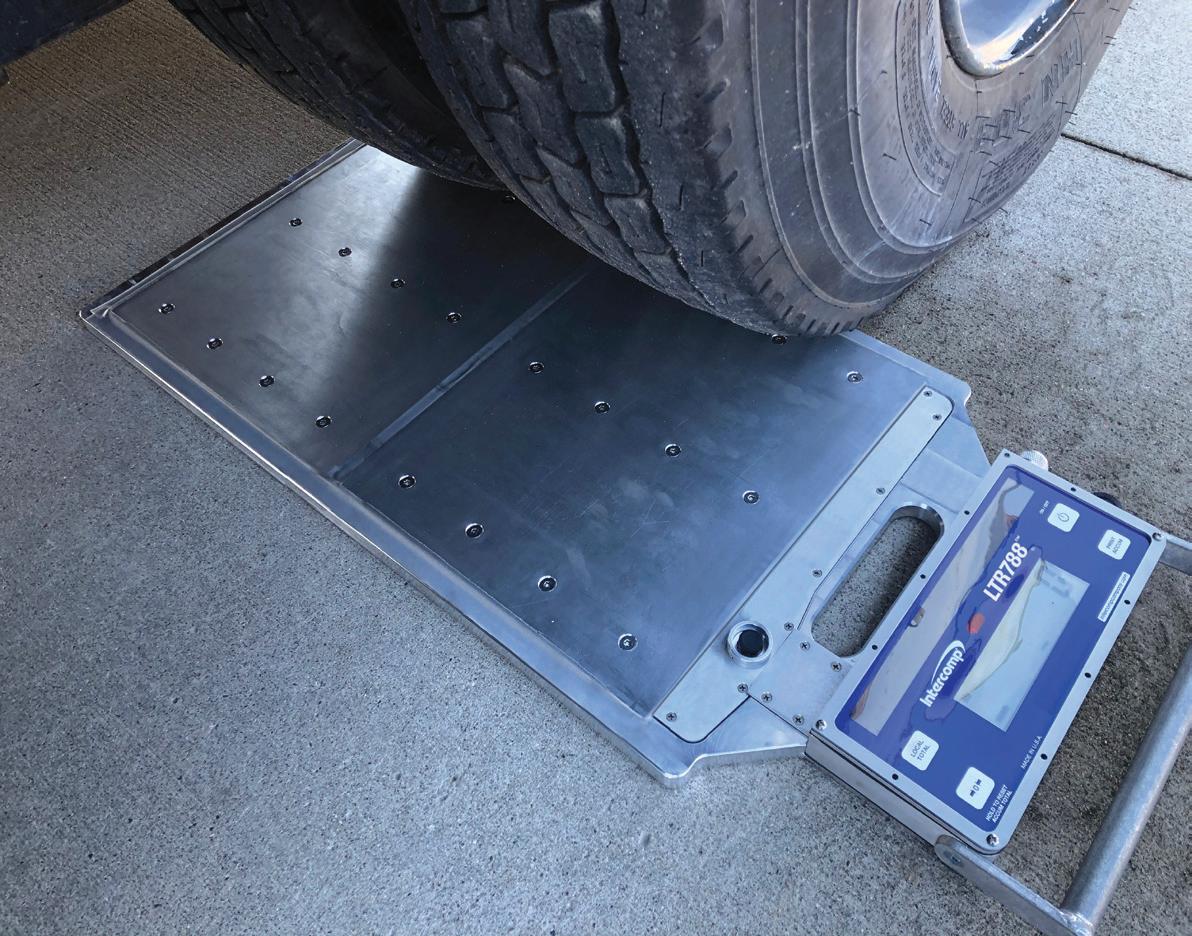
AECOM highlights road dangers; scooters collecting data; AI for Milan roads; vehicle weighing with Intercomp; autonomous driving in Darmstadt; Rebloc’s end terminal; Lindsay develops crash cushion
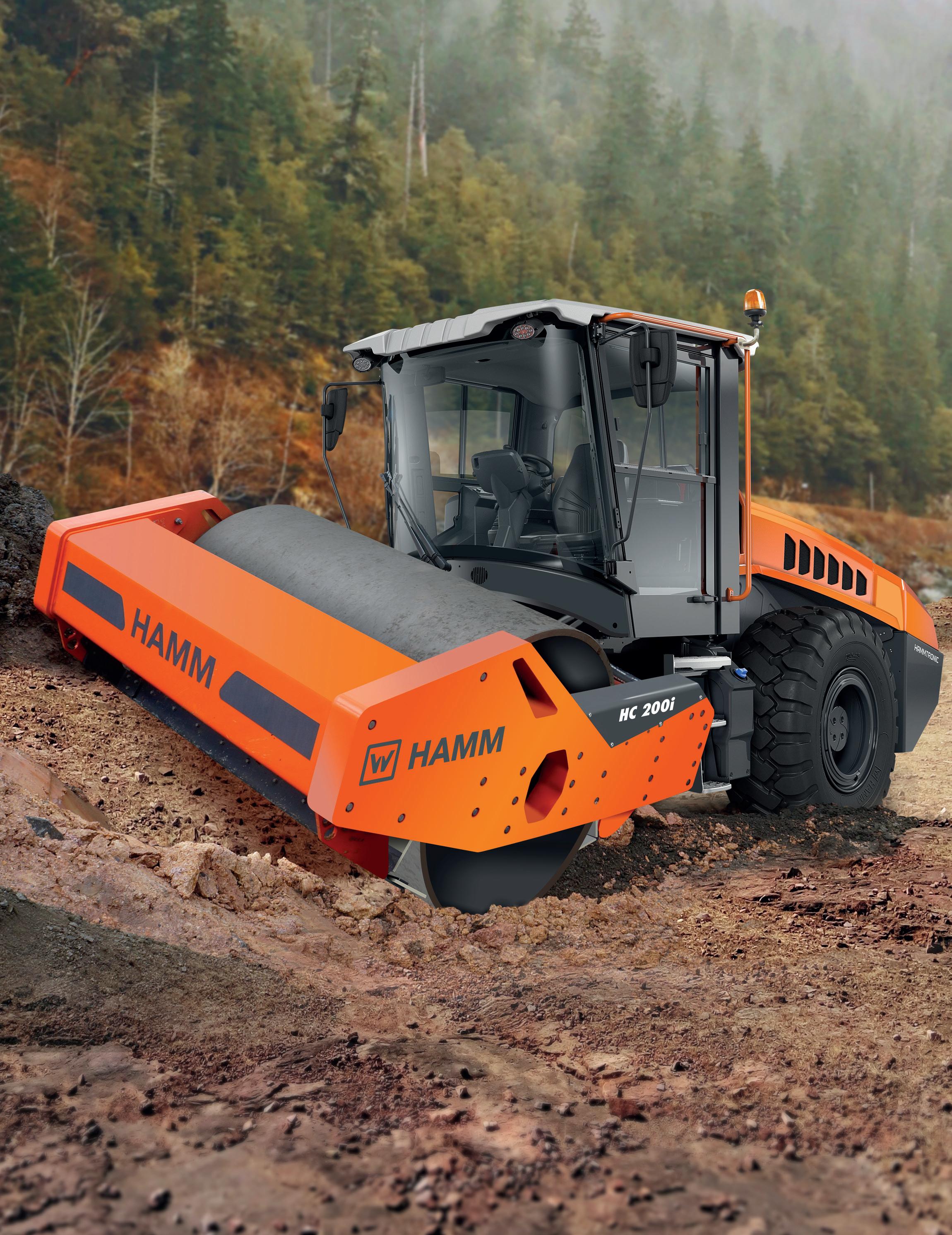
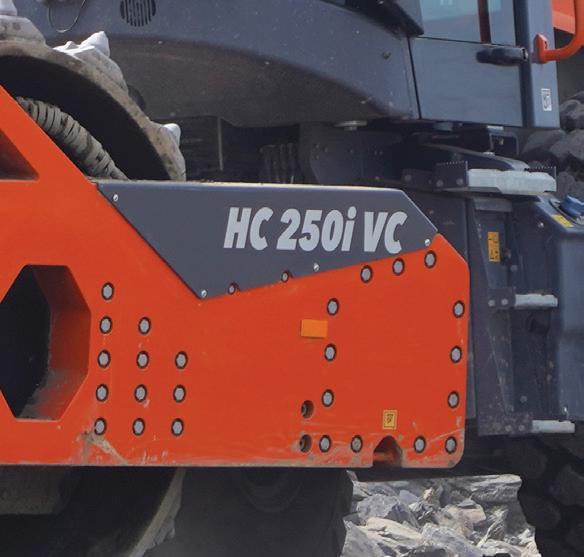
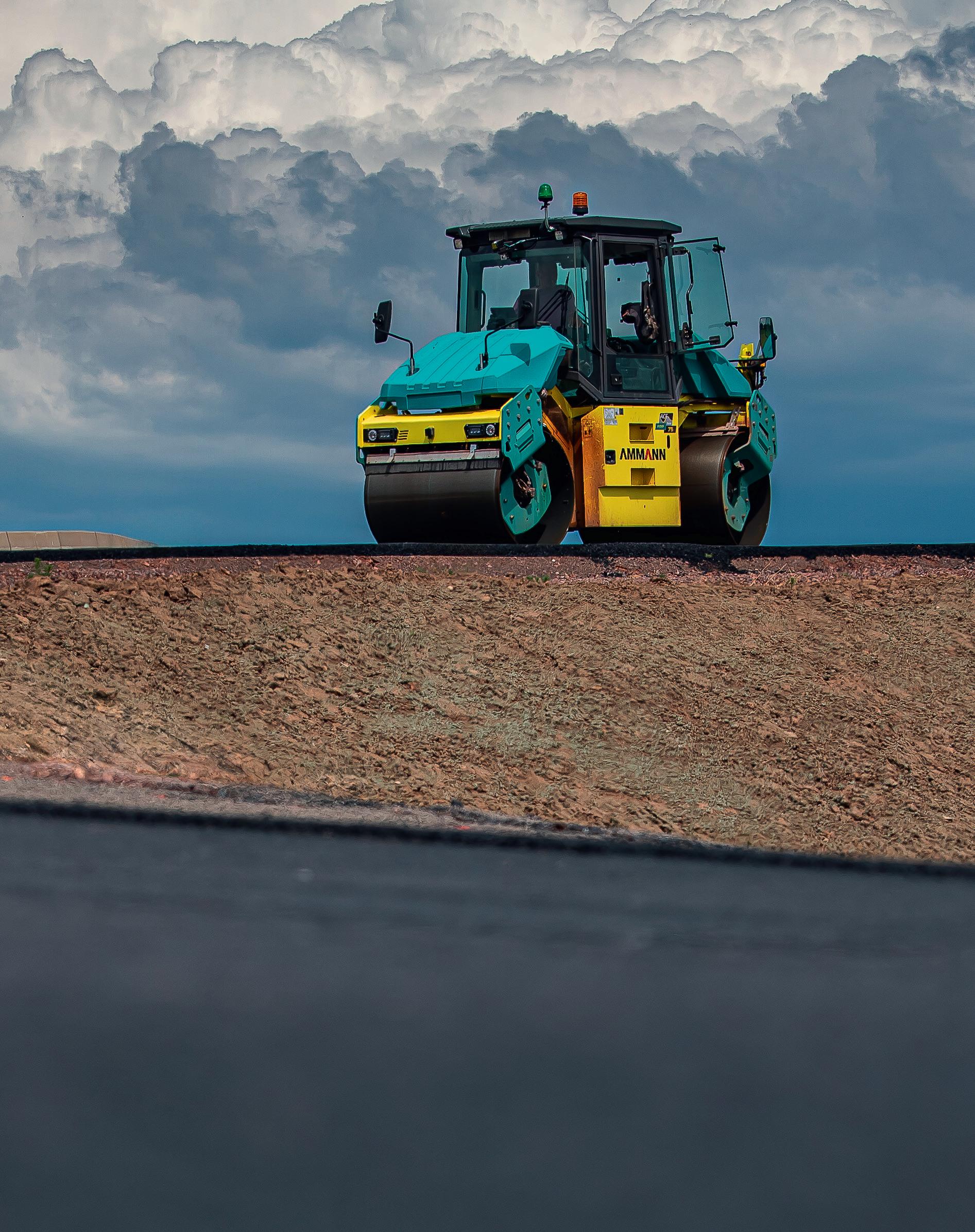
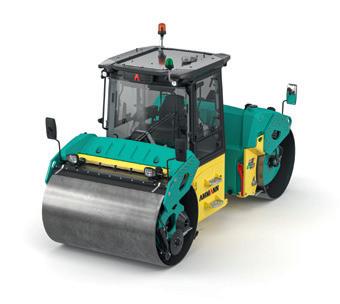
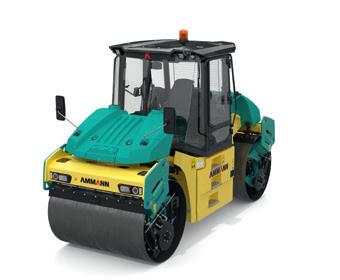
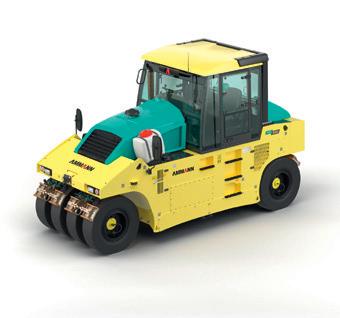
CLOSE TO OUR CUSTOMERS. The HC series offers convincing compaction power, outstanding user comfort, perfect visibility and environmentally friendly machine technology. All of the models in this series are ready for the digital future – and that will impress drivers and construction companies. Every day.
No part of this publication may be reproduced in any form whatsoever without the express written permission of the publisher. Contributors are encouraged to express their personal and professional opinions in this publication, and accordingly views expressed herein are not necessarily the views of Route One Publishing Ltd, or the International Road Federation. From time to time statements and claims are made by the manufacturers and their representatives in respect of their products and services. While reasonable steps are taken to check their accuracy at the time of going to press, the publisher cannot be held liable for their validity and accuracy
WORLD HIGHWAYS/ROUTES DU MONDE, USPS 8757, is published 6 times a year by Route One Publishing Limited, Second oor, West Hill House, West Hill, Dartford Kent DA1 2EU, UK.
The US annual subscription price is US$246.00 Airfreight and mailing in the USA by agent named World Container Inc, 150-15, 183rd Street, Jamaica, NY 11413, USA.
Periodicals postage paid at: Brooklyn, NY 11256
US Postmaster: Send address changes to WORLD HIGHWAYS/ ROUTES DU MONDE, Air Business Ltd, c/o World Container INC 150-15, 183rd St, Jamaica, NY 11413, USA. Subscription records are maintained at Route One Publishing Limited, Second oor, West Hill House, West Hill, Dartford Kent DA1 2EU, UK. Air Business Ltd is acting as our mailing agent.
Printed by: Warners Midlands PLC’
Few governments around the world have the resources available to pay for a major transport project without additional backing.
Mike Woof, EDITOR mwoof@ropl.com
Central government still key
Funding from central government still remains key to the development of new infrastructure projects. While PPPs for tolled highways are proving effective at attracting international investors, important transport projects do rely on government support.
Few governments around the world have the resources available to pay for a major transport project without additional backing. But at the same time, few major transport projects can commence without some government assistance.
This is apparent in the US for example, where a presidential request for US$3.1 billion from congress has been made for the funding to rebuild Baltimore’s collapsed Francis Scott Bridge as well as a number of smaller projects. Similarly, a nance package worth $1.5 billion will be provided by the US Department of Transportation (DOT) for the project to replace the I-5 bridge linking Oregon State and Washington State. This latest package means that the US Federal Government is providing a total of $2.1 billion for the I-5 bridge replacement. Both the Francis Scott Bridge and I-5 bridge replacement projects are deemed of vital importance to the US transport system.
Without the Francis Scott Bridge, thousands of drivers now have to make a lengthy detour that adds signi cantly to journey duration. The 30,000/ day drivers who previously used the link to traverse the Patapsco River on I-695 now face a lengthy diversion to use the I-895 crossing instead and which now suffers additional congestion.
Although the I-5 bridge linking Portland in Oregon State with Vancouver in Washington State remains, it is ageing rapidly and in poor condition. There will be some state funding for the bridge, with Washington State and Oregon State providing
around $1 billion apiece for the project.
Nor is the process of government funding restricted to the US. Perhaps nowhere is this more apparent than India, where the government is setting out plans for a truly gargantuan transport infrastructure programme. India’s Ministry of Road Transport and Highways is looking to invest $268.44 billion on transport infrastructure and has been seeking approval from the government.
This huge Highway Development Plan would involve the construction of around 30,600km of roads by 2032, including building 18,000km of highspeed roads.
The programme would address traf c congestion around major cities with improvements to 4,000km of routes. India’s international transport routes would also bene t from improved connections with neighbouring nations.
Road infrastructure in Vietnam is improving at a fast rate with a series of major projects underway, with PPPS playing a key role. The North-South Expressway is without doubt the most important of these and while much of the funding for this key tolled route has come from international investors, the Vietnamese Government has also provided a major portion of the funding from its own sources.
Another country that has been developing its highway network is Morocco and while many of these projects are PPPs, the country’s government has also provided an important portion of the funding required.
Motorway connections around Morocco’s important business centre Casablanca will bene t from $504 million for upgrade works. However, the country has also been working on other important road projects, such as the link between Guelmin and Dakhla in Western Sahara. MW
US$4 billion bridge and highway project
A US$4 billion bridge replacement and highway upgrade project will improve transport between Maryland and Virginia in the US. The project is to replace the American Legion Memorial Bridge, which carries traf c on I-495 over the Potomac River, to the north-west of capital Washington DC.
The bridge is struggling to cope with the massive traf c volumes it carries, with delays frequent at peak periods. The bridge is in poor condition and the work is a high priority due to its crumbling concrete structure. Building a new bridge as well as upgrading the highway leading to
the crossing is expected to cost in the region of $4 billion.
The plans call for construction to commence on the new bridge in 2026 with the opening due in 2032.
State funding from Maryland and Virginia worth a total of $1 billion has been pledged for the work in a joint agreement made in 2019 by the two states but the remaining $3 billion will have to come from federal sources. Survey work in the river is being carried out jointly for the project between the Virginia Department of Transportation (VDOT), the Maryland Department of Transportation State Highway Administration (MDOT SHA).
US$1.5 billion OregonWashington link
New Finland-Sweden bridge proposed
A new bridge connecting Finland with Sweden has been proposed by the Finnish Government. The bridge would connect Vaasa in Finland with Umeå in Sweden across the Gulf of Bothnia.
The two towns lie at a narrow point in the Gulf of Bothnia, with the Finnish and Swedish coasts around 80km apart. The route for the proposed Kvarken Bridge has yet to be identi ed. In total, the bridge would be around 40km in length, running from the group of islands forming the Kvarken Archipelago on the Finnish side to the somewhat smaller archipelago on the Swedish side.
Funding for the project would have to be secured from international sources for the project to be viable, with the cost likely to reach €1.5-2 billion. A portion of the funding would come from the Swedish and Finnish Governments. The idea of a bridge crossing at this part of the Gulf of Bothnia has been discussed for many years, although this latest proposal seems to have gone further than previous suggestions. Some have suggested that a longer bridge further to the south linking the Finnish city of Turku with Sweden's
capital Stockholm via the numerous islands would o er a better transport alternative, albeit at a higher price.
Building a bridge would reduce transport times considerably between Vaasa and Umeå, which are at present linked by a ferry service. The road journey meanwhile is longer still, around the shores of the Gulf of Bothnia and involving a circuitous route to the north.
The waters of the gulf are comparatively shallow between Vaasa and Umeå, at around 25m, which would help ease some of the construction challenges often seen with bridges built as sea crossings. A raised section would also have to be constructed to allow safe passage for some of the larger vessels travelling along the Gulf of Bothnia.
The bridge would also require protection along its length to eliminate the risk of impacts from out of control vessels.
A study into the project is being carried out for the Finnish Transport Infrastructure Agency, and should be ready by 2025.
A nance package worth US$1.5 billion is being provided by the US Department of Transportation (DOT) for the project to replace the I-5 bridge linking Oregon State and Washington State. The bridge will span the Columbia River, connecting Portland in Oregon State with Vancouver in Washington State. The addition of this new funding package means that the US Federal Government is providing a total of $2.1 billion for the bridge replacement. Washington State and Oregon State meanwhile will also provide around $1 billion each for the project. The new bridge will be larger than the existing link, with four lanes in either direction instead of the three lanes in either direction at present.
A new bridge has been proposed to link Vaasa in Finland with Umeå in Sweden
Replacing the notoriously congested American Legion Memorial Bridge in the US is a high priority due to its poor structural condition
Fuel efficiency. Reduced emissions.
Exceptionally sustainable performance.
Volvo CE sees sales dip for Q2
Volvo CE is reporting a dip in net sales for Q2 this year - driven by the industry downturn - while still delivering on its transformation ambitions with its biggest product launches in years.
The Swedish quarrying, mining and construction equipment major has continued to bring industry transformation in the second quarter of 2024 while demand in many markets has slowed, particularly compared with the high levels reported from the same period last year. Earnings have been impacted by lower volumes in Europe and North America. However, order intake in Asia has increased by one fth, largely driven by the Chinese market, leading to a
global growth of 9%.
In Q2 2024, net sales amounted to SEK 24,423 M (28,999). Adjusted for currency movements, this represents a decrease in net sales of 16%, of which net sales of machines dropped by 19% while service sales increased by 2% - once again demonstrating the increasing market value of service solutions to ensure customer productivity during tougher times. Both adjusted and reported operating income amounted to SEK 3,888 M (5,353), corresponding to an operating margin of 15.9% (18.5).
During the quarter, net order intake increased by 9%, mainly prompted by an increase in orders in China when compared to the slowdown in that region in 2023,
but also by North America, as orders were restricted last year due to supply chain inef ciencies. Deliveries in Q2 this year were below 2023, caused by lower market demand in Europe and North America.
Melker Jernberg, President of Volvo CE, says: “We continue to drive innovation and investments to remain at the forefront of the transformation to more sustainable solutions for the bene t of our customers, shareholders and society at large. It is a testament to our commitment to perform and transform that we are able to ensure pro tability during challenging times while still setting the course for construction innovation.”
Bangladesh’s new US$1.1 billion bridge
Construction of the new bridge for Kalurghat in Bangladesh is expected to cost nearly US$1.1 billion. The project will bene t from a loan being provided by South Korea, negotiated by Bangladesh’s Economic Relations Division (ERD).
The new bridge will replace a 239m structure that opened in 1930 and is in a poor condition, making it unable to cope with the tra c it has to carry at present. It has had to be closed at various times to carry out maintenance work, presenting transport headaches for the industries in the area that it serves.
The numerous redesigns have delayed the project, as well as boosting the cost signi cantly. The new bridge is not expected to be ready until 2028.
A loan will help pay for the replacement of the historic bridge
India’s US$268.4 billion transport infrastructure plan
India is setting out plans for a truly gargantuan transport infrastructure programme. The country’s Ministry of Road Transport and Highways is looking to invest US$268.44 billion on transport infrastructure. Approval is being sought by the Ministry of Road Transport and Highways from the Indian Government.
The Highway Development Plan would see the construction of around 30,600km of roads by 2032. This would involve building 18,000km of high-speed roads.
Tra c congestion around major cities would also be reduced with improvements to 4,000km of routes around these areas. The programme would also develop India’s international transport routes, improving connections with the country’s neighbours. Tendering for the rst phase of the programme
should be complete by 2029, with the construction work then due to be nished by 2033.
Work is to start on India’s US$488 million Chattergala Tunnel project in the north of the country. The project will be managed by the National Highways Authority of India (NHAI).
The 6.8km tunnel is expected to take four years to build and will replace the Chattergala Pass, which is at an altitude of 3,200m and is prone to closure in poor weather. Once the tunnel is open, it will allow faster and safer journeys between Jammu and Kashmir.
In addition, the NHAI will manage the work for the new National Highway linking Lakhanpur and Doda. The highway will provide a new and faster route for drivers, cutting journey times while boosting transport safety.
Volvo CE has launched its most ambitious line-up of new products
Transportation
n
n
n
n
US$5.9 billion for
three Philippines expressways
expressways in the Philippines by early 2025. The projects are being carried out by San Miguel Corp (SMC).
Design work is being carried out for the $2.7 billion Southern Access Link Expressway (SALEX). This is Component 2 of the Greater Capital Region Integrated Expressways Network. SALEX is a proposed 40.65km elevated expressway network comprising of the Shoreline Expressway and three Metro Manila Skyway Stage (MMSS3) Extensions, namely: C3R10 Extension; Quirino Extension; and Buendia Extension.
Construction of the Northern Access Link Expressway (NALEX) will commence before the end of 2024. Nalex is Component 1 of the Greater Capital Region Integrated Expressways Network. It consists of two Phases. NALEX, Phase 1 is
The road
between the Metro/Mega Manila, the New Manila International Airport (NMIA) and Central Luzon as an extension and/or linkage of the Metro Manila SkywayStage 3 (MMSS3) at Balintawak. NALEX, Phase 2 is a demanddriven expansion from Masantol, Pampanga to Tarlac City.
Work is due to commence on the $504 million project for the 61km Segment 1 of the SLEX TR5 project will also start in 2025, including building four interchanges, an operations centre and toll facilities.
These projects are expected to help deal with the chronic congestion around the Metro Manila area.
SMC has also said that it will carry on with the $1.7 billion Pasig River Expressway (PAREX) project.
Casualties on Africa’s dangerous roads
Africa’s dangerous roads have seen an increase in fatalities between 2010 and 2021.
Data from the World Health Organization (WHO) shows that road deaths increased 17% in Africa during this period.
Around 20% of all road deaths in the world occur in Africa, with close to 250,000 fatalities in 2021.
Road casualty statistics for vulnerable road users such as pedestrians, cyclists and motorcyclists are particularly worrying in Africa. The WHO data shows that deaths amongst motorcyclists doubled for the 2010-2021 period compared with the previous 10 years.
Expressway (CCLEX) could be sourced from an overseas rm. The company operating the route is Metro Paci c Tollways Corp (MPTC), which has been holding negotiations with regard to nancing. MPTC may sell a 45% share in the CCLEX route, which has been in operation since the second quarter of 2022 and links Cebu on the mainland with the island of Mactan.
In addition, MPTC is proposing a $716 million expressway stretching 32km that will connect the Bataan-Cavite Interlink Bridge (BCIB) project and the Cavite-Laguna Expressway (CALAX). The BCIB project has bene ted from a $650 million loan from the Asian Development Bank (ADB), which was provided to the Department of Public Works and Highways.
A huge growth in the number of registered vehicles in Africa accounts for some of the rise in road deaths. The total number of four-wheeled vehicles on Africa’s roads almost doubled between 2013 and 2021, a high percentage of which were second-hand and imported from elsewhere. Meanwhile, numbers of registered two- and threewheeled vehicles tripled in the same period.
US$3.15 billion for
Nigeria roads
Nigeria’s Federal Executive Council (FEC) has plans to carry out US$3.15 billion worth of road improvement works across 13 states. Maintenance and improvement works will be carried out as well as resurfacing.
This latest development for Nigeria’s road network follows funding worth $1.44 billion being made available from the African Development Bank (AfDB) to help pay for transport infrastructure works in the country. The AfDB funding has been targeted at major projects such as the highway linking Sokoto with Badagry and the coastal highway connecting the country’s former capitals, Lagos and Calabar.
New road projects in the Philippines will help reduce congestion at peak periods
linking Abeokuta with Iboro and Ilaro will be one of those to bene t from road upgrades
US$834 million for Seattle area highway widening
Work is underway on the US$834 million I-405/ Brickyard to SR 527 Improvement Project in Washington State.
Construction is being carried out by Skanska, which was awarded the package of works by the Washington State Department of Transportation (WSDOT).
The project involves upgrading the 7.2km stretch of I-405 running through Bothell, with the work due for completion
in 2028. AECOM is partnering with Skanska as the lead designer for the project.
Improvements will include increased express toll lane (ETL) capacity and direct access to state highways. This includes building one new express toll lane in each direction between south of SR 522 and SR 527, widening I-405 through the SR 522 interchange, and building direct access ramps to the express toll lanes at SR 522, and a partial direct access
interchange at SR 527 to and from the south connecting to the Canyon Park Park and Ride. There will also be improved connections to the regional transit service at both the UW Bothell Station (SR 522) and the park and ride at Canyon Park (SR 527) and the addition of a new transit-only Bus Rapid Transit (BRT) station to connect to Sound Transit’s BRT service along the I-405 corridor, boosting connections to the existing park and ride.
Brisbane’s US$5.1-6.5 billion tunnel project
A new road tunnel for Brisbane in Queensland, Australia could cost from US$5.1-6.5 billion but would help address the city’s severe road congestion issues.
The proposed Gympie Road Bypass Tunnel would link Kedron and Carseldine as a potential solution to ease congestion and reduce traf c on Gympie Road. The tunnel project was put forward by the Queensland Investment Corporation's subsidiary, North Brisbane Infrastructure (NBI).
The Queensland Government has allocated $212.8 million (A$318 million) to nalise plans for the tunnel.
A tolled bypass tunnel between Kedron and Carseldine would deliver faster travel times in Brisbane’s northern region while also reducing pressure on Gympie Road and return the corridor to local road users, as well as public and active transport.
A new US$1.47 billion underground expressway route is being proposed for Thailand’s tra c-choked capital, Bangkok. Building the 6.3km underground tunnel stretch for part of the N1 Expressway project could help alleviate the city’s chronic tra c congestion, which is amongst the worst in the world.
The project has been put forward by the Expressway Authority of Thailand (Exat). The route would run underneath Ngarmwongwan Road and link with the N2 Expressway.
However, the proposals have met with some resistance from locals. Building an elevated expressway stretch instead would cost around $500 million. An environmental study will be carried out in 2025. Should the project get approval, construction would start in 2026 with completion expected by 2031.
Meanwhile, building a bridge to link Trat Island with Koh Chang is expected to cost $293.5 million. The estimate comes from the Expressway Authority of Thailand (EXAT). A feasibility study will be ready in 2026 and will evaluate key factors including the depth of the sea and the e ects of tides and sea currents.
Work is underway for a highway widening project close to Seattle, WA
A new road tunnel link for Brisbane, Australia could help deal with the city’s serious congestion problem
A new underground tunnel stretch has been proposed for Bangkok in a bid to reduce the city’s notorious congestion
Topcon and Bentley agreement
Strategic agreements between Topcon Positioning Systems, Bentley Systems and Worldsensing will allow greater integration of GNSS technology with software and connectivity solutions.
“This series of agreements is an example of the innovation and collaboration that is driving technology adoption in our industries,” said Ian Stilgoe, vice president of Emerging Business for Topcon. “Not only are we improving work ows and operational gains for end users, but we are also expanding Topcon GNSS technology into new markets and use cases.”
As part of its agreement with Bentley Systems, Topcon will provide access to its powerful web-based GNSS processing engine. Bentley has integrated this technology into its advanced iTwin IoT monitoring solution.
“Combining our expertise in GNSS technology with Bentley’s software platforms will allow users to leverage geospatial information for improved decision-making and operational effectiveness,” Stilgoe said.
“We’re excited to announce this integration of Topcon’s GNSS technology into our suite of IoT-based monitoring solutions,” said Steve Bentley, senior director of Infrastructure IoT for Bentley Systems. “This integration will enable our users to combine cost-effective geospatial monitoring data, providing real-time asset intelligence that can be combined with engineering data to advance infrastructure digital twins.”
Meanwhile, Worldsensing has integrated the Topcon AGM-1 GNSS receiver with its Thread X3 broadband product. The result is a
new Accurate Positioning System to monitor geohazards such as rock falls and landslides in quarries, road or rail embankments and other ground structures.
“This will empower industry professionals to identify potential risks of subsidence, heave, landslip, settlement and undertake preventive measures,” Stilgoe said.
The integration boosts geohazard monitoring technology with a connectand-collect solution allowing detection and analysis of risks in real-time. Using GNSS technology as the core component, Topcon and Worldsensing bring ef ciency to ground movement monitoring applications while reducing the initial investment required for GNSS monitoring.
“This new offering aims to address the common challenges facing IoT deployments today, namely access to end-to-end, scalable, and exible solutions,” said David Deprez, managing director of Worldsensing. “We are facilitating IoT mass deployment for GNSS monitoring in collaboration with leading technology providers in the eld.”
Bentley Systems www.bentley.com
Topcon Positioning Systems www.topconpositioning.com
Worldsensing www.worldsensing.com
Intelligent drone solution
Earthmoving digital solutions specialist Smart Construction has provided the UK’s rst ever demonstration of the sophisticated drone system to professionals from the construction and civil engineering sectors.
The Dock 2 is DJI's rst dedicated drone in a box solution for surveying, allowing automated and remote deployment for round-the-clock and on-demand data collection.
This product can be supported by software such as Smart Construction’s Dashboard which uses as-built data to create a digital twin, enabling site managers, surveyors and other team members to measure progress, calculate volumes and control nished work within a collaborative platform.
can host smart technology and hardware to increase site safety, avoid obstacles and conduct e cient surveys.
Smart Construction also demonstrated its mixed solutions including its Edge system which is compatible with DJI drones. Edge has accompanying hardware that is tted to drone technology and used to process site data.
Richard Clement, deputy general manager of Smart Construction, said: This launch is a UK rst and will help to modernise the earthmoving industry. We’re excited to roll this out into the industry during a pivotal time of change as digital solutions become common practice.
The demonstration was held at the Smart Construction’s UK base in County Durham. Attendees were shown the DJI FlightHub 2 system as well as Smart Construction’s Edge 2 and Dashboard. The launch was aimed at industry professionals to show how drone models
“Drone technology will revitalise the earthmoving industry by increasing productivity, avoiding data black holes, and allowing virtual data to be presented live in real time.”
Smart Construction www.smartconstruction.io
Integrating Topcon’s GNSS and machine control systems with technology from Bentley Systems and Worldsensing will deliver cost-e ectiveness and e ciency for users
Accurate site positioning
Trimble has introduced new version of the R780 GNSS Smart Antenna for construction site positioning as well as the highly sophisticated R980 GNSS system.
Several features now come standard with the R780. These include a dual-band radio (450/900MHz) that connects to diverse base stations and jobsites without the expense of additional external radios as well as the dual Trimble Maxwell 7 GNSS ASIC chip that enables greater performance in challenging GNSS environments. Customers can also bene t from an activated and ready-to-use Trimble CenterPoint RTX subscription for the rst 12 months. CenterPoint RTX is an advanced precise point positioning technology that provides real-time, centimetre-level corrections via satellite or cellular/IP wherever the user is working.
Using the R780 with Trimble Siteworks software allows workers to capture accurate points while standing, walking or driving the site, without leveling the pole. With GNSS tilt compensation, Siteworks is said to be easier to learn for beginners and saves time for experienced surveyors. The R780 can serve as a GNSS rover or as a base station for other GNSS operations including machine control.
Meanwhile, the R980 comes with features including the Trimble ProPoint positioning engine as well as upgraded communication capabilities for reliable eld operations. The Trimble R980 combines several GNSS technologies
for land surveying, transportation infrastructure, construction and extraction projects. Established features include Trimble’s ProPoint GNSS positioning engine and inertial measurement unit (IMU)-based tilt compensation using Trimble TIPM technology. These features make it possible to work in dense urban environments and under tree canopy.
The R980’s communication capabilities include a dual-band UHF radio and an integrated worldwide LTE modem for receiving corrections from a local base station or VRS network. Able to operate on 450MHz, 900MHz or LTE bands, users have exibility in how they receive and transmit RTK corrections. This allows users to choose the method that suits their needs. Work can be carried out in varied environments, regardless of available GNSS infrastructure, while minimising the complexity associated with radio licensing requirements. Operating in both 450MHz and 900MHz bands also allows for greater interoperability with a wider range of existing industry solutions.
The Trimble R980 also supports the Trimble Internet Base Station Service (IBSS) for streaming RTK corrections using Trimble Access eld software. This feature introduces new connected work ows, for ease of use and making it possible to collect data without disruption caused by physical radio limitations
Trimble www.trimble.com
Hexagon and Nemetschek partnership
Hexagon's Geosystems division and software specialist the Nemetschek Group have established a strategic partnership to accelerate the digital transformation within construction.
The partnership is intended to drive the adoption of digital twins by offering customers integrated, end-to-end work ows for ef cient and sustainable building operations.
Huge quantities of data are created during the life cycle of a construction project but much of this valuable information resides in silos and becomes outdated over time. Incomplete and outdated information leads to poor decisions that can affect a structure’s performance and increase operational costs.
Nemetschek and Hexagon believe that digital twins can address this issue, transforming the industry and overcoming
technical challenges. A digital twin boosts visibility, increases ef ciency and delivers data-driven insights.
Hexagon leverages its end-to-end reality capture and Scan2BIM solutions to automatically capture accurate and real-time eld data to create Digital Twins across all sectors.
It uses its AI- powered solutions to support analytics and simulations, generate progress insights as well as provide an immersive experience navigating assets during design, construction and operations through its VR/AR and positioning technology.
Nemetschek’s new dTwin package is a cloud-based Digital Twin platform that delivers data-driven insights, helping management from design to operations. This package brings together relevant information from CAD/BIM,
IWMS with real-time streams from operations, providing value via visualisation, data analysis and asset management. With the platform, users can optimise operations based on realtime information and data-funded decision criteria.
Jointly, Nemetschek and Hexagon will provide customers with the tools, services and expertise for an end-to-end, digital twin work ow by joining the up-to-date building data through Hexagon’s reality capture solutions with the smart operations powered by Nemetschek’s dTwin.
Hexagon www.hexagon.com
Nemetschek www.nemetschek.com
Sophisticated capabilities are claimed for Trimble’s R980 package
CONSTRUCTION TECHNOLOGY
Topcon Positioning Systems says that its new MC-Max Asphalt Paving and MCMax Milling solutions offer improved performance for road construction and resurfacing.
The systems offer modularity, simpli ed con gurations and advanced feature sets to increase productivity in asphalt paving and cold milling applications.
“Today’s municipalities are under pressure to maintain existing infrastructure,” said Murray Lodge, executive vice president, Topcon. “With rising maintenance costs, everdecreasing margins, tighter speci cations, and an increasing focus on meeting sustainability targets, industry needs innovative approaches to resurface roads ef ciently with smooth and long-lasting results.”
The MC-Max Asphalt Paving and MC-Max Milling systems comprise GNSS receivers, total stations, displays, and other high-precision sensors and are built with the new MC-X machine control platform. This allows for customised systems and upgradeability to grow with a contractor.
Users can choose from entry-level 2D systems that follow a reference, such as a string or a curb, or automated solutions that track a paver or miller in 3D for improved smoothness in less time and with lower costs. Contractors can automatically pave and mill at variable depths, meeting DOT-mandated smoothness standards. The solutions also include MC-X licensing options, allowing customers to meet their project and budget requirements.
The new solutions are currently compatible with OEM CAN-based systems and
Accurate measurement
Leica Geosystems is o ering two new DISTO laser distance meters featuring gesturetriggered readings. These sophisticated, handheld laser distance meters are the Leica DISTO D5 and DISTO X6 units. The meters feature the latest measuring technology, allowing fact and accurate measurements. They also o er gesturetriggered distance readings, good outdoor performance, durability and extended battery life. The upgrades and features are said to optimise work ows for users through improved e ciency and ease-ofuse.
The DISTO D5 and X6 o er 1mm accuracy and a maximum range of 200m and 250m respectively. They provide reliable outdoor measuring performance due to their integrated digital Point nder and high-resolution display that comes with a zoom function. Both devices are equipped with Bluetooth for seamless integration with the DISTO Plan App.
An industry- rst feature is the ability to trigger measurements by interrupting the laser beam with a hand. This removes the risk of moving the device when pressing a button, giving the DISTO D5 and X6 long-distance precision.
Accurate milling
The DISTO X6 can be paired with the smart DST 360-X tripod adapter for point-to-point use, which can capture distance measurements in inaccessible areas or complex measuring situations. The device can also create its own DXF and CSV les, providing CAD support while avoiding the need to bring a laptop to site.
Leica Geosystems www.leica-geosystems.com
will be expanded to include compatibility with additional aftermarket systems.
“One of the standout optional features of the solutions is the Virtual Ski intelligent software,” Lodge said. Virtual Ski is designed for speci c resurfacing applications, such as rural roads where there are fewer xed points to match up to.
“Our mobile road scanner creates a 3D model of the existing road surface, which can be sent to the machine using our Sitelink3D cloud solution,” Lodge said. “Scan and mill or lay the base layer and let the milling machine or the paver do the surface design job instead of all that data going back to the of ce for design work.” He added that this
eliminates the ski, produces a smooth surface more quickly with less effort, and signi cant time savings. The exible, digital calculation follows the road direction even in tight curves, boosting quality and lifespan of resurfaced road.
Another advancement for the portfolio is the company’s newest RD-MC road construction machine control solution, which can now be used in areas without satellite reception by leveraging an LPS solution, offering precise positioning, further expanding a contractor’s capabilities.
Topcon Positioning www.topconpositioning.com
Fitting Topcon’s new milling technology to a planer will boost accuracy and quality
Leica Geosystems is o ering two new DISTO laser measuring tools
Digital road inspections
Digital road inspection specialist INSPECH is partnering with AECOM to introduce innovative digital road inspection technology in Australia. This collaboration aims to streamline road condition assessments and improve overall ef ciency.
AECOM has been commissioned by Transport for NSW to develop concept designs and environmental assessments for ood resilience projects within the HawkesburyNepean Valley Flood Evacuation Road Resilience Program. Initiated in 2023, this program seeks to enhance the ood immunity of key evacuation routes, particularly during localised ash ooding events, to ensure prolonged accessibility and safety for evacuees.
As part of this comprehensive initiative, the AECOM team has conducted extensive investigations to support the development of concept designs.
This process has involved the implementation of innovative alternative investigation methods, such as the Visual Condition Survey utilising AI tools (nonintrusive methodology) and the utilisation of the INSPECH data platform to assess and outline pavement condition as per AI maintenance levels. Clear imagery of transverse, longitudinal, and alligator cracking in pavement has been captured through these methods
AECOM utilises the INSPECH digital road inspection solution equipped with a GoPro camera mounted at the rear of a vehicle, to capture high-quality images of road surfaces. These images are integrated into digital maps,
generating interactive, geo-referenced digital twins. INSPECH accelerates inspections, enabling inspection teams to cover greater distances in shorter timeframes, increasing productivity and reducing project durations.
The use of INSPECH from the vehicle also improves safety, particularly during inspections in hazardous or busy environments.
In addition, the digital inspector assists with visual inspections by providing AI-driven recommendations that automatically identify where defects occur on the road, allowing swift resolution of problematic areas.
"INSPECH has delivered cost savings and time ef ciencies by accelerating and improving the inspection process, resulting in minimal disruption to traf c and enhancing collaboration among stakeholders," said
Glenn Brouwer, co-founder, and CRO at INSPECH: "Our collaboration with AECOM represents a signi cant milestone for INSPECH. We are excited to deploy our advanced technologies to revolutionise the road inspection and infrastructure management sector in Australia. Together, we will contribute to improving the safety and accessibility of the Australian road network."
AECOM www.aecom.com
INSPECH www.inspech.com
Compact machine control
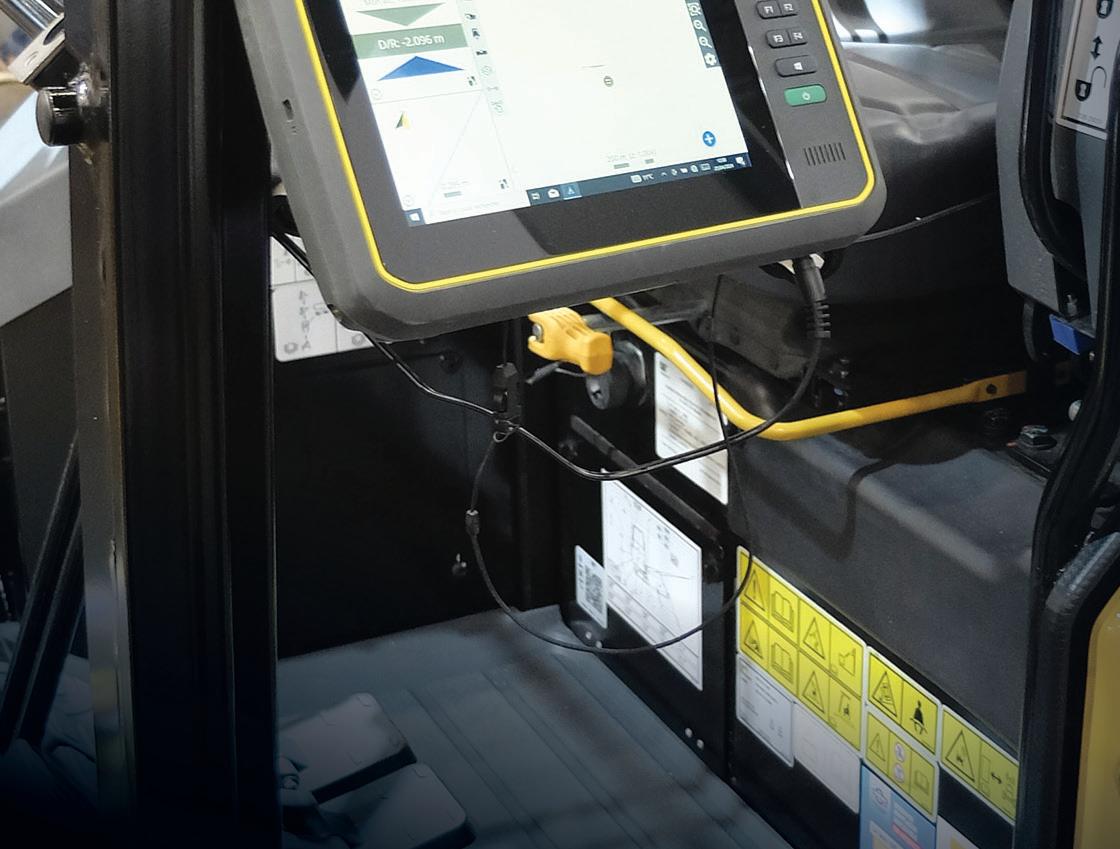
Trimble is now o ering machine control solutions developed speci cally for the compact machine segment. A novel system from Trimble o ers the basic capabilities for both surveying and machine control. This is a solution aimed at use on compact machines weighing no more than 15tonnes. The rm says that the new system is designed to be used by smaller rms looking to start using machine control technology, but without wanting to invest in costly and sophisticated packages. The multitool approach allows smaller contractors both basic surveying and machine control capabilities in a simple package that is said to be easy to use.
The tablet device that forms part of the package can be used for surveying purposes by a contractor and can then be tted to a machine and also be used as the machine control display. The machine is also tted with an antenna as well as sensors and a Bluetooth connection.
In addition, Trimble is o ering an entry-level machine control package aimed at use by smaller rms looking to introduce this technology to their portfolio. This system uses the rm’s BX992 receiver and is designed to be used with excavators only.
The BX992 receiver can be tted to the machine and costs considerably less than other systems on the market. As the unit is xed to the excavator it is for use with that unit only.
With the BX992 cab-mount receiver and the small and lightweight Trimble Zephyr 3 Rugged antennas, designed to withstand high shock and vibration environments, this con guration costs less than the Trimble Earthworks Grade Control Platform systems on the market today, without compromising functionality.
Trimble www.trimble.com
Carlos Solis-Navarro, Principal Pavement Engineer at AECOM.
AECOM is using advanced technology from INSPECH to deliver digital twins of roads in NSW, Australia
Trimble is now o ering entry level machine control options for use on compact equipment
IRF World Congress 2024: empowering mobility for a sustainable future
Under the theme "Connecting to Empower Mobility: Roads as Enablers of a Sustainable Future for All", the IRF World Congress 2024 will gather global leaders, industry experts, academia, and diverse public and private stakeholders. Attendees will engage in insightful discussions and collaborative efforts and the event is to be hosted in Istanbul on 15-18 October
The IRF World Congress promises an enriching experience with a comprehensive programme, featuring daily plenaries, specialised and technical sessions, hands-on workshops, training sessions, a ministerial meeting, and technical visits. Attendees will bene t from the insights of over 250 esteemed speakers representing top organisations, including UNECE, TotalEnergies Foundation, European Investment Bank, International Transport Forum, World Health Organization, ASECAP, IBTTA beside industry leaders. Critical issues to be addressed: decarbonisation, sustainable infrastructure, road safety, autonomous mobility, and data management amongst many others. A detailed programme is available on irf2024.irfof cial.org.
ADB Green Roads Workshop
On 14th October – a day before the of cial opening of the Congress - the Asian Development Bank (ADB) will host its "Green
Roads Workshop – Pathways to Sustainable Mobility". This session will introduce the ADB Green Roads Toolkit, focusing on decarbonisation, climate resilience, water and land management, pollution control, biodiversity conservation, disaster preparedness, sustainable material sourcing, quality of life improvement, and inclusive economic growth. Participants will learn how to tailor green road measures to speci c contexts, supporting global sustainability goals, including the Paris Agreement and the Sustainable Development Goals.
Smart & Future Mobility
On 15th October, PAVE Europe (Partners for Automated Vehicle Education) will be holding a special session on “Paving the Way: The Interplay of Technology, Infrastructure, and Society in AV Deployment”. This session will explore the complexities of deploying autonomous vehicles, addressing technological and infrastructural challenges while highlighting the importance of public understanding and societal impact. Key topics will include necessary infrastructure upgrades,
smart traf c systems, and V2X communication networks.
Regional Collaboration and Policy Innovation
On 16th October, ANAS – FS Italy, UNECE’s Global Forum for Road Traf c Safety (WP1), PIARC Italy, and the Union for the Mediterranean (UfM) are coming together to bring an insightful session on “The Pivoting Role of Transformative Transport Policies in the Euro-Mediterranean Area”. This panel will emphasise regional collaboration in addressing shared challenges and opportunities, promoting sustainable socio-economic growth.
A Road Safety Assessment Framework
In pursuit of the UN Decade of Action for Road Safety goals, performance measurement for corporate social responsibility has emerged as a promising way to engage the private sector. Organised by the International Transport Forum (ITF), Fédération Internationale de l’Automobile (FIA), and World Health Organization (WHO), this session on 17th October will explore the value of a framework for assessing the safety
footprint of corporate value chains. This will be from the perspectives of government, private companies and nance institutions.
Ministerial Meeting: Decarbonised and Resilient Transport for Resilient Societies and Economies
The Congress will also welcome Ministers from every continent for a closed Ministerial Meeting hosted by the Ministry of Transport and Infrastructure of the Republic of Türkiye. This high-level gathering will feature roundtable discussions focused on decarbonised and resilient transport, fostering strategic planning and actionable initiatives for sustainable and resilient transport systems.
Exhibition & Sponsorship Opportunities Available
Valuable sponsorship and exhibition opportunities are still available, providing unparalleled visibility and exclusive access to a selected global audience.
For more information and to register, visit the of cial Congress Website at irf2024.irfof cial.org or contact the IRF at irf2024@irfnet.ch. Early bird rates available till 15 August.
Empowering Mobility Professionals: IRF Certi es
a New Set of Road
Safety Auditors
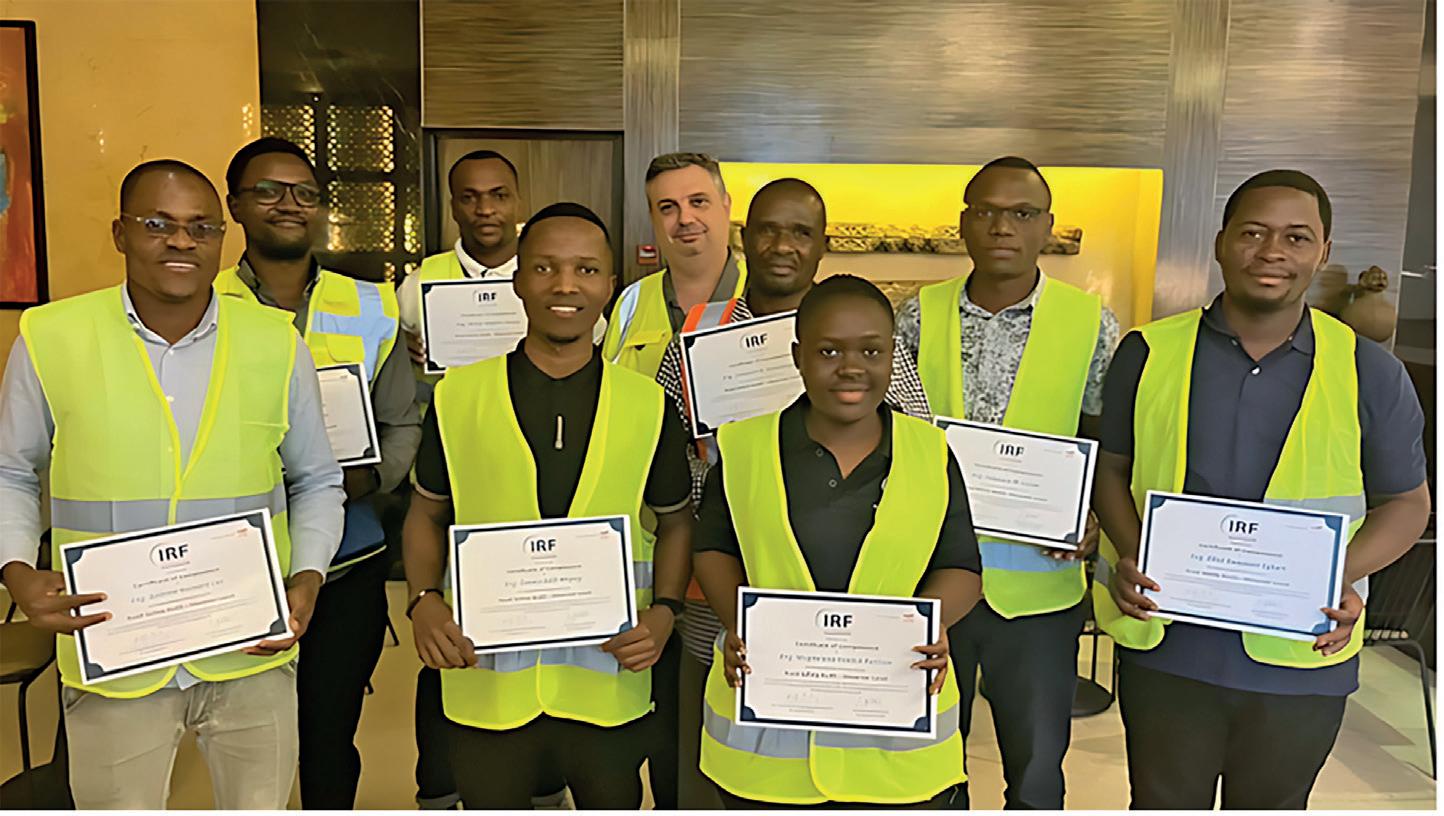
Tanzania has a new set of internationally certi ed road safety auditors thanks to a new training initiative being delivered by the International Road Federation (IRF) with the generous support from the TotalEnergies Foundation.
Aiming to signi cantly improve road infrastructure safety practices in Africa and Asia, the initiative will include the delivery of Road Safety Audits training and certi cation every year - and for the next three years - initially in Tanzania, Uganda and India.
The Tanzania training - organised by IRF in collaboration with TanRoads (Tanzania National Roads Agency), was hosted at the National Institute of Transport (NIT) in Dar es Salaam from 3 to 14 June 2024. It saw the participation from a diverse group of professionals representing the Ministry of Works, TARURA, TanRoads, and the private sector, who were carefully selected on the basis of speci c entry criteria in order to ensure from the start a quali ed cohort.
Throughout the course, participants gained hands-on experience in conducting road safety audits across various road schemes. The curriculum, consists of ten modules delivered over 60 hours of in classroom theory and practical learning and nal exams.
Uganda and India are next on the list. Training is planned to be delivered in Uganda towards the end of August and in India in September. This initiative underscores IRF's commitment to raising road safety audit standards globally. By empowering professionals and enhancing road safety measures, IRF aims to make signi cant strides in promoting safer road infrastructure across di erent regions.
Dar es Salaam in Tanzania
H.E.Abdulkadir
Robert de Groot EBI Vice President
Margaret A. Sowah ATRA Secretary General Jean Todt Secretary-General's
Young Tae Kim ITF
Jamie Leather
Jacques E. Saulnier TotalEnergies Foundation
Lotte Brondum
Benacer Boulaajoul
Halkias
Essaïe Moussa ARMFA President
Luciana
12th IRF Caribbean Regional Congress held in Puerto Rico
The 12th IRF Global Caribbean Regional Congress has been held in collaboration with the Department of Transportation and Public Works of Puerto Rico (DTOP). It concluded with great success, bringing together key stakeholders, experts, and industry leaders from 26 countries across the Caribbean region and beyond.
Over the course of four days, attendees participated in a series of insightful sessions, workshops, and discussions, exploring innovative solutions and best practices for addressing key challenges in Caribbean transportation infrastructure.
Prominent speakers from prestigious institutions, including the Department of Transportation and Public Works of Puerto Rico (DTOP), US Department of Transportation, Federal Highway Administration, National Transportation Safety Board, UNITAR, universities, and private sector companies shared their expertise on critical themes such as Road Safety, Climate Resilience, and Road Asset Management - key pillars for a robust Caribbean transportation system.
A central focus of the congress was the growing threat of climate change to the Caribbean's infrastructure. Experts emphasised the urgent need for sustainable solutions to protect regional transportation networks, discussing innovative approaches to developing roads that can withstand extreme weather and adapt to rising sea levels.
The Caribbean Development Bank and the Inter-American Development Bank presented effective strategies to enhance climate resilience, bolster regional capacity for emergency response, and support recovery efforts.
As part of the event, IRF Global arranged a technical visit to the Diamond Divergent (DDI) intersection project in Puerto Rico, including a tour of the Traf c Management Center (TMC) operated by PRHTA and Metropistas.
Participants were impressed by the TMC’s advanced capabilities and recognised
its potential to transform traf c ow and signi cantly improve safety in the region.
The International Road Federation (IRF Global) extends sincere thanks to all speakers, participants, and sponsors for their invaluable contributions and support.
We look forward to the next opportunity to gather and continue our shared mission of improving road infrastructure across the Caribbean.
• For more information about IRF Global events, visit www.IRF.global or follow us on social media
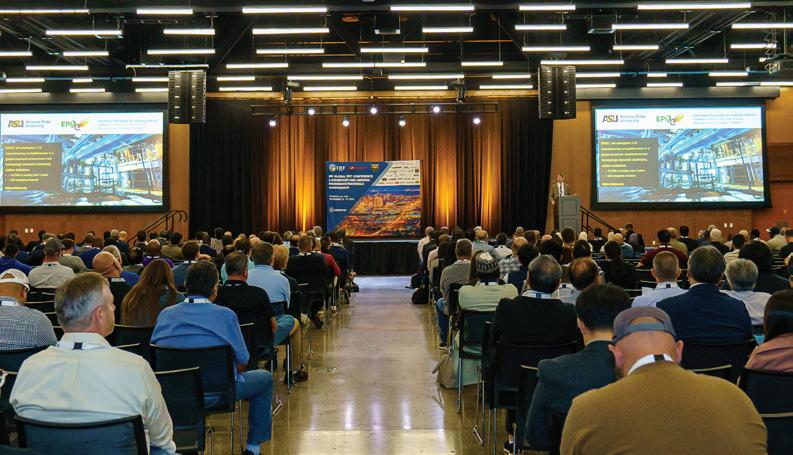
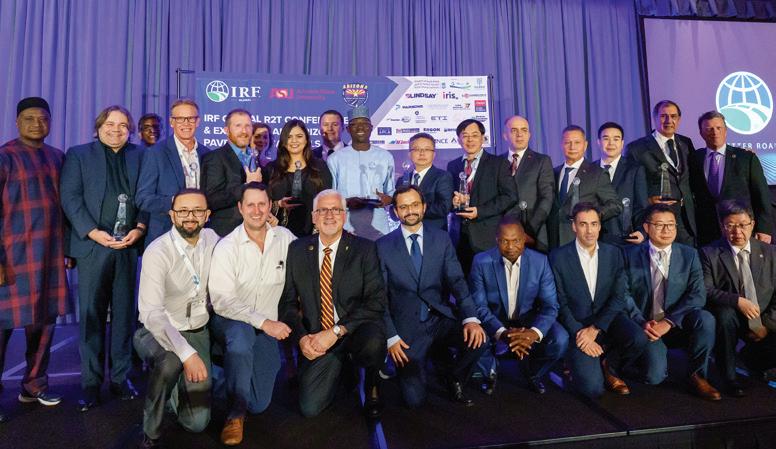
IRF Global R2T Conference & Exhibition
The IRF Global R2T Conference, a pinnacle event for global leaders in roads and mobility, offers a vibrant forum for innovators, decision-makers, and industry professionals. Discover cutting-edge advancements and forge pivotal connections in an environment dedicated to shaping the future of transportation.
Who Will Attend?
• Construction Contractors, Engineers, and Managers
• Equipment Manufacturers, Suppliers, and Distributors
• Highway & Municipal Agencies, Transportation Officials
• Design Consultants and Engineering Professionals
• Transport Research Institutes & University Academics
• Traffic Technology and ITS Specialists
Themes:
• Asset Management & Pavement Preservation
• Emerging Trends in Road and Bridge Construction
• Innovations in Materials and Technologies for Durable Pavements
• ITS & Smart Mobility Technologies
• Road User Charging & Connected Vehicles
• Preparing Infrastructure for Autonomous Vehicles
• Strategies for Decarbonizing Road Transport
• Vision Zero: Aiming for Zero Road Fatalities
• AI & Big Data in Transportation
• New Mobility and Social Acceptance
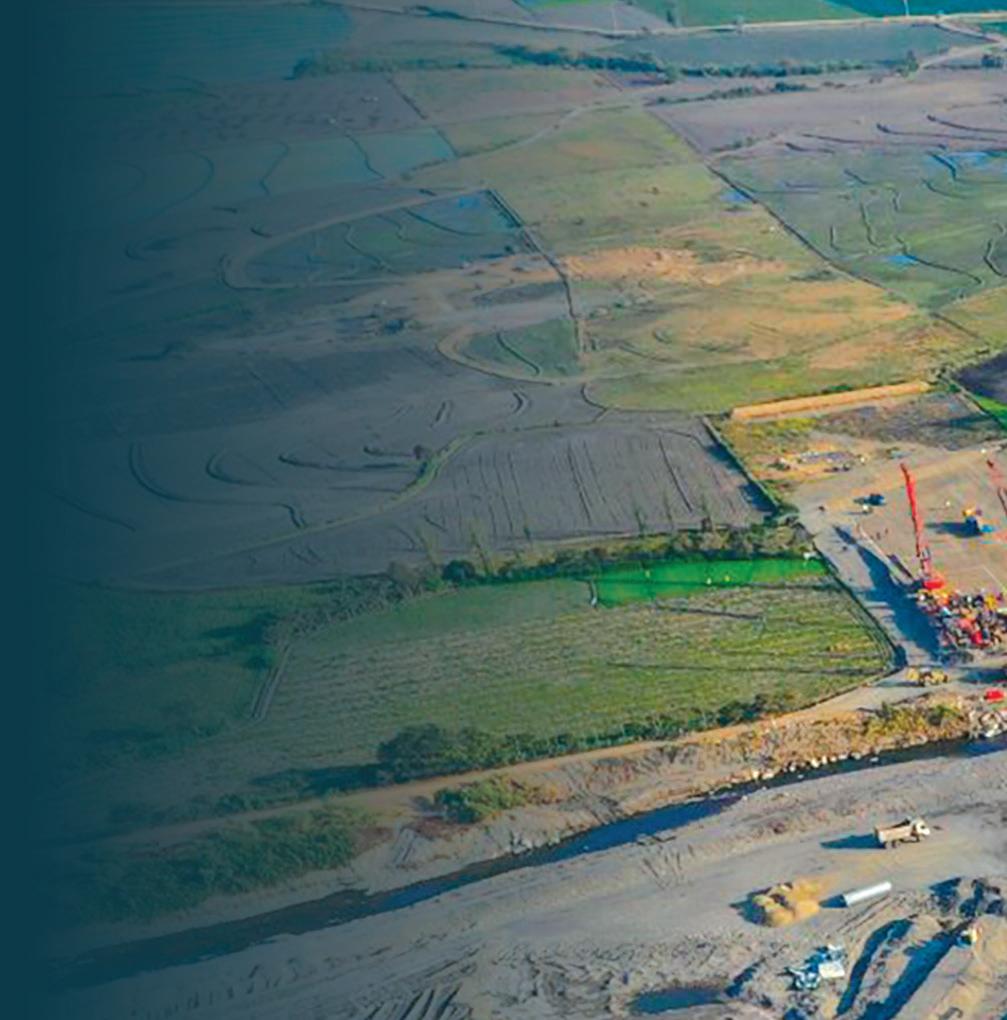
The Vía de Evitamiento Chimbote is the most important highway in northern Peru – Mauro Nogarin writes
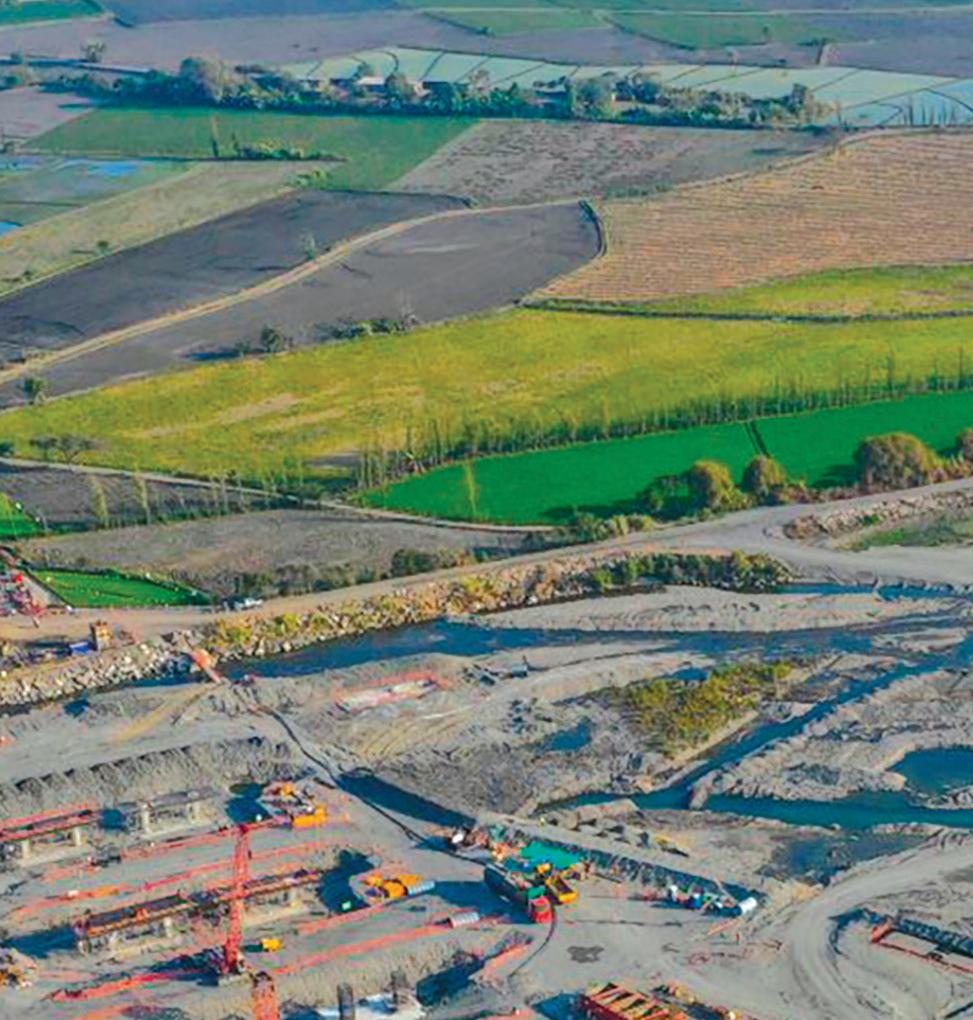
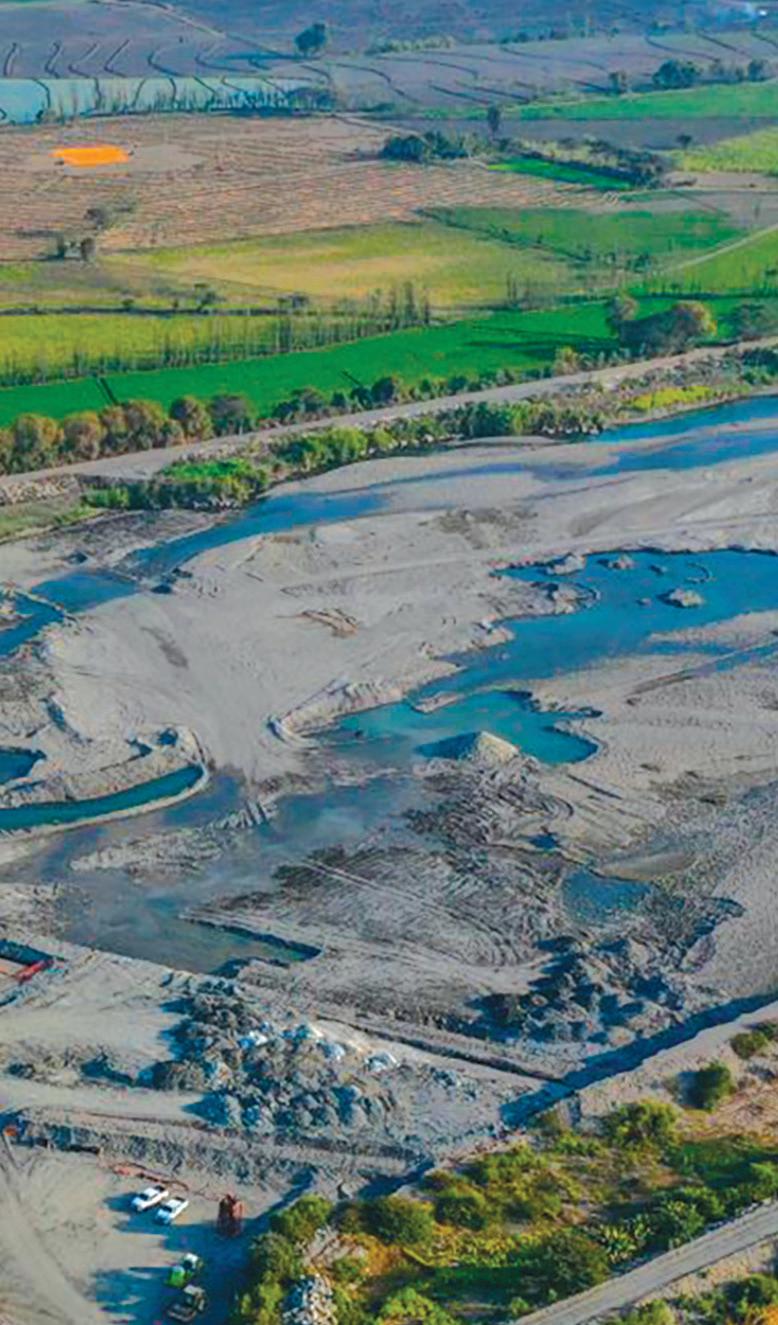
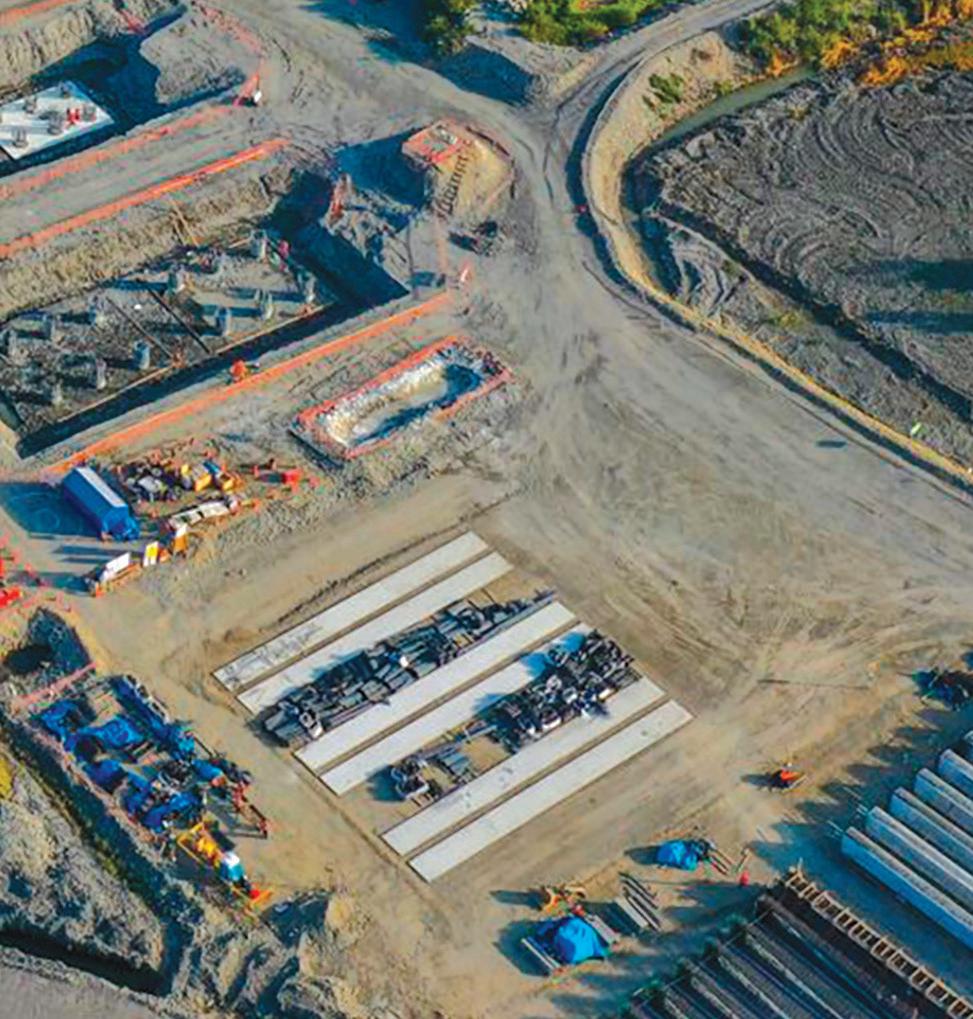
Peru’s Evitamiento de Chimbote highway is the most important transport infrastructure project for the north of the country.
The construction of the new Evitamiento de Chimbote highway forms part of the Red Vial No 4 concession: Pativilca–Santa–Trujillo and Puerto Salaverry, which is approximately 356km in length and runs through the Peruvian regions of Ancash and La Libertad.
The concessionaire Autopista del Norte (Aunor), which manages Road Network 4 in the country, con rmed that by the end of May of 2024, the construction of the Chimbote Avoidance Highway (VECH) was around 82% complete.
According to calculations and traf c estimates from Peru’s Ministry of Public Works, this new road will be able to meet the expected traf c growth for Ancash and La Libertad over the next 20 years.
Contractor Aunor, a subsidiary of the Australian group Aleatica, was commissioned to carry out this project by the Peruvian State in order to strengthen the connectivity of the northern regions with the country's capital, Lima.
When it comes into operation, this road infrastructure is expected to handle traf c volumes of approximately 35,000 vehicles/day, ranging from powered twowheelers to heavy trucks. The new road will boost capacity and an increase in traf c is expected, though this will remain well within the capacity of the route, which will be able to cope with further growth in the future. Maximum vehicle speeds of 100km/h will be allowed, meaning that journey times will be lowered signi cantly.
The new highway, which is 40km in length, features dual lanes in either direction and is currently considered one of the most relevant projects for the economy of the Ancash Region and La Libertad Region. The project will also become one of the longest highways in the north of the country within a few months.
Once the road comes into service it will reduce travel time, boost safety by lowering the crash rate and vehicle exhaust emissions. This comes in addition to a key economic fact: it will lower operating costs for both cargo transportation and the tourism sector.
NORTH PERU’S IMPOR HIGHWAY
ERN TANT HIGHWAY
According to data from the Ministry of Transportation, crossing the area of Nuevo Chimbote and Chimbote to the highway takes approximately 90 minutes at present. But with the new highway operating, this journey will only take 30-40 minutes.
From a geological point of view, the route of the Evitamiento de Chimbote highway is located between the slopes and pampas of the coastal plain of the Western Cordillera of the Peruvian Andes. Where the rocky promontories and outcrops are observed along the route, the rocky substrate presents a great variety of deposits of alluvial origin.
To ensure efficient and timely progress with the construction work, the project has been divided into two separate sections. The majority of the 26km stretch that comprises Section 1 is composed of sandy material, as well as alluvial deposits from the valley floor and terraces associated with the Lacramarca River.
The topography of this section is undulating, with moderate slopes in the pampa area.
Meanwhile, the geology of much of Section 2 shows deposits of alluvial origin associated with the Santa River, apart from the end of the route where there are alluvial deposits associated with another watercourse in the area.
A very important factor that has had to be taken into account during the design phase of this road infrastructure is the high seismicity of the area, according to geotechnical studies carried out in the last 30 years.
KEY FIGURES
TOTAL LENGTH: 40km
START OF WORK: 2021
WORK PROGRESS: 82% as of May 15, 2024
INVESTMENT: US$174 million
SECTION 1
LENGTH: 26km
Two dual-lane carriageways
LACRAMARCA BRIDGE: 45m
SECTION 2
LENGTH: 14km
Two dual-lane carriageways
SANTA BRIDGE: 305m
CASCAJAL BRIDGE: 60m
2
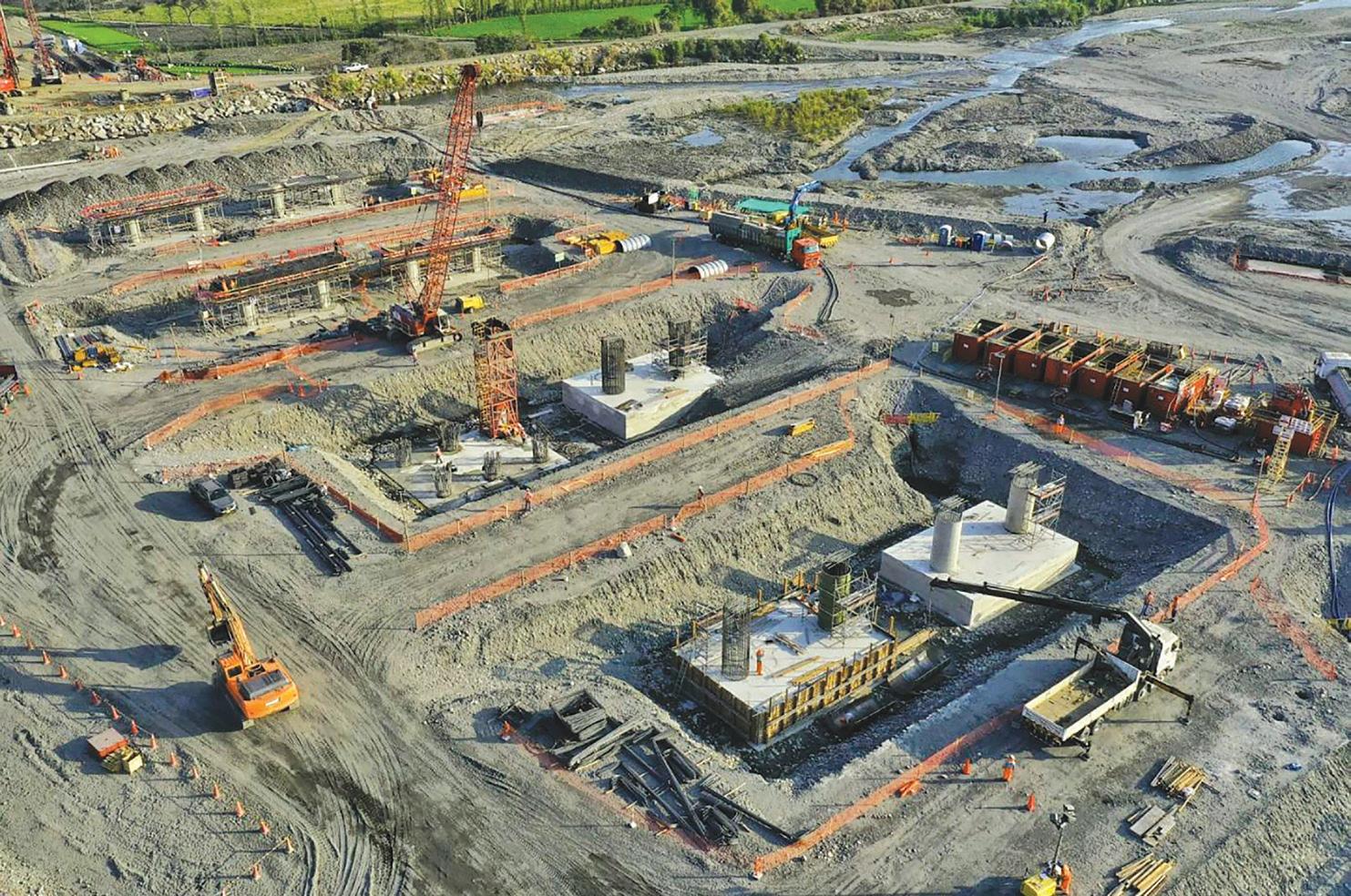
1. Construction of the foundations of the Santa Cruz Bridge (image courtesy of Peru Ministry of Transport) 2. Capture: Welding of the reinforcement of the 25 metre piles (image courtesy of Peru Ministry of Transport)
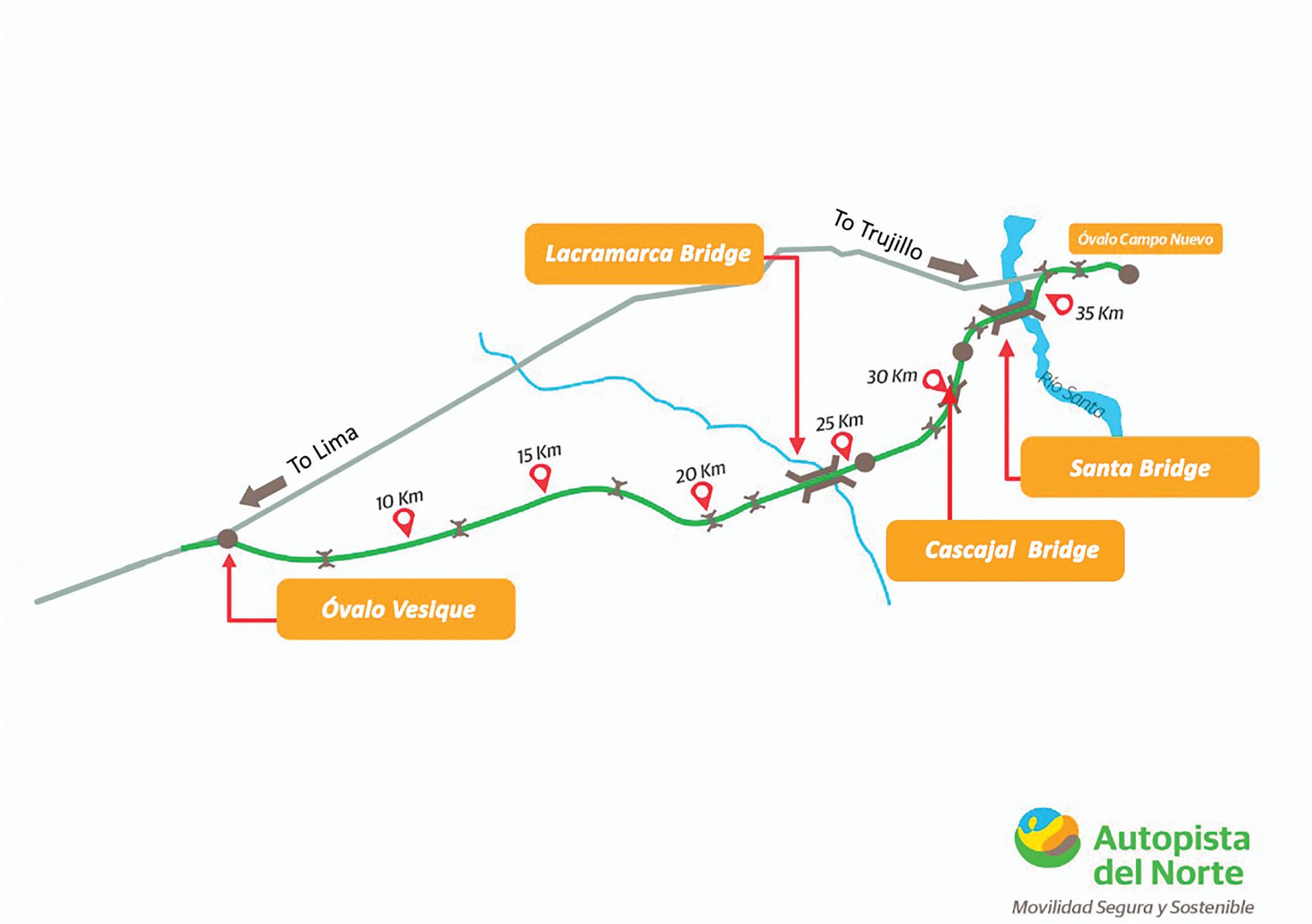
Map of the Evitamiento Chimbote Highway (image courtesy of Autopista del Norte (Aunor))
For this reason, the entire area where construction work is being carried out is considered Zone 3. This denotes an area where there is a high probability of earthquakes occurring of intensity between 6 and 7 degrees on the modified Mercalli scale.
The Evitamiento de Chimbote highway comprises a number of structures: four ovals, three bridges and nine overpasses. The main feature of the route is its 40km paved roadway with two lanes in each direction.
In total, the Evitamiento de Chimbote has 46 intersections with roads, two of which are national routes, one departmental route, eight with local roads and 35 dirt roads.
There are three notable major structures along the route of this important highway. The first is a bridge spanning the Santa River, which has two parallel spans each carrying dual lanes. This is made up of eight sections and features a reinforced concrete structure. The second bridge carries the road over the Lacramarca River, again with parallel spans and featuring post-tensioned beams and a reinforced concrete slab. The third bridge also has two parallel single-span bridges. These have upper decks with post-tensioned beams while the abutments are supported on piles.
The tight budget posed a challenge, so in order to contain the costs of construction materials the Ministry of Public Works (MOP) opted to open up seven new quarries for the project, which were used for different stages of the work. The quarries have produced the different grades of crushed stone and sand required for the road base or the concrete used to produce the piles, lintels, boards and beams. In addition, part of the output from the quarries has also been used to produce fill material for the embankments.
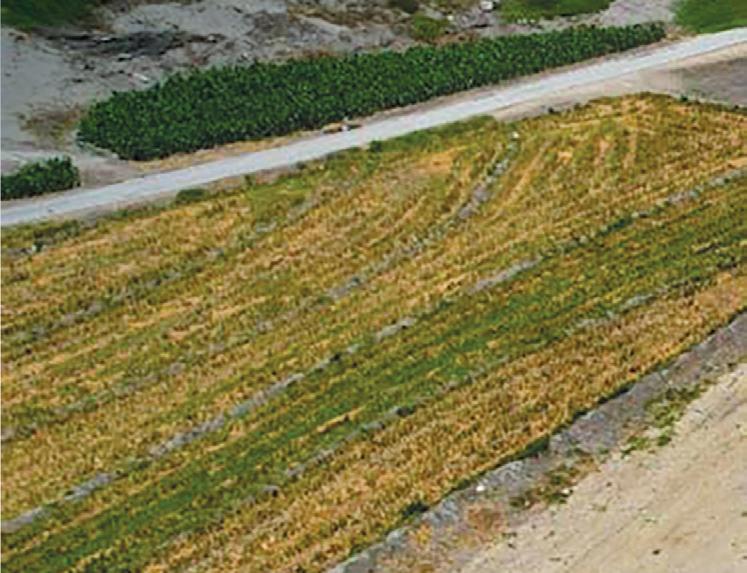
The route runs through desert areas and a section runs parallel to the existing PanAmerican Highway, before the two routes split apart and the new highway reaches the District of Nuevo Chimbote.
The first stretch of the highway runs from kilometre PK 0 to PK 26 and is composed of a road with two carriageways of two lanes each and is 26km long, connected by two roundabouts. This stretch features the Lacramarca Bridge, with its substructure made up of abutments cemented with surface footings.
The two parallel bridges of the Lacramarca Bridge are each 40m long with a separation of 7m between the internal edges. The parallel structures have decks with widths of 13m and feature heavy vehicle containment barriers for safety. The barriers utilise the well proven New Jersey type profile.
The bridge superstructure is composed of six post-tensioned concrete beams, each with a double-T section, 2m high and joined to a 20cm thick reinforced concrete slab cast in situ on a 7cm thick pre-slab.
Along the first section there are also five overpasses, two overpasses with an upper unevenness and three with a lower unevenness, all of which are a single-span structure with an
3. Fixing of the pile reinforcement stirrups (image courtesy of Peru Ministry of Transport)
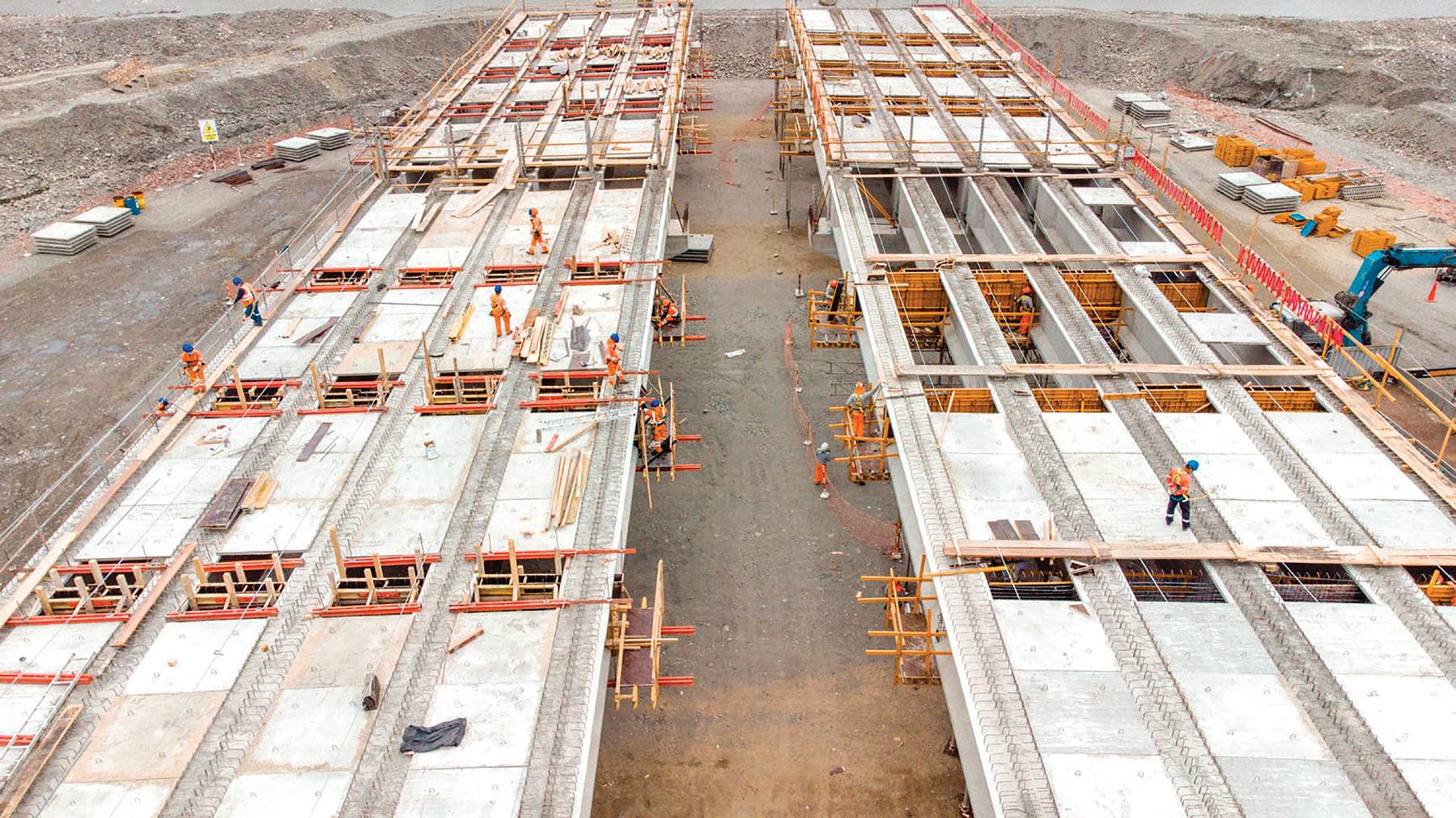
4. Erecting the prefabricated slabs of the Santa Bridge (image courtesy of Autopista del Norte (Aunor))
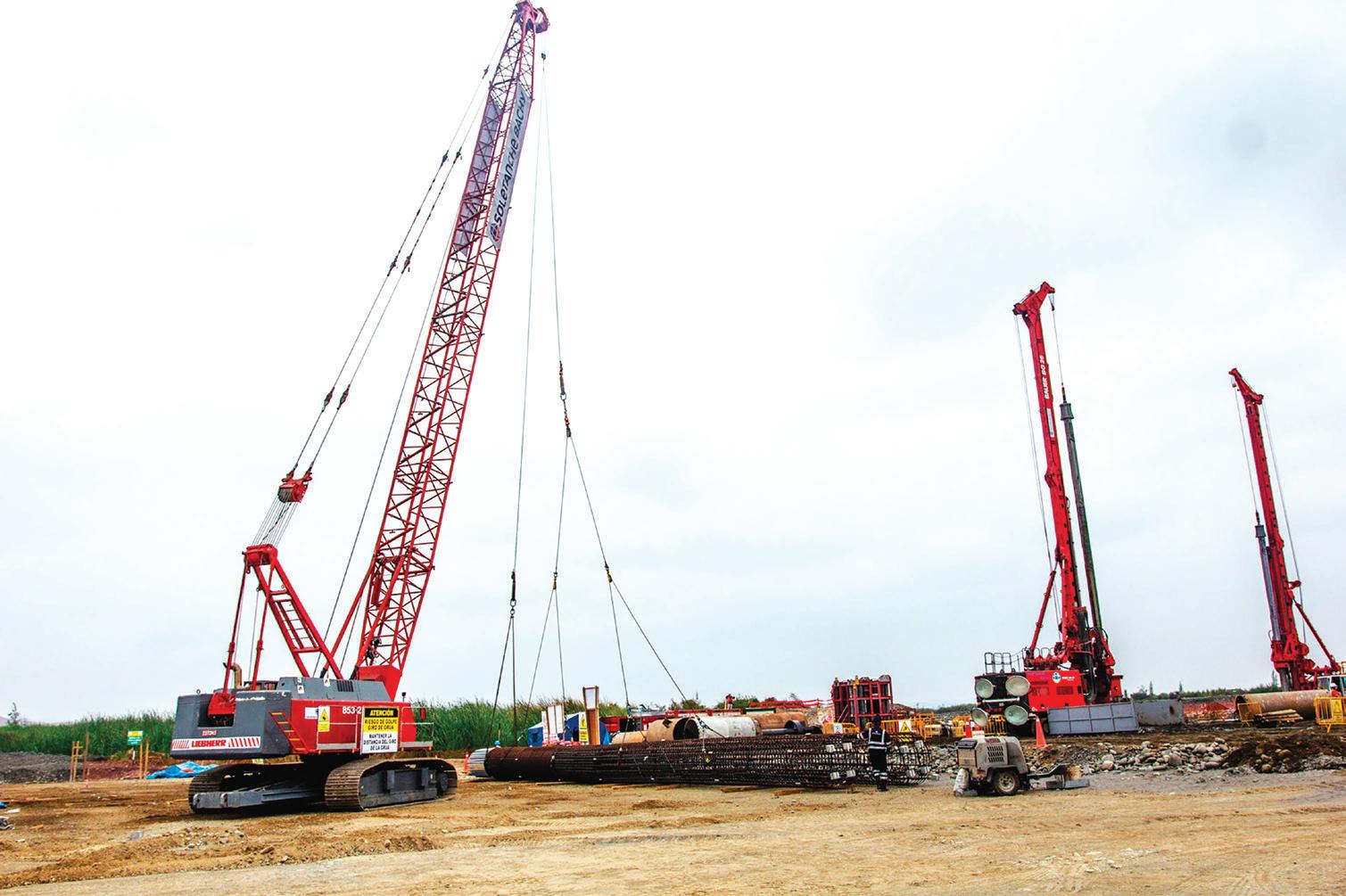
5. Lifting of the reinforcement of the piles of the Santa Bridge with the Liebherr 853 crane (image courtesy of Autopista del Norte (Aunor))
average of four simply supported post-tensioned beams and a length of 34m. The substructure for each is composed of abutments and eaves founded with surface footings.
The subbase and base of the road is composed of granular material with sandy gravel, considering that poorly graded sand is predominantly found in the soil. The pavement structure was designed according to the AASHTO-93 standard, where the sub-base layer is 20cm, the base is 30cm and the asphalt layer is 10cm, guaranteeing a useful life of 20 years.
The second section begins at the progressive kilometre PK 26 to PK 39.8 and consists of a two-lane road with two lanes each and two connectivity ovals, that is, from the Santa Oval to the Campo Nuevo oval.
Section 2 is located in the districts of Santa in the region of Ancash and Guadalupito and extends over a length of almost 14km. The beginning runs through agricultural land and at km 12 it connects with the Panamericana Norte. In this section the most important infrastructure
is the bridge spanning the Santa River. Once again, the Santa Bridge features two parallel structures, but being of a longer length, eight spans were necessary to join the two banks of the river.
Each section of the bridge has posttensioned concrete beams with an average of 38m in length, where the superstructure of each span has ve post-tensioned beams. In total, 80 beams were built to build both sections of the bridge.
The substructure has nine cemented abutments that rest on six piles of 1.5m in diameter each anchored at a depth of 25m, where the foundations as a whole are protected by rock ll. This section also has overpasses, three lower and one upper. The rst are composed of a reinforced concrete box beam with a section of 3 x 2.5m and 32m long, followed by retaining walls of variable height at both ends.
The Santa Bridge measures 305m in length and the deck is made up of eight spans with an
average of 38m between the axes of the piers and the supports on the abutments.
The cross section of each of the boards has a total width of 13m to have two lanes, where both lateral external parts include containment barriers with a New Jersey type pro le that separate a 1.2m-wide pedestrian path.
Each deck of the Santa Bridge is composed of ve post-tensioned concrete beams with a double-T section of 2m in height with their central axis 2.9m apart and joined to a 25cm reinforced concrete slab cast in situ.
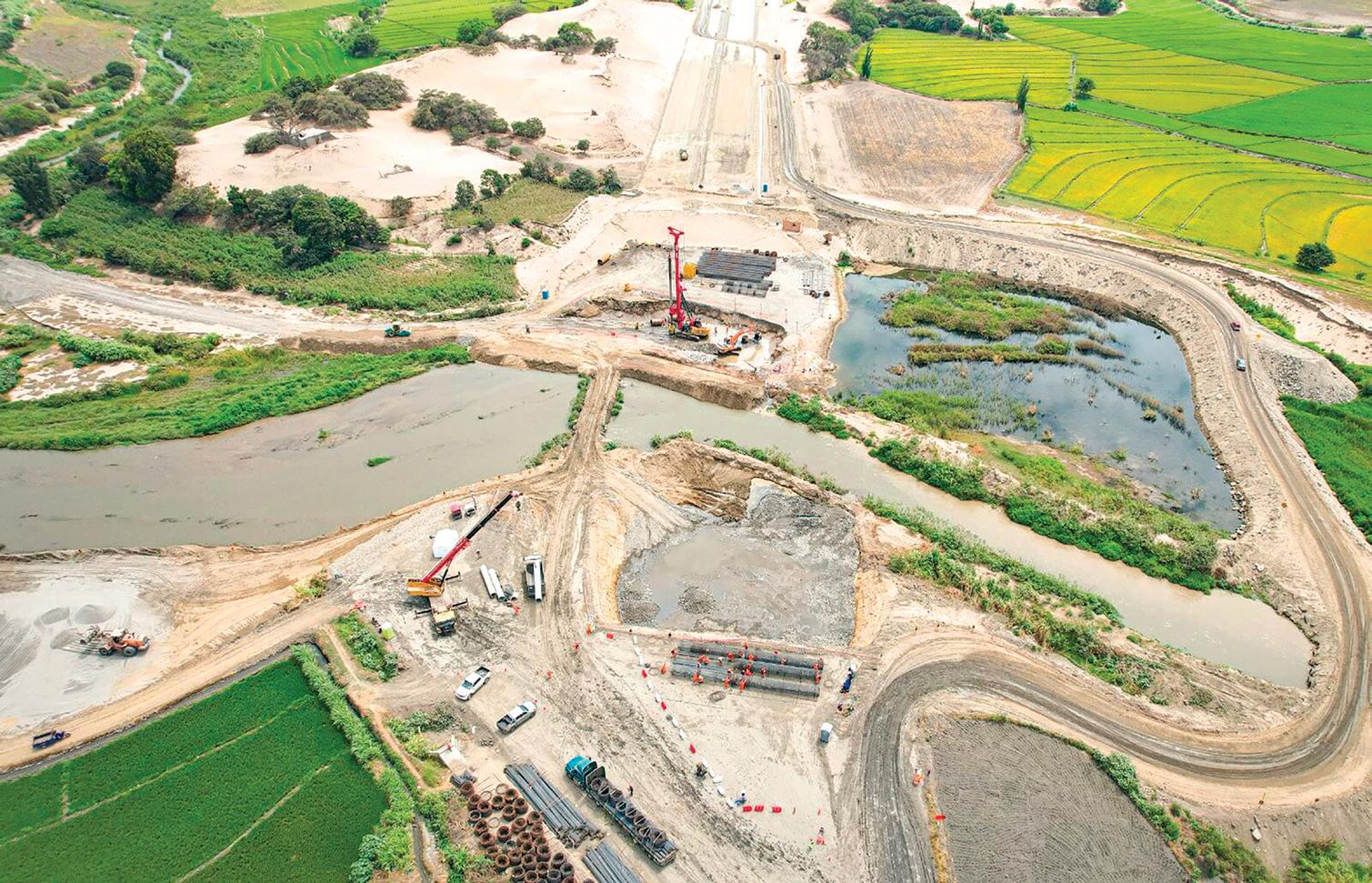
Each abutment rests on six piles of 1.5m diameter and 25m deep and an average of six piles of the same dimensions on which the cast-in-place lintels rest. For the construction of the piles, two Bauer BG 26 drills were used, which have a capacity of 2.5m diameter and can reach a depth of 77m, while a Liebherr 853 crane was implemented to lift each of the pile reinforcements.
The piers were designed using two vertical shafts and a transverse crowning lintel, however, two different pier geometries were implemented, a special one for pier four where an additional expansion joint was implemented, and another for the rest of the other piers.
The foundation of the piles was carried out by constructing an average of six piles for each, while in the abutments 5.5m-high rock ll was implemented on both banks of the River to protect the substructure from possible oods. of water. Construction work for the Cascajal Bridge meanwhile began in January of this year.
The building of the bridge was affected due to the recent intense rains, which generated alluvial ood plains that modi ed the geomorphology of the location, located at PK 30+800.
This crossing also features two parallel bridges, each with a single span, both of which measure 60m in length. The upper deck consists of a post-tensioned box girder type structure and its abutments are supported on piles.
In addition to this, the construction of river defences has had to be carried out along a 330m stretch and including both banks.
Drilling of the pile shafts for the Cascajal Bridge with the Bauer BG 26 drill rig (image courtesy of Autopista del Norte (Aunor))
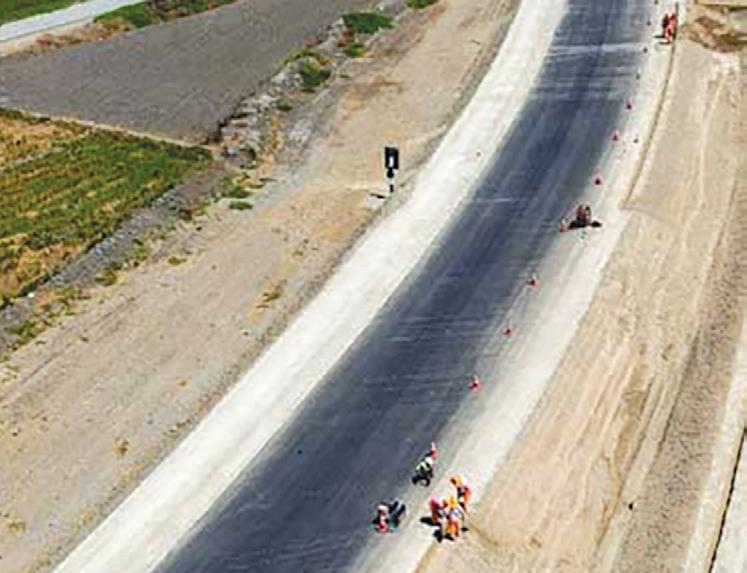
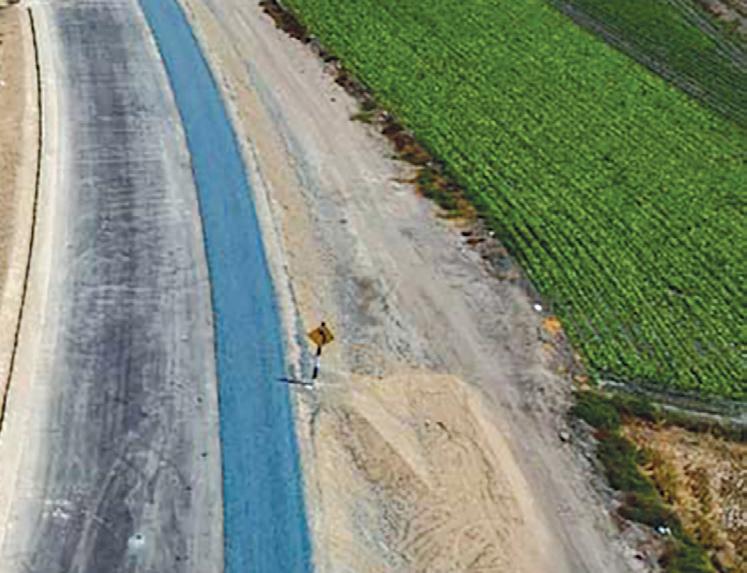
Paving of the Evitamiento motorway in Chimbote (image courtesy of Autopista del Norte (Aunor))
• Network with industry leaders, policymakers, and innovators from across the Americas.
• Discover the latest technologies and strategies to address pressing urban mobility challenges.
• Learn how cities have successfully implemented sustainable transportation systems.
• Participate in discussions to influence future transportation policies and regulations.
• Position your organization as a leader in sustainable transportation and urban development.
Heads up when driving on UK roads
Results from a project by the UK’s department of transport and AECOM – using Heads Up technology from Acusensus, has underlined the scale of distracted driving and lack of seatbelt use
Figures from the UK’s Department for Transport suggest that there may be more than 50,000 daily instances of people driving while using a hand-held phone. The data collated by the DfT in a project with AECOM, an infrastructure consulting rm, using images captured by technology from Acusensus, an Australian provider of roadside cameras and software, suggests three in every thousand drivers observed on England’s roads are using a mobile phone whilst driving. Meanwhile, the proportion of van drivers breaking the law is three times that of car drivers.
The statistics also showed 4.8% of vehicle passengers were observed not wearing a seatbelt.
“Drivers who don’t wear their seatbelt are likely to continue this behaviour throughout an entire journey,” explains Geoff Collins, an enforcement expert with Acusensus. “If seen mid-journey [by camera detection] without a suitable restraint, this will probably have been the case all the way. However, hand-held mobile phone use is not usually continuous, so it might happen multiple times during a single journey, but not necessarily at the survey point.”
Because of this, it is possibly misleading to think that more seatbelt violations occur, he said. It is more likely that overall occurrences of distracted driving for any one journey are many times higher than monitored during this survey, which showed 0.3% at any one speci c point on the road.
“Based on the observed violation rates from the surveys, if this was extrapolated across the entire network, it is likely that cars would account for more than 30,000 cases of illegal mobile phone use each day, with a further 20,000 or more cases from vans. This is despite there being only a quarter the number of vans using our roads, compared with cars.”
Collins said that more than 500,000 daily journeys by cars and vans are likely to occur without the driver being correctly restrained. Not wearing a seatbelt is a habitual behaviour that is likely to take place throughout every journey.
“It is important to remember that whilst the vast majority of these journeys end safely, this does not mean that it is safe. The risk of serious injury or fatality is dramatically greater should a collision occur,” he said.
Each site was surveyed on a weekday, either in the morning or afternoon, for a period of six hours. The observations were then analysed by human review.
The survey data was collected using Acusensus Heads Up technology, using bespoke roadside cameras to capture clear images through windscreens. The Acusensus solution can also use arti cial intelligencebased image analysis to ag up likely violations, although this was not used in the DfT study. This is a new way of gathering the data, which was previously collected by human observation at the roadside in real time. Collins believes the scale of the risk on UK roads is now alarmingly clear. “Distracted driving and not using a seatbelt are two of the fatal ve risk factors, most
likely to lead to serious harm when driving. The Heads Up technology not only helps to provide this background understanding, but it can also be used to provide violation records that are used for prosecution or education purposes, which has now been successfully carried out by many UK police forces.”
Acusensus www.acusensus.com
The Acusensus system can be xed or trailer-based. It captures high-resolution, prosecutable evidence of individuals undertaking illegal driver behaviour, 24/7. It operates in all weather conditions - including sun glare - and autonomously captures photographic evidence, automatically detecting illegal driver behaviour. The system hardware is compact, light and unobtrusive, permitting economical deployment on a wide range of pre-existing infrastructure or a trailer-based solution.
Acusensus says the system detects vehicles travelling up to 300km/h without motion blur and without distortion via high-performance sensor technology. The ‘Heads-Up’ solution can simultaneously capture illegal mobile phone use, vehicle over-speeding via radar point speed detection and/or ANPR-based section control, seatbelt o ences and unregistered/hotlist vehicle detection via ANPR.
Image courtesy Acusensus
Redirecting instead of stopping:
Rebloc’s tested end terminal element for temporary vehicle restraint systems
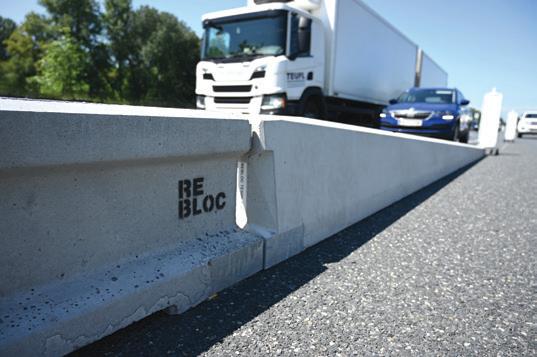
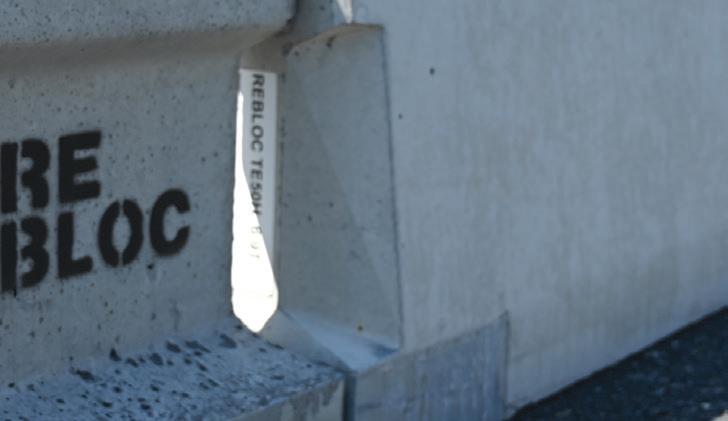
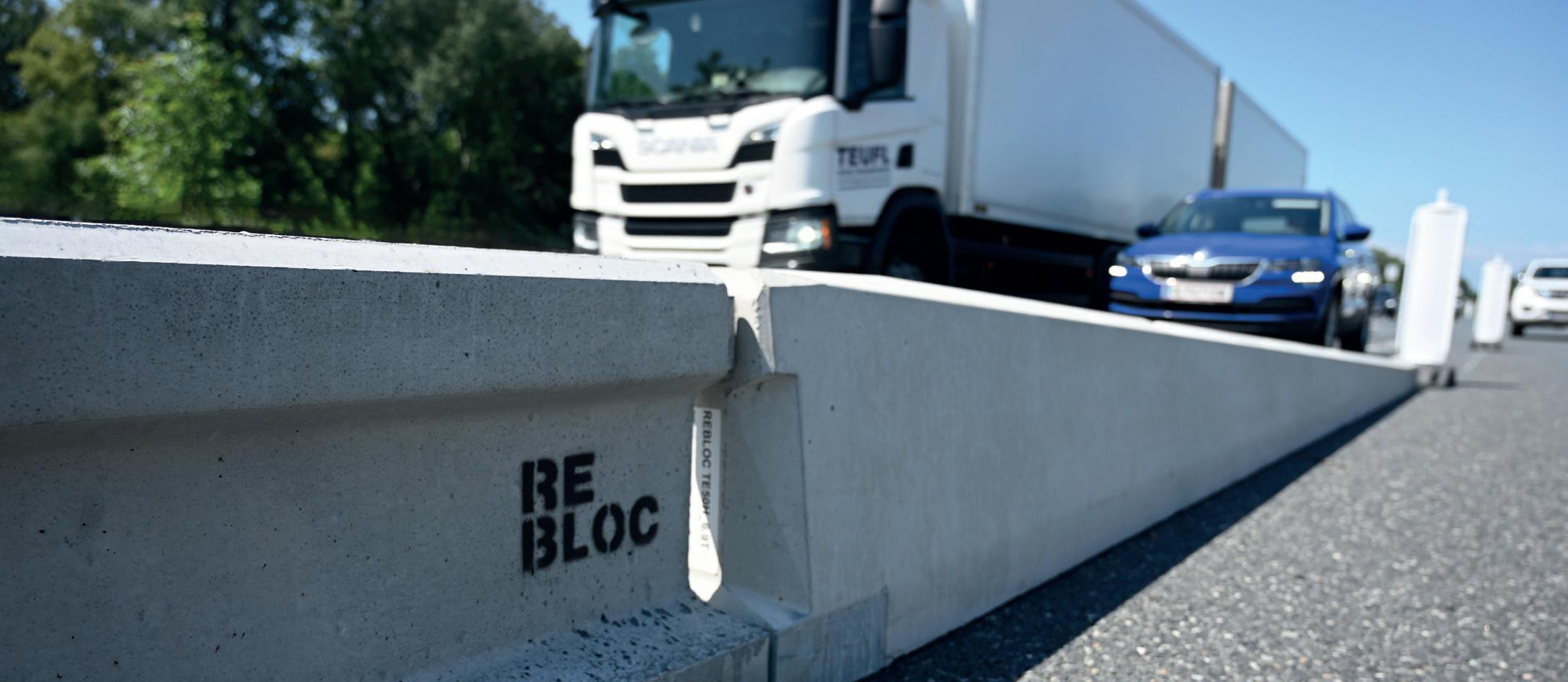
Rebloc’s construction site end terminal
Rebloc has developed an end-terminal for performance class P2A barriers with an impact severity level A designed speci cally for traf c management on construction sites.
The end terminal has been successfully tested according to ENV 1317-4 and is particularly suitable for use in combination with temporary vehicle restraint systems.
The company, based in Austria, said that a standout feature of the system is the unanchored setup and the narrow width of only 240mm. The width matches exactly with the width of the connected temporary Rebloc barrier.
Additionally, the end terminal element is integrated into the overall system via the coupling element in a system-compliant manner. It can be used at the beginning and end of the vehicle restraint system without any anchoring into the ground.
Thanks to the successful 80km/h impact tests, the end terminal is ideal for use in construction areas, according to the company. The key feature is the redirecting functionality of the end terminal, which prevents the sudden stopping of the impacting vehicle and gives the following road users enough reaction time.
In congested traf c scenarios where traf c has no alternative routes, the feature
is essential in preventing rear-end collisions. This is especially signi cant considering the of cial legal distance regulations and potential liability issues.
It has been successfully crash-tested with a connected temporary T3/W1 system, with no additional anchoring into the ground required. Meanwhile, the narrow width of only 240mm is compliant with the temporary Rebloc vehicle restraint systems. Importantly, it requires low maintenance and is quickly repaired after an impact.
Rebloc www.rebloc.com
Lindsay’s rst TAU-XR Xpress cushion
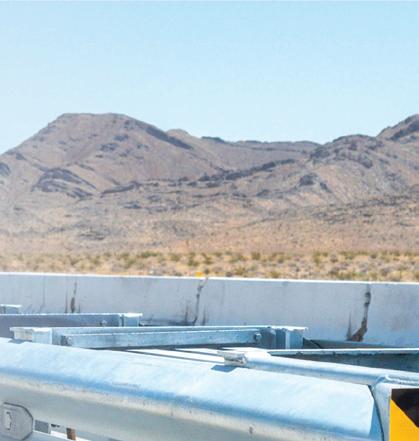
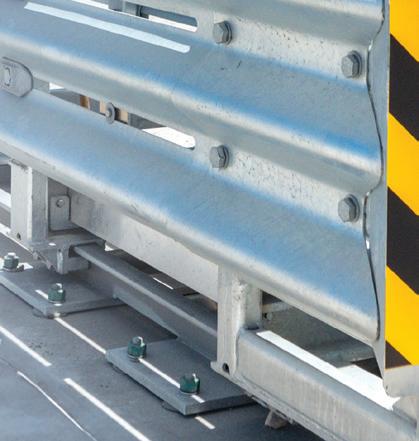
Lindsay recently installed its rst unit of its MASH-tested TAU-XR Xpress repair crash cushion, designed for swift installation and rapid repair.
The installation of the TAU-XR is sited in Las Vegas, Nevada, at the intersection of Highway 91 and Great Basin.
Lindsay said that as a severeduty, low-maintenance crash cushion, it delivers exceptional, long-term durability and low cost of ownership. TAU-XR ships fully assembled, allowing for an expedited installation onsite.
The TAU-XR offers a range of transition options up to 1m, ensuring maximum versatility in design. Lindsay says that what sets the TAU-XR apart is its dual-rail con guration and attenuation that enables a straightforward - 30 minutes or less
installation process and cost-effective repairs.
"The TAU-XR embodies our dedication to enhancing road safety while streamlining maintenance operations,” said Cole Hansen, vice president and general manager of infrastructure at Lindsay.
"We're proud to offer a solution that has undergone rigorous testing for both asphalt and concrete applications, making the TAU-XR an ideal choice for contractors."
Lindsay Transportation Solutions manufactures equipment to improve road safety and keep traf c moving on the world’s roads, bridges and tunnels, through the Barrier Systems, Road Zipper and Snoline brands.
Lindsay Corporation www.lindsaycom
Neuron scooters may collect road data
Neuron says that its scooters could in future have the capability through its ScootSafe Vision camera system to collect data on road surfaces, including potholes.
The Singaporean maker of e-scooters says this could help map potentially hazardous areas and set speed limits throughout the riding areas, while also providing councils and road agencies with useful information for urban planning.
The company recently announced that it will soon launch the ScootSafe Vision camera system across its entire 1,250-strong eet in Melbourne, Australia. The Scootsafe Vision system was tested in Melbourne over the past six months, covering over 30,000km to train the technology to recognise the city’s streets and footpaths. The company has said that every Neuron e-scooter will be equipped with a front-facing camera that uses “arti cial intelligence computer vision” technology to detect and correct footpath riding. It will also be used to identify and warn riders of
pedestrians in their path and collect valuable data on road surfaces. The system, which was developed in-house, detects whether an e-scooter is on the footpath in under a second. Offending riders receive a real-time audio alert telling them, “footpath riding detected; please ride on the road”.
There will then be follow-up warnings and educational material. Repeat offenders can also be suspended after their trip. ScootSafe Vision can also be con gured to reduce the e-scooter’s speed, effectively forcing riders to leave the footpath. To further increase safety, the system alerts riders to pedestrians in their path using the e-scooter’s voice guidance that instructs them to “watch out for pedestrians and slow down”.
Neuron also recently launched its safetyrst e-scooters and e-bikes in Edmonton in the western Canadian province of Alberta. The contract includes an initial 600 safetyrst e-scooters and 200 e-bikes rolled out in the city centre area, the University of Alberta
Iris agrees Milan monitoring
Italian concessionaire Milano Serravalle - Milano Tangenziale will use arti cial intelligence and machine learning technology from Canadian start-up Iris group to monitor road conditions.
Milano Serravalle - Milano Tangenziale - the concessionaire for the A7 motorway, from Milan to Serravalle Scrivia – signed the agreement with Iris during a ceremony at the Canadian consulate in Milan. Milano Serravalle will adopt IrisGO.
The deal was agreed after Iris won a comparative technology competition done in conjunction with the University of Catania.
The IrisGO camera is installed on a eld vehicle to measure the
The
and Old Strathcona. Neuron partners with the Traf c Injury Research Foundation to promote e-scooter safety and research in Canada. Users can visit Neuron’s online riding school, ScootSafe Academy, for their local riding rules and earn free credits for future rides. The company said that its “safety ambassadors” will also be out in greater numbers during the launch period to equip new riders with the con dence to safely ride and park the vehicles. With the launch in Edmonton, Neuron now operates in 17 Canadian towns and cities, including seven in Alberta. Riders also bene t from a range of safety innovations including the voice guidance, topple detection, a 911 emergency button and a “Follow my Ride” function for added peace of mind. Advanced geofencing technology will also control where e-scooters are ridden and parked, and how fast they can travel in certain areas.
Neuron www.rideneuron.com
pavement on roads and sidewalks.
The camera AI and computer vision scans the pavement and calculates the PCI score - pavement score index - in near real time. Next, images and calculations are processed by AI to calculate PCI score and output to the system. IrisCITY, or an existing system such as CityWorks, then visualises the PCI results and automatically creates a work order for the repairs. The system noti es the road maintenance department to deploy a team into the eld to do the repairs.
“It was a pleasure to work with Marco Colloredo [director of operations at Milano Serravalle - Milano Tangenziale] and his team
and face their challenges,” said Emil Sylvester Ramos, chief executive of Iris. “We are sure of what iris o ers and the immediate impact it has on our customers, and this agreement proves it. It is really exciting to be part of the innovation process that is happening in Canada and bring it to Italy."
“Today we celebrate this milestone with iris, but there is still a long way to go and we have many new products in the pipeline, national and international, ready to be born," declared Pietro Boiardi, administrator delegate of Milan Serravalle - Milano Tangenziale.
Iris Group https://www.irisradgroup.com
company recently announced that it will soon launch the ScootSafe Vision camera system across its entire 1,250-strong eet in Melbourne, Australia (image courtesy Neuron)
Canadian start-up Iris developed its road monitoring technology on roads in southern Ontario (image courtesy David Arminas/World Highways)
Swarco renews UK councils deal
Swarco UK & Ireland has been awarded a new long-term service and maintenance contract for tra c signals and signage within ve UK local councils. The contract covers the English councils of Bedford Borough, Cambridgeshire county, central Bedfordshire, Luton and Peterborough city.
The contract follows a successful collaboration between the ve individual local authorities which began in 2016 when the rst contract was awarded to drive e ciencies with shared cost and e ort. The new deal, which starts in September, covers 825 tra c signals. It includes all equipment service and maintenance with 24-hour emergency cover, technology supply and installation. In addition, Swarco will supply and install new tra c signal systems, including controllers, signal heads and signage, across all council-led projects. The contract will also deliver on social value speci c to each authority area, providing e ective stewardship of the environment and assisting with meeting the Net Zero carbon reduction target.
Javed Hussainm, in charge of highways for Luton Council, said there should be
continuing bene ts of one contractor delivering reduced costs and improved e ciencies and additional social value.
John Pickworth, managing director at Swarco UK & Ireland, said the renewed contract is a signi cant milestone for the company. “We look forward to our continued partnership with the authorities to help them achieve greater exibility and e ciencies in tra c management and maintenance, and in turn minimising disruption for the public across the region.”
Meanwhile, Swarco recently acquired 100% of the shares in the Irish family-owned business, Elmore Group. The Elmore Group, previously owned by Mark Elmore and Marion Elmore-Kelly has been a partner of Swarco for several decades, especially in the segment of LED tra c lights and tra c control.
Based in Dublin, Elmore Group o ers a nationwide installation and maintenance service across a full range of ITS solutions for local authorities and major building contractors.
Ribeirão Preto in Brazil is transforming into a “Smart City” through the implementation of an intelligent transportation system from Austrian traf c management rm Kapsch Traf cCom.
Ribeirão Preto is a municipality and a metropolitan area of around 720,000 people in the northeastern region of São Paulo state.
The newly installed Kapsch system integrates traf c light control, variable message signs and traf c and infraction monitoring through a network of hardware and software. The ongoing rollout includes the installation of 150 cameras and the upgrade of 200 intersections with intelligent traf c lights along the primary public transport routes in Ribeirão Preto.
Kapsch Traf cCom said the system adapts dynamically to changing traf c conditions in order to optimise traf c ow and enhance the ef ciency of public transportation networks.
"Urban centres equipped with precise, high-tech monitoring systems represent the next frontier in city management," said David Niño, systems engineering manager at Kapsch Traf cCom. "Our technology enables city managers to pinpoint and address critical areas through a comprehensive network of cameras."
The integration of the camera network enables authorities to more effectively monitor focal points throughout the city and identify
potential vehicular infractions. The company’s open protocol systems are designed for seamless integration, facilitating comprehensive mobility management.
Kapsch's ITS solutions are operational across 10 Brazilian states, including São Paulo, Rio de Janeiro and Rio Grande do Sul, enhancing the performance of roads, tunnels and toll systems.
Kapsch Traf cCom, based in Vienna, has subsidiaries and branches in more than 25 countries and is listed in the Prime Market segment of the Vienna Stock Exchange. In its 2023/24 nancial year, about 4,000 employees generated revenues of €539 million.
Kapsch Tra cCom www.kapsch.net/en/
Darmstadt autonomous driving
The rst vehicle to operate at Level 4 automation in Germany is driving in normal road traf c in the city of Darmstadt.
Level 4 means that a vehicle moves autonomously - effectively driverless - within a de ned area. For the rst time, the decision on all driving manoeuvres lies with the vehicle, although for safety there is always a driver on board during test operations.
Under a project named Kira – a German acronym for arti cial intelligence-based regular operation of autonomous on-demand transport - a total of six autonomous shuttles will eventually operate in Darmstadt and the district of Offenbach.
The driving manoeuvres of the vehicles are monitored by technical supervisory personnel. But passengers are not yet riding in the Kira shuttle. Interested citizens can later apply as test users and then book the shuttles via their own app.
The project has required a Level 4 test permit from the Federal Motor Transport Authority. Kira involves a company from national rail and transport operator Deutsche Bahn, regional transport agency RheinMain-Verkehrsverbund (RMV), Darmstadt’s transit authority HEAG mobilo and the Offenbach regional transportation agency Kreisverkehrsgesellschaft Offenbach (kvgOF).
The rst trips of the autonomous KIRA shuttles are to test the built-in self-driving system from Mobileye. The map material of the operating area is checked to ensure all data points along the road are correct.
Shuttles that can be ordered as neededon-demand - can provide improved mobility, especially in rural areas. With drivers, ondemand shuttles are already on the road in 10 areas at RMV. Autonomously and thus without staff on board, such services can also be used nationwide in the future. In the spirit of the
transport transition, an intelligent linking of different means of transport should enable seamless mobility from door to door that is as exible as your own car.
The operator of the autonomous vehicles is the Deutsche Bahn company DB Regio Bus Mitte, while the Deutsche Bahn company ioki provides the software for booking and route planning. Also, ioki integrates the software components of the various technology partners. As a further partner, Mobileye is providing the software and hardware for the autonomous driving system.
The test and implementation phase will run until the end of this year but an extension is planned. Kira is supported with around €2.2 million from the Federal Ministry of Digital and Transport, with additional support from the German state of Hesse.
• Further information about the project and the technology can be found at www.kira-autonom.de.
Mobileye www.mobileye.com
Image courtesy Intercomp
Intercomp’s single-minded dual scale
Intercomp, a global manufacturer of portable vehicle weighing and measurement products, has launched the LTR788 Dual Platform Scale, NTEP-certi ed for commercial vehicle weight enforcement.
Intercomp created the LTR788 Dual Platform Scale for direct measurement of individual tyre loading in a dual-tyre con guration. Historically, tyre failures within dual-tyre setups have occurred more frequently on inner tyres than outer tyres. However, it was also assumed that individual tyres in a dualwheel con guration carry near equivalent loads. This was because there was no scale which could directly measure individual tyre weights.
It is now possible with the LTR788 Dual Platform Scale to identify and correct unequal weight distribution within a dual tyre con guration by setting the tyre air pressures to properly load both tyres. Using this
information, operators will be able to increase road safety and avoid many common equipment failures relating to uneven tyre wear. They will also save money through improved fuel economy and decreased repair costs.
Proper load distribution through load balancing increases safety by reducing issues related to uneven wear, tyre blow outs and accidents involving overturned trucks. Overrated tyres are not only a major safety
concern, but they can also cause a cascade of costly equipment failures by putting stress on the other tyres.
Every mile covered by an overrated tyre damages all other inside tyres, reducing tyre longevity. Fuel savings are also a major bene t of proper load distribution that equates to major cost savings through increased fuel milage.
With a platform height of just 22mm, the lightweight and low-pro le design makes the LTR788 easy to move and simple for drivers to position the vehicle. The scale is battery operated and features a solar panel that minimises the need to manually charge the batteries. These fully electronic, self-contained, lowpro le wheel-load scales can be used in sets of two-to-six scales or alongside single-platform wheel-load scales for commercial vehicle inspection operations..
Intercomp www.intercompcompany.com
Producing up to 600 tonnes per hour, Rapidmix delivers speed and cost e ciency. Fully mobile and selfcontained, Rapidmix travels from site to site with ease. O ering full weighing of all materials, Rapidmix provides accuracy you can depend on.
rapidinternational.com/rapidmix
The decision on all driving manoeuvres lies with the vehicle, although for safety there is always a driver on board during testing (image courtesy Deutsche Bahn AG/RMV/Arne Landwehr)
pavers and compactors from Dynapac are being used by Greek contractor TERNA to build the new Heraklion International Airport in Crete
Crete airport
Construction equipment from Fayat Group subsidiary Dynapac is playing an important role in the project to build a new international airport for the Greek island of Crete. The main contractor for the project is local rm TERNA Group.
The new Heraklion International Airport is being built in the Kasteli area and will replace Crete’s current Nikos Kazantzakis Airport. Construction of a new airport is required as the existing facility is no longer able to meet
current demands and does not have the capacity to cope with the expected air traf c volume to come.
The entire project has been centred around providing the private and public sectors with the infrastructure and architecture to meet current and future transportation needs throughout the concession period.
The ambitious project includes multiple construction goals, including the creation of a 3,200m-long runway for take-off and landings
Concrete paving at airport
An SF-1700 concrete paver from Power Pavers has been used to lay the slab for a new taxiway at an airport in the US state of Iowa. The machine was employed by contractor Metro Paving to lay down slabs with thicknesses ranging from 165-355mm. The widths of the slabs ranged from 3.8-6.7m. The rm has laid several stretches of slab with the longest so far measuring 305m.
The new taxiway is part of a series of upgrades at the airport, intended to improve and update the facilities. The slipformer from Power Pavers is said to have worked reliably on the project, one of several pieces of equipment employed by Metro Pavers for the project.
Power Pavers
www.powerpavers.com
that will meet the ICAO 4E requirement. The project also includes a 3,200m-long parallel taxiway route. In addition, the contractor will build eight rapid exit taxiways, two cross eld taxiways, and an apron featuring 27 remote parking positions for aircraft. Construction will also include all necessary buildings and facilities, from the modern terminal to parking, customer, and safety structures. The planned commercial use area for the airport will extend some 400,000m2. The airport construction project also includes work to build local road connections. This will ensure that all the roads leading to and from the airport offer suitable access and are able to cope with demand.
In addition, an 18km highway is being built to ensure rapid journeys between the airport and northern Crete, while the location of the project provides access to the southern part of the island as well
Giannis Smaragdakis is the construction coordinator and public relations manager located in Crete at the TERNA jobsite, while Thanasis Kougkoulos is director of the Machinery Department and located at TERNA’s head of ce in Athens.
The two welcomed the Dynapac team in week 17 for commissioning of the SD2500CS and the SD2550CS highway pavers and the project has been running successfully ever since.
The contractor had already taken delivery of compactors from Dynapac for the project: three CA6000Ds; three CC4200VIs; and two CC2200s. TERNA represents a new key account for Dynapac and the contractor has expressed its satisfaction in working with the manufacturer as a high-quality supplier for demanding jobs.
Dynapac www.dynapac.com
Fayat Group www.fayat.com
Asphalt
Innovation for slipforming
Power Curbers is developing its 7500-D concrete slipformer to meet customer demand, offering an industry rst with an optional enclosed cab as well as a version aimed at European customers
The new cab offers a fully-enclosed operator’s platform with air conditioning and heating to boost comfort during extreme temperatures.
The cab also has a novel glass oor insert, positioned to offer provide visibility of both the mold and the nished concrete. This allows operators to make adjustments as needed, improving precision during a pour. The cabin has two exterior doors, for access to both the front and rear of the machine.
Operators will bene t from a quieter working area with reduced engine noise and the cab also shields the control panel from direct sunlight, maintaining a cooler temperature for switches and reducing glare
CONCRETE CONSTRUCTION
on the display.
Meanwhile, company president Stephen Bullock said that the rm is also offering a new version of its successful 5700-D slipformer, particularly for customers in Europe.
The rm has modi ed its existing, three track, 5700-D model to run on four tracks. Bullock said, “This is just to reach that market that wants a four track machine.”
He said that some customers prefer the perceived stability of the four track con guration, while others are more keen on the tighter turning and more compact features of the three track layout. With this development, Power Curbers is now able to meet both preferences. For ease of transport it has a folding belt conveyor. Other speci cations such as the wide range of molds, the ability to work with stringless controls, its maximum slipforming height or paving width are the same as for the three track machine.
To further boost the versatility of the new 5700-D4, the machine can be switched quickly between paving on the left and right sides. Bullock said that this is another feature often preferred by customers in Europe. However, he added, “It’s available now.”
In addition, Power Curbers has been awarded the 2024 Continuous Improvement Award by the North Carolina Manufacturing Extension Partnership for its manufacturing processes and organisational excellence.
To achieve this, the rm took a deep look into its processes to identify areas of improvement. The company also provided extensive training in lean principles for its employees. These efforts provided a workplace where the team looks for process improvements.
This process has taken many years, starting with manufacturing and then extending the practices to other business areas, including lean accounting, striving to apply lean principles comprehensively throughout the organisation according to Bullock.
“It took concerted efforts throughout the rst year to embed this mindset across the organisation and gain genuine buy-in. The
The new 5704-MAX variant has been undergoing testing
Power Curbers now o ers its 5700-D slipformer with an optional cab, as well as a four leg con guration
CONCRETE CONSTRUCTION
objective was clear: embracing continuous improvement wouldn’t jeopardise job security but enhance our success,” said Bullock.
By implementing lean tools and practices, Power Curbers improved productivity, safety, and ef ciency. Organising and standardising workspaces reduced accidents and increased productivity. The rm also held targeted events to solve speci c problems, which led to quicker deliveries and increased sales. With lean principles in place, operations became smoother and more organised. The rm improved inventory management and workspace organisation, improving ef ciency and cost savings.
“Our inventory management underwent a signi cant overhaul. We realised the cost implications of excess inventory sitting idle on shelves and devised a coherent system to optimise inventory levels. This shift has improved ef ciency and re ects our commitment to continuous improvement and operational excellence,” said Bullock.
To ensure these improvements lasted, Power Curbers standardised processes and implemented visual management systems. The rm also continued to nd ways to improve, such as adopting just-in-time delivery for parts to streamline production and improve cash ow.
“The just-in-time approach allows us to streamline our production process, from receiving raw materials to shipping the nished product, ensuring optimal cash ow. By adopting single-piece ow instead of batch processing, we avoid the accumulation of excess inventory and minimise the time between production and payment. This shift has improved our cash ow and overall operational ef ciency, contributing to our success,” said Bullock.
Power Curbers
www.powercurbers.com
Tarmac using AI to optimise concrete
Tarmac is o ering its customers access to advanced AI-enhanced digital sensors that can help to optimise concrete mixes, lower carbon emissions and reduce onsite construction time.
Partnering with Converge, a specialist in construction technology, Tarmac is o ering market-wide access to innovative technology that combines sophisticated wireless sensors with predictive arti cial intelligence (AI). The sensors gather real-time data that can be combined with AI modelling to predict concrete strength, speeding up construction projects and reducing carbon emissions.
Tarmac customers will be able to specify the new technology, making it more accessible for small and medium-sized contractors. These rms can bene t from this innovation, which has previously been restricted to teams working on major projects.
It follows an extensive exploration process
of Converge's technology by CRH Ventures, the venture capital arm of Tarmac’s parent CRH. This led to a 12-month pilot by Tarmac to assess the solution and its commercial possibilities.
The technology is being made available to all of Tarmac’s concrete customers as part of the company’s new CEVO brand, which is helping procurement teams to make informed decisions and specify lower carbon concrete mixes and solutions.
The sensors are easy to use at approximately 3-4cm long and clip onto the steel reinforcements around which ready-mixed concrete is poured.
Andrew Campling, head of readymix concrete performance at Tarmac, said: “O ering marketwide access to innovative digital technology is vital as we work towards decarbonising construction. This partnership with Converge means we can o er more innovations to customers as part of our lower carbon CEVO
concrete brand.
“Alongside solutions including our online carbon calculator and the easy-to-use CEVO rating system, we’re providing our customers with the tools to help them reduce carbon on construction projects.”
The strength development of concrete in large structures can vary due to factors including heat generation from the higher volume of material required, as well as weather conditions onsite. The predictive AI enables lower carbon concrete mixes to be accurately speci ed to account for these variables, reducing the reliance on traditional concrete cube testing. This can reduce the time needed between concrete pours, reducing construction timescales.
Raphael Scheps, CEO at Converge, said: “The pairing of CEVO with Converge's sensors and AI technology is a perfect match for concrete decarbonisation. By packaging our technology with Tarmac’s low embodied carbon mixes, contractors can build sustainably with the con dence that they're getting all the performance they need.”
Tarmac’s new CEVO brand has aligned the business’ extensive range of proven and trusted concretes with the leading industry standard ratings provided by the Institution of Civil Engineers (ICE) Green Construction Board Low Carbon Concrete Routemap.
Reducing carbon emissions from its products is a crucial part of Tarmac’s net zero strategy, which is aligned with the commitment of parent company CRH to reduce absolute CO2 emissions across the business by 30% by 2030 (from a 2021 baseline) and achieve net zero by 2050. Tarmac’s roadmap to net zero details its plans to reach these targets and can be accessed here.
Converge www.converge.io Tarmac www.tarmac.com
The new AI technology from Converge is being o ered by Tarmac to its concrete customers and can boost quality and e ciency
CONCRETE CONSTRUCTION
Innovation for concrete
Specialist contractor DT Read Steel is making good use of an innovative technology for concrete construction on a project in North Carolina. The rm has been using the novel TyBOT machine, a rebar tying robot, for the I-40 Gorge Bridge over Jonathan Creek.
Advanced Construction Robotics (ACR) supplied the TyBOT for the project, the rst time this machine has been used in North Carolina. The TyBOT machine worked alongside the crew from the rebar specialist contractor DT Read Steel, helping to boost productivity on this portion of the I-40 Gorge Bridge, with Kiewit Corporation acting as main contractor for the project.
Using the TyBOT machine, DT Read Steel was able to complete 58,215 ties across an area of 2,337m2. The TyBOT is able to tie reinforcing steel at a rate of over 1,100 ties/hour. The machine was introduced by ACR in 2018 and has since won several innovation awards in the construction industry. With the addition of North Carolina, TyBOT has now completed over 4.2 million ties on jobs in 14 different states in the US, and on over 60 projects.
DT Read Steel said that its rapid adoption and integration of TyBOT into its workforce demonstrates its commitment to modernising its construction processes, by usilising cutting-edge technology. Already experienced with the TyBOT machine from using it on previous projects, DT Read Steel's crew was able to boost the safety and ef ciency for the rebar tying process for the I-40 Gorge Bridge. This swift integration of the TyBOT into its operations highlights the rms pro ciency with modern equipment, marking a signi cant step in workforce development and the ability to operate innovative solutions with minimal downtime.
Erick Bowman, area manager at DT Read
Steel, expressed his enthusiasm for TyBOT in the rm’s operations and commented, "TyBOT once again proved its value by increasing our productivity and ensuring our team’s safety." He is also pleased about this technology's prospects for their workforce, stating, “Our team’s growing pro ciency with TyBOT continues to pay off, and we're excited to see how this technology will further enhance our future projects. The ef ciency and safety improvements are game-changers, and our crew is embracing the role of ‘Rebar Geek Squad’ with enthusiasm and pride."
“ACR had trained DT Read to use TyBOT, so they were able to make immediate headway on this project without support from our team,” said Danielle Proctor, CEO of ACR. “We're
thrilled to see trained repeat clients making a tangible impact on projects and paving the way for a safer, more ef cient future in the construction industry. We look forward to more successful collaborations with DT Read.”
Advanced Construction Robotics is dedicated to equipping modern crews with state-of-the-art technology, helping contractors like DT Read set new standards for productivity and quality. TyBOT’s successful completion of the I-40 Gorge Bridge over Jonathan Creek in North Carolina showcases ACR's commitment to innovation as they expand their reach and collaborate with more contractors nationwide.
Advanced Construction Robotics www.constructionrobots.com
Advanced Construction Robots supplied the TyBOT machine to specialist contractor DT Read Steel, as well as providing training
The TyBOT rebar tying robot has been used for the rst time in North Carolina, tying rebar for the I-40 Gorge Bridge spanning Jonathan Creek, a project being managed by main contractor Kiewit Corporation
Missouri highway paving
Construction work has been carried on I-44 in the US state of Missouri to improve the surface for drivers. The contractor, Capital Paving & Construction, has been repairing the worn roadway to deliver a smoother, long-lasting surface with better skid resistance.
The rm rst had to remove the old concrete surface and then lay a new concrete roadway. For the paving work, the rm opted to use an SP 94i concrete slipformer from Wirtgen that was tted with a DBI system.
Paving on an interstate highway provides major challenges for construction rms. Tight time frames as well as con ned work areas with live tra c in lanes alongside mean that contractors have to make the most of what working space they have available.
To rehabilitate the lanes, the rm removed the old concrete and rebuilt the roadway in two sections using its Wirtgen SP 94i. The rst segment had a total width of 5.8m, while the second segment had a width of 6.7m. Each of these segments consisted of a 3.7m-wide lane and an adjacent shoulder. And in total, the highway was renewed over a length of 13km.
Access to the construction site on the interstate posed a major challenge for this project. Trucks could only unload the concrete directly in front of the machine, as there was not enough space to feed from the side. Selecting the best equipment for this project was essential. “On this project, we knew we were going to have access issues and that there would be no room for a traditional dowel basket,” said Ryan Porter, senior project manager at Capital Paving & Construction.
“Instead of putting the basket out in front of the paver and tipping over the top of it from trucks, the DBI inserts the dowel bars right behind the mold,” said Tyler Kirchho ,
Foreman, Capital Paving & Construction. "That makes it easier on the crew and easier for the tipper trucks to get back." In addition to an increase in e ciency compared to paving with pre-placed reinforcement, a high paving quality could be delivered according to the contractor.
High productivity can only be achieved with machines that o er operators simple, practical and convenient operation. The simpler the control of the machine and the higher the degree of automation of the process, the more time the operator can spend on processing the concrete itself. Even small improvements to the machine can have a major impact on the overall result, boosting working e ciency and allowing for a better and more consistent surface. "What I really like about this machine is the crow’s nest. Our old machine didn’t have that, but this new feature lets me see our bar shooter in action and keep an eye on our vibrators. It provides a great overall
The contractor, Capital Paving & Construction, was very pleased with the performance of the machine
view of what we’re doing," explained Brian Wood, machine operator.
When paving concrete, it is important to ensure continuous operation and avoid interruptions. To ensure a smooth process, the logistics and the paving team have to be well coordinated as this avoids material shortfalls that could result in paving work coming to a halt, with an impact on quality and e ciency. In addition, the machine and all its components must be set up carefully on the construction site. To make sure that the paver was in optimum condition, the Wirtgen Group service and support team assisted Capital Paving with the set-up of the machine. And as Kirchho pointed out: "The support from Wirtgen has been wonderful.“
Wirtgen www.wirtgen-group.com
The contractor used the Wirtgen concrete paver to provide a new surface for I-44
Innovations in asphalt plants
The major manufacturers are making key advances in technology for asphalt plants. New fuels, lower temperature asphalt grades and increased use of recycled materials are all helping ensure greater sustainability for asphalt production.
Reduced emissions represent a key development for Ammann’s latest European asphalt plant technology. The rm’s advanced VRD ltration system from Ammann is able to remove a signi cant level of emissions, as well as being self-cleaning. The Ammann VOC Reduction Device (VRD) reduces volatile organic compounds (VOCs), odours and other organic carbon emissions. It is the rst technology on the market able to self-clean; no lter replacements are needed.
“To have the performance and ef ciency of VRD in a self-cleaning system is a signi cant bene t for businesses,” Marzio Ferrini of Ammann said.
The patented technology means that there is no need for lter replacements and plant uptime is optimised. The modular VRD system is compatible with virtually every type of asphalt-mixing plant, including those from other manufacturers. The system reduces total organic carbon (TOC), which contains VOCs, by as much as 70% under working conditions.
The VRD removes the TOC. In addition, it
Several of the major manufacturers are offering key innovations for the asphalt plant segment – Mike Woof writes
makes using RAP greener, as a high percentage of VOCs occur while recycling. The system only needs a power supply and onsite space for implementation and requires no special software or upgrades. It can be included in the purchase of a new plant and can be retro tted to existing plants, while it is also easy to transport and install.
The VRD is a key component of the rm’s Green Plant Initiative, intended to improving the sustainability of asphalt production.
Meanwhile, Ammann is also offering a continuous type asphalt plant for customers in the North American market. Designed and developed in the US but bene ting from some of the rm’s European technology, the new plant will be manufactured in a new facility Ammann is setting up in the US.
The new Ammann Alpina plant will be able to produce from 270-540tonnes/hour of asphalt and features a drum mixer design aimed at North American market needs. Ferrini commented, “We are going to open our new factory and it will be built there. It’s a product speci cally for that market.”
He said that the plant will be able to use suf cient percentages of recycled asphalt pavement (RAP) in the feed to meet US market needs also.
Astec Industries is releasing its sophisticated Astec ReMix Cold Central Plant Recycling (CCPR) System, which is able to make ef cient use of reclaimed asphalt pavement
(RAP) stockpiles.
The CCPR system is said to be powerful and versatile and can produce up to 270tonnes/ hour. Featuring a modular design, the system can be con gured to customer needs, reducing upfront costs and ensuring adaptability. The CCPR system is said to be a reliable performer, featuring proven technology, including the pugmill, foaming system, and controls. Ease of access is said to make the ReMix CCPR system easy to maintain, boosting uptime.
The Cold Recycling Technology is said to help minimise environmental impact by reusing RAP and mixing this at ambient temperatures, reducing the need for both virgin aggregate and energy for heating the mix. This conserves natural resources and lowers carbon emissions.
The Astec ReMix system offers a range of modular con gurations, providing versatility to asphalt mixing operations. From highly portable setups suitable for changing locations to maximum production con gurations capable of handling large-scale road construction, Astec ReMix CCPR offers producers the options to meet diverse requirements.
The rm says that its CCPR system is engineered for ef ciency and cost-effectiveness. By maximising the use of recycled materials, it reduces disposal costs associated with RAP and also minimises the need for new aggregate production.
Astec claims that its CCPR system features
Astec’s novel CCPR system is now available
ASPHALT PLANTS
an intuitive user interface, making it easy for operators to monitor and control asphalt recycling, boosting productivity and reducing the learning curve for operators.
New asphalt plant solutions from Benninghoven are also said to lower emissions, with the rm offering a variety of innovative solutions for increasing sustainability in asphalt production.
Considering the entire road construction process from material acquisition and asphalt production to building the roads, companies can save up to 54% CO2 by using these technologies according to the rm.
Benninghoven has considerable experience of using RAP in asphalt mixes and says that this offers several bene ts. Reusing RAP produced by milling asphalt during road resurfacing is cheaper than virgin mineral from a quarry and already contains bitumen, which saves on the most expensive ingredient in asphalt production.
The rm offers different cold and hot recycling feed systems for this, including the Benninghoven hot-gas generator. This allows up to 100% recycling material to be added, with low emissions.
The Benninghoven REVOC system is a patented innovation and is a retro t solution that supplements existing asphalt mixing plants equipped with one or more recycling systems, reducing the total carbon concentrations in the exhaust gas.
Fuel and emissions can be saved if authorities and owners use reducedtemperature asphalt with a nal temperature of around 120°C. The savings for energy and CO2 can be substantial, 18,000kWh and 6,000kg
CO2 are saved during the production of 2,000tonnes of asphalt using this technology.
One important technology for this is a foam bitumen module, which Benninghoven offers as a retro t solution. Mixing hot bitumen with water multiplies the volume many times and the released surface energy ensures that the binder moistens the mineral during mixing, even at low temperatures, temporarily generating installation properties comparable to those of hot asphalt.
From Marini comes the ef cient EvoDryer system, which is said to offer high ef ciency
Turkish alternative
Turkish rm E-MAK is now supplying its asphalt plants to customers in Europe. The rst plant is already commissioned in Bilbao in Spain with a second being delivered shortly to a customer in the UK. The machine going to the UK is being supplied to a Derby-based rm that has previously concentrated on the concrete precasting and readymix market but is now widening its operations to include supplying asphalt. The rm is buying one of the E-MAK Express batching plants, which will o er a rated capacity of 160tonnes/ hour.
Meanwhile, E-MAK also has high hopes for its proven Challenger aggregates storage system for customers in Europe. This machine can be used to receive large quantities of large aggregates, then crushes and screens the materials before storing them inside. Using the Challenger can make signi cant energy savings for asphalt production as the aggregates are stored in a dry place, reducing the amount of heating and fuel required by the asphalt plant. Ac Emre Gencer at E-MAK commented, “According to our tests you can save a minimum of 38% of energy in asphalt production and that can rise to 62% in winter.”
Given the need to reduce the carbon footprint of materials production for construction, E-MAK believes it has a credible solution that can deliver major bene ts to contractors. E-MAK
and high quality for asphalt batching applications. The drum is now longer and the burner has been redesigned to ensure performance is maximised. A key feature of the recon gured design is with the reduction of blue smoke from the pugmill and discharge areas. This is collected and ltered to minimise emissions.
The air out of the drum is also ltered to reduce emissions, while the hot air is recirculated into the drum, boosting ef ciency and reducing fuel consumption. Recirculating the air also reduces the emissions from
E-MAK is now supplying its asphalt plant systems into Europe
Marini claims high e ciency for its latest EvoDryer system
the plant, a major boost for environmental performance.
Also from the Fayat Group, SAE is offering a novel cold mix system that is said to offer extra versatility for asphalt plants. The system is said to be adaptable for any plant installation, as long as there is suf cient room. A spokesperson for the rm said, “It can be implemented on any asphalt plant from any manufacturer that has any software.”
The unit can allow a conventional asphalt plant to produce a quality cold mix, but at a much lower cost than a dedicated cold mix plant. The spokesperson said, “It’s a very
compact design and ts inside a standard shipping container.”
The plant is said to be highly versatile and can use virgin materials or high percentages of RAP in the feed. Water injection, different binders and a range of additives can be used to suit the materials and application. By positioning the pugmill next to the plant, this makes the system easier to handle according to SAE and output can be up to 200tonnes/hour. SAE also says that this plant can help producers meet targets on decarbonising their operations. The spokesperson commented, “By de nition it is decarbonised because there’s no heating.”
Hydrogen burners
An interesting technology in the asphalt plant segment is the development of burners capable of running on hydrogen. Ammann and Marini have both unveiled burners being developed that can use a mix of fuels as well as up to 100% hydrogen. Meanwhile, Benninghoven has actually begun testing at a plant with its new hydrogen burner.
One of Benninghoven’s customers in Norway has been trialling the rm’s novel hydrogen burner for the production of asphalt.
Benninghoven’s hydrogen burner has an intelligent control system to optimise ef ciency during asphalt production. This includes control of the feed systems, including the pressure control section, drying section with burner and burner control. As with the competing units from Ammann and Marini, the Benninghoven burner is a multifuel unit and can use natural gas in addition to hydrogen. It can also use light oils. A novel feature is that it can be set to use any combination of the three fuels, with any percentage of either also, depending on fuel availability.
To make the asphalt production process more ef cient, Benninghoven says it has developed a new generation of burners that includes the control and drying system alongside the burner itself. With this system, up to four separate burners can be operated at the same time. This versatile approach increases the cost-effectiveness of the plant as an owner can use the best-available energy sources. Switching between fuels or combinations of multiple fuels is done on the y, meaning that no shutdown or downtime is required and with only minimal temperature uctuations in the process. Emissions are kept low when using hydrogen as a fuel, with minimal NOx being produced.
The company also says that the power draw has been reduced by 20% while keeping the feed capacity constant. Heat transfer ef ciency has been signi cantly improved by maximising the use of the burner space and providing a burner control and geometry that ensures optimum ame production for each fuel. Another signi cant bene t for plant
Ammann www.ammann.com
Astec Industries www.astecindustries.com
Benninghoven www.wirtgen-group.com
Marini www.marini.fayat.com
SAE www.sae.fayat.com
operators is the reduction in noise emissions.
Green hydrogen is a sustainable fuel, producing no greenhouse gases and is suitable for the heating process thanks to its high energy density. In many cases, facility operators wanting to start using hydrogen as a fuel experience dif culties due to current limitations in their infrastructure. Burner technologies from Benninghoven can be used to equip both new facilities and existing asphalt mixing plants, while retro t solutions can be deployed in plants from other manufacturers. This gives a plant operator the chance to upgrade to the latest technologies, an important aspect for ensuring economic, sustainable asphalt production and long-term plant operations.
With one unit already in use, the rm is currently in discussions with customers in Europe and the Middle East for a further four units.
Meanwhile, Benninghoven and Ammann have also been taking other steps to address the issue of alternative fuel solutions.
The fuels of the future are attractive when it comes to their availability, as fossil fuels are not only limited, but are becoming increasingly more dif cult to produce. This will make it
more important that asphalt plant owners select the right technologies to be prepared for the future by using alternative fuels.
Biofuels can reduce dependency on mineral oil and can be produced from feed such as rapeseed and sugar cane. Meanwhile tall oil, a waste product of sulphate cellulose production can be used also.
Ammann offers a package of systems that use renewable energy sources or, in some cases, convert a waste product into fuel. The rm says that this conserves natural resources and puts less pressure on land lls.
Wood dust, a waste product from industry, is an important fuel option and is a renewable raw material that can be grown with sustainable methods and can be considered as a carbon neutral fuel.
Ammann www.ammann.com
Benninghoven www.wirtgen-group.com
Marini
www.marini.fayat.com
Ammann, Benninghoven and Marini have all developed asphalt plant burners capable of running on up to 100% hydrogen, with the German rm having trialled its technology in Norway
New plant for Kenya
Chinese construction rm Power China Group is using a Linnhoff TSD1500 Asphalt Mixing Plant for two rural road projects in Kenya.
The rst project started in Embu City, 125km north-east of Nairobi, Kenya on a 5km rural road project. The project involved road repair to reduce dust in local neighbourhoods, which included removing soil on the roads, replacing materials, and compacting potholes to improve accessibility for the local communities.
Once completed, the plant was rapidly disassembled and transported over 400km to a jobsite in Voi, close to Kenya’s southeastern border. The plant began working on constructing a 12km road section at this new location and is still producing asphalt for this key transportation initiative.
“Since 2010, we’ve been successfully working with the Lintec CSM and CSD Containerised Asphalt Mixing Plants, so we have full con dence in their capabilities, as well as how economical they are to transport from one location to another,” said a spokesperson from Power China Group. “The Linnhoff TSD1500 MobileMix asphalt mixing plant takes portability to a whole new level and has enabled us to react quickly to unexpected situations, while also delivering a healthy revenue stream.”
Despite the Linnhoff TSD1500’s productivity, the plant can also be dismantled, transported, and reassembled quickly. It offers an output of 100-120tonnes/hour enabled by its 1,500kg batch size and 45-55 second batch times.
plant
The rm says that its Linnhoff TSD range has been designed to minimise the time spent to assemble and disassemble. There are four modules, and the sections are mounted on a chassis which conforms to international land transportation requirements. In addition, only prime movers are required for quick mobilisation as heavy cranes or concrete foundations are not needed for setup. This increases the suitability of these hot-mix asphalt mixing plants for short-term projects in remote locations. The plants also feature Linnhoff’s proven double screen drum
Aggregate Industries has opened a new asphalt plant in the UK to serve Sta ordshire and the surrounding areas as part of a £9 million investment.
The Cauldon plant in the Sta ordshire Moorlands is located next to the company’s Cauldon Low Quarry, which will provide materials. The investment is the rst new asphalt plant to be built by the company since 2013 and will provide asphalt for ongoing road maintenance and infrastructure projects across Sta ordshire, Derbyshire, Cheshire and the M6 corridor.
Specialist plant supplier Ammann was commissioned to install its Ammann ABP 240 Universal Asphalt-Mixing Plant which can produce 240tonnes/hour. It is hoped once at full capacity the plant will be capable of producing more than 250,000tonnes/year.
As well as the mixing plant and control room, the site has four bitumen tanks and a range of open and covered materials storage bays with a direct feed into the plant via conveyors. An onsite laboratory will provide technical support and testing facilities for products.
The new plant also has the ability to accommodate high volumes of RAP which can be reused into new products and supply of stone from the quarry will reduce lorry movements and carbon emissions.
Importantly, the inbuilt systems and processes are energy e cient resulting in a 30% reduction in carbon emissions when compared to a traditional asphalt plant, and the latest technology is in place to reduce noise, dust and odours.
Aggregate Industries www.aggregate.com
technology. These features make the range ideal for the rugged and complex terrain of Kenya's rural roads. The country has plenty of old roads with poor foundations so renovation and upgrading work demand high-performance, cost-ef cient, and reliable equipment. Working conditions are further complicated by frequent rainfall which often hinders progress at construction sites.
Lintec & Linnho www.lintec-linnho .com
Chinese contractor Power China is making good use of its Linnho asphalt plant for road projects in Kenya
Aggregate Industries has set up a new asphalt plant in the UK that bene ts from the latest recycling technologies
Recycling an Autobahn surface
Equipment from the Wirtgen
Group
has played an important role in a road recycling project in Germany
Equipment from the Wirtgen Group has played a key role in a road surface recycling project carried out on Germany’s oldest stretch of Autobahn.
This sustainable cold recycling technique was used to rebuild a 2.5km stretch of the A555 close to the city of Cologne.
Contractor STRABAG opted to use cold recycling with the equipment supplied by Wirtgen as an alternative to employing conventional road construction methods. The heavy traf c volumes using this Autobahn stretch meant that at least two lanes had to be kept open to traf c to prevent congestion.
The work included rebuilding the hard shoulder as a heavy vehicle lane with the highest load class of BK100. Using conventional paving methods, this would have meant milling off, removal and disposal of asphalt layers, stabilising the sub-base, repaving the asphalt base and asphalt binder courses and paving a new asphalt wearing course with the required load capacity.
For conventional asphalt construction, producing the asphalt and transporting the material to site in trucks represent major sources of CO2 emissions.
However, for this job on the A555, the cold recycling method from Wirtgen allowed emissions reduction by paving the new base layer with bitumen-stabilised material (BSM), produced at 240tonnes/hour in Wirtgen’s KMA 240i mobile cold mixing plant. The high mobility and relatively small footprint of the plant meant that the unit could be set up close to the construction site.
This helped to reduce emissions from material transport. “What Wirtgen is offering us here with its cold in-plant recycling method
is an exceptionally advanced process,” said Stephan Ehlers, technical manager, STRABAG (Düren Region).
The cold mixing plant produced the mix for the BSM base layer using reclaimed milled asphalt with the addition of foamed bitumen and cement. A further reduction of CO2 emissions was due to the cold processing of the mix. The bitumen was delivered at a temperature of 180°C and then processed together with water and air to produce foamed bitumen. This eliminated the need for energyintensive heating of aggregate fractions or granulated asphalt.
In order to achieve the speci ed degree of compaction, the BSM base layer was paved over the pre-prepared sub-base in two separate layers. To ensure paving was continuous, a Vögele MT 3000-3i PowerFeeder was employed to transfer the mix to the Super 1900-3i paver. This took care of the true to grade and slope paving of the new base layer to a working width of 3.6m.
The rst layer of cold mix paved had a thickness of 160mm and the second layer, paved the next day, a thickness of 100mm. Following pre-compaction with the AB500
screed, each of the cold mix layers was compacted by an HD+ 140 tandem roller and an HP 280i pneumatic-tyre roller from Hamm. On the construction site, the material ful lled all the requirements previously determined by preliminary testing. As the nal step in the process, the BSM mix was overpaved with a new asphalt surface layer (SMA 11 S) with a thickness of 40mm.
The BSM type mix is well established and is used for all load classes. Using BSM for the base layer is becoming increasingly popular in Germany for major roads and highways. Suitability testing of the cold recycling mix for the new base layer on the A555 near Cologne was carried out by STRABAG (Düren Region) with the assistance of Wirtgen in its own construction materials testing lab. When appropriately formulated, the mix is suitable for all traf c loads. The quantities of binding agent and aggregates to be added were determined in preliminary trials. Reclaimed asphalt pavement with 25% crushed sand for the lling of nes, plus 1% cement and 2% foamed bitumen, delivered further bene ts for the sustainable mix.
As BSM mix can be stockpiled, it also allows versatile site logistics as mix can be produced at any time and stored until required. The mix remains pavable and, in contrast to conventional mixes, does not need to be laid down within a short space of time.
“We can make process ows considerably more effective and faster with bitumenstabilised material. In view of our expressed commitment to achieving climate neutrality by 2040, we have a vested interest in the further development of what we have learned from this project,” emphasised Ehlers.
Wirtgen www.wirtgen-group.com
Recycling heat
Using waste heat recovery technology, Aggregate Industries is reducing CO2 emissions and running costs for asphalt plants in the UK
heat from the dryer exhaust, we can raise the thermal ef ciency of the process and reduce fuel consumption and thus carbon emissions. “These simple systems can be retro tted to most designs of asphalt plant, with potential ef ciency gains modelled prior to installation using bespoke data collection and modelling tools.”
The sites have demonstrated promising results, with a 12-15% improvement in fuel consumption when compared to the previous year, with improvements expected to stabilise between 6-10% over the course of the year.
Aggregate Industries is saving money and carbon emissions by using waste heat recovery systems at three of its UK asphalt plants. The installation commences Aggregate Industries’ goal of 10 implementations by the end of 2024, saving a total estimated 1,000 tonnes CO2/year.
The rm worked in collaboration with maintenance contractor Invertec to modify the plants, allowing a reduction in carbon emissions. The technology is being used at the rm’s three asphalt plants in Liverpool, Astley
and Darwen. The process harnesses waste heat from the asphalt manufacturing process to preheat air entering the dryer.
The system captures waste heat and extracts thermal energy from the exhaust gases at the optimal locations. A pre-heating process utilises captured thermal energy to preheat clean incoming air. Directing the preheated air into the dryer then helps to raise the thermal ef ciency of the process.
Rory Fulwell, decarbonisation engineer at Aggregate Industries, commented: “By capturing and utilising otherwise wasted
Featuring an air-heat exchanger, the heat recovery system uses a semi-self-cleaning design to allow dust and debris to fall free of the exchanger. This is said to offer easy access for maintenance and cleaning, and minimal resistance to ow. In addition, the system has an intake fan sized to match the blower fan on the burner, steel ducting and a heat exchanger bypass valve.
Rory adds: “By recovering waste heat from the exhaust using a specially designed heat exchanger system, we are enhancing the ef ciency of the rotary dryer, which in most cases consumes up to 15 million kWh annually. The new system aims to achieve a 10% reduction in fuel consumption, translating to signi cant carbon savings.
Aggregate Industries www.aggregate.com
Electric wheeled excavator
The innovative electric wheeled excavator from Volvo CE offers digging and driving performance to match and even beat the rm’s conventional diesel model, but with lower working noise and zero emissions. Competing in the 15tonne class, this machine retains the versatility and ease of use expected of wheeled excavators designed for use in tight working areas, but with the bene t of electric power instead of diesel drive.
The EWR150 Electric model will be available in select markets from early 2025 and the rm is reorganising the production line at present before the machine can be manufactured in volume. Although it shares many components with the conventional diesel model, the new electric machine has more cables and a different drive system featuring electric motors. Once the factory changes have been made though, both electric and diesel variants will be assembled on the same production line.
This short tailswing machine is said to have the shortest tail swing in its class, offering a compact working solution for use in cities and con ned areas. This multipurpose machine can use a range of attachments and is designed for multiple applications across construction, road work, utility installation and landscaping. Being a wheeled excavator it can be driven on-road to the next jobsite, towing tools on a trailer, saving time and transport costs.
While other manufacturers provide converted electric options for this machine type, the EWR150 Electric will be built this way in the factory. Volvo CE claims that this makes it a more energy ef cient solution than competing units, providing lower total cost of ownership.
Volvo CE’s new electric wheeled excavator will suit customers needing to operate machines in urban areas – Mike Woof writes
Although the electric wheeled excavator will come with a purchase price signi cantly higher than the conventional diesel model, Volvo CE claims that it will offer a good return on investment over time. The machine’s running costs are signi cantly lower than for a diesel machine as recharging is considerably cheaper than refuelling. The electric drive is also simpler and requires a lot less maintenance than a diesel engine, cutting servicing bills. A key bene t also is that the electric machines can be operated in urban areas where there may be strict rules on exhaust emissions as well as noise restrictions.
The sophisticated batteries feature a thermo-management system to ensure they remain at the optimum temperature and deliver a long lifetime. Battery life is said to be good also, suf cient to match the working life of the machine.
Energy recovery functions are said to allow a full day of work from a single charge. The electric Volvo wheeled excavator can then be powered overnight by simply connecting its integrated onboard charger (32A) to a wall socket or wallbox, or in about one hour with a range of optional fast chargers.
The EWR150 Electric has been built to provide high operator comfort due to an improved cab – a bene t derived as part of the new generation excavator design and an update compared to the diesel-powered EWR150 variant.
The new electric machine also bene ts from more performance and versatility with extra reach, lifting capacity and minimised front swing radius. Working noise and vibration levels are lower than for the conventional diesel machines from the rm however, due to the electric drive.
The new electric wheeled excavator bene ts from the new My Equipment digital
tool, helping customers maximise uptime and manage the charging process more ef ciently. The system also provides insights into battery status, machine hours and power consumption. All the machine functions can be viewed remotely to ensure that battery life is optimised and that maintenance needs are met. Users can also allow onsite charging using Volvo CE’s PU500 mobile power unit, if required in an area where local supply is unavailable or unsuitable.
Like conventional machines, the new electric wheeled excavator can also bene t from the Load Assist and Dig Assist suite of apps, a range of matched Volvo Attachments as well as services and solutions to support optimum use.
Volvo CE www.volvoce.com
Volvo CE’s new electric wheeled excavator o ers a good all-round view from the cab, while working noise for the operator is reduced signi cantly due to the electric drive
coupling
couplers allow fast and safe attachment changes with less spillage for use on excavators. These quick couplers enable
operators to switch between hydraulic attachments with full functionality in seconds from the safety of the machine cab.
The units are compatible with any Cat hydraulic attachment, allowing the operator the ability to use the most suitable attachment for a job, increasing productivity and tool utilisation. Fast attachment swap-outs with the hydraulic connecting interface can help save time over static couplers or pin-on attachments.
The new HCCW20, HCCW30 and HCCW40 quick couplers work with a range of tool carrier capacities, from 7.5-27tonnes. Each model offers a standard 10tonne lift capacity, Locking Control System feature and sensor technology. The system also indicates coupling status to the operator. Complying with the European EN474 standard, electronic and mechanical measures help to secure the attachment, even in the event of pressure loss. Visual and audible con rmations inside
A LONG WAY TOGETHER
the cab inform the operator of successful connection.
The new design provides better hydraulic ow to reduce hydraulic restriction, minimising heat build-up and reducing the amount of power required for operation. Machined and sized for highow performance, the couplings ensure attachments operate to full capability with limited back pressure. The reliable hydraulic uid connections help to prevent spills when changing the attachment, while the quickdisconnect design improves the lifespan and makes servicing easier. Customers with existing Cat excavator eets using CW hinges do not need to retro t their machines to use the new HCCW quick couplers. Tools, such as buckets, can switch between existing CW and new HCCW couplers. New Hydraulic Coupling (HC) brackets allow the use of existing hydromechanical tools like shears, hammers and grapples with the HCCW.
Internally routed hoses in the coupler and bracket protect against damage and reduce overall hose and repair costs. They leverage the trusted quick-coupler platform with the addition of proven, durable and high-performing male and female quick disconnects located in the coupler and the attachment bracket. The cover lid and sealing provide added protection for couplings and prevent hydraulic system contamination.
Caterpillar www.cat.com
EARTHMAX SR 49
Experience unparalleled tyre performance with BKT’S EARTHMAX SR 49. Designed to equip your fleet of loaders, dozers, low profile dump trucks (LPDT), and load haul dumps (LHD), this tyre is engineered for excellence. With its All Steel radial construction and block pattern structure, EARTHMAX SR 49 delivers unmatched reliability and efficiency, whether on construction sites or in severe mining operations. Say goodbye to downtime—the tyre’s cut and chip-resistant design ensures durability even in the toughest conditions. Trust BKT to fuel your business growth and choose EARTHMAX SR 49 for unbeatable performance and reliability.
Discover the BKT Radial Range
Users can switch quickly between attachments with Caterpillar’s three new couplers
Electric dawn
Volvo CE is following a revolutionary path in the market for earthmoving construction machines with its innovative, mid-size electric models – Mike Woof writes
Volvo CE is taking an important step in the earthmoving equipment market with the introduction of innovative, mid-size electric construction machines. While several construction equipment rms now offer compact electric equipment, Volvo CE is cementing its position as a leader in the eld, with two new electric wheeled loaders and a crawler excavator being made available.
The rm is introducing the L120 Electric wheeled loader and L90 Electric wheeled loader as well as the EC230 Electric crawler excavator. These are the latest construction machines aimed at meeting the needs of customers requiring equipment with zero tailpipe emissions.
The rm claims that these units offer an option for customers looking to decarbonise their operations, as well as offering lower running costs and comfortable working environments. The machines will allow customers to work in low carbon zones and noise-sensitive areas, as well as indoors, but without the need for extra ventilation systems and outside of standard working hours.
Of note is that Volvo CE claims a 65% energy cost reduction on average, as well as 30% less maintenance and zero engine-
related consumables. This makes the machines a cost-effective long term working solution for a worksite. They also deliver similar performance to diesel machines. And with less noise, vibrations and heat, operators report quieter working conditions, reduced fatigue and the ability to communicate easily.
Elodie Guyot, Head of electromobility sales for region Europe at VCE said: “Our commitment to building a better world relies on us driving sustainable change across different equipment types and size classes. We already have dependable electric solutions out in the eld across our compact portfolio and a growing part of our mid-size range. We are excited to continue delivering on this commitment now with three mediumsized zero emission innovations, across new lines and sizes, all of which bene t from our industry-leading, high-performing electric technology.”
The new L120 Electric wheeled loader offers a 6tonne lifting capacity and is suited to use in a wide range of working environments. This model is being made available across select markets in Europe, India, Asia, Latin America and North America from Q4, 2024.
The machine can work for 5-9 hours from a single charge for most light and mediumduty tasks, depending on the application and environment. Volvo CE claims that the machine can charge from 10-100% in one
hour 40 minutes with a 180kW DC fast charger or Volvo’s PU500 mobile power unit, and in 7 hours with a 40kW DC portable charger, suitable for overnight charging.
Meanwhile the 15tonne L90 Electric has dedicated electric motors for drive and hydraulics, providing full power to both systems. The rm claims a faster response and shorter cycle times than conventional models, largely due to its Volvo-designed transmission, purpose-built for the electric platform and also optimising energy ef ciency.
Operators can access functions and settings from the interface, which integrates the Volvo Co-Pilot and rearview camera when tted. The L90 Electric will run for 4-5 hours across most medium-duty applications and a full working day in lighter duties. As with its larger sibling, the electric drive motor on the L90 Electric recuperates energy when decelerating, extending runtime and brake life.
The machine can charge 0-100% in about 70 minutes using a 150kW DC fast charger or PU500 mobile power unit, while its AC onboard cable can power up in 6-7 hours for overnight charging. The L90 Electric will be available to select markets in Europe in 2025.
Meanwhile, the new EC230 Electric crawler excavator bene ts from proven
technology used in the existing Volvo CE range. As with the new electric wheeled loaders, the EC230 Electric excavator offers operators low working noise and vibration. At the same time, the machine offers responsive hydraulics due to the electric drive system.
The 600V battery has a 264kWh capacity and typically has a run time of 4-5 hours, depending on the application. Despite the battery capacity, the machine dimensions are conventional and the tail swing radius is 2,850mm. Depending on speci cation, the
EC230 Electric weighs from 23-26tonnes and is offered with buckets ranging in capacity from 0.48-1.44m3 to suit the application.
Volvo CE www.volvoce.com
New heavy equipment
HD Hyundai Construction Equipment is now moving up the size class with its latest offerings for the crawler excavator and wheeled loader segments. The rm’s new HX800A L and HX1000A L excavators and HL985A wheeled loader are now top-of-the-range models for the company.
The HX800A L is an 80tonne class excavator and the HX1000A L is a 100tonne machine, while the new HL985A loader weighs in at 35tonnes and is designed to work with a 7m3 bucket. All three models bene t from high comfort cabs with low noise and good allround vision as well as meeting Stage V/Tier 4 Final emissions compliance.
The HX800A L and HX1000A L suit use in bulk earthmoving and infrastructure projects. The HX800A L uses the six-cylinder Perkins 2506J engine, providing 400kW at 1,800rpm and 2,468Nm of torque at 1,400rpm. The larger HX1000A L is powered by the Perkins 2806J engine, offering 460kW at 2,000rpm and 2,952Nm at 1,300rpm.
An electronic hydraulic power control minimises fuel consumption, while increasing digging ef ciency. It has nine sensors across the machine to calculate the required ow and pump output, optimising ef ciency. The excavators have four operating modes and four power modes, working in combination with Variable Speed Control and Pump Torque Control, allowing the operator to select engine and hydraulic outputs to suit the task. A boom priority mode and swing priority mode
increase breakout power or slewing speed to suit the operation.
The HX800A L is suitable for 4.255.24m3 buckets and the larger 100tonne machine will be able to work with 5.4-6.8m3 buckets. The two machines are offered with a choice of short mass excavation and longer monobooms, and with the option of two dipper arm lengths.
The HL985A loader shares the robust design of the smaller A-Series machines and is powered by the latest Cummins X12 diesel engine, delivering 321kW at 2,100rpm and 2,300Nm of torque at 1,400rpm. That is 10% more power and 20% higher torque than before, with lower fuel consumption and exhaust emissions. The HL985A can be tted with a 6.5m3 or 7.0m3 bucket, with or without teeth and cutting edges.
The loader bene ts from an Eco gauge in the cab, monitoring fuel consumption in real time. A Smart Power mode reduces fuel use, adjusting engine speed while loading the bucket. Driving through a ve-speed transmission with lock-up clutch, the machine offers a maximum travel speed of 40km/h. The transmission has an Intelligent Clutch Cut Off (ICCO), minimising power loss in the torque converter and preventing excessive power during braking. A hydraulically-locking differential in the front axle ensures traction when digging and loading.
HD Hyundai Construction Equipment www.hd-hyundaice.com
Hydrogen power
Liebherr has carried out a demonstration of its new H2 wheeled loader during an event at its Bischofshofen factory. The world's rst large wheeled loader using hydrogen as a fuel was demonstrated in public for the rst time.
The L 566 H from Liebherr is the world's rst prototype large wheeled loader with a hydrogen engine. Following studies, this technology was identi ed as a solution for large vehicles that are di cult to electrify. For smaller machines, battery-electric solutions are often suitable but the situation di ers for larger equipment with high energy requirements. For these, internal combustion engines fuelled by hydrogen o er bene ts.
The rm’s hydrogen engines are manufactured at Liebherr’s engine plant in Bulle (Switzerland). Highly e cient, they produce zero greenhouse gas emissions from the tailpipe and almost no nitrogen oxides, while the interfaces are comparable to those of a diesel - thermally and mechanically.
As part of the H2 loader development, Liebherr opened a hydrogen lling station in Salzburg, built by research partner Maximator Hydrogen. The partners are working on mobile lling so that machinery can be refuelled onsite. Another project partner is MPREIS, which supplies green hydrogen produced by sustainable power from wind, hydroelectric or solar energy.
Liebherr www.liebherr.com
Hyundai now o ers a 100tonne class excavator in the shape of its HX1000A L model
Spray paving
Dynapac SD2500CS PROTAC
Spray Paver is designed to handle both paving and spraying in a single pass. This novel machine can apply a layer of tack coat emulsion and a layer of asphalt at the same time. This saves time and cost, while increasing pavement quality.
The integrated, three-stage heating system brings the emulsion quickly to temperature using minimum power and without damaging the tack coat, while tank heating is synchronised with the electric screed, reducing the time needed to get the machine ready.
Dynapac is now o ering an e cient spray paver machine that can handle both tasks in a single pass
The 1,200litre emulsion tank is mounted in the middle of the machine, which helps traction and stability as well as allowing a good eld of view from the operator station.
The touchscreen control system is said to be easy to use, while an integrated cleaning system guides the user through the cleaning or blow-o process. Calibrating the spray rates can be handled using the display, as can troubleshooting. These features are connected to the proven automation technologies in Dynapac’s Pave Manager 2 Advanced software. These include
screed width control via MatTracker, truck driver communication with TruckAssist or automatic setting memory with SetAssist.
Customers have a choice of a maximum spray width of 6.5m with
V5100 or V6000 Screed Series or having a maximum spray width of 7m with V6000 Screed Series.
www.dynapac.com
The new HC compactors from Hamm can be tted with crushing drums to crush and compact mixed soils, stones such as basalt and granite
Crushing and compacting
Hamm is now o ering new vibration crusher drums for its HC Series compactors.
The machines feature new tool holders, can handle crushing and compacting in a single step and meet Stage V/Tier 4 Final emissions requirements, with Tier 3 emissions variants due shortly.
These compactors have been designed speci cally to crush and compact rock and stone, allowing processes onsite to be streamlined by reducing the work and expense needed for material preparation and transport. For customers, this means time, cost and CO2 emissions can be cut by up to 50%.
The HC 250 C VC (Tier 3) and HC 250i C VC (Stage V/ Tier 4F) compactors are able to crush
and compact mixed soils, stones such as basalt and granite, and other construction materials.
Featuring Deutz engines and reinforced components around the front frame, threepoint articulation and the underbody, the compactors can cope with tough applications. The reinforced drum drives allow operation on capable of inclines up to 60%, while the 25tonne machines have heavy-duty tyres for rocky terrain.
The units have the rm’s Easy Drive system as standard and the cab design is said to be roomy and o er good all-round view. The new tool holder system is compatible with round-shank cutting tools for stone, as well as wear-resistant heavy-duty cutting tools with
carbide tips and hard facing for abrasive stone or hard stone. The tool insert attachments have been designed to ensure quick assembly and removal, lowering maintenance costs. Existing machines (H 25i VC/3625 VC) can also be tted with the new-design tool holder system by switching the drum.
The new VC compactors can be used in a range of applications, including road planing works in tunnel building or to pre-crush and loosen stone. This takes a lot of hard work out of subsequent processes, such as layer-by-layer milling o . Hamm www.hamm.eu
New technology has been trialled by National Highways in the UK that is intended to speed up road construction and improve safety. The sophisticated compaction technology is intended to ensure that equipment gets the job done rst time, delivering durable foundations for road building.
As part of a commitment to developing and promoting Connected and Autonomous Plant, National Highways teamed up with partners Finning UK & Ireland and Galliford Try to trial the Intelligent Compaction system.
The technology was put to the test on a scheme being carried out by Galliford Try, upgrading a stretch of the A303 to dual carriageway status.
Compaction is one of the rst activities to happen onsite so any issues can impact the
whole construction programme and increase costs. Using 3D mapping and sophisticated sensors, the technology ensures that the right levels of compaction are achieved and the system will identify uneven areas that would otherwise cause settlement issues later on.
National Highways head of innovation, Claire Hamar, said: “A huge positive that we discovered in the Intelligent Compaction trial was the improved e ciency and environmental bene ts - as work did not need to be repeated so, thanks to the reduced fuel use, we had reduced carbon. Not only is the work completed more quickly saving resources and taxpayers’ money but, most importantly, it improves safety and reduces risk.”
Electric tipper innovation Thinking compaction
UK building materials and construction rm Tarmac has been trialling an all-electric tipper truck in its eet. This forms part of the rm’s commitment to reach a 30% reduction in emissions by 2030 from a 2021 baseline. Decarbonising equipment is part of Tarmac’s roadmap to net zero.
Working with London-based electric truck manufacturer Tevva alongside Brit-Tipp, which supplied the tipper body, Tarmac began development of the electric tipper truck in 2022. As a result of this collaboration, Brit-Tipp has secured type approval for bodies on the Tevva chassis, speeding up vehicle registration.
Assuming a use cycle of 4,000km/ month and a consumption of 1.31kW/
hour, the 7.5tonne Tevva electric tipper truck is expected to save over 2.2tonnes of CO2/month compared to a diesel model the same size.
Tarmac was an early signatory of the EV100 initiative, committing that all cars and vans in its eet would be zero emission by 2030. The EV tipper represents the latest part of this commitment. The rm also brought the UK’s rst all-electric battery readymix concrete truck into operation as well as the world’s rst electric bond coat sprayer.
During this trial period, the rm evaluated the vehicle’s performance in practical operation as well as its range when loaded.
Tarmac www.tarmac.com
The machines used in the trial were tted with Cat machine drive power technology and Cat compaction meter value. Using these features, the driver was able to set the target depth and compaction level required via a touchscreen in the cab. This enabled the operator to preset the drive functions so the roller was automated and operated within the required parameters. This ensured the task was completed safely and eliminated the need for personnel to be out onsite to check compaction levels.
Caterpillar www.cat.com
National Highways www.nationalhighways.co.uk
RIGHT: Innovative compaction technology from Caterpillar has been trialled on upgrades to a stretch of the A303 in the UK LEFT: The compaction control system in the machine cab is said to be easy to use
Tarmac has been trialling an electric tipper truck as part of its eet
SKIDMARKS
Our Skidmarks page is highly rated by readers. Your input could help make this page even more entertaining. If you come across any amusing road-related stories or pictures email me at mwoof@ropl.com
FINE IS FINE
Drivers travelling along a stretch of the A20 on the south side of London were required for a period to slow down from the previous speed limits for a period. Problems with ooding required the previous speed limit of 50mph/80km/h to be reduced to 40mph/64km/h to ensure safety. However, a prankster installed a fake sign reinstating the original speed limit. Several hundred drivers have now received speeding nes as a result. Although many have contested the nes, they have been told that as the prankster’s sign was a fake, the nes will stand.
HELICOPTER MAN
A car owner in India recently spent around £2,000 modifying his Maruti Suzuki car so that it resembled a helicopter. The man had a mock helicopter tail and imitation rotor blades tted to the roof of the vehicle. He had hoped to be able to rent the car out for weddings as a special vehicle. However, as soon as he took to the road, he was stopped and had the vehicle seized by local police as they considered the modi cations made the car unsafe for other road users. Despite the £2,000 ne he was given, the man is determined to try to nd a way to keep his car with its helicopter tail unit and rotor blades. The police however have said that they will only return the car to him if he agrees to remove the modi cations.
FOUR WHEELS BAD
A man in the US tried to steal a quadbike recently, which ended somewhat unsuccessfully for him. The man jumped onto the quadbike, which had been left unlocked by its owner, then sped away from where it was parked. However, the quadbike clearly had rather more power than the thief was able to cope with and he was unable to steer properly. After colliding with some tree roots, the quadbike was jolted upwards, throwing the would-be thief from its seat. It is not clear whether he su ered injuries from the incident.
TRAVELLING LIGHT
A cyclist on the Spanish island of Lanzarote has been causing consternation amongst the locals. The man was seen riding his bicycle while naked, apart from a hat and a small bag, presumably carrying his valuables. People said that this was not acceptable, with one commenting angrily that the cyclist would be unlikely to be allowed to do this in his home country.
PATCHING UP
A woman in the UK who complained to the local council about the poor state of the roads in her neighbourhood was astounded when she was told to patch them up herself. Aged 101, she has some mobility issues. Repairing the 21 potholes reported in her street would not be a simple a air.
TEMPER, TEMPER
A man in the UK lost his temper following a minor collision between his car and another vehicle. The other driver had been at fault of the impact and the two stopped to exchange insurance details. Initially, the man talked with the woman driver but for reasons best known to himself, then became enraged. The woman jumped in her car, fearing attack, and drove away. The man pursued her in his BMW, nally forcing her to stop in the middle lane of the busy M56 motorway. He then jumped on the bonnet of her Kia, damaging it. Police arrived on the scene quickly and arrested the man, adding that it was lucky the incident had not caused a crash. The man was given a suspended sentence as well as a 12-month driving ban. He received an injury when falling o the bonnet of the woman’s car, which also prevented him from being able to work for a period after the incident.
SMASHING PARTY
A woman in the UK is regretting her actions at a party that got out of hand. The woman had been drinking heavily and started an argument with another party-goer, which culminated with her
Photo of the month
Spellings varied in the 16th and 17th centuries when Shakespeare was alive – image courtesy of Petra Schwimmbeck
throwing a wine bottle at the other person. Fortunately, the wine bottle missed its target and did not cause an injury, however it did hit the windscreen of a parked car and smashed it. The woman was charged with a number of o ences afterwards by the police.
BEAUTIFUL BALI
A British tourist is probably regretting his actions while on holiday on the idyllic Indonesian island of Bali. For reasons perhaps best known to himself, he assaulted a sleeping truck driver and pushed the man out of the vehicle cab, then set o at high speed. Local police the joined pursuit as the man drove the truck quickly along a toll road leading to the main airport. After crashing the truck into a road toll barrier, the man got out of the vehicle and began running towards the airport. At this point, enraged locals caught him and began to beat him up, before the police could intervene. He was charged with a string of o ences including assault, taking a vehicle without the owner’s permission and attempting to evade police. Why he chose to do this remains unknown and it seems likely he was either under the in uence of drink or drugs. But if he was driving while intoxicated, charges for being under the in uence while behind the wheel are likely to be the least of his worries.
ELECTRIC DREAMS
A delivery rider on an electric bicycle was stopped recently by police after he rode along the busy M62 motorway in the UK. The illegally-modi ed bicycle featured
a number of rechargeable batteries xed to the frame, as well as a large electric motor. The rider had been using it to zip along the motorway, oblivious to the fact that this was causing a series of tra c o ences. Police seized the bike and charged the rider accordingly.
E OFFERING
Italian rm Ducati, best known for its highly aesthetic motorcycles, is now increasing its range with a line of new electric bicycles. The bicycles are indeed high-performance models as expected. Weighing just 12.5kg, the new gravel bike model is well-equipped with a motor delivering 42Nm of torque, an integrated 250Wh battery and the option of a 250Wh range extender battery. The price however may put o some, at nearly £7,500.
FILMIC QUALITY
The wedding of a couple in the UK city of Birmingham caused something of a stir on the roads. The groom, a keen motoring enthusiast, had asked his friends attending the wedding to show their appreciation to the happy couple in automotive form. The man’s friends rented a dazzling array of high-end performance vehicles to drive to the event. Rolls-Royce was the most popular car brand, with 10 various models rented for the occasion. However, there were also around 20 supercars from rms including Lamborghini, Ferrari, McLaren, Mercedes, Range Rover and Audi.
POUNDS LIKE A HAMMER, FLOATS LIKE A FEATHER
STEER-BY-WIRE MACHINE CONTROL
Question: How can an operator easily control a multi-tonne asphalt roller?
The answer: With innovative steer-by-wire machine control.
This highly advanced system makes machine operation smooth and comfortable.
Advanced steer-by-wire is the hallmark of the Ammann ARP 75 Pivot-Steer Roller. The machine also sets a new market standard with an advanced driver lever with intelligent functions and a 10-inch multifunctional touchable display.