Piping’s new life cycle
Masterclass in circularity
Curbing Australia’s waste crimes
ISSUE 106 n MAY 2026
Piping’s new life cycle
Masterclass in circularity
Curbing Australia’s waste crimes
ISSUE 106 n MAY 2026
How algae are solving the landfill leachate crisis





How
“Many
Robert
Mitchell, Co-founder of BLR
Smarter,
A
lens on waste dumping.
A
at tightening environmental laws.
Why keeping pace is no longer enough.
Adopting sustainable practices and cutting costs.
Women
Industry set to shine.
Fornnax
Making the world see resources where it once saw wa e, to shi mindsets trough a ion. Bo om ash treatment facilities use various technologies such as magnetic and eddy current separation of metals, sieving, crushing, de-watering, and equipment such as hoppers, wind si ers, screens, conveyors, crushers, and pulverizers. These processes result in high-quality aggregates and metals which can be circled back into local economies. Nothing wa ed, every resource reborn.
3,7 Million inhabitants creating 8500 tonnes wa e per day.
Produ s





Processing 5500 tonnes MSW per day, resulting in 1200 tonnes of IBA per day



Recovery of Mineral aggregates, Ferrous metal scrap, and Non-Ferrous metal scrap



IBA Aggregates
Upgrading scrap metal to produce a high quality metal produ sent to smelters.
Finding pathways for use of the aggregates replacing primary materials Road con ru ion
Concrete produ s
We produce a con ant quality manufa ured aggregate from a daily changing and inhomogeneous IBA flow. Our eciali s help civil engineering and con ru ion companies to optimise their materials matrix. Blue Phoenix performs quality assessments on the IBAA application to limit the environmental impa s. Aggregates produced are compliant with local regulations and meet mechanical ecifications.
20% less material usage*
250% less CO 2 emissions*
20% less vehicle movement
Cementitious and mild pozzolanic performance benefits
When compared to 10.000 tonnes of primary aggregates:
59 Tonnes of CO2 saved again primary aggregates
50 2000 Tonnes of primary resources saved
Homes annual energy use from CO2 saved
100 20-tonne lorries o the roads
*When compared again the use of primary aggregates. NB: The information in the above se ion is only applicable to 100% IBAA supplies and doesn’t take into account the Primary Blend. All information above has been derived from average benefits found in UK case udies.
As we put together this edition of Waste Management Review, an unmistakable theme emerged: Australia’s waste, recycling and resource recovery sector is moving toward a future defi ned by technological innovation, enhanced accountability, and strategic advocacy.
Whether it is the data-led precision of Volvo’s K-series loaders, Dennis Eagle’s highly specialised waste truck, or the “scan-every-item” transparency of the New South Wales Container Deposit Scheme, consistency and traceability is the standard.
Technological innovation takes centre stage in our cover story as we look at BLR Tech’s Biological Leachate Remediation, an advanced treatment process that uses algae to remove toxic contaminants from landfi ll wastewater.
Innovation is also at the core of FOCUS Enviro’s partnership with Dulverton Waste Management, which operates one of Tasmania’s largest composting operations. We go behind the scenes to see the partnership at work.
Hand in hand with this technological evolution is tightening responsibility. As Gavin Shapiro explores in our Industry Outlook section, the “it was an accident” defence is dissolving. Liability is broadening, reaching past the boardroom to managers and supervisors.
High-tech investigative blueprints are also on the radar to treat waste crime
with the seriousness it deserves. Author, Barrister and Solicitor Martin Taylor puts a legal and investigative lens on waste dumping across Australia in his twovolume series of books. He hopes they will help lead to the establishment of national standards for the investigation and enforcement of illegal rubbish dumping across Australian councils.
We also look at the rise of the new guard of advocacy. From success in fasttracking battery stewardship, to calls for a unified industry voice: the sector is not just responding to change – it is helping to shape it.
Speaking of evolution, we’ve turned the page on our classic design to bring you a refreshed and updated look. Our commitment to delivering insightful, high-quality storytelling remains unchanged – now, it’s just delivered with a bit more contemporary fl air.
Happy reading!

Lisa Korycki, Managing Editor
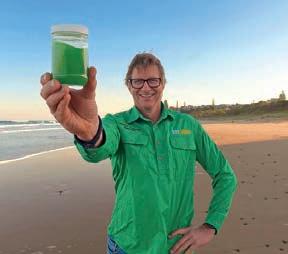
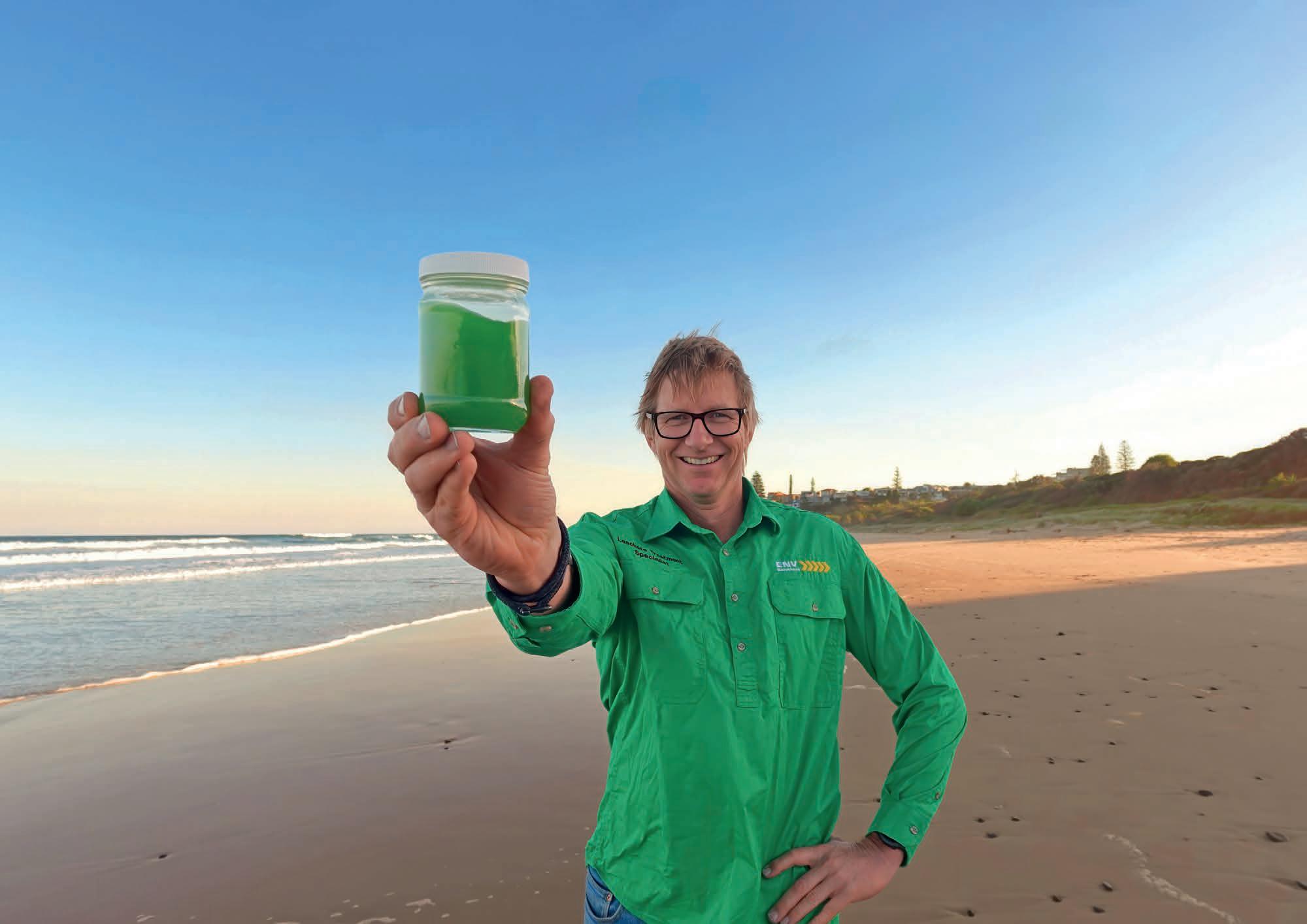
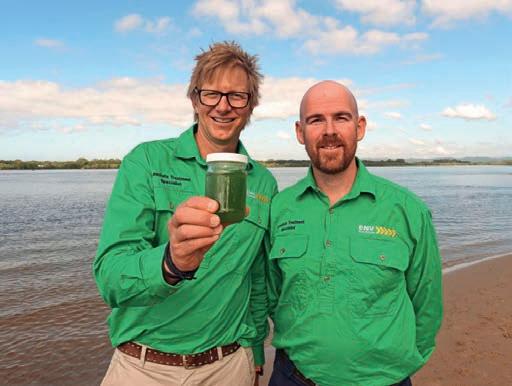
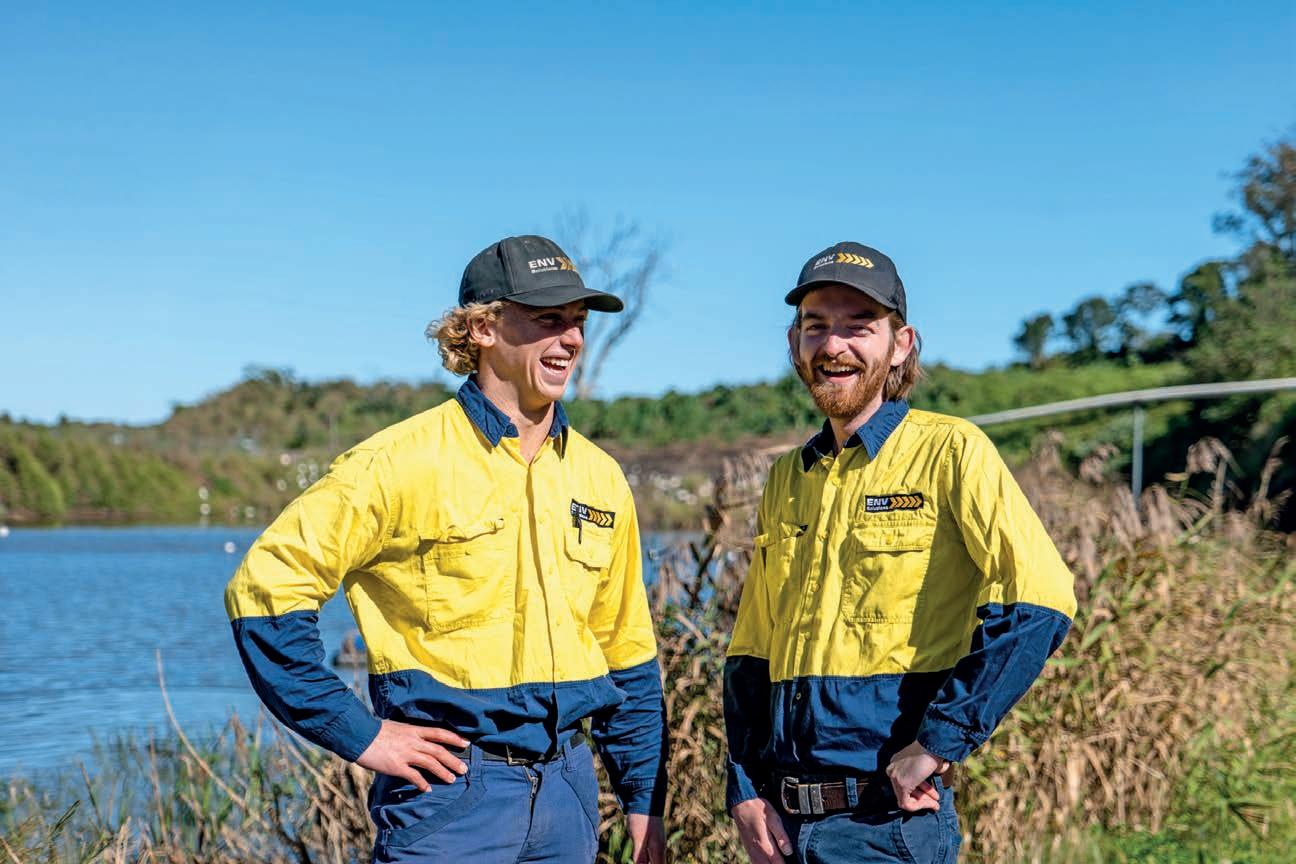
James Foster, Chief Executive Officer and Principal Engineer at BLR Tech. An ENV Solutions company, BLR Tech has developed a method using algae to clean leachate. Image: BLR Tech
CEO
Christine Clancy
christine.clancy@primecreative.com.au
PUBLISHER
Sarah Baker sarah.baker@primecreative.com.au
MANAGING EDITOR
Lisa Korycki lisa.korycki@primecreative.com.au
JOURNALIST
Sean Gustini
sean.gustini@primecreative.com.au
HEAD OF DESIGN
Blake Storey blake.storey@primecreative.com.au
ART DIRECTOR/DESIGN
Daz Woolley, Laura Drinkwater
BRAND MANAGER
Chelsea Daniel chelsea.daniel@primecreative.com.au P: +61 425 699 878
CLIENT SUCCESS MANAGER
Ben Sammartino ben.sammartino@primecreative.com.au
HEAD OFFICE
Prime Creative Pty Ltd
379 Docklands Drive
Docklands VIC 3008 Australia
P: +61 3 9690 8766 info@primecreative.com.au www.wastemanagementreview.com.au
SUBSCRIPTIONS
+61 3 9690 8766 subscriptions@primecreative.com.au
Waste Management Review is available by subscription from the publisher. e rights of refusal are reserved by the publisher
ARTICLES
All articles submitted for publication become the property of the publisher. e Editor reserves the right to adjust any article to conform with the magazine format.
COPYRIGHT
Waste Management Review is owned by Prime Creative Media and published by John Murphy. All material in Waste Management Review is copyright and no part may be reproduced or copied in any form or by any means (graphic, electronic or mechanical including information and retrieval systems) without written permission of the publisher. e Editor welcomes contributions but reserves the right to accept or reject any material. While every e ort has been made to ensure the accuracy of information, Prime Creative Media will not accept responsibility for errors or omissions or for any consequences arising from reliance on information published. e opinions expressed in Waste Management Review are not necessarily the opinions of, or endorsed by the publisher unless otherwise stated.
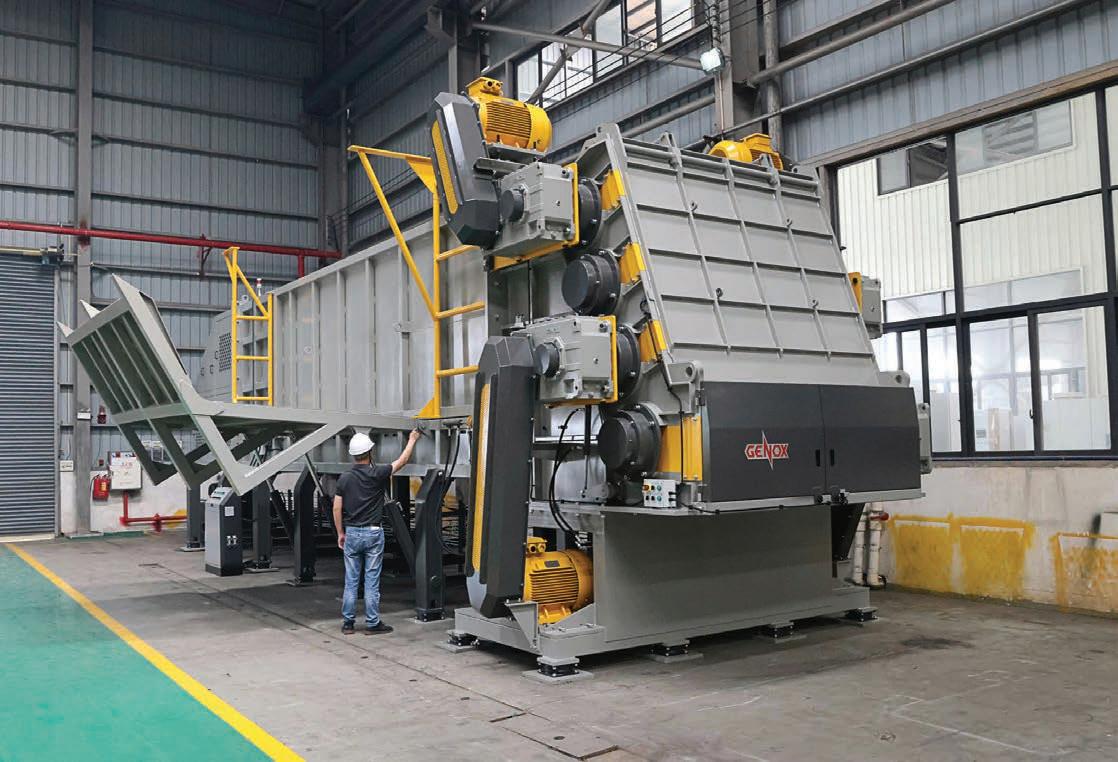
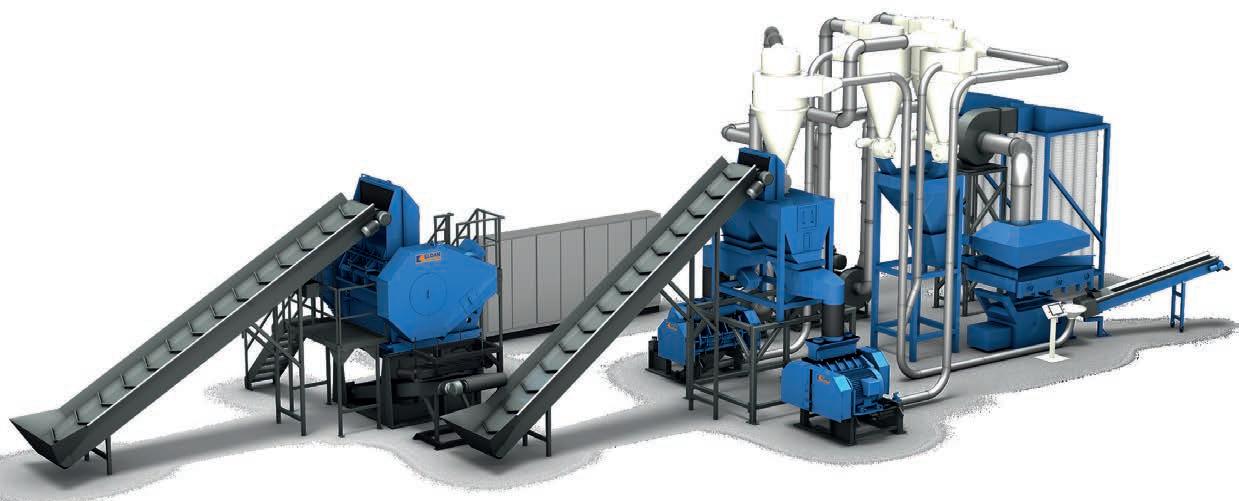
or plastic profile with Up to 6.5-meter-long, and 2000mm diameter. Four shaft shredding design is a leading technology in the world and an initiative originating from China.
Main Features
• Automatic feeding arm designed to handle straight and bent pipe.
• Four rotors each with independent gearboxes for flexibility and efficiency.
• V-Cutting rotor design with staggered rotors configuration for better energy efficiency. Contact us for a quote P 03 9706 8066
E sales@appliedmachinery.com.au
55-61 Nissan Drive, Dandenong VIC 3175
startup and independent rotor running modes significantly reduces process energy requirement.
Every cutting shaft owns specific features according to its location, to achieve the best cutting effect.
The feeding system is equipped with multilevel hydraulic cylinder, powered and control by efficient, stable and automatic control system. Feeding speed can be controlled for the shredding of different materials, thus assisting in further energy savings.
The equipment is designed to be compact and reliable. Doors with safety interlocks are designed with a hydraulic opening system for easy access and maintenance.
New Cat® 325 Tier 3.
• Tier 3 engine – no AdBlue required.
• Helps reduce owning and maintenance costs.
• Cat technology upgrades available, including Cat Grade 3D. For what you’ve done and for what you’ll do, we’re here for you.
Contact your local Cat dealer for more.

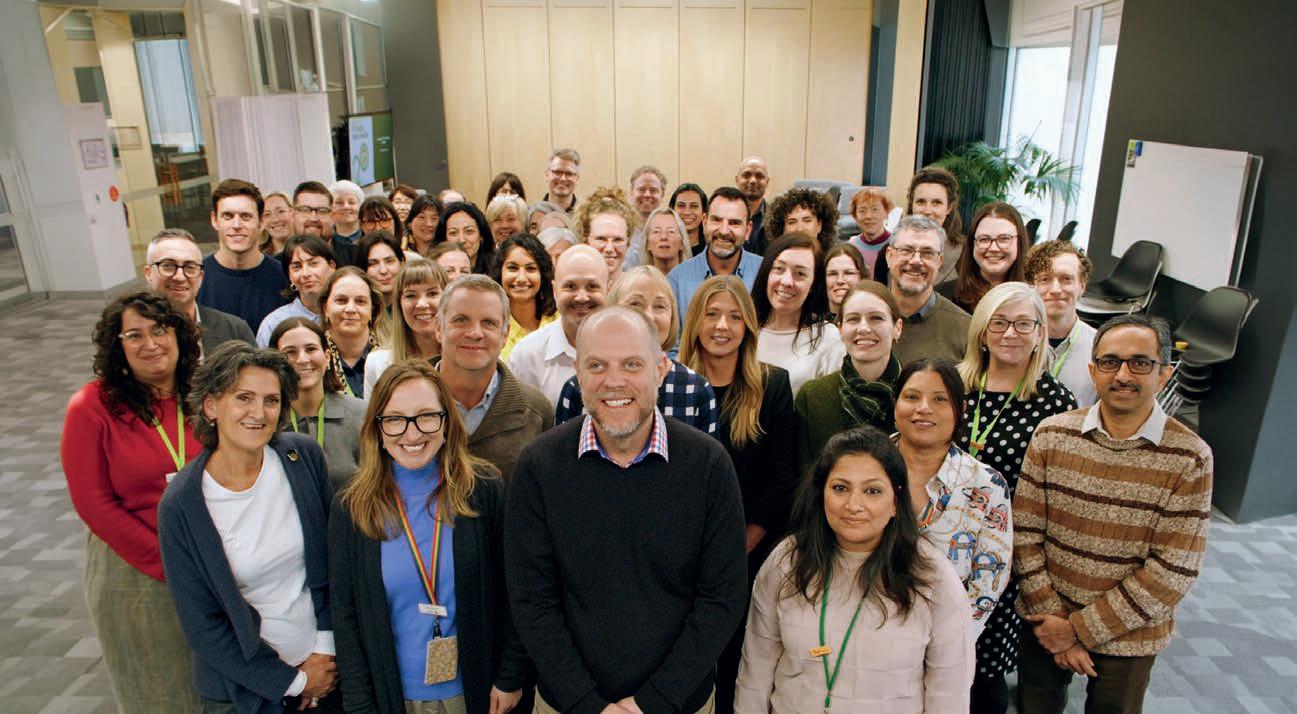
Matt Genever, CEO of Sustainability Victoria, looks back on a career intertwined with an organisation that helped shape Victoria’s appetite for sustainability.
Matt Genever always knew he wanted to make a difference. He specifically had a desire to protect the environment from a young age, emboldened by a feeling that governments around him throughout the 1980s and 1990s weren’t effectively working to this goal. is passion set him on a clear path for adulthood, which began with his tertiary studies.
“I wanted to make sure I could leave the world in a better place than when I entered it,” he says. “I knew I wanted to cultivate a career in sustainability in order to achieve this, and I fi rst did that by completing a science degree at university a long time ago.”
Matt then springboarded into an environmental consultancy job, which saw him relocate to the United Kingdom for several years, working with asbestos, hazardous waste and contaminants. e period proved formative, as it combined his longtime passion with real-world experience. When he returned to Australia in 2008, he was contacted by a then-nascent organisation aligned with his ambitions.
“I took a call from a recruitment consultant,” Matt says, “and found myself on a short-term contract for Sustainability Victoria a couple of days later.”
Sustainability Victoria is a Victorian Government agency founded in 2005 to facilitate environmental sustainability,
resource efficiency, and climate change action. Born from the merger of e Sustainable Energy Authority and EcoRecycle Victoria, the consolidated organisation has helmed various initiatives, programs and outreach campaigns to help industry transitions to cleaner operations.
Matt says the niche it fi lls is both unique and vital.
“Sustainability Victoria has always been an amazing intersection point between government and industry,” he says. “Partnership is always the best way to bridge these two worlds, because industry knows what is happening on the ground and how that is influenced by policy.
“ e insight an agency like Sustainability Victoria holds is key to making progress.”
Matt’s position within the agency has been dynamic. He started by promoting sustainability options to the state’s manufacturing sector through a program called ‘Five-Star Sustainability for Business’. He soon crossed over to more recycling and waste oversight, making recommendations on Victoria’s fi rst holistic recycling policy, ‘Toward Zero Waste’ in 2010.
“It didn’t take me long to fall in love with the sector in that role and how it can encapsulate every part of the economy –from households to all businesses,” Matt
says, “I’m still so passionate about the space, especially with new and revitalised ideas now in it.
“ e circular economy concept is gaining real momentum, and I think it invites a much deeper way of thinking about how we can use materials.”
Following a brief departure from Sustainability Victoria in 2014 to serve as the inaugural Chief Executive Officer of the national tyre stewardship scheme, Tyre Stewardship Australia, Matt returned to the agency in 2018, assuming the role of interim CEO four years later. He was officially appointed as CEO in March 2024.
Having scaled the organisation all the way to the top, he recognises the strides that Victorian industry has taken towards sustainability.
“ ere is no doubt that the sustainability sector is in a demonstrably better position than when I started 20 years ago,” Matt says. “Most businesses of all types work to a level of sustainability planning, and the distance between decision makers and sustainability policies is much shorter.
“Overall, we’re on a good trend, and the more we can do to integrate sustainability as a normal part of business activity, the less it feels like an outlier in operations which can be cut or reduced.”
Despite this progress, Sustainability Victoria is currently in the process of
shutting down following a government response in late 2025 to the Independent Review of the Victorian Public Service. Matt is overseeing the agency’s winddown until operations cease in late June.
“ is is obviously not the decision we wanted or hoped for,” he says. “It’s a really challenging time for our group, with many people having to make incredibly difficult decisions.
“But we’ve spent over 20 years creating tremendous impact, so the message I am telling staff is to focus on the incredible things we’ve done and the legacy we’re leaving behind.”
Matt says Sustainability Victoria’s work is embedded in the state – from the number of homes using photovoltaic solar panels because of one of its earliest campaigns, to the number of similar stewardship projects modelled a er the agency itself.
Matt fondly remembers schemes such as the ‘Healthy Homes Program’, which identified a link between the most vulnerable members of the community and their living standards, and campaigned for a material upgrade to their housing conditions.
“I want to say a huge thank you to every person who has worked for Sustainability Victoria and everyone who has worked with us.”
Matt Genever, Chief Executive O cer, Sustainability Victoria
“We funded the upgrade of 1000 Victorian homes with that program,” he says. “Real stories came out of that scheme. People told us how much of a difference we made in their lives, that they weren’t freezing cold anymore.
“ at’s an example of a real human interest project that Sustainability Victoria was brave enough to undertake.”
But Matt thinks Sustainability Victoria’s strongest legacy lies in its people.
“Something I have always enjoyed is watching individuals grow at our organisation,” he says. “ e programs are one thing and they are critical, but the people here are the foundation of what we do.
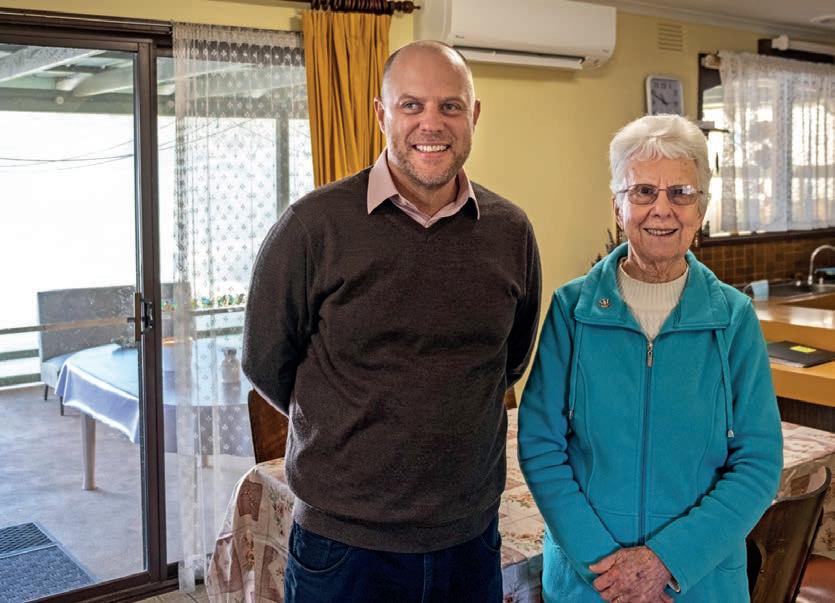
“ ey are smart, they are passionate. Watching them grow, knowing they will go out into the world and continue to make a difference when this is done, is what gets me out of bed.”
While celebrating Sustainability Victoria’s achievements, Matt’s focus is on preserving its extensive online resources and tools.
“We have a really significant body of research and other resources that we’ve developed over the past 20 years,” he says.
“Part of these fi nal weeks is working as hard as we can to fi nd a home for these things. So far, we’ve put out a public resource form, which has received a tremendous response from businesses, community groups, and other parts of government seeking access to them.
‘Everything else will be transferred to the Department of Energy, Environment and Climate Action, and will hopefully fi nd a place somewhere in its wider network of websites so people can fi nd and use them for years to come.”
Following Sustainability Victoria’s shutdown, Matt will take some time to himself. His fi nal message to the agency’s staff and partners is one of gratitude.
“All the things we’ve achieved have never been achieved alone,” he says. “We’re an organisation that has been determined to engage with our partners, community groups, households, industry and other stakeholders.
“I want to say a huge thank you to every person who has worked for Sustainability Victoria and everyone who has worked with us. Our journey might be coming to an end, but what we leave behind is the collective effort of all these people and groups.
“I am incredibly grateful and incredibly proud.” WMR
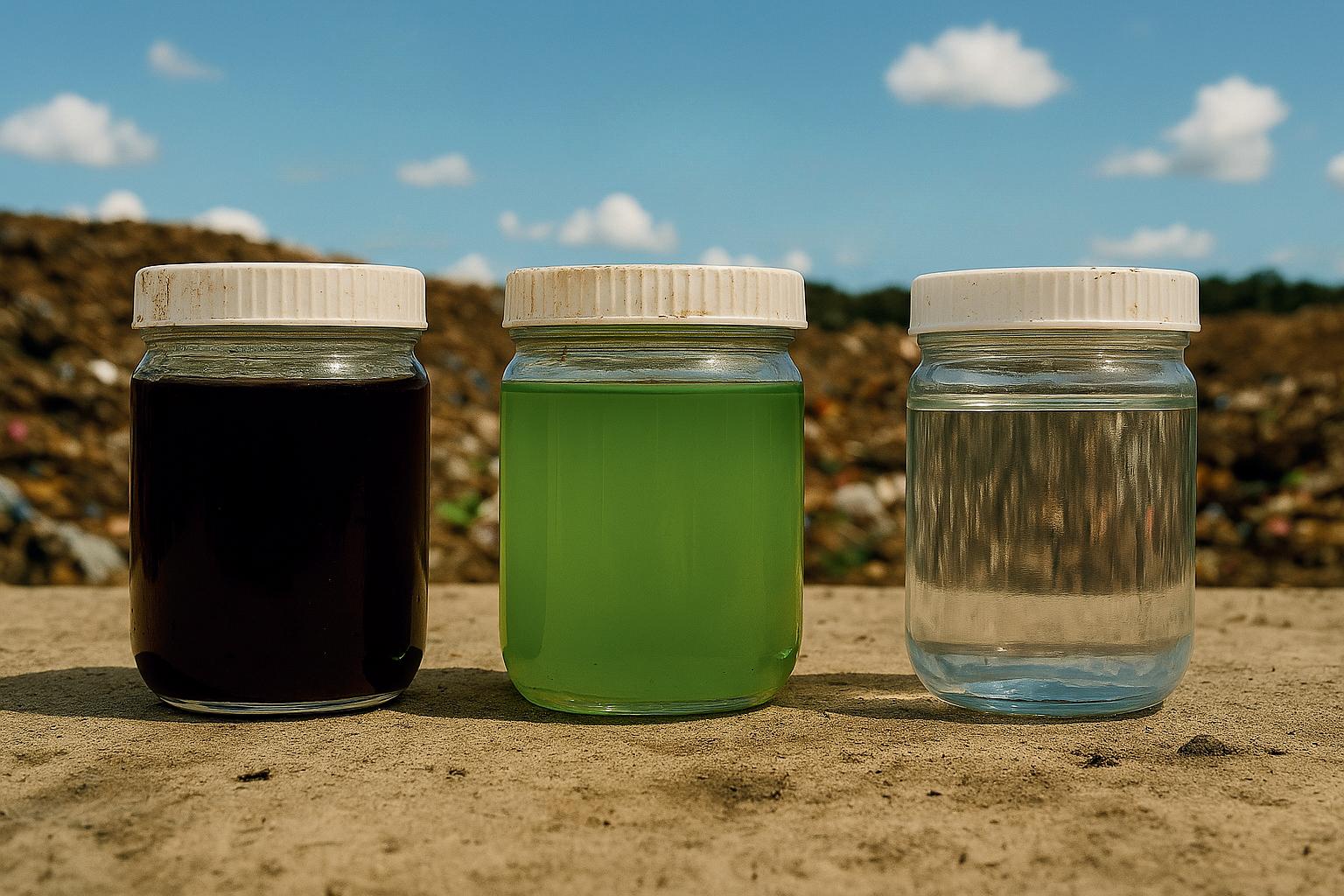

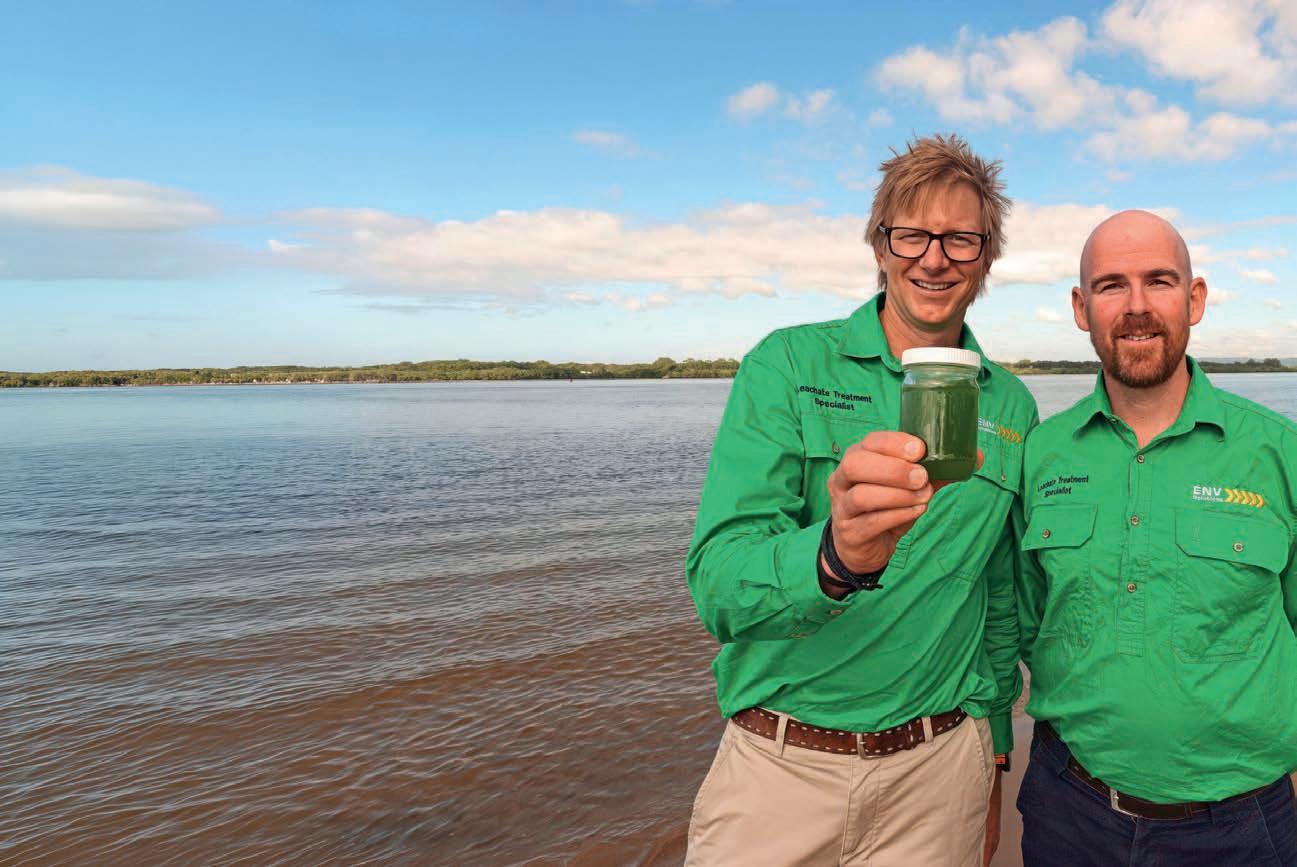
As industry moves away from simply storing leachate in legacy ponds, BLR Tech o ers an active, engineered, and automated biological solution.
Landfi ll leachate remains one of the waste sector’s most persistent operational and environmental challenges.
Robert Mitchell, co-founder of ENV Tech, says while everyone in the industry understands the issue, very few would suggest it has been defi nitively solved.
For decades, landfi ll operators have relied on a familiar mix of storage, evaporation, irrigation and off-site disposal to manage leachate volumes and reduce the risk of overflow.
In some cases, these approaches remain workable. In others, they are becoming increasingly difficult to justify, scale or defend.
Robert says this is particularly evident as sites require expansion, rainfall patterns intensify, and regulatory expectations continue to tighten in response to complex contaminants of concern.
As a result, many legacy facilities are now operating with infrastructure that is no longer fit-for-purpose. At the same time, new projects and developments are facing delays or redesign, as operators are increasingly required to answer a fundamental question from regulators: “what are you going to do with the leachate? ”
Compounding this is a deeper understanding of leachate itself. Hydrological variability is increasing, and contaminant profi les are becoming more complex, with ammonia nitrogen, metals and per- and polyfluoroalkyl substances (PFAS) now routinely requiring consideration.
“ e issue is no longer one of storage alone, but a shi toward reliable, cost-
effective engineered solutions that can consistently perform,” says Robert.
Biological Leachate Remediation (BLR) is an engineered system designed to actively treat and control leachate as part of a broader water management framework. It was developed by BLR Tech, an ENV Solutions company offering environmental consultancy and remediation.
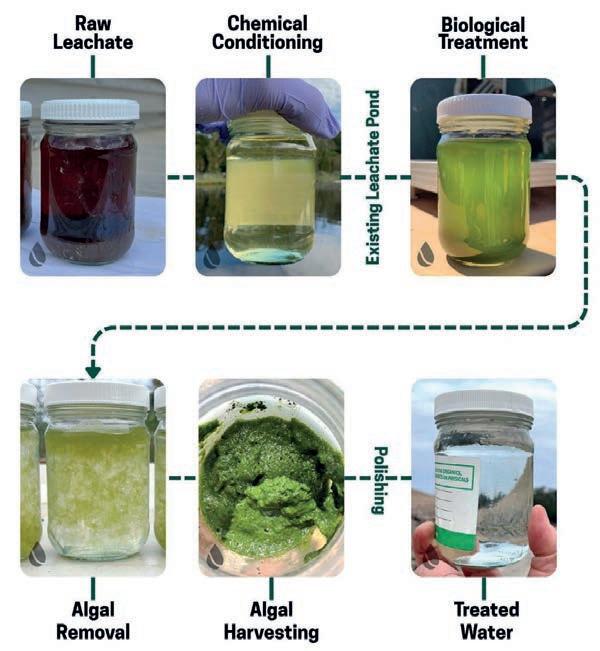
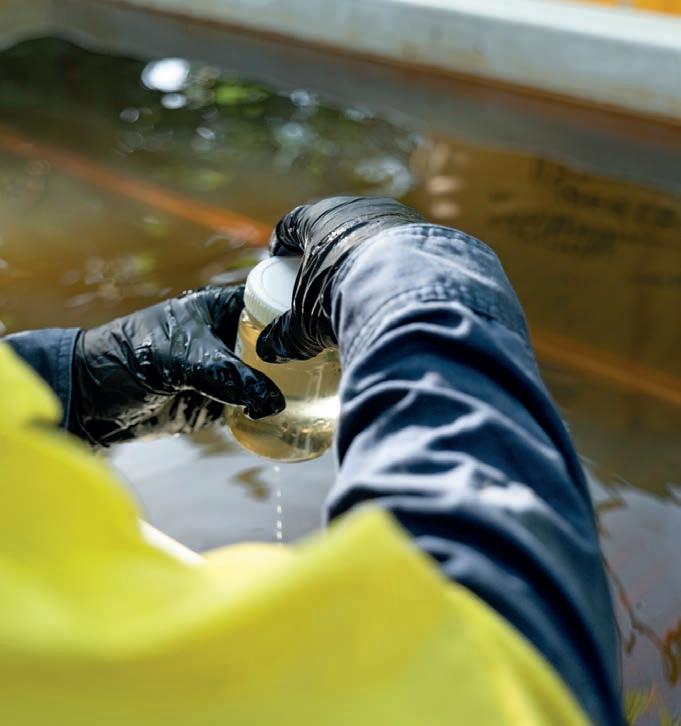
“Put simply, BLR is a staged process that combines chemical conditioning, algal-based biological treatment, physical separation, polishing and disinfection into a single, integrated treatment process,” Robert says. “ ese unit processes are brought together to address leachate composition variability and complexity.”
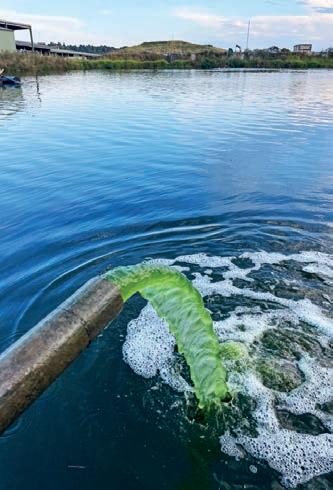
At the centre of the process is a controlled biological system. BLR uses an algal process to drive ammonia nitrogen removal, enabling the system to respond to changing leachate conditions rather than relying solely on fi xed mechanical processes or conventional biological approaches.
Robert says that in practice, this means the leachate pond itself becomes an active part of the treatment process, rather than simply a storage asset.
“From an operational perspective, this has several positive implications.
It reduces reliance on high-energy treatment systems, with algal processes contributing dissolved oxygen through photosynthesis and supporting biological treatment pathways,” he says.
“It allows existing infrastructure to be incorporated into the treatment framework. It also introduces a level of seasonal adaptability that is o en difficult to achieve with more rigid treatment configurations.
“From a regulatory perspective, the process has been demonstrated at scale, treating more than 700 kilolitres of landfi ll leachate per week to environmentally compliant standards, enabling beneficial reuse or irrigation outside of active landfi lling areas.”
Since its initial development in 2022, the technology has been progressively refi ned and validated under operational conditions.
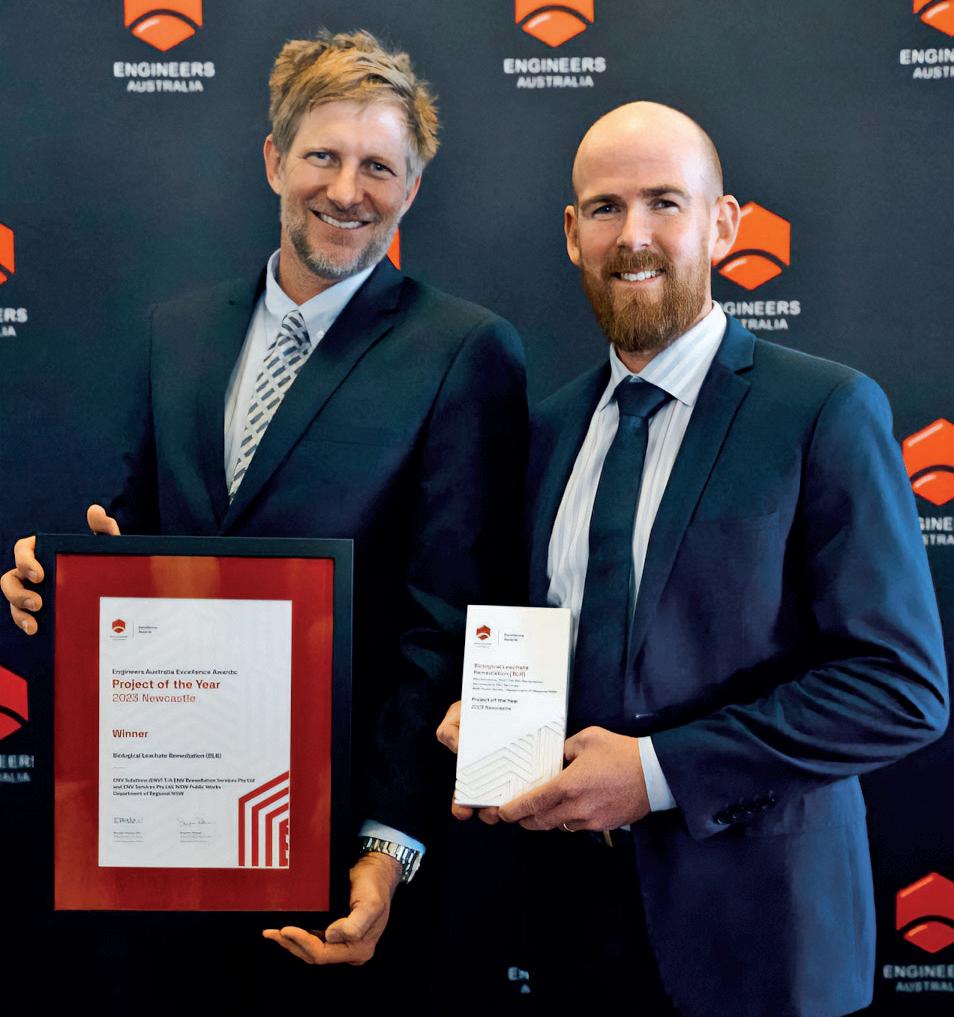
In 2023, BLR was recognised by Engineers Australia, receiving Project of the Year (Newcastle) for its work in remediating catastrophic flood damage caused to Lismore’s landfi ll and sewage plant, which resulted in more than 20 million litres of polluted water.
A collaboration with NSW Public Works – Department of Regional NSW, the project was singled out as a method that could be adapted for other water cleaning tasks.
But Robert says while industry recognition is notable, the significance lies in demonstrating that a treatmentled approach to landfi ll leachate can be implemented, validated and operated in practice.
“Demonstrating that the BLR process could treat leachate to environmentally compliant standards was the fi rst step. Designing a BLR system that can operate reliably, anywhere within Australia, under real long-term landfi ll conditions is another,” he says.
“BLR 2.0 represents that transition toward an automated, purpose engineered solution.”
Given inflows and contaminant profi les vary significantly from site to site, BLR 2.0 has been designed to be modular, scalable and durable. A modular design of one, two, four and eight litres per second allows the system to evolve as site
conditions change. Operating in a harsh environment, BLR 2.0 is constructed predominantly from inert materials such as high-density polyethylene (HDPE), unplasticised polyvinyl chloride (uPVC) and fibreglass – allowing a design life of up to 25-years.
Operational requirements have also been central to the design.
“Many landfi ll sites, particularly in regional areas, do not have the labour capacity or budget to manage complex treatment systems on a continuous basis,” Robert says.
“BLR 2.0 has been developed as a lowattendance system, with automation, monitoring and control embedded into the overall process. is reduces the need for constant operator intervention and associated costs, while maintaining plant performance, consistency and traceability.
“In this context, BLR 2.0 is not simply an iteration of the original process. It reflects a broader progression toward leachate treatment systems that are integrated into site operations and capable of adapting to changing conditions over the life of a landfi ll.” WMR
For more information, visit www.envsolutions.com.au




As Queensland’s container refund scheme continues to mature, one challenge remains front of mind for those responsible for its long-term success: ensuring access keeps pace with growth.
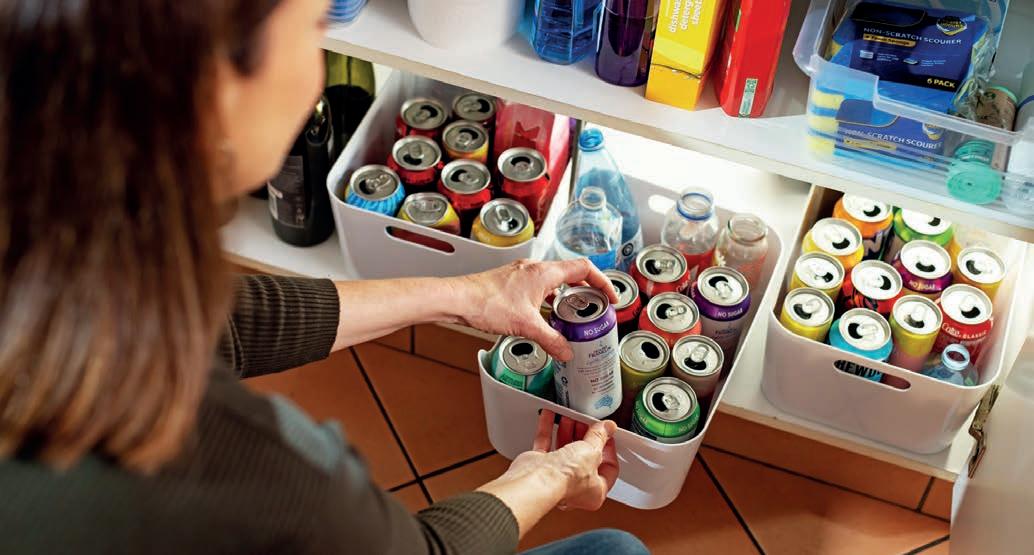
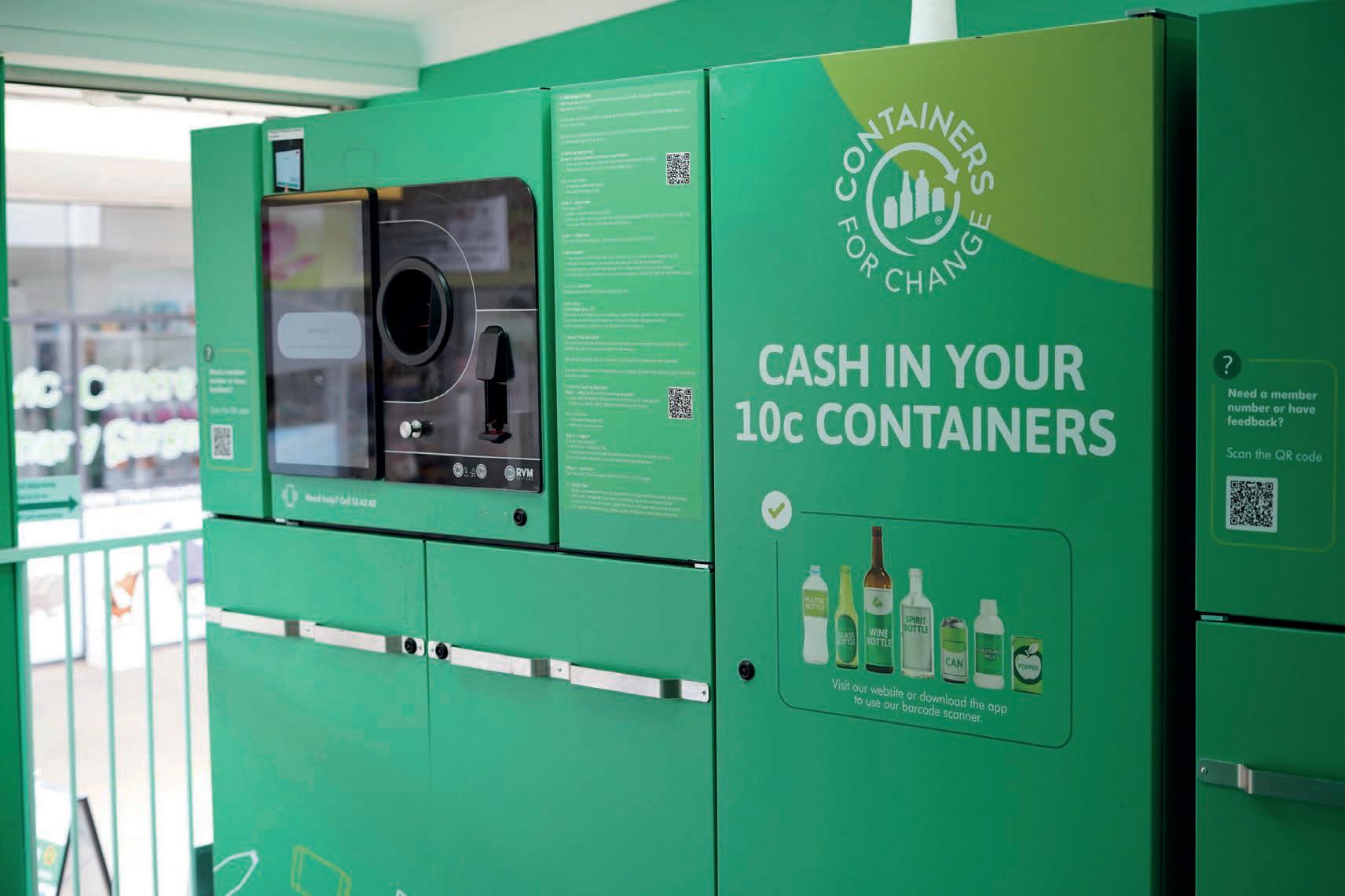
Since the launch of Containers for Change in 2018, more than 12 billion containers have been returned through container refund points, putting $1.2 billion back into the pockets of everyday Queenslanders, charities, community groups and schools.
Despite the community’s passion for recycling, one billion containers still end up in landfi ll every year, meaning Queenslanders are missing out on $100 million in container refunds.
For Container Exchange (COEX), the not-for-profit organisation that runs Containers for Change, ensuring all Queenslanders can participate in the scheme, regardless of location, remains a critical priority, as is identifying smarter,
more inclusive ways of delivering more infrastructure to boost recovery rates.
To address this, the organisation’s newly launched Asset Hire Program represents a significant shi in how reverse vending machines (RVMs) can be deployed across South East Queensland. e program removes the upfront investment required for owning an RVM, creating new opportunities for eligible commercial business and community organisations, including social enterprises and charities, to host a return point.
According to omas Juzwin, COEX Executive General Manager of Network Delivery, the program was designed with a clear objective.
“At its core, asset hire is about access,” omas says. “We know there are many businesses and community organisations who want to host a container refund point, but the upfront cost of purchasing an RVM is what stops them. By removing that cost, we’re opening participation to
a much broader range of operators while supporting our existing network.”
Under the asset hire model, eligible operators can hire an RVM directly from COEX, earning a handling fee for every eligible container returned at their site.
COEX retains ownership of the machine and is responsible for its maintenance, while also supporting operators with training and access to marketing tools to help them establish and promote their refund point.
For commercial operators, machines are available from as low as $706 per month with a handling fee of 5.9 cents per container. For registered charities and community groups, the RVM is provided free of charge, with a handling fee of 3.12 cents per container.
“ is represents a significant step forward for the scheme,” omas says. “ e upfront investment associated with RVM ownership has meant that some high-potential locations have not yet
been serviced, such as community halls and sporting clubs. Asset hire changes that completely.”
By removing barriers to entry, COEX expects to see new refund points established that provide greater convenience for Queenslanders, increased container recovery rates and stronger progress toward the scheme’s vision of ensuring no container goes to waste.
From a network perspective, omas says COEX’s ability to own and manage assets directly provides an important lever for expanding and strengthening the scheme.
“In addition to making it easier for operators to get involved with the scheme, it also allows us to take a more strategic view of the network as a whole. Every hired RVM strengthens the scheme by increasing our physical presence, fi lling gaps in service and helping to normalise container returns as part of everyday life.”
omas points out that convenience influences behaviour at every level, as people are far more likely to return containers when it fits easily into their everyday routines.
“Whether someone is returning a handful of containers or a carload, the infrastructure needs to be there. e more visible and accessible

return points become, the more embedded the behaviour.”
For community and charity groups, the benefits extend well beyond infrastructure access. Hosting an RVM can generate a steady revenue stream, supporting local causes while also contributing to environmental outcomes. omas believes this dual benefit is a key strength of the model.
“Our hope is that asset hire becomes transformational for charitable causes across Queensland, providing a new, sustainable pathway into the scheme while delivering real environmental, social and economic value through the 10-cent refund.”
Looking ahead, COEX sees asset hire as an important enabler of sustainable growth across the container refund
network as Queensland’s population continues to increase.
“ is program gives us the ability to respond faster to demand. If a business or community organisation has ever thought, ‘ is could work here, but we just can’t afford it,’ this program is designed to bridge that gap,” omas says.
Ultimately, the success of the asset hire program will be reflected in participation. More return points across the state, more containers recovered and more Queenslanders engaging with the scheme where they live, work and play.
Organisations interested in hosting an RVM through the asset hire program can contact Container Exchange. WMR
For more information, email expansion@containerexchange.com.au
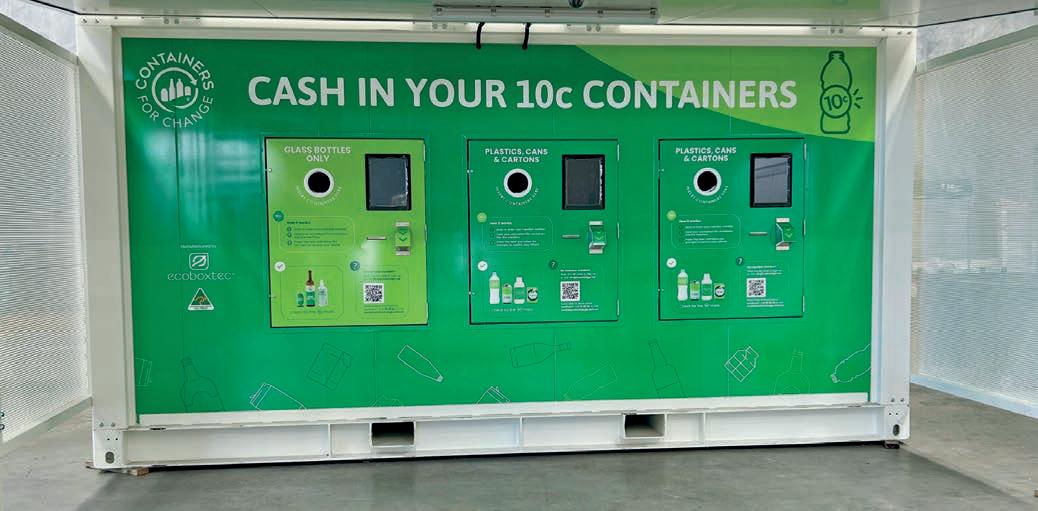
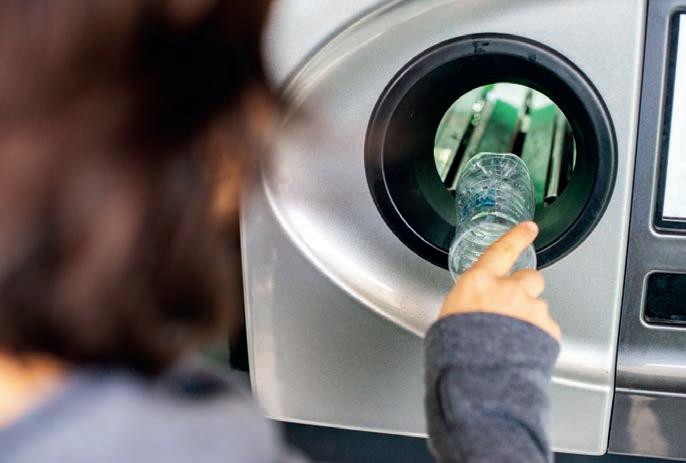
Since its inception in December 2017, New South Wales has developed the largest and most technologically advanced container deposit scheme (CDS) in Australia, Return and Earn.
With more than 15.7 billion containers returned to date, the scheme has become a cornerstone of the state’s circular economy.
Currently, New South Wales recovers 67 per cent of the 3.8 billion eligible containers supplied to the market annually, the majority through a sophisticated return point network built on automation and accountability. Network operator TOMRA Cleanaway is responsible for the collection infrastructure.
Unlike many other states, New South Wales employs a “scan-every-item” policy. Whether through reverse vending machines (RVMs), automated depots, or over the counter (OTC) points, every container is individually verified.
James Dorney, Chief Executive Officer of TOMRA Cleanaway, says this commitment to scanning ensures a robust audit trail.
While OTC manual returns account for only eight per cent of collected volume, they are integrated into the automated flow at processing facilities to maintain data integrity. is system generates a daily report for government and key
stakeholders, providing unprecedented transparency into the state’s material flows, ensuring every bottle and can is accounted for in the daily effort to reduce waste.
James says the network’s reach has surpassed its original contractual requirements. Initially tasked with delivering 540 return points, TOMRA Cleanaway has expanded the network to about 660 sites, including 375 RVMs. is expansion is fuelled by a performance-based model where the operator is incentivised by volume – the more containers returned, the higher the throughput and efficiency.
Delivered as a partnership between the NSW Environment Protection Authority (EPA), Exchange for Change, and TOMRA Cleanaway, the scheme has seen a steady upward trend in participation. Recent data shows a record 220 million containers returned in December 2025 and 195.5 million containers collected in March 2026.
However, despite this success, onethird of eligible containers are still lost to litter or landfi ll.
Based on global best practice, which involves a higher refund amount and legislated return to retail model, James suggests that the current 10-cent deposit may have reached the limit of its
effectiveness for behaviour change. Unlike leading European nations, Australian retailers are not required to host return points. is makes it difficult to install collection infrastructure in metropolitan areas dominated by vertical housing and limited parking.
In countries such as Germany, Norway, and Denmark, return rates near 98 per cent. James says three key European strategies could help inform Australia’s future.
ese include mandatory retail participation requiring supermarkets to take back what they sell; variable deposit values offering different tiers for different materials to incentivise better packaging design; and producer responsibility with higher fees for materials that are harder to recycle, such as coloured Polyethylene terephthalate (PET).
James says the focus is shi ing toward how to bridge the gap between 67 per cent and the high-90s seen in Europe.
While New South Wales possesses the three pillars of a successful scheme – value, a return network, and an end market – he says further gains may require policy shi s regarding deposit values and mandatory retail involvement WMR
For more information, visit www.returnandearn.org.au
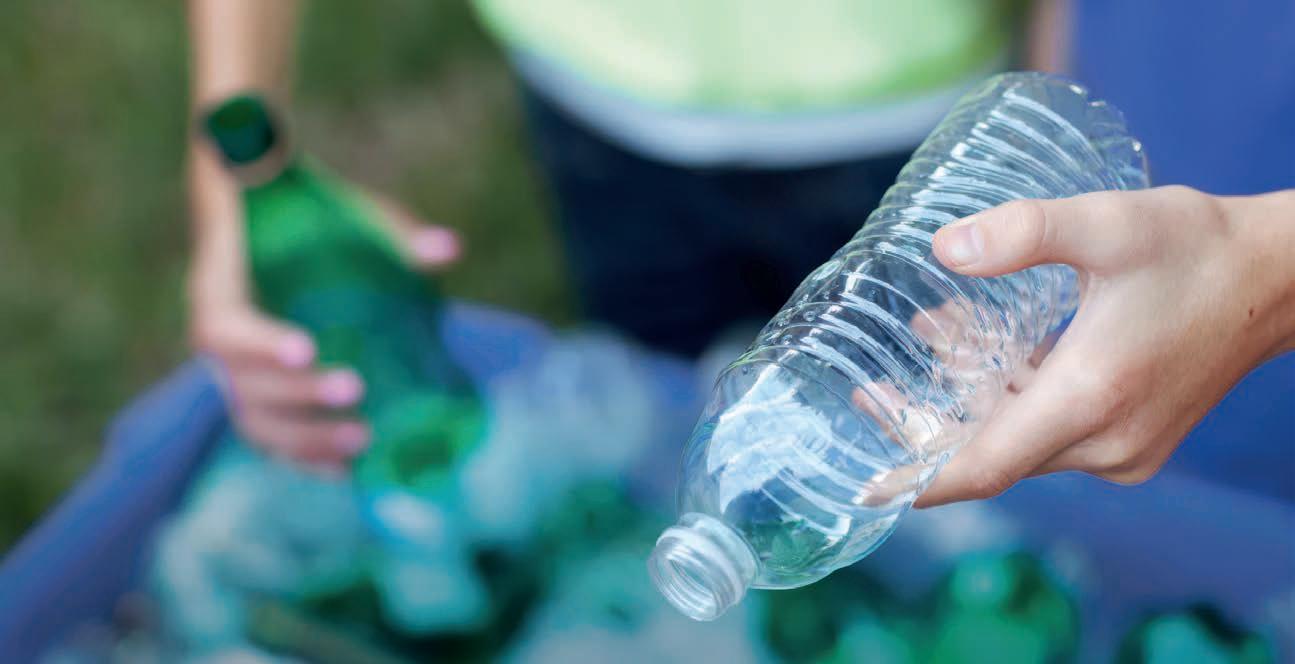
A new campaign is advocating for an increase in refunds through Australia’s Container Deposit Schemes.
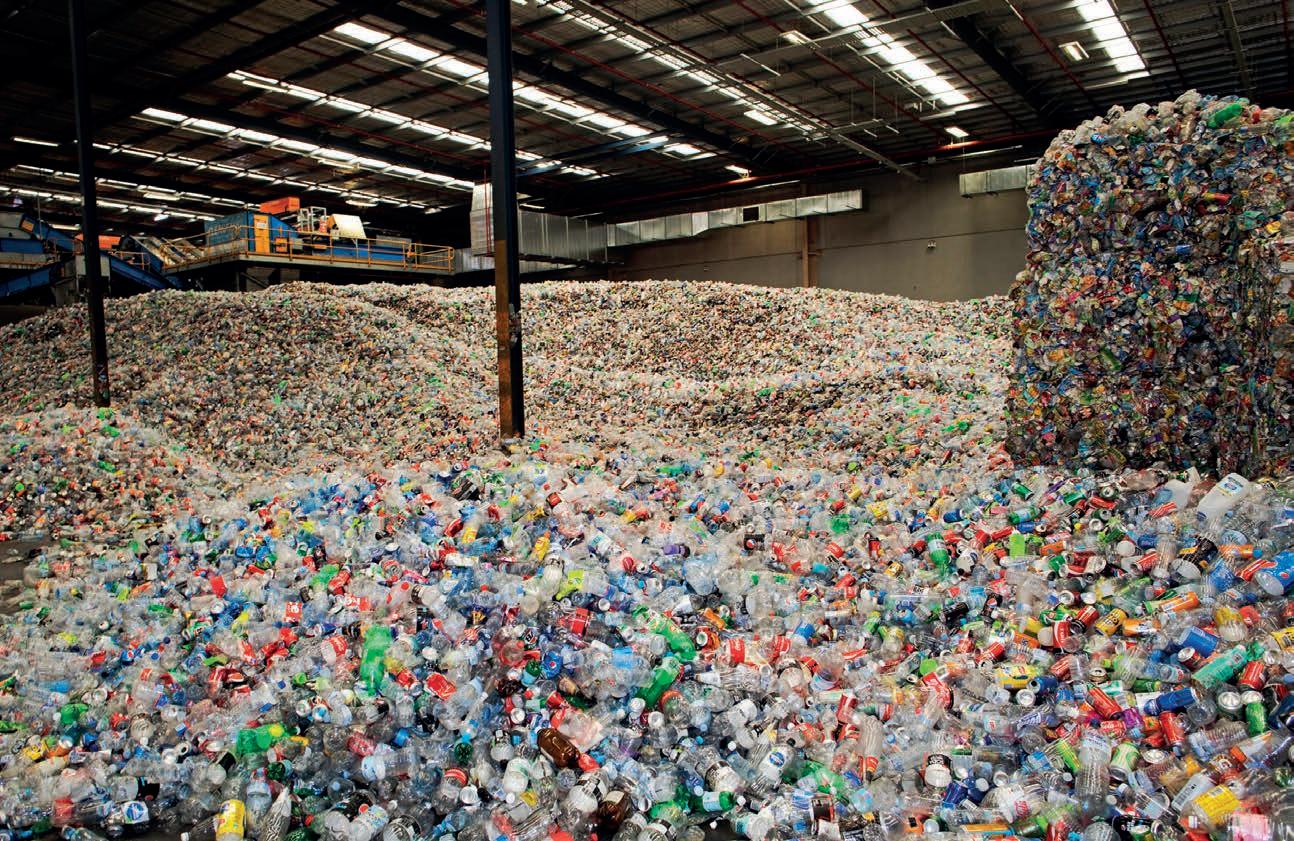
Eighty-four per cent of respondents to a recent survey said they would recycle more if the refund for Container Deposit Schemes (CDS) was increased, according to market research fi rm Redbridge. is appetite for change has provided the momentum for a new advocacy push for legislative action across Australia.
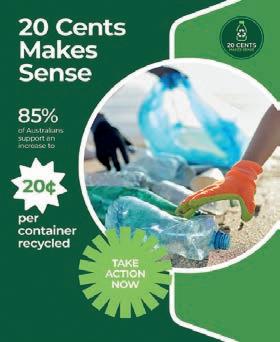
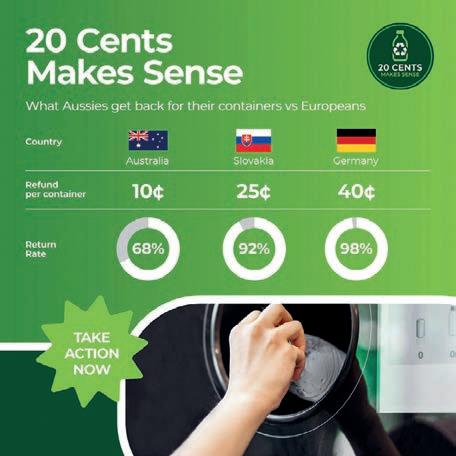
Backed by environmental groups and industry bodies including Boomerang Alliance, packaging manufacturer Pact Group, and the pacific division of international circular economy platform Reloop, the 20 Cents Makes Sense Campaign is calling on state and territory governments to increase their CDS refund amounts from 10 cents to 20 cents.
Robert Kelman, Reloop Pacific’s Director, is one of the campaign’s
architects and brings more than two decades of experience working with Australia’s CDS. He says while the 20 Cents Makes Sense Campaign is recent, he has advocated for years to have a refund increase on the CDS agenda.
He believes an increase to 20 cents will boost recycling rates around the country, while also injecting funds into local communities, putting Australia in a better position within the global circular economy movement.
“If we had a higher refund value, we could be getting much more engagement with recycling across the country,” Robert says. “ is could mean more money for our communities, and more national support for sustainable practices.”
CDS have operated in Australia since 1977. South Australia was the fi rst state to
adopt the initiative and is a cornerstone of South Australia’s environmental strategy, according to the state’s Environment Protection Authority (EPA).
When Tasmania’s container deposit scheme, known as Recycle Rewards, officially started on May 1, 2025, Australia achieved complete coverage.
All these programs offer a uniform refund of 10 cents through cash, vouchers, and other means for eligible returned drink containers.
While Australia has come a long way, Robert says there is still work to do to bring it in line with the rest of the world.
“Our scheme’s median recovery rate is 68 per cent across the country, meaning around four billion containers are still going to landfi ll or are otherwise polluting the environment,” Robert says. “Part of this is because the refund amount our schemes offer is too low.
“None of our schemes have anywhere near the return rates of Europe’s because their refund amounts are higher. Germany’s CDS container return rates are at 98 per cent, for example, while Finland’s are at 99 per cent. ese countries offer up to 40 Australian cents in refunds to community members, so there is more incentive to participate.”
To ensure the fi nancial incentive for participants never loses its value, the 20 Cents campaign is also calling on governments to commit to regular, infl ation-linked reviews of the CDS’ refund amount.
“ e 10 cents that Australians currently get back from these schemes is now worth only around 6.5 cents due to infl ation,” Robert says. “ is is failing to encourage
engagement, leading to an estimated 4.23 billion valuable containers being wasted every year. at’s millions of dollars in potential refunds lost for Australians, charities, and community groups, and instead fi lling up our landfi lls.”
Beverage container producers are responsible for fi nancing the collection, sorting, and recycling processes in CDS. Robert is expecting the campaign for higher refund rates to be met with some reluctance from producers.
“I believe they will push back, but we need to campaign for this change, because there aren’t many other mechanisms available to us to improve the effectiveness of CDS in Australia and we are now seeing return rates plateau and they will begin to decline,” he says.
South Australia’s CDS is regulated by the state’s EPA which says the government has no current plans to increase its CDS refund amount and believes discussions on the matter would be best led at a national level to promote harmonisation.
“Any consideration of increasing the deposit amount would be undertaken collaboratively with other jurisdictions and be informed by work to better understand the factors that motivate people to return containers to the CDS,” says Geoff Hopwood, SA EPA Director
of Sustainable Development, Policy and Systems.
He says as part of previous consultation on the state’s proposed reforms to the CDS, the South Australian Government received suggestions to increase the refund amount to at least 20 cents and to mandate periodic adjustments in line with the Consumer Price Index.
However, the government also received feedback opposing any increase to the deposit amount.
A spokesperson from Victoria’s CDS, VicReturn, echoed the sentiment of national consistency for any change to CDS refunds. ey say maintaining consistency is an ongoing discussion.
“ e 10-cent refund was implemented in Victoria for consistency with all other schemes across Australia,” the
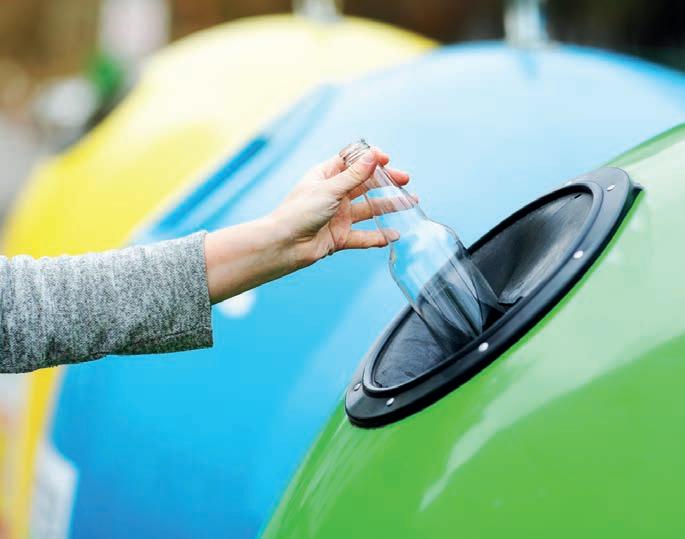
Campaign organisers believe an increase to 20 cents will boost recycling rates while also injecting funds into local communities. Image: Prostock-studio/stock.adobe.com
spokesperson says. “ is ensures fairness for consumers and beverage suppliers regardless of their location, reduces confusion for consumers and limits operational burden for industry.
“Any decision to increase the refund amount would need to be considered collectively by all Australian container deposit schemes.”
A spokesperson for New South Wales’ CDS, Return and Earn, says the scheme is reporting consistent engagement with the current 10-cent refund amount.
“ e scheme continues to deliver strong results with two out of every three eligible drink containers supplied into New South Wales now being redeemed for the 10cent refund.
“In just over eight years, Return and Earn has significantly changed people’s behaviours, with 84 per cent of adults having participated in the scheme – most doing so monthly.”
e 20 Cents Makes Sense campaign was launched earlier this year and continues to gather momentum.
“We are speaking to more and more communities which are supporting a higher refund value,” Robert says. “From what we’ve seen, there are very few individuals who are actually opposed.”
Robert is confident that CDS around Australia will adopt a higher refund amount eventually.
“It will happen,” he says. “It’s just a matter of time. But the longer we wait, the more likely a 20-cent increase won’t be enough to beat infl ation, which means it won’t be a strong incentive.
“Consumers want it, and we’re pushing for it.”
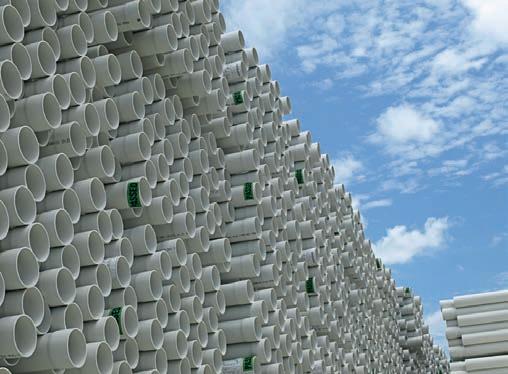
Plastics Industry Pipe Association of Australia lead Cindy Bray outlines how the industry is balancing 100-year infrastructure performance with circular economy goals.
Plastic pipes are the unsung backbone of modern infrastructure. Out of sight but critical to daily life they deliver clean drinking water, manage wastewater, support energy networks and enable industrial and mining operations –o en for more than a century.
As sustainability expectations accelerate, the focus is shi ing beyond performance in service to performance across the full lifecycle.
e question is no longer if plastic pipes can be recycled but how to do it responsibly within a circular economy.
Recycling is already happening across the sector, says Cindy Bray, Executive General Manager of the Plastics Industry Pipe Association of Australia (PIPA). However, success depends on a clear understanding of material integrity and application-specific performance requirements.
“Plastic pipes are engineered for critical services,” says Cindy. “Circularity is achievable, but only when recycled materials are proven to meet the same performance standards as virgin materials.”
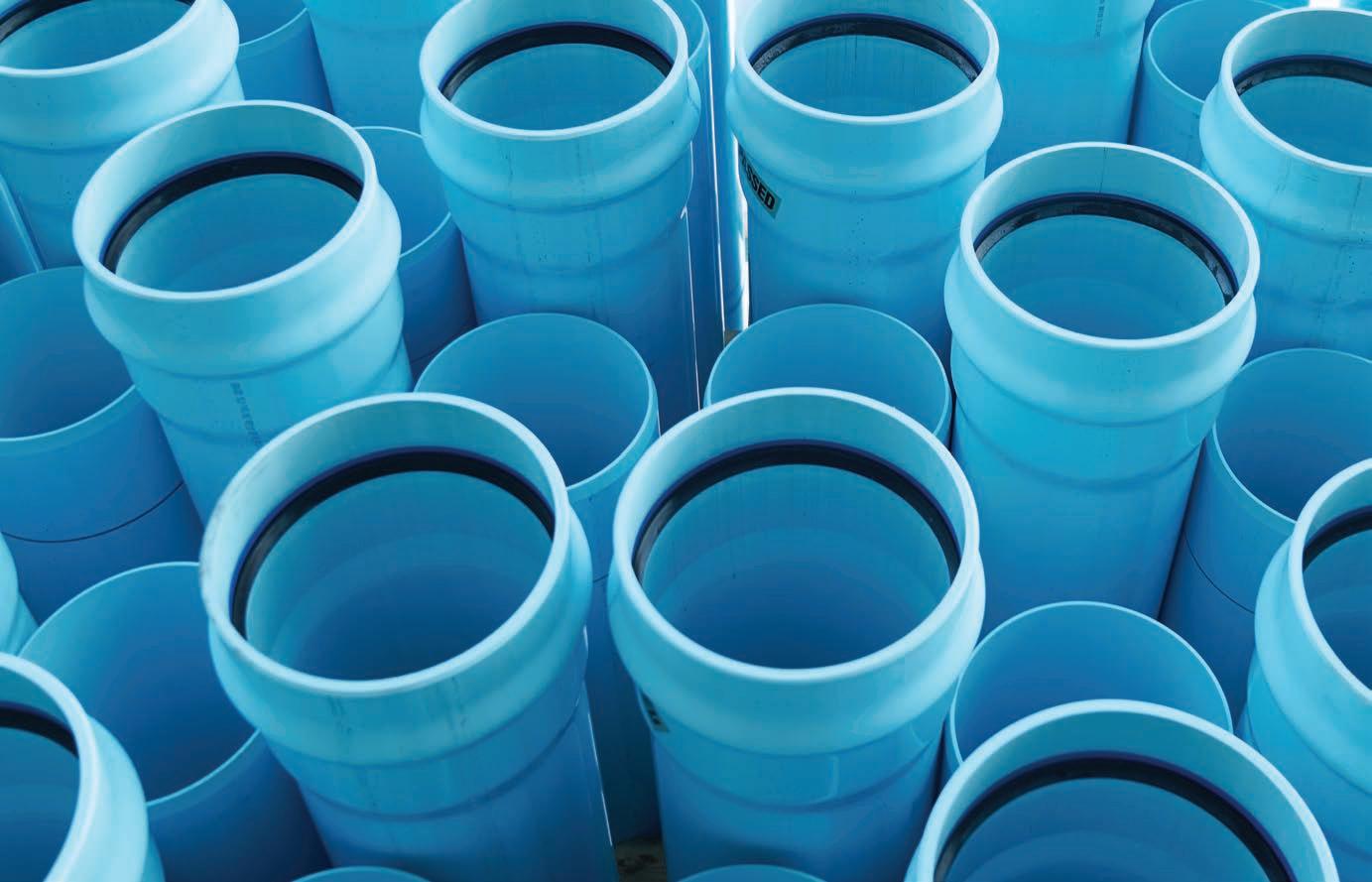
Plastic pipes made from polyethylene (PE), polyvinyl chloride (PVC) and polypropylene (PP) are engineered for durability, with service lives exceeding 100 years.
is longevity is a major sustainability advantage, but it also raises the bar for recycled content.
Cindy says any recycled material reintroduced into pipe production must deliver equivalent material properties. Even within a single polymer category variation is significant.
“PE, PVC and PP are o en treated as uniform materials. In reality they include a wide range of grades, formulations and additives,” Cindy says. “ at’s why recycled content must be carefully assessed before reuse.”
Take PVC as an example. While widely used in rigid pipe applications not all PVC products are suitable for recycling into pipes.
Some PVC materials used in other industries contain plasticisers or other additives that are incompatible for use in pipe manufacturing.
In Australia, PVC pipes must conform with Best Environmental Practice (BEP) standards which exclude heavy metals and lead-based stabilisers.
“PVC pipes use organic-based stabilisers for both performance and environmental outcomes,” Cindy says. “Introducing non-compliant material risks compromising both.”
Not all recyclable material is equal.
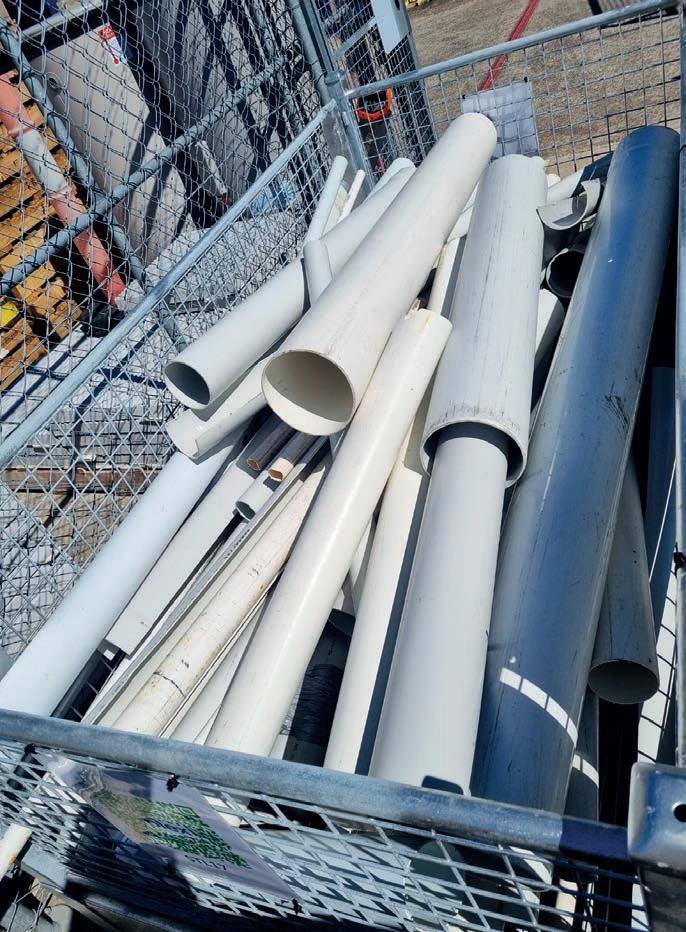
Installation off-cuts represent the most straightforward opportunity. ese materials are unused, clean and traceable, making them ideal for direct recycling back into pipe production.
End-of-life pipes, however, require more rigorous assessment. Key considerations include whether the pipe has been used, and in what application? Was it carrying potable water, sewage, chemicals, or used in mining? Is the material heavily soiled or contaminated?
For example, sewer pipes cannot be recycled without undergoing a decontamination process due to health and safety constraints and must be managed in accordance with WorkSafe requirements.
“Understanding prior use is fundamental,” Cindy says. “It directly determines whether material can be safely and responsibly reused.”
Closing the loop starts at the point of collection. e condition of recovered material has a direct impact on its recyclability.
PIPA recommends several practical steps such as keeping materials as clean as possible; removing mud, stones and debris (simple on-site washing can help); stripping out foreign objects such as rubber rings, screws, marker tape and strapping; separating materials by polymer type; and providing clear
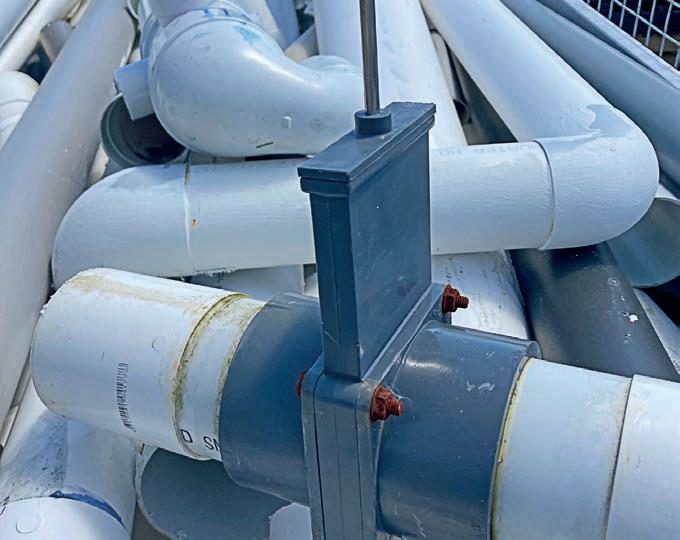
information about quantity and previous use.
“Contamination is one of the biggest barriers to recycling,” Cindy notes. “Simple actions at the collection stage can determine whether material is suitable for reuse.”
Given their role in essential services, plastic pipes must meet strict performance requirements regardless of whether recycled content is used.
To support industry, PIPA has published guidance including its Discussion Paper on the Use of Recycled Content in Plastic Pipes, outlining how recycled materials can be incorporated without compromising performance.
Technical Guideline POP208 further defi nes specification and testing requirements for recycled materials used in non-pressure pipe applications.
“It’s not enough to recycle,” Cindy says. “To truly close the loop, we need to retain material quality so it can perform over the long service life expected of plastic pipes.”
Plastic pipes already contribute to circular economy outcomes but achieving true circularity requires coordination across the entire value chain.
From manufacturers and recyclers to installers and asset owners, each stakeholder plays a role in ensuring materials are collected, assessed and reused appropriately.
“When the right materials are handled the right way, we can close the loop,” Cindy says. “ at’s how plastic pipes continue to deliver essential services – sustainably and responsibly – for generations to come.” WMR
For more information, visit www.pipa.com.au
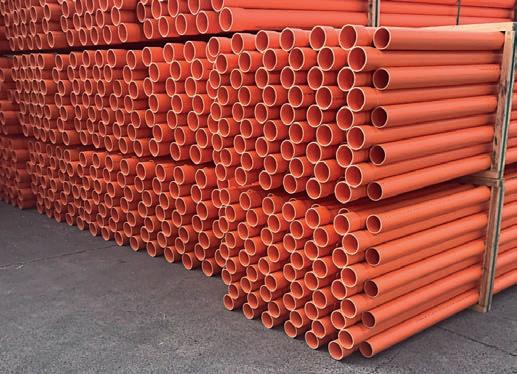
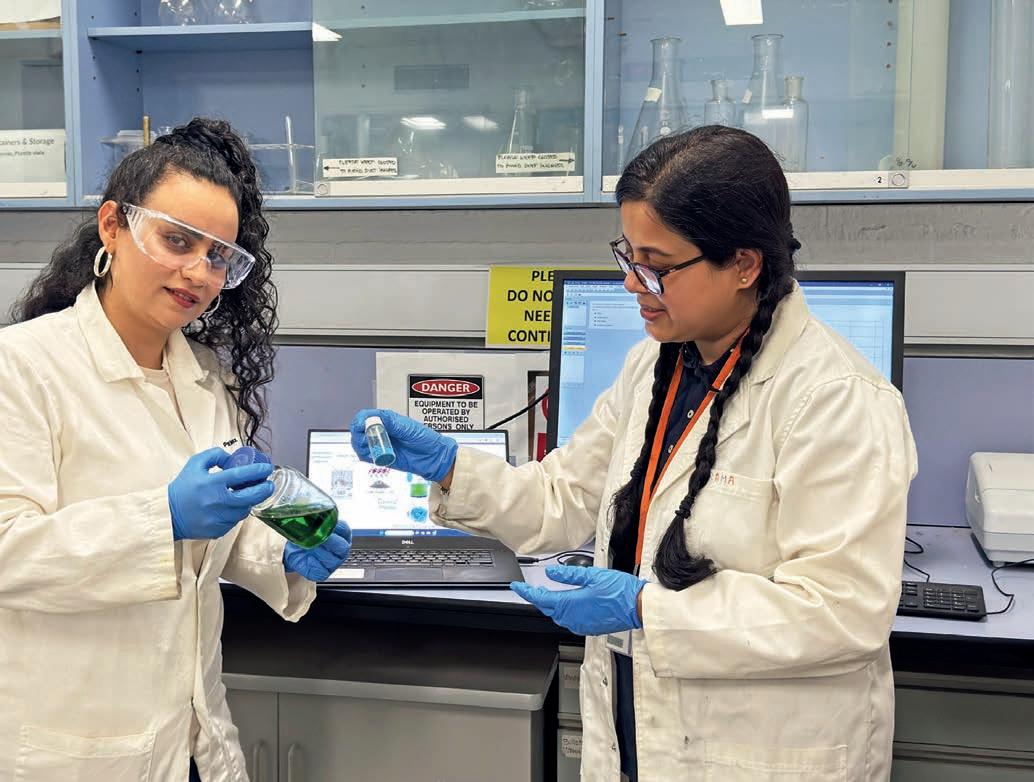
A Monash University research team has developed a new approach to the sustainable recovery of valuable metals from disposed lithium-ion batteries.
Sustainability is a cornerstone of Monash University’s many education programs.
e concept spearheads the various research projects of Dr Parama Banerjee, Senior Lecturer with the Monash Department of Chemical and Biological Engineering.
“As an organisation, Monash pledges for a sustainable future,” Parama says. “Sustainability as an idea is taught from the very fi rst semester in various bachelors’ degrees and continues through different courses. It is also embedded in our higher research curricula.”
Parama leads a team of ‘sustainable engineers’ who research recycling and
circular economy opportunities for various waste streams – from legacy wastes to solar panels.
Disposed lithium-ion batteries have been a focus of the team, but particularly for Dr Parisa Biniaz, a recent PhD graduate and Lecturer in Chemical and Biological Engineering at Monash University.
“My research focuses on recycling lithium-ion batteries,” Parisa says. “ is research is critical as battery waste continues to grow across Australia, bringing both environmental risks and significant opportunities to recover valuable materials.”
According to Parisa and Parama, close to 3000 tonnes of lithium-ion batteries
are produced in Australia annually. When these batteries are disposed of –typically in landfi ll – they can leak metal substances which pose a range of risks to the surrounding environment.
“Lithium-ion batteries contain cobalt, nickel, and manganese,” Parama says. “Some of these materials are carcinogenic. When batteries are sent to landfi ll, these toxins can leach into the soil and contaminate groundwater. is eventually reaches our marine environments and negatively impacts our flora and fauna.
“ ey also contain electrolytes which can become explosive under certain conditions.”
ese environmental risks can also carry consequences for the country’s economy and the health of specific regional and cultural communities.
“People generally dispose of these batteries in landfi lls in rural areas,” Parama says. “Communities within close proximity of these landfi lls will be more affected by the waste’s toxicity than other groups.
“Some of the metals used in lithium-ion batteries are also quite scarce and will vanish from the earth in the next 50 years due to our mining of them.
“Recovering these resources from disposed batteries is crucial. It will allow us to reuse the metals in other products, and as a result we won’t have to rely exclusively on virgin mining.”
Traditionally, two methods have been used to recover metals from spent batteries. Pyrometallurgy uses extremely high temperatures to extract metals, while hydrometallurgy relies on leaching – a process in which metals are dissolved into a liquid solvent to enable their separation and recovery at high purity.
“Recovering these resources from disposed batteries is crucial. It will allow us to reuse the metals in other products, and as a result we won’t have to rely exclusively on virgin mining to access them.”
Dr Parisa Biniaz, PhD graduate and Lecturer, Monash University
Parisa has developed a new approach to hydrometallurgy through a novel and more sustainable solvent known as a deep eutectic solvent.
“ e deep eutectic solvent is much less toxic than the harsh acids commonly used in conventional hydrometallurgy,” Parisa says.
“We can also employ it at much lower temperatures than those required in pyrometallurgical processing.
“ e method that we use to apply the solvent is still leaching, but it’s easier to implement and more versatile, so it’s more sustainable.”

is versatility means the solvent can recover metals in different ways in line with industry requirements.
“ e recovered metals can be recovered using a range of downstream techniques, including membrane-based separation, electrochemical separation – with each approach offering different outcomes,” Parisa says. “ is all depends on how the metals will be used following their recovery. And when the metals are recovered, they are extremely pure, as if they’ve been freshly mined.”
Small-scale tests of the solvent have been successful in extracting metals from disposed lithium-ion batteries, making this a crucial breakthrough in metal recovery. e next step is scaling up for commercial viability.
“We’ve done everything in the lab with great results, but a scale-up study must be conducted,” Parama says. “ is will also include fi nding suppliers who can provide the solvent’s ingredients in bulk quantities.
“ e solvent composition is also part of Monash’s intellectual property, so distributing the solvent will require the discussion of licensing and more.”
Parisa and Parama are excited by the possibility of refi ning the solvent further for application to other waste types and resource recovery.
“We’re very excited to continue advancing this work and delivering meaningful impact,” Parisa says. “ is is just the fi rst phase. We expect to further optimise the solvent over time, enhance its sustainability, and improve its capacity to be reused across multiple recovery cycles.
“To us, that is always the next step. Practicality and sustainability are as important as pure innovation in any sector. at is the future of technology.” WMR
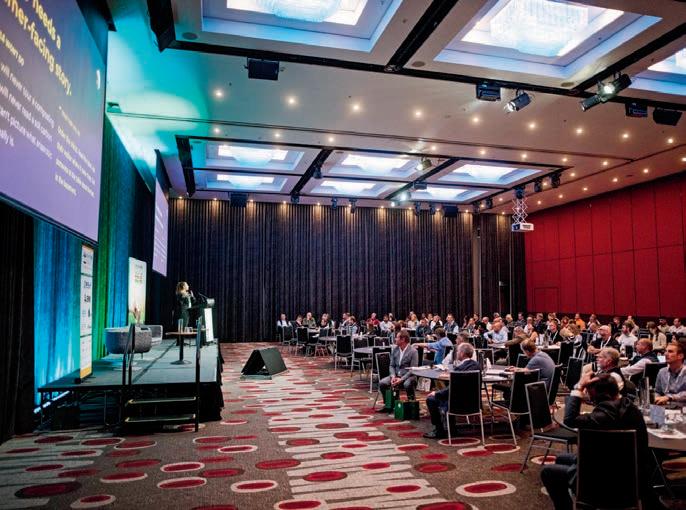
e Australian Organics Recycling Association’s 2026 Annual Conference brought together industry leaders, advocates, and policymakers to discuss
“saving our soils”.
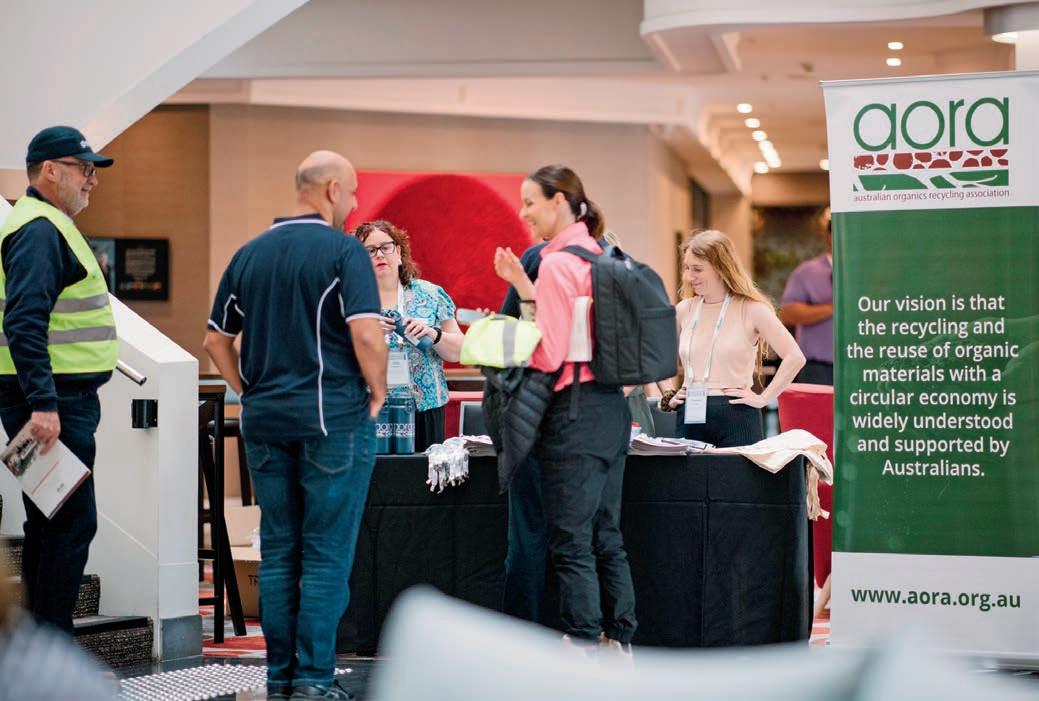
Thirteen years ago, the Australian Organics Recycling Association (AORA) held its fi rst conference in Sydney. e organisation had only been established a year prior, with the mission to promote the recycling and reuse of organic materials to stakeholders in the waste management sector and beyond.
e AORA conference was key to the mission then and remains integral now.
“ e AORA Annual Conference is about gathering a whole range of views and expertise from a wide variety of industry participants to help us develop strategies and solutions for the problems we face,” says John McKew, National Executive Officer of AORA since 2022.
Since 2023, the event has moved up and down Australia’s East Coast. Despite the location changes, John has noticed the five conferences he has attended since his
appointment have been guided by an over arching theme.
“ ere’s been a continuing discussion around contamination – particularly Food Organics and Garden Organics (FOGO) streams, and how the industry can investigate solutions for the issue,” he says. “It’s important to realise that the contamination problem is a particularly challenging issue to resolve.
“Every year, there is an evolution in how the issue is being addressed, which in turn means more comprehensive remedies.”
e AORA 2026 Annual Conference discussed this issue under the theme of ‘Compost for life: Saving our Soils’, focusing on compost’s role in soil regeneration, waste reduction, and the circular economy. is was explored through an agenda consisting of
equipment demonstrations, presentation speakers and panels, and an exhibition floor for companies in the sector to showcase their value propositions.
John says the conference’s agenda was underpinned by AORA’s five operational pillars – advocacy, education, communication, collaboration, and innovation.
“When I think about any part of the conference, whether it be the speaker agenda, demonstration day, or even the post-event activities, I am thinking about them in the context of our five pillars,” he says.
“We work hard to facilitate discussions driven by these pillars. And given the nature of the industry and those who attend the event, they are always present.”
is year’s conference included presentations on circular economy
success stories, soil health, modern FOGO practices, and the latest composting news. Speakers hailed from both domestic and international waste companies, environmental engineering groups, government regulators, and educational institutions.
Many of the discussions and proposed solutions to waste contamination and soil health were innovative, as was the event’s demonstration day, which showcased industry equipment and machinery, some of which is specifically designed to help address the contamination issue.
“ e conference’s demonstration day is always an excellent display of new hardware and equipment which is being brought to the market to help with relevant issues in the sector,” John says.
“Since AORA is a small peak industry body, we see it as our job to provide a platform for innovation in this way.
“We may not be doing it ourselves, but we are bringing people together and exposing them to technology which could bolster their operations.”
Bringing industry together is John’s favourite aspect of the entire conference.
“Our event has the capacity to gather commercial competitors,” he says.
“ e collaboration that ensues is fantastic. We see it in our conference room, where they share insights and experiences, and we see it on our
exhibition floor, where they catch up and build relationships.
“ ere are a lot of competing machinery manufacturers who come to the event, but when they’re here, they’ll have a meal together and chat. ey discuss what they observe in the industry, and that’s how solutions start to get made.”
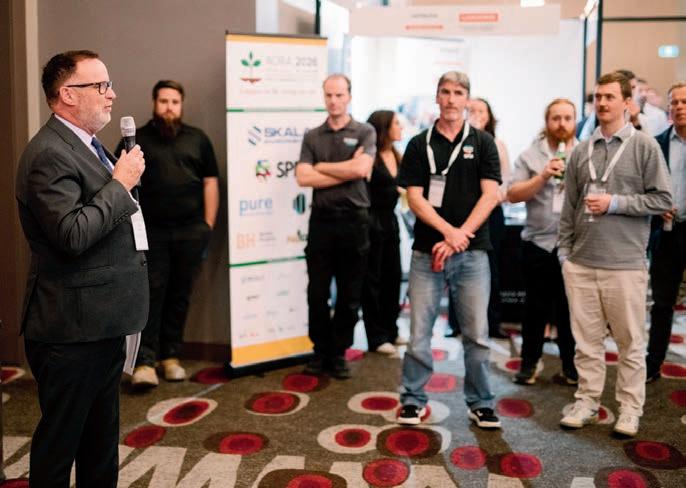
John felt this year’s conference marked a shi in its outreach, in line with AORA’s advocacy for solutions in the waste sector which is gaining traction with broader stakeholder groups.
“Two years ago, we decided that AORA had to take a formal position on the contamination issue,” John says. “We said that the level of contamination of feedstock streams going into organics processing facilities cannot be higher than two per cent. at position is now
gaining momentum and acceptance, and AORA is becoming involved in broader conversations with other industries, governments, and regulators.
“Participation from these groups in our conferences is increasing, too. State agencies are listening to what’s going on in the sector on a fundamental level, by listening to what is said at our event, and they are the ones who can influence policy in the space.”
John believes as more people recognise the conference’s agenda, and conversations around the waste sector mature, both the event and the industry’s challenges will appear more legitimate to more people.
is growing recognition of the waste industry and its importance is exactly what John wants people to take away from the AORA Annual Conference.
“ e organic’s recycling industry is one of significant value and importance because of what it contributes,” he says. “It is a problem-solving industry because of the issues it addresses, and it is a valueadding industry because of the solutions it offers. And through these efforts, we are a real economic contributor.
“In 2023-24 the industry achieved more than $2.6 billion in turnover and employs more than 5300 people, and that’s growing year on year. I don’t think anyone outside of this industry would realise how much we do, so getting our messages out, and educating the general public of our work, is vital. e value-adding this industry achieves from essentially a waste stream is impressive.” WMR
For more information, visit www. aora.org.au
As sustainability and circular economy priorities intensify, resource recovery leaders are rede ning waste as opportunity. In Tasmania, Dulverton Waste Management is delivering smarter, more sustainable waste solutions.
Dulverton Waste Management (DWM) has built a reputation as a resource recovery leader in Tasmania, grounded in a mix of innovation, measurable environmental performance and regional collaboration. Since the early 1990s, DWM has been a state leader in resource recovery, built on a foundation of regional collaboration and innovation. Originally formed by the Mersey Leven councils – Devonport,
Kentish, Latrobe, Penguin and Ulverstone – to solve shared waste challenges, DWM has evolved from a local partnership into an authority and a role model for the industry.
Beyond serving residents across its owner councils, DWM supports local industry by managing a diverse range of commercial, industrial, construction, and demolition waste. Its reputation is built on results rather than rhetoric.
DWM’s landfi ll has earned national acclaim, including the Waste Management Association of Australia’s Landfi ll Excellence Award for innovation and environmental impact. is recognition highlights a commitment to exceeding basic compliance in favour of industry best practices – a status reinforced by DWM’s leadership in organics recovery and landfi ll diversion.
DWM operates one of Tasmania’s largest composting operations and has continued to invest in advanced infrastructure. In July 2024 it celebrated the opening of a state-of-the-art organics facility capable of processing tens of thousands of tonnes into reusable compost annually rather than sending it to landfi ll.
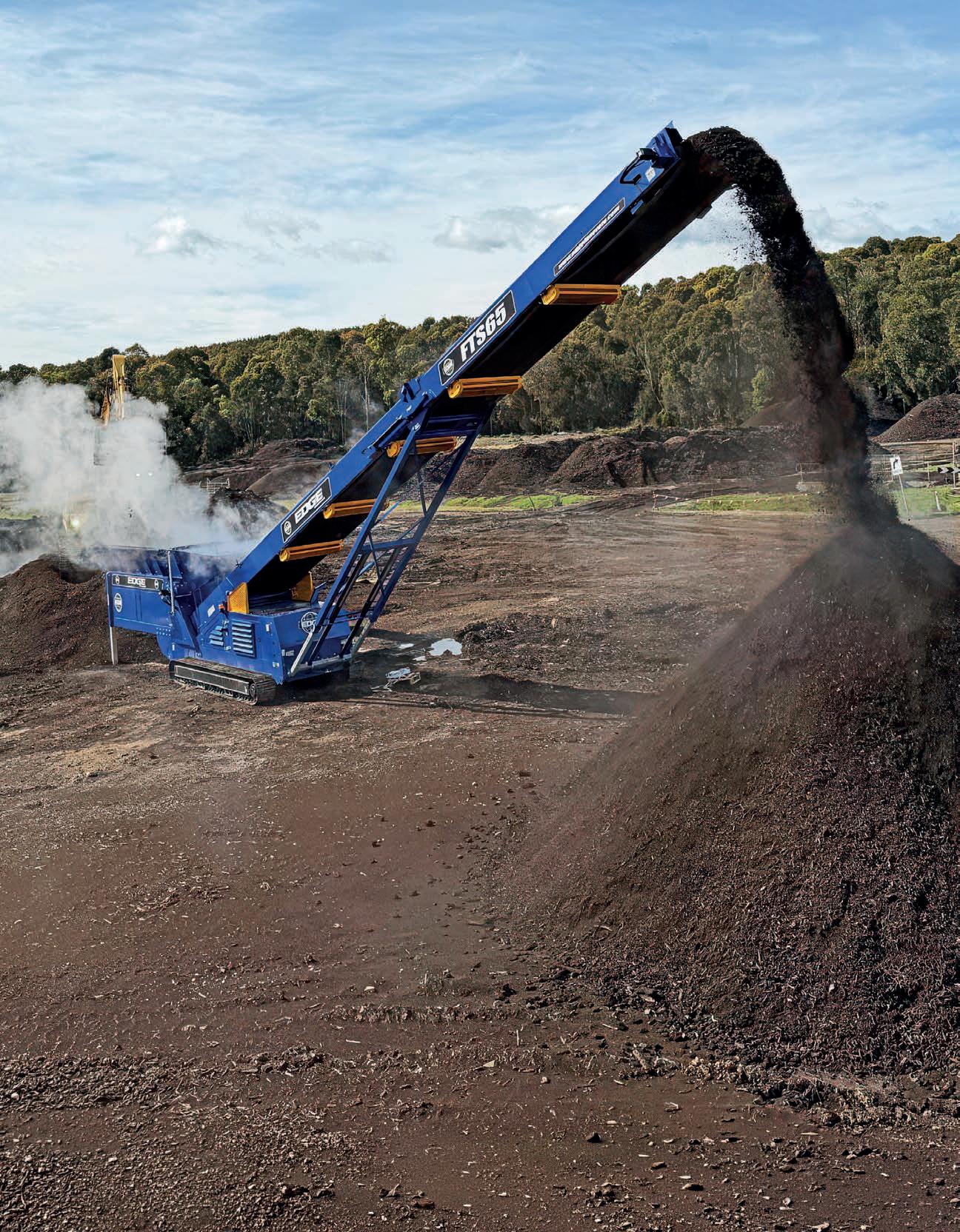
When the organisation wanted to improve the efficiency and productivity of its thriving composting operations, it turned to an EDGE Innovate FTS65 Mulch Master from organics recycling experts FOCUS Enviro.
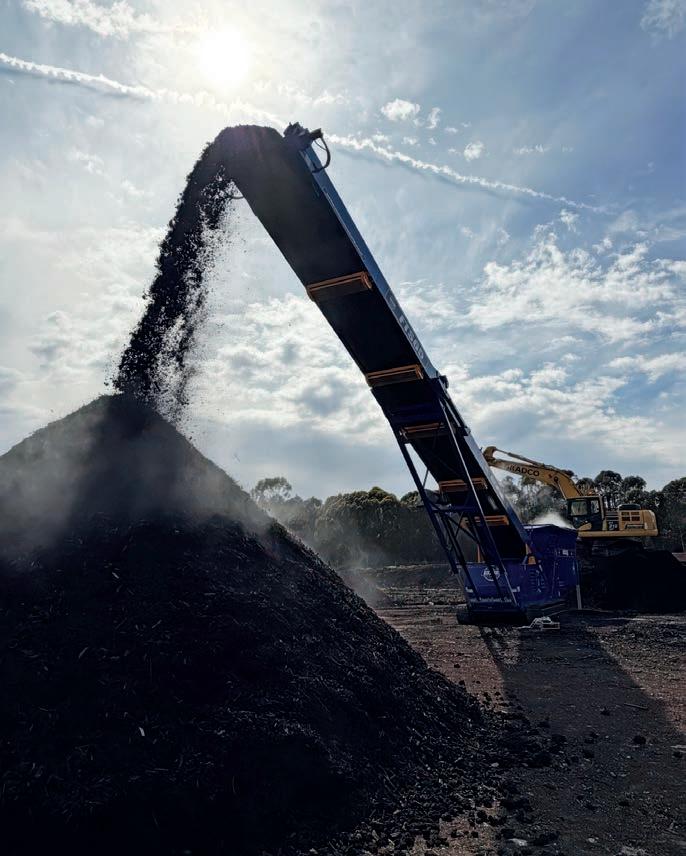
e EDGE FTS65 Mulch Master is a robust, high-capacity tracked conveyor designed specifically for handling organic materials such as mulch, green waste, and compost.
Matt Layton, Chief Operations Manager at Dulverton Waste Management, says integrating the Mulch Master into the workflow has allowed DWM to streamline material handling across its sites, reducing reliance on traditional machinery such as loaders, for stockpiling and transferring material.
He says one of the most immediate benefits has been increased productivity.
“ e FTS65 allows for continuous, highvolume material movement, enabling the team to process and stockpile compost more efficiently than before. is has minimised bottlenecks, particularly during peak processing periods, and improved overall site throughput,” Matt says. “As a result, DWM has been able to handle larger volumes of organic waste without the need for additional labour or equipment.”
Another key advantage of the EDGE FTS65 Mulch Master is the reduction in operating costs. By using the conveyor system to move and stack material, DWM has lowered fuel consumption and machine wear associated with loader use. is not only cuts day-to-day expenses, but also extends the lifespan of existing machinery, contributing to long-term cost savings.
FOCUS Enviro’s Ryan McParland says the Mulch Master was designed specifically to tackle light, bulky materials such as compost and mulch.
“Its consistent material flow, aeration, and blending capabilities improve
Dulverton Waste Management has taken out the Waste Management Association of Australia’s Land ll Excellence Award for innovation and environmental impact.
product quality while reducing fuel consumption and space requirements,” Ryan says.
Safety has also been enhanced. With fewer loaders required to move material around the Dulverton site, there is less vehicle interaction and reduced risk of accidents. Ryan says the FTS65’s design allows for controlled, consistent material placement, creating safer and more stable stockpiles while minimising manual intervention.
Environmental performance has also improved. e efficient handling and stacking of mulch reduces material degradation and contamination, ensuring a higher-quality product.
Additionally, lower fuel usage contributes to reduced emissions, aligning with DWM’s sustainability goals.
Matt says the partnership with FOCUS Enviro has been instrumental in the successful implementation of the Mulch Master.
“ eir expertise in environmental equipment ensured that we selected the right machine for our operational needs,
and their ongoing support has helped maximise the value of the investment,” he says.
“Overall, the addition of the EDGE Innovate FTS65 Mulch Master has strengthened Dulverton Waste Management’s ability to deliver efficient, safe, and environmentally responsible waste processing services.
“It positions the company well for future growth while reinforcing its role as a leader in sustainable waste management practices.”
Matt reports impressive results: usable area has increased by 60 per cent, and operators are achieving 350 cubic metres per hour at only 30 per cent machine capacity.
Currently, the only factor limiting higher output is the speed of loader movement.
“I want to acknowledge Ryan McParland and the FOCUS team,” he says. “Keep up the good work.” WMR
For more information, visit www.focusenviro.com.au

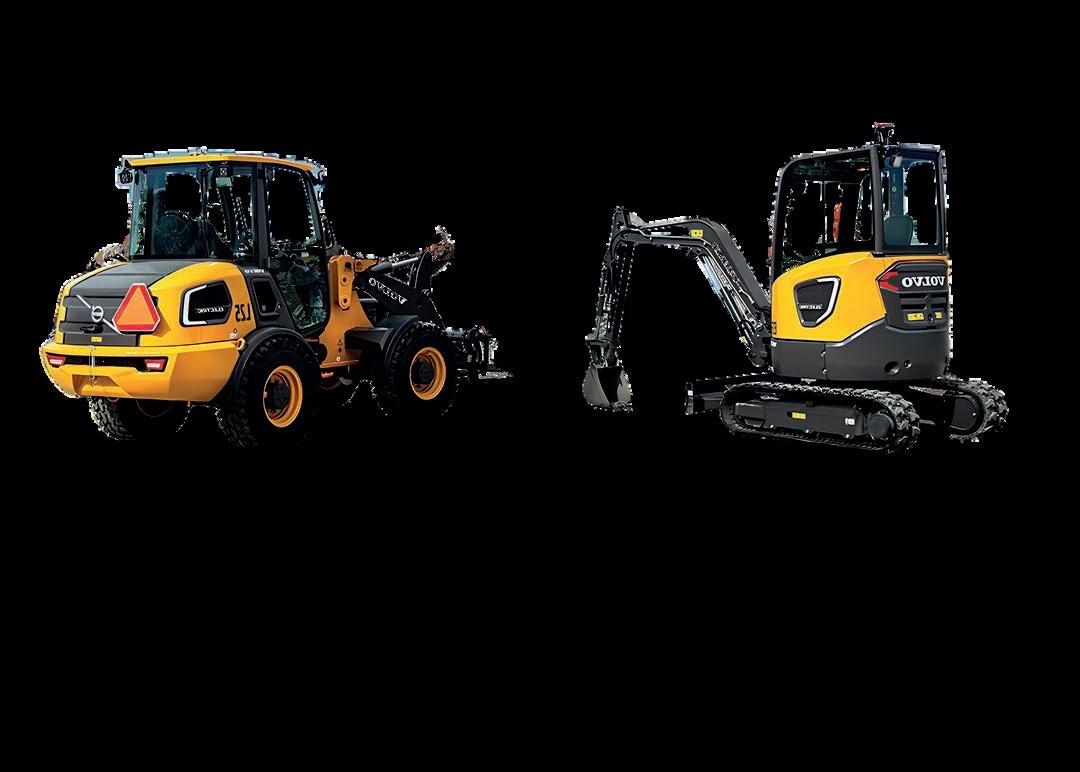
Electric Leadership
Volvo leads in sustainable construction
Zero Emissions
Machines run clean and efficient
Safety First
Designed with top safety standards
High Productivity
Delivers powerful, precise performance
Smart Technology
Sustainable Focus
Cutting-edge features enhance control
Built to support a greener future
Volvo's technology utilises battery power to achieve zero tailpipe emissions and remarkably low noise levels.
It delivers all the performance you need for demanding construction tasks without compromising on sustainability.



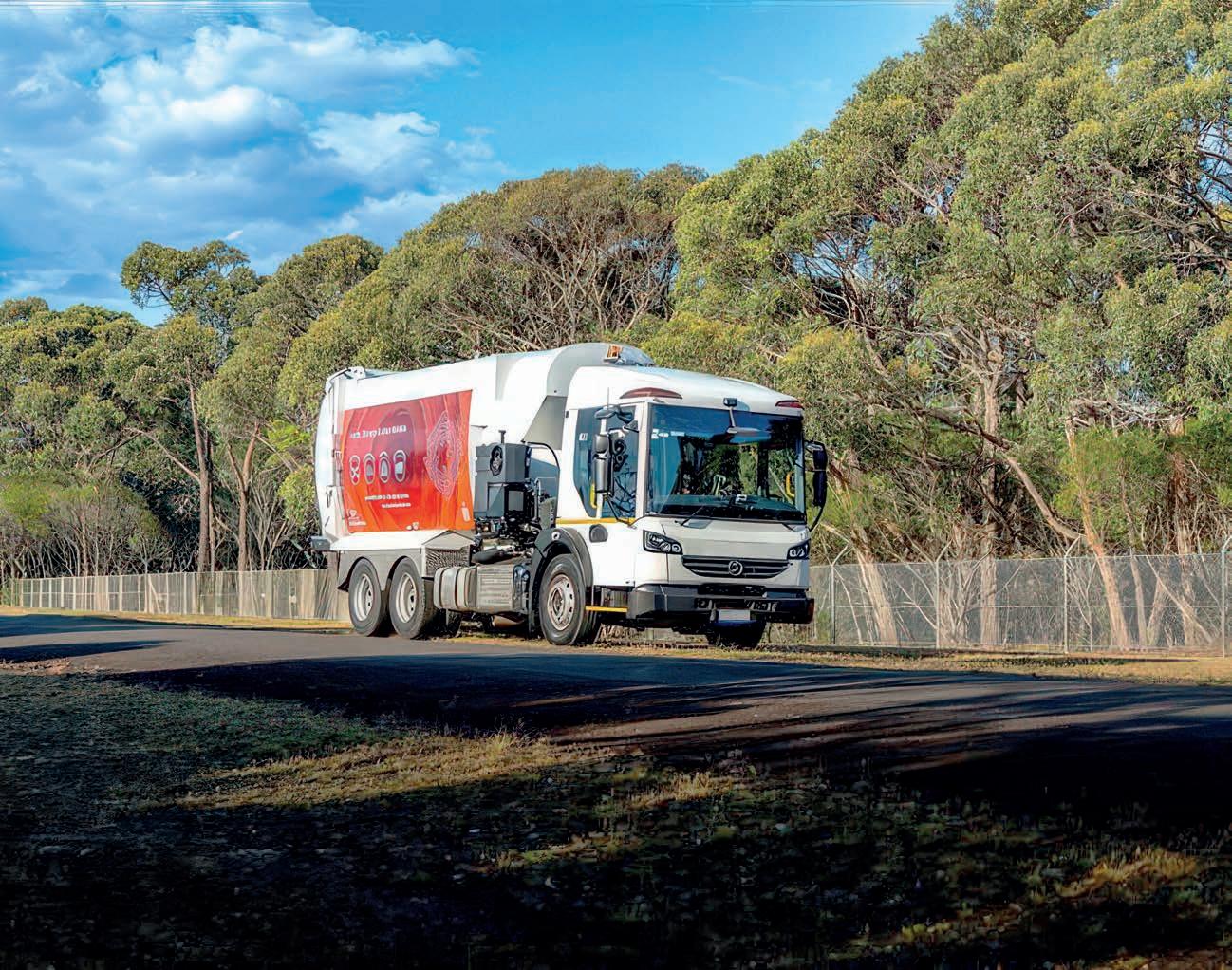







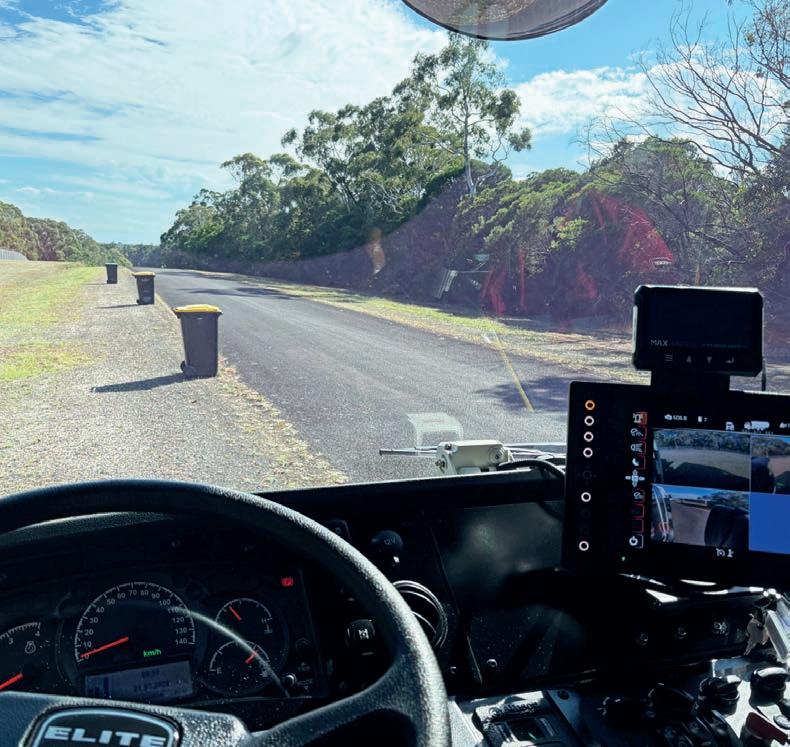
e demonstration day was a chance to get behind the wheel and get a tiny sense of what life must be like for garbage truck drivers.
large mirrors and dual controls stand out. e low-riding bright yellow step on either side also catches the eye.
Unlike Penske’s big Western Star Prime Mover parked further down the road, stepping into the Dennis Eagle truck is exactly what it sounds like. ere is no climbing. e entry to the truck is low to the kerb, the step-in more akin to walking onto a bus than a truck.
Kevin says one of the biggest selling points for the truck is its safety, including a five-star direct vision rating as awarded by Transport For London, which is driven by the low seating position and the clever use of glass that make it possible for the Dennis Eagle driver to look directly into the eyes of pedestrians passing in front of the truck.
“So, you can see them face to face, and maybe they can look at you face to face too. Once you’ve made that eye contact, the chances of having a collision with them, it’s almost reduced to zero,” he says.
“So that, in my opinion, is a massive selling feature for a council – they can say, ‘hey, we’re looking a er our ratepayers, and we’re aiming for zero incidents’.”
As we take a look around the outside of the truck, Matt showcases the thought that has gone into make the machine as user-friendly as possible.
All of the daily checks, the oil, coolant, dipstick, fuel fi lter and power steering fluid can be found on the le -hand side, closest to the kerb, clearly labelled, and easily accessible.
He points out that in Australia, the Dennis Eagle is fitted with the Cummins ISB Euro Six engine and Allison transmission. Both of these companies have a strong presence in the country, which means parts and service are easy to come by – and the engines are familiar to service staff.
In the United Kingdom the Dennis Eagle gets a Volvo engine, as Volvo engines are more common there.
Matt says going from the previous ISL 9 litre engine to the 6.7 litre Cummins engine had saved about 13 per cent on fuel, and the 1100 Newton-metres of torque meant plenty of power to move off the line going from bin to bin all day.
e trucks also have Dana axles for the front and drive combinations
and Hendrickson takes care of the suspension with parabolic springs in the front, with four bellow air assist and air suspension in the rear supported by telescopic dampers.
Extra care has been taken to ensure the Australian Dennis Eagle is designed with airflow in mind, with air directed onto the engine and the brakes to ensure both are more than up to the job of working in Australia’s hot summers.
When the time arrives to jump in and tackle the wheelie bin challenge, it quickly becomes clear the interior design of the cab has been created with the driver, and his role, in mind.
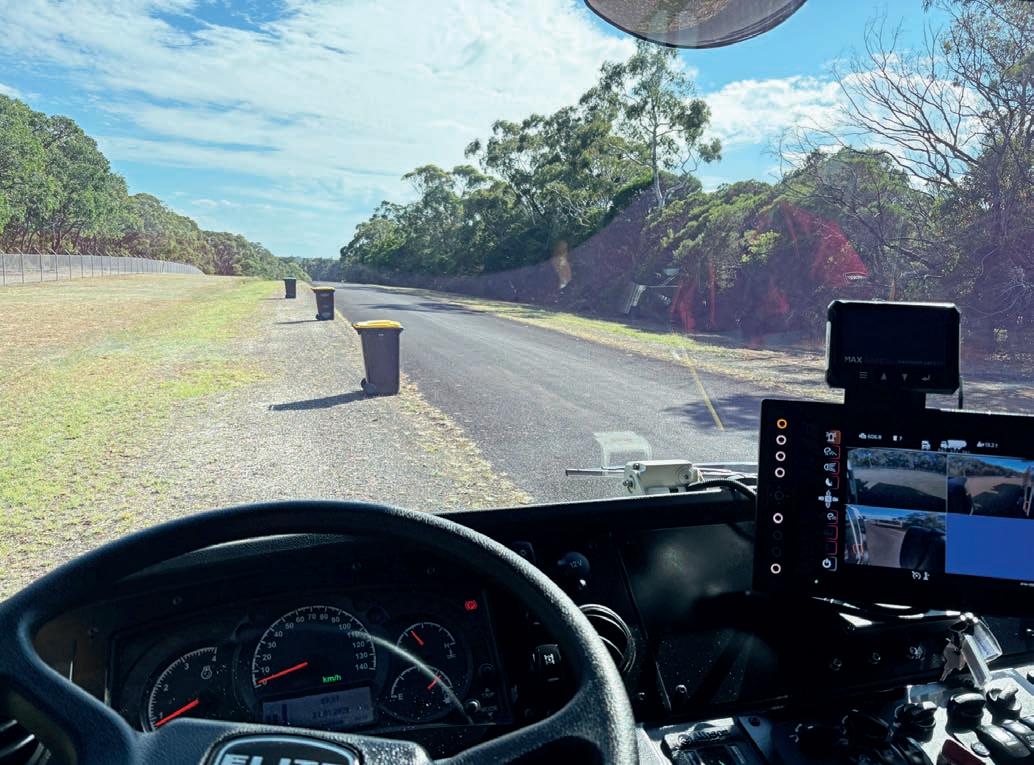
e floor of the cab is perfectly fl at. ere’s steering on both the le and right hand side of the truck, with a central screen showing a variety of camera views that can be swivelled to suit whichever driving position is needed at the time.
An abundance of storage nooks, coat hooks and a built-in fridge capture the sense that this is the driver’s office for the day, a place where work is done, comfortably.
ese trucks are highly customisable, with the newest models featuring an upgraded digital dash, and all of the expected safety features, including lane departure.
e Bucher body on this set up means the weight system has been able to be integrated into the cab, so the driver is able to see if they are hitting the limit and it’s time to return to base and unload.
Operation of the bin collecting arm is via a joystick just in front of the driver’s armrest. Having never operated it before it takes a second to get the brain thinking right, but a er a bit of trial and error, and time spent looking in the mirrors, the movement of the arm starts to become intuitive.
What took this writer a little longer was trying to get his “eye” in and figuring out where the bin was in relation to the arm.
Starting the truck and rolling forward to a couple of bins awaiting pick up, it becomes clear just how talented the local ‘garbo’ is in the hilly Victorian suburb I call home.
While no bins were knocked over in this challenge, it’s fair to say at a rate of one bin every five minutes, no council would be hiring this writer just yet.
To give that context, Matt points out that some of the best operators will pick up 220 bins an hour.
While most of a garbage truck’s daily chores involve short, sharp, stops and
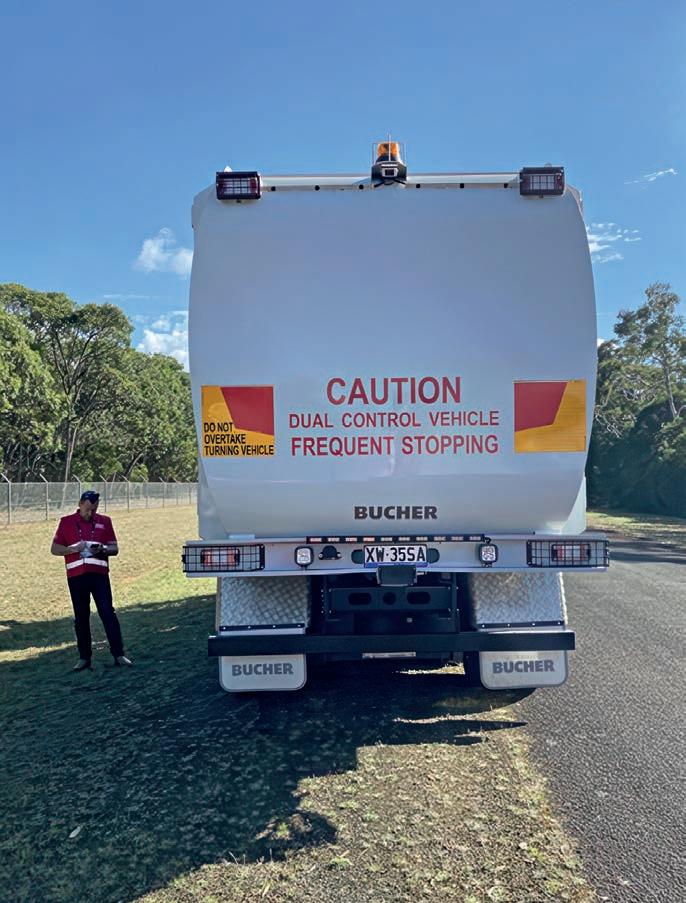
starts – getting to and from designated runs and returning to tip a load means the trucks need to be able to deal with highways.
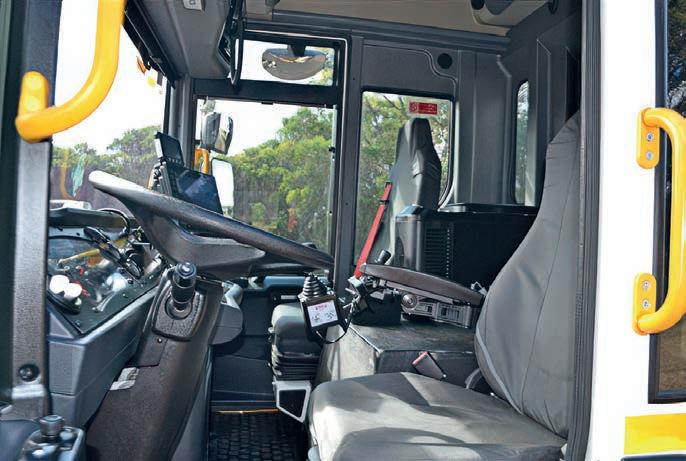
Putting the foot down and heading out on to the test track the adjustable air suspended seat makes for a comfortable ride. e exhaust brake works smoothly on a reasonable decline, and the engine is more than capable of bringing the truck back up to speed on the incline, with no noticeable labouring or clunking of the gears.
A er a day of fi rsts, including driving from the le -hand side of a vehicle, picking up wheelie bins and experiencing some of what the Dennis Eagle truck has to offer, it is easy to see why this truck is growing its fan base in the waste market.
It’s also clear that Matt and Kevin’s expertise, friendliness, years of experience and passion for fi nding the best outcome for their customers would be a huge asset for any buyers keen to have Dennis Eagle in their fleet. WMR
For more information, visit www.dennis-eagle.com.au
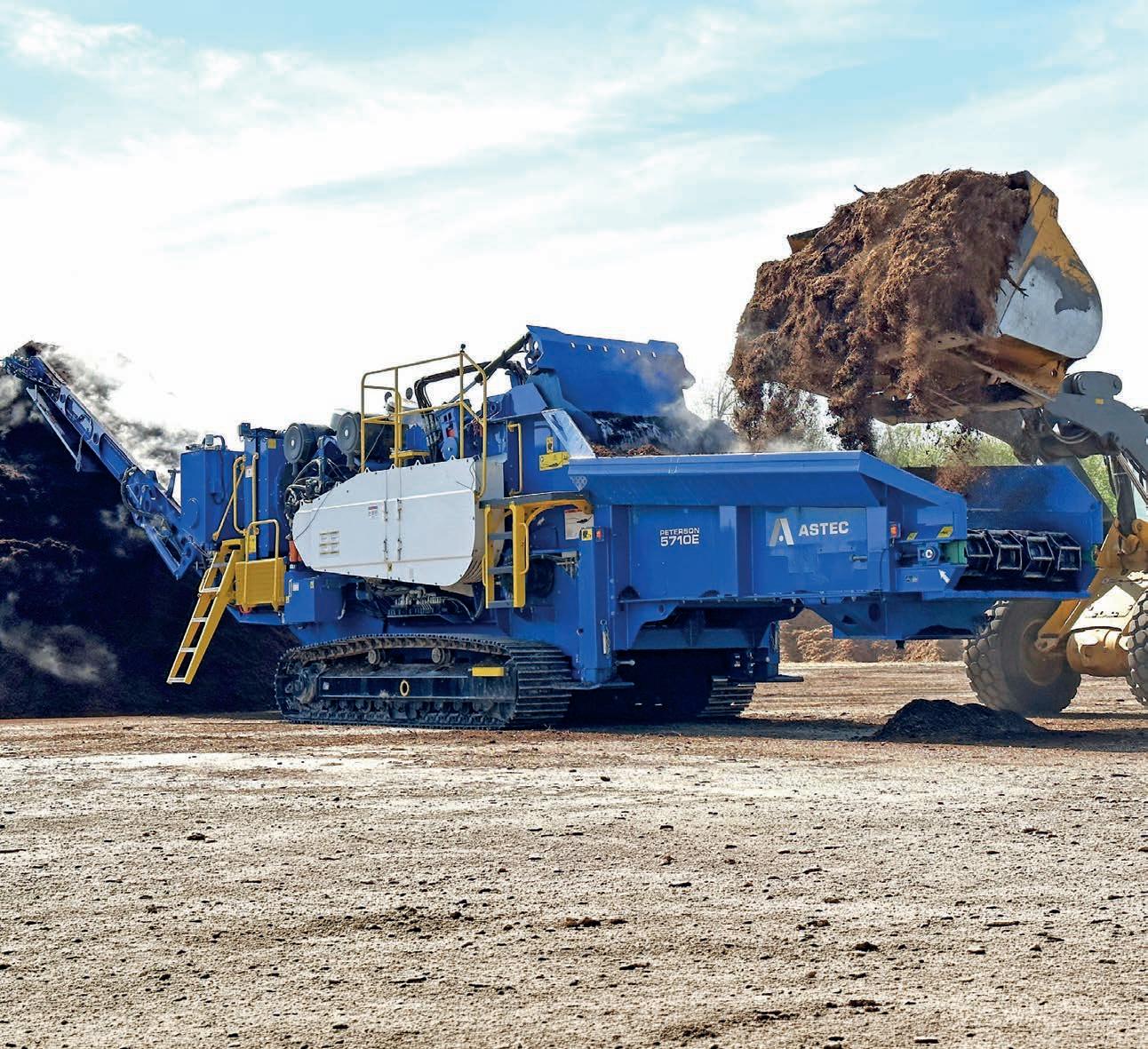
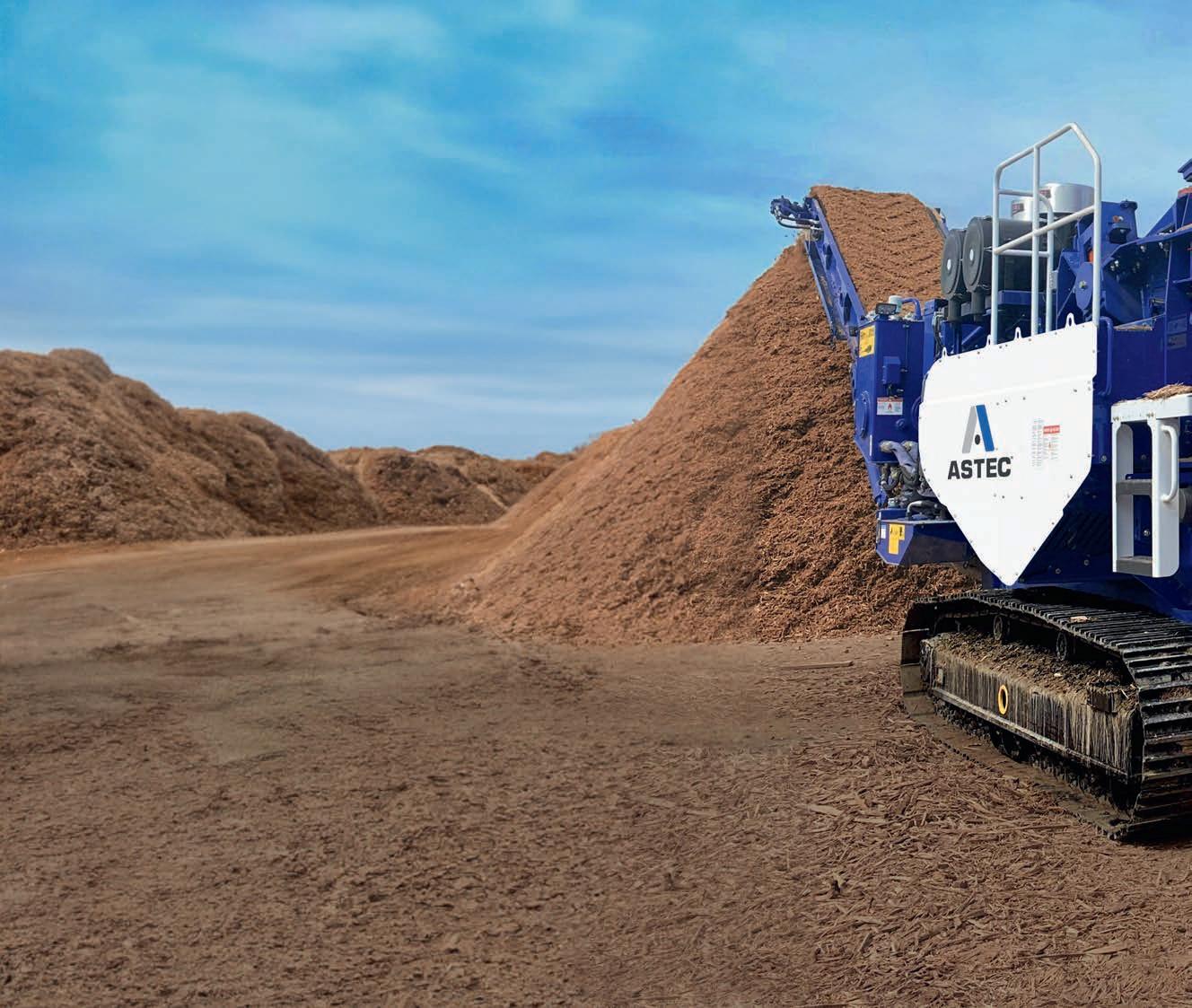
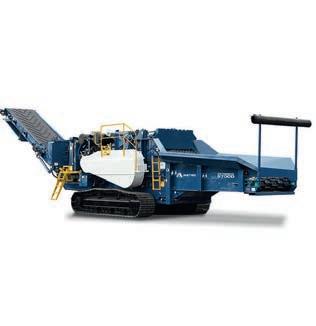
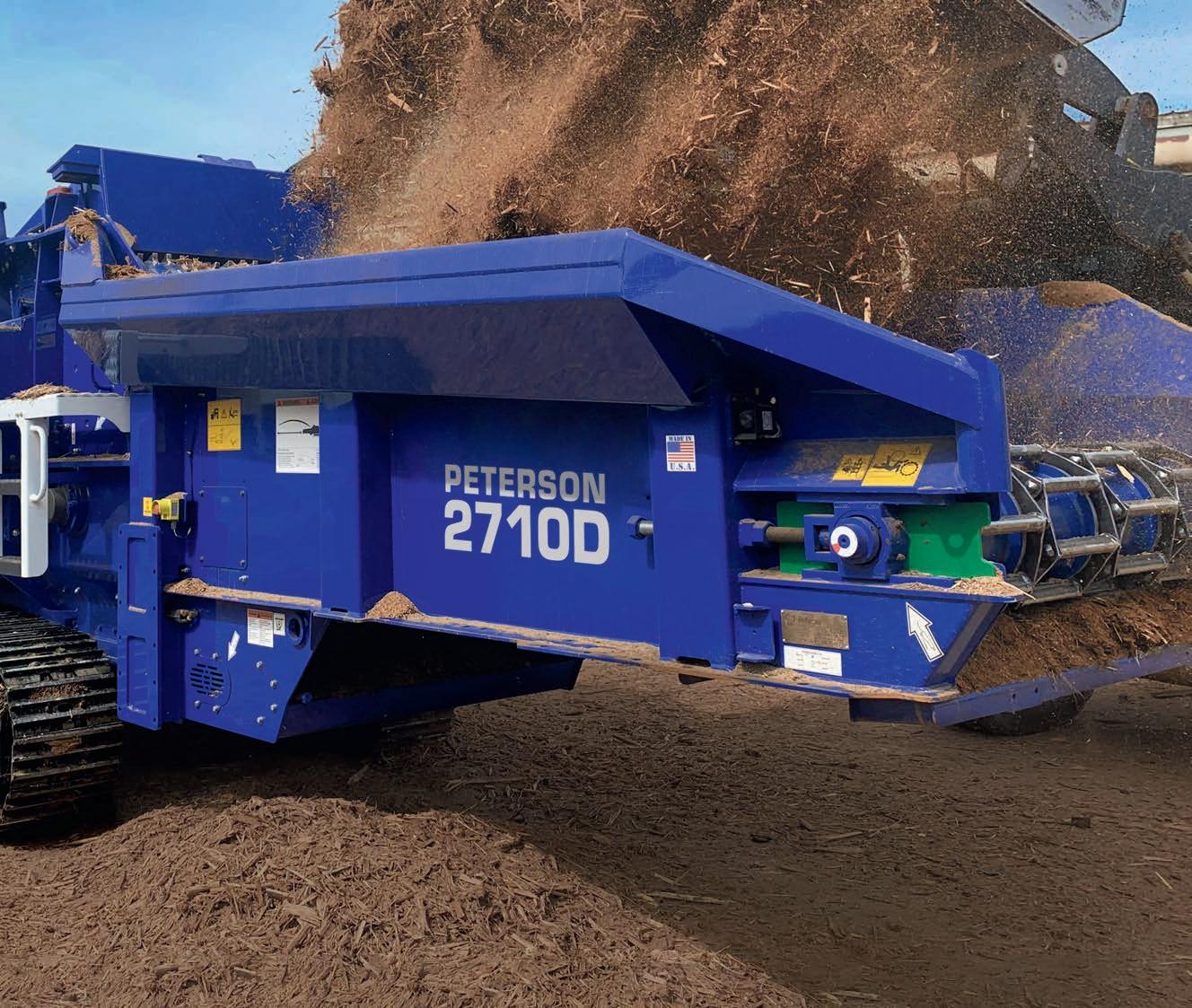
Komatsu Forest recently released the upgraded Peterson 5710E, providing a step forward in high volume grinding.
The Australian resource recovery sector rarely demands a total reinvention of its heavy machinery; instead, it looks for measured evolution that tackles the dual pressures of rising throughput and shrinking maintenance windows.
With the release of the Peterson 5710E tracked horizontal grinder, Komatsu Forest is delivering exactly that – a strategic refi nement of the wellestablished 5710D platform.
Produced by Astec Industries, this new iteration does not attempt to change the fundamental DNA of the machine. Instead, it focuses on the practicalities of high-production environments: inertia, screening efficiency, and the subtle ergonomics of daily servicing.
Brenton Yon, Peterson Specialist at Komatsu Forest, says the 5710D already held a strong reputation in the local market, delivering reliable performance across a variety of demanding conditions.
“ e 5710D proved capable across a wide range of applications, from land clearing to processing contaminated materials,” Brenton says.
“ e 5710E builds on that foundation with targeted upgrades that aim to improve consistency and production. We aren’t looking to fi x what wasn’t broken, but rather to enhance the areas that directly impact an operator’s bottom line.”
e most significant performance gains are found in the heart of the machine.
e 5710E features a redesigned rotor that is eight per cent larger in diameter
and 19 per cent heavier than the previous model. Brenton says this added mass is an engineering choice to increase inertia, which helps the grinder maintain consistent power when it hits a heavy load. In the field, this translates to smoother operation when a contractor is feeding variable or difficult feedstock into the hopper.
To ensure this extra power doesn’t result in a bottleneck, the screening area has been expanded to about 2.93 square metres. is allows processed material to exit the system more efficiently, supporting a higher overall throughput. Control is further refi ned through an updated feed system where new compression roll cylinders provide greater downforce. is improvement ensures
material is better presented to the rotor, maintaining steady production rates even when the material is bulky.
Despite these heavy-duty internal upgrades, the overall machine has been redesigned to reduce its total weight. is weight reduction, paired with improved approach angles for navigating uneven terrain, makes the 5710E particularly attractive for contractors who frequently move equipment between remote job sites.
Usability has also been improved through simplified maintenance protocols. For operators who need to frequently adjust product sizing, the 5710E features a streamlined grate change process that minimises downtime.
Brenton says smaller touches, such as ground-level refuelling, reflect a move toward better safety and accessibility for technicians during routine servicing.
“ e 5710E builds on that foundation with targeted upgrades that aim to improve consistency and production.”
Brenton Yon, Peterson Specialist at Komatsu Forest
“One of the most notable changes in this new model is the redesign of the rotor to increase inertia,” he says. “By making the rotor 19 per cent heavier, we have created a system that maintains more consistent power under load, supporting smoother operation with difficult feedstock.
“ e 5710E also continues to use the proven three-stage grinding process, which emphasises efficient material reduction and consistent output for the end user.
“When combined with the expanded screening area and the Impact Release System, the machine remains perfectly
suited for handling contaminated or challenging materials.”
By retaining the high-performance Caterpillar C32 engine delivering 827 kilowatts, the 5710E delivers the power operators expect, but now it is harnessed by a more efficient and user-friendly delivery system.
Brenton says: “ e 5710E builds on the 5710D foundation with targeted upgrades that aim to improve consistency and production.” WMR
For more information, visit www.komatsuforest.com
Applied Machinery is undergoing a brand refresh to better communicate its recycling division and other industry equipment solutions to the Australian market.
Applied Machinery has a diverse footprint in the Australian market. e Victoria-based distributor has been operational for more than 30 years, fi rst making a name for itself as a machinery dealer specialist in the supply of sheet metal and engineering equipment.
ese operations sustained the business for decades until a change in ownership introduced significant operational variation.
“When my dad came on board in 2012, he put a lot of focus into formalising relationships with specific machine manufacturers overseas,” says Jack Macdonald, Applied Machinery Operations Manager.
“Because of this, we’ve transitioned from being a general dealer to a representative and distributor for certain brands and equipment. is has recently included companies and machines in the recycling space.”
Applied Machinery now distributes a wide variety of products across Australia. Recycling, along with the company’s other industries of interest – such as plastics, fabrication and more – are significant to its operations and is something the team is keen to display.
“Applied Machinery has grown to service a wealth of customers,” Jack says, “and we want to highlight that in the market.”
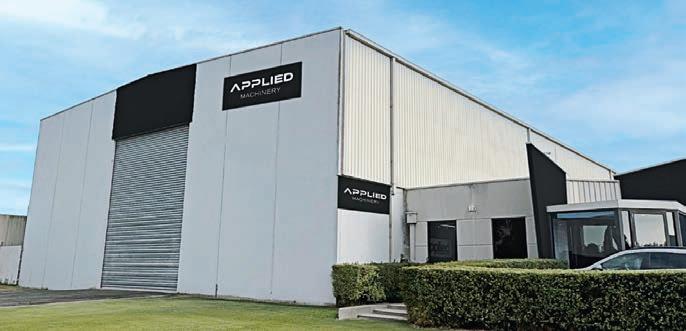
To achieve this, the company is undergoing a rebrand. What began as a way to separate the recycling sector from its other business areas has quickly grown to amplify all company niches in a clear and concise manner.
“At fi rst we wanted to give our recycling work its own identity as that space has contributed a large portion of our customer base,” says Peter Koueik, Recycling Sales Manager. “But in the process, we recognised an opportunity to amplify all facets of our business in a much clearer way through a comprehensive rebrand.”
He says the rebrand aims to communicate the company’s significant past to modern customers, while also providing independent platforms for its distributional capabilities in all industries it operates within.
“We’re encouraging more modernisation in our branding,” Jack says. “We want to bring our heritage into this day and age and give our company a clear voice. It’s currently a bit disjointed, but that will change.
“Our brand has previously been a bit bashful, but as part of the rebrand and showing off everything we’ve done and can do, we want to celebrate our success. We want to beat our chest a little bit.”
e rebrand includes transforming Applied Machinery’s digital presence with assistance from at Marketing Co. (TMC), a specialist marketing fi rm. TMC has redesigned Applied
Machinery’s brand architecture and website, creating individual communication channels for the industries it serves, and setting up separate social media accounts for each specialised industry sector.
“We don’t encourage a business to change its aesthetic or identity just for the sake of it,” says Taegan Kerley, Director of at Marketing Co. “But Applied came to us wanting a clear strategic shi , and the choices we’ve recommended to accomplish this have undergone serious consideration.
“Showcasing Applied’s significant projects across many industries will highlight the scale and capabilities of this business. We will be collaboratively rolling out the different stages, beginning at the start of June.”
Peter says the new look will give customers an overview of Applied Machinery’s impressive operational outreach, while also showing them exactly where to go for their own needs.
“Our recycling customers specifically will have a clearer understanding of the work we’ve done in the industry, and be able to fi nd more information with ease,” he says. “It’s an integral part of Applied Machinery’s rich and successful history.
“ is rebrand will show how far the company has come, and the growth we have undergone.”
WMR
For more information, visit www.appliedmachinery.com.au
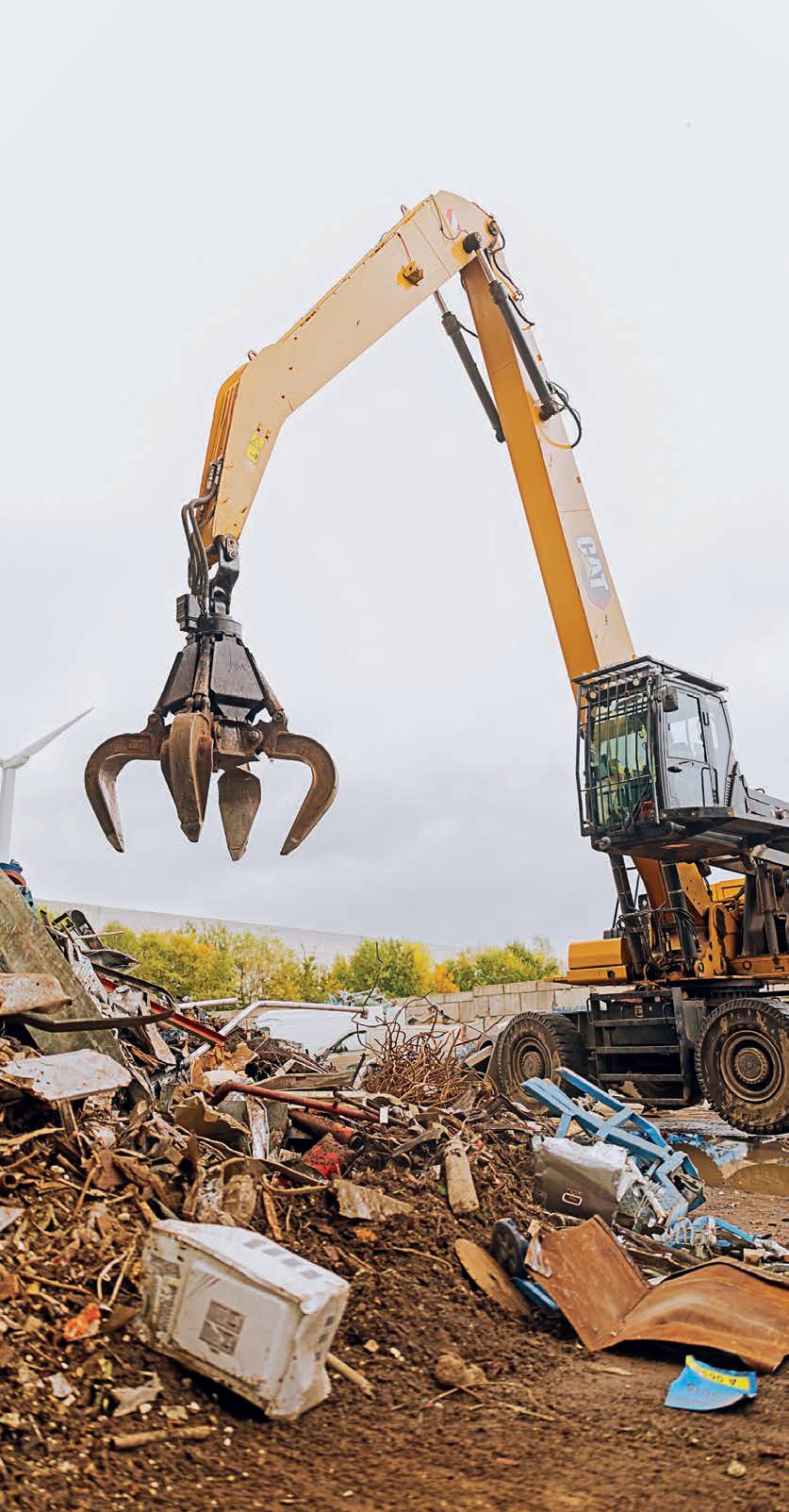
Caterpillar will soon release its upgraded Orange Peel Grapple to the market for e cient and durable waste management applications.
The waste segment in Australia is a core part of Caterpillar’s global business,” says Matthew Blackwood, Caterpillar Senior Sales Representative – Industrial, Waste and Forestry.
“Durable, reliable, and technologyleading are the qualities we strive to be known for at Caterpillar. is is the cornerstone of everything we do – from design and manufacturing to customer support. We develop products and solutions to meet the toughest applications.”
He says waste management, material handling and recycling customers are an important and growing part of Caterpillar’s business in Australia.
“Servicing customers that operate in waste and recycling is integral to Caterpillar,” Matthew says. “As the population grows, and waste management becomes more complex to meet environmental pressures as well as growing demand for material recovery, we want to be there to support our customers through this challenge.
“We want to understand how we can provide better products and solutions to their needs. We have a dedicated range of equipment and attachments for this growing industry.”
An important part of this lineup is Caterpillar’s Orange Peel Grapple – a heavy-duty hydraulic attachment featuring four curved tines. Matthew explains that these grapples are best paired with dedicated waste configuration handlers, such as the MH3024, but they can also be used on excavators to help customers
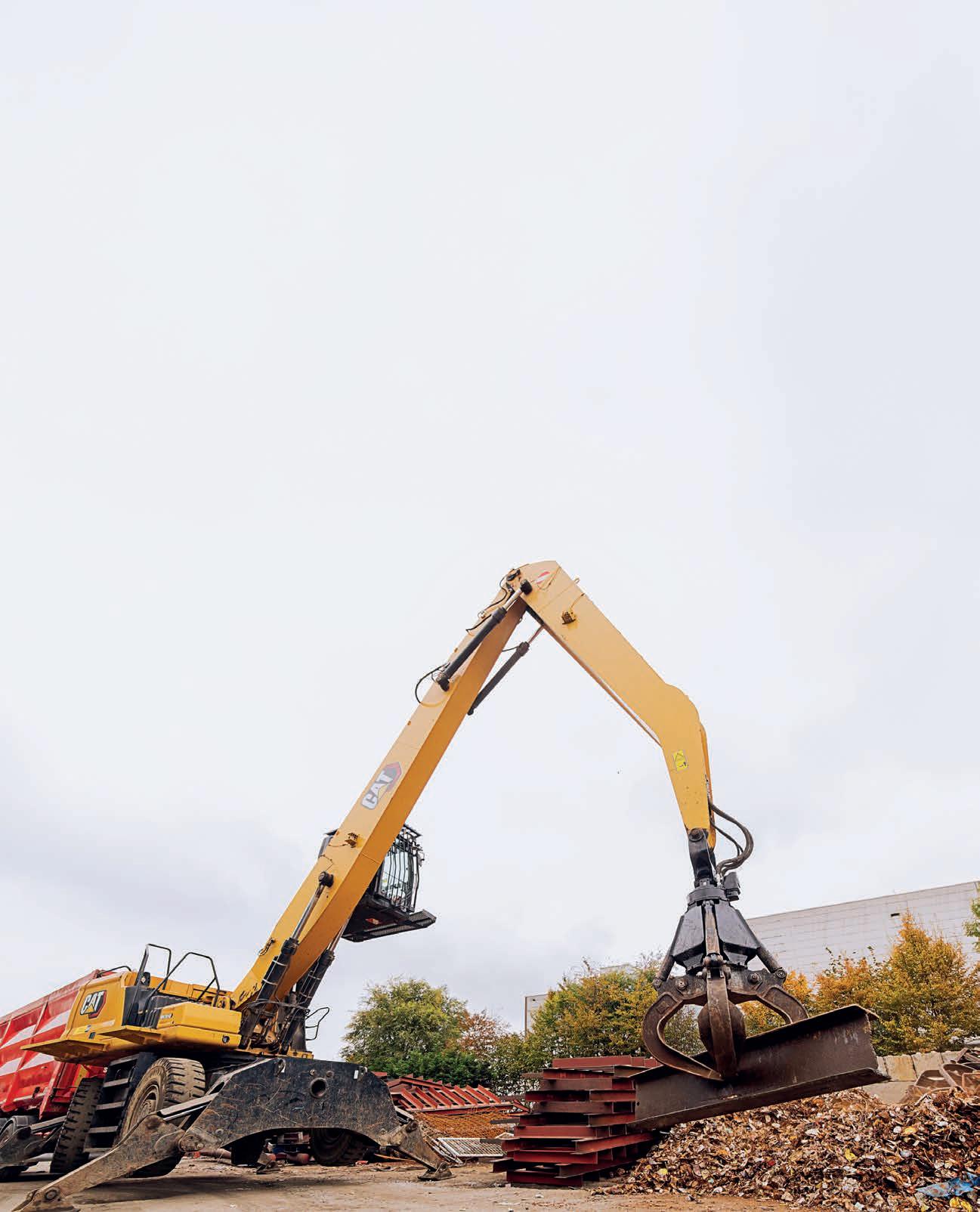
maximise machine versatility, to grab, load and sort material.
“While a normal grapple is designed to pick up a specific product that needs li ing and shi ing, our Orange Peel Grapples are designed to handle irregular shapes and maximise pass volume,” Matthew says.
“Recyclable and scrap materials come in all shapes and sizes, so ease of handling is crucial to productivity, as well as material retention when the grapple is in a closed position.”
While this grapple has been a component of Caterpillar’s product portfolio for years, it has undergone an upgrade, announced during the 2026 CONEXPO-CON/AGG event in Las Vegas earlier this year. is upgraded product – the GSV Orange Peel Grapple – is more efficient, versatile, and durable for operators.
“Based on extensive customer feedback, we targeted performance characteristics, efficiency and versatility for these new GSV models,” Matthew says. “ ese semiopen tine options meet a wide range of customer needs.”
He says the grapple’s refi ned tine curvature improves its overall fi ll factor, while a new rotation system provides higher flow capacity compared to the previous model.
“ ese models offer increased hydraulic flow capacity and cast parts replace welds to improve durability and reduce weight, so operators can move more tonnes per hour more efficiently,” Matthew says.
Additionally, the grapples are designed with a built-in li ing-eye to install high powered magnets for scrap metal applications.
e grapple’s reinforced durability also ensures investment maximisation. Its lighter, force-distributing cast pieces help to prolong the product’s life, while its new abrasion-resistant upper and lower grapple housing stops prevent cylinders from overextending. Easily replaceable cast tine tips, along with
high grade steel construction for inner tines and tips, further contribute to a longer lifespan.
“Operators can’t always influence the volume of material,” Matthew says. “ erefore, uptime and maximising efficiency is crucial. If their machines break down, the waste piles up, putting pressure on the operation to get the backlog cleared. No one wants that.
“Our re-design focuses on durability so that pile-up never happens.”
As the release time for Caterpillar’s grapple draws closer, Matthew and his team are excited to see how customers will integrate the product into their operations. WMR
For more information, visit www.caterpillar.com
e incoming GSV Orange Peel Grapple has been designed to boost e ciency, versatility and durability for operators.
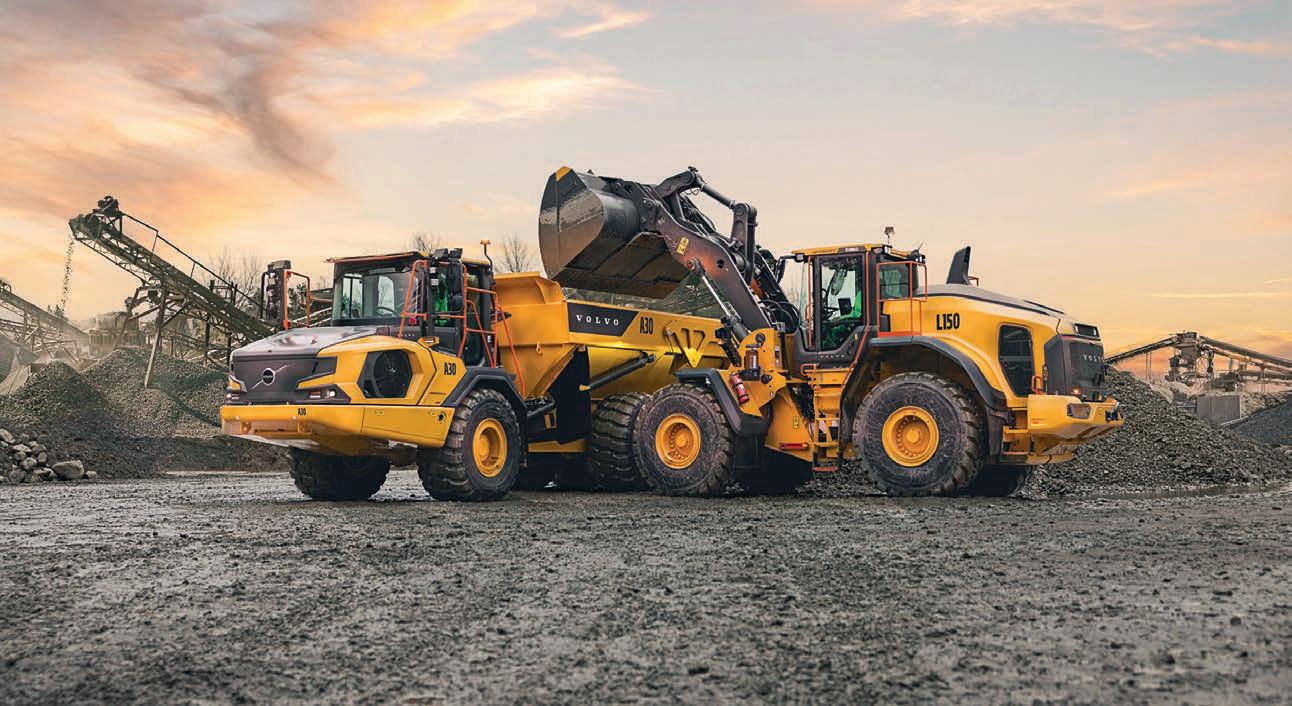
CJD Equipment is distributing the new Volvo K series wheel loaders – designed to boost site productivity and safety – to the Australian market.
The objective is not to fit your operation to the machine it’s to fit the machine into your operation,” says Hayden Grant, Volvo Product and Engineering Manager at CJD.
He says this philosophy is at the heart of the new Volvo K-series wheel loaders, a range designed to redefi ne the roles of moving, sorting, and loading within the waste and recycling industry.
For team at CJD, the K-series represents a shi in focus from raw specifications to total operational harmony.
“ e K Series loaders are not defi ned by horsepower or breakout force,” Hayden says. “ ey are defi ned by how consistently they perform, how effectively they support the operator,
and how seamlessly they integrate into real operations.
“If fleet performance varies shi to shi , or fuel and production data lacks consistency, the issue isn’t specification it’s integration.”
CJD Equipment and Volvo Construction Equipment have partnered in the Australian heavy machinery market for more than 30 years. Over that time, equipment has evolved from mechanical workhorses into intelligent, connected systems.
e Volvo K Series wheel loaders represent a fundamental shi . ey are engineered on a single principle: the machine and the operator operate as one system.
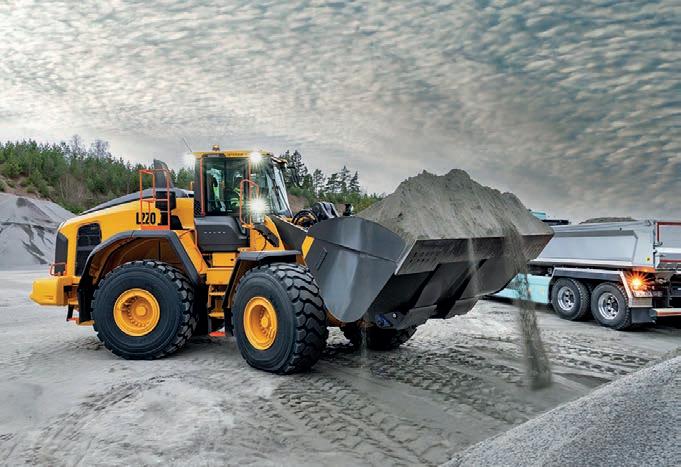
Every input, response, and movement is designed to reduce over-correction, minimise fatigue, and deliver repeatable, measurable performance.
Hayden says in waste and high-cycle environments, variability is where margin is lost.
Variational losses appear as:
• inconsistent output between operators
• fluctuating fuel burn
• declining productivity across a shi
“ e K Series is designed to remove that variability,” Hayden says. “ rough standardised operator interaction and predictable machine response, performance becomes stable, repeatable, and scalable across the fleet.”
is level of consistency does not happen by specification alone. It is achieved through integration.
Before any machine is deployed, CJD conducts a full application review assessing material type, site layout, and load profi le to ensure the machine is correctly matched to the task.
On delivery, operators undergo structured onboarding, familiarisation, and baseline performance benchmarking.
Volvo-certified training is embedded as part of this process, focusing on:
• efficient loading techniques
• understanding machine response
• fuel-conscious operation
• optimising settings and workflows
Operator-specific coaching then reinforces control, efficiency, and correct utilisation ensuring every machine performs to its designed capability.
Safety is integrated into the system, not added to it. e K Series incorporates enhanced visibility, 360-degree camera systems to reduce blind spots, stable loadand-carry balance, and reduced cabin noise and vibration – supporting operator awareness and sustained performance across long shi s.
CJD’s distribution is further strengthened by Volvo Connect, Volvo’s integrated fleet management platform.
Volvo Connect brings machine performance, utilisation, and service data into a single operational view, so decisions are made on how equipment is performing, not how it is assumed to be performing.
Maintenance becomes predictive, not reactive. Service intervals are aligned to real operating conditions, reducing unnecessary downtime and preventing premature wear. Emerging issues are identified early, enabling planned intervention and protecting uptime across the fleet.
At CJD Equipment, support is built around this connected insight.
Data is not just collected it is interpreted. Application specialists translate machine data into operational decisions, aligned to site conditions, material profi les, and workload demands.
Hayden says this visibility also enables more targeted operator development.
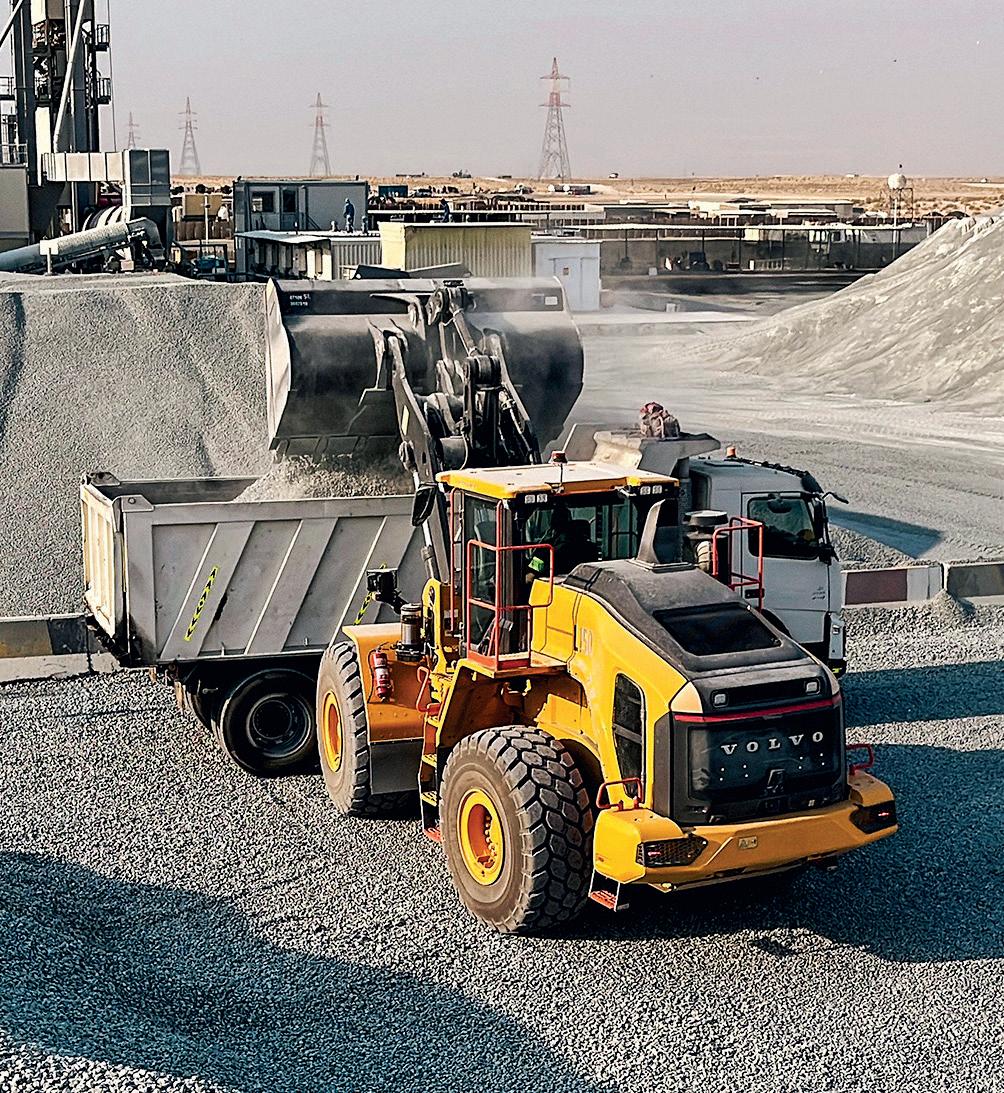
Training is no longer generic. It is informed by real performance, driving greater consistency between operators and across shi s.
e commercial impact is measurable.
• Lower fuel consumption reduces operating cost immediately.
• Reduced fatigue sustains output across the day.
• Fewer errors minimise rework and material loss.
• Improved machine care extends asset life and protects long-term value. Hayden encourages waste operators to discuss how Volvo K Series loaders can be integrated into a complete waste handling system engineered for Australian conditions and built around the operator. WMR
For more information, visit www.cjd.com.au
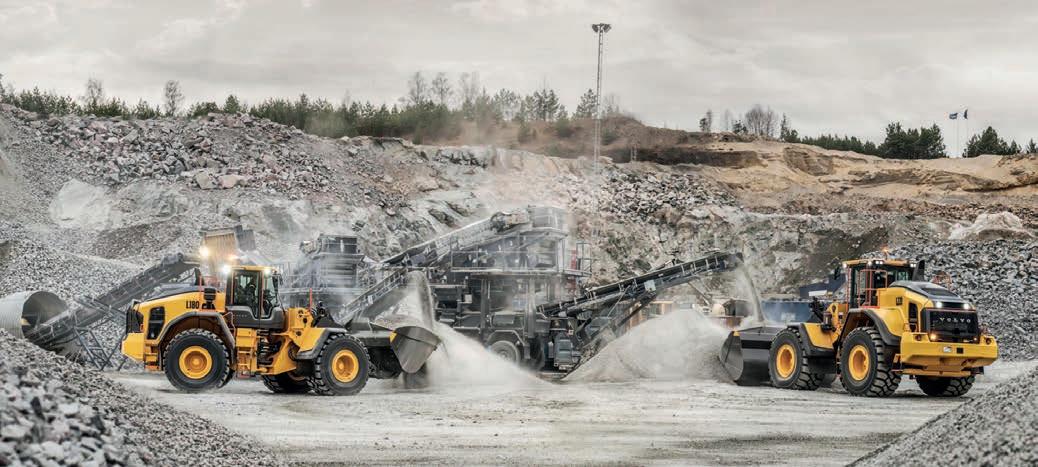

Barrister and Solicitor, and former Senior Detective Martin Taylor sets out a hightech, intelligence-led blueprint designed to disrupt organised waste crime and better protect local government resources and community environments.
Illegal rubbish dumping across Australia remains a persistent challenge and has too o en been viewed through a reactive lens.
Martin Taylor, a Barrister and Solicitor, former Senior Detective, prosecutor, and senior council assisting with service in the Military Police, Transit Police, Victoria Police, the Australian Federal Police, and the Australian Criminal Intelligence Commission, hopes to help change that through the release of his two volume series on waste crime.
e series titled, Environmental Crime, Illegal Rubbish Dumping Exposed, provides a comprehensive look at the legal and operational frameworks required to combat environmental offenses in Australia.
Across both books, subjects range from investigation and enforcement from a council perspective to prevention education, behavioural compliance, law reform and the development of national standards for illegal dumping investigations and prosecution.
As a current councillor and former Mayor of the City of Whittlesea, Martin’s background is a rare intersection of academia and operational experience, spanning 27 years in the army reserve as a Major and a career as a qualified paramedic. He says this diverse experience shi ed his perspective of the waste industry from a civic service to a complex landscape targeted by serious criminal activity.
e catalyst for the books was a single, staggering discovery during his tenure as mayor at the City of Whittlesea in the northern suburbs of Melbourne. While investigating reports of illegal dumping, he encountered a site the size of several football fields, buried under thousands of cubic metres of illegally discarded material.
One photograph of Martin standing at
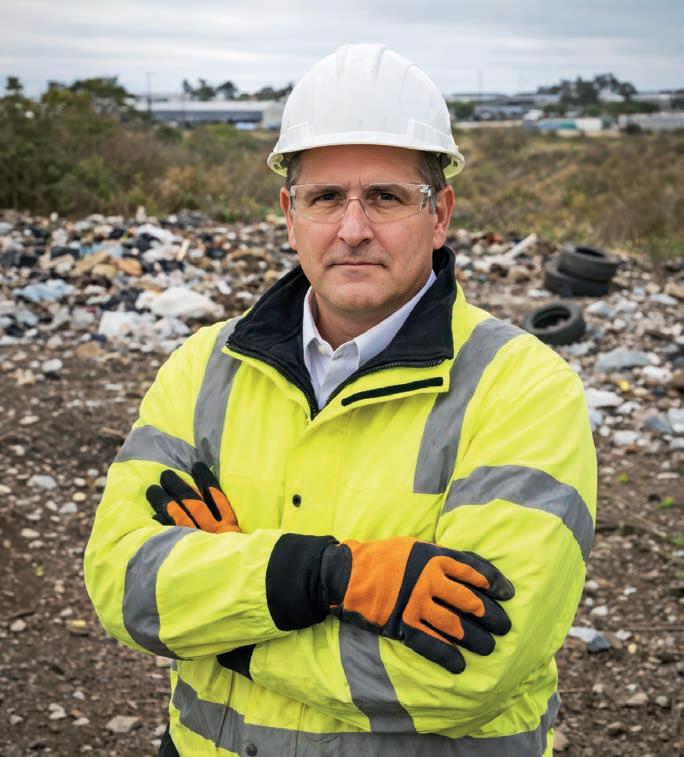
the edge of this waste mountain resulted in 56,000 views on the council website.
is sparked an intensive personal research project that grew so large it eventually had to be split into two volumes to cover the breadth of necessary reforms.
Speaking in his personal capacity, Martin says he looked at tackling reform like baking a cake.
“If you know how to bake and there are ingredients missing, it stands out immediately. at metaphor effectively
describes what I did with environmental waste crime enforcement,” he says.
“I started researching the main issues I was observing in my own municipality in Whittlesea and then took that research further into other councils and interstate, because while the legal jurisdictions may change, the underlying concepts of the crime remain the same.”
Martin hopes his books will help lead to the establishment of national standards for the investigation and enforcement of
illegal rubbish dumping across Australian councils. He argues that the current system is fragmented, creating confusion within the community and failing to deliver a clear and consistent deterrent.
To address this, he proposes a shi toward intelligence-led operations and the use of artificial intelligence (AI) technology, with a stronger focus on identifying hot spots, targeting offenders, and supporting required legislative reform.
A key component of this strategy is the “tri-council Waste Management Taskforce” model. Based on Martin’s cost modelling, a single taskforce operating across three municipalities is more cost effective than councils acting in isolation.
“In my view, a single taskforce model would be a more efficient, effective, and responsive way of meeting the initial fi nancial requirements of establishing a taskforce, while also strengthening environmental crime responses across participating municipalities,” he says.
“It would also help address the barriers affecting cross municipal and interagency intelligence sharing in relation to illegal rubbish dumping enforcement.
“In many cases, environmental crime offenders displaced by strong enforcement activity in one municipal area may simply shi their offending into another council area. A tri council taskforce model would also place councils in a much stronger position to respond to that reality in a coordinated and practical way, and to better contain, deter, and reduce waste crime.”
To support these taskforces, Martin proposes a 24-hour surveillance model using new AI technology consisting of drones equipped with passive infrared and AI-enabled cameras.
“ ese drones would not require constant manual control. Instead, they could be automatically dispatched when AI technology programmed sensors detect suspicious movement that is immediately confi rmed through human triage protocols, such as a car boot opening in a known dumping hotspot at 2am,” he says.
“Once activated, the technology would begin immediate direct electronic recording through on-site CCTV cameras while dispatching drones for
secondary mobile surveillance and evidentiary collection.
“ is would capture significant real time evidence, including facial recognition, number plate identification, and the detection of cloned plates o en used by organised crime groups. Evidence of that kind would assist stronger enforcement action and more effective prosecution of offenders at a lower operational cost to councils.”
Martin notes a significant problem is that currently some councils may spend, on average, around $3 million a year or more responding to illegal dumping. However, with limited prosecutions and limited use of remediation order enforcement, and where the response is largely confi ned to infringement notices, councils do not recover the cost of operations and remediation.
With investment in AI technology, drones, specialist cameras, and other investigative capability, together with the law reform proposed in his books, he believes illegal dumping could be significantly reduced and that the costs borne by councils, and ultimately ratepayers, could be reduced by millions of dollars each year.
Martin also calls for offender focused enforcement and intelligence-led waste taskforce investigations, targeting companies and individuals who have previously been involved in, or are suspected of, waste crime.
“It is also about changing corporations law so that individual directors can be held personally responsible for clean-up costs, thereby preventing them from placing a company into liquidation or insolvency to avoid those liabilities,” he says.
“If the risk of illegal dumping becomes high enough, and begins to place the personal assets of directors, including their houses and superannuation, at real risk, the offending will stop.”
Beyond technology and the law, Martin also addresses the human element. He argues that some council officers may not currently have the specialist training needed to work effectively within a multidisciplinary waste task force. is includes investigative capability and the ability to prepare briefs of evidence to the
standard required to support successful court prosecutions.
In his view, this may help explain why some councils appear to rely heavily on infringement notices and relatively low fi nes, which many offenders may treat as little more than a cost of doing business rather than as a genuine deterrent.
Martin has personally invested nearly $20,000 to date in his work. He says his books are focused on education and deterrence, which is why his eBooks are priced at under three dollars to keep them accessible to as many people in community as possible. He is now meeting with politicians and industry leaders to advocate for reform, with a clear emphasis that the burden of waste crime should no longer fall on councils and ratepayers, but on offenders.
He also hopes to help guide the future guardians of Australia’s environment.
“ e books have been written to an Australian Qualifications Framework Level 3 standard so they can be used as reference material in vocational training for local government,” he says. Earlier this year, a leading Technical and Further Education (TAFE) college in Victoria made contact to discuss their use in vocational courses.
“It is a proud and humbling moment,” Martin says. “Moments like this reinforce why serious work matters and how, together, it can lead to positive change. I am in no doubt that if state governments implemented the measures set out in my books, including the proposed law reform, we would see a significant reduction in illegal rubbish dumping.
“It is not unrealistic to suggest that the State Government and Victoria’s 79 councils together may be spending close to, or more than, $109 million each year on illegal rubbish dumping operations and clean ups.
“By implementing a pilot project to support the formation of Waste Task Forces across all 79 Victorian councils, and using that pilot to test, assess, and refi ne these new strategies, we can turn that around and create a significant deterrent that fi nally responds to the true scale of the problem.” WMR
Incidents that might traditionally be viewed as accidents can still lead to prosecution, particularly in industries such as waste management. Image: APChanel/shutterstock.com.au
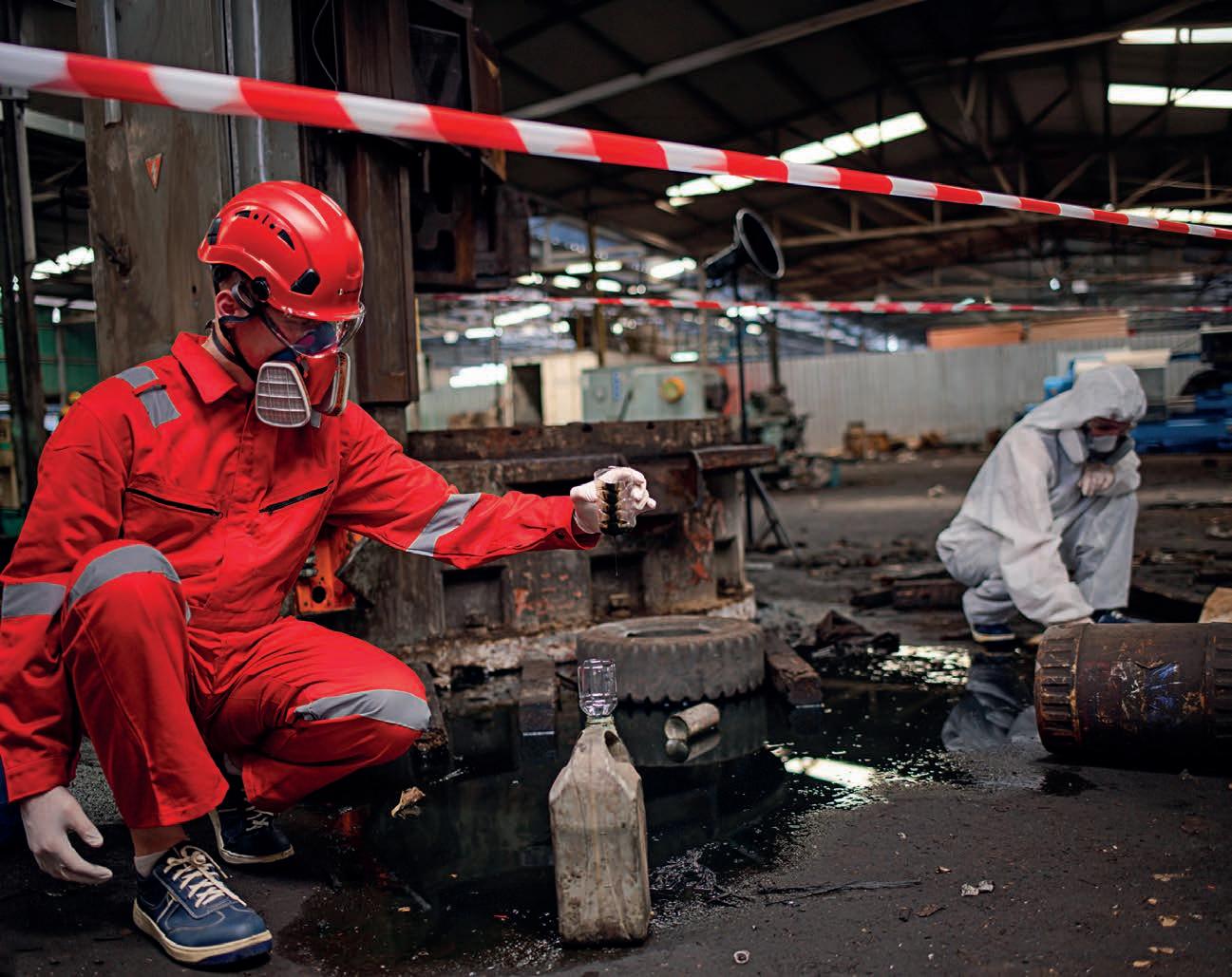
Environmental laws are tightening across Australia, with directors, managers and council executives increasingly exposed to prosecution for incidents they did not directly cause, reshaping accountability across organisations.
The scope of personal liability for those in leadership roles is broadening, with environmental and waste legislation increasingly targeting not only company directors but also individuals in management positions.
According to Gavin Shapiro, partner at Hones Lawyers, a common misunderstanding persists around who can ultimately be held responsible when something goes wrong.
Gavin says many assume liability sits only with formally appointed directors, but the reality is wider. Responsibility is determined less by job title and more by the duties an individual performs and the authority they exercise within an organisation. is means managers, supervisors and others in positions of control can fi nd themselves exposed under the same provisions.
“I’ll start with a misconception. As far as the legislation is concerned, even if your title is not a director, you can still be prosecuted under the legislation,” he
says. “It’s really about the responsibility and duties you have, in relation to the mistakes being made.”
is expanded interpretation becomes important in complex corporate structures. Resource recovery companies operating across multiple entities, with layered management teams, may fi nd several individuals liable for the same incident. Gavin notes that this o en catches people off guard, especially those who do not consider themselves senior decision-makers.
At the centre of this framework is the concept of due diligence, which effectively forms the primary defence available to those facing potential prosecution. In practical terms, this requires organisations to demonstrate they have taken all reasonable steps to prevent an offence from occurring.
at threshold, Gavin explains, is high. It is not enough to rely on informal practices or general oversight. Instead, companies must be able to point to clearly
defi ned systems, documented procedures and consistent implementation across their operations.
“ e only defences to some of those provisions are due diligence defences, where you’ve done everything possible to prevent the commission of that offence by the company,” he says. “In practice, it means you need incredibly strong systems and procedures in place that you can point to and show the EPA (Environment Protection Authority) or a court if need be. is includes things such as regular training, toolbox talks and audits.”
Even with these measures in place, liability does not disappear. Environmental law in Australia largely operates under a strict liability framework, meaning intent or fault does not need to be proven for many offences. is reflects a broader policy objective focused on protecting the public and the environment.
As a result, incidents that might traditionally be viewed as accidents can
still lead to prosecution. Gavin points out that this is particularly relevant in industries such as waste management, where operational risks are inherent and o en involve multiple parties.
“I’ve seen it where it’s a pure accident, where a contractor is the one who actually caused the spill, leak, offence, or whatever it is,” he says. “But if you can’t show the EPA the procedures and due diligence that you should have had in place, then as a director, you’re at the mercy of the EPA.” e involvement of third-party contractors introduces another layer of complexity. Even where a contractor directly causes an incident, responsibility may still sit with the company that engaged them, particularly if that company holds the relevant licence or controls the site.
Gavin recalls cases where clients were prosecuted despite having established procedures, because the legal responsibility ultimately rested with the organisation rather than the individual contractor.
“I’ve had two cases where the EPA has prosecuted a client of mine,” he says. “In one instance, a third party came on site to fi x equipment and disobeyed the procedures that they’d signed that morning. e client, rather than the contractor, was prosecuted for that.”
In that case, the presence of strong internal systems played an important role in limiting further exposure. While the company itself faced action, directors were not prosecuted, highlighting the protective value of robust compliance frameworks.
“Even if you’ve got procedures, everything in place, the company can still be prosecuted, but those procedures can potentially protect the directors,” Gavin says.
Beyond private companies, the reach of these laws is also extending into the public sector. One notable development has been the willingness of regulators to pursue senior figures within local government, including general managers of councils.
Historically, enforcement tended to focus on smaller operators, o en described as “one-man band” businesses. However, Gavin says that approach is changing, with regulators increasingly
“Even if you’ve got procedures, everything in place, the company can still be prosecuted, but those procedures can potentially protect the directors.”
Gavin Shapiro, partner at Hones Lawyers
targeting larger organisations and more senior personnel.
“Until about five to 10 years ago, the EPA had only gone a er directors of companies with one, two, three employees,” he says. “But I’ve been involved in a number of investigations where you’re talking companies of five, 10, 20 employees.”
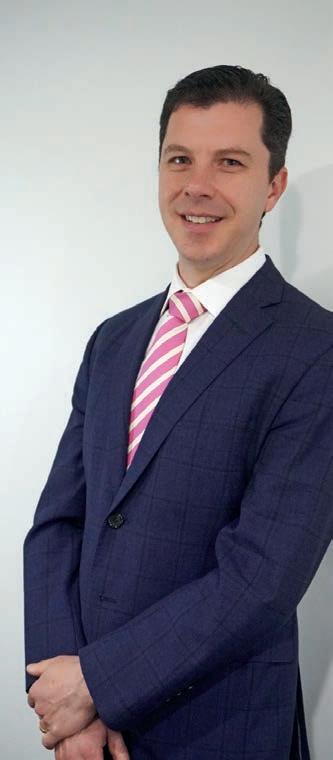
e shi is even more pronounced in the case of councils. In one matter, a regional council and its general manager became the subject of legal action, raising complex questions about how executive liability applies in a public sector context.
“ e fact that the EPA was willing to go a er a council GM (General Manager) shows that it’s really broadening its sights to bigger organisations,” Gavin says. e case ultimately turned on whether a council GM could be considered equivalent to a director or manager of a corporation under the legislation. While the initial ruling found that executive liability did not apply, this was overturned on appeal.
“ e court, at fi rst instance held a GM was not a director or manager of a company,” says Gavin. “ e EPA appealed that and was successful. e court said a GM is liable under executive liability.” is outcome has implications, reinforcing that organisational form offers little protection where individuals hold positions of authority and control. For those operating in both private and public sectors, the message is clear: accountability is widening, and expectations around compliance are intensifying.
As environmental regulation continues to evolve, Gavin emphasises that proactive governance is no longer optional. Strong systems, clear procedures and consistent oversight are essential, not only to reduce risk but to provide a critical line of defence when incidents occur.
Without them, individuals in leadership roles may fi nd themselves personally exposed, regardless of whether they were directly involved in the event. WMR
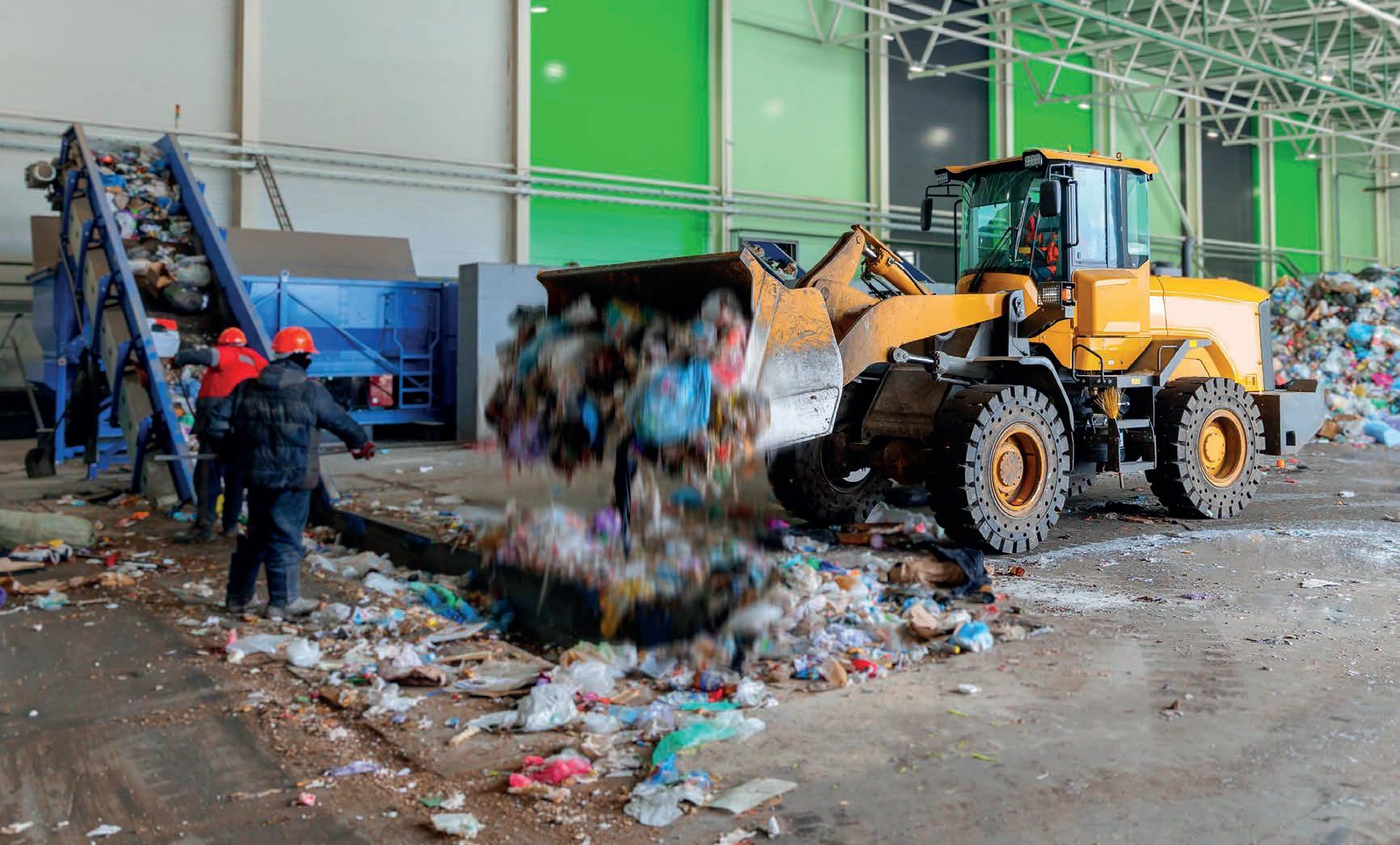
e industry is moving. e question is – are you moving with it asks Brett Lemin, Executive Director, Waste Contractors & Recyclers Association of New South Wales.
There’s no shortage of pressure on the waste and recycling sector right now. Fuel volatility, regulatory reform, infrastructure constraints, battery fi res, shi ing procurement expectations, workforce challenges, the list keeps growing. And yet, despite all of this, the industry continues to show up, deliver, and adapt.
But let’s be clear: simply keeping pace is no longer enough.
What we are seeing now is not incremental change. It’s structural. e way this industry operates, the way it is regulated, and the way it is expected

Executive Director, Waste Contractors & Recyclers
to perform is being reshaped in real time. at creates risk, but it also creates opportunity for those prepared to lean in. is is exactly where the Waste Contractors and Recyclers Association of NSW (WCRA) has been focused.
Over the past 12 months, WCRA has been engaged across every level of government advocating for practical, workable outcomes for industry. Whether it’s pushing for recognition of waste and recycling as an essential service in fuel security planning, working through the complexities of the New South Wales Waste Levy Review, or shaping emerging product stewardship frameworks, the priority has been consistent: ensuring the voice of industry is not just heard, but understood.
And importantly, we’re not just reacting, we’re helping shape the agenda.
Take battery stewardship. e introduction of the Product Lifecycle
Responsibility framework in New South Wales marks a significant shi , and rightly so. With thousands of battery-related fi res impacting our sector each year, the need for reform is undeniable.
WCRA has been at the centre of these discussions, working with government, regulators and industry to ensure that any scheme is not only effective in principle, but workable in practice. at includes advocating for proper oversight, realistic cost recovery mechanisms, and a model that doesn’t simply shi the burden onto operators already managing the risk.
e same approach applies to infrastructure. We are staring down a very real waste infrastructure gap in New South Wales by 2030. at’s not a distant issue; it’s a current one.
Planning delays, approval bottlenecks, and community encroachment on existing facilities are already constraining
WCRA has been working with all levels of government to fast-track industry infrastructure. Image: Parilov/shutterstock.com.au
capacity. WCRA has been clear: without urgent reform, we will not build the infrastructure needed to support a circular economy.
at’s why we’ve been working with the Department of Planning, Housing and Infrastructure, the Environment Protection Authority, and Treasury to push for streamlined approvals, better use of levy funds, and stronger procurement signals to support recycled materials markets. Because without end markets, the system simply doesn’t work.
At the same time, we are investing heavily in the capability of the industry itself.
Training, education, and safety remain core pillars of what we do. From Chain of Responsibility and fatigue management through to the rollout of the National Heavy Vehicle Regulator (NHVR) Waste and Recycling Industry Code of Practice, WCRA is focused on ensuring that operators – from the boardroom to the
“In a sector as diverse and fragmented as waste and recycling, alignment doesn’t happen by accident. It requires deliberate e ort, open dialogue, and a willingness to engage, even when the conversations are di cult.”
Brett Lemin, Executive Director, Waste Contractors & Recyclers Assoc NSW
cab of the truck – are equipped to meet both regulatory requirements and realworld challenges.
And that matters. Because compliance is no longer just about avoiding penalties, it’s about demonstrating professionalism, building trust, and maintaining a social licence to operate.
But perhaps the most important piece of work we do is bringing the industry together.
In a sector as diverse and fragmented as waste and recycling, alignment doesn’t happen by accident. It requires deliberate effort, open dialogue, and a willingness to engage, even when the conversations are difficult.
at’s exactly what our upcoming WCRA Industry Conference on 18-19 June is designed to do.
is isn’t just another industry event. It’s a forum for real conversations about the issues that are shaping the future of our sector.
From the economics of waste and the cost of compliance, through to product stewardship, infrastructure delivery, and regulatory reform, we are putting the right people in the room to have the discussions that matter.
We’re bringing together operators, regulators, policymakers, and suppliers, not to talk at each other, but to engage with each other.
Because the reality is, no single part of this industry can solve these challenges alone. If we want better policy, we need to be part of the conversation. If we want workable regulation, we need to explain
how it plays out on the ground. If we want investment in infrastructure, we need to demonstrate both the need and the opportunity.
And if we want to continue delivering essential services to the community, we need to ensure that the system we operate in is sustainable, commercially, operationally, and environmentally.
at’s what this conference is about. It’s about stepping out of the day-to-day and taking a broader view of where the industry is heading.
It’s about challenging assumptions, sharing insights, and identifying practical pathways forward.
And importantly, it’s about making sure that the collective voice of this industry remains strong, credible, and influential. Because whether it’s government, regulators, or the community, there is a growing expectation that our sector will lead.
Lead on safety.
Lead on sustainability.
Lead on circular economy outcomes. at’s a significant responsibility. But it’s also a significant opportunity.
e work WCRA is doing is about ensuring that industry is not just responding to change, but helping to shape it.
e question is, are you part of that conversation?
If not, June is the place to start. WMR
For more information, visit www.wcra.com.au/events
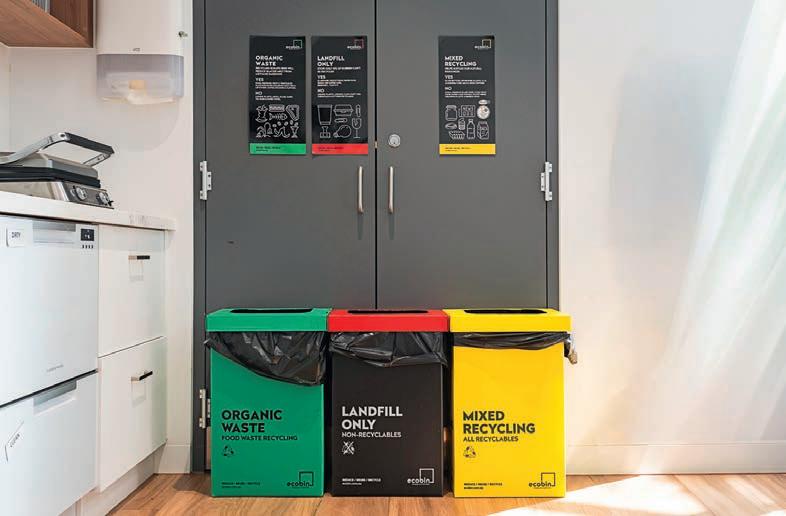
Frankston City Council and surrounding local governments have delivered the ‘Trim Your Bin’ program to help local businesses adopt sustainable practices and cut costs.
Frankston is a sustainability-oriented city. Lisa Finn, Waste Circularity Coordinator at the Frankston City Council, says the city’s government and population of more than 144,000 are aligned when it comes to environmental protection goals.
“Frankston offers a broad range of sustainability programs for our community, covering waste, water, energy and biodiversity,” Lisa says.
“Our area has a lot of natural reserves and is placed on the foreshore (of Melbourne’s Port Phillip Bay) so protecting our local environment is a strong fl avour within our council’s priorities and commitments.”
One of Frankston’s many sustainability programs, the ‘Trim Your Bin’ campaign, was adopted from a similar initiative started by the New South Wales Environment Protection Authority years prior.
e Frankston City Council, along with the City of Casey and the Mornington Peninsula Shire, worked together to develop the program for their respective areas to integrate sustainable practices with economic stimulation during a time of hardship.
“A couple of years back, we were engaging with a mix of industrial and retail operators who were still feeling the economic impact of the Covid-19 pandemic,” Lisa says. “At that stage, we were exploring what practical support we could offer – something that could help businesses keep their lights on and begin their recovery.
“In particular, we were looking at ways to ease pressure around general waste costs, while also starting conversations
with businesses about the circular economy and whether there were any opportunities for them to grow and innovate in that area.”
e three local governments fi rst adopted the program on a trial basis, supported by a grant from Sustainability Victoria. e program’s rollout was tailored to each area’s specific business and retail demographics.
“ e framing of this project was really important,” Lisa says. “Each council has slightly different messaging in our respective communications and marketing approaches. For Frankston, we wanted to highlight how the program could reduce overhead costs and improve efficiencies for businesses by minimising the waste they send to landfi ll.
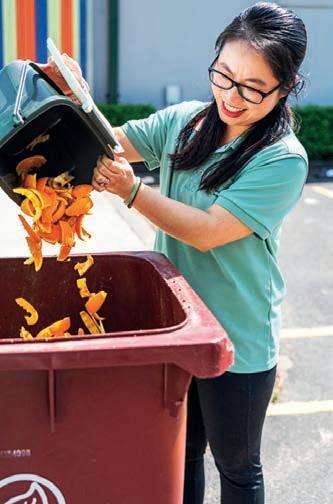
“But Mornington’s approach differed, as it’s a well-known holiday destination with major entertainment venues and highprofi le visitor attractions. Sustainability was therefore a much stronger consideration, reflecting its close links to the shire’s tourism industry.”
Lisa says that despite the marketing differences, each government’s ‘Trim Your Bin’ program operates similarly. e free program helps small- to-medium enterprises (SMEs) identify ways to streamline their waste handling and minimise costs in the process. An assessor or council officer visits facilities to conduct a visual audit of waste infrastructure.
“ e inspection examines how a business manages its waste – from bin setups and use through to production lines where relevant – to understand current practices and identify opportunities for improvement,” Lisa says.
“ is information is then uploaded to the program’s online platform, which generates tailored recommendations to help businesses divert more waste from landfi ll, improve recycling outcomes and reduce costs.”
Following the assessment, businesses receive a report outlining recommended actions. ey then have several months to implement these changes before a follow up inspection.
Lisa says the program offers SMEs additional resources and supplier connections depending on their requirements.
“We really try to support these businesses every step of the way to make sure they’re getting the solutions they need,” she says. “ ey know their own operations inside out but o en don’t have
the time to step back and have those important conversations about waste management and cost reduction. Having us come in and help unpack these costs makes it much easier for businesses to put a strategy in place to deliver real outcomes.
e ‘Trim Your Bin’ program has wrapped up its trial phase and continues to operate on a smaller scale in Frankston, Casey and Mornington.
Lisa says that so far, business feedback has been encouraging.
“Businesses participating in the program have seen great wins through cost cutting and waste reduction, which is great,” she says. “We’ve been able to work with a number of these businesses on an ongoing basis, too.
“ e businesses involved in the program to date are very diverse. Many are already strongly environmentally
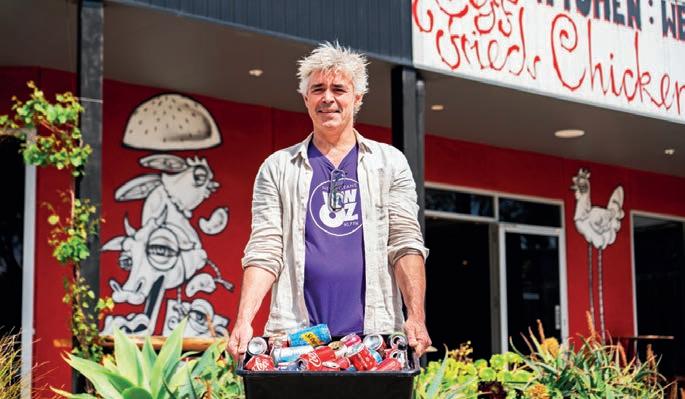
focused, while others may be at an earlier stage and are just trying to do the right thing. We work with a wide range of businesses, including cafes, independent eateries, commercial nurseries, and regional attractions and tourism businesses.”
Lisa and her team continue to administer the scheme with a clear goal – positioning the area as a recognised regional circular economy hub.
“We’ll continue to grow the program and use it to connect participating
businesses. By bringing businesses together, we can help drive a stronger circular economy locally and start identifying future waste and resource sharing solutions,” she says.
“Our aim is to expand both the program and the services around its services, so people in the area have real choice when it comes to supporting local, sustainable businesses.
Positioning Frankston as a circular economy hub is the goal, and we’re on the way.” WMR
Discover, connect and transform as an exhibitor at Australia’s most impactful platform for waste,
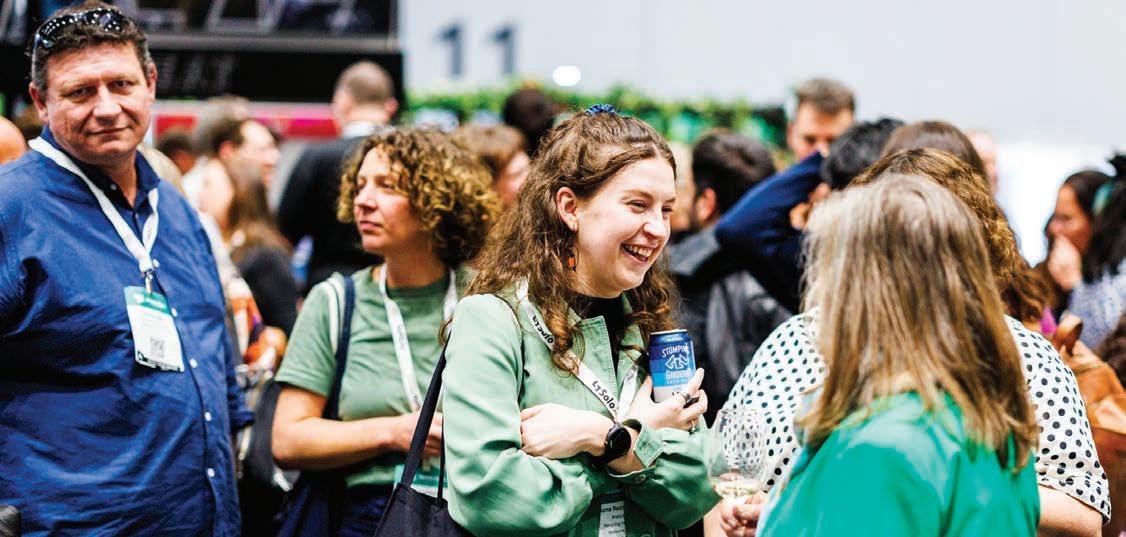


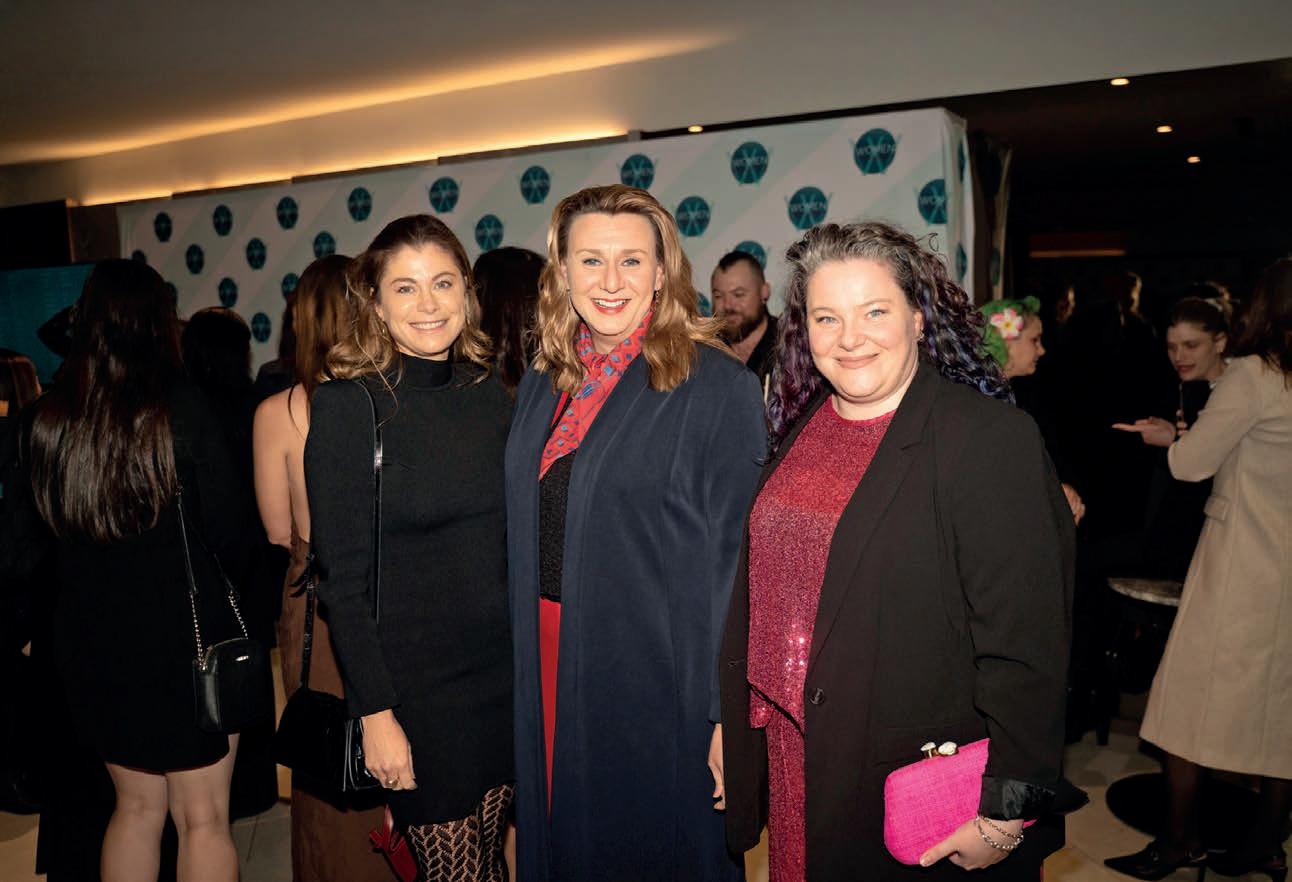
Get your tickets today for the Women in Industry Awards, a highly anticipated event that recognises standout leaders, innovators, advocates, and rising stars.
Tickets are now on sale for the 2026 Women in Industry Awards, set to take place at Doltone House Darling Island Wharf in Sydney on June 18.
e Women in Industry Awards honour the exceptional women who are driving change, breaking barriers, and creating new opportunities across Australia’s industrial sectors. From resource recovery and transport to logistics and
manufacturing, energy, construction and beyond – these women are shaping the future of our industries.
e black-tie awards gala dinner will feature live entertainment, a three-course meal, and excellent networking opportunities.
“Each year, the Women in Industry Awards highlight the remarkable progress and transformation taking place across
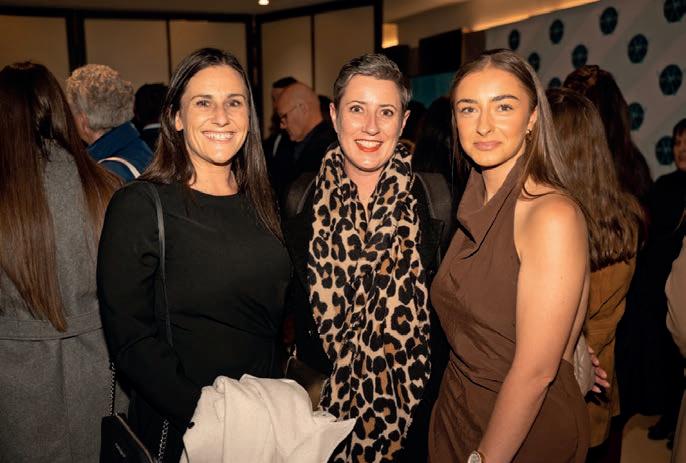
e awards bring together businesses and organisations that actively champion diversity, innovation, and progress.
these sectors,” says Molly Hancock, Head of Events Marketing at Prime Creative Media, the organisation behind the awards.
“ e quality of submissions, combined with the increasing excitement and engagement surrounding the awards, is a clear reflection of how these industries are evolving.
“It’s inspiring to see not only the depth of talent emerging, but also the strong momentum building as more individuals and organisations champion innovation, diversity, and excellence.”
e Women in Industry Awards celebrate the achievements of women across Australia who are making an exceptional impact in their field.
e event also brings together businesses and organisations that actively champion diversity, innovation, and progress.
While award entries are reserved for women, the gala evening is open to everyone who wants to be part of this inspiring celebration.
Not only is the night an opportunity to celebrate, but it gathers industry
professionals, senior leaders, and emerging talent in one vibrant setting.
e celebratory atmosphere makes it easier to spark genuine conversations and form meaningful connections beyond the constraints of formal meetings.
“ is is more than a typical networking event,” says Molly. “Even if your business isn’t nominated, the evening provides the time and space for deeper, more valuable conversations.
“ ese interactions o en lead to new opportunities, collaborations, and longterm professional relationships.”
Attending the gala is also a way to demonstrate your commitment to the industry and its future. With sponsors including Atlas Copco Group, Australian Power Equipment, Kenter and Grundfos Pumps playing a leading role, every attendee contributes to recognising the achievements of women driving progress.
“It’s inspiring to see not only the depth of talent emerging, but also the strong momentum building as more individuals and organisations champion innovation, diversity, and excellence.”
Molly Hancock, Head of Events Marketing at Prime Creative Media
“Our decade-long partnership with the Women in Industry Awards is driven by a fi rm belief that inclusion fuels innovation,” says Natalie Douglas – Atlas Copco Group Communications Manager –Southeast Asia & Oceania.
“By supporting this platform, we aim to recognise and elevate the contributions of women who
are reshaping traditionally male dominated sectors.”
Don’t miss your chance to be part of this inspiring event and connect with trailblazers and change-makers from across Australia. WMR
For more information, visit womeninindustry.com.au/attend

Terex Ecotec has called its TDS V20 Medium Speed Shredder a revolution in mobile shredding due to its functional design and versatility.
e twin sha shredder’s chamber was developed in partnership with industrial machinery manufacturer Vecoplan speci cally for the mobile industry. It bene ts from independent hydrostatic drive and a product sizing screen.
e TDS V20 screen system is available in di erent sizes and comes complete with
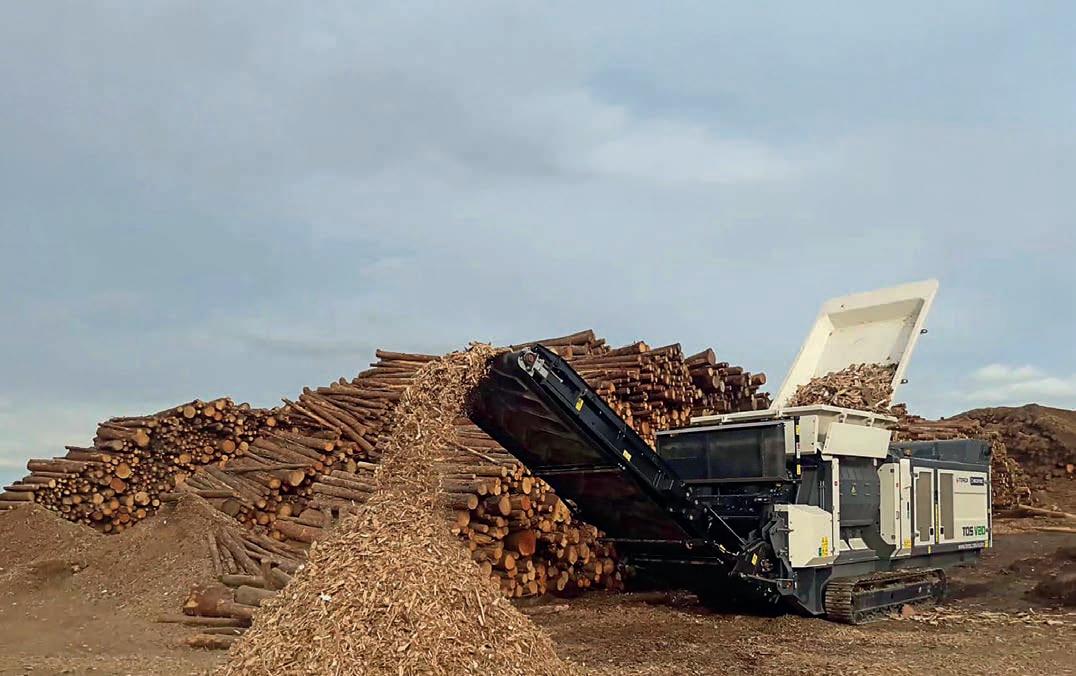

an intelligent protection system, allowing a desired particle size to be produced while still being able to cope with foreign objects.
e shredder’s ability to produce a consistent and controlled product in a single pass saves operators both time and fuel. Additionally, its versatility means it can be used as a primary or secondary shredder depending on the application. With a userfriendly control interface and pre-installed
shredding programs, the TDS V20 excels at processing challenging materials including waste wood, green waste, domestic waste, and industrial waste.
e shredder is especially well-suited for the e cient production of Solid Recovered Fuel.
nlay.com.au
e Edge VS420 is a high-capacity, hightorque twin sha shredder that is ideal for the processing of a large array of materials including green waste, municipal solid waste (MSW), construction and demolition (C&D) waste, biomass and end of life tyres.
EDGE’s next generation shredder has been developed for versatility and high resistance to contaminants with several customisable shredding programs and chamber con gurations available.
An intelligent operating system which incorporates tramp metal protection provides the ultimate protection from contaminants and prevents asset damage.
At the heart of the VS420 are twin synchronised, high torque shredder sha s which can be customised to suit a customer’s exact application and desired product piece size.
EDGE’s twin sha design provides exceptional material intake, ensures less wear, promotes self-cleaning and prevents material wrapping even in the toughest applications.
With a range of both rapid volume reduction and intricate piece sizing chambers available, the EDGE VS420
e EDGE VS420’s twin sha design provides exceptional material intake. Image: FOCUS enviro
series can be customised to be deployed as either a primary or secondary shredder.
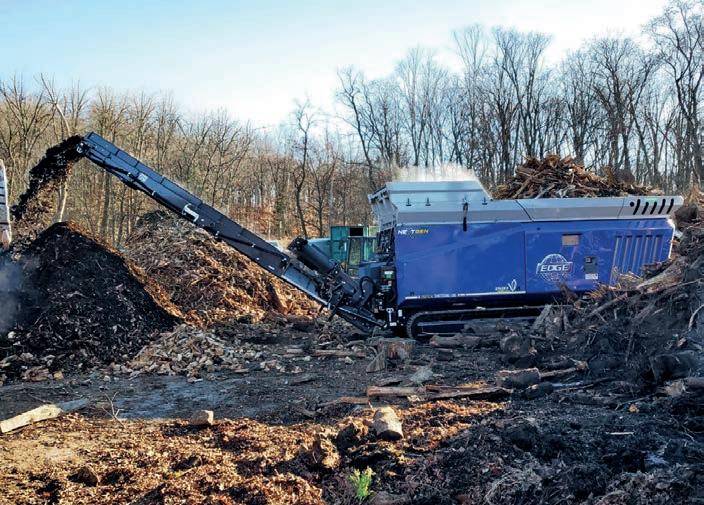
e EDGE FTS Mulch Master is a portable feed stockpiler speci cally designed for the stockpiling of lower density, bulky materials such as mulch, compost and soils.
It combines traditional ipping and rotation with constant material ow to provide blockage-free stockpiling while also preventing compaction, contamination and risk of combustion.
It can accept material directly fed from wheel loaders, wood grinders, shredders, screeners or trommel screens.
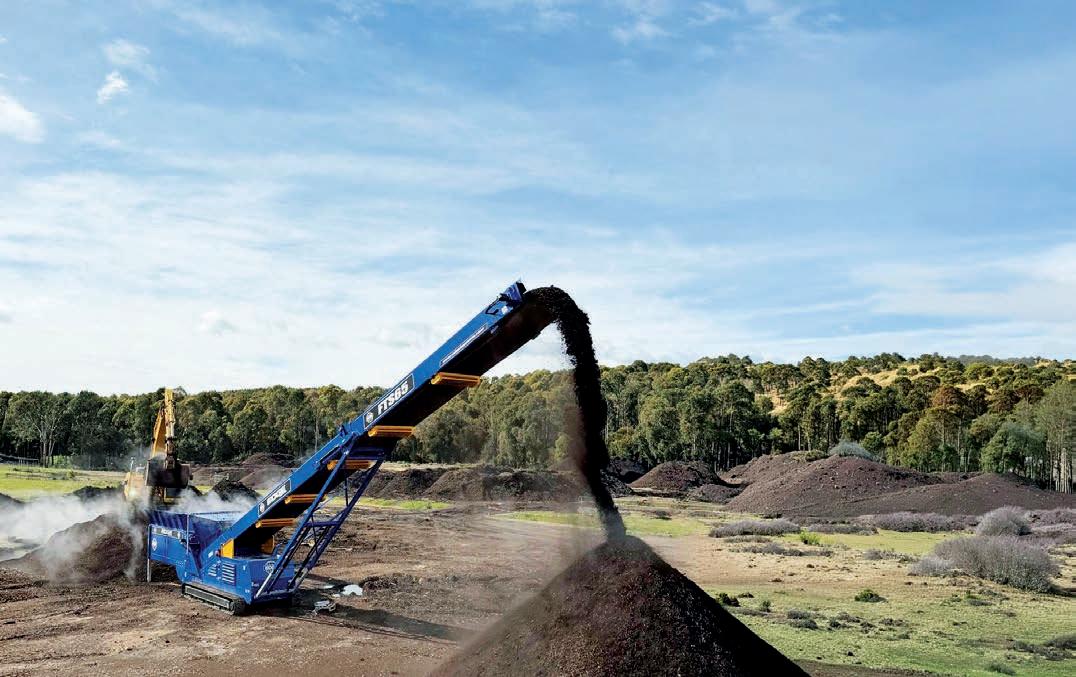
e FTS Mulch Master has a 25 per cent additional bu er capacity over the standard EDGE FTS units, with a bespoke hopper design to prevent material bridging.
Steep hopper sides and variable highspeed feeder conveyor allows unrestricted ow of material that is further regulated via a double screwed forward/reverse auger.
e auger ful lls two roles; it conditions material by ipping and rotation allowing the material to separate, aerate and untangle as well as regulating the ow of material and preventing material bridging at the transfer point.
Available with various discharge conveyor lengths from 15.2 to 21.3 metres with operators having the choice of traditional track mounted or 360-degree slew track chassis formats.
e EDGE TRT622 tracked trommel screen has been designed for maximum productivity and superior screening e ciency.
With a heavy-duty construction design and high manoeuvrability, the EDGE TRT622 tracked trommel can cater for a wide range of applications, whether it is industries such as aggregate, skip waste management
or those wishing to process industrial and demolition waste.
Enhanced trommel screening results are achieved by material spending a greater amount of time in the 6.9 metre (22 inch) long trommel drum combined with the optional high-throw aggressive screening action to produce top-quality ne materials such as compost, gravel, sand and topsoil with ease.
It boasts a four-wheel direct drive system, hydraulic variable speed control drum with forward/reverse functionality and feeder conveyor with load sensing controls preventing overload, asset damage and eco-power saving functionality.
Steep-sided hopper bin sides, combined with a larger drum opening and extremely wide collection conveyor prevents material bridging and spillage.
FOCUS
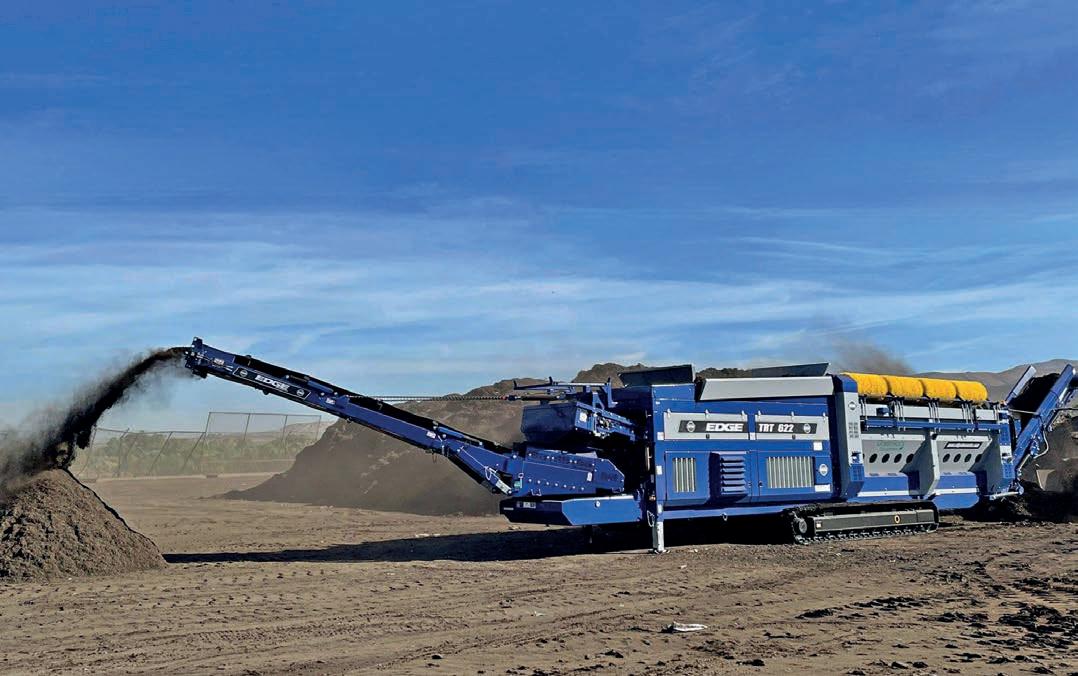
e EDGE TRT622 features heavyduty construction design and high manoeuvrability. Image: FOCUS enviro
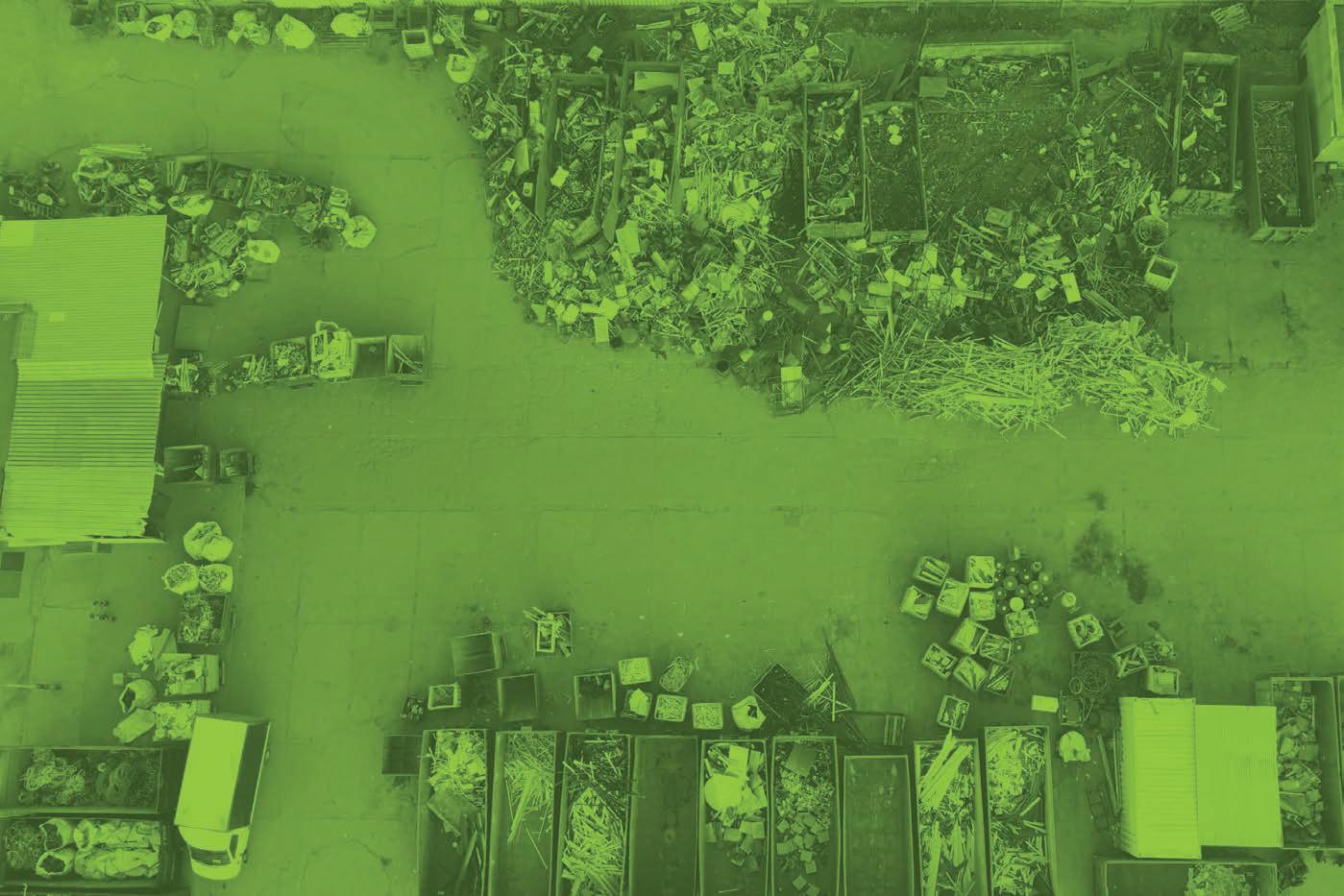
Delivers high quality, multi-platform media communications that showcase the world-class performance of the Australian waste management and resource recovery industries.
Waste Management Review is published 11 times a year and contains:
• Interviews with industry leaders
• In-depth profiles on innovative people, facilities and services
• Coverage on international developments
• Updates and analysis on new regulations and policies
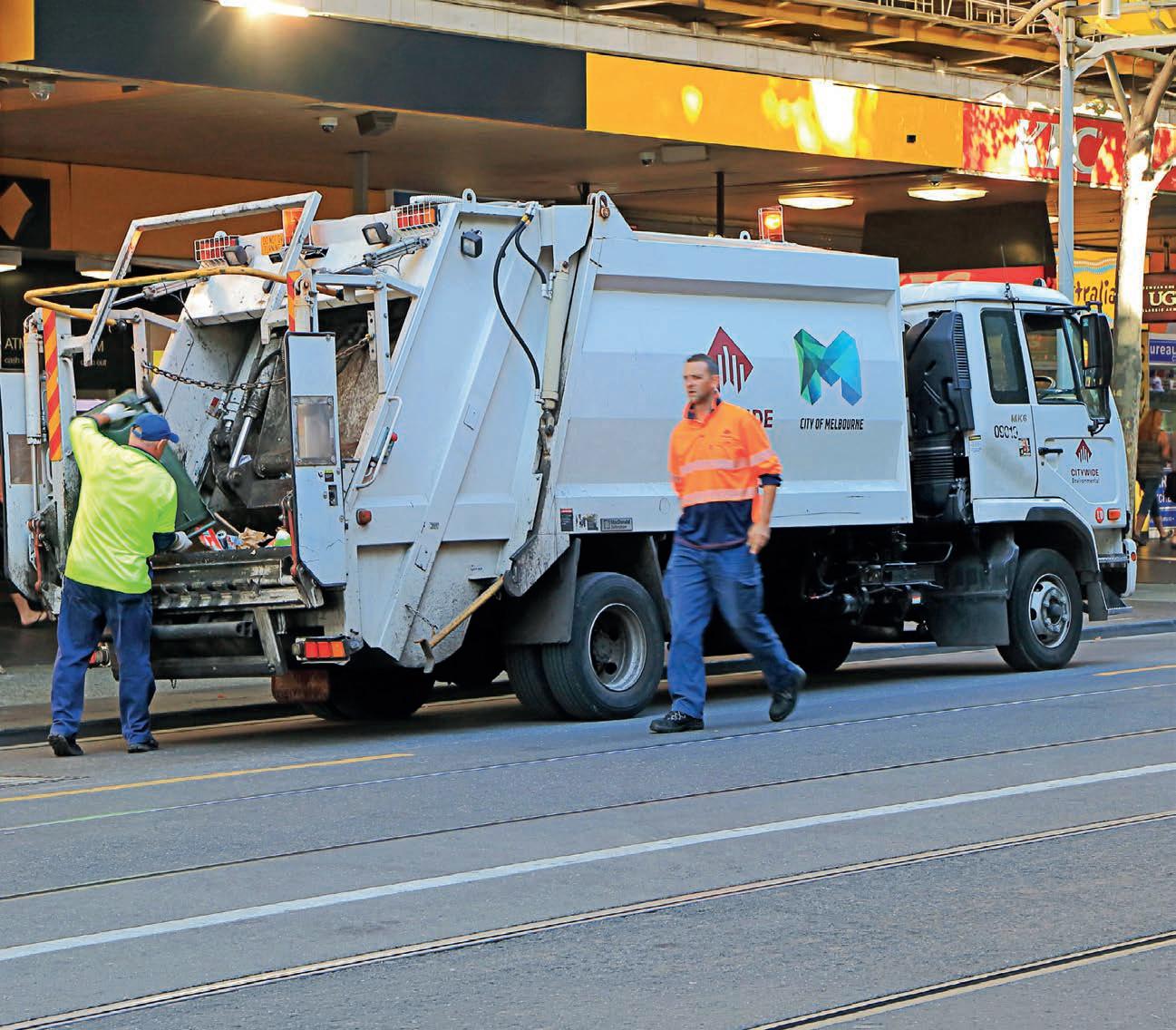
• Successful supplier/client showcases
• Details of new-to-market products and equipment.
and get every Waste Management Review magazine issue delivered direct to your door.
e waste industry is one of the biggest fuel users in Australia with 48.8 million individual collections per week. Image: TK Kurikawa/shutterstock.com
Why state-led industry advocacy is getting results, writes Michael Bobrowicz, Executive O cer Waste and Recycling Industry Association of Western Australia.
Australian waste advocacy is shi ing from broad, national bodies toward state and territory organisations. While there is clearly a role for the legacy organisations, these newer groups offer a more targeted focus for state and territory-based advocacy.
e Waste and Recycling Industry Association of WA (WRIWA) is one of five state and territory-specific associations, with membership primarily the owners and operators of waste and recycling infrastructure in Western Australia. Association membership has near doubled in the past two years.
e association model has evolved to provide members with agile, localised on-the-ground advocacy to represent the private sector. Living and working in our respective jurisdictions, we have
the necessary contacts, understand local conditions, and can act quickly when an issue arises.
Decision making is locally based; is faster; allows for one-on-one personalised consultation and based on modern business practice, promotes fl atter, decentralised and more efficient structures.
With almost identical associations having evolved in every state and territory across Australia, we have recently successfully delivered a coordinated national advocacy approach.
In conjunction with the national Heads of Environment Protection Agencies (HEPA) meeting and the Environment Ministers Meeting (EMM), leaders of the five major state and territory waste and recycling industry associations met with
government in Canberra over two days in March.
Brett Lemin, Waste and Recycling Contractors Association NSW (WCRA NSW), Adam Gray, Waste and Recycling Industry Association of South Australia (WRISA) and Waste and Recycling Industry Association NT (WRINT), Alison Price, Waste and Recycling Industry of Queensland (WRIQ), Ken Dickens and Andrew Swann, Waste Recycling and Processing Industry Association (WRAPA) and I were joined by Haydee Forster from the Australian Resource Recovery Council (ARRC).
Meeting with Josh Wilson, Assistant Minister for Climate Change and Energy, our collective concerns were the risk of imminent fuel shortages affecting waste collection operations; and the now
ubiquitous lithium-ion battery fi res our industry is experiencing.
Of the 27.7 million people living in Australia, 95 per cent have access to kerbside garbage collection services; for 90 per cent this includes mixed recycling and food organics/garden organics (FOGO) services. is results in a staggering 48.8 million individual household collections per week. No other industry services (almost) every individual Australian household on a door-to-door basis, and it should be no surprise that our critical service is one of the biggest fuel users in Australia.
Facing the possibility of partial or severe reduction of fuel supply, industry and government have agreed to prioritise clear and direct lines of communication.
We looked at how our industry, with government support, can continue to provide an essential service which provides waste management services that protect Australia’s human and environmental health. Meeting with Environment Minister Murray Watt,
“Every driver and every individual who operates our nation’s waste and recycling vehicles, deserves to be safe.”
Michael Bobrowicz, Executive O cer, WRIWA
discussion focused on the growing crisis of improper disposal of lithium-ion batteries which has made daily fi res in waste and recycling collection the new normal.
Every driver and every individual who operates our nation’s waste and recycling vehicles, deserves to be safe. Unfortunately, the number of fi res in waste vehicles due to improper disposal of lithium-ion batteries is increasing exponentially.
e minister agreed to propose and support at EMM, the adoption of mandatory battery stewardship through a nationally harmonised approach.
New South Wales has gazetted mandatory battery product stewardship
requirements from 1 October 2026. Brand owners will be required to join the scheme and pay a levy to support safe and environmentally sound battery collection, disposal and recycling. is is regarded as a model that can be applied Australia-wide.
is was confi rmed by the environment ministers on the following day, marking an excellent start to what we hope will be a swi and effective take-up by states and territories of the model legislation and supporting our view that joint advocacy is a viable pathway to deliver outcomes for our industry. WMR
For more information, visit www.wriwa.com