
Transforming commercial food scraps into renewable energy
FEATURES
Building
Diversion
Lessons
The



enrich360
Yarra Valley Water is using waste-toenergy to transform commercial food scraps into renewable electricity.
Transforming
Real world trial delivers

“BY TREATING FOOD WASTE AS A RESOURCE RATHER THAN A PROBLEM, WE ARE NOT ONLY REDUCING LANDFILL AND EMISSIONS BUT CREATING A SELF-SUSTAINING ENERGY LOOP.”

Stephanie Salinas, Manager, Waste to Energy Services, Yarra Valley Water
Focus on commercial implementation – not just theory.
ree industry professionals share their career journey.
Mirroring California’s green
Bagging technology for composting applications.
Fixing
Practicing resource recovery across
From
Meet a formidable force in Australia’s waste management sector.
From waste crisis to continental leadership.
e need to standardise de nitions for the circular economy.
600,000 waste collections analysed by
Picking stations for harsh conditions.
Equipment powerhouses join forces.
New distribution partnership signed.
Shredder sets new standards.
Navigating local government hurdles to a circular economy.
ReGen, shaping Australia’s organics future.
In recent years, organic waste has moved from a “nice-to-have”, to a driving force in establishing a sustainable future.
In the race to implement mandatory food organics and garden organics (FOGO) collection services, which must be accessible to all Australian households by 2030, we are seeing a “mirroring” of global benchmarks, particularly from regions such as California, where stringent regulatory frameworks have paved the way for highperformance diversion strategies.
In Australia, this is manifesting through landmark legislation, such as the New South Wales FOGO mandates that will begin rolling out for major commercial food generators from July 2026.
However, as this edition highlights, policy alone is not enough; success hinges on the ability to innovate at the source and process at scale.
Innovative technologies are now empowering everyone from households to largescale defence bases, to manage food waste where it is created.
As demand for organic products surges, automation has become critical. Highaccuracy automated systems not only help suppliers meet unprecedented volumes but also ensure sustainable products are supported by sustainable processes.
Projects such as Yarra Valley Water’s facility in Lilydale, which is the focus of our cover story, demonstrate how commercial food scraps can be transformed into renewable electricity, helping utilities meet ambitious net-zero targets while providing high-quality organic digestate.
ere are also lessons to be learned from London. As England mandates food waste and soft plastics collections, we explore the infrastructure and behavioural hurdles local government must navigate.
In other articles, Suzanne Toumbourou, Chief Executive O cer of the Australian Council of Recycling explains why recycling is remanufacturing, and Biogone’s Ross Headifen looks at how to build a circular economy that people trust.
Happy reading!
CEO
Christine Clancy
christine.clancy@primecreative.com.au
PUBLISHER
Sarah Baker sarah.baker@primecreative.com.au
MANAGING EDITOR
Lisa Korycki lisa.korycki@primecreative.com.au
JOURNALIST
Sean Gustini
sean.gustini@primecreative.com.au
HEAD OF DESIGN
Blake Storey blake.storey@primecreative.com.au
DESIGN
Laura Drinkwater
BRAND MANAGER
Chelsea Daniel chelsea.daniel@primecreative.com.au p: +61 425 699 878
CLIENT SUCCESS MANAGER
Ben Sammartino ben.sammartino@primecreative.com.au
HEAD OFFICE
Prime Creative Pty Ltd
379 Docklands Drive Docklands VIC 3008 Australia P: +61 3 9690 8766
info@primecreative.com.au www.wastemanagementreview.com.au
SUBSCRIPTIONS
+61 3 9690 8766 subscriptions@primecreative.com.au
Waste Management Review is available by subscription from the publisher. e rights of refusal are reserved by the publisher
ARTICLES
All articles submitted for publication become the property of the publisher. e Editor reserves the right to adjust any article to conform with the magazine format.
COVER
Cover image: Prime Creative Media
COPYRIGHT
Waste Management Review is owned by Prime Creative Media and published by John Murphy.
All material in Waste Management Review is copyright and no part may be reproduced or copied in any form or by any means (graphic, electronic or mechanical including information and retrieval systems) without written permission of the publisher. e Editor welcomes contributions but reserves the right to accept or reject any material. While every e ort has been made to ensure the accuracy of information, Prime Creative Media will not accept responsibility for errors or omissions or for any consequences arising from reliance on information published. e opinions expressed in Waste Management Review are not necessarily the opinions of, or endorsed by the publisher unless otherwise stated.
Making the world see resources where it once saw wa e, to shi mindsets trough a ion. Bo om ash treatment facilities use various technologies such as magnetic and eddy current separation of metals, sieving, crushing, de-watering, and equipment such as hoppers, wind si ers, screens, conveyors, crushers, and pulverizers. These processes result in high-quality aggregates and metals which can be circled back into local economies. Nothing wa ed, every resource reborn.
3,7 Million inhabitants creating 8500 tonnes wa e per day.
Produ s




Processing 5500 tonnes MSW per day, resulting in 1200 tonnes of IBA per day



Recovery of Mineral aggregates, Ferrous metal scrap, and Non-Ferrous metal scrap



IBA Aggregates
Upgrading scrap metal to produce a high quality metal produ sent to smelters.
Finding pathways for use of the aggregates replacing primary materials
Road con ru ion
Concrete produ s
We produce a con ant quality manufa ured aggregate from a daily changing and inhomogeneous IBA flow. Our eciali s help civil engineering and con ru ion companies to optimise their materials matrix. Blue Phoenix performs quality assessments on the IBAA application to limit the environmental impa s. Aggregates produced are compliant with local regulations and meet mechanical ecifications.
20% less material usage*
250% less CO 2 emissions*
20% less vehicle movement
Cementitious and mild pozzolanic performance benefits
When compared to 10.000 tonnes of primary aggregates:
59 Tonnes of CO2 saved again primary aggregates
50 2000 Tonnes of primary resources saved
Homes annual energy use from CO2 saved
100 20-tonne lorries o the roads
*When compared again the use of primary aggregates. NB: The information in the above se ion is only applicable to 100% IBAA supplies and doesn’t take into account the Primary Blend. All information above has been derived from average benefits found in UK case udies.
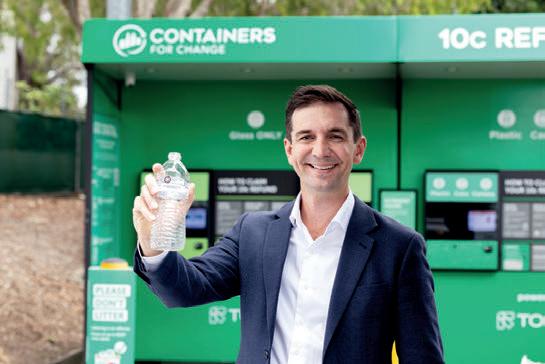
Former waste minister Trevor Evans takes the helm at Container Exchange, leveraging his policy expertise to drive governance and out-of-home recovery.
For many in the Australian waste and recycling sector, the name Trevor Evans is synonymous with the period in which waste and recycling achieved national strategic importance.
As the nation’s rst Assistant Minister for Waste Reduction and Environmental Management (2019-22), Evans led the development of Australia’s rst national waste policies and the implementation of laws to stop the export of waste.
After time spent in the private sector and on various advisory boards, Evans has returned to a frontline role as the interim Chief Executive O cer of Container Exchange (COEX), the not-for-pro t administrator of Queensland’s container refund scheme, Containers for Change.
His appointment comes at a critical juncture for COEX, which nds itself balancing record-breaking collection numbers with a suite of new legislative recommendations following a recent parliamentary inquiry.
were provided as essential services by local government, and it is a really interesting exercise to try to bring them out of that space to start to allow signals and incentives for behaviour change.”
“One thing that I would love to achieve in this interim period is for us to engage as closely as we can with our partners and with government to progress many of those recommendations,” Evans said.
“Changes to the law, of course, can take time, but there is lots of things that COEX can do right now in partnership with operators and government to deliver on the spirit and the intent of those recommendations.
“For instance, there is a recommendation that COEX consider getting more waste sector experience into the organisation, including into the team and into the board, and these are things that we can and are progressing right now.”
Evans views the transition from policymaker to scheme operator as a natural evolution of his career-long interest in essential services. He draws a direct line between his previous work in the energy and water sectors and the current transformation of the waste industry.
“My interest in environmental policy already existed, but probably with a greater focus on practical conservation and biodiversity,” he said.
“What I found motivating in my ministerial role was the similarities between waste and recycling policy and some of the work I’d done in economics in the water and energy sectors more than a decade ago. Waste, water, and energy all traditionally
Evans takes the helm of COEX at a time of operational momentum. In the week leading up to Christmas, the scheme processed 50 million containers in a single week – a threshold never before met since the scheme began in 2018.
Despite these successes, Evans has no illusions about the challenges ahead, particularly the 21 recommendations stemming from the parliamentary inquiry into the scheme’s operations. ese recommendations touch on everything from governance and transparency to the inclusion of small business rebates for micro-brewers and distillers.
One of the goals for Evans is to bridge the gap between the organisation and its diverse stakeholders. He acknowledges that while consumers are largely satis ed with the ease of the ten-cent refund, the waste sector and government partners are looking for more rigorous oversight.
Looking ahead, Evans identi es the “out of home” space as the next frontier for container recovery. While kerbside and in-home recycling are relatively mature, capturing containers at stadiums, transport hubs, and shopping centres remains a logistical puzzle.
He also sees the potential for national harmonisation and remains passionate about moving the needle on the one-third of containers that still end up in land ll or as litter.
“I’ve always been drawn to spaces where I can work hard and make a di erence,” he said. “ at is what I really loved about working with the waste and recycling sector when I was a minister, and what I have loved about continuing to work in the space as a private consultant and on boards.
“I feel comfortable that I know the stakeholders and the subject matter, and so for me, it is just about applying my work ethic and helping to expedite continued improvement.”
INTRODUCING THE LATEST ADDITION TO OUR PREMIUM VERTECH RANGE, DESIGNED FOR AUSTRALIAN CONDITIONS
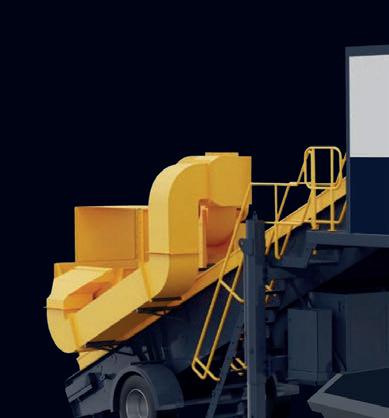

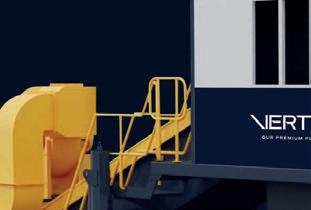


• All-in-one mobile sorting platform
• Fast setup, easy site relocation

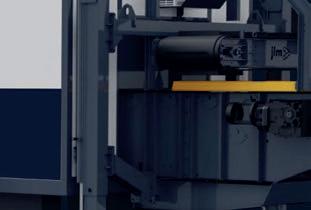




• UP TO 3 BAYS, 6 STATIONS
• AIR CONDITIONED CABIN
• ON-BOARD GENERATOR
• OVERBELT MAGNET
• LEGS TO RAISE MACHINE
• LIGHTS REMOVAL SYSTEM


• Recover up to six materials per pass
• Weatherproof, safe picking cabin
• Wide belt for efficient material recovery
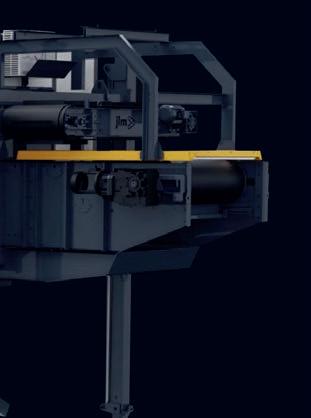
The Vertech Mobile Picking Station is an allin-one onsite sorting platform engineered for flexible, high-performance recovery.
Designed for fast deployment and easy relocation between sites, it delivers efficient separation of mixed waste streams through a wide picking belt and weatherproof, fully enclosed cabin.
• Extract saleable materials and reduce landfill costs
Contact us today on 1800 673 002 or info@wasteinitiatives.com
Discover more at wasteinitiatives.com.au
Operators can safely and consistently extract valuable materials, reduce landfill volumes and improve recovery outcomes, all in a single mobile unit.
Recover up to six materials per pass and unlock greater value from your waste stream.
Backed and supported by local engineering and project management, with nationwide service coverage across Australia.

Yarra Valley Water is using waste-to-energy to transform commercial food scraps into renewable electricity.
Traditionally, water utilities have been de ned by pipes and treatment plants, but Yarra Valley Water is positioning itself as a major player in the renewable energy sector.
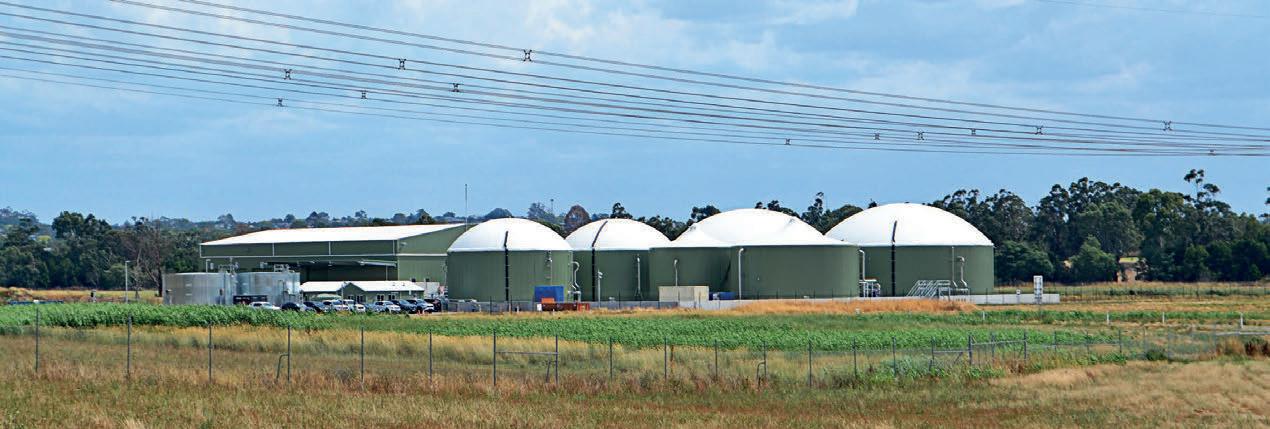
e utility’s new waste-to-energy facility in Lilydale, just 34 kilometres from Melbourne’s central business district, demonstrates how the water industry can meet its own energy needs while solving a logistical headache for the commercial food sector.
While many organisations are currently focused on the logistical hurdles of residential food organics and garden organics (FOGO) collections, Yarra Valley Water has carved out a niche by focusing on high-purity commercial
and industrial streams. is focus is designed to minimise contamination and maximise the quality of the energy and organic products returned to the market.
Once fully operational, the facility will power itself and the neighbouring sewage treatment plant, while feeding any excess renewable electricity back into the grid.
Designed to process about 55,000 tonnes of food waste every year, the site will generate 39,000 kilowatt hours of renewable electricity daily – meeting about 35 per cent of Yarra Valley Water’s total electricity needs, or enough to power the equivalent of more than 2200 Victorian homes.
e environmental impact is equally substantial; the project is expected to
reduce greenhouse gas emissions by up to 24,700 carbon dioxide equivalent tonnes annually – equal to taking 25,300 cars o the road.
While the plant is a critical component of Victoria’s broader strategy to halve organic waste sent to land ll by 2030, for Stephanie Salinas, Manager, Waste to Energy Services at Yarra Valley Water, it also provides a blueprint for how utilityscale projects can de-risk the transition to renewables while delivering measurable social and environmental returns.
“By treating food waste as a resource rather than a problem, we are not only reducing land ll and emissions but creating a self-sustaining energy loop that bene ts both our
customers and the environment,” Stephanie says.
e Lilydale plant builds on the success of Yarra Valley Water’s rst facility in Wollert, in Melbourne’s north, which launched in 2017 as the rst commercial-scale food bioenergy facility in Victoria.
e project is being managed by the Delorean Corporation (ASX;DEL), a leading developer of bioenergy infrastructure. Tasked with a design, build, operate, and maintenance contract, the company’s responsibilities span from initial drawings to daily operations.
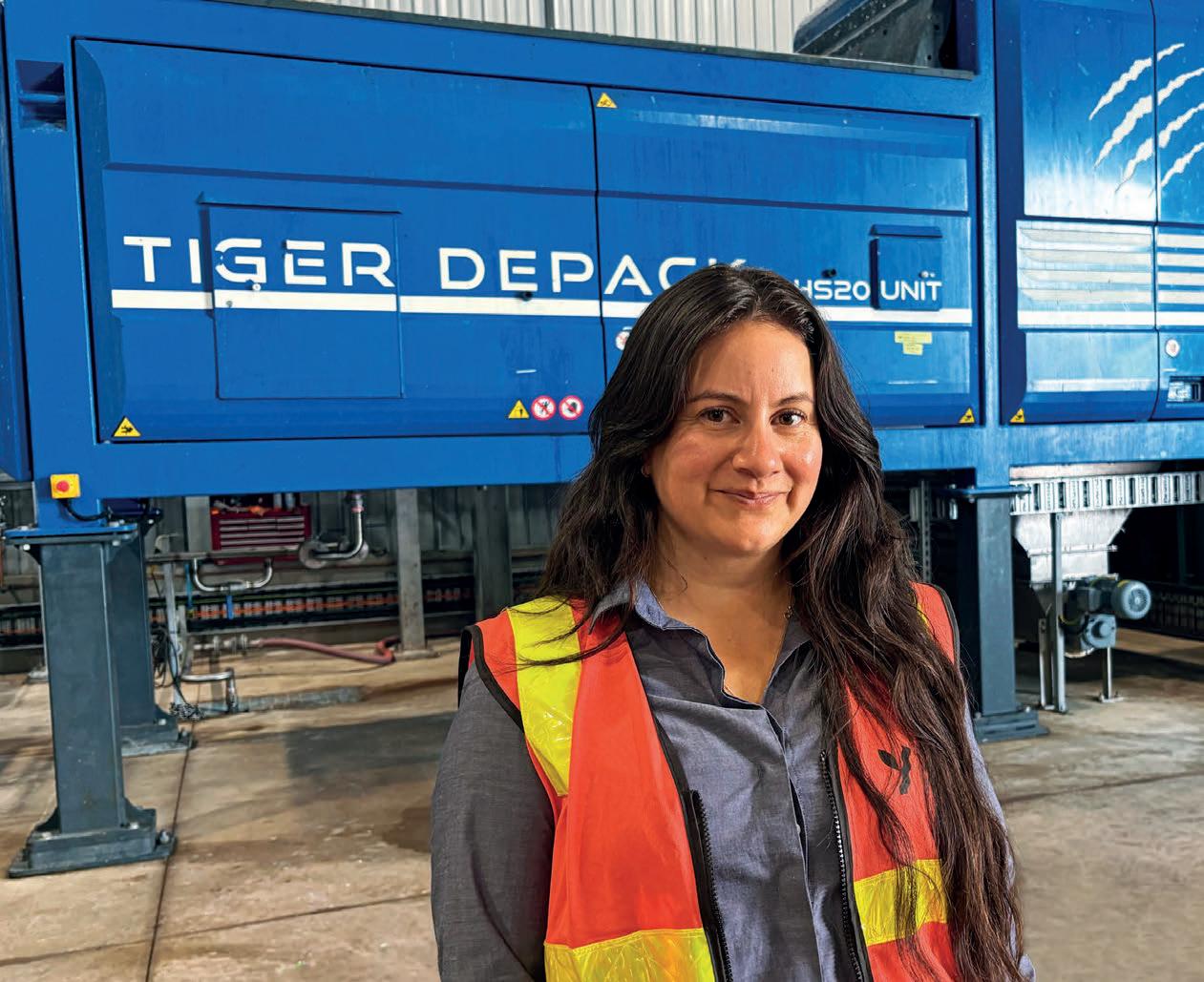
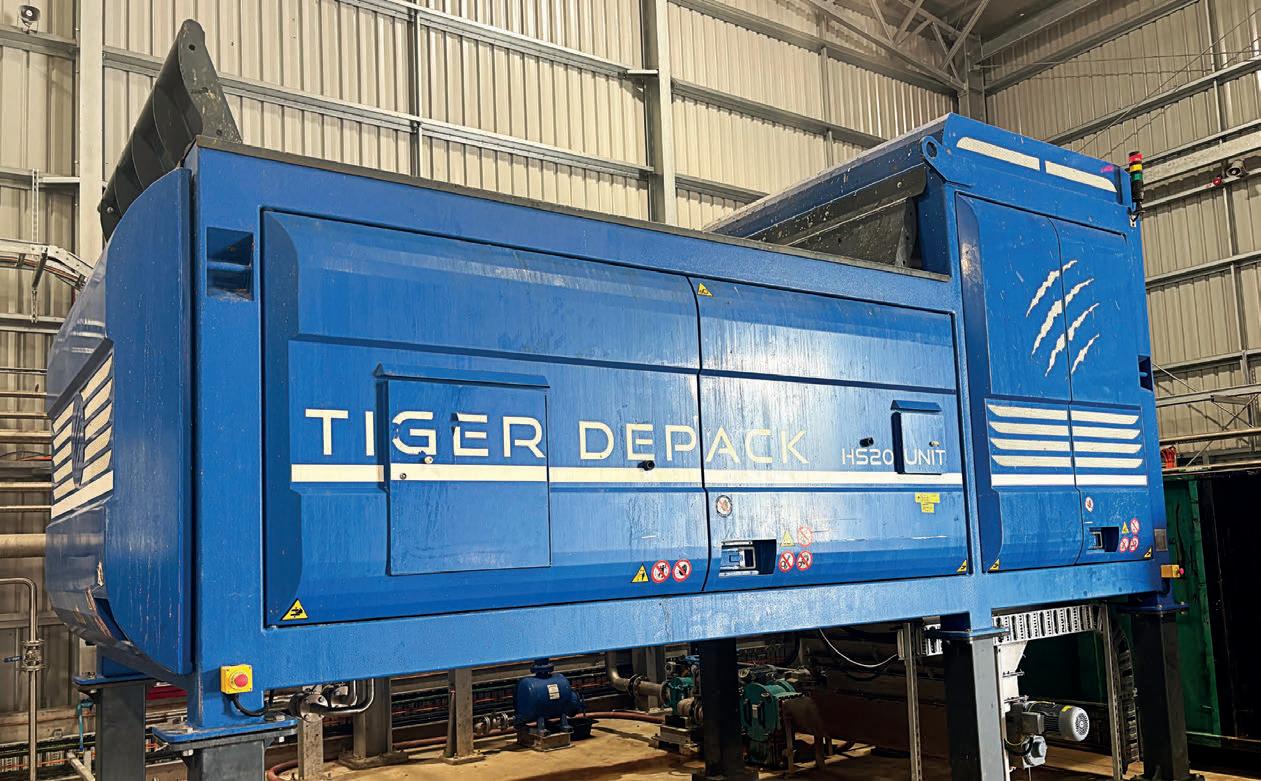
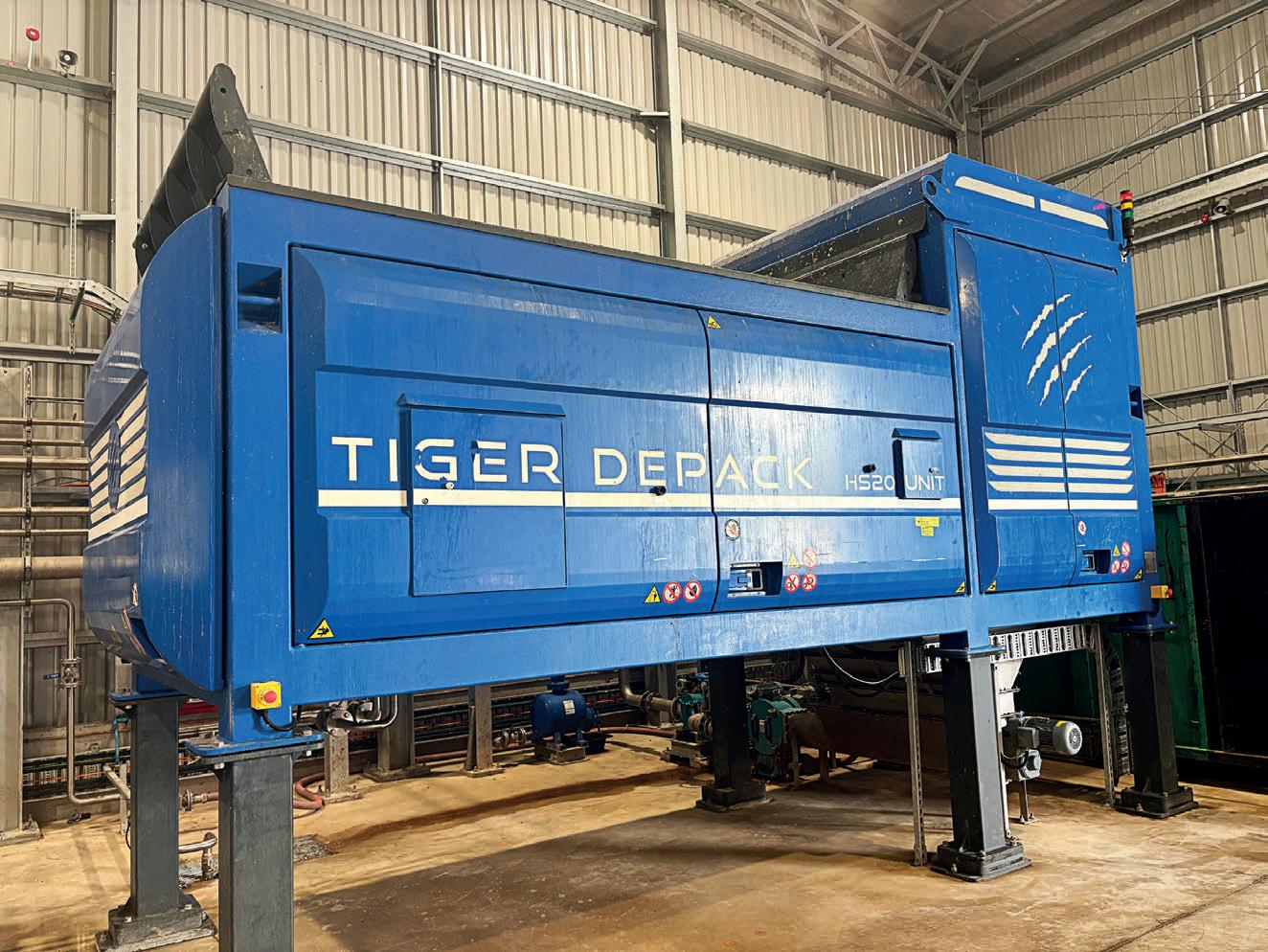
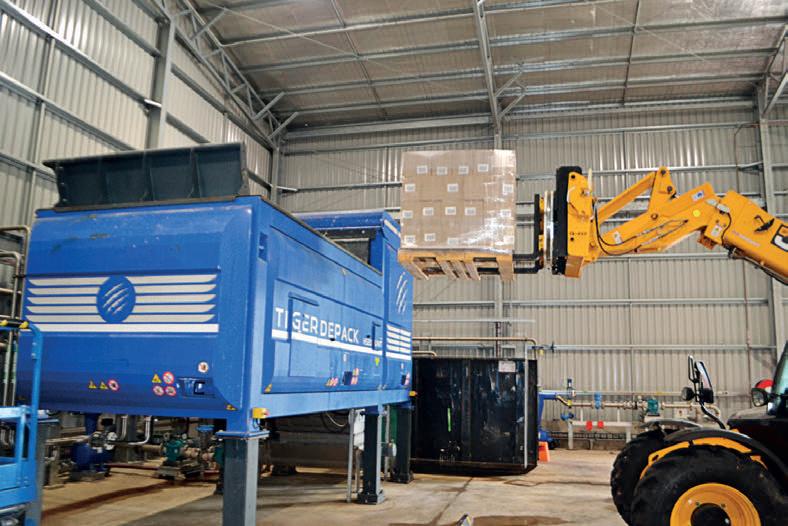
Stephanie says Yarra Valley Water sought a partner with established local experience. is partnership also led to the selection of the technical ‘heart’ of the Lilydale site – the Tiger HS20 depackaging unit, supplied by FOCUS Enviro.
She says while the name often elicits a smile from industry outsiders, for the operators, the Tiger is critical in solving a bottleneck of commercial food recycling: the packaging.
By mechanising the separation of organics from their containers, the plant can accept “messy” waste from supermarkets and manufacturers that would otherwise be destined for land ll.
“We designed the Lilydale plant to have the addition of packaged food organics as a direct response from what we were hearing from our customer base at Wollert; that there was a need for an increased processing capacity for packaged food,” Stephanie says.
“Delorean has a wealth of experience with processing packaged food waste for anaerobic digestion systems already here in Australia, and they have had success with the Tiger unit at another facility.
“Delorean also knew that we wanted a unit that could tackle a broad range of packaged food such as plastics, cardboard, aluminium or blended packaging where you have multiple
layers. For us, it really made sense to go with something that was proven.”
Ryan McParland, FOCUS Enviro Product Specialist, says the Tiger HS20 combines the actions of a shredder, screen, and extrusion auger to separate organics from their packaging in a single pass and achieves a 99.6 per cent contamination-free organic output.
Beyond its separation e ciency, the Tiger HS20 also o ers signi cant operational exibility and sustainability bene ts. It’s designed to function with or without the addition of process water, allowing operators to
program the moisture content of the organic discharge to suit the speci c requirements of the downstream anaerobic digesters.
With an energy performance as low as six kilowatt per ton and a compact footprint, the system minimises post-processing energy costs and infrastructure requirements.
For FOCUS Enviro, the association with the Lilydale facility is a point of professional pride, representing a benchmark for how specialised technology can enable large-scale environmental change.
“FOCUS Enviro is committed to delivering best-in-class solutions that don’t just process waste, but recover value with maximum e ciency,” Ryan says.
“By providing the Tiger HS20, we are playing a critical role in Yarra Valley Water’s journey toward net zero, supporting a project that aligns perfectly with our core value to introduce smarter, more sustainable recovery systems to the Australian market.
“Being part of a facility that sets such a high standard for quality and renewable output reinforces FOCUS Enviro’s position as a trusted partner in the national transition toward a truly circular economy.”
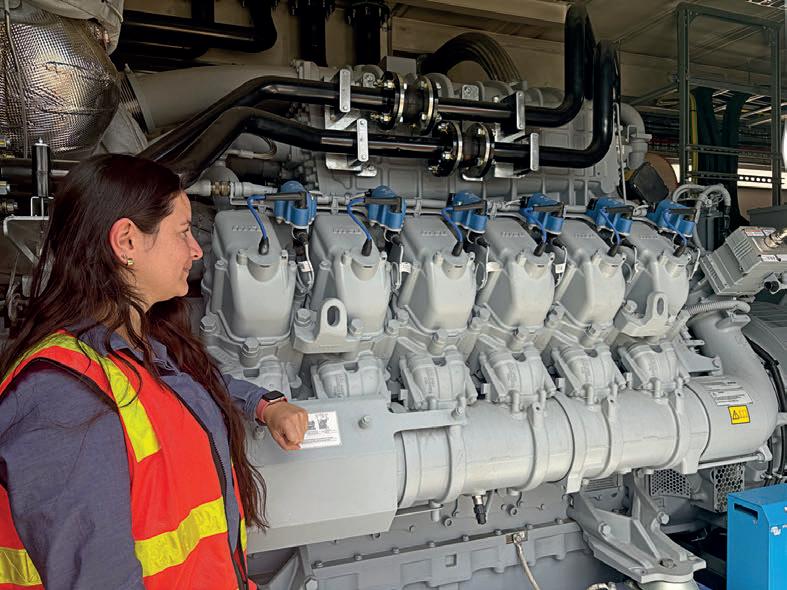
e Lilydale plant is currently in the commissioning phase. Stephanie describes the transition from planning to production as a delicate biological dance that is less about icking a
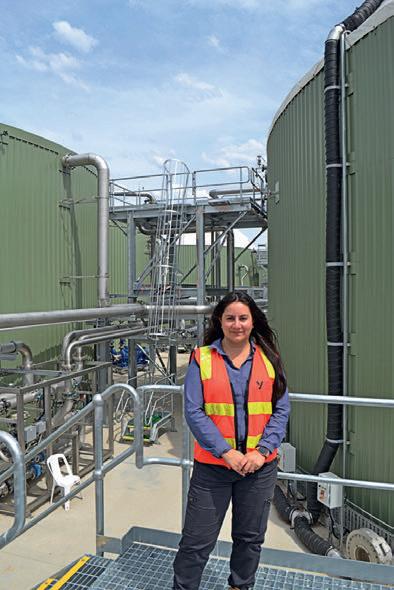
“We’re receiving waste, we’re processing it, and we’re building up that biological stock that we need to produce the biogas.”
Stephanie Salinas, Manager, Waste to Energy Services, Yarra Valley Water
switch and more about building up the bacteria.
“It’s not like your typical plant where you switch it on and everything starts to happen,” she says. “We have to build up the gut of the system itself.
“ at’s what we’re doing at the moment. We’re receiving waste, we’re processing it, and we’re building up that biological stock that we need to produce the biogas. In the biological commissioning stage, you’re using that process to get your biogas to a quality and a volume that you need to switch on your generators.”
Beyond the energy output, the Lilydale facility is designed to close the nutrient loop. One of the key improvements over the Wollert model is the inclusion of a dedicated digestate system. is allows Yarra Valley Water to produce a range of liquid and solid products for the agricultural market.
Because the facility avoids the highcontamination risks of kerbside bins and does not process biosolids, the resulting digestate is a high-quality organic product rich in bioactive compounds that are known to stimulate plant growth.
“We’re undertaking a range of trials and producing data that demonstrates
quality and performance, and as we begin to produce at Lilydale, we’ll be moving into commercial-scale demonstration trials with some key partners to lead that gateway into the organics market,” Stephanie says.
While proposals for new traditional composting or land ll sites often face community pushback due to odour concerns, Stephanie says the Lilydale community has embraced the facility and the move toward renewable power.
e project is also a primary engine for the utility’s emissions targets. Yarra Valley Water is on track to report net zero for Scope 1 and Scope 2 emissions this nancial year, aligning with the Victorian Government’s Statement of Obligation mandating decarbonisation of the water corporations.
“It’s inspiring to see Yarra Valley Water do something like this,” Stephanie says. “I’ve been able to see how this has in uenced and encouraged industry to pursue the innovation into bio energy.
“As much as it can be challenging, it is a testament that we can get innovation across the line.”
For more information, visit: www.yvw.com.au













Cleaning up Australia’s compost is a priority for organics processors. A real-world trial demonstrated how the Komptech Hurrikan S removes lightweight contaminants to deliver market-ready product.
As state and federal mandates push for increased diversion of Food Organics and Garden Organics (FOGO) across Australia, the volume of material entering facilities is surging. With it comes a persistent challenge: contamination.
Plastic lms, foil, and lightweight debris are increasingly entering the waste stream, threatening the commercial viability of the nal product.
For a sector that prides itself on “closing the loop,” contamination is more than an aesthetic nuisance; it is a barrier to market con dence.
e Australian Organics Recycling Association (AORA) has long noted that contamination is “one of the most signi cant threats to the future success of recycling and the circular economy.”
But turning raw green waste into a highvalue agricultural asset requires a level of purity that traditional screening often fails to reach.
Jimmy Murphy, Sales Manager Forestry and Organics for Lincom Group, says the Komptech Hurrikan S separator o ers a solution for operators at every stage of the adoption curve.
Following a series of trials across eight sites in Queensland and New South Wales, the results have been consistent.
“Across a couple of di erent feedstocks, we were achieving between 90 and 95 per cent recovery,” Jimmy says. “It was doing what it said on the tin.”
e Hurrikan S uses the physics of air and gravity to strip away light fractions.
e machine works by drawing material across a pressure-vacuum section where
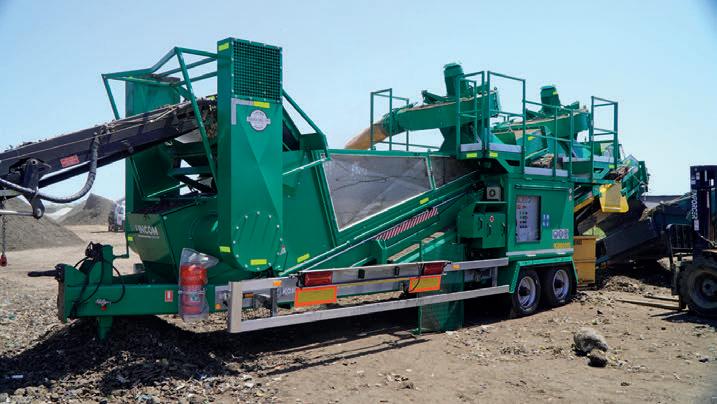
lighter contaminants are sucked upward, while the heavier, clean compost continues down the main conveyor.
Jimmy says the e ciency of the Hurrikan S stems from its patented airknife technology and twin-fan system.
“ e twin fans have variable speed controls, so we can adjust and set according to the in-feed material,” he explains.
“If fan number one is extracting too much dust, we can slow it down to get better recovery. at exibility is vital when you’re dealing with material that might be brous, small, or quite moist.”
e challenge with plastic is often its density; once it is shredded or processed below 15 millimetres, it mimics the weight of organic nes. However, for fractions above 15 millimetres, the Hurrikan’s airow technology is a game changer.
Jimmy says one trial participant who already owned an older, single-fan Hurrikan noted a huge di erence in the recovery levels achieved by
the additional fan in the S-model. Beyond the technology, Lincom, the exclusive distributor of the Komptech equipment, is addressing a common industry hurdle: capital availability.
While many large-scale processors have an ongoing need for decontamination, others may be at the end of a contract or working through seasonal surges. To bridge this gap, Lincom has invested in a dedicated rental eet.
“Rental of processing equipment isn’t new for Lincom, but o ering this level of decontamination equipment as a rental solution is somewhat new to the sector,” Jimmy says.
“It gives customers an OPEX (operating expenses) solution where the capital budget might not be in place. We can o er these on a campaign basis for a few months or longer.”
is exibility is paired with onsite technical support. Lincom provides technical experts to re ne the process and train operators on the tips and
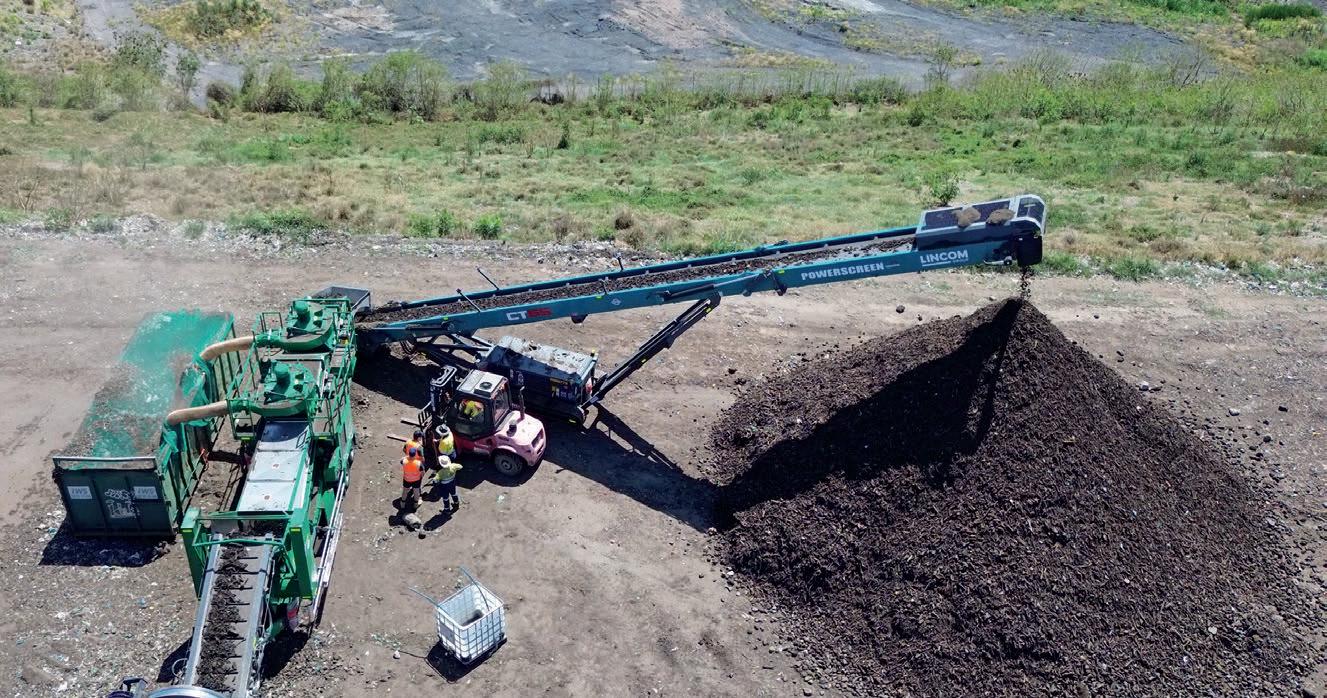
tricks of the machine. For one Queensland trial, the Hurrikan S was integrated with a mobile trommel screener and stackers, processing up to 600 cubic metres per day.
Consuming just six litres of diesel per hour – or running on mains power for
lower costs – the system proved that highpurity output doesn’t have to come at a high operational price.
“Ultimately, the Hurrikan S is about giving operators the con dence that their product is market-ready,” Jimmy says. “If we can recover 90 per cent of what
was bound for land ll, it makes a huge di erence to the bottom line and ensures those contaminants aren’t just circulating back through the process.”
For more information, visit: www.lincom.com.au
Why Australia’s FOGO composting industry is moving toward covered Aerated Static Pile solutions.
When Australian industry looks for global trends, it often looks to the West Coast of the United States.
Just as Silicon Valley dictates the high-tech landscape and Hollywood sets the cultural tone, the California Department of Resources Recycling and Recovery (CalRecycle) establishes the environmental and regulatory benchmarks for organics diversion.
For Australian councils and waste operators facing mandatory food organics and garden organics (FOGO) collection, California isn’t just a distant market, it is a mirror re ecting the nation’s nearterm future.
Australia is accelerating toward the 2030 National Waste Policy Action Plan which targets a 50 per cent reduction in organic waste to land ll and requires all households to have access to FOGO collection services by 2030. is shift is an almost exact parallel to California’s Senate Bill SB 1383, which mandates the diversion of 10 million tonnes of organics annually.
In both regions, the core challenge has moved beyond collection and is now focused on facilities processing massive
volumes of waste while maintaining a social license in increasingly urbanised environments.
As FOGO processing facilities move closer to the communities they serve, the ability to control odour, emissions, and site impacts has become as vital as throughput.
In California, community acceptance has proven to be inseparable from measurable performance. Regulatory bodies, such as the South Coast Air Quality Management District, now enforce strict limits on volatile organic compounds (VOCs) and ammonia, standards that are becoming the “new normal” for Australian environment protection agencies (EPAs).
When markets look for proven direction under these high-pressure conditions, they increasingly look to technologies that meet California’s rigorous permitting process.
Brian Fuchs, Business Development Director for GORE® Cover technology says Sustainable Generation™ featuring the GORE Cover has emerged as the gold standard by delivering greater than 90 to 99 per cent reduction in odours and VOCs.
He says SG Advanced Composting™ Technology has provided a scalable blueprint for how facilities can become good neighbours while meeting the most demanding environmental mandates in the world.
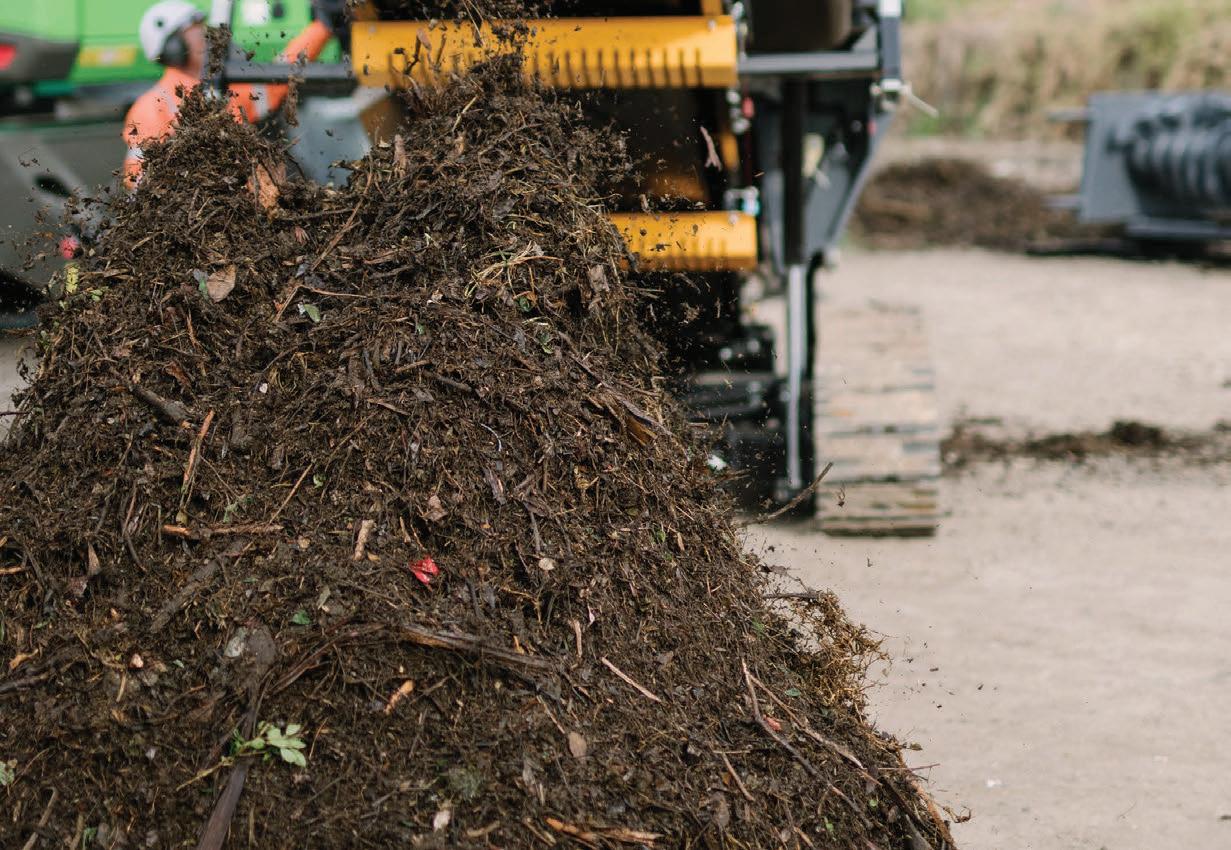
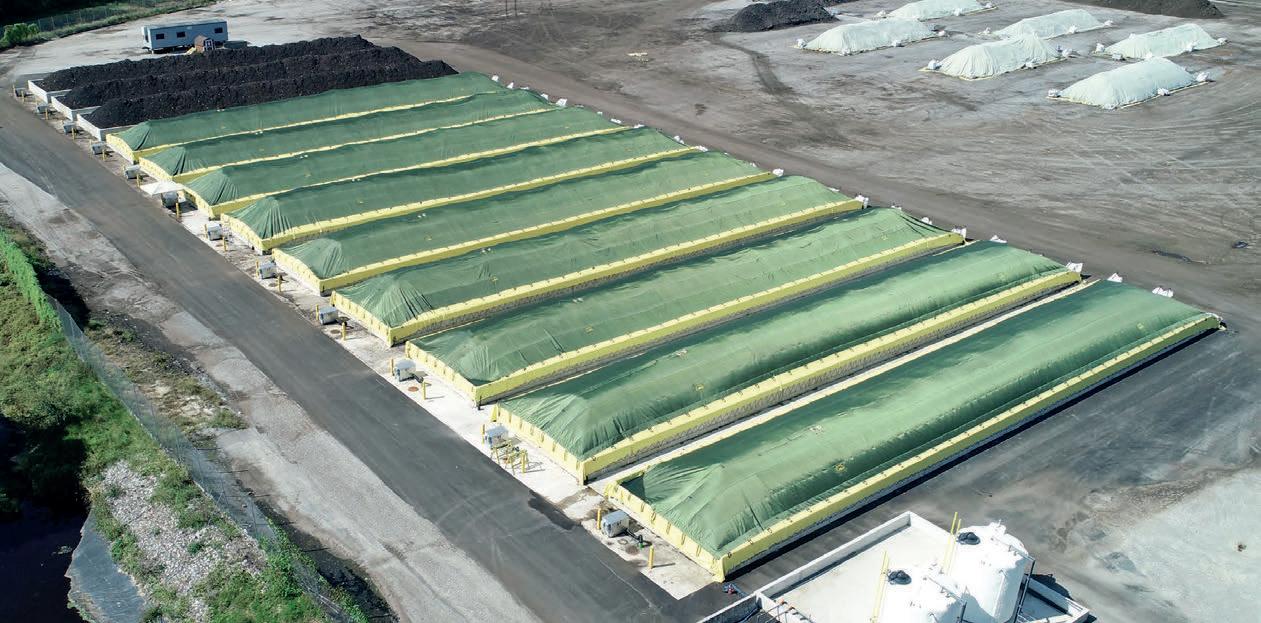
Open windrows, while common in rural settings, often struggle with odour management and weather-related inconsistencies in more populated areas. In contrast, California’s successful diversion programs have largely relied on Covered ASP (Aerated Static Pile) systems to manage high-volume feedstocks in sensitive areas.
Brian says that as Australian operators evaluate their infrastructure needs, there is a shift away from traditional openwindrow composting toward Covered ASP solutions.
“ is technology creates a controlled environment that mimics a high-tech in-vessel system at a fraction of the capital cost. By using an engineered micro-porous membrane, the GORE Cover acts as a physical barrier to odours and dust while
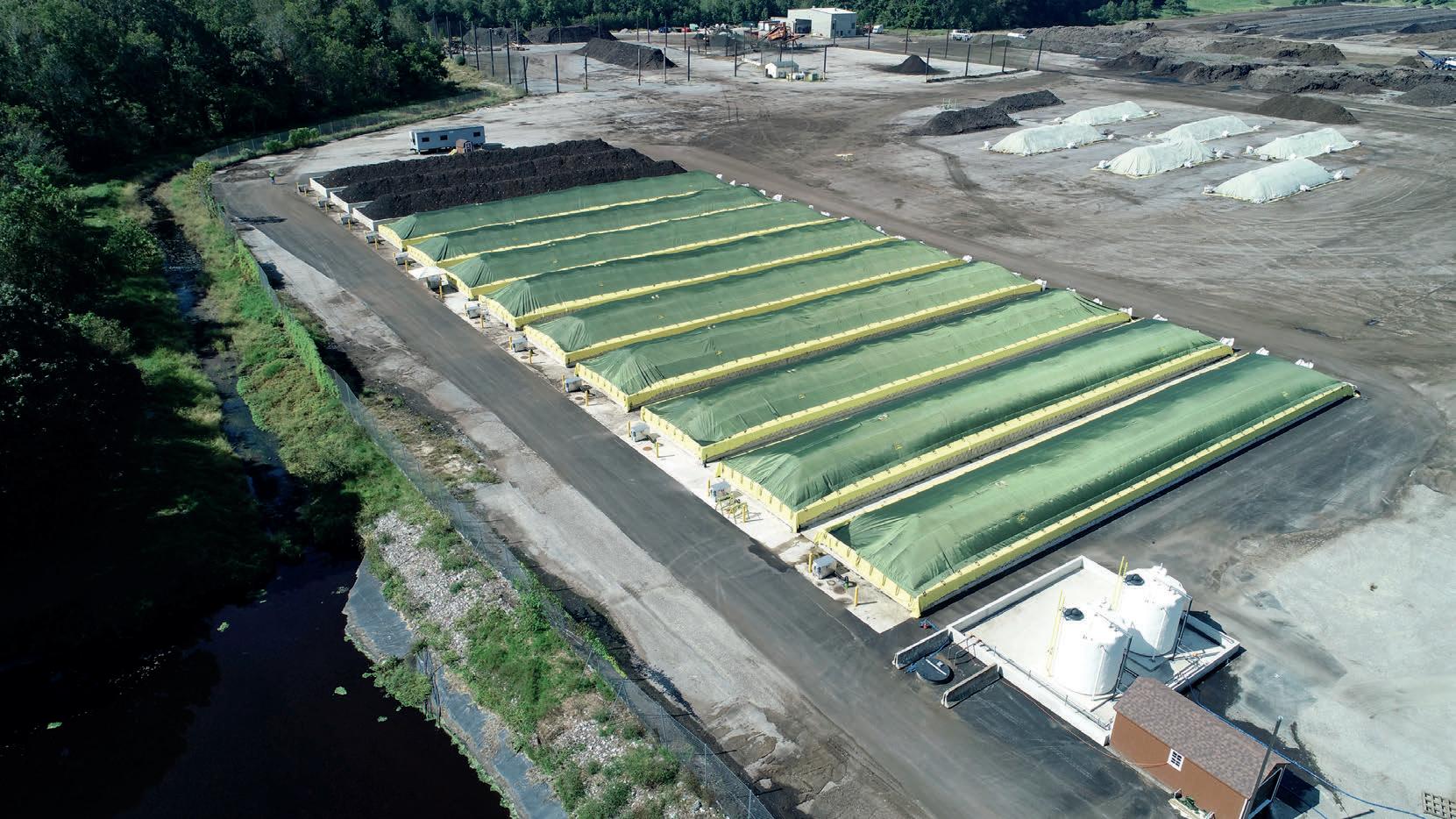
allowing moisture and heat to be managed precisely,” he says.
“For Australian councils, this represents a de-risked path to compliance: a technology that has already been tested and proven by some of the most visible FOGO facilities in the United States.”
Beyond environmental performance, the “California mirror” reveals a hard truth about operational costs. As energy and labour costs rise in both regions, the e ciency of a composting system determines its long-term viability.
Traditional methods requiring frequent mechanical turning are becoming less attractive compared to automated aeration systems.
Brian says that the SG Advanced Composting system simpli es the process
by eliminating the need for windrow turning. is not only reduces fuel consumption and equipment wear but also ensures a consistent, high-quality end product.
“In California, this consistency has allowed operators to sell their compost into high-value agricultural markets, turning a waste stream into a revenuegenerating asset,” he says.
“Australia is now following this lead, recognising that high-quality compost is essential for soil health and carbon sequestration goals.”
As Australia’s FOGO mandates take e ect, the industry is moving quickly from policy to practice. e facilities being designed and built today will shape operating costs, regulatory outcomes, and community relationships
for the next three decades. Brian stresses that the lesson from California is clear: the most successful operators are those who solve for the community rst. By adopting Covered ASP solutions with engineered membrane technology Australian operators can maintain positive community relationships while delivering a low-cost, high-performance service.
“Sustainable Generation, working with Australian partners, is now bringing this California-proven expertise to the local market,” he says.
“For councils and private operators, the opportunity is not just to meet a 2030 target, but to adopt a standard of excellence that has already stood the test of time under demanding conditions.”
For more information, visit: www.sustainable-generation.com



The Australian Organics Recycling Association is providing Premier Tech with a platform to showcase its bagging technology for growing media and composting applications.
The Australian Organics Recycling Association (AORA) is committed to promoting circular economy concepts such as recycling and reuse to the public.
For more than a decade, the organisation has realised this vision through hosting events, educating communities, and partnering with likeminded companies to share sustainable practices with various industries.
One such partner is Premier Tech. e global company, helmed in Canada, has produced growing media – materials used in horticulture and hydroponics – for more than 100 years.
Initially founded as a sphagnum peat moss harvesting operation, Premier Tech has shifted its focus to prioritise sustainability within the sector through research and development.
It entered the Australian market in 2018 with the acquisition of Victorian packaging solutions provider, Kockums Bulk Systems.
Sam LiRosi, Business Development Manager of Automation and Packaging – Premier Tech, a long-time employee of Kockums, says the company was working in organics, which extended to organic packaging.
“Premier Tech works in a very similar demographic and, with us, has been dedicated to engineering automated and sustainable solutions for the growing media and composting world,” he says.
Premier Tech’s commitment to creating and amplifying these solutions prompted it to connect with AORA, which provided the company with a unique opportunity.
“We support AORA because of both the platform and knowledge it provides us,” Sam says. “We know that every industry can become more sustainable and has its own set of requirements to achieve that.
“AORA has opened the door for us to understand all these variables and in uence the products we make, so that we enable others to make the right environmental choices.”
Premier Tech leverages AORA’s platform to show its latest sustainable solutions in the growing media and composting industries, such as the automation of bagging processes for potting mixes.
“ e growing media and composting spaces have been expanding quite rapidly for the past few decades,” Sam says. “So has the demand for packaging, as well as the need for customers to repurpose their waste. Premier Tech has worked to address this market need through automation.” is automation spans both the product mixing and product bagging stages of preparing potting mixes for the market.
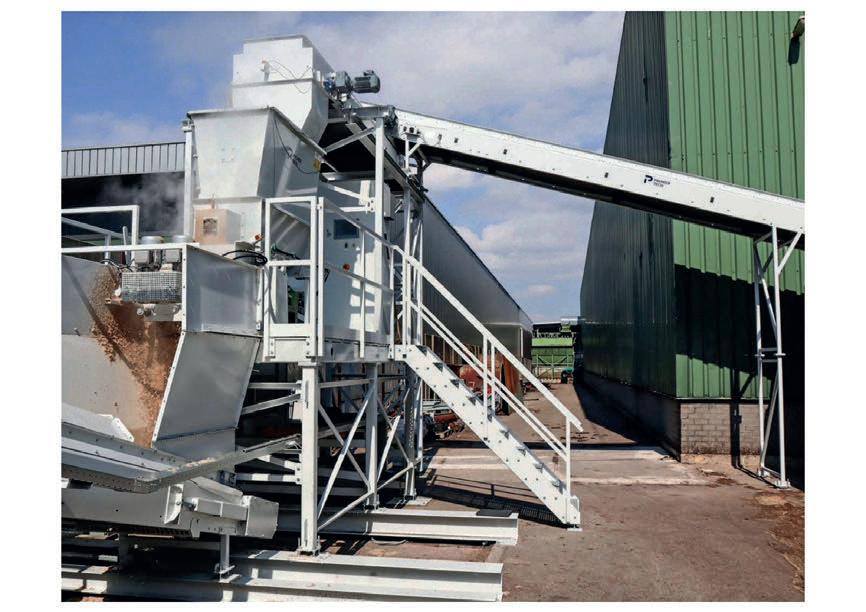
Premier Tech’s automated solutions use machinery such as additive hoppers and vibrating dosing units to precisely measure, mix and dispense bulk potting materials, including peat soils, barks, and wetting agents. Potting mix bags are then put through a vertical form ll and seal bagging machine, a high-level palletiser and stretch hooder, to prepare them for transport and sale.
Sam says these processes have revolutionised growing media and composting operations.
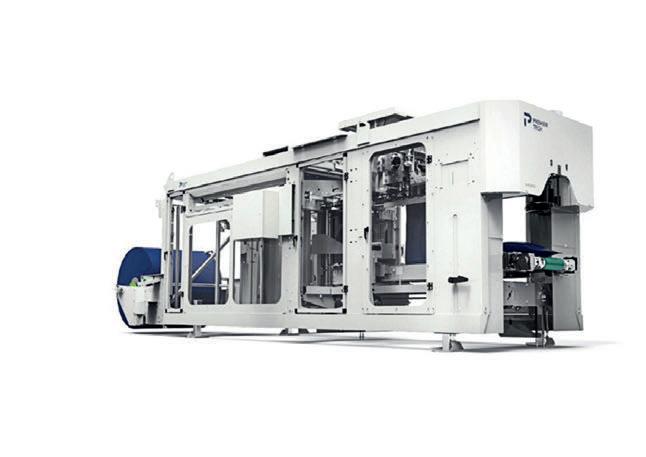
“ e machinery delivers a range of bene ts for producers, mainly in terms of packaging speed, allowing more sustainable material to be sent out to customers at a faster rate,” he says. “Given the immense growth in this space, this production e ciency is critical.
“Some of the suppliers in this space are producing at volumes we haven’t seen before. ey need their processes automated so they can properly service the high demand of their products.”
Another bene t of Premier Tech’s bagging automation technology is waste reduction, as the machinery’s method of securing potting mix bags ensure all material is used.
“Getting the bagging accuracy via automation is so important in terms of the environment and sustainability,” Sam says. “ e automation ensures more of the material is now making its way into the bags, and eventually to the customer. is way, the amount of dust and other waste product that usually comes o the product is minimised.”
He says Premier Tech’s automated technology is not only being well-received by producers, but also consumers. e concept of sustainable processes supporting sustainable products is resonating with the market now more than ever.
“I’ve been in the industry for a long time, and this generation of consumers wants to buy products that come from sustainable sources,” Sam says.
“ at’s exactly why we use systems such as our wood bre machine to replace peat and coco coir historical substrates with sustainable bres extruded from wood chips, and why we partner with organisations such as AORA. rough AORA and our own capabilities, we can push products and processes that align with what our customers want and need.”
For more information, visit: www.aora.org.au





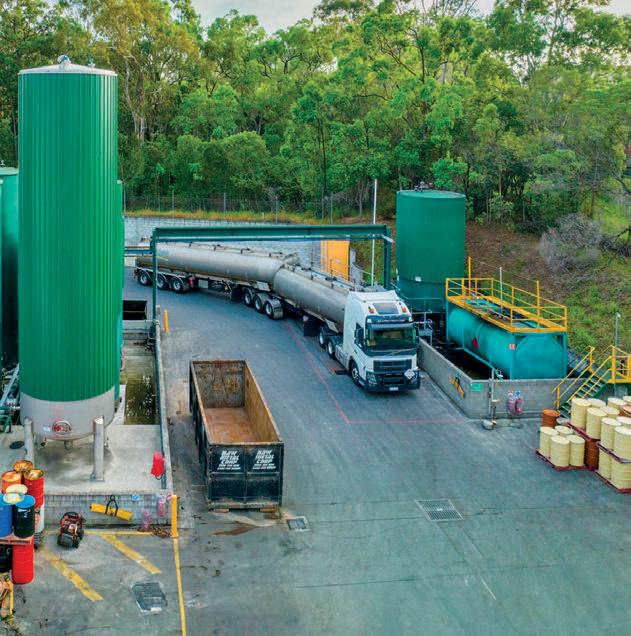



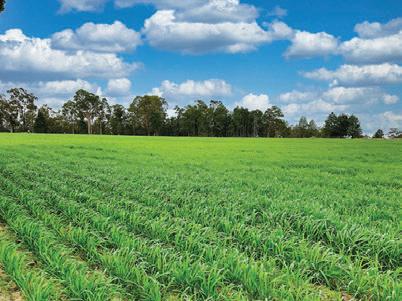
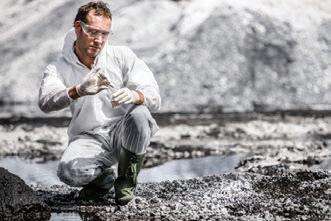
We deliver innovative, compliant solutions to complex environmental challenges. Our services protect the lands, waters and communities on which we work, and align with global sustainable development goals.



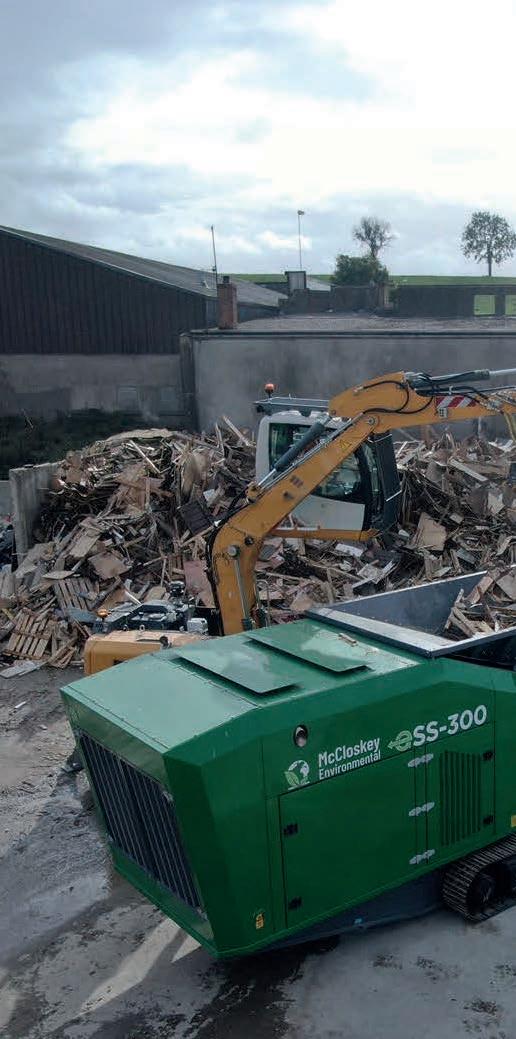


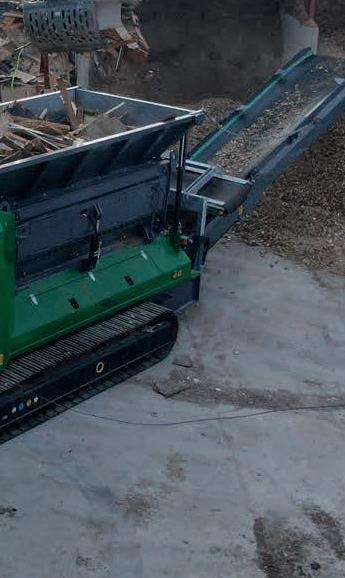
Versatility, control and reliability Built for modern waste operations.
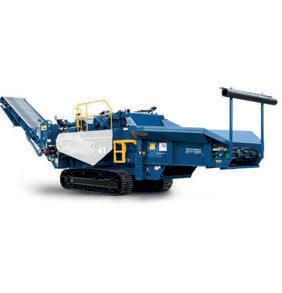
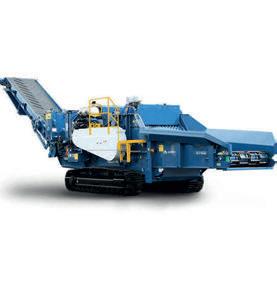
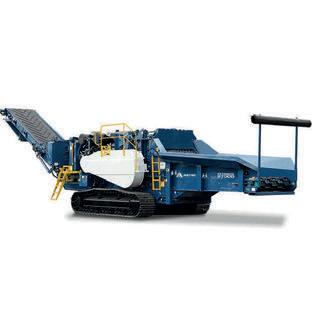
Proudly distributed by Tutt Bryant Equipment, the ESS-300 is a versatile tracked primary shredder built to handle highly variable waste streams with efficiency and reliability. Designed for materials that vary in size, composition and difficulty to shred, it delivers consistent performance in demanding waste and recycling operations.
An aggressive single-shaft cutting system prevents material bridging and maximises throughput, while quick-change meshes, accessed via a hydraulically operated side door, allow fast adjustment of output size. Combined with intelligent controls, fuel-efficient hydraulics and robust tracked mobility, the ESS-300 is a flexible, high-uptime solution for modern processing plants.



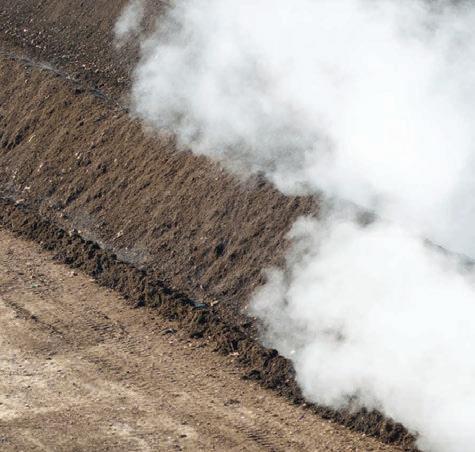
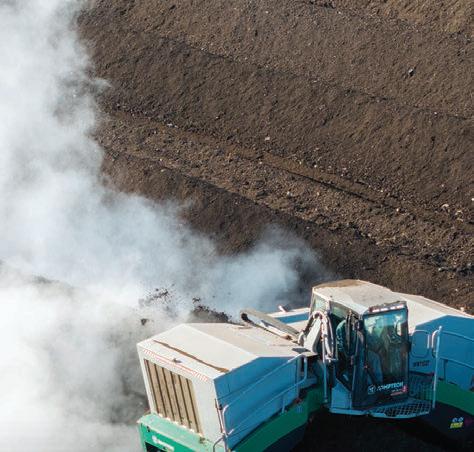

How NuGrow is bridging the gap between urban sustainability and agricultural productivity.
t the heart of Queensland’s circular economy, NuGrow operates under a mantra that is as much a core business strategy as it is a sustainability goal: “ x the economics, x the environment”.
Specialising in organic waste recycling, composting, and land rehabilitation, the company focuses on closing the loop by transforming waste into high-grade compost, soil conditioners, and landscaping products.
Jacob Wilson, Executive General Manager at NuGrow, says the aim is to nd a solution that is cost-e ective for both sides of the organic’s equation –the waste generators and the end-users. e rst side of this equation involves the waste generators, ranging from local government clients down to individual households.
“For us, it’s about the everyday families who are already balancing tight budgets; they don’t need the extra ‘job’ of a complex organics recycling process. If we keep things simple at the kerbside, people will do it well because it doesn’t feel like a burden,” Jacob says.
“On the other side of the equation, we have farmers, mines, and civil projects that need these organic materials, but only if they are provided at a reasonable cost.”
Jacob says this balance ensures that while households are not burdened by overly complex recycling requirements, the resulting compost is a ordable for the industries that need it most.
On the other side of the business, NuGrow is working directly with the agricultural sector to prove the tangible value of organic inputs. It is partnering with universities to research
the exact economic bene ts of using compost in farming.
Jacob says, for a farmer, the decision to use compost is a rational economic choice.
“You have to help the farmer understand why putting compost into their production makes sense,” he says. “In the macadamia space, for instance, it is used as a mulching cover that also fertilises, while broad-acre farmers use it to improve moisture retention and soil structure.
“Ultimately, it boils down to the economics for the farmer: if they put $1 in, what do they get out? A rational person isn’t going to spend $1 just to lose $1, so if they don’t see a return greater than their investment, they simply won’t do it.”
He says the results are already visible in the eld.
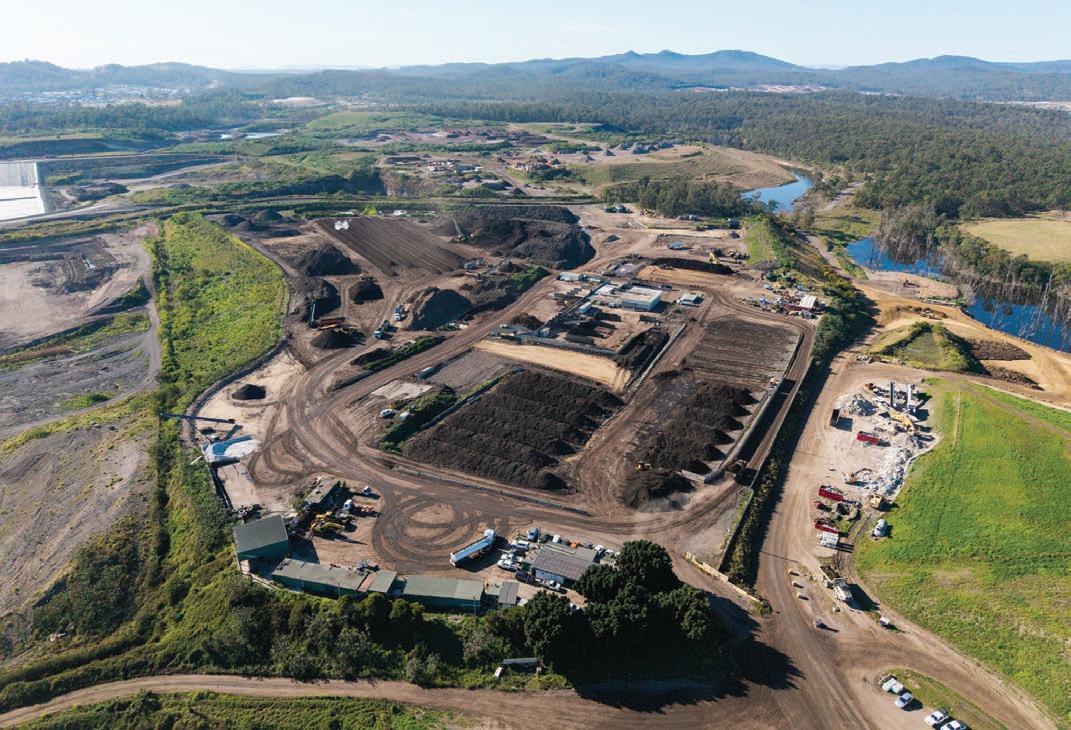
One corn grower in the region noted a signi cant improvement in his crop after using the material, and NuGrow has seen its supply in regions such as Rockhampton and Bundaberg outstripped by demand from local growers.
In the macadamia industry, where returns can take ve to six years, large annuity companies are pre-investing in compost to develop soil health for the long term.
Beyond agriculture, the mining sector uses NuGrow’s organics for progressive rehabilitation, mixing compost with overburden to create a growing medium where no topsoil exists.
With more than 20 years of experience in the sector, NuGrow operates multiple advanced composting and recycling facilities in Queensland.
Jacob says a new facility in Ipswich represents the company’s largest investment to date and is crucial for the south east corner of Queensland, where 80 per cent of the state’s new organic waste tonnes are expected to arrive as councils roll out green bins.
Designed to handle 250,000 tonnes of throughput annually, the facility has been fast-tracked to meet an ambitious September 2026 deadline, aligning with new environmental regulations.
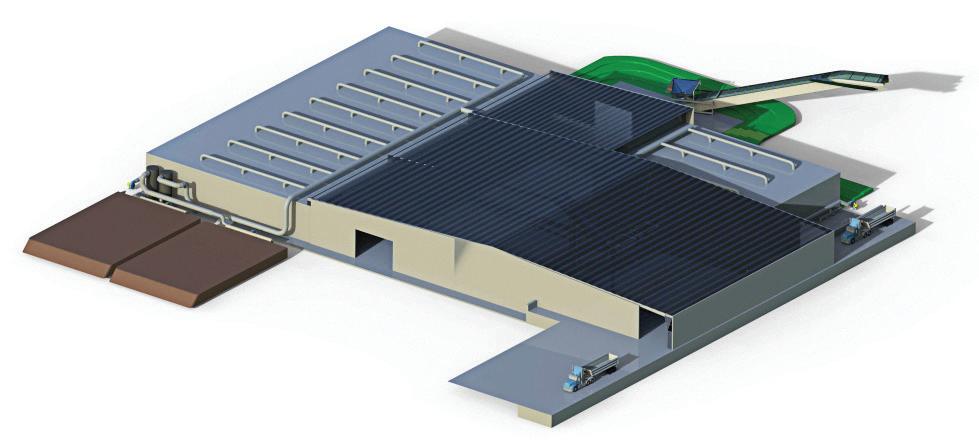
Ultimately, NuGrow sees itself as more than just a waste processor; it is a supply chain partner helping to bridge the gap between urban waste and regional resource needs.
By focusing on the bene ts of soil health and the nancial bottom line of the end-user, it aims to create a system that propagates itself.
“Our goal is to ensure we can service the entire state of Queensland, expanding up and down the coast and establishing more regional sites,” Jacob says. “While our Ipswich facility will do the heavy lifting for the south east, we believe we have a vital role to play in regional centres where the economics are often more challenging to balance.
“By applying our expertise, we can successfully x the economics and x the environment. We can support the customer at the beginning of the waste process and the end-user at the nish, while generating the returns necessary to reinvest in research and our people.”
For more information, visit: www.nugrow.com.au




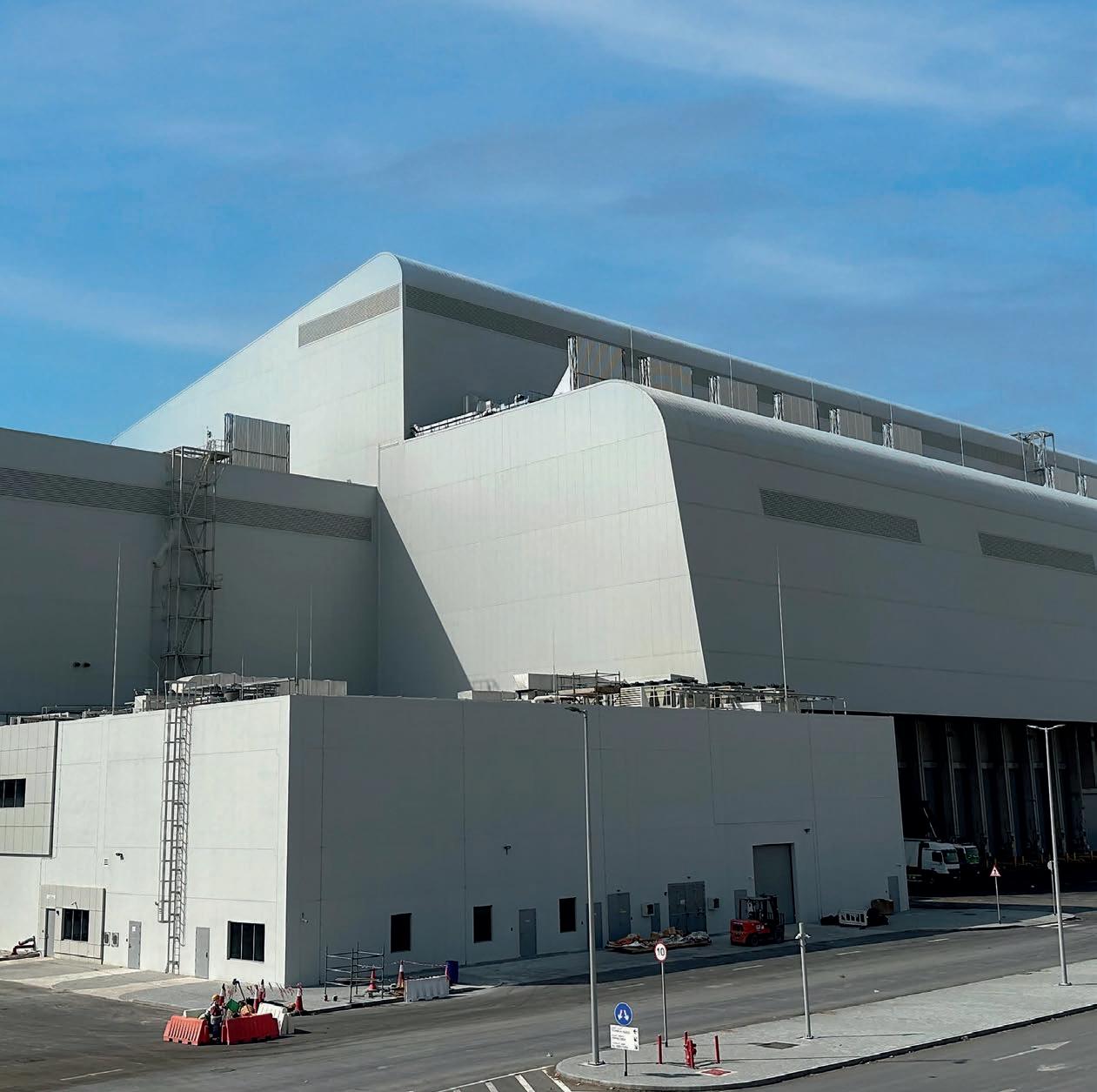
From initial planning to long-term operation, Kanadevia Inova delivers complete thermal and biological Waste to Energy plants. As an experienced EPC contractor, we handle every step – develop, design, build, operate, maintain. Our track record of more than 1,600 plants worldwide speaks for itself – including one of the world’s largest WtE facilities in Dubai. Check our references.

C-Wise is committed to practicing resource recovery across Western Australia and its sustainability-conscious stakeholders.
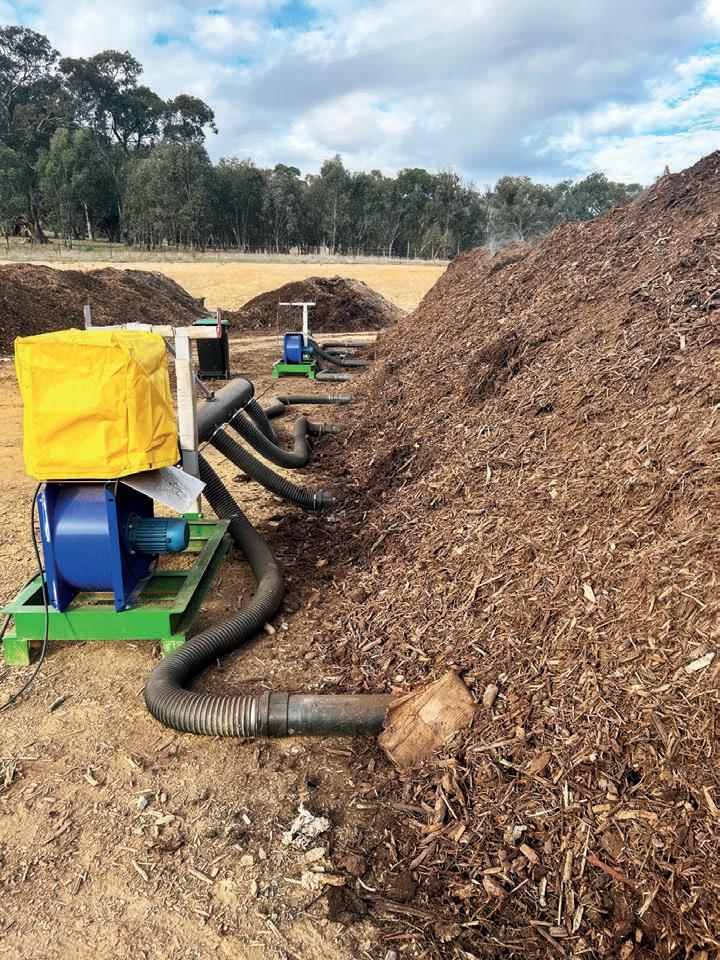
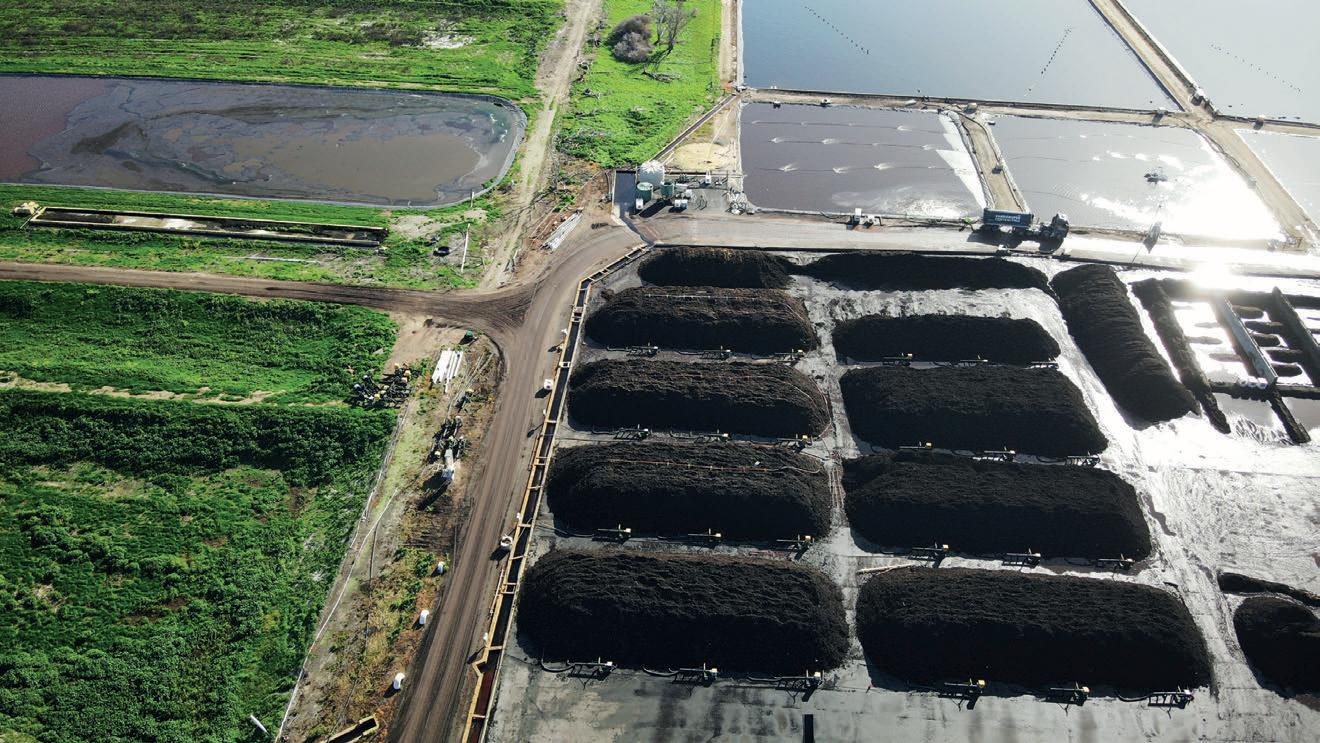
C-Wise has always been a sustainable business. e company has existed in some form or another since 1997 – rst as Custom Composts, before rebranding and pivoting to modern industrial composting for commercial entities.
Despite these di erent market approaches throughout the company’s lifetime, C-Wise’s operations have always been underpinned by waste
management and resource recovery. Chief Executive O cer Greg Watts describes the company as a trailblazer.
“Our site was the rst agri-precinct in Australia,” he says, “and we’ve been helping businesses process their organic wastes for a long time.
“I think a lot of what sets us apart at C-Wise is our culture, and our people. We all have such a strong desire to achieve our purpose – to see the world
as a better place and to leave it in a better way. We care, and I think that is our success.”
Greg joined C-Wise as its CEO in 2022 and has continued to steer it in a carbon-focused direction. Under his stewardship, the business has again rebranded to C-Wise: e Carbon Company, as part of an enduring commitment to the key role that carbon plays in the waste management process.
“We want to educate all of Australia on the value of soil carbon,” Greg says. “We see soil carbon as a way to save the planet. We need to create great soils, which grow great plants and great food, which grow great humans.
“And no matter where our customers are in their carbon journey, we’re able to guide and advise them on how to meet their carbon goals. at could be by reducing their carbon footprints, replacing augmenting synthetic fertilisers in farm situations, or capturing and processing organic waste that would have traditionally gone to land ll.”
C-Wise’s resource recovery services span industry and scale – the company can identify valuable organic byproducts for all types of businesses and can manufacture a way for the material to be useful to these businesses’ production cycles.
Greg says that while these circular economy opportunities are where C-Wise’s skillset lies, many of the company’s commitments to resource
recovery extend into a variety of community outreach programs which ful ll both business and philanthropic needs.
“We run engagement programs that introduce farming systems that we’ve developed and share them with the community,” Greg says, “while also helping them to understand the role that carbon-based fertilisers and nutrition can play in farming and foodgrowing systems.
“ ese programs are joined by community sporting games and other mass participation events.”
C-Wise’s resource recovery e orts have more recently moved into the commercial food organics space. Greg says this move seeks to collect food that doesn’t have a “higher bene cial use” and capture its value in a circular economy approach.
“If leftover food can go to feeding people that need it, then that’s its highest purpose,” he says. “If the food can’t be used for that purpose, then it needs to go somewhere, and that’s what C-Wise is adapting to handle.
“We’re working with some big food retailers to capture this commercial organic material which would otherwise go to land ll or be disposed of and convert it into soil via composting so it can be put back into the ground.”
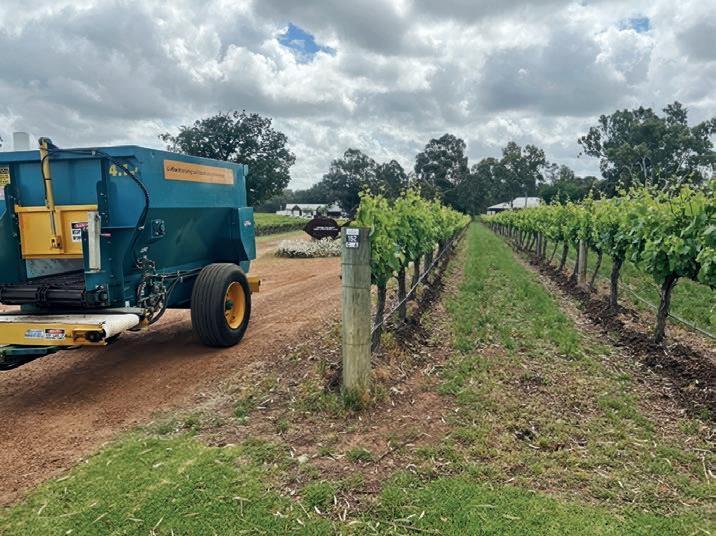
As part of this new endeavour, C-Wise is engaging with other companies to nd alternative composting solutions.
e company’s partnership with Perthbased biotechnology company Arvela, for example, is using black soldier y larvae as an e ective composting agent.
“If we can use black soldier y larvae, we can convert food waste into sh food or protein meal, then that’s where the food waste should go,” Greg says. “Of course, the black soldier y gives o a waste called ‘frass’, and that can be used on other compost piles.
“Integrating this method turns C-Wise into an almost zero-waste facility.”
Equipped with a wealth of industry knowledge, partnerships, and solutions,
Greg says C-Wise’s resource recovery value proposition is t for businesses looking to have their waste managed e ectively and sustainably.
“We understand that sometimes byproduct or waste management can be a low priority for some businesses,” he says. “Sometimes they just want their waste to go away – and that’s exactly what we can make happen.
“We create circular economy opportunities by connecting dots between a byproduct, a company’s process, and the need for that ingredient somewhere else.”
For more information, visit www.cwise.com.au
enrich technology is hel ing everyone re uce lan ll by turning foo aste into valuable resources.
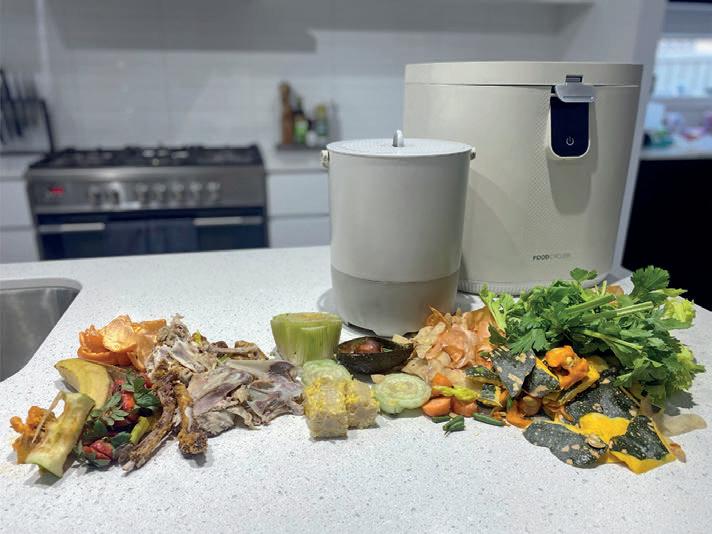
Jaclyn Geddes’ mission is simple but bold: to divert all food waste from land ll.
As the Chief Executive O cer of enrich360, an Australian-owned business focused on circular food systems, she is challenging the traditional “collect and haul” waste model.
For Jaclyn, the solution isn’t found at the end of a garbage truck’s route, but at the point where the waste is created.
“Behaviour change doesn’t happen just because you hand someone a caddy,” Jaclyn says. “People want to do the right thing, but the system isn’t clear. We need strong top-down structure informed by ground-up knowledge, because food waste shouldn’t be a postcode lottery.
“If we’re serious about diverting food waste at scale, managing it at the source using technology reduces our reliance
on heavy infrastructure and unnecessary movement, rather than kicking the can down the road.”
With a background in the fresh food supply chain, Jaclyn entered the waste sector through the lens of food systems, education and behaviour change.
Her focus on decentralised, practical solutions has positioned her at the intersection of policy and on-ground implementation. Selected to join the Australian Organics Recycling Association Victoria committee in 2026, she sees the role as an opportunity to help bridge infrastructure challenges, regulatory settings and real-world organics recovery. rough enrich360, that philosophy becomes practical application.
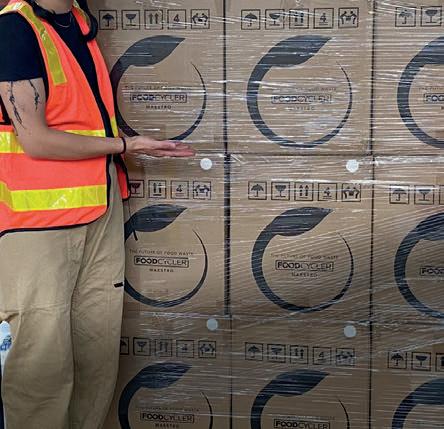
enrich360 provides residential and commercial food waste dehydration technology that reduces food waste volumes
by up to 90 per cent, turning food waste into nutrient-rich soil amendment and potable water.
As demand grows across hospitality, education and institutional settings, Jaclyn says the next phase of decentralised food waste management is about scale and accessibility.
e launch of the Eco 75 in Australia represents a turning point, bridging the gap between small benchtop units and large-scale infrastructure. Capable of processing up to 75 litres of food waste per day, the compact, plug-and-play system allows high food waste generators to manage waste on site without the cost and complexity traditionally associated with industrial solutions.
Integrated directly into kitchen work ows, the technology reduces transport and infrastructure demands while converting food waste within hours
On-ground projects have proven the technology.
enrich360 self-funded a 12-week residential pilot at Marina Square in Parramatta, a high-rise apartment development with more than 700 apartments. e pilot involved 50 participating households who voluntarily used benchtop Eco 5 units to manage their kitchen food waste. Over the trial period, more than 2000 litres of food waste were diverted from the general waste stream.
Crucially, the loop was closed on-site, as the resulting soil amendment was used by residents or applied to gardens and grounds.
Jaclyn says this project proved that even in high-density high-rise living, circularity is achievable.
On the back of the Parramatta trial, Moonee Valley City Council is leading the rst o cial council-led trial in Australia using benchtop food waste dehydration technology to support apartment residents who do not have access to FOGO or a council-provided food recycling service.
e trial, which began in February, is designed for multi-unit developments where waste services are privately managed and food recycling options are limited.
e council is o ering a co-contribution to provide subsidised access to the Eco 5 dehydrator. Participants will track usage cycles and complete surveys with data collected used to help the council better understand resident behaviour, diversion outcomes and how decentralised, at-source solutions can reduce land ll reliance.
Jaclyn says it’s an acknowledgment that a one-size- ts-all approach to waste collection is no longer su cient for evolving urban landscapes.
She also highlights the work happening at Seeds Communal Garden in Brunswick, Victoria, a community space run by Milparinka, an organisation that supports people with a disability. Food scraps are collected from local cafes and businesses and are then processed on site using an enrich360 food waste dehydrator.
“ e output is returned directly to the garden and shared with community organisations,” Jaclyn says. “When people see food waste transformed into something that supports growing food and connection, the circular economy becomes real and meaningful, not just another chore.”
Further north, the impact of the systems is reaching a massive scale through the Indigenous-led organisation Eco Mob
in Darwin. Operating the rst facility of its kind in Australia using enrich360 technology, Eco Mob manages food waste from multiple Defence bases, processing about 1700 litres per day.
Jaclyn says the launch of the Eco 75, alongside the growing uptake of commercial and residential systems, signals that the source-separation movement is gaining momentum.
“We have to stop looking at waste as something that just disappears once it leaves the kitchen or kerb,” she says. “ e technology exists to turn every kitchen into a recovery point that feeds back into our food system. If we can empower people to manage their own impact at the source, we build a level of trust and transparency. It’s a powerful way to support circularity.”
For more information, visit: www.enrich360.com.au

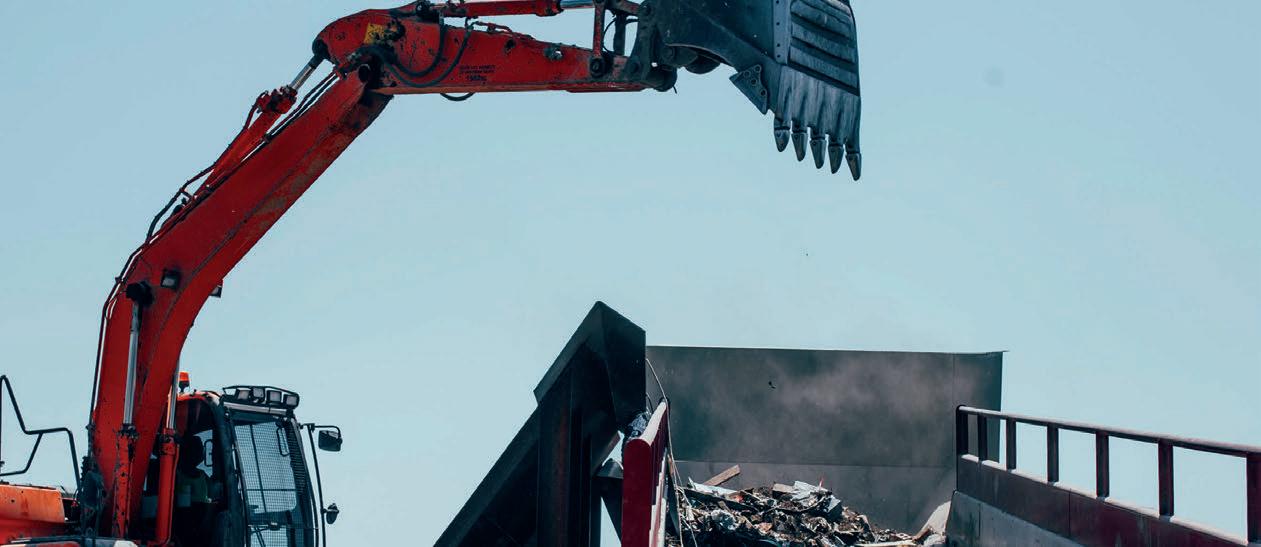

Discover how the FINGER-SCREEN™ Primary Screen can revolutionize your process. Contact GK SKALA today to speak with an expert, explore custom configurations, and take the next step toward greater efficiency and uptime.







Tyre Stewardship Australia’s Tammie Miller explains how a focus on commercial implementation – not just theory – is successfully moving recycled rubber into the mainstream of Australian infrastructure.
Two years ago, Tammie Miller packed up a lifetime of memories in Melbourne and moved to Brisbane. e shift wasn’t just about the weather; it was about her young son and his love for the outdoors.
Seeing him thrive in the fresh air and
a passion that has de ned Tammie’s career for nearly seven years: a deep, personal drive to ensure that Australia’s environment is protected through practical, tangible action.
As the Head of Market Development at Tyre Stewardship Australia (TSA),
in leadership who are moving past the “talk” of sustainability and into the hard work of implementation.
She describes the satisfaction of seeing a commercial reality take shape and is keen to see recycled tyres transformed into the very roads her family drives on.
a buzzword – it’s a mission to make sure that the sustainable choice is so easy and reliable that people stop calling it alternative and start calling it standard.
seeing innovative projects and products move into commercial reality through the use of Australia’s recycled tyres,” she says.
it’s when a council speci es crumb rubber as standard practice, or when a contractor can source recycled materials as easily as any other component.
“We have moved past the point of just wanting to see if something works to a stage where we need it to work every single time on a massive scale. at requires a di erent kind of focus, one that prioritises the needs of the end user over the novelty of the technology itself.”
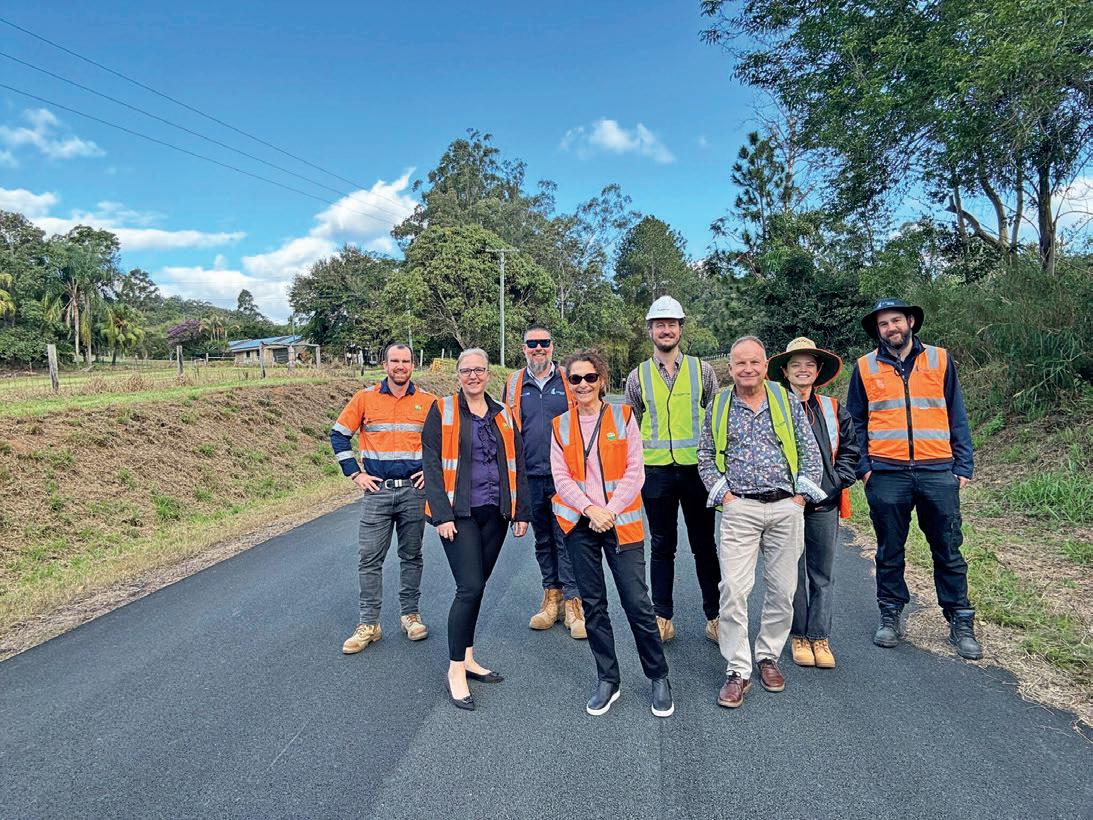
is dedication to delivery is transforming suburbs and regional towns alike. In Sydney, Tammie and Tyre Stewardship Australia have worked with local councils to move beyond small test strips to resurfacing thousands of square metres of suburban streets with crumb rubber asphalt.
While these projects prove that recycled materials can perform just
processed right on the job site – not just a technical win for someone who believes that every part of Australia, no matter how remote, deserves access to smart, circular solutions.
Tammie’s leadership style has been described by colleagues as “quiet facilitation rather than personal accolades”.
She says she nds joy in enabling others, whether that means helping a local contractor understand the equipment or connecting an international innovator with an Australian partner. is collaborative spirit has even caught the attention of the United States, with industry leaders reaching out to Tammie to learn how a “little
place like Australia” is making such a massive global impact in tyre stewardship.
It’s that excitement that continues to drive her.
“We often nd that the biggest barrier to adoption isn’t a lack of desire to be sustainable, but a lack of certainty in the supply chain or a fear of the unknown,” Tammie says.
“If a contractor thinks using crumb rubber is going to complicate their work ow or increase their risk, they won’t use it, no matter how good it is for the environment. My job is to bridge that gap and provide the evidence and the partnerships needed to make them comfortable with the change.
“We spend a lot of time considering possible partnerships in Australia and even globally to ensure that we are bringing the best possible ideas to the market and making them accessible.”
As the industry pushes toward 2030 waste diversion targets, Tammie’s dedication is a reminder that the most signi cant environmental changes don’t always happen in a lab – they happen on the worksites and in the council chambers where passionate people refuse to let a good idea stay on paper.
“I really enjoy what we do here at TSA from the market development perspective, but across the board as well, because it is about tangible change,” Tammie says.
“When we can see a road being paved with the equivalent of thousands of recycled tyres, we know we are making a di erence. It is exciting to see that shift in mindset where people stop asking ‘can we do this?’ and start asking ‘how quickly can we roll this out?’
“ at is the moment when the circular economy stops being a concept and starts being the way we build our future.”
For more information, visit: www.tyrestewardship.org.au
Three professionals share their career journeys, challenging misconceptions while highlighting the technical innovation, leadership, and growth opportunities for women in waste.
The waste management and resource recovery sector is one of the most essential – and often misunderstood – industries in Australia.
Behind the scenes, it combines science, logistics, risk management and innovation to protect human health, recover valuable resources and support a circular economy.
In celebration of International Women’s Day (March 8) three women from Pure Environmental, a specialist
in regulated waste management and resource recovery, share their career journeys.
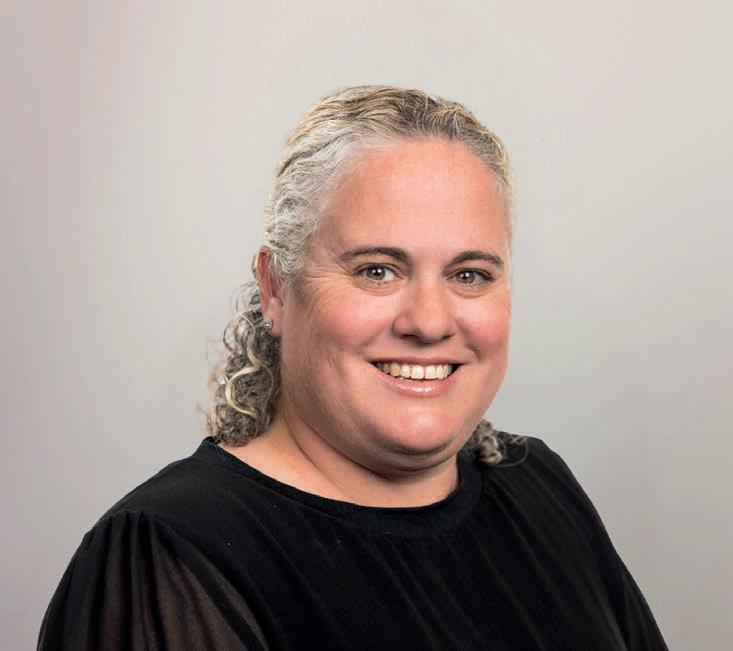
RACHEL IRVINE-MARSHALL, EXECUTIVE GENERAL MANAGER – SERVICES
Explain your role to someone outside the industry in one sentence. I set strategy and deliver work programs to improve business performance in areas such as enterprise risk, health, safety, environment, and quality, and people and culture performance
What originally drew you into waste, resource recovery or environmental services?
It was unexpected, but I’ve stayed in the waste industry because it’s an industry with purpose. It provides a service to the community and many industries. It has a broad range of roles, experiences and opportunities to grow your career.
What’s one misconception about the industry you’d love to correct? at the waste industry is an unskilled industry. Our industry depends on skilled professionals with backgrounds in engineering, science, compliance, regulation, data analytics, logistics, nance and many more.
What does good leadership look like?
Good leadership isn’t de ned by gender but by the ability to create a work environment where everyone feels safe, respected and empowered to do their best. It’s about being inclusive, fair and valuing di erent perspectives, ensuring opportunities for all employees.
What’s one key turning point in your career that helped shape where you are now? Many key turning points of my career have come from seizing exciting opportunities and stepping outside my comfort zone; it often means I get to learn so much more about this great industry.
A great example of this was when I took a 12-month secondment and relocation to Karratha, Western Australia. Having worked in an environment role for several years, this change was an invaluable insight into customers’ perspectives and the operational challenges of implementing large contracts.
LAUREN STRONACH, SENIOR CHEMIST
Explain your role to someone outside the industry in one sentence. Working as a chemist in the waste industry primarily involves solving technical problems and developing solutions for managing complex or hazardous waste materials.
What originally drew you into waste, resource recovery or environmental services?
I was always interested in doing something that had a real-world, positive impact with both hands-on tasks and people oriented components. Once I heard about the waste management sector – I was all in. For me, it’s the perfect mix of something that has tangible outcomes that make clear improvements as well as being exciting and science based.
What’s one misconception about the industry you’d love to correct?
Probably that it’s all “dirty” work. ere’s a great deal of science behind treating each waste stream. Much of the work done requires highly technical processes, whilst still meeting important safety and environmental regulations.
What does good leadership look like?
Good leadership to me is always to lead by example. I’m very fortunate to work with a great team of both men and women who all have unique skills.
What does a “busy day” look like for you – and what do you enjoy the most?
A busy day for me will involve assisting with all aspects of the business – from sales to operations. It often involves a lot of problem-solving and directly assisting the operational team to ensure the best outcomes are found for varied waste streams.
Many enquiries we receive are challenging and involve unique materials that require a lot of technical knowledge to solve.
e most enjoyable part of my day is rst and foremost the people I work with; but it’s also the feeling of accomplishment everyone gets to enjoy when a hard job works out well.
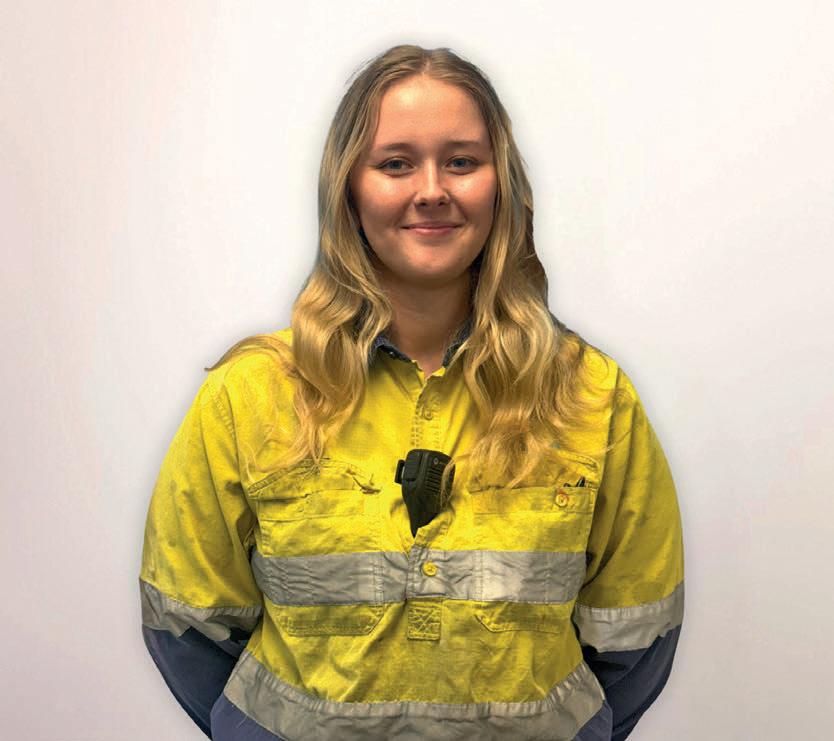
KALI MARTIN, GENERAL MANAGER – ORGANIC RECYCLING AND ENVIRONMENTAL SERVICES
Explain your role to someone outside the industry in one sentence. I work at the end of the waste chain, turning discarded organics into quality resources that support agriculture, rehabilitation and the circular economy.
What drew you into waste, resource recovery or environmental services? Like most in the sector, it was absolutely unexpected – and now I would never consider leaving! We work at the intersection of so many critical industries and have the opportunity to recycle waste as useful material streams.
What’s one misconception about the industry you’d love to correct?
at the waste industry is just the rubbish you throw in the bin. Everything we discard physically goes somewhere, and the waste industry has incredible opportunities to return these materials to circulation.
What does good leadership look like?
Good leadership is about building the capability and con dence of your team. It’s about being clear on your values, distilling a common goal and having a team aligned and working in sync.
Where is the sector improving – and where do we still need to improve?
Over the past decade the industry has lifted the bar in quality, technology and ambition for superior sustainability outcomes. I believe it has matured into a more uni ed and proactive sector that uses evidence and collaboration to drive signi cant positive changes.
To keep that momentum going, we need to work on attracting fresh talent – they bring such innovation and renewed perspective. It’s also critical we continue advocating for clear and practical policy frameworks that inspire investment con dence and support the development of strong end markets.
For more information, visit: www.purenv.com.au

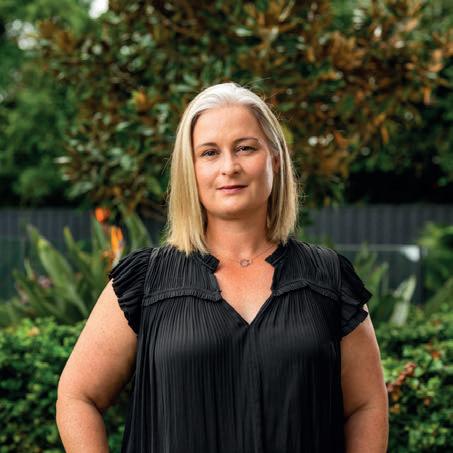
Andrea Taft is a formidable force in Australia’s waste management sector, leading Resource Innovations with a blend of technical expertise, strategic vision, and unwavering commitment to environmental progress.
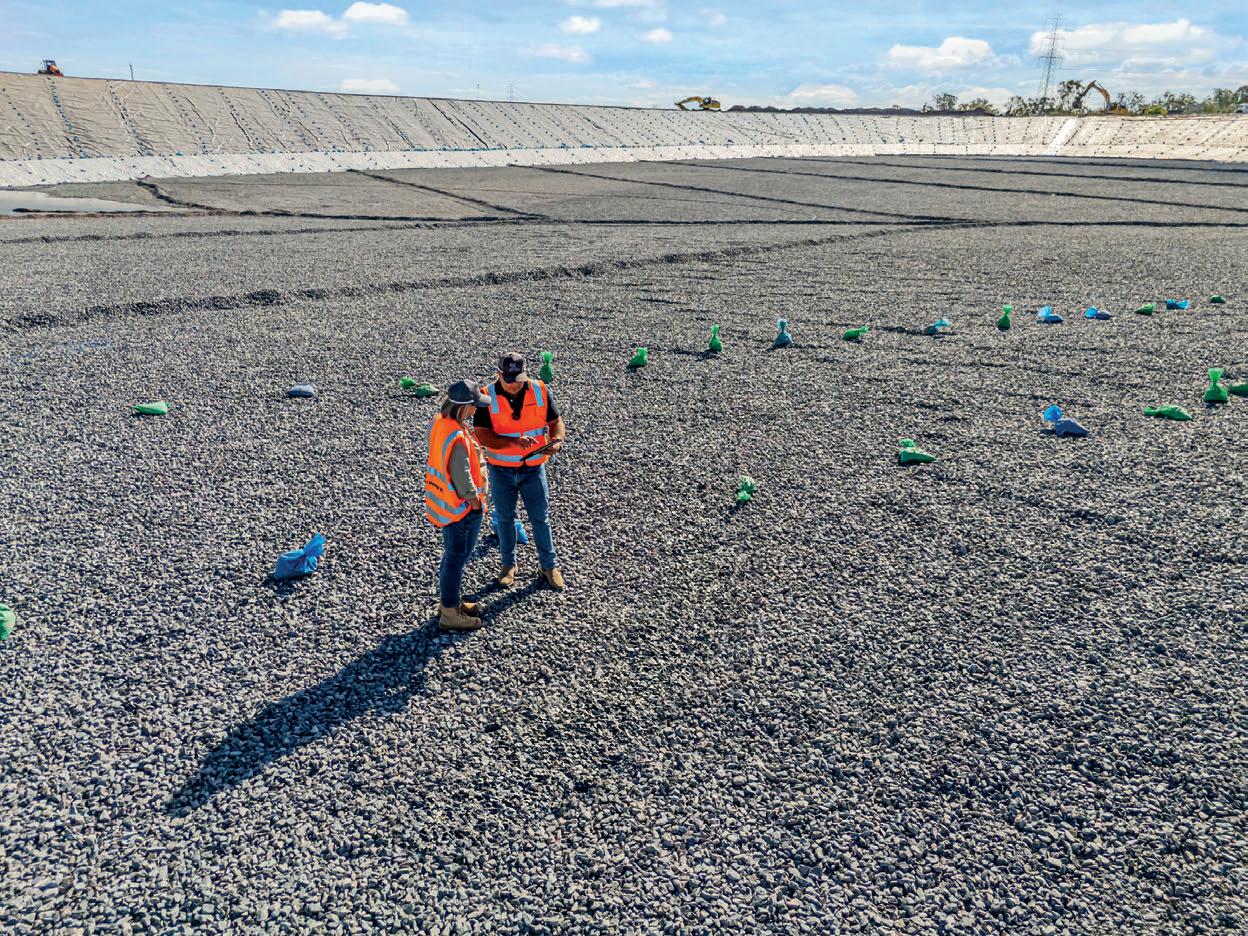
Andrea Taft always wanted to make a di erence in the world.
Having come from the lush and vast state of Queensland, the environment became her calling.
“I was originally looking to become an environmental ranger in the wet tropics of north Queensland,” Andrea says. “I thought I could help protect the environment and teach people about their impact on it.”
But Andrea’s trajectory shifted when a friend urged her to consider pursuing environmental engineering in university, enabling her to exact
positive change from the inside of large corporations and entities. at decision set the course for the rest of her career.
Andrea’s studies revolved around waste management and the circular economy and led her to work with the Central Queensland Regional Organisation of Councils. She says this set her up to move to Europe for further waste management education.
“I explored various waste management methods in England and Ireland,” she says. “I was exposed to their land ll engineering, disposal practices, and taxation systems that
were coming in at the time. It was a fantastic experience.”
On her return to Queensland Andrea applied her knowledge to the real world, working for a string of sustainability consulting rms.
She says this exposure built her business character, which would prove critical in the coming years.
“I learned how to understand clients, many of the industry’s technical components, and the stakeholders at play,” Andrea says. “ is was all critical, but nothing could really prepare me for what would come next.”
is next step was entrepreneurship, as Andrea founded her own environmental consultancy rm, Taft Engineering, in 2016. e business has since been rebranded to Resource Innovations and is now a national environmental and engineering advisor.
Resource Innovations has garnered a client base consisting of Queensland and New South Wales local and state governments, in addition to an array of larger private businesses.
“Each piece of our specialised advice is unique to what each of our clients need,” Andrea says. “Our counsel covers everything from environmental monitoring to certifying construction and environmental design, as well as nancial assessment and broader strategy implementation.”
While Resource Innovations’ advice is bespoke, Andrea says each client’s individual challenges revolve around a similar problem – land ll, which she says is still Australia’s main waste disposal option.
investment, compliance, and e orts to divert waste to land ll. But this optimism must be met with caution, as there is still “a big hill to climb”.
“Di erent clients need us to address di erent elements of the overall issue,” she says, “and that’s where our expertise shines.”
Resource Innovations operates under a unique structure – one that Andrea designed intentionally. Rather than grow a large internal workforce, she partners with a trusted network of specialist advisors and sub-consultants.
“We employ the top specialists in each eld we operate in,” she explains. “It’s not the standard method of building a business, but through these alliances we can ensure we’re delivering the highest quality of advice.” is model enables the company to meet complex needs of waste management spanning ecology, geotechnology, hydrology, environmental engineering and more.
Andrea has seen signi cant progress in Australia’s waste management space – particularly in infrastructure
“I think there needs to be a balance,” she says. “While we’re getting better at waste segregation and diversion, we still need a destination. And the regulation underpinning that needs more work.
“We’re heading in the right direction, but we need much more regular review of waste management processes and regulation. We can’t set a policy and expect it to hold for years. ese regulations need to be reviewed, and actors need to behave accordingly, and that’s where Resource Innovations can help.”
Andrea’s experience and perspective within this space have been formed by challenges which, she says, she continues to navigate.
“I’ve had to work harder than most people to get where I am,” she says. “Trust and respect weren’t handed to me.”
Despite progress in the sector, Andrea often attends events and panels where she is still one of the few women.
“For some people, that can be disheartening,” she says. ‘But I focus on it being the reason I’m there. I show up to deliver value in a specialised way.” Her determination is grounded in passion – a trait she considers her greatest strength.
“It’s not always easy to voice your opinion when you’re the minority in the room,” she says. “But showing up–and staying vocal – is how you drive real change.”
For more information, visit: www.resourceinnovations.com.au
The Gold Coast is pivoting from waste crisis to continental leadership by establishing a orl rst, master lanne recinct.
The challenge of nite land ll space is not just a local headache for the Gold Coast; it is being felt in major cities across Australia.
Greater Sydney’s land ll space is expected to run out by 2030 unless urgent action is taken. In Victoria, land lls in Melbourne’s south-east are predicted to
reach capacity as early as 2025-26, while metropolitan Melbourne is expected to begin running out of approved land ll space in the mid-2030s.
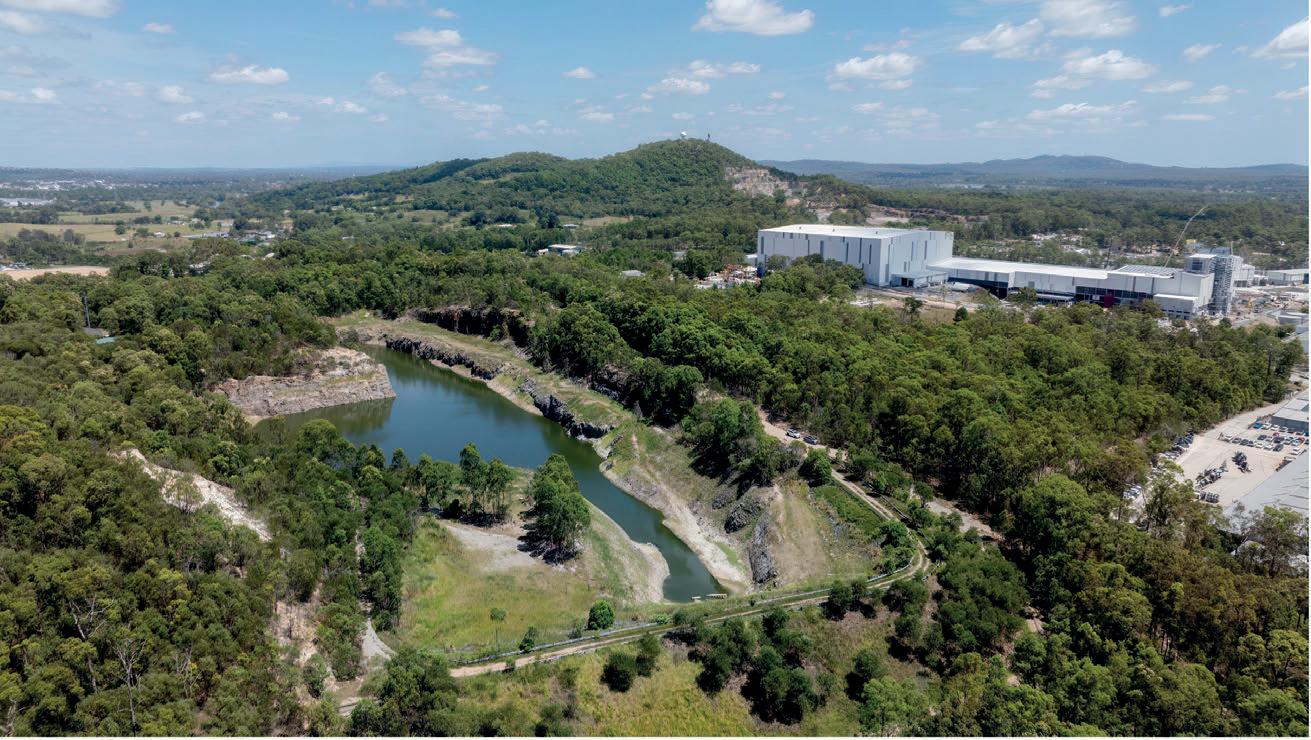
While many regional centres are still debating the logistics of single waste stream solutions, ARRC (Advanced Resource Recovery Centre) Gold Coast has shifted the conversation with a bold ambition to turn a looming waste crisis into a planned industrial precinct.
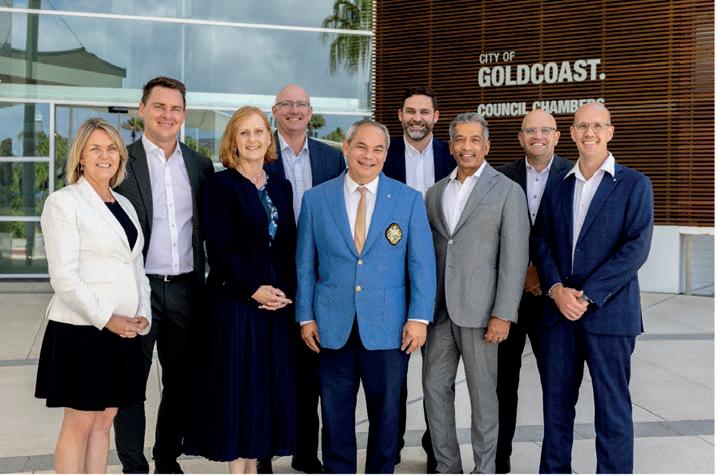
e ARRC project is the vision of the City of Gold Coast Mayor Tom Tate who is now also the Chair of the ARRC board.
“Strategic choices made today have lasting bene ts for generations to come,” Tom says. “ is project is one of the most ambitious in our city’s history. Bringing the ARRC to its full potential will bene t every Gold Coaster, including our 80,000 small businesses.”
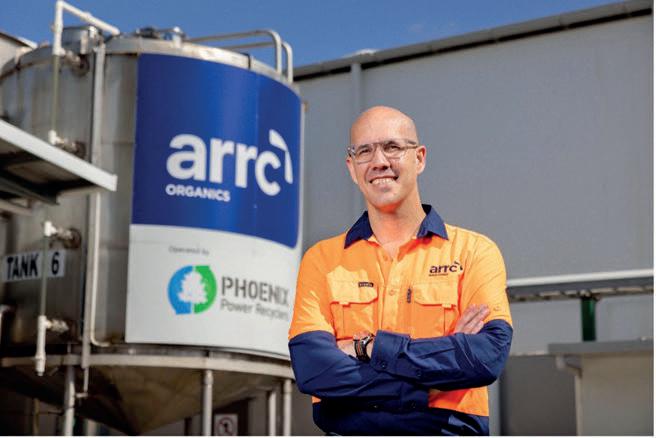
ARRC Chief Executive O cer, Grant Gabriel says the precinct is more than
just a cluster of waste facilities; it is a deliberate e ort to set a new international benchmark for resource recovery on Australian soil.
“ e City of Gold Coast saw an opportunity to really do something di erent,” Grant says.
“We assessed all the business-as-usual options to make sure the solution wasn’t obvious, and it wasn’t. We took the opportunity to do something big, bold and ambitious, but necessary.
“We started by asking what problem we were really trying to solve. A single waste-to-energy plant or another recovery facility on its own wouldn’t cut it. e answer had to sit higher up the waste hierarchy and work holistically.”
ARRC is a $1.6 billion City of Gold Coast-led project designed as a sustainable, integrated recycling and energy precinct in Stapylton.
It’s designed to handle the entire waste hierarchy, integrating green, yellow, and red bin solutions into a single, cohesive ecosystem, ensuring that every material – from organic food scraps to residual household waste – is directed toward its highest and best use.
ARRC Organics, using advanced composting technology to turn green waste into landscaping soils and soil conditioners, is operational following the purchase of Phoenix Power Recyclers in 2025.
ARRC Recycling, which will focus on all recyclable materials, is in the design phase. In late 2025 the City of Gold Coast, ARRC and Visy Recycling signed a Memorandum of Understanding to develop a new materials recovery facility at Stapylton.
In February 2026, ARRC entered a de ning phase of its journey, with the release of the Open Expression of Interest for the residual waste-toenergy facility.
e facility is expected to process 600,000 to 700,000 tonnes per year, generating enough power to support 80,000 homes.
e precinct model also includes the ARRC Hub, connecting the community and industry to talk about resource recovery and sustainability, and ARRC Innovation Park, designed to support and commercialise research into problematic waste streams – a major driver for regional economic growth. e city has prioritised an additional 500 hectares of industrial land to attract international and national players.
“Fifteen years ago, no-one was talking about lithium batteries. Now, every day I’m hearing from someone in the industry about the challenges of those batteries,” Grant says.
“What’s the next battery? We want to get in early with research departments and work with other industry partners to support solutions for tomorrow’s problematic waste streams.”
Grant says that by creating long-term education and employment pathways, the ARRC project is rebranding the waste sector as a source of local pride and hightech career opportunities. is is not a short-term x; it is a permanent shift in how the region manages its resources.
“Right now, if you want to research the circular economy, you jump on a plane and go to Europe, or you go to Japan, or you go to South Korea. We wanted to turn some of that focus and bring it back to Australia,” he says.
community, just end up in trouble,” Grant says.
“How can we start making Australia a place where people come to look at our way of thinking? Why can’t this be an opportunity? Why can’t this be a source of pride that can actually attract international attention?
“In the end, it’s not just an environmental legacy, it’s an economic and social legacy.”
Maintaining a “social licence” has been a critical component of the journey. ARRC has focused on transparency and direct engagement including shopping centre pop-ups and a community reference group featuring local residents, teachers and business owners.
Grant says the goal is to move forward alongside the community rather than imposing infrastructure upon them, ensuring that the residents who live near the precinct are the ones who bene t most from the investment in road upgrades and renewable power.
“We’ve seen those major projects and major initiatives, if not done with the
“ e phrase we use is that we’re not just building for the community, we’re building it with the community. We’ve taken a very deliberate approach to being transparent and being open with our community. We realised that it’s a big journey for the community and there are a lot of unknowns when it comes to introducing a signi cant new industry into the Gold Coast.”
Tom says this isn’t just a win for the Gold Coast; it is an open invitation for South East Queensland and northern New South Wales to join a regional hub that will reap economic and environmental bene ts for generations.
“ e challenge is signi cant, but the opportunity is what we’re focused on,” he says.
“ is is changing the future of our city and changing the way that we recover resources from our waste and keeping those circulated in the local economy.”
For more information, visit: www.arrcgoldcoast.com.
To
build a circular economy that people trust, Australia must stan ar ise its e nitions. r Ross ea ifen, Co foun er of lan ll bio egra able lastics bran iogone, ex lains.
Circularity is the buzz word of the waste industry. Everyone wants to claim, mainly for their marketing purposes, that they or their products are contributing to the circular economy.
If we want to stop the linear economy of make take and waste, then we must keep materials in circulation. is means stopping the use of virgin materials and instead, reusing and or recycling materials to be remade into similar products, time and time again. e savings should be substantial in terms of costs and carbon footprints.
e Ellen MacArthur Foundation, a UK-based international charity launched in 2010 to accelerate the global transition to a circular economy, states its second principle of the circular economy is: “to circulate products and materials at their highest value. is means keeping materials in use, either as a product or, when that can no longer be
used, as components or raw materials. is way, nothing becomes waste and the intrinsic value of products and materials are retained.”
ere are several versions of circularity, depending on who is promoting it. However, we need to be strict on our terms and de nitions if we want to actually get to a circular economy and for people to trust these claims.
In Material Circularity, the recovered material goes back to manufacturers to stop their virgin material inputs. Recovered materials must replace virgin inputs for
products of equivalent quality such as transforming a computer case into a car dashboard then into a television frame. Down-cycling into lower-grade items breaks this loop, forcing high-level manufacturers back to virgin resources.
Recycling is a component of a circular economy, but is not a complete solution. Consider a manufacturer that processes virgin materials into a speci c product. If that product is eventually downcycled into a simpler item, such as a garden bench, the original manufacturer must still rely on virgin inputs to continue production. In this scenario, true circularity is broken
Recycling is a com onent of a circular economy, but is not a com lete solution.
Dr Ross Headifen, Co-founder, Biogone

because the loop does not feed back into the primary manufacturing process, failing to displace the need for raw resource extraction.
Repurposing waste is often claimed as being circular as it is avoiding waste going to land ll. For example, using plastic waste in road base or concrete construction is not circular. It is not returning the material to a manufacturer to stop them using virgin material to make a similar level of quality product as the original.
Another form of claimed circularity is Circular Energy or claiming the
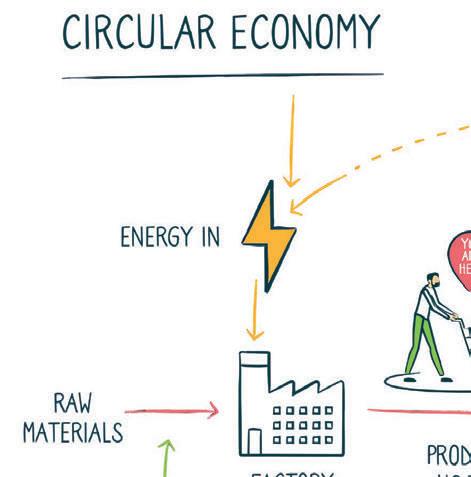
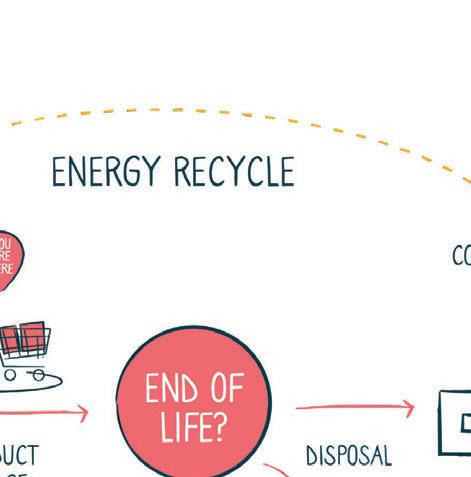
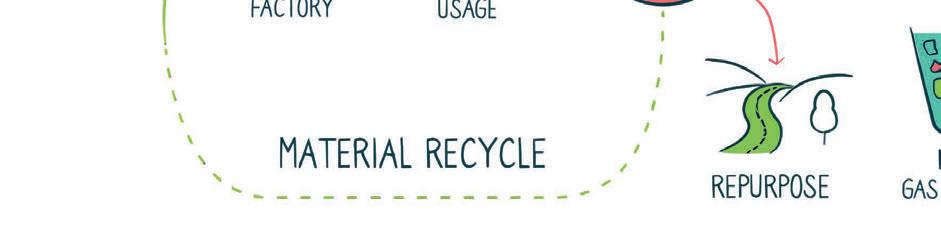
embodied energy in a material. Not all material can be recycled and used to make products. Some has to be disposed of as waste. Plastic for example is essentially a solid fuel. If this is biodegraded in a land ll or burned in a waste-to-energy plant, a portion of the energy of the material can be captured and used to generate electricity to supply a manufacturing plant to make products. Here the energy of the material is circulated (one time only), not the physical material itself. Recycling is often hindered by complex material compositions, contamination, or a lack of local processing infrastructure. Even when technical processing is possible, many countries lack the manufacturing demand for recyclate.
Consequently, while exporting materials for high-level production can achieve global circularity, the host country remains trapped in
a linear model due to insu cient domestic capacity.
Yet another claimed form of circularity is Circular Plant Matter or the molecules from plantbased materials.
Compostable products are not recyclable and have to be disposed to a waste facility for them to break down. Special facilities are required for commercial compostable materials, and these are not readily available.
Home compostable materials will biodegrade in land lls, so they do allow some of their embodied energy to be captured. In general, this form of circularity follows the linear make take and waste model, with the downsides of needing virgin materials all the time and their associated higher energy usage. e above types of circularities are all being claimed under the one umbrella. is can be misleading to industry, government and consumers

who are unsure of what they are really dealing with.
e use of circularity in product marketing is growing and often where there is an advantage to be claimed, the circularity de nition is altered. For example, governments are trying to push circularity on to manufacturers to reduce our waste problems. is though, is predominantly material circularity. Hence there needs to be a clear distinction on any circularity claims. While circularity is in its infancy, now is the time to set these distinctions, be it with standards or industryaccepted icons indicating the type of circularity. In small manufacturing countries such as Australia, circularity on a wide scale may not be economic, but on a world scale, full circularity could be achieved.
For more information, visit: www.biogone.com.au
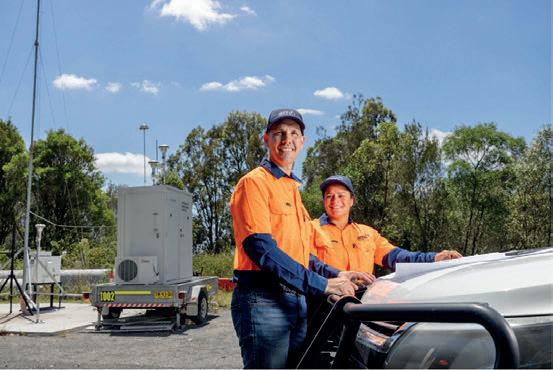
ith six councils no live an more than , collections analyse , Arti cial ntelligence contamination detection has moved from proof-of-concept to proven solution.
When CleanBins rst deployed its Arti cial Intelligence (AI)powered contamination detection system, the question on every council’s mind was: does it actually work at scale?
After 12 months of real-world operation across six councils in New South Wales and Victoria, the answer is an emphatic yes. e Melbourne-based company, a division of Alliance Software, has now observed more than 600,000 bin collections across over 100,000 unique addresses.
Alex Green, Chief Executive O cer of Alliance Software, says the technology is achieving accuracy rates exceeding 98 per cent on most common categories of contaminants – a gure that has caught the attention of state regulators.
“We’ve moved well beyond pilot phase,” says Alex. “ is is now proven, operational infrastructure delivering real contamination reduction for councils across two states.”
Alex says the scale of CleanBins’ deployment provides councils with something they’ve never had before: population-level data on contamination behaviour built on hundreds of thousands of individual datapoints.
“When you can see exactly which addresses are consistently putting soft plastics in recycling or food organics garden organics (FOGO), you can do something about it,” he says. “Blanket letterbox drops don’t change behaviour. A targeted letter with a photo of your bin contents does.”
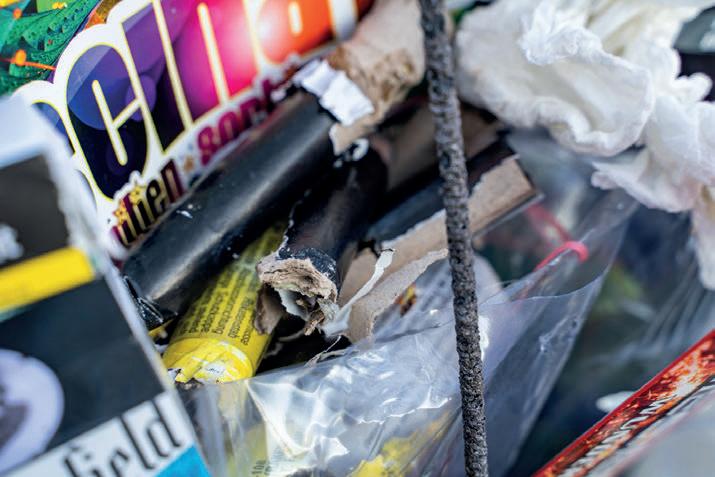
e platform can be customised to each council’s speci c disposal guidelines, recognising that what constitutes contamination varies between local government areas depending on their processing arrangements.
CleanBins has been engaged by the NSW Environment Protection Authority as the technology partner for the Contamination Hotspots project, a pilot exploring how AI contamination data can be used to plan and measure the impact of di erent behavioural intervention strategies.
e project represents an exciting application of kerbside contamination detection, and early outcomes have been promising.
“We’re proud to be enabling this research,” says Alex.
“It’s exactly the kind of evidence-based approach to contamination reduction that the industry needs.”
One of the barriers councils face with contamination enforcement is the governance burden. Sending a warning letter to a resident requires certainty that the contamination actually occurred at that address. False positives create complaints, reputational damage, and wasted sta time.
CleanBins addresses this through a managed veri cation service. e company’s team reviews AI- agged events to con rm violations before they reach council sta , ltering out edge cases and ensuring the data meets the evidentiary standard required for enforcement.
“Councils receive a stream of veri ed violations that are ready for action,” says Naser Soueid, General Manager at CleanBins. “Council teams spend time on strategy and resident engagement, not scrolling through thousands of images.”
e platform also handles intervention logistics – designing educational letters,
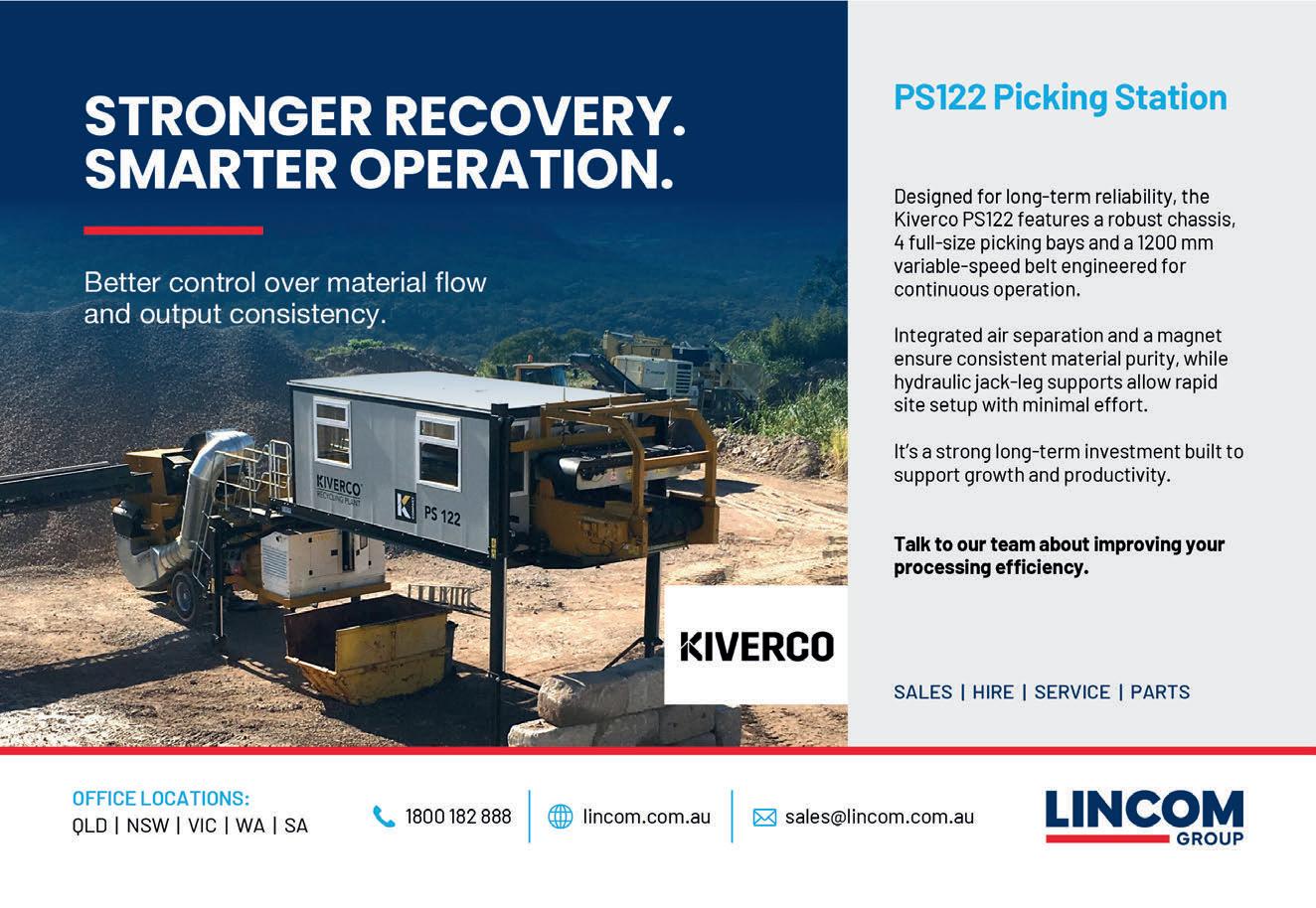
generating mail-merge documents, and tracking outcomes to measure whether interventions actually changed behaviour.
For councils without spare capacity in their waste education teams, this turnkey approach means contamination reduction doesn’t require additional headcount.
For councils wanting to test the technology before committing to a full rollout, CleanBins o ers a 12-month pilot program on just two trucks.
e pilot approach allows councils to establish baseline contamination rates, conduct targeted interventions in speci c areas, and measure results – all before any decision on broader deployment.
CleanBins installation partners work with council eet managers or waste contractors to handle all hardware
installation, which takes about four hours per vehicle and requires no modi cation to existing truck systems beyond a power connection. e equipment is completely independent of the vehicle’s operational systems and requires no action from drivers.
“A pilot isn’t a commitment to anything beyond understanding the contamination problem better,” Naser says. “But councils who see the data invariably want to act on it.”
With contamination detection now proven at scale, CleanBins is expanding its capability roadmap. Hazardous item detection – identifying batteries, gas bottles, and other dangerous materials – is in development.
Road defect detection, leveraging the fact that waste trucks traverse every street in a local government area fortnightly, is also
on the product roadmap. Naser says several councils across Australia have already validated this concept through separate programs, and CleanBins’ architecture is designed to support the capability.
For councils grappling with Victoria’s four-bin mandate or New South Wales’s 2030 FOGO requirements, the timing is opportune. Achieving ambitious contamination targets will require deep knowledge of exactly what is entering the waste stream, and where it’s coming from.
“ e regulatory environment is only getting stricter,” Alex says. “Councils that understand their contamination problem now, and can demonstrate they’re addressing it, will be far better positioned than those still relying on annual audits and guesswork.”
For more information, visit: www.cleanbins.com.au
How rugged picking stations tackle harsh climates and labour shortages, boosting recovery and purity for recyclers in the most demanding conditions.
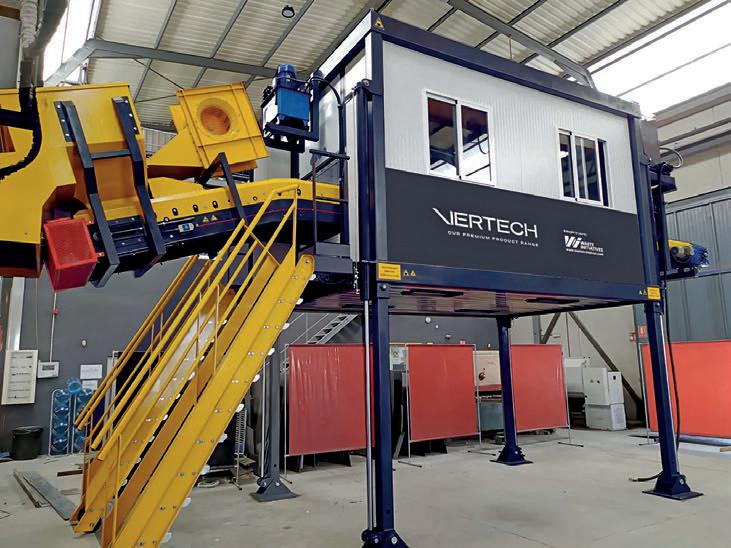
While a sorting line may perform admirably in a temperate climate, the same machinery often falters when subjected to the blistering heat of the Pilbara, the humidity of Far North Queensland, or the pervasive dust of Alice Springs.
is environmental mismatch creates challenges for councils, waste processors and recyclers: equipment that either breaks down frequently or becomes so uncomfortable that labour retention becomes impossible, says Waste Initiatives’ Sales Manager Shannon Sangster.
He says that for an industry grappling with a nationwide labour shortage, the quality of the workspace is no longer a luxury, but an operational necessity.
Waste Initiatives, an Australian-owned company with more than 40 years’ experience providing, installing, and servicing industrial waste management and recycling equipment, is answering the call with the launch of its Vertech picking station and sorting systems.
Unlike many products on the market that are imported and resold, the Vertech range is the company’s own premium brand, featuring direct manufacturing input to ensure suitability
for local conditions. “We saw a gap in the market for equipment that is designed and manufactured speci cally for Australia,” Shannon says.
“It’s hot, dry, and dusty here most of the time, and a lot of international systems are typically built around standardised processes rather than the operational conditions of export markets like Australia.
“We have focused the design on maximising reliability and the productivity of the operators by giving them the space and comfort to improve sorting speed and material recovery.”
At the core of the Vertech system is its climate-controlled environment and modularity. By integrating powerful air-conditioning, high-quality lighting, and safety features such as checker-plate ooring, the picking station transforms one of the most di cult jobs in the waste sector into a sustainable role.
“When workers feel safe and comfortable, they are more e cient, leading to a measurable increase in throughput and a purity level about 30 per cent higher than manual oor sorting,” Shannon says.
e system’s mechanical heart features standard Kubota generator packs.
is choice ensures that spare parts and quali ed technicians are available in even the most remote corners of the country.
“If you are in a mine site in the Pilbara or a council yard in Burnie, Tasmania,
you will be able to nd somebody that can work on your engine,” Shannon says.
“We saw that robustness and serviceability were key gaps that needed to be lled.”
e unit is available in twobay or three-bay con gurations, accommodating between two and six pickers at any given time. Because the belt speed, magnets, and air-blower systems are all adjustable, the machinery can be netuned to handle everything from commercial and industrial waste to construction and demolition waste to garden organics.
Shannon describes it as a stepping stone toward full automation for smaller operators or regional councils.
“ e beauty about this being mobile is you could have it on one area of the site doing food organic garden organic (FOGO) waste in the morning, and in the afternoon, you can move it to another part of the site to run construction and demolition waste,” he says.
“It is a very exible asset that makes it much easier for councils to manage di erent waste streams without investing in multiple static units.”
e launch marks an evolution for Waste Initiatives, moving from a distributor model to a brand owner with a heavy hand in the engineering process.
“Vertech is our own brand; it is not another manufacturer’s brand sitting
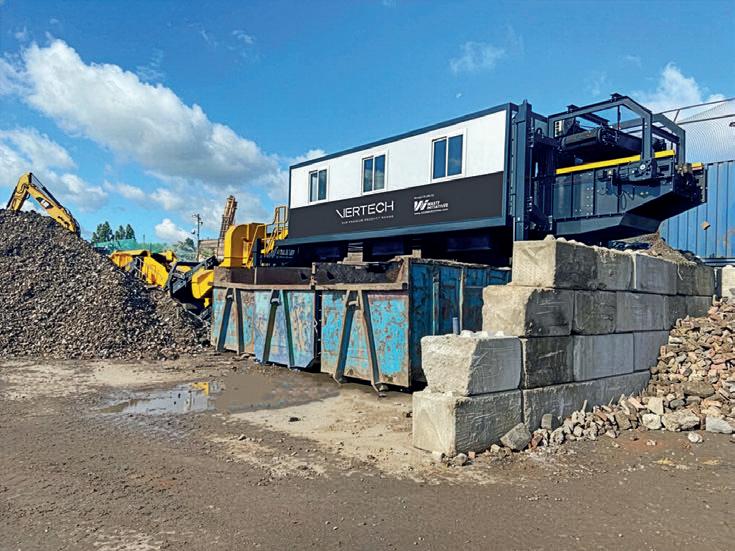
“International systems are typically built around standardised processes, with this system we have in uence to buil to Australian conditions.”
Shannon Sangster, Waste Initiatives’ Sales Manager
underneath our premium range,” says Equipment Specialist Caleb Grimshaw.
“Because we have had manufacturing input, we are fully responsible and we stand behind it.”
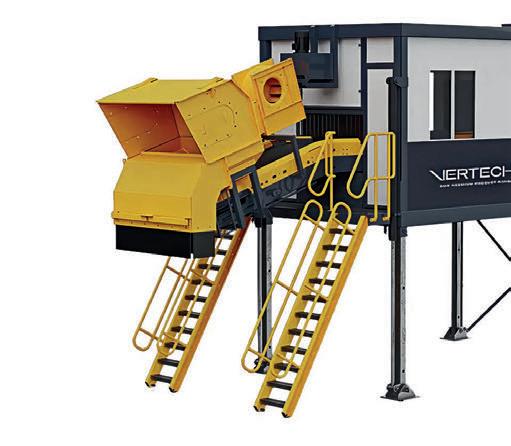
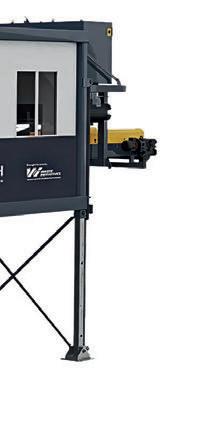
Reinforcing its commitment to end-toend accountability, Waste Initiatives also o ers on-site demonstrations, allowing potential buyers to run their own material through the station for a week to validate purity rates before committing to a purchase.
“ is is serious equipment for serious operators,” Caleb says. “We ensure our own technicians provide full training and support on maintenance, from checking grease points to the tracking and tension of the belts.
“We are building the foundations to support our customers as they grow from manual sorting to a full, complete sorting process.”
For more information, visit: www.wasteinitiatives.com.au

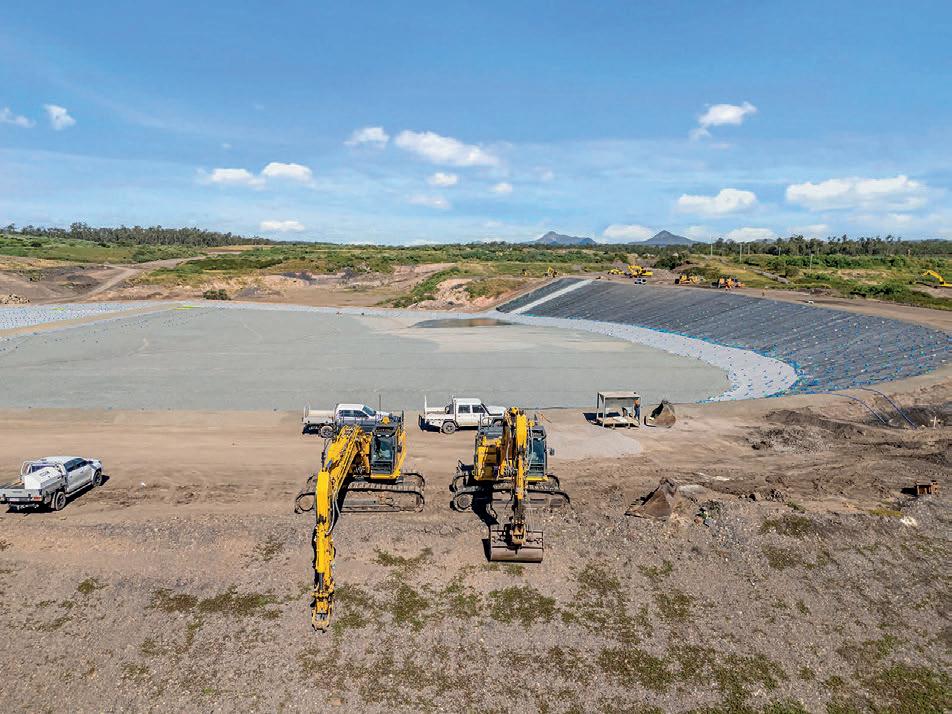
General Kinematics has strengthened its international supply of material handling equipment with the acquisition of SKALA Australasia.
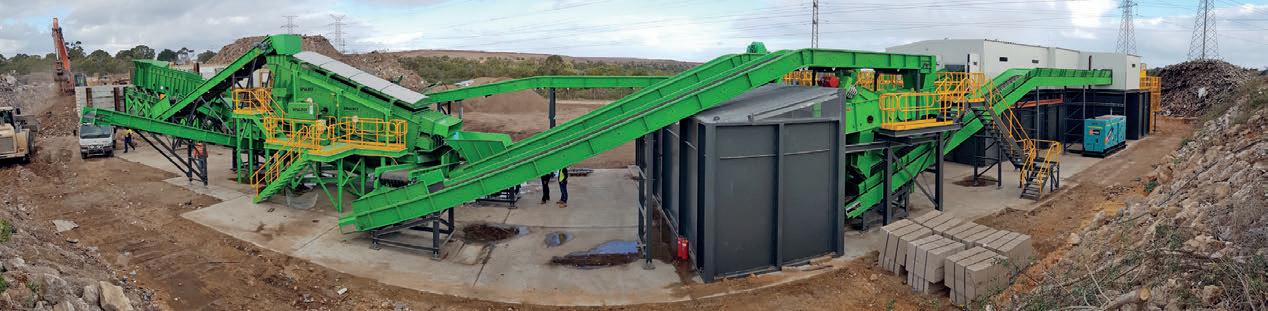
Before General Kinematics was a global vibratory equipment manufacturing giant, it was a humble storefront o ce in Barrington – a village in Illinois in the United States.
e operation was established in 1960 by Al Musschoot, who initially supplied equipment to foundries across the country’s Midwest region.
In this time, General Kinematics was mainly an engineering company which sublet much of its manufacturing capabilities, until 1975, when the business built its own manufacturing facility in the nearby city of Crystal Lake. Here, General Kinematics’ product portfolio grew immensely.
“We had our start in vibratory equipment,” says General Kinematics Director of Recycling Bob Hu er. “But we have grown into other equipment o erings to be more competitive in overall system solutions.
“ ese include mining, foundry, municipal solid waste, metals and auto shredding, waste-to-energy, and recycling – which in itself would include construction and demolition.”
Bob says that General Kinematics can support these operations with anything from a single piece of process equipment to a fully integrated, turnkey system.
“With our extensive expertise in vibratory equipment engineering, we’ve expanded our capabilities to o er broader equipment solutions,” he says.
“ is allows us to compete more e ectively as a complete systems partner.”
Today, General Kinematics is a global leader in material handling equipment manufacturing. e company’s operations across a multitude of markets have allowed it to stay up to date with imperative trends, speci cally in waste management.
“In the recycling industry, we’ve been seeing some shifts to run high tonnage processing operations,” Bob says. “We have also seen the push to eliminate more of the manual labour needed to support these processing e orts, to enable cost savings and longer processing hours.
“Processing goals vary from project to project as well. Recycling initiatives may not always be trying to recover materials of value but rather remove contaminants from waste streams.”
Australia has recently joined General Kinematics’ list of international locations following the acquisition of SKALA Australasia – a New South Walesbased full-service system integrator and equipment provider, specialising in the recycling and mining industries across Australia and New Zealand.
e acquisition followed a strong relationship between the two companies, as SKALA acted as a manufacturer’s representative for General Kinematics for nearly 20 years. SKALA had also already been integrating key General Kinematics technologies in many recycling plants throughout Australia.
“General Kinematics wanted to demonstrate a stronger, long-term commitment to Australia,” Bob says. “Acquiring a respected brand that shares our values and engineering standards made that decision clear.”
GK SKALA Director Simon Toal is also excited by the partnership.
“For SKALA, joining General Kinematics provides access to additional resources, global reach, and technical depth,” he says. “ is accelerates our growth in key markets such as recycling,
which SKALA already has strong experience in turnkey solutions to, along with construction waste and organics.”
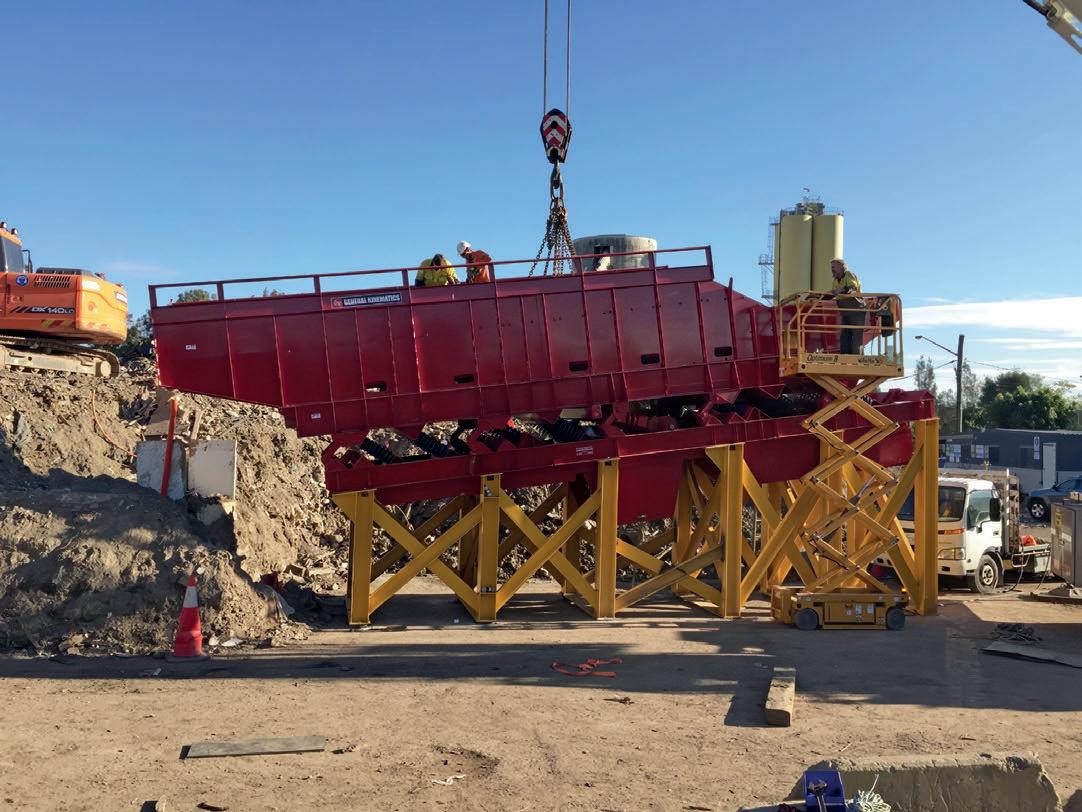
Simon says SKALA also adds complementary capabilities to General Kinematics’ operations – speci cally in bulk material handling, screening, and processing systems that extend General Kinematics’ core vibratory technology platform.
“ e combined portfolio allows General Kinematics to deliver more
complete, end-to-end system solutions,” Simon says, “from material activation and feeding through classi cation and processing, across foundry, mining, recycling, and aggregate applications.”
Simon says the acquisition is especially impactful in the growing organics market, where these robust screening and processing systems are critical to e cient composting and water diversion.
“As sustainability expectations rise across industries, waste management
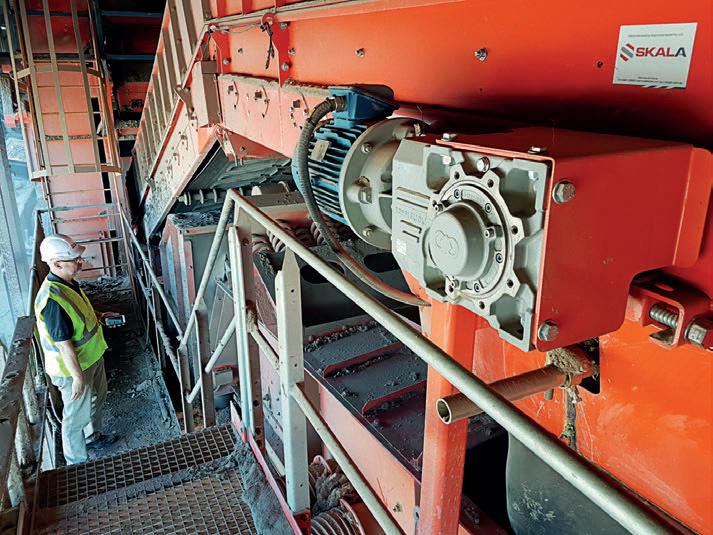
is no longer viewed as a back-end function – it’s a strategic priority,” he says. “Companies are focused on maximising material recovery, diverting organics from land lls, and reducing overall environmental impact.
“ e result is growing demand for advanced processing systems that turn waste streams into reusable resources and measurable sustainability gains.”
Following this acquisition, GK SKALA has undertaken various critical projects, strengthening its capabilities with new talent.
“We are committed to the Australian market and will continue to add resources as we grow,” Simon says.
“We are currently delivering a signi cant construction waste project in Western Sydney that will be one of the most sophisticated in the country.
“With General Kinematics, we are better positioned to solve complex material processing challenges, support sustainability initiatives, and deliver durable, high-performance systems to customers around the world.”
For more information, visit: www.skala.com.au
ARRC Organics is the only in-vessel FOGO (Food Organics Green Organics) processing facility in South East Queensland and marks the first operational element of the Advanced Resource Recovery Centre.
ARRC GOLD COAST CEO, GRANT GABRIEL
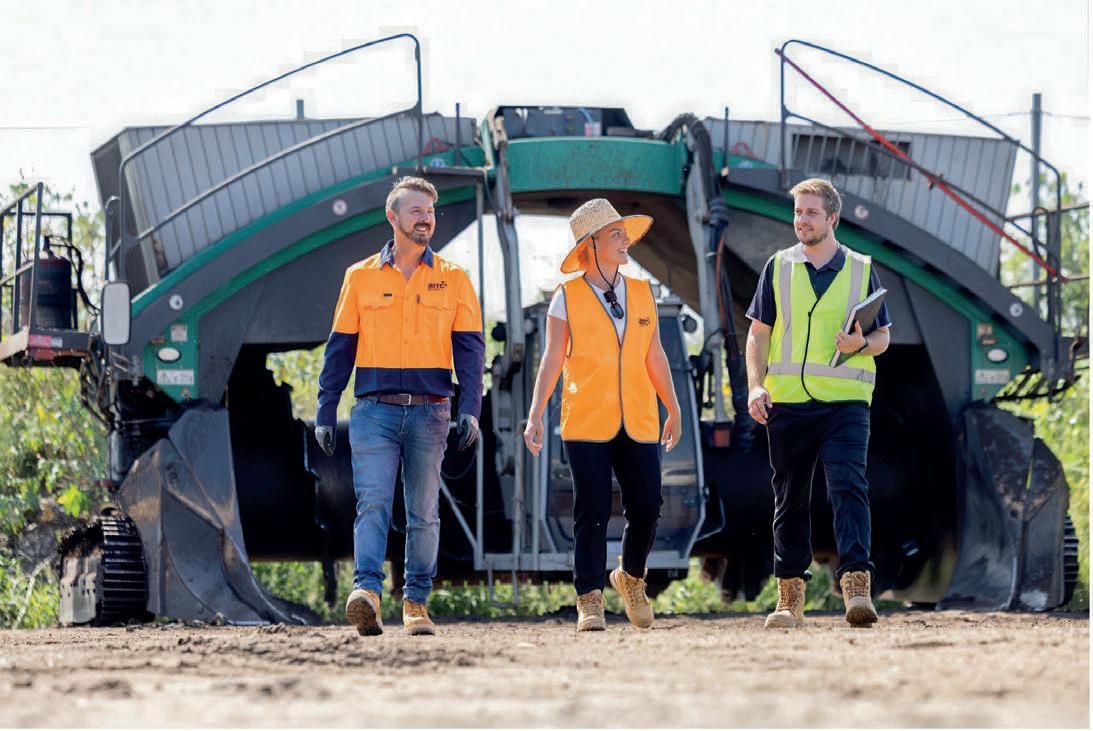
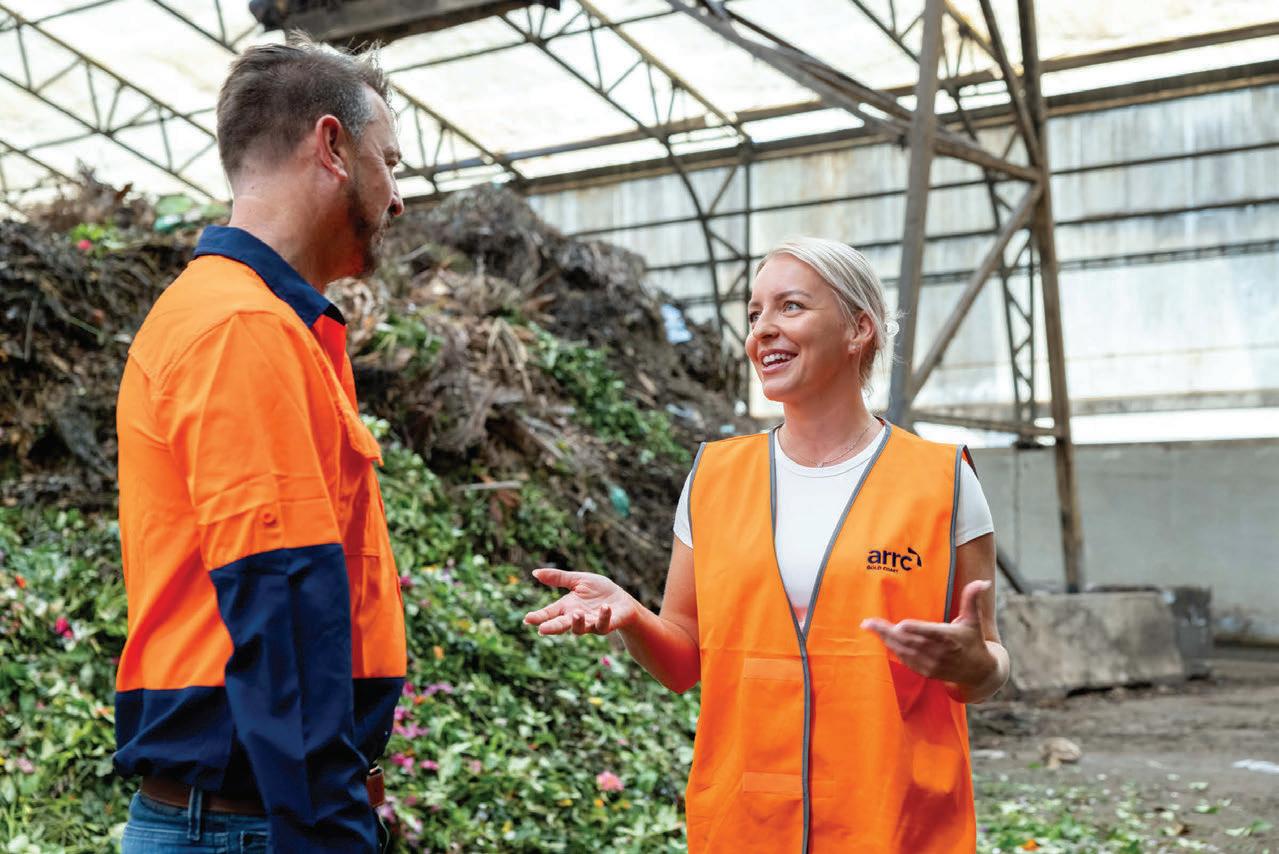
Owned by the City of Gold Coast, ARRC Organics is part of the Advanced Resource Recovery Centre (ARRC) Gold Coast, delivering reliable, large-scale organics processing for South East Queensland.
Based in Yatala, ARRC Organics accepts a broad range of liquid and solid organic waste streams and transforms them into high-quality composts, mulches and soil products – diverting material from landfill and returning value to the community.
For enquiries Email arrc@arrcgoldcoast.com or visit arrcgoldcoast.com
CEA has strengthened its value proposition as a leading heavy equipment supplier through a distribution partnership with SANY.
CEA is well known for its extensive product portfolio and strong Australian presence. While previously operating across ve metropolitan locations, the distributor has recently grown to service key areas in Queensland – Mackay and Rockhampton. e company supplies equipment and extensive aftermarket support to a diverse range of industries.
“We distribute all types of civil construction equipment,” says CEA Product Manager Deon Cope. “ ese range from excavators and wheel loaders to material handlers, and much more. Specialising in a wide variety of products, we’re excited to have a globally recognised brand that’s rapidly growing its presence in the mining and waste management sectors.
“We are here to grow, and in doing so will bring high quality products into the Australian market.”
CEA’s commitment to bolstering the product o ering in the Australian market has most recently come from working
with Chinese-based heavy equipment manufacturer, SANY.
For more than 40 years, SANY has made a name for itself by rapidly building a wide product portfolio of concrete machinery, road machinery, cranes, and more.
“SANY is impressive,” Deon says. “ e manufacturer is large, and relatively young in the scheme of things. e company comes from private ownership – a small group of entrepreneurs who developed it from nothing to where it is now.”
Among SANY’s extensive production o ering is its line of excavators, of which CEA has distribution rights throughout Queensland, New South Wales and South Australia since the two companies struck a deal in December 2025.
is distribution agreement is a critical move for CEA, giving it access to SANY’s larger machines to break into a new market for heavier vehicles.
“We’re currently active in the market of excavators from one to 40 tonnes,” Deon says. “We’ve been operating in this niche
with other brands for a long time but with our SANY distribution deal, we improve our segment o ering and we’ll have access to the ‘50 tonne plus’ range of machinery, with an ability to support even larger machines, too.
“ is will open doors to whole new markets for our company. Right now, the equipment we deal with exists in civil construction, but the bigger machines will let us operate in quarrying, mine maintenance and more.”
Among these new sectors is waste management.
“CEA has always been heavily involved in the waste business,” Deon says. “We understand this space and its requirements. Our partnership with SANY will only strengthen this aspect of our business, because of the new and tailored machines we can bring to that market.
“Our distribution agreement with SANY will greatly expand our model range and client base.”
CEA’s distribution of SANY products is also a win for Australian consumers, as the Chinese manufacturer’s products are renowned for their high standards, dependability and e ciency in production.
“SANY’s, quality and hydraulic control is outstanding,” Deon says. “We noticed the re nement, accuracy and e ciency of their hydraulic systems immediately. ey are world class, which make them the perfect solutions for Aussie businesses.
“SANY builds thousands of machines for consumers all over the world, and being trusted on such a large stage is a great sign of quality. Bringing those machines to Australia is a very exciting task.”


SANY achieves its large-scale production through highly automated building processes, which have earned them the title of ‘lighthouse factories’. e World Economic Forum, says these types of innovative factories lead by example and can encourage other industry members to become more e cient.
While CEA and Australia consumers bene t from this new distribution deal, the advancements are not all one way.
CEA has a strong reputation for aftermarket support – a key element to professionally delivering SANY’s excavator range in Australia – while building brand awareness and trust among local buyers.
“SANY has been looking for a company such as CEA to strengthen its footprint here, and establish a path to the market,” Deon says. “Seeing as we’ve been distributing this kind of product for a very long time, we are the right company to get
this job done. We intend to strengthen the SANY name in Australia by delivering the models and speci cations that make sense for this market. With a clear aftermarket strategy for the right machine, at the right spec, and the right value.”
rough this exclusive distribution agreement, CEA will also act as a one stop shop for all SANY customer needs.
And while the deal is still in its infancy, Deon has received good feedback so far.
“ e comments we have heard from existing clients on our handling of the brand have been great,” he says. “We know these products are right for the market, and I think this deal has been timed very well.
“Watch this space, because it’s going to be a really fun partnership, and it’s only going to get bigger.”







From households to commercial kitchens, we help manage food waste where it’s generated, reducing landfill volumes, collection costs and reliance on heavy infrastructure.













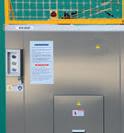





























Tutt ryant is o ering cClos ey Environmental s ES e rimary shre er as art of its commitment to the gro ing aste management mar et.
Tutt Bryant Equipment has spent close to a century meeting the demands of Australia’s construction equipment customers. e company, founded in 1938, has grown its presence to extend across a network of 17 distribution franchises and main branches across many states.
Equally instrumental to this growth has been the ‘Tutt Bryant way’ – ve values that lead the business’ operations.
“Teamwork, family, integrity, versatility and enterprising all create the Tutt Bryant way,” says Paul Doran, National Business Manager – Crushing and Screening.
“ ese values centre our business so that we ethically engage with the market, understand our customers’ needs, and are transparent when selling our machines.”
Paul says these values have kept Tutt Bryant’s nger on the pulse of consumer demand, ensuring its catalogue re ects the latest and most popular machinery. For some time, much of this equipment has belonged to the waste management sector –increasingly pertinent for operators.
“Waste equipment is a rapidly growing space,” Paul says. “Local governments and regulators are slowly incentivising operators to stop using land lls and manage their waste more e ectively. is is driving demand for these machines, which is driving engineering innovation.”
A leading innovator in waste management equipment is McCloskey Environmental, which has prioritised sustainability within its products throughout its 40 years of operations.
Tutt Bryant has been a distributor of McCloskey’s equipment for more than 18 months – a partnership which, Paul
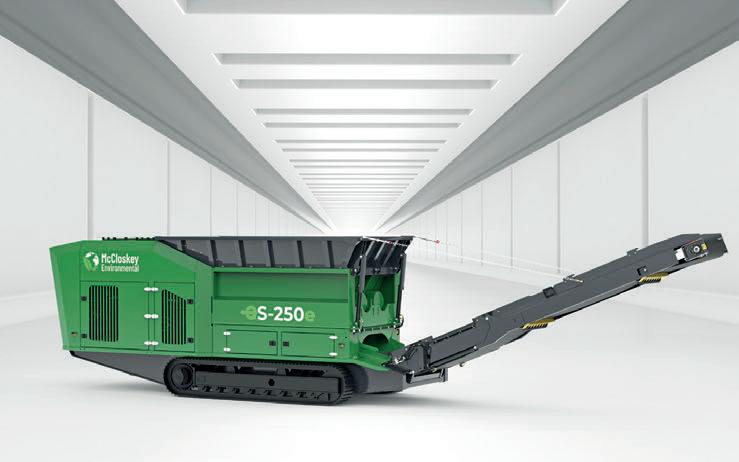
says, is setting the company up for further integration in the waste management space.
“McCloskey has such a wide range of waste management solutions,” he says, “from shredders and trommels to screens and stackers. By representing this product line, Tutt Bryant can become a one-stop shop for customers looking to implement these solutions.”
Within the product line is McCloskey’s ES-250e, a hybrid primary twin-shaft shredder designed to break down waste of varying sizes, compositions and durability.
Key features include an aggressive eightknife heavy-duty cutting table, a variable speed main conveyor, a double hydrostatic drive transmission, and an auxiliary engine for tracking and set-up functions.
“While you can put lots of di erent things into a twin shaft shredder, the design of the ES-250e is extremely versatile,” Paul says. “A lot of customers use it to manage construction and demolition waste, such as concrete or particle board, but it can also break down many green wastes, tyres and even white goods.
“You can put some chunky items through this shredder that others might not be able to break down.”
Paul also believes the shredder’s simplistic and accessible design make it stand out.
“We’re used to selling highly technical crushing and screening equipment. e McCloskey product is simpler to operate but very well-manufactured.”
Additionally, the ES-250e is an electric shredder, built with 200-kilowatt motors.
“Operators can plug the ES-250e into their main power supply and run the machine without it giving o any noise pollution or exhaust,” Paul says. “A lot of working sites are becoming fully enclosed, and running this on something like diesel would be much more challenging in a closed space. e electric shredder will also cost operators less to run when compared to its diesel counterparts.”
Paul has noticed that, despite waste management’s growing priority within many industries, some operators are still unaware of the solutions available to them. is is something he believes Tutt Bryant can x over time.
“ e ES-250e is a fantastic product in waste management and the need for this type of equipment will only grow. It minimises waste, has a lower carbon footprint, and is available now. It’s a smart innovation that makes the world better.”
For more information, visit: www.tuttbryant.com.au










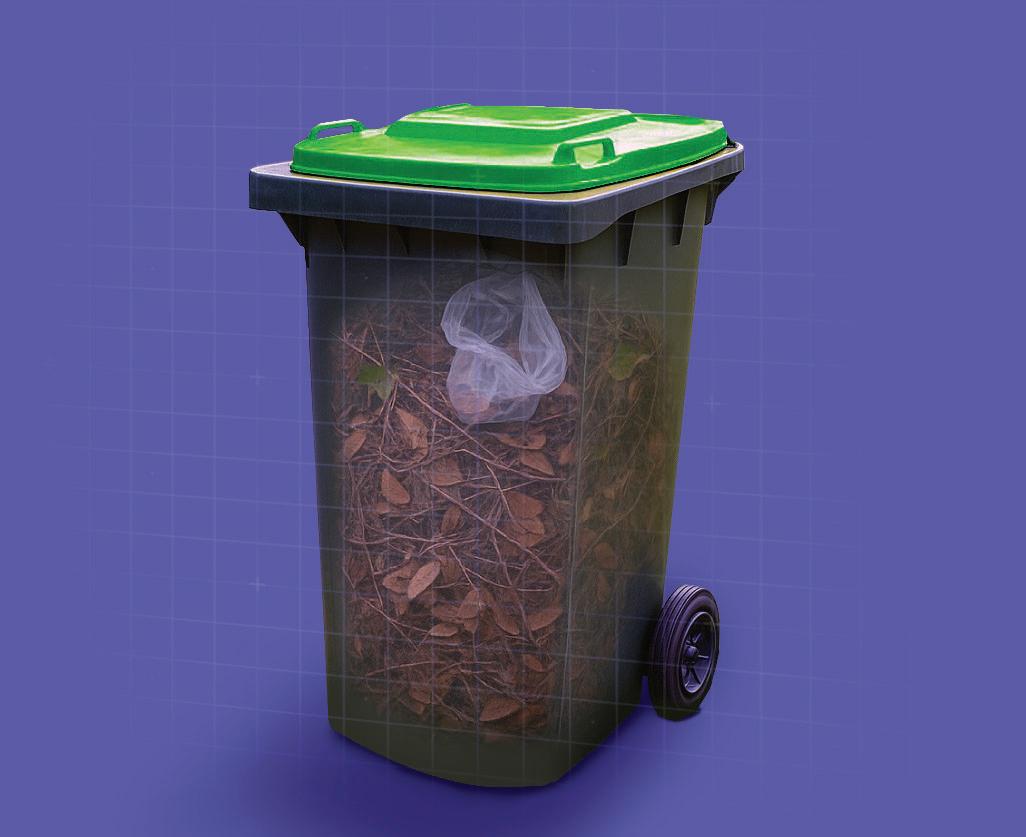








As England mandates food waste and soft plastics collections, ReLondon’s Cathy Cook explores the infrastructure and behavioural hur les local government must navigate to achieve a circular economy.
The transition to a circular economy is often framed as a technical challenge of logistics and chemistry, but in the world’s most densely populated cities, it is increasingly a study in human behaviour and legislative tension.
Across the United Kingdom, local authorities are currently navigating a set of reforms known as “Simpler Recycling,” a policy designed to harmonise collection services so that every household and business recycles the same materials.
While the goal is to eliminate confusion, the reality involves a complex scramble for vehicles, infrastructure, and participation. For Australia, which is setting its own food organics and garden organics (FOGO) and soft plastics milestones, the English experience o ers a sobering look at the gap between high-level policy and the kerbside reality.
Cathy Cook, Senior Advisor at ReLondon, knows this tension better than most. With 30 years in local government and a former role as Chair of the Local Authority Recycling Advisory Committee (LARAC), she supports London’s 33 waste authorities in their quest to improve recycling rates.
ReLondon is a partnership between the Mayor of London and the 32 London boroughs (plus the City of London) aimed at helping London waste less and reuse, repair, share and recycle more.
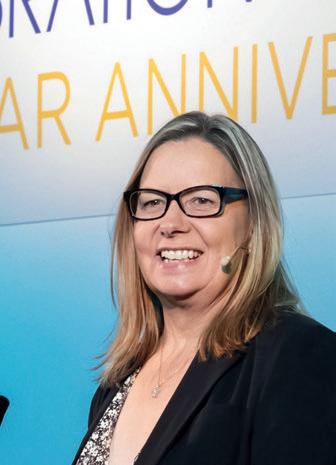
But doing so requires navigating the UK Government’s Simpler Recycling timelines, which include a mandate for household food waste collections starting this year and soft plastics by April 2027.
“Simpler Recycling is meant to harmonise materials across homes and businesses,” Cathy says. “ e theory is that if you are at home, you can recycle certain materials, and if you go to work, you can recycle the same.
“However, for most local authorities, we know anecdotally that many are not going to be ready to implement their new food waste service by the current deadline.
“ at is because there was one date that everyone had to work to, which created a bottleneck. Everyone wants to buy vehicles, caddies, and liners at once, and the prices have soared.”
e struggle for food waste – or FOGO, as it is known in Australia
– often comes down to the “yuck factor” and participation. In London, where high-density ats are the norm, participation rates can stall at just 30 per cent.
Cathy argues that while the government provides funding for bins and trucks, what can get overlooked are the smaller, psychological drivers of recycling.
“Participation rates in a lot of places are low because of the yuck factor,” she says.
“ e government is providing some funding for caddies and vehicles, but not for liners, and we know that if you give people liners, they are more likely to participate. If people don’t get liners, they have to either buy their own or they just put the food in the residual waste.
“It is a real mix of thoughts because even though liners are removed at the organics processing plant, they de nitely increase participation and give the industry more feedstock.”
She says the upcoming 2027 mandate for kerbside soft plastics is even more complicated.
In the UK, as in Australia following the collapse of the REDcycle scheme, the primary concern is whether the infrastructure exists to actually process what is collected.
Cathy notes that local authorities are worried that the market is simply not ready for large volumes of exible plastics.
“With plastic wrapping, it is a really, really di cult one,” she says.
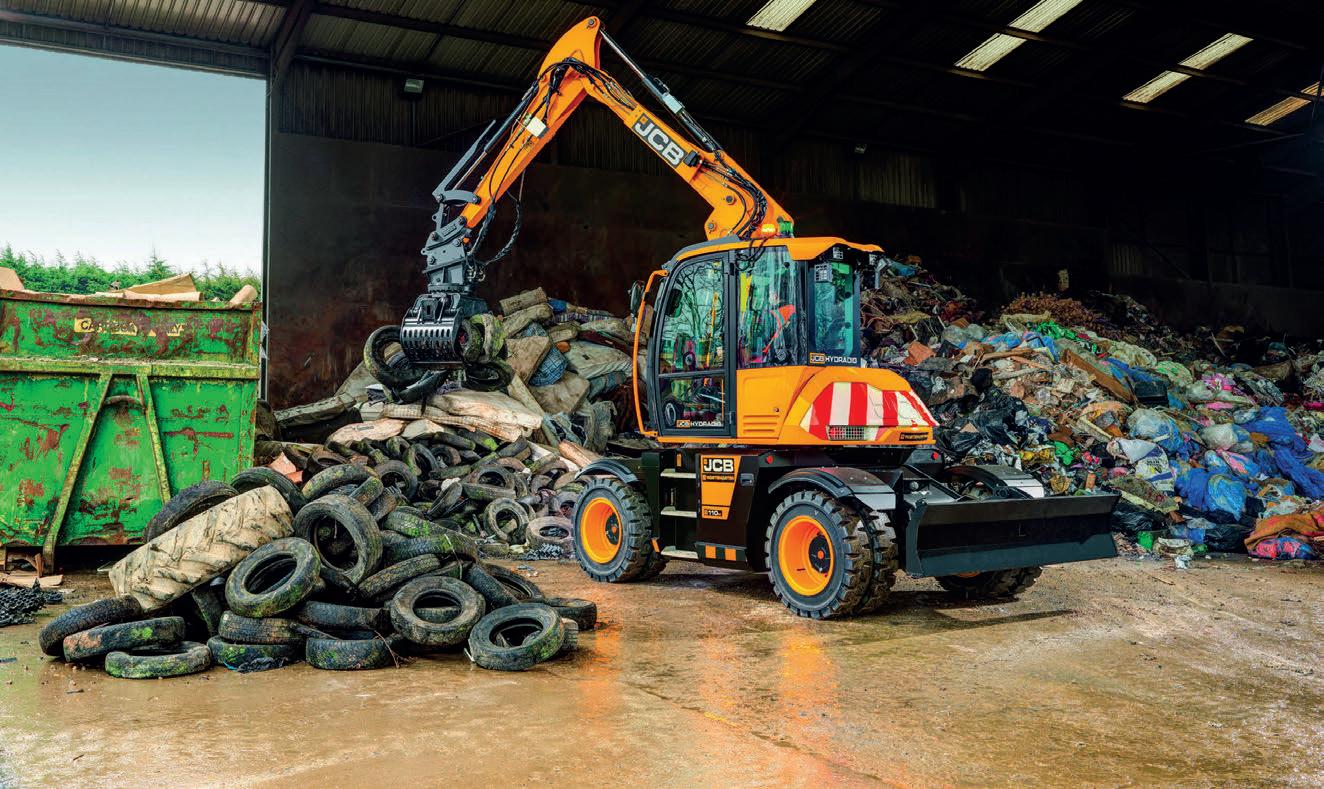
“At the moment there isn’t enough infrastructure to process it. What local authorities are telling us, and are saying to the government, is that they’re concerned that they will collect it, their facilities will sort it, but then it will ultimately go to residual waste. If residents nd that out, they will stop recycling altogether.
“ e government hopes the mere act of collection will stimulate the market, but that could take years, in which time waste authorities are collecting material that isn’t really being recycled.”
ese are the lessons Cathy will bring to Australia in May as a keynote presenter at Waste 2026 in Co s Harbour. Her presentation will focus on the unique hurdles of dense urban recycling, drawing on intensive studies into “ ats above shops” – properties
where the “bin store” is essentially the High Street lamp post.
ese environments present the hardest challenges for waste managers: anonymity, lack of space, and the logistical nightmare of street furniture and parking restrictions. For Australian councils facing urban consolidation in Sydney, Melbourne, and Brisbane, the London data provides a roadmap for what to expect when a “one size ts all” policy meets an 80-storey multi-unit dwelling (MUD).
Ultimately, Cathy believes the industry needs to pivot away from purely technical solutions toward a more social perspective.
“My dream outcome would be that we all do a lot more around the nuances of behaviour change,” she says.
“It is very easy to think you just give someone a lea et and a bin and
everything is lovely, but it is so much more complex than that. I feel like recycling is more of a social science.
“We have done studies to show it depends on your age, whether you rent or own, and your household set-up. If we had the money to focus on really nuanced communications, that is what would really help.”
For three decades the Co s Harbour Waste Conference has been a cornerstone of Australia’s waste management sector, uniting industry professionals, policymakers and advocates each year to explore the current challenges and set the agenda for the future.
Waste 2026 will be held at Opal Cove Resort, Co s Harbour from 12-14 May.
For more information, visit: www.co swasteconference.com.au


Australia’s food organics and garden organics (FOGO) rollout is accelerating.
As mandates roll out across states –with New South Wales and Victoria requiring kerbside collection by 2030 – the organic’s recycling sector is already diverting about eight million tonnes of waste from land ll annually, according to latest industry data.
But collection is only half the equation. e real challenge and opportunity lie in processing the collected material into valuable products.
According to the National Waste and Resource Recovery Report 2024, Australia generated 14.6 million tonnes of organic waste in 2022-23. With about six million tonnes still reaching land ll, there’s urgency and opportunity in the sector’s transformation.
Traditional windrow composting works, but it requires space, careful management of odour and leachate, and time. Urban councils face land constraints, regional operators struggle with transport costs, and everyone is under pressure to meet tighter diversion targets while managing contamination and proving compliance.
e good news? Innovation is bridging the gap. From enclosed processing systems and anaerobic digestion to mobile units and datadriven optimisation, Australian councils and operators are proving that organics processing can be e cient, scalable, and commercially viable.
Processing technology is evolving. In-vessel systems, anaerobic digestion facilities, and mobile processing units are solving space, odour, and capacity constraints.
Metropolitan councils with limited land are installing enclosed composting systems that deliver faster processing times without odour issues. Some regional councils are exploring anaerobic digestion facilities that can generate renewable energy while producing certi ed compost.
Data and automation are also transforming operational e ciency. Internet of ings (IoT) sensors in bins and at processing facilities detect contamination before it becomes a problem.
Cloud-based platforms automate Environment Protection Authority reporting and give operators real-time insights. For councils, this technology delivers transparency without additional administrative burden.
Finally, supply chain integration is connecting processing capacity with end markets.
Quality assurance systems track material from bin to end product. Certi cation frameworks give procurement managers con dence in recycled content claims, while circular procurement policies at all levels of government are creating sustained demand for certi ed products. is isn’t just about diverting waste. It’s about building commercial supply
chains where organic materials have measurable value and processing operations can sustain themselves beyond grant funding.
Across Australia, practical examples of these advancements are emerging.
Major metropolitan councils are processing tens of thousands of tonnes per year through in-vessel systems installed at existing transfer stations.
Regional councils are collaborating on shared organics processing infrastructure that processes both FOGO and commercial food waste. e compost is being used in local agriculture and viticulture.
Private operators are deploying mobile screening and processing units to serve smaller regional councils.
ese are passed the point of pilot projects; they’re commercial operations delivering proven results.
Of course, challenges remain. Processing infrastructure requires capital investment, contamination continues to a ect material quality and some end markets are still developing. e fundamentals are sound with policy settings – from New South Wales’s 2025 FOGO legislation to national targets in the National Waste Policy Action Plan – creating sustained market demand.
Government funding is supporting infrastructure investment, and
technology is mature enough to reduce implementation risk.
e question is no longer whether Australia can process organics at scale, it’s how quickly the sector can deploy proven solutions.
What’s driving this transformation isn’t just technology, it’s collaboration. Councils are partnering with experienced operators rather than trying to build processing capacity alone.
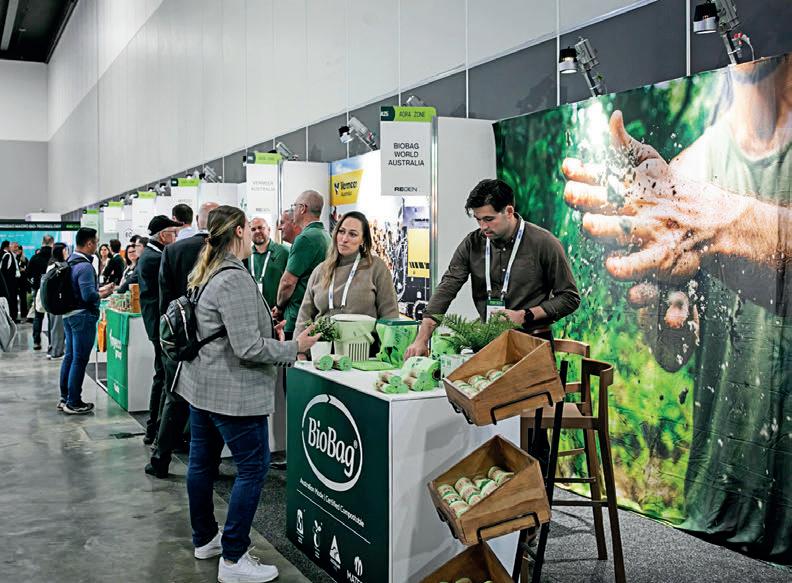
Operators are working with equipment suppliers who provide training, maintenance, and performance guarantees. Technology providers are integrating their platforms with existing systems, rather than demanding wholesale replacements.
Increasingly these partnerships are being formed at events like ReGen
(Australia’s Resource Recovery Expo), where councils looking for processing solutions can meet the suppliers with proven systems, and operators testing new approaches connect with the technology providers.
ReGen 2026, taking place at ICC Sydney in September, brings together councils, processing facility operators, and technology suppliers.
It’s where innovation meets implementation, where processing challenges nd practical solutions, and where Australia’s organics future takes shape.
Contact the ReGen team to inquire about exhibiting at this year’s event.
For more information, visit: www.regenexpo.com.au











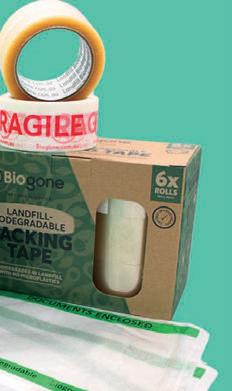

in a s is a twin sha t s ow s eed shredder idea or arge waste and andfi o erations.
owered a horse ower cania engine the has een designed to rovide o erators with unriva ed eve s o service access a ua it oosted the shredder s uick and eas set u which is guaranteed rom ground eve .
ther ke eatures in the roduct inc ude customisa e shredding rograms which a ow o erators to configure the machine to their s ecific re uirements and ma imise roduction.
h drostatic drive o ers rotection against contamination and a ows or i directiona shredding whi e . metre ong sha ts o so id stee and a u we ded tooth configuration give the an e treme high roduction rate with e ce ent si e reduction.
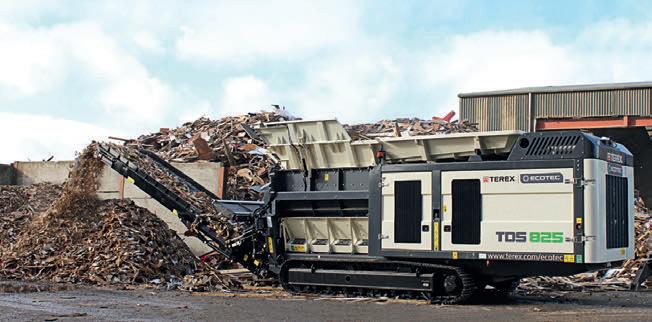
he machine s inde endent gear o es ena e each sha t to run se arate he ing to reduce wra age and im rove the shredding o materia . dditiona the integrated ti ing ho er and varia e s eed conve or s stems ensure seam ess materia ow making this a re ia e owerhouse or high vo ume o erators. seeking ma imum u time and ong term dura i it in demanding environments.

Design. Low Energy.
SG ADVANCED COMPOSTING™ Technology with Gore® Cover delivers high-performance composting with less than 2 kWh/ton energy use. That’s a fraction of what’s required for energy-hungry tunnel systems. No massive buildings. No round-the-clock blowers. Just smart, scalable, easy-to-operate composting that cuts CAPEX and OPEX—without cutting corners.

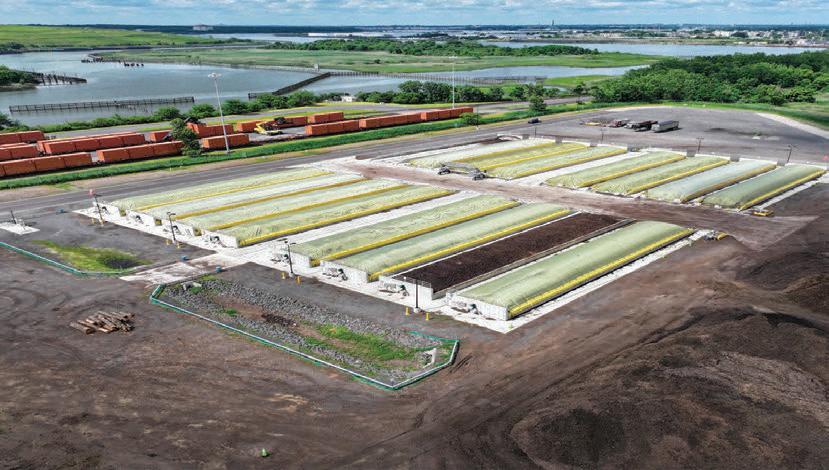
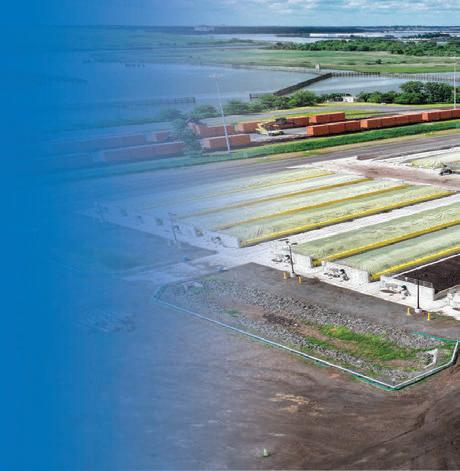
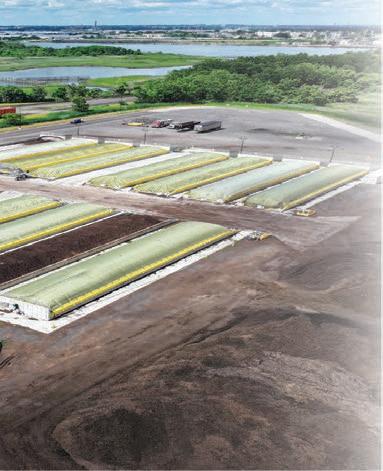
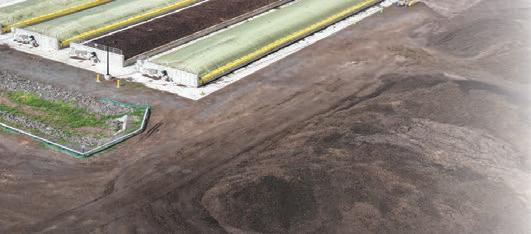
ornna s tee ree re erived ue ant o ers a sustaina e so ution or managing end o i e t res. It converts t res into a er cent stee ree chi /ru er mu ch which serves as eedstock to roduce high energ a ternative ue such as ro sis oi or energ intensive industries.
he rocess egins with the ornna eries ua ha t rimar hredder roducing t re shreds in the mi imetre range idea or initia si e reduction.
disc c assifier ensures uni orm out ut making the ue com ati e with automated eed s stems. or enhanced va ue and c eaner com ustion the ornna eries econdar hredder urther reduces chi s to mi imetres stree ree ru er mu ch with an over and magnet removing stee content to create high ua it stee ree t re derived ue . ornna de ivers high ca acit t re rec c ing s stems designed to match s ecific o erationa re uirements and ma imise va ue recover . his advanced techno og em owers waste o erators to reduce environmenta im act whi e achieving su erior economic returns.through high e cienc rocessing and recover .
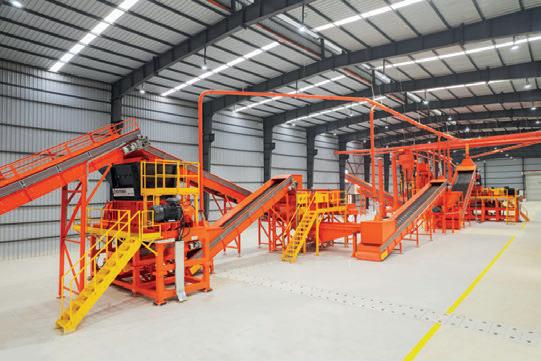

stec/ eterson o ers a u ine o hori onta grinders with five mode s ranging rom to ki owatt k in oth whee and mo i e se ro e ed track versions.
eterson grinders o er industr eading eatures and innovations to roduce the highest ua it roduct at the owest cost er tonne.
istri uted in ustra ia omatsu orest t td the most o u ar mode s in ustra ia are the and the .
he de ivers versati it in a com act oot rint o ering im ressive ower in a sma er ackage.
he ustra ian version is fitted with a ater i ar ier II k engine and it thrives on a variet o eedstocks inc uding and c earing de ris ogs stum s and green waste.
he is designed or o erations re uiring high roduction and re uent moves etween o s and rovides the highest ower to weight ratio o an eterson grinder.
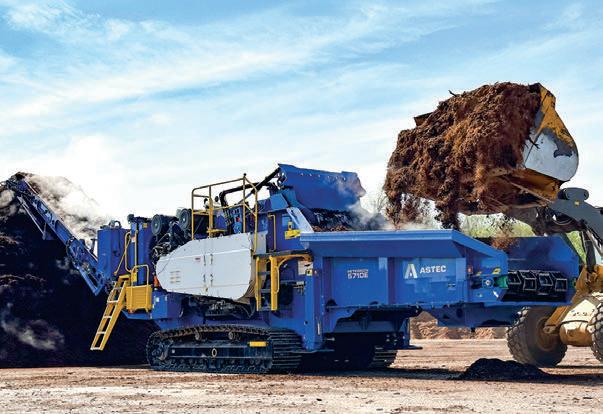
he ustra ian version is owered a ier II ater i ar k engine and hand es high vo ume o erations and demanding materia t es emini said ensuring e ce tiona er ormance and re ia i it .




C-Wise transforms organic by-products into specialised soil improvers engineered for broadacre agriculture, returning community nutrients directly to WA’s vital farming regions.

C-Wise partners with local councils and industry to transform organic waste and FOGO into specialised soil improvers for broadacre agriculture. We process community and commercial waste streams into nutrient-rich products engineered for farming demands. This closes the loop, returning organic matter directly to productive farmland in the WA Wheatbelt and Peel-Harvey Food Basin, creating genuine value from waste.
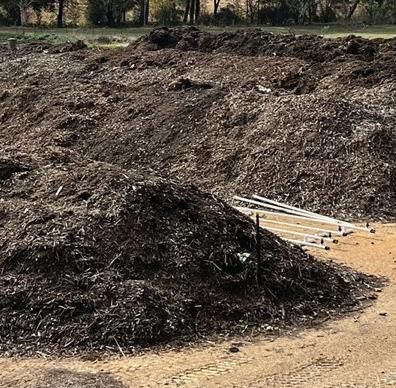
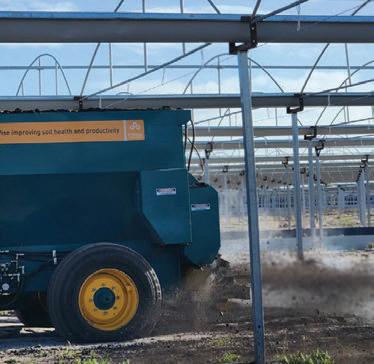
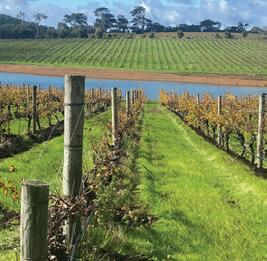
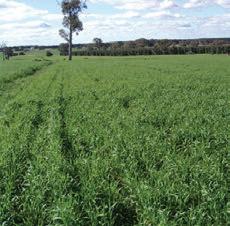
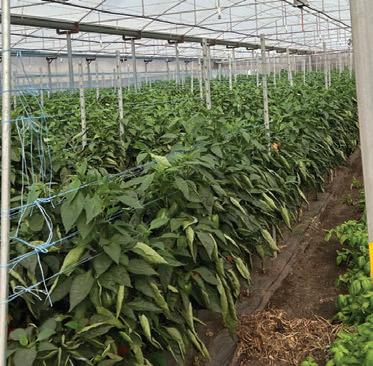



Recycling is remanufacturing...and recycled plastic shows why markets matter, writes Suzanne Toumbourou, Chief Executive Officer, Australian Council of Recycling.
Plastic has become the most visible symbol of Australia’s recycling challenge. It’s lightweight, low value at end-of-use, and disproportionately represented in environmental pollution. It has attracted intense public and political attention for good reason.
But plastic is not the exception. It is the clearest example of the conditions required for recycling systems to operate e ectively.
Recycling is not waste management. It is remanufacturing. Its purpose is to
turn recovered material into products that can be sold into real markets. When those markets are weak, distorted or absent, the economics do not stack up, and recycling cannot be sustained at scale.
A functioning recycling system has three essential elements: collection, processing and end markets.
Collection is the most visible part of the system, but it is not what determines success. Materials are only recycled when they can be turned back into
products that someone is willing and able to buy, at scale and over time.
Over the past decade, Australia’s recyclers have invested heavily in domestic remanufacturing. With support from government programs such as the Recycling Modernisation Fund, industry has built modern sorting, processing and reprocessing facilities to manage material here in Australia.
ose investments were made on the expectation that policy would support
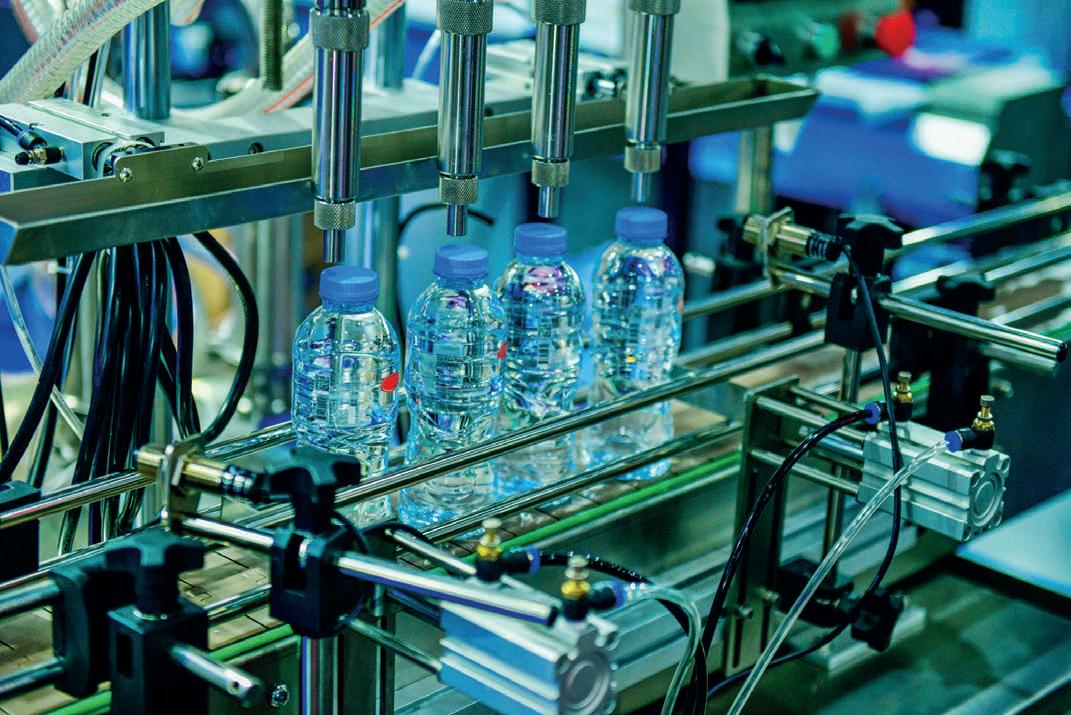
Recycling’s purpose is to turn recovered material into products that can be sold into real markets. Image: i viewfinder/shutterstock.com
the nal link in the chain: strong and reliable markets for recycled content. at support has not yet materialised.
Australia is a high-standards manufacturing economy. Strong labour protections, environmental safeguards, safety requirements and planning controls are de ning features of our system.
Energy costs are high. Distances are long. Populations are dispersed. ese are not policy shortcomings; they are deliberate choices intended to protect workers, communities and the environment.
ey also shape the economics of remanufacturing.
Producing material in Australia costs more than in many regional supply chains where environmental and human health protections are weaker, enforcement is inconsistent, or manufacturing is subsidised. Recycling is not immune from these realities.
ese dynamics are very clearly visible in plastics.
Australia imports almost 90 per cent of the plastic it uses, whether as nished products, packaging, or resins for onshore manufacturing.
Plastic packaging alone accounts for more than 1.3 million tonnes each year. While supply chains are global, waste is local. Once used, that plastic becomes Australia’s responsibility. Australian law prohibits the export of plastic waste, meaning it must be recycled, land lled or otherwise managed domestically.
Despite signi cant investment in recycling capacity, around 80 per cent of plastic packaging still ends up in land ll.
e imbalance is structural: recyclers must manage material locally, but the products they remanufacture compete in global markets shaped by cheap imported plastic.
Large-scale international investment in virgin plastic production capacity has driven persistent oversupply, suppressing
prices and undermining recycled material worldwide.
e result is a clear and enduring price gap. Australian-made recycled plastic can be about 50 per cent more expensive than imported virgin material. at gap re ects real costs: energy, labour, logistics and regulatory compliance in a highstandards economy.
Left unaddressed, the consequences are predictable. Recyclers struggle to sell material and therefore take in less feedstock, ultimately operating below viable utilisation levels. Capacity sits idle. Planned investments are delayed or cancelled. Recoverable resources are lost to land ll, and environmental harm increases.
is is not a failure of infrastructure, e ort or capability. It is a market failure.
Extended Producer Responsibility (EPR) is a critical mechanism for addressing that market failure across the recycling system, by holding producers accountable for the full life of their products.
Packaging is the most immediate and pressing application. It represents a large share of material placed on the market, presents a highly visible ‘waste problem’, and is already subject to agreed reform commitments. National packaging reform therefore provides the clearest and most advanced pathway to apply EPR settings that support domestic remanufacturing.
Properly designed, packaging EPR can set the conditions for more e ective market settings. It can require better packaging design, establish mandatory standards for recyclability and recycled content, and help fund parts of the value chain where markets alone do not deliver.
Economic modelling commissioned by the Australian Council of Recycling and the Australian Packaging Covenant Organisation shows that packaging reform could deliver substantial bene ts:
hundreds of thousands of tonnes of plastic diverted from land ll each year, signi cant emissions reductions, billions of dollars in economic activity and tens of thousands of jobs, all at a negligible cost to consumers.
But EPR cannot operate in isolation. If recycled content targets can be met using imported material, domestic remanufacturing will remain under pressure. Clear policy signals are needed to support demand for Australianmade recycled plastic and sustain local recycling capacity.
Recycling is capital-intensive. Facilities take years to plan, nance and build. Investors need con dence that there will be stable, long-term demand for what is produced. Without that con dence, projects stall and existing facilities are reassessed.
Europe’s experience is a warning. Despite ambitious targets and signi cant investment, European plastic recyclers have faced widespread closures as markets failed to develop for domestic recyclate and imports undercut local production.
Once remanufacturing capacity is lost, it is extraordinarily di cult to rebuild. Skills disperse, capital moves on and reliance on global markets deepens.
Australia has a narrow window to avoid the same outcome.
e Australian Government has committed to national packaging reform. Industry responded by investing in domestic remanufacturing and preparing to scale.
What is now required is urgent action. Mandated national Extended Producer Responsibility for packaging, supported by policy settings that strengthen demand for Australian-made recycled material, must be implemented in this term of Parliament.
Recyclers are ready. e infrastructure and capability exist. e evidence is clear. It is time to align policy with economic reality and nish the job.