ISSUE 107 n JUNE 2026
ISSUE 107 n JUNE 2026
Transforming waste into commercial assets
Building something new PFAS solutions
A perfect storm
Mean and green




Regardless
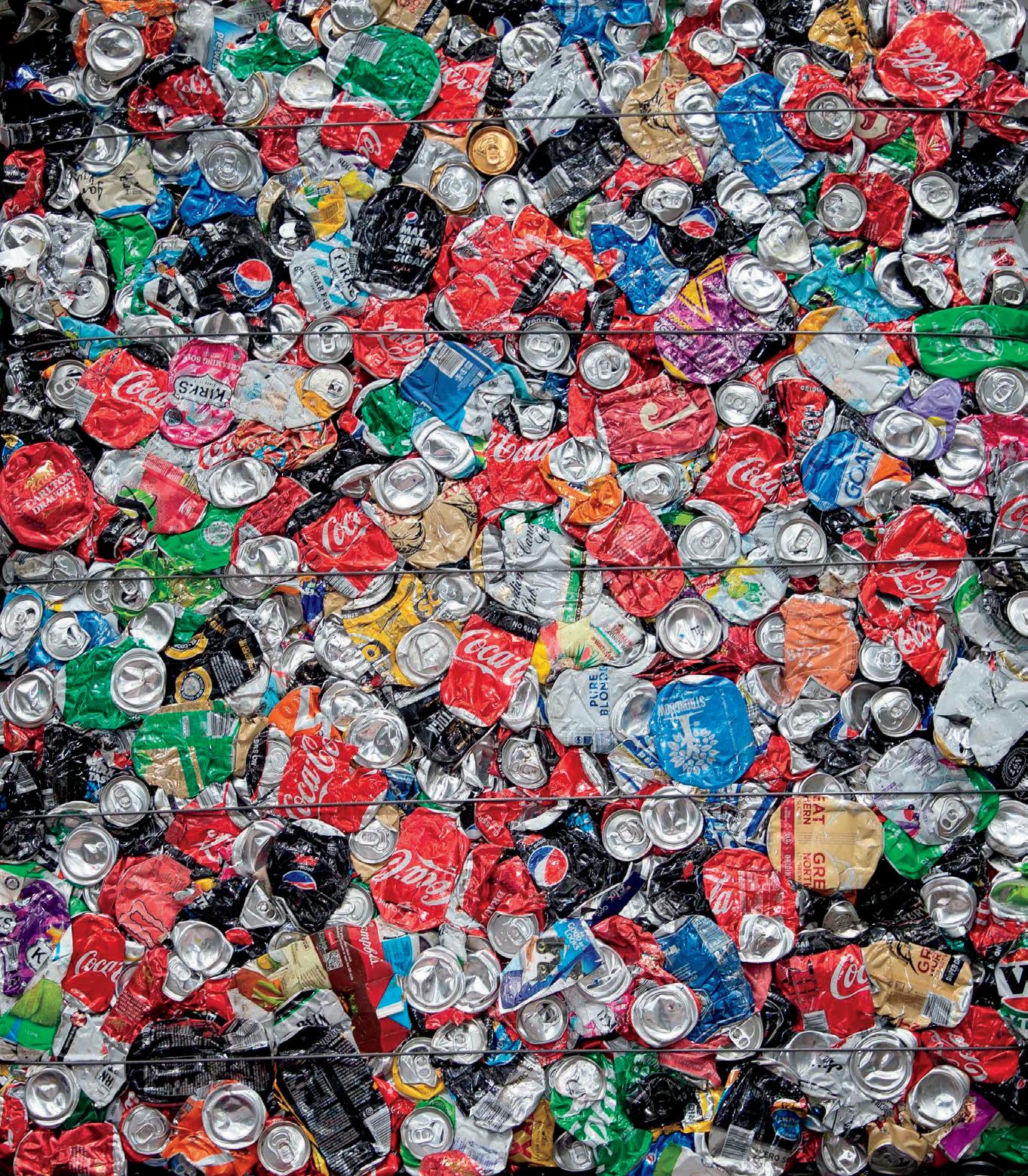
ForMunicipalCouncilsthathavepartneredwithAPRKerbsideintheGlass-outprogram,theirrecyclablesarenowbeing receivedwithlessthan1%glass.Theseremarkableresultshavedirectlycontributedtoreducingcontaminationlevels andfurtherdivertingwastefromlandfill.Improvingtheseparationofhouseholdrecyclablesandhavingnoglassinthe kerbsidecommingledstreamhasledtoasignificantimprovement inthequalityofallrecyclables.
KeylearningsgainedthroughouttheprogramwellpositionsAPRKerbsidetobestsupporttheneedsof MunicipalCouncilswhoarepreparingtoimplementglassout'ofthe commingledstream,transitionsmoothlyandre-educateresidents.
Suchbenefitsinclude:
Eliminatetheissueofglassshardsthatgetintoalltheotherrecyclables
Significantlyrecovermorerecyclablematerials
Reducecontaminationlevelsandfurtherdivertwastefromlandfill
Addressandcombatthelimitationspresentedtoapproachableend
andresourcessuchaspaper,cardboard,plasticandaluminium marketoutletsforrecyclableproductsduetoglassshards
Increasethevalueofrecyclablesandqualityofendproduct
Thevalue-addedsortingfacilitysitehasthecapabilitytoprocess: haveremovedglassoutoftheiryellow-liddedrecyclingbins
RecyclablesfromMetropolitanMelbourneandRegionalcouncilsthat
PaperandCardboard
PlasticssuchasHDPE,PET,PPandSoftPlastics
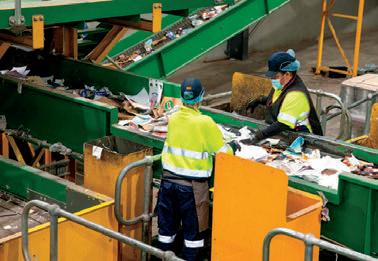
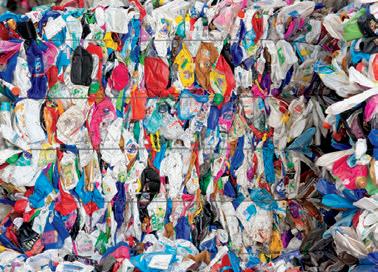
TheAPRteamarestronglyfocusedoncircularityandworkingincollaborationwithindustrypartnerstoexploreand seizeopportunitiesthatwillmaximiseresourcerecoveryand furtherdivertwastefromlandfill. Afterglass,softplasticswasidentifiedasthebiggestcontaminantofkerbside,yellow-liddedbinsinVictoria. Asaninnovativecompany,theAPRGroupcontinuouslylooksfordifferentwaystoachieveandsupportzerowaste strategygoalsandgivetheenduseraqualitymaterialwithminimalcontaminants. APRPlasticshasbroughttomarket,anadvancedrecyclingsolutionforthesoftplasticsstreamwiththeSoftPlasticsto Oilinitiative.RoboticswillalsobeutilisedtopickoffTetraPakcartonsfromtheKerbsideMRFlineforuseinsaveBOARD.

“We






for Waste Expo 2026.
Globally, energy-from-waste is a proven model. Across Europe, facilities are embedded in everyday infrastructure, managing residual waste while supporting circular economy goals. In Australia, the debate continues, shaped by community concern, regulatory scrutiny and a need to prove the case locally.
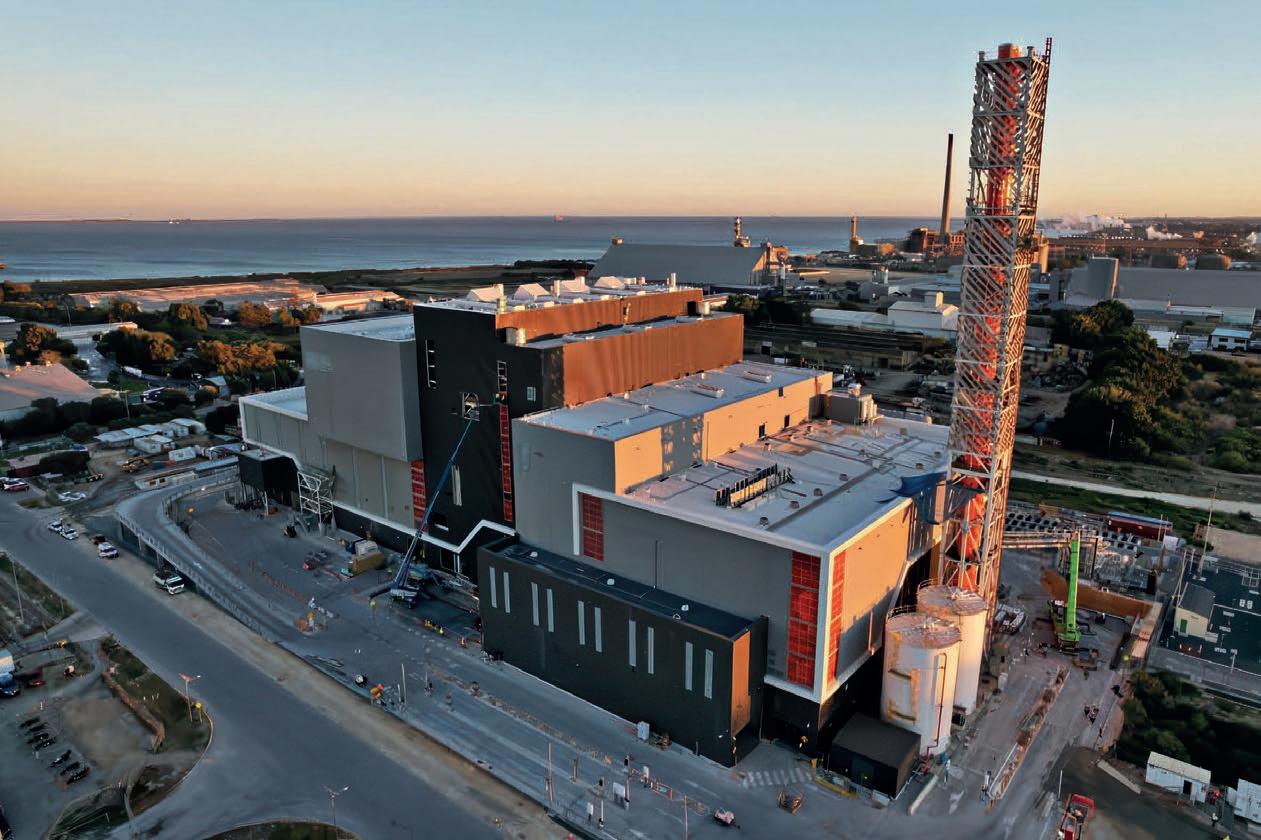
It was hoped the opening of the Kwinana Energy Recovery facility in Western Australia would mark a turning point, where delivery might shi the conversation – and in many ways, it has.
But if the expectation was “build it and they will come”, the reality has been more complex. Questions remain, and communities are asking them with greater detail and urgency.
In this edition, we explore what comes next.
We look to the operational expertise required to make energy-from-waste work in an Australian context. We unpack the gap between perception and performance, separating fact from fear. And we speak with one of the people behind Australia’s first incinerator bottom ash facilities – a site manager who relocated from the United Kingdom to help bring global experience to a local industry.
We also cover one of the most engaging discussions at Waste 2026 in
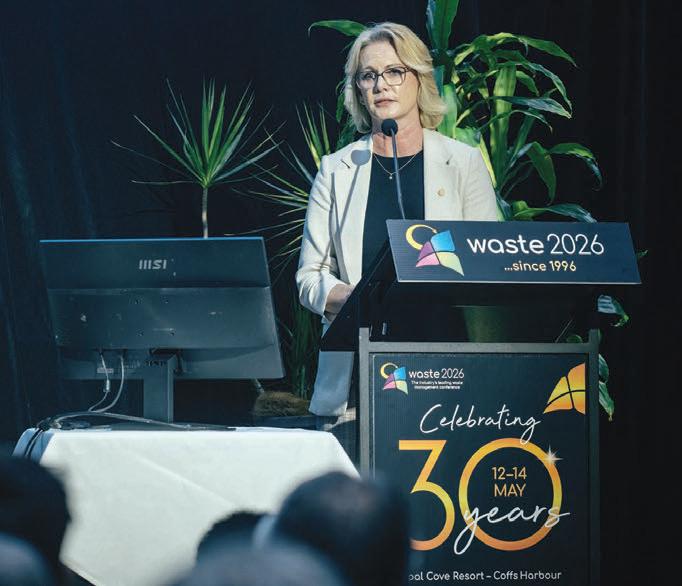
Coffs Harbour, where Nichole Overall, Chair of the Select Committee on Proposed Energy from Waste Facilities, provided insight into the ongoing New South Wales Parliamentary inquiry.
As the conference marked its 30-year milestone, the energy-from-waste stream stood out as a clear example of a sector shi ing its focus toward the next phase of delivery.
Also in this edition, we explore the latest solutions and challenges shaping the sector’s response to PFAS and bring you updates on the plant and equipment transforming how materials are managed, recovered and returned to the circular economy.
Happy reading!
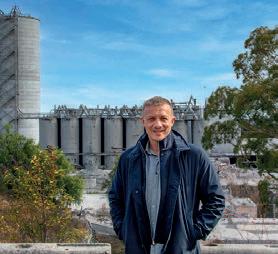

CEO
Christine Clancy
christine.clancy@primecreative.com.au
PUBLISHER
Sarah Baker sarah.baker@primecreative.com.au
MANAGING EDITOR
Lisa Korycki lisa.korycki@primecreative.com.au
JOURNALIST
Sean Gustini
sean.gustini@primecreative.com.au
HEAD OF DESIGN
Clayton Hawley clayton.hawley@primecreative.com.au
ART DIRECTOR/DESIGN
Daz Woolley, Laura Drinkwater
BRAND MANAGER
Chelsea Daniel chelsea.daniel@primecreative.com.au P: +61 425 699 878
CLIENT SUCCESS MANAGER
Ben Sammartino ben.sammartino@primecreative.com.au
HEAD OFFICE
Prime Creative Pty Ltd
379 Docklands Drive
Docklands VIC 3008 Australia
P: +61 3 9690 8766 info@primecreative.com.au www.wastemanagementreview.com.au
SUBSCRIPTIONS
Lisa Korycki, Managing Editor
+61 3 9690 8766 subscriptions@primecreative.com.au
Waste Management Review is available by subscription from the publisher. e rights of refusal are reserved by the publisher
ARTICLES
All articles submitted for publication become the property of the publisher. e Editor reserves the right to adjust any article to conform with the magazine format.
COPYRIGHT


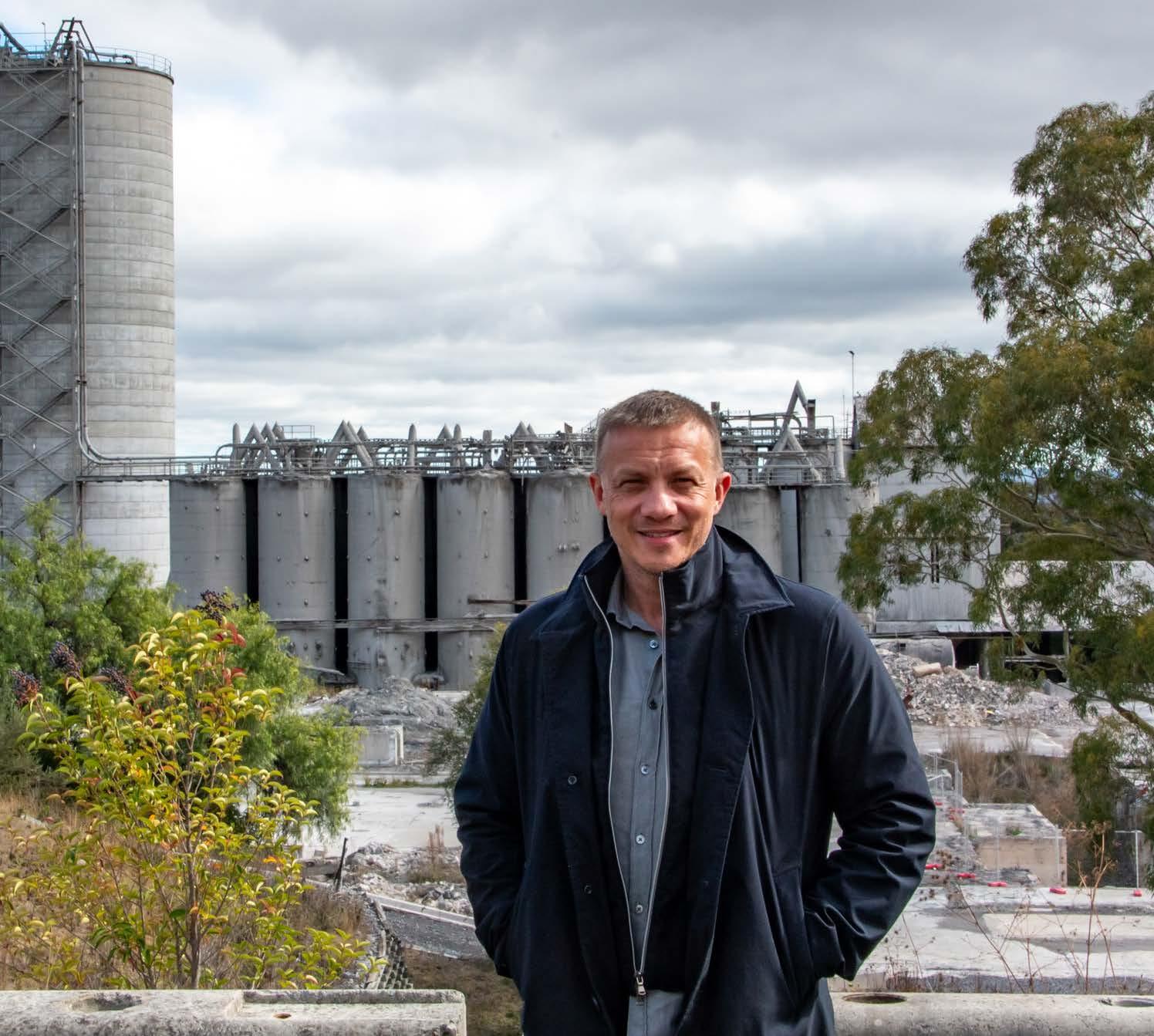
Jason O’Sullivan, Chief Executive Officer of Cenagen. Image: Data Sense Technology
Waste Management Review is owned by Prime Creative Media and published by John Murphy. All material in Waste Management Review is copyright and no part may be reproduced or copied in any form or by any means (graphic, electronic or mechanical including information and retrieval systems) without written permission of the publisher. e Editor welcomes contributions but reserves the right to accept or reject any material. While every e ort has been made to ensure the accuracy of information, Prime Creative Media will not accept responsibility for errors or omissions or for any consequences arising from reliance on information published. e opinions expressed in Waste Management Review are not necessarily the opinions of, or endorsed by the publisher unless otherwise stated.
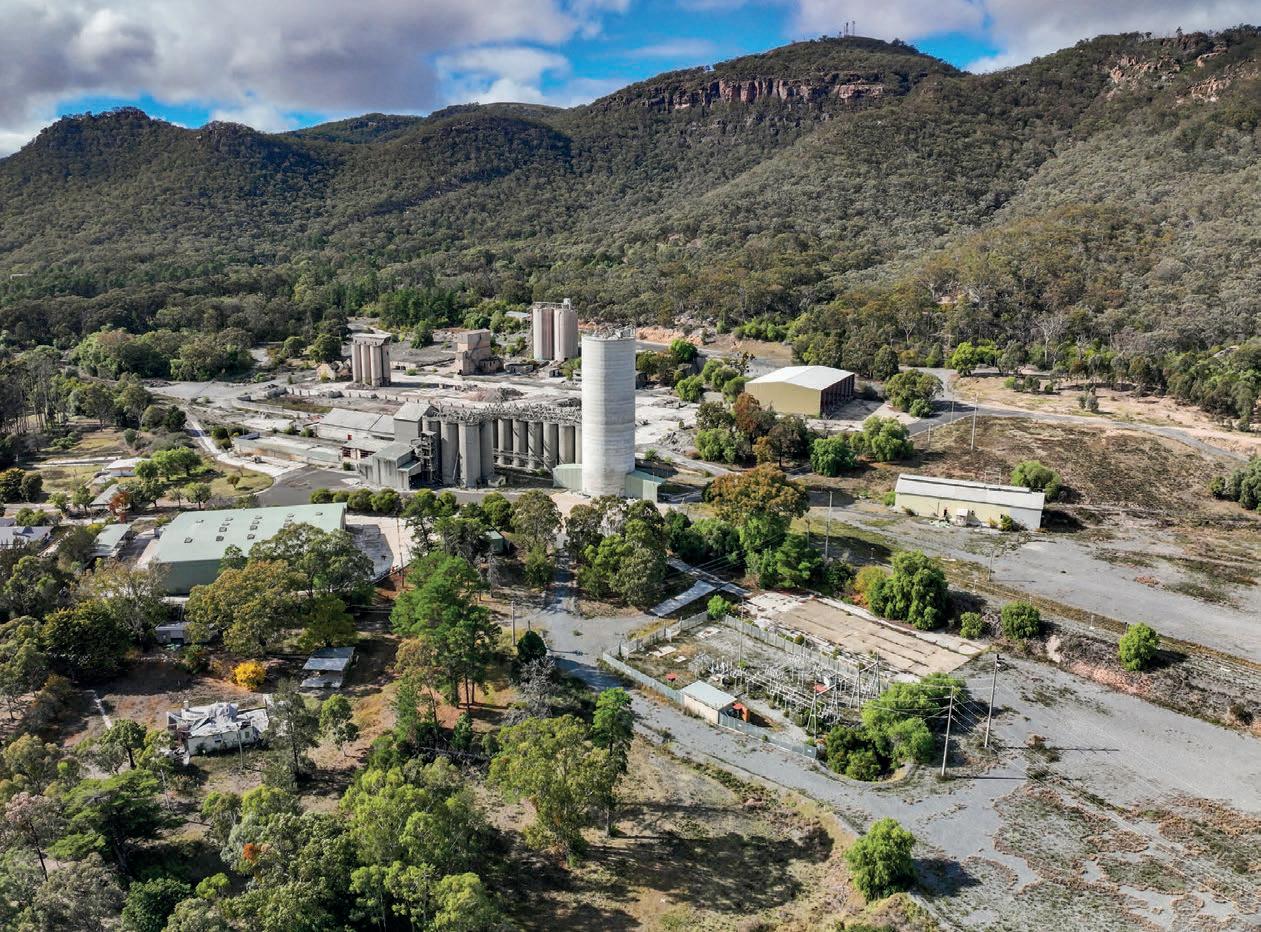

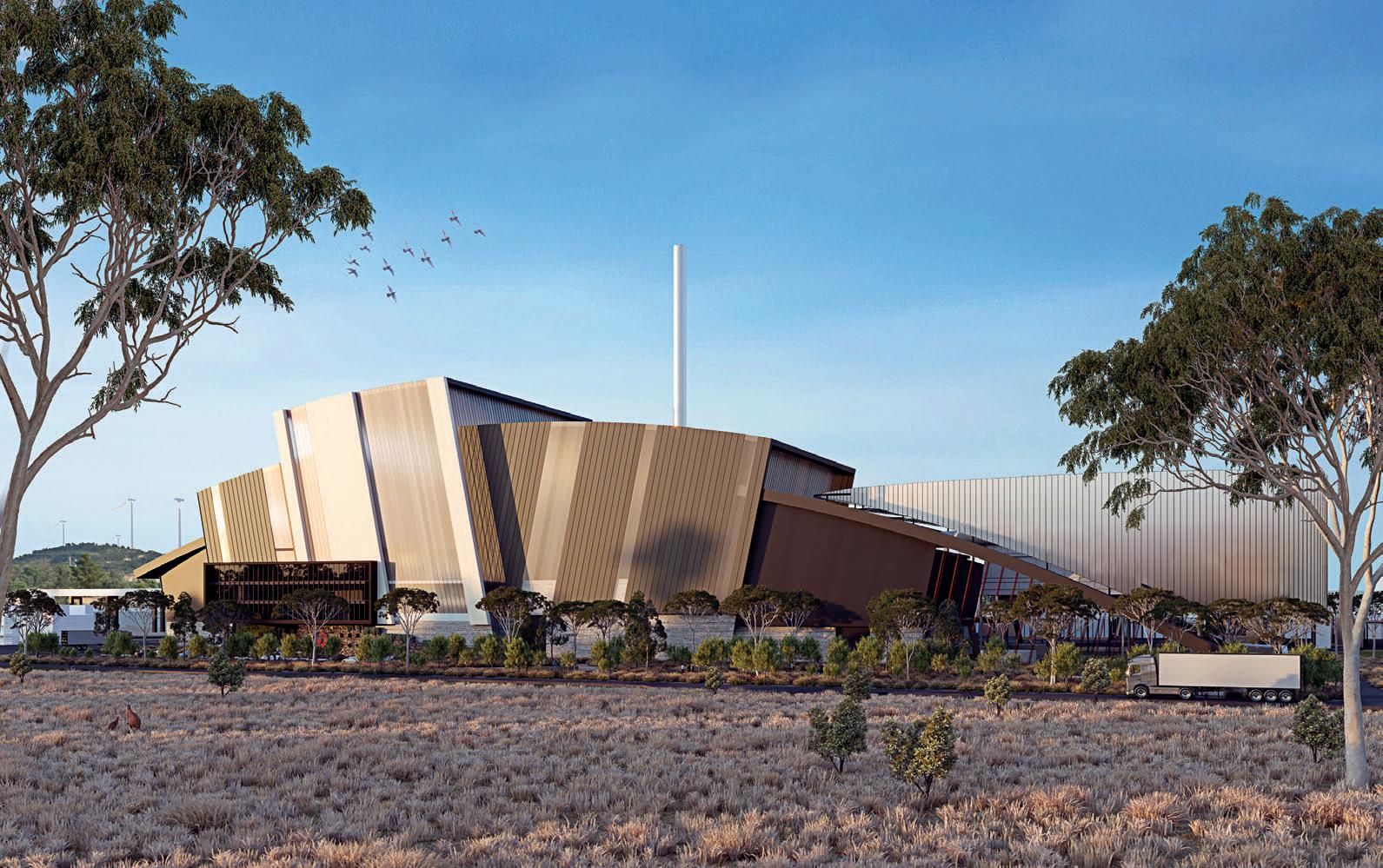
A new facility aims to bring jobs and economic growth back to a regional town by transforming waste into commercial assets.
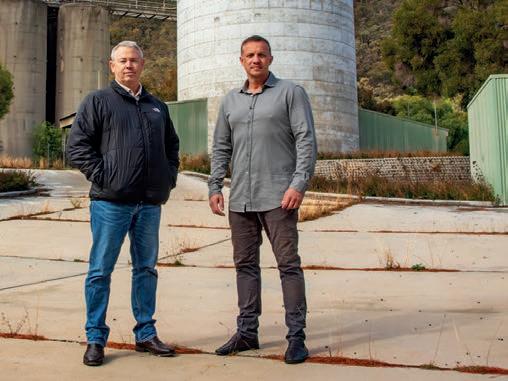
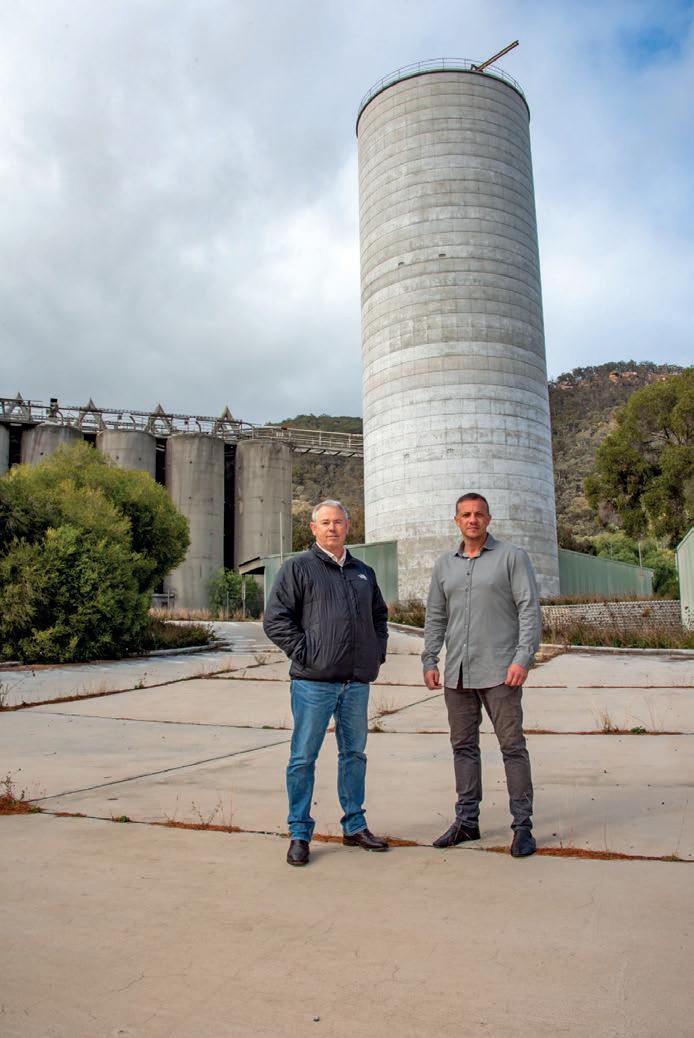
The chance to pioneer an Australianfirst solution to the country’s resource and environmental challenges was enough to turn a longterm passion into what Cenagen Chief Executive Officer Jason O’Sullivan describes as a personal obsession.
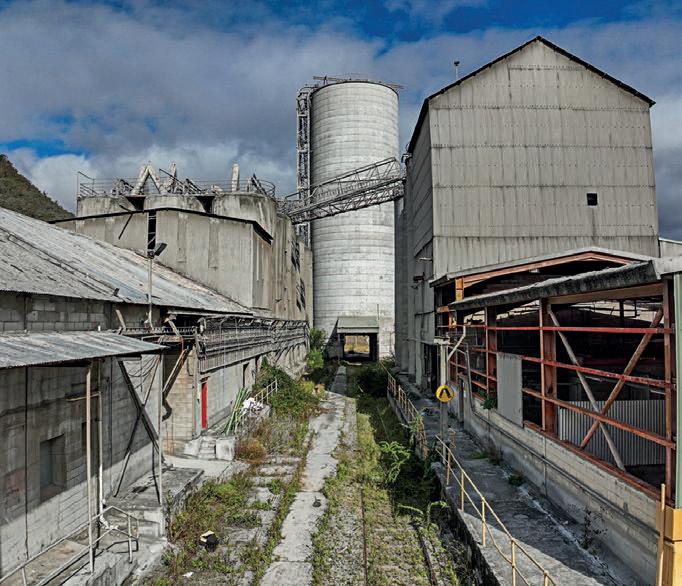
For Jason, the proposed methanol production and greenhouse facility at the former cement works site in Kandos, New South Wales, is the answer to three intersecting national challenges – a looming landfill crisis, domestic fuel volatility and food security.
“We feel with the process we’ve put together; it’s got the capacity to change the way waste is handled, the way fuel is produced, and the way food is grown,” he says.
“It’s going to lower the reliance on imports from high-risk areas... [and] it’s going to give control, domestic control, stability, and pricing. We’re not at the mercy of volatility overseas.”
e concept took shape three and a half years ago during a discussion with a commercial agricultural grower who wanted to source carbon dioxide to
accelerate plant growth for major retail supply chains.
Combining that agricultural demand with Jason’s own extensive background in engineering, waste management, and resource recovery created the foundation for what will be an integrated circular business model.
e plant will use a patented process and advanced gasification technology to produce methanol from processengineered feedstock manufactured from residual household and business waste that cannot be recycled.
Low carbon liquid methanol is a form of sustainable transport fuel that can be used as an alternative to fossilbased fuels to reduce the greenhouse gas emissions of transportation fuels and is in high demand by the world’s shipping industry, which is heavily reliant on diesel.
e facility will also include a largescale enclosed greenhouse complex, using captured carbon dioxide from the methanol production process to grow fresh produce and cut flowers.
“We’ve got a very, very unique process,” Jason says. “ e plant operates as a net importer of electricity and focuses on advanced chemical recycling and non-combustive resource recovery from waste materials rather than raw combustion for power.
“We turn waste to syngas, and then chemically convert the syngas to methanol, so it’s a two-step chemical recycling process.
“Because we’re recovering resources from the gas, we feel it’s a much more sustainable outcome that aligns with a lot of the federal [government] environmental targets such as the alternative fuel strategy and net zero mandates.”
According to the Clean Energy Finance Corporation, Australia’s alternative fuel strategy aims to achieve net-zero emissions by 2050 and enhance national energy security by moving away from imported fossil fuels.
e strategy focuses heavily on renewable hydrogen, sustainable aviation fuel (SAF), and batteryelectric transport.
Australia has also legislated a national target to reach net-zero greenhouse gas emissions by 2050. To achieve this, the Federal Government enacted the Climate Change Act, which includes an interim mandate to reduce emissions by 43 per cent below 2005 levels by 2030, and a further target of 62 per cent to 70 per cent below 2005 levels by 2035.
New South Wales has legally committed to achieving net-zero greenhouse gas emissions by 2050.
Jason says the Kandos project is a win for Kandos and New South Wales.

“We’re solving multiple issues. We’ve got a singular process that dives into three separate industries – it’s going to be a big environmental win for the state.
“Within the waste hierarchy we see ourselves essentially as recovering resources.”
e chemical processing sequence used by Cenagen avoids the generation of residual ash, which is a primary byproduct of traditional incineration technologies.
Instead, the facility’s outputs are entirely commercialised within a closed-loop system. e process transforms waste into syngas, chemically converts that syngas into liquid methanol, and captures carbon dioxide to feed directly into the adjacent greenhouse facility.
Secondary product lines include vitrified rock alongside the primary floriculture and agricultural outputs, ensuring that near 100 per cent of incoming materials are successfully diverted from landfill.
Jason says while the integration of these systems is innovative, the individual components rely on decadesold, commercially verified technology that is being used worldwide.
Gasification systems have been operated globally for 80 to 100 years, methanol synthesis plants have run for decades, and the practice of using carbon dioxide liquefaction to enhance agricultural growth is a mature industry standard, notably in countries such as Holland.
“ is process is unique and it’s a positive process, but we haven’t reinvented the wheel,” Jason says.
“Each part of the process is in existence and operational across the planet and has been for decades. Our uniqueness is the integration of proven technologies to essentially complement the downstream process.
“Every part of our process is tried, tested and proven.”
For the town of Kandos, and its surrounding communities, the
billion-dollar project promises regional revitalisation.
An historic industrial town in the Central Tablelands, about an hour northeast of Bathurst, the local community has lived through the highs of active local industry and the subsequent impacts of post-industrial closure.
Before closing in 2011, the local cement works supplied the foundational materials for some of Australia’s most iconic landmarks including the Sydney Harbour Bridge and the Sydney Opera House.
Jason says over the past 14 years, the school population has dwindled from 240 students down to fewer than 100, threatening ongoing education funding and community stability.
e proposed Cenagen facility is slated to create 300 jobs, offering stable local employment pathways that appeal to a wide demographic.
By generating options for skilled and unskilled workers, the project aims to give young people a reason to remain in the area rather than moving away or commuting long distances to find work in distant mining operations.
Cenagen is already engaged with local schools and New South Wales Technical and Further Education (TAFE) programs to align vocational training pathways with the exact skill sets required by the upcoming facility.
“Another exciting part is understanding some of the local issues that we can hopefully really help with should we get approval,” Jason says.
“A project like this can really be the anchor for regional revitalisation, not just for Kandos but also for some of the surrounding areas.”
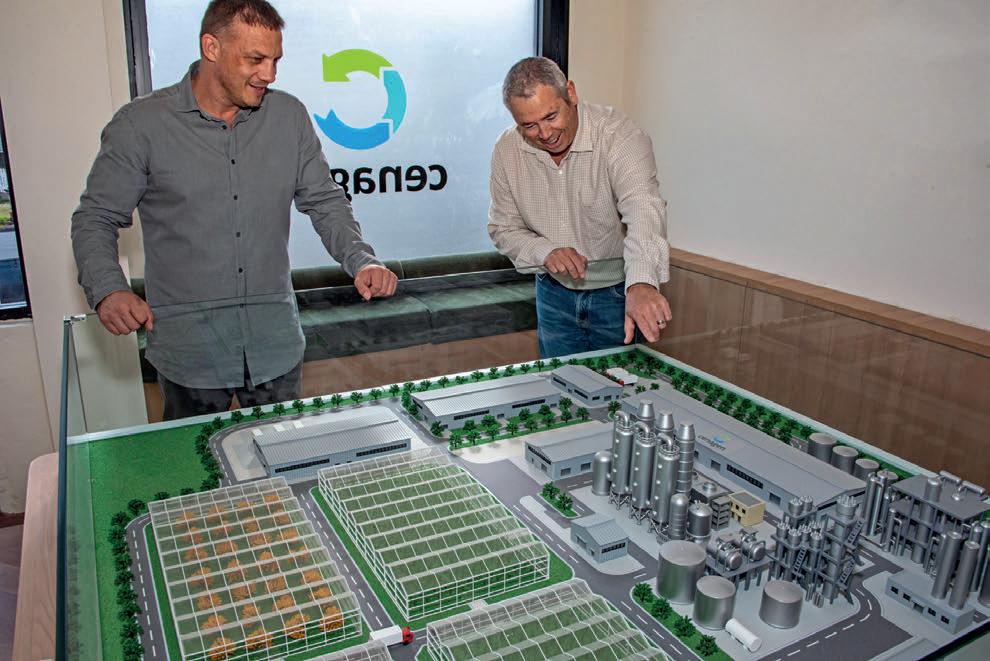
As part of its ongoing community access, Cenagen this month opened a dedicated visitor information centre in the heart of Kandos. Located directly across the road from the local supermarket, the shopfront is positioned specifically where residents can easily drop in during regular regional retail hours.
It is staffed by a local resident and features detailed infographics alongside a 1.8-metre by 1.8-metre miniature scale replica model of the plant layout.
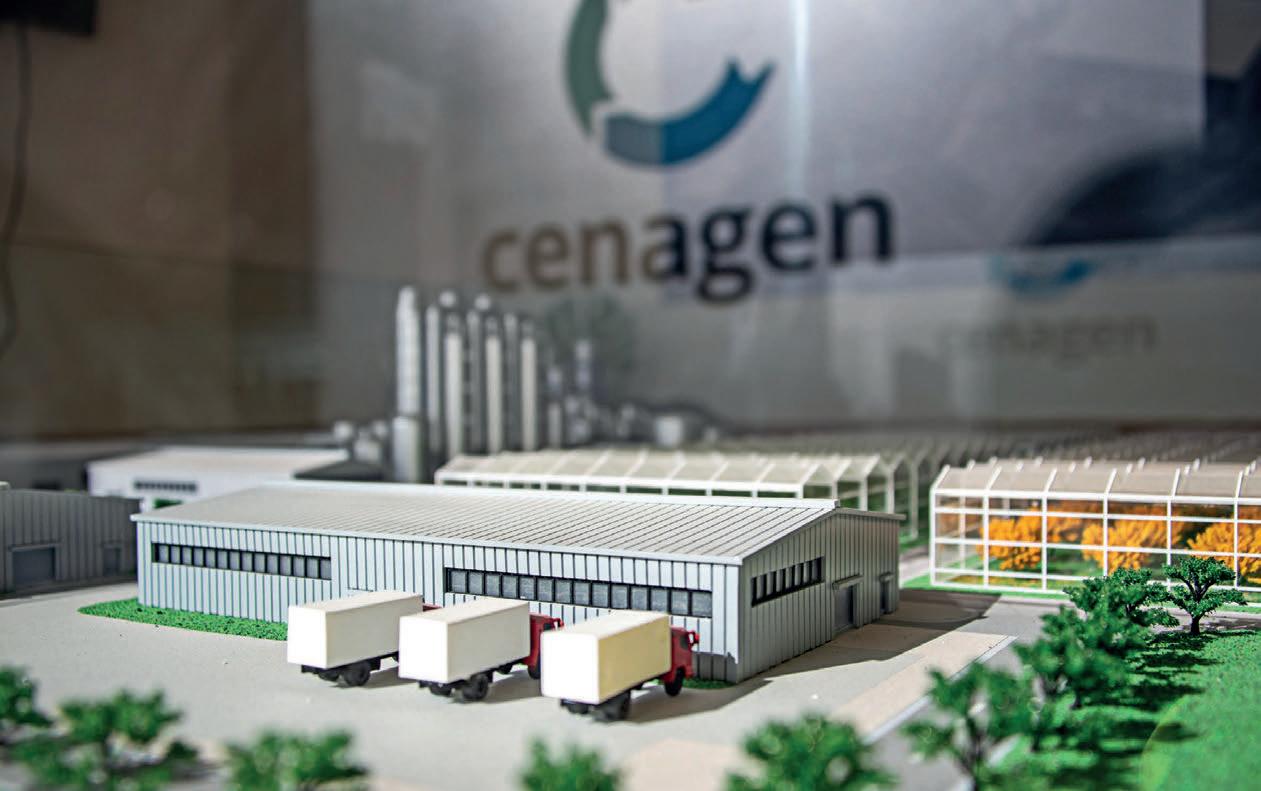
Jason says this physical presence ensures that less digitally connected community members can ask questions face-to-face and receive formal feedback directly from Cenagen’s specialised engineering or planning divisions.
“I think it’s an important piece to open up a conduit for the community, so that they feel like they can access the project anytime they’ve got a question,” he says.
e centre’s opening follows an exhaustive round of initial community consultations held earlier in the year, which attracted more than 450 people across three packed nights.
Jason says Cenagen has used this community feedback to refine its engineering parameters. For instance, recognising that water security is a concern for regional communities, the company’s engineering teams are modifying the system designs to minimise local water impacts before entering the formal New South Wales planning system and starting the Environmental Impact Statement (EIS) process.
Cenagen has put together an experienced team to steer the facility through the stringent New South Wales regulatory framework.
Global engineering firm WoodBeca was engaged to manage the project’s engineering requirements, tierone advisory firm KPMG delivered comprehensive market studies and financial validation for the development and specialist industrial planning firm JEP Environment & Planning leads the environmental assessment.
Danny Conlon, the former Managing Director and Chief Executive Officer of Veolia Australasia, sits on the Cenagen board and is expected to move into a direct operational leadership role as the project advances.
He is joined on the leadership team by Tony Khoury, a prominent figure who served at the helm of the Waste Contractors and Recyclers Association of New South Wales for decades.
e agricultural side of the circular process is anchored by a veteran third-generation commercial grower who brings a lifetime of expertise in controlled-environment production and

established supply pathways to major retail chains.
While the immediate focus is on executing the Kandos facility to global best standards, Cenagen has secured necessary patent protections within Australia to lay the groundwork for future expansion.
Jason says that establishing this first operational facility is a crucial step so that regulators and industry partners can physically see, touch, and comprehend the integrated system, paving the way to scale the model across multiple states in the future.
“People need to think outside the box,” he says. “We’ve been landfilling for thousands of years, and we now understand the damage that causes to the environment and will continue to cause if it’s not done well.
“Just as habits change and our understanding of what’s good for the environment changes... people are understanding the benefits that advanced technologies can bring.” WMR
For more information, visit: www.cenagen.com.au
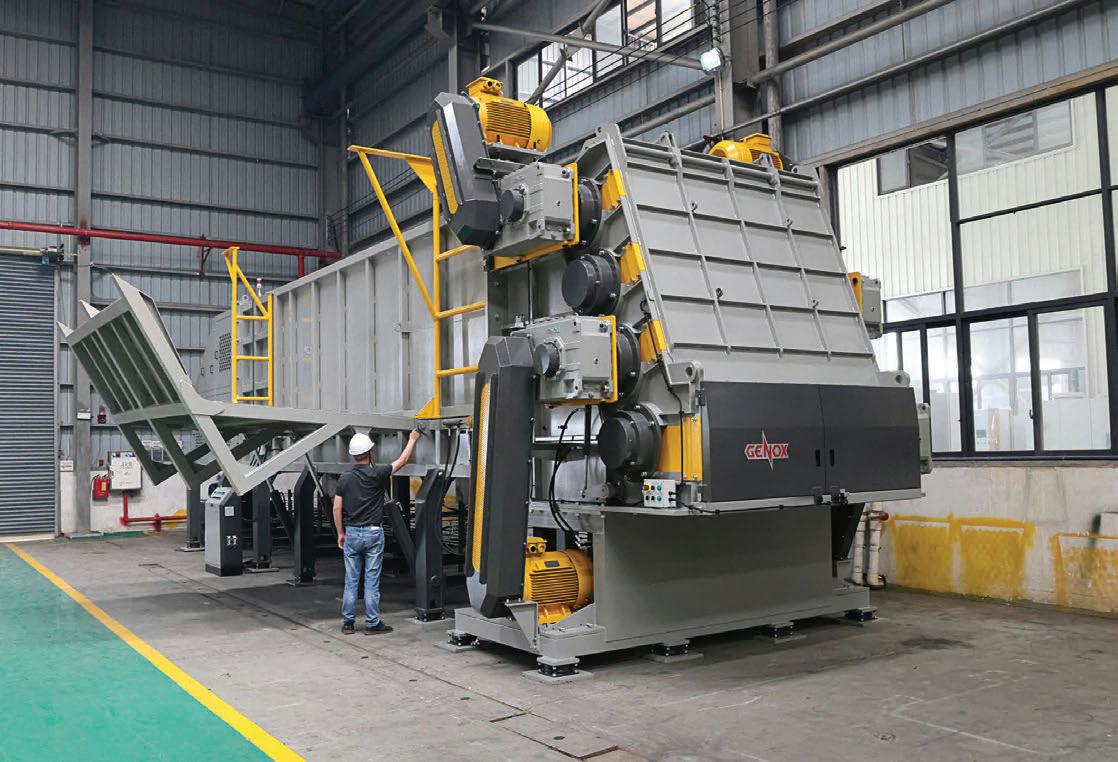
or plastic profile with Up to 6.5-meter-long, and 2000mm diameter. Four shaft shredding design is a leading technology in the world and an initiative originating from China.
Main Features
•Automatic feeding arm designed to handle straight and bent pipe.
•Four rotors each with independent gearboxes for flexibility and efficiency.
•V-Cutting rotor design with staggered rotors configuration for better energy efficiency.
Contact us for a quote
P 03 9706 8066
E sales@appliedmachinery.com.au
55-61 Nissan Drive, Dandenong VIC 3175
startup and independent rotor running modes significantly reduces process energy requirement.
Every cutting shaft owns specific features according to its location, to achieve the best cutting effect.
The feeding system is equipped with multilevel hydraulic cylinder, powered and control by efficient, stable and automatic control system. Feeding speed can be controlled for the shredding of different materials, thus assisting in further energy savings.
The equipment is designed to be compact and reliable. Doors with safety interlocks are designed with a hydraulic opening system for easy access and maintenance.
From the United Kingdom to Western Australia, Blue Phoenix’s Chris Gee is training a new generation in energy and resource recovery.
Four years ago, Chris Gee le behind a career that had already spanned two decades, stepping onto a plane with his young family and a clear purpose: to help build something Australia had never seen before.
e move from the United Kingdom (UK) to Western Australia was a leap into a new market, a
needed people with experience to bring it to life.
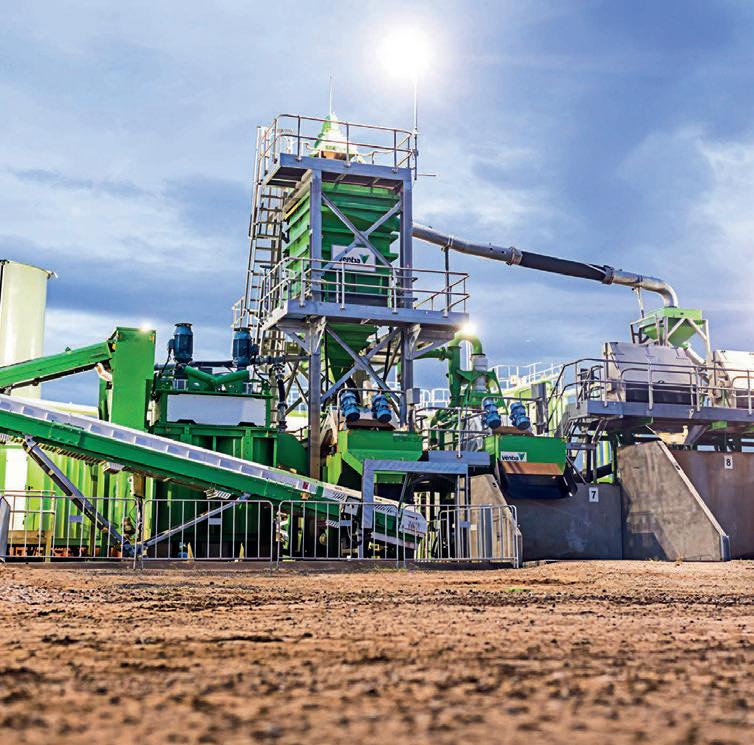
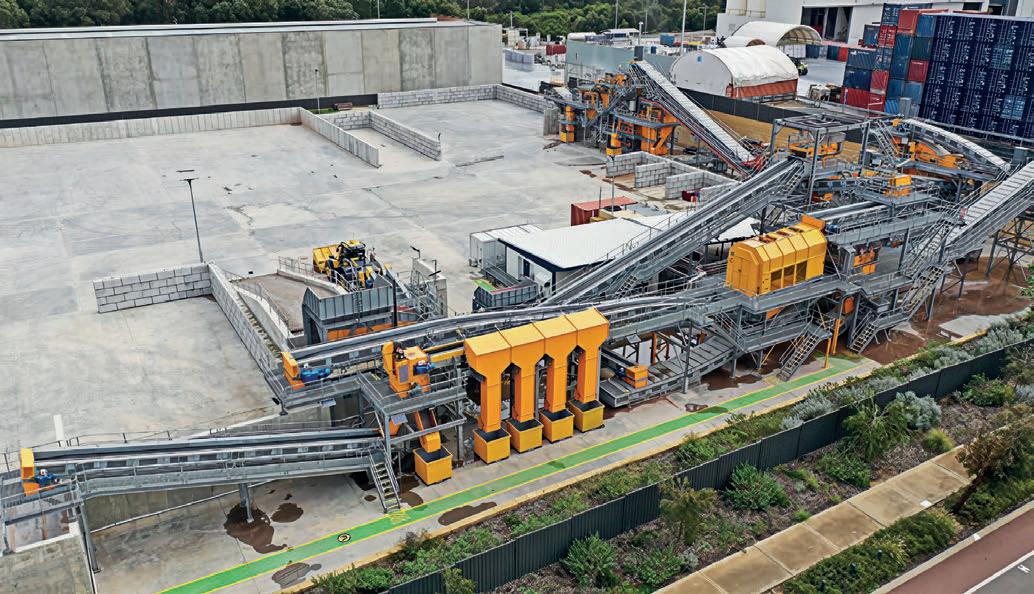
e plant takes ash from the nearby Kwinana Energy Recovery facility, recovering metals and converting the remainder into safe aggregate for roads and construction.
Chris had started from the ground up in the sector. Beginning as a plant operative
at experience would prove critical in Kwinana, where the challenge was not to operate an existing facility, but to help commission, refine and optimise a new one.
“I wanted to be here for the first processing plant in Australia,” Chris says. “It was a challenge, and it was a flagship site. Most construction needed commissioning, and we had to introduce all the safety systems and build a full maintenance program from scratch.”
supervision, building technical knowledge
e move was not an easy decision. Leaving behind established networks and familiarity came with personal and professional risks. For Chris, the weight of that choice was felt most sharply in the months leading up to the relocation.
“It was challenging, saying goodbye,” he says. “ e UK had given me and my family everything we could ask for. But this was something new – a chance to build something from the beginning.”
Arriving in Australia brought a different kind of pressure. Beyond the technical demands of commissioning a complex facility, there was the reality of starting over: new schools for children, new systems to navigate, and the long process of securing a permanent future.
“When I came to Australia, everything was new and exciting, but there was pressure as well,” Chris says. “You’re trying to settle your family, build a career, and work towards staying here long term.
“One of the hardest parts personally was helping the children settle into a completely new life at what can be an awkward age. ey had to leave their friends behind and adapt to a different environment, culture, and way of life. As parents, that was one of the biggest worries we carried throughout the move.
“ ankfully, we were surrounded by a really good group of friends and colleagues, and Blue Phoenix supported us through those early stages, helping the children settle in and making us feel welcome. at support network made a massive difference to our family and helped us feel at home much quicker than we expected.”

Another challenge was finding a rental property in Perth, which Chris describes as “extremely difficult, competitive and stressful”.
Blue Phoenix and Ian Lynass, Managing Director Blue Phoenix Australia, organised temporary accommodation while the family looked for a longer-term place to call home.
“Without the company and Ian’s support, it would have been far more difficult to manage on our own,” Chris says. “ eir help and guidance made the transition much smoother and allowed us to focus on settling the family and starting our new chapter in Australia, which my partner and I are very grateful for.”
At Kwinana, the work itself demanded constant adaptation. While the fundamentals of incinerator bottom ash and recycling technologies were familiar, each site brings its own variables – from feedstock composition to regulatory expectations.
e team was also largely inexperienced in this type of operation.
“We had staff who were completely new to the industry,” Chris says. “ ey were green, but they were keen to learn. at gave us the opportunity to train people from the ground up and build a competent team.”
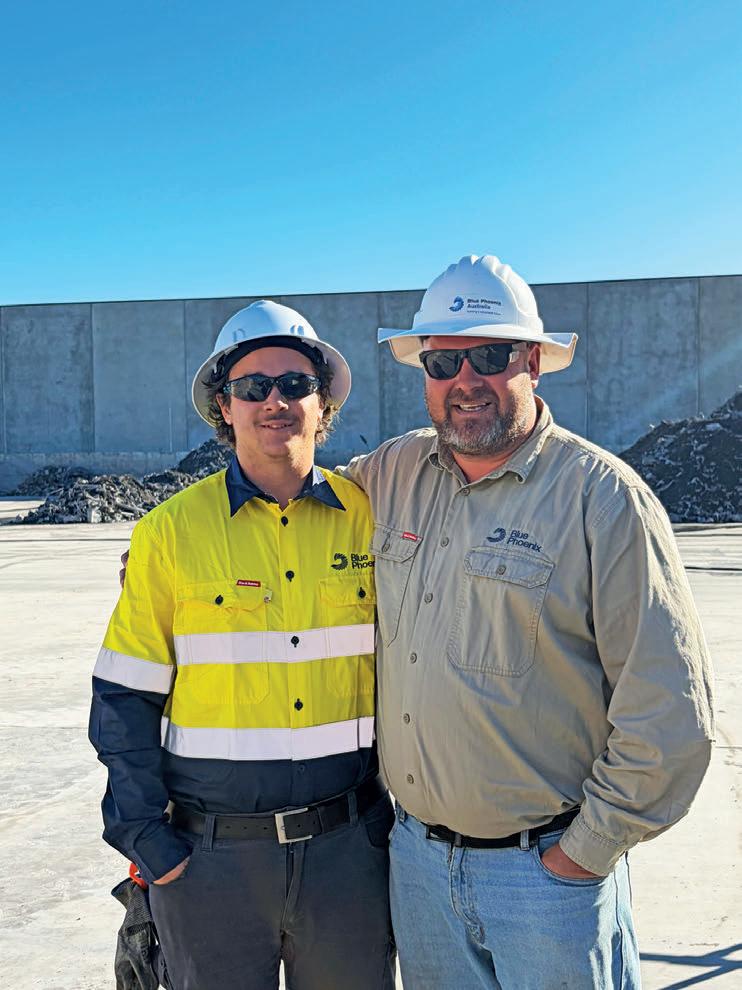
Among those learning on the job is Liam MacDonald, a trainee supervisor who joined the plant straight out of school.
With no prior exposure to energy-fromwaste operations, Liam quickly found his footing and has moved through roles at pace, developing skills under the guidance of more experienced operators.
Chris says that progression is exactly what the project set out to achieve, creating a pipeline of local talent.
“Liam came in straight out of school and became passionate about it,” he says. “He wanted to learn more, put his hand up for
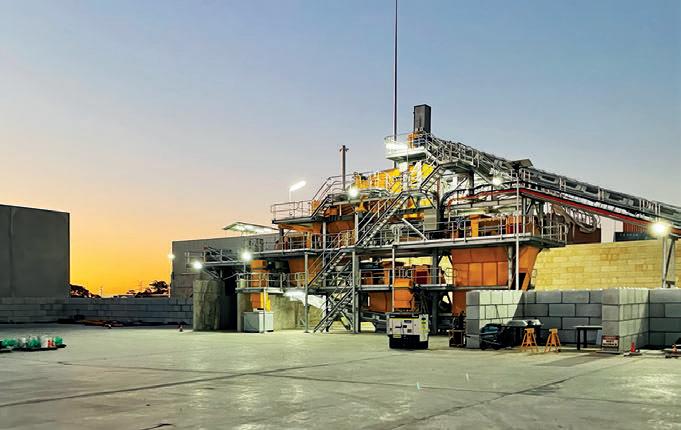
For Liam, the appeal has come from seeing the process itself. Working across the plant floor, seeing material move through systems and understanding how value is extracted from waste has made the work tangible.
e process of refining the plant is ongoing, from adjusting machinery to improving recovery rates. For Chris, that constant evolution is part of the appeal.
“ ere’s always something new to learn,” he says. “You’re tweaking machinery, trying to get the best processing and recovery results. If you do the same thing, you’ll get the same results, so you’re always looking to improve.”
As his role developed, Chris was given opportunities to learn the business side of operations, which was a completely new challenge for him. e company invested time in helping him understand how to properly manage a business, not just operationally but financially. He received training in budgets, profit and loss, cost control, forecasting, and planning to support the businesses performance.
He says working closely with the accounts team provided a deeper understanding of how day-to-day operational decisions directly impact overall results. He also took part in planning sessions with the operations team, reviewing production targets, staffing, maintenance strategies, safety improvements, and long-term site goals.
is exposure helped him grow from a plant-focused operator into someone who understands the wider picture of running
a successful site and supporting a team. ose skills become even more relevant in a market still finding its footing with incinerator bottom ash.
“ ere’s still a level of hesitation because this facility is the first of its kind in Australia,” Chris says.
Part of the challenge is in demonstrating the value of recovered materials and gaining broader acceptance across infrastructure and construction sectors. For Chris, that means not just proving the technology works but showing how it fits into existing systems.
“It’s about getting people to see that this is a viable product,” he says. “Once it’s approved and understood, it has a real role to play.”
e scale of what has been achieved in Kwinana is not lost on him.
“I’ve lived and breathed this industry for more than 20 years and coming here was about being part of something bigger.”
Chris Gee, Site Manager, Blue Phoenix Australia
e plant represents years of planning and execution. At the same time, it has created pathways for local workers to enter and grow within a specialised industry.
“I’ve lived and breathed this industry for more than 20 years and coming here was about being part of something bigger,” Chris says.
“We’ve built a team from the ground up, trained people who had
never worked in this space before and created something that didn’t exist in Australia.”
“Looking back on the journey, it highlights what can be achieved with hard work, strong support networks, and a company willing to invest in its people and their families.” WMR
For more information, visit: www.blue-phoenix.com



Veolia Chief Growth O cer Kathryn Whit eld on why operational expertise – not just engineering ambition – will de ne the success of Australia’s energy-from-waste future.
Australia stands at an inflection point in its waste management journey.
With landfill levies rising, landfill airspace diminishing and state governments across Queensland, New South Wales and Victoria setting increasingly ambitious diversion targets, energy-from-waste (EfW) has moved from a fringe conversation to a mainstream infrastructure imperative.
e technology works. Across Europe, EfW facilities have been processing residual waste reliably and safely for decades – diverting millions of tonnes from landfill, generating renewable energy and recovering metals for recycling.
Countries such as Denmark, the Netherlands and Germany have built entire circular economy frameworks around it.
Kathryn Whitfield, Chief Growth Officer for Veolia, says Australia has every reason for confidence. What matters now is ensuring that confidence is matched by the right expertise to deliver on the promise.
“Operational experience is the differentiating necessity,” says Kathryn. “What separates a successful EfW facility from a costly lesson is the depth of operational knowledge behind it.
“Veolia has operated more EfW facilities, in more markets, than any other organisation in the world. We’re not learning on the job in Australia – we’re bringing a proven playbook and adapting it intelligently for this market.”
In the EfW sector, the distinction between an engineering, procurement, and construction contractor and an experienced operations and maintenance (O&M) partner is fundamental – and frequently underestimated.
“Building an EfW plant is a finite task. Operating one safely, efficiently and profitably is a 20 to 30-year commitment,” Kathryn says.
“Effective operations and maintenance require deep process knowledge, preventive and predictive
maintenance capability, regulatory fluency across Australian jurisdictions and a continuous improvement culture that treats operational data as a strategic asset.
“ is is not a capability that can be improvised at commissioning. It needs to be embedded into the project from the outset – shaping design decisions and ensuring the facility that gets built is one that can actually be operated to its design intent.”
Critically, global engineering templates need intelligent local adaptation. Veolia can bridge this gap as one of the leaders in waste management in Australia and EfW operations globally.
Infrastructure configurations –from collection vehicles to transfer station networks, need to reflect Australian operational reality, not European precedent.
A genuine O&M partner understands these differences before they become operational variables, not a er.
Veolia operates more than 70 EfW facilities globally, processing more than 15 million tonnes of residual waste annually and generating enough energy to power millions of homes.
“ at operational portfolio spans facilities of every scale and configuration, and means our teams have encountered –and solved – virtually every challenge an EfW facility can present,” Kathryn states.
But global experience only creates value when it is intelligently applied to local conditions. Veolia’s Australian operations bring together international EfW expertise with genuine on-the-ground knowledge of how waste is collected, contracted and managed in this market.
“We understand Australian waste composition profiles, procurement frameworks, workforce markets and regulatory environments,” Kathryn says. “And critically – South East Queensland is not suburban Amsterdam.” at local fluency extends to infrastructure. Veolia’s established transfer station network across Australia is a critical enabler of EfW project success, providing feedstock security and supply chain integration that pure engineering plays simply cannot replicate.
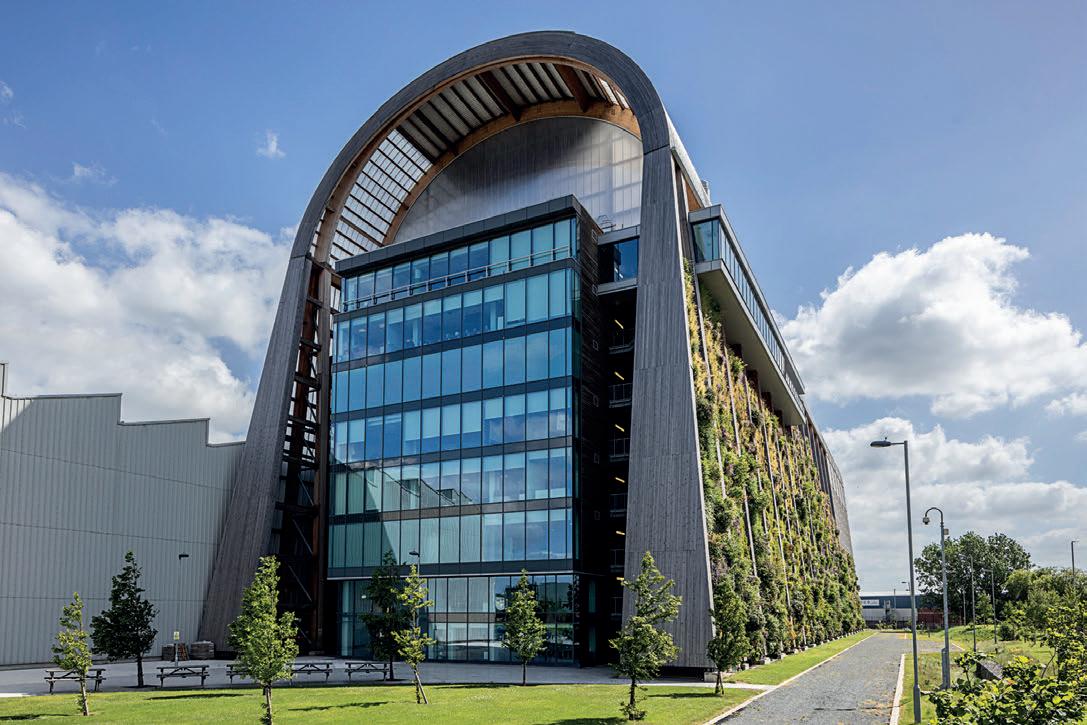
As Australian procurement processes mature, the criteria for selecting an operations and maintenance partner deserve careful scrutiny.
She says Australia’s EfW future will be defined not by the facilities that get built, but by the facilities that are operated well.
“It is the difference between a facility designed in isolation and one embedded in a functioning waste management ecosystem,” Kathryn explains.
Kathryn says South East Queensland is one of the most compelling EfW opportunities in the country. e region generates substantial volumes of residual waste across a dispersed geography and the trajectory of Queensland’s landfill levy is creating urgency around alternative residual waste solutions.
“Getting this right requires a partner who brings both the technical depth to design and operate a world-class EfW facility and the local presence to understand what ‘world-class’ means in a Queensland context – from waste supply variability and seasonal characteristics, to the vehicles and transfer infrastructure that will deliver it.”
“Ask about operational track record, not just construction credentials,” Kathryn urges. “Ask about local adaptation capability – can the proponent demonstrate they understand the specific characteristics of Australian waste streams and logistics before they become operational variables?
“Ask about workforce strategy – in a market where skilled EfW operators don’t yet exist at scale, how does the proponent plan to build that capacity?
“Ask about integrated infrastructure – does the partner bring feedstock security and supply chain depth, or only a facility design? And ask about longterm commitment. EfW contracts run for decades, and the partner you choose today needs to still be the right partner in year 15.”
Kathryn explains lenders and investors also ask these questions; Veolia’s operational track record enhances project bankability and reduces financial risk –creating better value for customers and partners across the life of the asset.
e projects delivered in the next five years will shape public confidence in the technology and trajectory of Australia’s transition away from landfill dependence.
“ e stakes are too high for facilities to serve as learning experiences,” she says.
“What this market needs – and what it deserves – is genuine expertise. Global in its depth, local in its application and uncompromising in its commitment to operational excellence.
“Veolia brings together what few others can: the operational depth of more than 70 EfW facilities worldwide, an established Australian transfer station network, strong engineering, procurement, and construction partnerships and the financial backing to support projects for the long-term. Not as separate capabilities but as an integrated offer built around customer outcomes.” WMR
For more information, visit: www.anz.veolia.com
Clear, evidence-based communication, transparent regulation and a realistic plan for residual waste are not optional extras; writes Ron Wainberg, Technical Director, MRA Consulting Group.
Australia has li ed recycling and recovery dramatically, but the tonnes going to landfill keep climbing. With landfills nearing capacity in major cities, energy-from-waste (EfW) is back on the agenda, but any debate needs facts more than fear.
Australia’s recycling story is o en told as a quiet success, and in many ways it is. Over the past three decades, the share of urban waste diverted from landfill climbed from about seven per cent in 1996 to around 66 per cent in 2023.
But there’s a harder truth behind that headline: despite all the effort, the total waste still going to landfill has risen – from 21.2 million tonnes in 1996 to 25.7 million tonnes in 2023. Population growth, a larger economy and a “buy-anew-one-and-throw-it-away” business model has simply outpaced the gains made in recovery.
Some waste is always going to be le over. Even with better design, better sorting and better markets for recyclables, there will be a residual stream that is too contaminated, too mixed or too costly to process.
Today, there are really only two valid end points for that material: bury it in landfill or treat it through EfW. Residual waste is inevitable and recognising this means the urgent question is simple: which option causes less harm over the long run?
Landfill is the option we know best, and the one most communities dread. It smells, it’s noisy, it attracts heavy vehicle traffic and pests, and it consumes lots of land. Even at its best, landfill cannot fully contain pollution: gases escape to the
atmosphere, leachate can threaten surface and groundwater, and litter is a stubborn, ongoing issue.
Closing a landfill doesn’t end the problem either. Gas and leachate will keep forming for decades, requiring longterm monitoring, while the site itself is generally unsuitable for productive reuse because the ground remains unstable.
A modern EfW facility is designed differently. Waste handling and processing occur indoors, making odour, leachate and litter far easier to control. ere’s no open tipping face, and the footprint is far smaller than an equivalent landfill.
When an EfW plant reaches the end of its operating life, the site can be repurposed far more readily than a closed landfill. And critically, contemporary
plants use advanced flue-gas cleaning and continuous monitoring to tightly control air emissions, thereby meeting stringent regulatory limits when properly designed and operated.
ere are far less residuals and most could be reused, although some (from the gas cleanup) do require careful management.
Would anyone choose to live next to an EfW plant? Probably not, but the same is true for many essential industrial facilities, from steel mills to cement works. e question for a growing city isn’t whether waste infrastructure is aesthetically pleasing; it’s whether it is necessary, well regulated, and located and operated in a way that protects health, the environment and community amenity.
Unfortunately, EfW does carry baggage. Older plants were built to standards that would be unacceptable today and were genuine polluters.
is reputation has lingered in Australia even though the technology has moved on, and EfW is now routine in many major cities: there are more than 2000 plants operating internationally, including in Paris, London, Vienna, Tokyo, Singapore, Copenhagen… the list goes on.
In parts of Australia, however, the public debate still skews toward worstcase images: claims that emissions will sterilise farmland, that ash will “rain down” on neighbourhoods, or that heavy metals and dioxins will inevitably cause cancer.
ose fears are understandable in a noisy information environment, but they don’t reflect how modern, tightly regulated facilities actually perform.
A more serious critique is that EfW could undermine recycling: if you can burn waste for energy, why bother sorting it? ere’s a kernel of truth here. e safeguard is policy design, with clear rules that limit EfW feedstock to genuine residual waste, not easily recyclable materials, and systems that reward higher recovery first.
Regulators across Australia have embedded “residual waste” definitions in their EfW policies so they are part of the operating licence.
Waste management has no silver bullet. A resilient, high-performing system blends approaches that balance environmental outcomes, community expectations and costs. Landfill will always play a role because, put simply, you can’t burn everything as some waste materials are unsuitable for EfW.
Major disasters add another complication: bushfires and floods can generate sudden, enormous volumes of waste, and it’s unrealistic to build
specialised capacity that sits idle most of the time.
EfW plants will have downtime for maintenance, but the waste stream doesn’t stop. e practical answer is a system in which resource recovery, energy recovery and landfill work together with each doing the job it is best suited to.
Western Australia shows what can happen when government policy is clear and supportive. e state encouraged proponents, and today WA leads the country: one EfW plant is operating, and another is nearing commissioning. Yes, there have been commercial bumps along the way, as is normal for large infrastructure, and they have been overcome.
On the East Coast, support has been more cautious. In New South Wales the picture is particularly bleak: policy settings have hampered projects and imposed restrictions on where plants can be built.
ose limits reflect politics rather than optimal site selection, and the result has been both predictable and inevitable with many proposals announced, then withdrawn. All the while, Sydney’s landfills are running out of space. is is where state governments need to lead. When misinformation circulates, especially through mainstream channels, silence looks like agreement, and community fears harden into opposition.
Clear, evidence-based communication, transparent regulation and a realistic plan for residual waste are not optional extras; they are prerequisites for a waste system that can endure.
Without them, we risk locking ourselves into an approach that is increasingly expensive, increasingly contested, and ultimately unsustainable WMR
For more information, contact info@mraconsulting.com.au
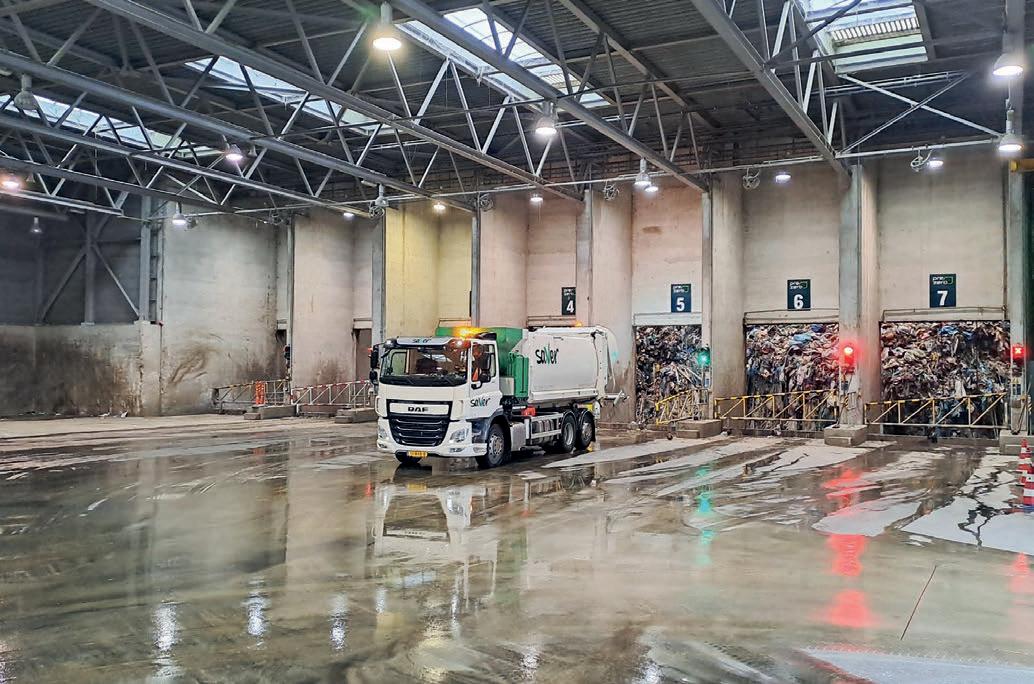
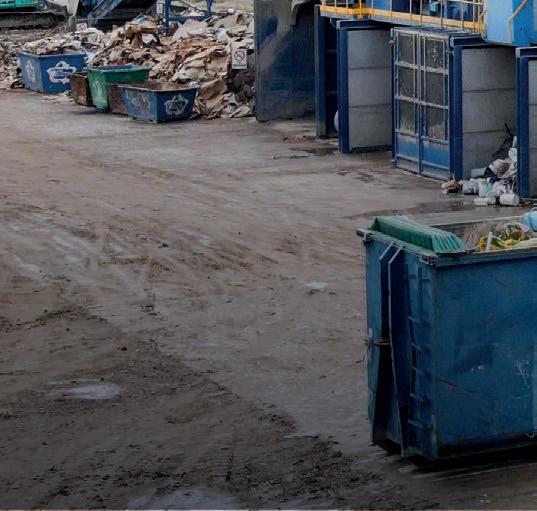
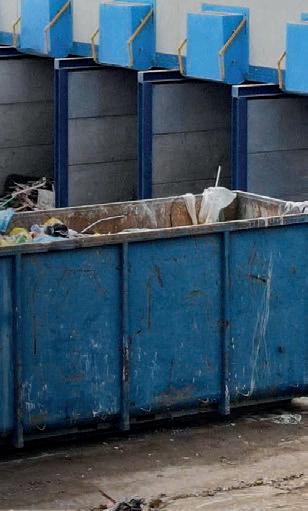
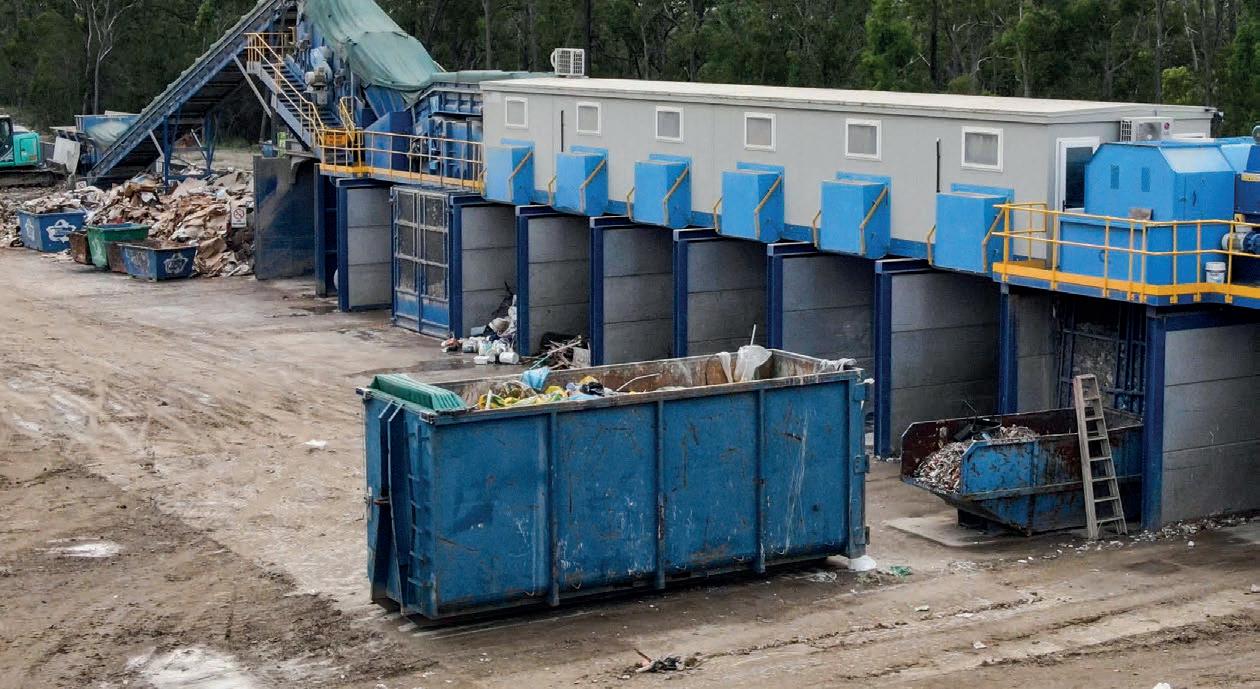
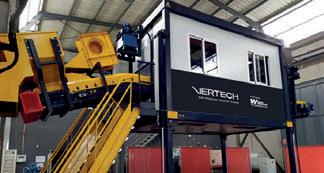
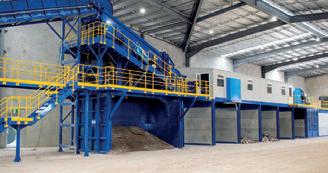
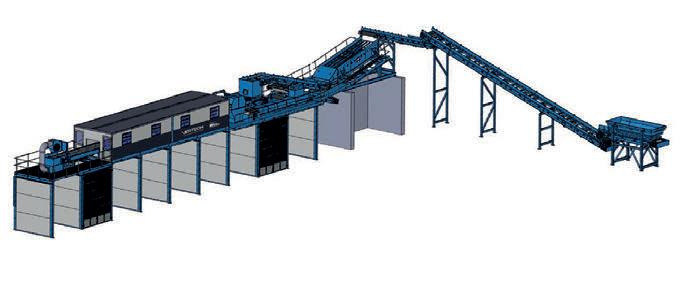
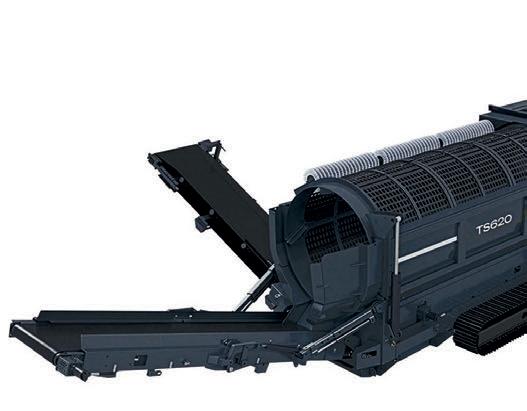
The Vertech Sorting Range delivers flexible, high-performance recovery across a wide range of waste streams.
Available in mobile and fixed configurations, systems are designed for everything from temporary and regional operations to permanent facilities and large-scale processing plants.
Built for Australian conditions, the range features enclosed cabins, wide picking belts and integrated separation for safe, efficient recovery.
Mobile units offer fast setup and easy relocation, while fixed systems provide scalable, longterm processing with customised integration.
Recover valuable commodities, reduce landfill volumes and improve downstream performance across C&D, C&I, FOGO and commingled waste streams.
Backed by local engineering, project management and nationwide service support.
Sorting Components Available
• Mobile Picking Stations
• Fixed Picking Stations
• Trommels & Scalping Screens
• Overbelt Magnets
• Eddy Current Separators
• Air Separation Systems
• Conveyors & Feed Systems
• Custom Sorting Solutions

As scrutiny intensi es and projects move into delivery, Waste 2026 revealed how energyfrom-waste is shi ing from policy debate to real-world implementation in Australia.
The energy-from-waste (EfW) stream at Waste 2026 offered a clear signal: the sector is shi ing into a complex phase of delivery. Across the session, chaired by omas Freeman, Managing Director at Impact Environmental Consulting, delegates were given a picture of how EfW is progressing in Australia.
e focus was no longer on whether the technology has a role, but on how projects are actually being delivered, and what it takes to get them right. is reality was brought into focus through Nationals Member Nichole Overall’s update on the New South Wales Parliamentary inquiry into energy-from-waste.
Nichole serves on committees including Transport and the Arts and the Standing Committee on State Development, and chairs the Select Committee on Proposed Energy from Waste Facilities, established following sustained community concern. Her presentation provided insight into how EfW is being examined at a policy level and how that is shaping real-world decision-making.
Nichole explained that the inquiry had attracted a large number of submissions from industry, local government and the community, reflecting strong interest in EfW and a high level of concern about its implementation.
e discussion, she indicated, has moved from technical performance, with trust, transparency and community confidence now central to how projects are assessed.
Her update also highlighted how the debate has evolved. EfW is no longer considered in isolation, but as part of a broader system that includes planning frameworks, infrastructure needs, regulatory oversight and public expectations.
e question, she suggested, is now less about whether EfW can function, and more about how it can be integrated into the wider waste system in a way that maintains community confidence.
Panellists and speakers throughout the session echoed this shi , noting that energy-from-waste has moved out of the hypothetical space and into the real world.
With projects actively being planned, procured, and commissioned, the industry is navigating a higher level of public and regulatory scrutiny. Because the absence of clear public information quickly breeds community concern, the consensus among presenters was that everyone in the sector needs to lean in early to build trust, ensuring that the planning and regulatory frameworks work just as robustly as the technology itself. It is a clear sign the sector is maturing, but it also means there is far less room for missteps.
is practical focus was reflected throughout the stream as speakers moved beyond principle and into delivery, examining what it takes to move projects through approvals, procurement, construction and into operation.
ey included Scott Reynolds, General Manager of Kwinana Energy Recovery, Australia’s first operating energy recovery facility.
Scott detailed their journey of moving the facility out of a cold construction state through meticulous commissioning and into active operations, noting that this
transition is where a project team truly learns how a facility performs day-to-day against factors like feedstock variability and upstream system reliability.
“During May, we took our first outage, which sounds like a very easy statement,” Scott said. “To actually go through that for the first time, to bring in all of the contractors and actually demonstrate to every single person who’s going to work on that facility that it is safe for them to work on that facility is a massive step.
“It also gave us the opportunity to demonstrate the benefits externally. Last year, we recycled 8800 tonnes of metal. at metal would have gone to landfill, would have been lost from the circular economy, full stop.”
While Scott’s perspective grounded the discussion in operational reality, Katherine Driscoll, also from Impact Environmental Consulting, brought the conversation back to the decisions that sit upstream of delivery.
Her presentation outlined the pathway councils are taking to contract into EfW, from early market engagement through to tendering, contract structuring and long-term risk allocation. She said the process is becoming more structured, but remains complex, requiring councils to balance commercial certainty with shi ing policy settings, technological choices and community expectations. at demands a different approach to project delivery.
“ e theme today is purposeful agility, delivering resilient, reliable outcomes,” said Cleanaway’s Preet Brar.
“For our sector, purposeful agility means keeping the community outcome fixed –safe, reliable treatment of residual waste –while being disciplined enough to adapt the pathway as policy, planning, markets and delivery conditions evolve.
“Resilience in this sector is not created by one decision. It is created by many decisions that are sequenced well over time.”
Together, those perspectives highlighted how far the sector has shi ed. EfW is no longer defined by policy frameworks alone, but by its ability to translate those frameworks into functioning infrastructure under real-world conditions.
Nichole’s update reinforced how closely that transition is being scrutinised.
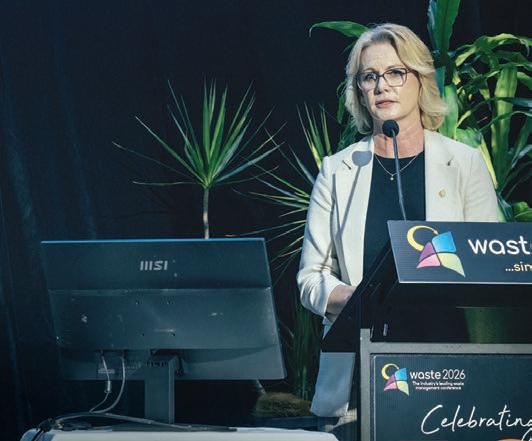




She noted that the inquiry is examining not just project outcomes, but the pathways used to reach them, including approval processes, impact assessments and decision-making transparency.
ere is a growing expectation that regulatory settings provide enough certainty for investment, while also ensuring communities have confidence in how projects are delivered and managed.
For councils, that balance is becoming more immediate. As potential contract partners and service providers, local governments are increasingly central to EfW delivery.
at brings both opportunity and complexity.
e audience heard that for councils, energy-from-waste is not just another infrastructure option, it sits right at the intersection of service delivery, financial planning and community expectations. ese are long-term contracts, o en 20 or 30 years, so the decisions made now have a lasting impact. At the same time, councils are thinking about how EfW fits within their broader waste strategy. It’s not a replacement for recycling or resource recovery; it’s part of the residual system and getting that balance right is critical.
Technological options remain another layer in that decision-making process.
Feedstock composition, logistics, scale and regulatory requirements all play a role in determining which technologies are viable. Increasingly, those decisions are being made alongside procurement

and planning processes, adding pressure to get them right early.
Overlaying all of this is the question of community acceptance.
Nichole indicated that engagement is playing a far more prominent role than in earlier phases of the sector’s development. e volume and nature of inquiry submissions show that communities are actively engaging with the issue and expect to be part of how decisions are made. is is heavily influencing how projects are designed and delivered.
Community expectations have shi ed, with a stronger focus on early engagement and clear, accessible information. People increasingly want to understand why projects are proposed, how risks will be managed and what alternatives have been considered.
Ultimately, the audience heard that the projects that succeed will be the ones that can answer those community questions with clear information, honest engagement, and fully backed evidence. Taken together, the EfW stream painted a picture of a sector coming into its own. e building blocks – policy frameworks, emerging infrastructure and market demand – are largely in place. e challenge now is aligning them into projects that can be delivered with confidence.
Nichole’s update made clear that the path forward will be shaped as much by governance and engagement as by engineering. WMR
Landfill Services
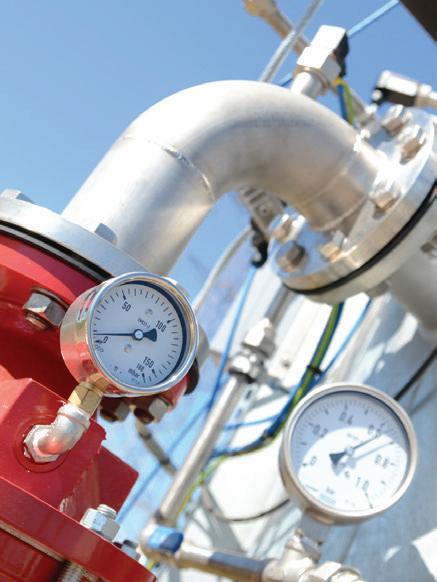
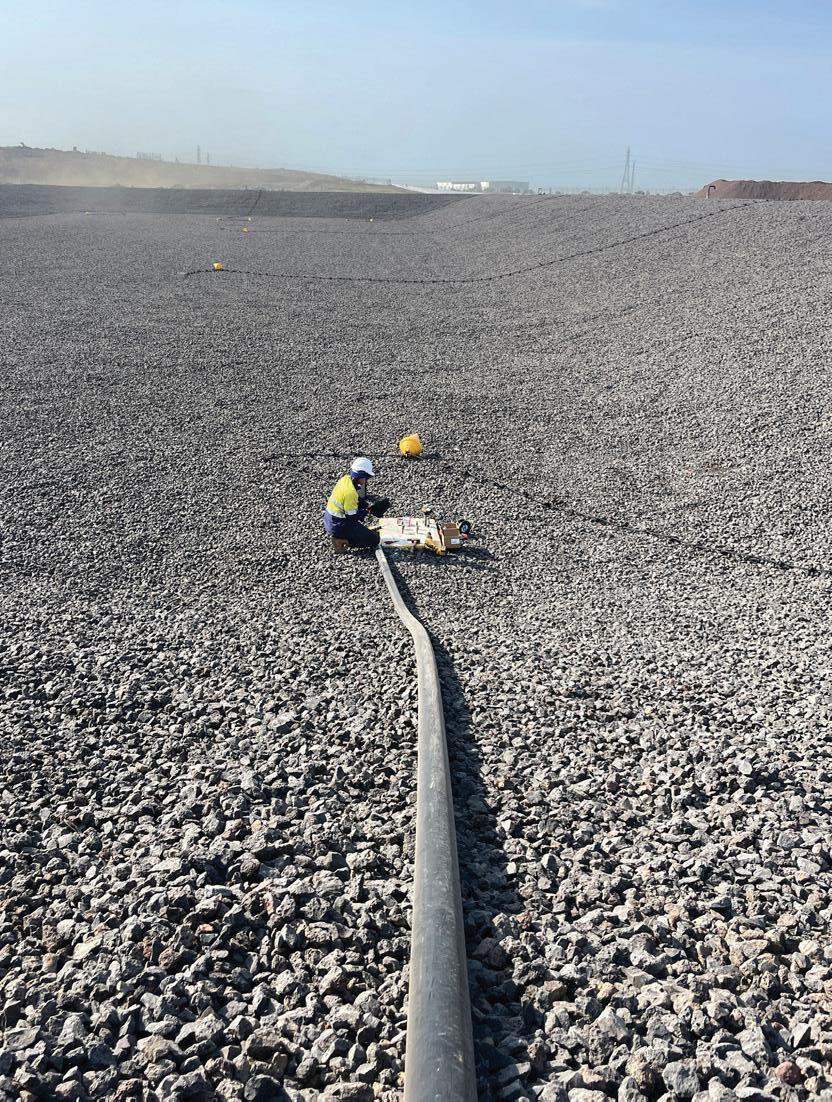
Gas collection system (GCS) design and construct
Carbon credit reporting and management
Civil earthworks
Data management, QA/QC and reporting
Monitoring and maintenance
Leachate system installation and servicing
Advisory and strategy
Power generator servicing and maintenance
Landfill Products
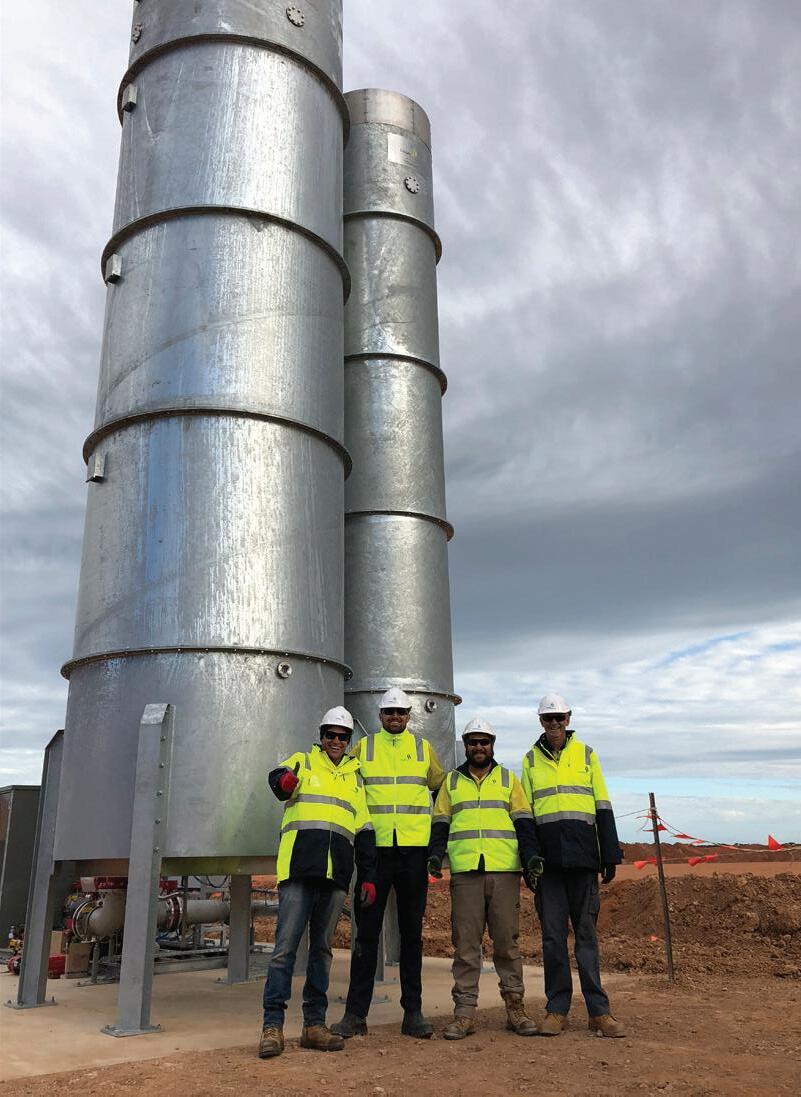
Mobile flare hire
Lo-cal flare range
High temperature flare range
Aerial photogrammetry drones
Gasflux continuous gas analysers
Leachate telemetry systems
Leachate pumps and controllers
Power and heat generation systems
A recent online symposium by CDE highlights PFAS as a growing operational risk, showing how regulation, cost pressures and innovation are reshaping waste and recycling.
DCDE’s Director of Business Development.
“For years, we’ve talked about it as an abstract future problem. Today, it’s a permitting issue, it’s a cost issue, it’s a reputational issue, but it’s also becoming a very real innovation opportunity for those who are willing to engage early and invest seriously.”
In his opening remarks, Eunan set the tone for CDE’s recent Circle symposium, framing PFAS as a force reshaping decision-making across the waste and recycling sector.
e online forum titled, (Re)Shaping the future of waste recycling connected regulators, engineers, operators and investors around the shared challenge of PFAS and
is grappling with constrained resources, tightening regulation and growing community expectations. Combined, they are pushing operators to confront contamination challenges in ways that go beyond compliance.
“Across construction, mining, waste and infrastructure, we’re already operating under pressure,” he says. “Pressures on resource, whether it’s availability of resource where it’s needed or the access to get it, pressure from regulation, and pressure from communities who rightly expect better environmental outcomes, not just compliance on paper.”
Once considered a niche chemical issue, PFAS has become a challenge affecting
has escalated so quickly. PFAS, she said, are synthetic chemicals defined by a carbon–fluorine bond – one of the strongest in chemistry. at durability drove their widespread use across industrial and consumer applications, but it also means they persist indefinitely once released into the environment.
“ is means that PFAS are actually resistant to heat, to water, to grease. But now we know that this ‘miracle’ is also bringing a lot of elements on health issues. PFAS do resist and persist in the environment forever.”
Viviane’s presentation moved from chemistry to consequence, mapping the PFAS contamination already recorded across Europe and the emerging understanding
of health impacts. She emphasised the economic dimension, where the cost of inaction is now measurable.
“ e main conclusion is that reducing PFAS at source is by far the cheapest option, instead of remediating and treating pollution when it has happened,” she said.
e figures behind that conclusion are stark, with projected costs running into the tens of billions, and potentially higher, under stricter environmental targets. She said even these estimates are incomplete, reflecting only a small subset of PFAS compounds.
One of the sessions pivoted to practical application, with a selection of CDE’s global material producers coming together to discuss how operators are responding in real-world conditions.
One of the panellists discussed how CDE technology is being applied in Australia at the SOLVE facility in Melbourne, previously part of Enviropacific.
e SOLVE plant is Australia’s largest hazardous waste and contaminated soil treatment facility. It uses thermal desorption and advanced wet processing to treat and neutralise toxic industrial wastes, heavily contaminated soils, and drilling muds, turning them into reusable construction materials.
Jasmine Stefanac, Technical Sales Manager at Solve, said CDE was engaged to expand the site’s treatment capability, particularly within the non-destructive digging (NDD) and drill mud market. e facility, which opened in 2022, was designed as a compact, highly automated system capable of processing about 50,000 tonnes per annum, separating material into aggregate, sand and clay fractions while treating contaminated wash water on-site.
She said the project was driven by a gap in the market, where lower-contaminated materials were o en poorly managed, while higher-risk waste streams were sent to disposal or thermal treatment.
By integrating CDE’s washing and separation technology, the facility can concentrate contamination into manageable streams and recover reusable materials. Over time, the system has evolved into a closed-loop operation, where captured contaminants are diverted to thermal treatment and clean aggregates and sands are returned to market.
Jasmine Stefanac, Technical Sales Manager, Solve.

A similar shi has occurred in Norway, where construction and environmental company FSG was forced to rethink its approach under stricter permits. Faced with sending reusable materials to landfill, the company invested in wet processing to recover value. What had previously been treated as waste is now processed into secondary materials, driven by both regulatory pressure and growing demand for recycled products.
CDE’s contribution to that transition reflects a longer trajectory of engineering development. e company has invested millions in the pursuit of engineering a solution for PFAS contamination and draws on more than three decades of experience in washing and separation technologies, now adapted to manage contamination across water, soil and clay fractions.
“At CDE, our experience has taught us that the toughest challenges are rarely solved by a single breakthrough,” Eunan says. “Instead, they are solved by years of methodical work, testing, learning, failing, refining and trying again.”
is underpins the company’s dedicated PFAS taskforce, a team of 15 engineers headed up by Eunan that has been working tirelessly to analyse 60 contaminated sites throughout Europe, conduct hundreds of laboratory tests on samples of materials, and develop 30 trial solutions.
ey are focused on building a deeper understanding of how these substances behave within different material streams and how they can be separated and managed at scale. e result of this concerted effort
is one million tonnes of material recovered across six customer projects and two patents-pending solutions.
e webinar made clear that PFAS removal is not a standalone process. It requires integrated systems that combine mechanical processing with chemical insight, capturing contaminants while preserving the value of recovered materials.
Speakers emphasised that PFAS is accelerating a wider shi in the sector. Policy frameworks being developed in Europe are pushing for tighter controls on hazardous substances and greater use of secondary materials.
e Hazardous Waste in Australia 2025 report stated that in 2023-24 Australia generated about 7.3 million tonnes of hazardous waste – about 10 per cent of all waste generated and a 12 per cent increase over tonnages reported in 2022-23.
e top waste generated by weight in 2023-24 was contaminated soils [28 per cent] with the majority of hazardous wastes sent to landfill (44 per cent) highlighting the need for greater remediation and land reclamation.
e tone throughout the symposium reflected an industry that is already responding with innovation, collaboration and investment that align with circular economy goals.
Beyond the webinar, these approaches are being scaled up in Australia.
In recent weeks in Victoria, environmental solutions provider Veolia and essential services provider Ventia have opened the EarthSure soil washing plant in Dandenong South, underpinned by CDE’s wet processing technology.
e new facility can process up to 160,000 tonnes of contaminated soil each year, treating Category C materials from construction and remediation projects by removing organic and inorganic contaminants.
is allows soils, aggregates and sands to be safely reused in applications such as road base, concrete and backfilling. By recovering these materials, the plant reduces reliance on landfill while offsetting demand for virgin resources. WMR
For more information, visit: www.cdegroup.com
























Queensland’s biosolids industry faces a “perfect storm” as rising population and increasing contaminants meet rules
that outweigh the risks, writes Dr Georgina Davis, Chief Executive O cer, qldwater.
Biosolids are a processed product from the treatment of wastewater, which present significant opportunities to reduce waste and capture carbon, while providing valuable nutrients that can be recycled back in to soils to benefit agricultural productivity.
In 2023, about 85 per cent of urban biosolids Australia-wide was reused or processed, with the majority of this beneficially used in agricultural production or land and soil enhancement. In Queensland, nearly all biosolids produced are beneficially used, with less than 0.01 per cent being disposed of in 2023.
Wastewater treatment plants (WWTPs) accept, manage and treat water from domestic, industrial and trade waste sources. is is a community
In Queensland, nearly all biosolids produced are bene cially used in agricultural production or land and soil enhancement. Image: Kotelnikov Andrii/shutterstock.com
service obligation, protecting both the health of the community and the environment.
Annually, thousands of new contaminants enter the market in common consumer products and are washed into wastewater networks. Contaminants from everyday consumer products are almost impossible to manage once used by the householder, leaving the burden of dealing with them on wastewater systems.
By 2050, Queensland’s population will exceed eight million and is expected to produce more than 130,000 dry tonnes of biosolids per annum. us, the demand for wastewater treatment, the recovery of finite nutrients, and beneficial use of biosolids will increase – as will the volume of contaminants.
Several developments are signalling an increased focus on the regulation of contaminants of concern including perfluoroalkyl and polyfluoroalkyl substances (PFAS).
• e PFAS National Environmental Management Plan (NEMP) 3.0 sets guidelines for the reuse of biosolids through a Maximum Allowable Soil Contaminant Concentration (MASCC).
• National Health and Medical Research Council (NHMRC) guideline values for PFAS in drinking water underpin the human health guidelines used in the PFAS NEMP.
• Queensland End of Waste Codes for Biochar includes very low limits for PFAS.

ese developments are in addition to Queensland’s long-standing End of Waste (EoW) Code for Biosolids.
e Commonwealth has established the Industrial Chemicals Environmental Management Standard (IChEMS) to set nationally consistent standards for the importation, manufacture, use and disposal of industrial chemicals.
In 2023, the PFAS compounds PFOA (perfluorooctanoic acid), PFOS (perfluorooctanesulfonic acid) and PFHxS (perfluorohexanesulfonic acid) and their precursor chemicals were listed on Schedule 7 of the IChEMS register, which restricts the importation of articles and chemicals containing these compounds.
However, the limits for unintentional contamination for each of these chemicals in imports are set at 25 micrograms per kilogram (µg/kg), which is substantially higher than guideline maximum contaminant levels in biosolids as described in the PFAS NEMP 3.0 and trigger values under the Queensland End of Waste Code for Biosolids.
Furthermore, this regulation does not appear to cover articles containing PFAS that would technically be covered by other regulations such as the erapeutic Goods Administration for Medicines; Australian Consumer Law which governs personal care products; and the Australian Pesticides and Veterinary Medicines Authority.
WHAT
Research shows that much of the PFAS in wastewater is derived from domestic rather than industrial sources, especially for the diPAP (polyfluoroalkyl phosphate diesters) classes of PFAS precursor compounds. e diPAP group are widely used in food packaging materials, pharmaceuticals and personal care products, and are currently not regulated through IChEMS.
Analysis of 499 biosolids samples by Queensland Water Directorate, the central advisory and advocacy body for the urban water industry in Queensland, shows PFAS are ubiquitous, with PFOS and PFDA (perfluorodecanoic acid) dominating concentrations.
“Research shows that much of the PFAS in wastewater is derived from domestic rather than industrial sources.”
Dr Georgina Davis, Chief Executive O cer, qldwater
Consumer products contributed significant loads. e mass of PFAS in biosolids are dominated by five PFAS congeners: the long chain perfluoroalkyl sulfonic acid congener PFOS, followed in order of median concentration by PFDA, PFHxA, PFOA, and PFNA. Of these PFOS and PFDA showed the greatest concentrations overall.
Further Queensland research (Keane et al. 2026) identified and characterised chemical contaminants in industrial wastewater to detect industry-specific contaminant signatures. When categorised into industries, the waste sector – which included landfills, waste treatment facilities and recycling facilities – showed a disproportionate contribution for several PFAS congeners.
PFDA was identified at levels in industrial waste that were greater than 200 times baseline levels.
Landfill facilities released the highest concentrations of PFDA and PFOA –not surprising when considering the composition of landfilled waste which contains a range of consumer products from stain and grease-proof coatings on food packaging to furniture, upholstery, and carpet.
PFDA is not listed on the IChEMS register, which means that this chemical and articles containing it are not restricted from importation and use in Australia. Without the broad listing of PFAS congeners on Schedule 7, the influx of PFAS chemicals into wastewater will continue.
In March 2026, dra IChEMS scheduling decisions were published, including a decision to list 10 PFAS congeners on the IChEMS register.
Unfortunately, PFDA was not among those proposed for listing, and only three of the proposed listings were Schedule 7. e remainder were proposed listings for Schedules 4 and 5, which provide control via a managed phase-
down approach. It is regrettable that this opportunity to strengthen PFAS source control has been missed, especially when considering the regulatory attention on the broader PFAS class at state and territory level.
Queensland is heading towards a perfect storm. Biosolids production is increasing with population growth, yet opportunities for beneficial use are diminishing due to contaminants and increasing regulation.
Future land application will be restricted to a single application to meet MASCC PFAS requirements, despite continuing demand for nutrients and carbon from the agricultural sector.
In the short term, wastewater treatment plant operators will need to transport biosolids further, with consequential increases in transportation costs flowing to the community.
e viability of Queensland’s biosolids industry depends on balanced oversight. Risk-disproportionate regulations threaten to restrict market opportunities to the point of collapse, effectively phasing out beneficial application to land. Alternative pathways for disposal must be found for the 100,000-plus dry tonnes produced annually.
South East Queensland reached peak landfill in 2007-08; existing landfills are not engineered to accept biosolids. ermal treatment technologies are the only other option but are reliant on scale and product markets are nascent.
Policy to support continued land application is required. Effective control requires upstream bans on contaminants in products before they reach consumers. Critically, the waste sector must employ pre-treatment to destroy contaminants before wastewater enters the sewer system. WMR






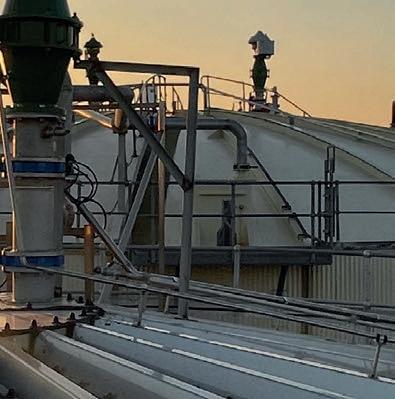
The newly upgraded and expanded EarthPower facility is what happens when state-of-the-art technology meets deep operational knowledge in the heart of Sydney. Australia's first food waste to energy facility is upgraded and ready to power the future.











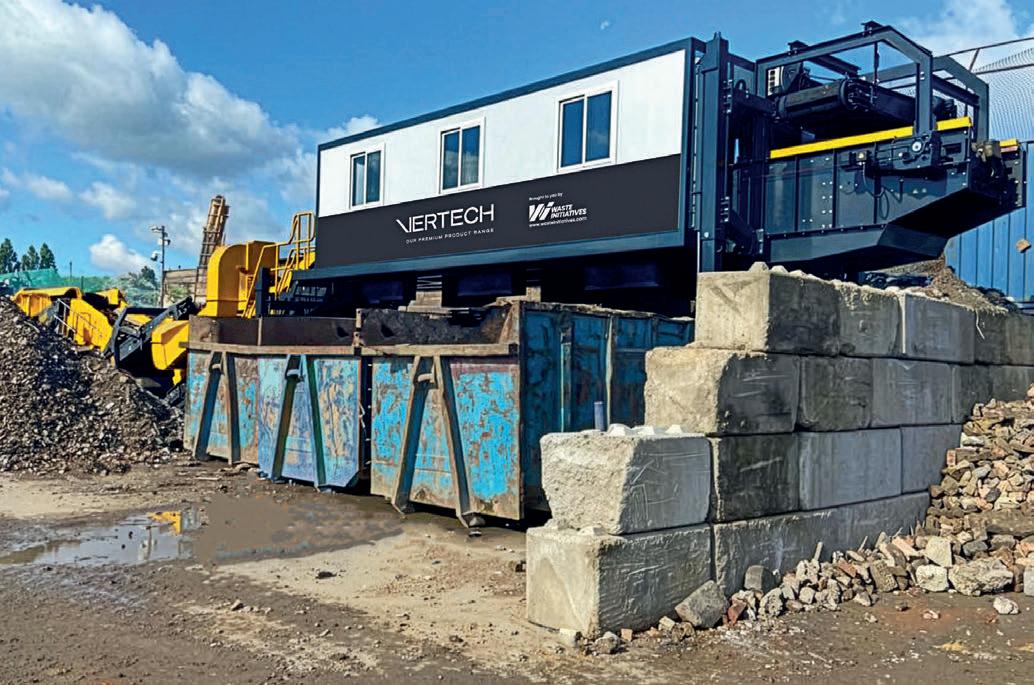
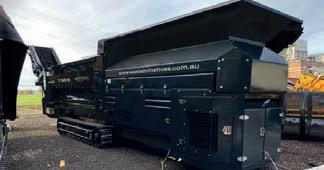
Australia’s construction and demolition sector is embracing resource recovery. Waste Initiatives’ custom picking stations help operators cut disposal costs and unlock new value streams.
As landfill levies climb and project requirements tighten, traditional disposal is no longer a viable business model for the Australian construction and demolition (C&D) sector.
Local operators – from familyrun skip businesses to major demolition contractors – are realising that sorting waste is the most direct path to protecting or increasing their margins.
It’s here that Australian-owned equipment specialist Waste Initiatives has stepped in, with a focus on fixed and mobile picking stations that turn a high-cost waste stream into a revenue generator.
Waste Initiatives has more than 40 years’ experience in waste management, recycling, and resource recovery solutions, supplying machinery and designing turnkey systems such as organic depackaging and C&D sorting lines.
Caleb Grimshaw, Equipment Specialist, says sorting and processing solutions are a critical component of a waste recovery system, where operators can manually recover various materials to divert them from landfill.
Highly customisable, they can be fixed, semi-permanent, or mobile units depending on a site’s waste volume, physical space, and budget, and can range from two to multiple bays.
“We can offer customers a full end-to-end solution, from a small skip operator who could have 50 bins to a large-scale operator with 500 to 1000 bins,” Caleb says. “It’s not a one-sizefits-all approach.”
In typical C&D processing, an endto-end solution includes screening equipment such as trommels and screens, which allow operators to pull high-value materials from the waste stream that would otherwise incur heavy disposal fees.
Caleb says materials such as plasterboard, timber, and aggregate are not only diverted from landfill but can be transformed into new revenue streams through repurposing to specialised recyclers.
He says some operators using Waste Initiatives’ systems are pulling as many as 10-15 different recyclable materials from a single line, with high recovery rates.
Designing these plants involves navigating operational challenges, with site layout one of the most frequent hurdles. Limited space or awkward footprints can require plants to incorporate 90-degree turns, which require correct design and engineering.
To solve these issues, Waste Initiatives focuses on solutions tailored to the specific site rather than a standardised product.
e Australian climate also introduces environmental demands, particularly regarding dust management and operator comfort.
Dust contamination is a significant factor, especially for plants situated outdoors. High-volume processing, sometimes reaching 25+ tonnes per hour, can generate substantial airborne debris on windy days.
Waste Initiatives integrates dust suppression and air filtration systems that protect both the surrounding environment and the people working inside the picking stations.
“Our solutions are fully scalable, so we’re not going to deliver a plant that can do well above what a small operator needs, and vice versa.”
Caleb
Equipment Specialist, Waste Initiatives
“Every single customer we deal with is different,” Caleb says. “Our solutions are fully scalable, so we’re not going to deliver a plant that can do well above what a small operator needs, and vice versa. We’ve got options to suit the smaller guys, and other options to suit bigger operators and different budgets.”
Caleb says as the industry moves toward more stringent resource recovery targets, the flexibility to scale a plant up or down is essential for waste operators.
at flexibility is also a selling point for demolition contractors who are moving to in-house sorting to bypass third-party skip providers.
By taking the sorting process in-house with mobile equipment, contractors can improve their margins and market their “green” credentials to top-tier clients. e ability to report high recycling percentages back to shareholders and the public has become a powerful tool for winning new contracts.
Despite the environmental benefits, Caleb says the primary motivator remains the bottom line.
With landfills steadily increasing their prices, the return on investment for a picking station is o en realised through cost avoidance. For many smaller businesses, this represents the largest capital expenditure they have made in years, making the reliability and support of the equipment provider paramount.
Waste Initiatives is hands-on from design through to delivery. e team remains on-site to commission the plant, running actual product through the system to ensure the flow is optimised before the final handover.
Whether it is a mobile setup for a short-term project or a fixed, multi-bay picking station for a permanent facility, the goal is to keep the waste moving and the materials separated WMR
For more information, visit: www.wasteinitiatives.com.au
With decades of engineering experience, Mick Carroll has built a tyre recycling operation powered by TANA shredders and a commitment to circular outcomes.
For Mick Carroll, tyre recycling wasn’t a leap into the unknown. It was the logical next step in a career that has spanned more than 30 years across engineering, manufacturing and the tyre industry.
Before establishing Carroll Engineering Services, Mick owned a successful engineering company in central western New South Wales, building equipment and solving mechanical problems long before he ever processed a single end-of-life tyre.
When he later moved to the Gold Coast and built several new business ventures, the same hands-on, practical mindset followed him.
at background shaped the way he approached the growing challenge of tyre disposal.
“I was looking to try and get rid of my own scrap tyres,” he says. “So, we built our own machines and went from there.”
What began as a solution for his own tyre stores quickly grew into a full-scale recycling operation capable of handling everything from small passenger tyres to the enormous earthmover tyres used on mine sites.
Today, Carroll Engineering Services processes about 15,000 tonnes of tyres each year. e material is
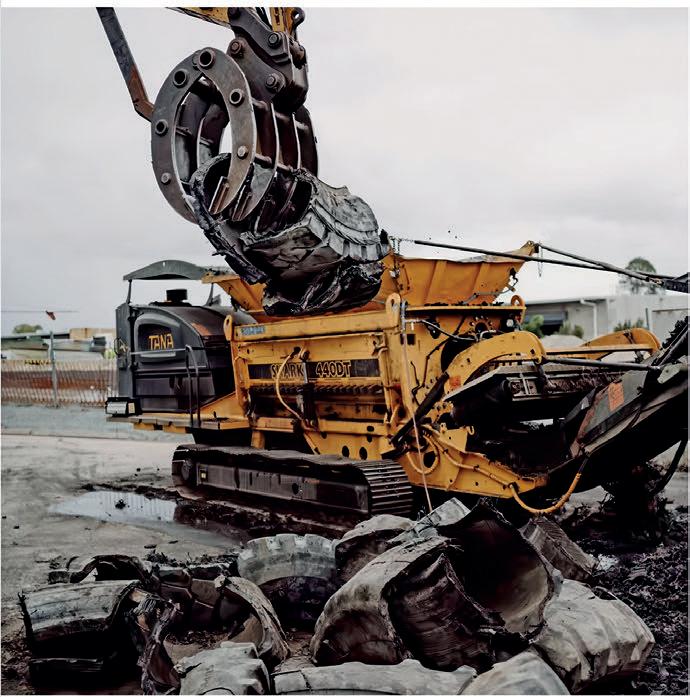
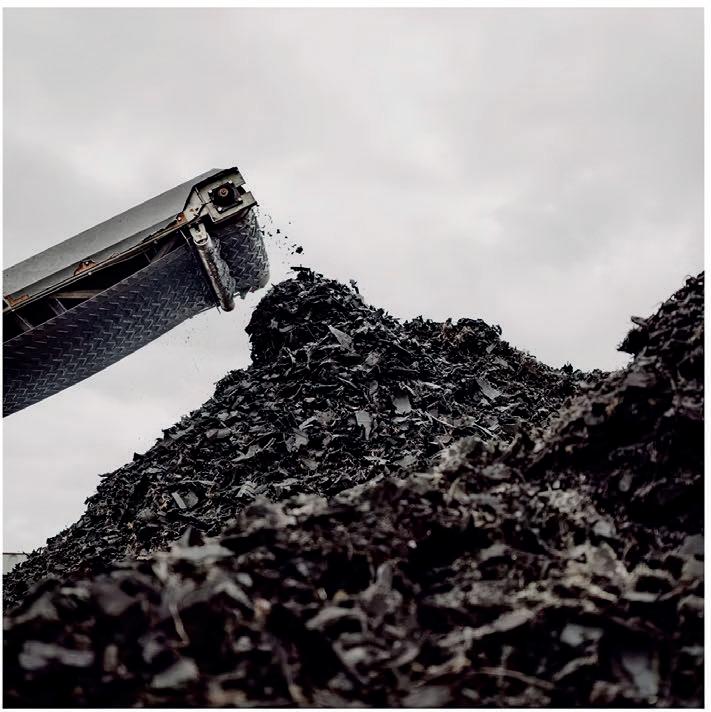
from mining companies seeking reliable, transparent recycling solutions.
“It definitely creates a lot of business for us,” Mick says. “We’ve got a couple of big contracts now with Rio Tinto, BHP, companies like that.”
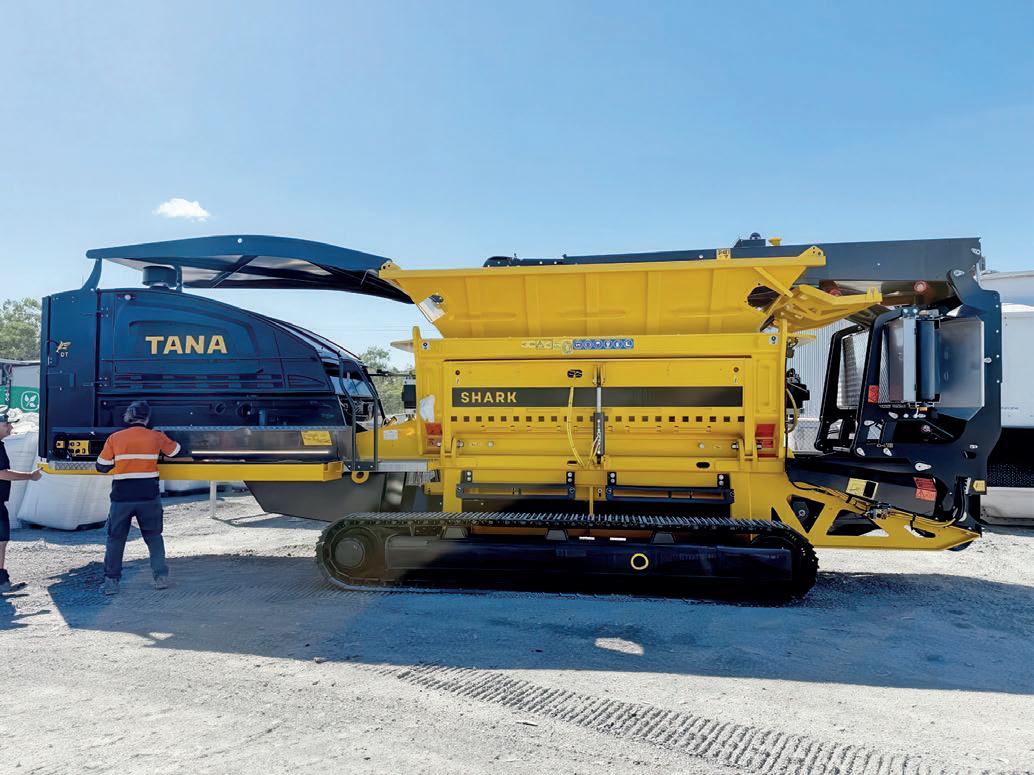
Mining tyres now make up about 70 per cent of the company’s intake. eir size and durability make them notoriously difficult to process, but they also make the case for robust machinery. at’s where the TANA Shark shredder comes in.
Carroll Engineering Services now operates two TANA Sharks as its primary shredding units, and Mick estimates he has purchased about six over the years as the business has grown and upgraded.
His decision to stay with the brand is grounded in long experience and a lot of trial and error.
“We’ve tried nearly every other brand,” he says. “ ese just seem to work best on tyres. ey’re pretty tough.”
e TANA units do the heavy li ing as the first step in the company’s processing line. ey break down tyres of all sizes into a manageable shred that can then be refined into smaller fractions. For a business handling thousands of tonnes of material each year, the reliability of that first step is everything.
Mick puts it plainly. “It mainly comes down to cents per tonne of shredding,” he says. “With the TANA, it’s a lot cheaper.”
He describes the TANA machines as easy to operate and maintain. e a er sales support is also reliable. “ ey’ve got guys up here we can call on if needed,” he says. “ ey’ve been pretty good.”
Over the years, Carroll Engineering Services has worked with Tana as the machines have evolved. e company’s tyre mix, especially the large mining tyres, has required some adjustments.
“We’ve done some modifications,” Mick says. “Over the years, Tana has upgraded their machines to suit this specific industry. Different designs, different design parameters on the machine.”
Tyre recycling is not a static business. e material stream changes depending on contracts, geography and the shi ing priorities of major industries.
“We’ve tried nearly every other brand, and these just seem to work best on tyres.”
Mick Carroll, Founder, Carroll Engineering Services
When Carroll Engineering Services expanded into Townsville and Perth, it did so because that’s where the tyres were. e mining sector’s growing interest in sustainability has also helped. Mick has seen a noticeable shi in recent years.
“A few of them are starting to come on board, which is good,” he says. “ ere’s still a lot of tyres that get dumped or buried on mine sites, but recycling is slowly gaining momentum.” at momentum is tied to the end markets. Without a reliable outlet for recycled rubber, the economics of tyre recycling simply don’t work. Mick is clear about why his business has focused on bitumen and so fall products.
“We needed an end market where we could consistently sell our product,” he says. “In Australia, the growing trend seems to be selling rubber into bitumen roads.”
Carroll Engineering Services is now planning to increase production at its Townsville site and open a second outlet in Western Australia. With the volume of tyres generated across the country –particularly in mining – Mick doesn’t see supply becoming an issue.
“You’re never going to be out of stock,” he says. “ ere’s plenty of them.” rough all of this growth, the TANA shredder has remained a constant. Mick’s endorsement is grounded in years of daily use, breakdowns avoided, and tonnes processed.
“We’ve been using them for about five, six, seven years now. We’ve tried nearly every other brand, and these just seem to work best on tyres. ey’re easy to operate, easy to maintain, and we’ve had no troubles with them,” he says.
“For us, it comes down to cents per tonne, and they’re a lot cheaper. We’ve
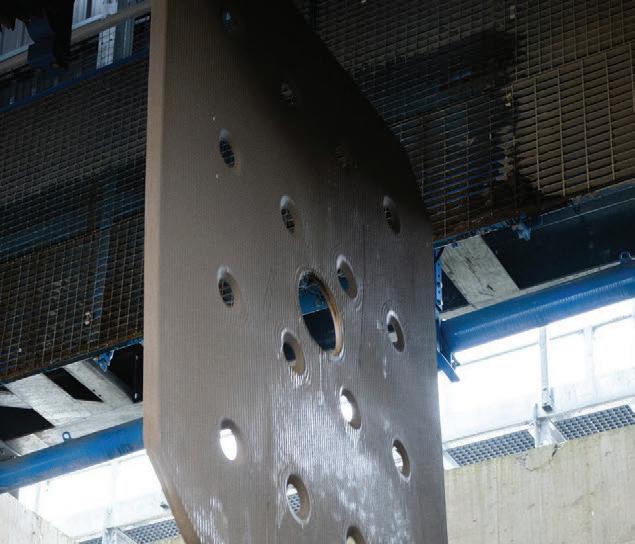




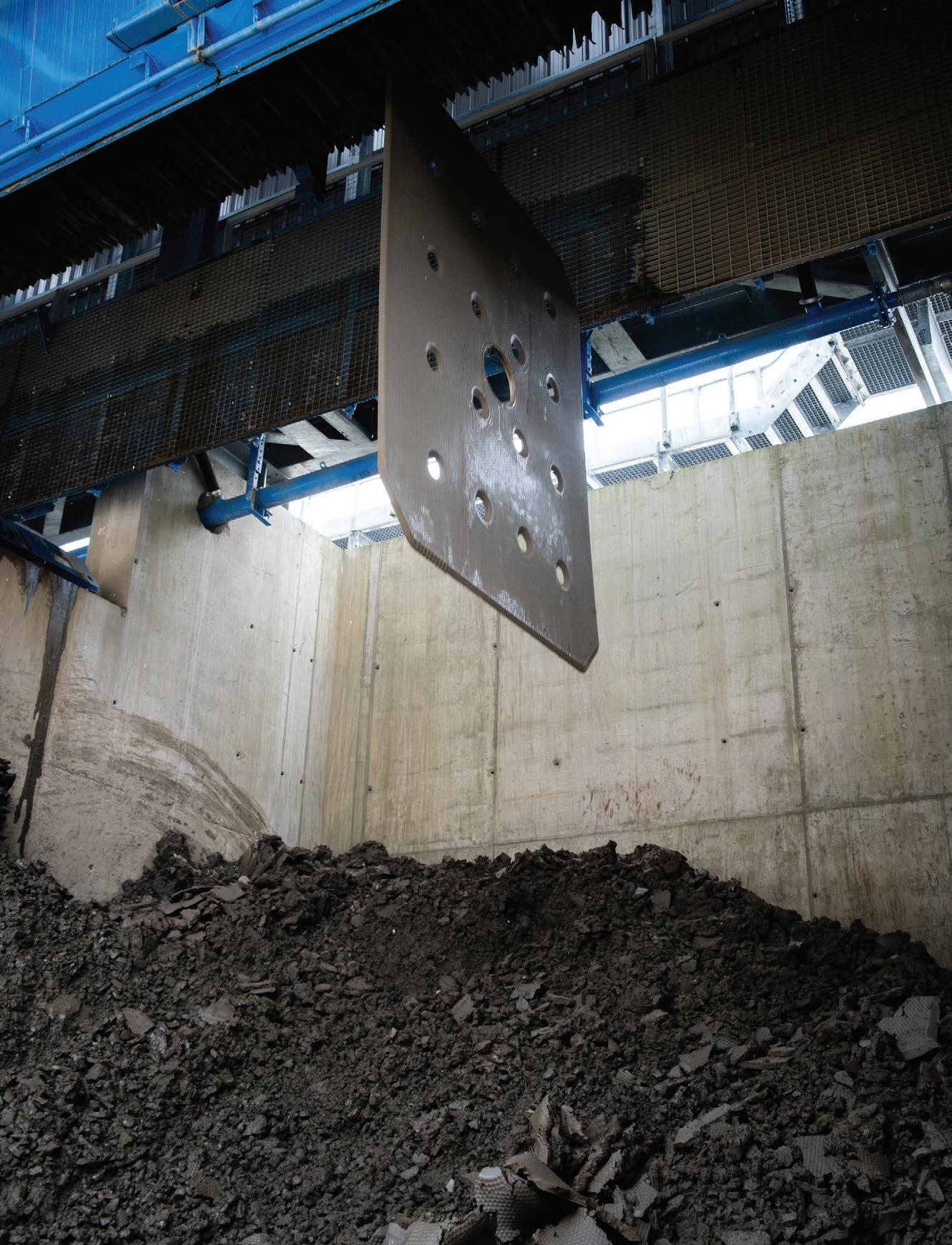
A new generation of filter press, built to bring proven experience, proficient operation, and progressive ingenuity specifically to the construction and demolition, waste recycling, quarrying, and mining sectors.
ProPress uses a dual feed and plates that are 25% larger, handling more material, producing a dryer cake product, while recycling 95% of its process water.
Find out how CDE ProPress can bring safer operation, reduced costs, and maximized outputs to your plant today.
Contact our Local Sales Team on + 61 7 3801 8755 or visit cdegroup.com/propress

Scan the QR code and discover more about ProPress
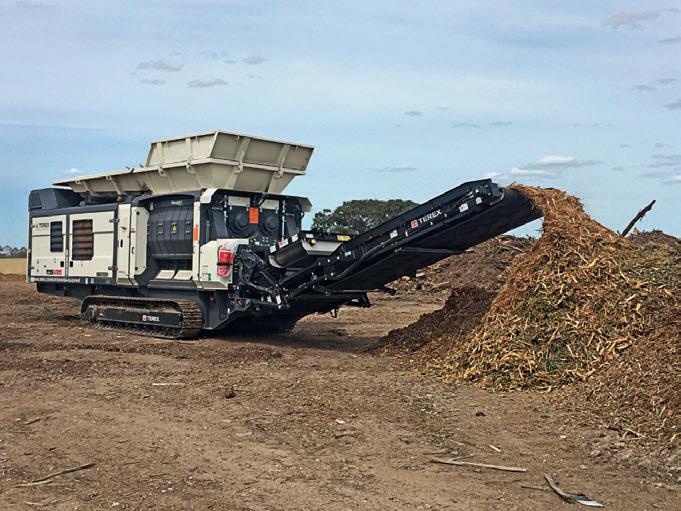
e TDSV20 mid speed shredder is a centrepiece of Finlay’s sustainable product portfolio – a growing division as more operators take waste management into their own hands.
When Finlay noticed an increase in clients implementing sustainable product solutions into their operations – it took notice. e crushing, screening and processing equipment supplier began aligning its offering more closely with these shi ing priorities, expanding its focus on equipment and solutions that support recycling and resource recovery.
“Our business and product supply have become much more sustainably oriented in the past 12 years, since the introduction of Terex Ecotec waste equipment,” says Brad Scott, Material Processing Specialist at Finlay’s Waste and Recycling division.
“We’ve seen an increased demand from our customers looking to recycle and process their waste, as sustainability is becoming a more conscious issue.”
Finlay connects its clients to a wide range of Terex Ecotec and Terex Finlay products through a network of branches along the East Coast – in Queensland, New South Wales and Victoria. Each branch runs a fleet of mobile technicians to fit and service the equipment it distributes and boasts fully-stocked workshops and parts departments – the “whole box and dice,” as Brad calls it.
“Our sustainable product range includes various types of shredders, recycling screens, and trommels,” he says. “We have a comprehensive selection of waste management equipment for operators at all stages of their sustainability journeys.”
has been distributing
shredder, which Finlay has offered for the past decade. Brad describes it as a tertiary shredder – the final machine in multistage size-reduction processes, turning pre-shredded materials into smaller particles for easier handling and disposal or making a product.
is is achieved by the shredder’s twin-sha build and medium speed.
e shredder has two parallel counterrotating sha s which are powered by independent hydrostatic drives and lined with interlocking blades. Rotating at 160 revolutions per minute, the sha s process timber pallets, green waste and similar products by bringing them over the shredder’s cutting knife with the material passing through screens.
“Being a tertiary shredder is what differentiates it from other products on the
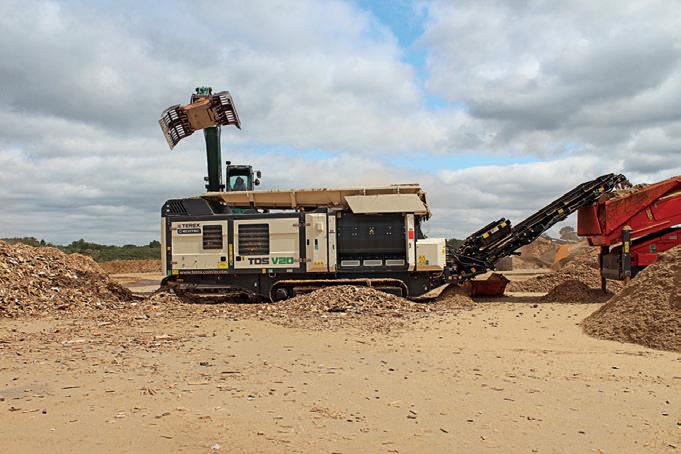
e shredder is built with two parallel counter-rotating sha s which are powered by independent hydrostatic drives and lined with interlocking blades.
and cost-effective for mulch companies, green waste organisations, and other businesses looking to achieve high reduction rates on their waste.”
In addition to processing biomass, the shredder’s output can also be further processed into solid recovered fuel and refuse-derived fuel – both of which are alternatives to fossil fuels.
e shredding size can be determined by operators via the shredder’s product sizing screen.
Brad expects an increase in demand for the shredder and related products as sustainability becomes more important to Finlay’s client operations. He says the company’s strong servicing capabilities are ready.
“Between the quality of the products we distribute, our large inventory of spare parts and the mobile technicians in all our markets, we’re more than prepared to help waste management operations adopt these shredders,” Brad says.
“We offer next-level servicing on a large scale, and more importantly, we always want to help.”
WMR
For more information, visit www. nlay.com.au
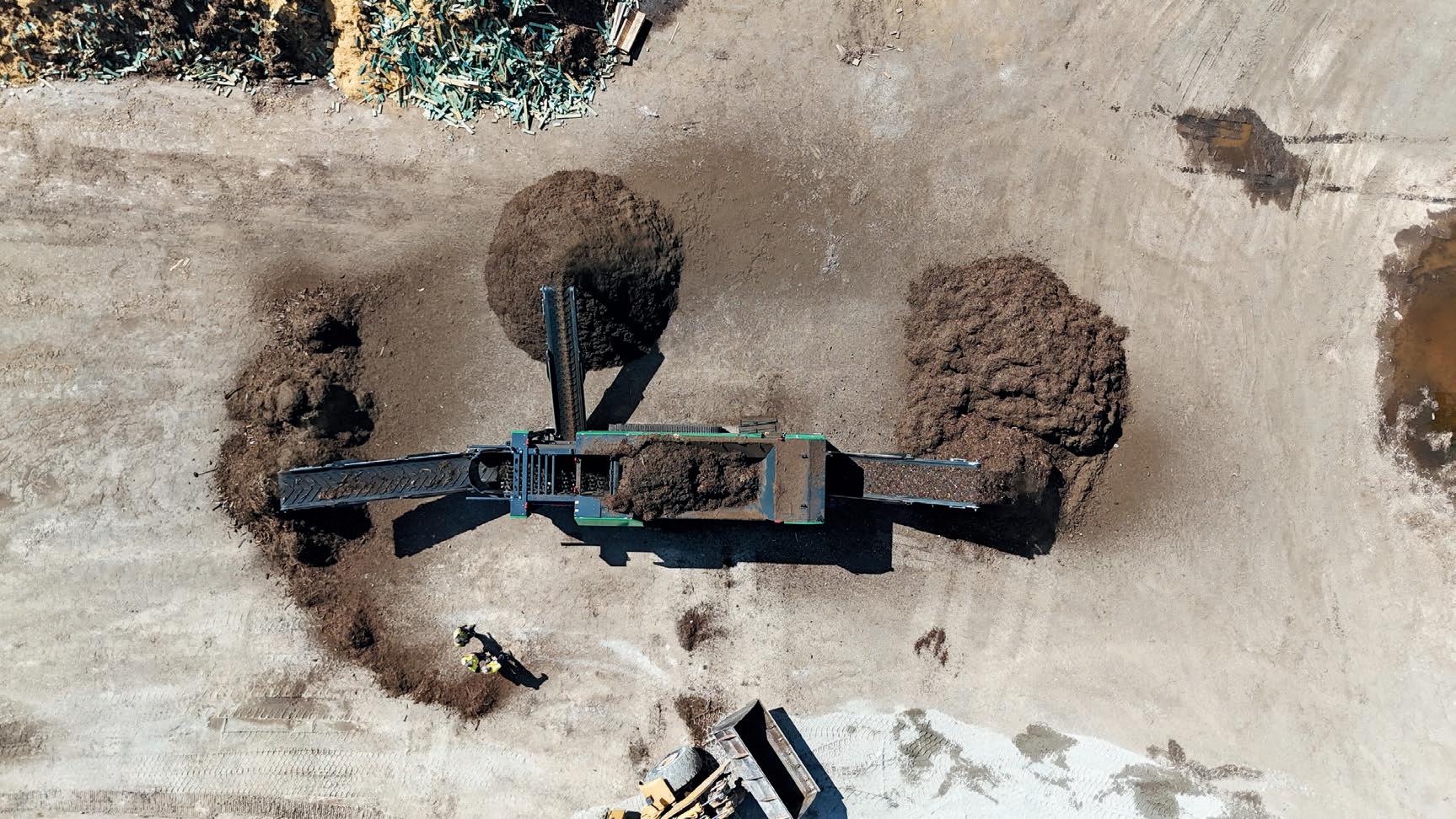
e Komptech Multistar L3
has
been designed to cater for
a shi in how operators think about performance – not just in tonnes per hour, but in energy per tonne.
On many sites, fuel is a cost that adds up in the background. It’s easy to focus on throughput, tonnes per hour, or machine size, but over time, it’s the daily burn rate that o en has the biggest impact on the bottom line.
Jimmy Murphy, Lincom Group’s Sales Manager for Komptech equipment, says that’s exactly where the new Komptech Multistar L3 changes the conversation.
Rather than relying solely on traditional diesel-hydraulic systems, the L3 is designed around electric drive technology, giving operators a practical way to reduce fuel use without sacrificing performance.
When connected to grid power, the Multistar L3 can reduce energy
consumption by up to 75 per cent compared to diesel-driven alternatives. It’s a bold figure, but it’s one that’s easy to understand in real-world terms: less diesel, lower emissions, and reduced operating costs.
“On a busy composting or recycling site, inefficiencies rarely come from a single source. ey build up through rehandling, re-screening, and machines running longer than they need to,” Jimmy says.
“Material that isn’t properly separated the first time o en ends up back in the system, costing both time and fuel. e Multistar L3 is designed to minimise that cycle by doing the job right in one pass, keeping material
moving and reducing unnecessary machine hours.”
is becomes even more important when dealing with wet or variable materials.
“Anyone who has worked with compost, biomass, or green waste knows how quickly performance can drop when conditions aren’t ideal. Screens can clog, separation becomes inconsistent, and suddenly production slows while fuel consumption climbs,” Jimmy says.
“ e L3 is built to handle these conditions with consistent separation performance, helping operators avoid the hidden costs that come with poor screening.
“Over time, those small efficiencies start to compound. Fewer passes. Less machine time. Lower fuel consumption per tonne. It’s not just about saving energy at the engine, but also about using less energy across the entire operation.”
However, the value proposition extends far beyond the fuel tank. For existing users of the technology, the Multistar L3 offers more advancements.
“I think, if you’ve run the previous version, you can appreciate the design changes and improvements on the new version more than someone who has never had one before,” Jimmy says.
“We are seeing across the board from Komptech that product improvement and evolution is taking place at a decent pace.”
One of the most immediate physical changes is the increased size of the machine’s bunker or hopper. is allows the L3 to accept a larger volume of feed material in a single dump, which directly translates to higher throughput.
For the operator in the loading shovel, this means quicker cycle times, as they can empty a bucket and return to other duties faster without waiting for the hopper to clear.
Jimmy says this addresses the hidden costs of rehandling and machine idling that o en plague high-volume sites.
e L3 is specifically engineered for high-volume applications where traditional trommel or deck screens might struggle to keep pace. While it is predominantly aimed at the organics sector for composting, its versatility extends to green waste, general mulch, biomass, and timber waste such as pallets.
In many of these applications, the screen is tasked with following a highspeed grinder that produces material quickly. With a throughput capacity of up to 250 cubic metres per hour, the L3 is built to match that intensity, ensuring the screen does not become the bottleneck in the production line.
To ensure this volume doesn’t lead to frequent maintenance stops, Komptech has introduced the Cleanstar Plus system. is patented cleaning element is designed to mitigate “wrapping” –where stringy material or plastic builds up around the screen’s components.
By reducing this build-up, the machine maintains consistent separation performance even when dealing with wet or variable materials that would typically clog a standard screen.
ere are also the practical details that tend to matter more the longer a machine is on site. Features such as improved wear protection, better
maintenance access, and an efficient discharge system directly influence uptime and service costs.
Less downtime means fewer interruptions, and easier maintenance means machines get back to work faster. Combined with strong a ersales support and access to parts when needed, these factors play a key role in keeping total operating costs under control.
Jimmy says it reinforces a simple idea: the most efficient machine isn’t the one that burns the least fuel per hour, it’s the one that produces the most usable material for the least energy overall.
He says while other star screens and trommels promote productivity or lower fuel consumption, few offer such a direct comparison when it comes to energy savings, particularly with the option of running on grid power.
And that’s where the L3 finds its place. For sites with access to electricity, it offers a straightforward way to step away from diesel dependency without compromising on throughput or performance.
For operations dealing with challenging materials, it provides consistency where it matters most. And for businesses focused on long-term cost control, it delivers savings that extend beyond the fuel tank. WMR
For more information, visit: www.lincom.com.au
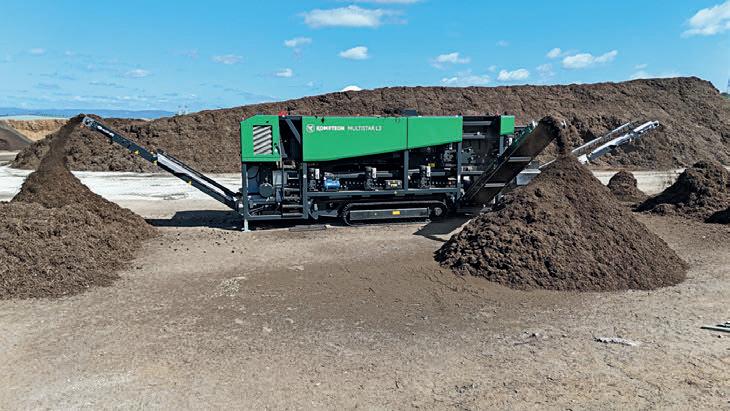
Tutt Bryant is distributing the versatile ES-250 twin sha shredder from McCloskey Environmental on a national scale.
Across Australia, local governments are increasingly taking waste management into their own hands, investing in systems that reduce reliance on centralised processing.
Recognising this shi early, Tutt Bryant Equipment secured exclusive national distribution of McCloskey Environmental’s sustainable product line more than a year and a half ago.
Paul Doran, National Business Development Manager – Crushing and Screening, says the move was driven by the rise in small-to-medium-sized enterprises seeking to manage waste streams more autonomously.
“We’re seeing a bigger focus on the waste industry as a whole,” he says. “Small private operators are opening everywhere, and a lot of governments are investing in equipment to handle their waste streams locally instead of subcontracting the work, which they have historically done.”
He says rising landfill levies are driving the change.
“As manufacturers make waste equipment more efficient to use and regulators increase the cost of landfill disposal; shredding, screening and repurposing waste is becoming more costeffective and attractive.”
Paul says the 20 McCloskey Environmental sustainable products distributed by Tutt Bryant, including shredders, trommels, feed stackers, stackers and scalping and disc screens, can meet most of the waste management industry’s requirements.
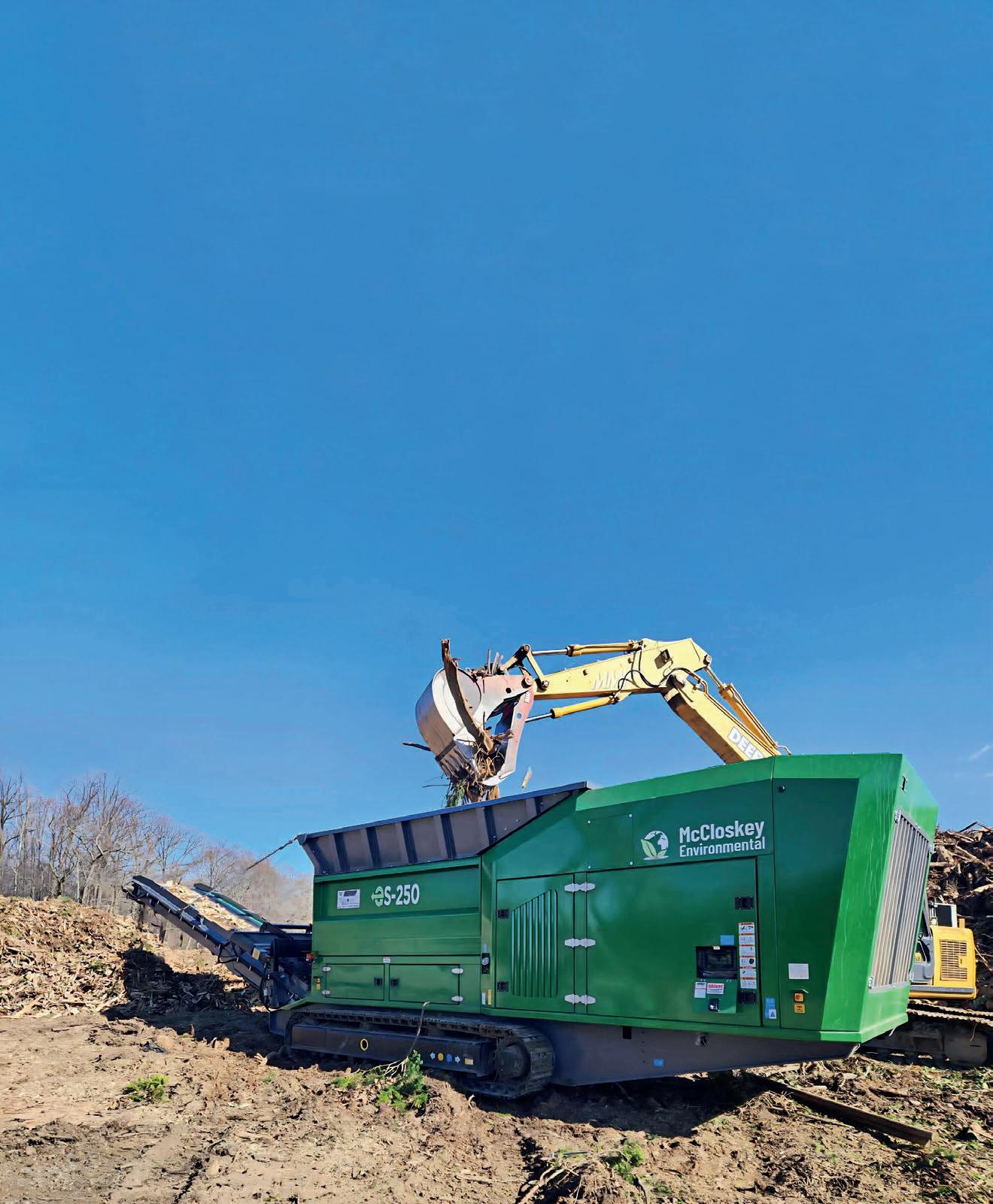
One such example is the dieselhydraulic ES-250 twin sha shredder, which Paul calls a “great all-rounder.”
“ is shredder is a versatile machine,” he says. “It can be used as a preshredder for scrap metal, or it can be used for nuisance waste such as tyres and mattresses.
“It handles the tough stuff well, which makes the easy stuff such as timber and green waste even easier to deal with.”
Much of this versatility comes down to the shredder’s design. e tracked primary shredder can handle waste streams that vary in size, composition and durability.
e tracked primary shredder is designed to handle waste streams that vary in size, composition and durability. Images: Tutt Bryant Equipment
Asynchronous movement between the shredder’s knives, which are welded onto dual sha s, ensure the input material is constantly moving to prevent bridging and maximise efficiency.
e shredder’s high torque provides immense rotational power at low speeds, enabling it to break down bulky materials without stalling.
“I think the torque and the welded knives are what set this shredder apart,” Paul says. “ ese qualities make the equipment tough, so that it can be applicable across the broadest waste streams out there.
“Big items such as washing machines will be eaten up, while much finer materials such as sand, glass and small rocks will fall straight through the shredder’s cutting table and be sorted out of the mix.”
e shredder’s hydraulic-diesel power allows it to be used and moved across different waste management environments.
“Because this shredder runs on diesel hydraulics, it doesn’t need to be plugged into a grid in a warehouse,” Paul says. “It is very mobile and can be moved to various locations and walked around sites to process different waste streams
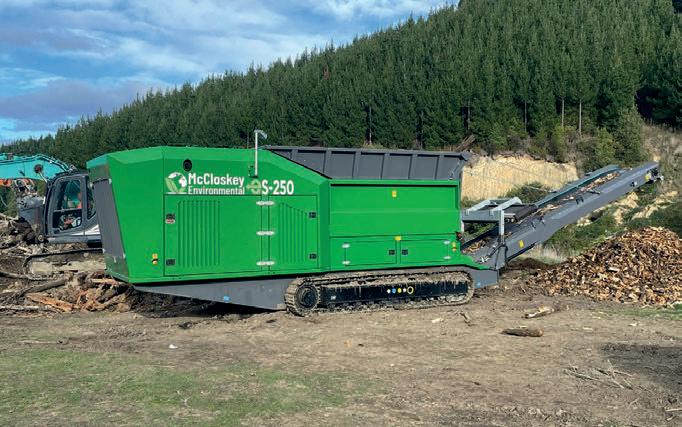

they’ve got on that site, and then move it to another location, it makes the actual shredding cheaper at a unit rate cost level.”
e shredder’s diesel-hydraulic power is also an advantage for servicing and repairs.
“In my experience, most of the personnel in the waste management space have mechanical background of some kind, so they know how to approach diesel engines and equipment,” Paul says. “On the other hand, not every one of our customers have electricians on-site, or have them readily available.
“You can take this shredder into the middle of Australia and if it were to break down, you could find someone who knew about hydraulics to repair it.”
Tutt Bryant has made the ES-250
Knowing that waste streams vary greatly, Paul and the team want to be as flexible as possible for their customers, so they can find the equipment that best suits their operations.
“We’re more than happy to help our customers get a feel for the shredder and test it out on different jobs before they buy,” Paul says.
“Our rent-to-purchase option is specifically suited to this. Some waste managers have jobs that may extend, but it’s not viable for them to buy the shredder until that extra work is guaranteed. So, they rent it until they are ready to purchase.
“It’s just one of the ways we support waste managers throughout Australia. We have the experience, the network, and we’re always ready
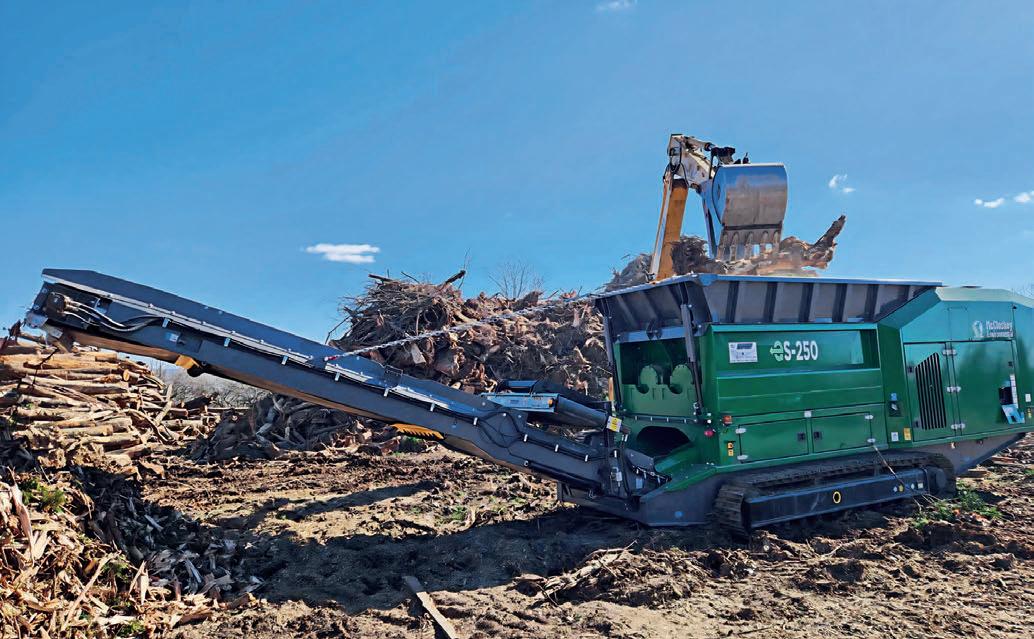

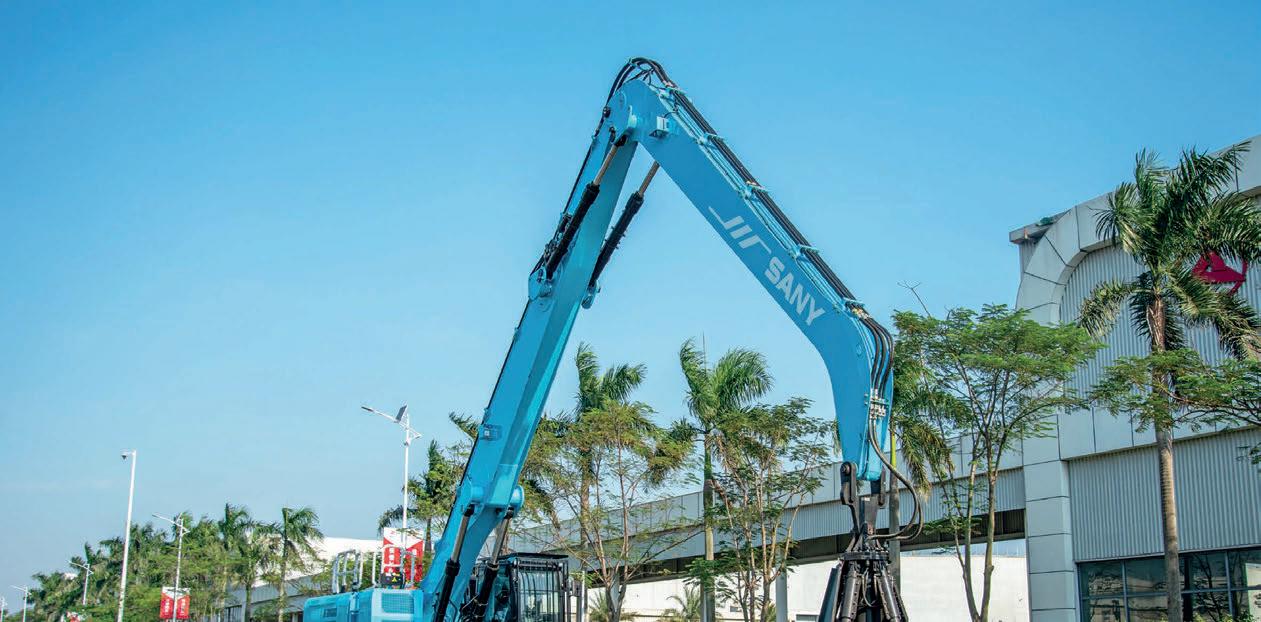
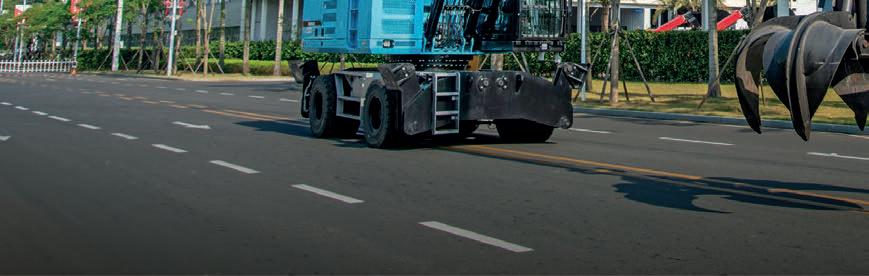

CEA is now distributing a range of SANY material handlers to Australian operators, bringing e ciency and safety to recycling and waste management projects across the country.
Material handlers are purposebuilt for high-repetition ‘pick and place’ operations, making them a staple for intensive sorting and loading tasks in the scrap metal, port, and waste sectors.
Unlike general earthmoving gear, these machines are engineered for high-reach performance and precise material sorting – regularly feeding industrial shredders, managing high-volume stockpiles, and loading walking-floor trailers or bulk vessels with pinpoint accuracy.
eir critical role in varied sectors has made them a focal point in the product offering of heavy machinery distributor CEA, which has recently been expanded.
Since February 2026, CEA has served as the exclusive distributor of material handlers for global heavy equipment leader SANY across key Australian regions, including Brisbane, Mackay, and Rockhampton in Queensland; Sydney and Newcastle in New South Wales; and
the metropolitan hubs of Melbourne, Adelaide, and Perth.
e range of SANY material handlers available through CEA includes the
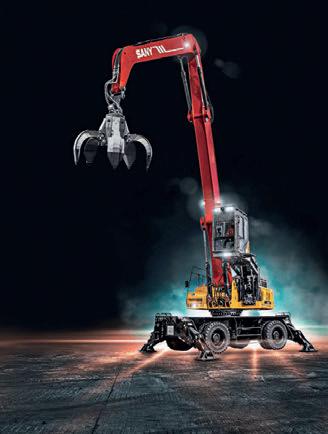

SMHW30G5, SMHW40G5, SMHW40E and SMHW48G5 models – built for productivity and safety in recycling and waste management applications.
Deon Cope, CEA National Product Manager, says the inclusion of SANY’s robust product line adds to CEA’s reputation within the industry while providing heavy machinery solutions for clients.
“CEA has a strong reputation for selling material handlers so it was critical the SANY products we brought into Australia were suited to the markets we are currently supporting and want to work with in the future,” Deon says.
SANY’s material handlers have proven popular with operators.
One standout feature is their elevating cabs, combined with the platform’s hydraulic speed and accuracy, which allow operators to see over the high sides of walking floor trailers –commonly used to unload high volumes
of material in waste management – and into shredders or hoppers. is ensures the precise loading of material, while reducing the risk of site accidents.
Self-cleaning cooling systems are run by large-capacity, reversible hydraulic fans that blow out debris automatically, preventing engine overheating and reducing manual cleaning downtime.
Powered by high-torque Cummins engines, paired with Kawasaki positiveflow hydraulics, the material handlers deliver excellent hydraulic control while maintaining low fuel consumption per tonne of material handled.
ey also feature an automatic central lubrication system for the upper carriage and maintenance points that are accessible from ground level, keeping technicians safe and servicing fast.

Built tough on the outside, SANY material handlers are equipped with heavy-duty booms and sticks designed for high-repetition ‘pick and place’ work – processes using machines to li objects from one location to another.
Load-holding valves on boom and stick cylinders are standard to prevent ‘dri ing’ – slow and unintended movement of the machine’s raised load, attachment or arm when its controls are in neutral or locked – during delicate sorting.
In addition to bolstering site productivity, a suite of features ensures safer operations in recycling and waste management applications. ese include 360-degree cameras, height limiters to prevent the machines from hitting indoor ceilings, and stability assistance systems.
Both an electric series and dualpowered series are available in Australia, bringing operational and environmental benefits to indoor operations.
“Some of these machines provide zeroemission operation,” Deon says. “ is element is critical for indoor air quality and can reduce energy costs by up to 50 per cent compared to diesel.”
CEA customers across Australia already using SANY material handlers are praising the brand.
“Feedback to date has been extremely positive,” Deon says. “Customers have been very impressed with the integrated technology, ability to use existing fleet attachments, and focus on safety and quality.” WMR
For more information, visit www.cea.net.au/sany
SG ADVANCED COMPOSTING™ Technology with Gore® Cover delivers high-performance composting with less than 2 kWh/ton energy use. That’s a fraction of what’s required for energy-hungry tunnel systems. No massive buildings. No round-the-clock blowers. Just smart, scalable, easy-to-operate composting that cuts CAPEX and OPEX—without cutting corners.
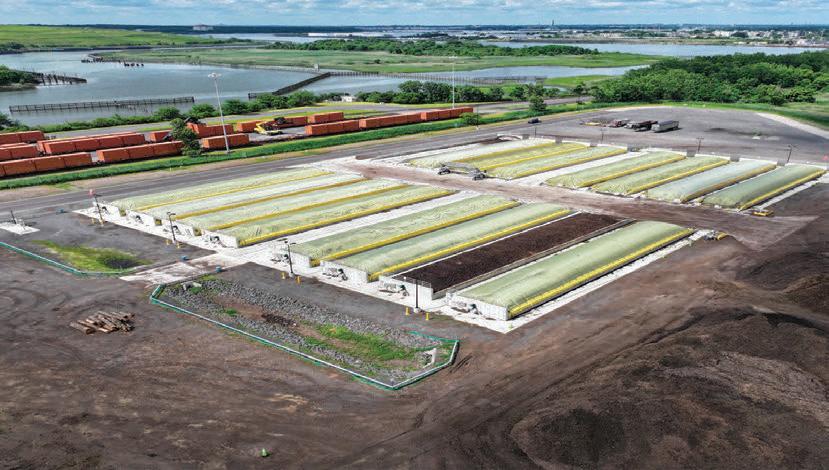
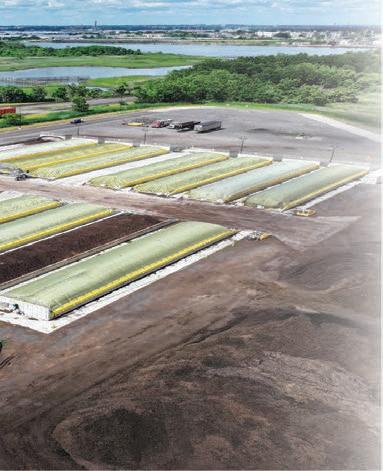
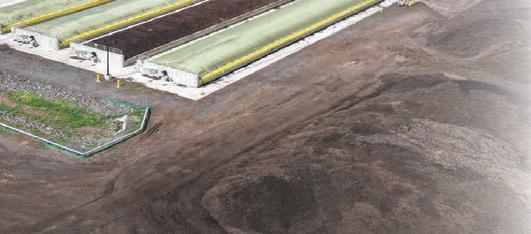
Bulk Transport Equipment plays a necessary role in the rollout of JOST and Hyva’s hookloaders, mounting them for waste management customers all over Australia.
Bulk Transport Equipment (BTE) has made a significant mark on Australia’s commercial transport sector over 20 years of operations.
e manufacturer first opened in Victoria, offering transport services such as chassis building and general repairs. It soon added trailer manufacturing and maintenance to its repertoire.
“Our trailer building work became very successful,” says Peter Corcoran, Area Manager at Bulk Transport Equipment.
“BTE has always focused on developing bespoke equipment that incorporates a range of the highest quality componentry to ensure customers are always getting the best value for money, whilst utilising a purpose-built design to meet the expectations of the application.”
BTE offers an extensive range of bulk haulage equipment for cartage of agriculture, quarry and general bulk product as well as an array of specialised equipment such as crane boom dollies, tipping skels and stockfeed equipment.
BTE’s operations have also focused on the waste industry for almost two decades, manufacturing heavy duty
walking floor trailers, bin transfer trailers, hookloaders and skiploaders, in addition to some special purpose waste bins for the concrete industry.
Many of these builds have used components from global transport solutions manufacturers JOST and Hyva. JOST Australia offers a variety of transport, hydraulic and agricultural solutions, while Hyva is a market leader in manufacturing hydraulic solutions and transport equipment for the commercial vehicle and environmental service industries.
“We’ve used Hyva cylinders, hydraulic componentry and other products for years,” Peter says. “We have used JOST equipment, too, and developed a great working relationship as a result.”
is experience set up BTE to play a critical role in both organisations’ operations, which developed further when JOST acquired Hyva in 2025.
“JOST approached us shortly a er buying Hyva and asked if we’d be interested in doing installations for Hyva’s hookloader range,” Peter says. “It had been some time since we dealt with the equipment, but we were excited and said yes.”
Peter says hookloaders are widely used in waste management due to their flexibility as truck-mounted systems. eir mobility allows operators to service numerous sites, quickly dropping off and collecting waste containers across multiple locations.
“Waste managers can service hundreds of customers and bins thanks to the truck allowing it to load and unload quickly,” he says. “And the hookloaders are flexible in the types of waste they can carry, too –slurry, concrete waste, contaminated waste and rubbish.
“It’s a versatile piece of equipment used by councils, recycling facilities and waste companies.”
Hyva’s hookloader range builds on this flexibility with eight-tonne, 16-tonne, 22-tonne and 26-tonne capacities. e 22-tonne model is known as a ‘multi-rail’ hookloader because it can handle bins of varying widths. Due to the range of loads it carries, it must be mounted on a twin-steer, tandem-drive truck.
BTE draws on its specialised engineering experience to mount Hyva’s hookloaders for customers – a process Peter says can be complex and laborious.
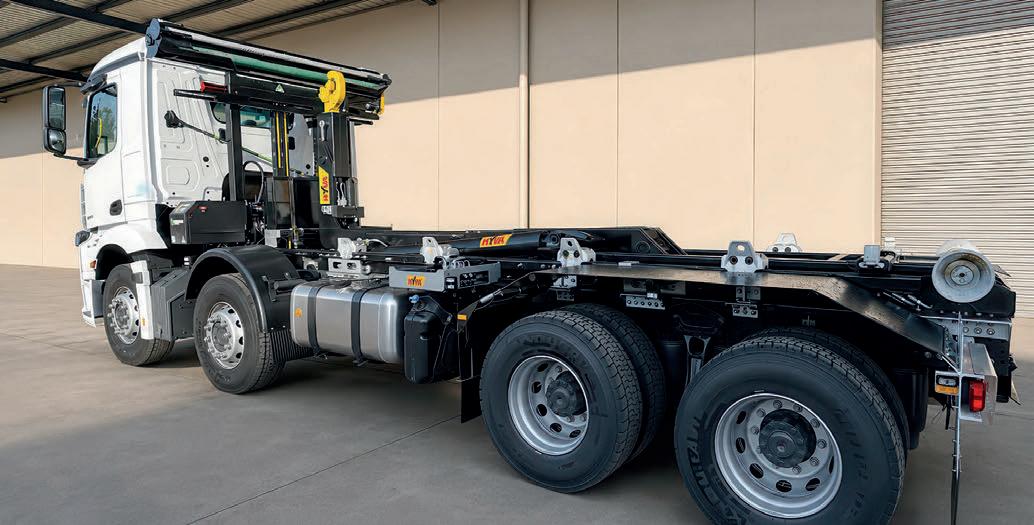

“We can mount Hyva’s hookloaders onto trucks neatly and properly because we have the depth of knowledge,” he says. “It can be quite a process, and involves many personnel, but we have a fantastic team in our factory who specialise in this work.
“ e experience we bring to the operation is necessary to get Hyva’s product out to customers. BTE’s value proposition is very complementary to Hyva’s in this way.”
Much of BTE’s expertise is due to the team’s experience with the PerformanceBased Standards (PBS) system, which dictates how much weight commercial vehicles can carry on the road.
Peter says Hyva’s hookloader with a PBS-approved transfer trailer from BTE can allow the operator to efficiently carry three waste bins at once, providing a significant efficiency improvement. With the current costs to operate equipment and the longer distances operators have to travel, carrying one or two extra bins in the one trip is a huge benefit.
“ e NHVR can approve our vehicle designs for carrying higher mass limits if they meet standards for braking, roll stability, the correct bridge formula for axle spacing, and more,” he says. “We use certifiers and assessors to complete this work and can move equipment all around the country this way.
“ ere’s ultimately less downtime involved with a PBS rating, too. And, by being stringently tested, the vehicles are also extremely safe.”
e Hyva hookloaders have proven to be extremely durable and reliable in the Australian market. e BTE team can back up the sales of these products with ongoing customer and maintenance support.
“Waste management work is pretty hard on the gear,” Peter says, “so operator expectations are high. But the hooks are performing well.
“We’re going to keep doing what we’re doing.”
As an official distributor for JOST and Hyva, BTE is predominantly servicing hookloader customers in Victoria and South Australia, and has extended these operations into New South Wales, Tasmania and Queensland. WMR
For more information, visit: www.jostaustralia.com.au
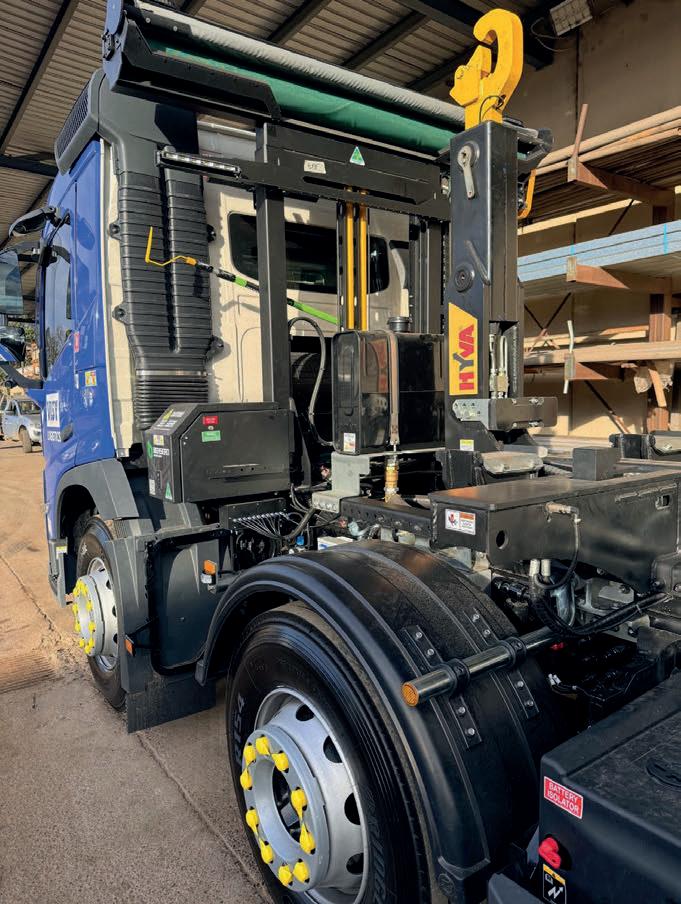


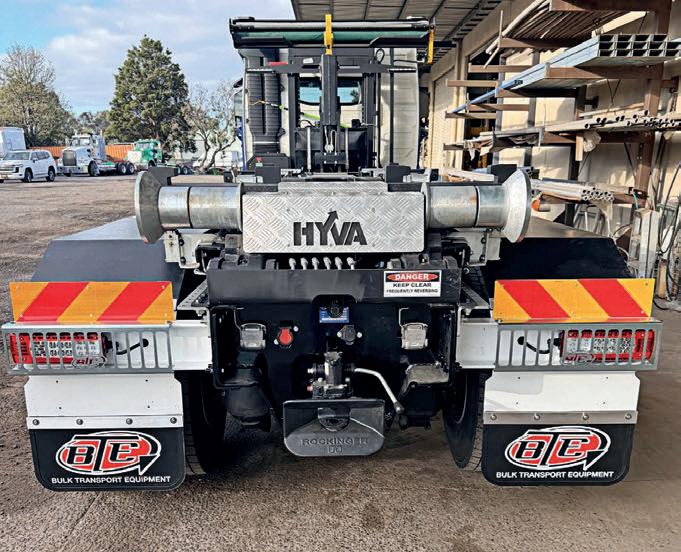
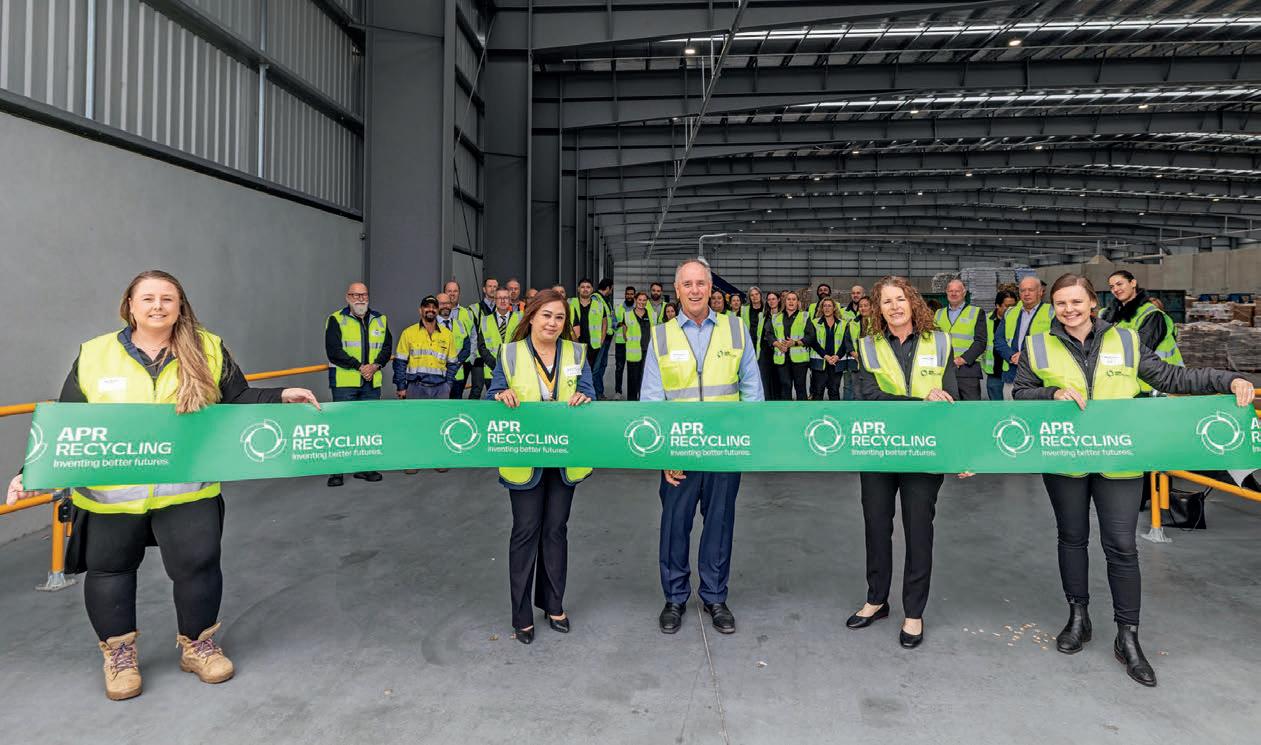

A
longstanding Melbourne company is rebranding to better re ect its expanded capabilities in resource recovery.
Ask what inventing better circular futures means to Darren orpe and he’ll tell you it’s about innovation, environmental impact, and leaving a legacy for the next generation.
As the Managing Director of the newly rebranded APR Recycling, Darren’s drive is deeply personal, o en fuelled by watching his own grandchildren engage with the industry.
In May, Australian Paper Recovery officially rebranded to APR Recycling. For Darren, it’s more than a name change; it’s recognition of the company’s evolution, having grown alongside Australia’s resource recovery sector.
Moving away from the original name was an emotional hurdle. Darren o en describes the company as his “fourth child” – a business built on a family legacy of paper making that dates back decades. However, he recognises that staying relevant requires moving with the times.
“Australian Paper Recovery has always been my fourth child, so to turn around and change the name has been a really big thing for me,” he says.
“It’s something that took me a long time to come to grips with, because I was passionate, and still am, about Australian Paper Recovery. But we’ve got to move with the times and when we drill down and look at what we do, we’re in the recycling sector.”
e decision to broaden the company’s identity was sparked in 2019 when Darren discovered that more than 40 per cent of the rejected waste in a material recovery facility consisted of so plastics. is realisation launched a mission to find a second life for materials that were previously deemed non-recyclable. Today, APR Recycling operates under four key internal pillars: paper and cardboard, kerbside, plastics, and plastics to oil.
e new visual identity was cra ed to reflect this diverse, circular approach. e logo represents circularity, illustrating the company’s commitment to keeping resources in use rather than letting them fall out of the economy. is is paired with the tagline “Inventing better futures” – a phrase Darren feels perfectly captures the company’s spirit of innovation which has allowed it to spearhead several ambitious projects aimed at closing the loop on problematic waste streams.
ese include the development of an advanced pyrolysis plant, a chemical recycling solution designed to transform so plastics into high-quality oil that can be repurposed as a feedstock for new products, and a state-of-the-art sorting facility that uses artificial intelligence and optical sorting technology to separate polymers and remove contaminants.
Combined, these projects will create an industrial pathway to manage complex plastics on Australian soil.
Being a pioneer in the Australian market has come with its share of challenges. Darren acknowledges that many in the industry take a “wait and see” approach when it comes to new technologies and business models.
He draws inspiration from the story of Judo Bank; an Australian bank built for small and medium businesses, whose founder faced dozens of rejections before finding the right partners. He sees a similar path for APR Recycling, noting that as it proves its model to recycle so plastics into oil works, others are beginning to pay attention.
Darren is ready to showcase the new brand to those who may still only associate the company with its paper-based roots
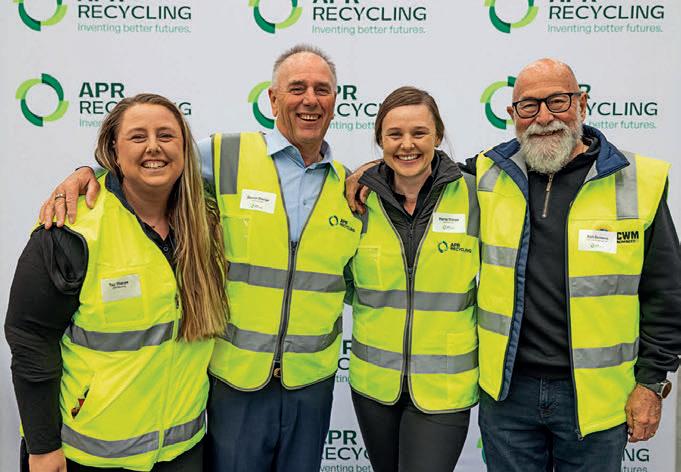
and was a key presenter at Waste 2026 conference in Coffs Harbour.
He says the rebranding is a signal that APR Recycling is ready to lead a national conversation on resource recovery. He hopes that when people think of APR Recycling, they think of a company that “innovates to get the best outcomes for the

environment and the future of our kids”. “My grandkids drive me to keep going,” he says. “It’s about educating them early, because you never know who you might influence, to change the world.” WMR
For more information, visit: www.aprrecycling.com.au
Aya Nasreddine was awarded the Australian Organics Recycling Association 2026 Young Professionals Scholarship. We talk with the emerging environmental consultant about her immersion in the industry and the road ahead.
The Australian Organics Recycling Association (AORA) Young Professionals Scholarship is one of the organisation’s more recently adopted methods for industry outreach.
For more than a decade, AORA has worked to promote the recycling and reuse of organic material within a circular economy through partnerships, events and advocacy.
John McKew, National Executive Officer at AORA, says the Young Professionals Scholarship, established four years ago, is now critical to this arsenal, attracting and immersing new talent in the organics recycling sector.
He views the scholarship as imperative to keeping organics recycling both current and timely.
“We feel the initiative is important for both AORA and the whole industry,” John says, “so it’s something we’re committing to for the longer term.
“For any young person looking for an industry to grow in, the organics and recycling space is one they should consider. It is of vital importance to Australia, both environmentally and economically, and is only getting bigger.”
AORA’s scholarship provides recipients a $3000 grant toward covering the cost of their attendance at the AORA Annual Conference. Recipients gain total access to the event, which includes a product demonstration day, two plenary session days, and social functions. e immersive experience exposes them to policymakers and government regulators, while also introducing key industry issues, current solutions, the organics recycling endmarket, and AORA itself.
“ e idea is to give the young professional a broad view of the industry’s value chain and help to increase their awareness of what is happening in the space,” John says. “We hope to support their endeavour to be part of the industry and circular economy; while also showing them how much we value young people coming into our industry.

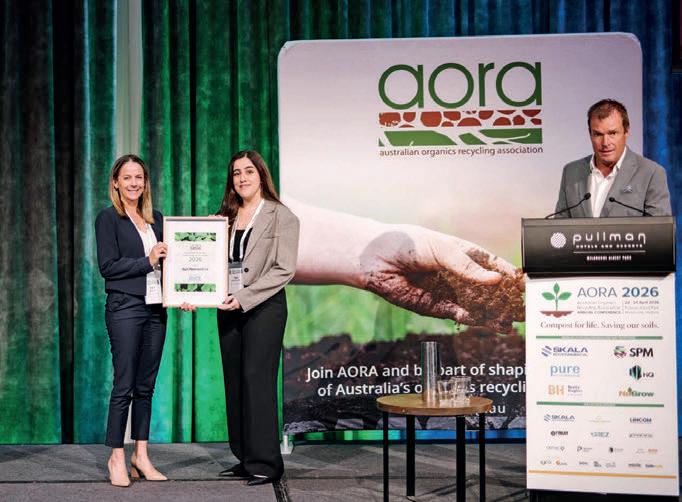
“We want young people entering this area with interest, passion, and a desire to make a difference. eir contributions are integral to our work.”
Scholarship recipients are selected based on their applications, which are vetted by John and other key AORA members –including those from Pure Environmental, this year’s scholarship sponsor.
Kali Martin, General Manager –Infrastructure and Development for Pure Environmental and Chair of AORA’s Board of Directors, says the company is passionate about attracting young and new talent into the industry.
“Pure Environmental has proudly sponsored AORA’s scholarship program for the past two years, alongside running our own graduate programs and other initiatives designed to attract emerging professionals and give them meaningful opportunities to enter and develop within the industry,” Kali says.
“ e AORA conference is a great cross-section of industry expertise for newcomers to be exposed to. It’s a great opportunity for young professionals to
kickstart their networks – that’s one of the most valuable aspects of the scholarship.
“We get a good number of applicants for the scholarship, and they are all high quality, but we’re also looking for passion. Someone who wants to learn and will have a lot of touch points with the industry.”
John says Aya Nasreddine, the 2026 AORA Young Professionals Scholarship recipient, submitted a comprehensive application.
“What stood out was that she had already demonstrated a strong commitment to the circular economy, and certainly to organics recycling,” he says.
Aya has worked as an environmental consultant for the past two years but has been fostering an interest in sustainability for much longer.
She says she’s always wanted to work in the space.
“I think it’s so important to understand that waste is not just something to be disposed of; it can be recovered, recycled, and turned into something valuable.”
Aya enrolled in a master’s degree in Sustainability at Deakin University, which
required her to complete an internship. Searching for practical experience in how environmental work can be applied to real projects in Australia, she found work with environmental service provider MRA Consulting. She says this experience proved crucial to her comprehension of organics.
“During my internship, I was exposed to different types of projects,” Aya says, “and that really helped me to understand how waste management is not just technical, but also strategic and practical.”
Aya attended the 2026 AORA Annual Conference held in Melbourne in April, and leveraged the opportunity to better her understanding of the sector.
“I was able to connect with industry leaders and learn from the many experienced professionals there,” she says. “ is exposure was very practical, which was fantastic.
“I heard from different organisations and saw different approaches to managing organic waste. And I was able to connect what I do in consulting with what happens operationally in the industry. Organics involves policy, infrastructure, technology, and even education and behaviour change.”
Aya says receiving the scholarship has given her more confidence to speak with industry professionals and engage with technical topics.
“From the first day of the conference to the last day, I felt I had changed quite a lot,” she says. “I learned the importance of collaboration between all parties, and I’ve been motivated to keep building my knowledge.”
Now incorporating her experiences from the scholarship and conference into her career, Aya recommends anyone thinking of applying for future scholarships shouldn’t hesitate.
“ e scholarship is designed for those making a start in the industry,” she says. “Applicants shouldn’t let what they view as a lack of experience stop them from seizing an opportunity.
“As long as they are interested, curious and willing to learn, they will do well.” WMR
For more information, visit: www.aora.org.au

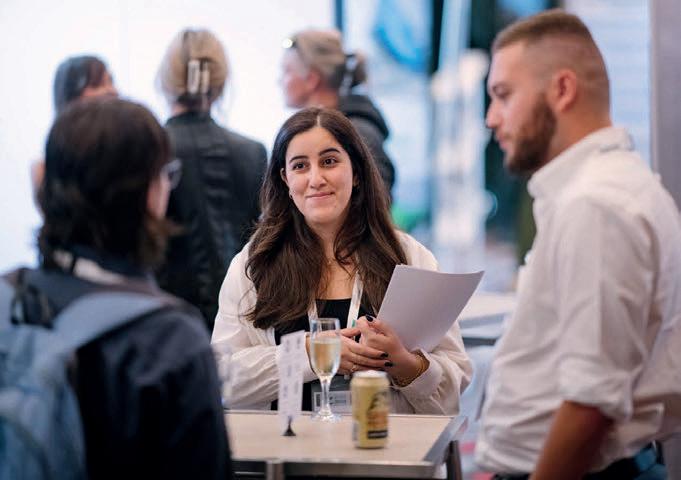

e City of Casey has found a modern solution to its recycling contamination problem in the form of Bin it Right – a waste management app hailed by residents.
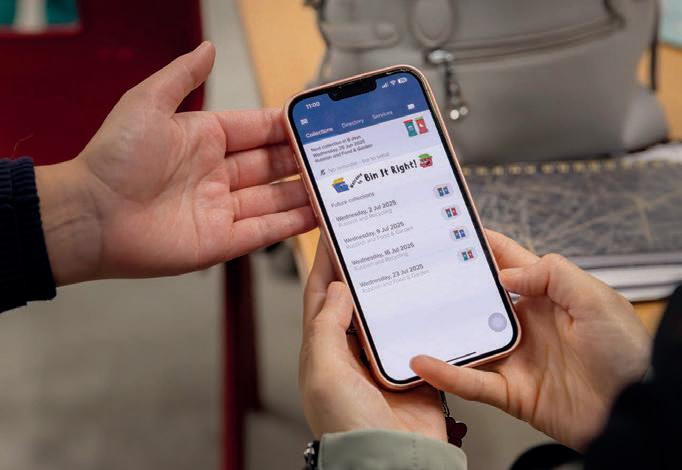

In the digital age, technology is ubiquitous and its applications are nearly boundless. Accessible online resources and platforms are making it easier than ever for organisations and communities to use these tools to solve problems.
e City of Casey, located southeast of Melbourne in Victoria, has a history of successfully using technology, particularly to address and promote sustainable practices.
“Our primary channels for keeping our residents informed are our Annual Waste Guide and the 4000-member ‘Green Living in Casey’ Facebook group,” says Kathy Zu, Recycling Education Officer at the City of Casey.
“We also deliver a robust education program featuring ‘Recycle Right’ sessions for schools, retirement homes, culturally and linguistically diverse communities, and other groups.
“We maintain e-waste stations across the municipality for those hard-to-recycle items and are constantly looking for new ways to connect with our residents to make sure no one is missing out on important information.”
Kathy says the council had long been planning a new waste management solution for its residents, particularly as it was facing some concerning waste statistics.
“ e idea for a new platform had been floated for a while, but the real driver was our recycling contamination rate,” she says. “We were looking for new ways to bring those numbers down and improve our recycling quality.”
e City of Casey reports a recycling contamination rate of about 25 per cent. Separating non-recyclables from clean recycling and diverting them to landfill requires extra resources, incurring up to $700,000 per year in extra costs on top of standard processing costs.
e sought an existing and similarlyimplemented solution. A er extensive research, it found Socket So ware – a developer that had a proven track record creating digital platforms for other city councils.
Over eight weeks, the two entities worked together to build the City of Casey’s waste management app Bin it Right. e council had to enter its own data into the app’s interface – which required intense liaising with a myriad of internal groups –
before it underwent testing.
“We first had to ensure all the right checks and balances were in place,” Kathy says. “A er that, we did a month of internal staff testing, followed by a so community launch and finally a hard community launch.
“Building the app was the straightforward part. Navigating the internal processes and cross-team requirements is what took most of the time.” e Bin it Right recycling app launched just under a year ago. Designed to reduce missed bin collections, lower recycling contamination, and decrease the volume of basic customer service inquiries, its interface is organised into three tabs. e collections tab displays users’ own bin dates for the next four weeks and allows them to set reminders so they never miss a bin day. e second tab functions as a waste directory – a visual guide of more than 500 relevant waste items for users to refer to.
Finally, the third tab acts as a service hub, consolidating all waste-related services a resident might need in one place. In this section, users can book hard rubbish collections, report litter, find container deposit locations, and check for kerbside changes.
“By focusing on a simple interface, we promote accessibility and give Casey residents the ability to find information quickly,” Kathy says. “We want them to feel confident managing their waste services through a tool that is easy to use and understand.”
Accessibility was further enhanced by breaking down language barriers to ensure comprehension and comfort for all City of Casey residents, many of whom come from diverse cultural backgrounds.
“Casey is one of the fastest growing and most multicultural areas in Australia,” Kathy says. “We have residents from more than 150 backgrounds and people moving into new estates every single day.
“We found that we couldn’t just rely on traditional letters or websites to reach everyone and we were very conscious that not everyone speaks English as their
first language. Our app easy for anyone to pick up and use.”
Making it easier to use, the Bin it Right app does not require residents to create an account or share personal details – they just enter their address to get a personalised bin schedule.
Kathy says the app has been embraced by the community with more than 6000 downloads since its release.
Engagement features, such as a recycling quiz, regularly average 400 responses within the first 24 hours of being available.
“ e response has honestly been amazing,” Kathy says. “In our first feedback survey, the app received a nine out of 10 rating for overall experience. Seeing this level of engagement and steady growth is incredibly encouraging.
“ e most rewarding part is seeing how it’s being used organically. We’ve

had some positive face-to-face feedback at our community events, and we’re also seeing people share screenshots of the app in our local Facebook groups to help their neighbours, which is the best endorsement we could ask for.”
e City of Casey is aiming to keep the app’s interface basic and usable for residents who may not be as tech-savvy. Kathy hopes the app continues to alleviate some pressures that come with managing household waste, particularly in the face of
looming changes, such as the addition of a fourth kerbside bin for glass.
“I’m excited to see how the app helps our community navigate the upcoming changes to our waste services,” Kathy says.
“ e platform is a great example of how a bit of innovation can make a necessary service much more straightforward for everyone.”
e City of Casey will soon complete a community recycling audit as part of its twice-yearly monitoring. WMR


Twin Shaft with sizing screens and a tramp relief system. Produce a controlled product size in one pass saving both time and fuel.
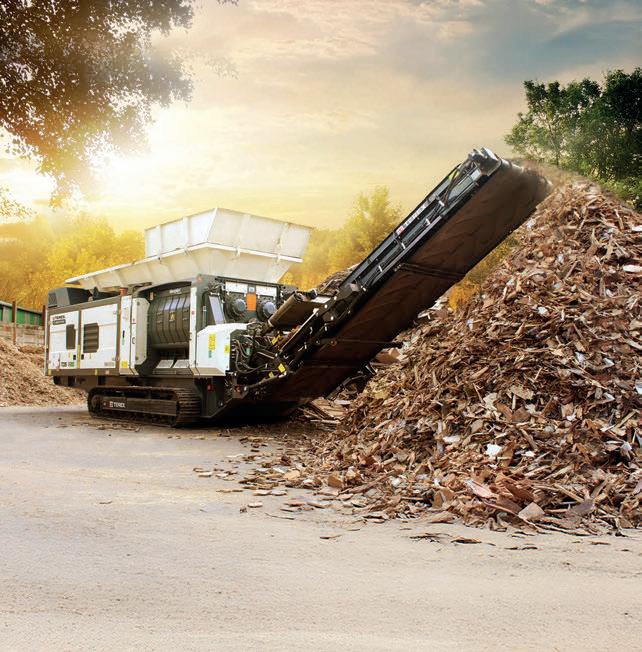
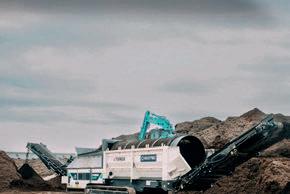
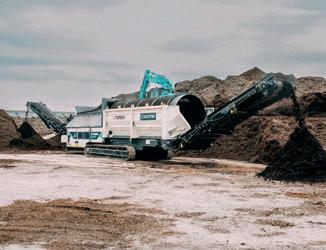

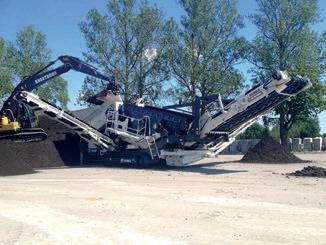
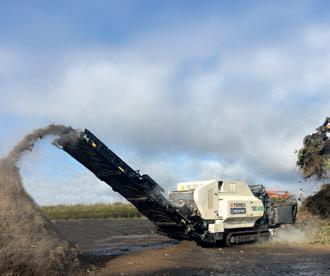
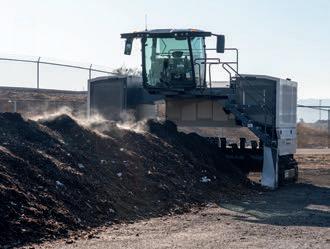


Supplied by Tutt Bryant Equipment, the ES250 tracked shredder is built for modern waste operations, delivering reliable, high-capacity processing across a wide range of materials. It efficiently handles wood, green waste, tyres, white goods, C&D and C&I waste streams, making it a highly versatile solution for diverse applications. An advanced shredding system reduces material bridging and ensures consistent throughput, while diesel or electric power options provide flexibility to suit different site requirements. To support customers, Tutt Bryant Equipment offers dry hire, hire-to-buy options and onsite demonstrations, allowing operators to validate performance before committing. A durable, efficient solution designed to maximise productivity and uptime.
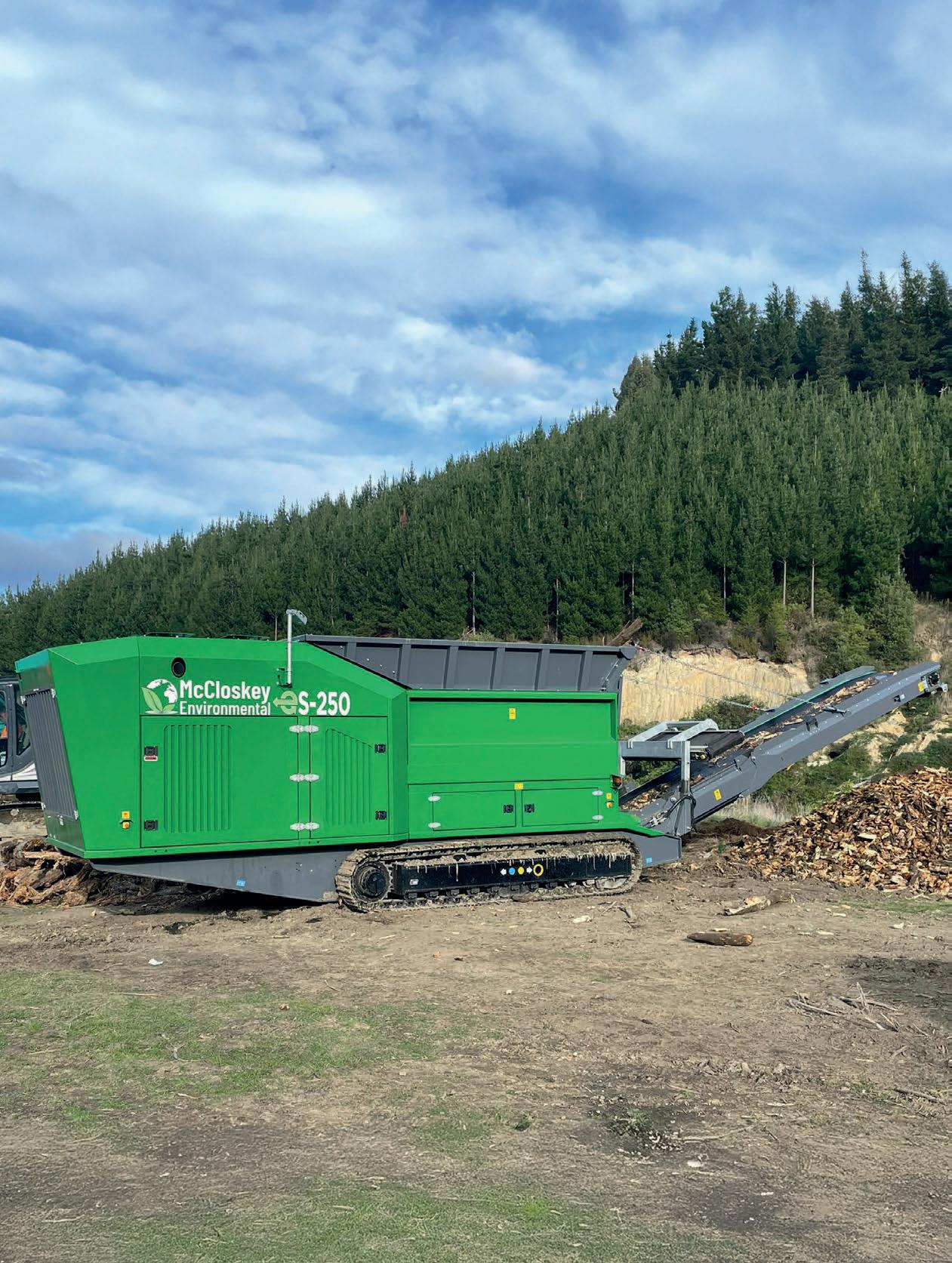


While
30 years of reform have reshaped waste, Waste 2026 highlighted what’s
needed to deliver the next phase.
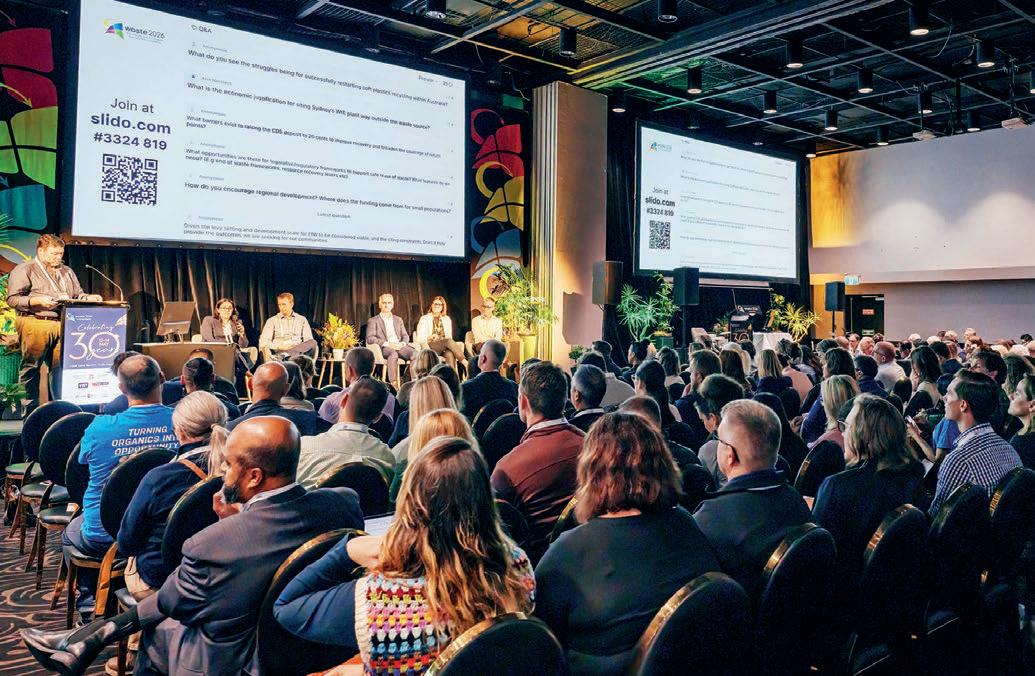

Thirty years a er it began as a largely landfill-focused conversation, the Waste 2026 conference in Coffs Harbour made one thing clear: the sector is no longer debating direction. It is grappling with delivery.
What emerged across three days was a sector under pressure, but also one that is increasingly aligned on what needs to happen next.
As Penny Sharpe, New South Wales Minister for Climate Change, Energy, the Environment and Heritage made clear in her opening address: dwindling landfill capacity, rising waste volumes and ambitious 2030 recovery targets are converging, requiring governments, industry and communities to “pull many levers all at the same time”.
Targets are set. Policies are advancing. Expectations from regulators, communities and markets are rising. e challenge now is turning that alignment into systems that work.
e conference highlighted that there’s no shortage of ambition in the sector. What the industry is facing now is the reality of getting projects built, getting approvals through, getting communities on board and making sure the economics stack up.
e conversation has moved well beyond ‘should we do this?’ to ‘how do we actually make it happen at scale?’
Early sessions highlighted the scale of the task ahead, particularly in New South Wales, where landfill capacity constraints and growing waste volumes are converging.
Speakers, including Arcadis and NSW Environment Protection Authority (EPA) representatives reinforced the message: without coordinated action, parts of the state face a risk of running out of viable disposal options.
At the same time, presenters such as NSW EPA Chief Executive Officer Tony Chappel emphasised that the challenge cannot be reduced to a single issue. Circular economy reform, he argued, is no longer just about waste, it intersects with productivity, energy security, housing, infrastructure costs and public trust.
What stood out is how interconnected everything has become.
You can’t talk about infrastructure without talking about planning and approvals. You can’t talk about recycling without talking about markets.
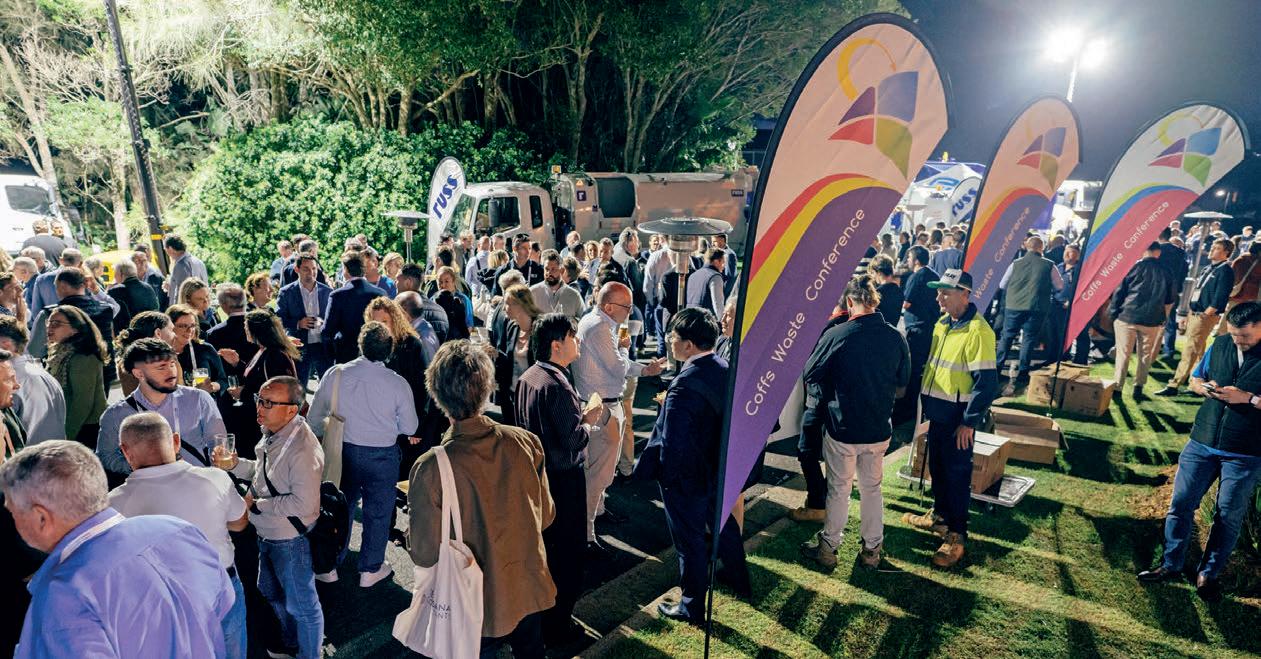
And you can’t talk about any of it without thinking about community trust. is was reinforced through international comparisons. United Kingdom keynote Cathy Cook highlighted how policies such as extended producer responsibility and food organics mandates rely on more than regulation – they depend on clear definitions, funding certainty, infrastructure readiness and local delivery capability.
Investment is where the rubber meets the road for circular economy policy. While the
environmental logic of resource recovery is clear, the financial logic depends on certainty.
at theme ran through the Resource Recovery Investment plenary, where panellists pointed to planning delays, policy uncertainty and o ake risk as ongoing barriers to funding largescale projects.
Presentations from organisations including SOILCO, Cleanaway and Arcadis pointed to the same constraint: circular outcomes depend on physical capacity – facilities, networks, approvals and end markets.

Organics management, particularly food organics garden organics (FOGO) was one of the defining themes of the conference. Sessions, including the “Here, Now and What’s Next” panel, highlighted that FOGO isn’t just a collection service; it’s a supply chain.
From Blacktown City Council’s largescale rollout to contamination challenges highlighted by processors, the message was consistent: success depends on alignment across households, collection systems, processing infrastructure and end markets.
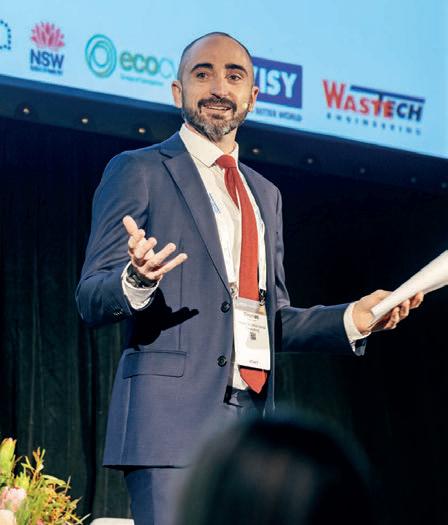

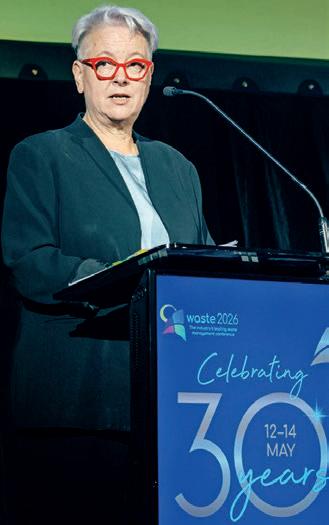

Internationally, Marco Ricci’s Italian case study demonstrated what mature systems can look like, with high participation and integrated organics infrastructure.
Regional perspectives added further depth. Speakers including Lismore Mayor Steve Krieg argued that if councils do not plan ahead for waste capacity, they lose control and communities pay the price.
ere’s a real shi in how infrastructure is viewed. While for a long time, waste facilities were treated as something you try to push to the edge, now there’s a growing recognition they’re essential services.
Alongside infrastructure, product stewardship emerged as another area of growing momentum. From batteries to plastics to whitegoods, presenters and industry panels demonstrated a shared recognition: responsibility for end-of-life materials cannot sit solely with councils.
At the same time, the sector is grappling with increasingly complex waste streams.
Lithium-ion batteries are a system-wide safety issue, while per- and polyfluoroalkyl substances (PFAS) mattresses and nappies continue to challenge traditional recovery pathways.
Data, while less visible, was a constant theme. e final-day workshop reinforced that inconsistent measurement and classification remain barriers to effective planning and investment.
You can’t manage what you don’t measure and improving data quality isn’t just a compliance issue – it’s fundamental to planning, investment and trust. roughout the event, there was a noticeable shi in tone. Where
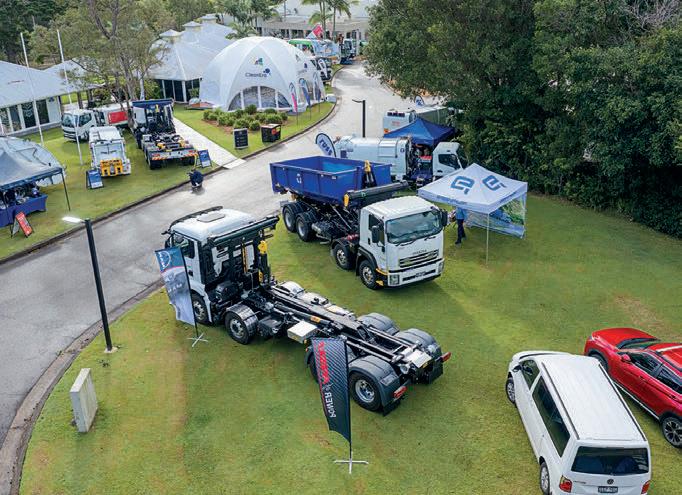

previous years focused on identifying problems, Waste 2026 moved firmly into solution testing, signalling a maturing industry.
e industry has gone through the big transitions before – kerbside recycling, landfill reform, e-waste. What’s different
BUILT FOR EFFICIENCY AND MAXIMUM UPTIME.
Designed with durability and operator efficiency in mind, the SANY Material Handler range features a robust structure, precise hydraulic controls, and a service-friendly component layout to support simplified maintenance. Purpose-built for heavy-duty material handling, the range provides the reach, strength, and stability required to maximise productivity across a range of industrial material handling applications.
FEATURING:
•Exceptional reach and visibility
•Robust stability and safety systems
•Ergonomic cab for the ultimate operator comfort
•Efficient operating cycles


now is that everything is happening at once. e question now is whether these diverse systems can come together to deliver it. WMR
For more information, visit: www.co swasteconference.com.au

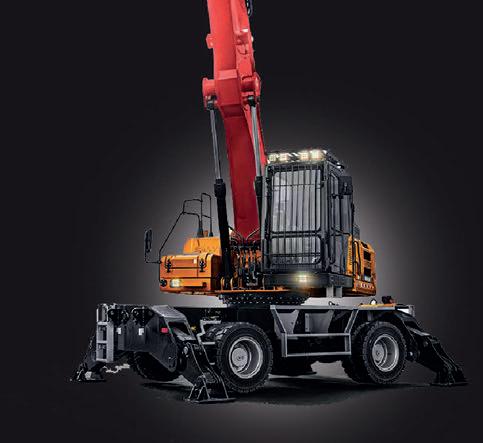
Cthe full potential of Australia’s waste sector.
onversations about circularity, procurement reform and community trust are shaping decision-making across the resource recovery, recycling and waste sector – and informing the agenda for Waste Expo 2026, returning to Melbourne in October. is year’s event includes new partnerships designed to bring different parts of the industry into closer alignment.
Among them is a collaboration with the Infrastructure Sustainability Council (ISC), which will anchor a Greener Infrastructure Conference throughout the expo.
Toby Kent, ISC Chief Executive Officer, says the timing is deliberate, part of a shi toward partnerships that deliver greater impact.
ISC’s core objective is to enable connected infrastructure that supports people to thrive on a healthy planet, positioning sustainability as a practical, system-wide outcome rather than a standalone goal.
it’s still a very small proportion of the infrastructure being built,” Toby says.
“If that level of success was replicated across the entire market, the environmental benefits and financial gains would be significant.
“ at’s why we’re excited to partner with the Greener Waste Conference – it aligns with what we’re trying to achieve and helps bring those opportunities into the mainstream.”
e addition of the conference signals a deeper integration between waste and infrastructure – two domains that have historically worked in parallel but are increasingly interdependent.
Toby says sustainable infrastructure is a system-wide challenge that hinges on how materials are valued and reused.
e collaboration with Waste Expo is intended to help move beyond theory into application.
“One group I would really encourage to come along is procurement officers and representatives of government who sit behind so many of the decisions that are made,” he says.
“We are seeing strong outcomes in projects that use recycled materials, but Waste Expo 2026 brings industry together, highlighting partnerships, circularity and system alignment to unlock
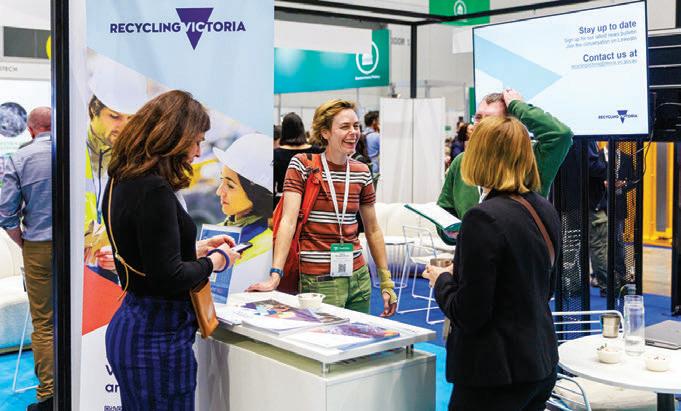

“We’re here to elevate the capacity of our members and others to deliver actual, on-the-ground benefits. When you look at recycled materials and waste as a resource, it makes the sustainability agenda very tangible.
“ is conference is where the rubber hits the road, or quite o en where the rubber is in the road.”
Data from the ISC’s own project assessments highlight the scale of the opportunity. Millions of tonnes of waste diverted from landfill; widespread use of recycled materials and measurable financial savings all point to a sector that can deliver both environmental and economic returns if adoption can accelerate.
Running alongside this partnership is a more formal alignment with the Australian Council of Recycling (ACOR). While ACOR has long supported the event, this year marks a shi toward a more structured relationship.
ACOR Chief Executive Officer Suzanne Toumbourou describes the move as a response to pressure on domestic recycling systems to move beyond capacity-building and into market stability.
“ e sector is at a turning point, with a strong need to build stable end markets for domestically recycled materials,” Suzanne says.
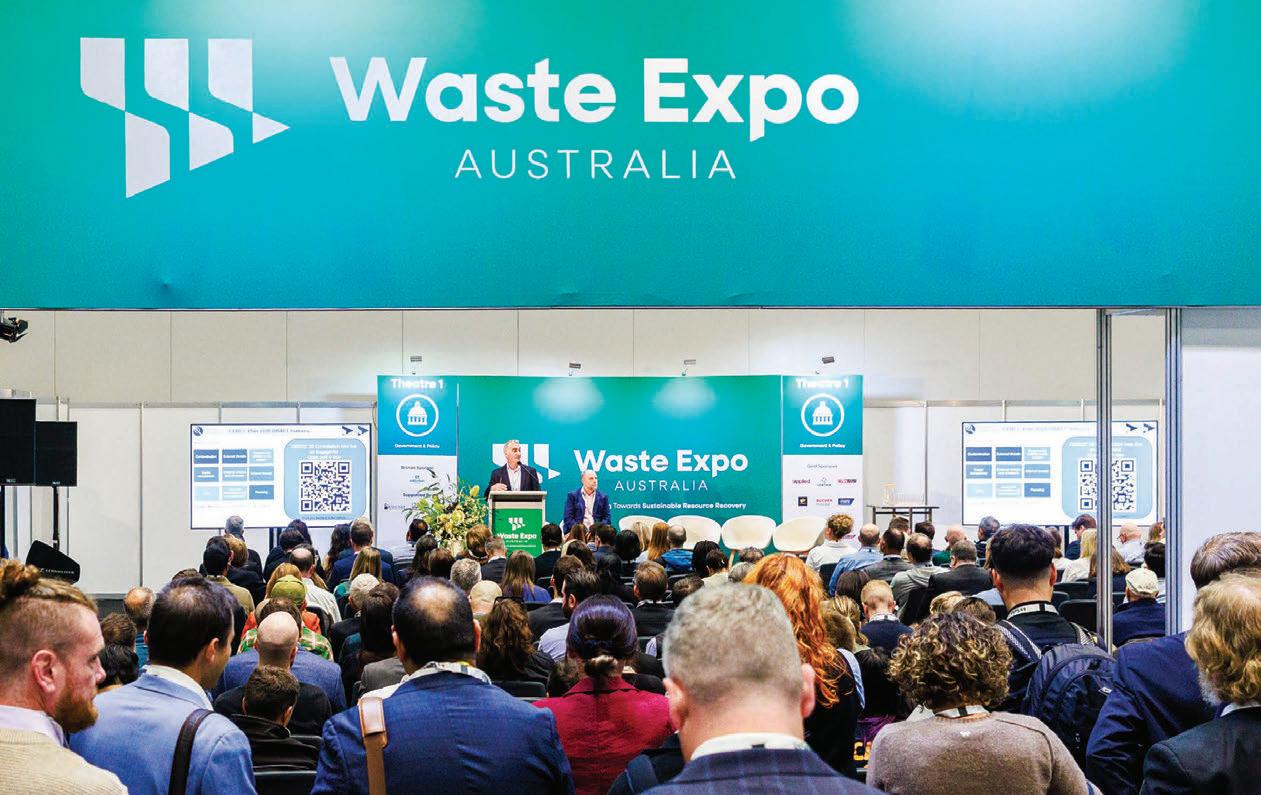
“ at requires better coordination across policy, infrastructure and demand at both state and national levels. Recycling is a remanufacturing supply chain – it only works when policy, markets, infrastructure and community behaviour are aligned.
“Waste Expo helps bring those elements together.”
e partnership also broadens the event’s audience. By actively drawing in manufacturers, brand owners, reprocessors and policymakers, the Expo aims to bridge gaps between those who place materials on the market and those responsible for recovering them.
“Manufacturers and brands placing materials on the market, through to reprocessors and end markets, need to be in the same conversation,” Suzanne says. “Along with policymakers, they’re all part of the same system.
“What we want members to take away is meaningful engagement, stronger collaboration and clearer signals on policy and market direction.
“Australia has invested in recycling capacity – the next step is aligning policy, producer responsibility and demand for Australian-made recycled content.”
If the partnerships suggest where the sector is heading, the Expo advisory board offers a closer view of how those priorities
are being translated into the program itself. Erin Ford, part of the advisory committee, describes a process grounded less in top-down planning and more in constant listening.
“It’s about listening to what the community and the industry is asking for,” Erin says.
“I’m really active across news and industry publications to see what the key messages are and what topics are of interest now. ings like batteries are always going to be an issue. So plastics have come back into the conversation.
“It’s about talking to the industry and finding out what direction we’re heading in this year.”
at approach produces a program that reflects both long-standing challenges and emerging shi s. For Erin, community education remains a consistent theme, particularly as public trust in recycling systems fluctuates.
At the same time, construction and demolition waste, sustainable infrastructure and material reuse are gaining prominence as large-scale projects reshape the built environment.
“Community education is still top of mind because we’re working with a community that doesn’t necessarily have faith that their items are being recycled,” Erin says.

“People may not even understand what should be recycled or where it should go, so that’s really important.
“We’re also seeing more focus on construction and demolition, and how, with all these big builds, we make sure that we’re using materials more sustainably and thinking of waste as a resource.”
e advisory board itself reflects the diversity of the audience the Expo attracts, bringing together consultants, operators, council representatives and specialists from across different waste streams.
Erin says that breadth is mirrored in attendee profiles, with the expo maintaining its free entry to ensure accessibility.
“It’s important there’s still a way for the industry across all areas of waste and recycling to come together,” she says.
“ ere are other conferences focused on one stream, but this brings everyone into the same room.
“ is is where those conversations happen. I just encourage people to come, visit the exhibitors, listen, learn, ask questions and be part of it.”
Waste Expo 2026 will be held at Melbourne Exhibition and Convention Centre from 28-29 October. WMR
For more information, visit: www.wasteexpoaustralia.com.au
e Garwood Dualpact Series split chamber rear-loading refuse compactor is a versatile, high-performance solution designed for operations that collect multiple waste streams at a single location.
Ideal for combinations such as general waste and recycling, paper and cardboard, or green waste and organics, the Dualpact ensures e cient and contamination-free collection.
Available in 50/50, 60/40, and 70/30 split body and tailgate con gurations, the Dualpact o ers exibility to match operational needs. e 50/50 model accommodates 120, 240, and 360-litre mobile garbage bins (MGBs), while the 60/40 and 70/30 variants extend compatibility up to 660 and 1000-litre MGBs.
Each chamber operates independently, featuring dedicated lters, tailgates, pack mechanisms, and ejectors to deliver zero cross-contamination. Adjustable pressure settings allow operators to tailor compaction ratios per chamber, optimising load e ciency.
With body sizes ranging from six to 22 cubic metres and multiple con gurations available, the Dualpact suits a wide range of applications.
Compatible with both 4x2 and 6x4 cab chassis, it o ers a reliable, adaptable waste collection solution for modern eet requirements.
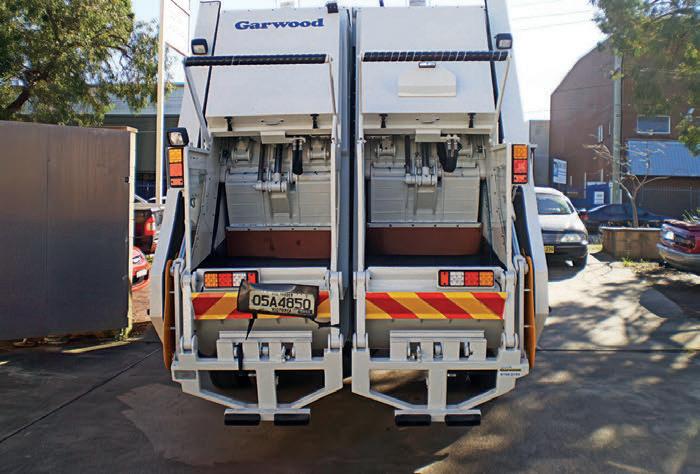


e Edge VS420 is a high-capacity, hightorque twin sha shredder that is ideal for the processing of a large array of materials including; green waste, municipal solid waste (MSW), construction and demolition (C&D) waste, biomass and end-of-life tyres.
EDGE’s next generation shredder has been developed for ultimate versatility and high resistance to contaminants with several customisable shredding programs and chamber con gurations available.
An intelligent operating system which incorporates tramp metal protection provides protection from contaminants and prevents asset damage.
At the heart of the VS420 are twin synchronised, high torque shredder sha s which can be customised to suit a customer’s exact application and desired product piece size.
EDGE’s twin sha design provides exceptional material intake, ensures less wear, promotes self-cleaning and prevents material wrapping even in the toughest applications.
With a range of both rapid volume reduction and intricate piece sizing chambers available, the EDGE VS420 series can be customised to be deployed as either
a primary or secondary shredder. e unit measures 2.5 metres in width, 13.4 metres in length, and 4.7 metres in height, with a total weight of 31.5 tonnes.
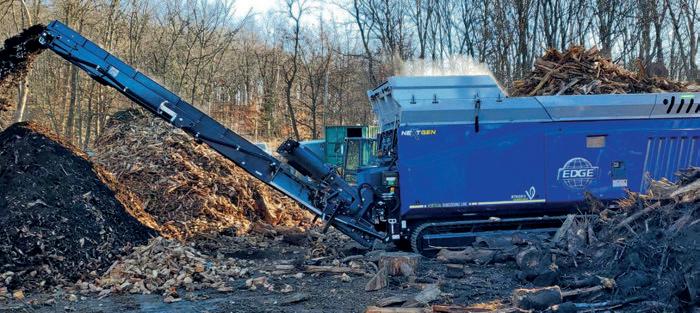



e EDGE TRT622 tracked trommel screen measures 2.9 metres in width, 24.6 metres in length, and 3.5 metres in height, with a total weight of 36.5 tonnes.
Designed for maximum productivity and superior screening e ciency, it is suitable for a wide range of applications including aggregates, sand and gravel, construction and demolition (C&D) waste, municipal solid waste (MSW), mulch, compost, wood and topsoil.

FOCUS ENVIRO
02 4365 4247

info@focusenviro.com.au www.focusenviro.com.au
Its heavy-duty construction and high manoeuvrability allow it to perform e ectively across industries such as aggregate processing and waste management.
Enhanced screening results are achieved through the 6.9-metre trommel drum and optional aggressive screening action, producing highquality ne materials with ease. e TRT622 tracked trommel screen

boasts a four wheel direct drive system, hydraulic variable speed control drum with forward/reverse functionality and feeder conveyor with load sensing controls preventing overload, asset damage and eco-power saving functionality.
Steep hopper bin sides, combined with a larger drum opening and wide collection conveyor, prevents material bridging and spillage.


e TRT622 tracked


e Rotochopper FP-66 horizontal grinder is engineered to bridge the gap between mid-volume operations and high-capacity performance. Designed speci cally
for pallet recyclers, mulch producers, and forestry biomass operations, the FP-66 brings the features of larger grinders into a more streamlined, fuel-e cient package. At the heart of
the FP-66 is Rotochopper’s “Perfect in One Pass” philosophy. is is achieved through a 1.6-metre-wide rotor featuring a specialised tooth arrangement and tip speed, paired with optimised screen geometry.
Together, they maximise production capacity while maintaining strict control over the end product size.
e unit features a steel slat infeed conveyor that reduces spillage and wear compared to traditional belts, alongside a patented adjustable slab ramp infeed plate. is allows operators to hydraulically adjust the feed angle to suit varied materials.
Maintenance is simpli ed through a screen cradle system that allows for rapid changes and a digital operator interface for real-time monitoring.

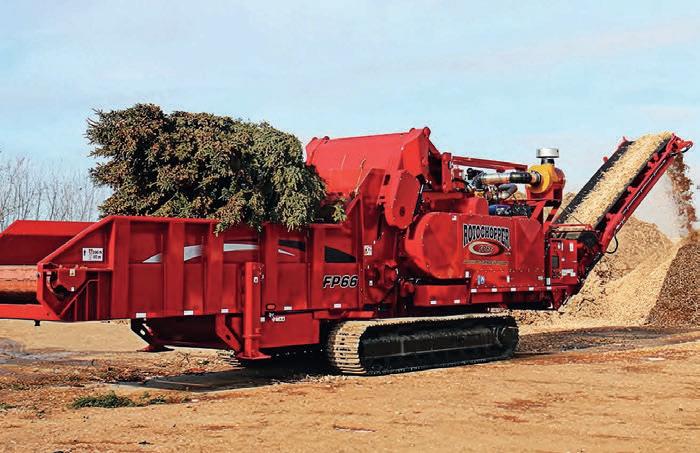
For operations looking to scale their output without the overhead of a larger machine, the FP-66 delivers industrial-grade results at a lower operating cost.









Delivers high quality, multi-platform media communications that showcase the world-class performance of the Australian waste management and resource recovery industries.


Waste Management Review is published 11 times a year and contains:

•Interviews with industry leaders

• In-depth profiles on innovative people, facilities and services


•Coverage on international developments

•Updates and analysis on new regulations and policies
•Successful supplier/client showcases
•Details of new-to-market products and equipment.
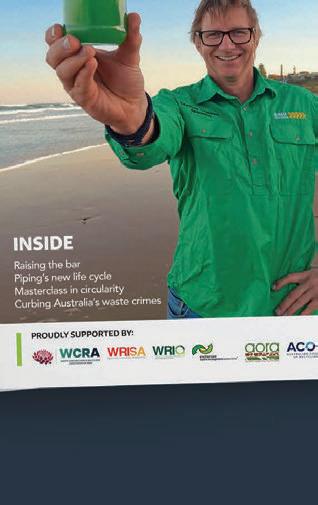
and get every Waste Management Review magazine issue delivered direct to your door. terviews verage on international


www.wastemanagementreview.com.au
Government is stalling in the transition from linear to circular, writes Rose Read and John Gertsakis, Directors at the Product Stewardship Centre of Excellence.
Making, using and disposing of products can result in a range of environmental and human health problems. Water, energy and natural resources are o en used unsustainably, humans and the environment can be exposed to hazardous substances, our air and water can be polluted, waste is o en generated, and carbon emissions can be released to the atmosphere.
For these reasons, taking steps to fasttrack nationwide solutions is essential and overdue.
Despite some progress in reducing the environmental impacts, Australia’s circularity rate is still low (4.6 per cent in 2024, compared to the global average of seven per cent), with our Earth over-shoot day falling in March.
Progress against the Australian Government’s Circular Economy Framework (2024) and National Policy Waste Action Plan targets is glacial and piecemeal at best, with the deadline for the seven Action Plan targets pushed out a further five years from 2025 to 2030. ere is also little, if any, evidence that the recommendations made by the Circular Economy Ministerial Advisory Group (2024) have been adopted in a fulsome way.
Of related concern is that the Australian Government is yet to publicly respond to the Productivity Commission’s final report on opportunities in a circular economy. And the outcomes of the internal five-year statutory review of the Recycling and Waste Reduction Act (2020), that started 18 months ago have yet to be released publicly at the time of writing this article. is ongoing delay strips away public and industry confidence, trust and willingness to invest in stewardship schemes and address actions on the Environment Minister’s priority list.
On the positive side, the New South Wales Government introduced the Product Lifecycle Responsibility Act
in 2025 and subsequently a Product Lifecycle Responsibility Regulation for batteries in 2026. is approach represents a major shi towards states leading on product stewardship in the absence of any Federal Government action (the last federal producer responsibility regulation was introduced in 2011).
While a nationwide approach is preferable for many reasons, as illustrated by the oil stewardship schemes and the National Television and Computer Recycling Scheme (NTCRS), state-based regulations can also be very effective, as demonstrated by the container deposit/ return schemes.
Notably, New South Wales’s recent legislation and regulation have been cra ed as a template for other jurisdictions to adopt and emulate. Importantly the NSW Product Lifecycle Responsibility Act reflects a much stronger lifecycle approach in comparison to the federal Recycling and Waste Reduction Act 2020, and it provides a legislative framework to make regulations that can be applied across the entire lifecycle of products from design and production, through to consumption and post-consumption or end-of-life.
It is vital that other jurisdictions follow suit swi ly to ensure that producers, service providers and consumers are not negatively affected by free-riders or by the absence of regulatory requirements outside of New South Wales.
Consequently, Australia is at a crossroads on circular economy policy and action, including how we evolve our approach to effective product stewardship. Given the known impacts of overconsumption and over-production, there is an unmistakable need to overhaul and fast-track policy and regulatory development.
Our current policy and regulatory development process is characterised by several factors that collectively work against effective circularity and producer responsibility across the product lifecycle.
e most obvious barrier is our predominantly reactive approach, driven by retail politics, poor problem-framing, vested commercial interests and other ad hoc demands with disproportionate influence. e term ‘stakeholder capture’ comes to mind.
Factors o en cited by many stakeholders that continue to constrain circularity and producer responsibility across the product lifecycle include:
• Limited transparency of government processes due to inadequate stakeholder engagement, or submissions and voices that are politely ignored, overlooked or given lip service.
• Inability to acknowledge and act on externalities and the true cost of late intervention.
• Substandard accountability to timeframes and the ability to successfully close-out policy and regulatory development.
• A general government position that significantly over-reaches on the claim of ‘unintended consequences’ as a reason to not pursue regulatory intervention, while simultaneously not applying the same lens on the
unintended consequence outcomes of voluntary product stewardship schemes e.g. the negative impact of free riders on the voluntary operations and effectiveness of the tyre, clothing, bedding and battery schemes.
• A deficient intergovernmental process that talks about harmonisation but consistently fails to deliver actionable outcomes. is includes the inability of environment ministers’ meetings to act as a productive forum to deliver tangible results in a timely manner. ese factors are impeding the transition to a circular economy and standing in the way of urgently needed mandatory product stewardship regulations for several products, including tyres, clothing textiles, packaging, solar panels, mattresses, consumer electronics and major domestic appliances.
A new, system-oriented approach to policy and regulatory development is urgently needed. Grants, public sector procurement, accreditation programs and product certification are essential but are insufficient without complementary regulation that articulates producer responsibilities and environmental outcomes to achieve the systemwide shi s needed to double our circularity rate.
is new approach needs to be adequately resourced and backed by an elevated commitment to sustainable consumption and production that harnesses a strong pro-innovation lens.
A system-oriented approach can then deal with many of the second and third order issues currently under justified scrutiny today regarding:
• next and end markets for recovered materials;
• adequate financing of collective product stewardship schemes;
• fair market pricing for all services supporting product stewardship schemes including logistics, reuse, repair and recycling businesses; and
• harmonisation and national uniformity.
A new approach must also show an understanding of sustainable
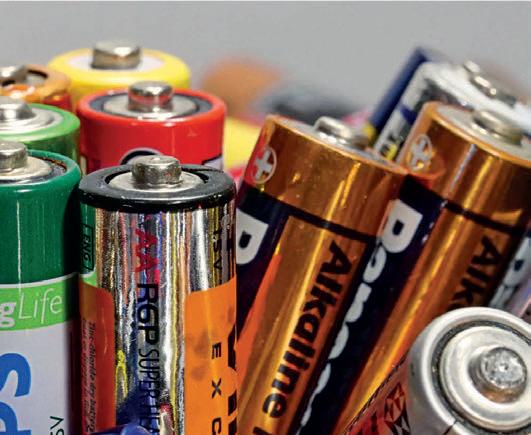
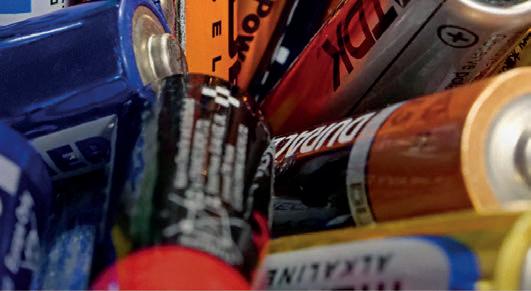
design and all that it can achieve along the supply chain, be it through standards, procurement, labelling, regulation, or import bans that keep environmentally inferior products out of the Australian market.
1. Creating, resourcing and enforcing a Circular Economy Actand any subordinate regulation(s)
As per the final report of the Circular Economy Ministerial Advisory Group (CEMAG) Recommendation #4 (2024, p35): “Introduce a Circular Economy Act that provides an overarching, integrated regulatory framework for the circular economy …. a streamlined, agile and proactive tool to regulate the environmental performance of materials and products …”
2. Ensuring mandatory product stewardship across the complete product lifecycle
Consistent with Recommendation #4 of the final CEMAG report (2024, p35): create “setting design rules for products and labelling their performance,
similar to the European Union’s Ecodesign for Sustainable Products Regulation …, including on durability, repairability, recyclability and the presence of chemicals of concern.”
3. Addressing the unintended consequences of voluntary product stewardship schemes
Establish well-designed mandatory approaches for products on the Minister’s priority list and for those industries proactively demanding regulated product stewardship, such as tyres, clothing textiles, mattresses, photovoltaic systems, and major domestic appliances.
Policymakers and regulators need to explicitly acknowledge that Australia’s ambitions for a circular economy demand a frank reckoning with a focus on clear problem-framing, the polluter pays principle, and an unapologetic approach to the design of intelligent regulatory instruments that are cocreated with key stakeholders. Transparency, timely action and genuine consultation are a must. Anything less risks cementing Australia ’s reputation as a nation that manages symptoms instead of leading with bold circular economy initiatives. WMR