• Track real usage – see when and how your CST ULTRA units are used
• Verify protection – trust real data, not assumptions
• Optimise lters – reduce waste and unnecessary cost
How it Works
Simply download the SMART App, sync the data from your CST ULTRA, and request your Insights Repo .
FSafety that never tires
BY COMBINING HUMAN-CENTRED STRATEGIES
WITH
TECHNOLOGY, MODERN MINES HAVE TRANSFORMED HOW FATIGUE IS MANAGED ON SITE.
atigue and exhaustion used to arrive last in the mine-safety conversation. Not anymore. With a growing understanding of fatigue, sites are realising that the most complex – and critical – machine in operation isn’t a truck or a drill. It’s the human body.
In our cover story for this edition, Body Armour is shining a light on what it means to invest in that system. Despite significant investment in equipment and technology, the human body remains one of the least controlled variables on site. Supporting people’s biological needs, like sleep and recovery, could therefore represent the next major opportunity in fatigue management.
Putting this thinking into practice, onsite fatigue management is becoming more holistic. Measures that help sustain energy and reduce physical strain, such as hydration strategies, recovery routines and ergonomic footwear, are increasingly part of everyday operations.
At the same time, less obvious factors, such as respirators that make breathing harder, can increase cognitive load over the course of a day.
Recognising and addressing these hidden contributors is now central to keeping workers safe and alert.
Complementing these human-centred strategies is technology. Automated systems that take on repetitive or physically demanding tasks allow operators to focus on decisions that truly matter, reducing strain and the risk that fatigue will compromise judgment. By combining practical support with smart use of technology, mines are finding ways to manage fatigue proactively.
Alongside these insights, this issue looks beyond the obvious, examining predictive controls, mental health and the growing regulatory focus on fatigue, and what they mean for the future of safe operations. This edition also marks International Women’s Day with a feature that pushes the mining industry to walk the talk and create a space for women to “not just survive, but thrive”.
It is an important reminder that safer, stronger operations are built around inclusion and diversity.
Prealene Khera Editor
BODY ARMOUR
Body Armour specialises in the manufacturing of premium formulas designed to support the body’s natural recovery processes and enhance physical performance in demanding environments. The company is committed to delivering high-quality products developed through advanced clinical research and the careful selection of databacked ingredients. All Body Armour formulations use natural ingredients and contain no artificial colours, sweeteners or flavours. The company’s science-led approach supports effective recovery, sustained performance and long-term wellbeing across physically demanding industries. Image: Body Armour
CEO CHRISTINE CLANCY
MANAGING EDITOR
PAUL HAYES
Tel: (03) 9690 8766
Email: paul.hayes@primecreative.com.au
EDITOR
PREALENE KHERA
Tel: (03) 9690 8766
Email: prealene.khera@primecreative.com.au
CLIENT SUCCESS MANAGER
JANINE CLEMENTS Tel: (02) 9439 7227
Email: janine.clements@primecreative.com.au
ART DIRECTOR
MICHELLE WESTON
RESOURCES GROUP LEAD
JONATHAN DUCKETT
Mob: 0498 091 027
Email: jonathan.duckett@primecreative.com.au
BUSINESS DEVELOPMENT MANAGER
JAKE NIEHUS
Mob: 0466 929 675
Email: jacob.niehus@primecreative.com.au
PREALENE KHERA
8 Rethinking fatigue
Modern fatigue management in mining is increasingly less about how long people work and more about how work is designed and supported.
12 Hitting snooze on fatigue
Body Armour is redefining the fatigue conversation – putting sleep where it belongs, at the centre. 16 Sleeping it off
Fatigue is a measurable biological impairment that 26 Power of forwardthinking
Recent advances in predictive modelling and data-driven insights are transforming how the mining industry controls fatigue risk.
Minding your fatigue
Lifeline WA’s innovative Resourceful Mind program is helping manage a lesserknown fatigue-causing agent: mental health. 40 An animated lesson
45 Strata safety in focus
An underground incident in Queensland has cast a renewed spotlight on strata safety and the systems designed to protect mine workers.
49 Where women thrive
This International Women’s Day, Australian Women in Mining and Resources is highlighting its industryleading report.
52 PNG Expo in focus
The event is set to unite the leaders and innovators shaping Papua New Guinea’s growing mining sector.
Safety in focus
THE MINING INDUSTRY BEGAN 2026 WITH A STRONG FOCUS ON SAFETY, AS RECENT DEVELOPMENTS AND UPDATES CONTINUE TO SHAPE ITS PATH FORWARD. SAFE TO WORK PRESENTS A ROUND-UP OF THE LATEST HAPPENINGS ACROSS THE SECTOR.
As 2026 got underway, the first few weeks of the year highlighted the strides being made in workplace safety and the ongoing challenges affecting Australia’s mining sector. From regulatory milestones in psychological health to improvements in operational resilience and mobile plant safety, the period reinforced the industry’s commitment to preventing harm, while a series of incidents underlined the critical importance of vigilance and adherence to safety procedures.
SAFETY INSIGHTS
Victoria’s mine sites and workplaces now carry explicit legal duties to prevent psychological harm following the commencement of the Occupational Health and Safety Regulations 2025. The regulations
require employers to identify psychosocial hazards, implement control measures and review their effectiveness. Bullying, sexual harassment, aggression or violence, and exposure to traumatic events or content are among the hazards the new regulations cover.
Inspections in New South Wales revealed gaps in mobile equipment protocols, prompting a safety bulletin from the NSW Resources Regulator. The guidance emphasises the importance of regular equipment inspections and worker education to reduce on-site risks while operating in travel mode.
Queensland’s regulator, Resources Safety and Health Queensland (RSHQ), issued a proactive alert focused on preventing falling plant, tools, and equipment incidents. Key recommendations include defining and enforcing drop -zone exclusion
areas, tethering tools used at height, thorough risk assessments, and regular maintenance inspections. The commissioner for RSHQ also unveiled a five-year strategic plan (2025–30) to improve health, safety, and wellbeing across Queensland’s resources sector, focusing on regulatory oversight, stakeholder engagement, and worker support.
Recent court developments reinforced the need for proactive measures against lightning hazards, particularly during Queensland’s storm season, highlighting the ongoing requirement for careful planning and worker protection.
MMG Dugald River achieved accreditation under the MATES in Mining program, formally embedding peer-based mental health and suicide prevention support across site operations.
Anglo American upgraded mobile connectivity along a critical central Queensland transport corridor to enhance safety for workers, suppliers and emergency services.
Fortescue continued its 2025–26 financial year (FY26) focus on safe operations, achieving a leading safety index of 160 and a total recordable injury frequency rate of 1.5 for the 12 months to December 31, 2025.
Similarly, Mineral Resources reported a zero lost-time injury frequency rate at its lithium operations for the second quarter of FY26, reflecting improved safety outcomes as activity increased.
Meanwhile, BHP eliminated a longstanding high-risk task at its Olympic Dam Production Refinery by automating cathode stripping, reducing operator exposure to crushing hazards and physical strain.
The NSW Resources Regulator has sharpened its compliance priorities for the first half of 2026, including strengthening tailings management
practices and reducing the risk of catastrophic failure across the state’s mining sector.
SAFETY INCIDENTS
An underground truck blaze at a metalliferous mine in NSW highlighted the need for rigorous fire-prevention procedures. While the onboard suppression system activated automatically, the incident demonstrated that reliance on suppression systems alone is insufficient, and operators are urged to eliminate fuel and ignition hazards wherever possible.
A fatal roof fall occurred on January 2 at the Mammoth underground coal mine in central Queensland, claiming the life of a worker handling a multi-bolter machine. The incident reinforced critical safety lessons for operators, particularly around the design and ongoing management of strata support systems.
In Albury, NSW, a maintenance worker suffered severe injuries after a
3.3-tonne hydraulic hammer detached from an excavator and fell onto him during a jaw crusher unblocking operation. The worker sustained severe injuries after being trapped for around two hours before being rescued by emergency services and transported by air ambulance to hospital.
Overseas, Perseus Mining confirmed a fatal vehicle accident near its Bagoé Gold Mine in Côte d’Ivoire on January 15, which resulted in the deaths of two contractor employees and minor injuries to others. The company is working with authorities and the contractor to support the affected families.
Finally, RSHQ issued a safety alert following a serious crush incident in central Queensland on January 20 in which a worker was trapped between two vehicles and suffered fractures. The alert urged site senior executives at Queensland mines to review their traffic management systems, including for transporting loads in or around the mine.
Rethinking fatigue: Managing risk, not hours
MODERN FATIGUE MANAGEMENT IN MINING IS LESS ABOUT HOW LONG PEOPLE WORK AND MORE ABOUT HOW WORK IS DESIGNED AND SUPPORTED.
Fatigue has long been treated as an unavoidable part of mining, and as something workers are expected to manage largely on their own. Across Australia, however, this understanding is changing.
Fatigue is increasingly recognised not as an inevitable by-product of mining operations but as a health and safety risk that can be anticipated and managed. Rather than being seen as ‘part of the job’, fatigue is now seen as something that can be influenced through various measures.
This change reflects a broader shift in how safety risks are approached, with a stronger emphasis on prevention and shared responsibility.
In mining environments, fatigue develops through the way work is structured over time, including daily shifts, weekly patterns and full roster
cycles. It is shaped by the interaction between work demands and opportunities for rest and recovery away from site. Extended shifts, night work, physically demanding tasks and sustained mental effort often combine with environmental conditions to increase fatigue risk.
SEEING FATIGUE AS A SYSTEM RISK
Although these contributing factors have been recognised for many years, regulatory guidance now places greater emphasis on organisational influence. Rather than focusing solely on individual behaviour, fatigue management is increasingly treated as a system issue. It sits firmly within formal risk management processes, where hazards are identified, risks assessed and controls implemented
so far as is reasonably practicable This approach aligns fatigue with other recognised occupational hazards and reinforces the expectation that it be actively managed rather than passively accepted.
Such a shift is clearly reflected in guidance issued across Australia’s mining jurisdictions. Fatigue now sits squarely within employers’ work health and safety duties and extends well beyond limits on hours of work.
Regulators consistently stress that roster length is only one element of a much broader picture; factors such as workload, task design, supervision, environmental conditions and access to suitable facilities all influence how fatigue develops across individual shifts and over longer roster cycles.
Workers are also expected to take reasonable care for their own health
When fatigue is identified early and managed proactively, risks can be reduced before they lead to incidents or harm.
and safety and to notify their employer when fatigue may affect their ability to work safely. However, regulators acknowledge that effective reporting depends on the systems and culture established by the organisation. Where fatigue is treated as a normal operational risk rather than a personal weakness, workers are more likely to speak up early.
When workers feel that reporting fatigue will lead to blame or negative consequences, issues are more likely to remain hidden until an incident or near miss occurs. In contrast, when organisations provide clear reporting pathways and respond constructively, fatigue risks can be addressed before they escalate. Regulators across Australia note that early identification and response are critical to effective fatigue management.
These expectations reinforce the central role of work design for mine operators. While fatigue can be influenced by factors outside the workplace, such as personal circumstances or sleeping arrangements, employers retain significant control over how work is structured. Decisions about shift length and timing, workload allocation, recovery time between shifts and accommodation standards all fall within organisational influence. When these elements are considered
together, they can either increase fatigue risk or help reduce it over time.
SHIFTS, ROSTERS AND RECOVERY
Shift design remains one of the most visible and widely discussed fatigue controls in the mining industry.
Guidance from Safe Work Australia highlights the importance of providing sufficient breaks between shifts, limiting long runs of consecutive workdays and carefully managing night work. Particular attention is drawn to periods of natural circadian low points, such as the early morning hours, when alertness and reaction time are naturally reduced.
In practice, many mining operations are now taking a more detailed and structured approach to roster design. Rather than focusing solely on maximum allowable hours, attention is increasingly given to how shifts accumulate across an entire roster cycle. Sleep opportunity, cumulative workload and recovery time are becoming key considerations.
This is particularly relevant in fly-in, fly-out (FIFO) environments, where travel time and transition between home and site can further reduce opportunities for rest.
Regulators note stronger outcomes where workers are consulted during roster design and where changes are
reviewed using incident and fatiguerelated data. Consultation helps ensure that rosters are realistic and sustainable, while ongoing review allows organisations to identify unintended consequences over time.
This more dynamic approach reflects a growing recognition that fatigue risk cannot be managed through static rules alone.
However, fatigue management does not end once a roster is finalised. The way work is designed and performed within each shift also plays a significant role in maintaining alertness and performance. In mining, workers may be exposed to repetitive physical tasks, prolonged mental concentration or monotonous activities for extended periods. These demands can increase fatigue even within a single shift.
Environmental conditions often compound these effects. Heat, noise, vibration, dust and air quality can all contribute to physical and mental strain, accelerating the onset of fatigue. When combined with long shifts or night work, these conditions can significantly increase risk if not properly managed.
Safe Work Australia identifies task demands and environmental factors as important contributors that should be considered when assessing fatigue risk. Managing them effectively
Managing fatigue helps keep workers safe, healthy and able to perform their jobs.
Fatigue management
requires a practical, task-level focus rather than reliance on high-level policies alone.
Controls such as task variation, rotation of high-demand activities and appropriate pacing of work can help reduce fatigue accumulation.
Industry research provides useful insight into how fatigue management is being applied in practice. A 2023 review of fatigue management practices in Queensland mines found that many operations have systems broadly aligned with regulatory guidance. Formal policies, risk assessments and roster controls are commonly in place, reflecting a solid foundation across the sector.
At the same time, the review identified opportunities for further development, particularly in areas that are less visible or more difficult to measure.
These include greater consideration of the long-term health impacts of fatigue, stronger integration of fatigue management with mental health initiatives, increased use of technology and data to support decision-making, and clearer leadership emphasis on fatigue as a strategic issue.
Varying tasks and reducing monotonous work can significantly lower fatigue.
The findings suggest that while basic controls are widely implemented, ongoing refinement remains important. As work arrangements, workforce demographics and operational demands continue to evolve, fatigue risks may also change. This reinforces the need for fatigue management systems that are reviewed regularly and adjusted as required.
LINKING FATIGUE AND WELLBEING
The relationship between fatigue and mental health is receiving growing attention across the mining industry. Prolonged fatigue can contribute to stress, anxiety and reduced psychological wellbeing. At the same time, mental health concerns can disrupt sleep quality and recovery, increasing fatigue risk.
This two-way relationship highlights the importance of addressing fatigue as part of a broader health and
wellbeing framework rather than in isolation. This integrated approach is particularly relevant in remote and FIFO settings. Separation from family, long periods away from home and limited access to support networks can add additional pressures.
When combined with demanding work schedules, these factors can affect fatigue and mental health outcomes. Addressing them together allows organisations to better support workers over the long term.
Technology is also playing an increasingly visible role in fatigue management. Regulators acknowledge that fatigue monitoring tools, biomathematical models and data analytics can assist in identifying trends, assessing risk and informing operational decisions. When used appropriately, these tools can provide insight into how fatigue develops across individuals, crews and roster cycles.
Importantly, regulatory guidance consistently emphasises that technology should support, not replace, fundamental controls. Effective work design, adequate
recovery opportunities and good supervision remain the foundation of fatigue management.
Technology is most effective when it complements these controls and is used transparently, with clear communication about its purpose and limitations.
Taken together, these developments point to a more mature approach to fatigue management in mining. The focus is shifting toward building organisational capability rather than relying on single controls or fixed rules. Instead of asking whether individual requirements are met, organisations are increasingly considering how different elements interact to influence fatigue risk over time.
Where fatigue considerations are embedded into planning, supervision and leadership processes, they become part of everyday decisionmaking. This integration helps to ensure that fatigue risks are considered alongside production, maintenance and workforce planning decisions, rather than addressed after problems arise.
face
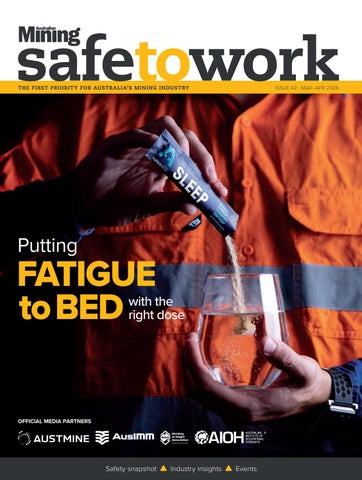
Hitting snooze on fatigue
BODY ARMOUR IS REDEFINING THE FATIGUE CONVERSATION AND PUTTING SLEEP WHERE IT BELONGS – AT THE CENTRE.
Fatigue is now considered one of the leading hidden contributors to serious incidents in mining, with sleep loss shown to impair reaction time and decision-making as much as alcohol. Yet, according to leading hydration and recovery company Body Armour, despite millions invested in equipment, procedures and technology, the condition of the human body remains one of the least controlled safety variables on site.
Mining has made significant progress in managing fatigue through policy, rostering and risk controls. The next big opportunity could lie in supporting the biological drivers of fatigue, including sleep quality, hydration and recovery, to further reduce risk before incidents occur.
To manage fatigue effectively, it’s not enough to recognise the risk; it’s critical to understand how sleep loss affects cognitive performance, reaction time and decision-making at a biological level, Body Armour said.
A 1997 peer-reviewed study by Drew Dawson and Kathryn Reid has
shown that 17 hours of sustained wakefulness produces cognitive impairment equivalent to a blood alcohol concentration (BAC) of 0.05 per cent, while 24 hours without sleep equates to 0.10 per cent BAC, beyond legal driving limits in Australia.
Importantly, workers don’t need to stay awake all night to reach similar levels of impairment, chronic short sleep, disrupted REM (rapid eye movement) and deep sleep, and cumulative sleep debt can degrade reaction time, attention and decisionmaking to comparable levels, often without the individual realising how impaired they are.
In safety-critical industries, fatigue is estimated to contribute to up to 20–30 per cent of serious incidents. Research on shift workers in safetycritical industries shows that fatiguerelated errors peak during night shifts and early morning hours, coinciding with the body’s natural low point in alertness. This means fatigue risk is not limited to extreme cases, but can build through roster patterns,
heat stress and poor sleep quality, increasing the likelihood of nearmisses, procedural lapses and critical errors before anyone sees it coming.
Safe Work Australia now recognises fatigue as a workplace hazard under national work, health and safety obligations, reinforcing that managing sleep-related impairment is not optional. It forms part of an employer’s duty to eliminate or minimise risk so far as reasonably practicable.
THE MECHANICS OF SLEEP
Sleep is not a single state of rest; it is a highly structured biological process made up of repeating cycles, each lasting roughly 90 minutes. Across a full night, the brain typically completes 4–6 sleep cycles, moving through distinct stages that support physical recovery, cognitive performance, emotional stability, and nervous system regulation.
These cycles are divided into non-REM sleep and REM sleep, each playing a different but equally critical role in restoring the body and brain.
Body Armour’s natural formula helps miners avoid deep sleep disruptions.
Non-REM sleep makes up roughly 75–80 per cent of total sleep and includes three stages, progressing from light sleep into deep slow-wave sleep, which is the body’s primary physical repair phase. This is when the body undertakes processes such as physical tissue repair, muscle recovery, immune system restoration, energy replenishment, and release of growth hormones.
REM sleep typically increases in duration during the second half of the
It is not only how long someone sleeps, but also whether they complete full sleep cycles with enough deep and REM sleep. When sleep is shortened, fragmented or mis-timed, as often occurs with shift work, these processes are disrupted.
Sleep restriction also reduces attention, working memory, reaction speed and executive decision-making, all of which are critical for safe work on mine sites.
Even mild dehydration has been linked to increased fatigue.
Images: Body Armour
Fatigue management
Mining rosters often conflict with this natural rhythm. Night shifts, early starts, long swings, fly-in, fly-out (FIFO) travel, heat exposure, and inconsistent sleep schedules can desynchronise the body clock, meaning workers may be required to perform complex, high-risk tasks at times when the brain is biologically programmed to be least alert.
A large meta-analysis examining occupational fatigue found that workers sleeping fewer than six hours per night had a significantly elevated risk of workplace accidents, with risk rising progressively as sleep duration decreased.
Crucially, this level of sleep loss is not extreme; it mirrors what many shift workers and FIFO employees experience during long swings, early starts and night rosters. In practice, this means a meaningful proportion
of the workforce may be operating with a predictable and preventable impairment, even when they feel they are coping.
For FIFO workers, fatigue is also driven by constant environmental change. Time zone shifts, air travel, unfamiliar beds, temperature variation, diet change and altered meal timing can fragment sleep cycles and reduce sleep depth. Circadian and physiological systems do not adapt immediately, with acclimation often taking several days or longer. As a result, a worker may sleep yet still miss the deep and REM sleep required for full cognitive recovery.
In practical terms, according to Body Armour, this means that a worker may have “slept”, but if their sleep cycle and body clock are disrupted they may still be cognitively impaired, slower to react, and more vulnerable to errors on shift.
Sleep restriction reduces attention, working memory, reaction speed and executive decision-making, all of which are critical for safe work on mine sites.
This makes sleep quality, not just sleep quantity, a frontline safety control rather than a lifestyle issue.
HYDRATION, NUTRITION AND SLEEP
Sleep does not operate in isolation; it is strongly influenced by hydration, electrolyte balance, blood sugar stability and nutrient availability.
Even mild dehydration has been linked to increased fatigue, poorer sleep quality, higher heart rate overnight, and reduced next-day cognitive performance.
In hot, physically demanding mining environments, workers can lose more than 1–2 litres of fluid per hour, along with critical electrolytes such as sodium, potassium and magnesium. If not properly replaced, this can contribute to restlessness, cramping, elevated stress hormones, and disrupted sleep.
Nutrition and sleep recovery together play an essential role. Key nutrients like magnesium, glycine, B-vitamins, amino acids and electrolytes improve sleep depth, nervous system regulation, overnight recovery and muscle relaxation.
Stages of the sleep cycle.
FROM AWARENESS TO ACTION
Safe Work Australia’s latest fatigue evidence review highlights that effective fatigue management requires a systems-based approach, not just policy or individual responsibility. This includes organisational controls such as shift design, workload planning, recovery time, training, monitoring, and supportive health interventions, rather than relying solely on personal resilience or self-management.
Body Armour is pushing for mining companies to consider different measures as part of a holistic approach to tackling fatigue:
Education: Understanding the body
Workers who understand how sleep, hydration, heat and fatigue affect performance are more likely to adopt safer behaviours, from pre-shift routines to recovery habits.
Hydration and electrolyte support
Replacing fluids without excessive sugar or artificial additives, and maintaining electrolyte balance, supports nervous system regulation, muscle relaxation, reduced cramps, and improved overnight recovery.
Nutrition that supports recovery
Targeted nutrition before bed, including magnesium, glycine, and calming botanical compounds can help support sleep onset, depth, and recovery, particularly for shift workers.
Re-aligning a disrupted body clock
Light exposure management, caffeine timing, hydration protocols, meal timing, and sleep-support supplementation can assist workers in resetting or stabilising disrupted circadian rhythms over time.
technology and risk controls. Applying the same rigour to sleep, hydration, and recovery is the next logical step in protecting workers and strengthening operational reliability.”
A PERFORMANCE AND SAFETY OPPORTUNITY
“Fatigue management is often framed as a compliance issue, but in reality it is a performance and safety opportunity,” Body Armour director Toni McQuinn told Safe to Work “Mining has led the way in adopting advanced safety systems, monitoring
Essentially, McQuinn said, when workers sleep better they think more clearly, react faster, recover stronger, and make safer decisions.
“We’ve invested heavily in systems to protect our workforce, but the most important system of all is the human body,” he said.
“Sleep, hydration and recovery are more than just wellness extras. They are important safety controls that show us that when we support
how the body recovers, we reduce risk at the source.”
To further support that safety messaging, Body Armour is set to work with industry partners to conduct a large-scale operational trial focused on sleep quality, fatigue risk and recovery strategies in a mining environment.
“The results of this trial will help generate practical, site-relevant insights for the broader industry,” McQuinn said.
“At the end of the day, our goal is to help mining operations address fatigue where it’s often overlooked. By doing so, I’m confident we can create safer sites across the country.”
Body Armour Sleep consists of nutrients that help with nervous system regulation, overnight recovery, and muscle relaxation.
Sleeping it o
FATIGUE IS
JUDGMENT
A
MEASURABLE BIOLOGICAL IMPAIRMENT
THAT CAN COMPROMISE
AND SAFETY LONG BEFORE PEOPLE NOTICE, BUT THE RIGHT KIND OF SLEEP CAN MAKE ALL THE DIFFERENCE.
By Beyond Midnight Consulting fatigue risk management specialist Dr Nick Mabbott
People are unaware of the impact sleep has on work and driving performance. While awake, the brain works hard, consuming lots of brain fuel. That fuel is adenosine triphosphate, one molecule of adenosine and three molecules of phosphate.
When fuel is needed, the phosphate molecules are released into the neurons (brain cells), which fuels them, assisting with communication. The remaining adenosine builds. As adenosine builds (from brain activity), it attaches to receptors on neurons, causing neurons to be inhibited from firing: “The longer you are awake, the dumber you become”.
Research by Dawson et al in 2000 supports this, stating that when a driver is awake 17–19 hours, their performance operating a vehicle is equivalent to having a blood alcohol concentration of 0.05 per cent.
What people don’t necessarily realise (education is key) is that while we sleep the brain recycles adenosine molecules, adds phosphate molecules back and builds brain energy for the
sleep, you’ll wake up feeling refreshed the next morning. If you get six hours, the day starts well but deteriorates quickly after lunch. With five or fewer hours, the brain thinks that you are polyphasic sleeping (more than one session of sleep per day), and when you operate a vehicle, the brain attempts to get more sleep. This is sometimes on the way to work, or at work if operating a vehicle.
ROSTERING, SHIFTWORK AND CIRCADIAN RHYTHMS
Due to circadian disruption, shift workers are at a higher risk of fatiguerelated incidents. The risk is especially high when travelling to or from work.
Myth: “We only work day shift, so there’s no fatigue risk.” I have heard this many times, but it’s far from true. In 2014, I conducted a risk assessment on
Dr Nick Mabbott.
Image: Nick Mabbott
night shifts. I implemented 35 controls, including three hours of training. Day shift workers weren’t trained –because of the myth of no risk. Out of a hundred night shifters over the year, one had a band-aid-worthy finger injury. Several day shift workers (not trained in fatigue management) were hospitalised from incidents. No risk? With appropriate controls, most rosters can be worked safely. However, without communication from employees, the safety team, and a fatigue subject matter expert (fatigue SME), components of risk can be overlooked. I often travel to Queensland and New South Wales as an SME, with 29 years of experience in the field. I am highly appreciative of the effort that mining puts into getting this right.
STAGES OF FATIGUE IMPAIRMENT
Long-distance driving is not the only cause of driver fatigue. If you didn’t sleep long enough to get adequate brain energy, the brain attempts to
sleep to add more energy. The brain has a hierarchy of needs.
Unfortunately, the need to obtain more energy for neurons is higher than it is to keep the person safe. This is why most drivers have microslept while driving. Therefore, it is useful to understand that fatigue impairment comes in stages:
Tired
When you are tired, your eyes become dry, the road becomes monotonous and you feel bored. Decision-making begins to break down. We may make irrational decisions, like being unable to judge gaps in traffic, or errors on overtaking or signage. At a mine, you may take a load of ore to the waste dump, or a load of waste to the run-ofmine (ROM). Some operators forget to drop the load and find the vehicle hard to control going down into the pit.
A two-minute break rectifies this. I suggest parking in a fundamentally stable spot, getting out of the cab and stretch your legs and back. Egress the vehicle and walk around for a minute
or so before returning to the cab. Have a few more stretches and then recommence operations.
Drowsy
The second stage of fatigue impairment, drowsy driving, is where the eyes get heavy, blinks are slower, and you fight the brain’s desire to sleep. At this stage, one forgets where they have been, and may find themselves driving without awareness. This is akin to “the lights are on, but no one is home”. The human brain is preparing you for sleep. Research shows that operators usually have two or three microsleeps before falling into true sleep.
Microsleeps are often not recognised but may be detected by a monitoring system. The best control is to contact your supervisor and have controls put in place (supervisors require appropriate training). At this level, a 20-minute nap may be the best control. Rehydration and food may be useful. A short break will not fix this level of impairment.
Lack of sleep directly increases fatigue and reduces focus at work.
Fatigue management
Where the person falls into true sleep. In these cases, a driver can go off the road for several seconds before the bumpy terrain (or striking objects) wakes them. These can cause fatal crashes. Only a 20-minute nap, or a longer 90-minute sleep cycle plus eating, drinking and stretching can fix this level of fatigue.
THE 20–80 RULE
In most workplaces, around 20 per cent of employees are responsible for about 80 per cent of fatigue-led
issues with help from physicians and sleep coaches. When you fix very poor sleep, you not only make people safer but can add years to their lives.
Fundamental to all of the above, is providing appropriate education on sleep and fatigue management. Improving sleep has a big role in reducing fatigue incidents and increasing mental wellness.
Nothing highlights this more than survey results on sleep length, four months after a training I conducted at Groote Eylandt. The outcomes showed
Among day-shift workers, short sleep of 4–5 hours decreased substantially by 70 per cent, while those sleeping 5–7 hours reduced slightly by 7.4 per cent. Notably, the number of workers achieving more than seven hours of sleep increased by 52.5 per cent.
Similar positive trends were observed on night shift, with very short sleep of less than four hours reducing by 75 per cent and four to five hours decreasing by 28 per cent.
Meanwhile, sleep durations of 5–7 hours increased modestly by 4.4 per cent, and those achieving more than seven hours of sleep rose significantly by 61.5 per cent, indicating an overall shift toward healthier sleep patterns following the training.
If people don’t understand how sleep works, they will unknowingly place themselves and others in danger, particularly when operating equipment on mine sites.
The good news is that fatigue risk can be managed.
With the right education, open communication and sensible controls, most rosters can be worked safely.
When people are taught how to improve sleep, they do so, and the benefits are clear.
Fatigue while operating machinery can lead to microsleeps and serious accidents.
Circadian disruption makes shift workers more prone to fatigue-related incidents.
Image: Roman Vasilenia/shutterstock.com
Nome cuts fatigue risk underground
BY CONTINUOUSLY CAPTURING CRITICAL DATA, NOME’S AUTOMATED MONITORING SYSTEM REDUCES FATIGUE RISK UNDERGROUND.
The link between managing fatigue-related risks and automating operations can’t be ignored, particularly in underground mining, where tasks that once relied on constant human intervention are increasingly being performed remotely.
It isn’t a question of whether workers can do the job; rather, it’s about eliminating situations in which fatigue can influence judgment.
Strata monitoring is one such task, where repeated manual checks can be physically demanding and cognitively draining. By capturing continuous data without relying on routine inspections,
Nome’s RockMonitor XR system helps to reduce some of those risks.
Harnessing its digitalisation and automation capabilities, the system provides real-time insights that cut down the need for frequent human inspections while enabling faster and accurate data-driven responses. Nome’s solution directly addresses one of the key issues in underground operations: fatigue-led errors in monitoring critical conditions.
Traditional monitoring has relied on periodic manual inspections and standalone instruments that only capture snapshots of rock movement. While these methods
have long contributed to safety, they are inherently limited in detecting subtle trends or providing a continuous flow of information.
In contrast, RockMonitor XR captures strata displacement without interruption and triggers automated alerts, allowing risks to be mitigated before they escalate.
At the centre of this system are telltales – fail-safe devices that detect rock movement – installed directly into mine roofs. Each telltale uses two or four spring anchors set at varying strata depths, allowing measurement across multiple layers rather than at a single point.
Nome’s strata monitoring systems help reduce the risk of fatigue-led errors.
The telltales provide two outputs simultaneously. A highly visible physical indicator allows underground personnel to confirm movement manually when required, while the same sub-millimetre data is captured digitally and transmitted in real-time to a central system. This dual approach is designed to ensure critical information is not compromised by fatigue or human error.
Data from each telltale is managed by an underground RockMonitor XR controller, with a single unit able to oversee up to 150 telltales across a 10km monitoring distance. Information is then transmitted to Nome’s CORE software platform, which logs all events, generates automated alarms when pre-set thresholds are exceeded, and provides detailed graphs and historical records.
The system is also designed to integrate seamlessly with a mine’s smart centre, allowing strata conditions to be viewed alongside other operational data, all from a single control room. This integration reduces the need for personnel to travel underground for routine checks, removing them from potentially hazardous areas and from repetitive, potentially fatigue-inducing tasks.
to focus on analysing trends and planning interventions rather than collecting repetitive measurements. This helps to improve production efficiency and overall reliability of ground control practices.
Continuous monitoring also provides clear operational benefits that come with reduced reliance on manual readings, allowing teams
NOME IN ACTION
RockMonitor XR has delivered real-world results that kept mine workers safe.
Manual inspections at a Tier 1 underground mine had previously left safety teams vulnerable to missing early indicators of roof movement. But after installing RockMonitor XR, automated alerts began to be delivered directly to the surface control room.
This subsequently proved to be lifesaving. On one occasion, a warning prompted the evacuation of an area that later experienced a significant roof collapse, and the fact personnel were not present meant the risk of injury or fatality was avoided. This kind of example
shows how vital continuous monitoring is in mitigating risk, influenced by fatigue or otherwise.
Workers remain responsible for interpreting data and making operational decisions, but the accuracy and timeliness of information no longer depend solely on alertness at a specific moment.
Fatigue may still be present, but its potential influence on critical decisions is reduced.
By delivering continuous, real-time data, the RockMonitor XR allows mines to move from reactive safety measures to proactive risk management. The system provides decision-makers with the information they need to act early and safely maintain stable underground operations, all while reducing dependence on tasks that are vulnerable to fatigue.
Nome – bolstered by its motto to save lives and revolutionise industries –ultimately demonstrates that automation and fatigue management are not separate priorities. When applied together, they help to create safer, more predictable mining environments.
Images:
Nome’s RockMonitor XR system does more than just accurately monitor strata; it also helps manage fatigue.
Nome’s systems are designed in a way that ensures critical information is not compromised, and safety is maintained.
Stepping away from fatigue
MULTI-FACETED SOLUTION-PROVIDERS
LIKE SAFETY MATE ARE HELPING MINE SITES REDUCE FATIGUE BY CUTTING THE PROBLEM DOWN AT ITS ROOTS.
Fatigue on a mine site usually doesn’t come down to just one factor. More often, it’s the result of long hours on foot, sustained physical effort, heat exposure and dehydration accumulating over the course of a shift. Left unmanaged, it can affect alertness, coordination and decision-making, increasing risk for operators and their teams.
As fatigue management continues to mature across the mining sector, attention is shifting toward practical controls that support workers throughout the working day. Beyond scheduling and rest protocols, there is growing recognition that what workers consume and what they wear plays a
The ARCKUP range contains a balanced blend of electrolytes, including magnesium, potassium, calcium, sodium and zinc.
direct role in how they safely perform and recover on site.
Two Safety Mate products are gaining attention for their roles in addressing fatigue from different angles: ARCKUP Hydration, developed to support hydration, energy and recovery in extreme conditions; and KAMU anti-fatigue boots, designed to reduce physical strain during long periods on hard ground.
Together, they reflect a more considered approach to fatigue management, one focused on maintaining performance across the full length of a shift, rather than responding once fatigue has already set in.
HYDRATION AS A FATIGUE CONTROL
Dehydration remains a primary contributor to fatigue in the mining industry. High temperatures, physical work, heavy personal protective equipment (PPE), and lengthy shifts all significantly increase fluid and mineral loss, particularly during long or repetitive tasks.
While water is essential, it does not replace the electrolytes lost through sweat, nor does it support muscle recovery or sustained energy on its own.
ARCKUP Hydration was developed to address these gaps. ARCK Solutions, the company behind ARCKUP, is a majority Indigenousowned Australian business with a focus on improving hydration and wellness standards across physically demanding industries.
Designed for people working in high-stress, high-heat environments, ARCKUP provides a practical option that fits easily into existing site routines.
Each sachet contains a balanced blend of electrolytes, including magnesium, potassium, calcium, sodium and zinc. These minerals support fluid balance, muscle function and nerve signalling, helping reduce the likelihood of dehydration-related fatigue and cramps during a shift.
To support sustained energy, ARCKUP also includes vitamins B6, B12 and C. These play a role in energy metabolism and cognitive function, helping workers maintain concentration during safety-critical tasks. For physically demanding roles, branched-chain amino acids (BCAAs) are included to assist muscle recovery and reduce soreness, supporting better recovery between shifts.
Available in six flavours, ARCKUP is designed to encourage consistent
use. When hydration is easy to prepare, portable and palatable, workers are more likely to drink regularly throughout the day, an important factor in preventing fatigue before it escalates.
REDUCING FATIGUE FROM THE GROUND UP
While hydration supports internal performance, the physical demands placed on miners’ feet and lower limbs are equally significant.
Long periods of standing or walking on hard or uneven surfaces can contribute to muscle fatigue and joint strain, all of which affect focus and endurance as a shift progresses.
KAMU anti-fatigue boots combat those conditions with their energy return and comfort-focused design. At the core of the range is the Infinergy midsole by BASF, a technology originally developed for athletic footwear. Unlike traditional soles that absorb impact and dissipate energy, the Infinergy midsole returns energy with each step, reducing the effort required to stay mobile over long periods.
For workers covering large areas on site or performing repetitive tasks, this reduction in physical strain can help slow the onset of fatigue and improve comfort across a full shift.
The KAMU range is also built with climate management in mind. Breathable COOLMAX linings, ventilation features and antimicrobial properties help manage heat and
moisture inside the boot, reducing discomfort and odour during long workdays. Not only do these boots help manage fatigue but they also lace-in several safety benefits.
KAMU boots feature steel toe caps rated to 200 joules, heat-resistant soles, slip resistance and resistance to fuel, oil and common chemicals.
Importantly, the range includes men’s and women’s styles, with women’s boots designed using gender-specific lasts and sole moulds. This is designed to ensure proper fit and support for all workers, recognising that comfort and fatigue management are closely linked.
Fatigue management in mining is increasingly about stacking small,
practical controls that work together to make a meaningful difference.
Hydration, footwear, PPE and recovery all play a role in keeping workers alert, capable, safe and invigorated across long shifts in challenging conditions.
By pairing ARCKUP Hydration with KAMU boots, Safety Mate is supporting a more integrated approach to managing fatigue that addresses internal and external contributors to physical and mental strain.
These solutions help operators and managers maintain consistent performance, recover more effectively, and finish their shifts in better condition than they started.
ARCKUP’s hydration options are available in six flavours.
KAMU anti-fatigue boots help workers combat muscle fatigue and joint strain.
KAMU’s Infinergy midsole returns energy with each step.
Exhaling the fatigue
CLEANSPACE IS ADDRESSING FATIGUE ON MINE SITES BY DEVELOPING RESPIRATORS THAT MAKE BREATHING EASIER OVER LONG SHIFTS.
When people think about fatigue on a mining operation, they’re likely to assign blame to common culprits, such as dehydration, irregular sleep, lengthy shifts and physical exertion. Rarely, however, is it traced back to something as simple as respiration.
“People don’t always think about breathing as work,” CleanSpace global technical product director Jon Imms told Safe to Work. “But if you make breathing harder for eight, 10 or 12 hours, it absolutely contributes to fatigue.”
In mining, making this almost involuntary act more difficult often comes down to using the wrong respirator.
Traditional negative-pressure masks – including disposable paper masks and elastomeric respirators – require the wearer to draw air through a filter using their own lung power. As dust and particulates build up, that resistance increases, forcing the body to work harder with every breath.
“It’s subtle but it can add up,” Imms said. “Over a full shift, that extra effort contributes to physical and mental tiredness.”
For miners already carrying heavy personal protective equipment (PPE),
cap lamps and other tools, that added respiratory labour can tip the balance from manageable tiredness into complete exhaustion.
“When fatigue sets in, it leads to a drop in focus, reaction times slow down and the risk of error increases,” Imms said. “In mining, that’s a big safety issue.”
CleanSpace’s powered air purifying respirators (PAPRs) are designed to remove that burden by actively supplying air in response to the wearer’s breathing. Using the patented AirSensit system, the
respirator automatically adjusts airflow, reducing breathing resistance and helping wearers maintain energy over long shifts.
“The goal is to support the body without draining it,” Imms said. “If breathing feels effortless, you conserve energy for the work that actually matters.”
Despite these benefits, PAPRs in general have traditionally struggled to gain traction in mining environments.
The reason, Imms said, has little to do with performance and more to do with convenience.
CleanSpace’s powered air purifying respirators reduce breathing resistance.
“Most mainstream PAPRs on the market are too cumbersome and impractical for daily use. They’re bulky and awkward,” he said.
“In some cases, it looks like operators are carrying a vacuum cleaner on their backs.”
The weight distribution also makes tasks more physically demanding, especially in confined spaces or when frequently climbing in and out of vehicles.
“It might offer protection, but it slows you down and wears you out,” Imms said.
This is why workers frequently revert to simpler negative-pressure masks, despite their drawbacks; they may be harder to breathe through, but they feel less restrictive and easier to move in.
To solve the issue, CleanSpace decided to take a different approach. By stripping away belts, hoses and excess bulk, the company developed a compact, lightweight PAPR that delivers high-level respiratory protection without adding to the wearer’s physical load.
“It means less drag on the body over time for miners,” Imms said. “As a result, there’s less fatigue at the end of the shift.”
CleanSpace respirators also reduce fatigue at an operational level. With fewer components to clean, maintain and store, they simplify on-site PPE management, reducing downtime and friction that can wear teams down over time.
“We’re the lightest and easiest respirator out there,” Imms said.
“Once people experience the difference, it just makes sense.”
Imms states that with confidence, given the success the company has had in other settings.
In a pharmaceutical laboratory in Europe, assistants were experiencing unexpected exhaustion at the end of each day.
The environment was cool and controlled, but workers were finishing shifts feeling completely drained.
“They weren’t doing heavy labour,” Imms said.
“Yet they were going home with nothing left in the tank.”
The unexpected culprit was an innocuous paper face mask, worn for hours on end.
“So we got them to try our product, and the feedback that came back was really unusual,” Imms said.
After long days on the job, many workers said they previously barely had the energy to enjoy the things they cared about most – like spending time with their families. But something changed after switching to a PAPR.
“We’re not completely spent anymore. We can actually go home and still have energy for our families,” one assistant said, encapsulating CleanSpace’s commitment to ‘freeing the way customers breathe’.
By tackling exhaustion where it’s often overlooked, CleanSpace is helping industries rethink respiratory protection beyond just a safety requirement, but rather as an effective tool to manage fatigue. This ethos continues to drive the company’s mission to create small, easy-to-wear respirators that make breathing what it’s meant to be – effortless.
The CleanSpace range uses the patented AirSensit system, which helps wearers maintain energy over long shifts.
With CleanSpace, there’s less drag on the body over time for miners, resulting in lower fatigue levels.
Images: CleanSpace Technology
Fatigue management
Being forward-thinking with fatigue
RECENT ADVANCES IN PREDICTIVE MODELLING AND DATA-DRIVEN INSIGHTS ARE TRANSFORMING HOW THE MINING INDUSTRY IDENTIFIES, MEASURES, AND CONTROLS FATIGUE RISK.
By Melius Consulting scientific consultant Dr Tim Smithies
Over the last decade in the global mining industry, there has been a quite dramatic shift away from managing fatigue through a compliance-based approach towards a risk-based approach.
A risk-based approach is concerned with identifying, measuring, controlling (as far as reasonably practicable) and monitoring fatigue-related risks and hazards, rather than simply meeting guidelines or thresholds. This shift aligns with guidance changes across Safe Work Australia and other legislative bodies, as evident when comparing the new Model Code of Practice for Managing the Risk of Fatigue at Work with the previous Code of Practice published in 2013.
Methods used to control fatigue risks and hazards can be broadly categorised into three groups: predictive controls (work schedules and organisational factors); proactive controls (individual fatigue and fitness for work); and reactive controls (identifying the role of fatigue in incidents or events). In the mining industry, perhaps the most significant innovation in fatigue management is regarding predictive controls, mainly due to the increased (effective) use of biomathematical modelling.
Biomathematical models are complex mathematical models that use work scheduling information and/or sleep and wake behaviour as input data, and predict sleepiness, alertness, fatigue risk or other fatiguerelevant outcomes.
Many scientifically validated models exist; however, almost all of them are centred around a complex interplay between “homeostatic processes” (a cumulative drive for sleep that builds while humans are awake) and the impact of circadian rhythms (biological rhythms with a near-24-hour period) on human sleep and alertness.
Biomathematical modelling in of itself is not new; it has been used in aviation and military for over 20 years. The innovation, however, is in how these models are being used in the mining industry. The focus in mining had traditionally has been solely on estimating total fatigue risk across entire work designs or roster patterns; essentially, using these models to dichotomise “safe” and “unsafe” rosters in a go/no-go fashion.
But more recently we have observed increased interest in using these models not just as a go/
understanding of the magnitude and timing of fatigue risk within a given work structure.
This information can then be used for:
• time-specific tasks (avoiding safetycritical functions during periods of high inherent fatigue risk)
• assigning overtime and additional shifts in as safe a manner as possible
• identifying times of “high-alert”, where awareness of fatigue and the controls need to be heightened.
Dr Tim Smithies.
Most biomathematical models focus on how sleep drive and circadian rhythms a ect alertness.
This approach is not only richer in value but better aligned with the original intent of use for many of these model biomathematical models. We at Melius Consulting, alongside colleagues from the Appleton Institute at CQUniversity (with which I am also affiliated) and Rio Tinto Iron Ore, have recently had an article accepted into the Annals of Work Exposure and Health, which further discusses biomathematical model use in fly-in, fly-out (FIFO) mining contexts.
The use of biomathematical modelling requires a level of expertise in the workings of the models, the programs that house them, and the careful consideration of inputs, to obtain meaningful and accurate outputs. The last point is crucial; details of a work schedule – for example, start/finish times, commute durations, FIFO versus residential work – can have dramatic impacts on the inherent fatigue risk, which will be reflected in model outputs. As always,
junk in equals junk out. Correctly interpreting outputs is essential and can be tricky for a naive user, and the visualisations that come from these models by default are often not easy to interpret. To counter this, we have a set of processes and tools that ensure,
Existing
when biomathematical modelling is used, our findings are reliable, transparent and interpretable so actions can be swiftly and confidently taken to reduce fatigue risk.
Innovation is also evident in proactive controls, mainly through
Mining is moving from compliance-based to riskbased fatigue management. Image:
Fatigue management
improvements and increased use of fatigue-detection technologies and individual health monitoring. The use of continuous monitoring technologies, particularly those that measure physiological factors (often ocular metrics) in real time to assess fatigue levels, is increasingly pervasive in transportation and vehicle operations.
Regarding health monitoring, sleep monitoring programs using wearable technology (which have both increased in acceptance and improved in accuracy, particularly for sleep measurement) can enable a better understanding and management of the organisational and individual
recognised, we are seeing success through programs that screen for these factors and provide pathways to treatment when concerns or diagnoses are observed.
Lastly, high-quality sleep health and fatigue education, while an administrative control, enables team members and leaders to make lifestyle changes and better fatigue-related decisions in the workplace, and thus its impact cannot be understated. As access to health information (both the good and the pseudoscientific) becomes increasingly available through social media, the importance of this education being rigorous, evidence-based, and delivered by field experts is at an all-time high.
Perhaps the lowest-hanging fruit for many organisations can be found
by looking inwards at the health and safety data they already collect. Many mining organisations are collecting troves of data that can be used to better understand (and hence manage) fatigue-related trends in their workplaces, but this data is not tapped into.
Sources of this data include fatigue detection technologies, gate swipe-on/off systems, alcohol and other drug (AOD) testing, and human resources data. These data sources can be integrated and analysed to identify trends in fatigue prevalence and its potential impacts on workplace safety. Effective utilisation of existing data sources can lead to a better understanding, and ultimately better management, of fatigue risk in mining operations.
Biomathematical models help predict fatigue risk across rosters and plan safer work schedules.
Engineered for Impact
Toughest Jobs
In mining, there’s no room for compromise. Mining crews operate in some of the harshest and most demanding environments on Earth. You need hand protection that performs – without compromises. That’s where the BLACK DOG IMPACT CUT F steps in.
MAXIMUM PROTECTION
Rated Cut Level F – the highest possible under Aus standards – for extreme cut resistance in high-risk environments.
IMPACT READY, STILL FLEXIBLE:
Strategically designed impact protection across the knuckles and back of hand – without sacrificing flexibility or comfort.
PRECISION MEETS COMFORT:
A featherlight 18-gauge liner o ers superior dexterity and all-day wearability – no bulk, no compromise.
TOUCHSCREEN COMPATIBLE:
INTRODUCING THE GLOVE THAT DELIVERS WHERE IT MATTERS MOST. 4 4 4 4 4 4
Seamlessly switch between tools and tech without removing your gloves.
BETTER FOR WORKERS. BETTER FOR THE WORLD
Made with recycled materials, supporting sustainability without compromising safety.
MORE THAN A GLOVE – A CAUSE:
Every purchase supports mental health awareness through our partnership with the Black Dog Institute.
Get serious about safety – without giving up comfort, dexterity, or conscience.
The Black Dog Impact Cut F –Tough on hazards. Easy on hands. Strong for a cause.
Deciphering the fatigue code
SAFE WORK AUSTRALIA’S NEW CODE OF PRACTICE OFFERS MINING OPERATIONS A CLEAR AND PRACTICAL FRAMEWORK FOR EFFECTIVELY MANAGING FATIGUE.
The nation’s mining industry has one of the highest proportions of workers logging more than 50 hours per week, according to the Australian Bureau of Statistics’ Census of Population and Housing 2021. Such long hours, paired with demanding tasks, remote locations and rotating shifts, make fatigue a persistent challenge in the industry.
Fatigue – described by Safe Work Australia (SWA) as a “state of physical, mental, or emotional impairment” –can affect decision-making and reduce reaction times, while increasing the likelihood of workplace incidents.
In mining, where workers operate heavy machinery, perform tasks at height, and monitor complex processes, this level of tiredness can be a serious safety hazard.
Recognising this situation, SWA has released a new model code of practice
to provide practical guidance to employers on managing health and safety risks related to fatigue at work.
While fatigue is a known hazard across many industries, the risks can be amplified across the mining sector.
“Fatigue not only creates a risk to workers’ health; it also increases the risks associated with other Work Health and Safety hazards,” a SWA spokesperson told Safe to Work
The new code, ‘Managing the risk of fatigue at work’, states that these risks can be managed by preventing workers from becoming fatigued and putting in place control measures to minimise the impacts of fatigue when it does occur.
SWA’s guideline emphasises that fatigue can arise from multiple sources. While long hours and night shifts are obvious contributors, the physical and psychological
demands of tasks, the work environment, and individual worker factors are also important.
“The code … addresses all causes of fatigue [and] where it is not reasonably practicable to address one cause of fatigue, you may need to do more to control other causes,” the spokesperson said.
For example, if extreme heat or cold cannot be avoided, SWA states schedules should allow for additional breaks to reduce the risk of fatigue.
The model also stresses that managing fatigue is a shared responsibility, with both employers and workers having duties and opportunities to control fatigue risks.
LIFE ON THE FLY
Certain work arrangements or conditions amplify fatigue risk in mining, with remote fly-in, fly-out (FIFO)
in particular adding more strain. The new code is designed to addresses this issue by including an example on FIFO work, highlighting some of the risks associated with this kind of work and how they can be controlled.
In the mentioned case study, a mining company constructing facilities in a remote area identified fatigue as a key risk before work began and conducted a thorough risk assessment in consultation with workers, drawing on their previous experience.
The assessment revealed multiple hazards: some trialled shift designs had created fatigue risks through long working hours, long commutes from the nearest airport added to the strain, and seasonal heat and humidity increased physical demand.
Noise on site and poorly scheduled cleaning disrupted sleep, while accommodation with ineffective window treatments made resting during daylight difficult.
Alcohol availability and the requirement to operate plant and perform work at height further increased risks. To manage these hazards, the company implemented a comprehensive fatigue management strategy consistent with the code’s principles.
The code highlights ‘reasonably practicable’ fatigue management, balancing the highest safety with real-world operational demands.
Maximum work hours were limited, minimum rest periods enforced, and on top of that, recovery time between shifts was planned.
Night shifts were minimised where feasible, while schedules accounted for FIFO travel, time zone adjustments, family and social impacts, and mental health considerations.
Additionally, workers were transported between the airport and site by bus to reduce commuting fatigue, and outdoor work was scheduled to avoid extreme weather, with additional breaks when necessary.
Accommodation was also designed to support rest; rooms were located away from communal areas, noisy activities scheduled outside sleep periods, and beds, soundproofing, air conditioning and blackout curtains were provided.
Alcohol availability was limited, workers were encouraged to maintain good sleep hygiene, and systems were implemented to prevent fatigue-related errors during high-risk tasks.
Putting measures in place resulted in a workforce that was rested and able to perform safely under demanding conditions.
BALANCING SAFETY AND REALITY
Another key feature of the code is that it stresses the importance of adopting ‘reasonably practicable’ fatigue management systems.
“The concept of ‘reasonably practicable’ aims to provide the highest level of safety while allowing for the individual circumstances of different industries and roles,” the SWA spokesperson said.
“There may be circumstances where a particular control measure used in other industries is not reasonably practicable in some mining
operations, but that does not remove the requirement to ensure the safety of workers. Where it is not reasonably practicable to control fatigue risks in one way, an employer may need to do more to control it in other ways.”
For example, while there is a higher risk of fatigue when working during normal sleeping hours, such as night shifts, it may not be reasonably practicable to avoid all night shift work, so the employer may need to provide longer recovery periods between shifts or more frequent breaks during shifts to minimise the risk of fatigue.
SWA believes even operators with established fatigue management systems should still review the model code to identify any new information or control measures that could further strengthen their risk management approach.
This helps to ensures schedules, accommodation, tasks, and worker engagement strategies remain effective and that fatigue is managed in line with best practice.
Minding your fatigue
LIFELINE WA’S INNOVATIVE RESOURCEFUL MIND PROGRAM IS HELPING MANAGE A LESSER-KNOWN FATIGUE-CAUSING AGENT: MENTAL HEALTH.
By Lifeline WA clinical governance manager Dr Jon Pfaff
The mining industry is often defined by challenging work environments, characterised by high workloads, risky conditions, and rigorous organisational systems.
Traditionally, fatigue management within this sector focused almost exclusively on physical exhaustion and sleep deprivation. However, emerging research and landmark studies now highlight that fatigue is not merely a biological by-product of long shifts; it is intrinsically linked to the mental health and psychological wellbeing of the workforce.
As the industry transitions into “Mining 4.0,” where robotised processes and new technologies require workers to coordinate intense mental and physical resources, the need for innovative fatigue management that addresses the “whole person” has never been more critical.
THE MENTAL HEALTH–FATIGUE NEXUS
Anxiety, job stress, and depression can lead to mental fatigue in mine workers. Unlike physical tiredness, which might be remedied by a single sleep cycle, mental fatigue
stems from prolonged psychological distress and the unique stressors of the mining lifestyle.
Research shows that factors such as the fly-in, fly-out (FIFO) system can impoverish the quality of rest, while longer shift schedules shorten the time available for childcare, household activities and genuine recovery.
Peer support helps workers recognise fatigue and mental strain early.
Dr Jon Pfa .
Image: Jon Pfa
The impact of this psychological strain is a primary driver of overall fatigue levels. Mine workers often accumulate a “sleep debt” during their rostered swings, which is not easily recovered during short periods of rest and recreation (R&R).
Furthermore, high job demands, coupled with low control over work tasks and rosters, are associated with fatigue. This creates a cycle: psychological distress leads to decreased sleep quality, which manifests as heavy mental fatigue, reducing the worker’s ability to focus and attend to safety-critical tasks. There are consequences of not managing this intersection of mental health and fatigue.
Mental fatigue has been found to reduce the frequency and standard of safety inspections, while fatigue and sleep deprivation augment the risk of fatal accidents, which remain a persistent risk in the sector. Beyond physical safety, untreated mental health conditions cost Australian employers billions annually in absenteeism, presenteeism, and compensation claims.
A significant barrier to innovation in this space has been the “macho” culture and the stigma surrounding mental health help-seeking. Many workers, particularly men, feel they
must “suck it up” to avoid being labelled as unable to handle the job. There is a pervasive fear that disclosing mental health struggles or fatigue-related issues will lead to being “blacklisted” or losing one’s job. Consequently, many workers adopt a brave face, hiding their suffering
POWER OF THE RESOURCEFUL MIND PROGRAM
Recognising that past research has found those working in the mining sector have often felt organisational support was tokenistic, stigmatised or lacking, the industry has begun embracing peer-led
Image: suloara/shutterstock.com
collaboration between Lifeline WA and
Mental health is a critical part of fatigue management and workplace safety.
Addressing isolation and loneliness reduces mental health risks and fatigue.
Fatigue management
This program addresses the reality that workers are often more comfortable talking to a peer on their own level than a supervisor or a distant clinician.
Resourceful Mind focuses on building resilience by training selected workers – often referred to as “minders” or “connectors” – to provide on-site support. These individuals are equipped to identify early signs of psychological distress and fatigue in their colleagues, providing a safe and confidential sounding board.
This peer-to-peer approach is a vital innovation in fatigue management because it tackles the isolation and loneliness that are strongly linked to poor mental health and increased fatigue in FIFO samples.
By fostering a culture where it is acceptable to discuss mental strain, programs like Resourceful Mind help to mitigate the risk of burnout, a state of mental exhaustion caused by prolonged stressors. When workers feel supported by their teammates and have outlets for social connection, their
levels of psychological distress decrease and their sense of thriving increases, directly improving their fitness for work.
SUPPORTING SAFETY AND THE FUTURE OF MINING
Innovation in fatigue management also supports the industry’s zeroharm goal. Research indicates safety behaviours, such as compliance and participation, are significantly higher when workers perceive a positive psychosocial safety climate where their mental health is valued as much as productivity. Programs that empower workers to look out for one another help build this climate from the bottom up.
Furthermore, as the industry moves toward autonomous machinery and artificial intelligence, the nature of fatigue is shifting from physical exertion to cognitive load. Workers now need to remain vigilant for long periods while monitoring complex systems, a task that is highly susceptible to the “ironies of automation,” where reduced
situational awareness can lead to errors. Innovative peer support programs ensure workers remain mentally sharp and adaptable, qualities that are essential for the safe operation of future mine sites.
Managing fatigue in the modern mining era requires a holistic approach that places mental health at the forefront of safety strategies.
The evidence is clear: psychological distress, roster dissatisfaction, and social isolation are as much a cause of fatigue as hours worked. Innovations like the Resourceful Mind program represent a significant step forward, breaking down the barriers of stigma and providing authentic, peer-led support that strengthens the industry’s safety culture.
To ensure the sustainability of the mining workforce, organisations must continue to move beyond “tick and flick” safety inductions and invest in the mental resilience of their people. By treating mental health as a core component of fatigue management, the industry can protect its most valuable resource: its workers.
Strong team connections support overall wellbeing and safer work.
expanded the floor plan but spaces won’t last
The Stanley Hotel and Suites Port Moresby, Papua New Guinea
1-2 July 2026
Download Prospectus
Secure your spot and showcase your business to the industry’s key players
The value of safety
REMA TIP TOP’S CORE VALUES HELP DRIVE SAFER OPERATIONS AND CREATE A CULTURE WHERE EVERY WORKER HAS A VOICE.
The values by which a company conducts itself should always show up where it matters the most: on -site. And when a mine operator works with a business grounded in Respect, Equality, MateSafe and Accountability, that partnership directly translates to safer operations and stronger teams.
“Our core values really guide the way we operate in the field,” Rema Tip Top general manager of operations Dean Lancaster told Safe to Work
While it’s common for businesses in the industry to be guided by similar values, Rema Tip Top, which provides a full range of surface protection and material processing products supported by a 24–7 service network of over 400 experienced personnel, distinguishes itself by how steadily and authentically those virtues are lived out every day.
Respect, Lancaster said, means the company takes the time to understand each site’s risks and listen to the client’s expectations before planning even starts.
Equality ensures every team member has a voice in the risk assessment; no one’s experiences or concerns are dismissed.
MateSafe drives the way Rema Tip Top personnel look out for each other, especially during high-risk tasks.
“We build buddy systems and communication checks into our planning,” Lancaster said.
Accountability means everyone owns their part of the job, follows procedures and speaks up when conditions change.
“Those values keep our approach consistent, even when the environment is unpredictable,” Lancaster said.
With a global service network supporting materials processing, surface protection and automotive operations, Rema Tip Top’s work often takes place in highrisk, operationally complex environments, making consistent safety practices essential.
concerns aren’t overlooked. The aim, Lancaster said, is to make sure every worker has the same opportunity to influence safety, regardless of where they’re based.
That mindset also shapes how the company approaches accountability in day- to -day work, with Lancaster pointing to a pertinent example.
With crews working across multiple mine sites, Lancaster believes creating these safety standards comes down to empowering people on the ground by putting them on equal footing.
“Every technician has full stopwork authority, no questions asked,” he said. “Our pre-starts and toolbox meetings are designed so everyone contributes to hazard identification, not just the supervisor.”
Digital reporting tools allow crews to log hazards and near misses from anywhere, while regular check-ins with remote teams ensure
During a conveyor maintenance job, a technician identified a secondary energy source that hadn’t been isolated. Rather than assuming it had been addressed, he raised the issue immediately, prompting the team to stop the job and review the isolation plan.
“The procedure didn’t clearly cover that energy source,” Lancaster said.
“From that, we introduced a cross-check process and updated the isolation checklist.
“The big lesson was that assumptions are dangerous, and speaking up early prevents incidents.
Accountability is a key trait embodied by Rema Tip Top workers out on the field.
Rema Tip Top believes in actively adopting feedback received from frontline teams to ensure safer outcomes.
Images: Rema Tip Top
That improvement is now used across multiple sites.”
Alongside shared responsibility, Rema Tip Top’s technicians understand the value of truly looking out for each other, especially during high -risk periods such as shutdowns, which place additional pressure on crews, making communication and teamwork critical.
“Shutdowns are a great example where MateSafe really shows its value,” Lancaster said.
“Supervisors set the tone by checking in with people regularly, especially during long shifts or night work. We use buddy systems so no one is working alone during critical tasks.”
Technicians are also encouraged to watch for signs of fatigue or distraction in their workmates and call it out early.
“It’s a culture where you don’t just focus on your task, you actively
protect the people around you,” Lancaster said.
Strong on - site relationships, Lancaster added, are built on professionalism and open communication with mining partners.
“We [show up] prepared and we follow the client’s procedures. We value cultural awareness, especially when working with diverse teams,” he said. “We communicate openly with our mining partners about risks, delays, or changes so there are no surprises.”
Internally as well, Rema Tip Top especially recognises good work and maintains zero tolerance for disrespectful behaviour.
“When people feel respected, they’re more engaged, more willing to speak up, and more committed to safety,” Lancaster said.
Part of that two-way respect is actively adopting feedback received from frontline teams, which continues
to drive safety improvements across the business.
“Technicians regularly submit hazard reports and suggestions, and we capture insights during shutdown debriefs,” Lancaster said.
One example was the introduction of the ‘chalk talk’ initiative, developed after concerns were raised about finger injuries and pinch -point risks on conveyors. Before work begins, teams now mark line - of- fire and pinch -point areas with chalk, creating a visual reminder of high -risk zones, an approach that led to a significant reduction in incidents at the site.
Ultimately, Rema Tip Top’s quartet of values is about cutting down similar risks and ensuring safety is always a priority.
“Those values exist for one reason,” Lancaster said. “To make sure the right decisions are made on site every time.”
Rema Tip Top personnel look out for each other, especially during high -risk tasks.
Making mines intelligent
HELIX BY MST
GLOBAL UNLOCKS REAL-TIME INTELLIGENCE FOR CONNECTED SAFETY AND OPERATIONAL VISIBILITY, UNIFYING PEOPLE, EQUIPMENT AND UNDERGROUND OPERATIONS.
Safety in modern mining is no longer confined to isolated systems, manual tagboards, or delayed reports. As underground operations grow in scale and complexity, mines require real-time, integrated visibility across people, equipment, environments, and processes. MST Global’s HELIX platform addresses this challenge through an agnostic, modular digital ecosystem that unifies data sources into a single geospatial digital twin, enabling proactive safety management across the entire mine.
At its core, HELIX is designed to be technology-agnostic, interoperable, and scalable. It integrates data from sensors, wearables, mobile equipment, automation systems, and networks – regardless of vendor or wireless technology – into a real-time 3D representation of surface and underground operations. This holistic visibility fundamentally changes how mines manage safety, shifting from reactive responses to proactive, datadriven prevention.
A SINGLE SOURCE OF TRUTH
One of the most significant safety challenges underground is fragmented information. Personnel locations, environmental conditions, equipment status, and production activities often exist in separate systems, creating blind spots during normal operations and emergencies. HELIX resolves this by acting as a centralised “single source of truth,” visualising all safety-critical data within a unified geospatial digital twin.
Using HELIX 3D Connect, mines gain real-time location awareness of personnel and assets across both surface and underground environments. The platform supports
multiple positioning technologies –including Wi-Fi, Bluetooth low energy (BLE), global navigation satellite system (GNSS), and ultra-wideband (UWB) – allowing operations to select the most appropriate technology for each zone while maintaining a consistent view in one system. This approach ensures reliable tracking even in complex underground conditions, which is critical for safety applications such as collision avoidance, proximity detection, and evacuation management.
Another cornerstone of underground safety is real-time personnel visibility. HELIX Sentinel replaces traditional physical tagboards with a dynamic electronic system that continuously displays the location and status of underground workers. Supervisors can instantly see who is underground, where they are working, and which zones are occupied.
In a critical scenario – such as
on radio check-ins or manual headcounts, control room operators can immediately identify affected personnel, prioritise evacuations, and communicate directly with individuals based on their real-time location. This reduces response times, minimises confusion, and significantly lowers the risk to workers during emergencies. Beyond emergency response, Sentinel also improves day-to-day safety compliance.
Automated zone monitoring and geofencing can alert supervisors when personnel enter restricted or hazardous areas, enabling early intervention before an incident occurs.
SAFETY THROUGH AUTOMATION
HELIX extends safety beyond visibility by enabling intelligent automation. Through the HELIX Automation module, mines can connect sensors, controllers, and third-party systems
Images:
HELIX can automatically adjust fans to deliver airflow only where people are working.
By combining personnel location data with environmental sensors, HELIX can automatically adjust fans to deliver airflow only where people are working. This not only improves air quality in active areas – reducing exposure to dust and gases – but also prevents over-ventilation in unoccupied zones.
The result is safer working conditions paired with reduced energy consumption and operating costs.
Similarly, automation rules can control doors, traffic lights, and pumps based on real-time location and sensor data. For instance, vehicle access can be restricted when personnel are detected nearby, reducing collision risk in confined underground spaces. These automated responses remove reliance on manual intervention, reducing human error while maintaining consistent safety controls.
Underground vehicle interactions are another major safety risk.
HELIX Dispatch and Telemetry modules provide real-time visibility into fleet movements, equipment health, and production activities throughout the mine.
When integrated with location intelligence, dispatchers gain a clear understanding of traffic flows, congestion points, and unsafe interactions. For example, if equipment enters a high-risk intersection or operating zone, supervisors can be alerted immediately. Historical movement data also allows teams to analyse near-miss events and redesign traffic rules or layouts to prevent future incidents. Over time, this continuous feedback loop improves both safety and operational efficiency.
Telemetry further enhances safety by monitoring machine health and alarms in real time. Early detection of overheating, pressure anomalies, or mechanical faults allows maintenance teams to intervene before equipment failures escalate into safety incidents.
The true value of HELIX lies in its ability to connect safety and efficiency. Real-time visibility eliminates data latency, allowing decisions to be made based on current conditions rather
If equipment enters a
than outdated reports. Supervisors can see how safety events impact production and adjust plans dynamically, balancing risk reduction with operational continuity.
For instance, if a hazardous condition restricts access to a working area, HELIX enables rapid redeployment of personnel and equipment to alternative locations. This reduces downtime while maintaining strict safety controls. Over time, analytics derived from HELIX data help identify recurring safety risks, optimise workflows, and support continuous improvement initiatives.
A FUTURE-PROOF PLATFORM
Mining operations evolve, and safety systems must evolve with them.
HELIX’s modular, interoperable architecture ensures mines can scale functionality over time, integrate new technologies, and avoid vendor lock-in.
Whether deploying advanced tracking, IoT sensor networks, or automation workflows, HELIX provides a consistent safety framework across the entire operation.
By unifying people, assets, environments, and automation within a real-time geospatial digital twin, HELIX transforms safety management from reactive oversight into proactive control.
The result is a safer mine, a more efficient operation, and a workforce empowered by visibility, intelligence, and confidence underground.
MST Global’s HELIX platform gives site managers a holistic picture of surface and underground operations.
high-risk intersection or operating zone, supervisors can be alerted immediately through HELIX.
An animated lesson in safety
ANGLO AMERICAN HAS BROUGHT A CRANE ROLLOVER BACK TO LIFE THROUGH ANIMATION, TURNING THE INCIDENT INTO AN INDUSTRY-WIDE SAFETY LESSON.
Near misses are among the most powerful – and underused – tools for improving safety in the resources sector. That’s why Anglo American has sought to use an on-site incident as the catalyst for an animated reconstruction designed to share critical safety lessons across the industry.
On the morning of December 10, 2024, a 40-tonne crane at Anglo American’s Grosvenor mine in Queensland’s Bowen Basin rolled over during what appeared to be a routine pick-and-carry operation. The crane was relocating a 20-tonne crawler track when it tipped onto its side, narrowly missing a spotter and coming dangerously close to a 280-tonne crawler crane nearby.
Operating at more than 250 per cent of its rated capacity, the
crane’s rollover was a high-potential incident that could have ended in serious injury.
Rather than simply documenting the event, Anglo American has now turned it into a powerful learning tool for the wider resources industry.
The miner released a five-minute fully animated video that reconstructs the incident in detail, showing how each decision and oversight contributed to the outcome. By sharing this transparent account, the company aims to spark discussion, improve planning and supervision practices, and ensure safety lessons extend beyond Grosvenor.
Grosvenor mine general manager Shane McDowall said the decision to share the detailed findings publicly reflected Anglo American’s commitment to a strong, proactive safety culture.
“The most important thing to come out of the mine is the miner,” he said.
“Everyone deserves to go home safely and that’s why we’re being open about what went wrong. This incident was preventable and we want others to learn from it.”
Investigations revealed that a combination of contributing factors was responsible for the incident. Safety alarms had been overridden, the lift had been misclassified as ‘routine’ instead of ‘critical,’ and risk assessments did not fully account for changes in terrain and load between jobs.
McDowall said these gaps underline the importance of planning, supervision, and change management.
“This wasn’t just one poor decision but rather a series of critical failures,” he said. “By showing the chain of decisions that led to the rollover, we’re helping people understand how small shortcuts and missed
The 40-tonne rolled over crane at Anglo American’s Grosvenor mine in Queensland.
The video was created to share safety lessons with the wider industry.
steps can build into something potentially catastrophic.”
Anglo American has introduced multiple safety improvements since the incident. These include stronger contractor change-management requirements, updated lift classification procedures, improved training on crane stability, terrain risk, and load management, as well as increased in-field leadership oversight for high-risk lifts.
The crane operator’s technology has also been upgraded. All AT40 Franna cranes are now equipped with safety radar systems that dynamically map safe working zones in real-time, allowing operators to see how boom extension, articulation and terrain affect lift capacity. The contractor has added real-time alerts for override events and developed a log viewer to support accurate event interpretation and review.
The video project was encouraged by Resources Safety and Health Queensland (RSHQ), with the regulator praising the move to improve safety through an analytical evaluation of the incident as a key change in culture and behaviour.
“We commend Anglo American for creating this animation and proactively sharing learnings for the greater good of the industry,” RSHQ’s chief inspector of coal mines Jacques le Roux said.
“We welcome and encourage other mines to invest their resources in initiatives that improve safety outcomes for all workers.”
Anglo’s animation closes with a clear call to action: check your load data, lift classification, ground conditions and exclusion zones before starting the job.
This simple reminder, McDowall said, reinforces that safety is “everyone’s responsibility, every job, every time”.
“These lessons don’t just belong to us; they belong to everyone who works in this industry,” he said.
“We’ve taken a hard look at every contributing factor – not to assign blame but to ensure we embed the right behaviours, controls and conversations before a lift even begins.”
The Grosvenor incident highlights how high-potential events can emerge from a series of small oversights. That near miss has become an educational resource, giving operators and contractors a chance to analyse every detail safely and learn from it.
By choosing transparency and sharing its findings, Anglo American is shifting the conversation from reactive to proactive safety.
“Our goal is for this video to be used by other operators, contractors and companies to spark honest discussions about safety,” McDowall said.
Images: Anglo American
Visual from the animated video showing how the crane rolled over.
From hands-on to hands-o
BHP IS TRANSFORMING MINING SAFETY BY RETHINKING WORK AND REMOVING PEOPLE FROM HIGH-RISK TASKS.
Recent months have seen BHP advance two very different but closely connected shifts in the way it manages risks in its mining operations – one focused on reducing physical strain on workers in Queensland, the other on removing people entirely from some of the most hazardous tasks at the world’s largest copper mine.
Together, the changes point to a broader take on how technology and workforce design are shaping the future of safety in large-scale mining.
More than 400 safety initiatives have now been rolled out across BHP’s Australian minerals operations as part of a maintenance redesign program targeting musculoskeletal injuries, one of the most persistent
health risks in the sector. The work is being driven by the Operations Services Maintenance Redesign Team (MRDT), which was established in 2020 to rethink how maintenance tasks are performed, particularly where heavy lifting and repetitive strain are involved.
Using BHP’s Operating System principles, the MRDT adopted a structured problem-solving approach, working closely with frontline crews to identify high-risk tasks and redesign them in ways that could be replicated across multiple sites. Since the program began, more than 400 initiatives have been delivered across Minerals Australia, with the changes now embedded into OS maintenance systems and reinforced through
audits and the Standardised Work app. One of the clearest examples of the program’s impact came after a maintenance worker was injured while lifting a 30kg shackle overhead. Rather than treating the incident as an isolated event, the MRDT worked with site teams to redesign the task itself. Partnering with Mackay-based supplier Soft Rigging Solutions, the group developed lightweight sling and shackle sets made from alternative materials.
The redesign reduced the lifting requirement from 30kg kilograms to just 3kg, significantly lowering the risk of injury and widening the pool of workers who could safely carry out the job. Following a successful trial at the Goonyella mine, the new equipment
Images: BHP
BHP has reached a major safety and operational milestone at its Escondida mine in northern Chile.
was rolled out across several Queensland operations, including Peak Downs, Caval Ridge and Saraji, before being deployed at Newman in Western Australia.
BHP said the initiative shows how relatively simple design changes can deliver lasting safety improvements while strengthening operational consistency. The work of the MRDT was recognised last year with the Health and Hygiene award at BHP’s 2025 Health, Safety, Environment and Community Awards.
While those changes focus on reducing physical load, a parallel transformation is underway at the other end of the spectrum: removing people from high-risk environments altogether.
BHP has reached a major safety and operational milestone at its Escondida mine in northern Chile, with the Escondida Norte pit now fully autonomous and among the first operations of its scale in global copper mining. The transition means autonomous equipment now handles haulage and drilling across the pit, which essentially takes workers
out of some of the site’s most hazardous activities.
Escondida Norte is part of the broader Escondida operation, located 170km south-east of Antofagasta and in production since 1990. Escondida is the world’s largest producer of copper concentrates and cathodes, comprising two open pits that feed three concentrator plants and two leaching operations. With a remaining life measured in decades and a resource base exceeding 26 billion tonnes, the site is central to BHP’s long-term copper strategy.
Driving that forward, 33 autonomous haul trucks and 11 autonomous drills now operate across the Escondida Norte pit, moving more than 350,000 tonnes of material each day. About 30 per cent of Escondida’s total production is generated from the autonomous zone, embedding automation into the core of the operation rather than treating it as a standalone trial.
“These achievements reduce risk, enhance productivity, and create a safer working environment,” BHP said.
The shift has led to large-scale workforce preparation, with more than 5000 workers trained in new technologies to support autonomous operations. Women now account for 64 per cent of autonomy-related roles, reflecting changing skill requirements and broader workforce participation as mining operations become increasingly technology-driven.
“Autonomous operations at Escondida are not just about technology, they represent a strategic response to industry challenges such as declining ore grades and increasing operational complexity,” BHP said.
“As we grow our copper production, we remain focused on safety, sustainability and innovation, building a future where technology and people work hand in hand to deliver the resources the world needs.”
From redesigned maintenance tools in Queensland to fully autonomous pits in Chile, the common thread BHP is adopting is a move toward safer, smarter systems that reshape how people and technology work together underground and on the surface.
More than 400 safety initiatives have been delivered across BHP’s Minerals Australia operations, including in Queensland.
Australia’s largest regional mining event
Beneath the surface: Strata safety in focus
AN UNDERGROUND INCIDENT IN QUEENSLAND CAST A RENEWED SPOTLIGHT ON STRATA SAFETY AND THE SYSTEMS DESIGNED TO PROTECT MINE WORKERS.
The mining community was recently reminded of the critical importance of underground safety following a fatal roof collapse at the Mammoth underground mine in central Queensland.
On January 2, a strata failure occurred while a multi-bolter machine was being trammed between bolted work areas, fatally injuring a worker handling the bolter cable.
The mine, part of Coronado Global Resources’ Curragh complex near Blackwater, is contract-operated by Mammoth Underground mine management. Following the incident, Coronado released a statement reaffirming its support as the investigation got underway.
“[We are] deeply saddened by this tragic event and extend [our] deepest sympathies and sincere condolences to the family, friends and colleagues of the worker,” the company said at the time.
“The company is providing all support to the contracted coal mine operator Mammoth Underground mine management, which is currently working with the relevant authorities at site to understand the cause of the incident.”
Operations at the underground mine were suspended while investigations were carried out, although nearby open-cut operations at Curragh North and South resumed in a staged approach.
In response to the incident, Resources Safety & Health Queensland (RSHQ) emphasised that the tragedy reinforced the need for careful design and management of strata support systems.
“Design and construction of strata support is critical to prevent roof falls and must be based on the geological and geotechnical data for each site and the specific area of each mine,” the regulator said.
RSHQ also highlighted the importance of active oversight, as the body urged mine leadership to confirm that risks were being appropriately mitigated.
Operators were encouraged to review their principal hazard management plan for ground or strata failure to ensure it remained effective and fit for purpose, while providing sufficient resources to reduce risk “to an acceptable level and to be as low as reasonably achievable”.
“Strata failures, including in outbye areas, of underground coal mines can and have caused fatalities in Queensland,” RSHQ said.
“All incidents involving strata failure should be reported and thoroughly investigated.”
Queensland Acting Minister for Natural Resources and Mines Tony Perrett acknowledged the broader impact of the incident on the region.
“This is a devastating time for Queensland’s mining communities,” Perrett said.
“These are tragic reminders of the risks faced by those who work in our resources sector.”
The minister offered condolences to the families, friends and colleagues affected, and praised the broader emergency response.
“I want to thank the Queensland Mines Rescue Service, Queensland Police and all emergency personnel involved in the recovery operations for their professionalism and dedication under difficult and dangerous conditions,” Perrett said.
“Every worker deserves to return home safely, and I expect full and thorough investigations into [the incident] to ensure answers are provided and lessons are learned.”
The Mammoth underground mine is part of the Curragh complex in central Queensland.
Image: Coronado Global Resources
Boddington battles blaze
WHEN BUSHFIRE SMOKE FILLED
THE SKIES ABOVE BODDINGTON, NEWMONT’S
GOLD AND COPPER OPERATION WAS FORCED INTO A REAL-WORLD TEST OF ITS EMERGENCY PLANNING.
As flames closed in on the Western Australian town of Boddington in December 2025, Newmont’s operations found themselves at the centre of a fast-moving emergency that tested preparation, coordination and community resilience
The fires affected Newmont’s operations in the area and posed a serious challenge to the local community and to the mine itself. However, owing to thorough emergency planning, robust safety protocols and the tireless efforts of more than 200 emergency responders, the fire was contained before the year ended.
Newmont Boddington is a world-class gold and copper operation located within the Saddleback greenstone belt in WA, approximately 130km south-east of Perth. Recognised as a Tier 1 asset and a “cornerstone of Newmont’s
global portfolio”, the mine’s bushfire preparation measures proved to be a crucial failsafe, ensuring that personnel and critical infrastructure remained protected during the event.
While operations were temporarily suspended on December 24 to prioritise safety, site inspections conducted on December 28 confirmed that key assets, including the pit, processing plant, tailings facility and administrative buildings, were secure and undamaged. All Newmont employees and contractors also remained safe throughout the fire, with no serious injuries reported in the wider community. Although a portion of the site’s water supply infrastructure was affected, the robust safety protocols in place prevented far greater operational disruption.
Following the blaze, Newmont confirmed that production for 2025 was largely unaffected by the December bushfires, as mining and
processing continued for most of the month before operations were temporarily suspended for safety. When operations resumed, the processing facility was running at reduced rates of 50–60 per cent while water supply infrastructure was being restored, with an estimated impact of approximately 60,000 ounces of gold on first-quarter 2026 output.
Beyond protecting its own operations, Newmont played a key role in supporting regional emergency efforts. The company provided equipment, maintenance, and logistical support to firefighting teams, working alongside the Department of Fire and Emergency Services, the Shire of Boddington, volunteer brigades and contractors, as well as its neighbour, South32 Worsley Alumina, a nearby bauxite mining operation.
Such a coordinated effort was crucial in safeguarding the wider community and limiting the impact of the fire.
Shire of Boddington president Eugene Smalberger echoed that sentiment, acknowledging the disruption and emotional strain experienced by the community during the Christmas period.
“I want to sincerely thank our local volunteer bush fire brigades and the volunteer brigades who assisted from other local government areas, along with the Department of Fire and Emergency Services, Newmont Boddington Gold Mine, South32 Worsley Alumina, contractors and all supporting agencies who worked tirelessly throughout the Christmas period to protect lives, homes and critical infrastructure,” Smalberger said at the time.
“Their commitment and cooperation under extremely demanding conditions were outstanding.”
The tireless e orts of more than 200 emergency responders, including those from Newmont, helped control the blaze. Image: Newmont
Female participation in Australian mining has grown significantly, showing mining as a place where women can thrive.
Where women thrive
THIS
INTERNATIONAL WOMEN’S DAY, AUSTRALIAN WOMEN IN MINING AND RESOURCES IS HIGHLIGHTING ITS NEW REPORT, URGING THE SECTOR TO RETHINK SAFETY AND CREATE WORKPLACES WHERE WOMEN CAN TRULY THRIVE.
Safety in the Australian mining and resources sector has undergone a profound evolution. Once defined almost entirely by physical protection – helmets, high -vis gear and hazard controls – safety today has expanded to encompass the full human experience. As more women enter the workforce than ever before, a modern understanding has emerged: genuine safety also depends on psychological, cultural and social wellbeing.
Across the country, women describe pride in their contribution and a deep commitment to the future of mining. Yet many continue to navigate environments where exclusion, subtle biases, or disrespect still shape their daily reality.
These experiences are not fringe; they are safety issues.
Australian Women in Mining and Resources (AWIMAR) fosters national collaboration, coordination and co-operation to unite and amplify, addressing challenges and driving outcomes to support the attraction and retention of women in the industry. As an industry first, the AWIMAR Report 2025 was released in October to provide the data, state the case and shine a light on a path forward for inclusion and diversity in the resources industry.
The report highlights that bullying, sexual harassment and a lack of belonging remain, even as physical injury rates continue to decline.
These harms may not appear in traditional reporting, yet they continue to influence performance, confidence, retention, confidence and company bottom-lines in profound ways.
“Now is the time for the industry to walk the talk and focus on real solutions for our real problems,” the report stated.
The shifting landscape is matched by significant progress. Australian Bureau of Statistics (ABS) data shows full -time female participation rising from 8700 in 2002 to 45,000 in 2022, a powerful signal that more women see mining as a place they can thrive.
Meanwhile, companies across the sector are evolving. BHP reached 40 per cent female representation globally in 2025, a milestone almost unimaginable a decade ago. Whitehaven Coal’s 26 -week paid parental leave demonstrates that mining careers and family life can coexist. Promotion pathways are strengthening, and women’s internal mobility is improving.
Image: Yevhen
Legislative reforms are reinforcing this momentum. New workplace sexual harassment laws under the Fair Work Act now explicitly prohibit harassment in connection with work and hold employers liable unless they can prove they took all reasonable steps to prevent it. The national positive duty under the Sex Discrimination Act 1984 requires organisations to proactively eliminate sexual harassment, sexism and hostile environments – not merely respond after harm occurs.
States and territories have strengthened protections further. Queensland employers must have a written Sexual Harassment Prevention Plan (Work Health and Safety (Sexual Harassment) Amendment Regulation 2024 (Qld), and the Federal Government’s workplace safety reforms reference the Model Code of Practice: Managing Psychosocial Hazards at Work, a national WHS Code of Practice, recognises sexual harassment as a psychosocial hazard requiring structured prevention and control measures.
Victoria’s 2025 limits on non - disclosure agreements promote transparency and protection. The Western Australian parliamentary inquiry into sexual harassment in the fly-in, fly-out (FIFO) mining sector concluded that systemic cultural and operational failings across the resources industry had enabled widespread harmful behaviour, calling for substantial reform to ensure safer, more accountable and genderinclusive workplaces.
What strengthens this cultural shift even further are the clear, practical recommendations in the AWIMAR 2025 Report, recommendations crafted from lived experience, national data and industry insight. They offer a roadmap for embedding lasting change across all parts of the sector.
AWIMAR calls for a national government–industry taskforce to drive reform, standardised gender- inclusion reporting indicators, and transparent data to create genuine accountability. It recommends
strengthening pathways into leadership through mentoring and sponsorship, addressing the ‘leaky pipeline’ that sees women exit the industry during key life transitions, and expanding science, technology, engineering and mathematics (STEM) engagement to build the workforce.
Crucially, AWIMAR emphasises the need for companies to move beyond symbolic ‘pink washing’ toward sustained, measurable action, ensuring inclusion is lived daily, not stated annually. By weaving these recommendations into everyday practice, the industry can create workplaces where women feel valued, supported and safe to contribute fully.
“The future of mining depends on our ability to create workplaces where women can thrive, not just survive,” AWIMAR co - chair Jody Altmann said.
Across the sector, organisations are embracing this opportunity. Cultural reviews are becoming commonplace, flexible work is improving on-site and off, and leaders are learning to respond early, listen deeply and act decisively. Programs such as the Women in Resources National Awards (WIRNA) continue to showcase the extraordinary contributions women are making across the board in
engineering, operations, leadership and community development.
As mining confronts the challenges and opportunities of decarbonisation, electrification and technological transformation, the need for diverse talent has never been clearer. The future workforce will require new skills, new thinking and new leadership. Women are key to this future; not as an initiative but as essential contributors to Australia’s economic and industrial progress.
The story of safety in mining is no longer only about preventing harm. It is about unlocking human potential. A safer industry is a more inclusive industry. An inclusive industry is a more innovative, resilient and high - performing one. Mining has already shown that when the sector aligns around a goal, extraordinary change is possible.
The same determination that once transformed physical safety can now transform cultural safety.
With stronger laws, clearer expectations, actionable recommendations and a rising generation of talented women entering the field, the future of mining is brighter, more diverse and more ambitious than ever.
Women are essential to the future success and innovation of the mining industry.
Managing risks in mining
PRIORITISING SAFETY AND PROACTIVE RISK MANAGEMENT IS ESSENTIAL FOR MINING COMPANIES TO PROTECT PEOPLE AND OPERATIONS WHILE DRIVING LONG-TERM GROWTH.
The mining industry is entering an era of transformative opportunity, and managing certain risks is becoming more critical than ever. With its global footprint and reliance on complex operations, the sector has a unique chance to strengthen agility, resilience, sustainability, and efficiency while safeguarding communities and the environment. From health and safety to political pressures, the risks facing the sector are multifaceted. When addressed effectively, these risks not only protect workers and operations but also enhance corporate reputation and investor confidence.
BDO risk advisory services partner Anand Raniga highlighted that one of the most important areas for mining companies to focus on is the health and safety of workers and the structural integrity of mining facilities.
“The management of tailings storage facilities – vital structures used to store waste materials from mining operations – remains [a key focus],” Raniga told Safe to Work
“Failures in these systems, which have the potential to cause large-scale environmental disasters, represent a [big] risk. Mining companies must prioritise safety systems, regular inspections, and responsive management protocols to prevent these failures and protect workers, communities, and the environment.”
Tailings storage facilities, when managed effectively, illustrate how proactive risk management can create value. Companies that invest in safety systems and robust monitoring protocols not only reduce the likelihood of incidents but also build trust with stakeholders. Environmental, safety and legislative compliance also present opportunities for the sector to
lead in governance. As governments tighten regulations and increase enforcement, companies that embrace compliance as a strategic advantage can improve operational stability and public confidence.
“The cost of non-compliance can be greater than the cost of implementing comprehensive systems to meet these obligations,” Raniga said.
Financial management, according to Raniga, is an area where foresight supports resilience and expansion.
“Managing financial risk, ensuring sufficient liquidity and planning for future investment are critical to the sustainability of mining operations,” he said.
Political and policy changes, including resource nationalism, shifting government policies and trade restrictions, highlight the value of adaptability and strategic foresight.
“Mining companies must be prepared for the political realities of the countries in which they operate,” Raniga said. “Changes in policy or the rise of resource nationalism can
disrupt operations and have long-term impacts on profitability.”
Given these complex risks, a comprehensive, proactive approach to risk management is essential.
Companies that go beyond traditional frameworks can transform risk management into a driver of operational excellence, and long-term growth.
“A forward-thinking strategy should include robust monitoring systems, clear emergency response protocols, and the ability to adapt to an evolving political and regulatory environment,” Raniga said.
In the face of these challenges, the mining sector must prioritise risk management as a cornerstone of its strategy.
By taking a holistic, proactive approach to identifying, assessing, and mitigating risks, companies can not only protect themselves from significant losses but also position themselves for long-term success in an increasingly volatile global environment.
PNG Expo in focus
PNG EXPO 2026 IS SET TO UNITE THE LEADERS AND INNOVATORS SHAPING PAPUA NEW GUINEA’S GROWING MINING SECTOR.
Papua New Guinea’s (PNG) mining and resources sector is entering a decisive period of growth, with rising production, expanding projects and increasing demand for locally grounded solutions reshaping how the industry operates.
As this momentum continues, national industry forums are playing an increasingly important role in aligning stakeholders, including operators, suppliers and decisionmakers, around the challenges and opportunities ahead.
Against this backdrop, the PNG Industrial and Mining Resources Exhibition and Conference (PNG Expo) is positioning itself as a key player.
Taking place at the Stanley Hotel and Suites in Port Moresby from July 1–2, the PNG Expo will once again bring together businesses, government representatives and industry leaders from across the country and wider region for two days of connection, collaboration and innovation.
With exhibitor demand rising and a redesigned event footprint confirmed, the 2026 edition signals a new chapter for PNG’s premier mining and resources showcase. It will feature a comprehensive exhibition floor showcasing the latest products, services and technologies supporting the national mining sector.
Structured networking opportunities will provide attendees with direct access to decision-makers, suppliers and service providers, reinforcing the event’s reputation as a platform for the industry.
The timing of the event aligns with continued expansion across the mining and energy sectors. PNG’s economy is currently the fastest growing in Oceania, driven by record outputs from gold, copper and
The event’s free-to-attend conference is a big drawcard for attendees.
are seeing increasing opportunities across the entire Pacific region.
In response to growing demand, PNG Expo 2026 will introduce an expanded floorplan, allowing for larger equipment displays and a broader range of exhibitors.
The evolution of the event also reflects the need for practical solutions that address the operational realities of working in the country.
Complementing the exhibition, the free-to-attend conference, with a program curated in collaboration with editorial staff at PNG Mining, will deliver expert-led presentations focused on local challenges, emerging opportunities and best practice across mining and industrial operations.
As projects continue to expand nationwide, the conference program provides a timely forum for knowledge sharing and collaboration. The event’s ability to deliver real commercial value
processes within their organisations.
Domestic engagement was equally strong, with 62 per cent of attendees based in PNG, underlining the importance of local participation and partnership.
Australian industrial and safety supplier Blackwoods is among the companies returning to the PNG Expo to capitalise on these offerings, highlighting the event’s importance in connecting with the country’s growing industrial sector.
For Blackwoods business development manager James Stalker, the exhibition plays a critical role in facilitating meaningful engagement with clients and partners.
“The PNG Expo is a critical platform for Blackwoods Export because it brings together key decision-makers from mining, oil and gas, construction, and industrial sectors in one place,” Stalker said.
Images:
“It’s not just about showcasing products; it’s about building relationships, understanding local challenges, and reinforcing our commitment to supporting PNG’s growing industrial economy.”
The PNG market presents distinct challenges that require tailored responses from Blackwoods.
“The biggest challenges we see in PNG’s mining and industrial sectors include safety compliance and workforce protection in remote and high-risk environments especially around sourcing quality goods fit for task, ethical sourcing and supply chain reliability for critical consumables and PPE [personal protective equipment],” Stalker said.
Blackwoods addressed these challenges at the 2025 PNG Expo by showcasing innovative PPE solutions designed for tropical and rugged conditions, customised safety programs including glove audits and product standardisation, and integrated supply solutions that reduce downtime and improve procurement efficiency.
The company’s stand focused on practical demonstrations and realworld case studies, illustrating how clients can meet safety standards while optimising operational costs.
Stalker said the key takeaway from the event was the growing demand for solutions that reflect PNG’s unique operating environment.
“This reinforces our strategy to strengthen partnerships and deliver tailored solutions rather than one-sizefits-all products,” he said.
This year, Blackwoods is focused on showcasing further product innovations, connecting with new customers and strengthening relationships with existing partners. The company will continue to emphasise solutions that are technologically advanced, practical and resilient, particularly in response to logistical challenges and temperamental weather conditions.
More broadly, the PNG Expo continues to play an important role as a national industry event. By providing
direct access to global suppliers and innovations, it enables businesses to see, test and compare products while engaging in discussions around safety, productivity and regulatory best practice.
Prime Creative Media show director – mining events Rebecca Todesco said the PNG Expo reflects the strong momentum currently building across the sector.
“The launch of our 2026 event marks a new phase for the PNG Expo and one we’re especially proud to lead,” Todesco said.
“From a redesigned floorplan to stronger content streams and bigger networking opportunities, everything we’re doing is designed to add value for both exhibitors and attendees.”
The PNG Expo, Todesco said, is a vital platform for long-term growth and collaboration.
“PNG Expo is about bringing people together,” she said. “When industry, government and communities meet in one place, it creates real opportunities for growth, collaboration and long-term success in the mining sector and across the country.”
With early bird tickets now available and strong interest from exhibitors and attendees alike, PNG Expo 2026 is shaping up as a must-attend event for anyone involved in or supporting Papua New Guinea’s mining and industrial sectors.
Secure your tickets now at pngexpo. com/attend
The PNG Expo has become a critical platform for Blackwoods to showcase its solutions.
The expo will bring together businesses, government representatives and industry leaders under one roof.
QME: Proudly advancing the mining industry
FROM MACHINERY TO WORKFORCE WELLBEING PROGRAMS AND LIFESAVING PARTNERSHIPS, THE QUEENSLAND MINING & ENGINEERING EXHIBITION REFLECTS THE ACHIEVEMENTS DRIVING THE STATE’S RESOURCES SECTOR.
When the Queensland Mining & Engineering Exhibition (QME) returns to Mackay from July 21–23, it will bring together the people, technologies and ideas that are shaping the future of the state’s resources sector.
As Queensland’s largest regional mining event, QME drew more than 5000 visitors in 2024 and this year’s iteration will feature hundreds of suppliers across its three-day program, creating a forum where innovation intersects with leadership to drive safer, smarter and more resilient mine sites.
The exhibition provides an opportunity for professionals across the sector to step back from dayto-day demands and consider the broader systems and technologies
that underpin their work, from automation and digital solutions to sustainability initiatives and workforce wellbeing programs.
Safety, in particular, will be a central theme for QME 2026, reflecting the evolving nature of risk management in modern mining. Alongside the traditional focus on physical hazards, the exhibition, accompanied by dedicated conference sessions, will emphasise the importance of mental health, fatigue management, and the support systems that sustain employees in isolated and highpressure work environments.
Attendees will have the opportunity to learn from practical demonstrations of cutting-edge technologies designed to reduce risk and discussions about the cultural and organisational shifts
required to embed resilience into the workforce.
The Queensland Resources Council (QRC), a long-standing QME partner, will play a key role in highlighting these priorities throughout the event.
For the QRC, supporting the exhibition is also a reflection of its commitment “to the resources sector and to champion the dedicated people who power it”.
“In an industry defined by constant change and innovation, QME is a cornerstone event that brings together companies, their workforce and contractors to connect, learn and share important lessons about topics critical to the resources sector,” a QRC spokesperson told Safe to Work
“It’s important that mining and engineering professionals and suppliers take pride in the resources
The Queensland Mining & Engineering Exhibition is set to return to Mackay in July. Images:
we produce and the work they do, because the work matters. Pride in skills, work and businesses. Pride in helping keep this state prosperous. Pride in powering our shared future through the economic contributions that benefit all Queenslanders.”
That showcase of pride will be further bolstered by the breadth of QME’s exhibitors and technologies.
Exhibitors will occupy the heart of QME, with major suppliers such as ATOM, Hitachi Construction Machinery, and Brooks/XCMG presenting technologies that redefine how mines operate.
Predictive maintenance systems, automation, remote operations, and artificial intelligence (AI) will all be on display, demonstrating how equipment and data can be harnessed to anticipate failures, reduce human exposure to risk, and support safer, more efficient operations.
Across the trade floor, these innovations sit alongside sustainability solutions, new engineering capabilities, and the latest digital tools, providing a comprehensive view of how Queensland’s mining sector is adapting to new demands while continuing to drive productivity and safety outcomes.
“From emerging trends to smarter, safer ways of working, QME showcases the innovation shaping our future,” the QRC spokesperson said.
QME is also a forum to openly discuss the challenges and opportunities ahead. Wide-ranging free-to-attend speaker sessions will examine on everything from workforce safety to innovation to environmental, social and governance (ESG) issues and critical minerals.
Experts will explore how newly designed support systems are crucial for a workforce facing the unique pressures of isolated, digitally connected operations.
“The conference agenda is structured to provide a wide-ranging overview of important industry topics, including conversations about mental health and workforce resilience,” Prime Creative Media show director –mining events Rebecca Todesco said.
QME 2026 also features a central Mining Pavilion, bringing together major companies and contractors to showcase their latest projects, initiatives and innovations. The pavilion provides a platform to discuss operational improvements, sustainability and emerging safety challenges, including those associated
with critical minerals and complex supply chains. As Queensland’s mining landscape evolves, the pavilion offers a space to examine how companies are responding to these shifts while continuing to protect their workforce and communities.
Another integral part of QME 2026 is community and emergency response, with BMA CQ Rescue locked in as the official charity partner. Operating 24 hours a day across central and north Queensland, the organisation delivers rapid-response aeromedical services to some of the state’s most remote and high-risk environments, including mining sites.
According to BMA CQ Rescue general manager Lisa Martin, the partnership reflects the close connection between mining, regional communities and frontline emergency services.
“Many of the environments we respond to are remote and highrisk, including mining sites and other isolated locations, where time and distance can have a direct impact on patient outcomes,” Martin said in a statement.
“As a community-funded service, partnerships like this help raise awareness of the scale of our operations and the resources required to keep them going. Every mission we fly is made possible through donations and ongoing community support.”
Attendees, exhibitors and partners will have opportunities to engage directly with BMA CQ Rescue, learning more about the organisation’s work and supporting initiatives that help to ensure these critical services remain available to the communities and industries that rely on them.
Exhibitor stands are already selling fast, and with its combination of trade displays, conference sessions, awards and partnerships, QME 2026 promises to be an essential event for anyone committed to shaping the future of Queensland mining.
Tickets are out now. Get your tickets at queenslandminingexpo.com.au/ attendee-enquiries/
The exhibition will feature a variety of mining solutions and products.
Set to impress
THIS MARCH, BRISBANE STEPS INTO THE SPOTLIGHT AS AUSTRALIA’S GO-TO CITY FOR WORKPLACE SAFETY INNOVATION WITH THE RETURN OF A MAJOR INDUSTRY EVENT.
The Workplace Health & Safety Show (WHSS) will return to Queensland this March, bringing together more than 130 leading safety suppliers and industry experts to help organisations operating in high-risk environments respond to tightening regulation, emerging hazards and increasing workforce pressures.
Held from March 25–26 at the Brisbane Convention & Exhibition Centre, the event is expected to attract thousands of workplace safety professionals, positioning it as Queensland’s largest gathering of safety decision-makers, suppliers and regulators.
After a three-year hiatus in the state, the return of WHSS comes at a critical time for organisations operating in complex, high-risk sectors such as mining, construction and heavy industry. Safety leaders are navigating tougher legislation, heightened psychosocial risk, increasing compliance obligations and greater scrutiny on how workplaces protect their people.
Across two days, the event will deliver a highly practical, solutionfocused program designed to help
workplace cultures. Attendees will be able to explore new and emerging technologies, compare solutions side by side and engage directly with experts on real-world application.
The 2026 program will feature three stages and more than 40 CPD-accredited education sessions, covering key topics including regulatory change, psychosocial safety, workforce wellbeing, leadership, technology and innovation. Speakers include regulators, psychologists, technologists, industry leaders and elite performers, providing diverse perspectives and actionable insights.
More than 130 suppliers will showcase solutions addressing today’s
compliance and risk management through to organisational culture and productivity. The emphasis on practical tools and demonstrable outcomes ensures attendees leave with strategies they can implement immediately.
WHSS is part of a national event portfolio connecting Australia’s safety community across Brisbane, Melbourne and Sydney, delivering tailored programs that reflect both local and national priorities.
The show’s portfolio director Stephen Blackie said the event’s return to Queensland comes at a pivotal time for organisations navigating increasing safety complexity.
“Workplace safety is changing quickly, and many organisations are under pressure to keep pace with new regulations, emerging risks and evolving workforce expectations,” Blackie said. “The Workplace Health & Safety Show provides a clear, practical way to see what’s changed, understand what’s coming, and leave with actions that can be applied immediately.”
Registration for the WHSS is free and now open. Tickets are currently free to register, with a $75 on-site fee applying closer to the event.
For more information or to register, visit whsshow.com.au/brisbane
Images: Workplace Health & Safety Show
Over 130 suppliers will showcase solutions for some of the most pressing safety challenges at the event.
WHSS’s 2026 program will feature three stages and more than 40 CPD-accredited education sessions.
Combining the resources of our respected editorial team with the knowledge and insights of some of the best and brightest minds in the sector, Mining keeps you up-to-date with the latest news, discussions, innovation and projects in the Australian mining sector.
CONFERENCES, SEMINARS & WORKSHOPS
EVENT SUBMISSIONS CAN BE EMAILED TO PREALENE.KHERA@PRIMECREATIVE.COM.AU
Global Resources Innovation Expo
Perth Convention and Exhibition Centre, WA
MAY 5–7
The Global Resources Innovation Expo (GRX26) is an industry-led conference and exhibition hosted by Austmine in partnership with AusIMM. Building on the success of its debut last year, GRX26 will connect attendees with global delegates, showcase cutting-edge technologies, and explore emerging solutions in mining, resources and safety. •grx.au
AMR Safety Summit 2026
Perth Convention and Exhibition Centre, WA
MAY 21–22
The AMR Safety Summit brings together leaders, frontline professionals and technology providers for discussion, practical insights and demonstrations aimed at making mining operations safer and smarter. It is ideal for mine safety and health professionals, operations managers and site leaders, contractors and suppliers delivering safety solutions, regulators and compliance teams, and industry stakeholders interested in technology - driven safety solutions. • amrsafetysummit.com
Mine Electrical Safety Conference Queensland 2026
Sofitel Brisbane, Queensland JUNE 1–3
The 2026 Mine Electrical Safety Conference, hosted by Mine Electrical Safety Association, is Australia’s premier forum dedicated to electrical safety in mining and quarry operations. The
conference brings together workers, regulators, contractors and suppliers to share technical insight, best-practice updates and innovations in electrical hazard management, while fostering industry - wide networking.
• absoluteevents.eventsair.com/ mescqld2026/
Health, Safety, Environment and Community Conference and Awards 2026
Rydges Resort Hunter Valley, NSW AUGUST 2–5
The 2026 NSW Mining HSEC Conference and Awards brings together industry leaders, professionals and decisionmakers to explore operational safety, workforce wellbeing, environmental management and community engagement. Featuring panels, case studies and networking opportunities, the event promotes leadership, professional development and collaboration.
The Mine Health and Safety Conference 2026, organised by AusIMM, is dedicated to improving health, safety and wellbeing across mining operations. Attendees will explore risk management, critical controls, ergonomics, equipment safety and workforce wellbeing. The event features expert panels, technical sessions, and networking opportunities.
International Mining and Resources Conference + Expo (IMARC) 2026
ICC Sydney, NSW OCTOBER 27–29
IMARC is one of Australia’s premier mining gatherings, bringing together global leaders, investors, technology providers and policymakers under one roof. Attendees will explore topics from project development and investment to environmental, social and governance, operational excellence, mine digitisation, and sustainable mining practices across a conference program and vast exhibition show floor.
With more than 500 exhibitors showcasing cutting - edge technology, machinery and services, IMARC provides a unique opportunity to discover innovations shaping the future of mining, alongside networking with peers from more than 120 countries.
• imarcglobal.com
Ground Support 2026
Sofitel Brisbane, Queensland NOVEMBER 17–19
Ground Support 2026 brings together mining professionals, geomechanics experts and underground mining practitioners to focus on ground support design and rockfall mitigation, a critical safety concern in underground operations. Themes include mechanised support installation, support for dynamic conditions, corrosion -resistant systems, instrumentation and monitoring, numerical modelling and case studies. The symposium offers technical papers, networking, professional - development credits and exhibition- level engagement.
• acggroundsupport.com
One Incident Can Derail Everything. One Show Helps You Prevent It.