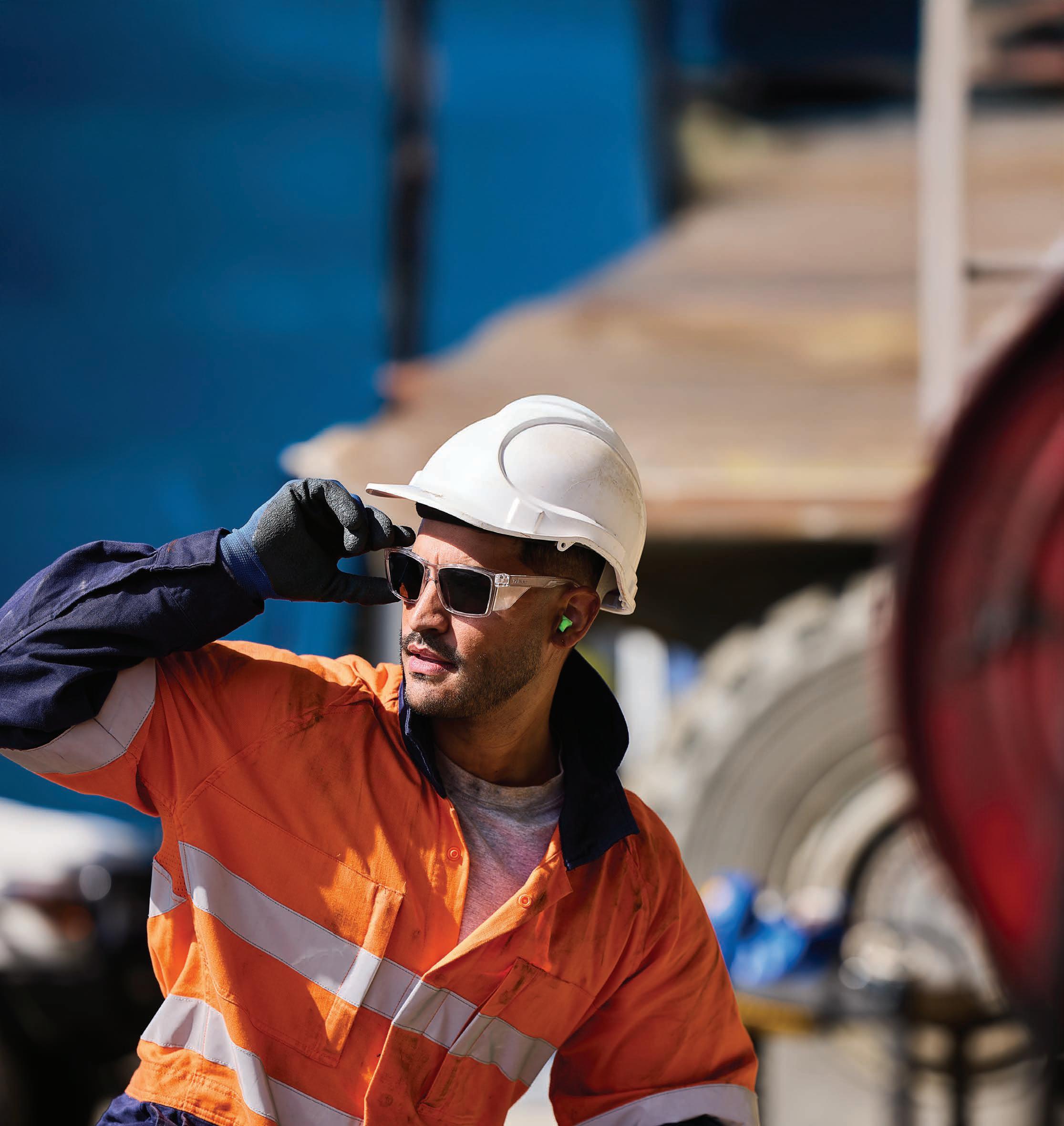
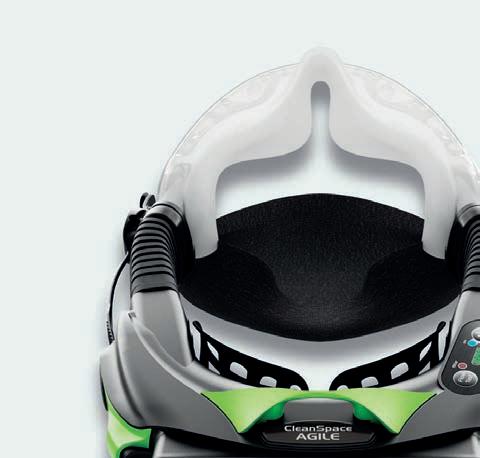
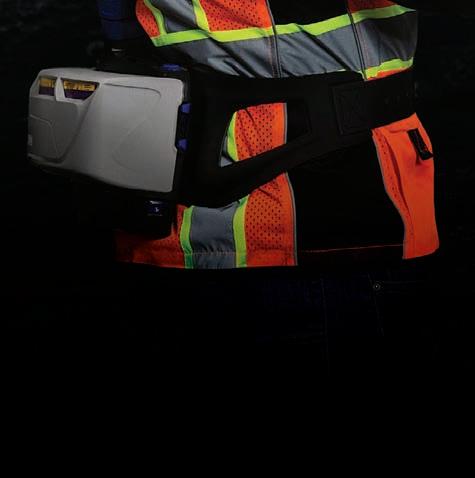
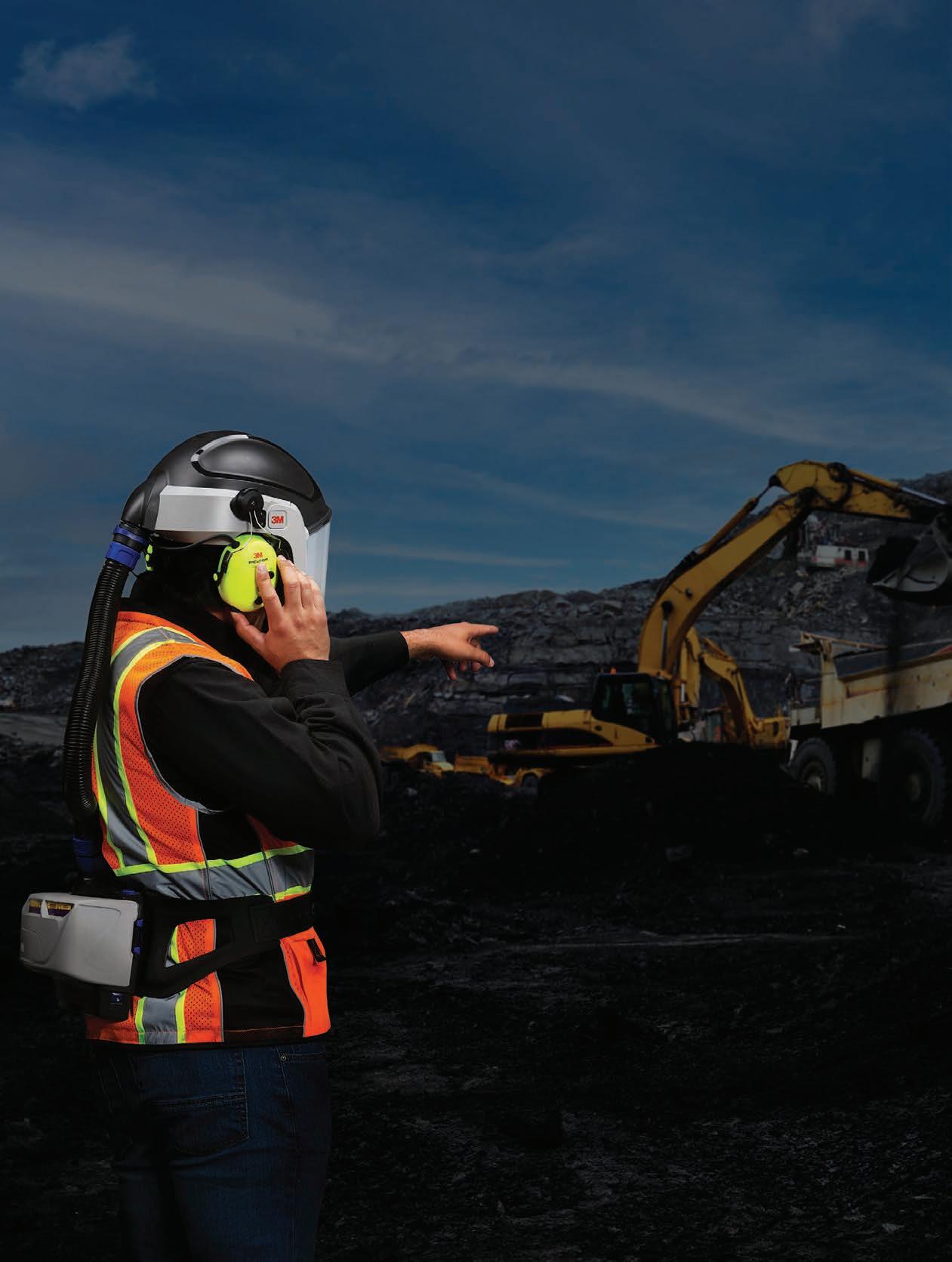
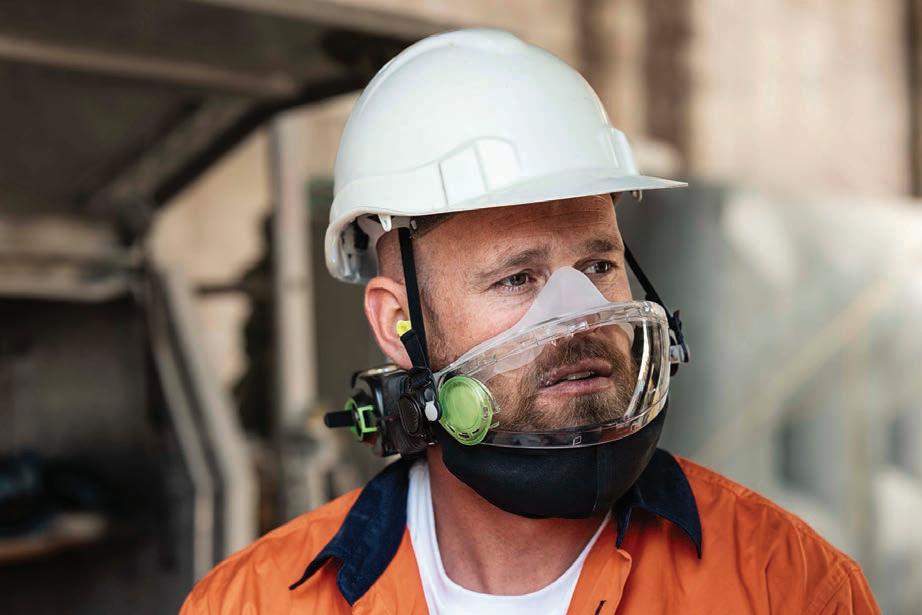
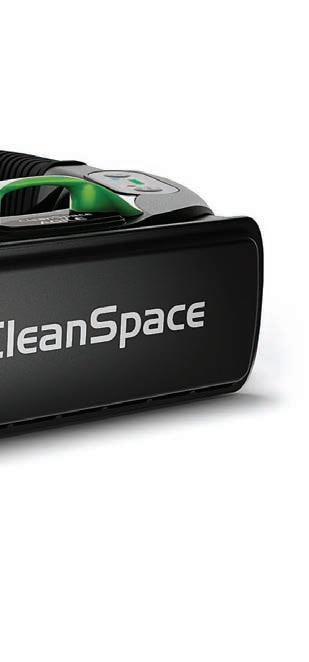
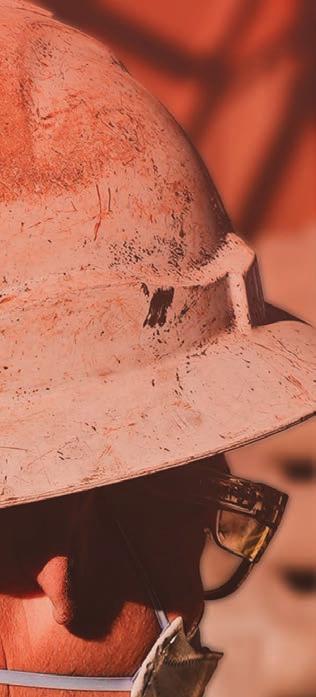
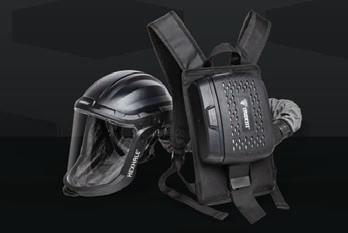
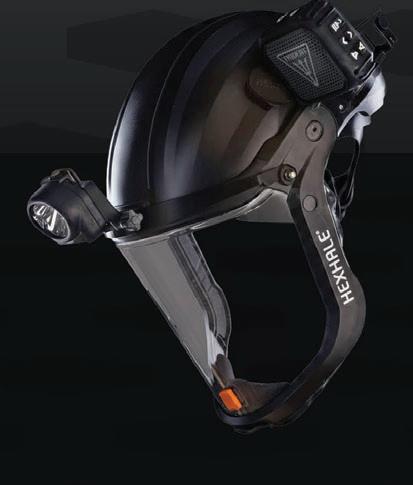
The world’s rst lightweight PAPR with patented AirSensit® technology. Built for movement. Designed for comfo . Engineered to protect everyone on site1 .
AS/NZS and ISO loose- ing ce i cation - No t testing required
● AirSensit® breath-responsive ai low — adjusts to workload, reducing fatigue all shift
● Loose- ing half facepiece — no hoods, belts or hoses. Fits every face, every site1
● AGILE Power Unit <425g (excl. facepiece and lter) — light enough to forget, lasts the whole shift
● Compatible with helmets, eyewear & earmu s — works with your existing PPE, easy to don and do
● Insights Repo ing 2 — monitor usage, compliance and lter life across your workforce
1. Refer to ce i cation details for suitability at your site.
2. Coming soon.
Prealene Khera
WWorth more than gold
Mining extracts valuable resources from the ground, but its most important asset has always been on the surface.
hat’s the most important thing to come out of a mining operation? We know it’s not the ore.
Ask that question at any industry conference, and you’ll likely hear the same answer: people.
It’s a sentiment repeated so often that it risks becoming a cliché.
Yet the more you look at the industry’s approach to safety, the more difficult it is to argue with. Sites across the country, irrespective of what’s being mined, share a singular commitment – that every worker goes home safely at the end of every shift.
If worker safety is at the heart of every operation, perhaps a more pertinent question is whether the industry’s technologies and systems are being built with workers in mind.
This year’s Queensland Mining Industry Health and Safety Conference might not only help us answer that, but it could also give decision-makers a clearer understanding of what effective workercentred safety looks like in practice.
The event will bring together industry leaders, safety professionals and workers under the banner of ‘Our greatest resource, our people’.
That phrase goes much further than conference themes. In a lot of ways, it’s the industry’s North Star – a constant reference point for how safety decisions are made.
It’s something you can already see in the technologies finding their way onto mine sites. All of them, from digital safety systems to the latest generation of personal protective equipment, have one thing in common: they solve problems workers actually face.
Sometimes that means making information easier to access or improving visibility on the site. Other times, it’s about reducing discomfort, improving fit or ensuring equipment can be worn comfortably throughout an entire shift.
The tools may change, but the thinking behind them remains consistent.
Perhaps that’s why the industry keeps returning to the same answer…some clichés endure because they’re true.
Prealene Khera Editor
CLIENT SUCCESS MANAGER
Janine Clements
CEO
Christine Clancy
MANAGING EDITOR
Paul Hayes
T: (03) 9690 8766
E: paul.hayes@primecreative.com.au
EDITOR
Prealene Khera
T: (03) 9690 8766
E: prealene.khera@primecreative.com.au
T: (02) 9439 7227
E: janine.clements@primecreative.com.au
RESOURCES GROUP LEAD
Jonathan Duckett
M: 0498 091 027
E: jonathan.duckett@primecreative.com.au
BUSINESS DEVELOPMENT MANAGER
Jake Niehus
M: 0466 929 675
E: jacob.niehus@primecreative.com.au
ART DIRECTOR
Michelle Weston
SUBSCRIPTION RATES Australia (surface mail) $140.00 (incl GST) New Zealand A$148.00 Overseas A$156.00
For subscriptions enquiries please call 03 9690 8766
PRIME CREATIVE MEDIA
379 Docklands Drive Docklands, VIC 3008 Australia www.primecreative.com.au
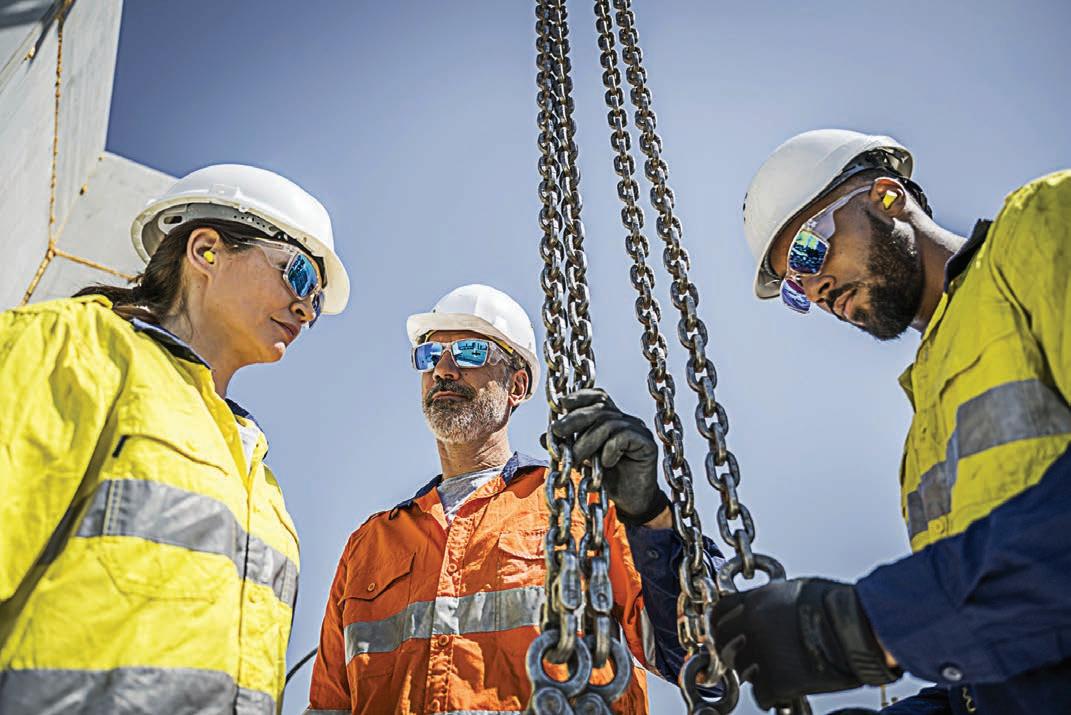
been shaping the future of protective eyewear, combining innovation, comfort and performance to help safeguard workers’ vision. As a specialist in personal protective equipment (PPE) eyewear, the company designs products people actually want to wear. Backed by a strong commitment to sustainability, Bollé Safety continues to develop solutions that support safer and more responsible workplaces. Its industrial range protects workers across mining, construction, chemical processing, energy and other demanding sectors, reinforcing the company’s long-standing focus on helping people see clearly and work safely.
When it comes to protective eyewear on mine sites, few brands bring the history, trust and innovation to the table like Bollé Safety.
12 Backing the greatest resource
The Queensland Mining Industry Health and Safety Conference will shine the spotlight on the industry’s most valuable asset: its people.
20 A ‘doze’ of data
Targeted recovery interventions could have a measurable impact on sleep quality and safety for mining shift workers.
26 Breathing made AGILE
Comfort is king when choosing a respirator for any application, and CleanSpace is aiming to take comfort to a whole new level.
32 The dust wranglers
When it comes to industrial dust management, Melbourne-based Mideco has seen it all – and built solutions for most of it.
37 Keeping a finger on the pulse
A new investigation and risk intelligence platform is set to help mining companies turn incident data into stronger operational lessons.
43 AI drives zero-harm vision
Technological innovation could be the engine that powers the mining industry’s safety mission.
45 From shutdowns to sign-offs Prometheus is helping mine sites bring planning, permitting and safety processes together under a connected system.
52 Easing the burden
Nivek is removing the physical burden of working with heavy tools, helping operators work safer, longer and with less strain.
Safety snapshot Safety in focus
From rescue competitions to regulatory updates, the industry has continued to see a range of notable safety developments.
As the industry continued its focus on strengthening controls, refining procedures, and improving workplace outcomes, Safe to Work rounds up the key events and incidents that shaped mining safety over the past two months.
Safety insights
A Western Australian court fined Wiluna Operations $575,000 following an incident that left an apprentice mechanical fitter with a permanent spinal injury at the Matilda Gold Open Pit in 2021. The decision reinforced the importance of clear and specific operating procedures in mining workplaces.
A separate court ruling in New South Wales highlighted the need for effective oversight alongside documented procedures. Former Cadia East operator Newcrest Mining was convicted after a worker’s arm became entangled in rotating drill steel on a jumbo drill rig, resulting in an amputation below the elbow.
Rio Tinto pledged to strengthen its focus on critical safety controls following three worker fatalities across its global operations between August 2025 and March 2026. Speaking at the company’s annual general meeting, chief executive Simon Trott said safety remained the foundation of the business.
Australian mine rescue teams also demonstrated their capabilities on the world stage, with Anglo American’s Moranbah North team securing gold medals in rope rescue, first aid and fire-fighting at the 2026 International Mines Rescue Competition in Zambia. Grosvenor Mine also claimed silver in the mines rescue skills and obstacle race event.
Safety incidents
A drill rig rolled onto its side at a New South Wales open-cut coal mine after an operator overrode a machine stability alarm while lowering the equipment on sloping ground. The incident prompted renewed reminders about following automated safety systems and ensuring operators are appropriately trained.
Electrical hazards remained in focus after a worker received an electric shock at an underground metals mine when contact was made with an exposed 240-volt circuit inside a
damaged control panel. The worker was transported to hospital and later cleared of injury.
The NSW Resources Regulator also warned against bypassing safety systems after workers discovered a deliberately clamped shutdown circuit hose on a load haul dump. The hose formed part of a safety system designed to automatically stop diesel equipment in unsafe conditions.
Road conditions featured in multiple incidents across New South Wales operations. A haul truck collision and a separate light vehicle rollover were both linked to deteriorating wetroad conditions, prompting renewed calls for effective haul road design, maintenance and compliance.
Seat belt use also came under scrutiny following a serious incident involving an articulated dump truck at a Victorian quarry. The operator was ejected from the cabin and seriously injured after the vehicle struck a windrow, left the haul road and overturned.
A fire at the Chemical Grade Plant 3 facility at the Greenbushes lithium operation in Western Australia was extinguished without injuries on June 9. Following which, Operator Talison Lithium commenced an investigation to assess the extent of the damage and required repairs.
End-user feedback is critical to the development of Bollé Safety products.
Rush hour
When it comes to protective eyewear on mine sites, few brands bring history, trust and innovation to the table like Bollé Safety.
After a company has been in the market for 130 years, it’s important to reflect on its journey – especially when that brand has had a trajectory like Bollé Safety.
“If you think of protective eyewear, you are likely to think of Bollé Safety,” the company’s APAC trade marketing manager Tamara Mika told Safe to Work. “And in a lot of locations, that’s certainly the case.”
Becoming synonymous with an entire product is a feat few companies achieve. But according to Mika, Bollé Safety’s ambitious vision is grounded in a very straightforward reality.
“The biggest thing for us is staying at the forefront of product development,” she said. “We want to make sure that we’re providing people with what they actually need.”
For a brand that’s built on sight, staying relevant actually comes down to listening.
“We always keep close contact with our end users. These relationships give us a working knowledge of what they need and want on-site,” Mika said.
“We really value that input and feedback, and we always take it on board and try to include it in the development of any new products.”
Mining is Bollé Safety’s biggest market in Australia for personal protective equipment (PPE) eyewear. And in this environment, the company’s commitment to enduser feedback is best illustrated by the development of Bollé Safety’s
latest flagship, the RUSH+ 2.0, which underwent real-world trials on mine sites before its launch.
“It’s been very well-received,” Mika said.
Among the positive reviews, one operator’s experience captures exactly what the RUSH+ 2.0 was designed for.
“The Rush+ 2.0 glasses are lightweight, making them comfortable for extended wear. The lenses provide crystal-clear vision with minimal distortion, which is crucial for precision work,” the operator said.
“I feel as though they perform exceptionally well in humid or dusty conditions. The build quality feels solid. The frames are flexible yet sturdy, and the lenses resist scratches quite well.”
The RUSH+ 2.0 builds on its predecessor, the RUSH+, which launched in 2015 and quickly became
Images: Bollé Safety
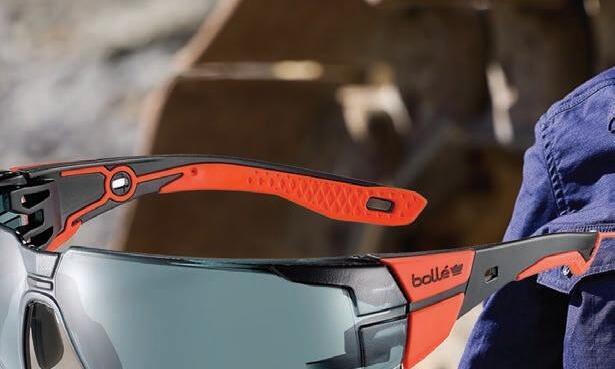
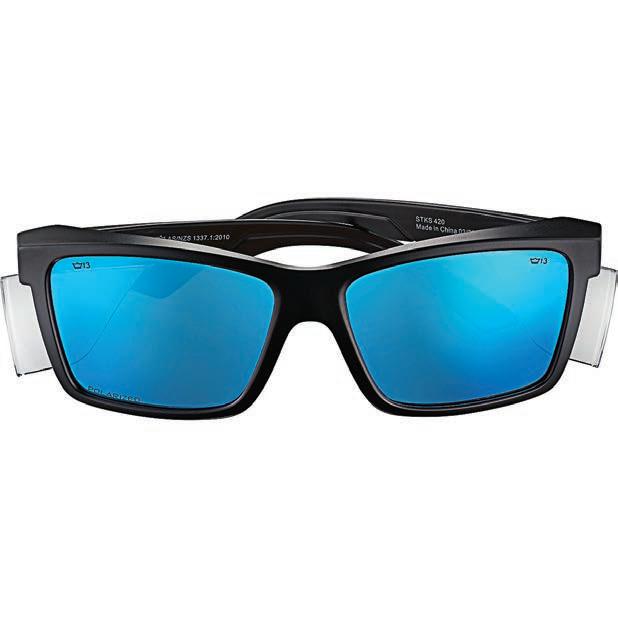
The STKS range has been specifically designed for the industrial sector, blending protection with a modern design for all-day comfort.
a fixture on mine sites across Australia. Its bold red-and-black frames were a familiar and trusted sight for operators everywhere.
Introducing a new take on a product like that was never going to be simple.
“It was one of our top-selling products for 11 years, so there was a lot of pressure riding on this,” Mika said. “People are used to the glasses they wear, they like them, and they often don’t like change.”
So Bollé Safety took its time getting it right. The RUSH+ 2.0 keeps what miners loved about the original while improving coverage, comfort and durability.
The silhouette is familiar enough that existing users made the switch without hesitation, but different enough to signal that this was a necessary evolution.
“The transition in Australia and New Zealand has gone really smoothly,” Mika said. “The acceptance has been universal.”
Underpinning this endorsement from mining professionals is trust.
“We’re a very trusted brand,” Mika said.
“We only do safety eyewear in Australia, that is our skill set. We are eyewear experts, and that’s what we do, and we do it very well.”
That expertise is reflected across Bollé Safety’s entire product suite, including the Rush+ 2.0 and STKS collections, which the company will showcase at the Queensland Mining Industry Health and Safety Conference (QMIHSC).
RUSH+ 2.0
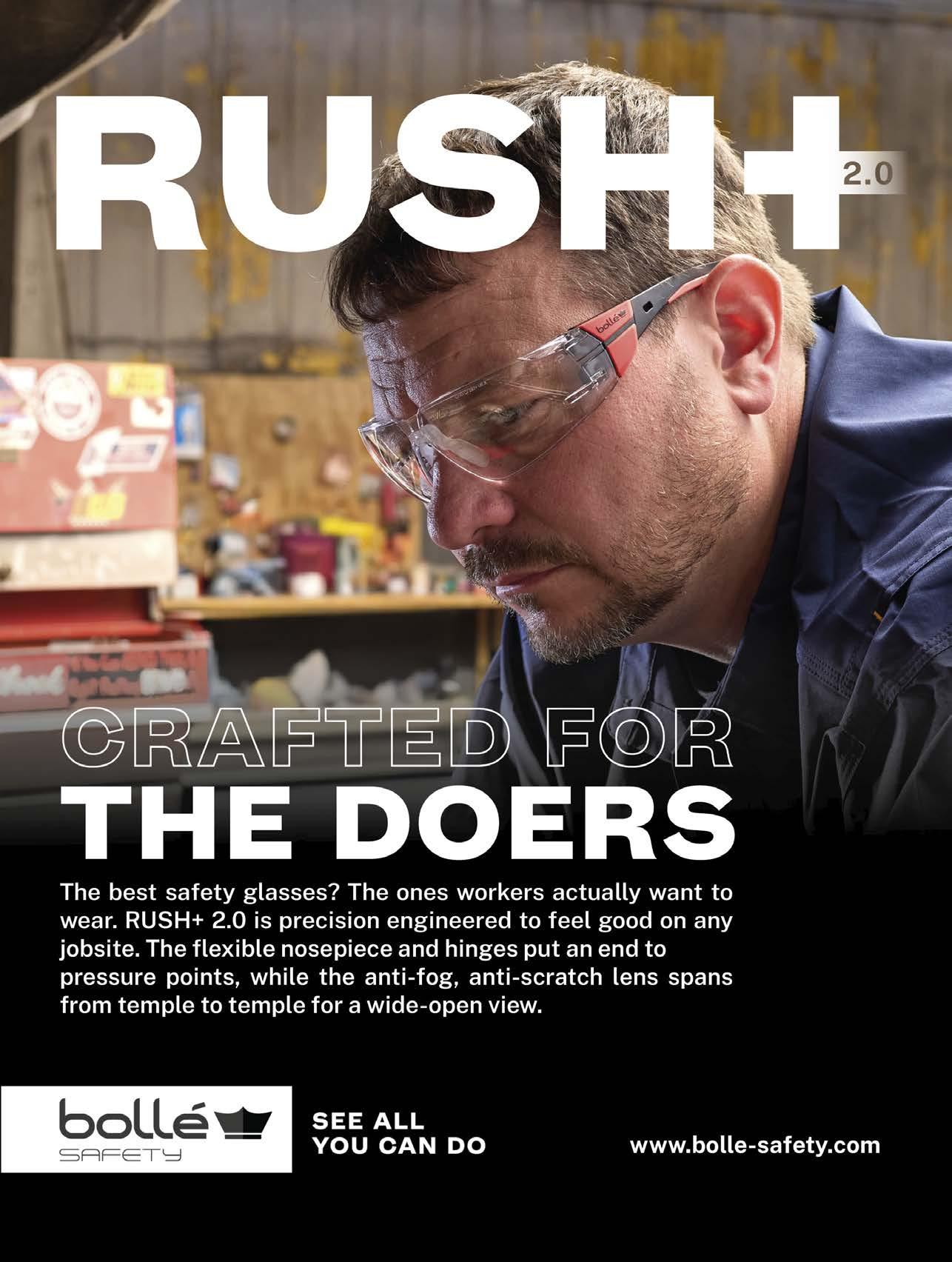
The RUSH+ 2.0 is Bollé Safety’s flagship model, engineered to withstand the harshest work environments. Lightweight and wellbalanced, it is built around comfort, with wide-opening hinges and a flexible nosepiece that minimises gaps and reduces pressure points. For those who need a more tailored fit, it is available in two sizes: small and medium/large.
Its wide lens is coated with Bollé Safety’s exclusive PLATINUM anti-fog and anti-scratch solution, delivering crystal clear vision across a range of uses. It is also available in multiple lens tints, including clear, HD, smoke, copper, amber and bronze, making it adaptable to virtually any work environment. Constructed from 28 per cent recycled materials, the RUSH+ 2.0 delivers all of this without compromising on Bollé Safety’s broader commitment to sustainability.
The RUSH+ 2.0 is Bollé Safety’s iconic flagship model.
QMIHSC 2026
RUSH+ 2.0 XP
The RUSH+ 2.0 XP builds on everything that makes the RUSH+ 2.0 a trusted choice on site, with one key difference. A replaceable foam gasket and adjustable strap extend its coverage and support, making it the go-to option for those working in demanding conditions. Constructed from 27 per cent recycled materials, it carries the same commitment to sustainability that runs through the entire RUSH+ 2.0 collection.
RUSH+ 2.0 DUO
hazards are a constant concern. A soft gasket enhances brow coverage, offering additional protection against flying debris and particles.
and 420 bring their own identity to the range with an athletic silhouette, integrated side shields and upper-brow protection that extend coverage beyond standard eyewear.
Constructed from over 65 per cent recycled polycarbonate, the STKS 410 and 420 are also among the most sustainably crafted options in the Bollé Safety suite. And the range is only growing, with the recent addition of a large size and matte black frames to the STKS 420 range.
RUSH+ 2.0 DUO is specially engineered with unique lens technologies that give workers an edge over their duties. PLATINUM coated, with polarised, photochromatic or corrective lenses, RUSH+ 2.0 DUO ensures optimal vision in all situations. It is also recognised for its comfort, with the RUSH+ 2.0 DUO ensuring a great fit by reducing pressure points through its wide-opening hinges.
STKS 410 and 420
Sitting alongside the RUSH+ 2.0 in Bollé Safety’s lineup is the STKS range, specifically designed for the industrial sector, blending certified protection with a modern, practical design for all-day comfort. Sharing some of the same features as the RUSH+ 2.0, including Bollé Safety’s exclusive PLATINUM coating, the STKS 410
Across both the RUSH+ 2.0 and STKS collections, despite their differences, Mika wants users to immediately notice and feel one thing the moment they put a pair on.
“I want them to feel comfortable and confident,” she said. “And that confidence comes from knowing it’s a safe and reliable product.
“More importantly, it will come from knowing that at the end of the day it’s a Bollé Safety product.”
The company will showcase its STKS collection at QMIHSC.
Constructed from over 65 per cent recycled polycarbonate, the STKS 420 is among Bollé Safety’s most sustainable options.
Unified Protection Exceptional Comfort
Experience comprehensive worksite protection that keeps your workforce safe, compliant, and ready for any challenge.
3M™ Versaflo™ Headtops
Powered Air Purifying Respirator that can offer integrated head, eye, face & hearing protection
3M™ PELTOR™ Communication Solutions
Maintain clear team communication in noisy environments—no visor lift required, preserving respiratory protection
3M™ Versaflo™
Accessories
Durable backpacks, belts, cap lamp brackets and more for comfortable, practical use in harsh mining environments
Request a Demo at go.3M.com/talktous or Scan the QR Code
Backing the greatest resource
When the Queensland Mining Industry Health and Safety Conference returns this year, it will shine the spotlight on the industry’s most valuable asset: its people.
The Queensland Mining Industry Health and Safety Conference (QMIHSC) has long been seen as an important annual gathering for the resources sector, and the 37th edition is set to continue that tradition.
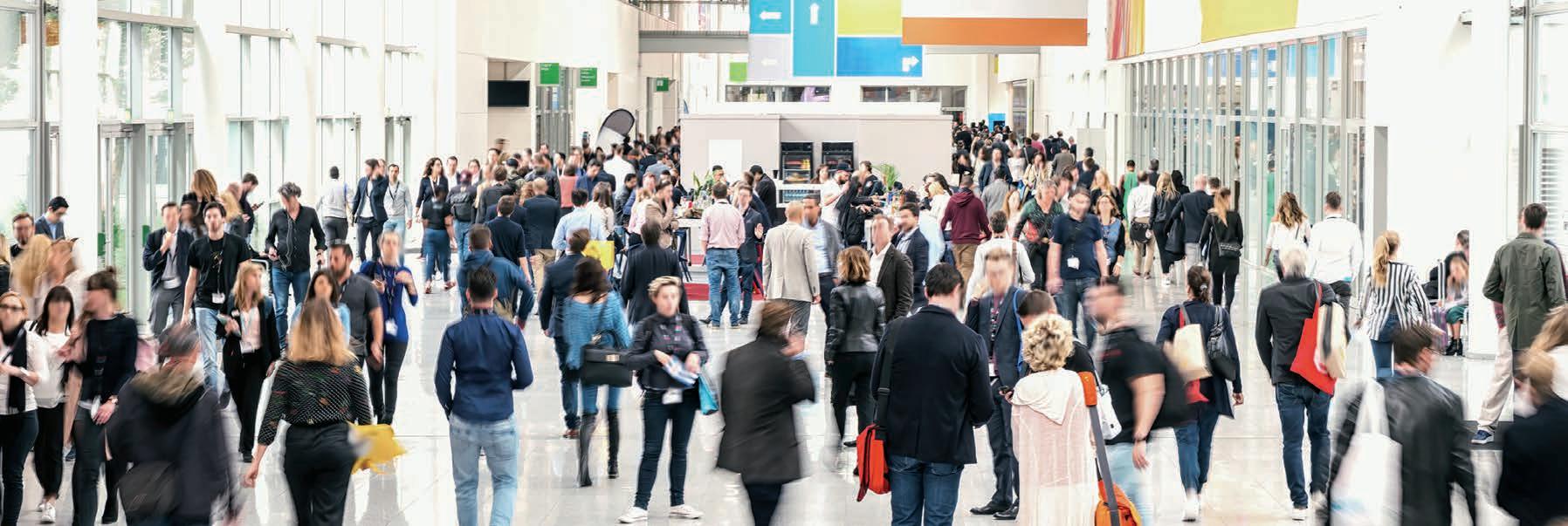
To be held at the Star Gold Coast from August 16–19, QMIHSC will bring together industry leaders, safety professionals and frontline workers from across mining under the theme ‘Our greatest resource, our people’, a timely reminder of what, and who, ultimately powers the industry.
Conference chair Stephen Watts told Safe to Work the theme is designed to push the sector to recognise and act on something it already knows to be true.
“People, by their actions and behaviours, have the greatest impact on ensuring the safety of everyone at a mining operation who perform tasks each day,” Watts said. “This year’s theme will explore and challenge the benefits of recognising and prioritising our greatest resource, our people.”
The 2026 theme follows naturally from last year’s ‘Rock solid – The foundations of safety excellence’, which focused on strengthening the systems, processes and leadership frameworks that underpin a strong safety culture. With those foundations revisited, this year’s conference turns its attention to the people working within them.
“True safety excellence is ultimately driven by people, their wellbeing,
capability, engagement and sense of connection within the workplace,” Watts said.
“The 2026 theme highlights that people are at the centre of every safety outcome. It acknowledges that sustainable safety performance is not only built on procedures and compliance, but also on trust, communication, inclusion, innovation and genuine care for the workforce.”
That people-first focus comes at a moment when the industry is grappling with some significant shifts –growing awareness of psychosocial health and mental wellbeing, evolving expectations around leadership and culture, and the ongoing challenge of attracting and retaining a skilled workforce.
Last year’s QMIHSC explored the foundations of mine safety.
The conference program, which has been built to meet those challenges head-on, includes a diverse mix of learning opportunities designed to give delegates something tangible to take back to their workplaces.
“The keynote speakers, presentations, workshops and other sessions, combined with networking opportunities to collaborate, share innovations and experiences from incidents, aim to provide attendees with the tools to further assist in protecting people from harm,” Watts said.
Leadership culture will also be in the spotlight at the conference, with Watts emphasising the role strong leaders play in turning good policy into best practice.
“Leaders, whether frontline supervisors who inspect and monitor tasks, middle management involved in planning tasks, or senior managers and beyond, are best placed to have real impact on how safely tasks are performed at the coal face,” he said.
“If a task is adequately planned, risk-managed, resourced and supervised, this will provide the best chance of a task being performed safely. A strong leadership culture will ensure the safe performance of plans and procedures.”
What sets QMIHSC apart is its program, which is uniquely tailored to meet industry needs. Among the most pressing health and safety challenges seen across the sector in 2026 is the quality of supervision.
“Supervisor obligations and responsibilities for the Queensland coal sector were greatly enhanced in legislative improvements quarter four of 2024,” Watts said. “Although there is evidence that industry has a renewed focus on improving supervision, we have yet to see that translate into industry-wide safety statistics.
“Also, contract workers continue to be over-represented in safety statistics; this is evident. All work, no matter who does it, should be done at an acceptable level of risk.”
Outside the program, QMIHSC will again support industry charity Miners’ Promise through an informal dinner appeal auction on August 17.
Miners’ Promise is a not-for-profit organisation that provides practical, emotional and financial assistance to mining, energy and resources sector families in times of crisis.
“We encourage visitors to please support this worthwhile program,” Watts said.
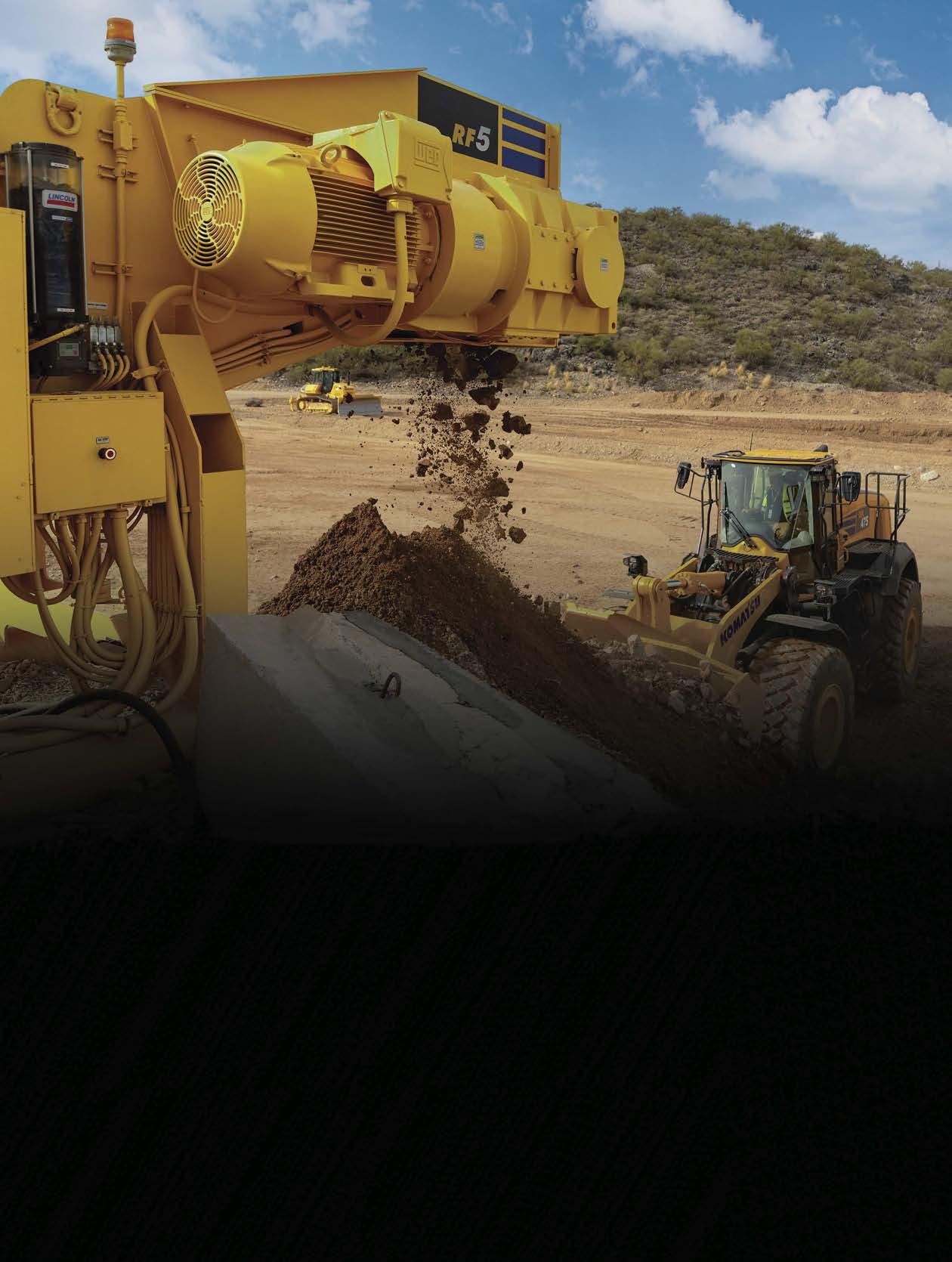
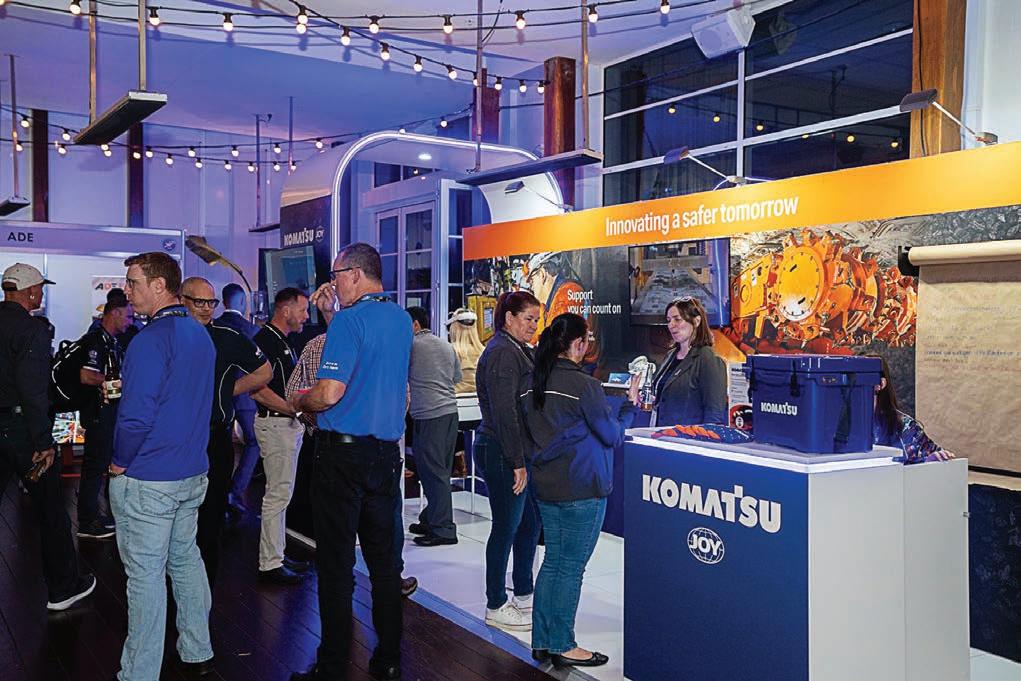
Komatsu is also set to return as principal sponsor for 2026, building on the success and momentum of last year’s event and continuing what has become a valued partnership for the conference.
With August rapidly approaching, speaking opportunities and nominations for innovation and health awards are still open, and Watts is calling on the industry community to help make the event a success – including those who have attended before.
“For those who have attended in the past, please promote the conference within your network so we continue to welcome new delegates to share in this important learning experience,” Watts said.
“We are excited to be delivering another fantastic conference and look forward to welcoming delegates in August.”
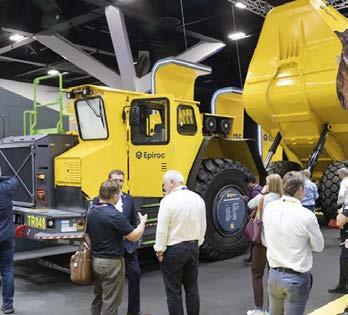
The exhibition floor will once again be a focal point for mining innovation.
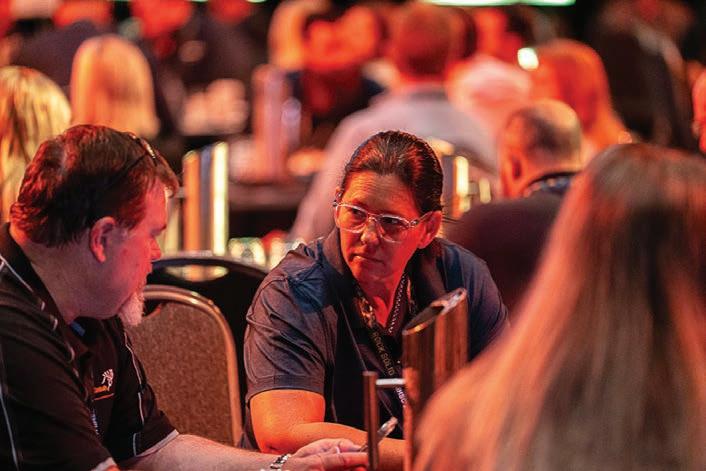
QMIHSC 2026 will ignite important conversations between attendees, speakers and exhibitors.
MENTAL HEALTH IN MINING
SAFETY MATE AND THE BLACK DOG INSTITUTE — LEADING THROUGH PURPOSE
The Black Dog Institute is Australia’s only medical research institute dedicated to mental health across all ages. With 20% of Australians experiencing symptoms of mental illness each year, their work has never been more critical — and Safety Mate is proud to support it through every product sold.
Every Black Dog product purchased contributes directly to mental health research and support.
BLACK
DOG CUT D GLOVE
• Lightweight cut level D
• Touchscreen compatible
• Comfortable and durable
• $1 per pair donated to Black Dog Institute
BLACK
DOG IMPACT CUT F
• Lightweight cut level F
• Excellent fit, breathability and comfort
• Touchscreen compatible
• Soft and flexible TPR impact protection
• Durable and breathable nitrile coating
• $1 per pair donated to Black Dog Institute
BLACK
DOG STREAM EVO
• Maximum comfort and protection
• Tecton 400™ Anti-scratch and Anti-fog
• Soft, adjustable, anti-slip nose bridge
• 50c per pair donated to Black Dog Institute
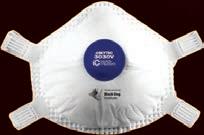
SKYTEC 3030V
• Market first and only full foam face seal – ensuring excellent face fit testing results, and comfort
• Four point headstrap adjustment
• Low breathing resistance valve
• Also available in smaller size (3030V-S)
• 50c per mask donated to Black Dog Institute
About Black Dog Institute
The Black Dog Institute is a not-for-profit facility for diagnosis, treatment and prevention of mental illnesses such as depression, anxiety and bipolar disorder. Their aim is to create a mentally healthier world for everyone.
SCAN FOR MORE INFO AND TRIAL SAMPLES
EXHIBITOR SPOTLIGHT
3M’s Personal Safety Division enhances workplace safety with innovative personal protective equipment (PPE) solutions, from eye and head protection to hearing and respiratory gear. The company’s technology and expertise ensure comfort and compliance across diverse industries, helping employers protect their teams and maintain a safe, focused work environment.
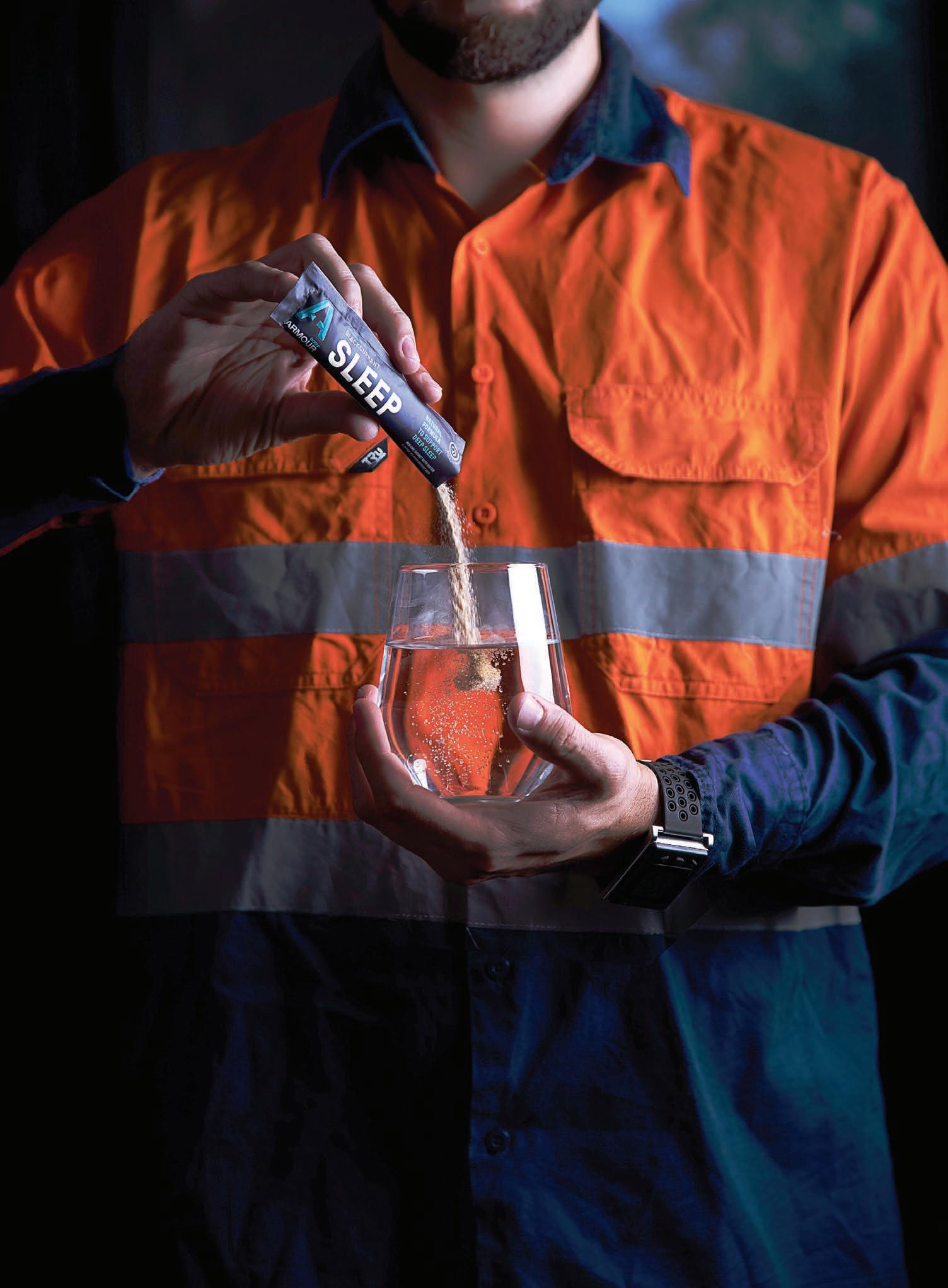
Body Armour is an Australian-owned company specialising in evidencebased hydration and recovery formulations for workers in high-demand occupational environments. Founded in 2017 by industry insiders with over 30 years of collective mining experience, the company’s mission is to treat the mining workforce with the same focus on recovery that elite sport applies to its athletes. Because better recovery means safer, sharper workers.
As a leading global brand in the PPE eyewear market, Bollé Safety uses the most advanced technologies and innovations to create e ective, comfortable, high quality and sustainable products that people love to wear. Bollé Safety has developed top tier products and technologies to protect workers’ vision across all industrial activities.
CleanSpace is a Sydney-based respiratory protection company founded by biomedical engineers. Its patented powered air-purifying respirators (PAPRs) use breath-responsive technology that syncs airflow to the wearer – delivering superior protection that moves with them, not against them. It is trusted across mining, industrial, and healthcare sectors worldwide.
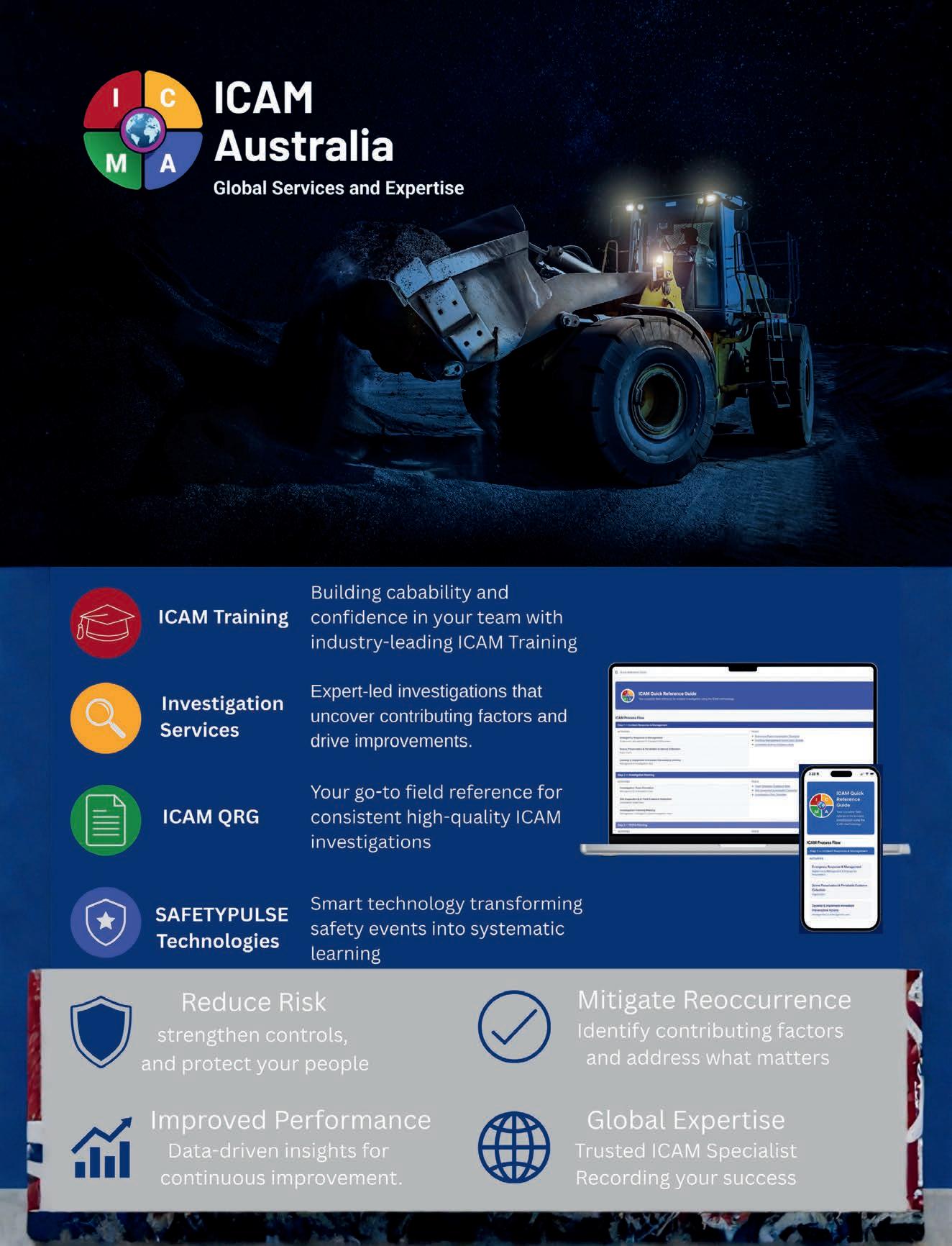
ICAM Australia helps organisations improve workplace health and safety, both proactively and reactively. The company establish work, health and safety (WHS) systems that exceed compliance and reduce risk, and support incident investigations to mitigate the risk of recurrence. It delivers timely, tailored solutions to keep people safe and well.
Industree Group is an Australian-owned manufacturer of PPE, work wear and industrial safety solutions. With over 15 years’ experience, it serves the healthcare, mining, construction and government sectors across Australia and the Asia-Pacific. The company is recognised for quality products, agile supply chains and a strong customer-focused approach across regions.
Komatsu’s mining business delivers advanced equipment, technologies, and services supporting surface and underground operations worldwide. Through leading brands and a comprehensive portfolio, Komatsu helps customers improve safety, productivity, and sustainability by integrating automation, digital solutions, and life-cycle support across the mining value chain.
Mideco helps mining operations reduce airborne dust exposure for workers, across shared spaces, and enclosed environments where dust continues beyond the active zone. Its Bat Booth and Bat Vent systems improve worker health and air quality through practical controls that help turn RS20 requirements into e ective day-to-day site practices.
SafetyMate is an Australian-owned safety products company supplying premium PPE across Australia. Specialising in safety gloves, eyewear, hearing protection, safety footwear and hydration, SafetyMate partners with worldclass brands to deliver workplace safety solutions that protect people and drive compliance. It is also a proud partner of the Black Dog Institute.
For 100 years, uvex has been protecting people at work and at play. Through its safety and sports divisions, uvex develops innovative PPE, helmets, goggles, and eyewear trusted worldwide. Shared expertise across both businesses drives continuous innovation, delivering outstanding safety, comfort, performance, and quality in every product.
Komatsu
Clearing the air
Komatsu and EnviroMist’s dust suppression collaboration is delivering underground safety gains for Australian operations.
There are many times in mining where the hurdles to achieving operational successes are smaller than what meets the eye. Sometimes, literally.
Dirt and dust are natural byproducts of mining minerals, and keeping this airborne uplift suppressed is key to ensuring peak visibility, safety and machine operator performance standards.
Komatsu and the EnviroMist team had a mutual agreement that this
where site observation and monitoring indicated an immediate reduction in airborne dust levels.
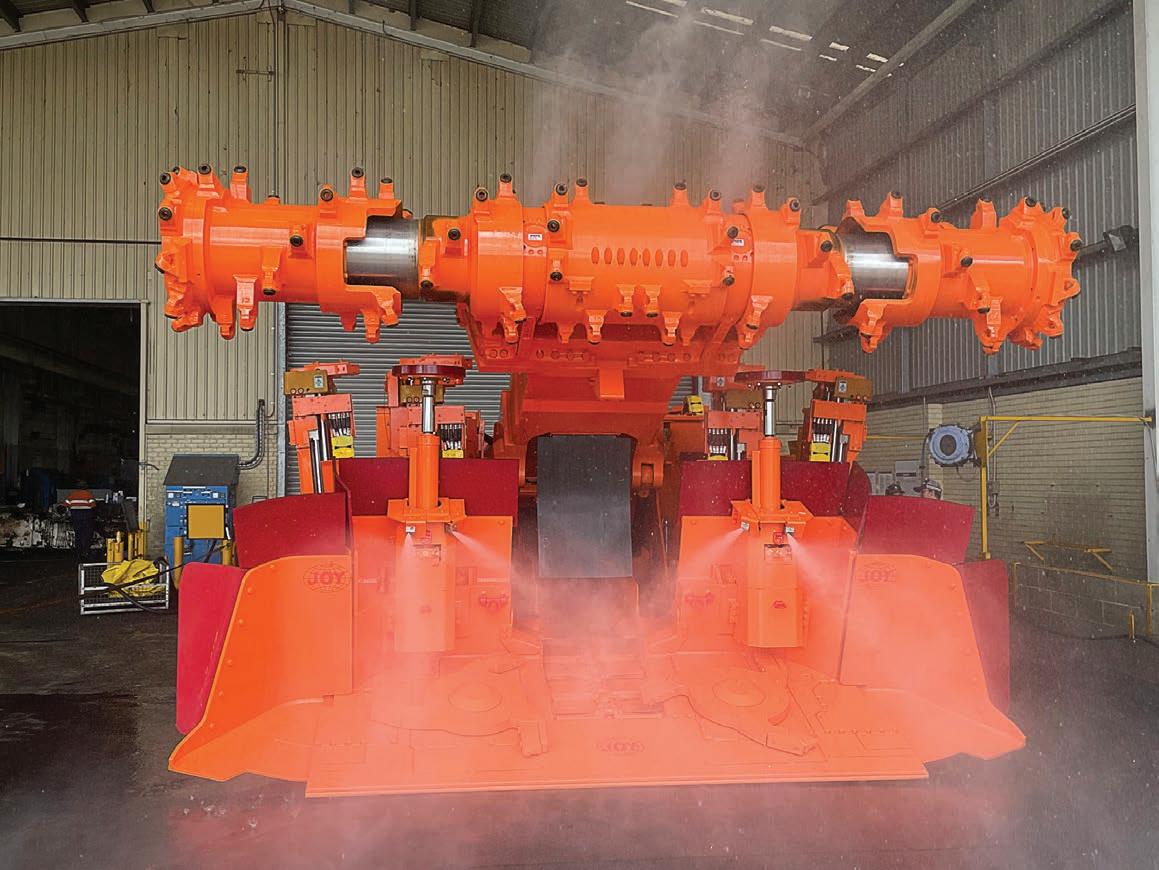
The EnviroMist industrial dust suppression system provides micromist dust suppression and dust control for both above and below-ground mining operations.
Komatsu regional manager for New South Wales Mitch Campbell said EnviroMist understood it had a “unique technology” that could solve longstanding dust suppression issues in
That changed in 2016, when EnviroMist and the University of Wollongong were awarded the Australian Coal Industry Research Program (ACARP) research funding to develop improved dust suppression within underground coal mining applications.
Trials on Komatsu’s 12CM series continuous miners and longwall roof supports followed, with underground
Images: Komatsu
EnviroMist’s unique dust suppression system has been installed on Komatsu’s 12CM30 continuous miners as part of their collaboration.
The
Campbell said the goal from Komatsu’s perspective was to reduce airborne respirable dust exposure by targeting finer particles that conventional large-droplet spray systems had long left behind.
“The collaboration also targets a complete system outcome, enabling better dust capture with more controlled water usage, so mines can improve conditions without increasing water on the ground or creating downstream moisture issues,” he said.
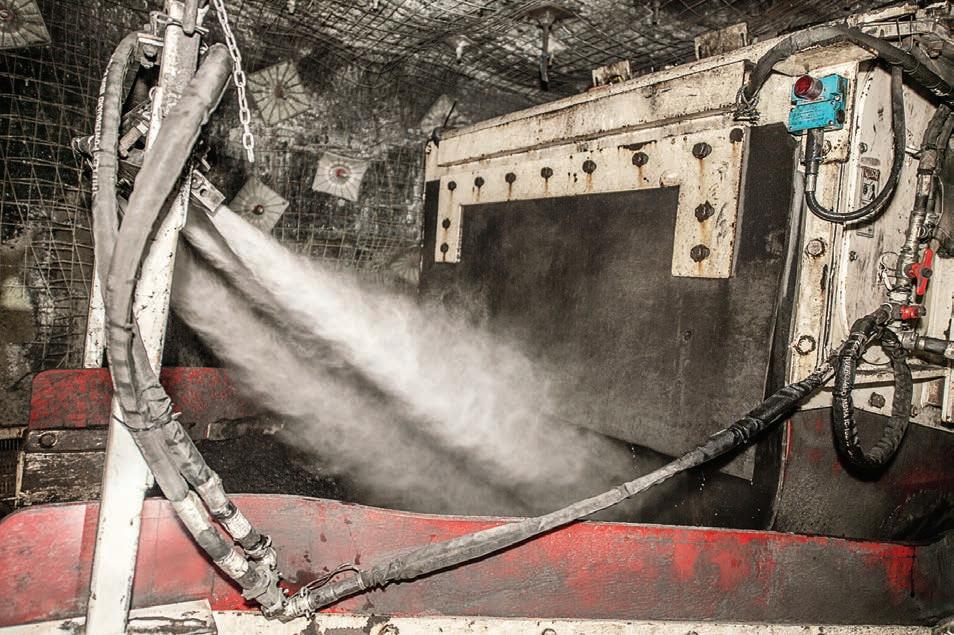
The technology at the heart of the system is EnviroMist’s water atomisation process. Conventional spray systems produce large droplets that wet surfaces and cool equipment, with EnviroMist’s nozzles designed to produce high-energy water droplets with average sizes similar to the average dust particle itself, typically under 40 microns in diameter.
The benefit, EnviroMist managing director Vitold Ronda said, is that fine droplets increase the probability of a dust-to-droplet impact, causing particles to bond and become heavy enough to drop from the air without significantly adding moisture –contributing to improved workplace conditions for workers underground.
mesh carrier sprays and two tail and discharge-mounted sprays, all operating independently from the conventional spray blocks traditionally fitted to Joy continuous miners.
“If you can atomise water into the droplet size range that best interacts with respirable dust and deliver it to the right zones, you can materially improve dust capture,” he said.
When used at the mine site, the system was first installed as a retrofit on an overhauled 12CM30 continuous miner, where monitoring indicated an immediate and measurable reduction in airborne dust during the cutting sequence.
Twelve months later, the mine commissioned a new-build 12CM12-D continuous miner supplied by Komatsu, this time with the EnviroMist system fully integrated at the design stage.
The installation comprised six face-mounted sprays, four throat sprays, two tunnel sprays, two under-
This, Campbell noted, made a meaningful engineering difference. Rather than retrofitting components into an already space-constrained machine layout, Komatsu engineers were able to build in mounting points, hose routing, controls and testing provisions from the outset – making the dust suppression system a coherent part of the machine rather than an addition to it.
This outcome was confirmed by those using the machinery, where, following the initial system optimisation to suit site-specific conditions, site monitoring indicated a significant reduction in airborne dust exposure events during the mining cycle.
The 12CM12-D has since operated daily with substantially reduced airborne dust levels and with no significant faults reported as being attributable to the EnviroMist system.
EnviroMist’s nozzles produce high-energy water droplets with average sizes similar to the average dust particle itself.
According to EnviroMist, independent testing at an underground coal mine identified respirable dust exceedances in 10 of 20 monitored locations. Following installation of a replacement spray system designed by EnviroMist, subsequent testing by the same technician at the same locations reported no exceedances under the conditions tested.
This, Campbell said, points to the importance of partnership in accelerating safety innovation.
“I believe these collaborations enable problem-solving because safety outcomes depend on how the machine and operating practices work together, not just in isolation,” he said.
With EnviroMist’s technology applicable across iron ore, hard rock and coal operations, Komatsu and EnviroMist see the potential reaching well beyond continuous miners.
“The challenge of respirable dust is not unique to mining, and the tools to address it are only getting sharper,” Campbell said.
A new pilot study has shown recovery formulas could have an impact on sleep quality on mine sites.
A ‘doze’ of data
Targeted recovery interventions could have a measurable impact on sleep and safety for mining shift workers, research by Body Armour has shown.
A2011 study out of Stanford University in the US found that when collegiate basketball players extended and optimised their sleep, their sprint times improved by five per cent and their free-throw accuracy by nine per cent. These improvements were achieved through better recovery as opposed to additional training.
This finding has become an important reference point in sports science, primarily because it suggests
that for a high-performance athlete, what happens off the court matters as much as what happens on it.
Now, a new pilot study at Redpath Mining’s Dugald River copperzinc operation near Mount Isa, Queensland, has taken that idea out of the gym and onto a mine site.
It explored whether similar targeted recovery interventions could produce measurable improvements in sleep quality for rotating roster workers, and what
those improvements might mean for safety, productivity and cognitive performance on site.
Eighteen volunteer participants across a mix of day and night shift rotations took part in the study, with participants wearing smart watches throughout the study to track sleep metrics, including REM (rapid eye movement) sleep, deep sleep, total sleep duration, and overall sleep score.
The study was conducted across two consecutive swings.
Images: Body Armour
The Star, Gold Coast
“I believe this can be a huge gamechanger for shift work and night shift. Even from a safety point of view. I think it has a place in this industry.” — study participant number 14
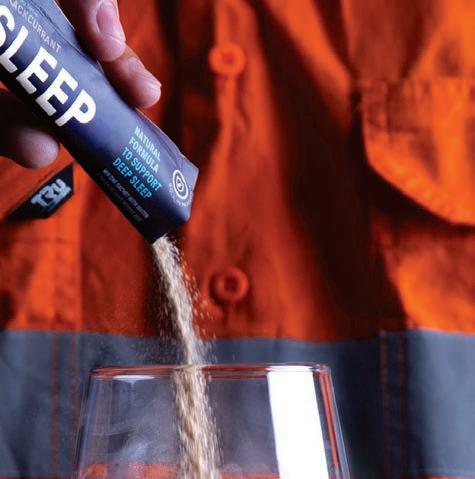
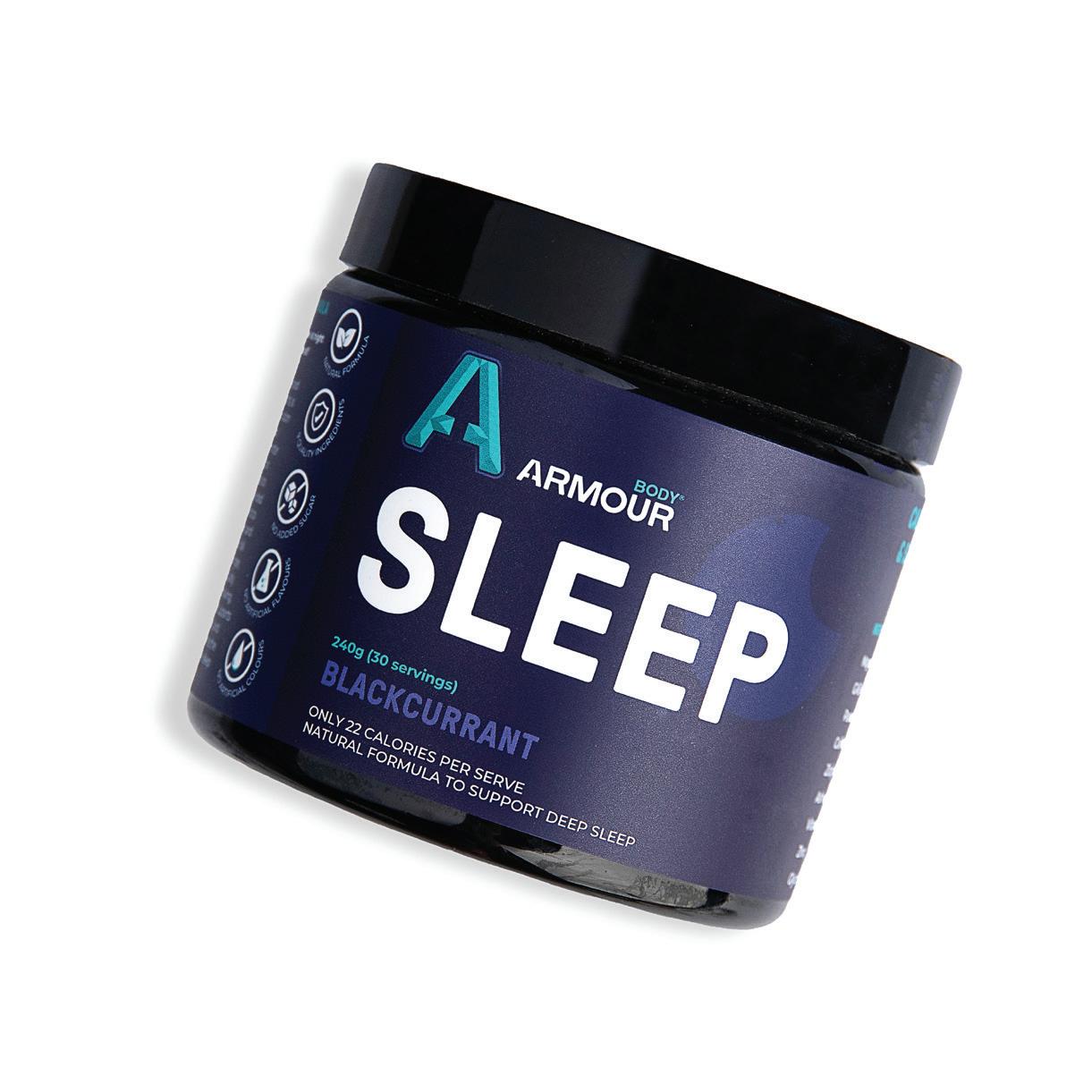
The first was used as a baseline with no intervention; in the second, participants took a Body Armour Sleep sachet before bed each night and used Body Armour Hydration products during their shifts.
one participant said. “If stocked in the store, it would be a great tool for the workers and the company, even from a safety point of view. I think it has a place in this industry.”
Because each participant’s results were compared against their own baseline rather than a separate group, individual variation wasn’t a factor in the analysis.
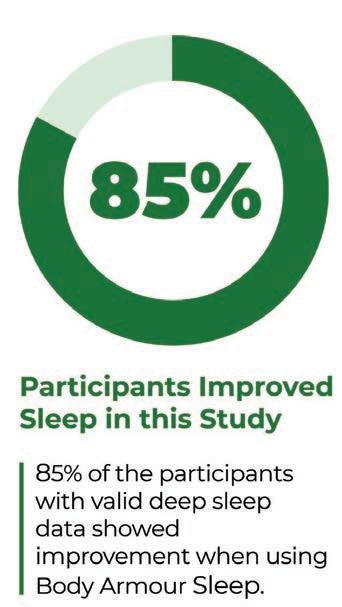
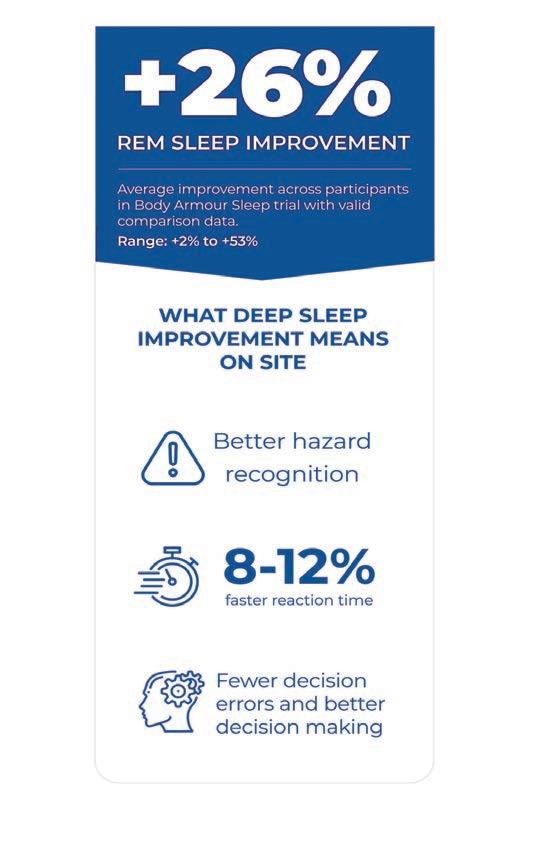
Nine of the 18 completed both phases with enough data to use (which is not unusual for research conducted inside a live operational environment). Of those, every participant with usable REM sleep data recorded an improvement during the intervention phase, with the group averaging a 26 per cent gain and moving from around 1.1 hours of REM per night to 1.36 hours.
Deep sleep also improved in six of the seven participants, where it could be measured, averaging a nine per cent increase.
When asked at the end of the study how they felt across both phases, all nine participants said the intervention had made a noticeable difference to their recovery in some form, whether that was getting to sleep faster, feeling less fatigued through a shift, or waking up feeling more rested.
As far as the Body Armour products went, 92 per cent of survey respondents said they wanted the product available on site, a figure that includes respondents across all data tiers.
“I believe this can be a huge gamechanger for shift work and night shift,”
Source: Body Armour
The scale of this sleep problem is not trivial – with a 2022 study published in the International Journal of Environmental Research and Public Health estimating the annual productivity cost of sleep and healthrelated conditions among workers on a fly-in, fly-out (FIFO) basis sat at $20.96 million per 1000 employees. That figure sits in the background of every roster, every swing, every shift.
Body Armour director Toni McQuinn has held the same view long before the study was conducted.
More than 90 per cent of survey respondents wanted Body Armour’s
“The mining industry has become incredibly sophisticated when it comes to systems, procedures and equipment,” he told Safe to Work “But we still don’t spend enough time looking at the human operating the system.”
When incidents occur, McQuinn said, the root cause often comes back to human factors such as slower reaction times, fatigue, poor decision-making, and reduced situational awareness.
Research published in the journal Occupational and Environmental Medicine found that after 17 hours without sleep, cognitive impairment is equivalent to a blood alcohol concentration of 0.05 per cent, the legal limit for operating a vehicle.
For a worker finishing a long night shift, that level of impairment may be present every single day, entirely invisible to any current fatigue monitoring system.
“Yet recovery and sleep quality are still largely treated as personal lifestyle issues rather than operational performance variables,” McQuinn said.
McQuinn draws a parallel to professional sport, where recovery
Sleep product available on site.
Body Armour’s formulations contain no artificial sweeteners or colours, further enhancing worker wellbeing.
is normally managed with the same seriousness as training because the link between the two is well understood.
“We believe heavy industry should be looking at its workforce through a similar lens,” he said.
The decision to combine a sleep product with a hydration product in
the Redpath Mining study was a key part of that approach.
“Hydration, fatigue, recovery and cognitive performance aren’t separate conversations physiologically,” McQuinn said.
“Poor hydration impacts sleep quality. Poor sleep impacts decisionmaking, emotional regulation and physical output the next shift. The cycle compounds across a swing.”
Workers in hot environments routinely finish shifts mildly dehydrated, even when they have been drinking water throughout, because fluid without adequate electrolytes is not well retained at a cellular level, and that residual dehydration delays the drop in core body temperature the body needs to initiate deep sleep.
“The goal is not simply to sell a product; the goal is to improve the condition of the worker arriving onto a shift,” McQuinn said. “Because, at the end of the day, the safest worker on site is a worker who is cognitively and physically recovered.”
With the Redpath Mining study now concluded, that case has some strong data behind it. And while research lead Bevan Scherman is careful not to overstate what a nine-person pilot can establish, he believes the consistent improvement showcased is worth paying attention to.
“We … saw positive movement in deep sleep, perceived fatigue and subjective recovery scores across much of the cohort,” Scherman said.
“The objective of the study was to explore whether meaningful directional findings existed that justified larger-scale research, and the pilot does provide evidence that recovery-focused interventions in mining environments warrant more serious investigation at a larger scale.”
Positive outcomes were to be expected, according to McQuinn, who noted the significant investment into the science behind the sleep formulation.
He added, however, that more is still to come.
“What excites us most is the hope that this study shines a light on what a genuine focus on effective recovery can mean for individuals working in our industry,” McQuinn said.
“We hope this is the beginning of something broader, that other organisations may pick up the industrial athlete methodology and continue its development.
“We have the full study available for site managers and safety professionals so they can take it and apply it to their operations.”
McQuinn and Scherman are now pushing for a follow-up study with a larger cohort, a longer time-frame and operational performance data gathered alongside the sleep metrics.
AI-POWERED ENTERPRISE ASSET MANAGMENT SOFTWARE
Hours of work. Minutes of conversation.
From planning and scheduling to permitting and safety, the Prometheus-AI Platform does the heavy lifting across your mining and resources operation.
GWOS-AI | PLANNING & SCHEDULING
Just tell it what to schedule.
Plain-language commands move crews and run mass changes in minutes, instead of hours. GWOS-AI does the work; your team reviews and approves.
EPAS-AI | ELECTRONIC PERMITTING & SAFETY
Just ask about any permit.
How many hot-work permits are active? What's awaiting approval? What's the average cycle time by type? ePAS-AI answers instantly
A century of protection
Celebrating 100 years in safety, uvex is continuing to evolve its offering with the launch of the new HexArmor impact safety glove range.
Acentury after first setting out to protect people, uvex remains focused on what matters most on every mine site – its people.
Founded in 1926 as a familyowned manufacturer of protective eyewear, uvex has grown into a global head-to-toe personal protective equipment (PPE) specialist. Today, the company’s portfolio spans safety eyewear, hearing protection, footwear, respiratory protection, head protection and, most recently, the HexArmor range of hand protection solutions.
Over the past 100 years, uvex has continued to invest in research, product development and manufacturing
expertise across Europe and around the world. This commitment has driven innovations in sustainable product design, advanced lens coatings, performance footwear and highprotection hand safety solutions.
“While the products and technologies have evolved significantly over the last century, our purpose has remained unchanged –protecting people at work and at play,” uvex safety Australia New Zealand managing director David Sierra said.
As uvex celebrates its centenary, the milestone is not only an opportunity to reflect on its history but also to demonstrate how the
company is helping shape the future of PPE in industries such as mining, where safety, performance and wearer acceptance are critical.
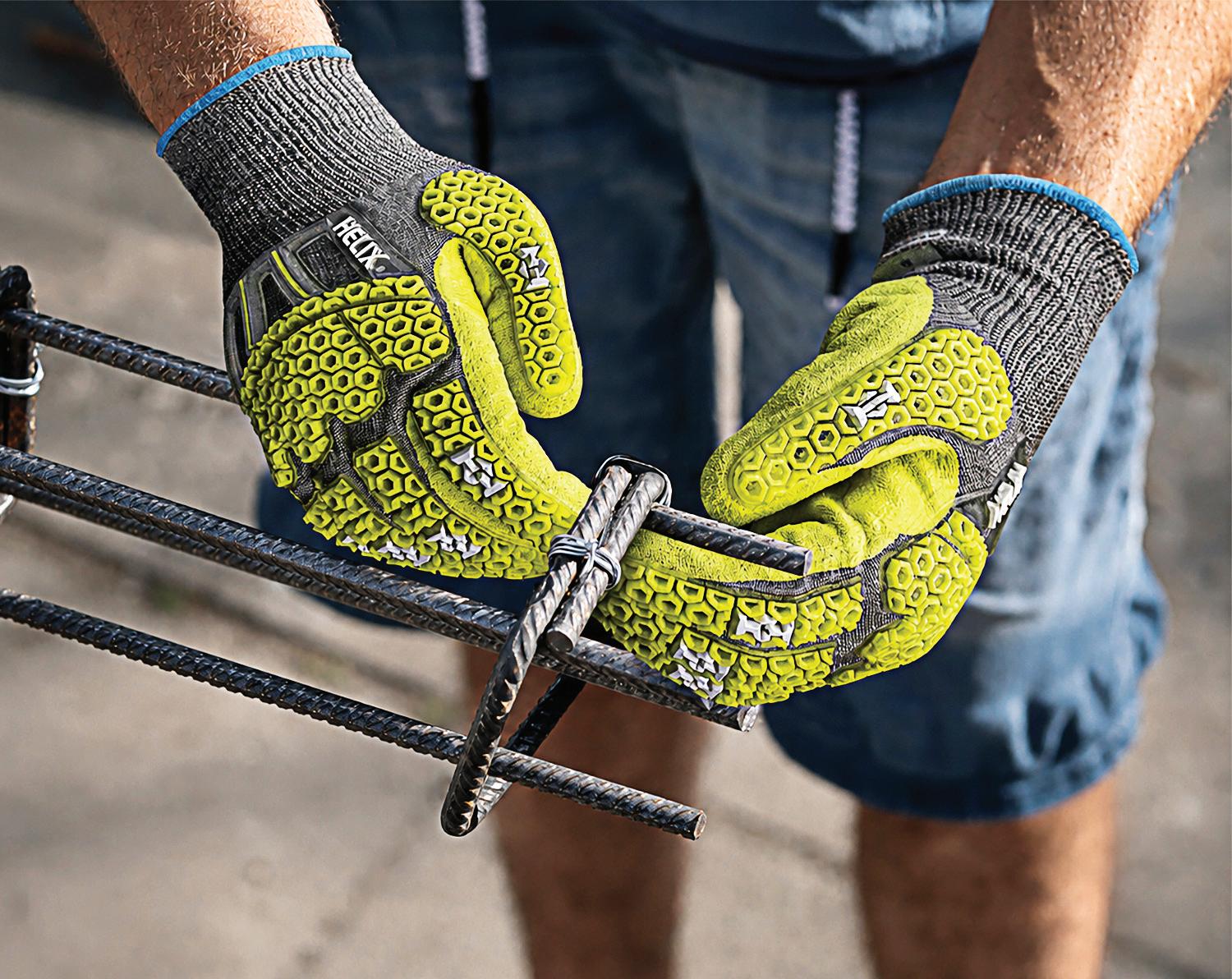
A key part of that future is the introduction of the HexArmor glove range to the Australian market. Designed to address some of the most demanding hand protection challenges, HexArmor brings advanced cut, impact and, in selected models, needle-resistant technologies into the uvex portfolio.
“HexArmor adds a new level of hand protection capability to our offering, particularly for industries where hand injuries remain one of the
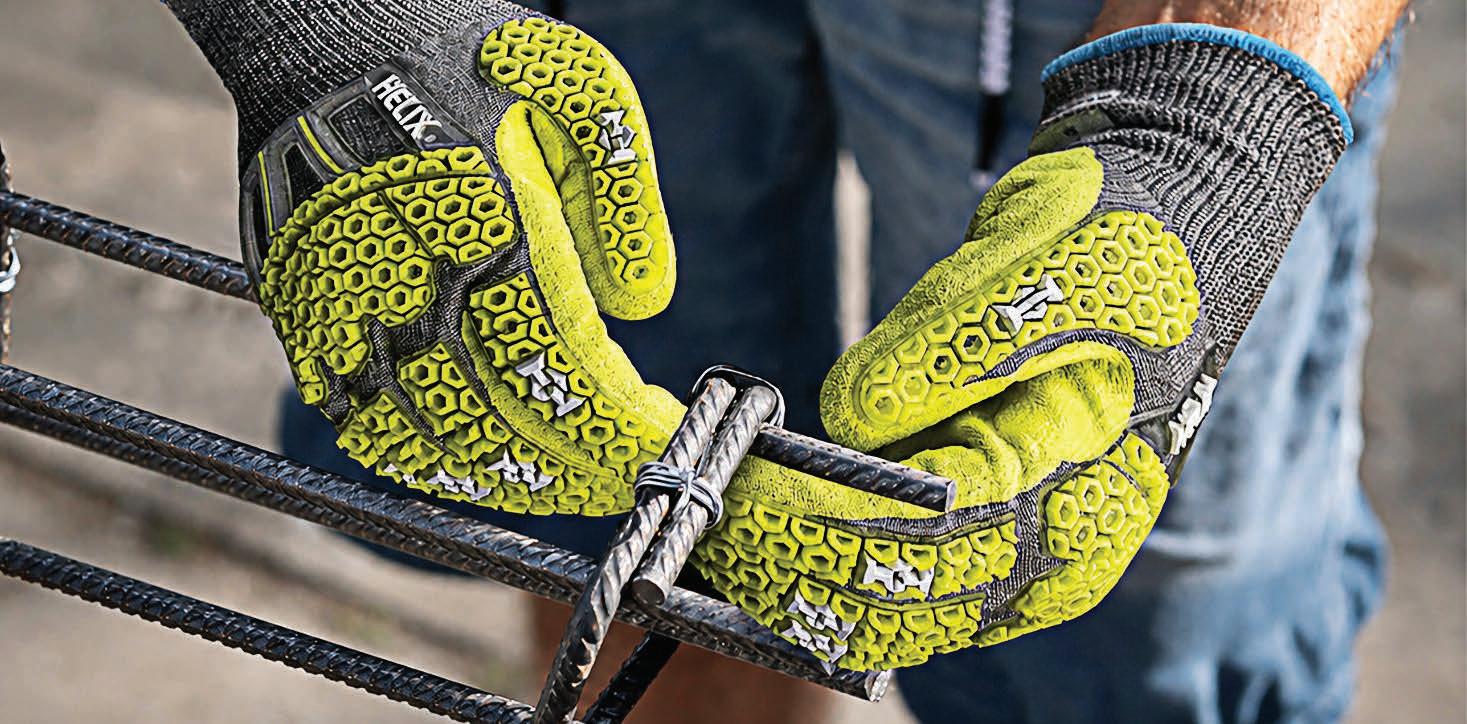
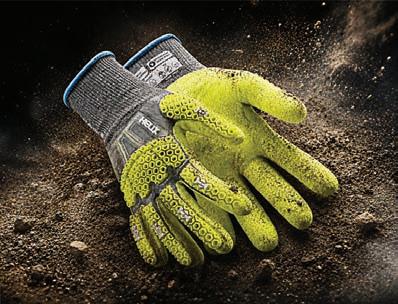
HexArmor brings advanced cut and impact technologies into the uvex portfolio.
Images: uvex
most common and costly workplace incidents,” uvex safety Australia New Zealand product manager – gloves Rasmus Boedker said.
“The decision to introduce the range was driven by the need to provide workers with highperformance hand protection without compromising comfort, dexterity or grip.”
HexArmor will feature prominently at the Queensland Mining Industry Health and Safety Conference, where visitors will have the opportunity to experience the technology firsthand and see how the gloves perform in real-world industrial applications.
“It allows us to demonstrate the difference in technology, particularly for mining and heavy industrial environments where cut, crush and impact hazards form part of everyday work,” Boedker said.
Mining environments present a unique combination of hazards. Workers regularly handle sharp materials, operate around heavy equipment and work in conditions where pinch points, impact hazards, and slippery surfaces are common. In these environments, effective hand protection is essential.
However, uvex believes protection alone is not enough.
“Industries such as mining and heavy manufacturing require PPE that performs in harsh, high-risk environments, but it also needs to be comfortable enough for workers to wear consistently across long shifts,” Boedker said.
“That balance of certified protection, comfort, fit and performance is central to how uvex develops its PPE solutions.”
This philosophy is particularly evident in the HexArmor range. While many traditional gloves focus primarily on either cut resistance or impact protection, HexArmor has been engineered to address multiple hazards simultaneously while maintaining exceptional dexterity and grip.
reputation for solving complex hand protection challenges,” Boedker said.
“That expertise has translated into a range of industrial safety gloves that combine advanced protection with exceptional comfort, durability and freedom of movement.”
Features such as back-ofhand impact protection, high cut resistance, reinforced wear zones and touchscreen compatibility help workers stay protected while maintaining productivity and precision on the job.
“HexArmor gloves help improve protection outcomes by addressing several workplace hazards at once, while still allowing workers to perform tasks safely and efficiently,” Boedker said.
As the PPE market continues to evolve, uvex sees one trend becoming increasingly clear: workers are moving away from bulky, uncomfortable equipment and toward PPE that delivers both protection and wearability.
“Workers are far more likely to wear PPE consistently when it fits well, performs well and remains comfortable throughout the day,” Boedker said.
“uvex continues to navigate this evolution through innovations such as the x-flow footwear range,
performance-driven safety eyewear including uvex apex and aquarius, market-leading uvex glove coating technologies, and advanced hand protection solutions from HexArmor.”
After 100 years of protecting people around the world, uvex believes the next chapter will be defined by continued innovation, sustainability and worker-centred product design.
“Protection is most effective when people want to wear it,” Boedker said.
“That is why uvex remains committed to developing PPE that delivers outstanding protection while being lightweight, comfortable, durable and suitable for the demands of modern workplaces.
“After 100 years, our mission remains the same, protecting people while continuing to evolve alongside the changing needs of workers and industries.”
Founded in 1926, uvex is a global head-to-toe personal protective equipment specialist.
The HexArmor range will be showcased at QMIHSC.
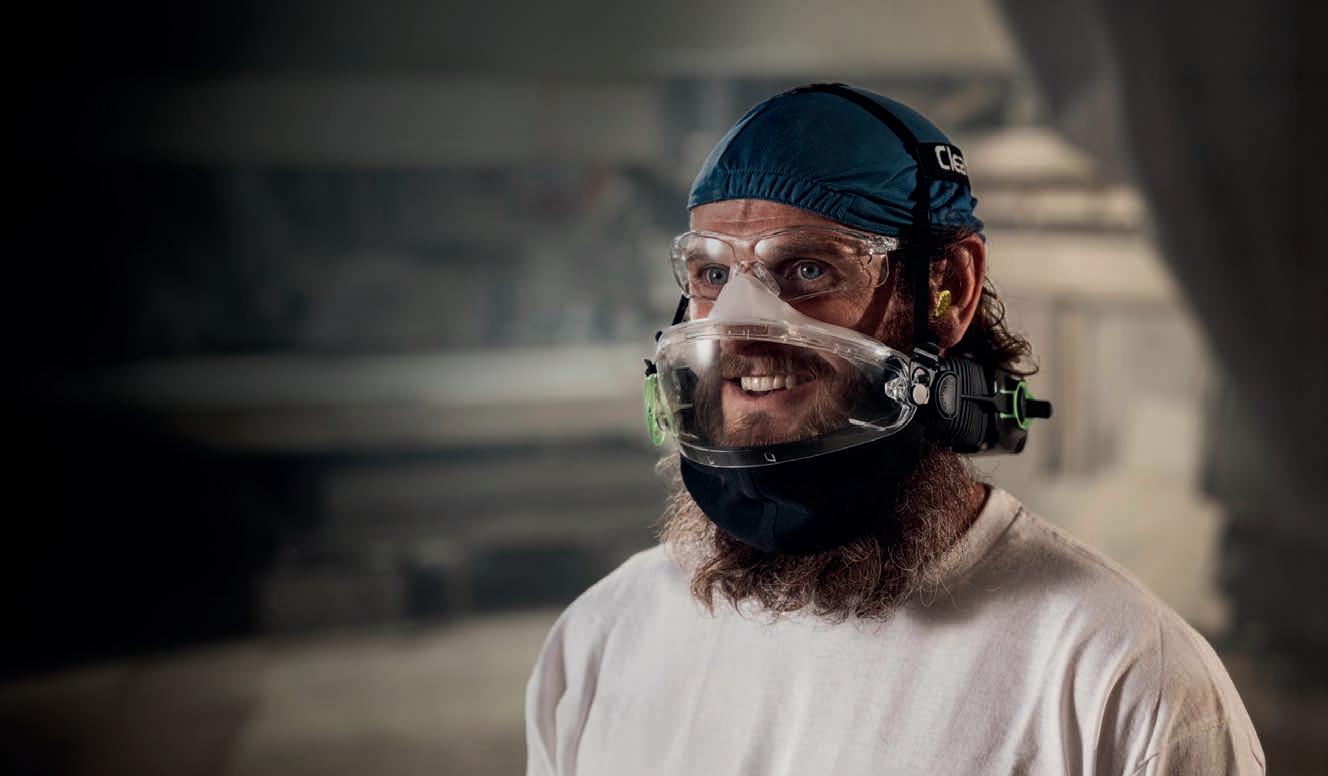
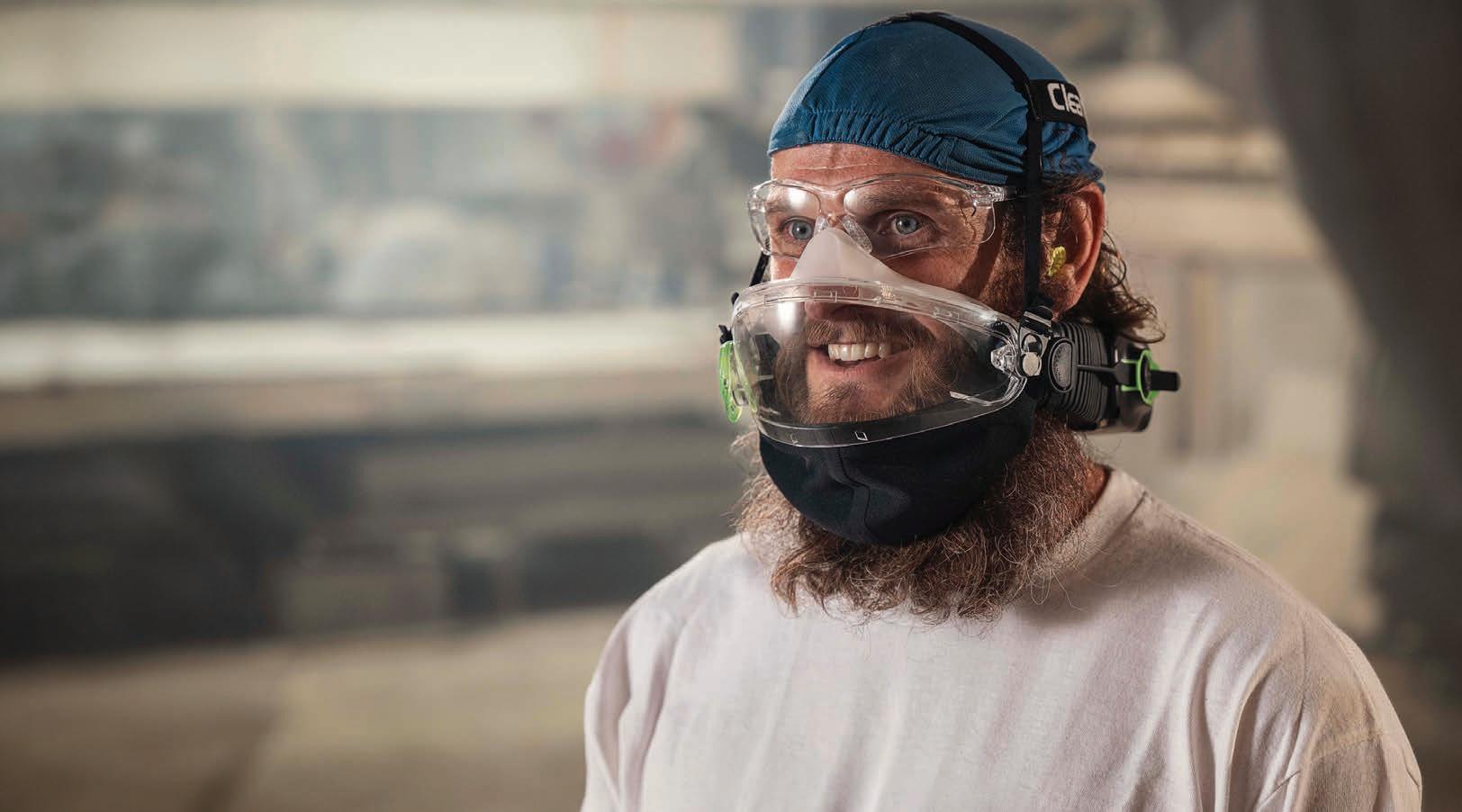
AGILE is certified for all face types, including those with facial hair, without any fit-testing required.
Breathing made AGILE
Comfort is king when choosing a respirator for any application, and CleanSpace is aiming to take that comfort to a whole new level.
If personal protective equipment
(PPE) is not comfortable, why use it?
That is the question CleanSpace’s engineering team set out to answer as they designed a loose-fitting respirator that could go the distance for workers.
Enter the company’s brand-new innovation – the AGILE powered airpurifying respirator (PAPR).
The enthusiasm in the voices of CleanSpace’s lead engineer Alex Virr, and global technical product director, Jon Imms, when they talk about AGILE is evident.
After all, when you find an answer to a long-standing question, enthusiasm is justified.
“I think they’re going to help a lot of people, which is the exciting thing,” Virr told Safe to Work
“The challenging thing about this is that no one had ever done this before.
We couldn’t take an existing design and modify it; the whole facepiece had to be entirely new.”
The AGILE PAPR is the latest brainchild from the engineers and technical development team at CleanSpace, led by Virr and the company’s senior designer, John Snow, and marks a milestone for the company as its first loose-fitting PAPR solution.
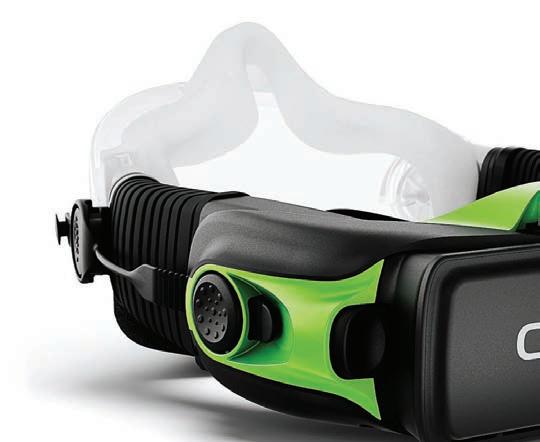
Featuring a half-facepiece design that sits across the nose and mouth without the tight seal of traditional respirators, the lightweight unit attaches directly to an operator’s face without hoods, belts, or hoses, with CleanSpace’s patented AirSensit technology allowing airflow adjustment in real time.
With its loose-fitting design, AGILE is certified for all face types,
including those with facial hair, and no fit test is required.
“Comfort is important for any user. We could make the world’s best respirator, but if it’s not comfortable, no one is going to use it and keep it on their face,” Imms said.
“AGILE changes that. The facepiece takes comfort to a different level, and with it being a one-size facepiece, it is going to work for you.”
The impact is considerable, given the push within the mining sector for increased diversity – bringing about different face types and sizes – and the need for PPE that works across all of them.
It also streamlines site safety by eliminating the need for fit-testing programs and external specialists, while remaining compliant with existing regulations.
Images: CleanSpace
“Over the years, I’ve worked in a lot of areas around the world, and compliance is key. People want to invest in equipment that is approved because it gives them confidence,” Imms said.
“With what we do, the bottom line is protection, and good compliance leads to protection.
“Overall, the design of AGILE really supports compliance because it can be used pretty much anywhere by anyone.”
The transparent facepiece is one of AGILE’s most distinctive features. The design means that not only is the respirator compatible with helmets, eyewear and earmuffs, but visibility and communication are still possible while wearing the equipment.
“Communication is always a big consideration with any respirator. There are various ways people have tried to change it or improve it, but we’ve found with AGILE, because of the facepiece, there is an improvement in communication,” Imms said.
“The current half-mask provides good visibility, but we’ve also found that voice can transfer well through the polycarbonate. It was a nice discovery when we realised ‘wow, this thing is
and the change in design has made a big difference there.”
The Insights reporting platform, which many CleanSpace customers already use to track filter life and compliance data across their fleets, will also soon extend to AGILE. This will provide safety managers with valuable insights into usage patterns and wear time throughout their workforce, helping them stay informed and proactive.
Alongside this, AGILE, which draws from a lightweight battery-powered
CleanSpace’s AGILE sits across the nose and mouth without the tight seal of traditional respirators.
unit weighing under 425 grams, can last for seven hours, a full shift for most operators, on a single charge, with a universal charger to top up the unit if required between tasks.
Virr said the feedback from customers had been incredibly promising, with users reporting being able to work longer stints after adopting CleanSpace’s solution, thanks to the respirator’s cooling effect.
“One of the great things about a powered respirator in comparison to an unpowered one is that all the heat and moisture that builds up in the mask of an unpowered respirator, you don’t get that,” Virr said.
“You get this nice flow of air across your face, and people often say that it’s particularly good in hot conditions because it allows your face to cool down.
“The cooling effect, especially with AGILE, is quite a big deal.”
Now, with AGILE in the market, Virr believes that CleanSpace is on the verge of something special.
“The feedback we’ve had so far is that the industry has been waiting for exactly this type of device,” he said.
“People are going to find AGILE is the answer they’ve been looking for.”
The AGILE PAPR can easily last for seven hours.
Protected inside out
At a conference themed around people being the industry’s greatest asset, Safety Mate will have a strong case to make.
When a piece of personal protective equipment (PPE) can make a work-site safer and fund research that saves lives beyond it, the line between safety gear and social good begins to blur.
That’s the space Safety Mate is occupying with its expanded Black Dog product range, a collection engineered for the harshest Australian conditions, and purposebuilt to support one of the country’s most important mental health research institutions.
Safety Mate has reinforced its ongoing partnership with the Black Dog Institute, a medical research organisation dedicated
to investigating mental health across the lifespan. The collaboration centres on a signature range of five products that channel a portion of profits directly toward the institute’s work in the diagnosis, treatment and prevention of mental illness.
The range includes three safety gloves, the Black Dog Stream Evo safety glasses, and the Skytec 3030V P2 respirator. Since 2021, Safety Mate has surpassed $2 million in donations to the institute, a figure that reflects the commercial reach of the range and the commitment behind it.
“All Australians deserve to feel safe at work, and that includes our mental safety as well as our physical safety,”
Black Dog Institute senior research fellow Dr Mark Deady told Safe to Work
“Most people will spend more than a third of their adult lives working, and this could be even higher in roles that require regular travel or FIFO schedules, so we know that mental health at work is closely connected to overall wellbeing.”
According to Safety Mate director Clint Tee, the Black Dog range represents something larger than a product line.
“This partnership also included participating in one of Black Dog Institute’s workplace mental health programs, which is backed by research and delivered by experts,” he said.
Safety Mate’s Black Dog product range is continuing to support better mental health outcomes in the mining industry.
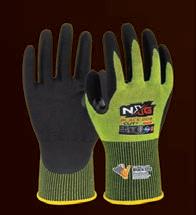
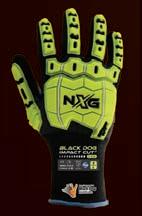
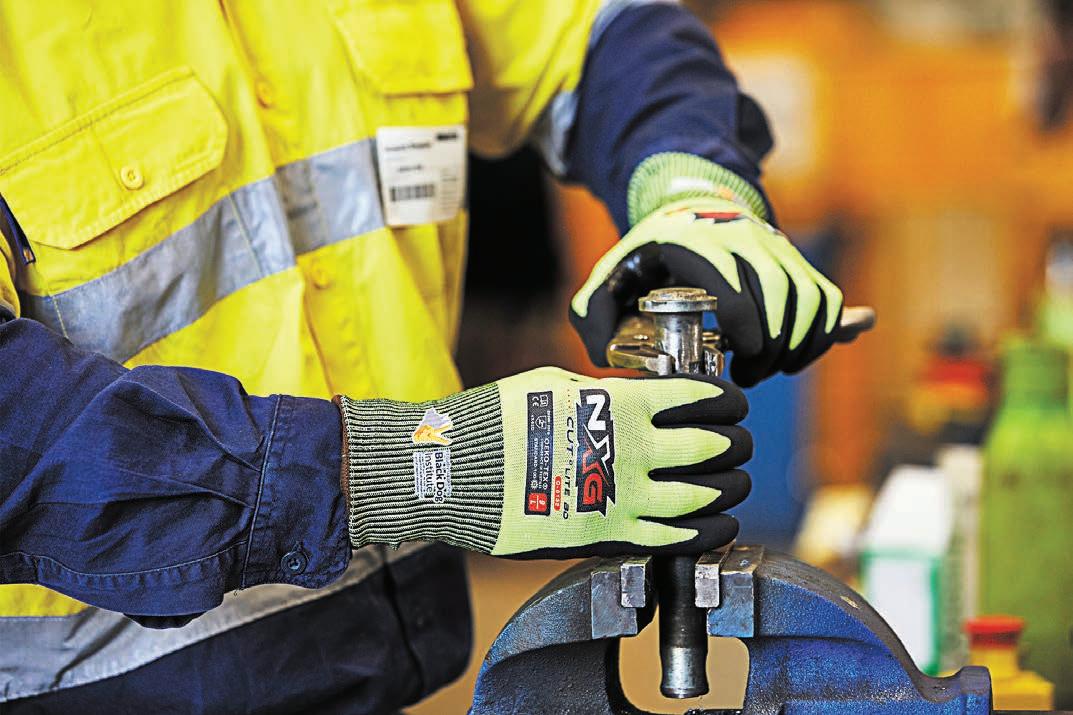
The NXG Impact Cut series offers both protection and practicality.
build employees’ awareness and understanding of their own mental health and how to have conversations with others.”
Safety Mate’s approach has been welcomed by Deady.
“It’s encouraging to see organisations like Safety Mate support their people by providing these important training opportunities,” he said.
It starts with the glove
At the centre of the partnership is the hand protection range’s Black Dog Impact Cut F glove, rated Cut Level F, the highest achievable under Australian standards, without the bulk that typically comes with it.
An 18-gauge liner keeps the glove light and breathable, while impact protection across the knuckles and back of hand handles the blows and impact hazards common in mining and heavy industry.
Workers can move between tools and devices without removing their gloves, which are made from recycled materials. Importantly, one dollar from every pair sold goes to the Black Dog Institute.
The Impact Cut F sits within Safety Mate’s broader NXG Impact Cut series, a range designed to ensure that workers in demanding environments don’t have to choose between protection and practicality.
Standout models in the range also include the NXG Impact Cut D, which provides cut and impact protection while remaining flexible and breathable for general heavyduty tasks. The Waterproof Grip variant adds a waterproof barrier and enhanced grip for wet and oily conditions. Meanwhile, the AntiVibration model adds palm padding to reduce fatigue for fitters and maintenance crews working with vibrating tools.
All gloves in the range are impactresistant, touchscreen-compatible, and OEKO-TEX Made in Green certified.
Mining respiratory protection redefined Protecting workers from what they breathe matters as much as what they touch, and the Skytec A-2CV Carbon Mask is Safety Mate’s answer to that half of the problem.
Built around patented electrostatic filter media, the A-2CV delivers low
breathing resistance without making workers face the trade-off of reduced filtration, which has long plagued disposable respirators.
The charcoal filter handles harmful particulates, and the lightweight alphamesh shell is designed to hold its shape across a full shift, preventing face collapse that can affect protection and comfort.
It also features a preformed nose bridge that stays put without frequent adjustment, which makes wearing the mask for hours at a time possible.
Additionally, each mask is individually packed for hygiene and easy deployment, and certified to European and Australian standards.
Between the Black Dog glove range and the A-2CV, Safety Mate is arriving at QMIHSC with a confident answer to what worker protection actually looks like in practice.
Underpinning all of it is a belief the company has held since the Black Dog partnership began; that looking after workers means looking after all of them, and there are few places to make that point better than QMIHSC, where this year’s theme, “Our Greatest Asset, Our People,” will take centre stage.
The dust wranglers
When it comes to industrial dust management, Melbournebased Mideco has seen it all – and built solutions for most of it.
Melton White once walked into a mining executives’ luncheon, handed out face masks and asked them to put them on. He then told them to eat their lunch. Even though the food was right in front of them, they could not eat it. mask off.
That, he told them, is what miners face daily on site. A dust-covered mask stays on during the work, but it has to come off sometime. Without a clear process to decontaminate the clothes
What workers need, White –the director of Mideco – said, is somewhere to go, “a destination”.
Somewhere they can walk, clean off, and remove their respiratory protection without thinking twice about it. Without that, the dust travels with them wherever they go, be it the break room or their car at the end of the shift.
“It’s a little bit like a virus,” White told Safe to Work. “You don’t feel the results in 48 hours, but over time you’ve built up exposure. And it’s even worse when you get in your car at the end of the day and drive home –now your kids have been exposed to dangerous dust.”
It’s a problem White has become familiar with over most of his working life. As the third generation of his family to run Mideco, a Melbournebased dust management specialist founded more than 70 years ago, he grew up around the question of where dust goes after the work is done.
It has shaped a lot of what the company has built.
Mideco started as a broad-based mechanical and industrial engineering business. It was the kind of business that would, according to White, “have a crack at pretty much anything”.
Air handling came first, as Melbourne’s early multi-storey buildings created demand for people who understood how to move air through large spaces. Eventually, dust control followed, driven by Mideco’s first customer in the space – the Ford Motor Company Geelong.
“That was really the start of us becoming dust handling experts,” White said.
It was around this time, in the 1970s, that Australia was on the precipice of
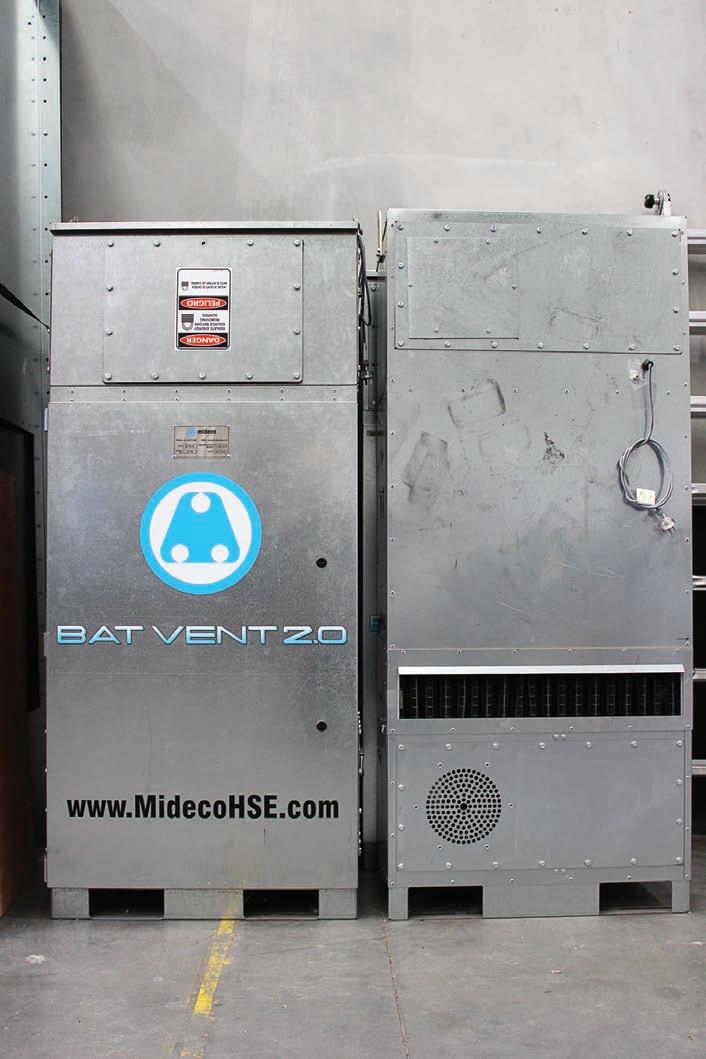
Mideco will relaunch its Bat Vent offering at QMIHSC.
its mining boom, an avenue on which Mideco made sure to capitalise.
Today, the company works across mining, quarrying and agriculture, and has been doing one thing or another with dust long enough to have developed strong tools to manage it.
When asked what separates Mideco from others in the same space, White puts it down to the company’s ingenuity.
“We are creative,” he said. “We invent stuff, it’s what we do.”
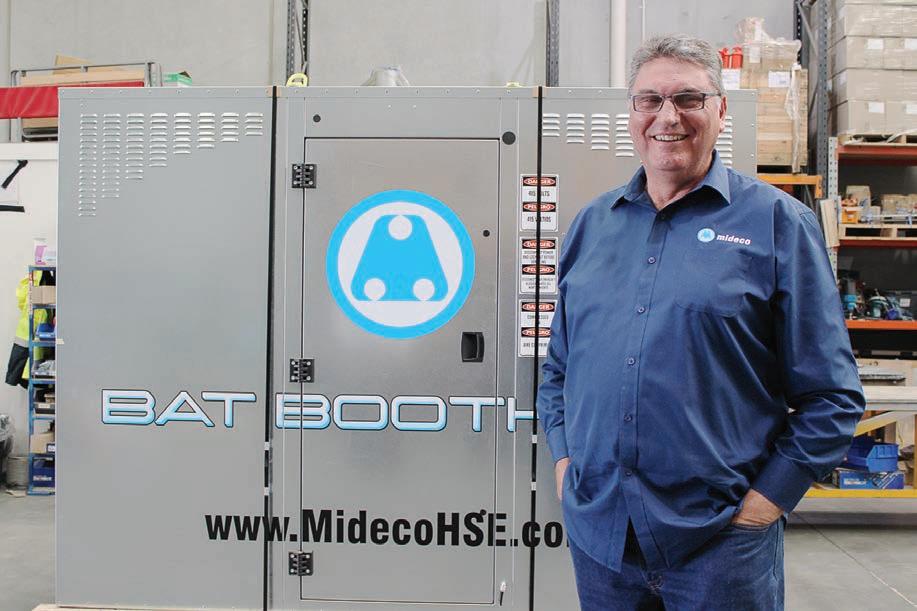
The Bat Booth 2.0 personal decontamination and dedusting system, something the company invented because nothing adequate existed, is proof of that innovation.
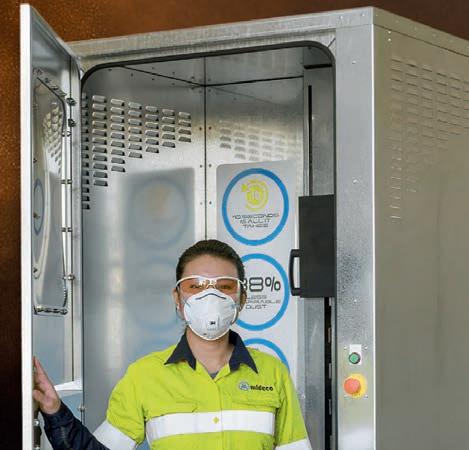
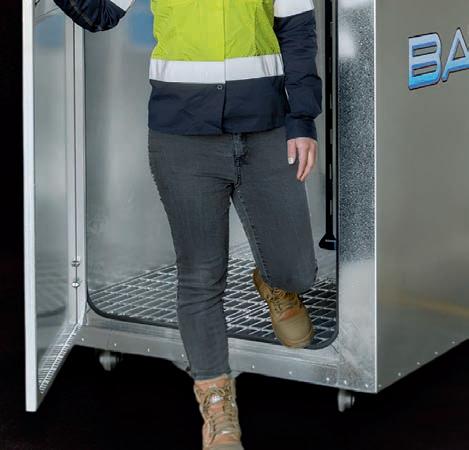
Built to manage hazardous industrial dust, workers pass through the Bat Booth before moving from dusty work areas into shared spaces like the break room, the office, or anywhere their personal protective equipment (PPE) comes off, and people start breathing freely again.
It is, in effect, the “destination” White refers to.
According to White, Mideco is currently one of only two companies in the world with a booth of this kind and calibre. The Bat Booth runs on a programmable logic controller, sequences its valves automatically, monitors filter condition in real-time, and logs usage so site managers can see exactly how often it is being used.
Another key differentiator is the Bat Booth’s turnkey feature.
While designing the booth, White was insistent from the start that it had to be simple enough for any site to run without outside help.
“I said to the guys, ‘I need this thing to be easier to install and turn on than your TV’,” he said. “That’s exactly what we’ve achieved; it’s plug-and-play.”
That simple-is-better ideology has attracted high-level mining partners, with Glencore now Mideco’s third largest customer by volume, having bought Bat Booths for sites across England, Ireland, Italy and elsewhere.
This relationship with the toptier miner goes back to a single conversation, when a Glencore area manager came across Mideco’s stand at a trade show.
“He just walked into the Bat Booth at our stall, and the rest is history,” White said. “That’s why these shows are very important.”
That is exactly what keeps Mideco returning to the Queensland Mining Industry Health and Safety Conference (QMIHSC) in August.
According to White, QMIHSC puts him and the company in front of people who are wrestling with the dust problem first-hand; not procurement managers working through a list, but on-site people who know what isn’t working and are looking for something that will.
“The people you meet there have had experts come along and tell them what they should do, but for the most part, they don’t know how to solve the problems,” he said. “Then they walk to our stand and go, oh, that’s how we can do it.”
This year, as a sponsor of QMIHSC’s Happy Hour, Mideco will have the opportunity to extend those conversations beyond the booth.
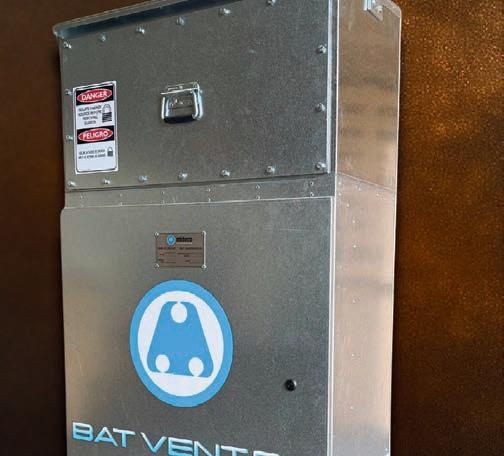
Alongside the Bat Booth, Mideco is also relaunching the Bat Vent at the conference.
While the booth works at the level of the individual, intercepting dust before it travels with the worker, the vent works on the space itself by maintaining air quality in enclosed areas.
It is, according to White, the missing half of the puzzle. The Bat Booth cleans the individual, but the Bat Vent actively fortifies “clean zones” such as offices and break rooms, where the PPE comes off.
“Our first site that bought the Bat Vents, at the time, they had one Bat Booth, but they bought seven Bat Vents,” White said.
“Because once you start counting the rooms on a site where people take their masks off, the number of spaces worth protecting tends to surprise you.”
The Bat Booth 2.0 is a oneof-a-kind decontamination and dedusting system, according to Mideco director Melton White.
Fit for purpose
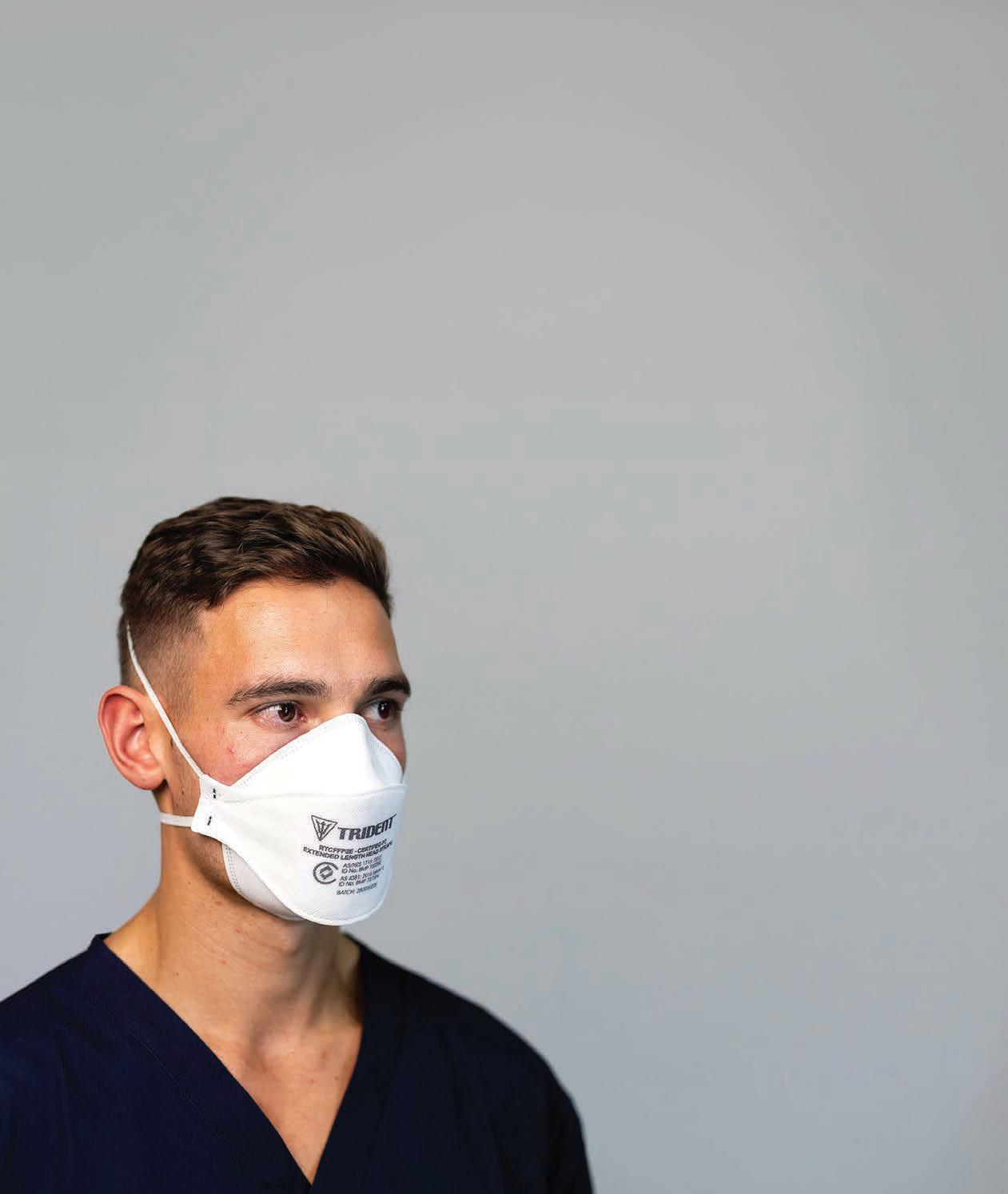
Industree’s TRIDENT respiratory range is setting a new standard in mining protection.
In high-risk industries, respiratory protection only works if workers can trust the fit, comfort and reliability of the equipment they wear every day.
In an independent study conducted by the University of Melbourne, the TRIDENT P2 respirator achieved an overall quantitative fit test pass rate of 99.2 per cent across 500 participants.
For a product conceived during a pandemic by an Australian company operating out of New South Wales’ Central Coast, that result could very well show what it takes to develop one of “the world’s best-fitting face masks”.
Industree Group, the company behind the TRIDENT brand, has built its business around the principle of staying responsive to what the market actually needs, and backing that responsiveness with internallydeveloped proprietary technology rather than off-the-shelf solutions.
The TRIDENT P2 was designed by Industree Group founder Jason Stenning and brought to market under testing conditions. When the COVID pandemic showed the relative fragility of Australia’s reliance on international personal protective equipment (PPE) supply chains, Stenning moved the product from concept through research and development testing, certifications, and Therapeutic Goods Administration (TGA) approval at an incredible pace, delivering respirators to frontline healthcare workers at a moment when many international suppliers had gone quiet.
The product that came out of that process has since earned an awardwinning status, establishing Industree Group as a serious player in Australian respiratory protection.
“What sets TRIDENT respiratory apart is not only its exceptional performance but our commitment to innovation, striving to continually push the
boundaries of respiratory technology,” Industree said.
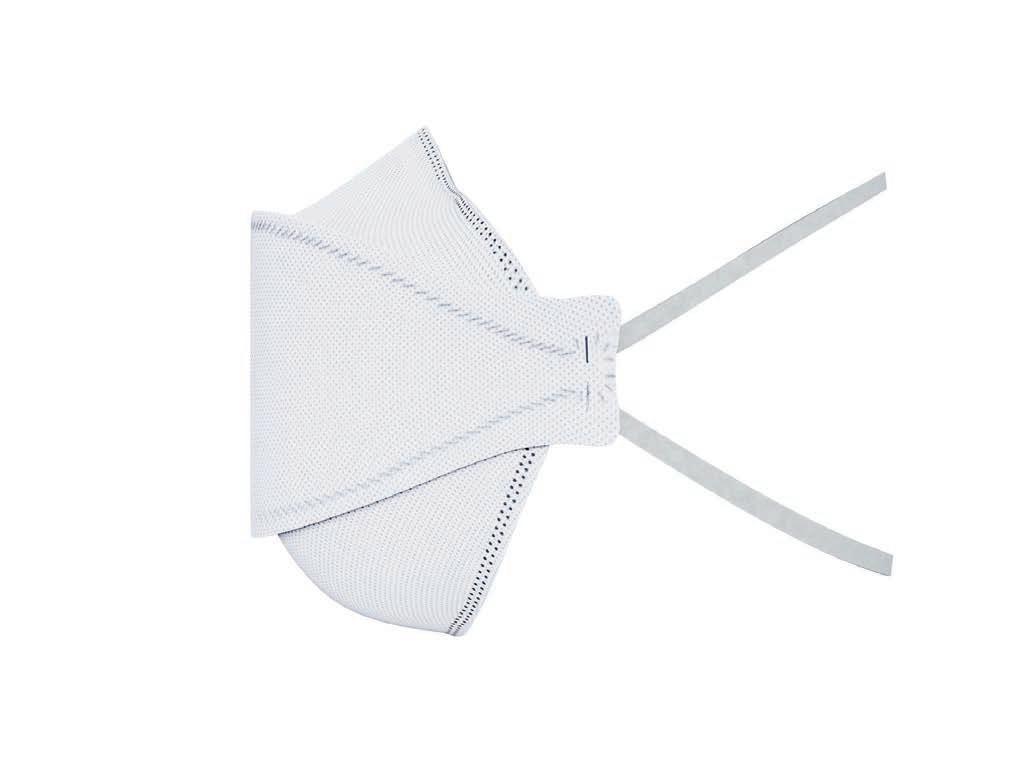
That trait of thinking outside the box is clearly seen in how the TRIDENT P2 was devised, especially in its tri-panel design. The three-panel flat-fold construction was chosen because the data supported it, with the design demonstrating exceptional quantitative fit-test results and userrated comfort compared to other styles, according to Industree.
Research conducted across 2161 healthcare workers at the Royal Melbourne Hospital found that threepanel flat-fold respirators achieved a quantitative fit-test pass rate of 96.4 per cent, the highest of any respirator style tested, and rated highest for wearer comfort across the group.
In addition, data from independent occupational health firm Kinnect compiled across more than 25,000 tests placed the TRIDENT RTCFFP2 at 91 per cent correct fit on the first test, the highest of any mask in the dataset.
Under AS/NZS 1715:2009, fit testing is mandatory across all Australian respiratory protection programs, and every failed test can lead to unplanned downtime or efficiency losses.
Industree addresses this challenge directly through its fit-test program, coordinating scheduled and annual testing through accredited partners in most Australian capital cities, maintaining a complete database of employee results by date and size, and supplying toolbox talks and training materials to support correct donning and seal checks in the field.
Gamuda Australia, one of the companies using the program, has credited the TRIDENT fit-testing support with keeping its employees
Industree’s TRIDENT range is an innovative solution backed by strong data.
protected in conditions involving silica, asbestos and dust exposure.
Since its initial launch, the TRIDENT disposable range has expanded to include unvalved, valved, and carbon valved configurations across a wide size range.
“The extensive product range ensures that TRIDENT protects workers across a range of sectors including healthcare, industrial, construction, mining, and manufacturing,” Industree said.
The company has also launched the TRIDENT HEXHALE reusable respirator, available in half-face and full-face silicone configurations with bayonet-connected filter cartridges covering organic vapour, particles, and multi-gas applications, alongside a powered air purifying respirator with smart alarm functionality, and fastcharging battery performance.
Completing Industree’s offerings is Epicycle, its PPE recycling program developed in partnership with TerraCycle.
Custom zero-waste boxes collect used respirators, safety glasses, and gloves from worksites for processing and remanufacture, covering waste streams that standard kerbside recycling services don’t accept.
For resource companies under growing pressure to account for their environmental footprint across the full supply chain, Epicycle offers a practical program that addresses a gap most operators have had to work around until now.
As a company that built its flagship product during a national emergency, Industree has covered considerable ground, and nothing about its current trajectory suggests it is done yet.
The TRIDENT P2’s tri-panel design ensures exceptional fit-testing results.
LA-40 SPRING
LA-ASY-40S-000-00
Dual spring lift mechanisms support tooling up to 40kg, reducing operator e ort while enabling smooth, precise manual positioning
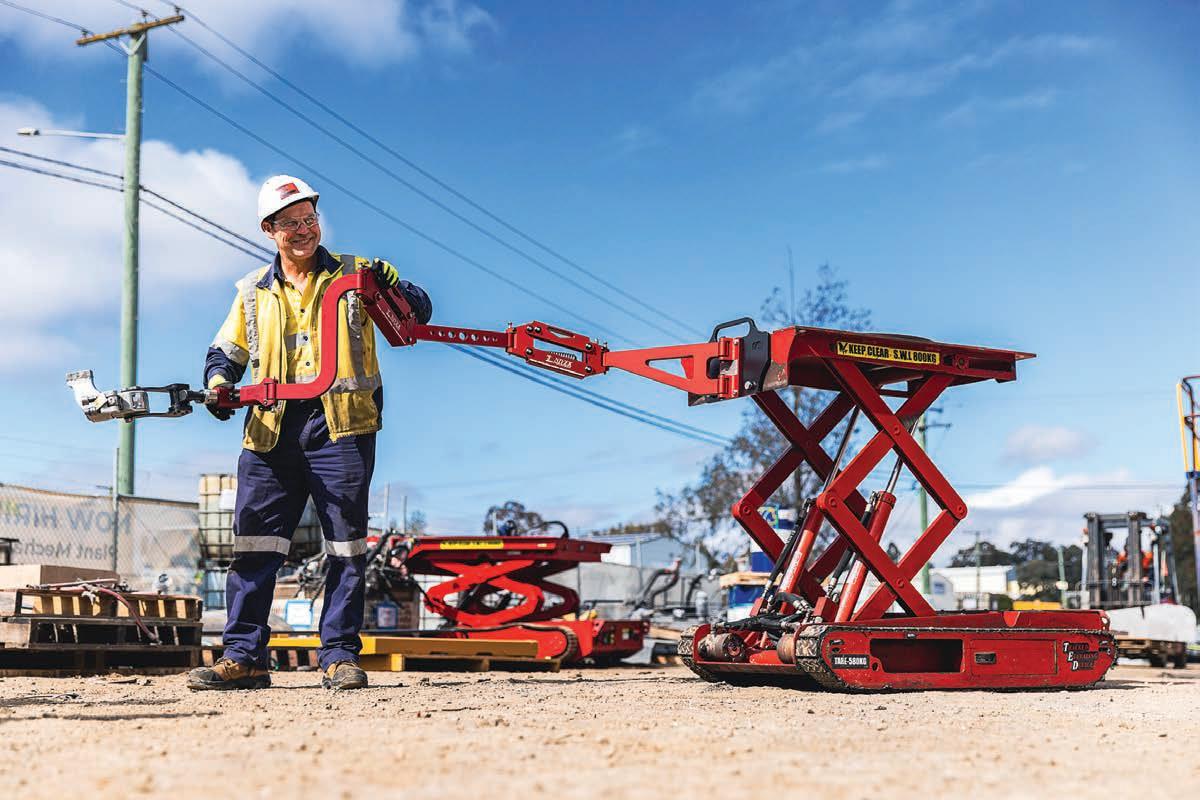
Developed with leading mining companies, Nivek’s Lift Assist systems make challenging maintenance tasks easier, safer, and more e cient, giving operators greater precision, control, and confidence every step of the way.
Purpose-built to take the weight out of heavy tooling, each unit mounts seamlessly to TED or BIG TED, reducing physical e ort and opening traditionally strength-dependent work to a broader, more diverse workforce.
We’re pioneering a more inclusive and capable workforce, while reducing risk and injury.
LA-40 POWERED
Powered by a 24 V lithium battery, dual electric actuators lift and secure loads up to 40kg, using a simple two-button pendant to deliver precise control during installation or removal. LA-ASY-40P-000-00
LA-80 POWERED
Powered by a 24 V lithium battery, dual electric actuators handle loads up to 80kg, with straightforward twobutton operation enabling accurate positioning by one operator. LA-ASY-80P-000-00
Keeping a finger on the pulse
A new investigation and risk intelligence platform is set to help mining companies turn incident data into stronger operational lessons and proactive safety outcomes, with its industry launch now imminent.
ICAM Australia will be presenting its new investigation platform SafetyPulse at the Queensland Mining Industry Health and Safety Conference (QMIHSC). The platform is built to do something most investigation tools do not: close the loop between investigating incidents after they happen and strengthening the controls that reduce the risk of the next one.
Every investigation completed in SafetyPulse feeds back into the
over time, and corrective actions are followed through to closure rather than left to fade in a spreadsheet. The intent is to move organisations from reacting after the fact toward seeing where risk is building before it becomes an event.
Designed specifically for safetycritical industries like mining, SafetyPulse has been developed to transform investigations from static compliance exercises into an integrated system of operational
patterns, monitor control effectiveness and strengthen decision-making before serious events occur.
The unveiling at QMIHSC comes as mining companies continue to place increasing emphasis on proactive safety management, governance and operational resilience across complex worksites. While investigations have long been a cornerstone of mine safety, many organisations still struggle to connect lessons learned across multiple events or convert incident data into long-term
Built around the ICAM investigation investigations through a structured
evidence collection, ICAM analysis, recommendations and reporting. The system captures information using the people, equipment, environment, procedures and organisation (PEEPO) process while also examining the
imagined, work-as-normal and work-
This structure allows organisations to move beyond isolated incident reviews and begin identifying broader trends across operations. Instead of asking what happened in a single event, mining companies can start examining where controls repeatedly fail, where operational drift is occurring and which hazards may be escalating
One of the platform’s standout features is its ability to generate operational indicators that provide leadership teams with a clearer view
ICAM will unveil its SafetyPulse platform at QMIHSC.
of system health. These include the investigation quality score (IQS), which measures investigation depth and governance quality, the control health index (CHI), which tracks the reliability of controls, and action closure reliability (ACR), which assesses how effectively corrective actions are completed.
Together, these metrics shift the conversation from reactive reporting to forward-looking operational intelligence. Rather than focusing solely on incident counts, organisations gain visibility into the strength of their safety systems and whether controls are improving, stabilising, or deteriorating over time.
The platform also introduces several new capabilities, including the Visual Investigation Canvas and Bowtie Barrier Mapping.
The canvas presents investigations as an interactive node diagram linking events, barriers, contributing factors and recommendations into a single navigable view. This offers a clearer way to visualise relationships between failures and contributing factors.
Bowtie Barrier Mapping further strengthens this system-based approach by directly linking investigation findings to an organisation’s bowtie risk model. Investigators can record whether barriers were implemented, degraded, ineffective or absent at the time of an event, creating an auditable connection between investigations and risk controls. Over time, repeated barrier failures can be identified as emerging risk signals, helping organisations determine whether additional investment, redesign or retraining may be needed.
Another focus of SafetyPulse is predictive risk visibility – the platform’s Severity Exposure and Drift Assessment tools are designed to help organisations identify where residual risk is concentrated before a serious incident occurs. Rather than relying solely on lag indicators, the system
analyses the worst outcome of a hazard alongside the observed reliability of controls protecting it.
Drift Assessment then compares current exposure levels against previous operational periods, highlighting whether conditions are improving, stable or deteriorating.
The result is a structured early warning system aimed at helping mining companies strengthen controls before failures escalate into highconsequence events.
SafetyPulse also integrates psychosocial analysis, aligned to the International Organisation for Standardisation (ISO) 45003, allowing organisations to document psychological risk factors alongside operational hazards. This reflects the growing industry focus on holistic workplace health and safety, particularly in high-pressure operational environments.
Importantly for mining operators, the platform extends beyond investigations into broader operational planning. Safe Work Method Statements (SWMS), Job Safety Analyses (JSA) and other planning tools draw directly from shared hazard and control libraries, ensuring investigation findings continuously inform future work planning.
The system has been designed with governance and compliance in mind.
Investigations progress through structured approval stages involving investigators, safety managers and senior leadership before being locked as governance records.
This provides organisations with a transparent audit trail and stronger assurance around investigation quality and accountability.
Distributed through ICAM Australia, SafetyPulse combines technology with methodology-aligned capability building, reinforcing structured investigation thinking across teams. The platform provides organisations with on-boarding support, methodology alignment workshops and direct access to product development feedback channels.
The platform also sits alongside ICAM Australia’s established training and consulting services, which remain central to the organisation’s offering.
SafetyPulse extends this foundation, giving organisations a way to apply the methodology they learn in training directly within their day-today operations.
This will speak to mining companies seeking to strengthen organisational learning following incidents. And with SafetyPulse’s unveiling at QMIHSC, ICAM is sending a clear message to the industry – when it comes to data-driven approaches to investigations, ICAM always has a finger on the pulse.
Image: Gorodenko
ICAM Australia’s established training and consulting services are central to the organisation’s offering.
Connected, working and engaged
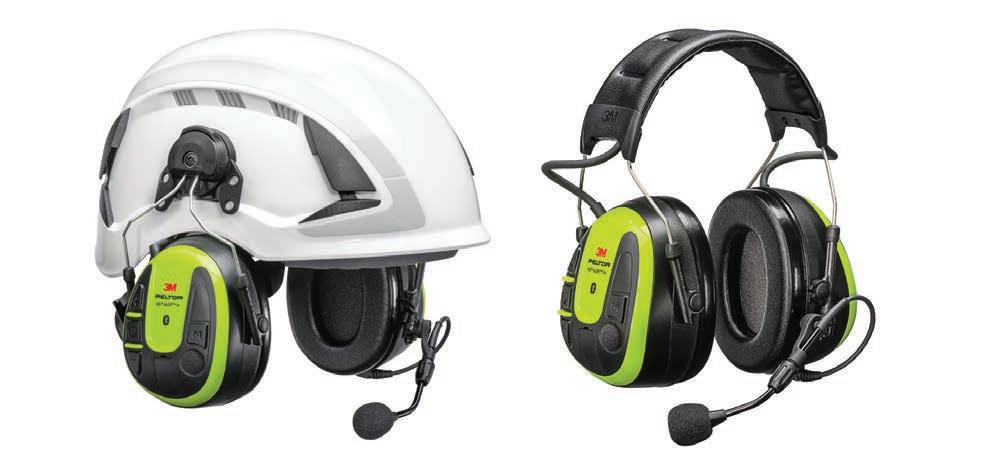
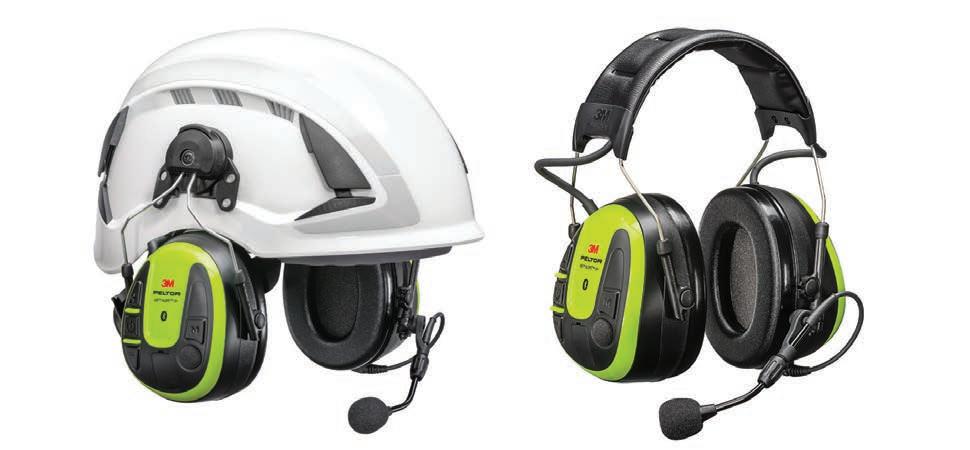
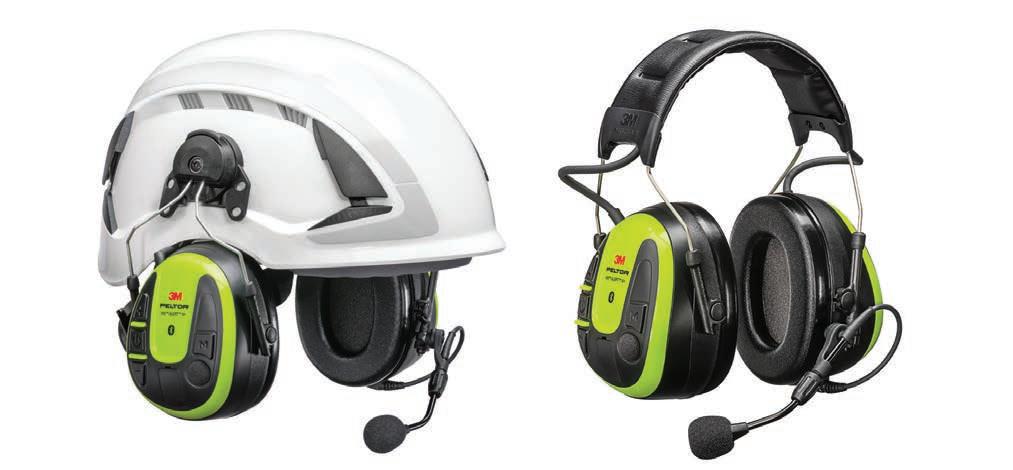
3M has developed a new product for the mining sector to improve hearing protection and communication in high-noise environments.
Across heavy industries, maintaining clear and effective communication is key when moving around on-site.
With noise interfering with conversations, phone calls and important logistical discussions, prioritising hearing is a clear advantage in supporting safety at work.
Without clear communication, hazards presented on mine, construction and industrial sites can significantly increase the risk of accidents, errors and downtime.
In response to feedback from customers, 3M developed a solution designed to combine hearing protection and communication in one device.
In noisy work environments, staying connected can be difficult, especially when workers also need reliable hearing protection, with the new 3M PELTOR WS ALERT X+ headset designed to cut through the noise.
Built to support communication in noisy environments without the need to remove protective equipment, the headset allows workers to clearly hear incoming calls, connect one or two external devices using Bluetooth technology and speak at a normal volume using the noise-cancelling boom microphone.
“I often work outside in dirty environments, and I need to make calls several times a day. With this headset, it is easy to both call and pick up calls, even with my gloves on. I don’t need to stop and use my mobile phone. I can do it all on the headset,” she said.
Another user, Martin, highlighted the value of the device in demanding work environments.
“This headset protects my hearing. I can easily talk with my colleagues as
“Our solution helps support communication and situational awareness while allowing workers to keep their hearing protection in place,” a 3M spokesperson told Safe to Work
One user of 3M’s new headset, Julia, an excavator and land clearer, described the benefit in daily work.
settings, monitor battery status, customise their audio experience and receive reminders for hygiene kit replacement. Voice-guided feedback also means users can make setting adjustments without removing the headset.
“Workers should never be in the position to choose between safety and communication,” the 3M spokesperson said.
The new 3M PELTOR WS Alert X+ ensures hearing protection in high-noise environments without compromising communication.
“The 3M PELTOR WS ALERT X+ supports both by allowing communication while wearing hearing protection, reducing the temptation to remove critical protective equipment in noisy environments.”
Images:
PROTECTING PEOPLE.
POWERING PRODUCTIVITY.
Safe Productivity Solutions by SICK reduce risks, prevent unplanned downtime and stabilize processes, making safety the basis of productive processes ensuring strategic success in modern industry.
AI drives zero-harm vision
Technological innovation could be the engine that powers the mining industry’s safety mission.
It’s hard not to categorise mining as an essential global industry, with operations running in complex and challenging environments to supply the materials that power modern economies.
As with many heavy industries, safety performance is a necessary and constant focus for operations.
Whilst mining ranks among sectors with higher occupational risk, longterm trends continue to demonstrate steady improvements.
In 2024, International Council on Mining and Metals member companies recorded 6456 total recordable injuries and 42 fatalities, compared to 36 fatalities in 2023. Despite the slight increase year-on-year, the broader trajectory reflects progress, with a 3.7 per cent compound annual reduction in injury rates since 2019.
These figures reinforce that although a ‘zero-harm’ policy may be ambitious, according to accounting and audit organisation BDO, there is a sustained commitment to making meaningful gains.
“The figures underscore the importance of continued advancement in prevention strategies, especially those that capitalise on technology,” a BDO spokesperson told Safe to Work
“Artificial intelligence (AI) driven risk assessment platforms, computer vision systems, multi-modal sensor networks and autonomous machinery are now being deployed to shift safety management from reactive to proactive.”
A significant share of incidents in 2024, BDO noted, involved mobile equipment interactions and fall of ground events, often caused by workers entering hazardous zones.
“These are precisely the risks that collision avoidance systems are designed to reduce,” the spokesperson said.
It appears the mining industry is progressing beyond pilot programs and moving towards tangible safety results, with AI-based platforms being used for risk assessment, light detection and ranging (LiDAR) imagery being used for mapping and virtual reality simulation training being embedded into operations.
Autonomous machinery and wearable fatigue prediction tools are also becoming more commonplace, helping further reduce risks on site.
“For example, we’ve seen predictive fatigue wearables deployed for more than 600 operators at one operation enable earlier interventions and reduce in-cab fatigue alerts,” the spokesperson said.
At the same time, technology delivers its greatest impact when paired with strong organisational support.
“In an industry survey, 89 per cent of respondents observed a disconnect between corporate leadership and mine site teams regarding innovation and progress. Addressing this presents a clear opportunity to accelerate adoption and amplify impact,” the spokesperson said.
Examples such as this present a key opportunity for mine operators to
embrace technology to better serve its workforce.
“Intelligent systems can identify emerging risk patterns before incidents occur and tailor training requirements to an individual’s role and experience,” the BDO spokesperson said.
“AI-enabled access controls could also provide real-time verification against training databases to ensure only fully inducted personnel enter operational areas.”
This can be done, BDO said, through greater uptake across the workforce to improve capabilities.
“Globally, 21 per cent of mining and quarrying workers report not having received occupational safety and health training, and 43 per cent report having experienced harm at work within the past two years,’’ the spokesperson said.
“Despite maintaining one of the highest training participation rates of any industry, continued investment in access, consistency and effectiveness can further strengthen outcomes.”
The opportunity now is to position AI as a core safety infrastructure.
“It’s now clearer than ever before that when integrated into fleet systems, training programs and safety dashboards, these tools enable earlier intervention and strengthen frontline decision-making,” the spokesperson said.
The mining industry is increasing its reliance on AI-based platforms for risk assessments.
Prometheus is helping operations streamline workflow by putting information into a single system for frontline crews.
From shutdowns to sign-o s
Prometheus is helping mine sites bring planning, permitting and safety processes together under a connected system.
It all started with a “frustrated founder”, Prometheus Group general manager, Asia Pacific, Iman Ghodosi told Safe to Work
More than 25 years ago, the founder and chief executive officer of Prometheus Group, Eric Huang, grew tired of watching maintenance planning being buried beneath complex enterprise systems that looked good on paper but struggled to reflect the realities of work on the ground.
At the time, Huang was working as a consultant helping industrial customers navigate large enterprise resource planning (ERP) systems. But instead of streamlining maintenance planning, those systems often created additional layers of complexity.
Rather than accepting the disconnect, Huang built a software
that could turn complex maintenance data into practical actions.
That decision would eventually evolve into Prometheus Group, a global enterprise asset management (EAM) software business now working with some of the world’s biggest heavy industries, including mining.
“We don’t want to be the system of record. We want to become the system of action,” Ghodosi said.
“The people on site don’t need another system to log into. They need a system that helps them make safer decisions faster.”
Nearly three decades later, Prometheus specialises exclusively in the EAM space, developing software focused on planning, maintenance and safety workflow across industrial operations. Rather than replacing existing ERP systems, the company
works alongside them, helping operations make complex backend systems more practical for frontline use.
That approach has become increasingly important as mining operations manage growing maintenance demands, tighter shutdown schedules and ongoing workforce changes.
“One of the biggest things we get told is that institutional knowledge is either walking out the door or has already walked out the door,” Ghodosi said.
“That’s a huge challenge because planners have a really important job to do, especially when safety is involved.”
Those growing operational and workforce pressures ultimately helped shape the development of Prometheus’ broader suite.
Safety technology
GWOS-AI
“Every conversation today is AI this, AI that,” Ghodosi said.
“But what our customers care about is: how do I keep my people safe, how do I reduce downtime, and how do I make sure I’ve got the right people on the right job at the right time?”
GWOS-AI was built to answer those questions.
Originally developed as a graphical work order system (GWOS), the platform has evolved into an AIpowered tool to help with the dayto-day pressures of planning and scheduling across site.
At the centre of the platform is what Ghodosi describes as “vertical AI” – artificial intelligence trained on years of industrial maintenance and operational data.
Unlike broader AI tools designed to generate generic responses, GWOS-AI is purpose-built around the realities of heavy industry environments, where decisions can directly impact both operational stability and worker safety.
“We’ve been at this for more than 25 years, so we’ve got all the data,” Ghodosi said.
“We’re training our AI on decades of maintenance data so we can help close the experience gap. It guides new planners through best practices
and enables them to build schedules in minutes rather than relying on trial and error.”
According to Ghodosi, the platform is designed to help mining operations move away from reactive maintenance, streamlining workflow by pulling information into a single system for frontline crews.
“We don’t just give customers suggestions,” he said. “We help generate schedules, permits and work-order-ready tasks so crews can take action straight away.”
Rather than replacing planners or frontline teams, the goal is to support them.
“It becomes your second brain,” Ghodosi said.
ePAS
During shutdowns and maintenance campaigns, operations can quickly become a logistical puzzle, with hundreds of workers, contractors and high-risk tasks happening across a site simultaneously.
In those environments, keeping track of permits, competencies and approvals can become just as critical as the maintenance work itself.
“Permitting and contractor management has created headaches for years,” Ghodosi said.
“We still see paper permits, inconsistent isolation procedures and contractor records sitting everywhere.”
That’s where ePAS – Prometheus’ electronic permitting and safety system – comes into play. Built on technology acquired through an Australian company roughly a decade ago, the software condenses that workflow into a single, auditable system.
“ePAS digitises the whole chain, from permits and isolations through to competencies, sign-ons and sign-offs, and it’s all auditable,” Ghodosi said.
Instead of a paper trail and disconnected approvals, he said the platform gives site managers a clear, real-time picture of everything happening across the operation – who is on site, what they’re authorised to do, and whether the right competencies are in place.
“While we’re improving efficiency, we also need to make sure we have the right people on the right job at the right time with the right competencies,” Ghodosi said.
Getting everything right is what Huang set out to do all those years ago. Planning, permitting and safety are only part of it – with a product suite that now stretches further still, it looks like Prometheus has done just that.
The ePAS platform gives site managers a clear, real-time picture of everything happening across the operation.
A proactive partner
With the new Workplace Exposure Limits only months away from being enforced, MST Global is giving miners a much-needed adoption blueprint.
By the end of the year, Australia’s mining industry will face one of the most significant occupational hygiene shifts in decades – with Safe Work Australia officially transitioning from Workplace Exposure Standards (WES) to Workplace Exposure Limits (WEL), reinforcing a change that will make airborne contaminant thresholds enforceable limits rather than guidelines.
This will bring about a new operational reality for underground mine sites where real-time environmental visibility, proactive exposure management, and integrated digital safety systems will become essential to maintaining compliance and protecting workforce well-being.
Safe Work Australia’s updated WEL framework introduces revised and, in many cases, stricter exposure limits for airborne contaminants. The reforms are intended to align Australia more closely with international occupational
health standards while addressing growing evidence around long-term exposure risks.
Key contaminants under increasing scrutiny in mining environments include respirable crystalline silica (RCS), diesel particulate matter (DPM), nitrogen dioxide, carbon monoxide, sulphur dioxide, as well as welding fumes and metal particulates.
The challenge is particularly acute for underground mines, where confined spaces, mobile diesel fleets, blasting activities, and variable ventilation conditions can rapidly elevate airborne contaminant concentrations.
Traditional approaches based on periodic sampling and reactive reporting are no longer sufficient and mining operators will increasingly need to implement continuous environmental monitoring, realtime visibility across underground networks, immediate alarm escalation,
This is where digital mining infrastructure becomes critical.
Adopting real-time environmental intelligence Historically, occupational hygiene programs often relied on retrospective analysis, but the 2026 WEL changes shift the industry toward preventionfirst operational models.
MST Global’s underground digital infrastructure and environmental monitoring ecosystem positions mining companies to proactively manage the new exposure limit environment. Rather than treating occupational hygiene as a standalone function, MST enables mines to integrate environmental intelligence directly into operational decision-making.
MST’s monitoring platform (HELIX IoT and Automation)
Through integrated tracking, MST provides live data that can correlate people’s location to exposure.
enables continuous collection and transmission of environmental data underground, including gas concentrations, airflow conditions, dust and particulate monitoring, ventilation performance indicators, and equipment operating status.
This real-time visibility allows operators to identify developing hazards before exposure limits are exceeded, and instead of discovering problems after a shift ends, mines can intervene immediately.
However, the real value comes from operationalising the data.
Through integrated tracking, communication and automation platforms, MST solutions not only support investigations by providing live data that correlates people to location to exposure, but improves safety through prevention.
MST’s solutions deliver data that helps mines:
• Trigger alerts when thresholds approach critical levels
• Automatically notify supervisors and control rooms
• Correlate environmental conditions with personnel locations
• Adjust ventilation controls easily and dynamically
• Improve evacuation readiness
• Build auditable compliance records.
As WEL requirements become more stringent, traceable and defensible data histories will become increasingly important for regulatory reporting and investigations.
The ventilation challenge
Ventilation remains one of the mining industry’s largest operational costs, and one of its most important safety controls.
The new WEL environment will place even greater emphasis on mines to optimise ventilation performance while managing energy consumption and emissions.
To help with this, MST’s integrated operational technology ecosystem supports ventilation-ondemand strategies, asset tracking, environmental sensor integration, worker location awareness, and automated operational workflow.
This enables mines to move toward more adaptive ventilation systems that respond dynamically to underground conditions, personnel movement, and equipment activity.
Diesel particulate matter
One of the most significant developments under the new WEL framework is the growing focus on diesel particulate matter.
This is relevant for decline development, longwall relocation
activities, heavy equipment operating zones, and ventilationconstrained headings.
But real-time environmental sensing combined with asset tracking can help mines better understand: where DPM concentrations are increasing, which assets are contributing most heavily, how ventilation effectiveness varies across zones, and which personnel may be exposed. These insights enable more targeted operational controls instead of broad, inefficient mitigation measures.
While the WEL transition formally takes effect on December 1, 2026, Safe Work Australia has made it clear that businesses should begin preparing now.
For mining operations, preparation should cover reviewing airborne contaminant exposure risks, evaluating current monitoring capabilities, identifying visibility gaps underground, assessing ventilation effectiveness, modernising environmental data collection, and integrating safety systems into operational workflows.
The mines that respond proactively will be better positioned to adapt smoothly as enforcement expectations evolve.
MST Global’s solutions will help sites get there quicker – supporting them as they move toward smarter, safer, and more sustainable operations in a rapidly evolving regulatory landscape.
Aptella’s Blindsight system is helping improve visibility on mine sites one alarm at a time.
Mine sites are often buzzing with activity, with equipment, machinery and people always moving in all directions. This is why site safety has never been more important, with visibility of surroundings becoming an increasingly prominent consideration within the sector.
Aptella’s technology partner developed the Blindsight system to help operators on mine sites be more aware of their surroundings through artificial intelligence-embedded technology that detects, alerts and informs teams on high-risk pedestrian and vehicle interactions when it matters most.
Aptella said the Blindsight system is a complete safety solution.
It is easy to install on heavy machinery and can be customised to each machine’s needs. This, coupled with intelligent detection and videobased heat map reporting, provides operators with a finger-on-the-pulse view of day-to-day operations.
“Imagine you’re in your car and are reversing into a spot. Your beepers go off because there might be a wheelie bin or some grass in the way. The Blindsight system is configured to detect people – and will only detect people,” Aptella market development manager for OEM and safety systems Nick Corr told Safe to Work
“It means that the operator can put the system on an excavator or another piece of heavy machinery and can have the confidence to know there’s a person there.”
The Blindsight system is equipped with camera sensors and a display so operators in the cab know what’s around the machine, giving a greater sense of both visibility and control.
“The sensors will pick something up on your right-hand side, and it’ll beep.
Suddenly, you know where to check before you proceed,” Corr said.
With GPS recording on for all events, machinery can have their speed recorded, and have heat maps generated of movement, helping identify trends in data, further enhancing future safety protocols.
“For people who manage safety on site, when they get a short video of where a person was detected, or where a piece of machinery was moving, they can take charge and make improvements to safety systems,” Corr said.
“It could result in improved signage, greater accountability on where people can and can’t go on site, or even just greater awareness of your surroundings. It can help make significant improvements.”
A customer customisable exclusion zone is set around the machine thanks to Blindsight’s field of vision, giving machine operators even more
confidence in day-to-day activities, knowing machine movement can be conducted safely and more efficiently.
“Think of it as a safety apron, Corr said. “It’s a really powerful addition as it means those manning the machines have a real reality check of what’s around them. As you can imagine, that’s helpful in reducing workplace incidents.”
Corr said many incidents on mine sites were associated with a vehicle on person interaction, adding that the Blindsight system becomes part of the solution.
“Operators suddenly have a greater level of awareness, putting an external alert device outside of the machine,” Corr said.
“You’re letting those pedestrians that might walk into a machine’s path know that they’ve been spotted, so like in your car when you’re reversing into a car park spot, and it goes ‘beep beep beep’, just to you.”
The Blindsight system helps operators on mine sites be more aware of their surroundings.
Images: Aptella
It’s this two-way visibility that helps improve safety outcomes.
“If somebody is detected, it shouts at them,” Corr said.
“Not just like a buzzer or a squawker, but a much more polite voice that says you need to move away. Nobody likes being shouted at, but it definitely makes people think
Let’s celebrate excellence in the Mining
Industry
twice about where they’re walking and what’s around them.”
The initial response from the mining sector has been promising, with tier-one miners reporting noticeable benefits from using the Blindsight system.
“We’ve had a customer use our software, and it’s given them
so much confidence in the data, they’ve redesigned pedestrian traffic movement around their operation,” Corr said.
“That organisation is now in the process of expanding our system across three-to-400 machines in their operations in Australia, maybe even globally.”
FRASER’S KING PARK, PERTH WEDNESDAY, 16 SEPTEMBER
NOMINATE HERE
Aptella’s system detects, alerts and informs teams of high-risk pedestrian and vehicle interactions.
Easing the burden
Nivek is removing the physical burden of working with heavy tools, helping operators work safer and longer, with less strain.
The ability to work with heavy tools has always required a certain amount of physical strength. Heavy-duty tools like rattle guns, impact drivers and torque tools are often heavy and produce high levels of vibrations, and the cumulative strain of using them over multiple shifts physically drains many workers.
Nivek Industries, a company built around making fitters’ lives safer and easier, has developed lift-assist systems to carry that weight instead.
The company’s LA40 and LA80 systems use articulated support arms to carry the weight of heavy tooling
and operate tools, the systems help minimise fatigue, improve ergonomics and reduce the risk of strain-related injuries. The reduced physical demands of the task also allow a wider range of operators to perform the work comfortably and effectively.
Safe to Work spoke with Nivek general manager Derrick Cant about the two offerings and what designing equipment around the fitter looks like in practice.
What problems are the lift-assist systems designed to solve?
Derrick Cant: Nivek’s lift-assist
environments, where safety, precision and operator fatigue are key concerns.
In practice, the LA40 and LA80 use articulated support arms designed to carry the weight of tools and components, allowing operators to work with greater control and significantly less physical effort, improving safety and overall accessibility on site.
How are the LA40 and LA80 helping companies rethink manual handling?
DC: We’re seeing a strong industry shift away from the idea that physical strain is just part of the job, with more
Nivek’s lift-assist systems were developed to assist with manoeuvring heavy tooling in industries like mining.
Images: Nivek
The LA40 and LA80 support that transition by supporting the weight of heavy tools while still allowing precise operator control.
This not only helps reduce fatigue and strain but also makes these historically physically demanding tasks more accessible across a broader workforce.
How do the LA40 and LA80 help operators of different abilities perform the same tasks safely?
DC: Many maintenance tasks in heavy industry have relied on physical strength, which can create barriers for workers with different physical capabilities.
By supporting the weight of heavy tooling and reducing the physical effort required, the LA40 and LA80 help open these traditionally demanding tasks to a broader range of operators, allowing more people to perform the work safely, confidently and effectively, regardless of strength or physical capability.
What difference does the LA80 make in installing or removing large components?
DC: The increase to an 80 kilograms lifting capacity significantly expands the range of tasks the LA80 can be used for, particularly when it comes to installing, removing and positioning larger or heavier components that would traditionally require multiple people or additional lifting equipment.
How has the technology evolved, and what lessons have shaped your latest systems?
How do the LA40 and LA80 cater to operators with varying strengths, experience or mobility?
DC: The LA arms were designed with ease of use as a core focus, ensuring operators can use the system with minimal training, regardless of experience level.
At the same time, a strong emphasis was placed on durability, with the systems built to withstand harsh workshop and field environments where demanding conditions are expected.
DC: The key design attributes in the original LA40 were simplicity, manoeuvrability, durability and usability, and these principles have remained unchanged through the evolution of the range.
The main technological advancement has been the introduction of linear actuators [originally spring-assisted], allowing the arm to hold loads in a fixed position.
This has significantly improved usability, particularly for installation and removal tasks where stable,
controlled positioning of the load is essential.
Where is Nivek heading next?
DC: From discussions with operators, there’s still often an ‘I’ll just do it’ mindset where tools are used manually because setting up the LA system is seen as an extra step.
For Nivek, a key focus moving forward is bridging that initial set-up gap by making the LA arms more readily available and quicker to deploy in day-to-day use, so operators are more likely to use the assist function as the default rather than defaulting back to manual handling.
Across the board, Nivek systems help minimise fatigue, improve ergonomics and reduce the risk of strain-related injuries.
Nivek’s solutions allow a wider range of operators to perform work comfortably and effectively.
Mental health
Mind the risk
As psychosocial safety remains high on the regulatory agenda, Rema Tip Top is setting an example of what proactive care looks like and why it matters to the mining companies it works with.
To gauge whether a workplace is safe, Kevin Exeter often thinks about his daughter as a litmus test: “If my daughter were working somewhere, how would I like her to be treated?”
It’s this high personal standard that Exeter, Rema Tip Top WHSEQ (work, health, safety, environment, quality) manager, believes says a lot about where psychosocial safety sits within a company’s culture and how it thinks about its people.
Psychosocial safety has been part of Australian Work Health and Safety (WHS) legislation since 2011, when the model Act was introduced to harmonise the patchwork of state and territory laws. New South Wales has recently increased the number
of dedicated psychosocial inspectors within its regulatory body to 20, with five analysts whose sole focus is this category of harm, and Western Australia has followed with its own regulatory commitment.
When Exeter started working in the safety space 15 years ago, none of that kind of infrastructure existed in the same way it does today.
“HR [human resources] was HR and health and safety was health and safety,” he said.
“They’re no longer completely different worlds, and it’s becoming a really big focus for regulators.”
To understand what that merger of systems looks like in practice, one only needs to turn to Rema Tip Top. The surface protection and conveying
service provider’s workforce operates across some of the country’s toughest environments, including remote sites where 12-hour shifts in 45°C heat are routine, and workers spend extended periods away from home.
In these conditions, psychosocial risks are as real as any physical hazard, and Rema Tip Top treats them that way.
Australian codes of practice identify more than 15 psychosocial hazards, running from low job autonomy and inadequate recognition through to conflict, bullying and sexual harassment, with burnout recently added as a recognised outcome of sustained psychosocial stress.
What makes this space difficult to manage, according to Exeter, is how
Images: Rema Tip Top
Mate Safe is a core value for Rema Tip Top and its employees.
individual the experience of harm can be – a comment or situation that rolls off one person can deeply affect another.
With remote work, shift patterns and crews with very different working styles added to the mix, the risk profile becomes even more complex. Rema Tip Top’s response was to go back to the codes of practice, map each hazard against what the business was actually doing and measure how it stacked up with what people at every level said was the reality on the ground.
But beyond mapping the risk, Rema Tip Top more importantly, set up a response mechanism for the harder ‘what do we do when something actually happens?’ question.
“We’ve created a really strong response system, so we’re not left figuring it out on the spot,” Exeter said.
As part of its arrangement, the company works with an external provider of intervention specialists who bring clinical psychologists and validated clinical assessment tools into any incident from the start, rather than leaving managers to navigate a situation alone. When something occurs on a remote site, the first priority is usually getting the individual home safely and coordinating a handover to a nominated safe person.
Broadly, while being prepared to act is a responsible measure, Exeter finds wisdom in a popular adage: prevention is better than cure.
“You want to try and prevent things from happening,” he said. “That’s the key to health and safety.”
Rema Tip Top tries to embed this ethos into its workforce in a range of ways; the company sends monthly toolbox sessions to every manager, including those on psychosocial safety, and job descriptions are designed so workers know what they’re coming into. The company also maintains an employee assistance program; although, according to Exeter, that is viewed as a support tool rather than the whole answer.
All of this together sits under one of Rema Tip Top’s internal values -
‘Mate Safe’, which is the idea that looking out for your colleagues is an intrinsic part of the job.
By ensuring its employees are looked after, inside and out, Rema Tip Top is sending an important message to mining companies that partner with it.
Under Australian WHS law, the duty of care sits equally with every party on a site; no one can point to a contractor’s systems and consider their own obligations met. But Exeter’s
view is that Rema Tip Top’s approach goes beyond the legal requirement.
“We’re not relying on our clients to help us keep our workers safe,” he said. “These large miners lead with safety in their annual reports and expect the same from their contractors, and they can see that we’re serious about looking after our people.
“They can be comfortable knowing that if something does happen, Rema Tip Top has it covered.”
The company ensures its employees are looked after, inside and out.
Safety 101
SICK’s machine safety training programs help mining personnel assess risks and make informed safety decisions across the board.
Machine safety decisions are made every day across mining operations, from equipment upgrades and plant modifications to maintenance activities and capital projects. The quality of those decisions often comes down to the knowledge and experience available within an organisation.
SICK’s machine safety and functional safety training programs are designed to help personnel understand how machine-related risks are identified, assessed and controlled. Delivered in partnership with global technical service provider SGS-TÜV Saar, the programs provide internationally recognised training for people involved in the design, operation and maintenance of industrial equipment.
Given the dynamic nature of mining operations – processing plants are expanded, equipment is modified, control systems are upgraded, and new technologies are introduced to improve productivity or reliability –each change can alter how machinery operates and, in some cases, introduce hazards not present in the original design.
Understanding those risks requires more than a basic awareness of safety requirements. Personnel may be involved in reviewing risk assessments, specifying safety functions, selecting safeguarding measures or validating that a safety system performs as intended.
SICK’s training programs are built around recognised standards used throughout industry, including ISO
12100, ISO 13849 and IEC 62061. The courses examine how these standards are applied in assessing machinery, determining risk reduction measures, and verifying safety-related control systems.
The company offers several training pathways, including AS/ NZS 4024 Machine Safety Training, the Certified Functional Safety Application Technician (CFSAT) qualification and the Certified Functional Safety Application Expert (CFSAE) qualification. The programs are designed for people with different levels of experience and responsibility, from those involved in day-to-day machinery operation through to professionals responsible for the specification, design and validation of safety systems.
Course content covers machine risk assessment methodologies, hazard identification techniques, safetyrelated control systems, Performance Level (PL) and Safety Integrity Level (SIL) requirements, validation processes and safeguarding solutions used on industrial machinery.
The training is aimed at engineers, maintenance personnel, project managers, electrical specialists, reliability professionals and work
health and safety (WHS) practitioners. While these roles often approach machinery from different perspectives, they may all contribute to decisions relating to machine safety during the life cycle of an asset.
Participants work through practical examples based on industrial applications rather than just theoretical scenarios. The objective is to provide an understanding of how recognised safety standards are applied in real operating environments and how compliance requirements translate into engineering and operational decisions.
The training can also provide useful context when working with external consultants, equipment suppliers or system integrators.
SICK has provided machine safety technologies, engineering services and technical training to the industry for decades. Alongside its training programs, the company offers consulting, risk assessment support and functional safety engineering services, allowing organisations to access both training and specialist assistance where required.
At the end of the day, the company’s offering is built on providing practical knowledge based on practical experience.
SICK’s machine safety training is designed to help personnel understand how machine-related risks are identified.
Image: SICK
12,000+ Registered Attendees
500+ Mining Company Attendees
27-29 OCTOBER 2026
500+ Speakers
120+ Countries
500+ Exhibitors
20,000 m 2 Exhibition Floor
Australia’s International Mining Week
The International Mining and Resources Conference + Expo (IMARC) is Australia’s largest and most influential mining event, where global and local mining leaders come together to shape the future of the industry. As well as connect with over 500 suppliers, safety personnel will gain valuable insights through sessions focused on risk, operational integrity, implementing meaningful change in health and safety, as well as Maintenance of Competence workshops covering topics such as emergency management and lessons learned from past disasters.
Mine site operators can register for a free Mining Guest Pass, or alternatively use the code PC15 for 15% o delegate passes or for a free expo visitor pass
Conferences, seminars & workshops
Event submissions can be emailed to prealene.khera@primecreative.com.au
The Queensland Mining and Engineering Exhibition Mackay Showgrounds July 21–23
The Queensland Mining and Engineering Exhibition (QME) has been a cornerstone of the state’s regional mining sector for over 30 years, bringing the full mining ecosystem under one roof, creating rare, direct engagement across the entire supply chain.
The upcoming edition and it’s sold-out show floor will give visitors direct access to the people behind major operations while providing mining companies a powerful platform to engage, share insights and build lasting connections.
The Mining Pavilion is also set to return, bringing together key industry players and decision makers to further enhance the discussions being had on the ground and through the conference program.
• queenslandminingexpo.com.au
WA Mining Conference and Exhibition
Perth Convention & Exhibition Centre September 16–17
The WA Mining Conference and Exhibition (WA Mining) will bring together decision-makers, suppliers, innovators and operators for two days of practical business conversations and industry insights.
After two sold-out shows in 2024 and 2025, WA Mining 2026 is set to be larger, with the return of the eagerly anticipated two-day paid conference running alongside the dynamic and expansive
exhibition floor. Additionally, the paid conference program will delve deep into the key opportunities facing the everchanging industry, with industry bodies, decision makers and academia taking to the stage.
• waminingexpo.com.au
The
AustralianMining
Prospect Awards
Fraser’s King Park, Perth September 16
Held in conjunction with the WA Mining Conference and Exhibition, the Australian Mining Prospect Awards exists to take stock of what mining has achieved, and properly celebrate the work of the previous year.
For more than a decade, the awards ceremony has been the only national awards program to recognise and reward those excelling and going above and beyond in the mining and minerals processing industry in Australia.
The 2026 edition marks another significant evolution for the program, with an expanded suite of categories now reflecting the full breadth of the modern industry.
• prospectawards.com.au
Hunter Valley Mining Expo
Newcastle Entertainment Centre May 19–20, 2027
Making its debut in May at the Newcastle Entertainment Centre, Hunter Valley Mining Expo (HVME) is set to create a dedicated platform for the region’s mining sector to connect, share knowledge and explore emerging opportunities.
The expo will focus on the challenges and opportunities shaping the local industry, with an emphasis on practical, solution-driven content and insights into the ongoing transformation of the coal sector whilst maintaining what has made the Hunter Valley such a fruitful region for mining operations.
The inaugural event will offer a dynamic exhibition connecting attendees with the technologies, services and innovations driving operational performance across the mining lifecycle, complemented by a high-impact two-day conference program.
• huntervalleyminingexpo.com.au
Asia-Pacific International Mining Exhibition
South Australia
Dates to be announced
Returning in 2027, the Asia-Pacific International Mining Exhibition (AIMEX) is one of Australia’s longest-running mining shows.
The event has a history of supporting the latest trends and developments in the industry, offering unparalleled opportunities to connect with Australia’s largest community of mining suppliers and professionals, whilst putting emphasis on what the future of the industry looks like.
In a significant milestone for the event, AIMEX will now call South Australia home for the next ten years, a move that heralds an exciting new chapter for the event and the region’s resource sector – a fitting environment thanks to its role as a hub for copper, critical minerals and green energy technology.
• aimex.com.au
POWERED AIR PURIFYING RESPIRATOR
THE STANDARD
RTC5000 POWERED AIR PURIFYING RESPIRATOR COMPLETE SYSTEM