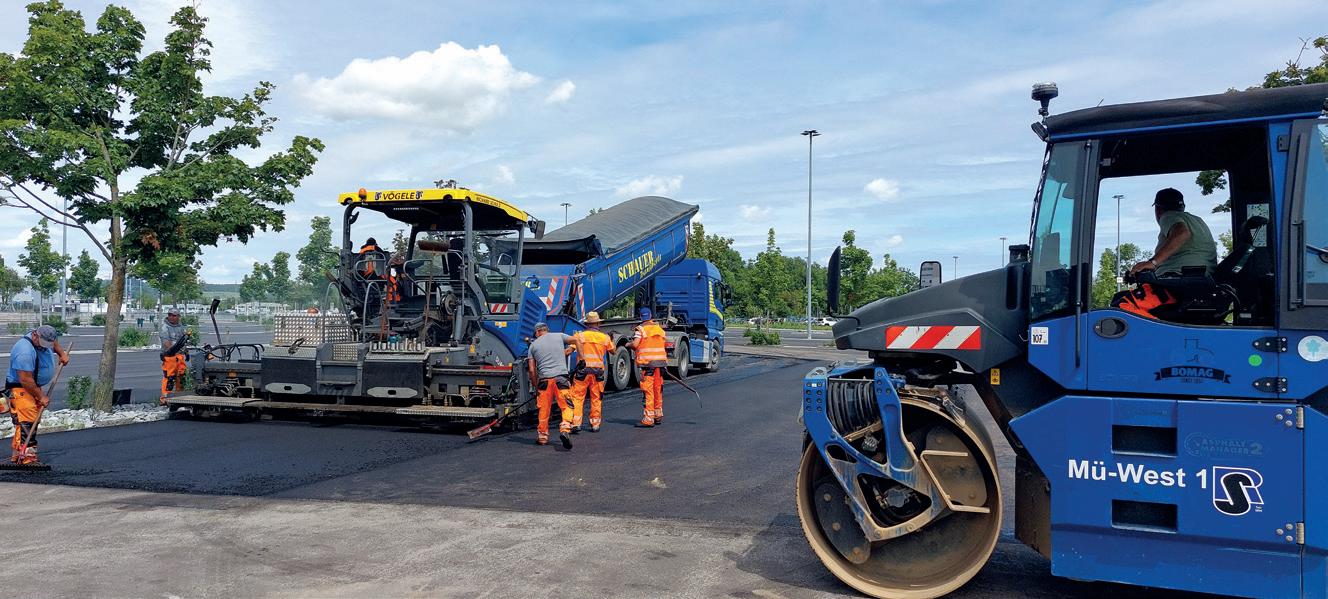
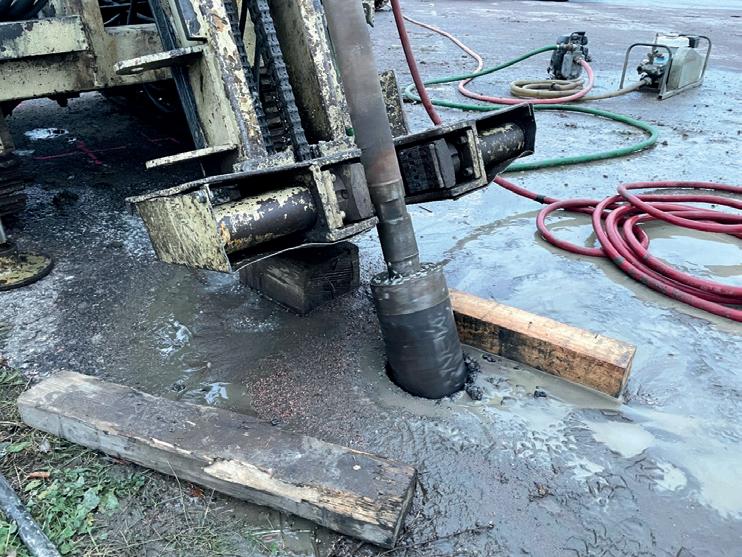
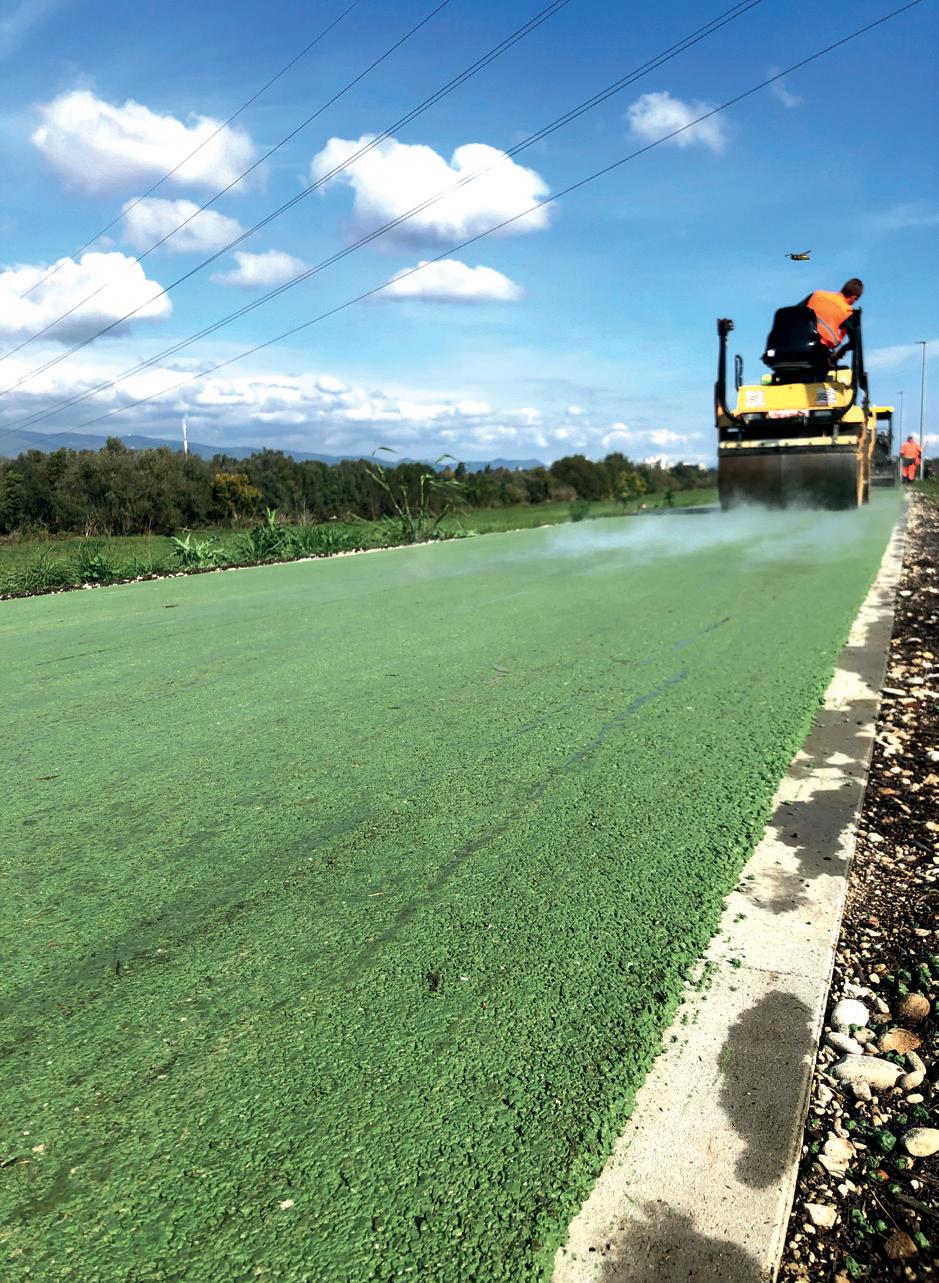
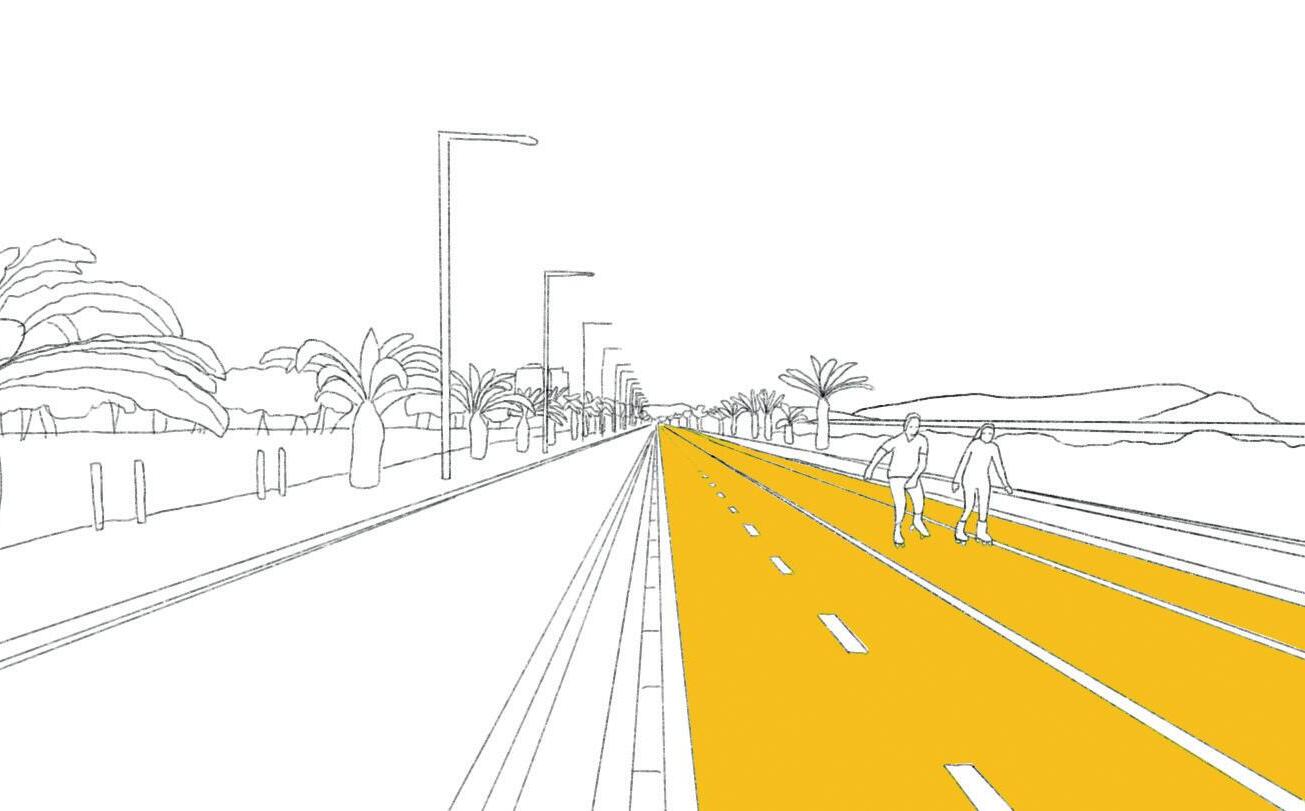
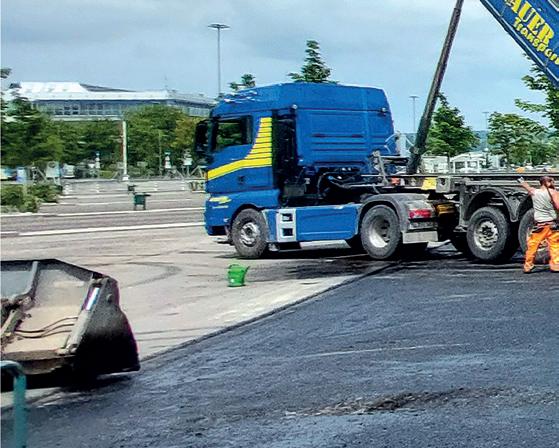
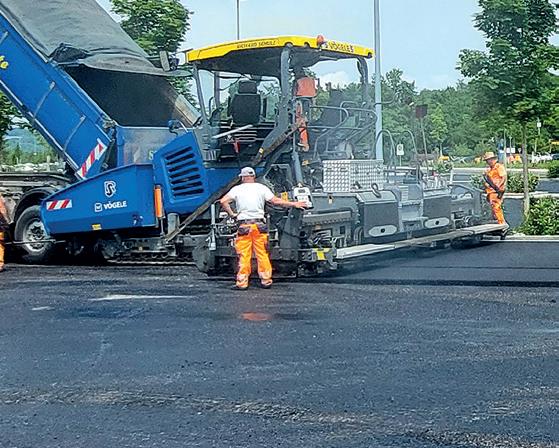
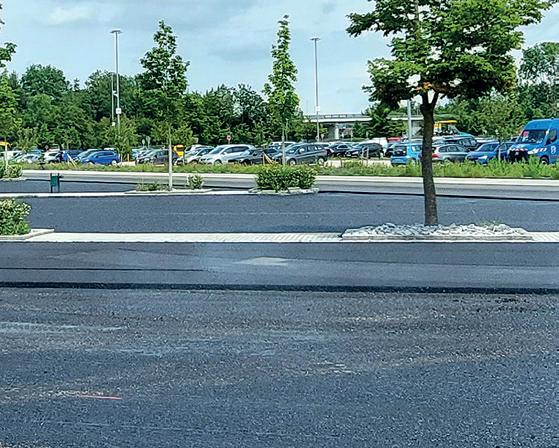
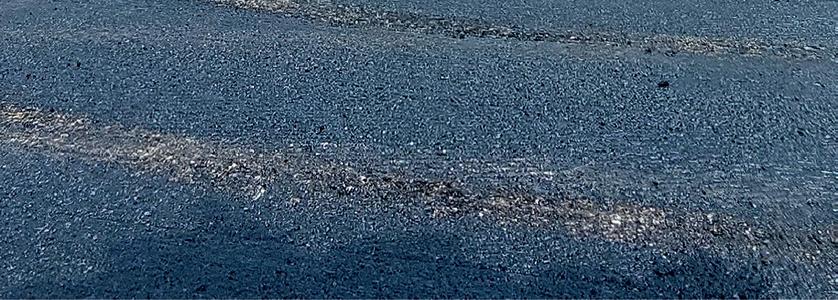
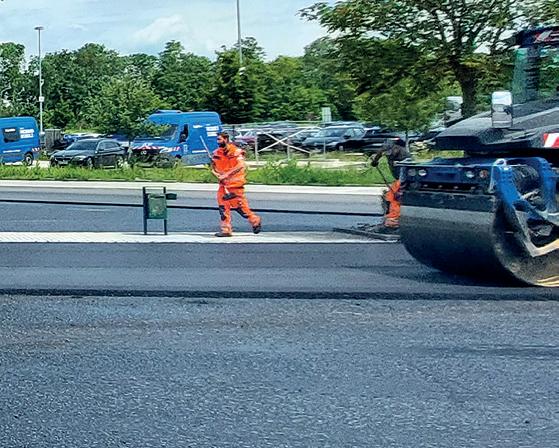
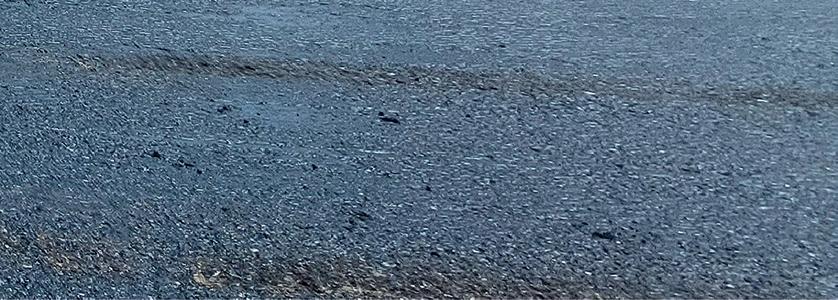
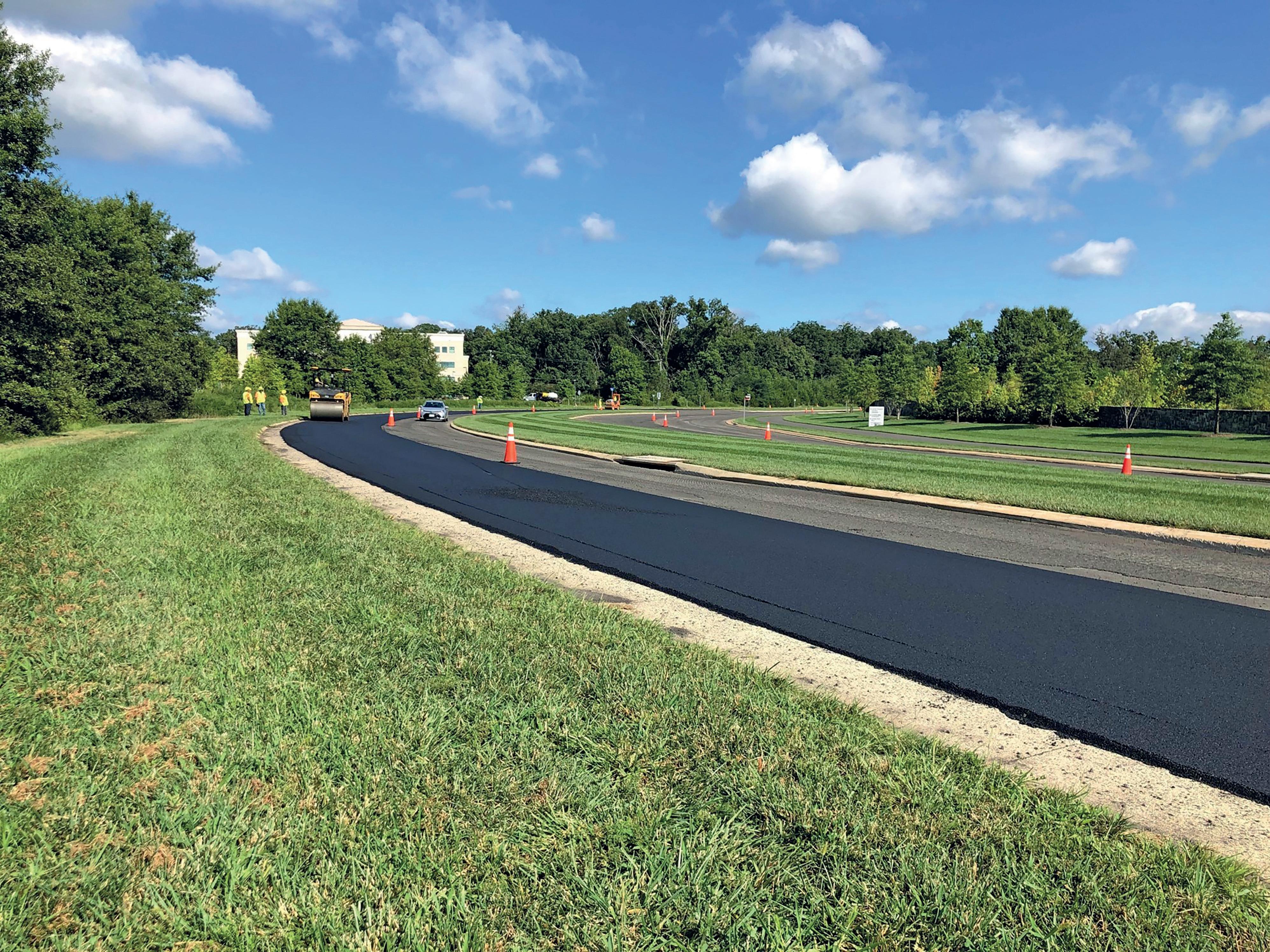
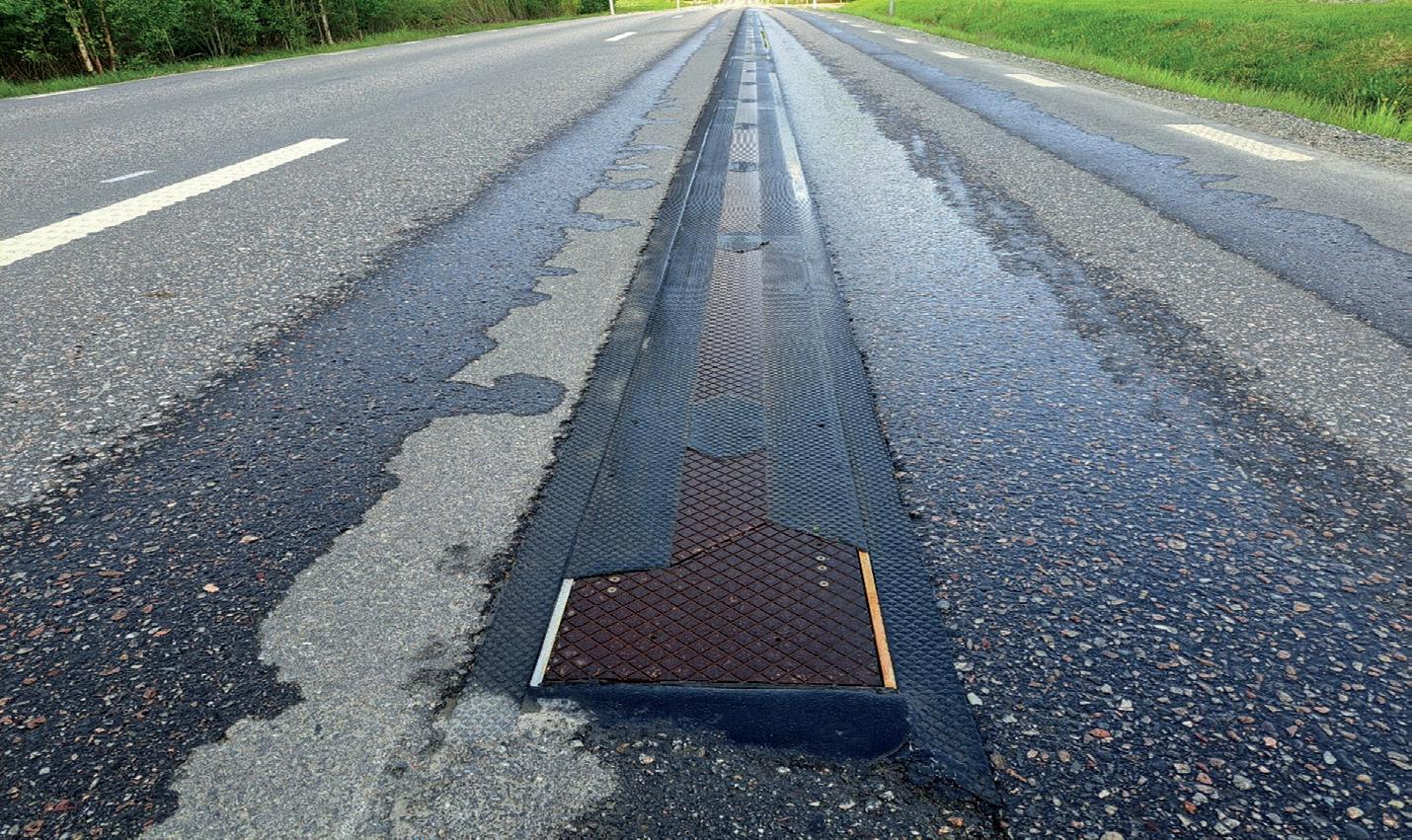
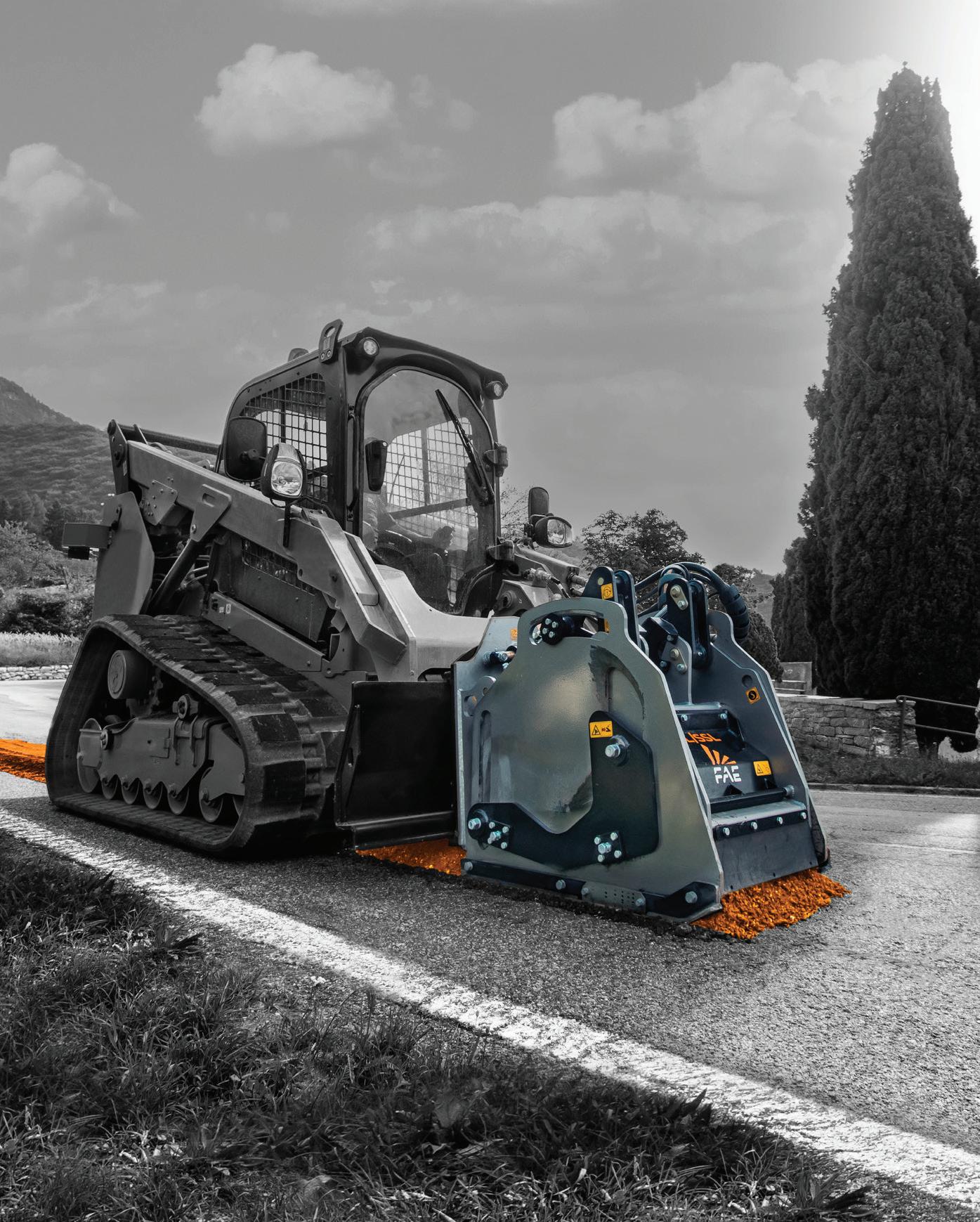
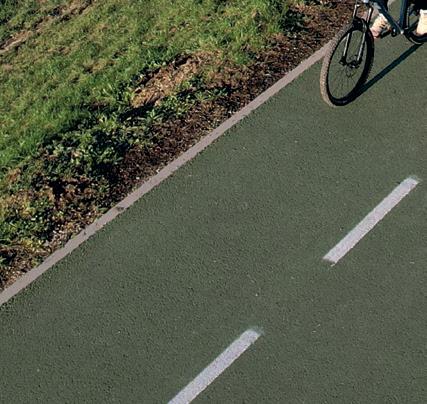
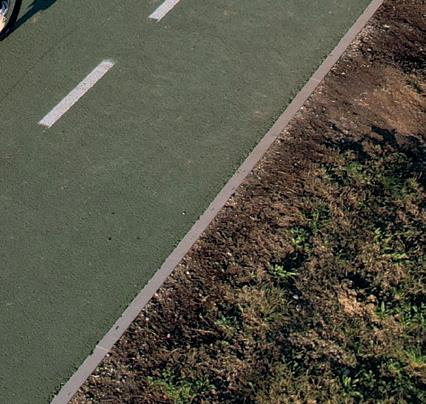
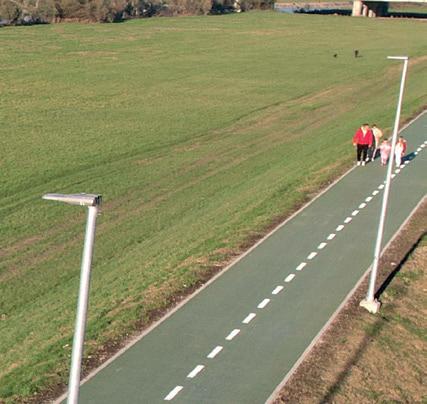
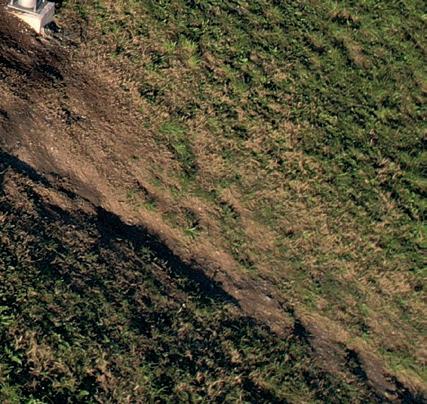
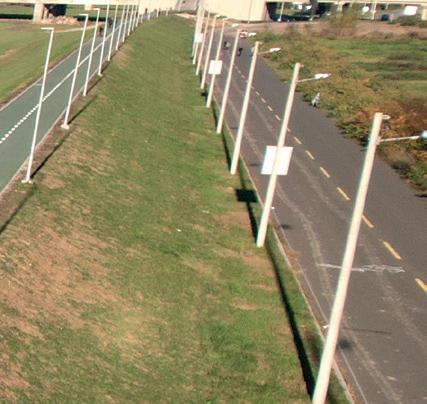
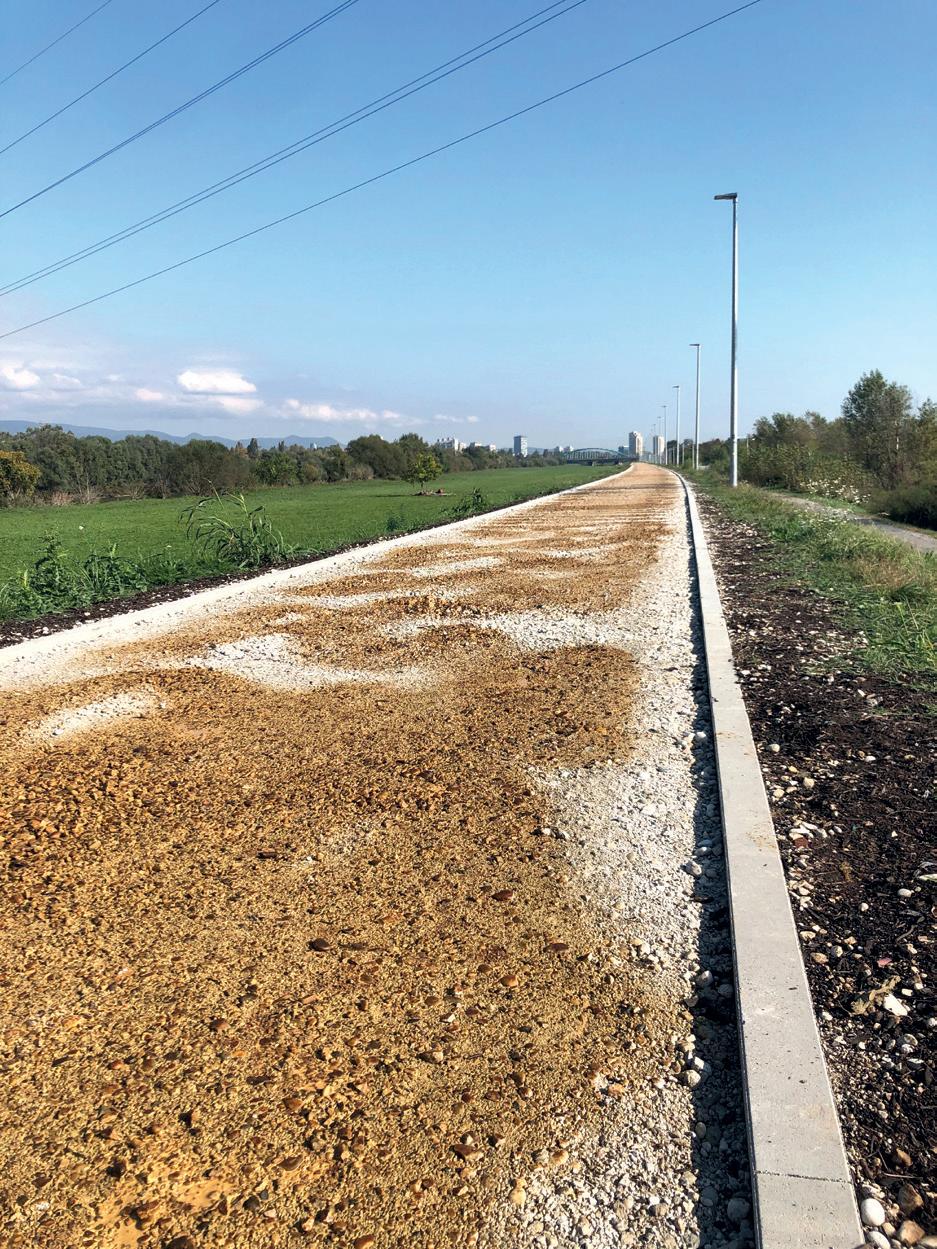
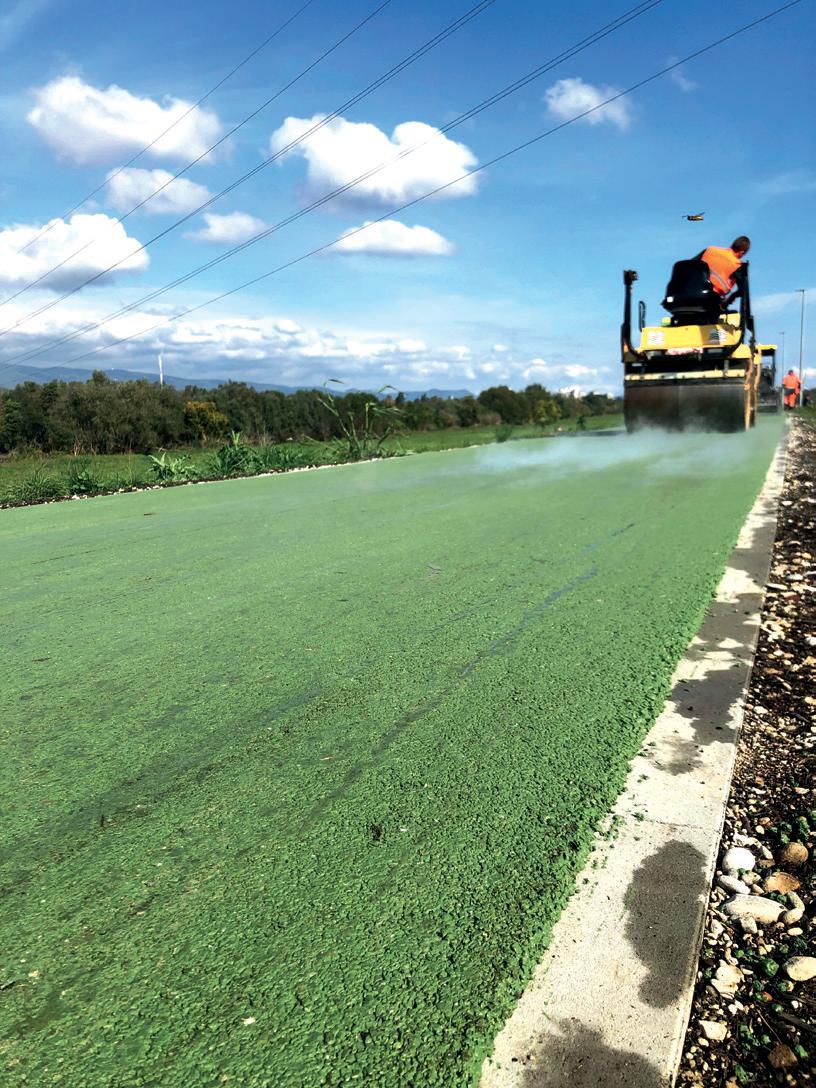
> Reduction of Urban Heating Coloured pavements reflect more sunlight than traditional dark surfaces and help to reduce the effect of “heat islands” in urban areas. This helps to keep temperatures lower and make the urban environment more comfortable during the summer months. In fact, the use of light colors allows to reduce the temperature of the pavement by up to 18°C compared to the traditional color.
> Architectural integration
Coloured pavements are designed to add a touch of colour and liveliness to urban centres, enhancing the aesthetic appearance of streets, squares and pedestrian areas; they offer a wide range of design possibilities, allowing designers to express their creativity and adapt solutions to the specific needs of each urban context.
> Road safety
The use of colour in pavements increases visibility of roads and intersections, improving road safety for motorists, cyclists and pedestrians. Coloured pavements are used to signal pedestrian crossings, protected cycle paths, rest areas and other important elements of urban infrastructure.
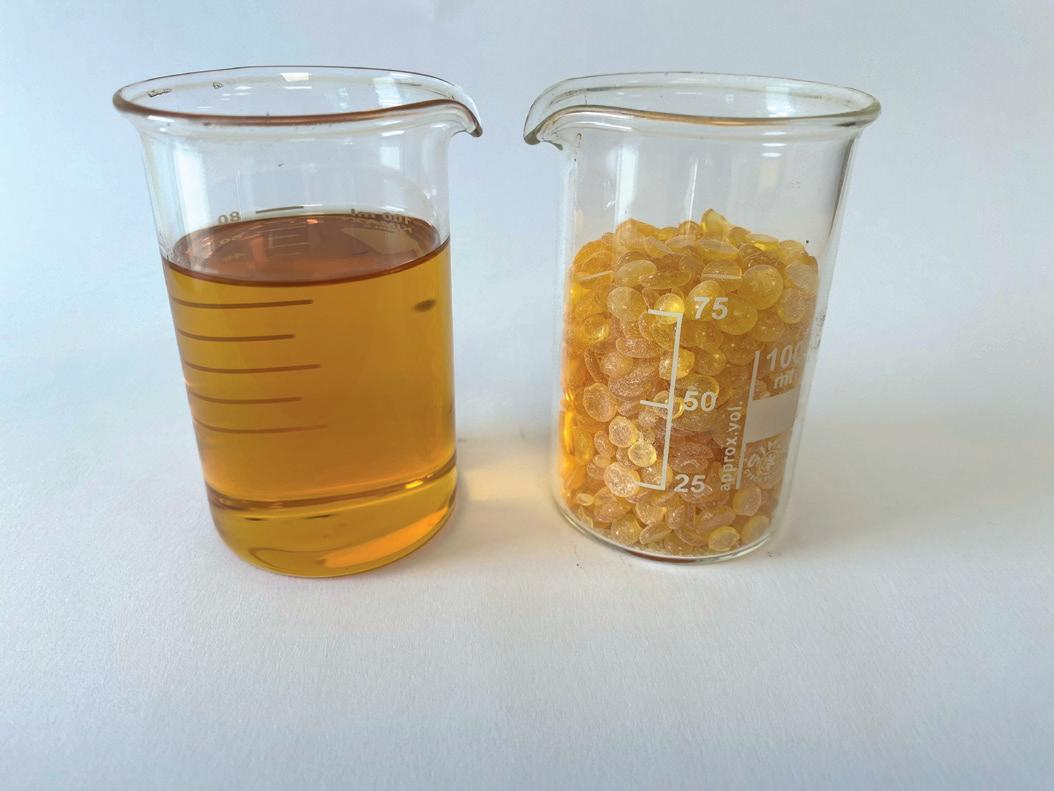
Oxides for the colouring of asphalt mixtures
Get an edge
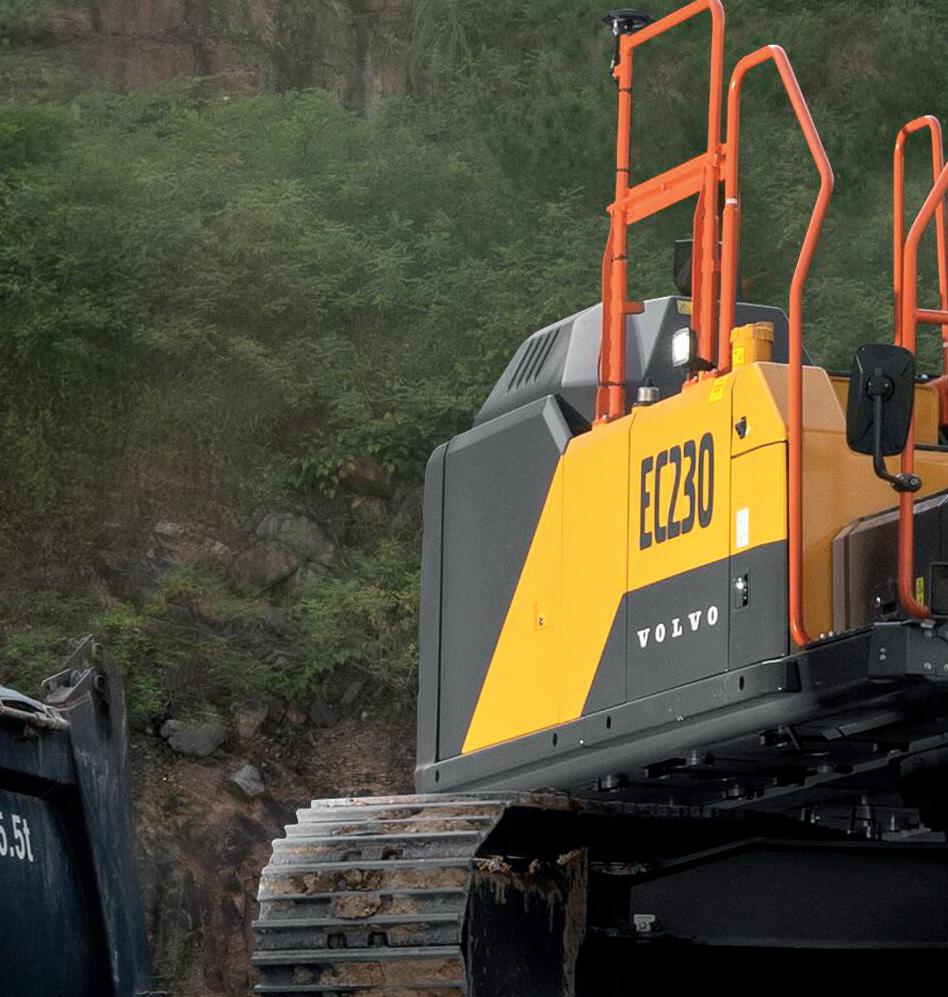
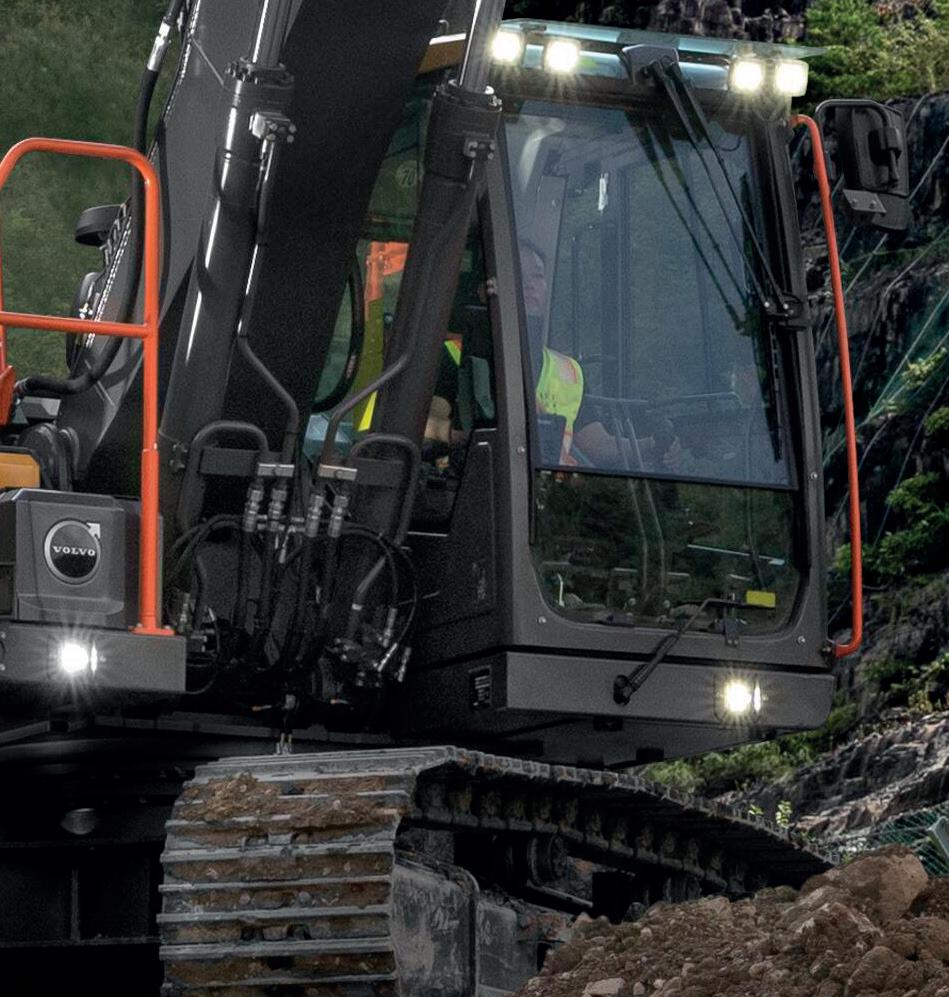
Our new range of excavators will help you push the boundaries of productivity, fuel efficiency and total cost of ownership. You will enjoy modern features in a modern design. From more space, to space that matters. A place for your boots and place to breathe. Easy to use technology for easy control. Just what you need to get ahead of your competition. Connect with your Volvo-dealer today.
ROAD TECHNOLOGY
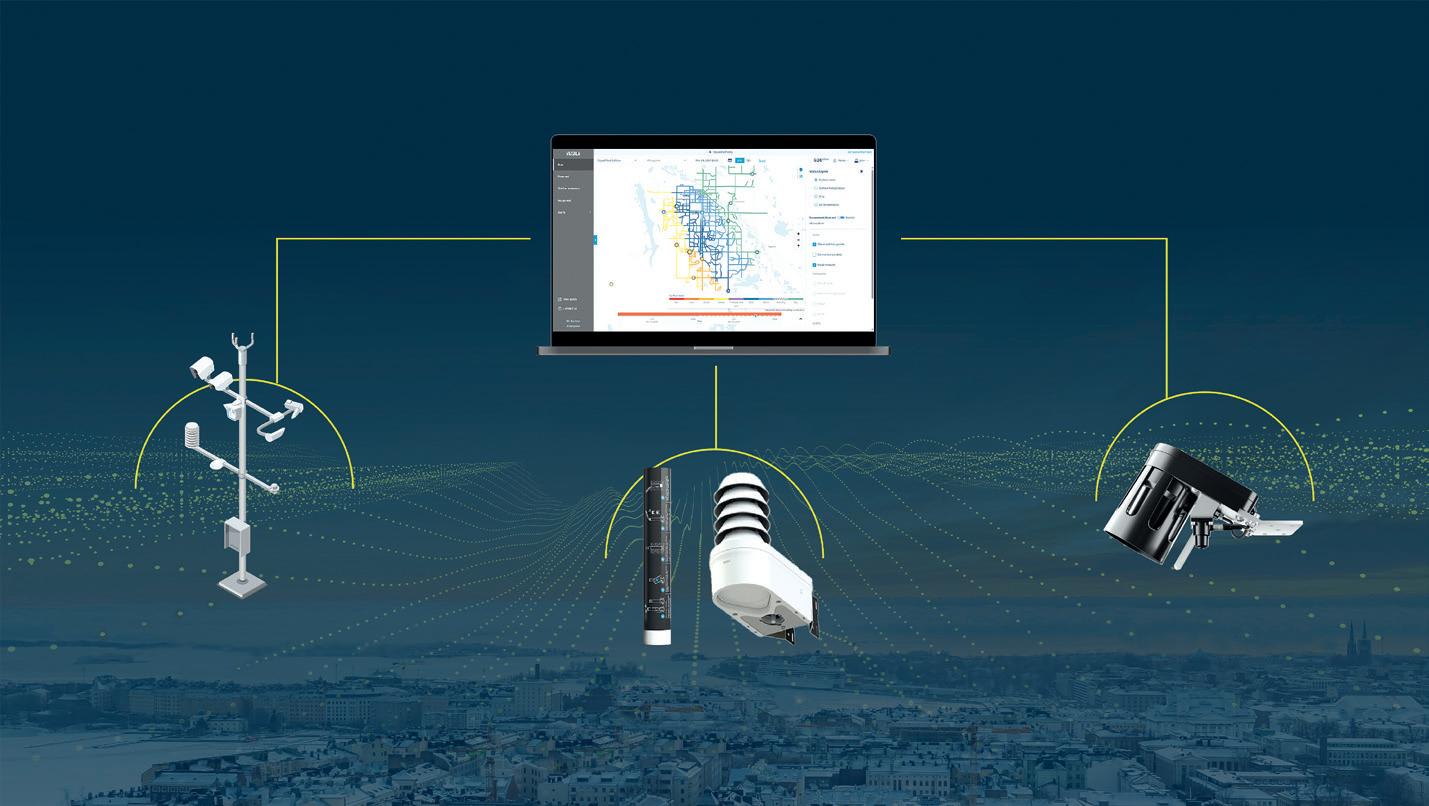
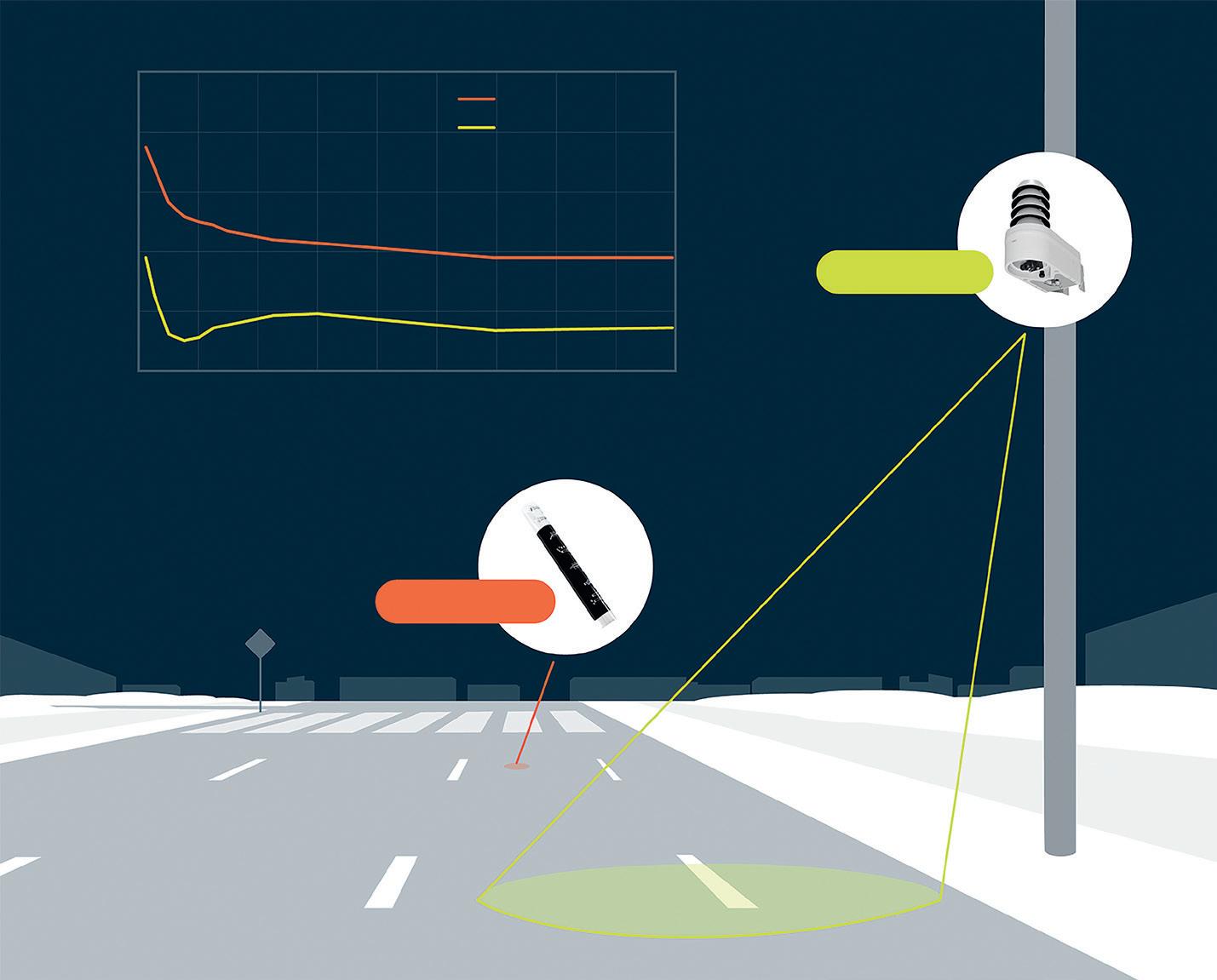
Vaisala’s TempCast and GroundCast Internet of ings sensor solutions o er a cost-e ective ways to ll gaps in road weather information by measuring road-surface and subsurface temperatures at various depths
mproved safety for drivers will come from a more resilient road surface. Meanwhile, the push to reduce a contractor’s and client’s carbon-footprint continues to drive innovation in asphalt production. e current issue of your Road Surface Technology Review shows how these two go hand in hand.
A case in point for innovation is the UK trial by Heidelberg Materials of its CarbonLock asphalt containing polymer-modi ed bitumen bio-binders, produced as both hot mix and warm mix asphalts. e combination will help meet the National Highways agency’s net-zero objectives. Bio-binders contain natural biogenic material, which absorbs and stores CO2 throughout its life. is is then ‘locked’ within bio-binders and not released back into the atmosphere - even when the asphalt is recycled.
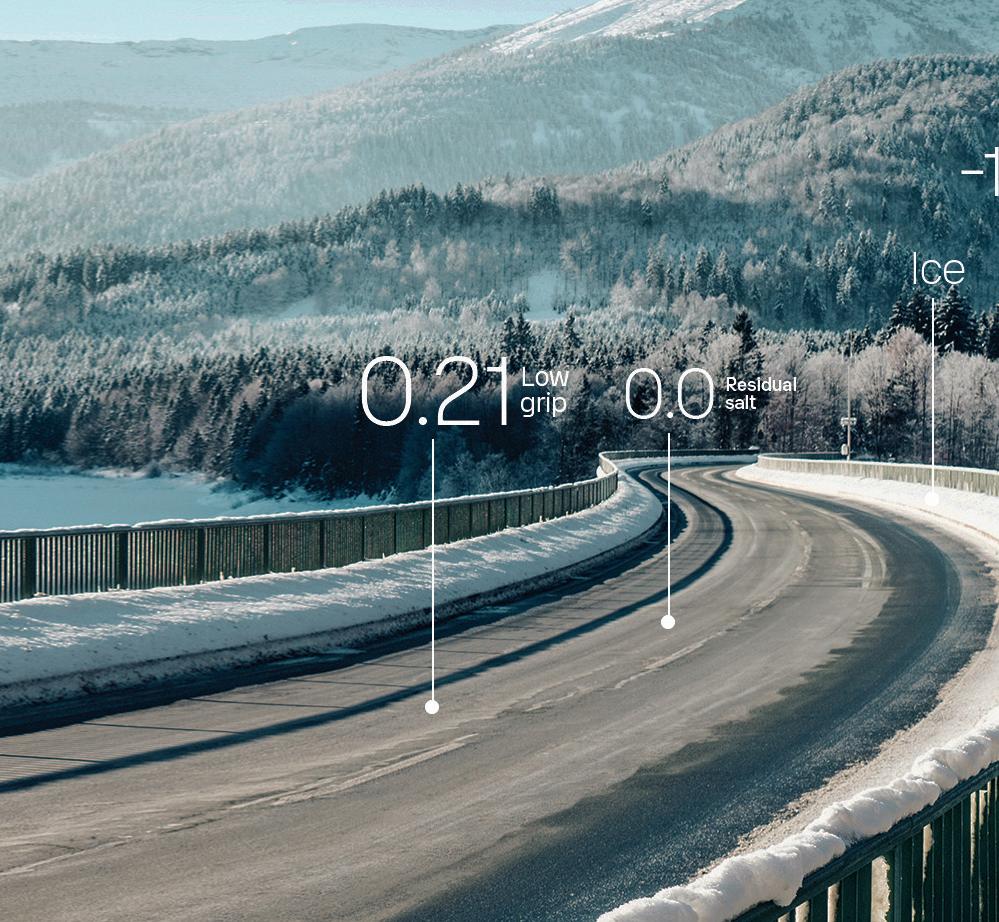
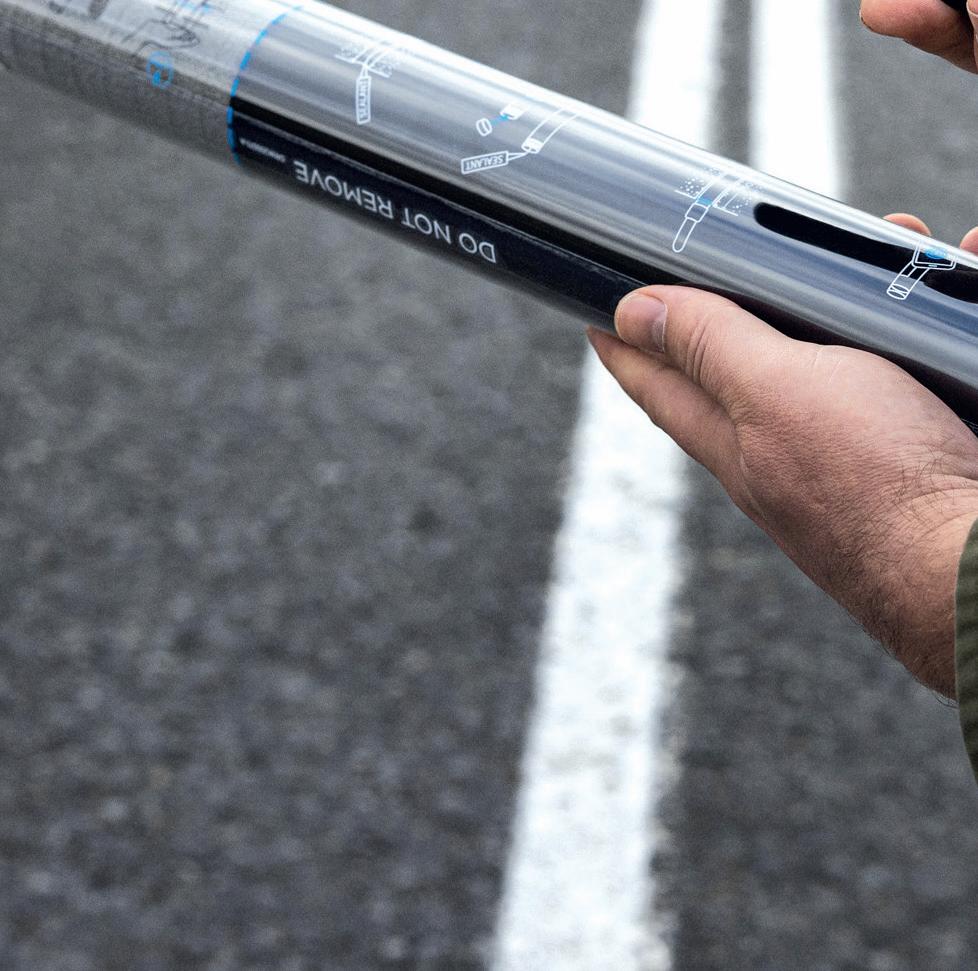
Road surfaces speak and they have something to say. ey have information to give to those who listen. And Vaisala has been listening. e company has regularly been innovating to collect road weather information through IoT sensors (pictured above), such as TempCast and GroundCast. ese battery-powered IoT sensors
can be installed virtually anywhere. ey measure road-surface and subsurface temperatures at various depths and provide binary roadstate information.
On to Canada where iris has used computer-vision, AI-assisted asset-detection models to improve the time to collect road-surface defects with extremely high accuracy. Sophisticated AI models can also classify defects as to size and severity and then automatically assign priority for repairs.
Readers will see many other innovations from companies including BASF, ARRB and Sripath explained within the pages of this issue of your RST Review. We, here at Route One Publishing, hope you nd the read informative and useful. Please tell your colleagues about the publication and have them click on the upcoming digital version – as well as the back issues – of the RST Review
David Arminas, EDITOR darminas@ropl.com
6: FRICTION TESTING
Crashes happen when friction demand exceeds what a road surface can deliver, notes ARRB.
12: BITUMEN MODIFIERS
BASF discusses advancements in combining StyreneButadiene-Styrene polymers with reactive modi ers.
18: ROAD INSPECTION
AI-assisted asset-detection models from iris help improve the time to collect data on road defects.
21: SUSTAINABLE PAVING
ird-party validation is important, says bitumen additive producer Sripath.
25: CONDUCTIVE EV CHARGING
What happens when conductive railings and coils for EV charging are introduced into a road surface?
29: PAVEMENT COLOURING
Demand for coloured pavements is increasing because of a greater understanding of their environmental bene ts.
32: SURFACE MONITORING
Battery-powered IoT sensors o er a cost-e ective way to ll gaps in road weather information.
NETWORK-LEVEL CONTINUOUS FRICTION TESTING
Pavement safety assessments have traditionally focused on discrete low-density friction assessments using proven technology. But more detailed investigations and analysis are now feasible through improved technologies, explains Simon Tetley of ARRB*.
Low-friction road-pavement surfaces are rarely the only cause of vehicular accidents; multiple factors typically contribute to such events. However, it is well-accepted that the most signi cant factor is when friction demand exceeds what the road surface can provide. As such, friction levels directly contribute to road safety and need to be accurately measured in order to provide a more holistic understanding of safety performance.
Even so, for pavement safety assessments, not much has changed for decades. is is despite signi cant improvements in automotive braking systems and the exploration of alternative methodologies for pavement-surface assessment. Not
surprisingly, then, current methodologies continue to involve test tyres assessing frictional resistance.
Interest has always existed in the relationship between texture and friction, in part because texture can be assessed with non-contact technologies. Unfortunately, data on friction and texture were previously not collected with su cient density and precision to establish any meaningful relationships. e type and volume of tra c loading, how the surface wears and how the surface disperses rain water all contribute to the frictional properties of a tra cked surface. All road surfaces have some areas of inherently low or irregular, unpredictable friction because of surfacing material types and/or wear due to tra c and climate over time.
ese areas may vary considerably from one location to the next. erefore, conducting continuous assessment of the full road network at regular intervals is the only reliable method to locate areas of higher risk, determine appropriate intervention levels and take appropriate remedial intervention.
As authorities explore the rapidly advancing technology for improving their safety assessments, questions are being raised regarding how best to implement this data. What is required to pro-actively identify segments in need of corrective treatment applications?
TECHNICAL APPROACH
e typical testing methodology of a locked-wheel skid tester (LWST) requires that the test wheel be progressively braked over a period of time up to the fully locked state before releasing again ready for the next test. e full-lock/release requirement means that measurements can be recorded only discretely over short intervals of time. is typically results in less than 2% of the pavement surface being tested and o en without repeatability. With the di culty of aligning spot tests within short curves and
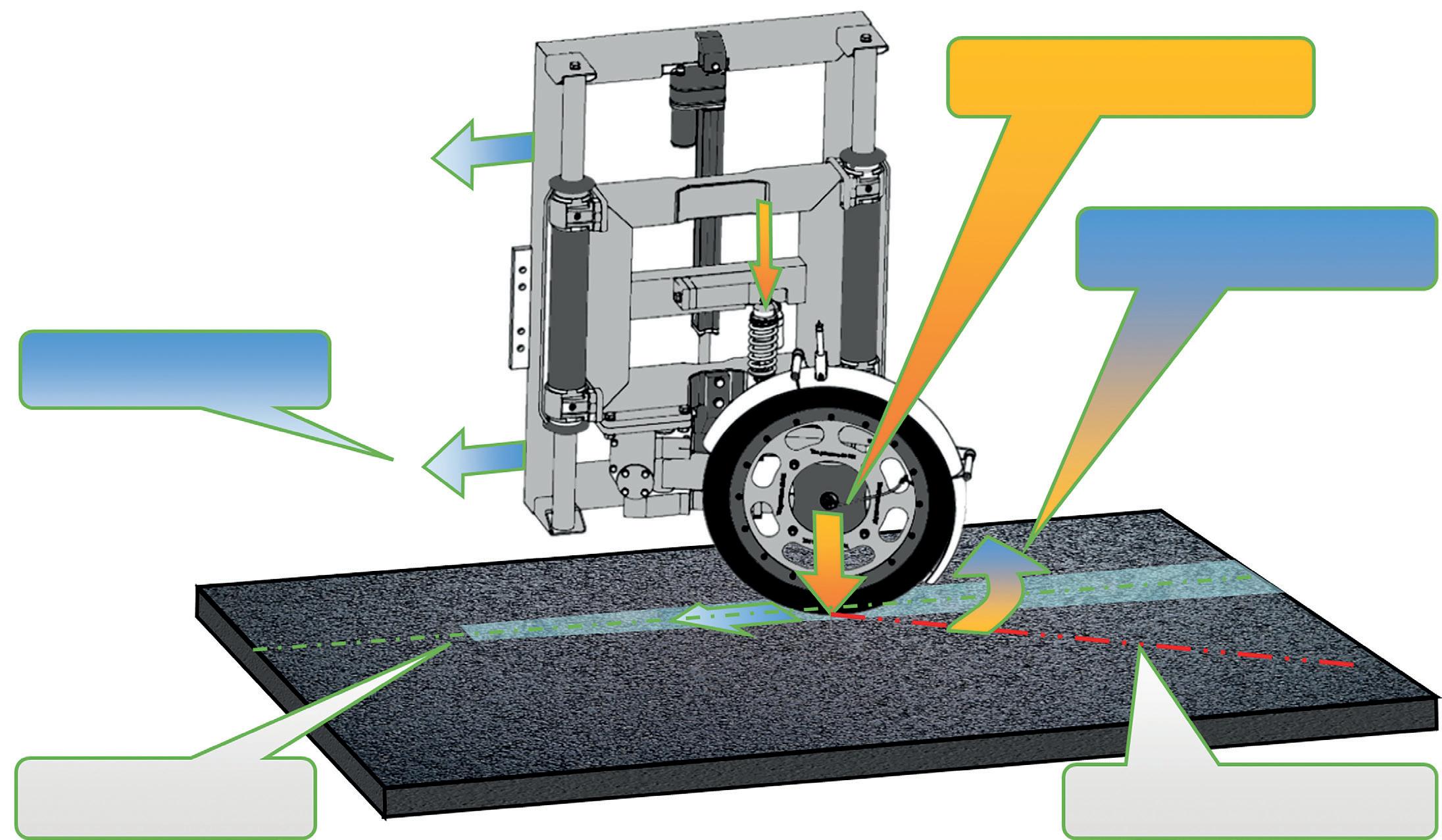
Sideway-force coefficient (SFC) is the ratio of sideways force over vertical force
intersections, it is common that these critical areas of high-friction demand are not tested.
In comparison, a sideway-force coefficient (SFC) device measures 100% of the wheeltrack surfaces, continuously, with reporting intervals as granular as 0.1m. Continuous sampling is particularly important on those localised sections within a network that have high demand for friction, such as horizontal and vertical curves and intersections. These areas usually have the highest levels of aggregate polishing and surface wear due to the action of traffic manoeuvres and, ironically, are where discrete friction devices do not measure accurately or even at all.
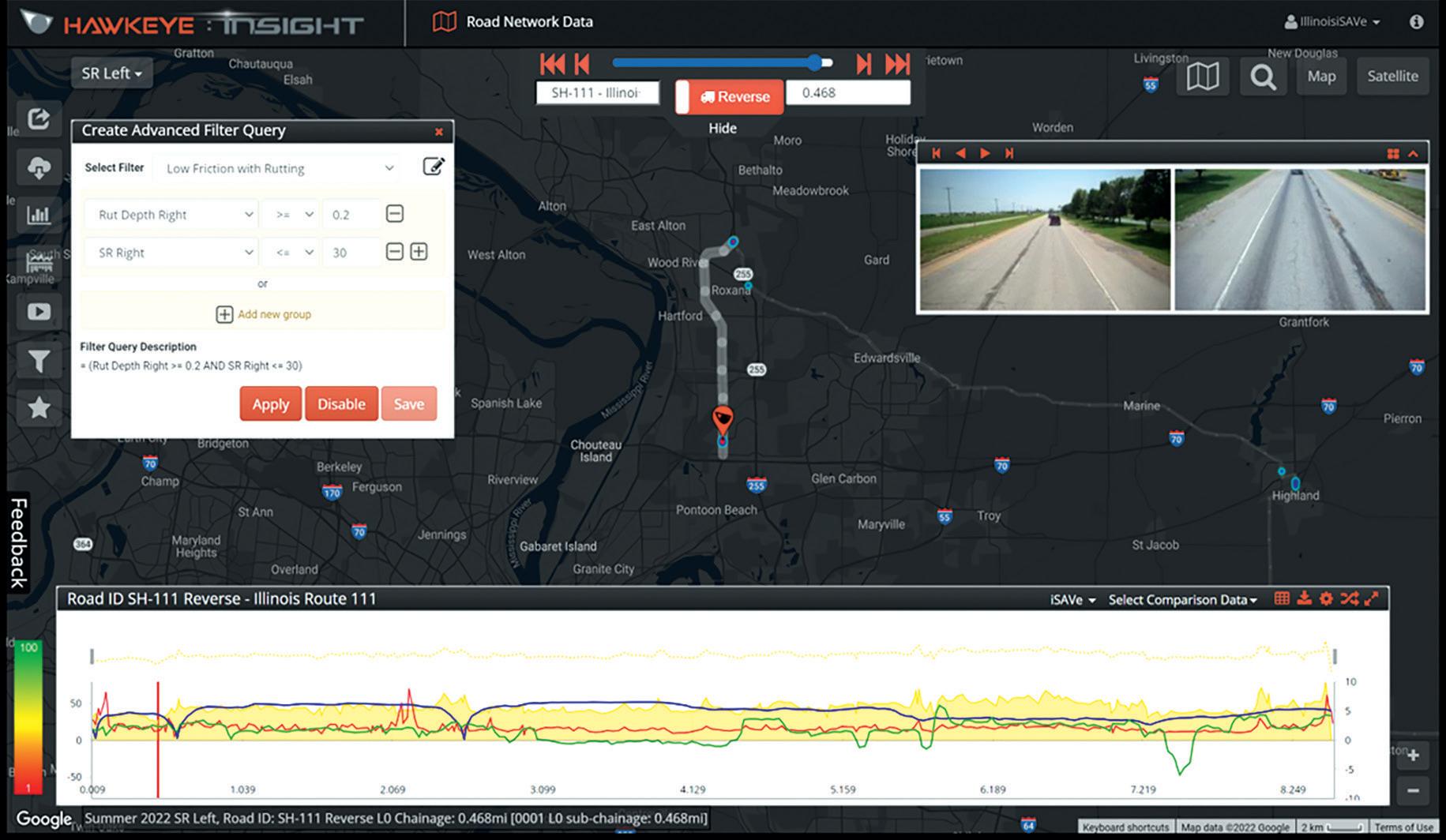
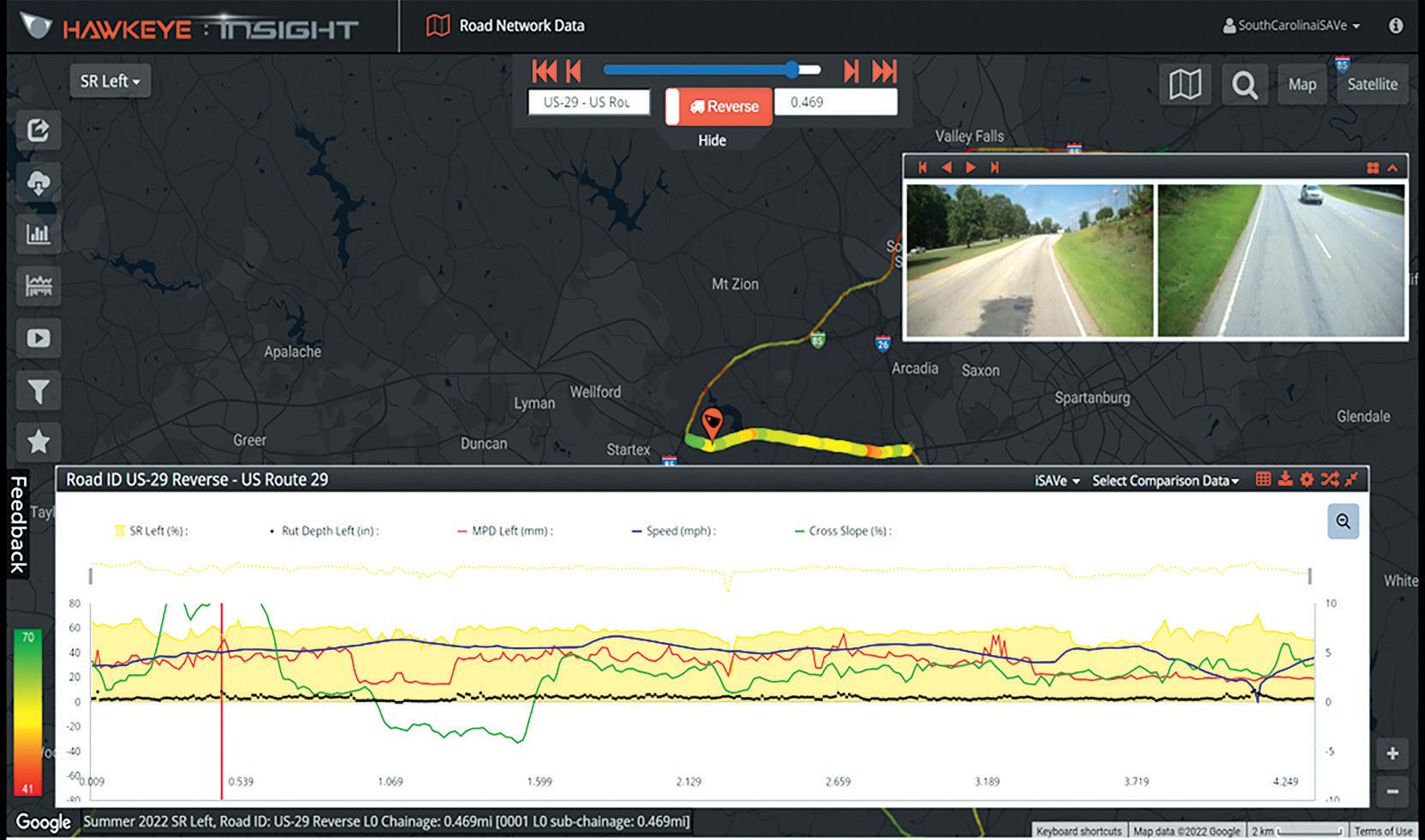
There needs to be a complete picture of road safety with all the data needed for comprehensive friction and safety evaluations. To get this, continuous friction needs to be collected simultaneously with macrotexture from surface-texture (mean profile depth, MPD) data, as well as rutting and geometry data for potential water ponding, rainfall surface-flow determination and digital imagery for visual road-safety risk assessments.
SIDEWAY-FORCE COEFFICIENT
An SFC device measures the traction availability of the road surface. The measurements can be attained in both wheel
paths continuously. An SFC device is capable of collecting significantly more data than traditional locked-wheel or other trailermounted continuous-friction measuring equipment.
The device uses an instrumented measuring wheel that is angled to the line of the chassis in the wheel path(s). The test tyre is freely rotating (no restriction). However, as it is set at an angle, the tyre is compelled to slip over the pavement surface as the vehicle moves forward. The sideway-slip resistive force can then be measured through the wheel axle via a load cell.
These measurements are continuous while the vehicle is moving; side-slip friction resistive forces are always being generated by the forward motion of the vehicle. The angle of the wheel is chosen to be sufficient to generate this sideways force while remaining unaffected by typical road curvature.
To determine the SFC, the variables measured are the vertical downwards force on the test wheel - nominally 2kN - and the sideways (horizontal) force on the test wheel (see Figure 1).
The two friction parameters derived from the measurements are:
- Sideway-force coefficient (SFC) which is the ratio of the sideways force to the vertical force;
- Sideway-force ratio (SFR) which is the SFC x 100 (effectively a percentage).
LONGITUDINAL PROFILE
Integrating additional traditional surfaceassessment systems provides simultaneous collection of other useful data including longitudinal profile.
SURFACE TEXTURE/MACROTEXTURE
Macrotexture of the pavement surface is collected using three non-contact 32kHz lasers. The speed of the laser is sufficient that texture height measurements are made every 1mm or less at speeds of up to 100kph. The three texture lasers are situated in each wheel path at 950mm as well as along the centre of the vehicle for comparison purposes.
RUT MEASUREMENT
Laser rut measurement systems (LRMS) are used to digitise transverse sections of the pavement. The transverse profile of the pavement is documented from 12,80l points over a nominal 4m width. Custom optics and high-power pulsed laser-line projectors allow the system to operate in full daylight or in full night conditions.
With a 150Hz sampling rate, this equates to one transverse profile being recorded every 1mm of longitudinal travel per kph of travel
Driving velocity
Vertical force (Fv)
Sideways force (Fs)
Sideways angle
Figure 1
speed (i.e., every 100mm at 100kph). It does this with a nominal transversal resolution of ±2mm with a nominal depth accuracy of ±1mm.
Meanwhile, there are several spatial referencing methods, tools and measurements to be attained.
DISTANCE MEASUREMENT
Calibrated distance-measuring devices provide linear referencing. Conducting appropriate calibrations prior to the start of each survey provides greater confidence in the positioning of the data and findings. Having calibration routines within the acquisition software facilitates the calibration process.
SPATIAL POSITIONING
Global navigation satellite systems (GNSS) and inertial navigation systems collect spatial position under all conditions with sub-1m accuracy, along with high-accuracy roadgeometry information.
Geometry data can be processed as grade (longitudinal slope), cross fall with range of ±15% along with horizontal and vertical curvature, sampled every 2m of longitudinal travel. It can be reported at any desired interval above 10m.
IMAGING
Digital imaging cameras are calibrated, enabling the position of all road and associated assets to be measured linearly and/ or referenced geospatially. All cameras have a continuous camera-calibration grid enabling real-time and post checking of calibration alignment and azimuth during a survey. Cameras are enclosed in the cab to eliminate fogging and condensation and distortion-free light transmission is provided through the high-optic-quality glass.
Captured images are referenced to linear position (in relation to road location information) and geospatially (latitude and longitude). This makes it possible to locate defects or features on the network by chainage and spatial coordinates. This also makes it possible to capture inventory information, complete with a unique GPS position. Even if other existing asset assessments are not required at the time, the recorded information may still be used to note inventory or condition at a later date.
SYNCHRONISATION OF DATA
To ensure precise synchronisation of the collected data, all data streams and reference measurements are recorded from the
same original source of odometer distance measurement instrument (DMI) and GPS receiver (spatial coordinates). They are aligned through a high-precision software module to synchronise output data at desired road-location referencing intervals.
Acquisition navigation functionality can deliver faster project completion times, accurate location referencing and reduced error through GIS-based (geographic information systems) referencing and realtime survey route planning.
“Digital imaging cameras are calibrated, enabling the position of all road and associated assets to be measured linearly and/or referenced geospatially. ”
From experiences to date, several common and recurring scenarios are observed when gathering a more thorough set of continuous safety parameters. The following representative cases depict how these scenarios actually impact strategic maintenance planning.
For the purposes of this discussion, pavement sections are categorised into cases with conditions as follows: - low friction and/or low texture, but all other metrics are within acceptable tolerances;
- low friction and/or low texture, with additional conditions that impact surface water (i.e., transverse profile concerns, geometric transitions, abnormal precipitation);
- acceptable friction and/or texture but similar conditions that impact surface water.
Each of these cases will be discussed below with examples provided for consideration. For some, the perception is that friction alone can be an indication of a safety hazard. While this may occasionally be true, it is not always the case. More comprehensive safety assessments are needed to evaluate the presence of other contributory factors to aid in the planning of appropriate interventions.
CASE ONE
When conducting comprehensive safety assessments, it is possible to identify locations where the friction and/or texture is the only cause for concern. Consider:
a) Without comprehensive safety assessments, it is possible these cases may go undetected.
b) Without geometric concerns or the presence of surface water (from transverse profile issues or drainage concerns), such cases may not, in fact, present the most significant safety hazards.
c) Using only discrete friction testing may trigger planned but unnecessary surface-treatment maintenance.
Figure 2
CASE TWO
In instances where low friction and/or texture are present along with conditions that impact surface water ponding (see Figure 2). Consider:
a) Geometric concerns or the presence of water (from transverse profile issues or inadequate surface drainage), typically necessitate more extensive remediation measures.
b) With only friction testing, these other critical distress mechanisms may go undetected.
c) Merely improving the friction characteristics with a suitable surface treatment may not necessarily address the underlying cause of these cases.
d) Comprehensive full-spectrum safety assessments are the only way to identify whether appropriate remedial intervention is required.
CASE THREE
As is generally recognised, there are instances when acceptable friction and texture may be present but other conditions may exist that impact safety (see Figure 3). Consider:
a) Transverse profile (rutting) and/or other geometric issues that create the presence of standing surface water and generally poor surface-drainage capability will create significant safety hazards, regardless of other conditions.
b) Similarly, adverse geometrics (in horizontal or vertical curvature) will also be significant cause for concern.
c) With friction testing only, other concerns may well go undetected.
d) Comprehensive safety assessments help to identify and confirm these occurrences and provide for appropriate remediation options.
e) Surface treatments alone may well not be the optimal solution in such instances.
Perhaps of greatest importance is the recognition that, regardless which case applies, continuous data provides for a significantly more detailed assessment within a project or network assessment. Rather than assigning an “average” or “typical” condition for treatment selection and design, discrete sections can be identified with measurable confidence and accuracy. This offers the potential for isolating and treating areas of actual need. This enables project-level decisions to be made with network-level data. The result is a better understanding of the context of these project sections.
From the examples above, it can be seen that even with these more comprehensive assessments, relationships between friction and macrotexture from line lasers show no consistent relationship. Additional assessments are warranted to better understand the relationships between these and other related safety parameters to help improve our ability to provide safer roads.
CONCLUSION
The challenges of assessing pavement conditions have historically led to a perceptible gap between network assessments and project-level design of specific treatment applications. The increasingly apparent limitations of traditional methods of safety assessment (insufficient sampling, inability to collect multiple influential factors simultaneously, challenges of proactively identifying areas of need and relatively high testing costs) are necessitating exploration of new solutions.
Assessment of friction, texture and other functional parameters collected continuously and simultaneously with other pavement performance metrics are providing a more comprehensive assessment of safety needs; project-level applications are becoming more prevalent.
The overall impact is still to be determined but, as seen from the limited examples cited above, researchers are eager to explore the possibilities of integrated full-spectrum roadcondition data collection.
Closing this gap between network assessment and specific treatment-design applications is generating:
- more comprehensive pavement safety assessments, with greater value and applicability of the data collected;
- the ability to more proactively identify safety concerns;
- the ability to better optimise network safety;
- improvements to the efficiency and effectiveness of project-specific treatment applications;
- discussions on how more economical it is in terms of time and finances to use continuous network-level friction data for input into the project-level remedial design process.
Initial studies have shown that it is more costly to undertake discrete testing rather than continuous friction measurements when it is evaluated in terms of cost-per-test coverage. Moving forward, most highways agencies and road-network owners accept the merits of network assessments. They are focused on how best to accommodate such data in existing management systems. Projecttreatment applications are still being formulated. Data is currently being used to identify specific portions of projects that merit being treated differently from the majority of the project. This can include spot repairs of surface treatments, profile or geometric changes or other measures to mitigate safety concerns.
As observed in the cases above, the ability to conduct more comprehensive continuous safety assessments will identify optimal remedial interventions in a proactive systematic manner. This has a direct impact upon the maintenance budget of road agencies and road network owners.
As discussed earlier, even with these more comprehensive assessments, relationships between friction and macrotexture from line lasers show no consistent patterns. Additional assessments are warranted to better understand the relationships between these and other related safety parameters to help improve our ability to provide safer roads. ■
*Simon Tetley is with ARRB Systems South Africa in Cape Town: simon.tetley@arrbsystems.com
Associate authors:
l Jerome Daleiden is with ARRB Systems Americas in Exton, Pennsylvania: jerome.daleiden@arrbsystems. com
l Claire Taylor is with ARRB Systems South Africa, in KwaZulu-Natal: claire.taylor@arrbsystems.com
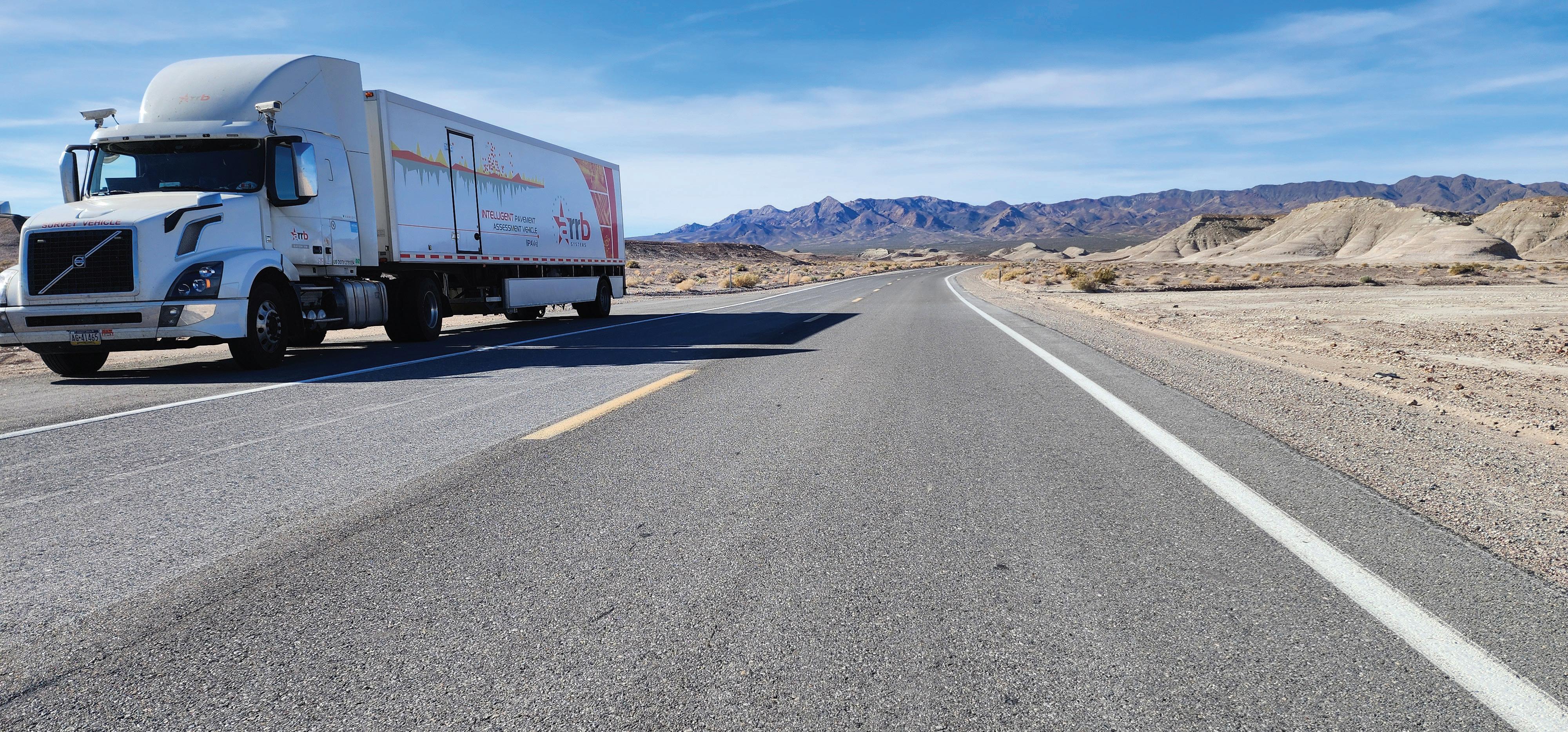
Our iPAVe is the pinnacle of comprehensive road measurement technology, as the only proven data collection system in the world about their road network at both the structural and functional levels.
30+
Years of industry experience
100+ project s projects delivered
1million km of data collected and analysed
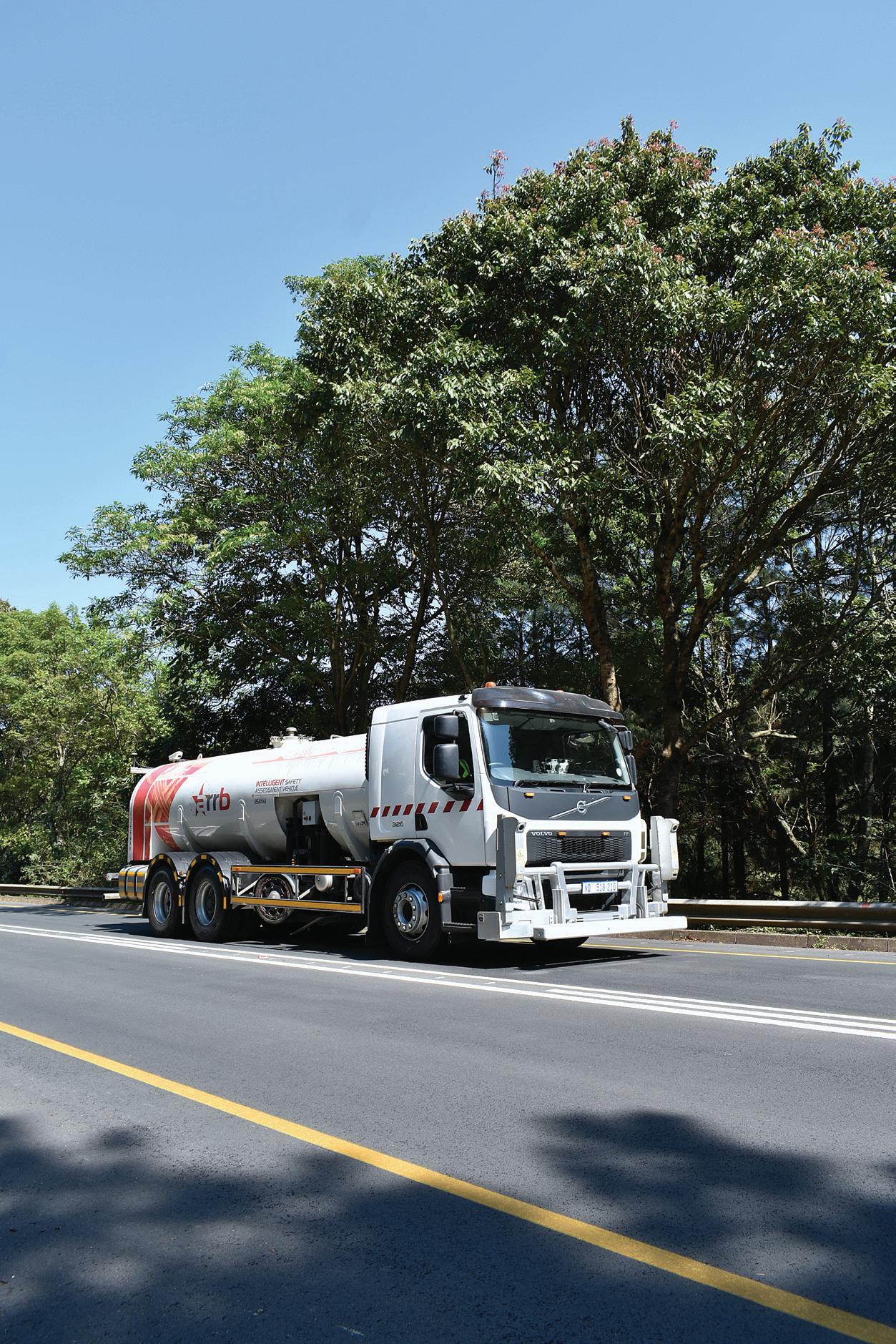
The iSAVe is an innovative solution for optimal road safety, continuously measuring pavement
advanced sensors, it provides real-time data on road and runway sur face conditions, detecting hazardous low-friction areas caused by wear, weather, or contaminants.
This data is analysed to generate detailed repor ts, enabling transpor tation and aviation agencies to promptly address potential risks.
REACTIVE MODIFIERS TO UPGRADE ASPHALT MIXES
Currently, the main commercial polymer used for bitumen modification is Styrene-ButadieneStyrene (SBS). However, the reactive isocyanate-based modifier BASF B2Last can be used by itself or with other modifiers and additives to improve asphalt binders. Olivier Fleischel explains*.
Warming caused by climate change is about 50% to 150% greater in urban areas than in non-urban areas. It leads to so-called urban heat islands, which results in significant increases in road-surface temperatures. These temperature rises mean that a more resilient transport infrastructure is needed to avoid early rutting on road surfaces. Given this, it will increasingly be necessary to modify bitumen/asphalt to achieve a broader range of properties at different temperatures.
Currently, the main commercial polymer used for modification of bitumen is the triblock copolymer Styrene-ButadieneStyrene (SBS). Long experience with thermoplastic elastomers such as SBS led to the development of Highly Modified Asphalt (HiMA). It can provide better ruttingresistant pavement with excellent properties.
A new class of reactive polymers was designed to modify asphalt through the formation of covalent bonding into the asphaltene components, like reactive elastomeric polymers or reactive polymeric type of isocyanates. However, only a few works have been published on the combination of both polymer types, SBS and reactive modifiers, for the manufacture of a
high-viscosity bitumen binder.
Unlike the SBS polymer, the reactive polymeric modifiers chemically react with asphalt binder components. Taking the class of reactive isocyanates, when blended with asphalt binder, the highly reactive isocyanate groups (-NCO) of the modifier chemically react with the functional groups containing active hydrogen atoms (-OH) present in the most polar fractions (i.e., asphaltenes and resins) of an asphalt binder to form a polymer. This chemical reaction helps overcome issues of increased viscosity and phase separation encountered with conventional modified asphalt binders, potentially allowing a higher modifier dosage. Moreover, reactive isocyanate-modified asphalt binders show improved adhesive bonds at the asphalt-aggregate interface. This can potentially reduce moisture susceptibility. The reactive isocyanate-based modifier, BASF’s B2Last, can be used by itself or with other modifiers and additives to improve asphalt binders in order to meet the specifications of higher performance grades (see box, BASF B2Last).
This concept of reactive isocyanate is not new and has been discussed in various publications over the past two decades.
The broad range of chemistry based on isocyanate permitted the design of a specific type of a reactive additive bearing isocyanate functionalities. For this, both ends of the bitumen temperature performances could be optimised without loss of properties of the bitumen binder.
This article will describe new advancements in combining SBS polymers with such reactive modifiers; some field trials will be examined.
LAB TESTS TO FIELD TRIALS
The aim of the first lab investigation was the multi-modification of an asphalt mix to improve the deformation resistance under heat and high load. These surfaces are typically found at bus stations and at trucking company sites where asphalt forecourts see a lot of slow heavy-vehicle movement. The possibility to use a reactive-modifying additive B2Last P101 for upgrading a ready-to-use PmB 25/55-55 A (where PmB = polymer modified bitumen) has shown at bitumen level that the rheological properties of the base bitumen (PmB 25/55-55 A) shift significantly in the direction of a deformation-resistant asphalt layer. Some of the characteristic values achieved were
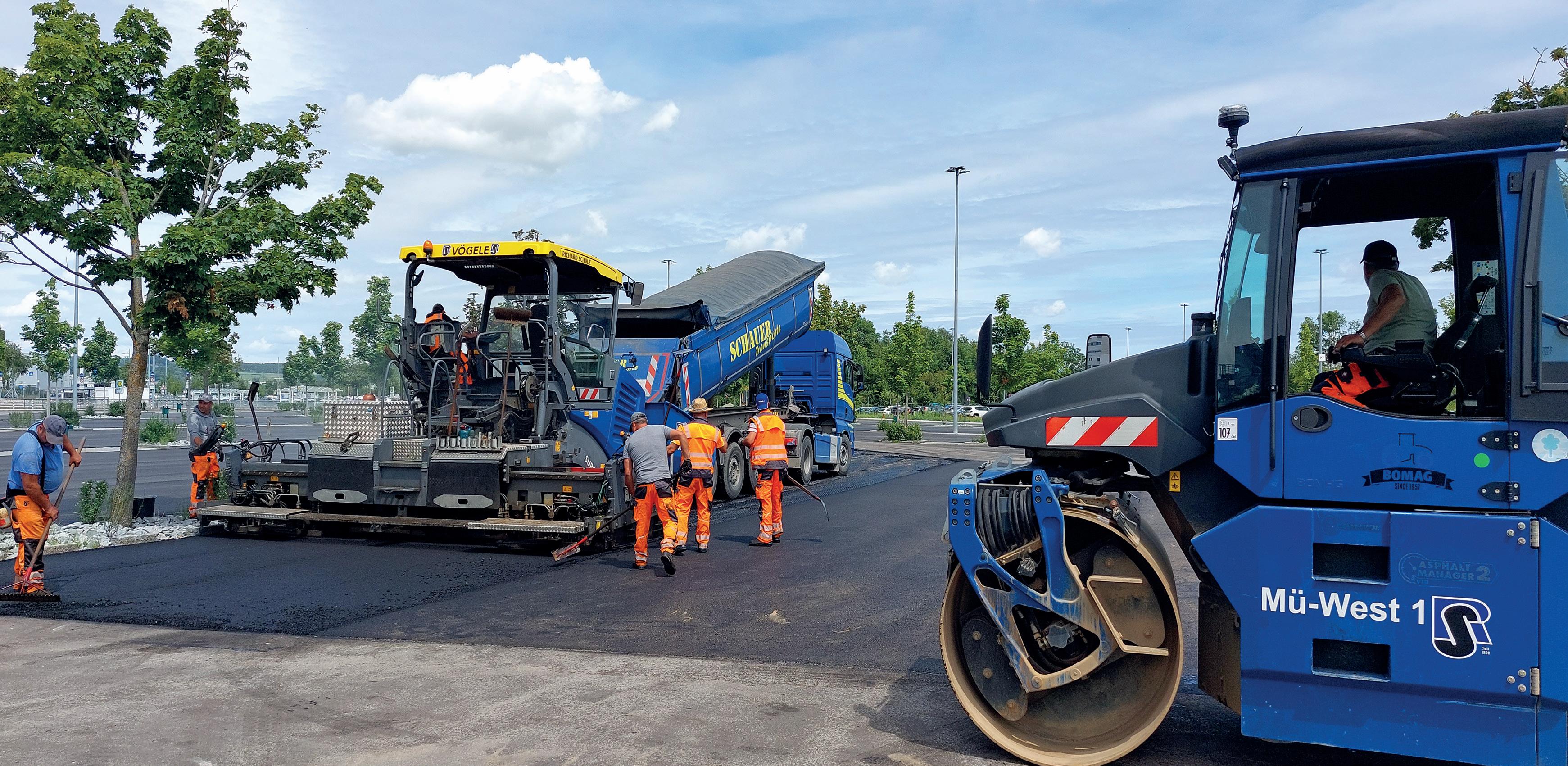
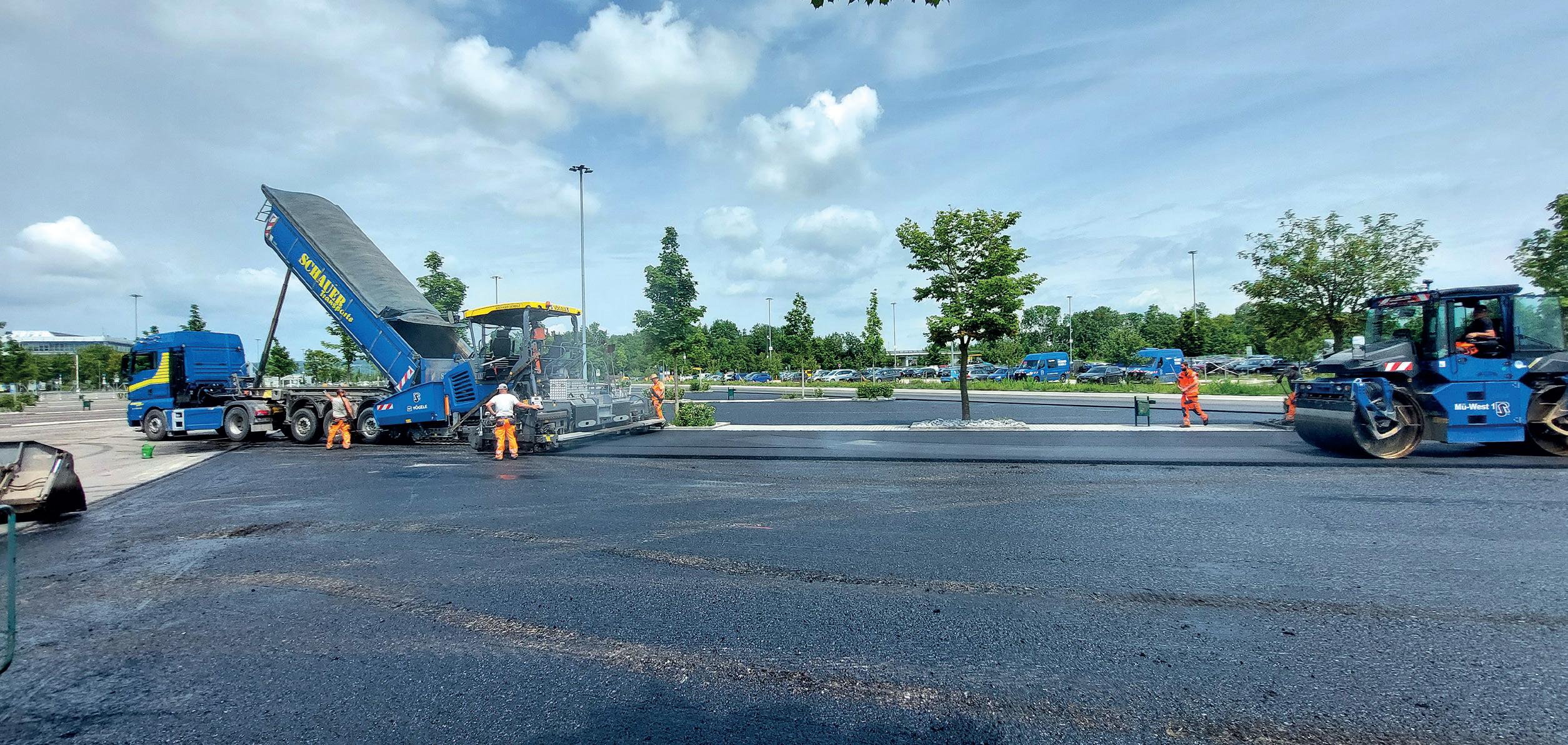
At its site in Dingolfing, Germany, car maker BMW wished to use B2Last modifier to improve the PmB that it typically uses on the site, in this case to repave a large on-site bus station area and renewal of a lane dedicated to truck deliveries (image courtesy BMW)
significantly higher than those of a typical PmB type of binder (see Table 1). For the purpose of the study and as a comparative example, a PmB 10/40-65 supposedly with a higher load of SBS polymer was evaluated as well.
In the laboratory of the engineering company PTM Dortmund in Germany, the influence of a multi-modification of the bituminous binder was investigated as a first step towards binder analyses. Since these investigations focused mainly on optimising the performance properties of the binder and, therefore, of the resulting asphalt in the high-temperature range (deformation properties), the deformation behaviour of different variants was primarily investigated as a comparison. Characteristic temperatures T (G* = 15 kPa) as well as corresponding phase angles δ (G* = 15 kPa) are given. [Note: G* is the complex shear modulus of the bitumen binder]
Table 1 summarises the results of the investigation on the bitumen binder. To determine the high-temperature properties of asphalt binders using the dynamic shear rheometer, the Binder-Fast-CharacterisationTest (BTSV - Bitumen-Typisierungs-SchnellVerfahren, in German) was used.
Two parameters are identified for the rheological characterisation of bitumen: the temperature T (G* = 15 kPa), which is related to the Ring & Ball softening point and is an indicator of the binder stiffness; the phase angle δ, which provides information on the degree of binder modification (Büchner et al., 2020, Road Materials and Pavement Design, 21 (1), 143-155p).
Additional investigations at the asphalt level showed that the performance of the
(Supplier A) +2.5 M.-% (AS P101)
(Supplier B)
(Supplier B)
M.-% (AS P101)
rut depth RD air @70 oC (AC 16 D S, laboratory sample)
10/40-65 A
25/55-55 A (Supplier B)
25/55-55 A (Supplier A) + 2,5 M -% AS P101
25/55-55 A (Supplier B) + 2,5 M -% AS P101
(n)
l 9.4mm rut depth
l < 10.000 overrolls
l @ 70 oC
l 3.6mm rut depth
l 100.000 overrolls
l @ 70 oC
Table 1: Bitumen binder test results (lab trials)
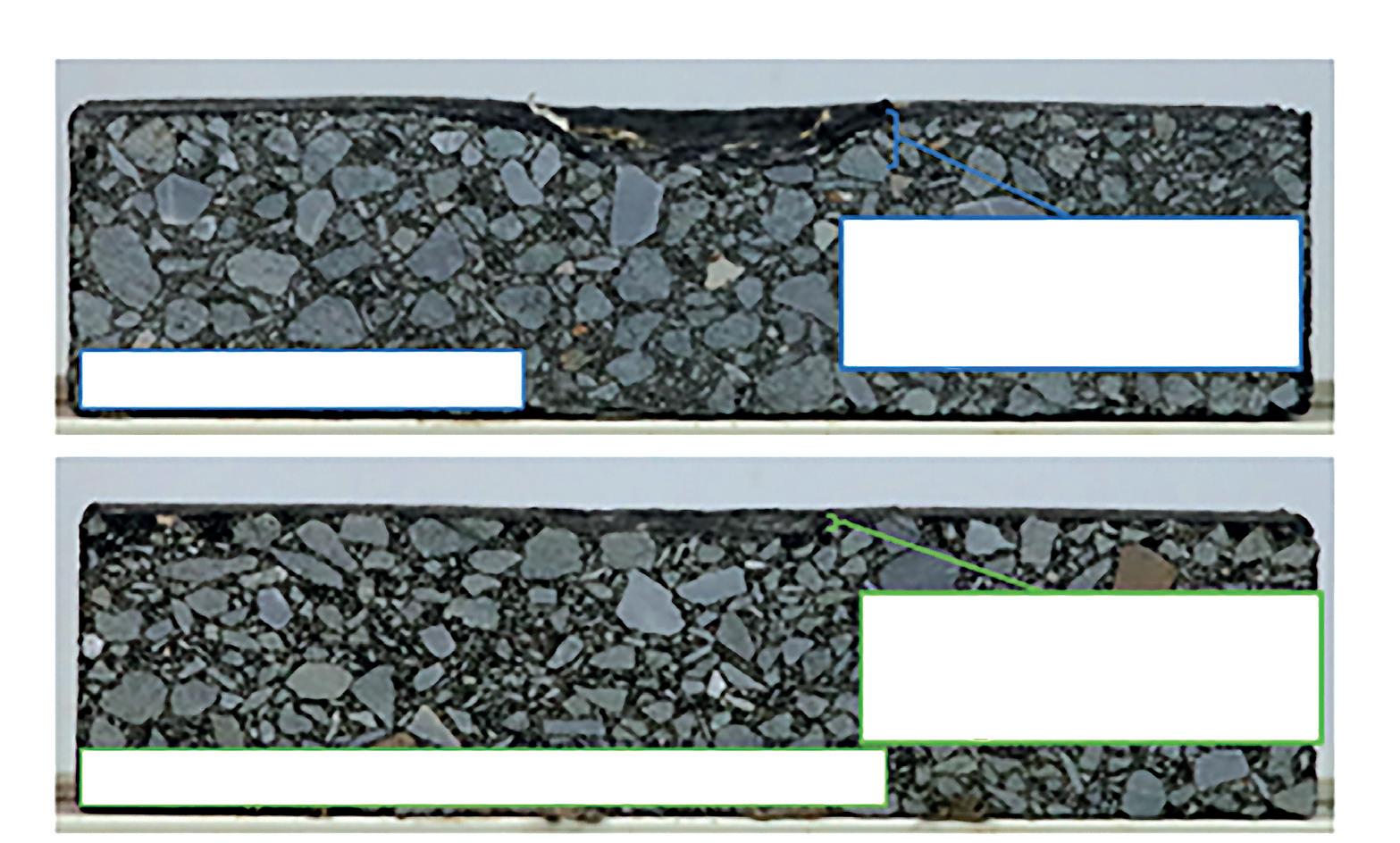
Figure 1: Comparison of the rutting tests of the AC 16 D S (Lab specimen)
AC 16 D S with 25/55-55 A
AC 16 D S with 25/55-55 A + 2,5 M.-% AS P101
asphalt has been significantly improved by multi-modification regarding the deformation resistance at temperatures. In particular, significant improvements should be noted in the results of the track formation tests at an adapted temperature of 70°C (instead of 60°C). Due to heat accumulation through heat waves, it was decided to carry out the testing under this specific temperature.
Under this condition, the PmB 25/55-55 failed rapidly in contrast to the PmB 10/4065, having a higher load of SBS polymers (see Figure 1 and 2). In comparison, the PmB 25/55-55 from supplier A modified with B2Last(R) P101 demonstrated to have the same rutting behaviour in asphalt similar to the PmB 10/40-65.
By using another PmB 25/55-55 in combination with the reactive modifier, a slight improvement can be achieved and rutting resistance can be further improved. This effect is due to the better susceptibility of the base bitumen to react with the isocyanate modifier and, therefore, achieves a higher polymer network density.
The results of the laboratory tests were confirmed by examinations of the asphalt mixtures produced on a large scale within the framework of paving projects, which will be further described in this article.
FIELD TRIAL - KONSTANTINPLATZ
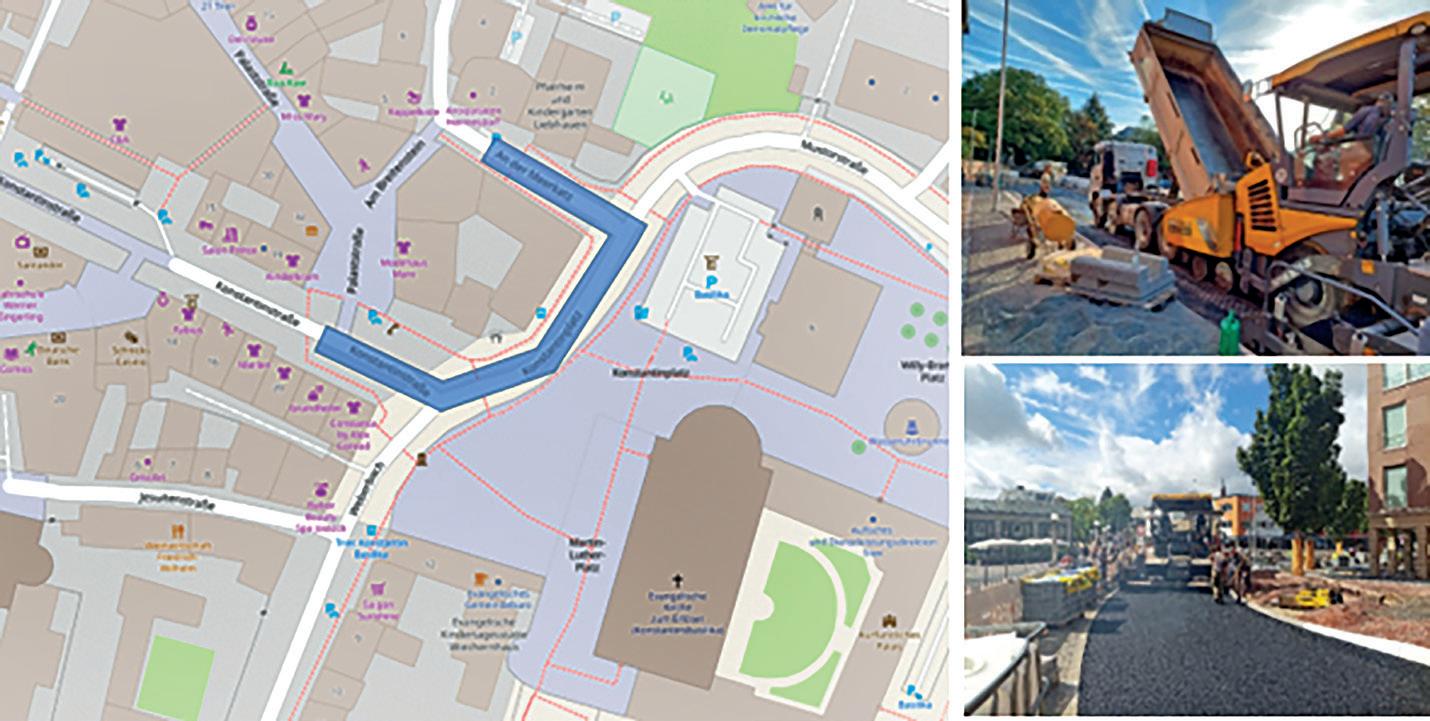
As part of the construction project Konstantinplatz in Trier (Trèves), Germany, in August 2022, multi-modification was implemented. During partial renewal of a pavement section, an asphalt-surface course made of AC 8 D S and an asphalt-binder course made of AC 16 B S were produced from a PmB 25/55-55 A with an additional 2.5% B2Last P101. Due to the type of loads on the road – slow-moving bus traffic - there is a particular risk of accumulated heat for the entire asphalt pavement. Paving took place over two days.
Following the paving and construction work, further investigations on the deformation behaviour under hot and cold temperatures were carried out on the asphaltmix samples of AC 16 B S collected on site
and also AC 16 B S with 10/40-65 A during construction.
Regarding deformation properties, the results of the laboratory tests previously carried out were consistent with the asphalt mix produced on a large scale. The multimodified asphalt mix shows significantly lower deformation in the track formation test at 70°C during the entire load cycle than the reference mix with the binder PmB 10/40-65 A (see Figure 3).
In terms of cold properties, both asphalt mixes are at a comparable level at fracture temperatures of -21.4°C and -21.1°C and at breaking stresses of 3.283 MPa and 3.217 MPa, respectively.
FIELD TRIAL - NCAT TEST TRACK
After the successful 2020 experiment on the exit ramp of the NCAT Test Track in the US state of Alabama, a full-scale structural pavement experiment was scheduled for the track’s 2021 research cycle**. In this experiment, the B2Last modifier was formulated with a conventional SBS to create
a highly modified asphalt binder; this is being used more and more by departments of transportation in US states.
One structural experiment section was built with the hybrid B2Last+SBS modified asphalt mixture for field performance evaluation in 2021. The hybrid B2Last+SBS pavement section was compared with the control section of the Additive Group experiment.
The control section was constructed with a conventional SBS-modified mixture. The design for both sections included a 5.5inch (140mm) asphalt layer over a 6-inch (152.5mm) aggregate base on top of the Test Track subgrade. With this design, bottom-up fatigue cracking is anticipated as the mode of failure.
The study was conducted in two phases: Phase I consisted of a laboratory experiment using a dense-graded asphaltmix design. The mixture was designed using the hybrid B2Last+SBS modified binder and an SBS-modified binder, following a balanced mix design (BMD) approach to evaluate resistance to rutting and cracking. Additionally, the mixtures were characterised to gather information for structural analysis to predict pavement performance at the NCAT Test Track.
Phase II involved construction of two test sections for field evaluation on the NCAT Test Track. Each section was instrumented with strain gauges, pressure plates and temperature probes to monitor
rut depth RD air @70 oC (AC 16 B S, building site)
rut depth (mm) overrolls (n)
10/40-65
25/55-55 + B2Last
Figure 3: Comparison of the rutting tests of the respective AC 16 BS with PmB 10/40-65 and co-modified with B2Last P101
its structural health and the pavement responses throughout the experiment. Field performance in terms of rutting, cracking, smoothness and texture were surveyed on a weekly basis. In addition, laboratory testing was conducted on the samples of asphalt mixtures taken during construction of the test sections to assist the eld experiment.
Binders used in both sections were modi ed from a PG 67-22 binder. e control binder was modi ed with 2.5% SBS to attain a performance grade of PG 76-22.
e SBS-modi ed PG 76-22 binder was further modi ed with the B2Last modi er at 2%, which had been optimised in a prior laboratory experiment, to achieve a performance grade of PG 82-22.
e process of formulating the hybrid B2Last+SBS modi ed PG 82-22 asphalt binder involved several steps. First, the liquid B2Last material was slowly injected into the liquid SBS-modi ed PG 76-22 binder, which was heated to 350°F (176.7°C) in an asphalt binder tank, using a pump at an asphalt terminal. Slow injection was necessary to ensure proper mixing with the asphalt binder.
Once the injection was complete, the blend was le to react for three to four hours at 350°F (176.7°C) with circulation and tank mixers, ensuring adequate mixing. e B2Last modi er should react to less than 0.1% and its activity was veri ed using FTIR spectroscopy***.
A er the material had reacted, an asphalt binder sample was taken to verify the performance grade. is modi cation process can be conducted at an asphalt terminal or an asphalt-mixing plant. It can also be used to modify an asphalt binder in the laboratory to develop a formulation, mix design and laboratory performance testing. Binder properties are disclosed further (see Table 2) based on PG grades.
Test Properties
Test Properties
Tra cking of the eighth Test Track research cycle began in November 2021 and concluded in April this year. During this period, performance data for each test section were collected on a weekly basis, including lane-area and wheel-path cracking percentages, average rut depth and ride quality (IRI). In addition, falling weight de ectometer (FWD) testing was performed several times monthly to monitor the in-situ moduli of the subgrade, base and asphalt concrete layers.
ese procedures for collection of performance data were consistent with previous research e orts at the NCAT Test Track. Further details regarding mix production, mix sampling, laboratory-test specimen production, instrumentation and data-collection procedures can be found in publications by Foshee (2022) and Kmetz (2023).
Overall, the hybrid B2Last+SBS modi ed
mixture demonstrated improved rutting resistance and sti ness. ere was similar fatigue-cracking resistance compared to the control SBS-modi ed mixture. Early cracking in the hybrid mixture at the NCAT Test Track was likely due to weaker foundational support from water intrusion. Both sections will remain in place for continued tra c monitoring, with cracks in the hybrid mixture sealed using B2Last modi ed crack-seal material.
Future plans include milling and resurfacing with an asphalt mixture modi ed with B2Last only, similar to the mixture placed on the Test Track exit ramp in 2020.
Details of the results will be published in the next NCAT Test Track report covering Section 13: (BASF Evaluation of Hybrid B2Last Modi ed Asphalt Pavement, Abstract from the Test Track 2024 Report, Dr. Nam Tran, Matthew Kmetz, Dr. David Timm).
Table 2: Performance Grade Results
Table 3: MSCR Results at 64°C
FIELD TRIAL - BMW SITE, DINGOLFING
The BMW site in Dingolfing, Germany, is one of the largest manufacturing plants for the German vehicle manufacturing group. To upgrade its infrastructure, BMW was interested in using the B2Last modifier to improve the PmB that is typically used on the company’s site. The project was to repave a large on-site bus station area, as well as renewing one lane dedicated to truck deliveries.
For this purpose, 1,500 tonnes of AC 16 DS with 50% of reclaimed asphalt based on a PmB 10/40-65 were modified with 2% of the B2Last P101 additive. The distance between the asphalt-mixing plant and the construction site was about 120km and the asphalt mix was stored for at least four to five hours before being handled further. The laydown temperature was approximately 160°C, leading to excellent workability and laydown, despite the degree of modification.
The asphalt mix from the job site is still under evaluation and some results are pending. However, properties of extracted bitumen have already been assessed. A significant increase of the softening point can be noticed which is confirmed by the temperature T (G* = 15 kPa) as well as the phase angle δ (G* = 15 kPa), which show that further degree of modification has been achieved. The MSCR (Multiple Stress Creep Recovery) test values demonstrated that a binder for extreme traffic and higher load has been reached.
In addition to physical blends of bitumen and polymers, another well-known way to improve the binder properties is through chemical modification with reactive polymers (Shell Bitumen Handbook, The Modification of Bitumen by Reactive Chemistry). There are many reactive polymers that can be used to enhance the properties of bitumen and improve the effect of SBS polymers in the bitumen binder. Reactive isocyanates through
BASF B2LAST
In 2020, BASF launched a reactive modifier under the trademark B2Last P101, followed by B2Last P102 in the US and B2last RA (allowing the re-use of up to 80% of reclaimed asphalt), a poly-isocyanate type of additive. After more than five years of product development and assessment into different types of bitumen binders, including large-scale trials at asphaltmixing plants in Germany and the US, the product was made commercially available. If hot mix plants were not initially designed for handling such chemicals, the use of this additive could be wrongly perceived as an additional chemical hazard. Safety concerns should be addressed for any new chemicals prior to industrial-scale development, considering not only the normal use, but also the eventuality of misuse or degraded conditions. The safety concerns due to the
control-reaction kinetic and at stoichiometric dosage towards bitumen proved to upgrade the usual PmB in use for some projects.
Additional investigations at the asphalt level showed that the performance of the tested asphalt has been significantly improved by the multi-modification regarding the deformation resistance at heat. In particular, the significant improvements in the results of the trackformation tests at an adapted temperature of 70°C should be emphasised.
In summary, the research goal has been achieved, that being to upgrade a bitumen using multi-modification in such a way that essentially the deformation resistance to heat is optimised. The direct modification of bitumen/asphalt (e.g. with reactive modifying additives epoxy- or isocyanate-based, rubber modification, etc.) at the asphalt-mixing plant offers great potential to adapt quickly to future conditions during production and installation and to meet the associated requirements for the asphalt layers produced.
In addition, from an ecological point of view, an additional contribution to climate protection can result from potential savings of CO₂ and resources through shortened supply chains and increased ratios of reclaimed asphalt. ■
possibility of the evolution of harmful emissions should always be considered. However, there are limited concerns by optimisation of the blending time and temperature with bitumen and the asphalt made thereof.
BASF engaged many academic partners and third parties to assess the risks associated with the exposure of these new types of chemicals at asphalt-mixing plants. Emission studies proved that the B2last product range is safe to use when following typical safety standards for handling this material and that the resulting asphalt mix is safe to handle without any further safety concerns.
l For more information about these products and processes,contact BASF at b2last@basf. com or visit the BASF site: www.b2last.com
*BASF offers globally a complete range of products for the asphalt industry. From its historical Butonal SBR latex emulsion to its newly developed products that include Butonal MB 5126, Rheofalt and B2Last. B2Last covers a broad range of applications, such as anti-stripping agents, rheology modifier, warm and hot mix asphalt, as well as high-viscosity asphalt binder.
The authors:
Europe. He holds a PhD in organic chemistry from further developed his knowledge on the chemistry of bitumen through chemical modification with reactive
**The NCAT Pavement Test Track is a 1.7-mile (2.7km) long oval track in Lee County in the US state of Alabama. It is managed by the National Center for Asphalt Technology (NCAT), the largest asphalt research centre in the western hemisphere and a cooperative venture between the National Asphalt Pavement Association’s (NAPA) Research and Education Foundation and Auburn University.
***FTIR, Fourier-transform infrared spectroscopy, is a technique used to obtain an infrared spectrum of absorption or emission of a solid, liquid or gas. An FTIR spectrometer collects high-resolution spectral data over a wide spectral range. This confers a significant advantage over a dispersive spectrometer, which measures intensity over a narrow range of wavelengths at a time.
Table 4: Binder properties, extracted from asphalt mixes produced and laydown on the jobsite.
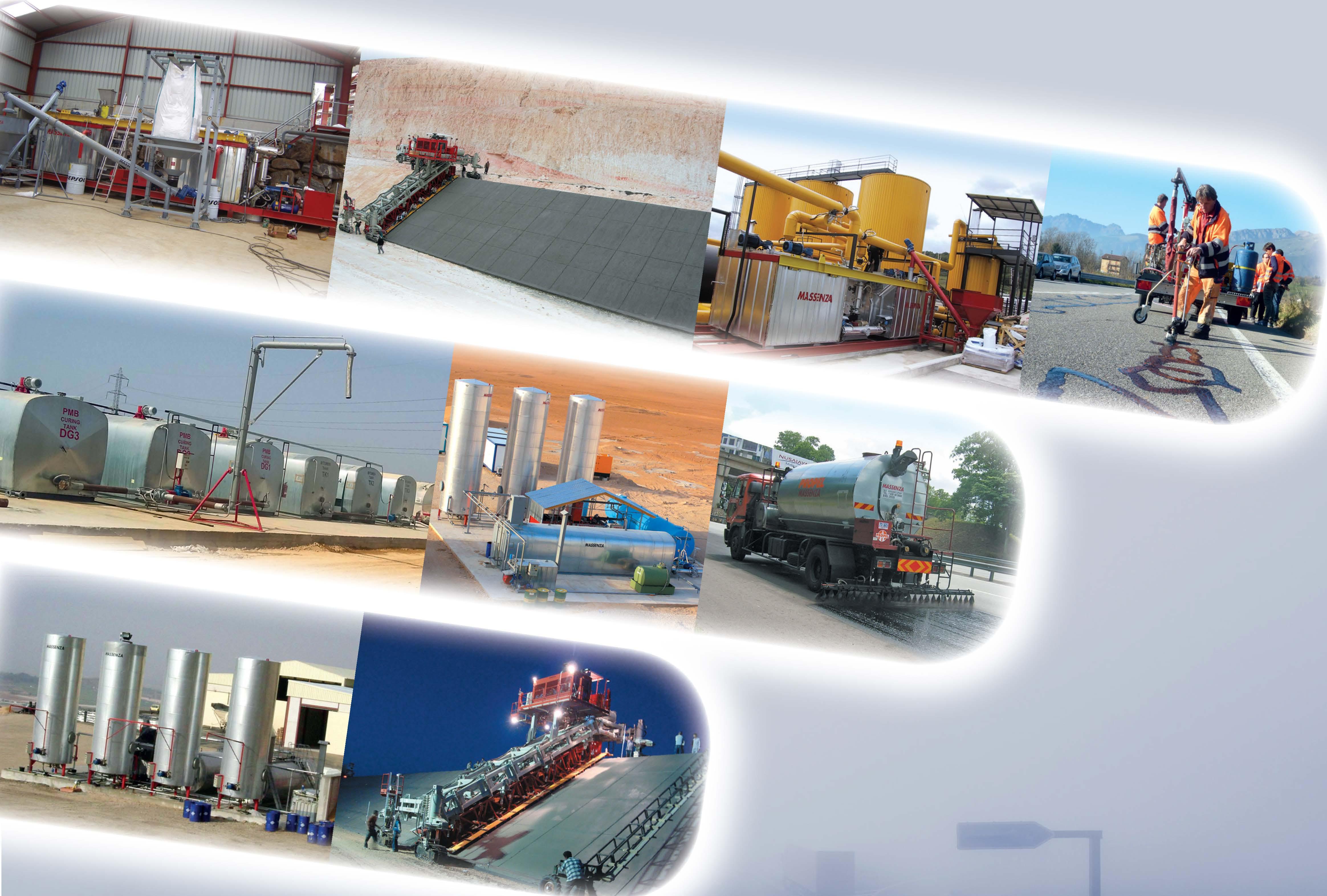
• Spraying tanks
• Modified bitumen plants
• Emulsion plants
• Road repairing machines
• Concrete slipform paver
• Thermail oil heaters and tanks
• Bitumenmelter
• Cut-back plants
AI FOR IMPROVING MAINTENANCE COMPLIANCE
Legally required maintenance standards are driving road agencies and owners to collect much more accurate surface data in order to enact more efficient repairs. Artificial intelligence has a major role to play, explains Saurabh Mahajan, senior vice president at
In the Canadian province of Ontario, municipalities must comply with the Minimum Maintenance Standards (MMS) when it comes to road and pavement maintenance. ese standards are being implemented in response to government requests for relief from onerous court decisions.
To use this statutory defence in court, a municipality must show through recorded evidence that it has met the minimum standards as de ned in North American regulatory regimes such as Regulation 239/02 (Canada)**. For this reason, the City of Vaughan implemented arti cial intelligence (AI) from iris to automate and modernise its road maintenance operation***.
e typical turnaround times with humanintensive processes include patrolling the roads at slow speeds and taking notes. ese notes are later consolidated into a digital work-order management system responsible for generating, tracking and documenting
completion of work, taking anywhere from two days to two weeks.
Moreover, the accuracy of human inspections is error-prone because the patroller may easily miss a defect. is is especially true when the same general point of view has multiple assets to report defects.
Computer-vision, AI-assisted assetdetection models improve the time to collect defects with high accuracy. Highly evolved AI models can also classify defects as to size and severity and then automatically assign priority for repairs.
SINGLE SOURCE OF TRUTH
Computer-vision technologies rely on images taken by a dashcam device. A well-designed cloud-based solution makes the images with assets available for viewing on an online portal helping with:
audits: assess automatic defect categorization compared to real scope of repair;
quality checks: before and a er patrols;
recordkeeping for compliance: images with geolocations and timestamps cannot be manipulated and can be relied on for compliance.
Tech-assisted platforms provide reliable on-demand compliance documentation for claims.
Claims documentation relies on roadpatrol records. Without technology-assisted methods, this is found to be inconsistent with partial or full records in hard copies. e reliability of a centralised and automated road-patrol system integrated with workorder management systems makes the claims journey a steadily reliable solution.
How does it work?
Iris’ approach is based upon deep learning models for object detection and employs computer-vision techniques. is involves a sequence of steps: image capture, roadwayasset identi cation (via classi cation, detection and segmentation), asset-condition
assessment and roadway-asset inventory and documentation (see figure 1).
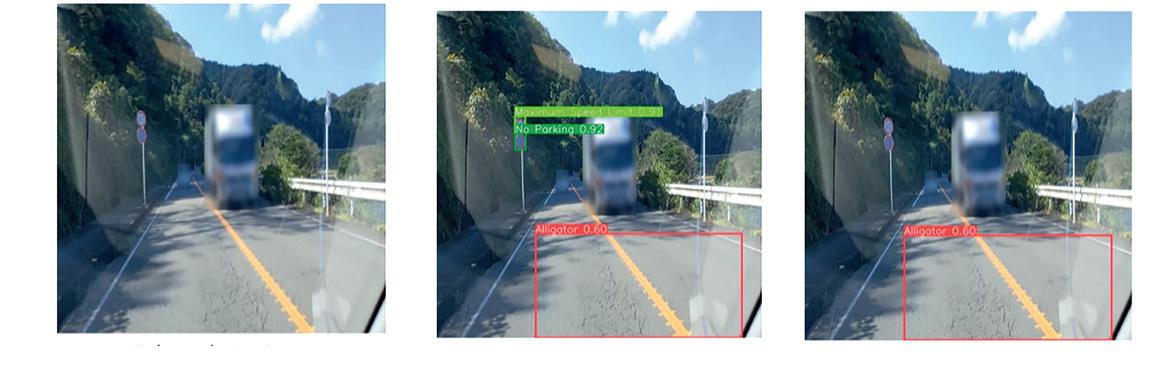
The first step consists of collecting highresolution images using our IoT (Internet of Things) device (irisGO). In the second step, we train a one-stage object-detector model, using supervised learning, to detect and classify each asset in the image input. Next, a second trained model is used to attribute a degree of severity (low, medium, high) to determine the level of maintenance needed (see figure 2). The final step involves generating a comprehensive inventory about all the identified assets with their condition assessments, including metadata such as type, location, condition, date, etc.
The object-detection model chosen for fine-tuning and used in the second and third steps is YOLOv8 (Ultralytics 2023), recognised for its real-time detection capabilities and accuracy. The backbone weights for this model were transferred from pre-trained models on the MS COCO dataset using transfer-learning techniques.
We used two datasets to fine-tune YOLOv8 and implement the second step in our approach: our Right of Way (traffic sign) and Road Defect datasets. The traffic sign dataset includes 20 classes, the majority of which are speed signs, with other classes such as improperlyoriented, missing and obscured signs. For the road defect dataset, we have six classes in total, three of them related to cracks: ‘Transverse’, ‘Alligator’ and ‘Longitudinal’. The rest of the classes are: ‘Damaged paint’, ‘Manhole cover’ and ‘Potholes’.
Both datasets were unbalanced. To address this, we applied several dataaugmentation techniques, such as mosaic and brightness bounding box-level augmentation, to generate additional synthetic data, especially for the minority class, to balance the class distribution. Bounding box-level augmentation generates new training data by altering only the content of a source images with the bounding boxes.
We trained the YOLOv8 for 100 epochs with 635 iterations per epoch and a batch size of eight. An epoch refers to one complete pass through the entire training dataset by the model. An iteration is one update of the model’s parameters. The input size was set to 640. The number of epochs was determined by monitoring the accuracy during training and stopping when the accuracy stopped improving.
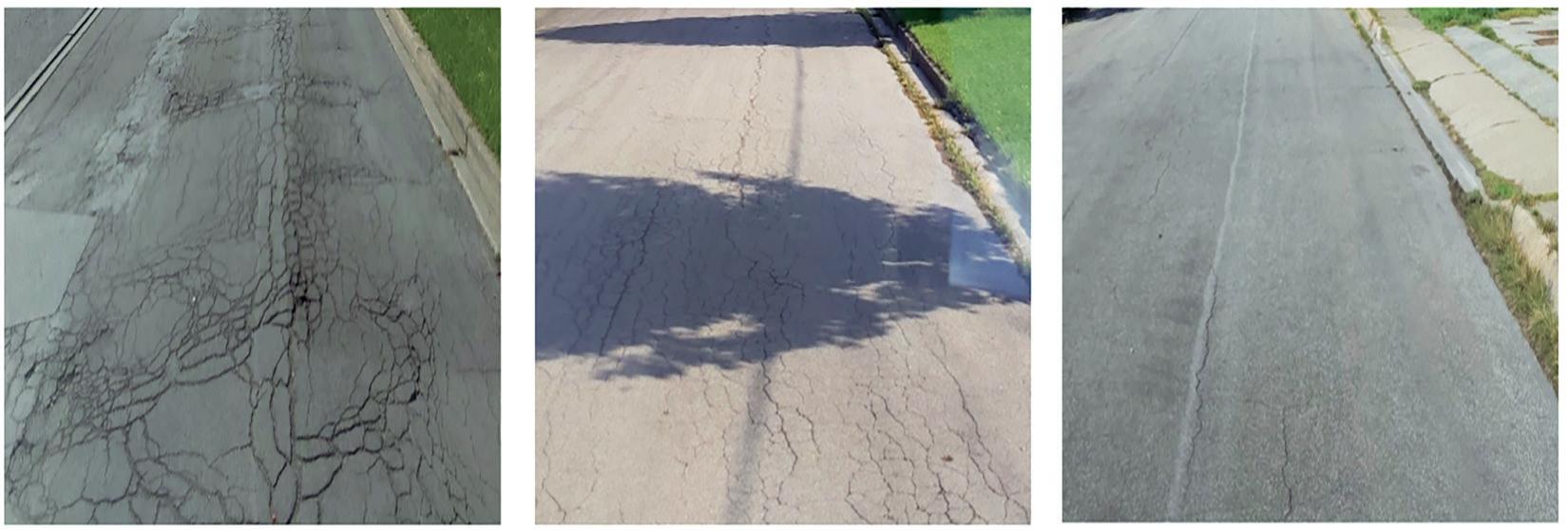
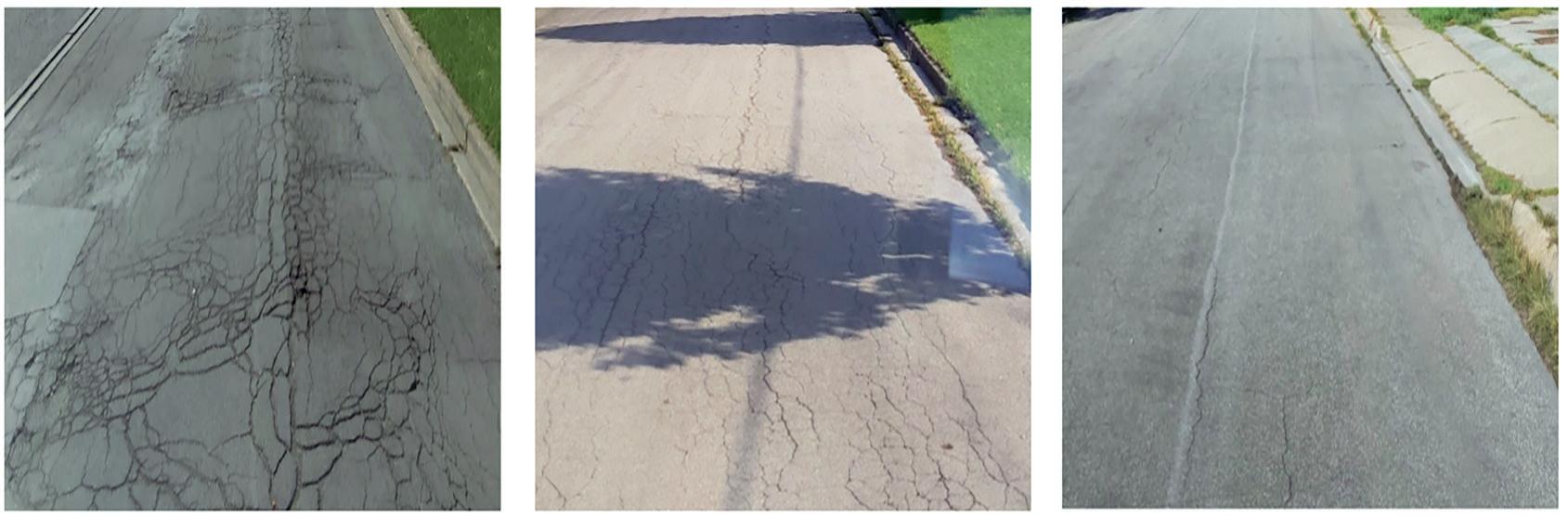
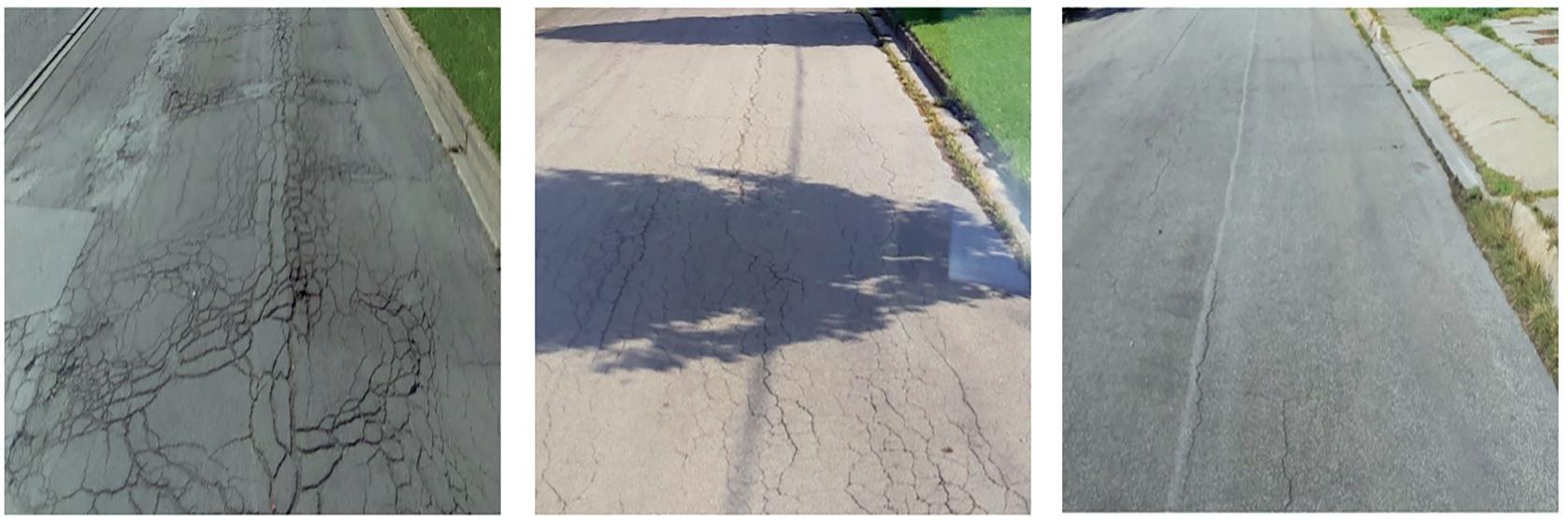
High severity
Cracks with a mean width > 0.75in. (19mm). Also, any crack with a mean width <0.75in. (19mm) and adjacent random medium-to-high-severity cracking.
Medium severity
Cracks with a mean width > 0.25in. (6mm) and <=0.75in. (19mm). Also, any crack with a mean width <0.75in. (19mm) and adjacent random low-severity cracking.
MODEL EVALUATION AND RESULTS
To evaluate the fine-tuned model in step 2, we use the Mean Average Precision (mAP) metric, representing the average of the AP of all classes (Hebbache et al. 2023). The AP is the area under the precision-recall curve, defined as follows:
Where:
l AP is the Average Precision
l p(r) is the precision at recall r
l the integral is calculated from 0 to 1, covering the entire range of recall
l The precision and recall metrics are defined as follows:
Low severity
Cracks with a mean width < 0.25in. (6mm). Sealed cracks with sealant in good condition and a width that cannot be determined.
Mathematically, the IoU can be expressed as:
Where:
l TP, FP and FN represent the number of true positives, false positives and false negatives respectively. To classify the detections as TP or FP, the IoU (Intersection Over Union) threshold is set to t = 0.5. The IoU is calculated by finding the area of overlap (intersection) between the predicted bounding box and the ground-truth bounding box and dividing it by the area of union.
When using object detection during inference, we use the post-processing technique called Non-Maximal Suppression (NMS) to select the best bounding box from the multiple predicted bounding boxes, with a threshold of 0.45. This technique is included in YOLOv8. The mAP, recall and precision values obtained are presented in Table 1.
Table 1. Results evaluation of the trained YOLOv8 on test sets for Right of Way and road defect
To evaluate the labels generated by the trained model versus the manual ones, we examined the case of Right of Way detection and considered two factors: the error rate based on recall and time consumed to generate the labels. The error rate is defined as follows:
Error=1-Recall
Figure 2. Examples of severity levels considered in our approach
Table 2. Manual labels vs AI generated labels
Cost High Low
We observe from the results of Table 2 that the manual process of labelling is more accurate than the automated one (6% of error rate versus 12%). However, it is slower (6 hours versus 20 second) and labour-intensive. is is a common trade-o in machine learning.
Has this produced expected results in the eld?
As a speci c example, the City of Vaughan noticed instant improvements in e ciency, service levels, budget and road safety when using iris’ Automated Road Patrol. According
to the city, sta had varying technical abilities, so it was essential to implement a solution that would be easy to navigate to encourage adoption and usability.
By automating the road-patrol processes with iris it improved operational e ciency and compliance reporting. e City of Vaughan saw an approximate increase of 25 per cent in accurate compliance reporting.
Road patrol is a catalyst to repair standards. Patrols are now scheduled in alignment to MMS requirements, especially during the winter months when patrolling is required for three times per day; non-winter, only once. e patrol itself also improved dramatically as the AI can identify potholes, damaged signs and more through one pass. e city can now identify multiple and individual potholes as well as precisely count the potholes versus just identifying them as a group. is allows the city to realise correct costs and time to repair the potholes since it has an accurate numerical amount. is technology o ers more accurate reporting. e city can capture all necessary
information, images and data for compliance reporting and public claims. As irisGO captures de ciencies, work orders are automatically generated, alerting them that there were more de ciencies than assumed and helping them repair them, responsively. is helped them reach 100 per cent compliance. ■
*Saurabh Mahajan is head of product and customer success at iris, based in Burlington, Canada. e company automates and modernises road and asset maintenance. He focuses on AI and machine learning-based infrastructure technology with hardware IoT, cloud computing and work-order management systems.
**Minimum Maintenance Standards for Municipal Highways, Ontario Regulation 239/02, Municipal
***For a webinar of the City of Vaughan project, visit the iris website: https://irisroads.com.
PAVING THE WAY FOR SUSTAINABLE SURFACES
Deepak Madan* explains how Sripath’s portfolio of products helps paving contractors achieve their sustainability goals.
Enhancing the sustainability of the pavements is of increasing importance as more transport agencies and municipalities around the world look to reduce their environmental impact. Recent innovations have demonstrated that the bitumen and the asphalt industry can adopt sustainable measures that both improve performance and reduce cost in the long run.
Sripath’s sustainability claims are backed by third-party validated studies detailed in environmental product declarations (EPDs) and sustainability reports. The following reports are available on Sripath’s website:
- ReLIXER: an asphalt rejuvenator or recycling agent;
- PGXpand: a bitumen-friendly polymericadditive;
- NuMIXER: a green bio-oil bitumen softener or modifier.
Developing these EPDs and sustainability reports was a pivotal focus for the company’s leadership. The team sought to quantify a product’s impact on sustainability through independent verification. Exploring the lifecycle of each product, the EPDs detail resource and energy use as well as the impact on emissions. Using a cradle-to-gate
approach, each EPD enumerates the product’s carbon footprint, including raw material source (A1), raw material transport (A2), manufacturing (A3) and transportation of final product (A4).
The entire Life Cycle Assessment project was managed by Geovitia, based in Chester, UK. The EPDs were authored by Solid Forest, headquartered in Madrid, Spain, and certified by The Environmental Footprint Institute, also in Madrid. Sripath is now leading the way in freely sharing its EPDs and sustainability reports on its website.
CARBON SEQUESTRATION ANALYSIS
As part of its sustainability efforts, certain Sripath products, such as ReLIXER and NuMIXER, are manufactured by blending bio-based oils, extracted from cultivated crops. As the crops grow, the plants capture carbon dioxide from the air and convert it into food and nutrients via photosynthesis. Such captured carbon units are retained within the extracted oil and become an integral part of the product. When such products are used as additives to modify bitumen or in asphalt mixes, they are eventually captured within roadway pavements. The carbon units from these products remain sequestered within the road
pavement for the life and reuse of the asphalt pavement.
Sripath conducted a comprehensive carbon sequestration (S1) analysis for its bio-based products ReLIXER and NuMIXER. The analysis was based on the ILCD 3.1 methodology as required by the European Commission and the Type I Environmental Declarations outlined in ISO 14025:2010.
The carbon sequestration impact values were calculated and reported on a 1kg of product basis. Although not part of the EPD certification process, this analysis provides valuable insight into the impact of carbon capture and sequestration during biogenesis.
As an example, the global warming potential (GWP) results from both the EPD project and the carbon sequestration analysis for ReLIXER are summarised in table 1. The table shows a GWP value of -2.533kg of CO₂ equivalent per kilogram of ReLIXER, due to carbon sequestration (S1) and a total GWP value of -1.677kg of CO₂ equivalent per kilogram of ReLIXER for the A1+A2+A3+S1 parameter.
INCREASING RAP USE
Sripath has been a pioneer in promoting the use of high levels of reclaimed asphalt pavement (RAP) for paving applications.
Sustainable roadway paved using a high-RAP mix dosed with ReLIXER rejuvenator
Globally, over 750 million tonnes of RAP are generated each year. Transportation agencies and industry leaders around the world are looking for ways to recycle and reuse higher levels of RAP in asphalt mixes.
More than a decade ago, as the industry looked for ways to use high-RAP mixes on roadways, the team at Sripath recognised the need for an effective rejuvenator that could restore the functional properties of aged bitumen in RAP.
An effective recycling agent allows for higher levels of RAP to be incorporated into asphalt mixes, rejuvenating the aged RAP binder. This reduces the amount of virgin binder needed and delivers roadways with desired performance and durability - while reducing the overall cost of the mix.
HIGH-RAP MIXES
Sripath’s ReLIXER, an eco-friendly asphalt rejuvenator or recycling agent, is a blend of bio-based oils designed to rejuvenate aged binder in RAP. The benefits of high levels of RAP go beyond the cost savings achieved through repurposing waste materials. HighRAP mixes - over 25% and up to 100% in some cases - require a rejuvenator to restore the functional properties of the aged RAP binder.
High-RAP mixes are typically designed using the balanced mix design concept, balancing rutting resistance against fracturetoughness properties. As an example, the IDEAL CT Index was evaluated as a measure of fracture toughness after oven-ageing of mixes containing 0%, 30% or 50% RAP. These high-RAP mixes were dosed with either 5% ReLIXER or 10% petrochemical oil. Samples were subject to loose-mix oven ageing for four, eight or 16 hours.
As seen in Figure 2, for both the 30% and 50% RAP, the mixes dosed with ReLIXER showed superior fracture toughness compared to mixes dosed with the petrochemical oil rejuvenator. Remarkably, the high-RAP ReLIXER mixes performed on a par with no-RAP mixes, especially after the ageing regimen. This demonstrates the ability of ReLIXER to restore the functional properties of aged bitumen to deliver durable roadways.
Contractors looking to be cost-conscious alongside their sustainability efforts find ReLIXER to be an effective rejuvenator. ReLIXER is effective at low dosage levels, helping to lower the costs of mixes by 5-15%. The need for minimal amounts of the additive is coupled with the ability to reduce the amount of virgin bitumen and aggregate needed, resulting in a reduction in the overall cost of the mix. The bottom line
Table 1: Global warming potential for ReLIXER
Figure 2: IDEAL CT index of aged high-RAP mixes dosed with rejuvenators
Figure 3: Impact of high-RAP mixes dosed with ReLIXER and the resulting costs
is that higher RAP mixes can also equate to lower overall cost while keeping sustainability at the forefront, all without compromising performance.
ReLIXER AT WORK
ReLIXER stands out for being an environmentally friendly asphalt rejuvenator, delivering improved performance and durability. It relies on green industrial-grade bio-based oils that do not burden existing food sources. Environmental benefits of using high RAP mixes are also lauded by independent researchers. During a 2023 conference organised by the Institute of Asphalt Technology – Irish Branch, presenter William Wilson noted that using a high-RAP mix dosed with ReLIXER drastically lowered greenhouse gas emissions by 12-16%.
Independent testing by the Modified Asphalt Research Center at the University of Wisconsin in the US demonstrated that RAP samples with aged bitumen performed better in cracking-resistance testing compared to petrochemical oil rejuvenators as well as other bio-based oil rejuvenators. The test revealed ReLIXER to be most effective for aspaved performance and long-term roadway durability.
Practical applications of the rejuvenator have also demonstrated high-performance outcomes. An evaluation by S.T.A.T.E. Testing for the Illinois State Toll Highway Authority, also in the US, demonstrated superior performance for fracture toughness (544J/m² with 3.6% ReLIXER in mix) as compared to softer bitumen mixes without rejuvenator (435J/m²).
When it comes to the expectations for an
effective asphalt rejuvenator like ReLIXER, the product should not only soften aged RAP bitumen to be workable but also provide for restored functional balance of properties, aid compaction and improve long-term durability. Added to this is the commitment to approaching these requirements with sustainable products and manufacturing processes that limit the impact on greenhouse gases.
SUSTAINABLE PMBs
Increased use of RAP is just one way the paving industry is looking to reduce its carbon footprint. Agencies continue to explore options for performance-enhancing products that create improved long-term outcomes for their projects. However, considering the drive toward sustainability, lower fuel consumption and energy expenditure during the manufacturing and paving processes are becoming pivotal as well.
Polymer modified bitumen (PMB) has been around for a long time. PMBs have traditionally performed an essential role in improving fatigue properties and rutting resistance. Additionally, PMBs can extend pavement life on roads that are subject to high wear and tear due to heavy traffic and extreme weather.
But not all PMBs are created equal. PMB produced using Sripath’s PGXpand - a bitumen-friendly polymeric-additive - helps deliver desired performance while being more environmentally friendly.
Unlike traditional elastomeric or plastomeric polymers, PGXpand enhances bitumen performance at high temperatures
Number of passes
while retaining low-temperature properties. PGXpand can be blended into bitumen without the need for high temperatures, highshear mixers and long mixing times.
As seen in table 2, PGXpand inherently has a lower carbon footprint, with a GWP of 3.27 for cradle-to-gate scope (A1 to A4). It is highly dosage-efficient, requiring almost half the amount of PGXpand as a traditional elastomer to achieve similar performance. Further, it helps eliminate or reduce the need for other additives such as crosslinkers and warm-mix additives. PGXpand also improves workability of the mix, helping reduce energy consumption during paving. Thus, PMBs based on PGXpand have a significantly reduced carbon footprint compared to traditional polymers.
As seen in Figure 4, a 2% addition of PGXpand can improve the resilient modulus by 15-20%. Also, an addition of 1.2% of PGXpand results in significantly improving the rutting resistance when compared to a mix made with a 3.5% SBS-based binder. Thus, PGXpand can deliver performance and be environmentally friendly at the same time.
ADJUSTING THE BITUMEN GRADE
NuMIXER, another product in the Sripath line-up, is used to soften and adjust the grade of bitumen. It helps improve the low-temperature performance of bitumen. Notably, at low dosage levels, NuMIXER is effective in managing viscosity, enhancing low-temperature properties and improving fracture toughness and fatigue resistance.
While the intent was to develop a product to improve roadway cracking resistance, the Sripath research and development team kept
Figure 4: Impact of PGXpand on resilient modulus and rutting resistance
sustainability at the forefront. e NuMIXER formula is a blend of prime bio-based oils that do not tax existing food sources. Analysis of the product’s GWP yielded a result of -1.59kg of CO2 equivalent per kilogram of product.
Bitumen modi cation has been an essential aspect of paving for decades. NuMIXER is uniquely quali ed in being both an e ective binder modi er and an environmentally friendly solution. It delivers performance and helps reduce the carbon footprint.
Lowering energy consumption also calls to mind e orts to reduce energy use, both during the manufacture of the mix and the paving operation. Innovations in mix production have led to more widespread use of warm-mix additives in asphalt mixes. WMA technology allows mixes to be produced and paved at lower temperatures, which implies lower fuel and energy consumption and lower greenhouse gas emissions. us, WMA technology also provides an opportunity to reduce the carbon footprint and helps contractors meet their sustainability goals.
OPTIMISING WITH KOOLTEQ
KoolTEQ, recently introduced by Sripath, is an environmentally friendly warm-mix additive that helps reduce production and paving temperatures of both hot asphalt and PMB mixes. It leverages the WMA technology without sacri cing performance and maintains long-term integrity of the pavement. It reduces mixproduction temperatures and reduces paving temperature.
KoolTEQ is also dosage-e cient. Using just 0.25% KoolTEQ signi cantly improves compaction e ciency at paving temperatures as low as 115°C. is demonstrates superior e ectiveness compared to many WMAs. In addition to having a low carbon footprint as a product, KoolTEQ’s ability
to lower the temperature requirements of WMA and its dosage e ciency directly helps lower the carbon footprint of the project itself. is reduction in energy consumption also helps lower costs of paving and permits transportation of mixes over larger distances before compaction.
Overall, the future of sustainable paving lies in responsible repurposing of recycled material and a reduced reliance on nonrenewable energy and raw materials. Sripath’s products empower the paving industry to use sustainable additives. ■
*Deepak Madan is the chief marketing and business development o cer at Sripath. He holds a PhD from the Rensselaer Polytechnic Institute in Troy in the US state of New York. He is the recipient of the 2024 APMI Fellowship Award from the APMI, the American Powder Metallurgy Institute. Sripath is a global company, developing, manufacturing and marketing bitumen and asphalt additives.
Figure 5: Viscosity management using
Table 3: Global warming potential for
EVOLUTION ROAD: EV CHARGING AND SURFACE DISTURBANCE
Conductive charging for electric vehicles requires a rail or a series of coils to be part of the road infrastructure. Research in Sweden has highlighted the effect on the road surface as Lina Nordin and Björn Kalman, from the Swedish Road and Transport Research Institute in Linköping, explain.
An electric road system, ERS, allows for the charging of an electric vehicle while it is being driven. This creates flexibility for the driver by extending their travel distance. It can also, by encouraging more people to buy an electric vehicle, be part of the strategy for the so-called green transition move towards sustainability.
An ERS needs infrastructure to transfer electricity from the grid to a moving vehicle. This transfer can be done either through overhead conductive catenary cables, from conductive rails in or at the side of the road or inductively from coils embedded beneath the road surface. A vehicle must have an onboard battery capable of being charged while simultaneously releasing a charge for vehicular propulsion.
It is clear from several demonstration
projects on public roads in Sweden (STA, 2024) and elsewhere that the technology works. Even though only a few vehicles have been tested, it is understood that the various types of ERS will, to some degree, impact the road surface, its maintenance and the wearing of the pavement and infrastructure.
One of the four ERS projects that have been demonstrated on public roads in Sweden is the five-year EVolution Road Project (see box). The technology from Elonroad - one of the partners of the project - was tested on a road in the city of Lund between 2020 and 2024 (EVolution Road, 2024).
For roads to last as long as possible, they need to be intact, well drained and stable. However, the introduction of components into the road surface such as electric wiring, conductive rails and embedded coils could
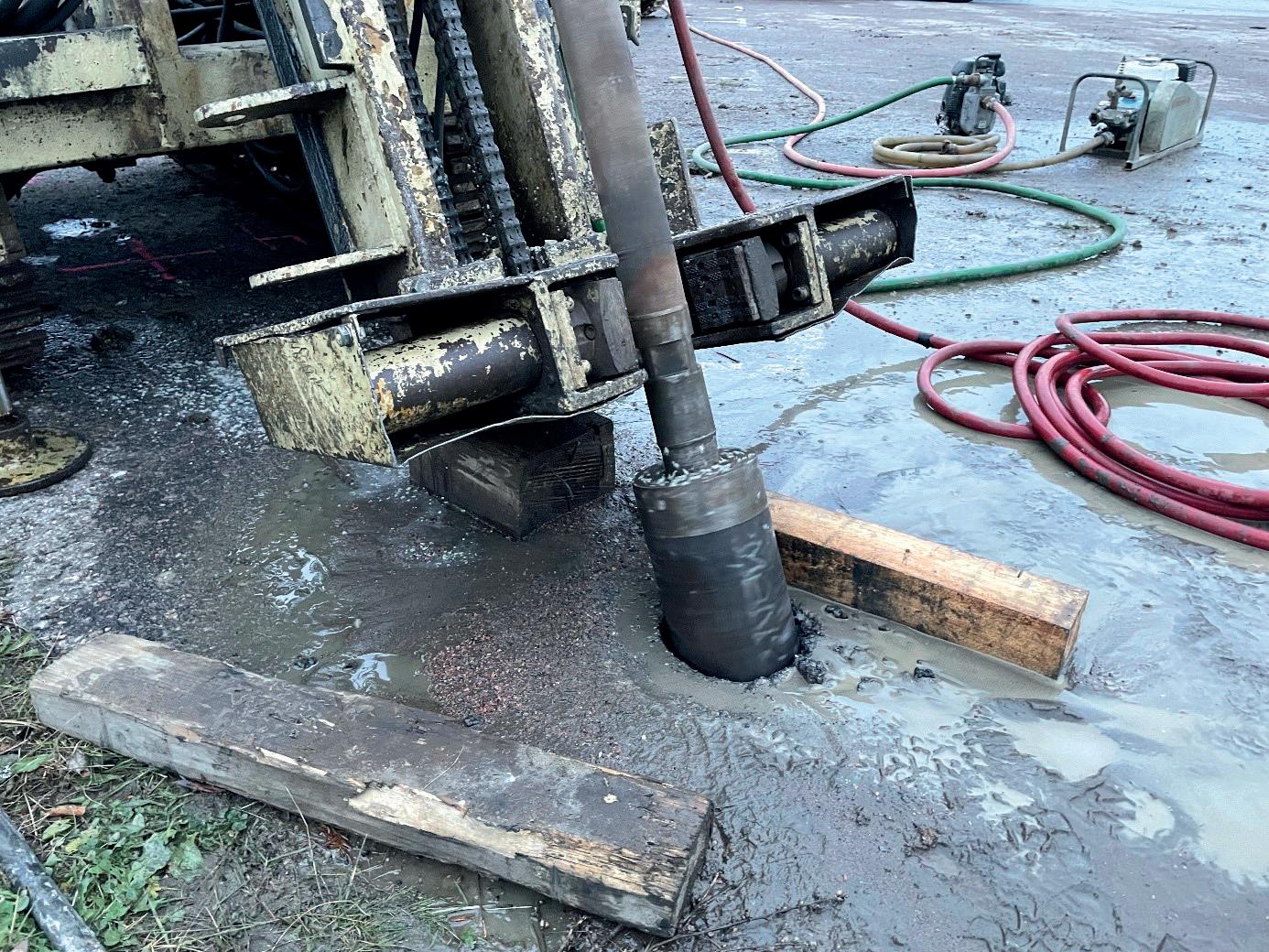
1: Drilling beneath the road for insertion of connecting cables to main transverse cable from the roadside (image courtesy Johan Rosendahl)
affect the stability and performance of the road. Also, in the light of climate change, roads need to withstand more weather-related stresses, such as excessive heat and water as well as more frequent freeze-thaw cycles.
Nordin et al. (2020) analysed the effects that four types of ERS might have on road maintenance and construction and the impact on the road structure during installation of the ERS. They also noted various challenges to road maintenance and operations, with suggestions for installing ERS.
CANTENARY TECHNOLOGY
For the catenary ERS the main issues were increased maintenance as well as traffic disturbances during verge cutting, maintenance of barriers and snow ploughing. The catenary technology is also subject to physical disruption because highway maintenance machinery - for example, crane booms and the raised dumpers of haulage tucks - may tear down or get stuck in the catenary cables hanging only 5m above the road.
Nordin et al, (2020) also considered the impact that conductive rails might have on road maintenance and operations. While water, heat and freezing are weather-related parameters that could affect all conductive technologies, this is even more so for roadembedded conductive rail solutions. There is the need to maintain the rails themselves to ensure the best conductivity. They must be free from snow and other debris.
However, the main concern was regarding the transverse joints needed to connect electric cables from the roadside to the technology in the road. This would be an issue for all embedded ERS technologies. The trenches are typically anywhere up to 1m wide. As with all types of transverse trenches, it is difficult to restore the material in the trench to the same packing grade as that of the surrounding material. The result is settlement of the trench infill as traffic starts rolling over the area. Different solutions have been tested and discussed within the EVolution Road Project in Lund. One promising solution tested was a cable pipe drilled below the road. This will leave intact the bearing layers above the pipe. The cable pipes were then connected with the surface by drilling vertically down from the
Figure
road surface and connecting a vertical pipe with the horizontal cable pipe. The electric cables are pushed through the pipe from the roadside and up the vertical pipe to the surface for connecting with the ERS (see
Of course, trenching and settlement are not issues if the ERS is installed during the entire road-paving process. This was the case with the wireless inductive technology (dynamic wireless power transfer) that the company Electreon used along a 1.6km-long test section on the island of Gotland, south of
During the EVolution Road project researchers at VTI performed several accelerated tests. The Elonroad technology was designed to be laid on top of the road surface, hence no intrusion into the pavement, other than 1.5km of cabling and some bolting.
However, a Swedish motorcyclists’ organisation was concerned that such a solution, although raised only slightly from the road surface, would be a hazard for twoand three-wheel vehicles. Hence, the solution was to use an embedded ERS rail.
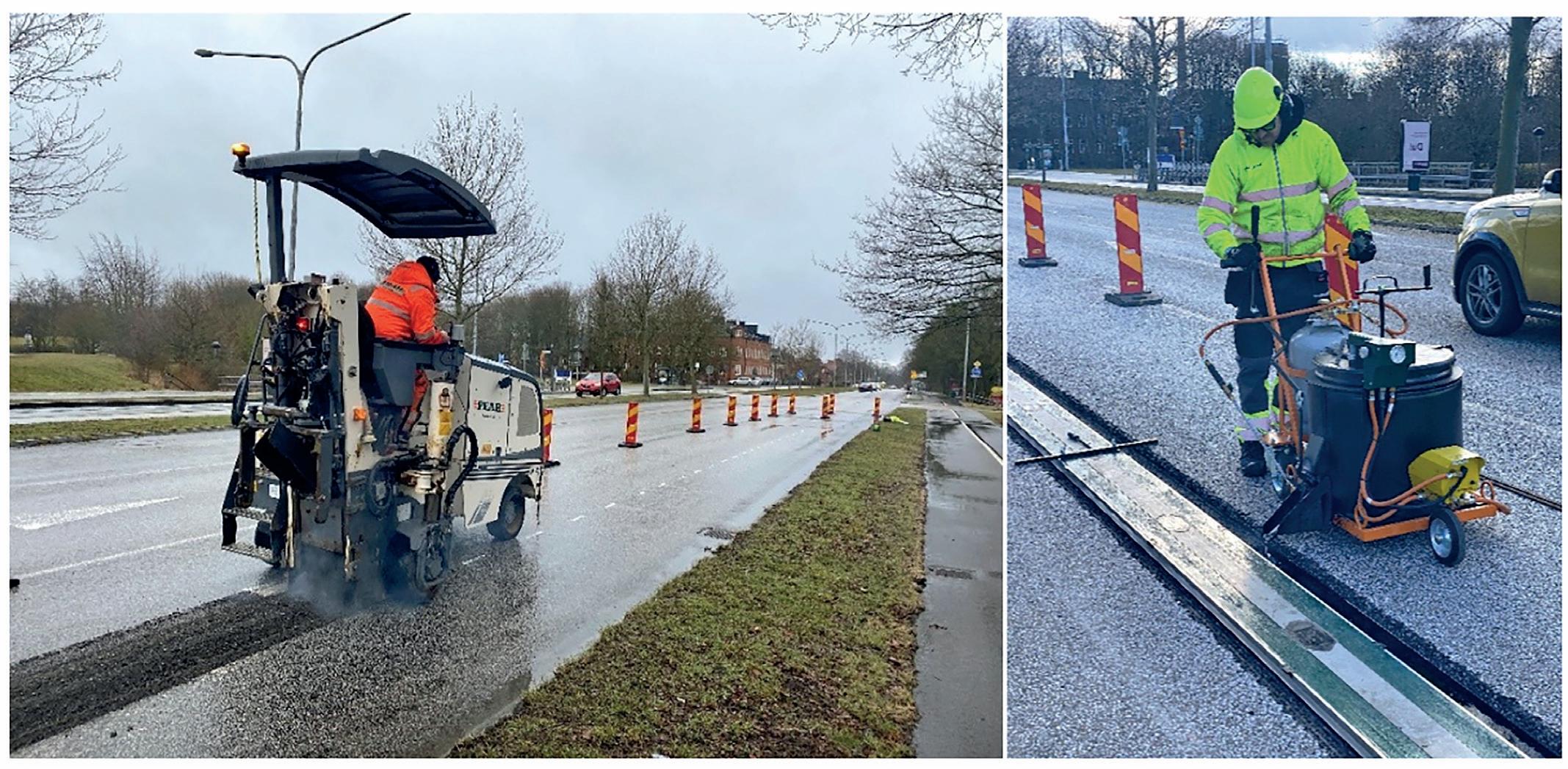
For the installation of the Elonroad ERS in Lund (see Figure 2), first a trench was milled 6cm deep into the road pavement into which a metal box was laid on some undercasting compound. All the technical parts of the ERS – rail, conductive parts, sensors and other electrical parts - were then laid into and attached onto the metal box. This makes it very easy to remove sections of the ERS for maintenance.
There needed to be around 2cm of elastic compound on top of the metal box to bring the top of ERS to the same level as the surrounding pavement surface. This, too, helped secure the system in place.
Figure 2: Installation of the Elonroad’s ERS in Lund, Sweden - a trench was milled into the road pavement into which the box was lowered to rest upon undercasting compound (image courtesy EVolution Road)
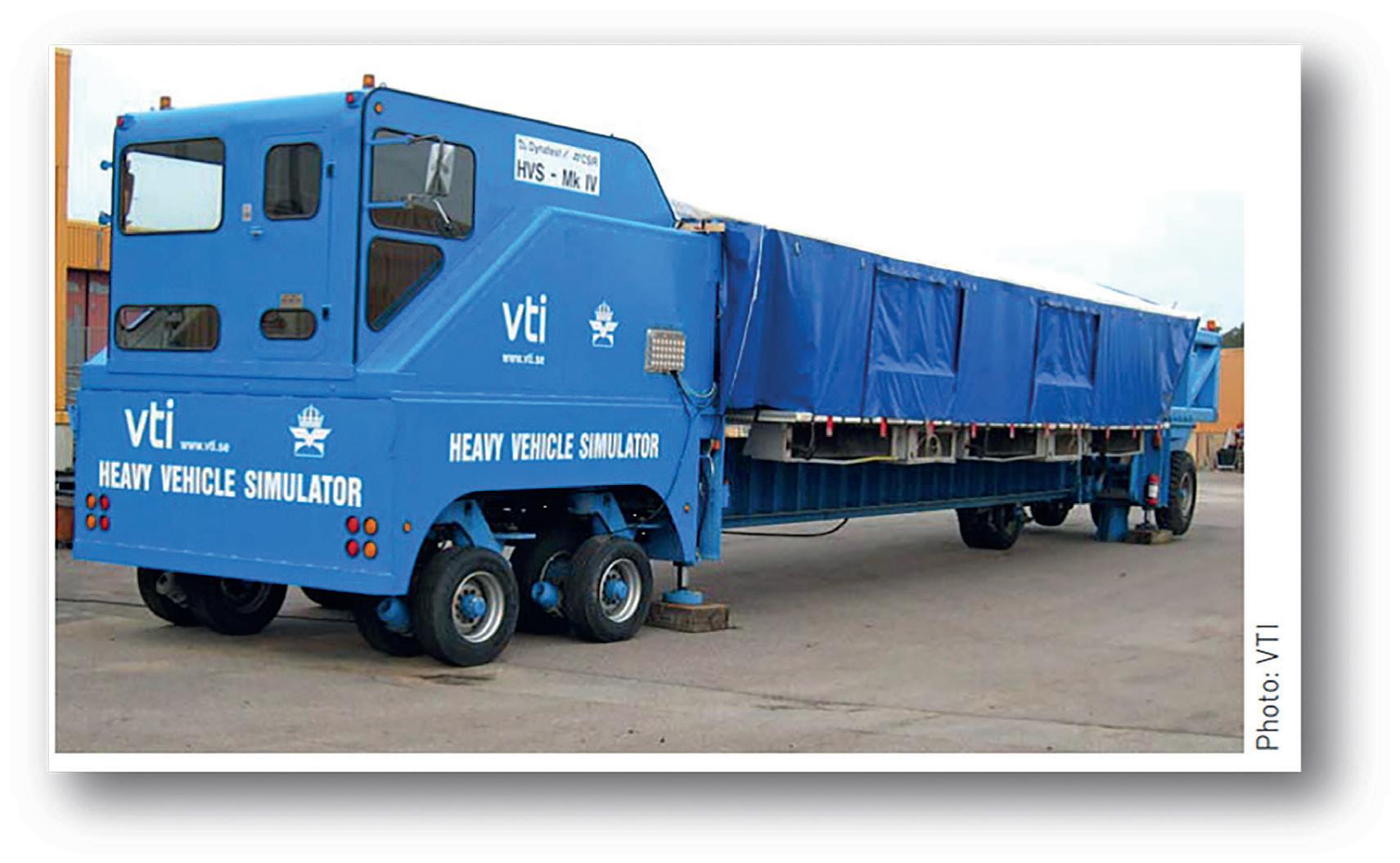
Figure 3: The Heavy Vehicle Simulator at VTI consists of a self-propelled carriage (pictured) with an extra test wheel mounted against a beam under the carriage at the back
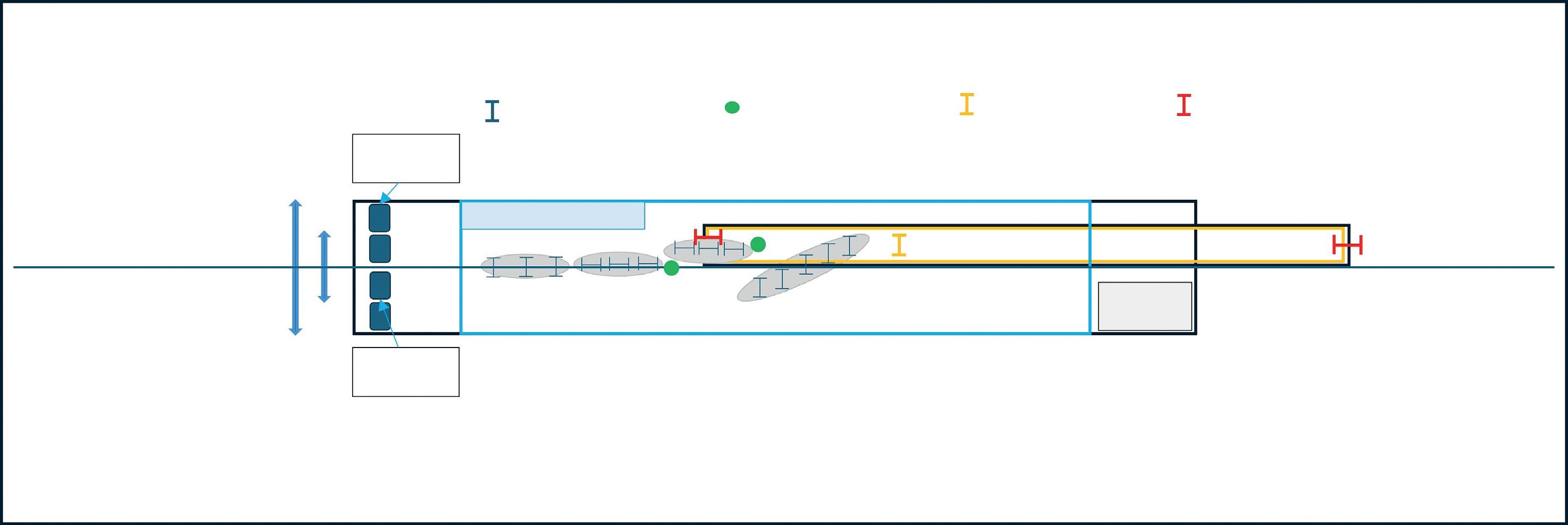
Figure 4: A schematic representation of sensors in the installation
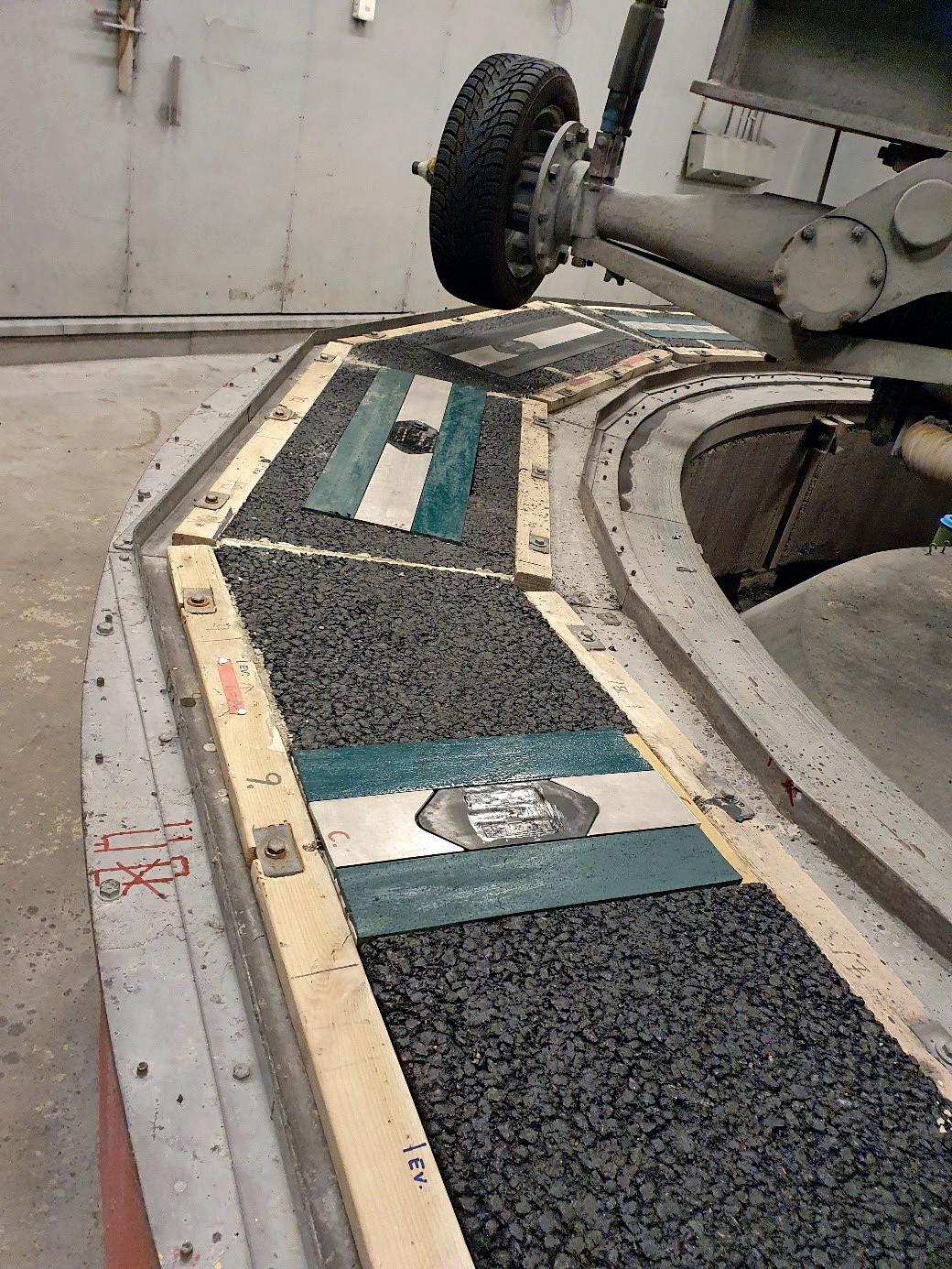
carousel-like circular road simulation machine where four wheels are mounted to mimic vehicle passage over the conductive rail to simulate wear and friction upon the road surface and conductive rail.
SETTLEMENTS AND CRACKS
Similar electrification systems where rails are embedded in the road surface, such as tramways or railways, show settlement and cracking in areas where the rail and road surface meet (Hedström 2004). Would an embedded ERS produce the same symptoms?
First, the embedded conductive rail would not suffer the same heavy load as tram rails. There is only a light pressure on the ERS embedded rail when a vehicle’s current collector comes in contact with it. Admittedly, there will be from time to time greater pressure from heavy-duty vehicles that occasionally pass over the rail either through lane adjustments or lane changing.
This was tested in the EVolution Road project by using accelerated test facilities at VTI (see Figure 3). A road structure was built in the Heavy Vehicle Simulator (HVS) at VTI’s offices in Linköping. The HVS consists of a self-propelled carriage with an extra test wheel mounted against a beam under the carriage.
The wagon is 23m long and weighs 46 tonnes. The test wheel beneath the wagon can be loaded to a pressure against the road between 30kN and 110kN, which corresponds to an axle load between 6 tonnes and 22 tonnes. The test wheel, which can be either a single wheel or a twin assembly, can run at a speed of up to 12km/h in both directions. A dual wheel was used in the tests and strain and pressure sensors were installed in the paved surface.
The loaded area was under a constant speed of 12km/h. A total of 20,000 passes were performed with a 50kN load and with a ring pressure of 700kPa. The crossings were
evenly distributed over the entire loadable surface by moving the load wheel after every 20 crossings in 5cm increments from -35cm to +35cm of the centre line of the forward travel.
Different positions of the wheel are indicated in Figure 4, which is a schematic representation of sensors in the installation.
The tests showed that a wheel passing very close to the conductive rail caused an increased strain at the bottom of the asphalt layers close to the edge of the rail, compared to what occurs in the wheel track. The strains could be up to 20% higher under the edge of the rail compared to strains that occur in the wheel tracks.
However, the increase in strain levels for the structural life of the road is negligible because the lateral distribution of heavy traffic on highways is limited (Mc Garvey, 2016). This means that heavy traffic will stick to driving in the ruts rather than crossing over the rail and stressing it. Based on this, the structural life of a highway will not be affected by the ERS installation. If this is considered, the probability of cracks being initiated under the rail is less than 0.5%
compared to them starting in the wheel track.
The embedded rails were also subjected to accelerated loading tests under varying climatic conditions for 230,000 vehicle crossings. It was found during earlier tests that the adhesion between the aluminium rails and the undercasting compound upon with it sat had to be improved. Hence, another type of compound was used in further testing.
Although we saw signs of adhesion failure between the aluminium rail and undercasting compound, this did not lead to the rails loosening within their space; rather, they were held in place by the joint compound. As concluded previously, the adhesion on the rails installed on the public roads was very good, making it hard to physically remove the box that contained the rail and accessories from the road during the restoration part of the EVolution Road project.
CIRCULAR ROAD SIMULATION
The technology was also tested using the carousel-like circular road simulation machine where four wheels are mounted to mimic vehicle passage over the conductive
Figure 7: A section of the ERS installed on a road close to Kramfors in northern Sweden. The rail has a specially designed ribbing to provide increased friction, which is necessary in harsher winter weather. It also is less susceptible to damage from winter maintenance activities (image courtesy Mikael Bladlund)
Figure 5: The
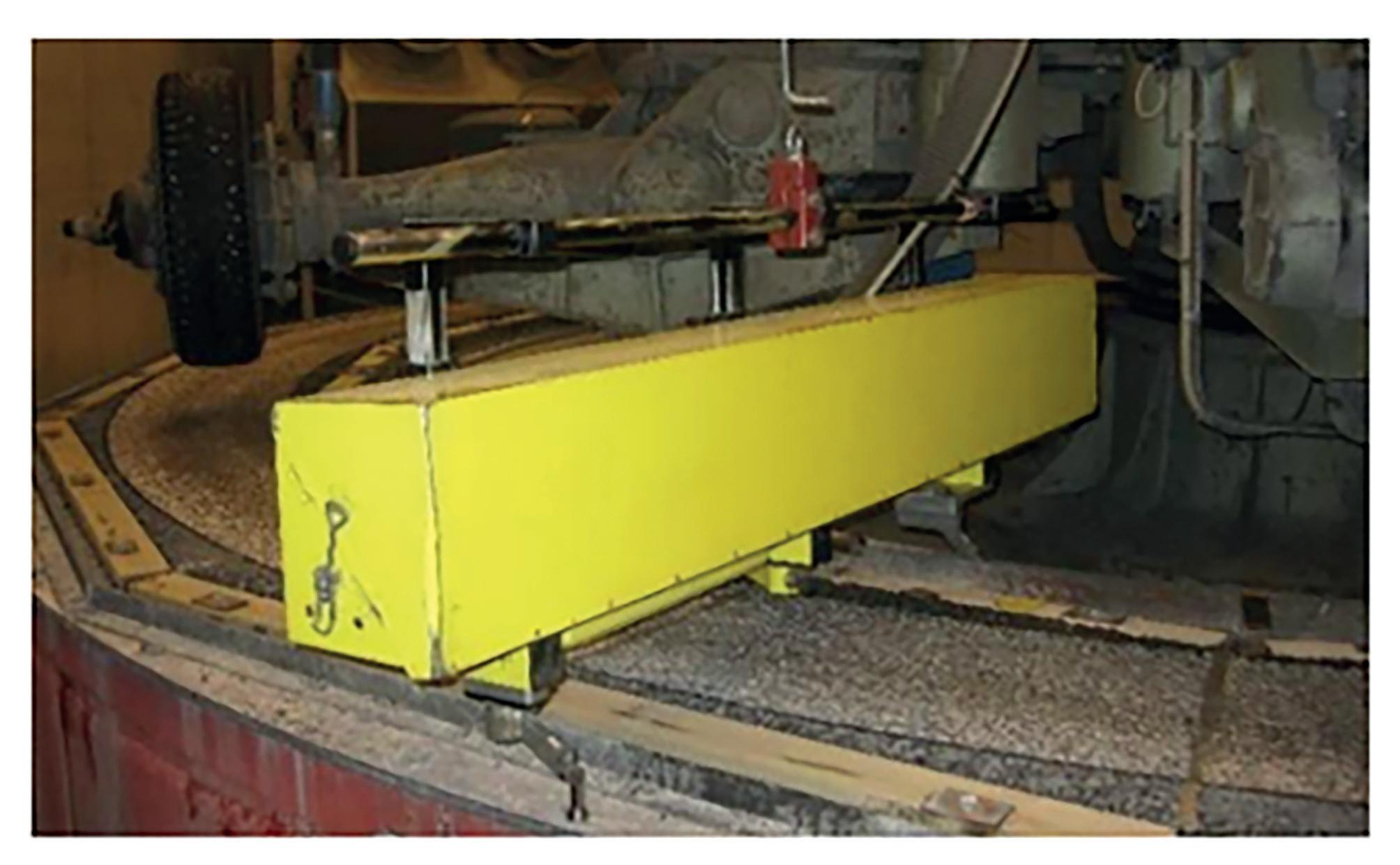
Figure 6: Laser profilometer used in the circular road simulation at VTI (image courtesy Tomas Halldin)
rail. Figure 5 shows one of the tests performed on shorter segments of the rail to simulate wear and friction upon the road surface and conductive rail.
Di erent ribbing and materials were tested to see which would best maintain good friction over the rail as a result of wear and polishing from studded and friction tyres. Friction tyres have a polishing e ect on an asphalt road surface whereas studded tyres
tend to roughen up the surface.
A er measurements with a laser pro lometer (see Figure 6), it was noted that wear on the rail from friction and studded tyres was similar. However, studded tyres almost improved the friction on the rail. e wear a er 110,000 carousel turns, which corresponds to 440,000 axle passes, was less than 1mm compared to the reference section without rails, which had worn about 4mm.
THE FUTURE OF ERS
Similar to any new technology, large-scale deployment is essential for making ERS economically viable. ere have been several investigations about this in countries including Germany (Jöhrens et al., 2018), UK (Jöhrens et al., 2020), France (Ainalis et al., 2020) and the Netherlands (Pelatá et al. 2021 and van Ommeren et al., 2022).
ere are also several ongoing ERS projects around the world, including in France and Germany, where the systems are sited on some public roads. ese projects show that the technology can work but it will require speci c maintenance to account for its insertion in a road surface, as well as for extreme weather conditions, especially those at the height of winter in northern regions.
Another future challenge for the widespread adoption of ERS are the shi s we see today in the transport sector. Trucks are heavier and longer, thanks in part to electric drive trains and heavier batteries. ere are also questions about how truck platooning and automated driving will a ect the road surface in general.
Nonetheless, an ERS appears to contain at least part of the answer to extending the driving distance of electric vehicles, a major concern for vehicle eet owners, commuters headed to work and anyone using a car for long pleasure trips. ■
Lina Nordin has a PhD in physical geography and energy e ciency of winter road maintenance from the University of Gothenburg. She is research director and head of the infrastructure maintenance division at the National Road and Transport Research Institute, VTI, Sweden. She is a past leader of international cooperation projects at University of Gothenburg and has been a climatologist with Klimator, a road weather-solutions provider based in Gothenburg, Sweden.
Björn Kalman holds a PhD in physical chemistry from Umeå University and is research director and head of the road and railroad engineering division within VTI. His experience at the Institute also includes research into bituminous materials and he is a former lecturer in physical chemistry at Linköping University.
ITERCHIMICA: THE CASE FOR COLOUR
Creating pleasant urban and metropolitan aesthetics is one reason for using coloured pavement. But there are many more environmental and sustainable reasons, explains Klajdi Kulla* and Darinka Jug**.
Coloured pavements became popular in response to a demand from local governments and urban residents for improved aesthetics of streets. ey are being used more and more for a much wider range of applications including cycling paths, bus/ express lanes and hospitals.
However, nowadays, the demand for coloured pavements is increasing because of a greater understanding of their environmental bene ts. For example, there is safety enhancement. ey provide high contrast for lane markings, making it easier for drivers to navigate.
When considering sustainability and environmental bene ts, coloured paving material can have high solar re ectance (albedo) that reduces surface temperatures.
Greening the way: the Greenway Cycle Path makes the Croatian city of Zagreb an eco-friendly, green-mobility capital within the European Union.
Cooler pavements mitigate the urban heat-island e ect and contribute to overall sustainability1 2.
Regarding energy savings, research and on-site data in Italy and Japan show that coloured pavements in tunnels would allow the reduction of the energy needed for lighting3 4.
Meanwhile, research and literature - albeit limited so far - shows that inclusion of colouring materials can enhance some of the performance and mechanical properties of paving materials made of either bitumen or synthetic binders.
Aesthetic appeal is enhanced because coloured pavements add visual interest and create an immediate sense of place and identity, a plus for the overall urban environment.
Coloured pavement technologies can be classi ed into ve groups:
1) Paints: these materials are applied on the surface of the asphalt pavements. e technologies are suitable for aesthetic applications such as sports-ground yards, municipal applications, and cycling pathways for pavements with enough macro texture to ensure the required skid resistance;
2) Mortars: these materials consist of paints and a portion of sand ensuring additional micro texture to the surfaces of pavements with less macro texture. is would enhance the safety of walking ways, especially for vulnerable users;
3) Granular pigments: These materials are used to produce coloured hotmix materials either with bitumen or synthetic binders. Naturally, when using bitumen, the dosage is higher than when synthetic binders are adopted. As far as the application is concerned, when using coloured asphalt mixtures, the material can be used even for special taxi or bus lanes with design traffic loads;
4) Powder pigments: In addition to the features of granular pigments, these materials can be used for cold asphalt mixtures containing rejuvenator and binders;
5) Resins: Also known as clear binders, they are used with aggregates already in the desired colour. Thus, the material is simply used as the binder for the mixture.
URBAN HEAT ISLAND
Cities are hotter than rural areas because they are covered in dark, impermeable surfaces that have low albedo - or solar reflectance - meaning they absorb heat from sunlight. They get hot and warm the air above. The higher solar reflectance maintains low surface temperatures which in turn reduce the release of sensible heat to the environment. These phenomena not only cause environmental challenges but also lead to less performant urban infrastructure.
Coloured pavements, especially in lighter shades, have a remarkable ability to stay cooler than traditional black asphalt pavements. This property is crucial for mitigating urban heat islands. The solarreflection properties of coloured pavements have been studied in several research works.
Figure 1 shows the impact of colour on the solar reflection of pavements made with clear binder compared with traditional black/ greyish asphalt pavements. As expected, asphalt pavement demonstrated the lowest reflection compared to the other coloured pavements made of clear binder (resin) and colouring pigments.
As shown via solar-reflection properties, conventional dark pavements absorb 80-95% of sunlight. This accordingly leads to a higher surface temperature. Although, several parameters such as surface texture and wind speed, determine the surface temperature of pavements, the colour of the material plays a crucial role.
In a research work, the surface temperature of several coloured asphalt materials was measured under realistic outdoor conditions². The results shown in figure 2 revealed that under the same condition,
regardless of the tested colours, all coloured materials resulted in less surface temperature compared with the black/garish conventional asphalt pavements. By reducing surface temperatures, coloured pavements contribute to a more comfortable environment for pedestrians and drivers alike.
CLEAR BINDER
Clear binders are revolutionising the road pavement industry by offering a sustainable and aesthetically pleasing alternative to traditional black bitumen. The use of clear binders in pavement production addresses both aesthetic concerns and functional performance. For instance, a study has shown that pavements made with clear binders can significantly reduce urban heat-island (UHI) effects, with temperature reductions of up to 9°C⁶.
Clear binder – resin - is a composite synthetic material comprising two distinct components: a solid and a fluid material, formulated for the production of hot- mix materials. Generally, the two components shown in figure 3 are combined in a ratio of 68% solid to 32% fluid. The amount of
the binder shall be determined based on the type of the mixture and aggregates’ blend grading. However, this quantity in most cases is similar to the mixture optimised with bituminous binders.
ZAGREB GREENWAY
Rising environmental awareness and increasing traffic in the cities are making bicycles an increasingly appealing option for
Figure 1. Impact of colour on the level of solar refraction. The figure is reconstructed from literature⁵.
Figure 2. Impact of colour on the surface temperature of the pavement. The figure is reconstructed from literature².
Figure 3. The two components of clear binder.
short-distance commutes. As a response, the infrastructure of cycling pathways has been extended providing both safety and comfort for cyclists managing the cyclist traffic flow in the cities. In this context, the project involves the construction of an eco-friendly, safe, resilient and cool cycling path for the capital of Croatia, Zagreb.
The Greenway is a major infrastructure project which aims to build a 121km-long bicycle path, the so-called “bicycle highway”. With 50km passing directly through the City of Zagreb, the Greenway will also provide a fast and safe route for cyclists and will be used as a major transport artery for freight in terms of urban last-mile delivery.
The route is also designed to strengthen eco-tourism in the area and will be equipped with a range of measures from signalling, lighting, electric-bicycle chargers to traffic counters and information tables.
Located along the River Sava, the first phase of the project was constructed along the southern bank of the Sava River between the Blato district to the Sava Bridge. The path is 2km long, 2m wide and has a pavement thickness of 40mm. The paving material was a 14mm aggregate of Nominal Maximum Size (NMS) dense-graded mixture, produced with a 6.5% synthetic binder (resin) and 1% green granular pigments, both on the weight of the aggregates.
results shown in table 1 were then compared with the technical requirements of the project. Based on the obtained results it can be deduced that the values complied with the requirements of the technical specification of the project. ■
Before laying the paving material, the surface of the compacted, crushed stone base layer was covered with 0.6-0.8kg/m2 synthetic emulsion, providing the necessary bond between two different materials. Figures 4a and 4b show the covered surface with synthetic emulsion and of the laid green materials.
LABORATORY ANALYSIS
Prior to the real-scale production and laying of the coloured material, the material was designed and tested at the laboratory. For this purpose, the mixture was produced at 170°C and compacted at 150°C using 50 blows Marshall hammer at each side. The obtained
*Klajdi Kulla holds an MSc in civil engineering from Politecnico di Milano University in Italy, specialising in infrastructure, roads and airports. At Iterchimica, he has experience conducting tests related to defining the Job Mix Formula. Since 2019, he has been working on the commercial side of the business, focusing on the European market.
**Darinka Jug is a senior specialist for tourism within Zagreb, specialising in the strategic planning of cycle networks, including since 2015 the city’s Greenway Project. She is also a member of the national cycle route planning and tourism group for Croatia’s Ministry of Tourism and is the co-author of the classification of state cycling routes.
References
¹Venturini, & L., Eskandarsefat, S. (2019). Colour it cooler. Road Surface and Technology, available online at: https://digital.worldhighways.com/2019/ rst/html5/index.html?pn=11
²Pasquini, E., Pasetto, M., Giovanni, G., Baliello, A. (2019). Investigation of thermal behaviour of coloured asphalt pavements. Resilient road infrastructures: climatic changes and perspective of road infrastructures.
³T. Inoue. Coloured pavements. Technology Research Center, Nippon Hodo Co., Ltd, pp. 33-36.
⁴Bocci, E. & Bocci. M. (2014). Clear asphalt concrete for energy saving in road tunnels. Proceedings of the 12th Int. Conf. on Asphalt Pavements (ISAP), Vol 2: pp. 1817-1825.
⁵Synnefa, A., et. al., (2011). Experimental testing of cool coloured thin layer asphalt and estimation of its potential to improve the urban microclimate. Building and Environment. https://doi.org/10.3390/ su14095159
⁶Badin, G., Ahmad, N., Huang, Y., Mahmood, Y. (2024). Evaluation of pigment-modified clear binders and asphalts: an approach towards sustainable, heat harvesting, and non-black pavements. Infrastructures 2024, 9, 88. https://doi. org/10.3390/infrastructures9050088
⁷The Eurobitume Life-Cycle Inventory for Bitumen Version 3.1, 202. ISBN: 978-2-930160-65-8
Table 1. Summary of results obtained on the laboratory-produced mixture.
Figures 4a-b. Synthetic emulsion spread on the compacted crushed stone
IoT SENSORS FOR WINTER SAFETY
There is an increasing need for better road-maintenance performance using data from weather stations, modern Internet of Things sensors, mobile sensors and advanced road weather forecasting models. Vaisala has the technology, say Elina Heed and Mark DeVries*.
Every year thousands of people die and hundreds of thousands of people are injured in vehicle crashes on snowy, slushy or icy pavement. Snow and ice also increase road maintenance costs as authorities send snowplows to mitigate the most dangerous impacts of wintry weather.
But monitoring rapidly changing road weather conditions everywhere - from city streets to bridges and bike paths - can perplex decision-makers who need to deploy resources where they are most needed and in a timely fashion. To accomplish this, modern winter road maintenance demands a hybrid road-network solution. is combines multiple data sources, advanced modelling techniques and real-time insights to enhance road safety, operational e ciency and coste ectiveness.
Fortunately, advanced technologies pave the way for more sophisticated, data-driven approaches to winter road-maintenance challenges.
HYBRID APPROACH
Traditional winter road-maintenance procedures use atmospheric and road weather insights from road weather information system stations and busy plow operators driving along their routes. But road weather information system (RWIS) stations do not cover the entire road network. As well, plows tend to treat only the most vulnerable areas, leaving gaps in road weather data. Winter road maintenance demands a new course of action and at a time when atmospheric monitoring, forecasting and road weather technologies are advancing.
One such course of action is the hybrid approach, a new way for road-maintenance agencies to address the challenges of icy roads, data gaps and varying conditions. e hybrid road-network approach integrates data from RWIS stations, modern Internet of ings sensors, mobile sensors and advanced
IoT sensors transform winter road safety: the hybrid solution can integrate radar imagery, atmospheric forecasts and xed and mobile sensor data to provide a comprehensive view of current and future road conditions
road weather forecasting models. is comprehensive level of coverage lls gaps between RWIS sensors with IoT and mobile sensor information, integrating actual road weather information to improve forecast accuracy.
Fixed RWIS installations support the observation network. ey provide detailed atmospheric and road-surface data, including water, snow and ice layer thicknesses. IoT sensors, such as Vaisala’s TempCast and GroundCast, o er a cost-e ective way to ll gaps in road weather information. Batterypowered IoT sensors can be installed virtually anywhere. ey measure road-surface and subsurface temperatures at various depths and provide binary road-state information (dry/not dry).
Finally, mobile, vehicle-mounted sensors, including the Mobile Detector MD30 from Vaisala, complement xed installations and IoT sensors by gathering data across the entire road network - from less-travelled routes to known problem areas. Mobile sensors help ll in data between stationary weather stations by delivering real-time information about what’s happening on the
Vaisala
road. is can then indicate whether the proper amount and type of material is being used, whether trucks are where they should be and if they’re clearing the most impacted and important routes rst.
e hybrid solution also employs a sophisticated road weather model - or RWM - to predict crucial road conditions such as pavement temperature and amount of water, snow or ice on the road. Integrating realtime data from the sensor network with the RWM signi cantly improves forecast quality. Data integration and visualisation platforms, such as the Vaisala Wx Horizon, serve as the interface between raw data and actionable insights. ey can integrate radar imagery, atmospheric forecasts and xed and mobile sensor data to provide a comprehensive view of current and future road conditions.
TECHNICAL PERFORMANCE
Recent observation-system experiments demonstrate the signi cant impact of the hybrid approach on two of the most critical variables of road weather forecast accuracy: Road-surface temperature forecasts:
• RWIS observations reduced forecast errors by more than 80% for bias in short-term (30-minute) forecasts;
• Notably, IoT sensor data yielded nearly identical reductions in forecast errors, highlighting their e cacy as a coste ective complement to traditional RWIS stations.
Grip forecasts:
• For “impactful” grip reductions (0.4 ≤ grip < 0.6), RWIS observations led to error reductions of about 75% for bias in 30-minute forecasts;
ABOVE: Visualisation and forecasting: winter maintenance using the ‘hybrid’ approach BELOW: WxHorizon forecast graph: data integration and visualisation platforms, such as the Vaisala Wx Horizon, serve as the interface between raw data and actionable insights
• Under the same conditions, IoT sensors achieved reductions of nearly 90% for bias; • For “very impactful” grip reductions (grip < 0.4), RWIS data yielded improvements in the 70-85% range, while IoT sensors achieved about 40% reduction in shortterm forecasts.
ese improvements in forecast accuracy persist over several hours, with RWIS data maintaining a positive impact for 9-12 hours and IoT sensor data for 6-8 hours in critical conditions. e experiment results demonstrate the positive e ects of these observations on forecasts of road-surface temperature and grip conditions.
While IoT sensor forecasts of road conditions (grip) have a somewhat reduced impact - compared to the more detailed RWIS road-state observations - their use still results in more accurate overall forecasts. Incorporating mobile sensors and data visualisation and analysis tools only drives greater visibility.
What are the winter road-maintenance operational bene ts?
Clearly, the hybrid approach unlocks myriad bene ts for winter road-maintenance operations. is includes enhanced safety through improved forecast accuracy and data coverage. is allows for proactively treating potentially hazardous road conditions, reducing the risk of weather-related accidents.
Another bene t is cost optimisation. More precise information enables targeted resource allocation, minimising costs associated with
“While IoT sensor forecasts of road conditions (grip) have a somewhat reduced impact - compared to the more detailed RWIS road-state observations - their use still results in more accurate overall forecasts”
unnecessary treatments and material waste. ere is also the bene t of environmental protection – increasingly important for many road agencies and highway owners. Accurate predictions support cautious use of deicing materials, helping reduce the environmental impact on local ecosystems and water sources.
Operational e ciency is another bene t. e extended window of forecast accuracy (up to 16 hours in some conditions) provides ample time for greater operational planning and resource allocation.
Meanwhile, network-wide visibility is greatly improved. e combination of xed, mobile and vehicle-mounted sensors eliminates data blind spots along the road network.
FLEXIBLE
Most importantly, the hybrid approach allows agencies of all sizes to tailor solutions to their speci c needs and budgets to take pre-emptive action before potential issues become more dangerous problems.
*Elina Heed is sales manager for Vaisala in the Nordics and Baltics for road weather stations, sensors and decision-support systems. She holds a Master of Science degree in Meteorology and has more than 20 years of experience in road weather. Heed has also worked at the Swedish o ce of the private Finnish weather forecaster Foreca where she was a country manager and team lead for winter
e future of winter road maintenance will be shaped by changes in climate patterns and more extreme weather events like blizzards, ice storms and ooding. is constantly evolving arena poses new challenges for road-maintenance agencies, but the hybrid road-network approach empowers decisionmakers with unprecedented insight and situational awareness where it matters most. It o ers a exible, scalable and highly e ective path forward - even through the most challenging winter conditions. ■
Mark DeVries is the business application manager at Vaisala where he applies his winter maintenance experience, including chemical applications, to help clients and agencies improve operations. Prior to joining Vaisala, he was with the McHenry County Division of Transportation in the US state of Illinois for 30 years where he served as maintenance superintendent. DeVries participates in numerous industry organisations including APWA (American Public Works Association), AASHTO (American Association of State Highway and Transportation O cials) and TRB (Transportation Research Board). He is a past recipient of the APWA Presidential Leadership Award.
Battery-powered IoT sensors, such as GroundCast (pictured), can be installed virtually anywhere to measure road surface and various subsurface depth temperatures
Your work matters.
Whether building new highways, roads, or bridges, the things you build are vital to improving the lives of people and communities now and in the future. We provide solutions that bring increased accuracy, e ciency, and sustainability to your projects, allowing you to do more with less.