
Values at the forefront
Prioritising people over profit
Transforming transport
A review of one of this year’s most anticipated events
The
Values at the forefront
Prioritising people over profit
Transforming transport
A review of one of this year’s most anticipated events
The
Reading the tea leaves has led to an industry first of



www.wirtgen-group.com/sustainability

14 Innovation and intuition
This manufacturer has championed a unique solution to reduce impacts caused by emerging changes to gearbox systems.
17 Golden opportunities
A key industry player shares their unique insights into the current challenges and opportunities for the space, as well as the essential role that the next generation of leaders will play in its success.
20 A global standard
A major step has been taken in the advancement of data reform and capture for horizontal infrastructure.
23 Hiding in plain sight
Read about the business supporting crucial national building projects from behind the scenes.
26 A leading vision Leadership defined by unwavering values have led this business to describe itself as “the best people to work with.”
28 Gaining momentum
As the popularity of this sustainable asphalt solution continues to grow, it is now being used on one of Victoria’s largest ever construction programs.
31 Making an impression
Vital technology has replaced silo weighing for this certain building materials manufacturer.
34 New and improved
A series of upgrades to an expansive heavy equipment portfolio will make it versatile for use across a variety of international markets.
36 New solutions
A large OEM is now pivoting to transform its value proposition, marking new possibilities.
38 Working together
A leading software and hardware developer has paired with a respected institution to develop the transport industry’s next generation of talent.
40 Budget insights for industry Roads & Infrastructure magazine outlines the key takeaways for industry following the release of the 2026/27 Federal Budget.
42 Transforming Transport Summit
The recent event brought together stakeholders to tackle key topics and encourage solutions-oriented discussions.
44 Key address tackles current transport landscape
J im Betts – Secretary of the Department of Infrastructure provides insights into the current challenges and opportunities for industry.
46 Coming together
All roads lead to this highly anticipated industry event.
49 In the limelight
This industry star has been nominated for two awards at the 2026 Women in Industry Awards.
52 Bulking up
This industry event is coming at a critical time for supply chains and industries across the country.
54 Unlocking potential
Low-carbon concrete insights from recent Western Australian works shine a spotlight on the importance of sustainability.
56 Preventative measures
The Australian Flexible Pavement Association advances the evidencebased case for systemic preventative maintenance programs.
58 Roads & Infrastructure provides an update on some of the contracts and tenders recently awarded or put to market across the Australian infrastructure sector.
Below: Big picture discussions on the future of transport infrastructure form a key part of this edition of Roads & Infrastructure magazine.

CEO
Christine Clancy
christine.clancy@primecreative.com.au
PUBLISHER
Sarah Baker
sarah.baker@primecreative.com.au
MANAGING EDITOR
Lisa Korycki lisa.korycki@primecreative.com.au
EDITOR
Tom O’Keane tom.okeane@primecreative.com.au
JOURNALIST
Sean Gustini
sean.gustini@primecreative.com.au
HEAD OF DESIGN
Clayton Hawley
ART DIRECTOR
Bea Barthelson
BUSINESS DEVELOPMENT MANAGER
Loren Katie Logan lorenkatie.logan@primecreative.com.au
CLIENT SUCCESS MANAGER
Sabrina Zor sabrina.zor@primecreative.com.au
HEAD OFFICE
Prime Creative Pty Ltd
379 Docklands Drive, Docklands VIC 3008 Australia
p: +61 3 9690 8766 info@primecreative.com.au www.roadsonline.com.au
SUBSCRIPTIONS
+61 3 9690 8766 subscriptions@primecreative.com.au
Roads & Infrastructure Australia is available by subscription from the publisher. The rights of refusal are reserved by the publisher.
ARTICLES
All articles submitted for publication become the property of the publisher. The Editor reserves the right to adjust any article to conform with the magazine format.
COVER IMAGE MBE
COPYRIGHT
Roads & Infrastructure Australia is owned and published by Prime Creative Media. All material in Roads & Infrastructure Australia is copyright and no part may be reproduced or copied in any form or by any means (graphic, electronic or mechanical including information and retrieval systems) without the written permission of the publisher. The Editor welcomes contributions but reserves the right to accept or reject any material. While every effort has been made to ensure the accuracy of information, Prime Creative Media will not accept responsibility for errors or omissions or for any consequences arising from reliance on information published. The opinions expressed in Roads & Infrastructure Australia are not necessarily the opinions of, or endorsed by the publisher unless otherwise stated.

IT’S THAT TIME OF YEAR ONCE AGAIN, when the Federal and State budgets, combined with Senate Estimates, help to set the agenda for both the short and long-term objectives for the nation’s infrastructure sector.
A common occurrence of late has been adaption. Major changes to funding –the biggest case of all being the re-direction of funding away from the Inland Rail Project to enable more financial support for Melbourne’s Suburban Rail Loop –highlight the need for constant adjustment to cater for industry and public needs.
While these changes may create a sense of apprehension and un-ease amongst some, I see it as a signifier and proof of concept for the industry’s overarching goal: a system by which a constant and constructive dialogue between industry and government can not only exist, but can prosper.
Demands change, as a result so to do requirements and specifications, which flows down to policy and ultimately the end consumer. No impact is isolated, which is why a collaborative approach to tackling industry challenges and opportunities is so key.
This was a prevalent notion that was addressed during my attendance at the 2026 Transforming Transport Summit in May. Hosted by Transport Australia, the event brought together government and industry in the one room, covering off on key topics that are once again, helping to set the agenda.
This event forms part of this month’s coverage. Also, in this edition we speak with Gary Georgiou, the Chief Executive Officer of Georgiou Group. A well-known name in the industry, Georgiou – both the man and the business – are helping to influence positive growth and development, sharing insights into what it takes to foster such a culture.
In this month’s cover story, we hear from Matthews Brothers Engineering on what is an exciting new development and direction for the company. The business is punching well above its weight, designing and developing systems in-house that will not only support customer outcomes, but ultimately speed up the production process.
We also hear from Michael Caltabiano, Chief Executive Officer – National Transport Research Organisation (NTRO), who touches on how asset management and data collection requirements have evolved – and as a result, how technology is evolving to match.
These are just some of the solutions that are helping the industry to deliver what is a monumental project pipeline, all covered in the June edition of Roads & Infrastructure magazine.
Happy reading!
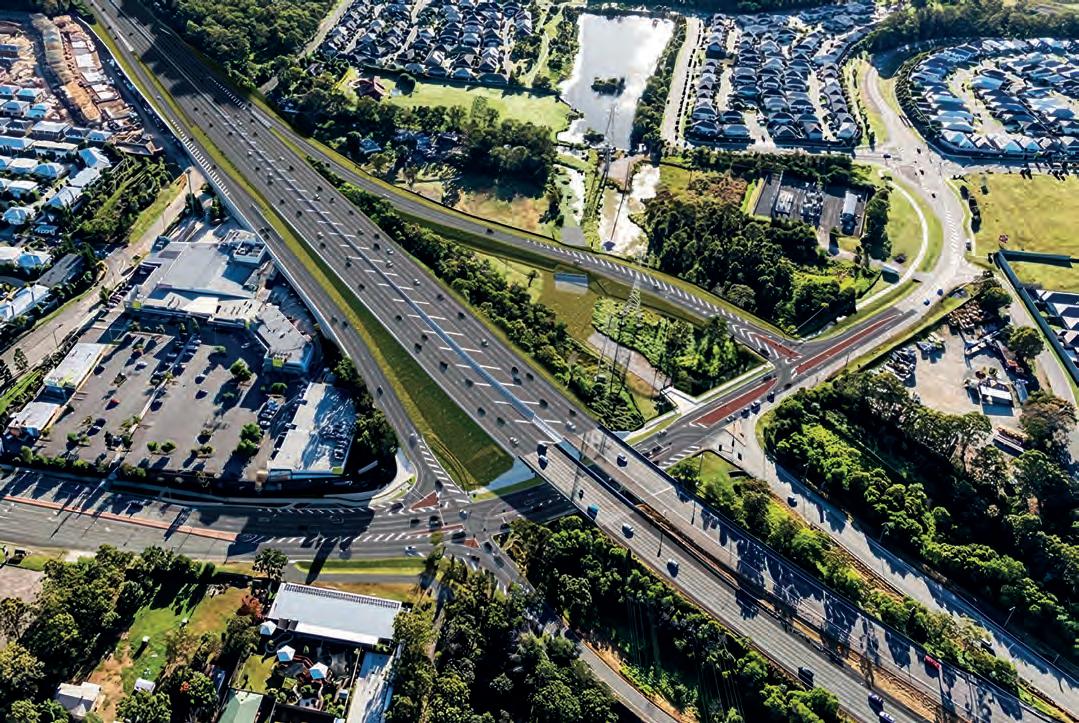
Construction is now underway on a 22-kilometre stretch of Queensland’s Bruce Highway to deliver safety upgrades between Pine Mountain Creek and Deep Creek, north of Marlborough.
These works are part of both the $9 billion Bruce Highway Targeted Safety Program and the $1 billion Bruce Highway Safety Package. The works aim to make the highway safe and reliable through
Central Queensland by widening the road, improving wet weather resilience and providing a smoother driving experience for motorists.
The Bruce Highway Safety Package, announced early last year, has completed eight projects, while 19 are underway and 16 more are rolling out this year.
The Federal Government has committed $7.2 billion to the Bruce Highway Targeted
Safety Program with the Queensland Government providing the remaining $1.8 billion.
Other safety upgrades between Rockhampton and St Lawrence include road widening, wide centre line treatments, audio-tactile line marking, pavement strengthening, targeted intersection upgrades and drainage improvements.
The Victorian Government has announced a record $1.04 billion investment to rebuild, repair and resurface roads across the state.
The investment will specifically rebuild and repair arterial roads, maintain bridges
and traffic lights, deliver emergency roadworks, repair or replace signs, and mow, slash and spray grass and weeds along roadsides.
Seventy per cent of these funds will be
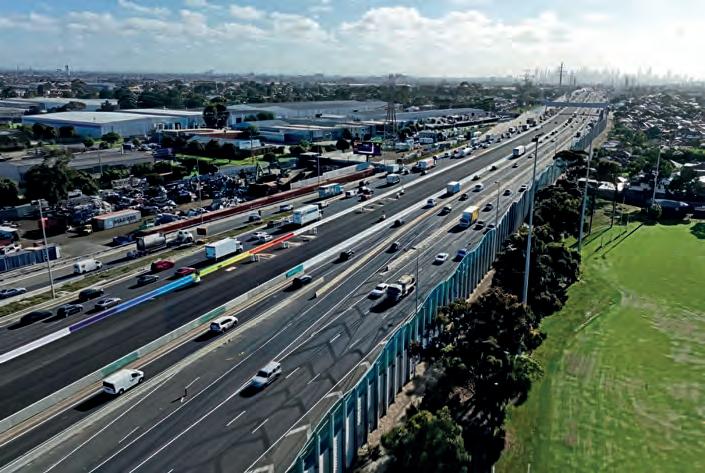
allocated to roads in regional Victoria.
Additionally, $36.9 million of the wider investment will mow and remove rubbish and graffiti across Victoria’s 10 busiest freeways.
This includes the Monash Freeway, the Princes Freeway West, the Western Freeway, the West Gate Freeway, the Hume Freeway, the Calder Freeway, the Western Ring Road, the South Gippsland Freeway, the Mornington Peninsula Freeway, and the Tullamarine Freeway.
Crews are out on the state’s road network now as part of the State Government’s previous road investment last year.
According to the State Government, these teams have already repaired 187,000 potholes, cleaned up 127,000 square metres of graffiti, repaired or replaced 31,000 signs, inspected 13,600 barriers, and mowed 1,900,000 metres.

Georgiou Group is a leading civil and building construction company in Australia which is part of STRABAG Societas Europea, one of Europe’s leading construction technology groups.
www.georgiou.com.au
Georgiou’s team of over 900 employees are dedicated to upholding our core values of Care, Integrity, and Excellence in delivering solutions across transport, resources, building, utilities, energy and Defence.
Construction is now underway on two priority projects that form part of the $500 million Queensland Beef Corridors Program.
The Queensland Beef Corridors Program aims to improve road safety by sealing 200 kilometres worth of key beef corridors in the central and western regions of the state, while also supporting the efficient and productive movement of industry supply chains.
The program will also aim to enhance connectivity for local communities, as well as improve the resiliency of these connections.
The two priority projects will include sealing the Clermont–Alpha Road in the Barcaldine region and upgrading May Downs Road.
In total 24 projects are expected to be completed under the program with five priority projects being completed as part of the early works package.
Works are now underway on an additional $47.5 million early works package, which is expected to seal up to 20 kilometres across a number of projects.
This includes upgrades for Clermont-Alpha Road, Fitzroy Developmental Road, AlphaTambo Road and May Downs Road.
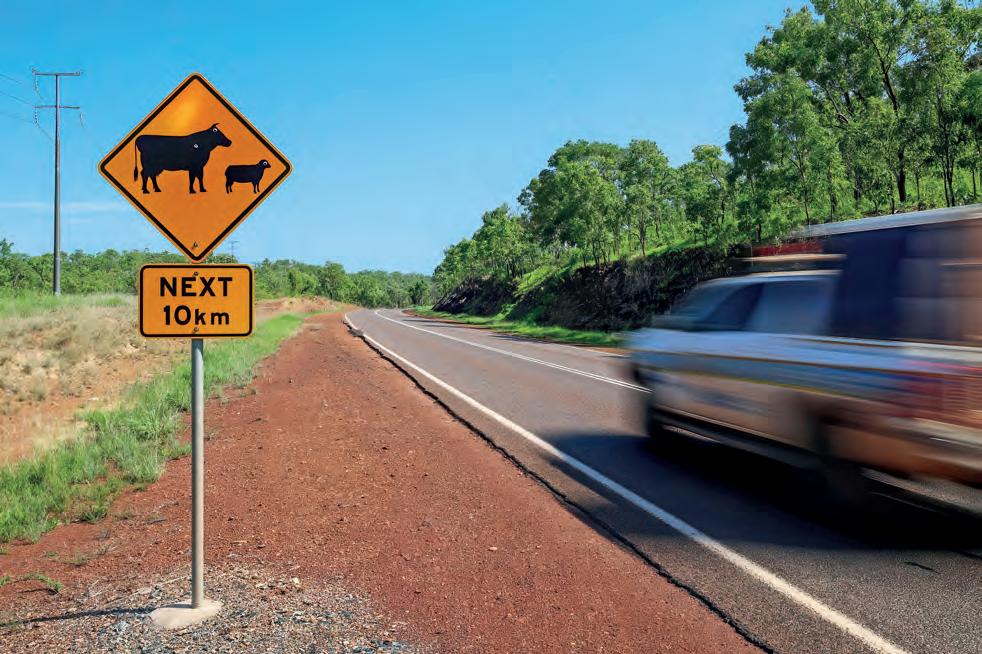
The $500 million program is expected to deliver 24 projects overall. Image: stock.adobe.com/BJP7images
The Queensland Government is fasttracking works to cut congestion across key intersections and keep the Sunshine Coast moving.
Site investigations are underway in the town of Caloundra – at Caloundra Road and Bellvista Road in the suburb of Little
Mountain – to inform the design of a future intersection upgrade.
Meanwhile, progress is being made on the Caloundra Road, Nicklin Way and Pelican Waters Boulevard upgrade, with infrastructure engineer AECOM appointed to deliver the detailed design.
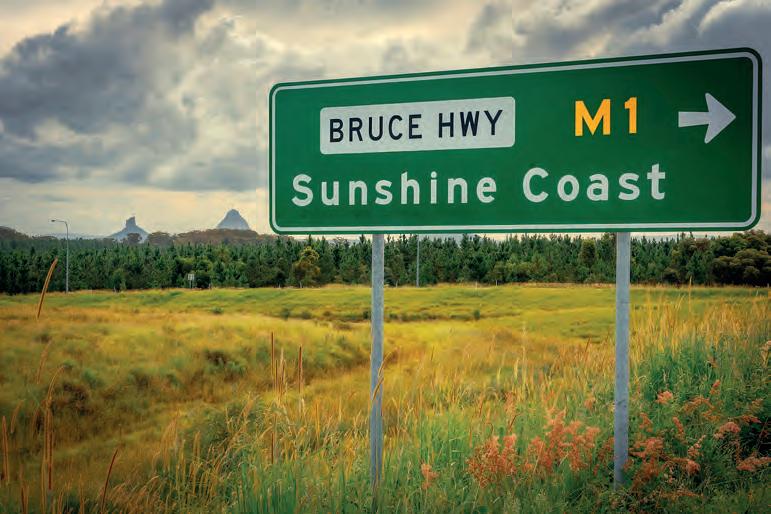
Together, the projects are driving the Caloundra Congestion Busting Plan forward and demonstrating the State Government’s commitment to safer, smoother and more reliable travel across the Sunshine Coast.
The plan will also futureproof the Caloundra traffic network to accommodate the region’s growth, by providing an alternative access route into the Caloundra CBD, upgrades to key intersections, and support to enhance public transport infrastructure.
These projects are part of the State Government’s Safer Roads, Better Transport Plan to get busy roads flowing again, improving safety and supporting the growing Sunshine Coast community.
More upgrades are in the pipeline under the Caloundra Congestion Busting Plan, including design for new north to south bridges over Caloundra Road and investigations into a future link between Aura Boulevard and Pelican Waters Boulevard.
NSW community members will have a chance to view the draft plan and provide feedback. Image: NSW Government
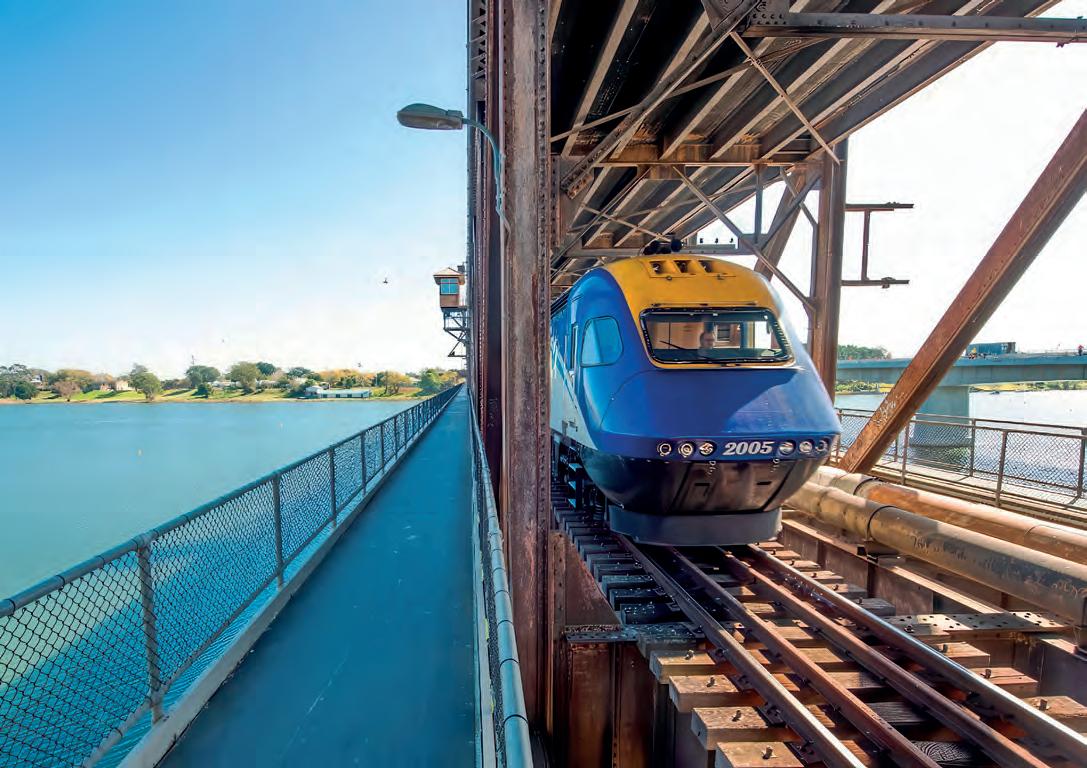
The New South Wales Government has released a draft of the North Coast Strategic Regional Integrated Transport Plan (SRITP), a 20-year vision to guide the future of the region’s transport system.
For the first time in more than a decade, North Coast communities will be able to view a long-term plan that sets out transport priorities based on evidence, data and extensive consultation with over 800 stakeholders including councils, members of parliament and community groups.
The draft plan identifies more than 50
short- and medium-term initiatives, along with longer term outcomes, across public transport, active transport, roads and freight to support the region’s population growth and changing needs.
Its key directions include improving regional connectivity for people and freight, building a more resilient and disaster-ready transport network, expanding sustainable transport options, reducing transport disadvantage and supporting the visitor economy.
Community members will also be given the chance to view the draft plan.
The Federal and Western Australian governments are bolstering the state’s supply chain resilience with a landmark $1.1 billion investment for crucial road connections to the proposed future Westport container terminal in Kwinana.
The project will ensure that the proposed Westport container terminal and redeveloped bulk terminal – as well as the wider Western Trade Coast – will have the road connections required to boost long-term trade and economic growth, support housing supply, and improve productivity in the defence and critical mineral industries.
Funding will deliver the first stage of significant upgrades to Anketell Road, including expanding the road to four lanes between Leath Road and Abercrombie Road, and a grade separation at Rockingham Road.
Anketell Road is an important freight route that is expected to become the heavy-vehicle route of choice linking Leath Road and the Kwinana Freeway.
These upgrades will significantly increase the efficiency of freight movements, reduce traffic for residents, and support connection for future port expansions.
A community survey has been designed to make it easy to provide feedback, with more detailed submissions also welcomed via the website.
During the consultation period, Transport for NSW staff will be out across the North Coast speaking directly with residents at local popup sessions.
The North Coast SRITP is one of nine plans being developed across regional NSW as part of the State Government’s commitment to improving transport infrastructure and services across the state.
The project will also support lower emissions through more efficient freight routing and reduced network delays.
Additionally, the Federal Government has committed $350 million towards upgrading the Kwinana Freeway, which will be essential in servicing the proposed Westport precinct.
To support the progression of the Westport program, the Western Australian Government has committed a further $117.9 million in its State Budget. This includes

Anketell Road is expected to become the heavy-vehicle route of choice linking Leath Road and the Kwinana Freeway. Image: Western Australian Government
$24 million towards land acquisitions to enable road construction, $31.4 million for ongoing definition activities relating to marine and port infrastructure.
Additional funding will also include $61.6 million to maintain the Westport Program’s operations over the next four years, including surrounding infrastructure.


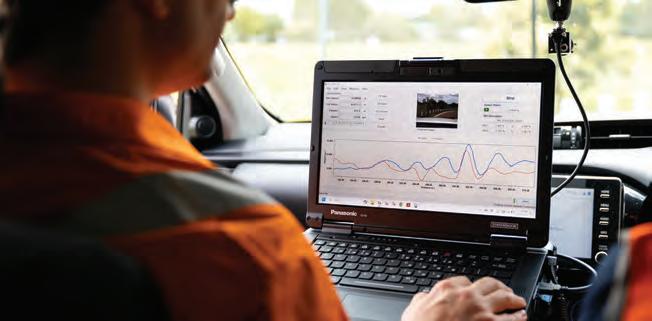

Aptella’s road roughness testing focuses on layer compliance using a laser profiler that is capable of identifying various issues present on a road surface.
Aptella uses a zero speed system inertial profiler, providing the following benefits.
> The zero speed system does not require run-in or run-out data
> No traffic control required including major intersections or high traffic areas
> Additional accuracy with using four gocator lasers and high accuracy INS sensors
> Speed operating zones include 0 - 100km/hr allowing for complete stops if necessary
> NATA Accredited to TMRQ708B and TfNSWT188 standards

The first week of new and permanent southbound lane configurations on New South Wales’ Warringah Freeway has been hailed a success by Transport for NSW.
The changes to what has been called Australia’s busiest road started on 2 May, and impacted southbound access points for the Sydney Harbour Bridge, Sydney Harbour Tunnel and Cahill Expressway.
They specifically include the removal of the slip lane to Sydney Harbour Bridge, the removal of access to Sydney Harbour Bridge from Ernest Street, changes to ramp arrangements at Falcon Street/Military Road and removal of access to Cahill Expressway.
Works will also include the opening of the new dedicated southbound bus lane along the Warringah Freeway, as well as changes for over-height vehicles.
Works are still ongoing for this project.
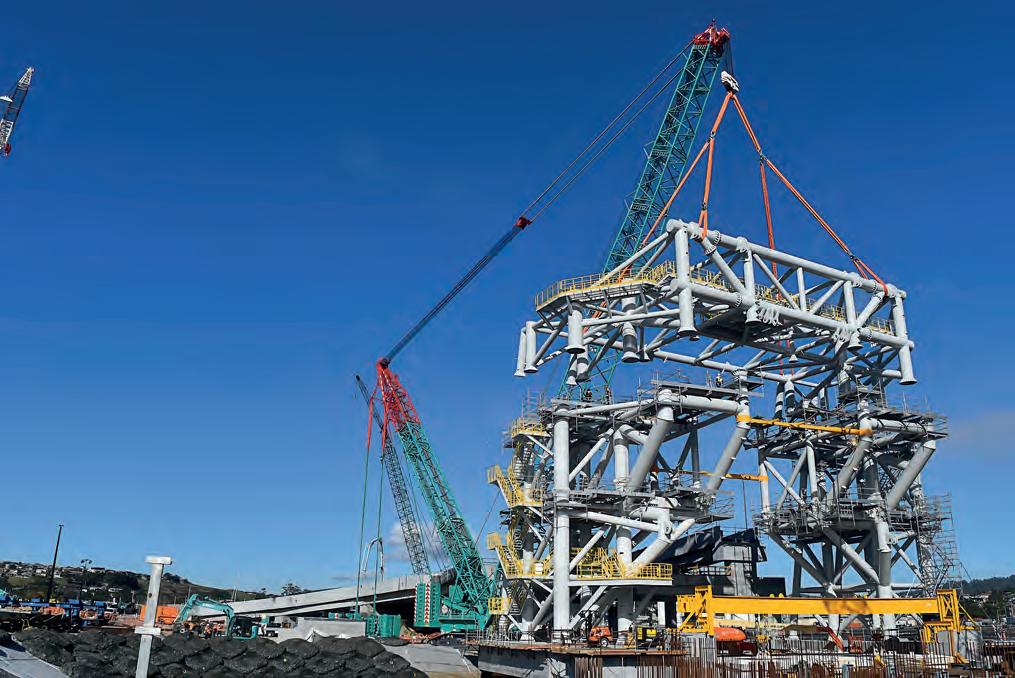
Tasmania’s Devonport Berth Three project has achieved a significant construction milestone following the completion of its final gantry superstructure lift.
The project is working to relocate the operational base of the Spirit of Tasmania ferry service – which runs from Devonport to Geelong, Victoria – from the existing Terminal One to the new Spirit Quay Devonport at Terminal Three.
At seven hectares, the new facility will offer more than double the space of the current headquarters.
The project’s latest gantry structure weighs more than 740 tonnes, stands more than 27 metres tall and is 38 metres wide comprising seven sections.
Principal contractor BMD will now complete the gantry’s ‘fitout’ – adding necessary components for operations such as linkspans, hydraulics, handrails and guardrails, and more.
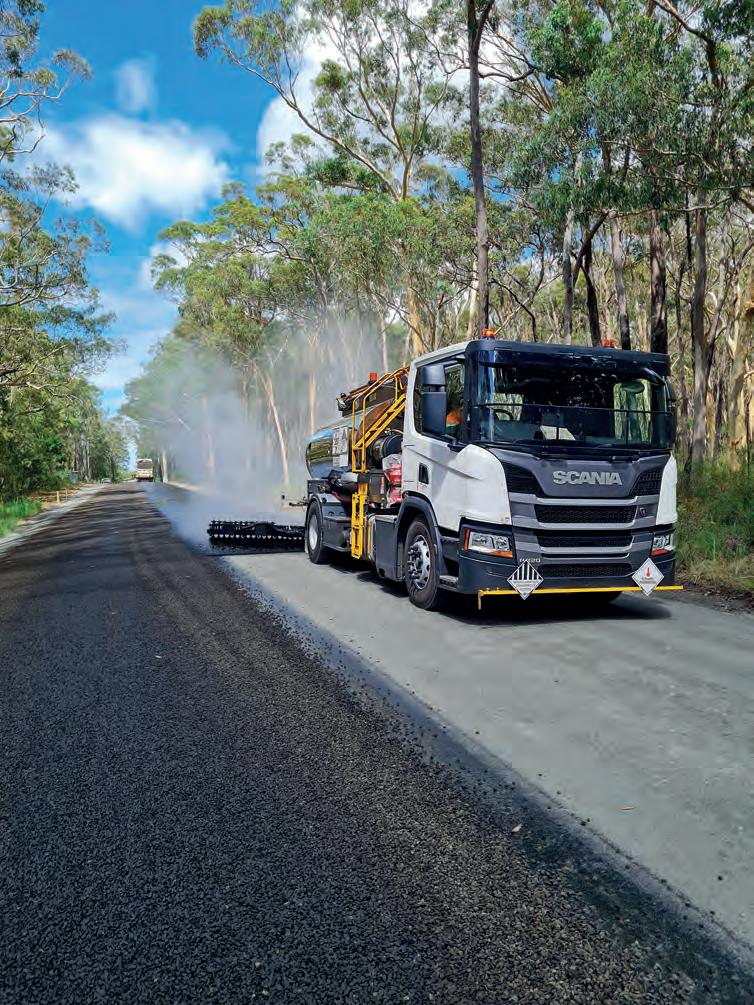
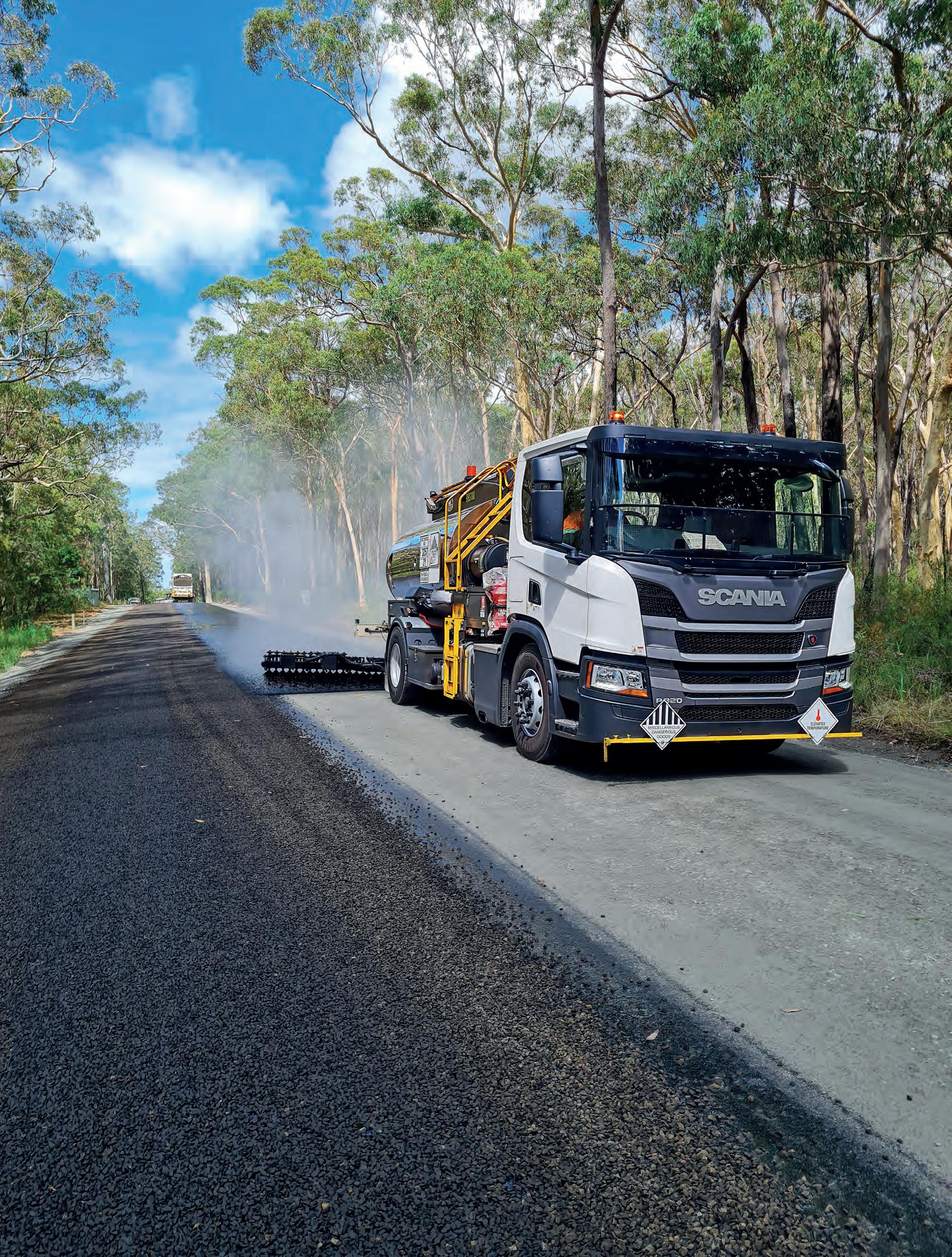
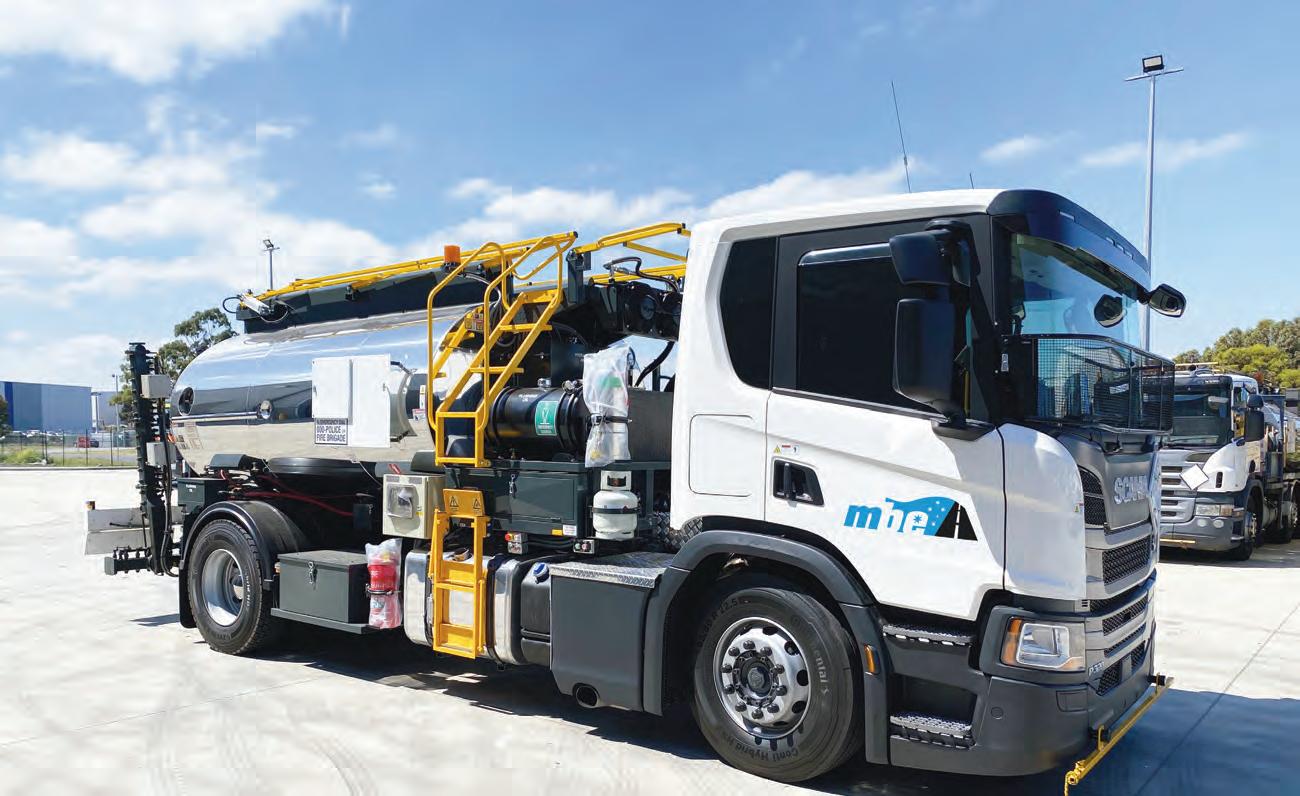
A BRAND-NEW SYSTEM FROM MATTHEWS BROTHERS ENGINEERING IS HELPING TO FUTURE-PROOF THE BITUMEN SPRAYING INDUSTRY, WHILE ALSO CREATING NEW POSSIBILITIES TO TACKLE WHAT IS A CHANGING EQUIPMENT LANDSCAPE.
set about conceptualising what a solution could look like.
To begin, the business looked introspectively, taking key learnings as well as the basic concept of MBE’s ‘G-TAR’ system.
“Paul [Matthews] has seen many generations of the sprayer equipment and has been leading that charge. Just like G-TAR, Drive Sync is his brainchild,” Jake Hally, Matthews Brothers Engineering’s Service and Maintenance Coordinator says.
The team looked at G-TAR and asked what elements could be stripped back and adapted as the core logic for the new system.
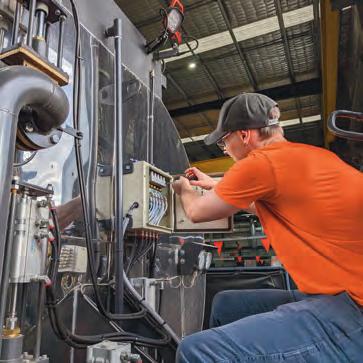
They started on a workbench with a basic Arduino board and wiring, using G-TARs brain as the template.
Devising a user-friendly method of relaying the relevant information to the operator was a major breakthrough.
It was at this moment that ‘Drive Sync’ was born.
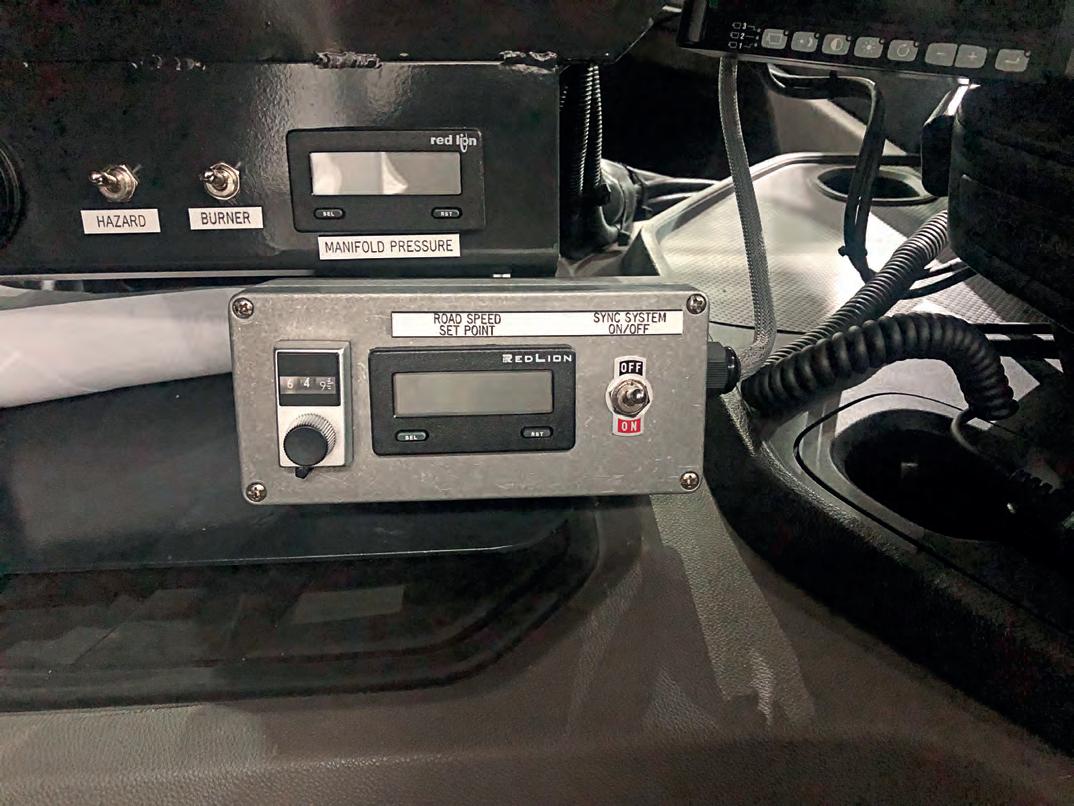
Drive Sync was designed to recreate, in an automatic world, the control and predictability that manual/automatedmanual setups provide for MBE sprayers.
Afew years ago, Matthews Brothers Engineering (MBE) saw the writing on the wall when it came to traditional manual truck transmissions.
Major OEMs (Original Equipment Manufacturers) were shifting their smaller chassis to fully automatic transmissions.
Historically, MBE’s sprayers relied on manuals or more recently automated manuals because they could lock in a gear and hold a fixed road speed that directly
correlated to engine RPM (revolutions per minute), an essential component for precise bitumen application.
Fully automatic gearboxes, with torque converters and variable relationships between engine speed and road speed, challenged this conventional philosophy, making them unsuitable for the job where a consistent and precise application rate is required. After identifying an emerging need within the market, Paul Matthews
The system monitors road speed, automatically adjusting pump RPM to maintain the target application rate without operator intervention, even when the truck’s gearbox and torque converter causes speed variations, such as climbing or descending hills.
“The system uses a series of LEDs to show the operator how close they are to their target road speed.
“The system will adapt up to 25 per cent below and 50 per cent above the target road speed, it’s crucial that the operator knows where these limits are and when they need to make adjustments.”
Hally says.
are savvy enough to figure out how to make it come to life,” he says.
“It’s basically listening to what operators need, or thinking the way the driver does. I’ve spent ages out on the job with the crews, just making sure the machine’s working properly. From that, I was able to learn about a lot of the difficulties they face every day.”
Following the construction of the first proof of concept, Drive Sync iterations were quickly trialled and tested, with constant improvements made along the way, all focused on being as user friendly for the end operator as possible.
“It’s like having a new baby. You’ve got to nurture it, you’ve got to educate it. The more care and love you put into that system, the better it’s going to be when it grows up,” Matthews says.
As part of this process, MBE has hosted experienced drivers from across the country, to interact and test the system.
These drivers have been given the chance to sit in the cab, run test passes and comment on the intuitiveness of the system. Such feedback has already led to design enhancements, such as
The biggest advantage however is opening up the market to customers, allowing them to utilise a wider range of truck chassis’.
“This very much brings fully automatic trucks into play, provided they come equipped with a live drive engine PTO,” says Sally Rolfe, Operations Manager – MBE.
It was crucial to MBE that they could deliver a sprayer with the performance and precision that its reputation was built on.
Best of all, the system was fully designed and developed in-house, ensuring that expertise and support are never far away.
When talking about the industry need for this system Hally remarked, “it’s one of those features that people won’t realise they need, until they really need it. It’s an updated, more operator-friendly system and there’s still more to come.”
The first iteration of Drive Sync has been developed as an add-on to the classic switch-and-button control system, but long-term, the plan is to implement Drive Sync into G-TAR.
“G-TAR is our premier control system, the brains behind Drive Sync are already there, the next step is implementing what we’ve learned from this new project,” Hally says.
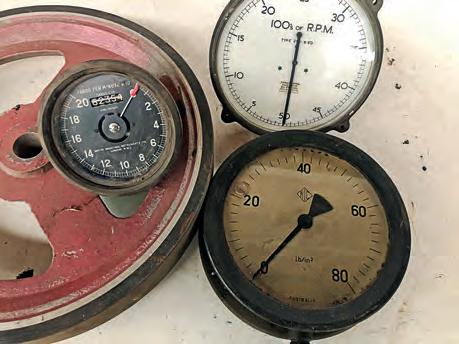
Innovations such as Drive Sync expand on traditional ‘gauge’ systems for output.
“Watch this space.”
The first iteration of Drive Sync also doubles as a tribute to a late friend of the business, as Hally explains.
“The first truck fitted with Drive Sync has been named Mr Leo in honour of Leo Van Oostveen. Leo didn’t work for us directly, but for years he was the sprayer calibration technician on our builds,” he says.
Van Oostveen was widely known throughout the Australian spray seal world and respected by all. “A good man” remarked Matthews.
“Naming that sprayer after him is our way of remembering the role he played in getting every sprayer over the line, as well as the special place he held in our hearts.”


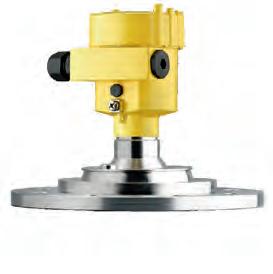
No matter whether your products are liquid or solid, hot, cold, or corrosive – for decades, our radar technology has been setting the standards in level measurement for mining. We deliver precise, reliable measured values exactly where they’re needed, resulting in more stable processes, greater safety, and maximum product quality. With our radar solutions, innovation knows no limits.
Everything is possible. With VEGA.



SAM MENDOZA, NATIONAL DIRECTOR & INFRASTRUCTURE LEAD AT WT SHARES HIS UNIQUE INSIGHTS INTO THE CURRENT CHALLENGES AND OPPORTUNITIES FOR THE INDUSTRY, AS WELL AS THE ESSENTIAL ROLE THAT THE NEXT GENERATION OF LEADERS WILL PLAY IN THE SECTOR’S SUSTAINED SUCCESS.
ideas of the next generation of industry thought leaders.
“I’ve been delivering a few guest lectures over the past six years now in infrastructure cost management for construction management students,” he says.
occurring when it comes to the respective
influencing decision making and ultimately
well as leading a talented team of industry consultants, Mendoza is a casual lecturer at
It’s in this pastime that Mendoza is largely
“We’re often focused on project management and other parts of the industry as a whole, and cost sometimes gets forgotten – but it’s quite important for anyone, whether you are a project manager, construction manager, site engineer or project engineer.
“That’s why I thought that having a bit of focus on cost, particularly with the pipeline of work and the pressures that we’ve got in Australia and the industry, was really quite important for the new generation.”
Mendoza says he’s constantly impressed by the next generation’s ability to embrace digital solutions and implement them effectively, a key he says to optimising the industry’s current capability and improve

digitisation of the construction industry to the next level, because they are just used to operating in that environment,” he says.
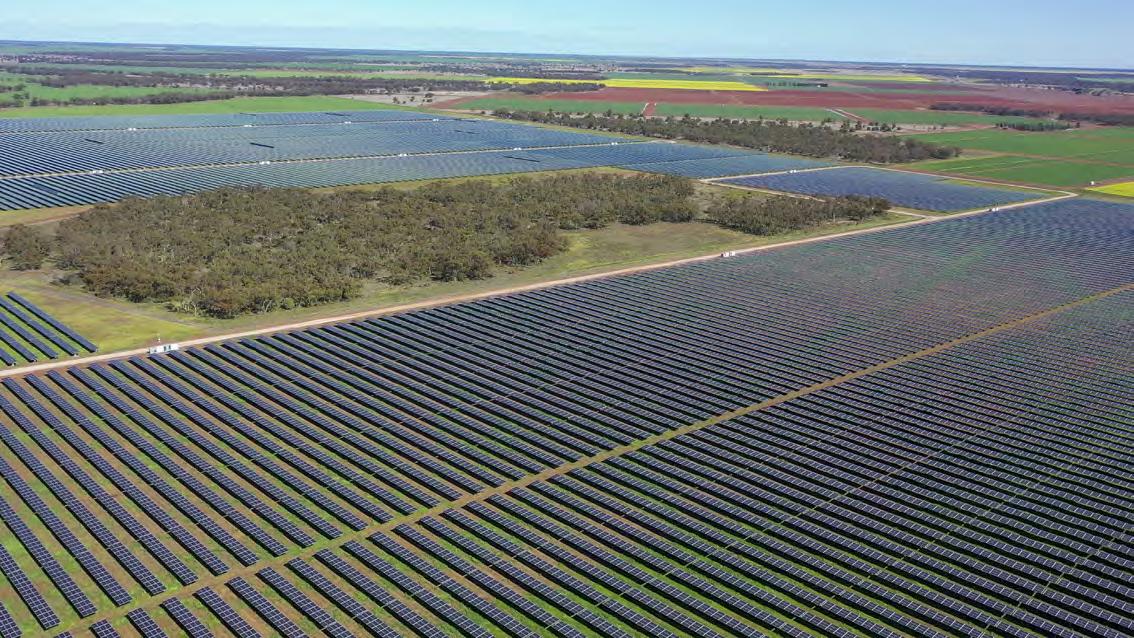
WT is empowering its clients to grow through independent advice on how to to overcome industry challenges.

“They get very excited about new technologies like automation and off site manufacturing. They’ve got much more free access to information as well, so they are very well informed.”
With this optimism for the future comes the realisation that the industry as a whole still faces significant challenges.
Among these – and one of the most prevalent – are cost escalation and pressures.
Just one of the biggest contributors to this challenge is demand surpassing capability.
A decade-long construction and infrastructure boom has created a situation where both government and industry are trying to deliver more work than the available pool of skilled people, materials and contractors can realistically support.
As programs are accelerated or expanded, projects compete directly for the same labour, specialist skills, plant and suppliers.
Australia can look to Europe for examples of best practice in this particular space, which could help to identify areas of low hanging fruit, Mendoza says.
“The uniqueness of Australia’s federal and state system means the pipeline can end up competing against itself. States are
competing for talent and capability, when ideally, we’d have a better coordinated national view of priorities and delivery,” he says.
“Not everything has to be a mega project for a tier one contractor. We have to be smarter in how we package work so the whole supply chain benefits, including tier twos, tier threes and local businesses. Not only that, but also to help ensure that the value and benefits stay within the local community.”
These challenges aren’t unique to transport infrastructure, either.
The utility and renewables sectors are also facing increasingly challenging cost pressures, with many patterns emerging as these types of projects become a larger component of project and funding pipelines. Despite these challenges, Mendoza and his team are already seeing positive signs within the industry. Not only of resilience, but also growth.
“The adoption of collaborative contracts is something that I’ve seen changing,” he says. “The Olympics is a good example. We have major clients implementing NEC4 contracts in New South Wales, so there are a number of projects that are breaking the norms and implementing new collaborative environments.

“The benefit of this massive wave of construction that we have had in the past 10 years is that the professionals in Australia have gained the same amount of experience on mega-projects that would take several decades in another country to obtain.



“That knowledge is not lost, and it’s up to us to redeploy that knowledge moving forward.”
This is why – again – Mendoza is so passionate about educating the next generation of industry participants, so that they can hopefully contribute to a more collaborative, efficient and financially viable project delivery ecosystem.


“The role of the cost adviser, whether it’s a quantity surveyor (QS) or a building estimator, is more important than ever. Being able to control costs proactively is a uniquely valuable skill right now, but the pipeline of new QS graduates in Australia is very thin,” he says.
“Cost can be a scary topic for some people, but it’s central to whether a project moves from an idea to a real asset.
“We need the next generation of construction managers and engineers to feel confident talking about cost and the key dynamics that drive it.”


“Please watch the road”
Act on the most urgent risks in seconds.
Geotab’s new all-in-one video telematics solution, the GO Focus Plus, automatically flags distracted driving, tailgating, hard braking and other serious events immediately, delivering instant in-cab voice feedback to enhance driver safety. For managers, patterns and urgent cases rise to the top for fast review and targeted coaching, all in one workflow that tracks follow-up and results. Spend less time searching and more time supporting every driver, addressing risk, encouraging improvement and recognising safer habits.
Ready to transform your fleet?
Visit www.geotab.com/au/ to learn how our telematics solutions can drive your business forward.

THE NATIONAL TRANSPORT RESEARCH ORGANISATION (NTRO) HAS ACHIEVED A SIGNIFICANT STEP IN THE ADVANCEMENT OF DATA REFORM AND CAPTURE FOR HORIZONTAL INFRASTRUCTURE. AS CEO MICHAEL CALTABIANO EXPLAINS, THE NTRO’S WORLDFIRST TECHNOLOGY IS PROVIDING UNPRECEDENTED DATA SPEED AND ACCURACY FOR INDUSTRY.
The National Transport Research Organisation (NTRO) is reshaping how transport agencies understand and manage their networks.
Over the past three years, the organisation – regarded as one of the nation’s foremost pioneers in transport solutions – has undergone significant evolution.
With a clear goal of staying one step ahead of industry requirements, the NTRO foresaw rapid change around the sourcing, treating and application of asset management data.
As Michael Caltabiano, Chief Executive Officer – NTRO explains, the organisation’s ambition was focused on three key deliverables: deep data sets, available in real time, and highly accurate.
“The National Transport Research Organisation has been on a journey over the past three years to deeply engage with our state transport agencies and local governments across Australia,” he says.
“Consistently they have been saying to us, ‘We need accurate data, we need deep data sets, and we need them in real time’.”
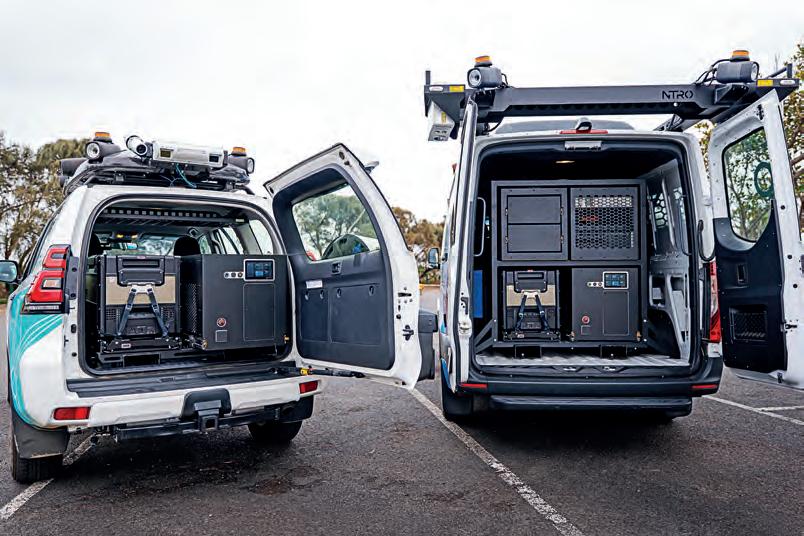
The first step to achieving this was growing the NTRO’s road survey fleet, which now encompasses six new vehicles across four distinct platforms in addition to the large existing fleet.
At the heavy-duty end is the iPAVE4, (intelligent pavement assessment vehicle) a semi-trailer, which measures pavement deflection at highway speeds and captures large volumes of structural and surface condition data. Supporting this are Automated Crack Detection (ACD) vehicles: two Mercedes Sprinter–based units, and two Isuzu ute-based units, which use the industry-standard LCMS2 (Laser Crack Measurement System) sensors to detect roughness, rutting, texture, cracking and potholes.
Caltabiano notes that the NTRO’s focus not only lies on collecting data, but on turning it into clear, actionable insights that can support rapid decisionmaking, particularly when communities expect instant information about road conditions, access and safety.
“We formed the data and technology team three or four years ago, which now has deep skills in both building
well as client assets including LiDAR, camera feeds, traffic and speed data, Bureau of Meteorology information, crash records and more.
By layering these data sets, the platform helps agencies probe the underlying causes of incidents and deterioration.
This may include network geometry, speed, pavement condition or even driver behaviour, all supporting the ability to apply the right treatment at the right time, in the right place.
“We’ve given data meaning, we’ve given the accuracy required to give deep insights, and now we’ve delivered a visualisation platform in real time where data collected today can be visualised tomorrow,” Caltabiano says.
Importantly, this technology also greatly accelerates the time required for processing and interpretation.

the equipment and developing the computing software for this new technology,” he says.
“The future is going to be about aggregation and absorption of lots of data sets.”
A shining example of this objective is the organisation’s newly developed SALUS platform.
This dashboard brings together multiple data sources into a single, Geographic Information System (GIS)based environment. SALUS can ingest the NTRO’s own condition data from platforms such as iPAVE and ISAVE, as
The new fleet is equipped with highperformance onboard computing (using NVIDIA chips), which allows data to be processed as it is collected, rather than waiting for manual offloading and post-processing back in an office. Once processed, the information is uploaded via Starlink satellite connectivity straight into NTRO’s cloud environment.
This innovation is also about scalability and affordability. SALUS is designed to be configurable for very small rural councils as well as large metropolitan networks, with dashboards and visualisations tailored to different audiences.
realistically afford, broadening access to capabilities that were once only viable for larger agencies.
This scalability and adaptability have allowed this technology, and the survey fleet, to be deployed at multiple locations around the globe, as Caltabiano explains.
“We already have two of our nextgeneration vehicles in India with the National Highways Authority. They love the SALUS portal and the fact they can get data sets in 48 hours, with no interference – straight from machine to the cloud,” he says.
“We’re also working across the Pacific – we have a vehicle in Tonga to service Fiji, Tonga, Samoa and Vanuatu – and we have a next-generation iPAVE in New Zealand.”
This international expansion and additional developments, such as the acquisition of Australia’s first fully automated bus, reflect the NTRO’s longterm vision. That is, catering for a more data-rich, automated and intelligencedriven future for managing transport infrastructure, both in Australia and across the world.
“Change in NTRO is our constant,” Caltabiano says. “There’s not a year that goes by that we don’t massage our organisation to be at the forefront of next generation thinking in road pavements, airfield pavements, asset management and infrastructure measurement technology.”


AfPA’s Asphalt Paving Essentials Workshop continues its 2026 national tour.
Don’t miss the benchmark capability program for supervisors, engineers and government officers. Bridge specification, production & onsite performance. A nationally recognised program for those who specify, supervise and assure asphalt works, grounded in Austroads Guides and state specifications, and taught by industry practitioners.
What you’ll learn.
Gain strategies to reduce paving faults and optimise pavement life. Master Austroads Guides and state specifications. Apply knowledge with a guided asphalt plant and laboratory visit, and recieve your AfPA Digital Badge and up to 18 CPD hours.
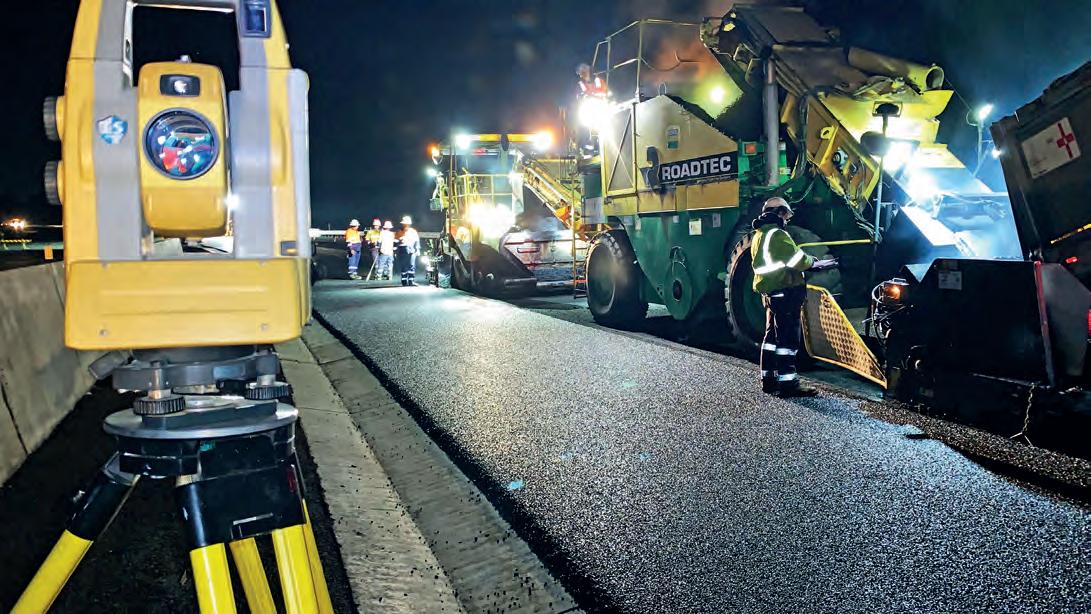
APTELLA’S INFRASTRUCTURE AND PAVING SERVICES DIVISION OFFERS MACHINE CONTROL SUPPORT TO ROAD AND AIRPORT PAVING PROJECTS, SUPPORTING CRITICAL INFRASTRUCTURE ON A NATIONAL SCALE.
Some of Australia’s most vital workers hide in plain sight. Those who develop its infrastructure, for example, are often restricted to late nights in remote areas. They do long and hard work and leave sprawling facilities connecting the nation in their wake.
Simon Chamberlain, General Manager of Aptella’s Infrastructure and Paving Services division, is one of these workers. He joined the company two years ago when it acquired Synergy PaveSmart into its product offering of intelligent positioning, machine control, and automation technology for the construction, mining, and geospatial industries. Under Aptella’s ownership, Chamberlain and his team now provide technical support to pavement crews for integral infrastructure projects across the country.
“The assistance we offer covers the survey, machine control, testing, drafting, design and quality assurance,” he says. “We take pride in being local. We’re not just operating in Australia at
large – we’re in your local region, and even your local town, bringing technology to important projects and breaking down the barriers of complexity with our expertise.”
Chamberlain’s team specifically offers machine control services to paving crews on road and airport construction projects, both of which require similarly meticulous processes and a range of specialised equipment.
For its road projects, these devices include laser prolifographs – which use lasers to capture longitudinal surface profiles and international roughness index reports, and a variety of surveying devices from Topcon, which Aptella exclusively distributes in Australia, New Zealand and parts of Southeast Asia.
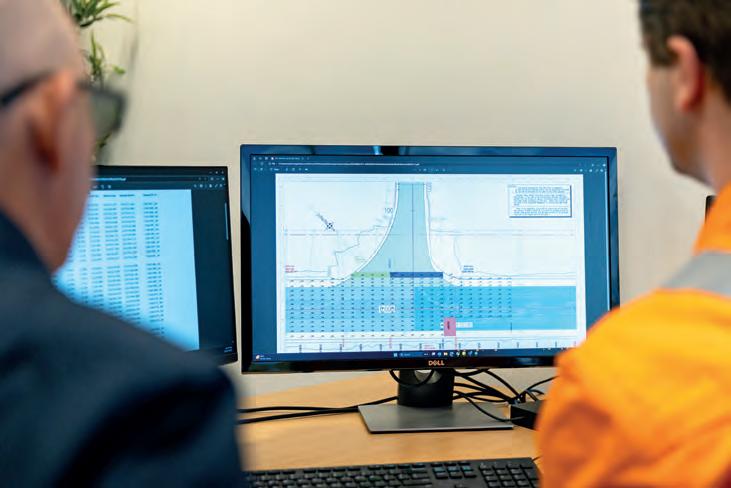
“For road projects, we always start with a road roughness test with the laser prolifograph,” Chamberlain says. “From there, we can provide design information needed to reshape the road. After this, surveyors on our team use total stations, while machine control operators use devices running Aptella’s acquired machine
control system, PaveSmart, on the back of an asphalt paver.
“ Together, they’ll work with the project’s asphalt crew to pave the material to a specific design, which our surveyors constantly check for flaws. This occurs for the road’s multiple levels of pavement. A road is kind of built like a cake in this way – multiple layers of different mixes are placed to make the overall structure.”
Once the road is paved, it is subject to final tests for roughness and structure, as well as conformance reports for every layer of asphalt that was laid down.
The process varies for airports, which don’t include roads and are built to a separate set of stringent requirements. Aptella’s Infrastructure and Pavement Services division is qualified to take these tasks on, largely due to its expertise.
“We work with most of the major asphalt companies out there,”
Chamberlain says. “As a result, we get to see this great cross-section of work and skill. We see how all of these businesses uniquely operate, and
Aptella offers intelligent positioning, machine control, and automation technology for the construction, mining, and geospatial industries

can combine what we learn, tailoring these methods to each project as they are needed.”
This melting pot of expertise also contributes to environmentally conscious road paving. Chamberlain and his team know the right amount of asphalt to be laid – any extra would not only impact the quality of a road, but would have negative environmental impacts due to the production of asphalt itself and its carbon emissions.
Chamberlain views the job as important for a multitude of reasons – chief among them being the indispensable role the infrastructure he oversees plays in the country’s development.
“We provide expertise and support that many paving crews need and rely on,” he says. “Roads are essential for many industries and in our own day-to-day lives, so ensuring they are designed and constructed to the highest standard is important work.
“The country runs on trucks transporting goods, and if our roads can’t sustain them, then economic activity and connectedness stop. It’s similar with airports – Australia is such a geographically isolated country, and our airports open us up to the world and its culture.”
Safety is an equally paramount concern for Chamberlain and his team.
“Unfortunately, we’re often reminded
“WE WORK NIGHTS, OR IN THE HEAT, AND ARE DRIVEN BY TANGIBLE RESULTS, WHICH MEAN QUALITY ROADS.”
by how important our work is by roading accidents,” he says. “When you work on roads, you can start to notice when they’re bad. A lot of people who work in paving have experienced road trauma to some degree, so it informs a lot of our commitment to the job.
“I’ve got an amazing team behind me that cares very deeply about completing their projects the right way.”
The gravity of their jobs, paired with the niche community they work in, brings pavers and technical assistants
close together. They are bound by their experiences and hard work, which Chamberlain feels largely go unnoticed by the average Australian.
“While the infrastructure we help construct is crucial, I feel like it can be easy for people to forget how it impacts everyone’s lives,” he says. “I think paving crews get a bad rap as well, but they’re incredibly hard-working.
“We work nights, or in the heat, and are driven by tangible results, which mean quality roads.”



BY SUPPORTING EXCELLENCE INTERNALLY, GEORGIOU IS POSITIONING ITSELF AS “THE BEST PEOPLE TO WORK WITH”. THIS VISION STARTS RIGHT AT THE TOP WITH CHIEF EXECUTIVE OFFICER, GARY GEORGIOU. AS HE EXPLAINS, A FOCUS ON PEOPLE OVER PROFIT IS LAYING AN EXCITING FOUNDATION FOR THE COMPANY’S FUTURE.
ary Georgiou, Chief Executive Officer (CEO) of Georgiou Group, may share the Georgiou name purely by coincidence, but the personal pride and weight of carrying the name is obvious to see, driven in part by the close relationship shared between himself and former CEO – now Strategic Advisor –John Georgiou.
“Having the same surname gives me that extra drive to make sure the business is a success. It also carries John’s family name, a man that I got to know very well, years before joining the business close to 11 years ago,” he says.

Georgiou is one of Australia’s most iconic civil and building construction contractors, with its red (and formerly maroon) branding making a regular appearance on infrastructure projects across the country.
The company’s family-oriented culture is a key pillar of the organisation’s internal and external interactions.
Evident throughout the company’s 50-year heritage, this people first ethos – initially driven by John’s father and company Founder Spiro Georgiou – is best summarised by the company’s motto: a vision to be ‘the best people to work with’. But what does this actually look like?
Georgiou says that for employees, this motto is a promise that the organisation is the best place for them to build their careers and professional relationships. For clients, the motto acts as a written commitment for the organisation to be the easiest, most constructive contractor to deliver projects.
For subcontractors and suppliers, it means a pledge of strong support, dayto-day, with sites being well organised and teams providing clear, respectful and productive communication.
“It’s a philosophy that resonates from many different perspectives, but ultimately one that guides who we are as a business,” Georgiou says.
“It’s a vision that’s always been there, even before I started at the business, and one that continues to this day. Our values of care, integrity and excellence also support this vision.”
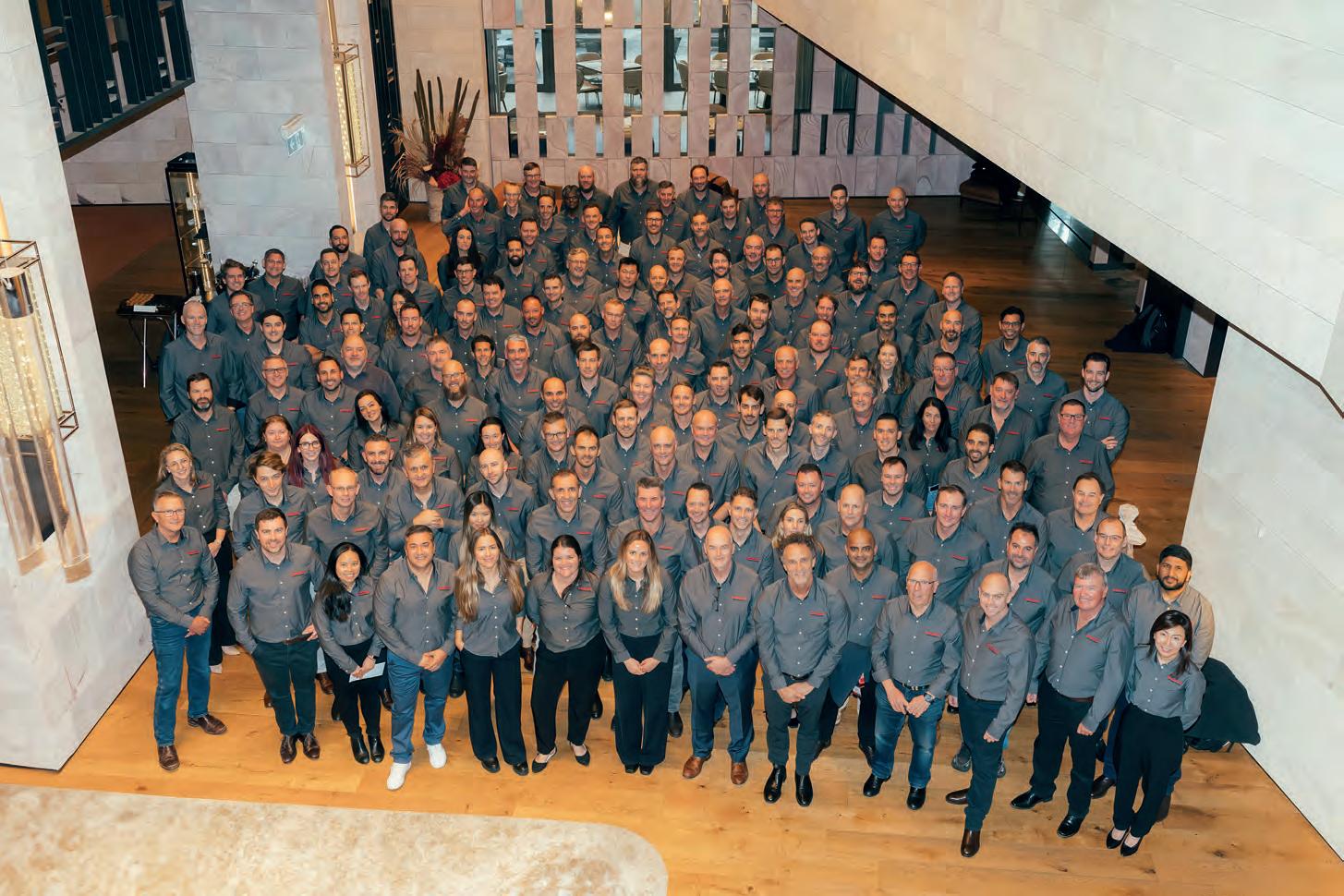
Beyond encouraging interactions and development within, Georgiou also aims to empower employees through opportunity. Take the organisation’s internal leadership conference for example. This bi-annual event helps to showcase the latest developments
and vision for the business, while also giving emerging and established leaders a platform to share their perspectives.
This event brings more than 150 of the organisation’s leaders together, for two days of learning, networking and culture-building.
“Those leaders can then go off and consider how they could apply some of the principals learnt within their own teams and departments,” Georgiou says.
“We see that investment into people, whether it’s time or money, as bringing a huge amount of benefit back into the business.”
Another essential component that supports the delivery of high-quality services is feedback. As Georgiou explains, feedback acts as a key data set for the business.
“We conduct monthly surveys with our clients, on every project. There’s no point just getting feedback at the end of the job, because at that point it’s too late. With monthly frequency, we still have time to quickly implement changes based on that feedback,” he says.
“You can’t make changes without data, without that information to help you make decisions. And once we get that feedback,
we’re very transparent about the actions that we’re going to take.”
This also incorporates internal staff surveys, which are conducted on a quarterly basis.
“Say we get a strong, 85-90 per cent positive score, the remaining 10-15 per cent shows we still have room for improvement,”
Georgiou says.
“We don’t just rest on our laurels and say, ‘that’s good enough.’ Continuous improvement is part of our culture. Our value of excellence means you haven’t made it, until you can get to 100 per cent, so we’re always looking for ways to be better.”
One of Georgiou’s most significant milestones in recent times was its acquisition by STRABAG Societas Europaea, a European-based provider of integrated construction services.
Georgiou’s national team, now comprising of approximately 900 individuals, will be further bolstered by the 86,000-plus team members working within the STRABAG Group globally.
Georgiou notes that the acquisition not only increases the organisation’s capability for delivering large works but also helps to
ensure that projects are still delivered using a mixture of local expertise and best practice.
“They’ve allowed us to keep the Georgiou name and have really taken the time and care to get to know the business,” he says.
“Right from the get-go, there has been a really good alignment on culture – the way we value our people – but also a positive alignment on how STRABAG viewed our business going forward.”
In areas such as tunnelling, ground improvement and other complex civil works, Georgiou can now draw on STRABAG’s teams and methods during project delivery, both of which have already been proven on major European infrastructure programs.
Ultimately this experience will help to transform Georgiou into a contractor which retains its nimble operation, relationshipdriven culture and high-quality services, while operating with the capability and innovation on the scale of a major international infrastructure enterprise.
“It’s exciting because the business is growing, and that growth also brings more opportunities for our people,” Georgiou says.
“Watch this space. We’re looking to expand both in capability and geography, and this is evident by the strong work in hand.”
The Level Crossing Removal Program (LXRP) represents one of the largest ever transport infrastructure undertakings in Victoria’s history, reflecting changing and evolving requirements from commuters and motorists alike throughout metropolitan Melbourne.
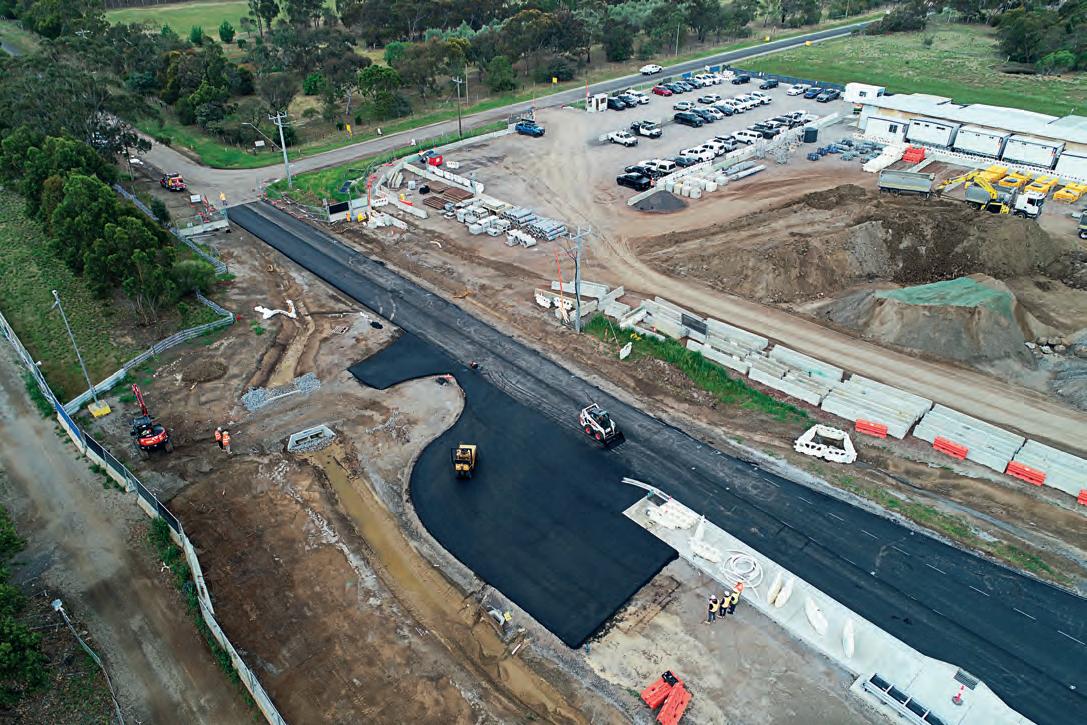
The Diggers Rest Level Crossing Removal Project formed part of this wider package, and saw the removal of two existing level crossings at the Old Calder Highway and Watsons Road sites, replacing them with two new road bridges over the rail line.
The main objective was to make the Sunbury Line level crossing free, improving both safety and traffic flow.
The existing level crossings handled about 8000 vehicles per day and caused significant delays of up to 36 minutes during
the morning peak, which was normally frequented by 27 train journeys during this period.
New bridges, associated road realignments, and subsequent landscaping works were designed to eliminate these bottlenecks and hazards, with the LXRP’s Western Program Alliance (WPA) overseeing these works.
The WPA was one of the original alliances established to deliver the Level Crossing Removal Program, which extends across a number of major metropolitan regions across the state.
Required works to Watsons Road included strict requirements for the incorporation of low-carbon asphalt solutions.
Contractor Boral, having won the tender for the works, collaborated closely with WPA on a solution that would not only satisfy
standards, but also support a positive project and more environmentally friendly outcome. As Lachlan Walker, Program Sustainability Manager – WPA explains.
“Asphalt makes up about 12 per cent of the up-front carbon for materials on infrastructure projects. That was a key focus for the sustainability team and VIDA, the Victorian Infrastructure Delivery Authority,” he says.
“The client for this project had a carbon reduction target of between 20 and 35 per cent. This particular initiative provided a key opportunity for reducing carbon.”
Around the time that the project team started considering different low-carbon asphalt options, SAMI Bitumen Technologies conducted an in-depth webinar explaining the benefits and performance properties
of its now flagship lower carbon binder, SAMIGreen.
Beyond the performance of the product itself, Marc Boswell, Technical Manager – Boral says SAMI Bitumen Technologies’ existing industry connections and expertise also made the solution an attractive prospect.
“SAMI is our number one supplier of polymer‑modified bitumen in Victoria, and I’d say nationally as well,” he says.
“The relationship was already there, and when we saw the potential around SAMIGreen, it was the most viable option, so we pushed hard to make it happen.”
A major contributing factor in SAMIGreen’s selection – which also aided the product’s submission process for approval – was the transparency and accuracy offered by SAMI Bitumen Technologies’ Environmental Product Declarations (EPD).
As detailed in these documents, SAMIGreen contains a biogenic material that helps to reduce the carbon footprint of asphalt. Biogenic components in the binder act as a carbon sink, allowing its life cycle carbon footprint to be significantly lower, compared to conventional petroleum based binders.
As Boswell explains, having such information right from the start made conversations and dealings with internal design, engineering and environment teams much quicker and easier.
“Having that wealth of data already there was a fantastic attribute. Often you need to work with suppliers of new products to try and get that data to give you assurance it’s actually doing what it says,” he says.
Walker agrees.
“The fact that it was an independent verification of the data we were putting forward was absolutely critical. I know how rigorous that process is – it’s no light undertaking, and it’s highly respected in the industry,” he says.
Brad Richards, State Manager Southern Region – SAMI Bitumen Technologies says SAMIGreen isn’t the only SAMI product that’s fully supported by EPD documentation.
“We’ve got very strong Environmental Product Declarations behind each of our binders,” he says. “They clearly show the carbon savings, and that gives projects like this confidence to move ahead without needing a lot of extra testing and investigation.”
From a design and specification standpoint, SAMIGreen replaced the conventional
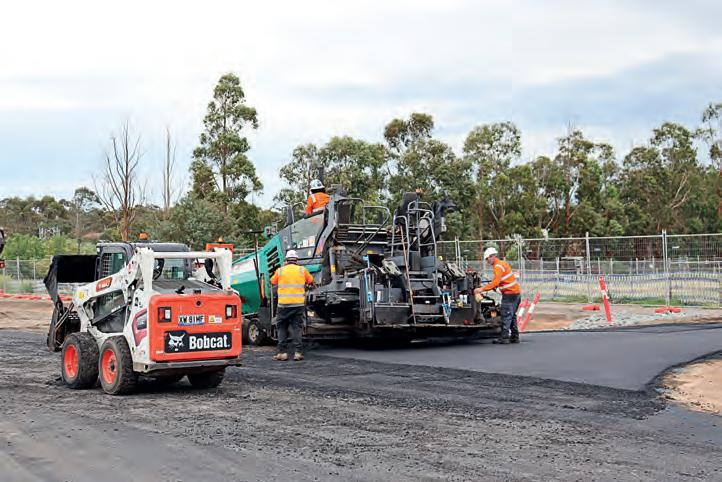
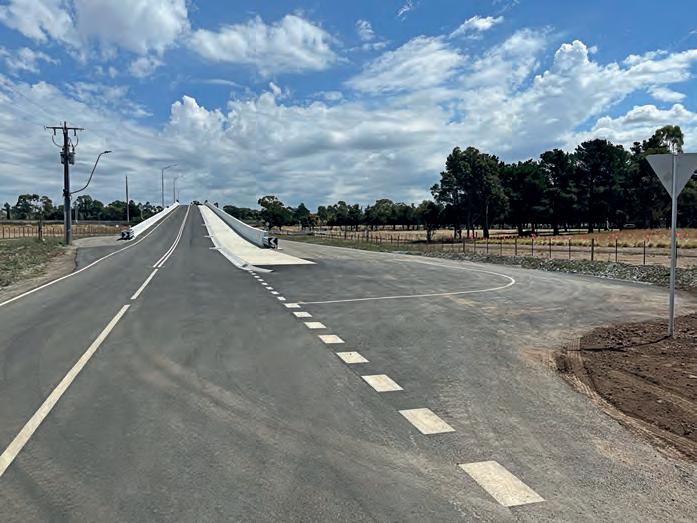
10E/PMB binder for the selected section of Watsons Road, offering up to 63 per cent carbon reduction at binder level and contributing to an estimated 36 per cent cradle‑to‑gate carbon reduction for the asphalt mix used for part of this project.
Among the key performance objectives was ensuring that crews wouldn’t notice any difference compared with conventional asphalt. This is due to SAMIGreen’s capacity to provide superior environmental outcomes, all the while behaving the same throughout production (at Boral’s asphalt plant), in transport, and during paving and compaction.
According to Boswell, who was in attendance during application, the product well and truly passed the “sniff test”.
“We followed our change‑management protocol and notified the crew that we were using a new product, but after speaking with three or four of the guys, there was pretty much nothing to report,” he says.
“No one mentioned any difference in odour or handling, it was business as usual, which is exactly what we wanted.”
The WPA has also been greatly impressed, as Walker explains.
In particular, as part of efforts to normalise such requirements and specifications on major infrastructure projects.
“Where this particular (A10E biogenic binder) is specified for future designs, I’d be looking to use the biogenic alternative every single time,” he says.
Apart from the performance of the product, another key cog for success was collaboration. As Boswell explains, the project would not have been possible if it wasn’t for the initial and shared desire to use sustainable alternatives.
“I think it was imperative that we had a customer who actually really wanted this product. Having someone approach us about it was very refreshing,” he says.
For Richards and the rest of the SAMI Bitumen Technologies team, it was business as usual.
“We have a reputation of working closely with not only our clients, but our clients’ clients. We try and get involved where we can, even into the design phase, to just instil confidence throughout the process,” he says.





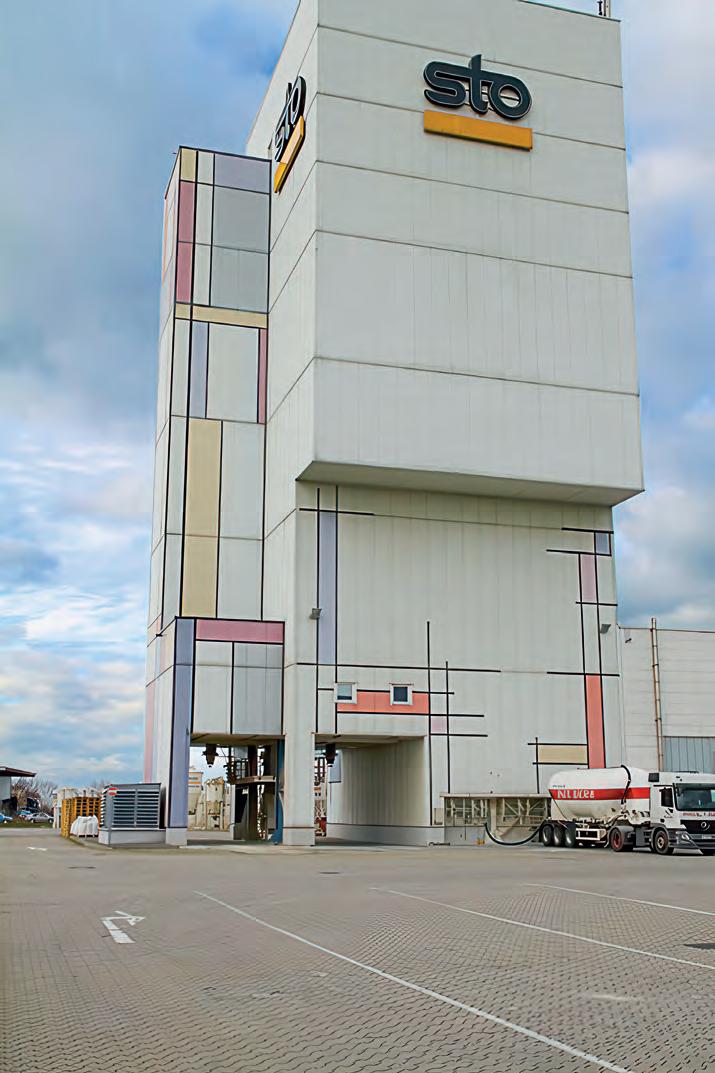
In this building are the silos (raw material silos on the right, finished product silos in the left extension), which are about 20 metres high.
FAST RESPONSE TIME
Sto began looking around for an alternative measuring method. In the process, it became clear that radar level measurement technology could be a good option and Sto subsequently came across the VEGAPULS radar sensor. Its great advantage was from the transmission frequency of
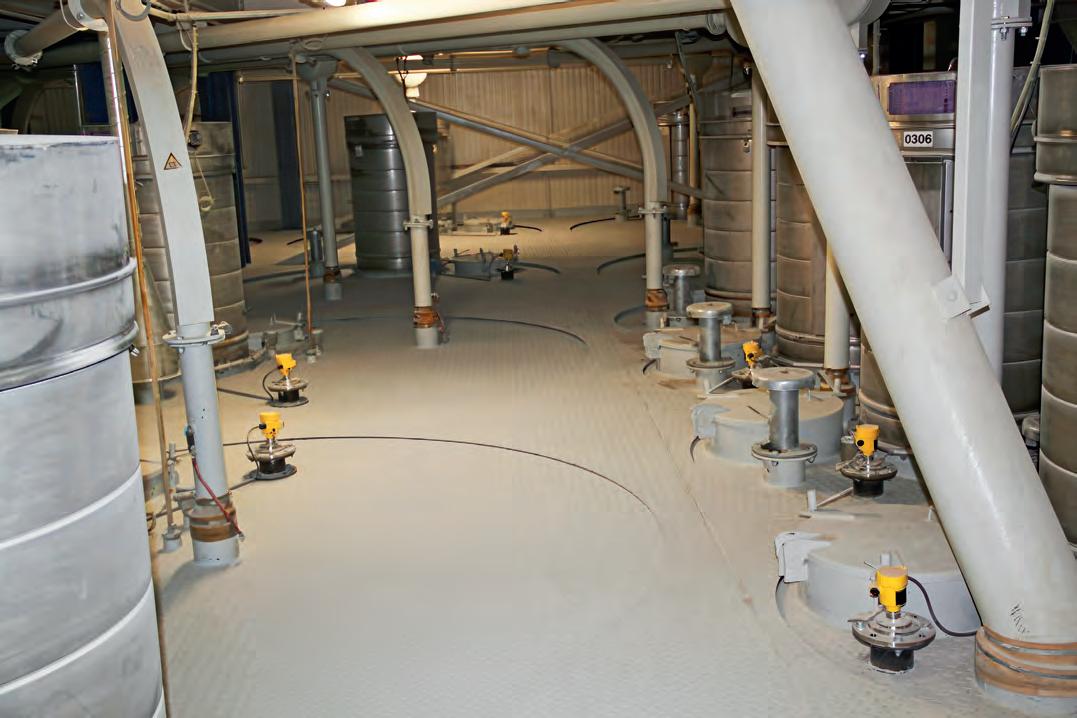
Each of the silos is now equipped with a VEGAPULS, which replaces the previous silo weighing system.
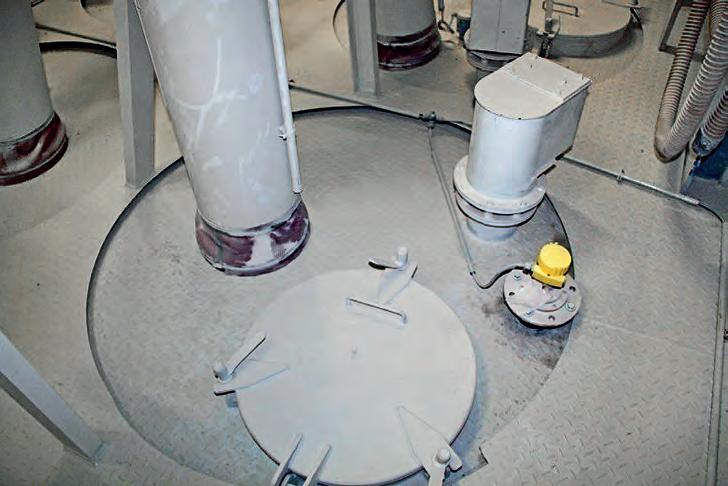
80 gigahertz (GHz) and the approximately 75 millimetre diameter antenna with a beam angle of only four degrees, which made it possible to measure without interference from buildup on side walls or internal installations.
Since its market launch, VEGAPULS 6X has proven its worth, especially in the area of bulk solids and – above all – in the building materials industry, where very slim, high silos are often used. Besides its narrow beam angle, there were other
decisive criteria. The instrument would also have to measure continuously and not be affected by filling and emptying processes. Another aspect was the so-called “settling curve”: When silos are filled, a considerable amount of air is always pulled along with the material, so a measuring instrument has to react very quickly.
Sometimes it only takes a minute before more material is poured in. As such, a measuring method that measures quickly was needed.
It is also important that parameterisation and commissioning are simple, as the sensor has to be able to cope with changing bulk densities.
After a three-month test phase, the VEGAPULS radar sensor had completely convinced everyone involved. Therefore, the decision was made not only to equip the finished goods silos with VEGAPULS as initially planned, but also to equip the raw material silos at the same time. The advantage of this, apart from the reliable measuring results, is that the same measuring instrument can be used everywhere, basically making plug-andplay possible. This meant that the building materials manufacturer can use the same sensor on any silo with minimal expense. Since there were initially no power and Profibus cables or flanges on the silos, the installation required some planning. Cables were laid and the control system was adapted accordingly. In contrast, the installation of the sensors themselves turned out to be particularly easy. Within two days, Sto had completed all the set up work themselves. The VEGA Tools app for the smartphone proved to be very useful for this task. With its help, the proper

angle of inclination for mounting each instrument was quickly determined: simply place the smartphone on the sensor, align it according to the displayed graphic, and it’s done.
Nearly all the sensors worked reliably right from the start, delivering accurate measured values. Since the VEGA instruments display a percentage filling level, the software converts these values into tonnes. Additional production security is provided by the inventory management system. Only one particular silo holding raw materials with low bulk density turned out to be problematic. It’s very difficult to measure in this particular container and previously no sensor had ever worked reliably. The wall seams of the silo, for example, generated false echoes. Even when the silo is empty, the echo curves generated are very complex. A slight repositioning of the sensor helped to change its alignment. The project team also
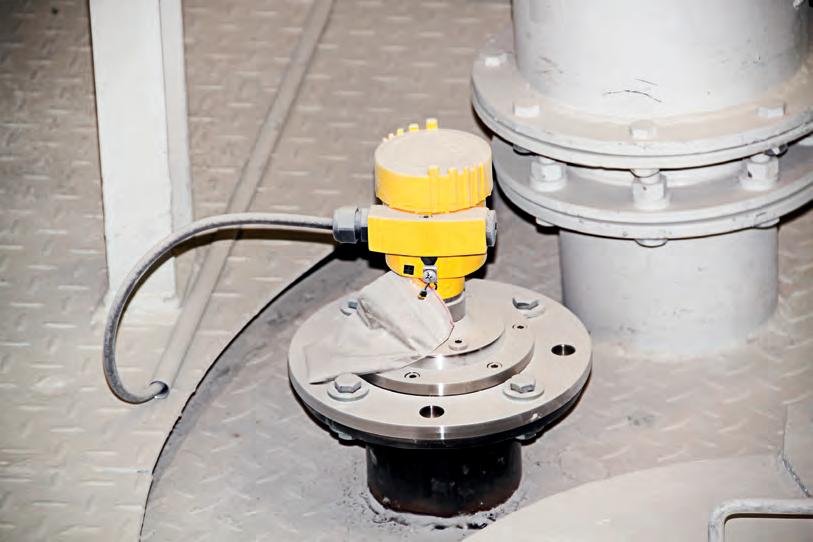
readjusted the sensor parameters. Since then, this measuring point has also been functioning perfectly.
For Sto, the decisive factor in the selection was the high performance and versatility of the sensor – in particular, that it can be quickly adapted to the local
conditions and that it accurately displays the measured values, even when the silos are filled and emptied at the same time. VEGA’s customer service was also convincing. Whenever the team at Sto had any questions, they could always get hold of the right contact immediately.




KOMATSU AUSTRALIA IS UPGRADING ITS EXPANSIVE PRODUCT RANGE TO SUPPORT GROWTH ACROSS BOTH DOMESTIC AND INTERNATIONAL MARKETS.
Across all heavy industries, compliance is critical.
Companies operating in a specific jurisdiction need to adhere to its legal, regulatory, environmental and safety standards so that all stakeholders involved in high-risk activity – from workers and manufacturers to property and habitats – are protected.
This can prove challenging for companies when their operations are spread out across different markets and customers, and thus need to follow different sets of requirements. In these instances, businesses need to be versatile, adapting their product offerings to meet various sets of stringent rules.
Komatsu has been practicing this for some time.
The multinational corporation was established in Japan in 1917 as an equipment manufacturer for mining and machinery tools, and spent the next century developing products for the sheet-forming, agriculture, hydraulics, utility, construction and q uarry industries
Global expansion followed, leading the business to come to Australia in 1965. Here, operational versatility remains embedded in the business.
“We create value together by working in partnership with our customers, people, and communities to build a safer, and more sustainable future,” says Mark Boyes, National Business Development Manager – Construction at Komatsu Australia. “Our client base ranges from owner operators to multinational corporations, all with unique needs.
“We are continually innovating and diversifying our product range to support and adapt to a wide range of applications and customer’s needs. This is particularly important as Komatsu Australia services many territories.”
The purview of Komatsu Australia extends to key international markets –New Zealand, New Caledonia and Papua New Guinea following entity mergers and acquisitions. Boyes explains that each country has unique requirements that pose specific challenges, limiting what equipment could be supported.
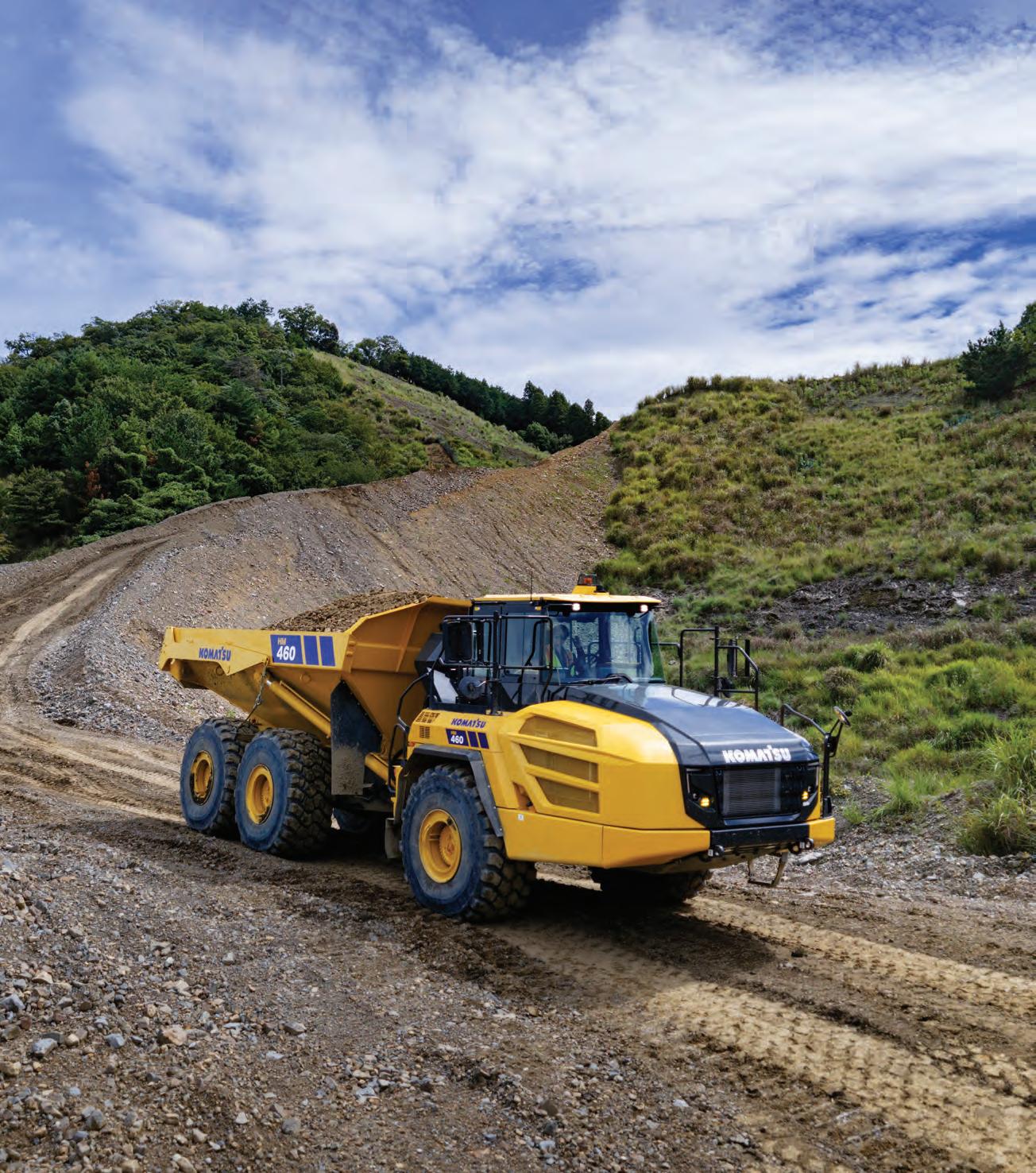
However, the introduction of several new, non-tier 4 heavy equipment models has enhanced Komatsu Australia’s construction equipment offering. These models are being rolled out with the goal to better support all Oceanic markets.
“Traditional markets historically have had limited access to heavy equipment with enhanced capability such as integrated machine control,” Boyes says.
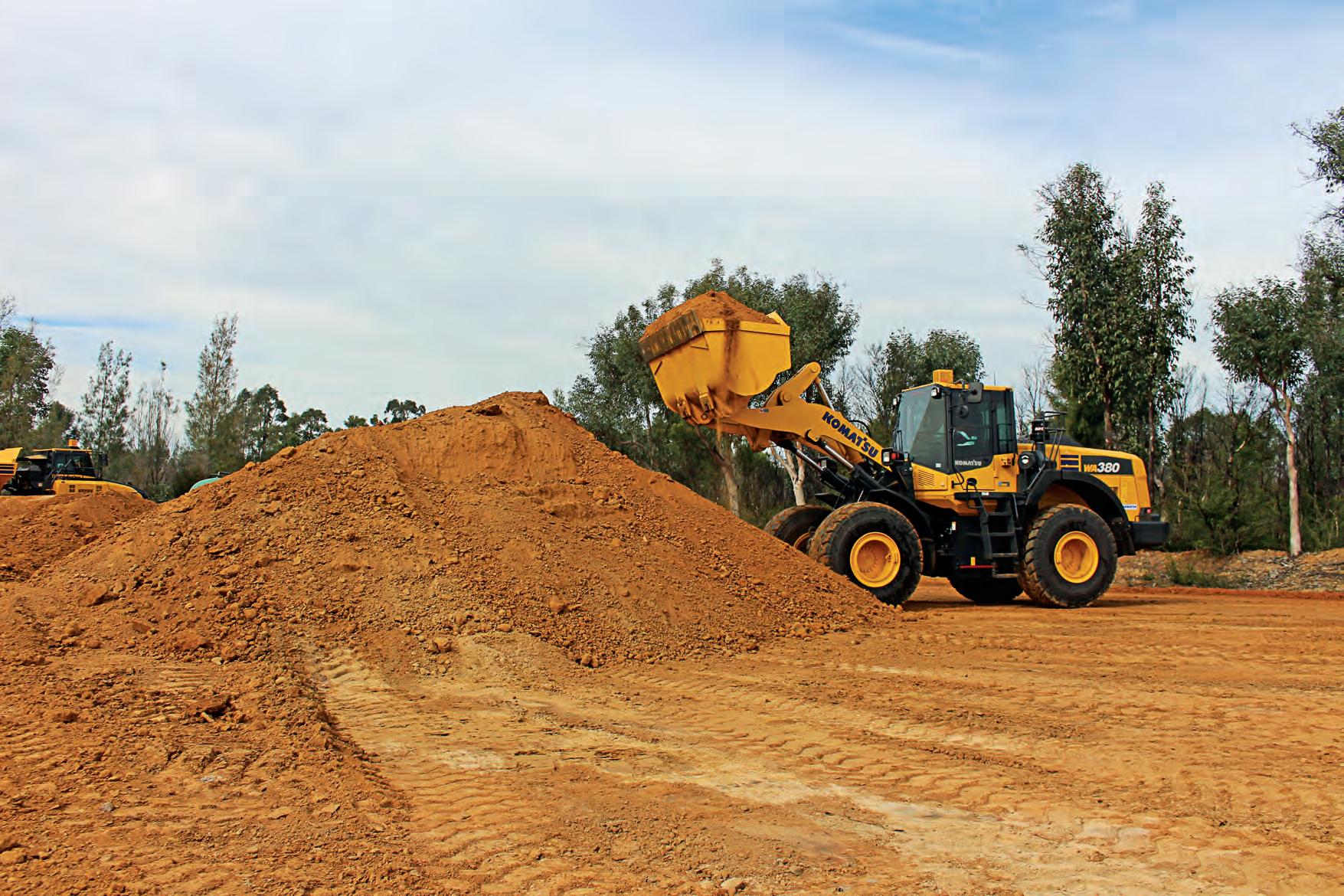
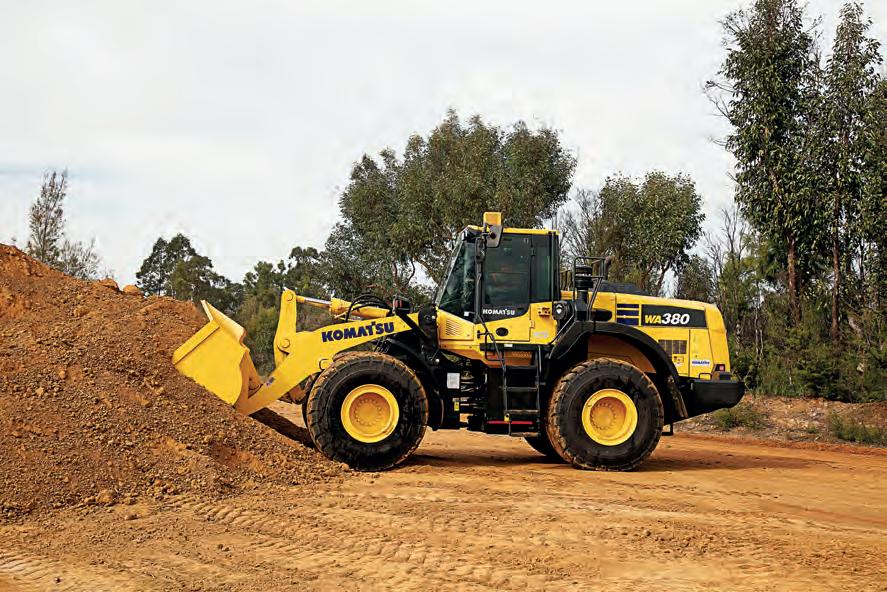
“With the introduction of the non-tier 4 models we can now work towards an enhanced model offering across our region that will open each market to a higher level of technology not traditionally available.”
Komatsu Australia’s product enhancements are a direct result of the company’s deep expertise to engineer systems that can adapt to the local markets’ requirements, whilst increasing reliability, reducing downtime and lowering overall maintenance costs.
“We’re keeping the chassis and core components of these non-tier 4 machines the same as their tier
4 equivalent model,” Boyes says, “but are ultimately simplifying the aftermarket systems so that they have no requirement for Diesel Exhaust Fluid (DEF), or AdBlue, as it’s commonly known.”
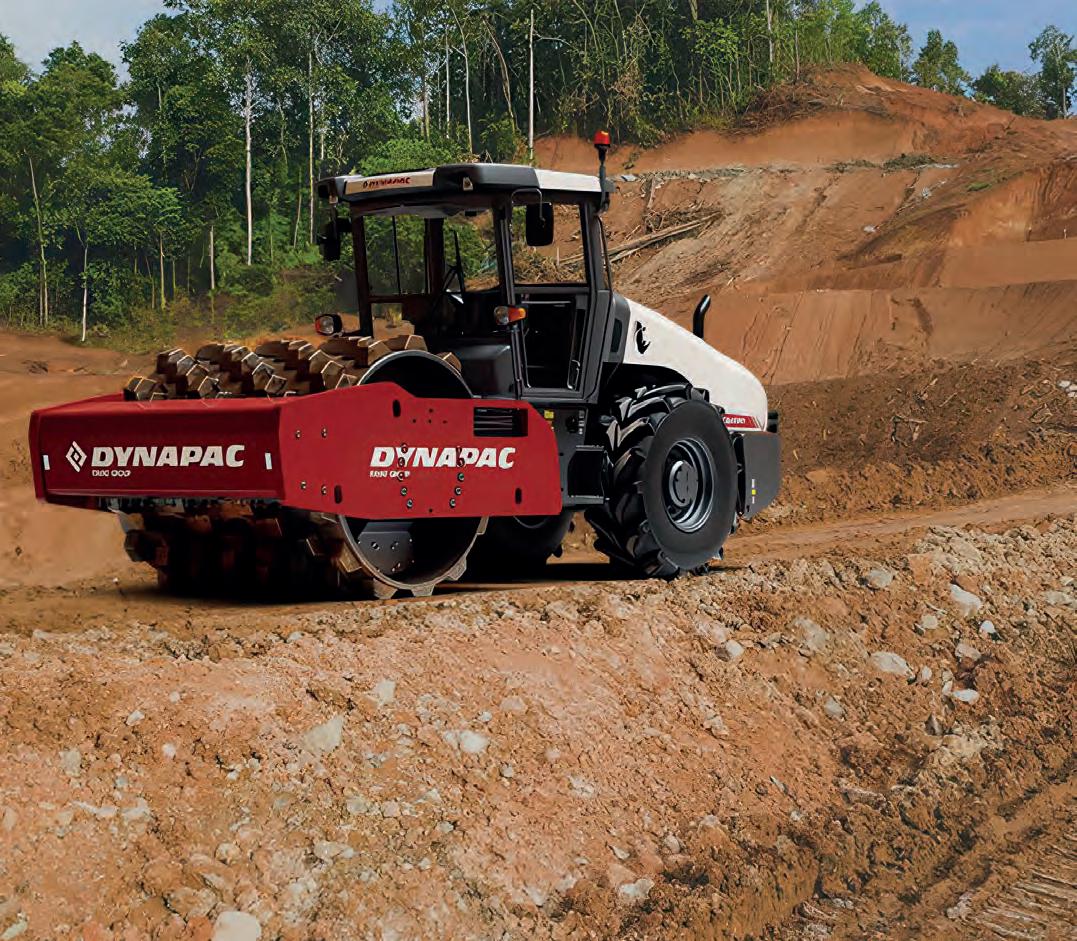
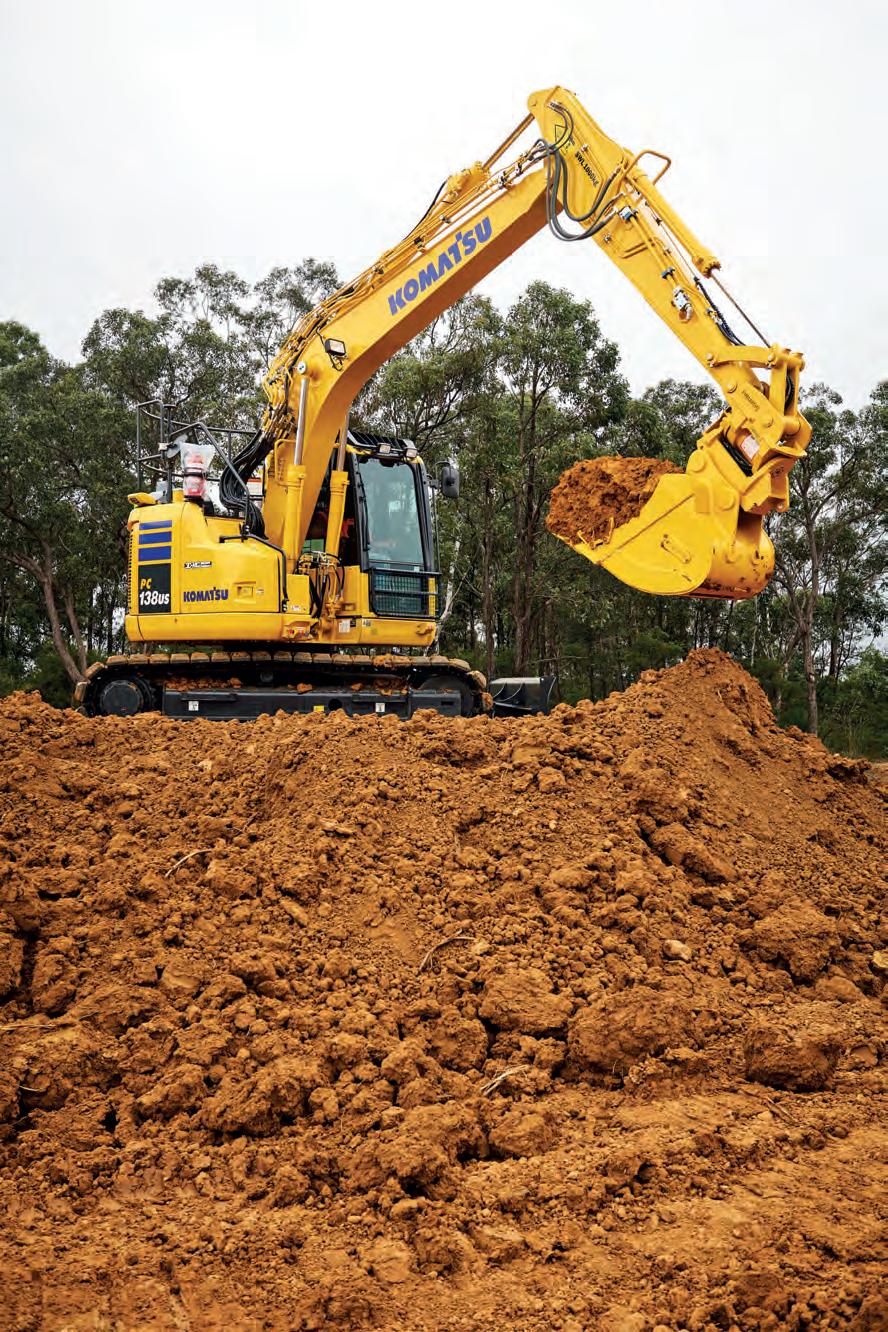
The company recently introduced the refined, AdBlue-free version of its PC138US-11 excavator. The machine is
well-suited to civil construction, general earthworks, and utilities, combining strong digging performance with a compact short tail swing design, enabling efficient operations in tighter working environments.
Meanwhile, a similarly updated WA3808 wheel loader has also been released. The machine is ideal for a wide range of general-purpose loading and handling applications, including concrete batch work, log handling, waste and recycling, and more. The equipment is also fitted with the company’s remote monitoring and location system as standard.
Boyes says these machines will accelerate developments in both domestic and international markets.
Several new non-tier 4 models will be introduced across Komatsu Australia’s markets throughout 2026. Boyes and his team are excited to usher customers into the newest generation of technology a nd efficiency.
“We want customers to be able to access the latest machines without any compromises,” he says. “Our move to enhance our product range with both tier 4 and non-tier 4 machines will ensure that this goal is possible.”
“WE ARE CONTINUALLY INNOVATING AND DIVERSIFYING OUR PRODUCT RANGE TO SUPPORT AND ADAPT TO A WIDE RANGE OF APPLICATIONS AND CUSTOMER’S NEEDS. THIS IS PARTICULARLY IMPORTANT AS KOAMTSU AUSTRALIA SERVICES MANY TERRITORIES.”
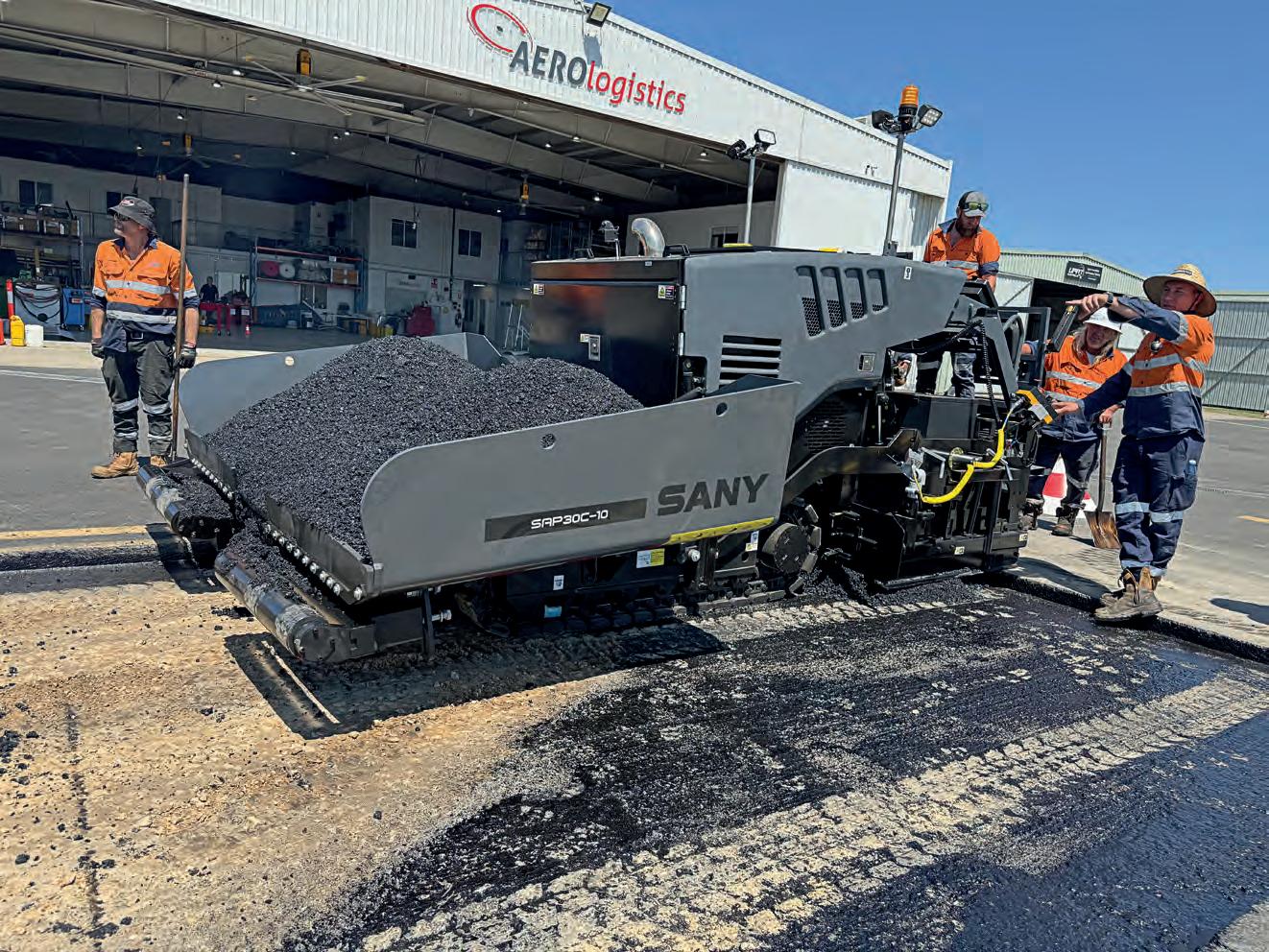
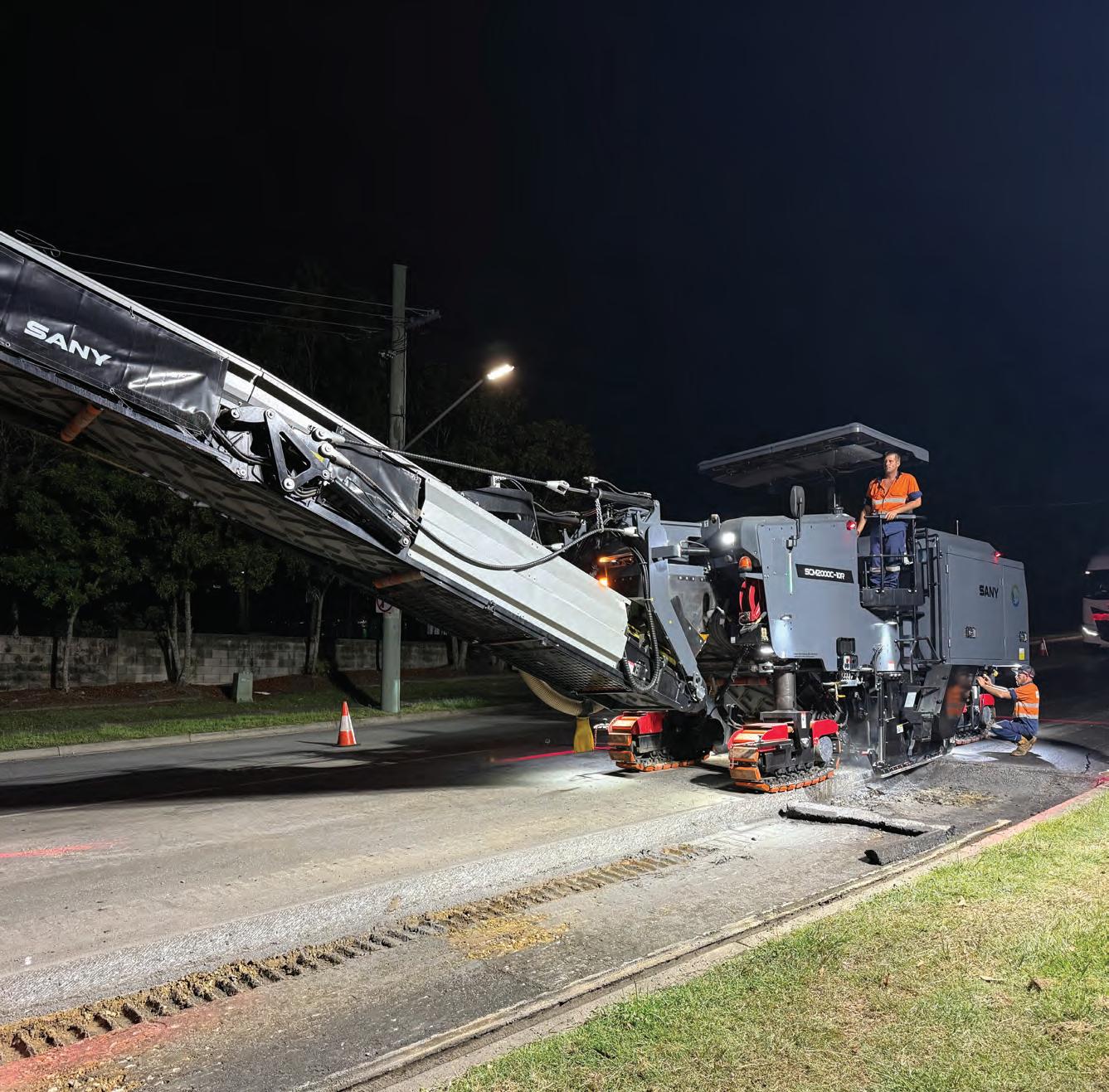
Putzmeister Oceania’s product and service capabilities continue to grow, with SANY dealers enabling support across every state and territory.
PUTZMEISTER OCEANIA IS PIVOTING, TRANSFORMING THE ORGANISATION INTO A SOLUTIONS-BASED PROVIDER, RATHER THAN JUST A CONVENTIONAL ORIGINAL EQUIPMENT MANUFACTURER. SO, WHAT DOES THIS ACTUALLY MEAN? HEAD OF ROAD CONSTRUCTION, RYAN VAN DEN BROEK EXPLAINS.
For customers, this shift to a solutionsbased model means more than just new machines. It’s about end to end support, predictable uptime and lower total cost of ownership over the life of every paver, roller, wheel loader or excavator.
Historically, Putzmeister Oceania’s SANY road machinery business has been sold direct to customers.
That is now changing, with the division moving to a dealer-led model built around CEA and Vertu Equipment – who already are key partners for SANY excavators in multiple states – so customers can access both road machinery and excavators through a consistent national dealer network.
Putzmeister Oceania, a subsidiary of the German-based Putzmeister Group and part of the wider SANY Group, has been through a period of introspective reflection, leading to an evaluation of what industries and projects the company wants to focus on, and grow. Construction and transport have long been a core
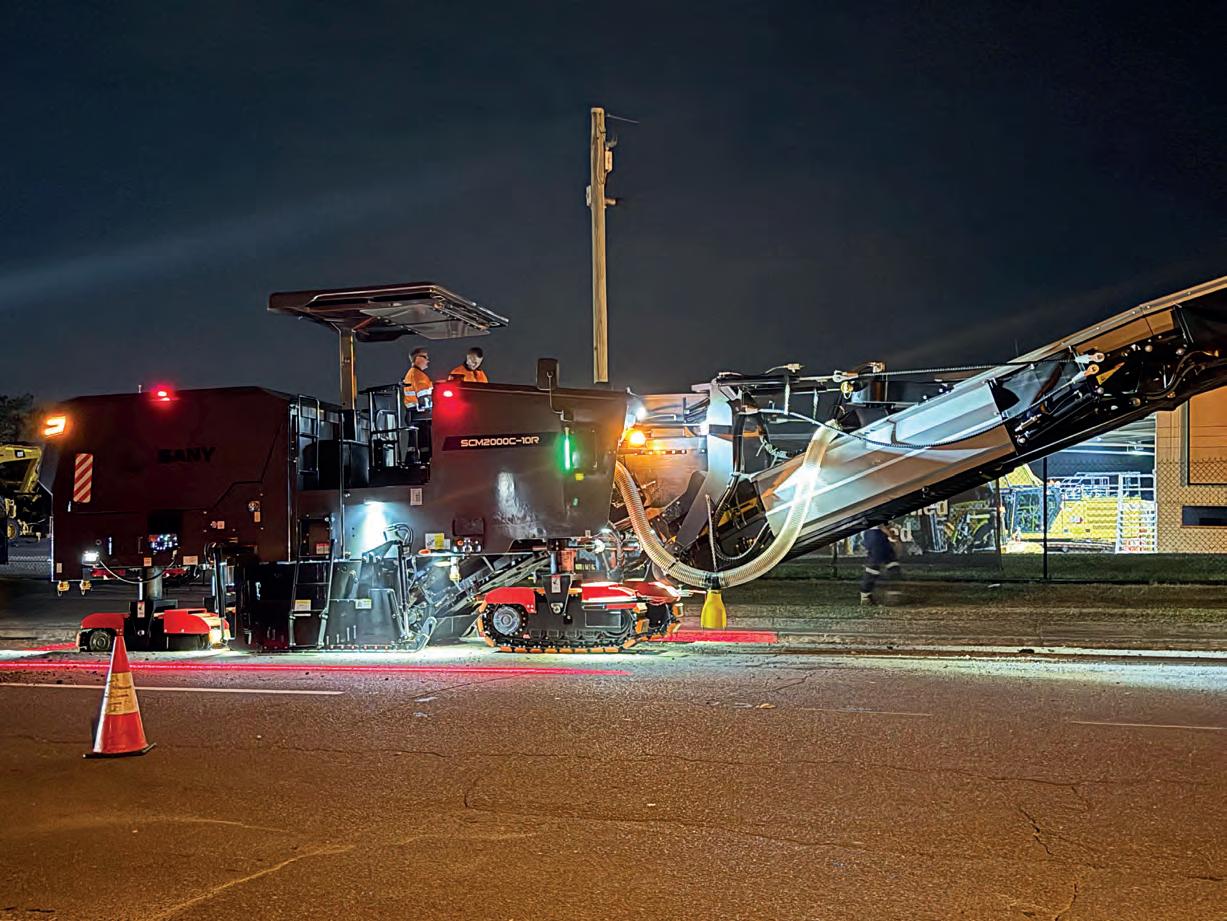
Construction has long been central to Putzmeister Oceania’s offering, and this foundation now extends into the company’s growing asphalt solutions.
pumping machinery, excavators, wheel loaders and other machinery.
As Ryan Van Den Broek, Head of Road Construction – Putzmeister Oceania explains, there’s a level of excitement that’s emerged throughout the business.
“SANY is really turning itself into a solutions-based company rather than just a products-based company,” he says. “By partnering with established dealers, Putzmeister Oceania can focus more on product development, support and long-term ownership value, while dealers bring local relationships, coverage and responsiveness.
“Every new solution creates a new set of questions, ‘How do we power electric rollers, on highway trucks or hybrid machines? How do we feed those machines?’ The focus is on complete ecosystems: hydrogen plants, electrical stations, solar, wind and then the trucks and machinery that tie into that. It’s moving very quickly.”
A major milestone that’s contributed to this growth has been the formation of a strategic partnership between SANY and CEA, with the latter greatly expanding the formers distribution of excavators, telehandlers and material handlers.
Such integration is inspiring positive
dealers has allowed us to focus on product and support, while they bring the people, branches and relationships. It’s made us nimbler and a lot more visible in the market.
“Growing that dealer network means more branches, more service and salespeople and simply more product support out in the market, bolstering the backup that is so essential for all customers.”
This shift and growth have resulted in the company having more than 25 branches across all states and territories in Australia, plugging into established dealer networks presented by CEA, Vertu Equipment, SANY and Putzmeister Oceania’s integration.

Service and after-sales support are among the biggest beneficiaries of this integration. Each dealer brings its own dedicated service teams and parts holdings, while Putzmeister Oceania maintains its own parts inventory and technical specialists to support those dealers.
This creates a layered support structure, where local technicians conduct servicing on the ground, all the while being backed internally by OEM trainers and product experts.
Van Den Broek says that the increased
Queensland and the Northern Territory in roads and compaction – is a direct outcome of having more people, more machines and greater brand presence in market.
He adds that personally, the opportunity to contribute to the growth and expansion of a world-renowned brand was an exciting prospect to begin with.
Such growth has occurred much quicker and more successfully than he ever imagined, the first checkpoint being changes to the way that the Chinese brand is discussed and considered by industry, in terms of the brand’s reputation.
“What really excites me is how the perception of Chinese products has
“BY PARTNERING WITH ESTABLISHED DEALERS, PUTZMEISTER OCEANIA CAN FOCUS MORE ON PRODUCT DEVELOPMENT, SUPPORT AND LONGTERM OWNERSHIP VALUE, WHILE DEALERS BRING LOCAL
RELATIONSHIPS, COVERAGE AND RESPONSIVENESS.”
changed. We’re no longer hearing, ‘It’s a Chinese product,’ as a barrier. The conversation has shifted to ‘Which of the Chinese products is best to use and which will support us the best?’ Over the past 12 months the change has been very fast,” he says.
“That’s partly due to deliberate marketing changes, such as alterations to the physical colour of the machines. Previously, all the Chinese manufacturers were yellow, so on a site you couldn’t easily tell what-waswhat. Now, when you go onto a job site, you know it’s a SANY machine.
“We don’t want to blend in. We want to stand out – not just in colour, but in how we support customers and the value they get over the life of the machine.”
GEOTAB HAS PARTNERED WITH SWINBURNE UNIVERSITY OF TECHNOLOGY TO DEVELOP SKILLS WITHIN AUSTRALIA’S TRANSPORT
Australia is home to one of the largest road networks in the world, running through a variety of mild and harsh conditions and environments.
Moreover, 60 per cent of the network is unpaved, as stated by Institute of Public Works Engineering Australasia. These combined elements can make transport difficult and dangerous for both drivers and fleet managers working to move freight around the country.
But these problems are also well-suited to the solutions of Geotab, whose involvement in the Australian transport sector spans decades. The Canadian company is a global leader in connected vehicle and asset management solutions. It boasts more than six million service subscriptions across more than 100,000 customers worldwide.

Geotab entered the Australian market in 2004, championing cutting-edge products and services prioritising driver safety, route and dispatching optimisation, compliance and asset management.
These tools provide a range of fleet owners and managers with insight into key areas such as driver fatigue, seat belt

usage, harsh braking incidents and more. More recent efforts from the company have included incorporating artificial intelligence (AI) into fleets to protect the safety of motorists traversing the country’s demanding roads.
Now, Geotab has partnered with Swinburne University of Technology to accelerate research, innovation, and skills development within Australia’s transport and technology sectors. For Swinburne, this is the latest in a series of extensive research programs into the world of transport – which has ranged from sustainable fuels to digitisation and safety upgrades.
The institution’s collaboration with Geotab aims to bridge the gap between academic research and industry application.
This will be achieved by establishing a physical hub where students can integrate their studies with relevant transport technology and research.
“The transport sector is at a crossroads for a lot of technological disruptions with AI and data,” says Hadi Ghaderi, Professor of Supply Chain Innovation and Decarbonisation at Swinburne. “If operators don’t adapt, they could fall

behind. This technology is being used to solve issues around safety, vehicle connections, and more.
“We, with Geotab, have decided that we need to provide the industry with a platform to clearly address some of these problems and the tools being used to solve them. This is where the hub comes in.”
Ghaderi explains that the hub will be established on Swinburne’s campus in Hawthorn, Melbourne as a national centre for AI-enabled transport innovation, designed to fast-track learning and collaboration across transport data, telematics analysis and intelligent mobility systems. It will connect industry professionals, policymakers, and researchers to tackle real-world challenges in productivity, safety, and sustainability.
Swinburne researchers will specifically gain access to Geotab’s global telematics platform, allowing
“AS
A DUAL-SECTOR INSTITUTION, SWINBURNE OFFERS A UNIQUE PLATFORM TO ENGAGE TALENT ACROSS VOCATIONAL, UNDERGRADUATE, AND POSTGRADUATE LEVELS, ENSURING OUR COLLABORATION IMPACTS THE ENTIRE TRANSPORT WORKFORCE.”
them to use real-world data to address critical challenges in urban mobility, safety, and sustainability. This will build a direct pipeline of skilled graduates who are familiar with advanced telematics technology.
“Students have a number of options for development,” Ghaderi says. “We have PhD projects that are going to be funded by Geotab on a higher-tech and more advanced level.
“We also have students who are going to work and experiment on Geotab technologies on an undergraduate level. Geotab is also providing a lot of interesting data, resources, and hardware.”
Apart from direct learning programs, the hub’s operations will open doors for joint grant applications, guest lectures, and industry engagement activities such as roundtables and site visits. Ghaderi says these tools will all contribute to bolstering education in key sectors.
“Our goal is to support the next generation of talent in transport, technology and research,” he says.
Key to the hub’s success is the strong alignment between Geotab and Swinburne.
“The synergy between Geotab and Swinburne became clear through our shared industry memberships and a common network of industry partners,”
says Alkan Ciftci, Business Development Manager – ANZ at Geotab.
“As a dual-sector institution, Swinburne offers a unique platform to engage talent across vocational, undergraduate, and postgraduate levels, ensuring our collaboration impacts the entire transport workforce.”
Additionally, Ciftci explains that while Geotab’s partnership with Swinburne is still nascent, it is already yielding practical solutions.
“In 2025, a student group earned the Capstone Project Award for developing a specialised heavy vehicle emissions reporting add-in for MyGeotab,” he says. “This tool will be available for free, providing immediate value to the sector.
“Looking ahead to 2026, we are actively developing new initiatives focused on video telematics, driver assistance, productivity, and decarbonisation, which we look forward to announcing later this year.”

& INFRASTRUCTURE MAGAZINE UNPACKS THE 2026-27 FEDERAL BUDGET, AND ITS IMPACTS ON BOTH NEW AND ONGOING PROJECTS ACROSS THE INDUSTRY.
Australia’s Federal Budget is a crucial determinant of the country’s economy every year. It outlines how the government will collect and allocate money based on the most pressing social and financial concerns at the time, with policy rollouts or cutbacks that affect infrastructure, social services, and other schemes.
The 2026-27 Federal Budget addresses a plethora of key national issues, from cost-of-living pressures, housing affordability and greater intergenerational inequity to economic consequences from ongoing global conflict, and productivity in general. Roads and infrastructure, an integral part the country’s economy, was allocated about $8.6 billion in the latest Federal Budget.
This is part of what the Federal Government has dubbed a ‘rolling infrastructure pipeline’ of more than $120 billion in funding over 10 years, with short-term profile adjustments
having been made to infrastructure investment in response to the effects of the Middle East conflict.
Compared to previous budget allocations, this means that funding for infrastructure has been reduced this year.
Victoria has been allocated $3.8 billion of this funding – the most of any state or territory – for the development of its Suburban Rail Loop East (SRL East), a landmark project which aims to cut travel times, reduce congestion, and reshape how the city of Melbourne grows.
The project will deliver a 26-kilometre underground orbital rail line through the city’s eastern and south-eastern suburbs, specifically creating interchanges with four of Melbourne’s established radial rail lines at Cheltenham, Glen Waverley, Box Hill and Clayton. It will also connect rail lines in four directions, including regional V/Line services on the Gippsland line. The Federal Government has
ensured that the project will support economic productivity by improving public transport connectivity between major employment, education and health precincts.
Meanwhile, Queensland has been allocated $812.5 million for vital upgrades to the Bruce Highway, an arterial road in the state. The investment will specifically target road works between Gateway Motorway and Dohles Rocks Road on the passage, an integral section linking commuters between Brisbane, the Moreton Bay region, and the Sunshine Coast.
The section’s popularity with motorists has resulted in a bottleneck threatening safe and efficient passage, which will aim to be removed.
In Western Australia, the Federal Government has committed $552 million to deliver the first stages of upgrades to Anketell Road, which aim to strengthen the state’s supply chain resilience, housing supply, and improve overall productivity in the defence and critical
mineral industries. Anketell Road is a key freight route in the state and is expected to become the route of choice for heavy vehicles travelling between Leath Road and the Kwinana Freeway. The Western Australian Government has matched the funding dollar-for-dollar, which will be directed towards developing the future Westport container terminal in Kwinana, which Anketell Road leads to.
Victoria has been allocated $3.8 billion
“AT A TIME OF ONGOING COST OF LIVING PRESSURES AND SLOWING PRODUCTIVITY, INFRASTRUCTURE INVESTMENT SHOULD BE PART OF THE SOLUTION, NOT A CASUALTY.”
New South Wales has received $45 million of the Federal Budget’s transport infrastructure funding for safety improvements to the M1, a major pacific motorway for commuters and freight. This will be joined by $50 million to upgrade the rail corridor from Sydney to Canberra.
In addition to these state investments, the Federal Government has committed $500 million over the next 10 years to further support the Active Transport Fund – an initiative designed to improve, construct, and upgrade bicycle and walking pathways across the country.
Targeted freight and supply chain investments supporting the efficient movement of goods around the country have also been announced, with a $1.75 billion commitment in equity for the Australian Rail Track Corporation to upgrade the country’s rail freight network.
A further $841.7 million has been allocated to community infrastructure, including through the Thriving Suburbs, Growing Regions and Stronger Communities programs, funding projects such as libraries, parks, community centres and sport and cultural facilities.
Australasian Railway Association (ARA) Chief Executive Officer Caroline Wilkie praised the Federal Budget’s attention to the rail network.
“The ARA welcomes this strong investment, which reinforces the critical importance of freight and passenger rail to the economy and community,” she said.
“This funding recognises how rail investment unlocks growth, connects industry and improves community outcomes across the country.”
Australian Constructors Association Chief Executive Officer Peter Colacino said a stable infrastructure pipeline is essential to maintain industry capacity and long-term value for taxpayers.
“Governments can’t turn major infrastructure projects on and off like a tap,” he said. “At a time of ongoing cost of living pressures and slowing productivity, infrastructure investment should be part of the solution, not a casualty.”

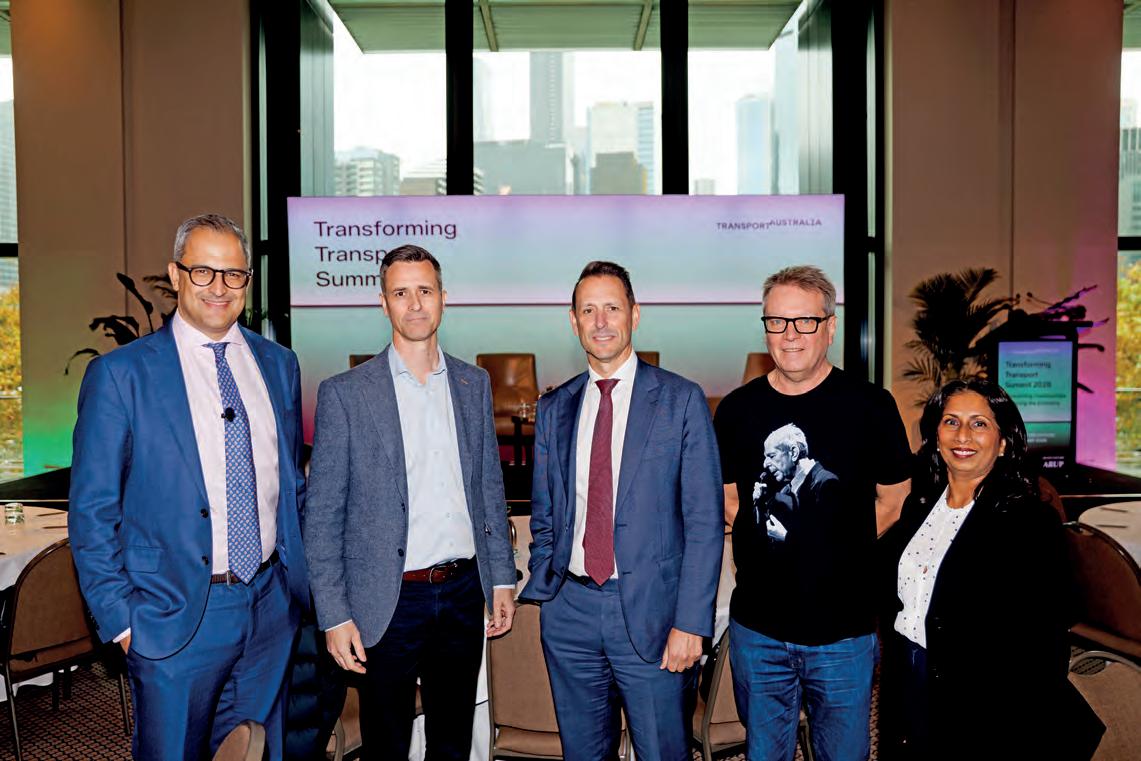
On May 7, Crown Casino in Melbourne played host to one of the transport industry’s flagship annual summits – where the full day program moved past high-level theory to drive practical conversations regarding productivity, liveability and sector reform.
Organised by Transport Australia, the 2026 Transforming Transport Summit focused on ‘connecting communities. empowering the economy’ through a full day of industry-focused discussions.
One day prior to the Summit, Transport Australia held its Pre-Summit Networking Event at Ventia in Cremorne, bringing together delegates, members, partners and senior transport leaders.
The informal event provided a setting where public and private sector leaders could engage directly on the pressures shaping the next decade of transport policy and investment, and laid the foundation for the discussions that were held during the formal Summit program.
From the outset, the Summit framed transport as critical economic infrastructure, highlighting how even small improvements in network performance could deliver gains in productivity, efficiency, and safety for people, businesses, and communities.
Across the day, the program was structured to take an integrated, systemwide view of transport, rather than focusing on isolated modes or individual projects. Sessions brought together ministers, shadow ministers, departmental secretaries, board directors and industry executives to explore questions around network capacity, sustainable funding, the long-term legacy of major projects and much more.
The agenda aimed to balance high-level strategic perspectives – what senior decision-makers consider when shaping policy and investment – with technical, practice-based discussions. Following a formal Welcome to Country, Transport
Australia Chief Executive Officer (CEO) Ehssan Veiszadeh opened the conference.
“Today, we want to step back and think about the transport system as a whole, and take as integrated a view as we can,” he said. “These discussions are designed for people who want to understand how decision-makers and industry leaders are thinking about the future transport system, gain insight into shared challenges, and take part in practical discussions about productivity, liveability and reform.”
A central feature of the event was the official launch of the ‘The Road to Reform: Why Australia Needs a Sustainable Funding Model’ policy report. This report, which argues for a fair, national road user charging framework, was positioned as a key contribution to current federal and state policy work. The report was also unpacked in more
detail during an afternoon panel, where speakers discussed funding reform, the transition to more sustainable models, and how to implement these changes within the current political and economic context. Speakers included Tim Pallas, the former Treasurer of Victoria, who spoke about lessons from the first real attempts at road user charging. Additional insights were provided by Transurban CEO Michelle Jablko, and transport policy expert Angus McDonald.
Additional panels and keynote speakers addressed improving network capacity and performance; maintaining safety as the system changes; maintaining community confidence and much more.
Just some of the key industry and government figures who featured included Jim Betts (Department of Infrastructure), Jeroen Weimar (VIC Transport) and Josh Murray (Transport for NSW), among others.

Following the conclusion of the Transforming Transport Summit, Transport Australia welcomed delegates and attendees to the evening’s annual awards night.
The John Shaw Dinner is Transport
sector to recognise excellence, leadership and industry contributions. The dinner provided an important counterpoint to the policy focus of the Summit. Where the Summit examined the system-level challenges facing transport, the John Shaw Dinner celebrated the people who deliver, improve and lead that system.

Marking a historic milestone for the
was recently appointed a Member of the Order of Australia (AM) for her significant service to transport and infrastructure.
“My biggest wish would be that this encourages young women to join transport, young women to move through the system and to see transport as offering a whole career,” Miles said.
“To see women win awards, to have their
“THESE DISCUSSIONS ARE DESIGNED FOR PEOPLE WHO WANT TO UNDERSTAND HOW DECISION-MAKERS AND INDUSTRY LEADERS ARE THINKING ABOUT THE FUTURE TRANSPORT SYSTEM, GAIN INSIGHT INTO SHARED CHALLENGES, AND TAKE PART IN PRACTICAL DISCUSSIONS ABOUT PRODUCTIVITY, LIVEABILITY AND REFORM.”
event, Transport Australia presented four of the most prestigious industry awards in a single evening for the first time.
Three of the four awards went to women this year, reflecting a rapidly changing and increasingly diverse sector. Dr Gillian Miles took out the sector’s highest individual honour after being named the 31st recipient of the John
Miles has more than 30 years’ experience across transport policy, reform and public administration, including as Chief Executive Officer and Commissioner of the National Transport Commission, Head of Transport for Victoria, and in senior executive roles across the Victorian
work acknowledged and to be part of the conversation about the future of transport in this country is incredibly important.”
Aimee Wescombe was the recipient of the 2026 Ray Fisher Award for Technical Excellence, recognising her outstanding technical leadership and contribution to road safety and infrastructure delivery.
The Fellowship Alumni Award was presented to Stuart Cook for his contribution to leadership development and mentoring across the industry.
Claudia Elfar received the Emerging Leaders Award, recognising her outstanding leadership potential and contribution to the future of t he sector.
SPEAKING AT TRANSPORT AUSTRALIA’S RECENT 2026 TRANSFORMING TRANSPORT SUMMIT, JIM BETTS – SECRETARY OF THE DEPARTMENT OF INFRASTRUCTURE, TRANSPORT, REGIONAL DEVELOPMENT, COMMUNICATIONS AND THE ARTS PROVIDED INSIGHTS AROUND CURRENT CHALLENGES AND OPPORTUNITIES FOR INDUSTRY.
Addressing the Transforming Transport Summit just days before the release of the Federal Budget, Jim Betts – Secretary of the Department of Infrastructure, Transport, Regional Development, Communications and the Arts described Australia’s transport system as being at an inflection point.
Opening his address, Betts began with an overview of the national fuel supply situation, explaining the Federal response which included temporary fuel excise relief measures and adjusting road user charges designed to relieve pressure on the heavy vehicle sector, and regional aviation.
He stressed that his department was closely monitoring both supply and prices, looking at viability impacts on small operators, regional communities and offshore territories.
On productivity, Betts linked a $120 billion pipeline to clear policy goals: reducing congestion, efficiently connecting freight to markets, supporting international gateways and backing mass transit for growing cities.
He also praised Infrastructure Australia’s revamped infrastructure priority list for organising proposals under strategic themes such as high‑productivity freight networks, port capacity and high‑capacity transport
Interoperability and funding flexibility between transport modes was also a focus of Betts’ address.
for growing cities, arguing this provides a stronger framework for how the Federal Government co‑invests with states.
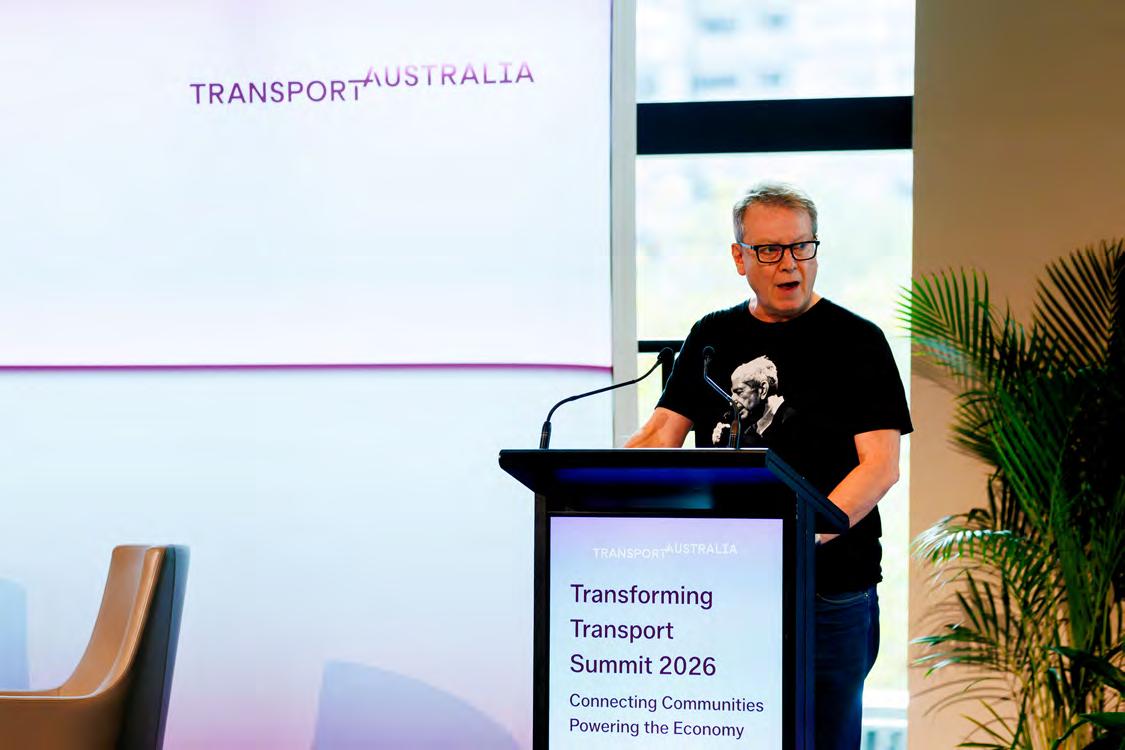
“We are all at our best when a policy driven Commonwealth is supported by states that have long term, integrated transport, land use and infrastructure strategies,” Betts said.
BOOSTING PRODUCTIVITY
Betts then drilled into two flagship productivity reforms.
First, the National Automated Access System (NAAS) for heavy vehicles, a $40 million joint investment intended to cut permit requirements by about 90 per cent, by automating repeat access decisions and linking disparate state systems through a single portal operated by the National Heavy Vehicle Regulator.
“The national automated access system for our heavy vehicles will be the biggest single driver of improved access to our networks for heavy vehicle operators,” Betts said.
“It needs to be combined with network assessments and a risk appetite which enables greater access and therefore greater productivity for our freight operators.”
Secondly, he highlighted the National Rail Action Plan, aimed at overcoming Australia’s “modern gauge break” by harmonising train control and signalling standards, and type approvals. This, combined with a repurposed Rail Safety Standards Board and the role of the National Rail Safety Regulator, is intended to make disparate state networks more interoperable and productive.
Another key theme was network resilience. Using the Inland Rail project as a backdrop, Betts also pointed out that transcontinental freight links are more regularly being disrupted by climatic events, posing economic and resource‑security risks.
He said a corridor based, programmatic approach could deliver stronger resilience and productivity by coordinating multiple smaller projects, rather than relying on a single megaproject.
Betts added that his approach could also help to preserve productivity, safety and supply chains in an era of growing disruption.
On decarbonisation, Betts underlined that transport is on track to become the
biggest emitting sector in Australia by the end of the decade, with road transport accounting for 80 per cent of sector emissions and cars alone for about 60 per cent.
“Any strategy to reduce transport based carbon emissions will require a strategy for decarbonising cars. Hence the New Vehicle Efficiency Standard,” Betts said.
He noted that the strategy is already yielding results, with electric vehicles and plug in hybrids accounting for 23 per cent of national car sales in March 2026, double the rate of the previous year.
He also pointed to evolving battery technologies for heavy vehicles and his department’s work on sustainable aviation fuel and low‑carbon liquid fuels.
This includes regulatory frameworks and production incentives aimed at building sovereign capability and reducing exposure to vulnerable supply chains.
Safety was another key aspect of Betts’ address.
He said post‑COVID pandemic trends are “adverse” and largely behaviourally driven, influencing speed, intoxication and other related factors. Betts referenced that while data collection and national coordination have improved, the “next
big leap” in road safety remains elusive. On a positive note, he pointed to the work that’s underway on a coordinated framework for e‑mobility devices and, more structurally, a regulatory and legislative framework for automated and connected vehicles targeted for implementation in 2027.
This framework would shift more safety responsibility from individual drivers to original equipment manufacturers (OEMs), representing a significant philosophical change in road safety regulation, alongside continued investment in initiatives such as the Safe Local Roads and Regional Infrastructure program.
“We’re in a much more joined up space now, recognising that we all have a role to play,” Betts said.
“Speed continues to make up two thirds of fatalities on the road, but we also need to think of other avenues for improving road safety.”
Betts ended his keynote by again highlighting the importance of genuine partnership. That is, the Federal Government having clear policy goals and a long term lens, working hand in hand with states that hold the operational levers and local knowledge.

ALL ROADS LEAD TO VICTORIAN TRANSPORT INFRASTRUCTURE CONFERENCE, A HIGHLY ANTICIPATED INDUSTRY EVENT THAT’S EXPECTED TO BRING TOGETHER LEADERS FROM ACROSS THE PUBLIC AND PRIVATE SEGMENTS OF THE INDUSTRY.
The North East Link, Suburban Rail Loop, Inland Rail, Melbourne Airport plans, Port of Melbourne transformations, Western Highway upgrade, and Sunshine Superhub development: these are some of the many major transport infrastructure projects that will be discussed at the 15th Victorian Transport Infrastructure Conference, which returns to the Melbourne Convention and Exhibition Centre on 17-18 June.
The VIC Transport Infrastructure Conference will bring together senior representatives from industry, government and the private sector to foster innovation, collaboration, and knowledge sharing. The Victorian and Federal governments are investing billions of dollars in developing Victoria’s transport infrastructure to meet network expansion requirements for Australia’s fastest growing state. During the twoday conference, senior-level speakers, headlined by Gabrielle Williams – Minister
for Transport Infrastructure, as well as Public and Active Transport, will discuss the deployment of this investment in transport infrastructure and provide key insights into the transport infrastructure projects shaping Victoria, including port, road, rail and airport projects. Potential solutions for future challenges will also be discussed.
More than 25 senior-level speakers, representing industry leaders, government agencies, and private stakeholders, will speak at the VIC Transport Infrastructure Conference, hosted by Expotrade. Paul Roth, Interim Chief Executive Officer – VIDA Roads, will discuss progress on the North East Link, the largest ever investment in a road project in Victoria’s history. Melissa Dobric, Executive Director – Major Projects Development and Integration, Department of Transport and Planning VIC, will outline the Department of Transport and Planning’s strategies and plans to provide transport
infrastructure that caters for Victoria’s booming population.
Jamie Burn, Package Director for Linewide and Operations – SRLA, will provide an overview of the Suburban Rail Loop (SRL), a city-shaping mega infrastructure project, including an update on construction and procurement progress. Dr Lissa van Camp, Executive General Manager, Land, Planning, Environment and Sustainability – SRLA, will discuss structure planning and placemaking centred around the SRL.
Executive leaders from private companies will also speak at the VIC Transport Infrastructure Conference. Matt Stirling, Executive General Manager of Planning, Environment and Infrastructure – Melbourne Airport, will discuss the construction of a third runway, and other expansion plans to meet forecast passenger and freight demands. Sarah Browne, Executive General Manager –Port of Melbourne, will outline major transformations underway at the Port of Melbourne, the number one container port in Australia.
Jill Riseley, AM, Deputy Chief Executive

Officer – Infrastructure Victoria, will outline the organisation’s recommendations and findings to improve Victoria’s transport infrastructure provisioning. Russell Hamilton, Acting Project Director – Inland Rail, will provide the latest updates on the Inland Rail project and the implications for the freight industry.
Aline Frantzen, Chief Operating Officer – Metro Trains Melbourne, will discuss the journey to operationalise the Metro Tunnel and provide insights from its first few months of operation. And Carol-Anne Nelson, Chief Executive Officer – Ventura Bus Lines, will join a panel discussion on ways to improve Melbourne’s bus service provisioning.
For a full list of speakers, and the diverse range of transport topics covered in the two-day conference, visit www.vicinfrastructure.com.au
For professionals in the transport sector, this conference is more than just an event: it is a gateway to understanding


the future direction of Victoria’s transport system. Attendees will leave with actionable insights, inspiration, and connections that empower them to actively contribute to Victoria’s long-term growth and sustainability.
Attend to have the chance to network with decision-makers, gain valuable insights, and be part of shaping Victoria’s transport infrastructure future.
Whether you are a policy maker, project manager, planner, engineer, contractor, or investor, the Victorian Transport Infrastructure Conference is an unmissable opportunity to be a part of the conversations shaping the state’s transport future. Secure your place today to be a part of the discussions and innovations driving Victoria forward.
Visit the official 15th Victorian Transport Infrastructure Conference website www.vicinfrastructure.com.au for more details and to register.


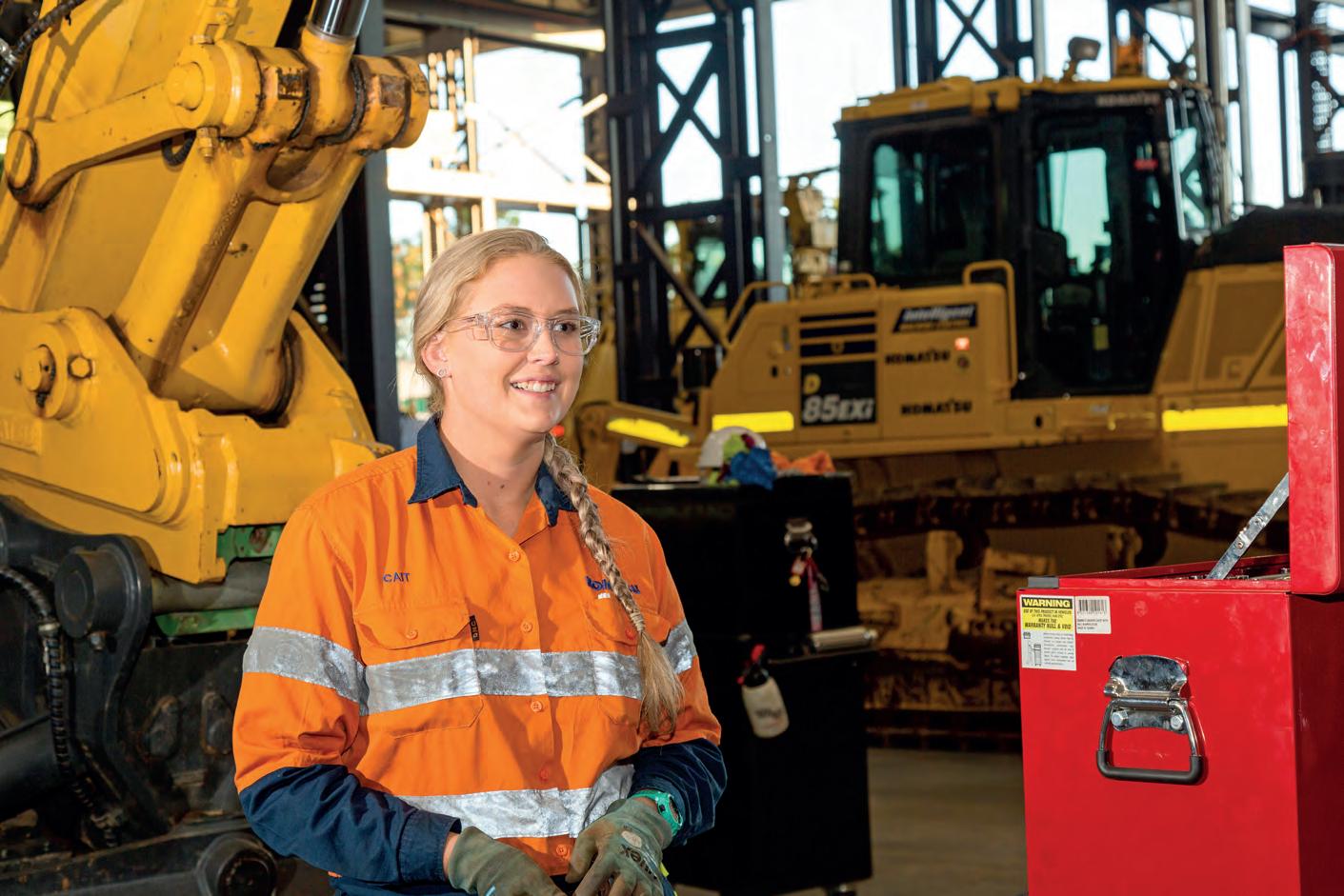

INDUSTRY DYNAMO CAITLYN HAYES HAS BEEN NOMINATED FOR TWO AWARDS AT THIS YEAR’S WOMEN IN INDUSTRY AWARDS EVENT IN SYDNEY.
These two nominations reflect Hayes’ unwavering dedication to a versatile calling.
“I grew up around the construction and heavy mining industries,” she says. “My parents had their own business with trucks and a workshop, so I was
“My dad and some uncles and cousins, who are all mechanics, were the ones who encouraged me when I mentioned I wanted to do it after high school. They basically just asked ‘why not?’, so I did.”
This ambition has taken Hayes to a myriad of roles across the country,
“THERE WAS DEFINITELY A LEARNING CURVE FOR BOTH ME AND THE CUSTOMERS WHO I INTERACTED WITH WHEN I BEGAN, SINCE IT WASN’T NORMAL TO SEE A WOMAN IN A MALE-DOMINATED SPACE LIKE THAT AT THE TIME.”
exposed to it from a young age. I was always interested in the work they did and helped them out, although I didn’t think it was a career I could pursue because I was a woman, and it wasn’t the common thing. There wasn’t any true representation of female role models in that space for me.
starting with John Deere on the southwestern border of Queensland and New South Wales. There, she began as a service technician apprentice, completing a Cert III in Agriculture in 2018. The opportunity served as her first exposure to the niche’s demanding work and wide range of equipment.
It also tested her determination and creativity, with great results.
“Having the opportunity to do field service made me push myself and problem solve,” Hayes says. “That’s something I’ve kept with me throughout my journey as an out-of-the-box thinker.
“I had a great crew of supportive people who took me on board as the first woman within their company. There was definitely a learning curve for both me and the customers who I interacted with when I began, since it wasn’t normal to see a woman in a male-dominated space like that at the time.”
A drought in western Queensland in mid-2020 put pressure on agriculture work in the region. Hayes responded with resilience by transitioning to mobile plant technology, and finished her trade with Komatsu. Upon completion, she wasted no time in continuing to learn
Hayes’ work has taken her across Australia and led her to thrive in various disciplines.
and grow, starting a second trade in 2022 as an auto electrician. She has been dual-certified since 2024, and her unique skillset has taken her to new heights.
“I’m currently a dual-trade qualified fitter working fly-in-fly-out (FIFO) in the Pilbara region of Western Australia,” Hayes says, “working on a customer’s site in both a field service and workshop capacity.
“I predominantly work on a fleet of Komatsu WA900 wheel loaders.
I was previously working for the company’s Used Equipment and Rentals department, so it’s been quite a change
going from a team environment to working solo.”
But the work has allowed her to develop her expertise even further, with stimulating applications that she loves.
“Every day is different for me on site –from servicing, breakdowns, component changeouts and rebuilds to air conditioning faults and electrical faults,” Hayes says. “I enjoy the challenge of it all, and the satisfaction you get at the end of a breakdown or repair.”
Hayes’ varied and impressive work has resulted in many accolades throughout her career. Now, having received two
“IT’S VERY NICE TO ACT AS A ROLE MODEL AND SUPPORT THE NEXT GENERATION OF ‘TRADIES’ COMING INTO THE INDUSTRY, AND BE ABLE TO SHARE MY KNOWLEDGE WITH THEM. BEING NOMINATED FOR THESE AWARDS IS REALLY EXCITING.
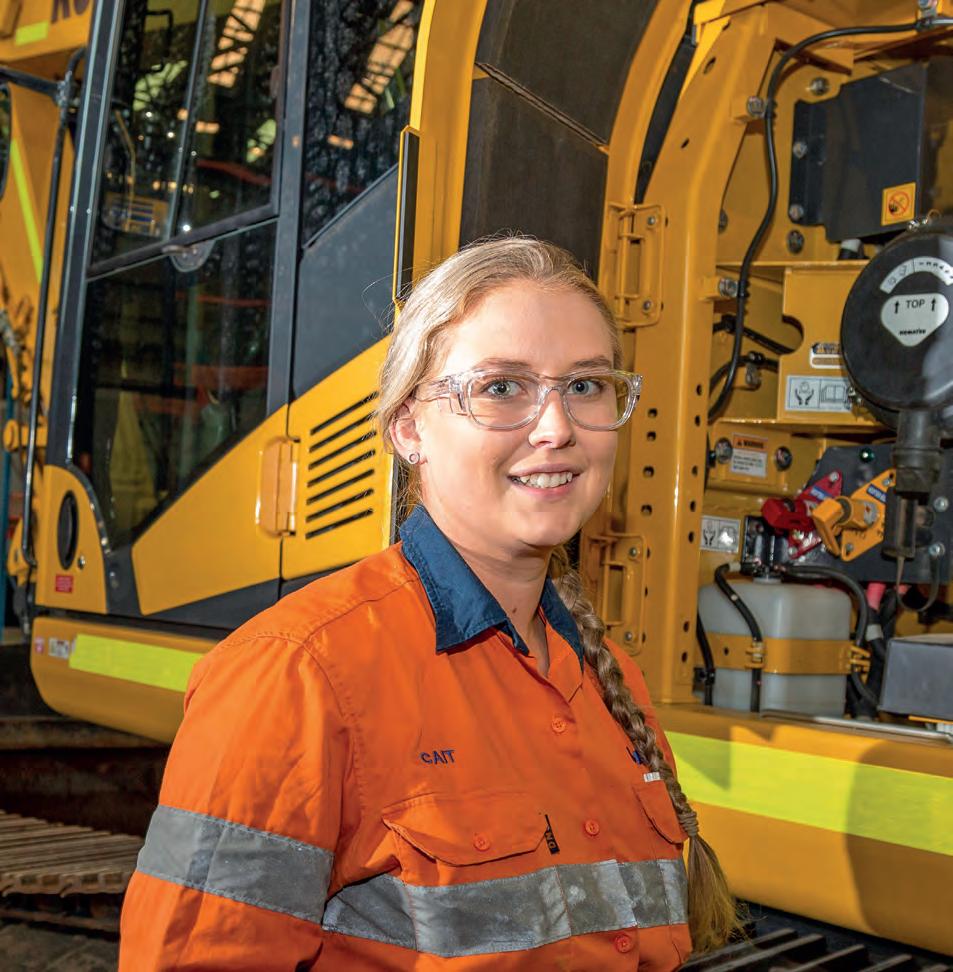

nominations from the Women in Industry Awards, she feels there is a perfect opportunity to amplify all she has learned from her experiences for the next generation of female workers.
“It’s very nice to act as a role model and support the next generation of ‘tradies’ coming into the industry,” she says, “and be able to share my knowledge with them. Being nominated for these awards is really exciting.
“I’m grateful to be recognised and am proud of what I’ve been able to achieve in my career.”
As part of being a role model for industry newcomers, Hayes is excited to use her platform at the awards ceremony to bring attention to important issues and dynamics surrounding how women enter and stay in heavy industries.
“Events such as this one help bring visibility to women in the industry and celebrate them,” she says, “and it gives us a great outlet to discuss what we would still like to see resolved. I think a lot of work can be done in the space to get women in the door in general, and to retain and support them once their apprenticeships are complete.
“Ultimately, I’m excited to discuss these important topics while also meeting so many other amazing people in the industry. It will be a great night to support each other and acknowledge our journeys.”

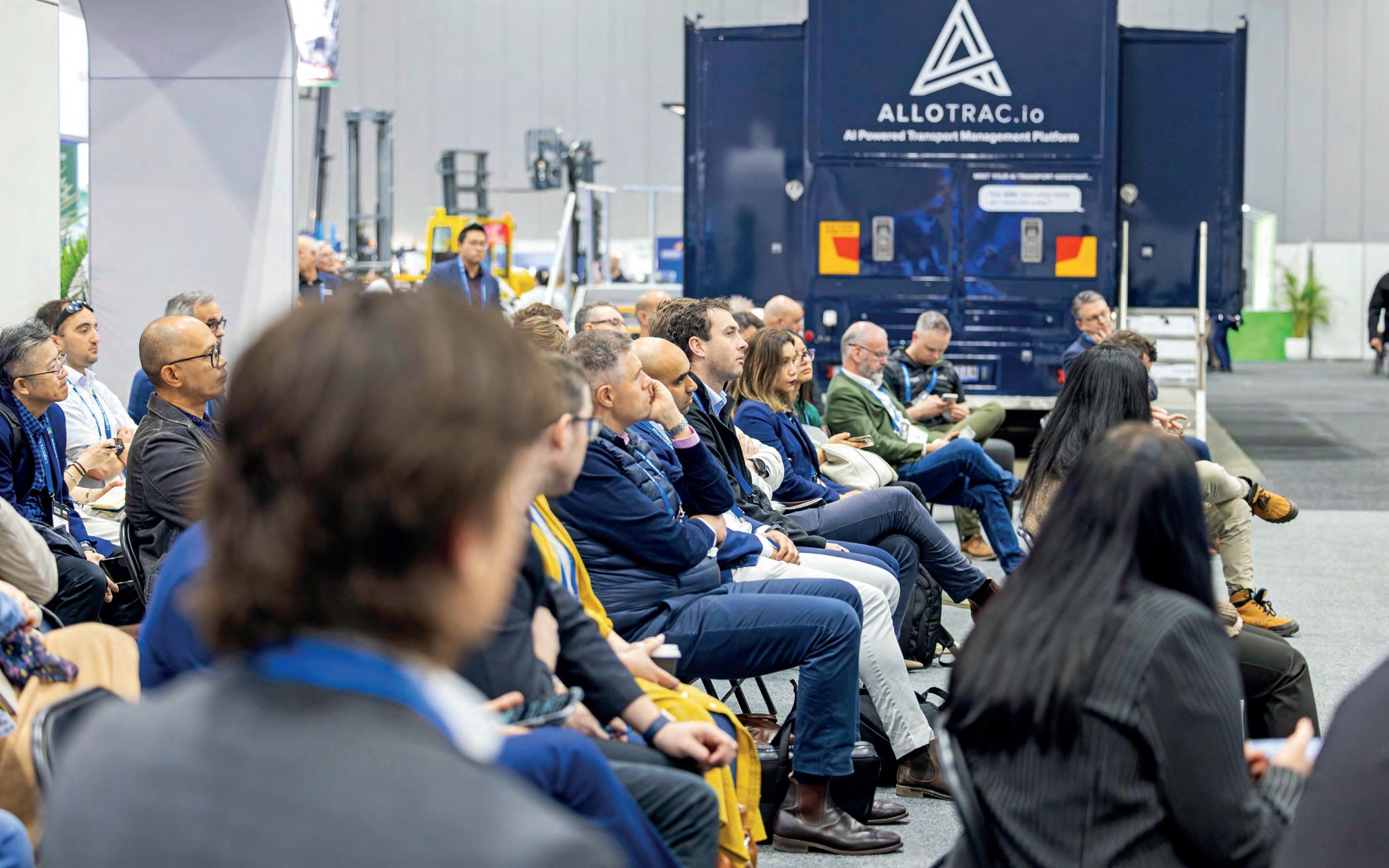
THE 2026 BULK HANDLING EXPO IS COMING AT A CRITICAL TIME FOR SUPPLY CHAINS AND INDUSTRIES ACCORDING TO THE INTERNATIONAL CARGO HANDLING CO-ORDINATION ASSOCIATION, A KEY PARTNER FOR THE EVENT.
The Bulk Handling Expo is Australia’s only dedicated exhibition and conference for the bulk solids handling industry. Since 2022, the biennial convention has connected leading suppliers with senior decision makers such as engineers, operators, procurement professionals and contractors at the Melbourne Convention Centre.
At each iteration, stakeholders have enjoyed access to conference sessions, networking events and machinery displays for two days at a time.
This year, the Bulk Handling Expo is back. Running from 16 to 17 September, the 2026 convention is unique for various reasons. Returning to the event is the Bulk Handling Technical Conference – a world-class forum of
advanced technical content curated by the Australian Society for Bulk Solids Handling.
The conference will bring together leading engineers, researchers and technology providers from across the global bulk solids and material handling sector, highlighting advances in safety, digital engineering and infrastructure performance.
The 2026 Bulk Handling Expo is also unique due to what is a precarious time for industry, with global conflict putting pressure on supply chains, manufacturing and overall operations.
The International Cargo Handling Coordination Association (ICHCA), a key industry partner for the expo, feels this is exactly why the event must go on.
“Right now, the world and its industries are facing serious operational challenges,” says Peter van Duyn, Company Secretary of ICHCA Australia. “In times like these, all these sectors need to be resilient and supportive, and need to continue to get work done.”
The ICHCA is a not-for-profit organisation dedicated to improving
the safety, efficiency, security and sustainability of supply chain logistics. It unites hundreds of members of associated sectors across Australia, the United Kingdom, Japan, and other countries.
Van Duyn explains that the ICHCA has long been involved with the Bulk Handling Expo due to the organisation and convention sharing core ideologies.
“Our commitments to efficiency and safety in our industry and the wider logistics, transport and machinery sectors are shared with the Bulk Handling Expo,” he says.
“We have been actively involved with the event for its past few conventions and know it well.”
While these previous involvements included providing speakers at the
event and running an exhibition stall, the ICHCA became a key partner for the 2026 Bulk Handling Expo due to its desire to celebrate the industry in what Van Duyn has described as trying times.
“Geopolitical and market conditions, such as what we’re seeing today, put supply chains and related industries in the minds of the public, as transport and products become more expensive and harder to get,” he says. “When that happens, and events such as the Bulk Handling Expo occur, there is a great opportunity to remind people of how important the sector is.
“We want to capitalise on this wider attention to commemorate all the effort that goes into keeping supply, transport and road and civil works afloat. As a key partner, we’re promoting the Bulk Handling Expo to our associate members and the wider public.”
In addition to the importance of this
“THE BULK HANDLING EXPO PROVIDES A CHANCE FOR EVERYONE TO CONNECT WITH THE WORK THEY DO ON A DEEPER LEVEL, MEET NEW PEOPLE AND UNDERSTAND SOME ISSUES. THAT SEEMS MORE IMPORTANT NOW THAN EVER.”
industry celebration, the Bulk Handling Expo’s networking opportunities have also been a crucial aspect of the event for Van Duyn.
“I love how people can come together to learn about the fields we work in,” he says. “Being able to mingle, being able to see presentations, and new equipment on display, it’s all a privilege. Some of these machines and ideas have been around for a long time, while others are emerging.
“The Bulk Handling Expo provides a chance for everyone to connect with the work they do on a deeper level, meet new people and understand some issues. That seems more important now than ever.”
Visit https://bulkhandlingexpo.com. au/ for information and tickets.

Australia’s infrastructure pipeline is expanding, but so too is the pressure to reduce embodied carbon across major projects. Concrete remains essential to delivery, however, its reliance on Portland cement continues to drive emissions at a scale the industry can no longer ignore.
Far from simply mitigating the issue of emission-heavy concrete, Western Australian business and National Precast Member Permacast made a strategic pivot to lowcarbon concrete, and the results have proved significant.
The company has assessed that the emissions problem is unavoidable through conventional means and predict that regulatory and market pressures are only likely to increase. Observing that large volumes of industrial by-products generated in the region are currently being exported or discarded, Permacast believed it could transform WA’s industrial waste streams into a strategic asset and competitive advantage.
Earlier this year, Permacast published its white paper detailing its pursuit of lowcarbon high-performance green concrete. Its mission is to be seen as a leading innovator in the space and is now advocating for policy change. Its journey and approach are wellworth understanding.
For contractors, asset owners and engineers, the barrier is not innovation. It is certainty. Low-carbon mixes must demonstrate structural performance, durability in demanding environments, compliance with existing specifications and consistency at scale. Without this, uptake remains limited, particularly in infrastructure where long asset life and risk management are critical. Despite growing policy interest, the absence of clear mandates and consistent
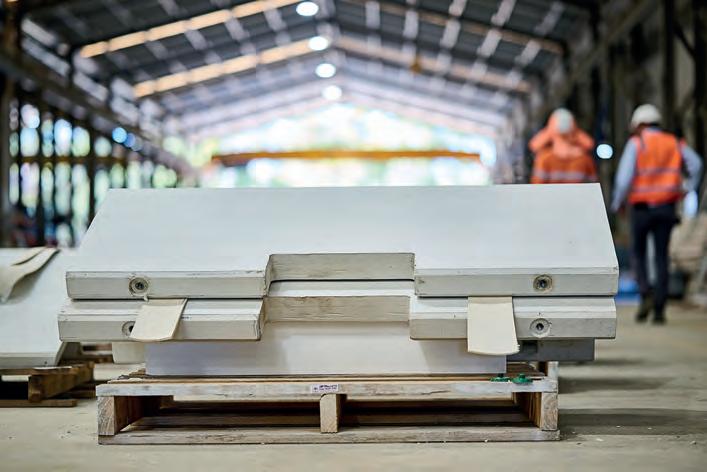
procurement pathways continues to slow adoption. Industry conservatism, combined with fragmented standards and validation approaches reinforce reliance on traditional materials.
Advances in high-recycled-content concrete are beginning to address these challenges by combining sustainability with proven performance.
In Western Australia, locally sourced industrial by-products from mining, construction and processing industries are being incorporated into concrete mixes as supplementary cementitious materials. These materials reduce clinker content while maintaining structural integrity.
Recent developments have demonstrated clinker replacement levels of about 30 to 40 per cent, with early results indicating embodied carbon reductions in the order of 20 to 25 per cent, depending on the mix design and application.
This is a critical shift. The conversation is
moving away from future potential and towards what can be delivered today using locally available resources.
Demonstrating performance in real infrastructure applications is essential to building industry confidence.
Low-carbon precast elements, including noise wall panels, are now being developed and tested using high-replacement mixes. These solutions demonstrate how lowcarbon alternatives can meet standard infrastructure requirements while reducing reliance on traditional cement.
Performance testing has shown that these mixes can meet, and in some cases exceed, expected benchmarks. Compressive strengths have surpassed design requirements at 28 days, confirming their suitability for structural applications.
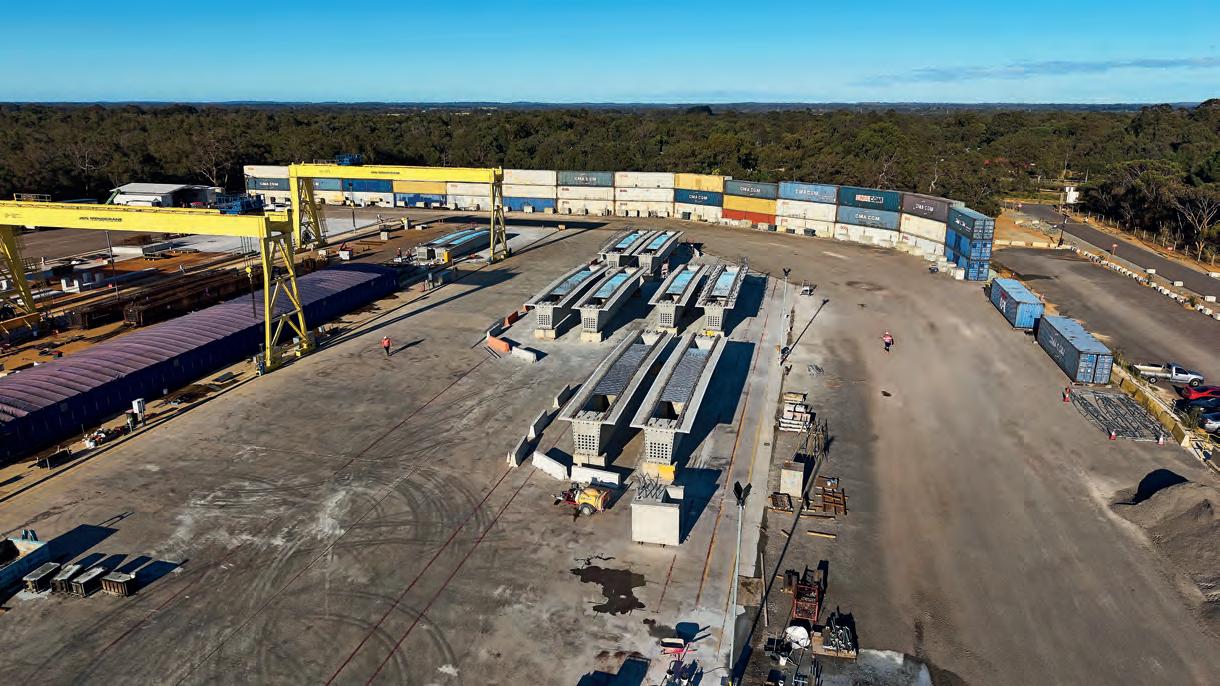
Equally important is constructability. These elements are being designed for integration into existing project workflows, allowing adoption without disruption to established construction practices.
Validation remains a central focus. Testing is being undertaken in line with recognised Australian Standards, including AS 1379, alongside relevant state infrastructure specifications. Durability, workability and long-term performance are all being assessed to ensure suitability for infrastructure use.
In parallel, Environmental Product Declarations and Life Cycle Assessments are providing greater transparency around embodied carbon outcomes, supporting more informed decision-making by asset owners and government agencies. These outcomes reinforce the technical findings presented in Permacast’s White Paper, which highlights the role of locally sourced materials and validated performance in accelerating adoption.
Western Australia is uniquely positioned to lead the transition to low-carbon concrete through a circular economy approach.
The state’s abundance of industrial byproducts, including materials derived from the lithium industry, presents a significant opportunity to reduce emissions while strengthening local supply chains. Using these materials locally can reduce transport impacts, improve resource efficiency, and support more resilient infrastructure delivery.
However, technical capability alone will not drive change.
Widespread adoption will depend on stronger alignment between industry and government, early engagement with asset
“RECENT

DEVELOPMENTS HAVE DEMONSTRATED CLINKER REPLACEMENT LEVELS OF AROUND 30 TO 40 PER CENT, WITH EARLY RESULTS INDICATING EMBODIED CARBON REDUCTIONS IN THE ORDER OF 20 TO 25 PER CENT, DEPENDING ON THE MIX DESIGN AND APPLICATION.”
The pathway forward is clear. Low-carbon concrete is no longer an emerging concept. It is a viable, tested solution that can be deployed in infrastructure today.
The next step is for procurement, policy and project delivery frameworks to catch up. By embedding performance-based approaches and recognising validated low-carbon alternatives, the infrastructure sector can accelerate adoption without increasing risk.
The opportunity now is for industry and government to move beyond pilot projects and embed low-carbon concrete into standard specifications, ensuring it becomes a normal part of infrastructure delivery rather than an exception.
THE AUSTRALIAN FLEXIBLE PAVEMENT ASSOCIATION (AFPA) ADVANCES THE EVIDENCE-BASED CASE FOR PERIODIC ROAD RESEALING PROGRAMS AND OUTLINES WHY THE RESEARCH SUPPORTING THIS APPROACH IS BOTH COMPELLING AND TIMELY.
Australia’s road network is one of the nation’s most significant public assets, underpinning a transport sector that generates $137.2 billion annually and carries 260 billion vehicle kilometres of travel each year. Protecting that asset, sustaining its performance, and maximising the return on public investment requires a deliberate and sustained approach to maintenance.
The Australian Flexible Pavement Association’s (AfPA’s) position, grounded in research and the practical experience of its members, is that strategic preventative maintenance programs deliver measurably stronger outcomes than reactive repair. The evidence supporting this position is extensive. Making that evidence accessible and actionable for decision-makers across the sector is the purpose of AfPA’s forthcoming white paper, A Case for Periodic Road Resealing.
THE COST OF TIMING
Road pavements follow a welldocumented deterioration pattern.
Surfaces that receive targeted treatment at the optimal point in their lifecycle retain structural integrity at a fraction of the cost of later intervention. Research from the US Federal Highway Administration, validated across Australian conditions through Austroads, demonstrates that preventative maintenance delivers lifecycle cost savings of 2:1 to 3:1 compared to reactive, worst-first approaches, meaning that for every dollar invested at the right time, governments avoid two to three dollars in future reconstruction costs.
Deferral compounds this equation.
Infrastructure Australia’s 2025 Annual Budget Statement identifies underfunded and reactive maintenance as contributing to reduced asset lifespans, higher long-
term costs, and diminished network resilience. BITRE’s 2023 Economics of Road Maintenance report confirms that postponed interventions escalate progressively, what begins as a surface treatment eventually becomes a full structural reconstruction.
Strategic preventative programs disrupt this cycle, extending pavement service life and supporting more stable, predictable budget expenditure over time.
The most cost effective way to maintain most of Australia’s sealed road network in regional and rural areas is to routinely apply a bitumen reseal.
This keeps the surface waterproof, durable, and skid resistant. AfPA recommends resurfacing a minimum seven per cent of the network each year to achieve optimal whole of life cost and performance.
T he case for preventative maintenance connects directly to several national priorities.
Road safety is one. Infrastructure condition, skid resistance, surface consistency, reliable pavement markings and more contribute directly to safe outcomes. Road trauma carries an estimated $27 billion annual social and economic cost in Australia, and infrastructure condition forms an established element of the Safe System approach underpinning the National Road Safety Strategy 2021–2030.
Freight productivity is another. Road freight volumes are projected to grow 56 per cent between 2018 and 2040. Pavement condition directly affects vehicle operating costs, travel time reliability, and access for high-productivity vehicles, factors
with tangible consequences for supply chain efficiency and regional industry competitiveness.
Climate resilience is a third.
Infrastructure Australia’s 2025 reports identify climate change as an accelerant of infrastructure deterioration.
Pavements maintained in good condition resist climate stressors more effectively, recover faster following extreme weather events, and require less intensive post-

event reconstruction. Preventative maintenance is, in this context, a practical and cost-effective form of climate adaptation.
AFPA’S
To bring this body of evidence together in a form that supports decision-making at every level of government, AfPA is releasing a road maintenance white paper.
The paper draws on national research from Infrastructure Australia, BITRE, Transport Australia, and Austroads, as well as international best practice, to present the economic, safety, productivity, and resilience case for systemic preventative maintenance programs.
It is written for the engineers, asset managers, and policy advisors working within road agencies and councils, the people who understand what good maintenance practice looks like and are best placed to advance it through planning and budget processes.
The paper provides a consolidated evidence base, and a clear articulation of why preventative maintenance represents sound, long-term public investment.
It does not prescribe funding levels or dictate specific policy choices. Its purpose is to support informed, evidence-based decisions, and to make the case that those decisions, made well and sustained over time, deliver stronger
“THE AUSTRALIAN FLEXIBLE PAVEMENT ASSOCIATION’S (AFPA’S) POSITION, GROUNDED IN RESEARCH AND THE PRACTICAL EXPERIENCE OF ITS MEMBERS, IS THAT STRATEGIC PREVENTATIVE MAINTENANCE PROGRAMS DELIVER MEASURABLY STRONGER OUTCOMES THAN REACTIVE REPAIR.”
outcomes for road users, communities, and public budgets.
AfPA acknowledges the maintenance work already underway across jurisdictions, and the improving asset management maturity reflected in recent benchmarking programs. This white paper is intended to build on that progress, not to critique it.
AfPA members, pavement contractors, materials suppliers, engineers, and technical specialists, deliver road construction and maintenance across Australia every day.
That collective expertise is available to support government in treatment selection, specification development, and program design.
Advancing preventative maintenance as a national priority is, for AfPA, a genuine opportunity for collaboration between industry and government in the shared interest of better roads.
AfPA’s forthcoming white paper, A Case for Period Road Resealing, outlines why a seven per cent reseal target represents sound, longterm public investment.
ROADS & INFRASTRUCTURE PROVIDES AN UPDATE ON SOME OF THE CONTRACTS AND TENDERS RECENTLY AWARDED
Road solutions for NSW’s Great Western Highway considered Transport for NSW is shortlisting engineering solutions to reinstate Mitchells Causeway on the Great Western Highway. This effort follows the closure of the Great Western Highway at Victoria Pass in March, when a defect in the road over Mitchells Causeway was discovered. Further serious stress fractures were also found forming on westbound lanes of the causeway. Transport for NSW has since been moving to urgently fix the road, and has invited a select group of just over 20 industry companies with relevant experience to submit proposals, after an industry briefing on 23 April and site inspection on 29 April. Representatives were told nothing was off the table.
TAS stadium eyes two firms for tender
Tasmania’s Macquarie Point Multipurpose Stadium has hit a milestone, with two firms selected to progress into Stage One of the Request for Tender process. The proposed stadium, to be located in Hobart, will serve as the premier state venue for Australian Rules Football, cricket, concerts and community events. The two selected tenderers for the stadium’s development are Besix Westpac; and Constructure Joint Venture, comprising Webuild S.p.A and China Construction Oceania, with McConnell Dowell as a key partner. Both tenderers have confirmed acceptance of the offer to progress through to the Request for Tender phase. The next phase of procurement will seek detailed submissions covering delivery approach,
commercial settings, program, and local industry participation. The target date for contract award remains the end of the year.
Construction firms shortlisted for Melbourne Airport Rail stage
Two construction consortia have been shortlisted to deliver the final package of works for Melbourne Airport Rail Stage One in Victoria. The wider project aims to construct a dedicated rail line from the Melbourne CBD to the Melbourne Airport in Tullamarine, while the first stage will implement this transport infrastructure between West Footscray and Albion. The two shortlisted consortiums to progress through the tender process ahead of the contract being awarded next year are CPB Contractors Pty Ltd, SMEC Australia; and FCC Construction, Martinus Rail, Arcadis, BG&E. The final package of works will widen the rail corridor –adding more tracks, building two new regional platforms at Sunshine Station and extending the station concourse. This package will also deliver a new walking and cycling connection across the rail line, an upgraded bus interchange, as well as open space and new forecourts as part of the Victorian Government’s $143 million upgrade to the Sunshine Station precinct.The works between West Footscray and Albion will increase capacity through the corridor and pave the way for further upgrades, including the electrification of the Melton line, and will allow more than 1000 trains a day through Sunshine. Early works on the project are already underway to relocate underground utilities between Albio and Sunshine and prepare the corridor for
new rail infrastructure. Melbourne Airport Rail Stage One is expected to be complete in 2030.
Contract awarded for seafarers centre in WA
Benchmark Construction and Building has been awarded a contract to construct a new seafarers centre at the Port of Port Hedland in Western Australia. The Queensland-based construction company has operated as a general builder for more than 25 years. The new Port of Port Hedland facility will be designed as a welcoming space for seafarers, and will include areas for rest, connection, recreation and access to vital support services. It will feature a communal lounge equipped with games and kitchen facilities, a quiet area, a library, meditation and prayer rooms and a shared chapel. It will also provide WI-FI internet, SIM cards, and proximity to local shops and amenities. The project will begin construction now that its contract has been awarded, funded by $21 million from Pilbara Ports. Seafarers are essential to keeping WA’s supply chains moving, with the Port of Port Hedland delivering 43 per cent of the world’s iron ore exports in the 2024-25 financial year. Each year, approximately 150,000 seafarers visit the Pilbara region, contributing significantly to Australia’s export revenue and supporting jobs in WA’s resources sector. The project’s design development was informed by stakeholder feedback to ensure the centre meets the practical needs of seafarers while also responding to the local environment, community, and operational requirements. The centre’s costs will be recouped over time from key iron ore customers: BHP, Fortescue, Hancock Iron Ore, and Mineral Resources.





SAMIGreen sprayed seals deliver the same performance with up to 65% less carbon footprint vs. conventional counterpart.