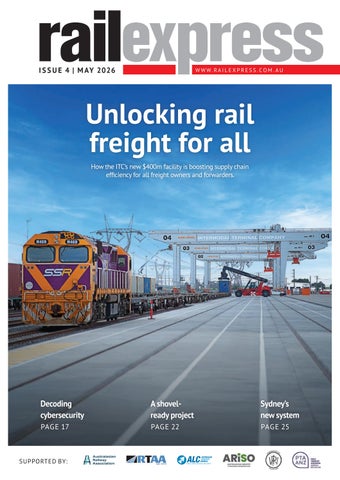
Unlocking rail freight for all
How the ITC’s new $400m facility is boosting supply chain efficiency for all freight owners and forwarders.
Decoding cybersecurity PAGE 17
A shovelready project PAGE 22


Sydney’s new system PAGE 25



From the Editor
Published by:
379 Docklands Drive
Docklands, VIC 3008
T: 03 9690 8766
www.primecreativemedia.com.au
Chairman
John Murphy
E: john.murphy@primecreative.com.au
CEO Christine Clancy
E: christine.clancy@primecreative.com.au
Managing Editor Lisa Korycki
E: lisa.korycki@primecreative.com.au
Editor Kayla Walsh
E: kayla.walsh@primecreative.com.au
Business Development Manager
Emily Schlegel
M: 0466 317 555
E: emily.schlegel@primecreative.com.au
Client Success Manager
Ben Sammartino
E: ben.sammartino@primecreative.com.au
Head of Design
Blake Storey
E: blake.storey@primecreative.com.au
Designer
Apostolos Topatsis
Subscriptions subscriptions@primecreative.com.au
www.RailExpress.com.au
The Publisher reserves the right to alter or omit any article or advertisement submitted and requires indemnity from the advertisers and contributors against damages or liabilities that may arise from material published.
© Copyright – No part of this publication may be reproduced, stored in a retrieval system or transmitted in any means electronic, mechanical, photocopying, recording or otherwise without the permission of the Publisher.

Kayla Walsh Editor - Rail Express
Welcome to the May edition of Rail Express
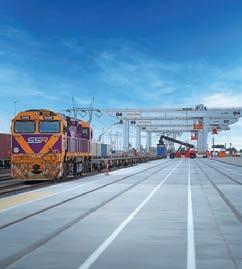
This month’s issue is a cracker, with our cover star, Intermodal Terminal Company, taking us behind the scenes of its $400 million open-access freight terminal in Melbourne. With reliance on rail growing due to geopolitical, economic and environmental reasons, it’s great to see the success of projects like this, which strengthen our local supply chains.
Salix also shared insight into its work on the project – including supplying Gantrex crane rail fastening systems for both the inner and outer terminals, as well as developing and delivering dual gauge turnouts. Later in the magazine, Salix highlights the benefits of the KONUX Switch – a predictive maintenance solution built for the most failure-prone and costly assets in rail infrastructure.
Continuing the intermodal theme, I was interested to speak with Ouyen Inc, a community group in Victoria that says the “shovel-ready” Sunraysia Mallee Port Link intermodal solution would unlock massive value for the region.
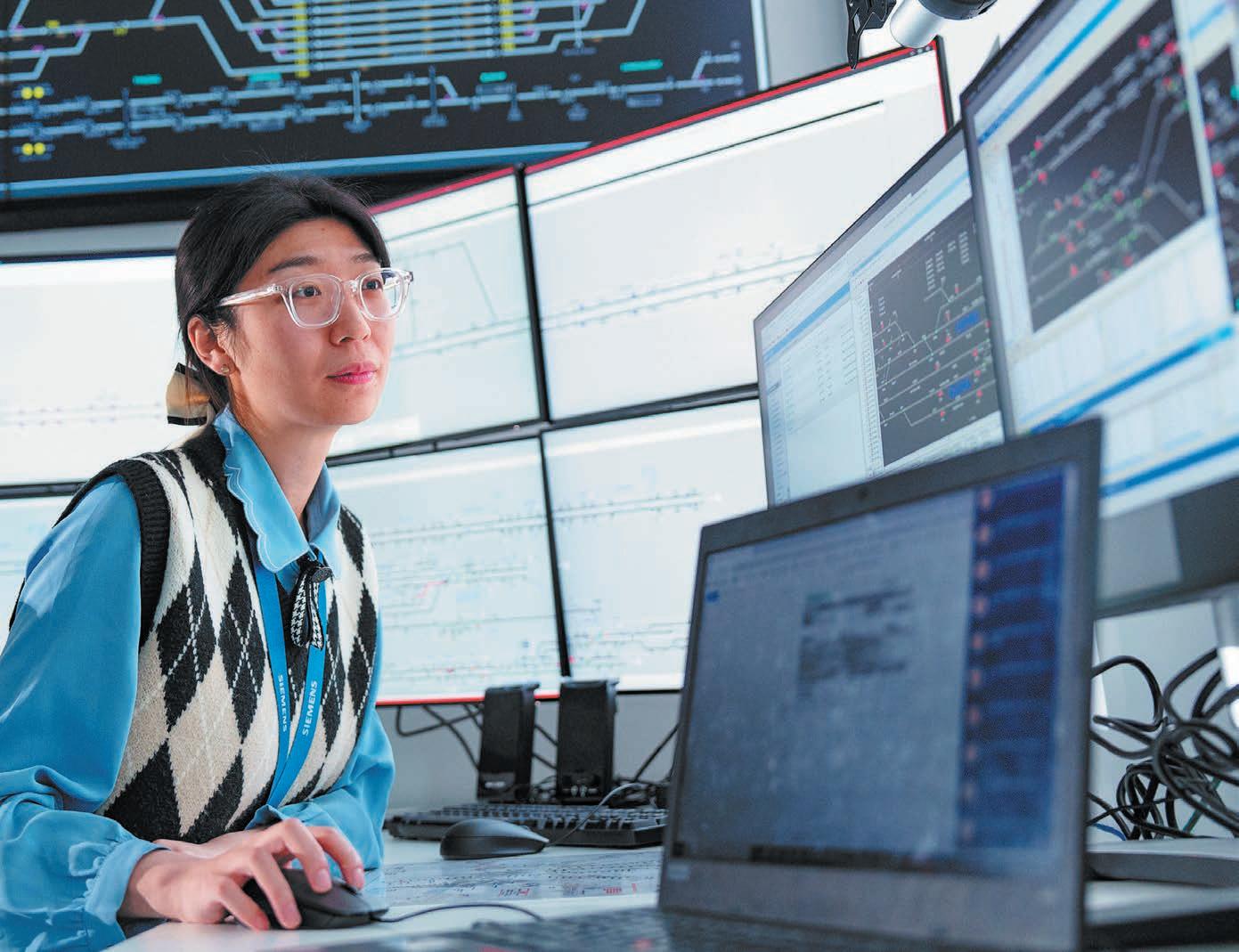
It was also fascinating to hear from two experts at Siemens Mobility about how Australian rail authorities need to update their cybersecurity systems or face some serious consequences.
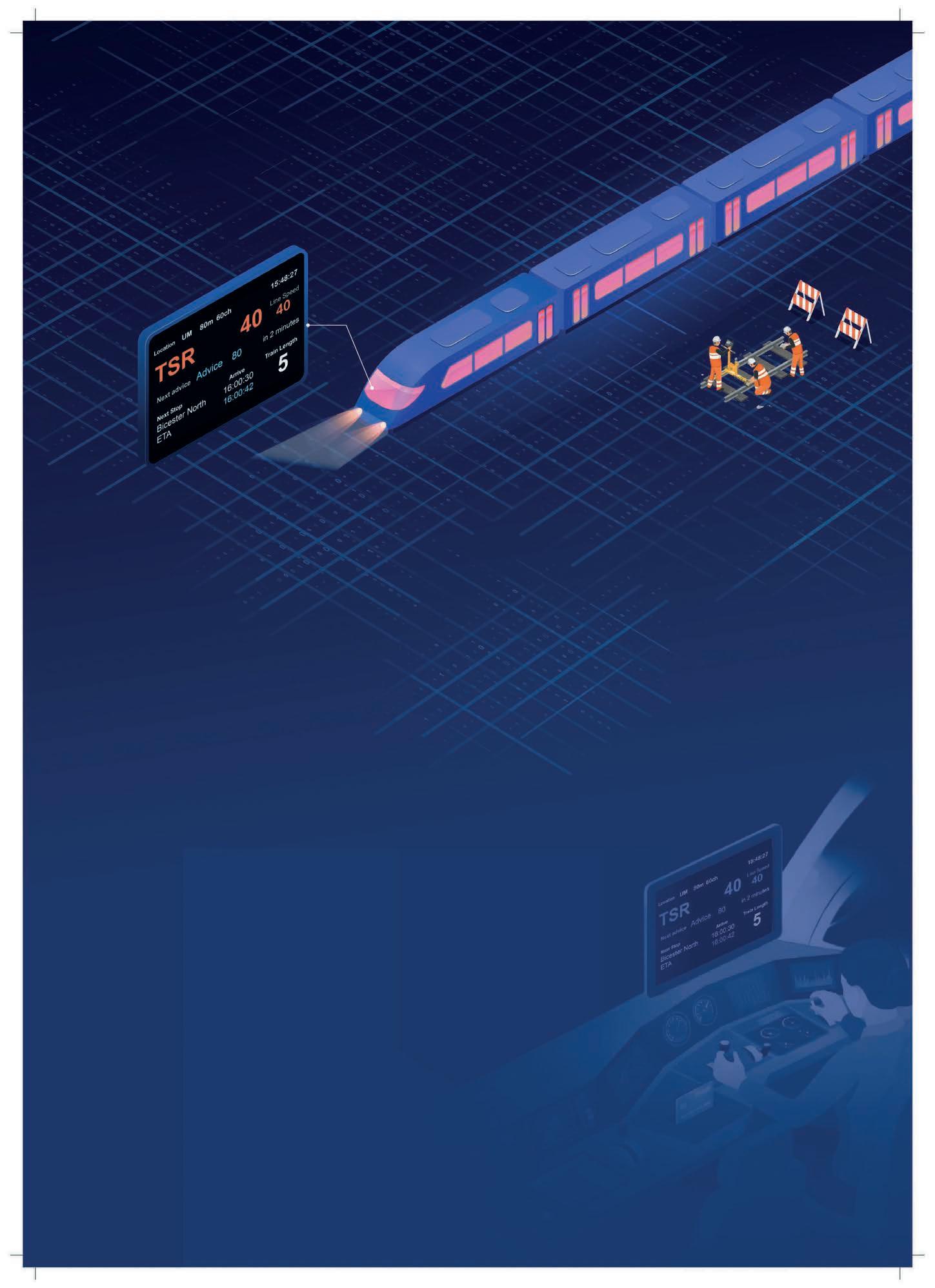
Meanwhile, BAI Communications told us more about the biggest rail contract it has landed in Australia so far – Sydney Metro West – and Zelra highlighted the benefits of its innovative Driving Advice System.
In addition, Rail Express has reinvigorated its partnership with the Australasian Railway Association (ARA). Every month we will be
spotlighting a member of the association, as well as some of the exciting ARA courses and events coming up throughout the year.
Also in this issue, SKF Australia updated us on its new facilities in Perth and Brisbane.
Plus we caught up with TAG Group and Amokabel Australia, two businesses that share a clear commitment to quality and safety.
And we've taken a look at Infrastructure Australia's priority list, which features multiple rail projects around the country.
We also heard from the Australian Rail Industry Standards Organisation and the Permanent Way Institution of New South Wales, as well as the South East Melbourne Manufacturers’ Alliance.
Happy reading!
kayla.walsh@primecreative.com.au
MAXIMISED NETWORK CAPACITY
Shape the future of mobility
At Siemens Mobility, we are pursuing technologies and solutions for more sustainable, comfortable, and cost-effective rail transport to shape the future of mobility and #transformtheeveryday for a better tomorrow.
Station upgrade complete
The new pedestrian overpass at Ballarat Station in Victoria is now open, marking the completion of the station upgrade.
The overpass includes stair and lift access to each platform, allowing people with a disability or those with luggage or prams to cross the rail line without leaving the station.
The 28-metre overpass is wide enough for two wheelchairs or mobility scooters to pass, improving access for passengers with mobility needs. Its design was developed in consultation with disability advocacy groups and endorsed by Heritage Victoria, reflecting the community’s preference for a solution that respects the station’s heritage while minimising visual impact on existing buildings.
Aluminium cladding features a series of curves inspired by the heritage ironwork on the platform canopies, along with a
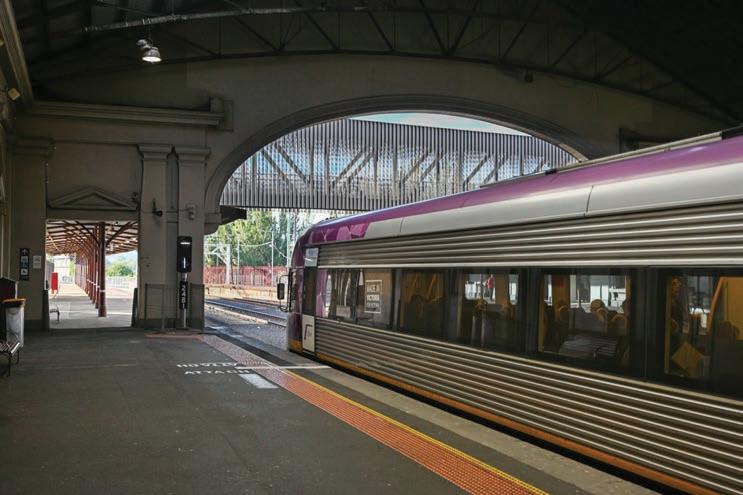
perforated design that improves visibility while providing shelter from the weather.
Open belvedere balconies with glass balustrades in the lift landings have been designed to provide scenic views of the
clock tower and train hall. Accessibility upgrades to the station’s northern entrance were completed in 2025, including a new ramp, stairs, handrails and an automatic swing door.

Shortlist announced for Airport Rail
Two consortia have been shortlisted to deliver the final package of works for Melbourne Airport Rail Stage 1.
The works will “untangle” one of Victoria’s busiest rail corridors to make way for a dedicated line to the airport and boost capacity across the network.
The shortlisted consortia are:
• CPB Contractors Pty Ltd, SMEC Australia
• CC Construction, Martinus Rail, Arcadis, BG&E
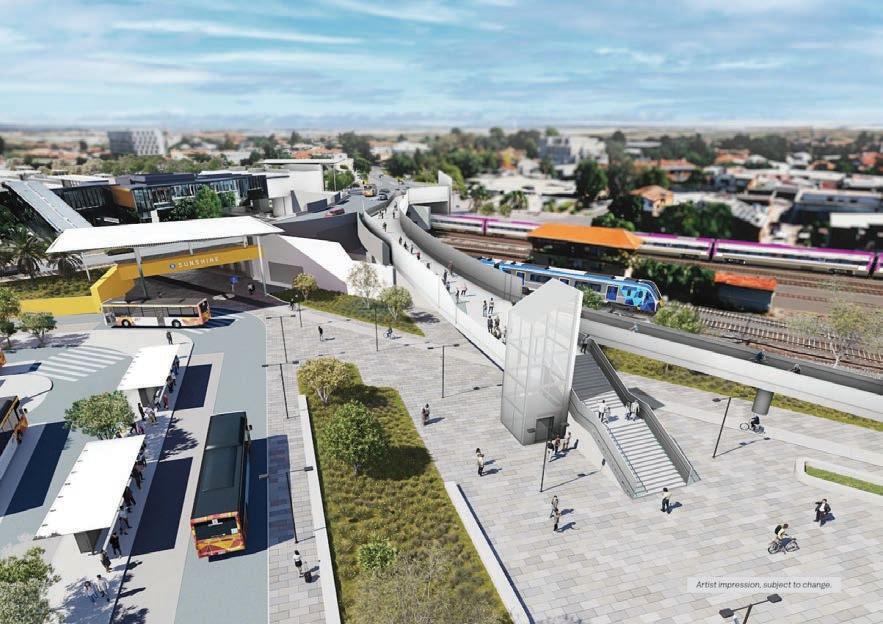
The final package of works will widen the rail corridor – adding more tracks, building two new regional platforms at Sunshine Station and extending the station concourse.
As part of the Victorian Government’s $143 million upgrade to the Sunshine Station precinct, the package will also deliver a new walking and cycling connection across the rail line, an upgraded bus interchange, open space and new forecourts.
Melbourne Airport Rail Stage 1 between West Footscray and Albion will increase capacity through the corridor and pave the way for further upgrades, including the electrification of the Melton Line.
The works will allow more than 1000 trains a day through Sunshine – enabling “more trains, more often” for passengers on the Geelong, Ballarat and Bendigo lines,
the Victorian Government has said. Early works on the project are already underway to relocate underground utilities between Albion and Sunshine and prepare the corridor for new rail infrastructure.
Crews are currently working from the Albion Station car park, laying large sections of pipeline ahead of tunnel boring commencing next month.
Melbourne Airport Rail Stage 1 is targeting a completion date of 2030.
State Minister for Development Victoria and Precincts Harriet Shing said: “We’re investing in the growing Sunshine Precinct – better services, more jobs, stronger business investment and the transport connections that help families live, work and play locally.”
The new overpass includes stair and lift access to each platform.
An artist's impression of the Sunshine Superhub.
Image: Victorian Government
First look at new stations
The New South Wales Government has shared a first look at the designs of the new stations set to be built as part of the Sydney Metro West project.
The project, which is targeting an opening date of 2030, will double rail capacity between Parramatta and the Sydney CBD.
Gamuda, Laing O’Rourke and DT Infrastructure will build new stations at Westmead, North Strathfield,
Major station construction is due to begin by the end of 2026.
Burwood North, Five Dock, The Bays and Hunter Street.
Early works have kicked off at North Strathfield, Burwood North, Five Dock and The Bays stations, including delivery of machinery and equipment, set up of temporary work sites, including site offices, utilities investigations and maintenance, survey works, traffic management and maintenance. Major station construction is due to start by the end of 2026.
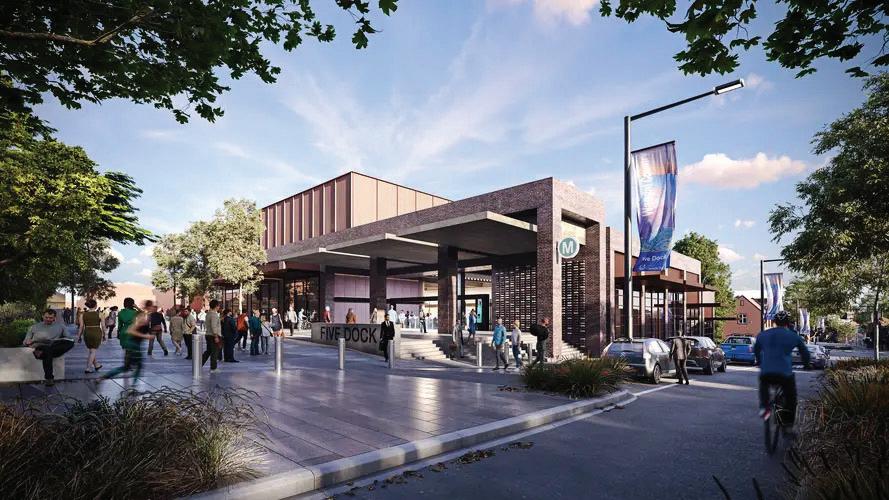
Architecture firms Bates Smart, SAA Architects, John McAslan + Partners, Neeson Murcutt Neille, Stewart Architecture and Aileen Sage Architects are designing the five stations.
The final design for each station will be confirmed following a detailed design process, which is expected to be completed early next year.
“All nine stations on the 24-kilometre Sydney Metro West line will be designed to respond to their unique neighbourhoods, creating welcoming, people-focused transport hubs that improve connectivity and support future growth,” the NSW Government said.
Lendlease, Mirvac and Coombes Property Group have been appointed to design and construct Sydney Metro West’s flagship city station at Hunter Street. That work will begin later this year once cavern excavation is finished.
Remaining contracts for Sydney Metro West stations at Parramatta, Sydney Olympic Park, and Pyrmont will be announced by the end of 2026.
Inland Rail upgrades level crossings
Each upgraded crossing now includes highintensity LED flashing lights, bells, and retroreflective boom gates.
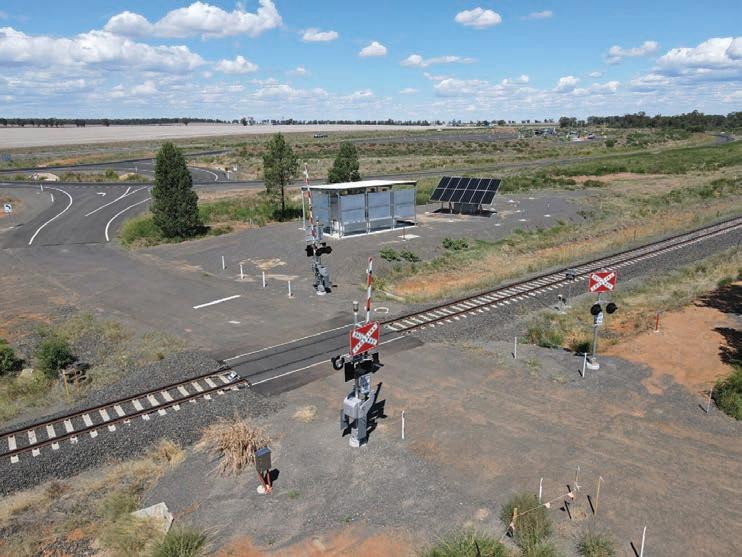
Inland Rail has upgraded two level crossings to operate on fully solar-powered systems, as part of finishing works on the Narrabri to North Star (N2NS) Phase 1 section of the project.
The crossings, located north of Moree and north of Narrabri, are the first on Inland Rail and the Australian Rail Track Corporation (ARTC) network to be converted from passive to active using standalone solar power systems (SAPS).
Traditionally, level crossings rely on grid-connected electricity with battery back-up. By switching to solar, Inland
Rail has avoided the need to connect to existing power infrastructure or build new electrical assets, reducing land access requirements and minimising impacts on nearby landholders.
Each upgraded crossing now includes high-intensity LED flashing lights, bells, and retro-reflective boom gates, intended to improve safety for users. Both sites have completed detailed testing and commissioning.
The systems also include internal batteries for overnight operation and emergency back-up, along with
communications technology that enables remote monitoring and fault detection.
Inland Rail said these upgrades reflect the organisation’s broader sustainability focus. The N2NS Phase 1 section has already received an ‘Excellent’ As Built rating from the Infrastructure Sustainability Council.
Solar-powered signalling systems are also being rolled out at other locations along the alignment to supply electricity once Inland Rail becomes operational.
A spokesperson for Inland Rail said the use of standalone solar systems reduces costs while limiting impacts on communities and the environment.
“The Narrabri to North Star project is another example of Inland Rail’s commitment to sustainability, innovation and industry leadership,” the spokesperson said.
Inland Rail is a 1600-kilometre freight rail artery linking Melbourne and Brisbane via regional Victoria, New South Wales and Queensland. The route has been divided into 12 sections to support staged delivery of the open-access network.
Unlocking the future of rail freight for all
The Intermodal Terminal Company’s new $400 million open-access facility in Melbourne is boosting supply chain efficiency for all freight owners and forwarders.
Increased geopolitical tensions around world trade – including the Iranian conflict and ensuing fuel crisis – combined with COVID pandemic-induced constraints in global and domestic supply chains, continue to shine a spotlight on the efficiency of Australia’s freight networks.
Resilient supply chain infrastructure and reliable freight operations help support the commercial success of Australian exporters, such as farmers and miners, competing in international markets.
On the flip side, disruptions and delays caused by fragile and fragmented freight networks and services result in reduced profit margins for importers and exporters, with Australian families paying more at the supermarket checkout for both domestic and imported goods.
In addition, reaching the nation’s legislated mandate of net zero greenhouse gas emissions by 2050 depends on reducing emissions in traditionally hard-to-abate regional and interstate freight and logistics networks. Indeed, the transport sector is forecast to become Australia’s largest source of greenhouse gas emissions by 2030, according to the Australian Climate Change Authority.
UNLOCKING THE FUTURE OF RAIL FREIGHT FOR ALL
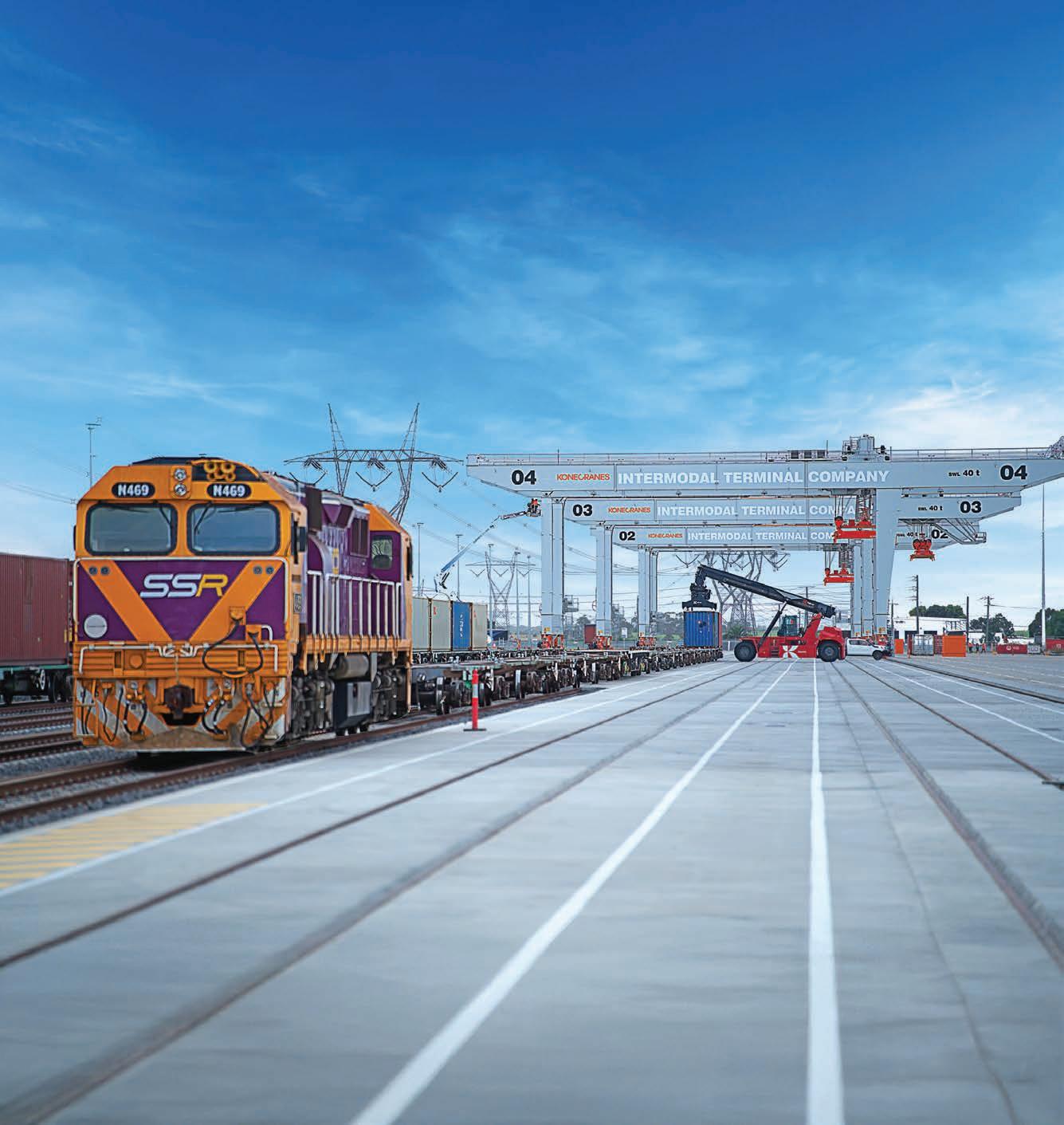
Bearing all this in mind, Intermodal Terminal Company (ITC) Chair John Fullerton said it’s timely that ITC has successfully commenced operations at its new $400 million Melbourne Intermodal Terminal (MIT) in Somerton, in the city’s northern industrial zone.
“Delivering strategically positioned intermodal terminals, which enable the seamless consolidation, storage, and transfer of freight between rail, road and shipping, is a smart way to enhance supply chain productivity,” he said.
“Underpinning this concept is a keen interest within government, and industry generally, to transport more freight on rail.
“In many cases, rail is the more costefficient and environmentally and community-friendly choice.”
According to a 2020 report by Deloitte Access Economics, commissioned by the Australasian Railway Association (ARA), rail freight produces 16 times less carbon pollution than road freight per tonne kilometre travelled.
“Another important feature of the MIT development is the fact that
governments have long called for Australian superannuation firms to increase investment in domestic infrastructure,” Fullerton added.
“It’s pleasing to see Aware Super, which owns ITC, taking an active role in helping to unlock the future of rail freight for all.”
WE HAVE SEEN THIS MOVIE BEFORE In Sydney, there are five Import-Export (IMEX) terminals. By using rail port shuttles, these terminals enable supply chain customers to avoid traffic congestion and road tolls in and around Port Botany. Trucks then fetch containers from the terminals to deliver them the ‘last mile’ to freight owners.
ITC Chief Executive Officer Mishkel Maharaj said this IMEX operating model lifts the daily cycle rates of truck trips, and combined with predictable port rail shuttle transit times, allows freight owners and forwarders to better control their costs.
Currently, the only IMEX terminal in operation in Victoria is the MIT. Unlike Sydney terminals, which are operated by a single freight forwarder, the MIT is open-access and owned and operated by an independent party (the ITC).
ITC's Melbourne Intermodal Terminal offers supply chain customers both IMEX (port shuttle) and interstate rail freight services.
This means the MIT enables all freight owners and forwarders to unlock the value of rail freight.
“The MIT as an IMEX terminal is new for Melbourne, but such facilities are tried and proven operations in Australia, presenting an efficient rail solution for freight at a time when road congestion and its impact on the environment continue to grow,” said Maharaj. “In addition to IMEX operations, the MIT enables customers to
repackage imported goods and use the terminal’s interstate capabilities to then send their products back on rail across the country.”
A ‘GOLDILOCKS’ FREIGHT ZONE
To grow the share of goods and products moved on rail, there must be efficient access to existing and future transport networks and freight demand zones, Maharaj said. This means building modern, world-class
intermodal terminals at the heart of major industrial and logistics precincts, away from port and city centre congestion. The MIT ticks that box and more.
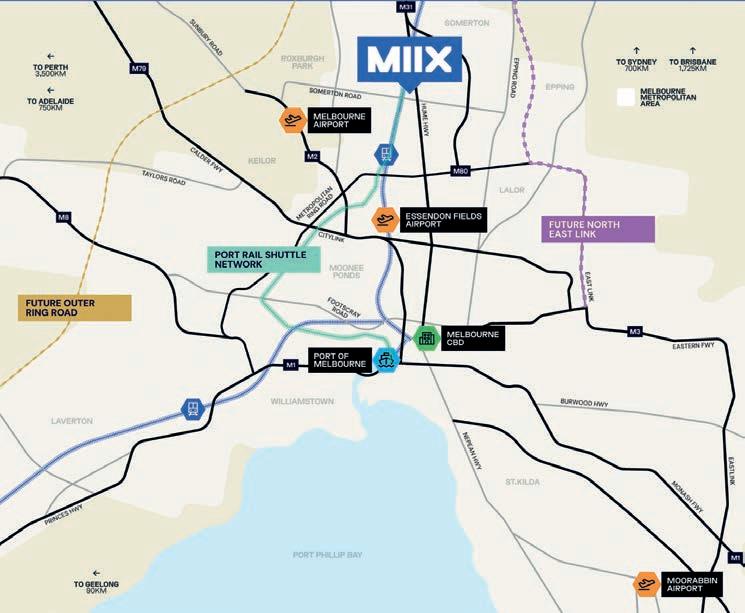
“The MIT is in a ‘Goldilocks’ freight and logistics zone – not too far, not too close; only 20 kilometres by rail to Port of Melbourne, adjacent to the Hume Highway and with access to both the Victorian (broad-gauge) and interstate (standardgauge) rail networks.
“Within a short radius of the MIT is approximately 20 per cent of Victoria’s containerised freight volumes and three-and-a-half million square metres of warehousing.”
The M80 Ring Road (Western and Metropolitan Ring Road) and new North East Link tunnels will allow customers in Melbourne’s west and southeast to efficiently access the MIT without having to battle congestion.
The MIT enables a multi-modal solution for freight to enter and leave Australia. For the first time in Victoria, imports can now leave Port of Melbourne docks on rail to a major industrial and logistics precinct. This allows MIT customers to avoid city traffic and tolls, including bypassing the new Westgate Tunnel.
The MIT is also central to a broader investment, backed by Aware Real Estate and Barings, called the Melbourne Intermodal and Industrial Exchange (MIIX) – the further development of a 99-hectare industrial and logistics estate in Somerton.
“The $1.6 billion MIT-MIIX integrated development provides precinct tenants with the advantage of having access to colocated warehousing and related logistical services,” said Maharaj.
“For example, the MIT-MIIX precinct will allow handling of containers above weights permitted on public roads and reduce transfer costs between the terminal and warehouses via the use of internal roads.”
PORT OF MELBOURNE ENLISTS THE MIT
Port of Melbourne (PoM) has enlisted the new MIT as an anchor in an incentive program to help shift more containerised freight from road to rail.
The Port Rail Shuttle Network (PRSN) Start up Incentive Program is aimed at supporting base load import 20-foot equivalent unit (TEU) volumes during the MIT’s ramp-up phase and encouraging the timely take-up of rail freight services now that the MIT is operational.
The current proposal contemplates an offer of $100 per TEU and $200 per 40-foot equivalent unit (FEU) for import containers
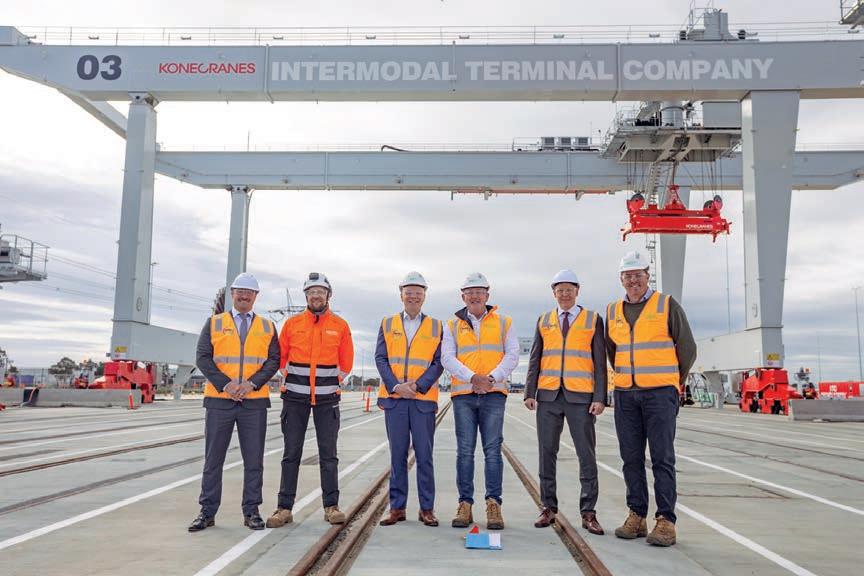
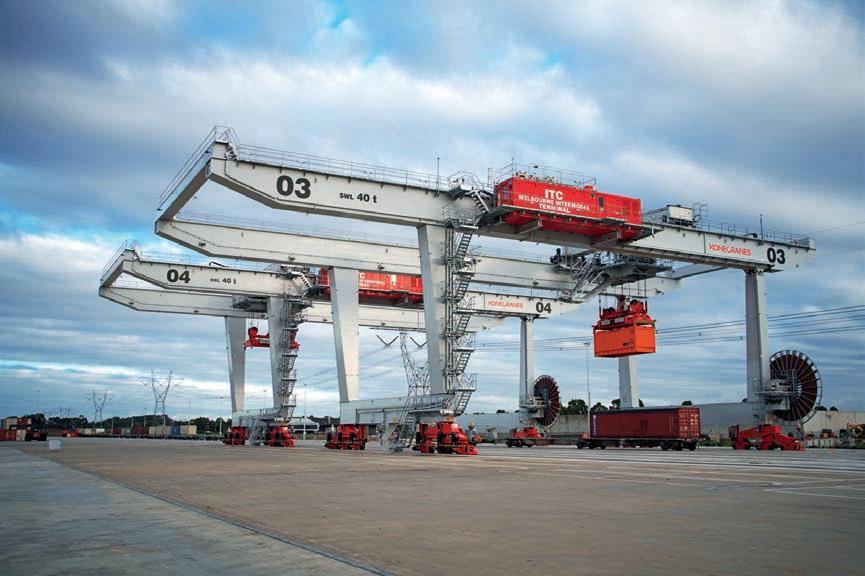
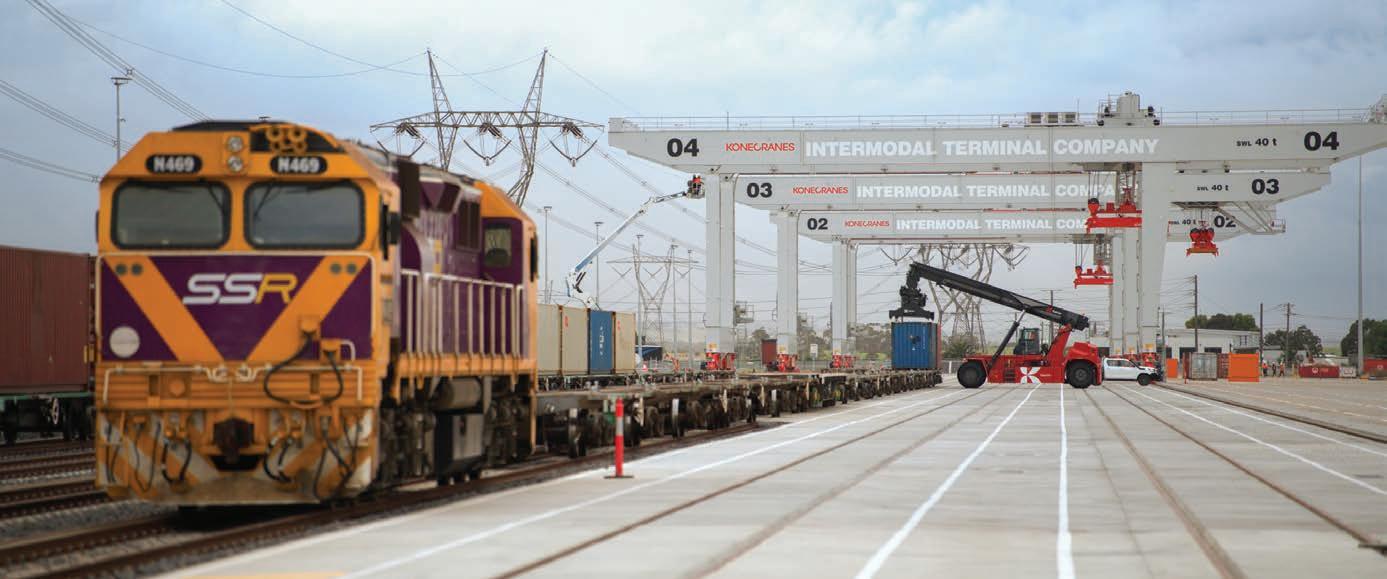
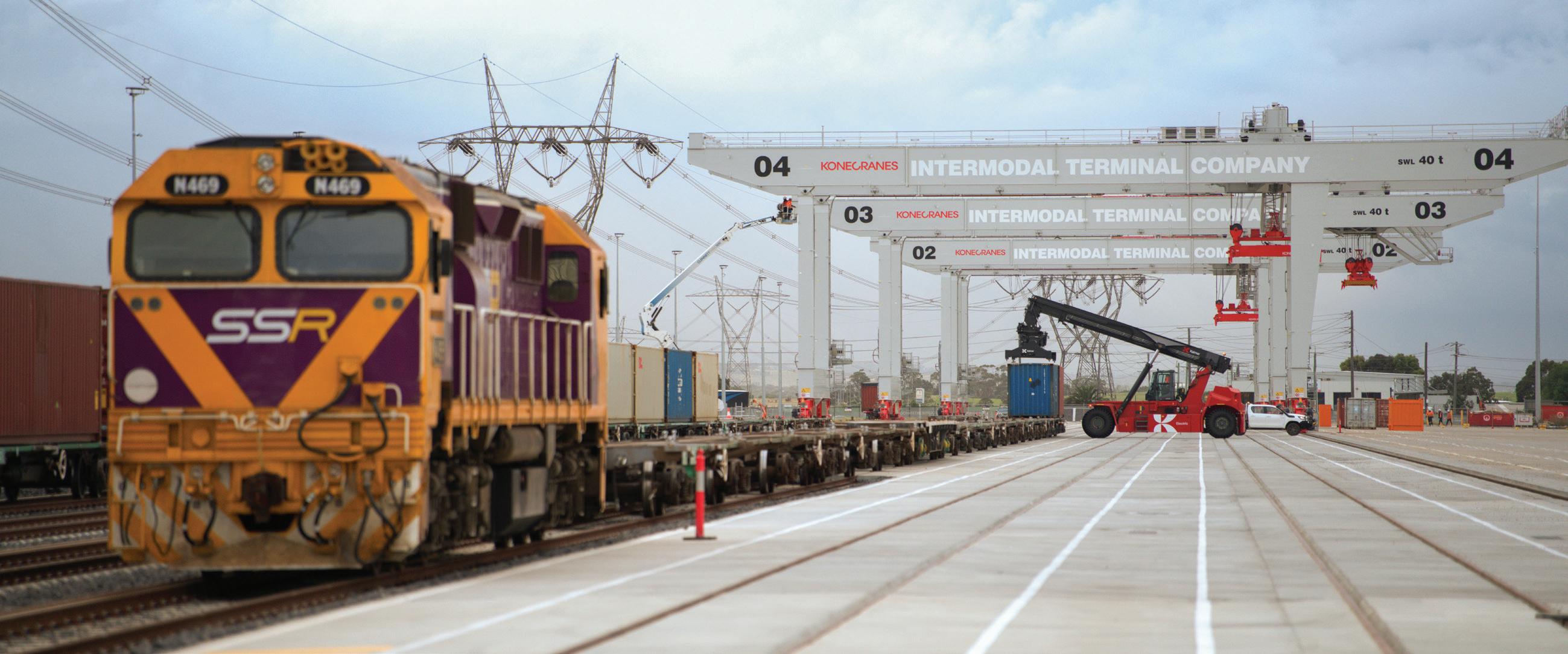
The Finnish ambassador to Australia recently inspected rail-mounted gantry cranes at the MIT supplied by Konecranes.
MIT is central to a broader development called the Melbourne Intermodal & Industrial Exchange (MIIX).
Cover Story
moved by rail from the port to the MIT. PoM Chief Executive Officer Saul Cannon said: “Improved landside connectivity for freight operations, particularly rail, is a focal point for future growth at the port.
“Strong industry uptake of metropolitan port rail shuttle services will be required to increase the port’s rail mode share over the medium and long term. To encourage this, Port of Melbourne has introduced this incentive program.
“Port of Melbourne welcomes the addition of the MIT in the Victorian supply chain to enhance the rail offering to beneficial freight owners in our state.”
MIT VOLUMES RAMP UP
The ITC’s Chief Operating Officer Brendan Gibson said the MIT is ideally positioned in the market to benefit from solid underlying IMEX and intermodal containerised volumes, as well as state and federal government programs and projects designed to help shift more freight from road to rail.
In terms of containerised freight volumes in Australia, in 2022-23, the Bureau of Infrastructure and Transport Research Economics reported approximately nine million TEUs were exchanged at the five principal container ports in Melbourne, Port Botany, Brisbane, Adelaide and Fremantle.
Gibson said: “The MIT has undertaken six months of successful operations with significant volumes of containerised freight being procured during this period.
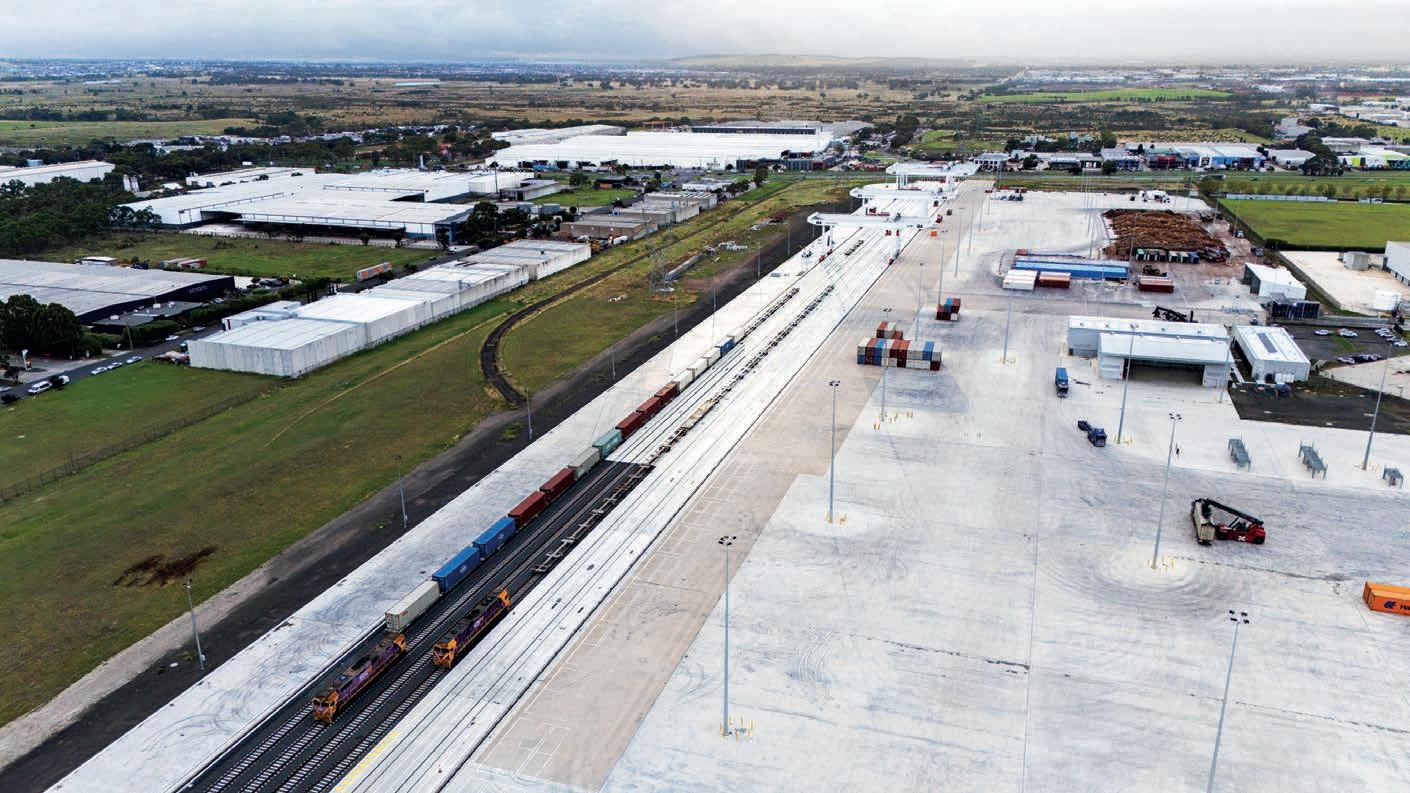
“ITC has already secured a host of Australian exporters and importers as early adopters of the terminal, with products and commodities being processed at the MIT including large-scale import customers, manufactured products for export and primary timber.
“Since operations commenced late last year, more than 10,000 TEUs have been hauled to and from the MIT, including port shuttle services hauling 40-foot containers filled with imported goods for local assembly, as well as products for export.”
In terms of the haulage of containerised freight between the MIT and port, Southern
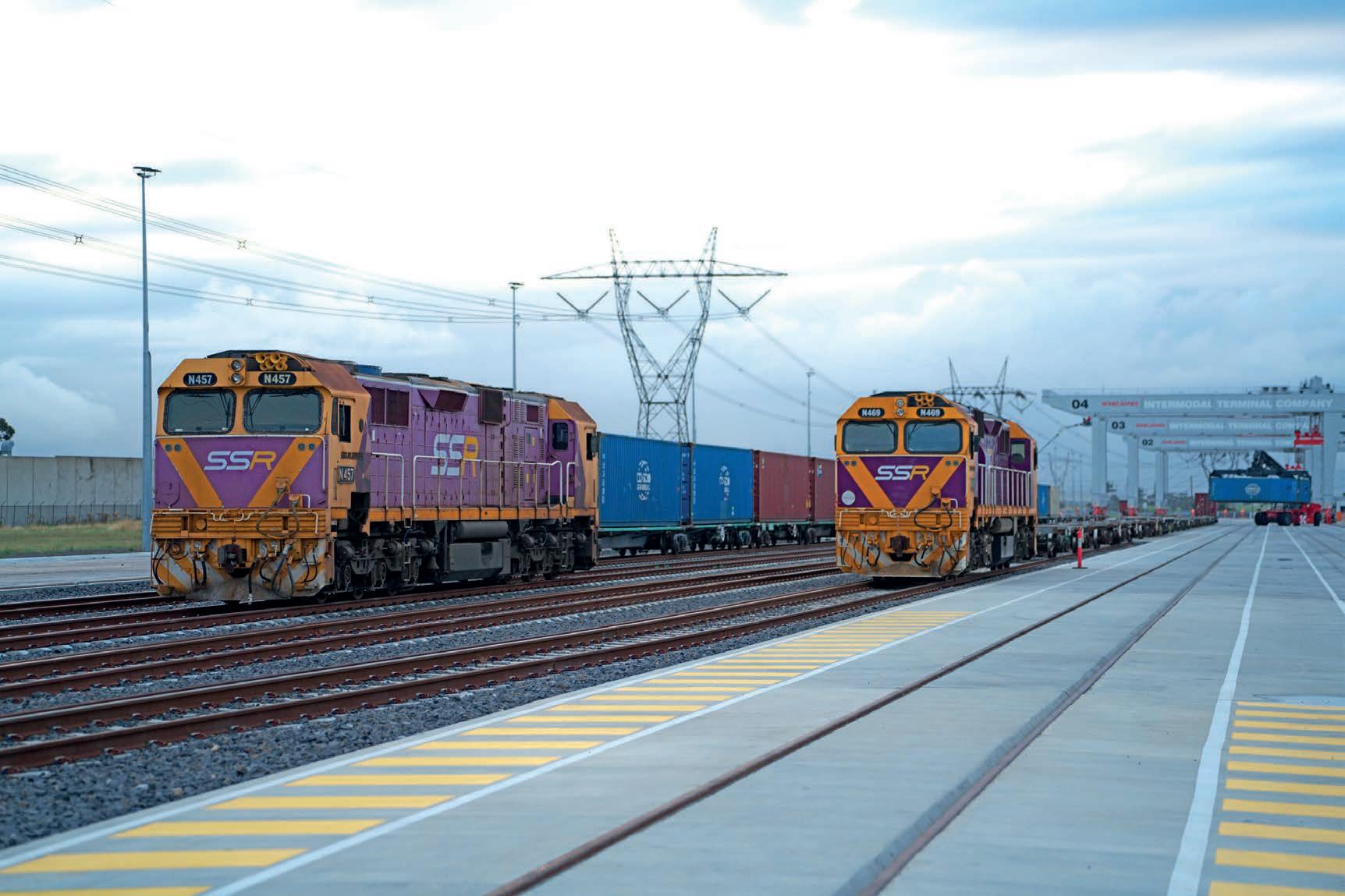
Shorthaul Railroad (SSR) deploys rail shuttles 600 metres in length, which transport about 80 TEUs each trip.
“Trucks deliver product from the local catchment or regional Victoria to Somerton before being loaded into containers at the MIT and then seamlessly hauled by rail to port via the Australian Rail Track Corporation (ARTC) standardgauge network,” Gibson said.
“The ITC is now moving into the next phase of operations for its expanding customer base, including increasing daily rail shuttle services to and from the Patrick and DP World stevedoring terminals.
“ITC has also established an empty container park to enable the efficient hire and de-hire of boxes without having to drive through traffic and tolls from the north to the west of Melbourne.”
Gibson said discussions with longdistance rail haulage companies for interstate services, with TEU volumes originating from the MIT, are also well advanced.
“Australia’s largest rail freight operator, Aurizon, has signed an agreement with ITC to use the MIT for the handling of containerised freight for up to nine years,” he added.
SOMERTON ONE STOP SHOP
Gibson said that given its location in both the Victorian and national supply chains, the MIT is on track to become an epicentre of short (IMEX/port shuttle) and longdistance (interstate) container movements in Victoria.
Initially, the MIT is planned to have a total annual capacity of one million
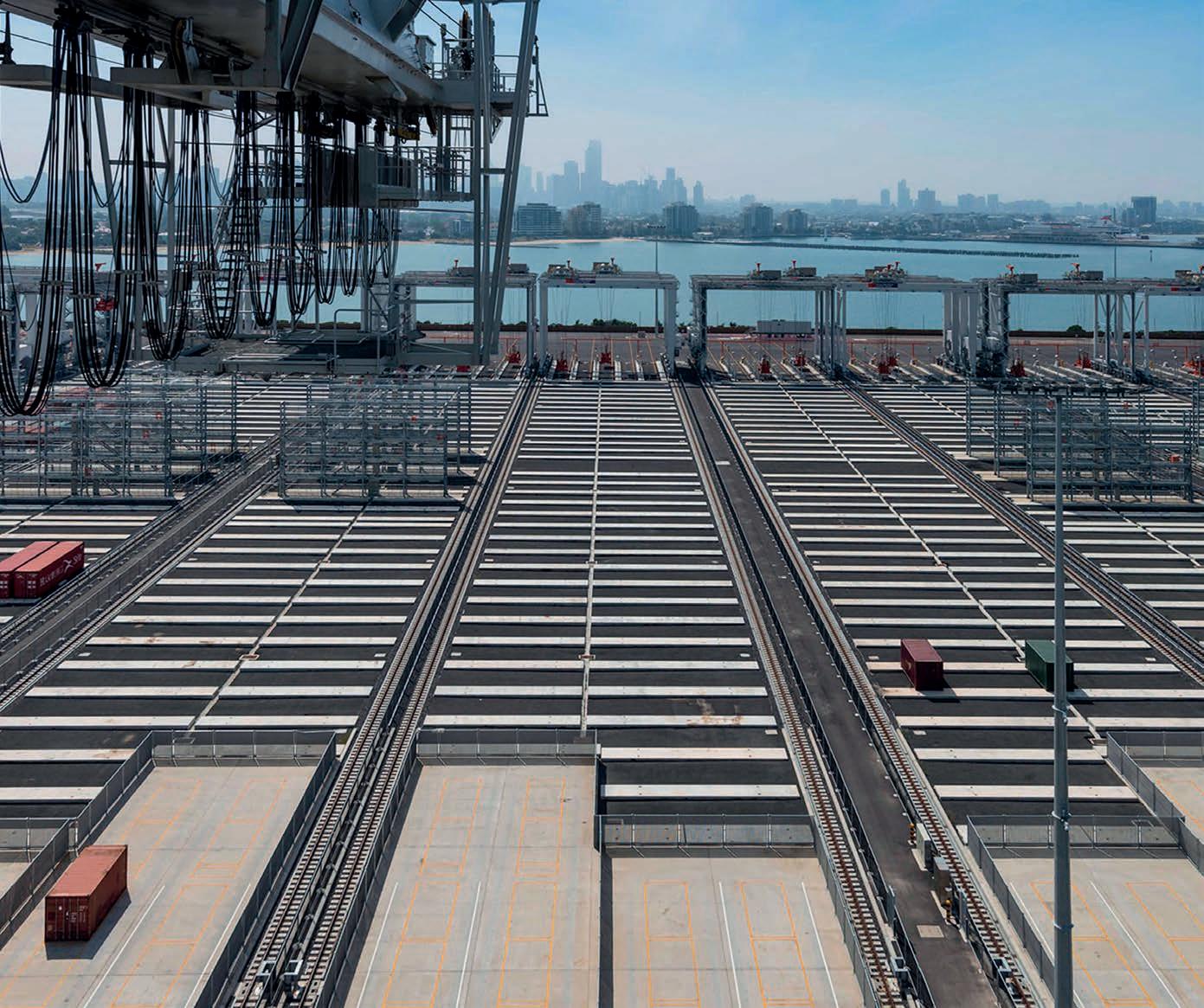
A bird’s eye view of the Melbourne Intermodal Terminal (MIT).
A single rail-mounted gantry crane at the MIT can load/unload between 32 and 36 boxes each hour.
TEUs, with approximately 650,000 and 350,000 TEUs for interstate and port shuttle operations, respectively. The MIT also acts as a “one-stop shop” for customers by
providing customs-bonded storage areas to process and recycle empty cargo containers back into the supply chain as well as on-site facilities to wash, fumigate and repair containers.
The intermodal terminal features sophisticated freight handling equipment and machinery, including 350-tonne railmounted gantry cranes, which are fully electric and can regenerate electricity back into the grid by the kinetic process of lifting and loading containers.
ITC’s Chief Development Officer Leigh Cook said: “In the 15-hectare inner terminal of the MIT, we now have four rail-mounted gantry cranes commissioned and operational.
“To increase future TEU handling capacity at the MIT, another three gantry cranes have been erected in the outer terminal and will be undergoing commissioning in May.”
A single rail-mounted gantry crane at the MIT can load/unload between 32 and 36 boxes each hour.
Cook added: “The design and
construction of the MIT, including more than 30 hectares of concrete terminal hardstands, has been delivered in only two years.
“From the first sod of soil turned at the MIT, the ITC and our lead construction contractor ACCIONA have worked closely with various state and federal departments and agencies, including the ARTC, to deliver the most state-of-the-art intermodal terminal in the country.”
FUTURE CAPACITY UNLOCKED
Maharaj said that combined with existing intermodals, the MIT supports growth in Victoria’s freight task by providing sufficient capacity across its various phases of development until the late 2050s.
“This is timely, as the first phase of the Australian Government’s MelbourneBrisbane Inland Rail project is forecast to open towards the end of the 2020s.
“As such, the MIT enables this dedicated rail freight ‘corridor of commerce’ – and broad-gauge services from regional Victoria – to reach deep into Melbourne’s existing industrial and logistics zones.”
2026 enrolments now open
Professional Certificate in Rail ARA Learning
Advance your rail career with the ARA Professional Certificate in Rail
Build the knowledge and confidence to succeed in rail with a flexible program designed by industry, for industry. The Australasian Railway Association (ARA) Professional Certificate in Rail combines five industry-led courses to deliver practical insight across the key disciplines shaping today’s rail sector.
GANTREX® CRANE RAIL SYSTEM SOLUTIONS
Exclusive distributor of all Gantrex® products for Australia and New Zealand
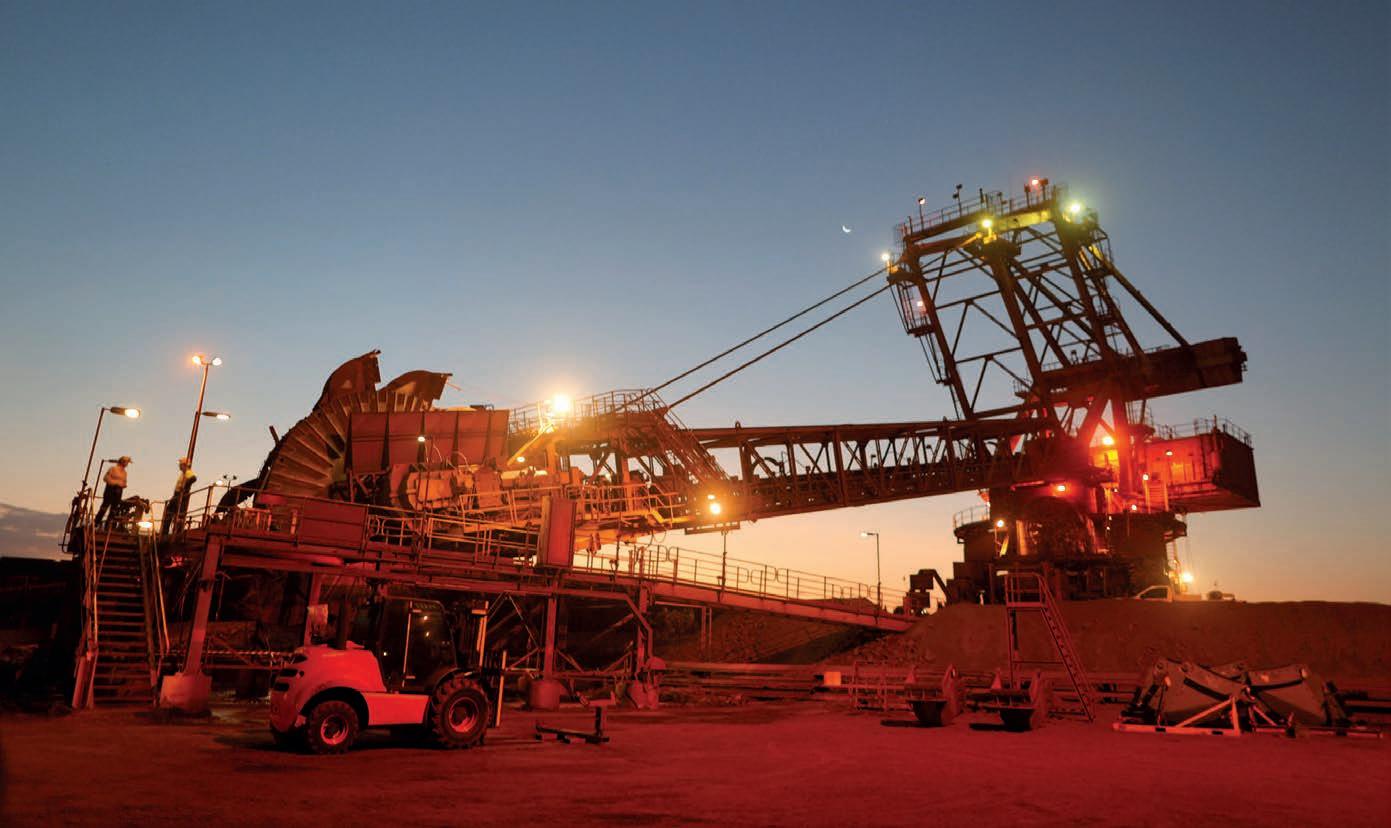
Through our close partnership with Gantrex®, Salix can supply market leading crane rail solutions. Gantrex® has over 40 years of world leading expertise and product design within the crane rail market providing solutions for ports and maritime as well as rail and mining applications.
The ART of making reconciliation real
The first of a new series of Australasian Railway Association (ARA) member profiles shines a spotlight on Australian Rail Technology and its commitment to engaging with Indigenous communities.
Reconciliation Action Plans (RAPs) are a visible, tangible and meaningful way for businesses to promote reconciliation between Indigenous and non-Indigenous Australians. But for some smaller companies, the time, energy and money that would go into creating a RAP can be more impactful when directed towards putting reconciliation into action.
As a member of the New South Wales Indigenous Chamber of Commerce, Australian Rail Technology (ART) Chief Executive Officer David Wynd is always looking for opportunities to strengthen engagement with Indigenous Australians.
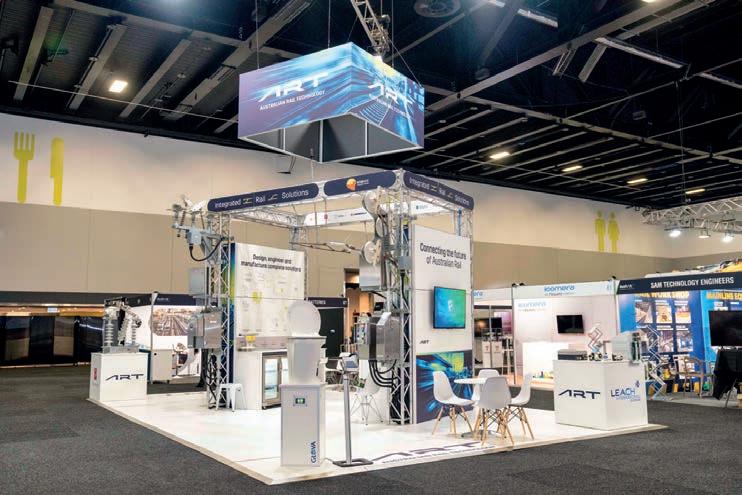
In an expansion of its Sydney-based operations, ART recently opened a new facility in Hervey Bay, Queensland, which will help to create a new fleet of trains, built and maintained locally by Downer Rail and Hyundai Rotem.
Wynd said ART has been working closely with Butchulla Native Title Aboriginal Corporation (BNTAC) – an organisation established to hold and manage the native title rights and interests of the Butchulla People – since day one.
“As an organisation, we looked at coming up with a RAP, but as a SME (Small and
Medium Enterprise) we instead decided to spend the money on implementing a plan to employ Indigenous people and give them training and career opportunities,” he said.
“Since identifying the Hervey Bay site, we’ve been working with local Indigenous organisations, supported by BNTAC, to recruit locals for entry-level roles and create training pathways that will open lifelong career opportunities for them.
“We’re only in the very early stages of the project and expect to be recruiting for the next 12 months, but our first employee started a few months ago and today is actually our first day manufacturing – he’s fitting right in!”
Wynd said cultural awareness training is vital for everyone at ART – not just the handful of people based in Hervey Bay so far, but the full workforce of more than 30 people around the country.
“ART has a strong interest in Indigenous engagement, and we believe there’s a natural alignment between the way rail moves people around country and the legacy of Australia’s First Nations people who travelled across the land for tens of thousands of years,” Wynd said.
For ART, this has also meant being a vocal champion and supporter of ARA’s recently released, industry-first research on First Nations participation and engagement in the rail industry.
The report was commissioned by the ARA to better understand the current experiences, barriers and opportunities of First Nations people working in rail, as well as workplace culture, reconciliation and procurement. It highlights both the progress already underway and the opportunities for the industry to take more deliberate, long-term action.
ARA Chief Executive Officer Caroline Wilkie said the report provides an important evidence base to help guide the rail industry’s focus on strengthening engagement with First Nations people and businesses.
“The recommendations provide a practical roadmap for action to ensure culturally safe workplaces, stronger leadership, better employment pathways and more meaningful partnerships with First Nations businesses and communities,” Wilkie said.
The track towards reconciliation will be different for every organisation, but Wynd hopes the contribution of even a small company such as ART can make a difference in a cooperative and collaborative industry such as rail.
“I enjoy working for a small and rapidly growing company that can be agile and responsive to customer requests and manage very small, through to very large, contracts across all facets of the rail industry,” he said.
“Our experience in projects with multiple suppliers working together has been that in cases where we can collaborate with each other and the customer, the project is generally more successful. We were really happy to support the ARA in elevating the issues around Indigenous engagement and participation and welcome their efforts to drive change in the broader industry.”
David Wynd, Chief Executive Officer of Australian Rail Technology.
Australian Rail Technology provides a range of electrical, mechanical and electronic products and services.
Images: ART
Organisations
Mobility a priority for rail advocacy Industry
The Australasian Railway Association is campaigning for better mobility within the rail sector through harmonisation of qualifications.
For an industry that exists to move people around, careers in rail still suffer from a lack of mobility, according to Australasian Railway Association (ARA) Head of Workforce Development Fiona Love.
ARA research indicates that 35 per cent of today’s rail workforce will be retired by 2035, creating a retirement cliff that threatens to take a significant slice of corporate knowledge and expertise with it.
While Love said larger employers have been recruiting graduates in record numbers in recent years, the middle layers of the workforce – those who bring a depth of experience and have many working years ahead of them – also need to be supported.
“One of our workforce challenges is lumpiness – for example, we have lots of people with rail signalling engineering expertise in Victoria,” Love explained.
“Western Australia and Queensland need more of these engineers, but we make it hard for people to move because we don’t recognise their qualifications from state to state.”
of qualifications is a priority for the ARA’s advocacy efforts – working with
jurisdictions to allow recognition of qualifications across borders.
“It can even be an issue having qualifications recognised when moving between roles within the same state,” she continued. “I think of it like training someone to be a hairdresser: you don’t train them on the booking systems and customer service of just one salon; you teach them how to cut hair and then they can learn the local details when they get the job.”
The ARA also supports mobility within the rail industry through its range of courses, designed to give people visibility and education outside of their own areas of the industry. Courses range from ‘Understanding Rail’ for newcomers to the industry, through to deep dives on rolling stock, signalling, rail operations and infrastructure, and culminating in the ARA Professional Certificate in Rail.
“We’ve had feedback that, within the industry, it is hard to transition within technical spaces, so these courses support mobility and retaining industry knowledge,”

the ARA and discovered the depth and range of the industry outside her specialisation.
“Since the rail industry began, it’s been evolving and changing,” she said.
“I think that’s why the people who have lifelong careers in rail have an appetite for lifelong learning.
“You can see that curiosity in the eyes of people who come to the AusRAIL conference each year. They never get to see other parts of the industry in their day jobs, so when they come to the conference, it sparks that interest and engagement all over again.
“What we need to do next is make sure we have every possible door open for these curious people, especially people whose perspectives haven’t always been part of rail –such as women, First Nations people, and people from international backgrounds.”
The ARA is also working to shift unconscious bias with a new course titled ‘Leading Together: Men Supporting Diversity in Rail’. With 72 per cent of the rail workforce consisting of men, this two-
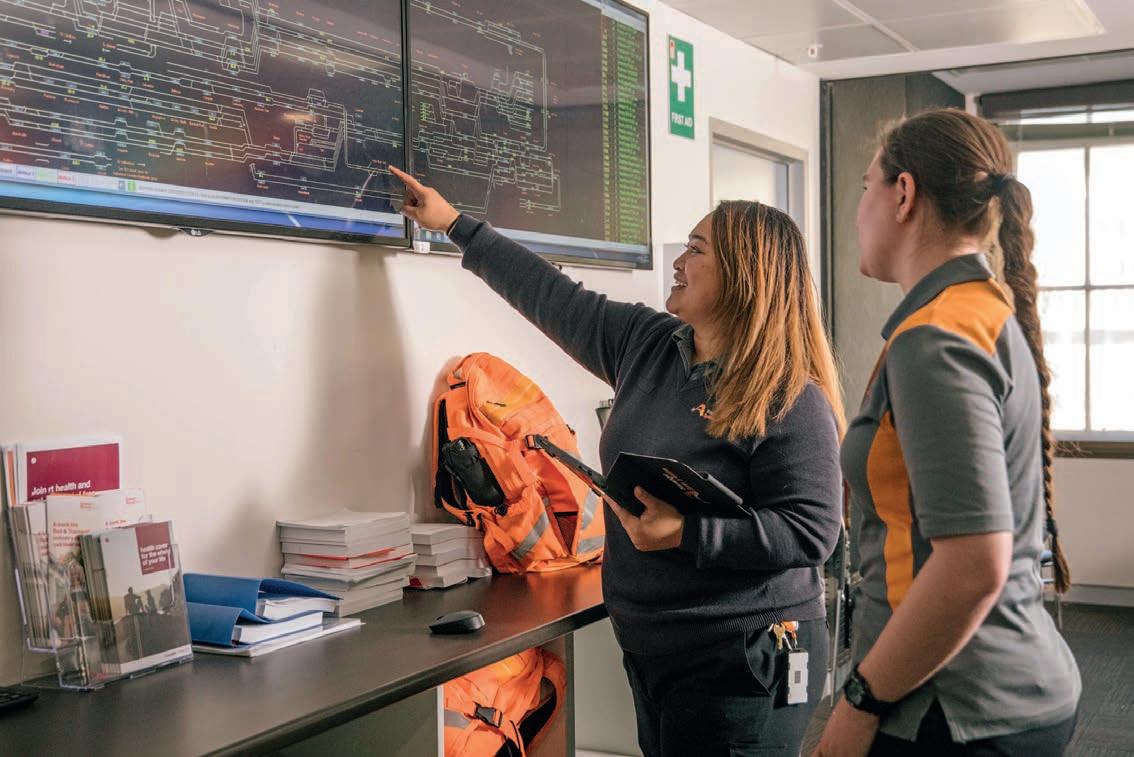
Fiona Love, the Head of Workforce Development at the ARA.
The ARA supports mobility within the rail industry through its range of courses.
From Parramatta to the Pilbara, we build Australia’s most critical communications networks.
Where mission-critical communications are hardest to deliver, BAI Communications has the experience to get it done.
From FRMCS-ready rail systems built on private 5G-MCX, to comprehensive communications solutions for remote mine sites, we bring global expertise to Australia’s most demanding and complex connectivity challenges.

Scan to discover the future-ready capabilities BAI brings to rail

Australian owned and operated — 100% owned by Aware Super
Located in the heart of Melbourne’s northern industrial and logistics zone
Surrounding Melbourne’s largest intermodal freight precinct: the Melbourne Intermodal & Industrial Exchange (MIIX)
Avoid traffic congestion to and from Port of Melbourne and on interstate highways
Enlisted by Port of Melbourne in Port Rail Shuttle Network Start-up Incentive Program
One stop shop for customers — customs bonded storage, empty container park and facilities to wash, fumigate and repair containers MELBOURNE’S LARGEST INTERMODAL TERMINAL HAS ARRIVED UNLOCKING THE FUTURE OF RAIL FREIGHT FOR ALL
Helping supply chain customers to decarbonise freight operations
Multi-purpose terminal — regional, port shuttle and interstate rail freight services
Direct access to Victorian (broad-gauge) and national (standard-gauge) rail networks and Hume Freeway
Lower the cost of your supply chain operations using rail’s unique advantages

To register your interest in Melbourne’s newest intermodal terminal, please contact info@intermodal-terminal.com
intermodal-terminal.com/mit

Cybersecurity: Getting ahead of the curve
Two experts from Siemens Mobility share why Australian rail authorities need to remain vigilant and up-to-date with their cybersecurity systems.
As increasing digitalisation introduces new vulnerabilities and threats to operations, efficiency and public trust, rail systems traditionally designed for resilience must now address the evolving risks associated with interconnected digital infrastructure, including operational technology (OT) and information technology (IT).
At the same time, diverse technologies across networks need to be managed through a mix of old and new technologies, making it difficult to secure the entire system and creating potential vulnerabilities with older technology.
The impacts of emerging technologies like AI introduce both opportunities and new security challenges.
Day to day, cyber-attacks on rail networks don’t look dramatic – at first.
What might initially show up as unexpected behaviour, unreliable indications, or missing data could lead to a service shutdown and dissatisfied passengers, or loss of revenue.
A FALSE SENSE OF SECURITY
According to Derick Hammond, Product and Systems Safety Manager at Siemens
Mobility, Australian rail operators should take note of international cyber-attacks that have occurred in recent years to understand the impact of rail systems that are not adequately protected against cyber threats.
In 2019, the global Trojan attack WannaCry affected Deutsche Bahn operations by disrupting digital passenger information displays in stations. A hacker attack disrupted rail traffic in Italy in March 2022, shutting down freight traffic for a day. Traces of ransomware called CryptoLocker were found in the internal IT network. And in August 2023, in Poland, a railway's radio signals were manipulated, stopping trains for several hours.
Hammond said some operators are lulled into a false sense of security by a combination of factors.
“They might think that because there haven’t been any major cyber-attacks on rail networks in Australia so far, that it’s not going to happen,” he said. “But it could happen at any time.”
He shared that in the Poland attack, attackers used cheap, commercially available radio equipment to bring more than 20 trains to a standstill. Subsequent
attacks took place, causing significant disruptions to both passenger and freight services.
“The operator was using UHF radio as part of its train control systems, and they thought that it was secure enough at the time,” he said.
“These hackers went to an electronics store and bought equipment that probably cost less than $50 and managed to decode the UHF messages and send an ‘all stop’ message to the network.
“Up until that point, the operator thought they were fine because they were using legacy systems and older equipment and had installed it years previously. That false sense of security is a real risk.”
Hammond said having a "physical mindset" can also be misleading. Now, operators also need to consider the digital security and safety aspects of their rail systems.
“Operators might think ‘The door is locked, it’s got a restricted key, we’re covered’. But a locked room doesn’t protect a network interface anymore.
"Rail systems often exchange performance and efficiency data that
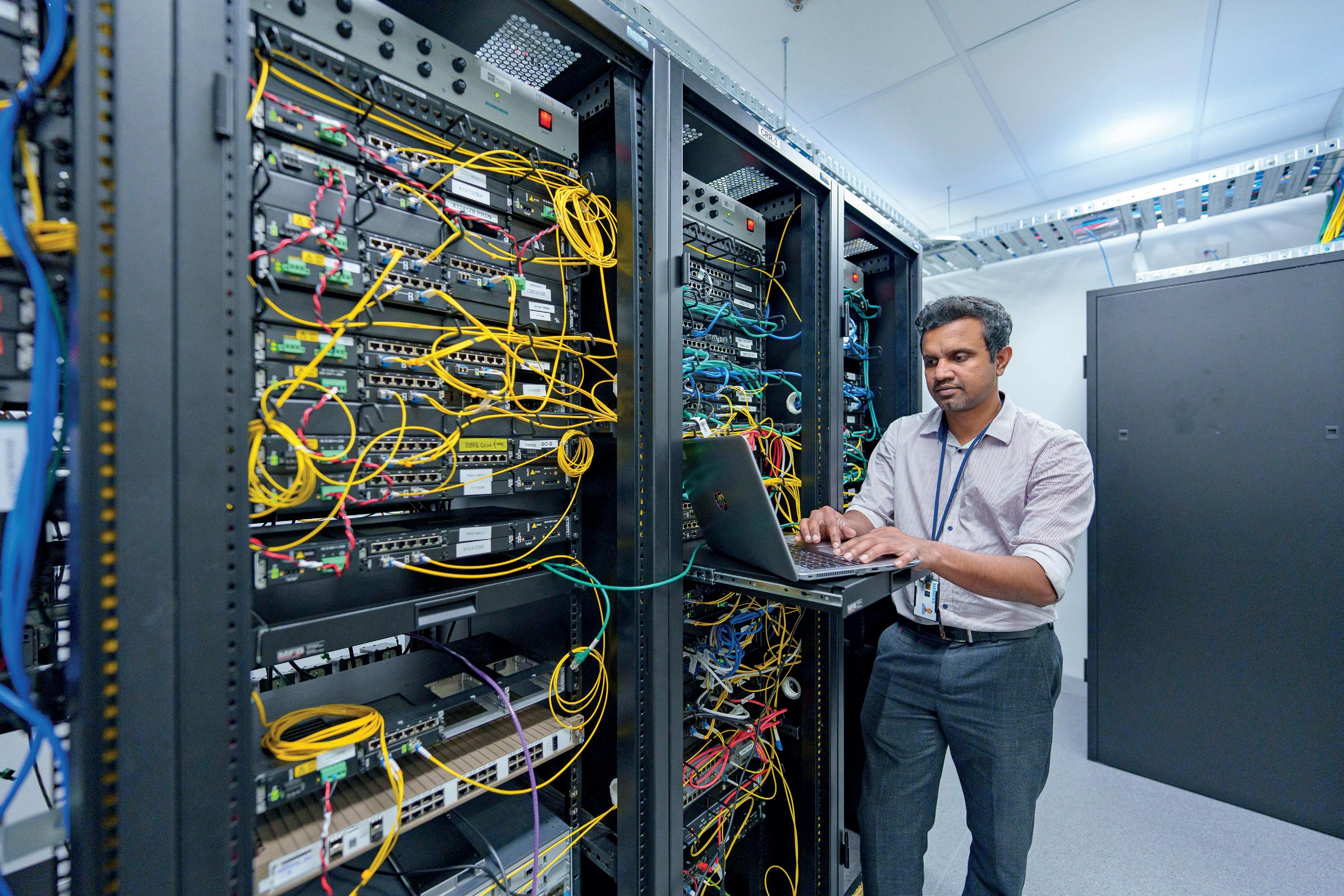
Siemens Mobility has a team of cybersecurity experts based in Australia as well as access to a global network of knowledge.
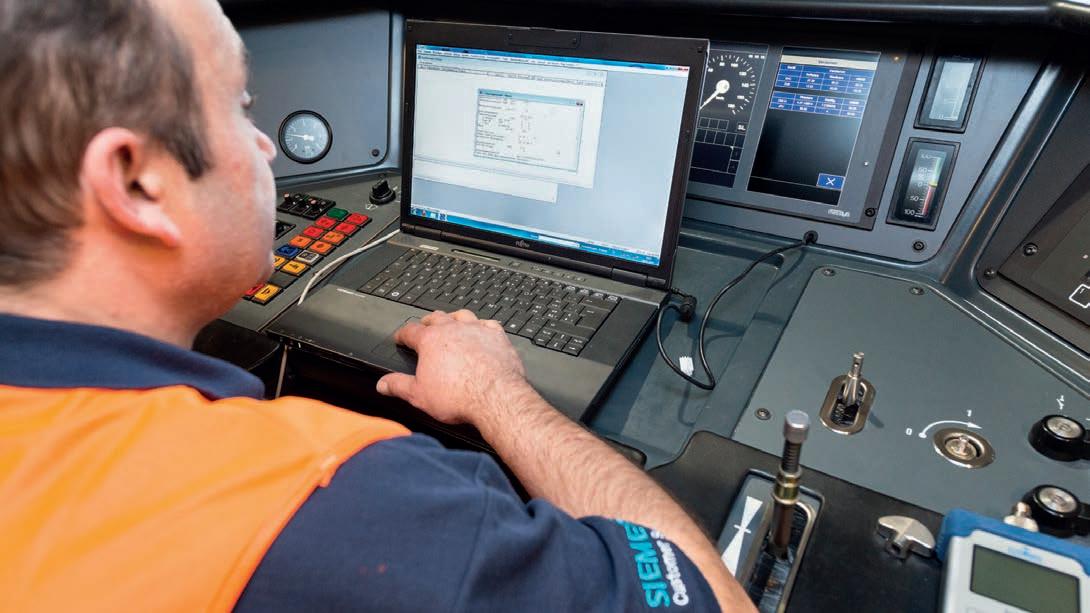
create paths into the system without the need for physical access. This means security measures need to focus more on interface behaviour."
He pointed out that while most operational networks are not “open to the internet” per se, some of them are allowing for remote maintenance access.
“This helps their maintenance capability, but at the same time, it’s opening up a potential hole for someone external to access that trusted internal network.”
New challenges are emerging as the industry moves from traditional lineside signalling to digital signalling systems such as European Train Control System (ETCS) Level 2 and Communications-Based Train Control.
“Digital signalling increases the reliance on software, data and connectivity, which changes how the systems fail,” said Hammond. “Failure modes shift from purely being hardware, to software and datarelated issues.
“With ETCS Level 2, if your radio network goes down, you don't get your movement authorities anymore. If you don't get movement authorities for your trains, then you need to start operating your trains in a degraded manner.
“Cybersecurity is essential to protect these newer signalling systems.”
THE BIGGEST RISK FOR AUSTRALIA Hammond said that what Australian rail
operators should be concerned about is a loss of confidence in the rail system.
“When there is a suspected attack, operators move into degraded modes and procedures, which leads to increased workload, reliance on human judgement, and recovery time,” he explained.
“The operator might have to resort to a manual process. For instance, the train drivers might have to use the radio to report back to the control centre rather than using the train management systems.”
Stephen Baker, Head of Product Lifecycle Management at Siemens Mobility, added: “In complex metro networks like we have in Melbourne and Sydney, that's simply not practical.
“If we lose our critical networks, we can’t run trains. People are left stranded on platforms; they can’t get home from work –it’s chaos. It can have a major impact on an operator’s reputation.”
There’s the cost of restoring systems and investigating breaches after a cyber-attack, and the lost revenue from halted passenger services or delayed freight.
“You might be trying to save money at the outset, but you’ve made the system more vulnerable and then there are repercussions,” said Baker. “It’s a false economy.”
FALLING THROUGH THE CRACKS
Hammond said that many Australian rail operators are lagging behind with
cybersecurity for a range of reasons that includes knowledge gaps, underestimating the risks, and uncertainty about the financial investment.
“Cybersecurity is only just beginning to get a foothold in Australia, and starting to be looked at from an operational point of view,” he said.
“Some rail authorities are showing maturity in this space – but many still don't have any cybersecurity standards in place due to lack of funds, knowledge or understanding of the risks."
Hammond said that while Australia's most recent cybersecurity legislation is from 2024, cybersecurity has been “falling through the cracks”.
“There are rail organisations that struggle to find an owner for cybersecurity internally. It often falls between safety and operations, but doesn't fit in one or the other. Instead, it needs to be treated as its own function.”
HOW OPERATORS CAN GET AHEAD OF THE CURVE
According to Hammond, operators need to build a comprehensive cybersecurity strategy and process that ensures operational continuity and the safety of passengers and freight.
To achieve this, Hammond recommends the “Security by Design” approach –ensuring systems are resilient from the ground up, rather than viewing cybersecurity as an optional “add-on”.
Siemens Mobility can support operators with this using the organisation's cybersecurity approach that focuses on identifying risks and gaps, protecting rail operations, detecting anomalies, and ensuring a swift response and recovery.
“It means identifying cyber threats early, designing mitigations or putting controls into the architecture, and ensuring that you’ve got counter-measures in place that don't compromise anything from a timing, availability or fail-safe behaviour point of view.”
Hammond said there have been some incidents where cybersecurity gaps have only been discovered late in the delivery process, when systems are being commissioned.
“Operators don’t necessarily need to go for all the bells and whistles. They can gradually build up to having a more secure operational network. But it’s worthwhile even to do an assessment and see the terms of their current cybersecurity.”
Siemens Mobility has products and solutions to help protect rail operators from
New cybersecurity challenges are emerging as the industry moves to digital signalling systems.
cyber-attacks and can work with operators to design a cybersecurity strategy that fits their budget and needs.
One is the Data Capture Unit, or DCU, which acts as a bridge between IT and OT.
As a key component of Railigent X, Siemens’ digital services platform, the Data Capture Unit provides a consistent cybersecurity architecture for rail operations.
“The DCU is useful where you’ve got legacy control systems on railways. It's essentially a gateway that enables all of the business systems on IT to access the OT network without causing any issues.
“The DCU prevents direct access and potential threats from impacting the rail system, which in turn means the valuable operational data can be leveraged safely without compromising the safety and integrity of the legacy control systems.
Baker said this allows maintainers to access up-to-date information about certain aspects of the railway, but that communication can only go one way. Therefore, the system cannot be hacked.
“A small action in one place can have catastrophic impacts elsewhere,” he added.
Another product from Siemens Mobility is the Secure Proxy box, which enables legacy hardware to communicate with modern, secure systems.
“If you’ve got an old system that needs to talk to an encrypted system, this box sits between the two,” Baker said. “It gives an extra level of protection outside of the OT world.”
CUSTOMER SERVICE MODELS TO SUPPORT CYBERSECURITY GOALS
In Melbourne, Siemens Mobility is working closely to strengthen cybersecurity outcomes for Train Control and Monitoring Systems (TCMS). Modern TCMS environments rely on a complex mix of proprietary software, opensource components, and commercial off-the-shelf technologies. Through structured vulnerability monitoring and reporting, Siemens Mobility supports the early identification and assessment of
cybersecurity vulnerabilities, helping avoid reactive responses after incidents occur.
THE CHANGING CYBERSECURITY LANDSCAPE
Set to enter full effect in 2027, the European Union’s Cyber Resilience Act (CRA) will mandate 'security-by-design' and lifecycle vulnerability management for all products with digital elements sold in the EU.
Considering that many of the rail systems with a digital element used in Australia are from global suppliers who operate in the EU, such as Siemens Mobility, Hammond said this legislation may have an impact and support a more secure rail network in Australia.
“The CRA places a strong emphasis on lifecycle security, requiring manufacturers to provide security patches for a product's expected lifetime,” said Hammond.
“Over the long term, we need to understand, prioritise and manage cybersecurity. As an industry, we should embed cyber resilience to support secure operations for the future.”
Australian cables to fit your needs
Based in Western Sydney, Amokabel Australia produces custom and standard cables for the rail industry.
Amokabel’s story began in 1992, with the founding of its first company in Sweden.
Fast forward to today, and the Amokabel Group also has factories in Sweden, the United Kingdom, Spain and India, as well as warehousing and regional offices in Norway, Finland and Germany.
In 2022, Amokabel acquired a 40-year-old cable manufacturing business in Sydney, Euro-Tech Cables, which is now known as Amokabel Australia.
“Amokabel was seeking a manufacturing facility in the region to develop its offshore products and manufacture them in Australia,” said Mark Foster, General Manager and Sales Director at Amokabel Australia.
“The local company had been established by two professional engineers who had extensive experience in the cable industry.
“Amokabel Australia brings those local advantages together with the resources and products of the international Amokabel Group.”
CUSTOM PRODUCTS
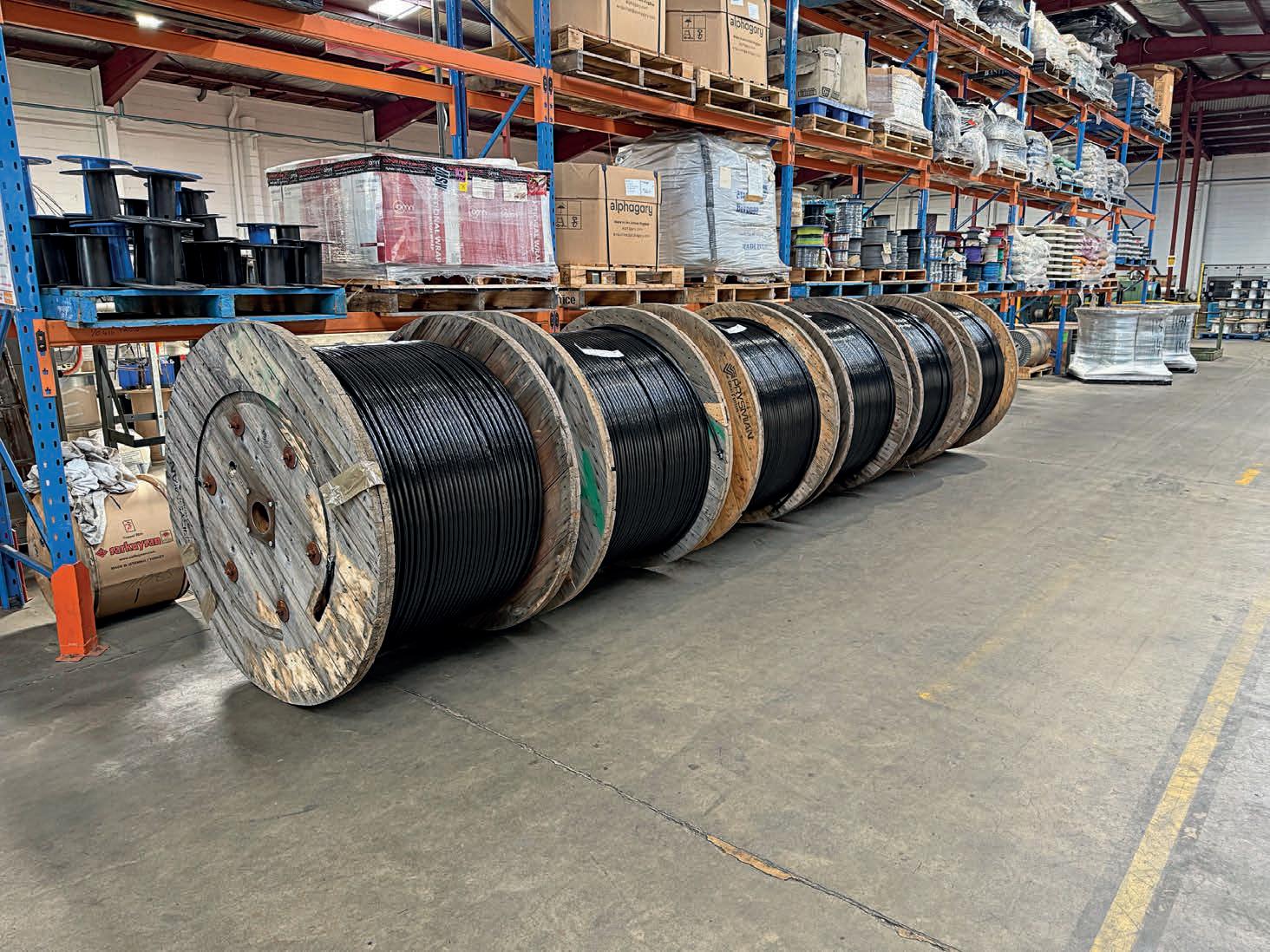
Amokabel Australia prides itself on providing both custom and standard cables, which are manufactured at its facility in Western Sydney.
It produces cables for a wide variety of industries, from rail to mining and defence.
For rail industry customers, it manufactures axle counter cables, signalling cables, traction power cables, communication cables, supply cables, bonding cables, overhead line equipment cables, and contact wire.
All of its products meet Australian standards and can be tailored to the customer’s needs.
“We are experts in producing unique, highly specialised cables,” Foster said.
“We’ve got fast turnaround times for custom cable orders – we can supply the order in less than a month, if required.
“Low minimum order quantities are also available as an option for customers, so we can match the needs of the market.”
He shared an example of one customer who required a specific hollow nylon tube to be inserted along the length of the cable, so air could be forced down it if the cable was submerged in water.
“The theory behind that is, if you can pressurise the cable with air and there is ever a leak or break in the cable, water won’t penetrate the cable,” said Foster.
“We work closely with our customers to tailor solutions and find the right cable for the right application or system.”
Amokabel can also customise the labelling on cables.
“Cables have metre marking on them, for counting off lengths. If a customer wants, we can print their website and phone number on the cables, so identification can be attributed back to the customer, rather than the manufacturer. We still maintain traceability back to us, in accordance with Australian Standards and ISO 9001.”
Amokabel can also produce lighter cables due to its innovative construction
Amokabel manufactures both standard and custom cables at its facility in Western Sydney.
insulation practices. This brings a multitude of benefits – from lower costs to transport the cables to the customer, to reducing the weight of trains.
“If you have lighter cables on your rolling stock, you’re going to save money,” Foster said. “Less weight means less power is needed to move the train, whether that’s coming from diesel or electricity.”
LOCAL SUPPORT
Foster said being locally based means Amokabel has strong relationships with its Australian customers.
“We have one Melbourne-based customer in the automotive industry that needs a special cable for his machinery and vehicles,” he said.
“He will come to the factory and watch the cable being manufactured and give
feedback on the finish and the sizing. He’s not waiting on an email from another country or trying to call a different time zone.
“We can make adjustments and refine the specifications for his cables in real time, so they suit his plates and connectors perfectly.”
Foster said the Amokabel team is experienced in manufacturing different types of cable and ensuring those cables are protected from the elements.
“They have expertise in cable insulation, steel wire armouring, mechanical protection, and out-of-sheath capabilities to protect against water and rough use.
“The cables can also be insect- and rodent-proofed. Cable armouring and nylon jacketing provide this protection in accordance with Australian Standards.
“Outer sheath additives can now be introduced in the extrusion process to afford insect and rodent proofing by way of one outer sheath.”
LOOKING TO THE FUTURE
In the future, Amokabel hopes to expand its manufacturing capabilities in Australia.
“At the moment, some of our cables are 100 per cent manufactured in Sydney – our axle counter cables, for example,” Foster said. “Others are only partly made here.
“Within the next two years, we are hoping to open an additional local factory to cater to our growing customer base.
“With a growing emphasis on local content and local jobs, we’ll be there to support Australian projects now and in the future.”
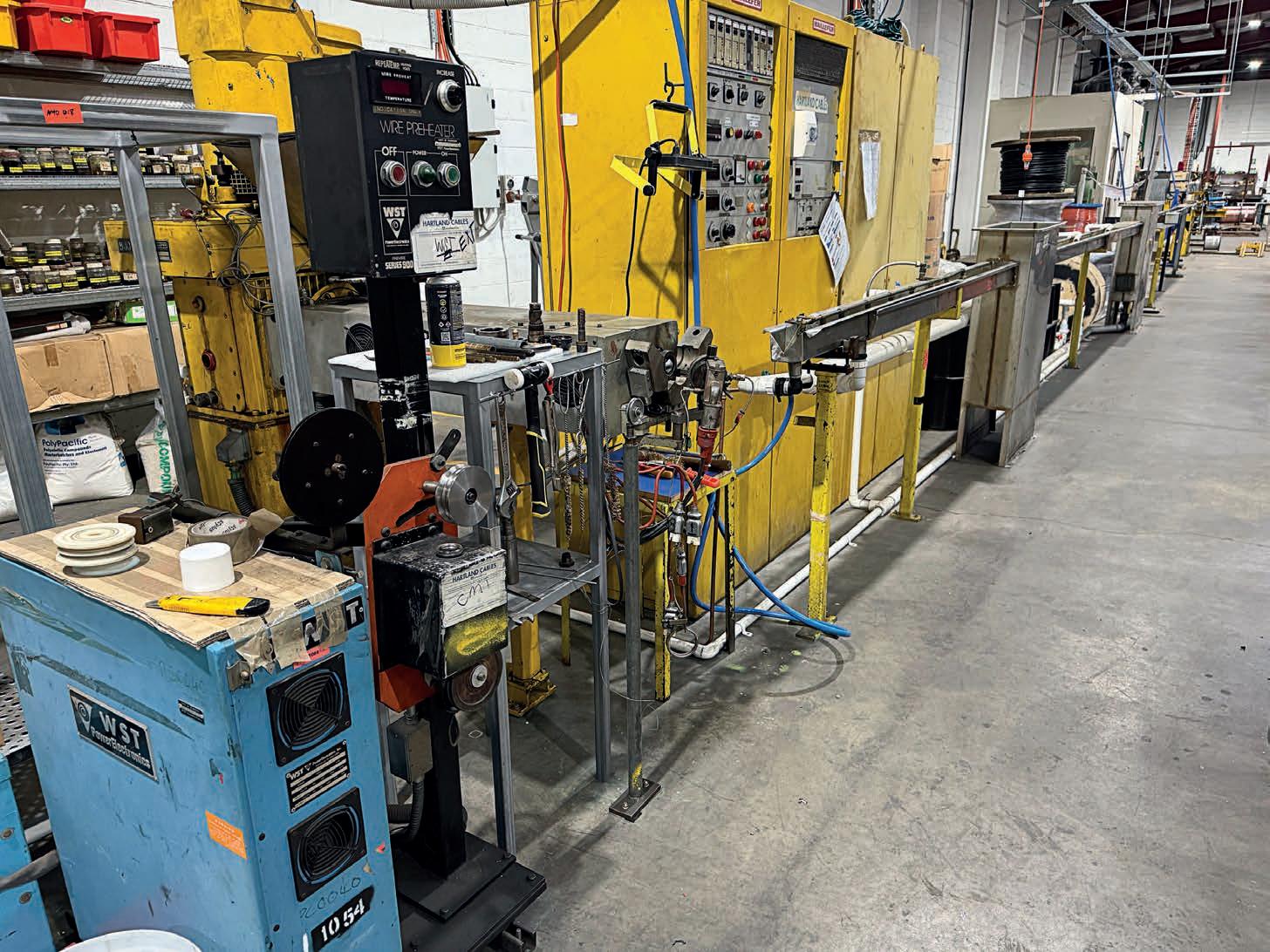
All of Amokabel’s products meet Australian standards.
Calls grow for freight fix
Community group Ouyen Inc is calling for the abandoned Murray Basin Rail Project to be finished – arguing it will boost rail freight efficiency, benefit the region and pave the way for a new intermodal terminal.
The Murray Basin Rail Project (MBRP) was devised to upgrade and standardise Victoria’s rail network, revitalising rail freight in the state.
The broad-gauge tracks of the Mildura, Manangatang and Sea Lake lines were all earmarked to be converted to standard gauge, making them interoperable with neighbouring states and boosting productivity.
Works began in 2015 and were meant to be completed by 2018. However, in 2019, the half-completed project was abandoned before the Sea Lake and Manangatang lines could be standardised. Seven years later, rail operators using those two lines have been left with no choice but to run two sets of rolling stock across two different gauges.
Meanwhile, trains on the Mildura Line –which did get standardised – are forced to detour an extra 130 kilometres each way to access Geelong and the Port of Melbourne, because gauge conversion was not completed between Maryborough, Ballarat and North Geelong.
It’s a source of frustration across the whole network, and for a community group known as Ouyen Inc, made up of residents of the small town of Ouyen in the Mildura region – many of them farmers.
WHY
NOW IS THE TIME TO ACT
Ouyen Inc is calling on the Victorian and federal governments to urgently complete the MBRP and restore a direct rail link from northwest Victoria to Geelong and the Port of Melbourne.
With the state election scheduled for November 2026, the organisation says now
is the time to put the issue squarely on the agenda.
“After more than seven years of inaction since works stalled in 2019, this nationbuilding project should be on every candidate’s radar,” said Dean Munro, a member of the Ouyen Inc committee.
“It is part of the National Freight Network and should be treated as such.”
Munro said that freight trains on the Mildura Line being made to detour 130 kilometres each way via Ararat and Maroona has a significant impact on Mildura – which is Australia’s highest agricultural earning region, according to the Australian Bureau of Statistics.
“The Mildura Rural City Council region is forecast to generate over 12.8 million tonnes of intermodal freight to 2035,” Munro highlighted. “It is more than 500 kilometres from the port, where rail should have a natural advantage.
“Despite this, Mildura and the Sunraysia area are expected to continue sending more than 80 per cent of containerised freight of fruit, wine, grain, hay and almonds from
the region by road (source: GHD Advisory), needing six billion net tonne kilometres of truck movements to Melbourne and Adelaide over the next decade.
“That number could be the same again for the regions that export bulk grain. According to anecdotal evidence from the region’s grain growers, train transport is at its all-time lowest share since the transition to bulk handling in the 1940s to 1950s.”
Ouyen Inc’s agribusiness and logistics consultant, chartered accountant Michael O’Callaghan, said the MBRP being unfinished is costing the Mildura Council area and Sunraysia region hundreds of thousands of dollars each week.
“The cost is being felt directly at the farm gate, where returns are already under increasing strain from fuel and fertiliser price hikes,” he added.
THE SUNRAYSIA MALLEE PORT LINK
The current inefficiencies in Victoria’s freight rail network are stifling local investment in rail-related infrastructure, O’Callaghan said.
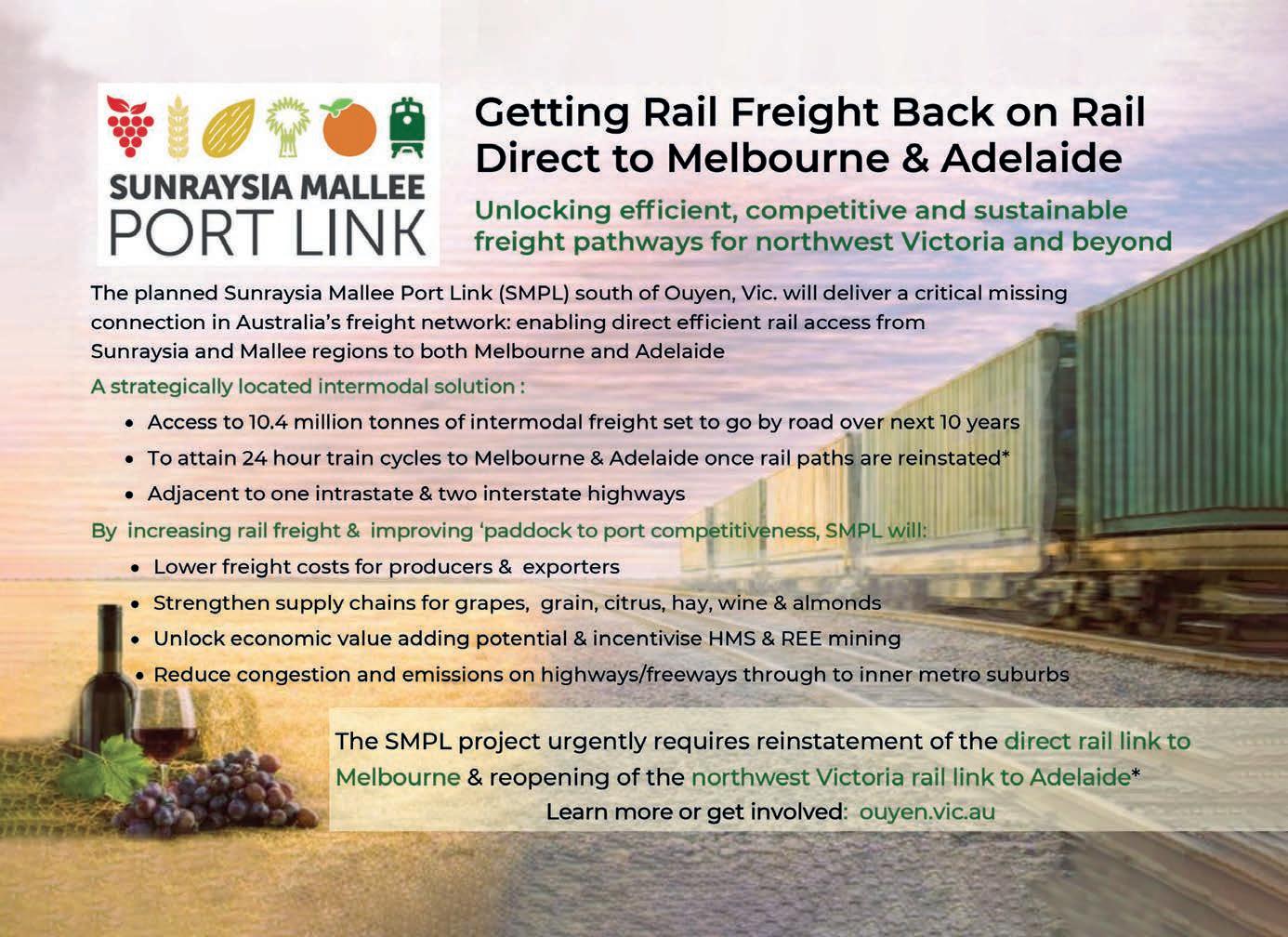
This includes the proposed Sunraysia Mallee Port Link (SMPL), a “shovel-ready” intermodal facility just south of Ouyen.
A local transport study for the terminal has been completed, and a detailed business case was prepared by GHD Advisory in 2021.
“We’ve shown that the SMPL will fill a very large gap in the intermodal rail services market across southwest New South Wales and northwest Victoria,” O’Callaghan continued.
“It will provide primary producers, exporters, and mineral sands and rare
An artist’s impression of what the SMPL could look like.
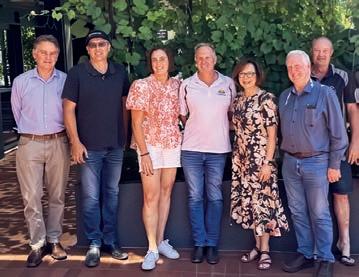
The Sunraysia Mallee Port Link (SMPL) committee with local Members of Parliament.
earth miners with the option to efficiently rail large volumes of freight to the port of best fit, whether that be in Victoria or South Australia.
“Overall, it will strengthen rail network resilience, productivity and patronage by enabling rail access to alternate ports (both for everyday operations and contingency scenarios), lift ‘paddock/ pit to port’ productivity, unlock value adding opportunities, incentivise economic development, support international market competitiveness, and help to meet increasing Environmental, Social and Governance (ESG) expectations.”
However, O’Callaghan said current rail network inefficiencies are making the project unviable.
This includes not only finishing the MBRP but also reopening the Murrayville to Tailem Bend rail line for connection to Port Adelaide.
The Murrayville to Tailem Bend rail line closed in 2015 for a number of reasons, including inefficiencies caused by the line on the South Australian side being standard gauge and the line on the Victorian side being broad gauge.
However, in 2022 the Victorian side – the 109 kilometres from Ouyen to Murrayville – was converted to standard gauge, but has only seen three freight trains in total since, according to O’Callaghan. The remaining 21-kilometre section from Murrayville to the border is still broad gauge.
“If this line is reopened, it will also provide a contingent rail route for trains that travel between Melbourne, Adelaide and Perth,” said O’Callaghan. “If the route is temporarily closed between Geelong and Tailem Bend – whether that’s because of scheduled maintenance, natural disasters or other disruptions – trains could be re-routed via Ouyen.”
GOVERNMENT RESPONSE
In response to recent media coverage of Ouyen Inc’s campaign, a Victorian Government spokesperson said longer and heavier trains provide cost savings for farmers, producers, and operators, without the need to run additional services – a claim O’Callaghan refutes.
“This position does not reflect the operational realities of freight in northwest Victoria and the broader Murray Basin
"We’ve shown that the SMPL will fill a very large gap in the intermodal rail services market across southwest New South Wales and northwest Victoria.”
Michael O'Callaghan, agribusiness and logistics consultant for Ouyen Inc
rail network region,” he said. “Fresh products such as fruit and almonds, as well as the logistics of farm operations and container management, require product to be sent to port every day.
“At its core, the issue with rail is not train length, but train cycle times, service frequency and network efficiency.
“Reinstating the direct Mildura–Melbourne route via Ballarat and Gheringhap would be at least 33 per cent more productive, compared to the current 130-kilometre detour via Ararat.”
O’Callaghan said that under a direct route, it is feasible to operate at least five trains per week (at 1.2 kilometres each), equating to over six kilometres of weekly freight capacity.
“By contrast, the current Ararat alignment supports a maximum of three trains per week, even at longer lengths (1.5 kilometres), equating to materially lower total throughput of 4.5 kilometres of weekly freight capacity,” he added.
O’Callaghan said this principle applies, whether it be for intermodal freight from Mildura Rural City Council Local Government Area (LGA), Sunraysia going to Melbourne, export grain from Birchip going to Geelong, or other freight best suited to rail.
A STRONG CASE
O’Callaghan said the SMPL has “wide industry support” from the agriculture, mining and road transport sectors.
“The Australasian Railway Association (ARA) and Freight On Rail Group (FORG) listed it as a critical infrastructure gap project in their joint submission to the Victorian Freight Policy Review in 2024,” he added.
Ouyen Inc is urging communities across the rail network, and beyond, to step up the pressure and hold all political parties to account to complete the Murray Basin Rail Project.
“The economic case, particularly given Australia’s productivity and carbon reduction challenges, is far stronger today than the 2015 business case used to initiate the project,” Munro argued.
“With an election approaching, now is the time for communities from Wentworth and Euston in southwest New South Wales through to Boort, St Arnaud and Maryborough in Victoria, to demand clear commitments and hold candidates and parties to account; this project must be finished.”
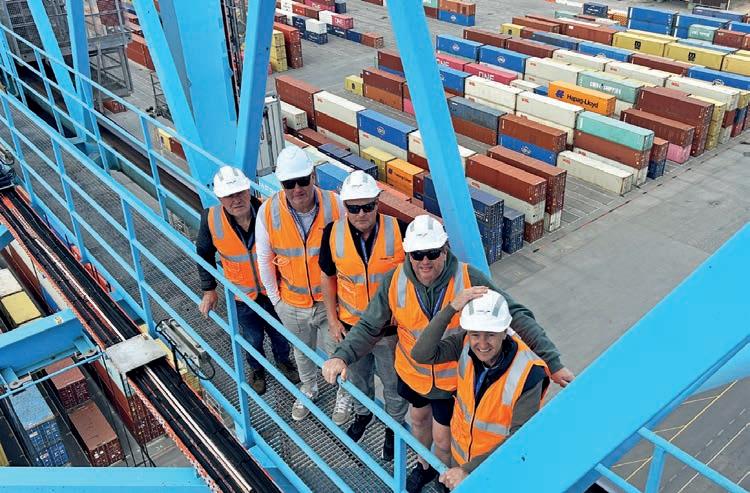
Some of the Ouyen Inc representatives and producers from North West Victoria at the Flinders Adelaide Container Terminal.

Always on
BAI Communications is bringing its global experience home for its biggest Australian transport project to date: Sydney Metro West.
With origins dating back to 1923, BAI Communications has been part of Australia's critical infrastructure for more than a century.
BAI provides a communications backbone for anything mission-critical – designing, building, operating, managing and owning networks for transport operators, rail, broadcasters, government, emergency services, ports, utilities, and mining and resources enterprises.
“Most Australians interact with BAI Communications’ infrastructure daily without knowing it,” said Elyssa Rollinson, Chief Commercial Officer at BAI Communications.
“At one point we were calling ourselves the ‘digital roadies’ because the public don’t
always know what we are doing behind the scenes – but our customers certainly appreciate what we do to keep their networks ‘always on’.
“We deliver television and radio services to 99 per cent of the Australian population across more than 745 transmission sites, and we operate the New South Wales Telco Authority’s Public Safety Network, one of the world’s largest public safety radio networks.”
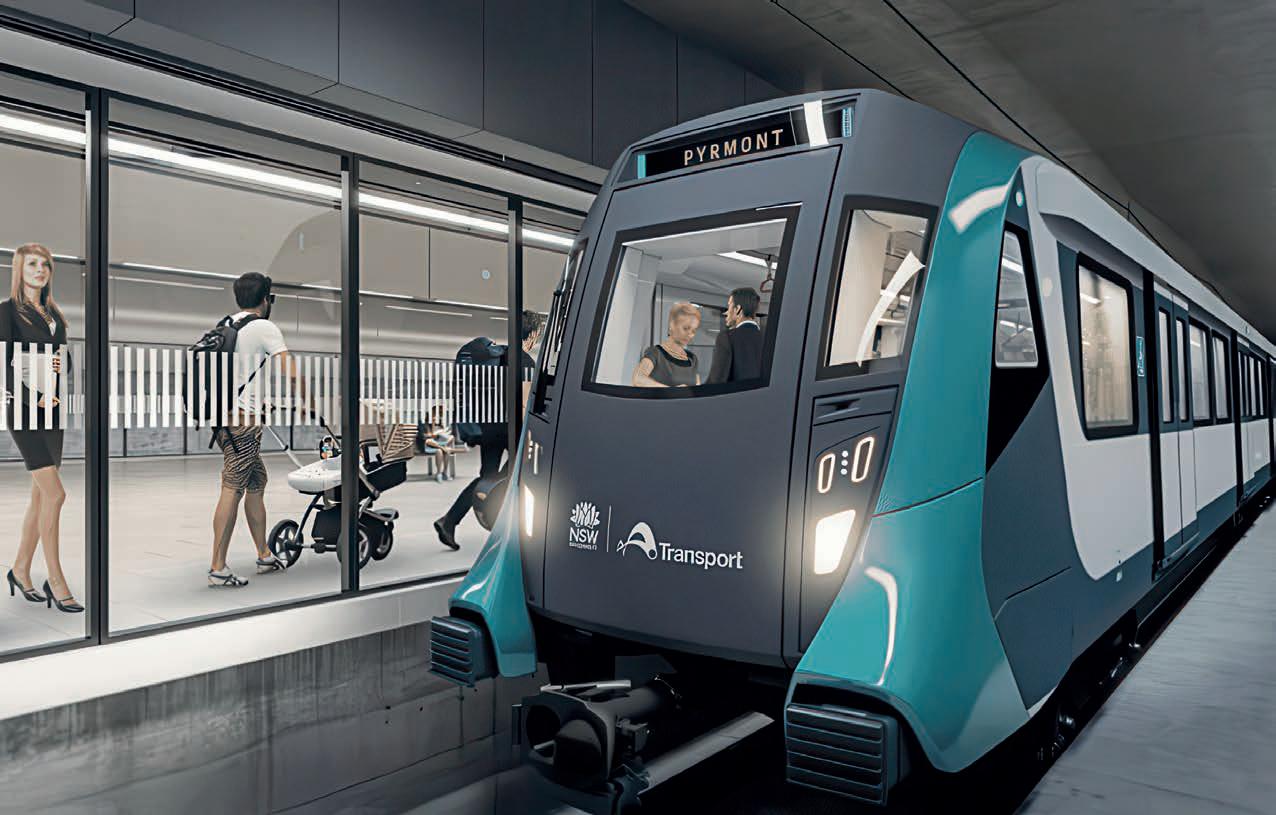
Within the transport space, BAI Communications recently landed a significant contract. It will deliver critical radio communications systems for the landmark Sydney Metro West project, as a partner to the Metro Trains West Pty Ltd (MTW) consortium.
transformational project that will reshape mobility across Greater Sydney,” said Rollinson.
BREAKING NEW GROUND
One of the most significant public transport infrastructure investments in Australia’s history, Sydney Metro West will double rail capacity between Parramatta and Sydney’s CBD.
With 16 next-generation, driverless metro trains, 24 kilometres of tunnel and nine new stations, the project’s aim is to reduce travel times, relieve congestion and unlock urban renewal.
MTW, a joint venture between MTR Corporation (Australia) Pty Limited and CRRC (Hong Kong) Co Limited, has been awarded the Trains, Systems, Maintenance and Operations contract for the project, which targets an opening date of 2032.
BAI’s role is to design, deliver, and integrate essential communications infrastructure across the new metro line. Its scope will include delivering a private 5G network enabling operational radio systems, train communications, and rail signalling, as well as ensuring seamless 4G/5G coverage for passengers using the Telstra, Optus, and TPG networks across all stations and tunnels.
BAI Communications will also ensure New South Wales emergency services maintain reliable coverage throughout the entire corridor.
Sydney Metro West will employ Australia’s first 5G Mission-Critical Services (MCX) based radio communication system, with a clear pathway to the Future Railway Mobile Communication System (FRMCS) – the lower-latency, evolving global standard designed to replace ageing systems over the next decade.
“Connectivity platforms have evolved over time,” Rollinson explained. “If you think about mobile phone networks, we’ve moved from 2G to 3G to 4G to 5G.
“Rail systems are still operating on legacy technology platforms. But the trains themselves are increasingly automated, and the control systems,
The Sydney Metro West project will double rail capacity between Parramatta and the Sydney CBD.
Image: Transport for NSW
Technology
the signalling systems, and new communications and voice technologies for rail are all moving ahead at pace.
“There is a whole new range of technologies which are the future for rail systems, and those technologies will not work on old connectivity platforms. In the same way that our mobile phone technology has progressed, we need to move the rail communication systems into the new generation so that it is future-ready.”
Rollinson said BAI is thrilled to be pioneering this technology in Australia.
“From a communications technology perspective, this is groundbreaking,” she added. “We’re thrilled to be at the forefront of advising the rail industry and helping it to evolve in terms of its connectivity.”
BRINGING INTERNATIONAL EXPERIENCE HOME
Prior to BAI’s separation into two businesses in 2023, with Boldyn Networks now covering the northern hemisphere, the company delivered large-scale mission-critical rail communications systems in major cities around the world.
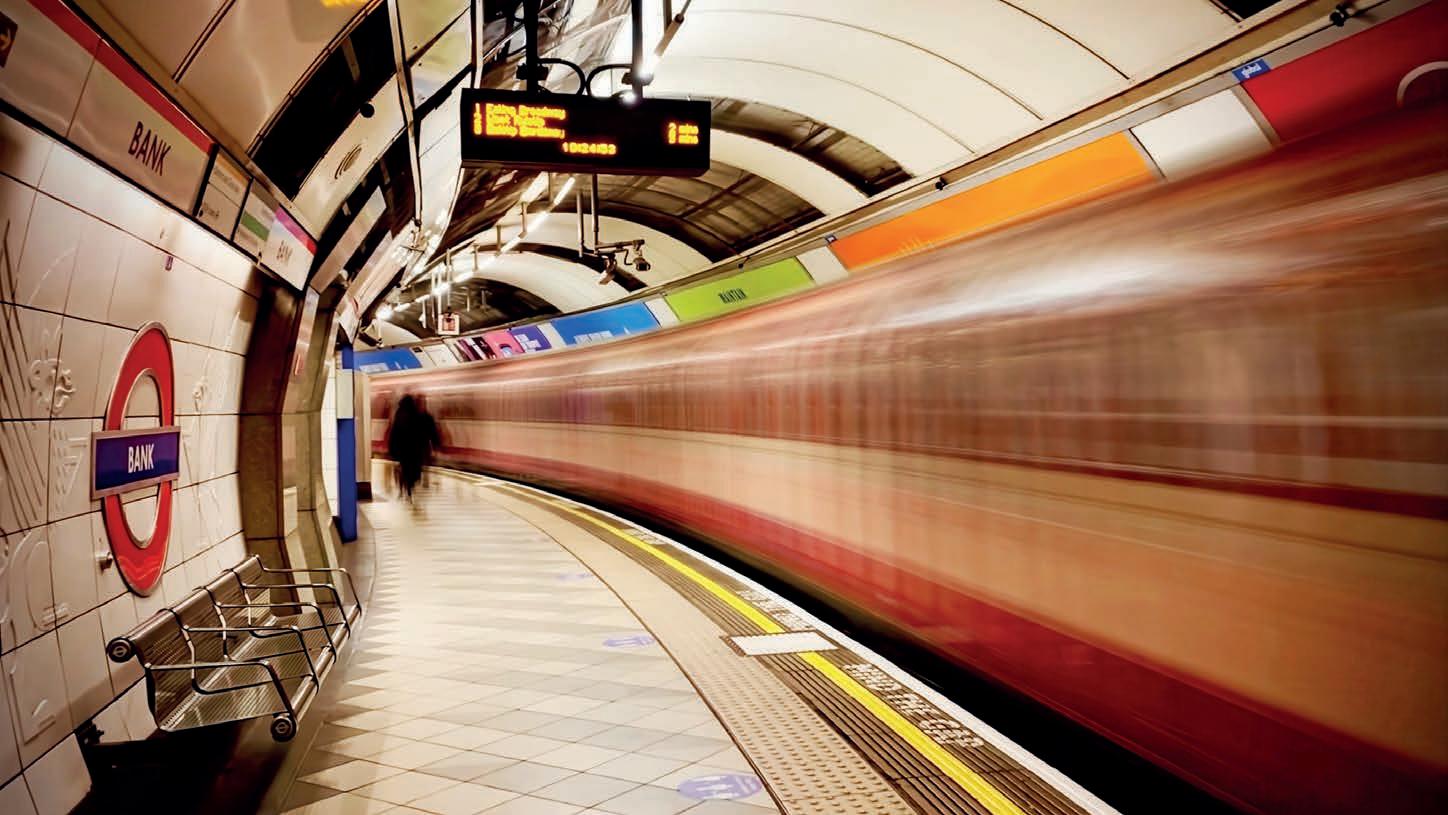
“We built all of the communication systems for public cellular connectivity in the New York subway, which was a massive project,” said Rollinson. “We did the same in Toronto, and our sister company Boldyn is currently delivering a range of communications networks for the London Underground.”
Rollinson said Sydney Metro West will benefit directly from BAI’s international project delivery.
“Several people in our Australia-based team have gained invaluable experience overseas and are now bringing it home,” she said.
“We also have an ongoing relationship with Boldyn, which means we stay close to how 5G MCX is being implemented on networks like Deutsche Bahn in Germany, among the most advanced rail 5G programs in the world.

“This is a useful live reference point when designing something like Sydney Metro West.”
BAI (and more recently through Boldyn) has also worked on the design, operations and maintenance of Hong Kong’s rail system in partnership with MTR Corporation.
“MTR was effectively one of our first customers for our international business when we started to expand outside Australia,” said Rollinson. “We’ve had a very long and positive relationship and are delighted to continue our partnership with the Sydney Metro West project.”
STANDING OUT FROM THE CROWD
In rail, communications failure is not an operational inconvenience, it is a safety event. Train control, workforce safety, passenger systems, and CCTV all depend on networks that simply cannot go down.
“We bring delivery experience in that context – not just technical capability on paper,” said Rollinson. “Our engineers have worked across rolling stock wireless, wayside networks, mission-critical pushto-talk, and information technology/ operational technology convergence in real rail environments.”
BAI provides a communications backbone for anything mission-critical.
Image: Serhii/stock.adobe.com
BAI’s sister company Boldyn is currently delivering a range of communications networks for the London Underground.
Image: BAI Communications
Rollinson said BAI has a unique advantage because of its global experience but also its public safety heritage.
“It’s an absolute non-negotiable that Australia’s police, fire and ambulance services have connectivity in all environments, from buildings to tunnels to stations,” she said.
“We manage and operate the New South Wales Telco Authority's Public Safety Network very successfully, ensuring it is always on. We ensure our communication systems are resilient and robust, and we think about connectivity needs in a holistic way.
“We bring together our expertise in rail operational connectivity, public cellular connectivity and public safety, implementing an efficient multi-technology, multi-platform solution that gets better outcomes.”
BAI also prides itself on being vendor neutral.
“When we make a recommendation, it is based on what is operationally right for the client, not what we have a commercial incentive to sell,” Rollinson continued.
HEAVY HAUL
BAI has grown its capabilities in the mining space with its 2025 acquisition of Titan ICT – an advanced engineering firm specialising in Information and Communication Technologies (ICT).
“Titan ICT brings specialist experience in communications for mining and resources operations, including heavy-haul rail networks that are central to the Pilbara mining supply chain,” Rollinson explained.
“These are demanding environments for wireless communications, with long distances and unforgiving conditions, and the safety requirements are stringent.”
The Titan ICT acquisition strengthens BAI’s private 5G capability, so it can now offer clients an end-to-end service, from spectrum licensing and network design through to deployment and ongoing managed support. It can also offer an “Own and Operate” model, where BAI deploys capital investment under long term Network-as-a-Service arrangements.
“BAI and Titan have been working with both mines and ports, implementing private
Australian Railway and Custom Cables Manufacturer
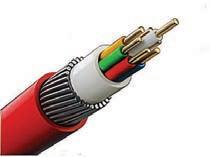
Amokabel Australia excels in the design and manufacture of many unique and highly specialised cables.
The company is based in Sydney and supplies products across Australia and overseas. Priding itself on being able to provide both custom and standard cables that are manufactured at our facility in Western Sydney. We can manufacture a wide range of products, many of which are custom designed and made to meet our clients’ requirements.
5G networks in those environments,” Rollinson said. “The next thing is the rail channel that connects them, and that’s something that needs to be done in a number of privately-owned rail networks around Australia, particularly in the Pilbara. Just like the commuter rail sector, the private rail networks also need to undergo a technology transition to enable future automation.”
Rollinson said BAI is looking forward to working more in this space in the future.
“We’re not just vendor-agnostic – we’re also technology- and partner-agnostic,” she said. “We have a rich heritage of working with multiple ecosystem partners to produce solutions and implement them with an outcome-based focus. We're looking forward to working more with players in the mining industry, to solve their operational technology requirements at the mine sites, but also through the rail corridors.”
For more information visit baicommunications.com
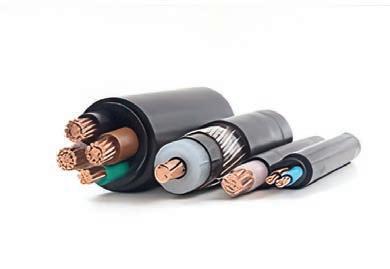
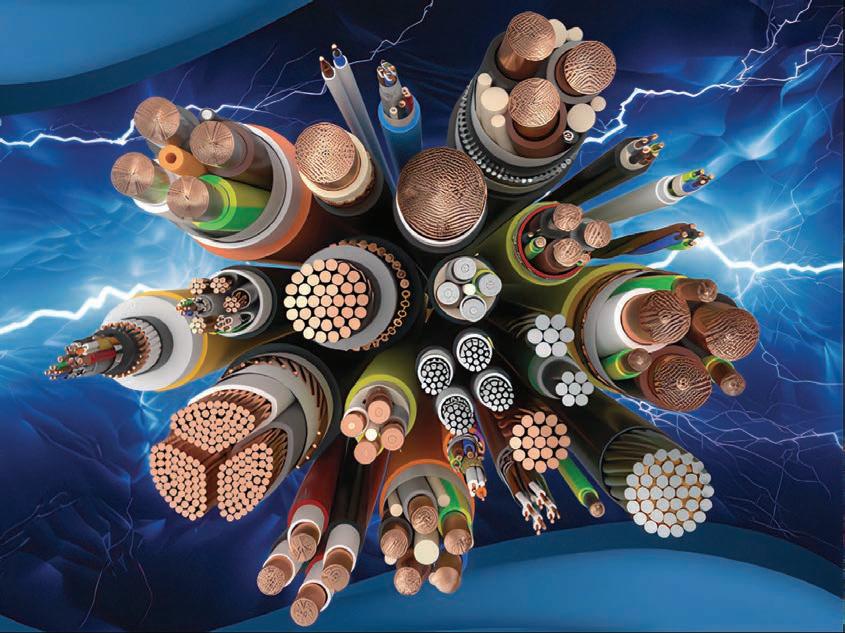
All your Railway Sector Cabling requirements, locally manufactured, such as OHLE cables, Trackside Power cabling, Points Systems, Level Crossing Infrastructure cabling, Contact Wire, Catenary & Bonding cables, Axle Counter cabling, Signalling cables, Train Control System cables, Telecommunications wires, Rolling Stock, Passenger Information Systems, SCADA & Station Building cables.
Extrusion Processes utilising: Low Density Polyethylene, High Density Polyethylene & Cellular Foam Polyethylene, Polyurethane, Polypropylene, PVC, LSZH Megolon, Blue Intrinsically Safe coloured sheaths & Steel Wire Armouring, Termite and Rodent protection cable solutions.
Quality and Compliance are at the heart of mitigating the risk of unplanned maintenance and downtime. Amokabel will work hard to ensure we supply high quality, high performance. The strictest quality assurance processes are backed by compliant cable testing processes.
Amokabel has excelled in the design and manufacture of many unique Custom cables, specifically designed to suit customer requirements. We can combine several of your or our supplied cables to make an easy to install Composite cable.
Priority projects revealed
The rail industry has welcomed Infrastructure Australia’s new priority list, which recommends multiple rail projects for investment.
Infrastructure Australia has released its 2026 Infrastructure Priority List, sharing “independent, evidence-based advice” to the Australian Government on the highest priority, nationally significant projects that should be considered for investment over the next decade.
Sectors under Infrastructure Australia’s remit include transport, water, energy, communications and social infrastructure.
The five major categories of investment priorities, as identified in Infrastructure Australia’s 2025 Annual Budget Statement, are:
• High productivity freight networks
• High-capacity transport for growing cities
• Ports capacity and connectivity
• S ecure, sustainable water for growth
• Delivering net zero and a clean energy economy
Multiple rail projects have been included in the list of 68 proposals that will guide government investment over the next decade. These projects have been divided into three different timelines: investmentready, two- to four-year pipeline, and five- to 10-year pipeline.
INVESTMENT-READY MELBOURNE SUBURBAN RAIL LOOP (SRL) EAST
SRL East is the first stage of the broader planned SRL network that will improve connectivity for Melbourne’s middle and outer suburbs. This phase includes 26 kilometres of twin tunnels, with six new underground stations at Cheltenham, Clayton, Monash, Glen Waverley, Burwood and Box Hill, as well as a new stabling facility at Heatherton.
NORTHERN TERRITORY
FREIGHT RAIL AND LOGISTICS
CAPACITY IMPROVEMENTS
This proposal seeks to deliver targeted upgrades to the Northern Territory’s freight rail and logistics network, including a network of regional logistics hubs along the Darwin-Tarcoola rail line, to increase capacity, improve connectivity, and support efficient movement of goods across the Northern Territory and to national and international markets.
HIGH-SPEED RAIL: NEWCASTLE TO SYDNEY
This proposal aims to address connectivity
challenges, rapid population growth, and housing pressures through one of Australia’s busiest regional corridors and is the first stage of a future national high-speed rail network.
Infrastructure Australia said this phase of the project is an “immediate priority” for planning investment to support further analysis of housing objectives, investigations into funding strategies, and improved certainty of costs and benefits.
THE WAVE (SUNSHINE COAST MASS TRANSIT)
The Wave will create a new passenger rail link between Beerwah and Birtinya in Queensland, and a proposed future bus rapid transit route connecting the new rail line with the Sunshine Coast Airport.
Infrastructure Australia said this proposal is a priority for delivery investment to provide high-capacity public transport services within fast-growing suburbs on the Sunshine Coast.
TWO- TO FOUR-YEAR PIPELINE NEW SOUTH WALES
I NTERFACE IMPROVEMENTS
This proposal centres on infrastructure to ensure interoperability between the Country Regional Network and Inland Rail, to “maximise productivity and efficiency” of freight movements from regional New South Wales to national and international export markets.
MELBOURNE AIRPORT RAIL
Melbourne’s Airport Rail link will create a new direct rail connection between the airport and the CBD and transform Sunshine Station into a “transport superhub”. The government has already committed $7 billion to the project.
PERTH RAIL LINES CAPACITY
This proposal centres on the extension of platforms and signalling upgrades across the Armadale, Midland and Fremantle lines in Perth, enabling the use of higher-capacity six-car trains.
HOBART TRANSPORT NETWORK IMPROVEMENTS
This proposal involves delivering a program of works that upgrades multiple
transport modes, including active transport, while optimising freight movements through Hobart.
NATIONAL INTEROPERABILITY OF DIGITAL SIGNALLING AND TRAIN CONTROL
This will include the rollout of digital signalling and train control technology across the National Network for Interoperability, including trackside and onboard systems.
WESTPORT (KWINANA PORT DEVELOPMENT)
This project would see Western Australia’s primary container port moved from Fremantle to a new facility at Kwinana to meet future demand –supported by upgraded rail, road and intermodal infrastructure.
SOUTH AUSTRALIAN HIGH PRODUCTIVITY FREIGHT VEHICLE NETWORK – FUTURE STAGES
This focuses on upgrades to South Australia’s High Productivity Freight Network, supporting improved freight efficiency and road network safety and resilience.
HIGH SPEED RAIL – EAST COAST FUTURE STAGES
Infrastructure Australia recommends investment in future stages of high-speed rail, linking Melbourne, Canberra, Sydney and Brisbane.
SYDNEY RAIL CONNECTIONS FROM BRADFIELD TO LEPPINGTON AND MACARTHUR
Infrastructure Australia has named future rail connections between Bradfield and Leppington and Bradfield and Macarthur as future priorities to boost connectivity and support population growth.
SYDNEY RAIL CONNECTION BETWEEN TALLAWONG AND ST MARYS
The organisation also recommends extending rail services between Tallawong and St Marys (via Schofields and Marsden Park) to support population growth and the development of the Western Sydney aerotropolis.
BRISBANE METRO EXPANSIONS
This proposal involves extending the highfrequency, high-capacity Metro network in Brisbane, improving access to key destinations such as Brisbane Airport and emerging growth areas.
GOLD COAST PUBLIC TRANSPORT CAPACITY AND ACCESS
Infrastructure Australia recommends public transport improvements to strengthen north-south and east-west public transport corridors.
ADELAIDE PUBLIC TRANSPORT IMPROVEMENTS
This proposal improves public transport capacity and connectivity in Adelaide, including extending rail to key growth areas and electrification of the Outer Harbor and Belair rail lines.
MELBOURNE RAIL UPGRADE PROGRAM - WEST
Upgrades are recommended to the Wyndham Vale and Melton rail corridors to enhance capacity, reliability and efficiency.
HIGH CAPACITY SIGNALLING – SOUTH EAST QUEENSLAND (EUROPEAN TRAIN CONTROL SYSTEM), SYDNEY (DIGITAL SYSTEMS PROGRAM), MELBOURNE
Infrastructure Australia supports upgrades to existing signalling and train control technology on the three cities’ metropolitan rail networks.
MELBOURNE RAIL UPGRADE PROGRAM - NORTH
Investment is recommended in track upgrades and signalling improvements on the Craigieburn, Upfield and Seymour rail lines.
CANBERRA PUBLIC TRANSPORT IMPROVEMENTS
This proposal is around expanding Canberra’s public transport network, including light rail.
SALISBURY TO BEAUDESERT RAIL CONNECTION (SOUTH EAST QUEENSLAND)
This centres on a new suburban rail line between Salisbury and Beaudesert in Brisbane's south-west.
SYDNEY TO CANBERRA RAIL CONNECTIVITY AND CAPACITY
This entails upgrades to the SydneyCanberra rail corridor, supporting faster and more frequent trains.
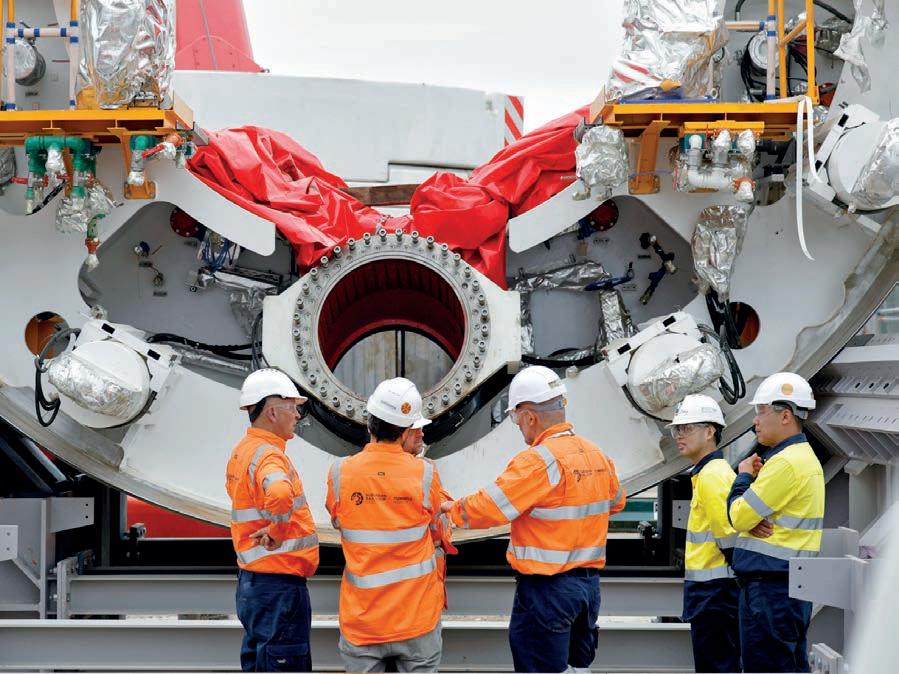
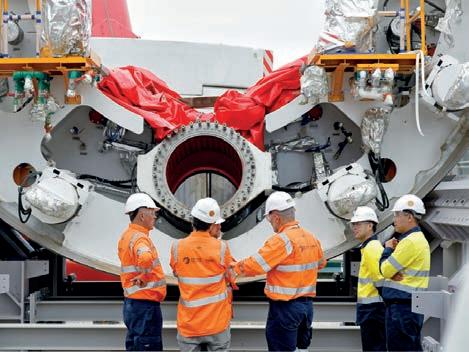
Tunnel boring machines have arrived in Melbourne ahead of tunnelling starting on the Suburban Rail Loop later in 2026.
HIGH CAPACITY SIGNALLING –PERTH (METRONET)
Upgrades are advised to existing signalling and train control technology on the METRONET rail network.
WESTERN SYDNEY FREIGHT LINE AND INTERMODAL TERMINAL
Infrastructure Australia supports the construction of a dedicated freight rail line between the Southern Sydney Freight Line, a new intermodal terminal at the Mamre Road Precinct and the Main West Line near St Marys.
FIVE- TO 10-YEAR PIPELINE
SOUTH EAST QUEENSLAND INTERMODAL T ERMINAL CAPACITY
This proposal is around creating additional intermodal terminal capacity in South East Queensland to support forecast freight growth and service future Inland Rail trains.
MELBOURNE INTERMODAL TERMINAL CAPACITY
This is around developing of the Western Intermodal Freight Terminal in Melbourne’s west, connecting to the proposed Outer Metropolitan Ring Rail South, Inland Rail and the national freight rail network.
MELBOURNE SUBURBAN RAIL LOOP –FUTURE STAGES
Future stages of the Suburban Rail Loop mass transit system, including SRL North and SRL West, are recommended for investment.
PERTH RAIL NETWORK PLANNING
(EAST WANNEROO RAIL LINK, PERTH METROPOLITAN ORBITAL RAIL ROUTE)
This would be a new suburban radial rail line, supporting housing growth and liveability, by connecting Morley and East Wanneroo to the Joondalup Line to service
far northern suburbs, and a potential future Ellenbrook spur line.
IPSWICH TO SPRINGFIELD TRANSPORT CAPACITY (SEQ)
Infrastructure Australia supports a new high-capacity transport service between Ipswich and Springfield, supporting regional connectivity.
PORT OF BRISBANE FREIGHT RAIL IMPROVEMENTS
Upgrades are suggested to increase freight capacity and efficiency between the Port of Brisbane and the wider rail network, supporting connectivity with future Inland Rail trains.
IPSWICH TO SPRINGFIELD TRANSPORT CAPACITY (SEQ)
A new high-capacity transport service between Ipswich and Springfield is proposed, supporting regional connectivity.
STRONG FOCUS ON RAIL
Transport associations including the Australasian Railway Association (ARA) and the Public Transport Association Australian New Zealand (PTAANZ) have welcomed the 2026 Infrastructure Priority List’s strong focus on rail.
The ARA’s Chief Executive Officer (CEO) Caroline Wilkie said: “The Infrastructure Priority List recognises that rail is central to meeting the challenges of population growth, freight demand, emissions reduction and better access to jobs and services.”
PTAANZ CEO Lauren Streifer said the list’s focus on high-capacity transport reflects the reality of how Australia’s urban areas are evolving.
“Australians know their cities are changing, and the way we move must change too.”
Image: Victorian Government
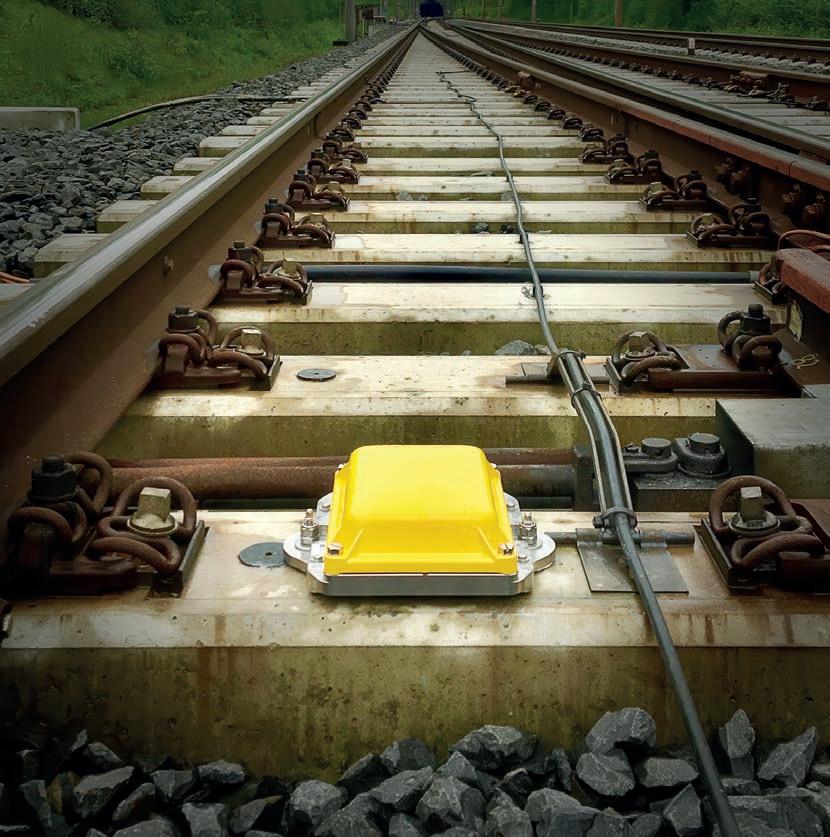
AI-driven maintenance transforms turnout reliability Technology
With turnout failures a major source of delays, Salix and KONUX are deploying predictive monitoring technology that enables earlier intervention, smarter maintenance and improved network performance.
across more than 10 countries, supported by multiple predictive models. The result is a highly refined predictive capability that delivers up to 90-day forecasting of potential turnout failures.
Operators gain access to a cloud-based dashboard that delivers asset health rankings, early warning alerts, predictive failure forecasting, maintenance validation insights, and network-wide visibility. This comprehensive view enables maintenance teams to plan interventions at the optimal time with the right resources, reducing reliance on reactive maintenance while minimising operational disruption.
PREDICTIVE TURNOUT MONITORING
Rail operators adopting predictive turnout monitoring are typically targeting three key outcomes:
IMPROVED RELIABILITY
Across rail networks globally, turnouts remain one of the largest contributors to delays, maintenance costs and operational disruption.
At the same time, rail networks are becoming busier, service frequency is increasing, and access windows for maintenance are becoming increasingly constrained.
Rail operators and infrastructure managers are facing several challenges: enhancing turnout reliability, extending asset life, minimising time on track, and reducing whole-of-life maintenance costs.
Salix, in partnership with KONUX, is introducing Artificial Intelligence-driven predictive turnout monitoring to Australian rail networks – enabling operators to shift from reactive maintenance to data-driven asset performance management.
“As networks move toward higher utilisation and tighter performance expectations, predictive maintenance is rapidly becoming a strategic capability rather than an operational improvement,” said Mark Fulford, Chief Executive Officer of Salix
PREDICTING FAILURES BEFORE THEY HAPPEN
KONUX Switch is designed specifically for turnouts: one of the most failureprone and operationally critical assets in rail infrastructure.
By combining Internet of Things (IoT) devices, AI, and deep rail expertise, it enables early failure detection, precise diagnostics, and data-driven planning. The result: fewer disruptions, lower operating expenses, and longer asset life.
At its core, KONUX Switch continuously analyses the health of critical turnout components such as the switch, crossing, point machine and trackbed – providing early warnings and actionable insights.
Compact, self-contained sensors are installed in under 15 minutes and operate with battery life exceeding five years. Once installed, the system continuously analyses asset health and provides early warning alerts, enabling maintenance teams to intervene before failures occur.
The AI-driven platform has been trained using more than 500 million train traces
Early detection of turnout degradation reduces failures and improves network performance. As turnouts are one of the most common causes of delay minutes across rail networks, this makes reliability improvements particularly valuable.
LESS TIME ON TRACK
Predictive maintenance reduces emergency callouts and unnecessary maintenance interventions. With access windows becoming more constrained, reducing time on track is becoming a major operational priority.
LONGER ASSET LIFE
Data-driven maintenance enables operators to intervene before degradation accelerates, extending component life and reducing lifecycle costs.
Together, these outcomes deliver measurable improvements in network performance and operational efficiency.
PROVEN PERFORMANCE
KONUX Switch has been deployed across more than 7000 units globally, with adoption by major rail operators including Network Rail in the United Kingdom,
The KONUX Switch enables early failure detection, precise diagnostics, and data-driven planning.
Image: Salix
Benefits of the KONUX Switch
Benefits of the KONUX Switch Benefits of the KONUX Switch
50% REDUCTION in delay minutes
MORE RELIABLE TURNOUTS THROUGH EARLY FAILURE DETECTION
40% DECREASE in repair downtime
REDUCED EMERGENCY CALLOUTS AND LESS TIME ON TRACK
30% REDUCTION in operating expenditure
SMARTER, DATA-DRIVEN MAINTENANCE PLANNING
Up to a 20% EXTENSION
in asset life
IMPROVED LIFECYCLE PERFORMANCE AND REDUCED RENEWALS
MORE RELIABLE TURNOUTS. LESS TIME ON TRACK
Deutsche Bahn in Germany, Transport Scotland and Infrabel in Belgium.
Fulford said these deployments have demonstrated operational benefits, achieving up to a 50 per cent reduction in delay minutes, a 40 per cent decrease in repair downtime, a 30 per cent reduction in operating expenditure, and up to a 20 per cent extension in asset life.
On Network Rail’s West Coast South route, where more than 500 devices are in operation, the business case has been driven primarily by delay prevention. The deployment has delivered a £11.7 million net benefit over five years, achieved a payback period of just one to two years, and realised a benefit–cost ratio exceeding 4:1.
“These benefits began accruing immediately following deployment, demonstrating the value of predictive monitoring as both an operational and strategic investment,” said Fulford.
DETECTING FAILURES BEFORE THEY BECOME DISRUPTIONS
In a deployment with Transport Scotland, 131 monitoring devices demonstrated a 39 per cent improvement in performance following installation.
At Winchburgh Junction, an alert identified a developing rail crossing defect that would likely have resulted in a failure. Early intervention allowed maintenance teams to undertake planned renewal works, preventing disruption and improving asset life, a joint study between Transport Scotland, Scotland Railway and Network Rail UK showed.
In a comparable junction that was not monitored, a similar defect caused a total of £1.35m in delay and ratification works.
“In environments where even minor failures can cascade into major network disruption, predictive monitoring is enabling operators to move from reactive maintenance to proactive asset management,” said Matt Weingarth, Director at KONUX.
REDUCING UNNECESSARY MAINTENANCE
Predictive monitoring is improving maintenance efficiency and reducing unnecessary interventions, as demonstrated by a trial with Infrabel in Belgium, which analysed 33 tamping interventions across 12 turnouts.
It found that 40 per cent were unnecessary, only 15 per cent were fully effective, and some even accelerated degradation.
“This highlights how validated maintenance insights can reduce unnecessary work, optimise scheduling, improve intervention effectiveness, and minimise track access requirements,” said Weingarth.
“For networks with limited maintenance windows, this represents a significant operational advantage.”
SMARTER PLANNING AND BETTER ASSET MANAGEMENT
Unlike traditional condition monitoring systems focused primarily on void detection, KONUX Switch integrates vibration, displacement and shock loading analytics to deliver a more comprehensive view of turnout condition. It enables operators to
detect up to 80 per cent of broken crossings at least 28 days in advance, identify 78 per cent of closed crossing defects ahead of failure, and predict 65 per cent of turnout-related delay risks within the same timeframe.
The system also validates maintenance outcomes, identifying unsuccessful interventions and supporting reliabilitycentred maintenance strategies.
“This shift toward predictive and validated maintenance is helping operators improve reliability while reducing lifecycle cost,” said Weingarth.
DEPLOYMENT IN AUSTRALIA
Predictive turnout monitoring is now being deployed across Australian rail networks, with Salix providing local engineering expertise, rollout capability and integration with maintenance programs.
Fulford noted that predictive maintenance represents a step change in how rail networks manage turnout performance.
“Smarter, data-driven interventions help cut unnecessary maintenance and extend component life, lowering costs for operators,” he said.
“Just as importantly, reducing emergency callouts allows more work to be planned and undertaken during safer, controlled maintenance windows.
“As rail networks continue to grow and access windows become more constrained, predictive monitoring is becoming increasingly valuable for asset managers and operators.”
A CORE COMPONENT OF ASSET MANAGEMENT
Fulford said that with increasing network utilisation, improving turnout performance is becoming critical to overall reliability.
“Predictive monitoring is enabling operators to achieve more reliable turnouts, reduce time on track, lower maintenance costs, extend asset life, and enhance overall network performance.
“With deployments already delivering measurable benefits across major global rail networks, predictive turnout monitoring is rapidly becoming a core component of modern rail asset management.”
Through its partnership with KONUX, Salix is working with rail operators to deploy trial programs and develop rollout strategies tailored to network requirements.
Fulford added: “As rail networks continue to evolve, AI-driven predictive maintenance is helping operators improve reliability, optimise maintenance, and extend asset life, delivering tangible operational and financial benefits across the network.”
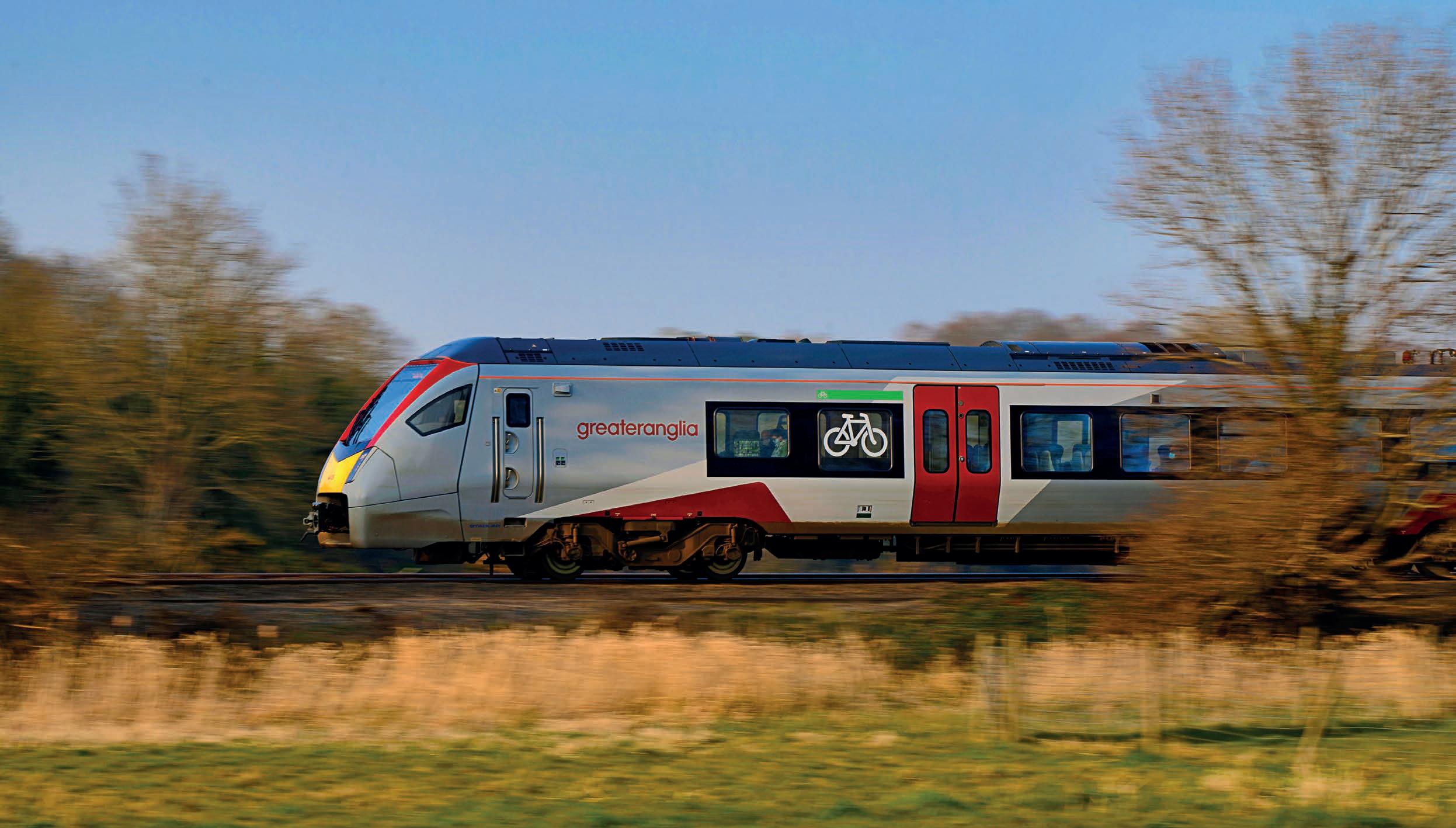
Dynamic decision support for safer speed management
In-cab guidance from Zelra’s Driving Advice System (DAS) improves drivers’ situational awareness, reduces surprises, and supports safer, smoother journeys.
Encountering an unexpected or poorly communicated speed restriction can contribute significantly to train overspeeding, and the consequences on complex rail networks are serious.
Ineffective speed management is a recognised risk factor associated with safety events, including signals passed at danger (when a train moves past a stop sign without authorisation), missed signals, station overruns, and derailments.
Together, these events illustrate how lapses in speed management can quickly compound operational risk. In this highresponsibility environment, rail software provider Zelra’s Driving Advice System (DAS) is a decision support tool to help train drivers complete their journeys safely and on time.
We spoke with Michael Zink, Managing Director of Zelra, to find out more about how this technology is currently being used by rail operators.
ANTICIPATORY GUIDANCE
“Our DAS solution enhances drivers’ situational awareness by sharing information about upcoming and current speed restrictions at the right time during each journey,” Zink said.
“The technology enables smoother, more controlled driving by providing real-time speed guidance directly to drivers. This is achieved by generating and continuously
adjusting an optimal journey profile for each route.”
Zelra’s in-cab DAS screen or tablet informs the driver about upcoming temporary and permanent restrictions in advance, including the distanceto-onset and the exact extent of each restriction.
The system calculates the optimal speed for approaching a restriction and provides a clear recovery point back to the regular line speed. This helps drivers to pace consistently, reducing the stress of reacting late. Train-specific parameters such as expected braking performance and estimated train mass can be configured to refine the guidance, further improving speed management consistency across fleets and conditions.
Station stopping support provides distance-to-stop information, speed reduction guidance for the approach, and cues to help keep dwell times on plan. The result is a reduction in station overruns and late departures. Approaches to diverging junctions are managed with predicted braking curves and target speeds that adapt to the train’s position.
Zink said the physics-based DAS algorithm generates each journey profile by considering track geometry and speed limits, as well as the timetable, train characteristics, real-time train position, and speed.
“These all help to create an accurate picture,” he continued. “Following the DAS guidance improves speed management and consistency by reducing unnecessary braking and acceleration. This gives drivers greater confidence about approaching speed restrictions, signals, and stations at the right time. Red signals and conflicts are encountered less frequently, which in turn reduces instances of hard braking at a signal or speeding up to chase the timetable.”
HUMAN FACTORS
Zink explained that Zelra’s DAS is a driver aid, so the information on the DAS screen or tablet is designed to be easily read at a glance.
“A clear hierarchy separates the current target, the next change, and contextual information on distance and time,” he said.
"Layouts remain stable to create familiarity, and the information is numeric, with day and night visibility profiles. Nonessential text or decorative elements are avoided to reduce scan time.”
The system is designed to prevent alert storms, where multiple updates might be triggered in quick succession during rapidly changing conditions, as these create distraction rather than clarity. When approaching a critical point, such as a station, changes to the on-screen information are limited so drivers remain focused on their workload.
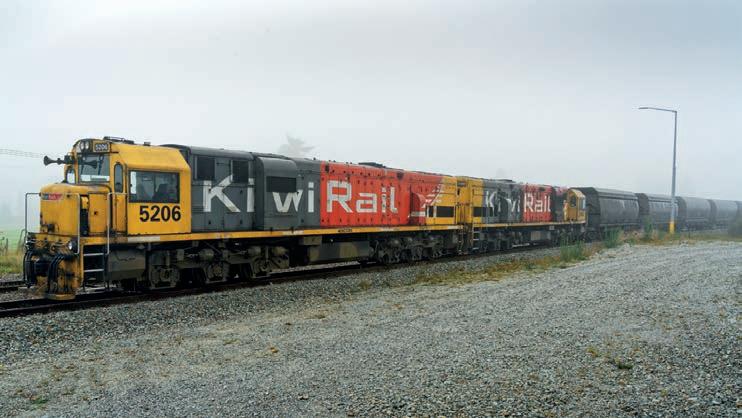
Audio alerts are an optional feature that can be enabled or muted, according to the operator’s specification. These use thresholds to ensure the driver only receives prompts that are clear and timely.
Zink emphasised that DAS exists to enhance driver expertise, not replace it.
“We know drivers bring vital route knowledge, train handling skills, and intuition to the table,” he said.
“Our technology contributes precise data and optimisation algorithms. Together, this is a powerful combination.”
Zink said that Zelra’s DAS offers value to drivers by enabling them to make decisions that are based on more accurate information.
“For example, the DAS advice might be to coast because there is a generous timetable allowance before the next station, or it might suggest a specific speed because of an approaching restriction,” he explained.
“Armed with this knowledge, a driver can act proactively rather than reactively.
It means a safer shift with fewer surprises, a helping hand to keep on time, and the assurance of contributing to a more efficient railway without sacrificing control.
“DAS offers a safety net that helps to prevent potential issues before they happen, allowing drivers to complete their journeys confidently and safely.”
LIVE RE-ROUTING
Speed management is rarely a static task, Zink said.
“Temporary speed restrictions, junction speeds, and approaches to signals or stations can combine to create short windows where the driver must interpret, prioritise, and act decisively.
“Even experienced drivers are put under pressure when information is delayed or when it changes unexpectedly after the journey is already underway.”
He said this is when decision support and anticipatory guidance can reduce surprises and support safer, more controlled
driving outcomes. “Human-centred decision support for drivers is just one of the ways that Zelra’s DAS can enhance network-wide safety and efficiency.
“The Connected version of our DAS, known as C-DAS, can play a vital role in communicating re-routing information within the cab, connecting drivers to live operational data from the wider rail network.”
C-DAS aligns with digital infrastructure such as European Train Control System (ETCS) and will also be able to integrate with existing digital signalling systems. When re-routing is required, the journey information displayed on the DAS screen will be instantly updated without requiring driver intervention.
“The driver simply follows this revised guidance to complete the journey,” Zink added.
The entire network could potentially be managed in this way. Conditions, conflicts, or adjustments would be applied to every train, enabling synchronised network management for greater operational efficiency.
Zink explained that the technology is well advanced and offers additional benefits including passenger experience, energy savings, and decarbonisation.
“Interoperability is a core design principle for Zelra, and we have already engaged in extensive C-DAS trials along live routes in the United Kingdom.
“Our DAS solutions are built to integrate with a broad range of external systems and data sources, including traffic management platforms and third-party operational tools.”
Zelra has evolved its DAS capability in live rail environments. This work has included operators such as Greater Anglia, Great Western Railway, and ScotRail in the United Kingdom, as well as large-scale deployments in France for SNCF and in New Zealand for KiwiRail.
“Across these markets, Zelra has delivered DAS in partnership with original equipment manufacturers and operators, supporting both tablet-based and integrated deployments.
“Crucially, our experienced team has enabled configuration, testing, and operational rollouts without disrupting our customers’ live operations.”
To learn more about Zelra’s DAS, visit www.zelra.com
KiwiRail is a long-term user of Zelra's DAS technology.
Zelra's DAS capability has evolved in live rail environments including Greater Anglia in the United Kingdom.
Images: Zelra
Getting the job done Plant and Equipment
With a fleet of 72 state-of-the-art machines, TAG Group prides itself on being solutionsfocused, safety led, and always available.
For nearly a decade, TAG Group has been making a mark on Australia’s rail industry.
Well established in Victoria, the business has a growing presence in New South Wales and Queensland, delivering specialised lifting solutions all along the East Coast.
From humble beginnings, TAG Group’s fleet has grown over the years to 72 topof-the-range machines – from hi-rail crane trucks to flatbed trucks, non-destructive digging (NDD) trucks, hi-rail elevated work platforms (EWPs) and more.
With a team of 150 skilled operators available for labour hire, the company has
played a key role in delivering countless major projects – from Inland Rail to Victoria’s Level Crossing Removal Project and the Gippsland Line Upgrade.
Tim Bugeja, Managing Director of TAG Group, said the company has built a strong reputation for its commitment to quality, safety and reliability. He tells us more.
STATE-OF-THE-ART EQUIPMENT
Bugeja said that from the start, TAG Group has invested in high-quality new machinery.
“We went from one or two machines up to over 60 machines in the space of a couple
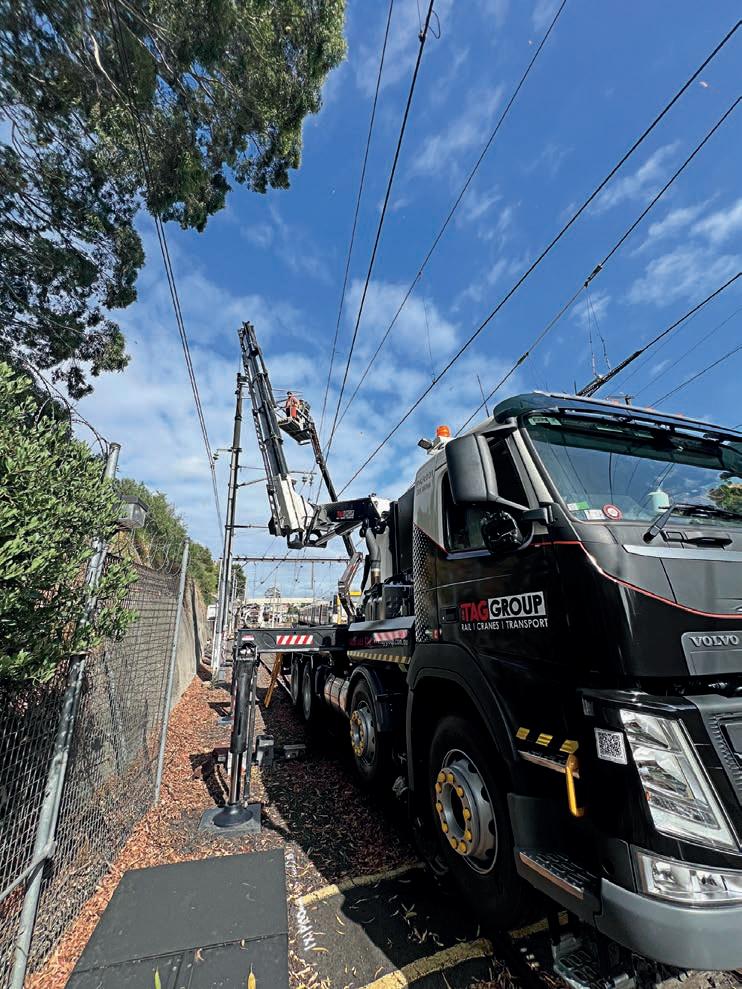
TAG Group has played a key role in delivering major projects across Victoria, NSW and Queensland.
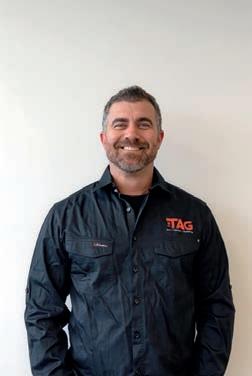
of years, which was obviously very fast growth,” he said.
“I think one of the reasons we’ve stood out from our competitors is our modern equipment, which is always maintained to the highest standards.
“Good machines aren’t necessarily cheap, and cheap machines aren’t necessarily good. We’re trying to bring up the standards in the rail industry.”
For Bugeja, having spotless machines conveys the right messages to TAG Group’s customers, the rail industry and the community.
“We have a very high standard for how things look, how they work, how we operate,” he said.
“People say a dirty machine is a working machine – I disagree. The machine gets dirty and then you clean it. Every truck goes out polished. Our workforce wears the uniform proudly, they look respectable and it builds confidence.
“It shows that we care about the work we do, we care about our reputation and the reputations of our clients.”
TAG Group’s fleet boasts the largest hi-rail crane truck in Australia – the PKR, purposebuilt to work around overheads.
“It’s got a 10-tonne lift on rail, which is huge, and it can lift over a four-track spread so you’re not hopping off-rail to set it up,” Bugeja added.
That machine is supported by a range of crane trucks of various sizes and a mobile fleet of EWPs to fit all three rail gauges in Australia – broad, standard and narrow.
“We’ve got telehandlers, trailers, transport solutions... everything you need to tackle all facets of rail projects from the ground up, from installing to maintenance, demolition and construction.”
All of TAG Group’s trucks are compliant across all networks, so there is no waiting around for approvals.
Preventative maintenance is also done inhouse while machines are not in use.
“We invest a lot of money to ensure that our equipment is looked after and has longevity,” Bugeja said. “It keeps the team busy between projects, and it means the equipment is always ready to go – we have very few breakdowns. If
Tim Bugeja, Managing Director of TAG Group.
there is a breakdown, we can send out a replacement machine straight away rather than trying to carry out repairs.
“Our services are available 24 hours a day, seven days a week. If a customer has an urgent job, we can often provide what they need within an hour.”
TAG Group also uses technology to ensure efficient maintenance.
“We run all of our maintenance schedules digitally, so everyone knows what’s happening in real time – our pre starts, our maintenance, our servicing –every nut and bolt,” he said.
SAFETY FIRST
Bugeja said TAG Group has a strong safety culture at all levels of the business.
“All of our hi-rail equipment has on-rail load charts and lifting charts, so they can operate with stabilisers or without stabilisers according to the chart,” he said. “That’s not something very many companies do.
“We’ve got fire suppression to work in tunnels, electrical lockouts to work under live [wires], we’ve got mechanical lockouts.
“Everything is double failsafe, and we’ve got all the bells and whistles in terms of safety camera systems.”
Bugeja said TAG Group’s operators are all trained in house, to the highest standards.
“We work very closely with our operators,” he said.
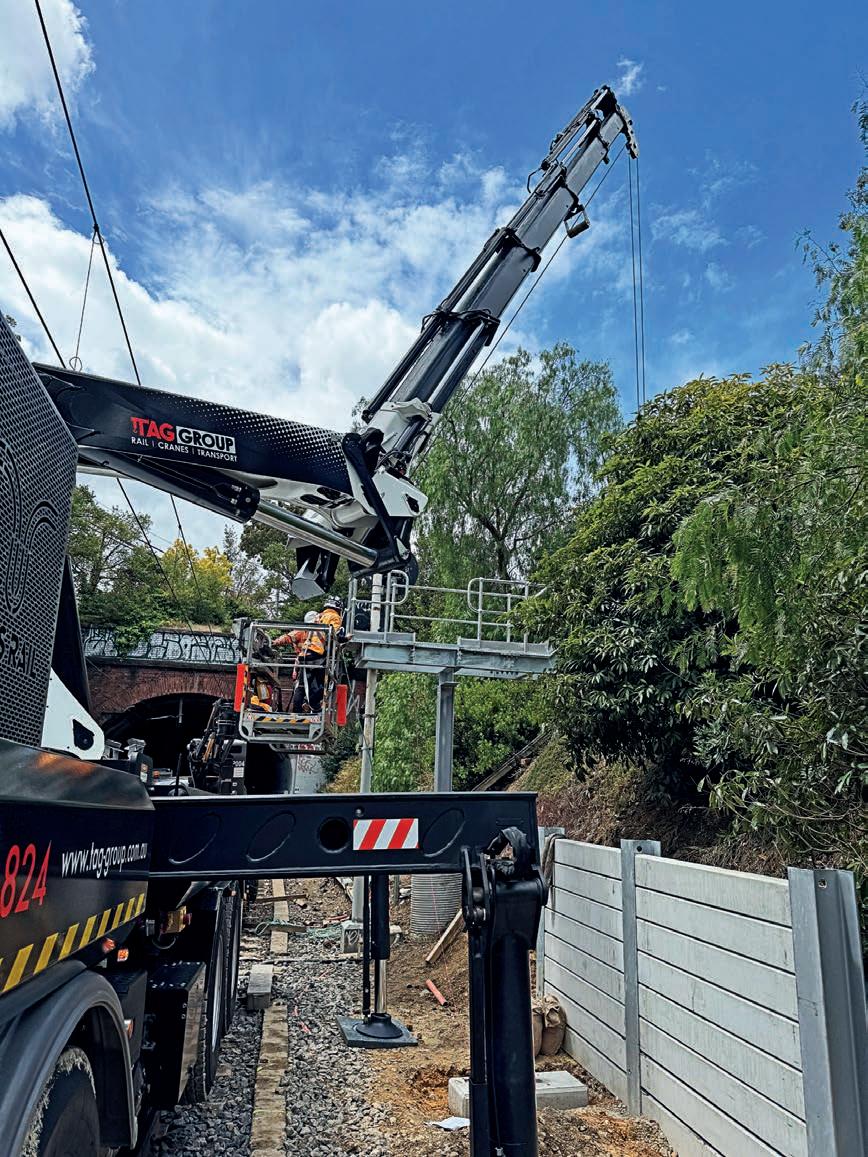
GETTING THE JOB DONE
“We do lift studies with the team so before they go out to a site, they know what to expect and they have the confidence to stand their ground if a customer tries to veer from a safe path. We do internal ‘toolboxes’ where we’ll put on a barbecue and have a questionand-answer session.
“When it comes to safety, we do everything that needs to be done and more.”
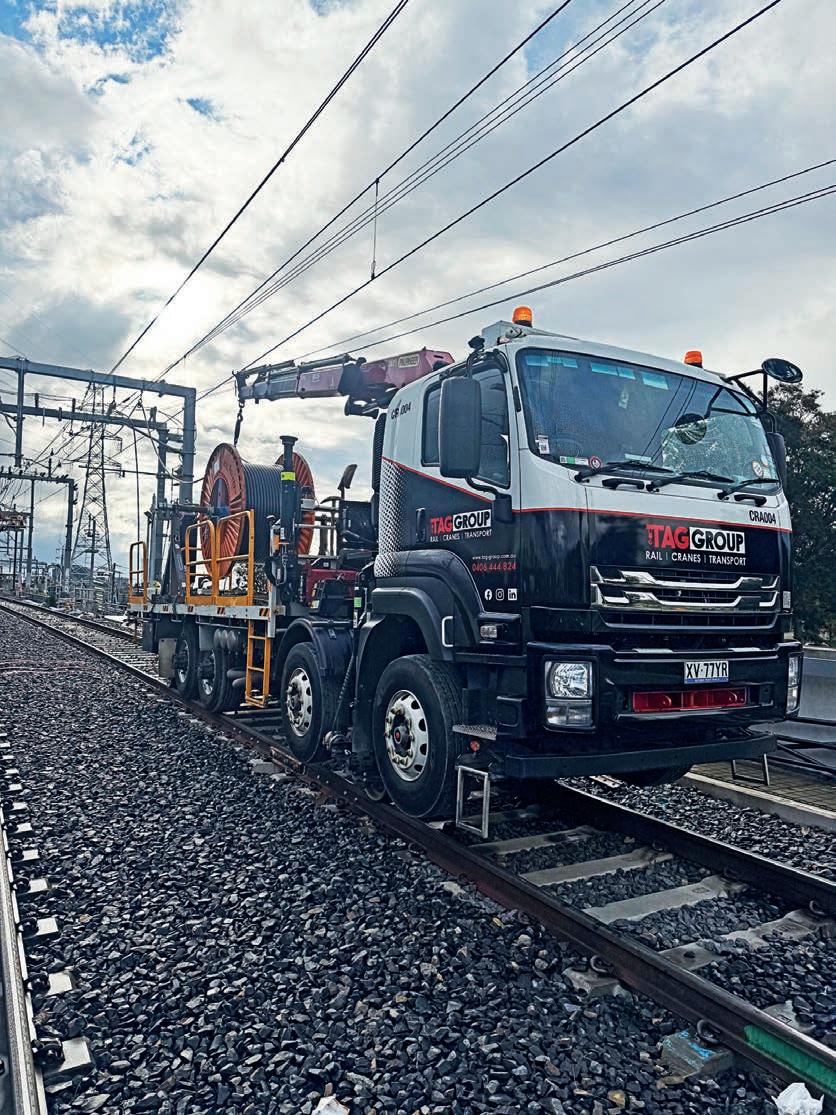
TAG Group is built on the promise of “getting in, getting the job done and getting out” as safely and efficiently as possible.
“We’re solutions-based,” Bugeja said. “We never have the attitude of just saying something can’t be done – we’ll always try to solve the problem.
“We manage our time efficiently, drawing on a wealth of knowledge from our experienced workers and management team.
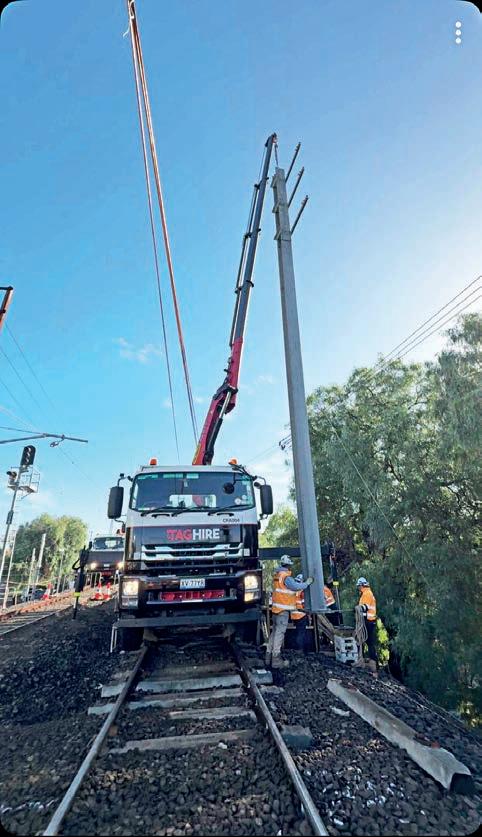
TAG Group’s fleet has grown over the years to 72 top-of-the-range machines.
TAG Group ensures its fleet is always polished and well-maintained.
TAG's services are available 24 hours a day, seven days a week.
A new chapter Operations and Maintenance
Known for breathing new life into bearings, SKF has grown its presence in Australia, bringing more capacity and faster turnaround times for customers.
SKF Australia has expanded its local footprint with the opening of new facilities in Perth and Brisbane – allowing the company to better support its customers both locally and internationally.
The Swedish-born business, which is the world’s largest bearing manufacturer, has been producing bearings, seals, and lubrication systems to reduce friction since 1907.
Specialising in engineering, maintenance, condition monitoring, and remanufacturing for full life cycle management, it’s now represented in 130 countries around the world.
SKF officially set up shop in Australia in 1908 and has continued to grow its presence and experience in the local market ever since.
CONNECTED AND EFFICIENT
At SKF’s Circular Solution Centres, the team refurbishes bearings and other rail products, handling all aspects of the process –including cleaning, polishing, inspection and measurement, replacement of worn parts, lubrication and sealing – to restore bearings to required specifications. Between the two new centres, SKF has capacity to refurbish in excess of 35,000 bearings per year.
Local workshop capabilities include the refurbishment of axleboxes, bearing units, housings and related components, for both passenger and freight rail applications. It processes more than 1000 axleboxes per year.
SKF’s new facility in Forrestfield, Western Australia features a large, state-of-the-art rail bearing remanufacturing factory and warehousing space.
It officially opened its doors in early 2025 and primarily serves SKF's Western Australian customers. The 5 Green Star-rated facility also represents SKF’s commitment to sustainability.
“About 40 per cent of our power is generated by solar, and the remainder sourced from the grid is all green energy,” said SKF railway engineer Stephen Fasolo.
Another recent development for SKF in Australia is the relocation of its East Coast workshop from Williamstown in Victoria to new premises at Eagle Farm in Brisbane.
“We’re happy to have grown our team, with five new people brought on to
work in the Eagle Farm facility and one staff member transferring over from our Williamstown facility,” said Alistair King, East Coast Circular Solutions Centre Manager at SKF Australia.
“The new facility helps us to support our customers with fast turnaround times and reliable service.”
Vishesh Arora, Head of Services at SKF Australia, said the new facility is triple the size of the old one.
“The total building size is about 2000 square metres, with the warehouse and workshop space measuring 1680 square metres,” he said.
“This is much larger than where we were before in Williamstown, which was under
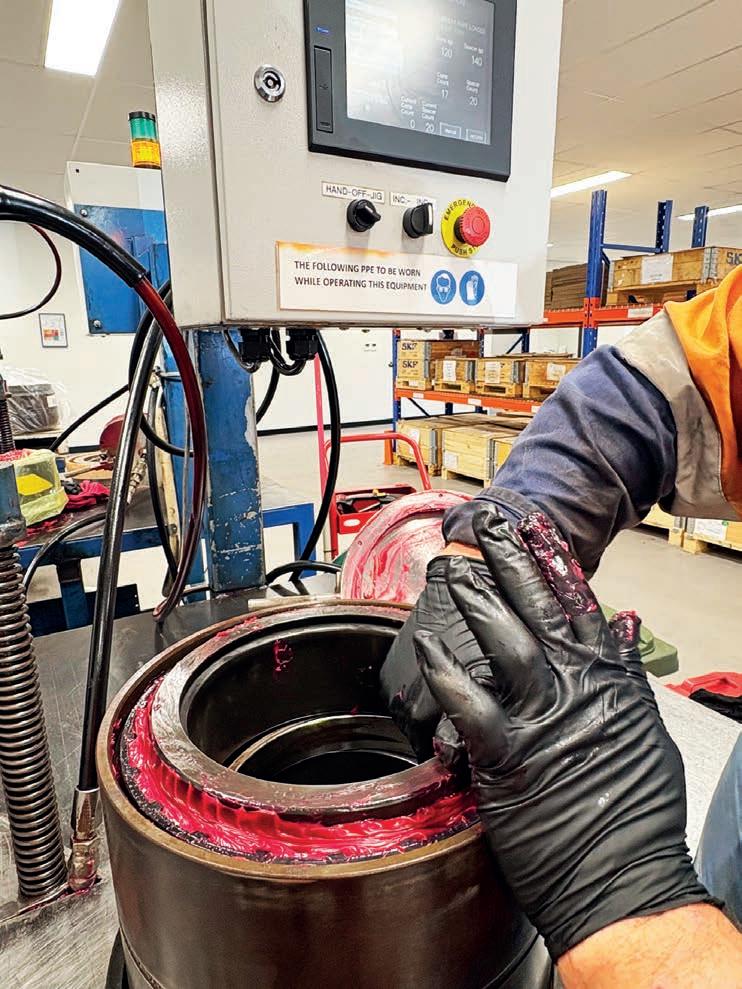
500 square metres. With more space, our throughput can be greater, and we now have a renewed, modular workshop.
“We are also now integrated with SKF’s broader industrial offering within the rail sector, giving us access to consumables, as well as more office and storage space.”
This allows SKF’s sales and service teams to sit together in the same office.
“This means better communication between those teams and benefits for our customers,” he added.
With the opening of the new facility, SKF has also reorganised its two workstations into a single streamlined operation, to be more efficient.
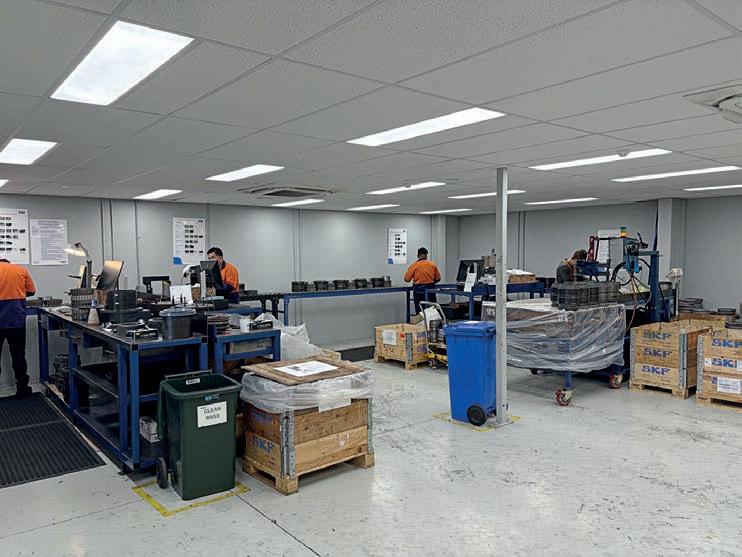
SKF’s bearing refurbishment process enables up to 90 per cent of original bearing material to be reused.
SKF's new facility in Eagle Farm is much larger than its previous base in Williamstown.
Images:
In addition, SKF has digitised some of its activities, introducing clear key metric dashboards that are monitored continuously.
“We now notice any bottlenecks that crop up, and we’re tracking machine availability and uptime,” Arora said. “We’re meeting 94 per cent of our key metrics since we started tracking them, which is a very good result.”
The Eagle Farm facility caters to customers in Queensland, South Australia, Victoria, New South Wales, Tasmania and New Zealand.
King said the move is good news for some of the company’s biggest customers.
“We’ve also improved turnaround times for some of our customers in New Zealand,” he added.
CUTTING COSTS AND EMISSIONS
With rail operators under pressure from rising costs and tighter greenhouse gas reduction targets, SKF is helping to extend bearing life and reduce waste without sacrificing performance.
Its refurbishment process enables up to 90 per cent of original bearing material to be reused, delivering a lower carbon footprint and about 70 per cent cost savings compared with purchasing new components.
“Bearing refurbishment is a fraction of the cost of purchasing new bearings, and the lead time is weeks, not months,” explained Gavin Acker, Segment Business Manager –Rail at SKF Australia.
The company also streamlines logistics through its “One-for-One” refurbishment model.
“If a customer sends us a pallet of 100 bearings, for example, they will always get 100 bearings back,” said Lucas Barnard, Forrestfield Circular Solutions Centre Manager at SKF Australia.
“The bearings are refurbished, or if they can’t be refurbished, they are replaced with new SKF units. That means there’s just one purchase order, and no guesswork.”
SKF’s customers also benefit from full traceability and robust reporting.
“We have a system that tracks bearings throughout their life cycle – each one has a unique serial number,” Barnard highlighted.
“Because these bearings can go through a few cycles of refurbishment, we need to know when they have reached the end of their life cycle, so they can be written off.”
In the case of an incident such as a rail derailment, Barnard said bearings are one of the first things an investigator will look at.
“We have strict safety and quality protocols in place, and our traceability means we have our finger on the pulse – so an expired product will never become the weak link that leads to a failure.”
KEEPING RAIL ROLLING
SKF Australia combines local expertise with global engineering standards. It boasts a highly skilled Australian team, many of whom have several decades of experience
“We’re proud to say that we have very experienced individuals at SKF Australia, not just on the workshop management level but even on the shop floor,” said Arora.
“SKF has invested in their development and in turn they have stayed with the company for a long time.”
Fasolo said there are many benefits to SKF Australia being part of an established global company.
“We work very collaboratively with the product design team, and we develop new products for the market,” he said.
“We work closely with customers to understand their needs, such as long maintenance interval bearings, and create solutions.
“We also feed the information that we glean during the refurbishment process back to SKF’s factories and design centres, to improve product performance.”
He said as SKF continues to expand its footprint and capabilities, its investment in local facilities, digitalisation, and skilled personnel positions the company to better support Australia and New Zealand’s growing rail sectors.
“By bringing global resources together with local experience, SKF is reinforcing its role as a long-term partner to operators – helping to keep fleets moving while balancing performance, cost, and sustainability.”
At SKF’s Circular Solution Centres, the team refurbishes bearings and other rail products, handling all aspects of the process.
Collaboration on track: Delivering the Somerton Intermodal Terminal
When infrastructure company ACCIONA needed a supplier for complex turnouts and a complete crane rail system for the Rail Mounted Gantry (RMG), Salix was the answer.
For ACCIONA and Salix, the project highlights the value of close collaboration in delivering complex rail infrastructure.
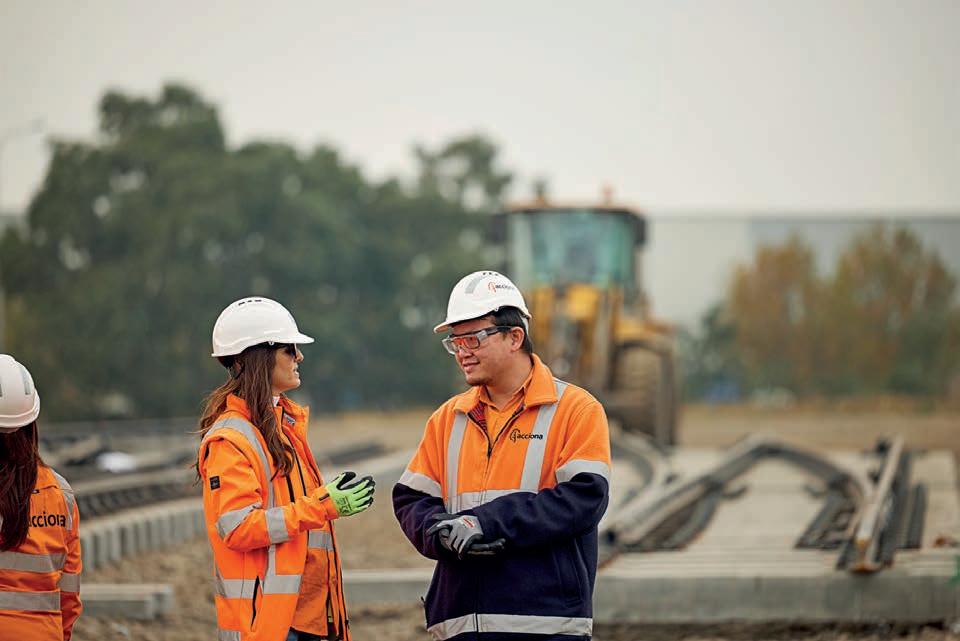
The Somerton Intermodal Terminal, located about 21 kilometres from Melbourne CBD, is one of Australia’s largest freight terminals.
Operated by Intermodal Terminal Company and built by ACCIONA, the $400 million facility welcomed the arrival of its first train in December 2025.
At full capacity, the terminal will eliminate up to 500,000 truck trips from Melbourne’s roads each year – the equivalent of 454 million truck kilometres – saving 451 million litres of fuel and reducing carbon emissions by 189,000 tonnes annually.
Situated adjacent to the Hume Highway and 26 kilometres north of the Port of Melbourne, the facility integrates with the Port Rail Shuttle Network and will be able to accommodate double-stacked trains when the Inland Rail freight corridor is complete.
The rail component of the park comprises 21 kilometres of track. Inside the terminal, there are nine rail sidings to handle the loading and unloading of 600-metre port shuttle services and 1500-metre and 1800-metre interstate freight trains.
The terminal includes standard gauge northern and southern arrival/departure connections, as well as broad gauge access to the south.
The project required a combination of complex turnouts, based on standards from the Australian Rail Track Corporation (ARTC).
When infrastructure company ACCIONA was choosing a supplier to design, manufacture, supply and deliver the
turnouts, it turned to Salix – a specialist in the design, manufacture and supply of railway products.
BUILDING CONNECTIVITY
With six dual gauge tracks and an additional three dedicated standard gauge tracks at the Somerton Intermodal Terminal, turnouts play a critical part in offering freight operators the flexibility to transfer freight from interstate standard gauge rail to Victoria's broad gauge.
For ACCIONA, finding a supplier who could collaboratively develop dual gauge turnouts, supported by strong manufacturing and supply chain expertise, was key to the successful delivery of the multi-stage project.
ACCIONA also needed a supplier with proven experience in designing and manufacturing to ARTC standards. Salix ticked all these boxes.
“With program changes, we knew we needed to work with an agile team that could cope with design changes – especially
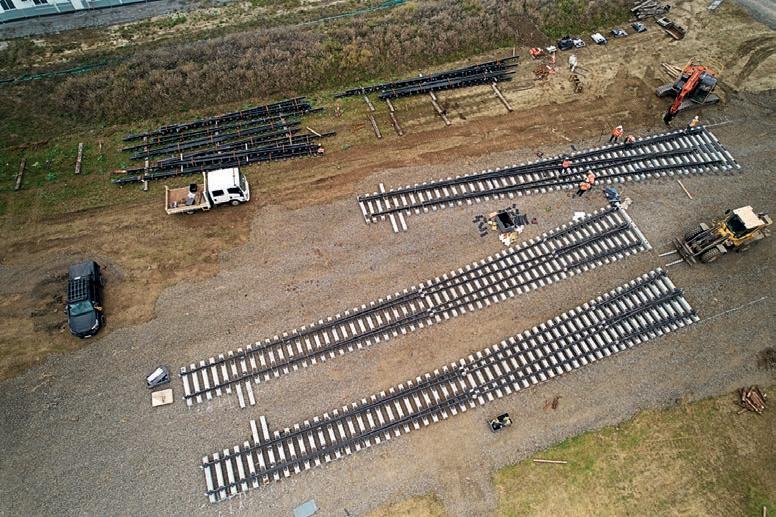
Salix designed, supplied and delivered 30 turnouts and custom trackwork solutions.
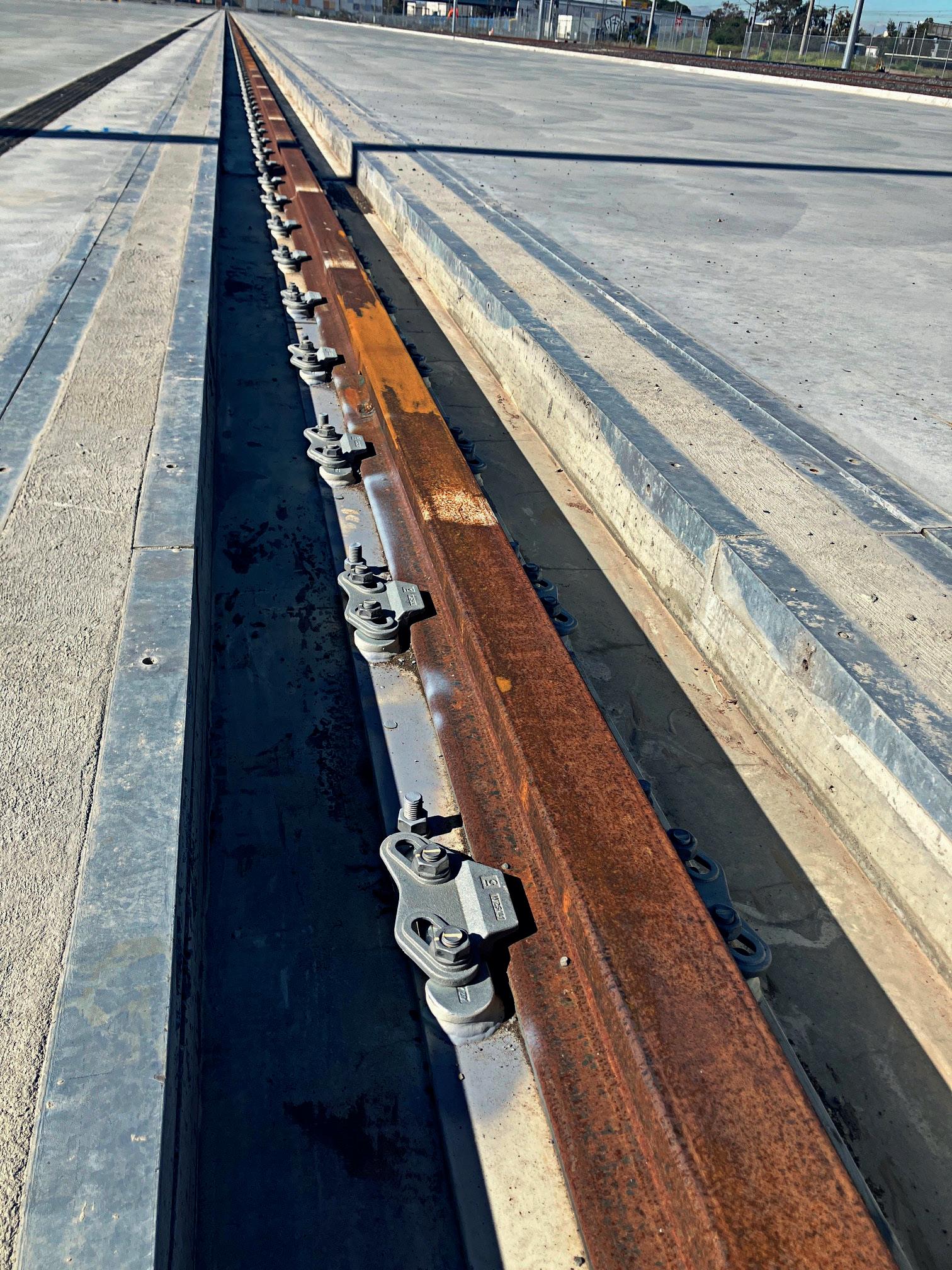
given some of the complexity involved in the turnouts,” said Brian Tan, ACCIONA’s Senior Project Engineer – Track for the project.
Following engagement by ACCIONA, Salix dedicated a year to designing and delivering 30 turnouts and custom track work solutions.
These included:
• 17 - 1 in 8 dual gauge turnouts
• 2 - 1 in 10.5 standard gauge tangential turnouts
• 2 - 1 in 9 dual tangential turnouts
• 2 - 1 in 8 .25 standard gauge tangential turnouts
• 2 - t hree-way turnouts
• 2 - gauge splitters
• 4 - common rail transfers
By December 2025, Salix turnouts had been successfully installed, connecting the intermodal terminal to the ARTC standard gauge network and supporting efficient access to the port.
A STRATEGIC CHOICE
To prepare for the new intermodal hub, the port site needed to be redeveloped.
This included an extension of hardstand areas, utility services and ancillary facilities
for operation as a container terminal.
The set-up accommodates rail mounted gantry machines, double-stacked interstate trains and 625-metre IMEX (ImportExport) trains.
As part of the inner terminal hardstand development, Rail Mounted Gantry (RMG) Beams were required by ACCIONA – and Salix offered its Gantrex crane rail system solution.
“It made strong strategic sense to engage Salix for our portion of the port redevelopment,” Tan noted.
“Appointing a single supply partner for this scope streamlined delivery and ensured a more coordinated and efficient outcome.”
Together with Gantrex, Salix boasts integrated complementary expertise in rail products, combining turnout and trackwork supply with specialised fastening and alignment solutions for ports, shipyards, steel mills, aluminium smelters, railway depots and heavy industries.
Salix has previously supplied Gantrex crane rail systems to neighbouring projects, including the redevelopment of Webb Dock East in Port Melbourne – which featured Ship to Shore as well as Automatic Stacking Cranes – as well as the rehabilitation works at Swanson Dock.
The use of soft mount components designed specifically for crane runways has helped to direct those forces in a way that reduces shock and vibration, while controlling alignment and providing a predictable path to almost eliminate the fatigue damage caused by gantry crane operation.
Gantrex crane rail systems are designed to perform in some of the most demanding operating environments, where extreme heat, dust and heavy, hazardous loads are standard. Built to accommodate vibration, structural movement, beam misalignment and other real-world stresses, they provide the reliability needed to support continuous production and just-intime operations.
Salix’s scope of supply covered the complete Gantrex crane rail fastening system for both the inner and outer terminals at Somerton Intermodal, including Gantrex RailLok clips, rail pads, grout, anchor systems and associated fastening components, in addition to the supply of mild steel support plates and installation consumables.
Salix worked closely with Gantrex engineering teams to support ACCIONA during design clarification and to ensure the selected rail fastening system met operational and load requirements.
“We facilitated technical workshops and ongoing correspondence between the client and Gantrex to resolve detailing queries and confirm installation methodology, managed design refinements during the project and coordinated timely technical responses and updated documentation from Gantrex,” said David Brady, Business Development Manager at Salix.
“We also arranged international mobilisation of Gantrex installation supervisors to provide on-site expertise and ensure system installation was carried out in accordance with manufacturer specifications.”
Brady said that as the Somerton Intermodal Terminal grows toward full operational capacity, its impact will extend well beyond Melbourne’s northern suburbs.
“By strengthening connections between road, rail and port, the new intermodal terminal is set to play a central role in reshaping how freight moves across Victoria and the broader national network.
“For ACCIONA and Salix, the project highlights the value of close collaboration in delivering complex rail infrastructure, while positioning Somerton as a key enabler of more efficient, reliable and sustainable freight movement for decades to come.”
Salix supplied and delivered Gantrex crane rail system solutions for both the inner and outer terminals at Somerton Intermodal.
Image: ACCIONA
Themes announced for Bulk Expo
This year’s conference program is focused on what’s going wrong on site and how to fix it.
There’s no shortage of theory in bulk solids handling, but straight talk about what actually works when things get messy on site is much harder to come by.
That’s where Bulk Expo is focusing its conference this year. The program for the event, which will take place from September 16-17, 2026, at the Melbourne Convention and Exhibition Centre, is curated by the Australian Society for Bulk Solids Handling (ASBSH). It is built around the issues operators keep running into, from stubborn dust to conveyors that don’t behave the way they should.
“We didn’t want a program that just talks at people,” said Molly Hancock, Head of Marketing – Events at Prime Creative Media, the company behind the event. “We wanted to put together a conference that gets into the detail of what’s actually going wrong on site and what’s working to fix it.”
The newly announced themes for the conference reflect that approach, with each session shaped by real operational pressure points. Take a look at the themes below.
CONVEYORS, MECHANICAL HANDLING AND SYSTEM PERFORMANCE
Looking at belt and mechanical conveying from the inside out, this theme covers
fire safety, fibre optic monitoring, wear resistance testing and the redesign of longdistance systems.
It also digs into mechanical conveying through bucket elevator engineering and low-breakage transport, alongside real-world learnings from revisiting a 13-kilometre overland conveyor with modern technology.
DUST, FIRE AND OPERATIONAL RISK
Dust remains one of the most persistent and dangerous challenges in bulk handling. This theme focuses on explosion protection in terminals, proactive conveyor belt fire safety and practical fixes that reduce dust leakage, including how small component changes can shift operations from downtime to uptime.
STORAGE, STOCKPILES AND MATERIAL BEHAVIOUR
From unpredictable loads during discharge to the stability of iron ore stockpiles, this theme gets into how bulk materials actually behave. It includes advanced storage systems, new approaches to bulk tonnage assessment and methods for tracking and maintaining material quality across the stockyard.
MONITORING, MEASUREMENT AND WEAR
This theme centres on visibility. Topics include live wear monitoring of wall liners, dynamic weighing in industrial bagging and systems that give operators a clearer read on performance, condition and accuracy across the entire handling chain.
SIMULATION, DESIGN AND EMERGING TECHNOLOGIES
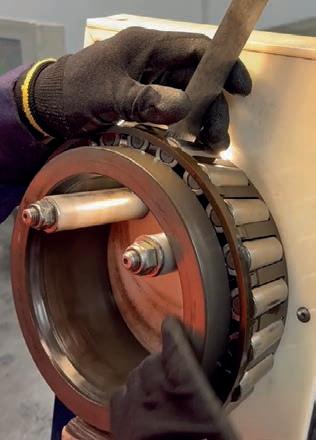
Focusing on what’s next, this theme explores fast coupled solid-fluid simulation tools, new deep mining concepts and the design of complex systems where modelling and engineering decisions carry major operational weight.
Together, these themes form a program grounded in real-world challenges and shaped by the people solving them, Hancock said.
The Bulk Expo conference will bring engineers, operators and suppliers into the same room, focusing on what actually works when the system is under pressure.
Early bird tickets are still available for a limited time. Get your hands on them at bulkhandlingexpo.com.au/attend/
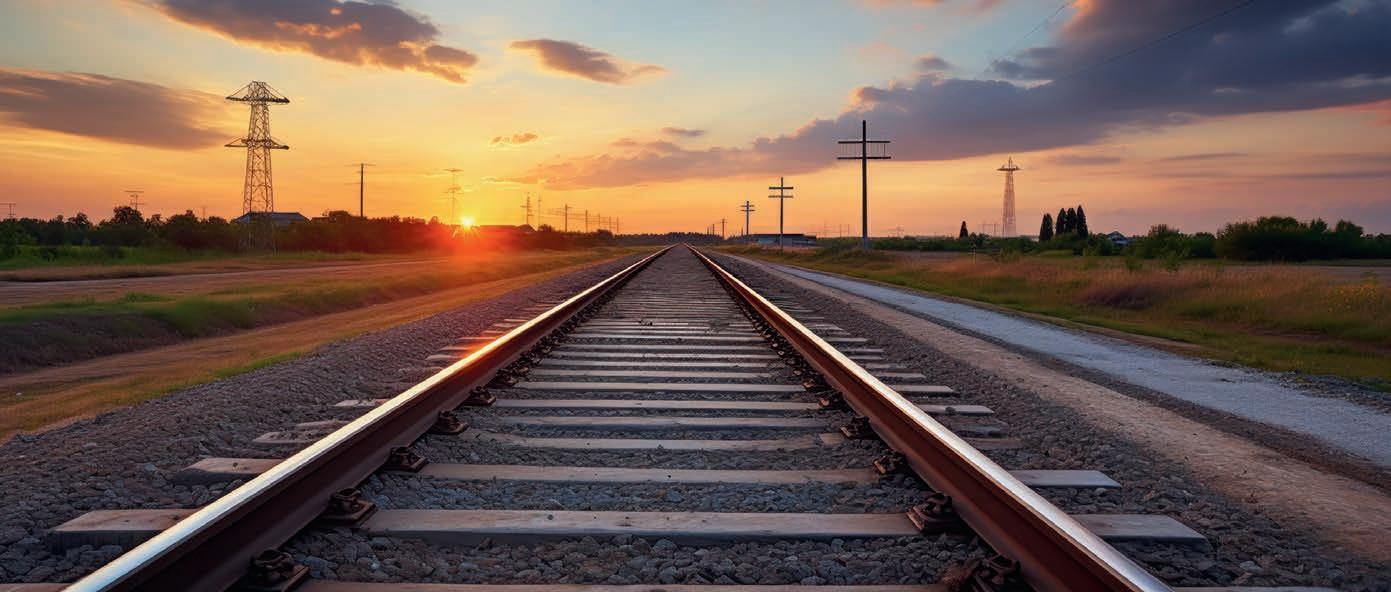
Bulk Expo will take place from September 16-17, 2026, at the Melbourne Convention and Exhibition Centre.
Image: Prime Creative Media
RAIL EXPRESS is compulsory reading and a vital tool for all people working in and around the rail sector.
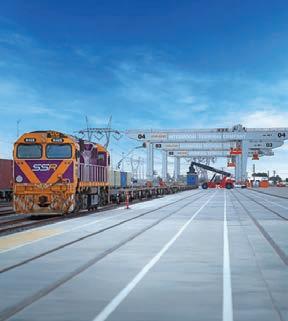
Rail Express is Australia’s authoritative business to business rail publication.
Combining the resources of our respected journalism team and our unparalleled industry contacts and affiliations, Rail Express provides extensive, comprehensive and balanced coverage of breaking news and trends in key areas like infrastructure, investment, government policy, regulatory issues and technical innovation.
Published both in print and digitally every month, Rail Express is the only publication to have both the official endorsement and active participation of the main railway associations in Australia and the broad support of the rail industry.
The only way to ensure you get every copy of Rail Express is to subscribe today. Visit railexpress.com.au/subscribe.
Celebrating women
Get your tickets today for the Women in Industry Awards, a highly anticipated event that recognises stand-out leaders, innovators, advocates, and rising stars.
are
The Women in Industry Awards honour the exceptional women who are driving change, breaking barriers, and creating new opportunities across Australia’s industrial sectors.

From transport and logistics to mining and manufacturing, energy, construction and beyond – these women are shaping the future of our industries. The blacktie awards gala dinner will feature live entertainment, a three-course meal, and excellent networking opportunities.
“Each year, the Women in Industry Awards highlight the remarkable progress and
transformation taking place across these sectors,” said Molly Hancock, Head of Events Marketing at Prime Creative Media, the organisation behind the awards.
“The quality of submissions, combined with the increasing excitement and engagement surrounding the awards, is a clear reflection of how these industries are evolving.
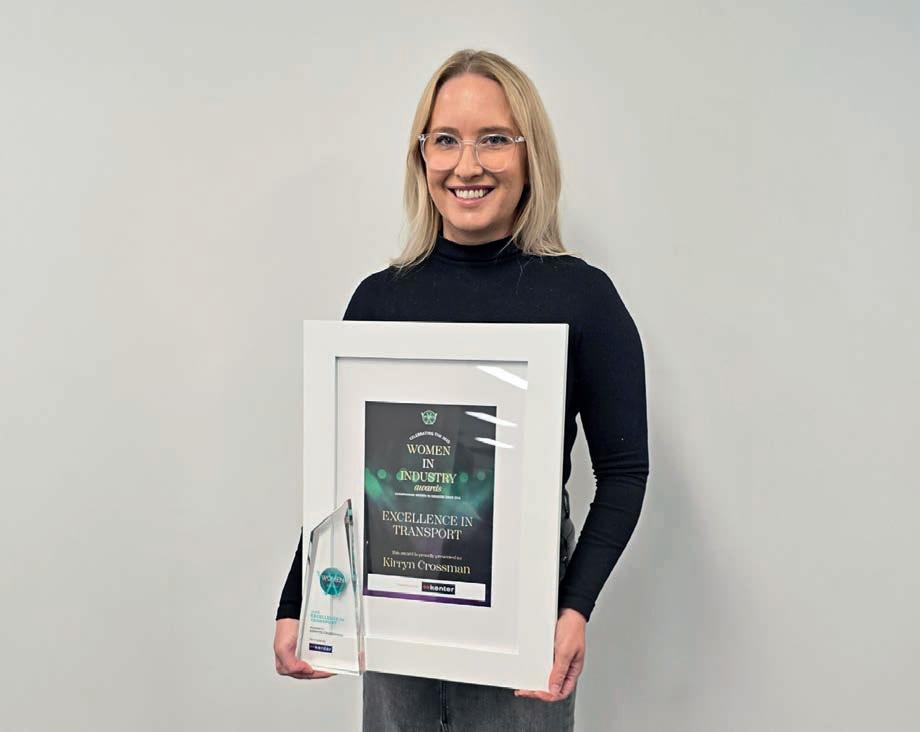
“It’s inspiring to see not only the depth of talent emerging, but also the strong momentum building as more individuals and organisations champion innovation, diversity, and excellence.”
WHY ATTEND?
The Women in Industry Awards celebrate the achievements of women across Australia who are making an exceptional impact in their field.
The event also brings together businesses and organisations that actively champion diversity, innovation, and progress.
While award entries are reserved for women, the gala evening is open to everyone who wants to be part of this inspiring celebration.
CONNECT WITH LEADERS
Not only is the night an opportunity to celebrate, but it gathers industry professionals, senior leaders, and emerging talent in one vibrant setting.
The celebratory atmosphere makes it easier to spark genuine conversations and form meaningful connections beyond the constraints of formal meetings.
Tickets
now on sale for the 2026 Women in Industry Awards, set to take place at Doltone House Darling Island Wharf in Sydney on June 18.
The 2025 Excellence in Transport winner Kirryn Crossman from SMEC. Image: SMEC
“This is more than a typical networking event,” said Hancock. “Even if your business isn’t nominated, the evening provides the time and space for deeper, more valuable conversations. These interactions often lead to new opportunities, collaborations, and long-term professional relationships.”
SHOW YOUR SUPPORT
Attending the gala is also a way to demonstrate your commitment to the
industry and its future. With sponsors including Atlas Copco Group, Australian Power Equipment, Kenter and Grundfos Pumps playing a leading role, every attendee contributes to recognising and uplifting the achievements of women driving progress across Australia.
“Our decade-long partnership with the Women in Industry Awards is driven by a firm belief that inclusion fuels innovation,” said Natalie Douglas – Atlas Copco Group Communications Manager –Southeast Asia & Oceania.
“By supporting this platform, we aim to recognise and elevate the contributions of women who are reshaping traditionally male-dominated sectors.”
Don’t miss your chance to be part of this inspiring event and connect with trailblazers and change-makers from across Australia.
Book your tickets today at womeninindustry.com.au/attend
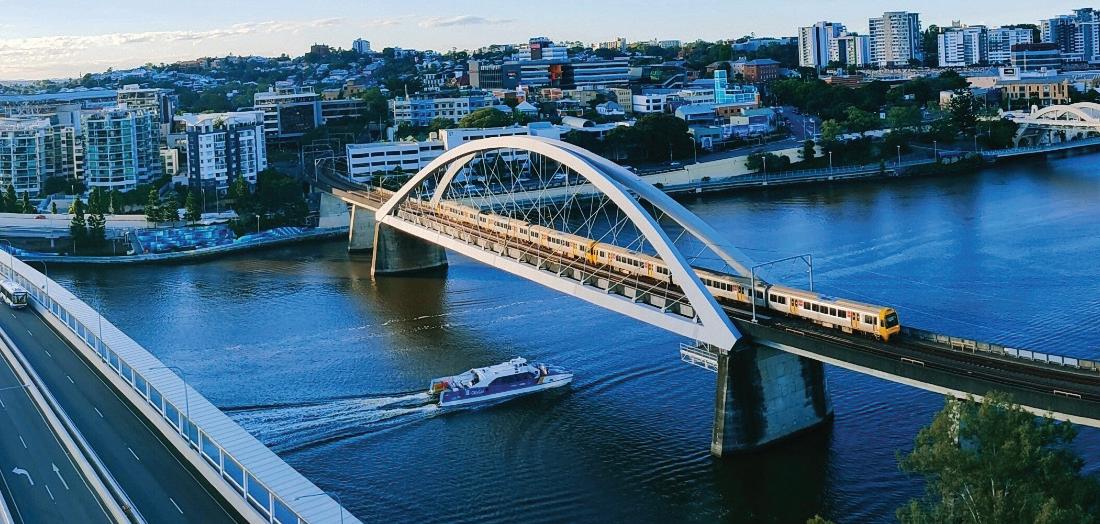
The Women in Industry Awards honour trailblazers, changemakers and leaders in their fields.
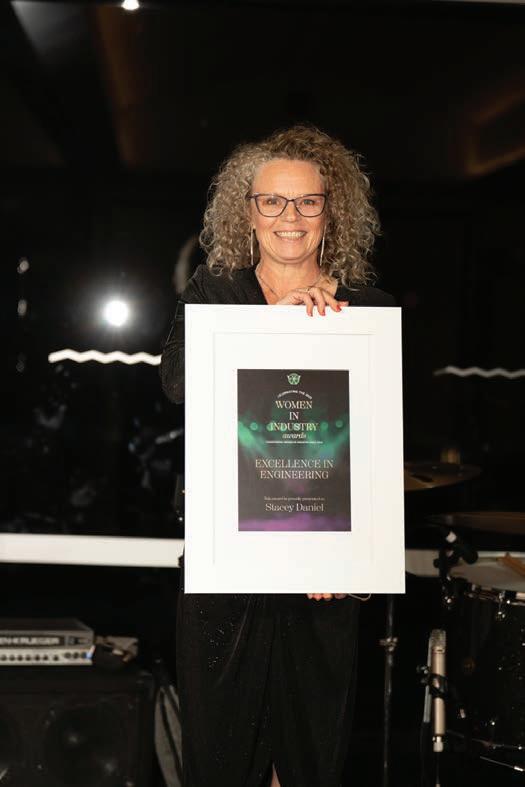
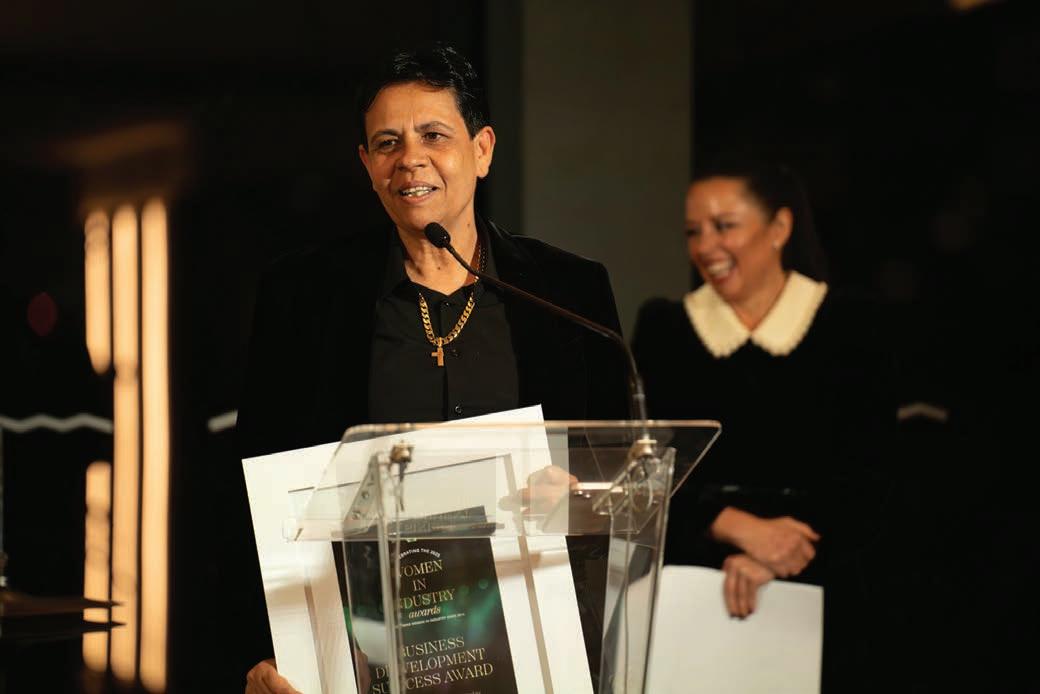

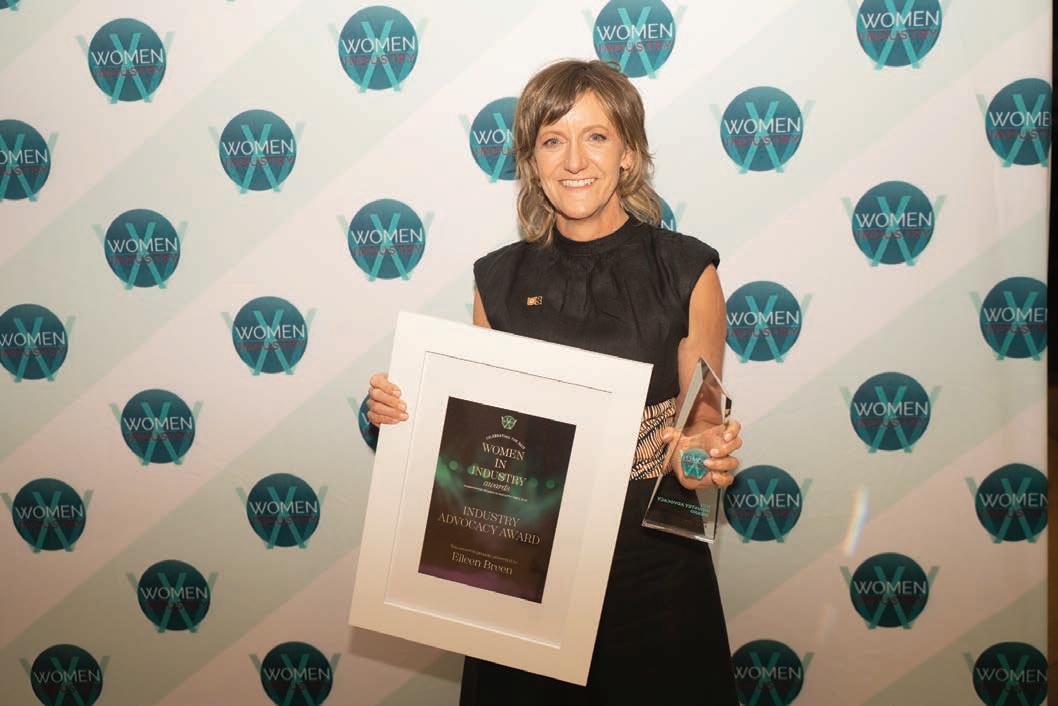

Time to acknowledge our industry’s contribution
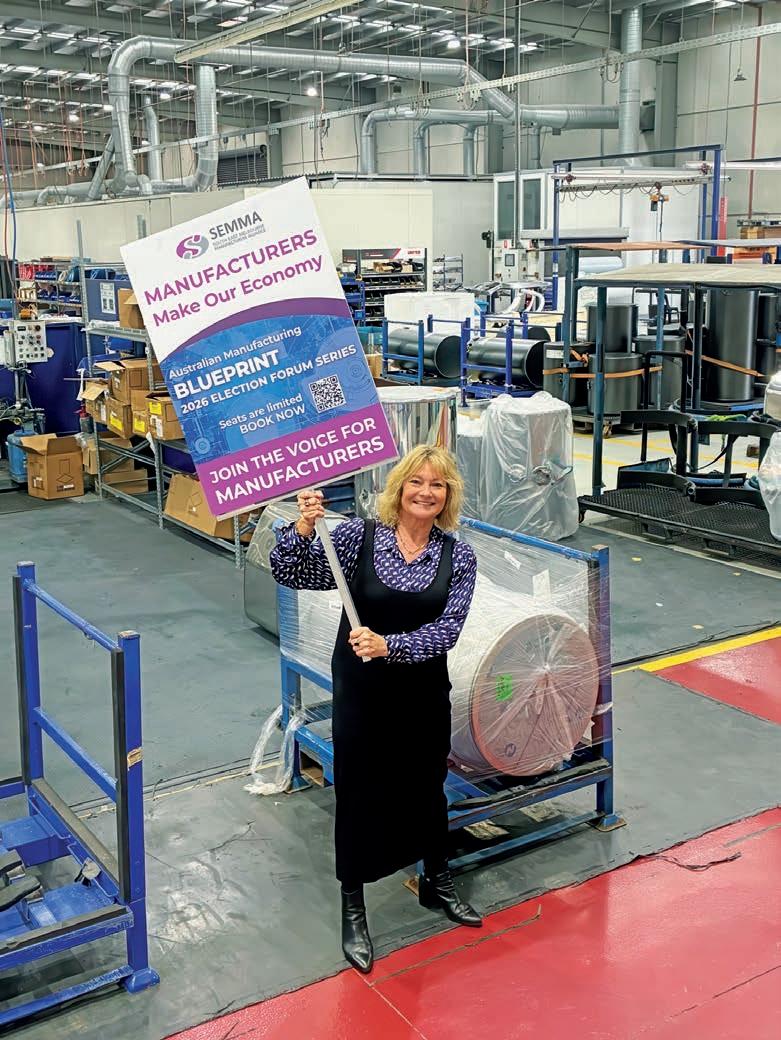
The South East Melbourne Manufacturers’ Alliance (SEMMA) has called on policy makers to recognise the positive impact the manufacturing sector makes on the Australian way of life. Honi Walker, CEO of SEMMA, shares her thoughts.
can be the difference when it comes to financial survival for small and medium enterprises (SMEs).
It’s good practice not to focus on one sector, but to have a cross-section of industries that you supply to and vice versa. And it is always good practice to buy locally manufactured goods.
Our local jobs must be safeguarded. SEMMA recently provided a submission to the Federal Government’s Productivity Commission in the application of a safeguard on fabricated structural steel.
Our local suppliers and manufacturers must be protected, or we risk reputations and lives.
more tax to navigate endless layers of red tape and battle for what’s fair in a global marketplace.
At SEMMA, however, we believe our local jobs and local content should not be compromised for profit.
Under the current system, it doesn’t matter what you produce, the result is the same – less after-tax profit. That means less money for investment, less for hiring that new apprentice or recent graduate. Less for research and development, and less for growth and innovation.
According to the Australian Bureau of Statistics, in 2024, Victoria had the highest number of businesses closing down –129,000. Victoria is also the most taxed state in all of Australia at $5408 per person in 2025-26, figures from the Victorian Parliamentary Budget Office show.
Some sectors, such as rail and defence, might seem immune to these economic pressures. But when we look at the recent situation with access to diesel fuel, we all pay more through the supply chain in the end. Understanding the “sector silo”
New regulations come into play in Victoria on July 1, 2026, and we will have a new Local Jobs Content Commissioner who will need to hit the ground running.
While SEMMA is based in the southeast of Melbourne, we have an eye on the national economy and our place in it. Nationally, manufacturing is the sixth largest industry in Australia, generating $137 billion in value-added output and employing 930,000 people. It contributes 12.4 per cent to our country’s exports and 7.9 per cent to capital expenditure (AI Group, 2024).
SEMMA presented the first of five Australian Manufacturing BLUEPRINT 2026 Election Forum Series in April. Each one of the five forums is focused on one of our five pillars of growth to invigorate industry.
The first pillar was “Economic” and featured financial sector and industry experts, and those from the political sphere, followed by an interactive panel. It was an opportunity for manufacturers to come together to discuss, debate and dissect current policy and offer solutions through our BLUEPRINT platform.
Manufacturers make our economy. It’s time policymakers recognised the significant contribution our manufacturing sector makes to the Australian way of life.
Honi Walker, Chief Executive Officer of SEMMA, promoting the BLUEPRINT series.
Image: SEMMA
Industry Organisations
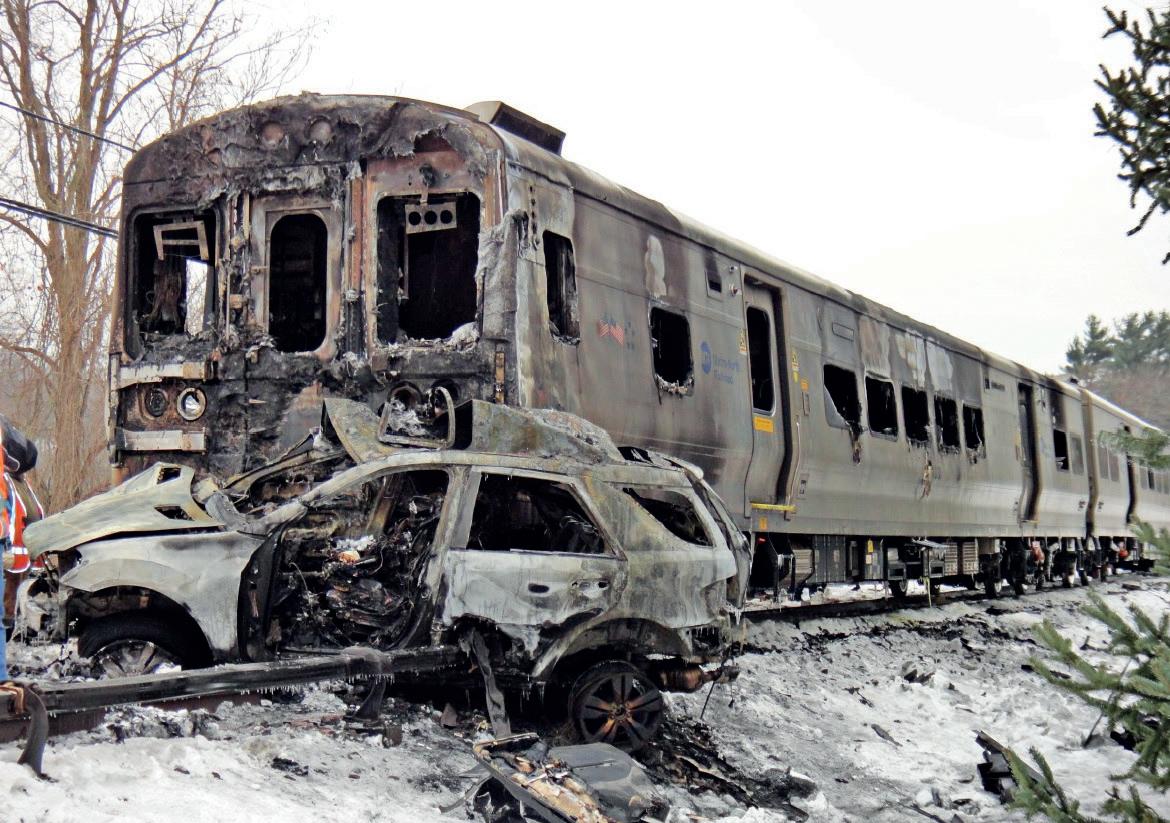
Fire safety in a changing rolling stock landscape
The Australian Rail
Industry Safety
and
Standards
Board (ARISO) shares why the update to the standard AS 7529.1 matters for the future of rail.
The rail industry is entering a period of rapid technological change. Across Australia and globally, operators and manufacturers are exploring new propulsion technologies to decarbonise rail operations, reduce emissions and improve operational efficiency. Battery-electric locomotives are already entering service, while hydrogen traction continues to be explored as a potential pathway to loweremissions freight operations.
These innovations present enormous opportunities to improve productivity for the industry. But they also introduce new technical risks that must be carefully managed.
Fire safety is one of the most critical of these.
To support the safe adoption of emerging technologies while maintaining a consistent national safety framework, ARISO has released a significantly updated version of AS 7529.1 Rolling Stock Fire Safety: Locomotives and Freight.
One of eight standards identified as the priority for updating by The Track to Decarbonised Rolling Stock report commissioned by ARISO in 2024, the revised Standard provides a contemporary approach to fire risk management for modern rolling stock, including vehicles incorporating battery and hydrogen technologies.
Importantly, the update strengthens both safety outcomes and national harmonisation – two priorities at the centre of Australia’s evolving rail system.
A NEW ERA OF PROPULSION
The momentum behind alternative traction technologies is growing.
In early 2026, Fortescue received its first battery-electric locomotives for operations in the Pilbara, while Aurizon is preparing to conduct a Battery Electric Tender (BET) trial on Alcoa’s Kwinana to Pinjarra route in Western Australia. Hydrogen traction is also under investigation in Australia, reflecting international developments where hydrogen fuel cells are being tested as a viable alternative to diesel.
These technologies are central to the industry’s decarbonisation ambitions, but they introduce new fire and explosion behaviours that differ significantly from traditional diesel systems.
The Track to Decarbonised Rolling Stock report, for which ARISO partnered with engineering consultancy Jacobs, examines how net-zero technologies could impact existing rolling stock standards. It identifies several areas where the standards framework would need to evolve to ensure new propulsion systems could be deployed safely.
A UNIFIED APPROACH TO FIRE SAFETY
One of the key changes in the updated Standard is the integration of AS 7529.2 into AS 7529.1, creating a single consolidated reference for locomotive fire safety.
Previously, the two documents addressed related but separate aspects of fire safety requirements. Combining them now provides a clearer, more accessible framework for designers, manufacturers and operators –particularly for locomotives that use battery or hydrogen tenders.
Further, ARISO is proactively addressing how these risks can be managed. Through the use of this Standard, a harmonised approach can be taken, assisting first responders in understanding what measures have been taken before attending any incident.
“Rolling stock technology is evolving rapidly, particularly as the industry moves toward lower-emission propulsion systems,” said Cris Fitzhardinge, Senior Standards Development Manager at ARISO.
“This update ensures the fire safety framework keeps pace with those changes. By bringing the requirements together into a single Standard and addressing new propulsion technologies directly, we’re providing industry with clear guidance to manage emerging risks while supporting innovation.”
The Valhalla train fire demonstrated how rapidly an onboard fire can escalate if not properly controlled through design, materials and safety systems.
"We’re providing industry with clear guidance to manage emerging risks while supporting innovation.”
Cris Fitzhardinge, Senior Standards Development Manager at ARISO
The revised Standard establishes the minimum level of fire safety required for locomotives and freight rolling stock operating in Australia, supported by performance-based requirements and deemed-to-satisfy solutions.
This approach allows operators and manufacturers flexibility in how they meet the Standard while ensuring consistent safety outcomes across the national network.
MANAGING NEW AND COMPLEX RISKS
Historical incidents, such as the Sofia-Kadam train fire in Bulgaria in 2008 or the commuter train fire in Valhalla, New York in 2015, which have resulted in multiple fatalities, demonstrate how rapidly an onboard fire can escalate if not properly controlled through design, materials and safety systems.
The updated AS 7529.1 continues to manage the traditional hazards associated with fire ignition, fire spread and safe
evacuation. At the same time, it introduces a comprehensive framework for the unique risks presented by zero-emission propulsion technologies.
In total, the Standard addresses twelve existing fire hazards while identifying twelve new hazards specific to battery and hydrogen technologies.
These include risks such as thermal runaway within battery systems, the propagation of fire between battery cells, the release of flammable or toxic gases, pressure build-up within battery enclosures, high-velocity flame events during system rupture, and the potential for re-ignition after suppression.
Hydrogen propulsion presents its own unique challenges, including hydrogen leakage, accumulation in confined areas and the difficulty of visually detecting lowluminosity hydrogen flames.
Together, these hazards highlight the complex fire behaviours associated
with next-generation rolling stock technologies and the importance of robust engineering controls.
The updated Standard provides requirements and recommendations to ensure rolling stock is designed and maintained to:
• reduce the likelihood of fire ignition
• control fire growth and spread
• minimise the impact of fire on crew and operations
• support safe evacuation and emergency response.
HARMONISATION ACROSS THE NATIONAL NETWORK
Beyond safety, the Standard also plays an important role in supporting harmonisation across Australia’s rail system.
As locomotives increasingly operate across multiple jurisdictions and networks, consistency in core safety requirements becomes essential.
A harmonised national approach helps improve incident response, reduce duplication, streamline rolling stock approvals and provide clarity for manufacturers designing equipment for the Australian market.
“Consistent national standards are fundamental to interoperability,” Fitzhardinge said.
“By providing a clear and contemporary fire safety framework that applies across networks, this Standard helps ensure new and existing locomotives can operate safely and efficiently wherever they run.”
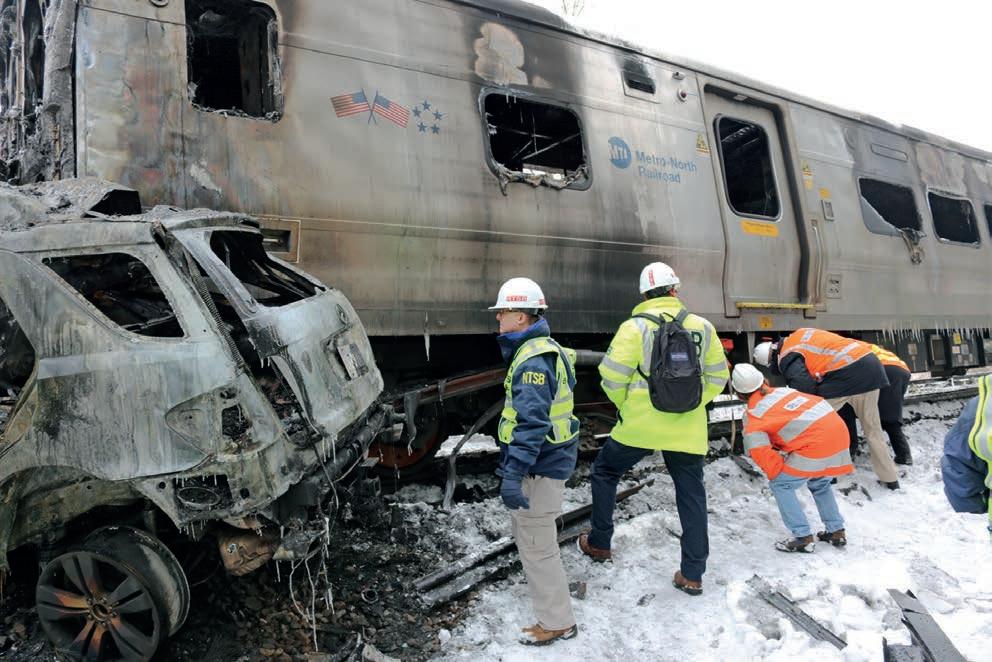
This alignment is particularly important as operators transition to mixed fleets, where traditional diesel locomotives operate alongside emerging zeroemission technologies.
ENABLING INNOVATION WHILE PROTECTING SAFETY
The rail industry’s transition toward cleaner propulsion technologies is accelerating. But innovation can only succeed if safety frameworks evolve alongside it.
The updated AS 7529.1 Rolling Stock Fire Safety: Locomotives and Freight ensures that as the industry moves toward battery and hydrogen traction, the risks associated with these technologies are clearly understood and effectively managed.
By strengthening fire safety requirements while maintaining a consistent national framework, the Standard provides a critical foundation for the safe introduction of nextgeneration rolling stock. And in a rapidly changing rail landscape, that foundation has never been more important.
The American National Transport Investigation Board investigators at the scene of the Valhalla, New York train fire incident in 2015.
Why Australia can’t take its foot off the investment pedal
The Australasian Railway Association (ARA) looks at why continued government investment in rail will be key to ensuring Australia can meet the country’s economic and social needs.
We have seen several clear signals in 2026 that rail must remain central to Australia’s long-term infrastructure pipeline.
The release of Infrastructure Australia’s 2026 Infrastructure Priority List in March confirmed that there is a need for continued rail investment, signalling growing recognition of the wider benefits rail infrastructure delivers to the economy
increasing freight demand, housing pressures, rising fuel costs and the transition to net zero greenhouse gas emissions, rail is one of the few investments that can help address all these challenges.
The 2026 Infrastructure Priority List recognised that reality through a strong focus on high-productivity freight networks, high-capacity public transport,
The ARA’s 2025-2030 strategic plan identified the need for ongoing rail investment to ensure the rail industry can continue to meet economic and community needs over time.
The rail construction boom of recent years has been welcomed but should be seen as just the beginning.
Recent investments in rail infrastructure
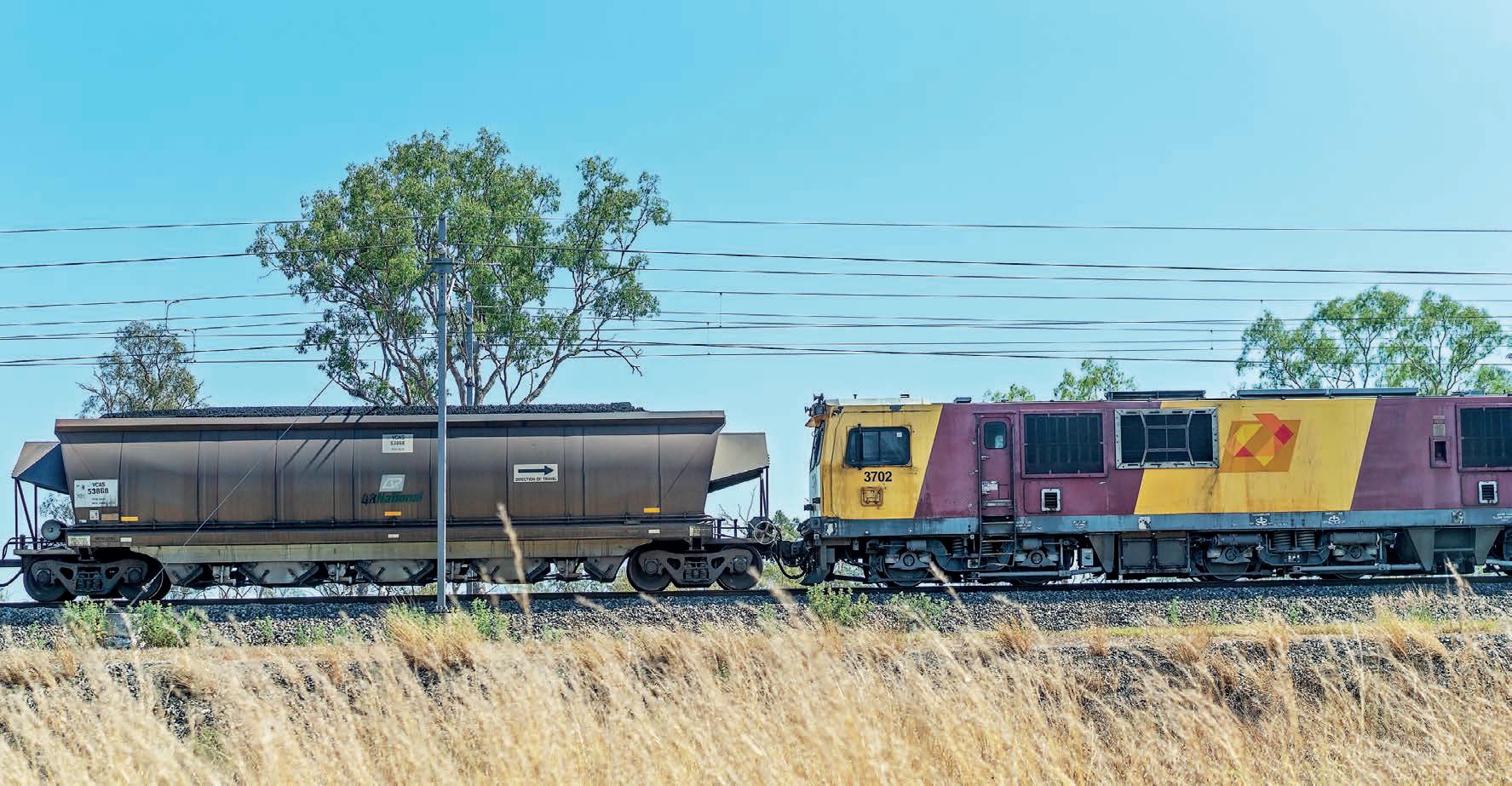
Caroline Wilkie, CEO of the ARA.
Infrastructure Australia has called for targeted investment to improve freight corridors.
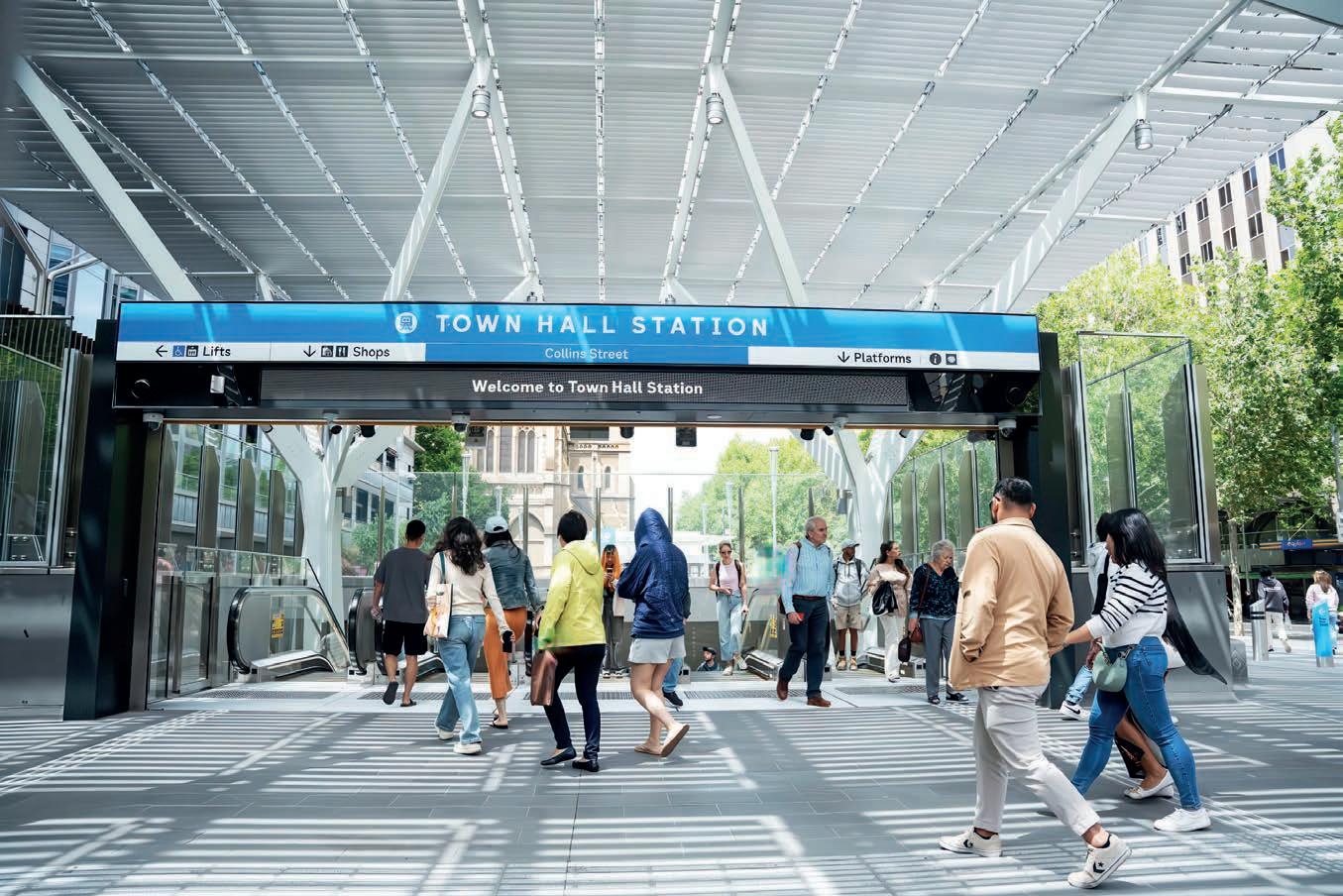
BENEFITS BEYOND DIRECT CONTRIBUTION
The ARA’s recently released Value of rail 2025 report shows just how significant a role the industry already plays in the national economy.
Rail now contributes almost $40 billion to Australia’s economy each year and supports about 200,000 jobs, both directly and
communities to employment centres and social infrastructure. It reduces congestion and makes better use of scarce urban space.
THE HEART OF MODERN COMMUNITIES
As the 2026 Infrastructure Priority List confirmed, many jurisdictions around the world have set ambitious targets to increase public transport use to make the most of these wider benefits. These targets are as high as 80 per cent, as jurisdictions look to rail to drive solutions.
While Australia does not have an established public transport target, recent fuel price rises demonstrate the dual benefits rail can offer in reducing consumption and easing cost-of-living pressures, in addition to the wider sustainability, safety and liveability improvements it offers.
Public transport is therefore an essential part of modern, well-functioning cities and towns.
It is essential that ongoing investment is maintained to support continued growth in public transport use and ensure the industry has capacity to meet rising demand over time.
A MORE PRODUCTIVE FREIGHT NETWORK
Australia’s freight task is growing, and supply chains are under increasing pressure from higher volumes, changing trade patterns and more frequent disruption.
Infrastructure Australia identified highproductivity freight networks as a national priority and called for targeted investment to improve capacity, resilience, connectivity and interoperability across freight corridors and intermodal terminals.
That conclusion aligns closely with the ARA’s Future of Freight findings.
Our research found rail moves almost three quarters of Australia’s bulk commodities, but just 17 per cent of nonbulk freight. This is the result of historic
policy and investment settings that have reduced the competitiveness of rail freight compared to other modes on key routes.
This is a trend we must reverse to ensure we can make the most of all freight modes to support a productive freight network, particularly on key interstate corridors.
The benefits of addressing these challenges would be substantial. The Future of Freight report found that a 10 per cent mode shift from road to rail between major Australian cities could save more than $700 million a year in social costs. Those are not marginal gains.
This is especially important as Australia works to address fuel instability and moves towards a net zero future.
BUILDING AUSTRALIA’S SOVEREIGN CAPABILITY
There is also a strong case for sustained investment from an industry capability perspective.
Long-term rail programs give the supply chain the certainty it needs to invest in skills, technology and local manufacturing. They help retain specialist capability between major projects, they support a more productive and innovative delivery environment and they allow governments to move away from stop-start investment patterns that add cost and risk.
High-speed rail is a good example of a long-term project that could embed new skills and manufacturing capability in Australia for generations to come.
The lessons of recent months have shown that Australia’s transport networks must be efficient, productive, sustainable and able to withstand economic and environmental shocks over time.
Continued investment in rail ensures transport networks are better able to meet these needs, while creating the infrastructure required for Australia’s longterm future.
Rail contributes almost $40 billion to Australia’s economy each year.
Image: Jackson Photography/stock.adobe.com
Image: Victorian Government
Bringing the industry together
The Permanent Way Institution of New South Wales looks ahead at the events it will be hosting over the coming months.
As the rail sector continues to navigate a significant pipeline of work, the importance of connection, alignment and shared insight has never been clearer. Over the coming months, the Permanent Way Institution of New South Wales (PWI NSW) will deliver a series of events designed to bring the industry together at different levels, providing opportunities to engage beyond the immediate demands of project delivery.
The PWI NSW events calendar has become a consistent and valued platform for industry engagement, creating space for contractors, consultants, asset owners and operators to connect in a more meaningful way. In an environment where collaboration is increasingly critical, these forums enable conversations that support
not only current delivery but also future positioning across the sector.
On May 6, the Executive Breakfast will bring together senior leaders for a focused discussion on the sector's future. This year’s keynote speaker, Matt Longland (Chief Executive Officer of Sydney Trains), will provide insight into upcoming work opportunities and the broader pipeline shaping the industry.
As organisations continue to position themselves for future programs, forums such as this offer valuable clarity –supporting more informed decisionmaking around capability, investment and growth.
The calendar will culminate with the PWI Winter Dinner on June 18: a fixture that has brought the industry together
for more than a decade. More than a social event, the dinner provides an opportunity to recognise the people and partnerships that underpin successful delivery across the sector. It is also a time to reflect on the collective effort behind major programs and to strengthen the relationships that will support future work.
Collectively, these events reinforce the role PWI NSW plays in supporting not just professional development, but the ongoing connection, alignment and strength of the rail industry.
Tickets are now on sale for all upcoming events via at: www.pwinsw.org.au
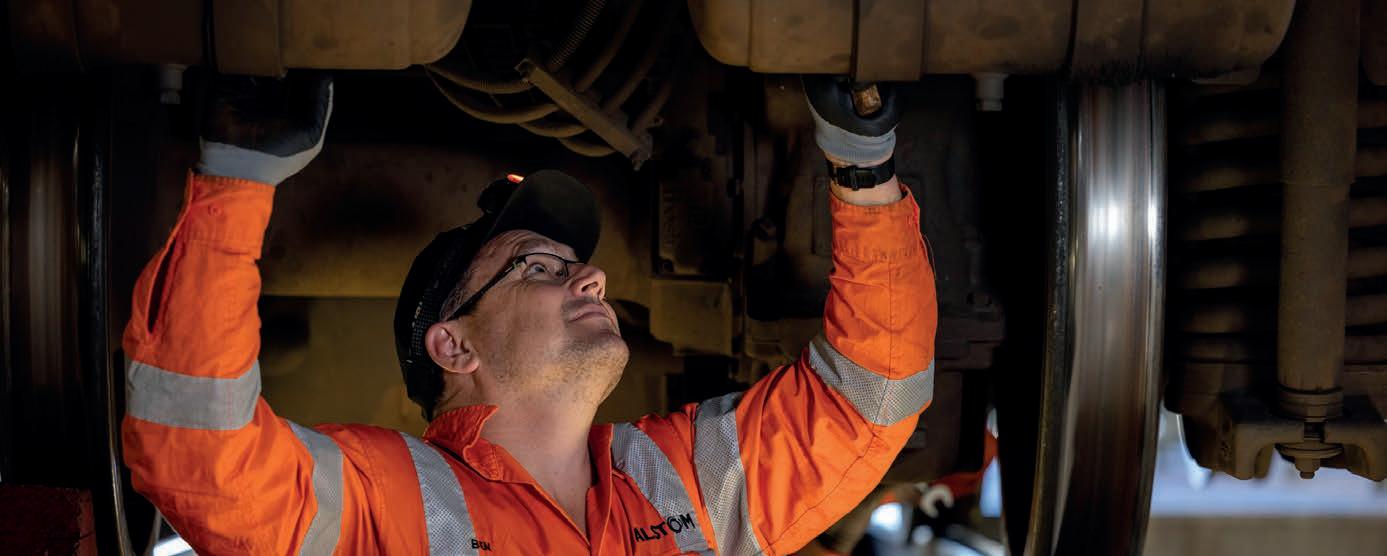

September 2026
EXHIBIT IN 2026. BE SEEN. BE HEARD. BE CHOSEN.