





Published by:
379 Docklands Drive
Docklands, VIC 3008
T: 03 9690 8766
www.primecreativemedia.com.au
Chairman
John Murphy
E: john.murphy@primecreative.com.au
CEO
Christine Clancy
E: christine.clancy@primecreative.com.au
Managing Editor
Lisa Korycki
E: lisa.korycki@primecreative.com.au
Editor
Kayla Walsh
E: kayla.walsh@primecreative.com.au
Business Development Managers
Claire Waters
M: 0466 545 664
E: claire.waters@primecreative.com.au
Emily Schlegel
M: 0466 317 555
E: emily.schlegel@primecreative.com.au
Client Success Manager
Ben Sammartino
E: ben.sammartino@primecreative.com.au
Head of Design
Clayton Hawley
E: clayton.hawley@primecreative.com.au
Designer Apostolos Topatsis
Subscriptions subscriptions@primecreative.com.au
www.RailExpress.com.au
The Publisher reserves the right to alter or omit any article or advertisement submitted and requires indemnity from the advertisers and contributors against damages or liabilities that may arise from material published.
© Copyright – No part of this publication may be reproduced, stored in a retrieval system or transmitted in any means electronic, mechanical, photocopying, recording or otherwise without the permission of the Publisher.

Kayla Walsh Editor - Rail Express
It’s been all go for the Rail Express team recently – from jetting over to Perth for the Heavy Haul Rail Conference to learning about the latest transport trends at the Public Transport Association of Australia and New Zealand (PTAANZ) Public Transport Symposium in Melbourne. Take a look at some of the coverage from those events on pages 32-33 and 46-47.
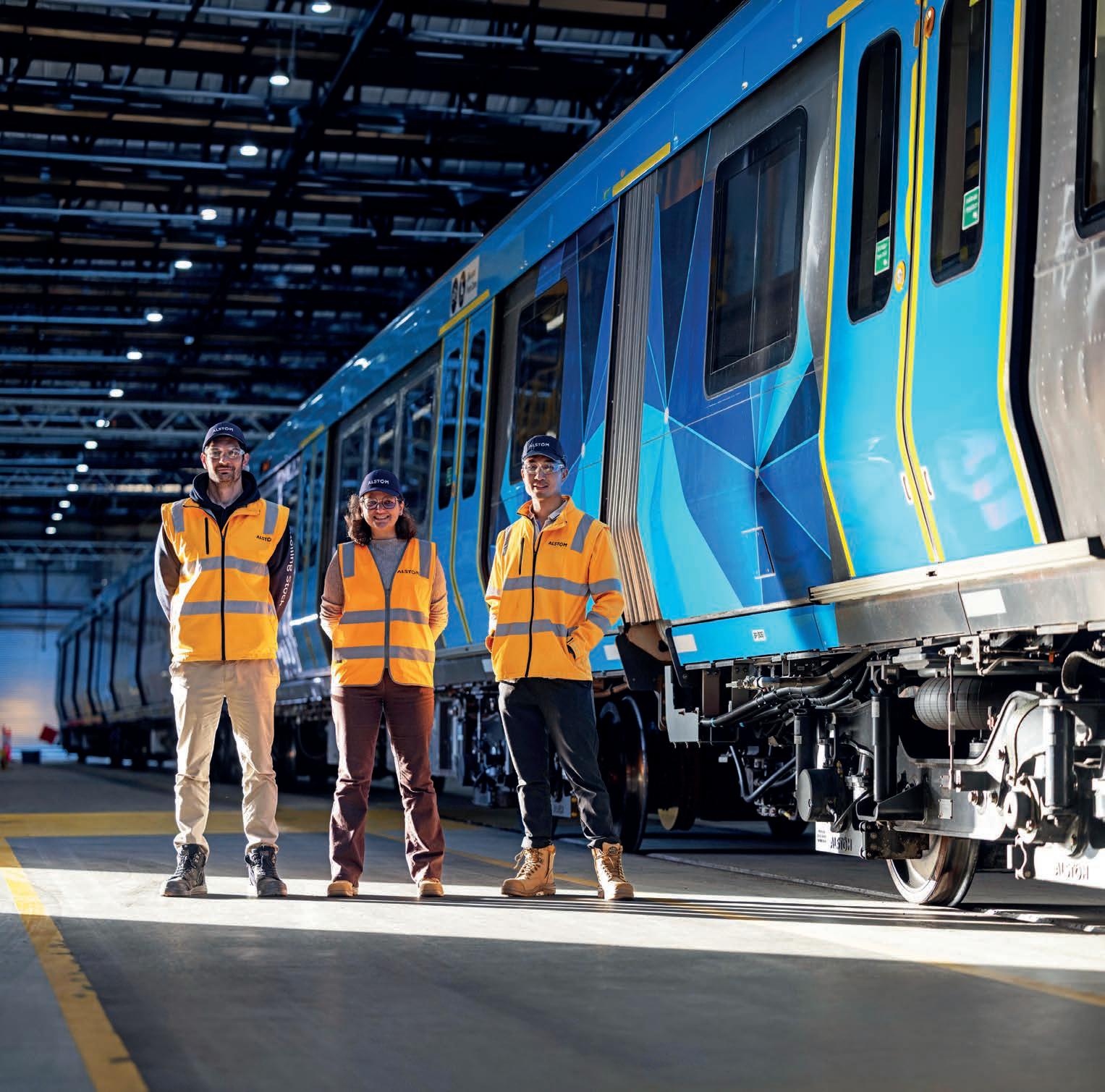
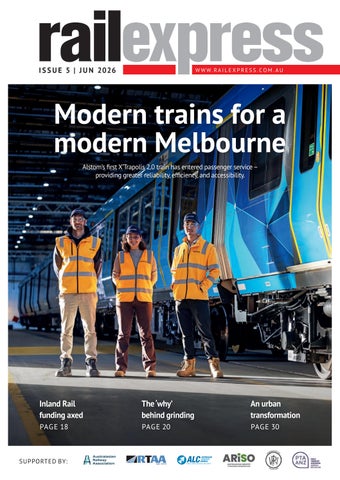
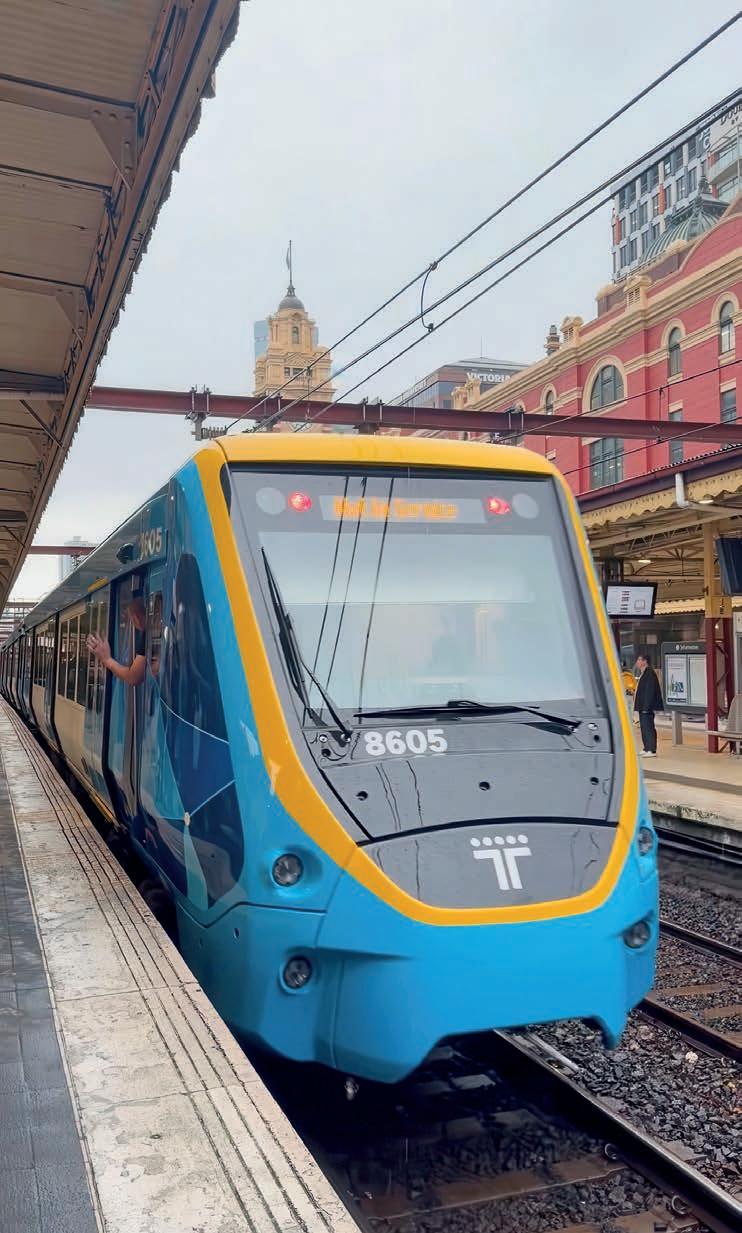
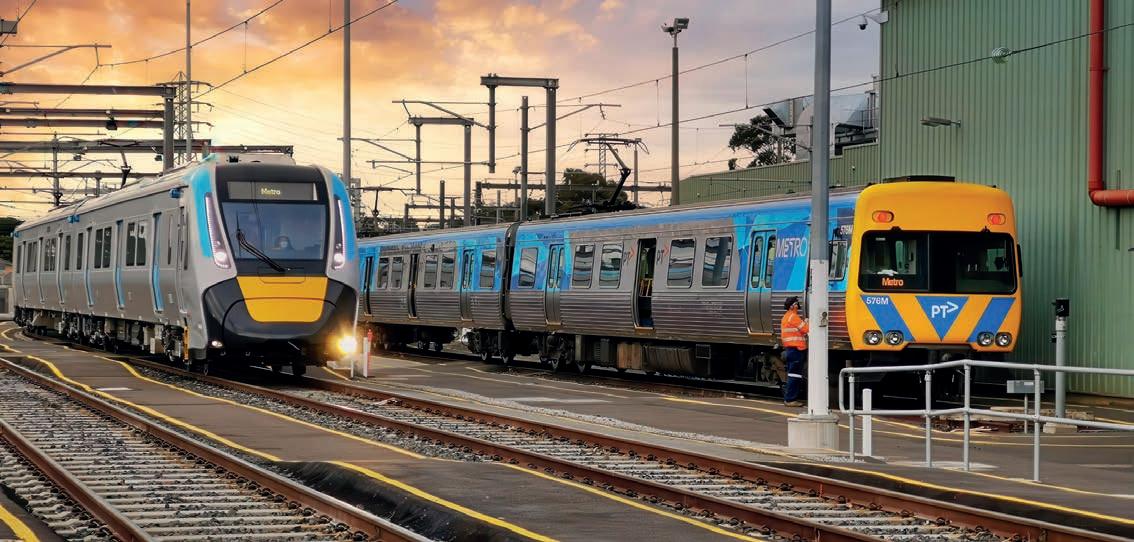
Melburnians were also lucky enough to welcome the first X’Trapolis 2.0 train into service – this month’s cover star. Alstom’s new fleet will bring improved reliability for passengers, as well as extensive accessibility features, wider doors for faster boarding, better passenger information and much more. Read all about it from page 10.
With the announcement of the Federal Budget, it has been encouraging to see further investment in rail. But there's also been some bad news, including the decision to axe funding for Inland Rail north of Parkes. I take a look at the reaction to this on page 18.
This month, I also bring you an interview with Raphaelle Guerineau, Country Chief Executive Officer for Siemens Mobility in Australia and New Zealand. It was great to get her insights on everything from digitalisation to high-speed rail.
Also in the technology space, KeTech’s Paul Warren tells us more about the company’s flexible approach to passenger information systems.
Meanwhile, Amokabel fills us in on its locally manufactured axle counter cables, and Loram educates us on the benefits and challenges of rail grinding.
French rail operator RATP shares how it has transformed its Vaugirard rail workshops
in Paris into a mixed-use development, blending industrial activities, housing and public facilities.
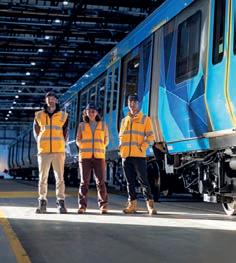
This issue also includes an interview with two young neurodivergent people who struggled to get a foothold in the jobs market but are now thriving, working on projects connected to the transport industry.
There's also our regular updates from the Australasian Railway Association, the National Transport Commission, the Australian Rail Industry Standards Board and the Permanent Way Institution of New South Wales.
Happy reading!
kayla.walsh@primecreative.com.au
100% SYSTEM AVAILABILITY
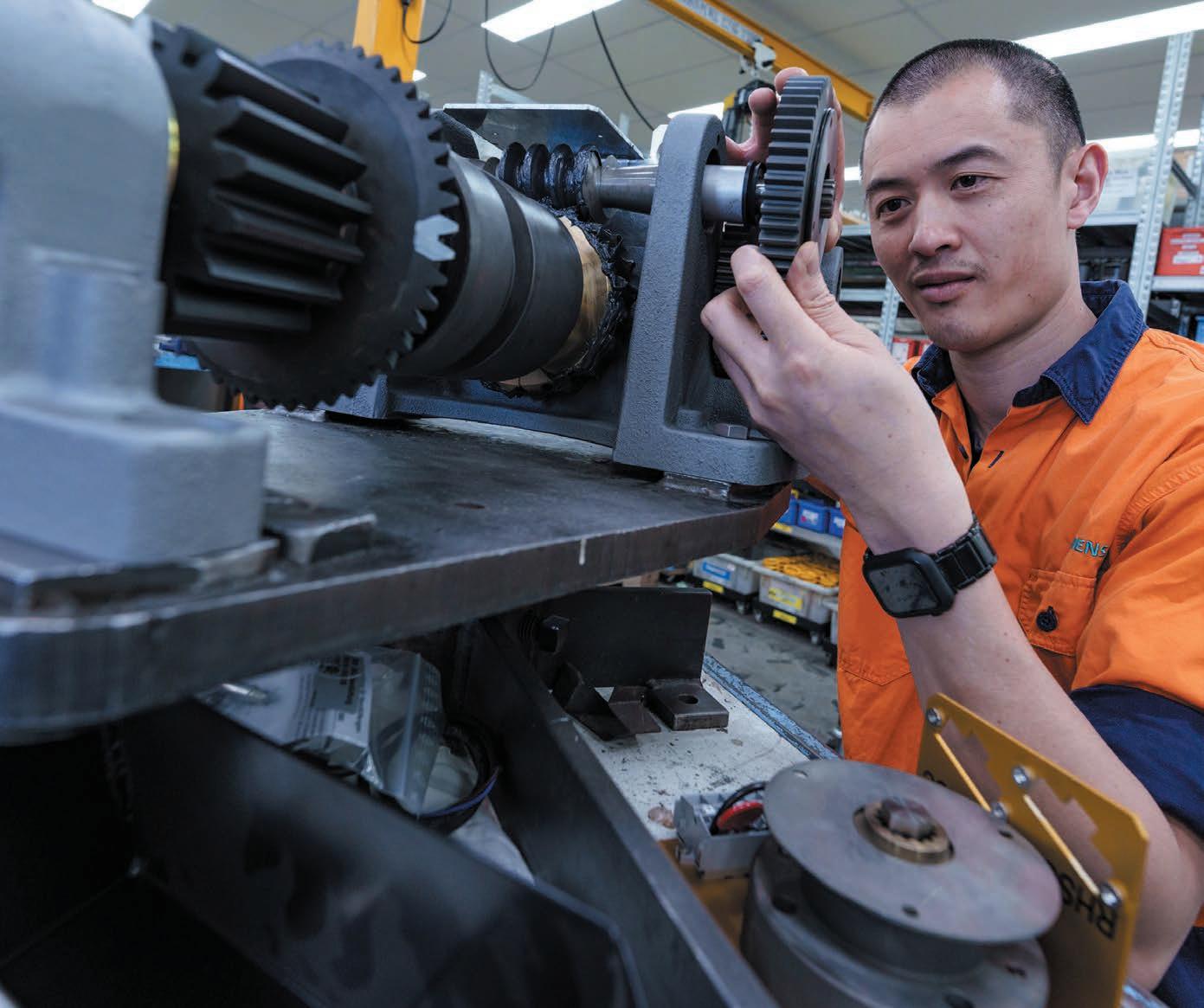
At Siemens Mobility, we value our local manufacturing facilities and engineering teams for their innovative and sustainable ways of working, as they are the key to revitalizing old and new rail technology that will #transformtheeveryday and change the way we travel globally.
The Victorian and Commonwealth governments will invest a total of $152.7 million (equally split) to prepare Melbourne’s Melton Line for electrification.
The funds will cover planning approvals, site investigations, securing the power supply for a future electrified line, and environmental assessments, as well as detailed design and costing with delivery partners.
Stage 1 works for Melbourne Airport Rail are currently creating space at Sunshine for the electrified track, while additional stabling capacity for metropolitan trains is being constructed at Cobblebank.
Works on the Melton Line Upgrade are progressing and will enable nine-car VLocity trains on the Melton Line by next year, increasing passenger capacity by 50 per cent ahead of future electrification.
Melton is currently served only by V/Line trains, sharing the corridor with long-distance Ballarat services.
Electrification will enable faster, metrostyle electric trains to run along the
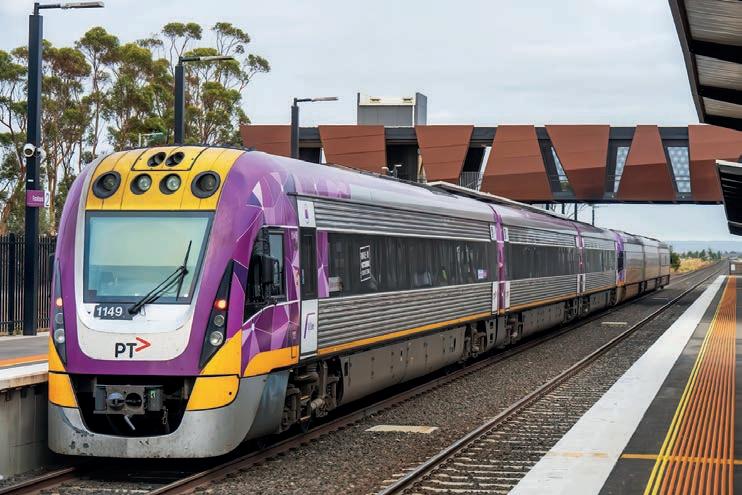
corridor, allowing the regional VLocity fleet to be redeployed to other highdemand lines.
Victorian Premier Jacinta Allan said: “Melton electrification is on the way, which will deliver faster trains for the west, getting families home sooner.”
Victorian Member for Melton Steve McGhie said: “This upgrade will make a real difference to the Melton community – delivering modern stations, longer trains and safer journeys across our community.”
Development works are expected to begin in 2026, with completion by mid-2027.

$1.75b
The Federal Government has announced a $1.75 billion investment to improve the “productivity, resilience and reliability” of Australia’s freight rail networks.
The government is also establishing a new $55 million program to incentivise more freight to move via trains and cargo ships.
The $1.75 billion sum will be allocated to the Network Investment Program, building on the government’s previous commitment of $1.04 billion to upgrade the Australian Rail Track Corporation’s (ARTC) network.
It will go towards boosting the efficiency of rail corridors on the East Coast, with upgrades including track renewal works, passing loop extensions, and signalling improvements to remove speed restrictions, reduce travel times, enable longer trains and improve reliability and safety.
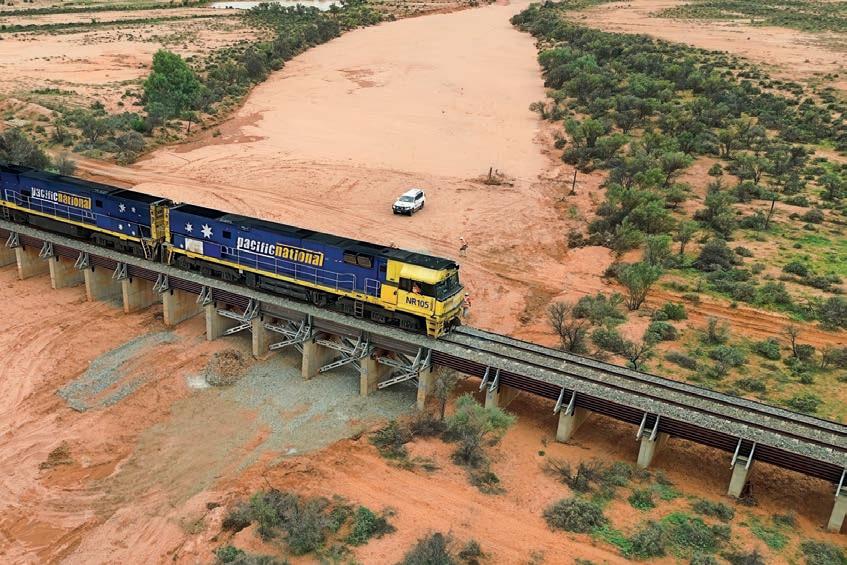
Resilience upgrades will also be carried out in high-risk flood areas, particularly along the East-West corridor. Over the past decade, this freight artery has faced several multi-week closures following central Australian downpours.
Meanwhile, the government’s new $55 million Transport Resilience And Capacity Kickstart (TRACK) pilot program will support “more fuel-efficient freight movements”


across Australia. A government statement said this is “especially relevant while the conflict in the Middle East continues to affect global fuel supply”.
A coordinator will be designated within the ARTC, who will work with other rail infrastructure managers to put in place improvements to rail operations.
Minister for Infrastructure, Transport, Regional Development and Local Government Catherine King said: “The Albanese Government’s $1.75 billion investment in the ARTC network will shift more freight onto rail and protect this network for decades to come.”


We move cities forward.
Every day, RATP Dev teams in 16 countries work hand-in-hand with transport authorities and transfer skills to local workforces to make mass transit solutions the right move for safe, smart and sustainable journeys. Our expertise spans seamless network takeovers, new service launches, improving passenger experience and major upgrades to multimodal networks. We help fast-growing cities and regions turn public transport ambitions into everyday performance.
1730 railway lines metro lines (incl. 15 fully automated)

41 tramway lines

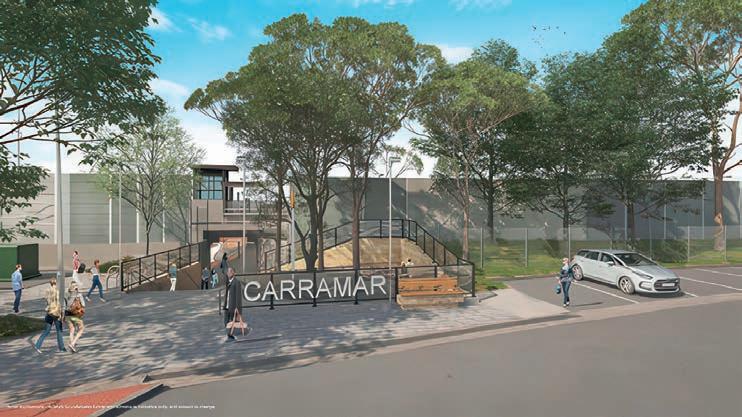
Two rail stations in southwest Sydney, Carramar and Yennora, will receive upgrades to increase accessibility for the wider community.
The community surrounding these stations is diverse, including high proportions of elderly people, young families with prams, and people with disabilities.
The Carramar station renovations will include ramp and pathway upgrades, tactile indicators to assist blind/vision-impaired passengers, and lift access from the underpass to the platform.
The Yennora station renovations will include a new station building, lift access connecting an upgraded footbridge with the station’s platforms and the street, and new station forecourts, featuring upgraded landscaping, seating, and lighting.
Both stations will get power supply upgrades, CCTV, clearer signage, kiss and ride parking, accessible parking, better lighting, and family accessible and unisex ambulant toilets.
Minister for Disability Inclusion Kate Washington said that these renovations will be a “game changer” for locals with a disability, elderly people, and families with prams.
“We are investing in accessible upgrades across the state because we know that
removing barriers to getting around is a win for everyone,” she said.
Carramar and Yennora stations opened in 1924 and 1927, respectively. Minister for Transport John Graham said the stations have “changed very little since they were built in the 1920s and both are past due for these updates”.
The upgrades are funded by the New South Wales Government’s $800 million Safe Accessible Transport program, which currently has 16 projects funded for design and investigation and 15 projects funded for delivery.
Recently delivered upgrades include stations at Griffith, Moss Vale, Queanbeyan,
Government’s focus is on improving passenger experience.
“The communities around Yennora and Carramar have been crying out for decades for the lifts and accessibility features that are enjoyed at so many other railway stations and right across the Sydney Metro system,” he said.
“A single lift to a platform or a better ramp can be the difference between someone being able to use the Sydney Trains network and get around like everyone else to work, study and social outings.
“We are focused on improving the everyday experience of those 1.1 million people who use the Sydney Trains network
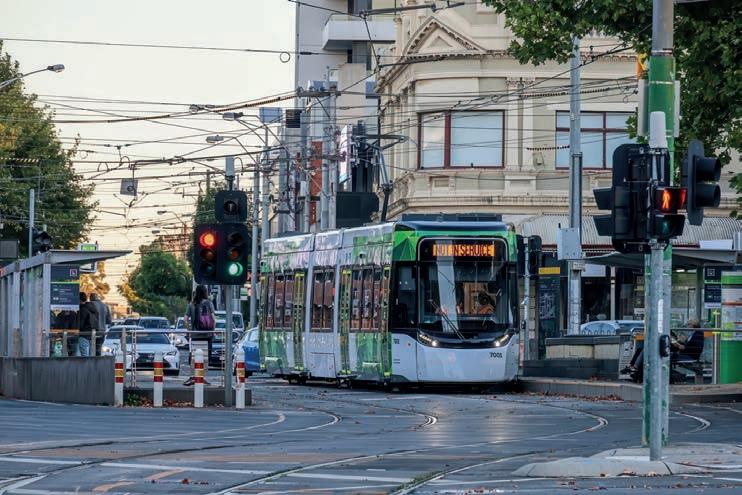
Melbourne’s Next Generation G Class trams have entered the next stage of testing –running alongside traffic.
The new trams, which will operate on routes 57, 59 and 82, are being put through their paces to see how they will perform when they enter passenger service later in 2026.
The G Class will replace some of Yarra Trams’ longest-serving high-floor models, including the Z and A classes.
The 25-metre-long new trams can hold up to 150 passengers, which is almost twice as many as the oldest trams currently operating in Melbourne’s west.
Each tram consists of three modules, with two end sections for the driver and passengers, and a central section, along with three bogies.
The fleet has a more accessible low-floor design, as well as more doors, handrails and
building the fleet of 100 G Class trams at its Dandenong facility in Victoria, supported by a $1.85 billion investment from the State Government.
content requirement and is supporting as many as 1900 jobs.
It’s the largest order of locally made trams in Australian history.
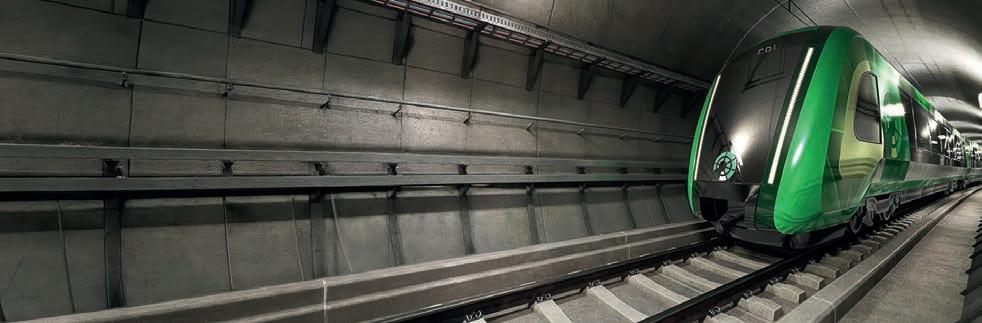
The Federal Government is set to invest an extra $3.8 billion into Melbourne’s Suburban Rail Loop (SRL), as part of the 2026–27 Federal Budget.
It brings the government’s total investment in the project to date to $6 billion.
The funding will help to deliver the first stage of SRL East, 26 kilometres of twin tunnels connecting Cheltenham to Box Hill.
It will create interchanges with four of Melbourne’s established radial rail lines at Cheltenham, Glen Waverley, Box Hill and Clayton, while connecting rail lines in four directions, including regional V/Line services on the Gippsland Line.
The project will also support the delivery of 70,000 homes, as well as creating 8000 local jobs in the long-term. Tunnelling for the project will begin before the end of
Amokabel Australia excels in the design and
The company is based in Sydney and supplies products across Australia and overseas. Priding itself on being able to provide both custom and standard cables that are manufactured at our facility in Western Sydney. We can manufacture a wide range of products, many of which are custom designed and made to meet our clients’ requirements.

2026, with Tunnel Boring Machines currently being assembled on site. This project is expected to be completed in 2035.
Prime Minister Anthony Albanese described the SRL as a “game changer” for Melbourne and the state of Victoria.
“Ensuring Victorians can get into Greater Melbourne and across suburbs, rather than having to go into the CBD then back out, helps speed up travel times, get cars off the road and increases opportunities for businesses in Melbourne’s east.
“My government is proud to partner with the Allan Government in delivering a better future for commuters across Victoria.”
Victorian Minister for the SRL,
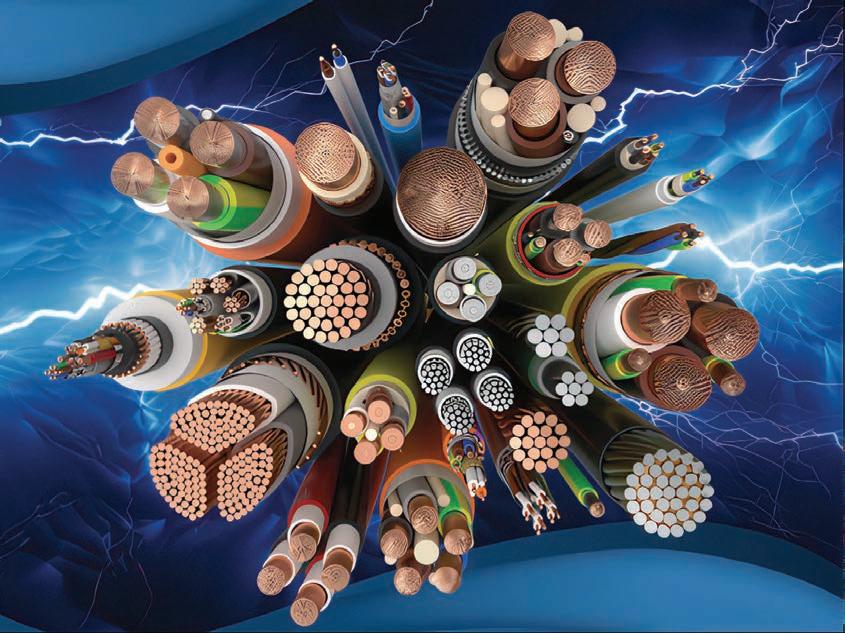
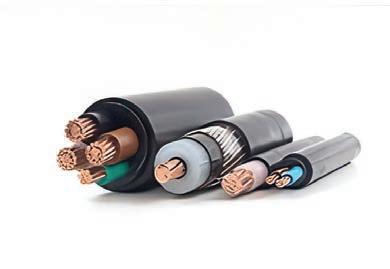
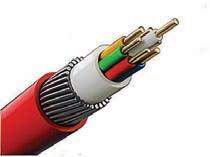
All your Railway Sector Cabling requirements, locally manufactured, such as OHLE cables, Trackside Power cabling, Points Systems, Level Crossing Infrastructure cabling, Contact Wire, Catenary & Bonding cables, Axle Counter cabling, Signalling cables, Train Control System cables, Telecommunications wires, Rolling Stock, Passenger Information Systems, SCADA & Station Building cables.
Extrusion Processes utilising: Low Density Polyethylene, High Density Polyethylene & Cellular Foam Polyethylene, Polyurethane, Polypropylene, PVC, LSZH Megolon, Blue Intrinsically Safe coloured sheaths & Steel Wire Armouring, Termite and Rodent protection cable solutions.
Quality and Compliance are at the heart of mitigating the risk of unplanned maintenance and downtime. Amokabel will work hard to ensure we supply high quality, high performance. The strictest quality assurance processes are backed by compliant cable testing processes.
Amokabel has excelled in the design and manufacture of many unique Custom cables, specifically designed to suit customer requirements. We can combine several of your or our supplied cables to make an easy to install Composite cable.
Melbourne’s
newest train, the X’Trapolis 2.0, has officially entered passenger service. We find out more.
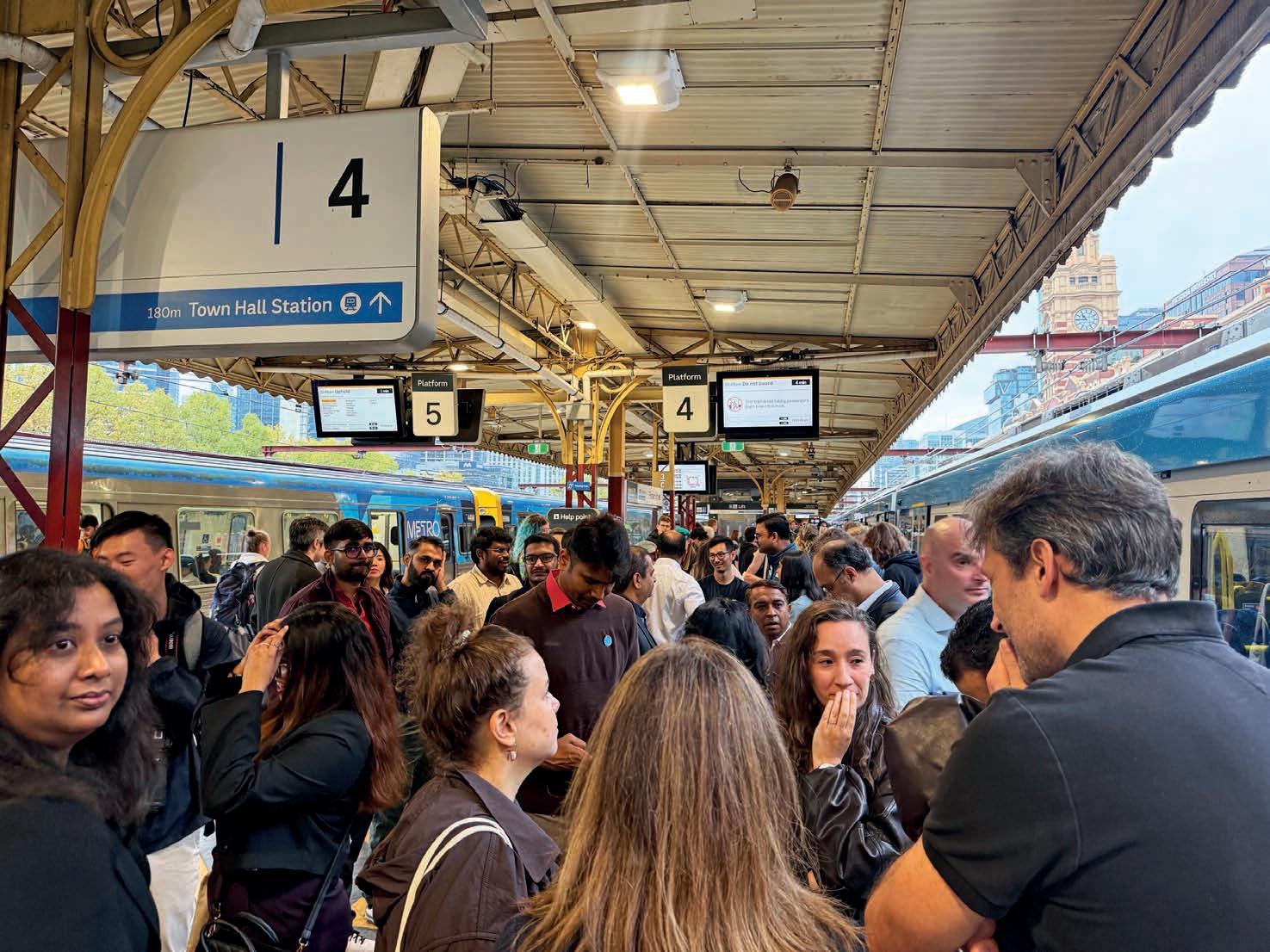
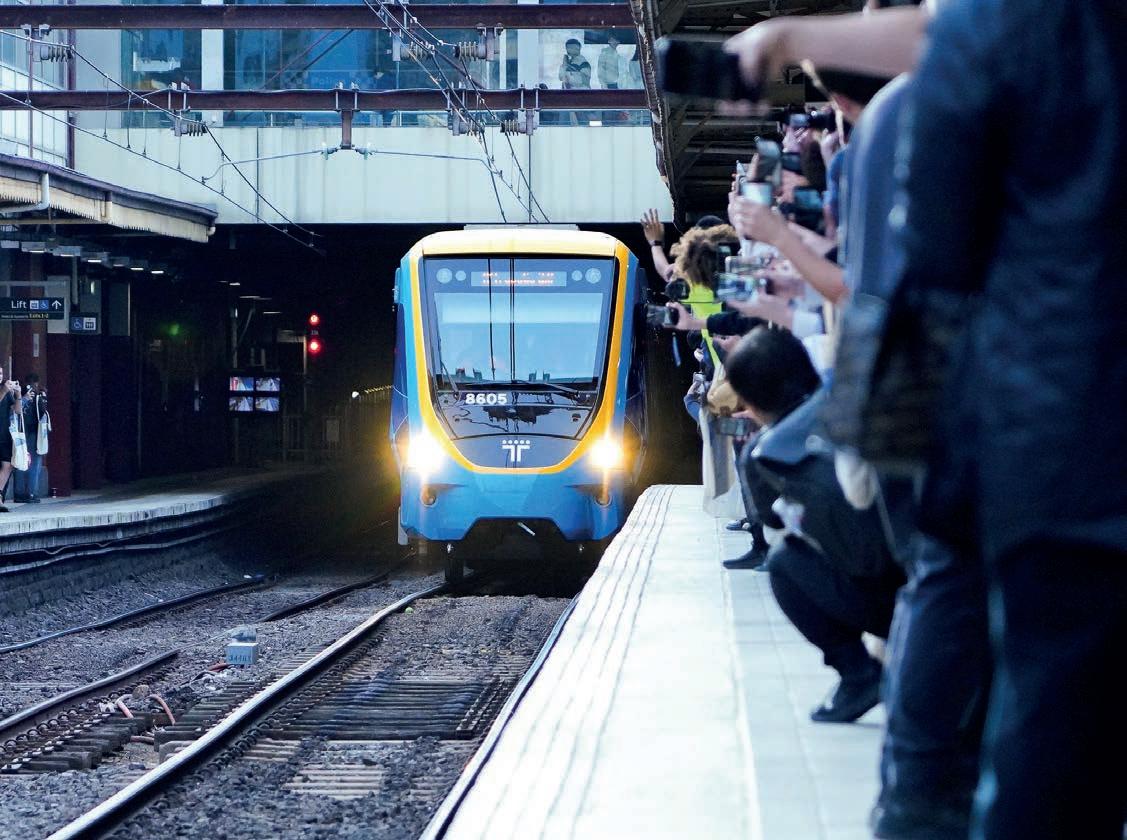
Cheers rang out at Flinders Street Station in Melbourne as the first X’Trapolis 2.0 train pulled up to Platform 4, ready for its first ever service.
With more than 1000 passengers on board for the inaugural trip to Upfield, the atmosphere was electric. And it wasn’t just train enthusiasts and members of the public who were excited. It was also a proud day for Alstom – the manufacturers who are building the X’Trapolis 2.0 fleet locally in Victoria – Metro Trains Melbourne (MTM) and the Victorian Department of Transport and Planning (DTP).
“I’ve been involved in this project for the past four years. I was there for the design phase and when we first started manufacturing the trains in Dandenong and Ballarat and through to testing in Newport,” said Mark Welikala, Alstom’s Project Manager for the new fleet.
“We’ve had almost 800 people in Alstom across the globe working on this project, and to see it come to fruition is fantastic.
“It’s a testament to all the hard work the whole project team has put in, as well as our collaboration with DTP and MTM.
“We wouldn’t have been able to achieve this without the three parties working as closely together as we have.”
Chris Hurley, Project Director for X’Trapolis 2.0 at Department of Transport and Planning, said it has been great to work alongside so many passionate and talented people from all walks of life.
“People from all kinds of backgrounds and skill sets have contributed to this project,” he said. “We’ve had 20 or 30 nationalities represented, all working towards the same goal.
“A lot of work goes into risk assessments and planning for a project like this, so it has been very satisfying for it to all come together successfully.
“It’s really pleasing when other people get to see the product and for the team to get recognition as well. I’m very happy and proud of what we’ve done here.”
The new X’Trapolis 2.0 trains are designed to provide more reliable journeys, better passenger information, improved accessibility, energy efficiency and comfort.
Running on the Upfield, Craigieburn and Frankston lines, the trains will enable the gradual retirement of some of the lines’ longest-serving Comeng trains, which have been in service since the 1980s.
The first X’Trapolis 2.0 is one of an initial 25 trains ordered by the Victorian Government in a $986 million project investment in 2021.
Manufactured by Alstom at its Dandenong and Ballarat sites, the new trains will enter service at a rate of approximately one a month once peak production rate is achieved later in 2026 in Ballarat.
A further budget allocation of 25 trains has recently been announced by the State Government, bringing the total fleet to 50.
As part of the Victorian budget for 202627, $673.6 million has been committed to the project.
The X’Trapolis 2.0 fleet builds on the success of the X’Trapolis 100, a previous fleet built by Alstom that was first introduced to Melbourne’s network in 2002.
However, Welikala said the new trains are much more than a refreshed X’Trapolis 100.
“We’ve upgraded so much, it’s a totally new train,” he said.
“There are no shared components between the first X’Trapolis fleet and this one – all the underpinnings are new.
“The X’Trapolis 2.0 is much more comfortable, for the passengers and the
drivers, and the interior and exterior of the trains look great. These trains are built from a globally proven product which has then been tailored to meet the needs of Melbourne passengers.”
The X’Trapolis 2.0 fleet will replace Comeng trains that are more than four decades old, which are progressively being retired as the new trains hit the network.
“These modern trains will make journeys more reliable for the people of Melbourne,” said Hurley.
“It’s part of the wider investment the government has been making into the network, to ensure better outcomes for users.”
Tailored from Alstom’s proven Adessia commuter rail platform, the six-car X’Trapolis 2.0 trains can carry up to 1225 passengers.
Along with 20 dedicated wheelchair spaces, pram, bike and mixed-use areas, they come with an array of features for greater accessibility, including a continuous walkthrough design, semi-automated ramps, tactile signage, assistive hearing technologies, and an improved passengerdriver interface.
“We’ve had great feedback from passengers after the first service, saying that the passenger announcements were very clear and crisp,” Welikala shared.
“Even on a packed train, the passengers were able to hear the announcement of the next stop.
“The information displays are also modern and big, and visible no matter where you are standing or sitting on the train.”
The new train also has the widest doors on Melbourne’s train network, at 1.5 metres (compared to 1.3 metres for the X’Trapolis 100).
“When you’ve got three doors per side of the carriage and six carriages, you’re able to get people on and off a train much faster,” said Hurley.
“All these things enable the transport system to work more efficiently.
“This is where the technology from Alstom and the latest learnings from rolling stock design comes in. We just didn’t have this 40 years ago, so it makes a massive difference.”
In total, 58 refinements were made during initial design development in response to stakeholder, passenger and driver inputs, to ensure that the X’Trapolis 2.0 is optimised for Melbourne.
“Over the past five years, we’ve engaged with a wide range of user groups, including various advocacy groups for people with disabilities, and taken their feedback on board,” said Hurley.
“One of the things we changed a lot at the early stages was the seating layout. We looked at how well a wheelchair user would be able to get around the door, around the handrails and down the aisle. We’ve now got a very wide aisle with turning circles for a wheelchair.”
Welikala added: “Even for things that might seem small – such as the frequency of the tone you hear when you press a button on the train or the tactile feel – there were quite a few changes made in response to feedback from the usability group.”
Hurley said there was also a lot of work to tweak the design on the maintainer/operator side, to deliver a modern train with the latest technology.
But while there was a strong focus on updating the trains, a sense of familiarity for drivers also had to be maintained.
“Because of the way drivers are rostered, they might be driving one of the existing trains on the network one day and an X’Trapolis 2.0 the next,” said Hurley.
“The train has to integrate with the existing network, which is why we've worked so hard to make sure it meets our requirements in Melbourne.
“That included signalling compliance, how the control centre communicates with the drivers, how they dispatch trains and how they view the platform.”
Feedback from drivers was considered as a central part of the design process.
“Each driver has their preferences. There were a lot of things that we needed to think about,” said Hurley.
“It was a fine balance to make sure that the trains are modern, comfortable and safe but also compliant with what we already do in Melbourne, because we already run a lot of trains.”
Air suspension replaces the spring suspension of the X’Trapolis 100, for a more comfortable journey.
“Self-levelling air bags provide a much smoother ride,” Welikala emphasised. “The suspension will even adjust to the number of passengers within the train.”
The X’Trapolis 2.0 is an Electric Multiple Unit train with an energy-efficient design focused on reduced maintenance.
“The challenge was to deliver a new train with lots of new features, but it had to be efficient enough to power those features and not require hundreds of millions of dollars’ worth of upgrades to the electrical sections of our network,” explained Hurley.
“As the trains will run on the Upfield, Craigieburn and Frankston lines, we collectively mapped the amount of power available on each of those lines and on different sections.”
The train has built-in technology to recognise when it moves from one section of the map to another, changing the amount of power it draws from the overhead as it goes along.
“Where there's a section of the network with a lot more power, the train can draw that power. With the help of very modern and efficient traction motors, it moves between 1700 and 2700 amps.
“That's a pretty unique feature that we’ve worked with Alstom and Alstom’s global technology team to implement.”
The X’Trapolis 2.0 also comes with energy-efficient LED lighting.
“We’ve got modern features on these trains – real time passenger information display screens, large air conditioning systems,” said Welikala.
“Modern features require energy, but we’ve tried to use energy as efficiently as possible and find the right balance.”
The X’Trapolis 2.0 project has a 60 per cent local content requirement, securing not just hundreds of skilled manufacturing roles across metropolitan and regional Victoria, but up to 750 jobs in the local rail supply chain.
“It’s a project that is at the heart of the rail industry more broadly in Australia,” said Welikala.
Alstom builds the car body shell for the trains in Dandenong, with fit-out and static testing completed in Ballarat. From Ballarat, the trains are hauled to Newport in Melbourne for a comprehensive testing, commissioning and validation program in partnership with MTM.
“One of the commitments the government made when they announced this project was
that this wasn’t just a train, it was a project that involved local industry and local partnerships,” said Hurley.
“Alstom has spread its manufacturing across multiple sites so there is a strong
local footprint across Victoria.”
Alstom has more than 200 direct employees currently working on the X’Trapolis 2.0 project. More than half of them are in Ballarat.
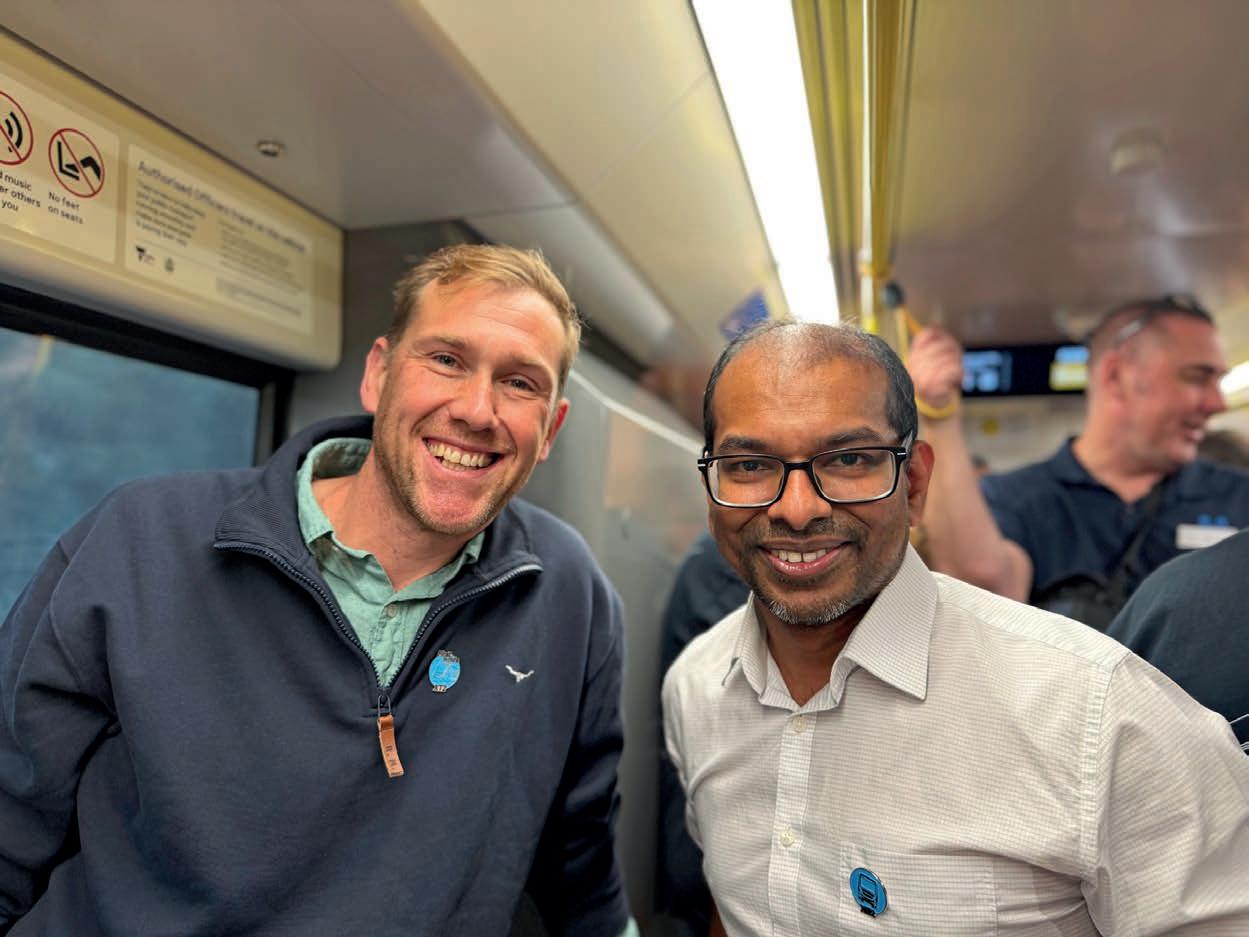
“On top of that, we have a number of local suppliers, including McConnell Seats in Broadmeadows and Hofmann Engineering in Bendigo,” said Welikala.
“We also use companies based in Ballarat, for example, O’Neill Transport Ballarat, which transports three to four truckloads a week going between Dandenong and Ballarat as part of this project.”
Welikala said the announcement of the intention of the State to order 25 more trains is great news for Alstom’s skilled team.
“We’ve brought on a lot of people to work on this project, and many of them have come from backgrounds outside rail,” he said.
“We’ve worked quite hard over the last couple of years to develop our talent pool and upskill our team.
“These are skills that we are building in Alstom, but really, they’re critical skills that we’re building for Australian workers. Skills that stay with people throughout their lives. X’Trapolis 2.0 is actually a generational investment in talent.
“The intention to order 25 more trains gives us security that we can continue to employ these people into the future, continue to build skills and benefit the companies that rely on this project.”
Along with the X’Trapolis 2.0 trains, the Victorian Government also invested in a series of network upgrades, including a renovation of the Craigieburn Train Maintenance Facility, as well as an upgrade of the Kananook Stabling Yard on the Frankston Line.
“One of the most rewarding parts of my job is when I go on site and meet some of the people that have contributed to this project,” Hurley added. “It doesn’t matter if you’re reviewing documents, or part of the engineering team, or testing.
“There’s a concrete end result. We’re really doing something for Victoria.”
BUILDING ON ALSTOM’S LEGACY
Alstom is the only end-to-end manufacturer of trains and trams in Australia.
The debut of the X’Trapolis 2.0 train adds to the multiple rolling stock fleets delivered
ARA membership unlocks benefits for your whole team, including advocacy, discounted access to ARA events and courses, and valuable industry connections.
Join more than 240 rail organisations across Australia and New Zealand working together to shape the future of rail.
ara.net.au/membership
Become a member
over decades by the company in Victoria, including 141 Flexity and Citadis trams, 106 X’Trapolis 100 suburban trains and more than 140 VLocity regional trains.
Alstom is also building 100 next generation G Class trams for Melbourne, based on a customised version of the Flexity 2 platform in Dandenong. The G Class is due to make its debut into passenger service in 2026.
Commenting on the entry of the first X’Trapolis 2.0 train into passenger service, Guillaume Tritter, Managing Director for Alstom Australia and New Zealand said: “This is a proud moment for all involved.
“I would like to sincerely thank the Alstom team, together with our partners at the Victorian Department of Transport and Planning and Metro Trains Melbourne, for the outstanding collaboration that made this achievement possible.
“The strength of these relationships has delivered something truly significant – a train built in Victoria, for the people of Melbourne.”
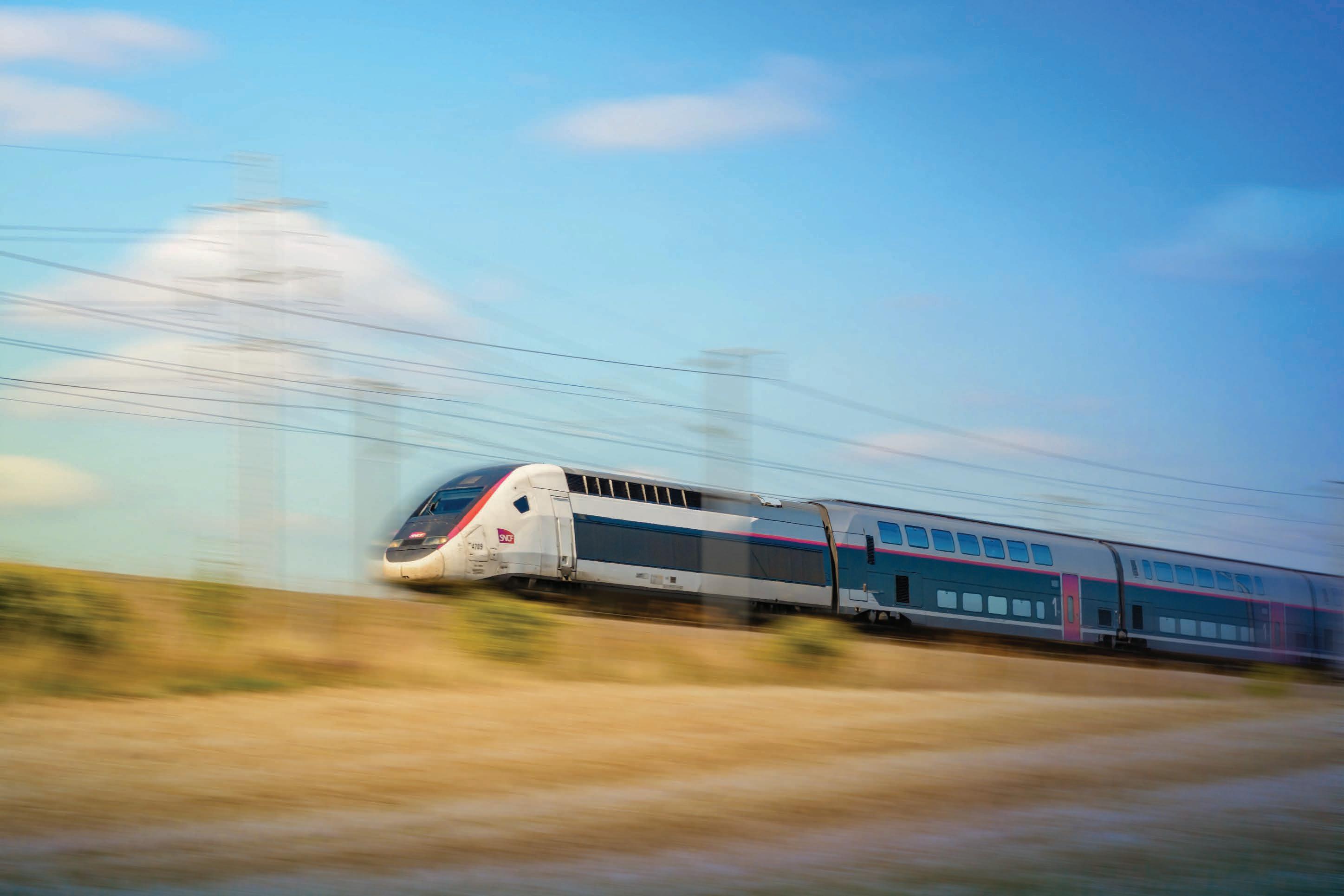
Built on the 3DEXPERIENCE platform, Dassault Systèmes’ Rail Freight Operations solutions leverage data-driven planning, and simulation to optimise crew, fleet, and yard activities in real time. Operators gain end-toend network visibility, streamlining logistics while cutting delays, costs, and environmental impact.
For more information, visit 3DS.com


The Australasian Railway Association shares how one of its members,
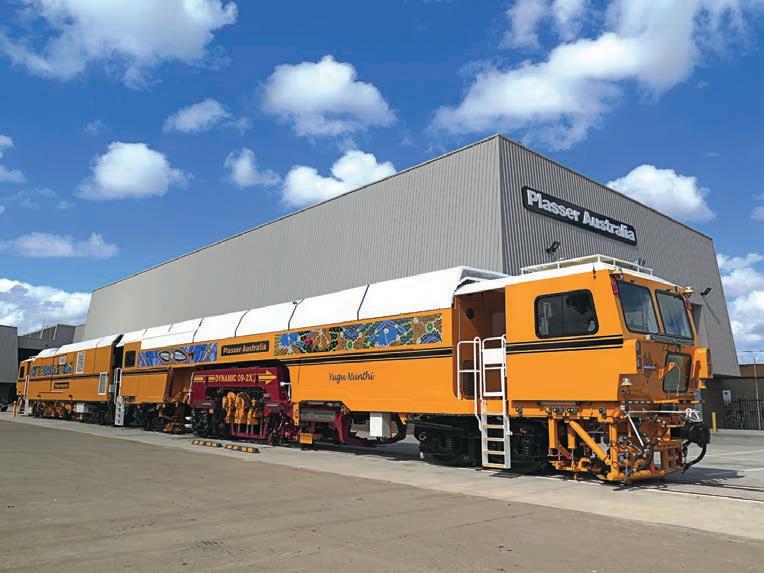
tamper with paired M611 SSP-303 ballast
“This project is a powerful demonstration of what Australian-based manufacturing, engineering and customisation can achieve
Southern Hemisphere is now operational
has been supported by a commitment to
“Beyond machinery delivery, the past five years have seen us deepen our local supply
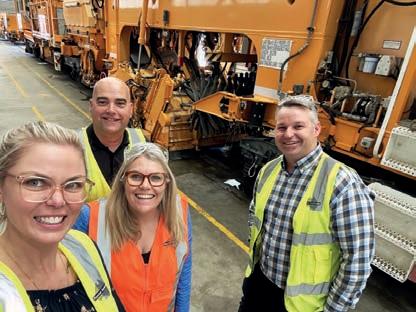
Western Sydney, Plasser has opened doors
Plasser Australia has now entered the international export market, a move that is
“From Plasser Australia’s perspective, the international export market is not simply a commercial opportunity – it is a strategic position in several interconnected ways,”
“When machines engineered and built in North St Marys in Western Sydney are
validates the technical quality of Australian manufacturing to a global audience.
“This reputation feeds back into domestic credibility: clients who might question locally-made products have evidence that Australian-designed solutions perform reliably in diverse environments.”
Though Plasser Australia is celebrating significant growth, the need for increased government engagement still lingers.
“Competing against lower-cost international suppliers continues to require active advocacy and evidencebased argumentation, particularly where procurement frameworks don’t adequately account for whole-of-life value or supply chain resilience,” Baynie said.
“Supply chain localisation presents both an opportunity and a challenge. Meeting increasingly stringent state-based local content requirements demands ongoing development of capable Australian suppliers — some of whom are themselves capacity constrained.
“Growing that supplier ecosystem requires long-term commitment from both industry and government.”
For now, Baynie said the rail industry’s focus must be on continuing to build local capability.
“Keeping our North St Marys facility at the forefront of what is possible, while managing the investment required to do so, will be one of the defining challenges of the next five years,” he added.
“The opportunity, however, is that those who invest now will be best placed to lead when the next wave of infrastructure demand arrives.”
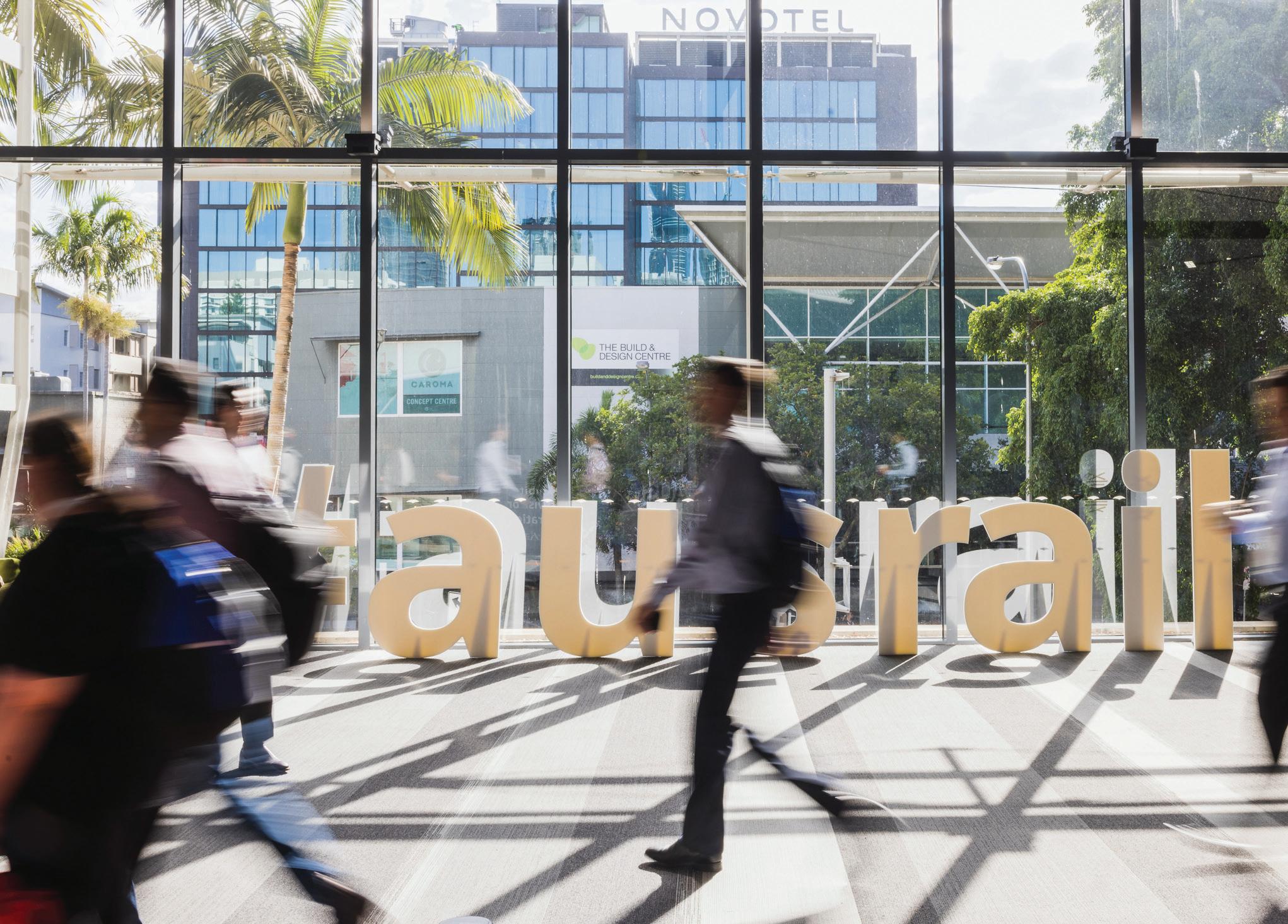
For the first time, AusRAIL – the largest rail conference in the Southern Hemisphere – will have a theme. The Australasian Railway Association tells us more.
Rail has experienced significant growth in the past decade. The Australasian Railway Association (ARA) report, The value of rail 2025, found the rail industry contributes $38.8 billion to the Australian economy each year, an increase of 30 per cent since 2019.
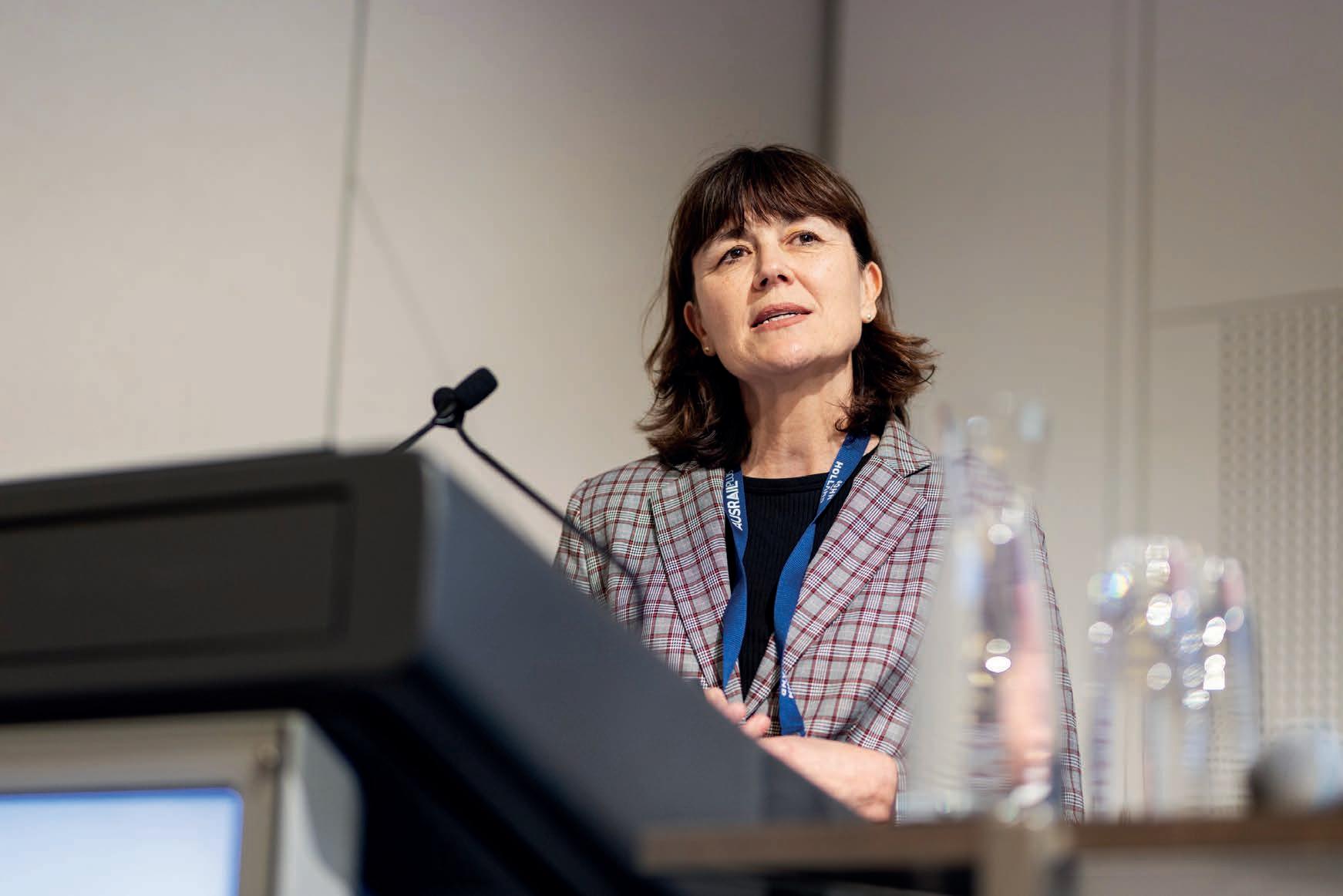
“Rail has been a key driver of growth in Australia for generations,” ARA Chief Executive Officer (CEO) Caroline Wilkie said in her announcement of the report.
It is fitting then that AusRAIL 2026, built around a cohesive, future-focused theme:
“On track for tomorrow”, will take place in Queensland, at a time when the state is at the heart of this growth.
While rail construction activity in New South Wales and Victoria is set to peak this year, Queensland is expected to see more sustained growth as the state prepares for the Brisbane 2032 Olympics.
As she prepares for her own Olympic experience, Los Angeles County Metropolitan Transport Authority CEO
Stephanie Wiggins will take the stage as AusRAIL’s headline speaker, discussing the challenges and opportunities of network transformation and the role of public transport in creating more connected cities.
Wiggins’ keynote will form part of a new structure for the conference program, with a full day of plenary sessions on day one, followed by a full day of concurrent sessions on day two.
The new structure will enhance the delegate experience and provide further opportunities to dive into the big issues that will ensure the rail industry remains on track for tomorrow.
This will include a focus on uncovering insights from successful project delivery and identifying opportunities to improve interoperability and harmonisation, particularly as the industry continues its digital transformation and embraces the opportunities associated with artificial intelligence (AI).
To support the comprehensive program, AusRAIL 2026 will also introduce a new delegate lounge to enhance the networking experience for attendees.
A Women in Rail Forum will be held the day before AusRAIL 2026 kicks off, building on the success of Women in Rail breakfasts in previous years.
Combined with a wide range of social events and a packed exhibition, these new initiatives provide many opportunities for participants to extend their conference experience further in 2026.
The AusRAIL 2026 conference and exhibition will be held from November 23 - 25 at the Brisbane Convention & Exhibition Centre (BCEC).
Join the discussions about the challenges shaping the future of rail in Australia and New Zealand, and how the industry will remain on track for a strong and vibrant tomorrow.


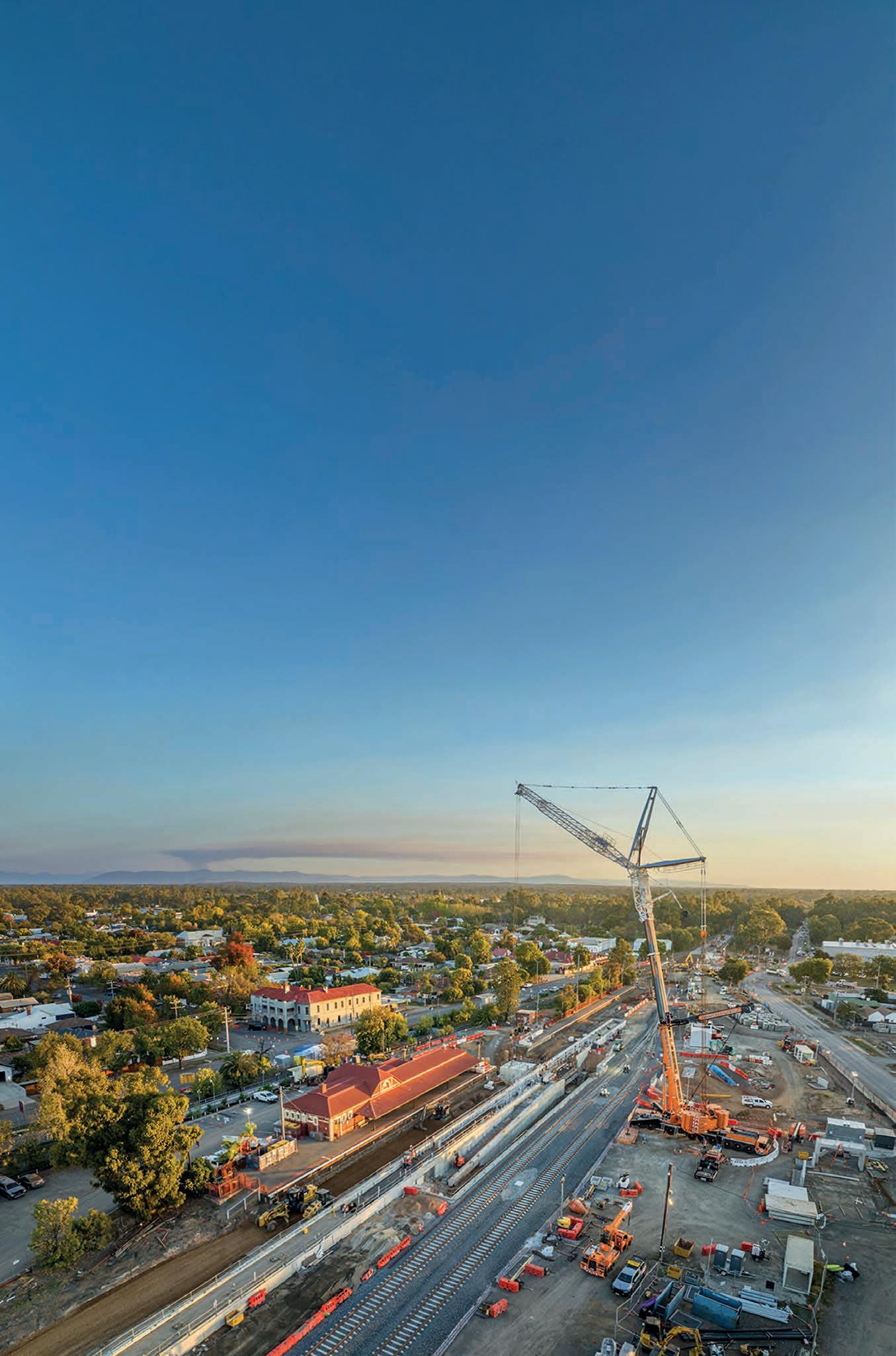
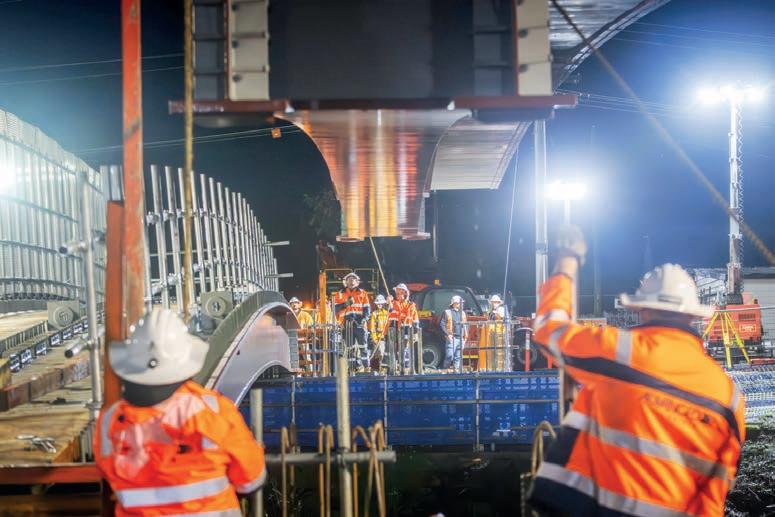
Inland Rail was envisioned to be the biggest rail project in Australia in a century, but now, the second half of the route has been scrapped.
The Federal Government’s decision to axe funding for Inland Rail north of Parkes has sparked a backlash from local councils in New South Wales and Queensland.
Inland Rail was originally intended to be a 1600-kilometre rail artery stretching from Melbourne to Brisbane, passing through 29 local government areas.
The “nation-building” project would have cut rail freight travel time between the two cities by almost a third, from 33 hours to 24 hours, making it competitive with road transport.
Double-stacked, 1800-metre-long trains would have been able to carry significantly more freight along the route.
However, the Federal Government announced in early May that it would be “consolidating” Inland Rail. It follows an assessment carried out by independent advisory firm ACIL Allen Pty Ltd, which found it would cost $45 billion to complete
the full project as far as Brisbane –more than three times the budget that had been allocated.
The assessment also revealed the project could not be finished until at least 2036.
A statement from the office of Minister for Infrastructure, Transport, Regional Development and Local Government Catherine King said Inland Rail works north of Parkes will now concentrate on “preservation of the rail corridor, as well as protecting sites for future Inland Rail intermodal terminals in Queensland”.
Construction is expected to be completed between Beveridge in Victoria and Parkes in New South Wales by the end of 2027. This will allow double-stacked freight trains to travel between Melbourne and Perth, via Parkes.
“We are taking sensible decisions to realign the future of Inland Rail and build a safe, efficient and reliable network for the future,” King said.
The Mayor of Parkes, Neil Westcott, described the decision to de-fund Inland Rail as a “shock” and “profoundly disappointing for our community and for the nation”.
He said that for decades, Parkes has advocated for Inland Rail in good faith.
“We have hosted symposiums, led national conversations, mobilised industry, and built our regional future around the promise that Australia would finally commit to long-term, nation-building infrastructure, first espoused by Sir Henry Parkes over 130 years ago," he said. “To see such a strategically vital project abandoned at the stroke of a political pen sends a chilling message: that Australia has become a nation where major infrastructure starts and stops at political whim. That is not how serious countries build prosperity.
“This decision reflects a troubling lack of long-term vision for our nation. I am deeply
worried about what this says for the future of Australia.”
He pointed out that a second north-south rail route, in addition to the existing Sydney to Brisbane Coastal Line, is essential to increase supply chain resilience.
“For freight and agriculture, it offers a faster, higher capacity alternative to an already constrained and weather exposed coastal route, giving inland producers reliable access to ports and international markets,” he said.
“From a defence and national resilience perspective, it provides redundancy if coastal corridors are disrupted by natural disasters or strategic shocks.
“It also supports future inland fuel storage and distribution, strengthening energy security.”
Dr Rebecca Vonhoff, Deputy Mayor of Toowoomba Regional Council, also said the
Federal Government’s decision is “bitterly disappointing” for Queensland.
“This changes everything for us,” she said. “Our future looks very different now –planning how land is used, our freight and logistics potential and passenger rail hopes.
“It worries me that our country seems unable to build big things that take vision. The project has felt like it’s had a very weak pulse for the entire six years I’ve been in this role. Now we know.”
She pointed out that billions of dollars have already been spent on the stretch of the project north of Parkes and farmers’ lives have been “put on hold” for years.
“Aside from the direct impacts on us, this decision means we’re going to rely on the Warrego Highway and Gore Highway far into the future and so even more congestion and less productivity,” she said.
Toowoomba Regional Council Mayor Geoff McDonald added that Inland Rail was expected to complement existing regional assets such as the Toowoomba Wellcamp Airport, the Toowoomba Trade Gateway, and the Second Range Crossing, creating a fully integrated freight and logistics network that would support jobs and investment for decades.
“Local businesses, producers, and transport operators have been planning around the opportunities Inland Rail was meant to bring,” he said. “[This] announcement leaves many of those stakeholders uncertain about the future and questioning the long-term vision for freight infrastructure in this country.”
Meanwhile Narromine Shire Council’s Mayor, Ewen Jones, said regional
communities such as the Narromine region deserve clear answers following the government’s decision.
“Council and the business community have invested a lot of time, money and trust into Inland Rail and our region deserves to know exactly what comes next,” he said.
“There is a lot of frustration following years of delays, changes to the construction timelines and uncertainty, particularly for communities directly affected by Inland Rail planning and works.
“Council is calling on the Federal Government to clearly outline the next steps and how regions like Narromine and the infrastructure already planned will be supported.”
Chief Executive Officer of the Australasian Railway Association, Caroline Wilkie, said the full completion of the route must remain on the political agenda.
“When completed, Inland Rail will deliver a faster, more reliable and highercapacity rail corridor between Melbourne and Brisbane, improving efficiency for freight operators and reducing pressure on congested road networks,” she said.
“This is needed to meet future rail freight requirements in this century.”
However, she recognised the impact of cost escalations on the project.
“Whilst the rail industry still strongly supports the completion of the Inland Rail project, we recognise that the escalating project costs need to be balanced against broader infrastructure priorities,” she continued.
“We welcome the continued preservation of the rail corridor and intermodal sites to ensure we can get this project back on track in the future.
“Inland Rail remains an essential project for Australia’s freight network and the industry is committed to completing its delivery to Parkes.”
The ARA will now engage with Government to identify what additional investment is required on the Australian Rail Track Corporation (ARTC) East Coast network to address the impact of Inland Rail not being completed as far as Brisbane.
“We need to ensure that the ARTC network is resilient and fit for purpose, to meet the needs of the rail freight sector over the coming decade,” said Wilkie.
“We hope to see government revisit the remaining sections of Inland Rail in the future to realise its vision to unlock economic opportunity along the full Melbourne-Brisbane route.”
Global rail maintenance leader LORAM explains what rail grinding is, why we need to do it – and how its machines and technologies are ahead of the curve.
When people think about rail grinding, they might picture a huge machine rolling down the tracks at night, throwing out a shower of sparks.
It looks dramatic, but what is actually happening when a rail grinder is at work? Why do we even need to grind rail?
We spoke to the team at railroad maintenance equipment and services provider LORAM to find out the answers to these questions and more.
In 2000, a train derailed between Welham Green and Hatfield in the United Kingdom, killing four people and injuring over 70.
Investigators found the cause of the derailment was a fracture in the rail, which was due to the presence of multiple preexisting fatigue cracks.
The report published by the Office of Rail Regulation said these cracks were the result of a failure to effectively manage the inspection and maintenance of the rail at the site of the accident.
“They hadn’t been keeping up with their maintenance and inspection regime, of which grinding is a key part for managing Rolling Contract Fatigue or RCF,” said Nigel Slater, Head of Business Development at LORAM. “This tells you that from a rail health perspective, grinding is a critical process. If you don’t do it, your rail will fail.”
Grinding rail is critical not just for safety reasons, but it also makes economic sense.
“Without an effective grinding strategy, some operators are seeing rail require replacement much earlier than expected,” said Slater.
“Putting new rail in is very expensive, you really want to avoid that situation.
“You might think you’re saving money by not performing critical maintenance like grinding, but it is a false economy.”
In simple terms, rail grinding is about controlling the shape and condition of the railhead – the top surface and profile of the rail that the train wheels run along.
“Rail gets degraded by trains running over it,” explained Slater. “Different rail networks place different types of stress on the rail. Heavy haul operations, like the mining railways in the Pilbara, create very different
wear patterns to metro systems, where high-frequency passenger services generate their own unique demands on the track.
“Over time, trains will start to harden the head of the rail and can denature it from when it was first made.”
LORAM’s job as a grinder is to maintain or restore the profile of the rail to ensure trains travel safely and comfortably over the tracks and extend the life of the rail.
Grinding is far from guesswork – Slater said LORAM considers itself a physics-based company at heart.
“We’re dealing with the physics of a certain shape or rail profile, a wheel profile and tonnage, in a particular operating environment, on a certain type of steel, reacting dynamically over time.
“You need to have a different approach for low rail and high rail, on tight curves and longer curves.”
Slater said that with heavy trains rolling over the rails, Rolling Contact Fatigue starts to occur.
This results in cracks and defects that can develop into larger cracks if not addressed, potentially leading to fractures in the rail.
“LORAM’s systems and people will recognise when these defects start to appear, and that’s when we’ve got to take a different approach,” said Slater.
“At that stage, it’s not about just maintaining rail profile, it’s about removing early defects or managing those defects if they are significant enough that they can’t be removed.”
He said having a defect that can’t be removed isn’t a bad thing – it just means that you need a process or program to manage it.
“You’ll need to decide whether you remove the defect, which means you are taking metal off the rail,” he said.
“The best solution is for us to take off just enough metal that the defect doesn’t get worse, but not so much that we are artificially shortening the life of the rail.
“It’s a fine balancing act – and our systems and experience allow us to hit the sweet spot.”
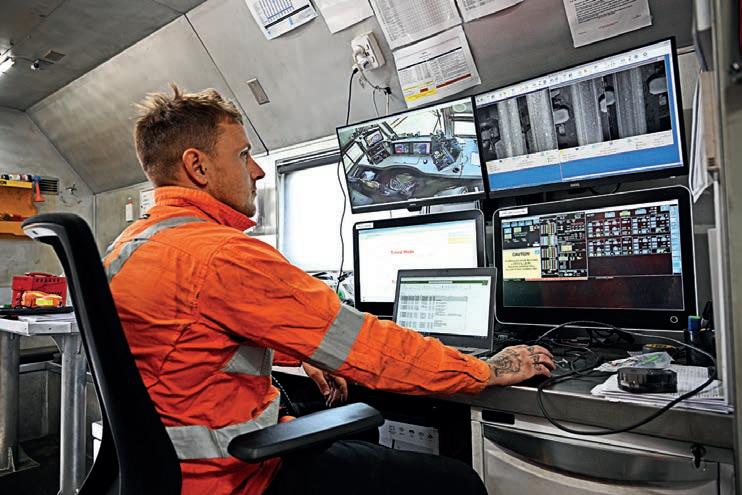
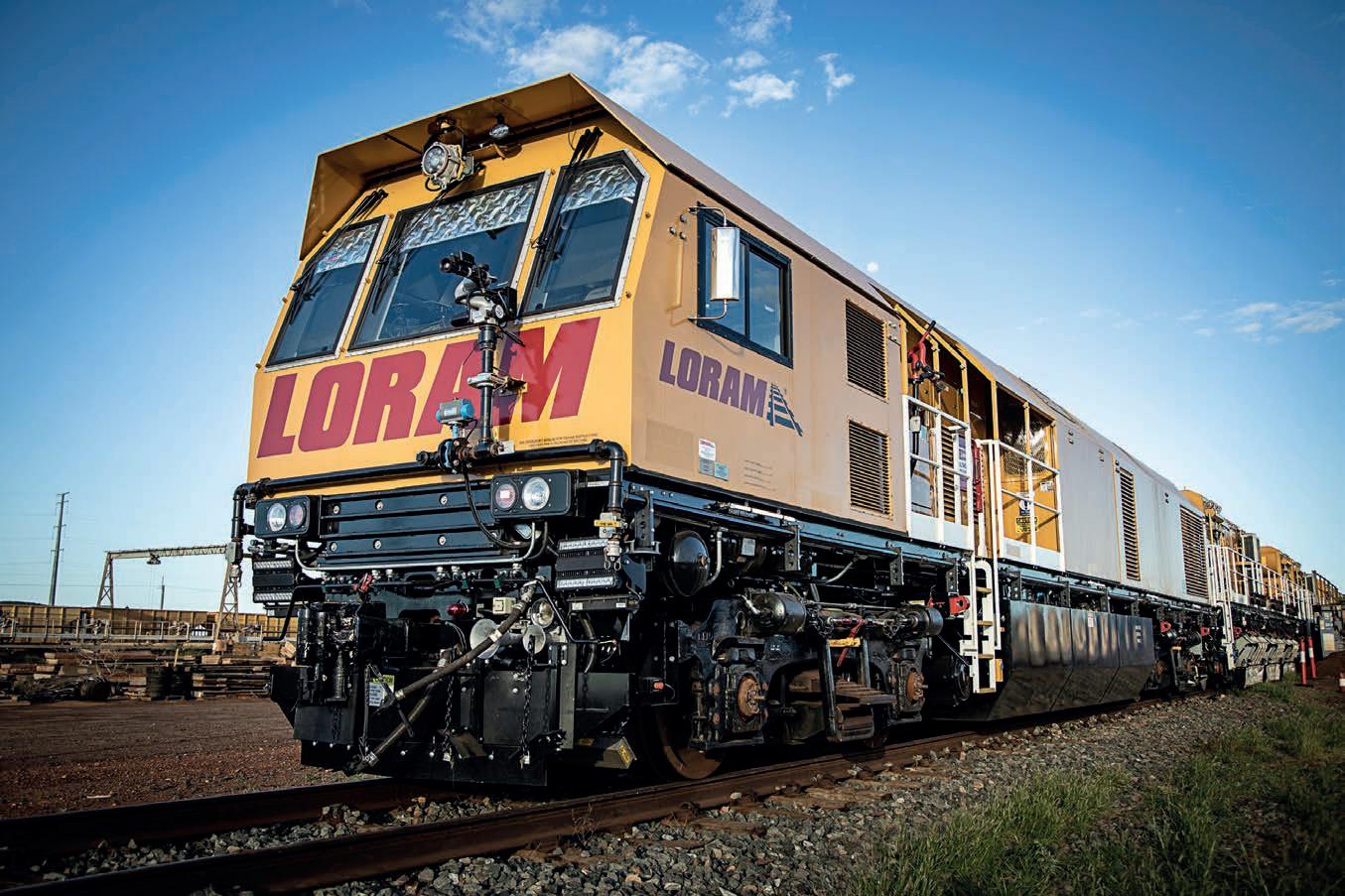
LORAM’s rail grinders combine high power, flexible grinding modules and unique control systems to deliver industry-leading precision and productivity.
With 30-horsepower motors, they can apply more grind power, allowing them to complete work faster.
“This is of huge value to the customer, because the faster we can get a good job done, the faster we can get our machines off the tracks and out of their way,” Slater highlighted.
“We always strive to hit the gold standard of completing quality grinding, both quickly and safely.”
The global maintenance provider also prides itself on the reliability of its machines.
“If your machines are constantly breaking down, the customer is not going to be happy.
“When they have coal trains, passenger trains or iron ore trains, for example, that aren’t able to run, that’s costing them a lot of money and frustration.
“We have 250 grinding machines worldwide, with machine reliability above 98 per cent.”
This reliability is supported by continuous improvement to the machines, drawing on the combined expertise of teams around the world.
Slater pointed out: “We’ve run our machines in basically every different type of environment on the planet.
“The learnings we get from doing that become a really important part of our tribal knowledge, which is then fed back into our engineering and manufacturing processes.”
LORAM’s rail grinders also boast adjustable grindstones for the highest precision.
“Each grinding machine could have a range of grindstones between eight and 120, based on how large the machine is.
“We can individually control the grindstones and use different grit sizes from fine to medium and large, depending on how
much metal needs to be removed and the finish required.
“We can also align the grindstones to get better coverage over the rail head.”
LORAM’s operators also have many years of experience, which have given them a deep understanding of effective grinding.
“Our team has been doing this for so long, they’ve almost got a sixth sense about the best approach or when something is wrong.
“That human element is really important.”
WHERE TECHNOLOGY COMES IN
Slater said LORAM is at the forefront of rail technology with tools such as Virtual Rail, which helps track engineering teams to decide on the best maintenance strategies to extend track life, find and prevent defects, and save money.
Using data from a customer’s network, as well as from LORAM’s machines, it can create a virtual twin.
“This then creates an economic model, looking years into the future,” said Slater.
“That way, rather than having a shortterm approach to maintenance, we can help our customer to develop a plan to extend the life of their rail for 15 to 25 more years.”
Currently, LORAM uses a rail inspection vehicle (RIV) equipped with lasers, cameras and other sensors to measure rail profiles, detect and classify defects, and capture images and other data. This information is then communicated to the grinding crew.
Slater said the RIV currently plays a critical role in collecting the detailed data
needed to plan and optimise grinding activities, while new technologies are creating opportunities to capture and analyse rail condition data in different ways.
LORAM recently partnered with British company One Big Circle, the creators of Automated Intelligent Video Review (AIVR) technology.
AIVR uses automated data capture, intelligent analysis, and streamlined reporting to enable engineers to detect issues faster, improve safety and maintain the reliability of rail networks.
AIVR has cameras, including thermal imaging, that go on the front of the train and under the locomotive and take highdefinition, high-speed images of the rail line, the sleepers, and vegetation around the tracks. Engineers can click on any section of track and instantly see images, measurements, and historical changes.
“Using artificial intelligence, AIVR monitors the network over time and alerts teams when something moves, bends, or degrades, rather than relying on people to go out all the time and physically inspect the track,” explained Slater.
“That’s going to be a gamechanger for us and our customers as it means safer operations, better visibility of the network, and more informed maintenance planning.”
“This is where LORAM rail maintenance is heading: smarter, more connected, and increasingly predictive.”
KeTech offers a flexible solution to passenger information – updating and redesigning systems to extend their life and avoid a full system replacement.
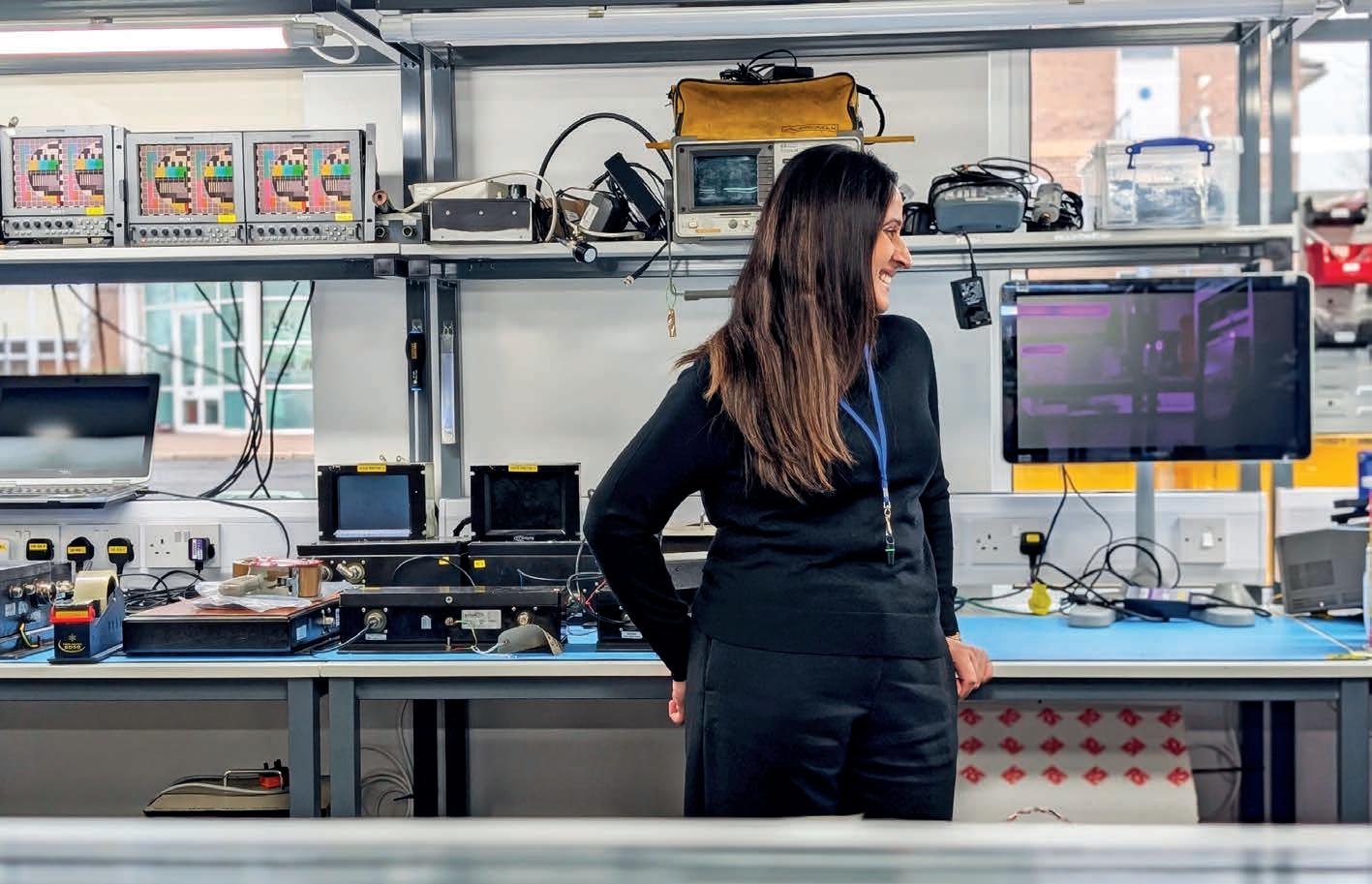
On-station and on-train Passenger Information Systems (PIS) sit at the intersection of customer experience and operations.
But according to Paul Warren, Sales Director at technology company KeTech, PIS obsolescence is often treated as an inevitability across fleets and networks in Australia.
“The only option provided by original equipment manufacturers (OEMs) is often a full system replacement,” he said. “But increasingly, this response is being questioned.
“For example, according to the International Union of Railways, rail technologies must now be designed with ‘future-proofing’ in mind, precisely because of these long lifecycles.”
Warren said that unlike other forms of technology, railway systems are not designed for rapid replacement.
“Rolling stock and infrastructure often operate over 30-plus year lifecycles, while information systems evolve in cycles as short as five to 10 years – and passengers expect the technology to be updated more regularly than this.”
These three elements are tightly interconnected yet evolve on very different timelines.
“KeTech cannot influence the age of rolling stock or on-station equipment along with the pace of change in passenger expectations.
“However, we can design systems that evolve alongside them, or redesign existing systems to extend their life while
upgrading capability, functionality, and performance to meet current operator and passenger needs.”
Across Australia, the challenges posed by PIS obsolescence are becoming increasingly difficult to ignore, as operators manage ageing fleets and wayside equipment alongside ongoing expectations for realtime, data-driven passenger information.
“Networks such as Transport for NSW, Sydney Trains, V/Line and Queensland Rail are all investing heavily in digital programs aimed at improving the quality, consistency and responsiveness of passenger information, often within the constraints of legacy onboard and station systems that
were never designed for today’s levels of connectivity or integration,” said Warren.
“When OEMs shift their focus to nextgeneration technologies, legacy support quickly diminishes.
“Train operators are usually presented with two options: sourcing hard-to-find and expensive spare parts to patch the problem, or a costly full system replacement. For Australian train operators, managing complex networks, harsh environmental conditions, and strict accessibility compliance, neither option is ideal.”
KeTech can offer the Australian market a third, more sustainable and costeffective solution.
“We do not treat obsolescence as a trigger for replacement,” Warren explained. “We treat it as an opportunity for collaboration and engagement, to work out the most costeffective, optimal design.
“Our approach is built around targeted re-design, extending the life of existing
This is delivered through a wrapand-embrace model, where existing systems are assessed at component level, functional infrastructure is retained, and only obsolete elements are replaced.
New capability is then integrated around the existing architecture rather than imposed through systemwide substitution.
This is enabled through form-fitfunction engineering, where physical compatibility, system integration, and functional performance are preserved while obsolete components are replaced with modern equivalents. It allows systems to be upgraded regardless of original supplier or age.
Warren added: “As the Australasian Railway Association (ARA) and state governments continue to emphasise the drive towards sustainability and reduced emissions, the concept of extending the life of existing assets has never been more relevant.”
Warren said that crucially, this is not just a replacement; it is an upgrade.
“By combining KeTech’s expertise in both hardware and software engineering, we integrate these disciplines to deliver what we term a ‘better than new’ solution.
“KeTech’s hardware-software integration capability enables features such as realtime information – previously impossible
allowing on-station and on-train information provision to be managed from the same single operator interface.”
Across Australia and globally, rail operators are moving toward real-time data, predictive disruption messaging, multi-modal integration and more dynamic passenger information systems.
Warren said these capabilities do not necessarily require full system replacement, but rather intelligent layers that can sit on existing infrastructure.
“By upgrading these layers rather than rebuilding entire systems, operators can deliver modern passenger experiences while extending the life of critical assets and reducing unnecessary cost and operational disruption,” he noted.
“The reality is that Australia’s rail networks are not failing because systems are old. They are being challenged because systems evolve at different speeds within the same operational environment.”
KeTech’s approach is simple, Warren said.
“Obsolescence does not have to mean replacement. It can mean extension, enhancement, and intelligent modernisation.
“And in a rail environment defined by long asset lifecycles, rising passenger expectations, increasing system
KeTech’s hardware-software integration capability enables features such as realtime information, previously impossible on older systems.
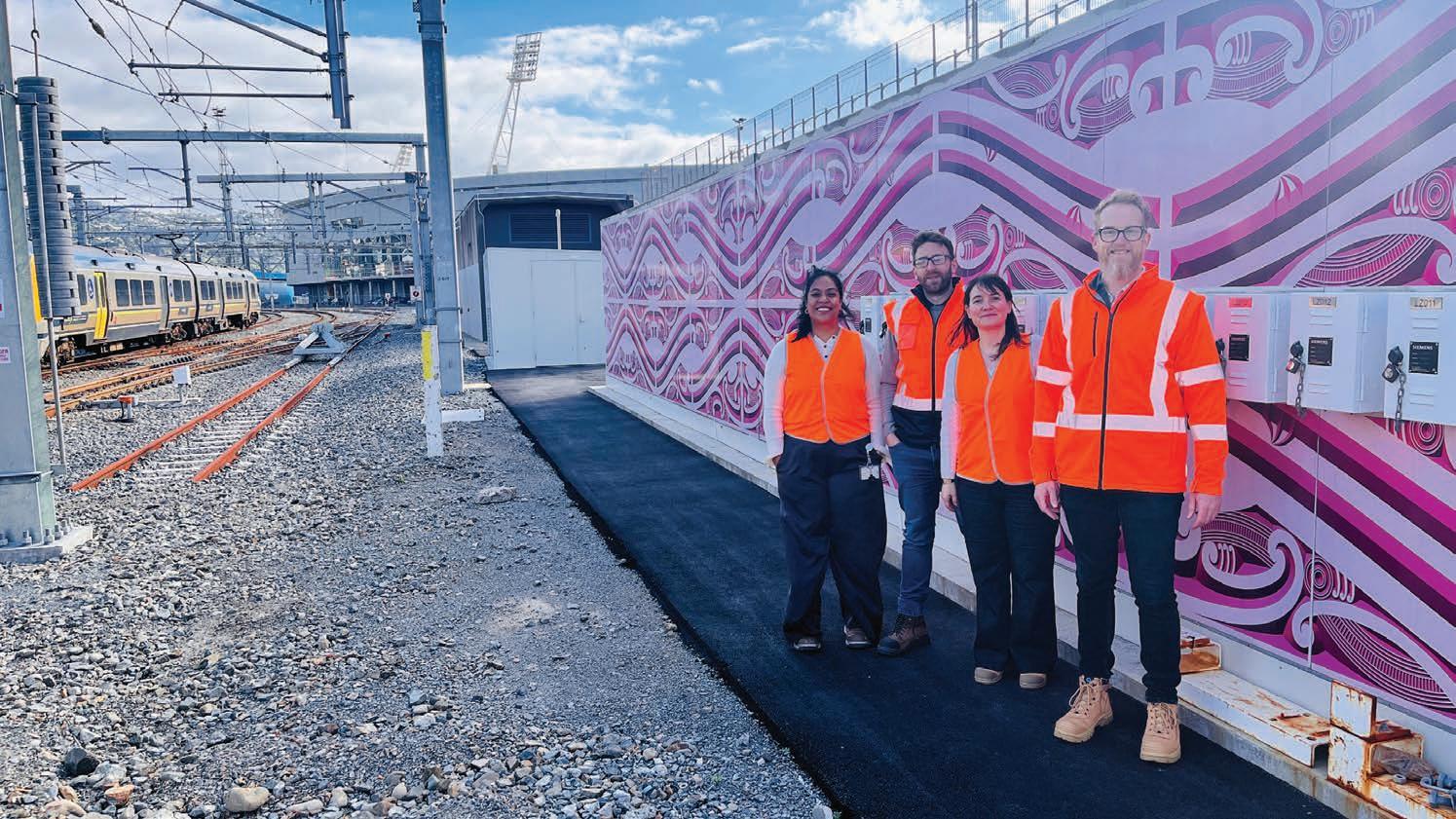

The CEO of Siemens Mobility for Australia and New Zealand shares her thoughts on digitalisation, high-speed rail, and the future of rail in Australia.
Like many people in rail, Raphaelle Guerineau fell into the industry by chance – and never left.
“I’ve been in rail for 20 years, and it’s the perfect industry for me because I thrive on managing complexity,” she said.
“Especially in Australia, we have that added layer of complexity because of the way the government and rail is managed, with different rail standards and governance in the various states.”
Guerineau is a renowned global leader in the rail industry, who has been the Chief Executive Officer and Managing Director of Siemens Mobility in Australia and New Zealand since 2019.
Prior to her current role, she held roles as Head of Tendering and Project Execution in Singapore before moving to Australia in 2018 as Head of Products and Operations.
Guerineau is also a board member of the Australasian Railway Association and is a member of the Monash Institute of Railway Technology’s Industry Advisory Board (IAB).
The rail industry is evolving – from advancements in artificial intelligence (AI) to digitalisation. Guerineau said Siemens Mobility is at the forefront of that evolution.
“Siemens has been using AI for 15-plus years,” she explained. “What has changed is that now it’s becoming available to
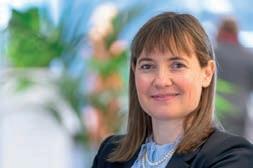
everyone, so we can further maximise the benefits.
“What really helps in the digitalisation sphere is how we can move from a reactive service operation model to a predictive, data-driven one.”
She gave an example of disruptions on a train line.
“With the old technology, if there is a train that is stuck at a station for whatever reason, the trains behind that are stopped too,” she said.
“Now, with our software that integrates AI, we can detect where the bottleneck is and automatically propose a solution to the operator – re-routing the train to another platform, updating the timetable and critically, linking directly to the passenger information system.
“In Sydney, for example, we are implementing our Railigent X solution, which uses AI that helps with predictive maintenance. This means maintenance
crews only need to go out on site when there is a need to do so. These things are making rail operations much more efficient and saving operators a lot of time and money.”
Guerineau describes Siemens Mobility as a “technology partner” rather than a traditional rail supplier.
“Digitalisation and AI are unlocking new possibilities for the rail industry, but they also bring some technical challenges that require close, longterm partnerships with the customer,” she said.
“It’s very important to ensure that systems really work together, and that you can plan from the very beginning to the end of an operation, or the end of the lifecycle of the systems in question.”
She said Siemens Mobility always looks at the bigger picture, considering the wider ramifications of actions rather than just carrying out the scope of work within a tender.
“It’s crucial for us to be there at the beginning [of a project], to help influence the specifications,” she explained.
“Productivity is critical. We always ask – how do we make sure we’re getting the best value for money for the taxpayer or our private customers?”
Siemens Mobility is a global leader in transport solutions, with more than 43,000 employees worldwide and has been in Australia for more than 150 years.
Guerineau said the company draws on its local capability and global expertise in Australia and New Zealand.
“We have Centres of Competence around the world, but to keep our solutions costeffective for our customers, we ensure that we have economies of scale and serve several countries from each Centre of Competence,” she said.
“But when we introduce a new product to Australia, it’s very important that we have the right engineering team here to adapt it to be locally compliant.”
Siemens Mobility combined global expertise with local Australian engineering, signalling, and manufacturing capabilities to develop the new ACM250 axle counter –
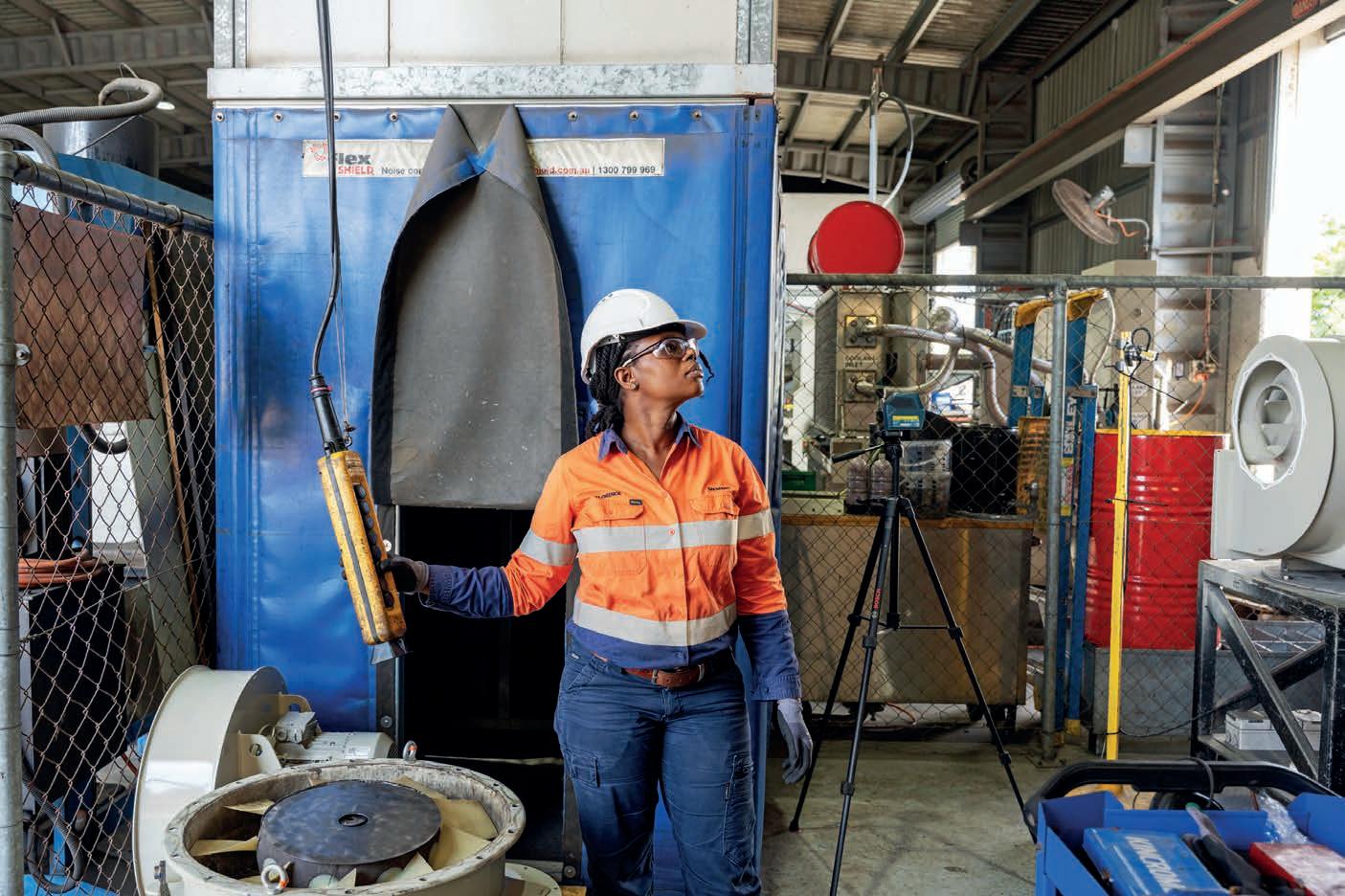
"In response to a customer's challenge, our local product engineering team partnered with our global research and development team to develop and successfully test a new head assembly in an actual grinding exercise, without removing axle counter heads — showcasing one of the key advantages of deep local expertise backed by global resources.
“Our manufacturing facilities in Port Melbourne and Perth, as well as our service centre in Mackay, are key sites that allow us to carry out activities close to the customer.”
In addition to developing local capability, Guerineau is deeply committed to promoting gender equality and attracting more women to the rail industry.
“I believe a diverse workforce is essential for the rail sector's success, and actively encouraging women to pursue careers in this industry is part of that.”
“These trains are running across multiple countries, much like how in Australia they will eventually be running across multiple states,” said Guerineau. “We have learned so much from these projects – from the topology needed to run high-speed trains, to the power supply requirements and how the signalling systems run.
“The integration of all these systems and early planning is key, so you have certainty of delivery and certainty of costs.
“The implementation of high-speed rail in Australia would revolutionise inter-city travel and offer a sustainable alternative to air and road travel.”
Guerineau said sometimes innovation can be little more than a buzzword.
“It’s easy to talk about things that have never been seen before and how great they are,” she said.
Siemens Mobility’s implementation of the
been introduced into Australia. Guerineau said that while the technology is known globally to enhance safety, increase network capacity, and improve operational efficiency, it took dedication and expertise to make this a reality in Australia.
“We want to focus on the actual benefits of the technology for the end user. Will it lead to a longer life cycle, higher asset availability, cost savings?
“It’s not about innovation for innovation’s sake.”
Guerineau said she is pleased to see the progress that has been made in moving towards signalling interoperability in Australia, with transport ministers deciding in 2025 to designate European Train Control System (ETCS) as the signalling standard for the future, as part of the National Rail Action Plan (NRAP) for a modern and interoperable rail network in Australia.
“The National Transport Commission (NTC)
has been working hard over the past few years to move this forward,” she said. “The Australian Rail Industry Standards Board (ARISO) is also looking at the next level of implementation and of mandatory and voluntary standards.”
In addition, these organisations are looking at the harmonisation of competencies, because there are different rules and requirements in each state. This makes it hard for skilled people within the rail industry to move between projects in different states.
“This is really a shame, from a technology perspective, because it blocks access to a very competent workforce,” Guerineau added.
“The work that the NTC, ARISO and ONRSR are doing is essential, and we are big supporters.”
In the future, Guerineau looks forward to more sustainable rail networks.
“I think digitalisation and
decarbonisation will become even more important in the future,” she said. “At Siemens Mobility, we are currently the only company integrating data and artificial intelligence across the entire mobility ecosystem. As urbanisation and global transportation demand accelerates and sustainability pressure rises, we recognise that operators must deliver more capacity, higher reliability, and better passenger experiences, all whilst optimising their lifecycle costs. Data and AI are the key enablers.”
She also thinks uptake of AI-enabled technology will continue to increase, bringing with it more connected railways and streamlined maintenance.
“We will have all the different systems talking to each other in one platform – from the track to the trains to the signalling to the power supply,” Guerineau continued.
“Technology and cities alike grow fast. And we’re ready to set the pace, because now is the moment for us to transform the future of rail – together.”
Mark Foster shares why Amokabel’s locally-manufactured axle counter cables are the smarter choice for Australia’s railways.
To safely run a railway, operators need to know exactly where their trains are at all times.
Traditionally, this has been done using track circuits – an electrical system that detects the location of a train via the wheel/ rail interface.
“Each section of a railway is part of an electric circuit, with a current running from one rail to the other through a relay,” explained Mark Foster, General Manager and Sales Director at Amokabel Australia, a leading manufacturer of cable solutions.
“When a train runs through a section of track, axles cause the current to short, bypassing the relay.
“That tells the signalling system that there is a train there.”
Although track circuits have been used for more than 100 years, they have their downsides.
They require quite a lot of maintenance to operate correctly and are susceptible to environmental and electrical interference.
This can lead to false signals and the requirement for frequent track inspections, resulting in delays on the network.
“Track maintenance vehicles, for instance, are often lightweight compared to trains,” Foster added.
“When there are leaves, dirt, rust, ice or other debris on the rails, a lightweight vehicle or carriage won’t necessarily short out the circuit.
“So you could have trains or track maintenance vehicles sliding through sections undetected, which is dangerous.”
Axle counters, which count the wheels when a train enters a section, and again when the train leaves the section, are an increasingly popular alternative to track circuits.
Unlike track circuits, axle counters remain reliable in challenging environmental conditions and have lower maintenance costs. Each one can also monitor long sections of track.
“They are the train detection method of choice for the future,” Foster added.
Amokabel’s custom and standard axle counter cables are 100 per cent locally manufactured, at its facility in West Sydney.
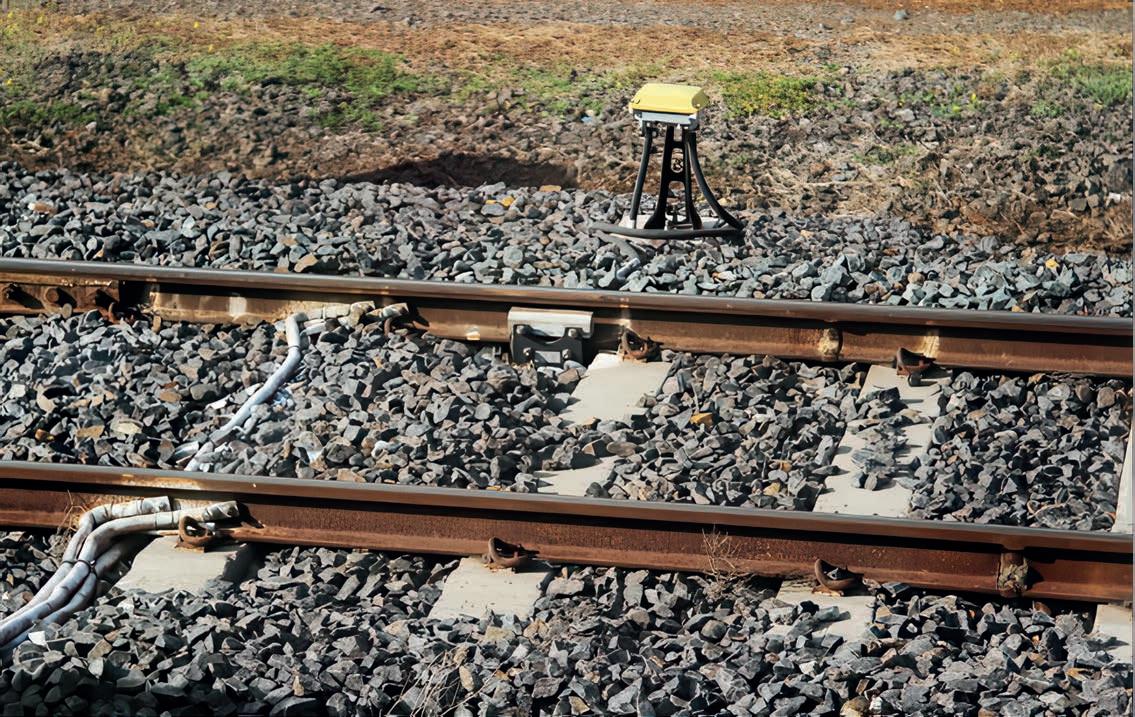
“Axle counters are cabled back from the tracks to what we call pothead terminals – a type of electrical termination box used
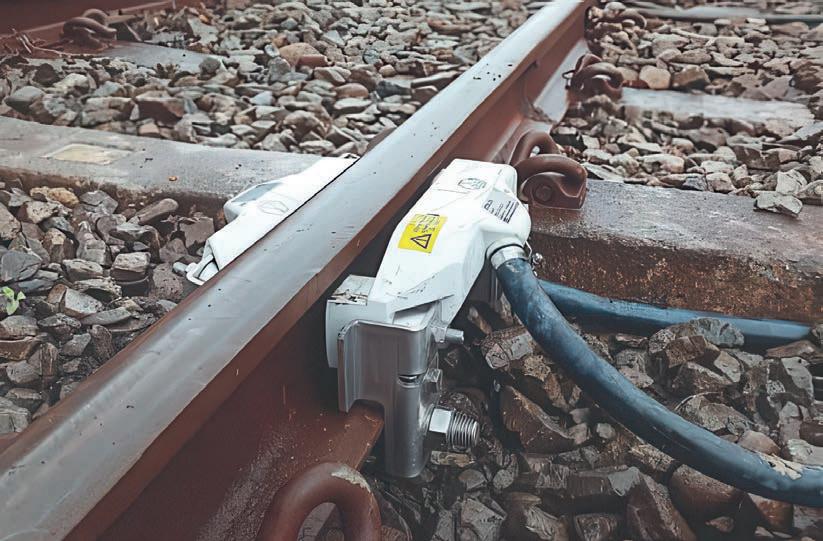
for transitioning between rail and track circuit evaluators. The cables then connect to an electronic control box, located every two or three kilometres along the tracks.
“They then go back to the signalling system, so the controllers know if a wagon drops off the back end, if the train has decoupled or anything like that.”
Amokabel’s cables are fully compliant with Australian Standards and have fast turnaround times.
“European cables could have a 52-day shipping time for delivery,” said Foster.
“That causes delays, which is a problem when you’re working on projects with short lead times. We can have a large order ready
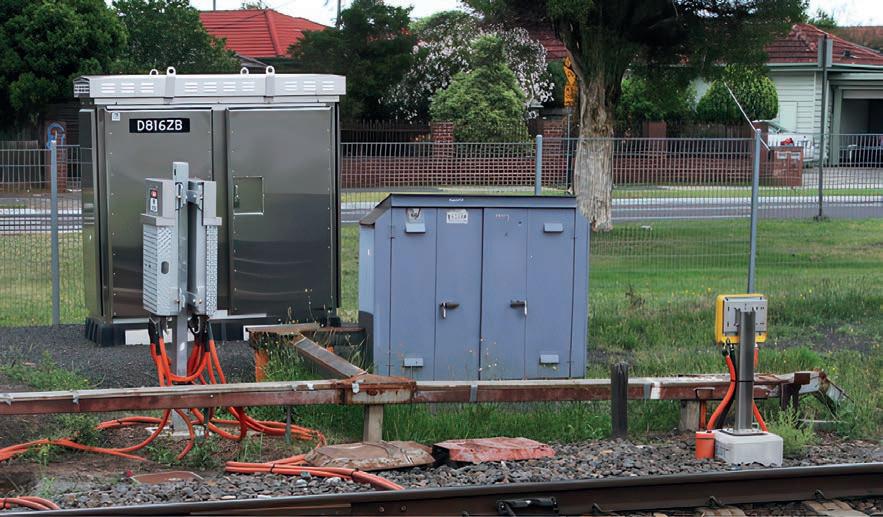
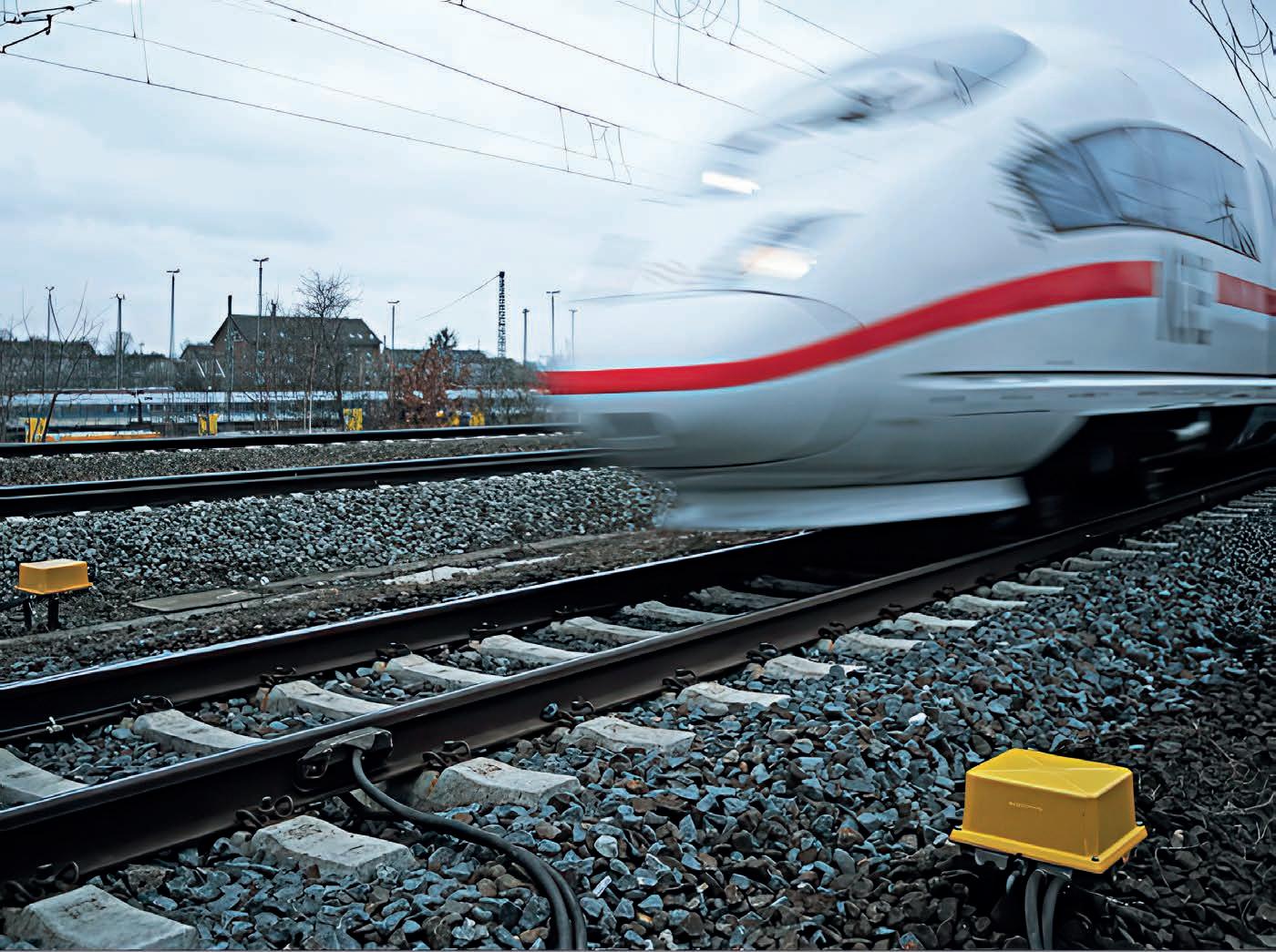
in two to three weeks. Low minimum order quantities are also available as an option for customers, so we can match the needs of the market.”
Amokabel can also customise cables in a range of different ways, from mechanical protection to termite and
The company can armour cables to protect them from damage from external forces, with steel braids that add strength.
The cables are also weather-resistant, with a protective sheath made from polyurethane or PVC for example.
“We make cables for vehicles that a
in the Antarctic,” Foster shared. “We’ve had no problems with them, even in subzero temperatures.
“Our cables can also be manufactured as low-smoke, halogen-free variants, which is called for in a lot of projects.
“It means that if the cables burn or catch on fire, they are not toxic.”
Amokabel can produce outer sheaths in the customer’s colour of choice, with custom text that could include a business name, part number, or contact details.
In addition, the manufacturer has been exploring some innovative improvements to its PVC and other sheathing material mixes that would allow it to cut down on its use of fossil fuels.
“For the plastics for the cables, you have to use a lot of oil,” said Foster.
“To avoid this, other manufacturers have explored alternatives such as biofuel insulations – but found mice were eating the cables because the biofuel was corn-based.
“What we can do in our mix for the PVC is include an additive that keeps away rodents and insects. We’re in the process of getting this approved.
“That would enable us to stop using a nylon jacket as an extra protective sheath, so we would only need one protective jacket instead of two.”
In 2027, Amokabel is planning to move to a much larger facility in Western Sydney.
“This would bring our factory from 2000 square metres to 6000 square metres, with more space for new, more efficient manufacturing machines,” said Foster.
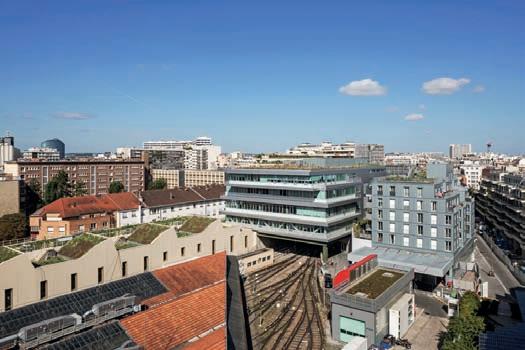
RATP Group is transforming one of its industrial sites, the Vaugirard Workshops in Paris, into a true neighbourhood in the heart of the city.
One of the challenges that comes with operating a rail network in an urban environment is finding enough space nearby to maintain those trains.
This is especially true in Paris – one of the most densely populated cities in the world.
For this reason, RATP Group is one of the last remaining active industrial players to operate maintenance workshops within the confines of the périphérique, the 35-kilometre ring road that surrounds the centre of the French capital.
To do this, the leading urban transport operator has had to think outside the box – transforming some of its spaces into mixed-use sites.
One such site is the Vaugirard railway workshops in the 15th arrondissement.
Since 1910, crews at these workshops have carried out maintenance for Line 12 of the Paris Metro.
More than 100 years after the facility was built, it was clear that more efficient
use could be made of the sprawling space, which spans 2.3 hectares.
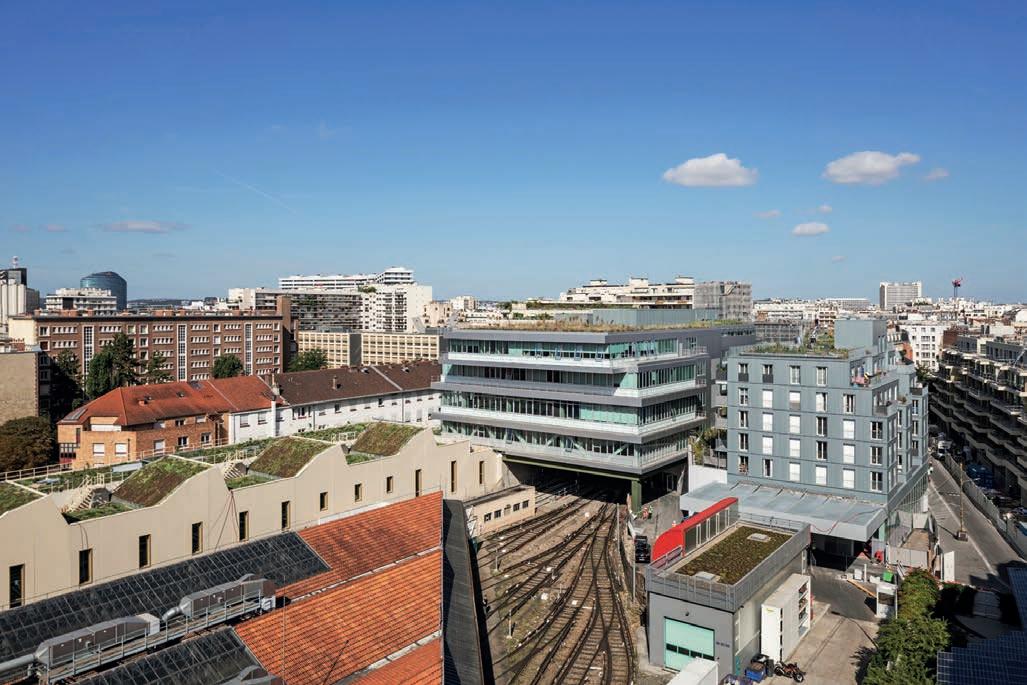
The solution? A trailblazing project to transform the site into a new neighbourhood for Paris, bringing maintenance activities, housing and public facilities together.
This major project, led by RATP Group and its real estate subsidiaries RATP Real Estate and RATP Habitat, was part of a Memorandum of Understanding signed with the City of Paris to provide a total of 2000 housing units by 2024. Building on this success, another Memorandum of Understanding was signed in 2025 for 1500 housing units by 2034.
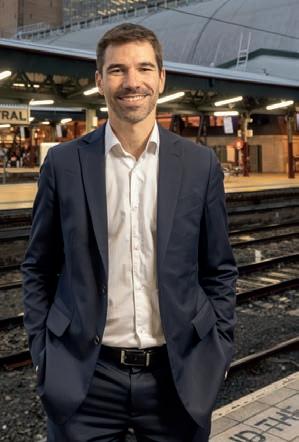
We spoke to Cécile Mano, the new project lead on the Vaugirard Workshop project, and Gabriel Malo, her predecessor in the same role, to find out more.
A total of 285 housing units, a daycare centre and a food business will be built

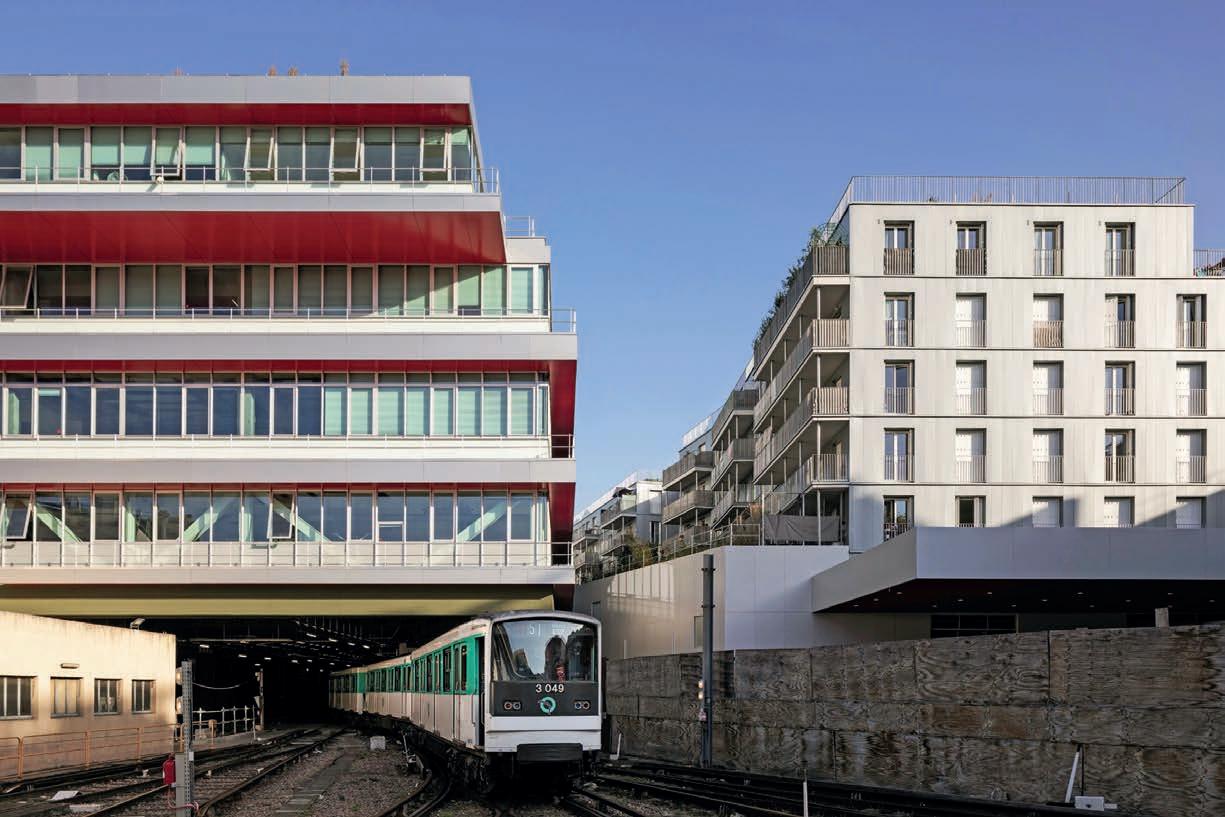
at Vaugirard as part of this project. Half of the apartments are for social housing, with 40 per cent of those reserved for RATP employees.
Malo said 104 units are already built and housing local families, with 49 more units due for delivery by 2027 as part of Phase 2 of the project.
“These are three- and four-bedroom apartments and the majority of those living in them are young families,” he said.
“The first lot of social housing on this project was delivered in 2023, so we’ve had three years of people living there now, families and industrial activity together all on the same site. It works perfectly.”
With many forced to leave Paris due to skyrocketing housing prices, Mano said it’s rewarding to be able to provide young people and families with a convenient and affordable place to live.
“People are moving further away because they can’t afford to live here,” she explained.
“Entire school classes are closing because they don’t have enough children to fill them. It’s a major issue for the city of Paris.
“Programs like this one help to preserve the beating heart of the city, encouraging social diversity.”
To serve its dense population, Paris has a dense Metro network – with 16 lines and 320 stations.
RATP, which operates the Metro (as well as the RER regional trains, many of the trams and the urban bus network), has at least one maintenance workshop for each Metro line.
When the organisation carries out a line extension project, it will usually try to relocate the workshop along the newly created part of the line – moving it towards the outskirts, or outside, the city.
“For Line 7, as an example, we are constructing a new workshop which will free up a major site within Paris,” said Malo.
For Line 12, RATP was not able to relocate all of its maintenance activities away from Vaugirard. Instead, it decided to make the most of the site’s central position within the Metro network.
It replaced the former low-density facility, which only employed a small number of staff, with a new workshop containing four levels and more than 200 employees.
While Vaugirard was formerly dedicated to infrastructure maintenance vehicles, it is now a maintenance workshop for electric and electro-pneumatic equipment.
Work is carried out on electric devices for RATP’s rolling stock – Metro trains, RER
trains and trams – before being dispatched to all of the organisation’s workshops across Paris.
“This has been a great opportunity to create a completely new workshop, right in the middle of RATP’s logistical network,” Malo shared.
As part of the second phase of the Vaugirard project, maintenance will be carried out on Line 12’s legacy rolling stock.
Malo added: “Line 12 is a historic line – it was one of the first lines in Paris.
“The first section opened in 1910, and Metro maintenance activity has been happening at Vaugirard since then.”
With industrial activity blending with ongoing construction at Vaugirard, how does RATP ensure as little disturbance as possible for those living on site?
Communication is key, said Mano. A dedicated liaison officer from RATP –Isabelle Argand – ensures residents are kept informed and can voice any concerns they might have.
“The residents know Isabelle is a real person who is there to help, not just an email address with nobody behind it,” she said. “The liaison officer is a key role for RATP.
"It reflects our commitment to being as on-hand and transparent as possible.”
RATP has employed smart solutions when it comes to construction, such as using prefabricated elements to limit onsite works.
High-quality windows and doors on every housing unit reduce noise disturbances.
“Before periods of increased noise, RATP will communicate with residents well in advance, and offer alternative accommodation or access to nearby coworking spaces,” Mano added.
RATP also embedded strong environmental ambitions into the project’s design. Particular care was taken to enhance the energy performance of buildings, and the site features nearly 10,000 square metres of green rooftops, terraces and landscaped pathways to create a really appealing environment for residents.
Through this project, RATP has successfully worked with the Parisian administration to keep critical blue-collar jobs and maintenance activities within city walls – maximising the operator’s network efficiency and asset availability, with knockon benefits for passengers.
Meanwhile, hundreds of Parisian families now have a secure, affordable place to live in the city they call home, with more housing on the way.
“The success of this project is the result of RATP’s many decades of experience and strong collaboration,” said Malo.
“It’s an example of how we can work hand in hand with the government as well as with local residents, with smooth communication on all sides. We are very proud of what we have achieved here.”
Denis Masure, General Manager at RATP Dev Australia, knows the project well. He added: “The upgrade program at Vaugirard Workshops illustrates how the complementary strengths of RATP’s subsidiaries in public transport operations and maintenance, real estate and infrastructure renewal can help cities to grow innovatively.
"Thanks to our in-house expertise, we explore opportunities for integrating housing and community services in all our transport infrastructure projects and work hand-in-hand with authorities to make them happen.
"The same mindset applies to our work in Australia, where we’re committed to offering local authorities our experience in urban development and renewal projects tailored to their needs and ambitions.”
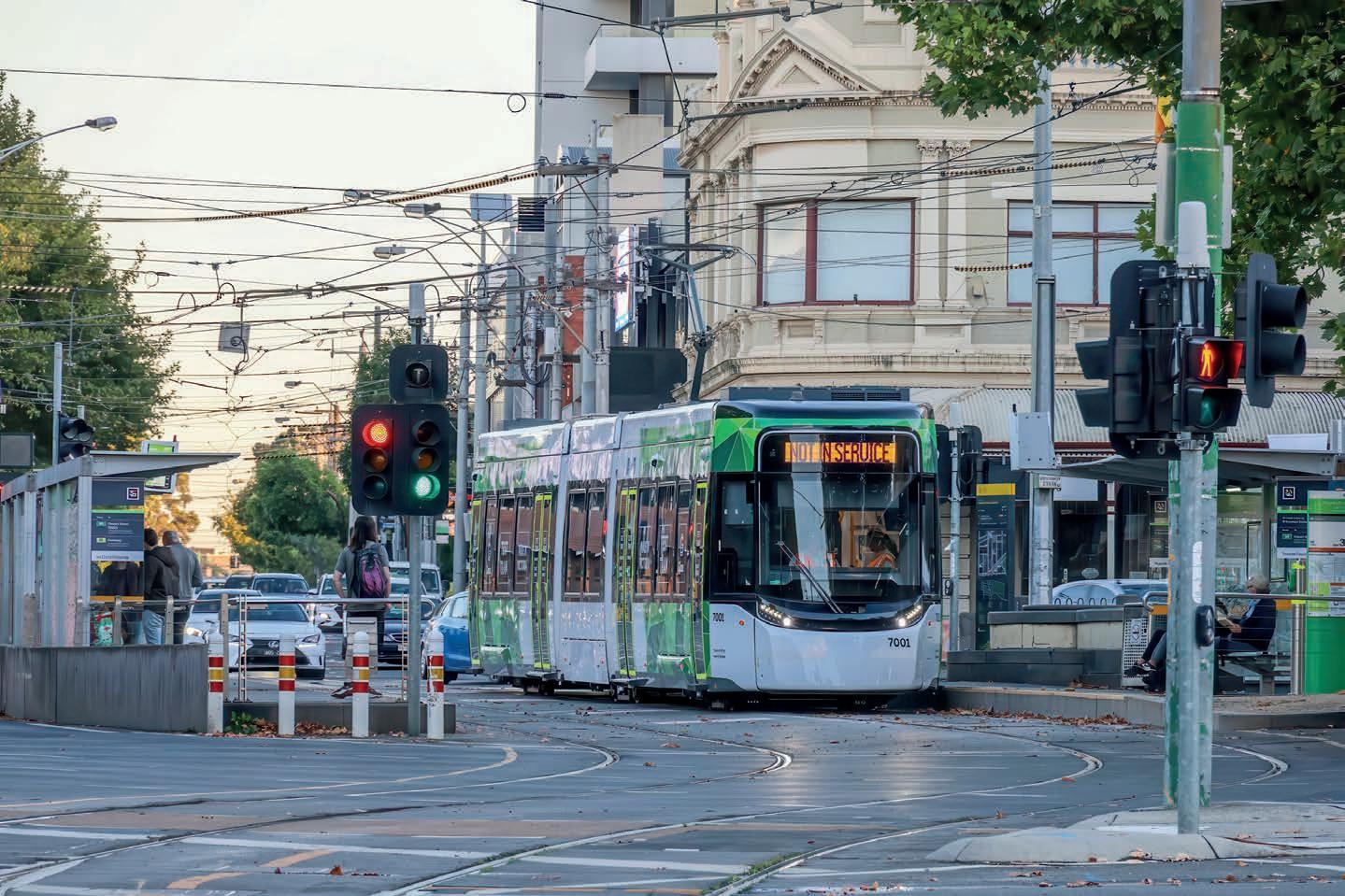
Jeroen Weimar and Raymond O’Flaherty share their thoughts on the challenges and opportunities facing Victoria’s public transport network.
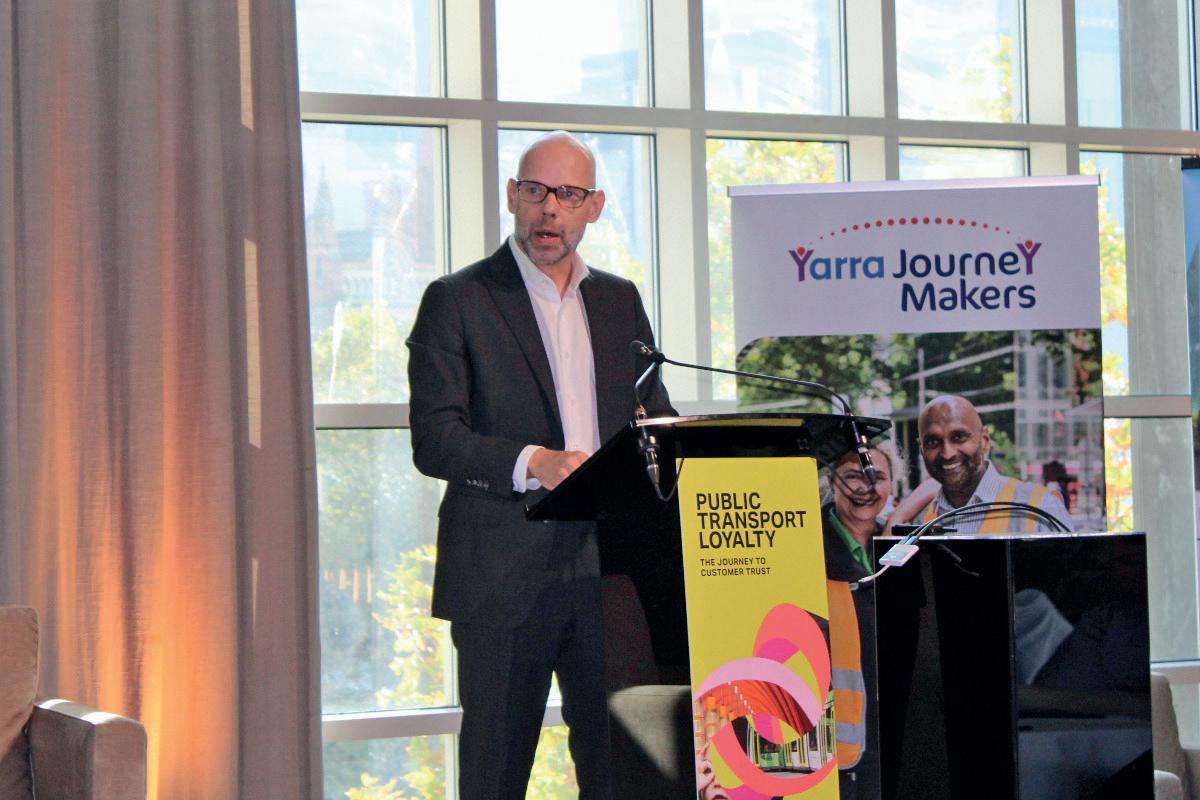
Australia’s public transport sector needs to take advantage of the "heaven-sent opportunity” presented by the fuel crisis to change the way the public thinks about mobility, says Jeroen Weimar, Secretary of the Victorian Department of Transport and Planning (DTP).
Speaking at the Public Transport Association of Australia and New Zealand (PTAANZ) Public Transport Policy Symposium 2026 in Melbourne, Weimar said: “With people spending $200, $250 to fill up the tanks of their cars, we can’t waste this crisis.
“Our colleagues at Monash University and every other research institution would give their right arm for an opportunity like this to
see – what will this do to our system? How will travel patterns change?”
After Victoria offered free public transport in the month of April 2026, the state saw a 25 to 35 per cent uptick in demand across trains, trams and buses.
Weekend patronage on V/Line services more than doubled, and Weimar said many people took advantage of the free fares and good autumn weather to explore regional towns.
“From April 13 to 19, 2026, we carried 1.64 million more people than we did in the same week last year,” he said. “That means for every four people we carried in 2025, we’re now carrying five – across an increasingly diverse and complex set of journeys.
“We’re now back to pre-COVID levels in terms of demand on our daily transport system.”
Following free fares in April and May, public transport in Victoria will be half price for the rest of the year.
Weimar said the challenge for the industry is to “milk” this period of increased passenger numbers as much as possible, ensuring that the public gains a better understanding of public transport and how it integrates into their lives.
“We have to build loyalty from these bold experiments,” he said.
“That will come back to our fundamentals – reliability, frequency, customer service, good support and staff, and giving people a
sense of how the systems work for them. But it’s also about network improvement.”
These improvements include new rolling stock – with the launch of the X’Trapolis 2.0 fleet happening at the start of May, as well as new zero-emission buses, and Melbourne’s Next Generation G Class trams now in testing.
They also include improving the network, with services reflecting real travel patterns.
“It’s one thing to set the network up, and it’s another to add services that reflect where people actually want to go,” he said.
“We have a diverse and growing society, with far more complex journeys, and that is our biggest planning challenge.
“We know we need to get more agile, faster, but it’s a huge, exciting opportunity for us all.”
Raymond O’Flaherty, Chief Executive Officer of Metro Trains Melbourne (MTM), also spoke at the Public Transport Policy Symposium about building passenger loyalty.
He said a major part of building loyalty is keeping passengers safe.
In 2024, following the COVID-19 pandemic, MTM saw an increase in antisocial behaviour across the network.
“I think that was experienced by all the Australian operators in this room,” he said.
“We had a rise in violent behaviour towards frontline staff, more assaults on passengers, and more trespass incidents. In one quarter, there were 1484 such incidents.”
Fortunately, these incidents are now on the decline, thanks in part to MTM’s partnership with Victoria Police.
MTM has 1463 Protective Service Officers deployed at stations across its network, as well as 50 of its own dedicated security officers, and 455 authorised officers.
At some of MTM’s “more difficult” network locations, it has rolled out a “Community Connectors” program.
“We have trained case officers on the ground every day, engaging with people in our community who would otherwise create issues on the transport network.
“Having those case officers on platforms speaking to them is diffusing a lot of potential situations, and helping the people who need help the most.”
“We recently had a passenger on one of our services who had a knife,” O’Flaherty said. “He wasn’t threatening any of the other passengers, but he was showing the knife to people.
“Having a permanent police officer in our control room, we were able to mobilise security to go to that service and arrest that person, virtually within minutes.”
While O’Flaherty is proud of everything MTM has achieved, he acknowledged there are more challenges to overcome.
“I firmly believe the foundations have been built, but there is a lot more work to be done to modernise ageing assets,” he said.
“I can take you to some of our signal boxes or control rooms where signal panels are 60, 70 years old.
“But for me, passenger loyalty and trust is about delivering services on time, providing safety and reliability and clear communication when things don’t go according to plan.”
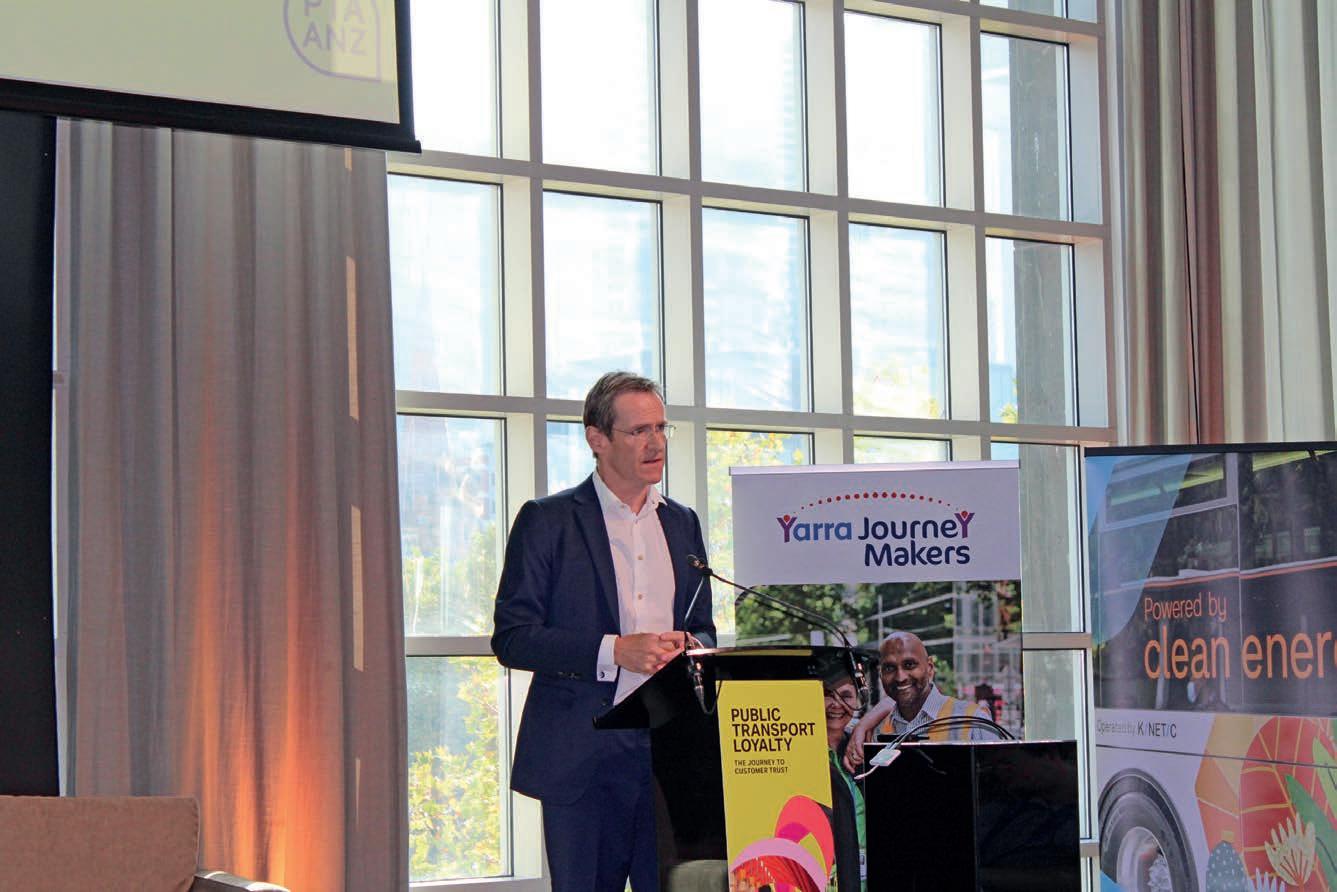
MTM also has more than 14,000 cameras across its network, which send a live feed back to the control room where there is a full-time team of four people, including a police officer, keeping watch for incidents.

Two data analysts who have been diagnosed with autism share their journey – from struggling to crack the job market to making a difference on complex infrastructure projects.
Australia’s rail infrastructure pipeline is becoming increasingly data-driven, with major projects relying not only on engineering skills, but also on precise geospatial data, asset digitisation and systems integration.
Victoria’s Level Crossing Removal Project is a clear example. Launched in 2015, the program aims to remove 110 “dangerous and congested” level crossings across Melbourne, as part of broader rail network upgrades to enhance safety, ease congestion and enable more frequent train services.
At the same time, a significant portion of Australia’s workforce is underused. The unemployment rate for autistic people in the country is over 30 per cent – about three times the unemployment rate for people with a disability.
That gap is not simply a social issue, but a missed opportunity to secure highly skilled talent.
The Australasian Railway Association warns that the rail industry is already grappling with workforce shortages, compounded by a retirement cliff, major project activity and rapid technological change. Industry Skills Australia has also identified digital capability
as a key workforce priority for rail, reflecting growing demand for skills linked to data, automation and digital systems.
Through a partnership between Australian Spatial Analytics (ASA) and Fulton Hogan, neurodivergent data analysts Amelia Caddie and Benjamin Jarrett are contributing to the important data work behind the Level Crossing Removal Project. Their schooling and workforce journeys show how an inclusive approach to recruitment can unlock valuable capability for infrastructure delivery.
Many neurodivergent people encounter barriers on the path from education to employment. Traditional recruitment processes put a lot of emphasis on a candidate’s performance during a job interview – from their confidence to their ability to give spontaneous answers to questions. This can put neurodivergent candidates – whose strengths may be better demonstrated by the quality of their work –at a disadvantage.
This is what ASA was established to address. Founded in 2020 and headquartered in Brisbane, the social enterprise
creates long-term skilled employment pathways for neurodivergent people in data, digital engineering and geospatial services. It has employed more than 250 analysts since 2020, delivering data services to infrastructure, utilities and government clients through a neurodivergentinclusive workforce.
ASA analysts Amelia Caddie (26) and Benjamin Jarrett (27) knew they had valuable skills to contribute – from technical knowhow to strong attention to detail – but came up against challenges when navigating interviews and workplaces that did not accommodate their needs.
Caddie was diagnosed with autism at university while studying for a joint degree in computer science and arts, after years of dealing with social anxiety.
“When I finally got diagnosed, all the struggles I’d been through finally made sense,” she said. “I wish it was picked up earlier – I could have benefited from earlier strategies and support during my school years.”
While social environments were challenging, her aptitude for mathematics provided direction.
“I’ve always liked maths, because there’s a clear correct answer and an incorrect answer,” she said.
Meanwhile Jarrett, who was diagnosed with autism at the age of three, faced bullying in school. Despite this, he stuck with education and completed a Bachelor of Applied Science (Surveying) at RMIT University.
Although they are highly qualified, both Caddie and Jarrett struggled to land graduate jobs.
“I applied to so many jobs that it got to the point where I started thinking I wasn’t good enough,” Caddie said. “Talking on the spot in an interview is really difficult for me. After interviews, I would always think I could have been more articulate and reflective of the strengths I could bring to the job.”
Jarrett agreed: “Given how my brain works, I perform my best when I’m able to take my time to make sure everything is correct. The best version of myself really didn’t shine through in job interviews.
“Throughout these recruitment processes, I would switch between disclosing and not disclosing my autism. If I disclosed it early on, I was afraid of not landing an interview at all or being declined an offer if I managed to make the interview stage. Or if I actually did land something, I was scared of losing my job once I got it.”
For both analysts, joining ASA marked a turning point. Its operating model removes common workplace barriers through clear communication, flexible structures and environments that reduce unnecessary social pressure, enabling the technical strengths of neurodivergent talent to shine through.
“Just being given a chance has increased my confidence a lot,” Caddie said.
“There’s less pressure to perform socially. Everyone understands.”
The natural capability of neurodivergent talent is now being applied to major railway infrastructure delivery through the Level Crossing Removal Project. Alongside construction, the project requires highly accurate data to support planning, delivery and long-term asset management.
Caddie and Jarrett’s neurodivergence is a strength in contributing directly to this data layer.
Caddie’s role involves digitising underground utility networks from PDF plans into geospatial datasets.
“I’ve helped digitise gas, electricity, sewer and water networks so people know exactly where the infrastructure is,” she said.
Jarrett focuses on converting engineering drawings into geographic information system data to support asset tracking and handover.
“We help locate roads, footpaths, fences and utilities, then hand that data over so councils can maintain them,” he said.
Both of their jobs demand a high degree of precision.
“You want to make sure everything is lined up correctly and measurements are extremely accurate,” Jarrett said.
These precise tasks align closely with strengths often associated with neurodivergent individuals, including attention to detail and pattern recognition.
“This type of work aligns with my inclination for perfectionism,” Jarrett added.
Brett Kohlmann, Geospatial Manager at Fulton Hogan, said he has worked with ASA on multiple projects to help deliver Australia’s critical infrastructure.
“I’ve been working with ASA since 2022, and it’s been great.
“They’ve helped us throughout the entire construction process, from the investigation stages to final delivery.
“ASA has delivered quite a lot of work with us in completions, so we can hand this data back to stakeholders.”
Geoff Smith, Chief Executive Officer of ASA, said the infrastructure partnership between ASA and Fulton Hogan ensures the contractor’s data needs are met while enabling ASA’s team to create social impact through Fulton Hogan’s supply chains.
“This collaboration supports on-the-job training and upskilling,” he said. “Byproducts include data sovereignty for critical infrastructure, as all work is undertaken within Australia, which eliminates modern slavery risks.”
ASA’s model points to a broader opportunity for the rail industry at the intersection of workforce shortages and untapped talent.
Globally, an estimated 15 to 20 per cent of people are neurodivergent (e.g. autism, attention deficit hyperactivity disorder, dyslexia), representing a significant and largely underused talent pool.
Inclusive hiring practices can be leveraged as a way to expand talent pipelines and improve productivity and innovation in railway infrastructure.
“I think any industry should give neurodivergent talent a shot,” Jarrett said. “We have many technical strengths that are often overlooked because of our social skills.”
For employers, the path forward can be achieved incrementally. Adjustments such as clearer communication, access to quieter environments and more inclusive interview processes can unlock access to strong talent.
“Even something as simple as providing job interview questions in advance makes a big difference,” said Caddie. “Or being able to ask for what I need, like being allowed to wear noise-cancelling headphones if it’s loud in the office, without being judged.”
For both Caddie and Jarrett, being given the best opportunity to succeed in their challenging roles as data analysts is making a tangible personal impact.
“My social anxiety is much better now,” Caddie said. “I’m more confident talking to people.”
Jarrett is now looking to continue his career in the geospatial sector.
“If there’s a geographic information systems role in the railway industry or associated industries, I’d absolutely be interested in stepping up and helping the railway infrastructure of Victoria continue to succeed.”
Since 2020, ASA has provided hundreds of careers in the geospatial and engineering professions for young neurodivergent adults who may otherwise be unemployed.
“There is a clear stigma around hiring neurodivergent people, which comes from a lack of understanding,” said Smith.
“Our aim is to transition the employment of our data analysts to other inclusive employers so we can backfill their positions with someone else experiencing longterm unemployment.
“We hope that one day the workforce will have more understanding of the needs of neurodivergent employees, and there won’t be a need for ASA at all. But until then, we are here to support them.”
The Australasian Railway Association shares insights into the trends shaping the rail industry.
The Australasian Railway Association (ARA) has completed new research on the future of rail, identifying the megatrends that will challenge the rail industry as well as creating opportunities for growth and future success.
While these megatrends have specific implications for rail, they reflect challenges for Australia and New Zealand as a whole.
The research published in the ARA's Future of Rail report shows that sustained investment in rail can deliver solutions that meet multiple policy goals and create national benefit.
The report’s 10 megatrends are organised into four categories with widespread impact.
COVID-19 accelerated many demographic changes that were already beginning to emerge, creating pressure for an agile policy and investment responses. For example, the migration of people from expensive cities to more affordable regional areas enabled
by flexible working arrangements requires matching growth in public transport and freight logistics to those regions.
In greenfield sites, planning is most effective when we lead with transport. Welldesigned transport networks not only support the efficient movement of people and goods through communities, but can enable housing, reduce travel times, improve environmental outcomes and enhance community safety and amenity. In existing developments, building rail can reinvigorate under-utilised spaces, with flow-on benefits of increased housing density and supply, increased employment opportunities, reduced emissions and improved access to vulnerable communities.
The value of rail in driving housing growth is significant. For example, transit-oriented development alongside a light rail node can increase the number of dwellings by 260 per cent, commercial space and employment by 352 per cent and public open space by 187 per cent, driven by a 739 per cent increase in public transport usage compared to a
Future of Rail found that as government budgets continue to tighten, infrastructure priorities are shifting from new corridor construction to network optimisation, from upfront expenditure to lifecycle performance, and from sector silos to integrated, cross-cutting outcomes. This creates an opportunity for rail to lean into its strengths and play a leading role in national goals such as the transition to net zero greenhouse gas emissions and building resilience to climate and economic disruption.
Transport is set to become Australia’s largest source of emissions by 2030 if no action is taken. Rail is one of the lowest-
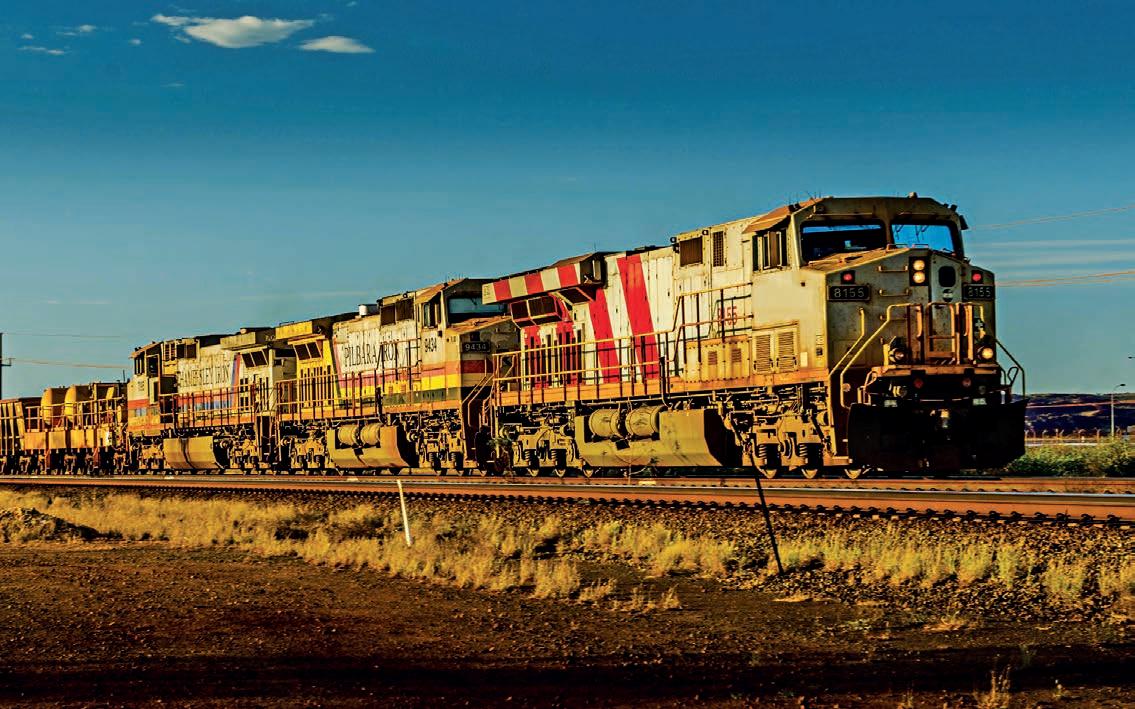
convenience,
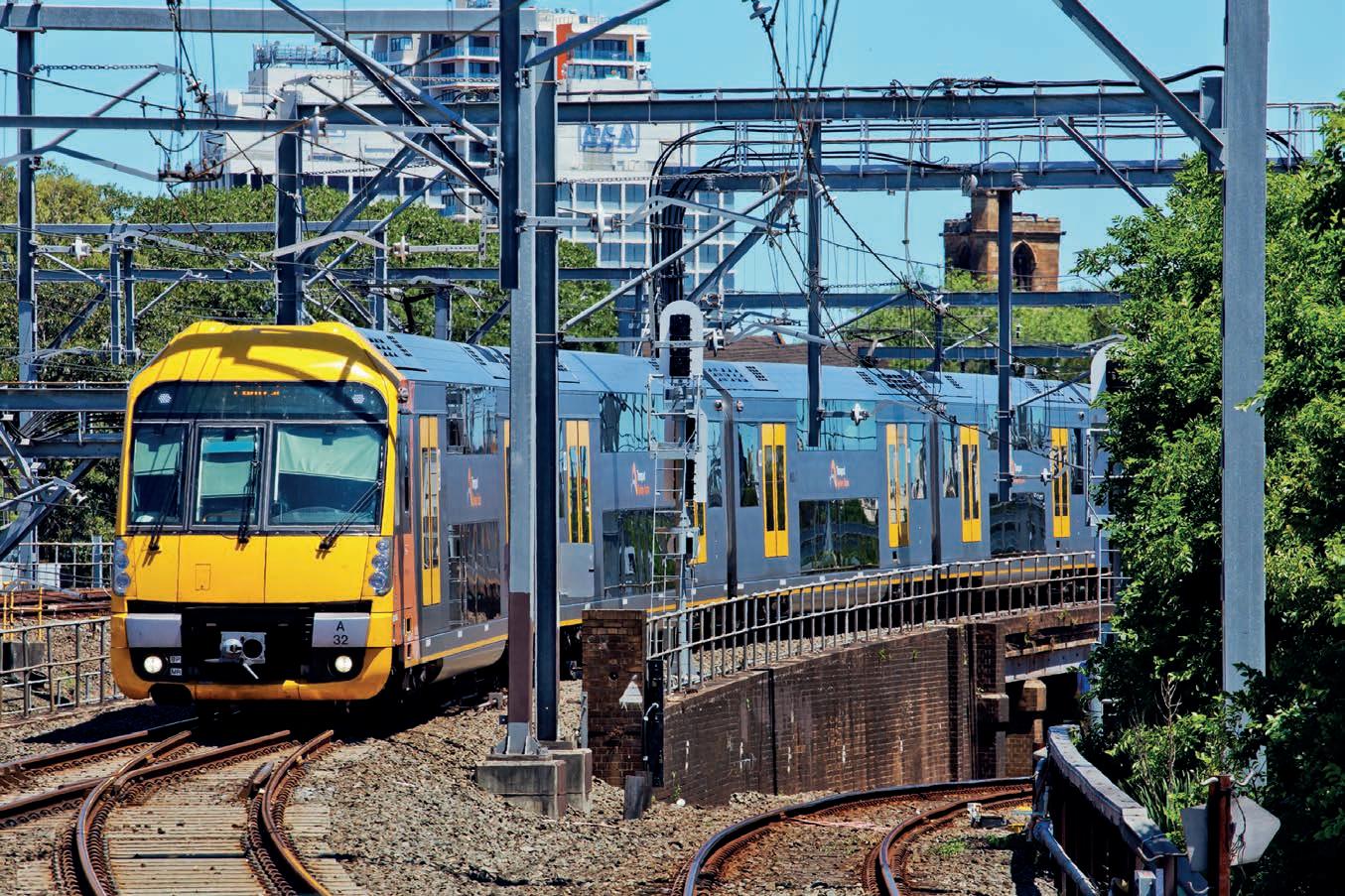
just four per cent of transport emissions, and must be part of the solution. With the right investment and policy support, rail’s low-carbon footprint and scalability can play a central role in enabling national climate goals through mode shift, electrification and urban integration.
As weather events increase in severity and frequency, building climate resilience into rail is essential – and already happening. For example, the Inland Rail project has incorporated climate risk considerations by designing rail track to avoid interrupting flow paths, using additional culverts, bridges and scour to divert water away. Similarly, Victoria’s Big Build and the Queensland Transport and Roads Investment Program include heat and flood resistance upgrades as part of broader network modernisation. In the 2024 Federal budget, the Australian Rail and Track Corporation (ARTC) was allocated more than $1 billion to enhance resilience and reliability across the national rail network.
Rail also offers low-emission, fuelefficient freight services, which is particularly critical for the long-distance transport of goods across the country. The fuel crisis has highlighted structural weaknesses in our national freight system and the need for urgent reforms to support mode shift to rail. This is critical, not just in response to current challenges, but to ensure our national freight network can meet rising demand and support our Net Zero future.
Navigating innovation and rebuilding sovereign manufacturing capability are not challenges unique to the rail industry, but there are clear opportunities for rail to grow these areas and deliver flow-on benefits across the economy.
One of the most promising developments for digital innovation in rail is the agreement that happened at the Infrastructure and Transport Ministers’ Meeting in 2025, which designated the European Train Control System (ETCS) as the future technology pathway for the National Network for Interoperability (NNI).
ETCS is vital infrastructure to underpin other innovations such as automated train operations, already in action on the Sydney Metro and in the Pilbara in Western Australia, where ETCS has already been implemented.
Recognising the importance of common digital infrastructure is why the ARA continues to advocate for interoperability and harmonisation across the national network, to reap gains in cost savings, capacity, reliability, safety, time savings and energy efficiency.
Embracing innovation also delivers returns in upskilling the rail workforce and growing sovereign capability. As investment increases in rolling stock, signalling and electrification, it also supports skills development, technical capability and regional employment. These benefits extend across sectors and strengthen Australia’s ability to respond to supply bottlenecks, while developing transferable skills for sectors such as defence, clean energy and logistics.
Pricing models for rail can be used more strategically to drive mode shift and better meet broader policy objectives. For passenger rail, price elasticity varies widely by time, trip type and user profile, providing opportunities for responsive fare policies that maximise access and promote increased patronage.
However, ARA consumer research has also confirmed that price is not the only driver when it comes to increasing public transport use. Convenience, safety and the frequency and reliability of services are often cited as stronger motivators for using public transport. So, while new approaches on pricing models can drive mode shift, sustained infrastructure investment that makes it easier for people to use public transport cannot be replaced.
In the freight sector, future policy must consider how incentive structures align with modal shift, decarbonisation and national productivity. The ARA is advocating for urgent reforms that consider these issues and promote greater use of rail freight to meet Australia’s future needs.
These megatrends demonstrate the connection between the ARA’s continued advocacy in areas like interoperability and mode shift, and delivering on broader policy outcomes for Australia and New Zealand – including Net Zero targets, re-establishing sovereign capability and growing an innovation-literate workforce for the future.
The Australian Rail Industry Standards Organisation (ARISO) is creating safer and more efficient rail networks through its updated signalling standards.
Signalling sits at the heart of a safe railway. Across Australia, signalling has evolved in pockets. Inadvertently, this has resulted in a “signalling break of gauge” that limits interoperability, constrains workforce mobility and adds cost and complexity to projects.
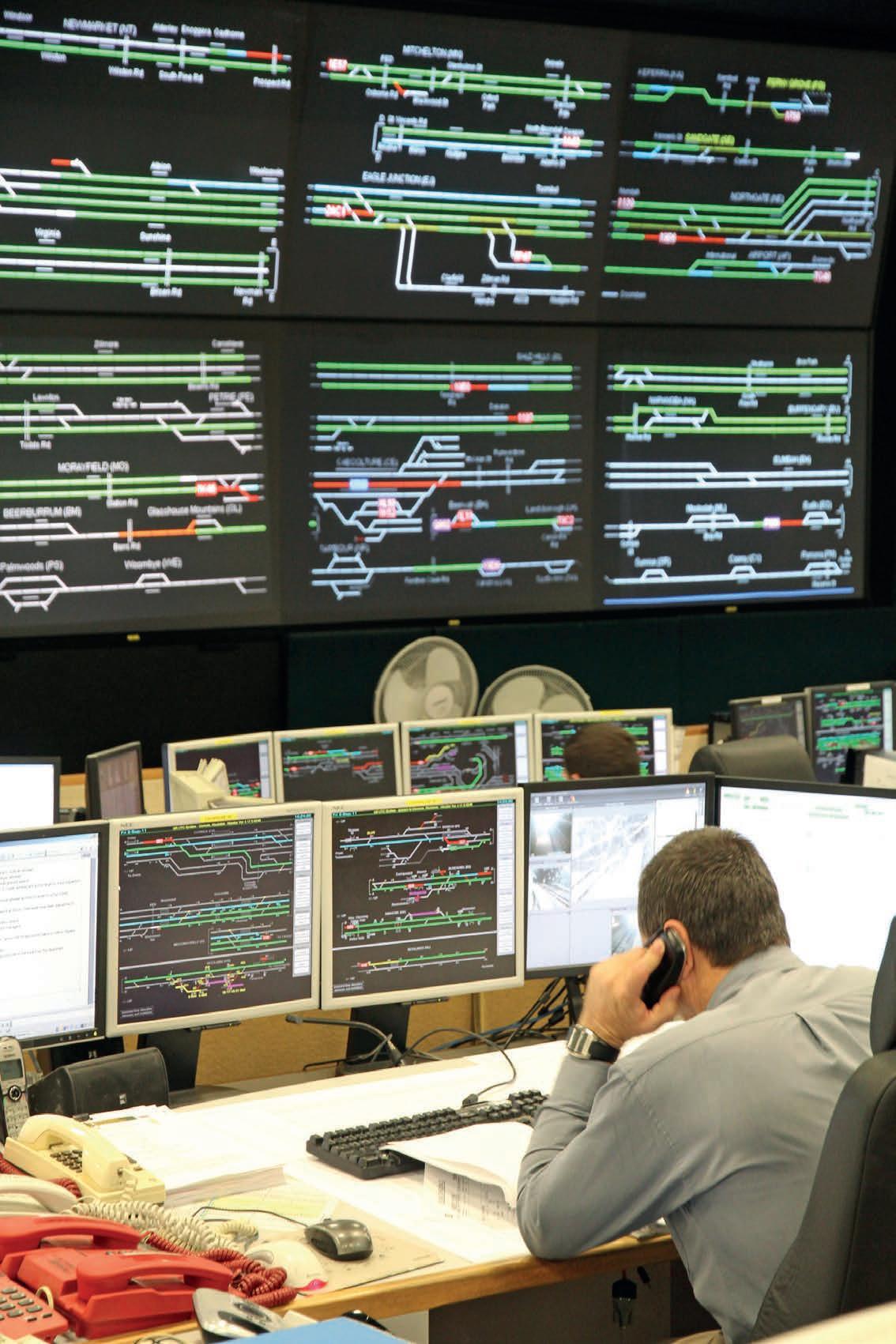
For the industry to move towards a unified national rail system, this fragmentation must give way to harmonisation. Through the recent review of its stable of signalling standards, ARISO is playing a key role in delivering safer, more productive and more connected rail networks.
ARISO’s signalling standards contribute to aligning practices across infrastructure managers, suppliers and projects, while providing flexibility to support innovation and new technologies.
Cris Fitzhardinge, ARISO’s Senior Standards Development Manager, has led the recent work to update ARISO’s portfolio of signalling standards. At the core of this effort is AS 7711 Signalling Principles, the foundation of signalling design in Australia.
“We recently updated this Standard to align with international best practice, including the Institution of Railway Signal
Engineers (IRSE) fundamental requirements for train control systems, while remaining deliberately technology agnostic,” said Fitzhardinge.
“It’s important because this ensures the Standard can support both legacy systems and emerging digital environments such as European Train Control System (ETCS).”
AS 7711 addresses some of the risks that matter most to the industry: ensuring routes are correctly set and locked before movement authorities are issued, eliminating ambiguous indications to train crews, and preventing collisions and unintended derailments. By establishing
a consistent set of principles, it enables designers, operators and manufacturers to work from the same baseline –improving safety outcomes and reducing the complexity that often arises at network interfaces.
Complementing this is AS 7718 Signalling Design Process Management, which introduces a national, structured approach to how signalling systems are designed. From defining inputs and managing change through to verification and standardised documentation, AS 7718 brings clarity and consistency to a critical phase of the signalling lifecycle.
CAPTURING TANGIBLE PRODUCTIVITY GAIN
The review of AS 7718 has been shaped by strong industry input. Martha Gordillo, Lead Technical Manager at Transport for New South Wales, was a key contributor within a development group that brought together diverse expertise from across the sector.
“AS 7718 establishes a nationally consistent rail design process, helping to harmonise requirements across Australia,” said Gordillo.
For industry, that means fewer interface errors between rail infrastructure managers, more efficient design reviews and approvals, and a stronger foundation for delivering major projects. Importantly, a harmonised design approach also unlocks workforce mobility. Engineers and designers can
move between projects and jurisdictions more easily, applying familiar processes and standards.
“By reducing complexity at cross state boundaries, AS 7718 improves interoperability between rail systems and supports greater workforce mobility across Australia,” said Gordillo.
In a market where skilled resources are at a premium, this is a tangible productivity gain.
ARISO’s work extends beyond design into testing and commissioning – areas that are becoming increasingly important as digital train control systems are deployed.
“AS 7716 Signalling Testing Processes and AS 7717 Signal Testing and Commissioning have been reviewed to ensure they are fit for purpose in modern environments, supporting technologies like ETCS and Communications-Based Train Control,” said Fitzhardinge.
It’s premised on the understanding that a consistent national approach to testing and commissioning not only improves assurance and safety outcomes but also reduces duplication in training and enables teams to operate more effectively across different networks.
Taken together, these standards form a coherent pathway toward
harmonisation in one of the most complex and safety-critical parts of railways.
Upon implementation, the ARISO suite of signalling standards has the potential to reduce the inefficiencies caused by fragmentation, lower the cost of delivery by streamlining processes, and support the integration of new technologies that will define the next generation of rail operations.
Industry benefits are practical and immediate: clearer requirements, more predictable project delivery, improved safety assurance, and a more mobile and capable workforce. More broadly, they help to build a rail system that is safer, more interoperable and better equipped to handle future demand.
National rail reform may be ambitious, but it is grounded in the idea that consistency drives performance.
“Through its signalling standards, ARISO is helping turn that ambition into reality – creating the common language and frameworks that allow Australia’s railways to operate as one system,” said Fitzhardinge.
Contact info@ariso.org.au for more information, or to find out how ARISO can assist with implementing these standards.
ARISO’s signalling standards have the potential to reduce the inefficiencies caused by fragmentation.
Members of the Permanent Way Institution came together to network and gain valuable insights at a recent executive breakfast.
The Permanent Way Institution’s New South Wales chapter recently welcomed more than 110 senior rail industry executives to the Fullerton Hotel Sydney for an executive breakfast featuring Sydney Trains’ Chief Executive Matt Longland and Head of Engineering and Maintenance Julian Richards.
The morning provided valuable insight into the future direction of Sydney Trains, with a strong focus on the organisation’s five-year asset renewal program, designed to support sustainable performance improvement across one of the world’s oldest and most heavily used rail networks.
Now celebrating 171 years of operation, the Sydney Trains network faces increasing patronage demands, far beyond what the original network was designed to accommodate. Discussions throughout the breakfast highlighted the importance of long-term investment in critical infrastructure renewal, network resilience and modernisation to ensure the network
can continue to safely and efficiently support the growing needs of New South Wales.
A key theme was the importance of partnerships across the rail sector to successfully deliver the scale of work required over the coming years. With significant programs expected to ramp up, Sydney Trains reinforced the need for industry collaboration to balance capability, workforce capacity, innovation and emerging technologies to support delivery.
Longland spoke openly about the future direction of maintenance and operational delivery, including the continued evolution of track possession strategies aimed at minimising passenger impacts while maximising productivity and program efficiency across the network. The discussion acknowledged the challenges of delivering major renewal works within live operational environments and the importance of smarter planning and coordination moving forward.
Julian Richards further highlighted the critical role engineering, maintenance and asset management will play in sustaining long-term network performance, particularly as Sydney continues to grow and expectations around reliability and service delivery increase.
The event also provided attendees with the opportunity to better understand when Sydney Trains intends to accelerate project delivery and what this means for contractors, suppliers and the broader rail workforce across New South Wales.
Workforce capability, retention of skilled talent and ensuring the industry remains equipped to deliver future programs were key areas of discussion amongst attendees.
The PWI New South Wales chapter thanks Sydney Trains, Matt Longland and Julian Richards for their time, transparency, and valuable insight into the future of the network and the opportunities ahead for the state’s rail sector.
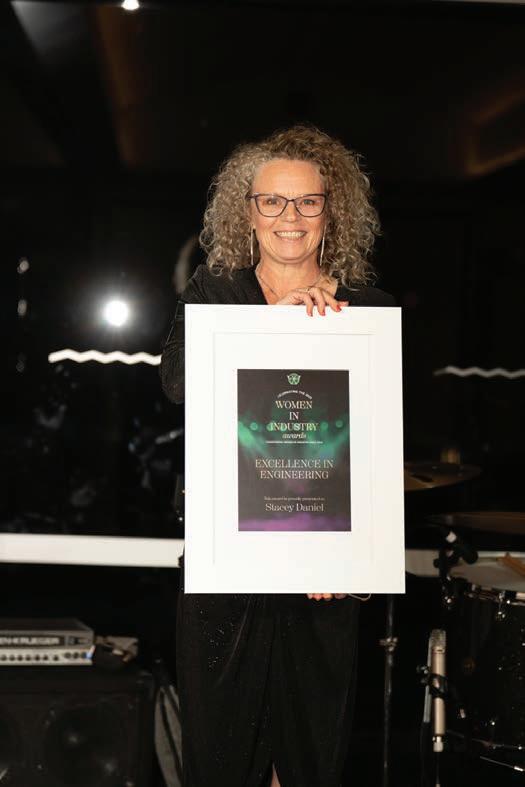
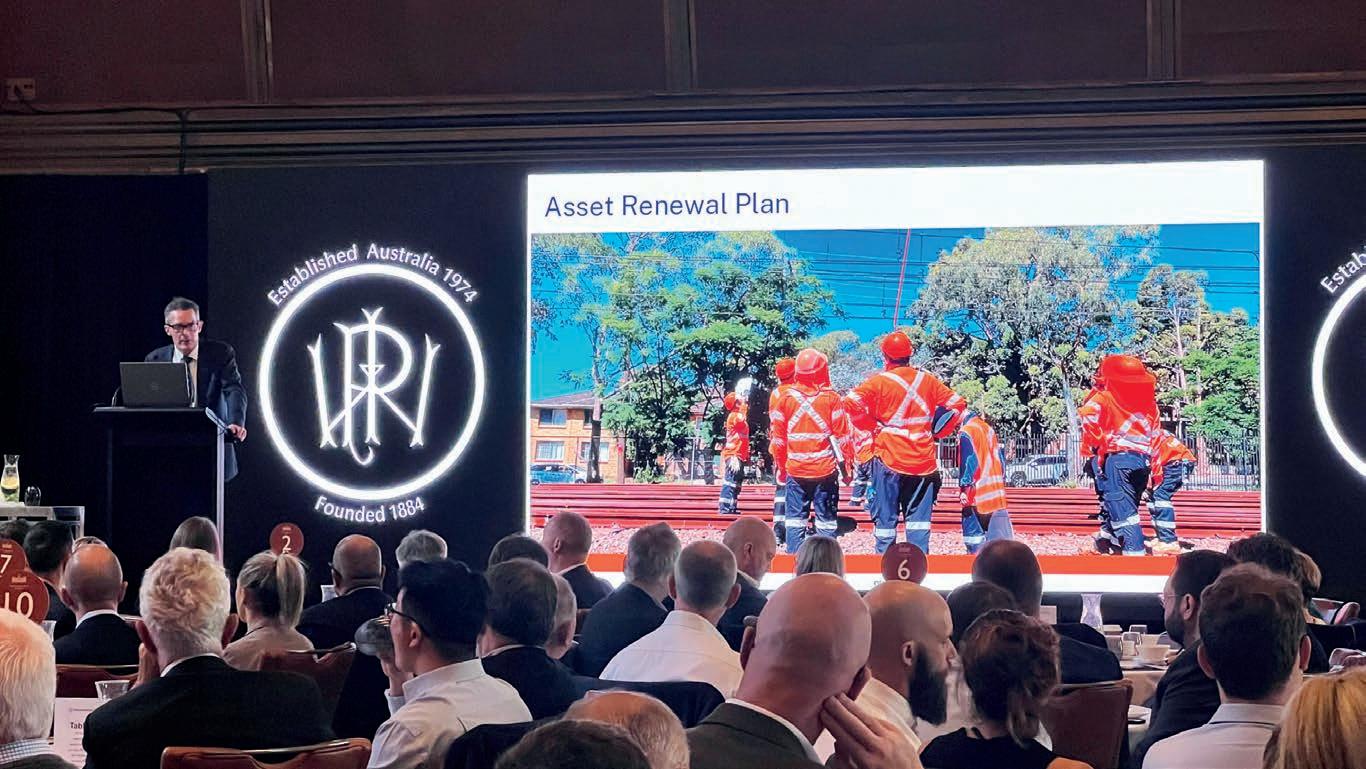

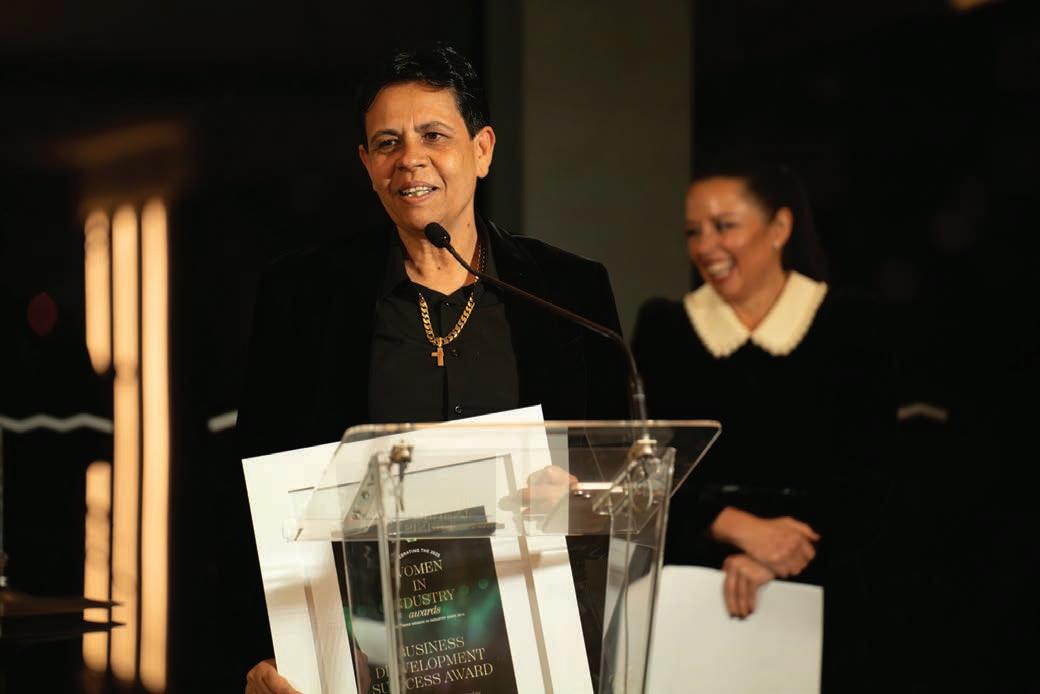

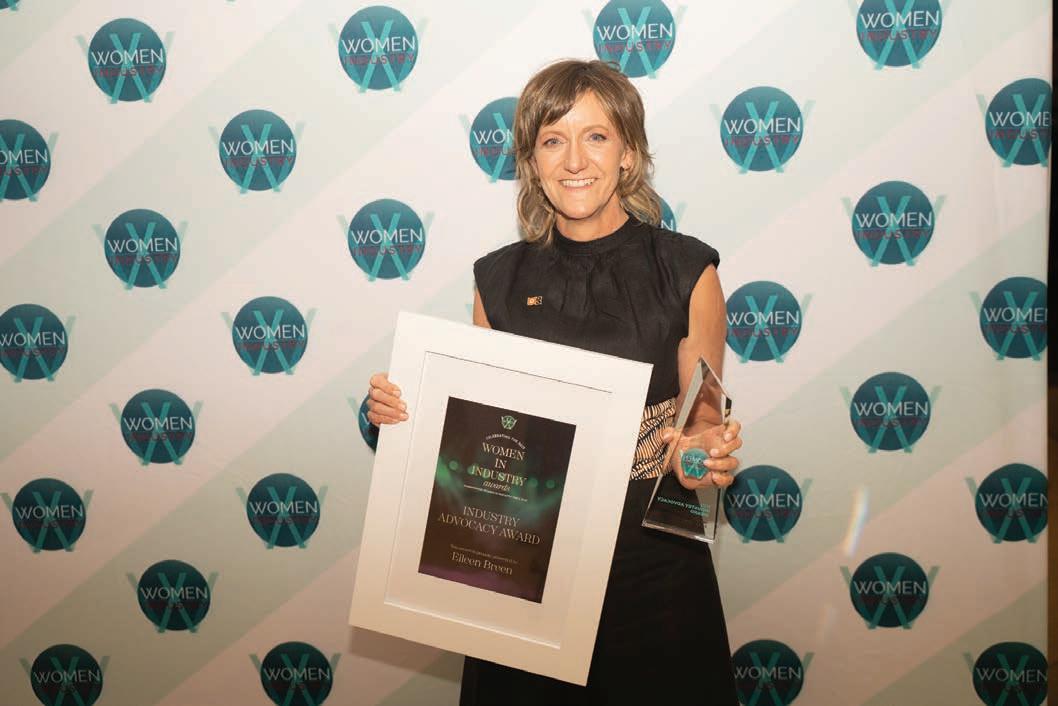
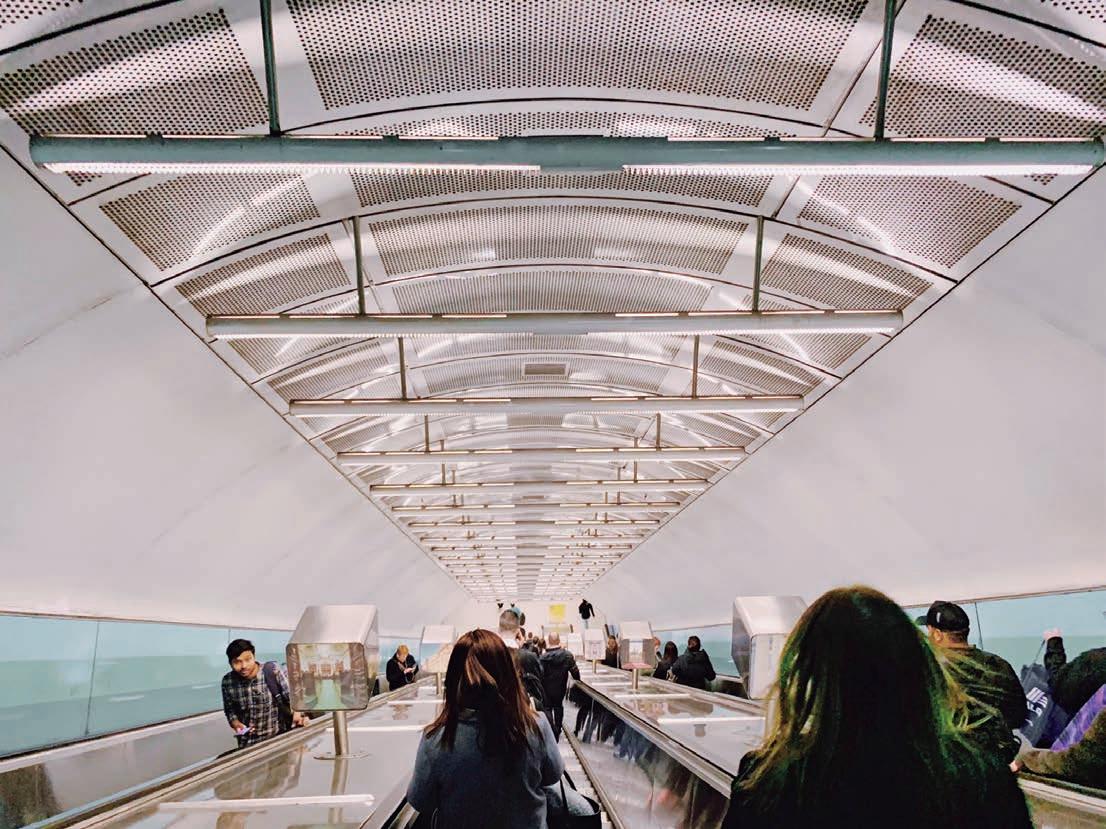
Across Australia and New Zealand, our cities and regions are growing at a pace that would have seemed ambitious a decade ago. Sydney is forecast to reach well over six million people in the coming decades. Melbourne is on a similar trajectory, while Auckland continues to absorb significant population growth. Regional centres are expanding too, reshaping travel patterns and expectations.
With that growth comes a simple reality: more people need to move more often and more efficiently.
Mass transit is at the heart of that future, but the environment we’re operating in has changed. After a period of record investment
in major infrastructure, governments and agencies are now facing tighter financial conditions. That doesn’t mean the ambition has gone away. It just means we need to think differently and more creatively about how we deliver it.
This is where the idea of “doing more with less” becomes not just relevant, but essential.
For me, it’s about getting the absolute best out of the networks we already have while being smarter about how and when we expand them.
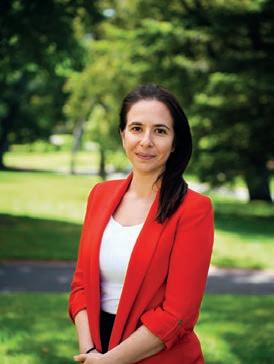
It’s not about lowering expectations. If anything, customer expectations are higher than ever. People want reliable, frequent, easy-to-use services. We’ve had a glimpse of what demand can look like during recent fuel price spikes. When the alternative becomes more expensive, people quickly turn to public transport. The question is whether our systems are ready to meet that moment. The challenge is delivering that experience while large, capital-intensive projects are phased in.
One of the simplest ways to start is by looking at how we use existing services. Fast, frequent, reliable and safe networks are what drive customer behaviour.
In many cities, there is untapped capacity outside of peak hours. Shoulder periods present a particular opportunity. If drivers and assets are already in place, small adjustments to timetables can increase frequency and flexibility at relatively low cost. This increased frequency and improved customer experience – when communicated properly – leads to increased use of the network and more positive satisfaction for those who use it.
We’ve seen examples of this in cities such as Brisbane and Perth, where targeted service uplifts outside traditional peak times have improved network usability without requiring major new investment. It’s a good reminder that not every improvement needs a ribbon-cutting moment!
Large infrastructure projects will always play a role in growing cities, but in a constrained funding environment, the order in which we deliver them becomes critical.
Careful sequencing of projects can unlock benefits earlier and spread investment more effectively. It also allows agencies to align infrastructure delivery with service planning, land use changes and customer demand.
This kind of coordination is already happening across parts of Australia and New Zealand, where transport agencies are working more closely with planning authorities to ensure that new housing and
employment areas are supported by viable transport options from day one. Building in well-serviced parts of the network makes the most economic sense – and leads to liveable, well-serviced and walkable cities.
It’s a shift towards more integrated and deliberate planning – to build the cities and regions that people want to live in.
“Doing more with less” isn’t just about services, it’s also about what sits behind them.
Rail networks often have hidden capacity that can be unlocked through targeted maintenance and upgrades. Improvements to signalling systems, for example, can allow trains to run closer together, increasing capacity without building new lines.
Sydney’s ongoing signalling upgrades and Auckland’s rail network improvements are good examples of how relatively contained investments can deliver meaningful gains. These kinds of projects don’t always capture public attention in the same way as new lines, but their impact on reliability and capacity can be just as significant.
Another part of the equation is how we bring in private sector capability and investment.
Public-private partnerships have been a feature of major infrastructure delivery for some time, but there is growing interest in how the private sector can contribute beyond construction. This includes operations, maintenance, technology and customer experience.
The key is ensuring that these partnerships are structured in a way that delivers value for both the public and private sectors, while keeping the customer at the centre.
In a tighter funding environment, leveraging private sector expertise and capital will continue to be an important part of the mix.
One of the most overlooked opportunities in public transport is often simply helping people to better understand and use the services that already exist.
Many networks are more capable than people realise – recent fuel shocks have made us acutely aware of this. But if customers don’t know what’s available or don’t feel confident using it, that capacity goes underutilised.
Clear, consistent communication at a localised level is critical. That includes realtime information, accurate journey planning tools and proactive updates about changes and improvements. When you land in an airport in a new city, rideshare apps are very good at telling you how to use them. Imagine if public transport did the same, meeting customers where they are and guiding them through their journey?
Technology plays a big role here. Mobile apps and digital platforms can make it easier for customers to see their options and make informed decisions. But it’s not just about digital. Physical wayfinding remains incredibly important, particularly in high-pressure environments such as major stations, airports and stadiums. How can you use public transport if you don't know it's there, don't know how to pay to use it, and don't know where to find it? Anyone catching a flight into Sydney knows the ease of using the train, even as a tourist.
If you’ve ever arrived at a busy station, airport or stadium and just wanted the fastest way home, you know how important clear signage is. At those moments, customers aren’t looking for complexity. They’re looking for certainty. And if we don’t provide it, they’ll look elsewhere.
Public transport doesn’t exist in isolation. For most people, it’s part of a broader journey that includes walking, cycling or other modes. Improving the connections between these modes is one of the most effective ways to increase overall network use.
This includes better integration between buses, trains and light rail as well as stronger links to active transport options such as cycling and walking. Safe, convenient access to stations and stops can be the difference between someone choosing public transport or not.
Cities such as Wellington and Melbourne have made progress, but there is still significant opportunity to go further, particularly when it comes to "lastmile" connections.
Investing in active transport doesn’t just support public transport use. It also delivers broader benefits, including improved health outcomes and more liveable communities, saving money for state and federal budgets.
Infrastructure and operations are only part of the story. Policy settings play a powerful role in shaping transport choices. Road user charging, for example, is increasingly
being explored as a way to manage congestion and create a more balanced transport system. Similarly, tax incentives such as fringe benefits tax concessions for public transport can encourage greater uptake. New Zealand is increasingly using this lever.
There are also more creative approaches worth considering. Ideas like more flexible vehicle registration models could shift the cost equation in favour of public transport, particularly for people who don’t need to drive every day.
These kinds of policies require careful design and public support, but they have the potential to reinforce the role of public transport in a meaningful way.
Ultimately, “doing more with less” is not about compromise. It’s about being more deliberate, more connected and more focused on outcomes.
It requires agencies, operators, planners and policymakers to work together in new ways, as well as a willingness to learn from each other.
That’s why the upcoming PTAANZ New Zealand conference, centred on the theme “Travelling Together for Better Public Transport,” is so important.
Bringing together all government agencies from across Aotearoa New Zealand, alongside their Australian counterparts and the private sector, creates an opportunity to share practical insights and realworld experience. Discussions will cover everything from enabling infrastructure and procurement to customer experience and regional success stories.
Leaders including Transport Minister Chris Bishop and senior transport executives will contribute to conversations about what’s working, what’s not and what comes next. Held in an election year, the stakes have never been higher.
At a time of change, this kind of collaboration is invaluable. Because while the challenges we face are complex, they are also shared. And by working together, we can find smarter ways to deliver the public transport systems our growing cities and regions deserve. I can't wait to see you there.
The PTAANZ Aotearoa New Zealand Conference will be held in Wellington from July 29-30, 2026. Visit www. ptaanz.org for more information.
The National Transport Commission shares why investing in interoperability will play a key role in enabling Australia to move more freight on rail.
Lifting capacity across Australia’s rail networks is critical if the sector is to take on a bigger share of the country’s growing freight task. This requires greater efficiency and improved connectivity, so trains can move more easily across the networks that link cities, regions, ports and supply chains.
Independent body Infrastructure Australia (IA) has identified the interoperability of digital signalling and train control systems as a top infrastructure investment priority, reflecting its importance to Australia’s rail system and economy.
The National Transport Commission (NTC) has been working with the rail industry and governments to help meet
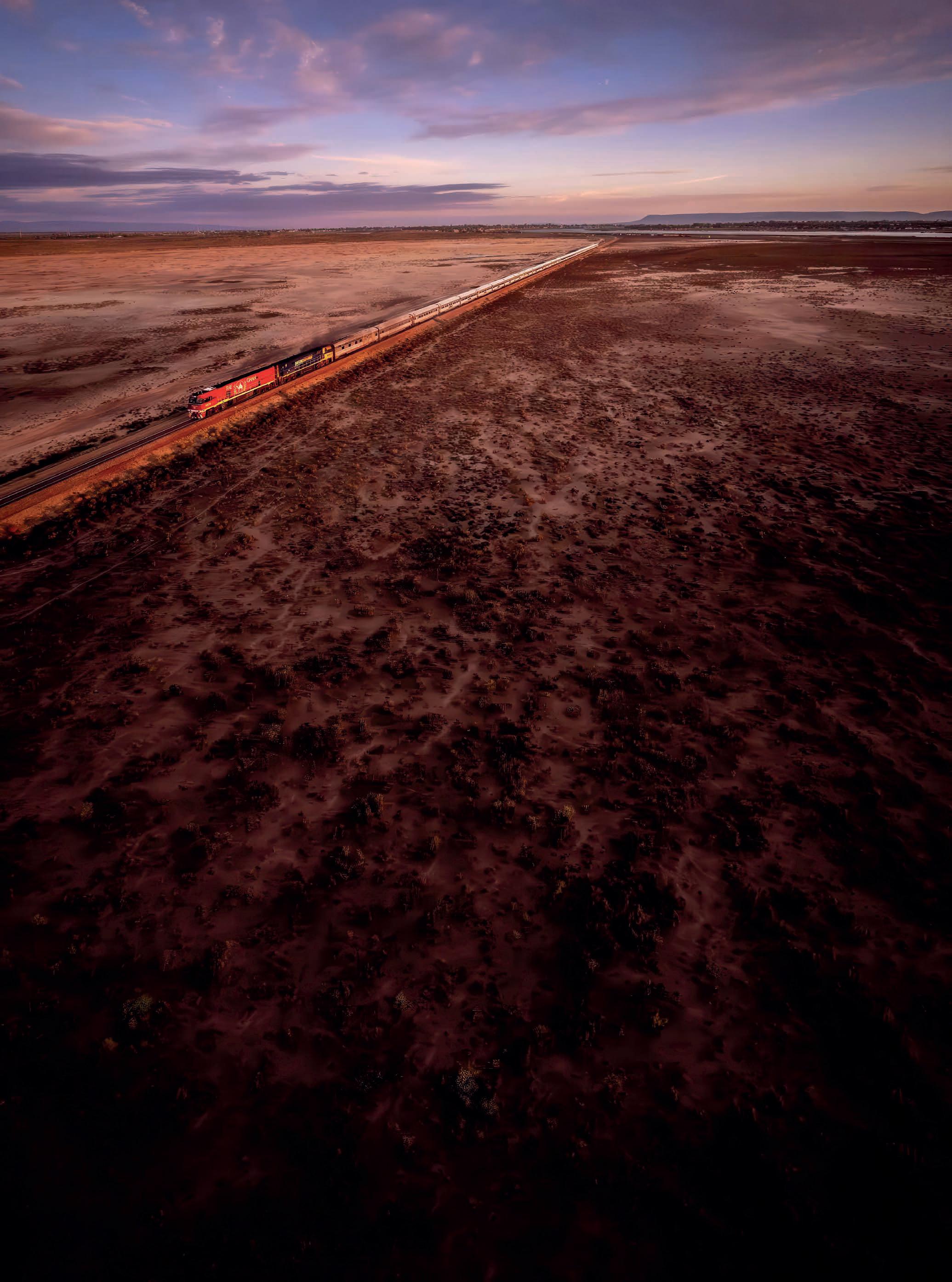
this objective through the National Rail Action Plan (NRAP). The NRAP provides a coordinated approach to addressing long-standing challenges in Australia’s rail system by reducing differences and aligning systems and practices across networks. A key element of the plan is coordinating the deployment of digital train control systems on major interstate freight and passenger corridors, collectively known as the National Network for Interoperability (NNI).
“The national interoperability of digital signalling and train control proposal will support a safer, more reliable and productive rail system, while improving supply chain efficiency and capacity,” said David Tucker,
IA’s Chief of Project Advisory and Evaluation. “It will encourage more freight to move from road to rail, reducing emissions and easing pressure on road networks.”
NTC Chief Executive Officer Michael Hopkins said interoperable digital signalling technologies will strengthen the resilience of Australia’s freight networks, improving their ability to respond to shocks such as the current oil crisis.
“Getting agreement from Australia’s infrastructure and transport ministers on a single digital train control standard – the European Train Control System (ETCS) – for the NNI marked an historic step,” he noted. “However, there is still much to be done.”
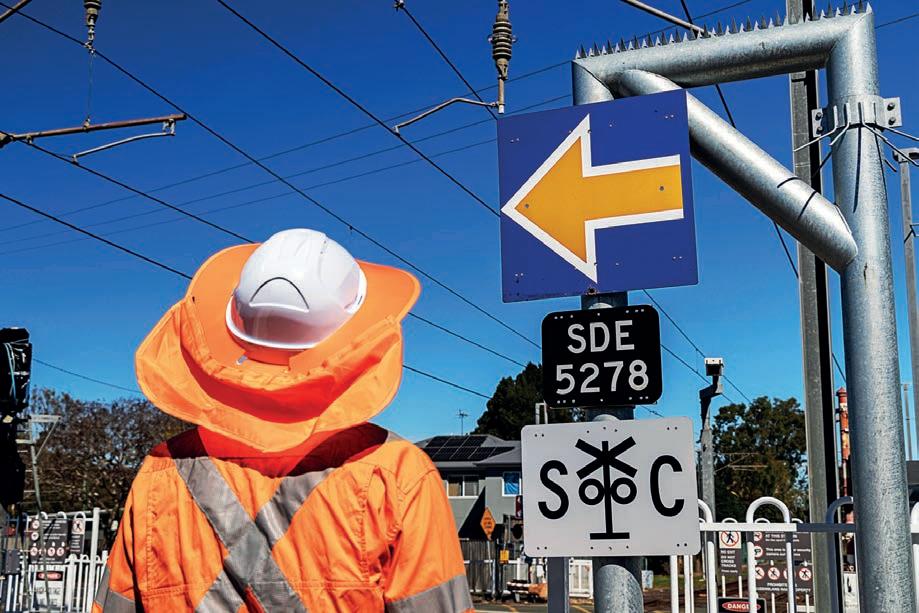
LEARNING FROM EUROPE’S EXPERIENCE European experience shows there is a risk that as the new ETCS technology is deployed, individual networks will adapt the system to suit local requirements, Hopkins said.
“If this occurs, we risk creating even greater barriers to interoperability, and lower safety and productivity outcomes,” he added.
To avoid this, the NTC has been working with the Australian Rail Track Corporation (ARTC), governments and industry to plan for a consistent and cost-efficient rollout of ETCS across Australia’s diverse railways – from busy urban centres to remote outback corridors which currently have no signalling systems and, in some locations, no electricity.
The NTC plays a coordinating role in trackside and rolling stock strategies and facilitates a cost-sharing approach.
Meanwhile, the ARTC leads planning for an ETCS solution, with a particular focus on the non-urban freight environment. This takes a whole-of-system view, including track infrastructure, rolling stock, network control and system integration.
“The focus is on identifying a scalable approach, balancing safety, performance and cost, while maintaining commercial viability over the short, medium and long term,” said Adrian Teaha, the ARTC’s Chief Interoperability and Development Officer.
“This includes progressing a national scoping business case to determine how digital systems can be introduced in a commercially sustainable way, maximising
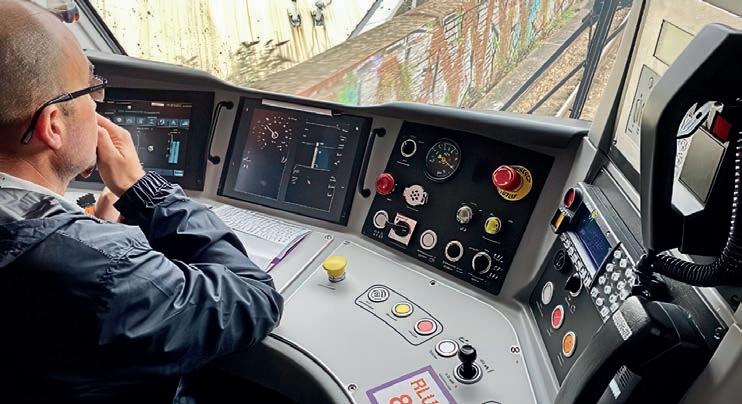
value for freight and passenger services while maintaining connectivity with key urban interfaces.”
The work is being undertaken in partnership with the Commonwealth and state jurisdictions, above and below rail operators and in significant consultation with technology suppliers and the broader freight industry, including unions.
“It’s a long-term transformation, requiring a phased pathway that recognises existing systems and constraints, incorporates interim solutions and allows for the adoption of emerging technologies over time,” Teaha said.
While interoperability is critical if rail’s freight task is to grow and remain competitive, it cannot be addressed by any single organisation, Teaha said.
“NRAP is an important mechanism for bringing governments and industry together around the shared challenge of improving the efficiency and effectiveness of Australia’s railways.
“This extends beyond the rail corridor, ensuring that the movement of goods and people aligns with the national interest and remains cost-effective.
“NRAP provides a framework to support that alignment, helping to establish common priorities, guiding principles and a more coordinated path forward.”
Industry leaders such as Caroline Wilkie, Chief Executive Officer of the Australasian Railway Association (ARA), agree that taking a national approach to address interoperability is critical.
“A lack of interoperability across Australia’s rail networks is the single biggest drain on the industry’s productivity,” said Wilkie.
“National Cabinet’s identification of this issue as a priority gives us a once-in-ageneration opportunity to take action and supercharge our industry.
“The ARA has worked closely with the NTC on initiatives to improve interoperability under NRAP, and we look forward to continuing this focus as we enter a new phase of national rail reforms.”
With national alignment and sustained investment, the sector is well-positioned to play a much larger role in meeting Australia’s freight needs.
In an era of rising freight demand and high fuel costs, the advantages of rail are becoming increasingly clear.
The challenge now is to modernise and integrate the network to realise that opportunity.
The 2026 Australian Heavy Haul Rail Awards recognised some of the dedicated individuals and organisations shaping the future of the industry.
Hundreds of delegates from across Australia recently descended on Perth for the 2026 Heavy Haul Rail Conference.
The two-day event spotlighted emerging trends, new technologies and strategies to address the industry’s biggest challenges.
The lineup of keynote speeches, presentations, interactive panels and indepth case studies attracted a diverse mix of customers, suppliers and thought leaders.
One of the major highlights from the conference, which was organised by Informa Connect Australia, was the prestigious Australian Heavy Haul Rail Awards (AHHRA).
Presented during a gala dinner at The Crown, the awards recognised some of the individuals and organisations driving the industry forward.
There was a strong focus on leadership and commitment to innovation, safety and sustainability, in keeping with the conference’s theme of “Driving the Next Era of Heavy Haul Rail”.
First held in 2025, the 2026 awards introduced three new categories and beat the previous year’s record for nominations and votes.
WINNER: DR SIVA NAIDOO, MONASH
INSTITUTE OF RAILWAY TECHNOLOGY
This award recognises exceptional earlycareer rail professionals demonstrating outstanding leadership, technical excellence, and innovation with clear future leadership potential.
RAIL IMPACT EXCELLENCE AWARD FOR SUSTAINABILITY AND SOCIAL RESPONSIBILITY
WINNER: GRANT METE, GM RAIL
This award recognises those delivering outstanding sustainability outcomes, and contributions to social initiatives in the heavy haul industry.
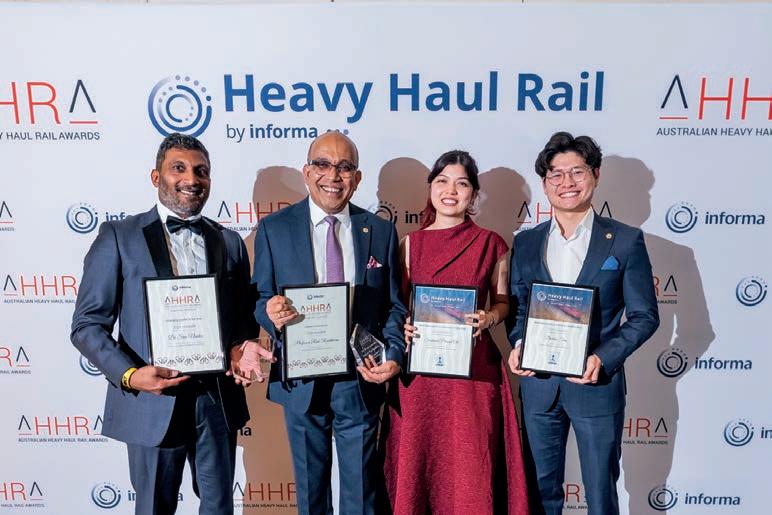
INSPIRATIONAL WOMAN IN HEAVY HAUL RAIL AWARD
WINNER: CASEY SLOPER, RIO TINTO
This award recognises leadership, innovation, and excellence amongst women in the heavy haul industry.
OTHER FINALISTS:
• C andis Rhodes, Rio Tinto
• C atherine Steele, TasRail
UNSUNG HERO
WINNER: JOANNE GORDON, WABTEC CORPORATION
The Unsung Hero Award recognises those individuals whose contributions often go unnoticed, and whose commitment and expertise are vital to the success of the heavy haul rail industry.
OTHER FINALISTS:
• G ary Doherty, Vossloh Switch Systems Australia
• A nthony (Tony) Ferguson, UGL Transport
• S cott Ohl, Plasser Australia
INDUSTRY CHAMPION AWARD
WINNER: DEAN NEWBURN, WABTEC CORPORATION
The Industry Champion Award acknowledges and celebrates someone who has shown dedication to advancing Australia’s heavy haul industry.
OTHER FINALISTS:
• Daniel Cuddy, Voestalpine
• B en Senior, Swietelsky Rail Australia
• K senija Stanic, GM Rail
LIFETIME ACHIEVEMENT AWARD
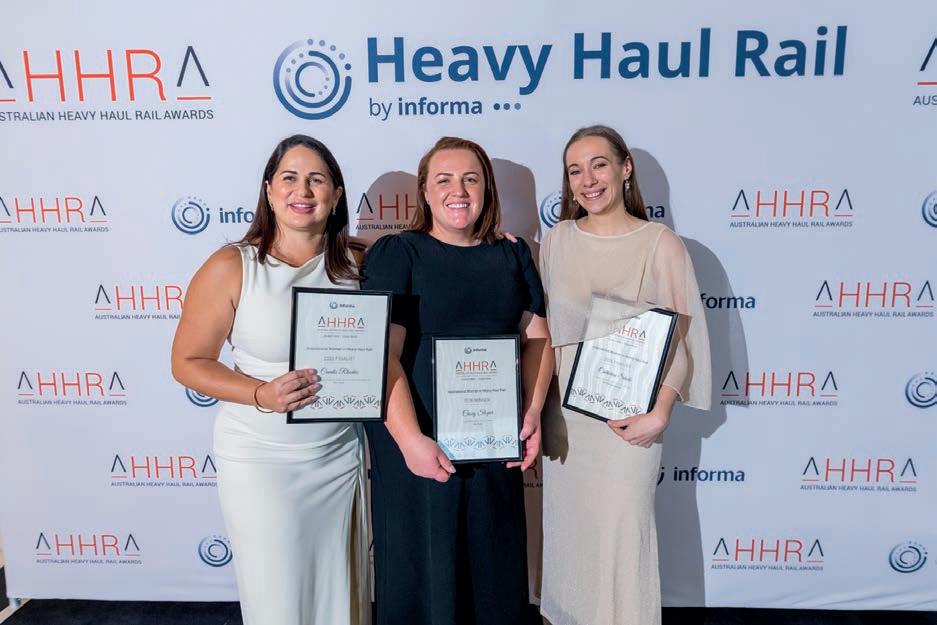
WINNER: PROFESSOR RAVI RAVITHARAN, MONASH INSTITUTE OF RAILWAY TECHNOLOGY (MONASH IRT)
Over the course of a career spanning more than 35 years, Professor Ravi Ravitharan has been a driving force behind groundbreaking research, innovation, policy development and industry collaboration.
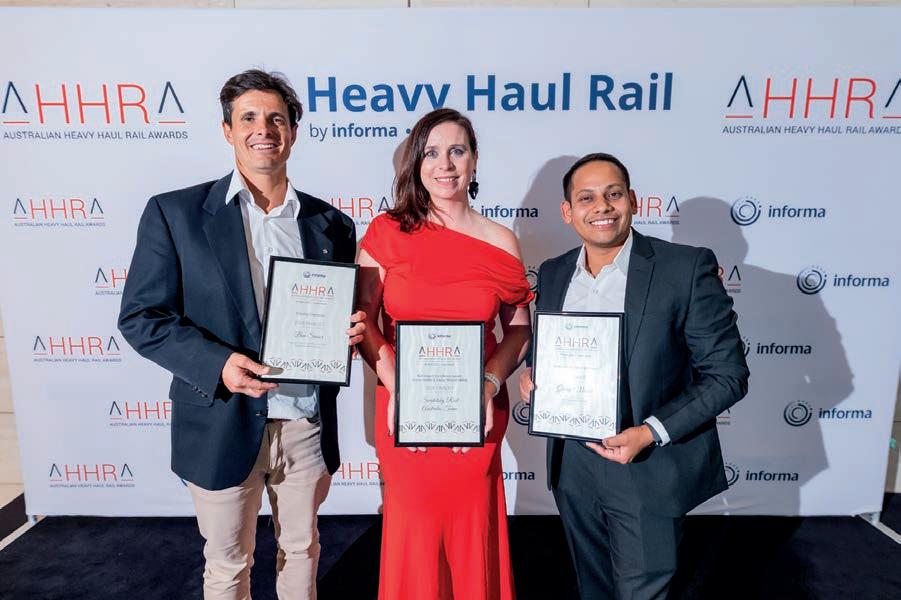
Before the presentation of his award, the Director of Monash IRT was praised for his “visionary leadership and dedication” that has “profoundly shaped” the rail industry, both in Australia and around the world.
Professor Ravitharan said he was deeply honoured to receive this recognition.
“This is a humbling experience, considering that I arrived in this country in the mid 1980s with an engineering degree, but at that time, no knowledge of rail engineering and no experience in rail. I didn’t have any connections within this industry.”
While he was still completing his postgraduate studies, Professor Ravitharan joined the rail research team at BHP’s rail research laboratories.
In 2000, when BHP transferred its research facilities to Monash University, Professor Ravitharan was given the opportunity to be part of the leadership team at the newly established Monash IRT. A decade later, he was named Director.
Professor Ravitharan said that early in his career, he realised that research and innovation are the cornerstones of any modern industry.
“Adhering to strong work ethics underpinned by a can-do attitude, I worked very hard to develop my understanding of railways and the railway industry, and to engage with the people within it,” he added.
Sharing his advice to young railway professionals attending the awards, he said:
“I encourage you to explore and embrace opportunities available in this dynamic, growing railway industry.
“I thank the railway industry and the Heavy Hall Railway Conference organisers, Informa, for their support, and I'm grateful for this award.”
The Women in Industry Awards bring together industry professionals, senior leaders and emerging talent in a dynamic setting.
There are just a few days left to grab your tickets for the Women in Industry Awards, which are taking place at Doltone House Darling Island Wharf in Sydney on June 18.
The prestigious awards dinner brings together industry leaders, accomplished women and organisations driving meaningful change across industrial sectors.
More than a celebration of achievement, the event will offer rare opportunities for conversations you would not get in day-today business, turning introductions into real connections over the course of the evening.
“This is more than a typical networking event,” said Molly Hancock, Head of Events Marketing at Prime Creative Media, the organisation behind the awards.
“Even if your business isn’t nominated for an award, the evening provides the time and space for deeper, more valuable conversations.
“These interactions often lead to new opportunities, collaborations, and long-term professional relationships.”
Hancock added that this year’s finalists “represent the strength, innovation and leadership driving Australia’s industrial sectors forward”.
See the full list of finalists below.
• L ouise Bishop – Zinfra
• Ilaria Giovannetti – Rohlig Australia
• Shamime Hussein – Liion Energy
• Sunny Rutherford – Potentia Energy
• Stephanie Salinas – Yarra Valley Water
• Jessica Schmidt – EnSol Environmental Solutions
• Sheeza Shakeel – DXC Technology
EXCELLENCE IN ENGINEERING
• A ndrea Edney – Systra ANZ
• Hoda Ehsani – Fortescue
• Neyra Hackett – BOC Limited
• A meneh Jalali – Yokogawa Australia
• Elika Karbassi – InfraBuild
• Alexandra Kelly – SMEC
• Olga Mikhaylova – CPB Contractors
• Olivia Mirza – Western Sydney University
• Tamsyn Parker – BOC Limited
• Marjan Torshizi – Argon & Co
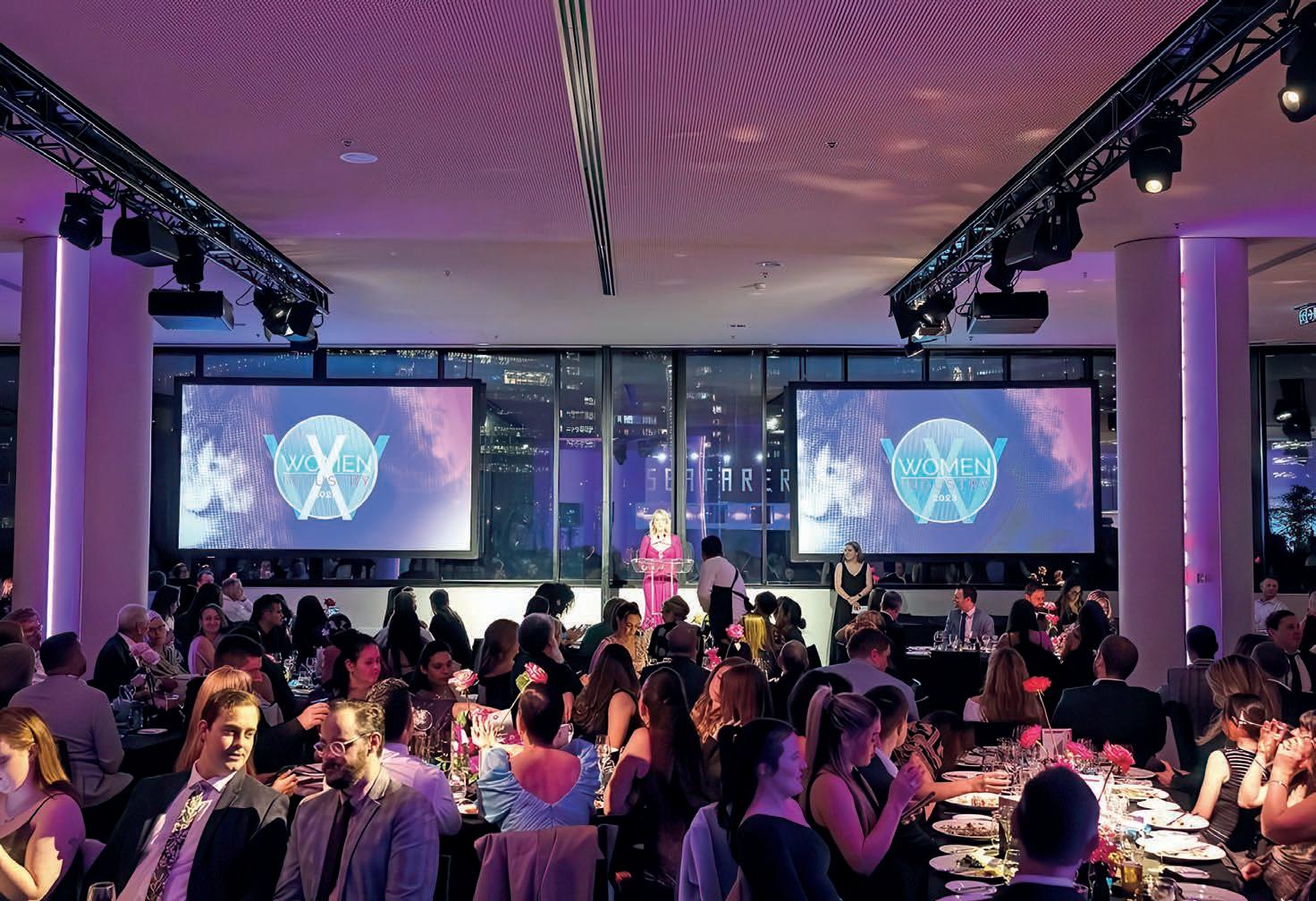
TRADESWOMAN OF THE YEAR
• Shanica Banham – Acorp Construction
• Olivia Entwistle – Newmont
• Elijha Fortescue – Essential Energy
• A na Gamero – Bucher Municipal
• S amantha Hall – Drake Trailers
• Shannen Jeffery – Newmont
• Clarisse Orchard – Callidus Group
• Felicity Pettiford – Sydney Builder Chick
• Jennifer Revell – Master Electricians Australia
• Jasmyn Smith, Logan Barnett – The GO Company
BUSINESS DEVELOPMENT SUCCESS OF THE YEAR
• Pansy Khurana – Aussie Home Loans Berwick
• Michelle Knott – Brooklyn Quarry
• Zureka Loubser – Argon & Co
• Sienna Tamati – Resourceful Women
• Kate Tsorvas – Jakarli Group
• Jenny Valentino – New Era Group
• Marissa Verberne – Bajwa EnvrioConsult (BEC)
• Yuan Yuan – Sykes Group
• Karlie Zec – Tiny Tins
INDUSTRY ADVOCACY AWARD
• Tatiana Delendik – Grundfos
• L auren Fahey – NexGen
• B ecky Felstead – The Resource
• Haura Hussaini – Chevron Australia
• Julie Jupp – University of Technology Sydney
• Narissa Kinghorne – Newmont
• V icky Pellowe – The FIFO Family Project
• Julia Szymanski – Yokogawa Australia
• Jessica Tuck-lee – Mudgee Cranes
• Karlie Zec – Tiny Tins
EXCELLENCE IN CONSTRUCTION
• Michelle Gillies – Brisbane Airport Corporation (BAC)
• G eorgia Hartin – EME Rooming Houses
• C aitlyn Hayes – Komatsu Australia
• P uja Khanna – Ellipse Property
• Jacqueline Madsen – Australian Antarctic Division
• Divya Mehta – Decode Group
• Alysse Reedy – Fulton Hogan
• Jessica Rippon – Construction Legal
MARKETER OF THE YEAR
• Maria Astakhova – Rohlig Logistics
• Liz Bingham – Metso
• Maria Deferia – Grundfos
• L auren Hamilton – Smart Commercial Energy
• Renata Hjelmstrom – Lincom Group
• Melissa Johnson – Primary Comms Group
• Edie Lada – Croire
• C aroline Luczynski – SMEC
• L ouise Tilley – SAGE Group, A Tetra Tech Company
• A nastasia Zimsen – Weir
EXCELLENCE IN TRANSPORT
• Alexandra Bosnjak – Argon & Co
• Ilaria Giovannetti – Rohlig Australia
• Ronda Irvine – Asahi Beverages
• Jing Liang – Yokogawa Australia
• Jacqueline Madsen – Transport for NSW
• O rlane Mortimer – Wollongong Crane Trucks
• Priya Perera – V/Line Corporation
• Kattie Risk – Billirrawarra Trucking & Training
• True Ross – Ross Transport
• S arah Singh – Elite Transport Solutions
MENTOR OF THE YEAR
• L aura Canning – Komatsu
• Tracy Clark – City of Gold Coast
• Lisa Dimitrijevic – Fulton Hogan
• Naomi Elliott – Concept Labs
• A nnabelle Lynch – Mudgee Cranes
• Allison Metcalfe – Newmont
• Kym Sammut – Red Rock
• Martina Storgato – Mills Oakley
• Shannon Tutin – RoadAid
• Nina Zundel – Aurecon
EXCELLENCE IN MANUFACTURING
• L atinka Cubitt – Catten Industries and LaTink
• Naomi Elliott – Concept Labs
• Hayley Erasmus – Coca Cola Europacific Partners (CCEP)
• Melanie Hignett – Asahi Beverages
• Joanne Howarth – Planet Protector
• Elika Karbassi – InfraBuild
• Derelle Mitchell – Health Focus Manufacturers
• Jane Oppenheim – Ego Pharmaceuticals
• Sheila Payad – Asahi Beverages
• Charline Siccardi – Argon & Co
WOMEN IN LEADERSHIP AWARD
• Belinda Battaglia – MEDLOG
• L aura Canning – Komatsu
• S amantha Cleaver – Potentia Energy
• S andra Kemp – Evolution Mining and Civil
• Dr Judith Ong – Elevate Dental
• Dr Priya Subramanian – Dulux Australia
• C assia Sutton – earth gear
• Rachel Thomas – Grace Insurance
• Karlie Zec – Tiny Tins
EXCELLENCE IN HEALTH AND MEDICINE
• Alineh Agon – Closer Care
• B ec Bennett – National Acoustic Laboratories
• Dr Sarah Crowe – OOXii
• A meneh Jalali – Yokogawa Australia
• Katherine Millar-Shannon – Terpeze Holdings
• Dr Judith Ong – Elevate Dental
• Dr Signe Steers – The Audiology Place
• Shaina Zheng – S & J Optical / Eyecare Plus Mermaid Beach Optometrists
RISING STAR OF THE YEAR - 30 YEARS AND UNDER
• C aitlin Barlow – JATEC Transport
• Alex Callinan – Grundfos Pumps
• Courtney Dobson – Newmont
• Alesha Henare – Select Logistics and Transport
• S ophie Jackson – Argon & Co
• A ngela Julianto – Fulton Hogan
• Jasmine Obermuller – SMEC
• Jasmine Palmer – Fire+Rescue NSW and Polymetals
• Aya Salih – Bajwa EnviroConsult (BEC)
• S ervarna Waterman – Asahi Beverages
EXCELLENCE IN MINING
• Brooke Adamson – Newmont
• Erin Bell – Co Connect App
• Joanne Bergamin – WISER (Women in Sustainable Energy & Resources) Inc.
• Briony Coleman – Newmont
• Maria Davoren – Davoren Environmental Pty Ltd
• C aitlyn Hayes – Komatsu Australia
• S andra Lam – FIFO Focus
• Allison Metcalfe – Newmont
• G uilia Vallone – Rema Tip Top Industrie Australia
SAFETY ADVOCACY AWARD
• S arah Barnbrook – Away from Keyboard Inc.
• Madalyn Cheetham – BOC Limited
• S arah Henry – Queensland Water Directorate (qldwater)
• Alicia Neville – Action OHS Consulting
• Kate Quinlan – Complete HSEQ Solutions
• Alysse Reedy – Fulton Hogan
• S andra Reid – CDC NSW
• Peta Ritchie – Coca Cola Europacific Partners (CCEP)
• Priya Sanyal – Asahi Beverages
• Shannon Tutin – CCL Specialised Pty Ltd
Businesses from across Australia are invited to attend the awards gala for an inspiring evening dedicated to celebrating trailblazing women who are breaking barriers and redefining what’s possible.
Secure your ticket at: womeninindustry.com.au/attend/
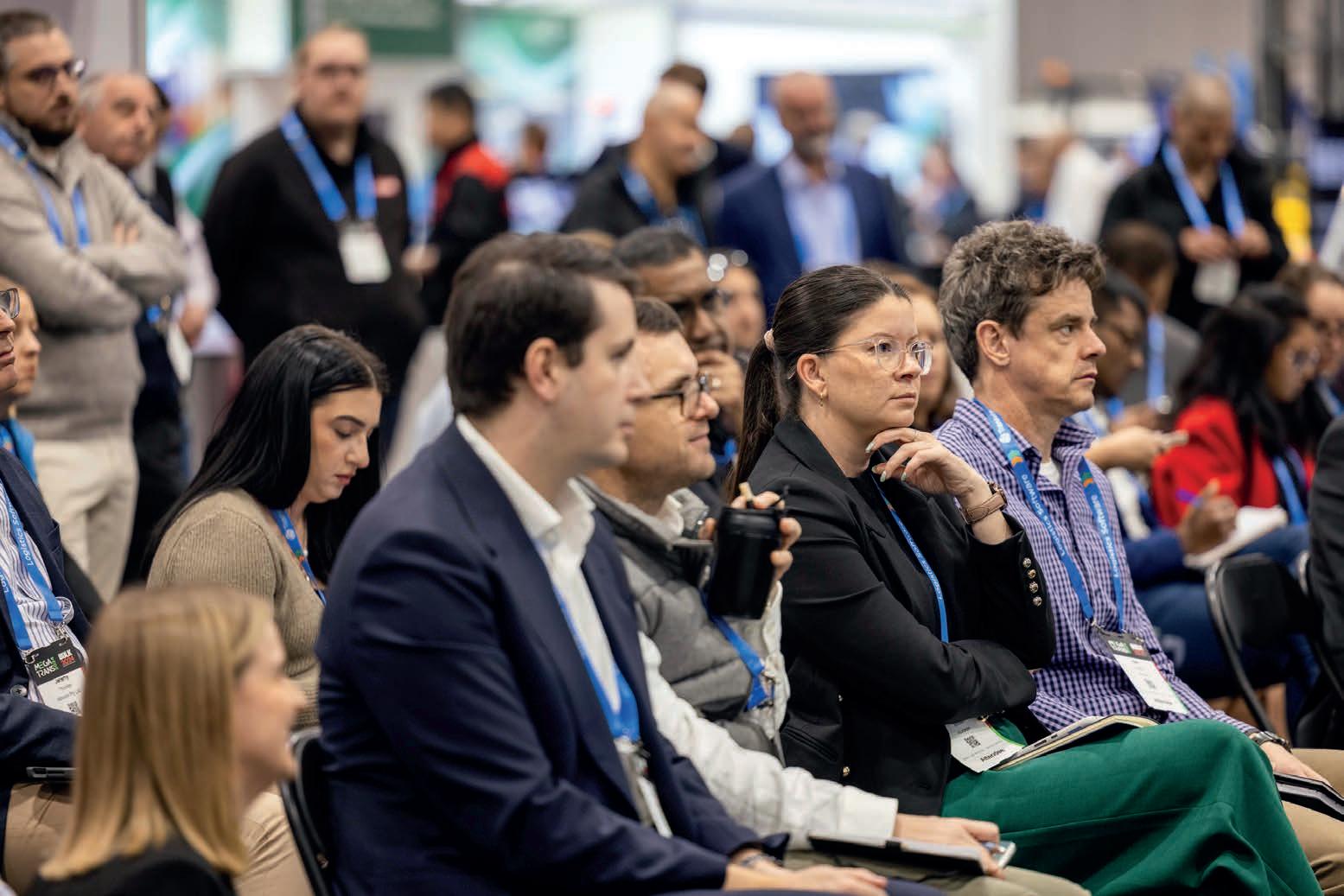
The program for Australia’s only dedicated exhibition and conference for the bulk solids handling industry is now live.
The program for the 2026 Bulk Handling Technical Conference has been announced, bringing together leading engineers, researchers and technology providers from across the global bulk solids and materials handling sector.
The event, which will take place from September 16-17, 2026 at the Melbourne Convention and Exhibition Centre, features a strong line-up of international industry leaders and technical specialists, highlighting advances in safety, digital engineering and infrastructure performance.
The program is anchored by several headline presentations from globally recognised organisations driving innovation across mining, infrastructure and industrial processing.
Key highlights include:
• Multiple presentations from TUNRA Bulk Solids, one of the sector’s most respected research groups. The group will cover conveyor belt wear resistance, safety in bulk solids handling and live wear monitoring
of wall liners through experimental and simulation-based approaches.
• KOCH Solutions showcasing IBEX and its role in the future of deep mining, focusing on next-generation systems for high-performance material handling in complex environments.
• A presentation from Intertek about a unique method for accurate bulk material tonnage assessments, addressing one of the industry’s most critical challenges in measurement accuracy and commercial reporting.
• Worley revisiting a 13-kilometre overland conveyor, exploring how modern technology is transforming energy use, capital cost and lifecycle performance in long-distance conveying systems. Alongside these, presentations will be held by Worley, Luna Innovations, HMA, Prime Manufacturing, Syntechtron, Hawk Measurement Systems, BFM Australia, Geometrica, University of Wollongong, Concetti, DICE Computing, AXO33, WGA,
Leap Australia, Australian Weighing Equipment, Anval and Ultra-Dynamics.
“This year’s conference is about what’s actually working on the ground and what will be helpful in the future,” said Molly Hancock, Head of Marketing – Events at Prime Creative Media, the organisation behind the conference.
“From advanced simulation tools to practical safety solutions, the program has been curated to give attendees ideas they can take straight back to site.
“The Bulk Handling Technical Conference continues to position itself as a key technical forum for the bulk handling industry, connecting operators, engineers, and technology providers with solutions designed to improve safety, efficiency and long-term asset performance.”