The Australian dream
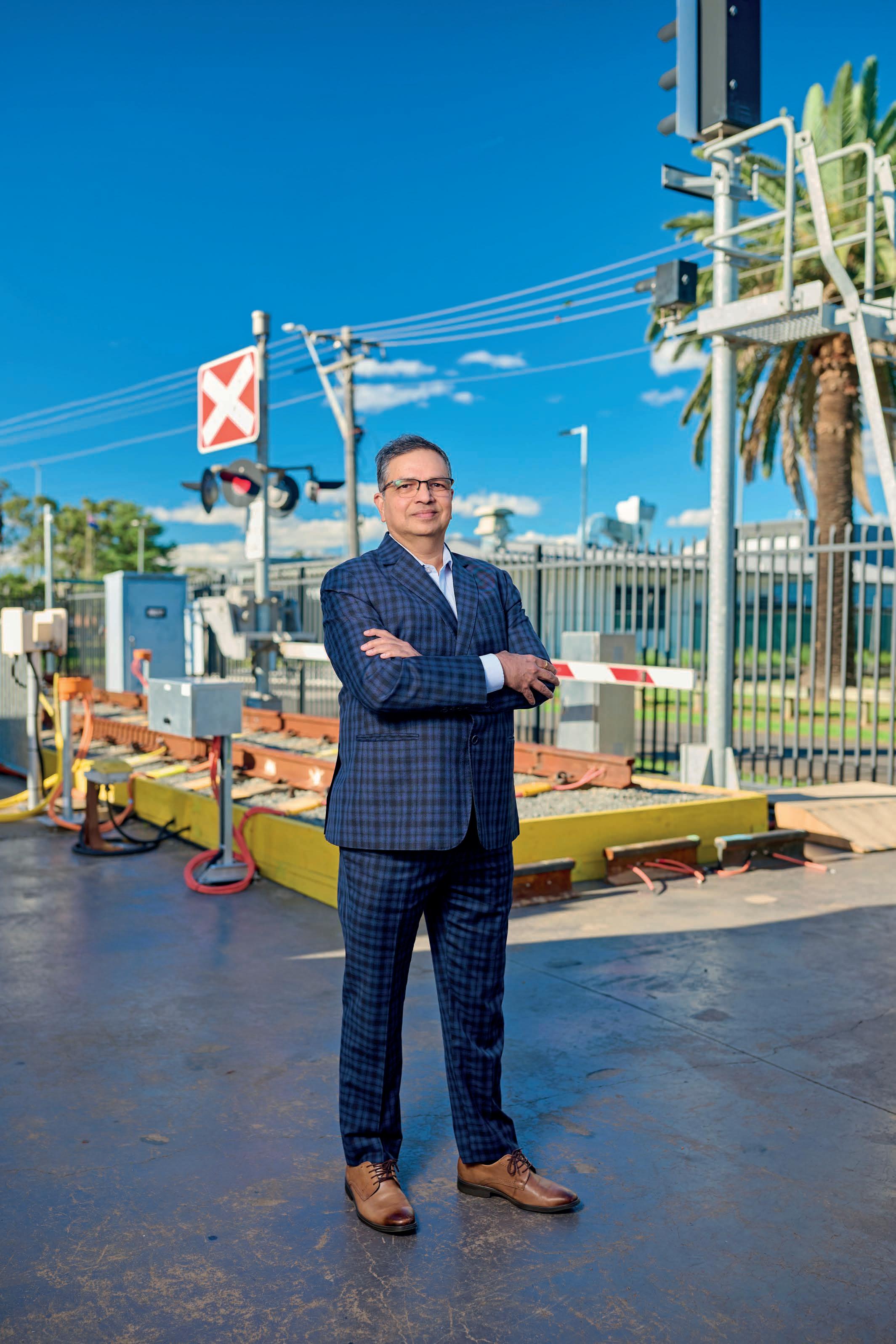
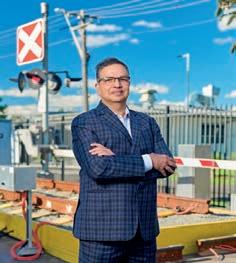
Dilip Goyal arrived in Sydney at the age of 26 with just $1500 to his name. Now, he’s the head of JMDR – an international signalling company with more than 400 employees.
Delivering rail’s digital transformation PAGE 19
A win for local manufacturing PAGE 22


The Great Debate: Driverless trains PAGE 34



From the Editor
Published by:
379 Docklands Drive
Docklands, VIC 3008
T: 03 9690 8766
www.primecreativemedia.com.au
Chairman
John Murphy
E: john.murphy@primecreative.com.au
CEO
Christine Clancy
E: christine.clancy@primecreative.com.au
Managing Editor
Lisa Korycki
E: lisa.korycki@primecreative.com.au
Editor
Kayla Walsh
E: kayla.walsh@primecreative.com.au
Business Development Managers
Claire Waters
M: 0466 545 664
E: claire.waters@primecreative.com.au
Emily Schlegel
M: 0466 317 555
E: emily.schlegel@primecreative.com.au
Client Success Manager
Ben Sammartino
E: ben.sammartino@primecreative.com.au
Head of Design
Clayton Hawley
E: clayton.hawley@primecreative.com.au
Designer Apostolos Topatsis
Subscriptions subscriptions@primecreative.com.au
www.RailExpress.com.au
The Publisher reserves the right to alter or omit any article or advertisement submitted and requires indemnity from the advertisers and contributors against damages or liabilities that may arise from material published.
© Copyright – No part of this publication may be reproduced, stored in a retrieval system or transmitted in any means electronic, mechanical, photocopying, recording or otherwise without the permission of the Publisher.
Kayla Walsh Editor - Rail Express
Welcome to the July edition of Rail Express
It’s been another busy month for the rail industry, and I was glad to be able to attend the Australian Rail Industry Standards Organisation (ARISO) Rail Safety Conference in Melbourne.
From updates to rail standards to progress on the path to interoperability, there was much to discuss. I bring you some of the highlights on pages 32 to 35.
This month’s cover story is an interview with Dilip Goyal, the founder of rail signalling company JMDR. Dilip arrived in Australia as a young engineer with just $1500 to his name. Today, JMDR employs more than 400 people, with offices around the world.
Another great interview in this month’s issue as with Angie Doll, who has just made the move from the United Kingdom to Melbourne to take on the role of Managing Director of Rail at Go-Ahead Australia and New Zealand. Angie’s passion for rail really shines through, and I’m looking forward to seeing where this new challenge takes her.
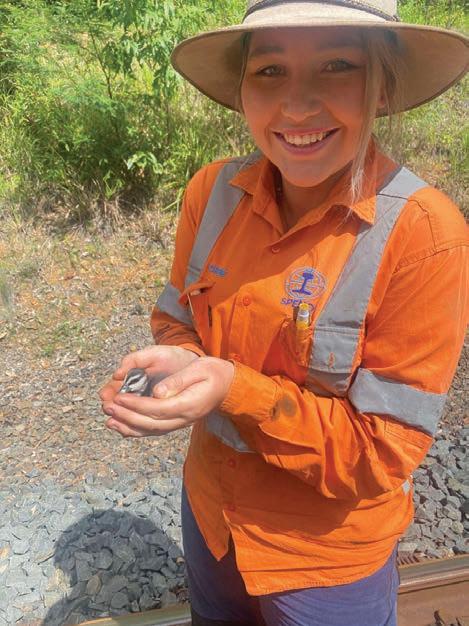
I was also left feeling inspired after my conversations with Chloe Keep and Patrick Clifford from Speno – turn to page 30 to read more.
And it’s great to see another Australian success story, with Sydney-based manufacturer Amokabel landing a contract that could be a real game changer.
Also in Sydney, Alstom is celebrating the opening of its brand-new bogie overhaul facility, which will boost the reliability and availability of Sydney Metro’s fleet.
Meanwhile, my interviews with four experts from Siemens Mobility shows that the company already has the people,
platforms and experience to unlock the next level in mobility through digitalisation.
Another company on the cutting edge of technology is Dassault Systèmes, who recently delivered a fascinating webinar on the benefits of integrated planning for rail. I bring you some of the best insights on page 27.
Plus I bring you all our usual updates from the Australasian Railway Association, the National Transport Commission, the Permanent Way Institution of New South Wales and ARISO.
Happy reading!
kayla.walsh@primecreative.com.au
MAXIMISED NETWORK CAPACITY
Shape the future of mobility
At Siemens Mobility, we are pursuing technologies and solutions for more sustainable, comfortable, and cost-effective rail transport to shape the future of mobility and #transformtheeveryday for a better tomorrow.
Metro Tunnel receives top sustainability ratings
Melbourne’s Metro Tunnel project has received the highest sustainability ratings available from both the Green Building Council of Australia and the Infrastructure Sustainability Council, recognising its environmental, social and economic performance across design, construction and operation.
The Metro Tunnel’s five new stations, Arden, Parkville, State Library, Town Hall and Anzac, have each achieved 6-star Green Star As-Built certification from the Green Building Council of Australia, the organisation’s highest rating.
The project has also received leading As-Built ratings under the Infrastructure Sustainability Council’s IS Rating Scheme, recognising sustainability outcomes delivered during construction.
Key initiatives contributing to the ratings include avoiding more than 230,000 tonnes of carbon emissions, reducing cementrelated emissions by 52 per cent, installing solar panels at Arden Station, incorporating regenerative braking technology in lifts

The project also includes rainwater and stormwater harvesting systems at each station, delivering a 55 per cent reduction in drinking water demand, as well as more than 16,500 square metres of new public space.
Social and community outcomes recognised through the ratings include First Nations-led artwork, public art installations, apprenticeship and trainee opportunities,
Country mayors voice concerns over cessation of Inland Rail
The Country Mayors Association of NSW (CMA) has met with Federal Infrastructure Minister Catherine King to voice strong concerns over the decision to halt the Inland Rail project at Parkes, leaving regional communities and investors in limbo.
CMA Chair Rick Firman said the move has triggered widespread frustration, with councils and private businesses having invested millions in anticipation of the project’s full delivery between Melbourne and Brisbane. The sudden truncation has left significant sunk investments stranded, particularly in regions north of Parkes.
While acknowledging the project’s escalating cost – from $8.4 billion in 2017 to an estimated $45 billion – Firman said the financial pressures do not diminish the severe impact on communities such as Narromine, Narrabri and Moree.
During discussions, Minister King indicated the government will shift focus to strengthening east–west freight links from Parkes to Perth, as well as connections to Port Botany and the Port of Newcastle.
The existing north–south corridor will be preserved where possible.
Despite disappointment, the CMA is exploring alternative freight solutions to salvage value from the project. This includes advocating for an intermodal-based network using the National Intermodal Corporation, potentially linking Beveridge in Victoria to Ebenezer in Queensland.
The proposed Ebenezer terminal aligns with findings from a 2023 independent review, which identified it as a key site for improved freight efficiency and meeting demand.
The CMA argues that terminating the project at Parkes undermines economic, social and environmental outcomes, and risks wasting substantial prior investment.
The association is continuing to lobby for a revised approach that delivers better returns and supports regional development.
Firman emphasised that while the current decision is a setback, discussions with government will continue in pursuit of a viable path forward for the Inland Rail project.
including energy, water, materials, transport, ecology, emissions and innovation, while the IS Rating Scheme evaluates economic, environmental and social outcomes across the full infrastructure lifecycle.
The Metro Tunnel, which opened to passengers in November 2025, is the largest upgrade to Melbourne’s rail network in more than four decades.

The new State Library Station concourse.
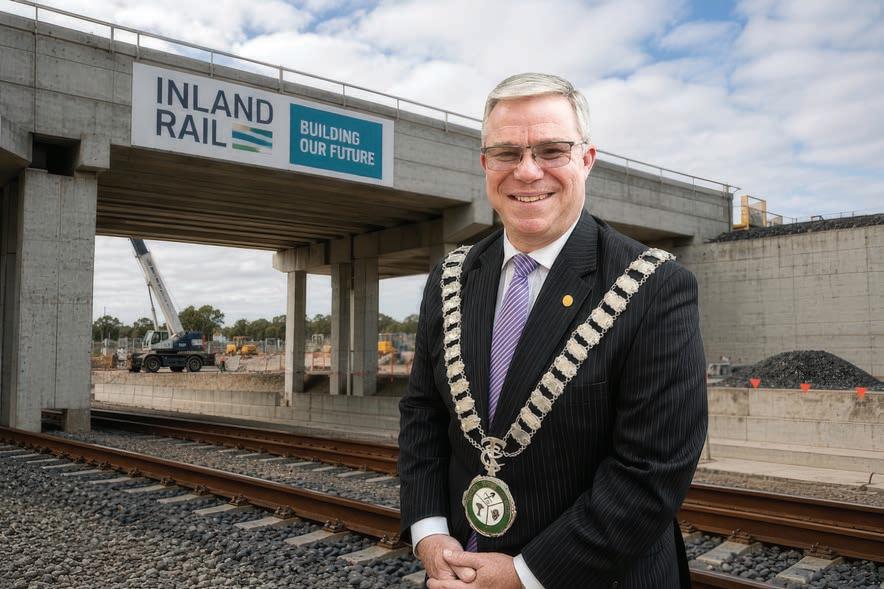
Country Mayors Association of NSW Chairman (Temora Shire) Mayor Rick Firman.
Melbourne Airport Rail ramps up
Works on Stage 1 of the Melbourne Airport Rail project are gathering pace, with crews undertaking site investigations at Tottenham.
The first phase of the project will untangle six kilometres of track between West Footscray and Albion and deliver two new platforms at Sunshine Station.
These upgrades will transform Sunshine into a rail “superhub” capable of handling up to 1000 trains a day, including future airport services and electrified trains to Melton.
Between Tottenham and Sunshine stations, crews have been carrying out soil testing, locating underground services and assessing existing rail infrastructure. Activity across the corridor is expected to ramp up in July.
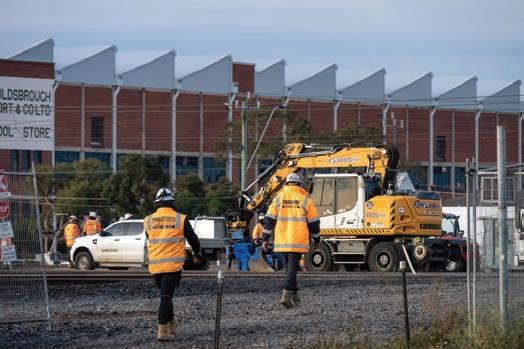
The investigations will help shape plans to reconfigure tracks between Tottenham and Sunshine, construct new rail flyovers
and build a new Tottenham Station. The station will be relocated about 20 metres north of its current site on the realigned Sunbury Line corridor, maintaining access to Sunbury services that will run through
the Metro Tunnel. Two new flyovers and the removal of the Tottenham freight crossover will permanently separate metro, regional and freight services, while creating space for future airport rail tracks.
At Sunshine, utility relocation works are already underway to prepare for an expanded station precinct.
This includes moving a major telecommunications line beneath the Sun Crescent station car park.
Meanwhile, a major jet fuel pipeline is being relocated at Albion Station, paving the way for new platforms serving the Geelong and Ballarat lines at Sunshine Station.
The pipeline relocation will also enable construction of an expanded station concourse, a new station entrance and landscaped forecourt, as well as a new pedestrian and cycling connection over the rail line.
Contracts locked in for historic rail blitz
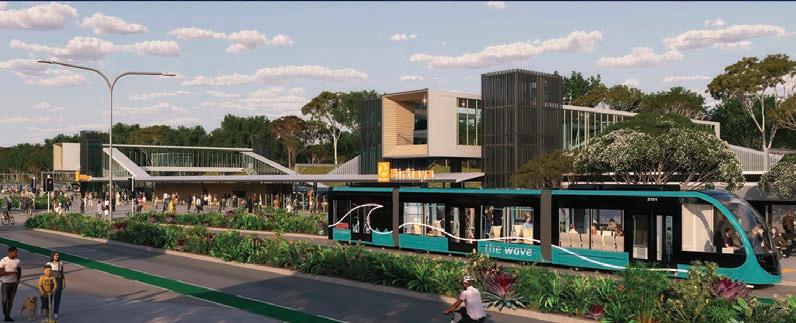
Design and pre-construction contracts have been awarded for Stage 1 (Rail) of The Wave, a major infrastructure project in Queensland.
The project will deliver 19 kilometres of new dual track between Beerwah and Caloundra through two construction packages and a signalling contract.
Beerwah Coast Connect – a consortium of Georgiou, Hatch and Laing O’Rourke – has won the contract for design and pre-construction works across existing sites in Beerwah and surrounding areas (brownfield works).
CoastalTraX, a consortium of Acciona and Georgiou, will deliver design and preconstruction works across undeveloped land, connecting with the brownfield package east of Steve Irwin Way through to Caloundra.
Alstom and UGL have been awarded the contract to deliver European Train Control System signalling systems.
Along with Beerburrum to Nambour rail upgrade, The Wave will underpin the largest ever investment in infrastructure on the Sunshine Coast.
As well as the new dual track, Stage 1 will include new stations at Aura (Bells Creek) and Caloundra, as well as upgrades to Beerwah Station.
Over the next year, the State Government will work with Beerwah Coast Connect and CoastalTraX to refine detailed designs, which
Delivery Plan for the Brisbane 2032 Olympic and Paralympic Games and beyond.
will include ongoing site investigations and further community consultation on station precincts later this year.
Federal Minister for Infrastructure, Transport, Regional Development and Local Government Catherine King said the Australian Government is proud to partner with the Queensland Government to deliver Stage 1 of The Wave.
“The Wave Stage 1 is another example of the Australian and Queensland governments working collaboratively to deliver the infrastructure Australia needs,” she said.
“This project will create jobs, boost economic growth and improve connectivity for Sunshine Coast communities and businesses.”
Queensland Deputy Premier and Minister for State Development, Infrastructure and Planning and Member for Kawana Jarrod Bleijie said The Wave will transform the Sunshine Coast’s transport network.
“It will be a game changer for Sunshine Coast locals and will help provide a real alternative to sitting on the Bruce when they’re travelling to Brisbane,” he said.
The Wave was announced as part of the 2032
Image:
Crews are on the ground for site investigations at Tottenham.
Image: Victorian Government
Monash IRT takes on the world’s largest freight network
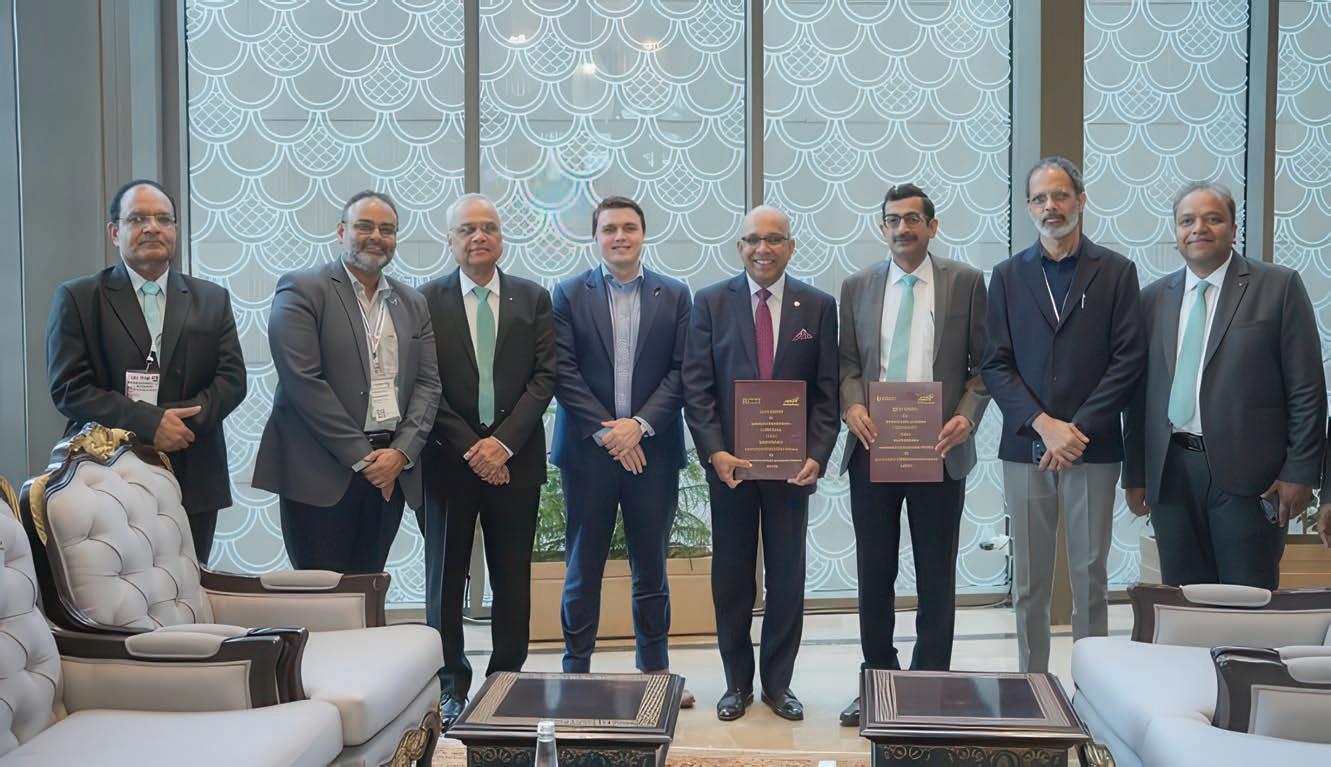
The Monash Institute of Railway Technology (Monash IRT) and the Dedicated Freight Corridor Corporation of India Limited (DFCCIL) have launched their first joint project. This initiative follows a Memorandum of Understanding signed in 2025 to advance heavy-haul railway engineering in India.
The Monash IRT, internationally renowned for its experience in solving wheel-rail interface-related issues for leading heavy haul operators globally, will support the DFCCIL to optimise the wheel-rail interface on two critical eastern and western freight corridors in India, the largest heavy haul network in the world.
Speaking from the signing ceremony in New Delhi, India, the Director of Monash IRT, Professor Ravi Ravitharan, said the collaboration with the DFCCIL will focus on improving the wheel-rail interface, supporting safety and longterm sustainability for India’s heavy-haul
railways, reducing maintenance costs and extending the asset life for advancing India’s expanding freight rail network.
“Monash IRT has a long-standing relationship and has collaborated with DFCCIL since 2016. Through this project our team will work closely with DFCCIL engineers and technical staff to transfer knowledge and to advance heavy-haul railway engineering in India,” Ravitharan said.
“Monash IRT and the DFCCIL will continue to explore further collaborative projects as part of this broader partnership and continue to strengthen freight rail performance and innovation across both countries.”
Deputy Vice-Chancellor (International) and Senior VicePresident at Monash University, Professor Craig Jeffrey, said Monash IRT’s expertise in railway engineering is internationally recognised.
“This collaboration reflects the institute’s proven capability in solving complex rail engineering problems, with outcomes that have been successfully adopted internationally,” Jeffrey said.
The Managing Director of the Dedicated Freight Corridor Corporation Limited, Praveen Kumar said; “Improving rail maintenance has been identified as a critical factor in the newly constructed freight lines. DFCCIL is delighted to secure independent expert support from the world-renowned Monash Institute of Railway Technology and, through this project, will develop indigenous knowledge in this field.”
The MoU signed in 2025 established a framework for joint research, training and technical development. It also provides opportunities to develop a Centre of Excellence in Rail Maintenance, with a focus on wheel-rail interface management and improving system reliability.
It’s the first major project since an MoU was signed in 2025.
Image:
Monash IRT
New station opens as 91 level crossings gone for good
Three “dangerous and congested” level crossings have also been removed
in Mordialloc and Aspendale, with trains instead running on two new rail bridges over McDonald Street, Mordialloc and Station Street, Aspendale.
A new road and signalised intersection connects Station Street to Nepean Highway, reducing congestion in the area.
Along with the Bear Street level crossing, which closed permanently in August last year, about 26,000 vehicles travelled through these level crossings every day.
The boom gates were down for up to 40 minutes during the morning peak, causing delays for drivers.
One fatality and 12 near misses were recorded across the three sites since 2016. The Victorian Government says removing these crossings will boost safety by permanently separating trains from vehicles and pedestrians and cyclists.
Join rail leaders and people and culture professionals for practical insights, peer connection and discussion on the workforce issues shaping rail.

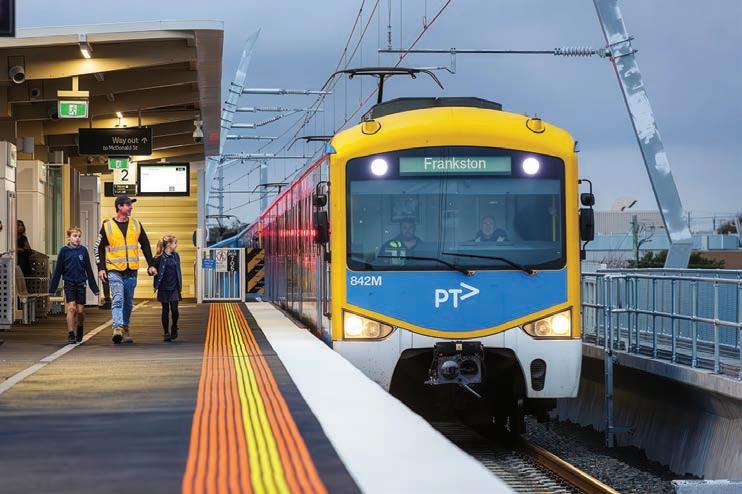
The new Mordialloc Station in Melbourne is officially open to the public, with services returning to the Frankston Line following a three-week construction blitz.
The station features entrances at both ends, as well as lift and stair access, a
waiting room for passengers, toilets, and seating, and a new one-kilometre walking and cycling path within the station precinct.
Passengers can access the new Mordialloc Station via lifts and stairs at both ends of the platforms.
Image: Victorian Government
From local roots to global footprint
JMDR: delivering complete rail engineering solutions through experience, innovation and partnerships.
As Australia’s rail sector expands, modernises through digital systems and responds to growing communities, the need for experienced, agile and trusted delivery partners has never been greater, particularly in Queensland and New South Wales. While the industry has slowed across parts of Australia and New Zealand over the past 12–18 months, governments are taking steps to improve project funding to meet increasing demands.
Across passenger, freight, regional and metro networks, rail infrastructure continues to play a vital role in national connectivity.
At the centre of this transformation is JMDR, a rail engineering, project delivery (design and construction) business built on the principles of technical excellence, collaboration and accountability.
With a reputation for delivering major brownfield projects with reliability while working in live operational environments, from concept to completion, including
design, construction, testing and commissioning, JMDR has become a respected partner to government agencies, rail operators, Tier 1 contractors and suppliers across the rail sector.
Founded by Dilip Goyal in 2008, JMDR’s story is one of perseverance, capability and contribution.
After arriving in Australia in 1990 as a young engineer with ambition, determination and a strong work ethic, Goyal built a successful career in rail signalling, working on major projects and holding senior leadership roles in State Rail Authority / RailCorp (now Sydney Trains) before establishing JMDR. His training at Sydney Trains, mentoring by senior staff, and the experience gained over 18 years prior to JMDR, helped in shaping the company’s strong foundations of mission to deliver quality outcomes for clients, while maintaining safe and reliable operations.
“I’m very proud,” Goyal said. “I feel privileged to have been able to build JMDR
to what it is today. It’s been the effort of everyone we have at JMDR, who put their heart and soul into the company and work extremely hard, to make sure everything we do is delivered to the highest standard with reliability.
“It is extremely important that we plan works so they do not impact train schedules and we use competent staff. JMDR’s success today is driven by the collective strength of its people, leadership team and specialist workforce in Australia, New Zealand, India and the United Kingdom.”
SUPPORTING AUSTRALIA’S RAIL TRANSFORMATION
Australia’s rail industry is undergoing significant change, with population growth, network modernisation, digital technologies and sustainability goals driving investment in passenger, freight and metro systems to improve safety, connectivity, capacity and reliability.
JMDR team members working on the Sydney Terminal Area Remodelling (STAR) Design Integrity Testing.
Images:
JMDR
Goyal said JMDR is proud to support this transformation by providing specialist expertise across the full project life cycle – from concept development through to design, project delivery, construction, testing, commissioning, principles-testing, system safety assurance, engineering assurance and operational handover –utilising mostly in-house resources.
BUILDING CAPABILITY THROUGH COLLABORATION
One of JMDR’s core strengths is its ability to integrate seamlessly with client and project teams. The company understands that successful project delivery relies not only on technical expertise, but also on strong relationships, clear communication and a shared commitment to outcomes with customer focus.
By working closely with clients, stakeholders and delivery partners, JMDR helps identify risks early, develop practical solutions and maintain project momentum.
Its collaborative approach has enabled the company to support a diverse range of rail projects across metropolitan, regional and freight networks in Australia, New Zealand and India.
“JMDR has provided enormous support for signalling services in South-East Asia including Taiwan, Thailand and Singapore,” Goyal added.
“JMDR’s values – accountability, integrity and respect – are central to the way we operate.”
KEY AUSTRALIAN AND NEW ZEALAND PROJECTS
JMDR has contributed to a range of complex brownfield rail projects and programs across Australia and New Zealand, including signalling design, construction, testing and commissioning.
It has delivered major projects for Sydney Trains, Transport for NSW, TFT, The Australian Rail Track Corporation, V/Line, UGL, the Country Regional Network and KiwiRail. As
well as providing significant support to Queensland Rail, Aurizon, Public Transport Authority, Metro Trains Melbourne, the Cross River Rail Delivery Authority, JMDR has worked with Tier one contractors including Laing O’Rourke, John Holland, Acciona, CPB, UGL, SMEC, Hitachi, Siemens, Alstom and many others.
In the past six years, the company has delivered signalling projects valued at more than $400 million.
In New South Wales alone, highlights include delivery of more than $130 million of complex brownfield works on the More Trains More Services Project, Waterfall Remodelling Project, Sydney Terminal Area Reconfiguration Project, Central Station Metro Enabling Works, Dubbo Maintenance Facility and Automatic Train Protection Projects.
It’s currently delivering construction, testing and commissioning works for the New Intercity Fleet Project. In recent years, JMDR has expanded
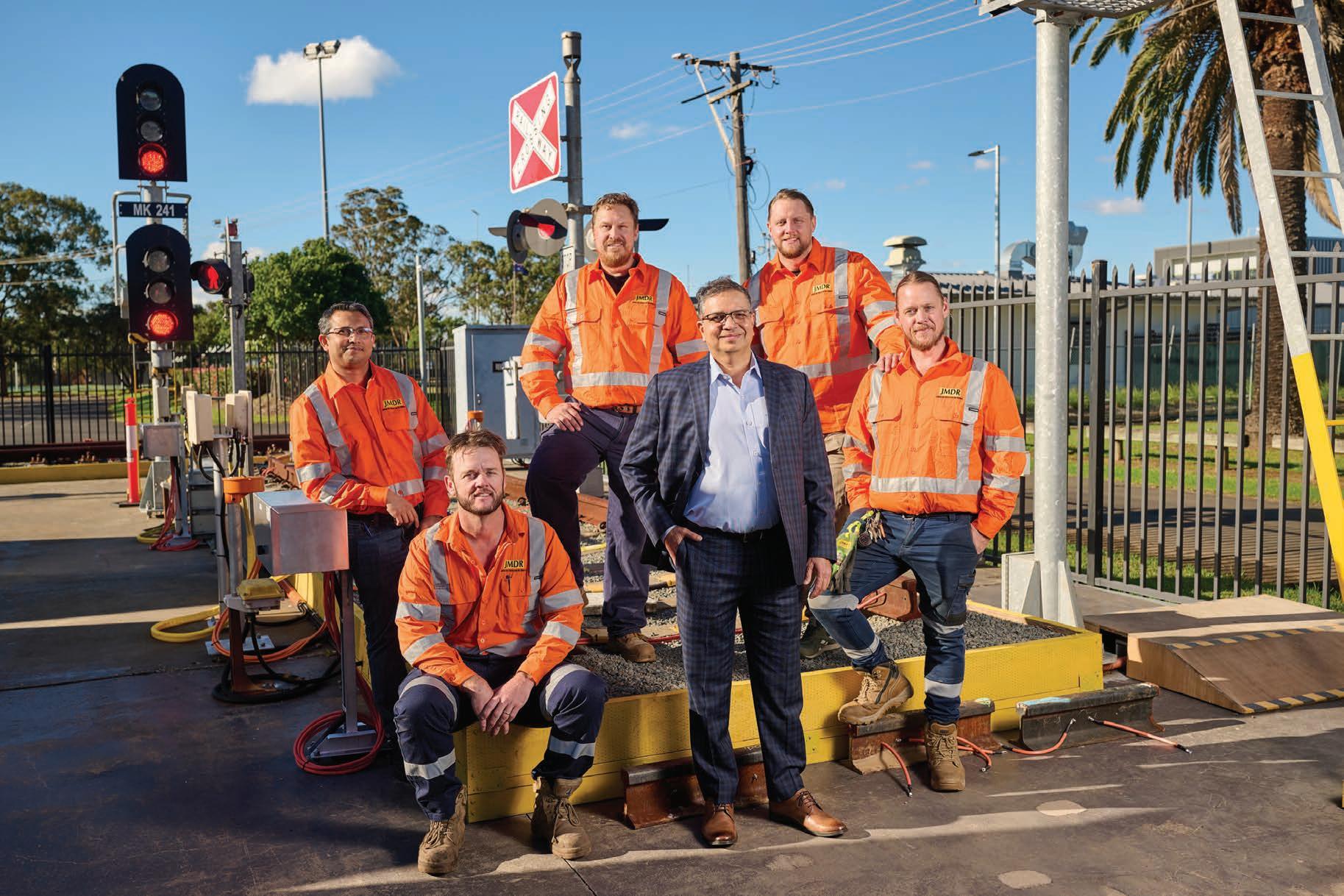
Dilip Goyal at Ingleburn Training Facility with crew. JMDR has more than 400 staff members across multiple countries.
Cover Story
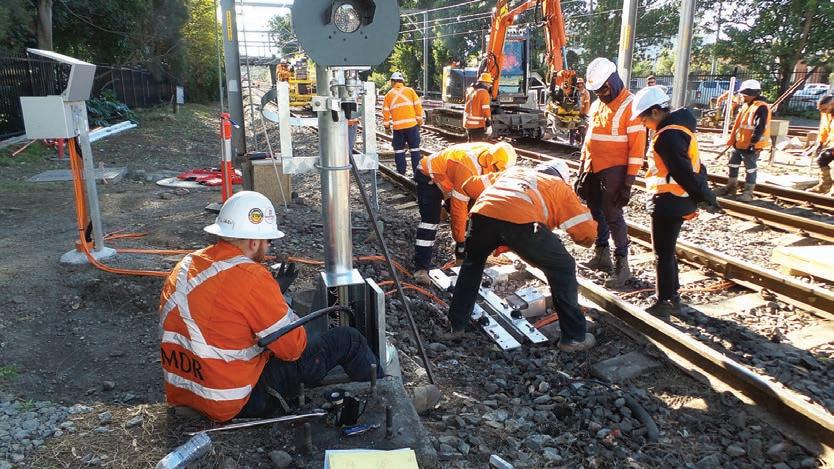
beyond signalling into cable routes, civil works, mining projects and minor track works. It also operates four prefabrication facilities, enabling complete off-site assembly, testing and simulation testing before products are delivered to site.
Goyal said this capability improves efficiency, quality control and constructability
while reducing pressure on live site environments.
“The ability to operate across complex live rail environments, deliver to demanding standards, and support clients on infrastructure programs that are critical to network performance and public transport reliability are crucial,” he said.
A GROWING INTERNATIONAL FOOTPRINT
Since its establishment, JMDR has grown from a specialist rail business into an international company with more than 400 staff across multiple countries. The company now has offices in eight locations across Australia, two in Wellington, New Zealand, as well as offices in York in the United Kingdom, a satellite office in Singapore, and multiple locations in India, including Mumbai, Thane, Greater Noida, New Delhi, Bangalore and Hyderabad.
“In India, JMDR is currently delivering signalling works across six metro rail projects, supported by 246 personnel working in shifts around the clock,” Goyal said.
“This capability enables us to draw on a broad pool of technical expertise while supporting major transport programs in fast-growing urban environments.
“We have also supported more than 80 skilled professionals from the United Kingdom and India to relocate to Australia on permanent resident visas, helping to strengthen local capability and bring valuable international experience into the Australian rail sector.”
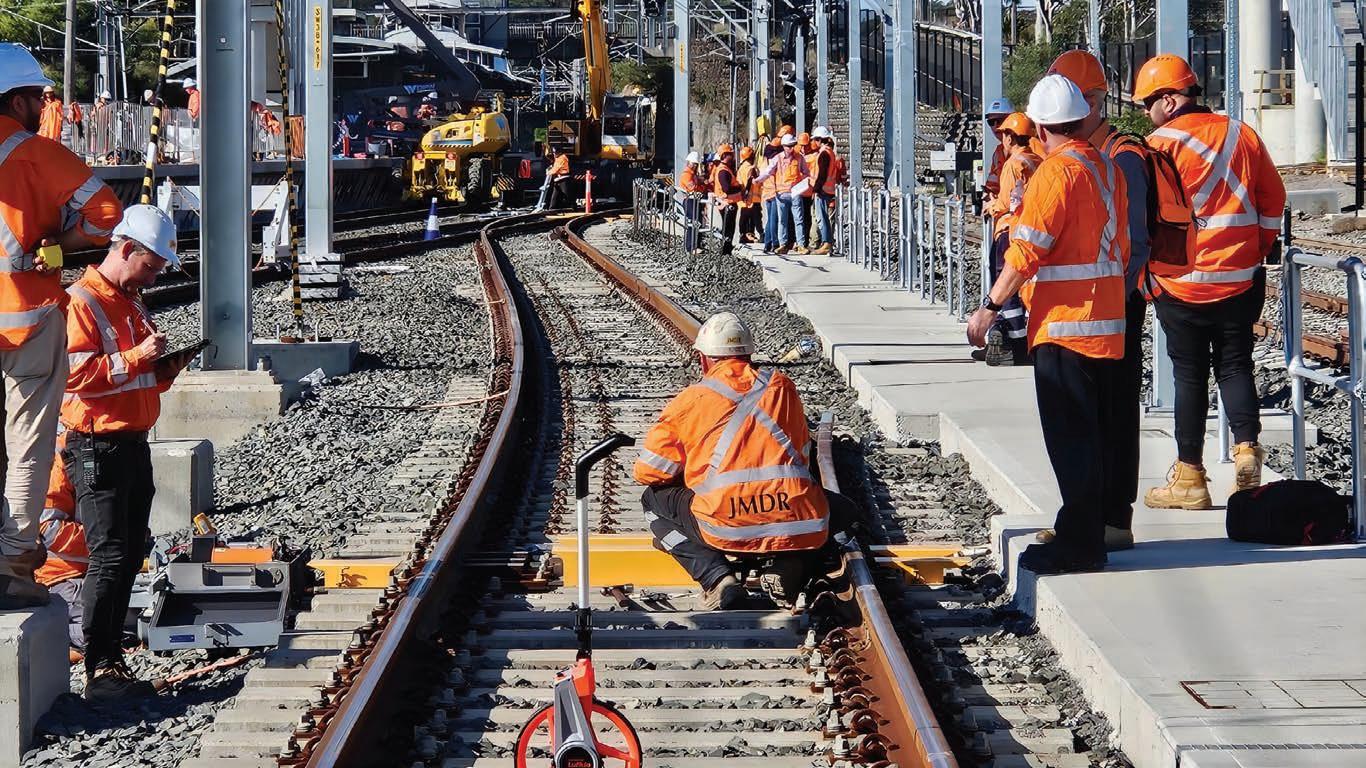
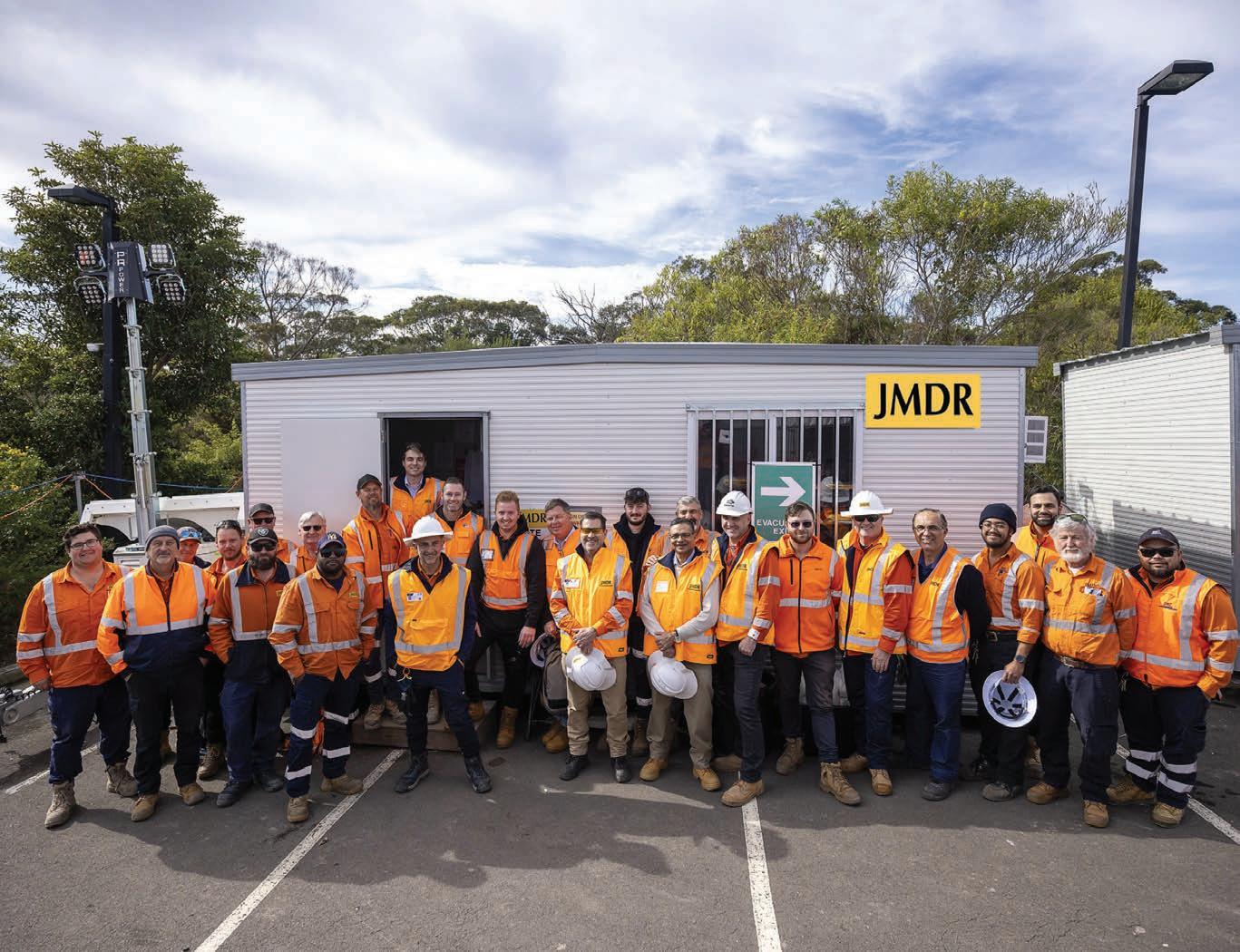
JMDR’s experienced team offers turnkey solutions from concept to completion.
The crew from JMDR who worked on the Major Remodelling Project.

INVESTING IN PEOPLE
“At JMDR, our people are the foundation of every successful project,” Goyal said. “We are committed to investing in the next generation of rail professionals while continuing to draw on the knowledge and experience of senior industry leaders.”
JMDR operates as a registered training organisation, with major training facilities in Sydney, Ingleburn, New South Wales, and Wellington, New Zealand, while also providing training from its Brisbane office.
The facility has trained almost 600 people, conducted more than 2000 competency assessments and delivered licensing activities for rail organisations in Australia and overseas.
“Our training operation is designed to support the wider rail industry, not simply our own business,” Goyal said. “We are helping to build a stronger, more capable and more sustainable rail workforce.”
INNOVATION WITH PURPOSE
“The future of rail will be defined by smarter systems, automation, advanced signalling and better use of data,” Goyal said. “At JMDR, we focus on innovation that delivers real outcomes, safer networks, more reliable operations, stronger asset performance and better results for the communities who depend on rail every day.”
JMDR’s commitment to rail extends well beyond commercial project delivery. The company has invested more than $7.5 million to establish training facilities and a rail museum, showcasing historic equipment dating back as far as 1907.
The museum reflects a deep respect for the history of the rail industry and people who have contributed to its progress.
JMDR has also organised a major industry event celebrating the legacy of signalling in Australia, honouring 40 outstanding contributors whose work has helped shape the sector. Goyal said these initiatives
“For me, giving back is just as important as delivering projects.”
JMDR Founder
demonstrate the company’s commitment to recognising the past while investing in
From celebrating excellence in rail to training the next generation, Goyal remains committed to giving back to the industry.
“For me, giving back is just as important as delivering projects,” he said. “Whether preserving rail history, celebrating industry leaders or training the next generation, I want JMDR’s contribution to leave a lasting legacy for the next generations.”
LOOKING AHEAD
As Australia continues to invest in rail as a vital part of its transport future, Goyal and JMDR remain focused on supporting the industry’s growth through trusted partnerships, technical excellence and a strong commitment to delivery.
“Our vision is clear: to help build safer, reliable, smarter and more efficient railways while creating lasting value for our clients, our people and the communities connected by rail,” Goyal said. “Every project represents more than infrastructure. It is an opportunity to help shape the future of Australia’s rail network, strengthen industry capability and support communities.”
JMDR's pre-fabrication facility.
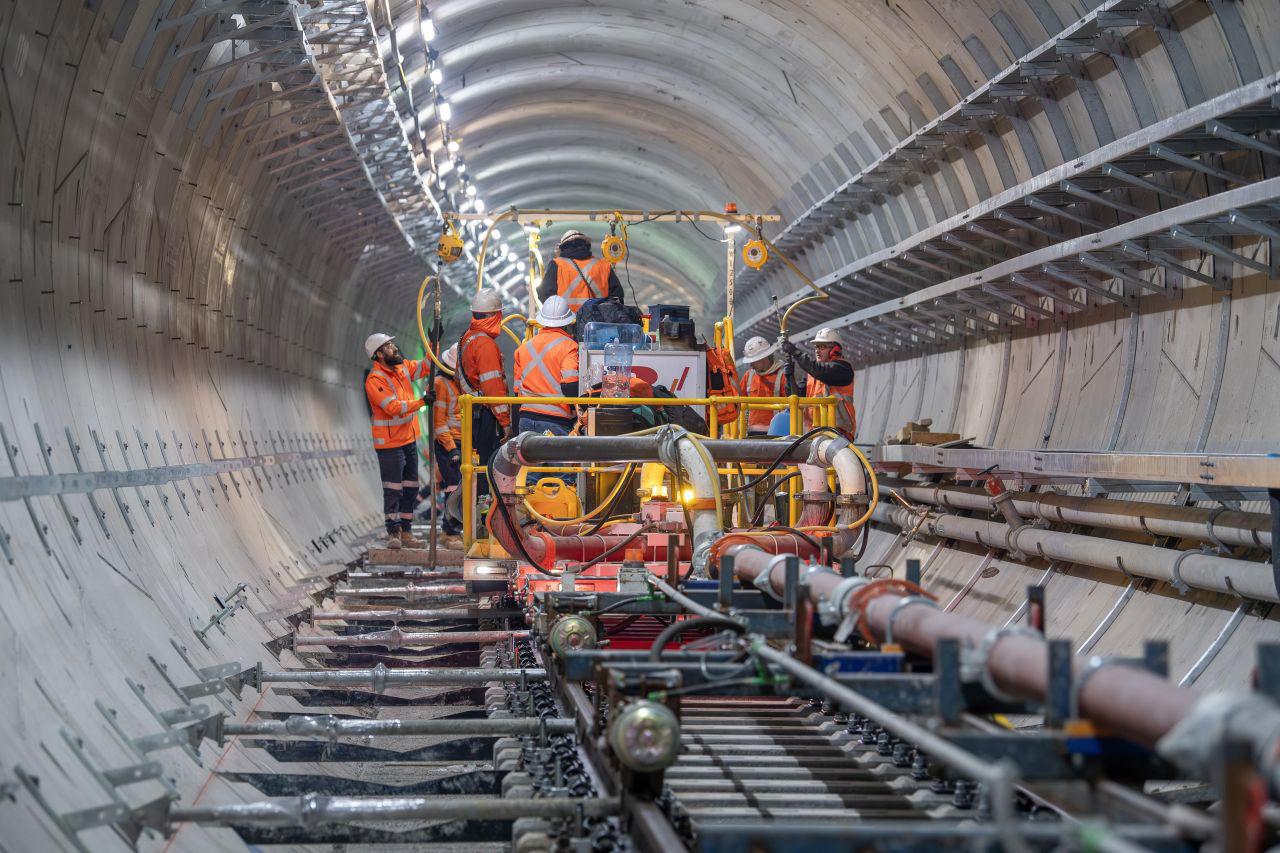
JMDR's commissioning team at the remodelling project.
The next era of local capability
The latest Australasian Railway Association member profile highlights how Rhomberg Sersa Australia is using locally-designed technology and advanced construction methods to improve efficiency and safety.
One of the lessons of global shocks such as COVID-19 and the fuel crisis is that the importance of local capability cannot be underestimated. While the rail industry has traditionally been an “innovation-taker”, the recent wave of construction projects has created opportunities to build local manufacturing capability in Australia.
Rhomberg Sersa Australia is one organisation that has been utilising new, locally-designed technology to solve solutions across the country.
The company first entered the Australian market in 2005, through the acquisition of Track Australia. It later rebranded to Rhomberg Sersa Australia in 2023.
As Australia enters a new phase of transport investment, driven by urban growth, decarbonisation targets and the push for more resilient freight networks, Rhomberg Sersa Australia is positioning itself at the forefront of rail production modernisation.
Edward Humphrey, Rhomberg Sersa Australia’s Executive General Manager – Projects and Growth, said recent projects had created new opportunities for innovation.
“In Australia, we’ve been a strategic delivery partner on major city-shaping projects, including Newcastle Light Rail, Brisbane Cross River Rail and multiple Sydney Metro programs,” he said.
“We also provide critical rail services to network operators such as Sydney Trains, ARTC and Aurizon.
“Globally, the Rhomberg Sersa Rail Group
brings extensive experience delivering complex rail infrastructure – including highspeed rail – often through collaborative delivery models alongside major rail operators.”
One of its latest innovations was the development of new concrete placement units, designed to transport and keep concrete flowing within tunnels as part of an all-in-one solution.
“When no off-the-shelf solution existed for delivering slab track within a tunnel, we designed one – then built four,” Humphrey said. “The system spans 200 metres and operates as a production line in the tunnel, combining a hi-rail shuttle, pipeline, pump and finishing platform.
“This approach reduces clean-up while improving quality and on-site safety, keeping the process controlled, efficient and repeatable from pour to finish.
“Using this system, our team delivered 44 kilometres of continuous slab track – using Australian-made steel – in just nine months. This was achieved across complex tunnel environments and viaducts for the Sydney Metro – Western Sydney Airport project, marking an Australian-first achievement. The scope also included 10 turnouts and three diamond crossovers, demonstrating precision delivery at scale.”
This combination of specialised machinery, in-house design, engineering and construction expertise has become a defining feature and strength of the business model. Rather than relying solely on imported technologies, the company
continues to adapt its equipment and systems for Australian operating conditions.
“Australian-led supply plays a critical role in building a more resilient, capable and sustainable rail industry,” Humphrey said.
“By designing, manufacturing, testing and commissioning solutions locally, we can respond faster to project and client needs, reduce reliance on global supply chains and deliver outcomes tailored to Australia’s unique operating conditions.”
This focus has supported the development of the company’s people.
“We invest in building capability through apprenticeships, cadetships, graduate programs and internal career pathways, supported by access to global research and development and international knowledge sharing across the wider group.
“Through our International Work Exchange Programme, our people gain experience on major rail projects across Europe and America, including high-speed rail, and bring that knowledge back to Australia – strengthening our capability and delivering greater value to our clients.
With governments investing in rail to address congestion, freight resilience and emissions, companies that pair innovation with large-scale delivery will be key.
“Success will rely on combining local capability with innovation to deliver projects more safely, efficiently and sustainably. We’re working with clients to develop new solutions across the project lifecycle, with a focus on early phases.”
Rhomberg Sersa Australia has been a delivery partner on major cityshaping projects across the country.
Images:
Rhomberg Sersa
Australia
Building momentum on gender diversity
The Australasian Railway Association (ARA) shares the progress it has made in promoting gender equity within the rail industry.
As the first year of the Rail Gender Equity Charter nears completion, the Australasian Railway Association (ARA) is working with signatories to track progress and identify practical ways to strengthen gender equity across the rail industry.
that almost a quarter believed rail does not have a problem with diversity, and that 22 per cent felt diversity only benefits women.
“drive performance, innovation and solutions that better meet the needs of the community”.
More than 40 organisations signed on to the Charter upon its launch in 2025, committing to foster inclusive, respectful and equitable workplaces for everyone in rail. Since then, the number of signatories has grown to 56, highlighting the significant focus on diversity and inclusion in the sector.
THE CASE FOR CHANGE
The ARA’s 2024 Gender Diversity Data Report found women make up 28 per cent of the rail workforce, compared with just 17 per cent in 2014. Female representation in leadership also improved, with women holding 26 per cent of chief executive officer roles in rail organisations during 2022–23, up from 16 per cent only two years earlier.
This progress is important, but there is more work to do.
Through research, mentoring programs and workforce development initiatives, the ARA has led efforts to support the attraction and retention of more women in rail.
In 2025, the ARA also partnered with Diversity Partners to deliver a pilot program of workshops for men in rail to assess the state of diversity conversations.
The data found that 73 per cent of participants believed men are disadvantaged by diversity and inclusion,
At the end of the workshop, through open conversations and discussion, the increased understanding of diversity challenges was reflected in a lower percentage who believe the rail industry offers an inclusive environment, from 51 per cent to 43 per cent.
Change through diversity also matters to the community's rail serves. Passenger and freight networks operate across metropolitan, regional and remote Australia, supporting communities with varied needs and expectations. A workforce that better reflects those communities can improve understanding of customer needs, accessibility requirements and local priorities.
Diversity also plays an important role in workplace culture and retention. Inclusive workplaces are better placed to attract new talent, support career development and retain skilled workers in a competitive labour market.
It’s the ARA’s belief that this will be critical to enable industry growth, while also encouraging innovation and improving organisational performance.
LEADING DIVERSITY AND INCLUSION EFFORTS
The ARA’s Women in Rail Strategy 2023–2026 explicitly linked diversity with industry sustainability and performance, recognising that inclusive workplaces
The Rail Gender Equity Charter was established to help organisations realise these benefits as they strengthened diversity and inclusion in their organisations. It focused on five key commitments to address issues such as recruitment, career development, policy, leadership engagement and culture.
The ARA is currently engaging with its founding signatories to assess the impact of their participation in the Charter, and identify opportunities for improved information sharing, education and practical support across the industry.
In the meantime, the ARA’s broader diversity programs continue. Its Women in Rail mentoring program is underway again in 2026, with 121 mentor-mentee pairs taking part this year. Women in Rail scholarships will be offered again at AusRAIL 2026, alongside scholarships for young rail professionals and First Nations people. The conference will also feature a Women in Rail Forum ahead of day one, building on the success of previous Women in Rail breakfast events.
In 2024, the ARA was instrumental in leading the establishment of the Champions of Change Coalition Rail Group.
Together, these initiatives reflect the rail industry’s growing commitment to building a workforce that is more inclusive, more representative and better equipped for the future.
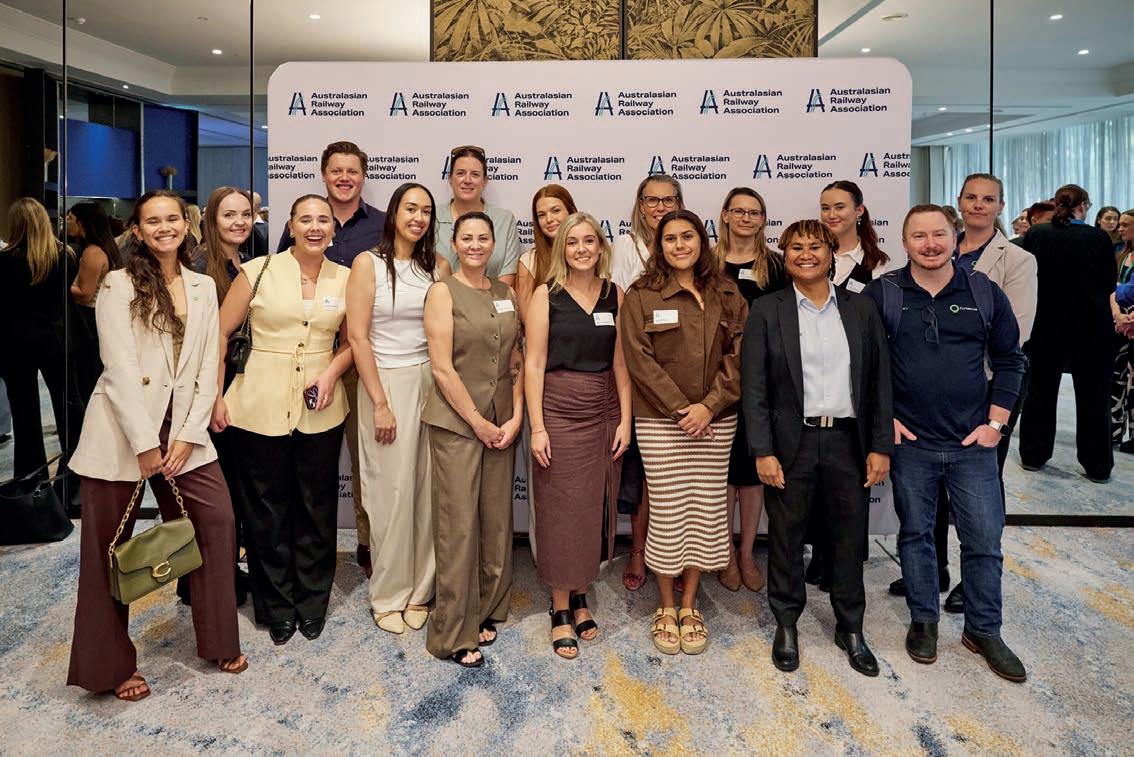
Attendees at the Western Australian Women in Rail Lunch 2026.
The next chapter
Angie Doll started her journey with Go-Ahead as a Station Manager nearly 20 years ago. Now, she’s just been named Managing Director of Rail for Go-Ahead Australia and New Zealand.
Over the past two decades, Angie Doll has helped launch high-speed rail services, led one of the United Kingdom’s (UK) largest rail operators and championed initiatives designed to improve both commuter outcomes and workforce diversity.
Now, she is bringing that experience to a new market.
Doll’s rail career began in an unlikely way. Having previously led operations for tour operators in leading European resorts she entered the rail industry at a time when Britain’s railway system was transitioning from public ownership.
Rather than immediately stepping into a senior management role, she spent a year running a station to understand the business from the ground up.
“I was brought in because I had a customer service background rather than a rail background. The thinking was that if I was going to understand the railway properly, I needed to experience it first-hand and understand what customers actually needed from the service,” she said.
That first role was at Brighton Station on England’s South coast, one of the busiest stations outside London. What was initially intended to be a short stop in her career quickly became something more.
“I thought I would stay in rail for two years and then move on. Instead, I became passionate about public transport because you realise how much of a difference it makes to people’s lives every day.
"Once you understand that impact, it becomes very difficult to walk away from it,” Doll said.
That passion helped drive a steady rise through the ranks.
After joining Go-Ahead in 2006 as part of the team behind the South Eastern franchise, Doll became involved in one of the UK’s most significant industry projects: the introduction of Britain’s first domestic high-speed rail service.
DELIVERING HIGH-SPEED RAIL
Working on the high-speed rail project gave Doll an opportunity to help build a railway operation from the ground up. The project
transformed travel times between Kent and London and later played a key role in transporting passengers during the London 2012 Olympic Games.
“It was one of those rare opportunities where you start with a blank sheet of paper and ask how everything should work,” Doll said. “We could think about how stations operated, how customers moved through the network, how accessibility should be designed and how different modes of transport connected together.”
She said the impact was immediate. Travel times from parts of Kent into central London were cut dramatically, opening new employment opportunities and changing commuting patterns across the region.
“It really showed me the power that good transport infrastructure can have. We weren’t just operating trains, we were helping to change people’s lives by making jobs, education and opportunities more accessible.”
The experience also reinforced a lesson that would become a recurring theme throughout her career: rail is about
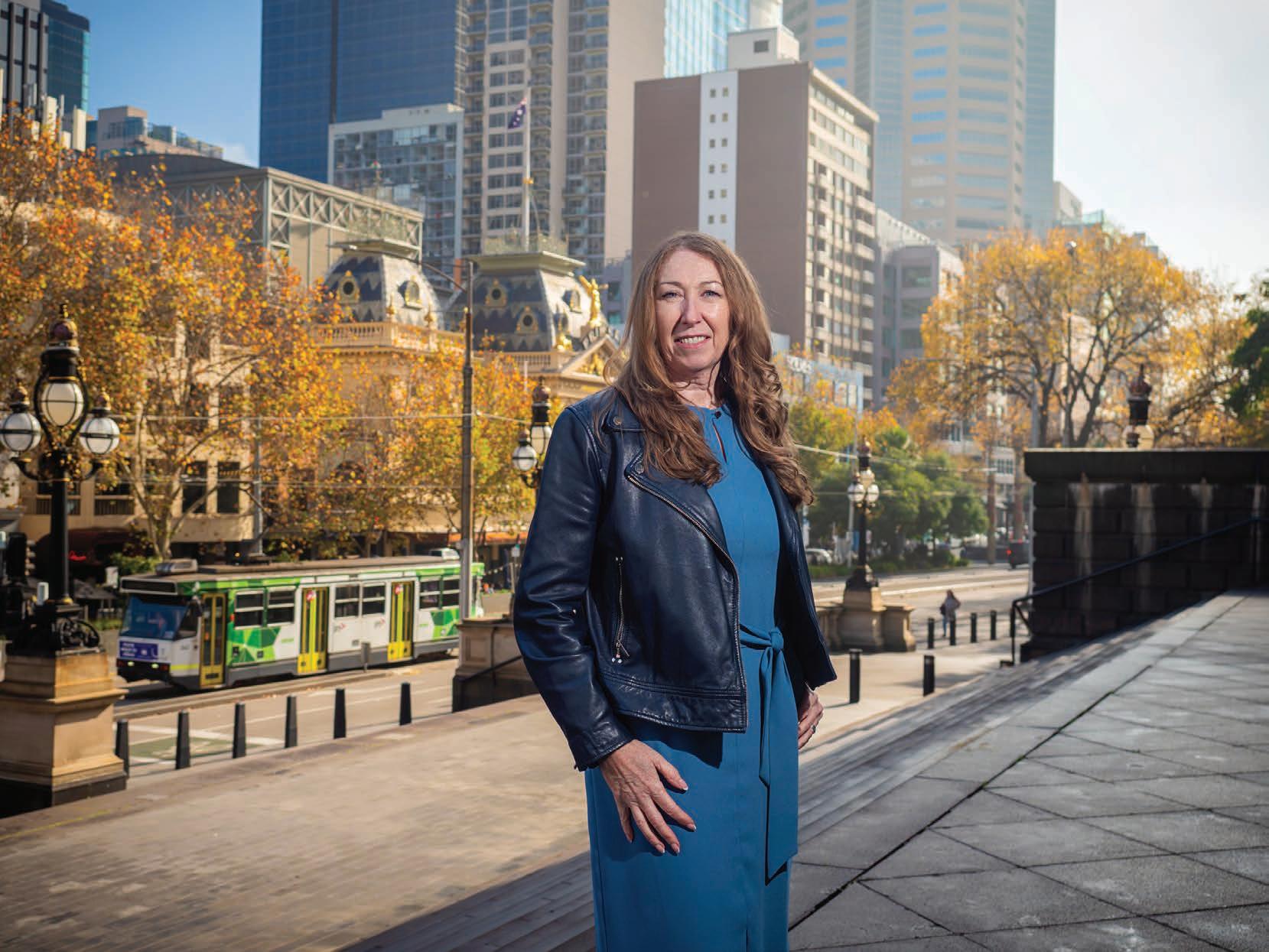
Angie Doll, Managing Director of Rail for Go-Ahead Australia and New Zealand, believes her greatest strength may be the perspective she brings from outside the market.
Images: Go-Ahead
much more than moving passengers between stations.
“Rail is only part of the journey. You have to think about the first mile and the last mile as well. Everything has to work together if you’re going to create a genuinely good customer experience,” she said.
LEADING ONE OF BRITAIN’S BIGGEST RAILWAYS
After helping establish the high-speed service, Doll joined Govia Thameslink Railway (GTR), where she would spend the next 14 years.
The scale of GTR is difficult to overstate. The network carries hundreds of millions of passengers annually, operates thousands of services every day and accounts for more than 20 per cent of all UK rail journeys.
Over the years, Doll held a range of senior leadership positions, including passenger services director, managing director and chief operating officer, before becoming GTR's chief executive officer.
She said what made the operation particularly challenging was not simply its size, but the number of organisations involved in running it.
“I describe rail as an ecosystem. There are lots of moving parts and lots of partners who all need to work together. The complexity comes from the number of interfaces and relationships that have to function effectively every day,” Doll said.
That environment required close collaboration with infrastructure managers, government agencies, transport authorities and other rail operators.
“It taught me that you get better outcomes when everybody understands what you’re trying to achieve together. Having clarity of purpose and making sure people are aligned around that purpose is incredibly important,” she said.
Under her leadership, GTR also became an early adopter of digital rail technologies, including the European Train Control System (ETCS), one of the most advanced signalling technologies currently being deployed as best practice across global rail networks.
The technology improves operational reliability, increases network capacity and gives drivers more real-time information while operating trains.
“Digital signalling is absolutely the future of rail and it’s an area where we’ve learned a lot over the years,” Doll said.
BUILDING A MORE DIVERSE RAILWAY
While operational performance has been a major focus throughout her career, Doll
is equally passionate about workforce development and inclusion. She believes diversity is not simply a workforce target, but is a business advantage.
One of her most significant achievements has been leading initiatives designed to attract more women into rail and create pathways for diverse underrepresented groups.
“Railways should represent the communities they serve. For me, diversity isn’t a box-ticking exercise. It’s about bringing different perspectives together because diversity of thought leads to better decision-making and better outcomes,” she said.
The initiatives have included targeted recruitment campaigns, school engagement programs, apprenticeships, return-to-work pathways and support networks for women already working in the industry.
Under Angie’s leadership, GTR became one of the first operators to offer dedicated leadership programs for women and is one of the UK rail industry’s most diverse employers.
“You can’t just hope change will happen organically,” she said. “If an industry has been under-represented for decades, you need a deliberate strategy to attract people, retain them and help them progress throughout their careers.”
Doll’s approach has extended beyond gender diversity. Partnerships with community organisations have helped create employment opportunities for people facing barriers to work, while programs focused on mentoring and personal development have helped participants build confidence and establish meaningful careers.
This was reflected in GTR’s landmark 2025 social value report – the first of its kind in the UK rail industry which illustrated how the rail network had developed $205 million in social value. Among the highlights were awarding more than $1.5m in funding to 56 grass-roots projects, delivering 370 apprenticeships among its 7400 employee team, and delivered 72 per cent of all contracts to small and medium enterprises.
“When you give people a sense of purpose and hope, it can completely transform their outlook. Some of the changes we’ve seen through those programs have been incredible,” she said.
As she begins her new career in Australia and New Zealand, Doll believes her greatest strength will be the perspective she brings from outside the market.
Rather than arriving with fixed ideas, she plans to spend time understanding the networks, speaking with employees and experiencing the system from a passenger’s point of view.
“I’ll be coming with a fresh set of eyes. I don’t arrive thinking I know all the answers. I arrive with curiosity and a willingness to learn,” she said. “I think curiosity is one of the most important qualities a leader can have.”
That customer-focused mindset has been a constant throughout her career and will continue to shape her approach in Australia and New Zealand.
“I want to understand what it feels like to travel on the networks. Is it delivering what customers want? What are we doing well? What could we do better? Those are the questions I’ll be asking,” she said.
Doll also believes her experience managing large-scale organisational change will be valuable as the region’s rail sector continues to evolve.
Just as she started her new role with Go Ahead ANZ, Doll received the honour of an Order of the British Empire, recognising her career achievements in advancing diversity and inclusion in the rapidly changing rail industry. The recognition spurs her on to imagine what a continued focus on diversity and inclusion could achieve across the rail industry in Australia and New Zealand.
“Change only works when people understand why it’s happening and feel part of the process,” she said. “Some of the most successful projects I’ve worked on have succeeded because frontline employees helped shape the solution rather than simply being told what to do.”
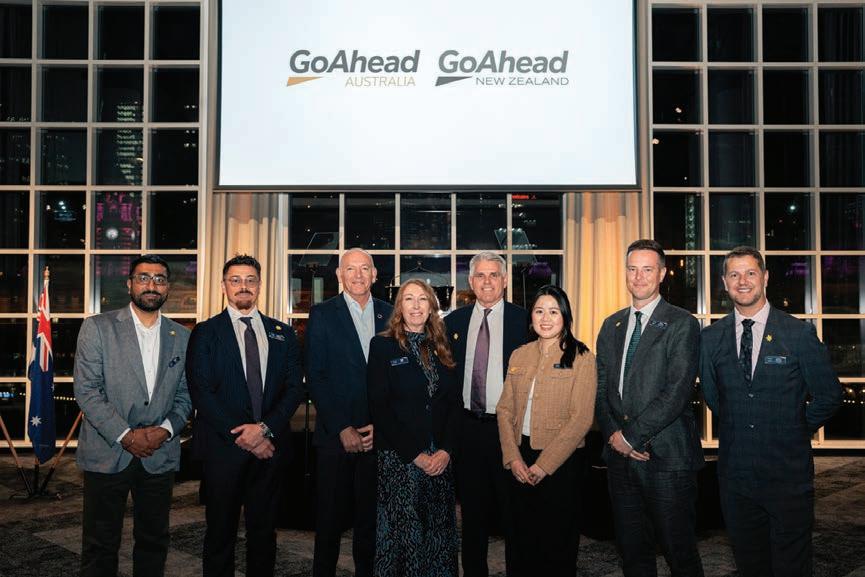
Angie Doll, here with the team, was a lead speaker at Go-Ahead Australia's launch event in 2025.
Delivering rail’s digital transformation
Australia's rail operators face increasing pressure to deliver more capacity, reliability and sustainability from existing infrastructure. As networks become more complex and data-rich, digitalisation and artificial intelligence (AI) are emerging as key enablers of safer, more efficient and more resilient rail operations.
The National Rail Action Plan recognises the benefits of a digital rail network, but beyond digital signalling, there are many areas of the rail network that can benefit from AI and digitalisation.
With more data than ever at their fingertips, using digitalisation and AI solutions is allowing operators to move from traditional, scheduled processes to solutions that help optimise across the value chain of the rail industry.
SIEMENS MOBILITY’S DIGITALISATION LEGACY IN RAIL
While many organisations are only beginning to realise digitalisation and AI can transform rail operations, Siemens Mobility has spent decades developing, deploying and refining these technologies across some
of the world’s most complex rail networks, including Australia.
Today, with a growing team of Australian specialists and proven local project experience, Siemens Mobility is helping rail operators unlock greater capacity, reliability, safety and efficiency through technology.
Siemens has been a pioneer in delivering digital and artificial intelligence solutions globally for decades, evolving from foundational automation and software integration in the mid-20th century to sophisticated AI-powered platforms and applications today.
As one of the largest industrial software companies, Siemens invests heavily in the digital technologies that increasingly underpin modern rail operations.
Siemens has been developing rail industry AI solutions long before it became normalised through ChatGPT or Claude. Initial focus was on applications relating to service and maintenance, such as condition monitoring and preventative maintenance of trains and rail infrastructure assets, where data is collected from field sensors and analysed for failure patterns or anomalies.
As the technology rapidly evolves, Siemens is seeing the convergence of information technology (IT), operational technology (OT) and Internet of Things (IoT) – enhanced by AI – and how this is revolutionising operations by enabling real-time data integration, predictive maintenance and optimised energy use.
As Australia’s rail industry is on the journey of digital transformation, with more than 150 years of experience in Australia, Siemens Mobility has the proven expertise, technology platforms and local capability to help operators deliver this transformation and unlock the next level in mobility.
It has a team of local experts working across digital signalling, advanced manufacturing, software and AI to be a local technology partner for the rail industry as governments and networks modernise and leverage technology.
Implementing new technology and solutions is part of Siemens strength, for example it implemented the first digital signalling solutions in Australia and New Zealand with both European Train Control System (ETCS) level one (L1) and two (L2).
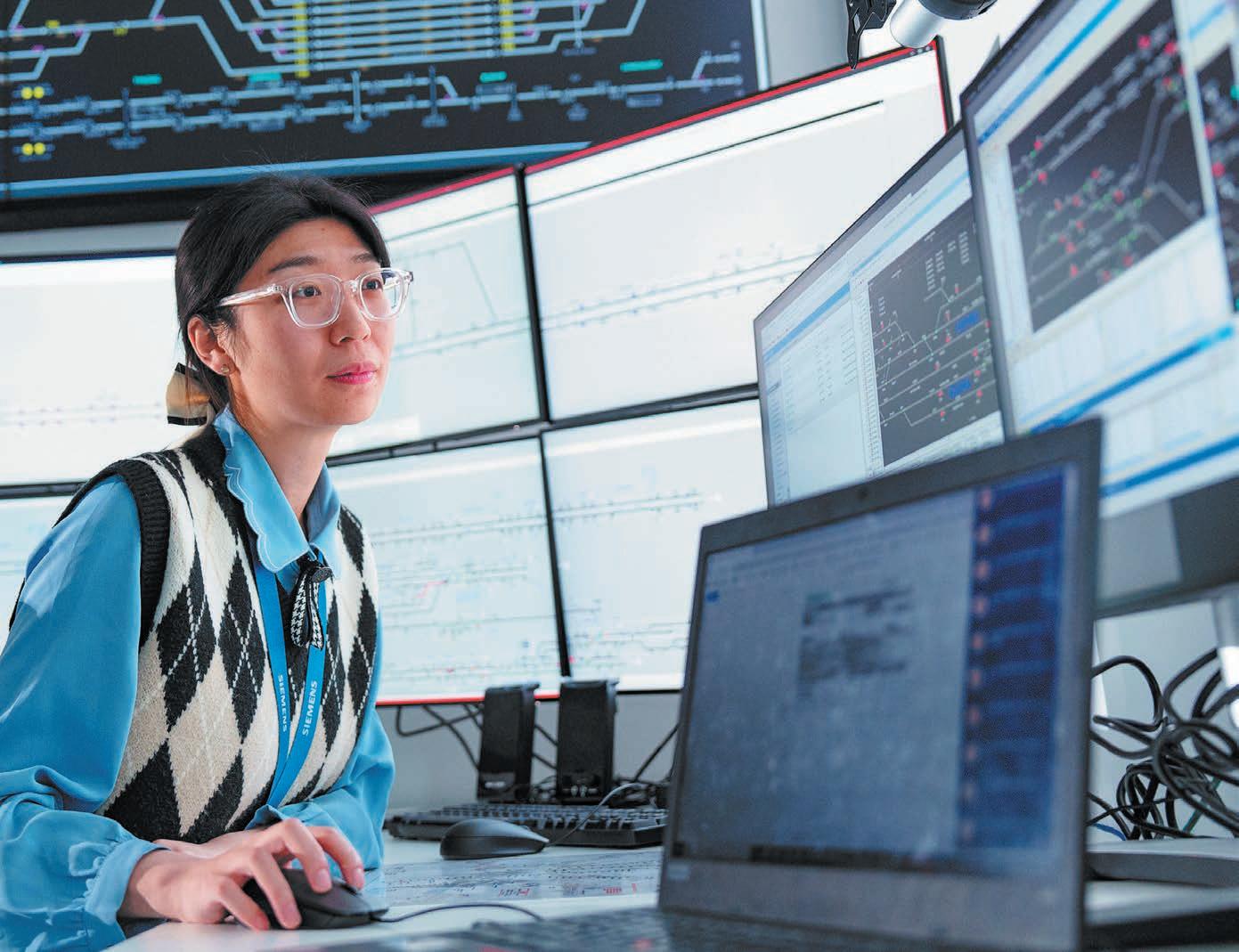
Siemens has been developing rail industry artificial intelligence solutions long before it became normalised.
Images: Siemens Mobility
Technology
Digital signalling is a key solution for upgrading the rail network as Australia adopts ETCS Level 2 as its standard. For Siemens Mobility’s Ronak Trivedi, Technical Director of the ETCS Level 2 deployment in Sydney, this technology signifies one of the largest ever step changes to the operation of domestic rail networks.
“I like working with ETCS Level 2 and digital signalling because it’s novel for Australia and New Zealand, and it’s challenging,” he said.
“We’re doing first-in-class applications, rewriting operational rules and principles. ETCS Level 2 makes a tangible impact to the community and users.
“With ETCS Level 2, we can deliver more reliable services and run more trains, more often, using existing civil infrastructure. We can safely improve headways and offer more services for passengers.”
Among the biggest beneficiaries of the technology are maintenance teams, with the system providing significant improvements when it comes to safety. Specifically, the opportunity to greatly reduce the time and access required to complete maintenance tasks.
“For maintainers, ETCS Level 2 removes a lot of trackside assets,” Trivedi explained. “That means they don’t have to go to site as often, in less than ideal environments.
“They’re also less likely to be exposed to moving traffic. We’re making it safer for maintainers while improving services for passengers.”
Within his role, Trivedi is responsible for overseeing the implementation of the Traffic Management System (TMS) associated with ETCS Level 2. He also acts as one of the heads of engineering, supporting operational decisions on how ETCS is planned and eventually managed in the network.
Combining his knowledge garnered through interactions with international projects and teams, it is Trivedi’s ambition to bring global best practice together with local adaptation to deliver the best possible solution in Australia.
“We understand local requirements and use our technology base from Europe to answer the question locally for our transport customers,” Trivedi said. “We’re not saying, ‘You must do what Europe does.’ We show how you can use the technology in your environment, for your users.
“Having local people on the ground interfacing directly with the customer is a real strength. We understand them, we work in partnership with them, and we want to do the best by our community. We serve their
needs rather than telling them what to do, and customers really appreciate that.”
Tanay Kumar shares a similar ethos. As a Senior Rolling Stock Engineer at Siemens Mobility, Kumar’s particular expertise lies in the pioneering of technology that merges the real and digital worlds, the core strategy of Siemens.
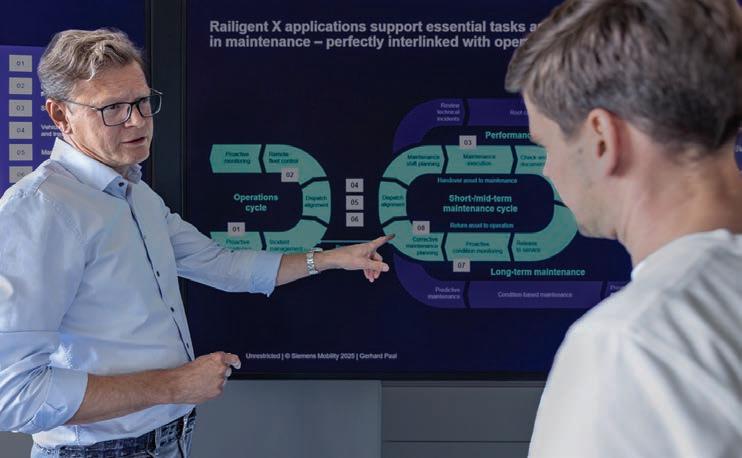
As he explained, combining the two can help to streamline data-influenced decision making, with Siemens’ Railigent X suite of service and applications emerging as a key resource in this space.
“Railigent X is our data analytics platform,” Kumar said. “It has been around for about 15 years, and helps reduce disruption and make smarter maintenance decisions with challenging constraints and tightening budgets through a technology agnostic unified platform.”
Railigent X’s core function is to gather and structure large volumes of operational data from across a network. A few examples of the typical data sets recorded are –amongst many others – vehicle location, speed, temperatures, subsystem health and fault codes.
Once this data is captured, Siemens’ system applies a mix of AI and data-driven solutions to present the information in a user-f riendly way. Railigent X also runs anomaly-detection algorithms to help spot “unusual” behaviours.
If such a behaviour is identified, the user is alerted to its presence, laying the groundwork for timely fixes and reducing network disruption. Kumar said that adopting such a system helps transform maintenance and asset management that
allows for improved network performance and capacity, and lower operational risk.
“With Railigent X, the typical model in a depot changes from reactive to proactive management,” he said. “Instead of discovering two trams with issues at 5am and racing against the clock to fix them, you know about those faults the night before.
“The question stops being ‘How do we fix this really quickly?’ and becomes ‘Do we have enough people? Do we have a spare we can swap? Can we combine this with an upcoming service?’ It changes the way that you can approach problems.”
And Railigent X doesn’t just help to prevent significant disruption in the short term, as Kumar added.
“Over the longer term, you learn how things behave before they break down, so you can program pre-alerts and talk to operations or timetabling to prevent issues before they impact customers.”
BENEFITS ON-SITE
Encouraging the modal shift to rail involves making travelling by public transport more attractive for passengers for a seamless travel experience. For Imran Karim, Senior Project Manager at Siemens Mobility working on MaaS solutions for customers in Australia, the importance of a coherent and streamlined planning system is highlighted daily to make optimal use of existing infrastructure.
As part of his role, Karim is tasked with supporting both people and organisations to coordinate effective train planning systems (TPS) – essential tools to enable railway infrastructure managers to create conflict-
Siemens Mobility pioneers technology that merges the real and digital worlds.
free timetables for passenger and freight that optimise the existing infrastructure, from strategic long-term planning to annual and daily timetables.
Take Karim’s current project, he’s been tasked with delivering a real-time timetable and planning solution that effectively creates a digital twin of a rail network.
“This comprises thousands of kilometres, while being accurate to the metre of a platform,” Karim said.
“Once you have the track geometry, gradients, train weights, speed profiles, braking distances and the like, a layer can sit on top of it – which is our TPS plan – which can accurately calculate the time it takes to go from point A to B.
“Stakeholders can then use that as a planning tool, push it out to other systems, and later, once their system is online, use the available data to guide planning in the future.”
The ultimate goal in these cases is the establishment of a Mobility as a Service (MaaS) application. So, what is a MaaS app?
MaaS refers to a centralised resource that allows users to plan their journeys.
Information such as the availability and schedule of long-distance and suburban trains, buses, car sharing, e-scooters and more are located in one spot, meaning commuters can plan, book and use public transport services with ease.
With technologies such as ETCS L2 and Railigent X laying the foundation, Siemens can combine journey planning, traffic and timetable management tools, and passenger experience into one single and coherent solution.
Developing new infrastructure product solutions to life is another challenge entirely.
Brandon Fisher is a Product Engineering Manager at Siemens Mobility’s rail infrastructure manufacturing facility in Melbourne, where his team manages trackside products, supporting the company’s ability to build and test key rail infrastructure products.
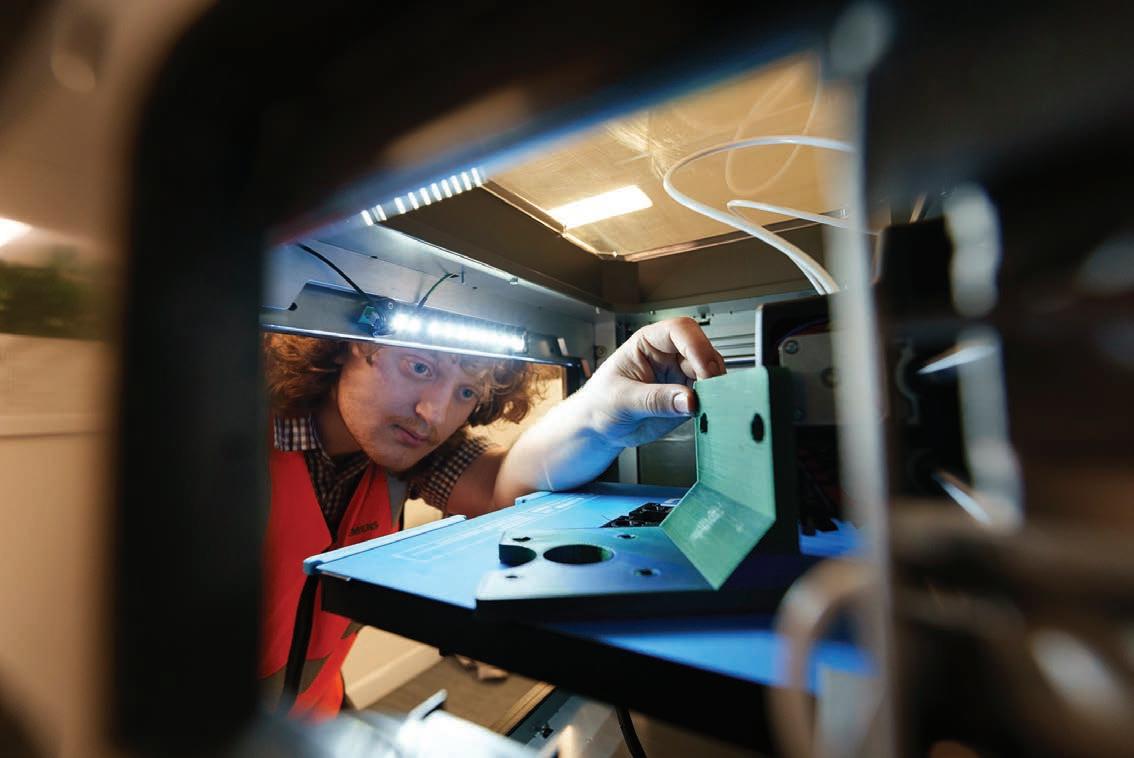
A key component of Fisher’s work is advanced manufacturing and rapid prototyping, where three-dimensional (3D) printing has emerged as an essential tool to the design process.
“Like with AI and Railigent X, we've been using 3D printing and additive manufacturing for rapid prototyping for about 12 years now, so we’ve been on the forefront,” Fisher said.
“[3D printing has] become part of proof of concept now. We have a design review and the printed design, which is usually in a smaller format, so we can play around and actually see how things interact. That really reduces the mistakes and iterations when we’re prototyping new developments.”
Siemens developed a streamlined process for evaluating and completing revisions, with constant communication ensuring that design, manufacturing and the end customer are always kept in the loop.
“Most people don’t know that Siemens is a top-10 software company,” Fisher said. “We use Siemens’ Product Lifecycle Management software, which is called Teamcenter.
“That’s now integrated with Siemens’ CAD software NX, which allows seamless communication through to the factory and our suppliers whenever we’re doing revisions.”
3D printing is also being used to accelerate production with rapid prototyping. Rather than waiting for traditional tooling, Siemens’ team can print the component, encase it in sand, melt out the printed core, and pour the final metal into the mould. They have taken the development time from three months to three weeks to have a fully testable metal part.
Physical testing, combined with digitally-enhanced quality assurance helps to optimise the final quality of every component.
“AI is now embedded within Siemens NX, our CAD software,” Fisher explained. “AI can help with things like CAD modelling where it does a lot of the initial work for you and can also check your drawings.
“We’re investigating AI-assisted selfchecking to catch all those small errors that we might not pick up. It’s not about taking someone’s job; it’s about making your job easier and better. You can respond faster and get nitty-gritty work out of the way.”
Above all, Fisher is proud of the opportunity to teach and learn from the next generation of industry specialists.
“The upskilling never stops,” he said. “We’re always attending our CAD and Teamcenter partners’ workshops. We send a group out, they find some of these new features, and they bring back the information and distil it to the team.
“The younger generation of employees pushes the older generation. We’re always evolving and looking for the latest technology, how we can use it better, and how we can upskill our people to deliver the best products and solutions for our customers and the rail industry.”
As rail networks continue to modernise, Siemens Mobility's combination of global technology leadership, proven local delivery experience and deep digital expertise positions it as a trusted partner capable of helping operators unlock the full potential of digital rail.
Siemens Mobility’s Railigent X data analytics platform helps reduce disruption and make smarter maintenance decisions.
A win for local manufacturing
Amokabel Australia is celebrating a new partnership with an Australian rolling stock manufacturer
– that could lead to even bigger things in the future.

Amokabel Australia has secured a breakthrough contract to supply cables for a prominent manufacturer of track maintenance machines.
It’s the Sydney-based cable company’s first major win in the Australian rolling stock space – and a potential springboard to global opportunities.
Amokabel Australia already has years of experience as a supplier to the local rail industry, particularly in axle counter applications. For the past decade, it has partnered with Track IQ (owned by Wabtec Corporation), which specialises in wayside condition monitoring equipment and data management systems.
“We’ve been manufacturing cables to the certified standards for 10 years, but that’s been for rail infrastructure, not rolling stock,” explained Mark Foster, General Manager and Sales Director at Amokabel Australia.
“This is our first foray into rolling stock for an Australian manufacturer, supplying for a new generation of track maintenance vehicles.
“We’re very excited to be working with a global market leader.”
SUPPORTING LOCAL
Over a six-month period, Amokabel Australia will produce around 60 different cables for its new client.
“The first order is for power and control wiring for the main systems in the track maintenance machines,” Foster explained.
“The next order is for smaller cables that do everything from braking system controls to lighting, instrumentation and accessories.”
Until now, much of the specialised cabling used in these Australian-built track maintenance machines has been imported from Europe.
Amid a turbulent geopolitical climate, with project timelines tightening and local content requirements growing, Foster is proud to be strengthening the local supply chain.
Although Amokabel Australia will initially manufacture some of the cables for
this contract in its Spanish factories, the products will be processed and finished at its facility in Western Sydney.
With the business planning to move to a much bigger space in 2027, Foster said this will enable more of its manufacturing to be done locally.
“We’re looking forward to growing our manufacturing capabilities here in Australia – moving from a 2000-square-metre factory to one triple the size,” he said. “We’ll also have new, state-of-the-art machinery.”
This will allow faster turnaround times for the customer.
“Renewal projects for rail networks often have short lead times,” said Foster. “You might have a 52-day shipping time for European cables, whereas we can produce cables locally in two to three weeks.”
With this job, every cable supplied must meet low-smoke, zero-halogen requirements, so that, in the event of a fire, cabling does not emit toxic fumes.
Amokabel has offered its customer something imported product cannot match:
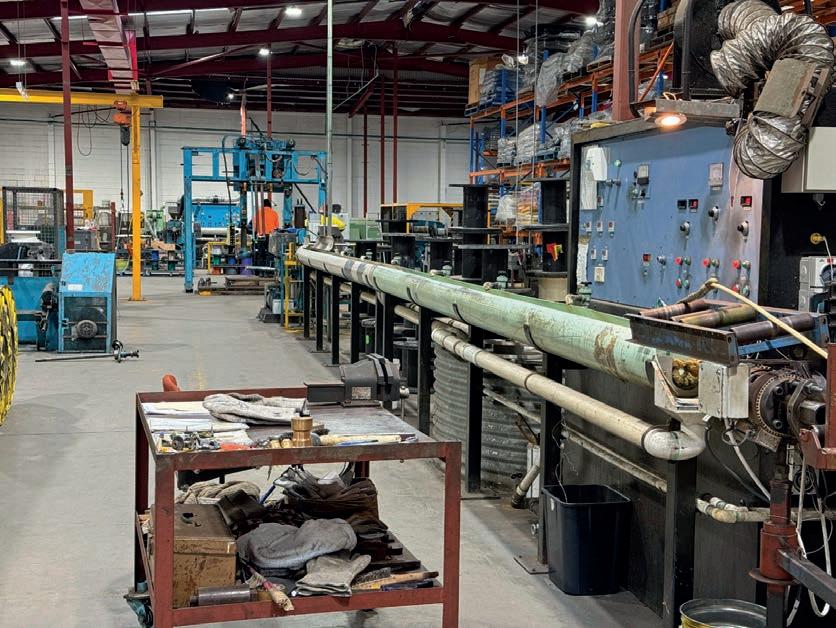
Amokabel Australia manufactures custom and standard cables at its Western Sydney facility.
hands on, local testing. “When the first batch of cable arrives on their doorstep, I’ve invited the customer back here, and they gladly accepted,” Foster said.
“We’re going to run a series of tests with their cables, including flammability, electrical and mechanical tests.
“The customer’s engineers think it’s wonderful that they can come to the factory and see all this with their own eyes rather than getting a test result sent to them from a factory on another continent.”
While this first contract covers the new customer’s Australian fleet, ambitions go much further.
If performance meets expectations, the company’s European headquarters is considering Amokabel’s Barcelona facility for broader global supply.
BUILDING TRUST
Foster said this new opportunity came about through contacts and existing customers already participating in the supply chain on complex Australian infrastructure projects.
One of these projects was the new Western Sydney Airport, for which Amokabel provided the data cables for the fuel gantries.
“The fuel gantries required a special RS 485 signal cable to be designed that transmitted data, and it had to perform at certain bit rates over 100 metres,” Foster shared.
“I designed that in-house, we had it tested, and it met the specification required. It was successfully installed at the new airport, and that's led to other jobs within that project.”
Amokabel’s new client was initially cautious about moving away from its established European supplier.
To combat this, Amokabel leaned on its global defence and aerospace pedigree.
“As soon as I showed them our brochure, they saw that we’re already supplying Saab, Eurofighter, Harrier and other major companies around the world with cable,” Foster said.
“They could see that we’re reputable, and they breathed a sigh of relief.”
Amokabel can produce cables locally within two to three weeks of an order being placed.
Operations and Maintenance
As Sydney Metro's Alstom-built driverless trains approach their first major 1.2 million-kilometre overhaul milestone, Alstom's new Bogie overhaul workshop will help to keep the fleet running at peak performance.
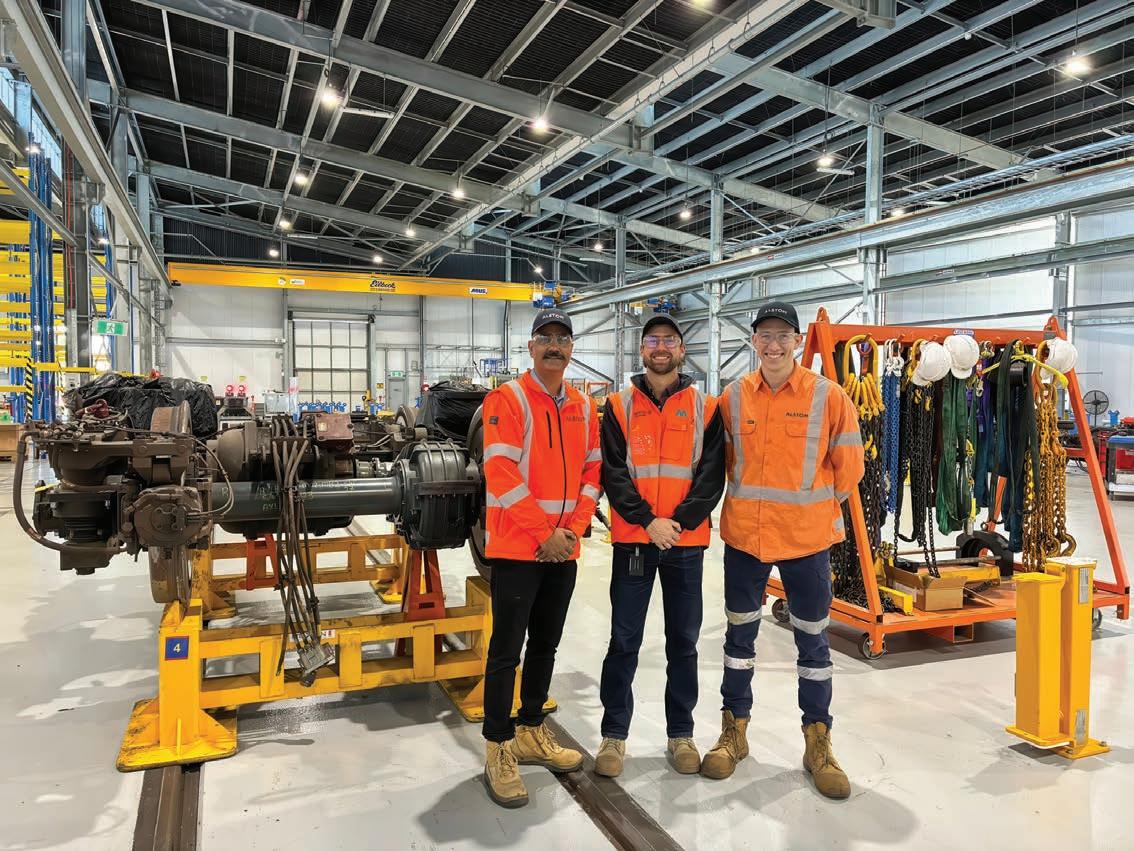
Alstom has opened a new, state-of-the-art bogie overhaul workshop at the Metro Trains Sydney (MTS) facility in Tallawong, New South Wales.
The specialised workshop will play a central role in the network’s 1.2 millionkilometre train overhaul program, which is the first major heavy overhaul milestone for Sydney Metro’s fleet of automated trains.
At the Tallawong workshop, Alstom will carry out precision maintenance and upgrades to improve the reliability, resilience and long-term performance of trains on the M1 Line.
A bogie is the wheeled assembly that supports and guides a rail vehicle, and each one is fundamental to the ride quality, safety and performance.
Each of the driverless Sydney Metro trains has 12 bogies per standard six-car trainset. These are a mix of motorised and nonmotorised bogies.
“Bogies are the key sub system of any metro train,” explained Sanjeev Saini, Maintenance Project Manager at Alstom.
The metro train runs on specialised bogies – the wheel assemblies beneath each carriage that ensure smooth
movement, stability, and safe braking as the train travels along the track.
Much like a car, the wheels of a train have a life cycle. Train wheels experience gradual wear from prolonged interaction with rails, leading to a reduction in diameter. This wear is tracked against the condemning limit, a predefined safety benchmark typically reached after approximately 1.2 million kilometres of operation.
The original 22 Sydney Metro trainsets, which were introduced in 2019, are now approaching this threshold.
“Many of them are now around the 900,000-kilometre mark,” Saini added.
“At the new workshop, two different types of maintenance will be performed – planned maintenance, and corrective maintenance.
“The bogie overhaul program falls under planned maintenance.”
Overhauls carried out at the new facility will include the full disassembly, inspection and recertification of bogies, as well as the rebuilding and testing of traction motors, gearboxes, brakes and wheelsets.
Worn components such as bearings, seals and rubber elements will also be replaced before rigorous testing and return to service.
The first overhaul will start in June, and operations will gradually ramp up.
“With any maintenance operation, there is a learning curve,” said Saini. “The first overhaul will take about two months, and from there we will reduce the time for this work to four weeks per overhaul.
"Given we are both the manufacturer and maintainer of the fleet, Alstom can translate our knowledge of the trains into strong maintenance outcomes.
"This is delivered in close partnership with our operator, MTS, and delivery partners, working as one team with a shared focus on performance and passenger outcomes. That’s a real advantage for customers: having a partner that both builds and maintains the fleet."
Saini said Alstom has invested in an array of top-of-the-range equipment from around the world for the new site, in addition to raised tracks, weighing systems, test benches, and a dedicated bogie wash plant.
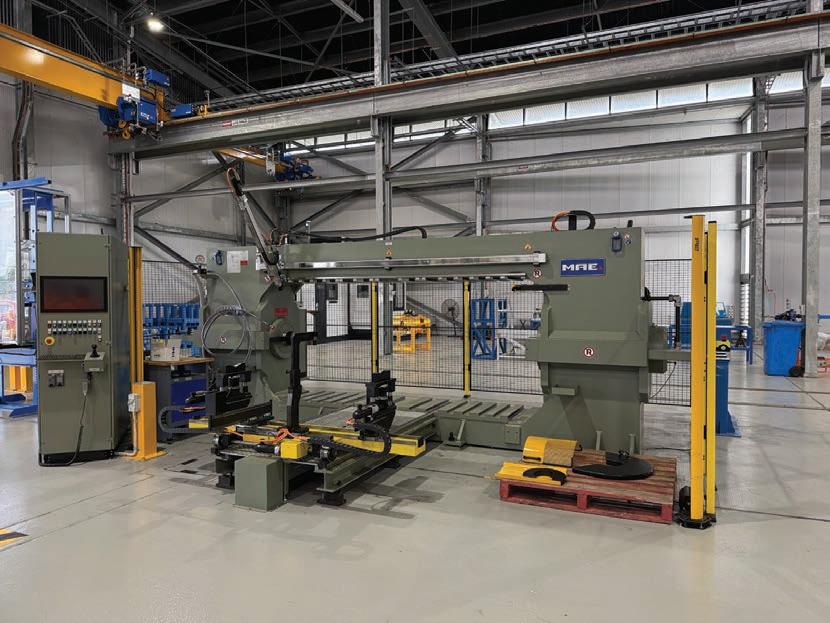
“Our GEMINIS wheel borer, which performs wheel boring to within thousands of a millimetre, has come from Spain, and our MAE wheel press is from Germany,” he shared. “Our gearbox test bench came over
Sanjeev Saini, Steven Jones and Tom Frost at the new workshop.
Images: Alstom and the RAil Gallery
from China. We have world class machinery right here in Sydney – it’s a unique resource. Our state-of-the-art international machines are all sitting together in the same workshop, and all of them are critical to the efficiency of the operation.”
A workshop already existed on-site, but has been expanded and reconfigured to deliver a major uplift for the Sydney Metro maintenance program, strengthening and future proofing New South Wales’ overall rail capability.
"Alstom’s maintenance contract for these metro trains started in 2019, and the COVID-19 pandemic put a lot of pressure on the supply chain,” Saini highlighted.
“We were waiting for parts coming from overseas, and even locally. To avoid delays like this in the future we came up with a plan to minimise disruption. We began exploring the idea of developing capability in-house, which had the added advantage of generating local jobs, strengthening the local Australian supply chain and dramatically reducing turnaround times for overhauls.
“This is the Alstom model; one that’s different to other market players. We invest, we localise, we are here for the long term." The workshop was delivered using a host of
designers, contractors and suppliers based in New South Wales. Martinus Rail was the principal contractor for the major civil works, with Moxon, Trakblaze and Samtech supplying specialist systems including rail installation, weighing infrastructure and raised track and turntable assemblies.
The build phase created 15-20 local jobs, and the workshop will support an initial team of 20 roles, with capacity to expand this in the future.
The workshop brings whole-ofnetwork benefits by building a highly skilled local workforce with deep expertise across bogie systems, creating transferable capability for future fleet and infrastructure projects.
It has also created exciting opportunities for young professionals such as Tom Frost, a Graduate Maintenance Engineer, who started working with Alstom as an intern three years ago.
“Alstom gave me my start in the railway industry, and my interest has really grown from there,” Frost said.
“It’s very positive when you can give something as powerful as a new Metro line to the community.”
Frost’s role is mainly focused on process engineering.
“With so many new machines coming to the workshop from overseas, the knowledge the Original Equipment Manufacturers (OEMs) have to transfer to us is key,” said Frost. “I am helping to manage that transition.”
He has really enjoyed learning about the practical and theoretical components of the equipment.
“Our team is more than happy to pull things apart and figure out issues,” he said. “I have learned so much and really built up my engineering confidence.”
Steven Jones, Head of Rolling Stock and Communications-Based Train Control (CBTC) at Metro Trains Sydney, said MTS is proud of the project’s support for the local economy.
“It’s great to be able to provide local jobs,” he said.
“We were the first Metro GoA4 (Grade of Automation 4 – the highest level of automated train control) network in Australia, and as this network expands, we’re supporting in-house capabilities and developing skills for the future.
“We’re not relying on offshore capability or a volatile job market.”
Jones said the new workshop has come at the perfect time, as Sydney Metro gears up for the opening of the Southwest extension later in 2026.
“As the fleet is getting older and the kilometres travelled are ramping up, we’ve got to make sure that the bogie condition and overhaul process doesn’t affect asset availability.
“We’re currently running a shorter network. With this workshop, we’ve got a lot more flexibility and control, so we can maximise fleet availability. If there were to be an incident on the network or a problem with an asset, we have the capability to move our maintenance programs or bring in trains ad-hoc. This workshop is going to be massive for us.”
He added that passengers will see the knock-on benefits of this additional capability.
The workshop isn’t just for bogies – there’s the potential to do other maintenance too.
Alstom is already working with Sydney Light Rail, another Alstom manufactured and maintained fleet, with brake overhaul confirmed to occur onsite. Over time, the workshop will be able to support other rolling stock owners and maintainers requiring bogie system or subsystem overhaul, subject to approvals from MTS.
“This was the first driverless Metro in Sydney, but will not be the last," Saini added.
The MAE wheel press was shipped from Germany.
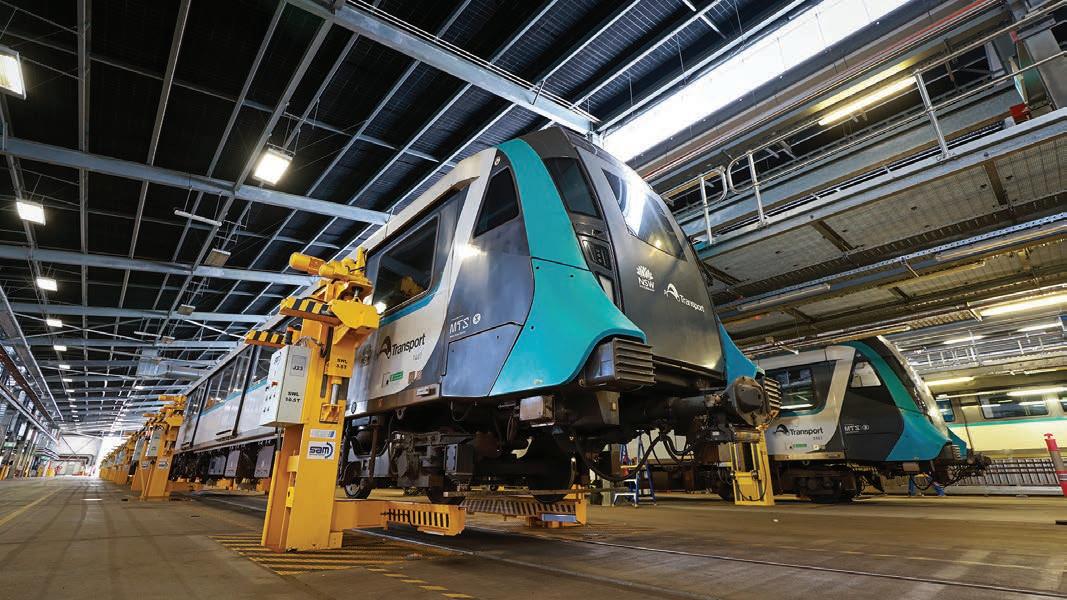
Sydney Metro train in Tallawong.

It is launched every year at the Southern Hemisphere’s largest rail event, AusRAIL. Copies are distributed to all delegates at the event, as well as being sent to all Rail Express subscribers.
Need a copy for your office?
Email kayla.walsh@primecreative.com.au
Did you miss out on this year’s directory?
You can still update your free listing on the Rail Express website – or if you want to stand out from the crowd, get in touch with our Business Development Manager Arron Reed (arron.reed@primecreative.com.au)
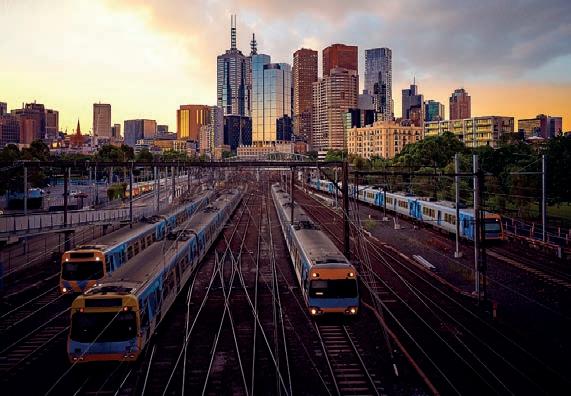
Breaking down the silos for rail operators
Dassault Systèmes shares how integrated planning can lead to better decision-making, fewer disruptions, cost savings and more.
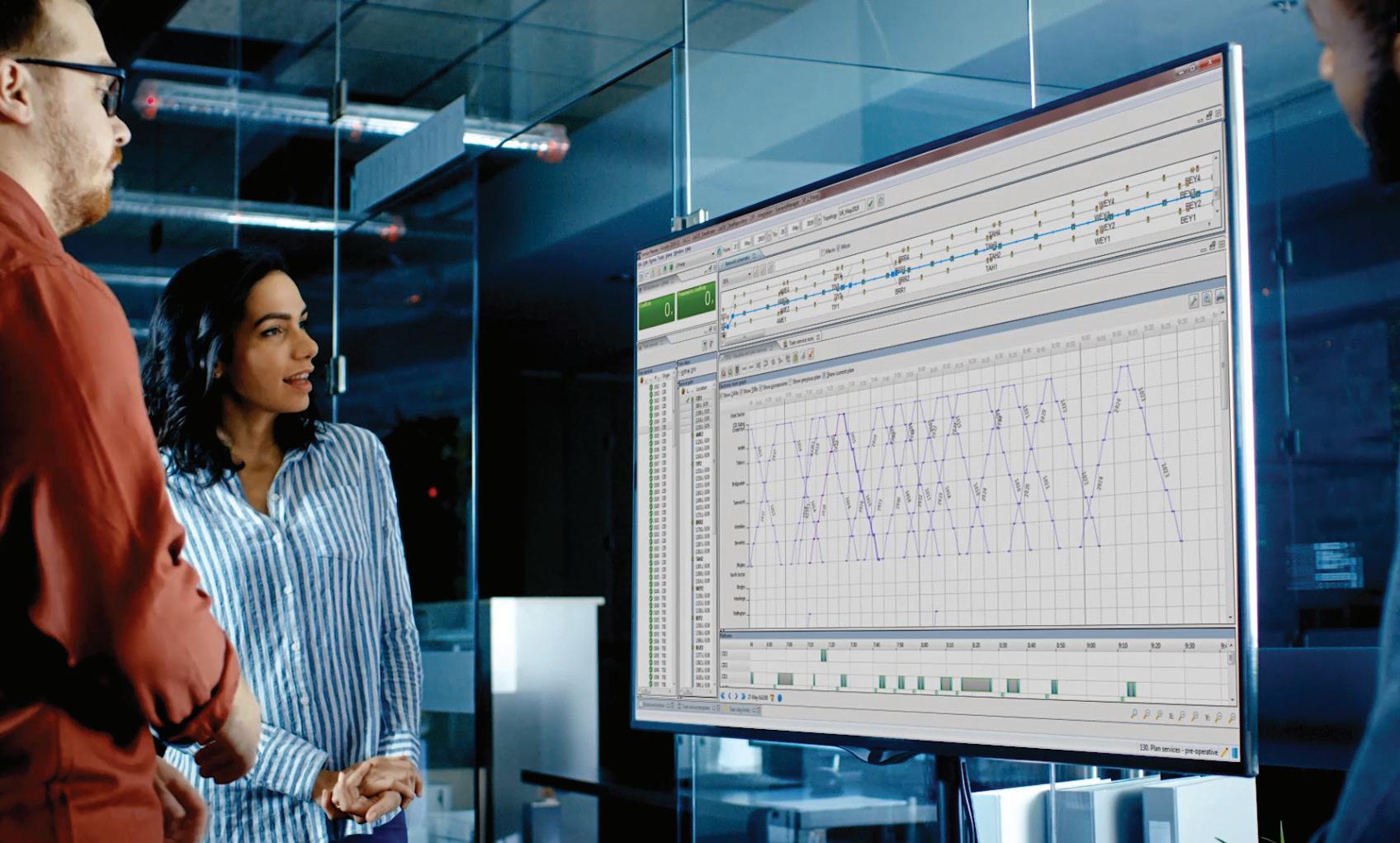
Australian rail operations are becoming increasingly complex.
Operators are under growing pressure to deliver reliable and efficient services while juggling growing passenger demand and freight volumes, workforce shortages, infrastructure capacity constraints, operational disruptions and other challenges.
Despite this, many operators are still using separate planning systems across service scheduling, fleet allocation, crew planning, network capacity, and yard operations – creating data silos.
The result is slower responses to disruptions, inefficient deployment of rolling
stock and staff, reduced operational visibility across planning teams, and less effective decision-making across the network.
In a recent webinar presented to the rail industry, experts from global technology leader Dassault Systèmes shared why it’s time to leave fragmented planning behind.
The session, entitled Rail without silos: Integrated planning for smarter operations, showed viewers the benefits of DELMIA Quintiq, a software solution for integrated planning, scheduling and supply chain optimisation. This can be used to optimise resources, better
manage disruptions, support data-driven rail operations and more.
In this article, we bring you some of the key lessons from Dassault Systèmes’ Industry Process Consultant Luke Stainlay.
ADDRESSING CORE FUNCTIONAL CHALLENGES
The current geopolitical climate has led to a surge in demand across both passenger and freight rail in Australia.
“We’re seeing the immediate impacts of surging fuel prices and increased demand for lower-cost freight, and there are government subsidies in play as well in some countries,” Stainlay noted. “There’s
Crew schedules is a core component of integrated plannng across the network.
Technology
a push from commuters away from cars and towards rail, with many services now running at crush capacity in peak hour.”
Sustainability is also a topical issue in rail, and there’s strong investment worldwide in infrastructure, track renewal and signalling system upgrades, as well as an emphasis on the critical need for harmonisation and interoperability.
But Stainlay said sometimes the rail industry fails to adapt to these fluctuations and challenges, or take advantage of trends.
“We have a sense of unrealised capacity,” he said. “We’re incurring avoidable costs, and we’re not capturing the revenue that we think we should.
“We can’t see what’s really going on in our organisation, and how these changes are impacting us.”
Underlying all of this is what Stainlay called “core functional challenges”.
These relate to core functional processes, which include planning everything from crew, to terminals, to network capacity and fleet maintenance.
Stainlay said there is “little to no native integration” between these planning and scheduling systems.
“For example, crew planning is not integrated with service planning, and fleet maintenance is not integrated with
fleet planning,” he explained. “Some of these functions are then supplemented by general-purpose spreadsheets and documents, which can create an even more fragmented process.”
The coordination between these systems is often completely manual, Stainlay added.
“We’ve got emails, phone calls, meetings and notes, all to make up the space in between these core functional processes.”
To combat this lack of integration, operators often introduce an integration initiative – which usually focuses only on the core and connecting functional processes.
“We’re trying to force each puzzle piece to connect with one another, but the process becomes extremely costly. Each integration between core functional process is often unique, it’s expensive to build, and even more expensive to maintain over the life of those systems.
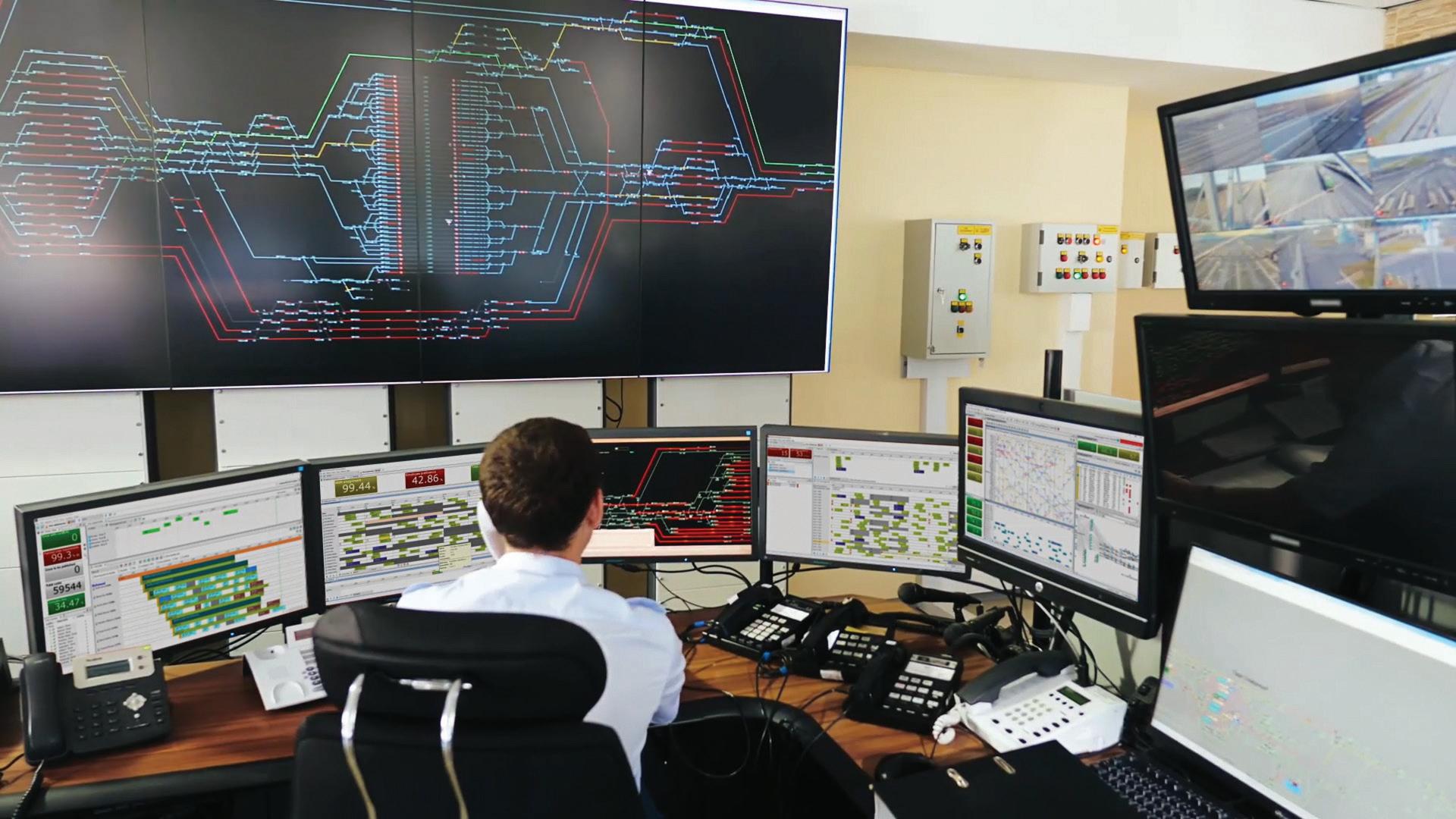
“As each part evolves, gets upgraded or replaced, the integration needs to be rebuilt or completely re-engineered.”
In addition to the core functional processes, there are secondary interoperability connections, as well as tertiary functional processes.
DELMIA Quintiq’s integrated rail service delivery model encompasses all of the
above, representing its strategic response to the core customer challenges facing operators today.
Stainlay said this framework has allowed the creation of a genuine feedback loop, where the outputs from one level of planning become the inputs for the next.
“That flows both up and down the chain –so service planning will determine the route
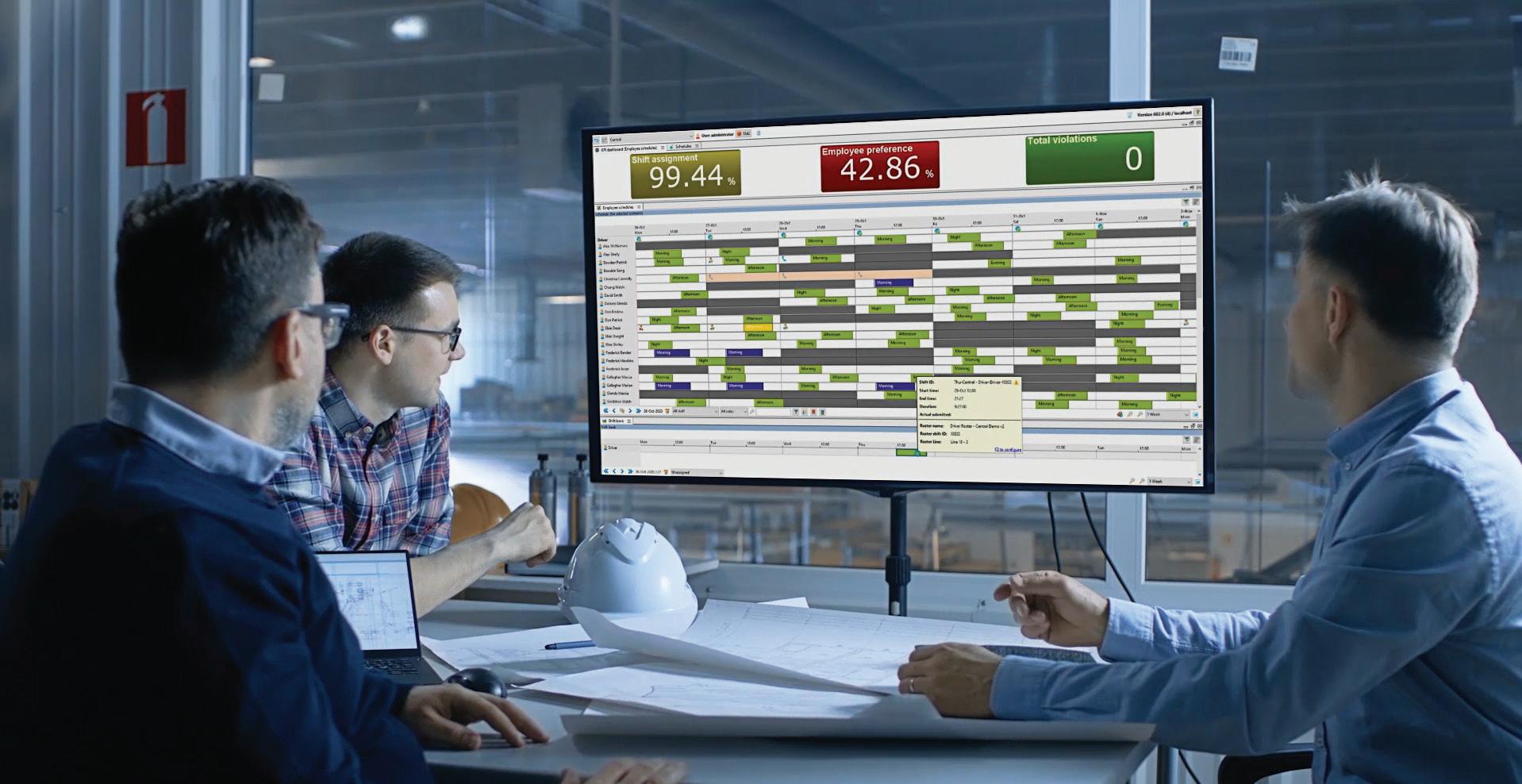
DELMIA Quintiq’s integrated planning approach brings operations, infrastructure and adjacent planning functions together within a shared environment.
knowledge for the drivers of each service, while fleet planning determines the required traction knowledge.
“Both of these become critical inputs into crew planning and crew allocation, which in turn allocates crews back to the services defined by the service plan.
“We can apply this integrated planning approach across all operations and functional processes, so operators get better decisions, shorter disruptions and an organisation that can operate as one unified system, rather than a connection of disconnected components.”
APPLYING INTEGRATED SYSTEMS TO MASTER TRAIN PLANNING
When it comes to Master Train Planning, Stainlay said the key question planners are trying to answer is “What services should we run?”
He said operators often simply run the same services as they did the week, month or year before, without properly assessing whether that is actually the best option available.
“[Whether it was the right choice] is often judged by feedback or complaints received after a service has run, or we’ll get a belated earnings report that might give us an indication of how cost-effective the plan was,” he explained.
However, this approach is not helpful when trying to make decisions in a changing environment – when rising diesel costs and government subsidies are at play, for example. This is where integrated planning comes in.
During the webinar, Stainlay used a fictional dataset from a freight rail operator
to illustrate how integrated planning can help achieve various goals – including increasing train revenue, reducing train operating costs, maximising asset use, improving on-time performance and increasing network capacity.
By connecting demand, service, fleet and operational data, a “single source of truth” is created, he explained.
Rather than relying on siloed planning processes, planners can assess the network holistically and understand the impact of decisions in real time.
A key benefit is visibility of network-wide impacts, Stainlay said. Integrated planning highlights issues such as wagon shortages, rolling stock imbalances and rule violations before operations begin, allowing planners to proactively reposition assets and avoid unworkable plans.
This capability becomes particularly valuable at scale, where even small imbalances can create significant operational disruption.
Integrated key performance indicators (KPIs) also provide immediate feedback on the trade-offs of planning decisions. Changes such as adding locomotives or repositioning empty wagons can be assessed instantly against cost, utilisation and operational performance metrics, helping planners optimise outcomes rather than relying on assumptions.
MAINTAINING AN EFFICIENT RAIL YARD
In the final section of the webinar, Stainlay looked at how to maintain an efficient rail yard using integrated planning – stepping into the shoes of a fictional yard planner for a passenger rail operator.
“We're trying to answer the question of, how do we know that next week's service schedule is going to be workable for our yards?” he explained.
“How do we know that we'll be able to handle all of these tasks? How can we efficiently stable trains and prepare them to meet those tight timeframes and windows for on-time departures?
“We need to know where everything is within our yard, at all times, what it's about to do, or what the plan is for that rolling stock. And to do that, we need a single source of truth.”
DELMIA Quintiq’s integrated planning approach delivers major benefits for yard planning by bringing operations, infrastructure and adjacent planning functions together within a shared environment. Rather than managing yards in isolation, planners get a complete, real-time operational picture that gives yard operations “the confidence to work efficiently and safely”, Stainlay said.
Operators can track where rolling stock is, what it is doing and what activities need to occur between arrival and departure. Integrated planning also improves visibility across the full yard process.
“Activities such as stabling, parking, storing, marshalling, cleaning, and provisioning can be coordinated within a single plan, helping operators prepare trains within tight turnaround windows while maintaining safe operations,” Stainlay added.
With integrated planning, operators can create multiple scenarios and test the impact of infrastructure changes, possessions or outages before they occur. For example, planners can evaluate whether taking a track out of service will affect capacity or delay departures and identify issues early rather than on the day of operations.
As Stainlay noted, “whether it’s an outage within a yard, or a network disruption on the day, or a planned crewing decision that was made weeks ago, they all impact other parts of our rail operations. So, we have to break down the silos on the operation and see it as a whole integrated system.
“With that level of integration, unused capacity and demand opportunities can be seen and seized, allowing us to properly respond to the next energy cost surge, economic shock, or supply chain disruption.”
Planners can assess the network holistically and understand the impact of decisions in real time.
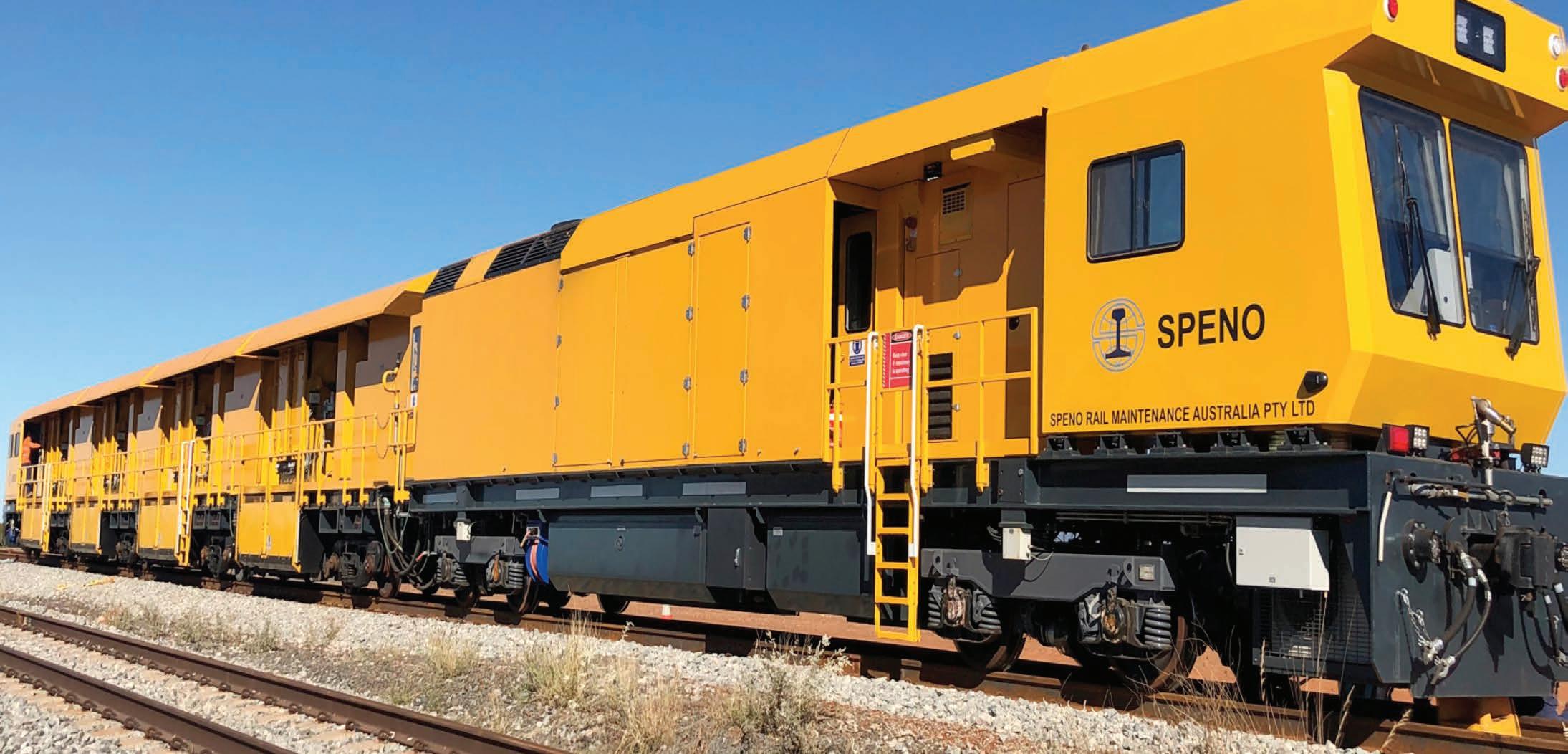
On the fast track to success
Chloe Keep and Patrick Clifford are proving that passion and hard work pay off, as they take on new challenges and kick goals with the support of Speno.
Established in Australia in 1969, Speno Rail Maintenance Australia is now a leading railway maintenance specialist, delivering rail grinding, ultrasonic rail flaw detection, track geometry measurement and track inspection services across Australasia.
Headquartered in Perth and operating as part of the Swiss-based Speno International Group, the company designs and manufactures all of its specialised rail maintenance machinery in Western Australia, supporting major mining, freight and passenger rail networks.
Playing a crucial part in these operations is Speno’s valued workforce.
Chloe Keep, HSEQ (Health, Safety, Environment and Quality) Superintendent, and Patrick Clifford, Project Superintendent, both started with the company at a young age. Here, they share their career journeys.
MEET CHLOE KEEP
At just 17 years old, Keep applied for a junior administrator job at Speno fresh out of high school, with little knowledge of what rail maintenance entailed.
“When I started my career, I had no idea what I wanted to do with my life,” she said.
“All I knew was, I didn’t want to go to university, so I applied for the position at Speno, and within a few days attended the interview. The day after that, Speno called me and asked if I could start the following Monday. And that was it, my rail journey began!”
Keep spent three years in administration before yearning for a new challenge.
“I spoke to Mark Green, who was the project manager for Speno on site in Karratha at the time,” she said.
“I told Mark that I wanted to get out on the machines, and he said: ‘Let’s do it.’ He organised for me to go out on a night shift and see how the machines work for the first time. And I just loved it.”
That experience ultimately led to Keep, at the age of 20, moving to Sydney and becoming Australia’s first female ultrasonic rail tester.
Now, more than a decade later at 28 years old, Keep has worked on almost every network across Australia, and she’s happy to have seen many more women in field-based roles at Speno.
“We’ve now got female rail testers in Karratha, and on our mainline grinders in Sydney, as well as on the machines over in Perth.
“Of course, we can always do better. It’s important for women to see that these roles are available and the opportunity is out there, but we all need to create a safe and inclusive environment in the rail industry that encourages and supports women to take up these opportunities.”
As a HSEQ Superintendent, Keep now oversees health, safety, environment and quality systems across Speno’s operations.
“It’s such a broad role,” she shared. “One day someone’s asking you
about environmental regulations, and the next I’m looking after injury management.
“Then another day I’m out doing audits and inspections on the machines. I really enjoy the variety.”
Keep recently participated in the Australasian Railway Association (ARA) Future Leaders program, which focuses on developing emerging leaders across the rail sector.
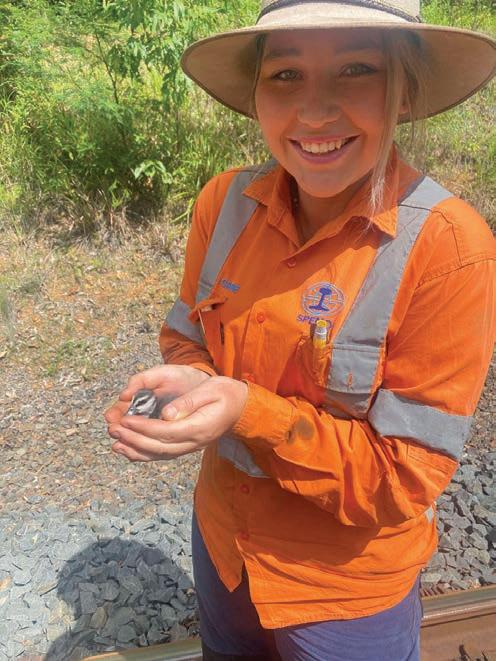
Images: Speno Rail Maintenance Australia
Chloe Keep, HSEQ Superintendent at Speno.
She said Speno is very supportive of her professional development and sponsored her to attend the course. Speno also sponsors initiatives such as the Next Generation Conference Scholarships for the annual Heavy Haul Rail Conference in Perth.
“The Future Leaders program has been great,” she said. “It’s given us the tools and connections to succeed and progress into leadership roles.
“I believe in moving away from dominant leadership styles and looking at more collaborative ways of doing things.”
Keep is currently expecting her first child and preparing for her next chapter as a mother. She’s grateful for the flexibility Speno is offering her when she returns from maternity leave.
“My managers have been incredibly supportive,” she said. “They said that if I want to come back to the same role I’m in now, I can do that, or I have the option to try something different.
“As I progress in my career, I want to continue to support more women in the industry, and for young leaders to challenge themselves and keep growing whilst we navigate the evolving industry.”
Her advice to other young people entering the rail industry reflects the mindset that has shaped her own career.
“Don’t be afraid to push yourself outside your comfort zone,” she said. “You might discover something you’re really good at.
“I never thought I’d end up in rail, but I’ve been on this journey for a decade now, and I wouldn’t change a thing.”
MEET PATRICK CLIFFORD
Like Keep, Patrick Clifford never intended to pursue a career in rail. The Gold Coast local joined Speno in 2011 at the
age of 20, after completing an electrical apprenticeship with his father.
“A friend rang me and told me Speno was looking for electricians in the mines,” he said. “I took the plunge. My dad wasn’t too happy at the time, but he’s forgiven me now that it has worked out so well!”
At first, Clifford wasn’t sure whether he would like working for a larger company.
“I had only ever worked with my dad,” he said. “So, I wasn’t sure whether I would feel anonymous at a company like Speno. But from the start, it felt like a family. There was a real sense that everyone was a valuable part of the team.”
Over Clifford’s 15 years working for Speno, he has worked his way up the ranks through operational and leadership roles, with notable success establishing a new company contract in New Zealand.
“It was great to get the opportunity to live over there with my family,” he said.
“Nowadays, I get to fly all around the world, promote the business, operate machines, and meet new people.”
When we interviewed Clifford, he had just returned from a trip to the United States, where he was demonstrating one of Speno’s innovative switch grinding machines.
“Switch grinding normally takes multiple hours, lots of people and a lot of downtime for a rail line,” he explained.
“With this machine, which we have designed and built in Australia, we’re doing the same job in 40 minutes. It’s incredible what Speno has been able to achieve.”
As Clifford reflects on how far he has come, he gives credit to the professional development opportunities Speno has given him. For example, some years ago, Speno sponsored Clifford to undertake advanced rail-wheel interface studies through Monash University, which greatly deepened his
understanding of railway defects and asset performance.
“That course opened a Pandora’s box for me,” he said. “It changed how I understood rail and how I communicate with clients today.”
The Project Superintendent also took part in the ARA’s Future Leaders program, which he said is continuing to build collaboration and communication across the rail industry.
“The old way was often ‘This person has been here forever, so we just do what they say',” he said. “Now it’s more about asking how we can improve things together as a team.”
Looking ahead, Clifford would like to move further towards client engagement and commercial leadership at Speno.
“I really enjoy the interface component between clients and Speno itself,” he said. “I think communication is one of my strengths and I would love to continue building on that.”
His advice to younger professionals entering the rail industry centres on networking and continuous learning.
“For me, having worked all the way across the business, I feel like I could call someone in any division and they would be excited to talk to me,” he said.
“Whenever you meet someone, you should be engaged and learn their name. No matter who they are or what their role is, they can teach you something.
“It’s about learning those little things from every person you meet, so you’re building yourself up along the way.”
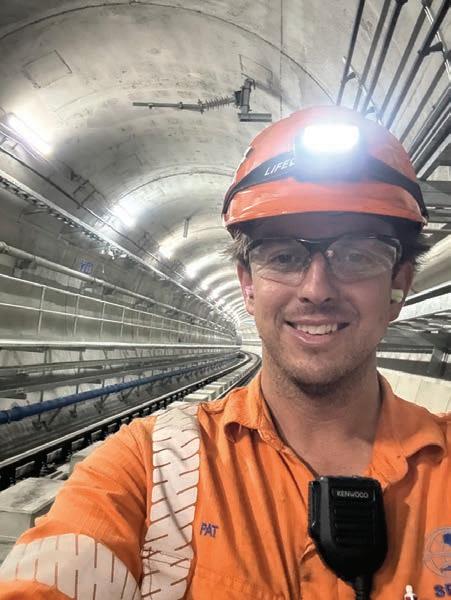
Speno is a leading rail maintenance specialist.
Patrick Clifford, Project Superintendent at Speno.

‘We don’t have a network –we've got 17 in a trench coat’
Michael Hopkins, Chief Executive Officer of the National Transport Commission, shared insights into Australia’s fragmented rail system and the
“We don’t actually have a rail network in Australia – we've got 17 networks in a trench coat pretending to be one.”
That was the message Michael Hopkins, Chief Executive Officer of the National Transport Commission (NTC), shared at the recent Australian Rail Industry Standards Organisation (ARISO) Rail Safety Conference in Melbourne.
Hopkins said Australia’s rail networks operate individually, making independent decisions, which has led to a lack of interoperability and harmonisation.
“This wasn’t a mistake, it’s just a product of history,” he explained. “Nobody would have thought 150–170 years ago, when the first rail networks were built here, that one day they would all be joined up.
“But what it has meant is that we’ve been dealing with different technologies, different rules, different training requirements, and different approval processes across the networks.”
Getting Australia’s rail networks to operate as a single national system is a key objective of rail reforms that the NTC has been pushing for through the
National Rail Action Plan. This will require, among other things, harmonising standards, rules and processes around the country, and prioritising interoperability of signalling systems.
Hopkins said these reforms will reduce costs and improve productivity across Australia’s rail networks, encouraging mode shift to rail.
"If we want a transport system that's more resilient, more productive, and better able to respond to shocks like the current fuel prices, then rail needs to play a bigger role.
“But to do this, we’ve got to stop being 17 networks in a trench coat.”
He said he’s proud of the work the NTC, ARISO, the Australasian Railway Association (ARA) and other industry bodies have done so far to advance interoperability and harmonisation.
Major milestones reached in recent years have included the creation of a threetiered national standards framework, the completion of a review of the Rail Safety National Law, and Government Ministers agreeing to the European Train Control System (ETCS) as the unified digital
plan to fix it.
signalling technology for the National Network for Interoperability.
“Some people told us, ‘good luck!’, because the changes were so complex and [these problems] have been around for a long time,” he said.
“But what we're seeing is governments and industry coming together, working through those challenges and making decisions for the long-term.”
Hopkins said the NTC has consulted the industry regarding these rail reforms, via webinars, meetings and submissions.
“One of the things that really struck me was the almost unanimous support for the objectives of reform – setting up rail for the future, creating a national system by setting standards, harmonising rules, working towards interoperability and making sure we have laws that are fit for our time.
“There were differences in approach, and differences in the way organisations think those objectives should be met. That’s the point of consulting – if we knew what the answer was, we would have just told you.”
“I think we’re on the right path.”
Michael Hopkins, Chief Executive Officer of the National Transport Commission. Image:
ETCS: Lessons learned in the UK
Tom Lee, Director of Standards at the Rail Safety and Standards Board (RSSB), shares his advice for delivering complex digital signalling projects.
Strong relationships play a big part in delivering complex rail projects – and you may need to rely on “banked goodwill” when times get tough.
That was a key piece of advice from Tom Lee, Director of Standards at the Rail Safety and Standards Board (RSSB) in the United Kingdom (UK).
Addressing the crowd via a pre-recorded video at the recent Australian Rail Industry Standards Organisation (ARISO) Rail Safety Conference in Melbourne, Lee said many lessons have been learned from rolling out European Train Control Systems (ETCS) in the UK.
The Cambrian Line was the UK’s first deployment of ETCS – an advanced digital railway signalling and control system. It began operating in 2011. Passenger services began using ETCS on the Northern City Line in central London in late 2023, with conventional signals later removed as part of the rollout. Other ETCS projects are currently underway in the UK.
In 2025, Australia’s infrastructure and transport ministers decided on ETCS as the future technology pathway for the National Network for Interoperability (NNI).
It means all new digital signalling investments on the National Network for Interoperability must meet mandatory ETCS standards.
THE IMPORTANCE OF COLLABORATION
Lee said the application of ETCS is about more than just signalling.
“Collaboration within and across organisations is absolutely essential for success,” he said.
“It’s about building effective teams, and bringing together people from all relevant organisations, including rolling stock operators, maintainers, engineers, suppliers, regulators and funders.
“They need to have common values and be united by clear, shared objectives.”
Lee highlighted that relationships are very important and need to be built on trust.
“They need to be enduring when tasks get tough, and they will get tough,” he said. “Projects will, at times, need to rely on goodwill that is developed through these relationships.
“It’s essential that goodwill is banked when it can be, because it may not always be possible to foresee when you’ll need to draw on that goodwill.”
GOOD DECISION-MAKING
Lee said clear decision-making structures are required for complex signalling projects, so the right choices can be made quickly, with effective change control.
“Avoid the temptation to over-analyse the problem,” he said. “This can delay decisions and potentially overcomplicate a solution.
“An effective commercial arrangement needs to be in place, so that those who may lose out have a means to be compensated, decisions can be made and objectives are not jeopardised.”
He considers the best approach to be operationally-led, following engineering principles.
“That failure to get the balance right between operations and engineering has been a significant cost driver for many years in the UK and has led to much rework.”
Lee said ETCS is complicated enough –there’s no need to make it any more complex than it needs to be.
“Optimise the application design for normal operation and avoid the temptation for clever solutions to improve degraded working,” he recommended.
“Avoid dual signalling as much as possible, and if it is required, don't strive for absolute consistency between the different signalling systems.”
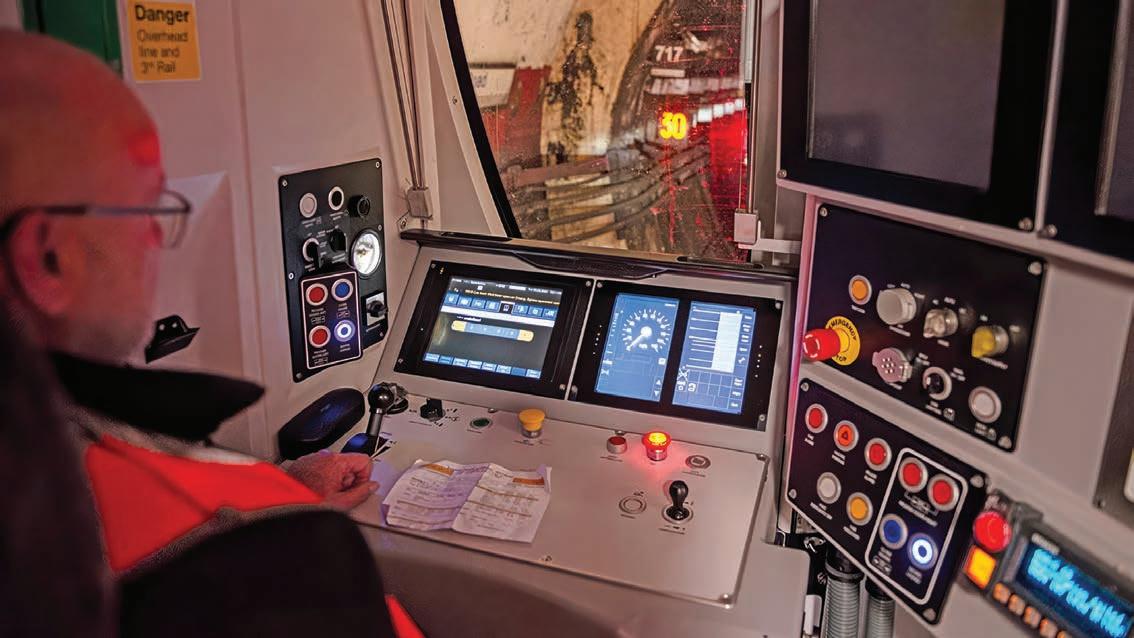
Tom Lee, Director of Standards at RSSB.
ETCS is an advanced digital signalling system.
Are driverless trains the only way forward?
Automated trains are becoming more widespread – raising difficult questions about whether driverless systems represent the future of rail safety, or
whether human judgement will always have an essential part to play.
As automation technology advances, the Australian rail industry is increasingly confronting a conundrum: can rail safety continue to improve while trains are still driven by humans?
That question took centre stage at the recent Australian Rail Industry Standards Organisation (ARISO) Rail Safety Conference, during the inaugural Great Debate.
A panel of industry leaders argued for and against the motion that ‘Driverless systems are the only way forward for rail safety’.
In a theatrical format, speakers adopted fictional personas – from ‘The Disruptor’ to ‘Dr Human Error’ – to argue either side of the issue.
Though the organisers made it very clear that the opinions expressed by the characters did not necessarily reflect the speakers’ own views, the light-hearted debate raised some salient points on the topic and encouraged reflection from the audience.
HUMAN ERROR VERSUS ENGINEERED SYSTEMS
Arguing for the affirmative team, ‘Dr Human Error’, portrayed by Professor Anjum Naweed, Professor of Human Factors and Operational Readiness at Central Queensland University, framed the debate around one central issue: human fallibility.
“Humans get tired, humans get distracted, humans become overloaded,” he said. “They become complacent, emotionally distressed,
expectation-biased, authority influenced, undertrained, or overconfident.
“The history of rail safety is in many ways the history of reducing dependency on human performance.”
Naweed argued that modern rail systems have become too complex and data-heavy to continue relying primarily on human cognition in safety-critical environments.
“Safety-critical systems should not require extraordinary humans in order to remain safe,” he said.
“Historically, rail safety has largely consisted of designing systems to protect us from ourselves.”
The affirmative team argued that automation is already deeply embedded across rail systems through technologies such as Automatic Warning Systems (AWS), Train Protection and Warning Systems (TPWS), European Train Control Systems (ETCS) and Automatic Train Operation (ATO).
According to the panel, fully driverless systems are simply the next stage in that progression.
Dr Andrew Hussey, Director of Regional Reliability, Availability, Maintainability, and Safety (RAMS) for Australia and New Zealand at Hitachi Rail, appeared as ‘Dr Data Driven’ and argued that train driving is largely predictable and taskbased work that machines are increasingly capable of handling more consistently than humans.
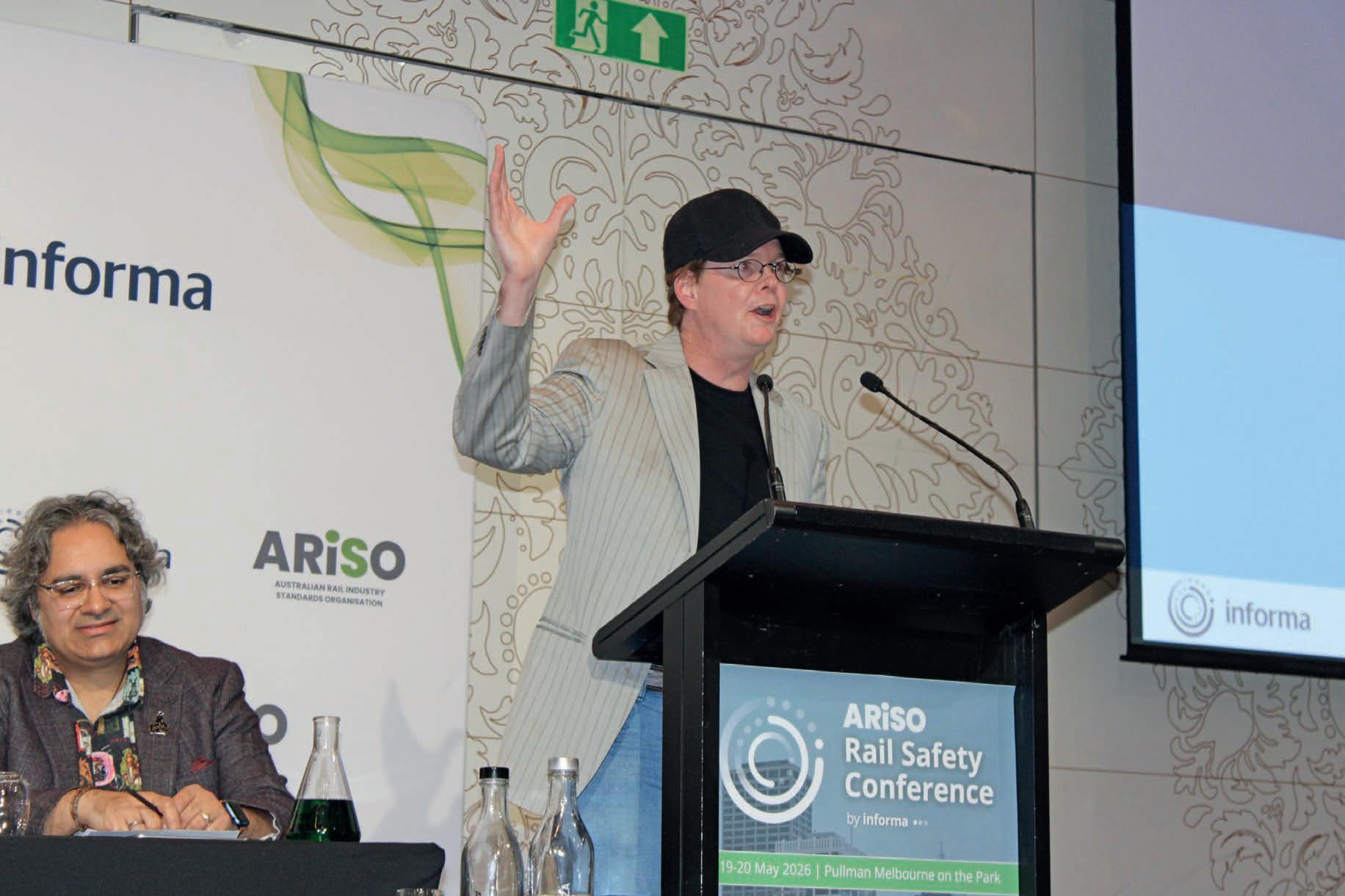
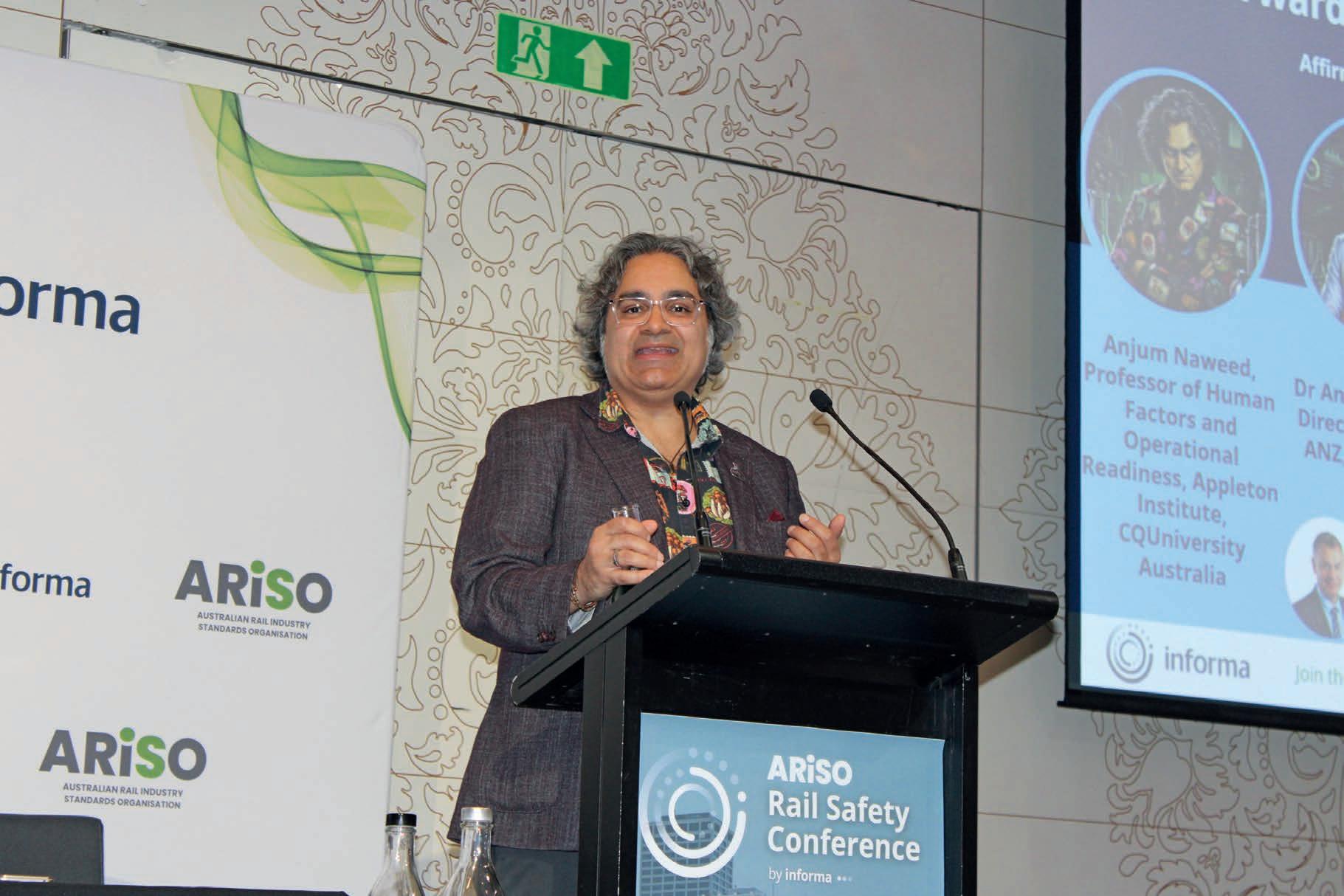
“Machines can already do everything the driver does,” Hussey said. “Reducing or even eliminating human errors aligns with the central safety principle of substituting reliable system solutions for unreliable humans.”
Hussey pointed to the maturity of modern safety assurance processes and the growing reliability of automated systems, including safety-critical technologies already deployed globally.
“Current assurance processes are mature and well proven,” he said. “Holistic system assurance covering all sorts of threats, including cybersecurity, is becoming the norm.”
Karen Grumley, Head of Risk and Resilience at Pacific National, portrayed ‘Captain Tomorrow’ and argued that automation aligns with the broader future direction of the industry.
“A driverless railway is a productive railway, a transparent, data-rich railway, and that’s a safe railway,” she said, in character.
She also argued that driverless systems remove many of the challenges associated with human performance, including fatigue, training variability and compliance breaches.
“We have the systems – we don’t need the human error,” she said.
THE LIMITS OF AUTOMATION
The negative team did not argue whether automation itself has a place in rail. Instead,
Professor Anjum Naweed portraying the character of ‘Dr Human Error’ during The Great Debate.
speakers questioned whether driverless systems can safely handle the complexity and unpredictability of many real-world rail environments.
‘Commander Caution’, portrayed by Stephen Lemon, Executive Director of Rail Systems and Operations Reform at the National Transport Commission (NTC), argued that context is critical.
“I am not against driverless systems and do not believe that they are inherently unsafe,” Lemon said. “But in certain circumstances, they can be unsafe, and a move to driverless systems is definitely not always a move to safer systems.”
Lemon argued that humans remain better equipped to handle unpredictable events such as emergency situations, trespassing, or complex system failures.
He also pointed to the operational environments where driverless systems are currently most successful, which are largely controlled metro networks with extensive supporting infrastructure such as tunnels, platform screen doors and segregated corridors.
“That is why driverless systems like those common on metros don’t tend to operate in heterogeneous environments,” he said.
“If driverless systems were the only way forward for our safety, then those metros wouldn’t need all of those controls in place.”
Montserrat Elbas Yagüe, Solutions Architect at Siemens Mobility, appeared as ‘Agent
Systems Architect’ and argued that rail safety should not be framed as a choice between humans and machines.
“The safest and most effective solutions come from balance,” Yagüe said.
“Applying the right level of automation when it adds value, while keeping human oversight when it is essential.”
Drawing comparisons with aviation, she noted that even highly automated aircraft still rely on skilled human operators.
“When something unexpected happens at 30,000 feet, you want human judgement, adaptability and experience,” she said. “Aviation has not replaced humans, it has integrated humans.”
Yagüe’s character argued that while driverless systems work effectively in highly controlled metro networks, many existing freight and regional networks are far more operationally complex.
“The question is not whether automation works,” she said. “The real question is: does it work everywhere? And the answer is no.”
A BROADER CONVERSATION ABOUT RAIL SAFETY
The debate’s final speaker, ‘The Disruptor’, portrayed by Patrick Hornby, General Counsel at the Australian Transport Safety Bureau (ATSB), broadened the discussion beyond automation itself.
Hornby argued that some of the biggest opportunities to improve rail safety may
come from predictive technologies focused on infrastructure rather than train operations.
“Infrastructure failures are a cause of accidents,” he said. “That is not going to change with driverless systems.”
He pointed to emerging technologies including fibre optic sensing, satellite monitoring, radar systems and predictive maintenance tools as major future safety opportunities for the sector.
While humorous throughout, Hornby’s speech ultimately pointed to the serious fact that driverless systems should not be considered in isolation, and that there are a range of technologies that can be implemented sooner than, or in tandem with, automation that could greatly improve safety across the network.
The debate highlighted industry conversations around automation, interoperability, regulation and the future role of human operators, and ended with the audience ultimately voting in favour of the negative team – concluding that driverless systems are not the only way forward.
As Australia’s rail sector continues to explore greater automation, the discussion demonstrated that the future of rail safety is unlikely to be defined by a simple choice between humans or machines.
As Lemon’s character argued, “Driverless systems can be a way forward for our safety, but they can never be the only way forward.”
Patrick Hornby, General Counsel at the Australian Transport Safety Bureau (ATSB), as ‘The Disruptor’.
Images:
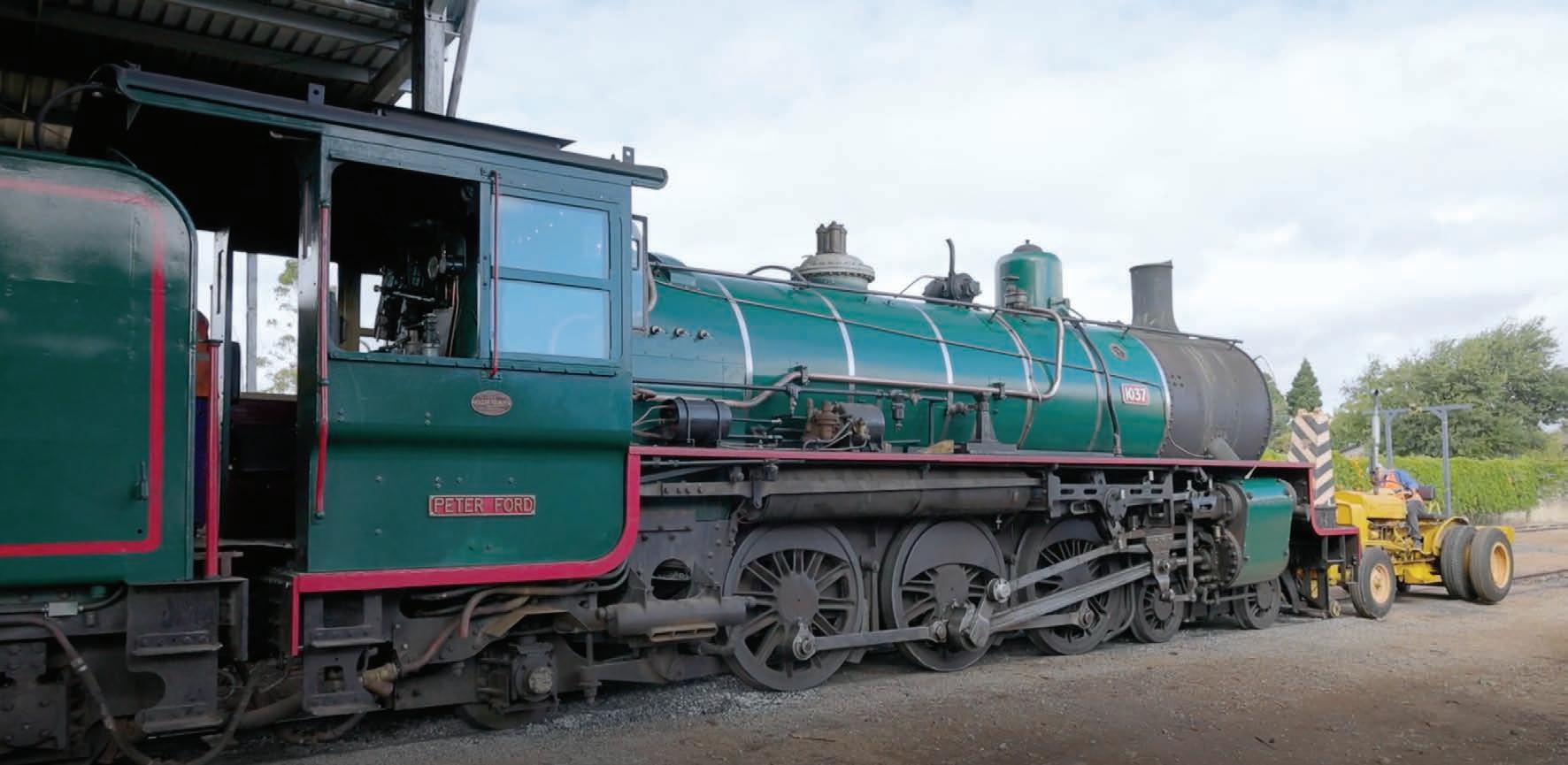
Raising the roof
DownsSteam Tourist Railway was one of the recipients of a grant from Queensland Rail to celebrate 160 years of rail operations in the state.
A community heritage rail group will be able to better preserve and protect rail history thanks to a grant from Queensland Rail.
In late 2025, to celebrate 160 years of rail in Queensland, $160,000 dollars in community grants was awarded to not-forprofit rail heritage organisations.
DownsSteam, a volunteer-run tourist railway in Toowoomba, was one of eight recipients of a grant.
The group received $20,000 for a new roof for its Restoration Shed at the Drayton Railway Precinct.
The Restoration Shed is the operational heart of DownsSteam’s activities, serving as the central workshop for the maintenance, repair, and restoration of heritage rail carriages, locomotives, and equipment. The new roof will offer protection to the hundreds of volunteers that offer their time to DownsSteam.
DownsSteam President Ros Scotney said the previous roof had degraded significantly due to age and ongoing exposure to harsh environmental conditions, leading to leaks, structural concerns, and increasing maintenance demands.
“The completion of this project has transformed our ability to restore and preserve Queensland’s rail heritage,” she said.
“Volunteers now have a safe, dry and secure environment to carry out their work,
and our valuable heritage assets are far better protected.”
Currently, DownsSteam is rebuilding a diesel engine at the Restoration Shed, as well as storing its steam engines inside.
Noel Ernest, Administration Officer at DownsSteam, said the grant was “amazing” news for volunteers.
“When we heard that this grant was being offered, I think we were one of the first ones in with an application,” he said.
“We had already planned the [roof replacement] and we knew how much it was
going to cost us. This has gone a long way to helping to pay for it.
“The grant money was a bonus to us because we weren’t expecting anything at the time and we were running around trying to find out how we were going to get this money.”
Ernest said previously volunteers had to work in pop-up tents to protect them from the sun.
“They’re in the shade now, and they can work no matter what the weather is,” he added.
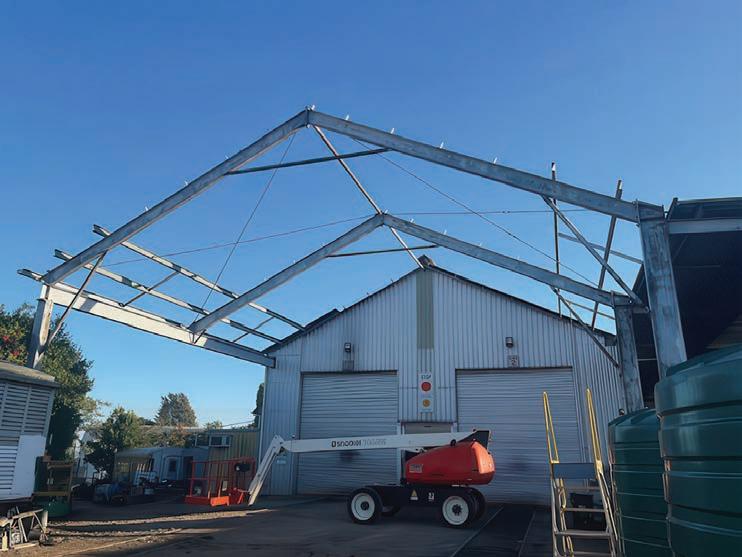
The shed is the central workshop for the maintenance, repair, and restoration of heritage rail carriages, locomotives, and equipment.
Volunteers are protected from the elements thanks to a new roof on the Restoration Shed.
Images: Queensland Rail
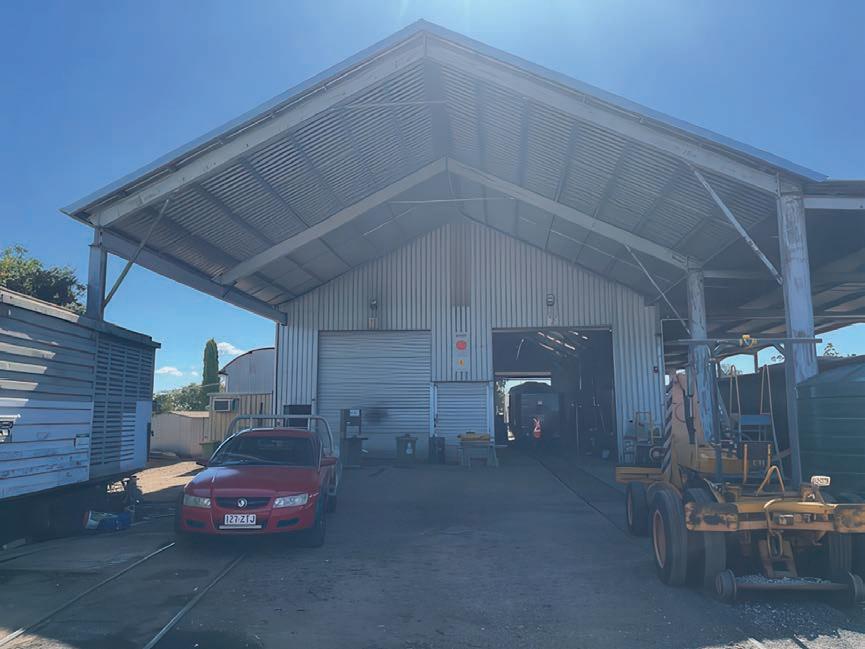
Queensland Rail’s Nev Conway said it was rewarding to see the grant funding translate into tangible outcomes for the community and volunteers.
“This grants program is a great way to give back to the heritage organisations that work tirelessly to keep Queensland’s rail legacy alive,” she said.
“Seeing this project completed at the Drayton Railway Precinct highlights the importance of investing in the infrastructure that supports our rail history and the
It is more than a new roof, it helps to ensure Queensland’s rail heritage remains protected and accessible for generations to come.”
Nicole Arrowsmith, Manager of Strategic Communications and Engagement at Queensland Rail, said: “We’re so proud of our rich rail heritage and we support many organisations and community groups through things like in-kind donations, decommissioned machinery, and of course
Australian Railway and Custom Cables Manufacturer
Amokabel Australia excels in the design and manufacture of many unique and highly specialised cables.
The company is based in Sydney and supplies products across Australia and overseas. Priding itself on being able to provide both custom and standard cables that are manufactured at our facility in Western Sydney. We can manufacture a wide range of products, many of which are custom designed and made to meet our clients’ requirements.
we run our own heritage steam operations for the public to enjoy.
The other seven organisations that received a $20,000 grant each included:
• Australian Railway Historical Society Queensland: Funding for a heritagethemed food truck at historic Grandchester station.
• Queensland Pioneer Steam Railway: Support for track repairs and community partnerships.
• W histle Stop in Maryborough: Overhaul of the famous Mary Ann steam locomotive.
• Atherton-Herberton Historic Railway: Restoration of a Queensland Rail heritage carriage built in 1913.
• S outhern Downs Steam Railway in Warwick: Overhaul of a heritage diesel hydraulic locomotive.
• T he Australian Narrow Gauge Railway Museum in Woodford: Restoration
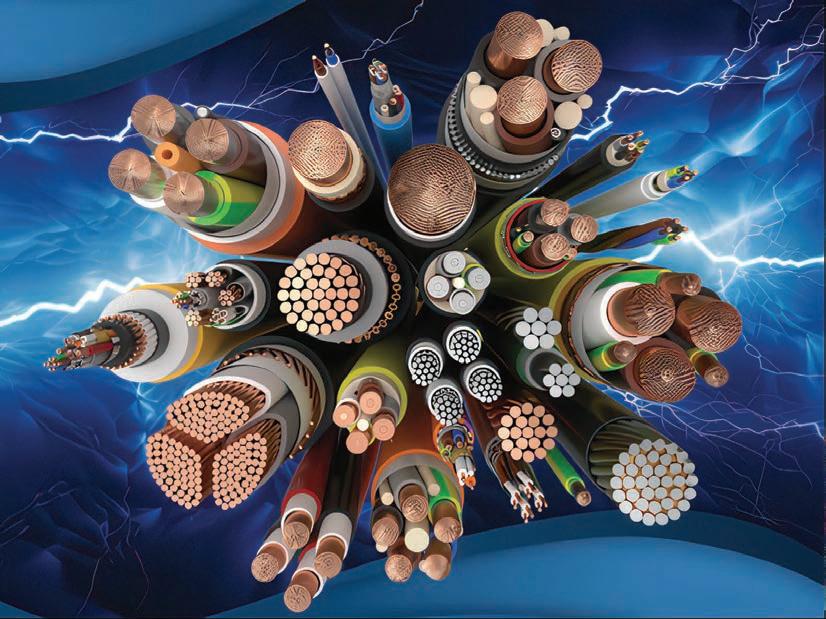
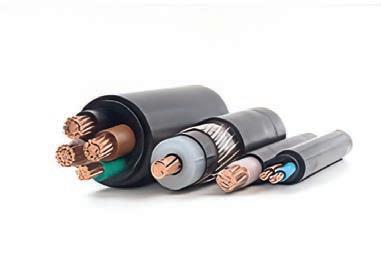
All your Railway Sector Cabling requirements, locally manufactured, such as OHLE cables, Trackside Power cabling, Points Systems, Level Crossing Infrastructure cabling, Contact Wire, Catenary & Bonding cables, Axle Counter cabling, Signalling cables, Train Control System cables, Telecommunications wires, Rolling Stock, Passenger Information Systems, SCADA & Station Building cables.
Extrusion Processes utilising: Low Density Polyethylene, High Density Polyethylene & Cellular Foam Polyethylene, Polyurethane, Polypropylene, PVC, LSZH Megolon, Blue Intrinsically Safe coloured sheaths & Steel Wire Armouring, Termite and Rodent protection cable solutions.
Quality and Compliance are at the heart of mitigating the risk of unplanned maintenance and downtime. Amokabel will work hard to ensure we supply high quality, high performance. The strictest quality assurance processes are backed by compliant cable testing processes.
Amokabel has excelled in the design and manufacture of many unique Custom cables, specifically designed to suit customer requirements. We can combine several of your or our supplied cables to make an easy to install Composite cable.
The shed was without a roof for six years.
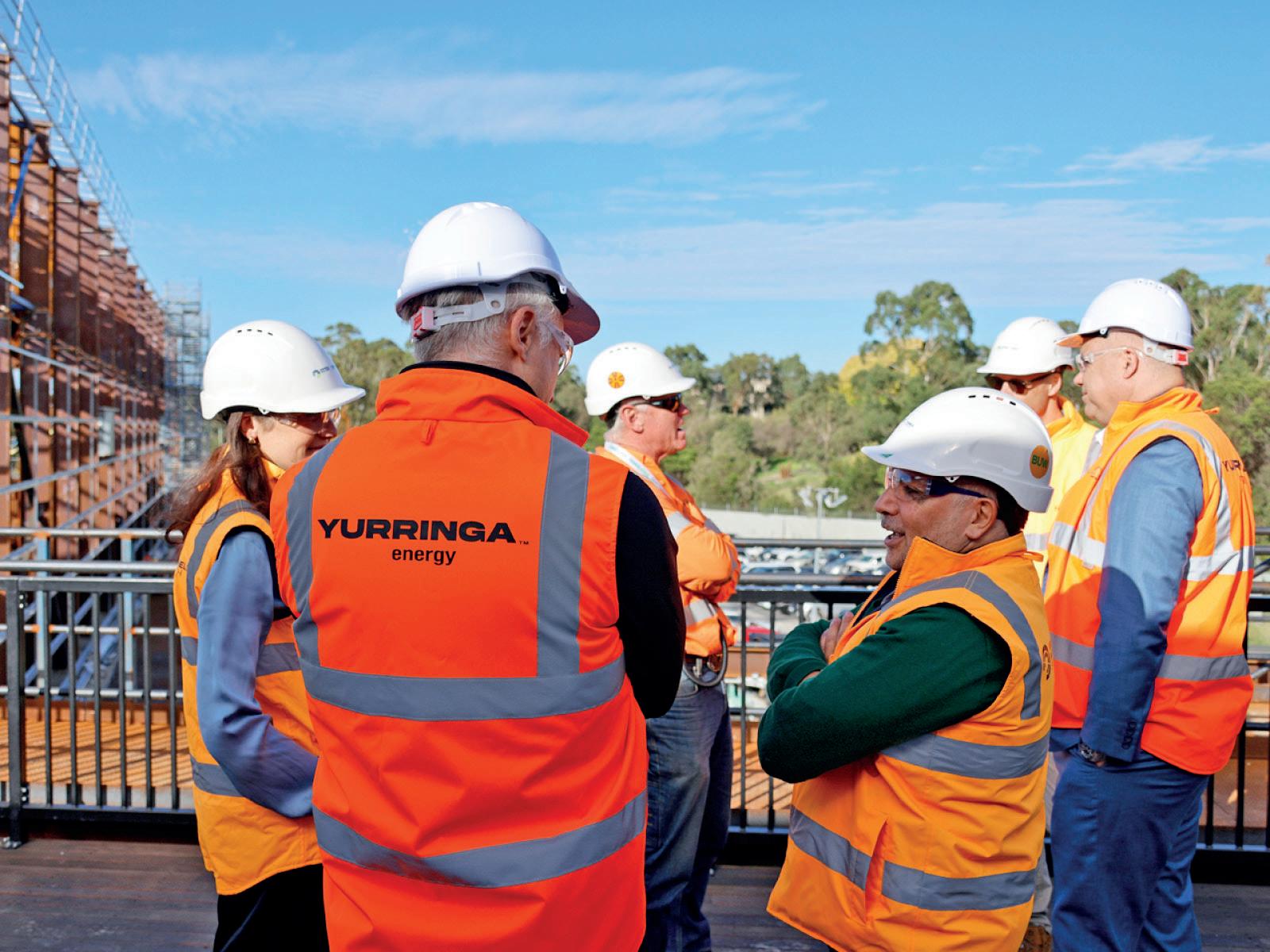
Building a brighter future
A landmark contract awarded to Yurringa Energy is set to strengthen First Nations involvement in one of Victoria’s biggest transport infrastructure projects, Ava Scott writes.
The tunnel boring machines (TBMs) excavating the northern section of Melbourne’s Suburban Rail Loop East twin tunnels will be powered by Australia’s first Indigenous-owned energy retailer.
Yurringa Energy, founded by Daniel Briggs, will supply 100 per cent renewable power for the four TBMs which will carve the 10-kilometres of tunnels between Glen Waverley and Box Hill.
Briggs said it means a lot to the Yurringa Energy team to be playing a role in building a rail network that will serve Victorians for generations.
“It’s quite a privilege and an honour to not only be operating a business on the scale that we are, but to be a part of Victoria’s history,” he said.
“This legacy is really important. We’ll always be known to have been one of the suppliers of energy for the tunnel boring machines on the Suburban Rail Loop.”
Yurringa Energy will supply power to Terra Verde – the consortium delivering the northern tunnels section of the SRL East between Glen Waverley and Box Hill, comprised of Webuild, GS Engineering and Construction Australia, and Bouygues Construction Australia.
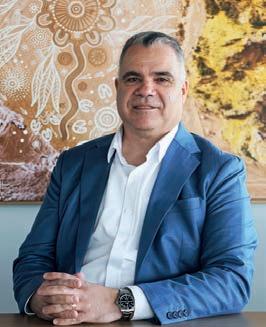
SRL East is the first stage of the Suburban Rail Loop, a new orbital rail line that will connect every major train line from Cheltenham to the west, via Melbourne Airport, and improve access to housing, jobs, schools, universities and hospitals in Melbourne’s middle suburbs.
SRL East will connect key employment, health, education and retail centres, including Monash and Deakin universities, with underground stations to be built in Cheltenham, Clayton, Monash, Glen Waverley, Burwood and Box Hill.
Passengers will no longer need to travel through Melbourne CBD to get to suburban destinations, slashing travel times. The Victorian Government says trains will be running by 2035.
Four TBMs have been ordered for the northern section of the tunnels. The first two are being assembled on site ready to start tunnelling later in 2026, heading south towards Glen Waverley. The next two will launch next year and will dig north towards Box Hill.
Each TBM will measure more than 100 metres in length, with a cutterhead 7.28 metres in diameter. They will be earth pressure balance machines, to suit local ground conditions and minimise impacts on the surface.
The TBMs will be assembled at Burwood, where a TBM launch site has been constructed. Acoustic sheds have been built to reduce the noise impacts of construction, and preparations are underway to excavate the underground space where the new station will be built.
All power provided to the TBMs by Yurringa Energy will be 100 per cent renewable – and the energy demands will be significant.
However, it’s not entirely new territory for Yurringa Energy, who previously supplied 137.5 gigawatt-hours of green energy to power site compounds and the TBMs helping deliver the 6.5-kilometre
Daniel Briggs, Executive Chair of Yurringa Energy. Image: Yurringa Energy
Each
road tunnels between Watsonia and Bulleen as part of Melbourne’s North-East Link project.
“The North East Link was a real learning curve for us,” said Briggs. “It was the first time a renewable energy contract of that kind was awarded to an Aboriginal-owned company. It was also the first contract that we ever won.
“Our work on that project has given us more understanding and knowledge of the transport and infrastructure industries, and we are carrying that understanding and knowledge forward to other projects.”
Peter Bolanis, Supply Chain Director at Terra Verde, said the selection of Yurringa Energy for the SRL East project is “a testament to their ability to compete with the big players and provide a
solution that ultimately means success to the project.”
Briggs is proud of contributing to Australia’s progress towards Net Zero greenhouse gas emissions by 2050.
“Globally, there is a transition towards renewable energy,” he said. “There needs to be more incentives and encouragement for the rail industry to consider using green energy and alternative fuels.”
SRL East is one of the largest construction projects currently underway in Australia.
More than 3300 people are working on the project, with up to 8000 direct local jobs expected to be created over the life of the build. A major priority for Yurringa Energy is providing jobs for First Nations people.
“Yurringa Energy is proudly First Nations owned and we are a leader in providing
employment opportunities for First Nations people in our company, but this only happens by having profitable, financially sustainable First Nations businesses,” Briggs said.
“As we continue to grow and win more contracts like SRL East, we will be able to scale our workforce. Employing First Nations people is a major part of who we are and what we do.”
Briggs, a former criminal lawyer, traded his career in the courtroom for the energy sector after deciding he wanted a change in direction.
“My upbringing and community shaped my thinking around what a business could achieve,” he said.
“I wanted to make a difference – and that’s what Yurringa Energy is doing.”
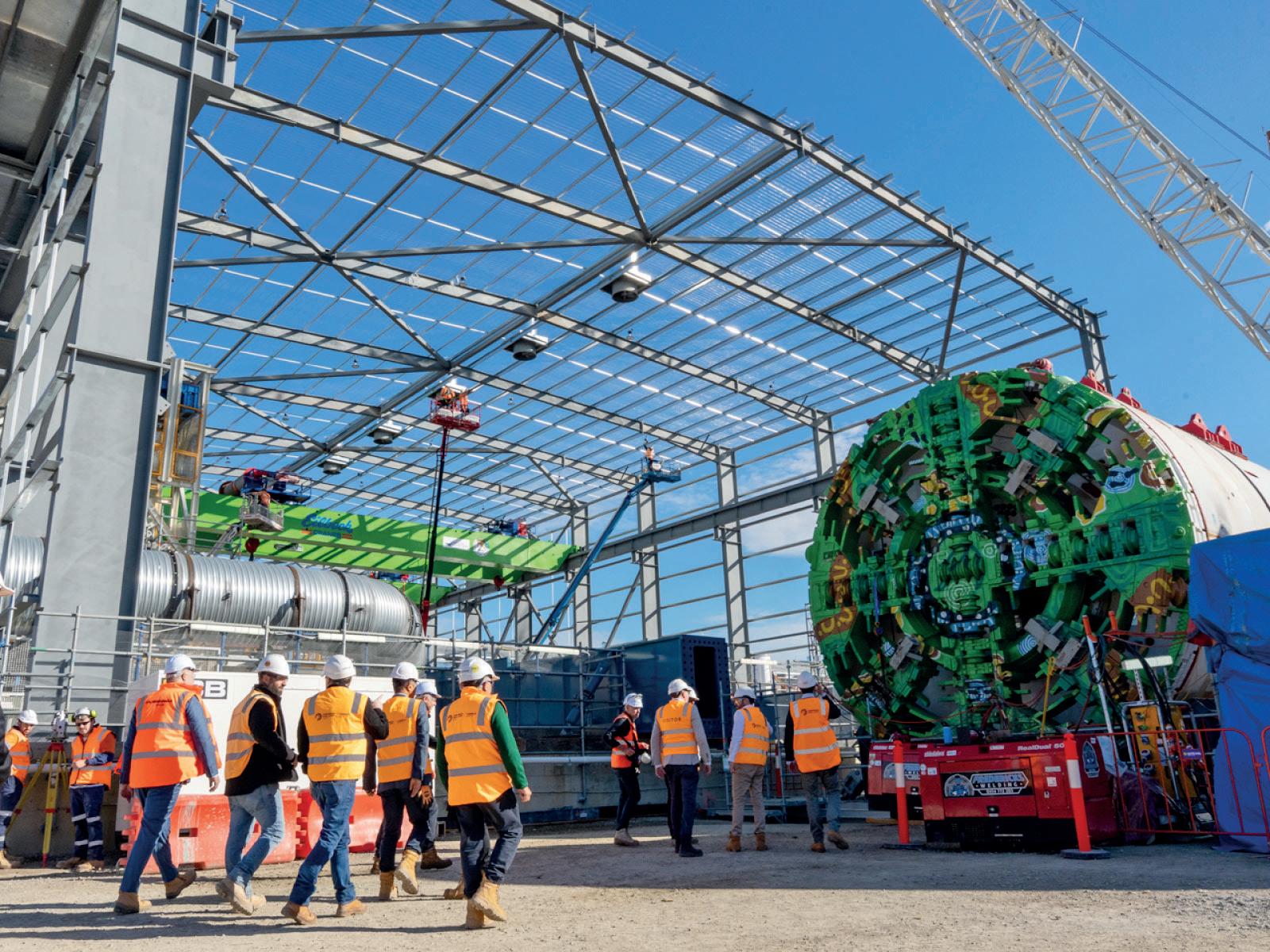
Yurringa Energy is Australia’s first Indigenous-owned energy retailer.
Celebrating Australian manufacturing
The 2026 Endeavour Awards brought together professionals committed to advancing innovation, capability and growth across the manufacturing sector.
Industry excellence took centre stage at the 2026 Manufacturers’ Monthly Endeavour Awards gala dinner, where manufacturing professionals and organisations from across Australia came together to celebrate the leaders, innovators and emerging talent shaping the future of the sector.
Held at The Westin Brisbane, the sold-out event welcomed more than 250 industry professionals for an evening recognising top performers, rising stars and innovators driving growth across Australian manufacturing.
“The room was buzzing with conversation and celebration,” said Caitlyn Douglas, Head of Awards and Conferences at Prime Creative Media, the organisation behind the event.
“It was fantastic to see the industry come together to recognise and celebrate such an important occasion.”
The 2026 Endeavour Awards included 10 categories. Returning awards such as Manufacturer of the Year and Leader of the Year were joined by four new categories highlighting Innovation in Aerospace, Transport, Health Technology and Food & Beverage Manufacturing, reflecting the ongoing growth and diversification of Australia’s manufacturing sector.
The 2026 Endeavour Awards winners:
• E xcellence in Sustainability – REDARC Electronics
• Rising Star of the Year Award – Alex Hansen, NEACH
• O utstanding Start-Up Award – Hypersonix Launch Systems
• Innovation in Health Technology - iOrthotics
• Innovation in Food & Beverage Manufacturing – BOC
• Innovation in Transport – Amtek
• Advanced Manufacturing Excellence Award – Bosch Australia Manufacturing Solutions (BAMS)
• Innovation in Aerospace – Space Machines Company
• Leader of the Year – Alan Oppenheim, Ego Pharmaceuticals
• Manufacturer of the Year – BOC
The top accolade of the night, Manufacturer of the Year, was awarded to BOC after achieving the highest overall score in its respective category. The
prestigious award recognises outstanding performance, leadership and innovation across the manufacturing sector.
“It has been a great night,” said Anil Kamath, National Business Development Manager at BOC. “Winning two awards is something special.”
Amtek, an Australian company that specialises in custom vehicle builds and wheelchair accessible conversions, said it was an “honour” to receive the Innovation in Transport award.
“None of this happens without our team and everyone who puts a lot of time and energy into creating new products and
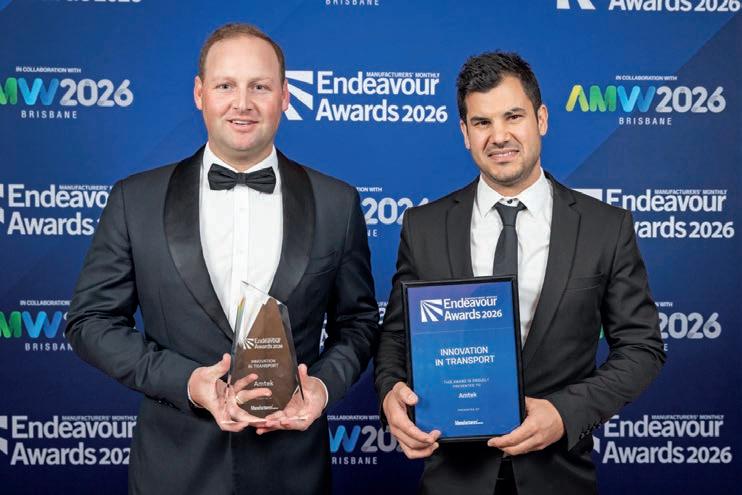
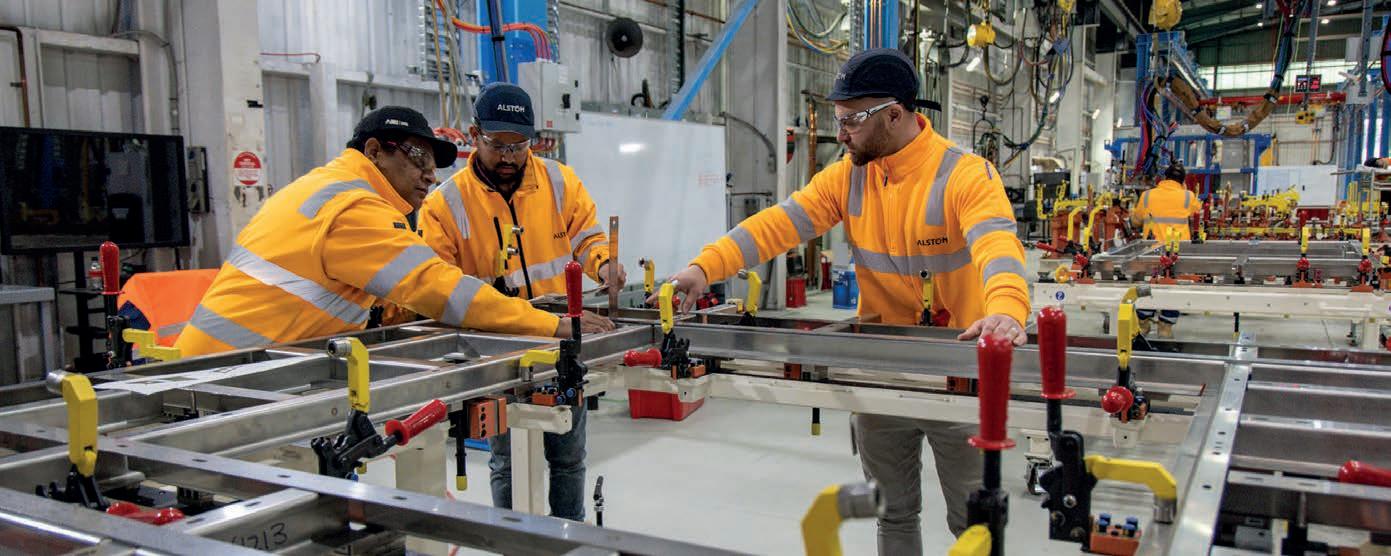
Jack Lloyd, Editor of Manufacturers’ Monthly magazine.
Michael Clapham and Gus Vieira from Amtek, which took out the Innovation in Transport award.
developing in our space, which we feel is quite a niche and special space,” said Michael Clapham, Commercial Manager at Amtek.
Other nominees in the category included Rail First, Gemco Rail, Custom Denning, Electric Power Conversions Australia, Incat Tasmania, Janus Electric, McNeall Plastics, Premcar and Volgren Australia Pty Ltd.
This year’s Endeavour Awards were particularly significant as they returned to being hosted alongside Australian Manufacturing Week.
Speaking at the ceremony, Jack Lloyd, Editor of Manufacturers’ Monthly, said it was a privilege to celebrate the people and organisations driving the industry forward.
“Although I’ve worked in the manufacturing media for a couple of years, which in this room doesn’t equate to an apprenticeship, I’ve learned very quickly that this industry is made up of people who strive for excellence and get things done,” he said.
“One of the first things I noticed in this role is how often Australian manufacturing gets written off in non-industry headlines. We’ve all seen the familiar ‘industry in decline’
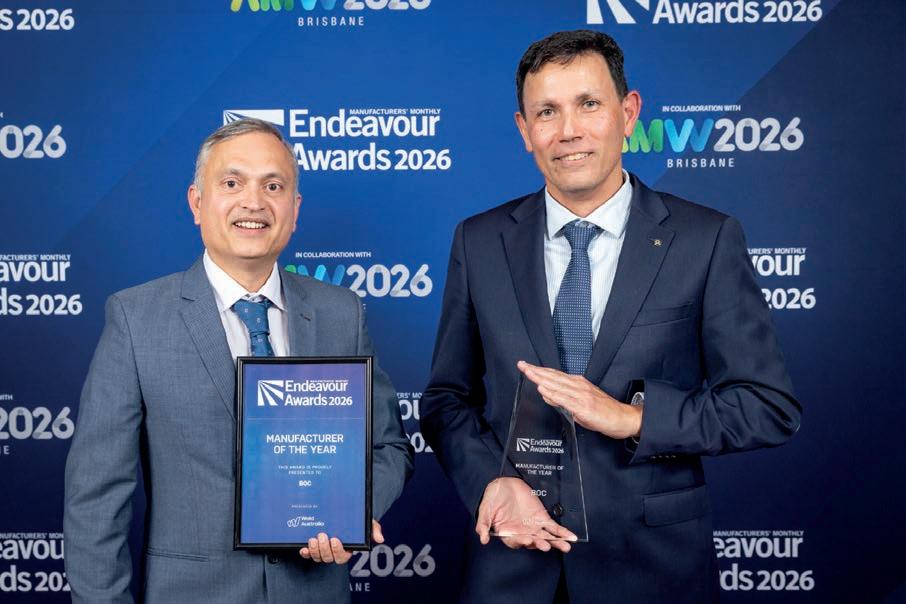
narrative, but the framing misses something fundamental – and that’s the quality and the capability of what we manufacture.”
Lloyd noted that in the current geopolitical climate, where Australia is heavily impacted by the decisions of its trading partners, it’s evident that the country’s self-sufficiency must be increasingly dependent on its own manufacturing industry.
“Walk through any factory floor, research and development lab or engineering workshop in this country and it becomes immediately clear that our standards are high, often world-
class, and increasingly focused on complex, high-value and globally competitive work,” he continued.
“Yes, the sector has changed dramatically since the automotive area went offshore, but Australia still manufacturers an extraordinary range of advanced products – just in more specialised, sophisticated ways.
“That’s why tonight matters. These awards recognise not just output, but innovative breakthroughs, resilience, late nights, risktaking and quiet determination that rarely makes the headlines.”
Australia’s only end-to-end manufacturer of trams and trains, delivering sustainable rail solutions for over 100 years.
Anil Kamath and Adam Yusuf from BOC, the winners of the Manufacturer of the Year award.
New partner for Bulk Expo
The Bulk Handling Technical Conference & Expo is Australia's only dedicated exhibition and conference for the bulk solids handling industry.
The Minerals Council of Australia (MCA) has officially partnered with the Bulk Handling Technical Conference and Expo (Bulk Expo 2026), reinforcing a shared commitment to strengthening Australia’s bulk handling, mining, manufacturing and infrastructure sectors.
Taking place on September 16-17, Bulk Expo 2026 is Australia’s dedicated exhibition and conference for bulk materials handling, processing, transport, logistics and storage.
The event brings together industry leaders, technology providers, equipment manufacturers, decision-makers and operators from across key sectors including mining, construction, agriculture, ports, manufacturing and infrastructure.
Designed to showcase innovation, practical solutions and emerging technologies, Bulk Expo provides a platform for industry collaboration, knowledge sharing and business growth.
The MCA is the peak national body representing Australia’s minerals industry, advocating for policies and initiatives that support a safe, sustainable and globally competitive resources sector.
Representing many of the nation’s leading minerals companies, the MCA works to address critical challenges facing
industry, including productivity, workforce development, decarbonisation, supply chain resilience and regulatory competitiveness.
Through this partnership, the MCA will further strengthen its position as a leader across the minerals value chain, helping industry solve some of its biggest challenges, including building resilience through new technologies and services, navigating rising cost pressures and responding to increasing compliance obligations.
The partnership also supports the MCA’s objectives of delivering added value to existing members while fostering stronger engagement with partner industries and attracting new members.
Molly Hancock, Head of Marketing Events at Prime Creative Media, the organisation behind the event, said the partnership highlights the growing importance of collaboration between mining, minerals processing and bulk materials industries.
“Bulk Expo is designed to bring together the industries and innovators shaping Australia’s industrial future,” she said. “We are delighted to welcome the Minerals Council of Australia as an official partner for 2026 and look forward to creating valuable opportunities for collaboration, innovation and industry advancement.”
Minerals Council of Australia Chief Executive Officer Tania Constable said the bulk handling sector is a vital partner of Australia’s world-class mining sector, with strong alignment between mining and bulk handling on safety, competitiveness, productivity and innovation.
“We’re proud to partner with Bulk Expo 2026 because the scale and success of Australian mining wouldn’t be possible without the bulk handling expertise and innovation that will be on show at this great event,” she said.
“With more than half of previous Bulk Expo attendees working either in mining or engineering companies that specialise in mining, it’s clear that our industry and the bulk handling sector are natural partners in building national prosperity and resilience.”
Bulk Expo 2026 will feature an exhibition floor, expert-led conference sessions, networking opportunities and the latest technologies and solutions driving efficiency, productivity and sustainability across the bulk materials sector.
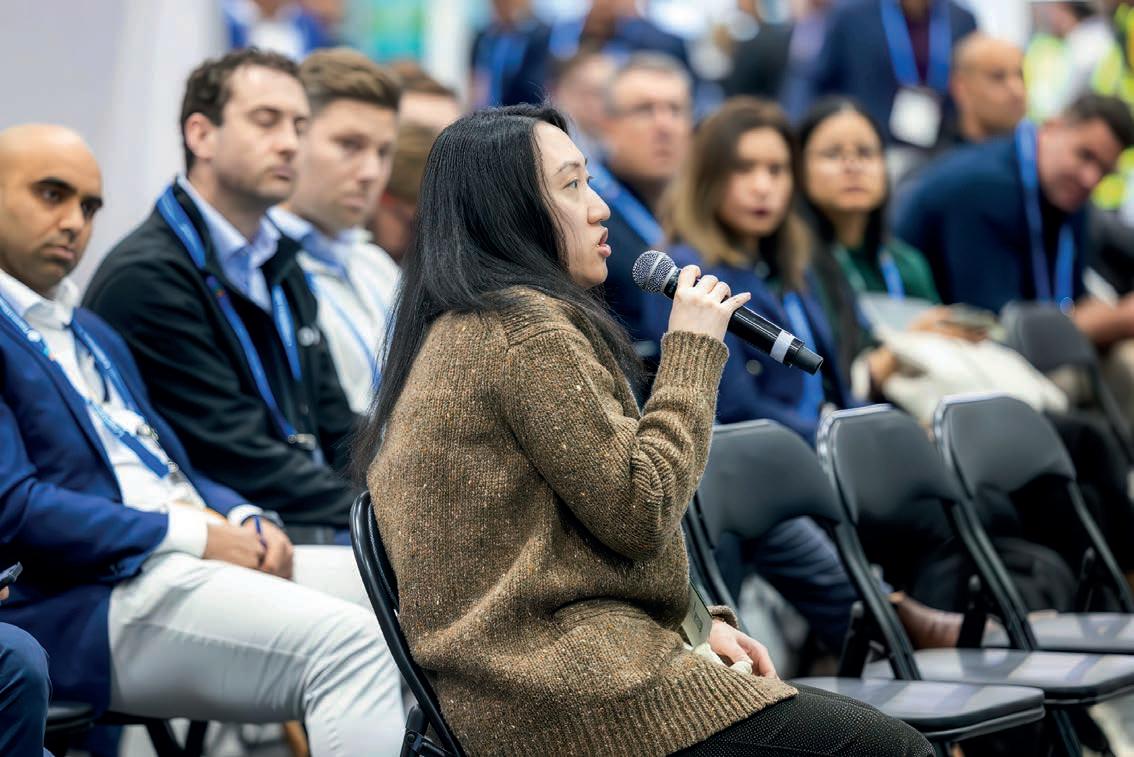
RAIL EXPRESS is compulsory reading and a vital tool for all people working in and around the rail sector.
Rail Express is Australia’s authoritative business to business rail publication.
Combining the resources of our respected journalism team and our unparalleled industry contacts and affiliations, Rail Express provides extensive, comprehensive and balanced coverage of breaking news and trends in key areas like infrastructure, investment, government policy, regulatory issues and technical innovation.
Published both in print and digitally every month, Rail Express is the only publication to have both the official endorsement and active participation of the main railway associations in Australia and the broad support of the rail industry.
The only way to ensure you get every copy of Rail Express is to subscribe today. Visit railexpress.com.au/subscribe.
A unique opportunity for interoperability
The ARA shares its stance on proposed reforms to the Rail National Safety Law (RSNL), which aim to improve interoperability and support safer, more efficient rail networks.
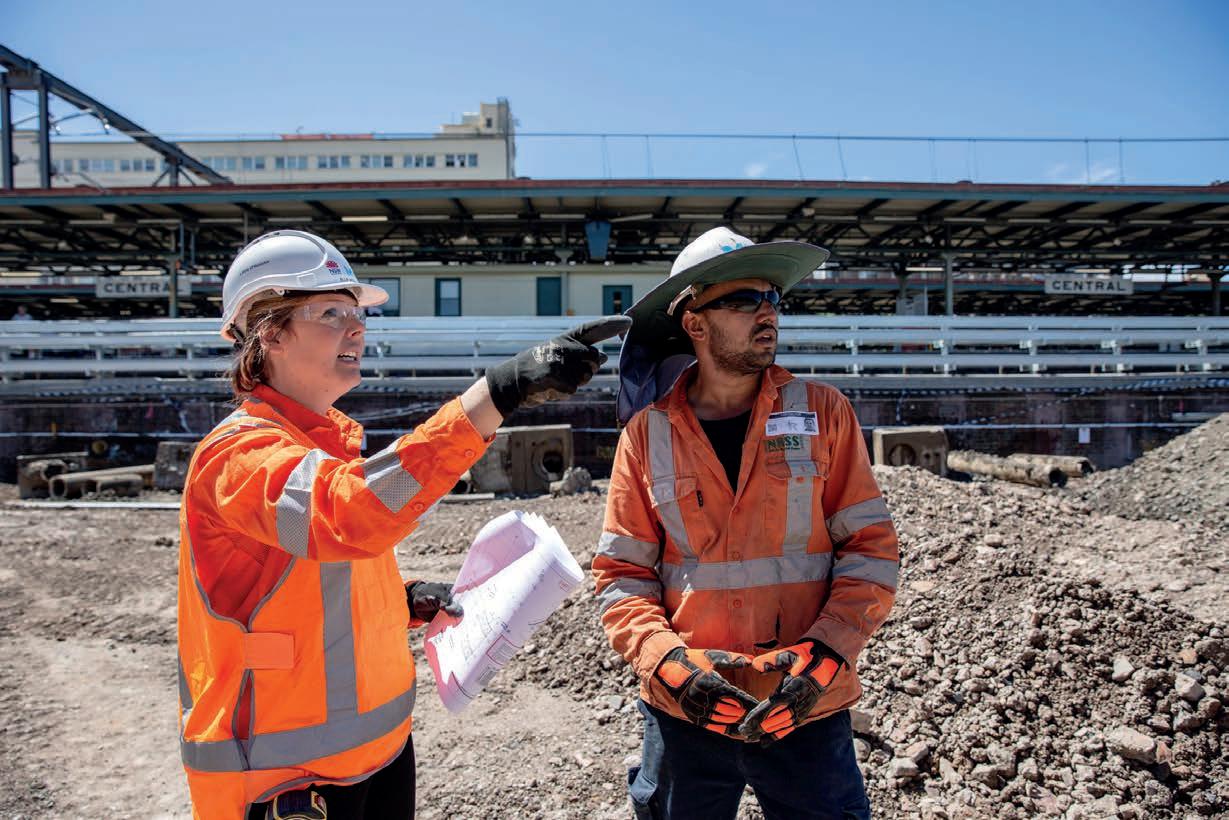
The recent completion of public consultation on Rail Safety National Law (RSNL) reforms represented a significant milestone to support improved interoperability and productivity across the national network.
The Australasian Railway Association (ARA) engaged with government and industry stakeholders extensively ahead of the consultation to ensure the reforms can deliver meaningful and lasting improvements for the rail industry. The effective delivery of these reforms would not only benefit industry, but also support improved outcomes for the economy and community.
THE TIME IS RIGHT FOR REFORM
Just over 14 years ago, the RSNL came into effect, replacing 46 pieces of state, territory and commonwealth legislation to establish a coordinated approach
to rail safety regulation in Australia.
Over that time, the RSNL has delivered substantial improvements in regulatory consistency and national safety oversight. However, significant structural barriers to interoperability remain across the rail network.
These barriers continue to impose real operational and economic costs on the industry. Operators are often required to maintain different technologies and systems across networks, undertake multiple approval processes for equivalent rolling stock and technologies, and manage differing operational and workforce competency requirements between jurisdictions and networks.
These inconsistencies increase operational complexity, reduce efficiency and constrain the ability of the rail system to function as a more integrated national network.
Differing workforce competency requirements between jurisdictions and networks reduce efficiency, the ARA says.
The ARA has advocated for improved interoperability to drive national consistency across the national network. We welcomed the national focus on improving interoperability to deliver substantial longterm benefits across the rail system.
The ARA’s submission to the National Transport Commission (NTC) builds on this focus, largely supporting proposed reforms to the RSNL to broaden the role of the Office of the National Rail Safety Regulator (ONRSR). This would mean the ONRSR would take on responsibility for improving interoperability when making its assessments of rail operations – with some important modifications.
The ARA supports the overall direction of the proposed reforms and recognises the significant opportunity the reform program presents to improve interoperability, national consistency and safety outcomes across the Australian rail system.
Caroline Wilkie, CEO of the ARA.
However, interoperability is fundamentally a technical, operational and governance challenge rather than an issue that can be resolved solely through broad legislative duties.
Legislative reform is necessary but cannot address these challenges on its own. Meaningful interoperability outcomes will depend on ensuring the right capability is in place to interpret and implement interoperability. This will require ongoing industry engagement and effective governance arrangements to support the adoption and endorsement of nationally agreed standards.
THE ROLE OF ONRSR
The ARA’s submission recognised that the reforms would mean ONRSR would be tasked with a focus on interoperability for the first time. Last year, the Infrastructure Transport Ministers’ Meeting (ITMM) set three clear priorities to focus on: digital train control technologies (such as the rollout of the European Train Control System); driver interface; and rolling stock approval processes.
This provides a strong starting point and clear direction. However, it is essential that
ONRSR is resourced appropriately to manage the requirements of interoperability, which are different to those of safety.
This is why the ARA supports a standardsbased approach to interoperability, rather than broad duties that require subjective interpretation.
FIT FOR PURPOSE
Interoperability reforms should remain proportionate and recognise different operational contexts across the rail industry.
The benefits of reform will vary between interstate freight corridors, shared-access networks, metropolitan passenger systems, regional operations and isolated or dedicated heavy haul railways.
The implementation of reforms should therefore focus on areas where interoperability benefits can be meaningfully realised and avoid imposing disproportionate obligations where interoperability impacts are limited.
The ARA has advocated for a primary focus on the National Network for Interoperability (NNI) and interfacing networks where interoperability outcomes can deliver meaningful operational, safety and productivity benefits. This applies to
“The gains for the industry will be significant if we can get this right.”
Caroline Wilkie, CEO of the ARA
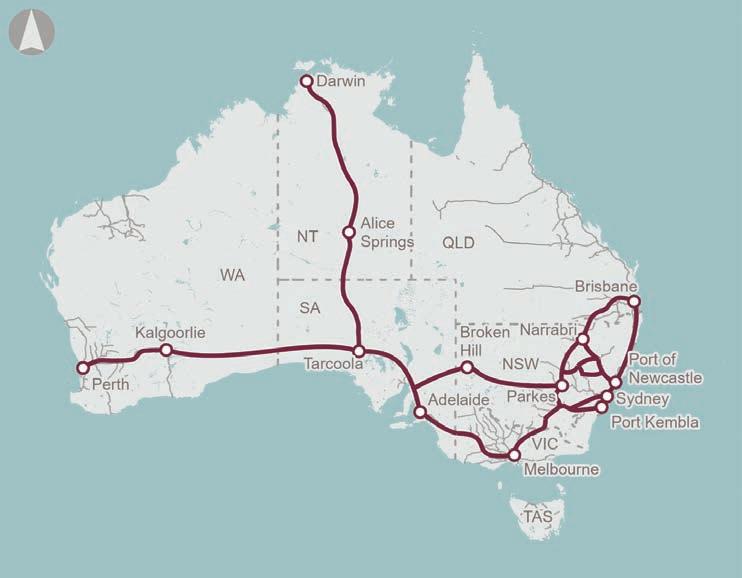
the technology and workforce elements of interoperability, both of which the ARA works to improve across the industry.
While standardised technology across the national network could drive significant productivity benefits, specialised operations like private heavy haul networks may require flexibility to address unique operational environments and technical requirements as they develop bespoke rolling stock solutions.
Similarly, nationally recognised rail qualifications and competency standards already exist and are aligned to the Australian Qualifications Framework (AQF). In principle, these arrangements should support recognition of prior learning and portability of competencies across networks. However, in practice many training programs have become heavily customised, resulting in inconsistent recognition of competencies between networks and limiting the effectiveness of existing recognition of prior learning arrangements.
The ARA supports a “national and network” approach to competency management. Under this model, core occupational competencies would be nationally recognised and portable across the rail system, while network-specific requirements would continue to be managed through local induction, operational training and assurance processes. Analysis undertaken by CORE Innovation in Western Australia suggests that the implementation of this model for the Safely Access the Rail Corridor (SARC) competency alone could deliver multi-million-dollar annual savings.
A
Nationally recognised vocational training records are already captured through the Commonwealth Unique Student Identifier system, while the Rail Industry Worker (RIW) system currently supports competency management for more than 96,000 rail workers nationally. The ARA believes that reforms should leverage these established systems rather than introduce duplicative administrative frameworks.
A UNIQUE OPPORTUNITY
The proposed reforms present a unique opportunity to improve interoperability, so it’s vital that capability and transparent governance are at the forefront of implementation. The gains for the industry will be significant if we can get this right. The ARA is continuing to engage with the NTC and other government and industry stakeholders as the reform process progresses, to ensure industry can maximise the benefits of this once-in-ageneration change.
map showing the National Network for Interoperability.
How to make rail faster, safer and more productive
ARISO wants stronger standards and broader industry participation to finally unlock national interoperability.
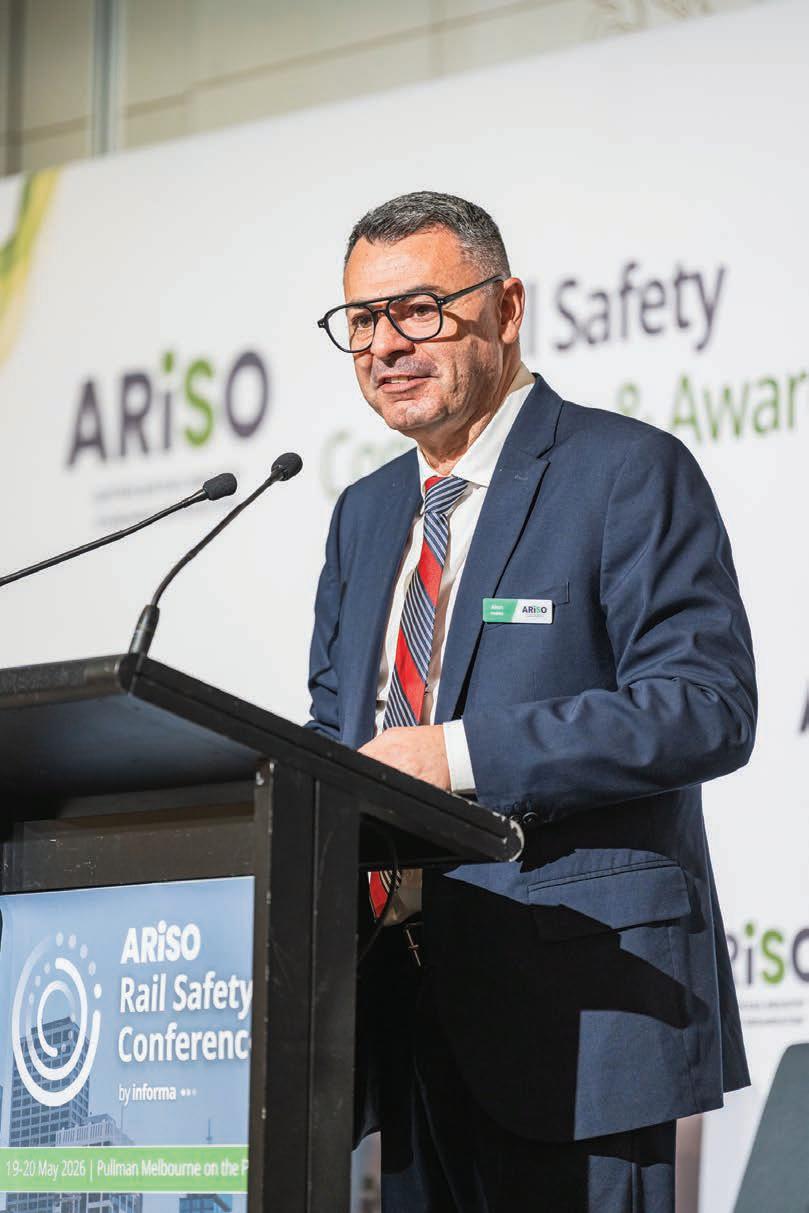
At this year’s ARISO Rail Safety Conference, the message from industry was clear: the case for a safer, more productive rail network is settled. The real question now is how to get there — and how quickly.
“We are preparing for a different future with mandatory and harmonised standards, and industry wants to know when change is going to happen,” summed up ARISO Chief Executive Officer Alan Fedda.
That timeline matters. While reform to the Rail Safety National Law is expected to unfold over the next 12 to 18 months, ARISO is renewing itself as a national technical authority focused on lifting the quality of standards and reducing the costly patchwork of variations across the network.
The importance of the change underway was brought home by several keynote speakers, including Productivity Commissioner Martin Stokie, who said national standards harmonisation would better support rail freight and passenger growth that would flow through to the broader economy.
“What we’re not good at in this country is taking a great idea in one state and then diffusing that across all the other states. Part of the national competition policy program is about diffusing those good ideas,” explained Stokie – a philosophy that ARISO said would be its starting point.
WHY COLLABORATION IS ESSENTIAL
For Tom Lee, Director of Standards at the United Kingdom’s Rail Safety and Standards Board, the lesson from Britain’s journey to modernise its rail system is straightforward: digital rail is not just a signalling project.
“It’s a business change process,” Lee said. “That means collaboration within and across organisations is absolutely essential for success.”
The large-scale reform that Australia is now embarking on would only succeed when operators, infrastructure managers, suppliers, regulators and funders align on common objectives — especially when projects hit inevitable setbacks.
Lee also warned against over-complicating the rollout of ETCS by avoiding the temptation
ARISO CEO Alan Fedda addressing delegates at the ARISO Rail Safety Conference 2026.
for clever design solutions and being led by users of the system, as that sometimes lacked the ‘art of the possible’.
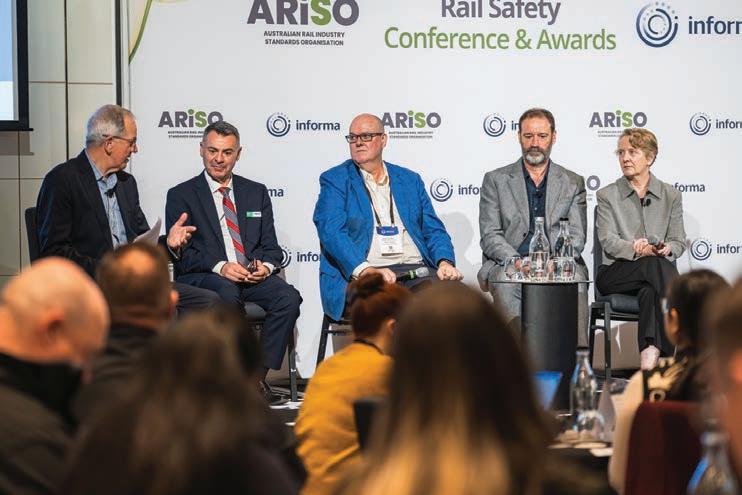
“The important thing here is that failure to get the balance right between operations and engineering has been a significant cost driver for many years in the UK and has led to much rework.”
Collaboration on Australia’s reform agenda was on display with a panel discussion on productivity in the new standards era, with the regulator Dr Natalie Pelham and the National Transport Commissioner Michael Hopkins, joining the conversation.
While the primary focus for the Office of the National Rail Safety Regulator (ONRSR) should always be safety, Dr Pelham added her support for the interoperability agenda in her keynote at the conference:
"For us, we agree with the proposal for greater interoperability. And that perhaps an object or function to provide ‘the hook’ for it could be included in the Rail Safety National Law, but we don’t support interoperability being integrated into the general safety duty," she said.
“We think that interoperability is something that is achieved or directed at because there are economic and efficiency benefits to be gained. And there are some safety benefits, obviously, that come with interoperability, which we think are fabulous. So, obviously, we support it.”
WHY ADOPTION MATTERS
A second theme running through the conference was the need to lift the rates of standards adoption.
For years, success has been measured by how many standards are written. But standards and rules only create value when they are used.
The numbers are sobering. Only about 11 per cent of national standards have achieved full adoption across the industry.
Low adoption means duplicated effort, more complex compliance and fewer
opportunities for interoperability. Most importantly, they diminish the return on the industry's collective investment in standards development.
The future success of ARISO will therefore depend not only on producing highquality standards, but on helping industry implement them.
“This requires a different approach –implementation planning, technical guidance, economic analysis, industry engagement and change management must become central components of the standards lifecycle,” said Fedda.
“ARISO will need to devote as much attention to adoption as it does to standards development.”
FASTER, BETTER AND SAFER
The biggest economic challenge for Australia was lifting productivity, as there has been no fundamental uplift since 2016.
The Productivity Commissioner encouraged the rail industry to keep going with reforms, large and small.
“So maybe think about what the priorities for the investments in rail are, going forward, and perhaps getting the signaling systems and our safety systems up and running and consistent across the board as that might actually be a really positive contribution,” Stokie said.
“The real benefit will be profound for the people who are seeking to either get from point A to point B, faster and better and safer, or the goods to get from point A to point B, faster, better and safer… and the benefits will flow through to the broader economy.”
Standards that have already been developed by jurisdictions and operators in Australia and other parts of the world present a good starting point to tackle disparate systems.
“Our new standards development process will be looking to those standards that already exist and build on them to help drive national interoperability and productivity.”
WE NEED GREATER INDUSTRY PARTICIPATION
Strengthening the co-regulatory approach through greater industry and member participation, and recognising mandatory and harmonised standards in the law are key elements of ARISO’s submission to the National Transport Commission’s Consultation Regulatory Impact Statement (C-RIS).
“It reflects our recognition that the way standards are developed must be rebuilt, strengthened, and better supported through the law, and we must support not just our members but industry with adoption and ongoing assurance to reap the efficiencies from reforms,” said Fedda. Part of that is ensuring a broader cross-section of industry participates in the development of the standards.
Fedda argues that reform will only stick if more of the sector helps shape it. Of the 198 ONRSR-accredited rail transport operators in Australia, only 41 are ARISO members. On the National Network for Interoperability, where mandatory standards will apply, only 22 of 53 operators are members.
Those figures underline a wider problem: the standards system cannot deliver national consistency if too much of the industry remains outside the room. Fedda’s argument is that membership to the national standards body and participation, not just compliance, must become part of the reform model.
“No single organisation can deliver interoperability alone, nor can a single reform resolve decades of fragmentation overnight.
“But together, we have an opportunity to build something that previous generations of rail leaders have long sought – a more connected, more productive and more harmonised national rail system,” said Fedda.
"The NTC has proposed that one option of moving forward is for industry membership be linked to accreditation to operate, which ARISO supports. We think industry should be participating at a greater level.”
TURNING REFORM INTO REALITY
The reform window is open. The consultation process will shape the law, but the larger test will be whether the industry is willing to back stronger standards, broader participation and a genuinely national approach. If it is, the next generation of rail reform may finally move from aspiration to implementation.
Fedda concludes “We have recognised the costs of fragmentation, duplicated effort, inconsistent standards, and the barriers these create for innovation, productivity and investment. Now there is a collective will across governments, industry and regulators to address this unfinished business.”
The 'Collaboration, Innovation and Productivity in the New Standards Era' Trackside chat session discussed change at the Conference.
Why we need to start saving our own
Behind every project deadline and track possession are people suffering in silence. The Permanent Way Institution of New South Wales (PWI NSW) shares why changing the conversation around mental health could save lives.
The Australian construction, rail, and infrastructure industries are facing a crisis that can no longer be ignored. Every day across our sector, people are carrying burdens most of us never see.
The pressure of delivery. The constant deadlines. Overnight possessions. Fatigue. Financial pressure. Time away from family. Relationship breakdowns. The fear of letting others down. The expectation to simply “push through.”
For decades, our industries have been built on toughness. We celebrate resilience. We reward endurance. We pride ourselves on showing up, no matter what is happening behind closed doors.
But somewhere along the way, many workers stopped believing they could say they were struggling. And that silence is killing people. Not figuratively – literally.
Across Australia, construction workers are significantly more likely to die by suicide than through a workplace accident. Research from MATES in Construction has identified that every second day, a construction worker in Australia takes their own life. Think about that for a moment.
Every second day. Gone.
The frightening reality is that many of these people were standing beside us only days earlier. Attending toolbox talks. Laughing during crib breaks. Working through shutdowns. Smiling during meetings. Looking completely “fine.” That is the terrifying thing about mental health. You often cannot see the injury.
Our industry has become exceptionally good at protecting workers physically. We wear PPE (personal protective equipment). We isolate hazards. We conduct pre-starts. We manage risk assessments. We stop work if something feels unsafe. Yet psychologically, many workers still feel completely alone.
Too many people are suffering in silence because they fear judgment. Fear weakness. Fear losing work. Fear becoming a burden. Fear that saying “I’m not okay” somehow makes them less capable. It does not. In
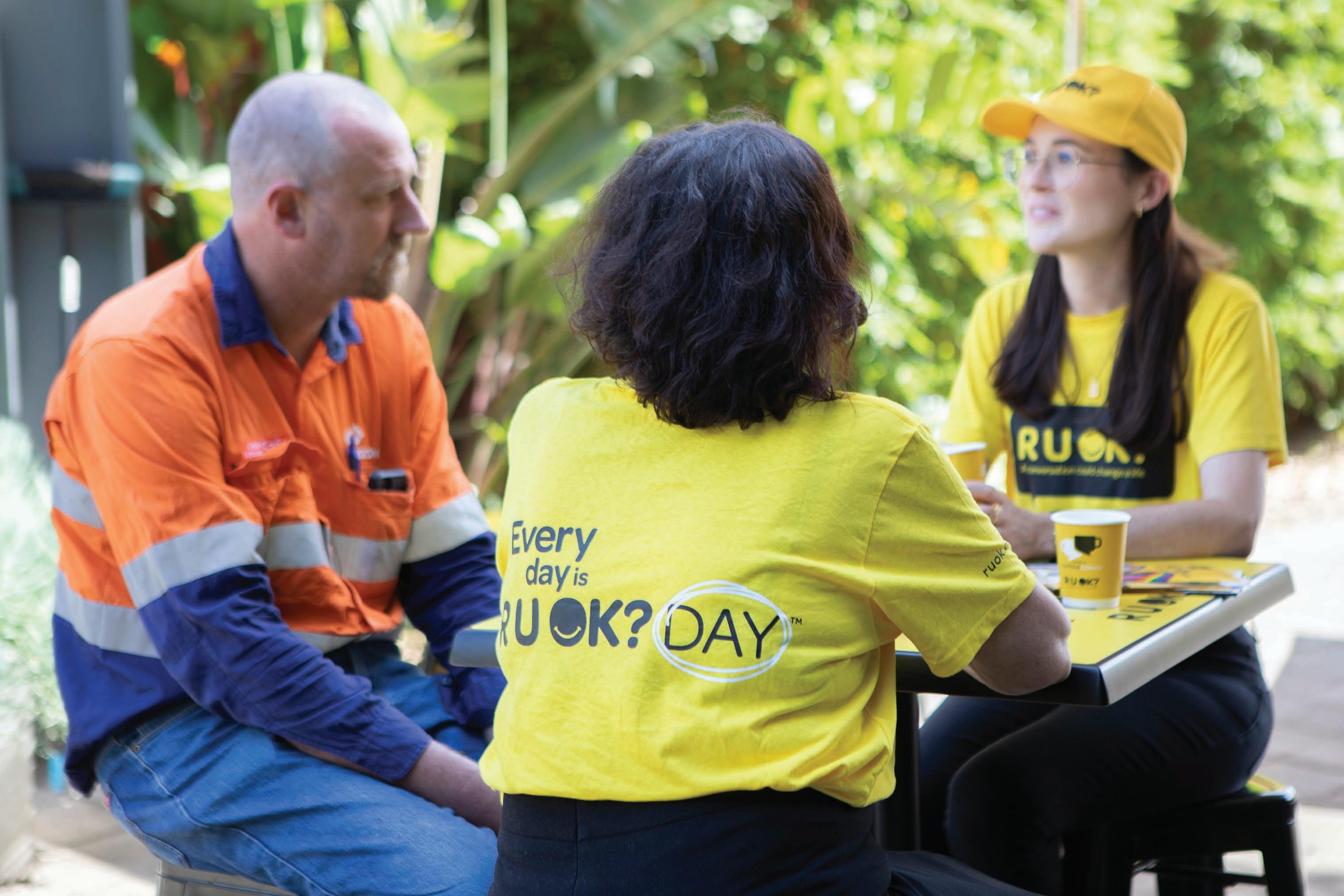
fact, speaking up may be the bravest thing someone ever does.
This is why organisations like MATES in Construction are so critical to our industry. MATES was created specifically for construction workers and understands the realities of our environment, because it operates directly within it.
Its programs place trained mental health connectors on site – ordinary workers trained to recognise when someone may be struggling and help connect them with support before a crisis escalates. They provide suicide prevention training, peer support, counselling pathways and a 24/7 helpline dedicated to our industry.
Most importantly, it is changing the conversation – teaching workers that looking after your mates is not a weakness, it is a responsibility. Beyond MATES, there are also incredible organisations providing immediate support every single day.
Beyond Blue offers free counselling and mental health support services for Australians experiencing anxiety, depression and suicidal thoughts. TrackSAFE Foundation continues to advocate for mental health awareness and suicide prevention throughout the rail industry, while also supporting rail workers exposed to traumatic incidents across the network. Incolink Bluehats delivers dedicated mental health support and counselling services specifically for construction workers and their families. Lifeline Australia and Suicide Call Back Service remain available 24 hours a day for anyone in crisis or worried about somebody they love.
These organisations save lives every day. But awareness alone is not enough. As leaders, supervisors, colleagues and friends, we need to genuinely look out for one another. Not just with a quick “you alright?” while walking past. Real conversations. Real listening. Real care.
Sometimes the strongest people in the room are carrying the heaviest burdens. Sometimes the loudest worker on-site is masking the deepest pain. Sometimes, the

"Sometimes the strongest people in the room are carrying the heaviest burdens."
Jenny Valentino, New Era Group
person everyone depends on is desperately hoping someone notices they are struggling. And sometimes all it takes is one conversation to interrupt a tragedy. One phone call. One coffee. One moment of honesty. One person choosing to stay.
The rail and construction industries build cities, stations, tunnels, roads and communities that will last generations. But none of that matters if we continue losing our own people along the way. Mental health cannot become a once-a-year campaign or another poster hanging in a site shed during awareness month.
It must become part of our culture. Part of leadership. Part of every workplace.
Because no possession, project deadline, shutdown or commercial target will ever be more important than a human life. And no worker should ever feel they have to fight these battles alone.
On Friday, 17 July 2026, the Railway Soccer Cup, proudly supported by the Permanent Way Institution of New South Wales (PWI NSW) and Rail Track Association Australia (RTAA) will once again bring together rail professionals from across the sector in support of mental health and wellbeing.
More than a game of football, the event is about connection, conversation and creating an environment where every story matters. It is a reminder that this industry is at its strongest when we genuinely look out for one another.
Sales and Marketing Manager, New Era Group
TrackSAFE Foundation advocates for mental health awareness and suicide prevention throughout the rail industry.
Closing rail’s cyber skills gap
Cyber threats are evolving rapidly, but not everyone working in Australia’s rail sector has the digital skills and knowledge to keep our networks safe. A new program aims to combat this problem.
The National Transport Commission (NTC), in partnership with TAFEcyber and Holmesglen Institute, is developing a national cybersecurity training program tailored for Australia’s rail sector.
As rail operations become increasingly digitised and investment in digital train control systems grows, the industry faces greater exposure to cyber threats including ransomware, malware, data theft and operational disruption. Consultation undertaken as part of the NTC’s future rail skills framework identified cybersecurity as one of the sector’s most in-demand capability areas across all elements of rail.
“With cyber threats evolving rapidly, the risks we face today will look very different from those we may encounter in five years – or even 12 months – from now,” said Michael Hopkins, Chief Executive Officer of the NTC.
“Upskilling the rail workforce is key to managing these risks.”
The rail cybersecurity program adopts an applied learning approach, covering both information technology (IT) and operational
technology (OT) environments. This will help people designing and working with OT systems to communicate and engage more effectively with IT specialists, so they can better identify threats and vulnerabilities and manage cyber risks in their work environment.
“Cybersecurity is not just an IT challenge anymore, it’s an ‘everybody problem’,” Hopkins said.
“Because the threats are changing, we can’t rely on prescriptive practices. This course will equip operations workers with the skills and knowledge to have the riskbased conversations needed to keep our rail systems safe.”
Participants will build practical skills in cyber risk awareness, critical infrastructure protection and incident response, with training designed for immediate application in operational and project environments.
“Building cybersecurity capability in the rail sector requires more than curriculum development – it requires meaningful collaboration with industry,” Hopkins said. “The program development phase
has brought together practitioners and industry leaders to review learning resources and assessment design, ensuring the training reflects real-world rail environments and supports workforce capability uplift across the sector.”
The program offers two nationally recognised units of competency, supporting workforce mobility and mutual recognition across jurisdictions.
“Having national qualifications means we can create a pool of workers trained in cybersecurity whose skills are recognised across Australia, allowing them to move more easily between jurisdictions and projects to meet demand,” Hopkins said.
The course also incorporates immersive and gamified learning experiences that guide participants through practical approaches to maintaining and updating critical systems.
Led by the NTC, the four-day program is being developed by educational institute Holmesglen with support from TAFEcyber – a consortium of TAFEs (Technical and Further Education institutes). It will be delivered through TAFEs across Australia.
Courseware is now in the final stages of development, with a pilot program scheduled to run later in 2026.
A gap analysis commissioned by the NTC found that by 2027, 40 per cent of today’s rail workers will have their roles touched by technology, and 13,000 new digital specialist roles will be needed to design, build, test and maintain digital train control and signalling technologies.
Right now, the digital competency of rail employees varies greatly. Courses such as this one help to lift digital skills and increase TAFE’s delivery of training services to the rail sector.
For more information, contact enquiries@ntc.gov.au
Image: National Transport Commission
A pilot program for the cybersecurity course is scheduled to run later in 2026.