
































































16
Growing up on the family’s farm in Tamworth, Mick McCulloch had one clear ambition. Everything changed when he got into the trucking sector
In his latest truck test drive, Warren Aitken returned to his roots, hopping behind the wheel of Daimler Truck’s latest Canter model to test the popular model’s most recent iteration
Warren Aitken finally got to the popular Drive 4 Depression truck meet, learning about the growing show and its important cause within the industry
26
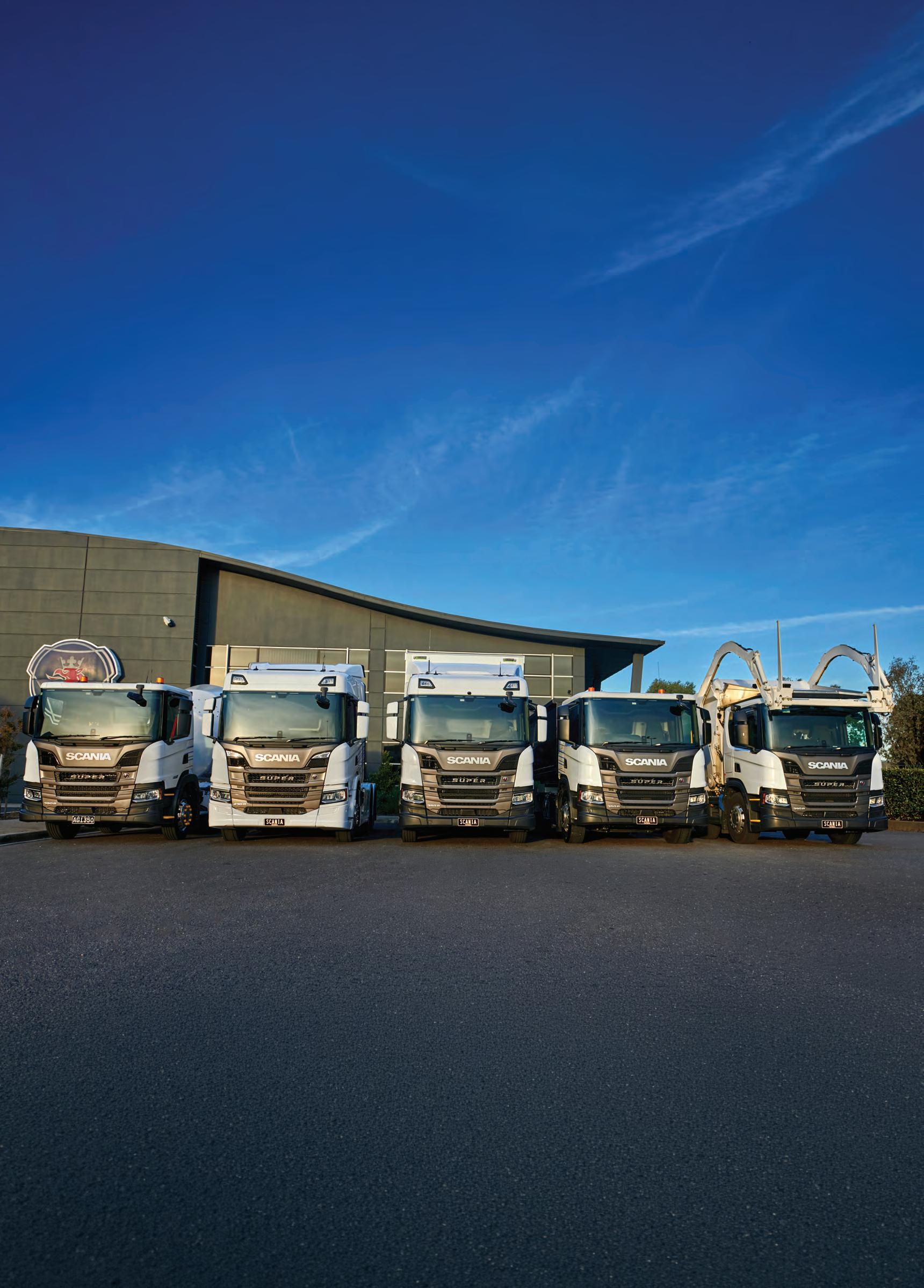
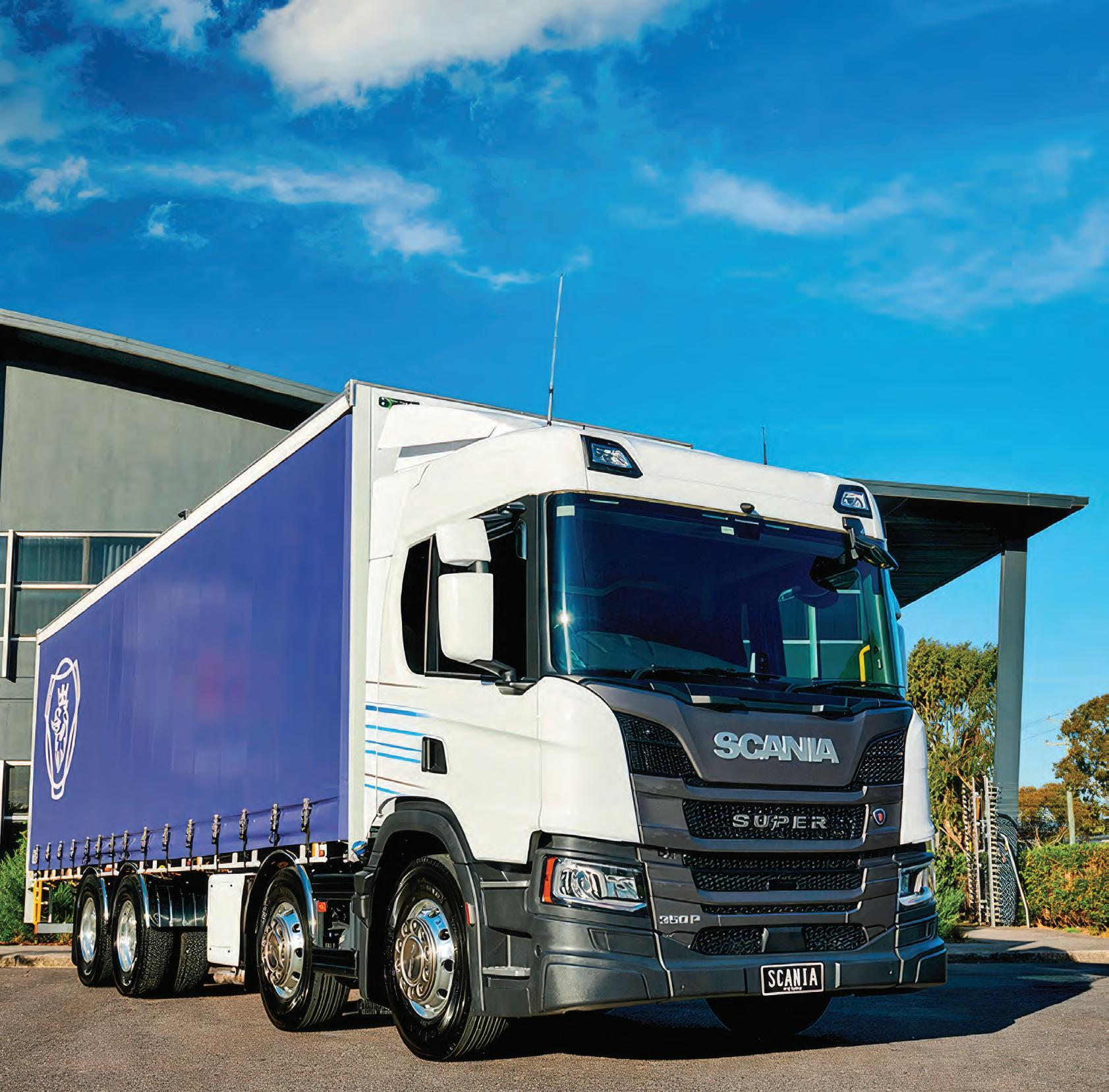
Scania Australia has officially released a new engine and powertrain range to the local market, venturing into new sectors for the first time in its history
28
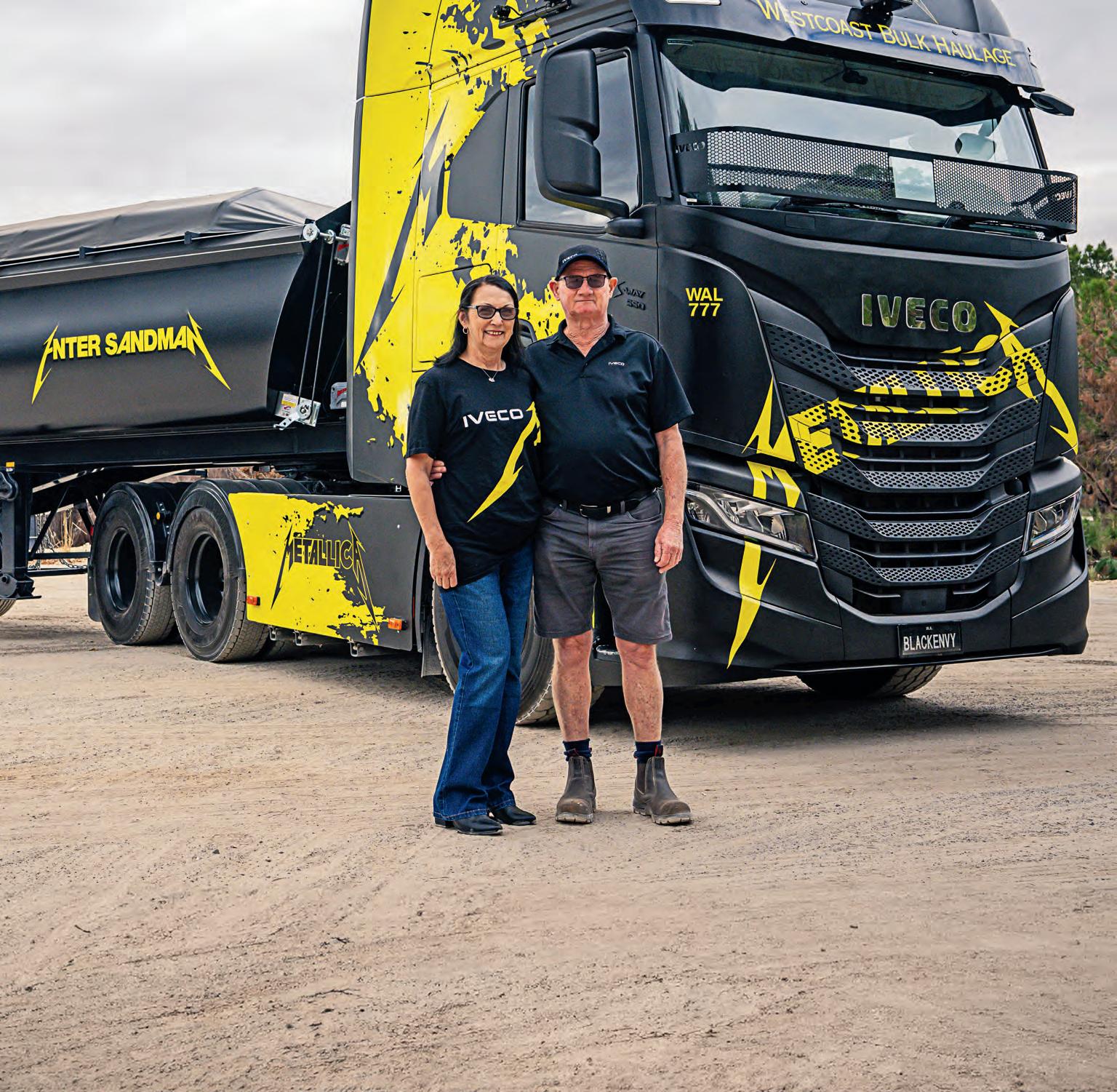
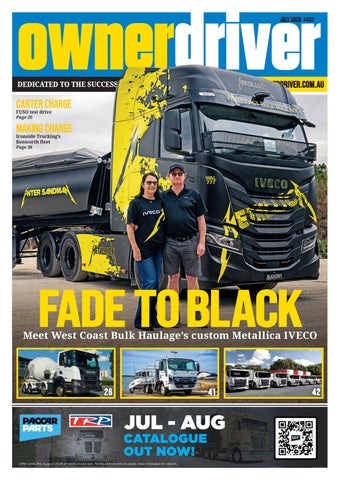
While out west, Warren Aitken came across the rig of his dreams –a custom IVECO. Courtesy of West Coast Bulk Haulage, Warren details the story of this Metallica-themed IVECO and its immense popularity on the road
38
ADF veteran Glen Ferrarotto was running a successful recruiting business, firmly focused on the mining and defence sectors. Then, in a moment of fate, a truck caught his eye
42
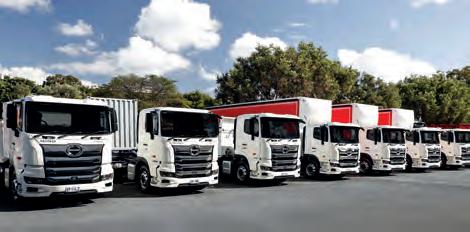
If you need to see it to believe it, then now’s the time to check out just how many ways a 700 Series heavy-duty truck from Hino can fit into your operation
44
Just a year after debuting at the Brisbane Truck Show, SITRAK has landed a large order in New Zealand for 12 new-look mixer trucks to a low-carbon concrete brand








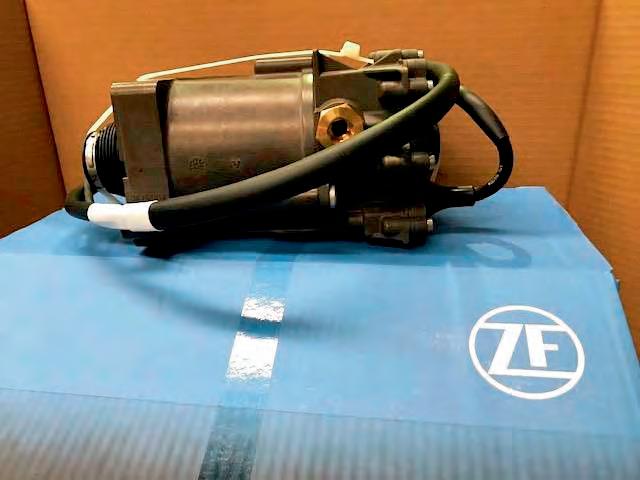
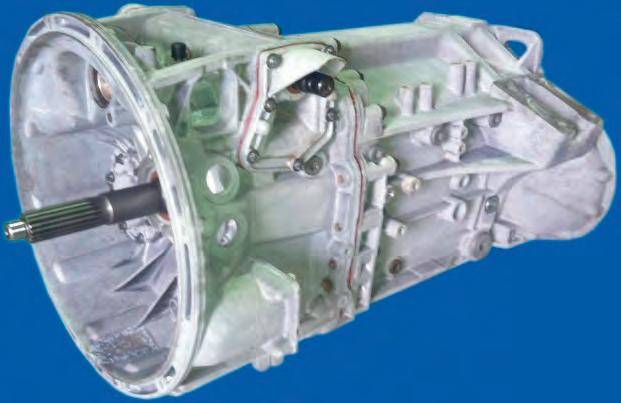
ReconditionedMercedes-BenzTransmissions. MostMakesandModelsG100,G131,GO210, G240,G280,G330available.S3. TA431566. POA
Unit 1/71 Axis Place, Larapinta, Brisbane, QLD, 4110, Australia
Ph: (07) 3276 9300 Fax: (07) 3276 9301
Email: sales@ggd.net.au davids@ggd.net.au
Ph: (07) 3276 9300 Fax: (07) 3276 9301 Email: mattc@gibbsparts.com davids@gibbsparts.com Web: www.gibbsparts.com
Web: www.gibbsparts.com
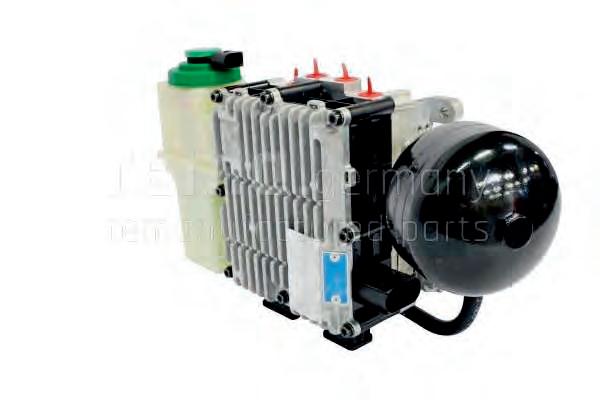
ZFEcolitepowerpacks.S40. TA952390.
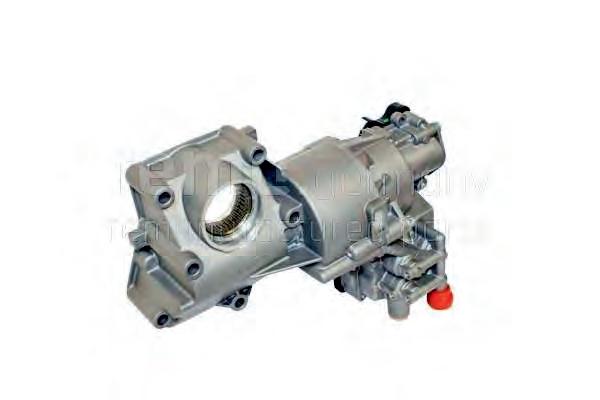
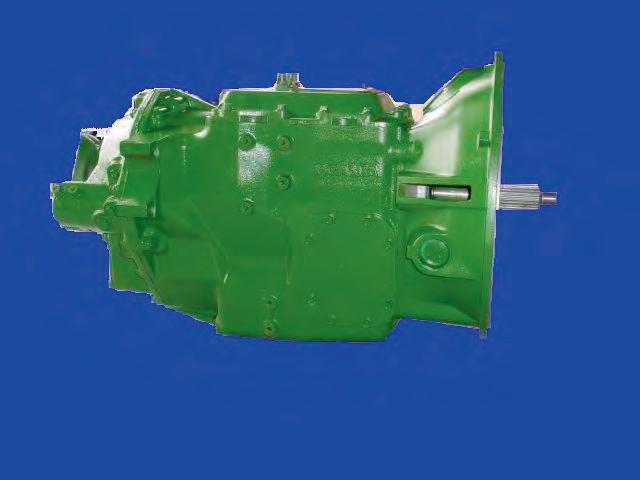
Allmakesandmodelsavailable.S11. TA431615. POA
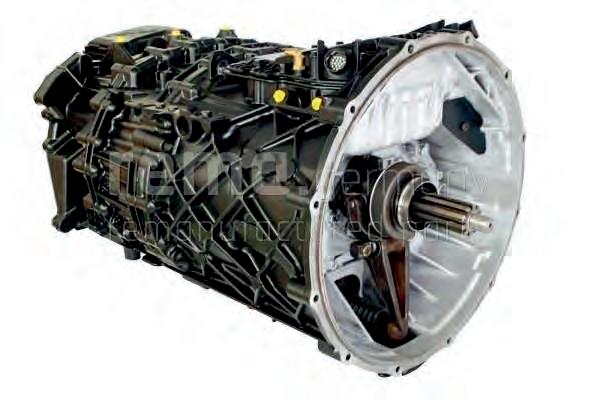
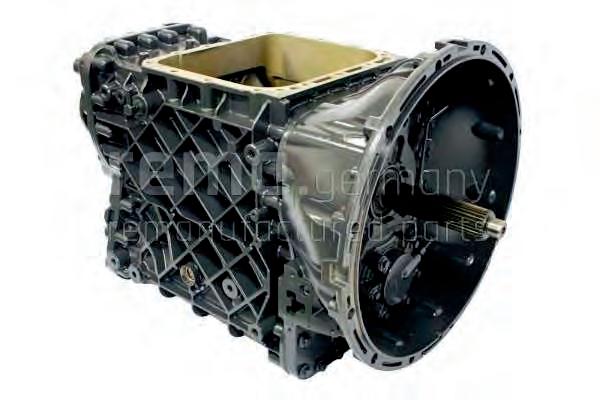
VOLVO/MACKI-SHIFT/M-DRIVE AT2512C,AT2612D&ATO3112D. S44. TA952399. POA ZFTRANSMISSIONSALLMODELS Allmakesandmodelsavailable.S10. TA431606. POA
EDITORIAL
Editor Sean Mortell
E-mail Sean.Mortell@primecreative.com.au
Phone 0468 577 166
Contributors Warren Aitken, Frank Black, Sarah Marinovic, Rod Hannifey, Simon Smith, Glenn Sterle, Warren Clark
Cartoonist John Allison
PRODUCTION
Art Director Bea Barthelson
Print IVE Print
ADVERTISING
Business Development Manager
Tosan Popo
Phone 0481 260 352
E-mail Tosan.Popo@primecreative.com.au
SUBSCRIPTIONS
www.ownerdriver.com.au/subscribe
Phone +61 (0)3 9690 8766
Mon-Fri 8am-4.30pm (EST)
Email subscriptions@primecreative.com.au
Mail 379 Docklands Drive, Docklands, VIC 3008 Australia
EXECUTIVE GROUP
Chairman John Murphy
CEO Christine Clancy
Publisher Sarah Baker
Operations Manager Regina Fellner
Sales Manager – South Danny Hernandez



From tackling the biggest issues to releasing the latest technology, the local transport sector is in a hurry to continue growing
The Australian road transport industry is currently in a mood for doing business. When it comes to the manufacturing side, global OEMs are in the midst of welcoming new models to the Australian market. Think Hino’s enhanced diesel light duty range through the revamped 300 Series, IVECO’s renewable diesel compatible range, Scania’s latest Super engine range in an 11-litre option across the board, Daimler Truck’s variety of releases across its numerous brands and Volvo’s leading electric trucks made available locally.
The truck builders are moving, with innovation the name of the game throughout the middle stages of 2026.
It’s not just in the manufacturing space where productivity is a common thread. The entire sector has been ramping up the gears in recent times, especially when it comes to tackling the latest big issues. The National Heavy Vehicle Regulator, alongside various partners from the Fair Work Ombudsman to the ATO, are continuing to drill down on sham contracting and other shadow economic arrangements across the sector.
The regulator revealed recently that it has presently identified 21 operators as highest risk for sham contracting, with nine no longer being accredited by the operator and 10 in the process of having their accreditation eligibility reviewed – the remaining two have been issued notices warning of potential accreditation action.
NHVR CEO Nicole Rosie says the regulator is also
continuing to work closely with government and industry partners to address sham contracting practices across the sector.
“The majority of the heavy vehicle industry operates safely and professionally, often under significant pressure. These businesses invest in compliance, maintain their vehicles and prioritise the safety of their drivers and the community,” Rosie says.
“Our focus is increasingly on the small cohort of highest-risk operators – those who repeatedly fail to comply with the law, are involved in serious incidents, or do not act on known risks.
“If you are a high-risk operator and you do not meet your obligations, we will take action.”
The National Road Transport Association has turned its focus to the road user charge suspension, calling on the federal government to push the temporary hold on the charge until the end of the year to allow operators to catch up on payment disruptions.
“When trucking costs rise, the price of groceries, medicines, farming inputs and everyday essentials rises with them,” NatRoad CEO Warren Clark says.
“Road freight carries around 80 per cent of Australia’s domestic freight task. When trucks pay more, Australians pay more.”
Out east, Road Freight NSW is calling on the state government to provide direct financial support for freight operators impacted by the ongoing closure of the Great Western Highway at Victoria Pass. RFNSW CEO Simon O’Hara says truck businesses are spending
“Many operators are now spending hundreds of extra dollars every time a truck is sent across the Mountains.”
“hundreds of dollars” more on individual trips due to detours, increased fuel use, additional driver hours and higher operating costs.
“Freight operators have no choice but to keep moving,” he says.
“They’re delivering essential goods, servicing regional communities and keeping supply chains running, but they’re doing it at a significant additional cost to their operations.
“Many operators are now spending hundreds of extra dollars every time a truck is sent across the Mountains.”
This edition of OwnerDriver reflects the productive nature of the industry – from a stunning Truck of the Month many of you may have already ogled at on page 28 to new vehicle technology on pages 19, 26 and 42, there’s a plethora of stories to check out. Throw in some beautifully wrapped trucks on pages 38 and 44 and we have you covered for your July read. We hope you enjoy this edition.
























kenworth.com.au




A massive Hume rest area upgrade is officially underway, a Victorian road project celebrates a major tunnel milestone while the popular Coffs Harbour bypass is continuing to excel
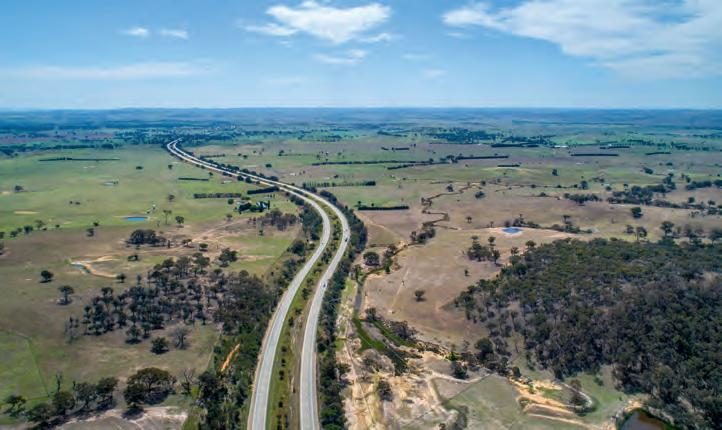
There’s plenty of milestones being achieved as we head into July with a $2.6 million Hume Freeway rest area upgrade getting underway and excavation has been completed on one tunnel as part of a massive Victorian road project. Outside of Victoria, a series of traffic changes are now in place as the Coffs Harbour bypass reaches its latest milestones.
$2.6M
The Victorian government has announced upgrades are underway on a key rest stop along the Hume Freeway, including clearer parking zones for heavy vehicles.
The $2.6 million upgrade project is set to begin at Barry’s Bay Rest Area, with the federal and state government funded works including upgraded walkways, lighting and toilet facilities, clearer parking zones, road resurfacing and improved safety barriers.
Federal regional development minister Kristy McBain says the upgrades will help reduce driver fatigue.
“The Albanese government is investing in safer, more accessible rest areas so drivers can take a break, manage fatigue and get home safely,” she says.
“These important safety upgrades are receiving funding through our Safer Local Roads and Infrastructure Program, which provides more than $200 million a year to support the delivery of safer and more productive roads across Australia.”
Works are underway and expected to be completed by the end of July, weather permitting, with the rest area to be closed during this time.
“We know truck drivers do the heavy lifting to keep goods moving across Victoria and these upgrades will give them a safer, more reliable place to stop, rest and recharge,” Victorian ports and freight minister Melissa Horne says.
TUNNEL MILESTONE
A major milestone has been reached on Victoria’s North East Link project, with a tunnel boring machine (TBM) breaking through.
The Zelda TBM has broken through in Bulleen, completing excavation on the first of the two three-lane tunnels.
Zelda is one of two TBMs building the state’s largest road tunnel


from Watsonia to Bulleen, while TBM Gillian is excavating on the southbound tunnel and is expected to break through in the coming months.
The tunnels will provide a direct route for up to 15,000 trucks each day, reducing travel times by up to 35 minutes between Melbourne’s north and east.
More than 39,000 precast concrete segments manufactured in Benalla have been installed inside the tunnels.
Crews are now building the road inside the tunnels and installing electrical, lighting and safety systems.
Above ground works are continuing on key connections into the tunnels and the Greensborough Road boulevard.
North East Link is delivering three major road projects, including the new tunnels as well as upgrades on the M80 Ring Road and the Eastern Freeway.
To the north, construction is progressing on the M80 Ring Road Completion flyover bridge. Traffic is expected to move onto the new Watsonia Road bridge in the coming months.
“This breakthrough is a major step towards fixing the missing link in Melbourne’s road network,” Victorian Premier Jacinta Allan says.
“This project will deliver faster journeys, less congestion and get Victorians home sooner.”
Federal transport minister Catherine King celebrated the “really exciting milestone” that will transform the way the state’s transport industry travels.
“North East Link will reduce travel times for commuters and freight, while taking trucks off local streets in Melbourne’s northern suburbs,” King says.
The Coffs Harbour bypass project is continuing to power ahead, with the New South Wales government announcing new milestones in construction.
With major construction milestones underway, a series of traffic changes will roll out across the project this week.
The 14-kilometre bypass project will allow motorists to avoid up to 12 sets of traffic lights on the Pacific Highway, cutting travel times by up to 12 minutes and easing congestion in Coffs Harbour’s CBD.
The project is a $2.27 billion investment in regional NSW, jointly funded by the Albanese and Minns Labor governments.
Alongside the M1 to Raymond Terrace extension, the completed bypass will deliver a continuous motorway link between Sydney and Brisbane with no traffic lights and no stop-start bottlenecks. The NSW government says it marks a major shift in how people and freight will move along the east coast, cutting congestion and creating a faster, more reliable journey on one of Australia’s busiest corridors.
“Work on the final bridge has begun, and it is incredible to see how quickly the Coffs Harbour bypass is taking shape,” federal transport minister Catherine King says.
“This project will transform Coffs Harbour, taking traffic and trucks out of the CBD.
“The Albanese government is proud to be working with the Minns government to deliver the projects like the Coffs Harbour bypass, ensuring we’re building the roads, bridges and
rail the state needs.”
Construction crews have begun work on the final bridge, which will form the future southbound Pacific Highway underpass, north of Opal Boulevard at Korora.
The bridge is part of a twin-bridge structure, with the northbound bridge already completed and open to traffic.
Once operational, the underpass will connect the service road west of the highway with Solitary Islands Way.
Piling work is now underway, with columns, girders and a major retaining wall to follow. From early June, right-in and right-out turns at the Charlesworth Bay Road and Pacific Highway intersection and the Roselands Drive and Coramba Road intersection will be temporarily restricted.
These temporary changes will allow crews to build the new signalised intersection at Charlesworth Bay Road and the shared user path to Roselands Drive.
Motorists requiring right-turn movements will be directed to use alternate intersections and existing interchanges.
Following these changes, the Pacific Highway and Englands Road/Stadium Drive intersection will shift west to a temporary roundabout.
This change will allow crews to remove the existing roundabout and install traffic lights at the current intersection.
The change will help accelerate construction and reduce the amount of work required in the Boambee area during 2027.
The bypass is expected to open to traffic in late 2026, with overall project completion scheduled for late 2027.
“We thank the community for their patience during construction of this 14-kilometre project, and the workers who’ve kept it tracking on time, despite enormous weather challenge over the past few years,” NSW roads minister Jenny Aitchison says.
“The Coffs Harbour bypass will be a gamechanger for our state, taking 12,000 vehicles, including heavy freight out of the CBD – allowing tourists to discover the area and helping motorists avoid up to 12 sets of traffic lights.
“The bypass will cut travel time by up to 12 minutes, allowing people to spend more time with their families and friends, and less time stuck in traffic.”


























































































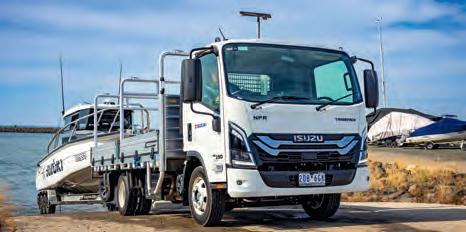
The all-new range of Isuzu trucks has arrived. With a sleek new cab design, more advanced safety features and a smoother, more comfortable drive, the new range will change the way we rely on our trucks. Forever. To find out more, visit your nearest Isuzu Trucks Dealer or visit isuzu.com.au






The regulator reveals 21 operators have been identified as highest risk as it continues tackling sham contracting in the sector
The National Heavy Vehicle Regulator (NHVR) says it’s continuing to target dangerous and non-compliant behaviour across the Australian heavy vehicle industry, renewing its focus on highest-risk operators and sham contracting.
The regulator’s latest edition of the What’s Your 20? podcast recently released highlights how the regulator is working to address both issues, with 21 operators presently being identified as highest risk.
Out of this, nine are no longer accredited by the regulator, another 10 are in the process of having their accreditation eligibility reviewed and two have been issued notices warning of potential accreditation action.
A recent NHVR crackdown resulted in prohibition notices grounding several heavy vehicle businesses flouting safety regulations across the country, following intelligenceled investigations into the small number of highest-risk operators presenting significant risks to public safety.
The regulator used a multi-channel approach, reviewing Heavy Vehicle National Law (HVNL) compliance outcomes, crash data, Safe-T-Cam fatigue data and reports to the Heavy Vehicle Confidential
Reporting Line, to identify more than 20 operators presenting an unacceptably high risk to public safety.
NHVR CEO Nicole Rosie says the regulator is also continuing to work closely with government and industry partners to address sham contracting practices across the sector.
Recently the NHVR met with senior leaders from federal and state governments, Treasury, Australian Border Force and the Fair Work Ombudsman alongside industry leaders to discuss sham contracting and its impacts on safety, fairness and the long-term sustainability of compliant operators in an event convened by Senator Glenn Sterle.
“The majority of the heavy vehicle industry operates safely and professionally, often under significant pressure. These businesses invest in compliance, maintain their vehicles and prioritise the safety of their drivers and the community,” Rosie says on the podcast.
“Our focus is increasingly on the small cohort of highest-risk operators – those who repeatedly fail to comply with the law, are involved in serious incidents, or do not act on known risks.
“If you are a high-risk operator and you do not meet your obligations, we will take action.”
The NHVR is urgently calling on the sector to remain safe as dangerous trailer disconnections rise across the country
The transport industry has been warned about a dangerous rise in trailer drop incidents across Australia.
The National Heavy Vehicle Regulator (NHVR) has issued an urgent warning to operators as dangerous incidents involving trailers unintentionally disconnecting from heavy vehicles have doubled compared with the same time last year.
National data collected by the NHVR shows a clear rise in the number of potentially critical incidents, with eight trailer drop incidents already recorded in 2026, as well as one serious injury from a crash.
From July 2024 to April 2026, the NHVR identified a total of 26 trailer
drop incidents across its regulated jurisdictions.
Salvati warns that while the NHVR was aware of increasing incidents, many more could occur without being reported.
In April 2025 there was a fatal crash in New South Wales when a dolly and two rear trailers became detached from the lead trailer.
NHVR chief operations officer Paul Salvati says while the heavy vehicle industry was doing it tough at the moment, safety needed to remain the number one priority.
“We know it is a challenging time for many people and heavy vehicle drivers play a crucial role in keeping our country moving, however safety standards are critical,” he says.
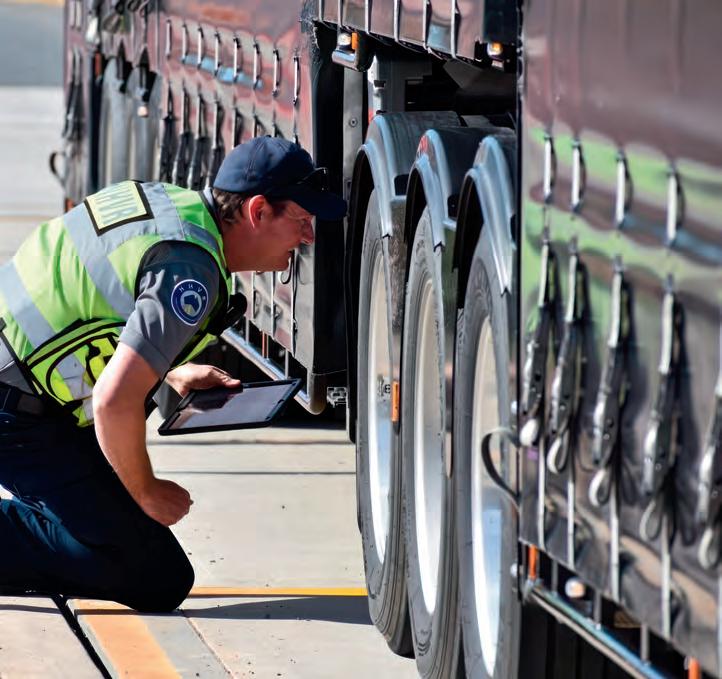
“Our data shows an increase in heavy vehicle incidents due to unplanned trailer drops and de-coupling events, which we know can be minimised by drivers taking steps like conducting pre start checks before every journey.
Rosie also addressed industry concerns around sham contracting in the podcast episode.
“A very common theme from the industry, operators, associations and also drivers, is this concern about sham contracting,” she says.
“We’re very supportive of initiatives to address sham contracting within the sector –a lot of that will be dealt with
“Drivers must be trained in the safe system of work and a failure to check vehicles and trailers thoroughly can create serious safety risks for drivers on the road.”
Key contributing factors to crashes and fatalities included mechanical wear or failure, operator error or distraction, improper loading and dynamic forces on combinations. Drivers are urged to follow a checklist before getting behind the wheel of a heavy vehicle, including:
• Undertaking a thorough visual inspection of couplings –including drawbars and towbars
– and removing any covers or protective plates to check for wear, damage or defects and reporting any issues before moving the combination
• Ensuring coupling components are clean and free from dirt or debris which may prevent proper engagement of couplings or locking mechanisms
• Ensuring all air lines, electrical cables and safety chains are correctly secured and operational before departure
through other regulators, but we are certainly very worried about the safety and sustainability impacts of sham contracting on the sector and on the system.”
Heavy vehicle drivers who think they may be in a sham contracting arrangement can seek advice from the Fair Work Ombudsman by visiting fairwork.gov.au.
• Conducting a walk around of the combination and complete a final visual check
• Performing a tug test prior to departure.
Salvati says without proper cautions taken, members of the heavy vehicle industry risked contributing to serious crashes or road fatalities.
“These factors can significantly increase safety risks, particularly on high-speed roads where a trailer loss can have severe consequences for both the driver and other road users if the trailer is dropped and it causes a hazard on the road,” he says.
“This can lead to crashes, or worse – fatalities – when a driver hits, or swerves to miss a dropped trailer.
“It’s important all of industry takes this issue seriously so everyone can return home safely to their families at the end of the day.
“If anyone is concerned about safety or the potential for a trailer-related crash to occur, they can speak anonymously to the NHVR’s Heavy Vehicle Confidential Reporting Line.”







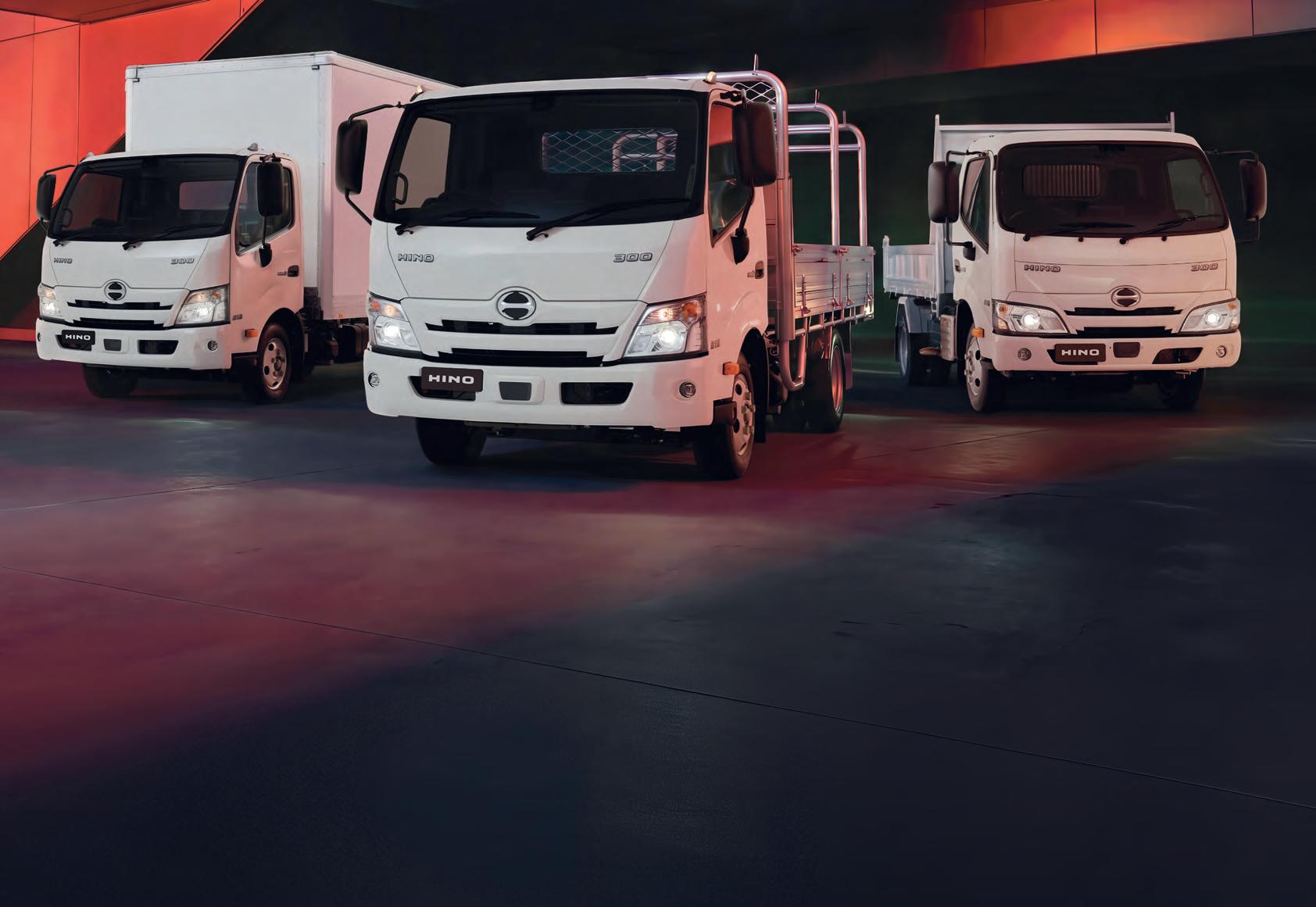
THE 2026 HINO 300 SERIES. ENHANCED CONTROL. ENHANCED VISIBILITY. SAME TRUSTED PERFORMANCE.
Engineered for businesses that demand exceptional performance, dependable reliability and long-term durability. Now with enhanced control and visibility, it delivers a safer, smoother and more confident drive in all conditions. With proven drivelines, a true automatic transmission delivering effortless operation, advanced Hino SmartSafe safety features, and the support of Hino Advantage, the Hino 300 Series is built to handle the toughest workloads, day in and day out. Find out more at hino.com.au



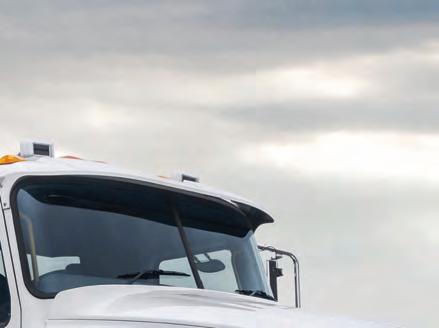
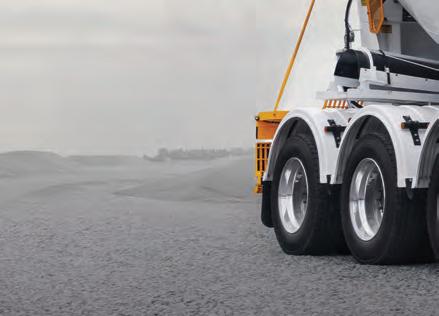

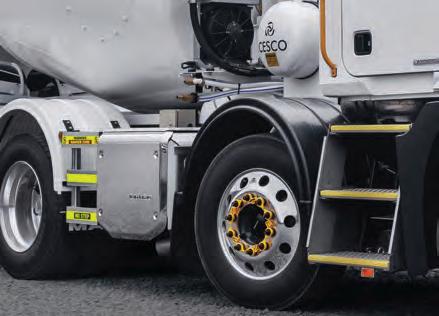
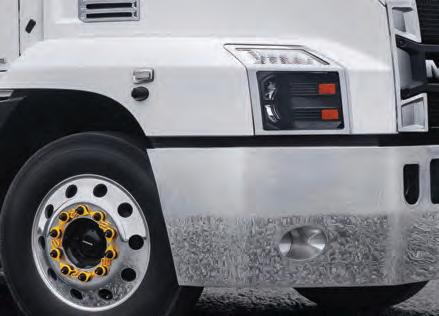






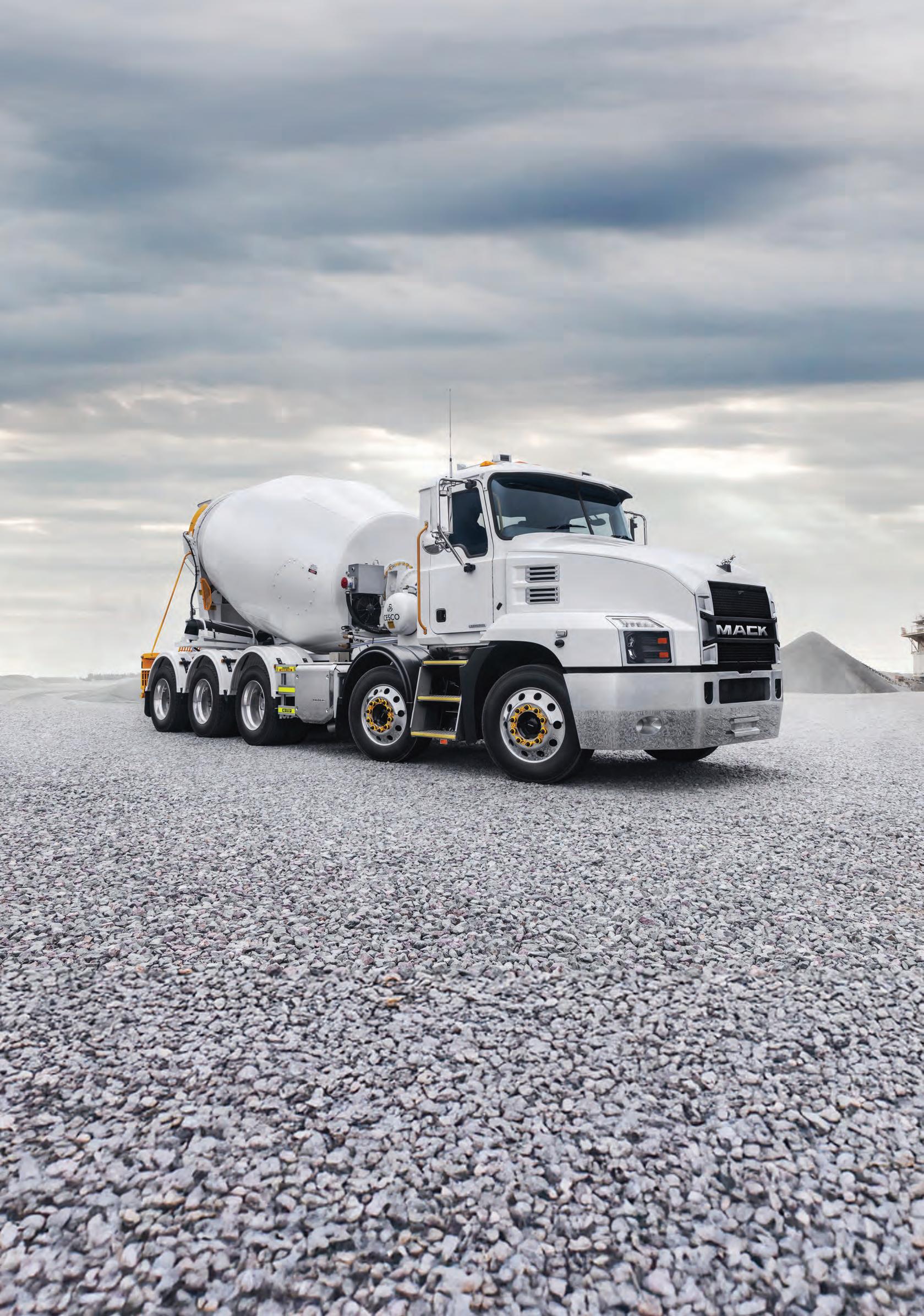
Powered by the 435hp MP8 engine, the Mack Anthem Agitator delivers more power, greater torque and more intuitive safety features than previous models, including Apple CarPlay and standard reverse camera. With access to comprehensive maintenance through Mack’s extensive dealer network, the Mack Anthem sets a new standard for concreting applications—engineered and delivered by Mack Trucks.








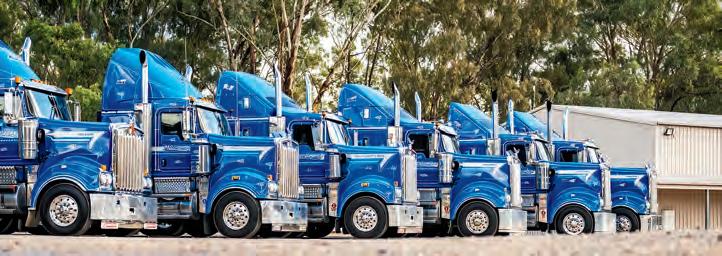
The auction saw 14 prime movers and 30 trailers go under the hammer as part of the retirement sale
A long-standing Albury Wodonga transport business has marked its retirement with a major online fleet auction through Pickles.
As it prepared to close the chapter on more than two decades on the road, McGrory’s Transport sold its fleet in an auction.
Founded in 2000 with a single prime mover, McGrory’s Transport grew into a well-known family operated business servicing customers across Victoria, NSW and Queensland, with transport, logistics, container, side-loader and oversized load and wharf services.
At its peak, the business had around 25 trucks on the road and became a recognised name in the local and broader transport industry.
After more than 25 years in business, owners Brian and Jenine McGrory made the decision to retire and move into the next chapter of their lives.
The sale included a significant fleet
of heavy transport assets, including 14 prime movers and 30 trailers, alongside additional general goods and equipment. Key assets listed include late-model Kenworth prime movers, Maxitrans trailers, skel trailers, flat tops, curtainsiders and other transport equipment.
Brian McGrory says the auction was a fitting way to bring the business to a close.
“This business has been a huge part of my life and our family’s life for more than 25 years. We started with one truck and built it from there, and I’m proud of the name we created and the customers we’ve looked after along the way,” McGrory says.
“It’s the right time for me to retire and enjoy the next stage of life. The gear has worked hard, but it has also been looked after, and I hope it goes on to support other transport operators, owner-drivers and businesses for many years to come.”


NSW state sales manager Brendan Shoemark says the sale represented more than a standard fleet dispersal, with Pickles having worked with McGrory’s Transport over several years.
“Brian is very well known and respected in the transport industry, particularly across the Albury Wodonga region. When a business like this comes to market, buyers know the name and they know there is a level of quality and care behind the assets,” Shoemark says.
“Pickles has worked with Brian over the past five to six years, so this is not simply a one-off sale. It has been a long-term relationship built on trust, advice and timing. Helping business owners make informed decisions at important moments – including
retirement – is a key part of the role Pickles plays beyond the sale itself.
“For buyers, this was a rare opportunity to access a well-regarded regional transport fleet through a transparent national auction platform. For Brian, it was about achieving the right outcome for a lifetime of work.”
McGrory’s Transport has operated from a modern depot on the VictoriaNSW border at Wodonga and has provided daily general freight, specialised transport, container handling, container sales and hire, de-stuffing, wharf services, warehousing and distribution, as well as over-sized load services.
The auction was conducted exclusively through Pickles.com.au, allowing buyers to bid from anywhere in Australia.


Hino Australia has announced the Euro 6-compliant models are officially on sale, joining the brand’s existing hybrid electric vehicles
Hino Australia has announced its enhanced 300 Series light-duty range is now on sale, with the Euro 6-compliant models joining existing hybrid electric vehicles.
“The 2026 Hino 300 Series is engineered for businesses that demand performance, reliability and long-term durability,” Hino Australia manager of product strategy Daniel Petrovski says.
“With proven drivelines that feature a true automatic transmission delivering effortless operation, advanced Hino SmartSafe safety features and the support of Hino Advantage, the Hino 300 Series is built to handle the toughest workloads, day in and day out.
“The Euro 6 Hybrid Electric range has proven its reliability and durability in Australia since 2021 – it
is now joined by Euro 6-compliant diesel cab chassis and Built to Go models meaning Hino now offers solutions for a multitude of light-duty applications.
“A sequential shifter plus new LED headlamps and fog lamps offer enhanced control and visibility to deliver a safer, smoother and more confident drive for operators.”
He says the enhanced Hino 300 Series diesel range delivers the right balance of power, efficiency and drivability for Australian businesses across a wide range of industries.
“Our proven true automatic transmission and four-litre engine mean drivers do not experience any torque interruptions between gear shifts while also benefiting from quick acceleration and lower whole-of-life costs,” he says.
IVECO Australia has revealed two executive appointments to continue enhance the experience for customers across the country.
IVECO Trucks Australia has promoted James Johnson to the position of national manager of fleet while appointing Barry Woods as the head of customer services effective immediately.
Johnson previously held the role of national manager of retail and fleet sales LCV at IVECO and has over 27 years of experience in the commercial vehicle and automotive sectors with several leading brands.
The new role sees him take responsibility for the fleet sales function across the entire IVECO portfolio, ranging from light vans and cab chassis, through to 90t GCM B-Double prime movers.
Johnson’s remit will also see him work across the company’s off-road ranges including Daily and Eurocargo 4×4 products as well as the heavy-duty T-Way 4×4, 6×6, 8×4 and 8×8 product lines.
As another experienced industry executive, Woods previously occupied the role of dealer principal of IVECO New Zealand, a position he held for five years, and which saw him oversee all aspects of IVECO
“The new sequential shifter enables drivers to manually select gears or simply engage Drive mode, allowing the vehicle to choose the most appropriate gear for the driving conditions, which improves performance while reducing driver effort and fatigue.”
The four litre engine delivers durability, longevity and greater operational efficiency – when it is mated to the automatic transmission, the Hino driveline has a Gross Combined Mass (GCM) of eight tonne meaning that 4.5 tonne Gross Vehicle Mass (GVM) car-licenced customers can tow a 3.5 tonne trailer behind a fully loaded truck.
For car-licenced drivers, Hino’s true automatic transmission means an easy transition to a light-duty truck given the similarities to an automatic passenger car.
“The ease of the automatic transmission across the range helps businesses to recruit and retain drivers,” he says.
sales, service, parts support and customer service in that country.
IVECO Trucks Australia managing director Glen Dyer says he looks forward to seeing the positive effect the pair would make to IVECO’s Australian operations, with a specific, ongoing focus on brand and customer experience.
“Since beginning with us in 2024, James has had a positive impact on our team and customers thanks to his strong understanding and passion for the fleet segment,” Dyer says.
“His combination of leadership skills, strategic thinking and deep commitment to driving sales growth and customer satisfaction makes him a fantastic advocate of the IVECO brand.”
Recognising the importance that aftersales plays in ensuring IVECO owners enjoy a rewarding and productive ownership experience, Dyer says Barry Woods’ holistic industry background placed him well to meet the challenges and opportunities of the critical head of customer services role.
“Barry brings a wealth of leadership experience along with strong expertise on customer quality and experience, making him an ideal fit to guide the aftersales team and to drive continuity while further developing efficiencies across our parts and service operations,” Dyer says.
Both appointments are well timed, with IVECO in the midst of an exciting new product rollout phase that has seen the recent launch of its latest medium duty Eurocargo range and new Daily van and cab chassis product lines, with more to follow.
The addition of LED headlamps and fog lamps across the 300 Series range improves safety and reduces risk while the diesel variants also feature Daytime Running Lamps (DRLs) to further improve visibility.
“The Hino 300 Series was designed with the driver in mind and maintains exceptional levels of cab comfort and interior ergonomics, complemented by innovative, easy-to-use technology, further reducing driver fatigue,” he says.
All Hino 300 Series are supported by Hino Advantage, a total support customer care program designed to maximise business uptime. Every Hino Genuine Accessory is backed by a three years unlimited kilometre warranty.
Hino Australia says more Built to Go Hybrid Electric and diesel models are expected in dealerships before the end of the year.
“Additionally, we will continue to expand the range with even more new models over the next 12 months,” Petrovski says.




Growing up on the family’s farm in Tamworth, Mick McCulloch had one clear ambition. Everything changed when he got into the trucking sector, as McCulloch Bulk Haulage continues forging partnerships in the local transport industry
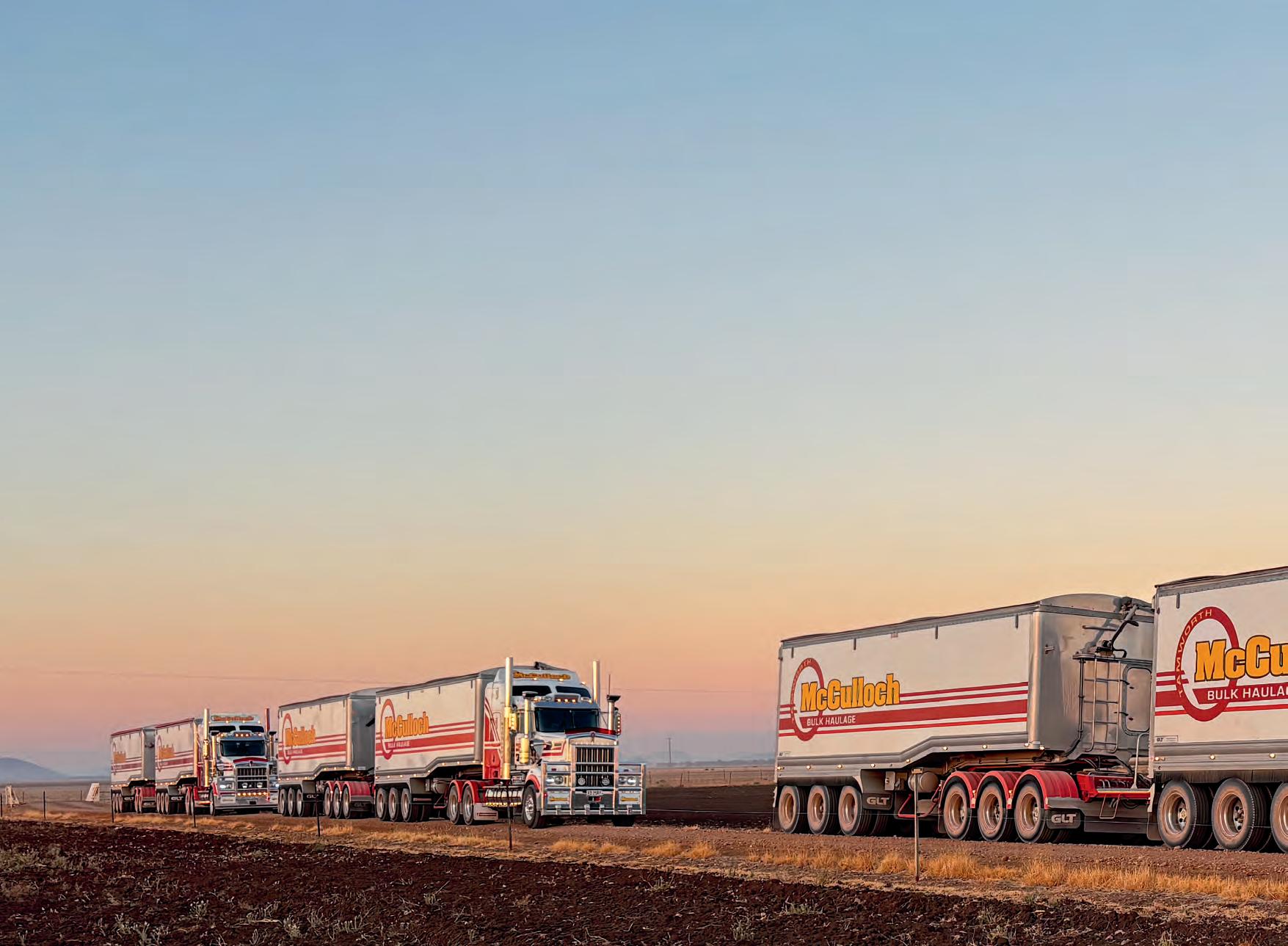
Mick McCulloch had only one idea on his mind. Growing up in north-east New South Wales, Mick’s plan throughout his childhood was to continue the tradition working the land every day. It was all going to plan in the early 1970s when he finished Year 10 at school and started a mechanic apprenticeship. Then everything changed.
“My family legacy is in farming and my aim was always to go back to the land, but then I got diesel in my veins and I quickly stuffed that idea,” he told OwnerDriver.
“I’m now turning 66 this October and I’ve gone from being a diesel mechanic to running a transport business in McCulloch Bulk Haulage Transport.”
When beginning his apprenticeship, Mick began working for Shell Rimula Hall of Fame inductee Jim Savage and his wife Helen on the weekends for Stockmaster. Mick spent four years of his apprenticeship working for them and spying any opportunity he had to go for a drive in a truck.
By his late teens, Mick was on the other side of Australia, running east-west truck routes for three years across both express and general freight operations. For the former, Mick recalls driving vans, but when it came to general freight he fondly remembers the equipment that went into his Western Australian foray.
“For four years out west it was tarps and gates, dogs and chains – I didn’t even have straps to use in those days and tautliners certainly didn’t exist,” he says.
Upon returning to Tamworth and starting a family, Mick started working full-time in Jim and Helen’s workshop. Under the arrangement, Mick drove trucks at odd times for drivers when they weren’t around or when there was an extra load of sheep and cattle needing to be transported. Even when going on these overnight runs, Mick would show up for work in the
morning, starting a work ethic that would see him forge a successful career in the industry.
“I have always been truck mad – I was one of many who used to live and breathe trucks,” he says.
Mick’s big break came in the late 1980s courtesy of some work he was doing at a local workshop. An owner-driver who provided runs for local feed mills was wanting to sell out, buy a block of land and become a farmer. When he asked who wanted to buy his truck and work, Mick put his hand up.
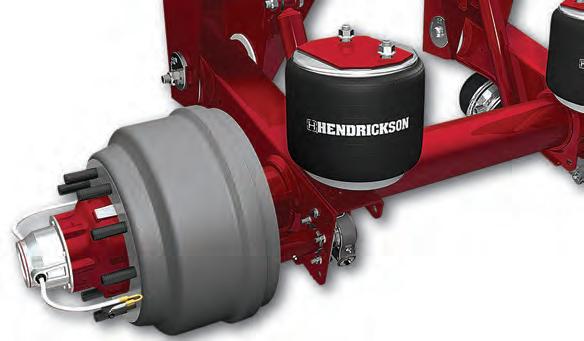
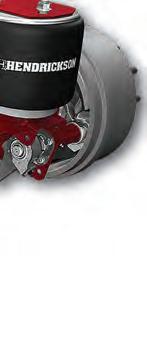
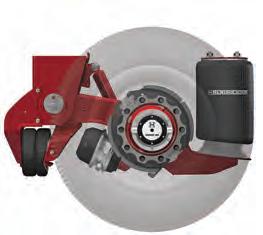
It was 1988 and Mick was just 28 when he bought the truck, an old 34 foot Jamor tipper, and started McCulloch Bulk Haulage. Nowadays, Mick’s fleet totals 22 trucks and an array of dollies and trailers that all run on Hendrickson suspensions, but back in the formation days of the family business these initial vehicles ran on springs.
“When the opportunity arose we bought out some more owner-drivers who had good solid work that fitted in with what we were doing,” he says.
“We soon had four trucks and we kept expanding from there. I was still the spare driver up until we had 15 trucks and then we bought another mob out and we had 20 or so trucks, meaning I had to step back from driving.
“Our fleet went to the next level in 1993 when I bought my first Hendrickson suspension, and we’ve spec’d Hendrickson on our fleet ever since.”
This partnership between McCulloch Bulk Haulage and Hendrickson spans more than 30 years, with 95 Hendrickson suspensions running on dollies and trailers in Mick’s fleet. He points to a particular trailer that runs HXL7 on the INTRAAX suspension that highlights the quality he has become accustomed to with Hendrickson.
“The INTRAAX is like chalk and cheese to any other suspension I’ve seen – the proof is in the pudding and I haven’t seen a better trailer suspension than Hendrickson’s,” he says.
“On the axle side, the HP spindles have been fantastic – we have around 12 A-doubles currently with Hendrickson suspensions and the HP spindles on it. I’ve never had to think twice about any of these vehicles, they’ve been so good. I can safely say I have Hendrickson blood running in my veins.”
These Hendrickson systems are helping McCulloch Bulk Haulage’s fleet run all over the country.
Throughout the middle of the year, two AB-triples in the operator’s 22 truck fleet are running long-distance routes – one out of Adelaide to Darwin and another from Darwin to Townsville. While these represent the largest models in Mick’s fleet, he says running on Hendrickson has been critical for all vehicles regardless of length, mass and size.
“This includes some of our B-doubles that run over the Blue Mountains and to the coast, which are run by our older drivers who have been with us for around 26 years to date,” he says.
“We’ve been in business for 38 years as of March 31 next year. We’re a big family business that employs roughly 75 people and partnerships with the likes of Hendrickson have been important to our longevity.”
A particular point of pride for Mick is a relationship with a local feed mill that has continued to thrive throughout McCulloch Bulk Haulage Transport’s 38-year history. Nearly four decades since the pair struck the partnership, Mick’s trucks still cart into the same mill, with the mill having grown its operations substantially over time.
Within Mick’s current operations out of Tamworth is also Glen Artney Truck Repairs and Glen Artney Truck Wash, offering a one-stop shop for both his own business and other local fleets. His goal since establishing Glen Artney Truck Repairs roughly 15 years ago has been to allow truck drivers to drop a truck off on Friday for Mick’s team to service and wash before they can pick it up on Sunday afternoon and get back to work.
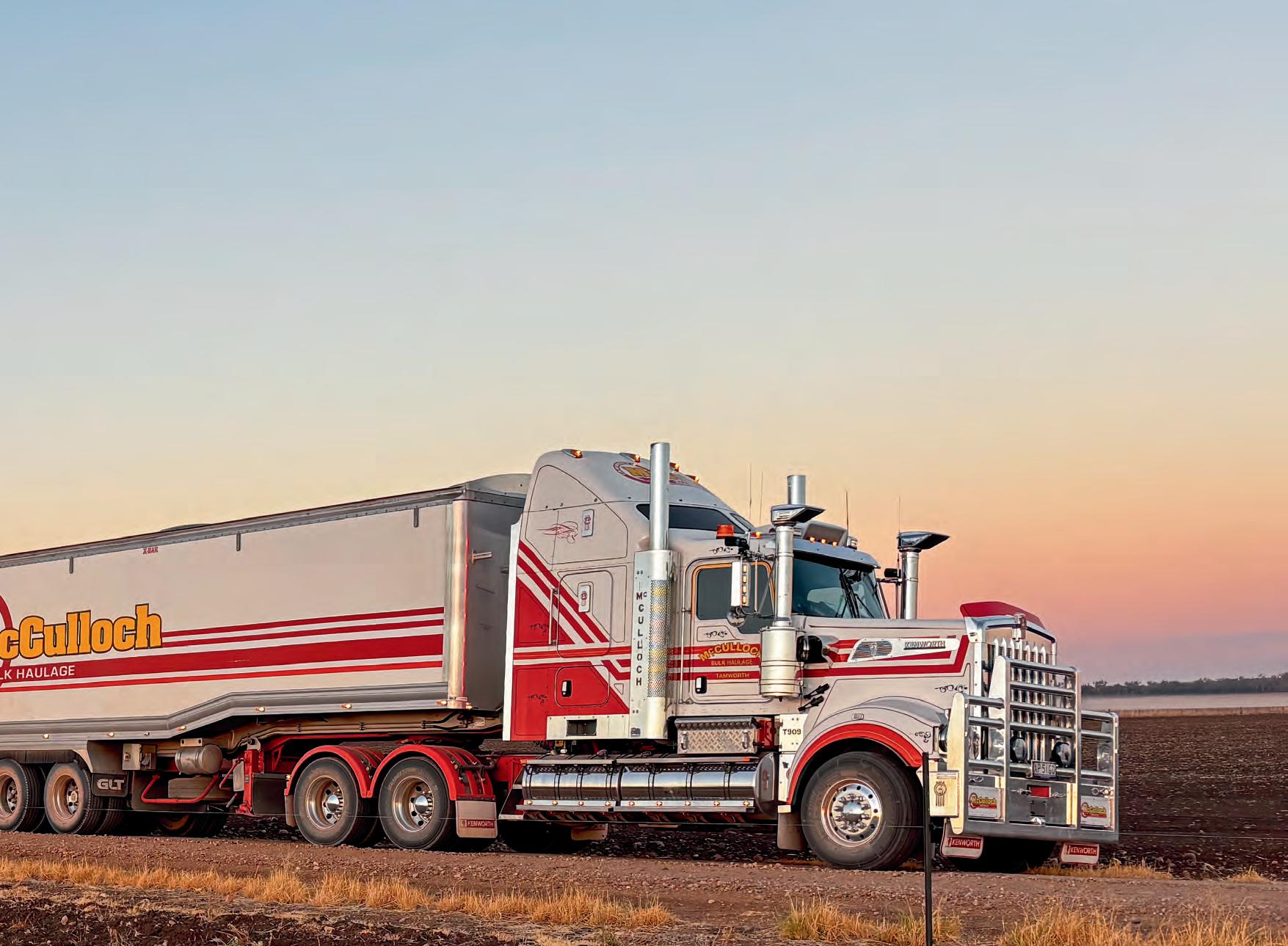
“We’ve been in business for 38 years as of March 31 next year. We’re a big family business that employs roughly 75 people and partnerships with the likes of Hendrickson have been important to our longevity.”
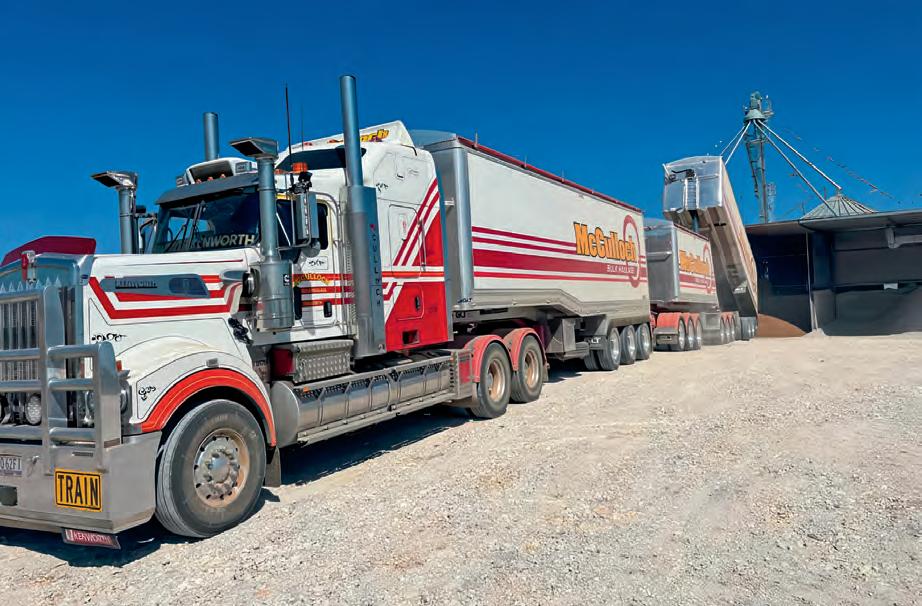
“I’ve always done maintenance on a weekend to keep the truck open and available from Monday to Friday, and this business model has worked for us and other drivers,” he says.
“We also have a state-of-the-art workshop that’ll turn 10 next year, operating seven days a week.”
This workshop will play host to the latest evolution of his partnership with Hendrickson as the supplier will run a large training program for Mick’s staff on how they can service Hendrickson products for all customers. This latest development is proof that Mick has no intentions of ending his love affair with Hendrickson and the wider transport industry anytime soon.
“I have no desire to retire or sell, I have 12 grandkids now and one grandson has worked in the workshop, while my son-in-law runs the workshop,” he says.
“I really enjoy supplying good jobs to people, and we’ll keep trying to run a quality show so people want to come here and work with us.”



































































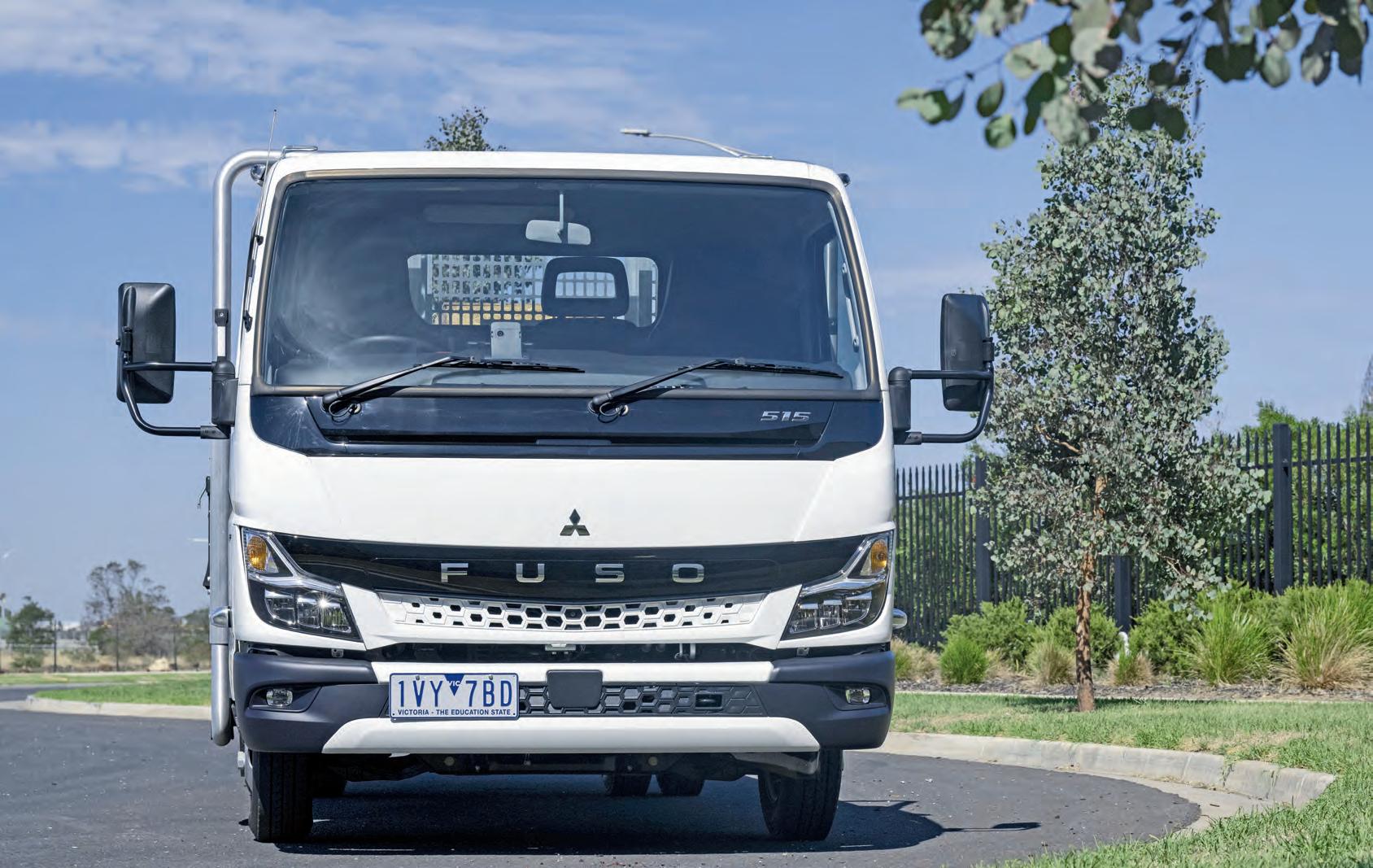
In his latest truck test drive, Warren Aitken returned to his roots, hopping behind the wheel of Daimler Truck’s latest Canter model to test the popular model’s most recent iteration
Iwas quite excited to receive a polite invite from Daimler Truck Australia Pacific to pop down to Melbourne and have a little test drive of their latest upgraded FUSO Canter, especially having just returned from a 10,000km round trip to Perth with an A-B Triple in tow. Getting the chance to go back to my trucking origin story was a huge contrast and quite enticing.
See, I started my employed driving career a very long time ago. In my formative years, I spent a fair bit of time doing local pick-ups and deliveries around the New Zealand countryside in a Mitsubishi Canter. That was a few generations of Canter before the new one I was now being invited to test out, but I remember a few things from back in my experience-gathering years. I remember the weight restrictions on my Canter were more of a suggestion than an obligation, as it was for general freight back in the ‘90s. I remember I could afford to use the ashtray in that old Canter, and I remember no matter how many bags of seed I stacked in the tray, that little Canter couldn’t be killed. Hence, I was very keen to take up Daimler Truck’s offer and see how the current representative of that hard core warrior was holding up in the local workplace.
The FUSO Canter first hit the Japanese market in the early ‘60s, but by the time it hit Australian shores, the drivers were sporting bell-bottom jeans and tie-dye high vis. It has always been one of the premier light vehicles and, because the majority of the range can be operated under a car licence, it’s a hit with tradies and transport companies alike.
Over its 60-year reign, it has seen many updates and revamps and, while the last big generational release was a couple of years ago, the FUSO team prides itself on not waiting for big overhauls, instead focusing on gradual improvements in safety and quality, hence my invite to check out the newest additions.
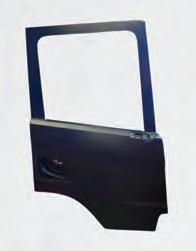
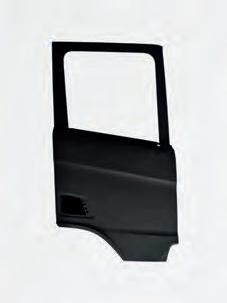
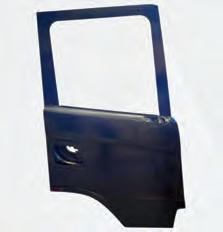
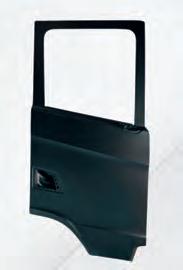
I was tossed the keys to one of FUSO’s most popular iterations, the wide body 4X2 515 Canter. The main pick of the upgrades they were spruiking was the Euro 6 engine, the new factory fitted ISRI seats, the full LED taillight set-up, factory fitted fog lights and the new tray top set-up that comes fitted to the ready-built Canters on the showroom floor.
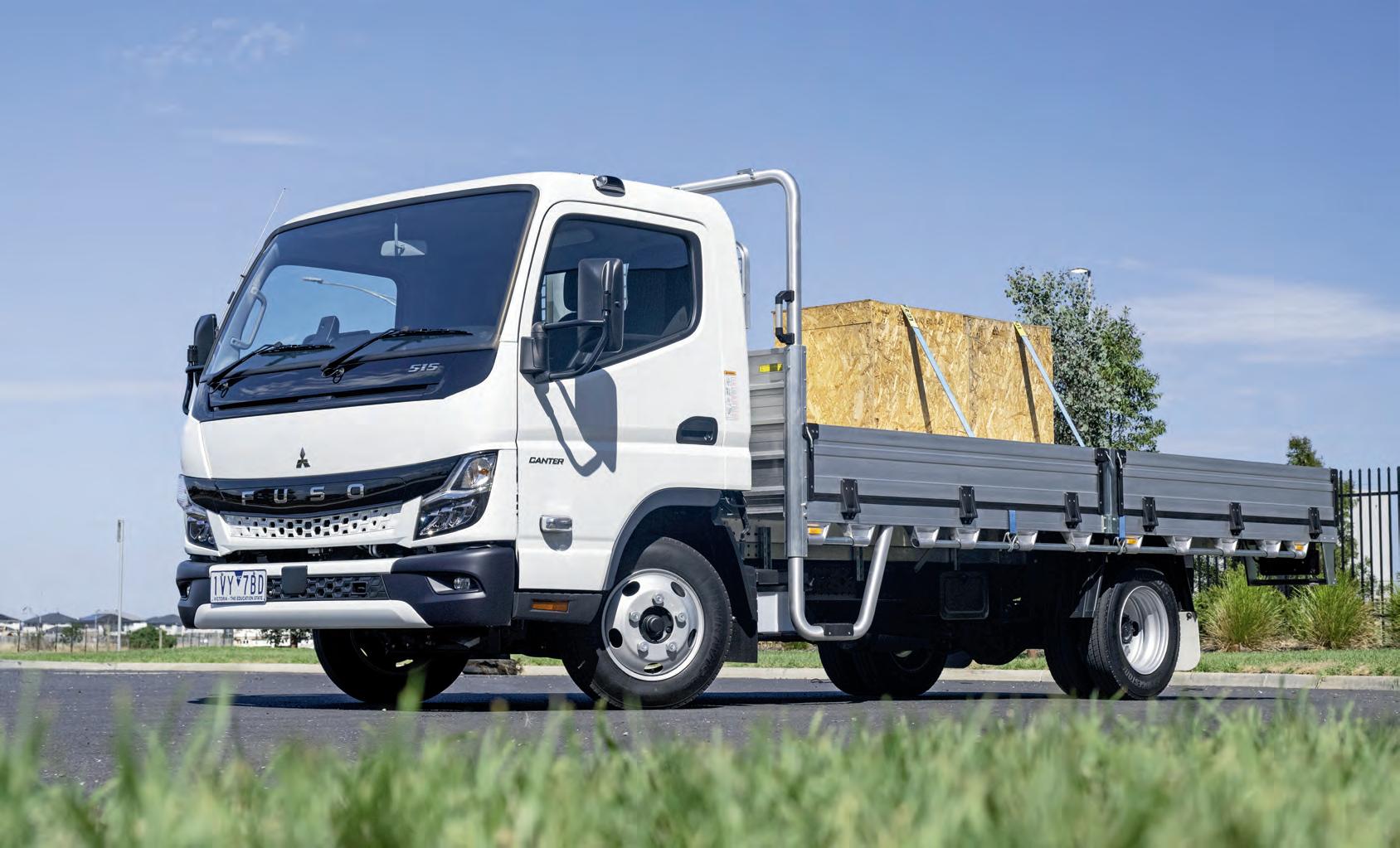
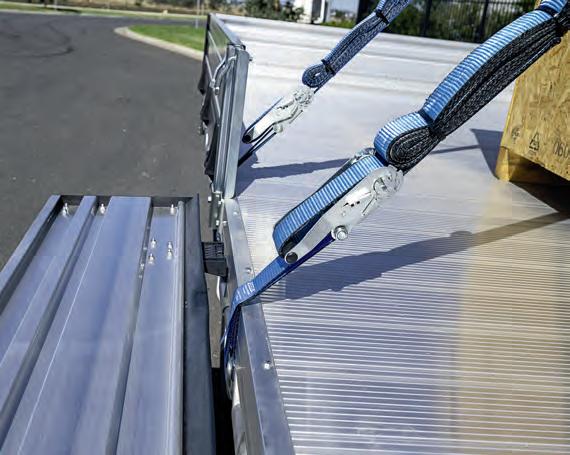
From a worker bee standpoint, we should address the tray system first. Now normally these kinds of systems are designed by some highly qualified engineer that has never had to rock up to a job site and use them. Not this time though – it seems like they found an engineer that has experienced the annoying balancing act required of strapping from outside the gate. Knowing you need it tight enough so the pallet doesn’t move, but not so tight that you warp your gates inwards and they never align again. The cunning engineers have designed a tray top system that allows the worker to actually fit the ratchets underneath the side gates of the tray, meaning you can strap your load down without needing to warp your side gates. Don’t worry though, the industrial rubber used below the side gates seal around any straps strongly, meaning you wouldn’t lose a single M&M out the sides even with a dozen straps in place. The heavy-duty hinges assist in ensuring there are no weaknesses
“It’s fair to say it was a breeze to drive and a lot of fun”
Top: She is a good-looking little unit, is the FUSO Canter, with a decent payload available, as well as both wide cab – as I had – or the 300mm narrower city cab version
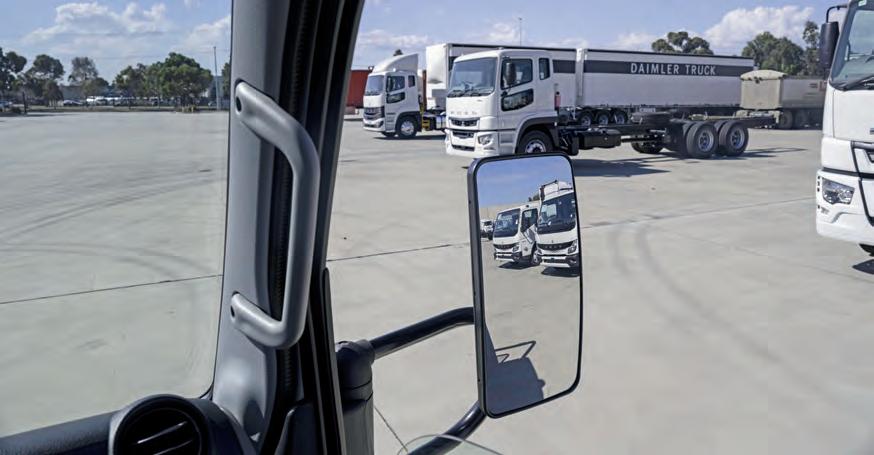
Below, L to R: There is good manoeuvrability with the large and unintrusive mirrors as well, making traffic watch and backing up an absolute breeze; Kudos to the engineers that designed the new gate system that allows you to strap down tightly without having to go over the gates. The thick rubber seals the bottom of the side gates and means nothing leaks and everything gets strapped down properly
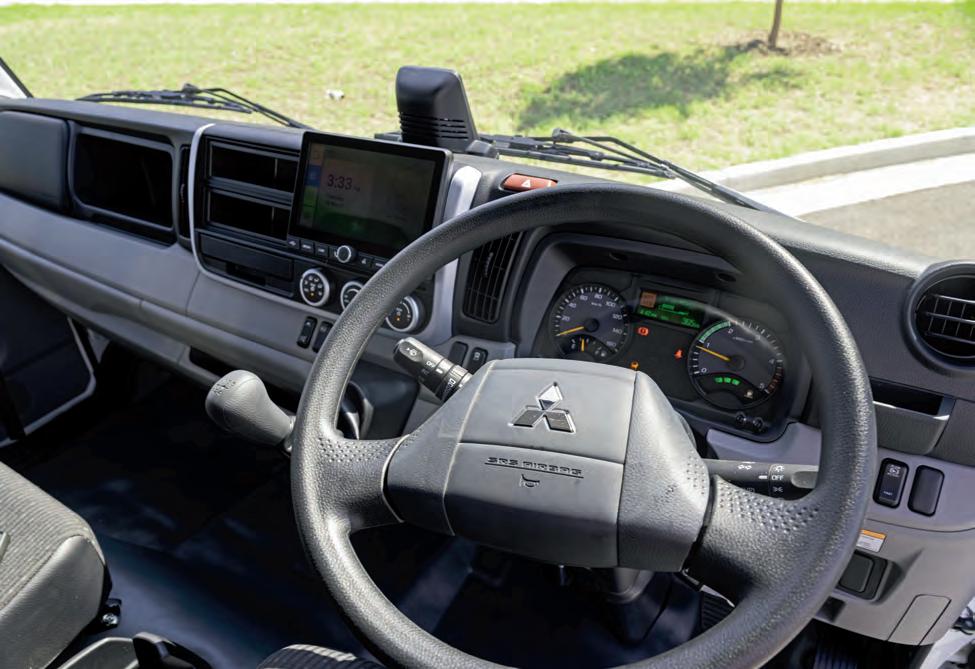
Opposite: Everything was so neatly set out inside the cab. You couldn’t adjust the seat too far back, but even still I didn’t feel cramped for room. It was great to see a gear stick back in use as well
along the sides or rear either. Coupled with the high-vis full LED rear taillight set-up and the back end of the Canter does more than any truckie or tradie would need.
Moving to the heartbeat of the little Canter, which is the ever-reliable FUSO 4P10-T4 diesel engine – there hasn’t really been many changes to this. The internal workings have been slightly changed, allowing the three-litre, four-cylinder engine to crank out an extra 30 Nm of torque in some of the variants, but aside from that, the changes relate more to bringing it up to Euro 6 standards. That involves meeting the new emissions standards, which means another blue capped tank fitted to the chassis. Aside from that, it is still the same steadfast service underneath the drivers seat that they have had for a while now.
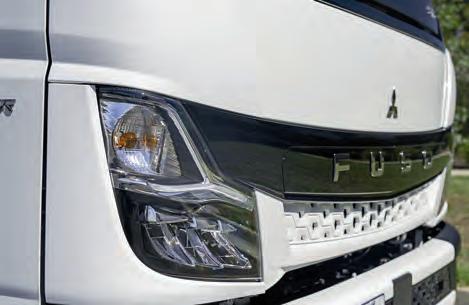
Cosmetically there is very little change visible. The Canter range went through a bit of a facelift a couple of years ago and it seems there’s no need to change what is working perfectly already, although the full LED set-up, with fog lights as standard, has meant night driving just got a little easier.
Let us step inside and have some real fun. The first thing I noticed was this particular little truck I was getting to test drive was fitted with a millennial anti-theft device; this package is represented by a third pedal down by the
driver’s left foot and a gearstick by the driver’s left knee. You can get the Canter range with the ultra-impressive FUSO DUONIC six-speed dual clutch automated transmission as well, but personally I was pretty stoked to be back in a little puddle jumper with a gearstick. It was hard to form much of an overview of the gearbox – as the truck was newer than my bottle of protein milk, it was still fairly tight. Even with that, it felt fairly direct and there was no need to go searching sideways for the next gear.
Enjoying the drive itself is made much easier with the ISRI seat that now comes as standard in the Canter range. Yes, I was in the wide body version of the Canter, which is listed as a three-seater. I don’t know if the other two would be sitting as comfy as I was, but even at my size it seems like there was a fair bit of room available. Not having sat in the previous generation Canter and having been a lot slimmer in my teens when I last drove one, I can’t attest to the seating position previously, but it was one thing I noted as I whizzed around the industrial estates of Truganina. You feel very much like you are sitting over the steering wheel and the pivot point of the truck, meaning you get a really good feel for how it is handling itself as you throw it around between obstacles and other road users. Often you can feel a little out of
alignment with what is going on, but I felt very comfortable.
Interior wise, the only real changes are more technology based, with the introduction of wireless CarPlay for Apple and Android. That may not sound like much for a tradie zipping off to the worksite, but the ease of connectivity is important for getting your street maps up, or in my case getting my Luke Combs tunes cranking.
Once again it has been a while since I enjoyed the comforts and layout of a Canter, so some things may be old to the brand but new to me. For example, the positioning of the hazard light switch at the top of the dash to the left. For a work truck that is in and around busy areas, the hazard lights will get a lot of use and having them so readily available is an unnoticed pearler of an idea. I can’t say the same for the ashtray. Yes, in my younger years when a pack of 25s went for under $10, I made use of the Canter’s standard accessory, but these days it is almost a novelty in a new truck. But I’m sure ciggies are a lot cheaper over in Japan, so they may use them more.
As far as the drive goes, I really enjoyed it. With good solid mirrors you have a great view both forwards and backwards. I had a two-tonne block on the back just to experience real-world loads, but they must have loaded it when the Canter was sleeping because the little beast didn’t even notice. It sat so well on the road no matter how much I hooked into the corners, and it zipped around like it was a younger sibling to the ‘Energizer Bunny’. Inside the cab was quiet and comfortable, and although the Canter isn’t designed specifically for 14-hour standard days, I reckon you would be hard pushed to hop out without a smile on your face.
The little truck is still packed with all the
standard safety features you have come to know and love – ABS plus Electronic Brake Force Distribution. Advanced Emergency Braking, Anti-Slip Regulator, Electronic Stability Program and of course the ever-annoying Lane Departure Warning System. I forgot to ask if that can be toggled on and off.
From the operator’s point of view, you can’t complain about 30,000km or 12-month service intervals and the five year or 200,000km basic warranty helps keep costs in check as well.

Wrapping up, the tray design is going to make life easier for all those that use it. The Euro 6 engine will keep all the regulators happy while not affecting performance for those expecting plenty from the Canter’s heart, and the little advances like LED lights and ISRI seats as standard ensure the latest upgrades keep the Canter up the top end of the field in the light truck market.
It’s fair to say it was a breeze to drive and a lot of fun.



































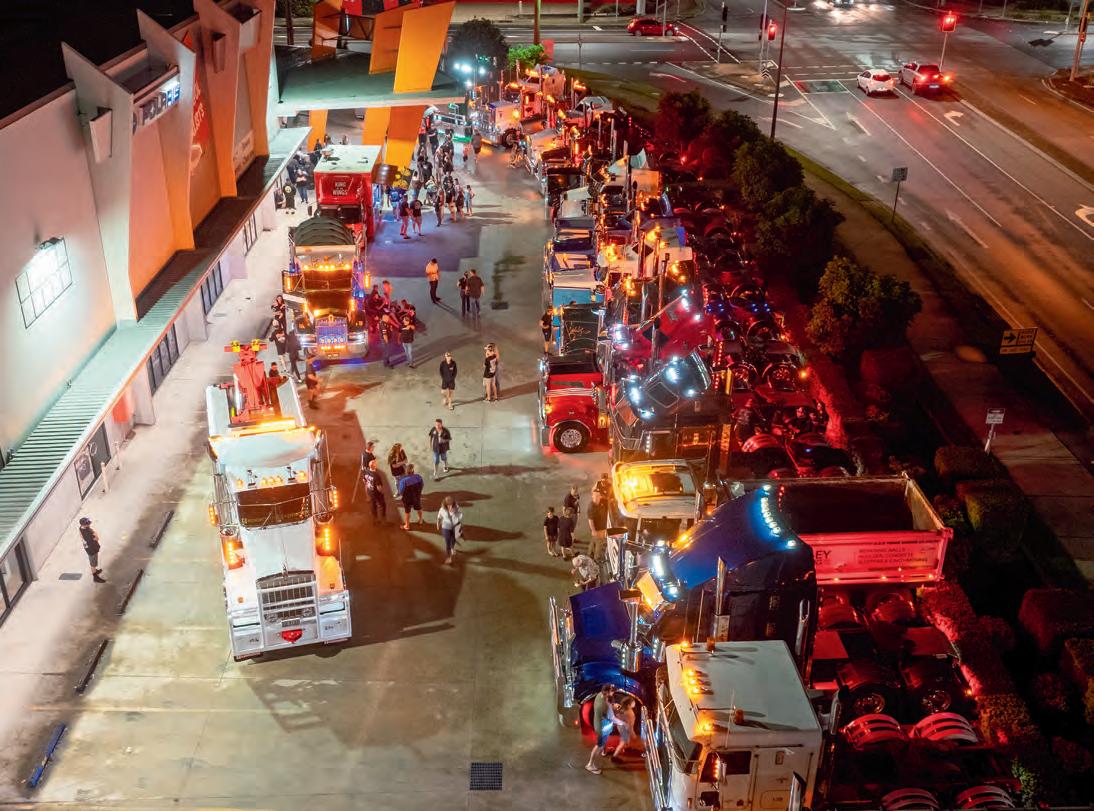
Warren Aitken finally got to the popular Drive 4 Depression truck meet, learning about the growing show and its important cause within the industry
Mother nature is a malicious prankster, I swear. For over a year I have been keen to get to one of the increasingly popular Drive 4 Depression truck meets and in the first weekend in May everything finally aligned. It was a weekend where I was not out on the road. It was a weekend where all my at-home obligations had been meet, and it was a weekend where I had found a servo in Ipswich with diesel at $2.31 per litre, so the hour long drive over to the Mower Supastore in Brendale wouldn’t bankrupt me. And then Mother Nature decided what the day truly needed was a continuous contribution of anti-shine.
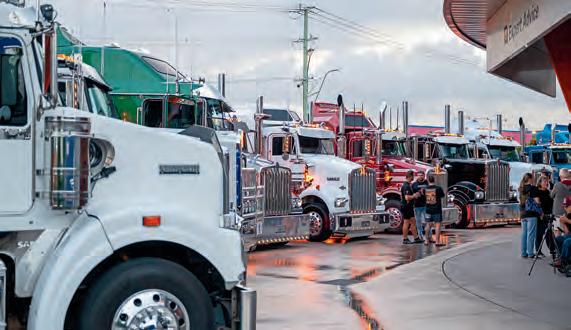
I was finally on hand to attend one of the expanding Drive 4 Depression truck meets, an event that has been packing out the carpark of the Mower Supastore with upwards of 50-odd trucks on occasion, and Mother Nature decided to dissuade dozens of regular attendees with wet weather. Fear not though, as the old saying goes: ‘It’s not how big it is that counts, it’s what you do with it’, and I found the force and feeling behind the Drive 4 Depression truck meet was just as strong, even with a roll call of only half of its regular numbers.
The Drive 4 Depression Truck meet concept is the brainchild of Chris Doosey and his right-hand lady Bec Munro. They are kind of like the charity trucking’s version of Steve Jobs and Steve Wozniak,
where Chris is Jobs, getting all the facetime and credit, while Bec is Wozniak, doing all the work and pulling it all together.
It all began a couple of years ago after Chris had been part of the ever-popular Brisbane Convoy for Kids.
“I did about eight months with the convoy and I loved it – it was the thing about the charity and giving back, and I wanted to do more,” Chris states as we hunkered down from the rain inside his Mower Supastore.
For while Chris does run Brisbane’s largest Mower Store, trucking has been in his blood for a lot longer.
“I’ve had trucks for 29 years – you know how it gets in your blood, and it is a passion,” he says.
“I am a bit biased and think I have some pretty cool trucks now.”
It’s that lifetime indoctrination into the transport world that paired the two ideals together – trucking and the support and benefit of charity events.
“I’m no different to anyone else, I went through some pretty dark times like some guys have and I wanted to do something to try and help,” Chris says.
“It was just one of those realisations when I was with some friends where you understand it is time for guys to talk and I wanted to encourage that.”
While men’s mental health and truck drivers’ mental health is becoming a more visible topic to discuss, Chris also saw that Drive 4 Depression needed to broaden its scope and part of that is because of his right-hand lady Bec Munro. Bec is the wife of truck driver Beej Munro. She is as dedicated to the industry as her husband, assisting in multiple transport events as well as spending nearly as much time as her hubby cleaning his company truck, with most adding in that she does a better job in half the time. But I’m not starting any controversy there.
The point is Bec appreciates the time and effort that drivers put in on the road and the effects it has on them, their families and their wider circle of contacts. That larger, more holistic approach is why Drive 4 Depression was formed and what drives its focus.
“It isn’t just about the drivers and their mental health, it is about the wives and partners, the kids and families, everybody that is affected by the industry,” Chris admits.
“When we are off on the road, it is the wives and partners that are keeping the families together. They are the ones keeping the households running, and when things go wrong, they are the ones suffering.”
In 2025, Drive 4 Depression was listed as an official charity organisation and Chris and Bec began hosting regular truck meets.
“The idea is that people just come along and mingle. It isn’t a truck show,” Chris admits while knowing full well that people are prepping for the meets like they are a truck show.
“We just want people to come along and talk to each other. Families talking to other families, so you know you are not in this alone.”
From a handful of trucks at the first event, of which half of them were Chris’, to packing out the carpark at the Brendale Supastore, the Drive 4 Depression truck meets have gathered quite a
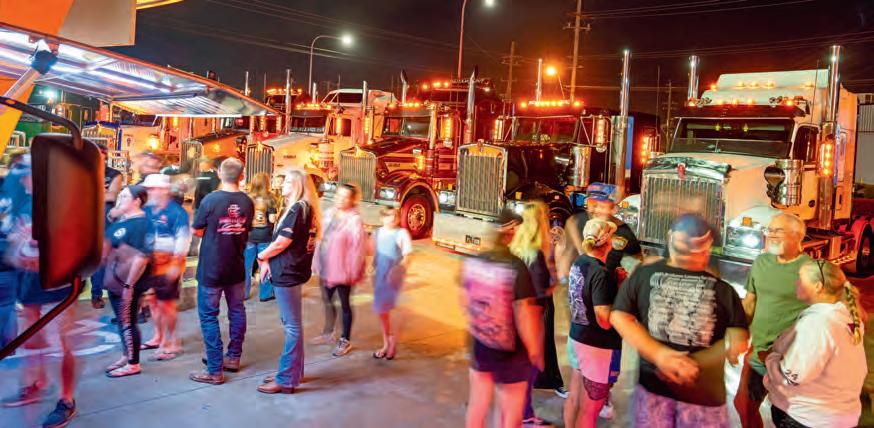
following. From Bec whipping up the road to grab some sangers to throw on the Mower Supastore BBQ, to multiple food trucks vying for limited spots in the carpark, each meet has grown support for the cause. As people learn of the motivation behind these truck meets, more and more are keen to come along to appreciate the trucks and just to ‘chew the fat’, which is exactly what Chris was hoping for.
“Right from day one we have had a lot of great support, we’ve had numerous food vans offering to come along and support, we’ve had the likes of the Desert Dog team here with their products since the first one,” he says.
“Ray from Ray Lawrence Photography is always out catching the trucks as they roll in, and people love seeing their roadside shots go up on our socials. We now have a lot of regulars that always turn up for every event.”
“Even in weather like this. In fact, the previous show the weather ended up worse and we had the carpark full.”
While it wasn’t the worst weather for my inaugural attendance, I think it was the fact it turned to custard before the show, coating the roads with a deep dish of anti-shine and ensuring plenty of road spray for those coming from the southside, that played a part in participation levels. It did affect the numbers, but it didn’t affect the atmosphere. The flipside was I was able to get a park a lot closer to the chicken wings food van, so we’ll look at the positives.
I spent a fair bit of time wandering among the attendees and was blown away by the family involvement. Kids running around hyped up on sugar and stainless. Couples enjoying quality time together, often with a cleaning rag bonding them together. There were quite a few ‘trucking families’ that had chosen to leave their big rigs home, away from the anti-shine still caked on the roads, but they happily jumped in their cars to come down and just enjoy the environment. There were enough characters on hand to fill the carpark with laughs and a jovial atmosphere, and enough trucks on hand to ensure plenty of photo opportunities for myself and the abundance of truck spotters gracing the Brendale location.
The goal for the Drive 4 Depression organisation is far from restricted. Chris and Bec want to bring mental health, and in particular talking about our own mental health, into a more acceptable and encouraged foray. It is an admirable goal, although not an easy one.
The entrenched silent approach is a doctrine many of us have grown up with. When we live in a world where we all tend to believe that our mates, our neighbours and even our family all ‘have their sh*t together’, it’s only us that don’t, normalising mental health discussions can be difficult. That’s why bringing truck drivers together with regular truck meets and regular chin wags can only lead to easier conversations.
Getting trucking families together to spend time with each other, to relate to other trucking families, can only lead to bigger and stronger support networks. What started as a quick 10 minute interview to avoid a bit of rain turned into an hour-long chat with Chris and Bec and an unwavering admiration for the drive and direction they are taking. Without giving anything away, they have some fantastic plans for future events and ideas to help fulfill the ethos behind Drive 4 Depression and I can’t wait to attend more and see how this all rolls out. Let’s just ask Mother Nature to take the night off though.
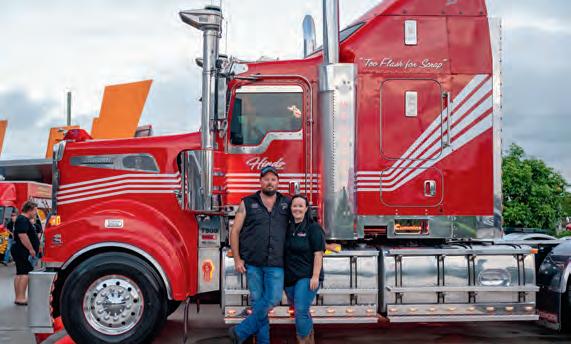
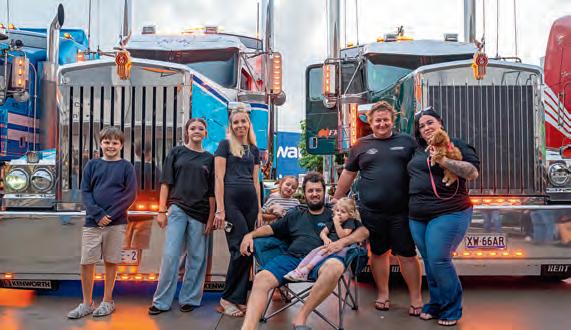
Regular attendees and supporters of the Drive
are Danny and Cindy
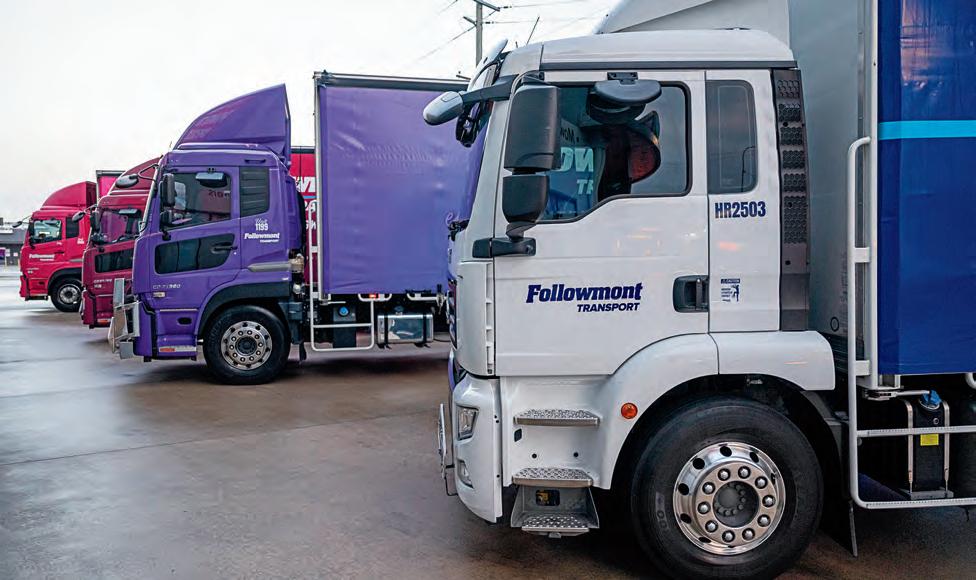
a couple that run their own truck in the stunning T909 behind them and are huge advocates of getting people talking together; Even on a bad day, the turn out for my inaugural attendance was impressive – lots of shine in the rain; The weight of the transport industry has a hold of not just the drivers but their families as well, and the Drive 4 Depression Truck Meets are all about getting those families together
Opposite, top & bottom: The weather dampened the day but it did make it easier for me to grab the group shots; Local operator Followmont Transport had several different trucks brandishing various causes and is a regular supporter of the Drive 4 Depression Truck Meets



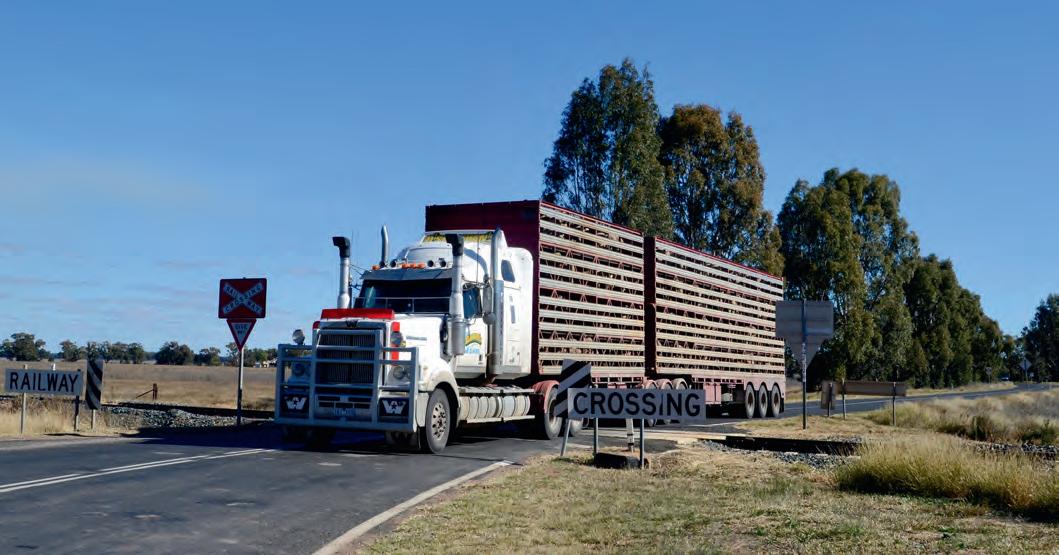
If you’re an owner driver, a small fleet operator, a long-haul operator running interstate or using heavy vehicles to support farming or construction work, accreditation is not just paperwork – it’s part of how you keep your business moving.
From August 1, 2026, the National Heavy Vehicle Accreditation Scheme (NHVAS) will transition to the new Heavy Vehicle Accreditation (HVA) scheme as part of changes to the Heavy Vehicle National Law (HVNL). What matters most for industry is this: you will not have to immediately switch to the new scheme as soon as the amended law comes into effect.
One of the strongest messages I want to share is that this is a phased transition. Existing NHVAS accreditations will remain valid until their expiry date. The current NHVAS and the new HVA scheme will operate concurrently during a transition period (although you can only be accredited in one scheme at a time).
In practical terms, that means time to plan, time to prepare and time to move across when it suits your accreditation cycle. If your NHVAS accreditation expires before August 1, you’ll be contacted and invited to submit a maintain application, including your compliance audit, before July 17, 2026. Doing so will give you a further two-year accreditation period, creating breathing space to transition.
Operators with expiry dates shortly after commencement will also be contacted and given the opportunity to renew early under existing rules. For businesses with later expiry dates, Safety Management System tools and guidance will be rolled out to support preparation. Where necessary, extensions can be considered on a case-by-case basis. The aim is simple: keep your business operating without unnecessary disruption.
Under the NHVAS, you’re accredited in separate modules – Mass, Maintenance and Fatigue. Under the new HVA scheme, the structure shifts to a framework built around General Safety Accreditation (GSA) and Alternative Compliance Accreditation (ACA).
Here’s what that means in plain terms. First, you’ll need GSA. This involves a whole-of-business SMS audit. Instead of looking at mass or fatigue in isolation, the focus is on how your overall business manages safety risks. GSA on its own doesn’t give regulatory concessions – it
confirms that your safety systems are in place and operating effectively.
Within GSA, operators can also access the GSA Maintenance Assurance Program (MAP) by meeting additional maintenance management requirements. If you need access to alternative compliance options, such as Higher Mass Limits (HML), Performance Based Standards (PBS) or fatigue flexibility, you can then apply for Alternative Compliance Accreditation (ACA) relevant to those areas. It’s a more integrated model, but for operators already running structured systems, it shouldn’t feel foreign. In many cases, you’re already doing the work, this formalises it under a single safety framework.
One significant change will affect Mass Management. General Mass Limits (GML) will increase to align with current Concessional Mass Limits (CML). In essence, this means accreditation will no longer be required to access CML weights.
For many operators – particularly smaller businesses – this removes an accreditation requirement that was previously necessary just to access CML. However, if you operate under notices or schemes such as Higher Mass Limits (HML) or PBS, you will still require alternative compliance for Mass under the new HVA scheme. A clear list of notices and schemes requiring accreditation will be provided so operators can plan accordingly.
For Maintenance accreditation holders, there is no change to the concessions
themselves. Exemptions from annual vehicle inspections (in Queensland and New South Wales) will continue. You will transition to the HVA framework, but the practical benefit remains the same. Fatigue Management moves from Basic Fatigue Management (BFM) and Advanced Fatigue Management (AFM) to a single, performance-based fatigue model. Operators will be able to select work and rest hours that suit their business within prescribed limits. Templated hour tables are being developed, including BFM equivalents and common AFM equivalents, to streamline applications. If your business needs something more tailored – for example, seasonal farming work or specific freight tasks – bespoke options will remain available, provided the risk is properly assessed and managed. The intent is flexibility with accountability –not a reduction in safety standards.
Another key change is the introduction of the National Audit Standard (NAS). Under the HVA scheme, audits will follow nationally consistent criteria and reporting requirements. Auditors will assess your SMS using the Present, Suitable, Operating and Effective (PSOE) model. At entry audit stage, you must show your systems are Present and Suitable – documented and appropriate for your business. At later audits, the focus shifts to whether those systems are Operating and Effective in practice.
For operators, this should provide greater clarity about what is expected and greater consistency in how audits are conducted across jurisdictions. Importantly, the overall audit cycle remains familiar – generally a two-year accreditation period, with an entry audit, an initial compliance audit at six to seven months, and a compliance audit prior to expiry.
We recognise that any reform raises questions. Direct communication with NHVAS operators has already commenced, and guidance and support material is being developed to explain the process clearly and practically. If you have questions, the NHVR Contact Centre can be reached on 13 NHVR (13 64 87). There is time to plan, and practical guidance will help you through the process. Our focus is clear: strong safety, fair regulation and minimal disruption to the businesses that keep Australia moving.
Healthy Heads has launched a new workplace survey aimed at improving the mental health of those in the transport, logistics and warehousing sectors
The transport, postal, and warehousing industry in Australia is calling on everyone who works in it to have their say in a new national survey aimed at improving mental health and wellbeing. It’s a chance for people on the road, in sheds and behind the scenes to share what life is really like in this essential but often high-pressure industry.
Healthy Heads in Trucks & Sheds (Healthy Heads), in partnership with SuperFriend and supported by GT Insurance, has launched the Thriving Workplace Index (TWI) survey. The goal is simple: capture the real experiences of people working across the supply chain so future programs and support can meet their needs.
Data from SuperFriend shows that transport and logistics staff consistently rank lowest of 19 industries in Australia for workplace mental health. Heavy workloads, long hours, social isolation, unclear roles, exposure to stressful situations and limited management support all take a toll. The result is high stress, burnout and higher staff turnover than in other industries.
In October 2025, Healthy Heads and SuperFriend hosted an Industry Think Tank, bringing together truck drivers, warehouse staff, managers and wellbeing experts. The conversations were clear and consistent, showing that people across the sector want better mental health support, stronger connection at work, capable leadership and practical solutions that genuinely work.



The Thriving Workplace Index survey is the next step. It moves from conversation to evidence, helping organisations understand what is working, where the gaps are, and what action will help the most.
The survey is quick and straightforward, taking around seven minutes to complete. It’s open to everyone in the sector, including drivers, business owners, shed staff, supervisors and leaders.
It explores topics to better understand overall workplace experience and wellbeing. You’ll be asked about how safe you feel at work, how fair and equitable your workplace is, the support you receive from management and your workload. The survey also includes questions about workplace experiences and how these factors may affect your mental health, helping build a clearer picture of both environment and wellbeing.
Your privacy is a priority. The survey is completely anonymous. No names, identifying details or traceable information are collected, and individual responses cannot be linked back to you. All answers are combined and reported only in summary form, so you can share your experiences with confidence.
The aim is to understand what’s working and what isn’t in workplaces right now. By capturing real-world experiences across the sector, it helps identify where mental health support is needed most and which actions and programs will make the greatest difference in high-pressure environments.
This survey comes at a crucial time. Long shifts, heavy workloads and isolation make mental health pressures a reality for many in the industry.










Scania Australia has officially released a new engine and powertrain range to the local market, venturing into new sectors for the first time in its storied history
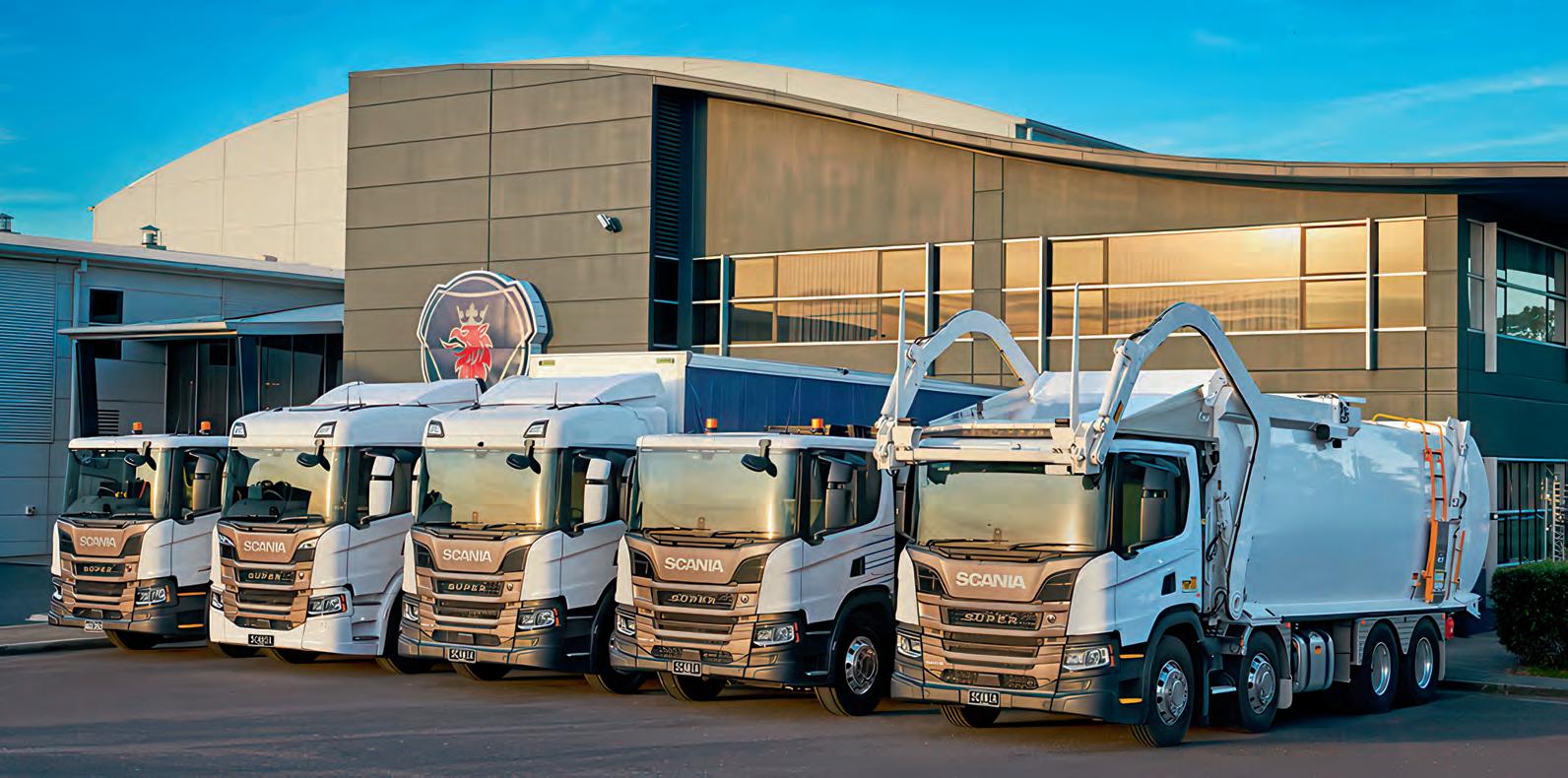
In a market becoming increasingly filled with quality options, it takes an agile heavy vehicle manufacturer to understand and pursue opportunities in new markets. As a well-known global truck OEM emanating from Sweden, Scania could’ve been forgiven for sticking to what it knows best in the prime mover and tautliner markets when it came to releasing a new engine and powertrain platform, but that’s just not how its Australian branch works.
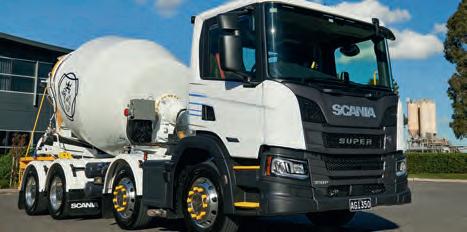
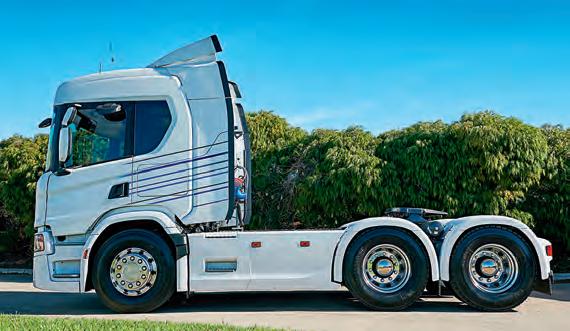
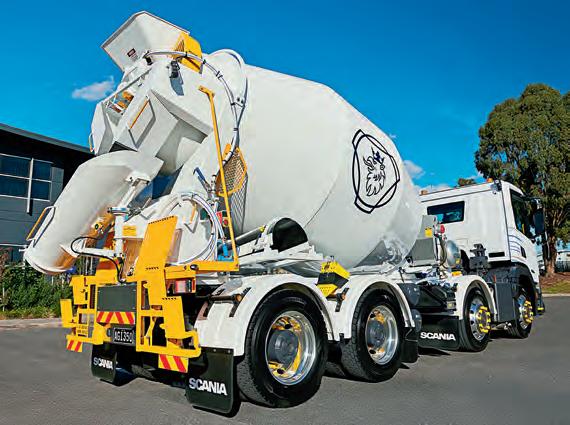
Scania Australia has unveiled a new five-cylinder Super engine, with the 11 litre model coming with more than just improvements in reliability, efficiency and fuel savings. For the first time, Scania Australia’s new engine will be powering the brand’s latest models in the agitator market while continuing to expand into the waste truck sector.
“We’ve long been eager to play in this sandbox (of the agitator market),” Scania Australia director of truck sales Benjamin Nye says.
“With the arrival of the weight-saving powertrain in the form of the 350 hp, 11-litre engine and G25CM gearbox, our tare weight is now much reduced, allowing a greater payload of agitator barrel and cement mix content.”
Scania’s new benchmark in powertrain excellence in Australia offers up to seven per cent lower fuel consumption compared to the existing Scania nine-litre engine, while new variable valve timing and a suite of other technology powers the brand’s latest offering to the local market. Sharing 85 per cent of the successful Super 13’s engine architecture, which Nye says has given competitors “many sleepless nights” since its local launch in 2022, the Super 11 joins the Super 13 as a perfect foil, offering quality and reliability for various applications while being 85 kilograms lighter than its big brother.
“The new Scania Super 11 five-cylinder engine range will give our customers more power, more efficiency and more flexibility,” Nye says.
“The Super 11 is a welcome addition to the Scania family of advanced engines that not only meet all local emissions
requirements, but which also provide more torque than rivals at similar power outputs, which, when combined with a lighter overall vehicle weight, directly leads to greater productivity.”
The headline changes in Scania Australia’s latest engine and powertrain is worth crowing about – lighter weights, more flexible options and the usual strength and reliability of a Scania vehicle. Packed with all of the brand’s usual ADAS active and passive safety systems, Nye says the new generation of engine is a “smart choice” for operators wanting to balance performance with payload and sustainability.
The Super 11 is ideally suited to applications including general cargo, tippers, flatbed/crane combinations, hooklift, fuel delivery, car transportation, waste collection and high volume bulk transport and emergency vehicles like fire trucks. Included in this lengthy list is a powertrain option for an agitator body as Scania aims to conquest a slice of the cement mixer market for the first time.
“We are confident drivers on distribution or vocational duties will notice the difference as quickly as will the accountants reviewing operating costs, and with the success we have had with the Super 13 in Australia, there is no doubt that the benefits of the Super 11 family will go straight to the customers’ bottom lines,” Nye says.
“Current market conditions have pushed operating costs to be absolute front-of-mind for all truck users. Everyone is seeking greater efficiency, greater uptime and greater productivity from their vehicles. This is where the Super 11 five-cylinder engine range will excel.
“For some operators a switch to a high torque Super 11 may represent a purchase cost saving, while for others the additional efficiency bonus may justify the step up from our nine-litre engine range.”
Continuing on from the Super 13, Nye says the slightly larger version of the 11-litre model has reportedly offered “up to 30 per cent better fuel efficiency than competitors” and that the Super 11 will be no different.
Another first for the new-look powertrain is Scania’s Variable
Valve Brake which delivers up to 344 kW of engine brake power. Traditionally, the manufacturer has employed a gearbox mounted hydraulic Retarder to augment the usual engine and service braking effort, however in its bid to achieve more engine brake power for better braking, smoother gear shifting and better emissions control, the Variable Valve Brake has been devised. It combines the Compression Release Brake and the Variable Valve Timing through cam phasers, with Scania developing the system over several years of intensive research and development.
Scania Australia says the additional components with the technology add only nine kilograms to the engine’s weight yet offer a range of clear customer benefits.
“Combining these technologies increases the power of the engine brake and at the same time can better control that brake power,” Scania development engineer for engine brake performance Henrik Andersson says.
This technology leads to a more sustainable offering, with the Scania Super 11 now available in three Euro 6e-compliant performance offerings that Nye says can go towards Euro 7 in the future – 350 hp, 390 hp and 430 hp. All three options can also all run on HVO, while the 390 and 430 hp can run on B100 biodiesel, allowing operators to decarbonise their trucks without opting for electric models.
“Scania is on the electrification journey and we’re committed to continue developing these options for the Australian market – we’ve got some exciting products coming – but we know electrification isn’t viable for every application,” Nye says.
“In true Scania fashion, we’ve continued to develop internal combustion too as that is what will get us through. This engine can run on both diesel and HVO, while the 390 hp and 430 hp options can run on biodiesel.
“What this is doing is allowing Scania to evolve.
We’ve always been known as a supplier of a long haulage highway linehaul truck, as well as fire trucks, but we need to survive and evolve. To do that, we need to go into unchartered territory, which means new applications like the agitator market.”
Longevity has also been a key focus for the team at Scania Australia, with the quality build meaning its maintenance intervals are up to 30 per cent longer than Scania’s previous nine-litre engine range. The compact and lightweight engine is designed for a 25 per cent longer working life and is expected to clock up two million kilometres of service depending on the application.
Alongside durability is Scania’s usual array of safety technology, with trademark systems installed from the European brand. Joining the usual suite of systems is Scania’s industry standard rollover curtain airbags that Nye is “in disbelief” that no other manufacturer has in the local market.
“Since 2018 we’re still the only brand to have this,” he says.
“Our trucks solve rollover issues – we have the highest roll stiffness of anyone and we include curtain airbags too. We’ve made sure our new agitator truck is the safest concrete truck on the market, as well as the quietest, smoothest and most efficient.”
Backed by Scania Finance Australia, with the 100 per cent captive financier celebrating its 10-year anniversary in 2026, the brand’s national service network is ready to provide aftersales care and maintenance for the new 11-litre range. The only unfortunate part of the Super 11’s release is the impact it has on the nine-litre model – Nye says it marks the end for the popular engine and powertrain platform, but it’s a bittersweet moment as the brand introduces a new range worthy of celebrations.
“The nine-litre program has been a noble steed for Scania for the best part of 20 years, but sadly we now have to phase it out,” he says.




“The production costs of running two lines with two engine platforms is quite significant, but we’ve adapted these trucks so all Super 11 models will come with inclusive maintenance, whether it be based on hours for waste and concrete applications or kilometres for our prime mover and rigid trucks.
“The Super 11 engine represents the next generation of intelligent transport. It combines the best of Scania’s engineering with the efficiency and adaptability that today’s operators demand. Whether in the city or out on longer routes, this engine is built to perform – day-after-day.”








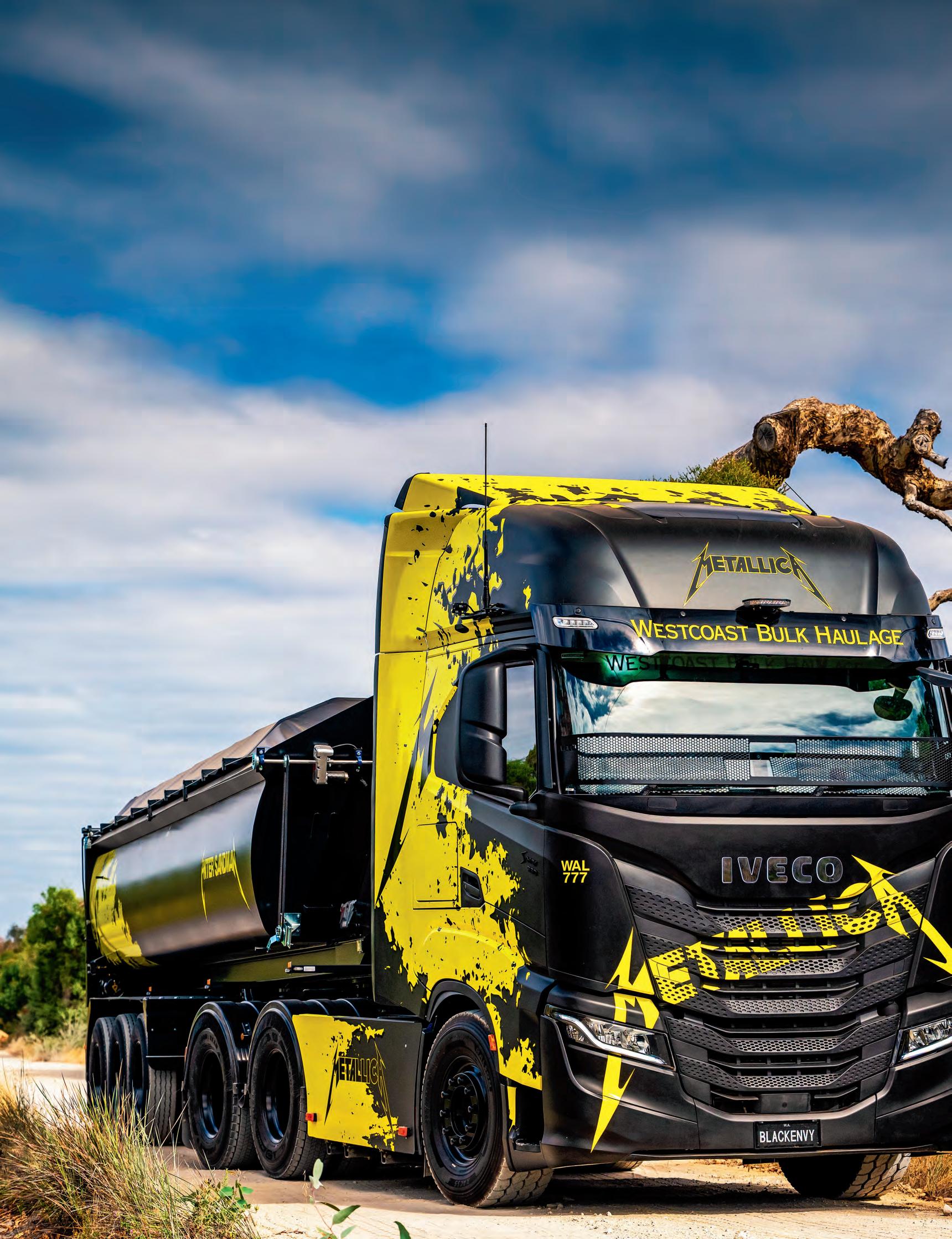
While out west, Warren Aitken came across the rig of his dreams –a custom IVECO. Courtesy of West Coast Bulk Haulage, Warren details the story of this Metallica-themed IVECO and its immense popularity on the road

Let’s call a spade a spade here readers. Some things in this world can be an almost insurmountable challenge, like the Wallabies winning the World Cup, a donkey winning the Melbourne Cup, finding a politician that you can relate to or having a pleasant conversation with a telemarketer. I’m not saying they won’t happen, I’m just implying that they won’t happen.
In my line of work, my insurmountable challenge, the mythical unicorn I have been chasing, has been a pimped-out IVECO. Having seen plenty of examples while travelling over in Europe and even in New Zealand, I know how cool the current S-Way model can be, but traditionally over here in Australia the IVECO S-Way tends to be more of a fleet workhorse. Its driveability, economy, efficiency and reliability lends itself to the safe stock workhorse.
Lately though, there tends to be more and more people starting to pimp out the IVECO’s and appreciate their modern look. I have spotted several company S-Ways with customised touches over here on the east coast, and most recently while travelling the city streets of Perth in Western Australia I found myself staring at an impressive looking IVECO S-way, beautifully polished up, shiny wheels all around and a simple yet striking white livery. With a matching custom tipper trailer, the big IVECO, bearing the West Coast Bulk Haulage badge, stood out against the Perth backdrop.
Yes folks, you may have realised the truck I spotted sounds nothing like the truck you are sneaking glances at as you try to maintain focus on this article. It was white, it had a heap of shiny bits and it wasn’t sporting a massive Metallica across its grill – bear with me a minute.
Having spotted such a tidy looking IVECO, I proceeded to utilise all my journalistic skills to track the company owner. In other words, I Googled West Coast Bulk Haulage. What I learnt was the company began just over 20 years ago in Perth and is stacked full of the Italian originated IVECO brand.
Sitting at the top of the table at West Coast Bulk Haulage is owner Derek Pascoe. I managed to track down a number and gave the man a call to explain my desire to do a story on his tidy looking IVECO. To find out how the European designed and Australasian influenced S-Way was holding up in the rough and rumbled world of tipping and to see if it was holding its own against the traditionally American truck dominated market.
To my disappointment, the conversation began with a denial. Well sort of – it was more of an offering than a denial. West Coast Bulk Haulage has been proud IVECO flag wavers ever since Derek bought his first one back in 2012. There are now 12 in the fleet and while Derek was happy for me to shoot the regular trucks, his offer was to pop out to the yard and photograph the new one, Black Envy. He messaged me a couple of shots of the truck you guys are currently gasping over and I proceeded to test the old mantra ‘the fastest car in the world is a rental car’. My story option suddenly went from a very tidy, well looked after 550 S-Way to a ‘holy cow that’s cool’, gobsmacking 550 S-way. So, let’s get to it.
A brief overview of the company that have put this eye-catching example on the road. West Coast Bulk Haulage. As mentioned, the company began in 2005 when Derek, his wife Vickie and three of their kids shifted over from Newcastle to Perth.
“We saw the opportunities over here with the mining and all that kind of work,” Derek admit.
“So we’d decided we’d shift over here and buy a truck again to see how we’d go.”
My use of the adverb ‘again’ in Derek’s quote
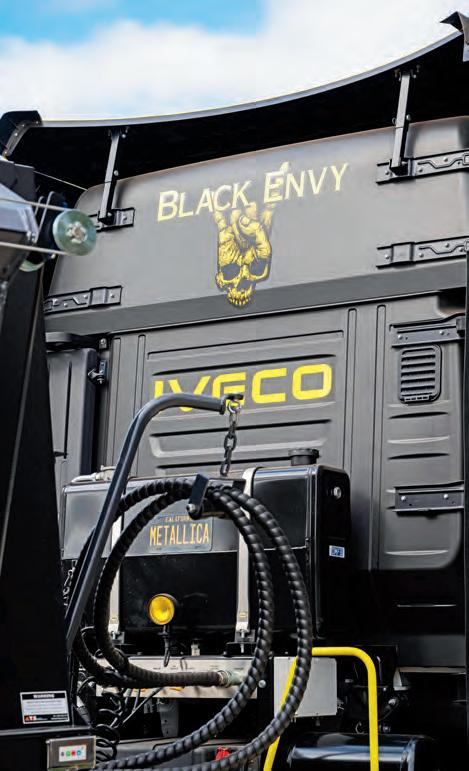
Left: The ‘Enter Sandman’ title on the trailer ties the Metallica theme with the purpose of the unit, which is carting sand and other aggregates around Perth
is an obvious indication that he has been an owner driver previously; it had been a long time between drinks for him and Vickie though. His first truck was purchased back in 1977. At just 19 he picked up a second hand eight-tonne Commer Knocker Tabletop and was using it to deliver plasterboard around the Newcastle area. He had grown up with an uncle (RIP Leon Slade) that owned and operated trucks and that is where his appreciation for the craft originated.
When he wasn’t driving his own Commer, he was off siding with a good friend Fred Horsey and then eventually going two-up with that same mate in a G88 Volvo.
“I learnt the old way, tarping every load, roping it, changing tyres on the side of the road, all that stuff,” Derek recalls.
“We were running two-up between Newcastle and Melbourne and stuff. I loved doing that, so I sold my truck and became my mate’s two-up driver for a few years. We went from the G88 to a Scania 142 V8. I used to tell Vickie I’d be away a couple of days then get back a couple of weeks later.”
Although Derek stayed in transport throughout his career, it wasn’t purely in the trucks –– he spent a handful of years driving coaches around Australia as well.
“That was a lot easier. The freight would load and unload itself,” Derek laughs.
He did return to trucking as an employee back on the east coast, but it wasn’t until his move to Perth that the family went back into owning their own trucks.
“When we shifted over here, we bought an old eight-wheeler Mercedes-Benz,” Derek confesses.
“We ended up getting in with W.A Limestone and have been carting for them for over 20 years now, mainly doing Perth metro work.”
That eight-wheeler Mercedes helped establish
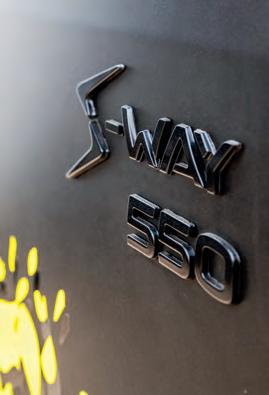
“The latest iteration features incredible aerodynamics thanks to integrated deflectors, wheel arches, a reshaped roof, newly designed mirrors and plenty of other technical wind tunnel stuff I don’t understand.”
West Coast Bulk Haulage and after a year it was replaced by a brand new eight-wheeler Mack.
“We did a lot of eight-wheeler set-ups at the start before eventually moving to the semis that were better suited for the work,” Derek says.
“At the start there wasn’t any real brand affiliation, but after owning a few trucks and having a bit more experience, you do sort of lean towards a specific brand and I found IVECO was the brand for me. They are good on fuel, comfortable for the drivers and handle the on and off road conditions really well.”
That brand allegiance began with the purchase of a brand new 2012 IVECO Stralis AD500. The solid Stralis performed well for West Coast Bulk and was soon joined in the fleet by more and more.
IVECO lover, with the right IVECO contacts, at just the right time.
Back in 2025, in the lead-up to the Brisbane Truck Show, the hierarchy at IVECO decided to do something a little different for their display. At the same time, over on the other side of the planet, IVECO was supporting Metallica on the European leg of their M72 world tour. There were 10 LNG powered IVECO S-Ways and four renewable diesel-powered S-Ways all kitted out in the ’72 Seasons album colours. The trucks were a talking point all over the world and local area manager Paul Stanley from IVECO Australia decided it would be cool to see an Australian S-Way kitted out the same way.
Below: Derek and Vickie Pascoe with the latest IVECO 550 S-Way added to their expanding fleet, although I don’t think Vickie has matching shirts for the other IVECOs
Opposite: Check out the incredible customised carpets inside the state-of-the-art IVECO interior, keeping the black and yellow colours throughout; How can you not add black custom seat covers?
“We normally run the trucks for about three years, looking to get 300,000-350,000 kilometres then upgrade them to the newest model,” Derek says.
There are currently about eight of the 530 X-Way models in the WestCoast fleet, with the remaining trucks all being the latest 550 S-Ways.
Now we get to Black Envy itself, and the story behind its existence. Because no, Derek didn’t suddenly decide to switch from classically simplistic trucks to, no pun intended, one of the loudest trucks on the road. Nor was he a diehard Metallica fan. What he was though, was the right
The idea worked – social media was flooded with the black and yellow IVECO throughout the Brisbane Truck Show. The plan had been for the truck to be on display during Metallica’s Australian concerts, however with personnel changes within IVECO, the connections kind of slipped away and the truck ended up in storage up in Brisbane.
Rock on to 2026 and Derek and Vickie have flown to Brisbane from their base in Perth to pick up their latest IVECO S-way AS550. Seeing as they hadn’t made it to the Brisbane Truck Show, they were taken for a tour of Black Envy, which was still in the shed. Jump forward another week and while crossing the Nullarbor in the comfort of their new truck, Derek got a phone call.
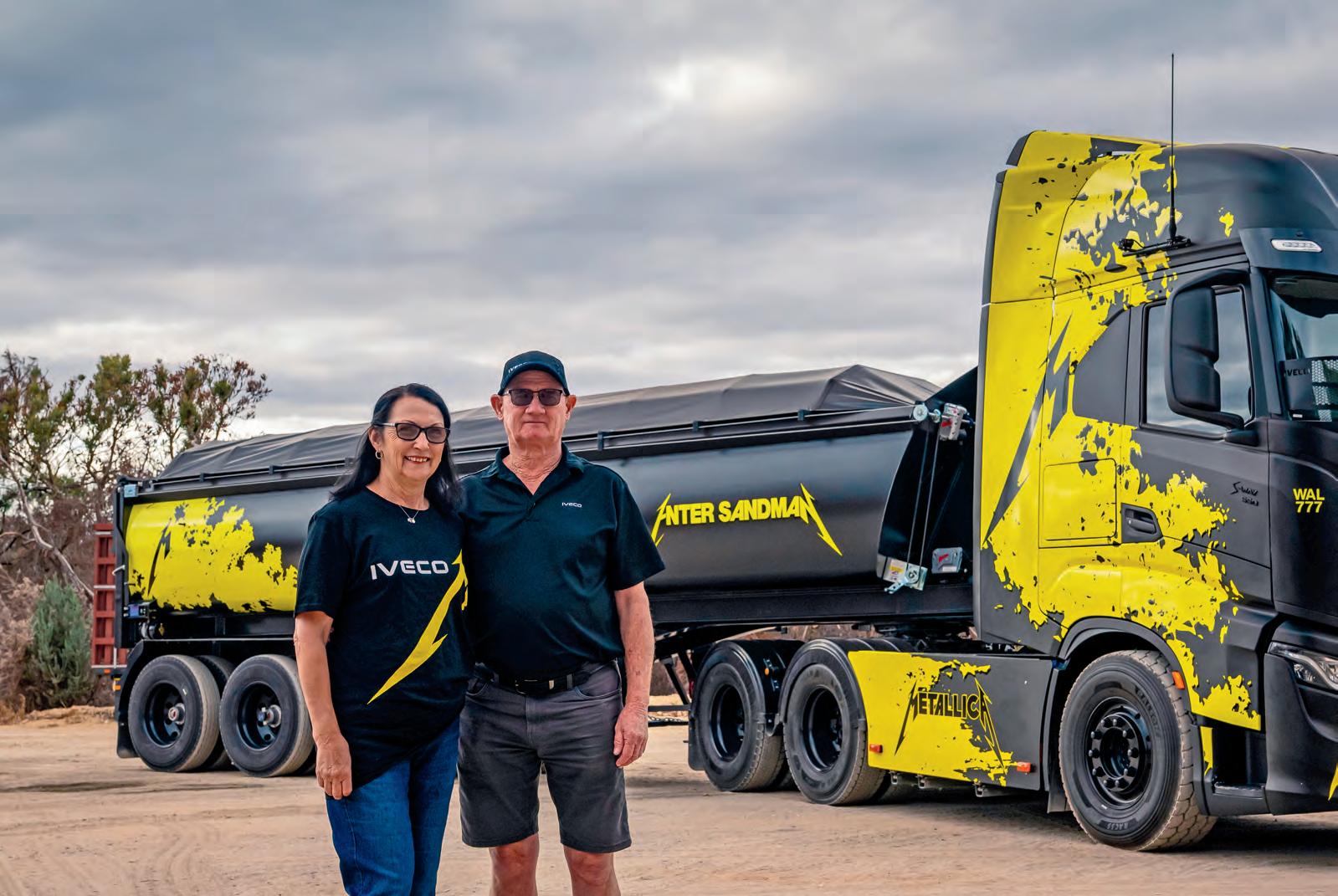
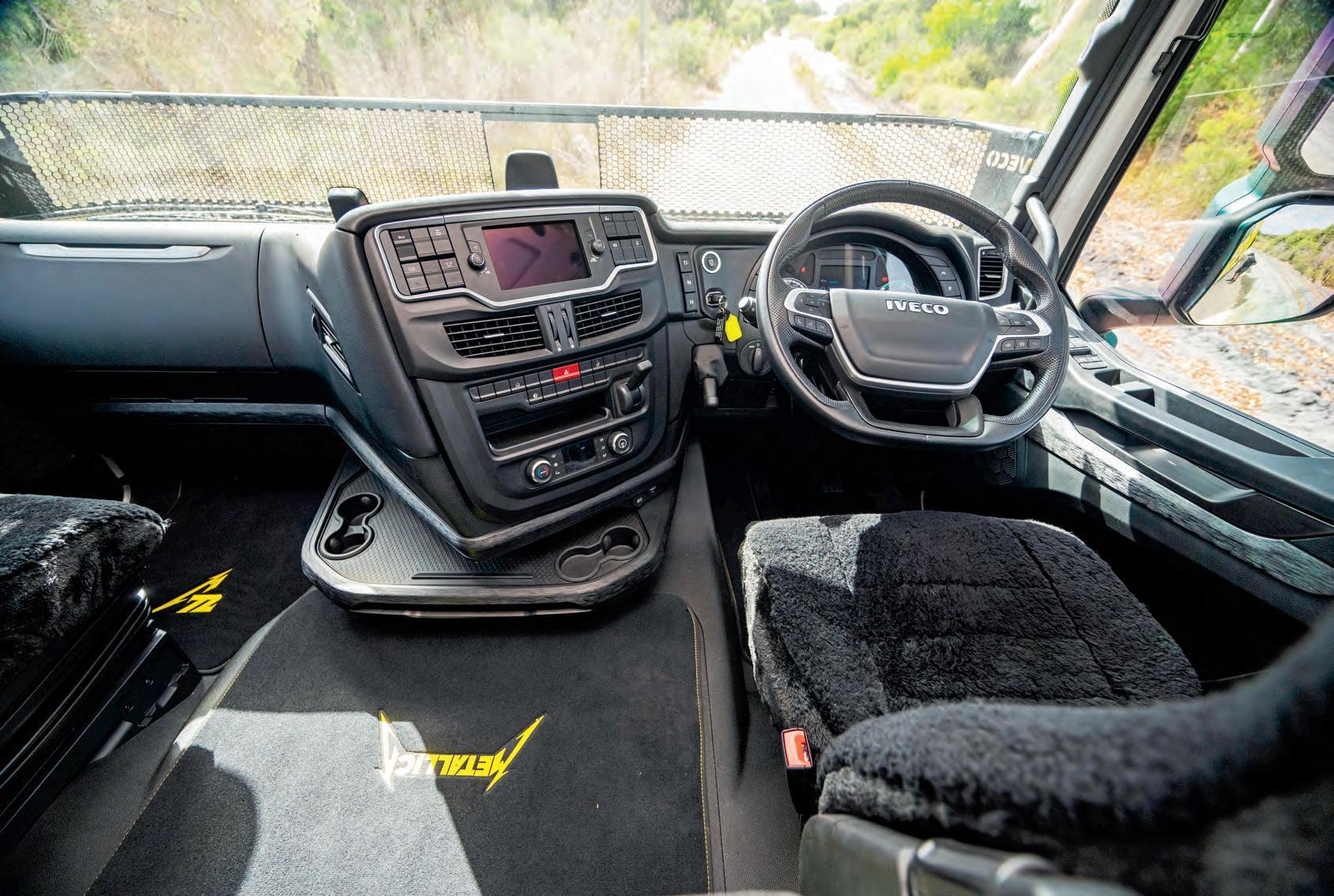
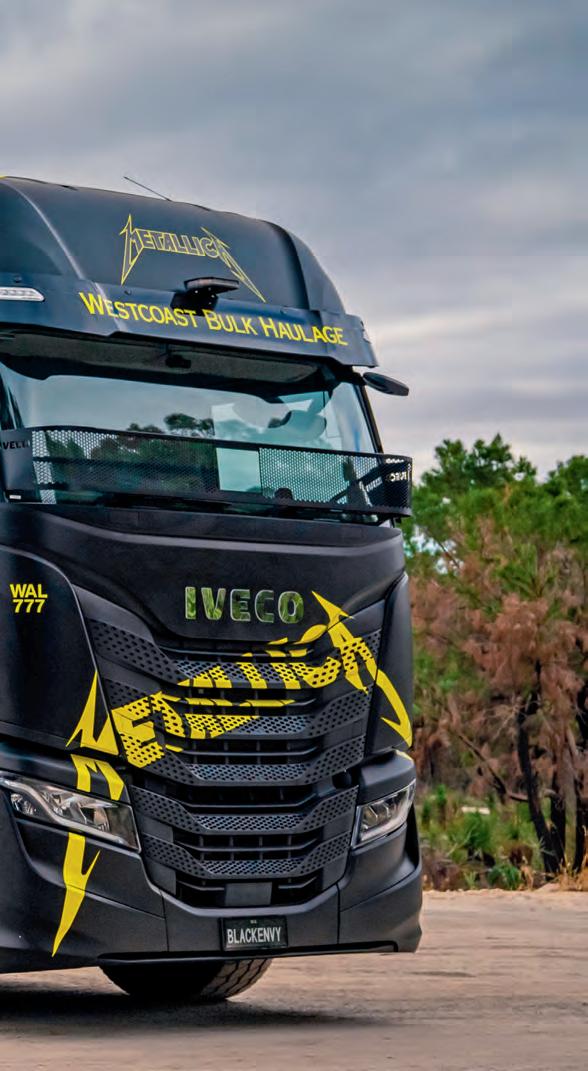
“One of the salesmen from our local dealer, Ryan Vernon, called to tell me there was going to be an in-house auction for the truck in a couple of days. We did like it, so I gave Ryan a figure and left it at that,” Derek says with a smile.
“By the time we got back to Perth, Ryan called and said it was all ours. So, we were home for about a week and then flew back to Brisbane to pick it up.”
It isn’t just the looks that had Derek lining up for this truck – the latest IVECO S-Way features all the cutting-edge technology you expect in European trucks. The latest iteration features incredible aerodynamics thanks to integrated deflectors, wheel arches, a reshaped roof, newly designed mirrors and plenty of other technical wind tunnel stuff I don’t understand. In an age where fuel economy is more important than ever, the claimed 13.5 per cent reduction in drag is pivotal.
The Black Envy S-Way is the top of the line cab model – known as the AS550, the AS indicating it is the Active Space Cab. IVECO also produces an AD cab, Active Day and an AT cab, Active Time. The AS cab is the biggest of the three models and ensures there is an abundance of room inside for the driver. You won’t be getting your 10,000 steps a day walking around, but you can easily stand tall, stretch out and pull a few yoga poses if you feel that way inclined.
Underneath all that space and comfort is the Cursor 13 turbodiesel. The 12.9 litre Euro 6 workhorse in Black Envy is opened up to 550hp and around 2,500 Nm of torque. Paired to the 16-speed Automated Manual transmission, with features available like rocking mode and creeping mode, the truck seems designed for the often-unstable off-road work that construction and quarry product delivery requires.
Alongside the working parts is once again all the standard safety features you expect from a European regulated manufacturer. Adaptive Cruise Control, Lane Departure Warning,
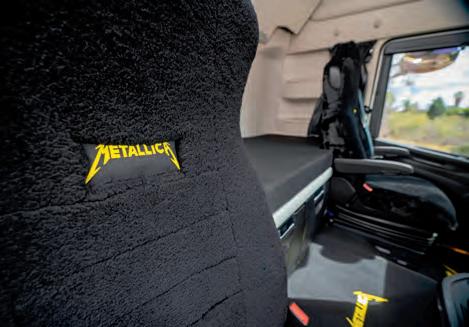
Electronic Stability, Anti-Slip Regulator and even the latest Driver Attention Support systems.
All of that sums up the heart and soul of this impressive truck, but let’s get a little superficial and look at the exterior. The truck was built and designed by the IVECO crew, but it did need a few alterations in order for Derek to be able to use it. The truck goes to work without the side skirts, they are more decorative than practical, so Derek had to get the fuel tanks powder coated to match the rest of the truck, as originally they were only half done for appearances.
That was all organised by Michael Crouch and the team at Perth IVECO, who also took care of setting up the hydraulics and adding the aftermarket hydraulic tank that a tipper truck needs. It’s not as easy as it sounds to add practicality to a show truck, much less making it look like it’s all in sync, and they have done a fantastic job. Inside the truck, Prestige Sheepskins tailor-made the Metallica seat covers while Custom Cars customised the Metallica floor mats.
The matching trailer was built by Chris Jenzen and the team at Custom Quip Engineering (CQE) in Perth, who have built all of the West Coast Bulk Haulage trailers. It was a pretty epic ask to build a fully black trailer set-up that matched the feel of the truck towing it, but they did a fantastic job.




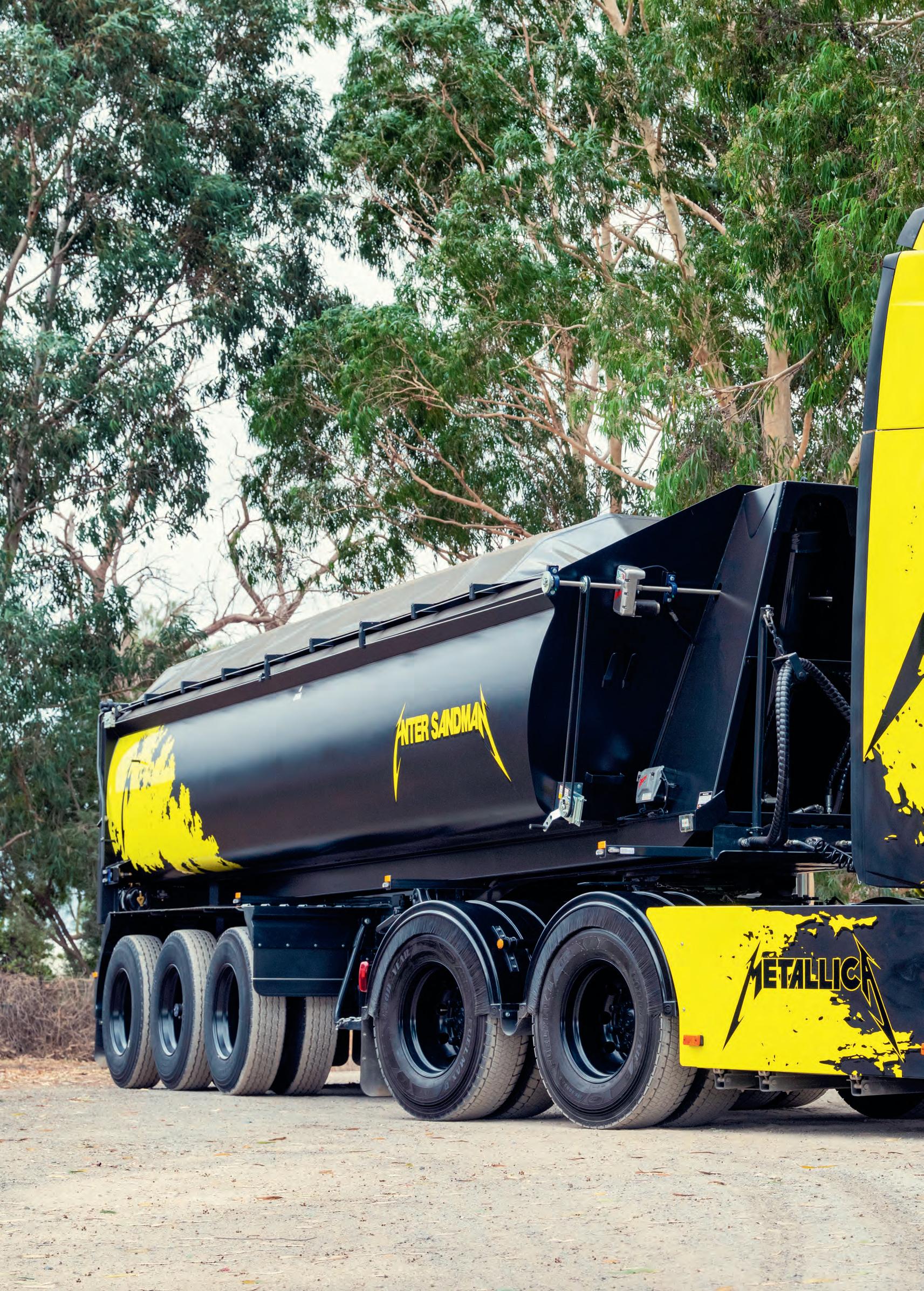


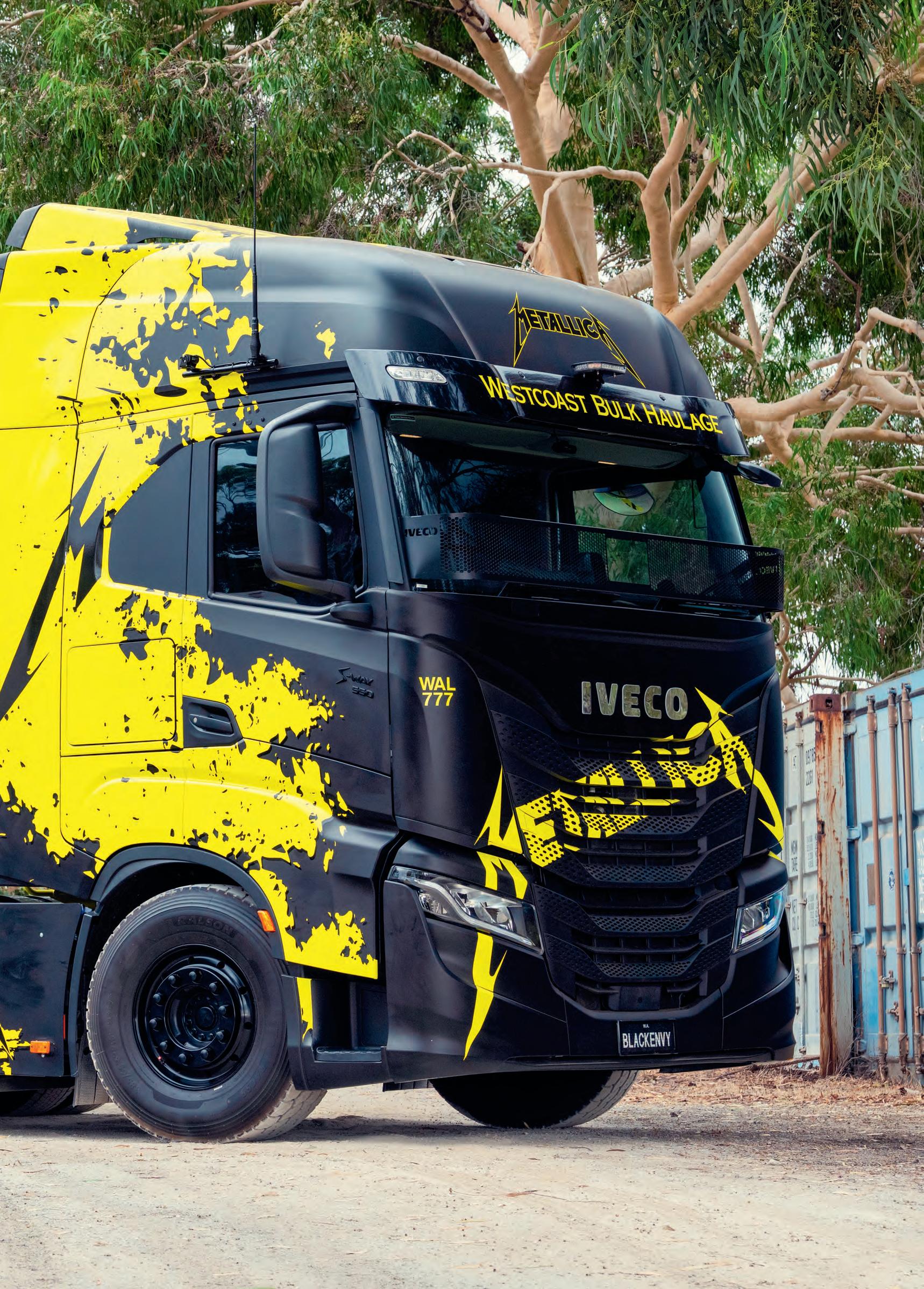

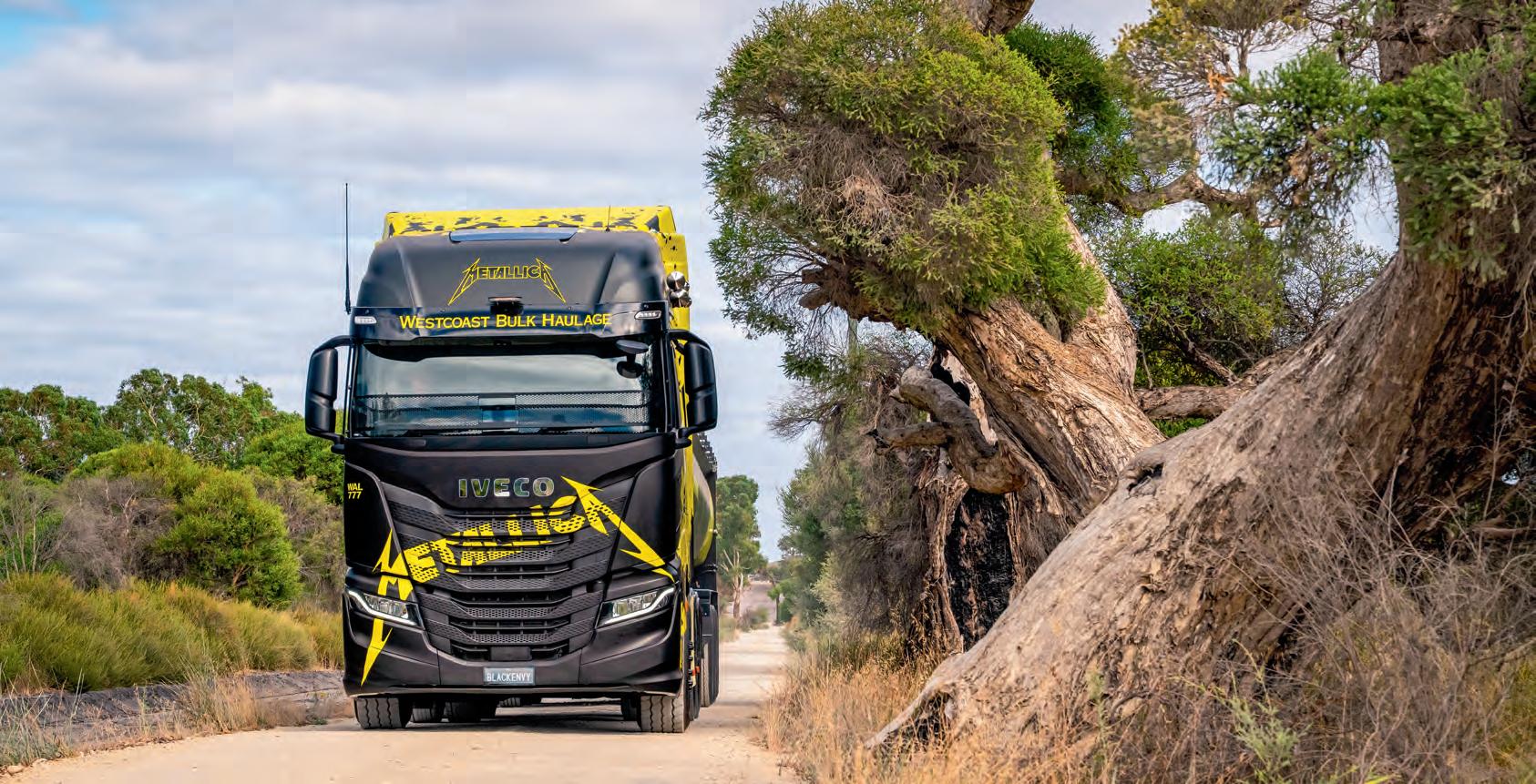
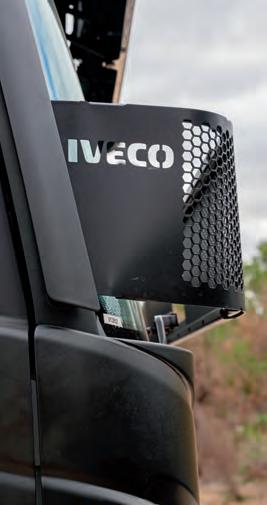
“The amount of interest we got was unbelievable. People were hanging out the window getting photos, apparently it was even on a radio station on the east coast, people trying to find out who owned it, where it was going.”
Ryan Greaves from GT Graphics in Belmont was tasked with not only adding a little extra to the truck, like the Black Envy on the rear wall and the company name on the visor, but also designing the trailer graphics. Credit where credit is due, like the trailer build itself, the graphics seem to be the perfect balance – just enough that it strikes a stunning accord but not too much that you think you are following a giant bumble bee.
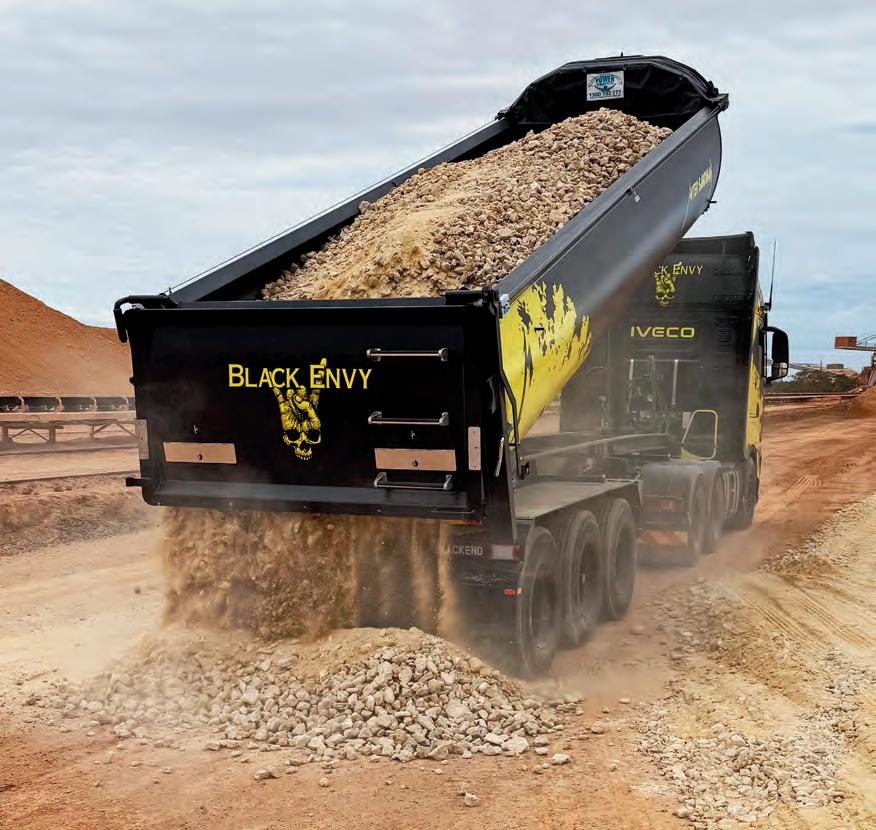
Ryan also came up with the idea to add the ‘Enter Sandman’ name to the trailer. The name strikes a dual purpose, both representing one of Metallica’s biggest hits and also reflecting the work that Derek and the truck undertakes six days a week.
It took a long journey, both in time and distance, before this stunning truck managed to turn a wheel in commerce. Derek admits after his experience bringing the truck back from Queensland, he’s not sure how much work it will get done.
“When we picked it up, we decided to go down the coast first and see a bit of family,” Derek recalls with a laugh.
“The amount of interest we got was unbelievable. People were hanging out the window getting photos, apparently it was even on a radio station on the east coast, people trying to find out who owned it, where it was going.”
It didn’t end there – Vickie is the first to admit the trip back across to the west was a much longer trip than usual with people lining up for photos everywhere they stopped. So, it comes as no surprise when Derek admits he doesn’t know if it will get the same amount of work done as the others in his fleet.
“I imagine the driver will be getting stopped for a lot of photos during the day,” he admits.
Not that we can blame them. I know myself I have been chasing a custom IVECO for a very long time, but the wait was worth it once I got my cameras focused on this rig. Between the effort IVECO itself put in to showcase its current S-Way’s potential and then the effort Derek and his cohort have put into putting a complete unit on the road, Black Envy is an incredible looking truck that is getting out and earning its keep. If you are over in the west, keep an eye out for it – you sure as hell can’t miss it.
Keep your drivers and fleets safe with AI-powered video
















Act on the most urgent risks in seconds.
Geotab’s all-in-one AI-powered video telematics solution provides the ultimate safety net for your team. Our smart AI detection identifies risks like tailgating or drowsiness in near real time, delivering instant in-cab alerts that help drivers stay sharp and get home safely.
For managers, the guesswork is over. Our connected workflow prioritises the highest risks first, turning hours of video into actionable coaching moments. Protect your drivers, exonerate your fleet, and elevate your safety standards with the power of AI.


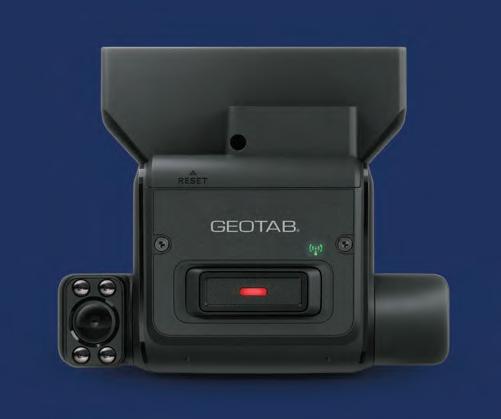
Move from recording accidents after they’ve happened, to preventing them via near real-time AI alerts to mitigate distracted driving, tailgating and drowsiness

Access both video and vehicle data in one integrated platform through MyGeotab. Plus, hand-pick the best tools to reach your operational goals through the Geotab Marketplace.

Turn uncertainty into proof. Secure the visual evidence needed to shield your drivers from wrongful liability and reduce insurance premiums. Ready to transform your fleet? Visit geotab.com/au/ to learn how our video telematics solution can drive your business forward.

Over the past year, sham contracting has shifted from being an industry concern to a major national enforcement issue. While most businesses continue to do the right thing, governments and regulators are becoming increasingly concerned about those who are not.
NatRoad, alongside other industry groups and operators, has consistently pushed for greater recognition of sham contracting and the damage it is causing to compliant businesses, drivers and safety outcomes across the sector. The fact the issue is now firmly on the agenda of regulators, ministers and enforcement agencies a significant shift for the industry.
The focus intensified again in May, following a major National Heavy Vehicle Regulator (NHVR) crackdown targeting high-risk operators across the country. The NHVR identified more than 20 operators presenting what it described as an “unacceptably high risk to public safety”, using intelligence gathered through compliance data, crash records, fatigue monitoring and confidential industry reporting. Nine operators are no longer accredited, another 10 are having their accreditation eligibility reviewed, and two have received formal warnings.
Importantly, the crackdown also reinforced the growing focus on sham contracting across the transport industry. In the latest episode of the

legitimate businesses trying to compete fairly. It can also create broader safety concerns when drivers are pushed into financially unsustainable arrangements simply to stay afloat. It’s pleasing to see the issue is now receiving serious attention at the federal level.
In May, I attended a national roundtable convened by Senator Glenn Sterle involving industry associations, unions, ministers and senior representatives from the NHVR, Treasury, the Australian Border Force and the Fair Work Ombudsman. The Fair Work Ombudsman has also acted, recently writing to 45 road transport companies regarding sham contracting and worker misclassification arrangements, while conducting site visits and investigations.
NHVR’s What’s Your 20? podcast, NHVR CEO Nicole Rosie acknowledged the widespread concern being raised by operators, associations and drivers.
“A very common theme from the industry, operators, associations and also drivers is this concern about sham contracting,” she said.
She also acknowledged the challenge regulators face in changing behaviour. Education remains important, but the NHVR has openly recognised there is a percentage of the industry that simply will not respond to education alone.
This recognition reflects the frustration many compliant operators have felt for years. Most transport businesses invest heavily in safety, maintain their vehicles properly, manage fatigue responsibly and comply with their legal obligations. But those engaging in sham contracting gain an unfair commercial advantage by cutting corners and shifting risks onto drivers.
For owner-drivers and small operators, the impacts are real. Sham contracting drives down rates across the industry and creates pressure for

Regulators are becoming more sophisticated in how they identify high-risk behaviour. The NHVR has significantly improved its risk data over the past six months and is now better able to build risk profiles around sham contracting and other unsafe practices. NatRoad supports the increased regulatory focus and enforcement activity targeting sham contracting. Compliant operators should not be forced to compete against businesses gaining an unfair commercial advantage by avoiding their legal obligations or shifting unreasonable risks onto drivers.
There will always be a small group willing to ignore the rules if they believe there is commercial benefit in doing so. But stronger cooperation between regulators, improved data sharing and visible enforcement action are important steps toward restoring fairness for compliant operators. At the same time, it is important not to confuse sham contracting with legitimate contracting arrangements. Genuine owner-drivers and properly structured
“A very common theme from the industry, operators, associations and also drivers is this concern about sham contracting.”
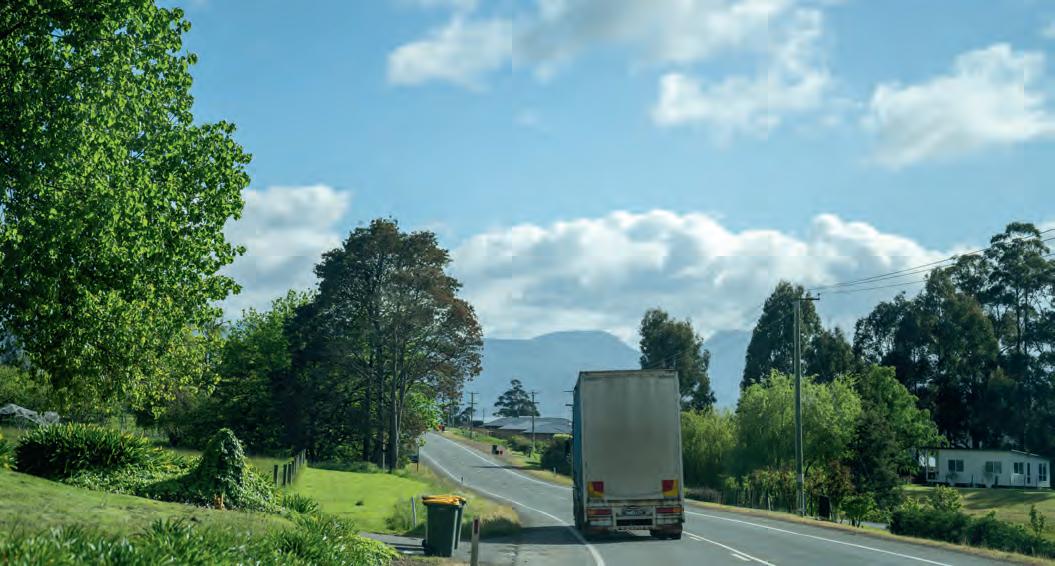
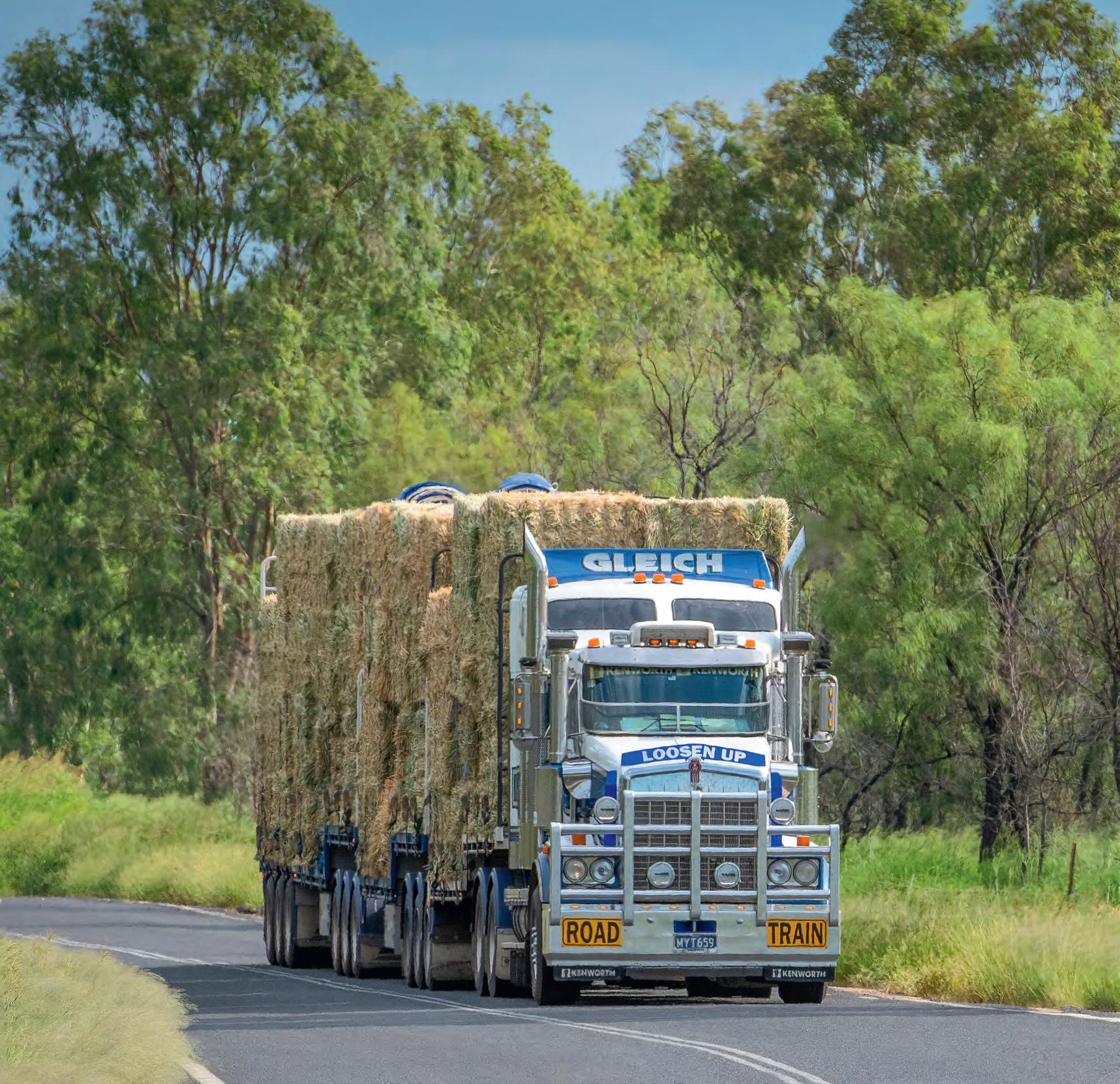
independent contracting models remain an important part of the transport industry.
The challenge is identifying arrangements designed primarily to avoid obligations while transferring unreasonable commercial and safety risks onto drivers. What is clear, however, is the issue is no longer being ignored. Governments, regulators and industry bodies are now treating sham contracting as a serious issue affecting safety, fairness and the long-term sustainability of the transport sector. For compliant operators, the shift is long overdue.
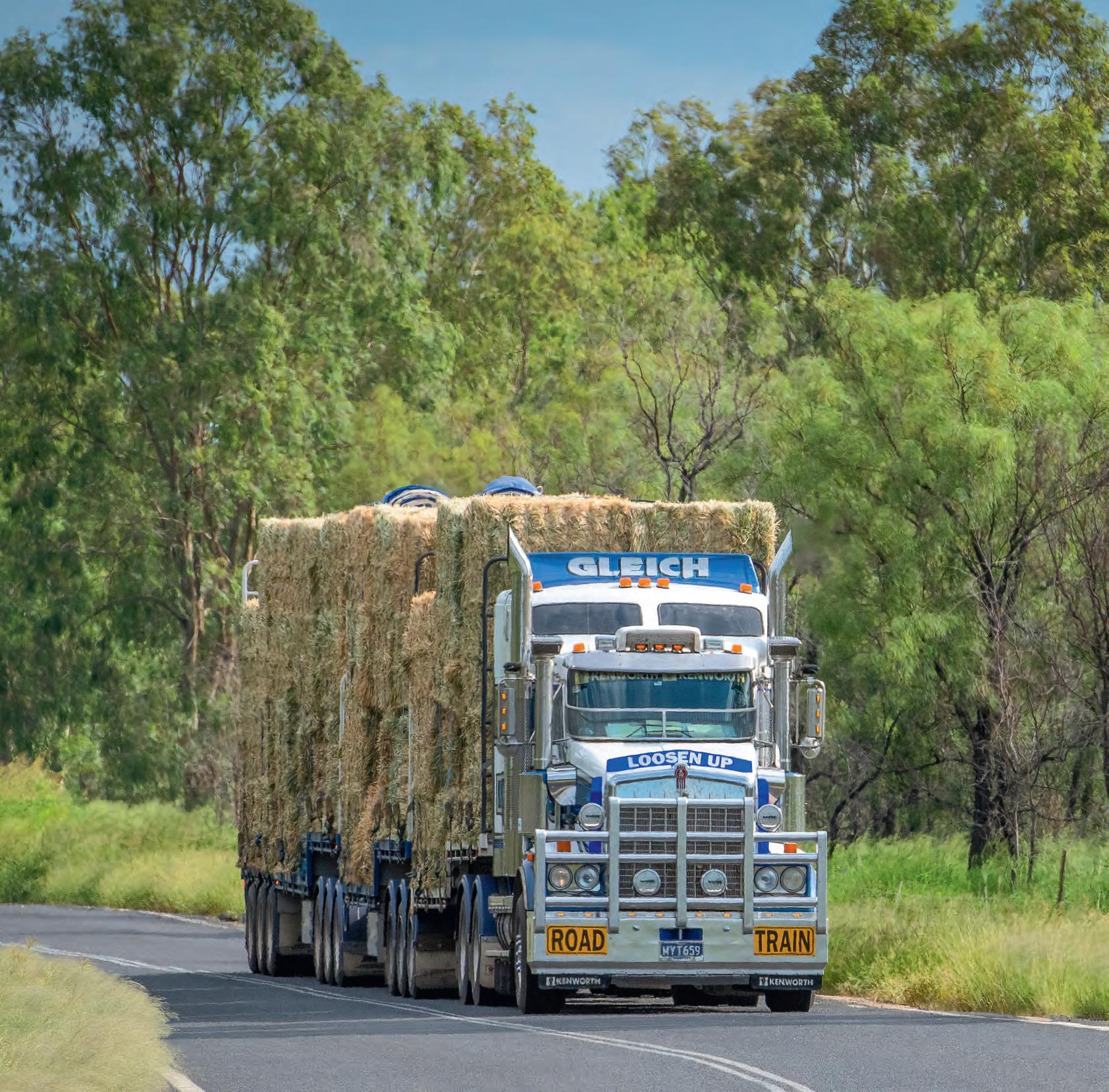








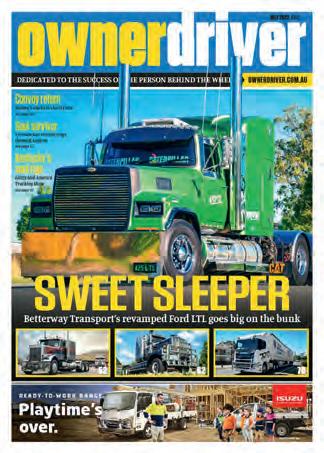







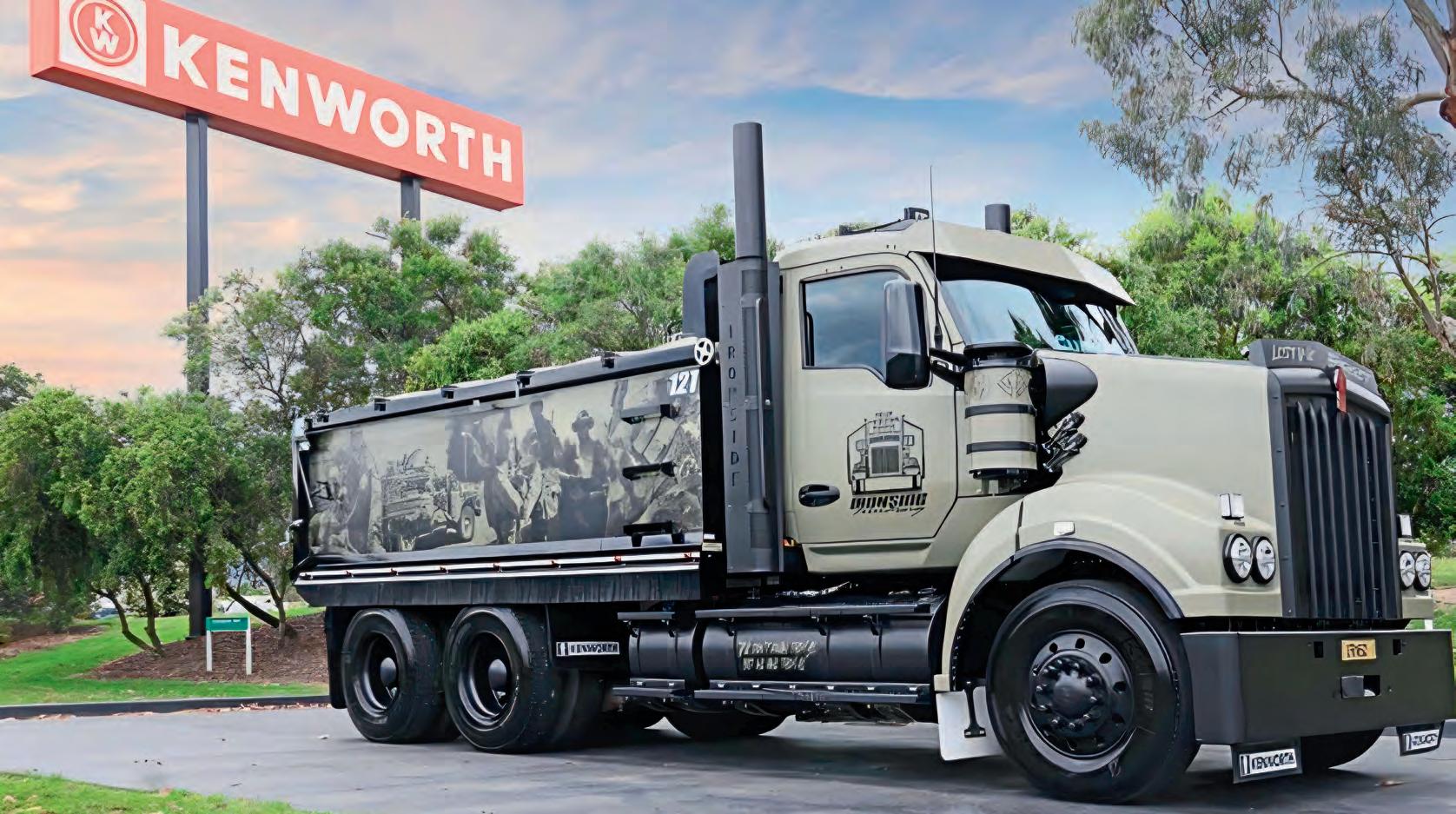
ADF veteran Glen Ferrarotto was running a successful recruiting business, firmly focused on the mining and defence sectors. Then, in a moment of fate, a truck caught his eye, starting a special venture with Kenworth, Sean Mortell reports
The thought of getting into the trucking game didn’t cross Glen Ferrarotto’s mind until a fateful afternoon in Melbourne. The army veteran and his wife met with a Tier 1 contractor on a major infrastructure program in Melbourne to discuss how Glen and Rowena’s recruiting company, Ironside Resources, could transition more former Australian Defence Force members into the civil construction industry. Then a truck drove past.
“We were chatting about a major road project in Melbourne when I saw the truck pass, and we spoke about doing something really purposeful,” Glen told OwnerDriver
It kickstarted a chain of events that now sees Glen lead transport business Ironside Trucking with a small but growing fleet of unique Kenworth trucks dedicated to raising awareness and community respect for members of the nation’s Defence Force and their families. Glen’s story can be traced back to 1997 when he enlisted in the army straight after school and began the process of earning a heavy diesel vehicle apprenticeship.
“I started with the usual army posting shuffle, heading from Albury/Wodonga to Brisbane for three years, where my wife Rowena joined me,” he recalls.
“We were next in Darwin and got married there before heading to Sydney, where I joined a Special Operations Unit and deployed twice to Afghanistan as a vehicle mechanic.”
Glen’s constant movement continued to Melbourne, where he and Rowena decided to settle down and start a family. Just over a decade since he first joined the army, Glen made the sudden switch from a uniform to a suit, transitioning into work in the wider defence sector.
It didn’t go to plan. A couple of years after shifting roles, Glen found himself without a job. Instead of viewing it as a mistake, he turned it into an opportunity to set up his own consulting business.
“The result was establishing Ironside Defence and Mining, where I supported international defence companies,” he says.
“A couple of years later I turned to recruiting – I kept getting asked by people in the mining sectors if I knew more mechanics from my time in the army, and I’d bring mates in every now and then who were wanting to transition away from the Army. A mate told me to set that up as a business, so we created Ironside Recruitment.”
Initial contracts to Rio Tinto and BHP gave Glen a rapid start to Ironside Recruitment as he forged a living off hiring ex-Defence Force members into the mining industry. Glen says the mining sector was an ideal target for former
members of the ADF as they valued the unique skills and work ethic of people from the army. As other companies, such as truck operator Linfox, also hopped on board with Ironside Recruitment, now Ironside Resources, Glen soon had a network of former colleagues transitioning to a variety of Australian businesses with ease.
“A particular highlight is a project with Macmahon Mining Services and Fortescue Metals in 2018, where we took a group of heavy road transport mechanics and turned them into heavy mining mechanics wearing Ironside uniforms,” Glen reflects fondly.
“We created a training course that streamlined the process, resulting in 50 mechanics heading to Fortescue in the space of a year. Since then we’ve placed over 200 mechanics into the mining industry. I’m very proud of the impact that bespoke training and skills upgrade program has had on many people and their families.”
If you haven’t already noticed, a key theme in Glen’s life to date is constant movement – he never likes to stay still. This meant in 2021 he took an opportunity to consult with the Department of Veterans’ Affairs as an advisor for delivering transition services from the ADF. He only started working one to two days per week in the role, but just a couple of years later Glen found himself in the role of acting Repatriation Commissioner – the most senior position for veterans in the country.
It set the scene for Glen’s involvement in trucking. After a year of constant travel to and from Canberra, he made the call to leave the department and rejoin Rowena in running the Ironside business. Cue the meeting with the Tier 1 contractor and the chance truck that caught his eye.
“I thought we could do something special with the trucking sector to give veterans more opportunities to get ‘boots on the ground’ experience,” he says.
Straight after the meeting Glen began researching the truck market, searching for the ideal vehicle to start his latest venture. After reaching out to a truck driver mate, Glen hopped behind the wheel of his Kenworth to gain his own experience so that he could be more knowledgeable about trucks.
“It was a beautiful T408 18-speed Road Ranger that I moved around Melbourne, and I absolutely loved it,” Glen says with a smile.
“I very quickly settled on wanting a Kenworth truck of my own. I wanted to stick with a patriotic brand for Ironside Trucking – being built in our own backyard in Melbourne, Kenworth was the natural direction to take.”
Connecting with the Crawford brothers at the CMV Group, the process soon got underway to craft a special maiden truck for Ironside Trucking. Working with the Hallam dealership, Glen landed on a Kenworth T620SAR with a unique wrap by Fleeting Image to honour those who have served the country.
Over numerous factory visits, Glen got to watch his “slick
black” truck roll off the product line. After getting it wrapped, the truck has been working on the Melbourne major infrastructure project since January, moving thousands of tonnes of dirt and rock. Glen says the immediate reaction to the vehicle has been “extraordinary”.
“It does everything we want it to do, and the reaction on the roads has been incredible – it does the perfect job of connecting the community through the service and sacrifice of ADF veterans,” he says.
“Every day of the week someone flags one of us down and tells us about a family or friend who served or is serving. It’s more than just a truck that moves dirt – it’s doing a very valuable service for the community.”
It’s also allowed Glen’s latest venture to hit the ground running, with Ironside Trucking welcoming veterans into new jobs in the transport sector. This culmination of successes means Glen has very quickly moved to add more trucks to his fleet. Kenworth once again loomed as the obvious choice.
Two more trucks are currently in build, with the new vehicles, also Kenworth T620SARs, set to tow quad dog trailers built by Chris’s Body Builders. At the time of our chat, Glen is beaming with pride that the artwork for Ironside 2 is nearly finished, with the second truck in the Ironside fleet being dedicated to ANZAC and WWI service.
“The truck’s wrap along with it’s quad-dog trailer, has two very prominent sides – one side of the trailer is dedicated to Indigenous service in WWI, which is something we as a society need to be more aware of, while one side of the truck is dedicated to the Australian Light Horse and will be a real headturner,” he says.
“It’s very important to me to pay homage to Indigenous service in WWI – while these soldiers were willing and free to enlist, on return their service was effectively disregarded by the government – they
weren’t offered any land or support and they weren’t recognised as veterans, which is a horrible situation and an untold story that we want to tell with this truck.”
Glen worked closely with the Australian War Memorial to ensure the Indigenous imagery on the truck and trailer accurately honours the service it represents.
Following the impending delivery of this milestone truck, a third vehicle, known as Ironside 3, will be built. Glen says this Kenworth will be dedicated to Australia’s Vietnam War veterans – a cause that hits close to home for the veteran.
“I’m one of only a handful of incredibly privileged people not to have served in Vietnam to be given life membership to the Victorian Vietnam Veterans Association through my support over the years to their community,” he says.
“I have a close bond with the association, and when they heard about my ideas for this truck, they demanded that they support the funding for the artwork.
“It’s a wonderful move that is genuinely dedicated to their service – I’m hoping to see the truck on the road this year in time for Vietnam Veterans Day on August 18.”
Supported by the Tier 1 contractor, Glen says the new-look trucking operator is successfully placing more veterans in trucking jobs, whether it be through driving the truck if licenced or riding alongside Glen if not. There are many cherished partners that Glen is grateful for, but one that he wants to highlight is the team at Kenworth.
“I love talking about the truck itself – when I went to buy it, I told the sales staff at Kenworth I wanted a manual truck to move dirt, but they quickly shook their head and said no,” Glen recalls with a laugh.
“My main concern with an automatic was that it wouldn’t feel like driving a truck, but I was wrong in
so many ways. These machines sound like a manual truck and work like one, but it’s so much easier to use. The sound inside the cab is beautiful – it’s a driver’s truck that I’ve fallen in love with.”
Receiving the first T620SAR meant transitioning to a digital dashboard, with Glen being “a bit of a guinea pig” with a tipper featuring a digital dash. He says it’s been “incredibly rewarding” to have effective data and information at his fingertips through the PACCAR Connect telematics platform. Throw in the latest Kenworth Fusion safety systems and constant support from PACCAR Australia’s network and Glen has found no faults in his Kenworth experience to date.
“The connection with PACCAR through the dealer network and the PACCAR Connect system has been excellent. Once the other two trucks go on the road it’ll be very handy to understand how they perform,” he says.
Much like his career to date, Glen has no intentions of staying still. With the second and third Kenworth trucks set to be welcomed into his fleet in the coming months, the Ironside Trucking leader has lofty goals in mind.
“I have a clear ambition to continue growing this –I don’t want to stop ordering trucks,” he says.
“I want to run this business for another year and, where opportunity exists, I’ll continue investing in assets to put roaming war memorials on the road. I’m so proud to be leading a veteran-owned family business that generates its own revenue.
“We may move into other states too – I’m keeping a sharp eye on civil construction in South Australia and Queensland, while I’d also love to one day do long-haul freight from Melbourne to the NT or Queensland.
“It will give our community a great chance to reflect on the service and sacrifice made by our veterans every single day.”
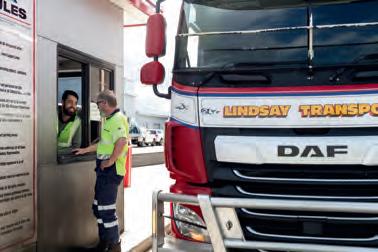
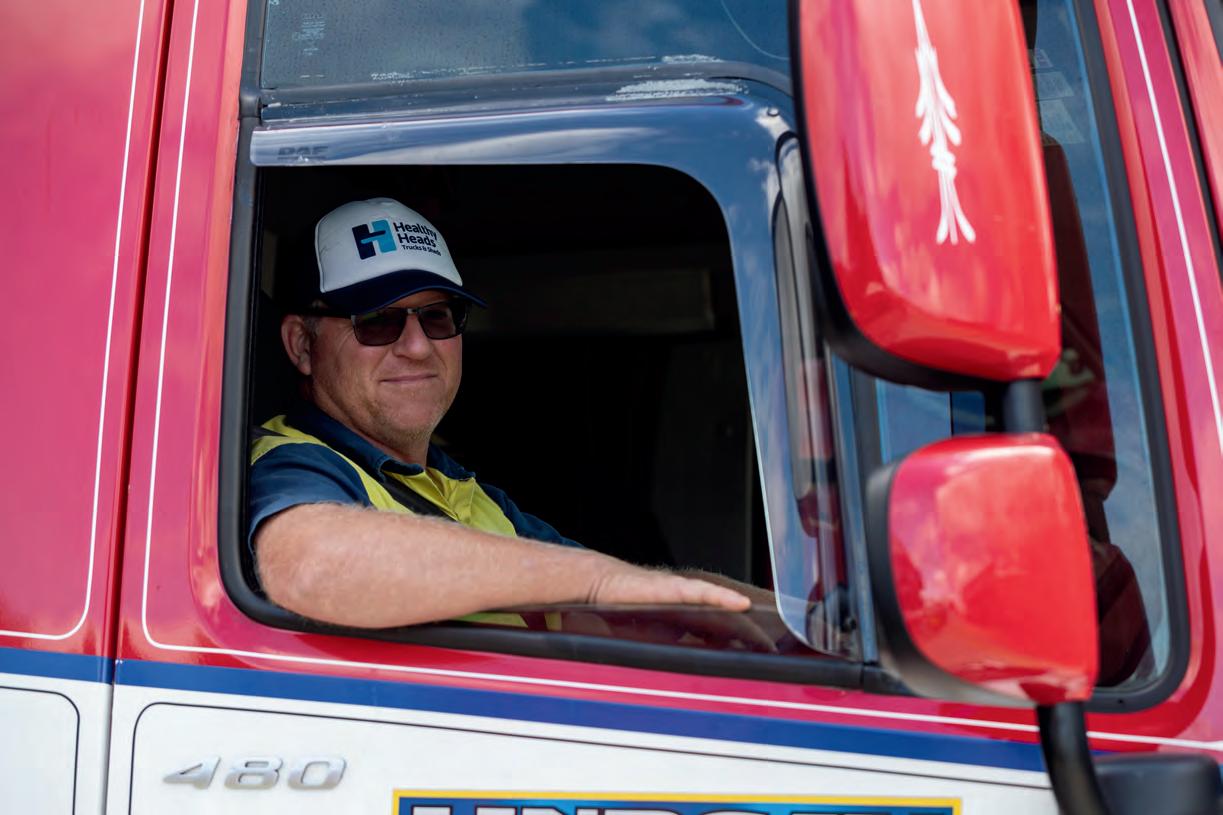
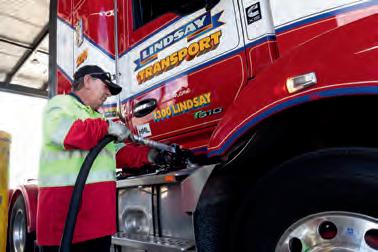

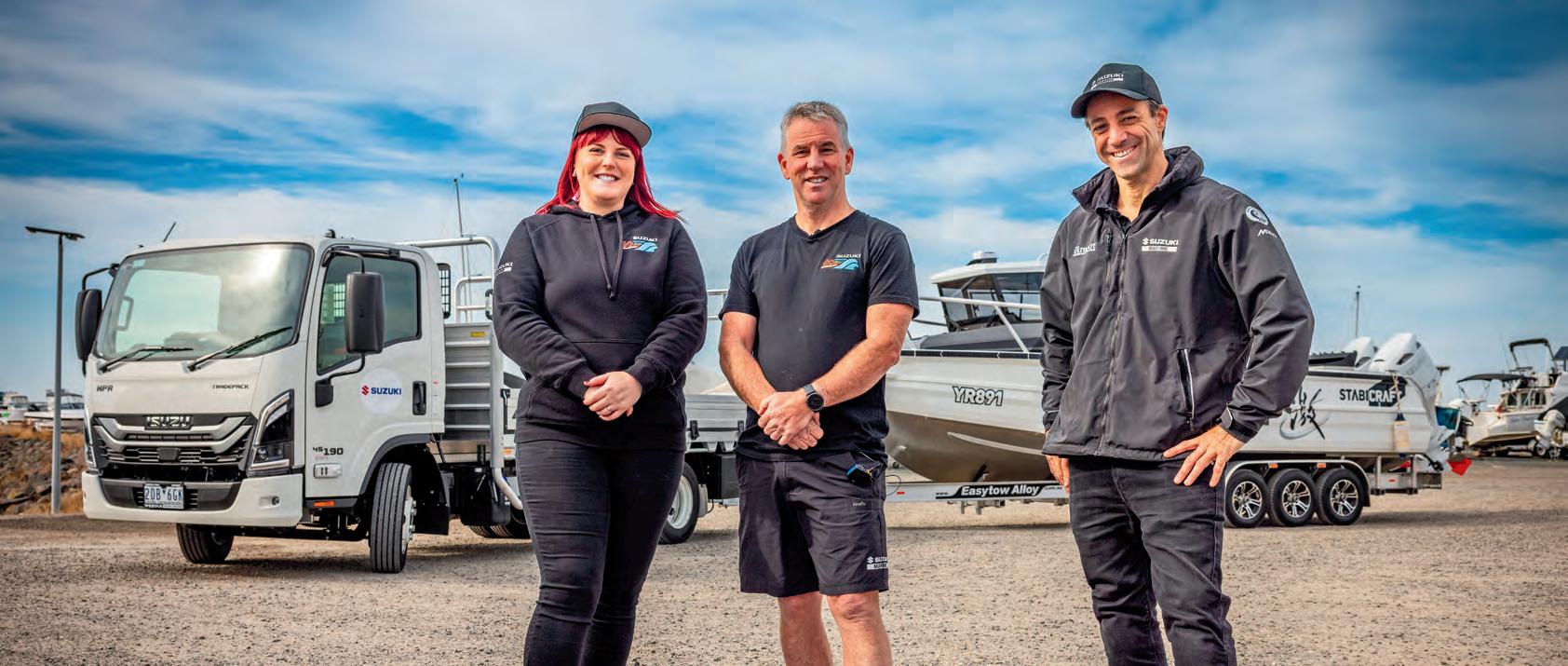

Suzuki Marine Australia’s latest innovations in the highquality marine space meant it had to find a transport vehicle suited to the job. A growing partnership with Isuzu created the perfect match

Agleaming Stabicraft 2750 Ultra Centrecab boat sits poised at the water’s edge, patiently waiting to head out into the water. The 27.5ft vessel has twin Suzuki outboards mounted at the stern, raring to show its offshore performance quality.
Behind every boat is a vehicle that must get it to the coast, a transporter to take the eye-catching vessel to its picturesque starting spot. An all-new Isuzu NPR 70/45-190 Tradepack is tasked with moving one of the brand’s most significant new models across the country with confidence.
As a popular supplier of boat engines like the twin outboards placed on this Centrecab, Suzuki Marine Australia was tasked with finding a transport solution to match the quality of the model. This went far beyond simply towing a boat – national marketing manager Lewis Croft says the team had to find a vehicle that could keep pace with a growing, high-performance product line-up while delivering the reliability and versatility demanded by a national operation.
“Our new product is at the larger end of the range, so we needed something capable to tow it as well,” Croft says.
Suzuki Marine’s latest showcase platform, built on the southern tip of New Zealand in Invercargill, is designed for serious offshore use. The 2750, as the largest in the model line-up, is a walkaround aluminium vessel engineered for stability, durability and long-range capability. The Suzuki outboards deliver a combined 500hp, coming fuelled and equipped with trailer and accessories. This complete package results in a total towing mass that exceeds limits of conventional utilities, meaning a special transport solution was required.
Enter Isuzu. As aluminium fishing boats continue growing in size and capability across Australia, traditional towing options are increasingly being stretched beyond design proofs. Finding the right sturdy truck option to transport these models has become a critical part of the market’s expansion.
“What’s happening in the market right now is that demand for larger boats is increasing and more of them require over 3,500kg towing capacity,” Croft explains.
He says Suzuki Marine needed a solution that could handle the load without compromise.
The Isuzu NPR 70/45-190 Tradepack offers a 7,000kg GVM rating and a maximum braked towing mass of 4,500kg, with a GCM of up to 10,500kg in the six-speed automated manual configuration.
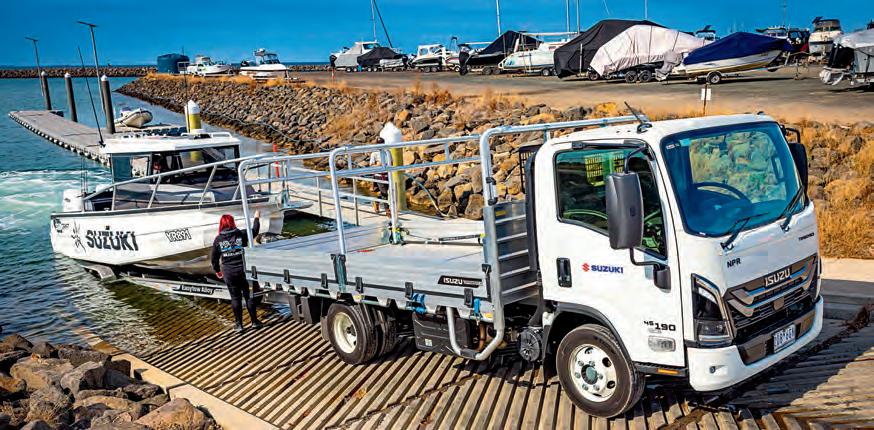
It’s a specification that moves beyond the limitations of traditional dual-cab utilities and into a purpose-built zone for serious transport requirements.
Rather than stepping into the world of larger American pickup trucks, Suzuki Marine made a deliberate move toward a platform that offered greater operational flexibility.
“We chose the Isuzu based on some recommendations and due to its sheer versatility,” Croft says.
“We thought if we need to put freight or other products on the back of the truck, we’ve got a huge load space and it’s very versatile.”
The NPR Tradepack is a practical transport solution, combining a heavy-duty aluminium tray with external ratchet rails, removable dropsides and ladder racks to deliver an adaptable package for Suzuki.
That versatility is central to Suzuki Marine’s broader operations. As a national distributor, the business regularly attends field days, exhibitions and large-scale activations, each requiring efficient transport of multiple product types.
“We do a lot of product activations across our brands – for example, our new Isuzu will fit four or five of our motorcycles in the tray of the truck, which is a huge plus,” Croft says.
He says this flexibility reduces the need for third-party logistics while giving the business greater control over how and when its products are moved. Boats, outboards and even other Suzuki assets can all be transported using a single, integrated solution.
Putting the NPR Tradepack to work, Lewis recently completed an extended towing run through regional Victoria, providing a real-world test of its capabilities.
“Around town, I didn’t actually notice that the boat was on the back,” he says.
Powered by Isuzu’s four-cylinder Isuzu 4HK1-TCC turbo-diesel engine, producing 140 kW and 513 Nm of torque, he says the truck delivers strong, consistent performance across varying conditions. On the open road, that translates into stable towing behaviour and predictable handling.
“It tracked well, it was driving nicely across some pretty average Victorian back roads,” Croft notes.
He pointed to the cab-over configuration as a feature that enhances manoeuvrability – a key advantage when navigating tight access points or reversing the 15-metre tailer down boat ramps.
“It’s super easy to back it into the boat ramps and move it around the boat yards,” he says.
“We were a little apprehensive about not having a full-time four-wheel drive on steep, slippery boat ramps, although with features like hill start assist and an electric park brake, we’ve had no issues at all.”
While capability sits at the core of the NPR Tradepack, driver comfort and safety remain equally important, particularly during long-distance transport tasks.
“The cabin is very quiet, and the infotainment unit is a useful addition,” Croft says.
“It’s also a really safe vehicle, with all the latest safety aids, they’ve put a lot of thought into it.”
The truck is equipped with a comprehensive suite of advanced driver assistance systems, including adaptive cruise control, lane departure warning and emergency braking technologies, all designed to enhance safety and reduce driver fatigue.
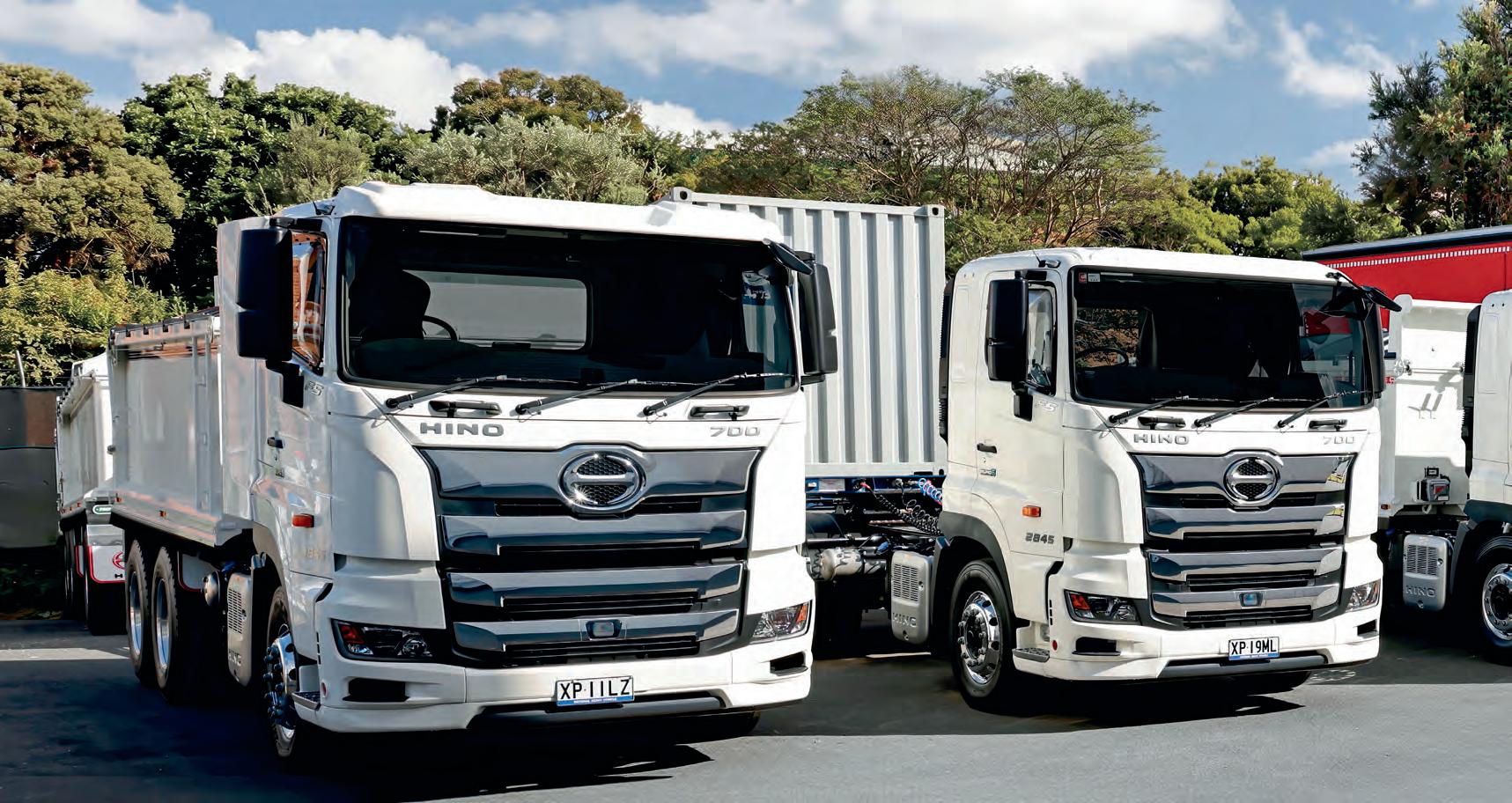
If
you need to see it to believe it, then now’s the time to check out just how many ways a 700 Series heavy-duty truck from Hino can fit into your operation
Do you own a transport operation that requires a heavy-duty truck with Japanese reliability and safety, car-like warranties and backing by a team that is passionate about seeing its customers succeed?
If the answer is yes, or even ‘that sounds interesting’, then now’s the time to read on.
The truck in question is the 700 Series from Hino, which is making a big comeback in 2026 thanks to rejuvenated supply lines and a concerted effort by the brand itself to remind potential customers of just how flexible these vehicles are when it comes to setting them up for myriad transport tasks.
Launched back in 2021, then hit with supply challenges driven partly by COVID, the 700 Series
has had a broken introduction to the Australian truck market. Fast forward to now and the Hino team are making up for lost time, with a recent media drive highlighting just how flexible these trucks are for a range of applications in the transport world.
Livestock hauler – tick, curtainsider for pallet hauling – tick, tipper – tick, tipper and dog trailer – another tick, container transport – yep.
As a passenger on the recent testing journey from Sydney to Canberra via the South Coast of New South Wales, including a steep descent down Mt Ousley and a climb up The Clyde from Batemans Bay, it quickly became clear that the 700 Series was more than up to the task.
The new Hino M112 12-speed automated
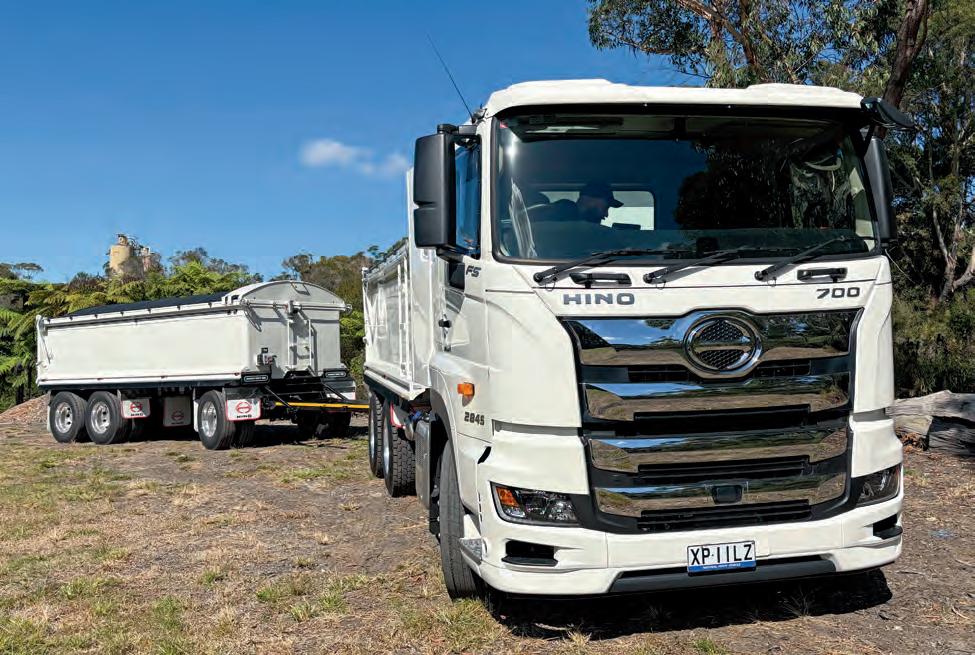
manual transmission (AMT), tied to the nine litre or 13 litre engines, made easy work of both challenges, with the ability for drivers to adjust from automatic to manual to suit their preferred driving styles proving popular.
Riding shotgun across a range of trucks set up in a variety of configurations over the two-day trip, it was easy to forget there was a trailer or a full load locked in behind the cab, where road noise was at a minimum and comfort was high.
Conversation was easy and there was plenty of opportunity to learn from the experts as they made the most of the AMT gearbox and highlighted just how much work had been done to make these trucks smooth, safe and versatile when it comes to working with body builders to create results that work for fleets.
The cabover nature of the Hino design makes for a panoramic view from the driver’s and passenger’s seats, and from the driver’s position, everything you need to use is within easy reach.
The driver’s factory-fitted ISRI air suspension seat got more than a few positive mentions along the way from my Hino co-pilots for its comfort and the rare warble of a lane departure warning system served as a reminder that the trucks have been packed with a full suite of active and passive safety technology (which also includes precollision system and electronic braking systems).
For Hino Australia product strategy department manager Daniel Petrovski, who made the Sydney to Canberra trip as the custodian of the 700 Series set up for freight hauling, the latest 700 Series makes a lot of sense for operators looking for a solid set-up for metro or regional work.
“The new 360hp with 12-speed AMT drivelines are well suited to the stop-start demands of metropolitan general freight and vocational applications – they are also ideal for heavy rigid customers driving in regional areas, or those requiring more towing capability than the existing 320hp automatic models can deliver,” Petrovski says.
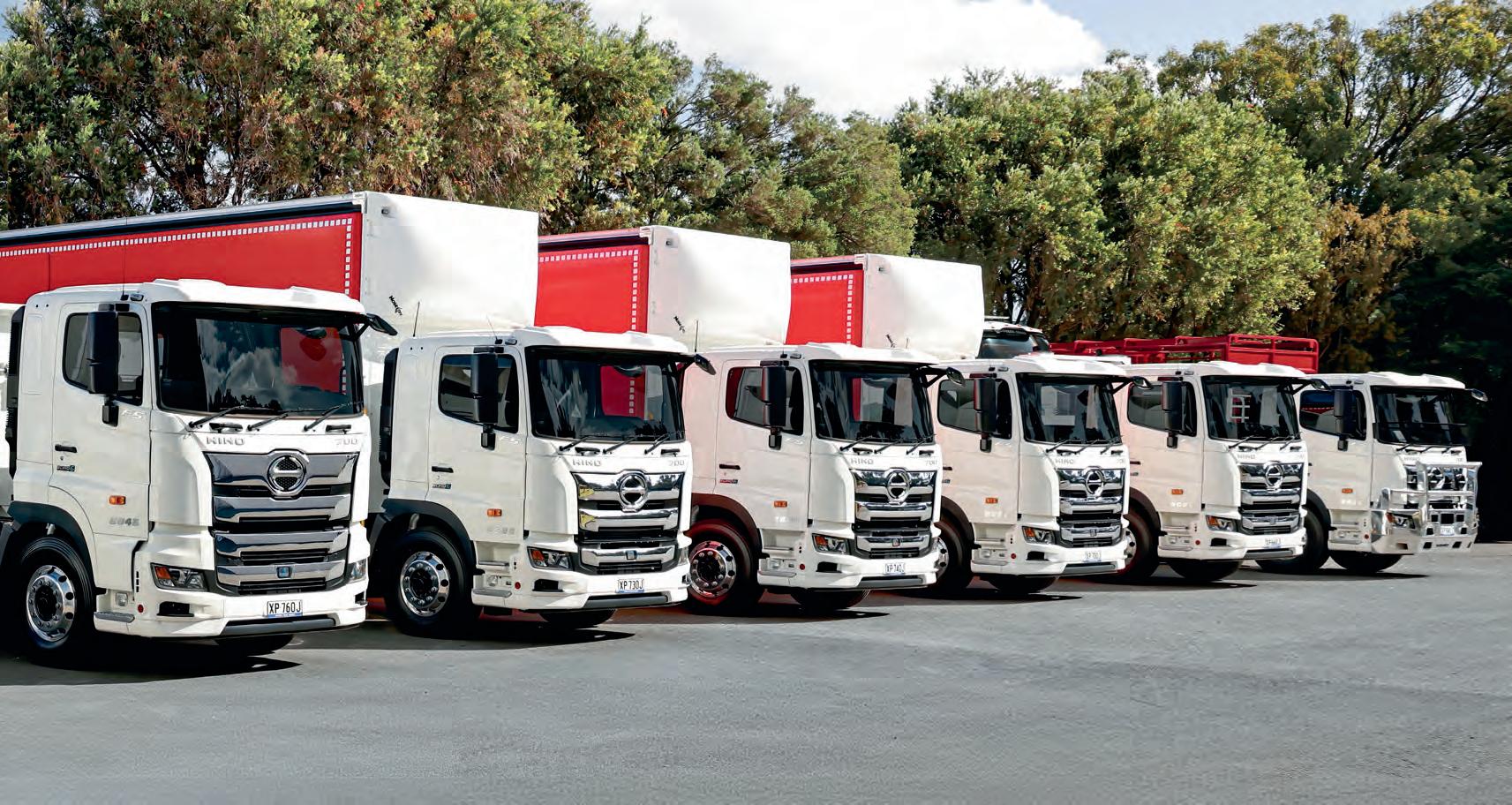
“All of the new driveline combinations with the 12-speed AMT feature a 3.9:1 final drive ratio, meaning the new models sit at about 1,600rpm while cruising at 100km/h in top gear.
“The ability to select 11th gear at 100km/h and ascend inclines at full power makes the new models particularly well suited to customers seeking a fuel-efficient highway operational vehicle that also delivers the performance required for Australia’s regional highways.
“It’s an ideal truck for councils and civil works operators that require the flexibility to operate as a rigid tipper and to also tow a pig or dog trailer.”
Hino Australia has also started to work closely with local builders in a bid to have a steady stream of trucks available with certain bodies already fitted, including the popular 14-pallet curtainsider set up.
It now has 31 different models available, with a variety of cab chassis and axle configurations (4x2, 6x4, 8x4) to best suite the applications required by its customers, while it’s offering a five-year or 600,000 km standard warranty –whichever comes first.
It’s the sort of mix that has Hino Australia president and CEO Richard Emery upbeat about the truck’s likely sales success in 2026.
“Increased customer enquiry and a healthy order bank leading into the start of the year has supported our decision to further increase production for 700 Series for 2026 – we are confident this year will be our strongest year ever for 700 Series sales,” Emery says.


“Having met Euro 6 emissions at its launch in 2021, the Hino 700 Series has built a reputation of a versatile heavyduty truck that delivers proven reliability, advanced safety, superior technology and operational efficiency.
“With additional supply available from Hino Motors in Japan, we expect to see a record year with increased interest across key applications such as general freight, refrigeration, construction, waste, traffic management and civil works.”
When it comes to pricing, it varies depending on the set-up, with the best bet being to chat to your local Hino dealer.
As a very rough guide, there are 2026 Hino 700 Series FH (4x2) trucks listed at $181,616 + govt charges, through to the 2026 Hino 700 Series FY (8x4) at $278,275 + govt charges.
See www.hino.com.au/700/.
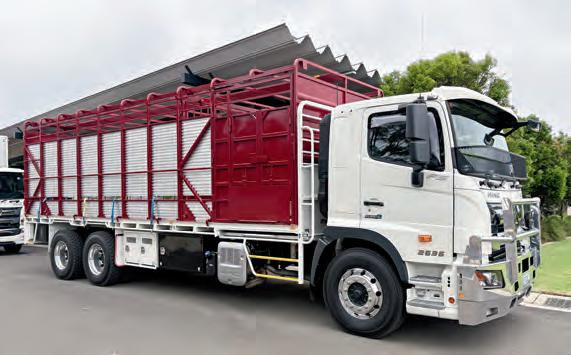



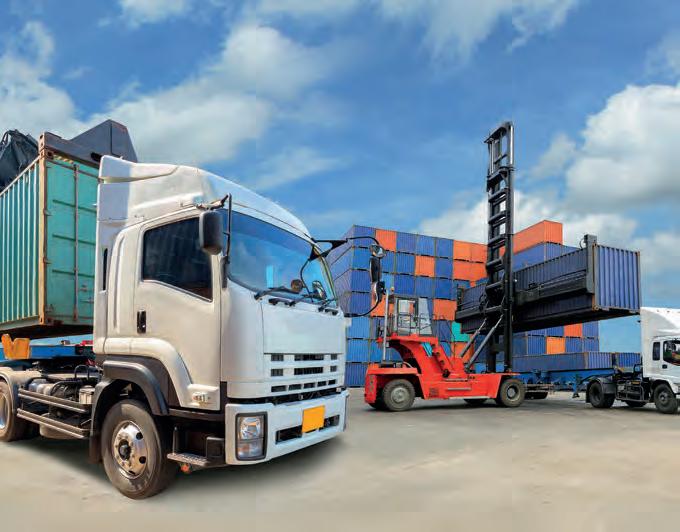

Just a year after debuting at the Brisbane Truck Show, SITRAK has landed a large order in New Zealand for 12 new-look mixer trucks to a low-carbon concrete brand
It’s been just over a year since SITRAK debuted at the Brisbane Truck Show, making a splash with its two leading prime mover models. Just over a year since the C9H 660hp prime mover and C9H electric prime mover were both put on display at the industry event, SITRAK has gone from strength to strength in the Australasian market.
A fleet of 12 trucks is now allowing SITRAK to expand its operations in New Zealand, with final delivery preparation currently undergoing for the fleet heading to low-carbon concrete brand Ecomax.
The fleet of 12 SITRAK G5S mixer trucks are now at the SITRAK New Zealand facility in Hamilton, New Zealand, featuring an array of G5S 6x4 and 8x4 mixer models developed to support demanding concrete transport operations. The models also meet Euro 6 emissions standards as well as local operating requirements across New Zealand.
As the authorised dealer of SITRAK in New Zealand since 2018, SITRAK New Zealand has been selling and operating the SITRAK truck business for the best part of a decade across the ditch. The brand has been concentrating on this industry for a long time and is proficient in maintenance and modification to meet the diverse needs of different customers.
The arrival of this fleet further reflects growing market recognition of SITRAK within New Zealand’s transport and construction sectors, particularly among customers seeking reliable, efficient and long-term heavy-duty transport solutions.
Ecomax, recognised for its focus on lowercarbon concrete solutions, represents the growing shift within the construction industry toward sustainability and operational efficiency. The deployment of Euro 6 SITRAK mixer trucks aligns with this direction, combining reduced emissions performance with practical capability for day-to-day concrete transport applications.
Ecomax’s history using and operating SITRAK’s newly upgraded product can be first traced back to 2023, with the product performing stably over the past three years.

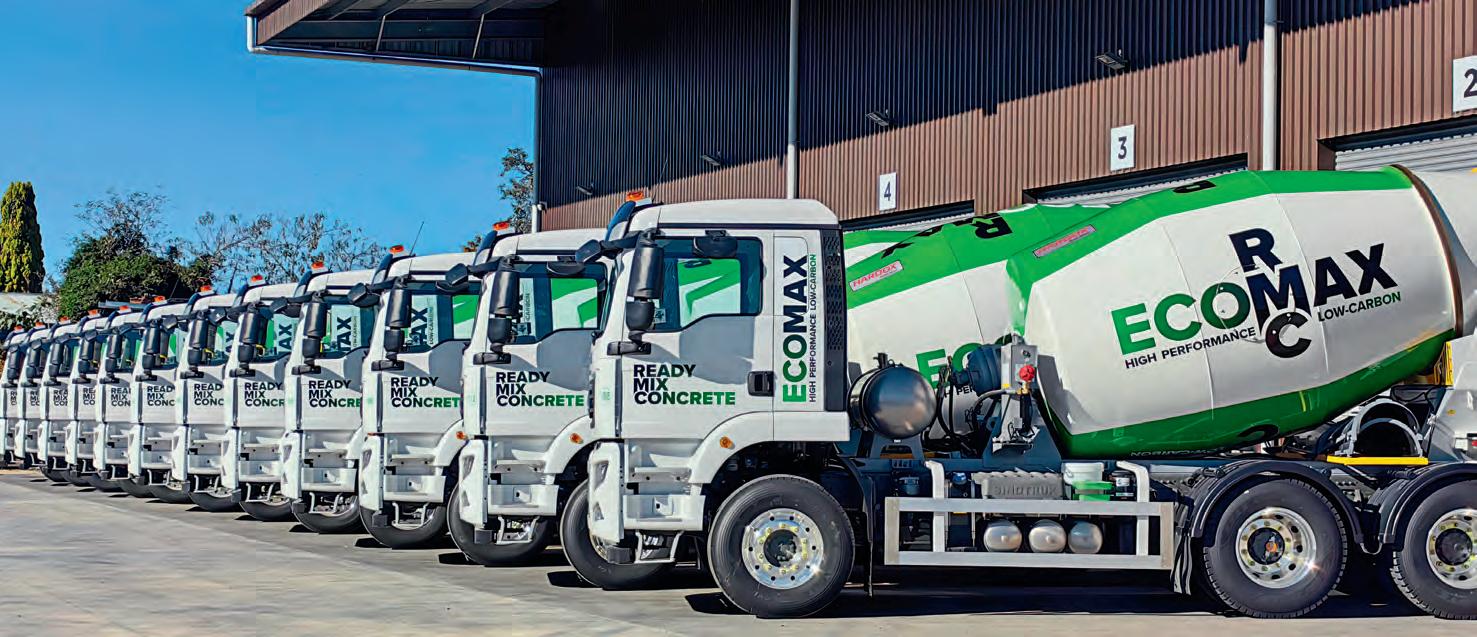
For the expansion of its business in Auckland this time, the low-carbon concrete brand has decided to switch entirely to SITRAK products.
Developed with New Zealand operating conditions in mind, the G5S mixer platform supports demanding payload requirements, varying road conditions and continuous operational use. Together with lower operating costs, driver-focused design and dependable driveline performance, the vehicles are well suited to large-scale construction and infrastructure projects across the region.
In recent years, with the overall upgrading of China’s manufacturing, SITRAK says more and more customers from Australia and New Zealand have started recognising these truck bodies produced in China, including the concrete mix barrel. Compared with the locally produced trucks bodies from Australia and
New Zealand, the SITRAK lead time has been significantly shortened while maintaining an extremely high cost performance for local operators.
“The arrival and upcoming delivery of the fleet further demonstrates the continued expansion of SITRAK across international markets, as well as the growing presence of Chinese commercial vehicle brands within global construction and transport industries,” a SITRAK representative says.
“Looking ahead, SITRAK Australia and SITRAK New Zealand will continue working closely with local partners and customers to strengthen product suitability, service capability and long-term support across both Australian and New Zealand markets, further supporting the region’s transport, construction and infrastructure sectors.”
“THE ARRIVAL AND UPCOMING DELIVERY OF THE FLEET FURTHER DEMONSTRATES THE CONTINUED EXPANSION OF SITRAK ACROSS INTERNATIONAL MARKETS.”
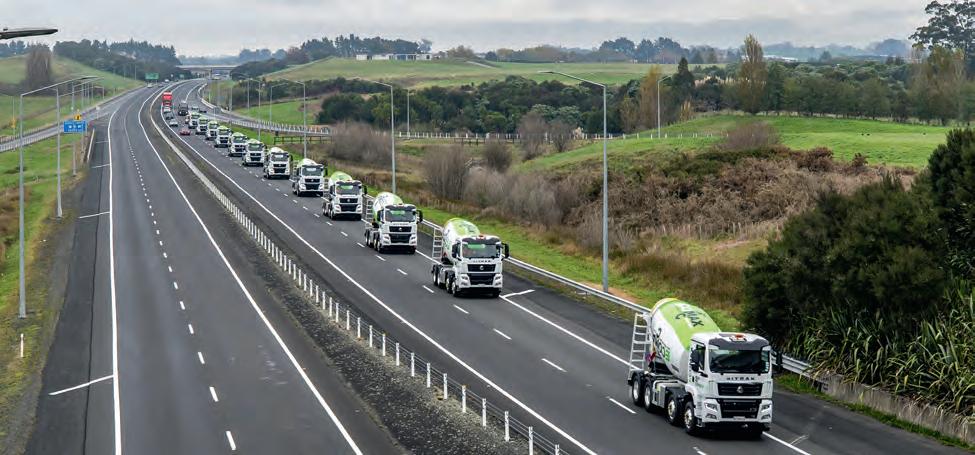
“Love listening to Australian Truck Radio. Such a great mix of music with loads of Slim, plus it has heaps of trucking industry news. Great radio for what I do 24/7!”
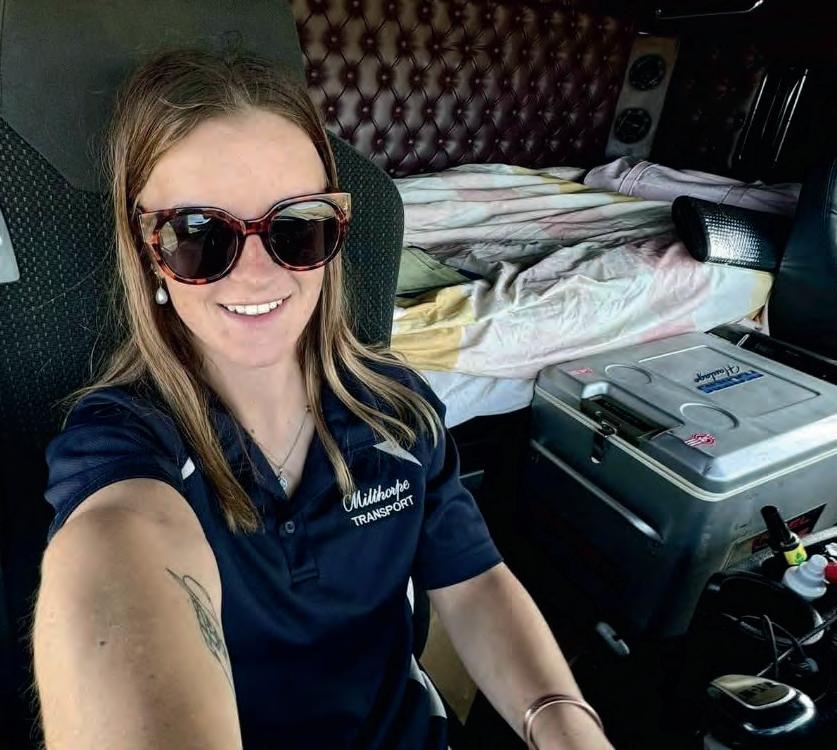




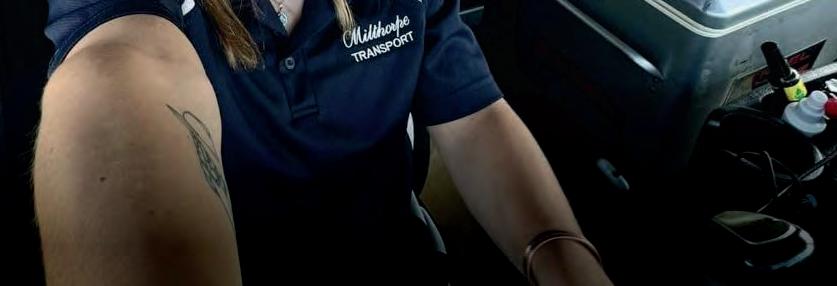













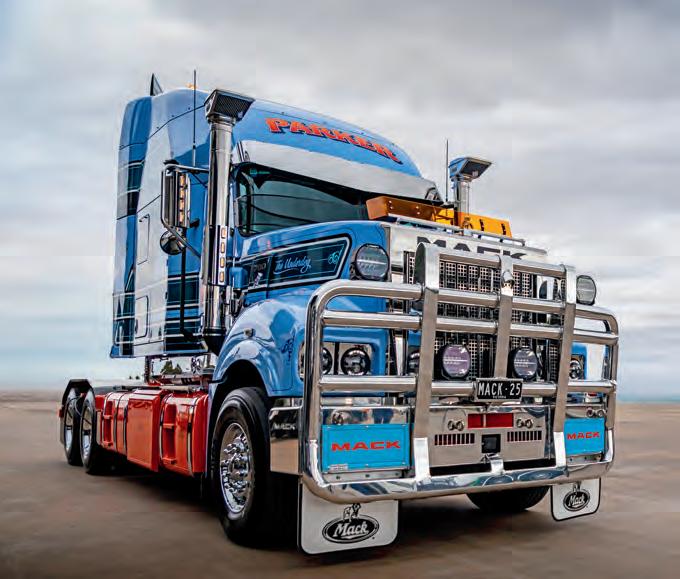
The Lazer Lamps popular LED spotlight has been made more accessible for operators through a sharper new RRP on the Sentinel 9” standard model
Lighting is one of many pivotal parts that power a truck. When the sun goes down, visibility becomes everything. For overnight or long distance truckies, lamps and lighting form a critical part of a truck. It can be the difference between life and death or running early or late.
That’s where Lazer Lamps comes in. Since its founding in 2010, the UK-based manufacturer has led the way in LED technology, building some of the most advanced and durable lighting systems available on the market. Every Lazer product is designed, engineered and manufactured in-house at its UK headquarters, giving it full control over the entire product build process and meaning it can ensure its lights have the highest levels of quality, performance and reliability.
After establishing itself as the number one premium choice for fleets across Europe, Lazer officially launched in Australia and New Zealand in 2020. It’s now backed by a national dealer network, local sales office in Adelaide, warehousing in Canberra and an on-the-ground sales support team.
At the core of that success and expansion is the Sentinel range – a premium series of round high-performance LED spotlights, available in 7” and 9” sizes, with black, white or chrome finishes and a choice between Standard and Elite models. A pair of Sentinel 9” Standard lights emit 19,058 raw lumens and deliver one lux of light to one kilometre away.
Not only do operators get incredible distance, but what really takes these lamps’ performance to the next level is their left-to-right spread of light, with an expansive 52-degree horizontal beam spread to fully light up the sides of the road. The colour temperature of the lights has also been precision engineered to sit at 5000K, which is as close to natural daylight as possible, helping reduce eye fatigue during long overnight state-to-state hauls while also minimising hash reflections from road signs.
But the real proof comes from those who’ve put the Sentinels to the test out on the open Road.
“As an ex-driver with over 20 years of full-time driving under my belt, I can easily say that the Sentinel range from Lazer are the best driving lights I’ve ever sat behind,” Johnstons Truck Mildura sales manager Matthew Manning says.
As a former truckie with two decades on the road, Matthew knows what matters for truck lights to succeed.
“Simply brilliant lights! Great wide spread of light and extremely powerful. For us they tick all the boxes,” he says.
While lighting performance is key, the other crucial consideration for truckies is durability.
The Australian outback is notorious for its relentless heat, dust, salt and water, offering no second chances to trucks running sub-par gear. With this in mind, the Sentinel range is engineered with durability at its core. Each light features an ‘unbreakable’ polycarbonate lens with a lifetime guarantee, a corrosion-resistant anodised and automotive grade power-coated housing, and sealed electronics protected by a robust thermal management system. Furthermore, each product is put through rigorous testing, from thermal cycling and salt spray to vibration and solar load.
This level of build quality is to ensure the Sentinel products perform in even the harshest conditions, lighting the way for drivers traversing the freezing thaw and ice of the arctic circle, all the way to the relentless heat and dust of the Australian Outback. With this level of engineering expertise in mind, Lazer’s products do sit at the higher end of the market in terms of price. However, Lazer Lamps Australia has now announced the new and reduced RRP of its Sentinel 9” Standard model — from $645 down to just $495.
The Sentinel standard 9” product offers a high level of lighting performance and the exact same level of build quality and durability of the elite products, but at a much more accessible price point.
What does this mean for drivers? In practical terms, the significant price cut opens the door to premium lighting for a broader range of users, particularly fleets outfitting several vehicles or owner-drivers with multi-light set ups on their rig.
The new RRP of the Sentinel 9” puts the light in a lane of its own as a true highperformance upgrade over entry-level alternatives, and is now accessible to buyers who may have previously viewed both the standard and elite models as out of reach.
It’s also worth noting, thanks to their quality, that Lazer lamps hold their value incredibly well over time. When it eventually comes time to upgrade or sell a truck, customers can take the lamps with them or easily resell them to fund their next lighting set-up, making them not only a high-performance upgrade, but also a smart investment.
“After 25 years in the lighting game, I’ve seen a lot of change, from Halogen to HID, and now the latest generation of high-output LEDs paired with precision reflector technology,” Lazer national sales manager for Australia and New Zealand Jason Pridham says.
“The Lazer Lamps Sentinel range stands out as the best wide-angle light output I’ve ever used in a 9” round light. The 5000K colour temperature, combined with a wide-form reflector, delivers massive spread and clarity, without the harsh reflections from road signs that you often get with cheaper brands. After all, it’s not what’s one kilometre down the road that catches you out, it’s what’s coming from the side!
“When your truck is your livelihood, and it represents you and your business, it deserves the best. Time and time again I hear from new Lazer Lamps owners: “Wow, your lights are amazing!”
“If you rely on your truck, trust lighting that’s built for professionals, made to perform when it matters most, night after night, job after job, year after year.”
1000 Litre IBC







Available in New IBC’s, Refurbished or try our exchange program and Save!



































We also sell Pumps 240V, 12V or gravity feed hose and trigger. It contains 32.5% technical grade urea and 67.5% deionized water (Pure water).








































Purple Industrial AdBlue® is Made in Australia.












AVAILABLE FROM QLD Darra, Bohle, Bundaberg, Cooroy, Gympie, Mt Isa, Theodore, Emerald, Moranbah, Toowoomba. NSW Minto, Moree, Dubbo, Wagga Wagga, Tamworth. ACT Hume. VIC Pakenham



Volvo Group Australia
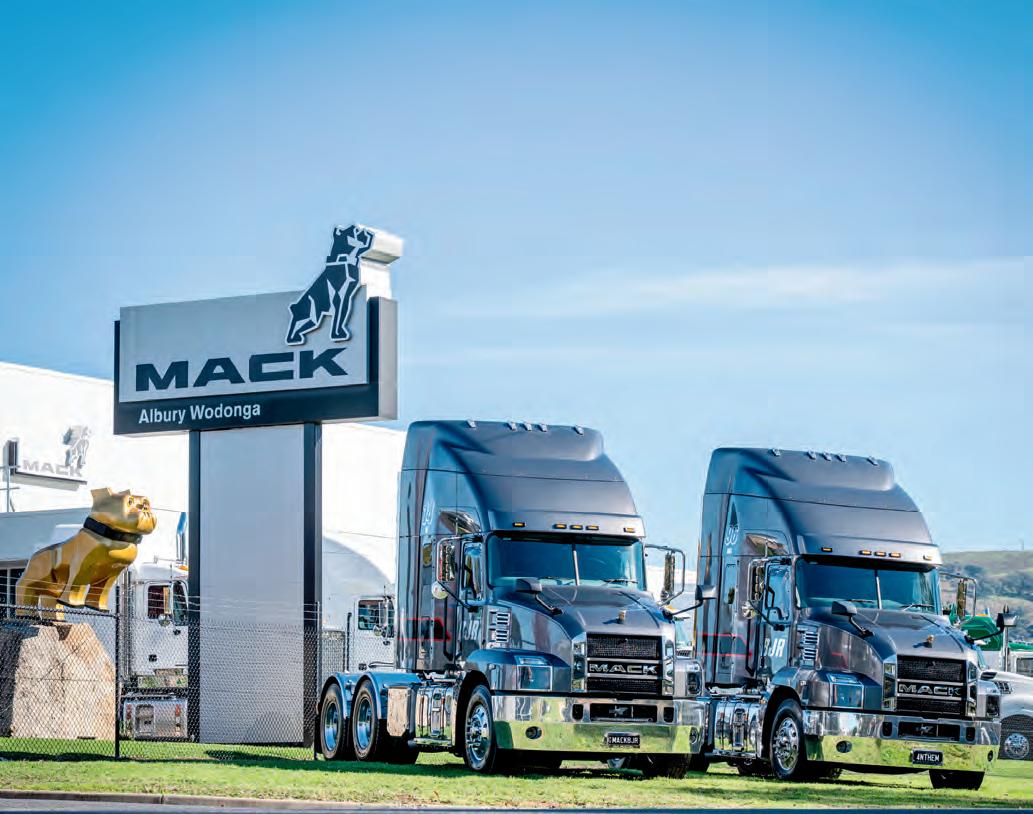
Brad Jones Racing has recently taken its partnership with the popular truck brand to the next level, receiving two new Mack prime movers
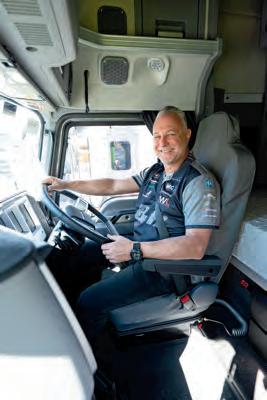
As one of the most iconic truck brands in Australia, the Mack Bulldog has a habit of popping up in unique places. None lay a claim as strong as Brad Jones Racing, with the motor racing outfit having invested further in its partnership with the popular manufacturer.
“We’ve been partnered with Mack for over three years now and their support has been invaluable to us,” Brad Jones Racing (BJR) team owner Brad Jones told OwnerDriver
“We have worked closely with their operations and are continually impressed by the level of attention to detail across the whole organisation.”
The foundations of this partnership between truck OEM and racing team started with BJR using Mack Anthem prime movers. Over the past three years, Jones says they’ve been “faultless” as they rack up the kilometres with trips across the Nullarbor and up the Stuart Highway to Darwin.
The Bulldog beasts have allowed drivers Paul (Stax) Eddy and Haydn Plant to travel with peace of mind and comfort – an important ingredient for success when the pair put in plenty of hours on the track and then on the road getting to and from races.
The time recently came to refresh its prime movers, with Mack suggesting a switch after three years that left the BJR team “pretty excited”. The result was the delivery of two new Euro 6 Mack Anthem prime movers that’ll be tasked with
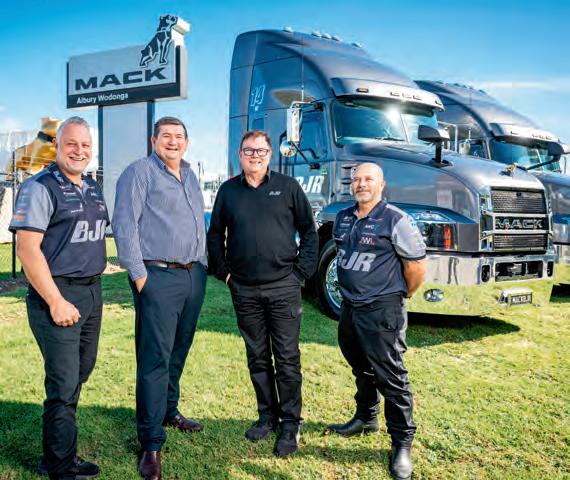
transporting BJR’s new Toyota GR Supra Supercars to events around Australia.
“Representatives from Mack came to Albury-Wodonga to capture and help the handover, with driver training provided to Paul and Hadyn as well,” Jones says.
“The Euro 6 Mack Anthem hauled our race trailers to Tasmania, which is one of the shorter trips of the year, but ends up being a bit peculiar with the boat journey.”
Serviced and supported by CMV Truck and Bus Wodonga, the new trucks are powered by Mack’s fuel efficient 13-litre MP8HE engine and backed by the new generation 12- speed mDrive transmission. The aerodynamic Anthem will be well placed to continue to deliver dependable transport for the regional Supercar team.
The Anthems are also equipped with Mack’s 36-inch integrated walk-through sleeper cab to provide driver comfort when on the highway between races. The team has been using Mack for over three years, with these trucks replacing two Euro 5 Anthems that were delivered in 2023.
“The Macks have been a fantastic truck for us,” Jones says.
“From Albury down to Launceston, across to Perth and up to Darwin, our Macks travel the lengths of Australia hauling our race cars. We have strict timelines to adhere to and our drivers know they can rely on Mack to make it every single time.
“Our prime movers are incredibly important to our team, they are literally what gets us to the track. The trailers house our three race cars, all of our spares, tools and entire garage set-up.
“We travel to 13 rounds in Australia from Perth to Darwin to Townsville, all from our base in Albury. Not to mention our test days, ride days and the occasional call to pick up equipment from Sydney or Brisbane.
“The prime movers and our drivers are kept incredibly busy over the year with some long drives, long hours and we are thankful to have such dependable and powerful machines that let us just get on with the job.”
Jones says his team is already enjoying the upgraded fuel efficiency of the two Euro 6 models, labelling them a “highlight” since their recent introduction to the team. He says the MP8HE powerplant and sleek aerodynamics of the Anthem’s styling means both cost and time will be saved on the road.
“We’ve been getting great customer feedback on MP8HE equipped Anthem when it comes to fuel efficiency,” Mack Trucks Australia vice president Tony O’Connell says/ “These trucks are also equipped with our Mack Connect telematics solution which provides fantastic visibility on fuel usage which gives operators the ability to monitor their fuel usage across their Mack fleet.
“Aerodynamics are just as important in trucking as they are in motorsport, removing drag saves fuel and the Anthem’s aero styling and the MP8HE powerplant make for a great combination.
“I’m very pleased to continue our partnership with the BJR team and look forward to watching the team race with the kind of grit and tenacity that the Mack brand is famous for.”
Jones says the racing team has no plans on severing ties with the Bulldog brand, especially when the latest technology is allowing his team to travel in style and comfort. Alongside the efficiency savings on offer, he says BJR has found the right partner for the vehicle and driver transfer needs.
“We don’t have any new trucks in the pipeline at the moment, but we’re excited to continue our partnership and work closely with their team,” he says.
“We have been able to visit their headquarters in Queensland with our trucks and show our race cars to staff and customers and hopefully we’ll get that opportunity again.”
“FROM ALBURY DOWN TO LAUNCESTON, ACROSS TO PERTH AND UP TO DARWIN, OUR MACKS TRAVEL THE LENGTHS OF AUSTRALIA HAULING OUR RACE CARS.”



The fight against sham contracting in the road transport industry has made significant progress since the first national roundtable I convened in Parliament House on November 5, 2025.
What began as a discussion among concerned industry stakeholders has developed into a united national effort involving transport associations, operators, employer associations, the Transport Workers’ Union, government agencies and the Australian government. That level of cooperation and our united determination to put an end to the scourge that is sham contracting is something our industry should be proud of. For too long, sham contracting and the misuse of ABNs have undermined legitimate transport businesses, exploited workers and created an uneven playing field for operators doing the right thing. It has also deprived workers of important entitlements, including superannuation, leave and workplace protections.
One of the most encouraging outcomes from the recent roundtable I hosted in Melbourne in May was the reporting from government agencies including the Fair Work Ombudsman (FWO), Australian Taxation Office (ATO), Australian Border Force (ABF) and the National Heavy Vehicle Regulator (NHVR) on the work that they have done and are continuing to undertake to combat sham contracting as well as visa exploitation and licence abuse.
For example, since the ATO and FWO put a media release out earlier this year announcing that they were ramping up their efforts to clamp down on sham contractors, 134 tip offs have been received in relation to the road freight industry, with 24 relating to sham contracting.
The FWO has also written to 45 road transport companies, notifying them of its interest in addressing sham contracting and misclassification arrangements.
The FWO has also recently conducted site visits and has a number of ongoing investigations into alleged sham contracting arrangements in the road transport industry.
SENATOR GLENN STERLE is a current Labor Senator for Western Australia in Australia’s Federal Parliament. He is also the Duty Labor Senator for the Federal Electorates of Durack and O’Connor and has experience as a transport operator.
In April, ABF officers, alongside the NHVR, checked more than 200 vehicles across South Australia, Queensland, New South Wales and Victoria during a week-long operation, conducting visa checks, identifying potential migrant worker exploitation and detaining unlawful non-citizens to help ensure only lawful, safe and compliant drivers operate heavy vehicles on Australian roads.
Employers also faced scrutiny, with the ABF issuing five compliance notices for employing an unlawful non-citizen or individuals with incorrect visas or work rights, and a further five employers are now under review for potential breaches, with several new
investigations underway across multiple states.
Furthermore, the NHVR is now steadfastly focusing on an increasingly small cohort of high-risk operators –those who repeatedly fail to comply with the law, are involved in serious incidents or do not act on known risks.
Of the 21 operators identified by the NHVR as highest-risk, nine are no longer accredited by the regulator, another 10 are in the process of having their accreditation eligibility reviewed and two have been issued notices warning of potential accreditation action.
The NHVR has also issued 15 prohibition notices to five operators and directors. While there is still more work to do, the progress made over the past several months demonstrates what can be achieved when industry, unions, regulators and government work together toward a common goal. I commend the Albanese Labor government and in particular the Assistant Treasurer Daniel Mulino, Amanda Rishworth, Catherine King and Matt Thistlethwaite for their ongoing support in this area.
I also thank everyone who has contributed to this important work and remain committed to continue to work alongside the transport industry to stamp out sham contracting so that Australia’s road transport industry remains fair, safe, viable, profitable and sustainable for the future.
“134 tip offs have been received in relation to the road freight industry, with 24 relating to sham contracting.”
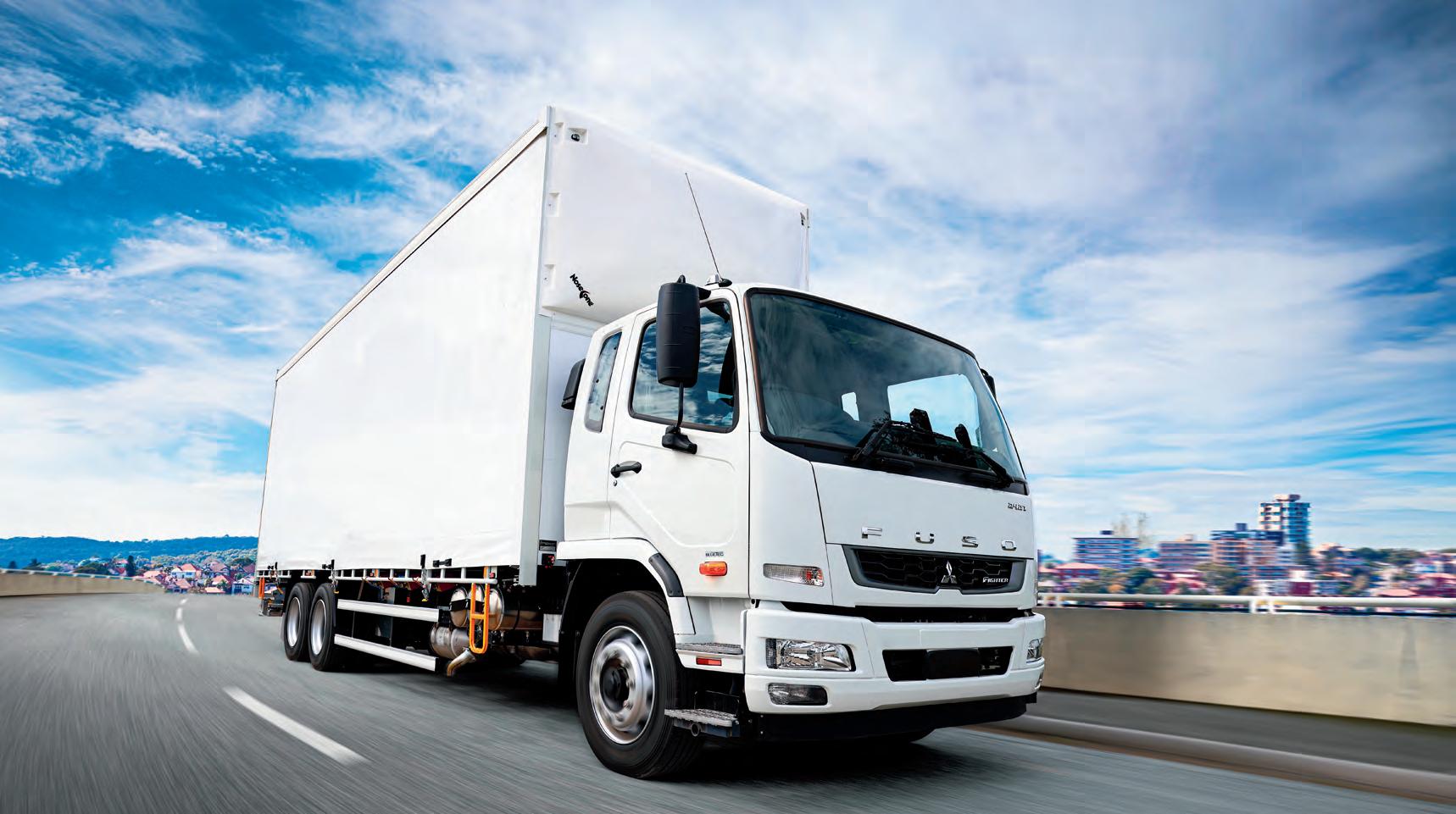
More Allison autos have arrived for Fighter models as Fuso confirms steady supply of its popular medium duty model
Fuso has expanded its Allison-equipped Euro 6 Fighter model range and confirmed steady supply for Australia.
The recent addition of new Allison automatic variants mean customers can buy Allison equipped Fuso rigids that cover the entire rigid range that is suitable for 10, 12 and 14 pallet models. The new automatic option is an Allison 2500 series torque convertor type with five gears and is a favourite among many thanks to its low-speed crawler function.
For those who would rather shift gears themselves, most Fighters are available with a durable manual gearbox, with either six or nine gears depending on the model.
While some medium duty trucks are in short supply due to production issues, Fuso has no such issue and has a steady supply of Euro 6 Fighters from Japan. The Euro 6 Fighter was introduced back in 2021, well ahead of the just introduced ADR 80/04 legislation. It is known for its practicality with 20,000km (or one year) service intervals that ensure customers can get the most out of their trucks.
The Fighter has also recently been given an upgrade with a new larger multimedia screen (now eight inches) that features wireless Apple CarPlay and Android Auto connectivity. The screen displays footage from a rear-view reversing camera that comes standard with every Fighter. Customers can view footage from up to five additional cameras through the screen to ensure optimum vision.
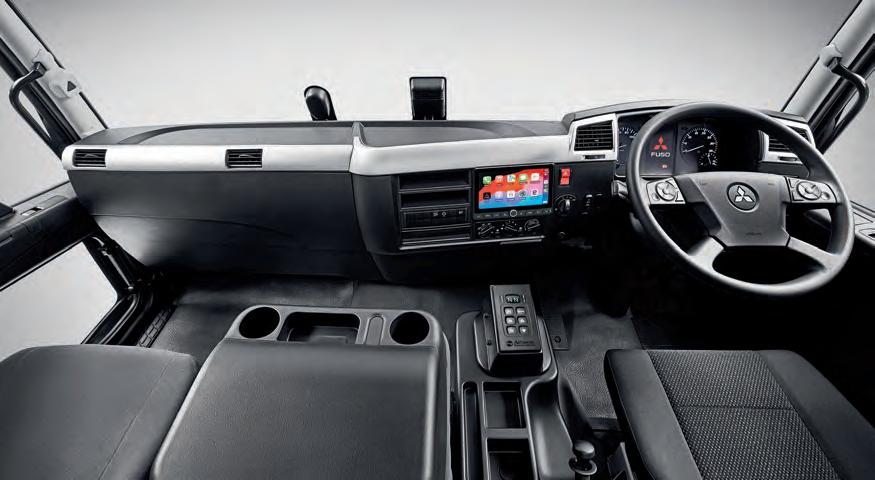
The Fighter also features an upgraded five-inch multiinformation display screen as part of the instrument cluster that displays a range of information including fuel consumption. Drivers can also benefit from the Fighter’s unique transom window feature, which is basically an extra window on the passenger door below the regular window. It means the driver has unmatched visibility down to the left side of the truck and is very handy when trying to spot cyclists, pedestrians or even cars sneaking up the inside.
The Fighter is equipped with a high level of active safety features, including Advanced Emergency Braking System, or AEBS, that’s designed to mitigate collisions by applying brakes in emergencies if the driver fails to react. It also features Active Side Guard Assist, helping warn the driver what might be lurking down the left side of the truck in what could be a blind spot.
A Lane Departure Warning system and Attention Assist fatigue management is also standard on every Euro 6 Fighter. The Fighter features a spacious cabin with a rear storage area behind the seats, with the driver also being looked after with an ISRI air suspension driver seat as standard.
One for the advantages of the Fighter is the remarkable versatility that it offers, partly due to the sheer amount of different configurations available from the factory in Japan.
Customers can choose from 11-tonne GVM models all the way through to a 24-tonne GVM model and there are 4x2, 6x2 and 6x4 options with many different wheelbases. Power Take Off (PTO) capability allows for specialised equipment, while the Fighter cab chassis design makes body installation straightforward. Fuso also offers steel suspension or the option of air suspension on particular models to make sure customers can get the right truck for the job.
All Fighter models utilise the venerable 7.5-litre six-cylinder turbo diesel with up to 199kW at 2,500rpm and 785Nm of torque available all the way from 1,100rpm through to 2,400rpm.
Fuso says its customers can benefit from a vast national dealer and service network across Australia, meaning support is always available when customers need it, helping keep their fleet operating efficiently, whether they’re based in the city or in regional areas.
The husband-and-wife team behind NextLoad Australia is using its first-hand experience to enhance the freight sector without forgetting where it came from
In an industry built on relationships, trust and hard work, many transport operators have found themselves navigating an increasingly complicated freight landscape. More middlemen, more commissions, more fees and less direct control over the jobs that keep trucks moving.
That frustration is exactly what inspired the creation of NextLoad Australia. Founded by husbandand-wife team Stuart and Nicole Lewry, NextLoad Australia was built from first-hand industry experience and a genuine passion for supporting Australian transport operators. Stuart brings more than 30 years of experience in the transport and logistics sector, having operated his own transport business, while Nicole grew up in a transport family and has spent her life around the industry. Together, their backgrounds provide the foundation.
“The idea was simple – to create a digital freight marketplace that puts shippers and carriers back in direct contact with each other,” Nicole told OwnerDriver.
“Rather than acting as a freight broker or middleman, NextLoad Australia operates as a platform where businesses can post loads and transport operators can connect directly with the
shipper. There are no commissions taken from freight jobs and no interference in negotiations. The carrier and shipper deal directly with each other, just as many in the industry believe freight was always meant to work.”
Since launching, the platform has continued to grow, attracting carriers and shippers from a broad range of industries including agriculture, mining, manufacturing, retail, construction and general freight. Whether it’s a single pallet, machinery, a backload opportunity or a full truckload movement, the goal remains the same – to create more opportunities for Australian transport businesses while helping shippers find reliable operators.
One of the key drivers behind the platform’s growth has been its commitment to transparency and simplicity. Businesses can post loads free of charge, while carriers gain access to freight opportunities across Australia through a straightforward membership model. The focus is on helping people connect and get freight moving, shifting business away from complicated systems and endless paperwork.
“Beyond the technology, NextLoad Australia has always been about people,” Stuart told OwnerDriver.
“The company actively promotes Australian




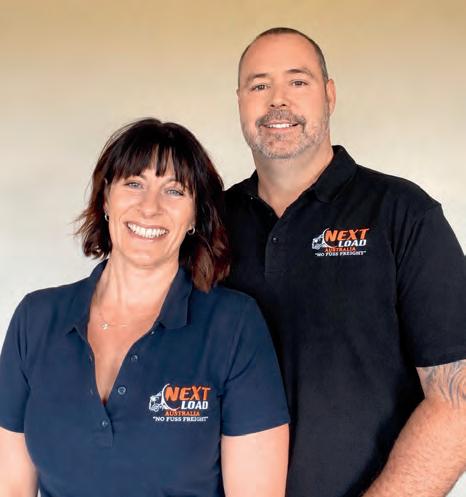

trucking businesses, supports transport industry initiatives and regularly runs member giveaways as a way of giving back to the community that supports the platform. That community-first approach has resonated strongly with many operators who feel the industry has lost some of its personal connection over the years.”
Looking ahead, NextLoad Australia continues to invest in new features, platform improvements and technology designed to make finding freight easier, faster and more accessible for carriers across the country. The vision is not simply to become another freight platform, but to help strengthen the Australian transport industry by creating a fairer, more direct way for freight to move.
“At its core, NextLoad Australia is built on a belief shared by many truckies and transport operators –freight works best when people can deal directly with each other,” Stuart says.
“Sometimes, the best way forward is getting back to basics.”

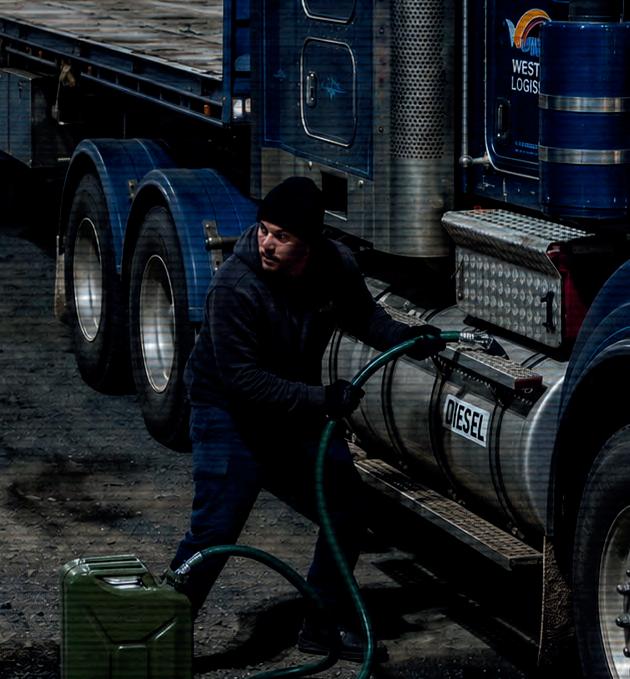



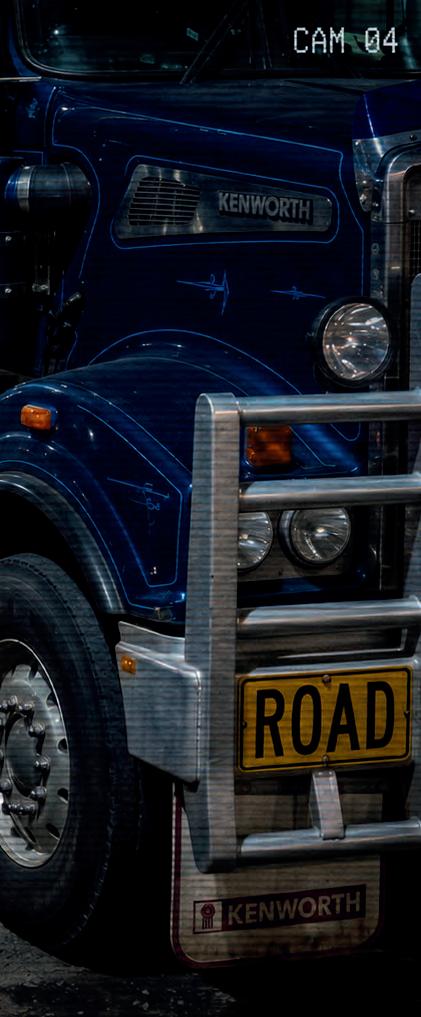
Over more than two decades, REDCAT Industries has forged a reputation for providing Australia’s leading wheel safety products, with the brand continuing to use the latest technology to make the transport sector safer
There are many critical parts that feed into the successful running of a road transport operator. Ongoing safety and compliance responsibilities. Quality vehicles. A trained driver cohort. Throughout this checklist, it’s also a grim reality that a trucking business can be one incident away from not having a business. These incidents can range from larger factors to smaller details such as a wheel problem. It’s in this space that REDCAT Industries has forged a legacy over more than two decades, with the world-leading manufacturer, distributor and retailer of wheel safety products keeping many Australian transport businesses safe and secure every day.
“It’s important to emphasise how critical a wheel-off incident can be and how that can impact a business,” REDCAT director Lester Sharples told OwnerDriver
“Our vision is to make the global transport industry a safer place by delivering the world’s leading wheel safety solutions, supported by
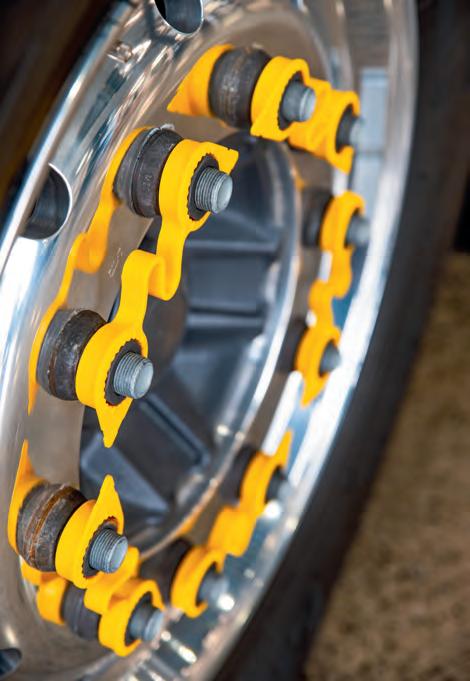
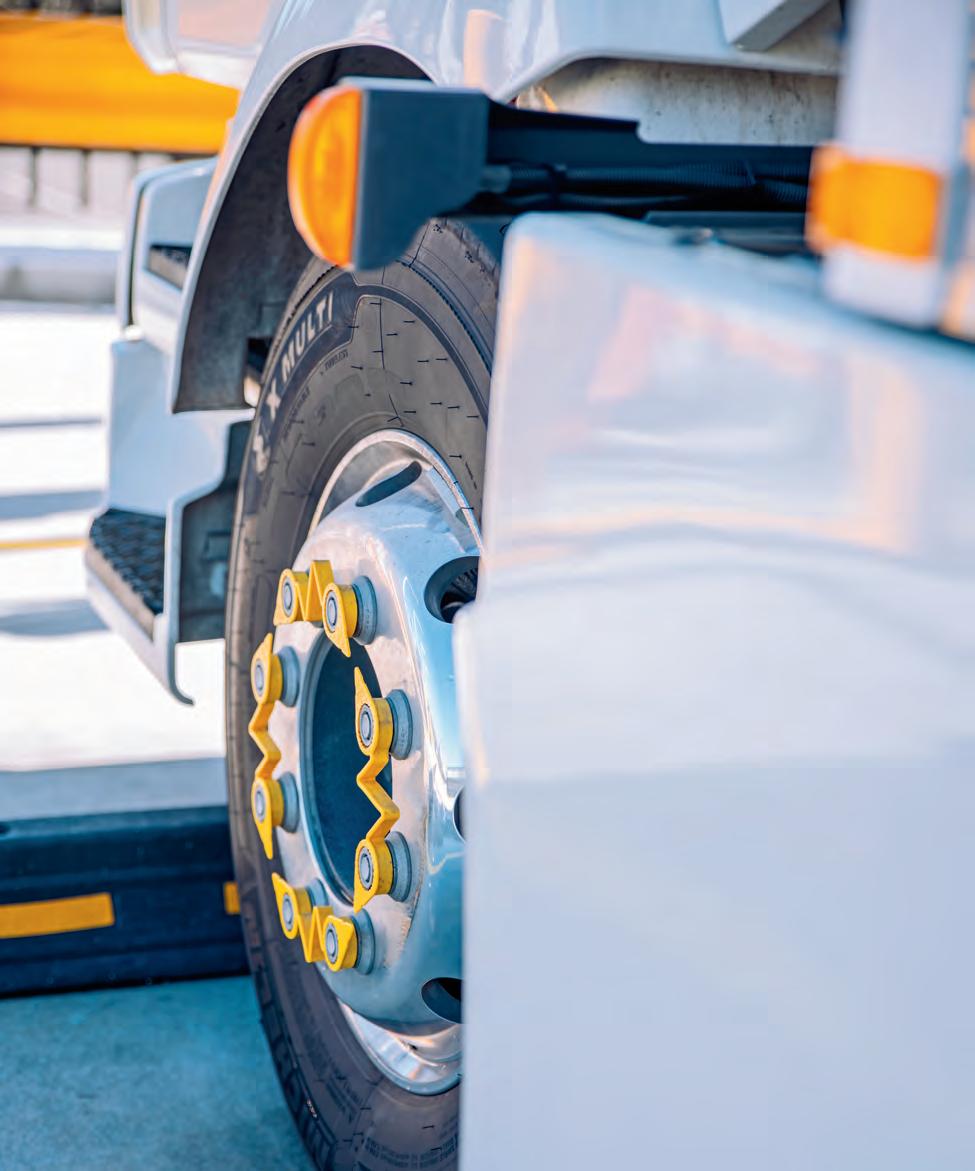
industry-leading expertise, education and customer service.”
The REDCAT story starts at the turn of the century, with the business established in 2000 via an overarching goal of providing a higher quality, market-leading range of wheel nut indicators that rise above the problems faced by modern fleets.
To date REDCAT has sold millions of wheel nut indicators internationally, with these products excelling in Australia where they secure superior wheel safety for hundreds of local fleets while also improving operational productivity, reliability and efficiency.
This expertise has seen the business amass decades of experience working with heavy vehicle fleets in transport, mining, military and industrial sectors. Nowadays, REDCAT wheel safety products are designed to combat operational pain points with simplistic yet innovative solutions.
“We place a strong emphasis on helping operators meet their Chain of Responsibility obligations, providing simple, effective wheel safety solutions that support safer fleets and stronger compliance outcomes,” Sharples says.
“Our products give maintenance teams and operators greater visibility over wheel security, helping them identify potential issues early and operate with increased confidence in the safety and reliability of their vehicles.”
REDCAT has earned a global reputation as one of the most trusted suppliers of accurate, robust
TOP: REDCAT’s wheel safety products are helping keep fleets reliable and safe
LEFT: Wheel nut indicators are part of REDCAT’s growing product range
and cost-effective wheel-nut indicators, helping fleets address a range of critical operational challenges. This can range from ensuring operators don’t miss the early identification of wheel nut movement before a wheel-off incident can occur to saving costly reactive maintenance and roadside breakdown expenses.
Sharples says this reduces excessive downtime and labour during inspection routines, ensuring operators don’t build a false sense of security that can sometimes be created by traditional wheel safety products.
“Not all wheel safety products deliver consistent indication of wheel movement in the demanding conditions fleets face every day,” Sharples says.
“This can then increase the pressure on maintenance teams to inspect larger fleets faster, showing how our products are different in the local market.”
When it comes to innovation, REDCAT also released a patented next-generation indicator retainer design in 2014, with the long-standing range being recognised as the most efficient wheel safety product available.
It all forms part of REDCAT’s plans to continue pleasing local transport clients with reliable and accurate wheel safety systems that make the industry one step safer every day.
“REDCAT continues to lead the wheel safety market through its commitment to innovation, product performance and real-world reliability,” Sharples says.
“A great measure of our success is client feedback – they value the significant reduction in wheel-off incidents and wheel-related maintenance issues achieved across their fleets. Our clients don’t leave us and the very few that did have come back.”
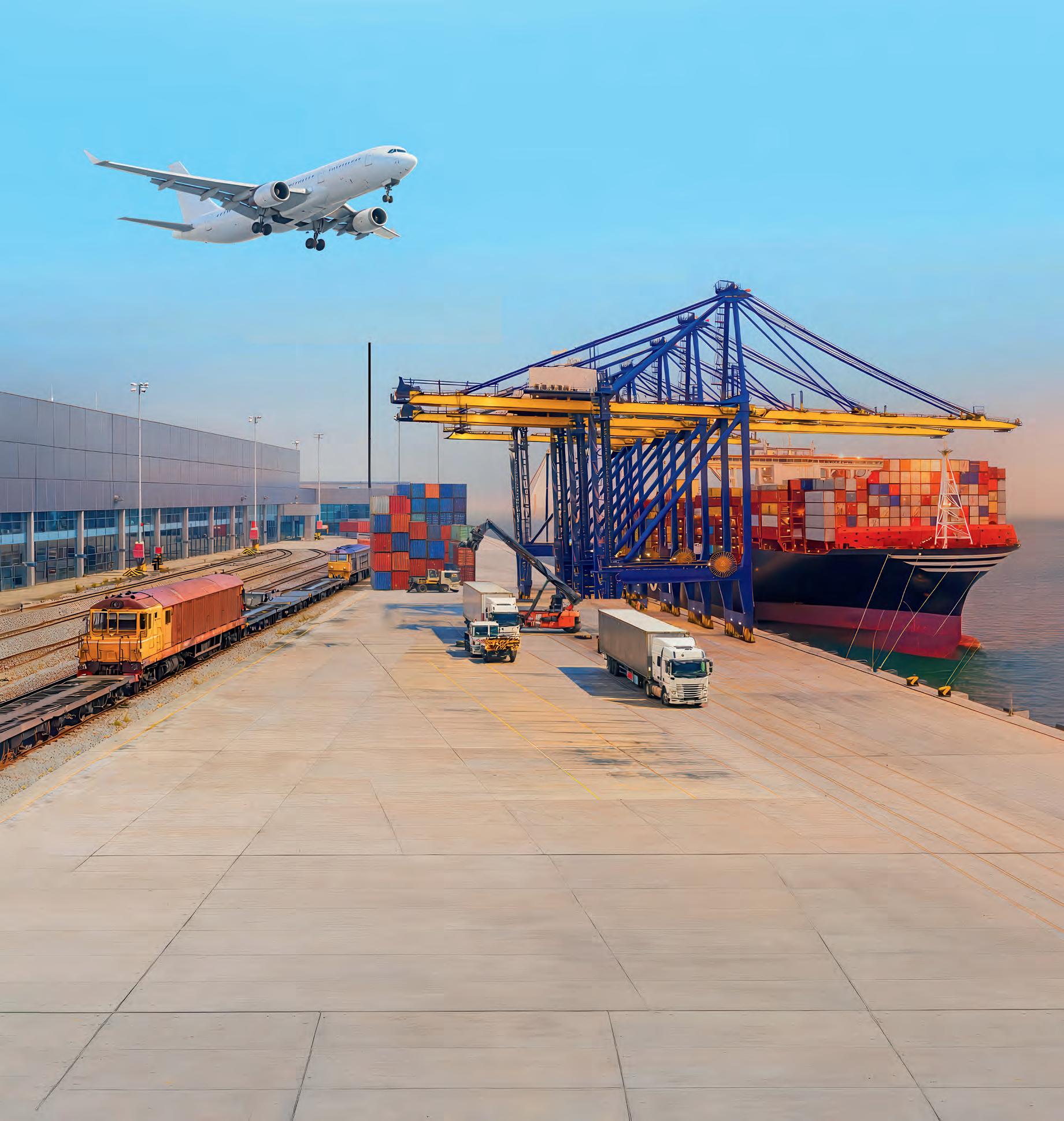

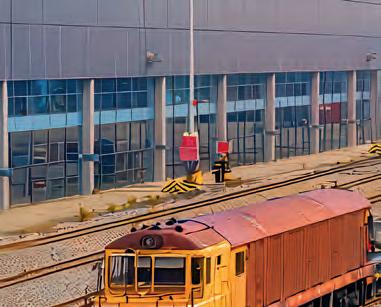









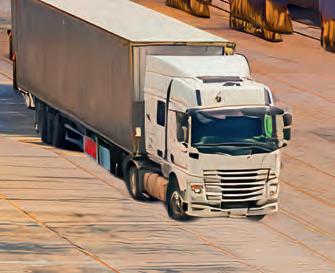




















Glyn Castanelli



The making of the first Road Transport Contractual Chain Order for fuel cost recovery was a major moment for our industry.
For many people outside transport, fuel is just another price on a sign outside a service station. For road transport operators, it’s one of the biggest costs of staying in business. When diesel jumps suddenly, the impact is immediate. The fuel bill does not wait. The account comes due whether the customer has agreed to a rate increase or not.
That was the reality facing operators when fuel prices surged earlier this year. Small fleet operators, owner-drivers and family transport businesses were being hit hard. Some had escalation clauses or decent fuel levy arrangements. Many did not. Others were trying to negotiate with customers who either did not understand the scale of the increase or were not willing to share the cost fairly.
That is why the Fuel Contractual Chain Order mattered. The NRFA attended the Fair Work Commission hearings and made sure we had a representative in the room for the full proceedings. It was gruelling. It moved quickly, the stakes were high and the pressure was real. But it was also one of those moments where you could see why industry representation matters.
The TWU and ARTIO brought the application. The NRFA supported it. The ATA also played a key role. Members and operators came forward with evidence. People gave up their time, told their stories, opened their books and explained what was happening in the real world. That combination made a difference.
The Commission heard that smaller operators and owner-drivers are often at the bottom of long contractual chains. They do the work, carry the cost, put fuel in the tank and have the least bargaining power. When something like fuel spikes, they cannot simply pass the cost on like a major customer might. They have to ask. Sometimes they have to beg. Sometimes they are just told ‘that is the rate’.
That is not a sustainable industry. The Fuel CCO was designed to address that problem. It requires fuel cost recovery to be dealt with through
the contractual chain, not left sitting with the operator at the bottom. It recognises that when fuel costs rise because of an external shock, the cost should be recovered through the chain rather than absorbed by the person least able to carry it.
Since the Order came in, the NRFA has heard reports of both success and frustration. For members who deal directly with customers, the Order has been a powerful tool. It has started conversations that may not otherwise have happened. It has allowed operators to say ‘this is not just me asking for more money. There is now an obligation to recover the increased cost of fuel’. That matters.
In some cases, customers and transport businesses have sat down, looked at the fuel movement and reached a fair arrangement. That is exactly how the Order should work. It should create a practical pathway for sensible, transparent fuel cost recovery.
But we have also seen the other side. Some operators are still being told what the fuel levy will be, without explanation, without consultation and without enough information to know whether the true fuel increase has actually been recovered. In those cases, the Order may have started the conversation, but it has not yet guaranteed the outcome.
That is the challenge now. The
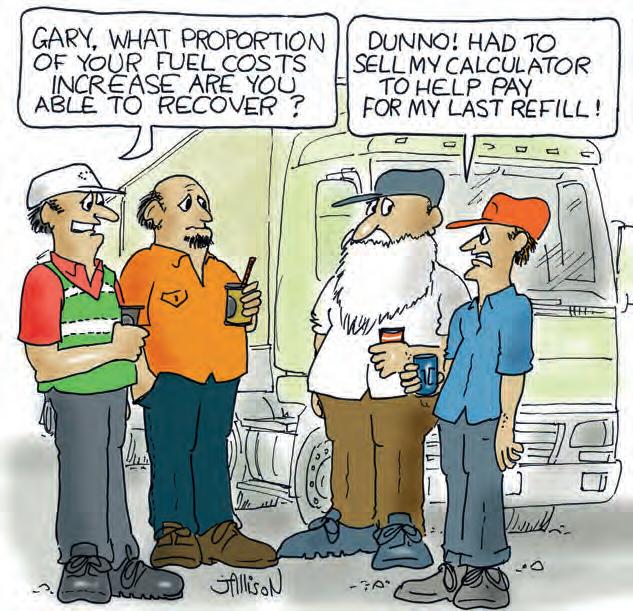
people who support the Order generally do not find it hard to understand. The purpose is simple: fuel went up and the increased cost needs to be recovered through the chain. The difficulty usually comes when someone in the chain does not agree with the Order, doesn’t want to apply it properly or treats it as a discretionary customer levy rather than a genuine cost recovery obligation.
At the one-month review in Fair Work, the union and NRFA were back in the room defending the Order. We heard arguments that it was confusing or burdensome. From our members’ perspective, the real burden is not the Order. The real burden is a fuel bill that has doubled while the customer is still arguing about whether a proper fuel levy should apply.
There is also a power imbalance that cannot be ignored. Many small operators know when a levy is not enough. They know when the calculation does not reflect the real cost, but they may not be willing to challenge a major customer too hard because they cannot afford to lose the work. That is the commercial reality. Transport is competitive, margins are thin and many businesses are dependent on ongoing work from a small number of customers.
That is why transparency and consultation are so important. The Order should not be twisted into an argument that every individual freight task has to be recalculated separately. That is not the practical intent. The Order is aimed at achieving overall fuel cost recovery across the relevant freight work, using a reasonable formula, cost model, benchmark or agreed methodology.
That is exactly why consultation is needed. Without consultation, the transport business is left being told what the levy will be rather than being part of a genuine cost recovery process.
The NRFA supports the continuation of the Fuel CCO. One important proposal is that the Order should not switch off just because the national terminal gate price falls below $2.00 for one week. Fuel prices have been volatile. A one-week dip does not mean the emergency is over.
Overall, the Fuel CCO has been a success. It has helped operators, started conversations. It has given small businesses a tool they did not have before. Most importantly, it has shown that the new transport reform laws can work when the industry needs urgent action.
But this is only the beginning. We now need to make sure cost recovery reaches the people actually doing the transport work. We need customers and parties higher in the chain to act transparently.
The big lesson is simple: when truckies, small operators, associations and the union stand together, we can get change. This was the first Contractual Chain Order. It should not be the last.







With a truly nation-wide network, Tradecorp International offers a simpler, safer and more affordable container repositioning solution for Australian transport and logistics businesses
True Australian coverage is hard to establish and guarantee nowadays. With Australia being such a vast country, including the most isolated major capital city in the world, supplying containers across the nation isn’t as simple as it may initially sound.
That’s just what Tradecorp International, has been able to do, with the business offering Australia-wide shipping container hire and sales through its platform.
“We have 20’ and 40’ shipping containers available for transport, storage and freight solutions,” Tradecorp International founder Tony Zarb told OwnerDriver.
“This is ideal for transport operators needing secure and weatherproof freight options without investing in enclosed trailers.”
As one of Asia’s largest container trading








companies, Tradecorp International started when the group’s founder and CEO got involved within his highly successful family company that was founded in 1990. To this day, Tradecorp International continues to reposition containers in a variety of regions through one-way moves to Australia, Papua New Guinea and the Pacific Islands.
The company started in Mackay, Queensland and is still based in the region via its full fleet of shipping freight containers for sale or to rent at affordable prices. After its foundations, Tradecorp has grown exponentially to operate globally via its Brisbane head office and presence in other major cities.
Specialising in container hire, sales, modifications and repositioning, Tradecorp’s strong national footprint sees containers moved
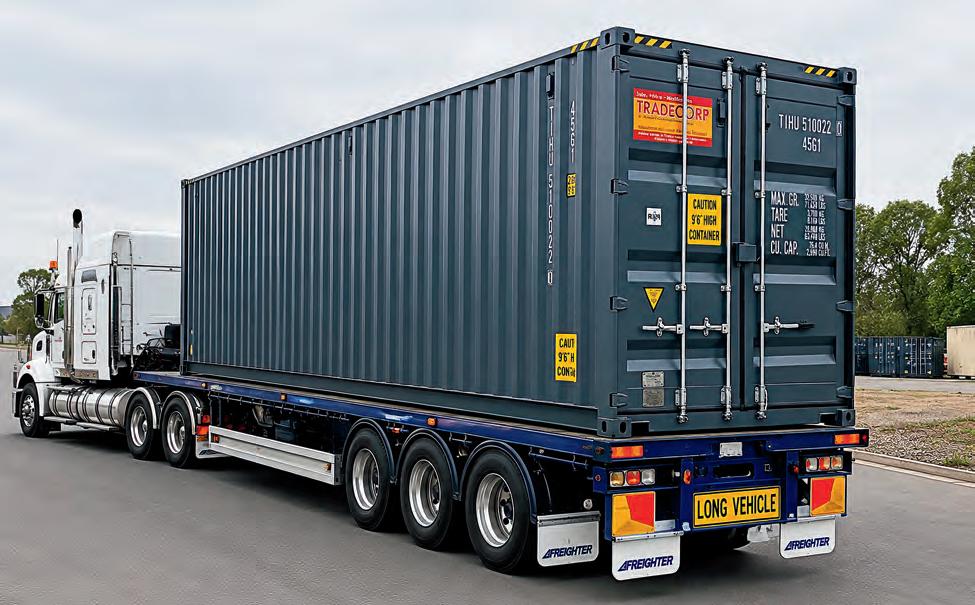
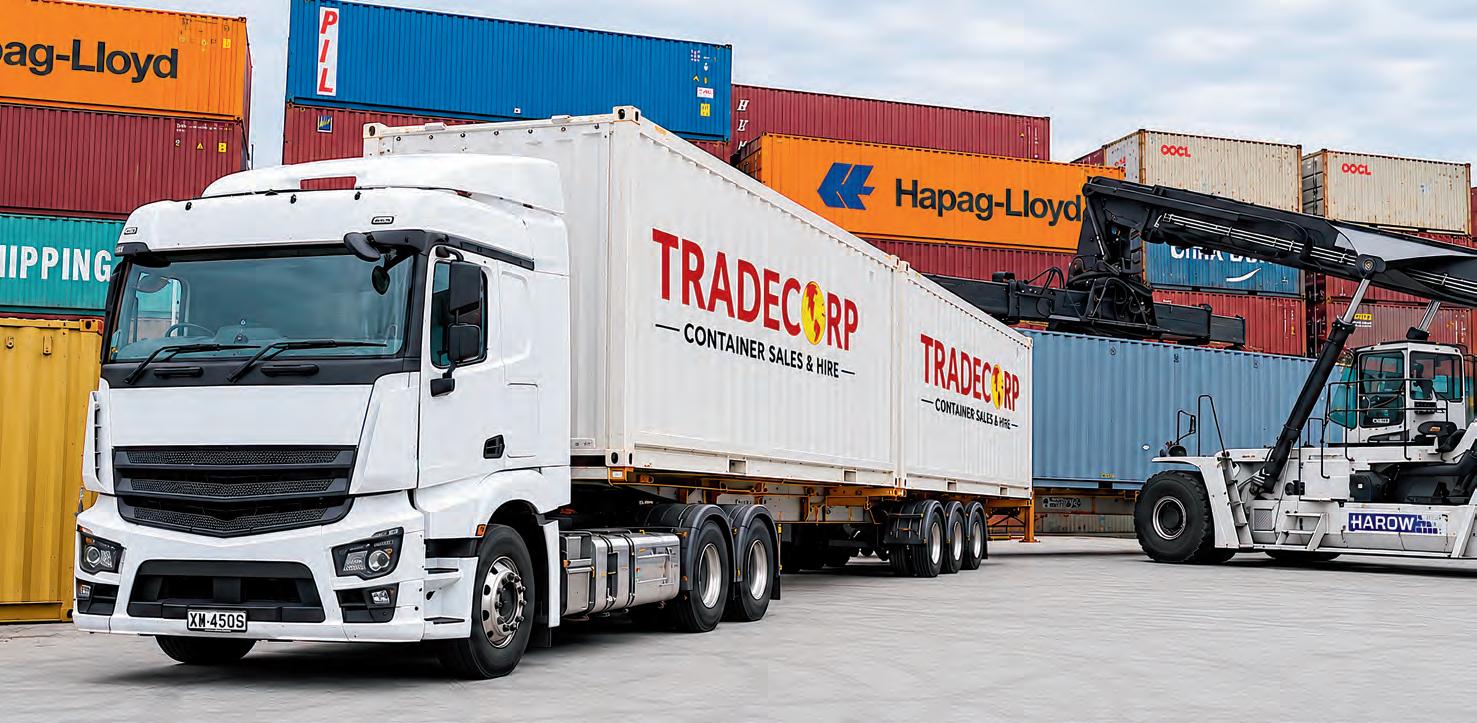













across metro, regional and remote Australia every day. Globally it can offer one way SOCs from most locations into Australia, Papua New Guinea and the Pacific Islands, while the group can also supply and design shipping containers for a broad spectrum of industries – Tony says the possibilities are boundless across its key markets.
“We move products, equipment, tools, stock or palletised freight safely around Australia,” he says.
“Strong steel construction helps protect cargo from weather, theft and damage in transport, making our services perfect for backloading and container repositioning opportunities across major transport routes.”
With no one-way hire fees or expensive trailer ownership costs, operators can easily hire, purchase or reposition containers across Australia using Tradecorp International. It’s as simple as load, lock and move it, with the brand promising a secure freight transport solution.
Whether it be depot-to-depot or customerspecific relocation requirements, Tradecorp International is evolving as a great option for transporters already moving machinery, vehicles, mining equipment or general freight. By packing containers directly on-site and transporting them sealed to the final destination, Tradecorp International is looking to remain flexible with its hire terms for short-term or ongoing transport projects in the future.
“We have a nation-wide depot network helping support Australian logistics and container availability,” Tony says.
“We’re an ideal service for regional, mining, agricultural and interstate freight applications, and we’re also looking for transport partners across Australia to assist with repositioning containers between depots and customers.”
TOP: Tradecorp is a leader in local container repositioning LEFT: The brand is now on the hunt for truck drivers to help move containers


Goodaye all, how many of you have even heard of the current review of EWDs and how many have been able to comment, contribute or even raise a question? Few I doubt, and if we don’t even know it is happening, let alone that there seems to be no plan or intent to allow us to comment or contribute, how do you think it will work out?
Of course all these people doing the review will never have to use one, will never be affected, fined or penalised if the review says “we need to make it harder for drivers to gain even one second, so we must have absolute control and make it so tight, that we can fine them all again, like we have done for the last 30 years”.
Am I overreacting, am I too cynical? Or am I too close to the truth? You only have to look at the HVNL review, and the review of the review and please, can you show me one thing from all that time, effort and cost, that makes it easier, safer or better for me to do my job from eight years and perhaps millions of dollars, and why did only five drivers contribute directly? Was it because they did not really want us to contribute, but had to be able to say they asked, or was the result like I have suggested above? Did they want an outcome, decided from the beginning, that came again from those who will never be personally affected by the laws and rules they put in place?
The NHVR and yes, Sal Petrocitto – the past CEO – was a fan of EWDs, believing and pushing the view that they would help drivers. I think he was right and his heart was in the right place and for that position, he seems to perhaps have been a lone voice, though as CEO, he pushed that view down through the NHVR. I would like to hear from the new CEO if she agrees with the intent.
I was on the original EWD panel many years ago. I think I was the only driver at the time and only because I kept asking what was being done, by whom and how many drivers would be involved. When they wanted to trial a device, I put my hand up, only to be told I could not be on the panel and trial one as well, as that would be a conflict of interest. Who else is going to use them and why would you ask someone driving a car to do a trial on such a device?
I argued at the time that they could not bring in an EWD under the then current rules which would, I believed, be used to crucify us even more. The panel eventually folded and nothing was done for years, then all of a sudden we had them available and even now, I still don’t know who and if any drivers were consulted or even asked to contribute.
I have had Hubfleet since I came back from shoulder surgery and I find it helpful, worthwhile and valuable with only one complaint – the 14-day rule!
Yes it was always there, but now it has caught me out many times, forcing me to

ROD HANNIFEY, a transport safety advocate, has been involved in raising the profile of the industry, conducting highway truck audits, the Blue Reflector Trial for informal parking bays on the Newell, the ‘Truckies on Road Code’, the national 1800 number for road repairs proposal, and the Better Roadside Rest Areas Group. Rod is the current president of the NRFA. Contact Rod on 0428 120 560, e-mail rod.hannifey@bigpond. com or visit www.truckright.com.au.
stop when I have hours in the day, the week and the fortnight, but because of when I started work two weeks ago, I have had to stop and have a 24-hour break, hours from home on a homebound leg.
How does what I did two weeks ago affect my fatigue today? Please explain! The worst example was last week on the way home from Perth – I ended up having to stop at Ceduna for a 24-hour break, only to have to then drive all the early morning in thick fog to meet an unload time I had not known about until the day before and which could have then affected the rest of my week if I did not meet it.
I could have missed the slot, but I was legal, yet the rules not only made it harder, they made it harder by not just a bit, but by a factor of five from my view, yet even eight hours tolerance or flexibility, like we have with the 84 hour rule for that first week of two, would have seen me safer and better off. Yes I have asked the NTC if it can be looked at – I was told the review was then nearly done, so no!
So how many of you would like some flexibility with this, how many have found it a problem and how do we get it changed? Of course, I have been told I can apply for a new AFM template and how many of you have even seen any of these, let alone know what might be available and when?
I have registered for the fatigue session with the NHVR and have again asked another to ask the question ‘under the new HVNL 2 and the requirement that auditors report any and all breaches to the NHVR, will the NVHR then pursue the driver with a breach, even if the company has acted and dealt with the driver? Will a company notice to the driver be deemed sufficient, or will the NHVR pursue the driver for any minor breach?’.
There is a new date for the activation of HVNL 2 of August 1. How many of you are ready, know what to expect or will be compliant? They say it will be a roll out – you can continue with your current accreditation or even get an extension, but how will it all work? Who knows? Safe Travelling, Rod Hannifey.
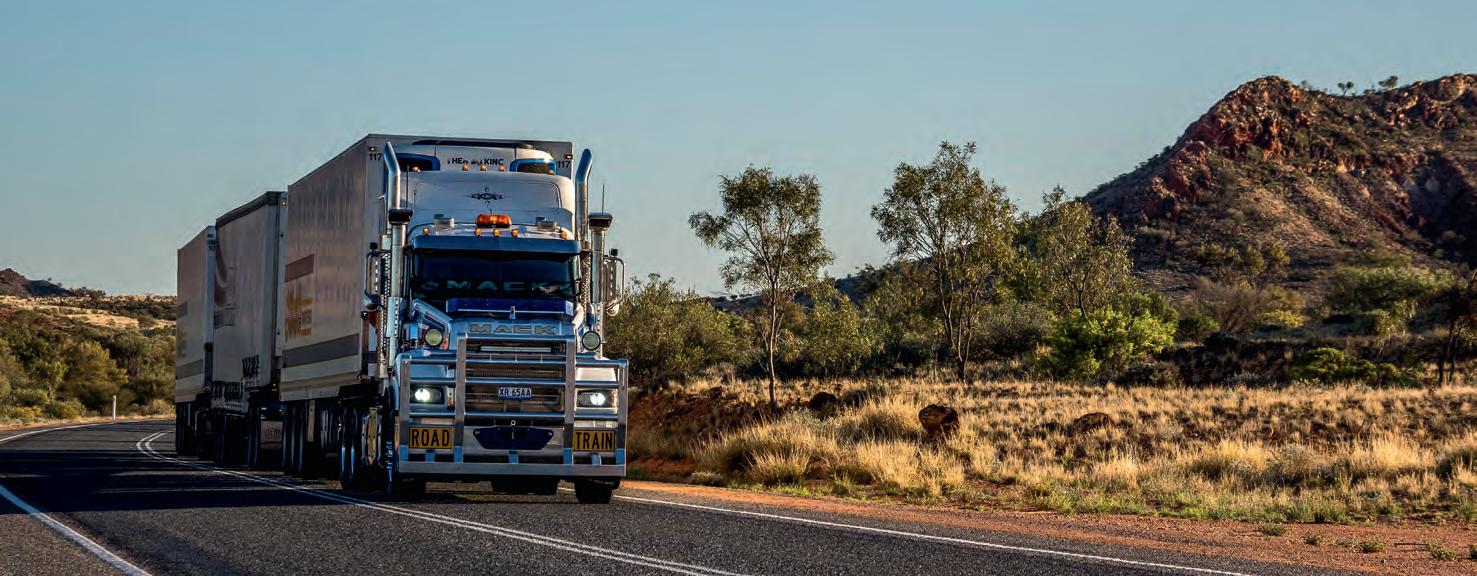



In the top right-hand corner of the NHVR work diary daily sheet is a box for putting your time of daily check if required. While this might seem like a harmless administrative entry along with all the others at the top of the page, there are a few things to know about it to get it right – and getting it wrong can cost you.
There is a team of police in NSW who are currently cracking down on work diary errors, and they’ve picked up a good number of drivers who have made a common mistake with the time of daily check. These drivers have diligently checked over their heavy vehicles before setting off for the day, written the time they’ve done this in the top corner of the
page and then gone about their work.
The mistake they’re making is that they’re not including the daily check in their “work time” when they draw the line at the bottom of the page – they are starting that from when they get in the driver’s seat and set off. What they have got is a time in the top corner that might be 15 minutes before they start driving and then work at the bottom of the page starting 15 minutes later.
The problem is that the daily check counts as “work time” for the purposes of the work diary, so the time spent on the daily check needs to be recorded at the bottom of the page as well.
What we are finding is that the police are conducting checks of driver work diaries,



SARAH MARINOVIC is a principal solicitor at Ainsley Law – a firm dedicated to traffic and heavy vehicle law. She has focused on this expertise for over a decade, having started her career prosecuting for the RMS, and then using that experience as a defence lawyer helping professional drivers and truck owners. For more information email Sarah at sarah@ainsleylaw. com.au or phone 0416 224 601.



Check out the legends, albums and moments that made music history from the Australian Truck Radio Rock’n’Roll Diary
July has produced some of the biggest moments in Aussie and international rock history — from iconic album releases and unforgettable concerts to the birthdays of legendary artists who helped define generations of music.
JULY 1
1949: In Australian music, it doesn’t get much bigger than John Farnham. The man known as ‘The Voice’ may have started in the pop world, but with albums like Whispering Jack he now sits as one of the country’s biggest rock stars.

SIMON SMITH is the manager and producer of Australian Truck Radio. He has been in the radio game for 44 years and has been customising playlists for truckies for at least 20 of those. For great tunes 24 hours a day, 7 days a week, download the digital app for your phone at www.australiantruckradio. com.au.

JULY 3
1943: The Seekers’ Judith Durham OAM is born in Essendon, Victoria under the name Judith Mavis Cock. He became the lead singer of the folk music group in 1962 and is remembered as a crucial member of Australia’s music scene.
JULY 4
1958: Kirk Pengilly from INXS is born in Kew, Victoria.
JULY 7
1940: An iconic member of The Beatles was born in Ringo Starr. The drummer was born in the Dingle area of Liverpool.
JULY 9
1946: It’s another instance of AC/DC dominating the list, with the wellknown Bon Scott being born on this day as he rose to become the band’s popular lead singer.
JULY 17
1998: A tragic day in Australian rock music history occurred as lead singer of Dragon, Marc Hunter, passed away.
seeing this error and charging drivers with an offence of “false and misleading work diary entry” in relation to each page where the mistake is made. Then the drivers must go to court, facing a maximum penalty of over $13,000 for each offence.
So basically, good drivers who are doing the right thing and checking over their vehicles before setting off, who don’t know that it counts as “work”, are then carrying around books full of evidence of this mistake which can then be used against them.
For most of these drivers, the mistake only represents at most 15 minutes of work missed off the line at the bottom of the page, because a daily check doesn’t usually take longer than that. And if that 15 minutes is added in, it doesn’t upset their overall compliance with work and rest requirements. It’s a small mistake, generally with little safety impact, but the risk for the driver is huge.
So, my advice to you is this:
1. Be sure of whether you actually are obliged to fill out the time of daily check, as not everyone is.
2. If you are one of those who has to do it, make sure that the time spent on the daily check is recorded as work time at the bottom of the page.
3. If this article prompts you to check your work diary and you can see that you’ve make this mistake in the past – please seek legal advice. My firm, Ainsley Law, would be happy to help you get your work diary back on track.
JULY 21
1953: He may not be known best for his rock music exploits, but Jeffrey ‘Jeff’ Wayne Fatt AM is a beloved member of the local music scene. Known best for having to wake up often on The Wiggles, Jeff was born on this day in Casino, New South Wales.
JULY 22
1973: Daniel Jones was born on this day. As one of the key members of Savage Garden, he helped bring polished pop-rock to global audiences throughout the late ‘90s and early 2000s.
JULY 26
1943: Taking it back to the ‘40s and one of the world’s biggest rock icons was born in Mick Jagger. The charismatic front man of The Rolling Stones is highly regarded for his decades at the helm of the band.
JULY 27
1960: Long-time pianist and backing vocalist for Nick Cave and The Bad Seeds, Conway Savage, was born on this day. Savage was known for his atmospheric contributions to one of Australia’s most acclaimed rock acts.
1971
Daddy Cool rose to prominence with ‘Eagle Rock’ hitting number one on Australian charts in July of 1971.
1978
It was Grease fever in July 1978 as John Travolta and Olivia Newton-John’s ‘You’re the One That I Want’ skyrocketed to number one off the back of the timeless movie.
These events and individuals have played pivotal roles in shaping the landscape of Australian rock music from The Australian Truck Radio Rock’N’Roll Diary!
The 2026 edition of supply chain event MegaTrans is a hot commodity for the industry, with 80 per cent of the show floor already sold out
MegaTrans, Australia’s leading transport, logistics and supply chain exhibition and conference, has experienced a surge in exhibitor demand ahead of its 2026 event, with 80 per cent of the show floor now officially sold.
The strong uptake highlights continued momentum across the sector, with companies moving early to secure space at the only event connecting every link in the supply chain.
The response reflects both the continued strength of face-toface engagement and the growing importance of in-person connection across transport, logistics and infrastructure supply chains.
MegaTrans brings together operators, manufacturers, technology providers and industry leaders across the entire supply chain, alongside a broad conference program focused on innovation, productivity and sustainability.
With most of the exhibition space now committed, attention is turning
to the remaining allocation, which is expected to sell quickly in the lead up to the event.
Prime Creative Media head of marketing – events Molly Hancock says the level of demand has been one of the strongest they have seen at this stage of planning.
“There has been a really clear appetite from industry to be part of MegaTrans 2026,” Hancock says.
“Exhibitors are locking in early because they want to be visible
where decisions are being made and where the whole supply chain comes together.”
The Operator Hub, presented by Geotab, has also experienced great demand from some of Australia’s leading transport operators.
Companies such as Amazon, UPS, DP World, Maersk, Cold Xpress, Centurion, Wettenhalls, Hi-Trans Express, SGS Logistics, Aramaex, TFM Express, FBT Transport and Norman Carriers will all be
represented on the show floor.

MegaTrans 2026 will take place on September 16-17 at the Melbourne Convention & Exhibition Centre.
The remaining floor space is now limited, with organisers encouraging interested companies to secure their position as soon as possible to avoid missing out.
For exhibition enquiries for remaining stand availability, please vis-it: https://megatrans.com.au/getinvolved/
New Award Categories
• Supply Chain Leader of the Year
• Rising Star Award
• Customer Experience Professional of the Year
• Workforce Development Award
• Warehouse of the Year


The Mercury Awards are set to return in 2026, celebrating the very best across Australia’s supply chain and industry
From breakthrough automation projects to transformative leadership and sustainability initiatives, the Mercury Awards honour those making a meaningful impact across the supply chain industry.
Presented by MHD Supply Chain Solutions, the Mercury Awards are set to once again recognise and celebrate the outstanding achievements, innovation and leadership shaping Australia’s logistics, supply chain and materials handling sectors.
Held on the opening day of the 2026 MegaTrans Expo, Australia’s leading integrated exhibition and conference for the logistics, transport and supply chain sectors, this year’s Mercury Awards gala dinner will take place at Evoque Events in Melbourne on Wednesday, September 16, 2026.
Bringing together industry leaders, innovators and decision makers from across the country, the awards evening will provide a premier platform for networking, collaboration and celebration during one of the industry’s most significant national events.
Building on the success of the 2024 program, this year’s Mercury Awards feature four returning categories alongside 12 exciting new categories designed to reflect the evolving priorities and innovations within the industry:
Returning Award Categories
• Best Technology Application Award
• Sustainability Initiative Award
• Freight Transport Solution of the Year
• Supply Chain Innovator of the Year
• Automation Project of the Year
• Last Mile Delivery Award
• Fleet Management Excellence Award (TMS)
• Supply Chain Transformation Award (Consultancy-led)
• Warehouse Optimisation Award (WMS)
• Marketing Professional of the Year Award
• Supply Chain Excellence of the Year Award (Excellence/overall award)
“We are excited to bring back the Mercury Awards in 2026 with an expanded awards program,” Prime Creative Media head of awards and conferences Caitlyn Douglas says.
“These changes highlight the growing importance of operational excellence, workforce development, customer experience, automation and sustainability across the sector.”
Entries are open to businesses and professionals across the logistics, supply chain, freight, warehousing, transport and materials handling industries.
The Mercury Awards continue to serve as a benchmark for excellence, recognising organisations that are not only achieving operational success but also helping shape the future of the industry.
Submit your nominations by visiting mercuryawards.com.au for more info.
The team behind the North Coast Petroleum Casino Truck Show are ready for a swell of trucks, entertainment and people to descend on the New South Wales town
One of Australia’s most anticipated truck shows is right around the corner on Friday July 31 and Saturday August 1. With entries to the North Coast Petroleum Casino Truck Show opening sharply at 9am on Monday July 13, it’s a race against the clock for 550 participants eager to secure their place. If past years are anything to go by, spots won’t last long, often selling out within days.
For just $30 per truck, entrants gain more than just a spot in the show. Each registration includes judging and access to two major showcase events: the electrifying Friday Night Lights display or the everpopular Saturday Truck Parade, which itself is limited to 200 trucks. For spectators, the good news continues – the event remains completely free for the general public, making it an unmissable family-friendly weekend.
Competition is fierce, with 80 trophies awarded across a wide range of industry-leading categories. Beyond the trucks themselves, the event comes alive with exhibitors, merchandise stalls, food vendors and live entertainment, ensuring there’s something for everyone. Families are especially well catered for, with free kids’ entertainment running throughout the event.
A highlight of this year’s showcase is a collection of exceptional custom-built prizes for the Charity Auction with feature pieces that reflect the creativity within the industry. These include:
• A Cummins engine boardroom table crafted by Alltruck Diesel Repairs
• A custom-built trailer bar by Moore Trailers
• Traditional-style air cleaner barrels supplied by AirCans Australia
• A hand-painted Kenworth door featuring the Casino Truck Show branding, courtesy of Loaded Threads
The event itinerary offers standout moments across both days, starting with PFM Friday Night Lights (6pm–8pm), a spectacle where trucks gleam under lights, chrome shines and engines hum in sync with live music across two stages. It’s an atmospheric kickoff that blends machinery and music in unforgettable fashion.
On Saturday morning, the focus shifts to the streets with the Dawson’s Haulage Truck Parade at 10am, where a procession of trucks rolls through Casino’s main streets, drawing crowds from across the region.
The afternoon brings both excitement and generosity. At 2:30pm, the charity auction takes centre stage, featuring a range of remarkable donated items, headlined by a custom engine bar counter. This is followed by the Trophy Presentation at 3pm, where the hard work and passion of entrants are formally recognised.
Music plays a central role in the atmosphere, with entertainment spread across both the Northern and Southern stages throughout the event. Friday night sets the tone with Tate Cole, and Khan Rocks, while Saturday’s line-up ramps things up further with Thor Phillips, Sabotage and Country Mud.
For those wanting to immerse themselves fully, camping is available at the Casino Showgrounds, with both powered and unpowered sites on offer. Bookings can be made through the Truck Show website, with facilities designed to keep visitors comfortable across the weekend.
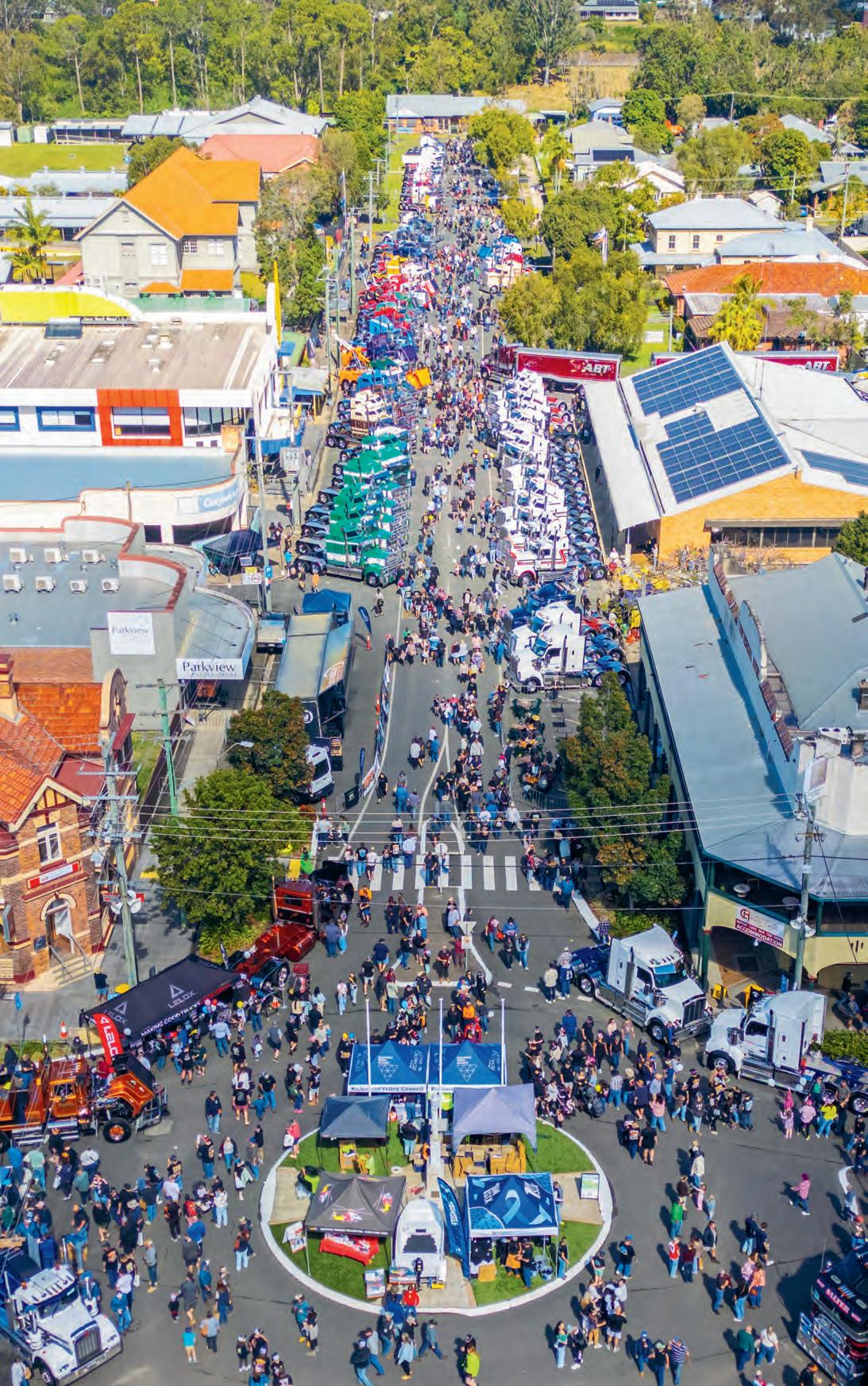
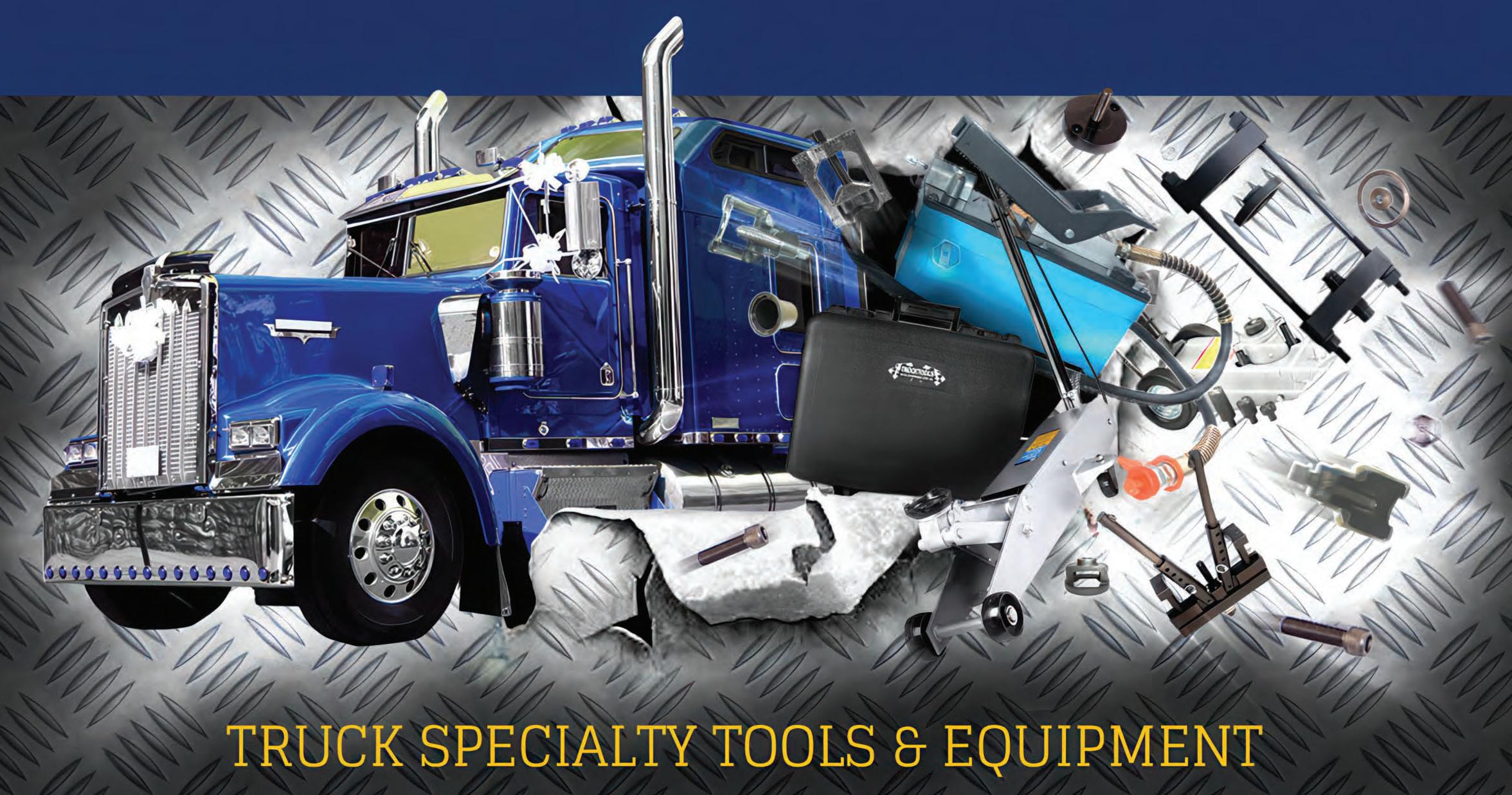
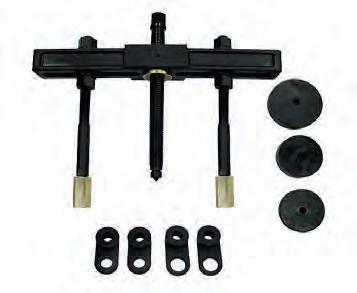
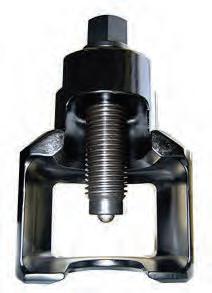
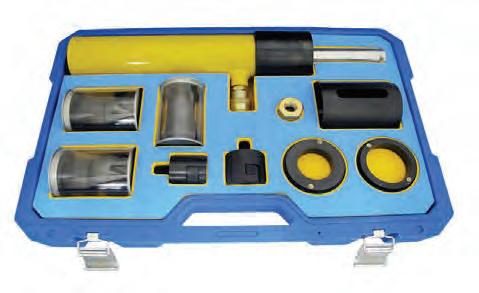

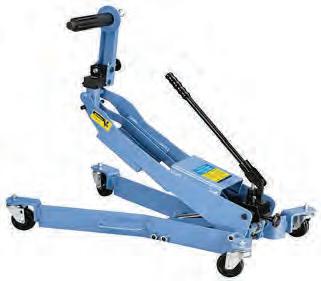
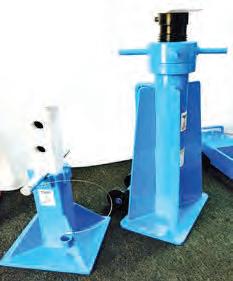
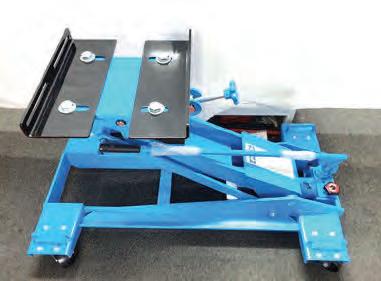


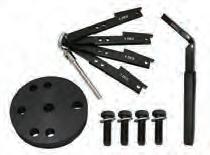

For more information, look for @casinotruckshow on
https://casinotruckshow.com.au/
GOLDEN OLDIES TRUCK, TRACTOR, BUS AND QUILT SHOW
August 1 & 2, 2026
DUBBO SHOWGROUNDS, NSW
There’s a whole heap going on in Dubbo in August, when the
entertainment, food vendors and various trade stands.
LOWOOD TRUCK SHOW
August 15, 2026
LOWOOD SHOWGROUNDS, QLD
Stay tuned… The Lowood Truck Show is making its return, and we’re keen to make it the biggest show yet!




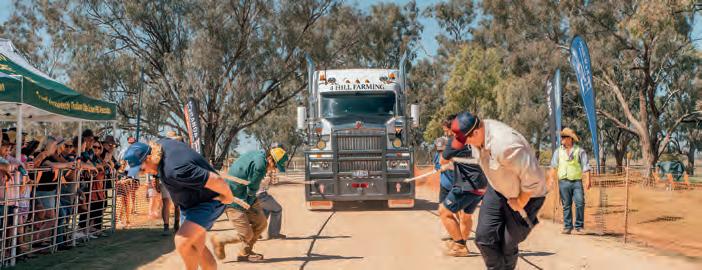
WONDAI TRUCK SHOW
August 22, 2026
WONDAI QUEENSLAND

Bring your shine or bring the dust our community just loves seeing your rigs on display! From polished chrome to hardworking road warriors, every truck has a story to tell, and we can’t wait to see them all lined up again in 2026.
Join us for another show stopping year packed with great trucks, great people, and an unforgettable atmosphere at the Wondai Showgrounds.
Whether you’re entering your pride and joy or coming along for a great day out, the Wondai Show Truck Show is one event you won’t want to miss.
Start polishing, start planning, and we’ll see you there!
August 29, 2026
THALLON, QLD
The Thallon Truck Pull is good ol’ country family fun at its fi nest, with loads on offer for everyone. At the heart of this thrilling event is a spirited competition of strength and skill. Crews of six take on the challenge of pulling a 12-tonne prime mover over 25 meters in the fastest time. Each team gets three attempts—fastest time wins!
For more information go to https://thallontruckpull.com.au/.






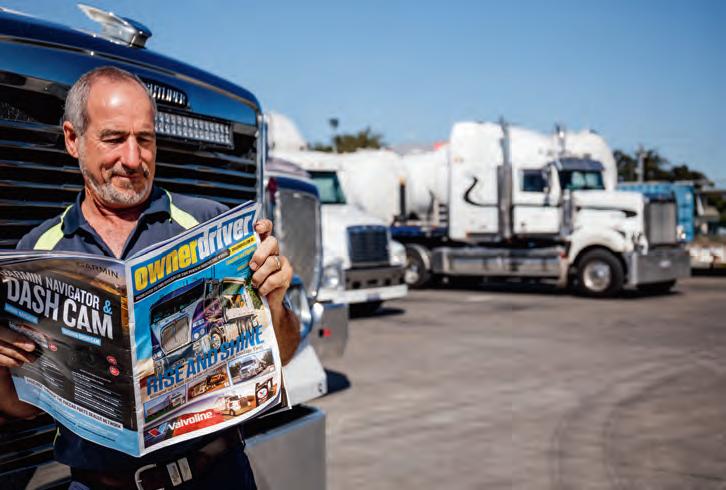

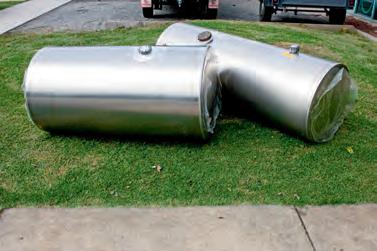
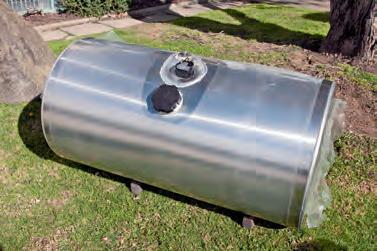
















the
For months, diesel prices have been moving like a runaway train, unpredictable, violent and impossible for small operators to absorb. One week you’re paying $2.40 a litre, the next it’s $3.10 or more. In parts of regional Australia, it’s climbed even higher. A single 1,000 litre fill is now regularly north of $3,000. That’s not inflation, that’s volatility on steroids, and it hits hardest at the people least able to carry it.
And while fuel spikes happen instantly, freight rates don’t. Most operators are still stuck on 45 to 90 day payment terms, effectively bankrolling the supply chain while carrying the most volatile cost in the business. It’s a model that collapses the moment fuel becomes unstable, which is exactly what happened. The numbers stopped adding up, the margins disappeared and the people doing the work were left holding the bill. By late April, the pressure reached breaking point. Trucks were parked. Jobs were refused. Operators told clients, bluntly, that they could not run at a loss any longer. This wasn’t a protest – it was
survival. The industry wasn’t bluffing; it was drowning.
The TWU, industry groups and the government all recognised the same reality: without intervention, the crisis would ripple through the entire economy. Freight doesn’t move, Australia doesn’t move. Emergency applications were lodged with the Fair Work Commission, and for the first time under the new transport reform laws, the Commission issued a historic Emergency Fuel Order. The order requires:
• A mandatory fuel levy tied to real diesel prices
• Fortnightly reviews to keep pace with market movements
• Full pass through down the contracting chain
• Transparency obligations to stop companies burying or withholding the levy
For once, the system acknowledged what operators have been saying for years: fuel is a critical cost that must be recovered in real time, not months later when the damage is already done. But in true transport industry fashion, the
“Most operators are still stuck on 45 to 90 day payment terms, effectively bankrolling the supply chain while carrying the most volatile cost in the business.”
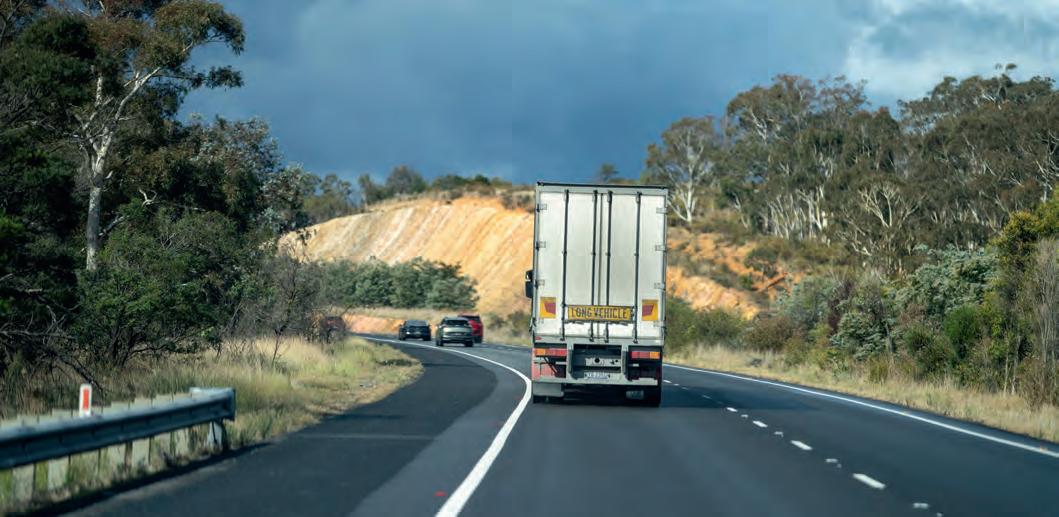
moment a fair system was introduced, a handful of grubs started looking for loopholes.
Some operators are now dropped the base rate paid on a job, then adding the fuel levy on top, creating the illusion they’re doing the right thing. On paper it looks compliant. In reality, it’s a con: a way to claw back the levy by quietly reducing the underlying rate. It’s the oldest trick in the book – give with one hand, take with the other.
Others are applying the wrong percentage, using outdated fuel prices or calculating the levy off a reduced rate instead of the actual contract value. It’s sleight of hand accounting designed to undermine the very protections the Emergency Fuel Order was meant to deliver. Let’s call it what it is: cost shifting dressed up as compliance. Every time someone pulls this stunt, it drags the whole industry backwards.
The majority of operators and clients are applying the levy properly. Some major players even moved early, adopting interim levies before the order was finalised. Others have begun renegotiating contracts to include automatic fuel adjustments, recognising that stability in the supply chain depends on stability for the people actually moving the freight.
But the cheats, the ones gaming the system, create two major problems. Firstly, they undercut honest operators, forcing a race to the bottom that punishes those who follow the rules. Then, they give clients ammunition, claiming “others can do it cheaper”, when the only reason is that someone is cooking the numbers.
This behaviour isn’t clever. It’s disgusting and corrosive. It undermines the entire purpose of the Emergency Fuel Order and sends a message that some in the industry would rather exploit loopholes than build a sustainable future.
The Emergency Fuel Order is not a trophy. It’s a lifeline and a precedent. If fuel can be recognised as a cost that must be recovered, then so can maintenance, insurance, wages, compliance, tyres and every other unavoidable cost that keeps a truck on the road.
But that only works if the industry respects the system. If operators want sustainable rates, honestly, consistently and transparently fair contracts, and a future where they’re not absorbing global shocks alone, then the levy must be applied.
To stabilise the industry long term, the next steps are obvious. Enforce 30-day payment terms so operators aren’t financing the supply chain, mandatory cost based rate reviews that reflect real operating expenses and real accountability across contracting chains, not just at the bottom. Then enforce permanent automatic fuel adjustment mechanisms, penalties for those who deliberately manipulate the levy and a real time, approved cost model to support transparent, evidence based rate reviews
The fuel crisis exposed the cracks. The Emergency Fuel Order showed what’s possible when the industry stands together and refuses to be ignored. Now the challenge is stopping the grubs from dragging us back into the shadows because the future of the industry depends on getting it right.