Copyright Manufacturers’ Monthly is owned by Prime Creative Media and published by John Murphy.
All material in Manufacturers’ Monthly is copyright and no part may be reproduced or copied in any form or by any means (graphic, electronic or mechanical including information and retrieval systems) without written permission of the publisher. The Editor welcomes contributions but reserves the right to accept or reject any material. While every effort has been made to ensure the accuracy of information, Prime Creative Media will not accept responsibility for errors or omissions or for any consequences arising from reliance on information published.
The opinions expressed in Manufacturers’ Monthly are not necessarily the opinions of, or endorsed by the publisher unless otherwise stated.
All articles submitted for publication become the property of the publisher. The Editor reserves the right to adjust any article to conform with the magazine format.
Welcome to the May edition of Manufacturers’ Monthly
This month’s Cover Story features RSM Australia’s Tim Linke, who explores how disciplined cashflow management and sharper working capital strategies are proving critical to resilience and growth as manufacturers enter a volatile new financial year.
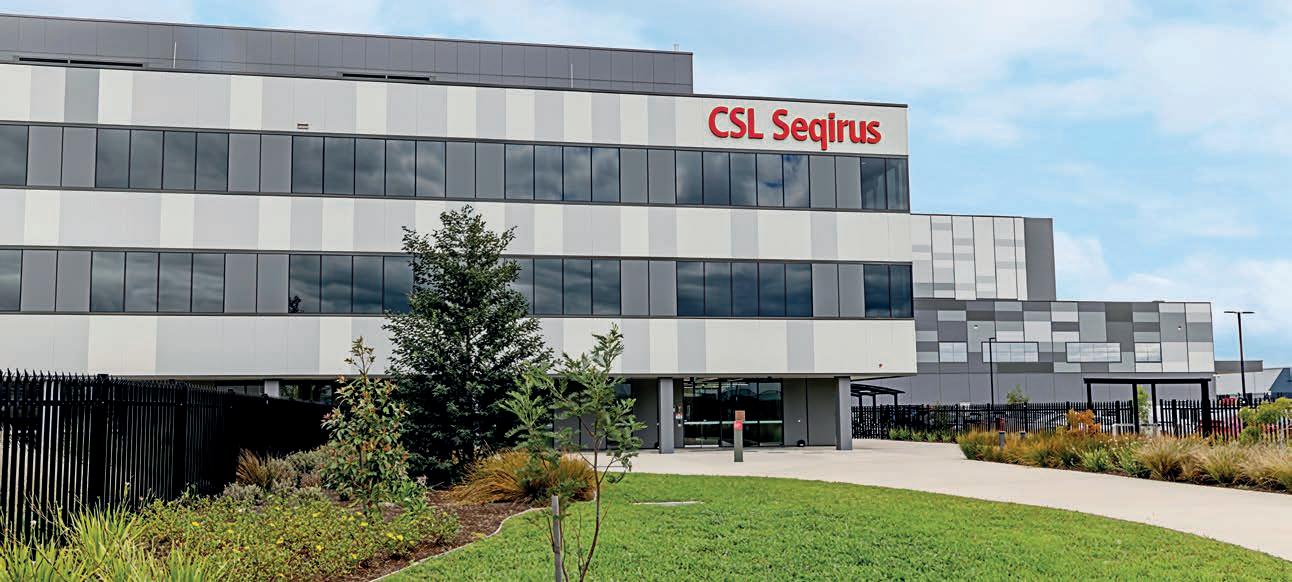
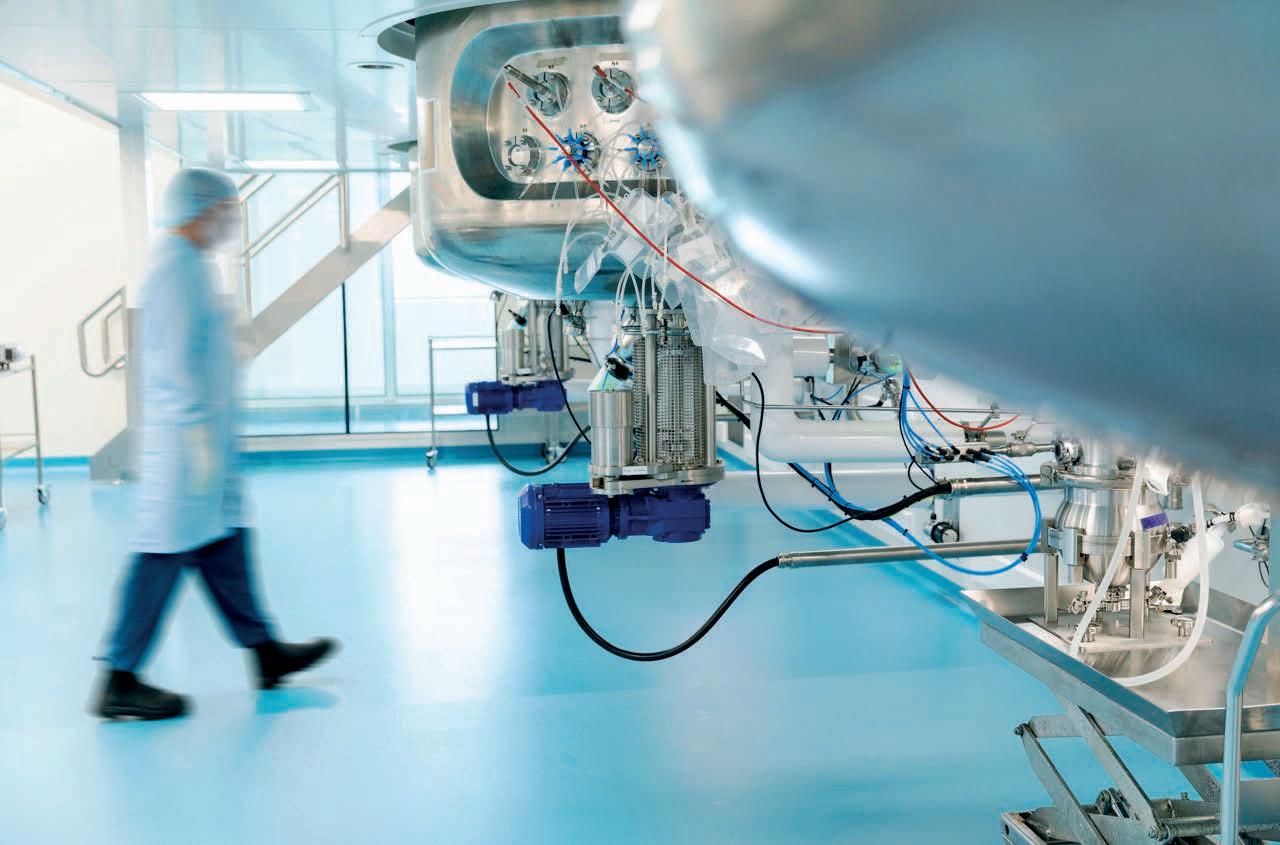
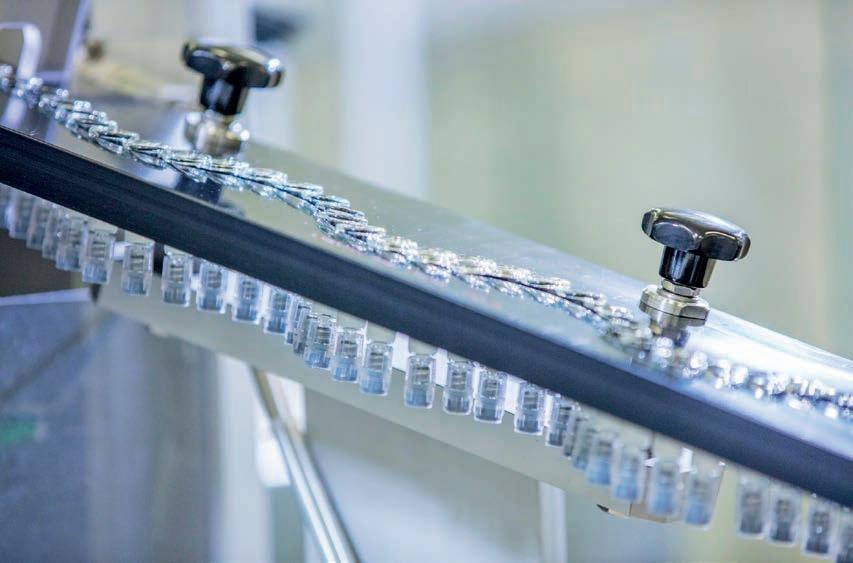
In this editions Manufacturer Focus, CSL Seqirus’ Tullamarine facility is spotlighted as it redefines Australia’s role in global vaccine manufacturing through advanced cell-based technology.
Finally, in our Decision Maker column, Jeff Connolly, CEO of Thales Australia and New Zealand, argues that a strong sovereign defence industrial base remains essential to Australia’s security and economic resilience.
Manufacturing takes centre stage
As this issue goes to print, the sector stands on the verge of what is arguably its biggest week of the year. Australian Manufacturing Week (AMW), held from May 12–14 in Brisbane, will again bring together the full breadth of the industry – from shopfloor innovation to advanced digital capability –offering a platform for connection, collaboration and the exchange of ideas shaping the future of manufacturing in this country. Running alongside it on May 13, the Endeavour Awards will celebrate the individuals and organisations driving that progress, recognising excellence, leadership and innovation across the sector. Together, these events capture a moment of momentum. Across Australia, manufacturers are not only adopting new technologies but redefining what sovereign capability looks like in an increasingly complex global environment. As Jeff Connolly, CEO of Thales Australia and New
Zealand, reflects in this month’s decision maker column, the importance of a resilient domestic industrial base is once again coming into sharp focus. From the legacy of wartime production to today’s advanced, digitally integrated systems, local industry continues to play a critical role in national security. Whether through globally recognised platforms like the Bushmaster, or emerging strengths in undersea systems, cyber security and AI-enabled technologies, Australia’s defence capability is evolving –and with it, the expectations placed on its manufacturing base.
This evolution is not confined to defence. In this issue’s manufacturer focus, CSL Seqirus’ Tullamarine facility highlights how investment in advanced manufacturing is strengthening Australia’s position on the global stage while reinforcing domestic resilience. The shift to cell-based vaccine production, underpinned
by automation, digital integration and a highly skilled workforce, represents a leap forward in both capability and preparedness. Importantly, it ensures the nation retains the capacity to respond rapidly to future health crises while contributing to global supply.
What ties these stories together is a common thread: a growing recognition that manufacturing capability is fundamental not only to economic growth, but to national resilience. Whether in defence, healthcare or broader industry, the ability to design, produce and scale critical technologies locally has never been more important. And even though there is a long way to go, momentum is building.
As AMW and the Endeavour Awards take centre stage this month, they do more than showcase achievement – they underline the strength, diversity and ambition of Australian manufacturing at a pivotal time for the industry.
AMW and the Endeavour Awards take centre stage this month showcasing achievement strength, diversity and ambition.
MANUFACTURER FOCUS
Scaling pandemic preparedness
CSL Seqirus’ Tullamarine facility is redefining Australia’s role in global vaccine manufacturing through advanced cell-based technology.
Few Australian manufacturers can claim more than a century of continuous operation while still undergoing technological transformation.
CSL Seqirus sits in that category, evolving from its origins in Parkville into a globally connected vaccine manufacturer with facilities spanning three continents.
For Jonah Smith, vice president, manufacturing and site head, Tullamarine, that evolution is personal as well as industrial, reflecting more than two decades with the organisation and a front-row seat to one of its biggest investments.
“I’ve been with CSL for 21 years now, and I’ve been working in manufacturing, engineering and
project management. And I was lucky enough to, for the last fi ve years, be programme manager to help build this new facility here in Tullamarine,” he said.
The decision to invest in a facility in Melbourne was not taken lightly. CSL’s historic Parkville site had long been central to Australia’s vaccine capability, but shifting global demands and technological advancements required a step change. The Tullamarine facility represents that leap, both in scale and sophistication, positioning Australia as a serious player in the advancement of cell-based vaccine manufacturing.
“CSL’s been operating in Australia for well over 100 years now, and we’ve historically been based at a site in Parkville, which is where CSL began,” said Smith. “But as the company evolved, we saw the need and a unique opportunity to invest in a new facility in Melbourne for three main reasons.”
Pandemic preparedness at scale
At the heart of the investment lies pandemic readiness – a priority sharpened by recent global events and one that demands both speed and scale. T he shift from traditional egg-based production to cell-based technology is central to this capability. This transition is not simply incremental; it represents a change in how vaccines can be produced and deployed under pressure.
“That technology gives us a significant advantage
Images: CSL
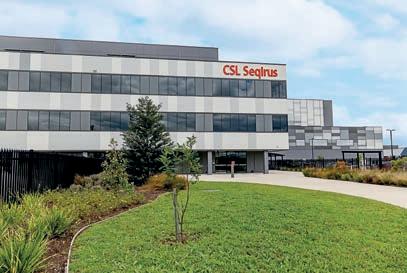
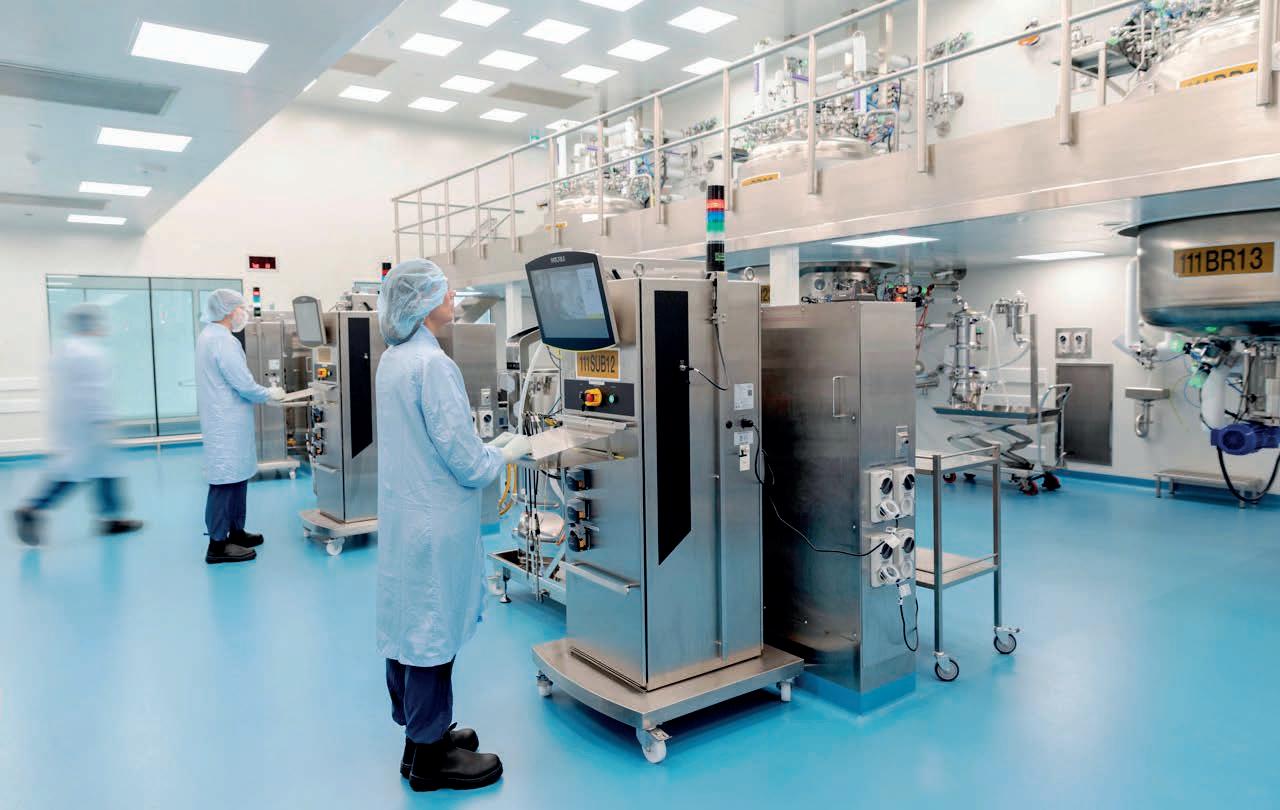
CSL’s Tullamarine facility represents a leap, both in scale and sophistication in cell-based vaccine manufacturing.
CSL Seqirus continues to play a role in producing products of national significance, including antivenoms.
in terms of scale and speed of response. So, it’s well geared to a pandemic setting,” said Smith.
Beyond emergency response, the facility is designed to meet a growing global demand for seasonal influenza vaccines, particularly those produced using cell-based methods. Since 2020, demand for these vaccines has surged, reinforcing the need for expanded capacity. Tullamarine is not just a domestic asset; it is embedded in CSL Seqirus’ global supply network, exporting to multiple regions and supporting international health systems.
“The seasonal flu vaccine demand is continuing to grow globally, and the demand for cell-based flu vaccines has more than doubled since 2020. So this facility is a key pillar in meeting that long-term demand,” said Smith.
Technology driving transformation
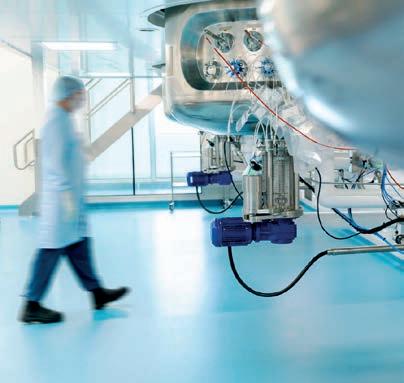
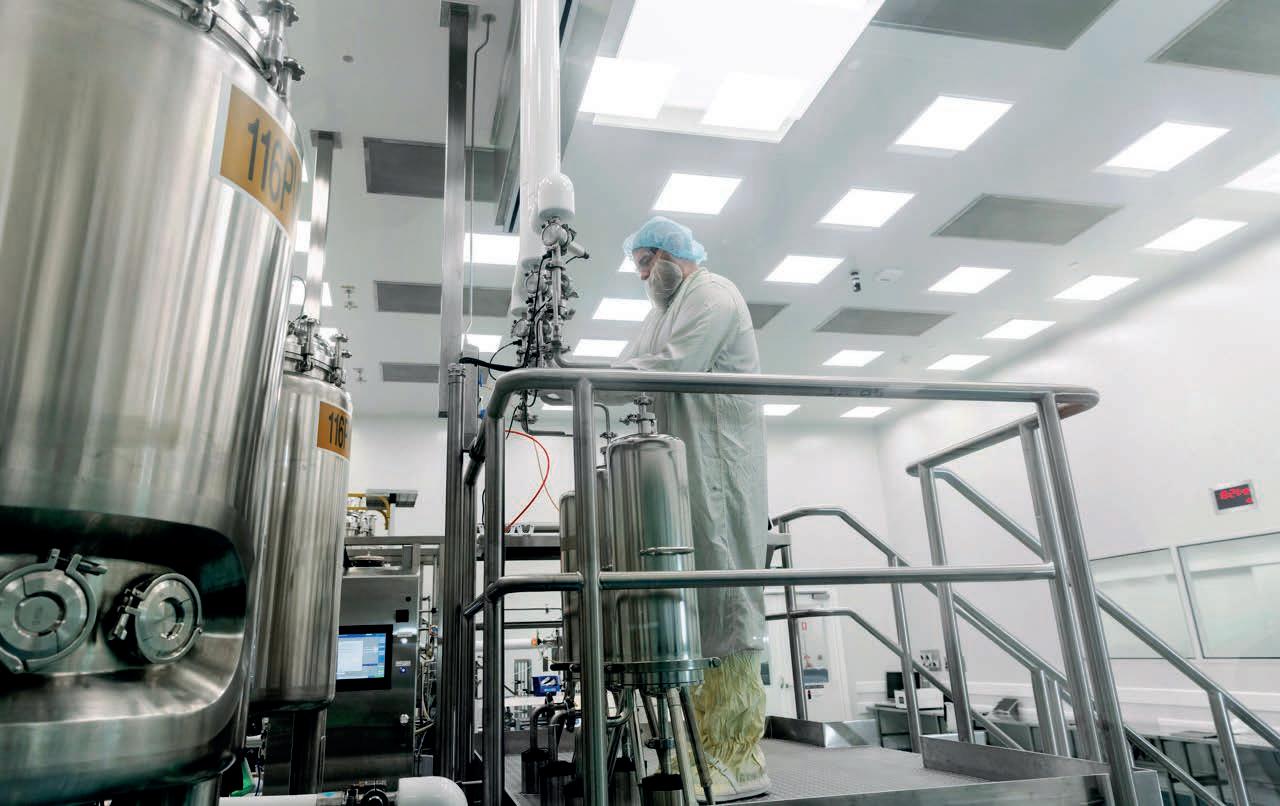
Inside the Tullamarine facility, advanced manufacturing technologies underpin its performance. The move to cell-based production introduces bioreactors and highly controlled processes, supported by automation and digital integration. This is manufacturing at the intersection of biology and data, where precision and traceability are critical.
“We’re using bioreactors and animal cells to be the host for the virus,” said Smith. “This is highly automated, aseptic processing, and our enterprise systems are digitally connected. We’re using what we call electronic batch records and review by exception.”
The advantages of this approach are tangible. Compared with traditional methods, the facility delivers faster production timelines, higher yields and the ability to rapidly scale in response to demand spikes. Crucially, it is also designed for immediate activation in a crisis scenario, with key materials already held on site.
“The speed to manufacture and release a batch is improved with this technology. We can turn it on very quickly, we can scale it up very quickly, and we get more than double the yield from our current facility compared to the older egg-based technology,” said Smith.
A defining feature of CSL Seqirus’ approach is maintaining continuous seasonal production, ensuring that both the facility and its workforce remain operationally ready. This concept –referred to as a “warm base” – underpins both economic viability and emergency preparedness. It reflects a broader industry reality: pandemic capability cannot exist in isolation.
“It keeps not only the facility turning over and ready to go, but it’s the staff,” said Smith. “By having that ongoing seasonal output, it means that that machine’s always ready to go and it can be scaled quickly as well. We use a term, we call it warm base.”
In vaccine manufacturing, quality is not negotiable. Every process at Tullamarine is designed with multiple layers of control, from automation through to integrated digital systems that monitor and enforce compliance. This approach ensures consistency, traceability and adherence to regulatory standards.
“Quality is paramount and we’ve designed this facility from the beginning with a very high degree of automation. We use what’s called a manufacturing execution system. This means the systems are digitally connected, so the process is tightly controlled,” said Smith.
A hub for global partnerships and a skilled workforce
The success of Tullamarine and its international partnerships speaks to a broader narrative about
The shift from traditional egg-based production to cell-based technology is central to pandemic readiness.
Australian manufacturing capability. Far from being peripheral, the sector is increasingly recognised for its technical sophistication and global integration. For CSL Seqirus, Melbourne has emerged as a key hub within its international network.
The facility’s global significance is underscored by a growing list of international partnerships, including a recent agreement with the Public Health Agency of Canada. For CSL Seqirus, these collaborations reinforce both capability and credibility on the world stage.
They also highlight a broader shift: Australian manufacturing is no longer confined to domestic supply, but increasingly contributing to global health resilience.
“It’s the first global contract for the facility, and
The Tullamarine facility encapsulates several defining themes in modern manufacturing.
MANUFACTURER FOCUS
it shows that you can be a global export scale facility out of Australia. It’s a great sign that an Australian company can play such a pivotal role in the global healthcare environment,” said Smith.
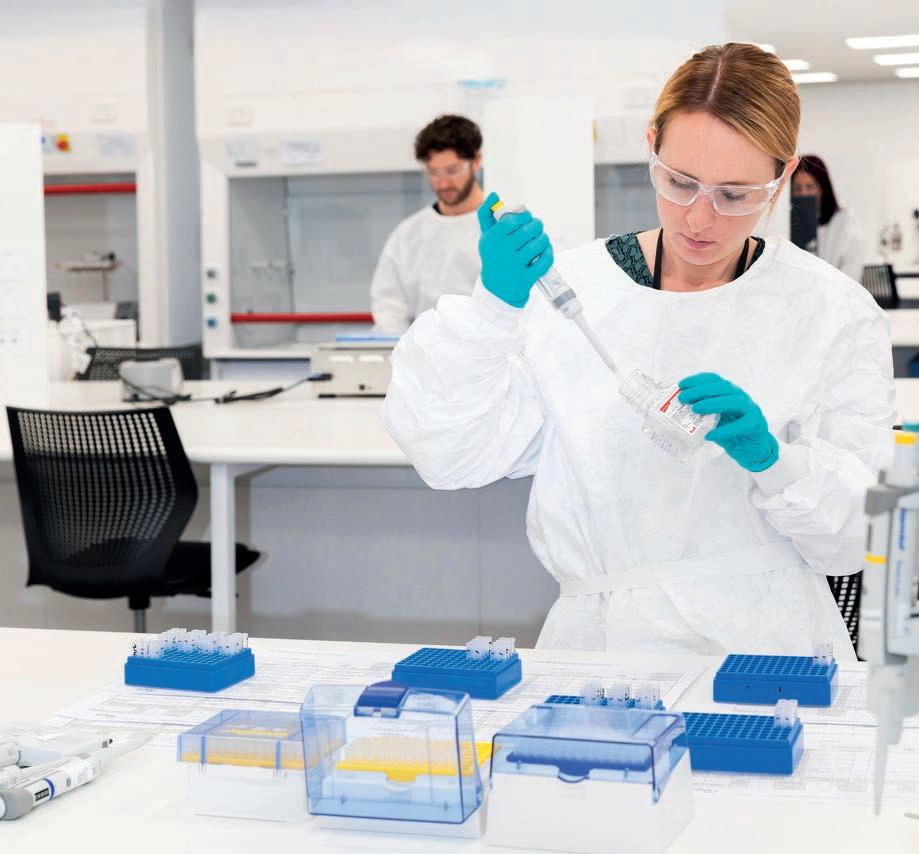
Running such an operation requires a workforce with deep technical expertise across multiple disciplines. At Tullamarine, more than 400 people support operations, spanning manufacturing, engineering and quality functions. The site is also an employer of highly educated graduates, reinforcing its role in developing Australia’s advanced manufacturing talent base.
“Typically, our workforce is science and engineering graduates, chemical engineers, automation engineers, scientists. Although, the largest groups of employment are in manufacturing and quality control,” said Smith
Sovereign capability and national resilience
While global reach is important, the facility also plays a role closer to home. Domestic vaccine manufacturing capacity is central to Australia’s pandemic preparedness strategy, ensuring rapid access to doses when needed. The scale of this responsibility is significant.
“In the event of a pandemic, we need the capacity to provide every Australian with two doses of a pandemic vaccine… and we can produce in the order of 150 million doses in the first wave of manufacturing,” said Smith.
Looking ahead, the facility is positioned to support CSL Seqirus’ broader strategy, including the development of advanced and differentiated vaccine products, including the integration of adjuvant technologies . The site is already equipped to support this next phase.
At
Tullamarine, more than 400 people support operations, spanning manufacturing, engineering and quality functions.
“We’re expecting to continue to have more adjuvanted vaccines on the global market,” said Smith. “We’ve just installed the adjuvant manufacturing plant. It’s an important part of the pandemic formulations we use globally.”
In addition to influenza, Smith said CSL Seqirus
continues to play a role in producing products of national significance, including antivenoms for Australia’s unique wildlife risks and the world’s only human vaccine for Q fever. The facility will help modernise and sustain this capability. It is a reminder that advanced manufacturing is not only about global markets, but also local needs.
“Australia has these unique products of national significance like antivenom, where we play a key role in protecting Australians against envenomation… that’s an important part of modernising and continuing that protection,” he said.
A blueprint for advanced manufacturing
The facility encapsulates several defining themes in modern manufacturing: digital integration, workforce capability, global connectivity and sovereign resilience. It demonstrates how investment in advanced technologies can deliver both economic and societal value.
For Australia, it offers a blueprint for how hightech manufacturing can thrive in a competitive global landscape.
“And it shows that we can be a global export scale facility out of Australia… and secure that employment for high skilled roles,” Smith concluded.
The facility is designed to meet a growing global demand for seasonal influenza vaccines.
Talk to Minitab
RSM MANUFACTURING PLAYBOOK: WHERE EXPERTISE MEETS
Mastering working capital for FY26
As manufacturers enter a volatile new financial year, cashflow visibility and sharper working capital strategies are proving critical to resilience and growth.
As the 2026 financial year approaches, Australian manufacturers find themselves navigating a complex and uncertain operating environment. Global instability, shifting trade dynamics and persistent cost pressures are combining to test the most established businesses. While external forces remain largely beyond control, the internal levers of cashflow and working capital are under scrutiny.
Against this backdrop, RSM Australia is urging manufacturers to return to fundamentals.
Understanding how cash moves through a business – and how quickly – is becoming just as important as topline growth or profitability. The distinction between profit and cash, long understood but often underappreciated, is once again front of mind for finance leaders.
“There’s an old saying I learnt early in my career, Profit is an opinion, however cash is a fact,” said Tim Linke, partner at RSM Australia. “Businesses need to be really focused on what is actually real and alive in their balance sheet, rather than glossing over headline numbers.”
The pressure points building across FY26
A key challenge for manufacturers lies in the accumulation of small inefficiencies that compound over time. Outstanding receivables, underutilised creditor terms and poorly timed capital expenditure can all erode liquidity when left unchecked. As businesses approach the end of the financial year, these issues tend to become more pronounced.
Linke points to the importance of reviewing debtor books in detail, particularly the ageing of outstanding invoices. Identifying which debts are likely to be recovered – and which require escalation – can make a material difference to cash position. He said at the same time, businesses must assess whether they are making full use of available supplier terms.
This need for discipline is heightened by the likelihood of “lumpy” cashflow events. Capital expenditure, in particular, can place sudden strain on reserves if not carefully planned and sequenced within broader cashflow cycles, according to Linke. The ongoing impact of rising input costs and supply chain volatility continues to reshape working capital
requirements across the sector. Many manufacturers are caught in a difficult position where pricing structures lag behind cost increases, compressing margins in the short term.
In some cases, contracts or market conditions limit the ability to pass on higher costs immediately. This creates a timing mismatch, where expenses rise faster than revenue, placing additional pressure on cash reserves. The result is often a tightening of working capital at precisely the moment when flexibility is most needed.
“You can get stuck in a cycle where your prices are fixed for a period, but your input costs are already moving,” Linke explained. “That margin squeeze hits straight away, so you have to be very focused on how you manage your working capital.”
Avoiding common working capital pitfalls
Despite the complexity of the current environment, many of the most common cashflow challenges stem from avoidable missteps. Businesses that pay suppliers earlier than necessary, or allow receivables to drift without active management, risk placing themselves on the wrong side of the working capital equation.
These decisions can have cascading effects. When unexpected costs arise, such as urgent capital expenditure, businesses may find themselves forced into reactive measures – including taking on debt at unfavourable terms or deferring strategic investments.
Linke emphasised that timing is critical. Aligning payable and receivable cycles more effectively can help businesses maintain liquidity and reduce the risk of being caught out by sudden cash demands. The objective is not to strain relationships, but to operate with greater precision and intent.
Managing supplier relationships with care
In an environment where every dollar counts, extending payment terms can be an attractive lever for improving cashflow. However, doing so without regard for supplier relationships can create longerterm risks. For manufacturers, many of whom rely on tightly integrated supply chains, collaboration remains essential.
The most effective approach, according to Linke, is proactive communication. Engaging suppliers early and openly about payment terms allows both parties to find workable solutions that reflect current conditions. This is important given that suppliers are often facing similar pressures.
“Get on the front foot and have the conversation,” he said. “Everyone is dealing with similar challenges, so it’s about finding a pragmatic, win-win outcome.”
Policy shifts and planning considerations
Beyond operational factors, a range of policy and regulatory changes are also shaping cashflow planning for the year ahead. Tax settings, superannuation requirements and government incentives all have implications for how manufacturers manage liquidity.
The Instant Asset Write-Off, for example, provided an opportunity for eligible businesses to bring forward deductions on assets under $20,000 for the 2025 financial year, before reverting to $1,000 from July 2025. While this can deliver short-term tax relief, it also removes the cost base for future calculations, with implications when assets are sold.
At the same time, changes to the treatment of ATO interest charges – which are no longer tax-deductible from July 2025 – increase the cost of falling behind on tax obligations. Coupled with a tightening stance on interest remission, this underscores the importance of timely payments and robust cashflow planning.
Preparing for structural change
Looking further ahead, structural shifts such as the introduction of ‘payday super’ from July 2026 will require adjustments to payroll processes and cashflow management. Moving from quarterly to near-immediate superannuation payments represents a change in timing, with direct implications for working capital.
Manufacturers will need to ensure their systems and processes are equipped to handle these changes. This may include reviewing payroll systems, adjusting pay cycles, and modelling the cashflow impact of more frequent outflows. At the same time, broader global dynamics – including trade tensions, tariffs and currency volatility – continue to influence the operating environment. For manufacturers engaged in international markets, these factors add another layer of complexity to financial planning.
Leveraging support and incentives
While the challenges are significant, there are also opportunities for manufacturers to strengthen their position through targeted support and incentives. Government programmes, including the R&D Tax Incentive, can help offset the cost of innovation and investment in new technologies.
In addition, broader initiatives under the Federal Government’s Future Made in Australia plan are expected to drive investment in areas such as green manufacturing, critical minerals and renewables. For businesses able to align with these priorities, there may be access to funding and support mechanisms.
Linke notes that awareness is key. Many businesses fail to take advantage of available programmes because they are not actively monitoring or pursuing them. Engaging with advisers who specialise in grants and tax incentives can help bridge this gap.
The role of RSM in guiding manufacturers
For manufacturers seeking to navigate these challenges, advisory support can play a critical role. RSM Australia offers a range of services designed to address both immediate cashflow pressures and longer-term strategic planning.
From a grants perspective, the firm works with businesses to identify relevant funding opportunities and guide them through the application process. This can unlock additional capital at a time when liquidity is under pressure. Similarly, R&D tax advisory services help businesses determine which expenditures may be eligible for rebates or refunds.
Across its business advisory practice, RSM supports manufacturers in developing a clearer understanding of their working capital position. This includes analysing cashflow cycles, identifying inefficiencies and implementing processes to improve visibility and control.
Turning insight into action
A central component of RSM’s approach is helping businesses move beyond historical analysis to forward-looking decision-making. Through financial modelling and scenario planning, manufacturers can gain a clearer picture of how different variables may impact their cash position over time.
This is particularly valuable in an uncertain environment, where conditions can change rapidly. By modelling potential outcomes, businesses are better equipped to make informed
A key challenge for manufacturers lies in the accumulation of small inefficiencies that compound over time.
decisions around investment, pricing and cost management.
“We’re helping clients understand what their future might look like, rather than just where they’ve been,” Linke said. “That allows them to make better decisions based on real information.”
Building a ‘useful’ budget
At the core of effective cashflow management is a robust budgeting process. RSM’s ‘Useful Budget’ framework is designed to go beyond traditional profit forecasting by integrating cashflow, strategy and performance metrics into a single, actionable plan.
This approach begins with defining clear goals and strategies, supported by historical data and a detailed understanding of business drivers. From there, a budget and cashflow forecast are developed, alongside key performance indicators to track progress.
Crucially, the process includes ongoing
reporting and review, ensuring that businesses can respond quickly to changing conditions. By linking financial performance to strategic objectives, manufacturers gain greater control over both dayto-day operations and long-term direction.
From complexity to clarity
For many business owners, the prospect of detailed financial planning can be daunting. However, the alternative – operating without clear visibility over cashflow – carries greater risks, particularly in the current environment.
RSM’s collaborative approach aims to simplify the process, working closely with clients to identify priorities and translate data into practical insights. By combining technical expertise with an understanding of manufacturing, the firm seeks to provide clarity where it is most needed.
The outcome is not just improved financial management, but greater confidence in decisionmaking. With a clearer view of their cash
position and future outlook, manufacturers are better placed to navigate uncertainty and seize opportunities as they arise.
Positioning for resilience and growth
As the new financial year begins, the message for manufacturers is clear: cashflow discipline is no longer optional. In a landscape defined by volatility and change, those who maintain tight control over working capital will be best positioned to withstand shocks and capitalise on emerging opportunities. While external pressures may persist, the tools for managing their impact are firmly within reach. By focusing on fundamentals, leveraging available support and adopting a more strategic approach to financial planning, manufacturers can build resilience for the year ahead.
In the end, success across FY26 (and into FY27…!) may come down to a simple principle –knowing where your cash is, where it is going, and how to make it work harder for your business.
RSM’s collaborative approach aims to simplify the process, working closely with clients to translate data into practical insights.
ROBOTIC WELDING
ROBOTIC WELDING
DECISION MAKER COLUMN
JEFF CONNOLLY, CEO THALES AUSTRALIA AND NEW ZEALAND
Australia’s defence industrial base must be preserved and grown
A strong sovereign defence industrial base remains essential to Australia’s security, economic resilience and ability to deter emerging threats across land, sea and cyber domains.
In 1942, as war edged toward Australia’s shores, thousands of local engineers and manufacturers were pulled into an unprecedented industrial push. Munitions factories sprang up almost overnight. Railway workshops were converted into precision manufacturing centres. Telecommunications innovators rewired the country’s signalling capabilities. During this time, Australian industry adapted through innovation. With global supply lines strained, essential defence technologies that had long been imported were suddenly out of reach. Australian industry mobilised with speed and ingenuity. What that period proved was that when Australia needed sovereign industrial capability, our manufacturing sector didn’t just respond, it surged.
Today, as the strategic environment becomes more contested and technology cycles accelerate, Australian manufacturers are again being called upon to deliver sovereign capability. At Thales
Australia, we see this everyday across defence, cyber security and advanced air services, where digitalisation, automation and sovereign design are reshaping what Australian industry can deliver. Meeting these demands is the great challenge of Australia’s manufacturing industry which may prove to be one of our nation’s greatest weapons.
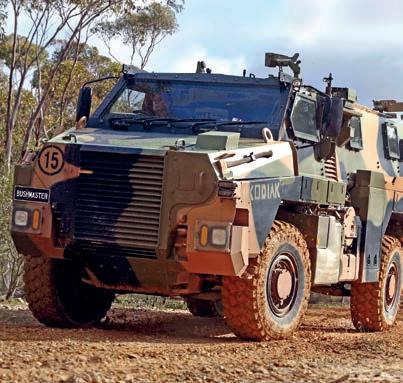
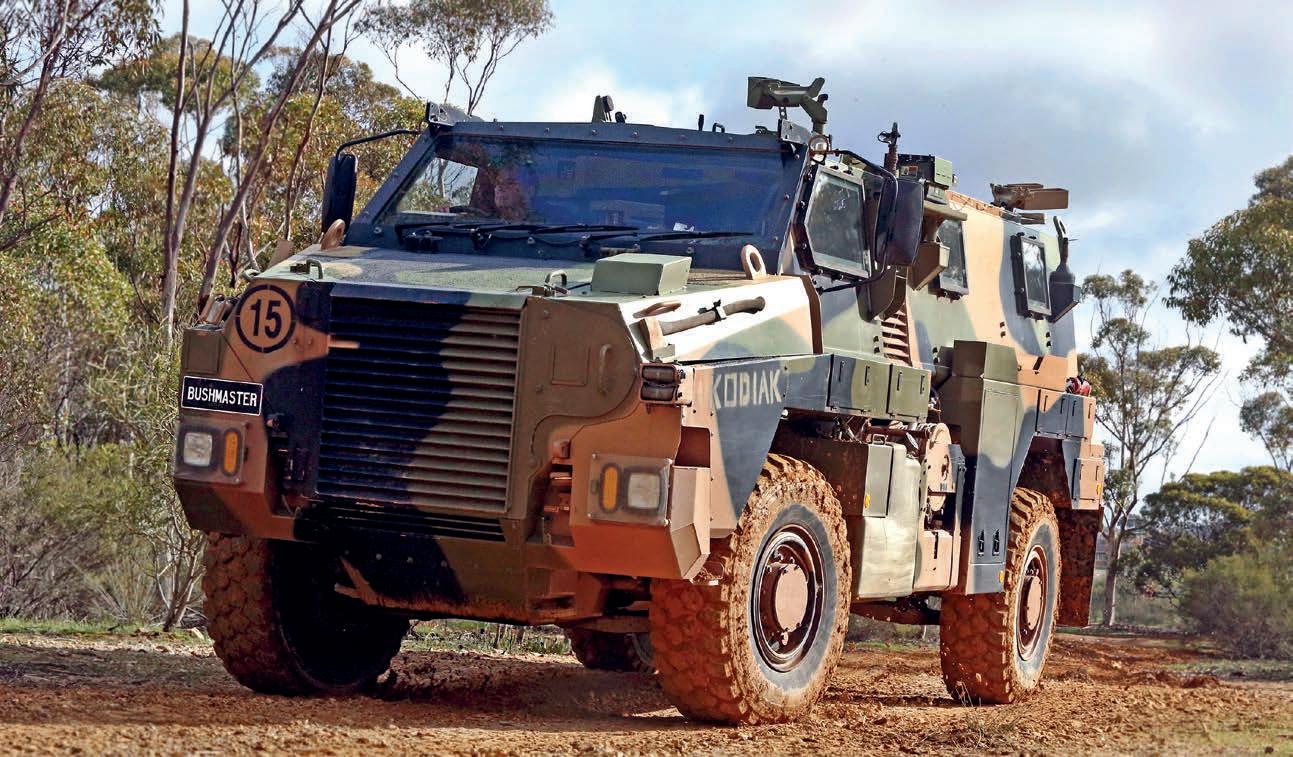
Thales Australia’s operations across the country are examples of how next-generation manufacturing is no longer aspirational, it’s operational. The Bushmaster Protected Mobility Vehicle, built in Bendigo, remains one of the clearest examples of world class Australian industrial output, produced for Australia and export customers.
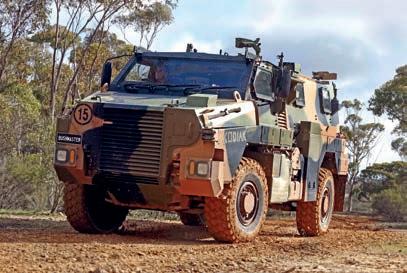
Thales Australia has manufactured more than 1300 Bushmaster PMVs to the extent that the Bushmaster is more than a Protected Mobility Vehicle, it has become a symbol of Australian – and regional Australian – resilience and engineering
excellence that is trusted by both our own defence force and our global allies.
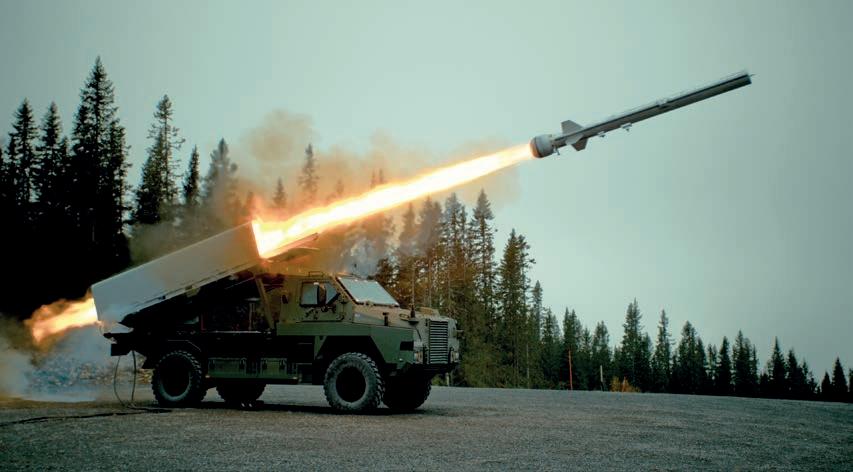
And innovation continues to play a role in the ‘Bushie’. Today, the Bushmaster is a digitally connected platform integrating resilient communications, situational awareness tools, and modular mission payloads. An example of its evolution can be seen via the StrikeMaster, which uses the proven Bushmaster Utility variant as a launch platform for Kongsberg’s ‘twin pack’ Naval Strike Missile (NSM). This capability can provide a land-based maritime strike capability for Australia and our allies and is built locally, supporting the sovereign industrial base.
A land-based maritime-strike capability is crucial for an island nation whose economy and security depend on secure maritime approaches. This deterrence can only exist with a strong Australian manufacturing base.
Our industrial base can also provide undersea
Thales Australia has manufactured more than 1300 Bushmaster PMVs in total.
Images: Thales
deterrence. Our regional undersea environment is now one of the most strategically contested domains in the world. Submarines, underwater drones, and quiet propulsion technologies are advancing rapidly, requiring more high-quality sensors to deliver timely and high-quality data.
Thales Australia offers an example of Australia’s advanced manufacturing evolution and capability in this field through the sonar and underwater systems developed at Thales’ global centre of excellence in Rydalmere, NSW.
The site has become an industrial cornerstone of the nation’s anti-submarine warfare capability, producing sophisticated sonar systems for the Royal Australian Navy and international partners. Thales develops and manufactures advanced sonar suites for submarines, autonomous uncrewed underwater vehicles and surface vessels, towed array and hull-mounted sonar systems, and sonar platforms for mine detection and obstacle avoidance. These are sovereign, cutting-edge systems that are built to deliver undersea superiority – high-quality sensors delivering high-quality data to allow the best decisions for the best outcomes. Anything less means handing the adversary the edge.
Modern defence manufacturing is no longer defined solely by metal, machining or assembly, it also sits where hardware meets cyber and digital. Sonar and underwater technologies are one such example of
hardware, software, AI-driven analytics and cyber resilience intertwined and codeveloped.
In the modern battlespace, information can be as decisive as armour or firepower. Even the most physically durable military capability can be compromised if it is not protected by secure systems. The same applies to manufacturing OT systems. Cyber-attacks can take down a tank or compromise a supply chain. Both could make our nation less secure.
Our Cyber mission takes into account the fact that data has become central to design as digitalisation becomes ubiquitous in manufacturing and other systems, including in defence. Internally, the growth of data-rich networked systems means protecting IP and ensuring security are increasingly important, while externally data vulnerabilities have emerged in subsea cables and satellites. Society wide, the consequence of cyber breaches are far greater
The StrikeMaster uses the Bushmaster Utility as a platform for Kongsberg’s ‘twin pack’ Naval Strike Missile.
DECISION MAKER COLUMN
JEFF
for national security. Cyber-attacks on power, rail, road, transport and water will halt an economy.
This is where defence-grade cyber security capability can harden our systems and deny hostile cyber actors.
At Thales, we seek to face and repel the rapidly evolving threats, where state and non-state actors seek to disrupt civilian and military operations without firing a shot. As the only cyber security company in the country with defence-grade capabilities, that means working closely with government and trusted Australian companies.
Across domains – oceans, land, sky, and cyber – we seek to provide sovereign capabilities and solutions for defence and civilian partners and customers. It means we help secure our nation and support thousands of skilled jobs on shore – a veritable industrial army.
Just as Australia transformed itself in the 1940s to meet an urgent need, today’s strategic environment demands another surge, one defined not just by mass production, but by precision.
Australia has the ingenuity, the talent and the sovereign capability to meet any challenge, and to define the future of Australian industry.
CONNOLLY, CEO THALES AUSTRALIA AND NEW ZEALAND
Strategic environments are becoming more contested and technology cycles accelerate.
Thales Australia’s operations across the country are examples of how next-generation manufacturing is operational.
Australia offers multiple ways to achieve successful operational outcomes.
CAPS expands compressor support network
Ingersoll Rand and CAPS strengthen nationwide service and advanced centrifugal compressor solutions for Australian industry.
Since the introduction of its first oilfree centrifugal compressor in 1912, Ingersoll Rand has developed durable and reliable compressor technologies. As an original equipment manufacturer, the company’s commitment to innovation has made it an established name in oil-free centrifugal compressors, with solutions tailored to meet the unique performance needs of its customers. Compressed air is a critical aspect of manufacturing operations. Ensuring the delivery of solutions is more than just considering the required performance outcomes that an operation needs, but also confirming that customers have the necessary service and support to keep things performing at their optimum.
CAPS Australia offers multiple ways to achieve successful operational outcomes. The company has been designing and delivering air systems for clients across Australia since 1980, solving operational processes and business problems along the way. As part of the Ingersoll Rand family, CAPS has continued to expand this support of customers, helping them to succeed in today’s global economy through enhanced reliability, energy efficiency and productivity.
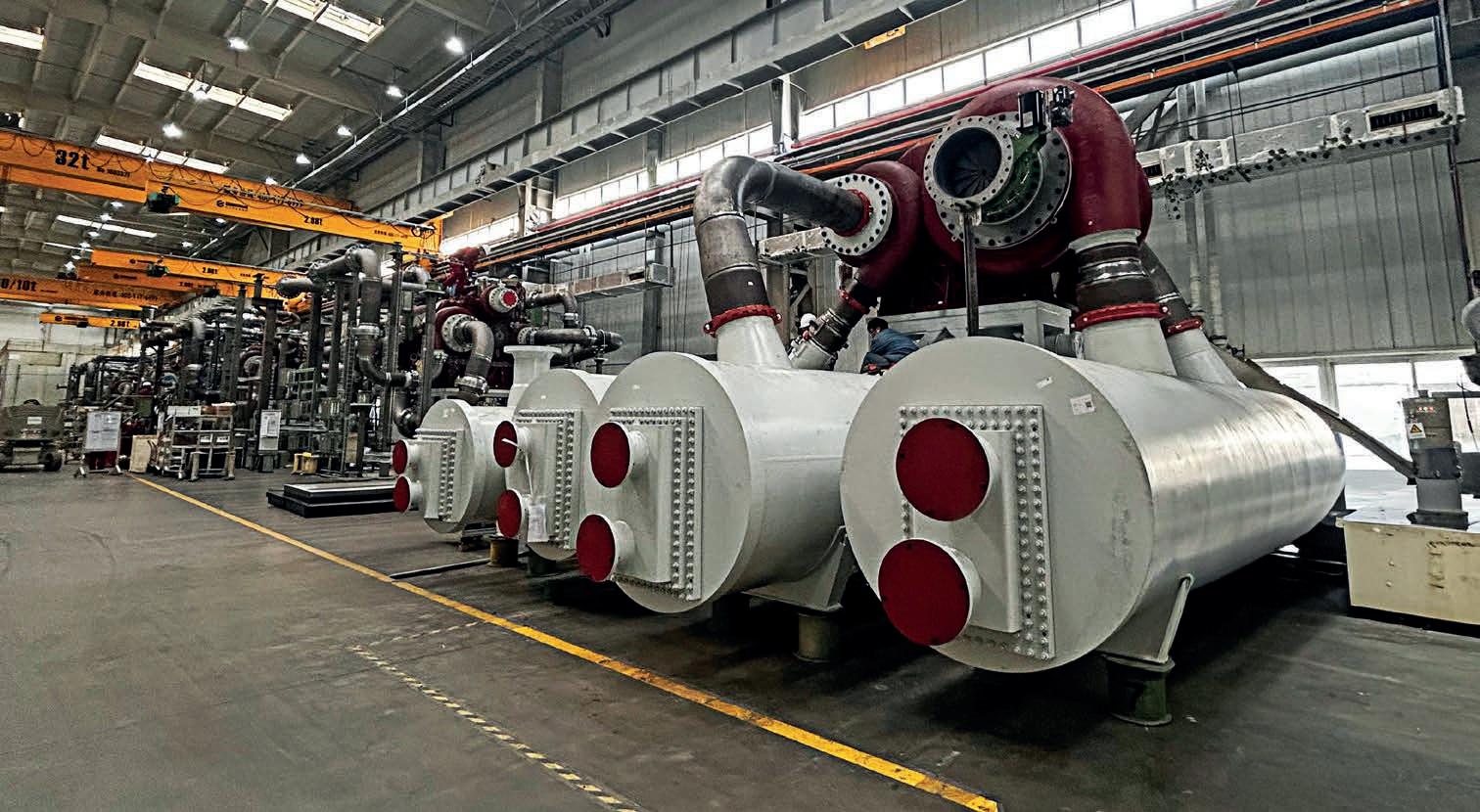
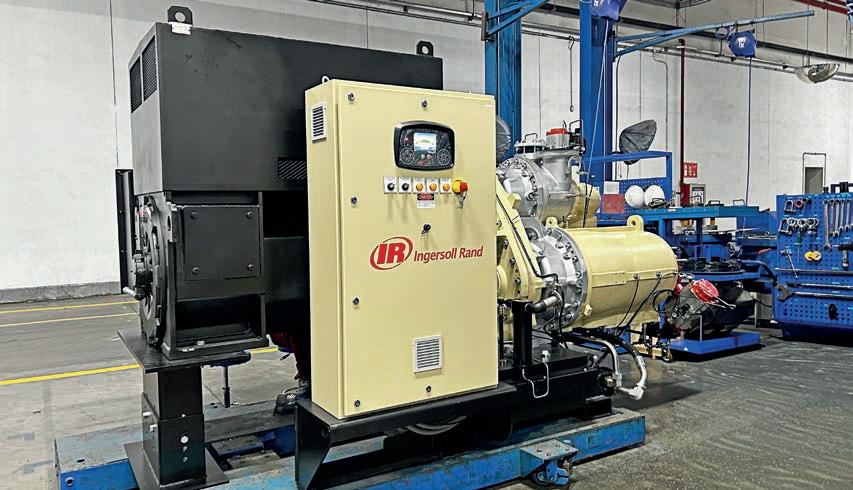
Continuing this support, centrifugal compressor customers in Australasia now have technical support for all Ingersoll Rand Centrifugal products, be it a Centac, Turbo Air (TA), NX or Multi-Stage Geared (MSG) compressor, with
coverage through 10 branches nationwide.
Skilled centrifugal compressor technicians employed by Ingersoll Rand’s companies in Australia, have joined forces under the management of CAPS, to provide customers with expanded access to specific product technologies and aftermarket support capabilities.
Integrally geared centrifugal compressors represent the latest technology, offering advantages over outdated, less efficient and more costly compressor designs.
CAPS offers a portfolio of reliable Ingersoll Rand centrifugal products that will adapt to a customer’s application. With more than 40,000 centrifugal installations worldwide, on nearly every continent, Ingersoll Rand’s products are proven across a range of industries including manufacturing, food and beverage production and packaging, textiles, oil and gas, aerospace, chemicals and electronics.
MSG TURBO-AIR NX
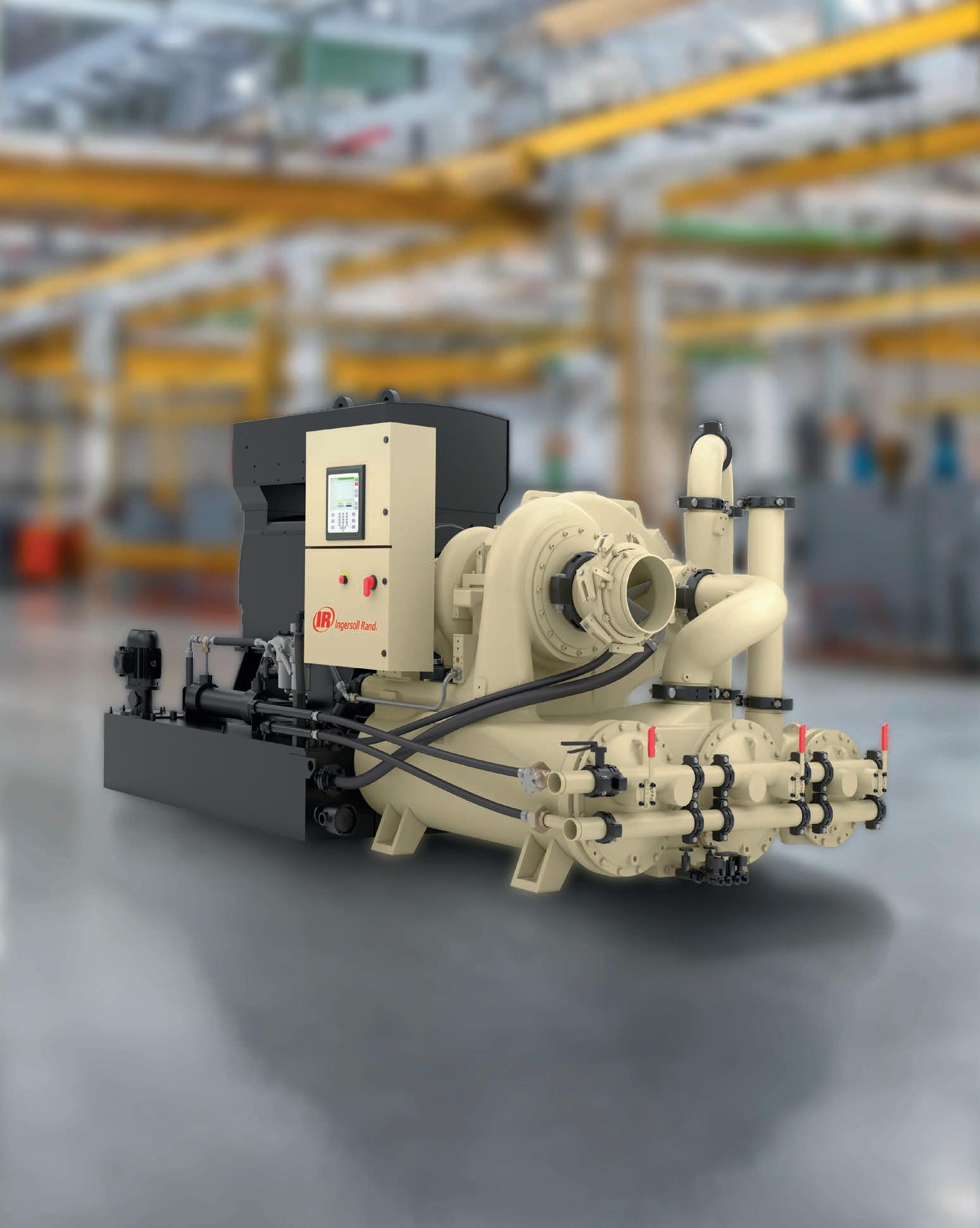
The result of experienced design teams, ISOcertified management systems and product testing for aerodynamic and mechanical performance, the Ingersoll Rand MSG TURBO-AIR NX centrifugal compressors provide the performance and quality that is needed by customers.
Spanning a nominal power range from 600kW to 4,200kW, delivering flows from 125 m3/min to 560 m3/min, at discharge pressures of 2.5 bar g to 40 bar g, the MSG TURBO-AIR NX range comes
packaged on a common base to reduce footprint and are available in a number of configurations. Highly efficient aerodynamic components (inlets, impellers, scrolls and diffusers) combine with low mechanical losses and power conserving inlet throttle control (IGV) to provide up to 5 per cent better specific power than competitive models.
Operational flexibility
With a turndown range that typically exceeds 30 per cent, MSG TURBO-AIR NX compressors can be used in a variety of demand scenarios without the need to unload or shut down during periods of low compressed air demand. The standard inlet guide vane allows the compressor to be cost-effectively throttled down to match the demand flow anywhere along the curve.
Less downtime
MSG TURBO-AIR NX compressors are designed to simplify installation, inspection and maintenance. This includes a single-point electrical connection, a horizontally split gearbox, cleanable inplace cooler bundles, duplex oil filters, and long-life compression elements that do not require replacement.
Low total cost of ownership
Over time, the energy required to power a compressed air system is the largest cost associated with a compressor, particularly in
CAPS
Images: CAPS
today’s fluctuating energy markets. That is why, to accurately determine the return on your investment, it is important to consider the total lifecycle cost of operating the compressor, including the initial investment, energy consumption and maintenance costs.
MSG Centac Centrifugal Compressors
Inefficiencies, contaminants and breakdowns result in downtime, product liability or damage to a brand’s reputation. MSG CENTAC centrifugal compressors help eliminate these problems, while reducing total lifecycle costs.
Efficiency
The advanced impeller design of the MSG Centac’s Multi-stage compressor provides maximum pressure control over a wide operating range, while the high-performance, low-pressure drop, cooling system minimises any losses. This performance maximises the compressor’s efficiency and combines with the turndown range directly resulting in energy savings.
Reliability
Fewer non-wearing moving parts ensure consistent performance, long operational life and ultimately less downtime. Dynamically balanced rotor assemblies ensure low vibration, while efficient hydrodynamic non-contact bearings offer a virtually unlimited life.
Systems and support to keep you productive
No matter what the industry or location, CAPS is committed to supporting customers 24/7. Access to a worldwide network of factory-trained technicians is a phone call away – ready to support customers with innovative, cost-effective and performanceenhancing solutions.
Parts and accessories
There is no denying that a compressed air system is a large investment, and users should expect consistently reliable, clean, dry air at the lowest possible operating cost. Choosing genuine parts and accessories and trained service technicians helps ensure that a compressor is running efficiently and productively.
CAPS have genuine OEM parts. From a replacement bullgear to a missing bolt, the company holds inventories of parts across Australia, with direct access to global supplies as needed.
Local support with global knowledge
CAPS’ delivery of air and power solutions is also underpinned by the financial strength of being part of a bigger conglomerate. The company’s team brings together exceptional service, expert advice,
the introduction of its
support and spare parts the enhance the operating performance of equipment.
Throughout the operational life of the equipment, CAPS provides clients with ongoing warranty, parts and service plans, ensuring the greatest value for managing assets. Scheduled maintenance also aligns with a range of diagnostic and maintenance programs that are available to maximise the performance of the air compressors.
Remanufacturing to original OEM specification
When the time comes, replacing compressed air equipment can impact the bottom line. Ingersoll Rand’s remanufactured products can reduce that impact with an economic and environmentally sustainable alternative to new equipment. Its qualified technicians have knowledge and experience in parts restoration and remanufacturing of centrifugal air compressors, including:
• Compressor overhaul.
• Compressor airend remanufacturing.
• Complete rotor assembly assessment and refurbishing.
• Clean and dynamic balance of all rotating assemblies.
• Cooler refurbishing.
• Remanufactured and engineered packages.
• Performance re-rates.
Customers receive a ‘like new’ piece of equipment while reducing equipment costs, downtime and energy usage – as well as the advantage of the latest technology advances.
Engineered to suit
Ensuring the air and power outputs and management are matched to clients’ requirements are key elements in CAPS’ custom-built systems. Solutions are designed and developed by its in-house engineering team, with project configuration and delivery supported through its Australian ISO9001 accredited manufacturing facility. This expertise also enables CAPS, where possible, to integrate new technology into clients’ existing installations, enhancing the operational performance and life of equipment and infrastructure.
The CAPS Engineering team manages the design, development and manufacturing of specialised compressor, generator and blower packages. This capability includes calibration and testing, helping to fast-track site installation so users can plug and play.
The custom-built systems, including containerised and acoustic enclosures, are bespoke to each clients’ requirements.
Rental equipment to keep you operating
CAPS can also get clients operational without big capital costs with its competitively priced, turnkey air and power rental solutions. Keeping operations running smoothly all year round, CAPS offers short and long-term rental of compressors and generators across Australia. They are suitable for special projects, seasonal peak demand requirements and covering any operational breakdowns. CAPS has a fleet positioned across Australia providing flexibility and availability.
Global technology, suited to local conditions
The national footprint of CAPS means the team are working in the same time zones as clients. They are on hand to support customers through the entire process, from understanding their requirements, offering suggestions and providing advice, to delivering the solutions they need.
Utilising quality products with proven reliability, the company’s range of industrial equipment features world-renowned partner brands providing customers with access to the best technologies in:
• Rotary screw and centrifugal air compressors.
• Portable diesel air compressors.
• Power generators.
• Industrial filtration.
• Air blowers.
• Gas generators (oxygen and nitrogen).
• Air treatment equipment including custom built heavily engineered vessels.
• Engineered packages to suit customer’s needs and location.
• Parts and accessories.
Get in touch with the CAPS team on 1800 800 878 or check out www.caps.com.au
Since
first oil-free centrifugal compressor, Ingersoll Rand has developed compressor technologies.
Hazardous manual handling: beyond the lift
WorkSafe Victoria explains why smarter systems – not quick fixes – are the key to reducing workplace injury risks.
Hazardous manual handling remains a persistent risk across manufacturing, but WorkSafe Victoria’s guidance makes it clear that effective prevention lies in redesigning work, not relying on individual effort.
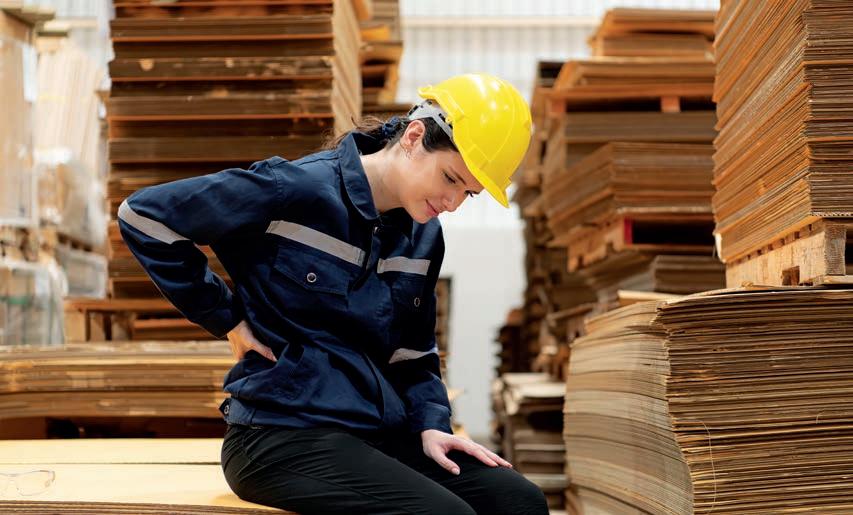
Across production environments, tasks such as packing and inspecting products are routine, yet they frequently involve repetitive reaching, twisting, and lifting. These movements – particularly when sustained over prolonged periods or performed at speed – can place employees at risk of musculoskeletal disorders (MSDs), including sprains, strains and soft-tissue injuries that may develop gradually or occur suddenly.
WorkSafe Victoria’s guidance highlights that controlling the risk should begin with solutions that eliminate hazards altogether. In many cases, this means automation. Where that is not reasonably practicable, employers are expected to implement the next most effective controls to reduce risk as far as possible.
On production lines, the physical setup often determines the level of risk. A conveyor that is too wide, for instance, can force employees to bend their backs more than 20 degrees and reach more than 30cm from the body – movements that, if repeated more than twice per minute or sustained over extended periods, increase the likelihood of MSDs. While the preferred response is elimination of the
hazard through automation, reduced-risk alternatives may include bringing products closer to workers, positioning operators on both sides of the conveyor, or introducing job rotation alongside other controls. However, WorkSafe stresses that job rotation alone does not eliminate manual handling hazards. Similarly, poorly positioned equipment can compound strain. Conveyors or containers set too low require repeated bending and reaching, while boxes positioned too high lead to excessive wrist bending and lifting. Adjustments such as raising or lowering equipment, installing height-adjustable stands, or tilting containers towards the operator can reduce awkward postures. In each case, the principle remains the same: redesign the task to suit the worker, rather than expecting the worker to adapt.
When repetition becomes hazardous
Beyond workstation design, the pace and structure of work also play a critical role. Employees who are unable to keep up with production line speeds may be exposed to repetitive, high-frequency movements for more than 30 minutes continuously or more than two hours over a shift – work conditions linked to increased injury risk.
WorkSafe identifies several contributing factors, including insufficient staffing, unrealistic production targets, and limited recovery time. Control measures range from increasing staffing levels and introducing
buffers, such as turntables that allow products to accumulate safely, to adjusting line speeds to a sustainable rate. Regular consultation with employees is essential to ensure that production expectations align with human capability.
The handling of rejected products presents another often-overlooked hazard. Double handling – where workers must repeatedly pick up and move defective items – can compound exposure to bending and reaching. Preferred solutions include improving machinery to prevent quality issues or introducing robotics and electronic inspection systems to remove the need for manual intervention.
Even seemingly minor design features, such as box flaps that remain upright, can contribute to strain by forcing awkward wrist movements. Here, simple fixtures or wedges to hold flaps in place can reduce unnecessary handling and improve ergonomics.
The limits of personal protective fixes While engineering and administrative controls are central to risk reduction, WorkSafe is explicit about what does not work. Back belts – also known as lumbar belts or back support devices – are used in some workplaces, yet there is little evidence to support their effectiveness in preventing injury.
Designed to be worn during manual handling tasks, these belts are often assumed to provide additional support to the lower back. However, research shows they do not significantly reduce stress on the spine or surrounding muscles and ligaments. In terms of compressive and shear forces – the internal forces acting on the body –studies have found only minimal reductions, and in some cases the highest forces, occur while wearing a back belt.
According to WorkSafe, back belts do not reduce the workload on spinal muscles, meaning those muscles remain susceptible to fatigue and overuse. The regulator believes back belts may create a false sense of security, encouraging workers to lift heavier loads than they otherwise would.
There are also physiological concerns. Wearing a back belt can increase abdominal pressure, leading to stiff or exaggerated postures that may heighten injury risk. In some cases, blood pressure and breathing rates increase during lifting, potentially raising the risk of heart-related events in some individuals.
Images: Wosunan/stock.adobe.com
Representational image – not best practice OHS: Tasks like reaching, twisting, and lifting can place employees at risk of musculoskeletal disorders.
WorkSafe does acknowledge a limited role for back braces in rehabilitation. When prescribed by a doctor or physiotherapist following injury, they can help individuals manage recovery by reinforcing movement limitations. However, this is distinct from injury prevention and should not be treated as a substitute for proper risk control.
Lifting, moving and the law
The broader challenge of moving or lifting objects – particularly those that are large, heavy, bulky, or awkward – remains a core concern in manufacturing environments. Risks arise when items are handled from the ground, at low levels or above shoulder height, as well as during repetitive lifting tasks.
Common contributing factors include poor storage design, cluttered or uneven workspaces, inadequate equipment, and mismatches between loads and available handling aids. Time pressure and insufficient staffing can further increase risk, particularly where workers feel compelled to complete tasks quickly or without assistance.
Under the Occupational Health and Safety Act 2004 (OHS Act), employers are required to provide and maintain a working environment that is safe and without risks to health, so far as reasonably practicable. This includes ensuring that plant and systems of work are safe, that workplaces are properly maintained, and that employees are provided with adequate facilities, information, instruction, training, and supervision.
The Occupational Health and Safety Regulations 2017 (OHS Regulations) extend this duty specifically to hazardous manual handling, requiring employers to eliminate the risk of MSDs where reasonably practicable, or otherwise reduce the risk as far as possible.
Employees also carry responsibilities. They must take reasonable care for their own health and safety, as well as that of others, and co-operate with their employer’s efforts to maintain a safe workplace.
Education, consultation, and compliance
Central to WorkSafe’s approach is consultation and education. Employers are required to consult, so far as reasonably practicable, with employees and any health and safety representatives (HSRs) when identifying hazards and implementing control measures. This includes decisions about how tasks such as packing, inspecting, or lifting are performed, and ensuring that new controls do not introduce additional risks.
Consultation is not merely a regulatory requirement but a practical tool. Engaging employees in the design of work processes can lead to more effective solutions, as those performing the tasks are often best placed to identify inefficiencies and hazards.
WorkSafe provides a range of resources to support this process, including the Hazardous manual handling health and safety guide and the Compliance code: Hazardous manual handling. These materials outline the risks associated with manual handling and offer detailed guidance on control measures, from engineering solutions to administrative practices.
The message is consistent: hazardous manual handling is not an inevitable part of manufacturing. With the right combination of system design, worker involvement and evidence-based controls, risks can be reduced and removed. What is required is a shift away from reactive measures and towards proactive, structured approaches that prioritise long-term safety over short-term convenience.
WorkSafe Victoria offers Manual handling basics, a free, online education program, where small to medium employers can learn, find practical tools to help prevent MSDs, improve safety, and support a more productive workplace.
Register for Manual handling basicshttps://www.worksafe.vic.gov.au/manual-handling- basics
Specialty Doors launches acoustic range
Specialty Doors has unveiled new acoustic doors and panels designed for commercial and defence projects, targeting rising demand for compliant building solutions.
Australian door manufacturer Specialty Doors is set to release a new range of acoustic doors and panels for the commercial construction industry. The product range is designed to meet a growing demand for acoustic compliance in the Australian market, with the potential to offer best in category products for international projects.
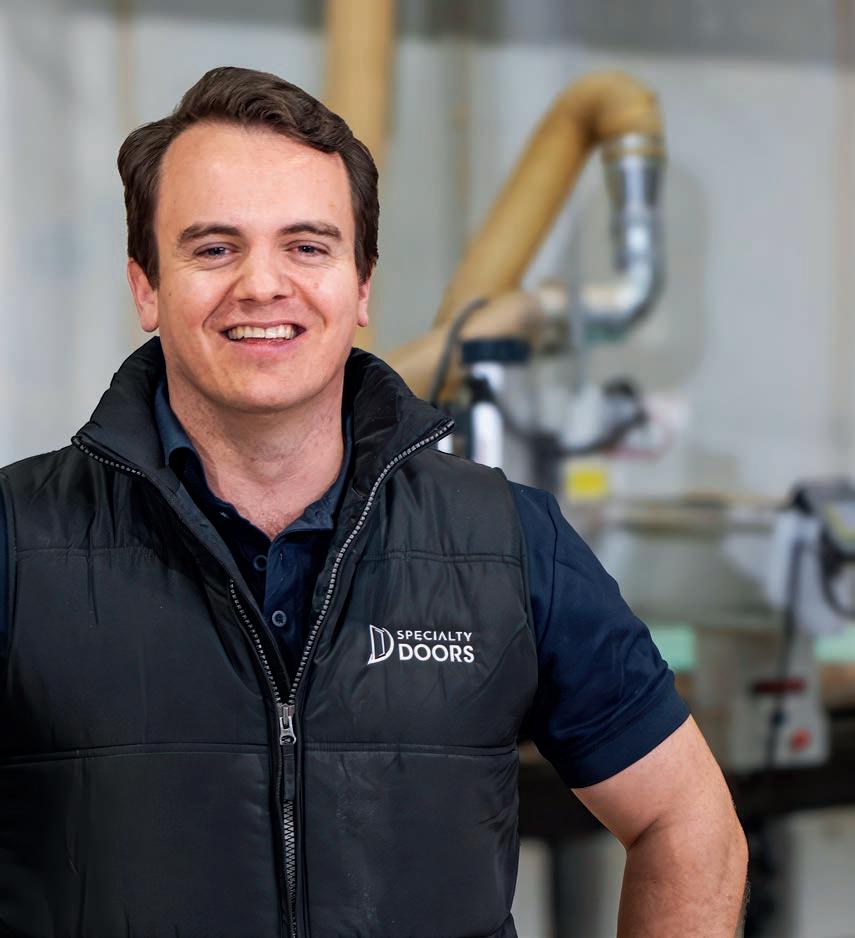
The range includes acoustic panels, doors and entry systems, with a focus on security standards compliant with SCEC. Director Marcus
Bastiaan believes Australian manufacturers have an opportunity to develop class leading products as part of Australia’s defence big build.
“Defence projects demand suppliers to prove performance, and rewards manufacturers who put the effort into developing products,” he said.
Testing has been done during development with support from acoustic consultants and the building industry. Bastiaan believes the challenge for acoustic products is finding performance improvements without always relying on increasing density.
The product range is currently being supplied to commercial projects through Specialty Doors network of resellers.
Director of Specialty Doors, Marcus Bastiaan.
“During product development, our focus has been to avoid relying on mass law and instead looking at introducing material mixes, which complimented panel performance rather than continually adding more weight,” he said.
Specialty Doors has three separate products to meet RW ratings 35, 40 and 48. Each of the product categories have door panels and fixed panels, which can be combined to acoustically insulate various spaces. Through the development process the company has continued to refine the product design to improve performance and make installation easier for site trades.
“These are engineered products, which must be installed millimetre perfect to ensure performance,” said Bastiaan. “Often site carpenters are working around issues with floors and ceilings slightly out, being able to account for this at the manufacturing stage is essential to achieve the results.”
Products developed for defence are now finding their way into the residential market with a growing demand for acoustic-rated doors in domestic projects.
“We are regularly seeing acoustic ratings specified in luxury homes, the versatility of our new range means we can wrap the panels in almost any finish. Making what is a commercial door into something beautiful,” said Bastiaan.
Specialty Doors has been manufacturing acoustic rated products for many years, with the company’s earlier range tested by the CSIRO in 2000. In an example of history repeating the new range is scheduled for similar lab-based testing by the CSIRO in the middle of the year. Bastiaan reflected on the journey the company has gone on to design and develop the products.
“Getting positive, site-based acoustic tests from consultants like Marshall Day is very positive, but that final tick from the CSIRO gives us a market-leading product. Our development team has put the work in over several years and we are excited to offer the product to the market,” he said.
The test at the audio secure area was carried out by Marshall Day Acoustics engineer in accordance with ISO 16283-1:2014 Acoustics – Field measurement of sound insulation in buildings and of building elements- Part 1: Airborne sound insulation. The target between two small meeting rooms and the corridor was 40 dB Dw. There is no airlock to those rooms, therefore the sound insulation rating was dependent on the performance of the door. Initially, the doors required adjustments to improve the setting and seals. Following all adjustments, a 41 dB Dw rating was achieved on both tests.
In MDAs experience, doors are the weak link to audio secure areas and other rooms requiring a high level of sound insulation. Acoustically rated doors require very careful installation and fine tuning of the perimeter and threshold seals to maintain the rated performance.
The product range is currently being supplied to commercial projects through Specialty Doors network of resellers, while sister business Specialty Acoustics works directly with acoustic consultants on defence projects.
Images: Specialty Doors
All types of servos and variable speed drives (Bosch, Okuma, Kollmorgen, Allen Bradley & more).
SOFTWARE SOLUTIONS
MaXXflow: Democratising Industry 4.0
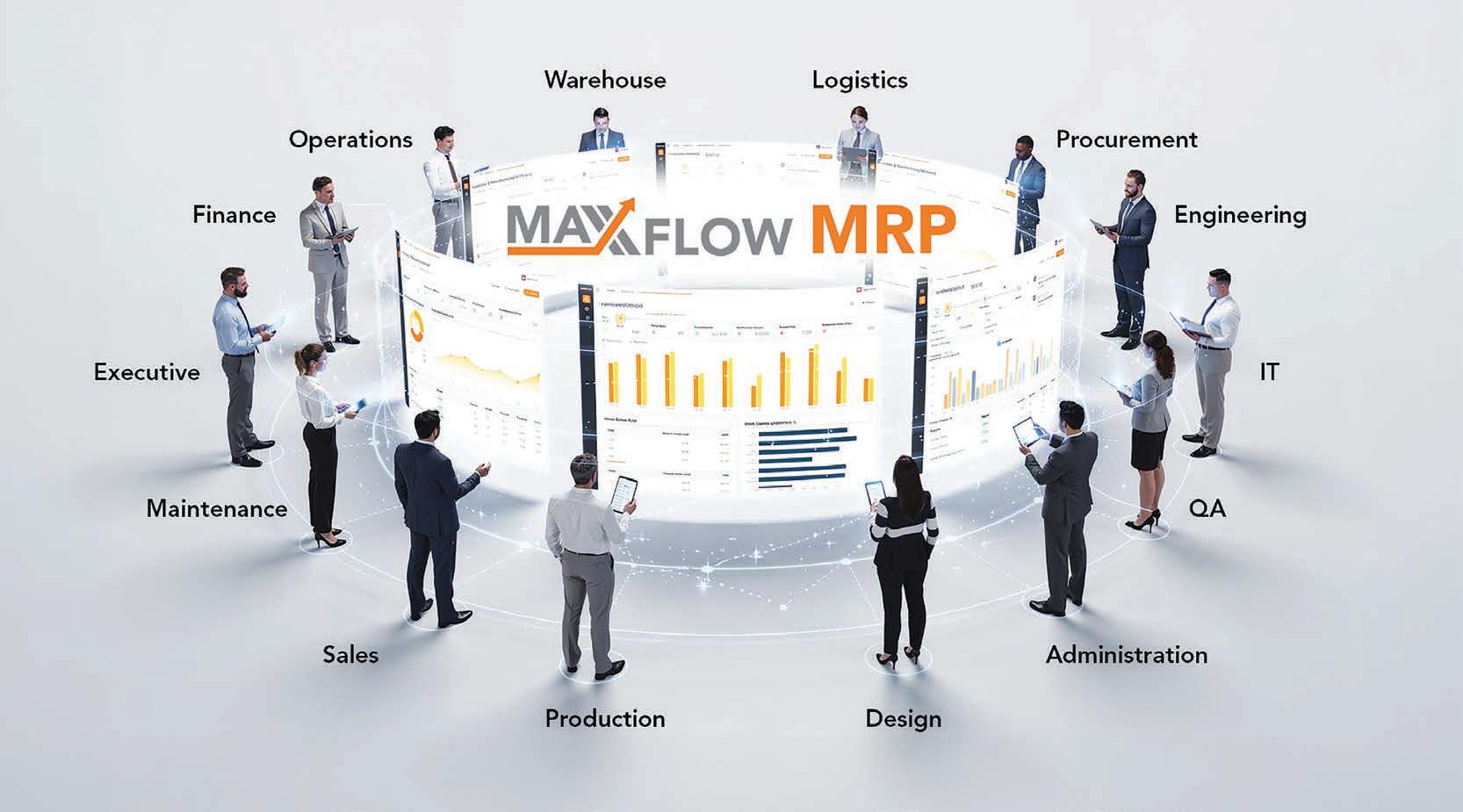
MaXXflow is an AI-enabled MRP platform that makes Industry 4.0 accessible, practical and affordable for SMEs.
For many manufacturers, the promise of Industry 4.0 remains just out of reach.
While the benefits of connected data, real-time visibility and predictive decisionmaking are understood, the systems designed to enable them have been priced and packaged for large enterprises. For small- to medium-sized manufacturers, the result has been a persistent gap between aspiration and adoption.
“Out of the 16 major players who provide MRP and ERP solutions in that marketplace, the lion’s share of those operate in the deep end of the pool,” said Damien Davis, general manager, Data Solutions at Central Innovation.
“What we discovered is that there were some challenges with respect to adoption of modern Industry 4.0 type technologies, largely around accessibility, complexity, cost and the lack of in-house IT capability to implement and maintain those systems.”
Central Innovation is aiming to close that gap with MaXXflow, a new Artificial Intelligence (AI)-enabled MRP solution designed for SMEs. Developed through research and direct industry collaboration, the platform focuses on delivering core planning and decision making capabilities without the cost, complexity or IT burden of more complex systems.
“When we look at the manufacturing market across Australia and New Zealand, there are approximately 115,000 businesses, and roughly 70 per cent of those are small to medium enterprises. “That’s a large part of the market not being catered to,” said Davis.
Research-led design for real-world needs
This imbalance between appropriately featured technology and practical accessibility has shaped the development of MaXXflow. Central Innovation’s research combined academic analysis, independently peer-reviewed material and direct engagement with industry developer partners through advisory boards and interviews. These feedback loops helped validate not only the technical requirements of the system, but also the usability and commercial viability so critical for SMEs.
The findings revealed a segment still reliant on manual processes or legacy systems, with many businesses managing production planning and materials through spreadsheets. While functional, these approaches often create silos, reduce collaboration and introduce risk into already complex supply chains.
“This meant there was an opportunity gap that we could tailor a solution to,” said Davis.
“That’s given rise to our marketing slogan: Everything you need and none of what you don’t.”
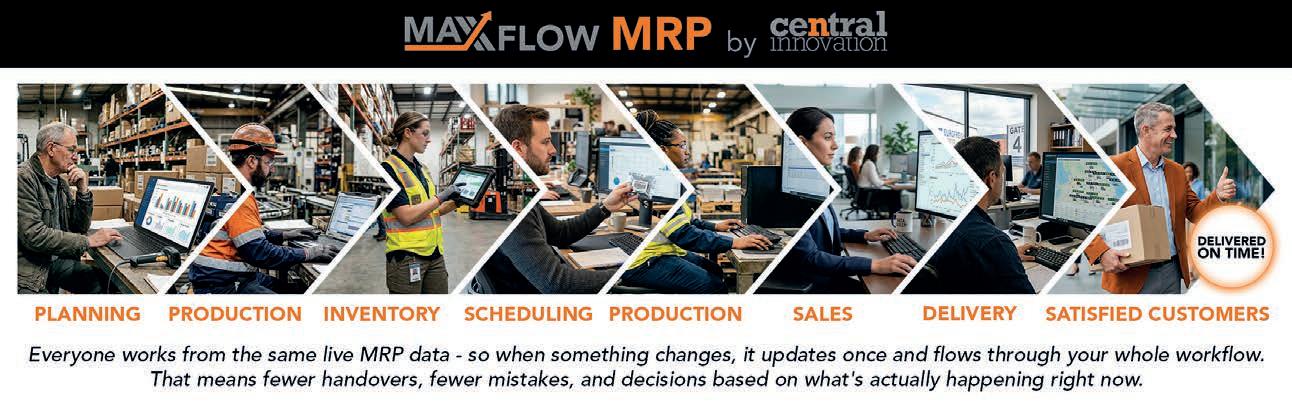
At its core, MaXXflow is designed to provide a streamlined MRP experience that links procurement, production planning and scheduling, while offering visibility across operations. The aim is to enable manufacturers to move away from reactive decisionmaking and towards proactive, data-driven planning, modernising small to medium manufacturing workflows at an affordable price with low levels of maintenance. The frictionless approach combined with an easy user experience and AI features makes MaXXflow a sensible investment for companies
that to now thought they were too small for such systems, or there were simply none available that met their needs.
AI plays a central role in this shift, though its application has been grounded in practicality rather than complexity. Chatura Elkaduwa, head of technical and product development said, rather than functioning as a ‘black box’, the AI within MaXXflow is designed to assist users with specific, high-value tasks that improve day-to-day operations.
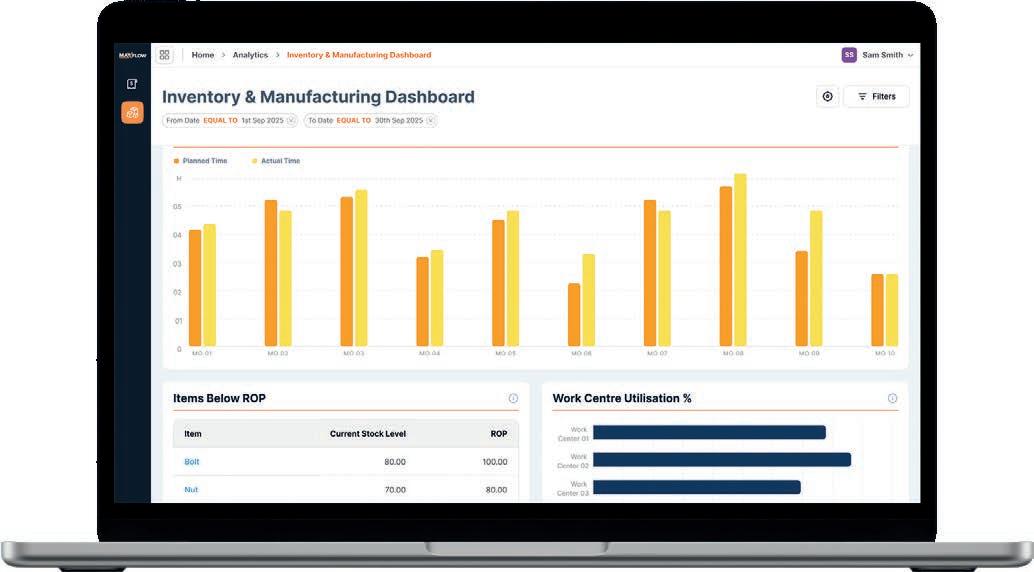
“It helps identify patterns across procurement, inventory usage and production cycle times. For example, it can highlight potential material shortages before they impact production, suggest reorder points based on historical consumption, and flag anomalies in lead times. On the factory floor, this translates to fewer surprises and more proactive decision-making.”
The platform’s AI capabilities extend across a range of features, including conversational interfaces, predictive inventory alerts, production delay forecasting and job scheduling. These tools are intended to reduce reliance on manual oversight while enhancing situational awareness across the business.
“That’s just the starting point – we’ll continue evolving these capabilities over time,” Elkaduwa added.
Beyond AI, MaXXflow’s cloud-based architecture is another key enabler of accessibility. As a SaaS solution hosted on Microsoft Azure, the platform removes the need for on-premises infrastructure while providing secure, real-time access to data from anywhere, optimised for any device.
MaXXflow is a new Artificial Intelligence (AI)-enabled MRP solution designed for SMEs.
“It also ensures scalability, meaning the system can grow alongside the business without requiring infrastructure upgrades,” said Elkaduwa. “For SMEs, this is critical – they typically want to avoid the cost and complexity of maintaining IT infrastructure. We’re effectively removing that hurdle while still providing enterprise-grade security and reliability.”
This focus on simplicity does not come at the expense of functionality. Instead, Central Innovation has adopted a modular approach, ensuring that MaXXflow delivers core capabilities effectively while allowing additional features to be layered in as businesses grow.
“The philosophy is to keep the core simple but make it extensible,” Elkaduwa said. “We focus on doing the fundamentals exceptionally well – bill of materials management, inventory planning and scheduling – while allowing additional capabilities to be added as needed.
“As businesses scale, they can integrate with more advanced systems or enable extra functional modules in Maxxflow, but they’re not forced into complexity from day one.”
This balance between simplicity and capability is particularly important given the operational realities of SMEs. Many already use finance platforms, but rely on disconnected tools for production planning, leading to inefficiencies and limited visibility. This means they are running multiple spreadsheets across departments, which stifles collaboration and heightens risk.
“MaXXflow addresses that by automating those procedures and providing real-time visibility on materials availability, production capacity and scheduling – so businesses can forecast and plan with confidence,” said Elkaduwa.
The integration of engineering and production data further strengthens this capability. By interfacing with CAD systems, MaXXflow enables the extraction and alignment of engineering and manufacturing
bills of materials, improving accuracy across quoting, planning and financial forecasting.
“The impact on the business is visibility of every cost and complete confidence in your operating profit forecast,” Davis said.
Hands-on support and implementation Implementation and ongoing support have also been designed with SME constraints in mind. Central Innovation’s Data Solutions Engineering team brings decades of experience in manufacturing and engineering consulting, solutions design, implementation and support, enabling a tailored approach that aligns the software with each customer’s specific operations. And the entire team of project managers, systems engineers and software technical support are all located here in Australia.
“Our consultants conduct detailed business analysis to ensure an acute fit between the product and how the customer operates,” said Davis. “Rather than forcing businesses to adapt their way of working, we tailor the solution to their needs as best as possible.
“We don’t go live until users are proven not just competent, but confident, and because the interface is frictionless, getting up to speed is not a daunting task.”
Post-implementation support is delivered by an onshore team of engineers operating across Australian and New Zealand time zones, ensuring highly responsive assistance when required. A structured project management framework underpins the process, from scoping through to deployment, acceptance testing and promotion into production.
As manufacturing continues to evolve towards Industry 4.0 and beyond, accessibility remains a critical factor in determining who benefits from digital transformation. For SMEs, the ability to
MaXXflow reflects Central Innovation’s broader experience in the design, engineering and manufacturing sectors.
adopt new technologies without prohibitive cost or complexity will shape their competitiveness in the years ahead.
“Tools like MaXXflow are about democratising Industry 4.0 (and soon 5.0) by lowering the barriers to entry,” Elkaduwa said. “Maxxflow enables SMEs to participate in digital transformation without needing enterprise-level budgets or resources.
“This creates a ripple effect – improving supply chain integration, data transparency and overall competitiveness across the sector.”
While MaXXflow has been designed with manufacturing in mind, its underlying principles extend beyond the sector. Any organisation that relies on complex materials planning and logistics – from healthcare to services – can potentially benefit from the platform’s capabilities.
Ultimately, MaXXflow reflects Central Innovation’s broader experience in the design, engineering and manufacturing sectors, combined with a focus on practical outcomes and business impact. With more than three decades in the industry and a team of more than 100 specialists across ANZ, the company has leveraged both internal expertise and external collaboration shaping the platform to acutely meet the needs of Australian SMEs.
By focusing on accessibility, usability and real-world application, Central Innovation is positioning MaXXflow as a bridge between the potential of Industry 4.0 and the operational realities of smaller manufacturers – offering a pathway to smarter, more modern planning and manufacturing, smashing the barriers for SMEs.
Scan to learn more and sign up for early access
Reviving legacy CNC capability
A Datafactory repair effort helped JAR Engineering extend the life of a critical CNC machine and avoid a replacement.
JAR Engineering has evolved since its founding in 1989, when Roy Milan and his business partner acquired the company after completing their apprenticeships.
Originally focused on toolmaking and plastic injection moulding, the business has adapted alongside shifts in Australian manufacturing, moving into general machining and servicing a range of industries. Today, its customer base spans mining, industrial production and food manufacturing, including companies such as Epiroc Australia, Saint-Gobain, Iplex Pipelines, Sealed Air and CSL.
This diversification has been essential as traditional tooling work moved offshore, but it has also increased reliance on core machining assets. Among them is an ageing Kasuga CNC machine, a three-axis system that remains central to daily operations. Despite its age, the machine continues to play a pivotal role in delivering precision components across multiple sectors.
“That CNC machine is one of our main machines – if it fails, we would probably be looking at shutting down,” said Milan.
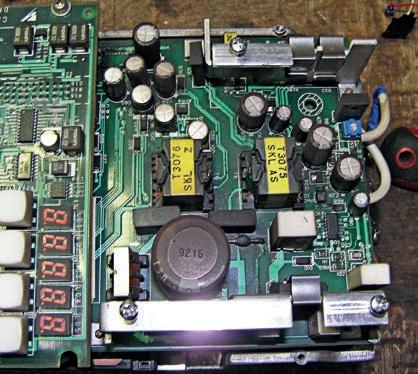
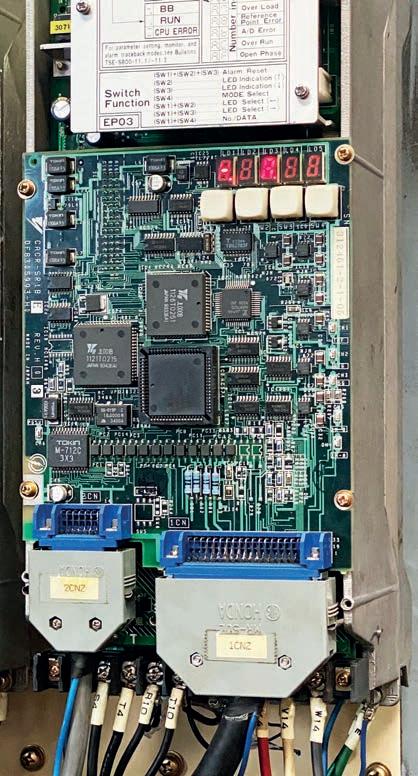
The importance of the Kasuga machine became clear when one of its Yaskawa Sigma 2 servo drives failed, meaning calling on Datafactory’s services. The drive powers one of the machine’s axes, and with three identical units controlling X, Y and Z movement, a single failure rendered the entire system inoperable.
The Sigma 2 generation, now more than 25 years old, presents a challenge for manufacturers. Replacement units are scarce, typically only available as reconditioned stock, while upgrading to the modern Sigma 7 platform would require extensive re-engineering. This would involve replacing motors and encoders, modifying hardware and rewriting application software – a costly and time-intensive undertaking.
In this instance, the failed drive was in poor condition, with damaged components, corrupted software and corroded copper tracks. While JAR Engineering sourced a temporary replacement from overseas to restore operations within several weeks, the long-term need for a reliable spare remained pressing.
“When it failed, it basically stopped us from using the machine completely,” said Milan. “The whole servo drive was pretty much fried, so we had to find a replacement just to keep going while it was being repaired.”
Rebuilding what others would replace Datafactory, led by manager Darius Kowalewski, took on the task of restoring the damaged drive. Rather than pursuing replacement, the focus was on a rebuild – a process that extended over several months and required both technical expertise and close collaboration with the client.
The Datafactory repair involved reconstructing damaged circuitry, addressing corrosion, and correcting the application program to ensure compatibility with the existing CNC system. Given the condition of the unit, the process was iterative, with the drive returned to site multiple times for installation and testing before further refinements were made.
Datafactory’s level of cooperation proved critical to success. Regular communication ensured that timelines, component sourcing and testing phases were clearly understood, allowing both teams to work in step despite the technical challenges involved.
“He’s always eager to help and constantly in contact, letting us know what’s happening and what’s needed,” said Milan. “It took a few attempts to get it right, but he kept working on it until it was up and running again.”
Securing operational resilience
Following the rebuild, the repaired servo drive has been returned to service and is performing reliably. Crucially, it now serves as a backup unit, giving JAR Engineering a level of operational resilience that was previously lacking. With two other drives still in use on the machine, the ability to swap in a
spare and repair units as needed reduces the risk of extended downtime.
For a business so dependent on a single piece of equipment, this redundancy is essential.
Datafactory’s services have allowed JAR Engineering to continue meeting customer demands without the looming threat of a production halt should another failure occur.
Beyond the technical outcome, the project highlights the value of specialist repair expertise in extending the life of legacy equipment. In cases where replacement is impractical or costprohibitive, capabilities like that of Datafactory’s can determine whether a business continues operating or faces closure.
“There’s not many people around that do what Darius does,” said Milan. “Having someone like that means the difference between staying in business and shutting down.”
Datafactory took on the complex task of restoring a damaged Yaskawa Sigma 2 servo drives.
Datafactory’s services have allowed JAR Engineering to continue meeting customer demands.
Save time and money before installing your new cranes
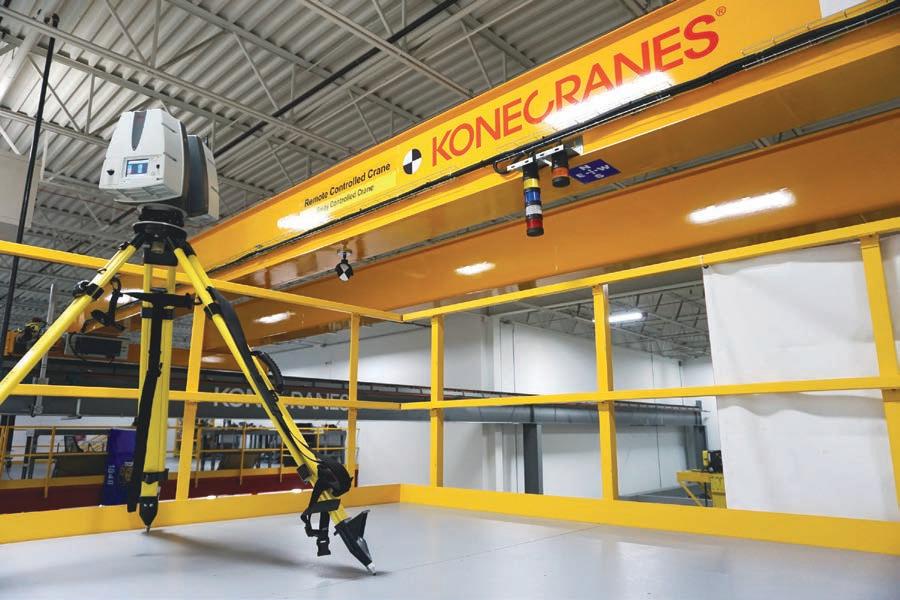
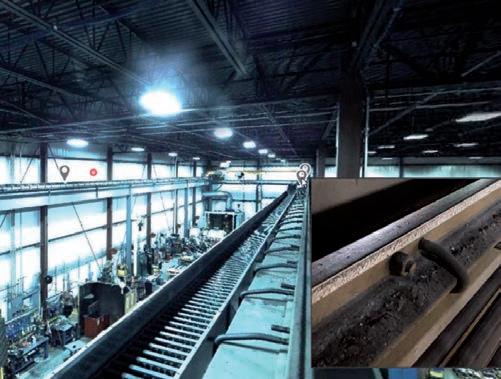
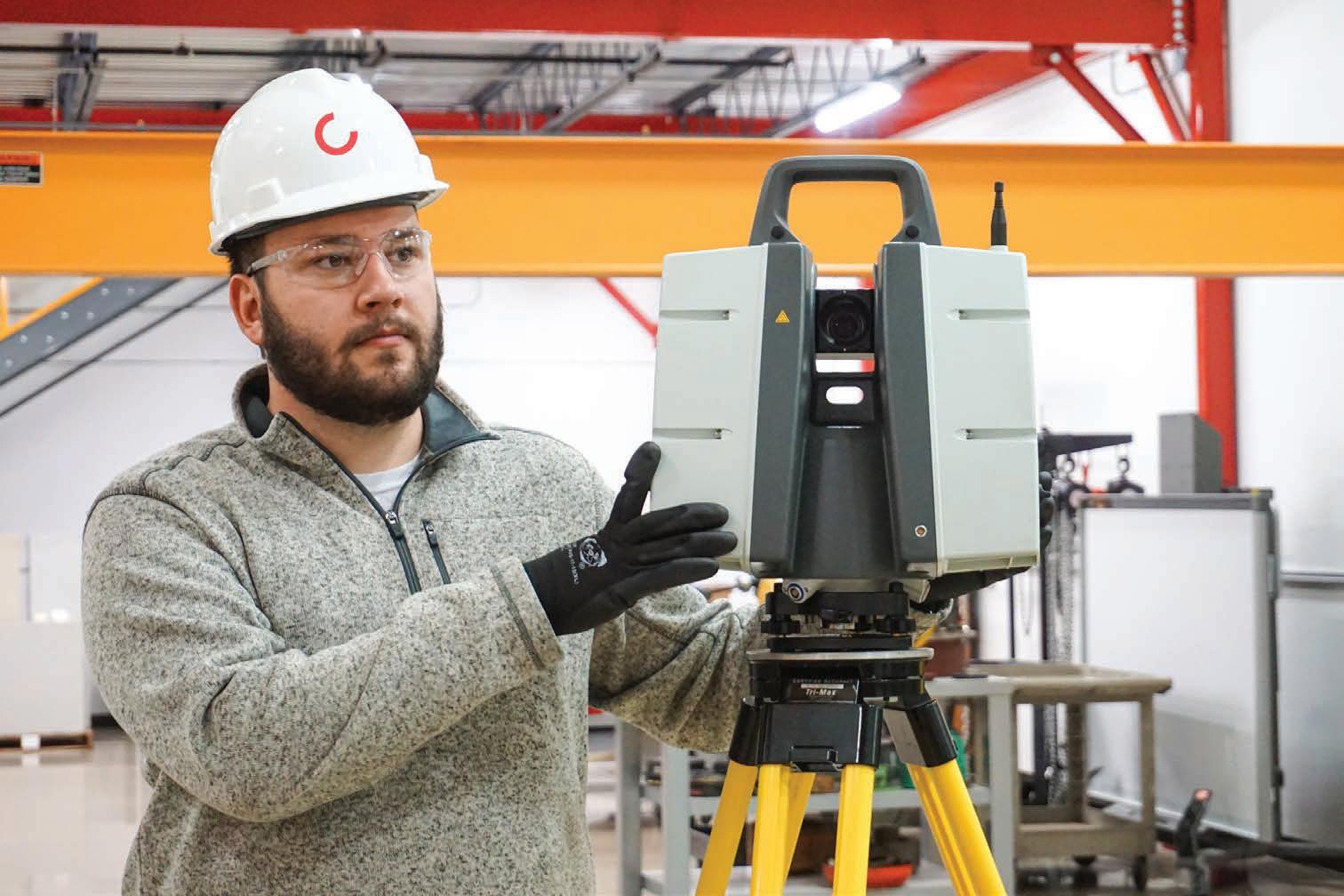
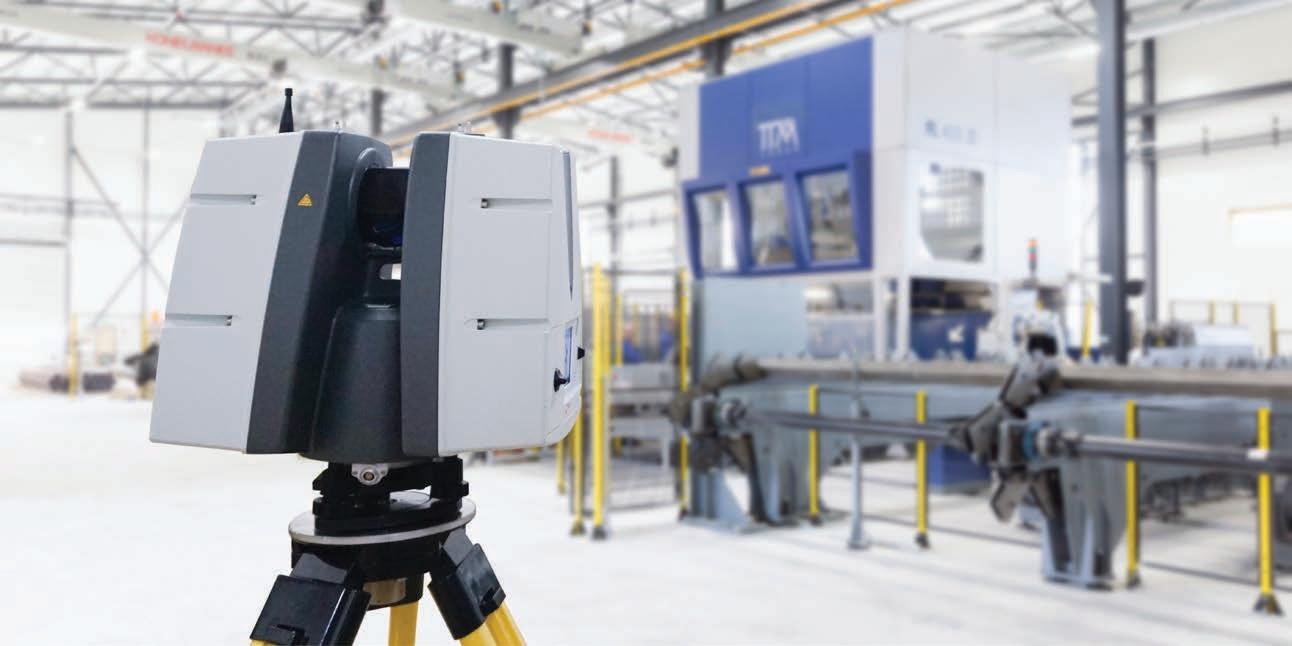
Investing in new equipment, such as installing a new crane on an existing runway, is a significant decision that requires careful planning to avoid unexpected costs and delays. Conducting a RailQ 3D Runway Survey before installation can mitigate these risks by providing precise information on the runway’s alignment and condition. The survey employs highdefinition surveying techniques and point cloud data analysis to deliver detailed insights into the runway’s state, which is crucial for the crane’s structural integrity and the reliability of its traveling machinery. A poorly maintained runway can lead to diminished crane performance, increased repair costs, and potential safety incidents, making the survey an essential step in ensuring optimal crane operations.
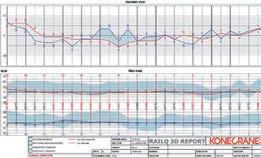
The RailQ 3D report includes the Survey Drawing which shows the recommended adjustments to bring the runway to the necessary tolerances.
The RailQ 3D Runway Survey offers comprehensive documentation of critical aspects of the runway system, including the alignment of runway rails to each other, the alignment of each rail to its corresponding runway girder, and the condition of both the runway girders and rails. Additional safety or production risks are identified and tagged in the provided 3D viewer, offering a clear visual representation of potential issues. Konecranes engineers utilize proprietary analysis and visualization software to generate reports that specify the necessary adjustments to bring the runway back into specification. Areas with critical safety concerns are prominently highlighted, ensuring that corrective actions can be prioritized to maintain safety and efficiency in crane operations.
Benefits
• Provides accurate data on the condition and alignment of the runway through high-definition surveying by trained specialists.
• Is safer to perform than a traditional runway survey because it uses a remotely operated data collection instrument.
• Gathers more data in less time than a traditional survey delivering the same information.
• Condition data and recommendations are easy to interpret and share. Field adjustment and repairs can be easily made with the information in the engineering survey drawings.
The RailQ 3D Viewer is a realistic representation of the crane bay and is used to discuss defects found during the survey.
INDUSTRIAL ACTUATORS
New actuator packs speed into small footprint
The LINAK compact LA21 actuator promises high speed, precision and durability in tight spaces, reducing the need for traditional machine design trade-offs.
When machine builders talk about constraints, they are rarely referring to just one variable. Space, speed, force and durability tend to compete for priority, forcing compromises in design that ripple through performance, efficiency and, ultimately, end-user value. In tightly packed systems especially, the trade-off between component size and capability has long been accepted as unavoidable.
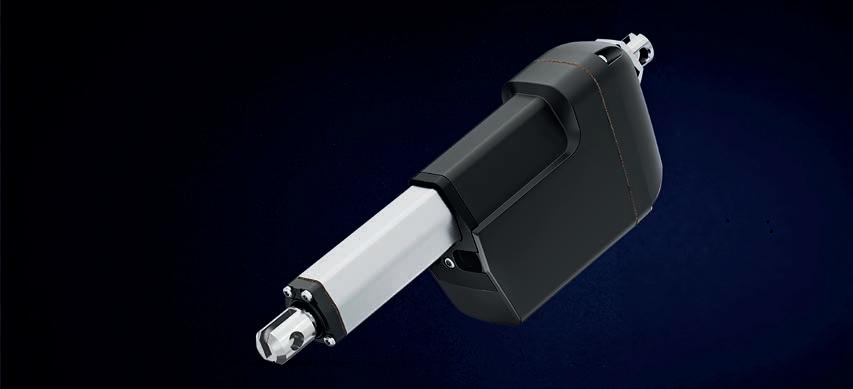
LINAK is positioning its new compact LA21 electric actuator as a challenge to that assumption. Designed for OEMs working within confined installation envelopes and demanding performance specifications, the actuator aims to bring together speed, precision and robustness without requiring designers to sacrifice one for another.
“We designed the LA21 actuator with machine builders in mind – those who are tired of trade-offs
between speed, size, and strength,” said Markus Hofmann, product manager at LINAK A/S. “This actuator removes those limits and gives builders what they’ve been asking for: performance without compromise.”
Faster cycles, more precise results
At the core of the LA21’s proposition is its performance-to-size ratio. LINAK states that the actuator is fast for its size class, while also delivering low backlash and high position resolution. In practical terms, that combination targets one of the most persistent inefficiencies in automated systems: the gap between theoretical and actual cycle times.
Higher speed alone does not guarantee better productivity if accuracy suffers or repeatability declines. By pairing speed with precision, the LA21 is intended to reduce the need for corrections and
adjustments, enabling more consistent operation over time. The result, according to LINAK, is shorter cycle times, higher throughput and stable product quality.
Early testing from Danish company ROEQ offers an indication of how those gains may translate into real-world applications. ROEQ integrated the LA21 into its systems for mobile robots and reported improvements.
“With the LA21, we get everything which could previously only be found in larger actuators – now in an ultra-compact design that fits perfectly into our top modules for mobile robots,” the company stated.
“It delivers impressive power in a small package, is easy to integrate, and halves cycle time thanks to its high speed, providing a clear advantage in production. The design is simple and functional, occupies only necessary space, and does not compromise on performance.”
LINAK’s new compact LA21 electric actuator is a unique combination of modularity and capability.
Images: LINAK
Compact power that frees up design space
Space constraints remain one of the defining challenges for modern machine builders, particularly as systems become more complex and multifunctional. The ability to integrate highperformance components without expanding the machine footprint can open new design pathways, whether that means adding features, improving ergonomics or reducing overall system size.
The LA21 has been engineered with this in mind. Its compact footprint is designed to fit into applications where larger actuators would be impractical, while still delivering the force and speed required for demanding tasks. This has implications not only for new machine designs, but also for retrofitting and upgrading existing equipment.
In one full-season field test within the agricultural sector, a customer replaced a hydraulic cylinder with the LA21. The actuator met the required power and speed demands while fitting within tight spatial constraints, demonstrating the potential for electric actuators to serve as viable alternatives to hydraulic systems in certain applications. For that customer, the trial forms part of a broader move towards electrification and reduced reliance on hydraulic systems.
Reliability that reduces downtime
Beyond performance and integration, reliability remains a critical factor in actuator selection. Equipment operating in industrial and outdoor environments must withstand vibration, moisture, chemicals and temperature extremes without compromising functionality. Failures in these conditions can lead to downtime and maintenance interventions.
LINAK has addressed this by equipping the LA21 with robust metal gears, a proven housing design and an integrated brake. The intention is to match the durability typically associated with larger actuators, ensuring that compact size does not come at the expense of longevity. For machine builders, this translates into fewer breakdowns and greater confidence that systems will perform consistently over time.
The broader appeal of the LA21 lies in how it aligns with current industry pressures. Manufacturers are seeking higher throughput, more compact machinery and greater energy efficiency, all while maintaining reliability in increasingly demanding environments.
LINAK argues that the LA21 provides a competitive advantage through improved machine speed and accuracy, easier integration into compact designs and long-term reliability in tough conditions. Whether it fully eliminates the need for design trade-offs will depend on the application, but early use cases suggest that the gap between size and performance is narrowing.
For machine builders, that shift may represent more than incremental improvement. It points towards greater design freedom, where constraints are less about compromise and more about optimisation.
The broader appeal of the LA21 lies in how it aligns with current industry pressures.
CRANE MAINTENANCE
A leap forward in crane maintenance
Konecranes’ RailQ 3D Runway Survey delivers high-precision data and insights to improve crane performance, safety and maintenance planning.
In the world of material handling equipment, precision and reliability are paramount. The RailQ 3D Runway Survey, offered by Konecranes, is a service that promises to change the way crane maintenance is approached. The survey provides data on the condition and alignment of crane runways, ensuring optimal performance and safety.
The importance of runway condition
The condition of a crane’s runway is crucial to its performance and longevity. A poorly maintained runway can lead to reduced crane efficiency, increased wear and tear, and even safety hazards.
The RailQ 3D Runway Survey addresses these concerns by offering an analysis of the runway’s alignment and condition. Utilising high-definition
surveying techniques and point cloud data analysis, this service provides precise information that goes beyond guesswork.
The benefits of the service are manifold. It offers accurate data on runway alignment, which is essential for maintaining crane performance. The survey is safer than traditional methods, as it employs remotely operated data collection instruments. It also gathers more data in less time, making it a cost-effective solution for industries that rely on material handling systems.
Accurate measurements with less downtime
One of the features of the RailQ 3D Runway Survey is its ability to deliver accurate measurements with
minimal downtime. The survey uses advanced technology to assess critical aspects of the runway system, including rail alignment and girder condition. The data collected is not only accurate but also repeatable, ensuring consistency in maintenance decisions.
Konecranes engineers review the survey data to recommend alignment strategies and highlight areas where safety and production issues may arise. This approach allows industries to address problems before they escalate, reducing the risk of repairs and downtime.
Symptoms that indicate the need for a runway survey include crane tracking and skewing issues, excessive wear on wheels and rails, loose rail fasteners, abnormal noises during bridge travel, and
The RailQ 3D Runway Survey is not just a reactive solution; it’s a tool for proactive maintenance planning.
Images: Konecranes
frequent replacement of components like bridge couplings and crane wheel axles.
Planning maintenance in advance
The RailQ 3D Runway Survey is not just a reactive solution; it’s a tool for proactive maintenance planning. By incorporating the survey into a periodic inspection program, industries can identify chronic issues that require long-term engineered solutions. This foresight allows for maintenance planning well in advance, minimising the impact of production stoppages.
We recommend a RailQ 3D Runway Survey in several scenarios, such as when a crane experiences an increase in usage, during modernisation projects, or when planning to increase lifting capacity. It’s also advisable before installing a new crane on an existing runway or adding an additional crane to an existing setup. These applications ensure that crane operations remain smooth and efficient.
Accessing reports on the Konecranes Portal
Transparency and accessibility are also key components of the service. It’s reports and recommendations are available on the Konecranes Portal, providing quick access to maintenance information, asset condition data, and agreement details. This portal offers an overview of all maintenance activities, including TRUCONNECT alerts, if applicable.
The portal’s aggregated data can be analysed and shared quickly, allowing for informed maintenance decisions. During service visits, mobile-enabled
For a holistic understanding of crane and rail
technicians can efficiently input information, ensuring that service data is readily available for download or sharing. This streamlined process enhances the overall maintenance experience, making it easier for industries to stay on top of their crane operations.
A complete view of crane and rail geometry
For a holistic understanding of crane and rail geometry, the RailQ 3D Runway Survey can be paired with the CraneQ Crane Geometric Survey. This combination provides information on crane alignment and square, covering components such as wheels, guide rollers, end trucks, and girders. Together, these surveys offer a view that empowers industries to optimise their material handling systems.
In conclusion, the RailQ 3D Runway Survey is a game-changer for industries reliant on cranes. By providing accurate, reliable data and expert recommendations, it enables proactive maintenance planning and enhances crane performance. As we continue to explore ways to reduce carbon footprint and improve ecoefficiency, services like this pave the way for a more sustainable future in the automation industry.
Reach Konecranes at 1300 937 637, at sales.australia@konecranes.com or konecranes.com/en-au to schedule your RailQ 3D Runway Survey and take the first step towards optimised crane operations.
geometry, the RailQ 3D Runway Survey can be paired with the CraneQ Crane Geometric Survey.
The RailQ 3D Runway Survey offers an analysis of the runway’s alignment and condition.
MANUFACTURING SOFTWARE
Closing the data gap on the factory floor
Minitab’s acquisition of Scytec brings shop-floor data and analytics together, giving manufacturers the insight needed to improve performance without adding capacity.
In modern manufacturing, the gap between what happens on the shop floor and what is analysed in the boardroom has limited productivity gains. While machines generate operational data, much of it has historically remained inaccessible, fragmented or underutilised. Minitab’s acquisition of Scytec signals a move to close that gap.
Announced on 20 January 2026, the deal brings Scytec’s real-time data collection and monitoring capabilities into Minitab’s analytics ecosystem. The result is a tightly integrated offering that connects machine-level data with advanced statistical analysis, enabling manufacturers to move from reactive decision-making to continuous, datadriven improvement.
At the centre of this shift is Scytec’s DataXchange platform, a software solution designed to collect real-time operational data from a range of manufacturing equipment, including CNC machines, PLCs, robots and welders. By capturing machine utilisation, performance and downtime as it happens, DataXchange provides a live view of
production that has been difficult to achieve without hardware investment.
For Minitab, the acquisition extends its reach beyond analysis into the foundational layer of data collection.
“The future of manufacturing depends on connecting real-time operational data with meaningful analytics,” said Jeffrey T. Slovin, chief executive officer of Minitab. “By bringing Scytec’s shop-floor data collection into Minitab’s analytics portfolio, we’re closing the gap between what happens on the factory floor and how manufacturers analyse, improve, and optimise their operations.”
From data collection to operational insight
One of the challenges in manufacturing improvement initiatives has not been to analyse data due to not obtaining accurate and timely data in the first place. Minitab’s customers have consistently pointed to this limitation, particularly when attempting to measure and improve Overall Equipment Effectiveness (OEE), a key performance
indicator that combines availability, performance and quality into a single metric.
OEE is regarded as an important measure of manufacturing productivity as it provides a benchmark for how effectively equipment is being used relative to its potential. In theory, a score of 100 per cent represents a machine running continuously, at maximum speed, producing only good parts.
In practice, most operations fall short of this benchmark, often without visibility into why.
Minitab says DataXchange addresses this by automating the collection of OEE data directly from machines, eliminating reliance on manual input and reducing the risk of error or delay. Crucially, it can capture both planned and unplanned downtime, including in-cycle events such as tool changes, which are often misclassified in simpler monitoring systems. It also supports a range of industrial protocols – from MTConnect, OPC UA and Modbus TCP to proprietary systems used by control manufacturers such as FANUC, Haas, Siemens and Mazak – enabling deeper and consistent data capture across diverse environments.
For Minitab, the acquisition of Scytec extends its reach beyond analysis into the foundational layer of data collection.
The platform’s flexibility extends to deployment, with both cloud and on-premises options available to suit commercial, regulated and government manufacturers. Its software-centric design reduces the need for additional hardware, lowering barriers to adoption while still delivering detailed operational insight through configurable dashboards.
Rethinking capital investment decisions
The implications of this level of visibility are large, particularly when it comes to capital expenditure. In many factories, the default response to rising demand or emerging bottlenecks is to invest in additional equipment. However, without an understanding of how existing assets are performing, such decisions can compound inefficiencies.
According to Minitab, DataXchange challenges this assumption by providing a real-time picture of machine utilisation. “
“One of the easiest, most impactful, and highest ROI initiatives a manufacturing operation can undertake is real-time data collection,” said Josh Zable, Minitab president & CFO. “Identifying downtime and cycle time enables leaders to identify hidden capacity and make smarter decisions, faster. This data-driven approach maximizes utilization and may eliminate the need for additional capital expenditures, driving higher margins and significant cost avoidance.”
OEE analysis further sharpens this insight by pinpointing the source of production losses. Low availability may indicate issues with scheduling or setup times, while reduced performance could point to tool wear or suboptimal operating parameters. Quality-related losses, meanwhile, suggest the need for process improvements rather than additional hardware.
By integrating this data with Minitab’s analytical tools, manufacturers can move beyond identifying problems to understanding their root causes. Statistical analysis, correlation studies and visualisation tools, such as time series plots and control charts, allow teams to detect patterns, distinguish between normal variation and special causes, and prioritise improvements.
Turning information into action
The combination of real-time data collection and advanced analytics creates a structured pathway from insight to action. A typical workflow begins with DataXchange capturing machine and OEE data continuously. This data can then be exported into the Minitab Solution Center, where it is analysed to identify trends and anomalies.
For example, a time series plot may reveal recurring dips in OEE tied to specific weeks or shifts, while an individual’s control chart can highlight instances of special cause variation. Correlation
For manufacturers, the ability to extract more value from existing assets is becoming a differentiator.
analysis can then determine which component of OEE – availability, performance or quality – is most strongly influencing overall results.
From there, Minitab’s broader toolkit supports structured problem-solving. Brainstorming tools such as fishbone diagrams and failure mode and effects analysis (FMEA) help teams identify potential causes of downtime, from material shortages to operator availability. Simulation tools like Simul8 allow manufacturers to test “whatif” scenarios, evaluating the potential impact of changes, such as reduced setup times or additional shifts before implementing them on the shop floor. Once improvements are made, statistical methods can be used to validate their effectiveness. Techniques such as two-sample t-tests provide quantitative evidence of performance gains, ensuring that observed improvements are both real and sustainable. Continuous monitoring through DataXchange and Minitab Connect helps maintain these gains, with live control charts providing early warning of emerging issues.
A more connected manufacturing ecosystem
The integration of Scytec’s capabilities also strengthens Minitab’s broader vision for a connected, data-driven factory. By combining shop-floor data with quality data from measurement systems, the company aims to deliver a more accurate and timely view of OEE than traditional approaches allow.
In many existing systems, the quality component of OEE relies on manual data entry, introducing delays and potential inaccuracies. Defects identified later in the quality lab may not be captured in real time, leading to an incomplete or misleading picture of performance. By contrast, Minitab’s combined solution enables automated data collection from both production and measurement processes, ensuring that OEE reflects actual outcomes rather than partial or delayed information.
This unified approach aligns with modern manufacturing methodologies such as Lean Six
Sigma, real-time statistical process control and digital twins. By embedding real-time data into these frameworks, manufacturers can accelerate decision-making, reduce waste and improve both equipment and process performance.
The acquisition enhances Minitab’s ability to support modern manufacturing methods, highlighting the role of integrated data in driving continuous improvement. For Scytec, the partnership offers an opportunity to scale its technology to a global audience while contributing to a comprehensive analytics platform.
“Minitab and Scytec share a common goal of empowering manufacturers with reliable data they can act on,” said Josh Davids, CEO of Scytec.
Building the factory of the future
For manufacturers facing tighter margins, longer lead times and increasing competitive pressure, the ability to extract more value from existing assets is becoming a differentiator. The traditional model of adding capacity through capital investment is giving way to a more nuanced approach focused on optimisation, visibility and data-driven decisionmaking.
Minitab’s acquisition of Scytec reflects this shift. By bringing together real-time data collection and advanced analytics in a single ecosystem, the company is positioning itself as a partner for endto-end operational improvement – from the factory floor to the quality lab.
The message for manufacturers is clear: the path to higher throughput and better performance does not necessarily lie in buying more machines, but in understanding and improving how current ones are used. With tools that capture the “truth” of what is happening on the shop floor and translate it into actionable insight, the opportunity is no longer just to measure performance, but to transform it.
As the industry moves towards increasingly connected and intelligent operations, the integration of platforms like DataXchange into broader analytics environments may prove to be a step in building the factory of the future.
EVENTS: ELECTRONEX
Australia’s electronics future comes to life
Australian electronics expo – Electronex – returns to Sydney, showcasing AI-driven innovation, advanced manufacturing and the technologies shaping the sector’s future.
Electronex – The Electronics Design and Assembly Expo – will return to Rosehill Gardens in Sydney from 3-4 June 2026, bringing together more than 100 local and international companies in the electronics sector. First held in 2010, the event has grown into a key fixture for businesses involved in electronics design, assembly, manufacture and service, offering a showcase of emerging technologies and practical solutions shaping the industry.
This year’s expo arrives at a time when Australian manufacturers are increasingly focused on niche, high-value and technology-driven applications. Against that backdrop, Electronex provides a central meeting point for designers, engineers, managers and decision-makers looking to explore new capabilities, strengthen supply chains and engage directly with solution providers. From electronic components and surface-mount technology to inspection systems, test and measurement equipment and supporting services, the breadth of the exhibition reflects the complexity and diversity of modern electronics production.
Noel Gray, managing director of organiser AEE, said industry demand for the event has been strong.
“We are delighted with the response to Electronex and the Expo is a sellout,” he said. “Many companies will be launching and demonstrating new products and technology at the event and visitors can discover how AI is revolutionising the industry.”
A key theme running through the 2026 program is the influence of artificial intelligence across electronics design, manufacturing and testing. This focus is reflected both on the exhibition floor and throughout a series of free seminars, which visitors can attend without pre-booking. These sessions are designed to provide practical insights into current challenges and emerging opportunities, with several dedicated to AI-driven innovation.
Speaker Program: Wednesday
Proceedings on Wednesday begin with a session on the challenges of PCBA cleaning and coatings, where the increasing density of circuit board assemblies is placing greater pressure on reliability and environmental protection processes. The discussion highlights how cleaning and conformal coating must be treated as interdependent steps,
with surface preparation playing a role in ensuring long-term performance and preventing issues such as delamination and electrochemical migration.
Test and measurement remains another central pillar of the program. A session from Digilent, now part of Emerson, will explore the growing accessibility of multifunction testing devices, reflecting a broader trend towards flexible, software-driven tools that support engineers, educators and researchers. This democratisation of advanced testing capabilities is enabling faster prototyping and more efficient validation processes across the product lifecycle.
The integration of AI into real-world systems is further examined in a presentation on physical AI, which addresses the challenges of designing systems that can sense, process and act in dynamic environments. With increasing demand for edge computing, robotics and industrial automation, the session will outline how new processor architectures and adaptive platforms are enabling high-performance, low-latency solutions suitable for embedded applications.
AI’s role in improving productivity and
product quality will also be explored through advancements in test software. Demonstrations of AI-assisted development environments are expected to show how engineers can accelerate coding, streamline debugging and extract deeper insights from data. These capabilities are becoming increasingly important as development cycles shorten and product complexity continues to rise.
Beyond AI, the seminar program places emphasis on foundational engineering practices. A dedicated Design for Manufacturing (DFM) masterclass will provide a detailed framework for ensuring products are optimised for efficient production, covering areas such as assembly, testing and fabrication. As manufacturers seek to balance innovation with cost control and scalability, these principles remain essential to achieving commercially viable outcomes.
Robotics and embedded intelligence form another major theme, with sessions examining how AI-driven software tools and integrated development environments are accelerating the creation of next-generation systems. Topics will
Electronex will return to Rosehill Gardens in Sydney from 3-4 June 2026.
Images: Electronex
The value of Electronex lies in its ability to bring the electronics community together in a focused, face-to-face environment.
INDUSTRIAL GASES
Reshaping industrial cutting and heating with Hydrogen
Cleaner combustion, faster performance and improved safety are positioning hydrogen as a serious alternative to traditional fuel gases in heating and cutting applications.
Hydrogen is not a new gas, but its potential as an alternative fuel source is being widely realised across the global economy. Long relied upon fuels such as LPG and acetylene remain effective, yet both are tied to complex supply chains. LPG is produced as a byproduct of oil refining, while acetylene depends on calcium carbide, much of which is sourced overseas.
This reliance on imported and traded materials can expose manufacturers to volatility, particularly during periods of global economic disruption. Against this backdrop, hydrogen is gaining traction as industries seek more stable, sustainable energy options.
Coregas’ H2Cut Oxyfuel Technology is emerging as a practical solution in this transition. Already in use across industrial settings, it enables faster and cleaner heating and cutting processes. The result is a measurable lift in productivity, with reduced labour input and less time spent on post-cut cleaning and finishing.
Efficiency meets safety and sustainability
As with all industrial gases, hydrogen must be handled correctly. When it is, it offers a range of safety advantages that are difficult to ignore. Being around 14 times lighter than air, hydrogen disperses rapidly, thus reducing the likelihood of flammable gas build-up compared to LPG or acetylene.
The benefits extend beyond dispersion according to Coregas. Hydrogen supports a cooler and more controlled working environment, producing less radiant heat and a quieter, less visually harsh flame. Reduced dust emissions and improved visibility contribute to a workspace that is both safer and comfortable for operators.
There is also a growing industry focus on occupational exposure to fumes. While welding emissions have been scrutinised, heating and cutting processes can generate similarly harmful byproducts. Nitrogen oxides (NOx), including nitric oxide and nitrogen dioxide, are commonly produced when burning traditional fuel gases. These emissions are subject to strict limits set by Safe Work Australia, with further tightening expected. Coregas believes hydrogen presents an advantage in this area. Its combustion and unique heat transfer reduces NOx emissions, supporting improved air quality and aligning with evolving
Coregas’ H2Cut Oxyfuel Technology is emerging as a practical solution in this industrial space.
Images: Coregas and Messer Cutting Systems
Data per 60s, Source: Leibnitz University Hanover
There has been a
regulatory expectations.
From an environmental perspective, hydrogen also offers a compelling case. It burns cleanly, producing only water as a byproduct and no additional carbon dioxide beyond what is naturally present. This positions it as a viable option for companies seeking to meet sustainability targets while maintaining operational efficiency.
The operational features are equally notable. Hydrogen’s flame characteristics allow for targeted heat transfer, enabling faster preheating and cutting. This precision not only improves efficiency but also reduces waste, delivering cleaner cut profiles and in applications like scrap cutting, minimising unsellable slag.
Expanding applications on the ground
Since the launch of H2Cut Oxyfuel Technology, Coregas has expanded its equipment range beyond hydrogen-optimised hand and machine torches. The broader offering is designed to support a range of industrial applications. For workshop and field operations, hydrogen-enabled hand cutting and heating systems provide speed and portability, with options such as the Stablecut track system offering a more portable and manual yet precise alternative to machine cutting.
In scrap cutting environments, dedicated hydrogen torches improve productivity under harsh conditions. Lower radiant heat, reduced fumes and less eye strain contribute to improved operator comfort, while faster cutting speeds enhance throughput. Preheating applications also benefit from hydrogen’s properties. Its heating curve enables quicker and more effective temperature ramp-up, particularly when combined with compressed air in specialised torches designed for
targeted heat distribution where you need
As industries balance productivity demands with stricter environmental and safety expectations, hydrogen is moving from a niche alternative to a mainstream consideration. Technologies such as H2Cut demonstrate how established processes like oxyfuel cutting can evolve without compromising performance.
For manufacturers, the shift is less about
replacing what works and more about improving it – achieving cleaner, safer and more productive outcomes in the process.
For more information on Coregas H2Cut hydrogen, visit www.coregas.com.au/contact or scan the QR code link to the H2Cut information page.
it.
Coregas’ H2Cut Hydrogen enables faster and cleaner heating and cutting processes. Left: Coregas H2Cut Hydrogen. Right: Acetylene
Since the launch of H2Cut Oxyfuel Technology, Coregas, in partnership with Messer Cutting Systems has expanded its hydrogen equipment range.
Additional solutions compliment the torches for practical performance outcomes.
growing industry focus on occupational exposure to fumes.
ROBOTICS MANUFACTURING
Robots are not set-and-forget
Robotic Automation™ shares how manufacturers can unlock lasting value from automation by approaching robotics as an evolving production system — supported by decades of Australian engineering experience and the understanding that no two factories operate the same way.
Automation has become a powerful enabler for manufacturers looking to lift productivity, improve consistency and remain competitive in demanding markets. The most successful projects, however, share a common trait: they focus on outcomes over equipment, and long term performance over short term installation.
According to Colin Wells, Group Managing Director of Robotic Automation™, maximum value is achieved when automation is embedded within a living production ecosystem.
“With nearly 40 years of automation projects behind us, one constant stands out — no two systems we’ve ever delivered have been exactly the same,” Wells said. “That’s because no two manufacturing environments are ever the same.”
As an Australian integrator with thousands of systems installed across multiple industries, Robotic
Automation approaches robotics as a long term capability rather than a one off purchase. This reflects the reality of manufacturing, where products evolve, volumes fluctuate, materials vary and workforce dynamics shift over time.
One of the most common challenges arises when automation is treated as a set and forget solution. While systems may perform strongly at commissioning, they require ongoing attention to adapt to changing conditions. Without clear ownership for optimisation, performance can gradually decline as processes drift and manual workarounds emerge.
“Manufacturing doesn’t stand still,” Wells explained. “When automation is actively managed, it continues to deliver value. When it isn’t, even very good systems can lose efficiency.”
The increasing availability of off the shelf automation has made robotics more accessible
than ever. Collaborative robots and mobile AMR systems can deliver excellent results when applied appropriately, but their success depends on how well they are matched to real world operating conditions. Factors such as floor quality, payload variation, congestion, safety requirements, risk assessments, and throughput pressure all influence performance on a live factory floor.
Wells encourages manufacturers to move away from viewing robotics as a plug and play appliance as they are clearly not white goods.
“Automation is industrial equipment,” he said. “It needs proper engineering, realistic assumptions and lifecycle planning to perform reliably year after year.”
Successful projects start with the process, not the robot. Understanding production variability, designing for peak demand, and planning how systems respond to imperfect inputs allows automation to remain robust as conditions change.
According to Wells, maximum value is achieved when automation is embedded within a living production ecosystem.
Images: Robotic Automation
Just as important is involving operators, maintenance teams and engineers early, ensuring solutions are practical, usable and supportable in daily operations.
“There’s incredible value in listening to the people who work with the system every shift,” Wells said. “They help make good automation great.”
Early performance indicators also provide valuable feedback. When addressed proactively, they create opportunities for optimisation rather than disruption. In well designed systems, these insights are used to refine performance and extend the life of the investment.
While cost is always a consideration, Robotic Automation encourages manufacturers to view automation through a lifecycle lens. Long term uptime, serviceability, upgrade paths and local support have a far greater impact on return on investment than initial purchase price.
“The real measure of automation is what it delivers over ten or fifteen years,” Wells said. “That’s where experience and local support make a difference.”
For Robotic Automation, the role extends beyond installation into long term partnership. Systems are designed to evolve, supported locally, and continually refined as production requirements change. This approach has built strong, lasting trust, with more than 70% of our business coming from returning clients.
“Fit for purpose isn’t a moment in time,” Wells said. “It’s something you maintain — and that’s how automation becomes a true competitive advantage.”
The key to successful automation
Do
• Design automation around your real process and production realities
• Plan for change, variability and future growth
• Engage operators and maintenance teams early
• Design for sustainable peak demand, not averages
• Work with an experienced Australian integrator with local support network
• View automation as a long term capability
Don’t
• Treat robotics as plug and play equipment (They are not white goods from a retailer)
• Focus only on upfront costs (this is not the total cost of running a system over time)
• Ignore early performance signals
• Treat commissioning as the finish line
• Assume one solution fits every factory
Real world insights from Colin Wells
• “We’ve seen strong systems lose performance simply because no one was responsible for optimisation after handover.”
• “Access to local support often makes the difference between a minor issue and prolonged downtime.”
• “Well specified automation consistently outperforms lower cost alternatives over the long term.”
Collaborative robots and mobile AMR systems can deliver excellent results when applied appropriately.
Robotic Automation™ encourages manufacturers to view automation through a lifecycle lens.
ENGINEERING FOCUS
Charging the future: A quantum battery breakthrough
A world-first quantum battery proof-of-concept from CSIRO is opening new pathways for ultra-fast, scalable energy storage with implications for manufacturing.
Australia’s national science agency is no stranger to long-horizon innovation, but its latest advance in quantum energy storage signals a potential step-change for manufacturing and industrial systems. In collaboration with RMIT University and the University of Melbourne, CSIRO researchers have developed the world’s first proof-of-concept quantum battery capable of completing the full energy cycle: charging, storing and discharging. The work, published in Light: Science & Applications, moves quantum batteries from theoretical physics into the realm of engineered devices.
At the centre of the effort is Dr James Quach, CSIRO’s quantum science and technologies science leader, who has spent years exploring how quantum mechanics could reshape energy systems. For manufacturers, the implications are faster charging, reduced downtime, and new approaches to powering equipment and processes. While still at a very early stage, the prototype provides a tangible foundation for what could become a transformative industrial technology.
“My ultimate ambition is a future where we can
charge electric cars much faster than fuel petrol cars, or charge devices over long distances wirelessly,” Quach said. “Our findings confirm a fundamental quantum effect that’s completely counterintuitive: quantum batteries charge faster as they get larger. Today’s batteries don’t function like that.”
Rethinking energy storage fundamentals
At its core, a quantum battery is still a battery – an energy storage device – but one that operates under a fundamentally different rulebook. Conventional batteries rely largely on chemical reactions governed by classical physics, which impose limits on charging speed, efficiency and scalability. Quantum batteries, by contrast, harness phenomena such as superposition and entanglement, enabling behaviours that defy conventional expectations.
One of the most striking of these behaviours is the relationship between size and charging time. In traditional systems, larger batteries take longer to charge, a constraint that shapes everything from consumer electronics to factory-scale energy systems. CSIRO’s work confirms the opposite can be true in the quantum realm, a finding with direct relevance to manufacturing environments where large-scale energy storage is critical.
To move beyond theory, the CSIRO-led team constructed multiple quantum battery prototypes with varying capacities, allowing them to experimentally validate long-standing predictions. By charging these devices and measuring their performance, the researchers confirmed that charging time decreases as the number of molecules increases, following a precise quantum scaling relationship.
This experimental validation is more than an academic milestone; it represents a shift towards manufacturable quantum energy systems. For industries reliant on high-throughput production, where energy availability directly affects output, the ability to rapidly charge larger systems could reshape operational design and efficiency benchmarks.
“We built a number of quantum batteries with varying capacity and we found that the time it took to charge indeed scaled as one on the square root of N, where N is the number of molecules in the battery,” Quach said.
The latest prototype goes further still, addressing a key limitation in earlier experimental systems.
Previous demonstrations of quantum batteries focused primarily on charging dynamics, without fully integrating energy extraction. CSIRO’s device completes the loop, demonstrating that stored energy can be discharged as usable electric current.
This full-cycle capability is essential for realworld manufacturing applications, where energy storage systems must integrate seamlessly with machinery, robotics and plant infrastructure. The prototype achieves this using a multi-layered organic microcavity design, wirelessly charged via a laser, and validated through advanced spectroscopy techniques.
“What’s different with this one is that it does the full cycle,” Quach said. “It can charge, store energy, and discharge in the form of useful energy. This is the first prototype that does the whole full cycle.”
Implications for manufacturing systems
Beyond the laboratory, the potential industrial applications of quantum batteries are already being mapped out. Two defining characteristics – hyperfast charging and wireless energy transfer – could alter how manufacturing systems are powered and maintained. In high-volume production environments, where downtime is costly, the ability to charge equipment continuously or on the move could remove one of the most persistent operational bottlenecks.
The concept extends beyond factory floors to logistics and transport systems that underpin manufacturing supply chains. Electric vehicles, automated guided vehicles and drones could all benefit from on-the-go charging, reducing reliance on fixed infrastructure and enabling more flexible operations.
“If we can scale it up then what that would mean in terms of manufacturing and industrial size systems is the way in which things are charged,” Quach said. “You wouldn’t need to stop production to charge it up, it would just charge on the go.”
Wireless charging introduces an additional layer of flexibility, particularly for distributed or hardto-access systems. In manufacturing contexts, this could support autonomous systems operating across large facilities, or equipment in hazardous environments where manual intervention is limited. The same principle applies to aerial and mobile platforms, offering new possibilities for continuous operation.
CSIRO researchers have developed the world’s first proof-of-concept quantum battery capable of completing the full energy cycle.
Images:
CSIRO
Such capabilities align closely with the broader shift towards smart manufacturing, where interconnected systems, automation and real-time optimisation depend on reliable, adaptable energy solutions. Quantum batteries, if successfully scaled, could become a key enabler of this transition.
“The other property is that it’s charged wirelessly with a laser, so you can achieve remote charging,” Quach said. “If we put a quantum battery on the drone, you could charge it remotely. It wouldn’t need to stop to replace its battery or charge up again.”
Despite the promise, engineering and manufacturing challenges remain before quantum batteries can move from prototype to production. Chief among these is scale: current devices operate at a microscopic level, requiring new approaches to assembly, integration and mass manufacturing to achieve practical capacity.
Equally important is extending energy storage duration. While the prototype demonstrates rapid charging and favourable retention characteristics – holding energy for orders of magnitude longer than the charging time – further improvements are needed to meet the demands of industrial applications.
“There’s still a lot of work that needs to be done in the R&D,” Quach said. “Right now, they’re very small. We need to put a lot of these things together and build a large capacity. The other thing that needs to be done is to increase the storage times.”
For manufacturers, these challenges represent both a hurdle and an opportunity. Scaling quantum battery technology will require expertise in advanced materials, precision fabrication and systems integration – areas where industrial partners can play a decisive role. CSIRO is actively seeking such collaborations, recognising that commercialisation will depend on aligning scientific innovation with manufacturing capability.
The role of industry partners is expected to extend beyond funding, encompassing design input, application development and co-engineering of production-ready systems. This collaborative approach reflects a broader trend in advanced manufacturing where innovation ecosystems bridge research and industry.
Room temperature advantage
One factor working in favour of manufacturability is the prototype’s ability to operate at room temperature. Unlike many quantum technologies, such as quantum computers, which require cryogenic environments, quantum batteries are more compatible with existing industrial conditions. This reduces integration complexity and broadens the range of potential applications.
“The fact that they work at room temperature means that they are sufficiently robust to
interface with conventional technology,” Quach said. “It really increases its applicability to power macroscopic devices.”
Pathway to industrial adoption
Looking ahead, the pathway to commercial deployment is likely to unfold in stages. Initial applications are expected to focus on supporting quantum technologies themselves, including quantum computers, where quantum batteries could address existing limitations in scalability and performance. From there, the technology could expand into smaller-scale electronics before hopefully one day reaching larger systems such as electric vehicles and industrial equipment.
This phased approach mirrors the evolution of many advanced manufacturing technologies, where early niche applications pave the way for broader adoption. It also underscores the importance of continued R&D and industry engagement to bridge the gap between concept and commercial reality.
Timelines remain uncertain, as is often the case with emerging technologies at the intersection of physics and engineering. However, progress is already underway, including the development of a quantum battery-powered chip as a further proof of concept. For manufacturers watching the space, the message is clear: while widespread adoption may still be years away, the foundational work is advancing.
“While there’s still much work to be done in quantum battery research, we’ve made an important move towards realising the possibilities,” Quach said. “The next step is extending their energy storage time. If we can overcome that hurdle, we’d be that bit closer to commercially viable quantum batteries.”
In the context of global efforts to decarbonise industry and improve energy efficiency, quantum batteries represent a compelling, if still evolving, frontier. Their potential to redefine charging, storage and energy distribution could reshape manufacturing systems at every scale.
CSIRO is actively seeking collaborations as commercialisation will depend on aligning scientific innovation with manufacturing capability.
Dr James Quach, CSIRO’s quantum science and technologies science leader.
Quantum batteries represent a compelling frontier to decarbonise industry and improve energy efficiency.
COMMENT
HONI WALKER, CEO, SEMMA
It’s time government acknowledged SME manufacturers economic contribution
SEMMA warns mounting costs, tax burdens and policy gaps are stifling local manufacturers, urging for protections for domestic industry and focus on local jobs content.
It seems that at every turn, local manufacturers and our supply chain are being asked to either cut costs or pay more tax, navigate endless rolls of red tape and battle for what’s fair in a global marketplace. However, at SEMMA, we believe our local jobs content should not be compromised for profit.
It doesn’t matter what you produce, the result is the same – less after-tax profit. Less for investment, less for hiring that new apprentice or recent graduate. Less for R&D, less for growth and innovation. Less inspiration – and as businesses know all too well – unless your product is the latest whiz-bang innovation or hot topic – it just doesn’t get the attention or support it deserves, unless you’re on the “winners list” like green energy, SRL or AUKUS.
Australia’s economy has flatlined. According to the ABS, in 2024, Victoria had the highest number of businesses going bust – 129,000. And according to the Victorian Parliamentary Budget Office, Victoria is also the most taxed state in all of Australia at $5408 per person in 2025-26 according to the Victorian Parliamentary Budget Office.
Some sectors seem immune to these economic pressures – like rail and defence – but in the end, when we look at the recent situation with access to diesel fuel, we all pay more through the supply chain. It’s understanding the ‘sector silo’ that can be the difference when it comes to financial survival for SMEs.
It’s good practice not to focus on one sector but to have a cross-section of industries that you supply to and vice-versa. And it is always good practice to buy locally manufactured goods.
Our local jobs content must be safe-guarded. SEMMA recently provided a submission to the Productivity Commission in the application of a Safeguard on fabricated structural steel. Our local suppliers and manufacturers must be protected, or we risk reputations and lives. And those OEMs in rail and defence (for example) must abide by our local jobs content rules. New regulations come into play in Victoria on 1 July, and we will have a new Local Jobs Content Commissioner who will need to hit the ground running.
While SEMMA might be based in the southeast of Melbourne, we have an eye on the national economy and our place in it. Nationally, manufacturing is the sixth largest industry, generating $137b in value-
added output and employs 930,000 people. It contributes 12.4 per cent to Australia’s exports and 7.9 per cent to capital expenditure (AI Group 2024).
In late April, SEMMA will present the first of fi ve Australian Manufacturing BLUEPRINT 2026 Election Forum Series. Five forums each focused on one of our fi ve pillars of growth to invigorate industry. The first pillar is Economic and will feature financial sector and industry experts, and those from the political sphere, followed by an interactive panel. It’s an opportunity for manufacturers to come together to
discuss, debate and dissect current policy and offer solutions through our BLUEPRINT platform. Manufacturers make our economy. It’s time policy makers recognised and acknowledged the contribution our manufacturing sector makes to the Australian way of life. If you’d like to have your say, join us.
Become a SEMMA member and we’ll keep raising the profile and voice of SME manufacturing. www.semma.com.au
Image: SEMMA
Honi Walker believes it’s time policy makers recognised and acknowledged the contribution of the manufacturing sector.
BULK HANDLING EVENT
16-17 September 2026
EXHIBIT IN 2026. BE SEEN. BE HEARD. BE CHOSEN.
MEGATRANS 2026
Operator Hub builds strong momentum at MegaTrans
MegaTrans 2026 will debut its Operator Hub, uniting leading freight operators for practical conversations and industry connection.
MegaTrans 2026 is set to place a sharper focus on Australia’s transport and logistics operators, with the new Operator Hub, presented by Geotab, gaining strong traction ahead of the event. Making its first appearance at the show, the Operator Hub will position operators at the centre of the exhibition floor, creating a dedicated environment where some of the nation’s largest transport and logistics companies can engage directly with industry peers.
Major names including Amazon, DP World, UPS, Maersk, Centurion, Wettenhalls, Cold Xpress, Hi-Trans Express, Aramex, TFM Express, FBT Transwest and SGS Logistics have already confirmed their participation. Their teams will be on hand to meet attendees, exchange insights and speak openly about the realities of keeping freight moving across Australia.
The concept is designed to complement the broader exhibition, offering a practical counterpoint to traditional product and service showcases. Rather than focusing solely on technology, the Operator Hub brings operational expertise into the spotlight, giving visitors direct access to those managing fleets, distribution networks and large-scale freight operations.
“We are happy to confirm Maersk’s participation in the Operators Hub at MegaTrans 2026,” a Maersk representative said. “This platform is a pivotal industry gathering, and we see it as the perfect venue to engage in meaningful, face-to-face dialogue with our partners and customers. We are excited to share our vision for integrated logistics and collaborate on building more resilient and sustainable supply chains for the future.
“MegaTrans represents a key moment for the sector, and we look forward to being at the heart of the conversation.”
Tailored for fleet managers, transport companies and owner-operators, the Operator Hub creates a space for direct engagement with the people behind day-to-day operations. From immediate challenges to long-term planning, the focus is firmly on practical experience, open discussion and meaningful industry connections.
Tony Mellick, CEO of Hi-Trans Express, said the event will provide a valuable platform to connect with industry peers.
“The Operator Hub at MegaTrans will provide
Hi-Trans Express with the opportunity to connect face-to-face with the industry,” he said. “We’re eager to be part of the 2026 event.”
The Operator Hub will also extend into the conference program, with operator representatives joining sessions on the MegaTrans stage. Attendees can expect firsthand insights, real-world lessons and discussion around operational challenges, innovation and the future direction of transport and logistics.
Organisers say the initiative reflects a broader shift across the sector. As supply chains become increasingly complex and customer expectations continue to rise, the perspectives of those executing freight operations are becoming more critical to the wider industry.
Prime Creative Media Head of Marketing - Events Molly Hancock, said the Operator Hub was designed to provide that direct access.
“Having these major operators involved gives attendees direct access to the decision makers shaping Australia’s transport networks,” Siobhan said. “It means real conversations about contracts, partnerships, efficiency and future planning, straight from the businesses moving freight at scale every day.
“For anyone looking to grow, adapt or sharpen their operation, the Operator Hub delivers insight you can take straight back to the business.”
The feature forms part of a broader effort to ensure MegaTrans represents the full scope of Australia’s freight and logistics ecosystem. Alongside operators, the event will bring together technology providers,
infrastructure stakeholders, policymakers and supply chain specialists to examine the issues influencing the sector.
Industry collaboration continues to build in the lead-up to the event. Peak bodies such as the Victorian Transport Association (VTA) are contributing to the conference program, with the VTA set to host its Alternative Fuel Summit co-located with MegaTrans. The summit will explore decarbonisation pathways for freight operators, including electric, hydrogen and biofuel transport solutions.
Combined with the exhibition and conference program, these elements are designed to create a platform where attendees can engage with both the operational realities and strategic decisions shaping Australia’s freight networks.
Organisers say the Operator Hub will also act as a central meeting point for businesses seeking new partnerships or strengthen existing relationships within the transport and logistics sector.
With strong interest continuing to build, the Operator Hub is expected to become one of the most active areas on the show floor and a reflection of the Australian transport and logistics industry.
MegaTrans will take place at the Melbourne Convention and Exhibition Centre from 16 to 17 September 2026, bringing together suppliers, technology providers, fleet operators, logistics companies, infrastructure stakeholders and government to address the challenges and opportunities shaping the future of freight.
Image: PCM
MegaTrans provides a platform for industry professionals to connect, share insights and explore freight and logistics innovation.
WOMEN IN INDUSTRY AWARDS
Driving industry change together
The Women in Industry Awards returns in June, bringing together leaders, innovators and advocates championing accomplishments across Australia’s industrial sectors.
The Women in Industry Awards will return to Sydney on 18 June, with Doltone House Darling Island Wharf set to host a night that brings together industry leaders, accomplished women and businesses who are supporting change across industrial sectors.
With nominations now closed and finalists announced, anticipation is building for an event that continues to grow in both scale and significance. Bringing together industry leaders, accomplished professionals and organisations backing meaningful change, the awards have become a key date on the industrial calendar.
“Each year, the Women in Industry Awards highlight the remarkable progress and transformation taking place across these sectors,” said Molly Hancock, head of events marketing at Prime Creative Media. “The quality of submissions, combined with the increasing excitement and engagement surrounding the awards, is a clear reflection of how these industries are evolving.”
Beyond recognising excellence, the awards night serves as a rare opportunity for the sector to come together in a more informal and celebratory setting. For many attendees, the value lies as much in the connections formed as in the accolades themselves.
“This is more than a typical networking
event,” Hancock said. “Even if your business isn’t nominated, the evening provides the time and space for deeper, more valuable conversations. These interactions often lead to new opportunities, collaborations, and long-term professional relationships.”
At its core, the event shines a spotlight on the role women are playing in shaping the future of industries such as mining, manufacturing, energy and infrastructure. While award entries are reserved for women, the broader event remains open to anyone committed to supporting progress and diversity.
That commitment is reflected strongly in the organisations backing the awards. Longstanding partners and new sponsors alike are using the platform to demonstrate their support for a more inclusive and innovative industrial landscape.
For Atlas Copco Group, a principal partner of the 2026 awards, the motivation is clear. As a decadelong partnership, Natalie Douglas, communications manager for Holding Southeast Asia and Oceania, Atlas Copco, believes the Women in Industry Awards is driven by a firm belief that inclusion fuels innovation.
“By supporting this platform, we aim to recognise and elevate the contributions of women who are reshaping traditionally male-dominated sectors,” she said.
Douglas pointed to the broader impact of initiatives like the awards, noting that they extend well beyond a single evening.
“They play a powerful role in accelerating change across the sector by shining a spotlight on women’s achievements and amplifying voices that are often underrepresented,” she said. “They inspire future generations, challenge outdated perceptions, and demonstrate what’s possible when talent is recognised and supported.”
This emphasis on visibility and recognition is echoed by Australian Power Equipment (APE), the event’s platinum partner. For director Abby Crawford, the connection to the awards is both professional and personal.
“Being named a finalist in the Women in Industry Awards was a really meaningful moment, and it gave me a genuine appreciation for how important visibility and recognition are,” Crawford said. “As a business, we want to support more of those moments for other women.”
Crawford believes that supporting women in industrial sectors is not only a matter of equity, but a driver of stronger business outcomes.
“Industrial sectors like mining, energy, and infrastructure are evolving rapidly, and diversity of thought is critical to that progress,” she said. “When women are given equal access to opportunities, leadership, and recognition, it drives better decisionmaking, innovation, and long-term sustainability.”
The role of initiatives such as the Women in Industry Awards, she added, is to create a ripple effect that extends across organisations and career pathways.
“They provide visibility to role models, celebrate achievements that might otherwise go unrecognised, and create a ripple effect across organisations,” Crawford said. “When success is visible, it becomes attainable.”
That sense of momentum is a defining feature of the awards as they enter another year. As more businesses align themselves with the values of diversity and inclusion, the event continues to act as both a celebration and a catalyst for change.
With tickets now on sale, this year’s gala offers attendees the chance to engage directly with leaders, finalists and advocates driving progress across Australia’s industrial sectors. As the industry evolves, the Women in Industry Awards remain a powerful reminder that recognising talent – and ensuring it has the opportunity to thrive – is essential to building a more resilient and forward-looking future.
The role of initiatives such as the Women in Industry Awards is to create a ripple effect that extends across organisations and career pathways.
Image: PCM
WELD COMMENT
GEOFF CRITTENDEN, CEO, WELD AUSTRALIA
AI can’t replace welders
Geoff Crittenden, CEO of Weld Australia, says that welding remains a future-proof career despite AI disruption.
If you believed every headline over the past year, you would think half the workforce is about to disappear.
Lawyers, coders, analysts, marketers, administrators. Every week there is a new prediction about how artificial intelligence will wipe out whitecollar work as we know it. Some of that concern is real. Some of it is overblown. But one thing is increasingly clear: the jobs most exposed to AI are not necessarily the ones many people assumed would be first in the firing line.
In fact, some of the jobs with the strongest future are the ones that require human judgement, physical skill, adaptability, problem-solving and the ability to work in messy, unpredictable real-world environments. In other words: the trades.
We have been here before. The first great digital disruption came with the arrival of desktop computers and PCs, and it changed the workforce almost overnight. Typing pools vanished, many administrative roles were absorbed into software, and work that once required entire back-office teams was redistributed or eliminated. That was the first wave. AI is the second. But while technology has steadily replaced routine clerical work, the demand for welders and tradespeople has moved in the opposite direction. It has grown, and it continues to grow. That is because welding, fabrication and the skilled trades sit in the physical economy, where judgement, dexterity, adaptation and hands-on problem-solving still matter.
Look at the Australian data. PwC’s 2025 AI Jobs Barometer found a strong negative relationship between AI exposure and growth in jobs in Australia.
The jobs least exposed to AI recorded average growth of 43 per cent to 44 per cent, while the jobs most exposed grew by just 10 per cent to 14 per cent. Importantly, PwC’s Australian analysis places building and related trades workers among the less AI-exposed occupations. In other words, the closer a job is to screens, forms, routine analysis and repeatable information work, the more exposed it appears to be. The closer it is to physical work, variable environments and hands-on judgement, the more resilient it looks.
And this is no longer just theoretical. In March 2026, Atlassian announced 1,600 job cuts globally, including about 480 roles in Australia, with the company saying the savings would be used to fund further investment in AI and enterprise sales. That is one of the clearest local examples yet that AI disruption is hitting digital and knowledgebased work first. It is not welders being laid off because a robot can suddenly crawl inside a ship hull and perform coded welding in a live industrial environment. It is office-based, screenbased and software-driven roles that are being restructured first.
That should make all of us stop and think.
For years, the assumption was that trades would be the jobs disrupted by automation while officebased knowledge work would remain secure. AI has turned that logic upside down. It is proving good at generating text, summarising information, writing code, creating presentations and even producing legal arguments.
In Australia and overseas, we are already seeing what happens when people trust those
tools too much. Earlier this year, India’s Supreme Court warned that reliance on AI-generated fake judgments would amount to misconduct after a lower court relied on non-existent case law.
That is a pretty good reminder that AI can sound confident without being correct. Now compare that to welding.
A welder has to interpret drawings, understand fitup, work with different materials, manage distortion, respond to changing conditions, assess a joint in context and physically execute high-quality work in environments that can be cramped, dirty, elevated, hazardous or highly variable. Anyone who thinks a chatbot is about to replace that has probably never been inside the hull of a ship, underneath a power station, or on a live construction or shutdown site.
Yes, robotics and automation already play a role in welding. They should. They improve productivity, consistency and safety in the right applications. But that is not the same as replacing welders. It is about changing the mix of work. Automation is effective in controlled, repeatable manufacturing environments. It is less effective when the work is complex, variable, high-consequence or physically constrained. Building a humanoid robot is one thing. Getting it to perform coded welding inside a confined industrial environment, with real-time judgement and accountability, is another thing entirely.
Welding is a great career
That is why I believe welding has always been a great career, and will remain one well into the future.
The labour market backs that up. Jobs and Skills
believes welding has always been a great career, and will remain one well into the future.
Australia said technicians and trades workers are projected to grow by 195,800 over the decade to 2035. At the same time, the Occupation Shortage List shows that nearly half of trade roles remain in shortage, even though overall labour market pressures have eased.
Welders are part of that picture. Jobs and Skills Australia’s latest occupation profile shows there are around 19,900 Welders (First Class) employed in Australia, working primarily in manufacturing and construction. The same profile shows the occupation remains overwhelmingly male, with women making up just 1 per cent of the workforce, which tells us there is still huge room to grow the pipeline if we are serious about the future of the trade.
This is where the conversation about AI and trades needs to mature.
The real story is not “AI versus welders”. The real story is that AI will change how welders work, not whether welders are needed. It will help with documentation, quality systems, planning, knowledge retrieval, training support, simulation, defect analysis and workflow optimisation. It will make good welders more productive and good businesses more efficient. But it will not eliminate the need for skilled people who can build, repair, inspect and maintain physical assets.
And that matters for Australia.
The National AI Centre’s 2025 ecosystem report shows AI-related jobs and skills are in demand across the economy, and that Australia’s AI ecosystem includes both organisations developing AI products and businesses actively adopting AI in operations. We should absolutely embrace that.
But embracing AI does not mean pretending every occupation will be transformed in the same way. It also means recognising where real strategic vulnerabilities sit.
Australia still needs people who can build ships, fabricate pressure equipment, erect steel, weld transmission infrastructure, maintain processing plants, repair defence assets and deliver the energy transition. None of those things happen without trades. In fact, as more of the economy becomes digitised, the jobs that remain grounded in physical reality become more valuable, not less.
A career in trades is a smart long-term choice
That is why we should be saying this much more clearly to young people, parents, schools and governments: a trade is not a fallback option in the age of AI. It is one of the smartest long-term career choices available. If you want a career that is portable, practical, in demand, tied to real economic value and far less vulnerable to generative AI disruption than many office jobs, welding is a very good place to start.
But we cannot just say that. We have to back it. That means revolutionising how we train the next generation of tradespeople. It means investing in school pathways, apprenticeships and TAFE. It means using better technology (like simulators and digital learning tools) to attract and train the next generation. It means lifting the status of trades as professions that require skill, precision, discipline and judgement. And it means making sure industry is part of the conversation about what future work
looks like, rather than leaving that debate to people who have never set foot in a workshop.
A training model built around decades-old TAFE structures and three- to four-year apprenticeships is no longer agile enough for the workforce pressures we face today. Industry does not need young people spending years sweeping floors, grinding metal and making coffee before they are trusted with meaningful work.
Industry needs smarter, faster, more flexible pathways that bring apprentices onto the tools earlier and train them to internationally recognised standards linked to real welding procedures – not vague or outdated notions of units of competency. That is better for employers, but it is also better for apprentices. It gives apprentices clearer goals, faster progression, stronger qualifications and a real sense of value earlier in their careers. If we are serious about solving skills shortages, then we need training systems that get people job-ready, qualified and productive far sooner, because industry needs them now.
Because while the newspapers are full of stories about AI replacing workers, the bigger risk for Australia is something else entirely: that we fail to train enough tradespeople to build the future.
AI will write more documents. It will generate more reports. It will answer more emails.
But AI will not weld a pressure vessel to code, repair a fatigued structure in the field, or work out how to complete a critical fabrication job when the fit-up is imperfect and the clock is ticking.
A skilled welder can.
Crittenden
Conference themes revealed for Bulk Expo
A practical, problem-led conference program at Bulk Expo will tackle the real-world challenges operators face, from dust control to conveyor performance.
There’s no shortage of theory in bulk solids handling, but straight talk about what actually works when things get messy on site is much harder to come by. That’s where Bulk Expo is aiming its conference this year.
The program, curated by the Australian Society for Bulk Solids Handling (ASBSH), is built around the issues operators keep running into, from stubborn dust to conveyors that don’t behave the way they should.
“We didn’t want a program that just talks at people,” said Prime Creative Media Head of Marketing - Events Molly Hancock. “We wanted to put together a conference that gets into the details of what’s actually going wrong on site and what’s working to fix it.”
The newly announced conference themes reflect that approach, with each session shaped by real operational pressure points.
Conveyors, mechanical handling and system performance
Looking at belt and mechanical conveying from the inside out, this theme covers fire safety, fibre
optic monitoring, wear resistance testing and the redesign of long-distance systems. It also digs into mechanical conveying through bucket elevator engineering and low-breakage transport, alongside real-world learnings from revisiting a 13 km overland conveyor with modern technology.
Dust, fire and operational risk
Dust remains one of the most persistent and dangerous challenges in bulk handling. This theme focuses on explosion protection in terminals, proactive conveyor belt fire safety and practical fixes that reduce dust leakage, including how small component changes can shift operations from downtime to uptime.
Storage, stockpiles and material behaviour
From unpredictable loads during discharge to the stability of iron ore stockpiles, this theme gets into how bulk materials actually behave. It includes advanced storage systems, new approaches to bulk tonnage assessment and methods for tracking and maintaining material quality across the stockyard.
Monitoring, measurement & wear
This theme centres on visibility. Topics include live wear monitoring of wall liners, dynamic weighing in industrial bagging and systems that give operators a clearer read on performance, condition and accuracy across the entire handling chain.
Simulation, design & emerging technologies
Focusing on what’s next, this theme explores fast coupled solid-fluid simulation tools, new deep mining concepts and the design of complex systems where modelling and engineering decisions carry major operational weight. Together, these themes form a program grounded in real-world challenges and shaped by the people solving them. Bulk Expo’s conference will bring engineers, operators and suppliers into the same room, focusing on what actually works when the system is under pressure.
With the conference program now live, early bird tickets are still available for a limited time: https://bulkhandlingexpo.com.au/attend/
Bulk Expo’s conference will bring engineers, operators and suppliers into the same room.