Subscriptions $140.00 per annum (inc GST) Overseas prices apply Ph: (03) 9690 8766
Copyright Manufacturers’ Monthly is owned by Prime Creative Media and published by John Murphy.
All material in Manufacturers’ Monthly is copyright and no part may be reproduced or copied in any form or by any means (graphic, electronic or mechanical including information and retrieval systems) without written permission of the publisher. The Editor welcomes contributions but reserves the right to accept or reject any material. While every effort has been made to ensure the accuracy of information, Prime Creative Media will not accept responsibility for errors or omissions or for any consequences arising from reliance on information published.
The opinions expressed in Manufacturers’ Monthly are not necessarily the opinions of, or endorsed by the publisher unless otherwise stated.
All articles submitted for publication become the property of the publisher. The Editor reserves the right to adjust any article to conform with the magazine format.
options. In the Decision Maker column, DroneShield’s manufacturing manager, Diego Koth, discusses how design, scalability, and quality are shaping the future of Australian manufacturing. Additionally, this month’s Manufacturer Focus focuses on Trajan Scientific and Medical, a company that has grown into a multinational pathology consumables business.
Engineering a proactive start to 2026
With everyone back from a well-deserved Christmas break, however long or short, Australian manufacturing is charging into a pivotal year.
Building on a strong close to 2025, early momentum is already evident. In Western Australia, the state government announced in January that its first electric ferry fleet will be designed and built locally, awarding a $66 million contract to Henderson-based shipbuilder Echo Marine Group. The project signals continued confidence in sovereign shipbuilding capability while supporting the transition to cleaner maritime transport.
Naval manufacturing remained front of mind as Australian submarine company ASC later expanded its collaboration with the Australian Nuclear Science and Technology Organisation (ANSTO) to develop specialised career pathways critical to the AUKUS submarine program. The partnership highlights the growing focus on workforce development to underpin Australia’s long-term defence ambitions. That focus is reinforced by a separate federal announcement committing almost $40 million to emerging technologies and artificial intelligence, strengthening the Australian Defence Force’s ability to make faster, more accurate decisions in complex operational environments.
Leadership changes are also setting the tone for the new year. Medical technology firm Vaxxas has appointed former Merck Global Vaccines president David Peacock as chief executive officer, an
important position for the commercialisation of the company’s HD-MAP vaccination technology. In the defence technology sector, counter-drone specialist DroneShield has promoted Louis Gamarra to chief commercial officer, reflecting growing demand for counter-drone capability and the need to scale commercial operations.
As an important player in the Australian manufacturing landscape, this edition features a column from DroneShield’s manufacturing manager Diego Koth, who highlights how design, scalability, and quality are central to Australian manufacturing’s future. He stresses the importance of in-house expertise, local supply chains, and embedding quality into every production step, noting that investing in people and sovereign capability ensures Australia can compete in hightech and defence sectors.
This edition also spotlights an organisation shaping Australia’s medical manufacturing future. Precision manufacturer Trajan Scientific and Medical, led by CEO and founder Stephen Tomisich, has grown from a Melbourne pathology consumables business into a multinational operation with facilities in Melbourne and Adelaide. Through advanced robotics, cleanroom manufacturing and strategic acquisitions, Trajan delivers high-precision devices and integrated analytical solutions for diagnostics, biopharmaceuticals, and environmental testing, while keeping Australian manufacturing at the core of its global operations.
Innovation at the research level is also driving capability. A Monash-led project, spearheaded by mechanical engineering PhD researcher Nina Langer, is developing a tailored pump for patients with heart failure with preserved ejection fraction – a condition currently lacking mechanical circulatory support. Combining computational modelling, experimental cardiovascular simulators, and clinical insight, the project is laying the groundwork for therapies with global impact.
This edition also turns its attention to the enabling technologies that underpin modern manufacturing across pharmaceuticals, chemicals, food and beverage, electronics, metalworking and more. Air compressors, generators and power solutions remain critical to productivity, reliability, and energy efficiency.
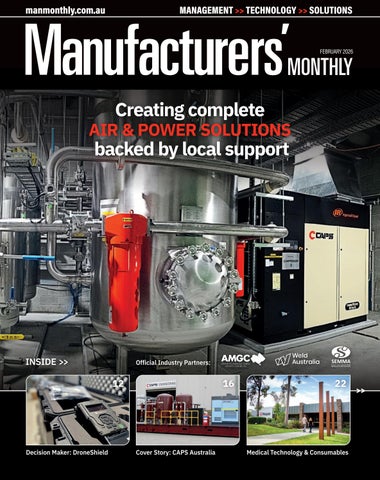
CAPS Australia’s cover story exemplifies this, delving into how the company delivers compressed air and power solutions tailored to industrial and commercial operations, supported by local expertise, service programs, and flexible rental options.
From defence and medical manufacturing to research breakthroughs and enabling technologies, 2026 is shaping up as a year of momentum and opportunity. With investment, innovation, and leadership converging, Australian manufacturing enters the year with the goal to turn ambition into lasting capability.
As Australia’s largest supplier and extruder of aluminium, Capral is committed to supporting Australian manufacturing with high-quality, locally produced aluminium extrusions. Our state-of-the-art facilities provide precision-engineered solutions for industries nationwide, from construction, to engineering, transport, and marine.
Choosing Capral is an investment in reliable supply, shorter lead times, and a stronger Australian manufacturing sector.
When you need Australian-made aluminium, Capral can do. Order online 24/7 Pick-up & Delivery shop.capral.com.au
LATEST IN MANUFACTURING
New HQ boosts automotive re-manufacturing jobs
Australia’s automotive manufacturing capability has received a lift with Walkinshaw Group opening a $114 million headquarters and production facility in Melbourne’s southeast. The expansion marks a substantial automotive investment in Victoria and is set to strengthen the state’s supply chain and engineering ecosystem.
Located in Dandenong South, the new 100,000-square-metre site – equivalent to fi ve Melbourne Cricket Ground’s – brings together operations previously spread across three separate locations.
Walkinshaw Group is an automotive remanufacturing business and a partner for global marques including General Motors, Toyota, Volkswagen and Isuzu. The company specialises in vehicle enhancement and left-hand-drive to righthand-drive conversions, supplying both domestic and international markets.
The consolidated facility will manufacture more than 10,000 units annually for the Australian market and will create 155 new roles across production, engineering and administration.
The new headquarters is one of the fi ve largest manufacturing facilities in Australia and includes an advanced automotive engineering centre, alongside more than four production lines. The site will also incorporate a renewable solar energy
system to support future projects and reduce operational emissions.
The Walkinshaw investment is expected to generate flow-on benefits for Victorian suppliers and associated industries. The increased production capacity and expanded technical capability add further depth to the state’s automotive expertise, particularly in engineering, design and advanced manufacturing.
Industry stakeholders say the new site underscores Victoria’s ongoing importance to Australia’s automotive future, even as global markets transition toward electric and alternativefuel vehicles. With dedicated engineering capability and high-volume production lines, the facility strengthens Australia’s ability to support complex vehicle programs and performancefocused models.
Melbourne opens $1bn vaccine facility
Australia has taken a step forward in onshore vaccine production with the opening of CSL Seqirus’ cell-based influenza vaccine and antivenom manufacturing facility in Melbourne. The facility was inaugurated by The Hon Mark Butler MP, Minister for Health, Disability and Ageing.
The Australian-owned and operated site is the only cell-based influenza vaccine manufacturing facility in the Southern Hemisphere, placing Australia among just three countries globally with end-to-end capability to produce advanced cell-based vaccines. It also produces all 11 of Australia’s antivenoms and the human Q-Fever vaccine, replacing the existing Parkville egg-based facility after 80 years of operation.
CSL invested more than $1 billion to establish the digitally enabled, environmentally sustainable facility, which is set to have the capacity to manufacture enough seasonal flu vaccines to meet domestic demand and supply overseas markets in Asia, Europe, the Middle East and the Americas. The facility supports a $300 million annual supply
The
is set to employ hundreds of experts across manufacturing, engineering, quality control, regulatory affairs, product release and supply
chain, maintaining year-round pandemic readiness. In a flu pandemic, the site could rapidly produce more than 150 million vaccines to protect Australia and other nations.
chain in the Australian economy.
facility
The facility is set to employ hundreds of experts across manufacturing, engineering, quality control, and more.
The consolidated facility will manufacture more than 10,000 units annually for the Australian market.
Lockheed Martin commences missile assembly in Australia
Lockheed Martin Australia, in partnership with Defence, has commenced operations in a new missile assembly facility in Port Wakefield, South Australia.
The facility will see Australian production of Guided Multiple Launch Rocket System (GMLRS) All Up Rounds and Launch Pod Containers. GMLRS is a precision-guided munition used by the Australian Army’s High Mobility Artillery Rocket System (HIMARS) launch vehicles, with a range exceeding 70 km.
The fit-out of the Defence-owned Port Wakefield Missile Assembly Facility was completed as part of the Guided Weapons Production Capability Risk Reduction Activity, in line with the objectives of the Australian Government’s Guided Weapons and Explosives Ordnance (GWEO) Plan.
Paula Hartley, vice president of Tactical Missiles and Lockheed Martin welcomed this strategic endeavour to bring advanced manufacturing technology to Australia.
“The completion of this state-of-the-art facility marks a key milestone for the Australian Government’s GWEO Enterprise. By establishing domestic production of GMLRS, we are strengthening sovereign capability, ensuring full compatibility with
U.S. inventories,” Hartley said. “I commend everyone involved in the delivery of this facility, including the GWEO Group, Aurecon, Intract, and Defence’s Security Estate Group for their professionalism and hard work during the planning and construction.
“This facility was built and commissioned in record time.”
For the past year, a team of Australian engineers underwent specialised training at Lockheed Martin’s missile production facilities in the U.S. With their newfound skills and experience, these engineers worked with their U.S. and Australian colleagues to fit-out the Port Wakefield facility. The facility is set to
Vossloh expands rail manufacturing base
German rail specialist Vossloh has strengthened its presence in regional Victoria with a $25 million investment in a new manufacturing plant in Bendigo, marking 150 years of operations in the region.
The facility, supported by both federal and state government grants, replaces an ageing 1950s-era site in Castlemaine and will deliver productivity and capacity upgrades across the company’s Australian operations. Vossloh Cogifer Australia, part of the global Vossloh Group, manufactures specialist rail switch systems and turnouts for public and private networks nationwide.
The company supplies 14 rail authorities and private rail systems, including heavy-haul mining routes, where switches must withstand ore trains stretching over two kilometres and carrying up to 44 tonnes per axle. Australian general manager Boris Rozentoul said remaining in regional Victoria was a deliberate decision.
“Victoria has a highly skilled workforce, the right infrastructure and support across all levels of government,” he said. “Our 21st century production facility will have a fully optimised workflow. It’s
assemble the first tranche of GMLRS All Up Rounds and Launch Pod Containers for the first time outside the U.S.
“The Australian engineers have trained extensively in the U.S., bringing back cutting-edge expertise and best practices – reinforcing our technology transfer commitments and ensuring Australian talent remains at the forefront of missile engineering.” Hartley said.
This Risk Reduction Activity provides a mechanism for swift knowledge and technology transfer and serves as a risk mitigator and pathfinder to future manufacturing in Australia of the Lockheed Martin suite of guided weapons.
going to be one of the best factories in the Vossloh group. We expect to achieve a 40–50 per cent increase in machining capacity.”
Each project Vossloh delivers is bespoke, requiring technical expertise and machine programming capabilities. The company employs around 60 people in Bendigo, 20 per cent of whom are women, and expects to grow its workforce while promoting more vocational training opportunities.
Rozentoul said this local manufacturing delivers strong advantages for customers.
“Our engineers can be onsite on a project within hours if needed, which can make a significant difference if there’s an issue,” he said.
The Bendigo site includes a 228kW solar installation, designed to double in capacity, as part of the company’s focus on sustainable manufacturing. Vossloh also holds a 2024 German Sustainability Award for innovation in rail infrastructure.
Austrade has supported Vossloh’s investment journey through introductions, site visits and international engagement, which Rozentoul said helped build a strong business case for expansion.
The new facility includes a 228kW solar installation designed to double in capacity.
Air Marshal Leon Phillips, Chief GWEO Group; Jen McManus, LM VP Production Operations; Paula Hartley, LM VP and General Manager Tactical Missiles; the Hon Pat Conroy MP, Minister for Defence Industry; and the Hon Peter Malinauskas MP, Premier of South Australia.
Image: Ruud
Image: Lockheed Martin Australia
IN MANUFACTURING
Aussie firm first in AUKUS supply chain
HIFraser has become the first Australian company to qualify for the Virginia class submarine supply chain under a new gateway program designed to fast-track local industry into the AUKUS partnership.
The milestone was confirmed by ASC and US submarine manufacturers General Dynamics Electric Boat and HII Newport News Shipbuilding, who are working with the Australian Submarine Agency (ASA) to accelerate integration of Australian suppliers into the United States’ construction program.
To support the build of Virginia class submarines, the US Government and ASA jointly established the Defence Industry Vendor Qualification (DIVQ) program. The initiative aims to open new pathways for Australian firms to supply valves, mechanical assemblies, castings, pipe fittings, machined parts and electrical components.
HIFraser is the first business to pass the program’s stringent engineering, quality and security benchmarks, clearing the way for the company to compete for contracts to supply a range of valves for the submarines, including those destined for the Royal Australian Navy’s future fleet. ASC managing director and chief executive, Stuart Whiley, said the achievement showed the strength of local capability.
“HIFraser’s achievement is a milestone for Australian industry and demonstrates the capability and quality we can deliver to the AUKUS partnership,” he said. “Through DIVQ, we are opening doors for Australian businesses to participate in one of the most advanced defence programs in the world, creating opportunities that will endure for decades.”
Several other Australian firms are in the final stages of qualification and are expected to join HIFraser in competing for work on the Virginia class program. ASA and ASC are also collaborating with US and UK partners to expand the DIVQ model and create further opportunities for Australian industry across all three AUKUS nations.
AtSpace rocket launch sets record
AtSpace has launched its Australian-made A01 rocket from the Southern Launch Koonibba Test Range, achieving the highest altitude reached by an Australian commercial rocket.
The 12.2-metre vehicle lifted off at 09:22 ACDT on 27 November 2025, performing as planned and flying close to its target altitude of 80km. The fourand-a-half-minute mission validated the Brisbane company’s hybrid propulsion technology before the rocket safely returned to Earth for recovery.
“Our team at AtSpace has been developing our unique hybrid rocket technology for many years. This successful launch proves that our technology is viable and is a great step forward as we move toward developing our orbital launch vehicles,” AtSpace COO Nick Chang said.
The mission was the inaugural flight of the A01 rocket and demonstrates AtSpace’s progress in developing hybrid propulsion systems in Australia. Southern Launch CEO Lloyd Damp said the test range had been crucial to the program.
“We are incredibly proud to have supported AtSpace in the development and launch of their
innovative Australian A01 rocket technology,” he said.
Koonibba Community Aboriginal Corporation worked alongside Southern Launch as a partner in the test-range development. CEO Corey McLennan said community involvement was central to the mission’s success.
“Seeing our community come together to support this mission has been truly inspiring and a proud moment for First Nations people,” he said.
More than 30 community members assisted throughout the campaign, contributing to logistics and launch preparations. The rocket is being recovered by helicopter for post-flight analysis.
Southern Launch operates two spaceports in South Australia – the Koonibba Test Range and Whalers Way Orbital Launch Complex – and provides end-to-end services for orbital and suborbital missions.
Founded in 2021, AtSpace specialises in dedicated launch missions, hybrid propulsion systems and orbit-insertion technologies, with an ambition to support global customers from Australian soil.
AtSpace specialises in dedicated launch missions, hybrid propulsion systems and orbit-insertion technologies.
The announcement comes after the establishment of the Defence Industry Vendor Qualification (DIVQ) program.
AI training for one million Australians
More than one million Australians will gain access to free artificial intelligence (AI) training under a new Federal Government initiative designed to help workers and small businesses adapt to the changing digital workplaces.
The program – delivered through the National AI Centre (NAIC) in partnership with TAFE NSW’s Institute of Applied Technology – Digital (IATD) –will offer fully subsidised online microskill courses based on the Government’s Guidance for AI Adoption released in October. It builds on last year’s introductory AI course and places a strong emphasis on responsible and ethical AI use.
The updated training will provide practical, modular learning to help Australians apply AI safely in realworld environments. The initiative forms part of the Government’s broader National AI Plan, which sets out measures to drive AI uptake and ensure its benefits are shared across society.
A pillar of the plan is ensuring opportunities reach First Nations people, women, people with disability and regional communities. The Government is also establishing the Australian AI Safety Institute, a national body focused on managing emerging AIrelated risks and harms.
Announcing the initiative, Industry and Innovation
Minister Tim Ayres said the goal was to ensure Australians are equipped for a rapidly changing technological landscape.
“Just as the internet transformed the way Australians live and work, AI is reshaping how businesses operate and how people work – and we want every Australian to share in those benefits,” he said. “This partnership between TAFE NSW’s Institute of Applied Technology – Digital and the National AI Centre opens the door for all Aussies to upskill and build confidence in using AI.
“Together with the launch of our National AI Plan and the establishment of the Australian AI Safety Institute, we’re making sure that anyone who wants to use AI can do so safely, responsibly and effectively – no matter where they live or what industry they’re in.”
Acting skills and training minister Amanda Rishworth said digital and AI capability must now be seen as core foundational skills.
“The Federal Government wants to ensure that every Australian can get the skills they want for the jobs we need, and in today’s world, this includes access to digital and AI skills as foundation skills, alongside language, literacy and numeracy,” she said. “TAFE is a trusted institution across Australia,
which makes TAFE NSW a perfect partner to deliver this free microskill course with the support of our Government. Whether you’re new to the world of AI, or looking to upskill to complement your existing work, this course will equip you with the principles and skills to use AI in your workplace.”
The new program is delivered through the National AI Centre.
Manufacturers have relied on Atlas Copco for over a century—because our compressed air solutions are built to last. Here are 6 reasons to make us your partner:
Compressors
DECISION MAKER COLUMN
The future of manufacturing
DroneShield’s manufacturing manager, Diego Koth, outlines how design, scale and quality will shape the future of Australian manufacturing.
In the early pages of Freedom’s Forge, Arthur Herman tells the story of how an industrial base sprang to life under pressure. The United States did not win World War II by building monolithic factories and hoping for miracles. It won because it implemented tried-and-tested manufacturing processes from the motor industry and was able to efficiently orchestrate a network where parts were machined by the thousands across third party supply chains. Components were delivered to a central production facility, and final assembly lines brought it all together with disciplined quality assurance. That model created speed and scale at the exact moment the country needed both. 80 years on and for many industries today, it is still a playbook for the future of manufacturing.
At DroneShield, we live that playbook every day. I have spent years of my life on shop floors and in engineering bays, from machining in Brazil where I started my career, to building robotic arms for underwater vehicles in Australia. The lessons that I bring to my role as manufacturing manager at DroneShield are simple. Speed and scalability are not accidents. They are the product of how you invest in design, how you organise, and how you can have confidence in what you deliver to customers.
Design for manufacturability and scale is a strategic choice
The first lever of all good manufacturing is design. When design is embedded in your company culture, this means that product innovation draws in not only user-experience, but also the development
and manufacturing process. If components are engineered for repeatability, you can scale reliably. Our most complex systems however, where real manufacturing challenges lie, are built totally inhouse. Our manufacturing team is highly skilled, with many members coming from very technical engineering backgrounds, enabling us to rapidly adapt to new processes, technologies and changes.
As components are manufactured by a network of trusted suppliers and contract manufacturers, volume can expand where it makes sense and expertise can be applied where it is critical. They are primarily local suppliers, allowing us to quickly jump in a car or take a short plane ride to solve issues inperson when needed.
At DroneShield, we aim to design products to be simple to build and easy to manufacture, allowing
Manufacturing manager at Droneshield, Diego Koth.
us to quickly scale production globally through contract manufacturers.
Scaling is an architectural problem
Manufacturing scale is rarely constrained by a single machine. When we moved into our in-house production facility in early 2024, our rapid growth meant we could foresee that space would quickly become a challenge. Because of this, we started the process to establish a new production facility. Fortunately, and as I write this in early 2026, DroneShield is moving its in-house production facility – still within Sydney – to a space that is triple in floor size.
This new space will considerably increase our in-house manufacturing capacity, giving us room to grow and take on more complex projects. My hope is that this will be a facility that acts like a manufacturing powerhouse, where production is efficient and technicians have what they need within reach. This means that beyond just size, we recognise the importance of the design from
the ground up, from floor layout to the exact placement of power outlets, ensuring decisions made now lead to long-term optimised efficiency.
The supply chain side of scaling is equally important. Global electronics shortages, competition from high-growth sectors, and geopolitical volatility are of course daily realities. DroneShield has addressed this challenge with strategic and intentional partnering – primarily with Australian industry partners for our Australian-produced hardware. As we scale our manufacturing globally, we will look to replicate this model to harness local markets.
Quality is embedded, not a department
Products built to military specification (MILSPEC) have a unique burden. Failure is simply not an option. We build quality and compliance into every step, from design, to assembly, to testing.
At DroneShield, our engineers and production team work side-by-side, so on the rare occasion
that an issue surfaces, we can quickly implement a fix. That discipline means defects do not become culture, and it lets you move at the speed of relevance – not requirement – without eroding standards. At a device level, we combine detailed manual checks with automated testing that runs consistently and fast. Nothing is packed onto the pallet in Sydney, without passing both.
When we work with our third-party suppliers to make sure every component meets our specifications, we perform rigorous incoming inspections before anything reaches our inventory. This integrated approach ensures every system we deliver is reliable, high-performing, and does exactly what our customers expect.
Australian sovereign
capability
because it is in our national interest Naturally, when governments invest in or incentivise Australian companies to modernise equipment, scale up production, and upskill their workforce, you strengthen the network of local
DroneShield aims to design products to be simple to build and easy to manufacture.
DECISION MAKER COLUMN
suppliers who are more able to compete for work, create jobs, and build companies willing to anchor design and production at home.
As an example, the Australian Government has committed tens of millions of dollars to the Defence Industry Development Grants, which directly support the growth of our national industrial base.
As the COVID period has shown, the importance of sovereign capability is about ensuring that we have what we need at home when there are competing external interests. Decisions, investments, and incentives by government now will have an impact on commercial decisions around where products are made, and there is an ongoing opportunity to ensure Australia is positioned as a serious player in next-generation defence manufacturing.
People are your greatest asset
At the end of the day, if I had to give one piece of advice to other manufacturers looking to compete in high-tech or military-related sectors, it is to invest in your people. The best machines and processes in the world will not save a production facility run by a disengaged workforce. Building a highly skilled, versatile, and empowered workforce is critical: provide comprehensive training, encourage handson learning, and create an environment where engineering, production, and quality teams can work and grow closely together.
But it’s not just about the people in your company, it’s also critical to think strategically about the people in your supply chains. By maintaining relationships with your trusted suppliers, you are cultivating a broader team who will be more prepared to manage risks in an unpredictable global market.
What does this mean, and what comes next
The future of manufacturing will favour companies that treat design and production as a single throughput, quality as a universal habit, and scale as an architectural problem.
It will favour companies with strong teams and strong networks of capable suppliers tied together by a clear mission: teams that learn fast, own outcomes, and can seamlessly pivot to meet the evolving challenge. And it will favour regions that invest in sovereign capability with long-term programs and real procurement opportunities.
Companies who embrace continuous improvement and innovation will come out on top. That is the essence of Freedom’s Forge remade for today.
Australia has the tools, the talent, and the template. Now we need the courage to execute.
In early 2026, DroneShield is moving its in-house production facility to a space that is triple in floor size.
Solutions that sustain your air and power
CAPS Australia says uninterrupted compressed air and power are critical for manufacturing, underscoring the value of the company’s reliable, cost-effective solutions.
When it comes to choosing the right compressed air or power solution, there is more to consider than just the delivery of the required performance outcomes that business operations need. It is equally important to ensure businesses have the necessary service and support to keep things performing at its optimum. Because any inefficiency or downtime has a costly impact on a business, CAPS Australia offers multiple ways to successfully achieve operational outcomes.
Reliable power generation
Sustaining power through a range of primary and back-up solutions, CAPS has the equipment sizes and power outputs needed to meet clients’ specific operating requirements. The company delivers the power solutions needed across manufacturing, industrial, commercial, data centres, healthcare, construction, residential and mining, ensuring the power never goes out on key infrastructure.
Underpinned by high performance and fuelefficient equipment, CAPS configures systems to suit the application, load demands, and operating environment to meet the individual requirements of the client. The company is able to draw directly from a range of global equipment providers including the Mitsubishi Generator Series, Rehlko (formerly Kohler), Airman and Teksan Generators.
The right compressor for the job
Safety, quality, hygiene standards, and operational efficiencies are key across the manufacturing, food and pharmaceutical sectors, and are all captured when specialised ‘Class Zero’ air quality compressors are utilised to supply clean, dry air.
By minimising the initial possibility of contamination by using oil-free compressors, the maintenance of critical air purity requires fewer ancillary equipment elements. The reduction in risk to air quality also means there is less equipment that requires servicing, which boosts long-term operational performance. Because every application is different, CAPS can help you assess your requirements to find you the perfect match.
For larger scale applications, the company has a full range of oil-free centrifugal compressors as well as rotary screw compressors from 37kW to 355kW in either fixed or variable speed. These machines are versatile and tailor-made, so there are many factors to weigh up when choosing the right compressor. Elements such as size, speed control, continuous or intermittent usage, portability, and site operating conditions including altitude and ambient temperature, can all impact which system will suit your needs.
On a smaller scale, CAPS can offer scroll compressors in an all-in-one solution with a dryer, storage tank, and compressor in a single unit, keeping the real estate of the system as compact as possible. According to the company, this smaller footprint translates to higher efficiency, a key component when choosing the right compressed air system, particularly as energy prices continue to climb across the country.
Offered as a single phase from 1.5kW – 2.2 kW or three phase from 3.7kW to 7.5kW, CAPS suggests this integrated solution as ideal for smaller applications requiring oil-free air.
Setups can be configured to support different end process needs. Lower initial costs mean that many manufacturing customers instead opt to use oil-lubricated compressors with air treatment processes downstream. From 5kW through to 15kW, there are several technologies and brands to choose from, and it can be challenging to evaluate different compressors to select the best technology for your system.
To accommodate this, CAPS offers a suite of compressed air solutions and has the expertise to help match the right equipment to your needs and suited to your local operating requirements. Whether you are looking for a reciprocating, rotary screw, oil free rotary screw, portable diesel
CAPS has the equipment sizes and power outputs needed to meet clients’ specific operating requirements.
Images: CAPS
or centrifugal air compressor, the company’s flexible solutions are engineered around you, with a commitment to delivering low-cost, quality industrial air compressors that are built tough and engineered to last.
Beyond this, CAPS’ teams are local, meaning customers interact directly with experienced product managers who have years of compressed air industry expertise. This includes understanding specific operational requirements, offering recommendations and providing technically sound advice, ultimately delivering customers the solutions they need. This ensures that requirements are understood, something that other OEMs with technical support overseas struggle to provide.
Air treatment
CAPS Australia emphasises that air dryers are also essential in meeting the critical air quality requirements needed throughout the manufacturing sector. Air dryers help to remove moisture from compressed air systems, decreasing the humidity and preventing bacteria from growing, as well as warding off rust and extending the life of the machine.
Desiccant air dryers are popular for industrial applications and processes that require extremely dry air between -40 to -70 degC, where a desiccant material such as silica gel, molecular sieve or activated alumina is housed in a chamber where the compressed air passes, absorbing the moisture.
Now dry, the air is then cleaned to ensure it is compliant with relevant standards. Specialised filters use a variety of technologies, including coalescing and adsorption, to remove dust, oil, and other contaminants from compressed air systems. These are available in various sizes and configurations to meet specific needs.
The at-scale generation of nitrogen to support operational needs is a challenge that CAPS Australia has efficient solutions for. Experienced in delivering engineered nitrogen generation systems, the company can configure the equipment needed to support on-site demands. Producing dependable and economical supplies of nitrogen, the systems allow you to generate the quantity and purity of nitrogen necessary for any application on site.
Local support with global knowledge
When CAPS joined the global Ingersoll Rand family in 2024, the company expanded its access to Ingersoll Rand’s global offering of air, fluid, energy and medical technologies. Enhancing industrial productivity and efficiency, the company’s delivery of air and power solutions is also underpinned by the financial strength of
Ingersoll Rand. With 10 branches nationwide, CAPS’ dedicated team brings together great service, with expert advice, support and spare parts.
This allows for a 24/7 maintenance and breakdown service that ensures clients’ operations run smoothly and minimise any downtime. Scheduled maintenance is also able to be packaged under the CAPS Care programs, enhancing the service and support experience for clients with a range of diagnostic and maintenance programs to maximise the operational performance of the air compressors.
Throughout the operational life of equipment, CAPS Care provides clients with ongoing warranty, parts and service plans, ensuring the greatest value
CAPS’ team brings together exceptional service, with expert advice, support and spare parts.
for managing assets. Scheduled air compressor maintenance, as well as using predictive analytics, helps prevent unexpected interruptions in production.
Four types of CAPS Care programs have been established to cater for different requirements. Packaged Care allows businesses to purely focus on maximising operation while keeping equipment covered. With scheduled maintenance and predictive analytics, it helps prevent production disruptions and covers new equipment with total extended warranty coverage.
With extended air-end warranty for new Ingersoll Rand Equipment, Planned Care provides predictable maintenance, diagnostics, and detects early problems.
COVER STORY
If you believe you have the service capability but want regular access to genuine OEM parts, then, Parts Care, is most suited and can be setup as either automated shipments or a reminder plan for businesses that believe they have the service capability but want regular access to genuine OEM parts.
Rounding out the four types is Performance Care, which helps businesses to predict problems before they occur by providing predictable maintenance, diagnostics, and access to CAPS Insights for early problem detection.
Engineered to suit
Ensuring the air and power outputs and management are perfectly matched to clients’ requirements are key elements in CAPS’ custombuilt systems. Complete solutions are designed and developed by CAPS in-house engineering team, with project configuration and delivery supported through its Australian ISO9001 accredited manufacturing facility.
This expertise also enables CAPS, where possible, to integrate new technology into clients’ existing installations, enhancing the operational performance and life of equipment and infrastructure. The CAPS Engineering
team manages the total design, development and manufacturing of specialised compressor, generator and blower packages. This unique capability includes calibration and testing, helping to fast-track site installation so users can simply plug and play. The custom-built systems, including containerised and acoustic enclosures, are bespoke to each clients’ requirements.
Rental equipment to keep you operating
CAPS can also get clients operational without big capital costs with its competitively priced, turnkey air and power rental solutions. Keeping operations running smoothly all year round, the company offers short and long-term rental of compressors and generators across Australia. Ideal for special projects, seasonal peak demand requirements and covering any operational breakdowns. CAPS has an extensive fleet positioned nationwide, providing flexibility and availability.
Global technology, suited to local conditions
The national footprint of CAPS means the team are working in the same time zones as clients. They are on hand to support customers through the entire
process, from understanding their requirements, offering suggestions and providing advice, to ultimately delivering the solutions they need. This all means that CAPS customers get quality, global technology, that is suited to Australian operating conditions, and all backed with local service and support.
CAPS’ range of industrial equipment
• Rotary screw and centrifugal air compressors
• Portable diesel air compressors
• Power generators
• Industrial filtration
• Air blowers
• Gas generators (oxygen and nitrogen)
• Air treatment equipment including custom built heavily engineered vessels
• Engineered packages to suit customer’s needs and location
• Parts and accessories
CAPS Australia offers multiple ways to successfully achieve operational outcomes.
The national footprint of CAPS means the team are working in the same time zones as clients.
How innovation is reshaping food & beverage manufacturing in Australia
Jessica Olivier from RSM Australia explores how Australia’s food and beverage manufacturers are reshaping operations through sustainability, smart technology, and advanced R&D.
Australia’s food and beverage sector is changing fast. The Australian food industry is using new ideas and technology to keep up with consumer demand and is embracing sustainable packaging and eco-friendly materials to reduce its environmental footprint.
Manufacturers are integrating energy-efficient technologies and renewable energy sources into production processes. They now put more focus on sustainability, smarter working methods, and digital technology. Efforts include eco-friendly packaging, advanced refrigeration systems, and the use of artificial intelligence (AI) in production. The way products are made and distributed is also being updated. These changes help businesses stay ahead in the market.
Automation and digital transformation are revolutionising how companies do business in this sector. AI is powering smart factories, enhancing the efficiency of food and beverage processing plants. Supply chain digitisation assists manufacturers to promote “paddock-to-plate” by
boosting traceability and operational agility. Companies are also using innovative strategies to tackle corporate social responsibility challenges effectively.
Key innovation trends in Australia’s food & beverage manufacturing
The sector is evolving with new ideas to meet market needs. Smart technology, such as AI and automation, is being adopted to improve efficiency. At the same time, there is a strong push towards greener practices, with companies making changes to help the environment. The use of digital tools and clean energy for transforming operations is on the rise, making it easier for companies to work efficiently and sustainably.
Christmas is becoming a distant memory as the new year kicks in, however there may be a few less favoured “stragglers” hanging around in the infamous and traditional festive boxes of wellknown chocolates that originated in the 1930s (think Quality Street, Roses).
Noticeably, packaging for these chocolate treats has transitioned from collectible metal tins to smaller, less durable plastic tubs and now lighter, cardboard boxes with eco-friendlier (but often criticised) paper wrappers, replacing more ornate foil and cellophane, consequently changing the unique shape of some of these chocolate favourites.
Of course, this example is reflective of consumer changes in taste, our attitudes towards sustainability, and preference for convenience.
Sustainability is now a driver of change. One step further than paper wrappers, many manufacturers are using recyclable packaging and plant-based options, such as plastics made from corn or sugarcane, and edible food wrappers to reduce waste.
Recent R&D efforts have focused on upcycling fresh but perhaps unsellable or imperfect whole fruit into nutrient-rich inclusions for baked, chilled, and frozen foods, using dehydration and extrusion techniques that preserve natural fibres and nutrients.
In the dairy sector, proprietary formulations for yoghurt-based products have been developed to extend shelf life, reducing cold-chain costs and packaging waste.
Premium, ready-to-eat dairy snacks with highprotein, clean-label recipes combining dairy, nuts, fruits, and grains are also emerging as category innovations.
This move to greener methods is about more than just corporate social responsibility – it matches consumer expectations and helps companies prepare for future regulations.
Jessica Olivier, Partner, R&D Tax and Government Incentives at RSM Australia
Food and beverage manufacturers are integrating technologies and renewable energy sources into production processes.
Energy efficiency and renewable integration in production
Energy efficiency is changing the way food and beverage businesses operate. Companies are increasingly using renewable energy sources, such as solar panels and wind turbines, and energyefficient machinery. R&D in refrigeration systems has led to the development of novel central refrigeration solutions, incorporating specialised compressor racks and sensors as alternatives to traditional ammonia-based systems. These innovations help reduce utility costs and carbon emissions, while government programmes support the adoption of renewable energy equipment.
The role of digital transformation and automation
Digital transformation is changing the sector. Automation tools make work faster and more accurate, allowing businesses to keep up with customer demand. Hundreds of formulation trials have been conducted to refine natural flavour ranges, high-protein and high-fibre products, and sorbet bases. These trials involve experimenting with unique flavourings and stabilisers, each affecting freezing point, acidity, moisture retention, viscosity, mouthfeel, and overall processability. Systematic approaches leveraging data and automation are optimising product quality and shelf life.
AI and smart factories
AI is helping manufacturers use consumer data to make production more accurate and enables
predictive analytics for demand trends and product development. In beverage innovation, R&D tackles formulation challenges, such as protein solubility and taste masking, using advanced manufacturing techniques like nitrogen dosing and precision pasteurisation to ensure product stability and nutritional integrity. Smart sensors and AI-powered inspection systems are being trialled to monitor equipment health and detect packaging defects, keeping production running smoothly and reducing waste.
Supply chain digitisation and traceability solutions
Supply chain digitisation is enhancing traceability and operational agility. Blockchain technology provides transparent records of ingredient origins, while real-time GPS tracking and digitised warehousing improve inventory management. Systematic R&D approaches to testing formulation ratios and processing parameters are reducing technical uncertainty and improving traceability for innovative food inclusions. These digital tools help businesses grow and adapt quickly, comply with regulations, and demonstrate a commitment to responsible practices.
Product innovation and differentiation
Innovation is driving the increasing prevalence of “free-from” and vegan options, for example in dairy with the development of chocolate-coated gelato sticks, trialling new moulding techniques and freezing parameters to achieve premium quality and extended shelf life.
In the craft brewing sector, R&D has produced a diverse range of novel brews, experimenting with local ingredients and new combinations of malt, yeast, and hops to create distinctive flavours, aromas, and textures.
In the health supplement space, R&D is being undertaken to evaluate the efficacy of bioactive ingredients, balancing nutritional content and shelf stability for export markets.
In the past year, we’ve also seen innovative collabs with brands such as Natural Raw C and Pistachio Papi joining forces to develop first of its kind food and beverage offerings, such as their natural coconut water and pistachio chocolate blend, and then using social media platforms to promote this new limited edition product.
The role of RDTI (Research & Development Tax Incentive) program and grant funding
The Research & Development Tax Incentive (RDTI) is the Federal Government’s primary mechanism of support for business innovation. The program supports experimental risk and ongoing innovation, which is particularly beneficial for boutique and independent manufacturers (SMEs) where it provides a cash benefit via a tax credit for undertaking eligible R&D activities. For large companies undertaking eligible R&D activities, they can access an R&D tax credit to reduce their tax bill.
The program rewards businesses to systematically develop and test new or improved formulations, processing parameters, and to trial new or improved manufacturing techniques, helping them differentiate in a competitive market and deliver products that meet or exceed consumer expectations.
Other Federal and State government support may also be available through various grant programs. For example, grain producers may be able to access funding to assist the manufacture of value-added products, strengthen grower capability and profitability, and enhance economic impact on local grower communities. Smaller Australian producers can also access grant funding programs offered through large corporations to help them develop unique products, technologies and processes. New ideas are changing the food and beverage manufacturing industry in Australia. The adoption of sustainable packaging, energyefficient systems, digital transformation, and advanced R&D helps businesses keep up with market demands and support the planet. Staying up to date with the latest trends and continuing to invest in innovation and support for manufacturers is essential for success in this dynamic sector.
In beverage manufacturing, R&D tackles formulation challenges, such as protein solubility and taste masking.
MANUFACTURER FOCUS
Where precision manufacturing meets healthcare
Australian precision manufacturer Trajan Scientific and Medical is transforming global Laboratory workflows through designing and manufacturing scientific and medical devices.
When Stephen and Angela Tomisich founded Trajan Scientific and Medical in 2011, they had a clear vision: to build a company that translated scientific innovation into tangible benefits for society. Drawing on backgrounds in applied chemistry, analytical science, and biomedical research, the couple identified a gap in the Australian scientific and medical landscape.
“Both myself and Angela were motivated by the question of translation. In biomedical and analytical science, you understand a range of technologies, but how do they deliver a benefit to society? That was the spark that led us to start Trajan,” said CEO and founder of Trajan Scientific and Medical, Stephen Tomisich.
Early on, their focus was on supplying precision components that support laboratory workflows, diagnostics, biopharmaceutical research, and environmental testing – a sector where accuracy, reliability, and reproducibility are non-negotiable.
Starting from a small pathology consumables business in Melbourne, Trajan has grown into a multinational operation, serving Europe, the US, Asia, and beyond.
“Our first acquisition in October 2011 was a small pathology consumables business here in Melbourne, with just seven people and about three million in turnover,” said Tomisich. “That was the foundation from which we began to shape our strategic direction, focusing on analytical components that impact the quality of laboratory data.”
Trajan’s growth strategy has combined organic expansion with targeted acquisitions, enabling it to scale high-precision manufacturing capabilities while maintaining a clear focus on innovation and quality. Its product portfolio includes chromatography consumables such as autosampler syringes, inlet liners, ferrules, vials, and caps; microfluidics and precision glassware for analytical chemistry; biosciences and medical devices such as hemaPEN for decentralised sampling; and advanced sensors that underpin clinical diagnostics, bioprocessing, and laboratory instruments. By producing components to exacting tolerances under cleanroom conditions, Trajan leverages Australia’s manufacturing capabilities as a competitive advantage in global markets.
Trajan’s Melbourne headquarters in Ringwood serves as the company’s global R&D centre and primary manufacturing hub.
Images: Trajan Scientific & Medical
Australian Manufacturing Footprint
Today, Trajan operates multiple facilities, around the world, each specialising in certain disciplines including engineering, microfabrication, polymer moulding, and medical device assembly. Its Melbourne headquarters in Ringwood serves as the company’s R&D centre and primary manufacturing hub related to glass-based products, producing precision components, microfluidic devices, and polymer-based tools. The site also houses the team responsible for designing and producing robotic production infrastructure that is deployed to Trajan’s international facilities, ensuring consistent quality and process reproducibility.
“Our Melbourne facility focuses on manufacturing precision glass products at scale. The expertise here extends to designing and producing the robotic production equipment that is then deployed to our US and Asian facilities, ensuring reproducibility across the board,” Tomisich said.
Trajan continues to have collaborations with Australian universities and research institutes, including the University of Tasmania, Swinburne University of Technology and Monash University. These partnerships feed into commercial manufacturing programs, linking innovation with practical production, and ensuring a strong pipeline of technology and talent.
Utilising advanced technology to ensure precision manufacturing
Precision manufacturing lies at the heart of Trajan’s operations, supported by advanced technologies that embrace Industry 4.0 principles. The company has invested heavily in modular robotics, allowing flexible production processes. In glass manufacturing, robots perform specialised tasks –cutting, polishing, cleaning, and forming – on each component, feeding items through the system in a conveyor-like workflow.
What sets Trajan apart is the self-learning capability of these systems. Real-time measurements before and after each process step enable the robots to adjust parameters dynamically, achieving the exact specification required for every piece. This is particularly crucial in narrow-bore tubing, where the company produces hollow fibres with internal diameters as small as fi ve microns.
By controlling these critical internal dimensions, which come into direct contact with biological or chemical samples, Trajan avoids flow irregularities and blockages that can compromise analytical data – a frequent challenge for competitors.
“When performing tasks like grinding or polishing glass, precision is everything. Our self-learning robotics systems allow us to adjust processes in real time, which ensures consistent dimensions and quality,” Tomisich said.
Trajan’s expertise is not limited to glass. Its Melbourne site also supports, cleanroom assembly of microsampling devices, and pilot production that scales into full manufacturing. These capabilities demonstrate how Australia can deliver high-value, high-precision manufacturing.
Making quality control a core pillar
Quality control underpins Trajan’s reputation. Digital imaging and automated inspection are used to remove human variability and improve reproducibility. Beyond measuring physical dimensions, the systems assess cosmetic defects such as scratches or chips, establishing clear pass/fail criteria. Handling glass presents a unique challenge, as even minor flaws can compromise performance. Trajan’s rigorous approach ensures that all components meet stringent standards, reinforcing the reliability of the analytical data generated downstream.
“Wherever possible, we replace manual intervention with automation. This removes the source of variation, which is the underlying cause of quality issues,” Tomisich said. “Handling glass is particularly tricky, and developing pass/fail criteria for cosmetic flaws requires a high level of sophistication.”
Trajan has also invested in narrow-bore tubing processes, using fused silica drawing techniques
Safely remove toxic and combustible dusts from your factory or workshop
The Gold Series X-Flo (GSX) dust collector is the industry’s best-in-class dust collection system. It handles all kinds of toxic and combustible dusts and fumes, including fine, fibrous and heavy dust loads.
Modular construction
Tested to meet ATEX & NFPA
Configurable to meet the strictest requirements for factory air quality
SCAN THE QR CODE to send an enquiry
MANUFACTURER FOCUS
to produce fibres comparable to optical fibre, but hollow. These fibres are critical for laboratory applications, and precise internal measurement ensures flow consistency to avoid contamination or blockage in sensitive analytical instruments.
Building a workforce for the future
While automation underpins production, Trajan recognises that a skilled workforce is essential. Engineering, design, and problem-solving capabilities are critical, and the company has developed partnerships with universities to nurture talent and embed advanced manufacturing skills. At Melbourne, a robust intern program with Swinburne University of Technology gives students exposure to real-
world engineering challenges, while bringing fresh perspectives to production processes.
“One of the most exciting things we do is run an intern program, which is hugely beneficial for both sides,” Tomisich explained. “The students gain hands-on experience with engineering problems in the real world, and in return, they often bring new ideas – like applying 3D printing directly to the bench, creating jigs and tools rapidly.”
This interaction encourages broader adoption of new technologies such as 3D printing, allowing rapid prototyping of tools and jigs. These innovations increase agility in the manufacturing process and reduce time-to-market for new components, giving Trajan an advantage in highdemand markets.
Strategic vision and future growth
Trajan’s strategy extends beyond individual components into complete analytical workflows. By combining acquisitions, internal development, and robotics integration, the company aims to deliver comprehensive solutions across microfluidics, chromatography, and medical devices. The long-term goal is ambitious: personalised, preventative, data-driven healthcare informed by precise analytical measurements.
“We are very focused on the quality of analytical data. Our ultimate goal is around the human condition – understanding how genetics, environmental exposure, diet, and other factors intersect to influence health,” Tomisich said.
Precision manufacturing lies at the heart of Trajan’s operations, supported by advanced technologies.
The company’s Australian manufacturing footprint supports both domestic and export markets. A substantial proportion of products made in Melbourne are exported globally, supplying major instrument manufacturers, clinical laboratories, and research institutions in the US, Europe, China, Japan, and beyond. Maintaining production in Australia ensures supply chain resilience and leverages local expertise in manufacturing.
“Our investment in local manufacturing is partly about supply chain resilience. By maintaining high-tech production in Australia, we can mitigate the risks associated with overseas dependence, while continuing to deliver products to a global market,” Tomisich noted.
Addressing industry challenges
Operating at the forefront of high-precision manufacturing brings inherent challenges. Supply
Trajan CEO Stephen Tomisich at the Company’s Global Headquarters in Ringwood.
MANUFACTURER FOCUS
Looking ahead, Trajan sees opportunities in expanding analytical workflows, increasing adoption of microsampling for decentralised healthcare, and further integrating robotics across operations. Investments in Germany and the US support these ambitions, ensuring the company is prepared for a future where personalised diagnostics and preventative healthcare become mainstream.
“Our journey is about building complete analytical workflows and integrating robotics into the process. Today’s developments prepare us for tomorrow’s world of personalised, preventative healthcare,” Tomisich explained.
A model for Australian manufacturing Trajan exemplifies how Australia can compete in high-value sectors. Vertical integration, technological sophistication, and global reach enable the company to deliver components trusted in laboratories and clinical settings worldwide. Its story highlights how niche manufacturing can be both innovative and competitive, showcasing Australian ingenuity in sectors often dominated by multinationals.
“What we do in Australia isn’t just about local capability – it’s about producing world-class products that underpin analytical and clinical work globally. Our products are trusted around the world,” Tomisich noted.
Guided by its founding philosophy of enabling science that benefits people, Trajan continues to expand its capabilities, workforce, and technology portfolio. Its operations demonstrate the power of highprecision manufacturing to impact global health, scientific research, and industry, all while maintaining Australian manufacturing.
“Whether it’s an environmental sample, a food sample, or a biological sample, our focus is on making accurate, reproducible measurements that contribute to a holistic understanding of the human condition. That is the ultimate goal that guides everything we do,” Tomisich said.
Trajan’s strategy extends beyond individual compents into complete analytical workflows.
BULK HANDLING EVENT
16-17 September 2026
EXHIBIT IN 2026. BE SEEN. BE HEARD. BE CHOSEN.
CASE STUDY: NIKKISO CE&IG AND CAPRAL
A unique use of high-quality aluminium
Melbourne-based Nikkiso Clean Energy & Industrial Gases Group partners with Capral Aluminium to engineer cryogenic equipment that serves the industrial gas industry.
Timothy Born, Regional vice president for South East Asia at Nikkiso Clean Energy & Industrial Gases Group (CE&IG), has spent more than 40 years in the industrial gas industry. Starting with BOC, he gained experience in producing and liquefying air and stored as cryogenic liquids, which are then vaporized to be used as gases across multiple industry sectors. Today, Nikkiso CE&IG specialises in manufacturing equipment that stores, transports, pumps, and vaporises these liquids. The company also produces systems for liquefied natural gas, a sector that has seen growing demand in Australia.
Nikkiso CE&IG has been operational in Australia for over 25 years, initially as Cryoquip, and now as Nikkiso CE&IG after being acquired by its Japanese parent eight years ago. Born said becoming part of Nikkiso has enabled the business to secure a new facility whilst growing and refining a local focus on serving customers, providing apprenticeships, and training university engineering students in specialised skills for the industry.
He emphasised that apprenticeships remain a cornerstone of Nikkiso CE&IG’s operations, as over the past 25 years the company has trained close to 70 apprentices in welding, fitting, turning, and technical roles.
“At any point in time, we have fi ve or six apprentices coming through,” he said.
This commitment to skills development reflects the company’s focus on nurturing local talent, particularly in trades that have been historically underrepresented.
A global player with local impact
Nikkiso, with a global turnover in excess of AUD $2 billion, operates in the medical, aerospace, clean energy and industrial sectors. The Australian arm, focuses on the clean energy and industrial gases markets, being the local arm for all of its functional units, including service, sales, and aftermarket support. “ Our local team does not only design pumps, heat exchangers, and CO2 recovery systems but also handles installation and maintenance locally, ensuring customers receive solutions tailored to Australian conditions”, Born said
The company’s equipment serves a range of industries. Liquid oxygen is primarily supplied to hospitals, nitrogen is used in refineries, wineries, and metal processing, while CO2 finds applications in beverage production and water treatment plants. Nikkiso CE&IG has also developed large-scale systems for desalination
plants in Western Australia and liquefied natural gas systems for off-grid power generation.
Aluminium:
precision in design and performance
At the centre of Nikkiso CE&IG’s vaporisers lies aluminium, chosen for its workability, thermal properties, and durability. Born explained that aluminium extrusion has been chosen because it’s lightweight and strong, doesn’t rust, it’s a great conductor of heat and can handle the extreme temperature swings involved in cryogenic applications, which can be over 250 degrees.
The material’s versatility also allows for efficient crimping techniques that replace traditional rivets or bolts, accommodating ice loads and heavy moisture without compromising structural integrity. Designing each vaporiser involves careful modelling to account for ambient conditions, gas type, flow rates, pressures, and operational duration. The number and placement of fins, for example, is optimised to handle frost and ice at the cold end and maximise heat absorption at the warmer end. Born described it as a careful balancing act.
“Not all the fins are the same. The front of the vaporiser is very cold, so we want fewer fins so that the snow can shed and melt, but at the warm end we
Nikkiso specialises in manufacturing equipment that stores, transports, pumps, and vaporises cryogenic liquids.
want to absorb as much heat as possible,” he said.
Capral Aluminium plays a pivotal role in enabling these precise designs. Nikkiso CE&IG utilises a mix of standard and custom extrusions, including T6-tempered 6060 alloys, which have proven highly durable over decades of service. Many vaporisers installed 25-30 years ago remain operational today, demonstrating the longevity of both the design and the material.
The relationship with Capral spans more than 25 years, with Born praising the supplier for understanding Nikkiso CE&IG’s requirements and delivering consistently high-quality extrusions.
Capral maintains some of the dies at its Camberwell and Penrith facilities, enabling Nikkiso CE&IG to source components quickly when needed. This responsiveness ensures the business can meet tight deadlines and maintain production schedules.
“If we’re really desperate, the team at Capral will help us within three weeks,” he said.
The aluminium extrusions themselves are specialised. For example, a 12-fin extrusion features four key support members with precise diamonds on the ends that slot into matching brackets. Both the extrusions and brackets must be manufactured to exacting tolerances to ensure seamless assembly. Any twisting or imperfection can prevent the system from being assembled correctly or compromise its ability to withstand pressures up to 40 bar.
“A lot of our vaporisers are 100 per cent aluminium, so the quality of the extrusion is really crucial for us,” Born said.
Capral’s ability to produce straight and highquality extrusions supports Nikkiso CE&IG’s need for precision and reliability, giving engineers confidence that their systems will perform as designed. This partnership is a textbook example of how longterm collaboration can drive both innovation and operational efficiency.
Nothing highlighted the importance of engaging with Australian-based manufacturers such as Capral to Nikkiso CE&IG more than the COVID-19 pandemic, according to Born. During this time, the company
produced more than 100 vaporisers to meet surging hospital oxygen demand.
“We were very fortunate that we were still able to get material out of Capral and build to the exact design needed,” he said.
Keeping culture at the heart of manufacturing
The Nikkiso CE&IG team combines experience with fresh talent, creating a culture of learning and continuity. The longest-serving employee has been with the company for nearly 40 years, while apprentices join from high schools and adult learners retrain as tradespeople. Born stresses the importance of giving employees a sense of purpose and connection to the final product.
“One of the things we want our team to understand is that the things they’re making go into some really important industries,” he said.
He draws an analogy to stonemasons building cathedrals: while one worker might see only the bricks, another sees the bigger purpose. This philosophy underpins Nikkiso CE&IG’s focus on quality, safety, and reliability, ensuring that every
hospital, refinery, or off-grid power plant receives equipment that meets stringent standards.
For Born, the next 25 years will demand continual evolution. Nikkiso CE&IG’s core values of sustainability and innovation drive both product development and customer service. While vaporisers themselves have not changed radically over the decades, the company has enhanced process modelling, production methods, and ancillary systems to improve efficiency and costeffectiveness.
“We need to be constantly evolving with the things that we do,” he said.
The company’s confidence in its people, processes, and materials positions it to remain prominent in cryogenic systems and industrial gases. Born describes the satisfaction of taking a concept from design to physical product and seeing it installed around the world – from New Zealand to Africa, Papua New Guinea, Taiwan, Malaysia, Singapore, and all states of Australia. This combination of technical mastery, long-term partnerships, and a skilled workforce ensures Nikkiso CE&IG continues to engineer tomorrow’s low-carbon solutions, today.
At the centre of Nikkiso’s vaporisers lies aluminium, chosen for its workability, thermal properties, and durability.
Nikkiso’s confidence in its people, processes, and materials, positions it to remain prominent in cryogenic systems and industrial gases.
Compressed air solutions that cut costs and boost efficiency
Atlas Copco delivers integrated, energy-efficient compressed air solutions that boost manufacturing performance while reducing costs and environmental impact.
In today’s competitive manufacturing environment, efficiency and reliability are non-negotiable. Atlas Copco delivers compressed air solutions designed to meet the diverse needs of modern factories while driving sustainability and cost savings. The company’s portfolio goes beyond compressors, providing integrated systems that optimise performance, reduce energy consumption, and ensure uninterrupted production.
Total solutions for manufacturing
Atlas Copco offer a complete range of air compressors, from oil-injected screw compressors to oil-free technologies, tailored for applications where air purity is critical. These systems are complemented by advanced air treatment equipment, including dryers and filters, ensuring consistent air quality for sensitive processes. Their smart controllers and connectivity solutions allow manufacturers to monitor and manage their
compressed air network in real time, improving uptime and operational transparency. With a global service network and predictive maintenance programs, Atlas Copco guarantees long-term reliability and peace of mind.
Energy efficiency at the core
Energy accounts for up to 70 per cent of a compressor’s lifecycle cost, making efficiency a key driver for profitability. Atlas Copco’s compressors
Atlas Copco delivers compressed air solutions designed to meet the diverse needs of modern factories.
are engineered with innovative features such as Variable Speed Drive (VSD) technology, which automatically adjusts motor speed to match air demand. This can reduce energy consumption by up to 60 per cent* (using the latest VSDs technology), which can lower operating costs and carbon footprint. Additionally, their heat recovery systems capture waste heat from the compression process and repurpose it for heating water or spaces, turning energy savings into tangible value.
Sustainability and smart manufacturing
As manufacturers continue to embrace Industry 4.0, Atlas Copco leads the way with smart, connected solutions. Their compressors integrate seamlessly with digital platforms, enabling predictive analytics and remote monitoring to prevent downtime and optimise performance. By combining energy-efficient design with intelligent control, the company can help manufacturers achieve sustainability targets without compromising productivity.
Why do customers choose
Atlas Copco?
Just one example out of many: a food manufacturer achieved remarkable energy
and cost savings by recovering heat from its compressed air system through the installation of fi ve Energy Recovery units on GA160 compressors. The customer reduced boiler fuel consumption by 2,080,000 kWh annually, cutting CO₂ emissions by 420 tons per year. This optimisation translated into an estimated USD $152,600 in yearly savings, with a payback period of less than six months.
With over 150 years of expertise and a commitment to innovation, Atlas Copco is more than a supplier, it is a trusted partner in manufacturing. From consultation to installation and ongoing support, the company provides solutions that maximise efficiency, reliability, and environmental responsibility.
*On average energy savings, compared to fixed speed compressors, based on measurement performed by an independent energy audit agency.
Visit Atlas Copco Compressors to explore the full range of products and services at 1800 023 469, compressorsau@ au.atlascopco.com or by scanning the QR Code.
Atlas Copco’s compressors are engineered with innovative features such as Variable Speed Drive technology.
Images: Atlas Copco
COMPRESSED AIR SOLUTIONS
Premium air and gas solutions by BOGE trusted by industries globally
BOGE continues to advance compressed air technology with energy-efficient, German-engineered screw compressors designed to deliver reliable performance across industrial applications.
BOGE provides air and gas solutions that serve as the backbone of countless industries worldwide. From mining and automotive manufacturing to food processing and healthcare, BOGE’s commitment to efficiency, reliability and innovation is evident in every product – most notably in the oil lubricated Screw compressors of S-4 and C series.
Technological advancements for modern industry – 37-160kW
Compressed air is indispensable in industrial processes, functioning as a working medium, pneumatic drive, control mechanism, and even for material transport and cleaning. As industrial requirements grow more complex, BOGE has responded with solutions that optimise energy
consumption, reduce operating costs, and enhance environmental performance.
The BOGE S-4 screw compressors represent a leap in compressor technology. With a robust design and a host of technical enhancements, these compressors deliver in sound insulation, ease of maintenance, longevity, sustainability, and energy consumption. The S-4’s directly driven, hermetically sealed “IntegrateDrive” airend ensures efficiency and minimal maintenance, resulting in a rapid return on investment and a long service life – even in harsh environments such as mining operations and foundries.
Expanded power range and flexibility
BOGE’s S-4 series now covers a power range from
of industrial applications. The new models feature a reduced footprint and a compact, cost-efficient design, while retaining all the attributes of the S-4 platform. Motor options include IE4 fixed-speed motors and variable-speed permanent magnet motors, both of which contribute to reduced power consumption, increased free air delivery, and lower CO₂ emissions. User-friendliness is further enhanced by an angled control panel for improved legibility and operation.
Designed to excel in both sensitive and demanding environments, S-4 compressors are engineered to withstand dust, dirt, and challenging ambient conditions. Intelligent control systems and optional features such as external heat recovery further optimise system efficiency, ensuring consistently high performance and system optimisation.
BOGE C Series: compact, versatile, and reliable – 2.2 – 22 kW
The space saving CL direct drive screw compressors are designed for long-term performance. A refrigerant dryer mounted on a horizontal receiver is available as an option. At full load operation the compressor operates reliably and safely at optimum efficiency providing a long service life. Because of the sound-absorbing graphite casting, the C-series is quiet in operation and vibration free, no further silencing is required. The canopy versions of the C-series, and C-series with dryers, are silent with low sound pressure values.
Because of the modular design, BOGE screw compressors allow for individual configuration of a compressed air system. Each compact module is pre-assembled and ready for use for efficient and reliable operation in all types of applications.
A compressed air station can be tailored exactly to a company’s needs – individually configured, yet uniformly compact.
In conjunction with the frequency controlled option, this series provides a flexible system that can adapt to any changes in the customers compressed air or pressure demands. In the event of a change of the pressure value, the output quantity is synchronised automatically. A 13 bar machine is thus transformed into a 10 or 7.5 bar machine yielding a correspondingly higher output – without any remodelling or design-related modifications. Even the standard base control has everything
BOGE S-4 Series screw compressors.
required to allow the new BOGE C-2 to be operated autonomously as a turnkey compressed air station – including automatic frost protection mode and integrated leakage monitor. There are also various control options available for coordinating a larger machine network.
The C-2 series boasts an output range from 11 kW to 22 kW, which means it can offer the solution for every requirement. Regardless of which options are chosen for an application – be it installed on a receiver or with an integrated refrigerant dryer – customers will always get a turnkey solution requiring no additional space. No stone is left unturned when it comes to energy efficiency and maintenance.
Headquartered in the German city of Bielefeld, BOGE is a family-run firm that combines the principle of dynamic growth with the customeroriented values of a medium-sized company. It’s goal for the future is to continue employing sustainable, long-term strategies and acting as
BOGE C Series screw compressors.
BOGE C-2 Series screw compressors.
INDUSTRIAL AIR FILTRATION
Capturing dust at the source, protecting people and production
Camfil helps food and beverage manufacturers protect workers, prevent crosscontamination, and manage combustible dust risks with extraction solutions.
In food and beverage manufacturing, dust is more than an unsightly nuisance. Flour, sugar, starches, dairy, coffee and grain – along with residues from packaging materials such as cardboard and plastics – create a complex environment of airborne particles. These dusts are not only allergenic and irritating to respiratory systems but can also pose combustible hazards. Left unchecked, they threaten worker safety, compromise product quality, and can lead to dust explosions.
For Heath Roberts, Air Pollution Control (APC) sales manager at Camfil, the first step in effective dust management is for operators and production managers to understand both the variety of dusts and how they behave. Airborne dust can settle on production surfaces or packaging lines, increasing the risk of cross-contamination. Allergenic particles, such as those from milk powder or nuts, can be particularly dangerous, while fine dust poses long-term respiratory risks to staff. Beyond employee health, dust can impact product consistency, trigger recalls and compromise brand reputation. These pressures have made proper dust extraction systems a core requirement for modern food manufacturing.
Unlike standard solutions, Camfil’s approach to dust management begins with a detailed understanding of each facility’s unique environment, as dust challenges vary from one site to the next.
“Our first step is understanding the dust and the process,” Roberts said. “We assess the layout, hygiene requirements, and extraction points before recommending a tailored system. Lab analysis then ensures the solution is safe and effective.”
Camfil designs and supplies a range of extraction solutions for food and beverage manufacturers, including the Gold Series X-Flo, Gold Series High Vacuum, and Handte Venturi systems. The X-Flo is a robust, modular system capable of handling airflows up to 10,000 m³/h per module. Vertical filter cartridges ensure uniform airflow and extended filter life, while compliance with ATEX and NFPA standards guarantees safety in combustible environments.
The High Vacuum system supports continuous operation through pulse-cleaned filters, hazardous dust containment via Bag-In/Bag-Out procedures,
Camfil’s approach to dust management begins with a detailed understanding of each facility’s unique environment.
Images: Camfil
and explosion protection features. Configurable for stand-alone or bin vent applications, it is designed to meet the rigorous demands of high-volume food production. Meanwhile, the Handte Venturi unit uses water injection to separate ultrafine, sticky or oily dusts efficiently, providing high separation efficiency and easy maintenance.
Safety and compliance at the forefront
Regulatory compliance is a critical factor for food manufacturers managing dust. HSE and local standards mandate protection from both respiratory hazards and combustible dust incidents. Camfil engineers safety into every layer of its systems, incorporating features such as explosion venting, isolation valves, and flameless vents, all certified to ATEX and NFPA standards.
“Combustible dust is one of the most serious hazards in food production,” Roberts said. “By controlling dust at the source, reducing accumulation, and applying explosion prevention and isolation technologies, we significantly minimise risk.”
Effective dust extraction also reduces the potential for cross-contamination. Fine particles can migrate to packaging lines, causing allergen exposure or quality degradation. Camfil’s systems are engineered to remove these hazards, ensuring safer working conditions while maintaining product integrity.
Operational efficiency is another key benefit. Minimising dust accumulation helps reduce downtime, protects machinery, and optimises indoor air quality. With energy-efficient operation, longer filter lifespans, and easy maintenance, Camfil systems deliver a cost-effective solution over the long term, giving manufacturers confidence in both safety and performance.
Innovation in filtration technology
Camfil’s commitment to innovation extends beyond compliance. Its solutions are designed for high performance under demanding conditions, with technology tailored to the nuances of food production dusts. The Handte Venturi system uses water as a separation device, neutralising explosion risk while handling sticky or oily dusts that would impair conventional dry filtration systems.
“Our wet scrubbers allow better separation and improved cost of ownership,” Roberts noted. “They handle dust that would normally damage dry systems, and they reduce explosion risk by using water as a neutralising agent.”
Other innovations include modular, vertical filter designs that maximise airflow and filter efficiency, as well as pulse-cleaning systems for continuous operation. These features not only enhance safety but also minimise operational costs by reducing downtime and energy usage. Camfil systems are
designed to be maintained easily, with long-life filters and simple service schedules that keep production running efficiently.
Maintenance considerations are increasingly important to manufacturers who want long-term safety and reliability. By offering easy access, automatic sludge removal options, and energyefficient operation, Camfil systems are designed to deliver consistent performance while reducing operational burdens on staff.
Future trends and industry challenges
Looking ahead, the food and beverage sector is facing stricter hygiene and allergen control standards, alongside increased awareness of combustible dust risks. Manufacturers are recognising the need for certified solutions and proactive dust management strategies. Camfil’s global presence enables them to support companies navigating these evolving regulatory landscapes, delivering both expertise and tailored solutions.
“The industry is focusing more on airborne particle control and stricter hygiene standards,” Roberts said. “A lot of our solutions are explosion certified to ATEX, ensuring safety and compliance as regulations tighten.”
For manufacturers beginning to address dust-
related risks, the first step is gaining clarity around their specific challenges. Through consultation, assessment, and system design, Camfil works with customers to develop solutions aligned to their processes, dust type, and production goals, protecting employees, safeguarding products, and supporting long-term operational reliability.
Flour, sugar, starches, dairy, coffee and grain create a complex environment of airborne particles.
Camfil systems incorporate multiple layers of safety, including explosion venting, isolation valves, and flameless vents.
ENGINEERING FOCUS
An important aspect of Langer’s research is the use of a custombuilt cardiovascular simulator.
A new frontier in heart-failure care
A Monash-led research project is redefining mechanical heart support with a tailored pump designed for the millions of patients living with heart failure with preserved ejection fraction.
Heart failure with preserved ejection fraction (HFpEF) has long occupied an uneasy space in global healthcare: widespread yet under-recognised, debilitating yet poorly treated. Despite representing roughly half of the 64 million people living with heart failure, these patients have no access to mechanical circulatory support, relying only on medication or palliative care. While ventricular assist devices (VADs) have transformed outcomes for patients with heart failure with reduced ejection fraction (HFrEF), the same approach cannot be applied to HFpEF because the underlying physiology is different. This disparity has left clinicians and researchers calling for a dedicated solution.
A Monash-led initiative, spearheaded by mechanical engineering PhD researcher Nina Langer, is one of the first comprehensive attempts to deliver that solution. Her work, conducted under the Artificial Heart Frontiers Program (AHFP), combines experimental testing, computational modelling and
clinical insight to explore how a pump device might be tailored for HFpEF’s unique biomechanics. The project is now informing development pathways for next-generation devices within Australia’s largest cardiovascular engineering program.
“This major heart failure condition has no dedicated mechanical circulatory support, leaving over half of all heart failure patients without a mechanical support option,” said Langer.
The motivation for the study emerged from the expertise of Langer’s supervisory team. One supervisor, a cardiologist specialising in HFpEF, had spent years observing the limitations of current therapies and the absence of any meaningful technological intervention. Another, a biomedical engineer, recognised the engineering challenge and the potential for a dedicated device once scientific understanding of the condition matured. Over the past decade, advances in HFpEF pathophysiology finally created an opportunity for targeted therapeutic development.
HFpEF had historically lagged behind HFrEF in research attention, partly because it is more complex to diagnose and often coexists with multiple comorbidities. Until recently, limited mechanistic clarity made it difficult to design therapies that address anything beyond symptom control. Now, with stronger scientific foundations, researchers can pursue solutions that target the condition’s underlying drivers rather than treating only its consequences. Langer said that closing this knowledge gap was one of the key motivations behind the project.
“Once a disease mechanism is clear, therapeutic strategies become far easier to conceptualise,” she said.
Collaborative groundwork with Monash University and MIT
Langer’s PhD sits within the broader Monash ecosystem, where clinical needs and engineering innovation are developed side-by-side. Some
of her findings have already influenced one of the AHFP’s emerging devices, ensuring the research contributes directly to national device development. The proximity to clinicians, modellers and prototyping specialists has made the program positioned to push forward technologies aimed at solving unmet cardiovascular challenges. This collaborative setting ensured her project remained grounded in real-world clinical relevance.
Her work at the Massachusetts Institute of Technology (MIT) added another layer of validation and technical depth. There she collaborated with a group renowned for its soft-robotic HFpEF platform and advanced imaging techniques.
“Their soft-robotic model and high-quality imaging allowed us to validate a computational model I developed. This level of robust cross-validation is rare in the field,” she said.
This cross-institutional validation strengthened confidence in the computational predictions that underpinned her pump-design concepts.
Building and testing a cardiovascular simulator
A defining aspect of Langer’s research was the use of a custom-built cardiovascular simulator. Designed as a multi-chamber, high-fidelity physical testbed, it allowed her to mimic real heart
behaviour using pumps, valves and an engineered network of tubing. Crucially, the simulator modelled both sides of the heart simultaneously, something standard VAD test rigs often do not replicate. This is vital because left-sided assist devices can trigger right-heart failure if their systemic interactions are poorly understood.
The hands-on nature of the simulator allowed Langer to observe phenomena that computational models alone could not capture. Real-time adjustments, pressure measurements and flow visualisations revealed subtle dynamics that would otherwise be masked by model assumptions. The experience provided a deeper understanding of whole-system interactions, strengthening the foundations on which device concepts were evaluated. She explained that the ability to link physical and computational insights was essential for navigating HFpEF’s complexity.
“Computational models always depend on assumptions. The experimental system allowed me to remove many of those assumptions and observe the physics directly,” she said.
Reimagining pump design for HFpEF
Existing VADs cannot simply be scaled down or reshaped for HFpEF patients. The stiff, thickwalled ventricles characteristic of the condition
create fundamental geometric and mechanical constraints that make ventricular placement unsuitable. Further miniaturisation is limited by strict blood-handling requirements, with even small changes increasing clotting risk or compromising durability. HFpEF hearts also behave differently physiologically, meaning a device optimised for HFrEF may perform poorly or even dangerously in this environment.
The Monash study proposes a radically different design pathway: a pump positioned in the left atrium rather than the left ventricle. This reduces spatial and mechanical constraints while targeting the core physiological problem – elevated intracardiac pressure. The concept prioritises decompressing the heart rather than maximising output, aligning support with HFpEF’s underlying mechanics rather than forcing a HFrEF-style intervention. The design also integrates a physiological control strategy that adjusts support in response to metabolic demand.
“Reducing intracardiac pressure aligns far more closely with the underlying disease mechanism in HFpEF,” she explained.
Beyond proposing a device concept, Langer’s work delivers a development platform that blends physical testing, validated modelling and patient-specific criteria. This platform forms the foundation for evaluating design feasibility, safety, haemodynamic
The Monash-led initiative, spearheaded by mechanical engineering PhD researcher Nina Langer.
Images: Monash University
ENGINEERING FOCUS
performance and clinical applicability. HFpEF’s heterogeneity makes this especially important; patient anatomy, stiffness profiles and comorbidities vary, meaning a one-size-fits-all approach cannot succeed.
The platform also helps define the clinical target population – an essential step in navigating regulatory pathways and designing trials. Many past HFpEF therapies have failed not because the technology was flawed, but because patient selection lacked precision. Langer’s integrated approach may help prevent similar pitfalls and provide a clearer development roadmap.
“There’s little value in designing an excellent device if you don’t understand how it interacts with the patient,” she said.
Her research positions clinical context and population definition as central pillars of successful device engineering.
Safety, regulation and translation
Before a HFpEF-specific pump can progress toward pre-clinical or clinical trials, numerous layers of safety testing must be completed. These include biocompatibility assessments, verification and validation testing, and both acute and chronic animal studies. Chronic studies are important in understanding haemocompatibility, organ-system interaction and subtle long-term effects that cannot be fully captured on the bench. HFpEF physiology itself presents additional considerations, as altered blood-flow patterns can
affect mechanical loading and clotting behaviour. Regulatory pathways for mechanical circulatory support devices are complex. Although a HFpEFspecific pump is novel, similarities with existing VADs may allow for comparable regulatory strategies.
“The biggest hurdle will be defining the right patient population and showing meaningful benefit across such a heterogeneous group,” she noted.
Manufacturing requirements and engineering constraints
Scaling production for any blood-contacting device necessitates tight manufacturing tolerances. Quality assurance, material traceability and compliance with international standards must be embedded from the earliest stages of development. Even minor design changes can introduce new performance liabilities, making alignment between engineering and manufacturing critical. These considerations are amplified when dealing with irregular geometries or the need for miniaturisation.
The biological environment adds further constraints. Langer said devices must withstand variable pressures, avoid damaging blood cells, and maintain long-term durability while fitting within anatomically restrictive spaces. Engineers must balance material selection, geometric optimisation and manufacturing feasibility without compromising patient safety.
“Any modification in this field introduces new constraints because the device must function safely and reliably within a complex biological environment,” she said.
If successfully developed, a dedicated HFpEF pump could fundamentally reshape global heart-failure care. For millions of patients who currently rely on
Heart failure with preserved ejection fraction (HFpEF) has long occupied an uneasy space in global healthcare.
Designed as a multi-chamber, high-fidelity physical testbed, the simulator allowed Langer to mimic real heart behaviour using pumps.
symptom management or palliative approaches, mechanical support could provide both lifeextending and life-enhancing benefits. The device could serve as a bridge to transplant or a long-term therapy, depending on patient suitability. This versatility reflects the need for options across HFpEF’s wide clinical spectrum.
Within the AHFP, Langer’s work is already contributing to discussions around device requirements and development strategies. The program’s scale and translational focus position it well to bring the world’s first HFpEF-specific mechanical circulatory support device closer to reality. Prof Shaun Gregory, co-director of the AHFP, emphasised the significance of Langer’s contributions and the importance of addressing this long-standing clinical gap.
“Nina’s high-quality and translational research captures the unmet need for novel, targeted mechanical circulatory support for the largest cohort of patients with heart failure. While we’ve known of this unmet need for some time, this new study points to a clearer development pathway,” he said.
The pursuit of a HFpEF-specific pump represents more than an engineering challenge – it signals a shift in how heart failure is understood and treated. Rather than attempting to fit existing solutions to incompatible physiology, researchers are building technology around the unique needs of the patient population. Langer’s research demonstrates how deeply integrated modelling, rigorous experimentation and clinical insight can converge to push medical innovation forward. With continued investment, collaboration and development, the concept could soon evolve from research platform to life-changing therapy.
The motivation for the study emerged from the expertise of Langer’s supervisory team.
ENDEAVOUR AWARDS
Celebrating the best in Australian manufacturing
With nominations and sponsorship opportunities now officially open, the 2026 Endeavour Awards promises to highlight the companies and individuals driving change across a diverse range of sectors.
Presented annually by Manufacturers’ Monthly, the Endeavour Awards honour the achievements of individuals and organisations advancing the nation’s manufacturing sector. In the form of a gala dinner, the event will take place on 13 May at the Westin in Brisbane alongside and in collaboration with Australian Manufacturing Week (AMW) 2026.
Recognised as one the industry’s premier celebrations, the Endeavour Awards brings together leaders, innovators, and emerging talent to celebrate success, share stories, and forge new connections across Australia’s manufacturing landscape. The event provides a rare opportunity to recognise achievement and reinforce the importance of local manufacturing at a time when support for the sector is more vital than ever.
“This year’s event will be a true celebration of the ingenuity and resilience of Australian manufacturing,” said Molly Hancock, head of marketing, events, at Prime Creative Media.
“Attendees will experience a spectacular evening of entertainment, delicious food, and unmatched networking as we celebrate the winners of these coveted awards.
Award Categories
The 2026 awards feature refreshed categories designed to reflect the increasing breadth of Australian manufacturing. While flagship honours such as Manufacturer of the Year and Leader of the Year remain at the centre of the programme, new categories will spotlight excellence in aerospace, transport, health technology, sustainability, advanced manufacturing and food and beverage manufacturing.
With nominations now open, Hancock encouraged businesses and individuals to get involved, highlighting the national exposure and industry-wide influence the awards can offer.
“Recognising innovation and leadership through the Endeavour Awards is critical to celebrating the individuals and organisations pushing boundaries while inspiring others to invest in new ideas, talent, and technology,” she said. “Don’t underestimate the power of your story to inspire and lead others across the sector.”
Alongside established sponsors, RSM and Manufacturing Industry Skills Alliance have also joined as platinum sponsors for the 2026 awards.
• Advanced Manufacturing Excellence Award – Sponsored by AMTIL
Creating a stage for innovation
Winning both the Best Technology Application Award and Australian Manufacturer of the Year at the 2024 Endeavour Awards, MEQ was recognised for its contribution to strengthening Australia’s food sector. MEQ builds hardware-based solutions for both production and processing by generating customer data to improve decision-making. With a particular focus on the global red meat industry, the company delivers new insights and tools to producers. Remo Carbone, chief executive officer and co-founder of MEQ, said the team was thrilled to be recognised at the awards.
“It was great recognition for the team,” he said. “Everyone was super pleased to be there and be a part of it.”
The company’s 2024 submission centred on MEQ LIVE, an agriculture-focused technology enabling breeders, farmers, feedlot operators, and sale yards to measure the meat quality and yield of live animals. The technology also plays a role in reducing carbon emissions in livestock production by improving forecasting and management.
MEQ LIVE gives producers the ability to predict end processes for managing animals as far as 400 days in
Celebrates outstanding achievement in precision engineering, automation, or digital manufacturing technologies.
• Innovation in Aerospace
Honours companies driving innovation in aircraft, space, and defence aircraft manufacturing.
• Innovation in Health Technology
Recognises technologies that improve healthcare and medical manufacturing.
• Innovation in Food & Beverage Manufacturing
Acknowledges advancements in processing, packaging, automation, or sustainability.
• Innovation in Transport
Highlights innovation in vehicle manufacturing, public transport, or sustainable mobility.
• Outstanding Start-Up Award
Celebrates Australian manufacturing start-ups that have successfully introduced new products to market, filling a gap in the sector.
• Leader of the Year – Sponsored by BDO Australia
Awarded to a senior executive, manager, director, or equivalent in a private, not-for-profit, or government organisation who has effectively shaped business success, delivered financial growth, positively impacted organisational culture, and championed the industry.
• Rising Star of the Year
Highlights emerging leaders demonstrating exceptional talent and commitment.
• Excellence in Sustainability
Celebrates a manufacturing business that has demonstrated leadership and innovation in environmental sustainability.
• Manufacturer of the Year – Sponsored by Weld Australia
Chosen from winners of the other award categories, this prestigious honour is not open for nomination.
advance. Although the company has been operating for nine years, the first six were focused purely on research and development. Carbone acknowledged the challenge of developing ground-breaking technology in an industry seldom associated with high-tech innovation.
“We had to find a way to build hardware that had never existed before,” he said.
Combining hardware and software at a machine learning level proved exceptionally challenging, as did demonstrating the product’s commercial value to a conservative market.
Despite this, MEQ’s clear direction kept the team focused. Carbone highlighted a broader blind spot in both engineering and entrepreneurial communities around animal protein production – a factor that has made MEQ’s achievements all the more significant. The company has since evolved into a growing, globally active enterprise with operations across six countries.
“It has been quite a journey,” Carbone said. “Australia may have a high cost of labour relative to other countries, but we have all the ingredients to double down on advanced manufacturing.”
Events such as the Endeavour Awards, he argued, are essential for recognising companies in their early stages as they take bold steps towards innovation.
Connecting with other advanced manufacturing leaders gave the MEQ team an opportunity to step outside their internal focus and engage with a broader, appreciative community.
“One of the most effective ways to catalyse growth in Australian manufacturing,” Carbone said, “is through interactions between creative problem solvers who are striving to make a meaningful impact.”
The Endeavour Awards Gala is more than a ceremony. It is a celebration of innovation, resilience, and excellence in manufacturing, bringing together the people and businesses shaping the sector’s future. Agreeing with this sentiment, Carbone said he would love to see more companies being present at the awards night.
“We’re trying to help build the ecosystem in relation to advanced manufacturing in Australia,” he said.
At a time when local food manufacturing is
under increasing pressure, the award highlights the importance of supporting businesses that are driving innovation, meeting customer needs, and strengthening national capability.
Nominations now open
Nominations for the 2026 Endeavour Awards are now open. Businesses and individuals across all manufacturing sectors are encouraged to participate, whether to showcase innovation, celebrate leadership, or highlight sustainability initiatives.
“The awards bring together a diverse cross-section of the industry,” Hancock said. “It’s an opportunity to connect, celebrate, and share ideas. Your story could inspire others and help shape the future of Australian manufacturing.”
Nomination guidelines include:
• Free online submissions.
• No withdrawal after the deadline.
• Forms must be completed in one sitting.
• All products or technologies must be manufactured and/or commercially available in Australia.
• Nominated companies, sites, and executives must operate in Australia.
• Each entry must include a high-resolution (1MB+) image.
• Supporting materials allowed (max 5MB each).
• Finalists must ensure a representative attends the gala.
Nominations close on 13 February ahead of the gala dinner on 13 May 2026, held in Brisbane during Australian Manufacturing Week. For more details and to submit a nomination, visit the official Endeavour Awards website.
The 2026 Endeavour Awards promises an evening of celebration, recognition, and inspiration.
MEQ took home two top prizes at the 2024 Endeavour Awards in Melbourne.
Images: Prime Creative Media
COMMENT
HONI WALKER, CEO, SEMMA
SEMMA advocates for Australian manufacturers
SEMMA is calling for policy reform and targeted support to lift manufacturing’s share of the economy, cut red tape and give Australian manufacturers a stronger voice.
Manufacturers and the supply chain have been part of the Australian industrial landscape since the 1830s when the first blast furnace was introduced. We peaked in the 1960s with a GDP input of 25 per cent – now it’s below 6 per cent. We know that when government’s change or are in debt – it can only mean one thing – increased political red tape, which means the cost of doing business rises.
In 2025, SEMMA launched our Australian Manufacturing BLUEPRINT. This is our policy platform that has enabled us to have stronger conversations with policy makers about legislative reform.
Our Five Pillars of Growth – Economic, Energy, Educate, Expand, Evolve – focus on key areas where manufacturing can continue to add value and increase our GDP from 5.9 per cent to 10 per cent in fi ve years. We believe goals are necessary to get results.
SEMMA has been advocating for manufacturers for 23 years and we continue to make our members’ needs known at all levels of government. We are a-political, bi-partisan member funded not-for-profit organisation.
For manufacturers, SEMMA will continue to advocate for a freeze on land tax, payroll tax and Workcover Premiums for SMEs. We will
continue to ask the regulators to do their job when it comes to Local Jobs First Content and to toughen our anti-dumping laws.
SEMMA is also known for our ability to connect businesses – our members do not feel the need to compete – SEMMA’s network gives members the complementary network channels enabling them to engage like-minded businesses as sounding boards, build up strong partnerships and learn from these extensive networking relationships.
As stated above, manufacturing has played a foundational role in supporting the Australian economy for many decades. It is time to
L-R: SEMMA CEO Honi Walker, Federal MP Tim Wilson, SEMMA President Peter Angelico at SEMMA Manufacturers Christmas Network.
Images:
recognise and acknowledge the contribution of our industry to the Australian way of life.
While SEMMA might be based in the southeast of Melbourne, we have an eye on the national economy and our place in it. In fact, the southeast of Melbourne has recently been acknowledged by a Deloitte Report to be the Manufacturing Powerhouse of Australia.
The southeast region contributes $89b to the economy, employs 75,400 people through 3,801 manufacturers. Nationally, manufacturing is the sixth largest industry, generating $137b in value-added output and employs 930,000 people. It contributes 12.4 per cent to Australia’s exports and 7.9 per cent to capital expenditure (AI Group 2024).
We believe there is enough manufacturing opportunity to go ‘round’ – but government policy must help not hinder our smart, secure and sustainable manufacturers. If you’d like to have your say, join us. Become a SEMMA member and we’ll keep raising the profile and voice of manufacturing. www.semma.com.au
For manufacturers, SEMMA will continue to advocate for a freeze on land tax, payroll tax and Workcover Premiums for SMEs. We will continue to ask the regulators to do their job when it comes to Local Jobs First Content and to toughen our anti-dumping laws. ”
SEMMA launched its Australian Manufacturing BLUEPRINT in 2025.
THE VOICE FOR MANUFACTURERS
SEMMA has been advocating for manufacturers for 23 years and continue to make its members’ needs known.
MEGATRANS 2026
Redefining the future of freight and logistics
Australia’s premier freight and logistics event returns in 2026, uniting the country’s transport, warehousing, and supply-chain leaders for two days of insight.
Australia’s freight and logistics industry is in the midst of rapid transformation.
With domestic freight demand projected to grow by 26 per cent – an increase in value of more than $30 billion by 2050 – operators across every sector are re-thinking how goods move through the nation’s ports, roads, rail lines, and distribution networks
As growth accelerates, so too does the urgency to decarbonise operations, embrace automation, and strengthen resilience against disruption. These themes will take centre stage when MegaTrans 2026 opens its doors on 16–17 September 2026 at the Melbourne Convention & Exhibition Centre, co-located with BULK 2026 to create the largest integrated freight, logistics, and bulk-handling showcase in the southern hemisphere.
A hub for collaboration and growth
MegaTrans 2026 is designed to not only exhibit technology, but to create a place where business, policy, and innovation intersect. The two-day conference and exhibition will unite operators, suppliers, technology providers, and policymakers to exchange ideas, solve shared challenges, and identify new opportunities shaping Australia’s evolving supply-chain landscape.
“MegaTrans brings together parts of the industry
that rarely meet in one setting,” said Siobhan Rocks, general manager of events at Prime Creative Media. “It’s where collaboration fuels progress, and where the next generation of logistics solutions are launched.”
For exhibitors, the event provides access to decision makers that matter most: in 2024, nearly half of attendees were fleet managers, while 29 per cent were warehouse and DC operators – the professionals steering procurement, technology, and sustainability strategies across Australia’s logistics ecosystem
Major names join the 2026 line-up
Industry leaders Toll Group and Amazon Australia have officially signed on for the inaugural Operator Hub, underscoring its role as a dedicated space for Australia’s transport and logistics operators. The Hub brings fleet managers, transport companies, and owner operators together in one focused environment that highlights the people and businesses keeping freight moving nationwide.
Conference themes: powering the next decade of logistics
The MegaTrans 2026 Conference will unpack the trends redefining freight and logistics. Each session combines practical case studies with forward-
looking discussion on topics that matter most to operators today.
Key pillars include:
• Transitioning fleets to cleaner energy – case studies in renewable fuels, electric and hydrogen trucks, and large-scale decarbonisation projects.
• Harnessing automation, robotics, and AI –strategies for deploying and scaling intelligent systems that improve safety and productivity.
• Designing future-ready facilities – new approaches to distribution-centre location, layout, and sustainability.
• Building resilient, cyber-secure networks –strengthening data protection and supply-chain integrity amid digital transformation.
• Developing tomorrow’s workforce – addressing staff shortages and skills pathways for the age of Industry 5.0.
Day One: Energy, automation, and innovation
The opening day begins with Opening Remarks at 10:00 am, setting the tone for a packed schedule that spans decarbonisation, automation, and retail transformation.
In “Beyond Diesel: The Best Way Forward,” industry specialists examine the accelerating shift to low-emission fleets – spotlighting electric-
MegaTrans 2026 is where the Australian logistics industry gathers to chart its future.
Images: Prime Creative Media
truck projects and early lessons from national decarbonisation initiatives.
“Robots and People” follows, exploring how human expertise and advanced robotics can coexist to create safer, more efficient fulfilment operations.
Sessions such as “Automate All Avenues: Driving All Modes Forward” highlight the multi-modal nature of logistics, with leaders from aviation, shipping, road, and rail discussing how automation and analytics are transforming efficiency across networks.
In “Powering the Supply Chain,” sustainability steps into focus – presenting strategies for achieving 100 per cent renewable energy across operations.
“Future-Proofing Retail” provides practical guidance on managing large-scale site transitions and adopting new technologies without disrupting customer service or workforce wellbeing.
The afternoon sessions delve into commercial strategy. “Seal the Deal: Top Tips to Secure Logistics Contracts” uncovers how fleets can differentiate themselves in competitive tender processes, while “Reinvigorating Mid-Tier Logistics” turns the spotlight on small-to-medium operators navigating tight margins and long payment cycles.
Closing the day, “Future Fleets: Best Ways to Finance Fleets” and “Scaling Warehouse Tech Across Networks” offer insights into financing innovation and expanding automation from pilot projects to fullnetwork deployment – vital themes for organisations seeking long-term ROI and cultural readiness.
Day Two: From risk to resilience
Day Two opens with an address that shifts attention to risk management and operational resilience.
“From Risk to Resilience: The Latest Transport Technology” explores the convergence of telematics, safety systems, and predictive analytics in fleet operations.
Labour challenges take centre stage in “Recruiting Right: Overcoming Staff Shortages,” where panellists outline best-practice approaches to attracting and retaining skilled staff in a competitive labour market.
Safety remains a defining theme of the event.
“Safer by Design: Protecting People in Automated Warehouses” examines ergonomic design, wearables, and human-robot collaboration strategies that protect workers and support long-term retention as automation scales.
Technology and design intersect in “Warehousing in the Era of Industry 5.0,” exploring how AI, digitalisation, and human-centric design can deliver smarter, more sustainable, and adaptive operations.
Cold-chain specialists will share their expertise in “Keeping it Cool: Inside the Evolution of Cold Chain Logistics,” unpacking sustainable refrigeration, electric transport, and integrated monitoring systems.
Location strategy also comes under the microscope in “Location, Location, Location: Establishing DCs
for the Future,” providing insights into site selection, fit-outs, and the spatial planning required to meet tomorrow’s freight demands.
Digital risk closes the technology stream.
“Defending Digital: Cybersecurity in the Supply Chain” focuses on safeguarding data and automation systems against rising cyber threats, while “Reskilling for Digital Warehousing” concludes the conference with practical pathways for upskilling staff to operate and maintain next-generation warehouse systems.
Showcasing sustainable and digital transformation
Sustainability and digital transformation sit at the heart of MegaTrans 2026’s exhibition. Attendees will experience solutions that reduce emissions, improve fuel efficiency, and enhance transparency across the supply chain. Expect to see innovations in electric mobility, hydrogen infrastructure, energy-efficient warehousing, and circular-economy practices, alongside advanced transport-management systems and warehouse-orchestration software that
demonstrate how digitalisation removes friction and improves oversight
The co-location with BULK 2026 expands this conversation further – offering a deep dive into the engineering and material-handling technologies powering Australia’s ports, terminals, and processing facilities.
Where ideas become partnerships
Beyond the exhibition and conference sessions, MegaTrans 2026 will feature networking events designed to connect innovators, investors, and operators. For exhibitors, these engagements often translate into tangible outcomes – partnerships, pilot projects, and long-term commercial relationships. Ultimately, MegaTrans 2026 is where the Australian logistics industry gathers to chart its future. It’s where ideas are tested, solutions are shared, and connections become catalysts for growth.
MegaTrans 2026 – 16–17 September 2026, Melbourne Convention & Exhibition Centre.
The MegaTrans 2026 Conference will unpack the trends redefining freight and logistics.
For exhibitors, the event provides access to decisionmakers that matter most.
APLEX’s ViTAM-9D Series Panel PCs
Backplane Systems Technology has announced APLEX’s ViTAM-9D Series, the latest addition to the rugged and hygienic ViTAM stainless-steel panel PC lineup. Built for food, beverage, and other hygiene-sensitive industries, the ViTAM-9D Series combines high computing performance with durability. Powered by 12th or 13th Gen Intel Core i3/i5 processors, it ensures robust performance for modern industrial applications. Available in multiple screen sizes (15-inch to 21.5-inch) with either resistive or projected capacitive touch, the ViTAM9D is adaptable to a range of operational needs.
Engineered with SUS304/SUS316 stainless steel and certified with IP66/IP69K protection, the system withstands daily high-pressure, hightemperature washdowns and resists corrosion, bacteria, and chemical exposure. Connectivity
includes M12 connectors, USB, LAN, COM ports, and optional I/O expansion. Wireless communication features like Wi-Fi 6E, Bluetooth 5.3, 5G, and RFID enable clean, contactless use in sanitary environments.
To further optimise usability, the unit supports various mounting options and includes highbrightness LCD options with optical bonding and AG/AR coatings for readability in all lighting conditions. With rugged construction and intelligent design, the ViTAM-9D is a hygienic solution for food production and other demanding industries.
Key features include:
• New generation stainless-steel panel PC.
• 12th/13th gen. intel core i3/i5 BGA type processor.
• True flat front bezel design and grade 304 stainless-steel enclosure.
• IP66/IP69K rated with M12 connectors.
• Support resistive touch, projected capacitive touch.
• Touch on/off button on the side edge for hygienic cleaning.
• Support ergonomic versatile mounting: yoke mounting / space-saving VESA 75 x 75mm mounting.
Contact
Backplane Systems
Unit 14/12 Yatala Rd, Mount Kuring-Gai NSW 2080 (02) 9457 6400 www.backplane.com.au
Image:
Understanding why dewpoint doesn’t work
For years, hydrocarbon dewpoint (HCDP) has been used as the industry’s measure of “dry gas.” The problem is that dewpoint measurements assume the gas and liquid phases in a pipeline are in equilibrium, the same calm conditions found in a lab flask.
Real pipelines do not behave like that. Gas typically moves at 20-100 ft/sec, while liquid films or droplets creep along the pipe wall at less than 1 ft/sec. They never reach equilibrium.
The result? An analyser or equation of state can report a dewpoint of -40 °C, while liquids are simultaneously flowing into compressors and downstream equipment. This creates an unsafe
blind spot: operators believe they are moving dry gas, while liquid carryover causes millions in pigging and disposal costs, and suppliers lose millions in condensates to the gas line.
Visual systems like LineVu are now showing the industry what is really happening inside the pipe and why it is time to move beyond dewpoint to answer the question, “is my gas wet or dry?”
LineVu reveals contamination in high-pressure natural gas systems that until now has gone undetected. Despite commercial and legal contracts requiring that no liquids or solids enter a gas network, liquid contamination is a common cause of damage
to power stations and other plants worldwide. By monitoring the efficiency of gas/liquid separation systems, the patented LineVu system provides safety and financial benefits that were previously unattainable.
Contact
AMS Instrumentation & Calibration Pty Ltd
Unit 20, 51 Kalman Drive, Boronia VIC 3155
Ph: 03 9017 8225
sales@ams-ic.com.au www.ams-ic.com.au
Net zero: what it really means and why Australia cannot afford to turn back now
CEO of Weld Australia argues that abandoning net zero would harm households, industry and national security.
The decision by the Liberal Party to formally abandon Australia’s commitment to net-zero emissions by 2050 should concern every Australian. Beyond the politics, it highlights a deeper problem: our national debate around energy, emissions and climate has become unanchored from facts, science and economic reality.
The phrase net zero is tossed around almost daily, yet very few people seem to understand what it means. It is time to strip away the spin and get clear about the fundamentals.
What
net zero actually means
Net zero is not a slogan. It is not a vague vision for “going green”. And it certainly does not mean eliminating every tonne of carbon emissions. Net zero simply means balancing the amount of greenhouse gas we emit with the amount we remove from the atmosphere. If Australia emits 450 million tonnes of carbon dioxide equivalent today, we must remove 450 million tonnes to be net zero.
Of course, the goal is to shrink that 450-milliontonne figure as far as technologically possible (down to perhaps 100 million tonnes) without destroying the industries that underpin our economy. But whatever emissions remain must be counterbalanced through sequestration: soils, forests, technological capture, or other verified removal methods.
Net zero is a pragmatic target grounded in physics, not ideology. Nations across the world have recognised that failing to achieve it will be more expensive than the transition required to get there.
The myths that are derailing Australia
Myth 1: We need more gas to keep the lights on This is perhaps the most persistent and the most misleading claim in Australian energy politics. Gas-fired generators supply just 17 per cent of Australia’s electricity, less than half the contribution of rooftop solar, which now delivers around 34 per cent on some networks. Despite endless claims from lobbyists, only one new gas-fired power station has been commissioned in the past fi ve years. Why? Because the economics simply do not stack
up. Gas is too expensive to serve as a transition fuel. Its role in firming the grid is shrinking, not expanding.
And crucially, as The Australia Institute has shown, 83 per cent of all gas extracted in Australia is not used by Australians at all. It is exported.
Myth 2: Australia is running out of gas
The idea of a domestic gas shortage is pure fiction. In just fi ve years, Australia has exported 22 years’ worth of domestic gas demand. The LNG export industry uses:
• 9 times more gas than our electricity sector.
• 13 times more than manufacturing.
• 30 times more than Australian households. There is no shortage. There is only an export industry that has been allowed to cannibalise Australia’s energy security.
Myth 3: High energy prices are unavoidable
Domestic gas prices are high because they are tied to the international spot market; a market designed to maximise exporter profits, not protect Australian industry. Australians now pay four to seven times more for gas than consumers in the US, Russia, Qatar or Canada.
Wholesale gas prices in Australia are closer to those of big importers like Japan and China than to fellow exporters. That is an absurd situation for a nation that is the world’s second-largest exporter of LNG.
Worse still, high gas prices translate directly into higher electricity prices, even though gas supplies only a sliver of our power. This system is irrational, economically damaging, and entirely fixable.
The real consequences: industry decline and sovereign risk
Manufacturing is already under pressure. High gas and electricity prices inflate the costs of essential goods from steel to water heaters. This is a burden on industry and an additional impost on Australian families.
We risk losing sovereign capability in industries vital to national security (like shipbuilding, defence, manufacturing, and fabrication) because of energy policies that favour foreign-owned fossil fuel companies over Australian businesses and households.
This is not abstract. It is happening now.
The path to Net Zero: clear, achievable, economically sensible
1. Decouple domestic gas prices from the international spot market. There is no reason Australians should be paying importer-level prices for Australian gas. Gas reservation, domestic pricing mechanisms and export controls are implemented by every major resource-exporting nation except us.
2. Decouple electricity prices from gas. Allowing 13 per cent of generation (gas) to set the price for 100 per cent of electricity is indefensible. Technology-neutral reform and strategic investment in storage will break this distortion.
3. Accelerate renewables and firming, fast. Wind, large-scale solar, rooftop solar and batteries are booming despite policy uncertainty. With bipartisan support, Australia could not only decarbonise rapidly but become a global renewable energy superpower.
4. Establish a bipartisan National Energy Strategy. Since the mid-1990s, Australia has lurched between policies, reversals and ideological battles. Energy markets need certainty. Investors need clarity. Industry needs predictability. A bipartisan strategy is the only path to that stability.
5. Ensure Australians benefit from Australian resources. Qatar earns around $50 billion per year in taxes and royalties on gas exports. Australia earns around $1.6 billion on roughly the same exported volume.
This is not a technical problem. It is a political choice.
We must lead because there is no alternative Australia is blessed with abundant renewable resources: the best solar on Earth, outstanding wind capacity, and world-class engineering capability. We have everything we need to thrive in a lowcarbon global economy. But that future will not arrive by accident. As I have said before: we cannot keep doing something over again simply because it is familiar.
The world is moving. China – the world’s largest consumer of coal – is decarbonising faster than any other major economy.
South Korea, one of Australia’s largest export partners and a major purchaser of LNG, is also rapidly reshaping its energy landscape. Korea has
While much of Australia continues to debate net zero, some of our most influential industrial leaders are moving beyond it.
committed to slashing gas consumption as part of its 2050 carbon-neutral strategy, increasing investment in renewables, battery storage and hydrogen. This transition carries implications for Australia: as Korea reduces dependence on imported gas, Australia’s LNG export model faces structural decline.
Just as China is accelerating away from coal, Korea’s shift away from gas underscores the global reality: demand for fossil fuel imports is shrinking, not growing. Whether or not Australia chooses to sell coal or gas in the future, our customers are accelerating towards zero-carbon alternatives. We can either lead that transition or be left behind.
The case for ‘Real Zero’
While much of Australia continues to debate the merits and mechanics of net zero, some of our most
influential industrial leaders are already moving beyond it. Andrew ‘Twiggy’ Forrest, through Fortescue, is pursuing what he calls “real zero”; not the balancing act of net-zero accounting, but the complete elimination of fossil fuels from operations. Instead of relying on offsets, Forrest has committed Fortescue to removing fossil fuels from all land-based operations by 2030. The company has launched a $6.2 billion capital investment program to decarbonise its primary mining activities in the Pilbara, funding everything from large-scale renewable generation to battery storage and fleet electrification.
Forrest’s position is simple: the economics stack up. “Real zero is completely bankable,” he has said. And his approach demonstrates what Australia’s decarbonisation pathway could look
like when industry is supported, not hindered, by coherent policy.
Time for courage and clarity
Net zero by 2050 is not radical. It is not ideological. It is the bare minimum required to maintain Australia’s economic prosperity and environmental stability. Abandoning it would not only undermine international confidence in Australia. It would harm households, cripple industry and weaken our national security.
Achieving net zero – or, even better, actual zero –will require political courage, policy clarity, honest public discussion and a refusal to bow to fossilfuel misinformation.
Australia must not walk away from net zero. We must embrace it, and lead.
Bulk Expo teams up with ASBSH
The Australian Society for Bulk Solids Handling is set to shape the technical conference program for Bulk 2026, bringing expert-driven insights to the industry.
The Bulk Handling Technical Conference & Expo (Bulk 2026) has announced the Australian Society for Bulk Solids Handling (ASBSH) as an official association partner for the event. Through this partnership, ASBSH will oversee the development of the technical conference program, bringing deep industry expertise and specialist insight to the agenda.
The conference, curated by senior experts from ASBSH, will present the latest research, real-world case studies, and emerging industrial innovations shaping the future of bulk materials handling. This technical forum will attract engineers, researchers, consultants, and global specialists, reinforcing Bulk Expo’s position as a leading destination for industry knowledge, innovation, and professional exchange.
ASBSH director Mark Jones said the association is thrilled to partner with Bulk Expo again and shape the technical program to bring fresh research, practical insights, and innovations from industry and academia to Australia’s bulk-handling professionals. He said this will, in turn, showcase real-world solutions and foster idea exchange.
“Bulk Expo remains a vital meeting point, and we look forward to delivering a program that drives smarter design, stronger technical knowledge, and better outcomes across the sector,” he said. “Some of the key conference themes include material-handling challenges, storage and handling, conveying, environmental considerations, transportation, modelling and simulation as well as dust monitoring and control.”
Bulk Expo organisers Prime Creative Media shared enthusiasm for the partnership. General manager of events at the company, Siobhan Rocks, said partnering with ASBSH allows Bulk Expo to deliver a conference program that is truly relevant and valuable to the industry.
“The association’s deep understanding of the challenges and opportunities within bulk storage and handling will ensure delegates walk away with actionable insights and strategies to improve operations, efficiency, and safety,” she said.
Abstract submissions for the conference are now open and will close on Friday February 27
2026. Submissions are to be sent to Danielle. harris@newcastle.edu.au, with a 200-word summary including title and author.
Bulk Expo 2026 returns to Melbourne on September 16-17 at the Melbourne Convention and Exhibition Centre, bringing together suppliers, operators, and decision makers from across Australia. Attendees can expect a dynamic mix of exhibition, networking, and conference sessions designed to showcase the future of bulk materials handling.
To get involved with BULK2026, visit https:// bulkhandlingexpo.com.au/
Bulk Expo 2026 returns to Melbourne on September 16-17 at the Melbourne Convention and Exhibition Centre.
Images: Prime Creative Media
Bulk Expo organisers Prime Creative Media share enthusiasm for the ASBSH partnership.