Produced by
Produced by
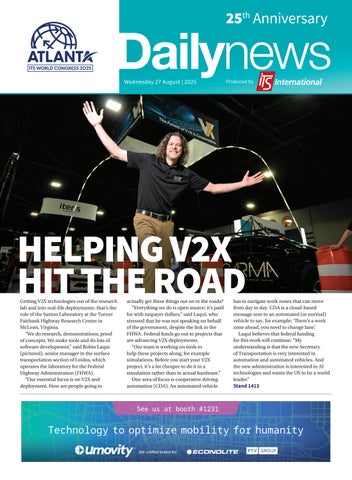
Getting V2X technologies out of the research lab and into real-life deployments: that’s the role of the Saxton Laboratory at the Turner Fairbank Highway Research Center in McLean, Virginia.
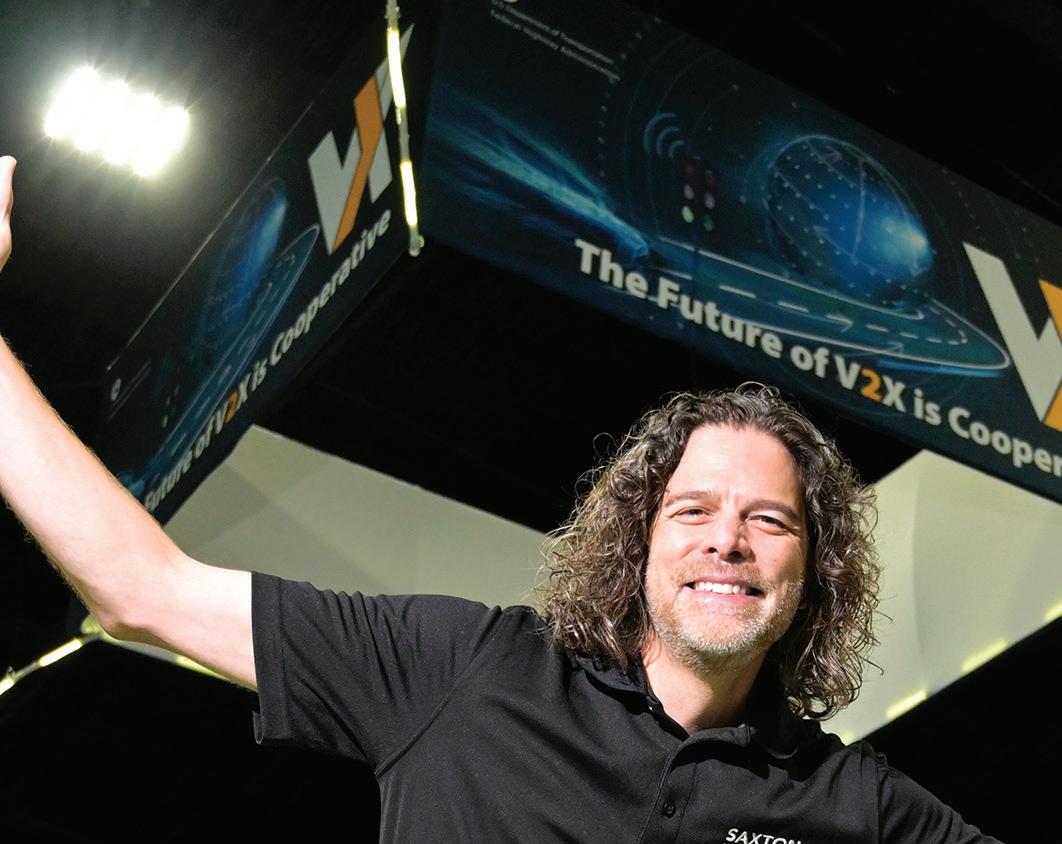
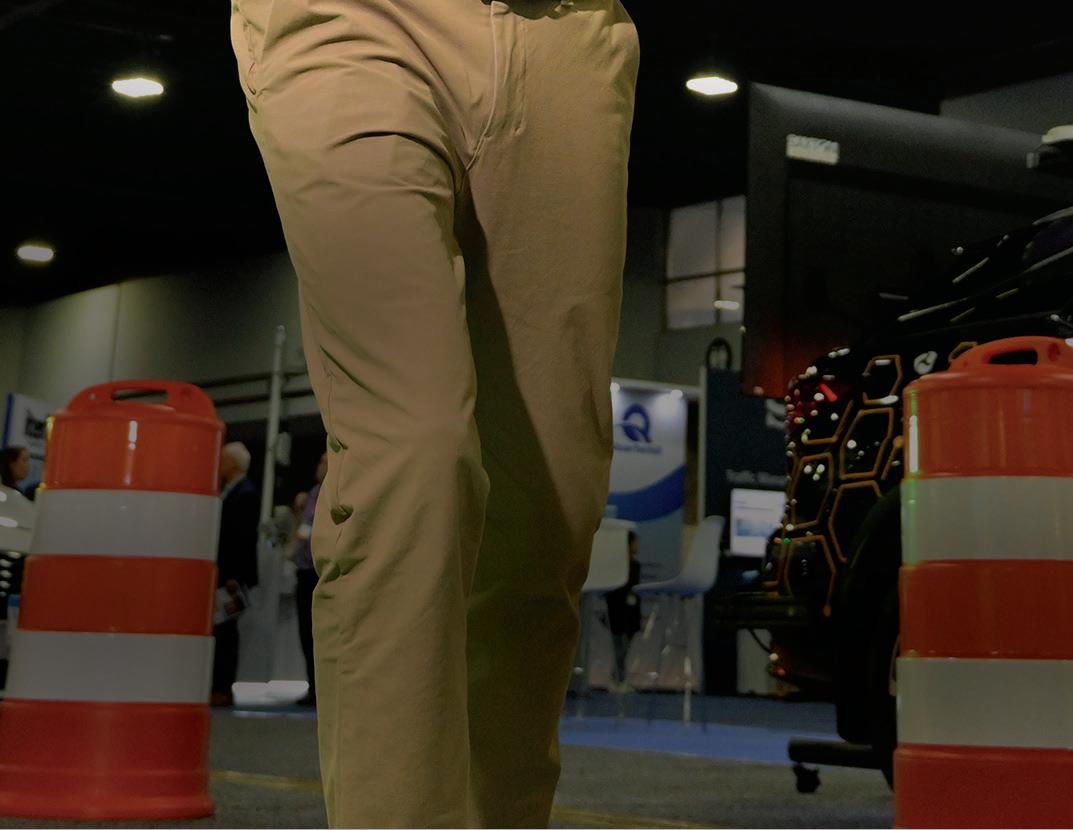
“We do research, demonstrations, proof of concepts. We make tools and do lots of software development,” said Robin Laqui (pictured), senior manager in the surface transportation section of Leidos, which operates the laboratory for the Federal Highway Administration (FHWA).
“Our essential focus is on V2X and deployment. How are people going to
actually get these things out on to the roads?

“Everything we do is open source; it’s paid for with taxpayer dollars,” said Laqui, who stressed that he was not speaking on behalf of the government, despite the link to the FHWA. Federal funds go out to projects that are advancing V2X deployments.
“Our team is working on tools to help these projects along, for example simulations. Before you start your V2X project, it’s a lot cheaper to do it in a simulation rather than in actual hardware.”
One area of focus is cooperative driving automation (CDA). An automated vehicle

has to navigate work zones that can move from day to day. CDA is a cloud-based message sent to an automated (or normal) vehicle to say, for example: ‘ ere’s a work zone ahead, you need to change lane.’

Laqui believes that federal funding for this work will continue: “My understanding is that the new Secretary of Transportation is very interested in automation and automated vehicles. And the new administration is interested in AI technologies and wants the US to be a world leader.”
Stand 1413







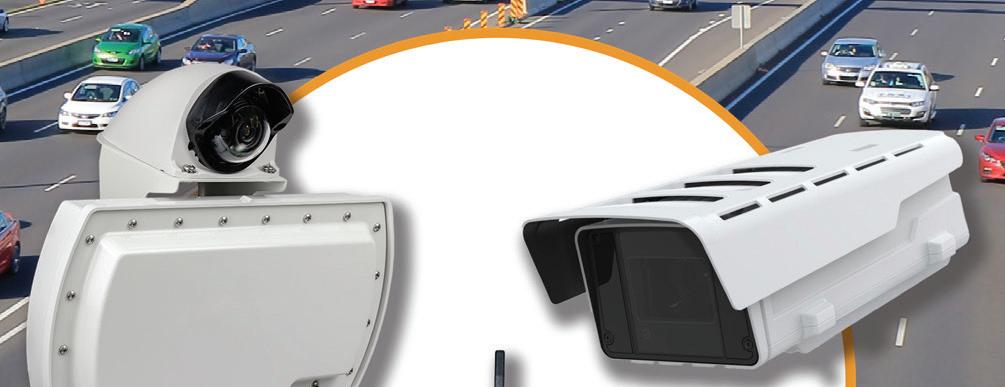
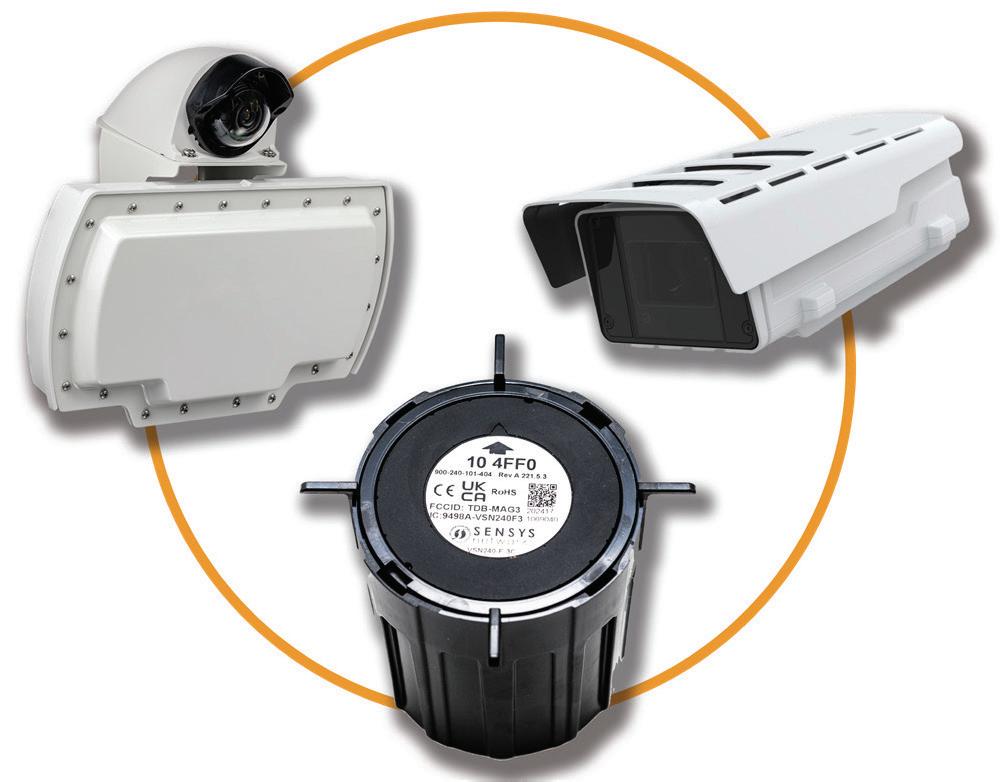
Smart traffic management is transforming highways without costly expansions. Wireless sensors, side-fire radar, and AIpowered video detection optimize flow, reduce congestion, and enhance safety. All without costly new roadway construction.
With real-time data and automated incident response, agencies can improve efficiency, mitigate crashes, and keep traffic moving—proving that smarter roads, not bigger ones, are the future.
• Highway Counts / VOS
• Coordinated Ramp Metering
• Automatic Incident / Wrong Way Detection
• Truck Parking Availability








As a premier sponsor of the ITS World Congress 2025, Iteris is showcasing its latest innovations in smart mobility, with a focus on pedestrian safety, AIpowered detection, connected vehicle technologies, and a strategic addition to its product portfolio.
Attendees can experience an in-booth demonstration of Vantage PedSafe, a radar-based pedestrian detection system designed to enhance safety at high-risk crossings. ere is also a rst look at the enhanced AI-driven capabilities of Vantage Apex, Iteris’ most advanced detection platform, now featuring true sensor fusion for greater accuracy.
Publisher / MD
Andrew Barriball
Editor James Foster
Project Manager
Paul Derby
Editorial team
Adam Hill, David Arminas, Alan Dron, Andrew Bardin Williams
Sales director
Dan Emmerson
Design
Andy Taylder, Simon Ward


e company is further highlighting VantageArgus CV, its connected vehicle data and travel-time analytics platform. Outside the convention centre, Iteris is participating in the V2X Day One Deployment District, o ering live invehicle demonstrations of V2X Connect, its real-time software solution for monitoring and validating connected vehicle deployments.

also present to showcase its portfolio of smart mobility and transit solutions, reinforcing the strength of the combined organisation.
Visitors are welcome to attend a quick 10-minute in-booth presentation on Wednesday, and to join a hospitality hour on Wednesday at 4:30 pm.
e stand also features the latest enhancements to ClearGuide, including Dash Cam Imagery and Signal Trends, which provide probe-based signal performance insights.
Almaviva, Iteris’ parent company, is
Robbins, Tom Gordon
Contact us
The Daily News o ice can be contacted at media@ropl.com
An exciting new solution has also been announced here, expanding Iteris’ portfolio and supporting the company’s mission to deliver safer, smarter, and more connected transport networks. Check it out by visiting the Iteris stand. Stand 1613 www.iteris.com




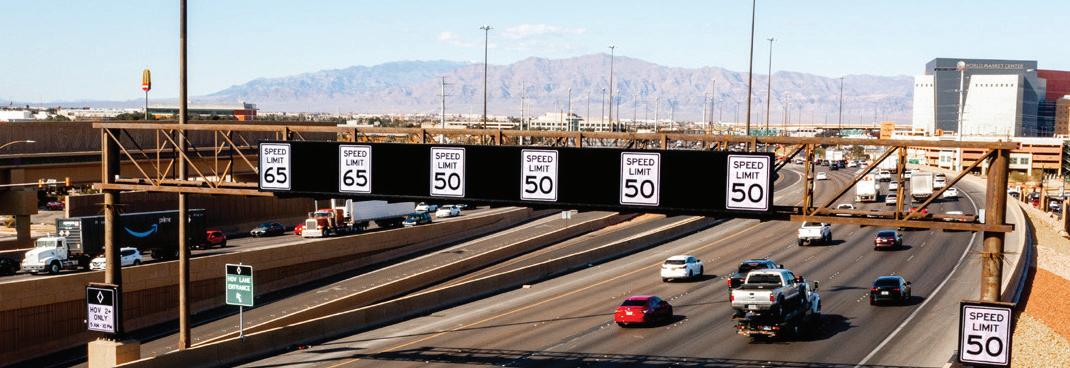


Forty-two Daktronics active traffic management (ATM) displays are placed along the busiest stretch of highway in Las Vegas to help with wayfinding, safety, and messaging for travelers.











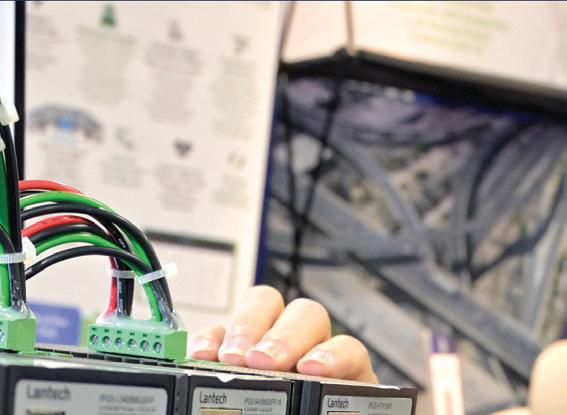
Taiwan-headquartered Lantech Communications has come to Atlanta to unveil the Lantech I(P)GSH7416XF, a high-performance, all-Gigabit managed Ethernet switch engineered for mission-critical ITS and industrial applications.
Rekor is here to spotlight its bold vision for the future of intelligent transport, built on AI-driven insights, scalable solutions, and hardware-light deployment models.
Leading the announcements is Rekor’s landmark statewide contract with the Texas Department of Transportation — a major validation of the Rekor Command platform’s ability to unify, analyse, and act on transport data at scale.
e company has also unveiled Rekor Tra cSight: a streamlined cloud application that makes tra c data analysis as simple as uploading a video. Once uploaded, footage is processed exclusively within the United States using Rekor’s secure, AI-powered engine. Users receive accurate results for FHWA 13-bin vehicle classi cation, counts, speed, and more — all while leveraging their existing camera infrastructure.
In addition, Rekor is launching a new Data-as-a-Service (DaaS) model for Rekor Discover. is o ering provides agencies with access to trusted tra c data without


Featuring 16 PoE ports and four auto-sensing 1G/2.5G/10G SFP+ uplinks, Lantech says it delivers exceptional bandwidth and flexibility for network aggregation. Built on the OS5 platform, it supports advanced Layer 2/3 protocols, hardware-based NAT, and PTP v2 for time-sensitive networking. With IEC 62443-4-2 cybersecurity certification and optional MACsec encryption, the device ensures secure and resilient connectivity.
Designed for harsh environments, the I(P) GS-H7416XF is ideal for smart transportation, tra ic control, and edge computing in intelligent infrastructure.
Stand 1908 www.lantechcom.tw

the need for hardware installations, eldwork, or ongoing maintenance.
Rekor’s presence at the Congress is further strengthened by several other innovations. e company debuted its new Incident Detection API, which delivers real-time, AI-enhanced incident alerts for integration into navigation tools, tra c platforms, and operational systems.
Also on show is a sneak preview of Rekor RoadView — a map-based situational awareness tool designed for agencies that do not operate fulltime Tra c Management Centres (TMCs).
For integrators and infrastructure teams, Rekor is also spotlighting its exible, high-performance licence plate recognition (LPR) and vehicle recognition technology — essential tools in the modern ITS toolbox.
Rekor invites delegates to visit its stand to see rst-hand how intelligent data is shaping smarter, safer mobility.
Stand 1507 www.rekor.ai












































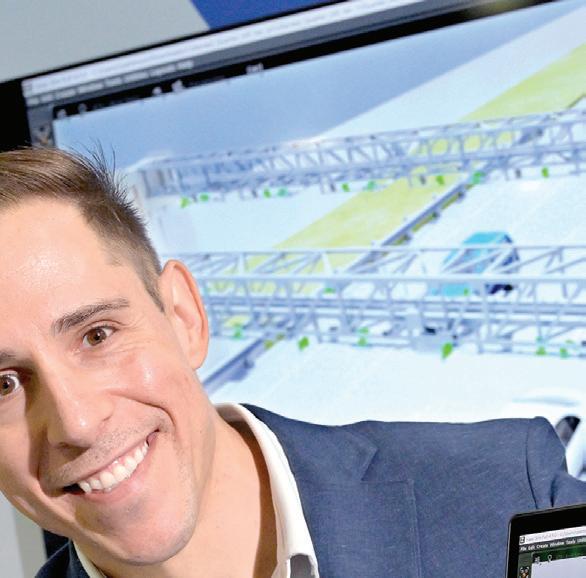
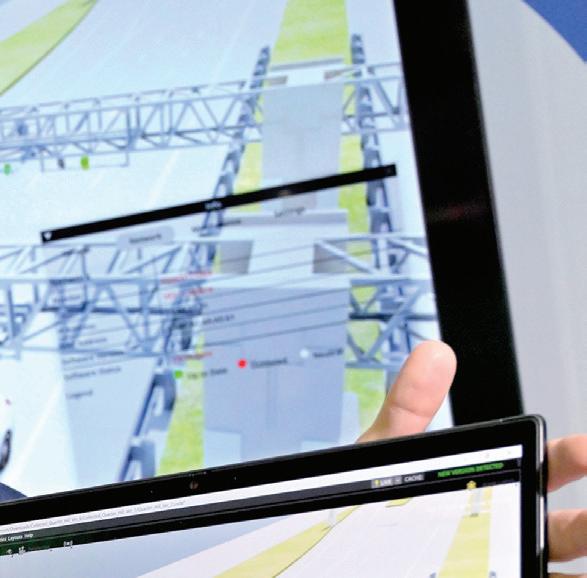
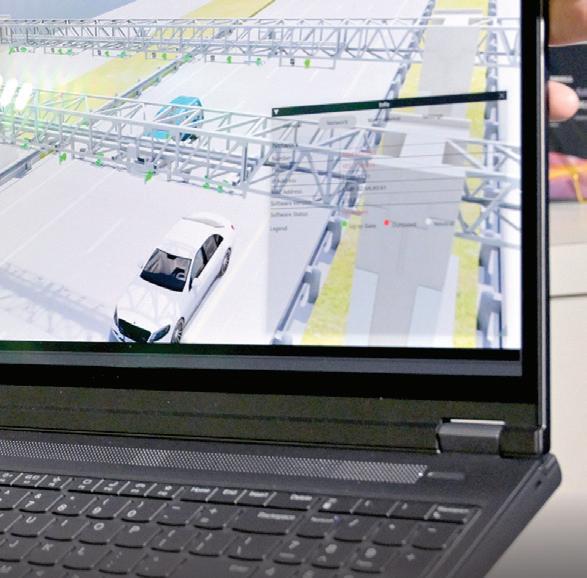



ere is more data available on ITS hardware assets than ever before. But much of it remains in silos that that are not easily combined to give a full picture of any problems that may arise in systems in, on, or above a road. Bringing that data together in a digital twin of the real-life system is a way of combining that information and giving agencies, consultants or contractors a fuller view of what is happening in ‘real life’.
Dan Dobransky (pictured), senior director, roadside transformation at Quarterhill, likens the advantages that
digital twinning brings to a patient’s full medical history being available to a doctor when they present with a new ailment. Having comprehensive information available gives the physician a better insight into medical background that can inform a diagnosis of the new problem.
e same bene ts accrue when dealing with roadway problems: “If you have all the information in one place, that can help drive the business case to go and spend money on a solution,” Dobransky said.
Three more names have been added to the ITS Hall of Fame at the ITS World Congress in Atlanta. ITS Lifetime Achievement Awards were presented to Russell McMurry, commissioner of the Georgia Department of Transportation as well as – in a highly unusual move –Mohammed Hikmet, chairman of Ohmio, and Robert Sykora, director for Europe, Middle East, Africa at Ohmio. It is thought to be the first time two recipients have come from the same company in the same year. Nominees come from the three ITS regions and past recipients include former USDOT Federal Highway Administrator, Shailen Bhatt.
For example, a digital twin of a sensor system allocates a name, IP address and history to every individual sensor and can forecast potential problems – for example, when a particular piece of equipment will slip out of warranty. Similar systems have been used in other industries for some time, but are “fairly new in ITS”, Dobransky said. However, “Within the next six months, you’ll see a ton of innovation: a lot more folks are looking to visualise their data better.”
Stand 1705 www.quarterhill.com
Marben is set to launch a complete, automotive-grade tolling solution based upon the SAE J3217 standard. Part of the Marben V2X so ware suite, this end-to-end tolling solution supports a full set of V2X messages, including two critical components: the Toll Advertisement Message (TAM) and the Toll Usage Message (TUM).
TAMs are broadcast by roadside units to communicate tolling point
details and applicable fees. TUMs are generated by the vehicle’s on-board unit (OBU) and contain the billing and usage data required for accurate, realtime toll collection.
The V2X technology has the potential for seamless, booth-free tolling without reliance on proprietary OBUs.
Stand 1917 www.marben-products.com









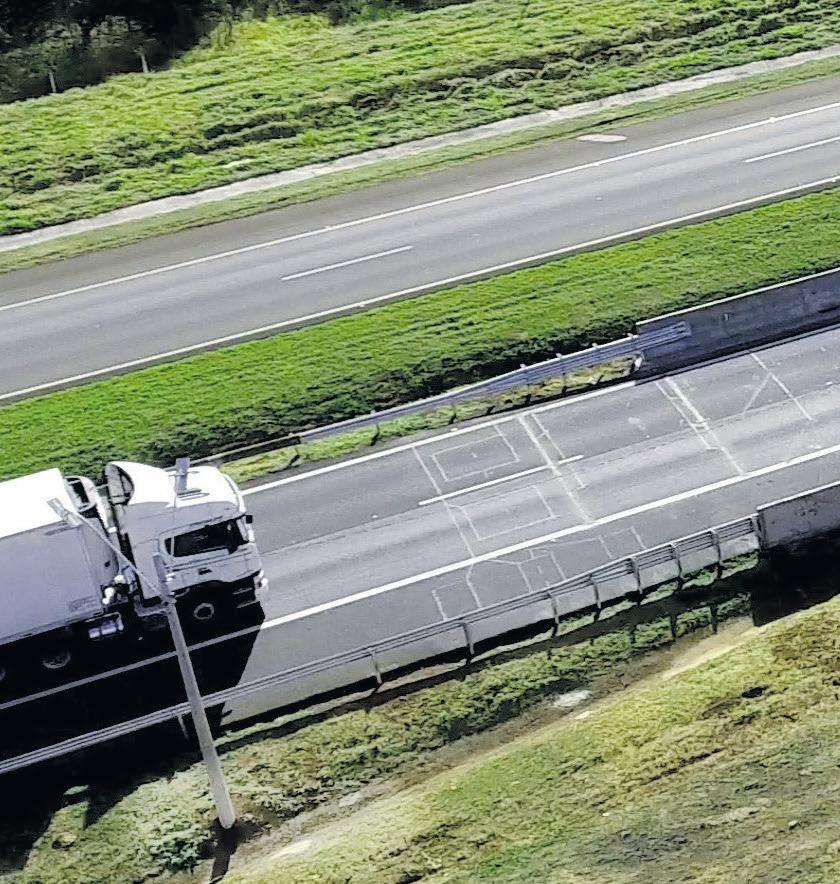










In the ever-evolving ITS landscape, e ciency in motion is more than just a concept – it is an absolute necessity. As modern transportation networks grow increasingly complex, the demand for integrated, intelligent technologies that enhance system performance, conserve resources, and enable smarter mobility has never been greater.
Visitors can explore the key innovations driving this transformation from Axis Communications. One such breakthrough is AV1 video encoding, an advanced compression technology that revolutionises environments where bandwidth is limited but reliable, real-time visual data is essential for operational decision-making. By enabling the transmission of high-quality video at signi cantly reduced bitrates, AV1 is setting a new benchmark for video e ciency within the ITS sector.
In addition, cutting-edge dualsensor cameras, exempli ed by models such as the Axis Q165/86DLE and AXIS P1518-LE, are transforming tra c monitoring. ese devices integrate multiple


capabilities into a single unit, with one sensor optimised for speci c tasks like licence plate recognition or chokepoint detection, while the other provides wide-area coverage. is dual functionality reduces hardware requirements and expands visibility, supporting more e cient infrastructure planning.
Recognising that no two transportation networks are alike, Axis also o ers comprehensive and exible ITS portfolios designed to cover intersections, highways, and roadside environments. ese integrated solutions are built for adaptability and scalability, allowing networks to respond e ectively to evolving demands while improving coordination and visibility across the entire system. Together, these innovations underline a broader industry shift towards more intelligent, adaptable, and sustainable transportation systems. For a closer look at how these technologies are shaping the future of transport networks, visit Axis Communications here at the World Congress. Stand 1725 www.axis.com

Mitsubishi Electric Automotive America is showcasing Urban Hawk, an AIdriven asset management and digital twin technology for smart cities.
Urban Hawk leverages vision data to deliver actionable insights on municipal roadways by utilising cutting-edge AI and machine learning algorithms. It identifies and geolocates pavement degradations, pavement markings, and right-of-way assets, displaying them on an ESRIbased GIS layer. Urban Hawk seamlessly integrates with existing work order management systems, streamlining adoption for municipalities. Its digital pavement surface evaluation and rating (PASER) and pavement condition index (PCI) assessments empower cities to make data-driven decisions and maximise funding e iciency.
Through strategic partnerships, Urban Hawk also o ers tra ic hotspot analysis by measuring near-miss events between vehicles, bicycles, and pedestrians. This provides tra ic engineers with real-time risk data, enabling targeted interventions within weeks—not months—without relying solely on historical crash records. Stand 2025 www.urbanhawk.ai






























In many countries, the prevention of road tra ic collisions, especially serious ones, is an important issue for road users. In Japan, approximately 60% of collisions occur at or near intersections. Cooperative systems including V2I and V2X that provide information for vehicles are expected to reduce tra ic incidents, particularly those occurring at or near intersections. They are also expected to promote realisation of automated driving, which can enhance intersection safety and tra ic e iciency. Special interest session, Enhancing Intersection Safety (08:00-09:30, Room A302), will introduce cooperative systems being researched and developed in Japan, as well as similar initiatives in other regions. Based on these topics, this session aims to bring together speakers from various regions to discuss technical and policy issues from a broad perspective.

It’s all happening on Wednesday and Thursday at ITS World Congress 2025. In fact, there’s so much going on, here are some highlights to help you plan your days...
As automated vehicles (AVs) reshape transportation, first responders face challenges ensuring public safety and adapting to new technologies. Safeguarding the Future: Emergency Responders and Automated Vehicles (08:00-09:30, Room A313), explores strategies to train emergency responders for e ective AV interaction, covering data standardisation for vehicle registration and crash reporting, and improved communication for incident management. It highlights collaboration among emergency services, local governments, and AV developers, and looks ahead to harmonising best practices through national dialogues and organisational e orts to better prepare communities for the impact of AV technology.


From Data to Reality – Unlocking the Global Potential of Autonomous Mobility and Logistics (08:00-09:30, Room A312) explores the transformative power of datadriven strategies, technology harmonisation, and collaborative ecosystems in shaping the future of autonomous mobility and logistics worldwide. Building on insights from international initiatives and implementations, it addresses challenges such as fragmented regulatory frameworks, data interoperability, cybersecurity risks, and infrastructure readiness. Experts present innovative approaches and proven frameworks, including shared CCAM data spaces, standardised tra ic analysis, infrastructure adaptations, and mobility concepts for sensitive environments like airports. Case studies provide practical insights into overcoming barriers, aligning standards, and promoting cooperation across sectors and borders, paving the way for cleaner, safer, and more e icient transportation globally.

Scaling Intelligent Transportation Systems and digital infrastructure requires interoperable multimodal systems powered by shared data. Plenary 2: Realising Growth through Secure and Interoperable ITS (10:00-11:30, Room Sidney Marcus Auditorium, Level 4), focuses on how digital infrastructure can be truly interoperable and secure at scale to unlock economic growth. It will highlight digital networks, cloud, edge computing, digital twins, and address technological, regulatory, and policy challenges to enable digital transformation for smarter, safer transport.
Is Connectivity Required for Automation? (10:00-11:30, Room A312) discusses the role of connectivity in Automated Vehicle (AV) operations. While connectivity enables V2V, V2I, V2C and V2X communications o ering safety and e iciency benefits, AVs may also operate safely with advanced onboard processing and sensors independently of external networks. International experts explore technological and regulatory perspectives, regional infrastructure di erences, cybersecurity, privacy, and the impacts of connected versus non-connected AV deployment.




India is undergoing a transformative ITS revolution driven by data, innovation and governance. The special interest session India’s ITS Revolution: Connecting Mobility, Boosting Economy, Ensuring Safety and Sustainability (10:00-11:30, Room Theater #1, Exhibit Hall Floor Booth #861) covers AIbased tra ic management, Emergency Vehicle Priority Systems, Transit Signal Priority, Mobility Digital Twins and safety initiatives aimed at Vision Zero. It highlights multisector collaboration and inclusive mobility approaches integrating multimodal transport, payment systems, and universal accessibility as a blueprint for global ITS communities.
PNT services are vital yet largely invisible utilities supporting transport, communications, power grids, and emergency response worldwide. Positioning, Navigation and Timing (PNT) Services (10:00-11:30, Room A305), discusses application of PNT in ITS, including monitoring moving objects and certification of diverse mobile records to improve safety, e iciency and sustainability.
The AV Policy Roundtable (13:00-14:30, Room Theater #2, Exhibit Hall Floor Booth #205) discusses accelerating autonomous vehicle deployment safely, addressing safety standards, data sharing, and digital infrastructure needs. Industry leaders share insights on federal AV rulemaking and stakeholder challenges.
The International Forum session Global Data Sharing vs. National Security Protection: Can ITS Leaders Strike the Balance? (13:0014:30, Room A305) explores balancing global data sharing essential for innovation with national security and privacy concerns. Perspectives from the US, Europe and AsiaPacific provide insights into collaboration, risks, and strategies for safeguarding critical infrastructure while fostering ITS innovation.




In the ITS Cyber Incident Tabletop Exercise Workshop (13:00-14:30, Room A313) participants engage in a hands-on simulation of cyber attacks a ecting transportation systems, including IoT devices and connected vehicles. The exercise emphasises collaboration, protocol testing, vulnerability identification, and practical incident response skills.
Building Cyber Resilience: Securing the Future of Transportation Systems (13:0014:30, Room A312) examines how digital twins, AI and next-gen cybersecurity protect and transform transportation infrastructure. Experts discuss recent threats, standards evolution, predictive security testing, real-time threat detection and layered protections enhancing operational resilience.
Addressing challenges in safety and security data recognition and sharing, Providing Safe and Secure Mobility and Data Network (13:00-14:30, Room A311), introduces Japan’s development of a Smart Mobility Platform linking decentralised data spaces and compact, low-cost Lidar technology. Experts discuss international advisory perspectives and initiatives like the CAV corridor.
Infrastructure Readiness for a Cooperative ITS (13:00-14:30, Room A314) explores infrastructure readiness for Cooperative Driving Automation (CDA) and Cooperative Connected Automated Mobility (CCAM), analysing gaps, challenges, system architecture, policy and interoperability. Lessons from international and domestic deployments inform strategies to advance readiness.


In the Asia-Pacific session, Shaping Liveable and Bustling Community by ITS Technology and Internet of Reality (15:00-16:30, Room A314), the panel discusses resident priorities like safety, security and liveability through ITS technology and IT frameworks. Topics include evaluating technologies, engaging residents, human-centric road safety, collaborative perception services, and using the “internet of reality” to support community activities.


Drawing from the Ertico-ITS Europe Market Radar Report, Collaborative Strategies for Enhancing ITS (15:00-16:30, Room A311), reviews sectoral challenges and opportunities in global ITS development. It highlights cross-sector and continental collaboration, regulatory policies, and ITS as a driver for innovative, e icient and safer mobility worldwide.
In the session, Advanced Air Mobility - Early Plans Supporting Deployment (15:00-16:30, Room A301), speakers involved in Advanced Air Mobility (AAM) operations share lessons on early deployments, infrastructure planning, digital tool development, and collaborative e orts addressing AAM’s role in flood recovery, medical transport, transit augmentation and equitable mobility.
Automated Shuttle Vehicles: A Global Perspective (15:00-16:30, Room A313), provides a global overview of Connected Automated Vehicle shuttle deployments. Experts from Americas and Asia-Pacific discuss regulatory, infrastructure, and acceptance challenges, highlighting examples from the U.S., Europe, and Asia Pacific, including a North Carolina A&T testbed featuring lowspeed automation.
In Fair Mobility as a Service (Fair MaaS) to Sustainability Beyond (08:00-09:30, Room A305) this international forum discusses equitable and sustainable mobility services that address fairness across demographics and regions by leveraging digitalisation. It explores fair MaaS implementation within eco-mobility applications and the sharing economy in light of global climate challenges.


Addressing the workforce impacts of emerging technologies, Workforce Development Workshop (08:00-10:00, Room A302), reviews skill changes, leadership needs and education strategies. Discussions include AI-driven change, technical and ethical competencies, partnerships, and training to ensure adaptability in the evolving ITS sector.
Plenary 3: Building a More Resilient Transportation System with AI & Emerging Technologies (10:00-11:30, Room Sidney Marcus Auditorium, Level 4), discusses how AI enhances transportation resilience through infrastructure monitoring, e icient routing, grid management, and disaster response. It highlights AI’s role across transport modes and balancing innovation with safety.
In the special interest session, Verification Of New ITS Facility Management Method (10:00-11:30, Room A305), speakers from Japan and Korea present e icient maintenance methods for roadside ITS equipment using data processing techniques like big data analytics and Weibull hazard models, focusing on cost-e ective health monitoring and verification.
Focusing on Vision Zero from an equity lens, Equity Perspectives on Road Safety (10:0011:30, Room A313), discusses di ering travel patterns and vulnerabilities by gender, ability, and age. Panellists share best practices from Europe, Canada and the US on inclusive design, data-driven public space management and the Safe Systems approach.
Highlighting the issue of valuable transportation data locked in silos, special interest session Transportation Data Exchanges: Beyond Silos of Excellence (08:00-09:30, Room A311), explores Transportation Data Exchanges as solutions to improve connectivity and safety across public and private platforms in the US transport environment.


Presenting research funded by SAE and MCity, V2X Consumer Value Propositions: A Rationale for Ecosystem Creation and Adoption (10:00-11:30, Room A312), discusses consumer attitudes toward V2X implementations covering safety, e iciency and transactional uses. Panellists including OEMs, DOTs and tech firms explore the evolving ecosystem and platform opportunities.






Join Sinan on this actionable session for a deep-dive into the Innovation to Integration lifecycle, including AI and digital infrastructure, from R&D and small-scale pilots into system-wide fully integrated deployments. Join us























Kristin White, head of transportation strategy & partnerships for Google Public Sector

Every day, transportation agencies work to connect our communities safely and e ciently. But today’s challenges—from ageing infrastructure and extreme weather to persistent supply chain disruptions and tragic roadway incidents—demand new tools and innovative approaches.
From the tragic loss of life on our roadways to costly tra c congestion, the need for a more resilient and intelligent transportation future has never been more urgent.
At Google, we believe that arti cial intelligence (AI) and other technologies hold the key to unlocking this future. AI can help lead public agencies into a new era of innovation and preparing for the future.
e true power of AI is its ability to help agencies shift from reacting to problems to predicting and preventing them. Instead of just responding to incidents after they occur, you can anticipate needs and proactively manage your networks.
Imagine if you could:
• Predict where crashes are happening and deploy countermeasures to protect travellers and vulnerable road users?
• Detect infrastructure stress or failure and identify wear-and-tear on roads and bridges before they become critical failures?
• Optimise freight movement to help truckers nd parking and planning more e cient routes for drivers and deliveries?
ese aren’t possibilities in the distant future; they are practical realities agencies are using today.
Putting Insights into Action to Save Lives is shift is most critical in roadway safety. With over 40,000 lives lost on US roads each year, every insight that can prevent a crash is invaluable.
at’s why we were inspired by partners like the Hawaii Department of Transportation, which is using data analytics and AI to understand the root causes of tra c fatalities. By identifying high-risk corridors and patterns, they can implement targeted, life-saving
countermeasures. It’s a powerful example of how public-private partnerships can harness technology to protect our communities and move closer to the goal of Vision Zero - to eliminate all fatalities.
Building the Future, Together
Creating a more resilient transportation system is a collaborative e ort. It requires a shared commitment to innovation across the private sector, public agencies, and the communities they serve.
e theme of this year’s ITS World Congress, “Deploying Today, Empowering Tomorrow,” perfectly captures this moment. We have the tools and the technology to make a meaningful di erence right now. By working together, we can build a transportation system that is not only prepared for the challenges of tomorrow but also empowers every individual and community to thrive.
• Google Public Sector is sponsoring Plenary 3 - Building a More Resilient Transportation System with AI & Emerging Technologies – in the Sidney Marcus Auditorium, Level 4, on ursday, Aug 28th from 10:00 AM - 11:30 AM

Unprecedented collaboration between the road and vehicles is imminent. As the types and quantities of data start to seem overwhelming, let VantageARGUS CV™ take the wheel.
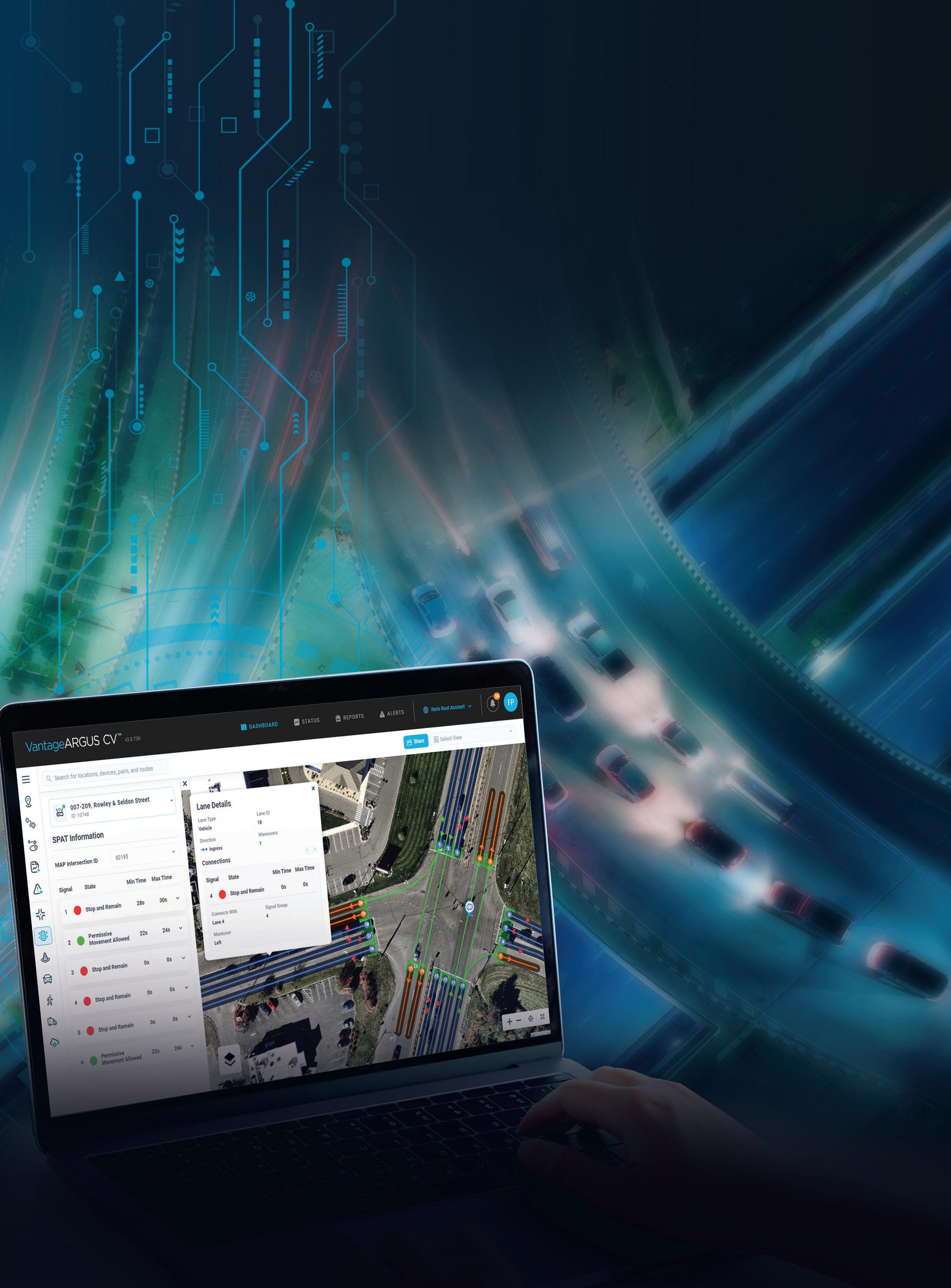
Software designed for transportation professionals to leverage and manage Connected vehicle (CV) data
• Travel-time traffic flow analysis with live visualization and historical reporting
• Compatible with different architectures - hardware agnostic
• Real-time insights into V2X messages for CV applications
Be ready to optimize CV data for throughput, support ITS planning, and keep travelers informed.
Join us at Booth #1613 for more details and demo information.


















Atlanta is the ‘now’ place to be for global ITS professionals. But the ITS America Conference and Expo in Detroit next June is creating a buzz around the ITS America stand and among delegates. ITS America is heading back to the Michigan state city based upon proven success of previous event editions.
e event in America’s ‘Motor City’ will take place June 9-12 at the Huntington Place Convention Center, one of America’s largest convention centres. Detroit remains the Automobile Capital of the US, being close to hundreds of the sector’s OEMs. Geographically it is ideal, as it is centrally located in the US and easy to get to from international locations –and driving distance for delegates coming from Canada.
Delegates will learn about new technologies and solutions that will enable a safer, smart and more connected transportation system. Organisations will develop new partnerships, enhance brand awareness and showcase innovations and solutions by uniting transportation experts with the goal of advancing mobility.
Detroit is also a major proving ground for ITS technologies of the future, with the Detroit Department of Transportation taking a lead – the largest transit provider in Michigan, o ering service to an average of 85,000 residents daily.

For example, Michigan Central is a Detroit innovation district and innovation cluster. is growing community serves as a powerful convening place to build the urban transportation solutions that advance a more sustainable and equitable future.
Importantly, Detroit is part of the Michigan Mobility Corridor – one of the world’s rst connected and autonomous vehicle (CAV) corridors. It will link the Detroit neighbourhood of Corktown – on the National Register of Historic Places –and downtown Detroit to the city of Ann Arbor, about 40 miles away.
e goal of the Michigan Mobility Corridor is to close the long-standing gap in access to reliable public transportation across southeast Michigan. Cavnue, a major developer of connected roadway and infrastructure technology, is leading the I-94 Connected and Automated Vehicle (CAV) Corridor Project, along with the state of Michigan and other partners, including Ford Motor Company. Meanwhile, the Michigan Department of Transportation is


investing heavily in infrastructure upgrades and ITS. Over the next 25 years, the cost of preserving Michigan’s roads and bridges amounts to $123.5 billion. Around $3.2 billion represents the amount spent over next 25 years towards safety in Michigan.
Michigan’s State Long-Range Transportation Plan – Michigan Mobility 2045 – establishes a future-orientated, multi-modal, integrated framework for transportation agencies throughout the state. It represents the rst long-range transportation plan for all modes across all of Michigan.
As an example, MDOT and its partner, Electreon, are piloting the rst public in-road charging system in the US. It will be built along a one-mile section of road in Detroit where Electreon will provide development, design, evaluation and testing.
With so much going on in America’s ‘Motor City’, get into the driver’s seat and make a date to be there next June.
Stand 561 www.itsa.org





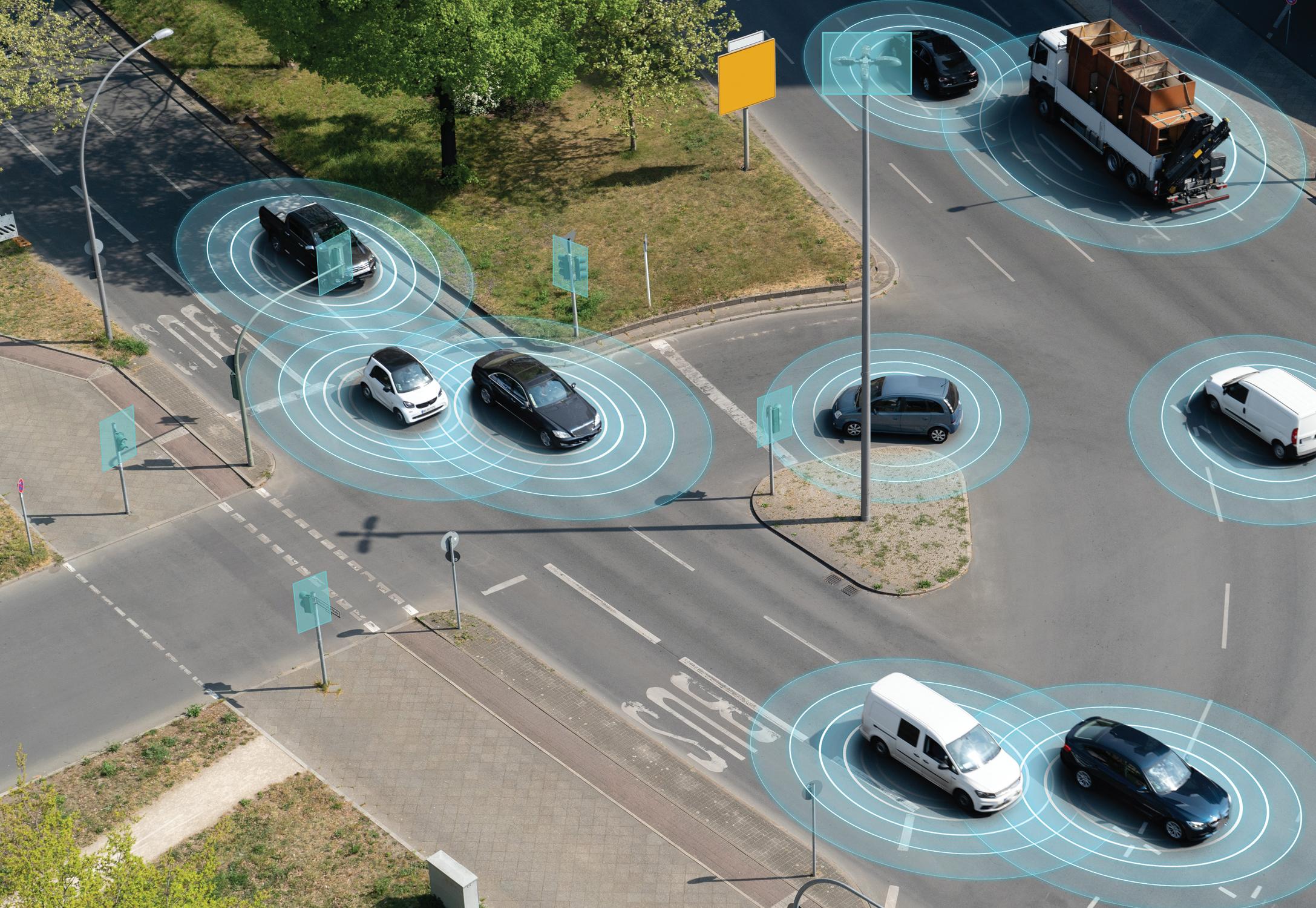


AI Traffic Data System
AI-powered traffic reporting. iTHEIA™ data recording.
Automated Enforcement
Safer and smarter roads. Fully-automated solutions.
Weigh-in-Motion
Accurate WIM tech. Efficient traffic monitoring.
Multi-Lane Free Flow Toll Migration
Improved operational performance.
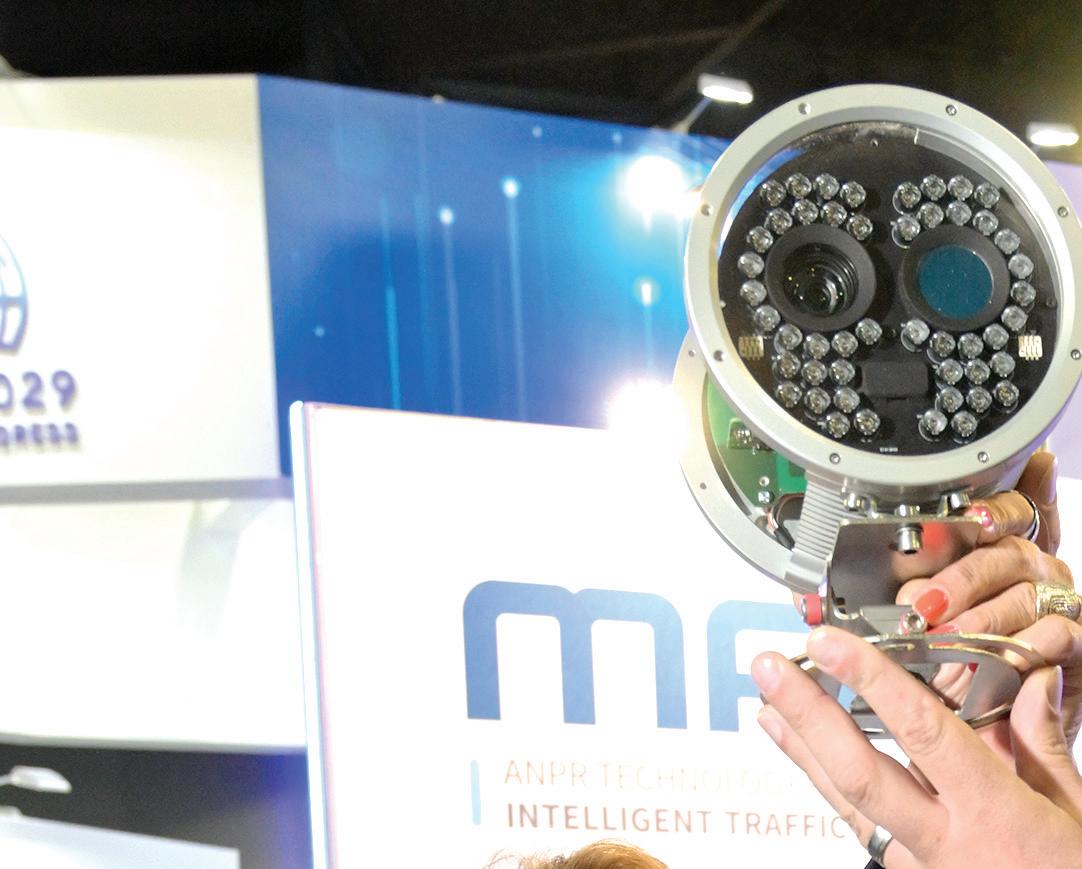
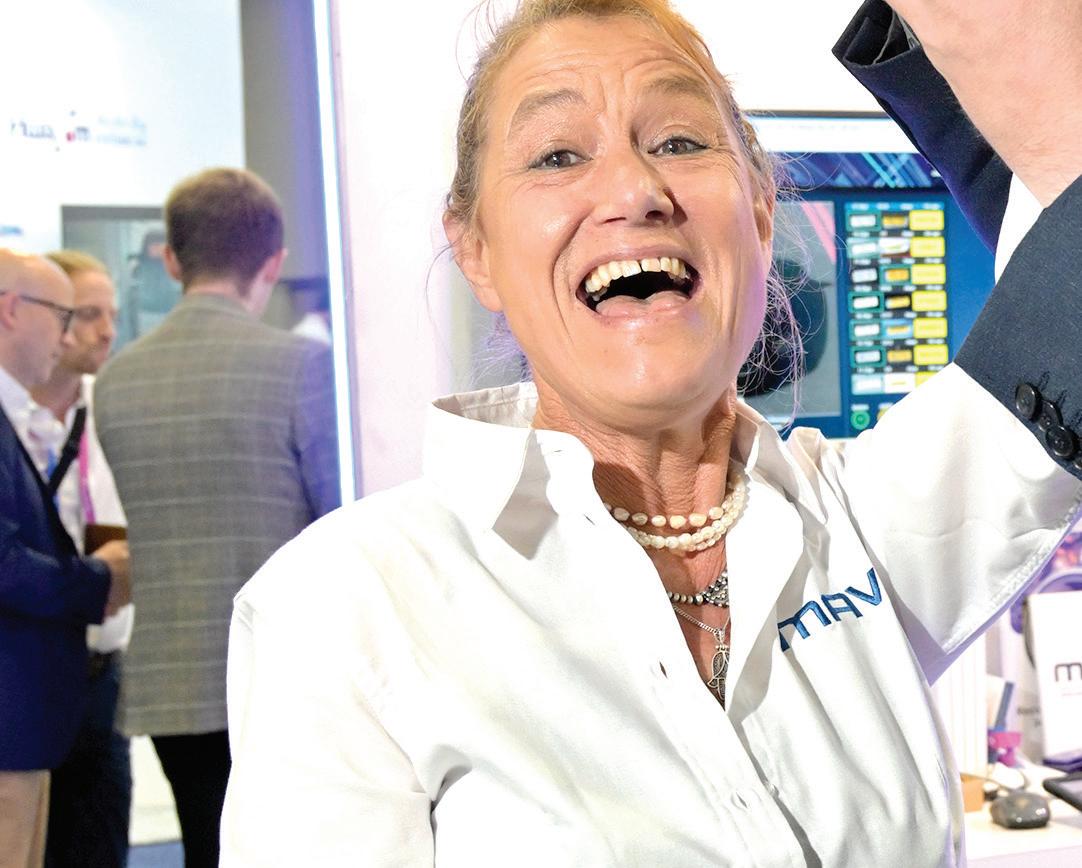





ose looking to stay ahead in the world of intelligent transport systems are encouraged to visit MAV Systems at the UK Pavilion. As a global leader in LPR technology, MAV is set to showcase its latest innovations — including the groundbreaking MAV AiQ, which has been purpose-built to address the rapidly evolving needs of modern ITS applications.
For professionals involved in tra c enforcement, urban mobility, tolling, or secure access, MAV’s AiQ ANPR solutions stand out for their impressive speed, accuracy, and intelligent features.
e systems bring together highperformance image capture and sophisticated edge-based AI analytics, making it possible to detect events such as vehicle classi cation, motoring o ences, and speed violations

instantly — all processed directly at the edge for minimal latency.
Visitors to the MAV stand will discover rst-hand how AI-powered edge processing is transforming real-time tra c intelligence, unlocking new possibilities for operational e ciency and decision-making.
e technology is designed with exible integration in mind, o ering seamless compatibility with cloud, hybrid, and onpremises infrastructures. MAV’s team of experts will be available to discuss speci c use cases, while customisable analytics dashboards promise to give transport professionals unprecedented insight for smarter strategies.
Stand 1141 (UK Pavilion) www.mav-systems.com
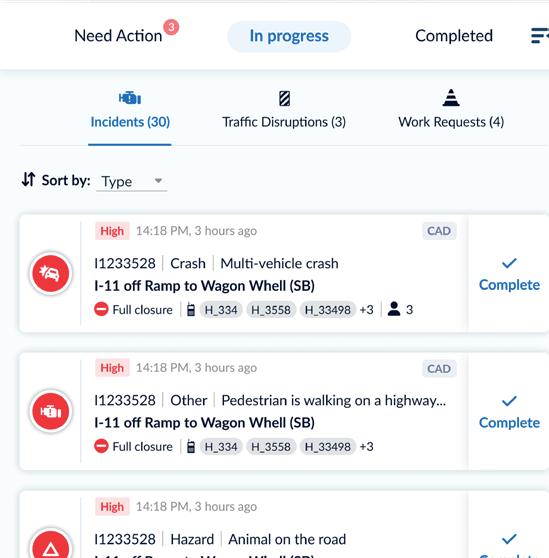
AT&T Connected Solutions is demonstrating a system designed to give new insight into how tra ic networks are working with its Mobile Threat and Anomaly Detection (MTAD) system.
MTAD pools information from four di erent sources – radio access network (RAN), core network, AT&T Threat Intelligence and Call Detail Records (CDR) and can display a compendium of anomalies or threats on a ‘security dashboard’.
The aim is to flag up any unusual spikes or other anomalies in activity that require to be dealt with by the appropriate authorities, such as tra ic control centres.
“If the average of usage changes dramatically, this [system] will show up any anomalies and we can drill down to see what’s causing it,” Zack Carter, AT&T connected solutions manager
The system will also notice any IoT or cellularlyconnected device that repeatedly tries to connect to the network; detect malware or botnets; and keep a watch for ID spoofing or sim swapping incidents, among other capabilities. The system was introduced earlier this year and AT&T has been undertaking short-term trials. “There’s been interest across this segment,” said Carter.
Stand 1041 www.att.com




INRIX connects the dots between people, vehicles, roads, and businesses – to make the entire transportation ecosystem more intelligent.


Thousands


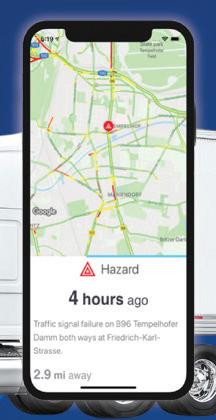










Hundreds of cities, states, and agencies use INRIX for performance, safety, and policy decisions.

































Tapco kicked off this year’s ITS World Congress in Atlanta with two big announcements: the launch of a new smart crosswalk detection solution and an acquisition of Logix ITS.
Logix ITS is a leading provider of connected traffic solutions for speed calming, traffic flow and parking technologies. According to Tapco’s marketing director Grant Thekan, Logix ITS has an extensive presence in Canada, opening up that lucrative market for Tapco.
“We are excited to join forces with Logix ITS, expanding our 70-year legacy of pioneering traffic safety,” said Eric Stangel, President and CEO of Tapco, in a written statement. “This acquisition unites cutting-edge solutions under one smart platform, empowering agencies to enhance roadway and pedestrian safety seamlessly.”
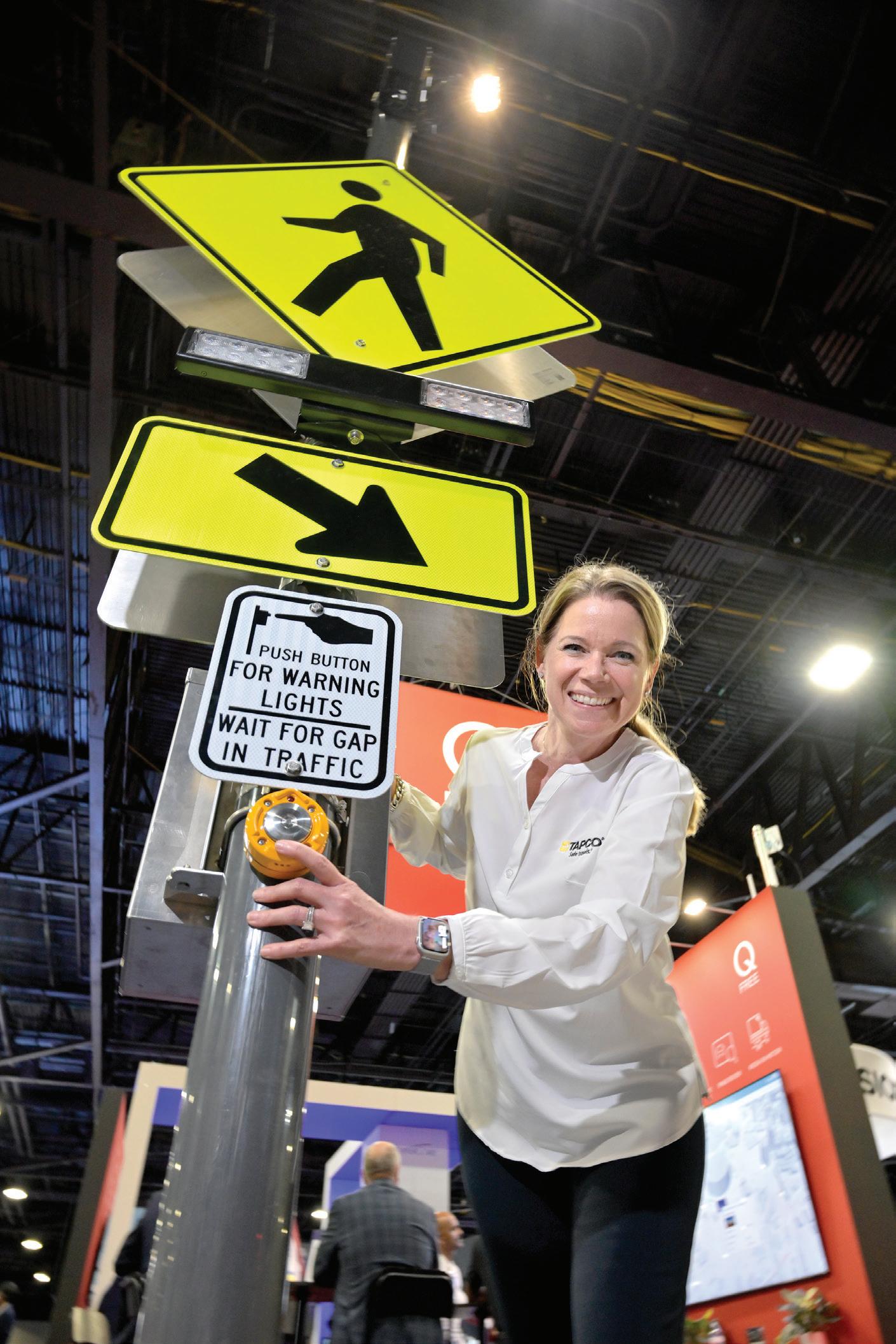
Tapco also launched a smart crosswalk detection solution on Monday and is demonstrating its capabilities at the company’s stand on the show floor. New passive detection sensors help protect pedestrians even if they don’t activate the signal – something that only one-third of people actually do.
Tapco’s sensors are able to detect pedestrians as well as their movement and direction, allowing the systems to take intent into account when activating warning lights for approaching drivers. Lights also illuminate the crosswalk to enhance safety even more.
The solution is designed to be low-power and is powered by solar panels, allowing agencies to place crosswalks anywhere – even mid-block where there is typically no wired power source.
The smart crosswalk detection solution is being tested in several locations around the U.S. – including Wisconsin and California –and will start shipping to customers by the end of the year.
Stand 905 www.tapco.com
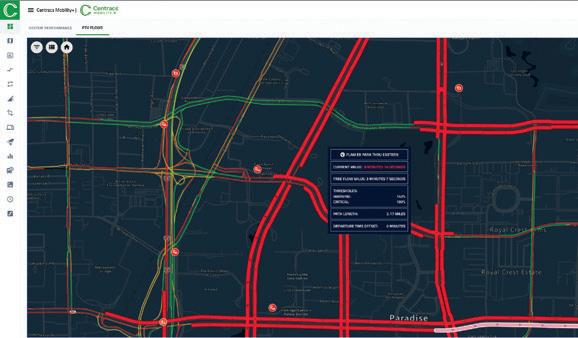
Umovity is presenting its integration of simulation and real-world operations at ITS World Congress in Atlanta. By combining the analytical strength of PTV Vissim with Econolite’s Centracs Mobility, Umovity is delivering a true digital twin of transportation networks, which can be deployed today by
agencies and consultants.
This integrated platform empowers transportation professionals to build real-time, operations-informed digital twins, enabling them to rapidly test adaptive timing strategies and assess multimodal impacts before implementation.
Umovity says the result is
smarter, data-driven decisions in transportation systems management and operations. Instead of waiting months or years to evaluate changes, decision-makers in cities and agencies can visualise outcomes in advance, streamline operations and reduce congestion.
Whether the goal is optimising daily traffic flow or planning for long-term urban mobility, the company says its solution delivers a unified, intelligent platform that turns static road networks into living, adaptive systems.
Stand 1231 www.umovity.com











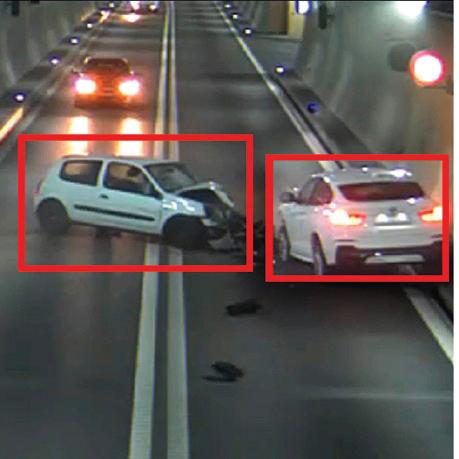
Invite everyone to join Darren at his presentation:

NoTra ic has unveiled its Nexus Omni tra ic solution, a nextgeneration intersection device. It enables DOTs and other agencies to proactively manage intersections, identify and address risks before they escalate, and make smarter choices.
Tal Kreisler, CEO and co-founder of NoTra ic, is a “bridge between outdated infrastructure and the next generation of tra ic management”.
The firm says the small unit is simple to install, and can support all standard tra ic cabinet types. It has received approval from Florida DOT.
Kreisler adds: “As we enter a phase where infrastructure must go beyond mere connectivity and o er intelligence, resilience, and proactive capabilities as well, the Nexus Omni makes intersection digitisation si mpler, safer, and futureready.”
NoTra ic is also o ering a standalone version of its Nexus device, which supports up to eight LAN ports, video uploads to the cloud, and remote cabinet access. As well as hardware, the company is expanding the Mobility Store portfolio, which includes Optimisation Mode, Pedestrian Protection, Intersection Safety Insights, Remote Front Panel and more.
Newly-available on the platform are Near-Miss Insights and Situational Awareness, which provides HD video and rich metadata tracking all movement through an intersection. Stand 1123 www.notra ic.com
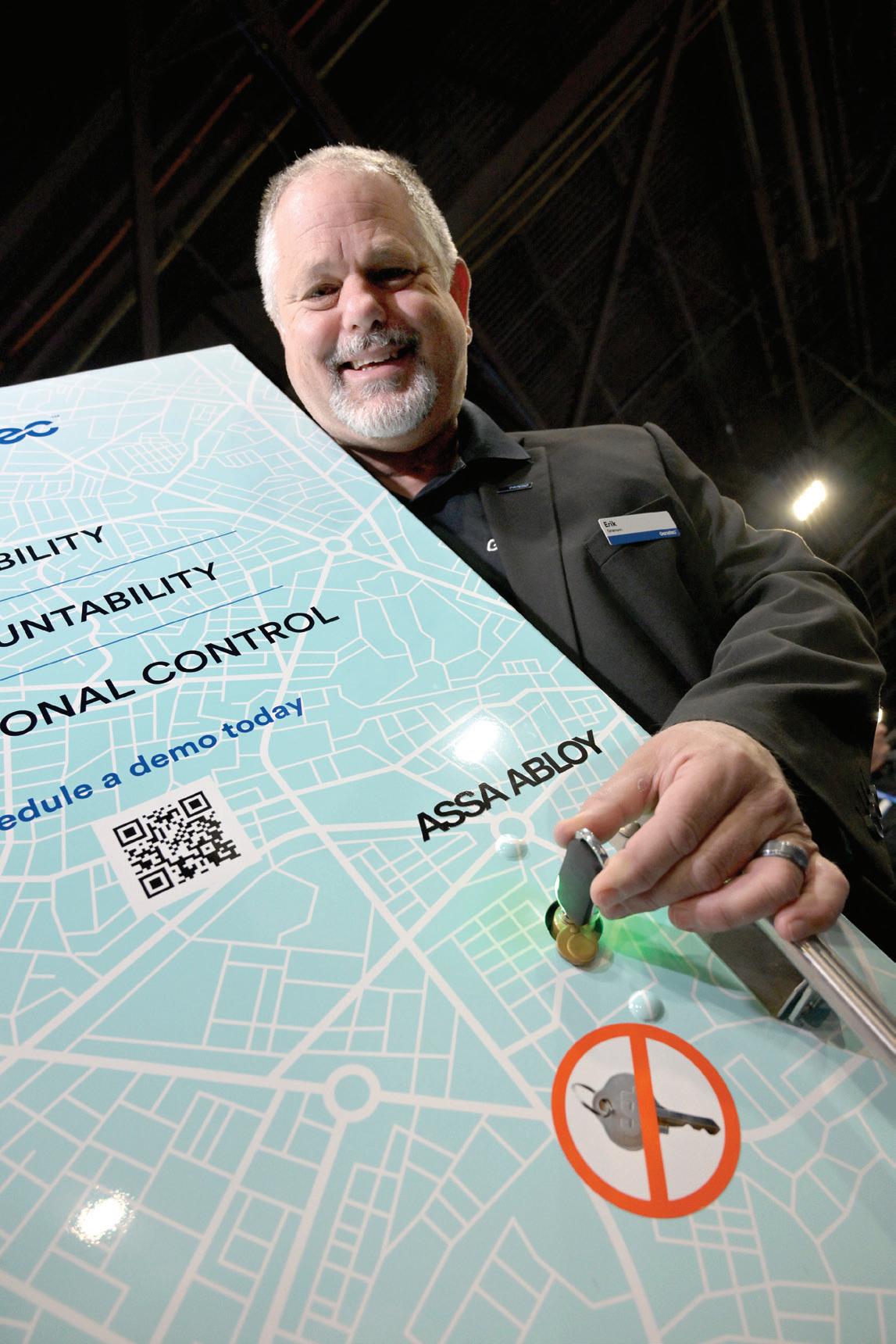
Genetec wants transportation organisations to get more value out of their data through its Cloud Link Roadrunner. e gateway device acts as the brains of the tra c cabinet, consolidating dozens of data feeds onto a single tra c management dashboard from which engineers can create insights and make quick decisions that improve tra c ow and safety.
For example, tra c monitoring video feeds can be easily shared with emergency response personnel during a dangerous storm event. Essentially, at the press of a button, city o cials can grant access to di erent data feeds based on current mission or emergency conditions.
“We start with a desired outcome and work backward from there to build capabilities that cities need,” said Kevin Burkhard, an account executive with the company.
Genetec also secures the cabinets themselves, working with partner Assa Abloy to limit access to authorised personnel. Genetec’s platform tracks access in real time, detecting when cabinet doors are open, closed or being tampered with.
Stand 1831
www.genetec.com

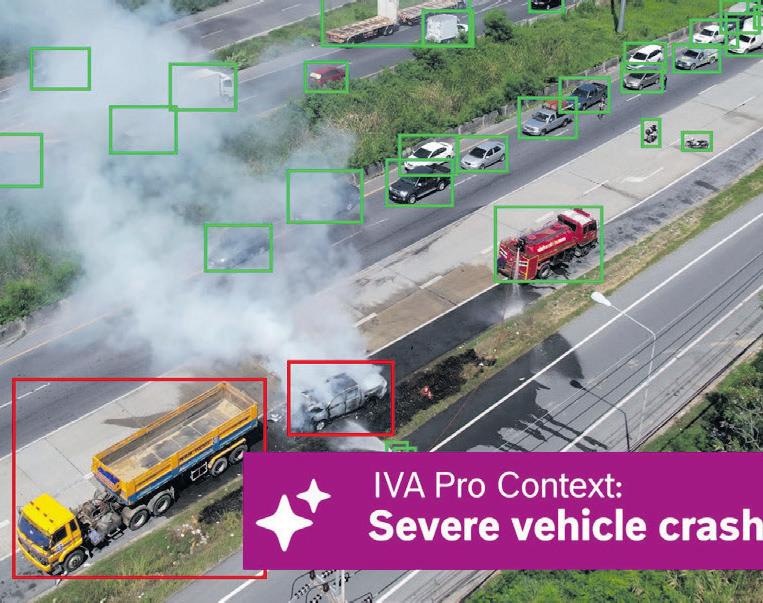
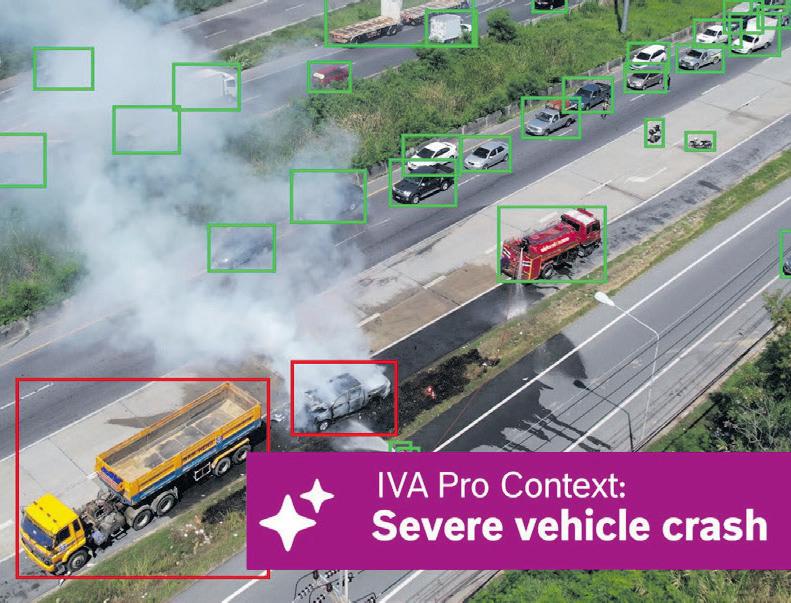
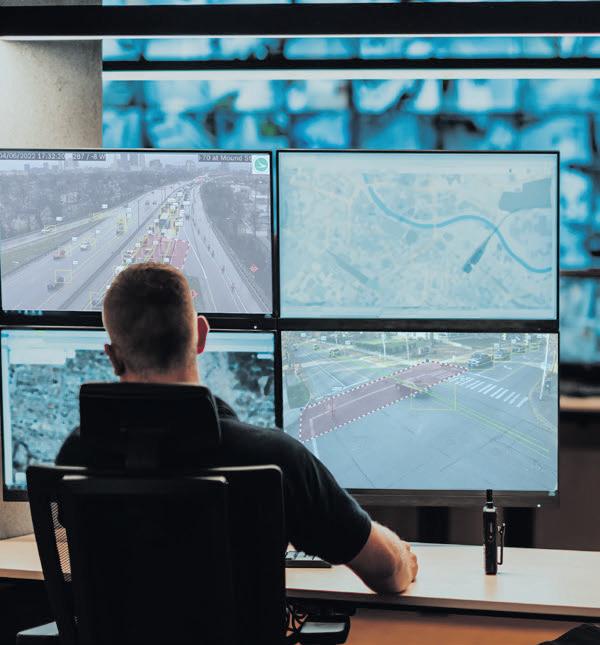
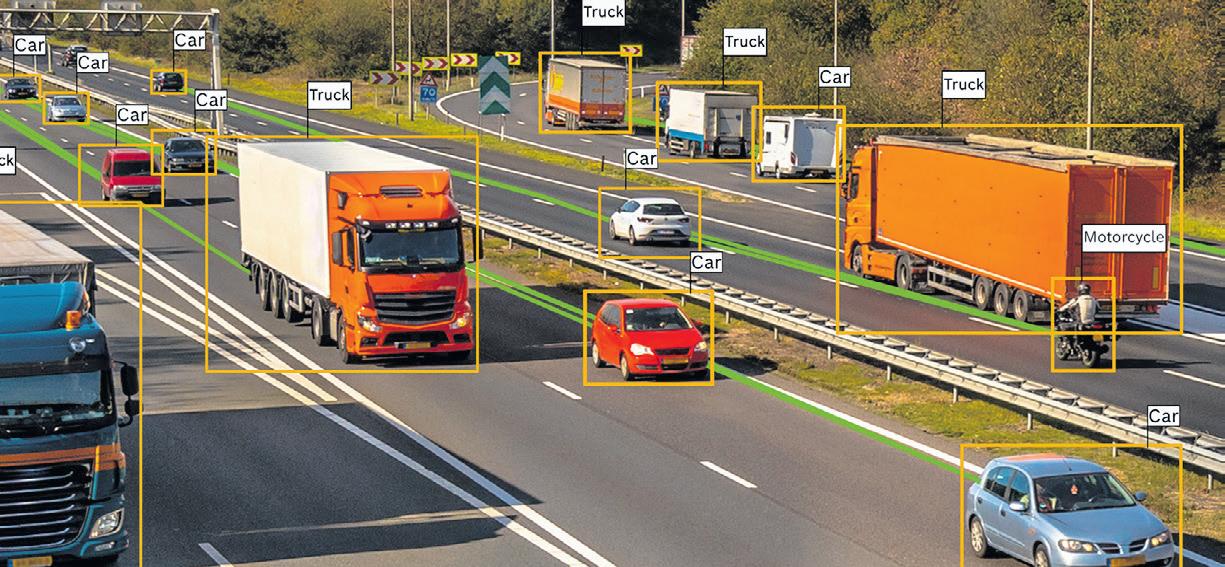
What if your video system could think like a traffic engineer or city planner?
Bosch already empowers you to build safer transportation ecosystems, but are you ready to step into the next generation of visual intelligence with a system that goes beyond everyday object detection, creating a deeper understanding of complex environments?
Visit booth #1747 to learn more about IVA Pro Context –a video solution that thinks like you.

Fredrik Nordh of Q-Free

As electric vehicles (EVs) continue to dominate the global car market, governments face a pressing challenge: how to sustain road funding that has traditionally relied on fuel taxes.
In Norway, where Q-Free’s pioneering solution is being developed and piloted, EVs now account for more than 90% of new personal car sales, and the national eet is nearly 30%
electric. With EVs being heavier than traditional vehicles and not consuming fuel, ensuring fair and enforceable funding for road infrastructure is essential.
Q-Free’s innovative concept
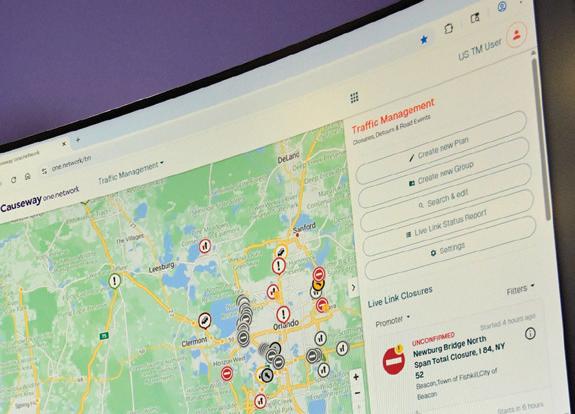
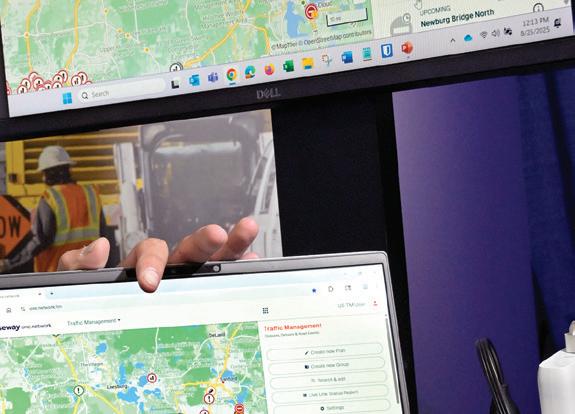
Big baseball events can cause big headaches for city tra ic managers. Causeway one. network has hit a home run with its Live Link and Plan Share solutions.
Live Link is an integrated mobile app that sends accurate and timely closure information to drivers via navigation providers – Google Maps, Waze, Apple Maps and TomTom. Notifications about lane closures, detours and work zone announcements allow drivers to avoid congestion rather than add to it.
Meanwhile, Plan Share transforms permit management into a seamless, map-based
experience, streamlining the way city tra ic o icials plan and manage disruption on their road network. Ditch the spreadsheets and PDFs for a collaborative platform that delivers transparency, e iciency and safety across all teams trusted with managing the right of way.


City o icials can communicate permits and projects visually on Causeway one.network’s public map and data is available to drivers via nav partners thanks to seamless workflows that save tra ic managers time when getting the word out. Play ball! Stand 507 https://us.one.network
for distance-based road user charging for personal vehicles provides a fair, scalable method to charge vehicle owners based on miles driven. What sets it apart is its ease of use, simple installation, non-intrusive operation, focus on privacy, e ective enforcement, several years of battery life, and low cost. ere is no need to connect any equipment inside the vehicle or interact with a smartphone.
Having shown promising results in its initial phases in Norway, this solution will have its rst global showcase here at the ITS World Congress — an exciting moment for attendees worldwide. As industry leaders gather from across the globe, Q-Free will demonstrate how it is spearheading this disruptive technology.
Q-Free is set to show how it is shaping the future of road user charging, ensuring that infrastructure funding keeps pace with the changing market and the increasing number of electric vehicles. is groundbreaking technology paves the way for more equitable and sustainable road management worldwide.
Stand 911 www.q-free.com



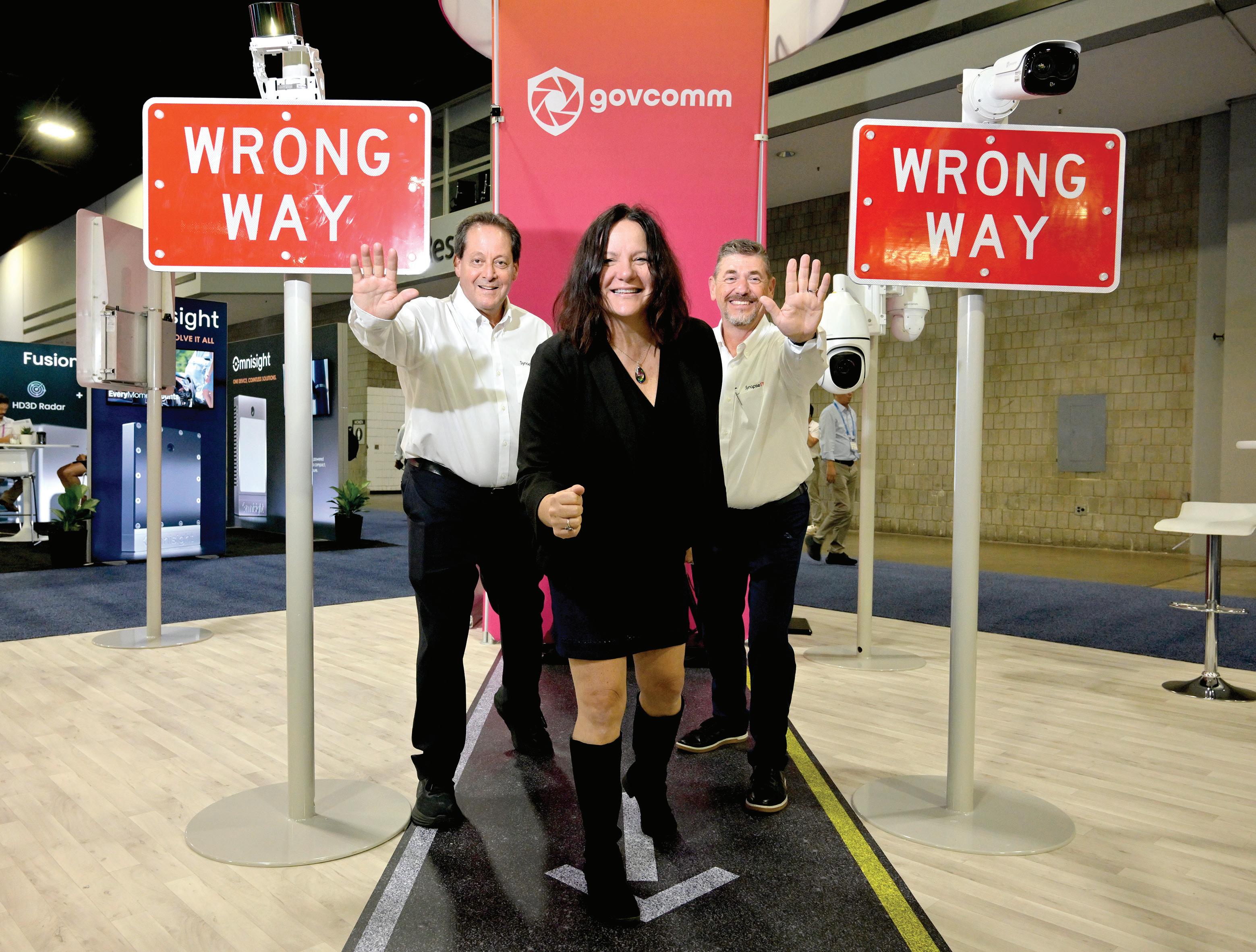
e recent acquisition of GovComm has given Synapse ITS dominance over the wrong-way detection market in Florida –success that the company hopes to replicate across the rest of the country.
“ e GovComm system has rede ned wrong-way vehicle detection in Florida,” said Dan Skites, Executive Vice President, Sales, Synapse ITS in a prepared press release. “ is national rollout re ects our commitment to helping agencies across the U.S. adopt smarter, safer roadway systems. We’re proud to bring unmatched accuracy and reliability to communities nationwide — there’s no question that this technology will signi cantly reduce dangerous incidents.”
GovComm, and now Synapse ITS, is one of just six approved wrong-way detection vendors in Florida and has more than 400 deployments across the state (more than


the ve other vendors combined). Synapse ITS hopes to scale this success to the rest of the country – starting this week at ITS World Congress 2025 in Atlanta.
According to Craig Waltzer, General Manager of GovComm, false positives are the largest challenge with most wrong-way detection systems.
Strong winds, passing trucks and other environmental conditions can set o alerts when there is no actual event.
Waltzer explains that this bombards tra c management centres with false positives to the point that many turn o the wrong-way detection during the day when the noise is most prevalent.
e GovComm ITS systems reduce false positives by optimising detection capabilities across multiple, high-resolution video feeds. Each wrong-way detection unit includes
Panasonic Automotive Systems America (PASA) is emphasising the benefits of its vSkipGen product, which aims to significantly cut the time and costs of creating the next generation of in-vehicle systems.
‘V’ stands for ‘virtual’ and vSkipGen allows so ware developers and testers to work on electronic versions of forthcoming systems. “Usually, if you want to develop some so ware for a vehicle you have to give every developer and tester in the team a physical version of the system that is to be installed,” said Vladimir Beloborodov, senior so ware
two cameras with four sensors – a visual and thermal lens facing the intersection and the highway – and a powerful NVIDIA chip that is capable of processing 40 frames per second. Software analyses four consecutive frames with two-pixel di erentiation between one through four consecutive frames. is processing power allows the system to detect a wrong-way violation with a high-level of accuracy in eight-tenths of a second.
Once an incident has been con rmed, ashing lights can be turned on to warn drivers, dispatch highway patrol and put emergency personnel on alert.
Synapse is going to host a webinar about the importance of wrong-way detection for road safety in mid-October.
Stand 605 www.synapse-its.com
engineer and architect at PASA. Now, vSkipGen allows team members to work on the new system through a version in the cloud.
That gives instant cost savings from no longer having to massproduce physical versions of the new system and also speeds the new product’s time to market. It also means that so ware teams can start work on the new system before their hardware counterparts.
Stand 541
www.na.panasonic.com


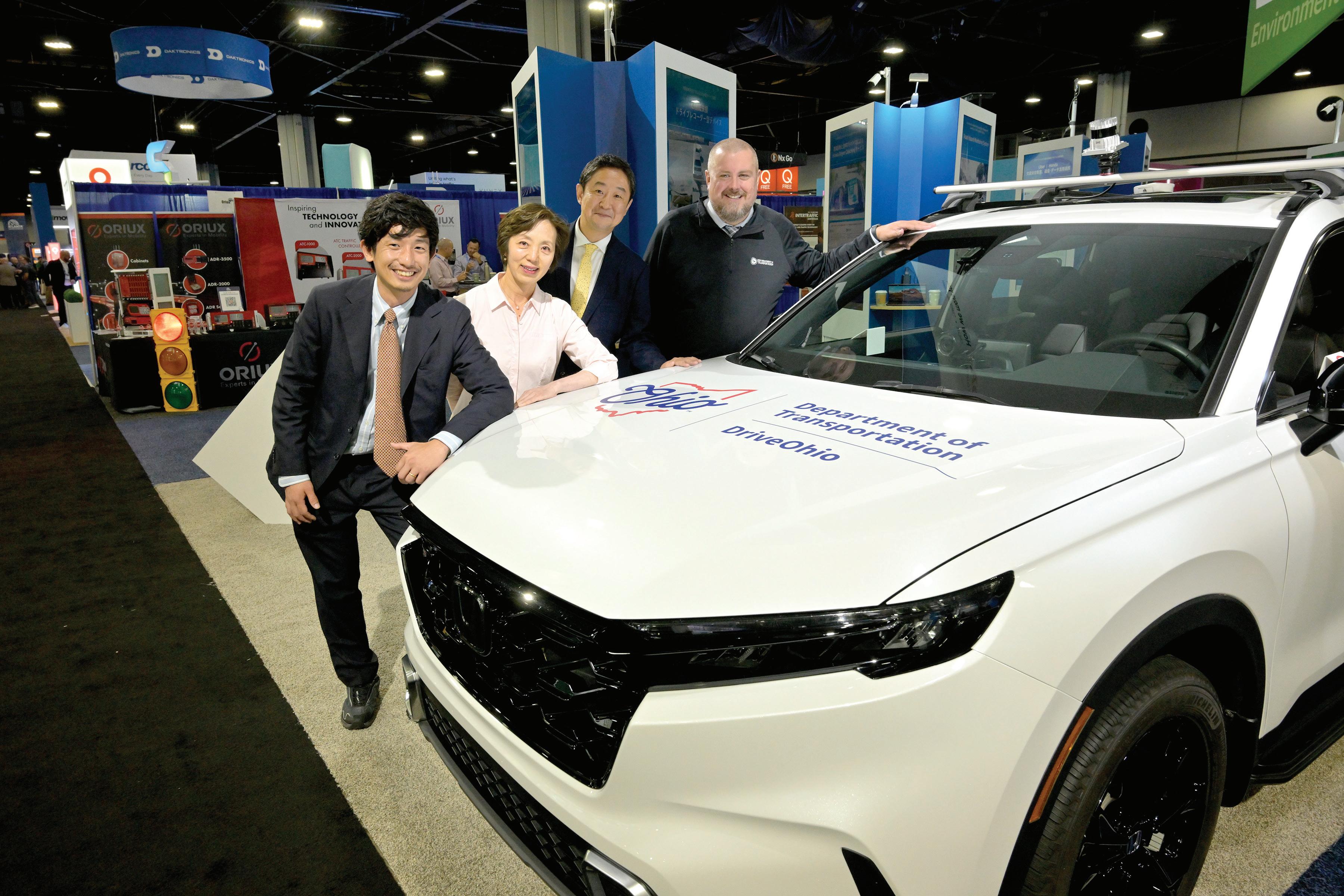
Honda is demonstrating a road hazard monitoring system that is being piloted with the Ohio Department of Transportation (ODOT) that automatically detects hazardous road conditions across the Buckeye state’s state highways.
Honda has provided the ODOT with two vehicles outfitted with a camera, GPS, Lidar and gravity sensors. The vehicles automatically detect a hazardous road condition – a pothole, damaged guardrail or obscured signage, for example – and sends the information to a central repository. Road engineers can view the reported hazards laid out on a map or in list view and prioritise repair tickets.
The pilot is a result of research conducted by Sue Bai around how to improve road safety by giving drivers a sense of ownership about the driving experience.
“Most vehicle fatalities are the result of human behaviour, not the actual vehicle,” Bai said. “We need to give drivers more
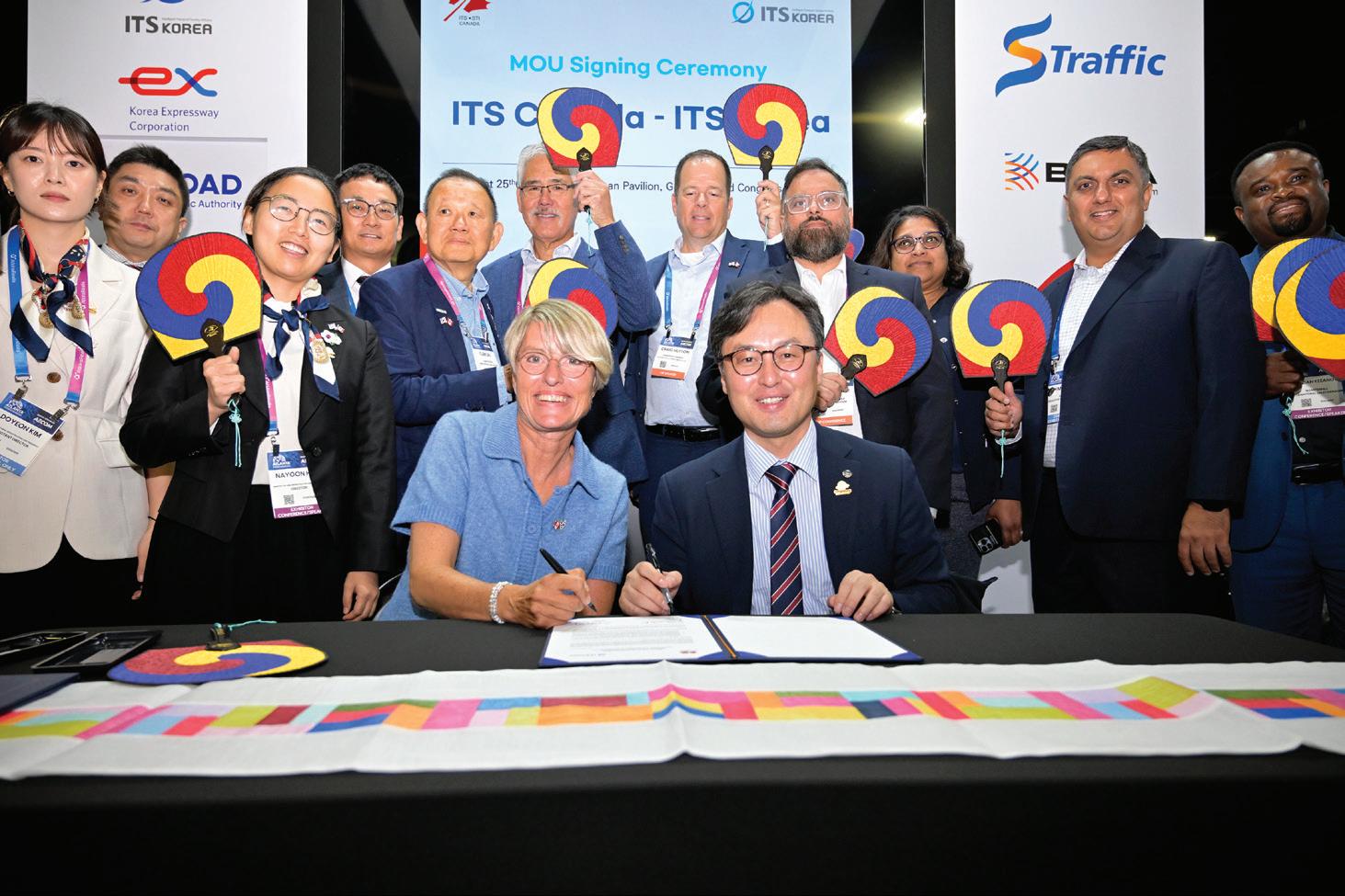
ITS Korea and ITS Canada signed a memorandum of understanding (MOU) Tuesday afternoon in the exhibitor hall at ITS World Congress 2025. The agreement reaffirms an agreement signed in 2017
at the ITS World Congress in Montreal that created a collaborative partnership between the two countries in the ITS industry.
The MOU was signed by Cheong-Hoe Heo, Chairman, ITS Korea, and Janneke van
der Zee, managing director of ITS Canada. Officials from the South Korea Ministry of Land, Infrastructure, and Transport were in attendance as was Craig Hutton, Associate Assistant Deputy Minister of Policy for Transport, Canada. Chairperson and CEO of ITS Canada Shawna Boakes provided a recorded message that played at the signing ceremony.
The MOU lays out an expectation to exchange information and experiences about development strategies, SME (Small and Medium Enterprises) matchmaking and technology research.
According to van der Zee, ITS Canada is focusing on building more international partnerships with countries that have free trade agreements with the country – an initiative that is spelled out in the organisation’s strategic plan. Stand 1447
www.itskorea.kr Stand 822
www.itscanada.ca







Rekor turns everyday roadway data into extraordinary decision-making power.
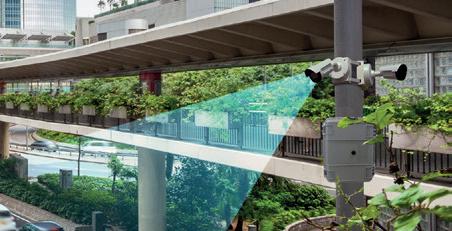





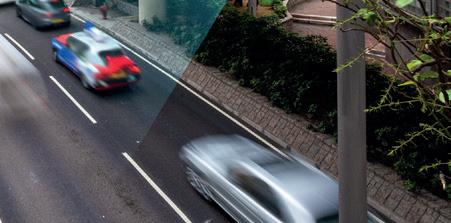
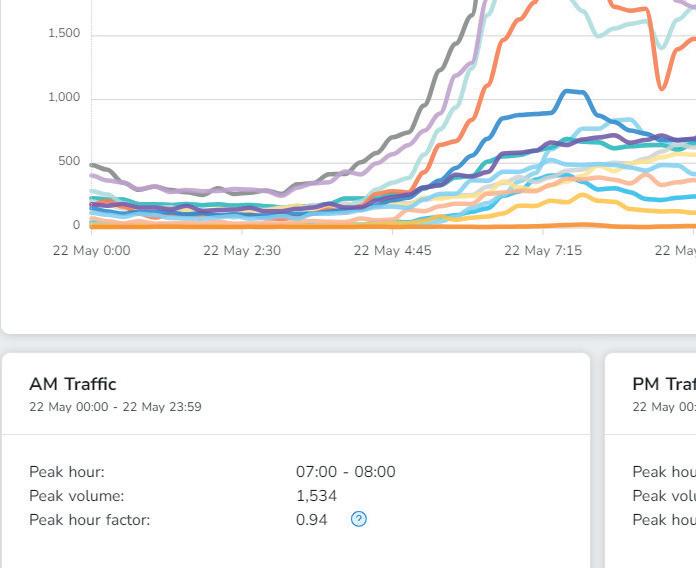






Using non-intrusive roadside devices, we deliver FHWA-compliant traffic intelligence directly into the applications you already use.
Leverage Rekor Command® or our Incident Detection API to add real-time detection anywhere—driving faster confirmation, quicker dispatch, and safer roads.

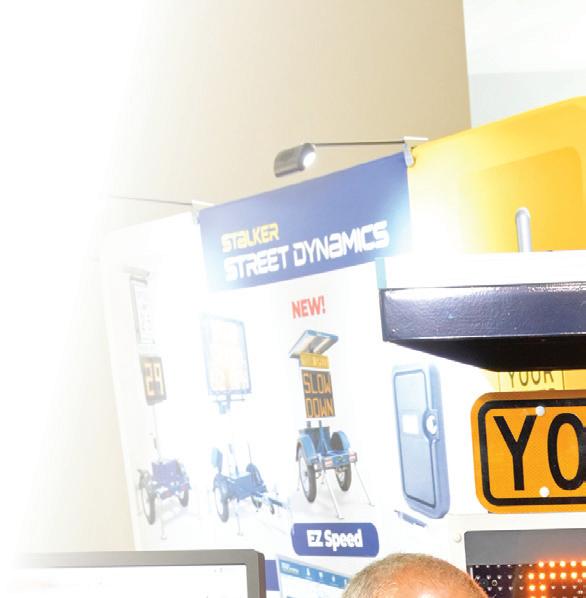
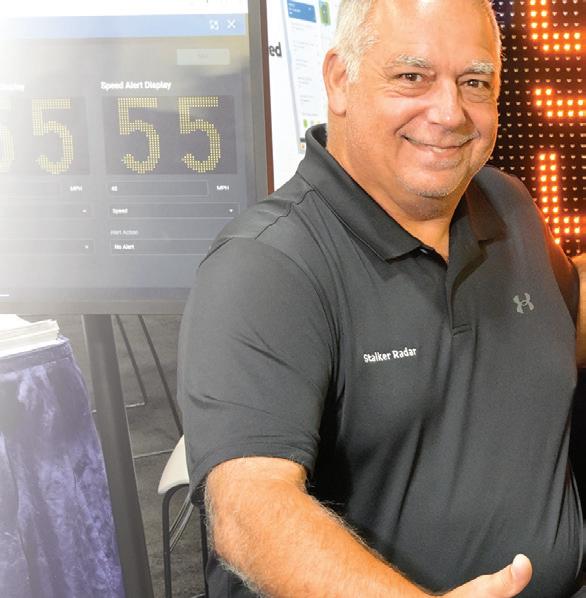
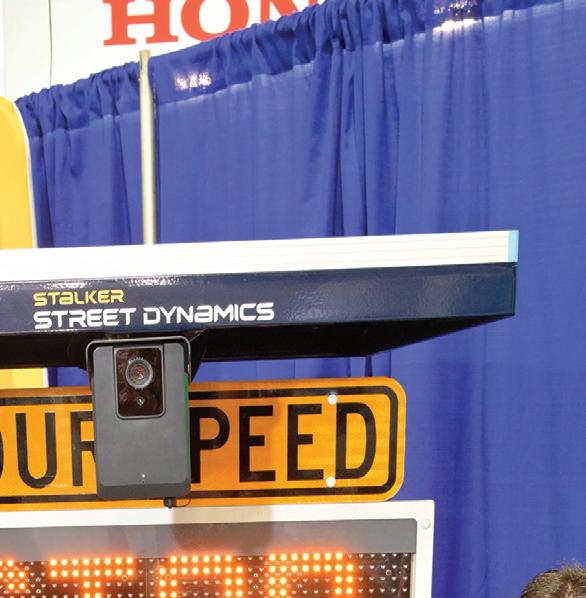
Stalker Radar has introduced its Stalker Street Dynamics EZ Speed tra c radar, which the company says combines compact size and a keen price with strong functionality.
e EZ Speed is a solar-powered speed and messaging radar packed into a small trailer that can be deployed by one person from police or municipal public works departments.
It combines an 18-inch PMG display with radar and messaging capabilities. It can display speeds, text messages, images and animations. For actionable insights, a tra c data collection function comes as standard, which enables the agency operating it to collect data such as vehicle counts, classi cations, 85th percentile speeds and other categories of statistics required for enforcement planning or grant applications.
e system has an optional Street Dynamics web portal that allows operators to remotely access the radar. Messages can be updated, content can be scheduled and tra c data downloaded from the agency’s o ces.
With its compact design, the EZ Speed is designed to be highly mobile and easy to store when not in use.
Stand 423
www.stalkerradar.com





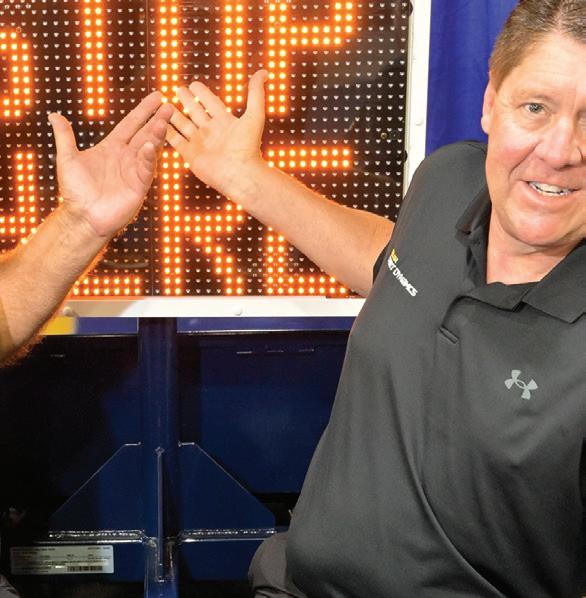



Everything has come together for the ITS World Congress in Atlanta, says one of the industry’s leading figures. Abbas Mohaddes.
“The uniqueness of Atlanta is, I would say, that the stars have lined up for ITS this last few years: the technology in and of itself, the speed of processing, the capability of storage, the computation and the overlay of AI. The technology itself has accelerated tremendously.”
Mohaddes, who is on the board of ITS World Congress, praises ITS America, Georgia DOT and local agencies for their
work: “They all came together and put on this beautiful show.”
Next year the focus will be on seeing how ITS works in a small- to mid-size city, with Gangneung in South Korea the host of ITS World Congress 2026. “We need to be conscientious about the communities which ITS serves,” Mohaddes says. “A lot of our constituencies do not live in large metros. They are in small cities, in rural areas, and this is where we’re going to demonstrate the deployment. So it is very exciting to see that.”


SWARCO McCain









ITS World Congress | Let's connect at Booth 1031.
mccain.swarco.com
day in the future, powered by
Imagine a city where your transport just works: quiet, seamless, efficient. This isn’t a promise for tomorrow. ITS Estonia and companies are reshaping urban mobility worldwide.
Start your journey with Mobire Group —flexible car-as-a-service. No paperwork, just drive. Smart platforms by Concise Systems and Mooncascade power logistics and GIS for millions.
Behind the scenes, Wisercat secures the data flows that keep finance and AI systems running.
Park at solar-powered EV hubs by Parkinglot Category, and experience seamless check-in and payment with Entringo. For the last mile, hop on the self-driving Auve Tech MiCa 2.0 shuttle.
Step into the future with Estonia’s ITS solutions already in action today. Find out more: tradewithestonia.com


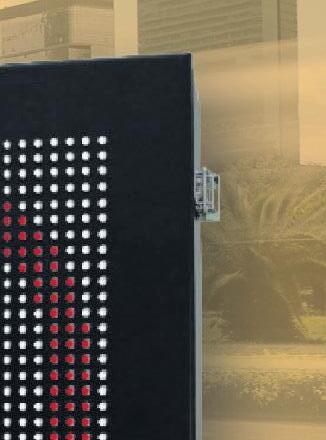


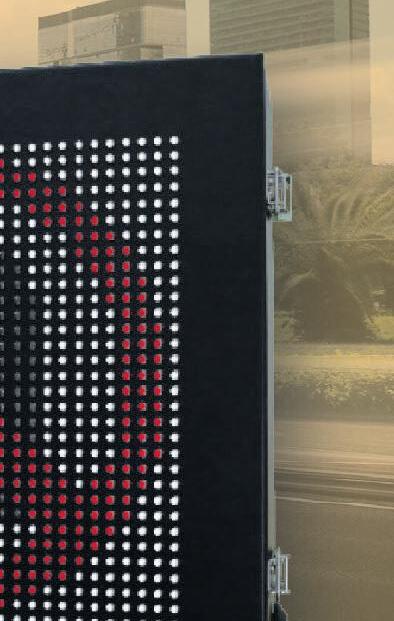





















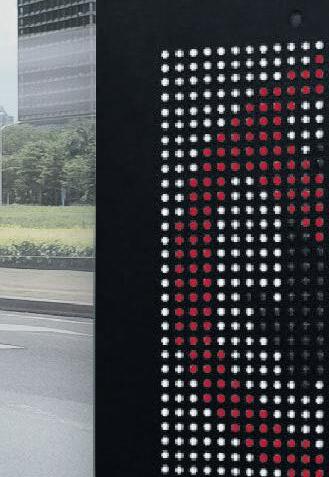
SWARCO Changeable Message Signs deliver unmatched clarity, reliability, and performance in any environment. Whether on highways, arterials, or work zones, SWARCO Signs keep drivers informed, improve response times, and enhance safety, day or night, in any condition. Engineered for long-term durability and low maintenance, they’re built to keep traffic moving and agencies ahead of the curve.


This project is funded by European Union –NextGeneration EU. tradewithestonia.com

Real-time V2X traffic communication for Fewer accidents
Smarter routing
Data insights for every decision

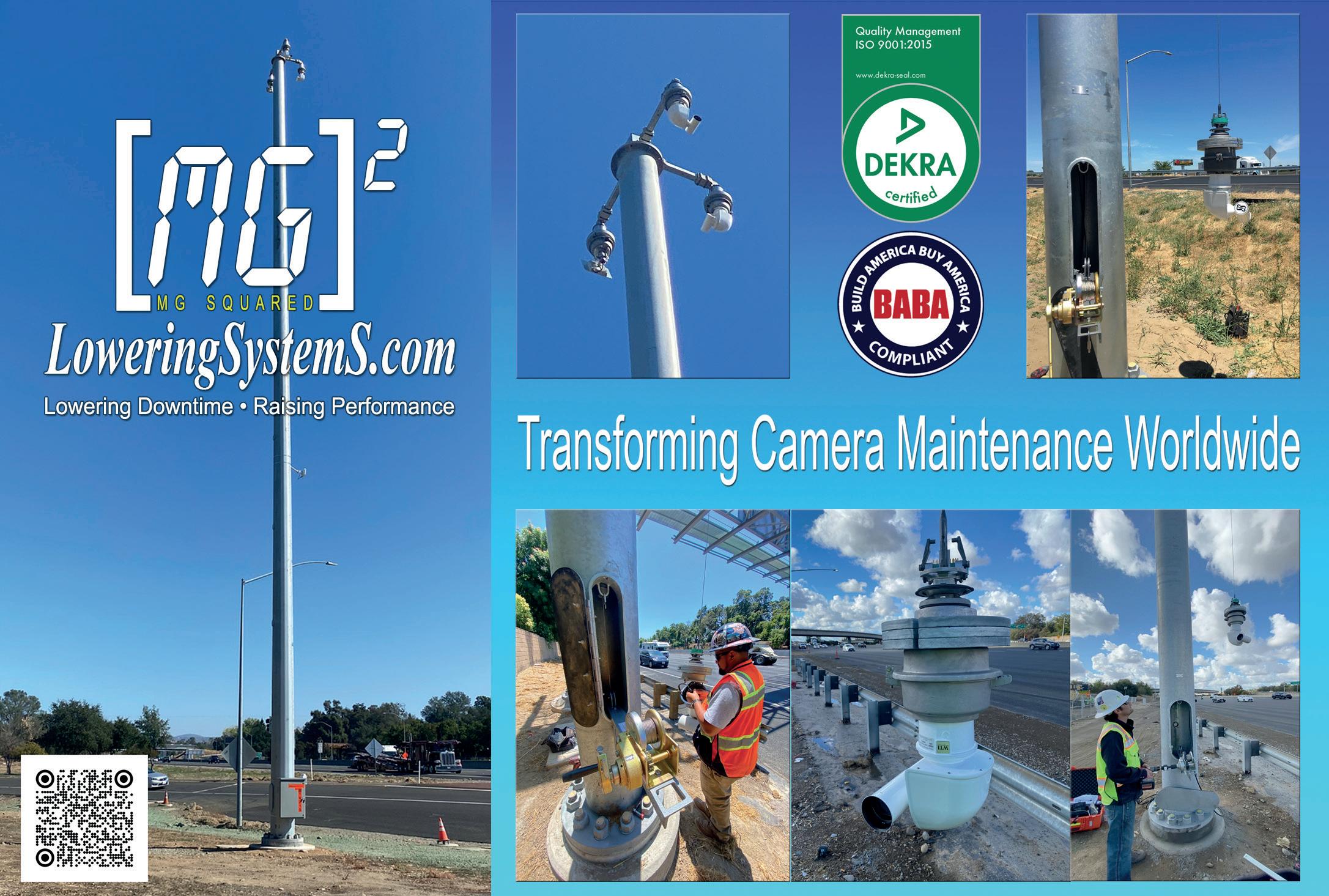
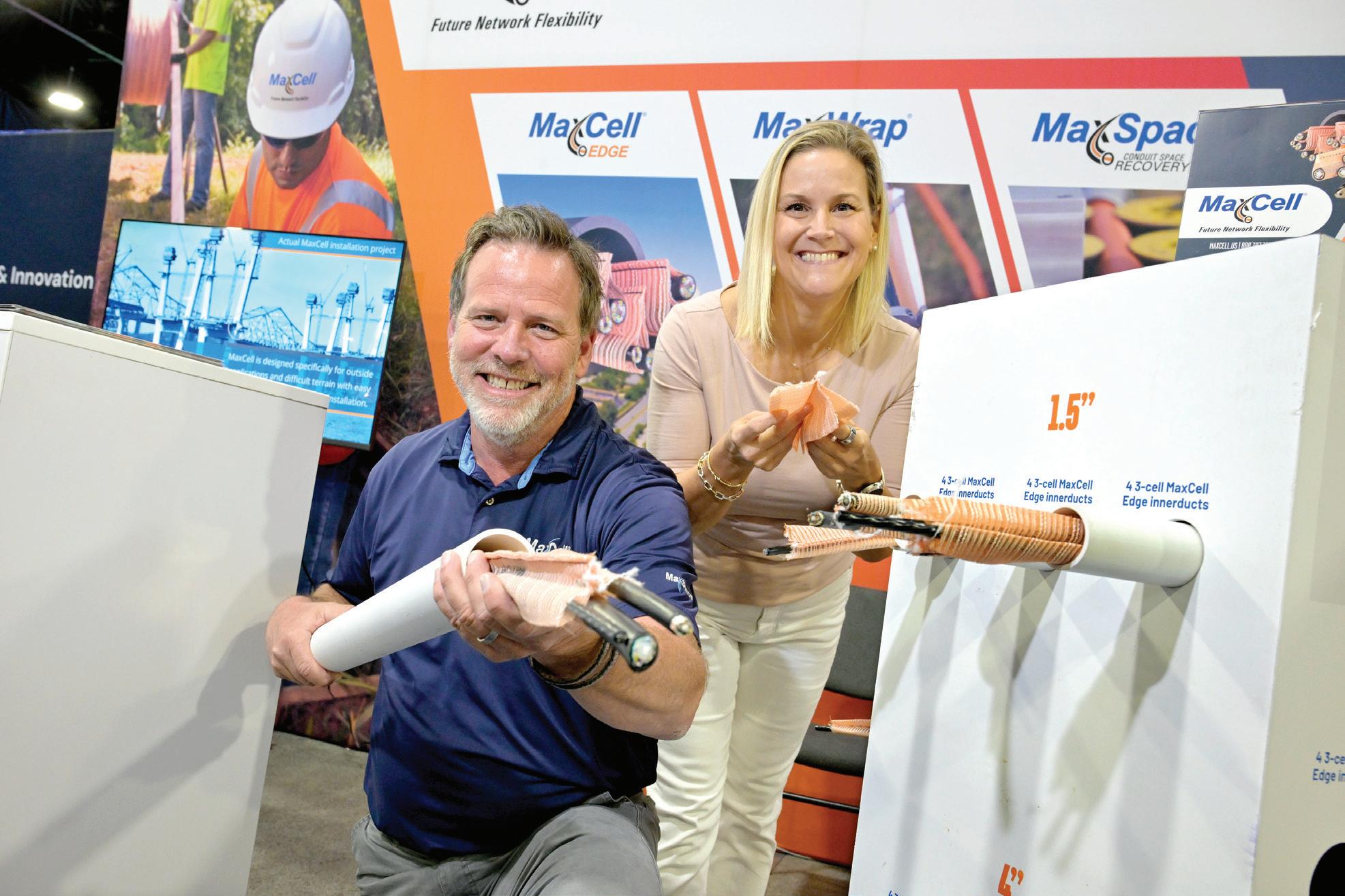
As communication cabling needs surge across ITS corridors, the ability to easily maximise conduit space, minimise disruption, and future-proof networks becomes essential.
MaxCell is here to highlight that, whether planning for connected corridors, V2X integration or next-generation tra c systems, the company provides an innovative approach
to meet these demands. One of the standout features of MaxCell is its versatility. Available in a variety of sizes and con gurations, MaxCell innerduct solutions can be
tailored to meet the speci c requirements of each project and can increase cable density by 300% or more.
With options that are plenum rated, UL-listed and LSZH (low-smoke zero-halogen), the company’s lightweight and easy-to-handle innerduct can be installed three times faster than traditional HDPE, making MaxCell a cost-e ective and time-saving option.
MaxCell innerduct weighs only one-eighth of traditional HDPE, signi cantly reducing transportation costs. When it comes to sustainability, MaxCell states its carbon footprint is 81.24% lower than that of HDPE innerduct.
What’s more, not only does MaxCell support Dig Once initiatives, but the company can also provide a No Dig option by saving remaining empty ducts in congested areas for future bandwidth requirements. Stand 1054 www.maxcell.us
Fischer Consulting is here to introduce Trafman. Its primary function is static scale overload control, accurately measuring truck weights during stops to enforce regulations, mandate load reductions withisn limits, and issue overload fines. This ensures compliance, reduces road wear, and improves safety for all road users.
Building on this, the weighin-motion (WIM) technology measures truck weights as they pass, maintaining e icient tra ic flow without delays. With over 95% accuracy, it delivers real-time data to regulators and operators, supporting smooth operations. Integration with weigh station bypass
programmes allows eligible trucks to skip inspections, saving up to 10 minutes per stop. This reduces fuel consumption
across multiple corridors from Ghana to South Africa, o ering a proven solution to combat overload-related damage, boosting road safety and resilience. By preserving road integrity, it supports inter-African trade and regional development. Globally used, Trafman balances safety, e iciency, cost-e ectiveness, and sustainability for resilient transport corridors.

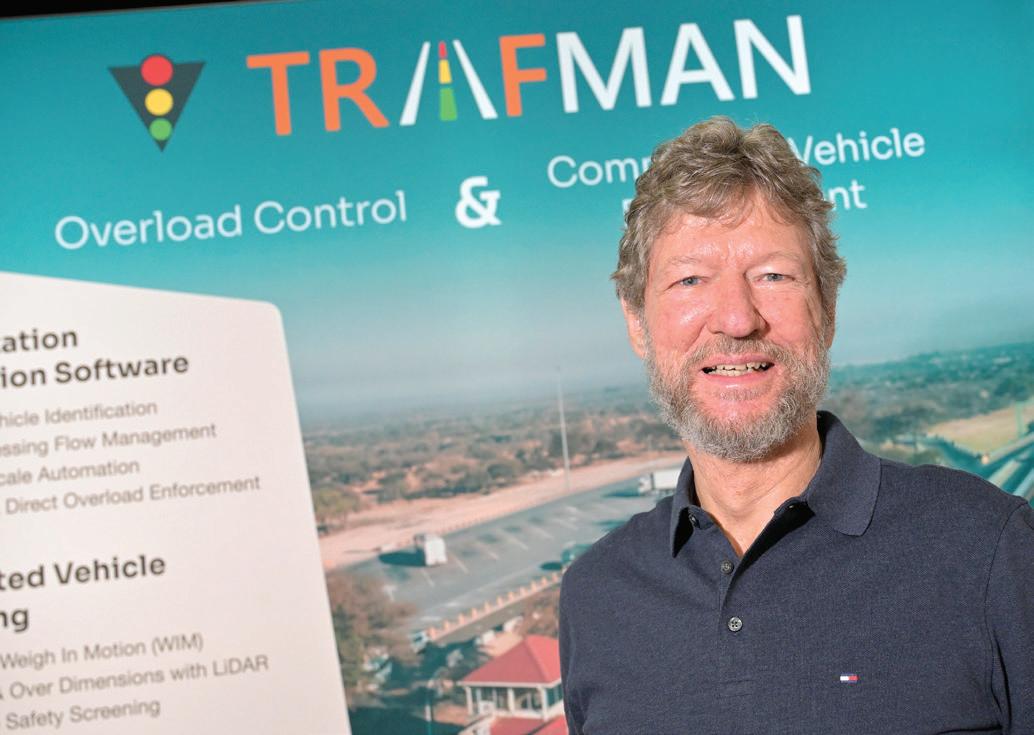

and enhances driver satisfaction, while enforcement o icers can prioritise their resources. In Africa, Trafman is deployed
Fischer Consulting provides full turnkey construction and operation services, location planning consulting, or weigh station automation packaged as so ware as a service.
Stand 1723 www.trafman.com

Ouster is riding a wave of success and invites attendees to visit its stand to discover why its turnkey intelligent transportation system, Ouster BlueCity, was chosen for the largest lidar ITS installation in the US to date.



Ouster BlueCity is a reliable, all-in-one system designed to dynamically optimise tra c signals, identify high-risk safety zones, and support long-term infrastructure planning. It combines Ouster’s highresolution 3D digital lidars with proprietary AI software to create a real-time 3D digital twin of intersections or roadways. e system accurately detects and classi es all road users—vehicles, pedestrians, and cyclists—even in challenging weather or lighting conditions.
After a quick, non-invasive installation, Ouster BlueCity
replaces traditional inductive loops and sensors, providing intelligent tra c signal control to improve ow and safety. Data collection is automated through a cloud-based dashboard, running 24/7 and o ering invaluable insights into complex safety events such as near-misses, jaywalking, red-light running, and wrong-way driving.
With hundreds of active deployments, BlueCity o ers peace of mind featuring systemlevel NEMA TS2 certi cation and Buy America and NDAAcompliant OS1 sensors.
Attendees can explore a live intersection demonstration and analytics showcase at the stand to see lidar technology’s transformative impact on smarter, safer roads. Stand 1932 www.ouster.io
K&K Systems, a leader in tra ic safety solutions, is showcasing its innovative Crosswalk System designed to enhance pedestrian visibility and safety at uncontrolled crossings.
The system uses high-intensity LED lights embedded in signs or pavement, activated by pedestrian push buttons or motion sensors. When triggered, the lights flash in a distinctive
pattern to alert drivers to yield. Solar-powered and energy-e icient, the system is built from durable, weather-resistant materials for reliable operation in all climates. It complies with MUTCD standards, meeting federal safety guidelines. Customisable features include rectangular rapid flashing beacons (RRFBs), audible alerts, and wireless synchronization for wider intersections.
With straightforward installation and a modular design for easy upgrades, the K&K Crosswalk System significantly increases driver awareness, reduces accidents, and improves walkability. It o ers a cost-e ective way for cities and campuses to enhance tra ic safety without full tra ic signals.
Stand 1053
www.k-ksystems.com

Explore how AV1 video encoding boosts data efficiency, how dual-sensor cameras enhance real-time visibility, and how Axis broad ITS solutions adapt seamlessly into your network. Stop by booth 1725 this week and see how your traffic management can work better, faster, and smarter.

To see how intelligent traffic solutions can help you, visit www.axis.com/traffic


Visit us at ITS World Congress Booth 1725



Free POC try Nx Go out risk free.
Easy
Unlock the future of transportation management with Nx Go, leveraging the powerful infrastructure of Network Optix. Experience unprecedented visibility, efficiency, and safety through unified camera intelligence and real-time analytics.
Unified Sensor Intelligence: Transform standard traffic cameras into intelligent sensors delivering structured, GIS data.
Real-Time Insight: Harness live, spatially-aware data integrated seamlessly with GIS and city-scale traffic management systems.
Security: SOC2 compliant and extremely secure.


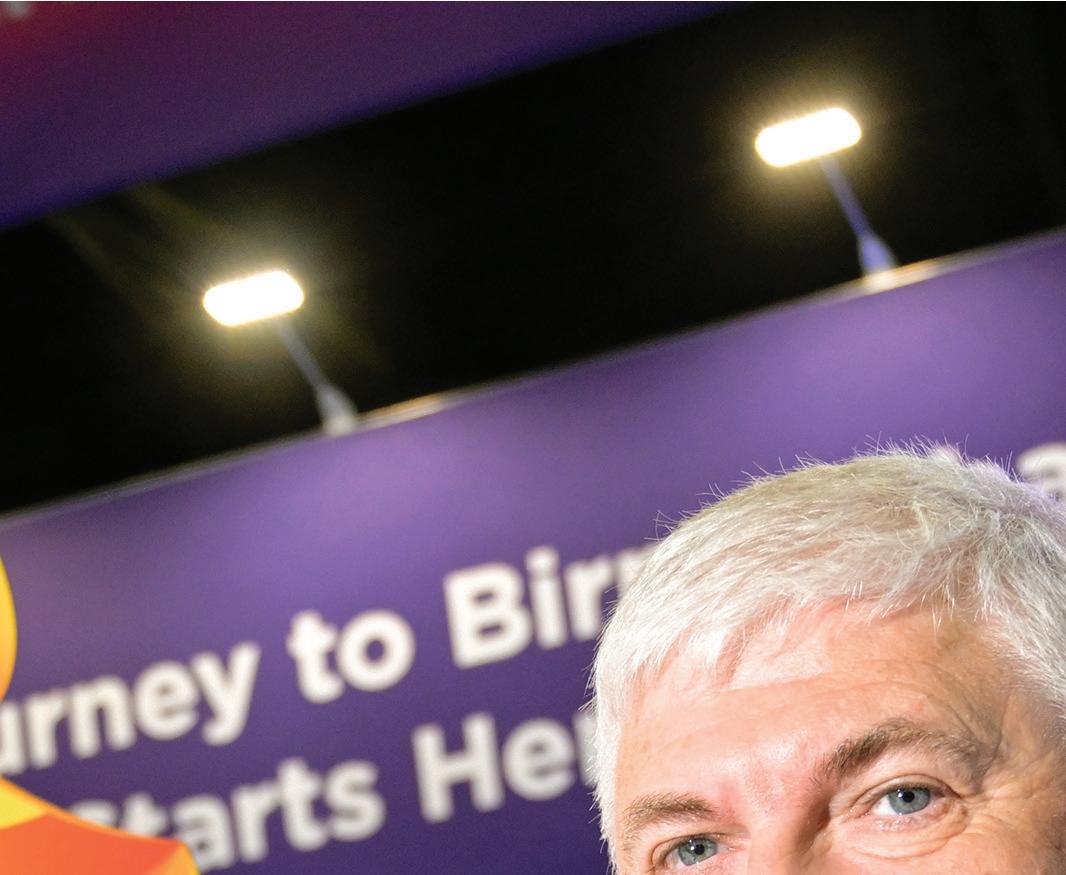


Visitors to the 2027 ITS World Congress are promised a warm British welcome, a rich history, an impressive present – and an exciting future when they come to the host city of Birmingham, UK.
Chris Lane (pictured) is leading Transport for West Midlands’ work in hosting the event at the birthplace of the Industrial Revolution.
He told the Daily News that the event will “not only showcase the great innovations in transport technology, but also to see the many great sites and cultures the UK has to o er”.

A team from the West Midlands is on the UK & Ertico ITS-Europe Pavilion here in Atlanta discussing exhibition and partnership opportunities.
“ ere are hundreds of companies here, and we’re hoping to chat to as many as possible,” Lane continued. “Initial conversations really have made me con dent that we will be able to deliver the Congress we want, to leave a lasting, positive impression about British ITS.”
Seven companies are exhibiting on the UK & Ertico Pavilion. ey are: AGD and its sister company MAV Systems,
Siemens Digital Industries is seeing new opportunities for its Application Processing Engine (APE) Card as more third-party organisations certify the device.
Users can place their so ware on the card and install it in a switch on the network.
The card takes in information from assets, detects any anomalies and will always be in concert with the host system’s central cybersecurity platform. Siemens likens the card to having a computer in the network’s data stream.
For example, the card can be used to handle

deep packet inspection, to determine whether there is anything suspicious buried within them.
Customers can purchase the card without an operating system on it and it is then up to the client to decide what they want to load on to it.
The APE Card has been on the market for a couple of years now, but Siemens has sought partnerships with leading cybersecurity companies to have it certified for use.
Stand 516

www.sw.siemens.com


Immense, Intelligent Instruments, Navtech Radar, Nicander and Zenzic. e stand is shared with Ertico, and also features Here Technologies, ITS Sweden member Triplesign Systems, as well as Ertico’s own Innovation Platform, Enhanced European Valet Parking.
ITS World Congress 2027 takes place at the National Exhibition Centre, Birmingham from 25-29 October. It’s the rst time the UK has hosted the event since London 2006.
Stand 1141
https://2027.itsworldcongress.com

At Q-Free, we deliver intelligent traffic solutions that move people, goods, and data with precision. From advanced tolling and traffic management to piloting cutting-edge road user charging, we empower you to build connected, sustainable transportation systems.
BOOTH 911











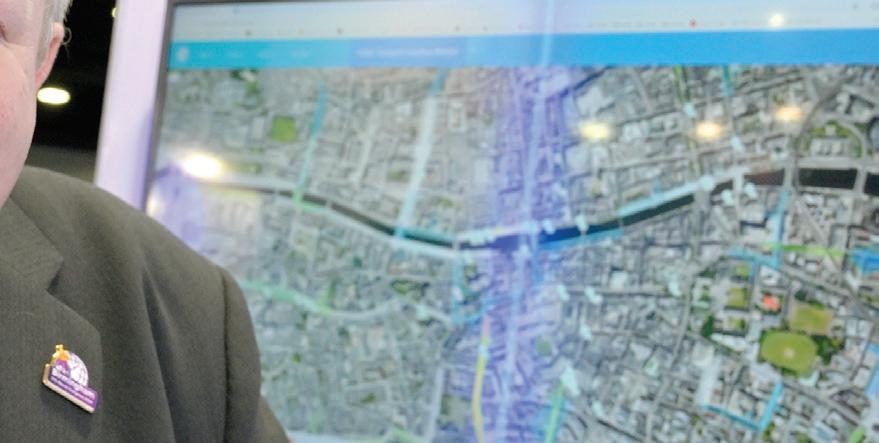

Nicander is here to unveil a revolutionary systemto-system approach to public transport signal priority. Its Public Transit Interface Module (PTIM) is an innovative solution for centralised bus priority that requires no additional roadside infrastructure.



is enables rapid, scalable, and highly cost-e cient deployment.
Already operational in Dublin and newly implemented in Bellevue, Washington, Nicander’s PTIM integrates seamlessly with central tra c management

systems like Scats. It delivers large-scale bus priority without junction-level modi cations.

Leveraging virtual detectors powered by publicly available GTFS data, the system can be con gured in minutes to activate priority based on real-time bus locations, schedule adherence, and tra c conditions.
Authorities bene t from unparalleled control and visibility through an intuitive map-based interface and comprehensive reporting tools.

PTIM cuts journey times, reduces unpredictable delays, and prevents bus bunching, resulting in more reliable and sustainable transit services. Its straightforward implementation, high customisability, and minimal operational demands make it an ideal choice for cities and transport authorities with limited budgets.
Cisco has launched a new webinar at ITS World Congress 2025 aimed at practitioners in the ITS industry. ‘Shaping the Future of Roadway Digital Infrastructure’ will air in October and will educate viewers about how they can enhance road safety, ease congestion and improve sustainability through robust, scalable cybersecurity.
Cisco’s broad portfolio helps transportation organisations securely connect ITS at every roadside and tra ic intersection with


PTIM cuts journey times, Additionally, Nicander will

Visitors will gain an exclusive insight into Nicander’s game-changing innovation at the company’s stand and discover how it can transform their city’s public transport strategy.
enterprise-grade, ruggedised networking solutions.
“It’s been great talking with our customers here at the show this week,” said Jenifer Piccioni, an industrial IoT product management director at Cisco. “Our end-toend security that’s fused into the network is ideal for addressing connectivity at scale at the edge of ITS networks.”
Stand 1741
www.cisco.com
Additionally, Nicander will present its latest research paper: ‘Transit Signal Priority, A Comparative Analysis of System Approaches’, in a special session today: PS24: Next Generation Transportation Systems from 15:00-16:30 in eatre 1, Stand 861. is session will examine the e ectiveness of centralised versus intersection-level strategies and demonstrate why the PTIM model is setting the new standard.
Stand 1141
www.nicander.co.uk
Conference attendees can register for the webinar here:
Nicander is here to unveil a revolutionary systemto-system approach to public transport signal priority. Its Public Transit Interface Module (PTIM) is an innovative solution for centralised bus priority that requires no additional roadside infrastructure.
is enables rapid, scalable, and highly cost-e cient deployment.
Already operational in Dublin and newly implemented in Bellevue, Washington, Nicander’s PTIM integrates seamlessly with central tra c management
systems like Scats. It delivers large-scale bus priority without junction-level modi cations.
Leveraging virtual detectors powered by publicly available GTFS data, the system can be con gured in minutes to activate priority based on real-time bus locations, schedule adherence, and tra c conditions.
Authorities bene t from unparalleled control and visibility through an intuitive map-based interface and comprehensive reporting tools.
PTIM cuts journey times, reduces unpredictable delays, and prevents bus bunching, resulting in more reliable and sustainable transit services. Its straightforward implementation, high customisability, and minimal operational demands make it an ideal choice for cities and transport authorities with limited budgets.
Cisco has launched a new webinar at ITS World Congress 2025 aimed at practitioners in the ITS industry. ‘Shaping the Future of Roadway Digital Infrastructure’ will air in October and will educate viewers about how they can enhance road safety, ease congestion and improve sustainability through robust, scalable cybersecurity.
Cisco’s broad portfolio helps transportation organisations securely connect ITS at every roadside and tra ic intersection with
PTIM cuts journey times, Additionally, Nicander will
Visitors will gain an exclusive insight into Nicander’s game-changing innovation at the company’s stand and discover how it can transform their city’s public transport strategy.
enterprise-grade, ruggedised networking solutions.
“It’s been great talking with our customers here at the show this week,” said Jenifer Piccioni, an industrial IoT product management director at Cisco. “Our end-toend security that’s fused into the network is ideal for addressing connectivity at scale at the edge of ITS networks.”
Stand 1741
www.cisco.com
Additionally, Nicander will present its latest research paper: ‘Transit Signal Priority, A Comparative Analysis of System Approaches’, in a special session today: PS24: Next Generation Transportation Systems from 15:00-16:30 in eatre 1, Stand 861. is session will examine the e ectiveness of centralised versus intersection-level strategies and demonstrate why the PTIM model is setting the new standard.
Stand 1141
www.nicander.co.uk
Conference attendees can register for the webinar here:
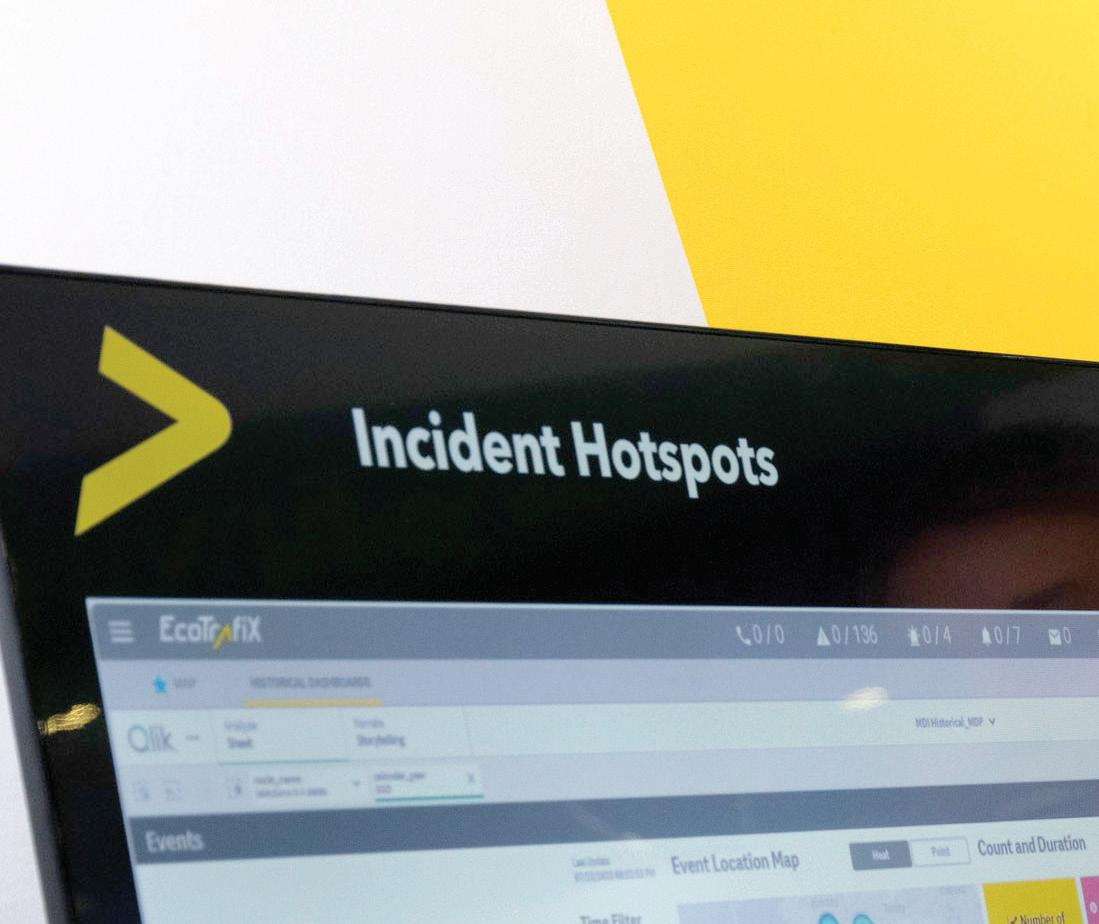
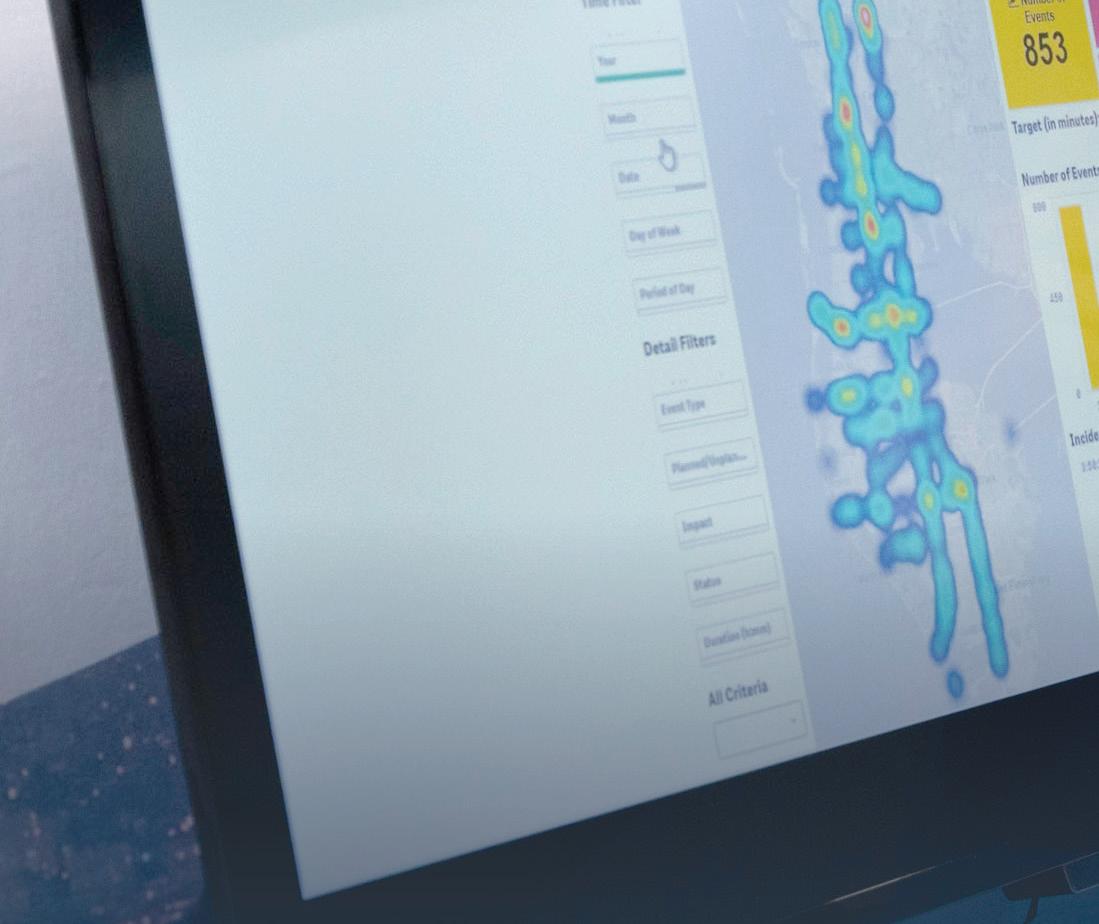

In the contemporary data-driven landscape, tra c authorities encounter a major challenge: despite having access to extensive data, they often struggle to convert it into actionable insights. Kapsch Tra cCom is here to demonstrate that it addresses this issue by not only facilitating the collection of tra c data but also ensuring its e ective interpretation and utilisation.
As the company points out, modern tra c systems generate vast amounts of data, including vehicle counts, speeds, and origin-destination patterns. However, many agencies still rely on anecdotal evidence or intuition for decision-making.
is gap arises from limited experience with data analysis and a lack of clarity on the necessary insights. Kapsch Tra cCom o ers comprehensive support, from data generation through roadside systems (including third-party integrations) to advanced analytics and decision-making tools.
Phil ompson, VP Sales North America, underscores the importance of moving beyond raw data: “We provide the direction — whether it’s generating data or deriving insights — so authorities can act with con dence without overextending already-strapped budgets.”
A notable example of Kapsch


Tra cCom’s data expertise is the National Intelligent Mobility System (NIMS) project in Ireland, led by Transport Infrastructure Ireland (TII). In this initiative, Kapsch Tra cCom plays a pivotal role in managing and analysing tra c data across the network, enabling authorities to make informed decisions regarding infrastructure, safety, and sustainability.
With extensive global experience and proven solutions, Kapsch Tra cCom empowers tra c agencies to fully leverage their data, fostering smarter, safer, and more e cient mobility systems.
Stand 522
www.kapsch.net
Kistler is showcasing its weighin-motion solution at ITS World Congress 2025, demonstrating how transportation agencies can take better care of ageing bridge infrastructure though better weight limit enforcement.
Headquartered in Switzerland,
Kistler manufactures piezoelectric quartz sensors that can weigh loads travelling up to 250 kilometres per hour. The company even grows its own crystals for the sensors that provide high accuracy and long-term stability.
Kistler weigh-in-motion is
currently deployed with the New York City Department of Transportation (NYC DOT) along the Brooklyn Queens Expressway. Trucks travelling in both directions are automatically weighed when they pass over Kistler’s in-road sensors. Vehicles
that are over the allocated weight are flagged, recorded via licence plate and DOT identification numbers and automatically issued a citation without having to pull the vehicle over.
Stand 1656
www.kistler.com


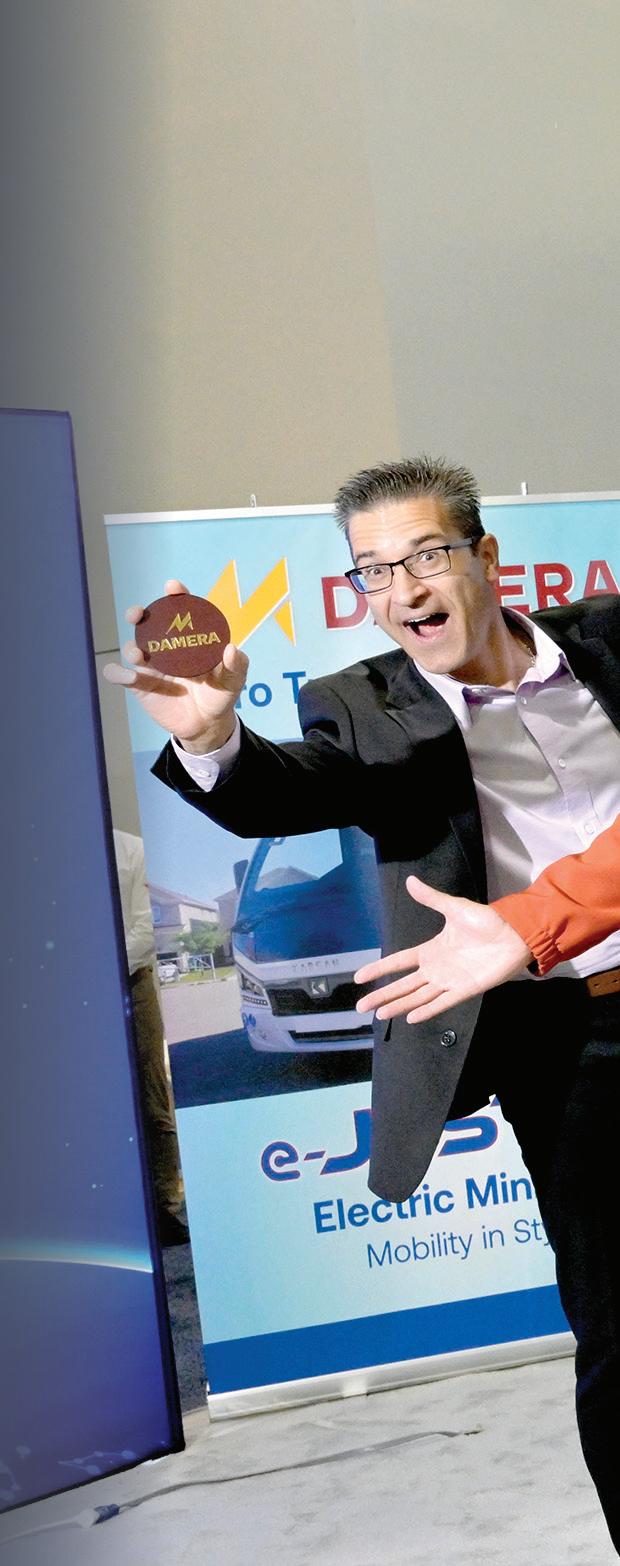
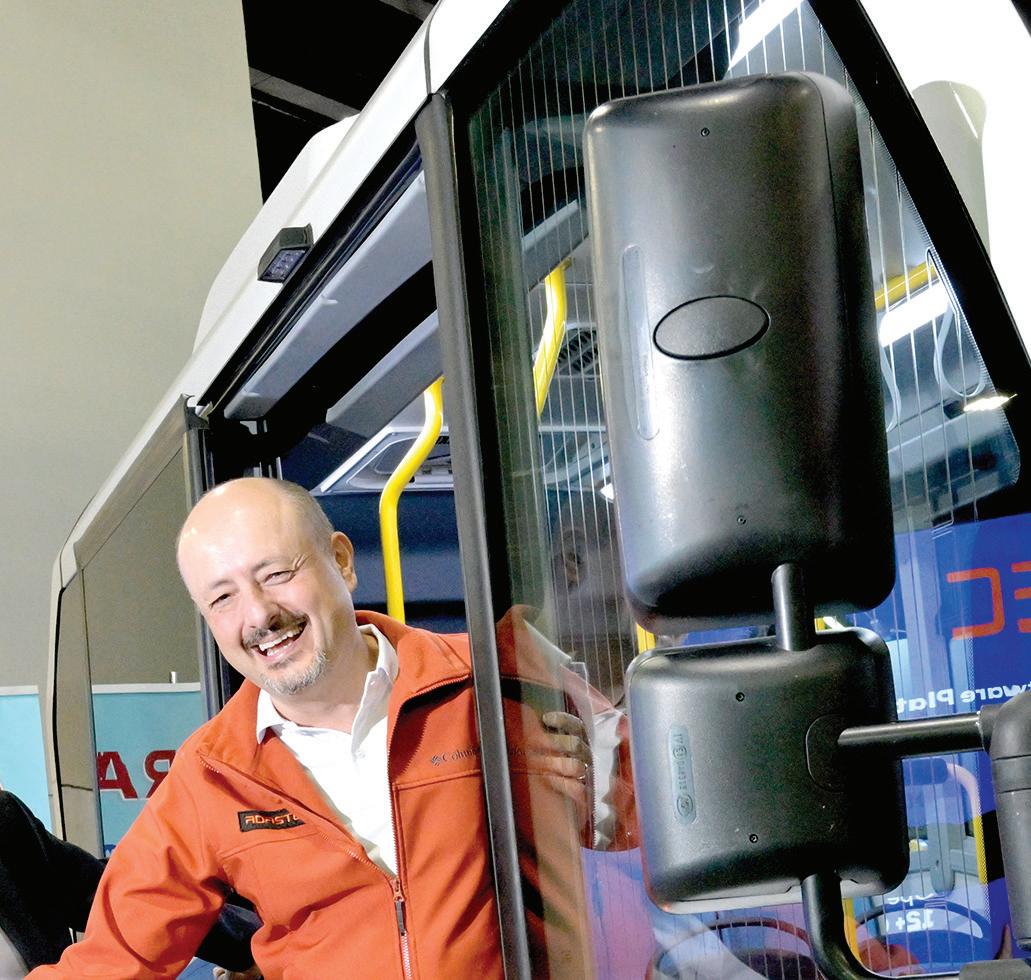
Next month a prototype of the driverless version of the eJest minibus made by Karsan will be running in Florida, thanks to software from Adastec.
e made-in-Turkey 19-passenger electric vehicle already is in use across several US states. If the Florida trials are successful then in a couple years the driverless version should start to be assembled in the US for the North American market, according to Roman Duplak, Vice President of America Sales for Damera, Karsan’s distributor in the US.
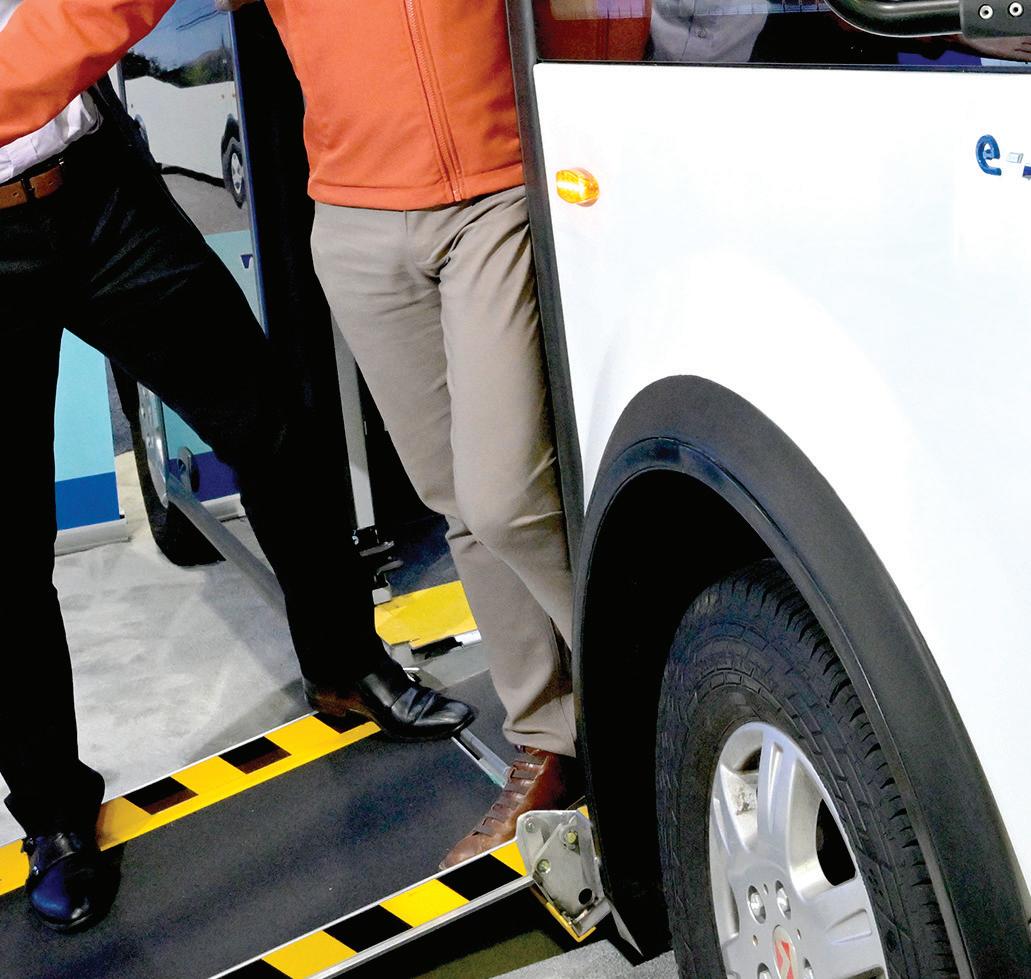
e eJest is ideal for on-demand transit services, enabling e cient tailored routes that adapt to passenger needs. Its low- oor design, ADA-compliant (Americans with Disabilities Act) ramp and wide sliding door enhance accessibility. It also has advanced features like USB charging ports, passenger Wi-Fi options and comfortable seating.
Adastec already works with Karsan in Europe where a longer version of the bus – the autonomous ATAK Electric - has been running successfully in Norway for several years, says Yasemin Us, head of marketing for Adastec. Stand 523 www.adastec.com www.dameracorp.com



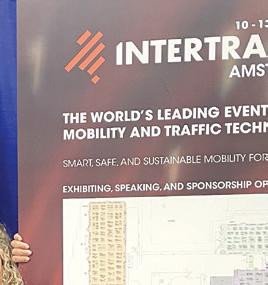
Changes are afoot at next year’s Intertra ic exhibition, as the organisers seek to spread the vast reservoirs of specialist knowledge among exhibitors across a bigger audience.
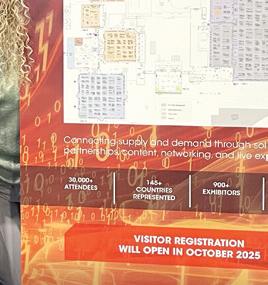
Intertra ic, which is staged biennially at the RAI exhibition centre in Amsterdam, Netherlands, is a global show that attracts more than 900 exhibitors from almost 50 countries and more than 30,000 visitors.
The show has previously had three theatres in the RAI. This year, however, there will also be four smaller stages used for presentations, covering topics such as parking, road infrastructure and road safety.
“We want to bring more knowledge on to the show floor,” said Intertra ic director Joyce de





Winter. Each stage will be located in the area of the halls housing companies that specialise in the topic being presented on stage.
If one of the topics being covered has a wider audience

– for example, if it involves governments and the transport ecosystem – it may be hosted in one of the larger theatres, which can have a capacity of as many as 200 people.

Next year’s show will also have a ‘summit’ covering six main themes – Future-Proof Roads, Smart Tra ic Management, Drive the Future, Roadmap to Zero, Revolutionising Parking and Urban Mobility Reinvented.
The 2024 show saw the beginnings of collaboration with national ITS organisations and that will be expanded next year, with 15-20 national ITS organisations from Europe participating.
Some of their activities “will be integrated into the summit programme but alongside that they will run items for their own members,” said senior brand marketing manager, Carola Jansen-Young.
Stand 629
www.intertra ic.com
FLIR cameras, sensors, and software revolutionize how traffic flows on roadways around the world.


By combining visual and thermal imaging, our precision- engineered and performance reliable solutions provide traffic security and safety even in low light and adverse weather conditions. With the power of Advanced Video Detection Technology and AI analytics, our ITS solutions quickly identify and accurately classify vulnerable road users, predicting movement and ensuring everyone’s safety.
Thanks to traffic data we’ve collected over 25 years, our technology can now detect more than one billion vehicles each day—helping city planners shape the smarter, safer, sustainable environments of tomorrow.
Harness the power of thermal in traffic applications: www.flir.com/traffic/its-ai
See us at Stand 811




BY RALF-PETER SCHÄFER VP Product Management Traffic and Travel Information
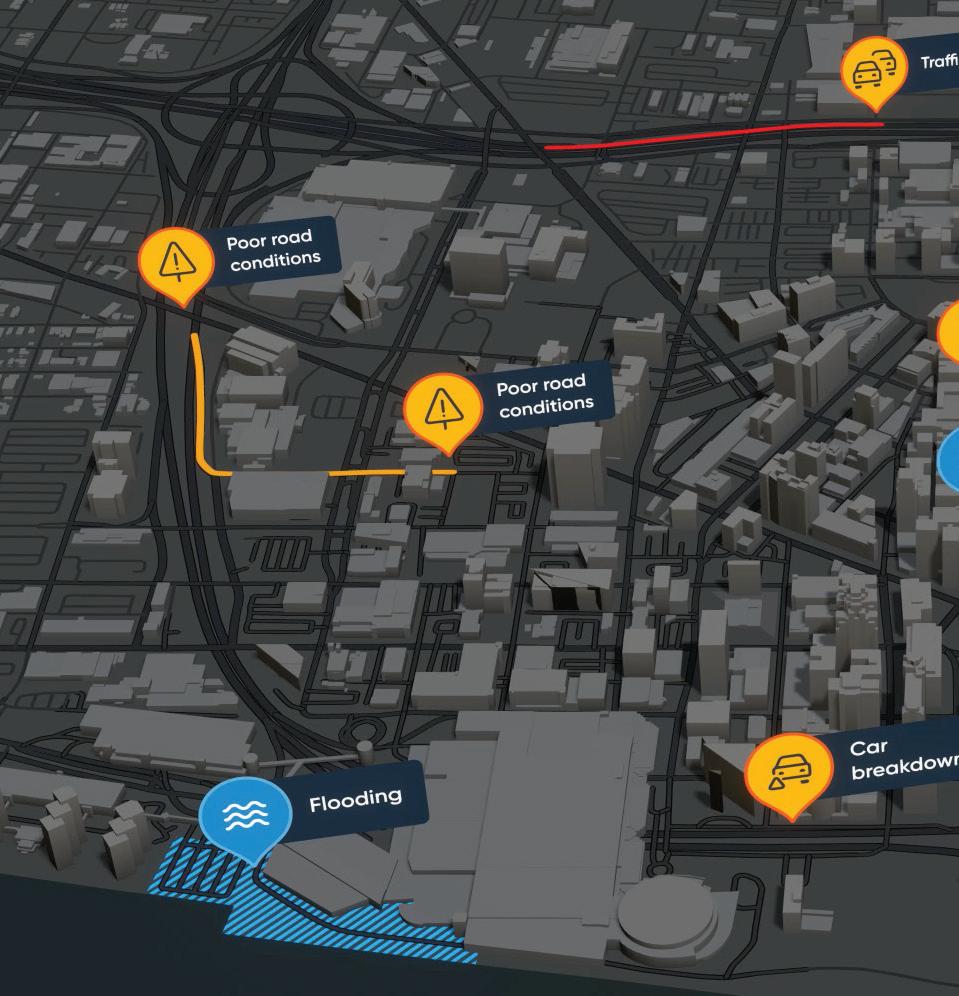
Recent happenings — the earthquakes in Turkey, the flooding in Valencia, Spain — have made it clear that minutes matter when the world changes significantly. When disaster strikes, mobility means more than just movement. It becomes the lifeline for emergency services, supply chains and communities trying to reach safety. In these moments, authorities need to know which roads are open and which are blocked to help emergency vehicles make their way. It’s vital to locate pop-up emergency tents and medical supplies quickly — and ensure real-time decisions are reflected on the map. Timely and reliable traffic information can mean the difference between relief and chaos.
Mobility data, when collected and shared responsibly, offers an invaluable layer of situational awareness. It allows decision makers to understand which routes remain accessible, where congestion is forming and how travel patterns are shifting in real time. Historical insights help anticipate bottlenecks, while live data supports rapid adjustments to evacuation or delivery routes.
During the 2023 earthquakes in Turkey, traffic data helped identify functional roads, guiding both emergency services and
humanitarian aid. Open data sharing with mapping communities accelerated updates, so navigation tools could direct people along safe and verified routes.
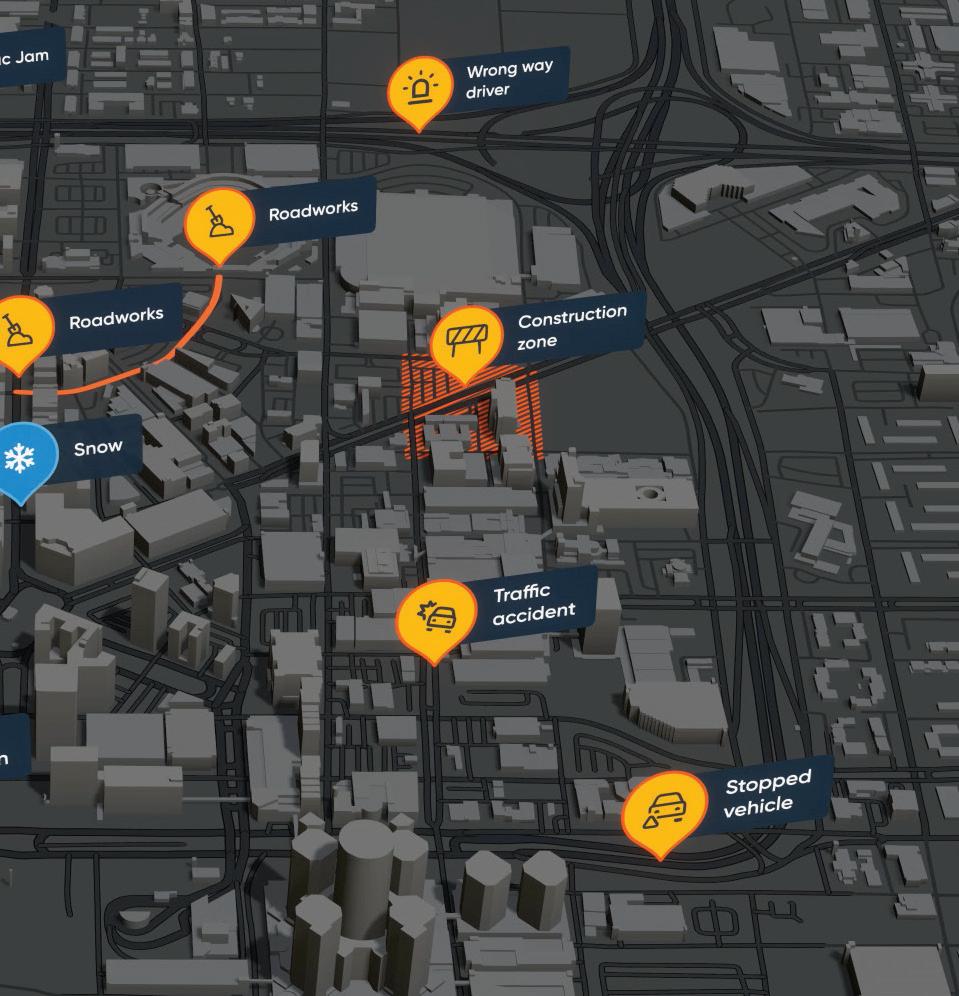
At TomTom, our traffic analytics tools not only enable this type of rapid and evidence-based decision making, but also help optimize infrastructure for disaster prevention and preparedness. With solutions like Traffic Stats and Historical Traffic Volumes, governments and local authorities can analyze road usage, learn from traffic trends and prepare for emergencies. During emergency situations, TomTom tools like Traffic Incidents and Hazard Warnings provide real-time awareness of obstacles on the road, such as accidents and jams. Fusing trillions of GPS data points with advanced analytics, our actionable mobility metrics support local authorities, NGOs and planners in acting quickly and effectively.
The social implementation of mobility data is about more than technology. It is about embedding these insights into disaster preparedness and response frameworks. If we ensure people have access to the right data at the right time, we can transform mobility information into a tool for resilience which allows communities to recover faster when every second counts.

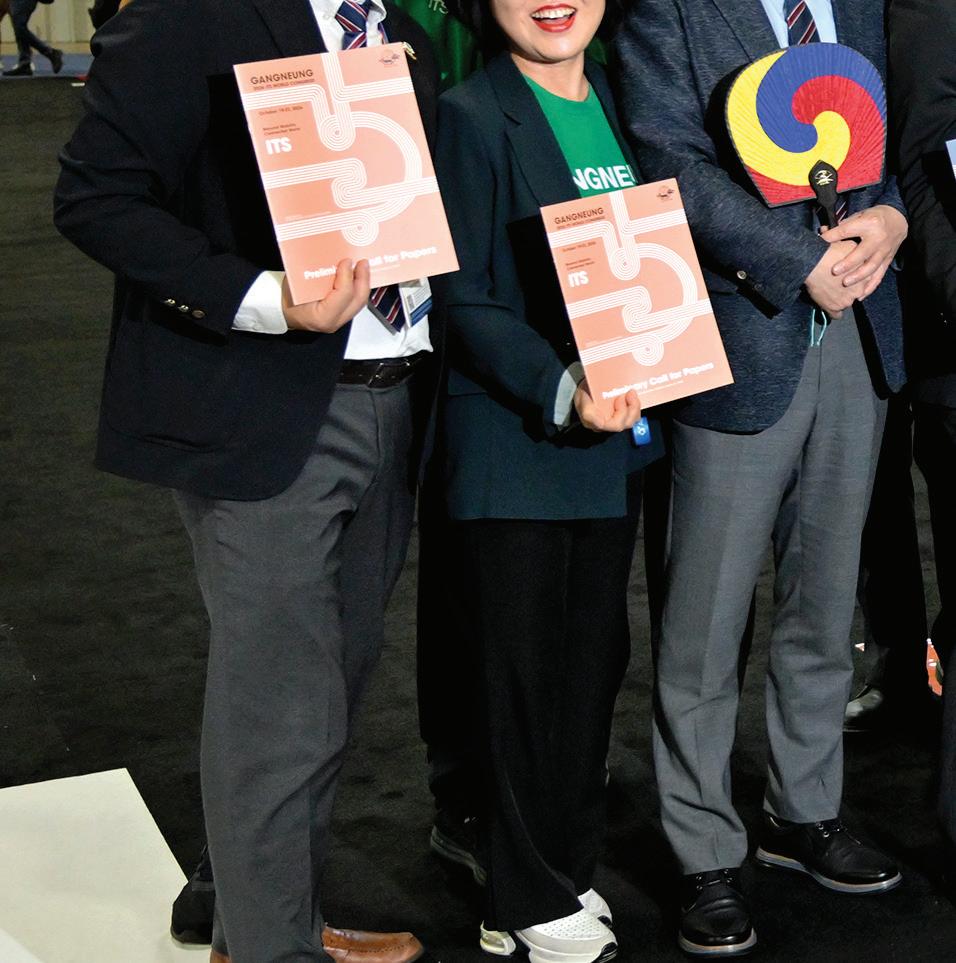




After hosting the 5th Seoul ITS World Congress in 1998 and the 17th Busan ITS World Congress in 2010, the 32nd ITS World Congress is to be held in the city of Gangneung.
It is scheduled to run from October 1923 and visitors from around 90 countries are expected. e city also hosted events for the 2018 Winter Olympics and the 2024 Winter Youth Olympics. “We look forward to the participation of many individuals in the 32nd Gangneung ITS World Congress,” says Cheong-Hoe Heo, chairman of ITS Korea. “ e ITS World Congress, also known as the ‘Olympics of Transportation’, is the world’s largest exhibition and academic conference in the eld of ITS.”
“Unlike previous Congresses that primarily addressed one-dimensional tra c congestion issues in major cities, Gangneung aims to showcase a new paradigm of sustainable development, tailored to the characteristics of a representative small-to-medium-sized tourism city in Korea,” Cheong-Hoe Heo explains.
“Under the theme ‘Beyond Mobility Connected World,’ we aspire to o er opportunities to experience new ITS services, various project sites, and the harmony of traditional and modern aspects of Korea, as well as the charm of our city.”
Sustainable development model



enterprises, academia, and strong partnerships with international organisations such as the Asia-Paci c ITS Secretariat, Ertico – ITS Europe, and ITS America.
Hong Gyu Kim, Mayor of Gangneung, is also excited about the possibilities for 2026. “As major cities worldwide handle issues such as population density, environmental pollution, and tra c congestion, small and medium-sized cities face challenges such as insu cient infrastructure, population decline, and regional extinction.”
Gangneung aims to solve these issues and propose a sustainable development model by establishing a smart city platform and mobility innovation.
The international intelligent transportation sector will return en masse to South Korea for the third time in 2026. Continued
Located on the country’s east coast, Gangneung is around two hours by train from the capital, Seoul, and has been chosen for a speci c reason.
ITS Korea is committed to the successful organisation of the Gangneung ITS World Congress through collaboration with the Ministry of Land, Infrastructure and Transport, Gangneung City, private
rough the 2026 Gangneung ITS World Congress, the city aims to showcase its unique mobility technologies to
After hosting the 5th Seoul ITS World Congress in 1998 and the 17th Busan ITS World Congress in 2010, the 32nd ITS World Congress is to be held in the city of Gangneung.
It is scheduled to run from October 1923 and visitors from around 90 countries are expected. e city also hosted events for the 2018 Winter Olympics and the 2024 Winter Youth Olympics. “We look forward to the participation of many individuals in the 32nd Gangneung ITS World Congress,” says Cheong-Hoe Heo, chairman of ITS Korea. “ e ITS World Congress, also known as the ‘Olympics of Transportation’, is the world’s largest exhibition and academic conference in the eld of ITS.”
“Unlike previous Congresses that primarily addressed one-dimensional tra c congestion issues in major cities, Gangneung aims to showcase a new paradigm of sustainable development, tailored to the characteristics of a representative small-to-medium-sized tourism city in Korea,” Cheong-Hoe Heo explains.
“Under the theme ‘Beyond Mobility Connected World,’ we aspire to o er opportunities to experience new ITS services, various project sites, and the harmony of traditional and modern aspects of Korea, as well as the charm of our city.”
Sustainable development model
enterprises, academia, and strong partnerships with international organisations such as the Asia-Paci c ITS Secretariat, Ertico – ITS Europe, and ITS America.
Hong Gyu Kim, Mayor of Gangneung, is also excited about the possibilities for 2026. “As major cities worldwide handle issues such as population density, environmental pollution, and tra c congestion, small and medium-sized cities face challenges such as insu cient infrastructure, population decline, and regional extinction.”
Gangneung aims to solve these issues and propose a sustainable development model by establishing a smart city platform and mobility innovation.
The international intelligent transportation sector will return en masse to South Korea for the third time in 2026. Continued
Located on the country’s east coast, Gangneung is around two hours by train from the capital, Seoul, and has been chosen for a speci c reason.
ITS Korea is committed to the successful organisation of the Gangneung ITS World Congress through collaboration with the Ministry of Land, Infrastructure and Transport, Gangneung City, private
rough the 2026 Gangneung ITS World Congress, the city aims to showcase its unique mobility technologies to





participants from around the world, o ering solutions to various urban issues. e Congress will include ministerial meetings, academic conferences, exhibitions, technology demonstrations, as well as diverse programmes such as a co ee festival, cultural heritage tours, and K-culture performances for everyone to enjoy.
“We hope that the Gangneung ITS World Congress will serve as a platform for global experts in the ITS eld to share knowledge and technology, and for policymakers to discuss the future vision of ITS,” says Hong Gyu Kim. “We anticipate that this event will provide signi cant opportunities in the ITS industry and businesses. Beyond the congress, Gangneung, with its beautiful natural environment, rich history, unique traditions, and distinct culture, aims to o er a special experience as a representative tourist city of South Korea.”
Recently, Korea has been facing complex societal issues such as transportation and environmental problems due to the concentration of social and economic activities in major metropolitan areas like Seoul, explains Joo-Il Lee, from the ITS World Congress board of directors. “Conversely, smaller cities are experiencing challenges such as population decline, aging population, and decreased economic activities,” Joo-Il Lee adds. “To address these changes in smaller cities, it is crucial in the eld of transportation to develop sustainable future transportation strategies, establish customised ITS systems, and provide new transportation services to foster urban growths.”
Gangneung, as one of Korea’s leading tourist cities – and with its successful hosting of the 2018 Winter Olympics - is wellequipped to prepare for the 2026 ITS World Congress. “Gangneung is devoted to present a vision for the role of ITS in the growth and development of medium-sized cities,” Joo-Il Lee reiterates.
Anytime, Anywhere, for Anyone is Congress, not only in scale but also in content, promises to be richer than ever. With diverse programmes including academic sessions, exhibitions, and business



consultations, it will serve as a platform for showcasing cutting-edge technologies, sharing knowledge. Visitors will be able to experience “Mobility Services Anytime, Anywhere, for Anyone” pursued by Korean smaller cities. Gangneung is diligently preparing for the 32nd ITS World Congress to ensure the highest level of readiness and to achieve substantial success.
“We hope to see you all in Gangneung!” concludes Cheong-Hoe Heo, chairman of ITS Korea. Stand 1441 www.2026itsworldcongress.org























govcomm.us | Booth #705




Discover why this wrong way vehicle detection system is going national.










Register for the roadside chat webinar.





















Delivering New Levels of Traffic Signal Control and Intelligent Automation Econolite’s Centracs® Mobility Platform, the industry-leading, secure, flexible, cloudbased Advanced Transportation Management System (ATMS) now integrates PTV Flows, the predictive traffic management solution that leverages Artificial Intelligence (AI) to forecast travel times, enabling proactive signal control decisions.
Centracs Mobility with PTV Flows is the only ATMS capable of moving traffic signal optimizations from reactive to proactive. Our Traffic Proactive optimization module is layered on top of existing capabilities for data analytics and reporting, signal/ detection management, additional optimization services, and much more. with