The intelligent revolution
Smarter pumps, lower energy and fewer blockages
How data is reshaping the industry Cutting costs and saving energy





We’re Creating the Future of Water for people, communities and the environment

From conversation to action
AS THIS OZWATER’26 preview issue comes together, one theme stands out above all others: the water sector is no longer preparing for change. It is already in it.
Across these pages, that shift is visible from multiple angles.
At a national level, policy reform is being reshaped to reflect a more complex and contested future. The proposed national water agreement signals a move beyond legacy frameworks, incorporating climate variability, emerging industries and stronger cultural and environmental considerations. It is a reminder that water security is no longer a static objective, but a moving target that requires coordination across governments, utilities and communities.
At the same time, the sector’s centre of gravity is shifting from planning to delivery.
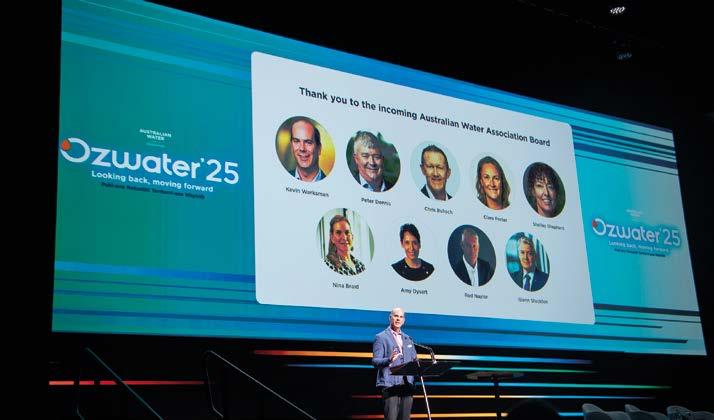
As Australian Water Association President Kevin Werksman outlines, the conversation is evolving from connection to impact. Collaboration remains a strength, but the challenge now lies in translating that collegiality into decisions that reshape systems, procurement and investment pathways. Ozwater’26 arrives at a moment where those conversations can no longer remain theoretical. That urgency is also evident at the asset level.
Digitalisation is not just a strategy discussed in boardrooms; it is increasingly embedded within the infrastructure itself. Intelligent wastewater pumping systems, for example, are demonstrating how data, adaptive control and integrated design can reduce energy use, prevent failures and extend asset life. These are not incremental improvements. They represent a fundamental shift in how networks are operated and understood.
Yet, as Hiran Doolwela’s experience
at KSB shows, innovation must still meet reality. Engineering discipline, testing and practical delivery remain essential in ensuring that new technologies perform under real-world conditions. The sector’s future will depend as much on how solutions are implemented as on how they are conceived.
Taken together, these stories point to a sector navigating multiple transitions at once. Policy is evolving. Expectations are rising. Technology is advancing. And the pressure to deliver measurable outcomes has never been greater.
Ozwater’26 provides an opportunity to bring these threads together. Not just to showcase innovation, but to test ideas, challenge assumptions and build continuity between conversations. The real value of the event will not be measured by attendance or announcements, but by what carries forward into practice.
If there is a defining question for this issue, it is this: can the sector move from alignment to action at the pace required?
The answers will not come from any single organisation or discipline. But they will begin in the conversations that take place when the industry comes together.
I am looking forward to meeting many of you at Ozwater’26 later this month.
Chris Edwards, Inside Water Editor
Chairman John Murphy john.murphy@primecreative.com.au
Chief Executive O cer
Christine Clancy christine.clancy@primecreative.com.au
Publisher Sarah Baker sarah.baker@primecreative.com.au
Managing Editor Geo Crockett geo .crockett@primecreative.com.au
Editor Chris Edwards chris.edwards@primecreative.com.au
Design Alejandro Molano
Head of Design Blake Storey blake.storey@primecreative.com.au
Brand Manager
Rosie Davis rosie.davis@primecreative.com.au p: +61 423 368 501
Client Success Manager Ben Sammartino ben.sammartino@primecreative.com.au
Head O ce Prime Creative Pty Ltd 379 Docklands Drive, Docklands, Victoria 3008 p: +61 3 9690 8766 enquiries@primecreative.com.au www.insidewater.com.au
Subscriptions
+61 3 9690 8766 subscriptions@primecreative.com.au
Inside Water is available by subscription from the publisher. The rights of refusal are reserved by the publisher.
Cover image Xylem Australia and New Zealand
Articles
All articles submitted for publication become the property of the publisher. The Editor reserves the right to adjust any article to conform with the magazine format.
Copyright Inside Water is owned by Prime Creative Media and published by John Murphy. All material in Inside Water is copyright and no part may be reproduced or copied in any form or by any means (graphic, electronic or mechanical including information and retrieval systems) without written permission of the publisher. The Editor welcomes contributions but reserves the right to accept or reject any material. While every e ort has been made to ensure the accuracy of information, Prime Creative Media will not accept responsibility for errors or omissions or for any consequences arising from reliance on information published. The opinions expressed in Inside Water are not necessarily the opinions of, or endorsed by the publisher unless otherwise stated.
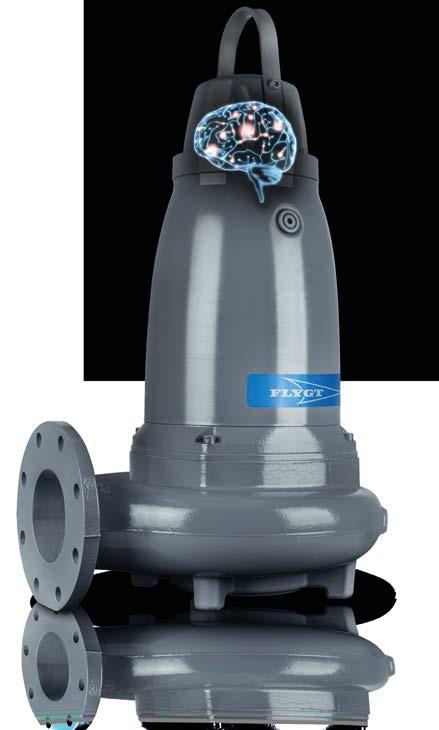
Smart pumping, smarter networks
Digital intelligence and adaptive control are reshaping wastewater pumping across Australia and New Zealand, helping utilities reduce energy use, prevent blockages and manage ageing infrastructure more sustainably.
ACROSS AUSTRALIA AND New Zealand, wastewater utilities are confronting a convergence of pressures that would have been di cult to imagine only a generation ago. Networks built decades ago now serve larger populations. Energy prices continue to climb. Climate variability is introducing more extreme rainfall events. At the same time, utilities are being asked to operate with tighter budgets and fewer skilled workers on the ground.
For many water authorities, the humble pump station has become a focal point for these challenges. It is where wastewater flows meet infrastructure constraints, where energy is consumed, and where operational reliability can make the di erence between smooth service and an environmental incident.
Digitalisation and sustainability are now shaping how these systems are managed. Increasingly, utilities are turning to intelligent infrastructure that can monitor, adapt, and optimise
performance without constant human intervention.
Within that transition, intelligent pumping systems are emerging as one of the most practical ways to modernise wastewater networks.
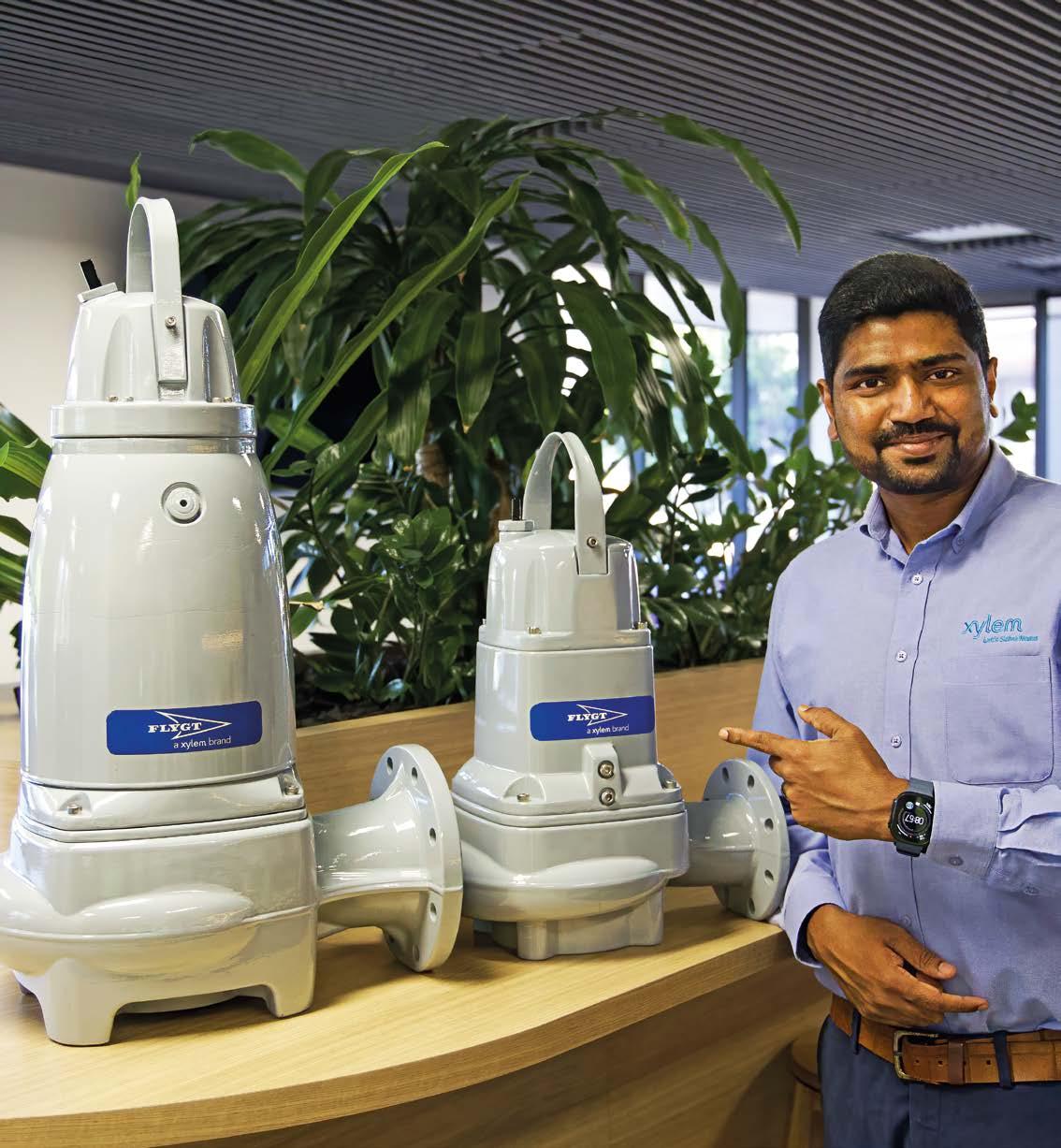
Arun Lakshminarayanan, Business Development Manager (Concertor) for Australia and New Zealand at Xylem ANZ, said the shift is being driven by persistent operational problems that traditional equipment was never designed to solve.
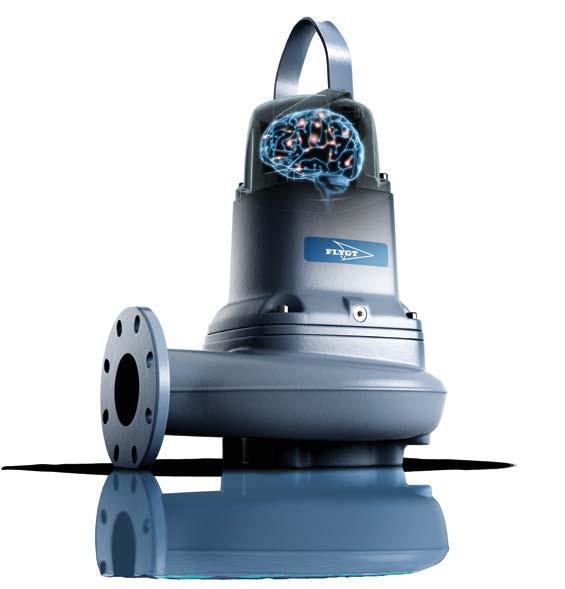
“Concertor sits as a flagship intelligent pumping solution within Xylem’s broader wastewater portfolio,” Lakshminarayanan said. “We have traditional pumps which focus mainly on moving water. But Concertor combines the hydraulics, motor, variable-speed drive, and intelligence into a single integrated system.
“It was originally designed to address three persistent pain points for utilities. Chronic clogging and ragging, high energy consumption, and the complexity of managing multiple
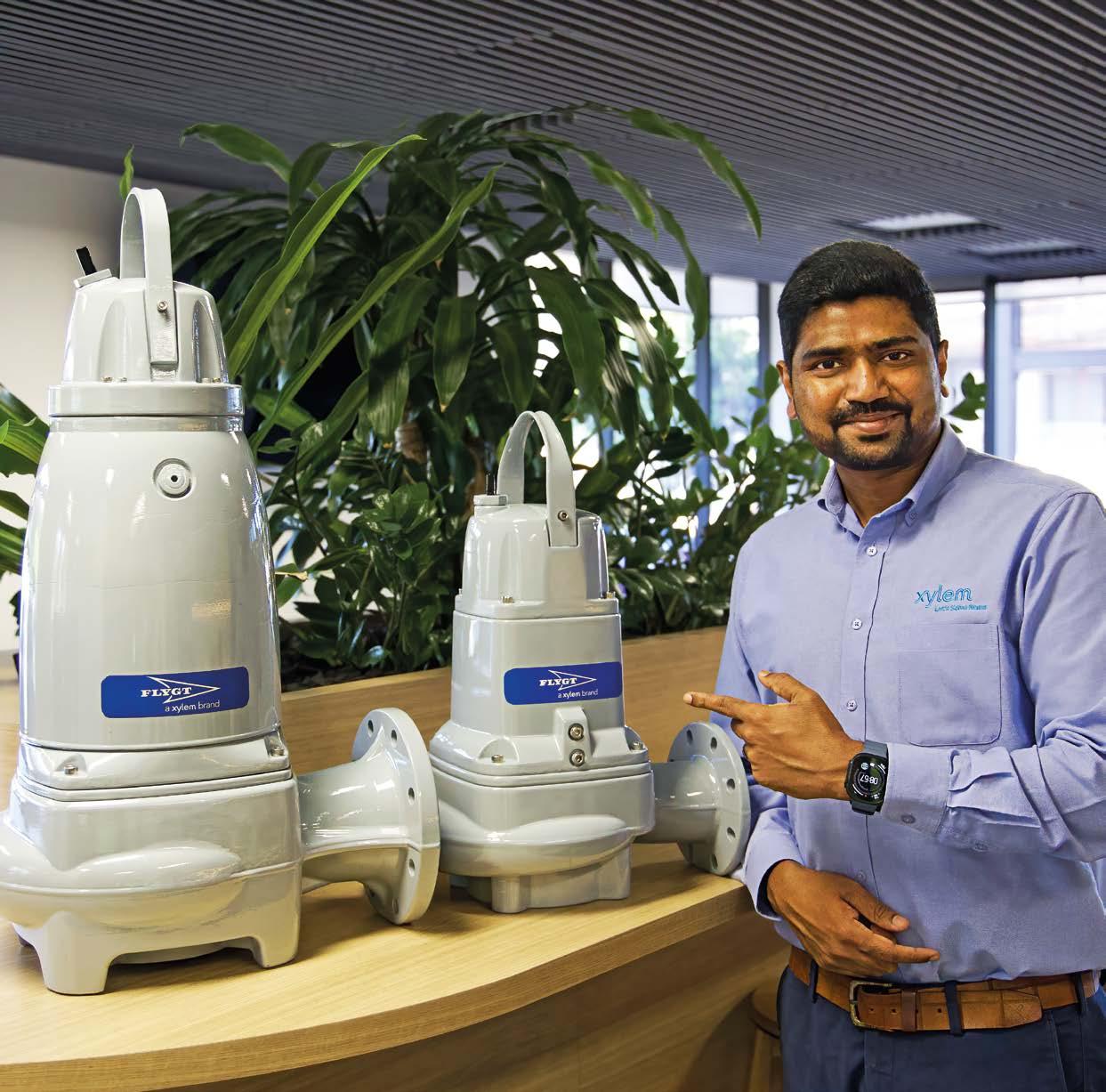
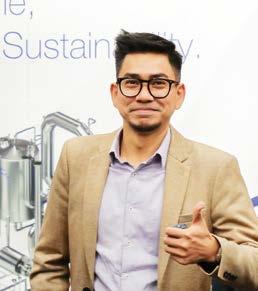
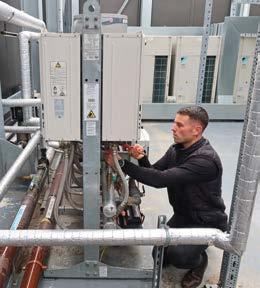
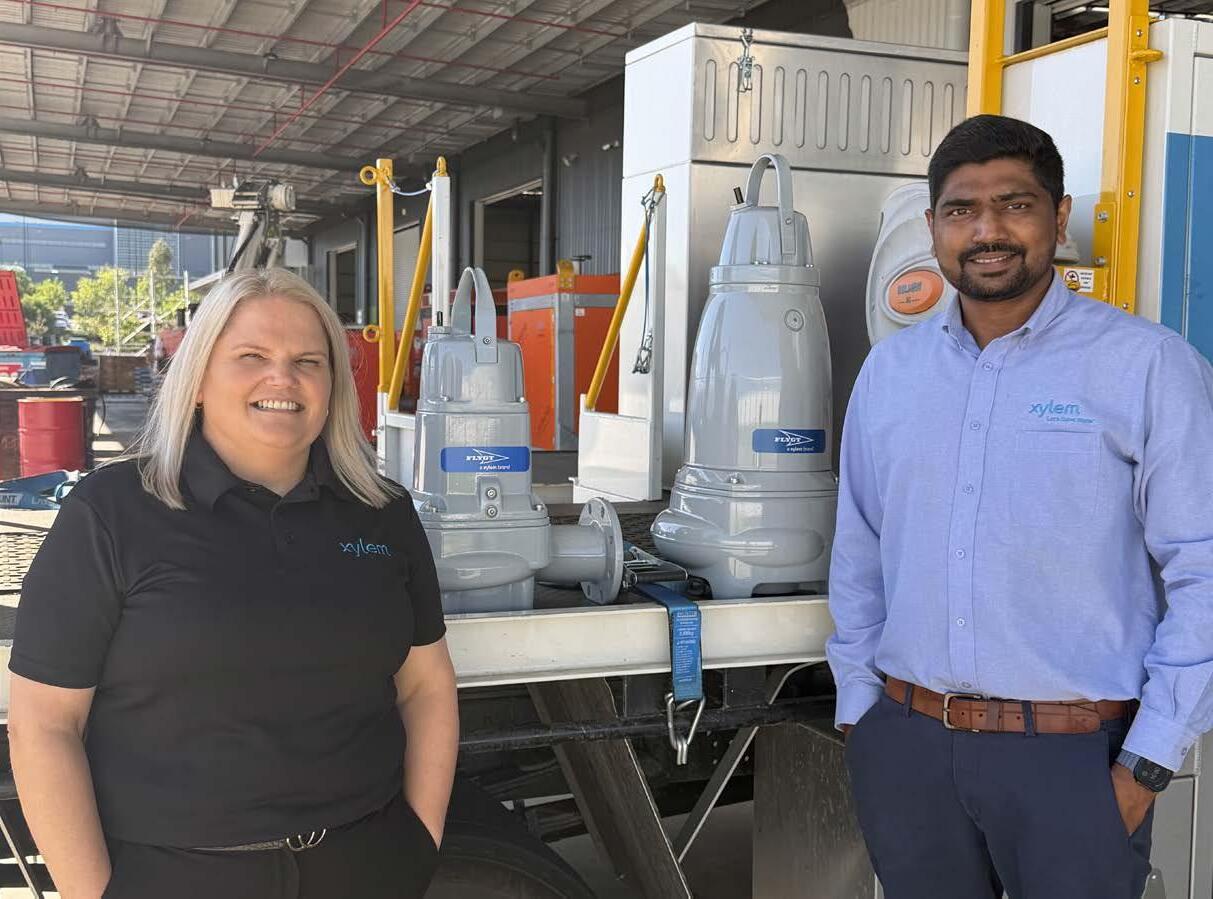
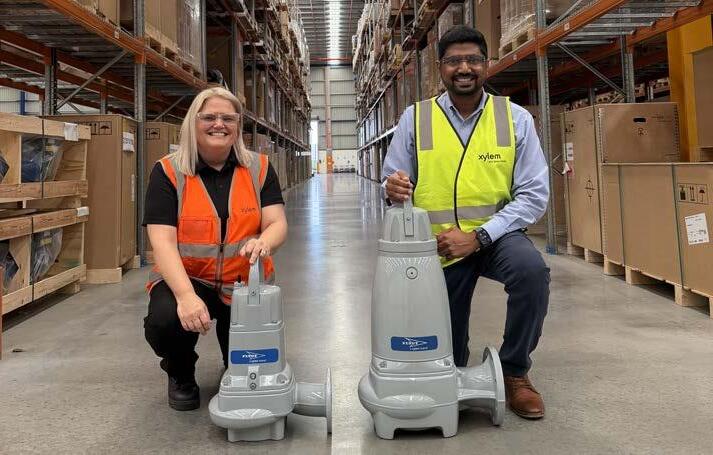
Kristy Rua (Service & Aftermarket Leader ANZ) and Arun Lakshminarayanan are big advocates for the Concertor pumping solution.
Images: Xylem
separate components like drives, panels, sensors and controls from di erent suppliers.”
For utilities that are managing hundreds or thousands of pump stations across large geographic regions, those issues add up quickly.
“Concertor was created to simplify the pump station, reduce the total cost of ownership and give utilities a smarter, more resilient way to run their networks,” he said.
Pressure on pump stations
Wastewater utilities across Australia and New Zealand face a consistent set of operational pressures, even though the scale of their networks may vary widely.
Many systems are managing ageing infrastructure originally designed for smaller populations. Urban expansion continues to increase flows. Meanwhile, utilities must maintain high service levels while meeting environmental and regulatory requirements.
Lakshminarayanan said pump stations sit at the intersection of these pressures.
“There is a consistent set of challenges across Australia and New Zealand,” he said. “Ageing infrastructure, population growth and tighter budgets are all converging on the pump stations. Utilities are being asked to do more with less while maintaining high levels of service and environmental compliance.”
Operational issues inside pump stations are often surprisingly persistent.
“The big issues are blockages from wipes and debris, unexpected inflows from storms, escalating energy costs and di culty attracting and retaining skilled labour,” he said.
“Many networks are still managed by legacy control systems that do not provide real-time visibility or the data needed for proactive decision making.”
In practical terms, this means operators often discover a problem only after equipment has failed or an alarm has been triggered.
The result can be frequent callouts, confined-space entry risks, and rising maintenance costs.
Intelligent systems are increasingly seen as a way to move away from reactive operations toward predictive management.
From pumps to systems
Traditional wastewater pumps have typically been designed around a straightforward principle: move water from one place to another. In many cases, they operate at fixed speeds and rely on external systems for monitoring and control.
Concertor represents a di erent approach.
Rather than functioning as a standalone pump, it integrates sensing, control and digital intelligence within the unit itself.
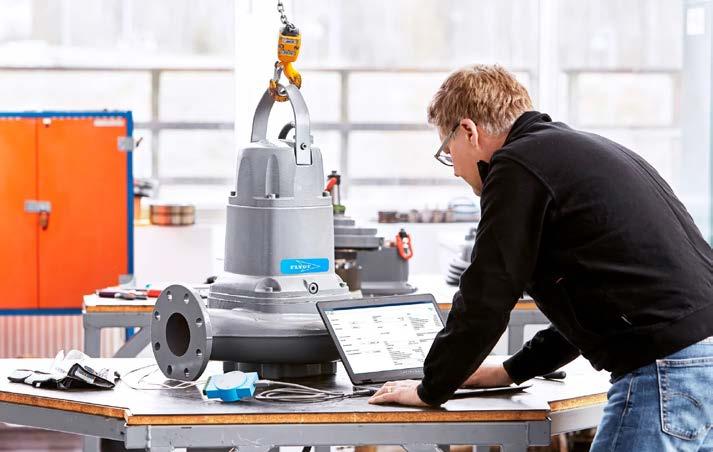
Lakshminarayanan said that integration fundamentally changes how the equipment behaves inside a pump station.
“The Concertor system continuously senses operating conditions such as load, flow, level and torque and adapts its performance in real time,” he said.
“It can detect clogging, initiate selfcleaning cycles, optimise speed for e ciency and protect itself from harmful operating conditions.”
This ability to monitor conditions and respond dynamically stems from the system’s closed-loop control architecture.
That architecture allows the pump to respond to changes in the wastewater network without waiting for external commands.
“It is separate from a conventional wastewater pump that simply runs at a fixed speed until something goes wrong,” Lakshminarayanan said.
“Concertor can adapt to the situation and provide a better outcome for the system.”
The result is a shift from passive infrastructure toward active equipment capable of managing its own operating conditions.
Data driving decisions
Digitalisation has become a central theme across the water sector, but for many utilities, the challenge is not data collection. It is turning that information into actionable insight. Intelligent pumping systems contribute to that process by generating a continuous stream of operational data.
Tablets and mobile phones have been utilised to update data and follow up on insights.
Lakshminarayanan said Concertor captures a wide range of parameters that can be used to improve both operational performance and longterm planning.
“The system continuously collects and analyses operational data in real time,” he said. “That includes power consumption, motor load, speed, torque, running hours, number of starts, cleaning cycles, events and operating points.”
For asset managers, that information can provide a detailed picture of how pump stations behave across the network.
“Operators can identify underperforming assets, compare stations, optimise set points and plan maintenance based on actual conditions rather than fixed intervals,” Lakshminarayanan said.
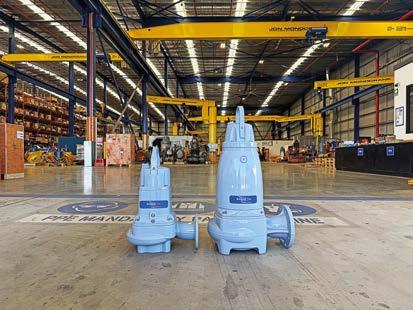
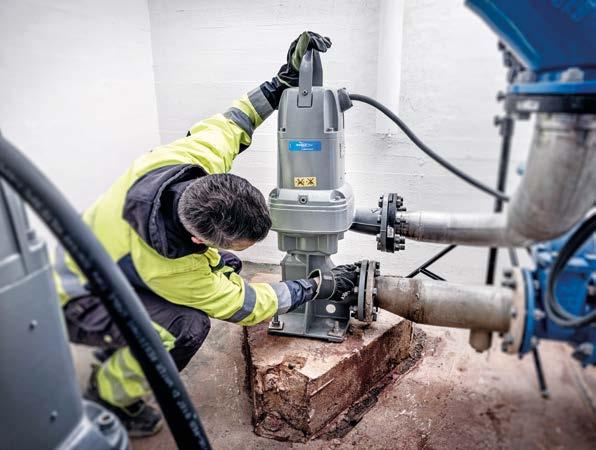
The Concertor pump station is designed for critical aspects of the water and wastewater industry.
Over time, the accumulated data helps utilities understand patterns that were previously di cult to see.
“The data builds a clear picture of how the network behaves,” he said. “That supports more accurate
budgeting, targeted upgrades and stronger business cases for future investment.”
The shift from reactive to datadriven operations is increasingly seen as a key element of digital transformation in the water sector.
Tackling clogging and ragging
Blockages remain one of the most persistent operational issues in wastewater systems. Disposable wipes, textiles and other debris regularly accumulate around pump impellers, reducing e ciency and increasing the risk of failure.
Traditional pumps often require manual intervention when clogging occurs, leading to maintenance callouts and safety risks.
Concertor approaches the problem di erently by detecting changes in operating conditions.
“The core design target for Concertor is blocking and ragging,” Lakshminarayanan said. “The system uses adaptive control and sensing to detect changes in hydraulic conditions. For example, if there is a rise in torque or power, that can indicate a clog developing in the system.”
Once a potential blockage is detected, the pump can respond automatically.
“Concertor can initiate a cleaning cycle by adjusting speed and direction to clear the impeller,” he said.
The result can be significant reductions in manual maintenance.
“In practice, we have seen significant reductions in unplanned maintenance callouts where Concertor has been deployed,”
Lakshminarayanan said. “There are sites where customers were attending the pump station three days a week. After installing Concertor, they did not need to visit the site for more than 12 months.”
Reducing manual intervention has several advantages.
Fewer site visits mean lower labour costs and reduced safety risks. It also frees operators to focus on more strategic tasks.
“Sites that previously required frequent manual cleaning have almost gone to no clogging events,” he said. “That means fewer confined space entries, less overtime and more predictable operation.”
Energy and sustainability
Energy consumption represents one of the largest controllable costs in wastewater operations.
Pump stations often run continuously, and ine cient equipment can significantly increase operational expenditure.
Lakshminarayanan said energy e ciency was a central design consideration for Concertor.
“Energy is one of the largest controllable costs for utilities,” he said. “The technology addresses that through a high e ciency motor, an integrated variable speed drive and intelligent control.”
Unlike fixed-speed pumps, the
Licensed professionals can ensure that your Concertor pump station operates correctly.
system adjusts performance based on real-time conditions.
“The pump matches its performance to the actual system demand rather than running at full speed all the time,” Lakshminarayanan said. “This means the pump can slow down when inflows are lower and increase output during wet weather events.”
Operating closer to the pump’s best e ciency point can significantly reduce energy consumption.
“Running at the best e ciency point is similar to driving a car in top gear at around 80 kilometres per hour,” Lakshminarayanan said. “The engine is operating smoothly and e ciently.”
Utilities deploying intelligent pumping systems have reported measurable improvements.
“In many cases, we have observed approximately 40 per cent energy savings compared to fixed speed systems,” he said. “In one case, a utility saved close to $300,000 over six years through energy optimisation.”
Lower energy consumption also contributes to broader sustainability objectives.
“Sustainability in our sector is more than just energy,” Lakshminarayanan said. “It also includes carbon reduction, resilience and asset longevity.”
Reducing energy use lowers operational emissions, while fewer site visits reduce vehicle travel and associated carbon output.
At the same time, intelligent control can reduce mechanical stress on equipment.
“The ability to run pumps more gently and intelligently extends asset life and reduces the need for premature replacement,”
Lakshminarayanan said.
Integrating digital infrastructure Many utilities across Australia and New Zealand are still operating
legacy control systems. Integrating new digital technologies into these environments can be challenging.
Lakshminarayanan said intelligent pumping systems are designed to fit into existing infrastructure rather than replace it entirely.
“Concertor can integrate into existing SCADA and asset management environments using standard communication protocols,” he said. “We are not expecting utilities to change their entire system just to adopt Concertor.”
Instead, the pump can function as a smart field device that communicates operational data and alarms to existing platforms.
For utilities planning digital upgrades, the key is to focus on how the data will be used.
“A lot of organisations collect data but do not necessarily use it e ectively,” Lakshminarayanan said. “The important step is thinking about how that information will support better decision making.”
Many utilities begin by deploying intelligent equipment at a small number of critical sites.
“We often recommend starting with a problematic or high-priority pump station,” he said.
“That allows utilities to demonstrate quick wins and build confidence before expanding across the network.”
Smarter
systems for remote communities
The geographic realities of Australia and New Zealand present additional challenges for water utilities. Remote communities may be located hundreds of kilometres from the nearest operations centre.
Travel times can be long, and skilled labour may not always be available locally.
Digital intelligence within infrastructure can help address those challenges.
“In regional and remote communities, site access can be di cult and skilled labour is limited,” Lakshminarayanan said. “That is exactly where digital intelligence inside the pump becomes valuable.”
By optimising its own performance and communicating operational information back to central teams, the system reduces the need for frequent site visits.
“Concertor can self-optimise, selfclean and provide clear information back to operators,” he said. “That means sta only need to visit the site when there is a specific issue to address.”
This approach allows smaller communities to maintain reliable wastewater services without requiring large on-site teams.
“It helps remote communities achieve the same level of reliability as larger metropolitan utilities,” Lakshminarayanan said.
A digital future for pumping Digitalisation and sustainability are likely to remain defining themes for the water sector over the coming decade.
Lakshminarayanan believes intelligent pumping systems will play a central role in that transformation.
“Over the next five to ten years, I see intelligent pumping systems becoming the norm rather than the exception,” he said.
Wastewater networks are expected to become increasingly interconnected.
Rua and Lakshminarayanan showcase the range of parts available for quick deployment to their clients.
“We are moving towards fully connected, self-optimising networks where pumps, valves and sensors work together,” Lakshminarayanan said. “These systems will be supported by advanced analytics and increasingly by AI-driven insights.”
For utilities, the transition begins with building the right digital foundations.
“That means standardising communication protocols, investing in data quality and deploying intelligent assets in targeted locations,” Lakshminarayanan said.
Utilities that treat digitalisation as an ongoing journey rather than a one-o project are likely to see the greatest benefits.
“Solutions such as Concertor can act as core building blocks for that digital journey,” he said. “In the future, we may be talking to computers and analysing data rather than physically visiting sites for routine operations.”
As wastewater networks grow more complex and sustainability targets become more demanding, intelligent infrastructure may prove essential.
The pump station, once one of the most overlooked parts of the water network, could become one of its smartest.
“We are moving toward a future where intelligent pumping is simply expected.”
For more information, visit xylem.com/en-au
Ozwater’26
Connecting, inspiring and transforming
AWA President Kevin Werksman is reshaping how the sector connects, builds capability and drives system-wide change.
THE WATER SECTOR has always been collaborative. It has also been, at times, comfortable.
For Kevin Werksman, President of the Australian Water Association (AWA), that balance is shifting. The challenges are no longer distant or theoretical. They are immediate, interconnected and increasingly di cult to navigate.
Climate variability, ageing infrastructure and rising expectations are converging. Utilities are moving from planning to delivery. Communities are asking harder questions. And the sector is being challenged to respond not just with technical solutions, but with broader, system-level thinking.
It is within this context that Werksman is helping guide AWA’s 2030 Strategy, built around a clear ambition: to connect, inspire and transform the water sector in pursuit of a sustainable water future.
“The ambition is bold,” Werksman said. “We’ve moved from being a connector to catalyst with an explicit focus on impact. Our vision is a sustainable water future, and our role is to help the sector get there.”
A broader role for a changing sector
AWA has long occupied a unique position as both a professional body and an industry convenor.
Under Werksman’s presidency, that dual role is becoming more critical as the complexity of water challenges grows.
“We’re moving from a position where we could navigate challenges to another day, to one where deferral creates real trade-o s,” Werksman said. “We’re dealing with climate change, ageing assets,
rising regulatory expectations, and increasing demands on water systems. These are system challenges, not isolated issues.”
For Werksman, this means expanding the conversation beyond traditional boundaries.
“It’s about water utilities and also what happens upstream and downstream. It’s about regional communities, supply chains, regulators, and even other industries that rely on water,” he said.
“If we only focus on where capability is already strong, we won’t get the outcomes we need across the whole system.”
This broader lens also extends to innovation. Digital tools, artificial intelligence, and naturebased solutions are all part of the conversation, but only if the sector can create the right conditions for their adoption.
“Innovation will be critical, but so will how we engage with it. We need to accelerate it where it adds value, remove barriers where they exist, and ensure we’re not constrained by traditional approaches.”
From connection to true collaboration Collaboration has long been considered a strength of the Australian water sector. But
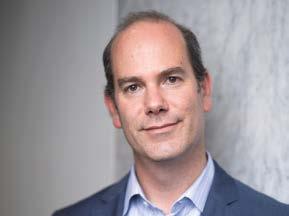
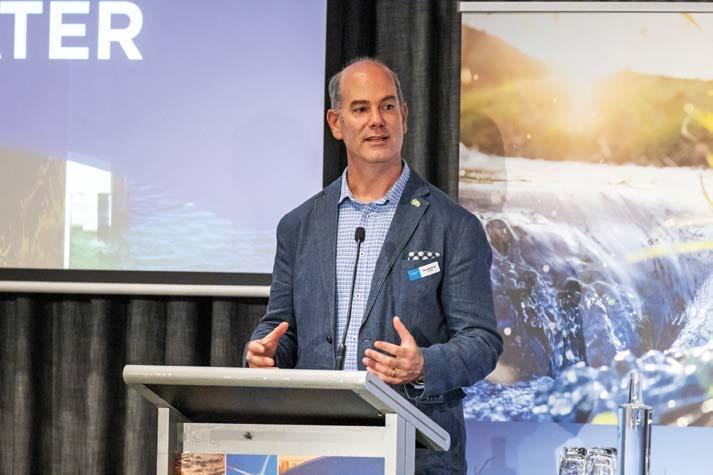
Kevin Werksman is the Chief Executive O cer of SUEZ Australia and New Zealand, while also being the President of the Australian Water Association.
Images: Australian Water Association
Werksman believes there is still room to deepen it.
“When we ask our members what we’re good at, collaboration is always near the top,” he said.
“But when you look closer, we’re very good at being connected. We’re less strong at having the harder conversations that drive real change.”
That distinction is shaping how AWA approaches its role as a convenor.
“We’re a very collegial industry. We care about what we do, and we care about each other. But sometimes that means we avoid calling out what needs to change.”
For Werksman, the next phase of collaboration involves greater openness and a willingness to challenge existing practices.
“How do we create a space where we can talk about procurement di erently? Where can we question regulatory constraints? Where can we look at how the private sector is perceived and whether that perception is fair?” he said.
“How do we ensure nature-based solutions are genuinely considered? These are the conversations that move us forward.”
Ozwater as a catalyst for change
Few events bring the sector together like Ozwater, and the 2026 edition arrives at a particularly significant moment.
Utilities are facing a ordability pressures. Investment pipelines are expanding, and di cult decisions are becoming unavoidable.
“Ozwater’26 is coming at a time when we don’t have clear pathways for all these challenges,” Werksman said.
“But there is real power in coming together, sharing experiences and learning from each other.”
He sees the event not just as
a forum for discussion, but as a catalyst for ongoing progress.
“We have great engagement at our events, but one of the opportunities is to better capture where we land and carry that forward,” he said.
“If we can build continuity between conversations, we can start to evolve as a sector rather than reset each time.”
Ozwater also plays a critical role in connecting the supply chain, particularly as the scale of infrastructure investment grows.
“It’s an opportunity for the supply chain to understand what’s coming, how to mobilise, and how to engage more e ectively,” Werksman said.
Building capability and sector voice
Werksman is also focused on strengthening capability across the sector.
This includes initiatives such as Careers in Water and the development of a digital knowledge library, designed to capture and share insights from across the industry.
“That digital library has the potential to become a portal for knowledge and capability,” Werksman said.
“It’s about making information accessible, connecting it to real issues, and helping people develop the skills they need.”
At the same time, AWA is strengthening its role in shaping policy discussions.
“Our role is to shine a light on the complexity of water issues and help decision-makers understand them,” he said.
“That includes engaging not just with water portfolios, but with other areas that intersect with water, from planning to energy to infrastructure.”
Water literacy is another key focus.
“We need to build a broader understanding of water’s role in our lives, in our economy and in our environment,” Werksman said.
A legacy of impact
As his presidency continues, Werksman is focused on the legacy of the Strategy 2030 direction.
“I hope people see that we had the courage to embrace a bold strategy that reflects what our members want, which is to make an impact,” Werksman said.
“That means inspiring system change, strengthening collaboration across sectors and building capability in a more purposeful way.”
Ultimately, success will not be measured by membership numbers or event attendance.
Werksman has been playing a critical role in connecting people and organisations across the water industry, while encouraging its transformation for the future. As President, Werksman continues to work with fellow Australian Water Association directors and board members to advance the industry.
“What I’d like to see is a clearer roadmap for how we achieve a sustainable water future, and a sense of energy and ownership across the industry,” he said.
“That people feel their voice is heard, that they’re part of the journey, and that together we can make a di erence.”
In the end, the defining shift may be a shift in mindset.
“I’d like to see us truly value water, not just as a service, but as something that shapes our communities, our economy and our environment,” Werksman said.
“When we start thinking about water the same way we think about other major infrastructure, that’s when we’ll see real transformation.”
Shaping Australia’s water security
Minister for the Environment and Water Murray Watt outlines how national reform will reshape Australia’s water management and long-term security.
WATER UNDERPINS OUR nation’s industries, productivity, and way of life. That means we all have a part to play - governments, industry and households - in managing it carefully to support a growing Australia. Together, we need to ensure that we get maximum benefits for sustainability, productivity, and the wellbeing of Australian communities. Water use e ciency is more important than ever.
Way back in 2004, the National Water Initiative set a consistent framework across Australia, enabling water trading, setting pricing principles, and making sure the environment was factored in.
But a couple of decades later, it’s clear we need to modernise that framework to include First Nations interests, climate change impacts, and emerging industries, like data centres.
That’s why the Australian Government is teaming up with our state and territory counterparts to develop a new National Water Agreement.
I’ve signed the agreement on behalf of the Commonwealth, and we’re working with the states and territories to encourage them to sign on too.
Establishing these kinds of agreements can be challenging, because states have di ering and sometimes conflicting needs. That’s why the agreement has been drafted to allow for jurisdictional variations through supporting action plans and why all parties have given some ground during its development. While this is happening, my Department is establishing and updating guidance for practitioners in six key areas; water
administration, water planning and management, and independent economic regulation and water services pricing.
This year, the Productivity Commission will also undertake its fourth national water inquiry, providing advice on policy and regulatory settings that can support the water sector.
For the first time, we’ve asked the Productivity Commission to explore how the water services industry can continue to keep services a ordable, meet what customers expect, and stay sustainable in the long run.
The Productivity Commission will report back to Government by this September, and I encourage you all to engage with the review.
I’m proud of the work our Government has done to support water infrastructure projects across the country. We’ve worked closely with states and territories to deliver more than 140 National Water Grid projects since May 2022underpinned a $1.2 billion federal commitment – supporting local communities, agriculture and the environment, and strengthening First Nations connection to Country. Another successful initiative is the Water E ciency Labelling and Standards (WELS) scheme. Since launching in 2005, it has saved Australian households and businesses an estimated 2,060 gigalitres of water and $16.7 billion on their utility bills. And we’re now working to enhance the scheme even further, including by updating its administrative framework and modernising costrecovery arrangements. While the future of water
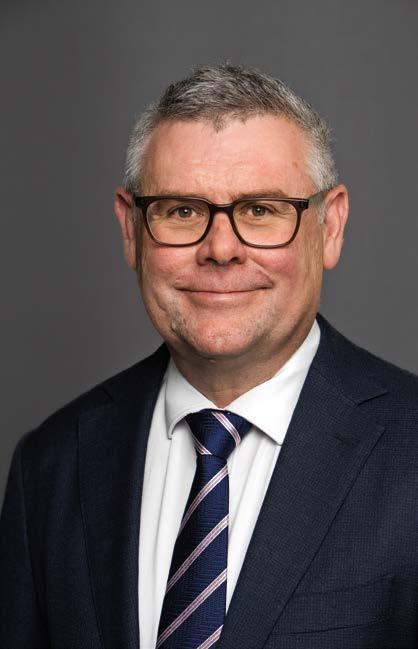
Murray Watt is the Federal Minister for the Environment and Water, as well as a proud Queenslander. Image: Department of Climate Change, Energy, the Environment and Water
management in Australia will bring challenges, I’m confident that ongoing cooperation between governments, industry, and the community will help us tackle them and take advantage of the opportunities ahead.
Your voice is critical to helping us ensure we prioritise policies and approaches that continue to serve the national interest and maintain our role as a global leader in sustainable water management.
I wish you all the best this Ozwater’26 and I look forward to working with you into the future.
Beyond price
One of the most vital yet di cult organisational challenges, sustainable procurement, is about bringing the market along on the journey of continuous improvement.
IN CONSTRUCTION AND infrastructure, one factor has traditionally ruled them all when it comes to procuring products and services to get the job done – cost.
But that model is changing. While cost is still an important factor, procurement teams in organisations with a strong sustainability focus are increasingly considering a broader set of criteria, including environmental performance, social impact and governance standards.
Interflow is well into its own sustainable procurement journey.
Supply Chain Manager Rebecca Pombart said the company’s procurement function is evolving toward a broader understanding of what suppliers contribute to the organisation, and to society itself.
“Traditionally, procurement has only looked at price as a consideration,” she said. “But we’re moving towards a model that considers whether a supplier or subcontractor is fit for purpose in our organisation.”
In practice, that means looking more closely at how suppliers operate, rather than just what they charge.
“We need to know what we’re
looking at, including the social and environmental benefits and impacts,” she said. “It’s about the whole package and has evolved to include so much more than price.”
For Interflow, that shift in focus is increasingly reflected in its procurement processes. The company has updated its screening process to incorporate sustainability considerations from the outset.
“We’ve changed our pre-qualification processes for our subcontractors,” Pombart said. “So, they know when they’re onboarding that we’re partnering with particular types of businesses, and that this is what we value.”
The goal, Pombart said, is to gradually build and maintain a supply chain that’s aligned with Interflow’s deeply embedded purpose – which is ‘to improve the lives of the people we work with, the communities we serve, and the environments we work in, for generations to come’.
How does Interflow achieve sustainable procurement?
While it’s simple to discuss sustainable procurement at a high level, putting it into practice is more challenging.
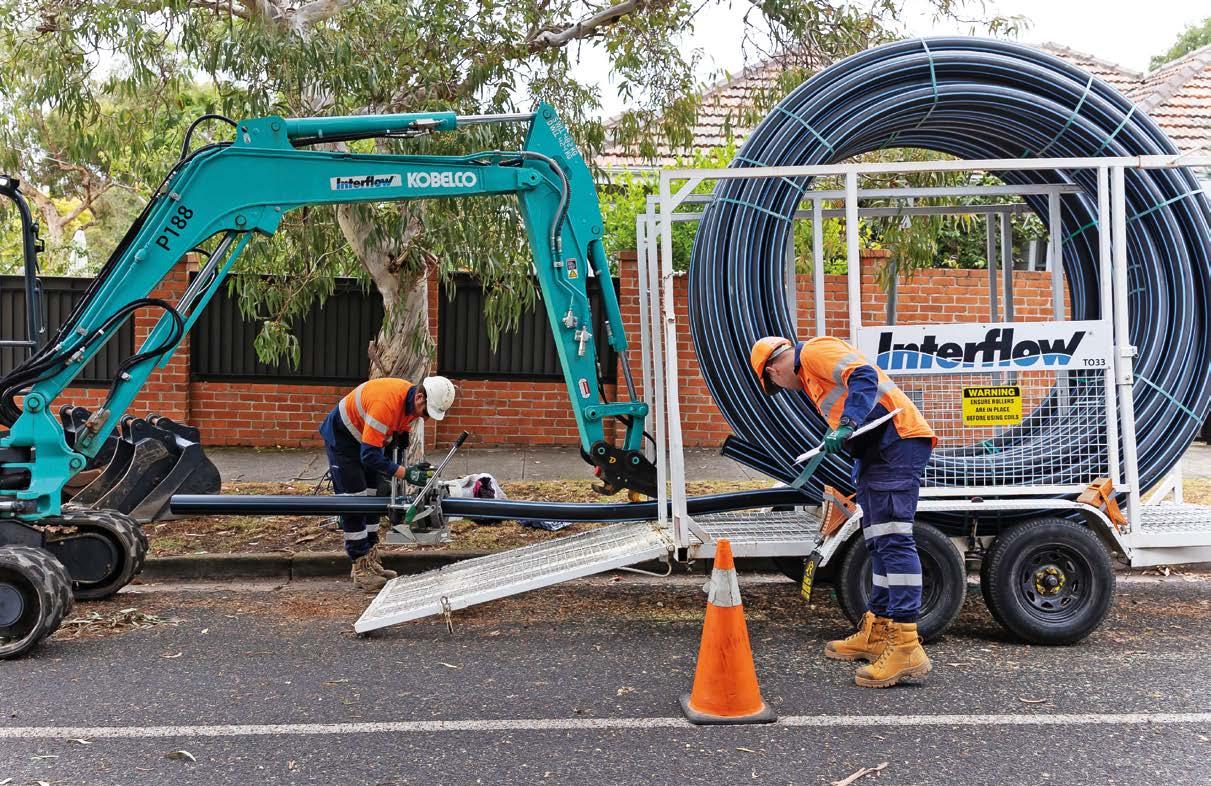
Sustainable procurement is fundamental to Interflow’s operations, enabling continuous improvement. Images: Interflow
For Interflow’s Sustainability and Environment Manager Pam Johnson the idea is to partner with suppliers who share Interflow’s values. And it’s not all about the environment. Sustainability also covers social and governance considerations.
“Whether that’s social, organisational or environmental responsibility, the right partners will also help us to continuously improve our own performance,” Johnson said.
Sustainable procurement, then, is not just about expecting suppliers to meet higher standards; it’s also about learning from them.
The approach is particularly important given the role supply chains play in Scope 3 emissions, the indirect emissions generated by suppliers and by purchased materials.
“In terms of the performance of all of our procured materials, we’re not at the point we want to be, yet” Johnson said. “Construction materials contribute significantly to our Scope 3 emissions, so that’s where we’re next looking to improve our sustainable procurement performance.”
Much of the early work along these lines involves deep dialogue with suppliers to understand what is possible, what is not, and where Interflow can help with testing and implementing new materials. They can then work closely with customers to secure the necessary approvals to implement those changes.
“We’re engaging with suppliers to understand what can be done in this space, and how they can support us and how we can support them in our shared emissions journey,” Johnson said.
There is enormous complexity in the Scope 3 challenge, Johnson said. She o ers an example from a recent site where raw materials, including road base materials, were delivered in large bulk bags.
The use of these bags has significantly improved site housekeeping, protected surrounding streets and nature strips and delivered a positive outcome for the local community. However, the question then becomes: what happens once those bags are empty? How can they be managed at the end of their use to minimise waste?
“It’s a great initiative,” Johnson said. “But we have to go back to our suppliers and ask if there’s a recycling program for these bags in Australia, and whether they can become signatories so we can participate.
“Some of our suppliers are small operators, and sustainability programs like this aren’t always in place yet. Working through those gaps together is a small but real example of the complexity of Scope 3 and the kinds of challenges we expect to encounter as we move into this next phase.”
Another initiative addressing these challenges has emerged from a packaging audit conducted by an engineer at Interflow, which identified opportunities to reduce unnecessary packaging across the supply chain.
Such examples, while they may appear small, represent the practical reality of sustainable procurement. Success comes partly from incremental improvements across thousands of purchasing decisions.
Measuring progress: New benchmarks
The Interflow supply chain contains businesses large and small, local and global. These companies are at various stages of their own sustainability journeys.
For that reason, education is often a part of the sustainable procurement process, both in terms of suppliers learning sustainability measures from Interflow and Interflow learning from suppliers.
“I haven’t found a single organisation that has resisted,” Pombart said.
“Everybody has been keen to improve their performance.”
Many suppliers are sensing broader shifts in expectations across the industry, particularly from government, larger contractors and infrastructure customers.
Those expectations will continue to shift. Sustainability will never be over or finished.
As sustainable procurement is an ongoing process, rather than a fixed destination, measuring success can be di cult.
At Interflow, progress is tracked through internal goals and performance plans. Those plans
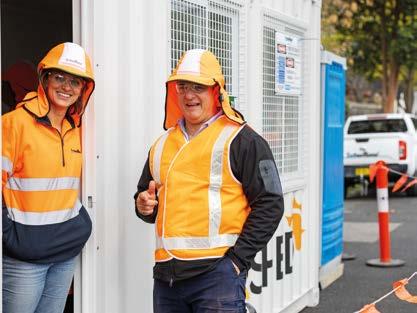
Teamwork and collaboration are how sustainability has become part of everyday at Interflow.
include targets across several sustainability areas.
“They include diversity, social, Indigenous, environmental and other sustainability goals,” Pombart said. Progress is regularly reviewed, ensuring Interflow remains accountable to its commitments. And while many indicators already exist, such as Indigenous procurement targets, others are still being developed. Particular metrics, such as recycled content in purchased materials, are likely to emerge over time as suppliers join the conversation and innovation follows.
Core to Interflow’s purpose
Pombart said the long-term sustainability focus reflects Interflow’s identity as a family-owned business focused on positive outcomes for society.
Individuals are empowered to encourage further opportunities to increase sustainable procurement and operations.
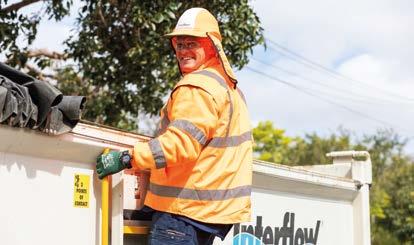
“At Interflow, it all directly links to our purpose,” she said. “We often talk about this, and the ripple e ect we can have on the sector.”
If procurement decisions consistently reward suppliers who invest in sustainability, Pombart said, those behaviours will spread throughout the market.
For now, the Interflow sustainable procurement journey has had a strong start. While some of the systems and metrics to measure supply chain sustainability are still being developed, the direction for all stakeholders is clear – it’s about building partnerships that help the entire sector move forward.
For more information, visit https://www.interflow.com.au/
Reducing water waste by 30 per cent
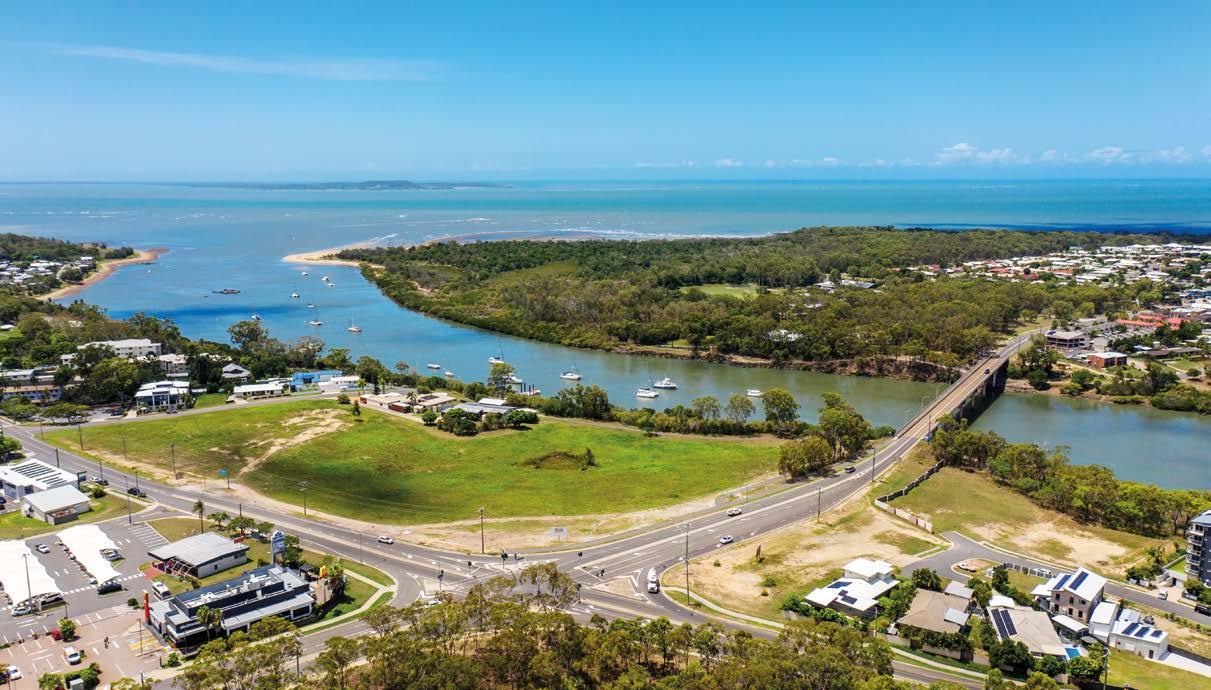
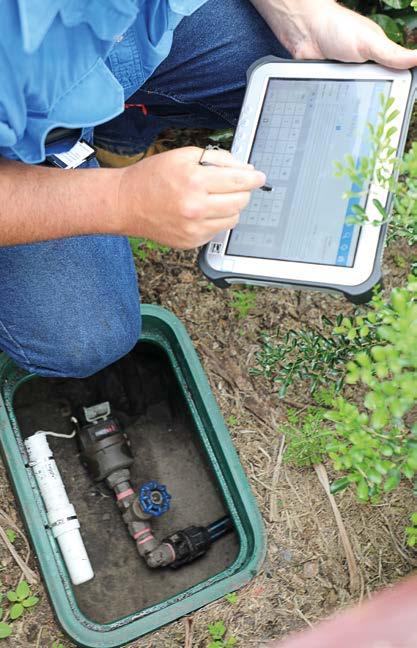
Coastal communities like Gladstone Regional Council’s Agnes Water and Seventeen Seventy, experience water security challenges as leaks can go undetected for long periods due to sandy soils. Digital Water Metering provides the insights to identify leaks and act.
AUSTRALIA’S SANDY SOILS present a unique challenge for water management as water easily moves through the soil without surfacing making leaks di cult to detect using traditional methods.
In Gladstone, large leaks placed pressure on supplies, with the current costly desalination treatment plant hitting capacity in peak seasons.
To avoid the need to build a new treatment plant Gladstone Regional Council invested in managing current supplies and reducing water waste using data with the installation of digital water meters.
Reducing
demand
Since installation began in 2023, the southern coastal towns that made up Stage One of the rollout have experienced 30 per cent demand reduction allowing Council to
defer upgrades to the Agnes Water Integrated Water Treatment Plant.
This reduction in demand significantly decreases the pressure on water resources and infrastructure and will have direct benefits to the health of Gladstone Harbour.
E cient water management supports sustainable use of freshwater resources, increasing drought resilience and supporting healthier catchments and waterways. It also reduces demand and enables e ciencies on supply and pumping infrastructure, reducing energy use and carbon emissions.
Mayor Matt Burnett said the investment reflects a practical response to long-term challenges facing the region.
“Investing in digital water metering is about making sure we’re using every drop of water wisely,” he said. “For
The waterways of the Gladstone Regional Council region are part of the problem when it comes to detecting water leaks.
Images: Gladstone Regional Council, Taggle Systems
Gladstone, it’s all about improving the service to our community, and strengthening our long-term water security.”
The Gladstone rollout
Gladstone Regional Council’s digital water metering rollout with Taggle Systems has reached Stage 5 and is approaching completion, with around 80 per cent of meters now installed.
Stage 6, the final phase of the project, will begin next to complete all remaining installations. The staged approach has proven successful delivering results with each step.
Stage One prioritised the coastal and smaller communities including Agnes Water, Seventeen Seventy, Tannum Sands, Miriam Vale and Bororen as these areas had the
highest water losses and the largest distance to travel making it the perfect location to digitise.
The towns also provided clear district metered areas (DMAs) improving visibility of the reticulation network allowing more e ciently management of the whole network.
Return on investment was very quickly realised when significant leaks were identified in the area, putting plans for the new treatment plant on hold.
Previously, losses across the network were estimated at the equivalent of filling an Olympic-sized swimming pool every four days.
The impact of local conditions
The sandy soils of the coastal regions have historically meant that losses could persist unnoticed for extended periods, placing unnecessary strain on water resources, infrastructure and customers.
Local residents frequently experienced high water bills and infrastructure damage to homes and holiday homes as leaks go unnoticed.
Digital water metering is addressing this issue by providing near realtime data and automated alerts to customers via the MyWater portal. Both Council and customers can now identify unusual consumption patterns far earlier, enabling faster intervention.
This increased transparency is helping customers avoid bill shock and better understand their consumption patterns.
It is also contributing to fewer billing disputes and reducing the time Council spends investigating issues.
Community uptake of the MyWater portal is still in its early stages, with fewer than 10 per cent of properties actively using the platform. However, this is expected to grow as awareness increases and more customers experience
the practical benefits - particularly early leak detection and improved bill predictability.
More than just technology
One of the clearest insights from the rollout has been that technology alone does not deliver outcomes.
Realising the full benefits of digital metering requires organisational change across multiple areas, specifically, customer service, finance, operations, environment and conservation and IT. This includes new workflows, new ways of using data, and a shift towards more proactive decision-making.
Fortnightly check-ins between stakeholders have been critical in maintaining visibility across operational, technical, IT, and customer service teams.
These touchpoints have helped identify and resolve issues early, from installation challenges through to data discrepancies and customer enquiries.
Council continues to navigate this transition, recognising that the journey involves ongoing learning and adaptation as systems, processes, and people evolve together.
A foundation for the future
The real value of digital metering comes from how data is integrated
into decision-making processes across the organisation.
With one stage remaining and completion expected later this year, the focus is now shifting toward optimisation.
The data is already being used to support demand management, inform the development of district metered areas and improve understanding of network behaviour. It is also enabling more accurate infrastructure planning, ensuring assets are appropriately sized based on real usage rather than assumptions.
Looking ahead, there is potential to integrate additional technologies, including pressure sensors, and implement more targeted water-loss reduction strategies.
Mayor Burnett said the benefits are already becoming clear, even as the program continues to evolve.
“We are still on the journey, and there is work ahead. The benefits are already emerging, and the foundations are being laid for longterm improvements in water security, customer experience, and network performance for the community.”
For more information, visit taggle. com and gladstone.qld.gov.au
The plumbers and council workers across the region are now very familiar with the digital water meters that have been rolled out.
Matt Burnett is the Mayor of the Gladstone Regional Council.
Engineering the pump reality
From workshop floor to test bay, Hiran Doolwela is shaping how pumping systems perform in the real world.
FOR HIRAN DOOLWELA, the moment a design becomes real is when the learning begins.
It is not when the model is complete, or the calculations check out. It is when a pump skid is assembled on the workshop floor, tolerances are tested during installation, and the system is finally put to the test under real operating conditions. That transition from theory to reality has shaped how he approaches engineering in the water sector.
Doolwela entered the industry with a background in mechanical engineering and early experience in large-scale wet plant systems. Those roles exposed him to the complexity of infrastructure early on, particularly how designs behave once they leave controlled environments.
“My background is in mechanical engineering, and over time I’ve developed a strong focus on pumping systems used in water and industrial applications,” Doolwela said.
Now a mechanical design engineer at KSB, his role spans engineering, fabrication, and operations. It requires not only technical expertise, but constant coordination with teams responsible for building and testing the systems he helps design.
“My role has evolved into a combination of design engineering, practical problem solving and working closely with di erent teams on the floor to ensure that our systems are delivered reliably in realworld applications,” he said.
That connection to the workshop floor is central to his approach.
“A key part of the role is bridging the gap between engineering design and what ultimately gets built,” Doolwela said. “I work closely with
our fabrication team to ensure that designs are practical to construct and can be assembled e ciently while still meeting the technical and hydraulic requirements.”
Design shaped by real-world constraints
For utilities, the challenge is rarely just selecting a pump. Systems must integrate into existing infrastructure, comply with strict specifications and remain maintainable over decades.
Doolwela’s work reflects that complexity. Much of his approach is informed by feedback from site, collaboration with our Engineering teams, conducting Finite Element Analysis (FEA) on our baseplates, standards and previous projects.
“Bringing in knowledge from the site has helped us identify problems early and anticipate what the client requires,” he said.
This becomes critical when working with ageing infrastructure.
“Many utilities are managing assets installed decades ago, and parts
and drawings may not readily be available,” Doolwela said. “In those cases, we carry out reverse engineering for legacy infrastructure using our high-fidelity 3D scanner to develop accurate 3D models to support asset refurbishment or replacement.”
Each project presents its own constraints, requiring a balance between engineering precision and practical delivery.
Performance starts with fundamentals
Despite the complexity, Doolwela’s process begins with fundamentals. Understanding duty requirements and site specifications remains the foundation of every design.
“The starting point is always to understand the required operating duty and application requirements,” he said. “From there, we ensure the pump and system configuration meet both performance requirements and site specifications.”
In the water sector, those specifications are often strict.
Reliability is critical, and small ine ciencies can lead to long-term operational issues.
Testing is therefore essential.
“We test our systems to ensure that pumps operate within the specified duty and perform as intended when installed on site,” Doolwela said.
Bundamba and the importance of proof
The upgrade of KSB’s Bundamba Test Bay represents a turning point in how performance is validated.
For Doolwela, the project was about more than improving a facility. It was about strengthening confidence in how systems are tested and verified.
“The goal of the upgrade was to modernise the facility so we can
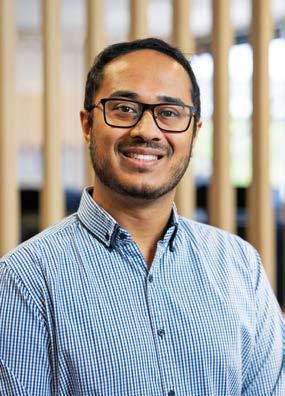
Hiran Doolwela is a mechanical design engineer at KSB. Images: KSB

accurately test pump performance, improve accessibility for witness testing and support accurate data capture,” he said.
The upgrade introduced improved instrumentation and test controls, enabling more precise measurements.
A key outcome was achieving ISO 9906 certification.
“This global standard sets strict requirements for how pump performance testing must be conducted, including instrumentation accuracy and measurement uncertainty,” Doolwela said.
The facility now also supports remote witness testing.
“We’ve added live streaming to enable remote witness testing, improving accessibility and transparency,” he said.
Rising expectations across the sector
Utilities are operating in an increasingly demanding environment. Ageing assets, cost pressures and sustainability targets are reshaping expectations.
“There’s a stronger focus on wholeof-life performance rather than simply the initial equipment cost,” Doolwela said.
Reliability has become a central concern.
“Pumps play a critical role in water and wastewater infrastructure, where failures can have major operational and environmental consequences,” he said.
As a result, utilities are turning to data-driven approaches.
“There’s a growing focus on data monitoring technologies to understand how systems operate in real time and identify issues early,” Doolwela said.
Energy e ciency is also becoming a defining factor.
“Using more e cient pump systems helps clients manage energy costs and deliver long-term environmental benefits,” he said.
For Doolwela, the most rewarding projects are often the most complex.
“The projects that stand out are the more challenging ones,” he said. “When you see them built on site, you gain a real appreciation for how everything comes together.”
Understanding how pumps work in the real world compared to the models is a key part of Doolwela’s understanding of the systems he has worked on at KSB.
It is in those moments that engineering becomes tangible, reinforcing the importance of designing for construction and maintenance, not just performance.
Advice grounded in experience
For engineers entering the industry, Doolwela emphasised the importance of grounding theory in practice.
“It’s important to check your work against first principles and standards to ensure your design will be successful,” he said.
He also highlighted the role of mentorship and collaboration.
“Seek guidance from experienced professionals, because they can help identify issues you might not see early on,” Doolwela said.
Ultimately, he points to experience as the greatest teacher.
“It’s always valuable to see what you’re building come to life on site,” he said. “That’s how you understand challenges and continue improving your designs.”
For more information, visit ksb.com/en-au
Circular water solutions
As climate pressures intensify, utilities are rethinking wastewater treatment to improve e ciency, recover resources and strengthen long-term resilience.
WHEN WATER PROFESSIONALS gather at Ozwater’26, one theme will dominate conversations across the sector. How can utilities deliver more reliable water services while facing climate pressure, rising costs and ageing infrastructure?
The answer increasingly lies in rethinking wastewater treatment itself.
Across Australia, utilities are shifting toward more circular approaches that recover water, energy and nutrients while reducing operational costs.
Rather than viewing wastewater as a disposal problem, treatment plants are increasingly becoming resource recovery facilities.
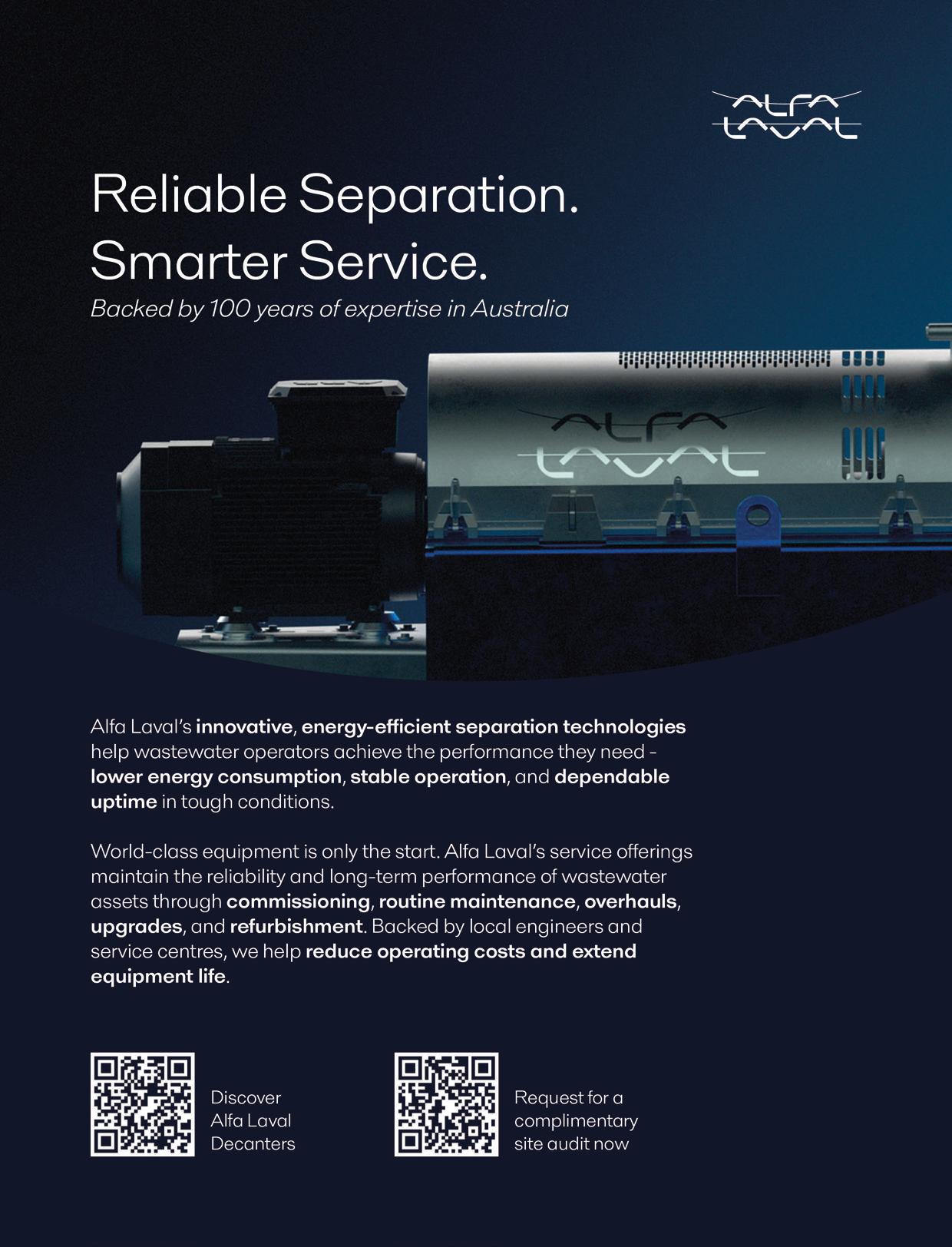
Marwan Baig, Head of Food and Pharma Division at Alfa Laval Oceania, said climate pressures are already influencing how utilities plan future investments.
“Climate extremes, urban growth and ageing infrastructure are placing increasing pressure on water utilities,” Baig said. “We’re also seeing stronger expectations around sustainability, compliance and reliability, which means future investments must be designed more intelligently and with greater flexibility.”
One of the clearest operational challenges is the variability of incoming water. Changing rainfall patterns are making treatment processes less predictable.
“In some plants, we have seen rainfall patterns change significantly, which means the water quality entering the plant changes constantly,” Baig said. “That requires more flexible systems and smarter design at the planning stage.”
Water circularity is emerging as a practical response to these pressures.
Rather than treating wastewater as an endpoint, many utilities are now exploring how treatment processes can recover resources while reducing environmental impact.
Baig believes collaboration across the sector will be essential if circular water systems are to scale.
“In the past, the sector often operated with a linear mindset. Now we need a collaborative approach between utilities, operators, contractors and technology providers so systems can be designed with circularity in mind,” he said.
Technology is already enabling some of these changes.
Asyraf Zamzam, Sales Manager for Alfa Laval Oceania, said operational expenditure remains one of the biggest pressures facing treatment plant operators.
“One of the major challenges utilities face is operational expenditure,” Zamzam said.
“Energy alone can account for 30 to 40 per cent of operating costs in water and wastewater treatment.”
Modern treatment equipment and optimisation programmes can help reduce that burden.
“With high-e ciency equipment and optimisation programmes using separation technologies like Alfa Laval, we can already see utilities typically saving on energy between 15 and 30 per cent,” Zamzam said.
“These improvements can also reduce polymer consumption, increase sludge dryness and lower disposal costs.”
Digital monitoring and predictive maintenance are also becoming more common in treatment plants. These tools allow operators to track performance, identify issues early and reduce unplanned shutdowns.
“With connected services and condition monitoring, operators can avoid unplanned shutdowns and maintain stable plant performance,” Zamzam said. “These tools ultimately help utilities achieve higher uptime and better cost control.”
Across the industry, demand is growing for technologies that support energy e ciency, sludge optimisation and water reuse.
Advance separation systems and smart technologies are increasingly being deployed to meet tightening discharge limits and reuse targets.
For Baig, the long-term goal is clear. Water circularity must be supported by stronger collaboration and smarter planning across the sector.
“Resource recovery will play a key role in national resilience, I can already see a sense of realization on this subject, but we need to get a little smarter by looking at how we can modernize the water sector with more careful planning and which is only possible with collaborative approaches” he said.
“We are one of the players as a technology provider for separation and heat transfer technology and
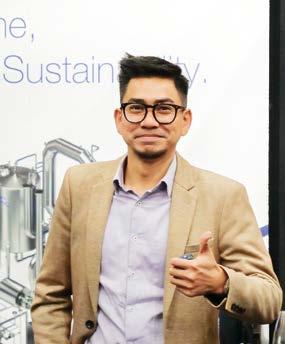
Asyraf Zamzam is the Sales Manager for Alfa Laval Oceania.
Images: Alfa Laval








Ozwater’26
Building smart sewers
How next-generation sewer-level monitoring is helping utilities move from reactive to predictive control.
SEWAGE OVERFLOWS CAUSE
considerable harm yet are largely preventable. They can negatively impact communities, damage the environment and trigger regulatory action. While potable water systems have benefited from decades of investment and innovation, sewer systems remain more challenging to manage. That lack of visibility across a sewer network creates di culties for operators trying to manage risk, prevent overflows and plan future upgrades.
Although sewer monitoring technologies have improved over time, practical limitations persist, particularly in challenging environments where obstructions and variable conditions a ect performance.
Advancing sewer level monitoring
Level Lotic represents a step change in sewer-level monitoring built on more than a decade of research and real-world testing across live sewer networks. Designed by South East Water in collaboration with its operators and partner utilities and delivered through Iota, Level Lotic reflects a deliberate shift toward a more accurate, scalable and practical monitoring solution.
At the core of this shift is more precise and reliable measurement data and alarms. Daniel Sullivan, Chief Executive O cer at Iota, said precision is critical to building trust in sewer-monitoring data.
“Our patented optical lens design enables precision-grade level measurement accuracy of 0.05 per cent across a 10-metre range.”
This accuracy is supported by proprietary signal-processing algorithms that filter out noise and
improve reliability and a highly focused 8° beam, which allows the device to accurately target the water surface while avoiding obstructions such as the ladder or table, delivering more stable and reliable data.
Built for real-world sewer environments
Obstructions, humidity and gases can interfere with traditional sensing technologies, distort readings and degrade equipment over time. Connectivity can also be an issue with concrete or steel lids limiting signal strength and often requiring external antennas – adding to cost, installation and additional points of failure and management.
Level Lotic has been engineered to operate reliably under these challenging conditions. Its antenna has been optimised to operate e ectively in low-signal areas without external components, reducing installation complexity and improving long-term reliability. The device is fully sealed and potted, addressing issues such as water ingress, condensation and corrosion that have historically a ected sensor reliability.
Power
and performance
Battery performance has been a critical focus in the design of Level Lotic. Until now, higher reporting frequencies have impacted battery life, forcing operators to trade o battery life against data insights. Level Lotic has been designed for extremely low power consumption and can operate for more than 10 years even when transmitting data at higher frequencies. This decoupling of data frequency from
battery longevity enables true setand-forget sewer-level monitoring.
Level Lotic gives utilities the confidence to respond dynamically to changing network conditions without compromising device lifespan, resulting in fewer site visits and reduced OPEX over the life of the deployment. This significantly strengthens the business case for sewer-level monitoring at scale.
Developed with operators
Level Lotic has been shaped by customer-driven innovation: designed by operators for operators. Its use of open standards allows data to be integrated into whatever system a customer chooses, and the device does not require a subscription to a proprietary portal or platform sold by the device vendor, giving organisations greater flexibility and control over their data.
Level Lotic can typically be installed in a manhole in less than 30 minutes and commissioning is through an intuitive phone app. A robust custom bracket provides easy
Daniel Sullivan is the Chief Executive O cer of Iota. Images: Iota
removal and perfect realignment without recommissioning.
From reactive response to predictive insight
For utilities, the value of sewerlevel monitoring lies in the ability to shift from reactive to predictive operations.
Sullivan said that accurate, reliable data enables operators to anticipate issues before they escalate.
“Having visibility of the levels in the manholes with real-time alarms allows operators to better predict when a surcharge is going to happen in the network,” he said. “If you’re able to get measurements to the level of accuracy we believe we’ve achieved, that data becomes valuable not just for surcharge detection but for modelling and planning as well. When combined with traditional approaches, it can inform asset management plans and reduce capital expenditure.”
Sullivan believes this broader application is where sewer monitoring technology will deliver significant long-term value.
“Sewer networks have traditionally not had the same focus as potable networks,” he said. “Being able to visualise and understand what’s
happening in a sewer network gives operators far better insight to plan and manage the network.”
The future of sewer monitoring
The introduction of NB-IoT across the water sector has shifted the focus from connectivity - the role of the telecommunications industry - to harnessing the incredible innovation in sensor technology present in other sectors, such as automotive and industrial automation. It has also enabled a greater emphasis on battery performance, which is essential for the water industry, with most of its network underground and unconnected to mains power.
The adoption of sewer level monitoring is only expected to expand, playing an increasingly important role in proactive network management, operational e ciency and risk reduction.
The ability to deploy sewer sensors at scale, combined with high-frequency data transmission, opens the door to more advanced modelling and predictive analytics. Over time, this could enable utilities to anticipate network behaviour based on weather patterns, demand changes and asset condition.
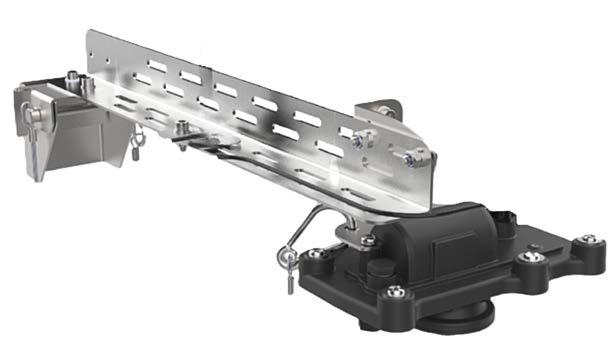
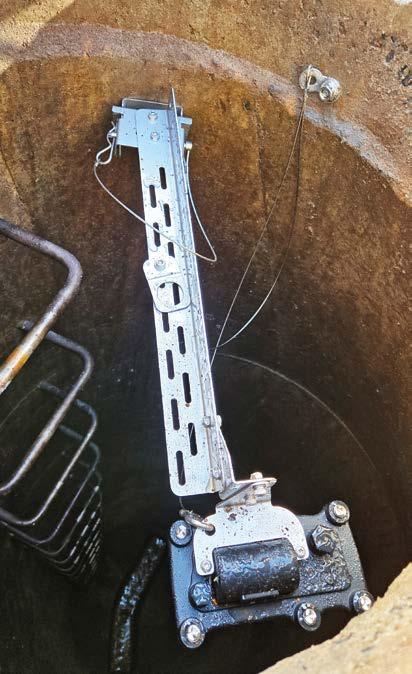
Level Lotic deployed in a live sewer environment, delivering accurate, real-time level data under challenging conditions.
Sullivan said the key is building confidence in the data.
“You need operators to trust the data, and accuracy and reliability are critical,” he said.
With that foundation in place, utilities can begin to explore new use cases, from trade waste monitoring to infiltration detection and broader system optimisation.
Following significant field testing, Level Lotic is now entering the market, with several utilities already evaluating the productionready solution in live networks, and additional opportunities are available for other utilities to assess it for their smart sewer deployment.
“Several utilities are already assessing Level Lotic, and we’re now opening the door for others to see what next-generation sewer monitoring can deliver,” Sullivan said.
Level Lotic: next-generation sewer-level monitoring designed for accuracy, reliability, and long-term deployment.
Those attending OzWater will have the opportunity to see the technology first-hand and talk to the Iota team about how it can be applied within their own networks.
For more information, visit iotaservices.com.au
Better water data
Digital platforms are helping Australian councils move beyond spreadsheets and paper forms to improve the accuracy of water data and compliance reporting.
ACROSS REGIONAL
AND smaller metropolitan councils in Australia, water utilities face a persistent challenge: operational and compliance data is still often collected through manual processes never designed for modern reporting requirements.
Paper forms remain common in treatment plants and field operations. Operators record measurements by hand before manually entering the information into spreadsheets for storage, analysis, or regulatory reporting.
While familiar, this approach introduces several points where errors can occur. Handwriting may be misread, forms can be misplaced, and simple typing mistakes can alter critical values.
Individually, these errors may seem minor, but over time, they can a ect operational decisions and compliance reporting. At the same time, spreadsheets present structural limitations for utilities managing growing volumes of operational data. Without a clear audit trail, it can be di cult to trace when a value was changed or why it was changed.
Large datasets can slow systems down, while monthly reporting cycles often require sta to manually pull data from multiple sources (i.e. SCADA, Lab PDFs, field log books) and cross-check results that fall outside acceptable ranges.
For many councils, the process consumes valuable time while limiting the visibility operators and managers have over their own systems.
Digital data management platforms such as Lutra ID are helping utilities address these challenges by bringing
data collection, validation and reporting into a single environment. Lutra ID combines automated and manual data capture through a suite of integrated tools.
ID’s various modules can collect information directly from SCADA systems, connected instruments, laboratories and IoT devices.
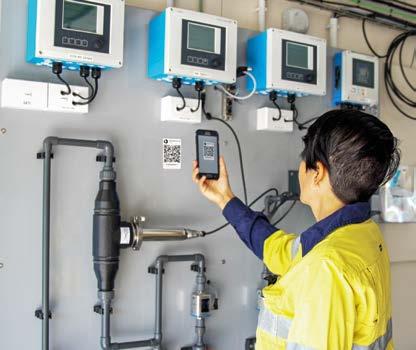
At the same time, the Forms App allows operators to record readings, inspections, and calibrations directly from a mobile device in the field, removing the need for manual spreadsheet entries, whilst also validating data in the field before submission.
By centralising these inputs, ID reduces the number of manual data transfers, improving data integrity, whilst also providing an audit trail. Built-in dashboards and reporting tools allow utilities to visualise operational performance (i.e. chemical consumption, energy usage), and automatically generate compliance reports aligned with state and federal requirements.
Lutra’s Lutra ID removes the need for paper by replacing them with digital field forms. Image: Lutra
For Central Tablelands Water in New South Wales, the system has already transformed how operational information is captured and used.
“The Forms app has made our data collection much easier and more reliable than our old paper forms,” said Lynette Safranek, Executive Manager Corporate Services at Central Tablelands Water.
“Our water operators use this for daily test results, and FASS data collection, and our water network teams use them to gather data. It is great because all data goes straight into ID. Our lab and SCADA data also get pulled into ID, too.”
Safranek said the system’s dashboards have also improved visibility across treatment operations.
“We use the data in dashboards to monitor our treatment plants’ performance and for alarms. One of the most useful dashboards is for Critical Control Point monitoring.”
Singleton Council has seen similar benefits as it transitions away from manual processes.
“Lutra ID has changed the way we manage our data. All our lab and SCADA data is now automatically collected and uploaded to ID. Our paper forms are being replaced with the app,” said Alex McKeowen, Compliance O cer – Water and Sewer at Singleton Council.
“We have dashboards set up to monitor things like our fluoride dosing and even our chemical usage. We are also working towards getting our EPA compliance monitoring onto the system.”
As compliance expectations grow and utilities manage increasing volumes of operational data, digital platforms are helping councils improve confidence in their data while reducing administrative workload.
For more information, visit lutra.com.au
From placing pipes to policy
Stephen Slessor’s journey from site labourer to industry leader reflects a career shaped by engineering, collaboration and a commitment to strengthening the global water sector.
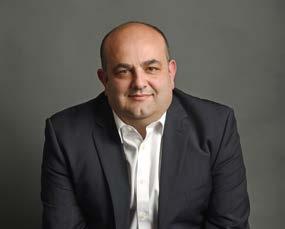
STEPHEN SLESSOR HAS taken an unconventional path to becoming one of the water sector’s most recognisable industry advocates. Today, he serves as Chair of British Water and CEO of RSE, but his journey into the sector began far from boardrooms and policy discussions.
Before entering engineering, Slessor worked across a range of roles including hospitality, media and retail. His entry point into infrastructure was practical and hands-on, starting on construction sites, laying pipes, before gradually moving into commercial and operational roles.
“I ran pubs, I was a DJ, I had a radio show, and even sold mobile phones before I ended up in construction,” Slessor said. “My first role in the sector was basically laying pipes.”
Working on site exposed him to the realities of infrastructure delivery early in his career. After securing a trainee quantity surveyor role, he studied while working and later progressed into major project delivery and leadership roles.
That experience shaped how he approaches the industry today. Having worked across project management, commercial and operational functions, Slessor eventually rose to lead major infrastructure programmes before joining the RSE Group during a period of rapid growth.
Why modular water infrastructure is gaining traction
At RSE, Slessor helps guide a company that has rapidly expanded across the water technology sector.
The business specialises in integrated solutions spanning treatment technologies, automation, chemical and biological processes and asset management.
“We’ve grown into one of the UK’s most comprehensive water and wastewater technology businesses,” Slessor said. “What we’re really good at is integrating systems. We make our own technology, but we also integrate others so we can design solutions around the outcomes clients actually need.”
A defining feature of RSE’s approach is its focus on modular water and wastewater treatment systems.
Traditional infrastructure projects often require long design and construction timelines. Modular systems shift much of that work into controlled factory environments before the equipment is transported to site.
“The core problem in many capital projects is speed and certainty,” Slessor said. “Utilities and councils are under growing pressure from regulatory deadlines, population growth and climate change.
“Modular prefabricated treatment fundamentally changes how quickly infrastructure can be delivered.”
Factory-built treatment systems can be installed and expanded faster than conventional plants. They also allow utilities to scale capacity as demand grows rather than committing to large upfront investments.
That flexibility is particularly useful for regions experiencing rapid population change or serving geographically dispersed communities.
Linking industry and policy through British Water Alongside his role at RSE, Slessor also serves as Chair of British Water, the UK trade association representing the water supply chain.
The organisation connects technology providers, consultants, contractors, utilities and regulators to strengthen collaboration across the sector.
“British Water represents the businesses that supply, innovate and deliver across the water industry,” Slessor said. “We work closely with government and regulators to ensure the supply chain has a voice in the decisions that shape the sector.”
For Slessor, the dual role provides a valuable perspective. Leading a commercial business keeps him grounded in project delivery, while British Water o ers a broader view across policy, technology and market development.
That perspective will also shape his upcoming presentations at Ozwater’26, where he plans to share insights from the UK while learning from Australia’s own infrastructure challenges.
“I’m really coming to Ozwater to learn as much as share,” Slessor said. “The challenges facing the water sector are global, and collaboration across countries will be increasingly important in how we solve them.”
For more information, visit rsewater.com
Stephen Slessor is the chair of British Water and the CEO of RSE. Images: RSE Group
Powering through with air solutions
Reliable air and power systems are essential for modern water treatment. CAPS Australia is helping utilities match global technology with local operating conditions.
ACROSS AUSTRALIA’S
WATER and wastewater sector, reliable infrastructure is essential to keeping treatment plants and networks operating safely and e ciently. From aeration systems in wastewater plants to compressed air for maintenance and process control, the movement and management of air play a central role in treatment performance.
For utilities, the challenge is not simply installing equipment but ensuring systems are designed to match local operating conditions. Climate extremes, remote infrastructure, and the need for continuous operation mean reliability and support are as important as the technology itself.
CAPS Australia has built its reputation around solving these challenges.
Founded in Western Australia in 1980 and part of the global Ingersoll Rand group since 2024, the company provides compressed air, blower, power generation and gas generation solutions across industries including mining, manufacturing and utilities. With 10 branches nationwide and a network of service technicians, the company focuses on delivering
engineered solutions supported by local expertise.
Paul Goodwin, Operations Director at CAPS Australia, said water utilities are increasingly looking for partners who can deliver both equipment and the engineering knowledge needed to apply it e ectively.
“Water and wastewater operations rely heavily on air movement, whether that is blowers supporting biological treatment processes or compressed air used across maintenance and operational tasks,” Goodwin said.
“The most important thing we provide is not just equipment, but solutions that are engineered to suit the operating environment and supported locally.”
Blowers and compressed-air systems are fundamental to wastewater treatment processes, particularly in aeration systems, where oxygen is required to sustain biological treatment. A reliable air supply helps maintain process stability, optimise energy use, and ensure that treatment plants meet regulatory standards.
CAPS works with utilities and industrial clients to configure systems that suit their specific
operational requirements. Drawing on a global network of technology partners, the company integrates compressors, blowers, filtration equipment and control systems into tailored installations designed for Australian conditions.
“Many of the technologies we work with are developed globally, but they still need to be engineered to perform in Australia’s operating environments,” Goodwin said.
“You can’t simply take equipment designed for milder climates and expect it to operate reliably in remote locations or extreme temperatures. Our role is to adapt and engineer those solutions, so they perform where our customers need them.”
The company’s capabilities also extend to nitrogen generation systems, which are used across a range of industrial and infrastructure applications.
While more commonly associated with mining and manufacturing, nitrogen generation can also support safety and operational processes that require controlled atmospheres.
For utilities managing complex treatment systems, reliability is the priority. Air systems must operate continuously to sustain biological processes, while compressed air is often required for plant maintenance and operational tasks across treatment facilities.
“Our customers are running critical infrastructure,” Goodwin said.
“They need equipment that performs reliably in Australian conditions, but they also need a partner who understands the application and can engineer the right solution around it.
“Our role is to bring together the right technologies and deliver a system that works for their operation.”
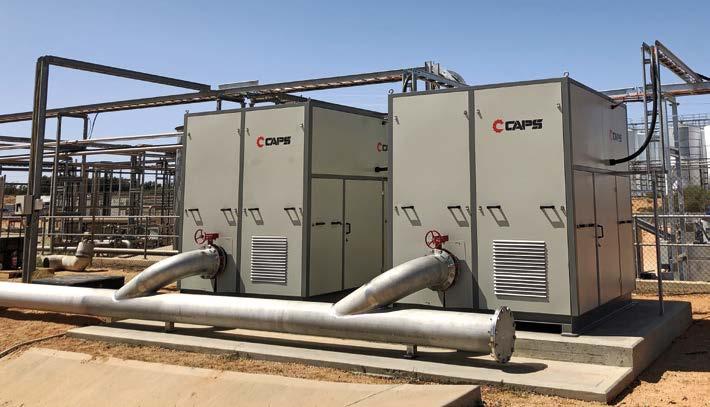
For more information, visit caps.com.au Industrial blowers are vital for water and wastewater treatment.
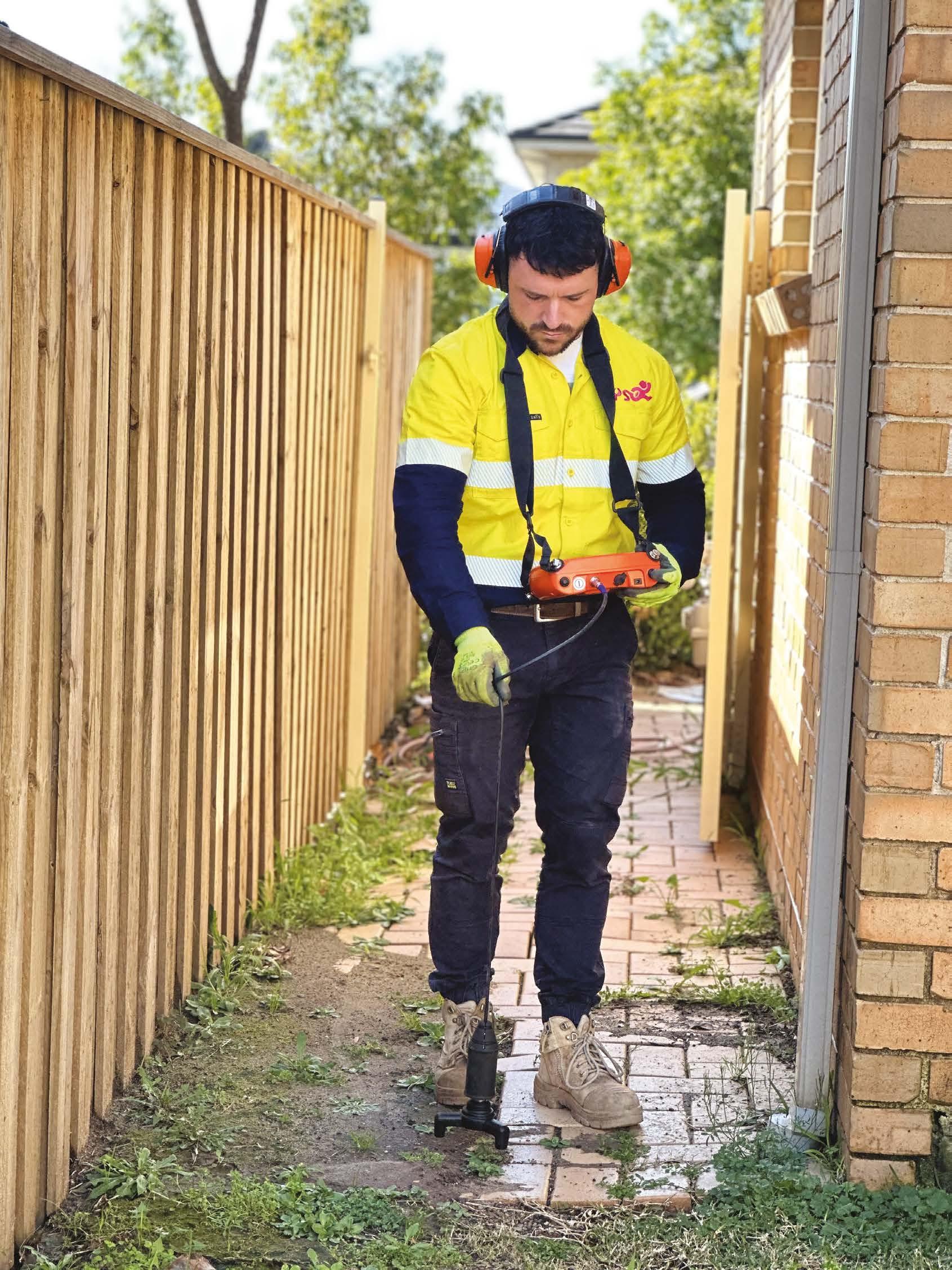
Discover our NRW capability: Scan to learn more

Smarter odour control
New approaches to activated carbon are helping utilities better manage sewage odours and hydrogen sulphide across their complex networks.
SEWAGE ODOUR IS more than a nuisance. It signals deeper chemical and operational challenges within wastewater networks.
Across pump stations, rising mains and treatment plants, hydrogen sulphide (H₂S), mercaptans and other volatile compounds form under anaerobic conditions. These gases are unpleasant, corrosive and, at elevated levels, hazardous to infrastructure and personnel.
Traditional approaches to odour control have relied on conventional activated carbon adsorption. While e ective in some applications, these systems often struggle to deliver consistent performance in high-load or high-humidity environments.
That is where newer Activated Carbon solutions, such as those developed by James Cumming through its VapourZorb range, are reshaping expectations for utilities seeking more reliable outcomes.
The chemistry behind sewage odours
The chemistry of sewage gas streams is inherently complex.
Standard adsorption processes have poor retention of lower-molecularweight compounds such as H₂S and light mercaptans. Instead, they require chemical reactions to convert them into stable, non-volatile forms.
James Cumming has focused its
VapourZorb range on this challenge, using chemisorption-based media that react with these compounds rather than relying on reversible adsorption. This approach creates permanent reaction products, improving reliability under variable loads and significantly reducing the risk of breakthrough during peak events.
The evolution of carbon media
Extruded activated carbon introduces a structural advantage.
Manufactured as uniform cylindrical pellets, it o ers lower pressure drop, improved airflow distribution and reduced channelling within vessels. This supports more consistent treatment and safer operation during maintenance.
James Cumming’s VapourZorb media leverages this format, combining mechanical strength with high surface area to support both adsorption and chemical reaction pathways.
Higher bulk density also increases working capacity per unit volume, extending the time between changeouts and reducing operational burden.
Matching carbon to network conditions
Not all odour problems are the same, and neither are the solutions.
James Cumming’s VapourZorb portfolio reflects this, o ering
Activated carbon is designed to support sewage odours and dangerous gases across our complex water networks.
Image: James Cumming

impregnated carbon options tailored to di erent wastewater environments and contaminant profiles.
Potassium iodide (KI) carbons suit municipal sewer environments with variable humidity. Copper oxide (CuO) carbons provide strong reactivity for industrial or mixed catchments.
Potassium hydroxide (KOH) media supports rapid conversion during high-load events.
Unimpregnated extruded carbons within the VapourZorb range continue to play a role in VOC polishing where adsorption is su cient.
Selecting the right carbon is no longer a simple procurement decision.
Utilities must consider humidity, contaminant profile and loading variability. A mismatch can lead to premature breakthrough and higher lifecycle costs.
James Cumming’s approach reflects a broader shift towards performancebased selection, where carbon is chosen for contaminant removal e ciency rather than upfront cost.
As wastewater networks become more complex, solutions that combine chemistry, structure and predictability, such as VapourZorb, will define the next generation of odour control systems.
For more information, visit jamescumming.com.au


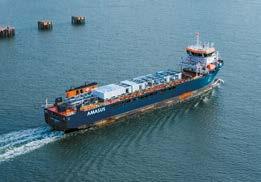
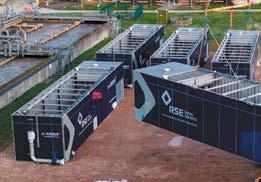



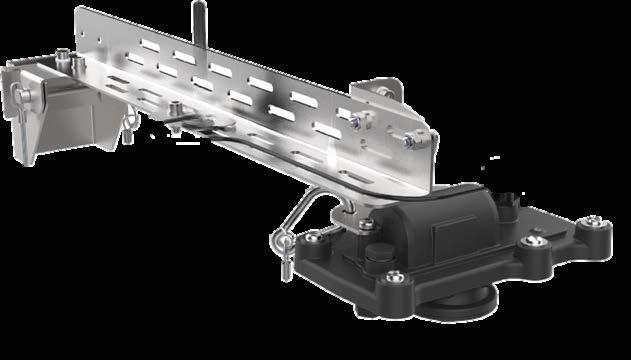
Prevent sewer spills with next-generation monitoring:
Precision measurement
0.05% level measurement
accuracy across 10 metres
Fewer false alarms focused 8-degree beam targets water while avoiding obstructions
10+ year battery life with high frequency data sends (no battery changes)
Reliable connectivity optimised antenna performs in low-signal areas (external antenna rarely required)
iotaservices.com.au
Measuring what matters in water e ciency
Water e ciency programs are shifting from awareness campaigns to data-driven infrastructure tools that deliver measurable savings for utilities and their customers.
TWO DECADES AGO, many water e ciency programs focused on participation. Utilities measured success by rebates issued, devices installed and workshops delivered.
Today, the conversation is very di erent.
Andrew Hinchli e, Head of E ciency Programs at New Plumbing Solutions (NPS), said water authorities now expect measurable outcomes that can withstand scrutiny from regulators, customers and internal stakeholders.
“We didn’t have the access to data 20 years ago that we have today,” Hinchli e said.
“What comes with that is the potential for auditable savings that we can put our hand on our heart about because telemetry and monitoring technology is so much better.”
The shift reflects broader changes in the water sector. Utilities must now justify demand management with the same rigour as major infrastructure projects..
For NPS, that means designing programs that link strategy with practical delivery.
What defines a modern water e ciency program?
Hinchli e says the starting point is understanding what problem the utility is trying to solve.
Reducing peak demand, managing community expectations or lowering operating costs may all influence how a program is designed.
“You need to understand the objective of the program first,” Hinchli e said. “Once you know that, you can determine what technology to deploy, how the savings will be measured and how the return on
investment will be demonstrated.”
Programs typically begin with detailed audits and site assessments.
NPS teams analyse assets, identify ine ciencies and estimate savings from interventions such as e cient fixtures, irrigation upgrades and rainwater reuse. Those recommendations are then translated into a clear business case for the utility or customer.
“We might say a particular initiative could save a million litres per year,” Hinchli e said.
“That might equate to several thousand dollars in water and sewer costs, and we can map out how long it will take for the investment to pay itself back.”
From strategy to delivery
One of the key di erences in NPS’s approach is its ability to implement programs at scale.
With technicians across the eastern seaboard, the company can move from audit to retrofit without multiple contractors.
This integrated model allows NPS to track performance long after upgrades are completed.
“We can install the equipment, log the data and continue monitoring the site to verify the savings,” Hinchli e said.
“If we say a site might save a million litres a year, we can actually track whether that’s happening in near real time.”
Overcoming operational and behavioural barriers
Implementing water e ciency initiatives across large portfolios is rarely straightforward.
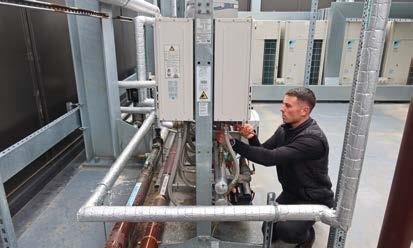
Tracking your water use and the e ciency of your system is critical for businesses of all shapes and sizes.
Image: New Plumbing Solutions (NPS)
Access constraints, unclear asset ownership and organisational silos can complicate delivery.
Behavioural factors also play a role.
“In many businesses, water is still seen as low cost and low risk compared with energy,” Hinchli e said.
“So, unless there’s a clear business case or a regulatory requirement, e ciency can slip down the list of priorities.”
That is why clear data and transparent reporting have become central to program success. Hinchli e said visibility of savings drives prioritisation and long-term adoption.
E ciency as a supply solution
Looking ahead, Hinchli e believes e ciency will play a larger role in water planning as population growth and climate variability increase pressure on infrastructure.
Real-time monitoring, digital platforms and performance-based contracts are likely to become standard features of future programs.
Well-designed e ciency initiatives, he said, should be seen as part of the supply equation rather than a temporary conservation measure.
“E ciency programs, if executed well, are almost like creating new water,” Hinchli e said. “It’s water that utilities don’t have to pump, treat or transport because it’s no longer being wasted.”
For more information, visit newplumbing.com.au
Field mobility for water utilities
As smart water metering programs scale up, utilities are looking for digital tools that simplify data capture, improve compliance reporting, and help technicians work more safely and e ciently.
ACROSS AUSTRALIA, WATER utilities are managing ever-growing volumes of fieldwork as networks expand, infrastructure ages and fails more frequently, and programs such as smart metering begin to scale.
In this environment, the ability to capture accurate field data is essential. Utilities are turning to digital field mobility platforms to help technicians perform the required work safely and e ciently.
These field mobility platforms are designed for and with the user front of mind, matching the workflow to how the job is actually executed on site. The focus is on capturing the required information with minimal technician input, minimising the number of steps they need to complete to reduce time spent on site, and ensuring safety is always front of mind.
This is the context in which PLUS ES and Retriever Communications developed the FieldXchange digital field mobility platform. Included as part of the PLUS ES end-to-end metering as a service o ering, it has supported technicians in installing over 300,000 smart meters in the past year alone. FieldXchange is playing a key role in ensuring that all meter replacements are completed to the required standards, avoiding follow-up work and ensuring they perform as expected over the contract period, which is typically at least 10 years.
“FieldXchange demonstrates the impact of designing technology around real field conditions,” said Rob Amphlett Lewis, Group Executive for Distribution Services at PLUS ES. “By combining
technician-driven insight with trusted technology partners, we are scaling our operations safely, e ciently and with confidence.”
The basic premise of FieldXchange can be applied to virtually any other form of network asset a water utility may have. It works in online mode (when the technician has cellular connectivity) and o ine mode, syncing data in near real time and providing both utilities and their end customers with visibility into work progress.
The field mobility platform is designed to connect field technicians directly to operational systems securely, ensuring that utility and customer information is never compromised or stored longer than necessary. Photographs and associated metadata are captured directly from the mobile device –using QR and barcode scanning to minimise the potential for input errors.
Continuous feedback from field crews has shaped the platform’s development.
“The app captures all required field work information and can be used for meter installation, maintenance, or fault works,” said Frank Sama, PLUS ES Retriever Platform Lead and Product Owner. “The application is streamlined and user-friendly. It follows a logical workflow based on the most e cient way to complete the job, built up over time based on user feedback.”
Retriever Communications worked closely with PLUS ES technicians and service providers during the design process to ensure the application reflects real-world conditions.
The FieldXchange app provides an outstanding method for capturing accurate field data.
Image: PLUS ES
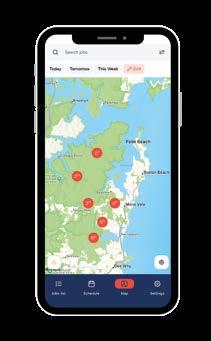
“We built an application dedicated to PLUS ES,” said Steve Schultz, Operations Director at Retriever Communications. “With technicians installing hundreds of thousands of meters each year, we wanted to support that scale while making the system intuitive for field users.”
One feature that has proven invaluable is the map-based scheduling tool. Technicians can view assigned jobs geographically and optimise their travel time. For water utilities managing dispersed infrastructure, this capability can reduce cost and improve responsiveness.
Safety has also been built directly into the workflow. Mandatory site checks must be completed before work begins, helping ensure technicians follow required procedures regardless of workload pressures.
“Technicians are often working in dangerous environments where they could be exposed to life-threatening hazards,” Schultz said. “The app guides them through controls and required safety questions before a job starts, helping reduce risk in the field.”
A field mobility platform like FieldXchange can help utilities optimise their workflows, reduce costs, improve data quality, and, most importantly, support safer field practices.
For more information, visit pluses.com.au

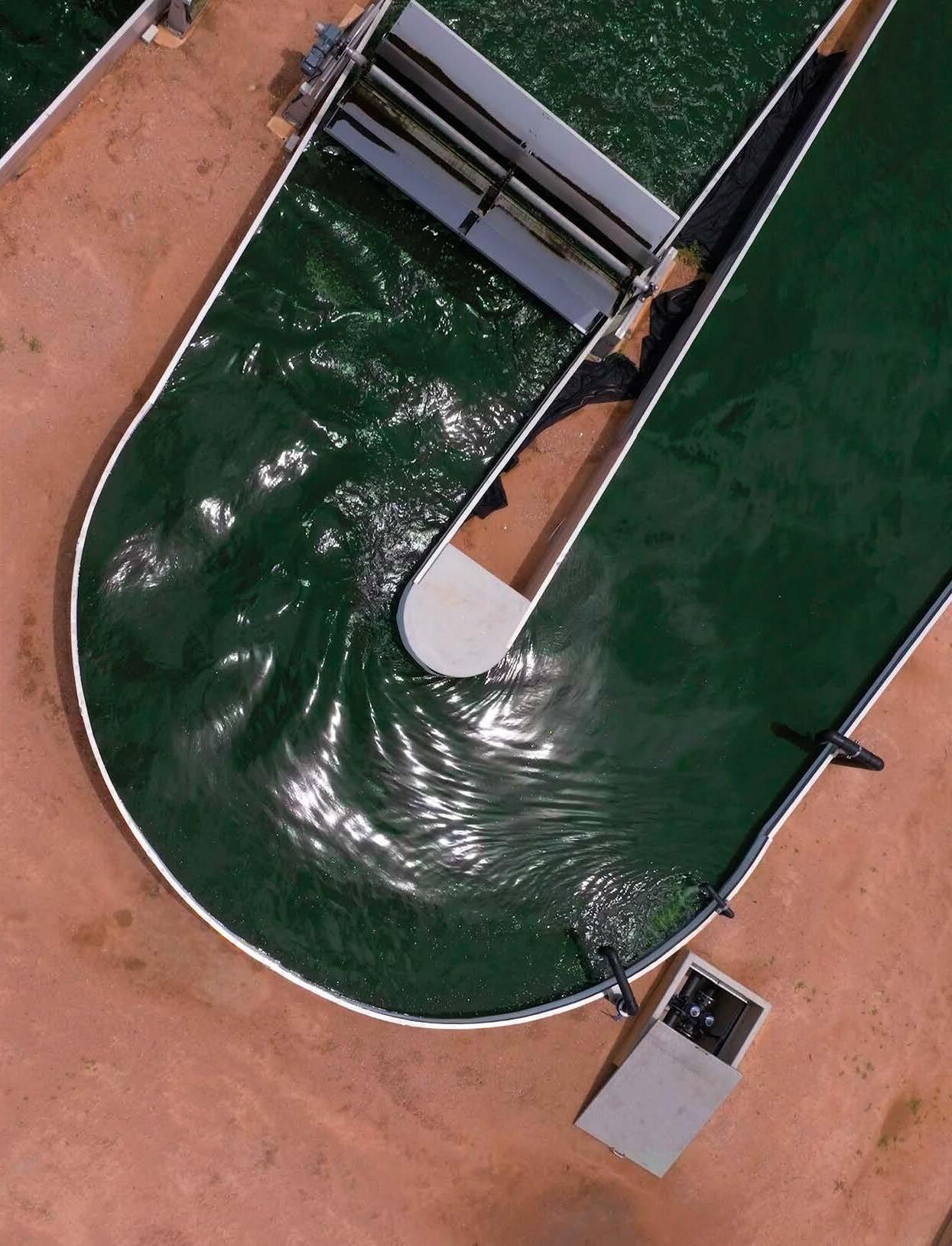

Seeing the sewer network
As wastewater networks age and operational pressures increase, digital monitoring and artificial intelligence are providing utilities with the visibility needed to shift from reactive responses to proactive management.
ACROSS AUSTRALIA AND New Zealand, water utilities are under increasing pressure to manage ageing sewer networks while meeting rising expectations around environmental protection, compliance and service reliability. Population growth, urban expansion and more intense rainfall events are adding complexity to systems that were often designed decades ago.
At the same time, utilities are facing workforce constraints and operational demands that leave little room for ine ciency. Many organisations are now exploring digital monitoring and machine-learning analytics to better understand how their networks behave and respond, before small issues escalate into major incidents.
According to StormHarvester Regional Director Gus Thiele, one of the biggest challenges utilities face is simply visibility across their wastewater systems. With 13 partners across the Australia-New Zealand region, more water authorities and local governments are looking to these projects to advance their smart sewer initiatives.
“I think what it highlights more than anything is the need for information, e ectively data,” Thiele said. “Until you’ve started the process of turning the lights on and having eyes out in your network, it’s very di cult to come up with a plan of action that will materially improve that network.”
It’s all well and good to put sensors in the ground. Still, without the analytics to process data streams and convert them into usable insights, utilities can struggle with data overload and a lack of practical actions.
“Many of our customers have over 20,000 sensors installed in their networks and receive less than 20 alerts a day,” Thiele said. “Our machine learning algorithms represent the key di erence between hundreds of alerts on a rainy day and truly actionable insights.”
From reactive to proactive Digital monitoring and predictive analytics are now o ering a di erent approach.
StormHarvester’s platform uses machine learning models to understand how individual assets in the wastewater network normally behave. Once that baseline is established, the system can detect subtle changes that may indicate an issue developing.
“We create a normal operating envelope for each asset,” Thiele said. “That means we can alert utilities when something isn’t behaving as it usually does, even if the level or flow is still well below any traditional alarm threshold.”
This capability is helping utilities shift from reactive maintenance to condition-based management. Instead of responding to spills or blockages after they occur, operational teams can monitor early warning signs and plan interventions before incidents develop.
“I suppose what you end up with is a team that’s looking for opportunities to be proactive rather than reacting to a problem once it’s already happened,” Thiele said.
Greater visibility across the network also supports better asset planning and investment decisions. With more
The annual user conference is an important part of StormHarvester’s commitment to its customers and clients.
detailed insight into how flows move through the system, utilities can identify where inflow or infiltration is entering the network and where capacity pressures are emerging.
Strengthening compliance and resilience
Better network intelligence is also becoming increasingly important as regulators expect utilities to demonstrate stronger oversight of wastewater systems and environmental risks.
With more detailed operational data available, utilities can show that they are actively monitoring network conditions and responding to emerging issues before they escalate.
“Demonstrating compliance and showing that you’re on top of issues is very di cult without that level of information,” Thiele said.
Looking ahead, digital monitoring technologies are expected to play an increasingly important role in wastewater management as communication networks improve and monitoring devices become more accessible.
However, Thiele emphasised the goal is not to install sensors everywhere but to place monitoring in the areas where it delivers the greatest operational value.
“The business case for monitoring in the sewer network is only getting stronger.”
For more information, visit stormharvester.com
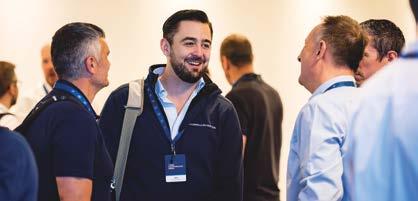
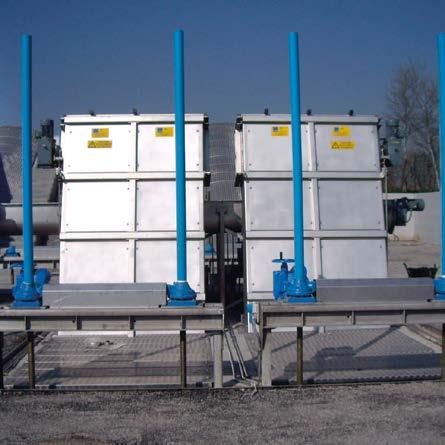

Images: StormHarvester
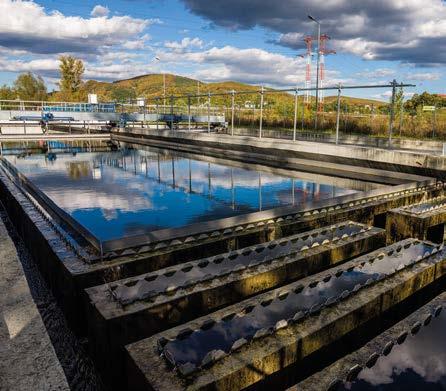
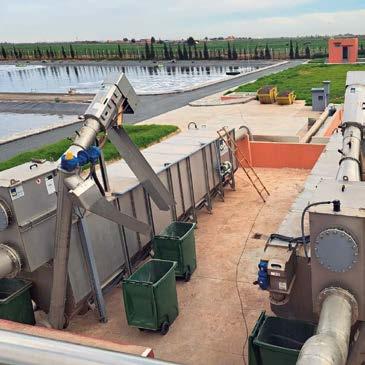
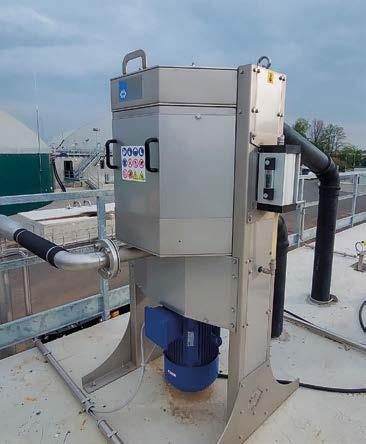
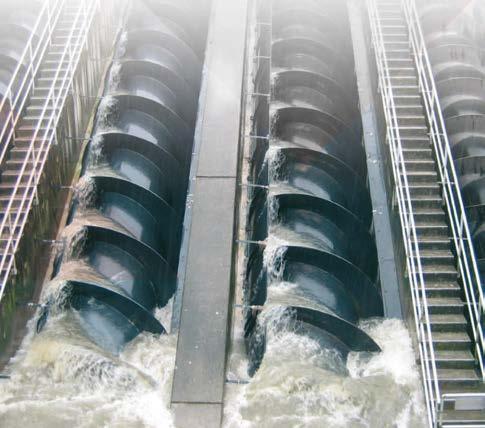
Cybersecurity resilience: from reactive to reliable
As cyber threats become commonplace, APS Industrial and Siemens are helping utilities strengthen cybersecurity resilience across Australia’s water infrastructure.
THE MODERN WATER utility is no longer a closed system.
It is connected, distributed and increasingly exposed as utilities expand their use of remote telemetry, automation and digital control systems. The question is no longer whether cybersecurity matters, but how quickly operators can adapt to a threat landscape that changes as rapidly as the technology itself.
For APS Industrial, that shift is already well underway.
“Through our distribution partnership with Siemens, APS Industrial brings a full water and wastewater solutions portfolio spanning control and automation through to connectivity and power,” said Steven Sischy, Automation and Drives Business Manager at APS Industrial. “Overlayed across that portfolio is integrated cybersecurity capability, and this is where our o ering really stands out.”
A layered approach to risk
The challenge for utilities is not simply keeping systems online. It ensures that every connection point is secure. Remote telemetry units (RTUs) are a prime example. They provide visibility and control, but they also introduce new vulnerabilities.
“A lot of utilities are deploying RTUs that connect directly into their networks,” Sischy said. “The question becomes how do you physically and digitally protect those devices so that a breach in one area doesn’t compromise the entire system.”
The answer lies in what Sischy defines as a defence-indepth strategy.
“If you think of it like a castle, you don’t rely on one wall,” he
said. “You’ve got multiple layers of protection, continuous monitoring and systems that can detect abnormal behaviour before it becomes a problem.”
It’s no di erent to a water or wastewater facility, where defencein-depth is aimed at simultaneous protection of all plant levels. This includes certificate-based access, two-factor authentication, network segmentation and continuous threat detection systems that flag irregular activity in real time.
The stakes are high for water utilities. A cyber breach is not just a data issue: it can quickly become an environmental or public health risk.
“We should not lose control of any facility at any stage,” Sischy said.
“That’s the expectation under critical infrastructure frameworks, and it’s the benchmark utilities need to work towards.”
From compliance to optimisation
While regulation is driving action, it is not the only factor shaping investment. There is growing recognition that cybersecurity, automation and operational performance are interconnected.
“What we’re seeing now is the convergence of IT and OT,” Sischy said. “Historically, they were separate. When we talk about remote systems now, cybersecurity sits right across both.”
That convergence is opening the door to broader optimisation. Through advanced SCADA systems, AI-driven analytics and process automation, utilities can move beyond protection and improve e ciency.
“We can look at processes like water
Resilient, datadriven water and wastewater operations.
Images: APS Industrial
treatment and start to optimise them,” he said. “Can we reduce chemical use, lower energy consumption, and still get a better outcome? That’s where the technology is heading.”
It is a shift from reactive management to proactive optimisation, with cybersecurity forming the foundation.
Securing the future of water infrastructure
The future of water infrastructure will be defined by connectivity. Population growth, climate pressures and resource constraints are pushing utilities to do more with less, while maintaining reliability and compliance. Cybersecurity resilience is now inseparable from broader utility resilience. It sits alongside physical asset reliability, water quality assurance and service continuity as a core operational requirement. A cybersecurity failure is no longer confined to data loss. It can interrupt treatment processes, disrupt supply or trigger environmental incidents. Resilience now means maintaining control under all conditions, including cyber events.
As digital systems become central to operations, cybersecurity resilience is becoming a defining measure of whether a utility can continue to operate safely and reliably.

In that environment, resilience becomes a strategic priority. APS Industrial is also working with utilities, end users, consultants and integrators to build awareness of what e ective cybersecurity looks like in practice.
“Our partnerships with global leading manufacturers like Siemens, Weidmüller and Rittal give us and, in turn, the local industry proven intelligence and cutting-edge technology and practice. We take great pride in our responsibility to educate stakeholders, from consultants through to operators, about what good looks like,”
Sischy said. “It’s not just about technology. It’s about making the right decisions and implementing the correct systems”.
That includes adopting global standards, investing in continuous monitoring and working with partners across the cybersecurity ecosystem.
“We can’t disconnect from the internet,” he said. “What we can do is put the right protections in place, monitor continuously and respond quickly when something isn’t right.”
APS Industrial’s role, working alongside Siemens, is to bring that expertise into the local market.
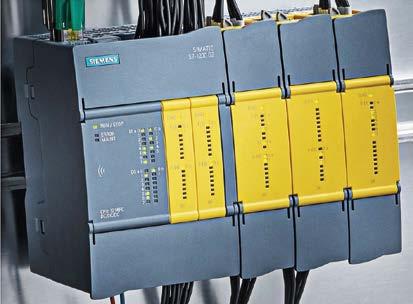
Siemens SIMATIC S71200 G2 o ers reliable control for demanding applications.
By combining hardware, software and advisory services, the focus is on ensuring utilities maintain control of their assets, no matter the conditions.
“If we’re delivering water, we need to know it’s getting to the right place, and that our systems are secure,”
Sischy said.
“That’s what resilience looks like in this sector.”
For more information, visit apsindustrial.com.au/ waterwastewater
Built for the long haul
SAVECO is strengthening its Australian footprint with local manufacturing, stocked spares and a wholeof-plant approach to screening and solids handling.
AS AUSTRALIAN UTILITIES push for longer asset life and tighter performance standards, SAVECO is positioning its screening and solids handling technologies as a wholeof-plant solution rather than a single point product.
For Bhrigu Sharma, Sales Manager at SAVECO, the story begins with integration.
SAVECO brings together two established companies within WAMGROUP, uniting Savi and Speco under a single wastewater treatment and solids handling portfolio.
“We consider ourselves as the best solution provider in the market, in terms of price positioning compared to other competitors in the market, and also in terms of quality, because we have a very strict quality policy, and we maintain the same quality wherever we manufacture in the world,” Sharma said.
That global manufacturing footprint, with more than 25 facilities, is paired with a growing local presence.
Two years ago, SAVECO began manufacturing in Dandenong South, Victoria, operating from an 8,000 square metre facility producing standardised screw conveyors for powders, biosolids and dewatered sludge applications.
Lead times
Lead times are a defining pressure point for Australian water utilities, with industry standards at 16 to 18 weeks.
“Local and regional manufacturing options provide flexibility while maintaining consistent quality,” Sharma said.
Inlet works and screening systems
are often overlooked until failure. Yet their performance has a cascading impact on downstream processes, maintenance cycles and operating expenditure.
SAVECO’s approach is to design around operator preference and the realities of the site’s geography.
Sharma explained that the company supplies step screens suited to standardised Australian channels, while also bridging into powdered chemical handling and conveying through its broader WAMGROUP portfolio.
That crossover allows utilities to source pre-treatment equipment, solids conveying and dosing equipment through a single supplier.
Local support is central
SAVECO maintains an o ce and a warehouse in Sydney and stocks approximately $5 million worth of equipment, including fast-moving and critical spare parts.
“Whatever screens that we install everywhere across Australia or New Zealand, we store recommended spare parts of those in stock,” Sharma said. “We can get some products to clients in under a week.”
Longevity is another selling point with many Australian specifications
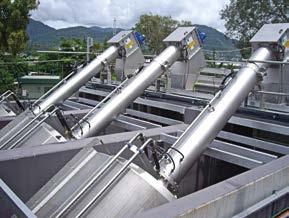
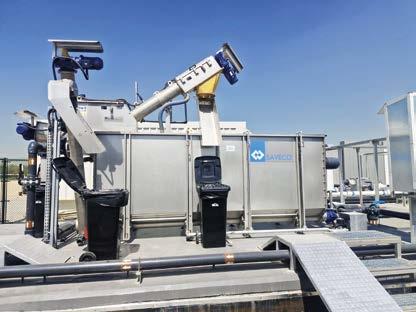
The screen, grit and grease removal packages from SAVECO can be customised and combined into a pre-packaged pre-treatment plant.
Images: WAM Group, SAVECO
requiring equipment to last at least 25 years.
He said some SAVECO screens installed three decades ago are still operating, with only routine wear components such as seals replaced periodically.
Shaping procurement
Sharma pointed to WAMGROUP’s annual sustainability reporting and its involvement in renewable and resource recovery sectors, including hydrodynamic screws for energy generation and equipment for biogas plants and solid-liquid separation technology.
Innovation is ongoing.
“We launch around eight products every year,” he said. “We currently have a portfolio of roughly 400 products across water, wastewater and powder handling.”
Recent additions include progressive cavity pumps for sludge and water applications, expanding SAVECO’s footprint within wastewater treatment plants.
Fine drum screens can help ensure end-users spend less unclogging pumps and focusing on preventative maintenance.
For utilities balancing cost, compliance and resilience, Sharma’s message is straightforward.
Screening and solids handling may sit at the front of the plant, but their influence extends far beyond the inlet channel.
For more information, visit saveco-water.com.au
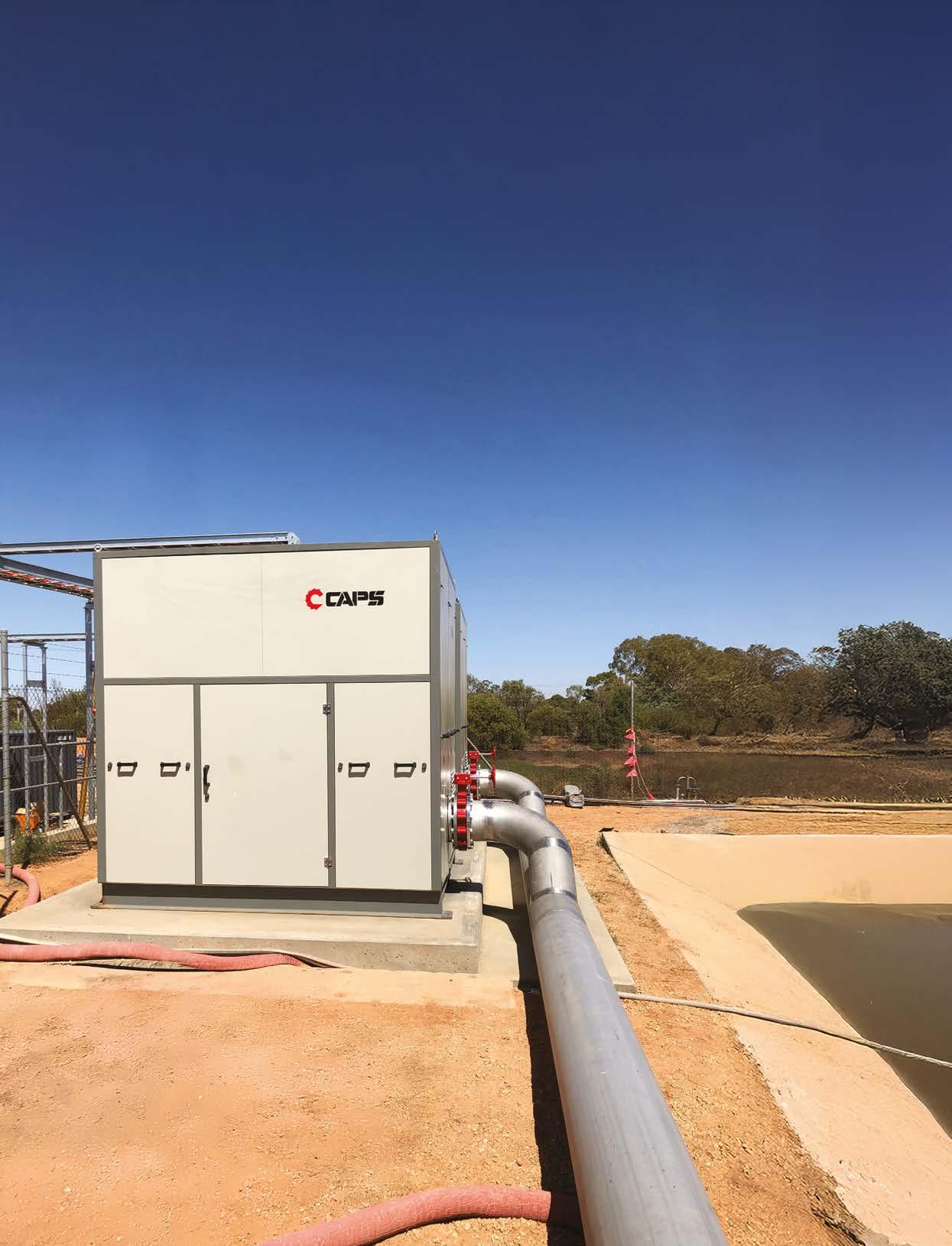

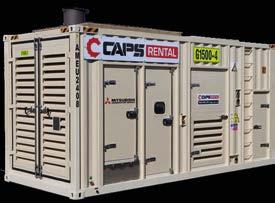

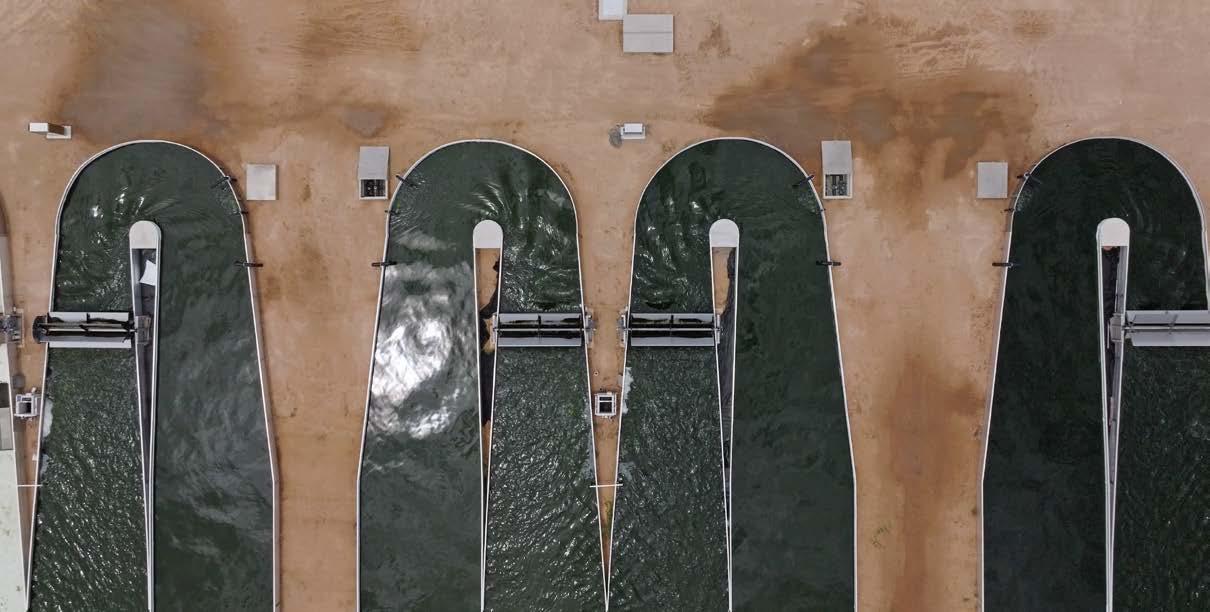
Reinventing wastewater treatment
RegenAqua removes nitrogen and phosphorus, meets strict discharge targets, produces reusable water, and captures CO2 proven at full-scale and long-term trials.
WASTEWATER TREATMENT HAS traditionally been treated as a cost required to meet discharge limits. That is changing. Utilities now need solutions that reduce nutrient loads, meet tighter limits and support water reuse without major upgrades.
RegenAqua is a practical tertiary wastewater treatment solution focused on consistent nitrogen and phosphorus removal, improved e uent quality and carbon capture. The system uses continuous flow macroalgal bioreactors following secondary treatment. Macroalgal systems can capture up to 30 tonnes of CO₂ per hectare per year, often exceeding land-based plants in terms of area. This positions RegenAqua as both a treatment solution and a carbon-capture pathway.
From nutrient removal to resource recovery
At Burdekin, RegenAqua operates a full-scale facility focused on nutrient load reduction for discharge into the Great Barrier Reef, one of Australia’s most sensitive receiving environments.
RegenAqua has also completed a multi-year trial with Sydney Water focused on concentration targets in the Nepean–Hawkesbury River system in Picton, NSW. Results show consistent reduction of nitrogen,
phosphorus and pathogens to low levels, including pathways toward 1 mg/L nitrogen for high-quality reuse. This ability to address both load reduction and polishing allows RegenAqua to be configured for di erent site needs.
The system integrates with existing plants and handles variable flows and real wastewater conditions. It can be delivered through DBOM or BOO models, reducing upfront capital and shifting performance risk.
As part of the treatment process, RegenAqua produces macroalgal biomass. Its highest-value application is as a biostimulant, rich in natural plant compounds that support crop growth and reduce reliance on synthetic fertilisers.
Pacific Bio has commercialised this product as PlantJuice, with over 500,000 litres sold to date and a 2.5 ML production facility under development in the Burdekin.
The global biostimulant market is growing at approximately 12–15 per cent Compound Annual Growth Rate (CAGR), reflecting strong demand for lower-impact agricultural inputs. The same biomass can also be used to produce low-carbon fuels, including biomethane through anaerobic digestion, and liquid fuels such as biocrude and bioethanol. These pathways are advancing with
How are you managing your wastewater treatment processes? RegenAqua can help.
Image: RegenAqua
research partners, linking wastewater treatment and energy production. Macroalgae present a strong alternative to traditional HEFA feedstocks, particularly where nonland-based inputs are preferred in the pursuit of SAF production.
There is also emerging potential for PFAS reduction. Early work suggests RegenAqua’s macroalgal system may help capture these contaminants. Combined with thermal processes such as pyrolysis, this approach provides a pathway to destroy PFAS while generating energy.
The primary value remains clear: reliable nutrient removal, improved water quality, and carbon capture. This supports compliance, reduces environmental impact, and enables water reuse. RegenAqua has demonstrated this in full-scale, longterm operating environments.
As requirements tighten, utilities and industry need solutions that are simple, flexible, and proven. RegenAqua provides a pathway to improve tertiary treatment performance while creating additional options for resource recovery. Wastewater treatment is moving beyond compliance. RegenAqua is designed to meet that shift.
For more information, visit regenaqua.com.au
After the smart meter rollout
Smart water metering promises better data and billing accuracy. But without structured maintenance programs, utilities risk losing the long-term value of their investment.
SMART WATER METERING has become a major investment priority for utilities across Australia. The promise is compelling: near-realtime consumption data, improved leak detection and more accurate billing. But as many water authorities are discovering, the value of smart metering does not end with installation. The real work begins once the meters are in the ground.
For Travis Joblin of Data Right, the success of a smart metering rollout depends on something less visible than the installation itself. Ongoing maintenance and structured data analysis determine whether the system continues delivering reliable information long after deployment.
“A successful rollout ensures the integrity of the smart metering fleet,” Travis said. “That includes things like making sure the correct meter numbers and readings are attached to the right properties and ensuring the GPS location of meters is accurate, particularly in rural areas where locating assets later can be di cult.”
These foundational details play an important role in how e ectively utilities can manage their networks over time. Once the system is
operational, the maintenance task shifts from installation crews to a combination of desktop analysis and targeted field investigations.
“Ongoing maintenance is driven by desktop data analysis to determine meters and automated meter readers (AMRs) that are potential issues,” he said. “Looking at zero or lowconsumption properties or locations where reception is low allows utilities to detect stopped meters, battery failures or environmental impacts a ecting communications.”
As smart metering networks mature, several recurring issues are emerging. According to Joblin, utilities commonly encounter faults in meters or communication devices, battery failures and occasional vandalism.
“The most common issues are meter and AMR faults,” Travis said. “Environmental surroundings can also reduce the quality of network communications, so utilities need to monitor network performance over time.”
Without consistent monitoring, these problems can quietly undermine the benefits of smart metering. Faulty meters can lead to inaccurate billing, increased estimated reads, and lost
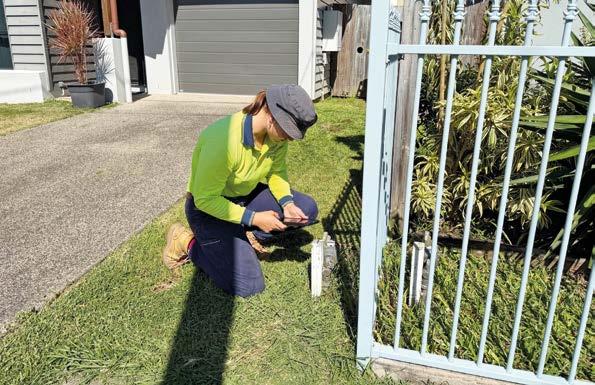

Planning a There’s a better way.
Many shutdowns are planned for the same reasons:
ISOLATION & SAFETY
Engage early to explore alternatives to traditional shutdown methods.
Engage early to explore alternatives to traditional shutdown methods.
Across Australia’s water networks, shutdowns are often treated as the default solution for critical works. However, modern live network technologies now allow many of these activities to be completed without interrupting supply.
Saltire challenges on live water networks. Through engineering expertise and specialised technologies such as and Live Water Mains Inspections, keeping water flowing - reducing community disruption, operational risk and project complexity.
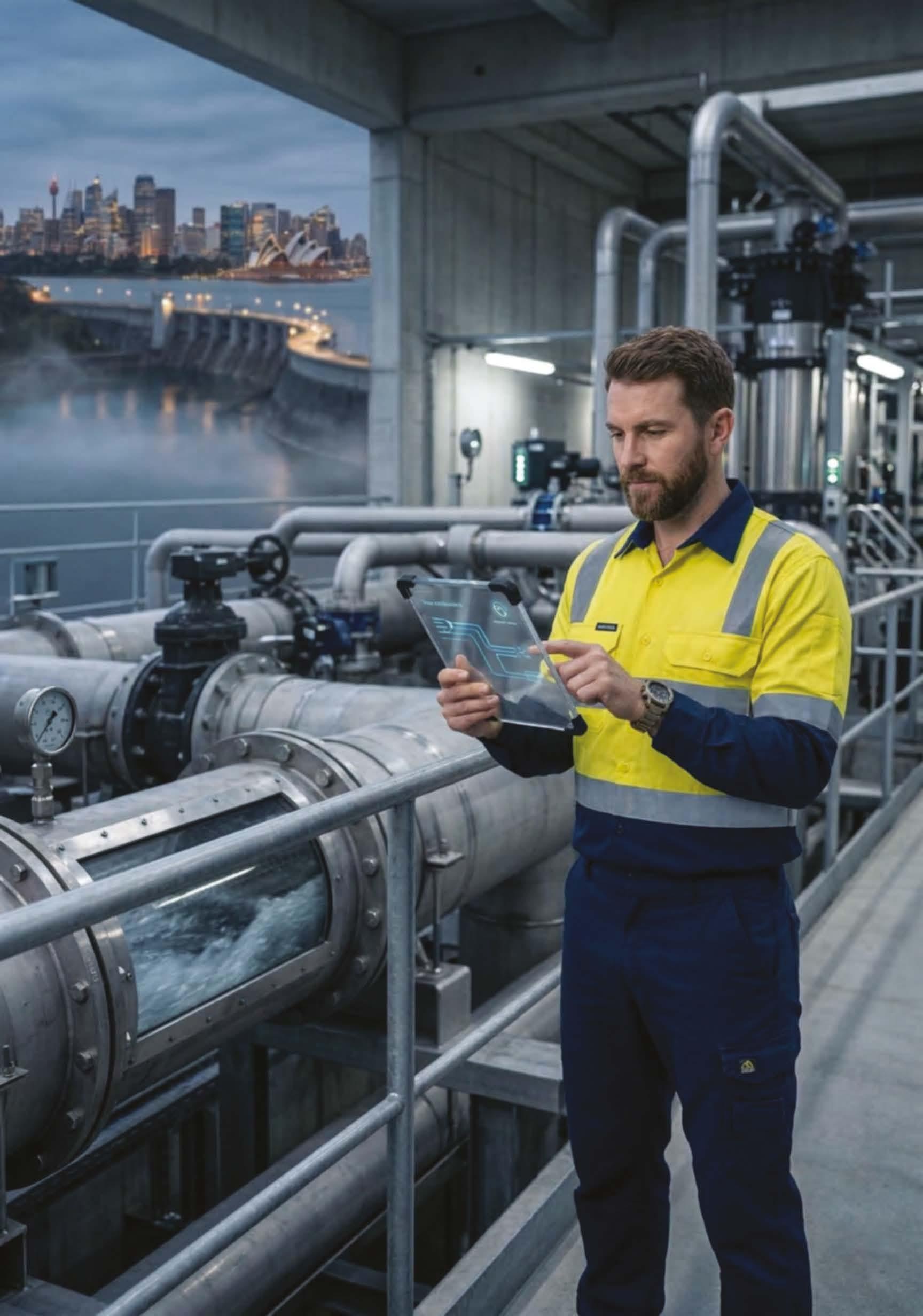

Data Right is Australia’s leading smart water meter installers. Specialising in:
• Installation roll out
• Project management
• Preproject evaluation, decision making and requirement audit
• Network maintenance and replacements
• Water meter reading
• Associated plumbing works Contact us on 1300163837 for a solution to your water meter requirements. headoffice@dataright.com.au www.dataright.com.au
Lagoon treatment evolution
New technologies are reshaping wastewater lagoon operations by increasing passive oxygenation and enabling real-time monitoring to improve sludge digestion and operational insight.
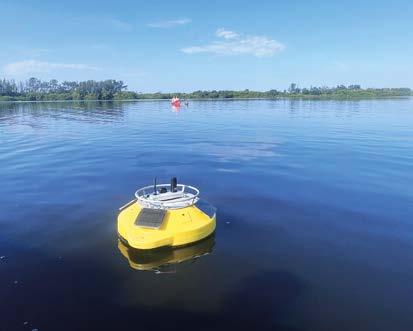
designed to increase the natural rate of gas exchange between water and the atmosphere. Durand explained that the device introduces a subtle change in the arrangement of water molecules in a body of water. This changes water properties, including viscosity and surface tension, thereby increasing the rate at which oxygen transfers across
“The device introduces a very slight change to the way water molecules sit next to each other,” Durand said. “The stimulus from the device only a ects the water molecules very close to the device, but that change then naturally cascades outward through the water body, much like a domino e ect, thus increasing the rate of gas exchange between the air above and the water
lagoon, using negligible power and “Dredging and disposing of sludge is expensive, so anything that reduces how often that needs to happen is valuable,” he said. “On top of this, if
and e cient.
Image: Thermo Fisher Scientifi c/ In-Situ
you can increase lagoon throughput or reduce energy and chemical costs at the same time, those benefits add up very quickly.”
Turning lagoon data into operational insight
Introducing new treatment technologies also requires confidence in the data behind them. Continuous monitoring is therefore becoming an important part of wastewater lagoon operation.
Durand said utilities are increasingly relying on measurable performance indicators.
“You don’t know what you don’t measure,” Durand said.
“Utilities are becoming far more data-driven in their decisions, particularly when they are introducing new technologies.”
Tara Matthews, Environmental Product Manager at Thermo Fisher Scientific, said real-time monitoring systems are changing how this data is collected and used.
“What the In-Situ Aqua TROLL and Vulink telemetry systems allow for is simplified real-time monitoring,” Matthews said. “Instead of relying on occasional grab samples that need to be taken back to a laboratory, customers have rich, continuous trending data viewable immediately through cloud-connected platforms.”
Sensors deployed in lagoons can transmit readings via cellular networks using telemetry devices such as VuLink, allowing operators to access the data remotely.
“With real-time data, utilities can link causes to e ects much more accurately,” Durand said. “That allows them to model how their lagoons operate and optimise their operation to be far more e cient and coste ective than in the past.”
For more information, visit thermofisher.com
Tracking the oxygen levels in water is key for keeping operations healthy
Protecting ageing assets with people
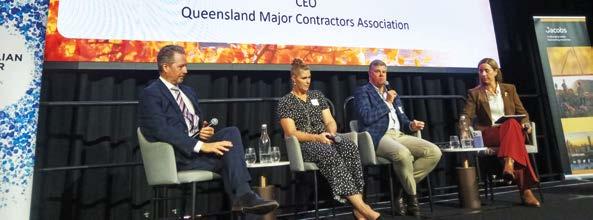
qldwater contends that protecting Australia’s ageing water assets requires a trade-equivalent apprenticeship to strengthen workforce capability.
ACROSS AUSTRALIA, WE talk a lot about ageing pipes, treatment plants and networks. But our workforce is another critical asset that is ageing at the same time. In regional and remote communities, operators don’t do a single narrow task.
On any given day, they manage drinking water treatment and wastewater compliance. They also run networks and respond to emergencies. The complexity, risk and accountability carried by these frontline professionals is growing. Our skills and recognition systems need to keep pace.
Queensland Water Directorate (qldwater)’s Water Skills Partnership Members and Manager Sarah Henry have made a national case for a water industry apprenticeship over the last 12 months. This structured, tradeequivalent pathway recognises the technical depth and safety profile of modern water operations. It gained support across the sector. It led to a joint statement to the Minister for Skills and Training signed by qldwater, the Water Industry Operations Association of Australia (WIOA), the NSW Water Directorate and Water Research Australia, calling for a feasibility study to rigorously test the model.
The momentum is real. Henry’s paper at AWA QWater’25 won Best Paper. At the AWA QLD Industry Breakfast in February 2026, she joined Deputy-Director-General Water Resource Management, Jarrod Cowley Grimmond, and Major Contractors Association CEO Andrew Chapman on the “Fix the Mix: People, Pipes and Possibilities” panel. Her message was clear: protecting ageing assets starts with protecting workforce capability.
Here’s the crux. Australia has no trade-equivalent apprenticeship pathway for water operations.
Australia’s national training package lists more than 150 units of competency for water operations. Most funded qualifications support only 11 of them. That gap matters.
Councils and utilities often pay for extra training themselves. The result? Councils and utilities frequently self-fund essential skills beyond the funded scope, even where those skills are critical for their communities and the environment.
If a competency is essential to safely operate drinking water and wastewater systems, it should never be treated as discretionary spend. Training investment is infrastructure protection: capability extends asset
Sarah Henry spoke at Connected by Water in Western Australia on the issues around skills shortages and the need for a structured water industry apprenticeship. Image:
life, good decisions prevent failures, experience reduces unnecessary capital expenditure, and workforce resilience is as important as asset condition.
There’s a practical blueprint to learn from. In a recent Pacific Water Knowledge Exchange webinar, Talei Ligairi, Head of Governance and HR at the Water Authority of Fiji (WAF) and Henry explored what works in the Pacific.
WAF uses three-party apprenticeship agreements between the utility, a training provider and the apprentice. Apprentices are paid for three years. They rotate through operational roles from day one. The authority also runs outreach programs and captures knowledge in its operating systems. It builds, professionalises and retains frontline capability at scale.
Back home, BuildSkills Australia has commenced a 10-year Water Sector Workforce Roadmap, but it has not yet committed to a water apprenticeship feasibility study. That’s the missing piece. The sector’s joint call is practical. Test the case using Jobs and Skills data, completions evidence and workforce input. Run national consultations. Assess RTO capacity. Map statebased recognition.
Agriculture has shown the way with a rigorous, evidence-based feasibility process. Water should be next.
Our ask of government is simple and urgent: commission and fund a national feasibility study into a water industry apprenticeship. This is not about replacing traineeships. It is about testing whether trade recognition better reflects the work operators already do.
Every week we wait, we lose people and knowledge. Fiji shows what’s possible when apprenticeships and knowledge systems pull together. Australia can adapt that success, if we dare to test it properly.
qldwater
We know compliance standards and regulations are highly dynamic and will continue to evolve as new environmental threats emerge. We also understand there is an ever increasing need to reduce the risk in our drinking and recreational water resources and increase operational efficiency.

What if the equipment and solutions supporting your work today was designed to meet tomorrow’s demanding needs?
At Thermo Fisher Scientific, we take a cutting-edge approach to your toughest water analysis and monitoring challenges. The result? Thinking forward and staying ahead of potential problems not only helps protect the investments you make today but also helps protect tomorrow’s environment. We partner with leading suppliers to provide the best workflow solutions.
Our range supports water sampling, water remediation, as well as an extensive analysis, monitoring and measurement featuring:
• Coliforms, algae, cyanobacteria
• pH, conductivity, dissolved oxygen, hardnes
• A-Z of chemical analysis; single to multi-parameter
• UV254, BOD, COD
• Flow, velocity, level, temperature
• Gases; NH₃, Cl₂, confined space entry, lone worker




Carbon credits, collectively
Victoria’s water sector is taking a unified approach to emissions reduction through ZEWCO, reshaping how carbon o sets are procured and delivered.
VICTORIA’S WATER SECTOR has taken a decisive step in its net zero journey with the establishment of Zero Emissions Water Carbon O sets (ZEWCO), a collective vehicle designed to procure carbon credits at scale.
For Shaun Cumming, Managing Director of Barwon Water and Chair of ZEWCO, the initiative reflects both regulatory necessity and sectorwide intent.
“ZEWCO is the entity that was established by the water sector to procure carbon credits on behalf of the water sector,” Cumming said.
The driver is clear. Water corporations must meet their Statement of Obligations to achieve net zero emissions. But Cumming said the motivation runs deeper than compliance.
“We’re at the coalface of the changing climate and experiencing reduced inflows and more extreme weather events,” he said.
The sector has already reduced emissions by around 50 per cent since its peak, largely through renewable energy adoption. What remains is harder to address.
“The remaining emissions are largely influenced by gases from wastewater treatment processes, and there aren’t large-scale viable technologies to eliminate those yet,” he said.
Strength in numbers
ZEWCO’s model is built on aggregation. Rather than individual utilities entering a developing carbon market alone, 15 Victorian water corporations are acting as a single buyer.
Cumming said this approach delivers both e ciency and resilience.
“By working as a collective, we maximise market engagement, optimise costs and develop a diversified portfolio of projects,” he said.
In practice, members nominate the volume of carbon credits they require. ZEWCO then goes to market, identifies suitable projects and procures credits on their behalf.
“ZEWCO develops a prospectus, engages the market through an open procurement process, and then collates those opportunities into a portfolio,” Cumming said.
The benefits extend beyond procurement mechanics. A shared approach allows the sector to build capability together and manage risk across a broader portfolio.
“It’s a developing area, so we can build knowledge collectively rather than individually,” he said.
ZEWCO also opens the door to co-benefits, including improved catchment health and deeper engagement with Traditional Owners.
From idea to action
The initiative has been four years in the making, led initially by VicWater before transitioning to an independent entity in January 2026.
Cumming credited VicWater’s role in aligning all 15 member organisations and navigating regulatory requirements.
“They did the work in engaging the sector, understanding the market, securing ACCC approval and establishing the governance foundations,” he said.
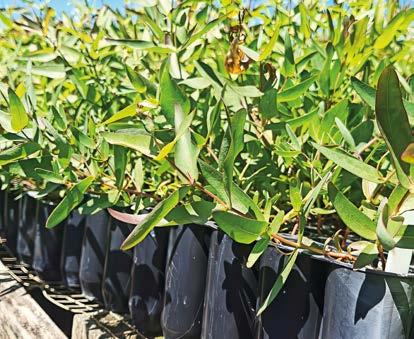
Today, ZEWCO is governed by a board drawn from member organisations and supported by a reference group of technical experts.
Image: ZEWCO
“Those directors are responsible for delivering on the members agreement and are informed by a reference group that supports knowledge development and market engagement,” Cumming said.
The fact that all 15 organisations have signed on signals a high level of alignment across the Victorian water sector.
“It shows we can work as a collective to deliver e ciencies and broader benefits, including environmental and First Nations outcomes,” he said.
Measuring impact
Looking ahead, Cumming said success will be measured first by delivery.
“The ultimate requirement is to deliver the carbon credits the sector needs, in the timeframes required to meet our obligations,” he said.
Beyond that, the ambition is broader. ZEWCO is expected to shape the carbon market while delivering tangible co-benefits.
“Success will include First Nations engagement and projects that enhance waterway and catchment health,” Cumming said.
Crucially, those projects will be local.
“There’ll be Victorian carbon credits, with a focus on environmental plantings and forestry,” he said.
For more information, visit vicwater.org.au and zew.org.au
Victorian carbon credits are a feature of the carbon credits acquired by ZEWCO.
The global stage for trenchless innovation
Bringing the latest trenchless advancements and industry knowledge to Auckland
New Zealand International Convention Centre, Auckland 28 – 29 October 2026
GET TICKETS


Hosted in partnership with


FOCUS Events

A night that matters
The Women in Industry Awards returns in 2026, o ering more than recognition. It creates a rare opportunity to connect, celebrate and support industry progress.
THERE IS A tendency to focus only on outcomes. Who wins, who misses out, and who makes the shortlist. The Women in Industry Awards challenges that idea.
Scheduled for June 18, 2026, at Doltone House Darling Island Wharf in Sydney, the event has evolved into something broader. It is not just about recognising individual achievement. It is about bringing together the people shaping industries that remain complex, technical and, in many cases, still male-dominated.
That distinction matters. The value of the evening is already clear. It lies in the room itself. The conversations, the connections and the shared understanding that progress is rarely driven by one person alone.
Molly Hancock, Head of Events Marketing at Prime Creative Media, said that the momentum behind the awards reflects a broader shift.
“It’s inspiring to see not only the depth of talent emerging, but also the strong momentum building as more individuals and organisations champion innovation and excellence,” Hancock said.
What can attendees expect from the 2026 awards night?
This year’s program signals growth in both scale and intent. The move to Sydney expands the reach of the awards and reflects the national
footprint of industries such as transport, engineering, mining and manufacturing.
At the same time, four new categories broaden the scope of recognition. Marketer of the Year, Excellence in Health and Medicine, Tradeswoman of the Year and the Rising Women in Leadership: C-Suite Executive Award reflect how roles and leadership are evolving.
For attendees, however, the structure is only part of the story.
The gala creates a setting that is di cult to replicate elsewhere. It brings together senior leaders, emerging professionals and organisations through genuine, inperson interaction.
“This is more than a typical networking event,” Hancock said. “Even if your business isn’t nominated, the evening provides the time and space for deeper, more valuable conversations.”
That is what makes attendance valuable.
How does attending support the broader industry?
There is also a broader signal sent by those who choose to attend.
The Women in Industry Awards is supported by organisations such as Atlas Copco Group, Australian Power Equipment, Kenter and Grundfos Pumps. Their involvement reflects a shared belief that recognising achievement strengthens industries.
The Women in Industry Awards are always a highlight for many industries across the country.
Images: Prime Creative Media
But sponsorship alone does not define the event.
Attendance itself demonstrates there is demand for recognising leadership, innovation and contribution across sectors critical to Australia’s economy. It also reinforces that these industries are evolving. New pathways are emerging, and the next generation of leaders is already taking shape.
Caitlyn Douglas, Head of Awards and Conferences at Prime Creative Media, framed it simply.
“The industry is growing so naturally we wanted to expand the awards program to accommodate a wider audience,” Douglas said.
Why now is the time to secure a seat
With nominations closed and finalists soon to be announced, the focus has shifted.
This is no longer about entering. It is about being there.
The Women in Industry Awards o ers a rare convergence of recognition and connection. It is a space where achievements are celebrated and opportunities are formed.
For organisations, it is a chance to align with the people shaping their sectors.
For individuals, it is an opportunity to step into a room that reflects both where industry stands today and where it is heading.
“These interactions often lead to new opportunities, collaborations, and long-term professional relationships,” Hancock said.
For tickets, visit womeninindustry.com.au/attend
From Ozwater’26 to Ozwater’27, your campaign starts now.

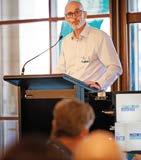
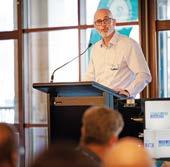
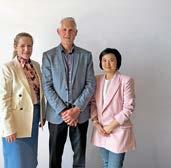
If you weren’t in front of the market before Ozwater’26, you weren’t alone. But the brands that stand out next year won’t start later. They are starting now. The next 12 months are where visibility is built, relationships are formed, and buying decisions take shape.
Inside Water keeps you in front of utilities, governments, and asset owners across every stage of that cycle, through print, digital and editorial exposure.
• Reach high-value water sector decision-makers • Extend campaigns across print, digital and EDM • Align with technical editorial and case studies • Secure premium positions early • Lock in current rate card
FOCUS The Last Drop

The Last Drop
To finish each issue, we aim to look at the lighter side of water and water-related issues. If you’ve seen an amusing story, let us know so we can consider it for the next issue.
Ice ice, phases
Anyone in the water business knows H2O has a gift for administrative creep. You begin with “water”, and five minutes later you are discussing alkalinity, turbidity, hardness, odour, sludge age and why the pump that behaved perfectly yesterday has chosen to explore performance art today. So perhaps we should not be surprised that ice, the supposedly simple, frozen version, has turned out to be a sprawling bureaucracy of forms.
The cube in your glass is the dependable old hand, hexagonal ice, known to scientists as Ice Ih. It is the high-vis vest of frozen water: practical, familiar and on site everywhere. But beyond that tidy cube sits a whole frozen committee. There is cubic Ice Ic, the rare atmospheric cousin. There are the high-pressure types, such as Ice II, III, V, VI and an increasingly intimidating Roman-numeral football team, that appear only when water is squeezed with the kind of enthusiasm normally reserved for budget season.
This is where the story becomes delightfully absurd. Water is made of one oxygen atom and two hydrogen atoms. That is not a cast of thousands. Yet, by shu ing how those molecules line up, twist, order and disorder themselves, nature produces more than 20 crystalline kinds of ice, plus several amorphous ones that are less “crystal chandelier” and more “frozen panic”. Even the census keeps changing, which feels very on-brand for water: slippery at room temperature, slippery in the literature. The amorphous lot are especially fun. Instead of neat repeating patterns, their molecules sit in a kind of solid disarray. Low-density amorphous ice and high-density amorphous ice were already known. Scientists added medium-density amorphous ice, which sounds less like a discovery and more like a seat option on a budget airline. This one was made by ball-milling ordinary ice and turned out to resemble liquid water uncannily well, essentially liquid water caught
We often think about ice in very simple terms. It turns out that it is far more complex than we appreciate. Image: Igor Link/ stock.adobe.com
standing still for a school photo. And because water never met a phase diagram it couldn’t complicate, researchers reported a new metastable Ice XXI late last year. Ice XXI forms under rapid compression at room temperature, which means even “warm ice” is now a sentence with peer-reviewed backing. Somewhere, every apprentice operator who has ever been told to keep things simple is entitled to a long stare into the middle distance.
I think there is a lesson here for our industry. We spend our days trying to persuade water to settle down, clarify, disinfect, separate, flocculate and generally act like a responsible citizen. Meanwhile, frozen water is o , leading a double life as a hexagon, a cubic oddball, a cosmic glass and a high-pressure exotic with a Roman-numeral habit.
So the next time somebody says ice is just frozen water, treat it with the same caution you would a sentence beginning, “This should be a quick shutdown.”

Visit KSB Australia on Stand L07 at OzWater26’
VIRTUAL FLOW MONITORING RISING MAIN ALERTING LEARN MORE ON STAND G04 AT OZWATER