20 Waste Expo 2026
28 Landfill levies
32 Navigating EPA hurdles
20 Waste Expo 2026
28 Landfill levies
32 Navigating EPA hurdles
By Inside Waste
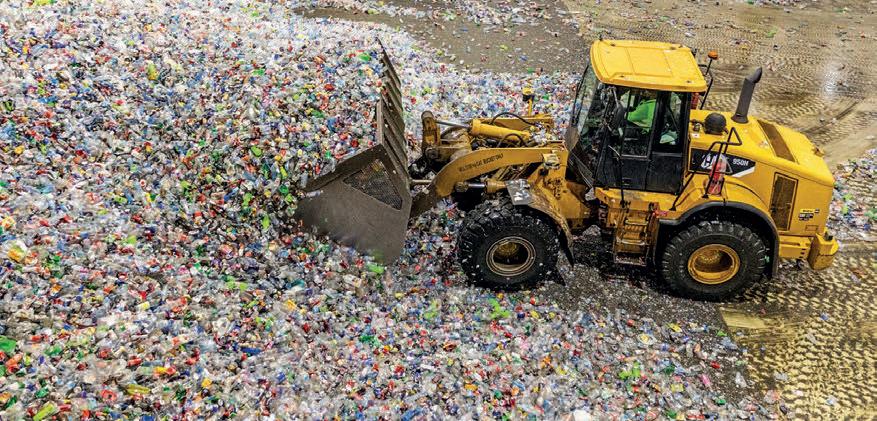
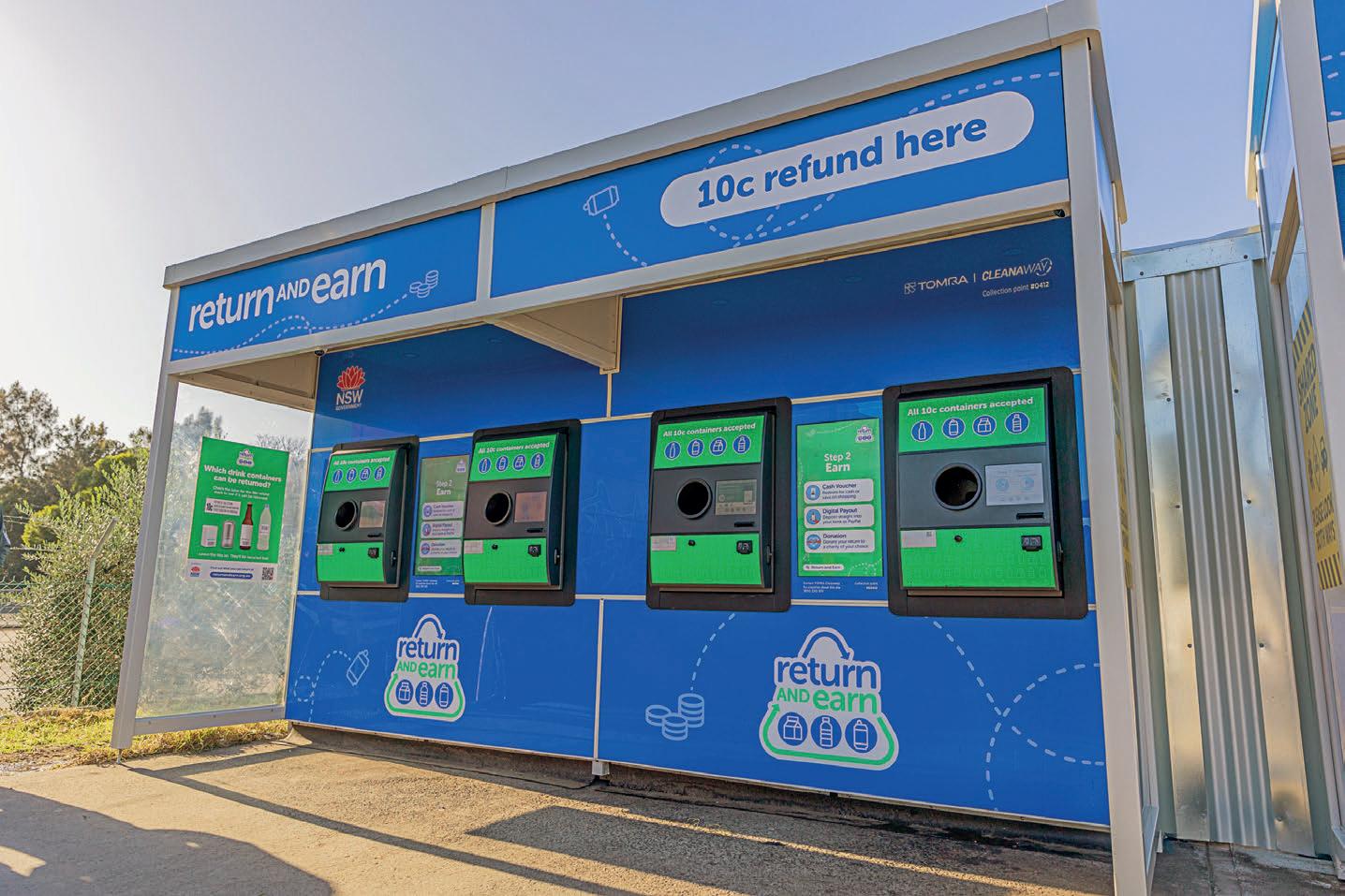
New South Wales now operates the largest container deposit scheme in the country, and one of the most sophisticated outside Europe. Since launching in December 2017, the scheme has seen over 16 billion used beverage containers returned through the network. Currently, 67 per cent of eligible beverage containers supplied into NSW are redeemed through the scheme (via return points or kerbside collections), across an estimated 3.8 billion eligible drink containers placed on the market each year.
A key partner in the delivery of the scheme is TOMRA Cleanaway, the joint venture appointed as network operator. In this role, the company is responsible for return points, counting, verification and material flows. James Dorney, chief executive of TOMRA Cleanaway says as well as being a recycling program, the scheme is a complex and integrated network designed


By Justin Bonsey
around convenience, incentives, automation and accountability. Every container returned through its return point network is scanned, counted and reported, producing a daily data set that lands on government and stakeholder desks each morning. That design choice, he said, explains both the scale of the volumes being handled and why the scheme continues to grow.
The NSW scheme is built on near total automation. Reverse vending machines, over- thecounter (OTC) return points and bulk container automated depots all feed into a single audit and verification process, with every eligible container scanned individually.
“The only glass that comes into the facility here at Eastern Creek is from the over- the - counter network,” Dorney said.
(Continued on page 6)
Council sustainability rebates have become one of local government’s most practical tools for helping households and businesses take tangible action –from repairing rather than replacing, to upgrading hot water and heating/cooling appliances, through to improving energy and water performance, and adopting lower-emissions technologies. They are visible, often popular, and sit where climate action, resource recovery and community expectations intersect.
Until recently, the sector lacked a shared national evidence base on how these programs are designed and delivered, what councils are measuring, and where the strongest opportunities lie to improve outcomes and efficiency. Without that common picture, many teams have had to build programs largely on their own, drawing on peer conversations and ad-hoc examples rather than comparable data.
To help fill that gap, rebate delivery platform Rebately commissioned Tidal Circular to conduct Australia’s first national study focused specifically on council sustainability rebates. The work combined survey responses from 67 councils across Australia with practical design principles and a six-pillar framework for better practice and was independently reviewed by Monash University’s BehaviourWorks Australia.
(Continued on page 12)


Australia’s waste and resource recovery sector is being asked to do more than ever before – recover more material, reduce landfill, cut emissions and deliver on circular economy ambitions. Yet, as many operators will attest, the biggest barrier is not always technical capability or market demand. It is the regulatory maze that sits between concept and commissioning infrastructure.
That variability matters. Waste infrastructure projects are capital-intensive, long-term undertakings. Investors and operators need certainty, not only in policy direction, but in how those policies are interpreted and enforced. When relationships with regulators hinge on history or perception, rather than clear and consistent frameworks, confidence inevitably suffers.
There is also an inherent tension in the EPA’s dual role as both facilitator and enforcer. The same body responsible for issuing licences and guiding proponents through approvals is also tasked with compliance and prosecution.
None of this absolves the industry of responsibility. Compliance obligations are extensive for good reason, particularly in a sector dealing with environmental and public
Chief Executive Officer
Christine Clancy christine.clancy@primecreative.com.au
Managing Editor Mike Wheeler mike.wheeler@primecreative.com.au
Brand Manager
Chelsea Daniel chelsea.daniel@primecreative.com.au
Designer Laura Drinkwater
Client Success Manager Ben Sammartino ben.sammartino@primecreative.com.au
Head Office
Prime Creative Pty Ltd 379 Docklands Drive
Docklands VIC 3008 Australia p: +61 3 9690 8766 info@primecreative.com.au www.insidewaste.com.au
Subscriptions +61 3 9690 8766 subscriptions@primecreative.com.au
Inside Waste is available by subscription from the publisher. The rights of refusal are reserved by the publisher


health risks. But the growing volume and complexity of regulation is creating a disconnect between what is written on paper and what is achievable on the ground. Lengthy procedures, detailed licence conditions and evolving resource recovery orders can be difficult to translate into day-to-day operations, especially in highthroughput environments.
Issues such as asbestos contamination illustrate the challenge. Even with robust systems, eliminating risk entirely is close to impossible, particularly in construction and demolition streams. Yet regulatory in terpretations can lean towards zero tolerance, creating uncertainty where even minor traces may trigger non-compliance.
If Australia is serious about transitioning to a circular economy, regulatory settings must evolve alongside industry expectations. Greater consistency, clearer definitions and more streamlined approvals would not weaken environmental protections. They would strengthen the sector’s ability to deliver the infrastructure and outcomes those protections are designed to achieve.
Articles
All articles submitted for publication become the property of the publisher. The Editor reserves the right to adjust any article to conform with the magazine format.
Copyright Inside Waste is owned by Prime Creative Media and published by John Murphy. All material in Inside Waste is copyright and no part may be reproduced or copied in any form or by any means (graphic, electronic or mechanical including information and retrieval systems) without written permission of the publisher.


The Editor welcomes contributions but reserves the right to accept or reject any material. While every effort has been made to ensure the accuracy of information, Prime Creative Media will not accept responsibility for errors or omissions or for any consequences arising from reliance on information published. The opinions expressed in Inside Waste are not necessarily the opinions of, or endorsed by the publisher unless otherwise stated.










(Continued from the Cover)
“THE OVER-THE-COUNTER SHARE REPRESENTS ONLY about eight per cent of total Scheme volume. Those manual returns are scanned when they arrive and then fed back into the main pile, because once it’s scanned, it has officially entered the scheme and is matched against the manual transaction records at the OTC return point.”
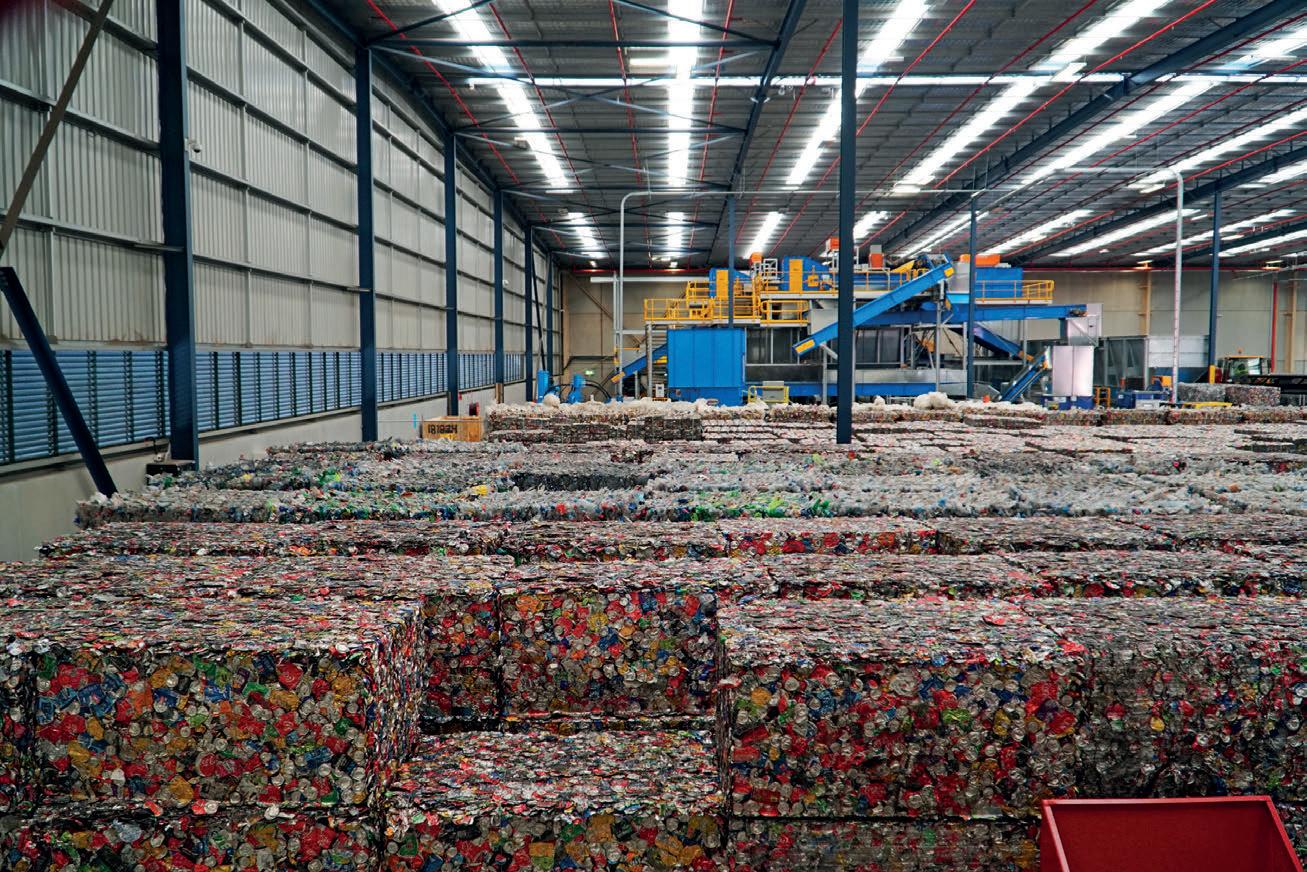
Automation, innovation and investment have continued to characterise networks operated by TOMRA Cleanaway. Operators now manage advanced machinery both at processing facilities and in the field. Contamination is low, largely because non-eligible materials are rejected and also that materials are separated from the start between lightweight and glass volumes.
“NSW and Tasmania are the only schemes in Australia that scan every single container,” Dorney said. “TOMRA Cleanaway continues this practice in the West Zone in Victoria too. Other states use different verification methods, but our view is that scanning every item that is returned is far more robust.”
The network in NSW is also larger than originally required. TOMRA Cleanaway was contracted to deliver about 540 return points but has built beyond that, driven by a direct incentive to increase convenience,
access and throughput. The result is around 660 return point sites including roughly 375 reverse vending machines. With continued annual investment in growing the return point network.
Container return volumes fluctuate seasonally in-line with drink sales, but the trend line remains upward. Record volumes for scheme monthly returns was set for December 2025, with 220 million drink containers returned by the community, and March 2026 delivered another new monthly record of 195.5 million eligible drink containers collected.
When NSW designed its scheme, it initially proposed seven geographic zones. The market response forced a rethink.
The NSW Container Deposit Scheme is a NSW Government initiative delivered in partnership between the NSW Environment Protection Authority, scheme coordinator Exchange for Change and network operator TOMRA Cleanaway.
The operational structure separates responsibilities between the network operator and the scheme coordinator. TOMRA Cleanaway contracts directly with the NSW Government under a performance-based agreement that includes obligations for downtime, missing return points or site failures.
Exchange for Change as scheme coordinator, is responsible for the financial management of the scheme, ensuring scheme integrity through audit, fraud and verification, and educating the community through it marketing and engagement. A key part of the scheme coordinator’s role is also managing the beverage suppliers who fund scheme.
“We operate in a strong tripartite relationship to deliver these Schemes in the jurisdictions in which we operate. TOMRA Cleanaway pride ourselves on building strong and collaborative relationships with Government and our Scheme Coordinators,” Dorney said.
“We are incentivised to grow the network and the volume. For every returned drink container, we get paid. Simple.”
The payment model is often misunderstood. When a container is returned at a return point, the 10 cent refund is paid immediately. TOMRA Cleanaway receives a network handling fee per container, from which it pays return point operators and logistics providers.
At current settings, 2 in every 3 containers supplied into NSW are collected through the scheme - the majority via the return point network. The remaining one-third of containers however are lost to disposal or litter.

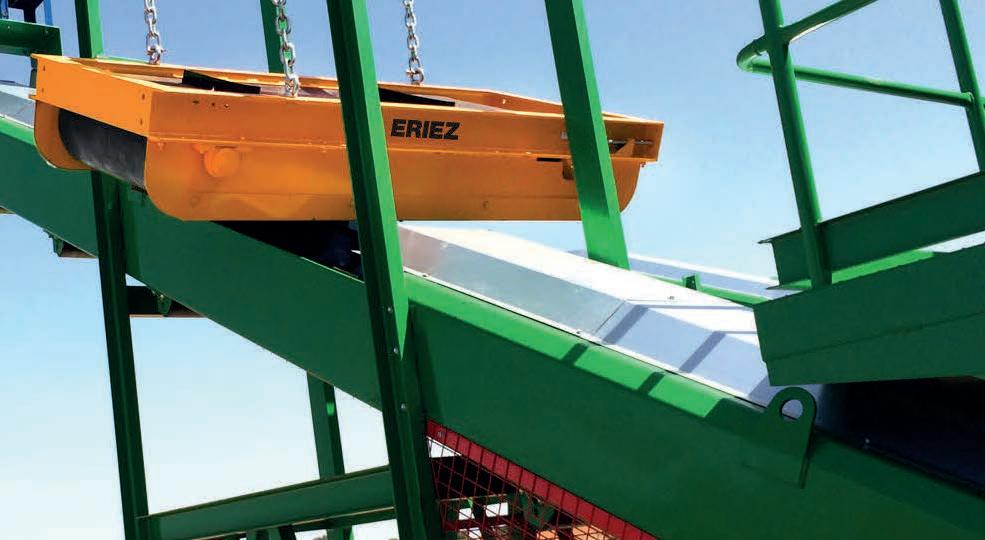






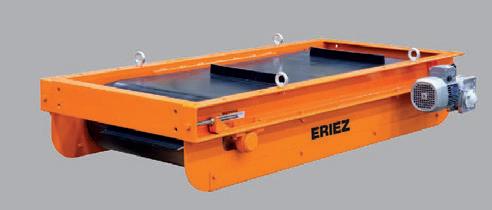
Eriez Suspended Permanent Magnets provide powerful and reliable tramp metal removal, with easy installation and low operating costs. Eriez. Always the Right Choice.
With more than 80 years of magnetic expertise, Eriez’ circuit design creates a uniform magnetic field across the feed belt for optimal separation efficiency.


Why value and access matter
Dorney is blunt about the limits of behaviour change at the current 10 cent deposit. In his view, most of the motivated participants are already returning containers.
“My opinion is you are going to struggle to lift the return rate to global best practice without increasing the deposit,” he said. “There might be another five per cent in it, but my view is that there is going to be a proportion of people who don’t care or don’t bother based on the current arrangements.”
Evidence from elsewhere supports that view. South Australia saw an immediate jump in return rates when it lifted its deposit from five cents to 10 cents. Internationally, higher deposits correlate strongly with higher returns, particularly when combined with dense, convenient collection networks.
Within NSW, the variation between local government areas is stark.
Access matters, automated return points are significantly harder to install in dense urban areas where car parking is limited, and retailers are not required to participate. This issue is being compounded by the ongoing transition towards vertical housing in metropolitan areas, which introduces additional planning complexities.
“In Australia, no retailer is required to host a return point,” Dorney said. “In all of the leading European jurisdictions including Germany, Norway and Denmark, basically every supermarket selling drinks is required to take back the empty container.”


That distinction goes to the heart of producer responsibility debates. In Europe, return to retail is standard. In Australia, participation is voluntary, refunds must be available in cash, and supermarkets have limited incentive to give up space.
Dorney has spent years studying European container deposit systems and argues that the systems in operation in Europe represent the global benchmark in terms of return rates with many Schemes operating in the high 90 per cent range. Return rates there reach about 98 per cent, driven by high deposit values, mandatory retail participation and finely tuned incentives for packaging design.
“In Denmark they don’t put deposit values on labels,” he said. “They use ‘A, B and C’ classes. The government sets the values and can change them without relabelling. That’s genius.”
Deposit classes vary by material and size, with higher values placed on harder to recycle formats. Producers face variable fees depending on packaging choices. Clear PET attracts a lower fee than coloured or sleeved bottles, creating a
direct financial incentive to design for recyclability. Receipts itemise deposits separately from drink prices, reinforcing the idea that the money is refundable rather than a tax. Supermarkets host multiple return formats, from front of store machines to bulk bins and crate returns for refillables.
“Seeing the leading Schemes in operation show us what is possible and how we can further mirror some of the best performing design globally,” Dorney said. “And that’s what producers mean when they talk about responsibility.”
The Netherlands follows a similar model, with about 5,000 automated return points, most located in supermarkets. Deposit values are high, access is easy, and enforcement is strict. If producers fail to meet EU aligned return targets, penalties are imposed using unredeemed deposits.
Dorney is cautious about transplanting European systems wholesale into Australia, citing differences in shopping patterns and urban density. But he argues elements could be adapted, particularly mandatory access thresholds for large retail centres and stronger incentives tied to deposit value.
“If you’ve got two supermarkets in a shopping
centre, which is common here, you should be required to host a return point,” he said.
The NSW scheme is approaching a contract renewal point, and questions remain about how far return rates can be pushed under existing settings. TOMRA Cleanaway points to its performance, data transparency and daily reporting as evidence of a system that works as designed,
“Transparency and real time reporting for all Scheme stakeholders is critical,” Dorney said. “Every container is scanned. Every day, our government stakeholders see exactly what came in the day prior.”
The next gains, he suggests, will not come from marginal efficiency improvements but from policy decisions about value, access and responsibility. Without higher deposits or mandatory retail participation, Australia is unlikely to approach European return rates. The fundamentals, however, are already in place.
“There are three things you need for a scheme to work and succeed,” Dorney said. “A value, a return point network and an end market. NSW has all three.”
(Continued from the Cover)
THE AIM IS TO GIVE COUNCILS A PRACTICAL GUIDE to designing, delivering and reporting on rebates in ways that are effective, defensible and workable for small teams. The report is written for people at the coalface – waste and sustainability officers, energy and climate leads, customer service, finance and program managers – as well as executives who need a solid basis for investment decisions.
A core message from the study is that sustainability rebates are behaviour change infrastructure, not just feel-good community programs. A well-designed rebate helps residents and businesses move through decisions they might otherwise delay or abandon –seeing that “people like me” are taking part, finding a suitable product or service, trusting that it qualifies, and feeling confident enough to proceed.
This has two implications for councils. First, councils that do not yet offer sustainability rebates in key areas miss an opportunity to support their communities in concrete ways – from lower household running costs and improved comfort through to reduced energy and water use, as well as extending the life of appliances and equipment. In a context of rising living costs and ambitious emissions and waste targets, the opportunity cost of not having targeted rebates in the toolkit is growing.
Second, even for councils that already offer rebates, there is an upside in how they are delivered. The study shows that performance often improves more through simpler processes, smarter data and better communication than through simply increasing the dollar value on offer.
The survey and case material drew on councils in seven states and territories across metropolitan, regional and rural areas, giving a representative picture of local government practice. Several themes
Delivery experience is central to intent
Households experience rebates as a series of steps: discovering the program, understanding eligibility, arranging a purchase or service, and submitting evidence. Clarity of information, form design, evidence requirements and turnaround times all influence whether people follow through, and a well-communicated, low-friction $300 rebate can achieve more impact than a poorly executed $500 one.
Funding realities demand light models
Most participating councils rely primarily on core operating budgets to run sustainability rebates, with external grants more often used to start or expand programs than to underpin long-term delivery. Rebate schemes therefore need to run reliably within ordinary resourcing, with evaluation built into normal operations rather than bolted on as a separate project.
Integrity settings must be proportional
Councils have a responsibility to protect public funds, but heavy-handed integrity settings can make programs harder to access and administer. The study encourages a proportional approach – matching checking effort to claim size, perceived risk and available capacity – including for emerging issues such as similar claims being submitted across multiple councils.
Evaluation ambition is high, but methods vary
Respondents showed strong interest in reporting outcomes beyond uptake and spend, including environmental and equity impacts, but approaches are uneven. Many teams monitor operational metrics but lack the shared datasets
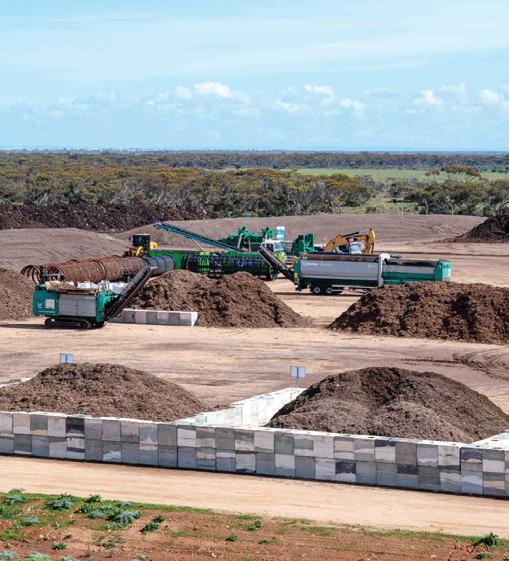
Ennovo provides comprehensive solutions for the management of recycled organics based on extensive experience with designing, constructing and operating recycled organics facilities.
Ennovo provides comprehensive solutions for the management of recycled organics based on extensive experience with designing, constructing and operating recycled organics facilities.
Ennovo provides comprehensive solutions for the management of recycled organics based on extensive experience with designing, constructing and operating recycled organics facilities.
Specialist Services
FOGO management and processing
Specialist Services
Specialist Services
Site assessment and approvals
FOGO management and processing
FOGO management and processing
Market assessment and development
Site assessment and approvals
Site assessment and approvals
Composting – open windrow and in-vessel
Market assessment and development
Market assessment and development
Process and product development
Composting – open windrow and in-vessel
Composting – open windrow and in-vessel
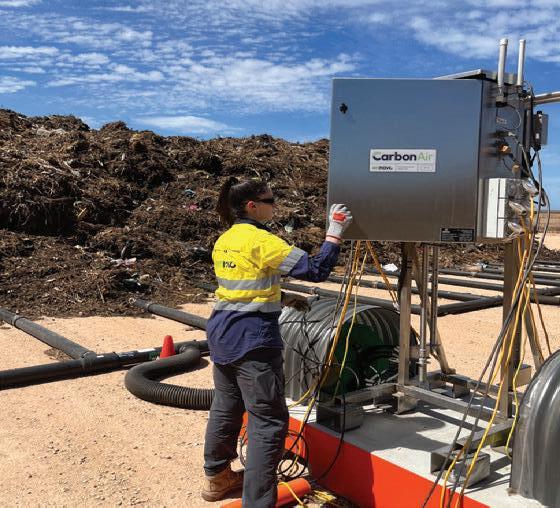
Ennovo’s Carbon Air system automates forced aeration for e cient composting in windrow and in-vessel applications. With telemetryenabled automation, it reduces costs, optimises operations, and ensures high-quality output, making it ideal for FOGO composting. Ennovo provides end-to-end solutions from design to market development.
Third party compliance support
Process and product development
Process and product development
Ennovo’s Carbon Air system automates forced aeration for e cient composting in windrow and in-vessel applications. With telemetryenabled automation, it reduces costs, optimises operations, and ensures high-quality output, making it ideal for FOGO composting. Ennovo provides end-to-end solutions from design to market development.
Ennovo’s Carbon Air system automates forced aeration for e cient composting in windrow and in-vessel applications. With telemetryenabled automation, it reduces costs, optimises operations, and ensures high-quality output, making it ideal for FOGO composting. Ennovo provides end-to-end solutions from design to market development.
Carbon credit development and management
Third party compliance support
Third party compliance support
Carbon credit development and management
Carbon credit development and management
and methods needed for consistent impact reporting. The report proposes a minimum dataset that most councils can implement to enable a more robust, comparable analysis.
• Shared infrastructure and benchmarking unlock value
Some of the biggest opportunities are collective: aligning on key data fields, using similar reporting categories, and sharing templates rather than rebuilding them from scratch. Even modest standardisation allows councils to benchmark with peers, understand where their program sits on a maturity curve, and target improvements where they will have most effect.
Rebately, which commissioned the study, is a platform partially funded by the NSW EPA and co-designed with councils to deliver and manage sustainability rebates – from application intake and evidence handling through to algorithmic integrity checks and reporting. By standardising core elements of the process and data structure, it reduces administrative burden and makes it easier to track outcomes without extensive manual analysis. For this project, Rebately’s role was to make
“The work combined survey responses from 67 councils across Australia with practical design principles and a six-pillar framework for better practice and was independently reviewed”
a consistent, cross-council view possible by standardising program and data signals and enabling analysis of claims data, while leaving interpretation of the evidence to Tidal Circular and independent reviewers. The findings underline that councils interested in common data structures and streamlined delivery now have practical options for putting those ideas into practice.
Councils are already doing a great deal with sustainability rebates, often with small teams and constrained resources. Case studies – including repair, appliance and energy upgrades – show that well-targeted programs can leverage substantial private investment (from $4.05 in community spending for every $1 rebated in the City of Canning through to $12.91 for every $1 invested by Randwick
City Council), deliver measurable environmental benefits, and provide visible support to communities.
The opportunity now is to build on that foundation. This is done by making it easier to start or refine programs using shared templates and minimum datasets, aligning integrity approaches with risk so staff time is used where it adds most value, and by treating sustainability rebates as part of a broader infrastructure for sustained behaviour change, rather than isolated projects.
In a crowded policy landscape, sustainability rebates stand out as a tool that residents recognise, that link directly to tangible changes in homes and small businesses, and that can be tuned over time as evidence improves. This first national study suggests that, with a little more shared infrastructure and common language, councils can unlock even more impact and value for money from programs many are already running today.







Environment Ministers will meet for the second time this year on 7 December, following the rst 2018 Meeting of Environment Ministers (MEM) in April, which was in part a response to the import restrictions driven by China’s National Sword Policy and the e ects this policy has had across the Australian waste and resource recovery (WARR) industry. Key decisions derived from the April MEM
Last year alone, waste levies generated around $2 billion in revenue. Levies must also be nationally coherent. Vast differences in settings between states create exactly the wrong incentives: transporting waste across borders to the cheapest landfill destination rather than investing in local recovery infrastructure and markets. However, levies alone will not solve the problem.
•Reducing waste generation, endorsing a target of 100% of Australian packaging being recyclable, compostable or reusable by 2025, and developing
Australia still lacks an integrated national materials policy framework linking product design, manufacturing, consumption and end-of-life management. We do not consistently require products to be designed for durability, repairability, reuse or recyclability. Nor do we adequately support the markets needed to absorb recovered materials at scale. Instead, the financial burden falls on local government, the waste and resource recovery sector, and ultimately the community.
• Exploring opportunities to advance waste-to-energy and waste-to-biofuels.
•Updating the 2009 Waste Strategy by year end, which will include circular
We are simply generating too much waste — and expecting the waste and resource recovery sector to solve a problem it did not create. Recent commentary re inforces what our industry has said for years: if Australia is serious about transitioning to a circular economy, responsibility cannot sit solely at the end of the product lifecycle. It must sit with those who design, manufacture, market and profit from products in the first place.
It is time to take stock and examine what has been achieved since these decisions were announced. Now, seven (7) months may not seem like a long time, however in that time we have seen further markets close (Malaysia, Indonesia, Vietnam) and if you are an operator under continued nancial stress, seven (7) months could make or break you.
That is why waste levies matter. Too often, the levy is framed as just another cost burden. It is not. A well-designed waste levy is a powerful economic lever that governments have to drive behaviour change across the entire materials and product chain.
When levies are set appropriately, they push material up the waste management hierarchy — away from landfill and toward avoidance, reuse, repair, recycling and recovery. When levies are too low, inconsistent between jurisdictions, or disconnected from broader policy settings, landfill remains the cheapest and easiest option.
Using recovered materials more effectively reduces dependence on virgin extraction, lowers energy consumption, supports domestic manufacturing and creates Australian jobs. It drives innovation, strengthens sovereign capability and improves economic resilience. But none of this happens at scale under business as usual.
If we continue designing products with no regard for end-of-life outcomes, externalising the true cost of waste, and treating the levy as a political liability instead of a strategic tool, Australia will continue generating more waste, more emissions and more lost economic opportunity. The path forward is so clear. We need:
industry however the Queensland Government has embarked on the development of a waste management strategy underpinned by a waste disposal levy to increase recycling and recovery and create new jobs. The State will re-introduce a $70/ tonne land ll levy in March 2019. There are also strong attempts to use policy levers (levy discounts and exemptions) to incentivise the use of recycled material and make it cost competitive with virgin material. However, little has been done establish new markets and Government has not taken the lead in the procurement of recycled material. There are grants available for resource recovery operations in Queensland although no monies have been allocated to assist in 2018. This troubling as Queensland rolled out its Container Refund Scheme on 1 November, which will likely impact the cost and revenue models of the State’s MRFs – as have seen most recently in NSW.
In effect, we continue to subsidise poor product design. That is one of the biggest structural failures in Australia’s current approach to waste and resource recovery. Those with the greatest ability to influence outcomes — producers and brand owners — often carry the least responsibility for the cost of managing products once they become waste.
If we want real change, accountability must extend across the full lifecycle of materials. That means stronger product stewardship schemes, mandatory design standards where appropriate, minimum recycled content requirements, and procurement policies that genuinely prioritise recycled materials. These are not radical ideas. They are practical reforms that many other economies are already implementing. But they require national coordination, policy consistency and political courage.
Following the April MEM, we have had three (3) states step in with varying degrees of nancial assistance for industry (councils and operators). This should be expected considering almost all states (except Queensland and Tasmania) have access to signi cant waste levy income each year. On the eastern seaboard, Victoria has approximately $600 million in waste levy reserves in the Sustainability Fund and NSW raises more than $700 million per annum from the waste levy. There is certainly no lack of funds that can be reinvested into our essential industry.
• Waste levies that genuinely drive behaviour change, with transparent reinvestment into recovery infrastructure, market development and innovation.
• Nationally consistent regulatory frameworks that reduce inefficiency, uncertainty and market distortion.
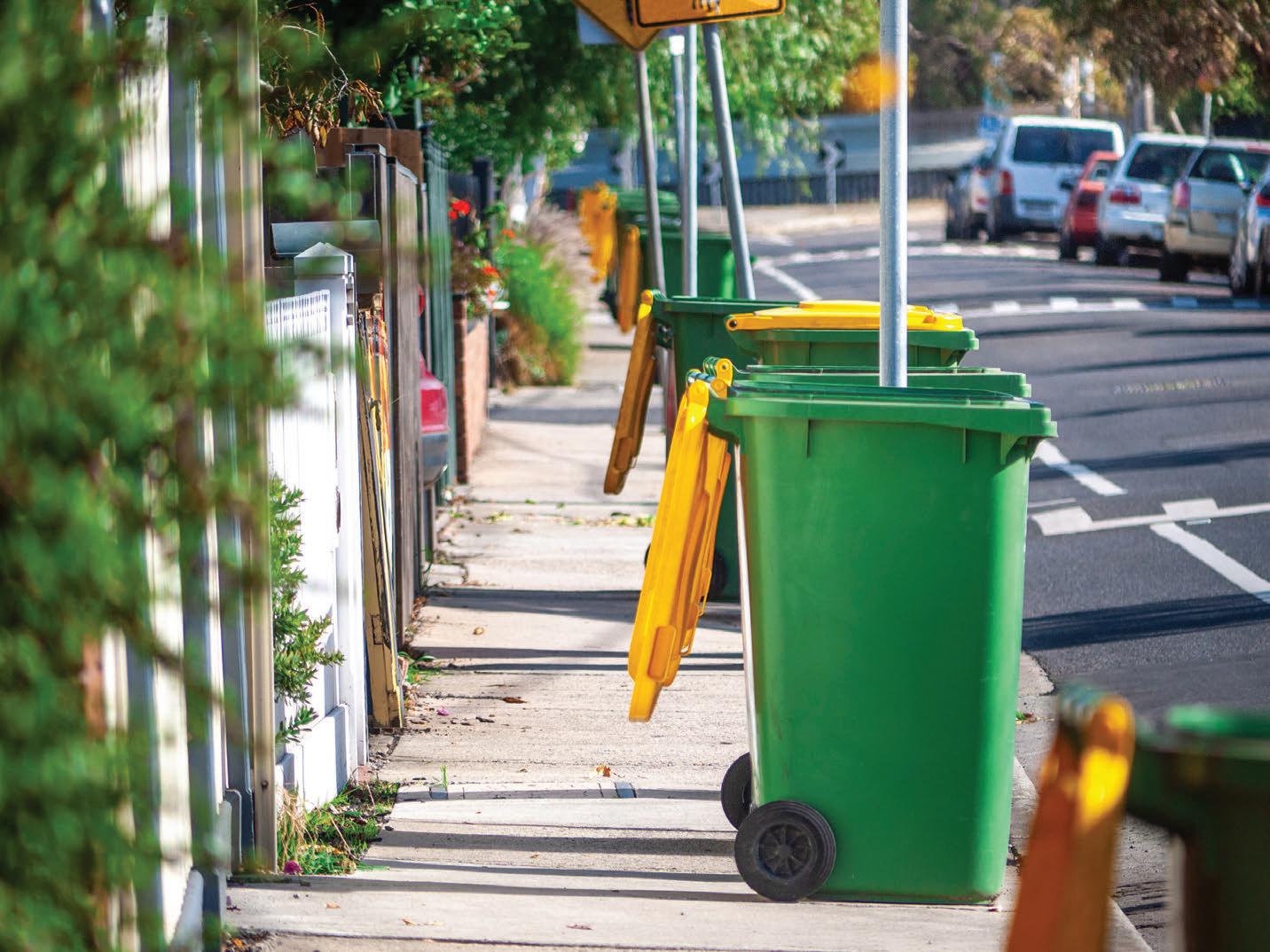
The Western Australian Government set up a Waste Taskforce in direct response the China National Sword. As part of this announcement, the State Government urged all local councils to begin the utilisation of a three (3)-bin system - red general waste, yellow for recyclables and green for organic waste - over the coming years to reduce contamination. While this taskforce is a step in the right direction, we are yet to see any tangible results from it or any funding for industry. In October, the WA Waste Authority released its draft Waste Strategy to 2030, which comprises a comprehensive and detailed roadmap towards the State’s shared vision becoming a sustainable, low-waste, circular economy.
• Stronger product stewardship and circular design requirements that place responsibility where it belongs.
• Mandatory government procurement and recycled content policies that create real demand for recovered materials and give industry confidence to invest.
Importantly, governments must also recognise the waste and resource recovery sector for what it is: essential economic infrastructure underpinning Australia’s climate, manufacturing and circular economy ambitions. Our sector is not simply “managing rubbish”. It is recovering resources, reducing emissions, supporting local manufacturing and enabling more sustainable supply chains. It is a critical industrial sector that contributes to Australia’s environmental and economic resilience.
The debate unfolding through the NSW Parliamentary Inquiry highlights the scale of the challenge. Australia does not just have a waste management problem — it has a materials management problem. And the distinction matters. Because waste policy is also climate policy.
Funding helps but as we know, the money goes a much longer way with Government support and leadership, as well as appropriate policy levers.
The economics are straightforward. It costs more to collect, sort, process and remanufacture materials than it does to bury them. Recovery infrastructure requires advanced technology, skilled labour, energy, market development and long-term investment certainty. Landfill, by comparison, remains the lowest-cost option in many parts of the country — even where landfill gas capture systems are in place.
Victoria has arguably been the most active and earnest in supporting the industry post-China, with two (2) relief packages announced to support the recycling industry, valued at a total of $37 million. The Victorian Government has also gone above and beyond all others states by announcing it would take a leadership role in creating market demand for recycled products.
Since COVID, construction costs have increased by more than 30 per cent, alongside increases in labour, fuel and energy costs. Yet in many jurisdictions, levy rates have not kept pace with those increases.
The reality is simple: without a strong and consistent levy signal, the market will continue to favour landfill over resource recovery. That is not a circular economy. It is managed waste growth circulating in the economy for as long as possible, recognising that everything reaches end-of-life. The waste levy is central to that framework. But it must be designed to drive real behaviour change away from the convenience and complacency of a ‘throw away’ society — not simply raise revenue.
Too much of Australia’s current focus remains on landfill methane and gas capture. While important, that only addresses emissions at the end of the chain. The larger opportunity lies upstream — avoiding emissions through material recovery and displaced virgin material production.
Following the MEM in April, Australia now has a new Federal Environment Minister, Melissa Price, who in October reiterated to media MEM’s commitment to explore waste to energy as part of the solution to the impacts of China’s National Sword, which is troubling (EfW is not a solution to recycling). The Commonwealth also backed the Australian Recycling Label and endorsed the National Packaging Targets developed by the Australian Packaging Covenant Organisation (APCO), which has to date, failed to incorporate industry feedback in the development of these targets. To the Commonwealth’s credit, there has been signi cant coordination in reviewing the National Waste Policy, with the Department Environment bringing together industry players and States during the review process.
At WMRR, we recognise these challenges are complex and interconnected. There is no single solution to Australia’s waste challenge. But complexity cannot become an excuse for inaction. There are clear, evidence-based actions available right now. Effective waste levies are one of them. Used properly, they can shift markets, unlock investment and accelerate Australia’s transition to a circular economy. Used poorly, they become little more than another cost passed through the system without delivering change.
The updated Policy will now go before Environment Ministers on 7 December. Commonwealth can play a key role – one that goes beyond the development of National Waste Policy. WMAA is supportive of the Federal Government maximising the levers it has, including taxation and importation powers, to maintain a strong, sustainable waste and resource recovery industry.
WMRR’s forthcoming research highlights this clearly. Recovering one tonne of plastic can avoid up to three tonnes of carbon emissions compared to producing virgin plastic. Similar benefits exist across metals, paper, glass and organics. Yet policy settings are often reward landfill management over material recovery. That is backwards.
Government announced a $12.4 million support package comprising $2 million of additional expenditure, $5 million additional funding for a loan scheme, together with targeted funding from the Green Industries SA budget. The Government has also o ered grants for recycling infrastructure.
If Australia is serious about reducing emissions, then resource recovery must be recognised as a climate solution — not simply a waste management service.
At rst glance, New South Wales’ eye-watering $47 million recycling support package was heralded as the spark of hope industry needed. However, on closer inspection, the bulk of this package that was funded via the Waste Less, Recycle More initiative and therefore the waste levy, was not new, making it very di cult for stakeholders, including local government, to utilise the funds as they were already committed to other activities. Some of the criteria proposed by the NSW EPA also made it challenging for industry to apply to these grants. On the plus side, e orts are being made by the NSW Government to stimulate demand for
Currently, we are also seeing growing global pressures reinforcing the urgency of building domestic resilience. Supply chain disruptions, energy price volatility and fuel security concerns have exposed the risks of relying on imported raw materials and products.
The difference however is leadership. Governments must be willing to make difficult decisions — to set stronger price signals, hold producers accountable and prioritise long-term national outcomes over short-term political convenience. Industry must continue to innovate, invest and advocate for better systems. And together, we must ensure that the true value of materials is recognised and retained within the economy. Because waste is not inevitable. Waste is a design flaw.
There may be movement across Australia, with some states doing better than others, but the consensus is, progress is still taking way too long. It is evident that there are funds available in almost all States to assist with developing secondary manufacturing infrastructure, however the only way that this will really happen if there is government leadership around mandating recycled content in Australia now, not later.
Until Australia addresses that flaw at its source, we will remain trapped in a cycle of growing waste generation, rising emissions and missed economic opportunity.
The waste levy is not the entire solution — but it is an important tools available to help break that cycle.
A stronger Australian circular economy can help address those vulnerabilities by keeping valuable materials circulating locally for longer.
As state budgets and new waste strategies approach, 2026 must be the year governments stop managing waste at the margins and start building the economic framework required for a genuinely circular economy
Voluntary schemes like the Used Packaging NEPM, under which APCO is auspiced, are not working. We have 1.6million tonnes of packaging waste in Australia, which needs to be used as an input back into packaging. Barriers to using recycled content in civil infrastructure must be identi ed and removed, and Government must lead in this eld and prefer and purchase recycled material. A tax on virgin material should also be imposed as it is overseas. MEM must show strong leadership on issue. Ministers have, since April, dealt directly with operators and councils that are under stress and we have a chance to create jobs and investment in Australia
WASTE FACILITIES ARE CHANGING ACROSS RURAL and regional Australia, often driven by necessity rather than design. Site layouts are evolving, workloads are shifting, and staff are increasingly required to move between functions rather than remain in a gatehouse or office.
Waste data collection has largely been treated as a gatehouse function; a moment in time where loads are declared, assessed and recorded. But on many sites today, the gatehouse might not be able to collect the best data.
Loads arrive covered, customer queues fluctuate, inspection opportunities are limited and staff judgement often continues beyond the initial interaction.
Solutions like Cooee Data are part of this shift. Not because they’re complex, but because they acknowledge how sites operate.
Site layouts are evolving faster than operating habits
From its time spent touring active sites, the team at Cooee have noticed a pattern. These include:
• Incorporation of drive-through layouts.
• Separate drop-off areas, pre-inspection zones and flexible traffic flows.

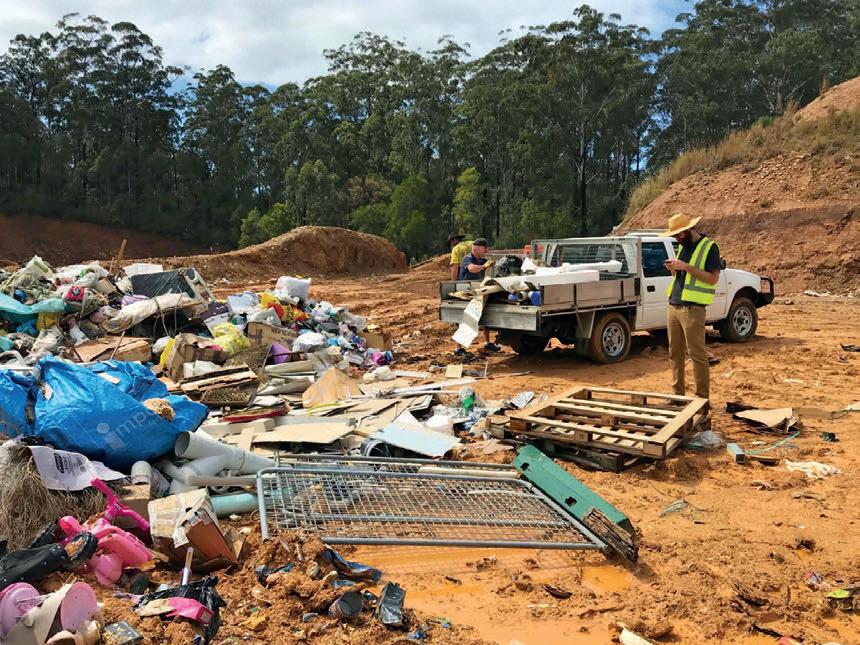























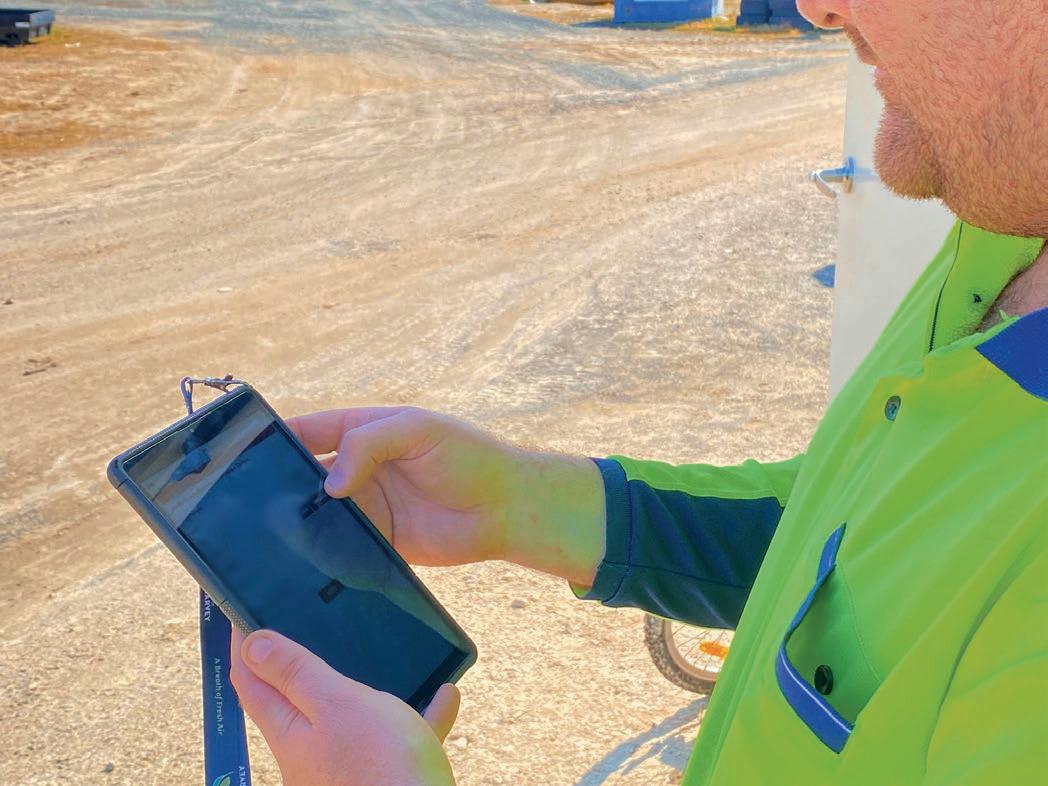
Staff are mobile and multi-skilled, often moving between gatehouse duties, site supervision, customer guidance and compliance checks.
manage competing demands and keep sites operating safely.
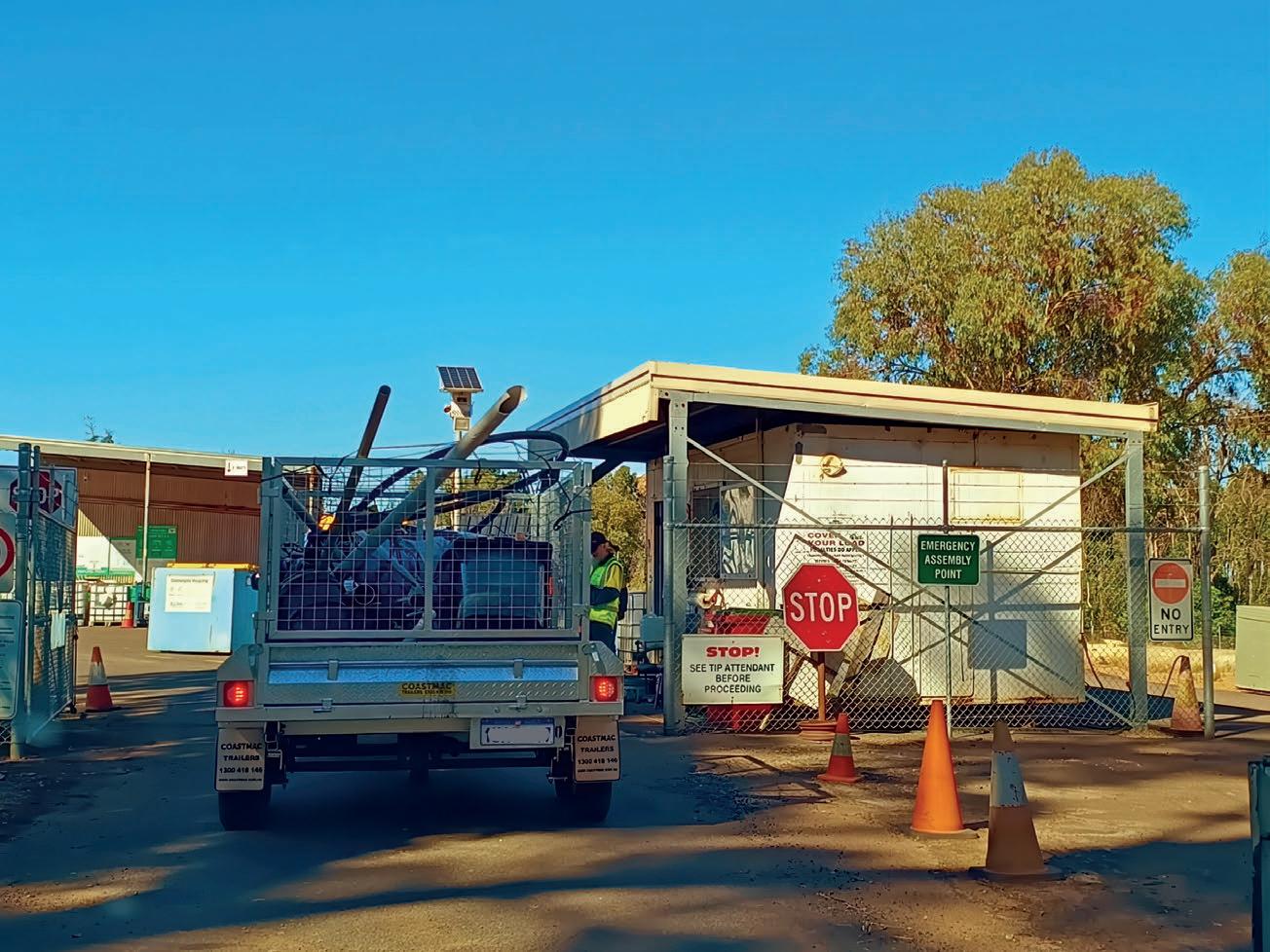
Yet many data capture habits still assume a static environment: one desk, one operator, one transaction flow. Pressure builds when operations change, but data processes don’t. Shortcuts creep in, paper notes are made “for later” and judgement calls go undocumented.
The team at Cooee believes none of this reflects poor practice. It simply reflects systems that haven’t adapted to how new sites operate.
The gatehouse is no longer the place work happens
In theory, the gatehouse is the central workstation of a facility. In practice, valuable information is increasingly observed elsewhere, like the wider site, at drop-off areas, or from contractors collecting materials that never enter the facility, such as kerbside recyclables and FOGO.
Waste data capture is becoming more mobile and dependent on staff being able to record information anywhere within the waste facility and not just in the gatehouse itself.
Facilities without weighbridges aren’t data-poor
Few topics provoke more quiet frustration than the weighbridge discussion. For facilities without one, it’s often assumed that data quality will be
consistency or context. Good waste data depends on:
1. Consistent classifications.
2. Repeatable rules.
3. Traceable decision-making and audit trails.
Regulators and senior managers are less concerned with precision and more interested in consistency, traceability and methodology.
They want to know how data is collected, how assumptions are applied and whether the same rules are used day to day.
For facilities without weighbridges, the challenge is not the absence of equipment, but the absence of tools that help standardise judgement across staff and shifts.
Defensible data is repeatable data
Auditable data needs to be explainable, not perfect. Informal practices start to show risk when an experienced operator who knows what “looks right” through years on the job is heavily relied on. That tacit knowledge keeps things running smoothly until workloads increase, reporting scrutiny intensifies, or they retire.
When experience walks out the gate, often undocumented judgement goes with it.
Mobility
Mobility on site is the reality of modern operators. Staff are expected to respond quickly,
Data systems that require returning to a desk or transcribing handwritten notes later place friction exactly where pressure is highest. Cooee staff see this regularly on sites where competent but small teams are stretched during busy periods, moving between multiple tasks to keep operations running. When systems rely on staff returning to a desk to finish paperwork later, data capture often suffers because that step simply doesn’t fit the reality of the work.
Technology alone doesn’t solve data problems. What does help is making good habits easier to maintain than workarounds. Systems that support staff where they already are, reduce duplication and reinforce consistent choices tend to embed more successfully than those that require extra effort to use well.
Ease of rollout matters for the same reason. If a system requires months of adjustments, specialist IT support or constant retraining, it’s unlikely to hold up under day-to-day operational pressure.
Across different facilities, we’re seeing better data outcomes when tools are aligned with reality, rather than forcing reality to adapt to tools.
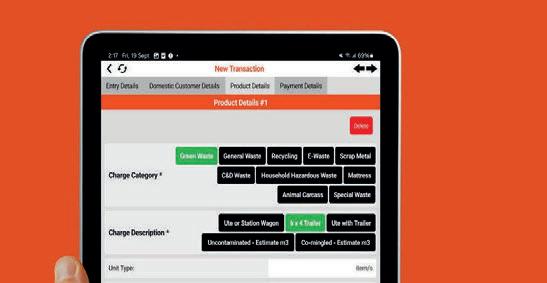
Cooee Data’s simple, mobile data capture, supported by upfront training and offsite set up, is helping sites improve consistency without adding burden.
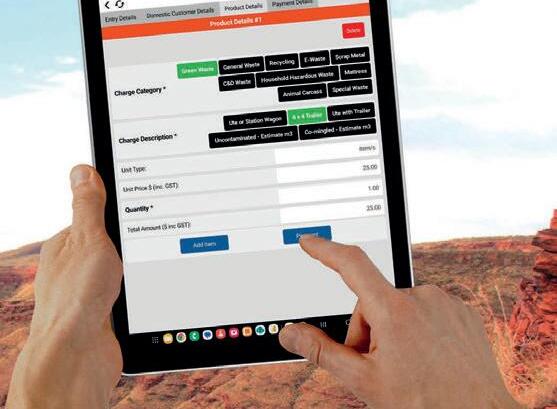
Tablet-based systems that travel with staff, apply consistent rules and centralise reporting can support defensible data even where weighbridges and fixed infrastructure aren’t present.
In one local government example, having Cooee tablets preconfigured and ready to use helped fast track implementation that may otherwise have stalled in procurement. With setup and training handled upfront, the system was operating within weeks. “It was quicker to get staff comfortable than we expected,” a waste coordinator said.
Adapting without adding burden
None of these challenges are dramatic on their own. Taken together, they point to a quiet transition underway in the sector with higher expectations and less tolerance for opaque data.
The question for many facilities is not whether change is needed, but whether it can be achieved without making daily operations harder. From what we’re seeing on site, the best outcomes come from modest shifts in updating habits, simplifying capture and choosing tools that respect how waste facilities really work.
These are the kinds of operational conversations increasingly taking place across regional facilities.








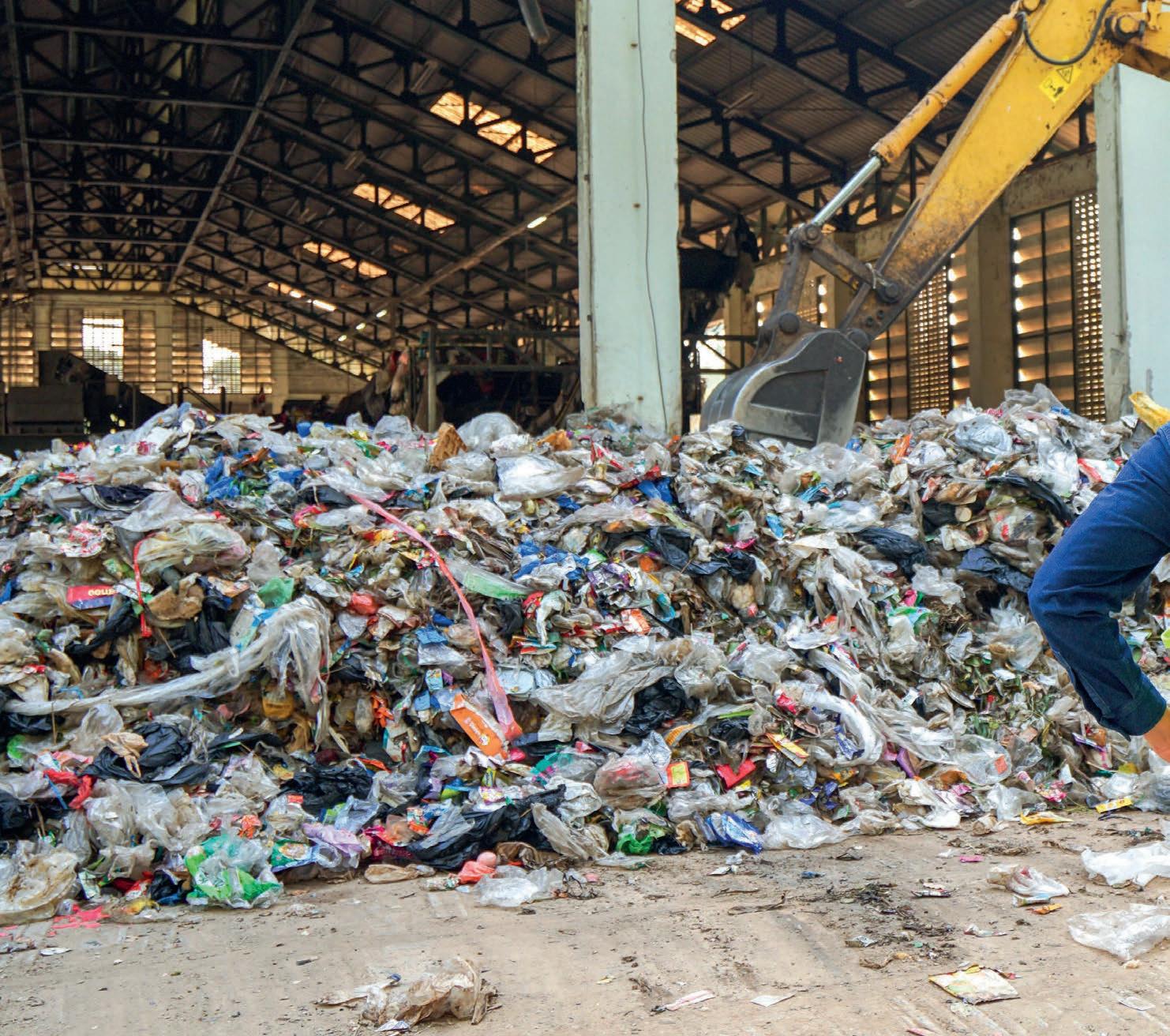

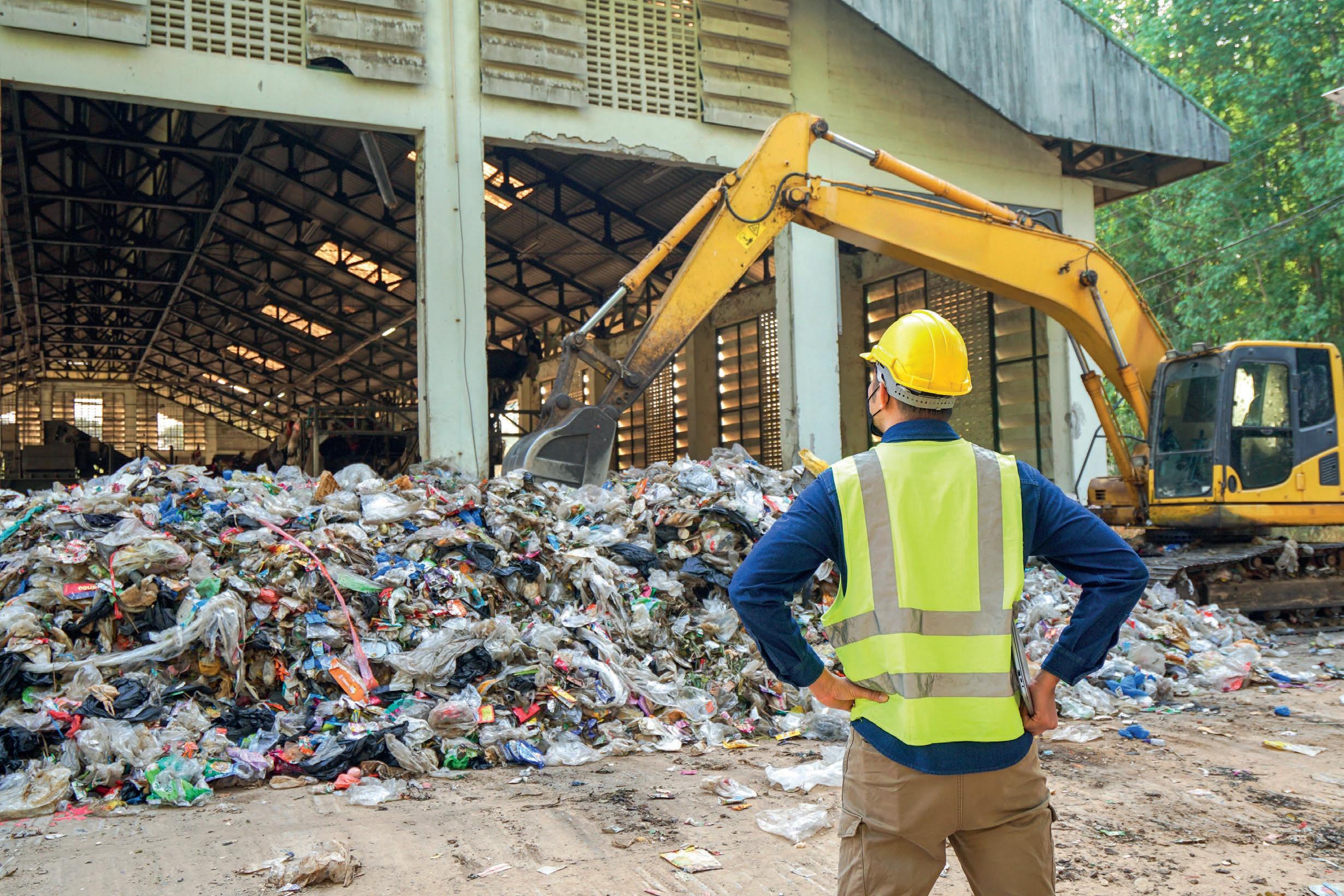
NEW SOUTH WALES IS FACING MOUNTING pressure on landfill capacity, growing waste volumes and increasing expectations around recycling and resource recovery, with the state government positioning circular economy reform as central to addressing the challenge.
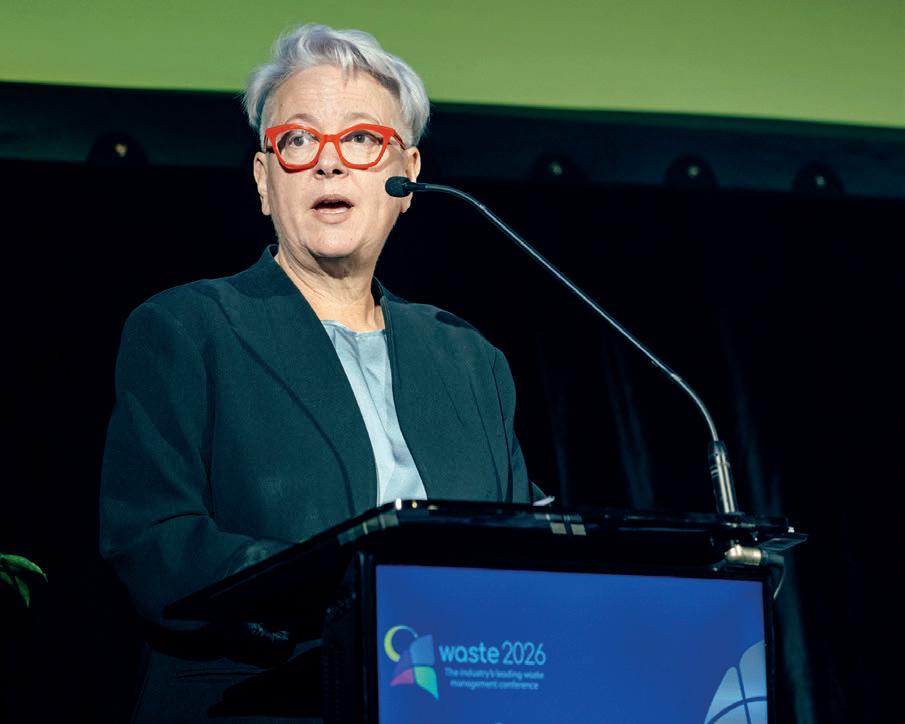
Speaking at Waste 2026 in Coffs Harbour, the Minister for the Environment Penny Sharpe said the state remained on the “precipice of a waste crisis”, but progress had been made over the past 12 months through collaboration between government, industry, councils and the community. She said the scale of the challenge demanded coordinated action across multiple fronts at the same time.
“These have always been problems that we need to solve together,” she said. “You ask the tough questions. You prod me and the government in the right direction. You make government confront realities that are often swept away, and you
challenge us to be ambitious and importantly urgent in our thinking.”
A pillar of the government’s response is the NSW Waste and Circular Infrastructure Plan, which is being delivered in stages. Chapter one, released in October last year, focuses on ensuring Greater Sydney does not run out of landfill space while also building the infrastructure needed to process increasing volumes of organic waste.
Sharpe said the planning and approvals system had historically failed to treat waste infrastructure as an essential service, creating delays and uncertainty for operators seeking to expand or develop facilities.
“We heard from you that the planning process is often too long and complex, and it creates extra risk and expense,” she said.
The government has since introduced measures designed to streamline planning approvals for priority landfill proposals and other critical infrastructure
projects. A dedicated waste infrastructure concierge service is also expected to be established later this year to help proponents navigate planning requirements and improve application quality.
Sharpe warned that without action, households and businesses could face consequences.
“Without solutions, household rates could go up by over 20 per cent and red lid bin collections may have nowhere to go,” she said. “It’s not hard to imagine a solution where red lid bins are not collected from households or businesses.”
The government has also established a Waste Infrastructure Advisory Committee aimed at improving coordination between industry, councils and government agencies, while the NSW Environment Protection Authority (NSW EPA) has commenced a public lands audit to identify possible future waste infrastructure sites. Sharpe acknowledged community resistance remained a challenge.
“Many of you in this room know as well as I do that communities don’t always welcome this infrastructure,” she said. “We’ve got to find places to put it, and we’ve got to find places that work.”
While Sydney’s looming landfill constraints have dominated public discussion, chapter two of the state’s infrastructure plan will focus on regional NSW and the challenges facing councils and operators outside metropolitan areas. Sharpe said many regional councils lacked the resources, expertise and long-term planning capability needed to maximise resource recovery and manage increasingly complex waste streams.
“We’ve heard that a lack of resourcing means that planning decision making is often limited to immediate contract or service provision cycles and lacks the long-term strategic focus needed to address future needs,” she said.
The minister said some regional areas were already beginning to experience landfill capacity shortages, while legacy landfills continued to create environmental and financial risks, including issues involving PFAS and leachate management.
Material recovery facilities servicing regional communities were also facing rising pressure from increasingly complex packaging and inconsistent contract arrangements. Sharpe said the government believed stronger regional collaboration between councils would be essential to achieving economies of scale and attracting investment into new infrastructure and services.
“The New South Wales Government believes that regardless of whether infrastructure is owned and operated by the council or the private sector, one of the most effective ways to overcome cost and uncertainty barriers is for councils in regional New South Wales to take a more joined up approach to waste management,” she said.
NSW EPA chief executive officer Tony Chappel reinforced the importance of systemic reform, arguing that circular economy policy was now directly connected to broader issues including productivity, housing affordability, energy security and public trust.
“Today, more than ever, a circular economy is not just about how we deal with waste,” he said. “It’s about how we build productivity. It’s about how we build economic resilience and energy security. It’s about housing and infrastructure costs.”
Chappel said regulators could no longer focus solely on pollution control at the “end of the pipe”, and instead needed to help shape markets, support investment confidence and encourage innovation while maintaining environmental integrity.
“We need to protect human health and the

But despite the challenges, both Sharpe and Chappel
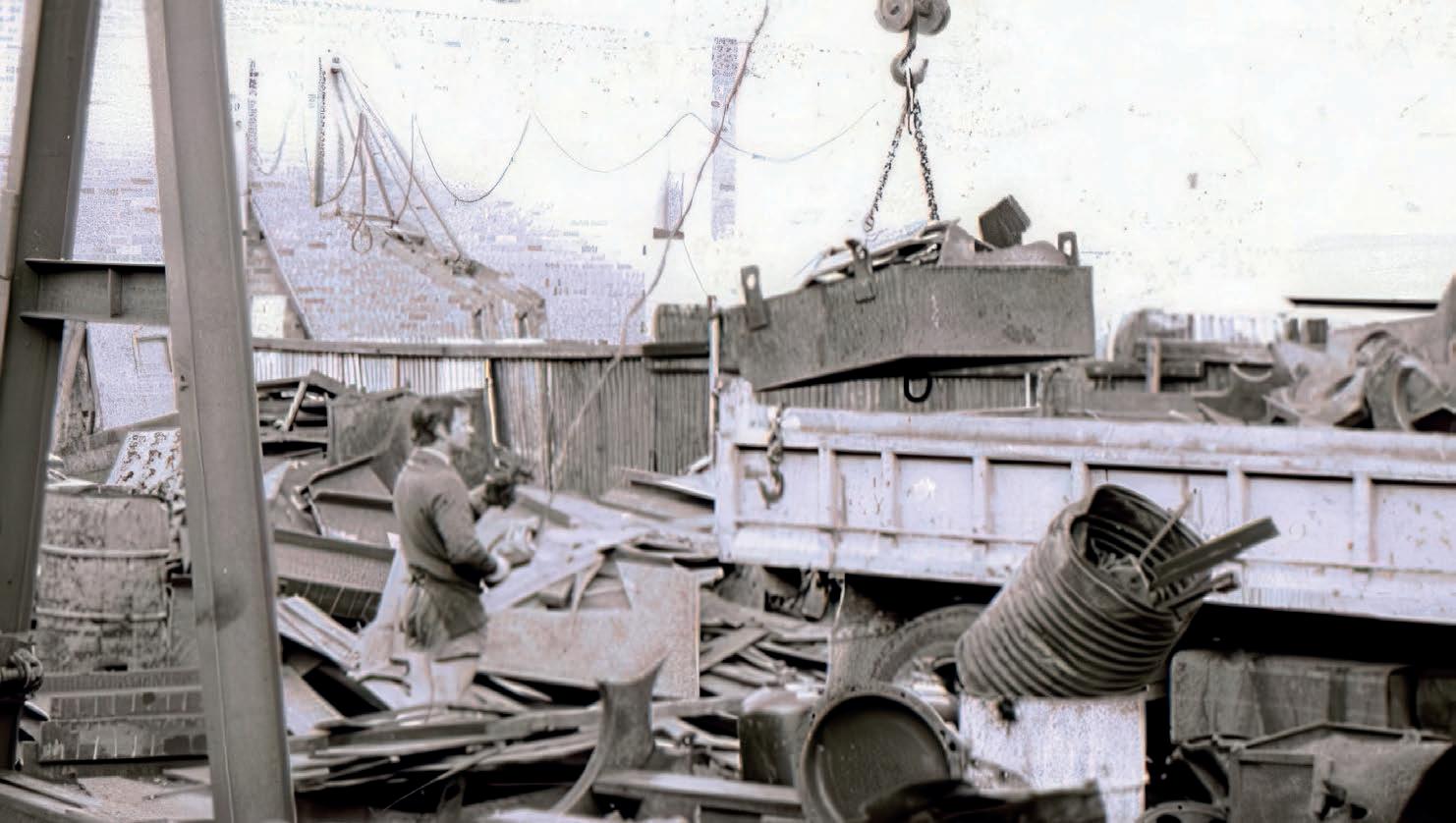
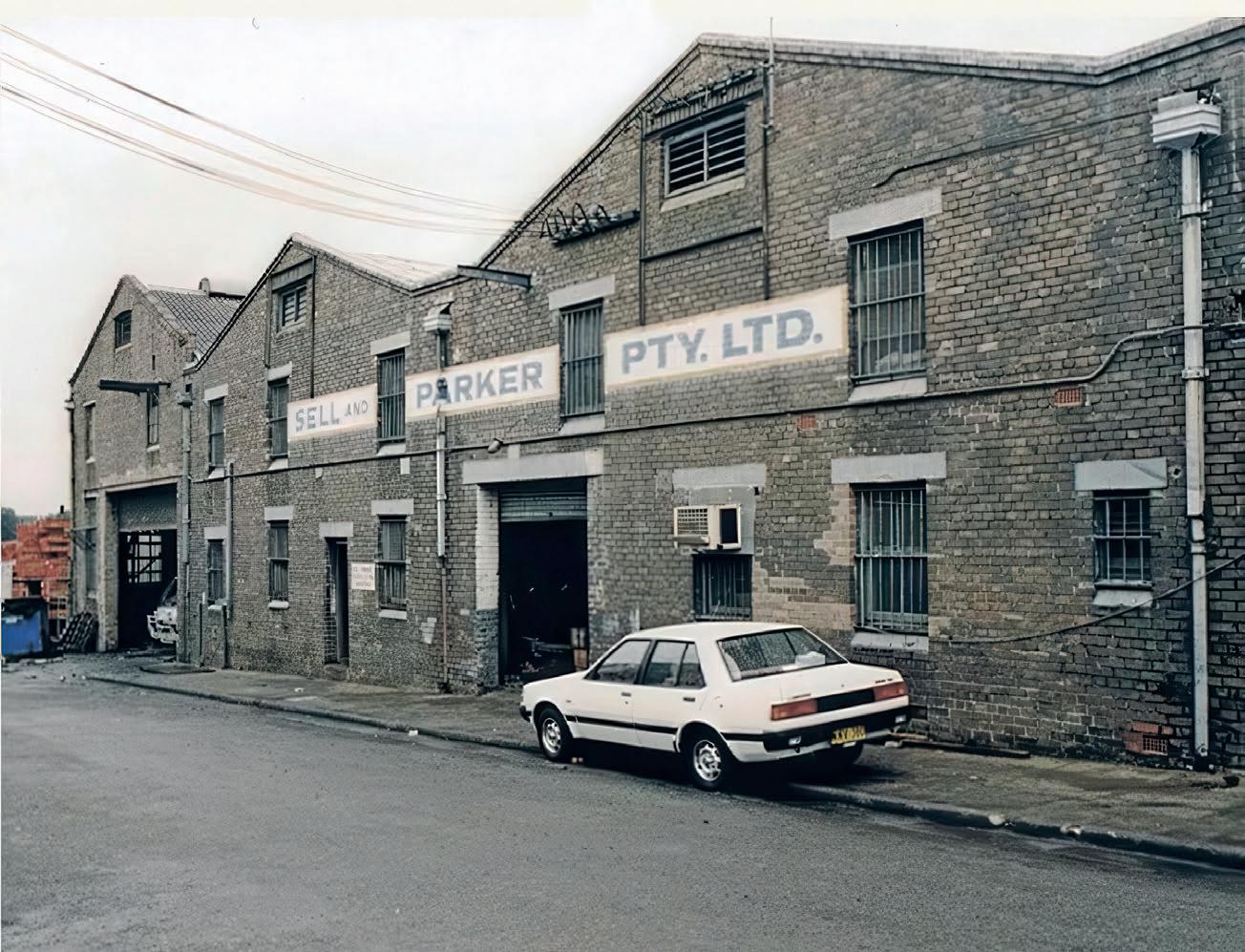
SELL & PARKER’S ORIGINS TRACE BACK TO A SIMPLE , hands-on operation built on instinct, relationships and hard work. Starting out 60 years ago, the Sydneybased business has grown into a diversified recycling and manufacturing group, but its foundation was tied to the scrap metal trade.
Beginning in 1966 when Ross Parker partnered with local scrap dealer Max Sell, the operation was modest, consisting of just two trucks and a practical approach to sorting material. Scrap collected from engineering businesses would be split manually, with higher value material separated and sold directly to foundries, while lower grade scrap was passed on to other dealers for further processing. It was a straightforward model, but one that relied on sharp judgement about value and opportunity.
Parker was an electrician by trade, working in a foundry environment when the opportunity arose. Sell decided to exit the industry, and Parker took over the business. Parker then built the business gradually but deliberately, driven by persistence and a willingness to reinvest.
Building scale through opportunity and reinvestment
In the early years, the business operated without a fixed base, selling material onward rather than processing it internally. That changed when Parker began renting land, allowing him to store and process scrap himself. This shift marked an important step, giving the business more control over its operations and margins.
A turning point came during the nickel boom of the early 1970s. At the time, Parker had been purchasing steel scrap that was bundled with nickel turnings, a material that did not have much of a market. Rather than discard it, he stockpiled the nickel. When prices or the metal surged, that accumulated material became highly valuable. The windfall from selling those turnings provided the capital needed to purchase property, establishing a permanent base for the business.
Over the past six decades, growth has followed a pattern of steady upgrades. Properties were improved or replaced over time, and the business gradually expanded its footprint. The approach was not built on rapid expansion, but on making the most of opportunities when they arose and reinvesting gains back into the operation.
The story reflects a broader principle within the scrap industry, where value is often realised not immediately, but through patience and timing. In this case, that dynamic played a defining role in shaping the future of the company.
The next phase of the business began when Parker’s sons, Luke and Morgan, joined the company in the 1990s. Both had spent time studying and working outside the business before returning, bringing with them a broader perspective on how the company could evolve.
“We both went to school, university and worked out
in the big wide world for a while,” Morgan said. “Luke joined in about 1995, and I joined in about 2000.”
At the time of their arrival, the operation was still relatively small, centred around a single scrap yard in Waterloo. The decision facing them was clear: either expand or risk stagnation. They chose to grow the business, building on the foundations laid by their father.
“When I joined the business, we just had one little scrap yard at Waterloo, and we either had to get bigger or get out,” Luke said. “So, we decided to have a crack.”
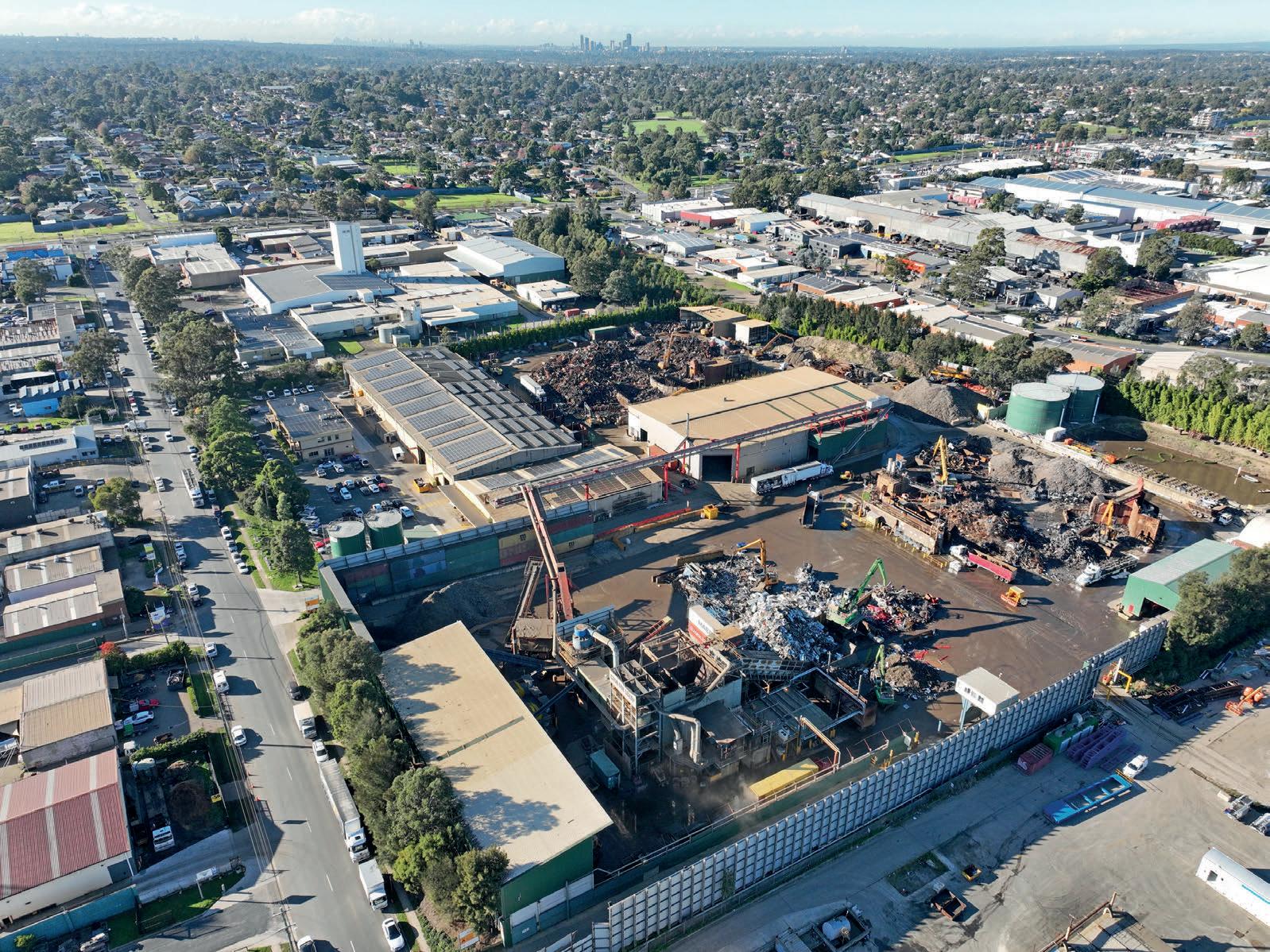
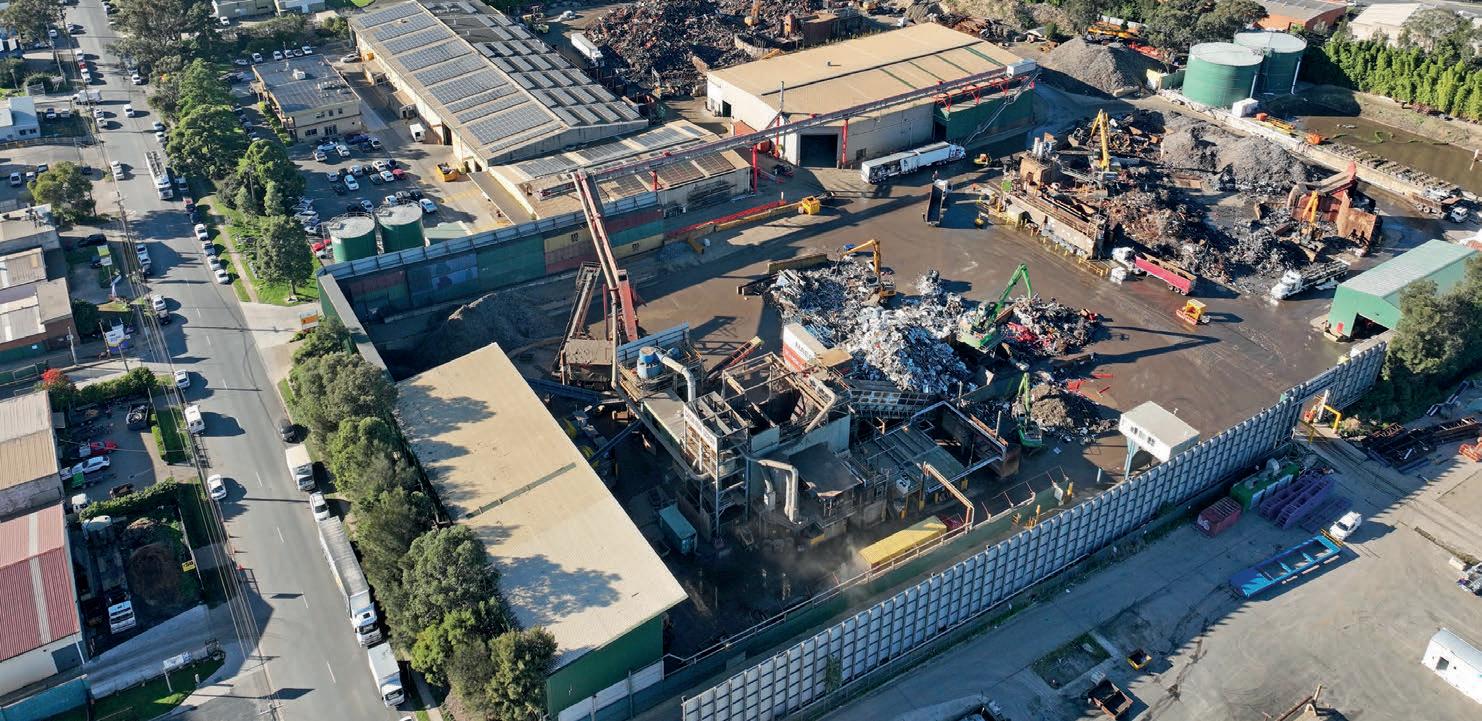
That growth has been significant. Today, the company operates multiple large scrap yards alongside other recycling and manufacturing ventures, employing around 400 people across the broader group. The expansion has not been driven by obligation, but by a shared sense of opportunity.
“It’s not a responsibility to be in the business, it’s a privilege,” Morgan said. “We both came in and we grew up around the business, so to speak. We went and did other things, and we were given the opportunity.”
Ross Parker has gradually stepped back from day-to-day operations over the past decade, though he remains engaged. Based in Port Douglas, he still keeps an eye on the business through an extensive network of CCTV cameras across its sites, maintaining a connection to the operation he helped build. The transition between generations has been marked by continuity in values alongside a willingness to adapt. While the scale and complexity of the business have
“The scale has just changed so dramatically. We now handle in an hour what Ross used to handle in a month.”
changed, the underlying approach of identifying value and working hard to realise it remains consistent.
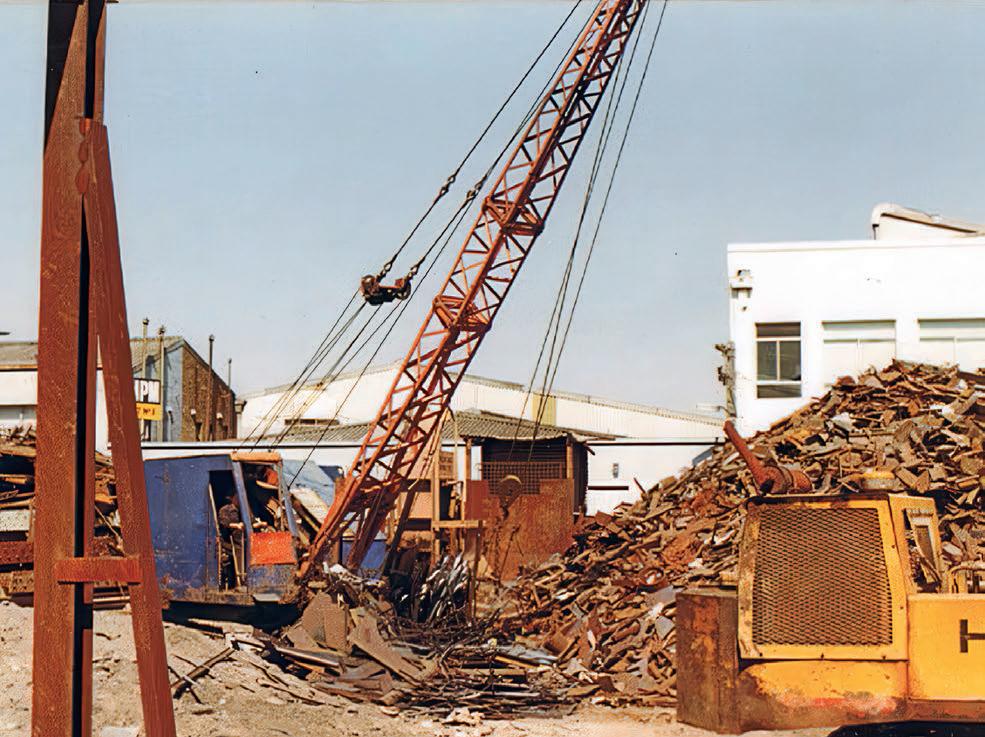
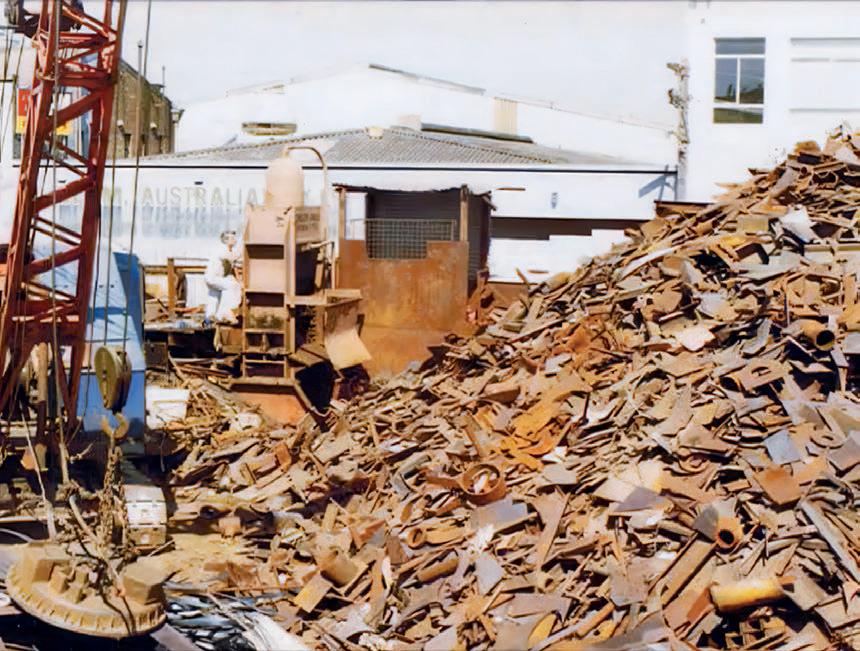
The scrap and recycling industry has undergone transformation over the decades, particularly in terms of scale, technology and regulation. One of the most striking changes has been the increase in processing capacity. Equipment has become larger and more efficient, allowing modern operations to handle in an hour what once took a month.
“The scale has just changed so dramatically,” Morgan said. “We now handle in an hour what Ross used to handle in a month.”
Advances in technology have played a central role in this shift. Machinery is now more sophisticated, with capabilities such as self-diagnosis and increasingly autonomous operations. These developments have enabled higher throughput and improved consistency, reshaping how scrap is processed. Machines are getting smarter and able to learn how to operate autonomously.
Environmental standards have also tightened.




“Fifty years ago, they would take insulating wire and burn the plastic off,” Morgan said. “Now the plastic is processed, removed and worth good money.”
Global market dynamics have further influenced the industry. In the early 2000s, exporting scrap to China opened new opportunities, allowing a wider range of materials to be shipped in a single container. More recently, that trend has shifted, with increasing emphasis on keeping materials within domestic markets.
Despite these advances, some challenges persist. One ongoing concern is the gap between regulation and enforcement. While rules exist across areas such as environmental compliance, safety and trading practices, inconsistent enforcement can create an uneven playing field.
“One of my pet grievances at the moment is unenforced laws and regulations,” Luke said. “We don’t need more laws, we just need the existing laws to be enforced.”
He said businesses that adhere to the rules may find themselves at a disadvantage compared to those that do not, particularly when compliance comes at a cost.
“We try to do the right thing, we try to play by all
for scrap in New South Wales, introduced to deter theft and illegal trading. While compliant operators follow the law, the lack of consistent enforcement has allowed non-compliant practices to continue elsewhere. Luke said that Sell & Parker abide by those
trading analysis and internal auditing. However, their impact is currently incremental rather than transformative.
“We use a bit of AI in our machinery and in some of our internal functions,” Morgan said. “It’ll have

marginal impacts, but I don’t think it will revolutionise the industry.”
In contrast, robotics has yet to gain traction in scrap processing, largely due to limitations in speed and flexibility compared to human workers. Morgan believes robots are too slow. He feels humans are faster and more dexterous. A human hand is better for picking.
Even with increasing automation, the human element remains critical. Tasks such as sorting and quality inspection still rely on the adaptability and speed of people, particularly in high volume environments.
“It’s not really a weight issue,” Luke said. “It’s the volume of material that passes by. Robots just can’t keep up.”
As Sell & Parker continues to evolve, its story reflects both the changes within the industry and the enduring principles that underpin it. From two trucks and a back lane operation to a large-scale recycling business, the journey over 60 years has been shaped by opportunity, resilience and a clear understanding of value.
By: Mike Ritchie, MRA Consulting Group
EVERY STATE OF AUSTRALIA NOW RAISES landfill levies, with the exception of the ACT and NT (Table 1). The ACT incorporates a “waste to landfill fee” into the gate fee of the Mugga Lane landfill, but it is not declared as a levy and its exact value is not made public. The reasons the levies are raised on waste disposed to landfill are generally linked to:
Changing the market economics of recycling by making landfill more expensive; and Raising funds to support innovation and reform in waste and recycling.
Here are some examples and justifications:
NSW’s states that “…the contribution aims to
reduce the amount of waste being landfilled and promote recycling and resource recovery.”
Meanwhile Queensland’s reasoning is that “The strategy seeks to minimise waste being sent to landfills and encourage increased recycling.”
And that the levy aims to:
•Reduce the amount of waste going to landfill;
•encourage waste avoidance;
•provide a source of funding to enable better resource recovery practices
•provide certainty and security of feedstocks for advanced technology; and
•facilitate industry investment in resource recovery infrastructure.”
Over on the west coast, WA states “The waste levy acts as an economic instrument to reduce waste
to landfill by increasing the price of landfill disposal and generates funds for a range of waste and environmental purposes. The waste levy plays a key role in achieving the objectives of Western Australia’s Waste avoidance and resource recovery strategy 2030 by providing a disincentive to dispose of waste to landfill and by generating revenue to fund programs which support the strategy.”
Finally, in Tasmania, they’re saying “Funds raised from the landfill levy are being invested directly into the waste and resource recovery sector, supporting existing industry to reduce waste, and creating new jobs and business for Tasmanians.”
Note that all of them include arguments about funding reform, innovation and investment in recycling, to make our economy more economically efficient and sustainable.
Collectively across Australia, the levies raise a surprising $2.7 Billion per year (Table 2).
This is an estimate because Governments don’t publish the waste data for two years after collecting the levy data, so we had to use 2024 waste-to-landfill data to make these calculations. We have also applied population statistics for metro and regions (as a proxy for tonnes to landfill) to apply differential levy rates, to estimate the total State levy revenues.
Only NSW publishes the levy funds raised in the Budget Papers so everything else is estimated. However, we won’t be out by much in our calculations. So, the total revenue from landfill levies collected in Australia (excluding the ACT) is now $2.7B per year. Finally, I am sure you will be interested to know just how much of the levy funds are being reinvested in waste and recycling innovation, investment and kit. This section comes with a caveat. No single
State Government publishes this information in an accessible and accountable manner. Governments claim different expenses as levy hypothecation.
•Some governments use the levy to fund recycling. Good.
•Some use it to fund recycling and their own EPA costs ie, normal government costs. Not as good.
•While others do little at all. Not good at all.
Table 3 shows our best estimates of the level of hypothecation (dedication or ring fencing) of the levy to the recycling and waste sector. The MRA team has gathered this information up from all known sources. So, I own any misinterpretations. I also call on
Governments to publish this information properly and transparently.
It is impossible to disaggregate infrastructure spend from EPA recurrent costs ie, the cost of the bureaucracy because State Governments don’t publish this information. It is a bit of sleight of hand, but at least the money is being spent within the environment sector.
NSW is notable. It raises the most and siphons the most, spending only 10 per cent on its proper purpose. The key message is that overall, about $1.2B is being reinvested and more than half, a total of $1.5B, is being siphoned off by Treasuries to fund other things.
If we try to take out the EPA funding from Vic and SA
(est. 50 per cent) the amount spent on recycling and infrastructure falls to $914m (of which almost half if Queensland) or an average hypothecation rate of only 34 per cent. Thirty-four per cent is not even close to the promises made by State Governments to fund the recycling industry and councils who are doing all the heavy lifting. The current situation is a rort.
Let me point out one important point. Most of the “work” that the levy does is by changing the market price of landfill (making it more expensive) compared to the costs of recycling. The levy provides the headroom for recyclers to compete with landfills. In that sense the higher the levy the more recycling can compete. This is true irrespective of the level of hypothecation.
But right now, the recycling sector is in a crisis. Australian recyclers are under severe financial pressure and, in some cases, going broke. The sector needs all the money it can get to build the kit to achieve real reductions in waste to landfill and hit the national waste targets. We have no chance on the current trajectory. Governments are wasting the opportunity to grow jobs and improve sustainability. And I, like you, strongly object to the rort.
State Governments raise the levy on a promise to spend it for the reasons it was imposed. Better recycling, reducing waste to landfill, improved resource recovery.
We (landfill users including households and businesses) pay the levy in good faith. There are rules in Australia in the Competition and Consumer Act against Misleading and Deceptive Conduct. It should apply to State Governments.
Finally, a point about who pays the levy. About 30 per



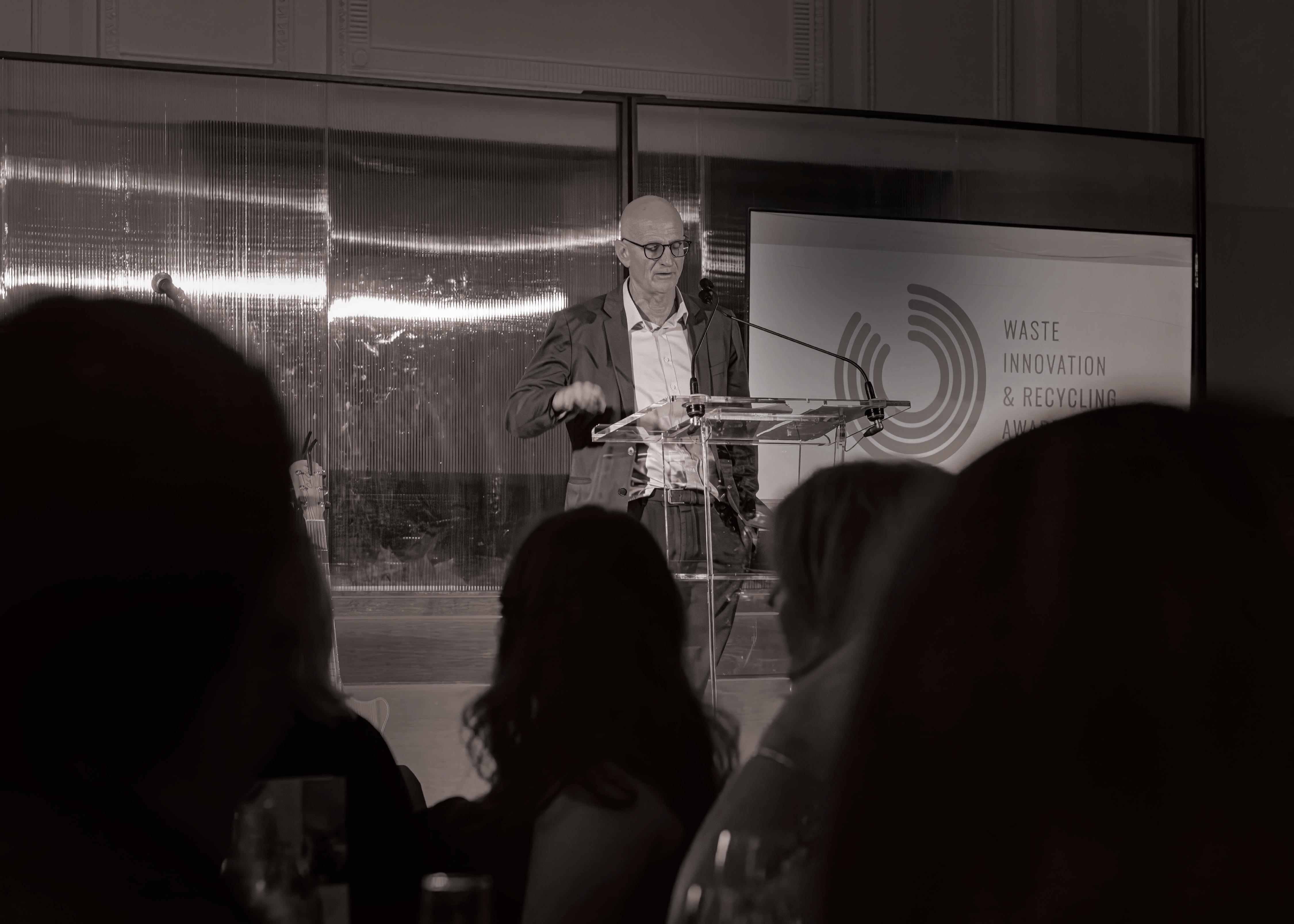
The 2026 Waste Innovation and Recycling Awards will bring the industry together in Melbourne this October to recognise the bold ideas, breakthrough technologies and outstanding achievements shaping the future of Australia’s waste and resource recovery sector.
OCTOBER 2026
MELBOURNE
Nominations opening soon
FOR OPERATORS TRYING TO ESTABLISH OR EXPAND waste facilities, dealing with the environmental regulator can be as complex as the technical challenges of the work itself. According to Gavin Shapiro, partner at Hones Lawyers, the experience of engaging with the Environment Protection Authority (EPA) has been far from uniform, shaped as much by internal dynamics as by legislation.
Shapiro said he’s found the regulator’s approach varies depending on the branch, the officers involved and the history of the company in question. In some cases, relationships are constructive and collaborative, while in others they are adversarial, particularly within certain operational areas.
“There are differences from branch to branch, and even officer to officer,” he said. “Some branches
have historically taken a more adversarial approach, particularly in the waste space, and that can filter down through mid-level management. Individuals can put their own interpretation or attitude on how matters are handled.”
That variability, he said, could have tangible consequences for operators. Where a company has developed a poor reputation, interactions with the regulator often became strained, with compliance actions approached from a position of suspicion. By contrast, businesses that invest in systems, personnel and open communication can shift the tone of the relationship over time.
Shapiro pointed to one client that has moved from a period of prosecutions and incidents into a more stable footing after committing to internal improvements. Additional risk management

roles, stronger auditing processes and regular engagement with the EPA helped rebuild trust.
“The relationship became much more collaborative,” he said. “When issues arose, there was an understanding that the company had strong systems in place and was acting in good faith. That changed the way investigations were conducted.”
However, he noted that not all operators achieve that balance. In cases where trust remained low, investigations can escalate, with regulators assuming the worst from the outset.
Complicating matters further, he believes, is the EPA’s dual role as both regulator and enforcer. While the agency is responsible for issuing licences and assessing applications, it also carries out compliance and enforcement actions, sometimes within the same team.

“They wear two hats,” he said. “They’re the body you go to for licence approvals or amendments, but they’re also the enforcement agency. If there’s already a negative perception from an enforcement perspective, it can carry over into licensing decisions.”
Despite these challenges, Shapiro acknowledged that the responsibility for compliance ultimately rests with operators. Businesses are expected to understand and follow the rules, implement appropriate systems and respond effectively when issues arise.
Where unforeseen incidents occur, he said the key is demonstrating that an incident is genuinely isolated and not indicative of systemic failure. Where regulators accept that explanation, outcomes can be less severe.
“If you can show you’re a good corporate citizen and that you’ve done everything reasonably possible, often the EPA will take a more measured approach,” he said. “Warnings rather than prosecutions can occur in those circumstances.”
However, Shapiro noted that not all breaches are treated equally. Administrative non-compliance, such as failing to meet the detailed requirements of resource recovery orders or licence conditions, attract less leniency than one-off operational incidents.
He said that there’s a huge amount of regulation in that space. He also believes that when it comes to technical compliance with a certain set of

SG Advanced Composting™ Technology
Simple Design. Low Energy.
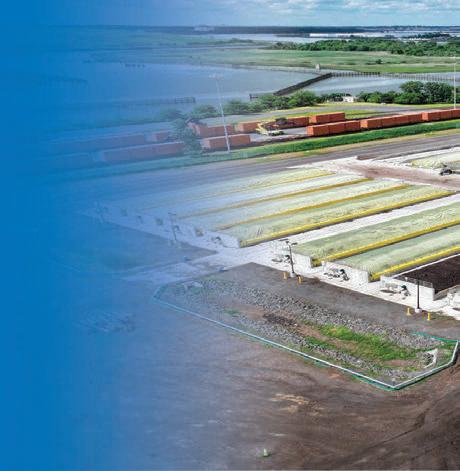
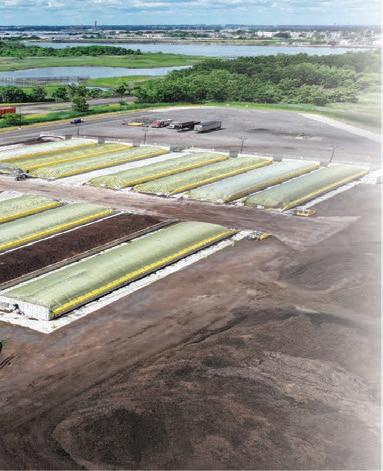
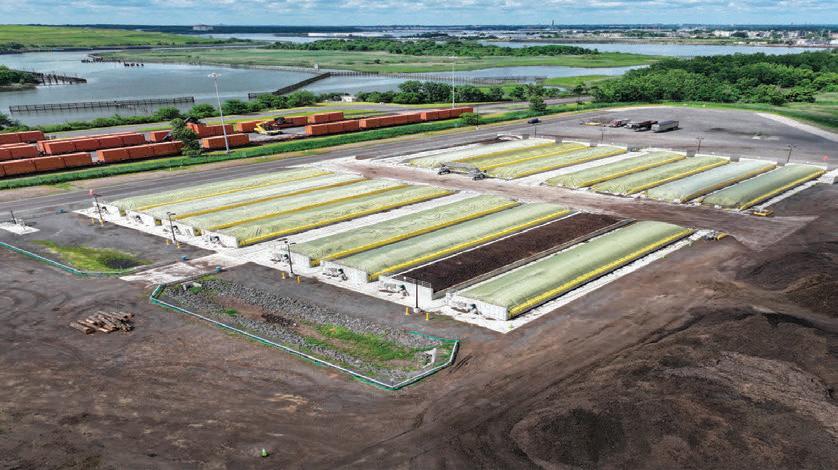
SG ADVANCED COMPOSTING™ Technology with Gore® Cover delivers high-performance composting with less than 2 kWh/ton energy use. That’s a fraction of what’s required for energy-hungry tunnel systems. No massive buildings. No round-the-clock blowers. Just smart, scalable, easy-to-operate composting that cuts CAPEX and OPEX—without cutting corners.
BUNKER™

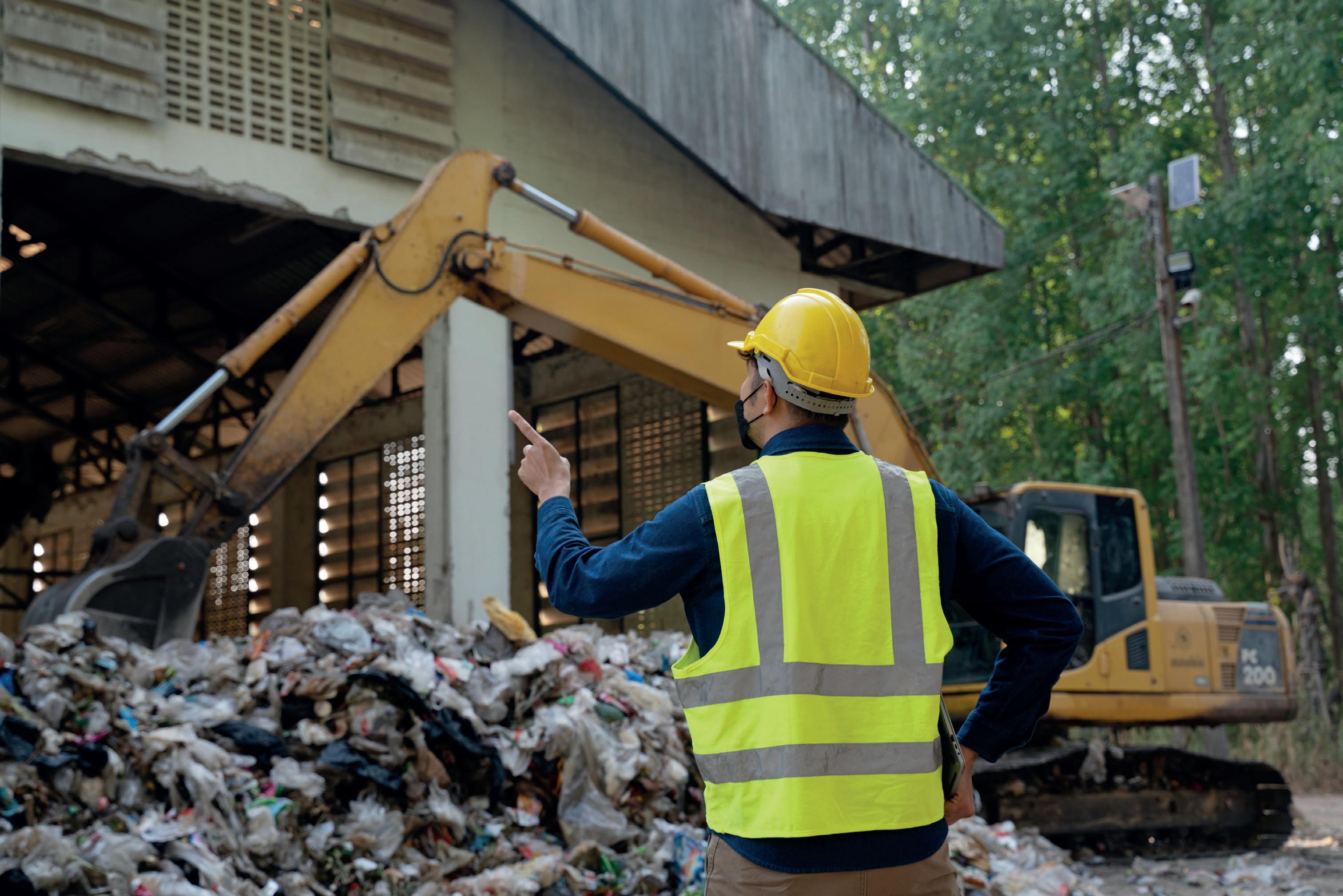
Shapiro acknowledged that the responsibility for compliance ultimately rests with operators. Image: Attasit saentep/shutterstock.com
“The relationship became much more collaborative. When issues arose, there was an understanding that the company had strong systems in place and was acting in good faith. That changed the way investigations were conducted.”
requirements, the regulator is less understanding.
A persistent challenge for operators is the sheer complexity of the regulatory framework. Waste businesses are required to navigate extensive documentation, including licences, exemptions and testing requirements, all of which carry detailed obligations. Shapiro said this creates a disconnect between regulatory expectations and on-the-ground realities.
“You end up with very long systems and procedures,” he said. “But do we really expect someone operating a forklift or driving a truck to have memorised all of that? It’s incredibly difficult in practice.”
An example of this complexity is asbestos
asbestos contamination,” he said. “Even with strong systems, something can be introduced upstream that leads to cross-contamination further down the line.”
The issue is compounded by differing interpretations of regulatory thresholds. While some guidance suggests allowances below detectable limits, legal decisions have reinforced a strict interpretation in certain contexts.
Shapiro said there have been cases where minute
traces were found to mean non-compliance. He said that this creates uncertainty, especially when courts have differed in how they interpret the same rules. For operators, this ambiguity made compliance more difficult, particularly when combined with the expectation of zero tolerance in some areas.
“How is someone in the industry supposed to interpret these requirements when even judges don’t always agree?” Shapiro said. “Most people are trying to do the right thing, but the framework can be very hard to navigate.”
Beyond operational compliance, Shapiro identified structural issues within the regulatory system that, in his view, hinder the development of new waste infrastructure. Chief among these is the way waste itself is defined in legislation.
He found the definition to be too broad. Anything that an original owner no longer wants can be considered waste, even if it’s being separated for recycling or reuse.
He argued that the absence of a clear point at which material ceased to be waste created uncertainty for businesses, particularly those
involved in recycling or resource recovery.
“There’s no clear guidance on when something stops being waste,” he said. “That ambiguity is deliberate to prevent misuse, but it also creates real problems for legitimate operators.”
According to Shapiro, this lack of clarity discourages investment in recycling facilities, with some businesses unwilling to take on the legal risks involved.
“You hear a lot about the circular economy, but the legal framework doesn’t always support it,” he said. “If you don’t know whether your material is still classified as waste, it becomes very difficult to operate with confidence.”
The second issue he identified is the approval process for new facilities and licence modifications. Obtaining development approvals and environment protection licences can be both time-consuming and costly, often requiring a lot of documentation and prolonged engagement with authorities.
“The time and cost involved are enormous,” he said. “You can be dealing with hundreds or even thousands of pages of documentation, and the process can drag on for months or years.”
Shapiro said that, despite the critical need for waste infrastructure, the system often prioritises exhaustive assessment over practical outcomes. He said there’s a tendency to try to resolve every possible issue upfront. And while that’s understandable, it makes the process onerous.
In some cases, applicants resort to legal avenues simply to move the process forward. Shapiro said it is increasingly common for proponents to pursue what is known as a deemed refusal, allowing them to take their application to court after a set period of inactivity.
“Clients know they could be stuck in limbo for 12 to 18 months,” he said. “They go to court to try to speed things up, even though that involves significant legal costs.”
Those costs, which can reach hundreds of thousands of dollars, add another barrier to entry for new projects. Shapiro said it’s not uncommon to spend a large amount just to save time. However, he believes that this is not a sustainable way to deliver essential infrastructure.
The cumulative effect is that there is now a shortage of waste facilities relative to demand.
Despite policy targets aimed at improving resource recovery and reducing landfill reliance, the practical realities of the approval process are slowing progress.
“We’re talking about infrastructure that’s needed for the whole community,” he said. “But the system makes it so difficult that many players simply don’t want to pursue it.”
Reflecting on nearly two decades in the field, Shapiro expressed scepticism about the sector’s ability to meet future targets under the current framework. He saw it as more of a box-ticking exercise – there’s less focus on collaboration and more on identifying problems. That makes it harder to get projects off the ground.
While he acknowledged the importance of regulation and enforcement, Shapiro suggested that a more balanced approach, such as combining clarity, consistency and collaboration, would better support both compliance and industry development.
“We need clearer rules and a more workable approval process,” he said. “Otherwise, it’s going to remain very difficult to build the infrastructure that’s needed.”
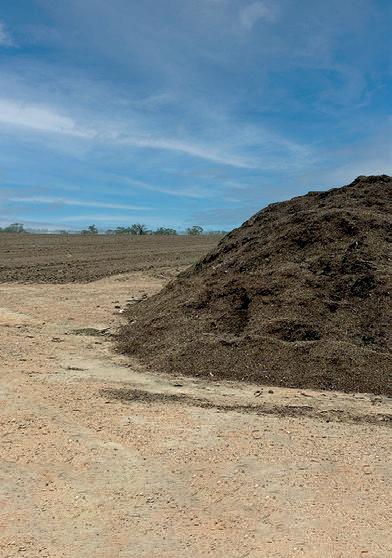
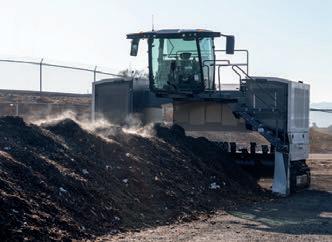
AT A LARGE FOOD ORGANICS AND GARDEN ORGANICS (FOGO) recycling operation in Melbourne’s south-east, Valoriza is ‘closing the loop’ on the local area’s food and garden waste by creating a valued soil conditioner that’s locally in demand as a regenerative soil product. The product is becoming increasingly valued by largescale vegetable producers like Vic Grow Garden for the soil health benefits generated from the rich organic matter in its feedstock. Valoriza processes garden and food organic waste from its local council customers, food manufacturers and other commercial food generation sources, to produce the in-demand soil conditioner that promotes a more circular approach to food production.
Large volumes of reliable, low contaminated feedstock are central to the operation. Household FOGO waste collections provide a reliable baseline, but
growth to meet market demand depends on expanding commercial food waste intake. These streams offer greater control over quality and lower contamination, making them particularly valuable for producing certified soil products suited to end markets, such as intensive horticulture.
“We have a regular stream of waste from food manufacturers coming in already. However, we’re driving the expansion of our commercial food waste intake to meet our customers’ increasing soil conditioner needs,” said Stuart French, Valoriza site manager. “That’s where most of our additional tonnes can come from. Kerbside FOGO collections are already allocated out, so for us to generate more volumes of quality end-product, we need to grow our commercial food waste intake.”
The business is targeting a broad mix of southeast

Melbourne sources, including food manufacturers and other large-scale generators, to provide a local recycling option for those businesses to achieve their sustainability goals. These streams are typically cleaner than kerbside collections, where contamination still remains, albeit in significantly lower percentages than ever before.
“We’re pretty strict on our requirements for commercial food. We ask for it to be completely clean and unpackaged, and what we’re getting now fits that,” he said. “There’s essentially no contamination in the commercial food waste we receive, ensuring our operations maintain high efficiency rates.”
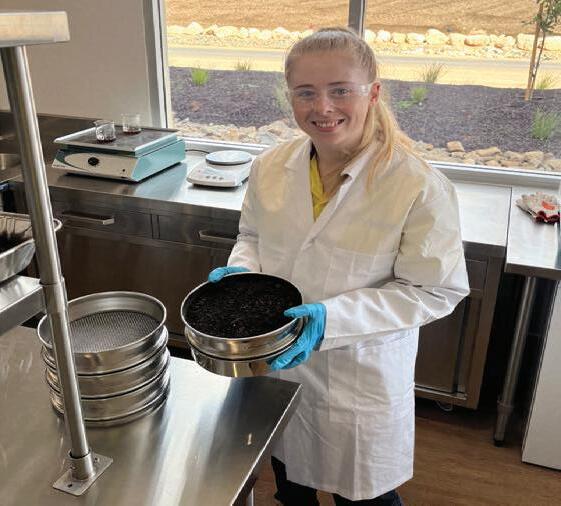
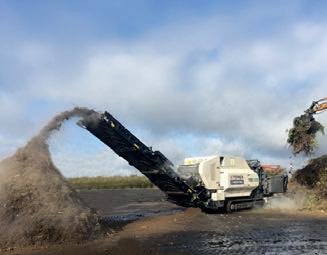
Once processed on site, all material is screened into fractions, with the finest portion supplied out to market gardeners, large landscape suppliers and soil blenders, as a soil conditioner. This product meets Australian Standards 4454 and is designed to support all elements of soil regeneration and soil blending without the risks associated with less controlled organic inputs.
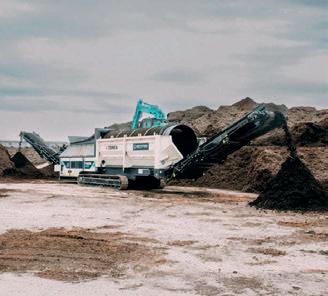
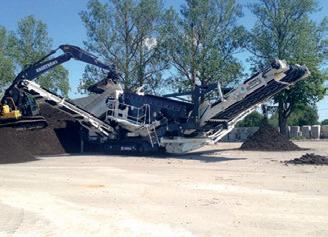
“We screen the product and the fine fraction goes to market gardeners such as Vic Grow Garden,” French said. “Our L3 Komptech Star Screen takes out any residual contaminants, so what our customers receive every time is a consistent, high-quality product they can rely on.”
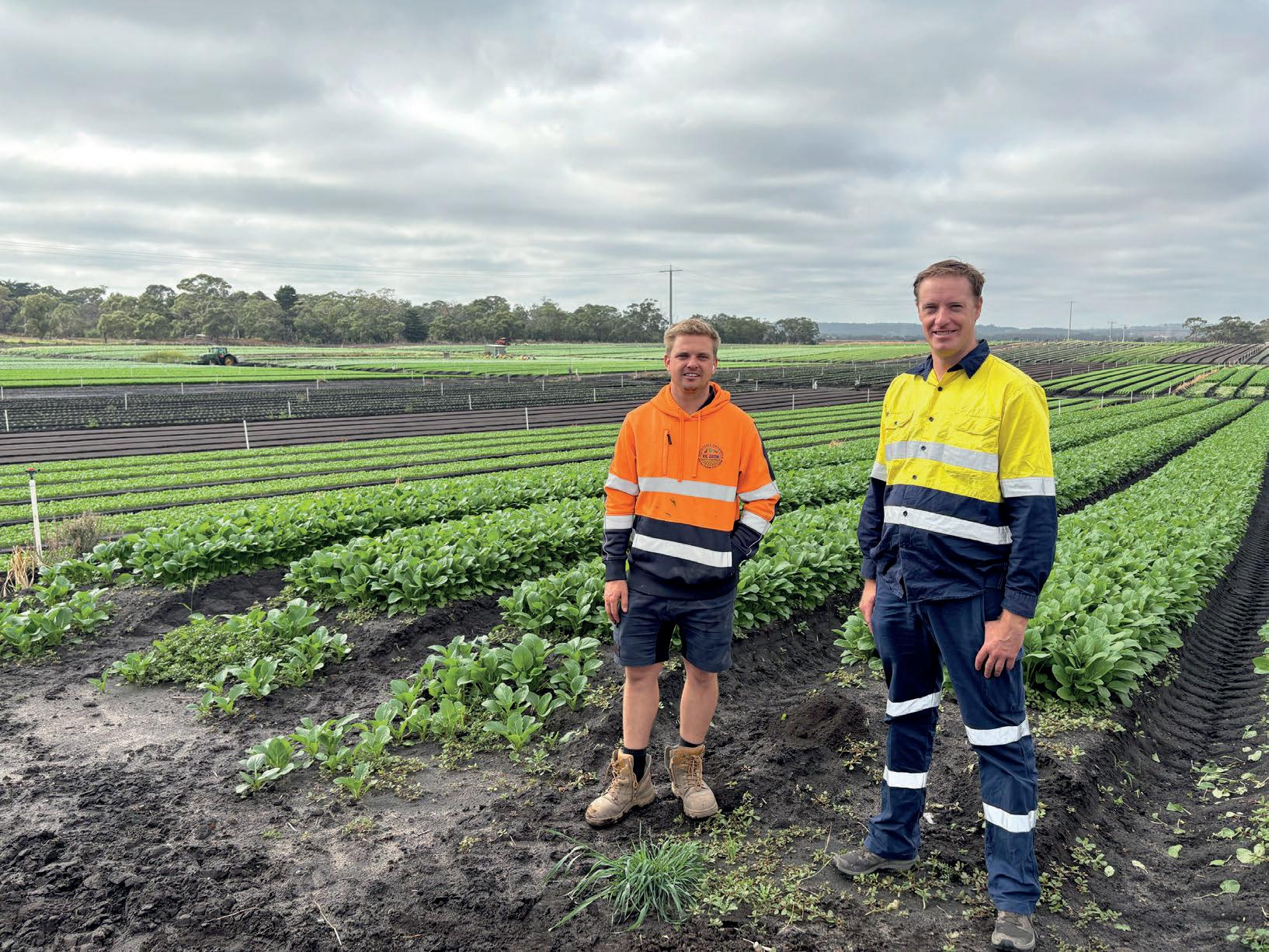
Vic Grow Garden, operating market gardens across Lang Lang and Somerville in Victoria, values soil health to underpin every aspect of food production. The business grows spring onions, herbs and Asian greens across approximately 500 acres, supplying wholesale food markets nationwide. Maintaining consistent output requires careful management of soil condition, particularly under variable weather and demanding production schedules.
Over the past eight months, Vic Grow Garden has incorporated Valoriza’s soil conditioner into its growing program, applying it almost weekly across both sites. The product was selected for its accreditation, availability and clean feedstock, providing confidence in its consistency and suitability for high-volume vegetable production.
This shift reflects a broader move away from traditional inputs such as manure, towards more controlled and reliable materials. Improved soil structure, increased organic matter, and better moisture retention have contributed to more stable crop performance and better resilience under increasingly unpredictable growing conditions.
“We had a contractor who spreads our manures and composts, and he put us in touch with Valoriza. Keen to work together, we started with smaller volumes but quickly increased our supply intake as our soil health began to lift immediately,” said Chris Dyker, operations manager at Vic Grow Garden.
“We spread the soil conditioner across the crops and work it into the ground. It blends into the soil and helps regenerate it by putting organic matter back in.
We don’t apply it on top of vegetables; it’s incorporated before planting. If we didn’t use it, we’d be looking at going back to chicken manure or similar, which now comes with greater food safety compliance and cost.”
The benefits extend beyond productivity. Processed and treated soil conditioners offer a lower contamination risk compared to traditional organic inputs, an important consideration for a business supplying major markets. The consistency of the product also supports planning, allowing the farm to maintain reliable output across varying seasonal conditions.
“Valoriza’s soil conditioner is better for the soil and the environment,” Dyker said. “It’s also safer for people to handle. With manure, you are exposed to health risks like salmonella. This is a cleaner product and we’re getting good results from its use.
“The amount we use changes month to month
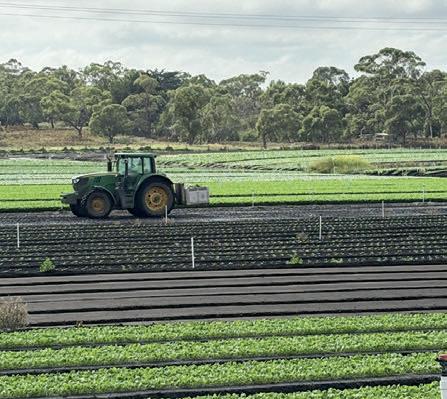
because planting varies, but we’ve generally got trucks coming in every week unless it’s too wet. Valoriza has never let us down with their product availability.”
Soil type plays an important role in performance, particularly on heavier ground where compaction and clod formation can limit productivity. The organic structure of the conditioner has helped address these challenges, improving workability and supporting better planting conditions across the farm.
Demand for remediated soil products continues to grow, driven by both agricultural needs and broader waste recovery targets. Valoriza currently produces around 40,000 tonnes of soil conditioners each year, but existing customers alone could still use more. Expanding capacity depends largely on access to additional feedstock, particularly in a competitive market.
“There’s definitely demand for it,” French said. “Vic Grow Garden has an insatiable appetite – they could take more than what they do now. And we’re servicing other market gardeners and customers from different markets as well. If we could make 50 per cent more, we could move it.”
French said that there’s competition for incoming feedstock in the Dandenong area, but he believes that Valoriza is the only company that takes the product through the entire process on one site and creates a finished product.
Policy settings are also shaping the sector’s trajectory. Incoming mandates for food organics collection are expected to continue to increase the volume of material diverted from landfill, but there are different rules in different states.
“The mandate for Victorian councils to roll out food organics collection by 2030 is a positive step,” said French. “It creates consistency and increases the amount of food being separated and diverted from landfill. But so far, it’s focused on residential collections. We’d like to see commercial businesses brought under a similar mandate, as per the changes recently made in NSW, as they generate significant volumes of food waste.”
Beyond feedstock, Valoriza is also exploring ways to strengthen its circular model by returning the soil conditioner to the same communities that generate it. Trials with some council customers are already underway, focusing on the use of soil conditioner in public spaces such as urban green amenities and compost beds for capital works projects.
Back on the farm at Vic Grow Garden, the relationship extends beyond the product itself to the Valoriza service supporting it. According to Dyker, reliable delivery and responsive communication are critical in a production environment where timing is closely tied to operational success.
“Customer service from Valoriza has been great,” he said. “If I need extra volume, I can call and they’ll organise it quickly. It comes down to communication. If you give them enough notice, they make it happen.”
As the connection between waste recovery and agriculture continues to strengthen, the partnership highlights a practical application of circular economy principles. Organic waste that might otherwise be discarded is processed, refined and returned to the earth, supporting productivity while reducing reliance on traditional inputs and closing the loop between urban waste and food production.
THE INTERNATIONAL COMPOST ALLIANCE (ICA) has launched a global call to action during the International Compost Awareness Week 2026, urging governments, industry, educators and households to recognise compost as a strategic resource for soil health, food production and climate resilience.
Held from May 3-9th, this year’s theme was Compost! Feed the Soil that Feeds Us. It focused on the role compost plays in returning organic matter and nutrients back into soils, supporting the natural systems that underpin food production.
The campaign arrived as agricultural industries around the world face increasing pressure from rising fertiliser costs, supply chain uncertainty and growing concerns around land degradation and climate resilience. Against that backdrop, the ICA said compost should be viewed as more than waste diversion tool, positioning it instead as an increasingly important source of nutrients and carbon for soils.
John McKew, national executive officer of the Australian Organics Recycling Association (AORA), speaking on behalf of the ICA, said the value of compost extends well beyond keeping organics out of landfill.
“Compost is often discussed in terms of diverting waste, but a more important value is in what it gives back,” he said. “It contains valuable nutrients, supports soil biology, improves soil structure and water retention, and helps reduce reliance on the increasingly volatile economics of external inputs such as mineral fertilisers.”
The message sat at the centre of this year’s International Compost Awareness Week, with ICA members highlighting composting as a practical way to recover value from food and garden organics and return it to productive use in soils, landscapes and food systems.
As fertiliser prices fluctuate and global supply chains remain vulnerable to geopolitical and economic pressures, compost is attracting greater attention as a locally available tool for supporting long-term soil fertility and nutrient resilience. Rather than allowing nutrients contained in food scraps and green waste to be lost through landfill or incineration, composting provides a pathway to recover and reuse those materials productively.
“Compost is not a complete replacement for all fertiliser needs in every system, but it is a proven part of the natural solution to feed our soils,” McKew said. “It helps return nutrients already present in our food and green waste back to the land, where they can be used productively rather than lost forever in landfills or incineration.”
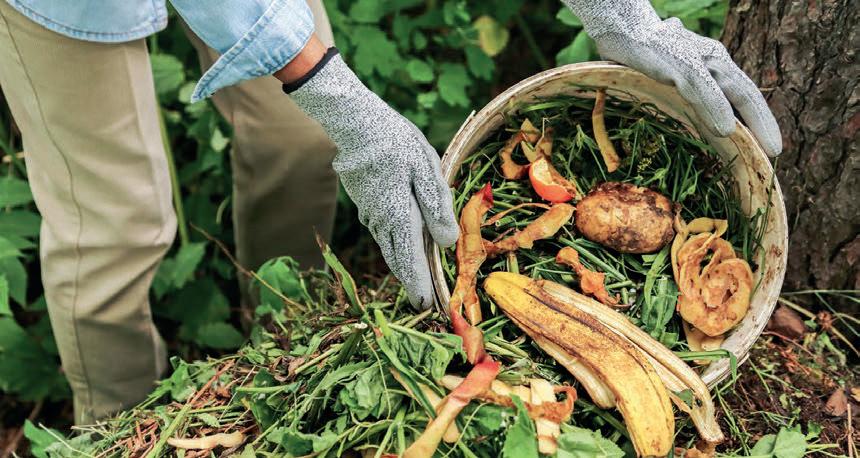

The ICA says that nutrient recovery is becoming increasingly important as industries and governments look to strengthen circular economy outcomes and improve resource security.
Compost contributes organic matter as well as nutrients, helping to build healthier soils over time. According to information provided through AORA’s The 6 Cs for Healthy Soils resource, healthy soil systems rely on six interconnected elements: carbon, chemistry, biology, structure, water-holding capacity and groundcover.
Organic matter plays a key role across these areas by supporting soil microbial activity, improving aggregation and assisting soils to retain moisture and nutrients more effectively.
Building resilience in changing conditions
Beyond nutrient supply, compost is increasingly recognised for its role in helping soils cope with environmental pressures such as drought, erosion and land degradation.
Improved soil structure can assist with water infiltration and retention, while increased biological activity supports healthier and more resilient growing systems. These benefits are particularly relevant as many agricultural regions continue to experience changing climate conditions and increasing pressure on water resources.
The ICA said compost can help soils perform more effectively under stress by improving physical, chemical and biological soil functions. This broader contribution was one reason the organisation was encouraging policymakers, local authorities, businesses and the wider community to view organics recycling as part of a more circular and secure future.
International Compost Awareness Week aimed to increase understanding of those benefits through education and community engagement activities across multiple countries.
ICA members and partners hosted public awareness campaigns, workshops, school activities, composting demonstrations, facility tours and community events throughout the week, all designed to highlight compost’s environmental, agricultural and economic value.
The campaign also sought to encourage greater participation in composting programs and wider
adoption of compost products across industries and communities.
AORA also highlighted the broad range of environments where compost can be used effectively, releasing a series of fact sheets covering different applications and sectors. The resources included information on compost use in sporting fields, council parks and gardens, orchards, broadacre farming, viticulture and vegetable production.
These examples demonstrated the versatility of compost products and the range of industries increasingly incorporating organics recycling into land management and soil improvement strategies.
In parks and gardens, compost can help improve soil quality and support plant growth. In agricultural systems, it can contribute to soil fertility, water retention and long-term productivity. In sporting fields, improved soil structure and moisture management can support turf performance and resilience. The fact sheets also outlined compost production processes and product types, helping users better understand how compost is created and applied.
The ICA said increasing awareness of these practical uses was an important part of building stronger support for composting infrastructure and organics recycling systems.
The ICA’s 2026 campaign reflected a broader global interest in recovering value from organic materials and reducing dependence on finite or vulnerable inputs. As governments and industries pursue sustainability, resource recovery and circular economy targets, composting is increasingly being recognised as a practical tool that delivers benefits across waste management, agriculture and environmental outcomes.
For the ICA, the message behind this year’s theme was ultimately straightforward: healthy soils are fundamental to productive food systems, and compost has an important role to play in supporting those soils. By returning nutrients and organic matter to the land, composting helps close the loop between food production, consumption and resource recovery.
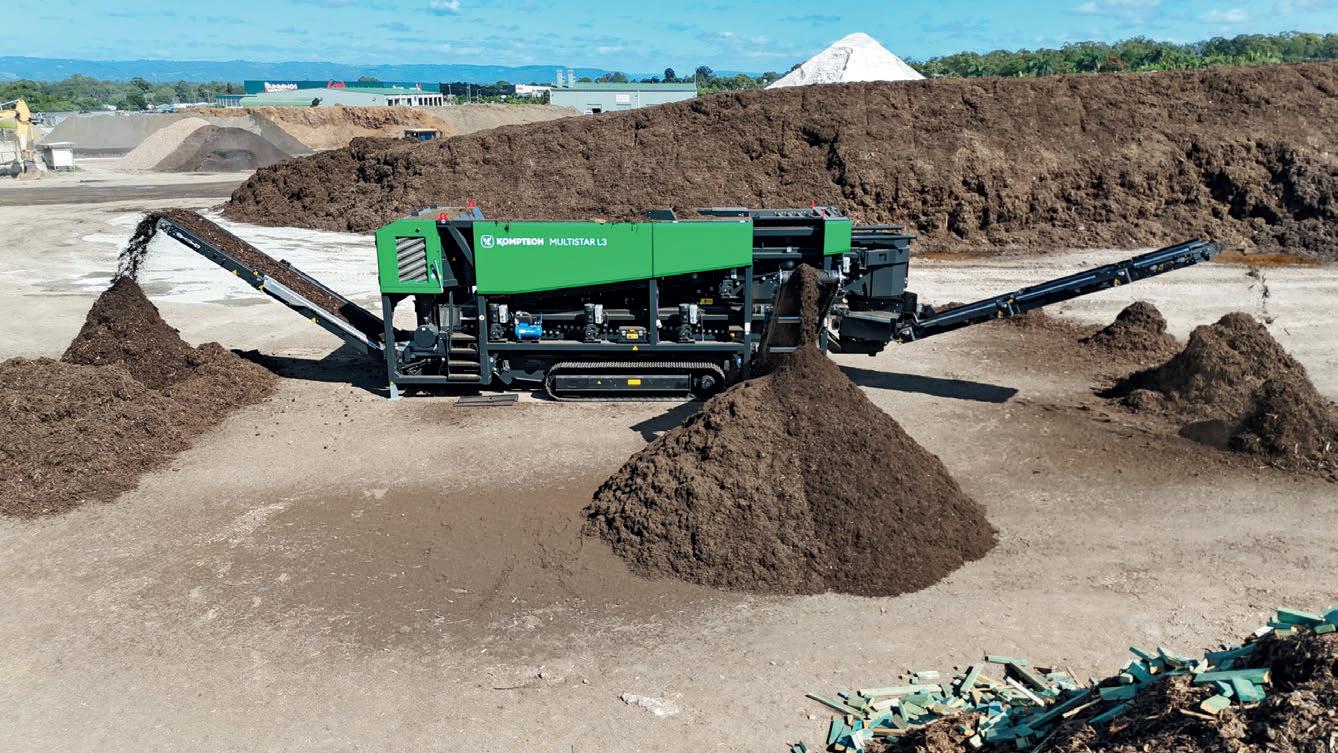
That’s where Komptech’s Multistar L3 changes the conversation.
Rather than relying solely on traditional dieselhydraulic systems, the L3 is designed around electric drive technology, giving operators a practical way to reduce fuel use without sacrificing performance. When connected to grid power, the machine can reduce energy consumption by up to 75 per cent compared to diesel-driven alternatives. It’s a bold figure, but more importantly, it’s one that’s easy to understand in real-world terms: less diesel, lower emissions, and significantly reduced operating costs.
On a busy composting or recycling site, inefficiencies
minimise that cycle by doing the job right in one pass, keeping material moving and reducing unnecessary machine hours.
That becomes more important when dealing with wet or variable materials. Anyone who has worked with compost, biomass, or green waste knows how quickly performance can drop when conditions aren’t ideal. Screens can clog, separation becomes inconsistent, and suddenly production slows while fuel consumption climbs. The L3 is built to handle these conditions with consistent separation performance, helping operators avoid the hidden costs that come with poor screening.
Over time, those small efficiencies start to
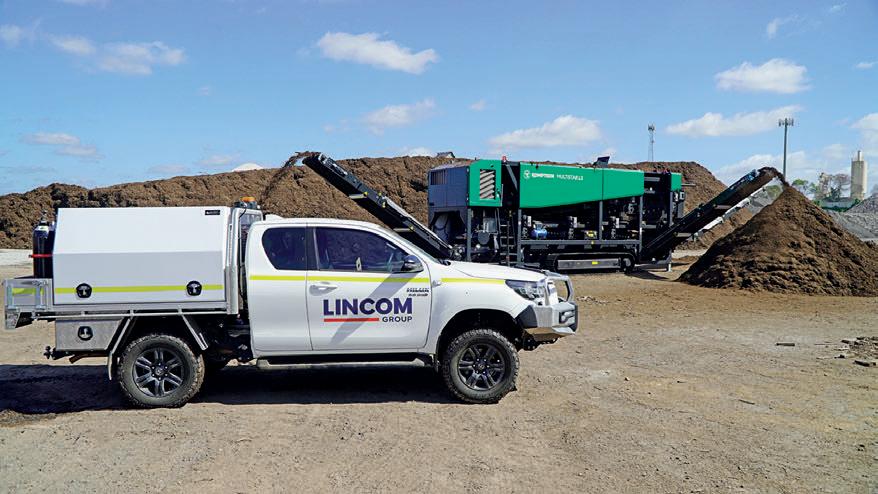
matter more the longer a machine is on site. Features like improved wear protection, better maintenance access, and an efficient discharge system don’t always make headlines, but they directly influence uptime and service costs. Less downtime means fewer interruptions, and easier maintenance means machines get back to work faster. Combined with strong aftersales support and access to parts when needed, these factors play a key role in keeping total operating costs under control.
What also stands out is how the L3 balances efficiency with output. With throughput of up to 250 m³/h, it delivers the capacity needed for high-volume operations without relying on oversized engines or excessive fuel use. It reinforces a simple idea: the most efficient machine isn’t the one that burns the least fuel per hour, it’s the one that produces the most usable material for the least energy overall.
While other star screens and trommels promote productivity or lower fuel consumption, few offer such a direct comparison when it comes to energy savings, particularly with the option of running on grid power. And that’s really where the L3 finds its place. For sites with access to electricity, it offers a straightforward way to step away from diesel dependency without compromising on throughput or performance.
For operations dealing with challenging materials, it provides consistency where it matters most. And for businesses focused on long-term cost control, it delivers savings that extend beyond the fuel tank.
At its core, the Komptech Multistar L3 is designed to maximise output while minimising the energy and cost behind it. It’s a shift in how operators think about performance, not just in tonnes per hour, but in energy per tonne.
TASMANIA’S ECONOMY HAS LONG BEEN SHAPED BY industries dependent on reliable, high-performing equipment. Quarries across the state have supplied materials for road construction and infrastructure, supporting connections between Hobart, Launceston and regional communities. At the same time, recycling facilities have expanded their role in advancing sustainable waste management, while forestry has remained a cornerstone industry, underpinning regional employment and contributing to the island’s economic stability.
These sectors have operated in demanding environments, often in remote locations where conditions are challenging and margins for error are slim. In such settings, equipment reliability has been critical, but equally important has been the level of service and support available when issues arise.
Through years of working alongside Tasmanian operators, including site visits, equipment installations, troubleshooting and spare parts supply, a consistent theme has emerged: proximity has played a vital role in maintaining productivity. When machinery has failed, delays associated with sourcing support from the mainland have proven costly. Every hour of downtime has impacted operations,
long-term commitment to the industries it supports. The decision was shaped by direct engagement with customers and a clear understanding that being physically closer to operations would deliver tangible benefits. Rather than relying on remote support models, the move ensured that expertise, parts and service capabilities were readily accessible within the state.
The introduction of a local branch has strengthened the way support is delivered. Customers have gained access to faster response times for servicing and breakdowns, reducing operational disruptions.
Genuine spare parts across Lincom Group’s equipment portfolio have become more readily available, minimising delays caused by logistics. On-the-ground specialists, familiar with Tasmania’s unique operating conditions, have been able to provide tailored support and practical solutions.
Face-to-face engagement has also enhanced relationships, enabling closer collaboration and a better understanding of site-specific challenges. Increased opportunities for inspections, maintenance planning and equipment consultations have supported more proactive approaches to asset management. For operators working in isolated or
The expansion has aligned with Lincom Group’s broader approach as an Australian, family-owned business. With a history spanning decades in the supply and support of crushing, screening and material handling equipment, the company has built its reputation on long-term partnerships rather than transactional outcomes. Its focus has remained on supporting customer success through consistent service delivery and dependable solutions.
Establishing a Tasmanian branch has represented more than a logistical enhancement; it has demonstrated a commitment to being present where customers operate. By embedding itself within the local industry landscape, Lincom Group has reinforced its role as a partner invested in the ongoing performance and growth of the sectors it serves.
For Tasmania’s quarrying, recycling and forestry industries, access to local expertise and support has become an increasingly important factor in maintaining productivity. As demand for infrastructure, resource recovery and sustainable practices continues to grow, the value of responsive, on-the-ground service has only intensified.
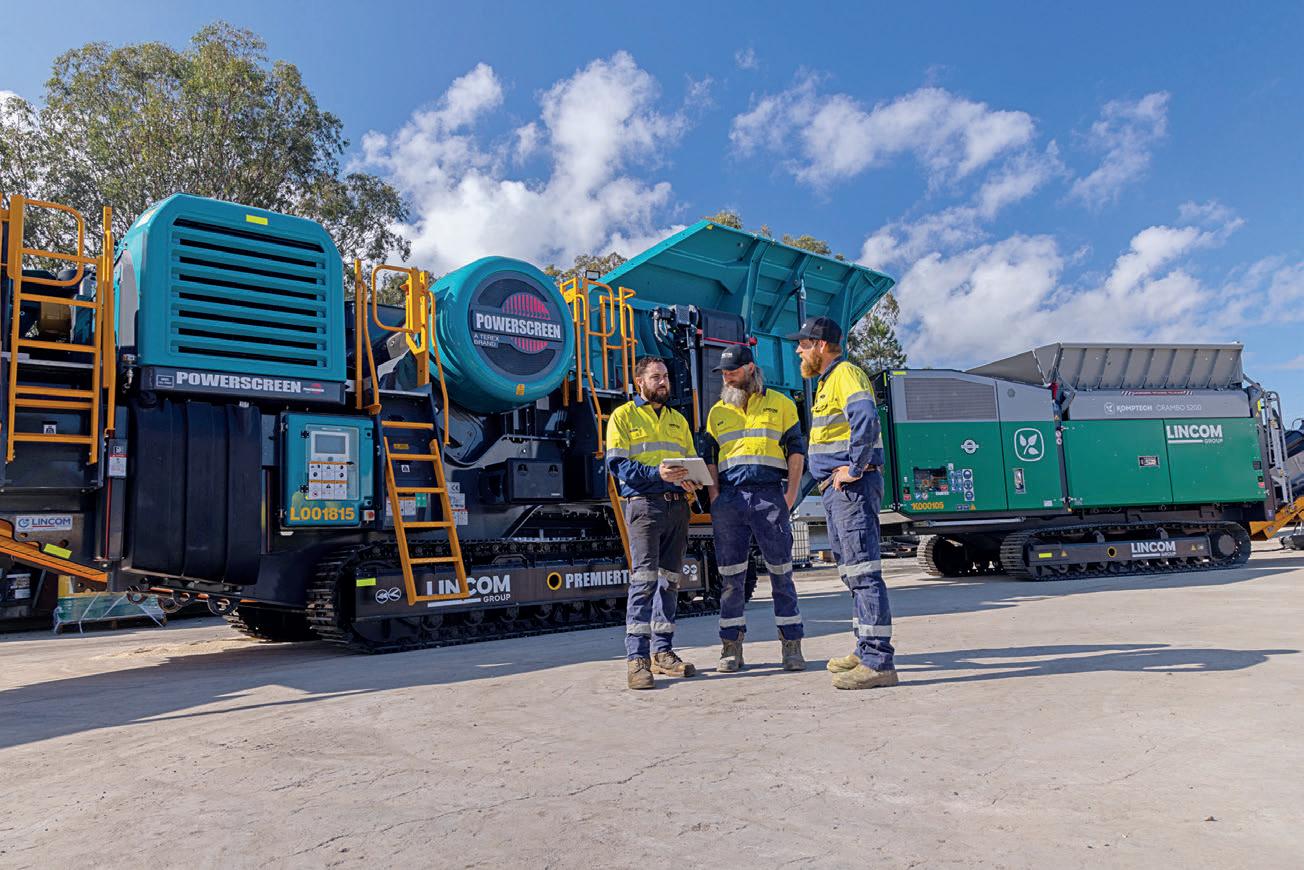
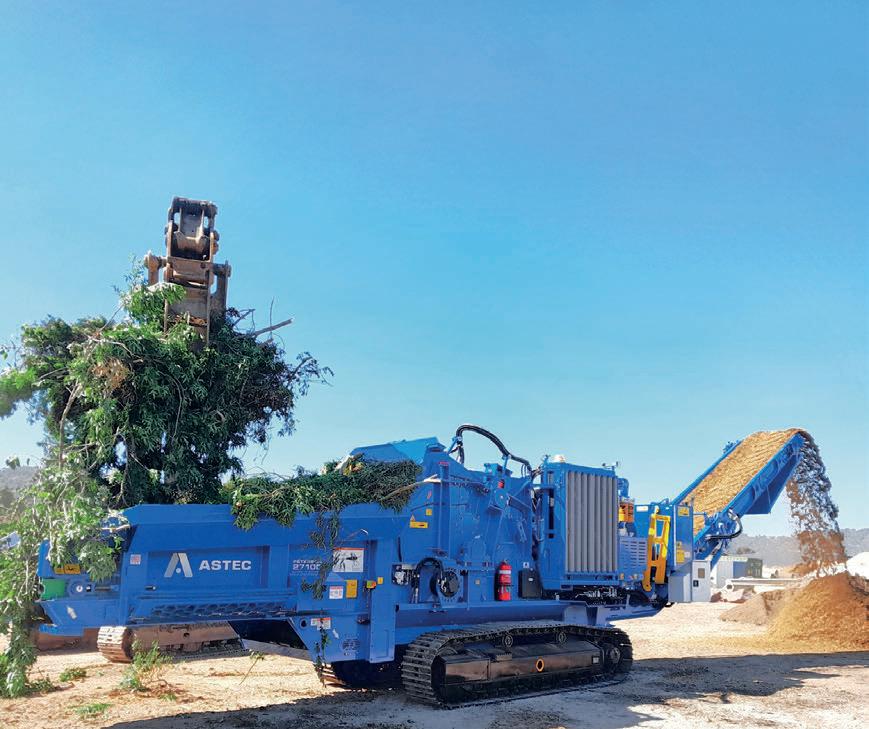
KOMATSU FOREST’S GRINDING AND CHIPPING products are designed to meet the harsh demands of the Australian climate. Komatsu Forest is the local agent for Astec Industries’ Peterson horizontal grinders, which deliver solutions for organics recycling and forestry applications. Founded in 1981, the Peterson brand has been a key member of the Astec Industries family since 2007.
Peterson offers a range of horizontal grinders from 339 kW to 894 kW, available in both diesel and electric configurations to suit a variety of applications. The Peterson D&E Series grinders incorporate features enable operators to produce high-quality material at a low cost per tonne.
Komatsu Forest has achieved success with Peterson horizontal grinders, with the 2710 model being the most popular, with more than 30 units currently operating across Australia. This grinder is designed for operations requiring mobility, high production, and frequent relocation between job sites.
The Australian version of the 2710D is equipped with a Caterpillar Tier II C18 engine delivering 570 kW. Its large feed opening (153 cm x 81 cm), combined with Peterson’s high-lift feed roll, provides a maximum lift of 11 cm, one of the largest in its class, allowing it to process a range of materials.
This performance is enhanced by Peterson’s upturn three-stage grinding process, which improves material fracturing and delivers a consistent end product. The upturning rotor design is optimised to produce lighter mulch with fewer fines by utilising
shearing and cleavage fractures, reducing energy consumption and increasing productivity.
Durability and protection are ensured through Peterson’s patented Impact Release System, which uses airbag technology to provide uniform grinding while protecting the machine from contaminated feedstock. A secondary line of defence, urethane cushions and shear pins, helps safeguard the mill from catastrophic damage in the event of severe impacts.
The features of the Peterson 2710D can improve annual profitability, with benefits including reduced downtime, lower fuel consumption, decreased colourant costs, and higher mulch yields. These advantages are supported by operators across New South Wales, the Northern Territory, and South Australia.
The Jefferies Group, a long-term Peterson customer based in Adelaide, entered the grinding industry in the late 1990s with the purchase of a second-hand Peterson 2400, which was later sold to Snell Contracting in 2013. The company has since expanded its fleet to include a 2710C, a 5710D, and most recently, a new 2710D.
“From our point of view, the Petersons are reliable machines,” said company managing director Martin Jefferies. “We’re also very satisfied with the service and support provided by Komatsu Forest.”
The Jefferies Group produces composts and soil improvers from green organics sourced from
metropolitan Adelaide’s council kerbside collections, as well as supermarkets, hotels, and restaurants. Their inputs include tree trimmings, street sweepings, and end-of-life timber pallets.
“For us, Komatsu Forest has gone out of its way to source parts; whether in Australia or the US. That’s critical for our business. You only make money when the machines are running,” Jefferies said.
Phil Snell, owner of Litchfield Green Waste Recyclers, has built a successful business in the Northern Territory, specialising in land clearing and green waste processing for local councils. In 2022, he secured a five-year contract with Rio Tinto for site clearance and rehabilitation at the 15,000-hectare Gove bauxite mining operation.
Snell’s experience with Peterson equipment began with a second-hand Peterson 2400, later replaced by a new 2710C. Since 2016, he has added five Peterson 2710D grinders to his fleet, including two units purchased specifically for the Gove project.
“We have to work around the wet season, so we ramp up when conditions allow,” Snell said. “We run two grinders 12 hours a day, seven days a week. The remoteness and monsoonal weather present real challenges.”
Despite these conditions, Komatsu Forest has delivered strong service and support.
“The Peterson 2710D has been ideal for this operation – it’s rugged, productive, and easy to move between sites,” said Jamie Spilsbury, site manager at Gove.
Over time, partnership has developed between Snell and Komatsu Forest, built on trust, performance, and a shared commitment to getting the job done.
Chris and Nigel, founders of Smallmon Brothers Waste and Recycling in the NSW Riverina region, initially purchased a second-hand Peterson 2710C as the third owner. Impressed by its performance, they expanded their fleet with a new Peterson 2710D from Komatsu Forest in October 2023.
“We initially purchased a second-hand grinder through word of mouth and have been extremely satisfied with its performance,” Chris said. “When it came time to invest in a second machine, we didn’t consider anything else.”
Based in Wagga Wagga, Smallmon Brothers provide a range of waste management and recycling services, from collection to processing. Its operations are built on a commitment to sustainability and responsible waste management.
Chris highlights the grinder’s versatility across a range of applications, from processing green waste for local councils to handling large logs from commercial operations.
Komatsu Forest supports its operation with expert technical advice, a centralised spare parts warehouse, and ‘uptime kits’ containing critical components to minimise downtime, particularly in remote locations.
When asked if he would recommend the 2710D, Chris is unequivocal: “The proof is in the product. You only need to use one to know they’re a great machine,” he said
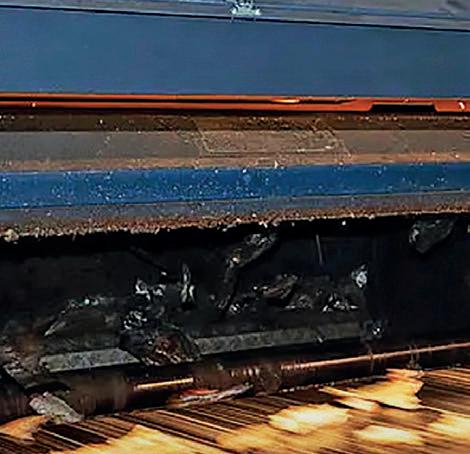
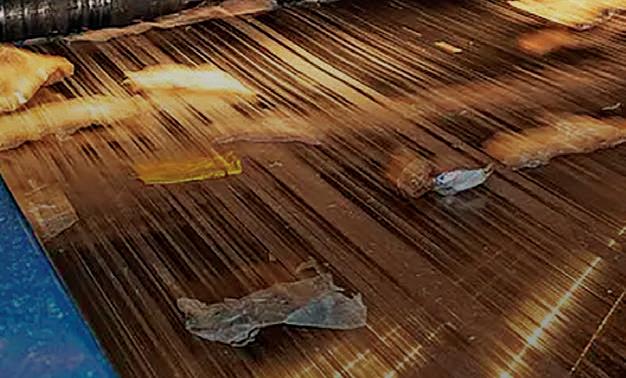
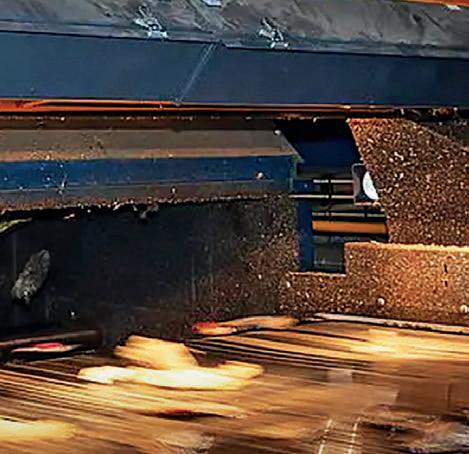
CIRREC (PART OF THE FAERCH GROUP) HAS BEEN operating a recycling plant in the Netherlands since April 2024. It processes PET trays from household collection into food-grade material using a range of STEINERT magnetic and sensor sorting solutions.
This packaging company processes up to 60,000 tonnes per year – more than three billion trays –that’s true tray-to-tray recycling at industrial scale.
“What is working overseas has the potential to work for Australia. Our market has the capacity to increase the sorting for recovery of re-usable plastics with current Australian recycling rates sitting around 13 per cent,” said Bronte Abrahams –STEINERT Australia’s business development manager for Waste Recycling. “The role of plastic in packaging food for shelf-life and safety remains paramount and by securing a local feedstock of food-grade PET for remanufacturing – this is a vital step in Australia building the circular infrastructure and economy within the local market and on-shore.”

Sorting solutions – sensor fusion and AI recognition
What’s a key point of difference for this successful recycling plant’s sorting infrastructure? Within their processing line, Cirrec currently deploys three STEINERT UniSort PR EVO 5.0 systems that analyse each tray individually. The machines use sensor fusion: a hyperspectral NIR camera captures the chemical composition whilst a colour camera identifies visual characteristics.
The key feature is that both sensors view the same point on the material at the same time. This improves data quality for AI training and, in turn, sorting accuracy. The combination of the two data streams enables STEINERT Intelligent Object Identifier (IOI), an AI-based sorting programme trained in this case to recognise food packaging. IOI detects characteristic patterns such as ready-meal tray shapes, typical printing and surface textures. The STEINERT sorting equipment helps achieve the

purity of over 95 per cent required for food-grade recycling, thereby creating the conditions for all subsequent process steps.
“In order for Australia to increase the recycling rate of plastics as per our European counterparts, there is the necessity to improve the infrastructure we have on shore to bring offtake plastic up to the purity standard required for remanufacturing,” said Abrahams. “The Australian Government has deemed this as crucial with over $200 million being funnelled towards new facilities and the upgrading of existing recycling infrastructure – delivered via the Recycling Modernisation Fund. This is the time and opportunity for Australian recycling facilities to look overseas for comparisons for best practice and reflect if this technology is suitable for the desired market purities and end-products. If yes, then this opportunity allows for more Australian companies to commit to further developing the infrastructure to capture more plastics for resource recovery and productive recycling.”


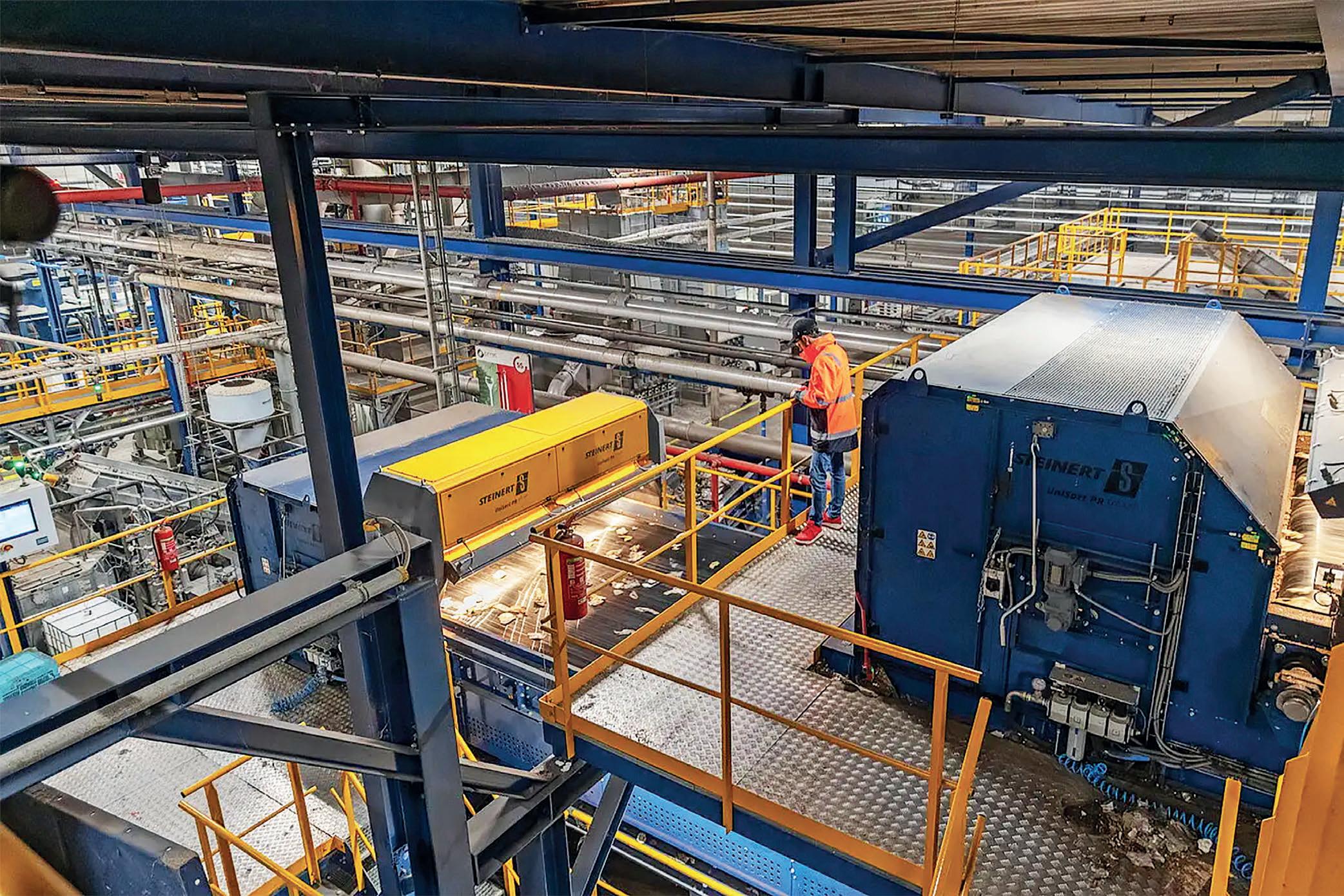
When the bales are delivered:
• Material first passes through STEINERT’s magnetic separation overhead magnet removes ferrous metals.
• Then the eddy current separator extracts non-ferrous metals.
• Next the sensors step up with the optical sorting – three UniSort PR EVO 5.0 systems followed by grinding, washing and further processing into flakes and pellets.
This processed material feeds into production at the Faerch Group, where it is converted into new packaging with an average recycled content of 70 per cent. A life-cycle analysis shows that tray-rPET generates 57 per cent fewer CO₂ emissions than virgin PET.
Cirrec is said to be the world’s only operator recycling post-consumer PET trays to food-grade material at industrial scale. For the recycling
“The team from STEINERT Australia are ready to consult with our customers for the optimal design of facilities to achieve the target material.”
industry, this is proof that a genuine circular economy for rigid food packaging worksprovided the sorting is done right.
The Intelligent Object Identifier is not a static solution for the STEINERT sensor solutions. The AI can be trained for new sorting tasks. Should the composition of input material change, or new packaging designs enter the market, the system can be adapted without hardware replacement. What works in the Netherlands can also be scaled, demonstrating that tray-to-tray recycling is no longer a pilot project.
“The team from STEINERT Australia are ready to consult with our customers for the optimal design of facilities to achieve the target material,” said Abrahams. “Cirrec has led the way in implementing both trusted magnetic separation solutions and the latest in sensor sorting advances for their successful processing lines. Who knows what is possible when we apply the same AI optical sorting strategies to the Australian equivalent and challenges.”
From initial design, test work and project delivery – STEINERT is able to deliver on around the world expert team and industry experience from global leaders such as Cirrec – and apply this to the ever-growing Australian resource recovery market.
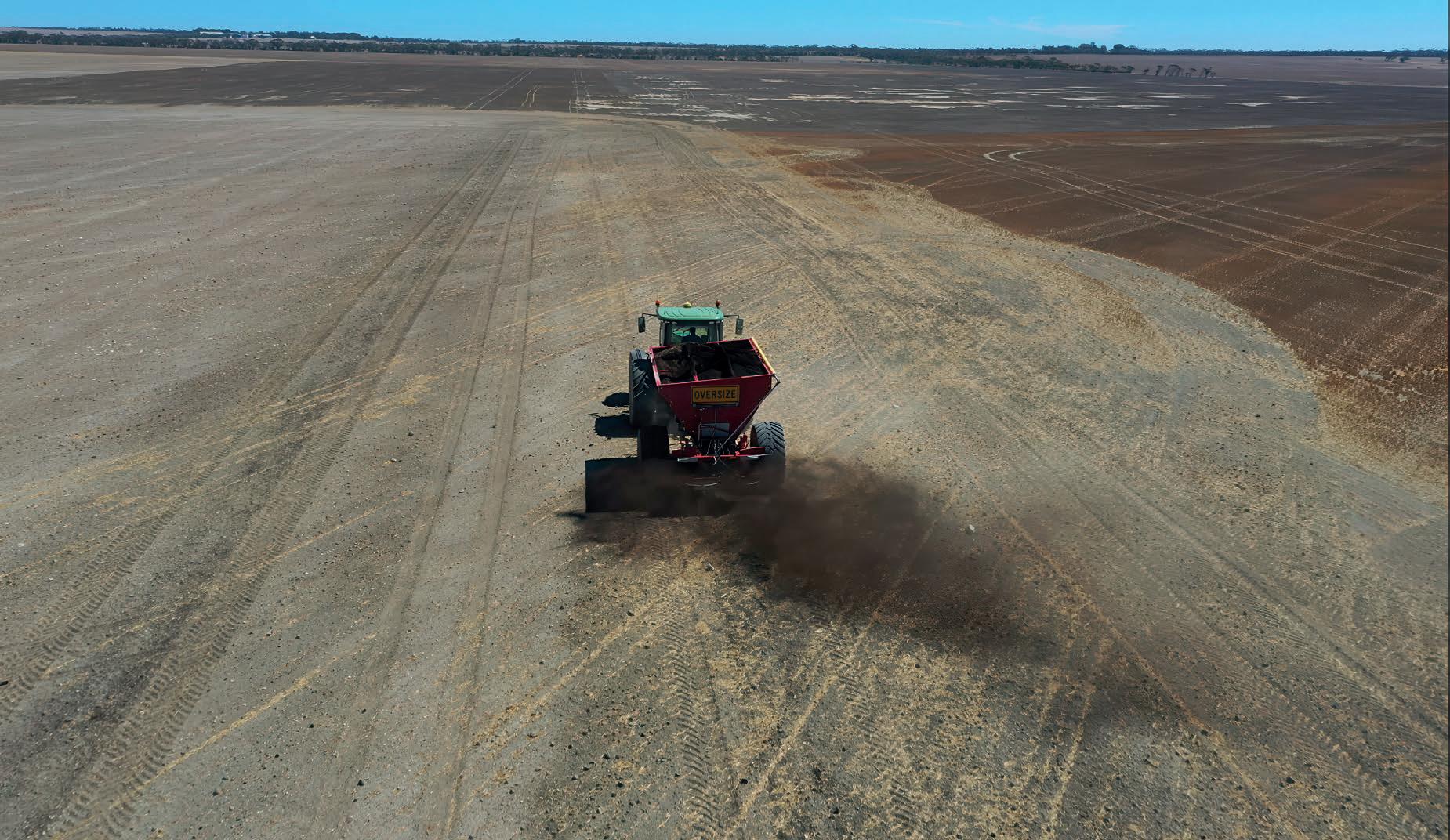
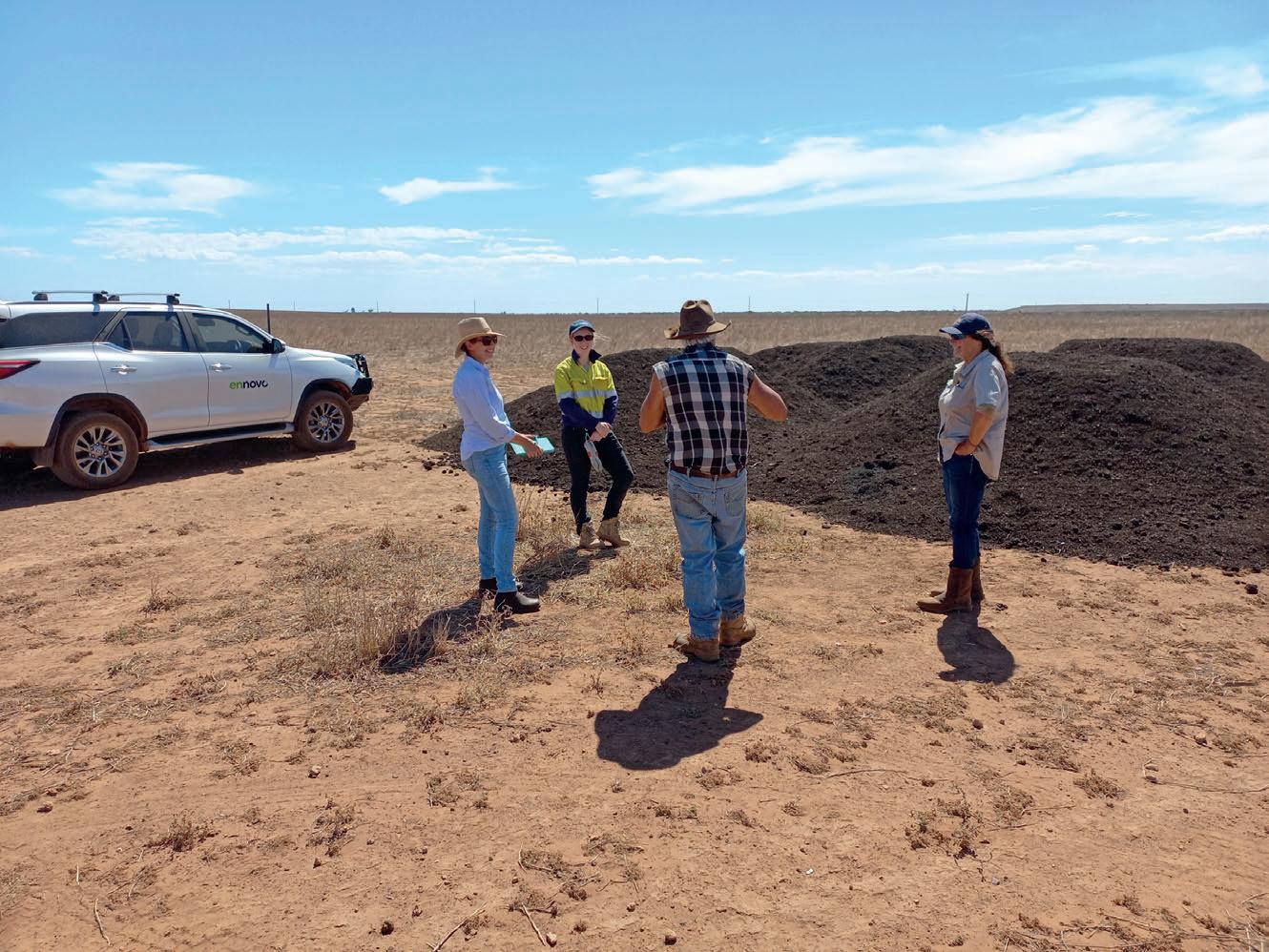
pressure to secure reliable markets for their products. Agriculture represents an opportunity, but unlocking this market depends on two key factors: consistent highquality products and credible technical expertise.
Environmental management company Ennovo helps compost producers raise standards and access high-value end markets. Ennovo’s environmental scientist, Ellie Leopold, contributes to this work by coordinating quality assurance programs and supporting the environmental management of composting facilities.
Growing up on a farm in the southeast of South Australia, Leopold has firsthand insight into the
“Farmers are constantly managing risks and need to know there will be a return on investment,” she said. “If compost is going to be applied at scale, quality must be guaranteed and growers need to trust the advice to adopt what they currently see as a generally unfamiliar
Agronomists – the trusted gateway
Agronomists play a vital role in adoption of agricultural practices. Increasingly, farmers rely on
agronomists to guide soil management and input decisions, placing greater trust in advisers rather than in suppliers.
Agronomists bring technical knowledge, local experience and established relationships, making them vital to the adoption of compost on farms. While education on organic soil ameliorants is still needed across the profession, there are already highly capable experts operating in this space.
Ennovo works alongside agronomists to conduct on farm compost trials, generating real data to support informed decision making.
“If we want farmers to believe they will get results from applying compost, we need to show them real-world examples in the paddock with achievable application rates and methods,” Leopold said.
Matthew Barnes, senior agronomist at Australian Soil Planners, runs both a cotton farm and commercial composting facility in Central Queensland, giving him a deep understanding of all aspects related compost application in the agricultural industry. Matthew says, “A trained professional needs to be involved to identify the soil constraints and the right application method. There is a space for organic soil ameliorants in the agricultural market when it’s done right”.
One of the most persistent challenges facing the waste and agricultural sectors is perception. Compost is often thought of as a complete nutrient replacement to produce immediate results comparable to synthetic fertilisers. While compost can reduce reliance on synthetic fertilisers – an increasingly attractive outcome as prices for inputs such as urea rise – it functions best when considered as a soil amendment, with its true valued realised over seasons, not weeks.
The benefits of compost can include improved soil structure, increased organic carbon, enhanced water holding capacity, improved nutrient use efficiency and increased biological activity. These attributes support long term productivity and farm resilience rather than immediate nutrient supply.
Subsoil agronomy, particularly the deep application of compost to improve subsoil constraints, is an emerging area of interest with potential for future agricultural productivity gains. By injecting organic amendments into the deeper soil layers, farmers can create a favourable environment for root growth, improved water holding capacity, and increased crop yields in heavily constrained soils.
“Novel machinery prototypes for this process exist out there, however they aren’t widely adopted or readily available for farmers just yet,” Leopold said, “The momentum for this type of application method is building, including research and education.”
Product quality is essential, not only to achieve the first sale, but to gain returning customers and market growth. One poor experience, such as yield loss or contamination, can undermine confidence across a farming region.
Compost maturity remains a barrier. Active or “immature” compost applied too close to seeding can cause nutrient drawdown, negatively impacting crop performance. Producing a consistently mature
product is technically challenging, particularly where processing space and time are limited.
Manager of Ennovo’s Recycled Organics division, Dr Mitchell Hodgkinson notes that Ennovo’s Carbon Air forced aeration systems are often used to improve processing efficiency.
“For compost producers, the challenge is balancing throughput with maturity,” Hodgkinson said. “The Carbon Air system uses technology to deliver greater control of the composting process, enabling producers to develop higher quality products, providing confidence they are agronomically safe and consistent.”
Physical contamination is another ongoing concern when it comes to product quality, especially for Food Organics and Garden Organics (FOGO) operations. As 2030 diversion targets put pressure on councils, FOGO feedstocks, which are more contaminated by nature, can pose a challenge to getting products back out to market if not carefully managed.
“Contamination comes from the source, but more often than not, composters have to deal with the consequences, and it becomes a direct
reflection of quality and brand for customers,” Leopold said.
This further highlights the importance of informed process management for composters. Technical expertise can help shape council contracts, processing methods, testing regimes, and complementary feedstock strategies to ensure finished compost meets customer expectations.
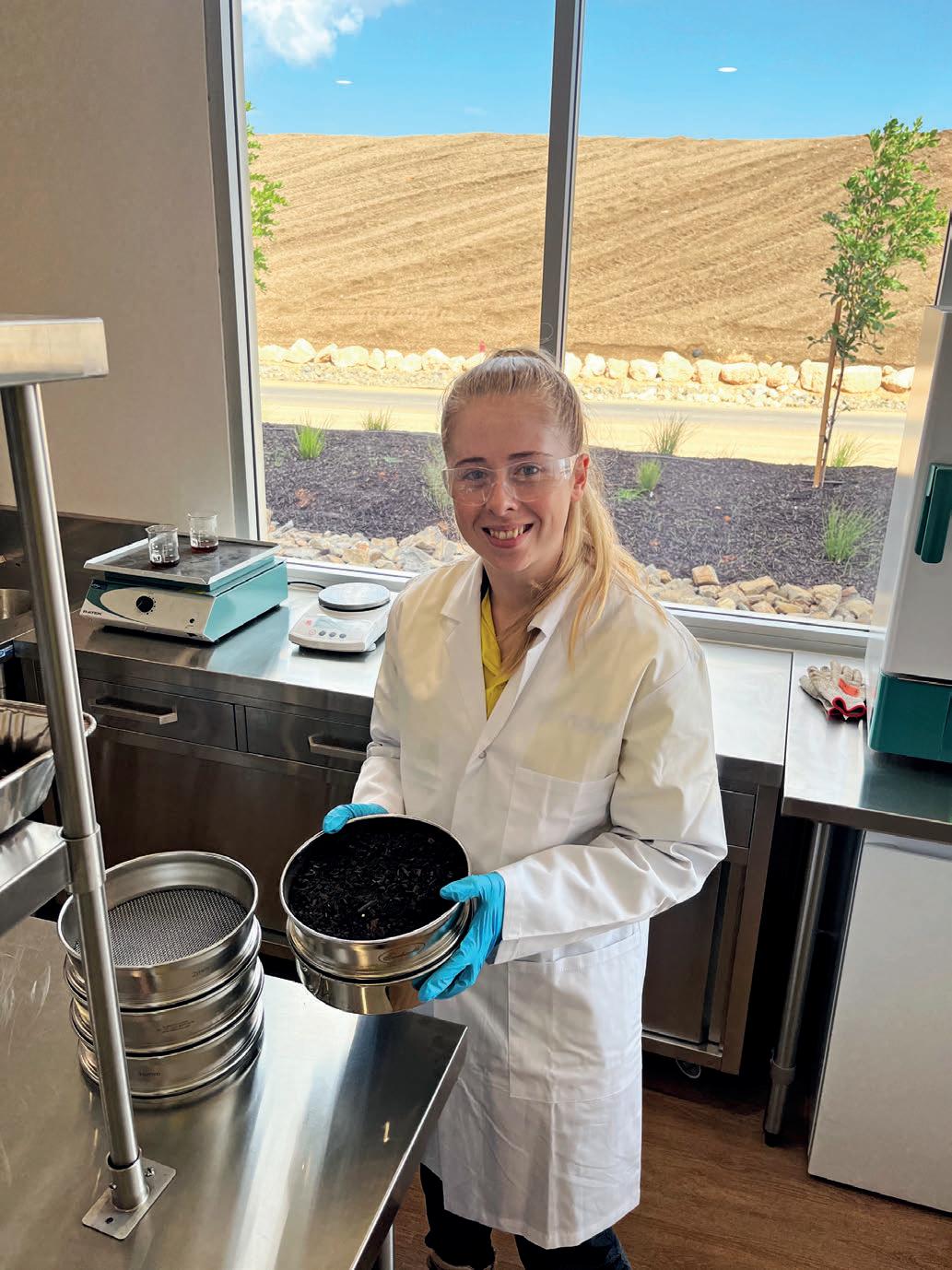
Through its focus on quality assurance, technical expertise and agronomic collaboration, Ennovo is helping compost move from a waste diversion tool to trusted agricultural input. For composters to reach the agricultural market, the organic waste industry must consistently produce high quality, fit for purpose products, and build strong networks with technical experts and agronomists who can support correct use.
Organisations that invest in quality, technology and collaboration will be best placed to unlock new markets and long term value, not just for composters, but for agriculture and the environment alike.
ECOCYCLE GROUP’S PARTNERSHIP WITH RESMART (formerly RecycleSmart)began in March 2023 with a focus on x-ray recycling, but it quickly expanded into something broader. As ReSmart (formerly RecycleSmart) scaled its operations, the relationship evolved to encompass a range of materials, including batteries, e-waste, and more What started as a single-site engagement soon developed into a national collaboration, with EcoCycle Group supporting the rollout of new locations through infrastructure, collection services and downstream recycling solutions tailored to each waste stream.
The growth of the partnership reflects the compatibility of the two organisations. ReSmart’s model, which centres on collecting hard-to-recycle materials directly from households, addresses a long-standing gap in the recycling system. By allowing residents to order collection bags, fill them at home and arrange a pickup, the service removes common barriers to participation and creates a straightforward pathway for responsible disposal.
“From the outset, EcoCycle Group recognised the strength of ReSmart model,” said Spyro Kalos, national partnerships manager. “Their approach to
collecting hard-to-recycle materials directly is both innovative and highly practical, removing a barrier to responsible disposal for everyday consumers, and also businesses and councils.”
EcoCycle Group services ReSmart’s depots, provides bins and scheduled collections, and ensures all materials are processed through compliant, onshore recycling pathways. This operational support underpins the reliability of the system, ensuring that materials collected from households, businesses and councils are handled responsibly through to final processing.
ReSmart focuses on the front-end, working with households, councils and communities to capture difficult waste streams and consolidate them across its depot network. EcoCycle Group contributes to the operational backbone, delivering the infrastructure and expertise required to manage some of the materials effectively.
“The partnership is built on a clear and complementary division of responsibilities,” said Kalos. “This includes supplying fit-for-purpose collection infrastructure, coordinating national logistics and ensuring all materials are processed in accordance with regulatory requirements.”
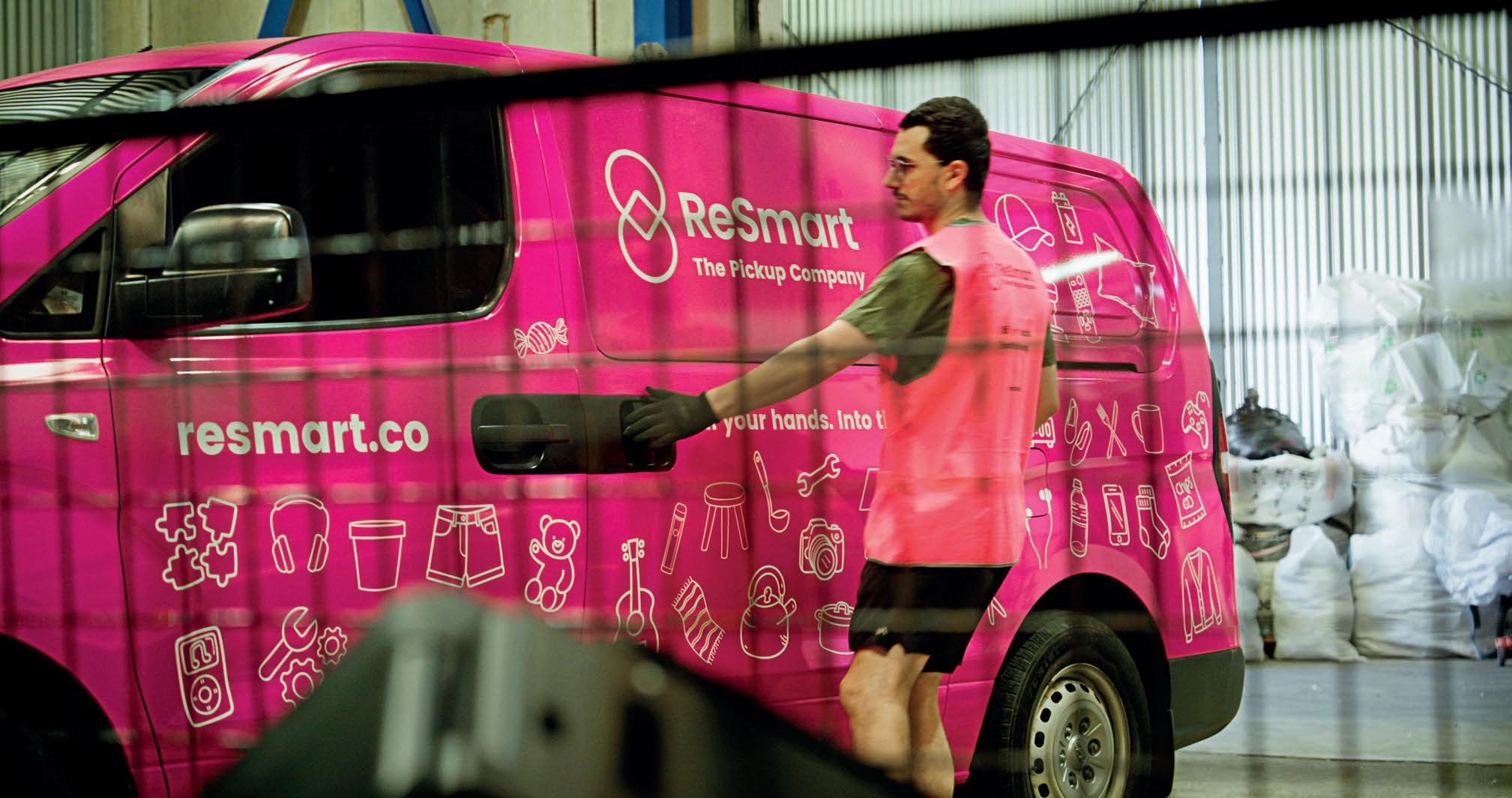
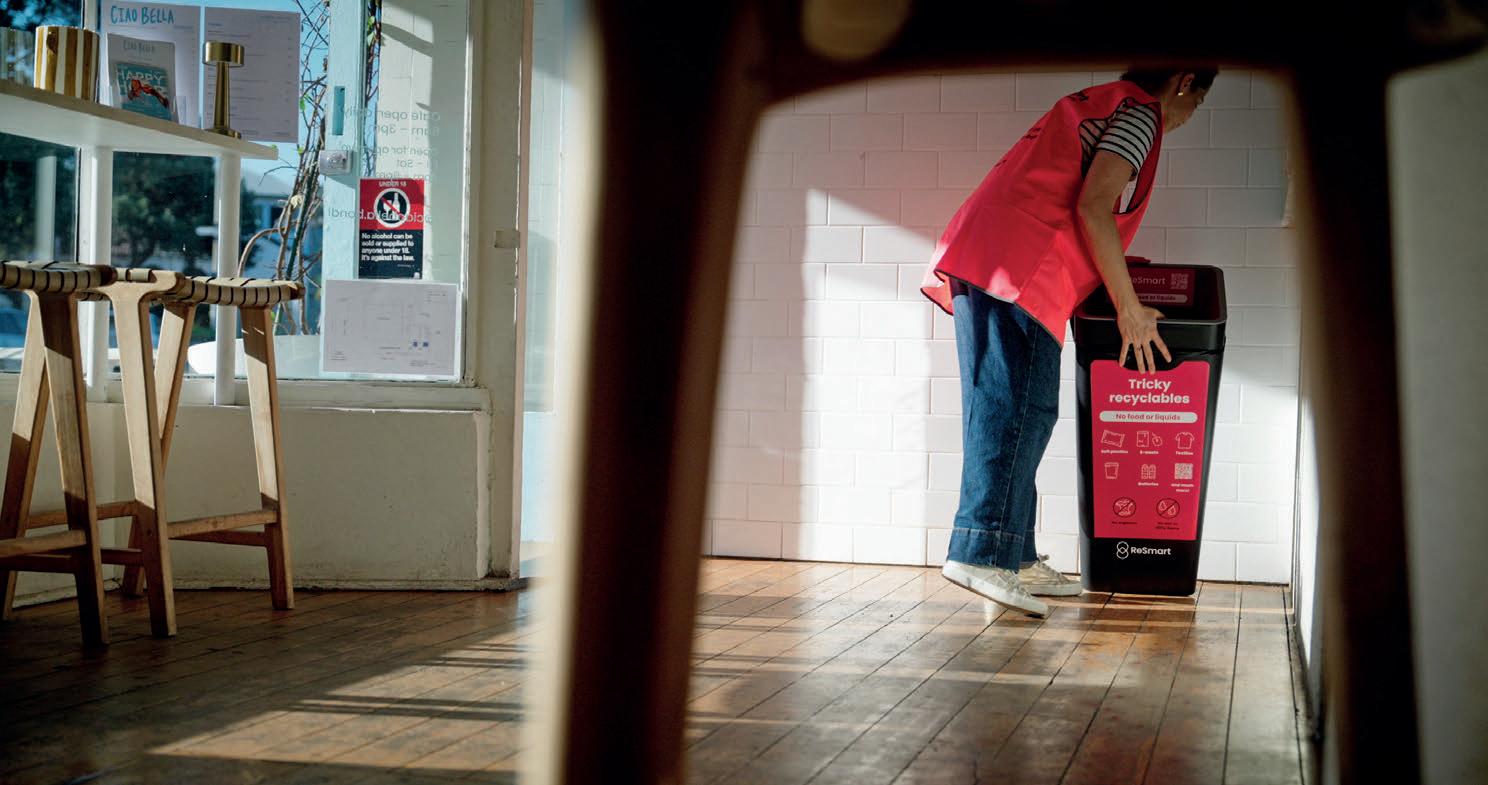
“From the outset, EcoCycle Group recognised the strength of ReSmart model. Their approach to collecting hard-to-recycle materials directly is both innovative and highly practical, removing a barrier to responsible disposal for everyday consumers, and also businesses and councils.”
EcoCycle Group also manages bin servicing on demand and oversees transport, creating a seamless flow from collection through to recycling. An important component of this role is reporting and traceability, which provides ReSmart with confidence that materials are being managed safely and responsibly at every stage.
Beyond operational efficiency, the partnership delivers strategic advantages for both parties.
For EcoCycle Group, access to ReSmart upstream collection model opens material streams that are traditionally difficult to recover. This not only strengthens resource recovery outcomes but also aligns with a broader objective of improving access to responsible recycling for the public.
“For EcoCycle Group, the partnership provides access to a highly effective upstream collection model that captures materials which would otherwise be difficult to recover,” said Kalos.
For ReSmart, the relationship ensures that all collected materials are managed at scale by an established recycler. Together, the two organisations deliver an integrated solution, connecting household collection directly with compliant recycling processes.
The model itself is inherently flexible, allowing

processing capability, the partnership helps bridge this gap, making it easier for individuals and communities to engage in responsible recycling.
The EcoCycle Group partnership is one example of the transparent recycling infrastructure that underpins every one of the 100+ items ReSmart collects. This operational backbone is what enables ReSmart to deliver real value at scale, for
the 30 councils already partnering on residential pickups, recycling hubs and community recycling centres, the 750-plus businesses that have joined the movement, and more than 25,000 households across the country. Together, these partnerships have diverted more than two million kilograms of waste from landfill.
























SUSPENDED PERMANENT MAGNETS PLAY AN important role across Australia’s waste, recycling, quarrying and mining sectors, due to their ability to remove damaging metal contaminants from material streams. Designed to deliver consistent separation, these systems provide a practical solution for improving product quality and maintaining reliable processing in demanding environments.
“Even small amounts of tramp metal can have a significant impact on uptime and operating costs,” said Jonathan Schulberg, Business Development Manager, Heavy Industry Asia Pacific Region at Eriez.
“Suspended magnets are often the first line of defense, helping operators protect critical equipment and maintain consistent throughput.”
At the core of separation technology specialist Eriez’s range of suspended permanent magnets is a carefully engineered magnetic circuit constructed from ceramic magnetic materials.
These materials are arranged in specific patterns to generate a magnetic field capable of extracting ferrous metals from conveyed materials. Because the magnets are permanently charged, they operate without the need for an external power source, delivering continuous protection and consistent performance in a wide range of applications.
“Because permanent magnets don’t require an external power source, they offer a simple, highly reliable solution—particularly in remote or mobile applications where power availability and maintenance access can be limited,” Schulberg said.
These magnets are typically installed above conveyor belts or at key transfer points where materials are in motion. Their primary function is to remove tramp iron, which includes unwanted ferrous items such as nails, screws, bolts and fragments of steel. These contaminants can cause significant damage to plant and machinery if left unchecked.
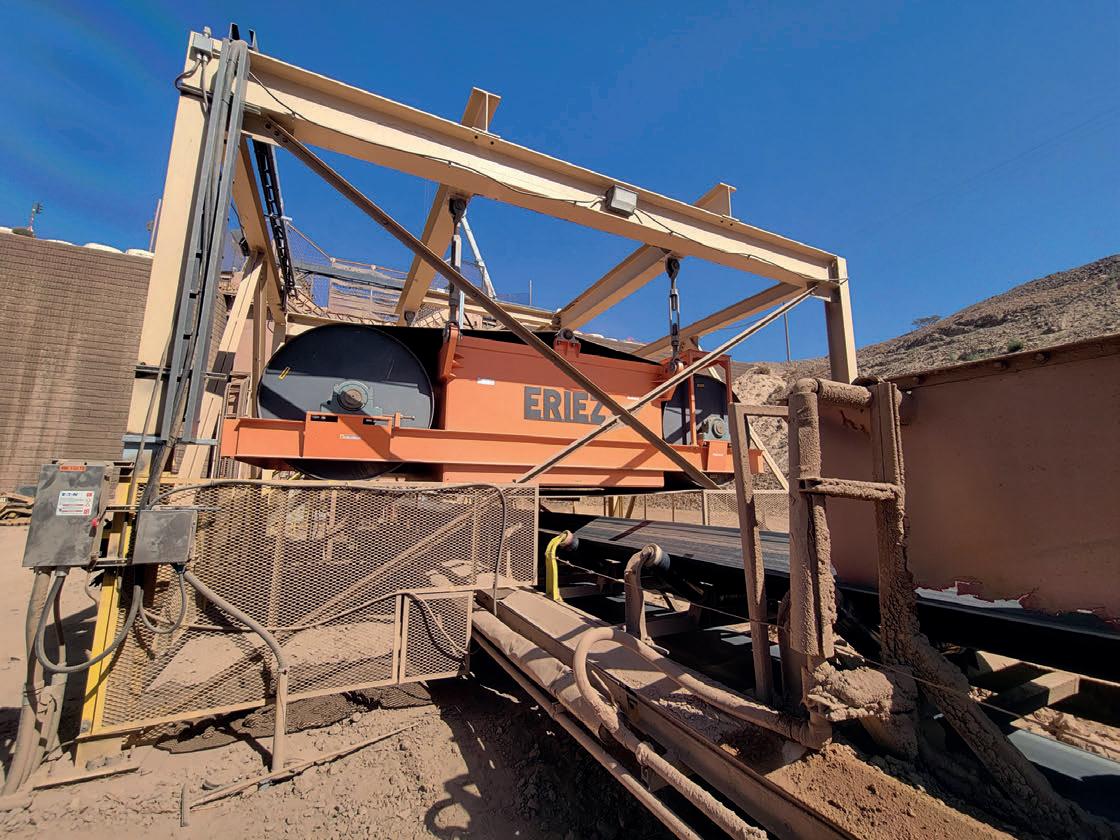
to support different configurations, particularly where self-cleaning mechanisms are required.
The systems are designed to suit a range of operational requirements. Standard units can accommodate conveyor widths from 500 mm through to 2000 mm, with larger configurations available for high-capacity applications. Suspension heights typically range between 200 mm and 400 mm, allowing flexibility depending on the nature of the material being processed and the level of contamination present. Multiple magnetic circuit designs allow systems to be tailored to specific conditions such as belt speed and the frequency of tramp metal occurrence.
“No two operations are exactly the same,” Schulberg said. “Selecting the right magnetic circuit and installation configuration ensures the separator performs optimally within the specific conditions of each site.”
Hydraulic and electric motor options are available
Beyond waste and recycling, the technology is used in mining and quarrying to protect downstream equipment from damage caused by stray metal. In these environments, suspended magnets play a role in improving product purity, particularly in applications involving aggregates or recovered materials, where the presence of metal contaminants can compromise quality.
These separators are also effective in municipal solid waste processing, where they are used to recover steel cans and other recyclable metals. In timber recycling, they remove embedded nails and screws from waste wood, enabling safer handling and further processing.
For more demanding industrial environments, electromagnetic separators may be used instead of permanent magnets.
These systems generate a magnetic field through an electrically powered coil, often housed within an oil-filled assembly to manage heat and maintain performance.
Electromagnets are usually used in heavy-duty applications involving materials such as coal, limestone and sand, where higher levels of magnetic force are required. While they offer greater strength, they also require a continuous power supply and additional maintenance compared to permanent systems.
“The choice between permanent and electromagnetic systems ultimately comes down to the application,” Schulberg said. “Higher burden depths and more demanding materials may require the additional strength of an electromagnet, while permanent magnets offer a lower-maintenance alternative for many standard applications.”
Cleaning methods are another important consideration in the design and operation of suspended magnets.
Manual-cleaning models are suited to applications where only occasional or small amounts of tramp iron are present. These units require periodic removal of accumulated metal, usually during scheduled maintenance. In contrast, self-cleaning models incorporate a short belt
conveyor that continuously removes captured metal from the magnet face. This automated system includes a rubber belt, bearings, frame and motor-driven mechanism, ensuring that the magnet remains effective without interrupting production.
Proper installation plays a critical role in achieving optimal performance. The preferred configuration is to position the magnet over the trajectory of material as it is discharged from a conveyor, often referred to as in-line installation. In this arrangement, the material moves directly towards the magnet, allowing its momentum to assist in the separation process.
“Positioning the magnet correctly relative to the material trajectory can significantly enhance recovery performance,” Schulberg says.
Where conveyor speeds are lower and the material trajectory becomes more vertical, the magnet may need to be positioned closer to the head pulley to maintain efficiency. In some cases,
“Even small amounts of tramp metal can have a significant impact on uptime and operating costs. Suspended magnets are often the first line of defense, helping operators protect critical equipment and maintain consistent throughput.”
interference with the magnetic field.
An alternative configuration involves mounting the magnet across the conveyor belt before the discharge point, known as cross-belt installation. While this approach can be effective in certain situations, it is generally less suitable for high-speed conveyors, where the reduced interaction time between the material and the magnetic field can limit performance.
The simplicity of installation has also helped make Eriez suspended permanent magnets a
Their ability to operate without interruption, coupled with minimal maintenance requirements, supports long-term reliability in a range of industrial settings.
As industries continue to focus on efficiency, safety and resource recovery, the role of magnetic separation is expected to grow. Suspended permanent magnets offer a proven and adaptable solution, helping operators manage contamination, protect valuable equipment and improve overall process outcomes without adding unnecessary
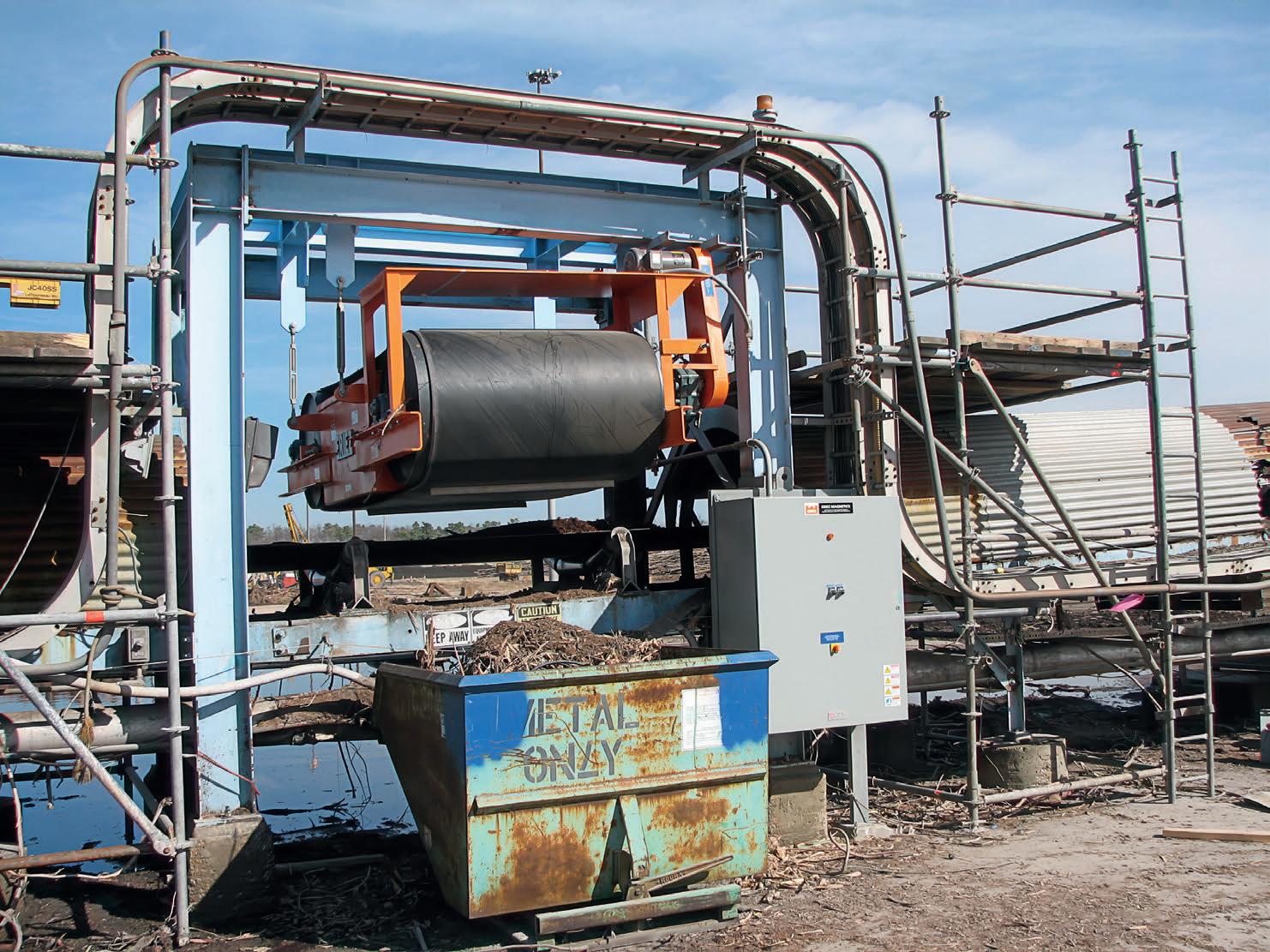


























www.insidewaste.com.au/register

www.insidewaste.com.au/register
www.insidewaste.com.au/register

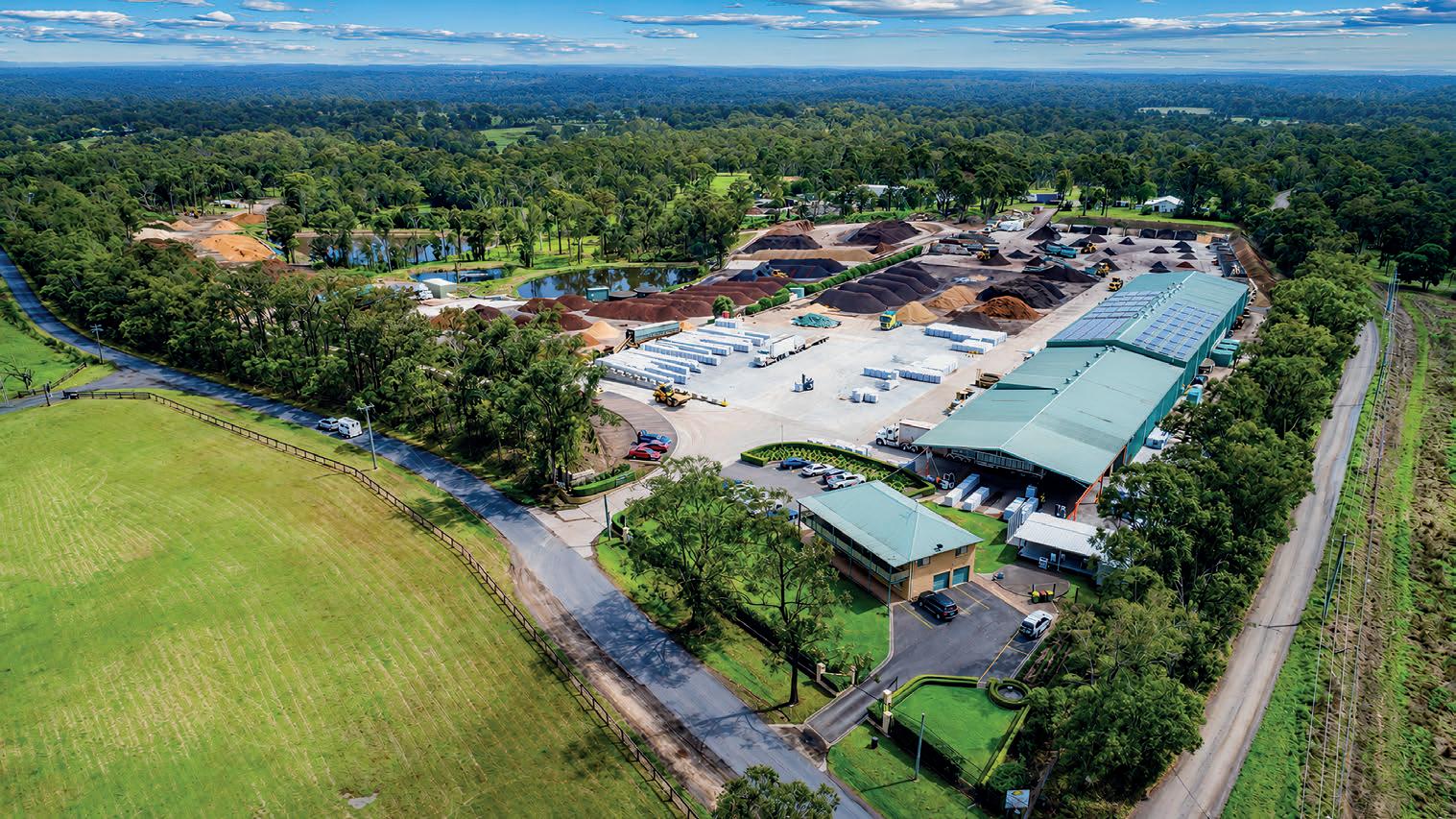
AUSTRALIAN ORGANIC RECYCLING AND landscape supply specialist Grange Growing Solutions has strengthened its processing capabilities through the investment in an advanced material handling solution featuring the EDGE Innovate FTS Mulch Master alongside its existing M&K static trommel screening system.
Grange Growing Solutions was founded as Australian Black Peat by Harry Grange in 1986. Grange took the idea of providing a pre-blended Australian casing layer to the mushroom industry and incubated it into a sustainable business, establishing Grange Growing Solutions as a specialist supplier to the mushroom industry.
This was the first Australian casing layer to be marketed and sold that used both an Australian sphagnum peat and black sedge peat in bulk and bagged form.
As the horticultural industry evolved during the 1990s, Grange recognised the increasing demand for premium potting mixes and specialty growing media. In 1992 Simon Grange, Harry’s eldest son joined the company and is now the chief operations officer.
Grange Snr diversified and began manufacturing
growing media and was a pioneer in the use of coir (coconut fibre) in potting mix. His aim was to efficiently and professionally provide a bulk or bagged product of excellent quality. Grange Growing Solutions has evolved into one of New South Wale’s largest and most respected manufacturers of growing media, mulch, compost and landscape products.
In 1996 and 1997, Anna Grange (chief financial officer) and Ben Grange (national sales and marketing manager) joined the company to help manage the growth of Australian Black Peat.
Grange Growing Solutions was subsequently launched in 1998 to separate the potting mix division from the mushroom casing.
As the company expanded and outgrew the Maraylya facility, Grange Snr purchased 30 acres in Ebenezer (60km north-west of Sydney) and in the year 2000 moved the potting mix division. The head office of the company remained at Maraylya until a new office block was built at Ebenezer.
A big part of Grange’s success has been its ability to produce screened compost and soil products that meet the differing needs of customers across horticulture, landscaping and agriculture. Screening is a critical
process in compost production, ensuring that oversized particles, contaminants and inconsistent materials are removed to create uniform, high-performance products.
Under its Grange Garden Health retail brand, the company supplies products tailored to both professional and residential applications. Among the company’s best-known products are its mulch and decorative landscape materials, including Blackwood Chip, Cypress Mulch, Garden Chip and Pine Bark Mulch.
These products are designed not only to improve the appearance of gardens and landscapes but also to deliver important horticultural benefits such as moisture retention, weed suppression and soil temperature regulation.
From the first introduction, consultative site visits, and eventual first commissioning several years ago, Focus Enviro understood that success for Grange Growing Solutions was determined not only by their tonnes per hour, but by their ability to consistently manufacture a variety of high-quality products suited to their customer markets.
For the Focus Enviro team, the challenges in
improving product consistency across multiple compost grades was the first objective.
Achieving this specification consistently is where the M&K trommel static screening system became essential. M&K have been pioneers in the design and manufacturing of innovative material handling and resource recovery solutions since 1977. Its innovative turnkey solutions and life-cycle services offering was a no-brainer decision for Grange Growing Solutions.
M&K Group’s 16m x 2.5m heavy-duty static trommel ticked all the boxes – high capacity, trouble free and maintenance friendly. Equipped with steel support legs and incorporating material storage bays under the screen to hold four finished screened products, it minimises real estate and maximises stockpiling capabilities. Further with ground level access steps and maintenance platforms, service doors for safe access from the outside drum. Then there is the steel enclosure around the screening drum that minimises dust and noise control. Finally, there are the 1200mm-wide variable speed drive feeder, a double-sealed sealing ring and a four-wheel drive system. All these features combined, met Grange Growing Solutions’ needs.
Supported by a high-capacity hopper, and specialist designed twin-screw leveling auger incorporated into the feeder, the material can be separated and blended pre-screening stage, allowing an even flow of material to the trommel screen. By installing the static trommel screen, Grange achieved precise particle sizing, cleaner final products, better texture uniformity and greater control over moisture retention properties.
Grange Growing Solutions was then able to manufacture multiple product grades from the same incoming waste stream.
Fast forward to 2026, Grange contacted the Focus Enviro team to assist in enhancing their compost maturity and stability. One of the biggest quality differentiators in Grange Growing Solution’s compost production is its quality control focus on compost maturity. Immature compost can create a multitude of problems for operators; from odour issues to poor microbial balance.
Focus Enviro combatted this risk with the introduction of the Edge Innovate Mulch Master. The Mulch Master’s forward /reverse auger system was the core of biological improvement. The double-screwed auger creates a ‘fluffing’ effect within the compost feedstock, continuously flipping material, separating compacted organics and untangling fibrous feedstock. The hydraulic discharge conveyor also allowed Grange operators to maintain lower discharge heights during stockpiling, reducing the compressive force placed on the material. Rather than collapsing into dense heaps, the compost is distributed in a lighter, more porous structure.
The EDGE Innovate Mulch Master and MK Trommel Static Screening System are providing Grange Growing Solutions with far more than increased production capacity. Together, these technologies are improving the biological performance, consistency, and quality of the company’s entire compost and mulch product range.
From enhancing aeration and compost maturity through to delivering precise screening and contamination removal, the systems enable Grange Growing Solutions to produce premium organic
products more efficiently and sustainably. By developing and maintaining a strategic
of the Grange Growing Solutions finished products,” said Focus Enviro’s sales manager John McGuinness. “It
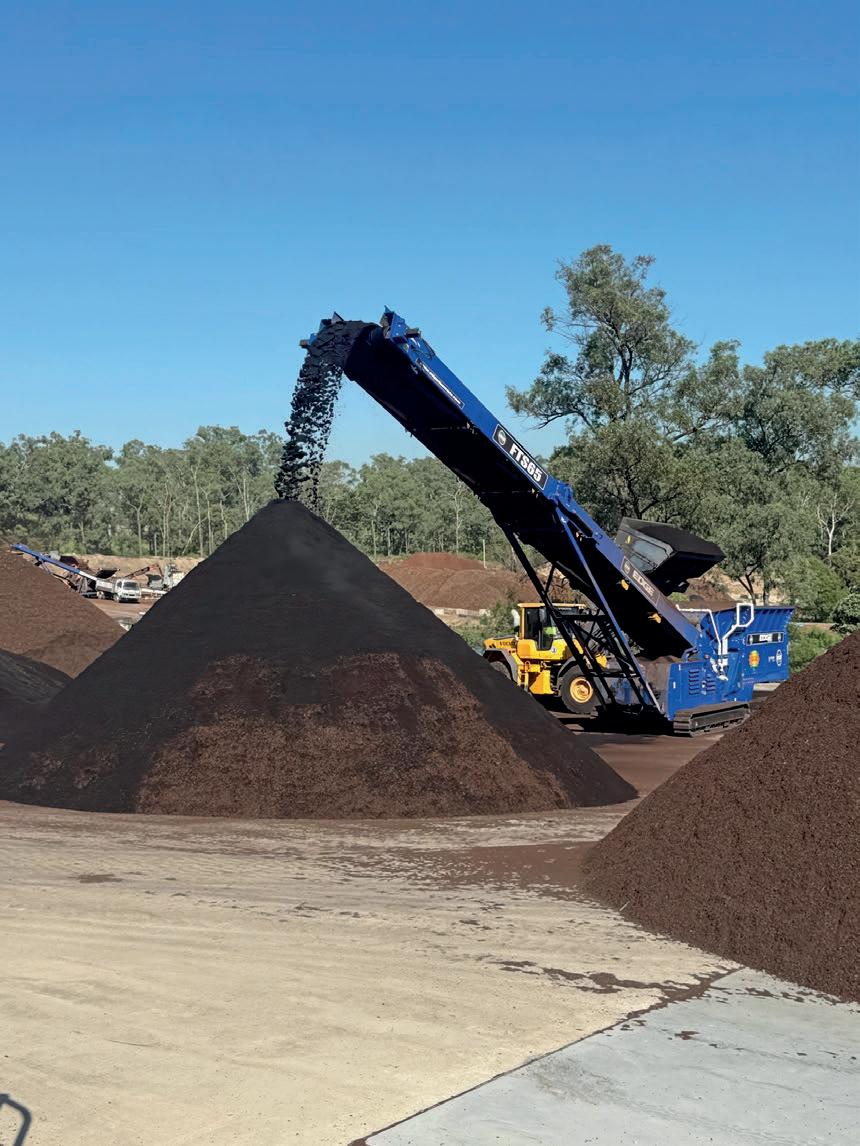
Solutions, who are thriving and consistently looking to
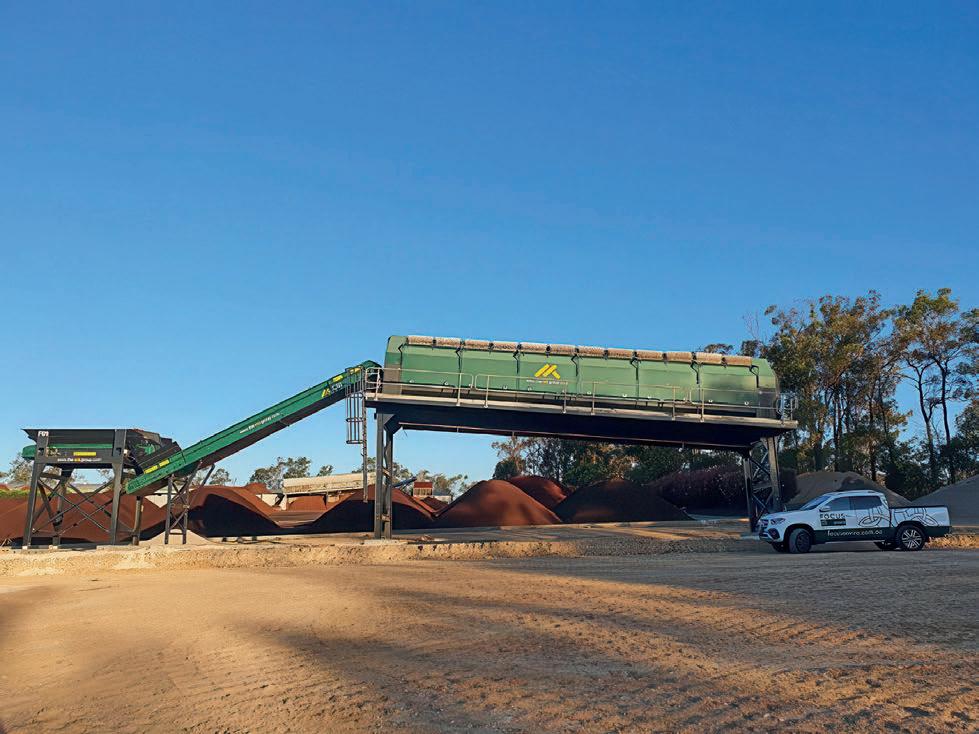
Unit Dimensions: Width: 2.5m (8’4”) Length: 7.5m (24’6”) Height: 4.1m (13’4”)
Weight: 12T
Information:
The HS20 is designed to handle large volumes of food waste, making it ideal for high-production environments and extensive processing needs
As the largest and most robust model in the Tiger DePack range, it offers superior depackaging efficiency, effectively separating organic material from various types of packaging
Its advanced capabilities make it suitable for both depackaging and recovery operations, addressing diverse industrial requirements with ease
The HS20’s high capacity and powerful system streamline waste processing, reducing operational time and improving overall productivity in large-scale waste management.
Name: FOCUS ENVIRO
Phone: 02 4365 4247
Web: www.focusenviro.com.au Email: info@focusenviro.com.au
Unit Dimensions: Width: 2.9m (9’5”), Length: 24.6m (80’7”), Height: 3.5m (11’5”)
Weight: 36.5 tonne
Information:
The EDGE TRT622 tracked trommel screen has been designed for maximum productivity and superior screening efficiency. With a heavy duty construction design and high maneuverability, the EDGE TRT622 tracked trommel can cater for a wide range of applications, whether it is industries such as aggregate, skip waste management or those wishing to process industrial and demolition waste. Enhanced trommel screening results are achieved by material spending a greater amount of time in the 6.9m (22’) long trommel drum combined with the optional high-throw aggressive screening action to produce top-quality fine materials such as compost, gravel, sand and topsoil with ease.
Name: FOCUS ENVIRO
Phone: 02 4365 4247
Web: www.focusenviro.com.au
Email: info@focusenviro.com.au
Unit Dimensions: Width: 2.5m (8’4”) Length: 13.4m (44’) Height: 4.7m (15’6”)
Weight: 31.5 tonne
Information:
The Edge VS420 is a high capacity, high torque twin shaft shredder that is ideal for the processing of a large array of materials including; green waste, MSW, C&D waste, biomass and end of life tyres.
EDGE’s next generation shredder has been developed for ultimate versatility and high resistance to contaminants with a number of customisable shredding programmes and chamber configurations available. An intelligent operating system which incorporates tramp metal protection provides the ultimate protection from contaminants and prevents asset damage.
Name: FOCUS ENVIRO
Phone: 02 4365 4247
Web: www.focusenviro.com.au
Email: info@focusenviro.com.au
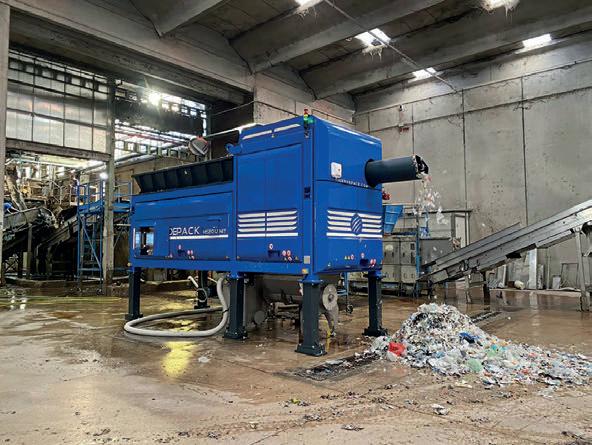
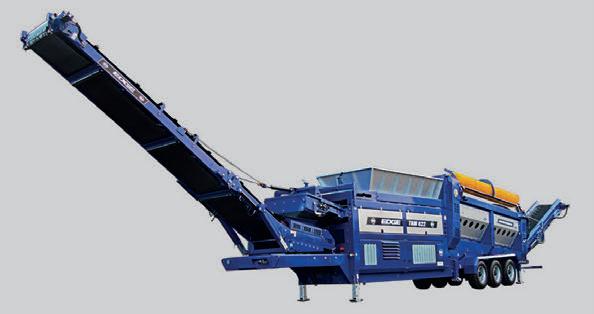
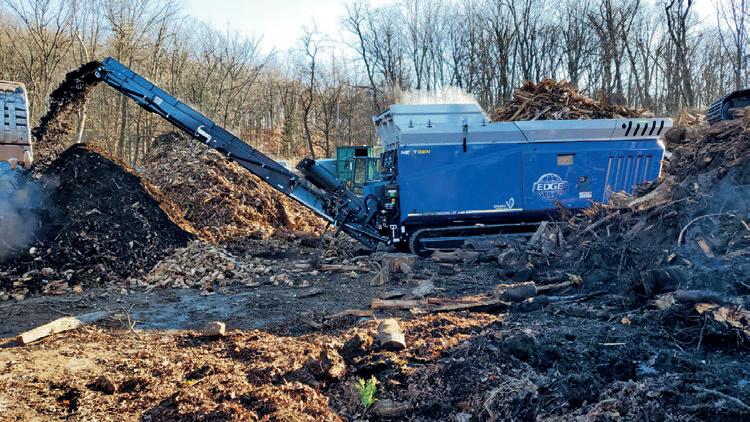
Unit Dimensions: Length: 42’ 1” – 50’ 11”, Height: 13’ 6” – 14’, Width: 10’ – 10’ 5”
Weight: 25,855 - 39,463 kg
Applications: Shingles, C&D, Compost, Pallet, Mulch, Waste, Tree Care, Land Clearing, Biomass, Agricultural Grinding Solutions
The unit features a steel slat infeed conveyor that reduces spillage and wear compared to traditional belts, alongside a patented adjustable slab ramp infeed plate. This allows operators to hydraulically adjust the feed angle to suit varied materials.
Maintenance is simplified through a screen cradle system that allows for rapid changes and a digital operator interface for real-time monitoring. For operations looking to scale their output without the overhead of a larger machine, the FP-66 delivers industrial-grade results at a significantly lower operating cost.
Name: FOCUS ENVIRO
Phone: 02 4365 4247
Email: info@focusenviro.com.au
Website: www.focusenviro.com.au
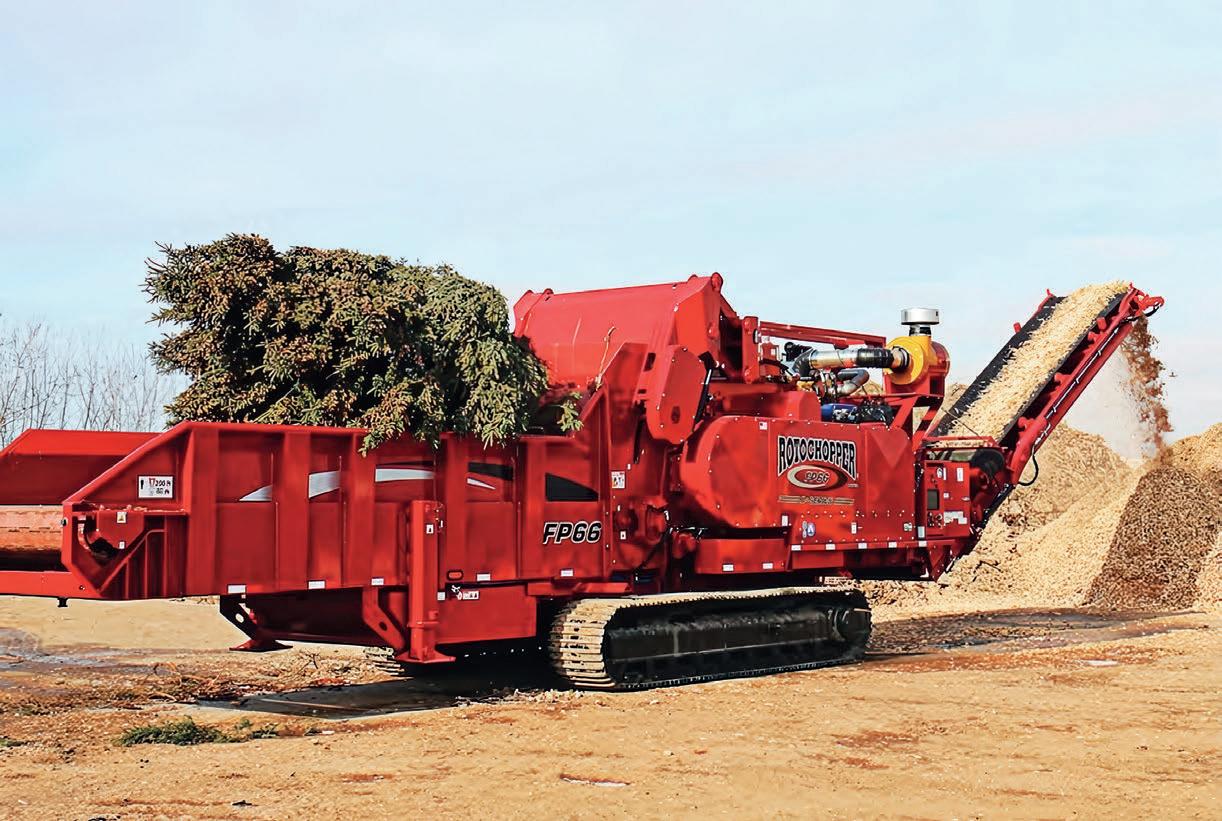
Unit Dimensions: Width: 2.5m (8’4”) Length: 16.8m (55’) Height: 3.3m (10’10”)
Weight: 24.4 tonne
Applications: Biomass, Compost, Mulch, Topsoil
Information:
The EDGE FTS Mulch Master is a portable feed stockpiler this is specifically designed for the stockpiling of lower density, bulky materials such as mulch, compost and soils. The EDGE FTS Mulch Master combines traditional flipping and rotation with constant material flow to provide blockage free stockpiling whilst also preventing compaction, contamination and risk of combustion. It can accept material directly fed from wheel loaders, wood grinders, shredders, screeners or trommel screens.
The FTS Mulch Master has a 25% additional buffer capacity over the standard EDGE FTS units with a bespoke hopper design to prevent material bridging. Steep hopper sides and variable high speed feeder conveyor allows unrestricted flow of material that is further regulated via a double screwed forward/reverse auger. The auger fulfills two roles; it conditions material by flipping and rotation allowing the material to separate, aerate and untangle as well as regulating the flow of material and preventing material bridging at the transfer point.
Available with various discharge conveyor lengths from 50 to 75ft with operators having the choice of traditional track mounted or 360° slew track chassis formats.
Name: FOCUS ENVIR
Phone: 02 4365 4247
Web: www.focusenviro.com.au
Email: info@focusenviro.com.au
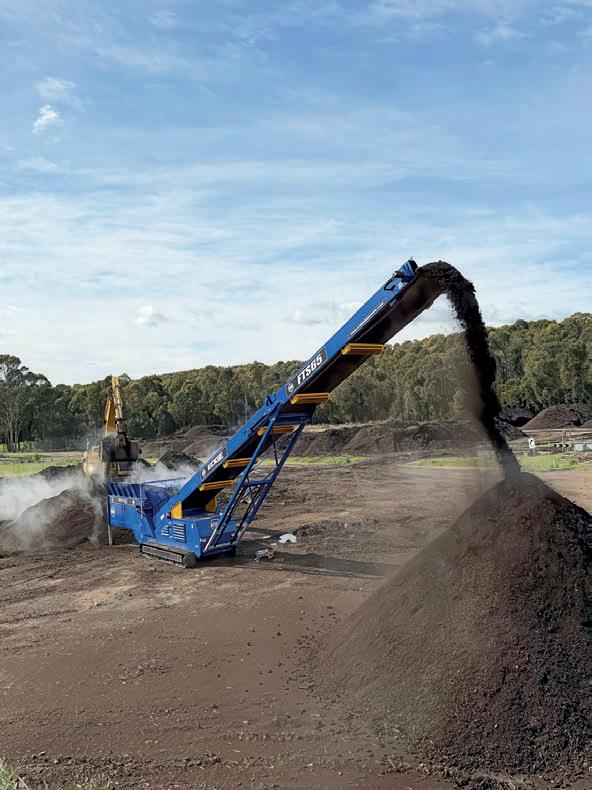
FINLAY WASTE & RECYCLING CONTINUES TO BRING know how to the resource recovery sector as it provides cutting-edge equipment solutions for the construction and recycling industries. The Terex Ecotec Phoenix 2100T trommel screen features excellent usability, flexibility and performance. This highly efficient, tracked variant of the Phoenix 2100 trommel is engineered to meet the demands of large to medium-sized operations, the Phoenix 2100T combines exceptional throughput, application flexibility, and enhanced serviceability, positioning itself as a powerful asset for owners and operators across various industries.
Equipped with the latest in intelligent screening technology, the Phoenix 2100T is designed for optimal screening performance and efficiency. The fully proportional, hydrostatic feeder, combined with an intelligent hydraulic control system, continually monitors the machine, adjusting the feeder speed to optimise screening performance and throughput, ensuring the machine runs at its full potential with minimal operator effort.
It’s suitable for accurately screening a range of materials, including compost, biomass, soil, green waste, C&D waste, and aggregates. With its innovative features, the Phoenix 2100T stands
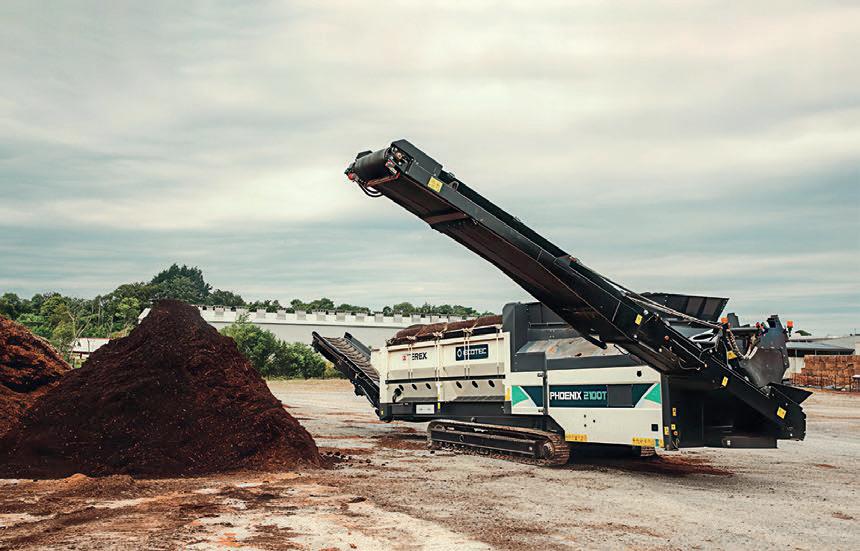
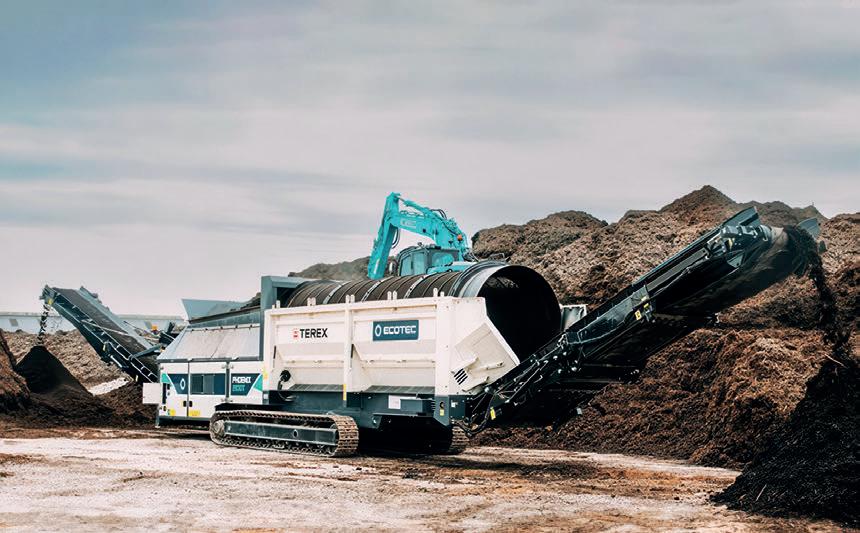
as a reliable solution for businesses looking to maximise productivity with multiple on-site configurations, while maintaining the highest operational standards.
Designed for simplicity and ease of operation, the Phoenix 2100T features rapid set-up times, ensuring the machine is ready to work in minutes, without the need for any tooling. The user-friendly control system with push-button start/stop offers simple operation and diagnostics, allowing the operator to easily configure the machine settings to suit the required application.
The trommel screen is fitted with a 1.94m x 6.45m screening drum, available with heavy-duty mesh or punch plate options to suit a variety of material specifications and materials. The Phoenix 2100T offers a perfect balance of power and efficiency, ensuring high performance while reducing operating costs. The engine operates at a lower RPM, resulting in reduced noise and emissions – helping businesses adhere to environmental standards while keeping fuel consumption low.
A key feature of the unit is its independent track subframe and adjustable drum screening angle, which can be modified from 0° to 7° during operation to accommodate various material types. This flexibility ensures that operators can adapt to different materials and screening requirements with ease, always optimising performance. Additionally, side drum access allows for quick and easy maintenance, reducing downtime and keeping the machine operating at peak performance.
With its hydrostatic four-wheel drive system, the Phoenix 2100T offers excellent start-up torque and screening efficiency, ensuring reliable performance even in challenging conditions.
The 180° radial fines conveyor, with a variable discharge height of up to 5.3m, can be operated remotely while in motion, allowing for increased stockpile capacity and onsite operational flexibility. Both the radial fines and oversize conveyors can be hydraulically lowered to ground level for maintenance access, making it easier to perform routine checks and repairs.
The trommel screen offers operational ease, versatility, and reduced maintenance requirements, making it a smart investment for owners looking to streamline their material processing operations.
The Phoenix 2100T is now available through Finlay Waste & Recycling, ensuring that customers have access to the expert sales and aftermarket service that they require.
VISHAL CHULLIPARAMBIL DID NOT BEGIN HIS CAREER in waste. Trained initially as a mechanical engineer in India, he spent a year working in the field before realising it did not align with what he wanted to do long term. Growing up, his inspirations were grounded in the natural world, shaped by figures who brought environmental issues into public view. That early interest never quite left him, even as he pursued a conventional engineering pathway.
“Growing up, my idols were David Attenborough and Steve Irwin, so I always loved animals and nature,” he said. “That’s why I tried to get into something I can enjoy doing.”
That shift in thinking led him to Australia, where he enrolled at Griffith University and completed a Master of Environmental Engineering and Pollution Control. The move marked a decisive pivot, away from traditional mechanical systems and towards a discipline where he felt he could have a more direct environmental impact.
Chulliparambil wanted to be a mechanical engineer so he could have a hand in looking into mechanical system designs and reducing environmental impacts. But he soon realised that influencing environmental outcomes through traditional mechanical roles could be challenging, he was drawn to a more directly aligned discipline. He thought he had more to offer in the environmental space.
During his postgraduate studies, he began to see the breadth of opportunities available within environmental engineering. It was through this exploration that he was introduced to the waste sector, an area that would ultimately define his career.
“My supervisor introduced me to this whole world of waste. I fell in love, and that’s how I ended up as a waste engineer,” he said
Chulliparambil’s academic work focused on a specialised area known as phytocapping, an alternative landfill capping method that uses nature-based solution an alternative to traditional engineered barriers. The approach is designed to create an engineered cap that provides social and ecological benefits along with visual amenities and functional end use for landfill’s, often transforming them into green spaces.
“It’s a nature-based solution that has been used in Australia for more than 20 years, and one that continues to evolve as more research emerges. You get a vegetated cap, which can be visually and socially preferable to more traditional landfill outcomes.”
His research also provided a pathway into consulting. While completing his PhD, he worked with a team at Griffith University, gaining practical experience in landfill engineering and waste management. That exposure helped him transition into industry, eventually joining Talis Consultants.
Despite holding advanced qualifications, he deliberately chose to enter the workforce at a
graduate level. The decision was strategic, allowing him to broaden his understanding beyond landfill closure and into the wider systems that underpin the waste industry.
“Talis had a position open for a grad level,” he said. “My knowledge in the waste sector was specific to landfill closure. I wanted to learn the rest of the elements in the industry, so I decided to start as a grad and take my time.”
At Talis Consultants, Chulliparambil’s work spans a range of technical and planning functions that often sit behind the scenes of waste management. His role involves contributing to the design and long-term planning of infrastructure that communities rely on every day.
“Most of the work I do is in master planning, landfill designs, resource recovery area design, closure planning, and the background stuff like financial modelling,” he said.
This stage of his career is defined by learning. He views the current workload not just as a job, but as an opportunity to understand the full lifecycle of waste infrastructure, from planning through to closure. However, his ambitions extend beyond technical design. Over time, he hopes to move into a role where he can influence the broader direction of the industry, particularly at a policy level.

Another issue is the lack of information sharing across the sector. He notes that while individual councils and organisations may develop effective solutions, those lessons are not always widely communicated. He emphasises that this is not necessarily intentional, but rather a systemic issue shaped by the commercial and cultural realities of the sector.
He wants to be making changes in the industry where it affects the rest of the chain. He believes that everything in the industry is driven by policies and guidelines and as an engineer, he’s becoming increasingly interested in how policies and guidelines shape industry outcomes, and how engineering insight can contribute to their ongoing refinement over time. In the future, he wants to be in a position where he can make those changes.
Alongside his consulting work, he maintains a connection to academia, continuing to support research projects and grant applications related to phytocapping. He also hopeful that, in the future, he can contribute to updates of national phytocapping guidelines, particularly as research and industry continue to expand.
“There’s a lot of knowledge in the industry that isn’t always widely shared,” he said. “Through my research, I’m trying to gather that knowledge and get better outcomes.”
While committed to the industry, Chulliparambil is clear-eyed about the challenges it faces. Chief among them is funding, which he describes as a persistent constraint in a sector that is essential but often overlooked. In his experience he feels that the waste industry is often under-prioritised, despite being an essential service. He feels that the sector is something people will notice it when things go wrong, otherwise it flies under their radar.
The industry holds a lot of valuable knowledge, and sharing those insights can help drive better outcomes overall, he said.
Public perception also plays a role. Waste remains largely invisible to the communities it serves, which can limit both understanding and trust. As Chulliparambil points out, if no one wants to talk about waste, then nothing gets done. He believes industry is getting better with communication and moving in the right direction, but there is lot to be done.
He also believes greater transparency and education could drive meaningful change, particularly if people better understand what happens to their waste and why their behaviour matters. Educating the public on what happens to their waste and why it’s important to separate it at the source could make a meaningful difference. Despite these challenges, he remains committed to the field. He sees waste management as both essential and impactful, even if it lacks the visibility of other industries.
“It’s not a fancy industry, but it’s a critical one. I believe the work I do has a positive impact on society,” he said
Looking ahead, his goal is to become an expert in nature-based engineering solutions, continuing to advocate for approaches like phytocapping that can reshape how waste industry is perceived.
“I want to push for more phytocapping in the industry. I think the perception of waste as a dirty industry will change when people see the outcomes from it,” he said.
GETTING A WASTE OR RECYCLING FACILITY UP and running in Australia is, in theory, a noble pursuit. In practice, it is a character-building exercise designed to test the limits of human patience, financial endurance, and one’s ability to interpret a 600-page environmental impact statement written in what appears to be fluent bureaucrat.
It usually begins with optimism. You have a vision: divert waste from landfill, recover valuable materials, maybe even generate a bit of energy. You tell people at barbecues and they nod approvingly, between bites of undercooked sausage, saying things like “good on ya” and “about time someone did something”. And then it begins.
The first step is planning approval. This involves lodging documents with the local council, who will then request additional documents, which will require specialist consultants, who will produce reports that prompt further requests for clarification. At some point, you will become intimately familiar with terms like “amenity


impact”, “visual bulk” and “odour plume modelling”, none of which featured in your original vision but now dominate your waking thoughts.
Then come the state regulators. Each agency is deeply committed to environmental protection, as they should be, but also deeply committed to ensuring no two forms are ever quite the same. You will submit the same information repeatedly, just formatted differently enough to require fresh invoices from your consultants. Weeks become months, months become years, and somewhere along the way you begin to suspect your grandchildren may be the ones to finally cut the ribbon.
Community consultation is next. You host information sessions where you explain that your facility will reduce landfill, create jobs and operate within strict environmental controls. In response, a resident who moved next door to an industrial zone in 1997 will express shock that industry might occur


nearby. Another will raise concerns about traffic, noise, and the potential for “mysterious fumes”, a phrase that will haunt subsequent meetings.
Just as you think you’re making progress, an additional approval layer emerges, like a particularly stubborn onion. Federal considerations, heritage overlays, transport permits – with each one being essential, each one requiring its own process, timeline and minor existential crisis.
By the time approvals are granted, market conditions have shifted, technology has advanced, and your original business case has aged like milk left in the sun. Undeterred, you proceed, because at this point it’s less a project and more a matter of principle.
And when, finally, the facility opens, quietly transforming waste into something useful, the applause is muted. After all, it only took seven years, 43 consultants, and a filing cabinet full of paperwork to achieve what everyone agreed was a good idea in the first place.
Simple, really.









From initial planning to long-term operation, Kanadevia Inova delivers complete thermal and biological Waste to Energy plants. As an experienced EPC contractor, we handle every step – develop, design, build, operate, maintain. Our track record of more than 1,600 plants worldwide speaks for itself – including one of the world’s largest WtE facilities in Dubai. Check our references.