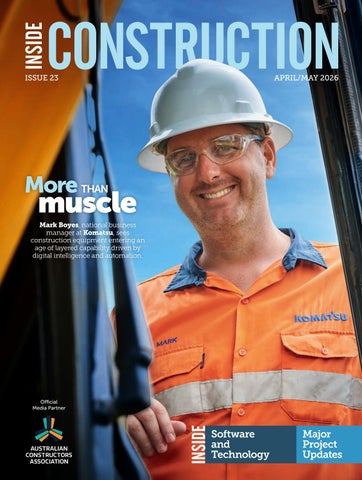
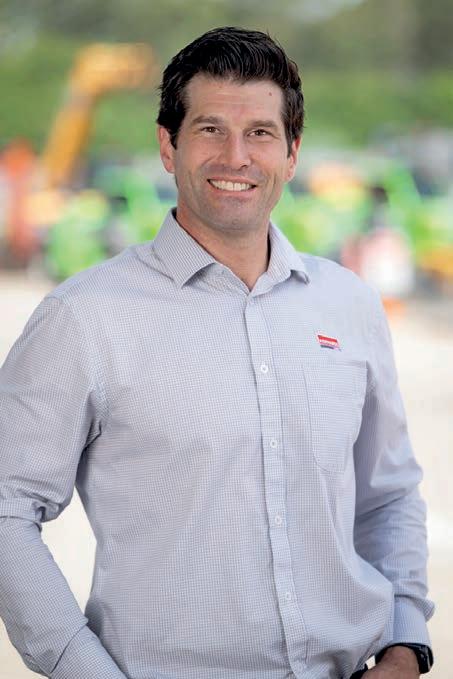
Mark Boyes, national business manager at Komatsu construction equipment entering an age of layered capability driven by digital intelligence and automation. Official Media Partner
11 More than muscle
Komatsu’s latest machines signal where performance expectations are heading next.
15 A new lens on the job site
John Holland integrates spatial capture into its site workflows to verify works, coordinate trades and document site conditions.
Payapps promotes a project-first strategy to build confidence before scaling construction technology.
22 Making materials count
Verified asset intelligence helps keep materials and products in productive use across the built environment.
REGULAR
50 Gabrielle Burns: Priming the pipeline
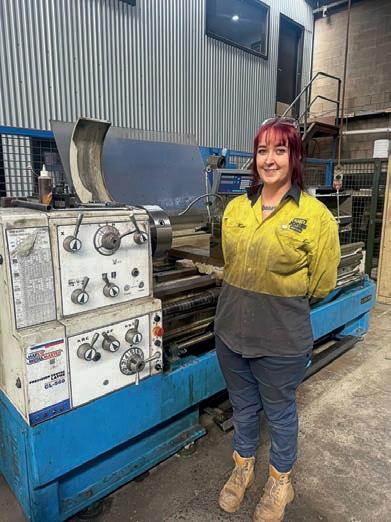
Gabrielle Burns shares how she is building a career at the front end of construction.
52 Why research on women in construction matters
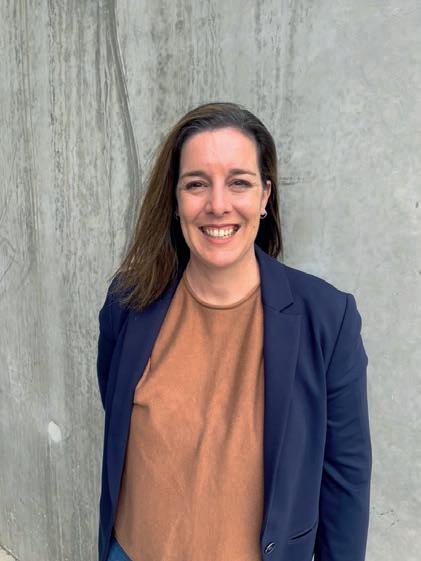
Dr Gretchen Gagel outlines how research informs efforts to increase women’s participation in construction. ASSOCIATIONS
54 Removing the barriers that push women out
The National Association of Women in Construction works to create safe, inclusive workplaces.
55 Making what works the standard Foundations and Frontiers 2026 focuses on progress, not problems.
56 Workwear changing the game for women
NexGen spotlights a workwear brand addressing a long-standing gap for women working on site.
57 Celebrating the people powering the future
National Apprenticeship Week Australia 2026 was particularly special for Empowered Women in Trades.
58 Curved precision by the coast
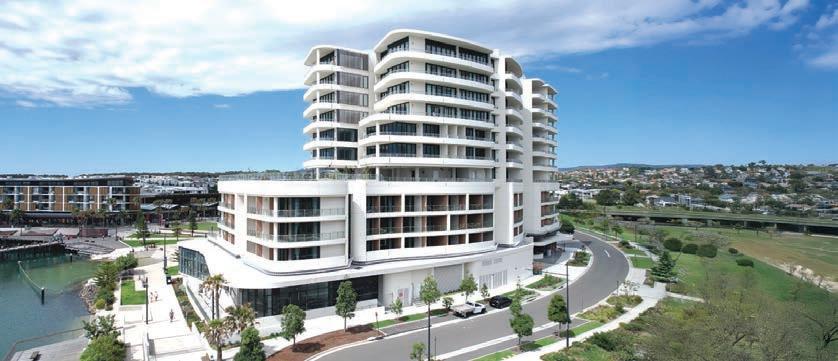
National Precast showcases the Crowne Plaza Shell Cove Marina in Shellharbour and its use of precast.
HVAC in a carbon-driven market
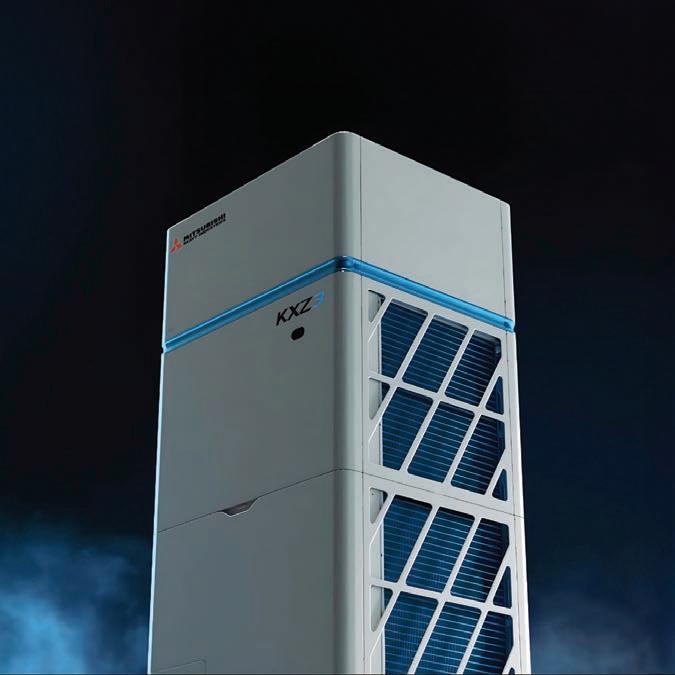
Mitsubishi Heavy Industries Air Conditioners Australia introduces the KXZ3 R32 VRF system.
Getting serious about leadership behaviour
Seedling Leadership calls on the construction industry to address what is too often normalised.
water supply sustains operations
Neverfail believes access to reliable drinking water should be a baseline requirement on site.
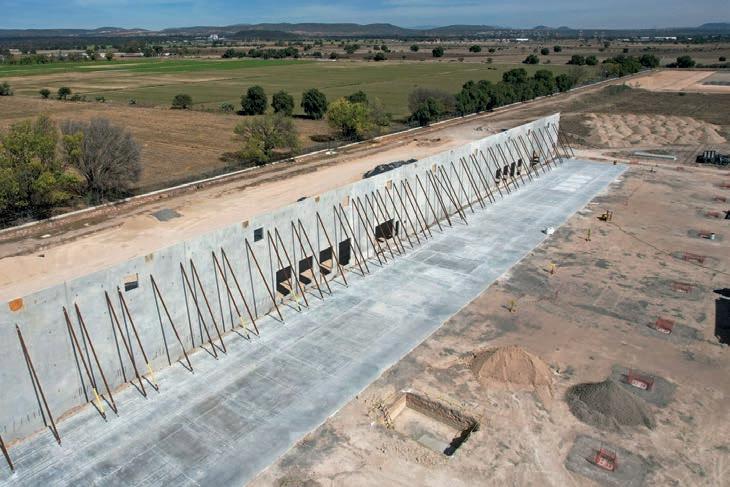
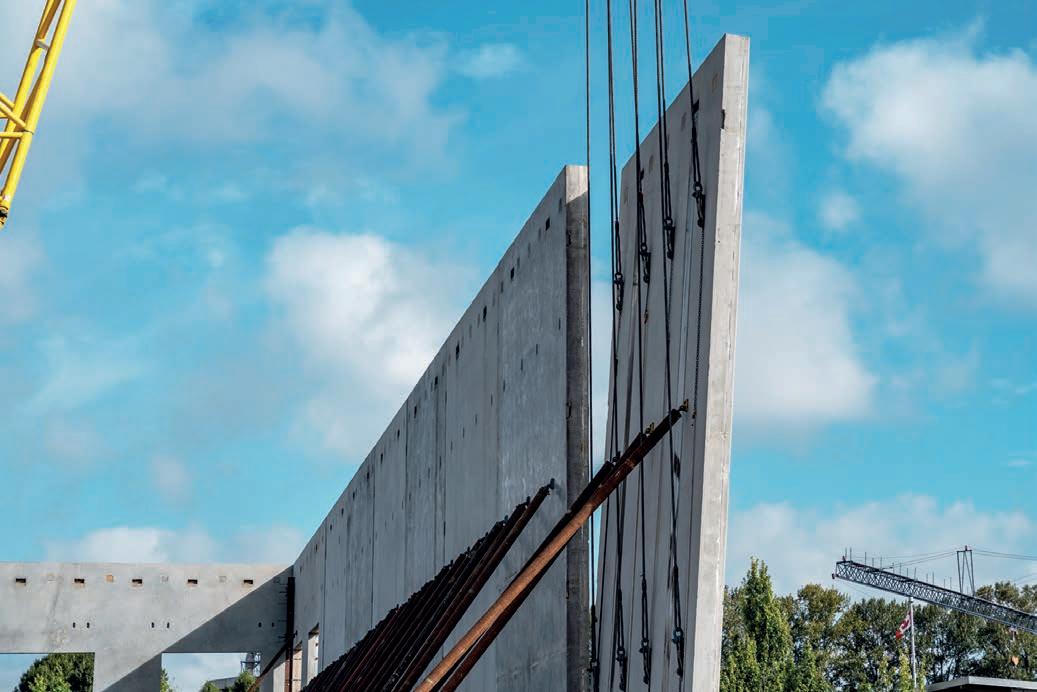
Hobson Engineering focuses on the fastening systems that sit behind tiltpanel construction.
Scaling consistency to stabilise delivery
McConnell Dowell advances a more mature Project Management Office model.
Learning on the front line
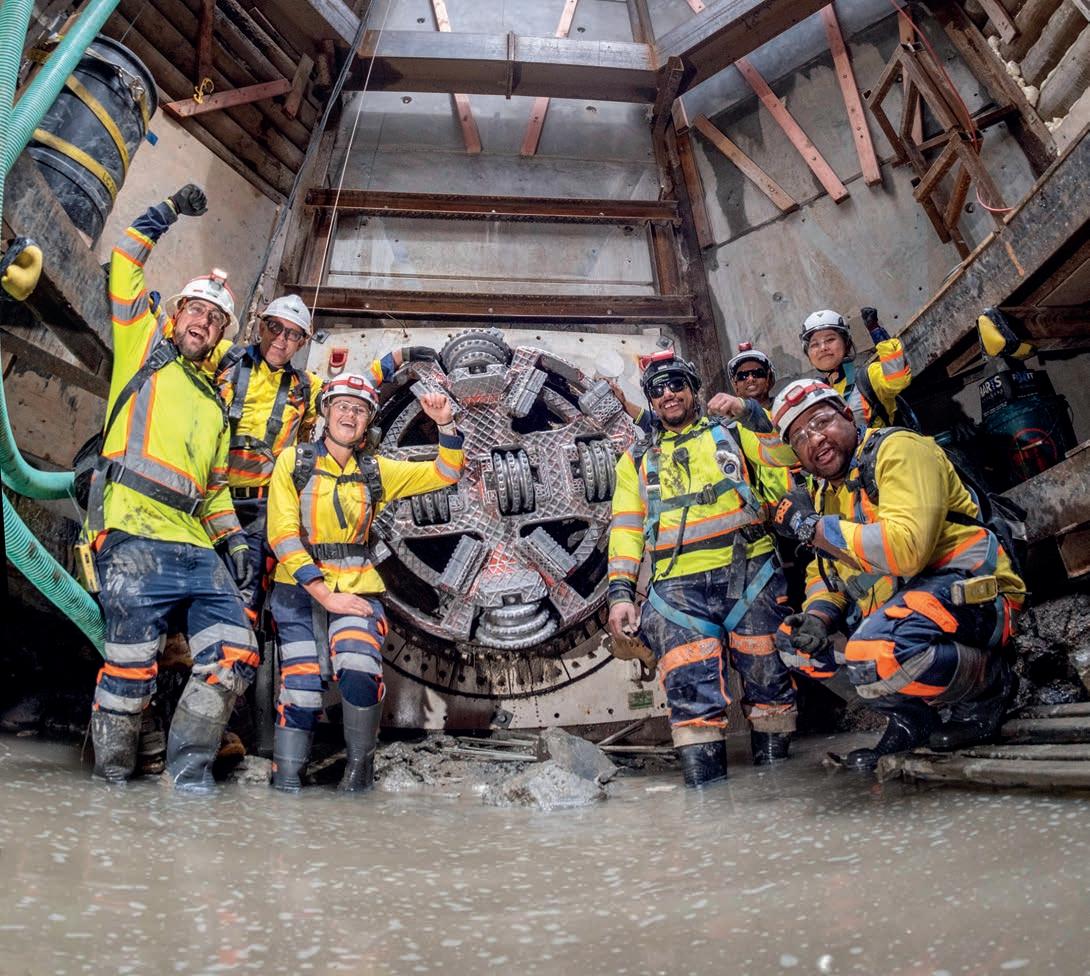
Webuild moves early-career learning out of the classroom and onto some of Australia’s largest projects.
pace with the program
FTI Group’s packaged supply model gains traction as contractors step away from fragmented procurement.
Kennards Hire expands its Specialist Solutions offering across Australia and New Zealand.
ARBS Exhibitions’ CEO explains why building services are shaping projects earlier than ever.
From the editorial team
The proof is in the projects
Technology has been part of construction for years, yet something about the current wave of adoption feels different.
Technology adoption in Australian construction tends to unfold gradually. New tools arrive with promise, early adopters experiment, sceptics weigh their options, and the wider industry watches closely.
Yet the pace is building as technology providers take a more active role in implementation, integration and ongoing support. Digital engineering, spatial intelligence platforms, project management systems and datadriven workflows are moving from the rarefied edges of innovation into daily project delivery.
The industry has not arrived here overnight. Progress has been built diligently over the past decade as contractors, consultants and clients searched for ways to navigate complex programs, tighter margins and rising expectations around transparency and accountability. Large infrastructure programs, mixed-use developments and multi-stakeholder alliances demand clarity of information that spreadsheets and fragmented records struggle to provide.
Technology adoption has increased not through a desire for innovation alone but through necessity, with technology providers helping to accelerate the process.
Still, adoption has not been without hesitation. Construction professionals are famously pragmatic. Few are inclined to chase technology for technology’s sake, and many have seen new tools arrive with lavish promotion before quietly fading away. That experience has left some corners of the industry understandably jaded.
But the current wave feels different.
Today’s digital tools and the support behind them are proving their worth in measurable ways. They help teams interrogate design before materials reach site. They provide clear insight into progress and coordination. They allow contractors to reflect on performance and refine processes project by project. They also make it easier to scale these systems across project portfolios. What lies ahead will not be a sudden digital revolution that sweeps across the sector overnight. Adoption will continue unevenly across the market, with some businesses moving decisively while others take time to wake up and smell the coffee. Over time, however, the direction of travel is becoming harder to ignore.
In this edition of Inside Construction, you will find a sector beginning to look more closely at the role technology can play in construction’s future, from spatial intelligence and financial software to machine automation and site management platforms. For an industry built on problem solving, the solutions featured in this edition provide plenty to consider.
Danny Hernandez danny.hernandez@primecreative.com.au
Design Apostolos Topatsis
Head of Design Blake Storey blake.storey@primecreative.com.au
Business Development Manager Michael Ingram-Casha michael.ingram@primecreative.com.au p: +61 0423 266 991
Client Success Manager Ben Sammartino ben.sammartino@primecreative.com.au
Cover image credit IndustriArc
Head Office
Prime Creative Pty Ltd 379 Docklands Drive, Docklands, Victoria 3008 Australia p: +61 3 9690 8766 info@primecreative.com.au www.insideconstruction.com.au
Subscriptions
+61 3 9690 8766 subscriptions@primecreative.com.au Inside Construction is available by subscription from the publisher. The rights of refusal are reserved by the publisher
Articles
All articles submitted for publication become the property of the publisher. The Editor reserves the right to adjust any article to conform with the magazine format.
Copyright
Inside Construction is owned by Prime Creative Media and published by John Murphy. All material in Inside Construction is copyright and no part may be reproduced or copied in any form or by any means (graphic, electronic or mechanical including information and retrieval systems) without written permission of the publisher. The Editor welcomes contributions but reserves the right to accept or reject any material. While every effort has been made to ensure the accuracy of information, Prime Creative Media will not accept responsibility for errors or omissions or for any consequences arising from reliance on information published. The opinions expressed in Inside Construction are not necessarily the opinions of, or endorsed by the publisher unless otherwise stated.
FASTENERS SINCE 1935
Upholding our commitment to quality through our NATA-accredited laboratory and close collaboration with key industry partners.
Quality assurance documentation available online at:
Project Picks Project Picks
Construction activity is coursing through South Australia, Victoria and Western Australia.
Eastern Freeway Upgrades – Burke Road to Tram Road, Victoria
Contractor: The Eastern Freeway Burke to Tram Alliance
Details: The Victorian Government, as part of Victoria’s Big Build, is upgrading the Eastern Freeway from Hoddle Street to Springvale Road in Melbourne. The upgrade will be delivered in three stages, with the first stage in peak delivery mode between Burke Road and Tram Road. This section of the project is being delivered by the Eastern Freeway Burke to Tram Alliance (EBTA), comprising VIDA Roads, Laing O’Rourke, Symal, Arcadis and WSP. The Burke to Tram project will deliver new express lanes, new traffic management technology and Melbourne’s first dedicated busway. A new interchange in Bulleen will provide a connection to the new North East Link tunnels, linking Melbourne’s east with the M80 Ring Road, reducing travel times by 35 minutes and taking 15,000 trucks off local roads each day. The project will also deliver road and bridge upgrades, smart traffic management technology and noise walls to meet Victoria’s traffic noise standards. Status: Construction is underway and superstructures are coming out of the ground, while freeway widening works will deliver six new express lanes to ease congestion.
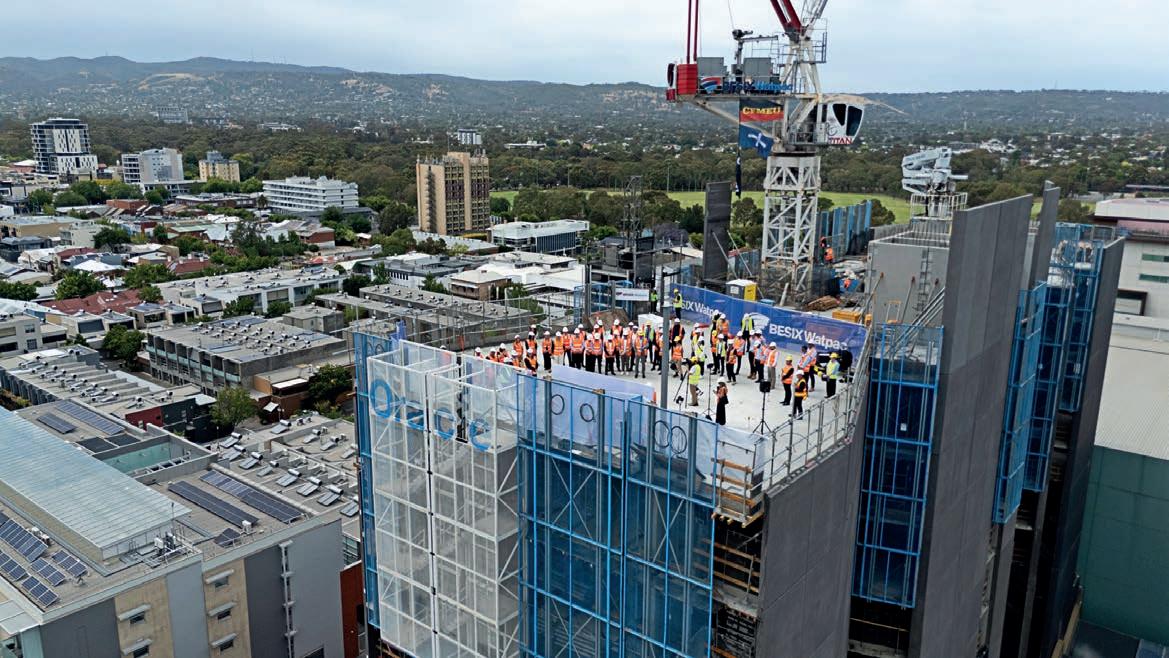
Crystalbrook Sam topped out in December 2025.
(Image: Crystalbrook Collection)
Works are underway at Bulleen Road in Melbourne. (Image: HiVis Pictures)
REGULAR Project Picks
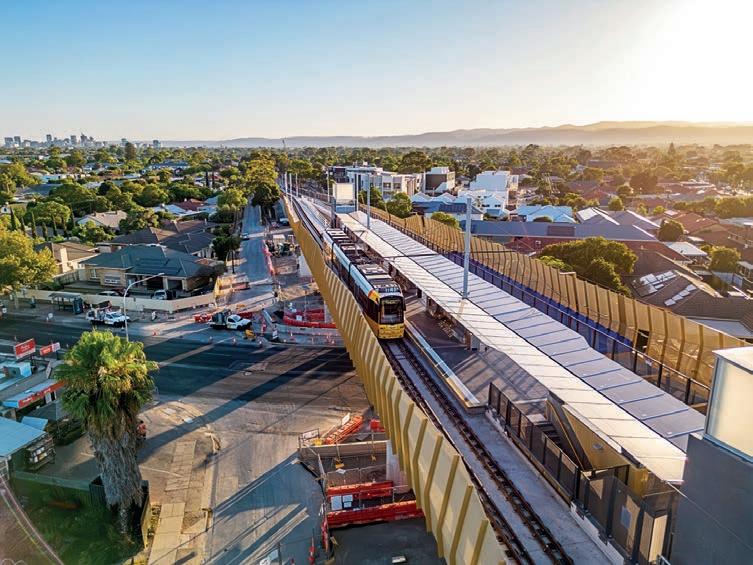
Services are now running on the new overpass over Marion Road. (Image: CPB Contractors)
Tram Grade Separation Projects, South Australia
Contractor: The Tram Grade Separation Projects Alliance
Current value: $870 million
Details: The Tram Grade Separation Projects (TGSP) are jointly funded by the Australian and South Australian governments to improve travel along the Glenelg tram line. The Tram Grade Separation Projects Alliance, comprising CPB Contractors, McConnell Dowell, Mott MacDonald, Arup and Aurecon, is delivering these works in partnership with the Department for Infrastructure and Transport. The project has removed three tram level crossings at Marion Road and Cross Road in Plympton, and Morphett Road in Morphettville, replacing them with elevated tram overpasses to improve safety and reduce congestion. The South Road tram overpass at Glandore has also been built to support the adjacent River Torrens to Darlington motorway works. Beyond traffic improvements, TGSP will deliver safer, accessible tram stops, upgraded intersections, better connections for pedestrians and cyclists, and public spaces beneath the elevated corridors. Once complete, the project will support safer, more reliable journeys for commuters.
Status: Construction continues across all three sites, including intersection upgrades, new community spaces and the elevated shared user path. Testing has now been completed, with the Glenelg tram line reopening to passengers in early 2026.
New Mount Barker Hospital Development, South Australia
Contractor: Built
Current value: $365.8 million
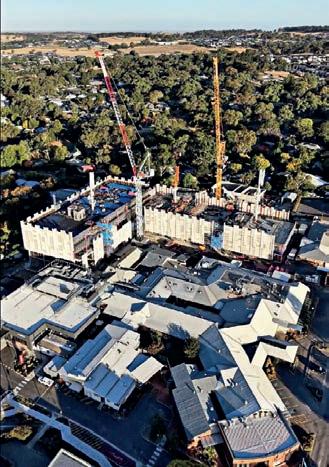
Details: Built is delivering the New Mount Barker Hospital Development on behalf of the Government of South Australia, expanding the existing campus to meet healthcare demand across Mount Barker and the Adelaide Hills. The project will triple inpatient capacity from 34 to 102 beds and add specialist maternity, neonatal, paediatric, mental health, palliative and subacute services, along with expanded operating theatres, a post-surgery recovery suite and renal dialysis, chemotherapy and outpatient consulting spaces. A new multi-deck car park will also increase parking capacity to 654 spaces.
Status: Construction is on schedule, with the new hospital due for completion in 2027 and the old hospital’s decommissioning, landscaping and refurbishment works to be completed by late 2028.
Initiatives: Built’s digital and collaborative approaches are helping track progress, coordinate materials and deliveries, and reduce manual processes, supporting safe and efficient site operations. Virtual reality walkthroughs are also being used to give user groups an immersive view of the design before construction, supporting informed decision-making. Alongside these initiatives, the project is delivering local economic benefits, with more than 125,000 hours worked to date and a peak workforce expected to reach around 300 tradespeople.
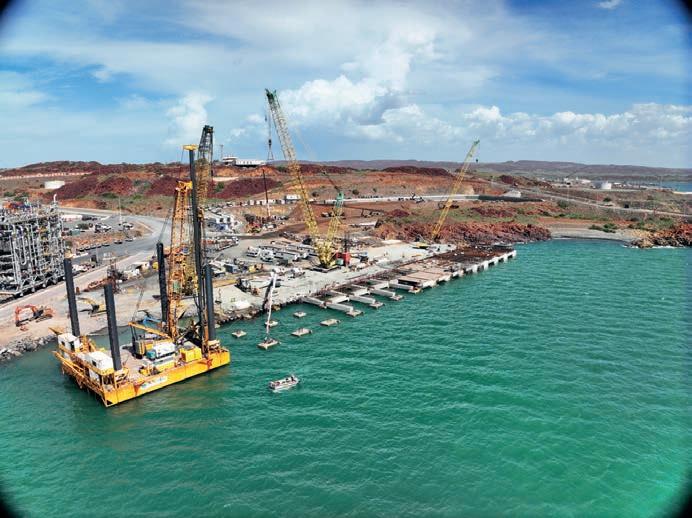
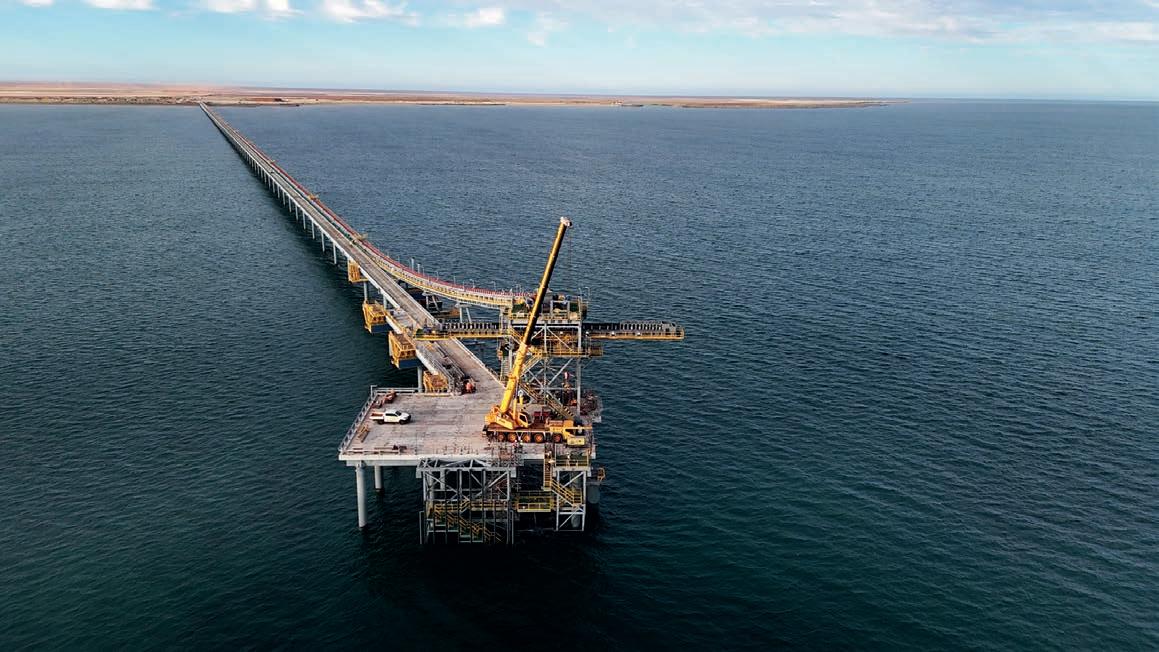
Assembly of the new Dampier Bulk Handling Facility’s wharf structure is now underway.
(Image: Clough)
Dampier Bulk Handling Facility, Western Australia
Contractor: Clough
Current value: Approximately $300 million
Details: Clough is delivering the design and construction of Pilbara Ports’ new Dampier Bulk Handling Facility (DBHF) at the Port of Dampier, stage one of the Dampier Cargo Wharf Projects. Located in Murujuga, the traditional lands of the Yaburara, Mardudhunera, Ngarluma-Yindjibarndi and Wong-Goo-Tt-Oo people, in the Pilbara region of Western Australia, the port exports iron ore, LNG, salt and condensate. The DBHF works include the construction of a land-backed wharf, the redevelopment of the heavy load-out quarry area and dredging of a 280-metre-long berth pocket to a depth of 13.2 metres, along with an 11-metre-deep vessel manoeuvring area. Designed to berth Supramax and Panamax vessels, the wharf will feature a shiploader and conveyor system to support the bulk handling of urea. The facility will also accommodate general cargo vessels and cruise ships, and provide a harbour crane to enable the rapid discharge of container and breakbulk vessels. Status: All dredging and related activities have been completed, with more than 90 per cent of the piles and 50 per cent of the precast elements that form the basis of the wharf installed. The focus is now on completing the assembly of the wharf structure prior to the final pouring of the deck and completion of the associated landside areas behind the wharf.
Construction continues on the New Mount Barker Hospital Development. (Image: Built)
Community embraces light gauge steel framing.
Extending ‘The Lanes’ precinct, this new 162 place childcare centre will form a cornerstone for Mermaid Waters’ fast-growing community. Intended to build a sense of ‘coming together’, this new state of the art childcare features over 300 individually engineered trusses that were prefabricated from TRUECORE® steel to form the buildings intricate circular shape. Townhouses also marking the banks of the nearby lakeside development have also embraced the benefits of light weight framing for their modern resilient home designs.
Learn more
Software and Technology
More than muscle
Construction equipment is being engineered for a more demanding job site, and Komatsu’s latest machines signal where performance expectations are heading next.
Komatsu’s latest equipment enters a market where performance is being judged less on sheer output and more on control, integration and usable machine data. Project directors and asset managers are weighing how accurately a machine can execute to digital models, how safely it can function in tight work areas, and how effectively its systems inform site-level decision making. Mechanical capability remains fundamental, but intelligence, configurability and systems integration are now influencing how equipment is selected and deployed.
The company’s PC220LCi-12 hydraulic excavator and intelligent Machine Control (iMC) 3.0 platform illustrate how these requirements are being addressed on Australian job sites. Rather than isolated machine upgrades, the focus is on embedding assistive technologies and accessible data architecture into machine design.
“Komatsu is leveraging technology to respond to the growing complexity of major projects in Australia,” says Mark Boyes, national business manager for construction at Komatsu. “Our focus is on placing customers and operators at the forefront of development.”
Automation takes hold
Where equipment once arrived on site with fixed operating parameters, contractors can now adjust machine settings to align with specific applications, site constraints and operator preferences.
For contractors managing diverse portfolios, that adaptability has commercial implications. A single machine that can be tuned for bulk earthworks one month and detailed finishing work the next reduces fleet fragmentation and improves asset utilisation.
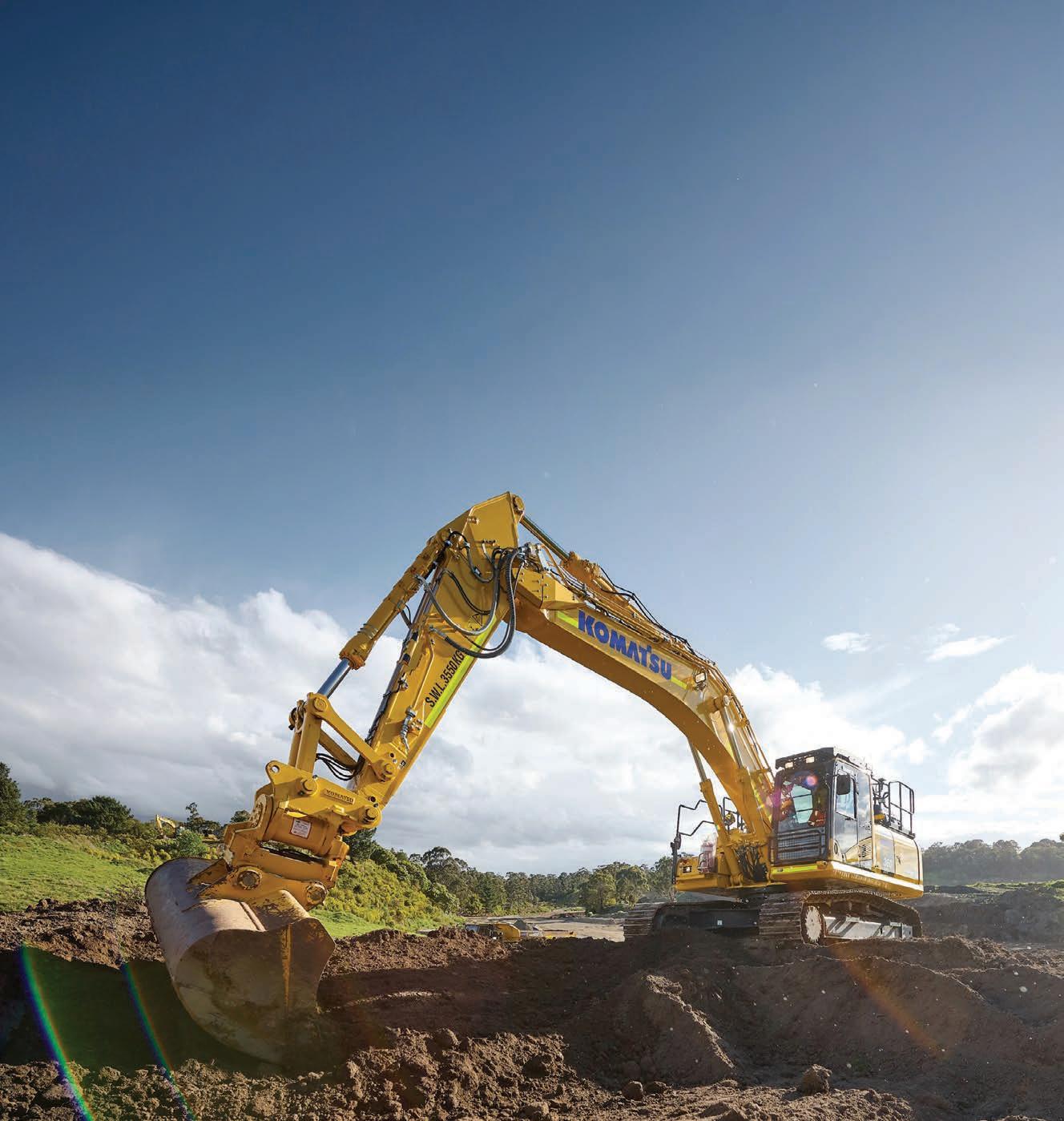
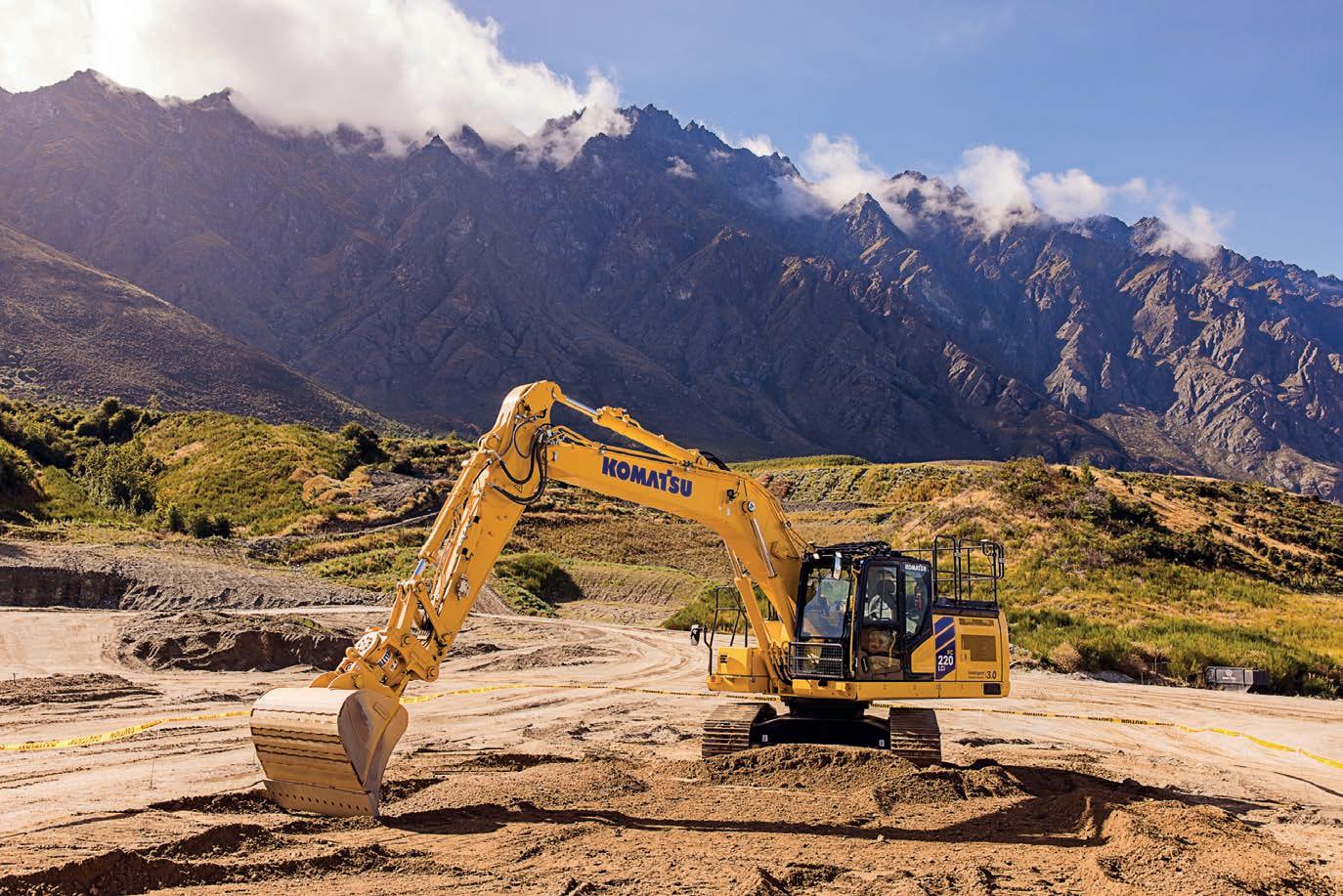
Komatsu’s latest 24-tonne class hydraulic excavator, the PC220LCi-12, embodies this progression, with automation embedded into core machine functions.
The payload meter enables real-time load monitoring to support consistent truck loading, while auto swing allows operators to preset swing speed and bucket hold angles to suit the task at hand. Integrated 2D machine control automatically regulates the bucket edge against a defined grade, enhancing accuracy during excavation. A customisable control interface also allows operators to tailor machine behaviour to applicationspecific requirements.
The PC220LCi-12 has automation embedded in its core machine functions. (Image: Smoke Photography & Video)
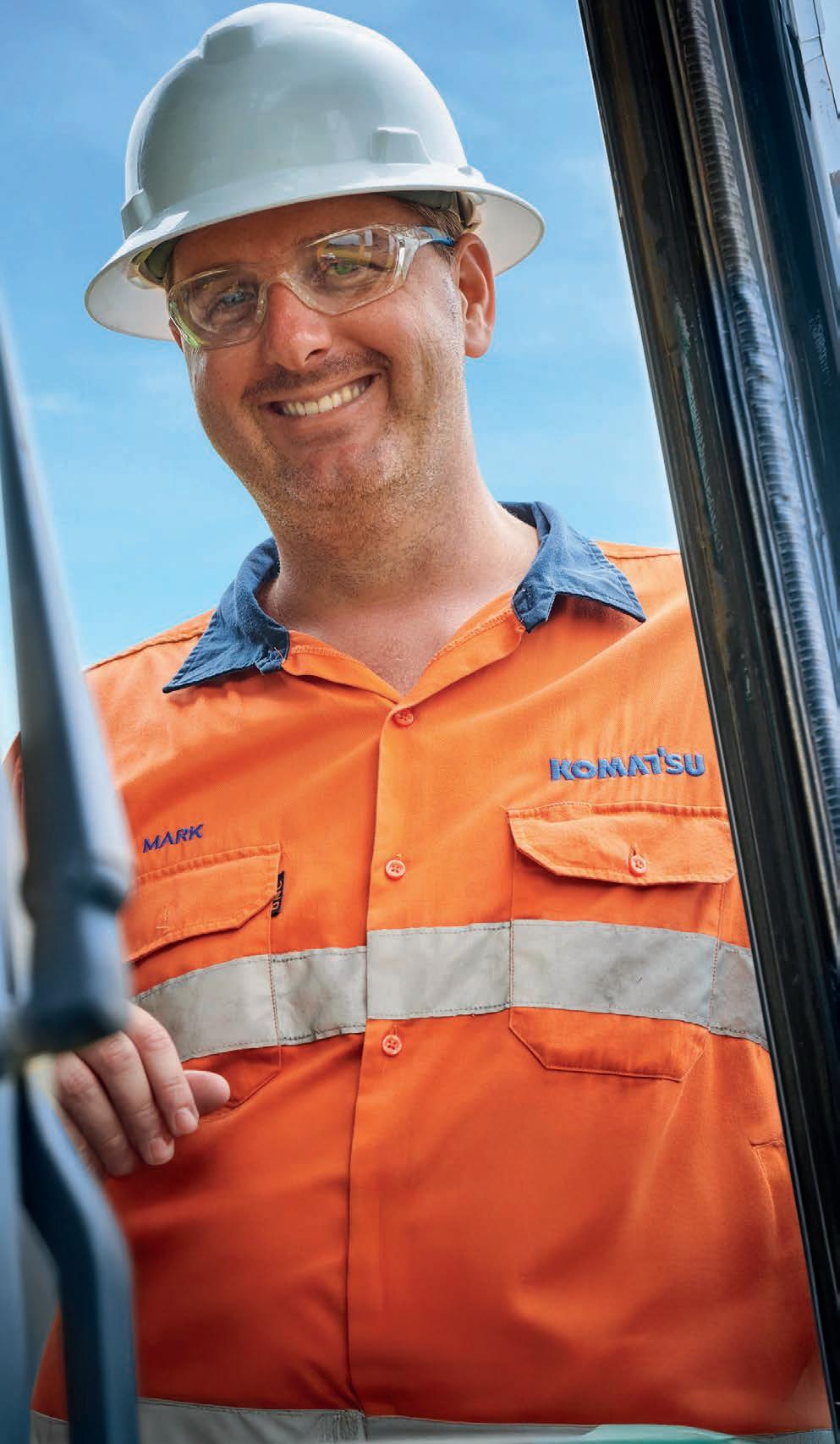
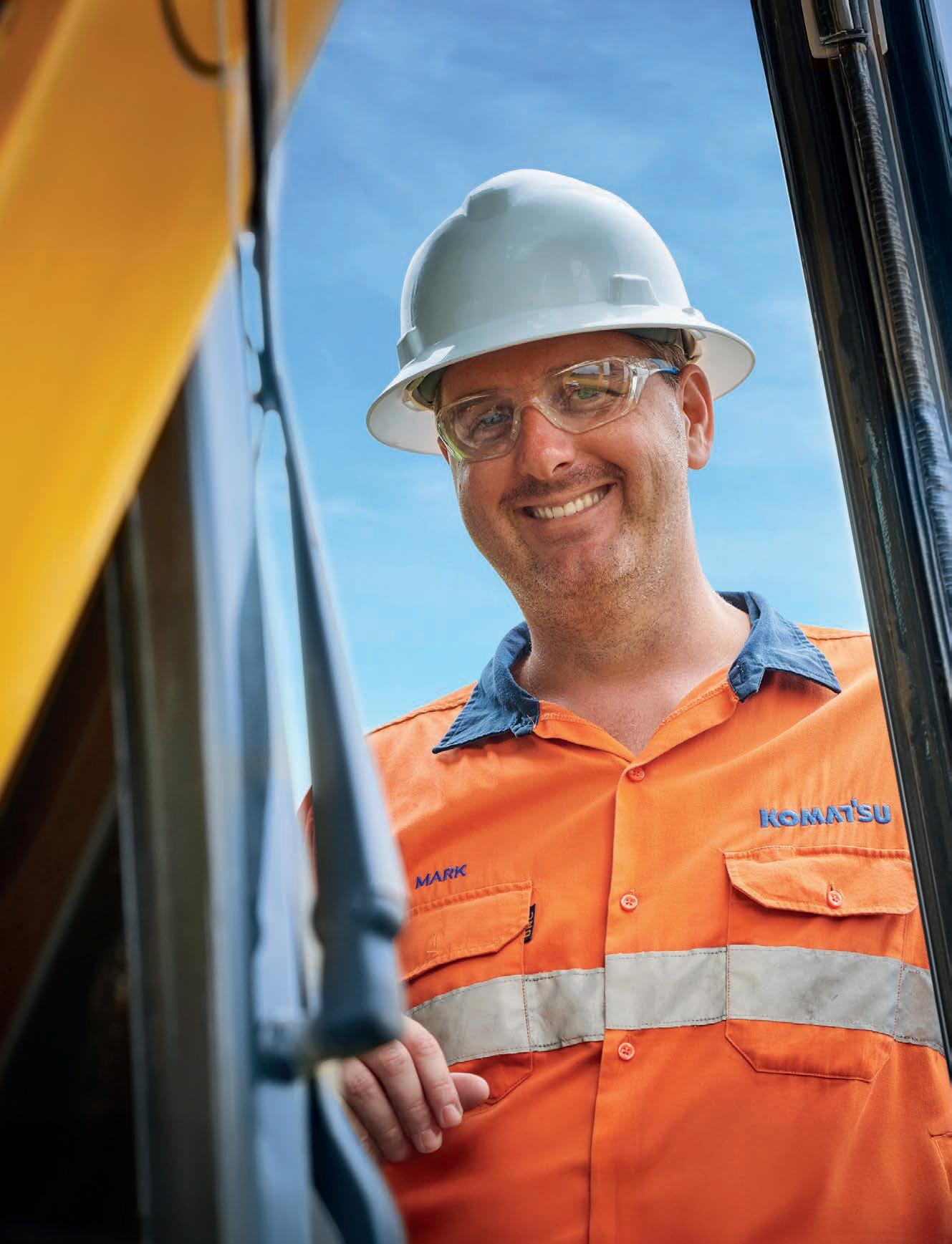
Mark Boyes, national business manager for construction at Komatsu. (Image: IndustriArc)
COVER STORY
Software and Technology
“Komatsu
is leveraging technology to respond to the growing complexity of major projects in Australia.”
“It is the Swiss Army knife of excavators, suited to everything from construction to agriculture,” says Boyes.
At a higher level, the PC220LCi-12 incorporates iMC 3.0 technology, delivering integrated 3D machine intelligence across multiple operational functions. This includes automation across swing, travel, loading, digging and grading activities.
Boundary control is another feature, restricting the equipment’s movement within predefined limits, while camera and radar technologies detect people and objects within the machine’s operating zone. Boyes says these features help prevent unintended interaction with surrounding hazards, supporting safer operation.
On projects delivered in tight corridors such as rail upgrades, urban infrastructure and staged road works, these capabilities are gaining practical relevance. Fewer reworks, reduced overcutting and improved alignment with digital models translate into cost control and program certainty.
“iMC 3.0 expands on earlier iterations by bringing multiple technologies into a single, integrated platform to increase efficiency without compromising performance or safety,” says Boyes.
Capability, data and support systems
Komatsu positions automation as an assistive layer that enhances consistency and safety, rather than replacing operator skill.
“Our technology is designed to assist the operator, making them more effective and safer in the demands of modern construction work,” says Boyes.
This assistive approach speaks to the sector’s ongoing skills shortage. With fewer experienced operators entering the workforce, contractors are looking to technology to support productivity and safety. Machines that can guide and inform operator actions, like Komatsu’s PC220LCi-12, help bridge capability gaps while maintaining operational standards on high-risk projects.
The proliferation of connected equipment is changing how machines are monitored and managed, with data streams that were once limited to basic metrics expanding.
“Data is a major focus,” says Boyes. “Five years ago, there were only a couple of key
data points, such as fuel usage and volume of material moved. Now there are thousands of data points available.”
The availability of richer data enables deeper insight into equipment performance.
Komatsu’s myFleet platform, for instance, consolidates machine data into accessible formats, allowing teams to assess efficiency, productivity and utilisation trends across entire fleets. The value lies in accessibility and interpretability, as large data volumes offer little benefit if they cannot be readily applied on site.
“The easier it is to access and use that data, the more successful the outcome will be, and that is an area we focus on,” says Boyes. As machines rely more on data-driven systems, downtime linked to software or hardware issues can carry contractual and financial implications comparable to mechanical failures, making uptime and support commercially critical.
Komatsu’s response has been to align service capability with its digital platforms. Boyes says the company maintains dedicated in-house support for Smart Construction products, including iMC 3.0.
“If there are any issues, there is a single point of contact for support,” says Boyes. “We also have remote capabilities that allow us to log into the machine interface and assist operators with any questions or technical support.”
Safety, efficiency and the future fleet
As for the future of construction equipment, Boyes says developments will be driven by safety and efficiency.
He adds that high-performing fleets are unlikely to rely on a single technology or machine category. Instead, fleet composition is trending towards a more balanced mix of mechanical output, digital intelligence and automation.
“It will definitely be a blend, but technology will be the primary influence. Highperforming fleets will be a mix, supported by assistive and advanced technologies that continue to improve productivity, safety and operational performance over time,” says Boyes.
Equipment such as the PC220LCi-12 is being engineered around that blended approach.
Software and Technology
A new lens on the job site
Spatial capture is being integrated into John Holland’s site workflows to verify works, coordinate trades and document site conditions during delivery.
John Holland’s portfolio, built over more than seven decades, stands out for its concentration of large, technically challenging projects. In recent years, the contractor has ramped up its digital engineering strategy in line with the rising complexity of the works it takes on, supported by a suite of technologies including spatial intelligence.
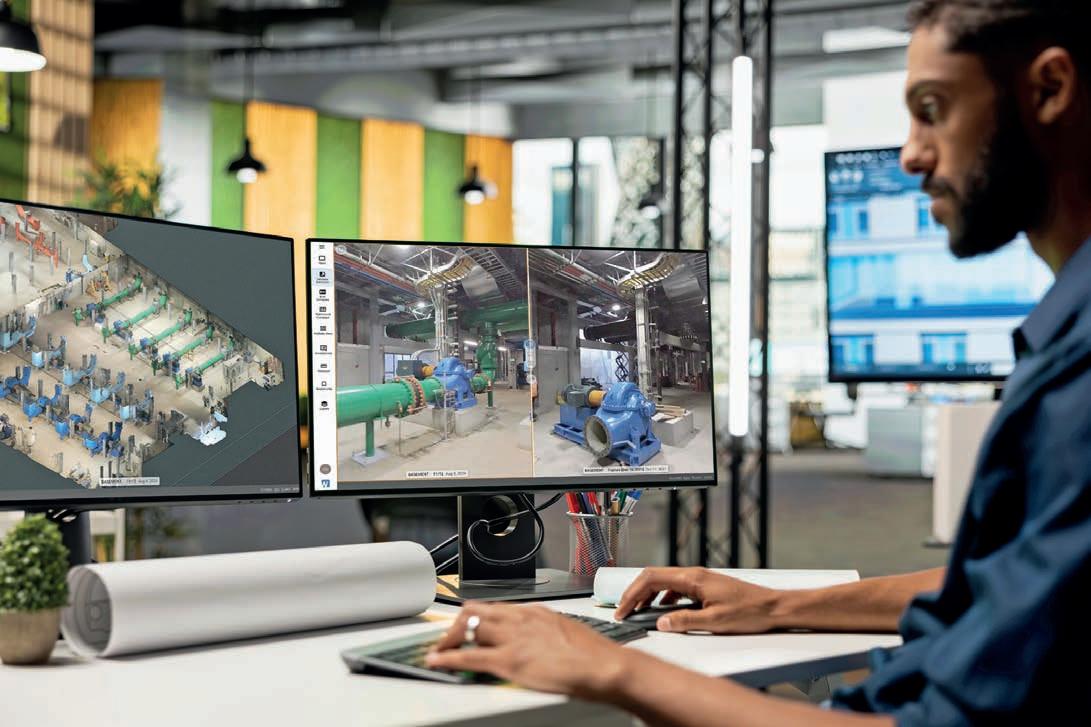
One such platform is Cupix, an AI-powered spatial intelligence platform that captures and visualises construction sites in a virtual environment. Using artificial intelligence (AI) and 360-degree cameras, it enables remote site monitoring, progress tracking and as-built documentation.
Historically, these tasks relied on manual, paper-based processes dispersed across different teams and functions. That fragmentation delayed decision-making and limited visibility across fast-moving construction environments.
Mitchell Erickson, group manager of digital engineering at John Holland, says the initial catalyst emerged during COVID lockdowns, when the business needed to track site progress remotely while maintaining accountability across multiple functions. The objective was not to replace established project roles, but to automate the manual processes between teams and streamline discussions so decisions remain with those responsible, without information stalling across layers of review.
The focus has been acute across building projects, where design, engineering, services and subcontractor teams interact continuously from concept through to commissioning. Early use cases centred on capturing services in concealed spaces prior to enclosure, establishing a chronological spatial record that could later be referenced during coordination, verification and handover.
“The process started with the ability to capture medical services in walls before they were sheeted up,” says Erickson. “On hospital builds, you have mechanical, hydraulic, medical gas and HVAC services in ceilings and walls. Cupix allows our teams to capture when walls are constructed and when services are installed prior to on-site completion tasks.”
The approach replaces static documentation with a time-sequenced visual record of installation. Instead of relying on retrospective reporting, project teams are able to reference an auditable timeline of site activity, supporting accurate verification of installed works and alignment between design intent and site conditions. The temporal nature of captures also introduces a strong commercial dimension. Timestamped records enable clearer assessment of subcontractor progress, support claims discussions between trades, and reduce ambiguity when reconciling sequencing, access or installation disputes.
Unlike key traditional survey-based documentation, which captures conditions at isolated points in time, spatial capture enables teams to compare progress across stages, overlay previous site states and assess how installation has evolved. Cupix provides a dynamic reference point for coordination and issue resolution, particularly where multiple trade packages are operating concurrently.
Accessibility and on-site adoption
Accessibility has been instrumental in driving adoption, with the platform embedded into routine workflows instead of confined to specialist digital engineering roles. Services engineers, document controllers and site administrators can conduct captures as part of their day-to-day responsibilities, increasing frequency without diverting critical project resources. This aligns with the digital fluency of newer site teams entering through graduate and engineering pipelines, who are increasingly comfortable working within spatial and model-based environments. “The process is easier and does not take team members away from critical activities,” says Erickson. “When we bring the captures back into the site office, we can compare the model with the site capture and assess design versus actual. That gives a strong tool for managing trade output and mapping site progress.”
Implementation has been supported through direct engagement with project teams, with Cupix providing on-site training and capture setup assistance, contributing to smooth early-stage rollout across pilot projects.
“Cupix allows our teams to capture when walls are constructed and when services are installed prior
to on-site completion tasks.”
FEATURE
Software and Technology
“Cupix is starting to become a staple within the
At the same time, Erickson acknowledges that adoption has involved a learning curve. Capture quality, internal awareness and backof-house processes have required refinement to ensure consistent value across different project environments, particularly as usage expands across varied asset classes.
Integration with John Holland’s common data environment anchors the platform within established digital workflows. Where deployed, Cupix connects into Autodesk Construction Cloud environments hosted across projects spanning healthcare, water infrastructure, commercial and industrial works. Site capture can be reviewed alongside design models, trade-phase development and as-built conditions within a unified data ecosystem, supporting quality and compliance.
“One of the key use cases for us has been on hospital projects. A major risk item on those projects is the coordination of services on site,” says Erickson.
“You typically have a detailed design that is then handed over to trade teams for further development prior to installation, and the issue we often face, especially in ceilings, is the tolerance between the floor above and the hung ceiling space. Verifying what has been installed before the ceiling is panelled, and to make changes on the run, is critical because there is a hierarchy in how those services are installed. The ability to spatially review that is a key capability for a business like ours.”
Site visibility at scale
John Holland is not seeking to replace existing site processes. Instead, Cupix operates as a spatial reference that allows teams to locate themselves within the physical environment while coordinating in real time. When site constraints, material availability or sequencing changes require deviation from design models, captures provide a current record of conditions that can be used to coordinate with trade teams.
“It is difficult to put a dollar value on the impact of that,” says Erickson. “Instead of relying on a single digital engineering resource to manage outcomes, site managers and site teams can assess conditions directly and make informed decisions from a spatial set-out, and then coordinate accordingly in the field.”
Some project teams have begun testing the use of captures to document material laydown areas and access conditions, creating an evidentiary record where blocked work fronts become points of contention. The captures reduce ambiguity and support informed contract management discussions with suppliers and subcontractors.
Client and stakeholder communication is also evolving through spatial capture, replacing periodic walkthroughs and bulk documentation at milestone gates. Teams can step through coordinated issues within a spatial interface, demonstrating room layouts, service relocations and sequencing changes in a visual context. This has proven valuable on healthcare projects, where standardised room types and late-stage service adjustments need to be communicated clearly to multiple stakeholder groups.
“Being able to show, from the model and the progressive site capture, exactly where things sit gives clients greater clarity,” says Erickson. “It moves the conversation away from a simple walkthrough and into transparent evidencebased discussion.”
Feedback from project teams has been positive, he says, especially across vertical construction and contained environments where capture implementation is straightforward. Expansion into civil and linear projects is now underway, although the scale of capturing larger project footprints introduces complexity in data management and capture logistics.
John Holland is advancing a measured adoption strategy grounded in proof-ofconcept deployment and direct project feedback, not top-down mandates. Projects increasingly request the platform during planning and budgeting phases, signalling organic integration into workflows and a groundswell for spatial capture capability.
As Erickson notes, “Cupix is starting to become a staple within the business”.
The applicability of the technology is also being explored across brownfield projects, where reliable as-built information is often limited. Early-stage capture in these environments can establish a clearer baseline understanding of existing conditions, enabling faster verification and informed decision-making during delivery.
Mitchell Erickson, group manager of digital engineering at John Holland. (Image: Mitchell Erickson)
business.”
John Holland is simultaneously assessing applications across tunnels, linear infrastructure and its operations and maintenance business, where documentation of completed works and maintenance activities can provide long-term asset value. The intent is to extend usage progressively across the project lifecycle, beginning with services and quality workflows before expanding into safety, site operations and maintenance contexts.
“Cupix is going to become more prevalent for John Holland on some of the tunnel projects currently in flight,” says Erickson. “There is a strong appetite for that in the business, and it is something we want to progress further.”
Across current use cases, while precise dollar metrics remain project-specific, teams are observing many hours saved on site through reduced manual verification, faster issue resolution and efficient coordination between functions. With a portfolio of more than 50 live projects, even incremental time savings at project level translate into operational value.
Aligning with digital strategy
The platform’s alignment with John Holland’s digital construction strategy is reinforced by internal demand. A recent survey indicated that more than 1,200 site-based engineering staff expressed a desire for greater access to digital tools, with adaptable, low-barrier platforms receiving the strongest support.
“Cupix aligns closely with where we are heading, particularly as we push more into construction-phase works,” says Erickson.
“It sits in a strong position for us because it is adaptable for site teams and can provide operational benefit. There are many use cases for Cupix, but it is about where we can implement it sustainably for teams to manage.
“The implementation process has been seamless to date. The next step is determining where we invest further time and resources, because the potential areas of benefit across the business are substantial.”
This approach also informs the working relationship with Cupix. Deployment is not treated as a one-off implementation.
John Holland maintains an active feedback loop with the vendor, providing structured input on functionality, limitations and field performance. The collaborative engagement, including training support and direct interaction with project teams, has been well received internally and is considered important to sustainable scaling.
“Cupix wants the feedback loop and is willing to work with us to refine what works in a live construction environment. That willingness to collaborate is a refreshing approach,” says Erickson. “We look for partners that care about project outcomes, rather than simply deploying a tool and expecting the business to figure it out. Cupix has been strong in that regard.”
As spatial capture capability matures, Cupix is becoming part of John Holland’s longer-term digital toolset, with the focus on integrating the platform into everyday site operations as the business moves towards enterprise-wide adoption.
Current John Holland projects using Cupix:
• New Toowoomba Hospital (QLD)
• P rincess Alexandra Hospital (QLD)
• Logan Hospital Expansion (LHEX2) (QLD)
• Shoalhaven Hospital (NSW)
• Social Housing –Tranche 01 (VIC)
• Melbourne Terminal – Stage 2 (VIC)
• Ballarat Hospital (VIC)
Spatial intelligence allows remote site management. (Image: DC Studio/stock. adobe.com)
-SimonWood, ManagingDirector
De-risking technology investment, project-first
Payapps shares why a project-first strategy allows contractors to build confidence before scaling construction technology across the business.
As the Australian construction sector faces a continued productivity imperative, the industry is entering a critical transition. While the project pipeline is beginning to stabilise, the sector remains under pressure from tight margins, skills shortages and heightened scrutiny of value for money.
Recent analysis, including commentary following the Queensland Productivity Commission’s Final Report: Opportunities to Improve Productivity of the Construction Industry, reinforces that productivity has been stagnant for years. Structural inefficiencies undermine performance across projects of all sizes. Poor risk allocation, fragmented processes and manual workflows continue to inflate costs. For years, the industry was told that digital transformation had to be a topdown, multi-million-dollar “Big Bang” event. Today, evidence suggests that approach is being replaced by a more pragmatic strategy: project-first deployment.
The strategic case for risk mitigation Today’s construction executive is rightfully cautious. Having witnessed expensive, multi-year implementations that failed to gain traction on site, leaders are shifting away from top-down mandates toward a mindset of deliberate de-risking.
During panel conversations held at FCONTech 2025, a consensus emerged among Tier 1 and Tier 2 construction leaders: they are no longer looking for a silver bullet that rolls out across the business on day one. Instead, they are looking for “little wins” on individual projects. Industry chief executives now emphasise the value of establishing a strategic proof point – where construction technology, such as Payapps’ progress claim software, can be deployed and its impact measured in a high-stakes, real-world environment before being committed to the wider business.
“We’re seeing a shift in how construction leaders approach technology,” says Misty Cronin, head of sales for Australia and New Zealand at Payapps. “The most successful conversations we have aren’t about a massive, disruptive overhaul. They often start by solving a friction point on a single project.
“When a team sees the immediate ROI on site, the move to an enterprise-wide rollout isn’t a hard sell – it’s the next logical step for a business that wants to standardise excellence and improve subcontractor management.”
Laying foundations
The power of this site-first approach is best evidenced by builders expanding into new territories or tackling highstakes developments. When establishing operations in new regions, leading developers and builders are choosing to implement consistent, contract-driven frameworks from the first project.
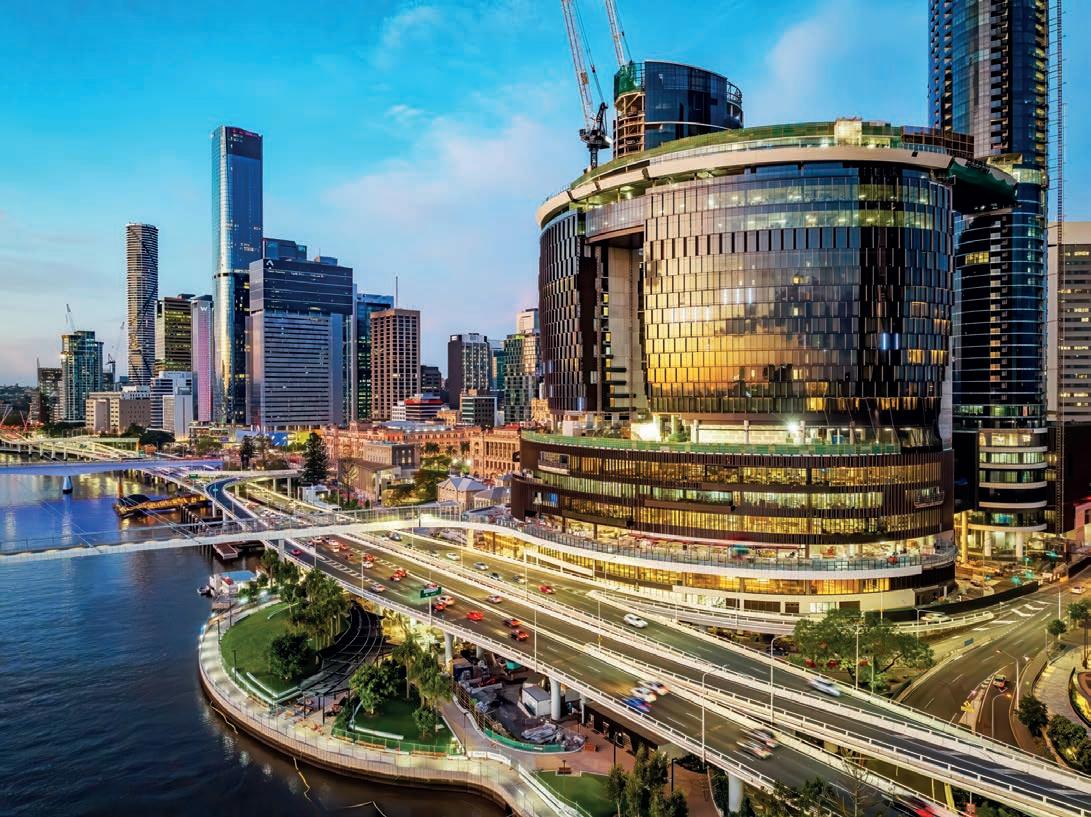
When Far East Consortium (FEC) established its construction operations in Queensland to manage projects like the Queen’s Wharf Tower, it recognised that scalability required a departure from manual workflows. By opting to deploy Payapps’ progress claim software, it ensured compliance with the Security of Payment Act (SOPA) and established professional controls from day one.
FEC Queensland achieved a scalable, standardised process that supports growth without increasing administrative overhead or introducing compliance risk.
“Once we explained the financial cost and risk of SOPA non-compliance, lost time and paying for additional headcount just to manage the claims process, plus the benefit of using tools like Payapps to attract the highest calibre subcontractors, they were quickly in agreement,” says Andrew White, director at FEC Queensland. “Payapps just made sense.”
A path to national consistency
A recurring theme at FCON-Tech 2025 was the “path of least resistance”. If a tool feels harder than a spreadsheet, it won’t be used. This is why project-first deployment is the ultimate litmus test for usability. If the site team finds value, the enterprise rollout becomes a natural progression rather than an enforced mandate.
Consider Unita, a national fit-out specialist that wanted to move away from error-prone spreadsheets and reduce communication breakdowns. For Unita, the advantage of
“By starting at the project level, we help builders build the confidence they need to lead the market.”
Ian Moss, marketing leader for Australia and New Zealand at Payapps – An Autodesk Company. (Image: Payapps)
FEATURE
As Far East Consortium
“Our senior leadership really empowered us to spend the time, specifically with our commercial team, to understand the current process and overlay that with Payapps’ capabilities – very quickly we could see where we could build that consistent, standardised framework,” says Sian Dyson, business improvement manager at Unita.
Cronin adds: “When a project manager realises they can assess a claim in minutes rather than hours, they become our biggest advocates. We find that once our solution has proven itself at the project level and eliminates those manual errors, the internal demand for the tool grows organically. We aren’t just selling progress claim software; we’re selling a better way to work that the teams want to use.”
Becoming the ‘builder of choice’
In a market defined by skills shortages, being a “builder of choice” is a competitive advantage. When a project-first deployment simplifies the subcontractor’s life – offering a transparent dashboard to view claim status and receive automated notifications – the relationship shifts from adversarial to collaborative.
As noted by technology managers at FCONTech, this level of transparency is critical for de-risking the business. Starting at the project level allows IT and finance teams to verify
buyer, this path provides the data-backed confidence required to invest. It transforms the technology from a cost centre into a proven performance driver.
The winners will be those who can scale without disruption. By focusing on projectfirst success, builders can build internal advocacy, ensure data integrity through construction ERP integration, and ultimately create a more resilient business model.
Building confidence, one site
at a time
The era of the “Big Bang” rollout is over. The most successful builders in the Australian market are those who recognise that digital transformation is a series of successful projects, not a single destination. By choosing scalable, easy-to-deploy construction software like Payapps, firms can demonstrate ROI on site and secure their teams’ advocacy before moving to an enterprise license.
“Standardisation shouldn’t be a burden; it should be the reward for finding a process that works on the ground,” says Cronin.
“By starting at the project level, we help builders build the confidence they need to lead the market.”
To learn more, visit payapps.com
According to Payapps’ Misty Cronin, the key to successful digital transformation is proving return on investment at the project level. (Image: Payapps)
Queensland established operations for projects like the Queen’s Wharf Tower, it implemented Payapps from the outset to lay a foundation for rapid scaling. (Image: Far East Consortium)
Software and Technology
Making materials count
Verified asset intelligence helps keep materials and products in productive use across the built environment.
“If you can’t see products and materials clearly, you can’t steward them properly.”
Project briefs across construction, fit-out and asset management are carrying new demands: waste prevention, embodied carbon accountability, compliance reporting and product stewardship. Sustainability expectations are influencing procurement frameworks and delivery models, yet one barrier persists: limited visibility of products, materials and assets already inside buildings.
Without verified information, reuse becomes difficult to plan, carbon reporting relies on assumptions, and de-fits default to removal instead of recovery.
“We’ve built an industry that’s good at delivering new outcomes,” says Paul Rosenberg Vella, co-founder of building materials intelligence platform Refit8. “But we’ve historically paid less attention to documenting what’s already there. If you can’t see products and materials clearly, you can’t steward them properly.”
For Lachlan Ide, director at project management advisory ONPC, the move toward circular practice is now appearing earlier in project planning.
“I oversee feasibility, design and design coordination,” says Ide. “Over the past three to four years, there’s been a real drive to separate projects from the norm. We’re working with landlords and end users to push the agenda from day one, looking for secondlife opportunities and measurable reuse outcomes.”
Circular thinking once appeared cautiously, often limited to salvaging furniture.
Increasingly, it’s being embedded in the way projects define success.
Ide says the shift began slowly, with furniture reuse treated as a side conversation. In some project briefs, however, circular outcomes are now being treated as measurable KPIs.
“The earlier we understand these initiatives, the more successful projects will be,” he says.
As circular outcomes begin to influence feasibility modelling and design coordination, project teams are having to understand what already exists within a building before specifying what comes next.
Karlee Blackburn, senior interior designer at NH Architecture, says circular practice depends on reliable information.
“When we can see and verify what exists within a building, such as materials, joinery,
fixtures, furniture and services, we unlock the ability to design for retention or reimagining rather than replacement. Transparency and data shift the conversation away from demolition as the status quo,” says Blackburn.
She adds reliable inventories change both the project brief and the design process, allowing teams to assess what can be retained, upgraded or reconfigured before specifying new materials and supporting evidence-based decisions around embodied carbon and waste reduction.
Ide highlights a related challenge: understanding what happens to materials once they leave site. He says the industry has lacked reliable data on where materials end up, making recovery pathways difficult to verify. With mandatory reporting and greater ESG scrutiny, transparency is becoming increasingly important for landlords and end users alike.
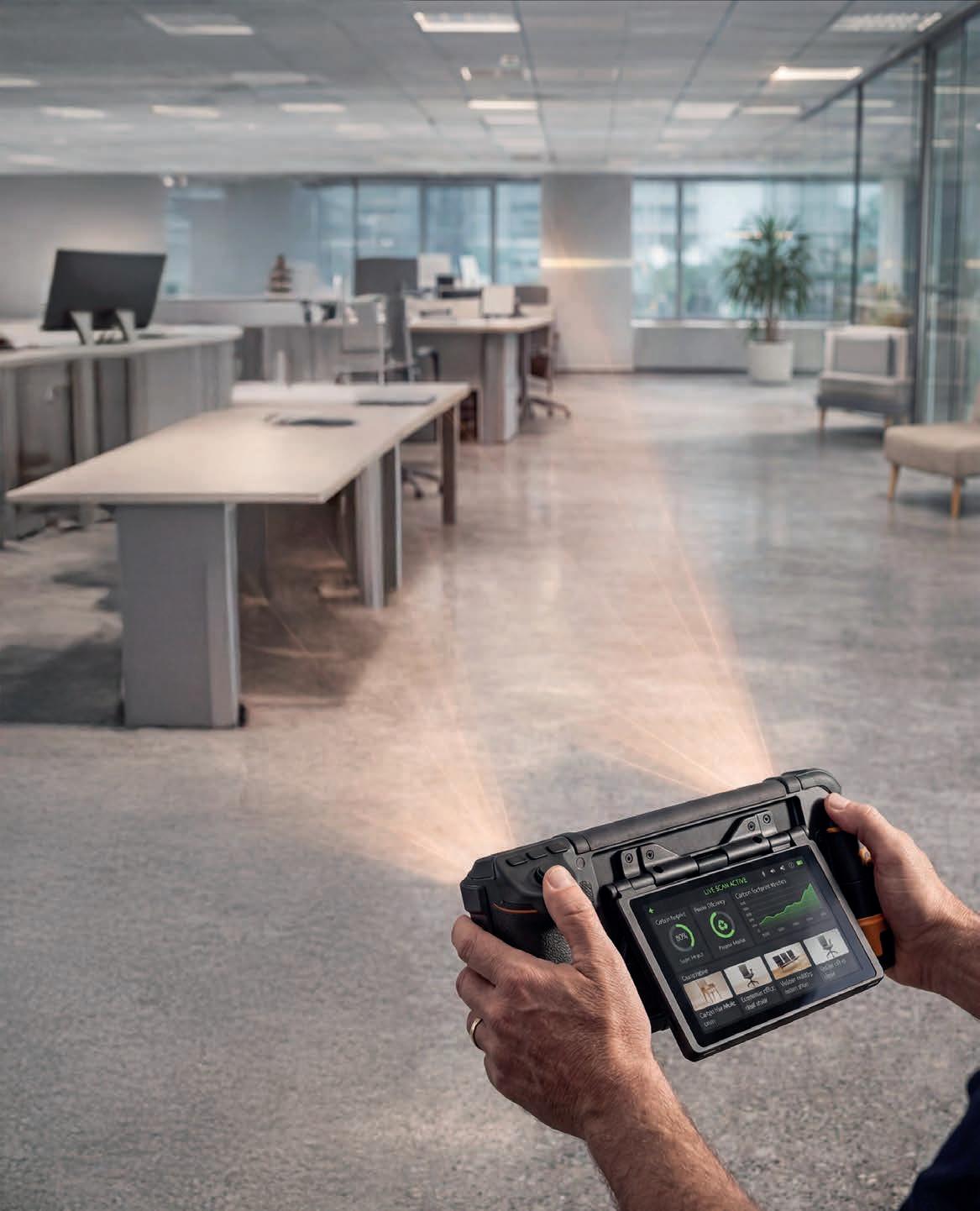
Refit8 has been developed as a response to that information gap. The platform captures, verifies and organises data on installed products, materials and assets across fit-outs, de-fits and asset lifecycles. On-site tools record quantities and condition, feeding into auditable digital registers aligned with compliance and reporting requirements.
“We’re not asking teams to change their objectives,” says Rosenberg Vella. “We’re giving them clearer, verified information so decisions around reuse, refurbishment, recovery or replacement can be made earlier and with confidence.”
Accurate asset information has implications across project teams. Designers and engineers rely on it for specifications and adaptive strategies, contractors for stripout sequencing, asset owners and facility managers for lifecycle value and make-good obligations, and sustainability leads for Scope 1, 2 and 3 emissions reporting.
“There’s often a light touch on circularity and adaptive reuse,” says Ide. “But it’s not just about reusing a meeting room. It goes deeper, into how you design the space, how it can continue its life once the tenant leaves.”
Blackburn adds: “It’s about designing with continuity in mind and ensuring that data, product histories and stewardship pathways travel with an asset across multiple lifecycles. It also requires modular systems and materials
that are intentionally designed to be reused, reconfigured or reimagined as needs change. It’s about how things are manufactured, how they’re delivered to site, and what happens to packaging. Waste streams need to be addressed at every stage.”
This approach requires early alignment between design, procurement and delivery, with visibility across product categories from furniture, fixtures and equipment (FF&E) to services and built form.
Regulatory and contractual drivers are accelerating the need for better material intelligence. Scope 3 emissions reporting is bringing embodied carbon from products and fit-outs into focus.
The Commonwealth Government’s Environmentally Sustainable Procurement Policy identifies high-impact procurement categories, including FF&E, information and communication technology equipment, and textiles. These categories relate to fit-outs, asset management and de-fit activities.
“Scope 3 reporting requires defensible, project-level information,” says Rosenberg Vella. “If material and product data is fragmented or incomplete, carbon accounting becomes vulnerable.”
Contractual frameworks aligned with AS 4902–2000 also require clarity around the treatment of existing works, including removal, reinstatement and retained elements.
By creating accessible digital registers of FF&E, services and built form, Refit8 seeks to align environmental objectives with compliance obligations and procurement requirements. Data captured during strip-out or early design phases can support Green Star, Living Building Challenge and LEED pathways, lifecycle assessment inputs and product stewardship schemes.
John Gertsakis, a sustainability and communications practitioner who has worked with projects in the furniture and carpet industries over two decades, sees this convergence as necessary and overdue.
“Environmental performance, commercial accountability and operational efficiency should not sit in silos if we’re serious about the transition to circularity,” he says. “Structured information allows those objectives to reinforce each other and acknowledge a system-wide view rather than compete.”
Safety Control Systems
Optional R32 safety measures, including a leak detector, shut-off valve kit and controller with integrated alarms provide advanced protection with flexible installation.
SCAN TO LEARN MORE
Building services
HVAC in a carbon-driven market
Mitsubishi Heavy Industries Air Conditioners Australia has introduced large-capacity R32 VRF systems to the Australian market.
Specification of heating, ventilation and air conditioning (HVAC) systems on commercial construction projects is now being guided by operational carbon, regulatory compliance and lifecycle asset performance, an area where Mitsubishi Heavy Industries Air Conditioners Australia (MHIAA) is seeing stronger engagement from project teams. Long considered a downstream technical package, HVAC today is evaluated against emissions modelling, NABERS projections and long-term ownership strategy.
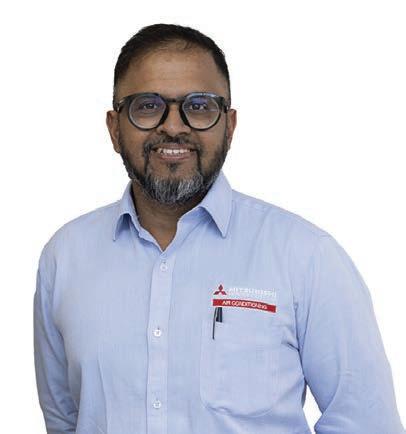
Roy Arindam, national commercial manager at MHIAA, says the energy profile of modern buildings is a primary driver of this change.
“Commercial buildings make up roughly 30 to 40 per cent of national energy consumption,” he says. “Within those buildings, HVAC alone can account for 40 to 50 per cent of total energy use. As such, any efficiency gains made through HVAC can materially reduce overall carbon emissions. That means the sector has a big influence on national emissions outcomes.”
Rising regulatory pressure is another element at play. Arindam says the initial push to reduce operational carbon emissions was led by government clean targets and international commitments, such as the Paris Agreement, before filtering down into the HVAC sector and into project-level specifications. That policy direction is now intersecting with higher environmental, social and governance (ESG) expectations, stronger NABERS targets and Green Star requirements written into design briefs.
Refrigerants enter the conversation
For many construction decision makers, refrigerant terminology has sat outside core project conversations. That is changing as low-emission building performance is prioritised.
VRF, or variable refrigerant flow, refers to a centralised air conditioning system that uses refrigerant as the primary cooling and heating medium, distributing it across multiple indoor units while modulating output to match real-time demand. This flexibility makes VRF systems suited to commercial environments
such as offices, hospitals, clean rooms and large tenancy fit-outs where loads fluctuate throughout the day.
selection carries implications for emissions and compliance. Traditional systems commonly used R410A, a high global warming potential (GWP) refrigerant, with greater environmental impact if released. By contrast, R32 is classified as a low-GWP refrigerant, aligning closely with emerging regulatory frameworks and carbon reduction strategies.
“Government policy is a major driver in this transition,” says Arindam, noting that the push towards a low-GWP economy has already informed regulatory timelines and industry direction.
The United States, the United Kingdom and much of Europe have already transitioned to R32-based systems, shaping Australian adoption.
“R32 can reduce CO2-equivalent emissions by about 70 per cent while improving thermodynamic performance. As a refrigerant, it also allows for a reduced refrigerant charge and more efficient system design,” says Arindam.
“Typically, with an R32 design, the physical size of the unit can be smaller, which is one of the key advantages it brings.”
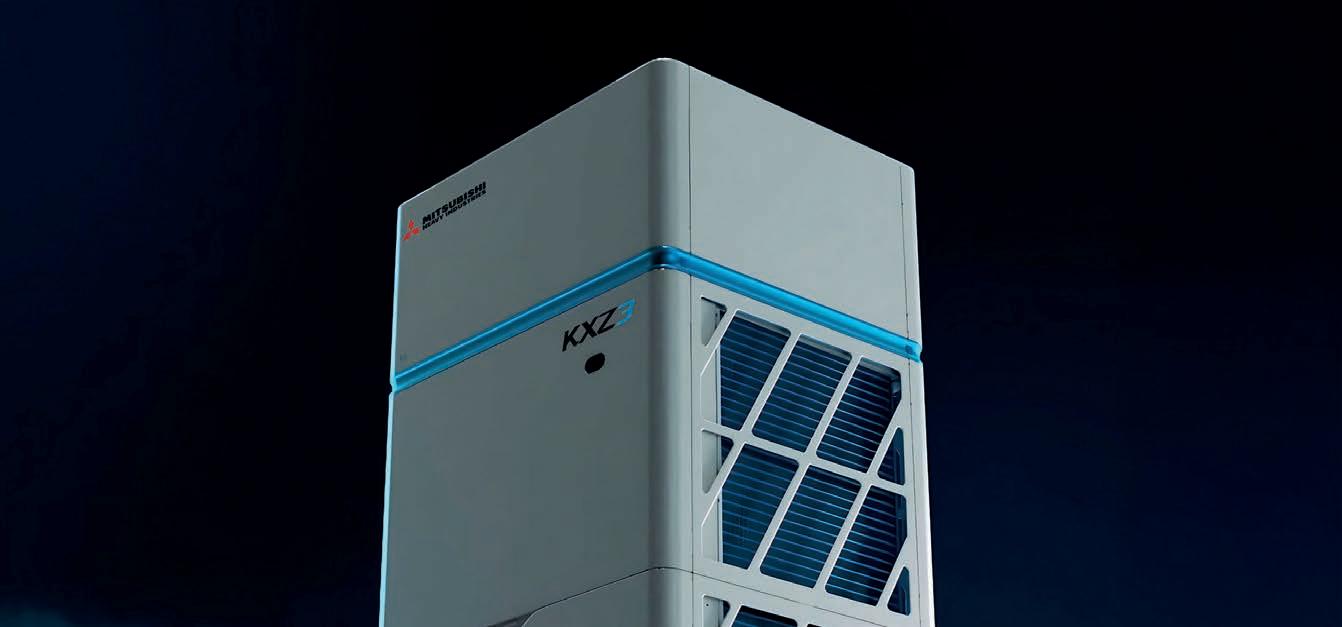
The KXZ3 R32 VRF series’ integrated safety systems address the requirements of A2L refrigerants and ensure compliance with local and international standards. (Images: MHIAA)
FOCUS
Building services
“Commercial buildings make up roughly 30 to 40 per cent of national energy consumption.”
Another term entering specification discussions is A2L, the safety classification applied to mildly flammable refrigerants such as R32. Arindam emphasises that this classification does not prevent deployment in commercial buildings but does require additional safety protocols including refrigerant leak detectors, safety alarms, shut-off valves and ventilation measures that align with ISO, international and Australian standards. These design considerations are now being integrated into early-stage engineering assessments.
Performance-led system selection
NABERS and Green Star benchmarks are exerting growing influence over system selection, particularly on premium commercial developments targeting longterm tenant retention and asset value.
Arindam notes that Green Star aligns with design and construction sustainability targets, while NABERS evaluates ongoing operational performance once a building is occupied, meaning HVAC decisions need to support both design intent and lifecycle efficiency.
Because of this dual lens, project teams are setting targets early and allowing those benchmarks to guide system specification.
Cost remains a factor, but it is now weighed against long-term operating efficiency and compliance. Arindam describes this as a balancing act between delivery cost, product cost and the performance outcomes that developers and asset owners are targeting.
Landlord expectations are also influencing decision-making. He points to post-COVID competition among CBD asset owners to position premium properties with strong performance ratings to attract anchor tenants.
“One of the key ways to do that has been to improve building performance and star ratings,” he says.
Lifecycle planning further supports the adoption of low-GWP systems. Arindam says installing legacy refrigerant systems in new buildings does not align with long-term ownership strategies, particularly for assets expected to operate for 10 to 20 years or more.
“The expectation is that the refrigerant and system will remain compliant, relevant and aligned with regulatory frameworks and operational targets,” he says.
“That is where the focus on alignment and future-proofing comes in, ensuring the system supports the long-term needs of tenants, occupants and asset owners.”
Filling the large-capacity gap
MHIAA has introduced the KXZ3 R32 VRF system alongside the established KX Micro R32 VRF system, creating a pathway for both smaller and larger applications transitioning away from R410A.
Arindam explains that while the KX Micro R32 has been deployed for five years in residential and smaller-scale projects, a gap remained in the higher-capacity condenser range for typical commercial environments.
“The KXZ3 series was introduced to support that transition in larger commercial applications. It is designed to suit environments such as office buildings, tenancy fit-outs, hospitals, data centres, clean rooms, medical facilities, airports, councils and other complex buildings,” he says.
“Our KXZ3 series provides high performance and excellent energy savings. This is achieved through an optimised heat exchanger, an advanced energy-efficient compressor and a sophisticated capacity control system.”
Physical design is another advantage for builders and developers.
“We are seeing a reduction in unit size of about 28 per cent, which lowers the amount of plant space required,” says Arindam. “This means less physical real estate is needed for large mechanical equipment, allowing building owners to allocate that space more efficiently within the asset.”
Deployment and market confidence
Market confidence in low-GWP systems is growing. KX Micro R32 systems have already been installed across more than 100 buildings in Australia and New Zealand, including projects delivered by developers such as Meriton and Mirvac, providing evidence of R32 readiness in commercial environments.
“KX Micro R32 has been deployed for the past five years across a range of projects, including apartments, schools, offices, hospitals and clean rooms,” says Arindam. Through these installations, clients have observed efficiency and operational
Roy Arindam, national commercial manager at MHIAA.
performance in real-world conditions, which has helped address early resistance often associated with new refrigerant technologies.
Arindam adds that most new deployments are now being delivered with R32 systems, reflecting growing acceptance as contractors and consultants gain familiarity with design tools, installation methods and safety protocols.
“Initial market resistance is typical with any new product, but ongoing deployments have demonstrated that the systems perform reliably in live environments,” he says. “These installations have effectively future-proofed assets and buildings well before broader market discussions around refrigerant transition became more prominent.”
Early Australian projects deploying KXZ3 are already underway across various applications, including a commercial office and community facility, with clients deliberately selecting newer refrigerant technologies to maintain compliance and relevance over the long term.
“We are seeing strong interest in the product, with enquiries coming from consultants, landlords and developers. At present, part of the process involves working with building owners and the development community to understand what adjustments may be required to accommodate R32 systems within new or upgraded assets,” says Arindam.
“Fortunately, the required changes are generally not extensive, and improvements in unit size and efficiency support the longterm value proposition. Interest is continuing to grow across both the private sector and government, with public sector bodies acting as an active driver of adoption.”
Collaboration and education
Accelerating adoption of R32 systems requires coordinated engagement across the project ecosystem. Arindam describes consultants and engineers as a bridge between manufacturers, developers and builders, translating technical direction into system specifications while also educating stakeholders on refrigerant transition and compliance requirements.
He adds contractors, in most cases, deliver in line with consultant and developer requirements, meaning awareness, product
availability and cost considerations all influence uptake. MHIAA has responded by increasing product availability and providing design software tools that allow engineers, consultants and contractors to model systems and assess safety measures aligned with applicable standards.
“There is still a need for ongoing education and upskilling as adoption increases,” says Arindam. “We run multiple training and education sessions throughout the year for consultants, engineers and contractors, including in-office presentations focused on knowledge sharing and system understanding. We also support consultants and engineers through system design and selection, which helps inform decisionmaking on projects.”
Hands-on access to modelling tools, he adds, reduces mistakes and improves understanding of A2L refrigerant requirements during system design.
“For us, being an early mover in bringing R32 low-GWP refrigerant solutions to the Australian market makes education and communication especially important,” he says. “At present, some contractors are still assessing the risks associated with deploying newer refrigerant systems. However, with clear guidance mechanisms, structured installation methods and defined safety protocols, the market is becoming more confident in using these systems.”
Broader acceptance is expected as regulatory direction, international precedent and local project experience converge.
“We are seeing the change happening now, and over the next three years there is likely to be much more acceptance,” says Arindam, with new commercial building designs already specifying R32 systems, including large-capacity solutions for complex assets.
As sustainability targets, energy costs and regulatory frameworks evolve, HVAC selection will play a key role in operational carbon performance.
Large-capacity low-GWP VRF systems such as MHIAA’s KXZ3 provide a practical pathway for consultants, developers and builders seeking to reduce emissions while maintaining performance, safety, reliability and occupant comfort across the lifecycle of modern commercial buildings.
“R32 can reduce CO2-equivalent emissions by about 70 per cent while improving thermodynamic performance.”
Getting serious about leadership behaviour Leadership
Seedling Leadership’s Simon Wood is calling on the construction industry to address what is too often normalised.
“That’s just the way it is in construction.”
This is a phrase I have heard repeatedly over years of leadership consultancy, workshops and one-on-one coaching sessions with leaders across major infrastructure projects and construction business units. It surfaces in conversations about managerial behaviour and its links to culture, engagement and retention – the human factors.
It is often delivered with a defeated sigh and a shrug, as if to suggest that nothing can be done and that construction is somehow different to every other industry. In practice, this sentiment becomes shorthand for a pattern of behaviours: senior leaders yelling at direct reports or peers when frustrated, often in public; personal attacks that question a person’s character or competence; and the deflection of mistakes onto subordinates, even when responsibility sits elsewhere. It also shows up through constant interruption, not listening, blame and ridicule, with the pattern normalised over time.
The justifications for these behaviours are often framed in familiar terms: “I don’t have time to sugar-coat”, “People need to harden up, this is not an industry for the weak”, “I’m old school” and “I’m blunt”.
A recent example came from a leader who openly acknowledged his abrasive behaviour in front of his team, without pushback. He stated, “I don’t really care – I’m quite happy about that. It gets me what I want.”
The question is why this behaviour continues to be tolerated.
In construction, short-term results are often prioritised, and fear of a leader’s reaction can discourage people from speaking up. Political considerations follow: who do they know, and will speaking out damage one’s reputation? Discomfort with direct conversations adds to the silence, which is then reinforced by norms that make individuals question whether they are the outlier for finding the behaviour unacceptable. There is also faulty thinking that equates being “hard” with effectiveness – I have repeatedly heard senior leaders in construction refer to emotional intelligence as “touchy feely stuff”. In some cases, the behaviour goes unnoticed altogether.
Whatever the reasons, the failure to act is a serious problem. Too often, the outcomes of these behaviours are not confronted.
Bit by bit, then suddenly, engagement, willingness and motivation erode. People hide mistakes, blame each other to avoid repercussions, form alliances, work around these managers, or simply say nothing and keep their heads down. This leads to attrition, delays, siloes, lowered trust and budget blowouts.
From short-term to systems thinking
I have had the honour of working with senior leaders across major projects and parent company business units for many years. I use that word deliberately, because I feel privileged to work with capable, hardworking people operating in demanding conditions and striving to create something great.
Through coaching and workshops with leaders managing billions of dollars of delivery, it is clear that many are doing their best and aspire to lead better.
But just as too much salt can spoil a dish, the persistent presence and unchallenged behaviour of a toxic manager can have farreaching ramifications. There is a tendency to reduce complex challenges to isolated events and single-issue problems. This short-term thinking ignores patterns and the wider set of relationships within a project.
From a systems thinking point of view, behaviour is reinforced by the wider system. Collaboration pressures, competing agendas in joint ventures and public-private partnerships, and broader project dynamics all contribute to a high-pressure environment. This is valid context, but not an excuse for leadership behaviour.
But my focus here is not the wider system. It is the need to think in systems and recognise the downstream effects of poor leadership behaviour, even within these conditions. We need leaders to be conscious of their behaviour and to understand the value of true leadership in delivering better outcomes.
Taking accountability
There is a memorable scene in the Australian crime drama Mr Inbetween where hitman Ray Shoesmith is sent to anger management. When asked why he gets angry, he explains that he only hits people who deserve it, namely those he sees as disrespectful. When the counsellor points out that there will always
managing director of Seedling Leadership.
(Image: Simon Wood)
Problematic leadership behaviour must be addressed early, as warning signs are often ignored. (Image: Dusan Petkovic/stock.adobe.com)
be disrespectful people, Ray responds, “That’s because everyone lets them get away with it”.
The same logic applies to leaders who behave as though there is no need to filter their words, moderate emotional reactions or control their behaviour.
I am not suggesting we bring Ray into the workplace, but we do need to acknowledge that this behaviour exists and that it is not acceptable. I have spent countless hours in bid coaching sessions, project kick-offs and leadership offsites where teams define values such as respect and accountability. Yet these values often become window dressing rather than lived standards.
There is almost an allergic reaction to promoting these values afterwards, because people recognise the disconnect. When accountability is discussed, it is frequently reduced to “deliver what you say you will”. For me, accountability is more than that. It is about being accountable to live the stated values, to hold others to account for behaviour and to lead in a way that reflects the level of responsibility entrusted to them. It is also about being accountable for consistently demonstrating respect.
Defining leadership behaviour
So, what do we mean by leadership behaviour?
Largely, it is a combination of personality traits and competencies that sit across two domains: approach to task and approach to people.
Approach to task relates to how leaders think about the work and apply themselves to its performance. This includes strategic thinking, innovation, conscientiousness, drive to achieve, decisiveness and systems thinking. Many engineers and senior leaders from blue-collar backgrounds already demonstrate these strengths, including strong work ethic, problem-solving under pressure and planning capability.
Approach to people relates to how leaders connect with those around them and create psychologically safe environments where people can perform. It includes coaching and mentoring, giving feedback, building teamwork, motivating others and having the courage to hold difficult conversations. Traits such as sociability, humility, self-awareness and the ability to manage one’s own emotions are central to this domain. In my experience, this area remains underdeveloped in
“Leadership requires the courage to act.”
Leadership
“Just as too much salt can spoil a dish, the persistent presence and unchallenged behaviour of a toxic manager can have far-reaching ramifications.”
the construction industry. The sector is competitive and becoming more so, which makes leadership capability an increasingly important differentiator in performance and profitability.
Without attempting to cover every domain of leadership, the principal point is this: organisations must be deliberate in selecting, developing and holding leaders to account for their people management, communication and behavioural standards. The financial and cultural return from engaged, collaborative workplace cultures is substantial.
Setting the leadership standard
There are practical steps the industry can take to lift leadership behaviour.
A shift in mindset is required. Much of the construction industry’s experience has been built on projects lasting 18 months or so – an apartment building, a bridge, a pump station, wind turbines, a freeway widening. The prevailing mentality has often been to get in, push hard and then move on.
This model has historically allowed people to tolerate difficult behaviours because the exposure is temporary and there is an opportunity to reset between projects.
However, as large-scale infrastructure projects increasingly extend over six, seven or eight years, this approach is no longer sustainable.
McKinsey & Company made a similar point in its 2017 report, The art of project leadership: Delivering the world’s largest projects. The central insight is that the most successful projects operate like organisations.
These projects prioritise development, continuity and culture over constant churn. They understand the need to balance wellbeing with productivity and to take a longer-term view of performance.
The first shift is to think as though a project is a business for life, one that must attract and retain people over time. The cost of churn, constant rehiring and training, and structural gaps while roles are filled all place downstream pressure on delivery and, ultimately, the bottom line. This demands a longer-term mindset in how projects are led and sustained.
Culture is set from the top. Steering committees, managing directors and project directors must be cognisant of the value of culture as a core driver of outcomes, not a side issue. They must hold one another to account, select leaders with clear purpose and vision, and ensure leadership is exercised in a civil and respectful manner.
Problematic behaviour must be addressed early, as warning signs are often ignored while other aspects of performance appear acceptable or short-term results mask deeper issues. Over time, the downstream impact becomes evident through resignations, delays, intra-team hostility and widening gaps in trust between client and contractor. Clear, direct feedback is vital, both for the individual concerned and as a signal to the broader organisation that respect and skilled communication are non-negotiable. If behaviour does not change, action must be taken, including removing that individual from the role if necessary.
Leadership capability within projects must also be developed as a priority. This includes establishing a shared language around values and how they manifest in day-today behaviour, as well as creating regular opportunities for client and contractor teams to align on standards of conduct.
Parent companies need to invest in developing leaders internally, particularly in the area of emotional intelligence. In a competitive industry, technical capability alone is insufficient. The ability to manage emotions and communicate respectfully is now a requirement.
Greater diversity in leadership teams is another important consideration, including the meaningful inclusion of women in leadership roles. Homogenous environments can normalise behaviours that discourage openness and psychological safety. More balanced leadership voices contribute to healthier cultures, stronger communication and improved talent retention across the workforce.
Leadership requires the courage to act. There will be pushback, and mistakes will be made, but consistently addressing behaviour and setting clear standards leads to stronger teams, better engagement and more sustainable project outcomes.
Reliable water supply sustains operations Health and safety
Neverfail believes access to reliable drinking water should be a baseline requirement on construction sites.
Access to drinking water is often taken for granted in construction planning, but on site, temporary compounds and dispersed work fronts mean crews are not always close to a reliable mains supply. As projects spread across metropolitan growth areas, regional centres and remote locations, water access, quality and day-to-day hydration arrangements vary from site to site.
Neverfail supports construction projects with end-to-end spring water solutions, helping ensure water supply does not become an operational risk.
Hydration is operational
Risk on site is actively managed through planning and systems, covering tools, traffic and working at heights. Hydration warrants the same discipline. When drinking water is inconsistent or inconvenient, productivity suffers. Workers take longer breaks to source water, ration consumption or seek alternatives, and in hot or humid conditions, the risks of fatigue and heat stress increase.
As construction sites become larger and more dispersed, maintaining reliable access to drinking water is increasingly challenging. In some locations, safe and palatable tap water cannot be assumed. Ad hoc approaches, such as single-use bottles, irregular deliveries or improvised storage, can introduce cost, waste and uncertainty. A structured spring water supply removes this variability and delivers consistent site hydration.
Quality is critical. Water that is unreliable or unpalatable creates its own operational risk because it discourages proper hydration. Neverfail applies controls across the supply chain, from source selection to bottling, testing and delivery.
Neverfail’s natural spring water is sourced from selected locations across Australia and produced under controlled conditions to maintain purity and consistency. Regular testing is aligned with recognised certification standards, with facilities certified to Australasian Bottled Water Institute (ABWI) standards and supported by independently certified food safety programs incorporating HACCP principles.
“If water isn’t consistently clean and refreshing, people simply won’t hydrate properly,” says Greg Miller, head of sales and
marketing at Neverfail. “Quality isn’t optional on a worksite. It’s about keeping people confident, cared for and able to do their best.”
Built around changing conditions
Bulk water – large-format spring water delivered to site, typically paired with commercial-grade coolers – provides the volume and practicality that sites need. It reduces changeovers compared with small bottles, supports stock control and simplifies planning around workforce size and shift patterns. It also suits remote and temporary setups where plumbing is unavailable or not fit for purpose.
Neverfail’s cooler solutions are designed to work with standard-sized Neverfail bottles and can be placed in both indoor and outdoor environments, including temporary site sheds, heat-intensive work zones and projects moving between short and long-term stages.
“When you’re building in Australia, things change quickly,” says Miller. “Your hydration setup should make you feel supported, not create more work. It needs to be reliable, flexible and simple, something you can count on without thinking twice.”
Neverfail’s commercial-grade coolers are built to operate in these conditions, delivering high volumes of cool, clean water in hot and remote environments.
A practical advantage is speed of setup.
Coolers don’t require plumbing, only power, so they can be deployed quickly during mobilisation and repositioned as the site evolves. That flexibility suits projects where amenities are staged, compounds relocate, or crews expand and contract.
Set and forget
Over the life of a project, reliability depends on consistency and responsiveness. A true set-and-forget solution combines predictable, scheduled delivery with readily accessible service support, ensuring supply remains uninterrupted as conditions change.
Neverfail’s operating model centres on local service at national scale, underpinned by multi-state manufacturing and distribution capability that maintains continuity across projects. For procurement and project teams, this translates into fewer supplier handovers and less time spent managing exceptions.
Greg Miller, general manager at Neverfail. (Images: Neverfail)
Neverfail supports centralised procurement with a single point of accountability and streamlined administration, reducing the internal burden of managing deliveries and cooler fleets across locations. This means one invoice, one point of contact and consistent site-level execution.
Early-stage planning is also a key part of making the system work. Understanding workforce size, site layout, environmental conditions and compliance requirements enables tailored supply schedules and delivery plans that evolve with ease as the project progresses.
From large civil packages to short-term fitouts, Neverfail’s combination of bulk cooler and bottled solutions provides scalable, fit-forpurpose hydration across all site types and stages.
In practice, the simplest answer is often a blended model: coolers for daily hydration paired with individual bottles for highmobility tasks, remote work locations or where access points need to move frequently.
“The goal is simple,” says Miller. “Water supply shouldn’t be a risk or a worry. Whether you’re in the heart of the city or in remote Australia, our job is to make sure your team feels confident and cared for, every time.”
Sustainability in practice
Environmental considerations are increasingly factored into how construction projects are planned and run, alongside cost, safety and compliance. Hydration can become an overlooked contributor to waste, particularly when single-use bottles fill the gap.
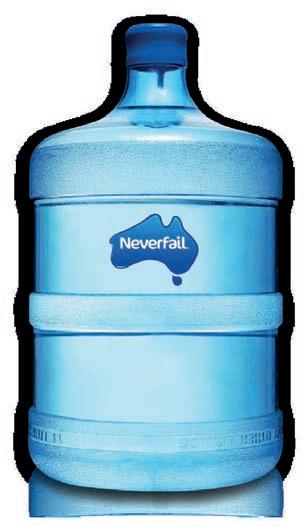
Neverfail’s reusable bottle model is designed to reduce environmental impact. The 11-litre and 15-litre bottles are collected, returned, washed, sanitised and refilled – up to an estimated 35 times over a five to seven-year lifespan – before being repurposed at end of life to minimise waste and support a circular packaging model. This sustainability practice extends to the responsible management of spring water sources. Extraction and treatment practices are guided by long-term stewardship principles, with a focus on protecting source integrity, maintaining natural balance and supporting ongoing viability of each spring. Neverfail approaches water sourcing through a stewardship lens, recognising water as a finite resource that must be carefully managed over time, rather than treated as an unlimited input. This approach resonates with construction businesses operating in sensitive environments and those seeking to reduce environmental risk, strengthen supply chain resilience and align with broader sustainability objectives.
A single point of accountability
For Neverfail, the focus is on reducing complexity for construction businesses: a single supplier responsible for water quality, logistics and ongoing service, supported by national capability and local execution.
“We’re not reinventing site hydration,” says Miller. “We deliver what works – trusted water quality, reliable logistics and a system that supports people on site every day, backed by nearly 40 years of experience in Australia.”
Neverfail approaches water sourcing through a stewardship lens, recognising water as a finite resource that must be carefully managed over time.
“Your hydration setup should make you feel supported, not create more work.”
Structural solutions
Behind tilt-panel construction
As tilt-panel construction has become more common on Australian sites, Hobson Engineering has focused on the fastening systems that sit behind it.
Tilt-panel construction uses precast concrete panels to form primary structural walls, offering advantages such as speed, cost efficiency and long-term durability.
(Image: Ivan Casas/ shutterstock.com)
Hobson Engineering’s range of fastening systems has grown over recent years, extending into a wider set of applications. That expansion has brought the company into more safety-critical areas of building, including precast and tilt-panel construction.
The development has followed demand, with tilt-panel construction increasingly used across Australia’s industrial and commercial sectors, as well as residential projects.
Valued by developers and contractors for speed, cost efficiency and durability, tilt-panel construction uses precast concrete panels to form the primary walls of a structure. As the name suggests, these panels are cast flat on site, then lifted or tilted into a vertical position and temporarily supported with props. From there, they are either bolted together or tied across the structure using roof beams between opposing walls, with anchors fixing the panels back to the ground to complete the structural system.
There are also applications that sit outside tilt-panel construction in a strict sense but follow a similar approach. For example, partheight precast panels, also referred to as dado walls, are often lifted into place, anchored to the ground and braced back to steel columns to form the lower portion of warehouse walls below sheet metal.
Gavin McPherson, lead engineer at Hobson Engineering, has seen first-hand why the method has gained traction across Australia.
“The biggest advantage of this method is the economics, and particularly the speed of construction,” he says.
“Traditionally, you might be using steel cladding for the walls, fixed to steel girts.
That means you need to erect the steel frame first, install the secondary support frame, sometimes adding extra battens, and then screw the sheeting on. With tilt panels, you are lifting a single wall element into place instead. That makes erection much quicker.”
For McPherson, that efficiency goes a long way to explaining the method’s uptake in recent years. Durability comes into it as well. Steel cladding often brings ongoing maintenance, including repainting and replacing sheets and fixings. Precast panels, by comparison, can be painted or left plain and are designed for longevity.
Fasteners become critical in two main areas of tilt-panel construction, beginning with temporary bracing during erection, where brace anchors are used. Many of the components associated with precast panels are standardised under AS 3850. Hobson Engineering supplies brace anchors that comply with that standard, allowing panels to be temporarily restrained under high loads.
“You will usually see this where the precast panel is standing upright and angled braces run back to the slab or strip footing,” says McPherson. “Our anchors are designed for anchoring into slabs or footings in those situations.”
The company also supplies brace pins. The braces are telescopic, with a smaller tube inside a larger tube and holes drilled through them so the length can be adjusted. The pin is used to set and lock the correct brace length. At the panel end of the brace, a flange bolt is typically used to restrain the brace back to a cast-in ferrule in the precast panel.
The second area is permanent structural connections. In this space, Hobson Engineering has introduced precast panel clips to clamp precast panels, or dado walls, back to steel columns, along with angle brackets used to connect panels at corners, either panel-to-panel or back to other structural elements.
“Precast has been on our roadmap for a long time,” says McPherson. “Over time, we have built the confidence to offer these solutions, continuously expanding our range. When we bring a product to market, it is because we are confident it complies with all relevant standards and meets the performance objectives it is designed for.”
This conviction is vital in such a safetycritical application. Precast panels often weigh 10 tonnes or more, and any failure in connections can be catastrophic. McPherson points to an incident in Melbourne in 2005 as a reminder of what can go wrong.
“Something in the temporary restraint of the panel, whether it was the footing, the bracing at the base, or the fixings to the precast panel itself, caused a panel to collapse onto a Ford Falcon, completely flattening it,” he says. “It’s an example of the major damage that can occur, both to assets and human safety.”
Because of that risk, the restraint of precast panels is tightly controlled. AS 3850 specifically covers precast restraint, and authorities take a close interest in how these systems are designed and installed.
“There was also a case involving the bolts used to connect into the precast. Mild steel 4.6 bolts were originally specified, but they were changed to higher-strength 8.8 bolts. The tightening torque used was incorrect, and because the torque was too high, it fractured the ferrule in the concrete. When wind loads were applied, the connection failed,” says McPherson.
For engineers specifying fastening solutions for tilt-panel applications, compliance and verification should be key considerations. McPherson says confidence comes from knowing a product has been properly tested and performs as claimed, with clear alignment to the relevant requirements.
Hobson Engineering places particular emphasis on testing, especially where local standards diverge from international practice.
“For example, a lot of effort went into the testing we carried out on brace anchors to meet the Australian standard,” adds McPherson.
“That standard is specific to Australia and does not really exist in the same form internationally. Even where overseas products appear similar, and in some cases may even
be the same product, the testing requirements are different to what international suppliers are typically familiar with or have tested their products against.”
He believes responsibility sits with everyone across the supply chain, with no single party able to treat compliance as someone else’s problem. As a supplier, Hobson Engineering’s role is to provide the correct, compliant products.
It also sits with purchasing teams, site teams and the engineers who are designing the systems and checking the installation. Everyone involved needs to understand what is being used on the project and make sure it is suitable for the application.
In precast, McPherson acknowledges that differentiation is not always obvious. Many suppliers offer similar components, which can make the market difficult to navigate. Hobson Engineering’s response has been to focus on practicality, making it easier for customers to source compliant precast components alongside the rest of their fastening requirements.
“Growth has been a big focus over the past 12 months, particularly around expanding the range,” he says.
“We have moved into areas like collated screws, made a push into lifting, material handling and load restraint, and precast is the next area of focus.”
“The biggest advantage of this method is the economics, and particularly the speed of construction.”
Fasteners become critical for temporary bracing during erection, where brace anchors are used. (Image: lucasinacio.com/ shutterstock.com)
Project management
Scaling consistency to stabilise delivery
McConnell Dowell is advancing a more mature Project Management Office model aimed at reducing portfolio volatility and embedding consistency across projects.
optimism runs high.
Natasha Manley speaks plainly about the task in front of her. As executive general manager of McConnell Dowell’s Project Management Office (PMO), she is not building a back-office reporting function. She is constructing a risk and governance engine that influences how the company bids, mobilises and delivers complex infrastructure across multiple geographies, contract models and cultures. Her language is pragmatic. The ambition is structural.
Dowell’s version is deliberately hybrid. It holds functional ownership of core project management disciplines while also acting as the organisation’s second line of defence for governance and assurance.
“What I have been trying to do with this is recalibrate everyone to some real, basic, consistent terms, approaches and practices,” she explains.
That recalibration has required a return to fundamentals, anchored in the principle that consistency precedes capability.
portfoliolevel thinking into front-end decisions is helping McConnell
achieve greater consistency in project delivery.
Embedding
Dowell
(Images: McConnell Dowell)
Project management
“It is not about certainty. It is about identifying risk and opportunity, and understanding threats and what may affect you.”
Natasha Manley,
executive general manager of McConnell Dowell’s Project Management Office.
Without a shared language and baseline standards in planning, cost control, risk, procurement and plant management, complexity amplifies volatility. With it, complexity becomes manageable.
“Making sure that the fundamentals of project management are understood consistently, but simply, is critical,” says Manley. “Get the basics right, ensure they are rock solid, and then you can elevate.”
Rather than layering sophistication over fragmented practice, the PMO has focused on stabilising foundational elements first. From there, scale can be applied appropriately. A small turnout in the Pacific does not require the same governance intensity as a $700 million pumped hydro project, yet both must operate from the same defined base.
That balance between scalability and consistency is what begins to reduce portfolio volatility. It also reframes the PMO’s role. Instead of intervening reactively on distressed projects, the function seeks to influence risk exposure at inception.
Risk before revenue
In complex infrastructure, certainty is often invoked as a goal.
Manley challenges the premise: “It is not about certainty. It is about identifying risk and opportunity, and understanding threats and what may affect you.”
The PMO’s biggest shift over the past 12 months has occurred at tender stage. Bid teams are optimistic by design, with subject matter experts assembling compelling cases to win work. The PMO provides counterbalance.
Having worked through difficult projects, the team interrogates assumptions and surfaces lessons that may not be baked into bids. The organisation is overhauling its risk management processes from tender onwards, embedding portfolio-level thinking into frontend decisions.
A newly launched risk appetite rating tool assesses prospects against 13 distinct risk categories. This is not a compliance exercise but a structured reflection of corporate appetite, supporting business development teams in determining whether opportunities align with strategy, and if pursued, what mitigation measures must accompany them.
“This is about corporate appetite at portfolio level,” says Manley. “Across construction companies, instinct often drives decisions rather than data. We are implementing a datadriven basis to understand our risk profile at business unit and portfolio level. If we are loading up too heavily on high-risk work, we can rebalance. If we are too conservative, we may stretch in alignment with strategy.”
This portfolio perspective also introduces behavioural insight, as the way teams interact with dashboards and risk data begins to reveal patterns. Because projects are delivered by people, the PMO’s data infrastructure functions as both a governance tool and a cultural lens.
“This risk-based decision-making tool is intentionally broad, considering business risk and its downstream operational impact,” says Manley. “It bakes lessons learned back into our systems, informing lifecycle reviews.”
Three lines of defence
At a structural level, McConnell Dowell now operates with three lines of defence for governance and assurance. The first sits within the business units themselves, applying procedures and ensuring compliance. The third is internal audit, operating under established audit standards.
The PMO occupies the second line of defence. Its mandate is not to police, but to interrogate genuine project health.
“We provide an assurance function for the board, the business and the CEO, insofar as we look at whether the project is as healthy as it appears. Sometimes on the surface it might look good, but when you go in with experience, you can see there may be things to improve,” says Manley.
“We might identify that a project could finish two months early and present an opportunity, or that it could finish two or three months late, requiring early intervention.”
Assurance reviews are embedded across the project lifecycle, from start-up through early progress and at intervals aligned to risk profile. Recommendations are logged and tracked, with any unresolved actions escalated to the managing director to ensure explicit accountability.
Governance is not paperwork but targeted intervention at leverage points that materially
influence success or failure. Effectiveness may be measured in time and dollars, but Manley also emphasises behavioural and cultural indicators. Site condition, discipline and leadership presence are all signals.
“We check whether previous recommendations were closed out and whether they improved outcomes,” she says. “If not, we reassess. The difference is the cyclical, risk-based and targeted nature of our new assurance regime.”
The infrastructure required to support this approach is increasingly digital. Project health checks, planning and scheduling trackers, procurement and plant data, financial forecasts and risk assessments feed into consolidated dashboards.
Metrics are then refined for executive and board relevance, recognising that not every data point warrants leadership attention. The task is to isolate those that signal trajectory change or behavioural drift.
Artificial intelligence (AI) is also being deployed selectively to accelerate training and process dissemination. With around 60 projects and up to 20 tenders per month, in-person training can be impractical. AI-generated scripts, video modules and avatar-based walkthroughs allow rapid scaling of education, with expert oversight maintaining accuracy.
Transparency and accountability
Across projects and processes, transparency is an operational condition.
“People do not like to be blindsided,” says Manley. “Transparency is fundamental. If you know something is an issue, you can deal with it.”
The PMO has invested in training senior management to interpret planning and performance data consistently. Indicators that once required specialist interpretation now prompt informed questioning at leadership level. If cost codes drift from schedules or forecasts fluctuate erratically, those patterns trigger scrutiny.
Over time, this shared literacy reduces reliance on central oversight, with leaders internalising the signals.
This is where the PMO’s evolution into a strategic engine becomes most evident. It is not solving problems on site. It does not
provide bench strength to rescue distressed projects. It calibrates appetite, monitors concentration risk and injects governance into front-end decision making.
“We are still in our infancy as a PMO,” says Manley. “There is considerable scope for what we could do.”
Over time, the intent is for the PMO to position itself as peer support to managing directors and core functions, connecting operational leadership and corporate disciplines such as HR, strategy, IT and finance.
“Our focus is on providing value to the business units, the CEO and our customer. If we are not delivering insights that help them improve profitability or identify issues early enough to intervene effectively, then we need to reassess what we are doing,” says Manley.
“It ultimately comes back to a simple question: how do we help the business perform better and generate sustainable profit?”
A mature PMO does not eliminate risk, because infrastructure delivery always involves uncertainty. What it does is surface exposure early, calibrate portfolio risk, align behaviours with data and embed cyclical assurance that stabilises governance consistency across projects.
As McConnell Dowell’s experience demonstrates, this requires cultural change as much as process redesign, anchored in shared language, structured metrics, informed leadership questioning and the discipline to recalibrate before volatility escalates.
The Project Management Office influences how the company bids, mobilises and delivers complex infrastructure across geographies, contract models and cultures.
“It ultimately comes back to a simple question: how do we help the business perform better and generate sustainable profit?”
The use of light gauge steel framing made from TRUECORE® steel, coupled with Building Information Modeling, accelerated the project timeline for this Hungry Jack’s store, ensuring complex services could be factored into the prefabrication process before frames arrived onsite.
When it comes to building a new fast-food facility, speed, streamlined e ciency, and delivering a consistent brand experience are top priorities for most franchises.
Learn more Streamlined construction approach, delivered fast, e cient, and on-brand.
The result is a cost-e ective, light weight structural solution that was delivered seamlessly.
FOCUS
Early careers
Learning on the front line
Webuild is moving early-career learning out of the classroom and onto some of Australia’s largest construction projects, an approach championed by the late Peter Bennett.
This article features reflections from the late Peter Bennett, whose leadership helped shape Clough’s commitment to developing the next generation of construction professionals. His passion for investing in early-career talent and strengthening the industry workforce will remain an enduring legacy across the organisation and its projects.
Webuild is embedding early-career talent into the core of its Australian projects, treating scholarships, internships and graduate pathways as a workforce capability strategy tied to long-term infrastructure delivery. In Australia, this approach is being implemented across live project environments, where emerging professionals engage with the construction lifecycle rather than remaining in observational roles.
The company views future project certainty as inseparable from workforce readiness. With large-scale infrastructure programs progressing across Australia, the challenge is no longer only recruitment volume but also developing professionals who can interpret risk, navigate multidisciplinary interfaces and contribute to delivery outcomes early in their careers.
During his tenure as CEO of Clough, part of the Webuild Group, Peter Bennett consistently emphasised the importance of early exposure as an investment in the industry’s future workforce.
“Early career development is critical,” said Bennett. “Our business and our industry are growing and robust. Historically, we have relied on tertiary institutions to develop the people who come into our organisations, and that is not adequate anymore. We have to invest in people from all backgrounds, foster their interest in our sector and then help them succeed in line with our values.”
For Webuild, this investment responds to the scale of the national infrastructure pipeline and sustained demand for skilled professionals.
Bennett often noted that projects are progressing across Australia concurrently, removing the ability to rely on labour mobility between regions. The result is increasing
competition for both professional and trade skill sets, particularly in electrical, instrumentation and mechanical disciplines on complex programs.
Early-career pathways close the gap between academic competence and project literacy.
One of the long-standing legacies Bennett spoke about with pride was Clough’s commitment, as part of the Webuild Group in Australia, to working with tertiary institutions across New South Wales, Victoria, Queensland and Western Australia, awarding scholarships since the early 1970s.
“We have awarded more than 200 scholarships to date,” said Bennett. “We need to generate interest in our sector and open people’s eyes to the career opportunities available. Traditional hiring brings readymade, technically trained personnel, but earlycareer programs allow us to implement skills that are more specific to the way we operate.
“Universities do a great job from a technical standpoint, but we have to bridge the gap between technical expertise and on-site application. A key role for us is to facilitate that
“We have to invest in people from all backgrounds, foster their interest in our sector and then help them succeed in line with our values.”
The late Peter Bennett, CEO of Clough, Webuild Group. (Images: Webuild Group)
Early careers
“The program has accelerated my shift from student thinking to a more professional mindset.”
“It also gives people an awareness of the influence they have across the project lifecycle. As an engineer, you may design something, but it still has to be procured, installed, operated and maintained.
Understanding how your decisions affect others allows you to make better decisions in your own role.”
That lifecycle awareness is a recurring theme among participants within the program.
Civil engineering intern Inass Chedid, who was awarded the University of Melbourne – Webuild Civil Engineering Scholarship in 2024, says exposure to live projects fundamentally altered her perception of the sector’s operational complexity.
“Before, I mainly saw the industry from a technical and design point of view, but once I was exposed to real projects, I realised how collaborative and multidisciplinary construction really is,” says Chedid.
“At university, the focus is often on calculations, theory and standards, but in practice it also involves a great deal of coordination, planning and communication between different teams, as well as risk management.”
Her involvement in reviewing and preparing technical documentation for a transport infrastructure bid shows how early integration translates into tangible contributions. What began as process support evolved into independently managed tasks that were incorporated into a final submission.
A similar pattern is evident on site at the new Women and Babies Hospital in Perth, where mechanical engineering intern Breanna Pinelli is currently working full time. Her responsibilities include preparing daily prestart briefings, coordinating with supervisors and communicating upcoming works to subcontractors.
“Having that connection with both people within the company and those on site makes me feel trusted and that the work I am doing is making an impact,” says Pinelli.
“There are so many opportunities and such a variety of projects, which means you are constantly exposed to different types of work. It makes me excited about the future of the industry.”
This level of responsibility accelerates the transition from academic learning to
professional judgement. Interns are exposed to technical tasks, stakeholder communication, site coordination and the procedural discipline that underpins safe, consistent project delivery. Over time, this exposure cultivates confidence and decision-making maturity that would otherwise take years to develop through theoretical training.
“The program has accelerated my shift from student thinking to a more professional mindset,” says Chedid. “Being exposed to real projects has helped clarify my interest in working closer to delivery and has given me a better understanding of the full project lifecycle.”
From a leadership standpoint, this acceleration contributes to organisational resilience. Bennett emphasised that developing talent internally allows emerging professionals to learn established systems, safety frameworks and delivery methodologies from the outset, leading to safer workplaces and more consistent outcomes for clients over time. Workforce longevity and internal knowledge retention maintain continuity across current and future infrastructure programs.
“We have scholars who started with us 20, 30 and 40 years ago and are still with us today,” said Bennett. “The knowledge they carry and share with those entering the workforce is extremely valuable.”
He also pointed to the ageing profile of the construction workforce as a factor shaping the sector’s outlook.
“We have an ageing industry in general and shaping the next generation to bring a fresh perspective and be conversant with modern technologies and innovative solutions is how we continue to improve,” he said.
Webuild’s pathways are structured around a long-term outlook. Scholarships, internships and graduate placements are part of an
Inass Chedid, civil engineering intern at Webuild Group.
end-to-end development model supported by mentoring, leadership programs and cross-functional exposure. Mentorship is a core element of this framework. Experienced professionals do not simply explain what decisions are made but why they are made.
“That has helped me understand the practical application of what we learn at university,” says Chedid. “At university, you are often taught the theory and the steps to follow, but it can be difficult to translate that into real-world situations. Having experienced colleagues who take the time to guide me has been valuable for my development.”
Bennett often described mentorship as a two-way exchange, benefiting both emerging professionals and experienced leaders. Webuild pairs interns with mentors outside their function to give them a different perspective, while also giving the mentor insight from another area.
“We employ these people and have the care, custody and responsibility for how they work each day, the product they deliver and the career journey they are on,” he said.
“At the same time, you gain fresh perspectives from new talent, particularly as the industry adopts artificial intelligence and other emerging technologies,” said Bennett. “Bringing in younger people who are more comfortable and capable in that space contributes to organisational resilience and strengthens our ability to deliver projects while taking advantage of new technologies.”
Leadership behaviours are another focus. Webuild’s early-career programs cultivate teamwork, communication and emotional intelligence.
Pinelli says her internship has strengthened her confidence and communication skills, particularly when collaborating with peers at university who have not yet had comparable industry exposure.
“I have become more confident entering new environments and more comfortable stepping outside my comfort zone, which has been a valuable part of the experience,” she adds.
Webuild measures the long-term effectiveness of these programs through retention, career progression and structured feedback. Interns present to the leadership team at the conclusion of their placements, outlining what they have learned and what can be refined.
Bennett said the responsibility for shaping future construction professionals ultimately rests with the industry itself.
“We aim to build a workforce that is proud to be part of the construction industry, proud of its culture and committed to continually improving it. We aim to help shape an industry that people admire and recognise as a solutions provider.”
For Chedid, the broader implication goes beyond individual development.
“Experiences like this reinforce how important it is to invest in young professionals, particularly in Australia where skills shortages are affecting the construction and infrastructure sector,” she says.
“Programs like this support knowledge transfer and help build confidence early in a career. The experience has strengthened my long-term perspective and encouraged me to continue growing within the industry.”
Through Webuild’s early-career programs, the same projects shaping Australia’s future are also shaping the professionals who will deliver the next wave of infrastructure, continuing the legacy of leadership and industry stewardship championed by Bennett himself.
On behalf of everyone at Clough and the Webuild Group, we honour Peter Bennett’s legacy and extend our deepest condolences to his loved ones. Peter was an exceptional leader, colleague and friend, widely respected for his integrity, his unwavering commitment to excellence and his genuine care for people. His influence on our company, culture and industry will endure for many years to come.
“We aim to build a workforce that is proud to be part of the construction industry, proud of its culture and committed to continually improving it.”
Breanna Pinelli, mechanical engineering intern at Webuild Group.
FOCUS
Structural solutions
Keeping pace with the program
FTI Group’s packaged supply model is gaining traction on commercial builds as contractors prioritise lifecycle alignment over fragmented procurement.
Single-product supply is increasingly difficult to justify on tightly sequenced construction projects, where coordination responsibility ultimately sits with the contractor. Each additional supplier introduces another design stream, another delivery schedule and another interface to reconcile.
Integrated, multi-scope models are being adopted to impose greater control over cost, logistics and accountability across staged works.
Cameron Arkcoll, managing director at FTI Group, says this approach is necessary as projects contend with skills shortages, cost pressures and growing interface complexity.
“Tighter timelines and faster project turnover mean single-source solutions become more valuable from a program and coordination perspective,” he says. “For contractors, the key is engaging reputable and trustworthy supply partners with a proven track record.”
FTI’s model centres on supplying multiple building elements through a single coordinated channel aligned with the build sequence. Its three core products – FastTread preformed concrete stairs, BlueDeck metal decking formwork and SureFit metal door frames – sit within the same design, delivery and documentation structure, supported by ancillary items such as fire doors, prefab hobs and form ply.
Technical continuity
Those three elements enter the project at different stages of the build, which is where early involvement holds the most value. FTI’s FastTread stairs are often supplied first, along with BlueDeck, meaning design drawings and documentation are reviewed early in the sequence. By the time discussions move to door frames later in the program, FTI has already worked through the project’s structural intent, design documentation and tolerances. This continuity across packages reduces the rework that often emerges during latestage detailing. Instead of onboarding a new supplier mid-program and revisiting design details, the project team is working with a party already familiar with the drawing set, constraints and revision history.
“Early involvement allows our team to review the design and advise on where efficiencies can be gained across the lifecycle of the project. Our in-house design experts often suggest alternative approaches that can deliver better outcomes,” says Cameron Arkcoll.
“The solutions we offer are not just about reducing the cost of the individual products we supply, but about improving cost efficiency across the broader as-built solution. That may involve reviewing fire rating requirements, specific entry details or identifying design opportunities that can influence both product pricing and overall project efficiency.”
FTI sales manager Harvey Arkcoll says that efficiency then carries into production, with clients receiving custom, shop-drawn products manufactured to short lead times and aligned with project-specific requirements.
“We also work with project teams on technical interpretation around design details and code requirements to ensure the solution is correctly specified and installed,” he says.
“That support is not limited to our products alone but can extend to broader project considerations where required.”
Staged works and stakeholder load
As projects move deeper into delivery, coordination pressure shifts to deliveries, site access and scheduling.
Cameron Arkcoll says challenges often emerge on site when suppliers are operating to separate timelines and processes.
Through FTI, BlueDeck is delivered and supported by one supplier. (Images: FTI)
multiple suppliers, each with their own sequencing and communication channels. By comparison, a single, integrated source across these scopes reduces the number of active touchpoints requiring contractor oversight. Deliveries and scheduling are handled through one point of contact, consolidating accountability within a single supply stream.
to manufacturing, scheduling and delivery to site – forms a structured process that prioritises quality, coordination and reliability.
“Many of our long-standing clients, some of whom we have worked with for more than 20 years, now come to us because they know we deliver consistently across stairs, metal decking and metal door frames,” he says.
“Our position has always been that we are Coordinated
“Tighter timelines and faster project turnover mean single-source solutions become more valuable from a program and coordination perspective.”
The clip-in profile of BlueDeck allows for fast, streamlined installation.
FOCUS Site solutions
Managing complexity through end-to-end solutions
Kennards Hire has expanded its Specialist Solutions offering across Australia and New Zealand to support larger, more complex construction projects.
Coordination, compliance and the management of multiple specialist providers are placing growing pressure on contractors as projects scale and technical demands increase. Managing separate providers across power, water management, site mobilisation and compliance has become an administrative load that can divert attention from delivery priorities.
Kennards Hire’s expansion of its Specialist Solutions offering across Australia and New Zealand is intended to reduce this coordination burden, with hire delivered as a managed project engagement instead of a standalone equipment transaction.
David Schurman, general manager of fleet at Kennards Hire, says the move to expand the offering is about listening to what project teams are asking for on site.
“It comes back to how we approach things,” he says. “The core of everything we do is centred on the customer, their requirements and what they are telling us.”
This customer-led position is central to how Specialist Solutions has been framed internally. It is treated as an umbrella for defined project scopes where complexity, governance and compliance obligations intersect. Water management, temporary fencing, site mobilisation compounds, and power and renewable products and services are delivered as owned packages, taking the engagement from supply to accountable execution.
Schurman says the approach stems from a long-standing issue on large projects: fragmentation across design, supply, installation and compliance.
“Previously, these processes were quite fragmented, with one party designing, another supplying equipment, and others handling compliance and installation,” he says. “That creates delays, handovers and constant back and forth between multiple
Consolidating those functions under a single managed scope allows design intent, installation and verification to remain aligned from tender through to commissioning.
Schurman describes the outcome as a turnkey scope of works that reduces coordination friction while allowing project teams to maintain focus on delivery.
The model also addresses inefficiencies highlighted in Kennards Hire’s 2025 Construction Confidence Check, which found one in three projects are affected by challenges such as managing multiple suppliers, outdated equipment and shortages in specialist expertise. The findings reinforce the move towards outsourcing niche scopes to partners with both equipment depth and governance capability, particularly where compliance and environmental parameters are heavily regulated.
Early engagement influences how Specialist Solutions is applied on large-scale projects, with Schurman noting it supports “smarter, more cost-effective delivery”.
“When we are engaged from the start, we are able to design the most efficient solution for the project’s requirements,” he says. “That has flow-on effects later in the program, reducing double handling and rework. If it is done properly from the beginning, everything runs more smoothly.”
He adds that misalignment at the beginning carries cost and program consequences later.
“Our role is to design the solution around what the project needs, and that upfront approach often reduces over-specification while improving energy efficiency and shortening installation timeframes,” he says.
“For example, a project may have a set power or energy requirement on site, but it is often over-engineered for what is needed. If we are involved early, we can design the solution to match those requirements, rather than oversizing equipment such as generators and driving unnecessary costs.”
Installation and verification processes are also tied to this early involvement. Because the same team that designs the solution oversees installation, there is continuity between design intent and on-site execution. Following installation, verification confirms that performance parameters such as flow rates, discharge compliance and electrical load capacity align with the agreed design.
Consistency across geographically diverse project environments further supports the model. Kennards Hire’s national footprint and equipment range underpin the Specialist Solutions team’s ability to deliver a uniform approach from remote sites in Western Australia to urban sites across New Zealand.
David Schurman, general manager of fleet at Kennards Hire. (Image: Paul Robbins)
“Instead of engaging separate suppliers for design, equipment, monitoring and compliance, clients have a single partner managing the package end to end,” says Schurman. “That approach streamlines coordination, reduces risk and provides a turnkey, integrated service aligned to the agreed scope.”
Recent projects show how Specialist Solutions works in practice. On the new Sydney Fish Market, Throsby Creek Footbridge, Dunedin Hospital and the North South Corridor T2D development, early engagement and upfront solution design have supported streamlined mobilisation and environmental management.
Schurman points to the water management on the North South Corridor T2D as an instructive example. As additional stages were added, the established involvement allowed the scope to expand without introducing new coordination layers.
“It is not either-or,” he says. “The dry hire business will always remain fundamental to Kennards Hire and is not going anywhere. With close to 80 years behind it, that foundation continues to grow and support everything we do,” he says.
“In many ways, the two work hand in hand. Without the core hire offering, we would not be able to deliver the Specialist Solutions capability we have today. That legacy, network and operational backing are critical to enabling the integrated services we now provide.”
Schurman says customer needs will continue to guide the direction of Specialist Solutions.
“It really comes back to being led by customer needs. As projects become more complex and delivery models more collaborative, the role of integrated hire and Specialist Solutions will continue to evolve in line with what customers are asking for,” he says.
“Instead of engaging separate suppliers for design, equipment, monitoring and compliance, clients have a single partner managing the package end to end.” complexity.
Scope expansion is a recurring pattern across engagements. Projects often begin with a specialist requirement and broaden as delivery teams recognise the operational benefit of consolidating additional services under one governance structure. Schurman acknowledges this organic expansion reflects growing awareness of the team’s capability.
“It has been exciting to see how the capability has developed to date, and it is even more exciting to consider what the future holds in this space.
“Kennards Hire expects the Specialist Solutions offering to continue evolving, with additional services being added over time as project requirements become more sophisticated. The sky is the limit.”
Kennards Hire delivers site compounds across large, complex project environments, including solar farm construction.
(Image: Kennards Hire)
ARBS 2026 EVENTS
The hidden layer of construction
Amanda Searle, CEO of ARBS Exhibitions, explains why building services are shaping project outcomes earlier than ever.
W hen people picture construction, they often think of the physical structure and cranes defining the skyline. However, it’s the less visible factors – mechanical, electrical, controls and commissioning –that influence how quickly a project reaches handover.
The biggest cost in the built environment isn’t what we spend to build; it’s what we spend to run. Construction costs represent only a fraction of a building’s lifecycle cost, with the majority of expenditure occurring during the operational phase. For this reason, heating, ventilation, air conditioning, refrigeration (HVAC&R) and other building services have become pivotal to successful construction outcomes, including how early and how effectively components are integrated into design, sequencing and delivery planning.
When building services are planned for in advance, this can reduce issues on site, avoid late-stage design changes and help to keep projects moving. When it’s factored in too late, the cost can show up as delays and handover issues that take time to unwind once the building is occupied.
Data from the Department of Climate Change, Energy, the Environment and Water (DCCEEW), accessed on 2 March 2026, shows buildings account for around 19 per cent of total energy use and 18 per cent of direct carbon emissions in Australia. This places pressure on projects to deliver energy performance from day one, with mechanical installations, control interfaces, commissioning and asset performance now central considerations.
Each year, ARBS – Australia’s HVAC&R and building services event – brings the sector together to discuss challenges and solutions shaping the industry. One theme keeps resurfacing: tightening timelines and increasing system complexity.
Construction is no longer linear Project activities used to be linear: design, construct, install and commission. Today, that sequence is being challenged.
Electrification and smarter building systems mean services design now affects structural allowances, ceiling heights, plant space, grid connection and asset performance.
These considerations cannot sit at the back end of delivery.
The influence of building services has moved from installation to integration. The industry is recognising that successful delivery relies less on sequential trades and more on cross-disciplinary collaboration from conceptual design.
Capability is a construction risk
Another emerging shift is workforce capability. Jobs and Skills Australia continues to list air conditioning and refrigeration mechanics in its annual Occupation Shortage List, highlighting a growing risk to project delivery timelines.
The demands of modern buildings now require technicians and contractors to understand controls, integration, optimisation and long-term operation, often supported by specialist or manufacturer training.
Put simply, workforce capability is no longer just a sector issue but a construction risk affecting delivery, performance and lifecycle costs.
Practicality replaces complexity
While innovation and new technology will (and should) have a role to play, what is increasingly in demand by construction professionals is practicality. We’re seeing the sector move away from chasing complexity in favour of systems that are coordinated, easy to install and straightforward to commission. Integration improves construction outcomes, allowing lessons to be shared before issues escalate.
This is why bringing the industry together remains essential. Nothing beats seeing solutions side-by-side and having the conversations you can’t replicate online. ARBS is for industry, by industry – the place where the discussions that matter happen. ARBS 2026 (5 to 7 May, Melbourne) will gather the HVAC&R and building services industry together, including manufacturers, suppliers, contractors, consultants and facility managers, to showcase and explore what’s next.
Registration is free and now open. Visit arbs.com.au/arbs2026
(Image: ARBS Exhibitions)
Gabrielle Burns: Priming the pipeline
Gabrielle Burns is forging a career at the front end of construction.
Gabrielle Burns looks forward for a living. As business development coordinator for New South Wales at Georgiou Group, she focuses on understanding markets, building relationships and identifying emerging opportunities.
It is a role that demands a wide lens and a strong sense of timing. That broader view of construction was not always obvious, but it is now central to how Burns approaches her career.
Earlier impressions of the industry were far narrower. Construction itself was never unfamiliar to her, with both her father and grandfather working as engineers. However, as it was presented at school and university, the industry felt limited in scope and removed from the skills she enjoyed using most.
Raised in Gerringong, south of Sydney, Burns gravitated toward language, writing and communication rather than maths or science. With no fixed direction at the end of school, she chose to spend a gap year in the United States on a soccer scholarship, an experience that gave her independence and confidence before she returned to Australia to study communications at the University of Technology Sydney. She graduated into the disruption of the COVID pandemic, when internships were scarce and early-career opportunities limited, and construction was still not on her radar.
“I had a narrow view of the industry, assuming it was mostly limited to engineering or on-the-tools work, and didn’t realise there were opportunities beyond the technical side,” says Burns.
“While I was looking at different career options, a community and stakeholder engagement role with Georgiou came up. That was when I realised construction also needs strong communicators. At school, careers guidance didn’t highlight these kinds of roles, so I wasn’t aware they existed.
“I started at Georgiou as a community liaison officer, and looking back, it was probably one of the best decisions I’ve made.”
Her progression within the business gathered pace, and in 2024 she was approached by the general manager for NSW and encouraged to apply for her current position. It was a moment she describes as both validating and careerdefining – being trusted to step up.
“At Georgiou, there is a genuine focus on professional development and internal progression,” she says. “My move into business development is a good example of that support in action.”
While there are similarities between the two positions, the move gave Burns a broader view of how the business operates. Previously, her focus was on project delivery. Now, it is centred on strategy, client relationships and identifying future growth areas.
“It has deepened my understanding of the industry and confirmed that construction is a space where I can build a long-term career,” she says.
As business development coordinator for NSW, Burns identifies and shapes Georgiou’s project pipeline across the state. Each state has a business development lead, and her responsibility is to understand where prospects are emerging in the NSW market and how the company positions itself for them.
She works closely with clients, consultants and internal teams to build a clear picture of the market, developing capture strategies, supporting expressions of interest and tenders, analysing market trends and gathering client feedback. A key part of the role is ensuring that insight is shared internally, so teams
conversations shaping the future of infrastructure.
Gabrielle Burns, business development coordinator for New South Wales at Georgiou Group. (Images: Georgiou Group)
Gabrielle Burns represents Georgiou Group at industry events, strengthening strategic partnerships and contributing to
understand what is working and where there is room to improve.
“More broadly, I support business growth and positioning. Georgiou has its origins in Western Australia, where the business has operated for 49 years. Our core market has traditionally been transport infrastructure, particularly roads and bridges, and that remains a strong area for us,” says Burns.
“At the same time, I help diversify our work and client base in NSW. That has meant expanding into sectors such as water, renewables and energy, which are becoming increasingly important.”
Sitting within the national growth and strategy function, Burns works with the national team to share what she is seeing on the ground. If trends indicate a slowdown in one sector, she highlights where prospects are forming elsewhere and helps shape the company’s response. That might involve engaging with water utilities, presenting Georgiou’s capabilities and demonstrating the experience the company brings from work delivered nationally.
From there, the focus shifts internally, working with delivery teams to build confidence in new sectors and support decisions about which projects and markets to pursue.
“It is a role with a lot of responsibility, but it is also highly collaborative,” says Burns. “The strength lies in connecting market insight with strategy and ensuring the business is well positioned for what is coming next.”
Much of her work sits well ahead of delivery, and often out of public view. Business development operates on long horizons, with years sometimes passing between an opportunity first taking shape and a project reaching site. Expressions of interest, tenders and approvals unfold over extended timelines, requiring patience and consistency alongside strategy.
Progress is not always tied to a single project or outcome. For Burns, the moments she values most have been about trust and judgement.
Identifying strategic opportunities in new sectors and bringing those to senior leadership, then having that judgement recognised and supported, has been a source of pride.
“I value having a say in the direction of the business,” she says. “Knowing that my perspective is listened to and valued, and that it can help influence where the business goes next, has reinforced my confidence and sense of purpose.”
Variety is another draw – no two days are the same. One day Burns might be attending a renewable energy summit, the next a water industry forum, and the following day sitting down with the leadership team to review the pipeline.
This diversity has informed how she sees the industry itself. Construction, she says, is not limited to engineering and on-site delivery. “My advice to jobseekers is not to limit your perception of construction. Growing up, I did not know these roles existed, and I think that awareness matters. They are enjoyable careers and they add real value to the industry,” she says.
“For women considering or already working in construction, I would say back yourself. Be assertive, stay authentic and do not change who you are to fit the industry. Your perspective is valuable, and you do belong here.”
Burns did not initially see a place for herself in construction. Experience has since revealed the range of possibility the industry offers. She is now thriving in a role where judgement, timing and communication sit alongside technical capability.
a community event celebrating the completion of a major infrastructure project for which she led stakeholder engagement initiatives to support a successful outcome.
“I had a narrow view of the industry, assuming it was mostly limited to engineering or on-the-tools work, and didn’t realise there were opportunities beyond the technical side.”
Gabrielle Burns at
Women in construction
Why research on women in construction matters
With global participation data in focus, Dr Gretchen Gagel outlines how research informs efforts to increase women’s participation in construction.
I recently asked a long-term friend and US construction executive, who once led construction for one of the largest technology companies, what percentage of US electricians he felt were female. His response: 15 per cent. The actual number: 2.6 per cent. Ten years ago, it was 2.1 per cent. I went on to ask several more leaders and received responses ranging from a more accurate two per cent to highs of eight to 12 per cent.
The US is facing data centre construction slowdowns because of a labour shortage in most trades, including electricians. Women are one element of the solution to this construction talent shortage at every level. I believe we have a better grasp on this data in Australia, but tracking the participation of women in construction remains critical to determining whether progress is being made. It starts with solid data and research –the numbers to see if they are moving, and research into challenges and solutions that help focus our actions on the right strategies.
Starting with data
How does Australia compare to the rest of the world? Our first white paper at the International Institute for Women in Construction (IIWIC) answered that question. Australia is fourth highest in the world at 13.2 per cent female participation. China is in the lead with 16 per cent and Thailand at 15.5 per cent. The UK level of female participation is 14.9 per cent, and the US is fifth with 11.1 per cent. Globally, female participation in construction is 8.69 per cent.
Not only do we need good data, but we also need global research that helps us understand the challenges and successes of attracting, developing and retaining women in construction. IIWIC worked with our research collaborators to synthesise more than 40 global studies on the barriers to attracting women to the trades. Via this distillation, we were able to identify four root causes:
1. Lack of awareness of construction as a viable career;
2. limited access to apprenticeship programs;
3. unconscious bias and dominant culture, including bullying and harassment; and
4. lack of work schedule flexibility, travel requirements, childcare and work stability.
Progress in Australia
The good news is that there are efforts happening throughout the world to improve our ability to attract, develop and retain women in construction. The IIWIC, in collaboration with the Royal Melbourne Institute of Technology (RMIT), the Australian Constructors Association (ACA) and the National Association of Women in Construction (NAWIC) Australia, published our first country-specific white paper highlighting various initiatives. These include:
1. The National Construction Industry Forum (NCIF): The Australian Federal Government established the NCIF as an ongoing statutory advisory body. Chaired by the Minister for Employment and Workplace Relations, the NCIF comprises representatives of employees (trade unions) and employers. On 22 September 2025, the NCIF endorsed a Blueprint for the Future as a commitment to addressing structural and cultural issues in the Australian construction industry and driving reform. It identified workplace inequality, gender inequities and discrimination, including systemic underrepresentation, inflexible work arrangements and inadequate amenities as priority challenges. It also included recommendations to help boost skills and women’s employment in the industry.
2. Construction Industry Culture Taskforce (CICT): In 2018, the CICT was established as a collaboration between the ACA and the state governments of New South Wales and Victoria. The CICT was chaired by Gabrielle Trainor AO and membership included executive leaders from the ACA, Australia’s largest construction contracting organisations, government agencies and client organisations. This public-private sector collaboration sought to address aspects of the construction industry culture believed to be holding back productivity and performance. To achieve this, a Culture Standard was developed establishing requirements for construction companies to implement in the delivery of projects. These requirements addressed three interrelated pillars: workers’ health and wellbeing, workforce inclusion and diversity, and time for life.
3. ACA Culture Pledge: In 2023, the ACA, representing Australia’s largest construction companies, made a commitment to improving industry culture to address the skills shortage and create diverse and inclusive workplaces.
Research by the International Institute for Women in Construction found that global female participation in construction is 8.69 per cent. (Image: Michael Cunningham/ peopleimages.com/ stock.adobe.com)
The Culture Pledge includes three components:
• To establish workplace flexibility policies that would guarantee every employee has genuine access to flexible work arrangements;
• to ensure that 75 per cent of ACA member organisations achieve ‘Employer of Choice’ citation by the Workplace Gender Equality Agency (WGEA) by 2028; and
• to attract women from other industries and backgrounds by leveraging and pooling the national resources of ACA members to promote the industry and the benefits of a career in construction.
4. NAWIC Australia: NAWIC has been awarded $5 million in funding under the Australian Government’s Building Women’s Careers (BWC) Program, which will support its Allyship in Action: Transforming Culture to Attract and Retain Women project. The initiative will directly combat poor attitudes and behaviours in the industry and engage men in driving positive change to reduce gender bias, promote an inclusive culture and support women’s advancement. It commenced in April 2025 and will run through to March 2028.
Many more local government, association, and construction industry organisation initiatives are detailed in this paper located on the IIWIC website.
Research is critical to helping us solve the challenge of attracting, developing and retaining women in construction as it provides the data on our progress, the details of the challenges, and the inspiration of our successes.
Dr Gretchen Gagel, GAICD, founder and CEO of the International Institute for Women in Construction (iiwic.org), is a member of the National Academy of Construction and a leader respected for her four-decade career of strategic advisement in the construction industry. Gretchen is passionate about leading change in the construction industry and developing future leaders. You can hear more from Gretchen on the Greatness Podcast and her book, Building Women Leaders: A Blueprint for Women Thriving in Construction, is available on Amazon. Find out more at gretchengagel.com
“There are efforts happening throughout the world to improve our ability to attract, develop and retain women in construction.”
ASSOCIATIONS
The National Association of Women in Construction
Removing the barriers that push women out
Everyday workplace conditions are influencing whether women stay in construction.
Across the board, people stay in positive workplace environments that meet their needs, and NAWIC research shows that even in ‘supportive’ workplaces, there are still issues. This includes inadequate health and safety policies, a lack of basic amenities such as women’s toilets and lactation rooms, and unclear parental leave policies.
It’s also well past time to recognise menstrual products as necessities, not privileges, as we work to remove barriers to women’s workplace participation through culture change.
We are proud to support Share the Dignity’s Building Bloody Change campaign for menstrual equity, advocating for the provision of sanitary bins and free period products in the workplace. Our Chapters integrated the campaign into their International Women’s Day programs by including donation boxes for sanitary items at local events.
Inadequate or inaccessible toilet facilities are one of the everyday signals that women are an afterthought in workplaces. However, dignity should not come with a price tag. Ensuring free access to period products is a vital step toward workplaces built on fairness, inclusion and respect, where everyone can thrive.
(Image: NAWIC)
Our research shows that workplace microaggressions, including the lack of access to toilets and sanitary bins, can lead some women to reassess their future in the industry and, in some cases, leave altogether. This kind of attrition, as outlined in our The Not-SoLittle Things Affecting Women in Construction report, is unsustainable in an industry experiencing a skills and labour shortage.
NAWIC’s parental leave research released last year also offers a pathway to equitable workplaces through clear and transparent access to leave benefits and return pathways. With funding from the NSW Government’s Women in Construction Industry Innovation Program, NAWIC partnered with the University of Sydney Business School to conduct the Boosting Retention of Women in Construction: Supporting Women Through Parental Leave project.
Research has found that the transitional periods in and out of parental leave are pivotal in a woman’s decision to remain in or return to work. This report delves further into the lived experiences of women and offers a pathway to better parental leave support.
The project found women often go it alone, policies are patchy, hours are long, roles rigid, and flexibility and support limited. The new generation entering the industry expects better. The study has also led to the launch of a practical toolkit for employers, managers and industry leaders, recognising the benefits of well-managed parental leave and return to work for both employers and employees.
Our findings also underpin our new Building Futures: Advancing Regional Women project being rolled out in regional Queensland and Brisbane to address microaggressions that negatively impact women.
With funding from the Queensland Government’s Office for Women, the project aims to upskill organisations and leaders and has begun preparing for in-person engagement sessions during March and April in Townsville, Toowoomba, Gladstone, Mackay and Brisbane.
These sessions will then inform the development of online training modules and practical workplace resources, grounded in real experiences from Queensland construction businesses. The project aims to build awareness and capability, particularly for leaders and line managers, and create simple, fit-for-purpose, implementable tools.
Creating safe, inclusive construction workplaces through culture change stands at the centre of NAWIC’s Organisational Strategy 2025–2028, and it was great to delve into our plans for the year ahead at our annual Face to Face event in February.
Our Board, Chapter leaders and NAWIC staff came together in Melbourne to discuss and workshop strategy, advocacy priorities, big picture thinking and NAWIC’s key goals.
I look forward to sharing more about our plans soon, including updates on our Allyship in Action: Transforming Culture to Attract and Retain Women project. This project earned $5 million in funding from the federal government’s flagship Building Women’s Careers Program last year, and is designed to engage with men and support upstanders to build fair, inclusive and respectful workplace cultures across the sector.
Visit sharethedignity.org.au/buildingbloody-change and nawic.com.au to learn more.
Making what works the standard
Foundations and Frontiers 2026 centres on progress, not problems.
What if we stopped obsessing over what’s broken in construction and focused on what’s already working? That’s the idea behind Foundations and Frontiers 2026 (FF26).
On Thursday, 20 August in Sydney, the industry will come together to share examples of projects and practices that are delivering better results now. Not theory. Proof. And to close the day, the Australian Constructors Association (ACA) will host a black-tie presentation of the Australian Construction Achievement Award (ACAA), celebrating the best project in the country.
From problems to progress
For the past two years, the Foundations and Frontiers forum has focused on the industry’s biggest structural challenges. That work matters, but this year, we’re shifting gears. FF26 is about momentum. It’s about taking the examples that are working and asking how we make them the norm.
The program is built around three sessions:
1. Pockets of Potential: We start with projects where clients, contractors and supply chain partners are aligned – and delivering outstanding outcomes. These aren’t polished case studies. They’re live examples of collaboration done well. They show what happens when commercial settings, behaviours and expectations line up.
2. Proof in Practice: Next, we turn to the supply chain. This session highlights innovations emerging from the supply chain and takes a clear-eyed look at the design review process, including what’s enabling better results and where we need to lift our game.
3. Built to Scale: The final session tackles the hard question: how do we scale success? Good projects shouldn’t be lucky exceptions. We’ll explore the systems, leadership behaviours and procurement settings needed to embed proven practices across the industry – not just on one project, but everywhere.
A forum that works differently
FF26 will be our most interactive forum yet. Attendees won’t just listen – they’ll shape the conversation. You’ll be invited to share insights and on-the-ground experiences, captured live and displayed across largeformat walls around the venue. Those insights will feed directly into the discussions on stage.
For the first time, randomly selected participants will also join an unscripted onstage session. No scripts. No rehearsals. Our speakers won’t disappear after their sessions. They’ve committed to staying, engaging and being accessible throughout the day. No closed doors. No rushing off to the airport.
And we’ll finish with a powerful closing experience that pulls the day’s discussions together and turns them into a clear, collective call to action.
This is your moment
FF26 is built for change. FF26 is more than a conversation – it’s a call to action. If you believe the industry can do better and you want to help make what works the rule, not the exception, this is where you need to be. Join us on 20 August.
By Jon Davies, CEO of the Australian Constructors Association. (Image: ACA)
Foundations and Frontiers 2026 is about momentum. (Image: Digital Art Studio/stock. adobe.com)
ASSOCIATIONS NexGen
Workwear changing the game for women
NexGen spotlights
Zadie Workwear, a brand addressing the long-standing gap in fit, function and comfort for women working on construction sites.
If you’ve spent any time on a construction site, you already know the drill: long days, tough conditions and workwear that’s supposed to keep up. But for women on the tools, there’s been a long-standing, unspoken truth that most workwear has never been made for women. It’s traditionally been designed for the “average bloke”, with women left to make do. But that tide is finally shifting. And one brand leading that shift from the front is Zadie Workwear.
Zadie isn’t just another label throwing pink on a pair of men’s pants and calling it women’s gear. This is workwear built from real experience, frustration and a desire to fix a problem that should’ve been solved years ago.
The brand was founded by plumber-turnedtiny-home-builder Aimee Stanton, who learned the hard way what it feels like to climb ladders, crouch, stretch and sweat in clothes that simply weren’t made for her.
Anyone who’s ever worn ill-fitting PPE knows exactly what she’s talking about.
Zadie was born out of a simple but longoverdue idea that workwear should fit the people doing the work. Aimee spent years trying to find pants that didn’t ride up, gape at the back or squeeze her thighs. Her experience wasn’t unique. After conducting her own research, she found only 7 per cent of women in construction felt satisfied with the comfort and fit of their workwear.
By Lauren Fahey, executive director at NexGen.
Zadie stepped in with designs that prioritise the hips, thighs and waist (the areas where generic workwear usually fails women). From high-rise and mid-rise options to the brand’s DUO-COMFORT waistbands, every product is built around how women move and work. It’s thoughtful, it’s functional, and it’s about time.
Zadie uses ripstop materials, 360-degree stretch cotton, reinforced areas where women actually need reinforcement, and cuts that move with your body rather than against it.
Zadie’s pants, shorts and overalls aren’t just “women’s versions” of men’s gear; they’re their own thing entirely. They’re made to handle proper trade work, long shifts, hot days, early starts, muddy sites and everything in between. They’re tough but still comfortable, exactly what women on site have been asking for.
What I personally love most about Zadie is that it’s not just a clothing brand; it’s a community. At the brand’s launch event,
tradeswomen modelled the gear themselves, showcasing workwear on real bodies, including Aimee at 37 weeks pregnant. It sends a clear message: every woman, every shape, size, background and trade, deserves to feel comfortable, capable and confident at work. That sense of belonging and representation matters, because workwear shouldn’t make women feel like an afterthought. It should empower them.
We talk a lot in construction about skills shortages, diversity, retention and the future workforce. But we rarely think about the small, practical barriers that push talented women out, and poorly fitted workwear is one of them.
When you’re constantly pulling up your pants, battling wedgies, fixing gaping waistbands or dealing with PPE that wasn’t designed for you, it affects your comfort, safety and focus.
Zadie directly addresses those barriers with purpose-driven design rooted in lived experience. This isn’t just a “nice to have”. It’s industry progress.
With women continuing to enter construction at increasing rates, the industry needs brands like Zadie that genuinely get it. What started as one tradie’s frustration has turned into a movement that champions women, lifts standards and builds community. And as far as I’m concerned, that’s the kind of progress worth amplifying.
Aimee Stanton, founder of Zadie Workwear, modelled the gear at the brand’s launch event while 37 weeks pregnant. (Images: NexGen)
Empowered Women in Trades
Celebrating the people powering the future
For the Empowered Women in Trades team, National Apprenticeship Week
Australia is always a highlight on the calendar, but 2026 was particularly special.
This year’s National Apprenticeship Week Australia was grounded in recognition, connection and gratitude, and gave the Empowered Women in Trades (EWIT) team an opportunity to celebrate the apprentices who are building the future of our industries.
We kicked off the week alongside the team at Swinburne in Croydon, where the energy was high and the message was simple: apprentices matter. With snacks on hand for morning tea and generous giveaways from Steel Blue and DEWALT, we acknowledged the commitment and effort of Swinburne’s apprentices –people who show up every day ready to learn, contribute and grow.
Apprentices are the backbone of our future workforce. The long-term sustainability of construction, infrastructure, manufacturing and energy depends on how well we attract, support and retain them now. Every apprentice deserves to be recognised, supported and celebrated for choosing a pathway that demands resilience, grit and pride in craft. When we invest in inclusive pathways and safe, supportive environments early, we help apprentices start strong, stay and progress.
Throughout the week, we had the privilege of shining a light on some exceptional individuals.
from GT & JA Jones Engineering in Dandenong. KJ is a weapon: precise, skilled and committed to mastering her trade. After working as a dental nurse, she took a leap of faith and changed careers. Her journey proves it’s never too late to back yourself and that trades are for anyone willing to learn.
We also celebrated Courtney, a telecommunications apprentice at Alliance SI. Courtney loves working with emerging technology and getting hands-on – hallmarks of a growing industry that keeps Australia connected. Without apprentices like Courtney and her colleagues, our digital world wouldn’t function as it does. We credit the Alliance SI team for nominating her and backing apprentices in such a meaningful way.
Another apprentice shout-out went to Taimeika, also from Alliance SI. Her work supporting complex data networks requires patience and precision, connecting hundreds of components across thousands of cables, each needing to be perfect. Her pride in doing a good job every time is the mindset our industries need more of. She’s already looking ahead to completing her apprenticeship and stepping into greater responsibility, and we have no doubt she’ll get there.
In electrical, we celebrated Holly and Bonnie from Lantrak Electrical Services. Holly is in her first year, Bonnie in her fourth, with exams just around the corner. Both bring curiosity, teamwork and a love of variety to their roles. They are not just brilliant ambassadors for women in trades, but for apprentices full stop – proof that learning never stops and that attitude matters as much as aptitude.
Our final shout-out was to Hayli, a third-year electrical fitter at Zinfra. Hayli came to her trade later than she would have liked and now uses her experience to encourage others to go for it regardless of age, background or other people’s opinions. Her message is one we should amplify: if you want to do a trade, do it.
National Apprenticeship Week 2026 reminded us that apprentices aren’t just learning jobs; they’re shaping industries. When we take the time to recognise them, invest in inclusive cultures and celebrate their achievements, everyone benefits.
mechanical engineering (fitter) apprentice
KJ, a second-year mechanical engineering (fitter) apprentice from GT & JA Jones Engineering. (Image: EWIT)
National Precast Concrete Association Australia
Curved precision by the coast
The Crowne Plaza Shell Cove Marina in Shellharbour uses precast concrete to resolve the geometric, logistical and durability demands of a complex coastal build.
Along the South Coast of New South Wales, a new landmark has risen as part of the Shell Cove waterfront development. The five-storey Crowne Plaza Shell Cove Marina in Shellharbour stands as the architectural focal point of the precinct, a project that has combined design ambition, technical precision and the enduring strength of precast concrete.
Developed by Oscars Group in partnership with Frasers Property Group and Shellharbour City Council, and constructed by Growthbuilt, the hotel brings a refined coastal character to the region. Designed by DBI Architects and engineered by BG&E Engineering, the building embodies the intersection of considered design and efficient construction.
The hotel’s structure and façade feature 668 precast concrete elements supplied by National Precast member Advanced Precast (Australia). The package comprised 183 wall panels, 445 spandrels, including several curved units, and 40 upstands. Each element was manufactured in a factory-controlled environment to ensure dimensional accuracy, consistent colour and a smooth architectural finish. This level of precision was essential in achieving the building’s wave-like form while maintaining efficiency and quality.
By manufacturing offsite, the project team maintained quality control, avoided weather delays and reduced congestion on the compact marina site – a demonstration of precast’s value in constrained urban environments.
The curved geometry of the façade was inspired by the movement of the nearby harbour. To achieve this, the design and
The hotel’s structure and façade feature 668 precast concrete elements. (Image: Advanced Precast)
engineering teams worked with the precast manufacturer to develop custom moulds using 3D modelling and digital templating. This collaboration ensured that each spandrel panel could be cast with the required curvature and alignment tolerances. Each panel was formed using 40 MPa and 50 MPa concrete, including a 50/50 blend, selected to support durability in a coastal environment where salt exposure and fluctuating humidity are considerations. Reinforcement detailing and lifting points were refined to enable safe, efficient installation on the restricted site. These measures resulted in a system that delivered both the sculptural qualities envisioned by DBI Architects and the performance standards demanded by the project’s engineering team. Delivering this complex project within a busy waterfront setting required detailed coordination. Limited site access and crane positioning posed logistical challenges, while the curved façade geometry demanded exact sequencing during installation. Through early-stage planning and continuous communication between the builder, precast supplier and engineering team, these challenges were carefully managed. Each delivery was scheduled to align with the construction sequence, ensuring minimal disruption to other trades and maintaining a safe, efficient site environment.
Completed in late 2025, the Crowne Plaza Shell Cove Marina represents the growing capability of Australia’s precast industry to deliver projects that combine architectural expression, technical discipline and enduring quality.
Build your Future with Webuild
Our Graduate Program provides recent graduates the technical and practical, real-world experience needed to build successful careers.
We invest in our people so they can learn, grow and thrive— contributing to the nationbuilding projects shaping Australia’s sustainable future. We deliver major projects across the infrastructure, energy and resources sectors, combining innovation and sustainability with an uncompromising commitment to safety and efficiency.
Join our 2026 Graduate Program — applications open now
Discover more about Webuild Group in Australia webuild-group.com.au