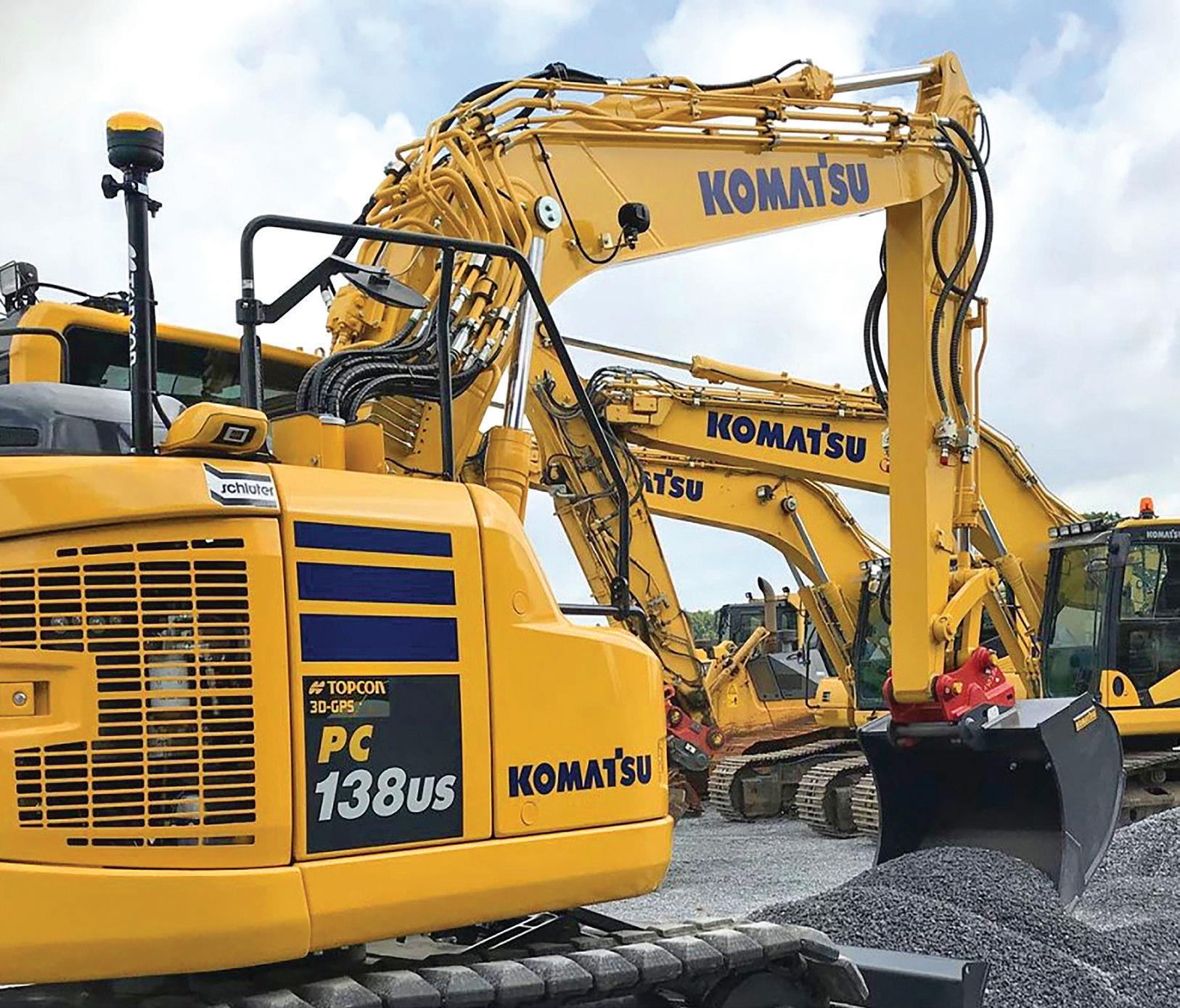
UNIQUE CONTENT AND INSIGHT FOCUSED ON KEY TRENDS IN THE GLOBAL CONSTRUCTION EQUIPMENT AND TECHNOLOGY MARKET FROM THE INDUSTRY’S BEST-INFORMED AND MOST INFLUENTIAL SOURCES
AUTOMATING OFF-HIGHWAY MACHINERY
PREDICTIVE MAINTENANCE BECOMES MAINSTREAM
FACTORS OLD AND NEW DRIVE NORTH AMERICAN RENTAL MARKET CONSTRUCTION EQUIPMENT MANUFACTURING ADOPTING AI AT PACE
THE DRIVE TO ELECTRIC CONSTRUCTION MACHINES
EMBRACING A MULTI-TECHNOLOGY STRATEGY
CONTENTS
05. DIGITALISATION & CONNECTIVITY
The use of off-highway machine-control tools, semi-automation and remote control continues to increase and all form part of a wider move towards digitalisation in the construction sector. As this technology proliferates, operatorassistance systems are becoming more widely accepted, with full automation being used in some sectors.
12. PREDICTIVE MAINTENANCE AND CONDITION MONITORING IN FLEETS
Predictive maintenance is moving from a niche practice in construction equipment to a widely adopted strategy. This proactive rather than reactive approach allows construction companies to predict equipment failures, optimise maintenance schedules and reduce downtime, providing signi cant cost savings and improved ef ciency.
19. FREE MODELING TECHNOLOGY FROM LIEBHERR
Liebherr’s innovative Free Modeling technology enables road-construction operators to create and modify simple 3D site models directly from their machinery, enhancing real-time decisionmaking.
22. PURCHASING TRENDS: THE IMPACT OF MILLENNIALS
Digital-savvy millennials are now key players in the workplace. For manufacturers selling construction equipment and technology, millennials are in the driving seat when it comes to specifying and buying products. Baby boomers are a dwindling presence in the of ce and their views are being challenged by
Editor: Liam McLoughlin
Contributing Editors: Mike Woof, David Arminas
Editorial Consultant: Geoff Hadwick
Designers: Simon Ward, Andy Taylder
Production Manager: Nick Bond
Of ce Manager: Kelly Thompson
Data & Marketing Manager: Alan Cansick
Managing Director: Andrew Barriball
Chairman: Roger Adshead
Editorial contributors: Pete Kennedy
TRENDS:
a generation which the Pew Research Center describes as “digital natives in a land of digital immigrants”.
31. AI IN THE CONSTRUCTION SECTOR
The construction-equipment manufacturing sector is adopting arti cial intelligence at pace. The top-performing companies are maintaining their competitive edge using, among other new technologies, generative arti cial intelligence (gen AI).
EXTENDED DIGITAL CONTENT
35. AEM GUIDANCE DOCUMENTS
The AEM’s three recently published guidance documents covering machinery autonomy, cybersecurity and data use are designed to create common terminology for digitisation within the construction and agriculture sectors. In a recent Global Highways roundtable video interview, Mike Gomes from Topcon Positioning Systems and John Somers from the AEM explain why the documents are important.
42. ELECTRIFICATION OF HEAVY EQUIPMENT
More and more construction machinery manufacturers are now offering electric machines in their product ranges. As with the automotive sector, the construction machinery rms are seeing the need to meet net-zero targets and address climate change, with electri cation of machines being a key tool.
46. VOLVO CONSTRUCTION EQUIPMENT
Achieving zero-emission construction does not have a simple answer. It demands a broad toolkit of solutions to assist customers at
ADVERTISEMENT SALES
Sales Director: Graeme McQueen
Tel: +44 1322 612069
Email: gmcqueen@ropl.com
Sales Director: Dan Emmerson
Tel: +44 1322 612068
Email: demmerson@ropl.com
Italy: Fulvio Bon glietti
Tel: +39 339 1010833
Email: bon glietti@tiscali.it
Asia / Australasia: Roger Adshead
Tel: +44 7768 178163
Email: radshead@ropl.com
different stages of their sustainability journey. By pursuing a multi-technology strategy, Volvo Construction Equipment (Volvo CE) is at the forefront of this movement, offering a comprehensive pathway to more sustainable construction.
48. ENGINE OVERLOOK/ FUEL-AGNOSTIC
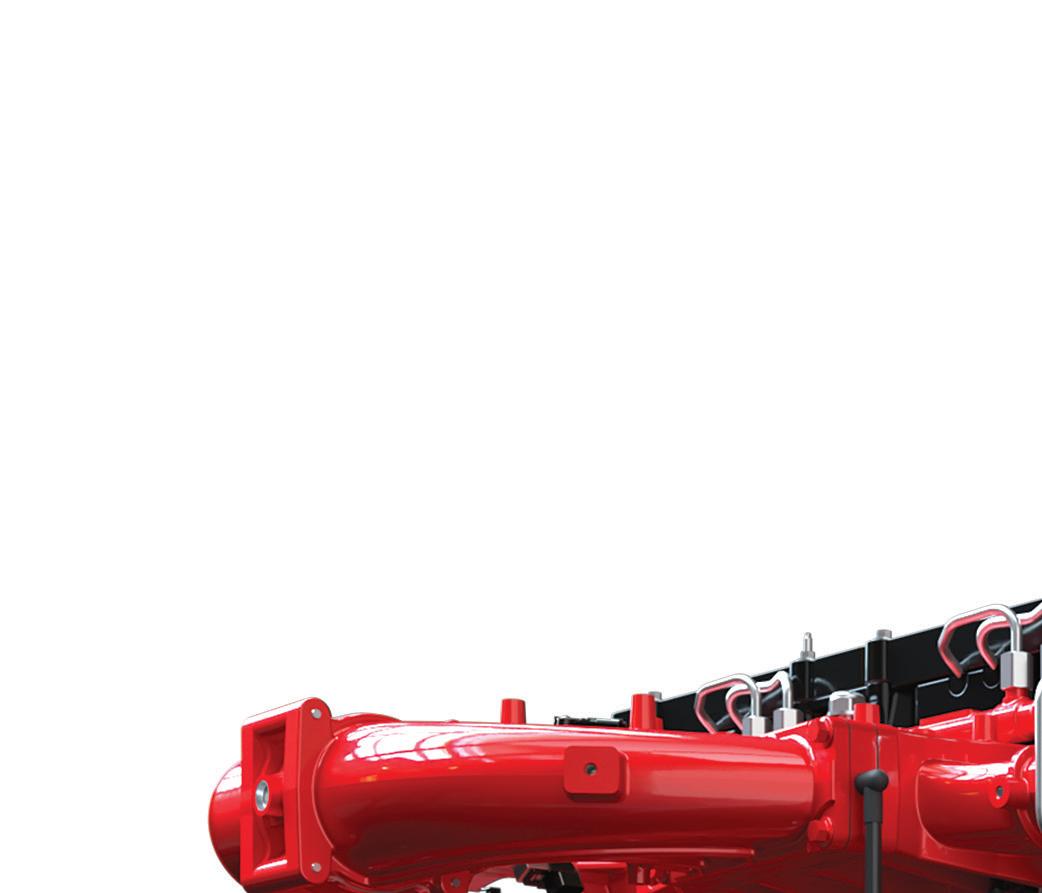
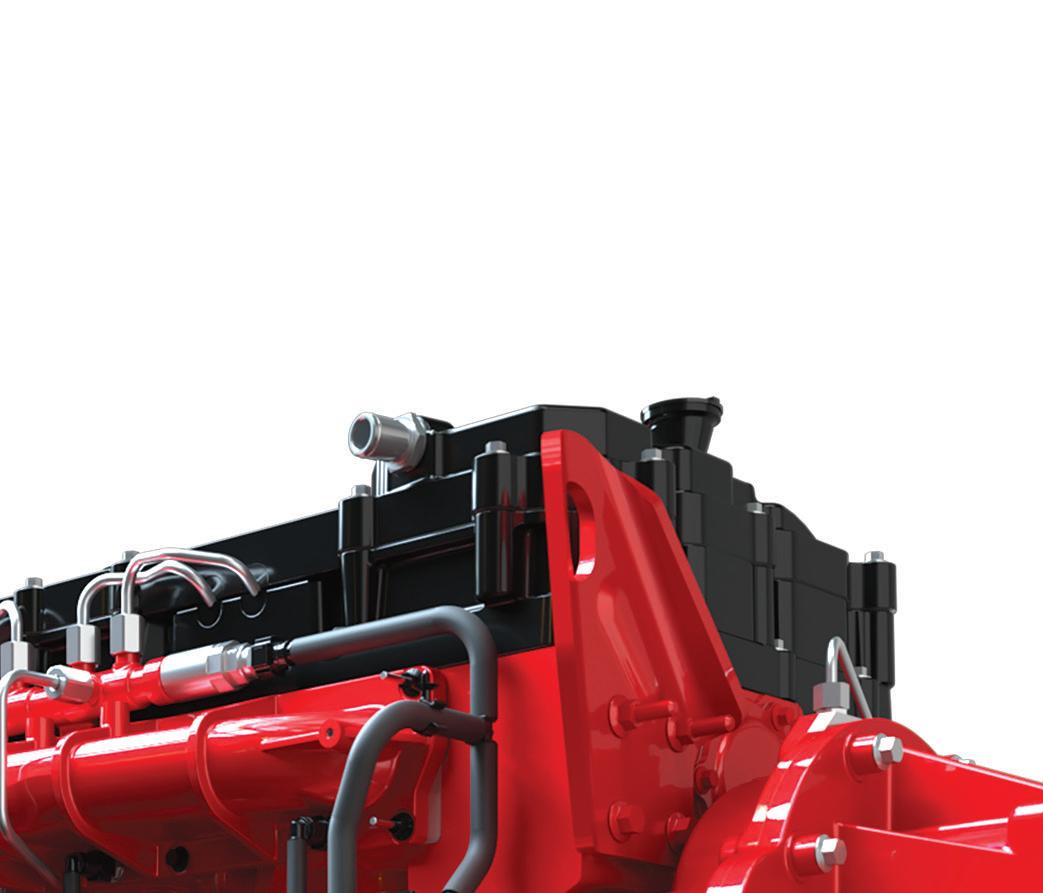
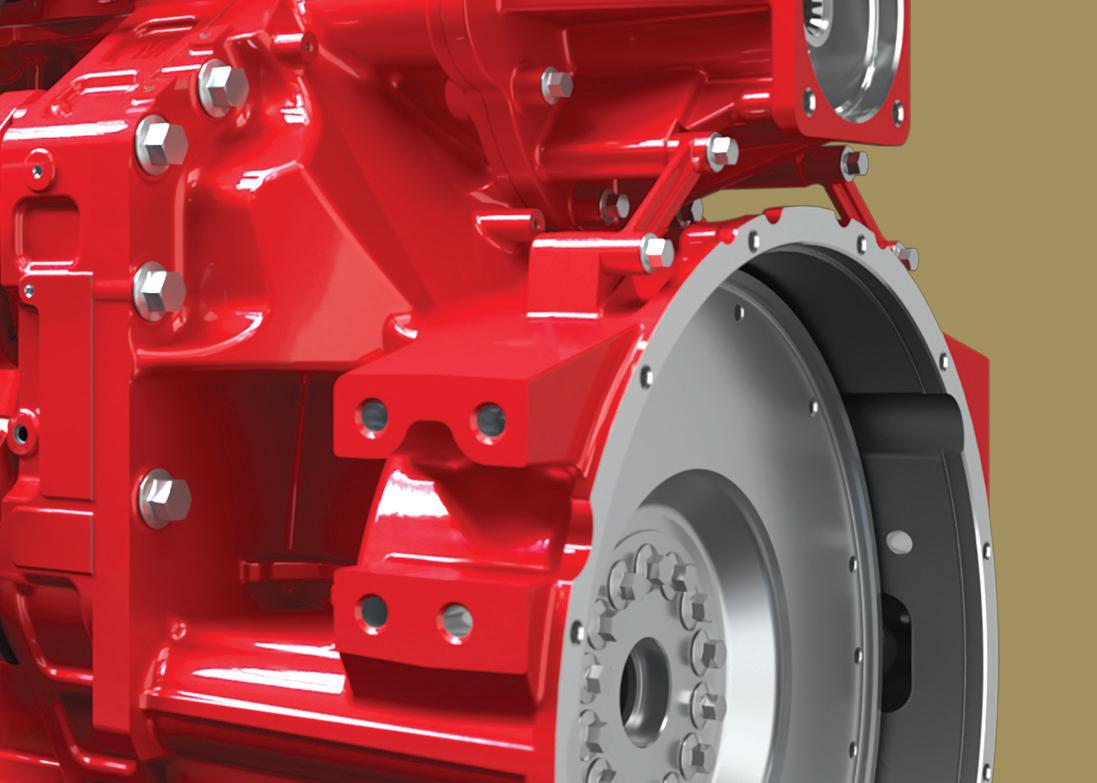
Zero-emissions solutions are an ongoing focus for the construction sector, but increasingly ef cient internal combustion engines continue to play a central role. Beau Lintereur, executive director global off-highway segments and aftermarket at Cummins, outlines the need for a diverse portfolio of available solutions that can facilitate different demands and different stages of energy transition.
51. EQUIPMENT RENTAL
Construction equipment rentals are booming in North America, and showing steady growth in Europe. In some cases, it’s the usual motivations of convenience, time savings, and no need to nance, maintain or store equipment. But other in uences, including an expanded selection of specialty equipment, megaprojects and telematics, are also driving the rental market.
EXTRA DIGITAL CONTENT
56. POWERTRAINS
Manufacturers have been unveiling a range of new products and innovations in engines and powertrains for road-building and construction machines.
ADDRESS:
Route One Publishing Ltd, Second Floor, West Hill House, West Hill, Dartford, Kent, DA1 2EU, UK
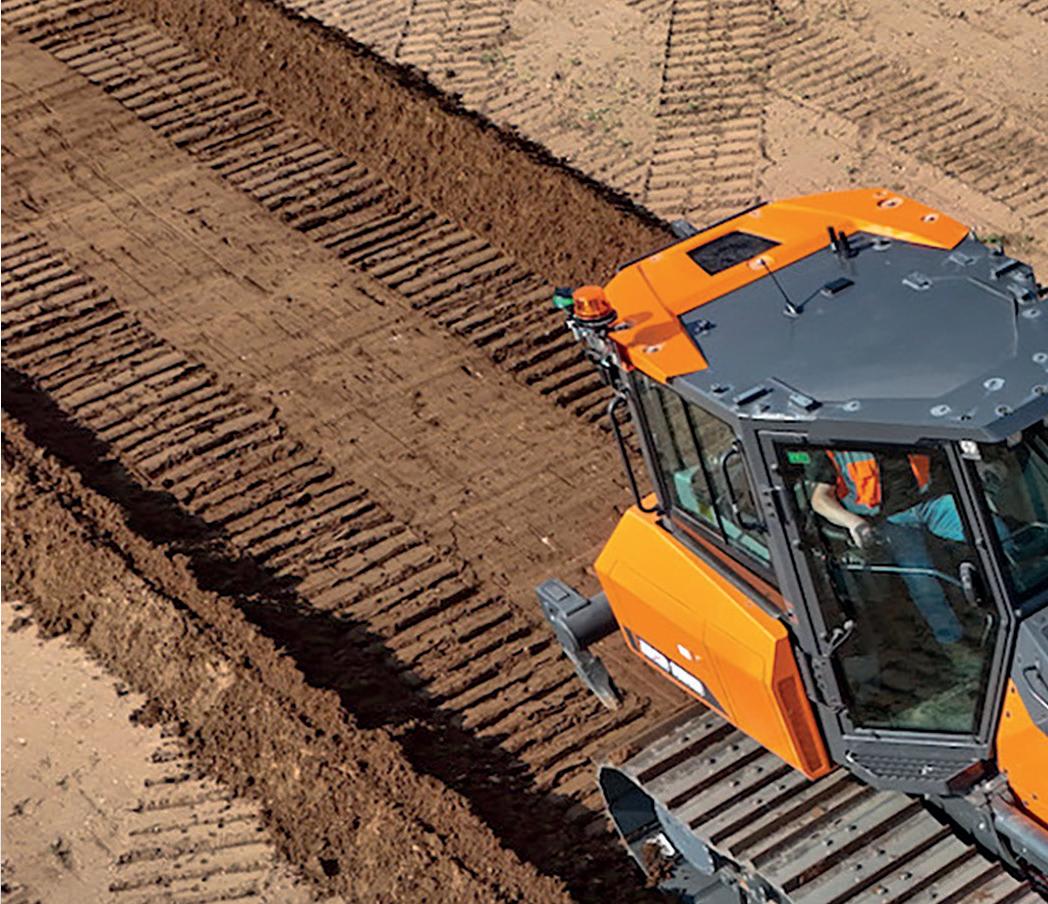
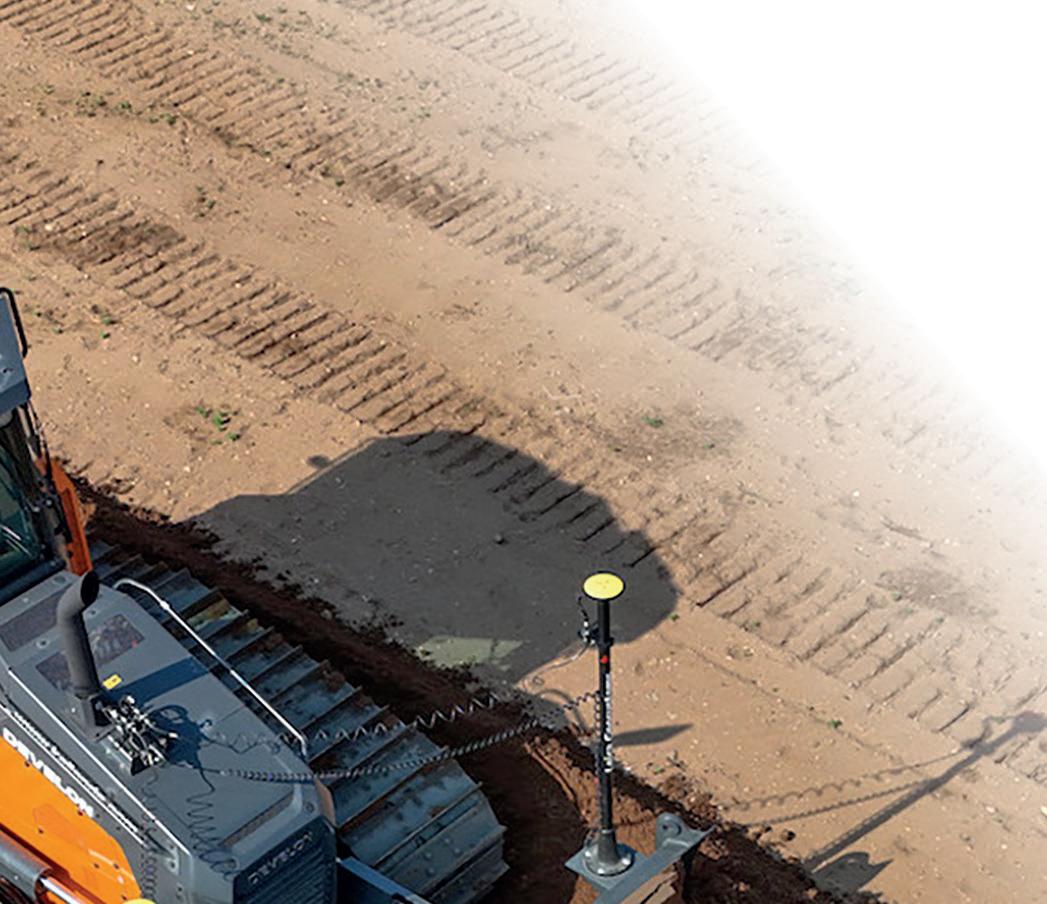
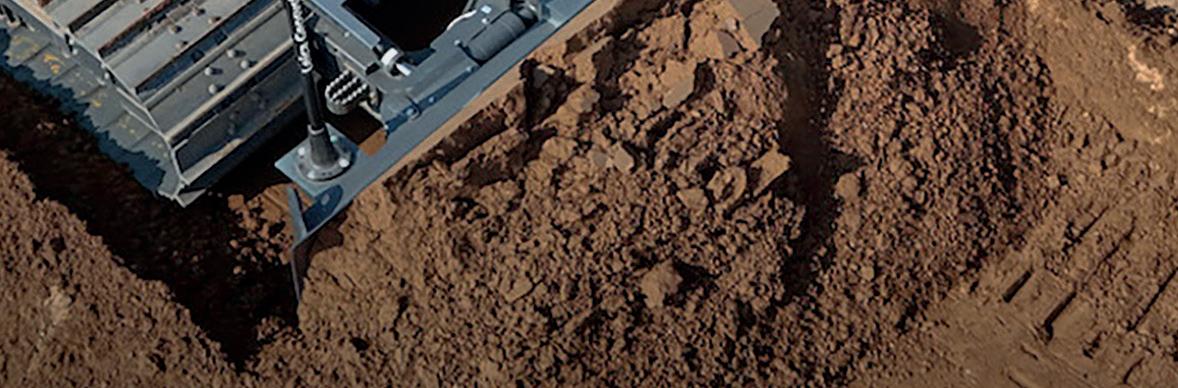
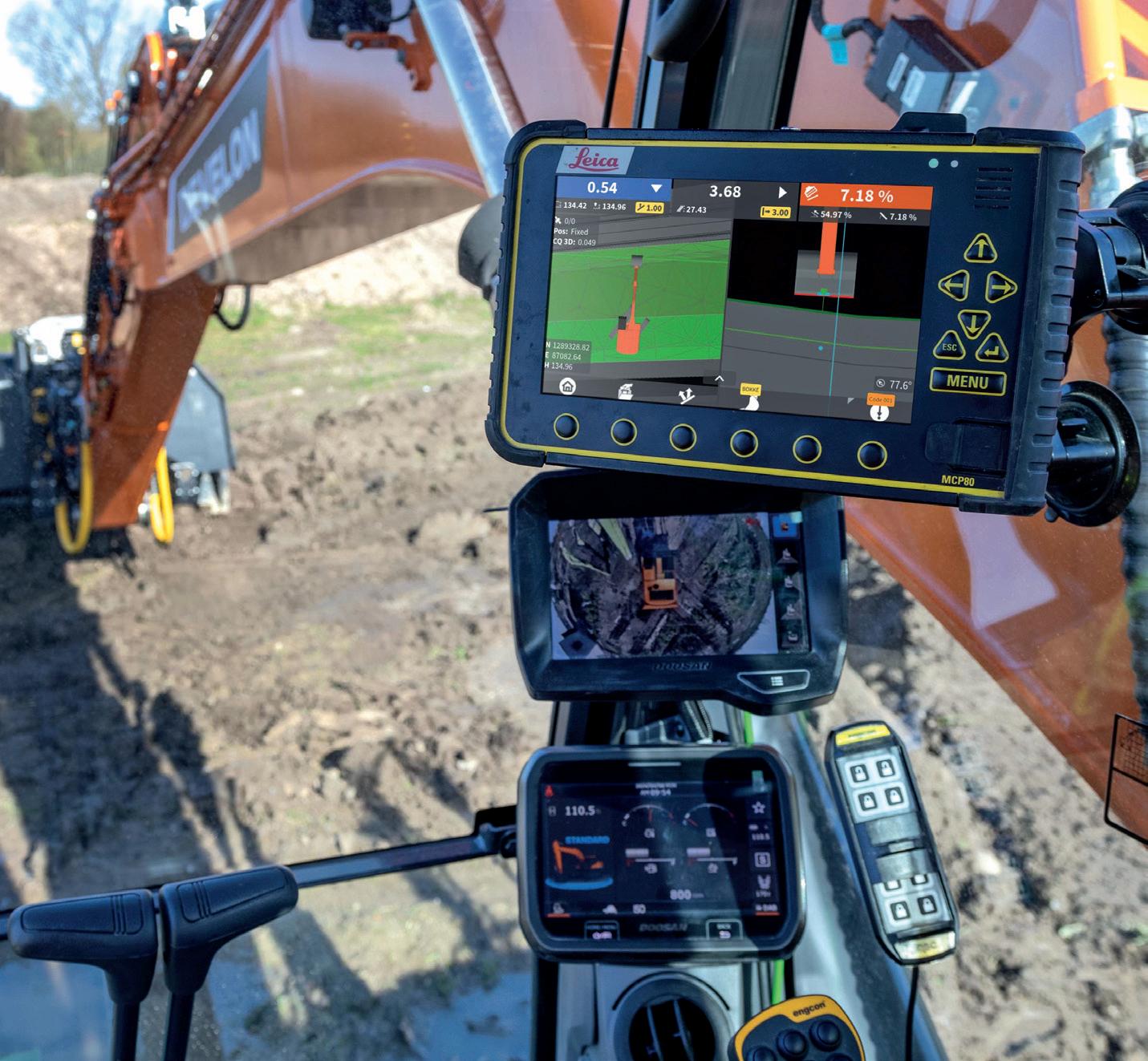
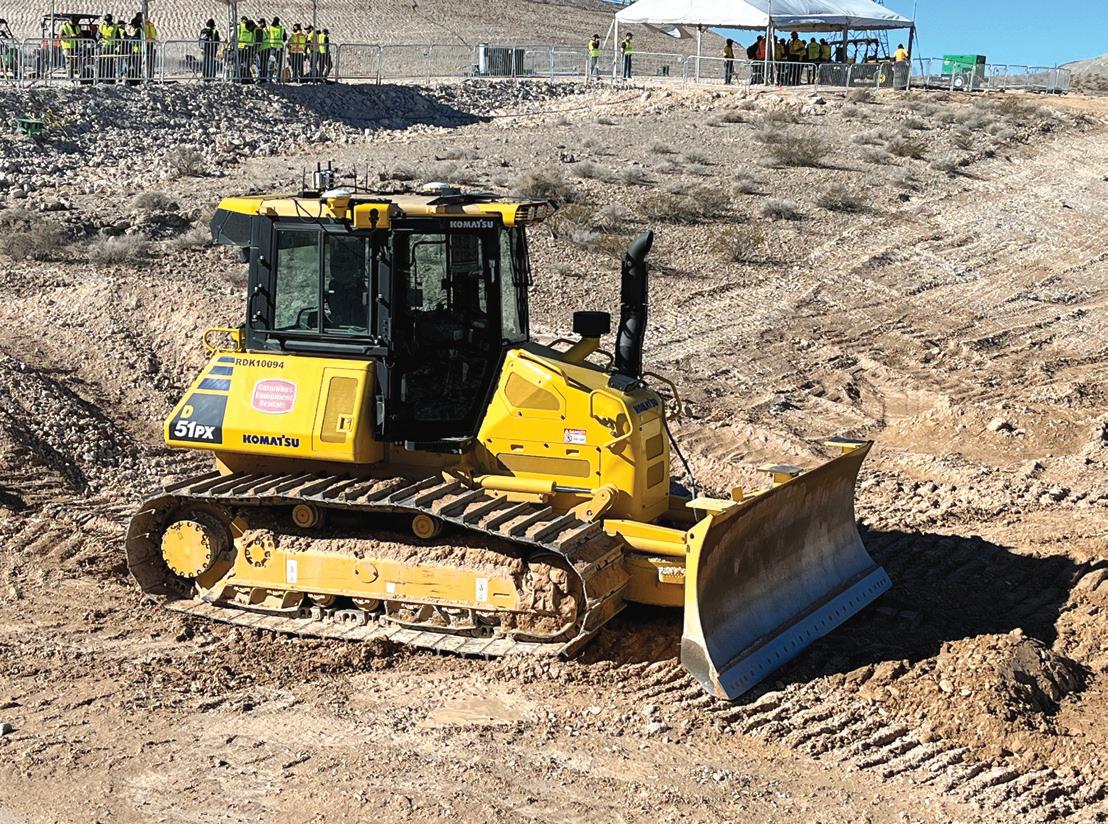
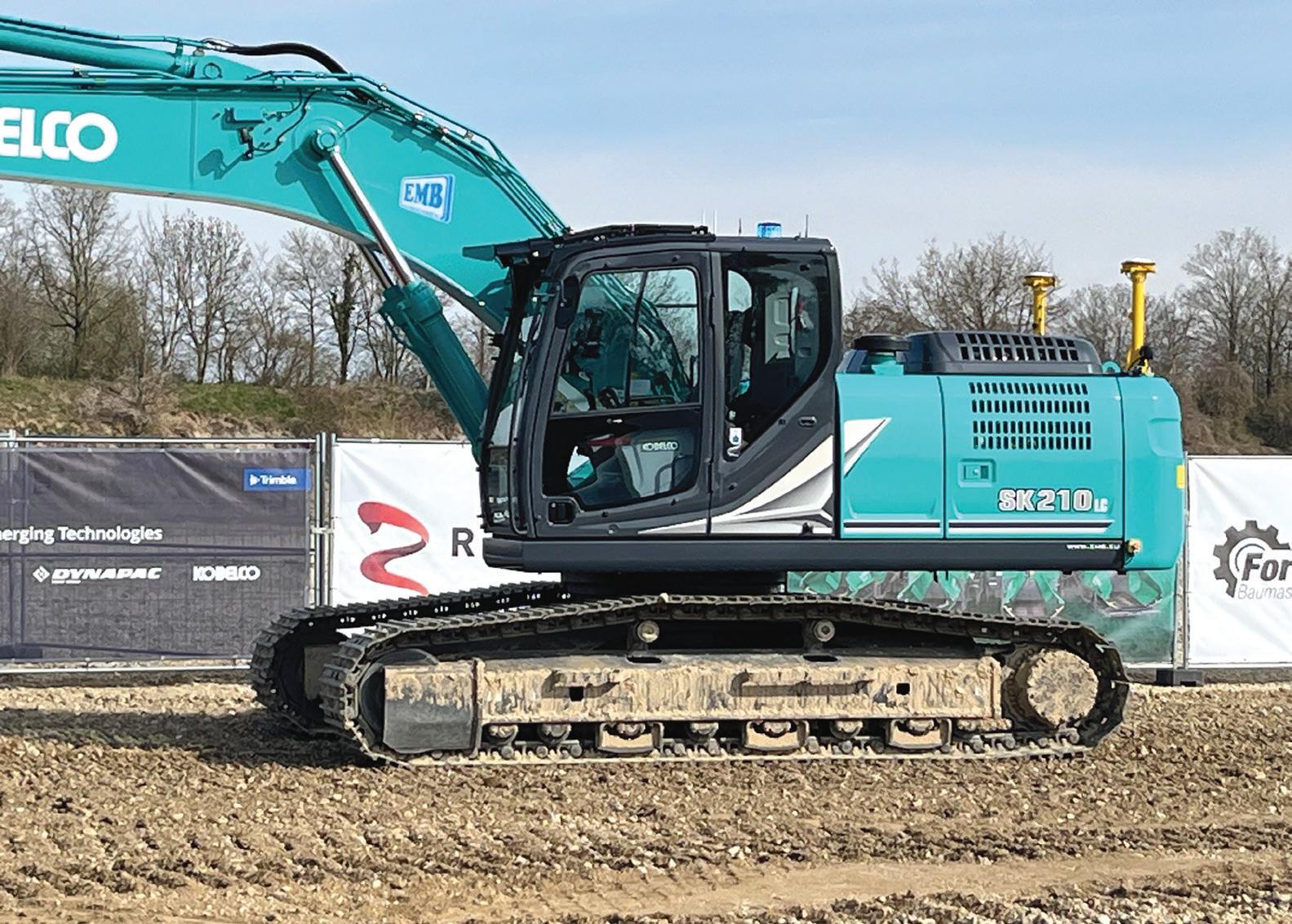
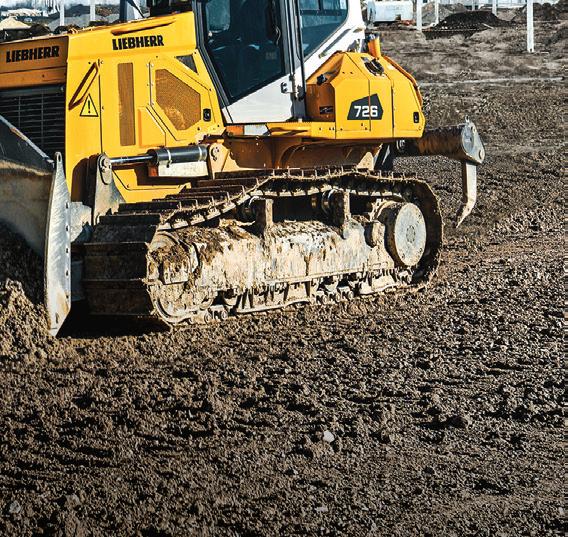
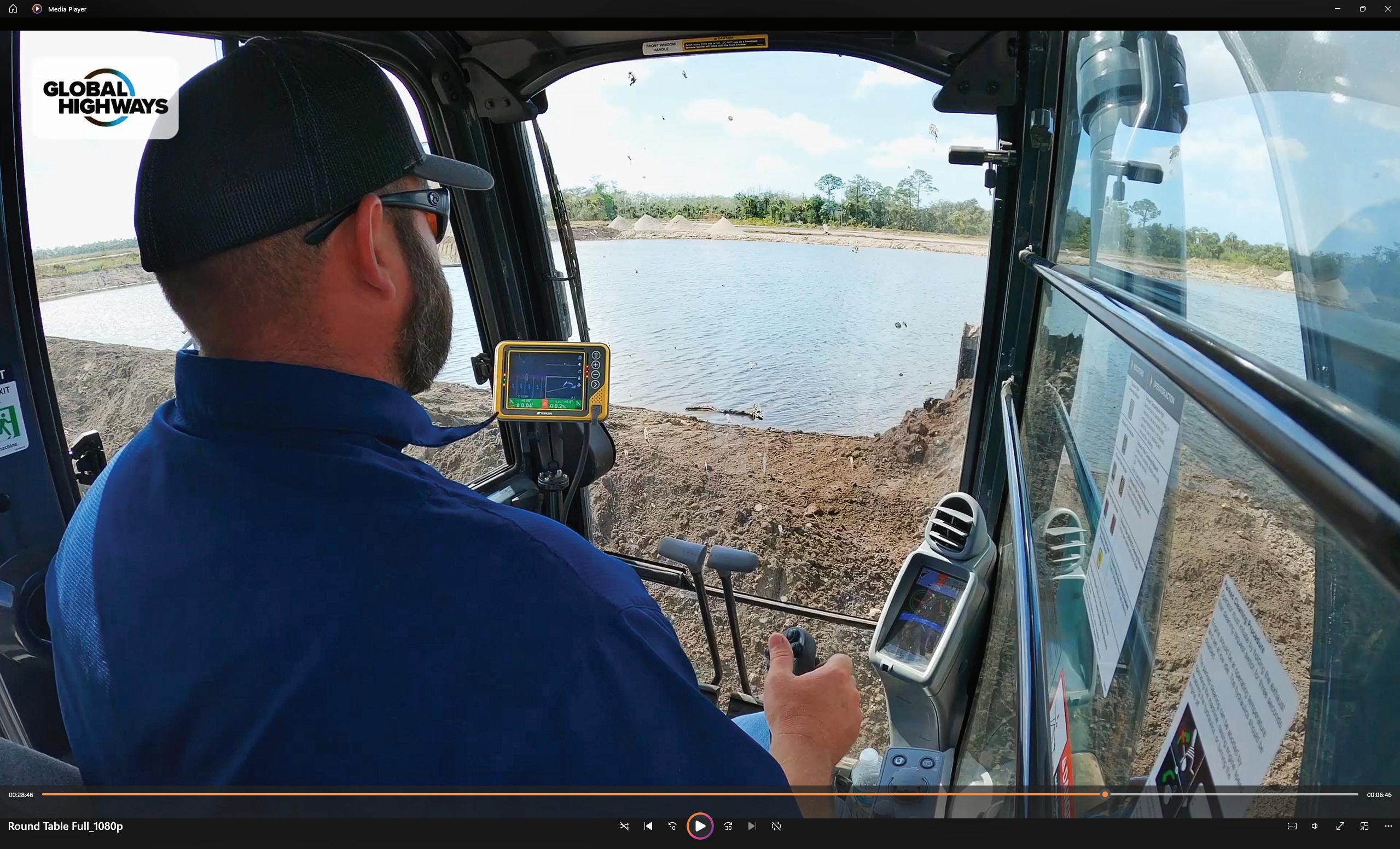
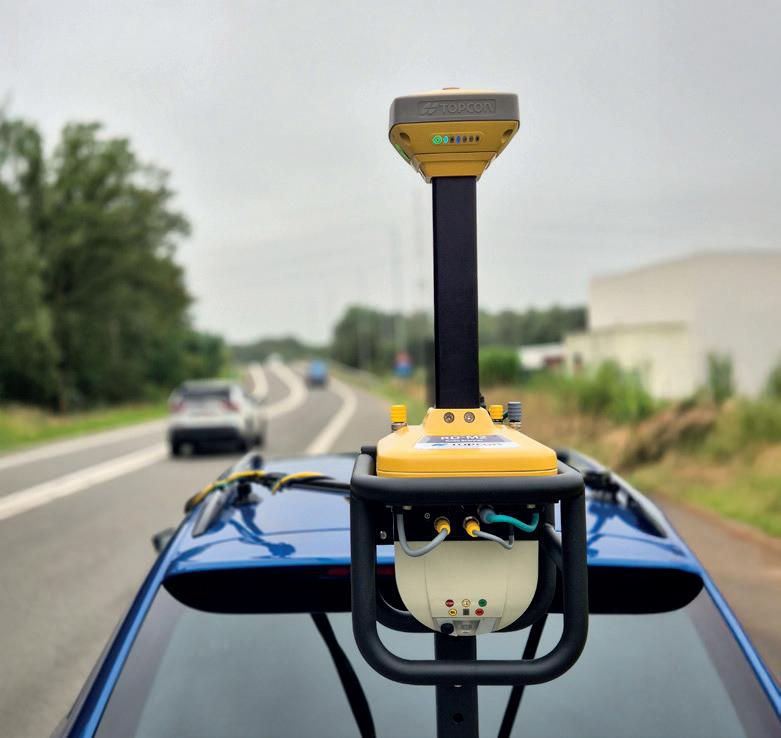
Using machine control technology on a dozer allows the operator to deliver work to grade faster and more e ciently
AUTOMATING OFF-HIGHWAY MACHINERY
e use of o -highway machine-control tools, semi-automation and remote control continues to increase and all form part of a wider move towards digitalisation in the construction sector. Mike Woof reports.
There are increasing numbers of automation and assistance tools being made available for o -highway machines. As this technology proliferates, operator-assistance systems are becoming more widely accepted, with full automation being used in some sectors.
Machine-control systems can allow even inexperienced operators to deliver quality results, eliminating the need for costly reworking. And when used by experienced equipment operators, machine-control tools can make signi cant gains in productivity. ere are several reasons for this drive towards higher levels of automation in the segment. One of the biggest comes from the shortage of machine operators. e construction industry has been facing an increasing problem with regard to personnel, with young people proving reluctant to enter the sector in su cient numbers resulting in an ageing and shrinking workforce.
However, sophisticated technology is helping to deliver solutions.
It is now nearly 30 years since Caterpillar rst demonstrated its prototype autonomous dump truck technology in public. ose invited to Caterpillar’s Tinaja Hills research facility watched in amazement as one of the rm’s 777 rigid dump trucks drew to a halt,
the operator got out of the cab and climbed out of the machine, and it then drove o again with nobody behind the wheel.
e truck was equipped with GPS technology from Trimble so it could geolocate itself as well as being equipped with a forward-scanning radar system able to detect obstacles in its path. e hardware was extremely advanced for the time, allowing the truck to travel on haul roads between loading points and dump areas, as required by the scheduling so ware. is innovation represented the future for the mining industry, the Caterpillar executives explained. With many surface-mining sites in remote locations that are di cult to access and may also have harsh climates, it is easy to understand why taking operators out of the cabs of large machines would be advantageous.
Since that time, the technology has become far more re ned. e sight of eets of large mining trucks without operators in the cab has become more common, with Caterpillar and rival Komatsu both having proven their systems over the decades, with other suppliers having also introduced comparable systems.
ere are now many mines using these systems around the world and for operations in remote areas, this saves on the costs of
getting personnel to each working site. e use of autonomous dump trucks in the mining sector soon began to highlight other bene ts of the technology also. Trucks running autonomously do not get tired towards the end of a shi , do not require rest breaks and cups of co ee to ensure e cient operation is maintained, with the risk of human error being taken out of the frame. Autonomous trucks can operate 24/7 and can also be used in conditions or areas that might be unsafe for humans to access.
Long-time use of autonomous dump trucks soon revealed that the machines tend to use less fuel and have less wear and tear because operation is optimised. With large machines in particular, this technology can deliver considerable savings in maintenance costs over time.
Along with the automation technology, telematics systems tted to heavy ohighway equipment have helped to further reduce eet costs. ese systems monitor performance and can highlight when service intervals are due or components will require replacing. Maintenance can then be scheduled so as to have a minimum e ect on overall productivity, boosting utilisation and simultaneously reducing the costs inherent in machine downtime.
RIGHT: Remote-control technology allows operators to work in comfortable conditions located away from potentially hazardous areas
For the mining industry, the cost of installing the technology into large and expensive mining trucks was justi able because of the reduced wear on the equipment as well as the savings in terms of sending personnel to remote locations. With large capital investments required to buy and maintain large mining machines, the cost of the automation technology was not signi cant. Furthermore, the bene ts these systems delivered in terms of reducing fuel burned and general running costs o set the price tag for the automation systems.
Over time, the cost of this highly sophisticated technology has also dropped as computing power has become ever cheaper. More and more surface-mining operations use automated truck eets, with other types of equipment also now being o ered in remote-control or automated form.
With the technology having become well-proven over time and the cost and wider availability of systems on the market, automation technology has moved beyond being used just for large mining trucks. e quarrying sector, where machines are smaller and margins tighter, has also begun to see the introduction of automation systems.
But both Caterpillar and Trimble agree that
fully autonomous machine- eet operation remains some way in the future for general construction operations though. Trials of autonomous machines have been carried out on some construction projects (such as a hydroelectric dam project in Canada) but these have been on large sites and in speci c areas where access by personnel has been restricted for the duration of the trials.
Autonomous machines can be used on surface-mining sites (or quarry operations) where working is con ned to clearly de ned
areas and personnel access is restricted.
Part of the issue for the use of autonomous construction equipment is regulatory. In addition, the prospect of coordinating multiple autonomous machines on a construction site presents technical challenges.
Using machine-control tools allows even inexperienced operators to achieve quality results
What semi-autonomous assistance technology can do though is allow inexperienced operators to deliver highquality working. Similarly, the technology ensures that experienced operators can carry out work to even higher standards than without.
For example, semi-autonomous steering controls allow machines to carry out repetitive tasks accurately, while boosting productivity. New systems are available for use on soil compactors that will ensure optimum overlap between each pass while the operator supervises the working of the machine. Once in the work location, the machine will handle the steering and ensure optimum compaction density is achieved with the minimum number of passes. Both quality and productivity are boosted, while fuel use and emissions are reduced, with a bene t for project sustainability.
Semi-autonomous systems, remote controls or assistance technologies are becoming utilised widely. Machine-assistance systems from the three key technology providers, Leica Geosystems, Topcon and Trimble, have become much more common across the various o -highway equipment sectors. Once tted to large machines such as heavy earthmoving equipment only, these tools are now used widely and even in much smaller compact equipment.
Telematics technology, once the preserve of large mining machines only, is now more or less standard across the quarrying and construction equipment sectors.
made FOR THE WILD
Fiercely productive, wildly efficient and built to thrive in your toughest environments.
INTRODUCING A NEW SPECIES OF ARTICULATED HAULER
The new generation of Volvo articulated haulers is here, including the alpha of the pack; the one-of-a-kind, full-suspension A50. Ready to tackle rough terrain in quarries, mines and on large construction sites. Check out the all-new Volvo ADT line-up designed to help you move more, cut costs and break through to higher profits. Made for the Wild.
Learn More
Sophisticated telematics systems are now tted to even small rental market machines such as mini excavators and compact tracked loaders. Equipment owners can track machine performance remotely, schedule servicing and can even set geofencing boundaries, so that units can only be operated in certain locations.
Customers can use telematics systems for monitoring machine condition, even if the contractor has equipment from another manufacturers. Similarly, operating data from the machine on how it is working can be downloaded, even if other technology solutions are being utilised.
Meanwhile, the well-established partnership between Caterpillar and Trimble has seen the machine manufacturer t technology in the factory to customer order. e two partners recently refreshed their long-running partnership. Scott Crozier of Trimble and Todd Farmer from Caterpillar explained some of the key points of the new agreement and how it will bene t both companies.
Machine-control systems for compact machines are now widely available
These remote systems make it possible to modernise the workplace for machine operators
Crozier said: “Innovation has been key to the joint venture for a number of years.” He explained that the rate of innovation in the technology sector is now so fast that the two rms had to update their joint venture partnership to ensure they could continue maximising the bene t.
Farmer said that the construction industry is shi ing and machine-control systems are becoming more commonplace. However, a key part of the new agreement is that the technologies developed jointly will be able to operate with solutions from other technology suppliers. And these systems will also be able to operate on construction machines from other manufacturers, recognising that many contractors run mixed equipment eets.
Around 20 years ago, Caterpillar carried out trials for construction works at its facility in Malaga, comparing the e ciency of machines equipped with grade-control systems against those that were operated using conventional manual methods. Even
then, the early-generation grade controls were able to deliver fuel savings of around 15%, not to mention improved productivity. e technology has improved considerably since that time.
Both Crozier and Farmer commented on how the technology has become more re ned over the years. Farmer said: “Twenty years ago you could be either fast or accurate.”
But both agreed how the machine-control systems now allow full-speed operation, while delivering high-quality nish exactly to grade. Both also agreed how machine-control systems have progressed from indicate package to technology that takes over some operations.
e cost of the technology used to be prohibitive for all but the largest rms.
But steady advances meant that advanced technologies such as 3D machine-control packages are now a ordable even for small contractors for use on compact equipment. He said, “ e technology is not just for the large machines. You can get it on skid-steer loaders and mini excavators now.”
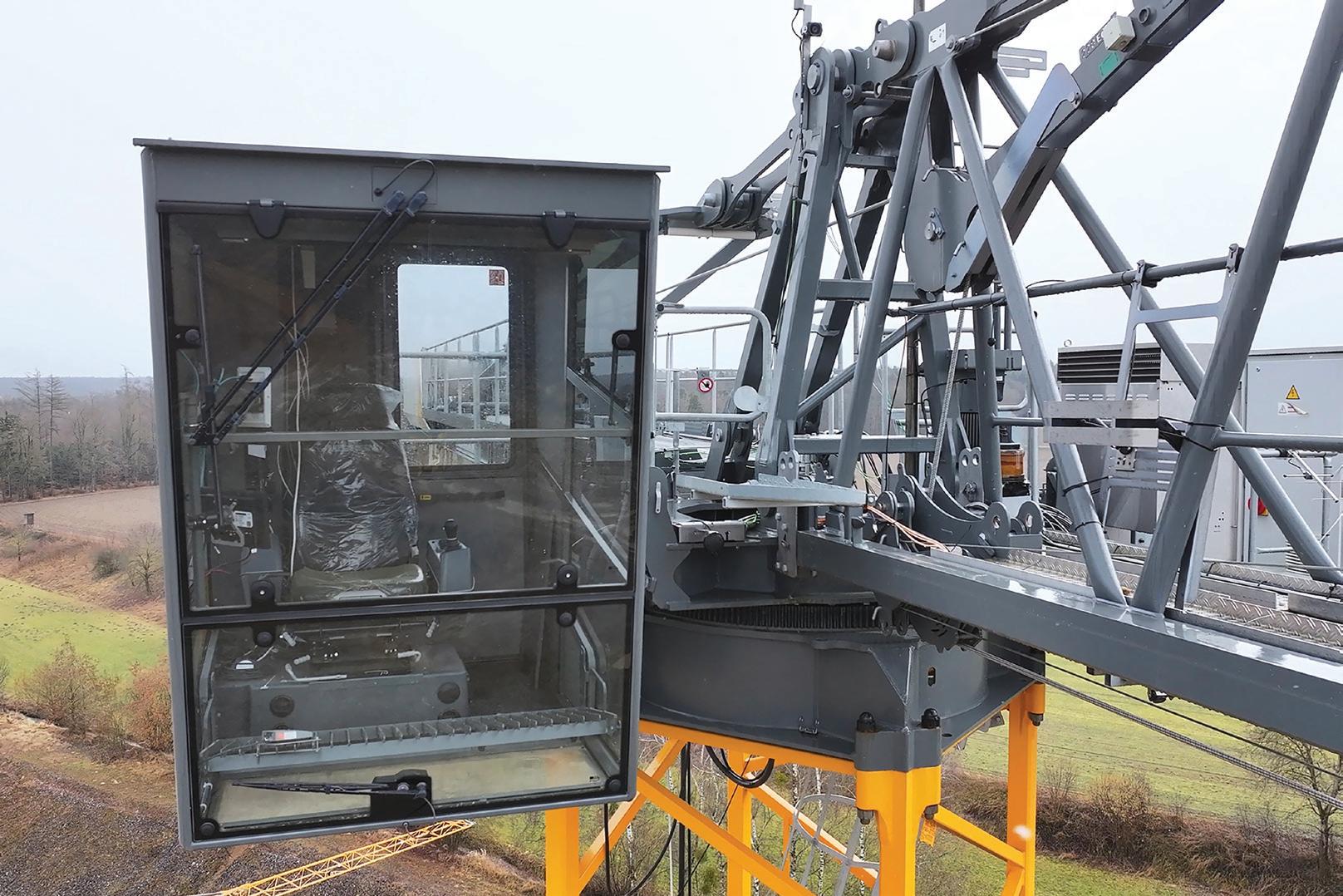
In addition to machine-control tools on machines that make them easier to operate, remote systems mean that operators can be in a comfortable and safe location, removed from the noise, dust and potential danger inherent in a working area. Several of the major manufacturers now o er remotecontrol systems which can be used on a range of machines, including crawler excavators, crawler dozers and tower cranes.
A modern remote-control system will utilise a state-of-the-art teleoperation stand equipped with the latest control technology. Several cameras provide real-time images from di erent perspectives, while microphones transmit the machine sounds. is comprehensive sensor technology enables machine operators to precisely control the construction machinery from a safe distance.
e technology o ers several major
Bulldozers are amongst the hardest construction machines to operate but machine-control tools make working considerably easier
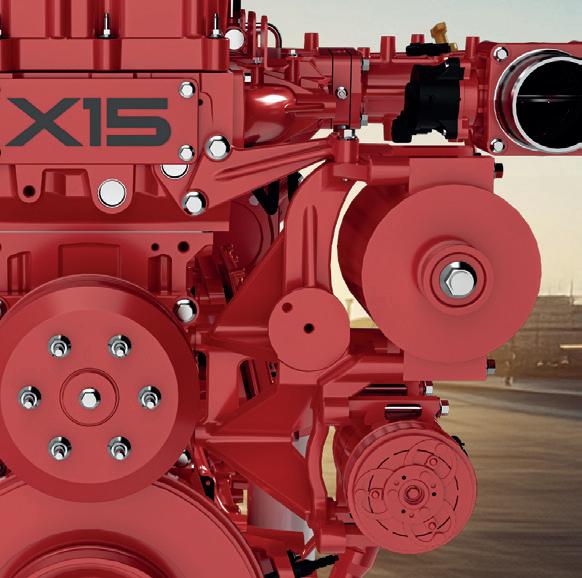
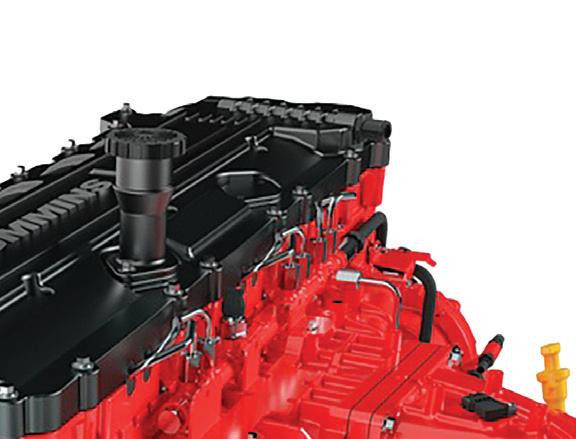
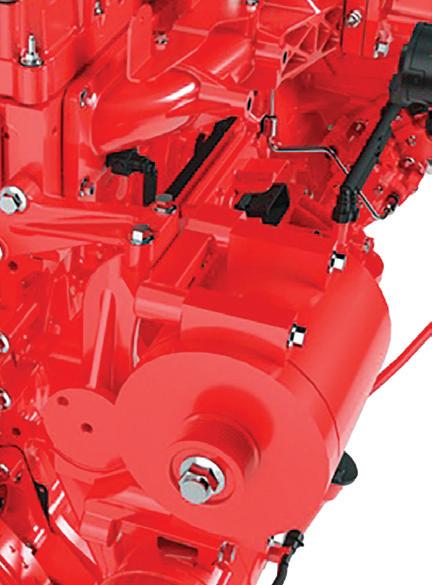
Today’s construction engine that is ready for tomorrow.
The Next Gen X15 for O -highway is designed around Cummins’ industry-fi rst, multifuel HELM™ platform. Diesel, biofuels, and hydrogen ready. The power to deliver performance with new levels of e iciency and emissions control. Built to let you choose how the future is powered.
Learn more
ABOVE: Blade-control systems mean that complex machines such as bulldozers become less challenging to operate
RIGHT: While autonomous construction machines have been trialled, their use will remain limited to strictly defined areas
advantages for construction sites. Not only does it increase operator safety in high-risk environments, it increases machine efficiency through faster shift changes and reduces downtime and can be used to access areas that would be too dangerous for direct on-site operation.
These remote systems make it possible to modernise the workplace for machine operators. Operators can work together in a comfortable office environment that is remote from the noise and vibration of a construction site. The real-time images from different perspectives also provide operators with more information, boosting efficiency. The new machine-control system simplifies communication between the machine operator and the site supervisor, with regard to logistics.
The machine-control tools, semiautomation and use of remote control all form part of a wider move towards digitalisation for the construction sector. With building information model (BIM) systems becoming widely employed for large construction works, the technology used on the machines is being integrated with the software used to progress the projects. The technology providers have also allowed for a greater interoperability, so that machinecontrol technologies from firms such as Leica Geosystems, Topcon and Trimble can operate together and can also link with engineering software from firms such as Bentley Systems. Chief executive of Topcon is Ivan di
Federico and he commented: “Digitalisation is the engine we see transforming many industries. The reason we see that is that it is possible!”
He continued that there has been a rapid acceleration in recent years in the use of technologies. Previously, digital technology and the sensors used were comparatively expensive, limiting implementation. He explained, “What has made the change is the smartphone. The huge volume of units being sold has meant that industry was able to reduce the cost of technology.”
According to Di Federico, construction processes or projects that would have been impossible before the widespread adoption of digital technologies are also becoming feasible. “That’s the benefit you get from digital control of the project. You can anticipate trends. Now you can see if you will need extra machines while you will have early warnings if there are problems and you can also see options to fix them.”
He said that using digitalisation will help address inefficiencies in construction. “There is 30% waste in construction because of unforeseen problems. Digitalisation is the best weapon we have against waste.”
Di Federico said that for the full benefits of digitalisation to be realised, there will have to be a change in perspective across industry as people do not typically see digitalisation in this respect. “We need to make sense of what we do in real life. We can add value to our customers. Digitalisation allows you to have
a deeper control in space and time of these unknown values.”
Looking ahead, Di Federico believes that AI will have a profound effect on construction, as with other industries. “AI will change workflows. As we use AI, equipment will learn from us and correct our mistakes.”
He said that this will go beyond being predictive and AI will begin to understand the user and how the user works and will then be able to propose how work should be done. “Digitalisation becomes not just a technique but an interactive tool.”
Digitalisation will help deliver sustainability by reducing waste and increasing efficiency according to Di Federico. “We should be able to do much better determining sustainability and environmental assessments. The ability to calculate and measure things is the first stage of environmental compliance.”
Michael Gomes is vice president of Global Sustainability and CSR at Topcon Positioning and is also convinced that digitalisation can help firms meet environmental targets. He said: “Digital data layers prove the act of sustainability. They prove the value in a world where information is everywhere, the proof becomes more important.”
These systems can highlight the value of an operator too, not just showing productivity as in the past. It can reveal the quality of working, the time taken, fuel burned and provide a more comprehensive quality assessment.
PREDICTIVE MAINTENANCE BECOMES MAINSTREAM
Driven by advances in AI, IoT, machine learning and data analytics, predictive maintenance is moving from a niche practice in construction equipment to a widely adopted strategy. is proactive rather than reactive approach allows construction companies to predict equipment failures, optimise maintenance schedules and reduce downtime, providing signi cant cost savings and improved e ciency. Liam McLoughlin reports.
Predictive machinery maintenance in construction equipment is seeing a massive shi from traditional strategies.
at is the view of facility management services company UPS, which says that businesses are now relying on xed schedules and instant reactive measures on real-time data to foresee probable equipment failures.
“ e new era of technology available in the market is easy to procure and incorporates the IoT (Internet of ings) and ML (machine learning),” India-based UPS states. “Predictive machinery maintenance enables construction companies to implement well-timed repairs, reducing downtime and costly breakdowns.”
Predictive maintenance can be a vital means of reducing costly downtime in the operation of construction equipment. Volvo Construction Equipment has estimated that, depending on the situation, a construction machine can be idling for 40 to 60% of its operating time.
UPS says that, previously, companies used the reactive approach to machinery maintenance, addressing equipment failure only when needed or when the breakdown occurred. e method was very straightforward but came with signi cant disadvantages.
UPS comments: “Reactive machinery maintenance results in downtime and unforeseen equipment failures that disrupt operations. In addition, the heavy cost of repairs is incurred as major components need replacements instead of being addressed early. Reactive machinery maintenance can also pose a safety risk that
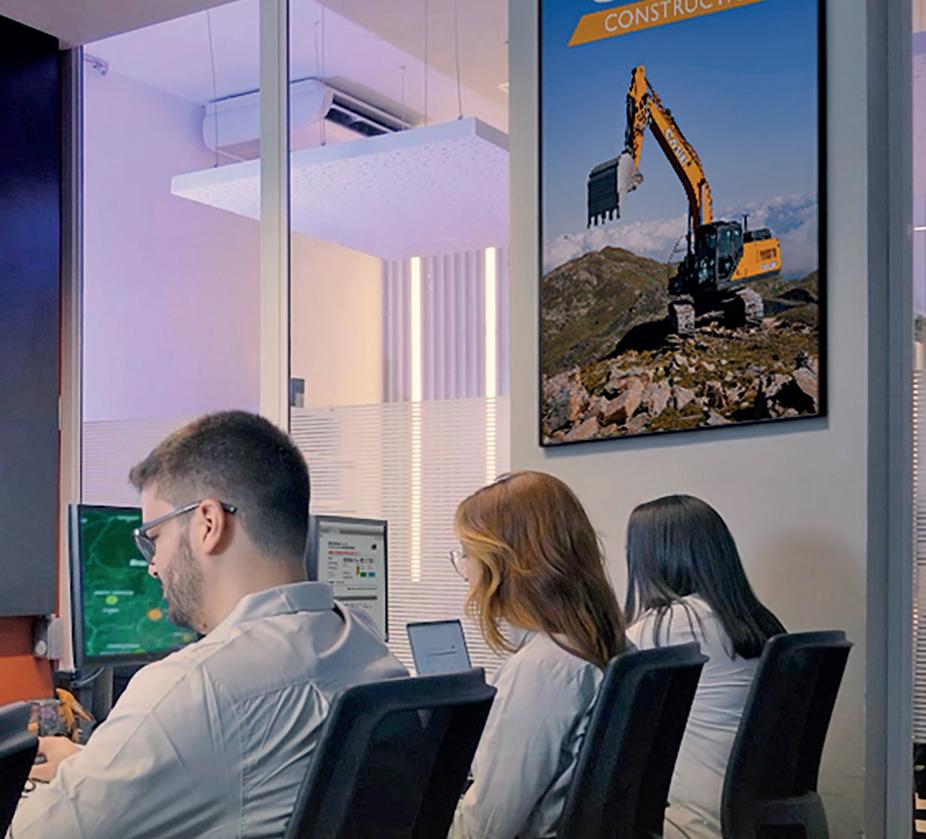
ABOVE: e CASE Dealer Connect Center monitors machine parameters, alerts, and noti cations in real time, enabling proactive maintenance planning, prompt interventions, and e cient repair operations
can lead to injuries and accidents.
“ erefore, companies shi ed their focus toward predictive machinery maintenance as this approach focused more on preventing failures before any mishaps through regular inspection and timely scheduled upkeep.”
e growth of automation in o -highway vehicles is fuelling the adoption of ohighway vehicle telematics. Telematics is fundamental to the operation of self-driving vehicles. Telematics systems collect data using a variety of sensors and transfer it for processing. e analysed data is then utilised to direct the autonomous vehicle’s actions and decisions. is allows for more centralised control and may minimise the number of sta required on-site. Telematics is critical to ensuring safety in autonomous o -highway vehicle operations.
e importance of condition-monitoring and predictive maintenance features in ohighway vehicle (OHV) telematics solutions
is rising, according to research company Global Market Insights. The company says platforms examine previous performance data and discover trends suggestive of upcoming equipment failures or maintenance needs by utilising advanced data analytics and machine learning techniques. Telematics technology allows construction managers and fleet operators to remotely monitor and manage their equipment fleets from centralised control centres or mobile devices. This remote-management capability enables real-time tracking of equipment location, status, and performance, facilitating proactive decision-making and efficient resource allocation.
Global Market Insights estimates the OHV telematics global market size was valued at US$634.1m in 2023 and is estimated to register a CAGR of more than 10.5% between 2024 and 2032. The growing focus on equipment monitoring is boosting market growth.
“Traditionally, OHV maintenance schedules were reactive, resulting in unnecessary downtime and repairs,” Global Market Insights comments. “Telematics delivers real-time information on engine health, fluid levels, and component performance, enabling proactive maintenance. This lowers needless maintenance expenditures and increases the lifespan of OHVs.”
The construction segment accounted for the largest share of the off-highway telematics market with around 42% in 2023 and is expected to exceed US$550m by 2032, according to Global Market Insights.
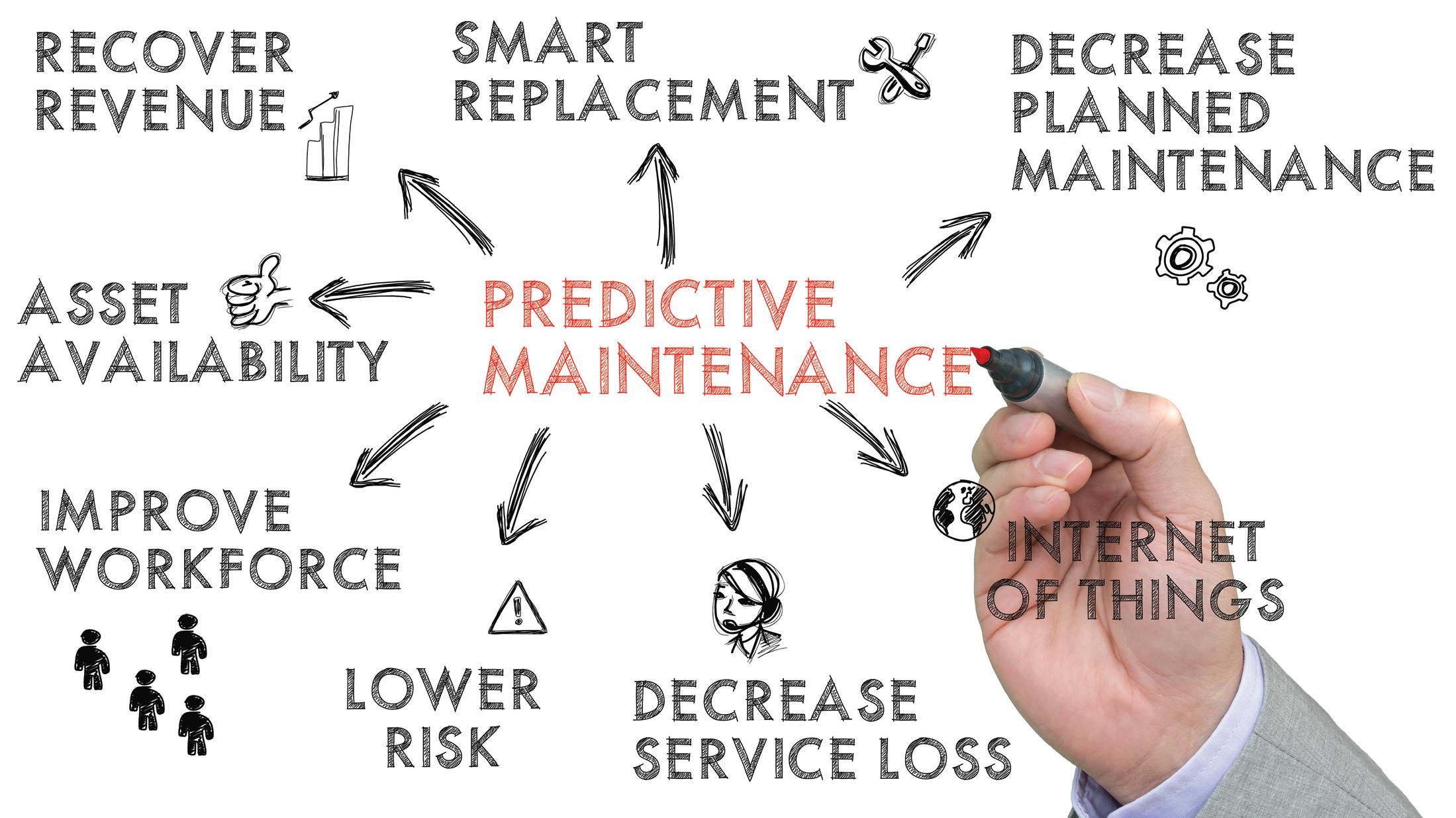
The Fraunhofer Institute for Industrial Mathematics (ITWM) states that predictive maintenance is based primarily on four objectives: avoiding downtime and keeping downtime to a minimum; quickly repairing or replacing defective and faulty components; planning maintenance at optimal costs and reducing energy costs; and reducing production costs with optimal quality.
ITWM adds that predictive maintenance predicts risks of undesired operating states and events based on the empirical values gained from condition monitoring. These forecasts enable demand-oriented planning of service and maintenance actions to optimise plant effectiveness.
Predictive maintenance also reduces downtime and saves costs, according to ITWM, since service technicians, spare parts and logistics are provided in a targeted manner through appropriate diagnoses. Predictive maintenance helps
The global predictive maintenance market is predicted to reach US$14.287bn by 2028
to plan the availability of the systems and provides information at an early stage for targeted maintenance actions while taking manufacturing, service and sales prices into account.
Construction industry digitalisation company Neuroject says that predictive maintenance using IoT is transforming how construction firms manage their equipment. By deploying smart sensors on machinery and structures, sites can continuously monitor conditions and address issues before they lead to failures.
Neuroject identifies seven main predictive maintenance IoT use cases in construction, each centred on a specific sensor type or technique.
1. Vibration sensors for rotating machinery: Monitoring vibration patterns in rotating components (motors, engines, gearboxes, bearings) to catch mechanical issues early. Vibration sensors (accelerometers) attached to equipment can detect subtle changes in how a machine vibrates during operation. These patterns are key indicators of emerging problems such as imbalance, misalignment, or bearing wear.
2. Temperature sensors for overheating and thermal health: Tracking the temperature of critical components (engines, hydraulic systems, electrical panels, bearings) to prevent overheating and detect stress.
Temperature sensors (thermistors, infrared sensors, etc.) placed on or inside equipment continuously measure heat levels during operation.
3. Oil-quality sensors for engine and hydraulic health: Analysing the condition of oils and lubricants in engines, gearboxes, and hydraulic systems to predict maintenance needs. Oil-quality sensors can measure properties such as viscosity, contamination, moisture content, and the presence of metallic particles in real time as equipment operates.
4. GPS and telematics for usage-based maintenance: Using GPS trackers and telematics devices on construction equipment to collect usage data (operating hours, duty cycles, location, idle time) and optimise maintenance scheduling. While GPS by itself provides location, in combination with onboard sensors and connectivity (telematics), it becomes a powerful tool for predictive maintenance logistics and decision-making.
5. Load and strain sensors for structural safety: Measuring loads, stresses, and strains on construction equipment and temporary structures to predict fatigue or structural failures. Load cells, strain gauges, and pressure sensors can be installed on critical load-bearing elements
– such as crane booms, cables, lifting hooks, scaffolding, or hydraulic supports – to monitor the forces they experience in real time.
6. Ultrasonic sensors for wear and leak detection: Using ultrasonic sensing and acoustic monitoring to detect issues that produce high-frequency sound or vibration beyond the range of human hearing. Ultrasonic devices can pick up on phenomena like material cracks forming, leaks (air or fluid), or lubrication problems, providing an additional predictive maintenance tool especially in detecting faults that other sensors might miss.
7. Pressure sensors for hydraulic and pneumatic systems: Continuous monitoring of pressure in fluid power systems (hydraulic circuits, pneumatic lines, fuel systems) to detect leaks, blockages, or component degradation. Pressure sensors and transducers installed on equipment provide real-time readings of fluid pressure, enabling the detection of abnormal drops or spikes that indicate faults.
While predictive machinery maintenance in construction can be time-consuming and resource-intensive, UPS says it offers remarkable advantages.
Firstly, reduced overtime - predictive machinery maintenance can heavily minimise operation disturbances when potential issues are detected early.
Secondly, cost savings, because it is more affordable than emergency fixes, saving companies money in the long run.
Finally, improved safety - this method reduces the risk of injuries and accidents that are caused by unexpected failure of equipment.
There are numerous applications of predictive maintenance for construction equipment, according to UPS.
These include monitoring in real time. IoT devices that are enabled with sensors can track the status of equipment in real time, enabling workers to act swiftly in identifying operational issues. For instance, the teams can be alerted if there are any problems with the temperature and sensors before the problems escalate.
A computerised maintenance management system (CMMS), when
integrated, enhances the structure of maintenance tasks and confirms compliance with the safety guidelines. Effective integrations can be achieved with systems such as CMMS+ from manufacturing and asset management software provider Llumin.
Data analysed in real time, drawn by using artificial intelligence (AI), can help managers make informed decisions about regular maintenance schedules, reducing downtime and unnecessary problems.
Overall equipment effectiveness, or OEE, facilitates equipment performance and uptime – a key metric for calculating manufacturing efficiency.
Digital twins are being used by manufacturers to model when physical systems will require repair, according to global industrial and electronic products distributor RS Components.
RS Components says that a digital twin – much like a condition-monitoring system – relies on collecting large volumes of data from a machine. As data is captured, the model is continuously updated. Using the twin, engineers can visualise what is happening inside a physical system and
Predictive maintenance can be vital to reducing costly downtime in the operation of construction equipment
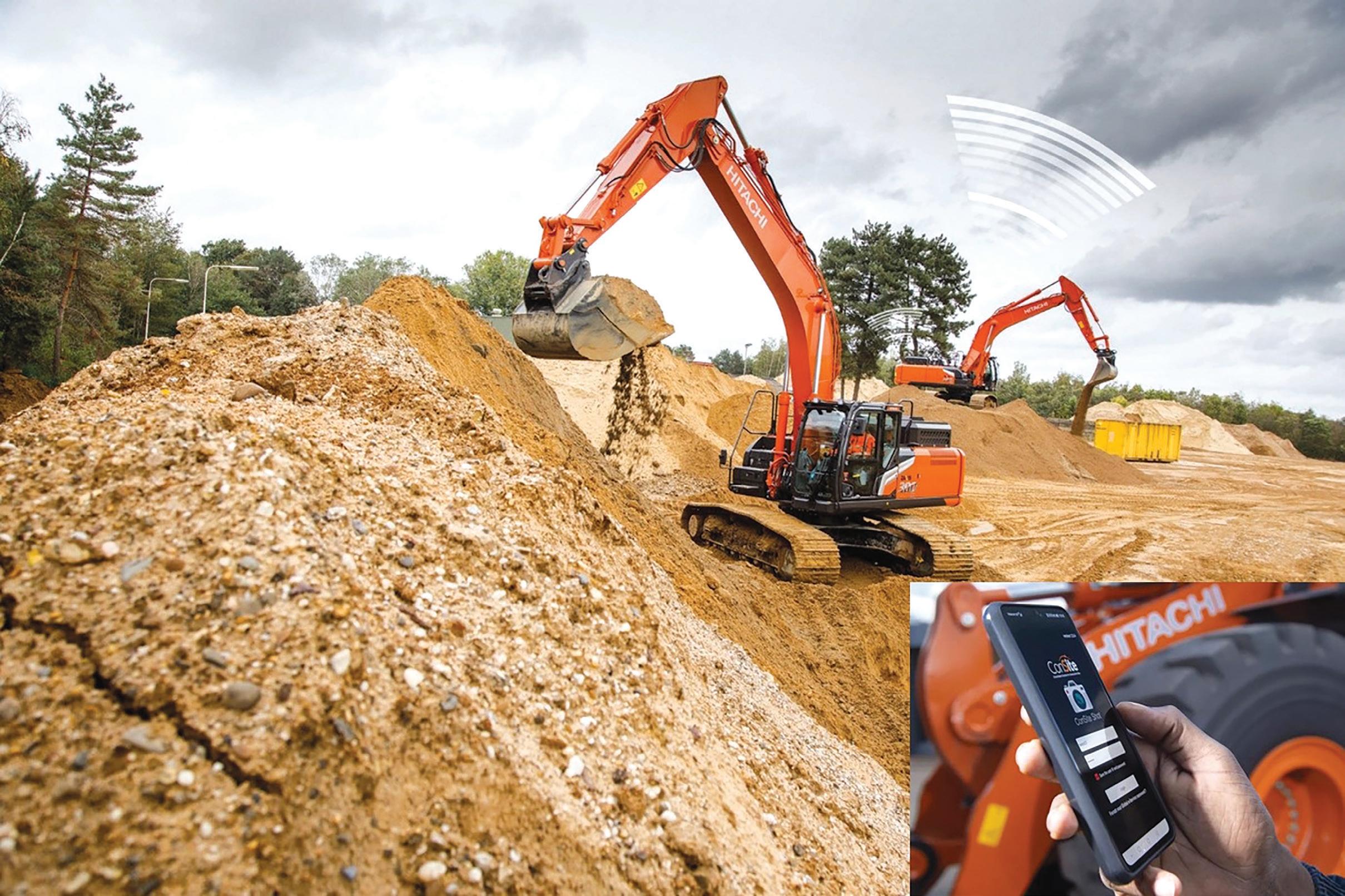
Hitachi CE’s ConSite family of products and services provides real-time machine data and predictive maintenance insight
plan maintenance accordingly. Capturing all that data can also help predict maintenance requirements or even the remaining life of the asset.
FUTURE TRENDS AND NEW TECHNOLOGIES
The IoT and Industry 4.0 initiatives (those that integrate automation, robotics and data analytics to enhance efficiency, safety and productivity) are playing a decisive role in construction equipment maintenance. When connected to the internet, equipment sends real-time data analytics which can provide
a deeper understanding of the machines’ performance, identifying issues, and predicting unforeseen failures.
With each passing year cloud computing is transforming many businesses, and predictive maintenance in construction is on the rise due to scalable deliveries and cost-efficient solutions that require minimal infrastructure investment. Cloud computing enables rapid and seamless deployment of predictive maintenance systems with unmatched flexibility, accessibility, and scalability, Companies must open up to the increasing
use of artificial intelligence in production and service to boost the effects of predictive maintenance, according to the president of Europe-based machinery and equipment manufacturers’ association, the VDMA.
“AI improves efficiency, reduces downtime and supports smarter decisions through applications such as predictive maintenance, quality control and supply chain optimisation. Machine learning achieves greater adaptability, helping companies to optimise production and minimise waste,” said VDMA president Bertram Kawlath. He added that the ethical issues associated with artificial intelligence must also be taken into account. “However, by using AI responsibly European manufacturers can, not only remain competitive, but also lead the next wave of industrial change.”
Global Market Insights says equipment manufacturers are launching new platforms which can be used by dealers and customers to manage their equipment maintenance and operation.
Recent launches by major construction equipment OEMs illustrate the increasing availability and prominence of predictive maintenance technologies.
Hitachi CE’s ConSite family of products and services provides real-time machine data and predictive maintenance insight. Using
data from Hitachi construction machinery and advanced ICT technology, it offers a wide range of benefits to enhance operational efficiency and support sustainable growth.
ConSite is a family of applications and services that includes: Data Report, Pocket, Shot, Alarm and Oil. Through these, owners can monitor and manage their Hitachi construction machinery to achieve higher productivity and less downtime. By providing real-time machine data, predictive maintenance insights, and remote equipment management, it allows users to optimise fleet performance, reduce operating costs, and make data-driven decisions.
HCME product manager Arthur Geremia explains that ConSite takes machine data and turns it into useful insights, helping you to plan maintenance ahead of time and make better use of resources. By predicting when oil changes or analysis are needed for example, ConSite helps to extend the life of your equipment and cuts down on overall ownership costs.
On the engine side the new X15 from Cummins is designed to deliver more than just power and drivability for off-road machines. The manufacturer says it offers reliability and operating-cost reductions through a proprietary, prognostic-based, maintenance-monitoring system. Cummins adds that the new engine offers the longest service intervals in the industry. The engines come with first-fit connectivity from the point of sale through Acumen, Cummins’ smart computing hardware, or via an OEM telematics device. These first-fit devices offer immediate access to Cummins’ Connected
WHAT IS PREDICTIVE MAINTENANCE?
• Using either on-premises or cloud
• With the goal of predicting upcoming machine failure by using statistical methods and supervised/unsupervised machine learning. Among other benefits, this approach promises cost savings over routine or time-based preventive maintenance because tasks are performed only when warranted.
Source: IoT Analytics
Solutions - a full suite of digital capabilities. There is also remote diagnostics with realtime monitoring of fault alerts and predictive insights for Cummins engines to reduce unplanned downtime.
Case Construction Equipment is rolling out advanced remote-monitoring technology, providing remote-machine assistance. The manufacturer says this technology enables real-time monitoring of operational conditions and fuel consumption and facilitates predictive maintenance, ultimately reducing downtime and improving fleet management.
Caterpillar’s remote track-monitoring system, introduced in late 2024, can help boost uptime for dozers. The Cat Track Wear Sensor (CTWS) remotely monitors undercarriage wear to predict wear out, plan maintenance and increase machine uptime.
The system is exclusive to Caterpillar machines and is monitored within the Cat Wear Management System. The new CTWS communicates wirelessly to provide critical track-link wear information from the machine to the dealer. Timed alert intervals – a 40% wear alert for possible bushing turns, 70% to signal for measuring and replacement part ordering, and 100% for required replacement – improve inspection scheduling and streamline ordering of replacement parts. The real-time, track-wear status enables notouch, track-link measurements, increases fleet coverage by automating inspections, provides visibility to track wear when operating in remote locations and allows for prioritised timing of service visits by helping optimise manual inspections.
Off-highway vehicle embedded electronicsystems provider Actia says that, to address local challenges, equipment manufacturers are focusing on embedded diagnostics and remote-maintenance solutions, enabling predictive maintenance and maximising machine availability through firmware overthe-air (FOTA) updates.
Autonomous, easy-to-maintain, and modular equipment is preferred, with standardised components to simplify repairs and optimise fleet management. These rapidly growing markets offer key opportunities for industrial equipment manufacturers, requiring an approach that combines innovation and sustainability to meet local realities.
“The off-highway equipment market is undergoing a major transformation, pushing manufacturers to rethink their business models,” says Davide Loy, VP for the offhighway market at Actia.
“AI improves efficiency, reduces downtime and supports smarter decisions through applications such as predictive maintenance, quality control and supply chain optimisation.”
Bertram Kawlath, VDMA president
“This transformation requires rapid feedback loops, optimised time-to-market, and a customer-centric approach. The key challenge lies in the real-time use of data. Remote-machine analysis, combining technical data from the equipment and data related to its field activity, becomes essential for improving operational efficiency and predictive maintenance.”
According to Verified Market Reports, the off-highway vehicle (OHV) telematics market was valued at US$488.4m in 2023 and is expected to reach US$1,439.5m by 2030, with a compound annual growth rate of 16.8% between 2024 and 2030.
Actia says that, with regional developments and the rise of digitalisation, industrial requirements are evolving drastically. Manufacturers must now maximise productivity through data and
A set of techniques to accurately monitor the current condition of machines or any type of industrial equipment:
analytics solutions
connectivity while reducing their energy and environmental footprint.
e industrialisation of the “all-digital” approach is leading to new business models, where connected services play a crucial role: predictive maintenance, pay-per-use models, eet management platforms, and remoteso ware updates are becoming industry standards.
Real-time data utilisation has become a key factor in optimising operational e ciency and predictive maintenance. By remotely analysing machines - cross-referencing equipment technical data with real-world usage information - Actia says it helps manufacturers maximise vehicle performance and availability.
Germany-based business intelligence company IoT Analytics predicts that expansion in the predictive maintenance market will accelerate from the 11% growth rate seen between 2021 and 2022. As businesses refocus on enhancing e ciency, safety, and operational performance, it projects an annual growth rate of 17% for the
predictive maintenance sector through to 2028, with its global market value predicted to reach US$14.287bn by 2028 - up from US$5.5bn in 2021.
At this year’s bauma 2025 construction and mining equipment expo in Munich several exhibitors showcased their latest innovations in predictive maintenance, designed to drive further growth in the sector.
Spanish multinational Cojali exhibited its diagnostics solution for o -highway equipment. It is designed to perform diagnostics and maintenance on a wide range of machinery, such as cranes, excavators and dumpers, as well as stationary engines, cleaning machines and road maintenance equipment. It o ers a comprehensive coverage that incorporates brands including Volvo CE, Caterpillar, JCB, John Deere and Bobcat.
Asphalt plant company Marini exhibited its Smart Plant solution. Cloud computing is at the heart of Marini Smart Plant: a hardware-based, data-storage platform
where information is analysed using arti cial intelligence and machine learning algorithms.
ese analyses drive the development of predictive maintenance applications (implemented with Siemens Edge technology), enable self-learning capabilities, and establish correlations between data from di erent systems, all of which are then made accessible to customer services.
Electric drives company siliXcon says that bauma 2025 made it clear tomorrow’s construction sites will be smarter and more connected, with advanced sensing, remote diagnostics, predictive maintenance and automation quickly becoming industry standards. “Many exhibitors presented solutions that leverage digital twins, autonomous functionality, and cloudintegrated machinery,” it adds.
“For system integrators and embedded developers, this signals a growing demand for exible, secure, and scalable control systems – capable of withstanding the challenges of rugged eld use while enabling intelligent operations.”
FREE MODELING : IMPROVING EFFICIENCY IN CONSTRUCTIONSITE MANAGEMENT
Liebherr’s innovative Free Modeling technology enables road-construction operators to create and modify simple 3D site models directly from their machinery, enhancing real-time decision-making.
In the dynamic world of road construction, Liebherr introduces Free Modeling, a technology designed to improve e ciency in construction-site management is innovative solution allows operators to create and modify simple 3D site models directly from their Liebherr bulldozer cabins. By integrating a GNSS machine-control system with advanced sensors and real-time data visualisation, Free Modeling empowers operators to make informed decisions based on current site conditions.
e construction industry increasingly recognises the importance of technology in enhancing e ciency and productivity. As projects become more complex and the demand for faster completion times grows, the need
for innovative solutions like Free Modeling becomes critical. is technology streamlines operations and enhances the overall quality of work, making it a valuable tool for contractors and operators alike.
REAL-TIME 3D SITE MODELLING
Free Modeling saves time and lowers labour costs, enhancing job satisfaction
One of the most signi cant advantages of Free Modeling is its ability to facilitate real-time 3D site modelling. Operators can visualise projects in three dimensions, which streamlines the construction process and allows for immediate feedback on site conditions. is capability fosters a proactive approach to site management, ensuring that projects remain on track and within budget. By reducing reliance on dedicated site surveyors, Free
Modeling saves time and lowers labour costs, enhancing job satisfaction and contributing to the overall success of construction projects. e ability to create and modify 3D models on the y enables operators to quickly adapt to changing site conditions. For instance, if unexpected obstacles arise, operators can adjust their plans in real time, minimising delays and ensuring that the project stays on schedule. is exibility is particularly valuable in road construction, where conditions can change rapidly due to weather, tra c, or other unforeseen factors.
ACCELERATING PROJECT COMPLETION AND ENHANCING ACCURACY
Integrating Free Modeling into roadconstruction operations signi cantly accelerates project completion times. By minimising the time spent on planning and surveying, projects can move forward more
quickly. e ability to create and modify site models directly from the machinery allows for rapid adjustments, ensuring that any changes in site conditions are addressed promptly. is increased e ciency translates to shorter project timelines, enabling contractors to take on more projects and improve their overall productivity. Moreover, Free Modeling enhances accuracy by providing operators with real-time data which reduces the likelihood of errors that can arise from miscommunication or outdated plans. is access to current site information ensures that operators are always working with the most accurate data, allowing them to make informed decisions that enhance the quality of their work. In road construction, where even minor discrepancies can lead to signi cant issues, this level of precision is crucial. is technology also promotes better collaboration among team members. With real-time data accessible to all stakeholders, including project managers, engineers, and operators, everyone is on the same page. is transparency fosters a collaborative environment where issues can be addressed quickly, and solutions can be implemented e ciently.
companies can lower overall project expenses. is technology optimises resource allocation and minimises waste, ultimately enhancing the pro tability of projects.
In addition to improving operational e ciency, Free Modeling signi cantly enhances comfort on construction sites. By providing operators with a clear understanding of site conditions, the system allows for better-informed decisions, which can lead to a more relaxed and con dent working environment. e intuitive design of Free Modeling ensures that operators can easily access and utilise the technology without extensive training, making it accessible to a broader range of users.
COST-EFFECTIVENESS AND OPERATIONAL EFFICIENCY
e cost-e ectiveness of Free Modeling is another signi cant advantage. By reducing the need for dedicated site surveyors and minimising instances of rework, construction
Comfort is further enhanced by the ergonomic design of the machinery and the user-friendly interface of Free Modeling Operators can work for extended periods without experiencing fatigue, as the controls are designed to be intuitive and responsive. is focus on operator comfort not only improves productivity but also contributes to job satisfaction, as operators feel more in control and less stressed while managing complex tasks.
Furthermore, the reduction in labour costs associated with Free Modeling can be substantial. With operators able to perform tasks that would typically require additional personnel, companies can allocate their resources more e ectively. is not only leads to cost savings but also allows for a more streamlined workforce, reducing the complexity of project management.
USER-FRIENDLY INTERFACE: A KEY TO SUCCESS
A signi cant aspect of the success of Free Modeling lies in its user-friendly design.
Liebherr has prioritised creating an intuitive interface that allows operators to navigate the system with ease. is focus on user experience ensures that operators can quickly adapt to the technology without extensive training, making it accessible to a broader range of users.
SOLUTIONS SUMMARY:
- Innovative 3D Modelling: Free Modeling enables operators to create and modify simple 3D site models directly from their machinery, enhancing real-time decisionmaking.
- Empowered Operators: Allowing operators to take charge of their work with real-time data.
- Accelerated Project Timelines: Minimises planning and surveying time, leading to faster project completion and increased productivity.
ABOVE: Free Modeling in high de nition: Intelligent planning and precise terrain adaptation lay the foundation for e cient machine operation and optimal project outcomes
- Enhanced Accuracy: Provides operators with real-time data, signi cantly reducing errors and improving the quality of work.
- Cost-Effective Solution: Lowers overall project expenses through reduced labour costs and fewer instances of rework.
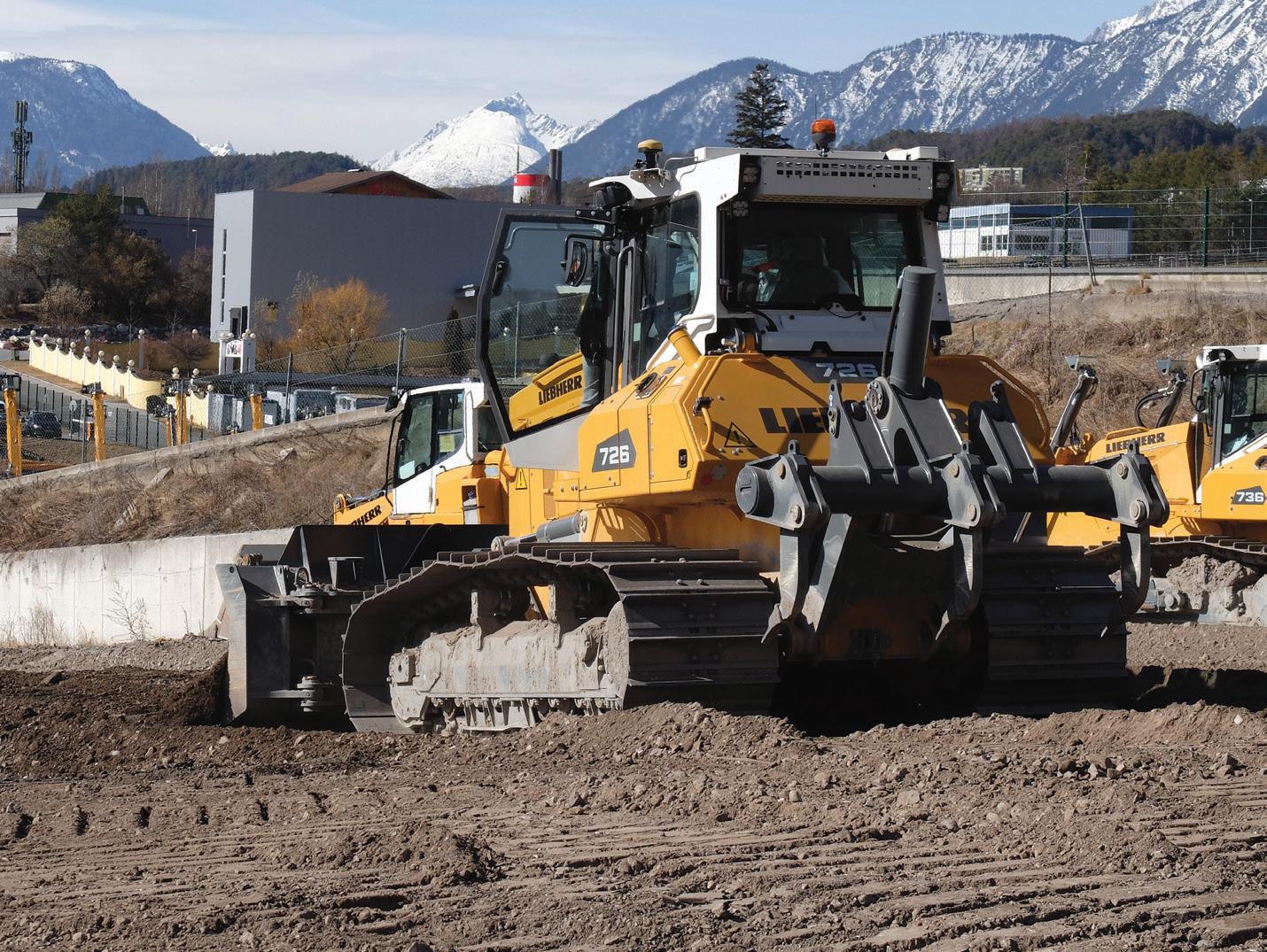
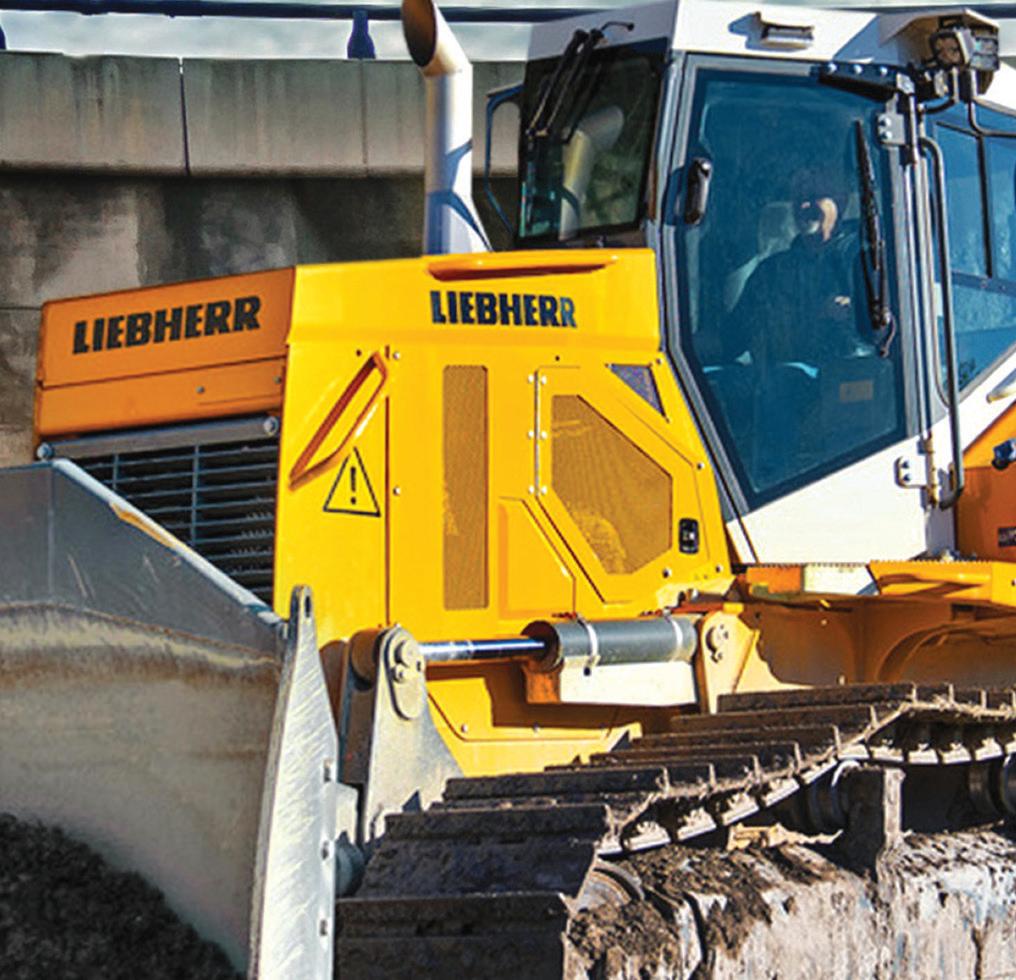
ABOVE: E cient groundwork in industrial settings: Liebherr dozers ensure smooth progress with powerful pushing forces and precise control
e interface is designed to be straightforward, featuring clear visualisations and easy-to-understand controls. Operators can switch between di erent views, zoom in on speci c areas, and manipulate the 3D models with simple gestures. is ease of use is particularly bene cial in high-pressure environments like road construction, where time is of the essence, and quick decisions are o en required.
Training programmes are designed to familiarise operators with the system, emphasising hands-on experience and practical applications. By providing operators with the tools and knowledge they need to succeed, Liebherr fosters a culture of continuous improvement and innovation within the workforce. is commitment to training enhances the e ectiveness of Free Modeling and contributes to the overall development of skilled operators in the industry.
COMMITMENT TO SUSTAINABILITY
Sustainability is also a key focus of Free Modeling. e ability to optimise site operations in real time contributes to more environmentally friendly practices. By improving resource management and reducing waste, Free Modeling allows for better planning and execution, minimising the environmental impact of roadconstruction projects. is commitment to sustainability not only meets regulatory
requirements but also enhances the reputation of construction companies in the industry.
Additionally, the ability to visualise projects in 3D allows for better planning of resource use. Operators can identify potential issues before they arise, leading to more e cient use of materials and reducing the likelihood of costly mistakes. is proactive approach not only bene ts the environment but also enhances the overall e ciency of construction projects.
VERSATILITY ACROSS PROJECTS
e versatility of Free Modeling is evident in its adaptability to various types of construction projects, from residential buildings to large infrastructure developments. Whether working on a small road repair or a major highway construction project, Free Modeling provides the exibility needed to meet the unique demands of each job. is adaptability ensures that construction companies can leverage the bene ts of Free Modeling across a wide range of applications, maximising their investment in this innovative technology.
accurate 3D models can help operators navigate complex site conditions more e ectively. is capability is invaluable in ensuring that projects are completed on time and within budget, even in challenging environments.
CONCLUSION
In conclusion, Free Modeling represents a signi cant advancement in roadconstruction management, o ering a host of bene ts that enhance e ciency, accuracy, and cost-e ectiveness. By empowering operators with real-time 3D modelling capabilities and providing a user-friendly interface, Liebherr has created a solution that transforms the way construction projects are managed. As the construction landscape continues to evolve, innovations like Free Modeling will play a crucial role in shaping the future of the industry. Embracing these advancements allows construction companies to improve their operations, enhance their competitiveness, and ultimately deliver better results for their clients.
The ability to visualise projects in 3D allows for better planning of resource use
With Free Modeling, Liebherr is enhancing road-construction management, making it easier, faster, and more e cient than ever before. In a world where e ciency and precision are paramount, Free Modeling stands out as a practical solution, empowering operators, enhancing accuracy, and promoting sustainability while delivering signi cant cost savings.
For instance, in urban environments where space is limited, the ability to create
Embrace the future of road construction with Free Modeling, where ease, e ciency, and e ectiveness converge to create a better tomorrow.
Content produced in association with Liebherr.
TALKIN’ ‘BOUT MY GENERATION
Digital-savvy millennials are now key players in the workplace. For manufacturers selling construction equipment and technology, millennials are now in the driving seat when it comes to specifying and buying products. Recent research proves that 44% of millennials are now their companies’ primary decision-makers and 73% are involved in the buying decision. e attitudes and expectations of this increasingly in uential group are disrupting traditional B2B behaviours. Is your company aligned with this new way of thinking and working? Geo Hadwick reports.
In their 2024 book, Five Generations at Work: How We Win Together, For Good, authors Rebecca Robins and Patrick Dunne consider the ways in which people from multiple generations are working alongside each other for the rst time in o ce history.
Baby boomers are a dwindling presence in the o ce, but their views have long dominated business processes. Now, they are being challenged by a generation which the Pew Research Center describes as “digital natives in a land of digital immigrants”.
Millennials make up 75% of the global workforce. ey expect constant connectivity and view technology as an integral part of their lives. While old ways of working still have relevance, the B2B world needs to understand how the millennial mindset is shaking things up.
Millennials have di erent priorities in life. ey tend to be university-educated but are
saddled with debt and face high housing costs. ey are ambitious but may not see marriage, family and house ownership as the obvious way forward. ey are more focused on a work/life balance than previous generations and are bringing consumer tactics and traits to the B2B world in such a way that businesses can no longer rely on the “one size ts all” mantra.
As Amy Hayes, vice president and research director of Forrester Research Inc., says: “Generational shi s in the workplace are turning the business-buying process on its head. Lack of understanding about millennial and Gen Z buying behaviours can adversely a ect providers’ ability to reach, engage and ultimately win these buyers over.”
And they are easy to spot. Millennials are people born between the early 1980s and the late 1990s, who came of age around
the millennium. ey live online and most social networking groups are dominated by the millennial generation.
NEW ORDER
Millennials are data-driven and seek company connections via multiple digital channels. ey respond to personalised experiences so vendors need to understand their buyers in order to tailor content and messaging. While keen on collaboration in certain areas, millennials can also be solitary, preferring to use digital self-serve models and online customer reviews for their research.
Indeed, buyer intelligence platform TrustRadius found that 29% of millennials would prefer to self-serve the entire buying process, bypassing all sales reps. (How to Sell to Millennial B2B Buyers, 2021). Once ready to buy, they prefer a typical business-
A LONG WAY TOGETHER
WHEREVER YOU ARE, BKT IS WITH YOU
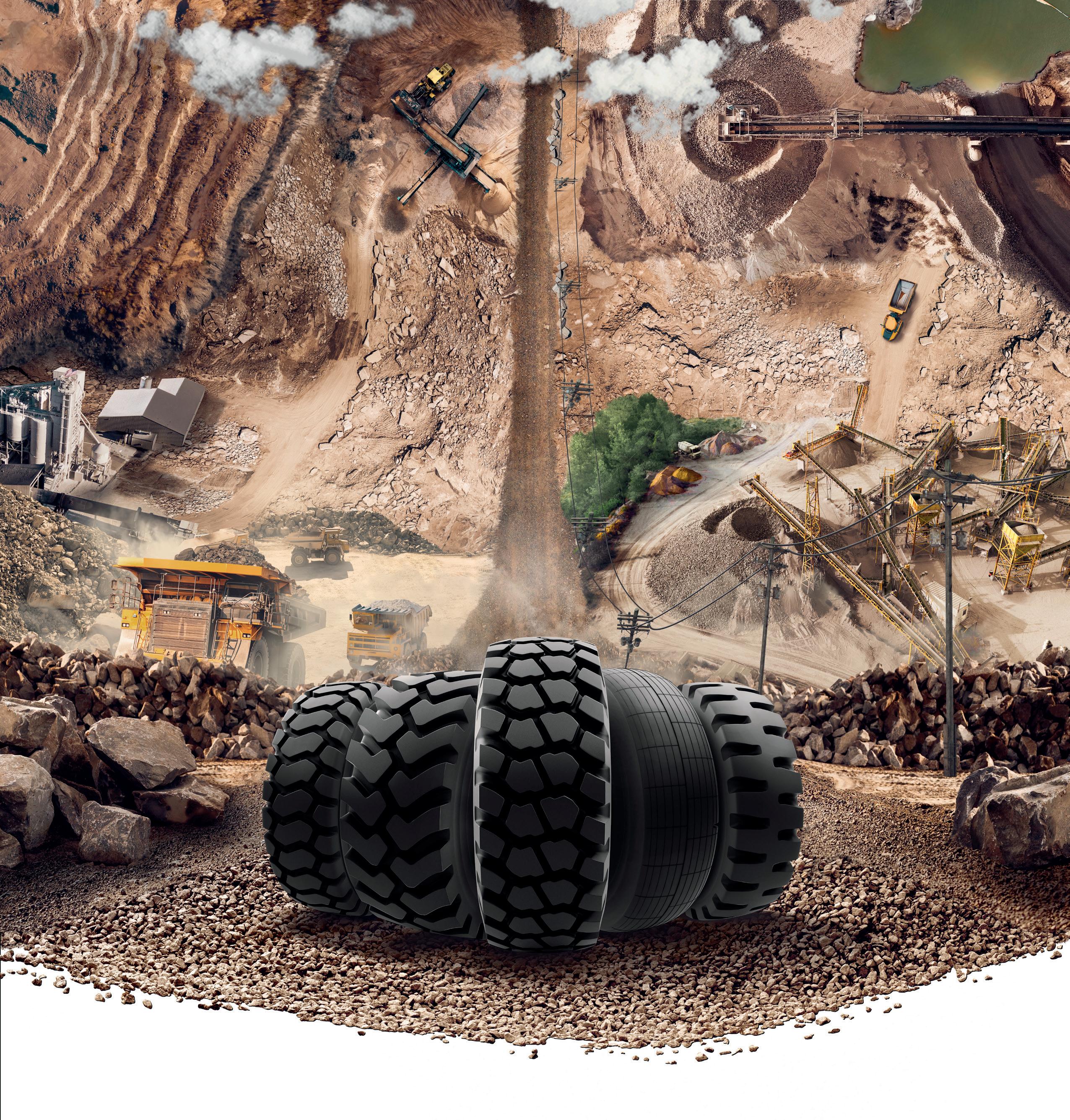
No matter how challenging your needs, BKT is with you offering a wide range of OTR tyres specifically designed for the toughest operating conditions: from mining to construction sites.
Sturdy and impact resistant, reliable and safe, able to combine comfort and high performance. BKT is with you, even when work gets tough.
to-consumer-type interaction - quick, easy and digital. While millennials will still meet vendors face-to-face, particularly in high-stake deals, they put less emphasis on this and can be just as happy with online communication. This is a key shift in behaviour and attitude.
1 … 44% of respondents are identified as ‘adapters’. They are highly relationshiporiented and, while willing to try new channels, prefer the familiar, even when the status quo proves less than satisfactory.
BABY BOOMERS
Born: 1946–1964
2 … ‘Innovators’ tend to be on the cutting edge, embracing new technology such as generative artificial intelligence (gen AI) for research. They use multiple digital channels and account for 20% of survey respondents.
3 … Big online spenders make up 36% of respondents. Described as ‘seekers’, this cohort demands a seamless omnichannel experience and seeks out new suppliers immediately if unhappy with service levels.
OMNI-CHANNEL IS KING
Millennials like the self-guided approach to information-gathering via a multi-channel, multiple touchpoint approach, accessible 24/7. They are comfortable switching
Communication style: Whatever is most efficient, including phone calls and faceto-face
Worldview: Achievement comes after paying one’s dues; sacrifice for success
between devices and platforms. In response, construction equipment and technology suppliers must provide a variety of resources across these channels to ensure the right message hits at the right time. Vendors should ensure their buyers can find and contact them easily across multiple devices.
This new generation of buyers is savvy about assessing online content too. Don’t try to hoodwink them. Review websites (49%), web searches (43%), demos/trials (38%) and social media (29%) are the main information sources for purchasing decisions, according to The Mx Group’s 2019 B2B Millennial Buyer Survey Report
Interestingly, 26% said they placed the opinion of peers and colleagues as their top
49% of Baby Boomers expect to or already are working past age 70 or do not plan to retire
10,000
Baby Boomers reach retirement age every day
Flexible, informal, sceptical, independent of startup founders are Gen Xers — the highest percentage
Shaped by:
The AIDs epidemic, the fall of the Berlin Wall, the dot-com boom
Motivated by: Diversity, worklife balance, their personal-professional interests rather than the company’s interests
MILLENNIALS
Born: 1981–2000
Communication style: Whatever is most efficient, including phone calls and faceto-face
Worldview: Favouring diversity; quick to move on if their employer fails to meet their needs; resistant to change at work if it affects their personal lives
Competitive, civic- and open-minded, achievement-oriented
Shaped by:
Columbine, 9/11, the internet
Motivated by: Responsibility, the quality of their manager, unique work experiences
Communication style: IMs, texts, and email
Worldview: Seeking challenge, growth, and development; a fun work life and work-life balance; likely to leave an organization if they don’t like change
BY 2028
Gen Xers will outnumber Baby Boomers of the global workforce will be made up of millennials by 2055
18% of millennial men and 12% of millennial women ages 25–34 live at home with their parents
Figure 1: Generational traits. Source: Purdue University Global, 2025
ROAD SURFACE TECHNOLOGY
Published October 2025 Print and digital 9th edition Circulation in excess of 34,000
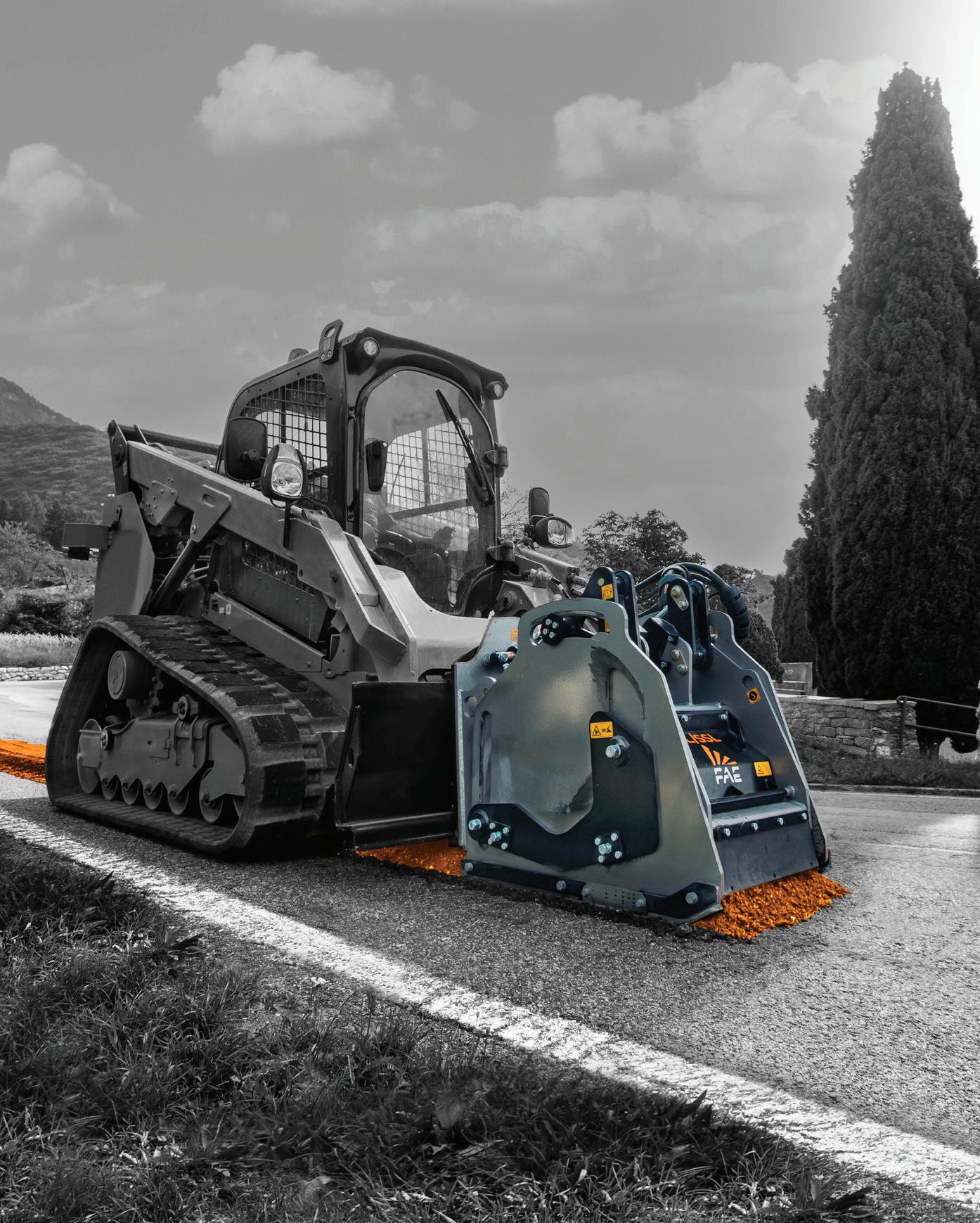
As road networks age, the budgets for maintenance are becoming an increasing area of importance to maintain our roads at the highest level. Road Surface Technology is dedicated to surface engineering & surface treatments looking at the latest technologies in milling, recycling, microsurfacing, bitumen slurry/emulsions, additives, miracle pothole repairs and modified binders aiming to provide an overview of the latest innovations in this important growing market.
resource. McKinsey’s 2024 survey identified the most frequently-used touchpoints as: company website; in-person sales; and interactions via video conferencing. Other preferred channels include email, mobile apps, e-procurement portals and online chat. 42% of respondents report using more than 11 different touchpoints.
Millennials are also tuned in to the changing nature of business and expect to update their knowledge constantly. Companies, therefore, have opportunities to present research resources as a way to attract interest, to forge relationships, and to encourage brand loyalty.
FRICTIONLESS, AGILE AND FLEXIBLE
Millennials bring their consumer-buying approach to their wholesale-buying workflows too. They make transactions in their own time via self-service portals where they can research B2B products, compare pricing and buy via simple processes. Predictions suggest that more than 50% of large B2B orders will be placed online in the next few years (Young Buyers Have Changed the Business-Buying Landscape, Forrester, 2023). The self-service digital buying experience should offer the opportunity to negotiate prices and contracts, even providing customised pricing options by account, region and volume purchase. Take this trend very seriously. Top decision-making priorities for millennials are pricing details and the ability to
specify/configure the solution. Vendors demonstrating flexibility and agility here are likely to win this generation’s loyalty.
A frictionless digital experience is essential. Companies must focus on consistency and functionality across the buying process. While the independent, self-service approach is preferred human interaction should not be discounted. For instance, a live-chat support function, providing help on demand, can be invaluable, especially in terms of engaging customers in the early stages of the buying process.
Millennials have high expectations. 90% of millennial buyers have expressed dissatisfaction with at least one aspect of a B2B vendor’s digital experience, compared to 71% of older buyers (Forrester, 2023). A key concern is poor digital user experience (54%). Other issues are laboured sales processes and approaches deemed old-fashioned when compared with B2C-like buying behaviours.
accordingly. Customers want vendors to be demonstrably helpful in navigating the process. A customer-centric process demands constant evaluation and a willingness to learn from the customer by engaging in feedback sessions, continuous analysis and market research. Accepting that the one-size-fits-all approach is now defunct, companies should focus on continuous strategy optimisation.
CAVEAT EMPTOR
They must understand the buyers’ needs rather than solely focusing on the deal
51% say a lack of customer tracking across channels makes them think twice about continuing with that supplier and 51% would seek an alternative supplier if they were not quickly connected to the right person for help.
Companies should identify pain points in the buying process and address them
Trust is a big issue for this generation of buyers. Brands must actively demonstrate trustworthiness, with brand information showing cross-channel consistency. Millennials place particular faith in online peer-to-peer recommendations and ‘people-like-me’ use cases, especially where prior handson experience of a product is not possible. They use previous online experiences as a barometer of reliability. Millennials are alert to undue bias and prefer to seek out a consensus view. Interestingly, less than 20% of millennials use analyst rankings and reports. Indeed, they are 20% less likely than baby boomers to use these sources. While only 46% of millennials report using free trials, perhaps due to the limited number offered by vendors, they are a valued form of pre-purchase, self-service product experience (TrustRadius). This buyer cohort favours product demonstrations, so much so that making a B2B software purchase without such a demo is becoming increasingly rare. According to TrustRadius, the least trustworthy and influential resources for millennial buyers are vendor reps.
DEATH OF A SALESMAN?
However, while attitudes to salespeople are changing, more than 40% of millennials still say they will use a vendor representative in the buying process. Although millennial buyers, on average, will make it through 57% of the buying process before they engage with sales reps, they still value a direct, upfront contact. The sales rep needs to consolidate long-term relationships with buyers, helping them to navigate the decision process and the pain points. Above all, they must understand the buyers’ needs rather than solely focusing on the deal. The buyer wants to be nurtured through the process - from the awareness stage, through to the consideration phase, and on to the decision-making point.
Figure 2: How trustworthy are vendor representatives? Source: TrustRadius
Blogs and videos often precede webinars and case studies in the research process. Personalised emails and targeted demos can then seal the deal. Yesteryear’s straightforward pitch is now less effective than a more nuanced, long-term relationship.
McKinsey’s B2B Pulse Survey 2024 identifies specific areas where in-person interaction is preferred over digital, such as when the purchase is seen as “high effort”. 41% of respondents prefer in-person channels when interacting with new suppliers and 40% prefer in-person when purchasing for the first time. Current evidence suggests that using in-person routes alongside artificial intelligence is proving effective. Company reps should engage regularly with customers, even after the sale has been finalised. Sales professionals now need to go the extra mile, establishing themselves as knowledgeable experts and solution providers. Millennials value the tailored, personalised approach and the mutual trust that follows.
Direct outreach on social media is particularly valued by 69% of millennials
and sharing expertise is suited to this medium. By offering thought leadership via blogs, white papers and webinars companies offer more than just product information, providing solutions to complex buying decisions. Sales teams can take steps to provide an improved, personalised buying process: -
• Identify buyer’s specific needs
Half of workplace millennial decisionmakers use mobile devices to research their purchase
• Present tailored solutions based on those needs
• Offer comparisons of different products or services
Millennials are more active in the buying process than their predecessors. They seek
a role in shaping products, services and platforms. According to Forrester, millennial buyers are a third more likely to choose vendors if they can offer collaborative opportunities.
Feedback sessions can make buyers feel included in the process, fostering longer-term partnerships.
While there is evidence to suggest that millennials like to tread their own path, they value collaboration. The majority of millennial buying committees (nearly 60%: TrustRadius) have four or more members. Do millennials believe joint decisions are stronger overall or are they seeking assurance that their decision is the best one? The strength-in-numbers approach is expected to grow amongst millennials according to TrustRadius, while baby boomers remain more likely to make a vendor/product decision alone. However, the Mx Group’s report indicated some millennial impatience with the pace of decision-making within their company (52%) and 49% thought their
HERE ARE A FEW VIDEO OPTIONS TO CONSIDER
• Hero video/background video
– rst visual element visitor sees
• Testimonial video – showcase success stories using happy clients
• Explainer video – bite-sized content to explain complicated products/services
• Demo video – a hands-on look at a product/ service
• Corporate video – highlight company values and culture
• Thought leadership video – build marketplace authority by positioning the brand /company as expert
• Podcast videos – dynamic and exible, they can be used across channels
• Webinars/live workshops – relatively inexpensive, able to reach a broad audience
buying group was indecisive and not working optimally. While some of these issues related to poor training or inexperience, improving the pace and helping with the complexity of the B2B buying process is where the sales and marketing teams of construction equipment and technology providers can make some very positive inroads.
MORE THAN A WEBSITE
While the website remains a frequentlyused touchpoint, vendors can no longer rely simply on a glossy facade. Millennials are shrewd users, less susceptible to the hard sell. ey see themselves as laser-focused on the authentic message and experienced in ltering out unwanted content. e brand message should focus on how the product can improve their experiences by including customer-centric content. User reviews are particularly important, as are case studies evaluating a personal experience. e website must demonstrate clearly why this brand stands out from its competitors’ o ering. Websites must be navigable and easily accessible on a smart phone or a tablet.
3: Millennials aged 35 to 44 are AI optimists, with 90% indicating con dence in their gen AI abilities. Source: McKinsey & Company
1De ned as those who have “extensive experience (use several tools for complex tasks)” and “experts”
Figure
Quick load times are essential. Any delays in accessing or appreciating the information provided threaten loss of user interest. According to digital marketing company Acquity Group, more than half of workplace millennial decision-makers use mobile devices to research their purchases. e process of contacting vendors by tapping on the email or phone number provided must be simple. Vendors should incorporate a mobile strategy, including things like apps and opt-in text alerts, into their communication plan. e website should incorporate interactive features, o ering easy-to-digest information. Webinars, e-books and comprehensive guides to products and services are all valuable resources which can embellish website authority.
Website design trends should be constantly monitored. Staying ahead of the curve is essential but vendors must establish what works best for them and their customers.
VIDEO BOOST
As the YouTube generation, millennials like absorbing information via video. According to a 2017 Forbes magazine article, 90% of customers reported that a product video will de nitely help your potential buyer make a successful decision. Adding video to marketing emails can boost click-through rates by up to 200 to 300%. Video content
impact can be optimised by sharing on LinkedIn, YouTube, TikTok, etc.
Don’t add video for its own sake. Video content must be tailored to the targeted audience, speaking directly to decisionmakers and their needs. A video can answer frequently-asked questions or demonstrate e ective use of products/services. Combining fact and storytelling leads to content which is both informative and engaging, establishing brand authenticity and building trust.
PRIVACY AND ESG CONCERNS
Millennials value personal privacy. Protections are very important, even more so to Generation Z-ers. If they trust the brand, millennials are more likely to share personal information online … but the company’s dedication to information protection must be made clear across platforms, and be upheld. Millennials are more interested in environmental, social and governance (ESG) issues than their predecessors. Forrester Research identi es their preference for sustainable, transparent business practices. is is changing the B2B landscape. Adherence to corporate social responsibility issues should be made clear online. Vendors failing to do this run the risk of losing out to competitors who show better alignment with their buyers’ attitudes. ESG is yet another way to attract and retain brand loyalty in millennial buyers.
AI UPS THE ANTE
It’s no surprise to learn that millennials are embracing arti cial intelligence (AI) faster than older generations. According to McKinsey (Making AI Work for Workers, Five Minute Brie ng,) business leaders are not keeping pace with their employees’ willingness to embrace AI. ree times as many employees are using gen AI for a third or more of their work than their leaders imagine. According to McKinsey’s Pulse Survey, 19% of the overall B2B sales force is already successfully implementing AI use cases. A further 23% is experimenting. A blend of personalised customer experience with gen AI is 1.7 times more likely to increase market share. Of those reporting a market share growth of 10% or more in B2B sales, 57% are already deploying gen AI, while those demonstrating the most positive view of AI have seen the greatest revenue growth in the last year.
Gen AI can boost growth for those companies already accessing the sort of robust customer data necessary for highly personalised marketing. Combining gen AI and one-to-one personalisation reaps real dividends. Using this dual approach can mean data-driven teams are 1.7 times more likely to increase market share than those companies not really committed to either.
4: Gen AI can a ect the entire BSB deal cycle. Source: McKinsey & Company
Potential gen AI impact in use cases across B2B deal cycle, non-exhaustive
Awareness and outreach
Next-best opportunity
Gen AI can gather insights and intelligence; AI can identify, enrich and prioritise leads across accounts and products
Next-best action
AI- and genAI-powered personalisation can determine next-best step for nurturing and closing a prioritised lead
Meeting support
Gen AI can support sellers before, during and after meetings, including with rapid preparation using most relevant insights
Engagement and acquisition
Proposal responder
Gen AI can create and iterate answers to requests for proposals, freeing up sellers’ time for other tasks
Smart pricing
AI can determine optimal pricing based on willingness to pay and propensity to buy; gen AI can assist with negotiation support
Smart research assistant
AI agents can help sellers facilitate research and improve customer interactions
Smart coach
Gen AI and other AI tools can analyse customer interactions, determine performance needs, and offer tailored coaching to sellers
Figure
WHERE CAN AI IMPROVE THE B2B BUYING PROCESS?
• Personalised experiences - tailored content
• Self-service and digital channels - independent research
• Data-driven approach - behaviour analysis and prediction
• Predictive analytics - lead identi cation and outcome forecasts
• Streamlined processes - greater ef ciency, reduced friction in the sales process
• AI-powered CRM systems - predictive analytics, improved lead scoring
• Lead generation - to identify and qualify leads more effectively
If you are selling construction equipment and technology, you really do need to understand the millennial mindset and adapt to its expectations. E-commerce is now a cornerstone of any successful business, and you will need a properly
thought-out omni-channel strategy. A seamless, personalised customer experience is essential. Companies failing to respond to millennial demands, and those of subsequent generations, will simply lose competitive edge. With 71% of B2B respondents already o ering
some form of e-commerce, ignoring or minimising its potential is a serious mistake.
As Reid Ho man, founder of LinkedIn, says: “Ironically, in a changing world, playing it safe is one of the riskiest things you can do.”
AI is about data management, its analysis and the sharing of the results along the supply chain, or the wider value chain
STAYING AHEAD WITH AI
e construction equipment manufacturing sector is adopting arti cial intelligence at pace. According to a recent report from Aquant*, there are good reasons for this, reports David Arminas.
Original equipment manufacturers (OEMs) in the industrial machinery sector are facing strong headwinds that are reducing pro ts. ese include global competition, price de ation and rising commodity costs for manufacturing. To top it o , for construction equipment makers there is an acknowledged skills gap – for their dealers as well as for end users of the machinery produced by the OEMs. ese issues are succinctly laid out by the consultancy Aquant in the company’s detailed publication, “ e 2024 Field Service Benchmark Report: Industrial Machinery
Edition” (available as a free download). As the report notes, “industrial machinery organisations are being called upon to adopt new and innovative approaches to manage their workforce, customer experiences and business operations”. e top-performing companies are maintaining their competitive edge using, among other new technologies, generative arti cial intelligence (gen AI).
But what exactly is generative AI and its subset, personalised AI? How is it helping companies stay ahead of the competition?
According to IBM, arti cial intelligence analyses immense amounts of data in almost
real time and makes it understandable for end users in the form of tailored messaging, product recommendations and services.
By analysing data and learning from user behaviour, AI-powered tools create highly personalised encounters that enhance customer experiences and increase customer engagement.
For training and educational use, continues IBM, AI personalisation can provide adaptive learning systems at work or elsewhere to o er tailored educational content and resources for training purposes. Using AI, they provide personalised feedback
and progress tracking. It is exactly this personalised feedback and progress tracking, notes Aquant, that can be most useful for OEMs in the machinery manufacturing sector. Aquant’s report says that within leading construction equipment companies, the costs associated with bottom performers are only 20% higher than those of the top performers. However, the lowest-performing organisations have the most expensive workforce gap, with their bottom performers costing 128% more than the top-performing employees.
DATA MANAGEMENT
Essentially, AI is about data management, its analysis and the sharing of the results along the supply chain, or the wider value chain. Aquant’s report sets out four trends that even now are shaping the industrial machinery sector. It comes down to prioritising data management through AI solutions.
ere is improved data sharing where OEMs are asking their dealer networks to share work orders, not just warranty
claims. In return, dealers are requesting from OEMs more tools and support in order to keep the end user happier with their choice of equipment. In this symbiotic environment both the dealer and the OEM can build more robust strategies to improve the experience of all parties in the value chain.
Importantly, AI allows for a much more speci c - or personalised - analysis. is is true for dealers as well as for speci c machine components.
But this is especially important, according to Aquant’s report, for the servicing of individual machinery, as well as the training of an individual machine operator as part of a plan to close the skills gap.
AI can predict component failures and allow for timely interventions instead of reacting to a machine breakdown and the usually longer down time. is predictive power not only reduces service times and costs but also improves the precision of repairs.
The overall goal for this enhanced Edge solution is to streamline the entire process
When it comes to executing predictive maintenance, as well as handling breakdowns in the eld, personalised AI can guide end-user technicians through complex
repairs via remote video connections. is can reduce the high costs and time required for experts to travel into the eld.
Regarding training, notes Aquant’s report, personalised AI will revolutionise learning by sharing methods used by the top performers in a company’s workforce. It allows technicians to gain practical, hands-on experience without needing years of training. is will, in turn, allow a blend of training methods, making workforce upskilling more e cient and e ective when it comes to maintaining and operating the sector’s increasingly sophisticated machinery.
KOMATSU
Tomorrow is today as far as some of the major OEMs are concerned when it comes to using AI. Komatsu and Caterpillar (see box) are just two companies that are well down the AI innovation road.
Komatsu has combined AI to modernise its Edge smart construction solution. is has been done in partnership with technology giant Sony as part of the EarthBrain joint-venture across Komatsu, NTT Communications, Sony Semiconductor and Nomura Research Institute. e goal is to champion digitalisation and further
AI and autonomous working go hand in hand
advancement in drone-surveying processes.
Edge enables both experts and beginners to perform accurate drone surveys and process drone ights into point clouds. e EarthBrain partnership works to optimise the construction processes through digital transformation to maximise productivity, improve worksite safety and environmental sustainability. Komatsu Smart Construction o ers a terrain-mapping tool using AI to remove obstacles, such as machinery and buildings, from drone surveys. is cuts down on the need for manual amendments once the data has been captured.
Bart Vingerhoets, senior commercial manager at Komatsu Smart Construction, says that a major bene t of the updated Edge solution is its ability to speed up data processing from drone surveys to create a fully accurate digital twin. When connected with the Smart Construction Dashboard solution, the 3D terrain maps available will save time spent on the jobsite, and the data collected including volume, percentage of progress and location on site can be collected quickly and e ciently.
Adopting the use of AI within the latest version of Edge means the device can eliminate the need for ground control points (GCPs) which will enhance safety and e ciency on-site and process data into
3D point clouds without the requirement for internet connection. e overall goal for this enhanced Edge solution is to streamline the entire process to enable seamless terrain mapping.
While the future of the industrial machinery manufacturing sector maybe AI-focused, there remain some issues for the sector as a whole regarding its adoption. is is especially true for smaller OEMs,
dealers and end users of the equipment. One issue is the usually high initial investment in the so ware and consultancy needed to set things up.
For some companies embarking upon more AI use, there can be data privacy concerns regarding secure storage and protection of information.
While AI can lead to better training of employees, teaching them how to use these
technologies can be a significant challenge. This is especially the case for smaller companies that might have employees expected to multi-task while running on tight schedules.
Nonetheless, AI is here to stay for the sector as the benefits for both large and small companies become clearer. Refinements and innovation will continue.
*Aquant is a software company that develops agentic AI for service professionals working with complex equipment. Agentic AI focuses on autonomous systems that can make decisions and perform tasks without human intervention. The independent systems automatically respond to conditions in order to produce process results. The field is closely linked to agentic automation, also known as agent-based process management systems, when applied to process automation. Applications include software development, customer support, cybersecurity and business intelligence.
ABOVE: For training and educational use AI personalisation can provide adaptive learning systems, at work or elsewhere, to offer tailored educational content and resources
THE CATERPILLAR AI EXPERIENCE
Caterpillar has been developing advanced systems internally for decades. In fact, it was more than 30 years ago that the company ran the first two prototype Cat 777C autonomous mining trucks at a limestone quarry in the US state of Texas. It used advanced algorithms, showing autonomous operations could improve safety and productivity.
Caterpillar’s advanced computer programmes and cloud computing allow the company’s engineers to complete work in a fraction of the time it used to take. Caterpillar remains actively engaged in the use of AI to improve business outcomes for Caterpillar and its customers, says Otto Breitschwerdt, Caterpillar’s chief technology officer and senior vice president. “Incorporating AI into our product-development process continues our tradition of harnessing technology and innovation as demonstrated by our extensive patent portfolio.”
Chief digital officer and Cat digital senior vice president
Ogi Redzic explains that AI is technology that can learn, adapt and make decisions by processing and learning from data, simulating human cognitive functions such as reasoning and problem-solving. AI includes several subfields such as machine learning, deep learning and generative AI – which grabs the most attention.
Machine learning can be defined as the ability of computers to learn from experience and make decisions or predictions based on the data alone. A good example of using machine learning at Caterpillar is in the area of condition monitoring – a suite of technologies Cat dealers use to detect and identify issues and recommend service or maintenance based on data from the machine itself.
Gen AI is artificial intelligence capable of creating new content, text, images or video. It’s a step forward in manufacturing, allowing computers to complete time-consuming and repetitious tasks. For instance, Caterpillar
developers use gen AI to query massive amounts of proprietary information. They get practical answers without having to do a deep search or spending hours reading thousands of pages of material.
Beyond its own operations, Caterpillar uses digital technologies to develop customer solutions. For example, Caterpillar’s condition monitoring advisors (CMAs) monitor the state of Cat-connected assets in the field by analysing incoming data. In the past, CMAs had to extract data from multiple systems, perform an analysis and make a customer recommendation. Using gen AI, the CMAs are now presented with a concise report containing data that has been automatically prepared and summarised with a recommendation already created.
The CMAs can then review the report and approve or edit the recommendation. There’s still a human in the loop, but the time required to prepare data
and create a recommendation is significantly reduced.
Jamie Engstrom, Caterpillar’s chief information officer and IT senior vice president, sees a wealth of new opportunities as the company adopts AI tools. “AI will revolutionise the way we interact with machines and design interfaces between systems,” she says. “It’s fascinating and changing at a very rapid rate. We’ll continue to see the industry mature and the accuracy improve of technologies like Large Language Models.”
Caterpillar is committed to investing in AI and other technologies to maintain its industry leadership. To this end, Engstrom and her team are working hard to enable a safe environment where the business can innovate and thrive. They have developed an Intelligent Automation Center of Excellence and a gen AI community of practice where employees participate in AI use cases and can stay abreast of the company’s latest gen AI news.
THE ROAD AHEAD: AEM GUIDANCE DOCUMENTS
e AEM’s three recently published guidance documents covering machinery autonomy, cybersecurity and data use are designed to create common terminology for digitisation within the construction and agriculture sectors.
In a recent Global Highways roundtable video interview led by Mike Woof, editor of Global Highways, Mike Gomes from Topcon Positioning Systems and John Somers from the AEM explained why the documents are important.
Q: John, rst of all, why are these guidelines needed?
JOHN: anks for having myself on here. Just a little background on me and AEM for folks that aren’t familiar. I’m vice president of the Association of Equipment Manufacturers, a trade association for manufacturers of non-road equipment, including anything you see o -road on a construction job site, in agriculture, as well as components that go into those machines. I’m responsible for the construction and utility side of the association. But a lot of things we’re going to talk about today is cross-sector, covering the whole non-road space. It doesn’t really matter what kind of working environment you’re in. If you’re o -road or non-road or ohighway, standardising terms is really important. It’s really hard for anybody to understand the discussions, whether you’re in North America or globally, if you’re not using standardised terms. I think one of AEM’s roles, especially working with our partner industry associations around the world, is to help everyone understand or at least have a baseline understanding of terminology and
functionality, so we can help to drive the industry forward.
Referring to di erent levels of autonomy, for example, or understanding whose responsibility it is for securing a speci c data layer, having common terms globally is really important for the industry.
Q: How does the AEM see these documents helping the construction industry in the future?
JOHN: If we think just about construction, as organisations develop new technology or customers start to adopt it, it really is important for everybody to have expectations set and understand whose role is whose. If somebody says that there’s automated functions on this machine, what does that mean? Not necessarily that functions are automated. ere are di erent levels of autonomy or semi-automated functions, but still needing to have operator input. Who’s responsible for the safety and all the di erent aspects around that? So, it’s really important for everyone to essentially be on the same page. is also helps policymakers or project
Watch the full video here
owners understand the reason to adopt a technology like this. People will say, “Oh, it’s autonomous equipment or autonomous vehicles on the road”. But people don’t really understand exactly what that means and may have some misconceptions of what will actually occur. A lot of times autonomous is just about automating functions, getting data from sensors or understanding how that data is transmitted. ey might think that we are jumping all the way to autonomous level 10, which may not even exist yet.
Q: What were the challenges facing the team in generating these guidelines?
JOHN: As with anything written by a committee, some companies are doing things a little bit di erently, so it’s nding that commonality. Developing new language and terminology, for anything like that, there’s going to be di erent terms used. It is then about just getting everybody in the same room, looking at each other face-to-face and saying that this is what we all agree upon or seeing that something represents this appropriately. en each company can add
additional clari cation to that.
I always relate a lot of things to food. If you say, “Hey, I’m having a hamburger,” I mean, you could add cheese onto that and it becomes a little bit di erent although the baseline ‘hamburger’ is always the same. What was a challenge was just the numerous working groups, numerous meetings, but we got there.
MIKE: I’d like to add a little bit there, John. When we had one of our rst joint meetings of both the ag technology and the construction technology groups together, it became pretty obvious that the idea of having elements of cross-pollination and some version of a common guidance document helped us all to communicate better as an industry.
It helped us all bring together elements of that conversation so that then we could really start from where things are common rather than where things are di erent. at really helped signi cantly in the conversation because both construction and agriculture o en think of themselves in di erent camps. In this case, it’s all equipment. And it’s all equipment non-road. at really put us on common ground, to the point where we could begin to address elements of these parts of the conversation and begin to help frame up what that means so that then as an industry, we can begin to have a larger conversation.
JOHN: Yeah, Mike, at’s really important because we’re all functioning in di erent spaces. If you take a tractor on a farm and an excavator on a construction site, there’s a lot more commonality than people think at rst glance. You’re operating the machine not on a paved road. But there’s probably an engine in it. It’s collecting data on sensors. ere’s an operator that is controlling some of the movement of the machine, but there are probably automated functions. ey’re doing di erent things. It’s taking all of those pieces, separating them, breaking them down and not worrying about what the machine is or what its end use is or what it’s doing - harvesting a crop, moving dirt. Don’t worry about that. Just think about what it’s doing at the core. en coming to common terminology, common understanding so we can all speak the same language, especially as things progress and machine forms change.
Q: Mike, if you would formally introduce yourself, please.
MIKE: I’m Mike Gomes, I’m vice president of global sustainability and corporate social responsibility at Topcon Positioning. I also serve as an AEM agriculture-sector board member and chair of their agricultural technology standing committee.
Q: From Topcon’s perspective, what new questions or new needs were uncovered as a result of this guidance project?
MIKE: Putting together the guidance documents for both autonomy as well as cybersecurity and data access really enables us to have a conversation about how to get data on and o the machine, cybersecurity and semi-autonomy and autonomous functions. e three guidance documents helped us to bring together enough industry experts to talk about common vocabulary because each one of the guidance document subjects touches on the other one. You really can’t have a conversation about one without bringing in at least parts of all three. at’s why we put out all three documents at once. It really helped us begin to have a more meaningful conversation or I should say a more meaningful engagement.
John, I think you could probably speak to how the legislative team or how your advocacy team has started using these in conversations with regulators and legislators.
JOHN: Yeah, Mike, you touched on it, when you said they all overlap. You can’t automate functions and have autonomous equipment without data and that data needs to be secure, so we need cybersecurity. ey’re all overlapping even though they all live in their di erent spaces. AEM has taken the approach of ‘education rst’.
ABOVE: e AEM guidance documents may be especially useful for small businesses that increasingly work on a connected job site
Policymakers are working to advance infrastructure and farming systems, but they’re not living it every day like a lot of our members or their customers. e educationrst approach is saying to them that, ‘hey, here is what is actually happening on the machine’. If we take a speci c example of just data, there’s sensors on the machines that are talking to you, it’s almost akin to the brain of the machine. But that is on board the machine and the data needs to also get o the machine. Well, then you get into wireless connectivity and the need for rural broadband.
Policymakers then understand the need to get this data o the machine, o the farm, o the construction job site. ese people can make the policies that build out the infrastructure to have connectivity in rural areas. You have to reach the right audience. Everybody, regardless of your beliefs, wants a modernised infrastructure, to do more with less and be more e cient. is is done by equipment diagnostics, making an inexperienced operator better through automated machine, data connectivity to know how the project is going. Once people get an understanding that by taking some of this technology and data you can improve the e ciency across construction job sites or farms, then it is a win for everyone.
Everybody, regardless of your beliefs, wants a modernised infrastructure, to do more with less and be more ef cient
MIKE: Also, John, it’s a real win for small businesses. Increasingly, if a business is going to work on a connected job site or on a connected farm, they have to operate in a ‘system-of-systems’ world. It’s a number of di erent manufacturers and a number of di erent subsystems working towards some common plan. e ability is there for those mechanised pieces to o oad data layers and that those data layers are beginning to prove that people are doing more with less, that they are being the most e cient, that they are being good stewards of the resources, that they’re burning less, moving less, creating less waste, all of those things. Next, those same small businesses and contractors now increasingly have the need for cybersecurity. Being able to go to the cloud, being able to understand how this smart connected equipment in these outdoor industries is working now really begins to come under some of the same protections that you see in o ce systems. at helps create elements of business resiliency in the systems.
JOHN: We have IT folks here at AEM that are thinking about our data and security. A lot of contractors and farmers don’t have that expertise. So, getting this data o a machine and into a secure system on the cloud and
letting someone who is a professional deal with security lets the customer know their data is kept secure, their systems aren’t open. Just as important is that the system is reliable, which is that resiliency aspect you mentioned, Mike. For example, if I’m relying on eet management data to let me know how much fuel I burned or what equipment needs maintenance next week, that data had better be correct and it better be accessible. Otherwise, my operations could be totally thrown o . E ectively, we take two steps back a er we took one step forward in e ciency.
Q: In what ways do the new guidelines change how Topcon will need to work as a company that serves the construction industry?
MIKE: It’s less about change and more about enabling. It really enables us to have a larger conversation. At Topcon, we manufacture and provide a ermarket systems. But in many cases we work with a number of di erent original equipment manufacturers. In many cases, our stu , our technologies may be either bolted on or eventually embedded into this OEM equipment. For these guidance documents, the reason that we participated in the drawing up process is because we sit in a unique space, serving both the a ermarket and the OEMs. We also help foster a larger conversation among the industry.
In this system-of-systems world, it’s always challenging to have conversations about
communication. Okay, I’m doing this, how do you fit into the workflow? Okay, how do those two pieces come together? And so this enables us to do a better job of having those kind of conversations and elements of demonstrating value in these kind of accuracy levels. And being able to show how the sensors and technologies are not just smart, but how you’re able to now use those data layers in a way that creates value for your local business. This is done by proving you have burned less fuel or moved less material or reduced waste, those kinds of things.
These guidance documents help us foster a larger conversation, both among original equipment manufacturers, as well as with customers. From the customer’s perspective, they look at a number of different branded solutions from different companies. But all of those things have to live together in the same pool and so they face challenges. We participated in the guidance document effort as a means to help bridge the gap. It’s not just about growing our own business, but growing the industry as a whole by helping foster and create elements of resiliency, as well as a larger conversation.
We see that the world is continuing down the road from mechanisation to automation and from automation to digitisation. To get to that digitisation world, we have to use data layers, interact with data layers and make them useful in a workflow sense. To do that requires collaboration, both upstream and downstream, among industry partners, whether that’s aggregates providers, whether that’s fertilisers, whether that’s cement, you know. Increasingly, digital data layers create value.
JOHN: You mentioned Topcon working with multiple OEMs and really trying to provide those products and services that help the end customer. That’s where AEM sits. We work with all the OEMs, although maybe not every single company is an AEM member, but we’re trying to help the industry. It’s about coming up with a common language, common terminology, anything that all of our members, the equipment OEMs and technology providers can get behind so their customer becomes more efficient. This is the name of the game. I don’t know any construction contractor that doesn’t have a mixed fleet. It’s a big mix now, so we are setting expectations that everything in the fleet will essentially function in the same way or if it says it provides this type of data or this function
is automated. That basically would mean the same across anything your operators are working on.
MIKE: It’s about fostering that interoperability so we can be more efficient. We can be better in our business processes and most efficient with the resources. Absolutely. I agree with you on that, John, 100%.
Q: How long do you think it will take for these new guidelines to be adopted and what might prevent their adoption within industry?
JOHN: These are living documents. You may have a de facto term right now that is being used as a standard by some companies and other companies may switch to this. I think it’s also important for the folks that would be using these terms in the field, like the end users, project owners, people working in the specs, to start using these terms as well because that’s what really drives their use back up the value chain.
There was never a language or a term that was pushed onto everybody. I mean, there
needs to be that mutual understanding that they are useful. I don’t know that there’s an end goal of having them adopted globally by a certain date. It’s, however, our perspective to have something to reference, to start the conversation.
But things change over time. There are currently six levels of autonomy and maybe at some point there’ll be a seventh level or two of those levels merge. I think having these documents as part of a conversation is really important. They’ve been out there for a few months now. AEM had an event in Washington, DC, and I know these documents were referenced in those conversations with policymakers, with the general public and all the above.
Essentially, it’s an ever-evolving piece of the industry.
MIKE: It absolutely is. The documents enable us as an industry to all sing from the same music. The idea is really that the industry is a choir of voices. These guidance documents basically help to coordinate the singing.
And the timing for this conversation is pretty good. This year, 2025, we’ve had a bauma construction equipment exhibition
in Munich and we’ve got an Agrotechnica coming up in the fall, followed by ConExpo in Las Vegas next spring. Fostering this conversation among industry members is becoming more and more important and to have it across borders and di erent geographies enables us to have coordinated communication. In this way we can really begin to understand elements of that interoperability and elements of how so much of this industry is working hand in glove as we continue to progress forward.
JOHN: I like that you referenced those events. From an AEM perspective, we can work with our members to get their buy-in to this. We have our Utility Expo coming up this fall. It’s getting that message out there and just watching it spread by word of mouth. If we told only our members or your readership, the message would go only so far. Our members can push it up to their customers, maybe share it with dealers and then we’ll watch that continue to multiply.
Q: Mike, you mentioned interoperability and the potential cyber hacking. What kind of a threat could come from commercial hacking and how can the industry avoid this?
MIKE: Well, that’s part of why these guidance documents were developed so that then we can begin to ensure appropriate levels of security, appropriate levels of situational awareness, appropriate levels of various responsibility are being addressed. We can do so in a way that enables us to communicate
not just within our industry, but also to people outside of our industry.
Two years ago the agricultural industry got approached because in the US, the FBI was beginning to help to look at vulnerabilities within the supply chain of our industry. So the AEM assembled a panel to begin to address that. Out of these kinds of conversations came the guidance documents that help us frame up how, in many cases, we are covering these aspects. In these many cases, we are ensuring a strong amount of embedded security, as well as resiliency, as well as some level of redundancy of systems. Increasingly with connectivity, you enable things like multi-factor authentication. ese kinds of documents help explain how our outdoor industries of agriculture and construction are beginning to follow many of the same security protocols and best practices that you see today in o ce security. It’s just beginning to get to the outdoor industries.
ese guidance documents help us communicate and they also help us understand who’s taking care of this in our system-of-systems world.
ask some very basic questions. For example, who is handling this part? Or, if I’m using this cloud-based system, how am I making sure that this and that concern are being addressed?
e guidance documents have been put out in the interest of transparency to help foster a conversation and educate the end users to begin to understand how to ask questions among industry providers. In this way we can accurately explain how we’re really working to create value and serve an industry.
We have onboard technologies and data, we have off-board technologies of data and then we have the road in between
We have onboard technologies and data, we have o -board technologies of data and then we have the road in between. Whether that’s between the tractor and the implement, whether that’s between the individual implement doing the work and some version of a common system of record and a cloud-based repository, these guidance documents really help an end user
JOHN: e worst thing that can happen is people are not understanding whose role is what. I might think, ‘hey, I thought you were going to handle that, whatever that is!’. If that person didn’t know that that was their job, then nobody’s doing it. Or maybe I’m making the assumption that somebody else is handling it and then nobody has it on their radar. Having that understanding of whose role is what is most important.
At least then people know what they can expect; I keep coming back to this thing about setting expectations, so they know what to expect. You mentioned two-factor authentication, Mike. If that’s the end user’s responsibility then they know that they will add extra level of security to any system into which they’re logging, they know that. But then they can assume that everything a er that is handled by whomever it is
documented to be. Everyone knowing their role and nobody pointing ngers is one of the guidance documents’ most important aspects.
Q: We’ve covered a lot of ground here. Are there any other points you wish to raise?
MIKE: Probably one of the most signi cant things is that we work to de ne both the role of the operator and then the role of the machine. is helps to illustrate how over the successive layers you see elements of responsibility migrate from one to another. So, when you’re at manual operation, the operator is 100% responsible. But when you’re at unsupervised operation, the machine e ectively has the vast majority of responsibility. e guidance documents do a really nice job of explaining elements of that transition in a way that can foster a conversation that’s common to a large number of di erent people. If you’re a startup business or somebody new to our industry and you may not be as familiar with our industry, you can look at these guidance
A GUIDE TO THE GUIDANCE
The AEM documents provide structured vocabulary for industry representatives as they engage in conversations and share information, both inside and outside the industry with the general public. This is especially needed in conversations with politicians, regulators, customers and end users. However, these documents are not intended to be all-inclusive or all-encompassing.
LEVELS OF AUTONOMY FOR NON-ROAD EQUIPMENT
documents and begin to understand where or how you might t in with other players within the industry. If that’s fair, John?
JOHN: Mike, I think that’s a good point. Earlier in this discussion I noted that some of the policymakers or just general public project owners might not be particularly familiar with the equipment in our industry. So, we added consumer examples in the guidance document. A really easy one is if you’re cleaning a oor, then level zero of autonomy is simply a broom and a dustpan because you’re doing all the work. en you get a vacuum. It’s level-one autonomy now because the brush is now spinning itself, although you are still manually moving it around and fully responsible for where that vacuum goes. en as you keep going up a few more autonomy layers within an autonomy level, you get into robot vacuums. ese robots you can call supervised autonomy because they might get stuck and run into the same wall ten times in a row. You have to physically
A machine can be a single machine or a combination of machines, products and systems (components working in coordination, acting with self-awareness within a system). An operator can take control of a machine at all times, in any of the levels highlighted in the document.
CYBERSECURITY FOR MACHINE DATA FOR NON-ROAD EQUIPMENT
This does not apply to connections made outside of an OEM-supported interface.
help them out from time to time. But the vacuum is pretty much doing all the work for you when you’re not touching it.
Including some of these non-road equipment examples helps set that baseline for people to get a better understanding of autonomy levels. Not everybody’s operated an excavator but I think everybody’s vacuumed in their life!
MIKE: ere’s both agriculture and construction examples, too. In many cases, these two industries are more alike than most people think. ere is a signi cant amount of common infrastructure. And a number of common elements and quite a bit of common understanding and engineering and experience beginning to work towards a stronger industry.
THE DRIVE TO ELECTRIC CONSTRUCTION MACHINES
ere is a de nite drive towards o ering electric construction-machine solutions from manufacturers. Mike Woof reports.
More and more construction machinery manufacturers are now o ering electric machines in their product ranges. At the recent bauma 2025 construction and quarry machine exhibition in Munich, Germany, there were many new pieces of equipment on show featuring electric rather than diesel power.
As with the automotive sector, the construction machinery rms are seeing the need to meet net-zero targets and address climate change, with electri cation of machines being a key tool. A wide array of manufacturers including Ammann, Bobcat, Case, Caterpillar, Cifa, Develon, the Fayat Group, Hyundai, Komatsu, Liebherr, LiuGong, SANY, Volvo CE and the Wirtgen Group unveiled new electric machines, either in production or prototype format.
ere will be demand for electric construction machines. Projects such as the UK’s Lower ames Crossing will provide a massive opportunity for electric earthmoving equipment as the contracts from client National Highways have stipulated that no diesel machines will be allowed onsite. It remains to be seen how many other major construction infrastructure projects in Europe or elsewhere will have similar requirements.
And the availability of electric wheeled
loaders and excavators has become common in the compact and midi-size classes. But one of the most notable launches for the electric machine segment at bauma 2025 was for Volvo CE’s new ADT models.
ese have come fresh on the heels of Volvo CE launching its new articulated hauler range. e rm says that deliveries for the new A30 and A40 battery-electric machines will commence in 2026 in selected markets, with a full roll-out of these models globally in 2027 and 2028.
e electric ADTs have a large battery that is xed on the machine and according to Volvo Construction Equipment president, Melker Jernberg: “In a normal application, it’ll run for ve hours.”
Apart from the electric motor and battery system in place of the diesel engine and fuel tank, the electric A30 and A40 retain the conventional hydraulics, driveline and axles of the diesel variants, which will allow production on the same assembly line.
but hydraulic systems have developed enormously over the years and are fantastic.”
However, Jernberg says that take-up for these innovative electric solutions is not as quick as the Volvo Group would like. He commented “ e transformation is underway slower than needed.”
He continued: “Our industry can do better and demand in the industry can do better.” And he asked, “Why don’t we demand sustainable solutions in procurement processes?”
With an electric machine, maintenance is considerably cheaper as there is no need to change lters or engine oil
Charging infrastructure will take time to be ready to meet the demand from consumers and Jernberg concedes that it will also take time for the market for electric construction machines to develop, “My best guess is the end of the decade maybe?”
According to Jernberg: “It’s possible to make a machine with electric actuators but, so far, it’s not even close for working life, e ciency or weight. I think it will come
But the Volvo Group is not being deterred. Anna Müller is president of Volvo Penta and said, “We have integrated electric solutions into di erent machines.” Apart from the battery-electric equipment from sister company Volvo CE, the machines include an
ABOVE: Volvo CE’s new electric ADTs are a radical launch for the construction machinery segment
asphalt paver, a mobile crusher and a drilling rig made by different manufacturers. She said that the firm is offering a range of modular site power solutions that can be used for recharging equipment or running site power.
Volvo CE and its sister firms Volvo Penta and Volvo Trucks are by no means the only companies looking ahead to an electric future.
The Ammann Group is investing heavily in new technologies that will help reduce the environmental impact of construction and to achieve net zero. Hans-Christian Schneider is CEO of the Ammann Group and says that electrification will assist the construction industry in delivering sustainability although he recognises that this will come at a cost to customers, with sales of electric machines remaining low at present. He said: “The break-even points are not as attractive as expected.”
He does think that the total cost of ownership on electric machines is something customers should recognise. Customers typically keep machines in their fleets for 8-10 years. Analysing the running costs of an electric machine in comparison with a diesel unit over time reveals a benefit for the total cost of ownership with an electric
machine, maintenance is considerably cheaper as there is no need to change filters or engine oil.
However, Schneider acknowledged that in Europe, for example, there is a dependency on energy and that energy is expensive. He also recognises that there are issues with the electricity grid in much of the developed west, with under-investment over many years that will hamper the more widespread use of electric machines.
Bobcat has also recognised the need to invest in low-carbon technologies and the
customer usage.
He continued: “In terms of market acceptance, we know the electric machines do provide some value to customers.”
However, Bobcat’s sales of fully electric machines remain low at present, and he said, “If you look at the sales, it’s been a challenge to justify the investments.” Bobcat has recognised though that there will be an uptick in the market for battery-electric machines at some point and he added: “You have to be ready for it.”
He explained that electric equipment
reservations with the residual value of electric
The novel mobile charging solution from
offers versatility for onsite recharging of electric construction machines
SANY’s German subsidiary is offering electric truck mixer options
DIMAAG-EV
RIGHT: Electric machines have become more common in the compact equipment sector, with battery packs available for localised charging BELOW: LiuGong’s grader represents the firm’s advances in the electric-machine segment
as mini excavators does not figure largely in the trend towards electric models for this segment, with regulations or subsidies having more of an effect on customer decisions. Husar commented that across Europe, there are now around 300 lowemission zones, most of which are in cities. But he added that there are no unified regulations on low-emissions requirements, meaning that supplying equipment to meet local demand can be a challenge.
Jean-Claude Fayat is president of the FAYAT Group and says that the firm has been investing in new technologies and that the group is now offering a number of electric machines in its portfolio. But Fayat said that these advanced electric machines are still a niche product, with a low take-up. “For me, it’s still slow. The sales are still low.”
The firm has developed electric machines to be ready for the demand when it comes but Fayat said that the high cost of the units still puts off many customers who still stick to conventional diesel equipment for the most part. This will change in time and he said, “When it comes down to 1.5x the cost of a diesel machine, electric models will sell strongly.”
Fayat said that the company can benefit from the knowledge and experience gained from China’s automotive sector, which has been encouraged to develop electric
vehicles by the Chinese Government. China’s automotive sector has benefitted from some subsidies for electric vehicle R&D projects. Mass manufacturing of batteries and electric drives, as well as the crossover of this technology into the construction machinery sector, will help reduce costs and make electric construction machines more attractive to customers in the future.
LiuGong’s chairman, Zeng Guang’an, said that the company’s commitment towards the future of battery-electric vehicles in the construction sector is exemplified by its new 4280DE motor grader, as well as the firm’s DR50CE rigid dump truck aimed
at the 50tonne class. The battery-electric grader’s battery pack provides fast charging within 1.6 hours and allows normal working conditions from 6-10 hours.
Meanwhile, the large-capacity lithiumiron phosphate battery is safe and durable. Its development also demonstrates how new technologies and imagination go hand in hand in today’s R&D.
For example, when the Chinese government took concrete steps to support electric-vehicle development back in 2014, he understood that this could also be done for LiuGong’s machinery.
“You need imagination, dedication, but
BELOW: The array of electric-charging solutions available for construction continues to grow RIGHT: Electric rollers offer quiet operation and high working efficiency
electric machine innovations at bauma 2025 included the modular power system from ZQUIP, part of Moog Construction, and LiuGong’s electric dump truck.
ZQUIP and CASE collaborated to demonstrate how traditional diesel-hydraulic machinery can become zero-emissions machines with swappable energy modules that eliminate concerns about battery range. A CASE CX210ZQ and a CASE WX155ZQ concept excavators were on show, featuring electric-power systems from ZQUIP.
Moog engineers convert a machine by removing its diesel engine and installing a modular conversion kit containing one, two, three or more energy modules.
ZQUIP also has a newly developed hybrid module that operates as zero-emissions or hybrid, depending on the job and grid availability. The operator controls this option from the cab, significantly improving the use of a ZQUIP machine, explained Rob Bauer, engineering manager for ZQUIP.
“Our work with ZQUIP and Moog is about innovating the way job sites and construction vehicles operate for the betterment of everyone,” said Franco Invernizzi, vice president and global head of strategy at CNH CE, maker of CASE machinery. “The CX210ZQ and WX155ZQ models complement the electric offering we have available today, focused on the compact segment. The ZQUIP solution allows us to quickly expand our reach to those customers that have a need for larger, zero-emission heavy equipment.”
“We can convert virtually any make or
model of diesel-hydraulic construction vehicle in the world,” said Holger Pietzsch, director of business development for ZQUIP. “Whether you’re an OEM, dealer, or construction company owner, these concept vehicles prove off-highway machines can run on swappable energy modules not unlike the way consumers power a variety of rechargeable hand tools.”
Meanwhile, a mobile charging solution, the Mobile Megawatt Charging System (MWCS) is now available from DIMAAGEV. This can deliver extra versatility for electric construction machines. The California-based firm has developed a novel rough-terrain vehicle that can drive itself to charge electric machines when required.
The firm says that the MWCS provides a fast, and practical way to charge off-road electric work vehicles. This brings innovative technology in high-power fast charging
Electric-power options have been available for some time now for the crushing and screening equipment segment
on a mobile vehicle, offering versatility for customers. Targeted for use with heavy machinery such as construction or quarry equipment, DIMAAG’s MWCS offers the potential to address power-supply challenges in the field.
The 4WD unit is effectively a giant booster battery on wheels according to the company. With 1MW capability, this can recharge an electric construction machine in just 15 minutes, while an operator takes a periodic break. The unit can then be recharged overnight for use again the following day.
The firm says that the unit benefits from advanced thermal-management technology that boosts safety and lifecycle to deliver improved total cost of ownership.
The company also claims that its remotecontrollable vehicle offers manoeuvrability and can charge multiple machines, with autonomous control available as an option.
e L25 electric compact wheeled loader
WHY VOLVO CE’S MULTI-TECHNOLOGY STRATEGY IS LEADING THE WAY TOWARDS ZERO-EMISSION CONSTRUCTION
Achieving zero-emission construction does not have a simple answer. It demands a broad toolkit of solutions to assist customers at di erent stages of their sustainability journey. By pursuing a multi-technology strategy, Volvo Construction Equipment (Volvo CE) is at the forefront of this movement, o ering a comprehensive pathway to more sustainable construction.
With global population growth and rapid urbanization, the demand for construction – whether roads, housing, or infrastructure - is on the rise. However, Volvo CE understands the critical need to employ more sustainable ways of working to minimize the environmental impact of the construction industry.
Approximately 90% of the sector’s climate impact comes from the operation of its machines, and this is exactly why this should be a key area of focus for sustainability e orts.
EMBRACING A MULTI-TECHNOLOGY STRATEGY
While battery-electric machines have a pivotal role to play, Volvo CE rmly believes that no single solution can decarbonize the industry. Di erent customers, markets, segments, and regions will require diverse solutions. Recognizing this, Volvo CE has committed to a multi-technology approach that includes:
• battery-electric machines,
• grid-connected technologies,
• hybrid solutions,
• hydrogen fuel cells,
• internal combustion engines powered by renewable fuels, and more.
is strategy also recognises that customers are at varying stages in their sustainability journey, emphasizing the importance of o ering a variety of solutions to meet their speci c needs and challenges.
EXPANDING BATTERY-ELECTRIC SOLUTIONS
Since launching its rst compact electric machines in 2019, Volvo CE has continued to lead the way with an ever-expanding range of electric machines. Today, this growing portfolio includes compact electric excavators and wheeled loaders, mid-size electric excavators, large electric wheeled loaders and an electric wheeled excavator.
Volvo CE has recently added its largest battery-electric machines to date: the A30
ABOVE: e hybrid EC400 excavator is part of Volvo CE’s multi-technology strategy
Electric and A40 Electric articulated haulers, the rst of their size class in the world.
And to accelerate the transition to electric power, Volvo CE o ers a variety of charging solutions, including mobile power units for reliable on-site energy access for both Volvo and non-Volvo equipment.
Battery-electric machines o er a readily available solution for customers looking to cut carbon emissions. In fact, many of Volvo CE’s electric machines are already being used successfully in a wide variety of applications - from urban construction and agriculture to indoor operations, large-scale building, demolition and industrial-machine handling – delivering zero-emission, quiet, e cient, and low-vibration performance for a safer working environment for operators and the public.
GRID-CONNECTED SOLUTIONS ELIMINATE DOWNTIME
For static, repetitive tasks such as material handling in the waste and recycling industry, grid-connected machines provide an ideal solution.
Machines like the EW240 Electric Material Handler connect directly to the grid via a cable, eliminating the downtime associated with refuelling or recharging and enabling continuous operation.
Like their battery-electric counterparts, grid-connected machines substantially lower noise, vibrations, and heat, while eliminating exhaust emissions. is can open the door
for new business opportunities because they are perfect for noise-sensitive areas, both outdoor and indoor, low-carbon zones, and for operation during unsociable hours.
THE CONTINUED ROLE OF INTERNAL COMBUSTION ENGINES
While Volvo CE envisions a future dominated by zero-emission technologies, internal combustion engines still have a role to play, especially in remote areas lacking grid access. Here, engines powered by renewable fuels like biodiesel and HVO (hydrogenated vegetable oils) are viable alternatives.
Volvo CE’s machines can operate on these biofuels with no modi cations, proving a solution today that enables customers to signi cantly reduce their greenhouse gas emissions. Biofuels, derived from renewable sources like plants and waste, o er a lower carbon footprint compared to traditional fossil fuels.
With its largest product-portfolio overhaul in decades, Volvo CE has also improved
e Volvo CE EW240 Electric Material Handler connects directly to the grid via a cable, enabling continuous operation
the fuel e ciency of models like the newgeneration Volvo excavators , which are up to 15% more fuel-e cient.
HYBRID MODELS OFFER INCREASED EFFICIENCY
Moreover, Volvo CE is expanding its portfolio of hybrid models, including the new-generation EC260 Hybrid and EC500 Hybrid excavators. ese new models deliver up to 20% better fuel e ciency and a 15% reduction in CO2 emissions thanks to pioneering hydraulic hybrid technology that harnesses and stores energy generated by boom movement for reuse.
For greater e ciency across all solutions, Volvo CE’s machines utilize motion-energy recuperation and e ciency, for example when the operator is decelerating, helping to recover energy that can be re-used.
EXPLORING HYDROGEN FUEL CELLS FOR HEAVY-DUTY APPLICATIONS
In scenarios demanding heavy-duty solutions, where batteries may not be the right power source due to the sheer number and weight needed to supply su cient power, Volvo CE is exploring hydrogen fuel cell technology. Unlike batteries that store electricity, fuel cells make their own electricity onboard via an electrochemical process using stored hydrogen. While a promising complement to battery technology, advancing hydrogen infrastructure, particularly green hydrogen supply, will be key to harnessing its full potential. e construction industry is undergoing transformative change. e journey is underway, but faster progress is needed. With its multi-technology strategy, Volvo CE is spearheading this transition, providing a diverse range of solutions to meet the demands of today, while preparing for the challenges of tomorrow, supporting customers at every step of their sustainability journey.
Content produced in association with Volvo Construction Equipment.
Volvo CE believes internal combustion engines still have a role to play, especially in remote areas lacking grid access. e L220 wheeled loader features a Volvo D13J diesel engine
The need for decarbonisation continues to grow and manufacturers around the world are focused on creating futureready power technologies. In construction, potential zero-emission solutions include battery-electric drivetrains and hydrogen fuel cells. But these technologies don’t come without their own unique challenges in application, largely around varying levels of available infrastructure and costs.
Against this context, Cummins and other manufacturers have seen a continued demand for engines grow globally across di erent construction markets.
In many ways, this is unsurprising. Internal combustion engines continue to play a critical role in construction around the world, with many original equipment manufacturers (OEMs) and end users still depending on engine power to deliver projects. However, these are not the same old diesel engines that have been running for the last 100 years.
FUEL FLEXIBILITY: THE FOREFRONT OF CONSTRUCTION DECARBONISATION
Zero-emissions solutions are an ongoing focus for the construction sector, but increasingly e cient internal combustion engines continue to play a central role. Beau Lintereur, executive director global o -highway segments and a ermarket at Cummins, outlines the need for a diverse portfolio of available solutions that can facilitate di erent demands and di erent stages of energy transition.
To understand why engines are so popular, it is important to consider how combustion technology has evolved and continues to do so, to become more e cient in its current generation than ever before and with abilities to utilise alternative fuels. It is also important to appreciate the legislative requirements for those within the construction industry.
POWERING TOWARDS AN ENERGY TRANSITION
As we can see from the evolving CARB Tier 5 standards in the United States and EU Stage V legislation in Europe, ambitious targets are being set to reduce emissions like nitrogen oxides (NOx) and particulate matter (PM). ese regulations require OEMs to cut engine emissions within de ned timeframes, and can require changes across entire eets.
In sectors like construction, where heavyduty vehicles are an essential part of day-today operations, these regulatory pressures are aimed at driving OEMs toward alternative fuel solutions.
So, why isn’t the industry simply transitioning to battery-electric or hydrogen fuel cell solutions?
While battery-electric and hydrogen fuel cell technologies are an option for decarbonising OEM vehicles, there are several factors adversely impacting this transition.
e need for fuel exibility and operational continuity, especially in industries such as heavy-duty transport and construction, isn’t yet fully practical. Construction sectors o en operate in remote
environments, where charging or refuelling options for zero-emission vehicles are challenging.
Additionally, current infrastructure limitations, such as battery range, payload constraints, refuelling times and the di erent types of vehicles in a eet, mean that a onesize- ts-all solution is di cult to nd.
NEXT-GENERATION
ADVANCED DIESEL
Developments in diesel engine technologies are already making their mark internationally. To see evidence of this, we can look at the performance of Cummins’ latest X15 and assess what these mean in practice.
e Cummins X15 has 20+ ratings that range 400-700 hp (298-522 kW) and peak torque up to 2360 lb.- . (3200 Nm), all achieved in a smaller housing and with 10% better fuel economy than previous generations.
e X15’s fuel injection delivers precision and combustion control at ultra-high
pressures, which in tandem with the newly optimised HE550 Wastegate turbocharger creates dependable transient response and increased altitude capabilities for vehicles.
Fuel-agnostic combustion engines have great potential as part of the global energy transition
With a maintenance-free breather and no exhaust-gas recirculation system, OEMs can expect up to 1000-hour service intervals from the X15, which means less overall maintenance costs being required. Coupled with a better design, whereby its fuel lter and oil drain now both share the same replacement interval, common service items can occur simultaneously, which results in less downtime and improved maintenance planning for eets.
Capabilities to support remote monitoring and diagnostics also reduce maintenance downtime, with over-the-air (OTA) so ware updates helping to maintain engine health in a cost-e ective way.
In summary, the argument for contemporary diesel engine technology
is a compelling one for construction OEMs: here is a dependable power solution, that can operate in any application around the world, with performance and fuel-economy bene ts that end users demand.
From an emissions perspective, these latest generation products are also compliant to European Stage V standards and with better fuel economy comes an accompanying emissions reduction.
Looking ahead, how then can combustion technology continue to develop further and generate greater emissions savings?
TAKING THE HELM™
A key advancement in combustion technology can be seen in the development of fuel-agnostic engine platforms. ese platforms, such as the Cummins HELM™ series, are designed to run on a range of fuels; including diesel, HVO/biodiesel, natural gas and hydrogen.
see this philosophy manifest in the types of applications that are adopting new technologies sooner than others.
ese engines share a common base engine design and require only minor adjustments on the assembly line to be tweaked for use with di erent fuels. e Cummins HELM™ and other fuel-agnostic engine platforms o er a familiar technology and viable solution for OEMs to facilitate an energy transition, without the need for radical vehicle redesign or large order commitments.
Taking the Cummins B6.7H as example, this engine delivers up to 290hp (216 kW) with a 1200 Nm peak torque using the same transmission, cooling and hydraulic systems as today’s modern diesel engines, but utilising hydrogen as fuel. e B6.7H shares a huge amount of commonality with diesel engine equivalents, reducing install complexity for OEMs, but with hugely signi cant emissions savings.
Even when not used for hydrogen, this fuel-agnostic range can generate bene ts. Using HVO as fuel, obtained by processing lipids such as vegetable oil, tallow, or used cooking oil, can deliver signi cant reductions in greenhouse gas emissions compared to diesel ‘from well-to-wheel’. Contemporary engine a ertreatment can also ensure Stage V compliance and air-quality improvements compared to previous diesel generations.
Cummins believes fuel-agnostic combustion engines have great potential as part of the global energy transition. In support of that, the manufacturer is committing to develop its B, L and X engine platforms to be compatible with a variety of current, and future, low- and zero-carbon fuels.
FUEL-AGNOSTIC APPROACH TO POWER
e fuel-agnostic approach taken in the HELM™ platform re ects a wider belief across Cummins about the future of power solutions. is belief is that a fuel-agnostic, tech-neutral approach is required for an e ective energy transition across all global industries.
ere is no single solution that can
ere is no single solution that can decarbonise every application around the world. Instead, what we need is a diverse portfolio of available solutions that can facilitate di erent demands and di erent stages of energy transition.
Within the construction sector, we
It’s clear that modern battery-electric solutions can be suitable for inner-city mini-excavator applications, but this same technology might not yet be suitable for heavy-duty applications - with heavier duty cycles and less access to regular charging infrastructure.
Likewise, hydrogen fuel cells provide high power density and zero emissions, but require very stable operating conditions to work most e ectively, as well as suitable supply chains domestically in countries of operation to fully bene t from sustainable fuel production –therefore vehicles operating in dusty, bumpy and isolated operating conditions might struggle today in application.
Content produced in association with
ese technologies will improve over time the more they are used, and so too will the associated costs and accessibility. Combustion engines can play their part in this transition too whilst powering essential industries. For example, hydrogen combustion engines provide diesel-like performance and the more these engines are used, the more available hydrogen fuel will become at a more a ordable price – this bene ts both hydrogen combustion engines and fuel cell uptake across the industry in the long term, as barriers to entry are reduced.
and fuel cell uptake across the industry in the long term, as barriers to entry are reduced.
Cummins.
e Cummins B6.7H hydrogen engine shares a huge amount of commonality with diesel engine equivalents, reducing install complexity for OEMs
ABOVE: e Cummins next-gen X15 engine for o -highway
ABOVE:
FACTORS OLD AND NEW DRIVE NORTH AMERICAN RENTAL MARKET
Why are construction equipment rentals booming in North America? Pete Kennedy reports.
In some cases, it’s the usual motivations –convenience, time savings, and no need to nance, maintain or store equipment. “It’s just avoiding the headaches that come with equipment ownership,” said John Jeanguenat, vice president of the equipment segment for the American Rental Association (ARA).
“Having more time on the jobsite and the equipment you need, when you need it, are big factors.”
But other in uences, including an expanded selection of specialty equipment, megaprojects and telematics, are also driving the market. “Construction companies and contractors have more options now as equipment rental has expanded. ey are also more data driven and asking, ‘How much are we using that machine?’” Jeanguenat said. “Business owners are nding a lot of bene ts in renting equipment versus owning. Renting is also a sustainable, environmentally friendly option, too.”
In a recent interview, Jeanguenat o ered insight into a host of issues, including the trend for specialised stores and e orts to combat the , one of the industry’s biggest challenges.
Q: Can you provide some perspective regarding the growth of the rental market in North America?
A: e North American rental industry has grown signi cantly in the last 25 years, including equipment rental within the construction space. Equipment rental continues to provide signi cant value to customers in construction. ere is more equipment and categories available to rent than ever, and technology has vastly improved the customer experience for rental. I would also cite the periods of economic uncertainty we’ve gone through in that time as one of the reasons. at uncertainty has driven increased rental penetration, which is at an all-time high of 57% in the U.S. and Canada. In times of uncertainty, it’s much more attractive to rent based on need than tie up capital to own equipment and risk it sitting if projects aren’t as active.
Q. What is rental penetration?
A. It is the percentage of equipment inventory that is owned by rental businesses,
compared to the total inventory value in the construction market. at means more machines are owned by rental businesses than all the individual businesses and governments. e penetration was hovering around 40% in the early 2000s.
Q. I think most in the industry would be surprised by that number. Do you agree?
A: Yes. And we expect rental penetration will continue to increase. North America is actually behind Europe when it comes to rental penetration.
Q. Why the di erence between North America and Europe?
A: In North America, especially in the U.S., there’s been a mindset of “I want to own that” – whatever “that” is. “I want to own my home, I want to own my car ....”
I think that that mindset is changing. Part of it is conditioning through the sharing economy, where people utilise services like Uber to get places.
John Jeanguenat, ARA
Q. So, the mindsets are changing. What else has spurred the change?
A: It’s a lot more expensive to go out and buy a piece of equipment than it was even five to 10 years ago. That definitely changes the equation – that, combined with the cost of financing equipment purchases and the level of uncertainty we have in the marketplace today.
Q. Of course that decision to rent versus own depends on the utilisation, right?
Q. How are rental businesses meeting all this increased consumer demand?
Many specialty rental categories now have their own stores, especially in major markets
A: That’s certainly part of it, but not all of it. The equipment owner has to find somewhere to store it. They need a vehicle and a trailer and a person to transport it. Someone needs to maintain it, which becomes more of a challenge as the labour force is stretched. Technicians are harder to find and expensive to employ. Rental houses can do all that for you.
Technology is a driver, too. Contractors want to use equipment with the latest and greatest technology.
A: The large, national rental companies have expanded considerably. As they grow, so do the businesses they can reach. I would include Caterpillar in that conversation as well, with the way they have set up Cat Rental stories in North America. As these businesses grow, so does the rental equipment inventory. There are more equipment categories, including specialty equipment, that is owned and rented out by rental companies. This means the renters can increasingly find the tools they need, which keeps them returning.
Q. What specific trends are you seeing today?
A: The available fleet is growing and expanding. The other element is that the large rental companies have significantly grown the specialty markets. They have businesses dedicated to HVAC equipment, for example. Or trench safety, or power generation, or another specific application. Many specialty rental categories now have their own stores, especially in major markets.
STEADY GROWTH IN EUROPEAN RENTAL CONTINUES
Europe has seen a steady increase in rental market penetration in recent years that reflects a growing preference among contractors for flexibility, cost-efficiency, and access to modern, sustainable equipment.
In its Market Report 2024, the European Rental Association says this steady increase in rental penetration is being continued by three major factors.
Firstly, the decarbonisation agenda and ESG (environmental, social and governance) commitments, which encourage the use of electric equipment - typically more affordable and practical to access through rental.
Secondly, the need for cost optimisation, particularly as contractors navigate volatile construction cycles and capital expenditure pressures. Finally, a broadening of rental applications beyond construction, including into logistics, events, manufacturing, and facility management, marking a structural expansion in market relevance.
GLOBAL OUTLOOK FOR 2025-2026
In the Market Report 2024’s global outlook, developed in partnership with KPMG, the ERA says that despite macroeconomic headwinds and construction market contractions in some segments, the European rental market is projected to grow at a compound annual growth rate (CAGR) of 2.8% in 2025 and 3.6% in 2026.
Q. And that specialisation makes it more likely they will have everything the renter needs?
A: Yes, for sure. And that reliability, again, leads to return business and increased adoption.
Q. There is more telematics data than ever available. How is that coming into play?
A: There is so much you can do with data but, interestingly, it’s the basics that are having the most impact. Now those who rent – for example, superintendents or project managers – can analyse how much a piece of equipment is being used. In the past, they might have thought the equipment was being used more than it was. Data can shed some light on that.
The contractor and the rental company can also see the performance of that piece of equipment and be predictive and proactive when it comes to maintenance.
Q. What about the size of the business that is renting the equipment? How does that impact their rental habits?
A: Contractors and construction companies of all sizes rent equipment. The large
This growth is being driven by resilience in public infrastructure investments (especially via EU recovery funds), ongoing digitalisation and demand for value-added services such as fleet management and environmental reporting, and gradual recovery in residential and nonresidential renovation projects across multiple EU markets.
WHY CONTRACTORS CHOOSE TO RENT
Renting remains an attractive model for contractors due to several compelling factors, according to the ERA.
• Capital efficiency: Renting reduces upfront investment and lowers the risk of equipment obsolescence.
• Operational flexibility: It enables contractors to scale their fleets according to fluctuating project demand.
• Compliance and sustainability: Rental fleets are typically newer and better maintained, supporting regulatory compliance, emissions reduction, and safety standards.
• Turnkey services: Leading rental providers now offer bundled services such as logistics, training, and maintenance, enhancing project delivery reliability.
contractors might be more likely to own a machine, especially if they focus on a speci c segment of construction and are utilising it all the time.
e smaller contractor business has to have the capital to build an equipment eet. In many cases, it makes more sense for small contractors to rent unless they are signi cantly utilising the equipment. By renting the equipment they can focus on getting their project done on time and on budget, and they don’t have to worry about areas like maintenance and storage.
Q. How is e-commerce impacting rental of construction equipment in North America?
A: It’s interesting. We had a panel of contractors discuss the “Future of Equipment Rental” at the ARA Show earlier this year. e panel represented businesses of all sizes. e overall feedback was that rental is still a relationship business. ey like the personal relationships and working with someone they know and trust. E-commerce can play a role in bringing e ciency to the equipment rental process, but primarily for transactional parts of the process.
Q. Don’t they nd it easier to go online and place an order?
A: ey liked an app for certain aspects – like paying their account balance or calling o equipment so the clock stops on the billing.
Renting the construction equipment you require can save companies money in the long run.
But when they’re booking, they want to speak with somebody – to ask questions about the equipment and/or attachments. It gives them more con dence that they’re getting the right machine, and that it’s going to be delivered to the right place at the right time.
Q. What trends do you see emerging?
A: One is equipment the . It impacts construction on jobsites, and is also a big problem for rental businesses in other ways – such as the by conversion and store/yard break-ins.
e ARA launched a programme earlier this year called Equipment Rental Guard to address this issue and help our members combat the .
We estimate that the is a more than $100 million problem annually for equipment rental businesses. at includes the from jobsites and what we call “the by conversion.” is is fraud where someone comes in, rents the equipment, and then sells it – usually through an online marketplace. One of our priorities is to help equipment rental companies prevent the through training on best practices, ERG text alerts, and a the -reporting database that members can access.
e best way to prevent the is before the equipment leaves the yard, and through ERG we are training businesses what to watch for and how to educate their teams to stop equipment the .
That is the view of Brandon Anderson, projects development manager at US construction contractor Anderson Engineering, who says that if a business needs a particular piece of heavy equipment but does not currently own that type of machine, acquiring a rental can be a good option.
“Renting only what is needed for a speci c job is something a construction manager can weigh against continuous maintenance costs,” says Anderson. “Additionally, rentals provide construction companies with some tax advantages. The fees a business has to pay for renting equipment are eligible for an immediate deduction. Combining these considerations makes renting machinery an attractive choice from the numbers side of things.”
TRY BEFORE YOU BUY
Renting gives equipment operators the chance to ‘try before you buy’ prior to making a major purchasing investment.
Construction OEM Caterpillar states that renting can let operators nd out if a machine suits their needs: “You’ll see how your crew adapts to using it and how well it suits your operations.
“Renting lets you select from a variety of sizes and brands to nd the perfect t. During the rental period, be sure to get feedback from your crew to see which equipment works best for them. Also ask them for recommendations for optional equipment.
“A try-before-you-buy approach helps you make the most informed decision before investing in new equipment. When you know that a particular machine model will work well on your jobsite, you can feel more con dent that your purchase will be a smart investment.”
RENTING CAN BE A COST SAVER
Dimaag’s MWCS mobile charging solution delivers extra versatility for electric construction machines
Electri cation is not only about getting away from fossil fuel, it is about reaching for better ef ciency
Having developed its rst electric drives more than 10 years ago for industrial applications, Bon glioli is now adapting the technology to manufacture electric drives for roadconstruction equipment.
PACKING A PUNCH WITH NEW CONSTRUCTION POWER SOLUTIONS
Manufacturers have been unveiling a range of new products and innovations in engines and powertrains for road-building and construction machines. Liam McLoughlin reports.
Oering a mobile charging solution, the Mobile Megawatt Charging System (MWCS) from DIMAAGEV can deliver extra versatility for electric construction machines. e California-based rm has developed a novel rough-terrain vehicle that can drive itself to charge electric machines when required.
e rm says that the MWCS provides a fast and practical way to charge o -road
electric work vehicles. is brings innovative technology in high-power fast charging on a mobile vehicle, o ering versatility for customers. Targeted for use with heavy machinery such as construction or quarry equipment, DIMAAG’s MWCS o ers the potential to address power-supply challenges in the eld (for more details on DIMAAGEV’s MWCS solution see page 42 of the Electri cation of Heavy Equipment feature).
e manufacturer has developed a range of electric motors for mobile equipment, including pavers and rollers, which it calls the BPM series. e permanent magnet synchronous motors it deploys are the most e cient on the market, says Massimo Palomba, e-mobility sales and business development manager, mobility and wind industries for Bon gloli. ey have an e ciency of up to 98%, compared to 40 to 60% for hydraulic motors.
“Electri cation is not only about getting away from fossil fuel, it is about reaching for better e ciency,” says Palomba. “Because an electric powertrain is more e cient than a hydraulic one, it consumes less resources.”
In a bid to ght o competition from lower cost suppliers from China and Japan, Bon glioli is looking to become a solutions supplier – rather than a component one. To that end, it acquired electronics manufacturer Selcom so that it can now provide elements such as PCB boards and power converters in-house.
Volvo Penta has highlighted its batteryelectric platform for construction, emphasising its battery energy-storage (BESS) subsystem.
e engine manufacturer says it delivers dependable power through its core pillars: proven combustion engines, purpose-built electric drivelines, and integrated battery energy-storage subsystems.
Volvo Penta’s scalable and modular BESS subsystem enables OEMs and system integrators to seamlessly integrate and deploy electric power to meet energy needs in construction.
e same high-performance, energy-dense battery technology used in Volvo Penta’s electromobility drivelines now powers its BESS subsystem - designed for reliable performance, durability, and resistance to dust and corrosion in tough environments. Volvo Penta’s BESS subsystem enables system integrators and BESS manufacturers to create tailored solutions for everything from mobile, temporary power applications to permanent infrastructure at electric sites.
Deutz is o ering a range of solutions to meet customer requirements, from engines powered by diesel, hydrogen, and biofuels
such as HVO (hydrotreated vegetable oil) to hybrids and fully electric drives, battery components and gensets, and digital innovations in the service business.
Deutz CEO Sebastian Schulte, commented: “ e construction sector is undergoing a shi toward greater climate neutrality. We want to play our part in this huge task by o ering the optimum solutions for the speci c requirements of our customers. In this context, it’s all about achieving the right mix. Electric drives o er users in the construction sector an e cient and eco-friendly solution.”
He said: “We also rmly believe that the internal combustion engine is here to stay for some years yet, most notably in heavyduty applications. When run on hydrogen, modern biofuels, or in hybrid systems, where Deutz combustion engines serve as range extenders for battery-electric drives, combustion technology is already able to contribute to decarbonisation.” All Deutz engines are approved to run on HVO.
e rm is o ering an e cient internal combustion engine, the Deutz TCD 3.9/4.0, developed to deliver a powerful and reliable solution for the o -highway segment that can cope with the most challenging conditions.
e hydrogen-powered series production engine is part of the Deutz New Technology segment. e Deutz TCG 7.8 H2 is the rst hydrogen combustion engine to be EU Stage V-certi ed.
e Next Gen X15 for O -Highway engine from Cummins delivers more than just power and drivability for o -road machines: it o ers reliability and operating-cost reductions through a proprietary, prognostic-based, maintenance-monitoring system, says the manufacturer.
LEFT: Bon glioli is now adapting its technology to manufacture electric drives for road-construction equipment
BELOW: e Deutz TCG 7.8 H2 is the rst hydrogen combustion engine to be EU Stage V-certi ed
Millions of miles of testing data have been analysed by Cummins engineering experts to allow the new engine to deliver liferemaining forecasts on engine consumables including oil, oil lter, stage 2 fuel lter, DPF, and urea lter.
to allow the new engine to deliver life-
from the point of sale through Acumen,
Cummins says that the new engine o ers the longest service intervals in the industry. e engines come with rst- t connectivity from the point of sale through Acumen, Cummins’ smart computing hardware, or via an OEM telematics device.
ese rst- t devices o er immediate access to Cummins’ Connected Solutions …a full suite of digital capabilities.
ere is also remote diagnostics with realtime monitoring of fault alerts and predictive insights for Cummins engines to reduce
unplanned downtime.
e new 2606-E13TA engine from Perkins delivers a market-leading power density according to the rm. is 13litre unit delivers similar outputs to earlier generation 15litre and even 18litre single-turbo engines.
e engine features a narrow design with the gear train at the rear and the alternator mounted directly on the block.
A BESS-genset hybrid powered by Volvo Penta’s BESS subsystem and hydrogen dual-fuel genset engine
Bene tting also from a variable geometry turbo, the engine can deliver from 340515kW and is HVO-ready, with the potential for alternative fuels such as methanol, ethanol and hydrogen.
Meanwhile, the improved 904 J-E36TA unit now o ers a maximum power rating of 106kW, with a power-density increase of 6% and a torque increase of 3%.
e rm is also working on its six-cylinder 1206 engine, being developed as a multifuel project trialling ethanol, methanol, biomethane and hydrogen.
According to a Perkins spokesperson: “It’s in the test cell right now and is one year into a three-year programme.”
Rehlko’s new KDI 1903TCR engine packs a big punch in a compact package, delivering
50kW of power and 250Nm of torque with three cylinders.
John Deere Power Systems (JDPS) says it is ushering in ‘a new era in power’
“Our mantra is power density and torque density,” says Massimiliano Bonanni, general manager – product strategy at Rehlko.
e KDI range includes three-cylinder 1.9litre engines which deliver a power output of 42kW and 225Nm torque and fourcylinder 2.5litre engines which deliver 56kW and 315Nm torque. e KDI 1903TCR sits in between the two. e new engine would be suited to a wide range of construction equipment such as small excavators, skidsteers, telehandlers or pumps.
John Deere Power Systems (JDPS) says
it is ushering in ‘a new era in power’ with its comprehensive range of power solutions, emphasising innovation, sustainability, and customerfocused design.
JDPS says that its comprehensive engine line-up includes next-generation engines. is includes the JD4, JD14, and JD9 engine that provides more power than the existing John Deere PSS 9litre engine and o ers streamlined integration, making it ideal for a wide range of construction applications. e optimised JD9 builds on the proven performance of the existing 9litre engine to o er lower complexity and installation costs while maintaining the renowned John Deere quality and reliability.
ABOVE: Cummins says that it o ers the longest service intervals in the industry
LEFT: John Deere o ers e-drive equipment for increased productivity and e ciency
Perkins is o ering a new engine with a high-power density in a compact package
Rehlko’s new KDI 1903TCR engine: high-power and torque densities in a compact package