
Earthmoving Equipment 426

Page 1


Built for the operator Built for the operator

Performance Starts in the Seat

Operator Control

Precision you feel, not fight

All-Terrain Stability

Confidence across every surface

Fuel Performance

More work per litre for every shift

Safety By Design

Clarity, visibility and control

Smart Systems

Decisions that are made before you need them

Built to endure

Strength that shows up daily

THE STANDARD, ACROSS THE RANGE

Welcome

In an industry defined by hydraulics and horsepower, it’s easy to focus on the machines. The equipment that powers the earthmoving sector has never been more advanced, and the gains in productivity and safety continue to set new benchmarks.

But machinery, no matter how capable, is only part of the story.

In this issue, we turn our attention to two individuals whose influence and legacy highlight the kind of leadership, resilience, and foresight that underpin the success of businesses across the earthmoving landscape. While machines move the earth, it is people who move the industry forward.

Both share a common heritage, being sons of Italian migrants to Australia. They were raised by families who understood the worth of making an honest living, growing up surrounded by various kinds of engines and iron.

John Merlo’s playground was a construction site, and his excavators were the real thing instead of toys in a sandbox. He knew how to operate a motor grader at an age when most boys were still riding bikes around the block.

Today, based in Victoria, he works as the Operator Training Consultant for Australia and the Asia Pacific Division at Caterpillar, instructing dealer operator trainers, supporting operator training for dealers and customers, and running supervisor training for customers.

Meanwhile, on the other side of the country, Bill Catalano has built up a business that developed from a land-clearing operation into a multifaceted enterprise spanning earthmoving, civil construction, quarrying, materials supply, and bulk haulage. His profile is one of determination and drive, having established a company that began with a leap of faith and succeeded through sheer hard yakka.

Yet despite its scale — more than 400 employees and a footprint that stretches across WA — the company has retained its family-driven ethos, with three generations of the Catalano family on the payroll.

We are sure you will find their insights interesting,

demonstrating the capacity of human resolve, that what the mind can conceive, it can conquer.

In this bumper edition, we also provide a comprehensive roundup of the world’s largest construction trade event, CONEXPO, held in Las Vegas.

Drawing in more than 140,000 construction professionals from 128 countries, it enabled contractors, manufacturers, technology leaders, and workforce advocates to showcase new machinery and emerging sustainable solutions.

From earthmoving machines, towering cranes, and next-generation paving equipment to digital job-site solutions, automation, and advancements, the show floors and exhibition grounds o ered attendees the opportunity to get up close to innovations and connect directly with manufacturers.

We were there to speak to several of the exhibitors as they displayed their latest products, aiming to help customers make informed purchasing decisions that will shape their projects and businesses in the years ahead.

And we can’t forget the Caterpillar Global Operator Challenge, always a highlight of the Expo. Hopes were high as the two Aussie challengers faced seven other finalists in the competition, which tested skills in operating excavators, loaders, and dozers. How did they fare? Read our comprehensive wrap-up to find out.

On the home front, Australia hosts one of its own trade events this month, as Sydney gears up for the Diesel Dirt & Turf Expo. It provides a platform for camaraderie, networking support for suppliers and contractors within the industry, as well as a mutually beneficial place for the robust exchange of information, ideas, and productivity solutions for those in the earthmoving sector. We feature several businesses who will be at the Expo to highlight their latest wares and innovations.

There’s plenty more reading, of course: case studies, expert opinions, news roundups, and o erings from our industry partners.

Happy digging!

More than 140,000 construction professionals attended North America’s largest construction trade show, CONEXPO 2026, aiming to buy equipment, carry out business, and explore the technologies shaping the job sites of the future. Read reports inside. Image: Prime Creative Media
Ray Chan Editor

B&J Catalano proudly runs on family legacy, with members of three generations involved with the business. See story on page 89. Image: Prime Creative Media

Earthmoving Equipment Magazine is published bimonthly by Prime Creative Media Pty Ltd.

CEO

Christine Clancy

Head of Sales

Andrew Morrison Editor

Ray Chan ray.chan@primecreative.com.au

Brand Manager

KahChi Liew kahchi.liew@primecreative.com.au 0421 474 407

Production Editor

Michelle Alder

michelle.alder@primecreative.com.au

Art Director/Design

Daz Woolley

Subscriptions

P. +61 3 9690 8766

subscriptions@primecreative.com.au

Website www.earthmovers-magazine.com.au

Copyright Earthmoving Equipment Magazine is owned by Prime Creative Media and published by John Murphy. All material in Earthmoving Equipment Magazine is copyright and no part may be reproduced or copied in any form or by any means (graphic, electronic or mechanical, including information and retrieval systems) without written permission of the publisher. The editor welcomes contributions but reserves the right to accept or reject any material. While every e ort has been made to ensure the accuracy of information, Prime Creative Media will not accept responsibility for errors or omissions, or for any consequences arising from reliance on information published.

The opinions expressed in Earthmoving Equipment Magazine are not necessarily the opinions of, or endorsed by, the publisher unless otherwise stated. © Copyright Prime Creative Media, 2026.

Articles

All articles submitted for publication become the property of the publisher. The editor reserves the right to adjust any article to conform with the magazine format.

Head O ice 379 Docklands Dr, Docklands VIC 3008 P: +61 3 9690 8766 info@primecreative.com.au www.primecreative.com.au

Sydney O ice Suite 11.01, 201 Miller St, North Sydney, NSW 2060

Zaxis-7 YOU’RE IN CONTROL .

Be in control with the 7 Series excavators and wheel loaders.

Hitachi Construction
With a diverse fleet operating across the eastern seaboard, BK Civil’s journey is a story of steady growth, calculated investment, and considered use of the best equipment available.

Out at Cambooya, south of Toowoomba in Queensland, BK Civil has established itself as a specialist civil construction and plant hire company delivering civil works across the state and beyond.

Founded in 2006 by owner and Managing Director Bladen Binney, the business currently employs about 150 people, backed by in-house transport, haulage capabilities, and a wellmaintained fleet.

That’s not bad going for a business that started up small. While it was modest in scale, it was ambitious in intent.

“Starting with one body truck, the business has grown over the past 20 years to more than 300 items of plant,” he said.

That development has been underpinned by diversification and capability expansion. BK Civil now demonstrates experience in fields such as bulk earthworks, dam construction, detailed excavation, mining infrastructure, environmental rehabilitation works, material haulage and storage, and road infrastructure rehabilitation and construction.

Operating along the eastern side of Australia, BK Civil has built a reputation for reliability and delivery, attributes that drive repeat business and word-of-mouth referrals.

Importantly, the company remains a familydriven operation.

“Being the sole owner, I was proud to see one of my sons recently starting to do some work within the business. I hope this to be a legacy that is passed down to my children, making this a true family venture,” Bladen said.

That long-term mindset influences every big purchasing decision, particularly when it comes to fleet standardisation.

The underestimated hero

Among BK Civil’s fleet are excavators, dozers, graders, scrapers, dump trucks, and an established road transport division of varied makes.

But when it comes to articulated dump trucks (ADTs) and water trucks, there is only one badge in the yard.

“BK Civil runs only Komatsu HM400 trucks, of

which there are around 30, which make up 10 per cent of the fleet,” Bladen said.

Standardising on the HM400 wasn’t a rushed decision. The company trialled multiple brands before committing.

“BK Civil had researched all makes and models and believes the HM400s are the superior articulated trucks on the market,” he said.

“Articulated trucks need to be versatile enough to cope with the variety of applications we ask of them. From greenfield feedlot construction to tailings dam crest work, the HM400s are up to the task.”

Earthmoving Equipment Magazine was able to watch the trucks in action at a subdivision works near Toowoomba, where BK Civil has been undertaking bulk earthworks for the next stage of development.

“This project is winding down now so only two Komatsu HM400 dump trucks are currently in operation,” Bladen said. “But over the project we have used several more to cart topsoil and relocate unsuitable material and rock, and are

BK Civil runs only Komatsu HM400 trucks. Images: Prime Creative Media

For BK Civil, the overall performance, value, and reliability have kept the HM400 fleet growing.

The truck at a subdivision site near Toowoomba, where BK Civil has been undertaking bulk earthworks for the next stage of development.

currently finishing o some cut-to-fill in-situ earth.”

In large-scale subdivision work, uptime, reliability, and haul cycle e iciency directly influence project margins. According to Bladen, the HM400’s simplicity and readiness eliminate costly delays.

“There are no pre-operational delays with the trucks. The truck arrives, you turn the key and get to work,” he said.

The Komatsu HM400 has earned its place in BK Civil’s fleet thanks to a combination of performance, durability, and operator-focused design.

Features that have proven invaluable include:

• High payload capacity

With a payload capacity of about 40 tonnes, the HM400 allows BK Civil to move volumes of material e iciently, reducing cycle counts and improving job site productivity.

• Powerful, e icient engine

The Komatsu-designed engine delivers torque strength and fuel e iciency, enabling the truck to maintain momentum on steep grades and in challenging underfoot conditions — critical for dam construction and large-scale earthworks.

“I find BK Civil very easy to deal with. Bladen's always available if you need to talk to him.”

• Traction and stability

The HM400’s traction control system and articulated steering provide stability and manoeuvrability across soft, uneven, or muddy terrain. This makes it e ective in rehabilitation works and greenfield developments.

• Automatic retarder and brake systems

Integrated automatic retarder control enhances downhill safety and reduces brake wear, a benefit in bulk earthmoving environments where trucks frequently operate on gradients.

• Operator comfort and visibility

The HM400’s ergonomic cab design, intuitive controls, climate control, and excellent visibility contribute to reduced operator fatigue, a critical productivity factor in long-haul cycles.

• Ease of maintenance

Service access points and diagnostic systems

are designed to simplify routine maintenance, helping BK Civil minimise downtime and maximise fleet availability.

Consistency the driver

Bladen acknowledges that every articulated dump truck brand has strengths and weaknesses. But for BK Civil, the overall performance, value, and reliability have kept the HM400 fleet growing.

“Each brand of articulated truck has its pros and cons, but the consistency of the HM400 features puts them head and shoulders above the rest,” he said.

“When looking at the HM400s, there are too many positives to ignore, particularly when you weigh up overall performance and value for money.

“BK Civil’s use of the Komatsu HM400 trucks displays why we get repeat business through word of mouth — clients know we use the best gear with highly skilled operators supported by experienced, solutions-oriented management teams.”

Service and support

BK Civil most recently purchased units through Toowoomba West Komatsu sales

Stewart Selby (left) and Bladen Binney with one of the HM400 trucks.

representative Stewart Selby, a specialist in construction machinery.

“I sell anything from a 1.8 tonne excavator up to a 95t one, and loaders up to the WA700 models," he said.

“I've been with Komatsu for about 14 years, and before that, 10 years as a fitter. That's how I met BK Civil, as I used to service their rental Komatsu machinery.

“After the business started to purchase the equipment, I continued servicing it until I moved into sales.”

Stewart said the acquisition of the HM4003MO trucks was a highlight. “They bought about 12 from me,” he said.

“I find BK Civil very easy to deal with. Bladen's always available if you need to talk to him.

“I'd like to continue the relationship with

“For BK Civil, machine performance is only part of the equation. Manufacturer support is of equal importance.”

BK Civil. They really like our trucks, so we are delighted to continue to help them and assist them with that, and anything else that they require in the future.”

Bladen is equally as supportive of Stewart.

“For BK Civil, machine performance is only part

of the equation. Manufacturer support is of equal importance,” he said.

“Our first Komatsu ADT was purchased in 2015. Komatsu is proactive in ensuring a positive client experience from sale through the life of the machine.

“They back their product, and in the event something isn’t quite right, as happens with all machines, it is rectified as soon as practical.

“This ensures we will definitely be back to buy more Komatsus.”

In an industry where downtime can rapidly erode margins, responsive service support can be the di erence between profit and penalty.

As BK Civil looks toward the next generation, Bladen said that the HM400 remains more than a machine in the yard, but a cornerstone of the company’s continued success.

With a payload capacity of about 40 tonnes, the HM400 allows BK Civil to move volumes of material
Stewart (left) chats with Matt Toohill from BK Civil.

As Australia’s auction leader, our priority at Pickles is to maximise value at every turn. That’s why we’re the preferred partner of businesses across the country, who gain access to an extensive network of competitive buyers and an expansive digital presence. Whether you’re offloading excess assets or realising maximum returns, Pickles is ready to steer you to success. Find what you need at

Disposing of your machinery? Here are some tips on how to maximise value when selling used industrial equipment.

In 2026, the industrial market is set for success, with figures pointing to continued growth in the sector.

For vendors in agriculture, mining, manufacturing, construction or transport, timing will play a role in opportunistically navigating fluctuations in the market this year. Each of these market segments experiences conditions di erently, and it can be challenging for vendors to make judgement calls on asset sales. Taking a strategic approach to selling helps businesses navigate the market with ease, which is why many are turning to Pickles in 2026 to take advantage of its data and expertise.

Here are the 10 steps you can take to make your assets stand out from the crowd and secure the best value.

1. Be transparent

To set the sale of your asset on the right track immediately, being transparent is non-negotiable.

Gathering your asset’s history and being honest about its condition is the safest way to ensure sales experts can e ectively determine a correct valuation. Including detailed maintenance and repair history will instil confidence in the buyer, separate your asset from the rest, and help you earn a better return.

2. Know your asset inside and out

The first step to maximising returns is understanding your equipment’s current market value.

Aim to provide as much service history and major rebuild (or component) history as possible, and consider make, model, year, hours of usage, condition, maintenance history, and current market demand for that machine type.

The story of the asset o ers value as well: for example, “a rare and iconic Mack truck owned and maintained for more than 30 years” could appeal to an eager collector. Knowing your asset through and through is key.

3. Maintain your equipment and machinery

Taking the initiative to maintain your asset can help it stand out in a crowded market.

Start by cleaning the equipment thoroughly, repairing minor issues (such as tyres, hydraulic hoses, or leaks), and gathering up-to-date maintenance and service records before making certain that all safety features and attachments are functional. For older used equipment, which may not include the latest upgrades, retrofitting can improve longevity and allow you to shorten production cycles and reduce costs.

4. Be attentive to presentation

Buyers begin with a first impression; it’s what makes the presentation of your asset so essential.

It is recommended that you spend the money required for professional detailing prior to delivery and make sure that the asset has been deep-cleaned. If sold in situ, providing quality

Consider timing and seasonal market demand patterns to align your sale with buyer interest. Images: Pickles

photos covering all areas of the machine — including any known damage — gives a buyer confidence that there will be no surprises.

5. Hold onto attachments and accessories

When possible, it is an advantage to list accessories and attachments included with an asset.

Stating features such as bucket sets on excavators, recently upgraded wheels, or GPS equipment will sway buyers toward your asset and allow you to ask for a higher price, while also attracting more buyers.

6. Allow a reasonable window for selling

Selling an asset requires a reasonable length of time to allow for the right buyer to find your item, particularly for seasonally relevant equipment.

To maximise your chances of earning a suitable valuation and attracting buyers, allow for a decent timeline and wiggle room in your

The first step to maximising returns is understanding your equipment’s current market value.

schedule so Pickles can navigate a potentially complex market.

7. Consider timing and seasonality

How do you manage market shifts?

Consider timing and seasonal market demand patterns to align the timing of your sale with buyer interest. If you choose to sell before busy construction seasons, this can lead to higher demand and better o ers. Conversely, selling in the o -season may limit your buyer pool. Inventory levels always play a part too, as oversupply can lead to pressure and undersupply means an item may sell well.

8. Avoid impulsive decisions

Making rushed, uninformed or emotional selling decisions can be detrimental to your business in both the short and long term.

Opt instead for a structured, data-driven approach that enables you to be in control of your asset’s potential value. For businesses considering liquidation, choosing to partner with an experienced auction house like Pickles enables you to take an orderly approach that yields better outcomes.

9. Market supply and demand

Both domestic and global markets influence asset supply and demand.

Regional industrial needs and global trends lend themselves to seller decision-making, and it is essential to stay in the loop about these trends to help you capitalise on periods of high demand. If your equipment enters the market at the same time that other businesses are

o ering similar assets, this can lead to your assets being sold for less than they’re worth.

10. Location is everything

The location of your equipment or machinery plays a role in determining its valuation.

Consider how accessibility to prospective buyers, transport logistics, and regional economic conditions could impact the final sale price. Assets available in industrial hubs, where manufacturing or construction activity is common, may produce higher bids. Managing asset removal e ectively can save you money in the long run.

Why you should sell with Pickles

When it comes to selling, auction markets typically enhance competitive bidding and visibility.

However, having the expertise, experience, and know-how to get the job done in an unpredictable market is where Pickles excels. Pickles has a proven track record of assisting vendors in selling assets through the secondhand market.

By remaining at the forefront of industry innovation and technology for more than 60 years, Pickles is well-versed in providing customer satisfaction. With access to a community of almost a million buyers and sellers, Pickles’ digital marketplace of used goods o ers solutions to meet every need.

If you are searching for market guidance, you can find what you need at pickles.com.au.

With Gianni Merlo growing up amidst the rumble of engines, you can’t blame him for choosing to become a machine operator.

While other children spent their weekends playing sport or in front of the television, Gianni Merlo’s playground was a construction site, and his toys weighed dozens of tonnes.

With his friends barely tall enough to see over a grader tyre, he was already on site, standing in red dust beside his father and a line-up of earthmoving machines.

This is the story of Gianni, a ectionately named John, who has become one of the Australian industry’s most experienced operator instructors.

The early years

He was born in Australia to Italian migrants in the late 1960s, who were chasing work and a better life. His father found it in earthmoving, working first for Thiess Bros on the Snowy Mountains Hydro Scheme, before moving to Melbourne and joining Withers Plant Hire as a motor grader operator.

When the weekends came around and childcare options were thin, he would take young John along, probably more out of necessity than design, but those early mornings

would shape the rest of John’s life.

At first, John was just a kid on the edge of the action, watching from a safe distance as machines carved order out of chaos. Scrapers rumbled past, Traxcavators — the precursor to track loaders — bit into the ground, excavators swung in long arcs, and backhoe loaders shu led between tasks.

Somewhere between the roar of diesel engines and the precision of cutting a clean line in the earth, something clicked.

“I grew an interest in motor graders and machines,” John said. “I enjoyed watching all the di erent machines work on the job.”

The bond between father and son wasn’t just about time spent together; it was about a skill being passed down. John’s father showed him how to operate a motor grader at an age when most boys were still riding bikes around the block.

“When the company bought a new Cat® 12E 17K motor grader, it felt to me like a glimpse of heaven,” John said.

That shiny new machine brought someone else into his life: the sales representative for Cat dealer William Adams, Ralph Thomas. John began asking him for sales brochures on all sorts of machines, and somewhere in that stack of paper and glossy photos, a lifelong love of Cat equipment took hold.

As John grew older, he dreamt of becoming an operator, to sit behind the controls of the machines he had admired since childhood. But there was a problem: he was still too young and too far from getting his driver’s licence to make that a reality.

Practical by nature, John took a di erent path

John was in charge of motor grader operator training for an iron ore mine site. Images: John Merlo
Instructing from the rear seat, John trains an operator.

that would still keep him close to the machines he loved. He signed on as an apprentice diesel mechanic with mining contractor Roche Bros.

“I was amazed at what I learned, and at the di erent sizes and types of Cat machines in the company’s fleet,” he said.

“The apprenticeship gave me something invaluable: an intimate understanding of how these machines worked from the inside out.”

But the pull of home, and of working alongside his father again, proved strong. He returned to the company where his father was employed, this time as a labourer-cumoperator, shovelling kerbs, operating rollers and water carts. The work was hard but it was another step towards the operator’s seat he’d always imagined for himself.

One day, the company boss came down to the site and changed John’s trajectory with a single decision. He made John a backhoe loader operator, handing him the keys to a company machine. It had a cabin but no air conditioning, but John didn’t care.

“I was extremely happy as now I was on the way to becoming an operator; but boy, did I have a lot to learn,” he said.

As the years rolled on, John’s responsibilities and machines grew in size and sophistication. He graduated from an older 12E grader to a 12G, a jump he describes as “like getting into a Mercedes-Benz after driving a Holden”. The sense of progression, and feeling of being trusted with more capable machines, mattered as much as the pay packet.

Then another opportunity arose, when a small failure opened the door to the next chapter of his working life. While operating the 12G, John blew a hydraulic hose. A technician from William Adams arrived on site to replace it.

John took the opportunity to ask a question that had been brewing for some time: did William

Adams have a job going for a mechanic? The answer was ‘yes’, and the technician handed him a contact.

Within a month, John was back in overalls, starting again as a diesel mechanic, this time with William Adams. He worked initially in the workshop, but weekends often found him out in the field, doing service work to earn extra cash and broaden his skills.

“I enjoyed the company and learning, working on di erent machines,” he said. “The variety suited me: the chance to see multiple sites, solve problems, and keep machines running under tough conditions.”

Over time, John felt it was time to get out

of mechanics and into roles where he could combine his technical knowledge with his understanding of customers and operations.

He moved through a series of roles within the business: first into sales, then into product support, then into used equipment. Each position showed him a di erent side of the industry, from the excitement of selling new machines to the challenges of keeping older ones that earned money for their owners.

But even as he learned to navigate these commercial worlds, his heart never left the machines themselves.

That pull eventually became impossible to ignore. After 10 years with the dealer, John decided to step away from the security of his job at William Adams and bought a 13,000hour Cat 130G motor grader from his employer, starting up his own business as an owneroperator. It was a risk, but it was also a return to where he felt most at home: behind the controls.

Through those years, the thread of loyalty and connection never quite broke. William Adams’ sales manager at the time, Bruce Edwards, always kept in touch.

Life moved on, and with it came one of the hardest chapters John would face: he lost his father, the man who had quietly set the course for his life from those early Saturday mornings on site.

“I lost my dear old dad who was very close to me,” John said.

Not long after, Bruce drove out to see him on site. He knew what John still had to give and o ered him a job back at William Adams, this time not as a mechanic or salesman, but as an operator demonstrator. John accepted, stepping into a role he would hold for the next 30 years.

Smooth operators

Being an operator demonstrator meant more than running machines. It involved showing customers what those machines could do

John Merlo has been responsible for training generations of Cat machine operators.
John (right) and his father with an early Cat 120 motor grader.

in the hands of a skilled operator, helping them see more than mere machinery, but the potential productivity gains, e iciencies, and improvements in safety.

It was a role that blended everything John had become: mechanic, operator, communicator, teacher. He enjoyed proud moments in that job, but one stands high above the rest.

“This was when Caterpillar introduced the new M Series motor grader,” he said.

“For decades, operators had been used to traditional grader controls and layouts; the M Series represented a revolutionary change in the construction and mining industries.

“Convincing experienced grader operators — who trusted what they knew — to embrace an entirely new operating concept was no small task.

“This was a great challenge, convincing customers that this new product was going to make life easier for existing grader operators who were all used to the traditional Caterpillar graders.”

As part of a broader team, John went on to spend time on sites, in cabs, and in training yards, patiently explaining and then demonstrating how the new machines worked and what they could achieve.

“The M Series was proof that, with the right support, operators could adapt and thrive in a rapidly changing technological landscape,” he said.

Back to the future

Today, that journey has gone full circle, with John moving on from William Adams to the very company that the dealer specialised in. At Caterpillar, John serves as the Operator Training Consultant for Australia and the APD (Asia Pacific Division) region.

The responsibilities are broad: he looks after Caterpillar dealer operator trainers, supports operator training for dealers and customers, and runs supervisor training for customers.

It is a role built on a foundation laid in 1999, when Caterpillar developed Equipment Training Solutions (ETS), which was created to educate dealer instructors so they could help customers better utilise their Caterpillar equipment, improve return on investment, and reduce machine operating costs.

“This still continues today, as there is a diminishing operator skill level,” John said. “ETS provides the structure and standards; instructors like me provide the experience and

the drive to keep those standards meaningful in a real-world context.”

ETS does more than just sharpen skills; it certifies them. Through ETS, customer operators can be educated, trained, and certified to a worldwide Caterpillar standard, ensuring that an operator in regional Australia is working to the same benchmark as one in another part of the globe.

“It has also progressed now where we can do supervisor training for our customers so machines can be better set up on mine sites to better utilise their machine,” John said.

“In practice, that might mean working with site supervisors to plan haul roads more e ectively, ensure maintenance windows are realistic, or align machine capabilities with job requirements.

“Machines today are smart with technology, and ETS is there to help in that area as well.”

Caterpillar o ers a range of training packages, from instructor-led courses to online modules. Customers can access these resources and carry out training in real-life environments, often on their own sites, with their machines. For operators used to learning on the job, this structured approach can turn instinct and habit into repeatable, safe, and e icient practice.

“Operators today have the luxury of machine technology to help assist in day-to-day work,” he said. “That technology is designed for better productivity and tighter accuracy, with a level of precision that is expected in modern work environments.

“GPS guidance, telematics, automated controls and advanced hydraulics mean that a good operator today is not only skilled with hand and eye, but also comfortable with screens, data and digital tools.”

John’s home base these days is Caterpillar’s o ice in Tullamarine, Victoria. From there, he can support dealers as they train their customers, assist dealers in carrying out operator training, or work directly with customers where needed.

The flexibility reflects what the market demands: some customers want the dealer to take the lead, others want Caterpillar’s direct involvement, and some want a blended approach. Whatever the structure, John’s focus is the same: to lift skills, confidence and performance.

“ETS o ers a tiered approach to training, recognising that not all operators are at the same stage,” John said.

“There is a Level 1 course for beginners, giving new operators the foundation they need to work safely and productively. Level 2 is geared towards professionals with at least two to three years’ experience, aiming to refine technique and deepen understanding. Level 3 targets operators with three to five or more years under their belt; those who complete it can be certified to a Caterpillar worldwide standard.

“Plus, we can deliver and commission machines to customers. We try to fulfil all our customers’ needs in operator and site training.”

To find out more about Equipment Training Solutions, contact your local Cat dealer.

John at the helm of a motor grader, his favourite machine.
John and the Caterpillar team at a training event for Cat machine operators.

The Cat® Global Operator Challenge 2026 involved sport, skills, and a showcase of technology.

Held during CONEXPO 2026 in Las Vegas across a 70,000-square-foot pit, the Cat Global Operator Challenge (GOC) finals thrilled the crowds, packing the grounds with a kaleidoscope of flags and banners.

Grandstands, live commentary, and deliberately choreographed challenges created a sense of anticipation that felt closer to motorsport than earthmoving.

Over three rounds of challenges, Caterpillar elevated operators into elite performers, selecting one as the best in the world.

This was the third GOC event, with the first held six years ago. The defending champion was Australia’s Patrick Doheny from Victoria. The event also doubled as a live

demonstration of Caterpillar’s® latest equipment and technology.

The machines used in the challenges served as platforms showcasing advancements in automation, control systems, and operatorassist technology.

A contingent of family members and friends, along with dealer representatives, made their voices heard as they showed their support for their respective regions’ champions, including the two Australian finalists, Queensland’s Shane Poole and NSW’s Tim Lamb.

The road to Vegas

To qualify for the final, thousands of hopefuls from around the world competed through

dealer-level contests and regional finals across continents.

The global filtering process drew a record turnout, with 87 Cat dealers participating and 125 challenges held worldwide to determine the nine finalists from Europe, Asia, and North and South America.

They were:

• The Americas: Andre Nowak (Brazil), Brian Hayden (USA), and Brock Leclerc (Canada);

• Europe: Gunter Dewit (Belgium), Nicolai Thomsen (Denmark), and Sebastian Behr (Germany); and

• Asia-Pacific: Norio Miyajima (Japan), Tim Lamb (Australia), and Shane Poole (Australia).

Operators from eight countries battled it out for the title of the world’s best operator. Images: Prime Creative Media
Aussies united: Defending GOC champion Patrick Doheny (centre) with Tim Lamb (left) and Shane Poole.
A challenger uses a Cat 938 Wheel Loader with Payload installed to load a truck to 9.5 tonnes as the obstacle course awaits.

The Challenges

The 2026 finals featured three core challenges, built around di erent machines and skill sets. In keeping with the Las Vegas setting, each task was given a casino-linked name and involved gambling props.

To commemorate Caterpillar’s 100th anniversary last year, the machines featured the company’s centennial grey paint scheme, recognising the original colour of the manufacturer’s first products from 1925.

Wheel Loader Challenge — Ace of Loaders

Using a Cat 938 Wheel Loader with Payload installed, contestants were tested on their ability to manage controlled speed under pressure.

Operators had to load a truck to about 9.5 tonnes, then place the bucket in a designated area. They then had to navigate an obstacle course unloaded, pick up a length of pipe and knock four dice o cones, before returning the pipe to a designated area.

Judges were on the lookout for infringements involving spillages, positioning of objects, bumps and knocks, and for completing cycles within time limits, all of which accrued point penalties.

Gunter Dewit rose to the challenge best and won this round.

Excavator

Challenge — The Street Gambler Contestants used a Cat 320 Excavator to demonstrate fine motor control and finesse.

In a test of hand-eye coordination, competitors had to pick up a pipe with the excavator bucket, travel with it to a berm and place it inside a bigger cylindrical pipe — a task that several challengers failed to execute cleanly.

Then they had to pick up a manhole cover and set it neatly on top of a manhole riser, before moving to the end of the bench and loading a truck with three buckets.

Finally, they needed to swing the machine 180

Navigating the obstacle course with the Cat 938 Wheel Loader.
Competitors had to pick up a pipe with the excavator bucket, travel with it to a berm and place it inside a bigger cylindrical pipe.
After accurately placing a cylinder and manhole cover, finalists had to use the Cat 320 Excavator to load a truck with three bucketfuls of sand.

degrees around and place the bucket on the ground.

Brian Hayden was the winner, showing o poise and near-perfection.

Dozer Challenge — Centennial Push

Blade mastery was tested here, as challengers operated a Cat D4 Dozer to show o control, grading accuracy, and consistency.

They first had to push a tyre through a stretch named Vegas Tra ic, then spread a pile to grade within 30mm of accuracy on a strip labelled Craps Tabletop.

They then followed on in a Push Your Luck event, which entailed pushing poker chips on a rope through the course before returning to the starting point.

In a challenge that tested operators’ understanding of grade and slope, machine balance and traction management, and consistency across multiple passes, Brian Hayden again showed his mettle and came out on top.

Final placings

Brian’s wins in two of the three challenges were enough to help him win the overall title.

Although the youngest finalist in the event, he showed experience beyond his years by beating his more seasoned opponents to take home the trophy. As well, he received a placard and had a choice of a US$10,000 prize or a trip to a Caterpillar factory of his choice across the world (up to the value of US$10,000).

The 24-year-old said he had been interested in earthmoving ever since he was old enough to sit on his father’s lap while he was driving a machine.

Shane Poole just missed out on the top three by placing fourth, while Tim Lamb finished sixth.

An aerial view of the pit where the challenges took place.
Operators had to use a Cat D4 Dozer to show o control, grading accuracy, and consistency.
The dozer task required contestants to spread a pile to grade within 30mm of accuracy.

The contingent from Europe — representing Denmark, Belgium and Germany — won the Best Team award for accruing the best overall score across each region.

The final placings:

1. Brian Hayden

2. Gunter Dewit

3. Sebastian Behr

4. Shane Poole

5. Nicolai Thomsen

6. Tim Lamb

7. Andre Nowak

8. Brock Leclerc

9. Norio Miyajima

Although Shane and Tim finished outside the top three, they were proud to have taken part.

Tim, who works for civil specialist Daracon, said he still couldn’t believe what he had achieved.

“I’m just a guy from Newcastle who comes to work each day to do a job I love — and this time last year I was just happy to have a crack at the WesTrac NSW Heats,” he said.

“Fast forward 12 months and I’m standing on the ground in Las Vegas at the Global Operator Challenge. It’s truly unbelievable.

“I’m over the moon. It’s been a great experience, from the amount of people you meet to the gear you get to play in. Thank you to WesTrac and Caterpillar for this once-in-alifetime experience.

“I would advise any operator thinking of entering the competition to have a crack, have a go.”

Tim had a word of advice to future aspirants.

“When you get into the seats of the machines, take your time, slow down,” he said. “There were a few things that I was trying to do a bit too quick, and as a result, I knew I’d come up a bit short.”

Shane said he was buzzing at going toe-totoe with the best operators on the planet.

“The GOC is a once-in-a-lifetime experience that few operators ever get close to,” he said. “I wasn’t here for myself, but for my company Diamond Excavators, Cat dealer Hastings Deering, and the broader Australian earthmoving community who backed me from local qualifiers all the way to Nevada.

“It’s a great relief now that the event is

finished, but I’m a little bit disappointed on a couple of little bad mistakes I made, which cost me in the final run.”

Shane said there was much to learn from watching di erent operating styles from around the world.

“The challenges — balancing speed, precision, and penalty avoidance — pushed

everyone well beyond their comfort zones, even for operators used to high-pressure civil and mining work.”

Shane said he would encourage his son Dustin, who’s an avid operator himself, to follow in his footsteps by entering the GOC and perhaps emulate the success of this year’s winner, who was of similar age.

Penalty points were awarded each time the dozer blade touched the ground when it wasn’t supposed to.
The Best Operator in the World: Brian Hayden.
Japanese finalist Norio Miyajima had one of the largest groups of supporters.
Shane Poole and Tim Lamb (centre), flanked by family and supporters, were proud to represent Australia at the finals.

REDEFINED SAFETY WITH 3D AVOIDANCE ZONES

The XWSeries creates a total safe working envelope around the machine and operator enabling the control of the machine’s height, slew and rated capacity indication. This comprehensive system covers every eventuality when considering both operator and machine safety, offering complete peace of mind.

Height Control

Slew Control

Rated Capacity Indicator (RCI)

A Western Australian contractor has built its reputation on a combination of experienced personnel, strong regional relationships, and a commitment to spatial technology.

It goes without saying that civil projects need to be completed to specification, on time, and with minimal rework.

For Leeuwin Civil, working to that ethos has ensured a solid reputation for more than two decades.

Based in Busselton and servicing the wider South West region of WA, the business has grown into one of the region’s larger privately operated civil contractors, specialising in subdivision development, bulk earthworks, road construction, and drainage infrastructure — critical foundations for the region’s expanding residential and commercial developments.

Alongside contracting services, the business also operates licensed gravel and sand pits supplying materials to local governments, developers, and private clients.

As director Mark Wypynaszko said: “We try to keep things simple — do the job properly, meet the spec, and stand behind our work.”

He said Leeuwin Civil was established to meet growing demand for capable, locallybased civil contractors in an area experiencing sustained growth through residential development and infrastructure expansion.

“Twenty years in business reflects steady growth, long-term relationships, and a consistent focus on delivering what we commit to,” Mark said. “Today, the company employs more than 80 sta across operations, project management, and administration.

The workforce includes a large contingent of experienced machine operators, supervisors, and technical personnel, supported by administrative and project delivery teams.”

Operational leadership has also played a key role in the company’s development. Chief Operating O icer Dave Evans has helped strengthen operational systems and elevate

project delivery standards over the past decade.

“A big part of our growth over the past 10 years has been driven by Dave,” Mark said. “He’s played a key role in improving how we operate day-to-day and lifting our project delivery standards.”

The digital dawn

While experienced crews remain central to Leeuwin Civil’s success, technology now plays an equally critical role in its project workflows.

Across the company’s fleet, spatial technology has become embedded in daily operations.

Machine control systems, rover kits and total stations allow operators to work from digital site models, improving accuracy and reducing the need for traditional pegging.

“For us, spatial technology is just part of how we work now,” Mark said.

Leeuwin Civil currently operates about 30 machines equipped with machine control systems across a range of equipment types, including graders, excavators, dozers, scrapers and wheel loaders. Supporting this fleet are eight supervisor rover kits and five total stations used for site set-out and high-precision grader control.

Having that level of integration across the fleet means crews are working from the same digital information, reducing mistakes and keeping everyone aligned.

“Subdivision and road construction demand extremely tight tolerances. Even minor deviations in grade or alignment can lead to material overuse, rework, or compliance issues during engineering inspections,” Mark said.

Spatial technology addresses these risks by enabling millimetre-level accuracy throughout the construction process.

“It a ects trimming accuracy, material quantities, and compliance with engineering specifications,” Mark said.

“For Leeuwin Civil, the decision to standardise machine control across the fleet has delivered measurable improvements in productivity and e iciency. Trim operations are faster, rework has been reduced, and operators are able to complete grading tasks with greater confidence.

“The benefits are particularly noticeable on subdivision projects where tight tolerances and fast construction schedules are the norm.

“It gives our clients — and us — greater confidence that what’s being built matches the design.”

One of Leeuwin’s Cat D8 machines fitted with Leica Geosystems equipment, pictured with Mark Wypynaszko and his son Lachlan, who’s studying Construction Management and Surveying at Curtin University. Images: Leeuwin Civil
A Cat 330 fitted with Leica Geosystems solutions builds seawalls and rocks up batters for Leeuwin.

Technology in the field

The company’s spatial technology ecosystem includes several key components used across daily operations:

• GNSS machine control systems: Installed across graders, dozers, excavators, scrapers and wheel loaders, these systems provide real-time positioning and automated grade control based on digital terrain models.

• RTK GPS base and rover units: Supervisor rover kits allow engineers and supervisors to perform set-out tasks, check grades and verify as-constructed surfaces.

• Total station systems: Total stations are used for high-accuracy set-out and precision grader control, particularly where satellite visibility may be limited.

• Field controllers and software: These systems enable operators and supervisors to manage and verify digital design data on site.

The result is a digital workflow that links design files to the construction equipment performing the work.

“These systems allow our operators to work directly from digital models rather than relying solely on traditional pegging,” Mark said.

“One thing that has really impressed us is how well the Leica equipment has held up.

“We still have systems that are around 14 years old — some removed from machines we traded due to high hours and then fitted straight onto new ones.

“Given we o load excavators at around 12,000 hours, some of these systems have done close to 25,000 hours and are still performing reliably.

“Most of our fleet now runs the latest MCP80 with MC1 software, but we still have a few older ICP42 units in service with 25,000-plus hours on them, and they continue to perform well.

“When you compare the original cost of the system to the service life you expect, it really a ects your bottom line at year-end, and that reliability has certainly helped us build a strong business.”

A long-term partnership

Behind Leeuwin Civil’s spatial technology infrastructure is a long-standing relationship with Australian distributor C.R. Kennedy. The connection dates back to 2014, when the company was experiencing reliability issues with its first machine control grader system.

“It had only been installed for about six months, but we were dealing with erratic blade movement and the original dealer couldn’t resolve the issue,” Mark said.

“A fellow contractor recommended contacting C.R. Kennedy, which assessed the installation and proposed a replacement solution using equipment from Leica Geosystems.

“We decided to remove the existing system and install a Leica solution instead. The changeover happened quickly and we were back operating confidently within days.”

That experience marked the beginning of a partnership that has now spanned more than a decade.

Leeuwin Civil works closely with the Perth branch of C.R. Kennedy, particularly with representatives Je Hugo and Dean Saville,

along with the wider technical support team.

“The support we receive from C.R. Kennedy is a big part of why the relationship has lasted,” Mark said. “Training and commissioning support are provided as new systems are installed, ensuring operators and supervisors are comfortable using the equipment. However, much of the day-to-day assistance occurs through phone-based technical support.

“Most issues — around 90 per cent — are resolved over the phone, often directly with Dean. Being able to talk through a problem and fix it immediately makes a real di erence on site.”

This accessibility has helped build long-term trust between the contractor and supplier.

“They’ve never let us down,” Mark said.

Looking ahead

As infrastructure projects grow more complex and engineering standards continue to tighten, digital construction technologies are becoming increasingly essential for civil contractors.

For Leeuwin Civil, continued investment in spatial systems is a central part of the company’s future.

“Spatial technology isn’t optional anymore — it’s fundamental,” Mark said. “With our fleet already heavily integrated with machine control and survey technology, we expect further expansion of our digital capabilities as new projects emerge across the South West.

“C.R. Kennedy has been part of our journey for over 10 years. We expect that relationship to continue well into the future.”

Mark Wypynaszko and a Cat 140M grader fitted with Leica.
Using a Leica system to help a grader lay base course gravel.

HAWC is engineered for extreme conditions, delivering longer life, lower maintenance, and higher reliability — keeping your fleet in production.

In demanding mining and construction environments, water management is more than a support function; it is critical to productivity, safety, reducing machinery wear and tear, and operational continuity.

Australian company FMS Group has partnered with Ground Force Worldwide as its exclusive Australian distributor, manufacturer, and service provider.

Initiated in 2023, this association focuses on delivering high-capacity mining support equipment — including water trucks, rock spreaders, and fuel/lube service modules — tailored for Australian mining conditions.

The match is well-suited for FMS, which provides specialised, end-to-end maintenance, engineering, and shutdown services for the mining, oil and gas, and construction industries.

FMS Group provides:

• End-to-end project support from specification to commissioning;

• local technical consultation and site integration guidance;

• access to genuine Ground Force parts;

• ongoing servicing and maintenance support; and

• responsive customer service backed by industry experience.

FMS recognises that every site is di erent. Production targets, environmental conditions, and regulatory requirements vary across operations. FMS works with customers to understand these variables and deliver water solutions tailored to their operational strategies.

This collaborative approach reduces implementation risk and ensures equipment aligns with real-world performance expectations.

More than a water truck

In demanding mining and construction environments, water management is critical to productivity, safety, reducing machinery

Ground

wear and tear, and operational continuity. From e ective dust suppression to emergency response readiness, the performance of water trucks has a direct impact on site e iciency and compliance.

Ground Force Rigid Frame Water Trucks are engineered for capacity, durability and operational control, supported locally by a team that understands the realities of Australian mining conditions.

Whether supporting a new project development or expanding an existing fleet, the trucks o er scalable solutions that grow with operational demand.

Large-scale mining operations require equipment capable of matching production increases without sacrificing reliability. With large capacity and robust engineering, these water trucks provide the foundation for sustained site performance.

FMS Group assists customers in integrating the trucks into their fleets to optimise water coverage, reduce bottlenecks, and enhance coordination across site activities.

Productivity and compliance

Dust management is not only about visibility; it impacts haul road longevity, tyre wear, equipment reliability, and community relations. E ective water delivery systems help stabilise road surfaces, reduce airborne particulates, and support safer working conditions.

The water trucks enable consistent, controlled

FMS Group provides access to genuine Ground Force parts across Australia. Images: FMS Group
Force Rigid Frame Water Trucks are purpose-built for extreme mining and construction conditions.

application, helping sites maintain compliance with environmental standards while protecting assets and personnel.

With precision control systems and highcapacity delivery, operations can maintain optimal moisture levels without excessive water usage. This approach improves sustainability outcomes while protecting productivity.

Ground Force Rigid Frame Water Trucks deliver capacity and control. Through FMS, that capability is strengthened by service, partnership, and long-term support.

From specification to service, the team works alongside customers to ensure the water management systems support safety, productivity, and operational resilience.

Ground Force Rigid Frame Water Trucks are purpose-built for extreme mining and construction conditions. Designed to integrate with rigid haul truck platforms, these units provide the water capacity required for largescale operations where coverage, consistency, and reliability are non-negotiable.

High-capacity tanks allow sites to reduce refill frequency, increase operational e iciency, and cover larger areas in less time. This translates to improved productivity, optimised haul road conditions, and reduced airborne dust, supporting workforce safety and environmental compliance.

For operations managing expansive mine sites, remote projects or high-tra ic haul roads, capacity is critical. Ground Force water solutions deliver the scale required to keep pace with production demands without compromising control or performance.

Control in the cab

Operational e iciency depends on control.

Ground Force Rigid Frame Water Trucks feature in-cab and remote water control systems, allowing operators to manage water delivery with precision and confidence.

From adjustable spray patterns to remote cannon functionality, operators can tailor output to site conditions in real time. This level of control improves water e iciency, reduces waste, and ensures targeted dust suppression where it is needed.

These control systems also enhance safety. Operators can manage functions without leaving the cab, reducing exposure to hazards and minimising manual intervention. In emergency scenarios, remote functionality provides additional capability for rapid response.

Through FMS, customers receive guidance on system configuration and integration, ensuring each water truck is aligned with operational objectives and site requirements from day one.

Dual-purpose capability

Modern mining operations demand equipment that delivers more than a single function.

Ground Force Rigid Frame Water Trucks

o er dual-purpose capability, combining dust suppression performance with firefighting functionality.

This dual-use design enhances site readiness without requiring separate dedicated equipment. In environments where fire

response capability is essential, integrated systems provide added peace of mind.

By consolidating capabilities into one robust platform, operations can streamline fleet composition, reduce capital expenditure on additional assets, and maintain flexibility in dynamic site conditions.

FMS works with customers to configure systems that align with site safety standards, regulatory requirements, and emergency management protocols, ensuring equipment supports productivity and protection.

Built for extreme conditions

Australian mining environments are unforgiving. High temperatures, abrasive materials, remote locations, and demanding haul cycles place stress on equipment.

The Ground Force trucks are engineered for these challenges. Reinforced tank construction, heavy-duty components and robust pumping systems are designed to withstand continuous operation in harsh conditions. Durability reduces unplanned downtime. It also supports predictable maintenance planning and improved asset life cycle performance.

Genuine parts and service

Through FMS’ local support network, customers gain access to technical expertise, servicing capability and genuine Ground Force parts — helping ensure water trucks continue performing at their best, even under the most demanding workloads.

FMS has workshop hubs in

Brisbane and Perth, helping preserve equipment integrity and manufacturer standards.

Using genuine components supports:

• Consistent system performance;

• reduced risk of premature wear;

• improved safety compliance; and

• enhanced asset longevity.

In addition, FMS’ service expertise ensures maintenance is performed to specification, minimising downtime and protecting capital investment.

From routine servicing to technical troubleshooting, FMS delivers support that keeps water trucks operational when they are needed most.

Confidence

through partnership

In mining and construction, equipment decisions are long-term investments. Performance, durability, and support influence total cost of ownership.

FMS’ partnership model ensures customers are not just buying a water truck, but are gaining a support network committed to reliability and operational success.

With access to Ground Force engineering and a strong local presence in Australia, FMS bridges global manufacturing capability with on-the-ground expertise.

This integrated support structure provides confidence from commissioning through to ongoing operation, helping customers achieve maximum value from their investment

Mackay,
The trucks o er dual-purpose capability, combining dust suppression performance with firefighting functionality.
Through FMS Group’s local support network, customers gain access to technical expertise, servicing capability and genuine Ground Force parts.

The NTI cover includes theft by hirer as an automatic benefit*. Image: NTI

Modern mobile plant and equipment cover is raising the bar, combining broader protection with practical support that helps businesses manage risk and minimise downtime.

Mobile plant and equipment (MPE) are critical assets. They are expensive, often specialised, and when one goes down, productivity can stall quickly.

Insurance is not about having a policy in place – it’s about what happens before and after something goes wrong.

For nearly 50 years, NTI has been a leader in supporting Australia’s supply chain, and over the past decade has expanded across construction, civil engineering, mining, agriculture, and landscaping sectors with its Yellow Cover insurance product. It continues to evolve alongside industry, with recent enhancements strengthening protection and improving outcomes on site.

One of the most significant updates is theft by hirer, now included as an automatic benefit*.

NTI's National Product Manager - Mobile Plant, David Kidd, said the competitive context made this a genuine point of di erence.

“A lot of our competitors appear to be silent on it and do not o er cover for theft by hirer. Historically it has been an outright decline or placed on as a policy option; but by understanding the exposure and placing the right conditions into the policy, we can o er it as an automatic benefit,” he said.

A new optional work tools extension gives SME customers peace of mind when their portable tools get stolen, which complements NTI’s existing downtime and liability options*.

This allows businesses to structure cover around how they operate, closing gaps in cover rather than adapting operations to suit a policy. However, policy wording is only part of the

equation when it comes to raising the bar. Customers also have access to NTI’s dedicated MPE risk engineering service.

NTI's Mobile Plant and Equipment Risk Engineer, Steven Alexander, works directly with businesses to identify operational risks and opportunities for improvement.

“We meet with customers to analyse, understand, and assist them to further develop their focus on areas of improvement in their risk management space,” he said.

“The service is complementary for NTI customers and takes about 60 to 90 minutes. It's then supported with a written report with key recommendations and potential solutions to further support them.”

The results are measurable. According to NTI’s Risk Engineering Impact Review comparing FY24 and FY25 data, businesses that engaged with the service saw productivity loss days drop by 52 per cent, with 30 per cent eliminating them entirely. Total o -road days fell by 73 per cent, claim numbers reduced by 45 per cent, and claim costs fell by 12 per cent. Fourteen clients recorded zero claims over the period.

When incidents do occur, response time is critical. Claims are typically activated within the day, with NTI Repair Managers in contact within 48 hours after the claim has been assessed. Customers are connected directly to NTI’s authorised MPE repair network.

“We only use OEM parts where possible. First protocol is straight to the OEM. We don't use aftermarket parts like some others will. We have our repair guarantee as well, so we have to

warrant what part we fit. That's why we always go straight to the OEM in the first instance,” Steven said.

For David, the reason Yellow Cover continues to be a market leader is straightforward.

“Service is our di erentiator. We can put ourselves in our customers shoes because many of our people have firsthand industry experience. We work hand-in-glove, and we don't sit back on our laurels. That’s how NTI’s Yellow Cover has continued to be a leader for over 10 years now,” he said.

For businesses running mobile plant and machinery, the value lies in protection that keeps evolving, supported by people who understand how work gets done on site.

For more information, visit www.nti.com. au/insurance/mobile-plant-equipment or speak to your broker.

*Limits and exclusion apply. Any statements regarding claims response times, repair timeframes, productivity outcomes or comparative performance are based on internal analysis or commissioned research and are indicative only.

This article contains general information only and you should obtain your own professional advice based on your personal and business circumstances. When making decisions about our insurance, consider the PDS and TMD at https://www.nti.com.au/. NTI bears no responsibility, and shall not be held liable, for any loss, damage or injury arising directly or indirectly from your use of or reliance on the information in this article. National Transport Insurance is administered on behalf of the insurers by its manager

At NTI we’ve always been successful in finding new ways to keep our customers truckin’, shippin’ and diggin’.

With specialist insurance and roadside assistance products designed to protect Australian businesses and families, NTI is the specialist our customers can count on in their time of need.

Across Australian and international markets, proven solutions demonstrate how well-executed logistics can drive e iciency, reliability, and performance.

Logistics operations involve more than moving freight from one point to another. For operators working in high-stakes industries, what’s imperative is speed under pressure, clarity amid complexity, and reliability when the consequences of failure are severe.

When projects are vulnerable to downtime, cost escalation, and reputational risk, the di erence between a general freight provider and a specialist logistics partner becomes clear.

Kenter International Logistics has built its reputation in this space. Rather than positioning itself as a volume-driven forwarder, the company delivers value through responsiveness, coordination, and operational control across complex, time-critical scenarios.

Case study: delivering certainty with speed

Infrastructure projects do not allow for error. When equipment fails mid-project, the resulting downtime can ripple across timelines, budgets, and contractual obligations.

Kenter came to the rescue when a gas pipeline contractor’s project halted abruptly following an emergency involving a padding machine located in Singapore. With construction paused and financial exposure increasing by the hour, the client required an immediate logistics response capable of coordinating global transport, documentation, and customs clearance — all on short notice. This was not a situation where standard operating hours, pre-booked schedules, or sequential workflows were su icient.

Kenter Managing Director Emily Jackman said that within 24 hours of receiving notice, Kenter activated its freight forwarding and operations teams across the relevant time zones.

“Transport options were secured, documentation prepared, and customs requirements addressed concurrently rather than sequentially. This way of doing things is a defining aspect of Kenter’s philosophy, where problems are solved holistically,” she said.

“By compressing response time and eliminating unnecessary handovers, Kenter helped the client meet its delivery deadline and restart the project with minimal disruption.”

Emily said what distinguished Kenter’s performance in this case was not rapid action but reliable execution under pressure.

“Emergency logistics often expose weaknesses in coordination, communication, and decision-making. Kenter’s value lies in its ability to maintain clarity when urgency threatens to create problems,” she said.

Throughout the process, the client received consistent communication and status updates.

Kenter came to the rescue when a gas pipeline contractor’s project halted abruptly following an emergency involving a padding machine located in Singapore. Images: Kenter
The padding machine that Kenter helped deliver on deadline.

This visibility allowed project managers to plan with confidence, even while the situation remained fluid.

The result was not only the successful delivery of the machinery within deadline, but the restoration of trust at a moment when failure could have damaged long-term client relationships.

“The client’s praise for Kenter’s responsiveness and reliability underscores a key take-away — that performance is not only about outcomes, but about how confidently they are achieved,” Emily said.

Case study: complex bulk logistics

While the previous example demonstrated Kenter’s ability to perform under urgency, another dimension of value is important: the ability to simplify complexity in ongoing operations.

Kenter was involved with a breakbulk shipping client struggling with ine iciencies caused by fragmented communication among multiple service providers. Cargo consolidation delays were becoming routine, storage fees were escalating, and visibility across the supply chain was poor. Although no single failure point existed, the cumulative impact of misalignment

was eroding performance and profitability.

“Rather than applying a one-size-fits-all solution, Kenter carried out a comprehensive audit of the client’s logistics touchpoints,” Emily said. “This diagnostic approach allowed Kenter to identify where delays were originating, how information was being lost or duplicated, and where idle time was accumulating across providers.”

Kenter consolidated provider coordination and introduced structured scheduling supported by real-time updates. This approach transformed a loosely connected network into a logistics system with shared visibility and accountability.

“The results of this intervention were significant. Cargo consolidation was completed 40 per cent faster, eliminating unnecessary dwell time, and reducing storage costs,” Emily said.

“The client experienced zero missed deadlines following implementation — a critical metric in breakbulk operations, where vessel schedules and port availability are unforgiving.

“The most telling outcome was 100 per cent client retention. It suggests that Kenter’s contribution went beyond operational improvement and into strategic partnership territory.”

Case study: delivering auction-ready equipment against non-negotiable deadlines

In the global auction sector, timing is everything. Equipment must arrive, be compliant, and be ready for sale within fixed windows — where even minor delays can impact commercial outcomes.

Kenter was engaged to manage the movement of used heavy machinery from remote regions across Oceania into Australia for a global auction client headquartered in Pinkenba, Brisbane.

Operating from these environments presents challenges, including di icult dismantling conditions, limited export infrastructure, and strict quarantine requirements.

Securing suitable vessel space from regions with infrequent sailings compounds the complexity, particularly when working toward fixed auction deadlines.

A critical factor in ensuring success is Kenter’s proactive approach to biosecurity compliance.

Used machinery is thoroughly pre-cleaned to Australian biosecurity standards prior to departure, ensuring it can be expedited through inspection processes on arrival.

For one client, cargo consolidation was completed 40 per cent faster, eliminating unnecessary dwell time and reducing storage costs.
Kenter combines speed with structure, ensuring rapid mobilisation and 24/7 responsiveness to prevent costly downtime.

This eliminates wash bay delays and protects the integrity of the delivery schedule — an essential requirement when working within non-negotiable auction timeframes.

Through coordination at origin, including handling, documentation, and export processes, combined with strong carrier relationships to secure optimal sailings, Kenter ensures execution even in the most challenging environments.

Shipment progress is monitored throughout transit, with continuous communication across all stakeholders to maintain alignment and visibility. This capability is further demonstrated through Kenter’s ongoing work with a global, US-headquartered, publicly-listed auction organisation managing equipment flows into Australia.

Supporting auction groups with operations

across multiple continents, Kenter delivers consistent, high-volume equipment movements aligned to strict commercial timelines.

For new machinery shipments, clients rely on Kenter not only for e icient execution but also for the broader value it provides: including access to competitive RoRo carrier rates, a digital tracking portal o ering real-time visibility, and corporate governance across customs clearance, compliance, and reporting.

By combining operational execution with transparency and compliance, Kenter provides a repeatable, scalable logistics model that supports auction houses with multiple sites globally.

Value

delivered

These projects demonstrate Kenter’s ability to operate across high-complexity and highvolume logistics environments.

From managing exports out of Oceania under strict time constraints to delivering consistent and e icient trans-Tasman movements for global auction organisations, Kenter provides end-to-end reliability across the supply chain.

By prioritising proactive biosecurity management, securing optimal shipping solutions, and o ering visibility and compliance assurance, Kenter ensures equipment arrives auction-ready and on schedule —supporting stronger commercial outcomes for its clients. When timing directly impacts value, reliability, and transparency, execution excellence becomes a competitive advantage — and Kenter delivers all three.

For more information, contact sales@kenter.com.au

Used heavy machinery had to be transported from an Oceania location to Brisbane, with a non-negotiable deadline.
Kenter delivers consistent, high-volume equipment movements aligned to strict commercial timelines.

Bespoke Global Freight Solutions

Efficient Flow Rate of up to 4.6/min & transfers up to 280L per battery charge

Cordless Convenience with up to 65 minutes of run time per charge

Robust & Durable motor assembly is IP42 rated weatherproof & IK10 rated high impact resistant design

Multi-Fluid Compatible

Suitable for engine oil, hyraulic oil, gear oils up to SAE 140, transmission & coolant fluids

Detachable motor fits to our different pumptube assemblies & can be used across multiple drum sizes

A new range of battery-operated pumps o ers an e icient cordless solution for transferring various oils and fluids across multiple drum sizes in industrial settings.

Alemlube has released its 11020 (20L) and 11205 (60L/205L) battery-operated oil drum pumps, made for e icient and mess-free oil and fluid transfer in busy workshops and industrial environments.

Designed for compatibility with 20L and 60L/205L drum sizes, these pumps reduce downtime and manual e ort when dispensing engine oil, gear oil, hydraulic fluids, transmission fluids, and coolant.

Engineered for performance and convenience, both pumps feature an IK10-rated modular motor and a rechargeable 21.6V lithium-ion battery capable of delivering up to 65 minutes of runtime per charge.

With flow rates of up to 4.6 litres per minute, the pumps enable technicians to complete fluid transfer tasks quickly and e iciently, making them suited to high-volume or repetitive service work.

Celebrating more than 55 years in the Australian market, Alemlube has built a reputation for designing dependable workshop equipment that meets the demands of working environments. Drawing on this experience and its network of suppliers, the company continues to develop practical products that improve workshop productivity and e iciency.

Both the 11020 and 11205 pumps are designed to handle a variety of automotive and industrial fluids. Suitable for engine oil, gear oil, hydraulic oil, transmission fluid, and coolant, they provide

a versatile solution for workshops, service fleets, and maintenance facilities that require fast, reliable fluid dispensing.

A key feature of the Alemlube battery drum pump range is its smart quick-connect motor system. This modular design allows the same motor assembly to be easily swapped between multiple pump tube assemblies for di erent drum sizes.

By enabling one motor to operate across several pumps, businesses can reduce set-up costs while increasing operational flexibility.

The cordless battery-powered design eliminates the need for cumbersome power cords or compressed air lines, allowing technicians to move freely around the workshop or job site.

Whether servicing vehicles in a busy workshop or maintaining equipment in the field, these pumps provide dependable performance in demanding conditions.

Designed with practicality in mind, the pumps include an integrated carry handle to simplify drum changeovers and improve handling during busy service schedules. A swivelling pump head helps prevent hose kinks and ensures smooth, uninterrupted fluid transfer, while an extendable plastic sleeve on the pump

The pumps reduce manual e ort when dispensing engine oil, gear oil, hydraulic fluids, transmission fluids, and coolant.
Images: Alemlube
The pumps are an example of Alemlube’s commitment to designing dependable workshop equipment that meets the demands of working environments.

tube assembly allows the pumps to suit a range of drum sizes and configurations.

Maintaining a clean and safe workshop is also a priority. Both models feature a drainback nozzle holster that prevents residual oil from dripping onto workshop floors, reducing mess and helping to minimise potential safety hazards.

Built for durability, the modular motor assembly is rated IK10 for high impact resistance, helping it withstand the rigours of everyday workshop use.

The rechargeable lithium-ion battery is rated IK9 for drop protection and recharges quickly with the included 240V charger, ensuring minimal interruption between tasks.

Backed by a two-year no-exclusions warranty, the Alemlube battery-operated oil drum pumps are built to go the distance. Combining cordless convenience, impressive flow rates and rugged construction, the Alemlube 11020 and 11205 drum pumps are performers that help workshops save time, reduce e ort, and improve productivity.

For more information, visit www.alemlube.com.au

The cordless battery-powered design eliminates the need for cumbersome power cords or compressed air lines.
The 11020 (above) and 11205 (right) are battery-operated oil drum pumps.
The lithium-ion battery recharges quickly with the included 240V charger.

OUT - LOAD OUT - EARN OUT - LAST

Yanmar’s new four-model Compact Track Loader range delivers construction-grade performance powered by proven Yanmar engines and heavy-duty, dual-suspension steel-embedded undercarriages.

All models feature an independent torsion-suspended undercarriage with steel-embedded rubber tracks for greater ground contact, improved traction and a smoother ride. Inside, a spacious 360° visibility cab includes a suspension seat and 7-inch colour touchscreen integrating monitoring and machine settings.

Standard electro-hydraulic controls allow easy switching between ISO and H-pattern layouts. With SmartAssist telematics, return-to-position and dual self-levelling functions, Yanmar’s new CTLs are built for productivity across residential, commercial and civil applications,available exclusively through Tutt Bryant Equipment.

From a two-person landscaping crew to a multi-division environmental powerhouse, one business is changing Western Sydney's landscape, one sustainable project at a time.

When David Gri ith started Earthbuilt Environmental from his Castle Hill base in New South Wales, he had a vision that went beyond traditional landscaping.

He was driven by a commitment to change the world through landscapes, and a culture built on “being kind, honest and awesome”. Today, that vision has materialised into a 45-strong team operating across four specialist divisions - environmental consulting, construction, commercial maintenance, and bush regeneration - capable of managing projects from initial planning through to longterm environmental stewardship.

"We wanted to build a business that other companies look to as an example of environmental, safety and financial management, with a focus on employee wellbeing that redefines what it means to be looked after by the company you work for," David said.

The results speak for themselves. Earthbuilt has been nominated alongside five other businesses as one of Australia's fastest-growing companies, ultimately finishing second only to a technology firm.

"Being pipped at the post by a tech company was actually inspiring and motivating for us," David said "It showed we could compete at that level while staying true to our environmental principles."

Strategic growth through capability

A key driver of Earthbuilt's expansion has been the strategic decision to bring capabilities inhouse by building its own machinery fleet.

"We were watching profit margins flow to subcontracted machinery businesses," David said.

"So we led an investment program across earthmoving, materials handling, water cart operations, hydro-mulching capacity, and specialised maintenance equipment including technical slashers and mowers."

This capability uplift has enabled Earthbuilt to win and deliver increasingly complex projects - from securing their first project as head contractor for a developer, to being appointed lead environmental consultant on one of Western Sydney's largest housing developments currently under construction, to delivering a retirement village project encompassing both landscape and civil scope.

Environmental consultancy: the scientific edge

While construction and maintenance form Earthbuilt's operational backbone, it's the environmental consultancy division that sets the company apart in a competitive market.

Led by Principal Ecologist Jamie Whitehouse

- who brings 15 years of environmental consulting experience across Australia, Asia, and the Middle East - the consultancy provides the scientific rigour that underpins all of Earthbuilt's work.

The consultancy's expertise spans flora and fauna assessments, landscape-scale ecosystem evaluation, urban ecology, and deep working knowledge of key environmental legislation, including the NSW Biodiversity Conservation Act 2016, Environmental Planning and Assessment Act 1979, and the Commonwealth EPBC Act 1999.

This capability allows Earthbuilt to o er comprehensive services from development support through to ongoing compliance monitoring - including environmental management plans, vegetation management plans, bushland management plans, BAM assessments, pre-clearance surveys, construction-phase monitoring, and specialised services like fauna management and species translocation.

"Having that consultancy expertise in-house

means we can design projects properly from the start," David said.

"We're not just executing someone else's environmental plan - we're creating it based on solid ecological science, then delivering it through our construction and management divisions."

Sustainability in practice

Environmental responsibility isn't just Earthbuilt's business model - it's embedded in operations through an internal program called

‘The Splat’.

"Splat focuses on making sure our team prioritises e icient and environmentally responsible work practices at every step of the construction journey," David said.

"We take genuine pride in our commitment to sustainability."

Behind the scenes, Earthbuilt has invested heavily in systems and governance to ensure growth remains sustainable. This includes implementing Jonas Premier financial software, obtaining third-party ISO accreditation across

Earthbuilt's expansion has been led by a move to build its own machinery fleet. Images: Earthbuilt

safety, quality and environment, and building an internal training program supported by a fractional HR management team.

"Our vision is ambitious," David said. "Every day provides an opportunity to learn and refine our systems and processes"

Financing growth outside the banking box

Transitioning from small operator to large-scale environmental business required significant capital investment, particularly in specialist equipment.

When traditional banks declined finance applications because Earthbuilt didn't fit their standard criteria, David approached Finlease and started working with equipment finance broker Brady Talbot.

What started as a transaction has developed into a long-term partnership that has

helped maintain momentum without being constrained by conventional lending criteria.

"Finlease were instrumental in helping us navigate asset finance while experiencing exponential growth," David said.

"Brady took the time to understand our numbers, searched the market for solutions that fit our business model, and helped lock down a strategy to maintain our growth path.”

"I don't think we'd be in the same position if we hadn't gone to Finlease."

Looking forward

As Earthbuilt continues expanding its environmental consulting, construction, and management capabilities, the company remains focused on its founding ethos.

"We're building something that demonstrates you can grow a successful business while genuinely prioritising

environmental outcomes and employee wellbeing," David said.

"Every project we deliver, whether it's a major housing development or a bush regeneration program, is another step toward changing the world through landscapes."

For more information about Earthbuilt Environmental's services, visit www.earthbuilt.au

About Finlease

Finlease is an Australian equipment and vehicle finance brokerage specialising in earthmoving, construction, and commercial equipment.

For more information about equipment finance solutions, visit www.finlease.com.au

Call Brady Talbot on 0448 482 277

From humble beginnings, Earthbuilt now boasts a 45-strong team operating across four specialist divisions.
Earthbuilt has invested heavily in systems and governance to ensure growth remains sustainable.
David Gri ith was driven by a commitment to change the world through landscapes.
Ambrosia Industrial is entering a new phase of growth, anchored by a purpose-built head o ice on the Gold Coast.

True to form, specialised marketing agency

Ambrosia Industrial can’t stand still. The dynamic company continues to pull out all the stops in o ering strategic marketing solutions, including content creation and branding, helping firms secure contracts and improve market positioning.

Since we last spoke to business director Ryan Foster, Ambrosia has established an integrated production studio and created an owned media channel that is reshaping how heavy industry tells its story.

Together, these developments are positioning the company at the forefront of strategy, production, and industry media for Australia’s mining, civil and industrial sectors.

A new head o ice

Ryan said that over the past year, Ambrosia had completed and commissioned a custombuilt facility in Currumbin Waters, formally embedding the Gold Coast as the company’s head o ice and operational base.

“The site has been designed from the ground up around high-quality production, strategic delivery, and long-term scalability, rather than retrofitting a traditional o ice for creative or industrial work,” he said.

“The head o ice houses dedicated production environments, including a podcast studio, controlled photography and video zones, a professional lighting grid, integrated audio infrastructure, and automated access systems for studio users.

“These spaces are configured to support intensive, high-end commercial shoots and e icient day-to-day content production for multiple clients and campaigns.

“The facility is more than a workplace; it is a strategic asset. By owning its head o ice and production capability outright, Ambrosia can maintain quality control, protect intellectual

property, and ensure its strategic and creative work is delivered without compromise or dependency on third-party studios.”

Production engine

Within the same premises sits Ambrosia Studio, the company’s sister business, and an integral component of its vertically integrated model.

Ambrosia has acquired the Dirt and All podcast, now produced in its entirety from Ambrosia Studio. Images: Ambrosia Industrial
Ryan Foster (centre) with happy customers (from left): Tom Campbell, Director of Final Trim Excavations; Brad O’Shannassy, @ifilmiron and Earthmoving Downunder Me; Buddhi Edirisuriya, WesTrac; and James Youngs, JBJ Civil.

It operates as an automated, 24/7 dry-hire photography, podcast, and content production space, designed to support Ambrosia’s clients and external commercial users.

“For our clients, the studio functions as an internal production engine, enabling rapid turnaround of high-production-value content aligned to broader strategic marketing programs,” Ryan said.

“For external users, it serves as a standalone studio business, o ering premium facilities for organisations that want professionalgrade content without investing in their own infrastructure.

“The automated access and infrastructure design means teams can book, enter, and use the studio around the clock, supporting the unpredictable schedules common in construction, mining and service businesses.

“This combination of strategic control and operational flexibility underpins Ambrosia’s ability to deliver consistent, industry-specific content at scale.”

Dirt and All

A pivotal part of Ambrosia’s evolution is the acquisition and expansion of the Dirt and All podcast, now produced in its entirety from Ambrosia Studio.

Originally conceived and delivered by Ambrosia as a strategic marketing initiative for customer DGI Trading — with Ryan as host — Dirt and All gained traction and a strong industry following, prompting Ambrosia to formally snap up the platform and bring it under its direct ownership.

Season 3 of Dirt and All has been launched from the new studio, with Ryan continuing as the lead of the show and Ambrosia responsible for production, distribution and strategic direction. The podcast is designed to document and showcase the people building Australia’s heavy equipment sectors, providing longform, technically grounded conversations that contribute meaningfully rather than functioning as surface-level promotional content.

To date, the platform has published 23 episodes, featuring leaders and businesses such as WesTrac Chief Executive for NSW and ACT Adrian Howard, a multigenerational family

spotlight on Borgers Cranes, Cougar Mining Group CEO Chad Dillinger, Brett Comiskey from Comiskey Mining Services, Leader Earthworks, Specialised Civil Group, and a joint episode with Tim Lamb from WesTrac and Shane Poole from Hastings Deering as Global Operator Challenge finalists from Australia. This guest list continues to expand across mining, civil construction, equipment supply, contracting and heavy services, reflecting the breadth of Ambrosia’s relationships in the sector.

“Audience response has been strong, with an average retention rate above 80 per cent — an impressive figure for long-form, unscripted, technical conversations,” Ryan said.

“This level of engagement indicates listeners are not just sampling episodes, but staying for full discussions and seeking more leaders, more depth, and more nuanced insight from across the industrial landscape.”

Ryan said Dirt and All also operated as a strategic industry media channel that Ambrosia could deploy to strengthen client positioning.

“By owning the platform, Ambrosia can connect clients into an existing, engaged industrial audience, creating opportunities

for storytelling that go beyond traditional advertising or one-o case studies,” he said.

For the heavy industry businesses that appear on the show, participation o ers visibility, credibility, and context around leadership, capability and culture that is di icult to convey in short-form content alone. The podcast becomes a vehicle to document generational transitions, growth milestones, and the operational realities of building and running complex industrial organisations.

Making a point

Ryan said that Ambrosia’s core point of di erence is its commitment to brand control via vertical integration. Rather than o ering isolated creative or digital services, the business operates across the full pipeline: from strategic positioning, through brand and digital development, into in-house content production and distribution via Dirt and All

This structure delivers several advantages:

• Strategic coherence: Ambrosia helps define a company’s narrative at leadership level, and then ensures all creative and digital executions reinforce it over time.

• Production quality and e iciency: Because production is in-house via Ambrosia Studio, the team can maintain high technical standards while aligning every shoot, article, or campaign to strategic objectives.

• Controlled distribution: With Dirt and All as an owned channel, Ambrosia is not reliant on external platforms or media to reach the right industrial audience.

“Owning facility, production and media means Ambrosia can control quality, message and reach in a way that traditional agencies — often separated from production and distribution — cannot easily replicate,” Ryan said.

“This enables the company to build long-term brand authority for industrial businesses, rather than campaign bursts that fade once a launch cycle ends.”

To find out more about Ambrosia Industrial, contact hello@ambrosiaindustrial.com.au

Ryan interviews Australian Global Operator Challenge finalists Tim Lamb (left) and Shane Poole for the podcast.
Ambrosia Studio operates as an automated, 24/7 dry-hire photography, podcast, and content production space.

Our straightforward marketing packages are designed to amplify the growth and market leadership of leading Australian earthmoving and heavy sector brands.

With 15+ years experience partnering with market leaders, we’re the experts in civil, mining and infrastructure services marketing.

We shape brands, reputations and amplify growth while you focus on what you do best.

TO CELEBRATE OUR PARTNERSHIP WITH EEM, WE’RE EXCITED TO OFFER A COMPLIMENTARY 30 MINUTE STRATEGY SESSION EXCLUSIVELY FOR READERS.

RESERVE YOUR SPOT TODAY. ambrosiaindustrial.com.au

Family-owned and operated multi-brand dealership STM Trucks & Machinery reflects on its journey as it celebrates its 50th anniversary.

What once stood as a small commercial vehicle dealership with a single yard has been transformed into a multi-branch company with locations across New South Wales and the ACT, representing more than a dozen brands covering trucks and earthmoving equipment.

The original idea behind STM Trucks & Machinery was straightforward — operators in

Western Sydney and the broader Macarthur region needed a truck dealer that understood their work and was close to where the projects were carried out.

STM was built on this principle, and half a century later, it still is. Now, the machinery dealer is well-known for Kobelco excavators and ASV Posi-Track loaders.

Although the scale of STM has changed, its core values and the way it operates have remained a constant. Customers can still pick up the phone and speak to an experienced STM team member without the layers of corporate approval, and decisions are made quickly because the people making them are the ones who built the business — the Gerace and Papallo families.

At the helm of the business are Dealer

Principal Michael Gerace, Sales and Marketing Director Rocco Papallo, General Sales Manager for Trucks Bruno Gerace, General Sales Manager for Machinery Mark Morris, as well as Ralph Gerace and Nick Papallo in leadership roles.

“That kind of continuity means customers build real relationships with the people looking after their equipment, not just the dealership logo on the building,” Rocco said.

“Customers deal with the same people year after year, with some of our team being with STM for decades. It’s a big part of what makes STM di erent.”

State of origin

While it’s known as STM today, the business was originally founded as Tri-City Trucks in 1976. Back then, its single yard was located on what was then the Hume Highway — now Camden Valley Way — in Western Sydney,

STM Trucks & Machinery became an authorised Kobelco dealer in 2008. Images: STM
Bruno Gerace (left), Michael Gerace, and Rocco Papallo at the STM premises.

selling International Harvester trucks.

By the early 1980s, the business had taken on Mitsubishi Trucks — which later became Fuso — growing steadily over the next decade until it outgrew its premises and moved to a purposebuilt facility at Narellan in 1993.

It was only a matter of time before Tri-City Trucks outgrew this site too, and by 2004 it purchased its current Smeaton Grange property, leading to the rebrand of Sydney Trucks & Machinery in 2006.

This facility has served as the headquarters of the business ever since, sitting on eight acres with about 32 service bays, two drive-through B-double service pits, a 30-metre weighbridge, and a dedicated parts warehouse.

2008 was a turning point for the company, as it took its first step into the earthmoving market by partnering with Kobelco to become one of its authorised dealers. This changed the direction of STM, which had only o ered trucks until this point.

“It gave STM a presence on job sites in a way that trucks alone didn’t,” Rocco said. “When you’re supplying both the excavator that is doing the dig and the truck carting the material,

you become a more complete partner for the customer. That’s exactly what happened.”

Fulfilling a demand

After integrating Kobelco into its o ering, it became obvious STM’s customers needed more than excavators. They also needed telehandlers for material handling, compact track loaders for tight access, and site dumpers to move material.

It’s why STM has gradually expanded its machinery o ering, having become an authorised dealer for ASV Posi-Track loaders in 2014, Merlo telehandlers in 2019, D’Avino site dumpers in 2020, CNF mini dumpers in 2021, and Hydrema site dumpers in 2025.

Most recently, STM has also added New Holland Construction’s compact track loaders and skid steer loaders to its lineup.

“Every brand we added solved a specific problem our customers were already dealing with,” Rocco said.

“Rather than sending customers elsewhere for those products, STM chose to bring them under one roof. It means a customer can deal with one team for their excavator, their

telehandler, their dumper, and their truck.

“One parts department, one service team, one relationship — that’s the logic behind every brand addition. It’s not about collecting logos. It’s about being able to say yes when a customer asks if we can help them with something.”

Standout o ering

STM’s reputation depends not only on its service but on the products it stands behind, which is why it became an authorised dealer for the brands it believes are the best available in their categories — not the cheapest or the most marketed.

O ering mini, midi, and large Kobelco excavators, these machines shine through Japanese-engineered components and fuel e iciency, which is noticed by operators. This is important in an industry where fuel is one of the largest running costs.

ASV Posi-Track loaders are purpose-built track loaders, not converted skid steers. The undercarriage design gives them lower ground pressure and better performance on soft or uneven ground, which Rocco said suits a lot of the sites STM’s customers work on.

The business was originally founded as Tri-City Trucks.
By the early 1980s, the business had taken on Mitsubishi Trucks – which later became Fuso.
The company purchased its current Smeaton Grange headquarters in 2004.
Becoming an authorised Kobelco dealer allowed STM to take its first step into the earthmoving market.

Merlo telehandlers are Italian-engineered and built for serious work in construction, agriculture, and industrial applications, thanks to their versatility and build quality.

STM covers the site dumper category at di erent scales, with D’Avino models for the larger jobs and CNF for the compact end.

European-engineered Hydrema articulated dump trucks and site dumpers provide STM customers with an even greater o ering for their earthmoving equipment needs.

For prime mover customers, STM’s flagship brands include Fuso and Iveco. STM’s dedication to the trucking and earthmoving industries has been recognised on numerous occasions with Fuso Metro Dealer of the Year awards and multiple Kobelco awards, such as the Greatest Number of Units Sold, the Most Improved Heavy Excavator Share, the Parts Dealer of the Year, and the Kobelco Dealer of the Year for 2024.

“There aren’t many dealers in Australia where you can buy a Kobelco excavator, a Merlo telehandler, a Fuso truck, and have all of them serviced under one roof,” Rocco said. “That

simplifies life for fleet managers and business owners.”

Continued growth

In addition to its headquarters in Sydney’s Smeaton Grange, STM has several other locations. Its Bathurst branch covers the Central West of NSW, the Wollongong branch services Illawarra and the broader South Coast region, and its Canberra branch caters to the ACT and Southern Tablelands region.

The establishment of these additional locations was the reason STM dropped ‘Sydney’ from its name in 2022 — the same year it acquired local Kobelco dealer Siteworx, which became the current Wollongong branch, known as South Coast Trucks & Machinery.

STM also now operates the Daimler Trucks South Coast facility at Kembla Grange, the latest investment of the company. The purpose-built 16,500 square metre facility has allowed STM to add the Mercedes-Benz and Freightliner truck brands to its portfolio, while still covering Fuso.

When the Gerace and Papallo families started

the company in 1976, they never could have imagined seeing what it has become today, and it’s why they’re so proud of it.

“It has been quite a journey, not just for the owners but for the long-serving sta who have been with us over the decades. Some of our people have been here 20 or 30 years, and they have seen every stage of that growth firsthand,” Rocco said.

“One of the most rewarding parts is seeing the next generation of Geraces and Papallos now working in the business. That continuity, from the founders through to their children, is something you can’t manufacture. It speaks to what the business means to the families who built it.”

The next chapter

Celebration will be a theme for STM this year given the milestone, but looking ahead, the company will continue building on what it has already established.

Having grown from a single brand in one yard to a multi-site, multi-brand operation, the platform is now in place to continue expanding into new markets and new product categories as customer needs evolve.

The Daimler Trucks South Coast facility was the largest single investment STM made, and it signals growth isn’t slowing down.

On the earthmoving side, STM continues to look to where it can add value for customers.

The recent addition of New Holland Construction to the lineup is evidence of this, with STM always keeping an eye on what products and partnerships can help its customers work more e iciently.

While the company will continue to grow, the fundamental values won’t change.

“STM will still be a family business, still be focused on service, and still be the kind of dealer where customers can pick up the phone and speak to someone who knows their name,” Rocco said.

“We’ve got a few things in the works to mark our 50th anniversary throughout the year. We’re not giving everything away just yet, but there will be some fun ways for customers and the broader industry to join in the celebration — stay tuned.”

STM became a Merlo telehandler authorised dealer in 2019.
STM added Hydrema site dumpers to its line-up in 2025.
STM was chosen as Kobelco Dealer of the Year for 2024.

STM FOR MACHINERY YOUR ONE STOP SHOP

For almost half a century, STM has made it possible for businesses across NSW to power up – supplying and servicing quality trucks and machinery to meet the demands of any job.

Starting out in a single shed in the 1970s, we know what it takes to build a business – and are passionate about helping you grow yours. Today, our family owned and operated enterprise is proud to offer a multi-site, modern service, with a team of more than 120. We care about giving every customer the best experience possible – with a wide range of trusted brands, flexible finance, spare parts, repairs and personal service.

We may have come a long way from that shed, but our family commitment to quality remains. Whatever your size, whatever your budget, STM is your one stop shop – with everything to keep your business moving.

More

excavators, loaders, and other machines from the Lovol Construction Machinery Group are showing up at earthmoving sites across Australia.

The large-scale Lovol FR2000F mining excavator is designed for heavy earthmoving and mining applications. Images: ESA

There’s good reason for the growing buzz surrounding the Lovol name. As the global construction machinery industry evolves, contractors, mining companies, and infrastructure developers are demanding machines that deliver durability, e iciency, and value.

In recent years, Lovol has been impressing the industry with its manufacturing scale, equipment range, technology, and most of all, its reputation for reliability. Now, as the brand expands more in Australia, not only are the machines in demand by contractors, but businesses are recognising the opportunity to become part of its growth by becoming dealers for the equipment.

Driving the brand’s expansion in Australia is Equipment Specialists Australia (ESA), which is now establishing a national dealer network to support the next phase of Lovol’s growth. With the machines making an impression across agriculture, civil worksites, earthmoving, and mining operations, ESA is inviting partners to join what it sees as great potential in the Australian market.

According to ESA Dealer Manager Neil Nelson, the rapid rise in industry interest is not accidental. It reflects a combination of smart engineering decisions, competitive pricing, and a dealer-focused strategy that provides the local sales and aftersales support operators expect.

“My primary role is to be the architect for the national dealer network expansion of the Lovol

brand under ESA,” he said. “I’m responsible for identifying and onboarding high-performing dealer partners who align with ESA’s standards, ensuring the Lovol brand gains a reasonable market share across the country.”

Heavy business

Founded in 1998, Lovol Construction has grown into a prominent manufacturer of construction machinery and equipment.

“We are number 15 on the world stage,” Neil said.

The company’s engineering machinery division produces a range of heavy equipment including excavators, wheel loaders, oroad mining dump trucks, and construction machinery for infrastructure and mining.

Lovol equipment is used in more than 120 countries, demonstrating the brand’s international footprint and growing reputation.

With13,000 employees globally and modern manufacturing facilities, the company has built the scale needed to compete with the world’s most recognised heavy equipment brands.

This global size and manufacturing capability is one of the key factors impressing businesses and industry professionals considering involvement with the brand. Lovol is here to stay.

It operates multiple production bases and innovation centres, including large-scale research and development facilities and a reliability testing ground.

These facilities support the design

and development of heavy machinery engineered for demanding applications such as construction, mining, infrastructure development, and earthmoving.

Gaining traction

Contractors and operators are recognising that Lovol machines deliver the performance and impressive reliability expected from premium brands while maintaining an accessible price point.

Neil said the brand’s success stems from an e ort to design machines that meet the realities of hard rock operating conditions.

“The ‘why’ behind Lovol’s growth comes down to a strategic shift in how these machines are built for markets like Australia,” he said.

One of the most important elements is the company’s engine and main components strategy. Lovol integrates globally recognised engine brands such as Yanmar, Cummins and Deutz-Weichai along with Linde, Danfoss, Rexroth, ZF, Dana and Meritor brands into its machines. By using well-known engines, hydraulics, transmissions and axles, Lovol ensures that servicing and parts support are familiar to Australian technicians.

“For many operators, serviceability is everything,” Neil said. “When the core components are recognised brands, local technicians can work on them confidently. That removes one of the biggest barriers for less known equipment entering the Australian market.

“The result is equipment that combines global manufacturing e iciency with practical serviceability on the ground.”

Value without compromise

Price pressures have become an issue for many businesses in recent years, with traditional equipment brands seeing cost increases.

Lovol has entered the market with a di erent strategy: high-quality machines built with heavy-duty materials and components, but at a price point that challenges the industry norm.

Neil said that machines such as the WL948K and the larger WL982K wheel loaders demonstrate the brand’s approach, o ering strong performance specifications such as Cummins tier 3 engines and HST (Hydrostatic) drive without the premium price tags associated with global brands.

“This value proposition has resonated strongly with Australian buyers,” he said. “We’re seeing operators realise they can access robust, highquality construction equipment at a reasonable cost compared to established brands, without sacrificing the structural ‘heavy metal’ required for tough Australian conditions.”

While a ordability has helped attract attention, Lovol’s long-term growth depends on quality and performance. According to Neil, this is where the machines are proving themselves in the field.

“Lovol doesn’t just compete on price,” he said. “It competes on the spec sheet.

“The company achieves this through a carefully selected supply chain that incorporates respected global component manufacturers, such as already mentioned.

“This component strategy allows Lovol machines to deliver the same breakout force, lifting capacity, and hydraulic performance operators expect from premium equipment manufacturers.

“For contractors, the key measure is productivity. If a machine can match the performance of the big names while lowering capital costs, that’s a compelling proposition.”

Built for reliability and power

Another defining feature of Lovol’s equipment philosophy is its focus on reliability.

Many modern machines are increasingly reliant on complex electronics and sensor networks. While these technologies o er advantages, they can also introduce additional maintenance and reliability challenges — particularly in remote regions where specialised technicians may not be readily available. Lovol takes a more balanced approach, prioritising mechanical robustness alongside modern technology.

“Expensive brands are moving toward highly complex systems where even minor faults require a technician with a laptop,” Neil said.

“Lovol places greater emphasis on mechanical simplicity. That translates to higher uptime, which is critical for Australian contractors working long hours or in remote locations.”

The compact Lovol FR55F-U excavator is perfect for heavyduty construction in tight spaces.

Performance in demanding conditions is another area where Lovol machines are gaining attention.

The engines used in many models are larger capacity and derated to provide high torque at low RPM, delivering strong pushing power for loaders and impressive digging force for excavators without over-stressing the engine.

“Then there is lower fuel consumption,” Neil said. “We have date reports of up to 25 per cent fuel savings. These characteristics are valuable in heavy earthmoving applications, where consistent torque is essential for maintaining productivity and cost saving.”

At the same time, Lovol’s wheel loader range incorporates the latest hydrostatic drive systems in several models, improving fuel e iciency and providing smoother machine operation compared with traditional powershift transmissions.

The latest in technology and performance: a Lovol FL9128K-H wheel loader with the option of CVT drive (mechanical) or H (hybrid), featuring electric drive motors at the wheels.

A growing range

Another reason for the brand’s growing popularity is the breadth of its equipment portfolio. Lovol o ers machines suitable for everything from small landscaping projects to large-scale civil construction and mining.

At the compact end of the market, excavators in the 1.8-tonne to 6t class — including models such as the FR18E2-U — are designed for tight residential or urban worksites.

Moving up the scale, the range extends to mid-sized and heavy excavators exceeding 5t, suitable for civil and major earthworks.

Next comes the heavy quarrying, large infrastructure projects and mining with the 300t excavator.

Wheel loaders also cover a spectrum, from agile 6t utility machines through to large production loaders like the WL9128K, at 60t it’s designed for high-volume material handling.

This breadth allows dealers to serve multiple customer segments with a single brand.

Durability and comfort

Australia’s climate and terrain present unique challenges for construction equipment. High temperatures, dust, and demanding working conditions can quickly expose weaknesses in machine design.

“Lovol addresses these challenges through a heavy-duty build philosophy,” Neil said.

“Unlike manufacturers that reduce weight by incorporating plastic panels or lighter materials, Lovol relies on reinforced steel construction across bodywork and structural components. All machines come with a seven-year structural warranty.

“Manufacturing quality is based on digital traceability systems within Lovol’s production facilities. Critical welds and components are tracked through a manufacturing execution system capable of detecting defects with extremely high accuracy.”

And while performance and durability are critical, modern operators also expect comfort during long shifts.

Lovol machines feature ROPS/FOPS-certified

cabins, air suspension seating, and climate control systems designed to improve working conditions in hot and dusty environments.

Large windows and carefully designed cabin layouts provide high visibility, while ergonomic joysticks allow control of hydraulic functions.

Building a national dealer network

While product quality has been essential to Lovol’s growth, Neil said the next phase of expansion depends on building a strong dealer network throughout Australia.

“The strength of the Lovol brand in Australia is anchored by ESA and its expanding network of strategic dealer partners,” he said.

ESA’s headquarters in Toowoomba serves as the central hub for parts distribution, technical training and logistics. From this base, the company has begun establishing regional dealer partnerships across multiple states.

Neil said the dealer network expansion is well underway across Qld and WA and now adding NSW, Victoria, South Australia, not excluding additional regional centres in all states.

“My role involves vetting new partners to ensure every major regional hub eventually has a dedicated Lovol service point,” he said.

ESA is taking a deliberate approach to building its dealer network, prioritising quality and capability rather than simply increasing the number of outlets.

Keeping to high level, ESA-authorised dealers are expected to provide comprehensive service and support rather than acting solely as sales outlets.

“An ESA Lovol dealer isn’t just a showroom,” he said. “They’re a full-sales and service partner.”

Dealers must maintain trained technicians with experience in equipment servicing and repairs and carry a stock of critical spare parts to minimise the product downtime for customers.

The network also emphasises local ownership and accountability.

“Many of these businesses are family-owned or locally operated,” Neil said. “They have skin

in the game and are deeply connected to their communities, caring not just for business profit – but their reputation and integrity.”

As the network grows, Neil plays a key role in maintaining communication between Australian operators, dealers, and the manufacturer.

By gathering real-world feedback from job sites across the country, ESA can relay valuable information back to Lovol’s engineering teams. That feedback loop ensures that only the highest-specification machines suited to Australian conditions are introduced into the local market.

Doing a deal

With industry awareness of Lovol continuing to grow, ESA believes the timing is ideal for businesses looking to grow and expand.

For dealers already serving the construction, agriculture or earthmoving sectors, the Lovol brand presents an opportunity to add a high level product line with strong value appeal.

Neil said interest from potential partners has been increasing as more buyers experience the machines in operation.

“The response from the industry has been positive,” he said. “Businesses can see the demand building.”

As ESA continues to establish its national footprint, the company is encouraging suitable businesses to explore partnership opportunities before territories are filled. Opportunities like this don’t come often!

For many businesses in the equipment sector, joining the Lovol network could represent a chance to be part of a fast-growing equipment brand.

ESA is also a dealer for Faresin telehandlers and mixer wagon, and Lovol’s new CVT tractor range, and supplies all attachments related to the products they sell.

For more information, contact (07) 4633 5247 or visit www. equipmentspecialists.com.au

The Lovol WL962K loader is known for its fuel savings, high performance, and latest hydrostatic drive technology.
The new Bobcat TL25.60 is a tiny titan of a telehandler that can be used in a variety of applications.

Over the past two years, the Bobcat TL25.60 telehandler has been thriving in construction and agricultural applications throughout Europe, and it’s now hit Aussie shores for the first time through Bobcat’s national distributor, Clark Equipment.

Featuring a 5.8 metre maximum lift height and a 2.5 tonne lift capacity, the model is the latest in Bobcat’s next generation R-Series telehandler range, with its 4.46t operating weight representing a ‘super-compact’ option for customers.

Clark Equipment national telehandler product manager Donald Goodall said the size of the TL25.60 filled a gap in Bobcat’s o ering, and is set to be popular with rental companies.

“There’s a market for a telehandler of this size,” he said.

“Rental companies represent about 30 per cent of the market for overall telehandler sales, and 60 per cent of the market for machines of this size, so we expect them to punch the TL25.60 out to many construction sites.

“These telehandlers will be the first machine on site to move material around, and the last machine o the site.”

All-in-one package

Versatility is a key theme of this new telehandler, as a standard quick-attach manual hitch — with the option of a hydraulic quick hitch — enables operators to run a variety of attachments depending on the task at hand.

Whether it be pallet forks, buckets, auger drives, trenchers or even sweepers, Donald said the TL25.60 telehandler can replicate

the performance of multiple machines in one package.

“This telehandler can do anything a skid steer is capable of, plus extra, because of the lifting height capabilities,” he said.

“If you’re looking for an all-terrain forklift, this machine will do the job with the advantage that you can run extra attachments.”

The compact nature of the telehandler increases its manoeuvrability in tight-spaces, making it well-suited to a range of applications besides construction and agriculture, including in warehousing and for landscape gardeners.

“The turning radius of the telehandler is 3.23m, which I believe is 12 per cent better than

anyone else on the market currently,” Donald said.

Operating in comfort

Like all Bobcat’s R-Series machines, the TL25.60 telehandler boasts the same cabin which features smart joystick control of the boom, machine speed, direction, and attachments — all within operator reach.

An interactive display allows operators to access a variety of functions, including the di erent steering modes and a reverse camera.

The cabin also includes a longitude load management indicator which is within the operator’s line of sight, which Donald said was

The Bobcat TL25.60 is the latest in the next generation R-Series telehandler range. Images: Bobcat Australia
The telehandler can do anything a skid steer is capable of, and more, due to its lifting height.

contrary to many competing brands, where it is located below the dash.

By having it within the operators’ view, they can comfortably see the indicator while lifting their load, instead of looking down, thus increasing safety.

While the telehandler itself is compact, the cabin is spacious with large glass screens which provide excellent visibility.

“It is the largest cab on the market for this size of machine,” Donald said.

“I can’t stress how lovely it is for the operators when they sit inside.”

Quality components

The Bobcat TL25.60 is the first of the brand’s telehandlers to have a Bobcat 75hp (55.2kW) D24 Stage V diesel particulate filter engine.

With no AdBlue, Donald said the Stage V engine o ers increased e iciency, a better carbon footprint, and lower noise levels compared to the previous engine.

It’s also easily accessible, thanks to its userfriendly design which makes servicing and maintenance more e icient.

The TL25.60 telehandler makes uses of a load-sharing pump instead of an open circuit pump, which allows operators to control various functions simultaneously.

“An open circuit pump can only operate one function at once, but the use of the load sharing pump enables operators to lift a load, tilt forward and extend the boom all at the same time,” Donald said.

Trusted brands

Customers know they are getting a premium product when purchasing a Bobcat machine, as

the OEM adapts its equipment to suit the needs of operators.

“This is something Bobcat prides itself on, and it’s why the brand has been trusted in the industry for more than half a century,” Donald said.

“Whether it’s a skid steer, a mower, a telehandler or an excavator, Bobcat have always

designed their machines around the operator.

“Bobcat ensures the machines are comfortable to operate and that customers can do their own servicing and maintenance.

“If you talk to most mechanics, they’d rather work on a Bobcat machine compared to other brands, because they can access everything.

“They don’t need to keep pulling panels o — they can just open the hood or the back tailgate, and there’s everything sitting there ready to go.”

Accessing Bobcat spare parts is also not an issue, thanks to Clark Equipment’s extensive dealer network across Australia.

The Australian distributor of Bobcat equipment employs about 450 people and operates from 20 locations in metropolitan and regional centres across the country.

Having had a relationship with Bobcat for many years, Clark Equipment o ers unmatched knowledge of the manufacturer’s products, which goes a long way when customers are enquiring about equipment.

Clark Equipment is also a family-owned company and has been since the 1940s.

“My father was with the company for 30 years and I’ve been with the company for 16 years, so the business is very much family-orientated, and you have that sense of belonging,” Donald said.

“I’m excited about the release of the Bobcat TL25.60 telehandler in Australia.

“For me, in my role as national telehandler product manager, it’s been a three-year process to get this machine into Australia, and I think once people sit in this machine, they’ll be sold.”

For more information on the Bobcat TL25.60 telehandler, visit clarkequipment.com or call 1300 736 848.

The TL25.60 features smart joystick control of the boom, machine speed, direction, and attachments — all within operator reach.

A standard quick-attach manual hitch enables operators to run a variety of attachments depending on the task at hand.
Visitors to the world’s biggest construction trade show in Las Vegas were able to have a closer look at 13 LiuGong machines featuring multiple product lines.

At CONEXPO 2026, LiuGong displayed a baker’s dozen of its best under the theme “Tough Customers. Tough Equipment”.

The equipment covered applications from urban construction to quarrying, mining, and large-scale infrastructure projects.

Simply electric

Among the featured machines were the zero-emission 922FE excavator, 870HE and 820TE wheel loaders, representing LiuGong’s

expanding electric portfolio in the American market.

These machines o er more than 40 per cent lower operating costs through reduced wear parts, fluids and filters, and simplified maintenance.

Their quiet operation and instant torque make them suitable for urban construction, demolition, and emissions-sensitive public sector projects.

LiuGong electric equipment now operates in

more than 60 countries, with cumulative sales exceeding 60,000 units.

Diesel duty

For heavy-duty applications, LiuGong showcased the 952F excavator and 856T wheel loaders, powered by Cummins Tier 4 Final / Stage V engines.

Designed for quarrying, mining, and largescale infrastructure projects, these machines emphasise durability and continuous operation in demanding and remote environments.

Precision and protection

LiuGong also presented specialty equipment such as the 4215D motor grader and 6608F roller, highlighting capabilities in precision grading and compaction.

Advanced grading accuracy and integrated compaction technologies help reduce rework associated with material removal, pavement replacement, and crew remobilisation, enabling customers to maintain schedules and control operating costs.

Unified ecosystem

The addition of the TD16N dozer completes LiuGong’s product coverage across major earthmoving categories.

Standardised telematics and diagnostic systems enable consistent monitoring and service support across multiple machine types,

The LiuGong stand at CONEXPO 2026. Images: LiuGong
LiuGong’s specialised 4215D motor grader.

simplifying fleet management and aftersales operations.

Customer engagement

In addition to the equipment display, LiuGong hosted its on-site podcast series “Tough Customer Talk”, featuring customers and dealers sharing real-world experiences and insights into LiuGong machines’ performance, reliability, and their business impact.

LiuGong North America President Andrew Ryan said customers don’t have time for complexity.

“They need one partner they can rely on for the entire job, from the first dig to the final grade,” he said.

“Our goal is to deliver durable, e icient equipment supported through a unified service network.”

Value through cooperation

Four days before CONEXPO, LiuGong North America held a two-day dealer conference, bringing together local dealers to discuss industry trends and future development strategies.

Dealer representatives were invited to share their market practices and success stories. The in-depth exchanges strengthened partnerships and laid a solid foundation for continued market expansion.

In early March, LiuGong and Cummins marked 30 years of global cooperation. To date, more than 300,000 LiuGong machines worldwide have been equipped with Cummins engines, while Guangxi Cummins has produced more than 300,000 engines since its establishment, reflecting the strength of the long-standing partnership.

and Cummins marked 30 years of global

LiuGong electric equipment now operates in more than 60 countries, with cumulative sales exceeding 60,000 units.
The TD16N dozer boasts standardised telematics and diagnostic systems.
The 6608F roller’s capabilities in precision grading and compaction were highlighted.
LiuGong North America President Andrew Ryan speaks on the LiuGong podcast.
LiuGong
cooperation.
One of the largest exhibition stands at CONEXPO 2026 belonged to John Deere, which showcased over 50 machines.

If ever there was a stage to display the latest earthmoving equipment, it’s at the world’s largest construction trade show.

At CONEXPO 2026, held at Las Vegas in March, John Deere and the Wirtgen Group featured over 50 machines, seven electric/ hybrid models, and advanced P-Tier excavators and motor graders.

John Deere acquired Wirtgen in 2017,

integrating the road construction specialist into its Construction and Forestry division. Wirtgen continues to operate as an independent, branded group, with the partnership driving synergies in technology, global sales, dealer networks, and the integration of machines into the John Deere Operations Center platform.

Expo visitors saw how John Deere leaned into a future-focused narrative, by blending

drivetrain technology, compact equipment evolution, and attachment innovation into a cohesive showcase.

Framed as a “new age of iron,” the company’s exhibit combined machine debuts with digital solutions, operator training technologies, and integrated job site connectivity, reinforcing its ambition to be more than just an OEM, but a full ecosystem provider for modern contractors.

John Deere’s presence at the show was anchored by an Innovation Center concept, showcasing technologies such as SmartGrade, SmartDetect, and the Operations Center hub.

But while digital integration played a role, the real drawcards remained the machines themselves, particularly those that demonstrated tangible productivity gains through mechanical and hydraulic innovation.

Among the products were two standout highlights: the 850X dozer, and a new Hamm roller attachment designed for compact track loaders. Together, they illustrated Deere’s strategy of improving productivity across every scale of construction: from heavy earthmoving to tight-access urban work and compaction.

The 850X dozer

A headline-grabber in John Deere’s earthmoving line-up was the 850X dozer, an X-Tier machine that represents a departure from traditional dozer design.

X-Tier is the company's highest performance tier for construction equipment, representing

John Deere and the Wirtgen Group exhibited over 50 machines at its CONEXPO booth. Images: Prime Creative Media
Expo visitors saw how John Deere blended drivetrain technology, compact equipment evolution, and attachment innovation into a cohesive showcase.

their most advanced technology, e iciency, and productivity.

John Deere Australia Product Specialist, James Balnaves, said the core of the machine was its dual-path electric drive system, replacing the conventional hydrostatic drivetrain with a more streamlined architecture.

This system uses electric motors to deliver power directly to the tracks, reducing the number of mechanical components and simplifying the overall drivetrain.

The benefits are immediately apparent, with:

• Fewer moving parts, reducing maintenance complexity;

• improved e iciency, with less parasitic loss; and

• more precise control, particularly in grading applications.

“The electric drive system of the X-Tier reduces maintenance costs over a traditional hydrostatic system,” James said. “The critical components of this drive system are built to last more than 20,000 hours, and to back that up, they come with a seven-year, 15,000-hour assurance policy.

“Longer component life has been designed into this system, which means Deere keeps you running.”

The 850X is no lightweight experiment. Weighing more than 22,670kg (50,000lb) and delivering around 225 horsepower, it sits in the production-class dozer category.

The e-drive system enables higher torque delivery at low speeds, smoother, more consistent blade control, and enhanced pushing power under load.

For contractors, this translates into faster cycle times and improved material movement

e iciency, particularly in bulk earthworks and site preparation.

“In short, the model gives power and e iciency to our customers, allowing them to move material fast while saving fuel,” James said.

The 850X also reflects John Deere’s push toward operator-centric design.

“Integrated grade control systems like SmartGrade allow operators to achieve precise grading with minimal manual input, reducing the need for rework and survey stakes,” James said. “Combined with telematics via

the Operations Center, fleet managers can monitor machine performance, fuel usage, and productivity metrics in real time.

“Perhaps most importantly, the 850X is a platform machine. Its electric-drive architecture opens the door for further advancements, whether in hybridisation, automation, or fully electric operation down the line. In this sense, the 850X is less about a single model and more about signalling where large dozers are headed.

“We’re excited to bring this into the Australian market.”

The electric 850X dozer was a popular product at the stand.
The 850X reflects John Deere’s push toward operator-centric design.

Hamm roller attachment

John Deere also used the event to highlight a new Hamm roller attachment for its compact track loaders.

Hamm is a manufacturer of rollers and soil compactors for asphalt and earthworks, operating as a specialised brand within the Wirtgen Group.

Wirtgen Australia Product Support Manager, Craig Yeats, said the use of the roller was an example of how attachments are becoming important in maximising machine versatility. Traditionally, compaction tasks have required dedicated rollers. By introducing a Hammdesigned roller attachment, John Deere is enabling contractors to perform compaction using existing compact track loader platforms. This o ers several advantages:

• Reduced equipment costs, eliminating the need for a separate roller;

• improved fleet utilisation, with one machine performing multiple roles; and

• greater flexibility, particularly on smaller job sites.

“The attachment is engineered to integrate with John Deere skid steers, leveraging the machines’ hydraulic systems for e icient operation,” Craig said.

It o ers optimised hydraulic flow for consistent compaction performance, while the robust drum has been designed for durability in harsh conditions.

“And there is easy attachment coupling for quick changeovers,” Craig said.

For contractors, the Hamm roller attachment is valuable in road base preparation, trenching and backfill compaction, and landscaping and pathway construction.

“It suits anything where you've got a small job that needs to be compacted, where you don't need to bring in the whole fleet of rollers to try and do a job for you,” Craig said.

“It adds a little bit of versatility to your compact track loader. It allows crews to complete more tasks without mobilising additional equipment, reducing both time and transport costs.”

By introducing a Hamm-branded roller attachment, John Deere is enabling contractors to perform compaction using existing skid steer platforms.
A close-up of the Hamm roller.
A John Deere 230 P-Tier mid-size excavator being demonstrated as a monorail train with John Deere signage passes overhead.

John Deere’s extensive range of Utility Wheel Loaders provides the opportunity to find the machine that suits your unique specification.

From the 444 G-Tier right up to the 724 P-Tier, you’ll not only enjoy impressive fuel economy, but also the flexibility to choose a machine that meets your performance, efficiency and technical requirements.

With a finance rate of 2.49% across the Utility Wheel Loader range, now’s the perfect time to upgrade to a Deere.

NATIONAL SUPPORT

Zoomlion will host a line-up of several earthmoving machines at the National Diesel Dirt & Turf Expo.

As the National Diesel Dirt & Turf Expo (DDT) celebrates its 10th anniversary this April, Zoomlion plans to turn heads with a display of its latest products.

Highlighting the showcase are what the company calls its three “Star Products”, engineered to improve e iciency, agility, and power for the Australian operator.

Deepening roots in the lucky country

Since 2008, Zoomlion has been a partner in Australia’s infrastructure growth. With a localised strategy that has established four service networks and a central parts warehouse, the company continues to reduce service radius and enhance support.

In 2026, Zoomlion’s commitment to local excellence is more visible than ever, bringing global solutions to local worksites.

The 2026 star line-up

ZE145GU: The precision urban specialist

Designed for the demands of urban infrastructure, the ZE145GU is a master of confined spaces. It features a high-power engine and an electronic control system for precise flow control, resulting in greater fuel e iciency.

Agility is enhanced by a 1490 mm tail-swing radius, making it suited to ultra-confined spaces where precision is non-negotiable.

There are three customisable control modes (High-e iciency, Standard, Soft) for real-time intelligent switching, allowing operators to adapt instantly to changing site conditions.

ZE385G: The heavy-duty workhorse

For bulk earthworks and demanding loading tasks, the ZE385G o ers a synergy of raw power and smart management. A high-power engine combined with a large-displacement main pump ensures surging power and robust, stable output.

The machine utilises a self-optimising positive flow control system with separate pump control and ultra-low idle tech for low fuel consumption.

Serviceability and intelligence are at the forefront. The excavator is designed with a centralised maintenance layout and wide inspection space for easy servicing. Furthermore, it is equipped with ZIIM (Zoomlion Intelligent Information Management), featuring remote monitoring and a mobile APP for real-time machine status tracking.

ZT120V: The high-speed productivity king

The ZT120V compact track loader brings versatility and speed to the Australian landscape. Equipped with a two-speed travel system reaching a maximum speed of 14 kilometres per hour, its vertical lift work

equipment enables more load, higher lift, and farther dump, increasing performance by 14 per cent over previous models.

The rear door features a thickened, scratchresistant design for durability in harsh environments.

The pressurised cab prevents dust from entering, while hydraulic pilot control ensures easy, labour-saving operation. Its high ground clearance and low ground pressure allow it to adapt to a range of complex terrains.

A future-focused partnership

A Zoomlion Australia spokesperson said there was more to the company than delivering machines to Australia.

“We are bringing solutions that respond to the specific challenges of the local construction environment,” he said.

“By deepening our localised layout and perfecting our after-sales network, we ensure our customers receive a full life-cycle experience that maximises their return on investment.”

Visit Zoomlion at the 2026 DDT Expo in Sydney to experience these innovations firsthand at Site B9.

DDT will be held from Friday, April 17 to Sunday, April 19 at Sydney Dragway, Eastern Creek, NSW.

Visit the Zoomlion stand at DDT and see the trio of “Star Products”. Image: Zoomlion
ASV Sales and Service has strengthened its presence as Australia’s largest authorised Wacker Neuson dealer.

ASV Sales and Service has partnered with Wacker Neuson to distribute its machinery in Queensland, Western Australia and New South Wales. The move reflects ASV’s commitment to investing in the Wacker Neuson brand and building a strong dealer network across its operations.

ASV CEO Paul Piert said that with wellestablished branches in three states, the business is well-positioned to provide sales, parts, and service support.

“This isn’t just about being a dealer; it’s a strategic decision that involves investing in people, infrastructure, training, and inventory at all our locations,” he said. “Our goal is to ensure that Wacker Neuson has a strong presence in our markets now and in the future.”

Paul said the partnership allowed ASV to o er the Wacker Neuson range of equipment to customers, supported by investment in parts, factory-trained technicians, dedicated product specialists, and industry support programs.

“Our aim is to establish the Wacker Neuson brand as a leader by 2026,” he said. “In every ASV dealership, our customers will notice a commitment to the brand, whether it’s through product availability, knowledgeable support, or after-sales experience.

“With a reputation for innovation, quality, and reliability, the Wacker Neuson brand resonates with our customer-first philosophy and our success in assisting contractors, civil operators, and major projects across urban, regional, and remote areas of Australia.

“We are reinforcing our status as a premier

equipment dealer in Australia, featuring top brands supported by genuine investment, experienced teams, and dedicated local support. We’re looking forward to this new chapter.”

Curious about the

or want to book a

Visit www.asvaus.com or reach out to your nearest ASV Sales & Service branch today.

new Wacker Neuson range
demo?
A Wacker Neuson DV90 dumper arrives at ASV's premises in Hexham, NSW. Images: ASV
New technology converts wood waste into high-value biochar, avoiding the environmental hazards of open-air burning.

The introduction of Tigercat Industries’ 6040 Carbonizer marks an advancement in mobile wood debris processing.

With a focus on performance, e iciency, environmental responsibility, and practicality in field operations, the machine sets a new standard for on-site biomass carbonisation.

O icially released in June 2024, the 6040 Carbonizer is a redesign of its predecessor, the 6050 Carbonator.

The product emerged from Tigercat’s acquisition of related technology in 2019 and subsequent engineering refinements over several years. The revamp reflects feedback and insights from field personnel and engineers who understood the limitations of the earlier model, and sought to build a machine that not only performs reliably but also simplifies maintenance and serviceability.

Wood debris processing

The 6040 Carbonizer is a mobile on-site wood conversion system designed to transform woody biomass — such as logging residue, brush, limbs, and other organic waste — into high-quality organic carbon.

This product can be used as a soil amendment or marketed for various commercial uses, o ering landowners and forestry professionals an economically viable alternative to traditional disposal methods.

One of the defining attributes of the 6040 is its ability to reduce material volume by up to 90 per cent. This volume reduction not only minimises the physical footprint of waste, but also lowers transportation and handling costs when moving materials o -site.

At the same time, the carbonisation process captures and sequesters between 20 and 30 per cent of the available carbon in the feedstock, aligning with broader environmental goals related to greenhouse gas mitigation.

The carbonisation method employed by the Tigercat 6040 is noteworthy for its combination of thermal precision and e icient combustion control.

Unlike basic chipping or grinding, this process brings woody biomass into a controlled primary combustion environment where heat and limited oxygen initiate pyrolysis, causing volatile components to separate from the solid carbonaceous material.

A dual airflow system plays a key role: an under-air supply provides upward pressure, while an over-air supply creates a turbulent vortex zone. Here, released gases are held at high temperatures — about 1095 °C — for several seconds, ensuring thorough combustion and reducing particulate and contaminant emissions. The result is a cleaner process and a higher-quality carbon product.

Once the carbon is separated, it drops through robust grates into a sealed quenching water bath, where it is cooled and stabilised. It is then moved via auger and discharged onto an adjustable conveyor, ready for collection or further handling.

Design enhancements

A focus during the 6040’s development was serviceability and modularity. The new design allows key components — such as the undercarriage, auger trough, and conveyor — to be bolt-on sections that can be detached or replaced independently. This modular approach facilitates easier repairs and reduces downtime, a valuable feature for machines deployed in remote or high-use environments.

Within the carbonising chamber, the grates are divided into seven rotatable sections, enabling operators to balance wear and extend component life. The thermal-ceramic panel seals were also redesigned with improved composition to lower back-face temperatures

and retain more heat, contributing to stable chamber conditions that enhance throughput and carbon yield.

In addition to internal improvements, the machine’s weight has been reduced from about 43,550kg to 37,650kg, and extended track frames improve load distribution while minimising soil compaction — an important consideration for sensitive field sites. Telematics and integrated temperature sensors throughout the machine provide operators with real-time data, simplifying process monitoring and support.

Another advantage is the adjustable discharge conveyor, which pivots over a wide range and can be raised or lowered. This flexibility simplifies product management on site and eliminates the need to detach the conveyor for transport.

Environmental and economic impact

By transforming waste wood into stable carbon, the machine provides a way to sequester carbon for thousands of years, contributing to sustainable forestry and land management practices.

The process’s low emissions profile displaces more carbon-intensive disposal methods such as open burning, making the 6040 attractive to organisations seeking greener operations. Economically, the ability to produce a valuable end product — organic carbon that can improve soil health or serve as a commercial input — adds financial incentive for users. Meanwhile, reduced transportation and handling costs, coupled with e icient on-site processing, make the 6040 a sound investment for forestry, agricultural, and land-clearing applications.

Contact Onetrak on 1300 727 520 to enquire about a demonstration.

The 6040 Carbonizer is a mobile on-site wood conversion system designed to transform woody biomass into highquality organic carbon. Image: Onetrak
The latest Cat® machines and innovations were on show at the 2026 National Municipal Works Conference.

Held over two days at the Prince of Wales Showgrounds in Bendigo, the 2026 National Municipal Works Conference brought together local government professionals, contractors, engineers and suppliers from across Australia.

With the theme “Resilience and Reinvention”, the event focused on how councils and service providers are adapting to rapid change.

The conference program tackled AI-driven asset inspections and road safety strategies to environmental management and urban infrastructure design.

On the floor, equipment manufacturers, service providers, and technology firms

showcased solutions designed to meet the sector’s evolving needs.

From compact machinery suited to urban environments to fleet management systems, the displays reinforced the goals of e iciency, safety, and sustainability.

Live demonstrations emphasised the role of innovation in day-to-day operations.

Cat 140 Motor Graders

Among a line-up of its latest equipment, Caterpillar used the opportunity to launch its Next Generation Cat 140 Motor Graders in Australia, which are available in joystick (JOY) and lever/

steering wheel (LVR) configurations, tandem, or All Wheel Drive and Tier 3 or Tier 4 emission levels.

Designed with a clear focus on operator experience, serviceability, and reduced maintenance, the machines have been shaped by customer feedback and real-world applications.

The choice of model reflects Caterpillar’s e ort to accommodate modern preferences and traditional operating styles.

Caterpillar Senior Product Consultant for Motor Graders, Eric Kohout, was on hand to explain the features that made the 140 a refinement and a rethink of how graders interact with operators and job sites.

A cab built around the operator

Inside the cab, the most immediate change is comfort. Eric highlighted a new premium seat, complete with heating, cooling, leather trim, and pneumatic adjustment, allowing operators to tailor their position for long shifts.

“The broader cab redesign supports this, creating a quieter and more intuitive working environment,” he said.

“The centrepiece of the interface is a touchscreen display, replacing more conventional layouts. This screen allows operators to seamlessly monitor machine gauges, access grade control systems, or view camera feeds.

“For machines equipped with advanced grading technology, a secondary display integrates 2D and 3D systems, reinforcing the grader’s role as a rolling survey tool.”

Climate control has also been overhauled.

One of the new Next Generation Cat 140 Motor Graders. Images: Prime Creative Media
The graders have new premium seats, complete with heating, cooling, leather trim, and pneumatic adjustment. Note the clear rear sightlines with the repositioned rear C pillar.

A roof-mounted HVAC system distributes air downward through a quieter brushless motor, while joystick models introduce automatic climate control, allowing operators to set a temperature and let the system manage conditions.

Practical touches extend throughout the cab.

“Opening and closing the doors is easy. Operators can push the release with their heel or their hand," he said.

“Storage options, phone holders, and charging points reflect modern operator needs, while key controls — including start, parking brake, and implement lockout — have been repositioned to the B-pillar for easier access.”

Visibility, a critical factor in grading precision and safety, has also been improved. By relocating the C-pillar behind the operator, Caterpillar has opened up sightlines to the rear corners, giving operators greater confidence when working along edges or in tight environments.

Smarter control

The joystick configuration introduces control features designed to improve productivity and reduce operator fatigue.

“Cross Slope Assist, now standard, allows operators to maintain consistent blade angles automatically,” Eric said. “Whether maintaining a constant slope or setting a specific grade, such as four per cent, the system holds the desired position with minimal manual input.”

Complementing this is the E-fence system, a safety feature that creates virtual boundaries around critical machine components.

“When the moldboard approaches a restricted zone, such as tyres or structural elements, the system slows and halts movement, preventing costly damage and downtime,” Eric said. “This technology not only protects the machine, but also helps less experienced operators come up to speed more quickly.”

For those who prefer traditional controls, the lever variant retains the familiar steering wheel and lever set-up, with up to 13 control levers depending on configuration.

However, it still benefits from the same touchscreen interface, improved visibility, and updated ergonomics.

For operators transitioning from older H

Series machines, a redesigned shifter is included. Pushing the shifter forward engages forward gears, with a detent for neutral, while pulling it back selects reverse. Gear changes can be made using controls on the left side of the shifter, allowing for smooth upshifting and downshifting.

“This set-up enables shuttle shifting, similar to joystick operation, with the machine automatically managing gear selection during directional changes,” Eric said.

"Integrated hazard lights are mounted on top of the cab, eliminating the need for external beacons. The machine also supports multiple camera configurations including rear-view, front-and-rear, a 360-degree system, and Cat

Eric Kohout with a Next Generation Cat 140 Joystick Motor Grader.
The joystick configuration introduces control features designed to improve productivity and reduce operator fatigue.

Detect. Better visibility helps the operator work safer around crews and the jobsite."

Serviceability redefined

Beyond the cab, Caterpillar has placed emphasis on simplifying maintenance.

“The rear of the machine is all about serviceability, with tool-free access to key components,” Eric said.

“A large rear door opens to reveal consolidated service points. Filters, sight gauges, and fill locations are grouped together for quick inspection and servicing.

“The cooling system is supported by an optional reversing fan, which automatically clears debris at adjustable intervals, reducing manual cleaning requirements and improving uptime.

“Technicians benefit from full access to the engine compartment, with removable panels and unobstructed entry from the frame to the top of the engine.

“Additional improvements include repositioned articulation cylinders for easier servicing and the introduction of a contactless articulation sensor, enhancing reliability.”

Durability has also been addressed. Tandem boxes now feature a three-plate design for increased rigidity, along with dual drain plugs for more e icient fluid changes.

Across the machine, components have been repositioned or simplified to reduce clutter and improve long-term maintainability.

The heart of the grader

At the core of the 140’s performance is the drawbar, circle, and moldboard assembly.

Caterpillar o ers two options: a legacy topadjust system or a high-performance circle.

Eric said the circle provides a more advanced alternative. This enclosed proven bearing design is derived from a Cat 320 excavator, paired with a modified drive motor and matched pinion. The result is a reduction in maintenance requirements, as it eliminates

the need for shims, shoes, and adjustments related to vertical or lateral play of the circle.

Lubrication is simplified through a centralised grease bank with three fittings. One fitting supplies grease to the pinion via a remote line, while the other two deliver grease directly into the circle bearing.

This “nested grease bank” design allows all lubrication to be completed from a single location.

“Additional features include drain holes to remove any water that may enter the circle, and segmented rings that allow easy access for inspection or servicing. Sections of the circle can be removed individually, making maintenance more e icient and convenient,” Eric said.

“Overall, the 140 Next Generation machines are designed with a focus on operator comfort, improved serviceability, and reduced maintenance, delivering greater long-term value.”

William Adams at 100

Running parallel to the conference’s agenda was the 100th anniversary of William Adams as a Cat dealer.

Today representing Caterpillar in Victoria and Tasmania, William Adams has played a foundational role in supporting municipal works since 1884, and with Cat equipment since 1926.

Its century-long presence reflects the same themes celebrated at the conference: resilience, adaptation and continuity.

Over the past 100 years, the company has evolved alongside the industry it serves:

• From supplying basic mechanical equipment to delivering digitally enabled machines;

• From transactional sales to long-term partnerships focused on life cycle support; and

• F rom local operations to becoming a key player in national infrastructure delivery.

William Adams also commemorated its 100th anniversary at the conference.
Servicing the Cat 140 grader is easy with removable panels and unobstructed entry from the frame to the top of the engine.
The High Performance Circle for Cat® Motor Graders helps improve machine performance, e iciency, and uptime through increased service intervals and longer life.

To commemorate the milestone, the dealer exhibited a number of Caterpillar’s latest o erings of machinery and support solutions.

William Adams Attachment Specialist Travis Hudson spoke on two particular attachments for roadworks: the PC306 Cold Planer and BA121 hydraulic angle broom.

He said the PC306 cold planer was designed for small paving jobs in residential and commercial applications: cutting, trimming, and cleaning asphalt, whether repairing potholes or restoring damaged surfaces.

The PC306 features a 600mm drum.

Other cold planers in the range provide a cutting width from 350mm to 1200mm.

“These attachments are built to be plug-andplay, especially with Skid Steer Loaders and Compact Track Loaders,” Travis said.

“They’re simple to operate, with controls and functions already integrated into the machine."

Travis said the planer used the Max Pro pressure gauge, which monitors attachment load and performance through a series of colours.

“A yellow light indicates there’s still capacity to push harder, green represents the optimal working range, and red warns that you’re at risk of stalling,” he said.

Travis said the BA121 hydraulic angle broom was a heavy-duty attachment designed for high-e iciency sweeping on surfaces like parking lots, industrial plants, and airport runways. It uses a windrowing action to clear debris by pushing it ahead and to the side.

“These are available with both manual and hydraulic angling options. They’re ideal for general cleaning tasks like clearing debris from roads, gutters, and sidewalks,” Travis said.

“In addition to the angle broom, there are also utility and pickup broom options for collecting and carrying material. The utility broom is ideally suited for cleaning up after cold planning work. All broom types come in a range of sizes and configurations, ensuring compatibility with di erent machines and application requirements.”

Caterpillar Attachment Sales Representative Glen Evans showcased the GB124 Grader

Blade, designed specifically with the Next Generation machines in mind.

“As part of our attachment range, the GB124 integrates with the host machine, enabling full control through the in-cab joysticks,” he said.

“This means all blade movements and functions can be operated intuitively, without the need for any additional controls or external interfaces, creating a more streamlined and e icient operator experience.

“Units can be equipped with side wing extensions, which can be opened or closed, on the go, to suit the application and the type of material being worked. This versatility allows operators to adapt to changing job requirements.”

Other equipment displayed by William

Adams included a range of mini hydraulic excavators. These compact and versatile machines are designed for residential construction, landscaping, and utility work.

Sales Manager for Victoria, Zayne Watson, said the machines, which ranged from one to 10-tonners, were “small but mighty”.

“These machines are great, with many industry leading features so they are very versatile,” he said.

“William Adams has a team of sales representatives who are versed in this product range and who can help customers make the right decision and get into the right machines.

“We back these machines up with product support, parts, extended warranties, and we o er an easier way to purchase them through Cat Financial Services.”

William Adams and Caterpillar representatives at the conference.
The Cat PC306 cold planer, designed for small paving jobs in residential and commercial applications.
The Cat BA121 hydraulic angle broom, a heavy-duty attachment designed for high-e iciency sweeping.
A Victorian quarry has built a modern operation where legacy, logistics, and equipment come together to drive performance.

Set on a family farm with more than a century and a half of history, Bairnsdale Quarries has evolved into an e icient regional supplier of construction and landscaping materials.

Built from the ground up over the past 14 years, the East Gippsland-based operation reflects a balance of resource management, market awareness and, critically, the strategic use of equipment to drive productivity.

At the centre of that philosophy is a longstanding partnership with Volvo Construction Equipment, supported by dealer CJD Equipment — a relationship that continues to shape the quarry’s operational performance.

Bairnsdale Quarries produces materials tailored to local and metropolitan markets. Its core outputs include red-based gravel products for civil construction, gold decorative landscaping pebbles distributed across Victoria and beyond, and a distinctive coloured concrete aggregate known as “Golden Beach,” used in exposed aggregate applications.

While many quarries operate within tightly defined local supply chains, Bairnsdale Quarries has carved out a wider footprint. Its customer base spans local and state government projects, concrete plants, and garden supply

businesses stretching from regional Victoria through to metropolitan Melbourne, and even into southern New South Wales.

This diversity in product and market reach places unique demands on the operation, particularly in maintaining consistent production volumes and quality across varying material types.

We spoke to Bairnsdale Quarries owner Richard Brownlow about how the business carries out its projects from face to finished product.

Operational priorities

Like most quarrying operations, productivity at Bairnsdale hinges on a flow of material through several critical stages.

Richard said machines on site are tasked with:

• Face work: Excavators handle primary extraction, working the quarry face to recover raw material e iciently and safely;

• loading: Wheel loaders play a central role in feeding processing plants and loading trucks for dispatch; and

• stockpiling: Material is sorted and stacked into consistent, accessible stockpiles for di erent product lines.

“Each of these applications must be tightly coordinated. Delays or ine iciencies in one stage can quickly ripple across the entire operation, impacting output and delivery schedules,” he said.

For a quarry of this scale, operational priorities are clear: production consistency, machine uptime, and fuel e iciency.

“Consistency is essential not only for meeting customer demand but also for maintaining product quality, particularly in decorative and concrete aggregates where uniformity is vital,” Richard said.

“Equally important is uptime. With a relatively lean fleet, every machine plays a vital role. Unexpected downtime can halt production entirely, making reliability a non-negotiable requirement. Fuel e iciency is another key consideration. Quarry equipment operates for long hours under heavy loads, meaning marginal gains in e iciency can translate into significant cost savings over time.”

Versatile Volvo

The quarry’s workflow is designed around maximising machine utilisation throughout the day.

Bairnsdale Quarries’ EC360F excavator will take on primary face work duties, bringing increased capacity and e iciency. Images: Prime Creative Media

Equipment is selected and deployed to ensure continuous material flow from extraction to stockpile, minimal idle time between tasks, and flexibility to handle multiple roles where needed.

“We have adopted a strategy of running slightly larger machines than might be typical for operations of our size,” Richard said.

“This approach allows individual units to perform multiple tasks, e ectively delivering economies of scale and reducing the need for additional equipment.”

As we speak, Richard was taking delivery of a fresh-from-the-factory Volvo EC360F excavator, the latest addition to a fleet which already boasts three other Volvo models.

Each plays a defined role in the daily operations.

• ECR18E compact excavator: Used for smaller-scale tasks, detailed work and site maintenance.

• L220H wheel loader: The primary production

The EC360F adds to a number of Volvo models already in the fleet.
Adrian Kinghorn (left) with Richard Brownlow.
The new EC360F excavator arrives at the quarry.

and sales loader, responsible for loading trucks and managing stockpiles.

• EC250D excavator: A long-serving machine handling face work and bulk material movement.

“These machines form the backbone of the quarry’s workflow,” Richard said.

“The L220H is central to maintaining throughput, while the EC250D has proven its value over more than a decade of reliable service.

“This combination of compact, mid-size

and heavy equipment ensures the quarry can handle a wide range of tasks without compromising e iciency.”

For Bairnsdale Quarries, the addition of the EC360F represents not just a replacement, but an upgrade in capability, one that is expected to boost overall site e iciency.

Delivering the new excavator was Adrian Kinghorn, CJD Equipment's Regional Sales Manager for South East Victoria.

“Bairnsdale Quarries’ existing fleet's

operator comfort, e iciencies, and reliability have set the stage for the new EC360F, replacing the EC250D with upgrades like the new D8 engine for better fuel economy, larger hydraulic pumps, and a redesigned cab,” he said.

Its electro-hydraulic system optimises engine speed and flow for dramatic fuel savings, while Volvo Advanced Combustion Technology (V-ACT) boosts e iciency via high-pressure injectors, turbocharging, and electronic controls. Bigger screens, more cameras and improved cab comfort will aid precision in dusty, high-volume digging, directly supporting crushers and loaders for consistent output.

Richard said it marked an important step forward for the operation.

The EC360F will take on primary face work duties, bringing increased capacity and e iciency.

“Its key benefit is improved fuel e iciency, supported by the new-generation engine,” Richard said.

“The fuel performance is achieved through a low RPM-operating environment where these machines are not screaming, and not chewing fuel.

“I also like the enhanced hydraulic performance, enabling faster and more precise operation.

“In general, this will lead to greater productivity, particularly in bulk excavation tasks.”

Adrian said operators valued machines that were comfortable, smooth, quiet and intuitive for full shifts.

“Volvo delivers with spacious cabs, low noise and easy hydraulic adjustments. These guys spend a lot of time every day in these pieces of

The EC360F excavator was quickly put to the test.
A Volvo L220H wheel loader is primarily responsible for loading trucks and managing stockpiles.

plant, so ergonomics need to be prioritised for sustained focus,” he said.

Richard echoes the sentiment.

“Given the long hours spent in the cab, the Volvo features such as low noise levels, smooth controls, and ergonomic design are valued for maintaining productivity and reducing fatigue,” he said.

“From an operator’s perspective, a good machine is one that delivers comfort, control and consistency over a full shift.

“These features not only improve the dayto-day experience for operators, but also contribute to sustained productivity and reduced fatigue.”

One of the standout characteristics of the Volvo fleet at Bairnsdale Quarries has been its reliability.

“The machines on site have consistently delivered strong performance with minimal major breakdowns,” Richard said.

“This reliability reduces the need for reactive maintenance, and allows the team to focus on production rather than repairs.”

Longevity is another key factor. Equipment is treated as a long-term investment, with an emphasis on extracting maximum usable life.

Beyond the purchase price

When selecting machinery, the quarry places strong emphasis on total cost of ownership (TCO).

This includes purchase price, fuel consumption, maintenance and service costs, and longevity and resale value.

Performance and fuel e iciency remain critical, but they are considered within the broader context of life cycle value.

Machines that deliver consistent output, low operating costs and long service life are prioritised.

Dealer support

In a production environment like quarrying, uptime is everything. Even short periods of downtime can disrupt the entire workflow and impact delivery commitments.

This makes dealer support a crucial component of the operation. Through its partnership with CJD Equipment, Adrian said that Bairnsdale Quarries benefits from responsive parts supply, on-site servicing and maintenance, and access to mobile technicians for rapid support.

While the reliability of the machines means major interventions are rare, having dependable

backup provides an added layer of confidence.

“We've got mobile service techs running around the state. We're able to come out on site, perform servicing, any breakdown repairs if needed,” Adrian said.

The relationship between Bairnsdale Quarries and CJD Equipment has developed steadily over time, beginning with a chance introduction during the quarry’s early planning stages.

“Since then, it has grown into a strong and reliable partnership, encompassing machine supply, servicing and ongoing support,” Adrian said.

“Importantly, the consistency of both the equipment and the support network has reinforced the quarry’s decision to remain aligned with Volvo.

“As new technology and machinery continue to emerge, the focus remains on solutions that deliver long-term value and operational e iciency.”

Richard praised the robust equipment, strong parts/service backup, and value that keeps Bairnsdale Quarries loyal.

"As long as they keep producing great quality earthmoving equipment, we'll keep coming back,” he said.

The quarry depends on the machines working in unison for face work, loading, and stockpiling.
Bairnsdale’s ECR18E compact excavator and EC250D excavator.
From humble beginnings to a force in Western Australia’s heavy industry, B&J Catalano’s story is one of grit, growth, and machinery that helped turn ambition into impact.

Biaggio Catalano may be 91 years of age, but he doesn’t look it.

Known to everyone as simply Bill, the sprightly businessman — the force behind civil contracting, mining services, and transport firm

B&J Catalano — still keeps an active hand in the way the company is run, and speaks with an eloquence and alertness that belie his age.

“That's what hard work does to you. It keeps your brain thinking and it gets your mind on the job, and keeps you young,” he said.

We caught up with Bill as he spoke to us about the history of the business, and how it grew into the force it is today; and along with it, why it has always depended on a particular brand of machinery.

When Bill and his brother Joe arrived in the Bunbury region in the 1950s — joining older brother Sam, who was in the region transporting milk — the South West was a di erent place. Roads were rough gravel tracks, farmland was undeveloped, and the infrastructure that modern Western Australians take for granted didn’t exist.

The Catalano brothers came from a hardworking migrant family. Their early years were shaped by days in a market garden and wood yard, where physical labour and mechanical improvisation were part of everyday life. Those formative experiences would define

their approach to business: practical, hands-on, forward-moving.

In 1962, Bill and Joe struck out on their own. Their first steps were modest — hauling gravel, transporting milk, and taking on small land-clearing jobs. Several years later youngest brother Michael joined the company and together they started Catalano Grading Company, which he played a major part in.

Government incentives aimed at boosting agricultural productivity triggered a wave of land development across the region. Farmers were encouraged to clear land, fertiliser was subsidised, and suddenly there was more work than two determined brothers could handle.

Bill said land clearing in those early days was as tough as it was transformative.

“Armed initially with basic machinery and single-axle trucks, we began carving farmland out of dense bush,” he said.

“Our first dozer was little more than a wreck; rebuilt over nine months in a small wooden shed before it ever touched soil. But from that moment, the business found its rhythm.”

The pair quickly moved from small-scale clearing to more advanced techniques, such as chaining: a method that involved dragging a chain between two bulldozers to bring down vast stretches of vegetation e iciently.

At one point, they were using a chain

weighing 10 tonnes, a piece of equipment that revolutionised their productivity and allowed them to meet surging demand.

The work was far from easy.

“In those days there were no air-conditioned cabs: we were working in open cabs amid heat, dust, and the dirt,” Bill said.

“One of the biggest problems when chaining and knocking down maiden timber was the presence of bees as their hives got felled. Some of the drivers could handle them, but when they couldn't, they would just jump o the dozers.”

However, what emerged from this period wasn’t just cleared land, but a growing reputation. The Catalanos were known for getting the job done, no matter the conditions.

From paddocks to public works

As farmland expanded, so too did the need for infrastructure. Irrigation systems, drainage networks, and roads became essential to support the region’s agricultural boom. The Catalano brothers were quick to adapt.

Within a few years, they had moved beyond clearing into broader earthworks: levelling land, constructing contour banks, and building drainage systems. Their growing expertise brought them into contact with government agencies, including the Public Works

Bill Catalano (centre) spearheads civil and transport solutions specialist B&J Catalano. Behind him are Jake Lewis (second from left), WesTrac Bunbury, director Stephen Catalano (fourth from left) and some of the company’s sta .
Images: Prime Creative Media

Department and Main Roads Department.

“We were young, enthusiastic, and full of energy,” Bill said.

“We just couldn't work hard enough. If they wanted us to work 24 hours a day, we'd do it.

“These relationships proved pivotal. By the late 1960s, B&J Catalano was no longer a small rural contractor. The company was supplying materials, building roads, and taking on increasingly complex civil projects.”

From there, the trajectory was clear: steady expansion, reinvestment in equipment, and a willingness to take on bigger challenges.

Bill recalls winning a contract with bauxite miner Worsley Alumina as the turning point.

“That was a big project which took us up another notch,” he said.

“We had to buy a lot more gear, and became a bit more professional in our operations.

“We had to improve safety procedures and other requirements, helping to turn the company into what it is today.”

The Caterpillar® connection

Central to that growth story is a brand that has become almost synonymous with the Catalano name: Caterpillar.

Their first Caterpillar machine, a D7E dozer, arrived in 1963. It was a turning point.

“We had been using other equipment brands, often encountering reliability issues, particularly with transmissions. The D7E changed everything. It was robust, dependable, and

backed by a level of after-sales service that set a new standard,” Bill said.

“When we bought the first Cat® machine, it proved to be totally di erent to the other makes. They weren’t that bad but Caterpillar seemed to have the edge on everything.”

Another industry milestone was reached when the company acquired a Caterpillar 621J Scraper, the first of its kind sold in WA. This forward-thinking investment in cutting-edge equipment demonstrated the company’s innovative spirit and marked the transition into large-scale earthmoving.

Remarkably, the scraper remains part of B&J Catalano’s fleet.

Today, B&J Catalano operates about 200 Cat machines, including some of the largest equipment in the industry — such as a D11 106t mining bulldozer and high-capacity, twin-engine 657 wheel tractor-scraper — as well as haulage units capable of tackling the state’s most demanding projects.

Among them, Bill has his favourites.

“I love the Cat D10 and D11 dozers,” he said. “I used to drive them daily for a number of years, and I still get on the D10 every now and then.

“They’re well-balanced with the counterweight in the front. You can put your blade down and you're not getting any rock and roll.

“We altered the rippers on the D11s, putting a

B&J Catalano's base in Brunswick Junction.
Bill at the controls of his now-iconic D7E.

lot more steel and a three-tonne counterweight at the back.”

It wasn’t just the e iciency of the machinery that set Caterpillar apart; it was the support.

“In those days the then Cat dealer (nowdefunct) had fantastic after-sale service. Their sta would come in to our workshops, check us out, help us in all the ways they could. They had the edge on supplying spare parts. They had the service, they had the salespeople checking if we had any problems,” Bill said.

“These personal relationships changed everything. That's where Caterpillar won the deal for us. They said their support was 100 per cent, but I would say it was more 110 per cent.

“And I’m happy to say that sort of connection still exists today with our current dealer WesTrac. And so, as we evolved, Caterpillar yellow got into our blood.

“We often work in remote areas. The level of servicing is important because we're working anywhere between 4000 and 5000 kilometres away from our base,” Bill said.

Omitting emissions

Even as it honours its past, B&J Catalano is looking toward the future. One of the shifts in recent years has been its move into more fuele icient equipment.

Bill said the business only buys sustainable Tier 4 machines, and is one of only a few big earthmoving operations doing this.

Purchases have included the first two Cat 980 XE wheel loaders in WA, which enabled B&J Catalano to lessen carbon emissions through a reduction in fuel burn, as well as to cut back on nitrous oxide and particulate emissions with the Tier 4-final emission treatment system.

Bill said there was no doubt that advanced powertrain systems o ered fuel savings and improved e iciency. The XE loaders have averaged 14 litres per hour since delivery, which equated to less than half of the fuel burn of similar loaders in their fleet.

“Such machines also enable a more comfortable operating experience. Operators benefit from smoother controls and reduced fatigue, while the business gains from lower operating costs and improved productivity,” he said.

“The guys can do a day's work more e iciently if it's clean and tidy."

For a company that once rebuilt a broken dozer in a shed, embracing cutting-edge technology is the next step in a tradition of adaptation.

A generational legacy

The business has evolved from a land-clearing operation into a multifaceted enterprise spanning earthmoving, civil construction, quarrying, materials supply, and bulk haulage.

From its base in Brunswick Junction and operations extending across the state, B&J Catalano now services mining projects, infrastructure developments, and tailings dam construction.

B&J Catalano runs 14 strategically located quarries and pits across WA.
A photo of B&J Catalano's Caterpillar 621J Scraper, the first of its kind sold in WA.

With 14 strategically located quarries and pits across WA, the company produces materials essential to road construction, civil works, and infrastructure projects.

B&J Catalano’s product range includes gravel, limestone, granite, and washed sand, supporting industries including mining, construction, and landscaping.

Yet despite its scale — more than 400 employees and a footprint that stretches across WA — the company has retained its familydriven ethos.

Joe passed in 1995. It may have marked the end of an era, but not the end of his influence. Bill said that his approach to business — bold, opportunistic, and grounded in relationships — remains embedded in the company’s DNA.

Decisions are still grounded in practicality. Leadership remains hands-on. And the culture reflects the same work ethic that defined those early days in the bush.

One compelling aspect of the Catalano story is its continuity.

"There are three generations in the business — the whole family is involved,” Bill said.

What started with Bill and Joe has grown into a multi-generational enterprise. Today, Bill’s son Stephen and Joe’s son Clem play key roles in the business as company directors, along with their respective sons, Tom and Brett, who initially joined the company as apprentice heavy duty diesel mechanics.

Brett followed Clem into the transport part of

the Catalano business, where he now heads up the heavy haulage transportation and can be seen transporting the Caterpillar machinery statewide. Tom leads the maintenance division for the company's remote sites, where work includes dam construction and tailings management.

Bill said Brett and Tom shared his work ethos.

“They’re here every day, enjoying work seven days a week,” he said.

“They’re involved in both sides of the business: the trucking and the earthmoving.

“They are working together to make us bigger than what it is today, and I hope they stay motivated by how Joe and I used to operate.”

Stephen is responsible for the earthmoving side of the business, currently involved with a new project involving one of the hard rock quarries.

Sharing Bill’s fondness for Caterpillar, Stephen said the company’s dozer fleet was comprised entirely of the yellow machines.

“We have some old-timers who been driving for many years, and they love them as well as the Cat loaders,” he said.

The succession brings both stability and vision. Bill said the values that shaped the company, such as hard work, reliability, and a commitment to doing the job properly, are carried forward, even as the business evolves to meet new challenges.

Tom said he enjoyed working with his

father and grandfather, seeing them both as inspiration.

“Bill has always shown us how to work pretty hard, and to never really stop,” he said.

“His motto seems to be: put your boots on and get to work. It’s sheer passion for the job.

“At 91, he’s still jumping on the machines.”

And if Bill has his way, he’ll be operating the machines for a long while yet.

“We’ll be around for as long as Caterpillar will,” he said.

“As long as there is earth to be moved, and roads to be built, Caterpillar will always be there. The machinery is strong, it is well built, it looks good, it's got all the features that you could want.”

Looking ahead

More than six decades after its founding, B&J Catalano stands as a testament to what can be built through adaptability and investment in people and equipment.

“The future is about continuing to push forward,” Bill said. “That means embracing new technologies, maintaining strong partnerships, and ensuring that the next generation is ready to lead.

“Don't look back, look forward, and keep moving forward.”

And along the journey, there’s little doubt about B&J Catalano’s steadfast dedication to Cat machinery.

“We’re about to sign an order for a brand new Cat D10 high-production, large-scale earthmoving dozer to add to our fleet. It’s worth a few million dollars, and a sign that we are committed to a brand that ensures peak performance,” Bill said.

WesTrac ways

For Jake Lewis, Account Manager for Construction at WesTrac Bunbury, the relationship with B&J Catalano is more than a typical customer-supplier arrangement.

“It’s a partnership shaped by decades of collaboration, underpinned by shared values, personal connections, and a deep mutual understanding of what it takes to keep a complex, multi-faceted operation running smoothly,” he said.

“B&J Catalano stands as one of WesTrac’s

One of the company’s Cat 140M Motor Graders, designed for road construction, earthmoving, and mining site maintenance.
A ectionately named Bill’s Blitz, this Cat 769C rear-dump rigid truck has been a staple of the business’ operations.

most enduring customers. It’s a company grounded in family values, with a commitment to delivering quality across every aspect of its operations. That ethos resonates with WesTrac’s own approach, forming an alignment that has sustained the partnership over many years.”

For B&J Catalano, the WesTrac Bunbury branch serves as the local Cat dealer because of its proximity.

“This regional connection has proven to be a factor in the longevity of the relationship. Rather than relying on distant or impersonal channels, both organisations benefit from direct, localised engagement,” Jake said.

“At every level of both organisations, there are clear, direct points of contact. Whether it’s a field mechanic liaising with our service team, a workshop supervisor coordinating with parts, or senior leadership working together on strategic decisions, there’s a strong sense of familiarity and trust.”

In many cases, those connections span decades. Some individuals across both businesses have worked alongside each other for more than 30 years, creating a level of continuity that translates into e iciency, responsiveness, and a shared sense of accountability.

Jake said that from a sales and equipment perspective, B&J Catalano presented a challenge and an opportunity.

“The company’s operations are diverse, and this breadth demands a highly tailored approach to equipment selection, one that goes well beyond matching machines to specifications,” he said.

“It’s never a one-size-fits-all process. Every decision starts with understanding the application. Often, that means conducting site studies to assess existing equipment, physical constraints, production targets, and the outcomes the customer is aiming to achieve.”

Jake noted B&J Catalano’s focus on sustainability. With the company actively seeking to reduce its carbon footprint, equipment selection must account not only for performance and reliability, but also for e iciency and environmental impact.

As a result, WesTrac continues to introduce the latest technologies and more sustainable solutions into Catalano’s fleet, such as the XE range of products.

Jake said supporting that fleet extended beyond the initial sale.

“It’s important to have a comprehensive aftermarket strategy that enables proactive, rather than reactive, maintenance,” he said.

“In addition to parts and servicing, B&J Catalano makes extensive use of WesTrac’s Condition Monitoring services, including SOS fluid sampling and undercarriage inspections.

“These tools allow us to anticipate issues before they become problems. Instead of running equipment to failure, maintenance can be planned and scheduled, minimising downtime and improving overall e iciency.”

Jake said for a business of Catalano’s scale, this proactive approach is essential.

This is where WesTrac’s statewide branch

network plays a critical role. With facilities strategically located across WA, the company is able to provide timely access to parts and service, regardless of where equipment is operating.

Genuine Cat parts are easily accessible and ordered through the app parts.cat.com, which provides 24/7 convenience, connecting

customers directly with their local Cat dealers for parts fulfillment.

“Knowing that support is never far away is hugely important,” Jake said. “Our teams understand the urgency of keeping their operations running, and there’s a strong commitment to responding quickly whenever support is needed.”

Bill (seated) flanked by Jake (left), Stephen and WesTrac Construction Industries General Manager Cameron Callaway.
Joe’s grandson Brett heads up the heavy haulage division and transports Cat equipment across the state.
Bill’s grandson Tom Catalano works as a heavy-duty diesel mechanic and a leading hand for the company.
They say tools make the man. In the case of a Victorian earthmoving business, it is machinery making the business.

D&L Excavations is a young business built on two decades of hands-on experience, and one particular machine has become the backbone of everything it does.

Owner-operator Dean Maltby launched the company in 2023 after more than 17 years

in the earthmoving game, finally acting on a childhood dream to run his own machine and his own jobs.

Based in Wallan, he saw a gap for a reliable, customer-focused excavation service that could tackle everything from small residential projects

through to larger rural and agricultural work.

Today, D&L works across regional Victoria, reaching as far north as Heathcote and covering a mix of residential, commercial, and farming clients who need a dependable operator that turns up, listens, and delivers tidy, on time results.

“The business combines old school pride in workmanship with a modern, flexible service o ering,” Dean said.

“I get satisfaction from quality work and positive customer feedback. I start with an in-depth site conversation, followed by careful planning around terrain, access and specific excavation needs.”

The result is a business that feels personal and approachable, but backed by capability in both equipment and operator skill.

D&L is deliberately broad in what it o ers, because regional clients rarely have the luxury of calling five di erent contractors.

Dean’s everyday work spans site cuts, dam cleanouts and repairs, livestock burials, boring underpinning piers, retaining wall holes, trench digging, rock shifting, tree removal, and tight access excavation.

On top of that core excavation work sits his passion: mulching gorse bush, blackberries, tea tree and other tough vegetation using a FAE BL1 mulcher.

The Kobelco SK85MSR-7 attached with an FAE mulcher is perfect for D&L’s land clearing work. Images: Kobelco
A close-up of the FAE BL1 mulcher attachment.
Hayden Rae (left) and Dean Maltby with the Kobelco SK85MSR-7.
An aerial view of the excavator and attachment in operation.

“Mulching isn’t the easiest way to make a dollar, as the running costs are higher, and the jobs can be demanding,” Dean said.

“But it’s the part of the work I genuinely enjoy. As you get older, you want to do the work you like, not just whatever pays the highest margin, and for me that means leaning into vegetation management.”

D&L helps landowners clear problem scrub, tidy fence lines, or rehabilitate paddocks and gullies using one operator and one piece of equipment, rather than juggling multiple contractors.

One machine that does it all

Although he’s spent years operating Kobelco diggers from 5.5 to 13 tonners, D&L today runs a single machine: a Kobelco SK85MSR-7 8.5t short radius excavator.

Before going out on his own, Dean had already seen first hand how hard Kobelco machines could work and how reliably they held up, so when it came time to buy, Kobelco was the obvious choice.

“Having a heavy rigid beavertail Mack in

the driveway helped seal the decision. I could move the excavator myself and keep the whole operation lean and mobile,” Dean said.

From day one, the SK85MSR-7 was specified as a true multi-tool.

Dean worked with Melbourne Tractors to set the machine up with a tilting hitch, a full KenBuilt bucket set, a hammer, bolt on rubber pads, and an upgraded case drain line to suit his mulching head.

That combination allows him to move quickly between rock breaking, augering, bulk excavation, and mulching, without swapping machines or bringing in extra gear, which is critical for a one-man outfit trying to keep travel and downtime to a minimum.

The fuel factor

For a small business, fuel isn’t just a line item: it can be the di erence between a good week and a tough one.

And this is particularly crucial in the current climate of skyrocketing fuel prices.

The SK85MSR-7’s engine and hydraulic system are designed around fuel-e icient work

modes, including ECO mode and optimised H and S modes, which deliver reductions in fuel usage compared with earlier models in this size class.

Dean sees that in day-to-day jobs, especially when mulching.

“Running the FAE mulcher at around 130 litres per minute, the excavator provides the hydraulic flow and power needed to bite into dense gorse and blackberry without spiking fuel usage or bogging down,” he said.

“The combination of a large fuel tank and e icient hydraulics gives me long, continuous working hours in the paddock: less time fuelling, more time on the sticks, and better productivity across each day.”

Operator comfort

When Dean first looked at the SK85MSR-7 at Melbourne Tractors, it wasn’t just the spec sheet that grabbed him; it was how the machine felt from the operator’s seat.

“I was impressed by the size of the cab and the comfort and technology packed into it, including a climate controlled cab, an air ride

The short radius design is useful when working around trees, fences and sheds.

seat and an integrated 270 degree (around view) camera system,” he said.

“As someone who spends long days in the seat, those details matter; they reduce fatigue, make precise work easier, and help me stay sharp on the last hour of the day as well as the first.”

The technology runs deeper than comfort alone.

Factory satellite tracking gives Dean and Melbourne Tractors visibility over machine location and hours, which supports proactive servicing and security.

Kobelco’s iNDr (Integrated Noise and Dust Reduction) cooling system keeps the cooling pack free from debris while also reduces noise levels, an advantage when mulching in dusty,

twig-filled environments, or working close to homes and livestock.

Inside the cab, a large 10 inch screen with adjustable hydraulic settings lets Dean fine tune flow rates to match the timber or brush he’s working with, so the machine is never over or under driving his attachments.

Working hard for the money

On the ground, the SK85MSR-7 has become the “do everything” machine for D&L’s mix of jobs.

With the tilting hitch and rubber bolt on pads, Dean can work on delicate surfaces, adjust bucket angles on the fly, and still maintain stability and lifting performance where it counts.

For dam cleaning and site cuts, the machine’s balance of size and power means he can move enough material to be e icient, but still access tighter sites that would rule out a larger excavator.

The short radius design comes into its own when working around trees, fences and sheds.

The all-round camera vision reduces blind spots and helps protect the excavator and the surroundings, important for an owner operator who literally has no one but himself to blame for every accident.

When it’s time to switch over to rock breaking or augering, the upgraded case drain and strong auxiliary hydraulics keep attachment performance consistent, allowing Dean to

The Kobelco SK85MSR-7 cab boasts 270-degree vision cameras to reduce the risk of damage in surrounds.

move from one task to another in the same visit without compromises.

Melbourne Tractors

With key locations in Somerton and Dandenong, Melbourne Tractors provides customers with access to new machines, genuine parts, servicing, and technical support. Through its strong dealer relationship with Kobelco, the business plays an important role in delivering reliable excavator solutions to the construction, earthmoving, and civil industries, while maintaining ongoing after-sales support for operators throughout the life of their machines.

Since taking delivery of the machine in 2023, Dean hasn’t had a single breakdown. He services the excavator regularly, and whenever he’s had questions, Melbourne Tractors’ service team has been exceptional.

“They are happy to come to me for servicing, and responsive when I need attachments, maintenance or just a sounding board,” he said.

“It’s the kind of after-sales support that matters when your only machine is also your income.”

Melbourne Tractors Territory Manager, Hayden Rae, has watched the partnership grow from the initial conversation.

“Dean had already operated Kobelco machines in previous roles, knew their

An upgraded case drain and strong auxiliary hydraulics keep attachment performance consistent.

functionality and reliability, and Melbourne Tractors was his first and only point of call when he went out on his own,” Hayden said.

Hayden said the SK85MSR-7 stood out for Dean with its cabin and operator station, strong lifting capability and hydraulic multi-function ability, all of which align closely with the wide range of work D&L takes on.

Hayden echoed the practical features that made a di erence day to day.

“Working around trees and structures, the 270 degree vision cameras reduce the risk of damage; the iNDr system keeps the cooling pack clean in dusty mulching environments; and the big screen with adjustable flows lets

Dean dial the machine in for everything from fine trenching to aggressive mulching,” he said.

Hayden said he believed the connection with D&L was the beginning of a long term partnership.

“Dean is a great bloke and we will assist with anything he needs, confident that as D&L grows, there’s every chance Dean will be back for more Kobelcos,” he said.

For now, though, one well chosen SK85MSR-7 is proving more than enough to turn a long held dream into a busy, rapidly growing excavation business in country Victoria.

The SK85MSR-7's engine system is designed around fuel-e icient work modes.
A NSW contractor is carrying forward a family legacy by pairing the right equipment with strong dealer relationships.

For Beau Barnes, running a contracting business e iciently hinges on using the right machines and fostering dependable relationships with the partners who supply and support them.

Over the past four years, Beau has taken the reins at NSW-based Barnes Contracting — founded in 1988 by his father — and continued expanding the operation, building a fleet that now includes four machines and four trucks supporting a broad range of work: from general excavation and land clearing through to waste management and specialised attachment work.

The most recent addition to Beau's fleet is the Cat® 304 Next Generation Mini Excavator, a machine he describes as the “perfect fit” for the company’s evolving needs.

Ticking all the boxes

Barnes Contracting’s work is varied, and

that diversity places particular demands on equipment.

The company works on roadside verge mowing, trenching projects, site preparation and excavation tasks, often in confined areas where manoeuvrability is essential. At the same time, the attachments used for such tasks and other operations can place heavy loads on a machine.

Beau said the challenge was finding a mini excavator that could combine the compact footprint of a smaller unit with the performance of a larger machine.

“We got in touch with Michael Hodges from WesTrac at Casula to see if we could find something that would fit a number of criteria we had,” he said.

“Firstly, we wanted something that had a good cab and good ergonomics, because I'm quite tall, and so are many of our operators.

When you're in the machine for 10 to 12 hours a day, you need to be comfortable.

“And that was the first thing we noticed with the Cat 304: it's as comfy as.

“I also wanted something that was really strong, that could really cover the gap between our smaller machines and our five-tonner.

“The idea was to have something that could do the work of a 5t excavator but small enough to do the work of a 3.5t machine.

“And this 304 bridges that gap for us. We wanted to mimic the five-tonner but fit where the 3.5t would, and it's unbelievable that's what it can do.”

Next, Beau wanted a model that had good balance.

“A lot of the machines on the market are zero swing, which has its benefits; but for verge mowing, when you're working across

The Cat 304 Mini Excavator combines the compact footprint of a smaller unit with the performance of a larger machine.
Images: Prime Creative Media

the tracks, this wasn't ideal,” he said.

“We're working with heavy attachments. The Cat 304 has a conventional tail swing excavator design with narrow gauge undercarriage, which o ers greater stability when working over the sides, and also provides more breakout force and the ability to lift heavier objects.

“This machine gives operators confidence when they're in those positions, because it holds itself on the ground.

“And even for general excavation, if we're doing long trenching, it digs hard. On sandstone walls, it can lift well beyond its capabilities and well beyond anything else in the market at this size.

“So when we've got to climb steep banks, we're never worried about going up or going down.”

Beau found other features to love inside the cab.

The Cat 304 is a perfect fit for Barnes Contracting’s general excavation and land clearing projects.
The good-sized cab can seat tall operators, o ering comfort all day long.

The Cat 304 has a conventional tail swing excavator design with narrow gauge undercarriage, which o ers greater stability when verge mowing.

“It’s equipped with PIN code security, so when my team turns the key, they simply enter our unique PIN code,” he said.

“That adds an extra layer of security against theft, and it also means every operator using the

machine can set up their own code. That way they’re not interfering with our settings or the security features we’ve already put in place.”

The machine’s control layout was another standout feature.

“I like that the o set boom and the tilt hitch are controlled right here on the thumb,” Beau said.

“There’s no foot pedal down the bottom, which gives me a bit more room in the cab. I'm not worrying about bumping anything, and everything is right there at my fingertips.”

He also pointed to the stick steer function as a particularly useful addition.

“With the machine running, I just press the stick steer button, confirm it on the screen, and then I can drive the machine using this joystick,” he said.

“At the same time, you can still operate other functions – you can slew, move the arm, and cycle through di erent functions using the other buttons.

“That ability to do multiple things while still using the stick steer really comes in handy, especially when you’re backfilling or doing a lot of tracking. It’s those little features that make the machine easier and more comfortable to operate throughout the day.”

Another feature Beau appreciates is the machine’s integrated control screen.

“Everything runs through this screen,” he

Michael Hodges (left) with Beau Barnes.

said. “I’ve got a jog wheel down here that lets us adjust the air conditioning, scroll across to control the volume on the radio, or change stations. They’re subtle little features, but they make a big di erence when you’re spending long hours in the machine.”

The screen also plays a key role in managing the excavator’s hydraulic settings.

“One of the main reasons we chose this machine is the ability to control the flow for our attachments,” Beau said.

"I can fine-tune the way the machine operates and adjust it to suit each operator. I can change the hydraulic speed and flow, and also the hydraulic output for di erent attachments.

“For example, one of our mowers runs at a lower flow rate than some of our other attachments. I can simply go into the screen and dial the flow percentage back to suit that attachment. Then every time I jump in and hook it up, I just select it from the menu and the machine automatically sets the correct flow rate.

“It saves a lot of mucking around with engine

The Cat 304 does the work of a 5t excavator but has the manoeuvrability of a smaller machine.
Barnes Contracting uses an assortment of attachments, which the 304 handles well without losing stability.

The excavator carrying out rock-breaking work.

revs, and makes the whole process much more e icient.”

After taking into account all those benefits and exploring options across the market, Beau said the Cat 304 stood out “head and shoulders above everything else”.

Connecting with Caterpillar®

Beau is particuarly impressed with the Cat Central mobile app, the platform designed by Caterpillar to streamline maintenance, parts ordering, and support for Cat equipment.

For Beau, that convenience has quickly become part of the company’s workflow.

“We can go straight into the app on our phone, and it already has all our machine information in there,” he said.

“From there I can order fluids, service kits or any parts we need.”

Beau recently used Cat Central to order parts

for the first time, and was delighted at how straightforward the process was.

“I jumped on the app, searched for what I needed and placed the order in less than a few minutes,” he said.

The parts were then arranged for pickup using the Click and Collect locker system, allowing Beau to collect them from Casula outside normal business hours.

“We went there on the weekend after hours and picked everything up from the locker,” he said.

“That meant I had the parts ready for Monday morning.”

For contractors who often work long days and weekends, that flexibility can make a significant di erence.

“Cat Central just makes finding and getting parts so much easier,” Beau said.

A strong partnership

Behind the machine and the technology is a strong dealer relationship.

Beau said his experience working with WesTrac and Michael has been a key part of the decision to move into Cat equipment.

“Mick’s been great to work with,” Beau said.

“He’s very easy to get along with and understood exactly what we needed."

For his part, Michael recalls the early conversations with Beau when the contractor began exploring alternatives to his previous equipment.

“My job involves helping local earthmovers to select the right equipment for their job, the application, and their business now and going forward,” he said.

“Beau was having some challenges with uptime and wanted to look at other options.

“We spent quite a bit of time going through what he was doing, the applications he was running, and the direction the business was heading.”

That collaborative approach ultimately led to the selection of the Cat 304 Next Gen Excavator.

“Looking at the 304's performance and where the business was going, it ended up being the right choice,” Michael said.

Beau said reliable dealer support can be just as important as machine performance.

Recalling one early warranty issue with the excavator where a hose was rubbing, he said a quick call to Michael was all it took to resolve the situation.

“Within two days a WesTrac field service technician was out there, fixing the hose and repainting the boom,” Beau said. “It ended up looking as good as new.”

That level of service has reinforced Beau’s confidence in choosing WesTrac.

“Machines can have issues – that’s just part of equipment,” he said. “But having support close by makes a huge di erence.”

Michael said the 304 was the first step on a journey that WesTrac is now on with Beau and his team.

“We’re looking forward to supporting the growth of Barnes Contracting as their trusted adviser,” he said.

The Cat Central mobile app easily enables Beau Barnes to locate genuine Cat parts when needed.

Our Tilting Quick Hitches are built to last the toughest tasks with durability and strength. With a 5-year warranty, we stand confidently behind our products. Trust in our products to deliver performance & reliability! Strong,

Australian Made & Operated

We're an Australian company through and through, dedicated to supporting our local industry and economy. By choosing our products, you're backing Australian innovation and quality.

For more information, you can contact or visit us 0417 368 085 admin@ametqh.com 9-11 Ferguson Drive, Quoiba TAS

www.ametqh.com

on mobility, e iciency or environmental impact.

As construction and infrastructure projects demand lower emissions, reduced noise, and improved e iciency, lighting equipment is evolving to meet these requirements.

Meet the Atlas Copco HiLight MI+ 6 hybrid portable light tower: a mobile lighting system that combines battery storage, LED lighting, and diesel back-up power to deliver reliable illumination across a wide range of job sites.

Developed by Atlas Copco, the unit is designed to provide the mobility and performance required for construction, mining, infrastructure, and emergency-response operations, while helping contractors reduce fuel consumption, noise levels and emissions.

Hybrid power

One of the defining features of the HiLight MI+ 6 is the hybrid power architecture, which integrates a lithium-ion battery pack with a Stage V diesel engine, allowing operators to run the tower in multiple modes depending on site conditions and power availability.

Four operating modes are available:

• Hybrid mode – the tower operates on battery power until the charge reaches a defined threshold, after which the engine automatically starts to recharge the system;

• battery-only mode – the lights run on stored energy, providing quiet, emissionfree operation until the battery reaches its minimum state of charge;

• diesel mode – the engine powers the lights and recharges the battery simultaneously; and

• mains or external power mode – the tower connects to grid power, running the lights and charging the battery.

This flexibility allows contractors to adapt the lighting tower to di erent environments. In urban construction zones or residential areas, battery operation can minimise noise and exhaust emissions.

On remote sites where grid access is unavailable, the diesel engine ensures uninterrupted operation and battery charging.

High-e iciency LED illumination

Lighting performance is central to the tower’s design. The HiLight MI+ 6 uses four highe iciency SMD LED floodlights, each rated at 200 watts, producing a total luminous output of about 152,000 lumens.

This lighting system provides an illuminated area of up to around 6000 square metres at an average of 20 lux, with a maximum coverage area exceeding 8500 square metres at 1 lux, making it suitable for large construction zones, roadworks, or mining areas requiring consistent nighttime visibility.

LED technology also brings durability and e iciency advantages compared with traditional lighting solutions. With high luminous e icacy and long service life, LEDs reduce maintenance requirements and energy consumption, which can translate into lower operating costs for contractors and equipment rental companies.

Battery autonomy and fuel e iciency

At the core of the hybrid system is a lithiumiron-phosphate battery pack with about 6.4 kWh of nominal energy capacity.

Depending on the selected dimming level, the battery can power the lighting system for extended periods:

• Around 6 hours and 45 minutes at full brightness;

• up to 9 hours at 75 per cent dimming

• about 13.5 hours at 50 per cent dimming; and

• as much as 27 hours at 25 per cent dimming. This variable dimming capability allows site managers to tailor light output to the

specific task at hand, conserving energy while maintaining safe working conditions.

Low noise and emissions

Reducing environmental impact is becoming a priority on many infrastructure and construction projects. Hybrid lighting systems such as the HiLight MI+ 6 help address these concerns by allowing extended periods of battery-only operation.

When running solely on battery power, the tower operates without exhaust emissions and with minimal noise, supporting compliance with strict site requirements.

Even when the diesel engine is engaged, the system maintains low sound levels, with a noise output of around 55 dB(A) at seven metres, comparable to a normal conversation.

This quiet operation can be especially beneficial for night works on road projects, urban infrastructure upgrades, or events where noise restrictions apply.

Rapid deployment and mobility

Portable lighting towers are often moved frequently between locations, so mobility and ease of set-up are important considerations.

The HiLight MI+ 6 is designed as a compact, trailer-mounted unit, enabling quick transport between job sites. A hydraulic mast system allows operators to deploy the lighting tower quickly and safely with minimal manual e ort.

Once raised, the mast can position the LED floodlights to provide optimal illumination coverage. The tower is also engineered to withstand demanding site conditions, including wind speeds of up to 110 km/h, helping ensure stability during operation.

The Atlas Copco MI +6 Light Tower ensures users never have to compromise
Image: Atlas Copco

New!

SQ40 AUTOMATIC QUICK COUPLER for compact excavators

SQ40 allows for quick changes of high flow powered work tools on smaller excavators, providing the same efficiency as larger SQ couplers. This makes changing work tools easier and safer, as it can be done without leaving the cab. With the introduction of the SQ40 machine coupler we can offer a sandwich tiltrotator installation. This is beneficial when you want to easily disconnect the tiltrotator to use for example a breaker.

Complete range of work tools

High flow capacity (70 l/min)

New H6 Electrical connector

Easy upgrade from S to SQ interface

Excavators up to 7 tonnes

Aptella is expanding the scope of machine control technology with the launch of Topcon’s latest excavator solutions, introducing enhanced functionality and a future-ready platform that extends precision and performance across a range of machinery.

Topcon’s new machine control technology, including advanced excavator functionality and support for loaders, scrapers, and compactors, is now available in Australia, New Zealand, and Southeast Asia.

Distributed by smart positioning specialist Aptella, Topcon’s latest MC-Max solution for excavators supports knuckle and o set booms, along with an integrated load weighing upgrade that adds on-board weighing functionality within one system.

Aptella Executive Business Manager – Civil, Harry Katsanevas, said the system provided functionality and performance for a range of excavator models and attachments.

“Along with support for non-standard machines on the new generation MC-X platform, plus upcoming releases for safety awareness and more, we have aftermarket solutions to suit every machine and application,” he said.

Topcon’s MC-X platform incorporates MCMax, for high performance grade control on civil projects; and MC-Mobile three-in-one technology for owner-operators to design, measure, and build projects with a single system.

Initially released to support all makes of excavator, grader, dozer, and compact track loaders, MC-X options are now available for wheel and track loaders.

For compactors, scrapers, and other auxiliary machinery, Topcon’s new 3D-MC Edge option provides an economical, high accuracy indicate machine control option.

Engineered specifically to give advanced responsiveness on a machine’s cutting edge,

3D-MC Edge gets operators closer to grade without undercutting or overfilling to save fuel and machine wear.

Aptella Executive Product Manager Joel Seddon said customers had been asking the local market for the changes.

“Feedback from beta tests and early adopters has been extremely positive,” he said.

“Contractors can future-proof their entire fleet with the MC-X platform.”

About Aptella

Aptella is an innovative thinker ready to collaborate with customers and enable them with automation and positioning technology that provides value. As a team of diverse specialists, it works together to provide solutions that enable e iciencies for business.

The company is solutions-led and customerfocused, understanding its customer’s business first, ready to solve their needs with the innovative positioning technology.

It advises customers on the best solution for their project, enable them with the right technology products and systems, and support them as their long-term partner. The team of more than 400 employees is tapped into the latest innovations from around the world, which it sources, tailors, and deploys to meet the local needs of customers throughout Australia, New Zealand and Southeast Asia.

For more information, please contact the Aptella team on 1300 867 266 or visit www.aptella.com

Topcon’s MC-X platform incorporates MC-Max for high-performance grade control on civil projects. Images: Aptella
MC-X leverages modularity and easy-to-use functionalities to tailor solutions to the way operators need to work.

3D EXCAVATOR TRADE-UP

Save up to $29K + GST! All brands - all models

Trade in a working 3D excavator system for up to $29K and unlock your machine’s performance with Topcon’s leading 3D-Max solution.

> Fast, responsive grade control to suit all makes, models and sizes of excavator

> NEW GX-90 rugged tablet with market-leading speed and visualisation

> GNSS and total station positioning options to work in all conditions

> Get work on Major Civil Projects

> Automatic Control upgrade available

> Future add-on options for Safety Awareness and Weighing

> 3-year warranty on serialised components

Don’t miss the opportunity to get the latest and most advanced 3D technology on the market, backed and supported by Aptella. Available until 30th June 2026 or while stocks last.

‘Terms and Conditions apply. See website for full details and inclusions.

For Normark Landscapes, long-term fleet decisions have been shaped by reliability on site, operator comfort in the cab, and a dealer partnership that keeps projects moving.

Melbourne-based Normark Landscapes has grown into a multi-faceted operation spanning commercial, residential, and maintenance work, driven by adaptability and consistent project delivery.

As a second-generation family company, Normark’s workload shifts between tightaccess residential jobs and larger commercial developments. Across these environments, equipment performance plays a central role in maintaining schedules and crew productivity.

For the business, this e iciency is led by machinery from CASE Construction Equipment.

Normark Director James Anderson said the company’s relationship with CASE had developed through practical experience rather than short-term purchasing cycles.

“We’ve got about 15 CASE machines in the fleet,” he said.

The fleet spans compact machines through to larger excavators, supporting the variety of work Normark undertakes.

“This includes compact track loaders (CTLs), which have been amazing for us. They are reliable machines with a wide range of attachments that suit the variety of work we do,” James said.

“The relationship dates back more than two decades. I think the first CASE machine we bought was in 2002/3.”

Supporting that continuity has been dealer CASE Victoria, with Territory Manager Nick Colbert working alongside Normark for more than 12 years.

Nick said that operating across multiple sectors brings a consistent expectation: machines must be dependable and support must be responsive.

“It’s important for them to get reliable gear to get the job done in a timely and e icient manner,” he said.

Downtime remains one of the most disruptive factors on any project, particularly when

multiple crews and trades are involved. Nick emphasised the dealer’s role in supporting uptime through service and parts availability.

“If there is downtime, we support the customer through timely service, timely parts, and breakdown support,” he said.

For Normark, that backing has proven just as important as machine performance.

“The level of support we get from CASE is second to none,” James said. “Whenever something goes wrong, a phone call is made, and it gets fixed quickly. Sometimes you get a loan machine sent out, so there’s minimal downtime. And that’s what we really want.”

That responsiveness has helped build confidence across Normark’s operations.

“Having built up that trust over the years, it’s not even a question anymore,” James said.

“I know I’m going to get serviced.”

Alongside reliability and support, operator feedback has influenced Normark’s equipment strategy — particularly when it comes to the CTLs, which carry a large portion of landscaping workloads.

“The boys give me great feedback,” James said. “They say all the machines have great cabins, especially the Posi-Tracks and the 14s models.”

Cab comfort has become a critical consideration on modern job sites. Landscaping and construction applications involve long hours, uneven terrain, and repeated entry and exit from the machine — conditions where operator fatigue can a ect productivity.

CASE CTLs are designed with these realities in mind. Increased headroom and a wider lap-bar provide operators with more space, while one of the widest cabs in the industry contributes to a more open, less confined working environment.

Air suspension seating (selected models) helps absorb shock and vibration across rough

ground, supporting a smoother ride during extended shifts. Controls positioned for easy reach allow for a natural operating posture, helping reduce strain and fatigue throughout the day.

Ease of access also plays a role. A low entry threshold simplifies getting in and out of the cab, valuable in landscaping applications where operators transition between machine work and ground tasks.

The sealed and pressurised cab enhances the operating environment by helping keep out dust, noise, and heat — factors that can otherwise wear operators down over time.

These design elements combine to support sustained operator performance rather than short-term comfort alone.

For Normark, the result is reflected in day-today project delivery.

“The CASE machines help us deliver the jobs that we want to deliver — on time, on budget, and with the quality that we expect,” James said. “Being reliable makes it easy for us. We don’t have to worry about machines breaking down. They do the job and do the job well.”

Nick said partnerships like Normark highlighted the role equipment and dealer support play in business stability and growth.

“Long-term fleet decisions are rarely based on a single feature or transaction, but on consistent performance and support over time,” he said.

For Normark, that consistency continues to shape its equipment choices.

“All in all, the CASE machines don’t let us down,” James said.

Nico Colbert and James Adams with a CASE CTL. Image: CASE Scan for more information
The Dieci Dedalus 30.7 telehandler has been engineered to meet the demands of Australia’s diverse construction environments.

Combining the latest technology with durability and reliability, the Dieci Dedalus 30.7 telehandler reflects the design principles that underpin every Dieci telehandler.

Developed through ongoing research and customer feedback, the Dedalus 30.7 delivers an adaptable materials-handling solution suited to construction, industrial and rental applications.

Its robust engineering enables it to lift, transport, and position heavy loads with precision, helping contractors streamline operations and reduce reliance on multiple specialised machines.

Designed for productivity in confined environments, the compact Dedalus 30.7 telehandler o ers manoeuvrability through three steering modes: two-wheel steering, fourwheel steering, and crab steering. This flexibility allows operators to perform precise movements even in restricted worksites.

Maximum power is delivered e iciently to the wheels and boom, ensuring consistent performance and strong productivity across demanding applications.

Dieci Australia National Sales Manager Bob Mules said the model has gained traction across several industries.

“The Dedalus 30.7 has proven popular with construction companies, equipment rental providers, and customers in mining and industrial sectors,” he said.

“These markets value its 3000kg lifting capacity and 6.35 metre lift height, which position it in a sweet spot below larger heavyduty telehandlers, while still o ering greater capacity and versatility than smaller machines.”

Powered by a 73.4kW Kubota engine, the Dedalus 30.7 delivers dependable performance with the e iciency and productivity for which Dieci telehandlers have become renowned.

Designed for comfort

Operator experience has been a focus in the machine’s design. The hydrostatic transmission

provides optimal speed and torque control, while an inching pedal allows for precise braking and positioning when handling loads.

“Operators highlight the machine’s ease of operation, excellent visibility, and overall comfort,” Bob said.

“Its agility makes it e ective across a range of lifting and handling tasks.”

The Dedalus 30.7 also supports several attachments, including jibs, hooks, buckets, hay spikes, and bale clamps, enabling operators to adapt the machine quickly to di erent job requirements.

Reflecting Dieci’s Italian design heritage, the Dedalus 30.7 blends functionality with operator comfort. The cabin features sound insulation, an adjustable steering wheel, automatic air conditioning, and an air-suspension seat.

Additional storage compartments provide practical space for tools and personal items, supporting long operating hours on busy job sites.

“A key component of the machine’s performance is its boom design, which balances strength with compact dimensions. Positioned centrally within the chassis, the

boom delivers responsive operation while minimising unwanted movement during lifting,” Bob said.

“The compact footprint and smooth hydraulic operation allow the telehandler to excel in applications requiring precise load handling and controlled movement.”

Safety first

Safety is a central feature of the Dedalus 30.7. The machine complies with AS1418.19/10896.1 standards and is equipped with a ROPS-FOPS approved cab, providing a protective safety cell for operators.

Additional safety systems include:

• Deadman and operator-presence sensors to prevent unintended operation;

• a load limiter device that monitors vehicle stability in real time; and

• inhibits any movements when the pre-set safety limits are reached.

Proven in the market

The Dedalus 30.7 has been a popular model in the market for more than a decade, a success Bob attributes to its robust and practical design philosophy.

“One of the reasons customers continue to choose the Dedalus is that it delivers strong capability without unnecessary complexity,” he said.

“By avoiding complicated electronics and displays, the machine remains straightforward to service and maintain. That contributes to reliability and a lower total cost of ownership over its lifetime.”

Dieci machines also benefit from 85 per cent parts commonality across the product range, improving parts availability and simplifying servicing for owners and fleet operators.

For more information on the Dieci Dedalus 30.7 telehandler, visit www.dieciaustralia.com.au

The Dieci Dedalus 30.7 telehandler meets the needs of Australia’s diverse construction environments. Images: Dieci Australia
The machine is equipped with a ROPS-FOPS approved cab, providing a protective safety cell for operators.

In civil construction, equipment is more than machinery — it’s the foundation of productivity, reputation, and long-term growth.

Civil

For Civil Zone, a South Australian-based contractor delivering works across South Australia, Western Victoria and the Northern Territory, Bobcat machinery has become central to its operations.

Founded in 2020 by Director Greg Jantke, the business has grown from a three-person entity into a team of 15, building a name in pavements, drainage and concrete construction, and o ering tailored services to councils, developers, and private contractors.

That steady expansion has been matched by investment in equipment, and in particular, a commitment to the Bobcat brand.

Greg said that Civil Zone runs a modern and diverse fleet tailored to the demands of civil infrastructure works.

A large portion of that line-up carries the Bobcat insignia, including:

• Bobcat E50-R2 excavator;

• Bobcat E55-R2 excavator;

• Bobcat E50 excavator;

• Bobcat T66 track loader; and

• Bobcat S66 skid steer loader.

“Bobcat machines dominate our fleet and are deployed across the majority of Civil Zone’s core activities,” Greg said. “It’s not incidental, but intentional.”

Reliability rules

Greg said that in civil construction, downtime is costly. Projects are tightly scheduled, crews are coordinated, and clients expect precision and punctuality.

“Reliability is the most important reason Civil Zone continues to invest in Bobcat equipment,” he said. “Bobcat machines have demonstrated dependable performance in all civil environments.

“The equipment performs across varied terrain, weather conditions, and project types without compromising on output.”

Greg said that when Civil Zone purchased its first Bobcat — an E50 excavator — in 2020, the experience set the tone for future investment.

“Performance met expectations, resale value was strong, and reliability proved itself on site. From that point, expanding the Bobcat fleet became a logical progression rather than a gamble,” he said.

He said the skid steers were valued for their performance in roadwork tasks, including final trim grading, drainage installation, and concrete preparation works.

“Meanwhile, the excavators are deployed across drainage, pavement construction, and concrete placement, with machines fitted with self-loading batching buckets to boost e iciency,” he added.

“The integration of advanced 2D and 3D machine control systems further enhances grading accuracy and productivity.

“In civil works, millimetres matter — particularly in pavement profiles and drainage

One of
Zone’s Bobcat T66 compact track loaders paired with a grader attachment and Trimble 3D system.
Images: Civil Zone
Greg Jantke (centre), flanked by Civil Zone team members Jesse and Calun, next to the T66.

falls — and machine control capability allows operators to achieve precise outcomes while reducing rework.

“This technological capability, paired with Bobcat’s responsive hydraulics and operatorfriendly controls, ensures crews can maintain high standards without sacrificing speed.”

Other advantages

Fuel e iciency is another factor in Civil Zone’s decision-making. In a climate of rising fuel costs and tight project margins, e icient machines impact profitability.

“Bobcat equipment delivers strong output relative to fuel consumption, helping Civil Zone control operating expenses across long project durations and geographically dispersed worksites,” Greg said.

“For a company servicing multiple regions, including remote areas of the Northern Territory, e iciency is not a bonus; it is essential.”

Greg was also appreciative of the comfort levels in the Bobcats.

“Modern civil construction recognises that operator comfort influences productivity, safety and sta retention,” he said.

“Bobcat machines are valued for ergonomic cabin design, intuitive controls, and ride quality.

Comfortable operators remain focused, reduce fatigue-related errors, and maintain consistent performance throughout long shifts.

“For a growing family-owned business like ours, this alignment between machinery and workforce wellbeing is significant.”

Support and supplier

Investment in equipment extends beyond the purchase price. Ongoing service, warranty coverage, and parts availability are critical.

“All Bobcat machines have been purchased through SA Lift & Loader, with Stewart Pocock serving as the primary sales representative,” Greg said.

SA Lift and Loader in turn sources the machines from Clark Equipment, the national importer of Bobcat equipment.

“Service has been impeccable, with e icient parts supply, repairs, and warranty support ensuring minimal downtime,” Greg said.

“Strong supplier warranties allow Civil Zone

to maintain a modern, well-presented and well-maintained fleet.

"This not only reduces unexpected repair costs but also reinforces the company’s professional image on site — an important factor when working across commercial and infrastructure projects.”

Civil Zone also values Bobcat machinery for competitive pricing and resale value.

“Fleet management is a strategic exercise. Companies must balance capital expenditure

with life cycle planning and residual asset value,” Greg said.

“Bobcat’s resale strength allows Civil Zone to upgrade machinery as part of our ongoing fleet expansion.

“We have plans to trade in and purchase new Bobcat machines later this year, continuing the cycle of renewal and reinvestment, and ensuring the fleet remains modern, reliable, and aligned with evolving project requirements.”

A Bobcat E50 compact excavator used for earthmoving tasks such as trenching and site preparation in confined spaces.
Residential landscaping done with the Bobcat T66 equipped with a grader attachment and a Trimble 3D system, enabling accurate final trim contours.
Bobcat machines are valued for ergonomic cabin design, intuitive controls, and ride quality.
Australian provider of heavy construction and agricultural equipment Construction Equipment Australia (CEA) will use this year’s DDT Expo to showcase its growing partnership with SANY.

Appointed in January this year as a distributor for SANY excavators in Queensland, NSW and SA, CEA will present a range of excavators and new electric models at this year’s Diesel Dirt & Turf (DDT) Expo.

SANY has gained strong customer acceptance globally, thanks to its build quality, competitive pricing, and aftermarket o ering. Acquiring the distribution rights for SANY aligns with CEA’s strategy of supporting the business’ appetite for growth across the market.

National Product Manager Deon Cope said the stand would highlight CEA’s role as a key SANY dealer in Australia, including several machines -— “familiar favourites and newly released models” — giving visitors a broad view of what SANY can o er across di erent applications.

“CEA will also use the event to highlight local backup, with sales and product specialists on hand alongside aftermarket support sta to talk parts, service, and whole of life ownership,” he said.

According to Deon, this is the first major opportunity for CEA to display SANY machines at scale since taking on the SANY distributor rights, making the DDT Expo an important milestone in the brand’s roll-out strategy.

“The stand will feature a line-up of excavators and telehandlers, supported by electric equipment aimed at contractors looking to reduce fuel use, emissions, and noise on site,” he said.

“CEA’s team will be available throughout the show to assist with product enquiries, machine selection, and finance introductions, ensuring visitors can move from “interest” to a clear plan for their next purchase.”

SANY excavator range overview

SANY excavators have built a reputation globally for reliability, durability, and value, and the local range has been configured for Australian conditions and compliance requirements.

Across mini, compact, medium, and large classes, SANY focuses on e icient hydraulic systems, robust undercarriages, and operator friendly cabins designed for long days on civil, construction, landscaping, and infrastructure projects.

In Australia, the excavator o ering spans from nimble mini units suited to tight access work, through to large machines for heavy earthmoving and quarrying. Many models feature high e iciency engines, precise joystick controls, multiple working modes, and ground level service access to reduce downtime and simplify maintenance.

The electric models are also expected to draw interest.

One of the headline machines on the SANY stand will be the SY19E, SANY’s electric 1.9 tonne class mini excavator. Designed around a permanent magnet electric motor and lithium iron phosphate battery technology, the SY19E delivers quiet, low vibration performance ideally suited to urban, indoor, and night time worksites where noise and exhaust emissions are tightly controlled.

The SY19E’s operating mass is around 1950–1965 kg, putting it in the compact category for easy transport behind many light trucks and utes. Its battery pack is engineered for high energy density and durability, while maintaining a practical working window similar to many conventional mini excavators across a typical shift when used with appropriate charging practices.

Electric drive also simplifies the powertrain, reducing engine related maintenance tasks such as oil, fuel, and filter changes, which can translate into lower total cost of ownership over time.

Check out the SANY

Alongside the SY19E, the larger SY35E electric mini excavator will also be on display, giving contractors a chance to compare the electric platforms side by side.

The SY35E sits in the 3.5–4.3t class, with an operating weight around 4300 kg in the configuration described by SANY, and is engineered for more demanding earthworks while retaining the benefits of zero emission, low noise operation.

The SY35E features a battery capacity of about 70 kWh and a rated electric power of around 18 kW at 2200 rpm, giving it enough stored energy for up to several hours of typical intermittent work on site, depending on application and duty cycle.

With a standard bucket capacity of roughly 0.12 m3, maximum digging depth around 3115 mm and reach up to about 5480 mm, it is well suited to civil construction, services installation, small subdivisions, and council work where emissions and noise requirements are tightening.

SANY’s engineering focus on the SY35E includes robust undercarriage design, dual circuit hydraulics and safety systems tuned for modern job sites. Fast charge capability and flexible charging interfaces allow owners to integrate the machine into existing site power or depot charging set-ups with the right electrical planning.

“At the SANY stand, CEA’s product experts will be able to walk through likely runtime, charging strategies, and fleet integration scenarios so customers can understand how an electric excavator can replace or complement their diesel machines,” Deon said

The 2026 DDT Expo will be held from Friday, April 17, to Sunday, April 19, at Sydney Dragway, Eastern Creek, NSW.

SANY SY135C and SY155U excavators on a construction site. Images: SANY
SY155U 16t compact tracked excavator at DDT.

100%

10

500-hour

EASY TO SERVICE

Swing-out

Hitachi excavators form the backbone of a civil works business, driving precision, comfort, and productivity across long-haul shifts.

Founded in 2022, Spencer Civil & Earthworks (SCE) has carved out a reputation for reliability and consistent delivery across Australia.

Although based in South East Queensland, SCE takes on tasks beyond state boundaries, often involved in interstate work in New South Wales and the Northern Territory.

The company’s scope is broad and technically demanding, delivering:

• Stormwater drainage and hydraulic systems;

• sewer and water live connections;

• road construction;

• bulk and detailed earthworks;

• concrete formwork;

• material and heavy haulage; and

• site management.

Initially operating under plant and labour hire agreements, SCE has transitioned into managing its own contracts, an evolution that reflects confidence and capability within the team.

For the company director Lochlan Spencer, this progression was always the goal.

After nearly a decade in the civil industry — starting as a labourer, advancing to pipe-laying, machine operation, and eventually foreman roles — he launched the company in pursuit of greater responsibility and control. What followed was rapid growth, driven by long hours, calculated risk-taking, and a clear vision.

Lochlan said that despite its youthful workforce, SCE prides itself on expertise.

Spencer Civil values the Hitachis for their ability to handle demanding excavation, trenching, and earthmoving tasks.

“The company’s operators and ground sta bring strong technical skills and a shared passion for civil construction. This combination has allowed the business to deliver consistently high-quality work while expanding its operational footprint,” he said.

“Today, SCE runs a fleet of 20 machines and 18 utes, including excavators, dozers, graders, trucks, and Posi-Tracks. This fleet underpins the company’s ability to manage diverse projects e iciently and independently.”

The Hitachi di erence

A feature of SCE’s growth has been its relationship with Hitachi Construction Machinery. Of the company’s fleet, eight machines are Hitachi excavators: “a little ZX26, a ZX55, two ZX135s, a ZX225, a ZX260, a ZX345 and a ZX360,” Lochlan said.

These machines are not just tools but central to how SCE operates.

Lochlan said for operators, two Hitachi qualities stand out above all.

“Firstly, Hitachi machines provide the strength needed for demanding excavation, trenching, and earthmoving tasks,” he said.

“Then there’s comfort. With operators often spending more than 10 hours in the cab, ergonomic design and in-cab features make a di erence. One of my operators refers to the ZX345 cab as a lounge chair.”

The smooth controls and operator-friendly design also enhance productivity, allowing crews to work e iciently and with precision.

From a business perspective, reliability is critical. Downtime in civil construction can halt projects, so dependable machinery is essential.

Spencer Civil’s ZX225 excavator at work on a project in Mt Tamborine, Queensland. Images: Hitachi

Hitachi machines deliver consistent performance under heavy workloads, strong safety features that protect operators, and reduced risk of costly interruptions.

For Lochlan, this reliability translates into peace of mind for project delivery and for the safety of his team.

He said he used the excavators across every aspect of SCE’s operations.

“This includes trenching, laying pipes, bulk and detailed earthworks, road construction, batters and placing rock for erosion control, loading trucks, or even material shipments we receive,” he said. “Their adaptability makes them indispensable across the company’s diverse project portfolio.”

Hitachi was not Lochlan’s first choice when purchasing a new excavator. Early in the company’s life, after securing a large contract with BMD Construction in the Northern Territory, Spencer set out to invest in a 35-tonne machine.

“Initial experiences with other manufacturers were discouraging, as I was dismissed or not taken seriously,” he said. “That changed after a recommendation from Tyler Hawkeswood, now SCE’s plant coordinator, who strongly advocated for Hitachi.

“A visit to Hitachi’s Wacol facility proved pivotal. There, we were welcomed and supported by Chris Batson, who provided a comprehensive introduction to the brand, its operations, and its equipment.”

Shortly after, sales representative Anthony Smith visited Lochlan on site, and the company purchased its first new Hitachi excavator, a ZX360LC-7. That decision marked the beginning of a long-term partnership.

Dealer support

In construction, machinery is only as valuable

as the support behind it. For SCE, the relationship with Hitachi’s dealership has been a cornerstone of success.

The Wacol-based team provides fast access to service kits and replacement parts, reliable technical support, and clear and consistent communication.

“As well, they provide ongoing assistance with new equipment purchases,” Lochlan said.

“Responsiveness is key. When we call, the dealer answers and acts quickly. This level of service ensures minimal downtime and keeps projects moving.

“It’s a relationship built on trust, something we value highly after early experiences elsewhere in the market.

“Since buying that 360, I have never considered going anywhere else. I love operating them now and on the rare occasion I have to use a hire machine or one that isn’t

The adaptability of Hitachi machines makes them indispensable across Spencer Civil’s diverse project portfolio.

Hitachi, I am reminded why I like them so much.”

Global stage

The strength of the Hitachi partnership extends beyond local support. Lochlan said his recent visit to CONEXPO 2026 in the US o ered a glimpse into the company’s global culture.

“The Hitachi exhibit stood out for its design and attention to detail, but it was the people that left the strongest impression,” he said.

“At a company event, Hitachi President Toshiaki Tokunaga personally greeted attendees, shaking hands with every individual present.

“This moment reinforced a key belief: that Hitachi’s values of respect, service, and commitment are consistent at every level, from local dealerships to global leadership.”

Superior ergonomic design and in-cab features make Hitachi machines comfortable for operation.
Don’t underestimate the undercarriage. Tilly’s Crawler Parts o ers tips on how to ensure these components are in top working condition.

In the earthmoving industry, undercarriage performance is often the di erence between productivity and costly downtime. It is an area where precision matters, but so does practicality.

At Tilly’s Crawler Parts, the focus is on delivering fit-for-purpose undercarriage solutions backed by hands-on capability and an understanding of how machines operate in the field.

With more than 30 years of experience supplying to the oil and gas industry, Tilly’s brings a depth of knowledge shaped by demanding environments where reliability is critical.

That experience carries through into every undercarriage solution, ensuring products and assemblies are built to withstand tough operating conditions.

Working across excavators and bulldozers from five through to 50 tonnes, the team supplies a range of undercarriage components including shoes, chains, and track groups. These are not simply o -the-shelf parts. They are supported by workshop-based services that ensure each system is correctly assembled, adjusted, and ready for work before it leaves the yard.

A key part of that capability is the Tilly’s onsite track shed in Toowoomba. Purpose-built for undercarriage assembly and servicing, it allows for bolt-up work to be completed pre-sale.

This approach reduces installation time on site and gives operators confidence that everything has been properly aligned and tensioned prior to delivery. This practical step avoids common issues that can arise when components are fitted under pressure in the field.

Beyond standard supply, Tilly’s also provides tailored undercarriage solutions for specialised applications. This includes track bases and assembled leg sets in the 15t to 30t range, designed to suit equipment such as screening plants, drill rigs and blast rigs.

These applications often require more than a standard configuration, and the ability to modify or customise components ensures the final product matches the demands of the job.

Flexibility is central to this o ering. Whether it is adjusting track dimensions, configuring bases for specific loads, or adapting assemblies for unique machine setups, each solution

is built with its end use in mind. This level of customisation is important as machinery becomes more specialised and project requirements become more varied.

The workshop also supports chain lengthening and shortening services, allowing existing undercarriage systems to be modified rather than replaced outright where appropriate.

This provides a practical option for operators looking to extend the life of their equipment or adapt it to a di erent application without committing to a full replacement.

In addition, Tilly’s carries out spot repairs across all excavator and dozer sizes. These repairs are completed on site in Toowoomba, where the team has access to the tools, parts and environment to deliver consistent results. By focusing on workshop-based repairs rather than field service, the emphasis remains on quality control and e iciency, ensuring machines return to work ready to perform.

What underpins all of this is a straightforward philosophy. Undercarriage systems should be built to suit the job, not forced to fit it.

That means understanding how a machine will be used, the conditions it will operate in, and the level of durability required. From there, the right combination of components and services can be applied.

In an industry where wear and tear is inevitable, having a reliable partner for undercarriage supply and support makes a di erence. With a combination of standard components, custom-built solutions and workshop expertise, Tilly’s Crawler Parts continues to deliver practical outcomes for operators who rely on their equipment every day.

Tilly’s supplies a range of undercarriage components. Images: Tilly’s
Tailored undercarriage solutions for specialised applications can also be provided.
As Australia’s earthmoving industry expands across infrastructure, mining, civil, and regional development projects, the need for dependable supply partners has never been more critical.

Uptime remains the single most important driver of profitability, and contractors seek suppliers capable of delivering complete solutions rather than individual components.

At the forefront of this approach is ITR Pacific, a national supplier focused on providing a broad product range supported by strong stockholding and an e icient Australia-wide supply chain.

ITR Pacific’s core o ering is built around five product categories essential to heavy equipment performance: Undercarriage Parts, Rubber Tracks and Pads, Ground Engaging Tools (GET), Machine Repair Parts, and OTR Tyres. Together, these product lines support earthmoving fleets.

From complete track groups, rollers and idlers to cutting edges, bucket teeth and repair components, the company supplies parts engineered to withstand Australia’s harsh operating environments. The goal is straightforward: deliver reliable, high-quality components that reduce downtime and maximise machine performance.

Over the past 12 months, ITR Pacific has expanded its capabilities to further strengthen its position as a single-source supplier.

Following the acquisition of Aus Final Drives, the business introduced a range of excavator and compact track loader final drives to its portfolio. This expansion allows customers to source replacement travel motors and final drive assemblies for a range of tracked machinery through the same national network. The addition complements ITR Pacific’s established undercarriage expertise, enabling more complete drive-line and track system solutions.

The company has also entered into a national distributor agreement with Miller, a globally recognised specialist in quick hitches and coupler systems. This partnership provides Australian contractors with access to the latest

attachment coupling technology, supported locally with national stock and service capability.

In addition, ITR Pacific has broadened its o ering to include a growing range of earthmoving attachments. Customers can now source items such as stick rakes, mouldboards, ripper groups, and other heavy-duty attachment solutions alongside their parts requirements.

This expansion reflects market demand for streamlined procurement and suppliers capable of supporting multiple categories under one roof.

National footprint, reliable supply

A product range is only as e ective as the logistics network behind it. ITR Pacific’s strength lies in its established national presence, with strategically located warehouses and branches positioned to service metropolitan, regional and remote customers across Australia.

Strong stockholding across key categories allows for fast dispatch and reduced lead times, minimising costly downtime for contractors. Over the past year, continued investment in facilities and supply chain optimisation has further enhanced availability and responsiveness.

In an industry where machine downtime can disrupt project timelines and budgets, access to critical components is essential. ITR Pacific’s national distribution model is designed to ensure customers receive consistent service, regardless of location.

Diesel Dirt & Turf 2026

ITR Pacific will be exhibiting at the National Diesel Dirt & Turf Expo from April 17–19. Recognised as one of Australia’s leading construction and earthmoving industry events, the Expo provides an opportunity for contractors, fleet managers, and industry professionals to explore the latest equipment, technologies and support services.

ITR Pacific welcomes attendees to visit its stand to learn more about its product o ering. Representatives will be available to discuss undercarriage solutions, final drives, GET, attachments, quick hitches, and OTR tyre supply, along with the company’s national support capabilities.

Supporting Australia’s earthmoving industry

As the Australian earthmoving sector evolves, suppliers must adapt alongside it. Through product expansion, strategic partnerships and continued investment in national infrastructure, ITR Pacific remains focused on delivering complete solutions backed by dependable supply.

From undercarriage and final drives to attachments and tyres, the objective is clear: provide customers with the products they need, when they need them, supported by a strong national presence and a commitment to service.

ITR Pacific looks forward to connecting with industry professionals at Diesel Dirt & Turf and continuing to support earthmoving operations across Australia.

Some of the parts and components available from ITR Pacific.
ITR Pacific will be exhibiting at the National Diesel Dirt & Turf Expo. Images: ITR Pacific

On Australia’s busiest construction and infrastructure sites, where tight deadlines and heavy lifts leave no room for breakdowns, Borger Cranes is using one brand of telehandler to keep projects moving.

For lifting contractors working on infrastructure and construction projects, equipment reliability is critical.

Downtime can quickly a ect project timelines, operational e iciency, and contractor reputation. It’s a philosophy shared by Borger Cranes, one of Australia’s largest family-owned lifting contractors.

For the business, it’s essential that equipment performs consistently across demanding job sites operating around the clock.

The company’s fleet supports a range of complex projects where safety, versatility and uptime are essential.

To strengthen its fleet capabilities, Borger recently acquired Merlo P40.17 telehandlers, machines designed to deliver high lifting performance while maintaining compact dimensions suited to constrained construction environments.

Operator approval

Borger Cranes owner Shawn Borger said the company’s equipment purchasing decisions are guided by a clear set of criteria: safety, durability, ease of operation, and reliability in demanding conditions.

“The decision to acquire Merlo telehandlers

was a clear choice,” he said. “Our experienced operators recommended the Merlo machines as being among the easiest to operate and the most reliable. In all respects, the telehandlers have met our expectations.”

They are used across multiple site applications, including relocating crane outrigger pads between project locations — a process faster than transporting pads via trucks. The machines also streamline the movement of crane components, tools, and equipment from on-site storage containers.

“We frequently need to handle heavy components in confined spaces,” Shawn said.

“The telehandlers allow us to perform these tasks safely and e iciently.”

A range of compatible attachments further enhances versatility, allowing the machines to perform multiple handling tasks without requiring additional specialised equipment.

Stability and precision

Performance and stability were key requirements in Borger’s equipment selection process.

The Merlo P40.17 features a chassis levelling system and independent stabilisers designed to remain within the machine’s footprint. This configuration enables true vertical lifting even on uneven terrain, an important capability on challenging construction sites.

ASA helped deliver a Merlo P40.17 to Borger Cranes. Images: Merlo
Borger Cranes used Merlo telehandlers for a project at Cunnamulla, Queensland.

“With a lifting capacity of four tonnes and a maximum reach of 16.6 metres, it combines high lifting performance with a compact profile,” Shawn said. “This makes it suited to urban construction sites, tunnelling projects, and other environments where space is limited.”

The integrated Tac-Lock attachment system allows operators to change attachments such as winches, jibs, and buckets from the cab, transforming the machine into a versatile multipurpose platform.

Borger also uses Merlo’s compact tracked carriers to support crane assembly and relocation operations by handling large securing pins used during the assembly and dismantling of crane sections.

Strong supplier partnership

Borger’s telehandler acquisition was supported by long-time equipment partner Access Service Australia (ASA), a national provider of equipment sales, service, and technical support for lifting and access machinery.

ASA Business Development Manager

Michael Moon said the company worked closely with Borger to ensure the selected machines matched the contractor’s operational requirements.

“When Borger approached us for a telehandler solution, they already had a strong understanding of their needs and the capabilities of the Merlo machines,” he said.

As a national Merlo distributor, ASA provides ongoing support through factory-trained technicians and 24/7 service assistance, helping ensure the machines remain productive and operational across Borger’s project sites.

“All Borger machines meet or exceed Australian Standards, which is a priority for Tier 1 construction projects,” Michael said.

Shawn said ASA’s national presence and technical expertise were important factors in the purchasing decision.

“They have service locations where we need them, and their technical support and parts availability have been excellent,” he said.

E iciency and safety

The new telehandlers are already delivering measurable operational benefits across Borger’s fleet.

Boom side-shift technology allows operators to position loads with high precision without

repositioning the machine, reducing cycle times and improving productivity.

Operator safety is also enhanced through a panoramic cab design that provides visibility, while ROPS and FOPS Level II certification ensures high levels of operator protection.

The machines incorporate Eco Power Drive (EPD) technology, which optimises engine performance to reduce fuel consumption by up to 18 per cent — an advantage as contractors increasingly focus on lowering operating costs and improving sustainability.

Family ties

As a family-owned business, Borger Cranes values partnerships with companies that share a similar long-term outlook and commitment to innovation.

Merlo, which has been family-owned for more than six decades, continues to invest in research and development to improve equipment performance and productivity.

Shawn said that reliability and supplier reputation remain key considerations when selecting machinery for its national fleet.

“Downtime is not an option for our operations,” he said. “If critical parts are needed, they’re delivered quickly regardless of where the machine is working. In extreme cases, technicians can be deployed immediately to keep our equipment running.”

The long-standing partnership between Borger Cranes, ASA and Merlo reflects the importance of reliable equipment and strong supplier relationships in Australia’s lifting and construction industries.

“Supplier reputation is critical for us,” Shawn said. “Our reputation depends on the reliability, e iciency and safety of the equipment we operate.”

A Merlo telehandler on the job at Diamondy in regional Western Queensland.
Merlo recently introduced the Cingo range of tracked dumpers, used for transporting heavy construction material and equipment.

XCMG’s strongest growth outside China has occurred across Southeast Asia, Latin America, the Middle East, Africa, and Europe. Images: XCMG

What

began decades ago as a selective export company has evolved into a coordinated global operating model spanning more than 190 countries.

In heavy equipment, scale matters — but structure matters more.

Over the past five years, the international growth of XCMG Group has accelerated, with overseas business now representing close to half of total company revenue.

For XCMG Australia, this expansion is not a headline statistic, but the foundation that strengthens the company’s local capability.

From exporter to international operator

XCMG’s international journey began more than 30 years ago, but 2019 marked a structural turning point. Internationalisation was elevated to core company strategy, shifting focus from opportunistic exports to deliberate global integration.

Today, that strategy is supported by:

• 14 overseas regional centres;

• more than 50 international subsidiaries;

• more than 300 distributors worldwide; and

• more than 2000 global service and parts outlets.

This framework allows markets to operate

with regional authority while remaining connected to central engineering, manufacturing, and supply systems.

For Australia, this means XCMG’s operation is backed by a global network — not isolated from it.

Key markets and regions

XCMG’s strongest growth outside China has occurred across Southeast Asia, Latin America, the Middle East, Africa, and Europe.

These regions share common characteristics: large infrastructure programs, mining activity, complex logistics, and demanding operating environments.

In Brazil, XCMG established its first whollyowned overseas manufacturing base. In Europe, acquisitions strengthened hydraulic and high-end component expertise. Across emerging markets, direct sales teams were expanded to support infrastructure and resource projects.

Success in these markets demonstrates the ability to operate under diverse regulatory,

environmental and commercial conditions — capability that supports maturity in markets such as Australia.

Dealer networks a priority

Global growth has been built alongside the expansion of XCMG’s international dealer network.

More than 300 distributors now operate globally, supported by structured training programs, integrated parts systems and digital sales platforms. Rather than relying on third-party distribution, XCMG has invested in strengthening dealer capability while also expanding direct international sales teams to maintain customer connection.

This balanced model reinforces market insight, after-sales support standards, inventory control, and customer relationship development.

For XCMG Australia, this global dealer strategy aligns with the parent company’s commitment to strengthening national service coverage and building regional partnerships.

International projects

XCMG equipment supports large-scale projects across multiple continents — from mining operations in Latin America to infrastructure developments across Southeast Asia and the Middle East.

These projects require:

• Reliable fleet performance;

• coordinated service support;

• structured spare parts management; and

• data-driven maintenance systems.

Operating at this level builds institutional capability. Engineering refinements, service processes, and supply chain discipline are shaped by exposure to complex global projects. That experience contributes to product development and service standards delivered in Australia.

Strategic partnerships

Global expansion has also been supported by strategic partnerships and acquisitions.

European component manufacturers strengthened hydraulic system expertise.

Manufacturing investment in South America improved regional supply e iciency. Financial platforms in select markets enhanced customer access to equipment funding.

These partnerships reflect a broader approach — building technical and operational ecosystems, not simply sales channels.

For Australia, this translates into stronger engineering depth and diversified global backing — important factors in an industry influenced by economic cycles and infrastructure investment patterns.

Turning global strength into local support Global scale is only valuable if it supports local performance.

XCMG’s international structure integrates regional feedback into product development through coordinated R&D networks operating across time zones. Equipment performance

data, service insights, and customer requirements feed into ongoing refinement.

In Australia, this global-local connection supports:

• Compliance with Australian standards;

• adaptation for harsh climate and terrain conditions;

• improved parts availability;

• structured service response systems;

• and access to emerging electric and intelligent equipment platforms.

For mining and major infrastructure sectors, uptime and lifecycle support remain critical. Local accountability, reinforced by global capability, is central to the approach.

Looking ahead

The international growth of XCMG Group outside China has reshaped the organisation into a globally integrated manufacturer with diversified revenue streams and embedded regional operations.

means

For XCMG Australia, that evolution strengthens its position in three key ways:

• Broader engineering and product development support;

• increased resilience in global supply chains; and

• greater operational maturity through international project experience.

Australia is a performance-driven market. Equipment must operate reliably in demanding conditions, supported by responsive service and consistent parts availability.

Global expansion alone does not guarantee success locally. But when scale is matched with structured dealer networks, strategic partnerships and localisation, it provides a stronger foundation.

That foundation is what supports XCMG Australia, today and into the future.

For more information, visit www.xcmg.net.au or call 03 9796 3075.

XCMG’s growth
XCMG Australia benefits from broader engineering and product development support.
XCMG has invested in strengthening dealer capability while also expanding direct international sales teams to maintain customer connection.
Maintaining a farm or rural property comes with a unique set of challenges, and one of the most persistent is keeping roads and tracks in top condition.

From avoiding potholes to ensuring safe access, reliable farm tracks are essential. Wellkept pathways also support livestock wellbeing, especially on dairy farms, where they help keep dairy cows healthy and comfortable.

That’s where the Neilo tractor grader comes in. This piece of farm equipment is a game-changer for those aiming for machine longevity and e icient functionality of their rural infrastructure.

Poorly maintained farm roads can lead to increased vehicle wear and tear, slower operations, and environmental impacts due to erosion and run-o .

In fact, unsealed roads can quickly become impassable or unsafe after heavy rains, often due to poor design or a lack of drain maintenance.

Investing in the right tools, such as a Neilo tractor grader, can save time and money in the long run, transforming a property’s access and value.

Importantly, the machines keep the function of a tractor’s three-point linkage and Power Take-O (PTO), so users can still run attachments like slashers, rippers, and scarifiers. When grading isn’t needed, just lift

the blade and switch to other gear for yearround farm maintenance.

Proactive performers

A tractor grader is essential for maintaining farm roads, preventing potholes, and ensuring smooth access. It’s about proactive care, not just repairs.

Neilo’s tractor graders are built for levelling, crowning, and spreading material on rural roads, designed to handle tough conditions.

With the right tractor grader blade angle and depth, operators achieve a professional finish that lasts through time and weather.

A tractor grader from Neilo boosts property value, enhances safety, and reduces maintenance costs, a cost-e ective asset that improves operational e iciency.

Regular road maintenance prevents small issues from becoming expensive repairs, keeping properties accessible year-round.

What a

tractor grader can do

For rural properties, rough farm roads and tracks are a constant challenge. A tractor grader is the solution — an all-terrain tool that shapes smoother, safer, and longer-lasting roads.

Beyond convenience, well-maintained roads mean less vehicle wear, safer access in wet seasons, and fewer repairs. With Neilo’s tractor graders, road care becomes simpler and more e ective.

Preventing erosion and potholes

Ever wondered why those stubborn potholes keep reappearing, or why farm tracks seem to wash away with every heavy downpour?

Potholes and erosion often begin with water seeping into the road’s granular material, weakening the base or flowing unchecked, carving out channels. These issues create bumpy rides, pose safety risks, and can damage vehicles. A tractor grader solves this by scraping, levelling, and redistributing gravel, creating a strong, uniform foundation that resists water penetration. This prevents small issues from turning into expensive repairs, saving time and money.

Creating a crowned road surface

A crowned surface is one of the best ways to manage water. Like a low-pitched roof, it directs rainwater o to the sides, reducing potholes, erosion, and base damage.

The Neilo M7040 ROP's grader spreading lime on a farm race. Images: Neilo

With precise adjustments, the tractor grader blade sculpts the crown, ensuring drainage and protecting the road’s structure. The result is a durable, low-maintenance road that safeguards the investment and keeps access reliable year-round.

The anatomy of a Neilo tractor grader

At the core of every Neilo tractor grader is its precision-engineered tractor grader blade, built from steel for strength and wear resistance. All Neilo blades feature a reversible cutting edge, e ectively doubling life span and minimising downtime.

Operators can fine-tune with several key adjustments.

• Crowd: controls how aggressively the blade cuts or spreads material.

• Angle: shifts material to the side, ideal for creating a crowned road surface or clearing excess.

• Tilt: manages vertical positioning for cutting ditches or shaping contours.

• Side shift (available on M7040 and M5111 models only): moves the blade laterally, allowing precise positioning without repositioning the tractor.

Together, these adjustments mean fewer interruptions, better control, and a professional finish, making the Neilo tractor grader blade a powerful, adaptable tool for any grading job.

A guide to e ective grading

Mastering a tractor grader comes down to a few steps that ensure smooth, long-lasting farm roads.

Preparing the road

Before engaging the tractor grader blade, clear away rocks, branches, or debris that could cause damage. Identify high and low spots, like puddles or ruts, to plan passes and material movement.

Setting the blade

Correct blade settings are key. For cutting

high spots or filling potholes, use a slightly aggressive pitch and angle.

For spreading and levelling, keep the pitch flatter and adjust the angle for even flow.

For creating a crown, set the tractor grader blade to push material toward the centre or outward, building it gradually.

Small adjustments and multiple light passes are always better than one aggressive cut.

Spreading

and compacting

Once material has been cut and moved, the next step is to spread it evenly and compact the surface.

Spread material evenly with overlapping passes, maintaining depth and contour, especially on crowned roads.

For compaction, a roller works best, but the weight of the tractor grader can also bind aggregates, reduce dust, and create a durable surface less prone to erosion and pothole formation.

Choosing a Neilo tractor grader

Neilo o ers compact, versatile, and heavy-duty models.

B3150 ROPS (ultra-compact)

This 31HP model is ideal for small properties and tight spaces.

M7040 ROPS or Cabin (compact/medium)

This versatile 70HP model is available in open ROPS and cabin versions for comfort in extended use or challenging weather conditions.

M5111 ROPS or Cabin (medium/largest)

This 110HP tractor grader is suited for more demanding jobs, available as ROPS or cabin versions.

M5111 Cabin with stabiliser

This model features a world-first stabilising unit for advanced road construction.

Cost e ectiveness

Neilo’s range ensures there’s a model suited to any operation.

The initial tractor grader price can be seen as an investment in long-term e iciency and property health, as the true value goes beyond purchase cost.

• Reduced maintenance costs: Well-kept roads cut down on vehicle wear, fuel use, and external contractor expenses.

• Increased property value: Smooth, accessible roads enhance appeal and boost market value.

• Time savings: E icient grading frees up time for other farm tasks.

• Safety: Properly graded roads lower risks from uneven surfaces, potholes, and drainage issues.

As rural infrastructure ages, proactive upkeep is essential. Choosing a Neilo tractor grader means investing in a cost-e ective, long-term solution that keeps a property’s roads safe, e icient, and reliable for years to come.

At the core of every Neilo tractor grader is its precision-engineered tractor grader blade, built from steel for strength and wear resistance.
With the right tractor grader blade angle and depth, operators achieve a professional finish that lasts through time and weather.
Neilo Equipment has combined the reliability of Kubota tractors with expert engineering to deliver tractor graders built for quality and performance.

UNPRECEDENTED VERSATILITY.

Neilo Graders are at the cutting edge (literally) of compact Grading. A well-crafted and versatile Grader blade, yields perfect results on any sized jobsite

Norm Engineering will highlight four of its standout products at the country’s largest construction industry exhibition.

The Norm Engineering stand at this year’s Diesel Dirt & Turf Expo is bound to turn heads. The business will showcase a lineup of robust, practical attachments and technology solutions that deliver productivity gains on the ground.

It will highlight four products aimed at generating interest across civil, vegetation management, local government, and contractor sectors: the Blackhawk Brushcutter, the Apache Slasher/Mulcher, the 4-in-1 Tilting Bucket, and the Norm Vision System.

The Norm Vision System – smarter, safer operations

As work sites evolve, so too does the importance of safety and visibility.

The Norm Vision System brings gyroscopic technology to machines, providing operators with improved information from their phones.

It is designed to eliminate the need for a spotter, giving accuracy and control from the cab. For contractors and fleet managers, improved visibility can translate to reduced

risk, fewer incidents, and greater operator confidence.

Demonstrations will show how the Norm Vision System integrates with machinery to deliver practical, real-world safety benefits that make a di erence on site.

The Blackhawk Brushcutter – built to tame the toughest terrain When it comes to vegetation management, performance and durability are nonnegotiable. The Blackhawk Brushcutter has

Visitors can have a closer look at Norm Engineering’s globally proven tiltrotator technology. Images: Norm Engineering

Norm Engineering stand

been engineered for operators who need cutting power in demanding environments — from overgrown fence lines and roadside maintenance to property clearing and infrastructure corridors.

Designed to handle thick scrub and dense undergrowth, the Blackhawk combines heavy-duty construction with optimised blade performance to ensure e icient cutting and reduced downtime.

Its robust build minimises wear in high-impact applications, while its streamlined design promotes safe and stable operation on a range of carrier machines.

At this year’s Expo, visitors will be able to see why the Blackhawk continues to be a go-to solution for contractors seeking productivity gains.

The Apache Slasher/Mulcher – versatility meets aggressive performance

For operators needing more than cutting capability, the Apache Slasher/Mulcher o ers a dual-purpose solution.

Engineered to slash, mulch, and process vegetation e iciently, the Apache is ideal for land clearing, site preparation, and vegetation control where finish quality and material reduction matter.

What sets the Apache apart is its ability to deliver material processing while maintaining controlled operation. The attachment is designed for optimal power transfer and durability, allowing contractors to tackle

thick grass, brush, and woody material with confidence.

With increasing demand for multi-functional equipment that reduces the need for multiple attachments on site, the Apache represents a practical solution for businesses focused on e iciency and flexibility.

The 4-in-1 Tilting Bucket – next-level job site e iciency

Attachments that maximise versatility are invaluable in today’s cost-conscious operating

environment. The Norm Engineering 4-in1 Tilting Bucket is designed to streamline common tasks — digging, grabbing, grading and levelling — from a single attachment. By integrating tilt functionality into the traditional 4-in-1 design, operators gain enhanced control and precision, particularly when working on batters, shaping drains, or trimming edges. The ability to adjust angles without repositioning the machine improves workflow e iciency and reduces unnecessary machine movement.

The 4-in-1 Tilting Bucket reflects Norm Engineering’s focus on practical innovation: giving operators greater control, while reducing time and fuel costs.

See

it in

action

The Diesel Dirt & Turf Expo provides an opportunity for contractors, councils, and industry professionals to explore the latest in equipment innovation.

Norm Engineering is proud to contribute to the event with products designed and built to withstand Australian conditions.

Visitors are invited to visit the stand to experience the featured attachments and technology up close, speak with the team, and discover how Norm Engineering solutions can enhance productivity, safety, and performance across their operations.

The 2026 Diesel Dirt & Turf Expo will be held on April 17-19 at Sydney Dragway, Eastern Creek, NSW.

The Blackhawk Brushcutter has been designed to handle thick scrub and dense undergrowth.
The
at this year’s Diesel Dirt & Turf Expo will showcase the company’s latest products.
LiuGong is helping industry lead the way in the move towards electric machinery.

As the construction and earthmoving industries continue to prioritise sustainability, the shift toward electric-powered equipment is accelerating across Australia.

Playing a major part in this transition is LiuGong, a global manufacturer and the world’s largest producer of wheel loaders, which has a range of electric equipment in the Australian market.

Supporting the uptake is LiuGong dealer Construction Distribution Australia (CDA), with locations across Melbourne, Sydney and Brisbane.

LiuGong’s electric line-up is not a concept or future ambition — it is here, working, and available today.

Australian operators can access a range of electric excavators, graders, wheel loaders, and compact machines designed to meet the demands of local conditions while reducing emissions and operating costs.

The current range includes electric mini excavators such as the 9018FE and 9027FE, mid-sized excavators like the 924FE, and larger units including the 939FE, alongside electric wheel loaders and skid steer loaders.

These machines are purpose-built to deliver comparable performance to their diesel counterparts, while o ering the added benefits of zero on-site emissions and reduced noise levels.

More than 90 products have been launched, o ering solutions for almost every application and segment, including mining machinery, industrial and port equipment, agricultural machinery and various other products.

There are 11 product lines, including loaders, excavators, mining trucks, aerial work platforms, industrial vehicles, and agricultural equipment.

A CDA spokesperson said the upfront capital cost of the machines was lower than most competitors’ equivalent diesel options.

“The fact they are electric means they are more responsive; the absence of any engine noise and diesel fumes makes them ideal for indoor and night-time applications, and the operational costs are significantly cheaper than diesel machines,” he said.

“Energy savings of up to 70 per cent and maintenance savings in the order of 50pc are also too attractive not to be considered.”

One of the key advantages of LiuGong’s electric equipment is its ability to lower total cost of ownership.

With fewer moving parts and no need for

diesel fuel, operators benefit from reduced maintenance requirements and lower running costs over the life of the machine.

Advanced battery systems, chargers, and e icient electric motors provide consistent power delivery, while integrated smart technology enables remote monitoring, diagnostics, and maintenance scheduling to maximise uptime.

To further support adoption, CDA is hosting LiuGong electric on-site demonstrations.

This allows contractors, hire companies, and fleet managers to experience the performance first-hand in real working conditions — whether on construction sites, civil projects, quarries, or urban environments where noise and emissions restrictions are important.

The presence of electric equipment will be on full display at several key industry events throughout 2026. LiuGong electric machines are set to be showcased at major exhibitions including Diesel Dirt & Turf Expo, AORA Conference and Hire26, along with a range of regional field days across the country.

As Australia’s construction sector continues to evolve, and the price of diesel rises, the demand for cleaner, quieter, and more e icient equipment will only increase.

LiuGong’s electric range demonstrates that the technology is not just viable, but ready now.

With machines already operating in the field, those interested can contact their local LiuGong dealer or CDA if they are in Melbourne, Sydney or Brisbane, or head to cdau.com.au.

A LiuGong 820TE electric wheel loader. Images: LiuGong
A LiuGong 8110TE 41 tonne electric wheel loader recently delivered to a Western Australian contractor.
Onetrak is o ering crushing and screening equipment as part of its rental o ering, helping its customers achieve on-site material processing more e iciently.

Onetrak, the Australian distributor for a range of earthmoving, forestry, crushing and screening, and waste and recycling equipment, has refined its total solution rental package to provide one point of contact for earthmoving to material processing.

Onetrak construction and rental manager Rhodes Cousland said Onetrak had been running a rental division for the past decade focused on its construction machinery brands Hyundai and Hidromek.

Now, with customers looking for cost savings and sustainable practices growing in prominence, Onetrak has expanded its rental o ering to include crushing and screening brands Striker and Anaconda.

“We're now able to o er customers a di erent rental angle,” Rhodes said.

“It’s a rock to road rental o ering. So, from digging the rock out of the ground to processing the material on site, we have a total solution.

“We have customers that have been with us for quite a while who are looking to process on site, cut down on their costs and possibly make money out of their products. We've got construction and crushing and screening specialists so we can work out for them the tonnes per hour o ering through the use of our machinery, and give advice on the best equipment for the task.”

Rhodes said that the potential cost saving from on-site processing was a key driver in the market. With access to crushing and screening equipment, this reduces truck movements to and from the site, reduces waste disposal costs, and can convert on-site material into usable products for re-use or sale.

Onetrak o ers a range of cone, jaw and impact crushers, scalpers, screens and conveyors, with di erent o erings available that can scale up as required. Rhodes said Onetrak’s rental customers may be looking for a short-term solution for a smaller project, or it could be a long-term installation on a civil site or quarry.

“We do o er rent to buy options as well, so customers renting a crushing train can purchase after six months,” he said.

“Where Onetrak stands out is our ability to advise customers on what would work best for each project. Particularly for customers who are starting out in crushing and screening, our specialists are on hand to help them understand what can be achieved.”

With Onetrak o ering a total on-site solution, Rhodes said this also provides the benefit of having one point of contact for machinery queries, rather than operating a collection of equipment from di erent brands and working with multiple dealers.

“If somebody rents an entire crushing and screening train from us, that means you have one person looking after you and a partnership develops,” he said.

“With one phone call, you have specialists on hand for your excavator to your jaw to your screen.

“There are also cost savings that can be achieved. We are o ering a jaw with an

excavator combo at the moment, and the more pieces of equipment you hire, the better we can do on price.”

With seven branches across NSW, Western Australia, Queensland, Victoria, South Australia and Tasmania, Onetrak has national coverage and parts access across the country, as well as skilled service technicians to inspect and service plant.

With Onetrak continuing to grow, its rental division includes products for small operations all the way through to large government infrastructure sites.

“We're dealing with all sizes of customer, from Tier 1s and quarries down to the mum and dad businesses,” Rhodes said.

“We have civil customers who are looking to get into crushing and screening, and we work with customers in recycling as well. Whatever you are looking for, we are on hand to help.”

For more information on Onetrak rental, visit: onetrak.com.au/rentals

A Hidromek excavator, o ered with a jaw as part of the rental package. Images: Onetrak
The rental o ering includes crushing and screening brand Striker.
The story of Steelwrist Australia exemplifies how a global idea in e iciency, precision, and adaptability found fertile ground halfway around the world.

The Steelwrist company was founded in 2005 in Sweden by innovators Stefan Stockhaus and Markus Nilsson, starting in a small garage north of Stockholm with a simple but bold vision: to redefine how excavators work through smarter attachments like tiltrotators, quick couplers, and work tools.

From these beginnings, the company grew into a global player in excavator productivity equipment, designing and producing attachments with a strong focus on improving e iciency, precision, and safety on jobsites. Sweden and the Nordic region marked the beginning. The mentality that fuelled Steelwrist’s growth — solving problems for operators — would guide its global expansion. By 2019, the company had established a sales and service presence in international markets, including Australia and New Zealand.

Australia presented a challenge and an opportunity. In a country where the earthmoving, civil construction, resource extraction, and demolition sectors operate under some of the toughest environmental and regulatory conditions in the world, equipment e iciency is a necessity.

What began as a niche o ering of tiltrotators and automatic quick couplers resonated with Australian contractors who saw value in reducing machine downtime, improving safety, and boosting productivity.

That connectivity translated into concrete business development. Steelwrist Australia Pty Ltd was set up with a physical base in Queensland at Unit 2, 2 Avatonbell Drive, Luscombe, as well as a presence in all major cities across Australia and New Zealand. This was a testament to the company’s commitment

to supporting local operators not just with products, but parts, service, and technical support tailored for the local conditions.

Key to this growth was building partnerships with original equipment dealers and original equipment manufacturers.

Steelwrist recognised the advantage of establishing relationships with partners that already had solid reputations in their local markets, such as Total Rockbreaking in Perth, Airpower in Darwin, and Bris Vegas in Brisbane, to name a few.

The appointment of authorised support partners also helped to develop a clientfocused support network. This strategy brought excavator e iciency and Steelwrist’s excavator attachments closer to contractors.

These partnerships are endorsements from dealers and attachment specialists who recognise the value that Steelwrist’s technology brings to everyday operations and their own businesses.

Today, Steelwrist Australia is more than a branch o ice — it’s a reflection of a global engineering mindset adapted to local demands. It stands at the crossroads of international innovation and Australian practicality, bridging Swedish engineering precision with the resilience required on Australian jobsites. In doing so, it helped shift perceptions about what excavators can do — and what operators expect from their machines.

Steelwrist will mount a live display of its SQ40 quick coupler at the 2026 Dirt, Diesel & Turf Expo, which will be held on April 17-19 at Sydney Dragway, Eastern Creek, NSW.

For more information, visit steelwrist.com

The Steelwrist SQ40 quick coupler being demonstrated at a machinery show.
Images: Steelwrist
Steelwrist founders Markus Nilsson (left) and Stefan Stockhaus.

A range of isolation products, including ignition switches, emergency stop switches and readout data devices, has been engineered to enable safe and e icient machine servicing.

When it comes to earthmoving equipment, safety is more than a regulatory requirement; it’s a factor that impacts operational e iciency, productivity, and profitability.

Recognising the challenges faced by earthmoving operators and business owners, Repco has released its Mobile Safety line, designed to deliver reliability alongside tailored solutions that support business growth.

Machine isolation remains a safety protocol in heavy machinery operations. Proper shutdown and isolation systems help protect personnel and equipment during maintenance or unexpected issues, reducing the risk of costly downtime and workplace incidents.

Across construction, earthmoving and agricultural work sites, Repco o ers a selection of isolation products, including ignition switches, emergency stop switches, and readout data devices. These solutions are engineered for dependable performance, enabling machinery to be serviced safely and e iciently.

Beyond isolation, maintaining control over operating conditions is essential. Repco’s monitoring systems and alert devices provide real-time insights that support proactive safety management.

Pressure monitors, speed monitors, handbrake alarms, silent horn systems, and telematics solutions are among the products designed to assist adherence to safe operating guidelines. These tools not only protect operators but also help minimise equipment wear and operational disruptions, contributing to site productivity.

E ective alert and warning systems are critical to mitigating risks and maintaining situational awareness across work sites. Repco supplies a broad range of alarms, camera systems, horns, and LED warning lights, developed to enhance visibility and communication in challenging environments. By reducing blind spots and alerting operators to potential hazards, these systems promote a safer and more controlled working environment.

Communication technologies also play a vital role in maintaining operational e iciency and safety. Repco’s GPS navigation and audio communication products, including handheld radios, dash cams, reverse camera kits, and sensor systems, enable seamless connectivity across work sites. Advanced features such as Bluetooth and wireless capabilities enhance signal reliability and range, supporting clear communication, coordinated operations, and rapid response to emerging issues.

Lighting solutions tailored for low-light and night-time conditions are another component of safe operations. Repco’s lighting products are engineered to withstand harsh conditions such as dust, water, vibration, and temperature extremes. From beacons and forward lighting to mine bars and work lights, these solutions enhance visibility, reduce operator fatigue, and improve reaction times, ensuring work can continue safely regardless of the time of day. Repco’s commitment to safety extends beyond standard equipment to include specialist products designed to protect operators and their environment.

Cabin pressurisation systems, rollover battery isolation switches, blind spot monitoring systems, and handbrake sensors provide layers of protection that are often unseen but essential in preventing incidents.

Additional safety solutions – including sealed alternators, fire extinguishers, spark arrestors, red zone lighting, chemical spill kits and watercooled alternators – further safeguard work sites, supporting compliance and protecting assets.

For businesses involved in towing, Repco o ers a range of brake controllers, break-away systems, wiring kits, and battery management accessories. These products are designed to ensure trailers remain securely connected and operating safely, reducing the risk of accidents and equipment damage during transport.

Repco’s Mobile Safety range represents more than a product o ering; it reflects a partnership focused on operational e iciency, safety excellence, and long-term growth.

By delivering solutions that integrate seamlessly into existing workflows, Repco helps businesses reduce risk, enhance productivity and protect their most valuable assets: their people and equipment.

Through quality products, industry expertise and innovative technologies, Repco supports earthmoving operations in maintaining safe, e icient, and competitive performance.

To find out how Repco can help your business, contact your local representative today.

An Oricom solar tyre pressure monitoring system with six external sensors.
An OEX tall amber LED Beacon with Flexi DIN pole mount.
A Narva four-position rotary battery master/isolation switch. Images: Repco

SKF has introduced a compact, automatic pump that enables lubrication tasks to be carried out with minimum fuss.

Lubrication is one of the simplest yet most critical maintenance tasks on any machine. When it’s missed, rushed, or inconsistently applied, the result is premature wear, unplanned downtime, and higher operating costs.

To address these challenges, SKF has released the SKF Lincoln AECP (Automatic Electric Cartridge Pump), engineered to deliver progressive lubrication without the bulk and complexity of traditional reservoir pumps. With a footprint up to 50 per cent smaller than standard reservoir-style systems, it is suited to compact machinery where installation space is limited.

The pump can be mounted onto the machine, allowing it to lubricate automatically throughout the day while the equipment is operating. Instead of relying on manual greasing at the start or end of a shift, the AECP delivers small, consistent amounts of grease to each lubrication point.

This progressive approach ensures components receive the right amount of lubrication at the right time, reducing wear and eliminating the risk of missed grease points.

Designed for smaller machines

The AECP is well suited to smaller machines such as compact excavators, loaders, dozers, and skid steers. In these applications, space constraints often make it di icult to install traditional automatic lubrication systems.

The AECP’s compact size allows it to be fitted in tight or awkward locations where larger pumps won’t fit. This flexibility reduces the need for custom brackets or major modifications and makes system design more straightforward.

Once installed and configured for a specific machine, the pump operates in the background, supporting consistent maintenance without operator intervention.

Cartridge convenience

One of the AECP’s standout features is its use of standard 400 ml grease cartridges, which eliminates the need for bulk filling and reduces the mess and time associated with refilling traditional reservoirs.

When a cartridge is empty, it can simply be replaced — a process that is quick and familiar to operators.

To further simplify maintenance, the pump

includes a built-in visual low-level sensor, providing early warning that a cartridge is nearing ‘empty’. This helps prevent dry running and ensures continuous lubrication.

The AECP can be operated through a controller or an on/o switch in the cab, integrating easily into existing machine systems and allowing operators to maintain control without adding complexity.

Built for harsh conditions

Durability is essential in construction, earthmoving and agricultural environments. The AECP features a machined and anodised body designed to resist damage and corrosion.

With an operating temperature range from -40°C to 65°C, it is engineered to handle Australia’s diverse and often extreme conditions — from cold southern winters to hot, dusty northern work sites.

Reducing preventative maintenance risks

Manual greasing relies on consistency and time availability.

In busy operations, grease points can be missed — particularly those that are di icult to access. By automating lubrication, the AECP reduces reliance on human intervention and supports better preventative maintenance outcomes.

Progressive lubrication throughout the day not only improves component life, but enhances operational e iciency by minimising downtime associated with premature wear. The result is a solution that supports both machine reliability and productivity.

A practical step forward

The SKF Lincoln AECP reflects an industry trend towards smarter, simpler maintenance solutions.

By combining compact design, cartridge convenience, and automatic progressive lubrication, it o ers machine owners an accessible entry point into automated lubrication systems.

For operators seeking to reduce maintenance burdens, protect critical components and improve reliability — particularly on smaller machines — the AECP

delivers a straightforward, robust, and weatherresistant solution built for real-world conditions.

Case study

Skid steers are among the most versatile and hard-working machines across agriculture and construction.

However, their compact design — one of their greatest strengths — can also present significant maintenance challenges, particularly when it comes to lubrication.

A customer operating multiple Manitou 3300V skid steers required a dependable lubrication system to maintain equipment e iciency and durability in demanding, dusty environments.

Regular lubrication is critical in these conditions. Without consistent grease delivery, wear rates increase, downtime becomes more frequent, and maintenance costs escalate.

The primary challenge was space limitation. The skid steer’s compact construction left insu icient room for a standard lubrication pump. The customer needed a solution that would:

• Fit within extremely tight confines;

• deliver grease to multiple lubrication points;

• operate automatically while the machine was in use; and

• avoid complex or custom bracket fabrication

SKF Lubrication recommended and installed the AECP. Key elements of the solution included:

• Installation of the AECP without customengineered brackets;

• integration with a single metering device;

• creation of a small progressive lubrication system; and

• supply of lubricant to 12 lubrication points during machine operation.

The system was paired with an SKF IG502 universal controller installed inside the cab. This controller provided low-level signal output, adjustable timer settings, and a manual pushbutton override for operator control.

The compact design of the AECP ensured seamless integration into the skid steer’s limited space without compromising functionality or accessibility.

The AECP system was successfully installed on two skid steers, delivering consistent and reliable lubrication across all critical grease points.

The AECP fits neatly onto a skid steer. Image: SKF

INCREASED UPTIME

LUBRICATION LIFETIME SOLUTIONS FOR CONSTRUCTION MACHINES

A NSW attachments manufacturer continues to be trusted by operators and OEMs who demand durability, reliability, and results every day on site.

Tiger Buckets & Attachments recently celebrated its 10th anniversary: a milestone reflecting steady growth, long-term customer partnerships, and a reputation built on performance in the field.

Behind this decade is a dedicated team with more than 25 years of industry experience, delivering the quality, reliability, and customer focus the company is known for. That expertise underpins every attachment designed, engineered, and delivered to work sites across Australia.

Based in Minto, South West of Sydney, Tiger Buckets & Attachments operates a fully equipped workshop with skilled fabricators and welders, enabling not only the production of durable, fit-for-purpose attachments, but also with in-house repairs, full rebuilds when required, and reliable spare parts support.

An Australian-owned and operated family business, it specialises in excavator buckets and attachments that serve construction, quarrying, mining, demolition, agriculture, waste management, and recycling sectors.

The company’s growth has been guided by clear values:

• Integrity — Doing the right thing and delivering on commitments

• Quality — Maintaining high standards in design, materials, and manufacturing

• Commitment — Partnering with customers through transparent, tailored solutions

From concept to completion, the team works

closely with customers to improve productivity, reliability, and on-site e iciency.

To mark the milestone, Tiger Buckets & Attachments unveiled a refreshed logo, a modern identity that reflects what the company is today and where it is headed.

More than just a visual update, the logo embodies the team’s experience, values, and vision, signalling a continued commitment to innovation, customer focus, and industry excellence.

Supporting industry and community

Beyond performance on site, Tiger Buckets has introduced an initiative to support the Sydney Children’s Hospitals Foundation (SCHF).

Customers can choose to have their Tiger attachments painted purple, the colour representing SCHF, with a portion of proceeds donated directly to the foundation.

The campaign enables customers to make a tangible di erence in the lives of sick children and their families through their purchasing decisions.

SCHF, one of Australia’s largest children’s health charities, is dedicated to helping young patients get the care they require, whenever and wherever they need it. In just seven months, the program has raised $6200 to support essential treatment, equipment, and services.

“A small choice can create a big impact,” a Tiger Buckets & Attachments spokesperson said. “By choosing purple, our customers are helping fund vital care and bring hope to sick kids and their families, one bucket at a time.”

While Tiger Buckets & Attachments remains focused on delivering high quality attachments to Australian work sites, this initiative reflects the company’s broader commitment to supporting the communities in which it operates.

For more information, visit www.tigerbuckets.com.au

An 1800mm rock bucket and 2400mm mud bucket to suit a 50 tonne excavator, painted purple for the Sydney Children's Hospital Foundation. Images: Tiger Buckets & Attachments
In the making: a 3000mm-wide dual rake and blade to suit a 20 tonne excavator.
Tiger Buckets built this hydraulic thumb for a 15t excavator.
A V bucket build in progress, to be hitched to a 14t excavator.

PROVEN ON AUSTRALIAN GROUND HEAVY DUTY ATTACHMENTS BACKED BY OVER 25 YEARS OF INDUSTRY EXPERIENCE

Trusted by operators and OEMs who demand durability, reliability, and real results every day on site.

Global demand for tyres remains strong, driven in part by continued growth in mining activity.

Construction and mining operators were among the many businesses impacted by supply chain disruptions during and after the COVID pandemic.

The good news is that the market has stabilised, with supply conditions continuing to improve through 2026.

According to OTR - Tyres Wheels Axles Sales Manager Luke Slywa, one of the sectors to reflect this trend has been the tyre supply industry.

“In the early 2000s, it was di icult to source tyres, with lead times for large haul truck tyres stretching to six to eight months,” he said. “Smaller tyres were less a ected because that segment has a far larger supplier base.

“In a normal market environment like we are seeing today, smaller tyres are typically available o the shelf. Even when they need to be ordered from the manufacturer, lead times are usually around only two months.”

Luke said that raw material supply continues to evolve, as global conflicts influence shipping routes and the cost of key inputs.

“Those factors are still having an impact on logistics and material pricing,” he said. “However, mining asset managers have developed strategies to manage tyre supply risks, particularly for haul trucks, where downtime is not an option.”

Streamlined inventory management

Tyres for smaller mobile equipment are managed through a minimum–maximum inventory system designed to maintain consistent supply availability.

“Supply chains have become more e icient in recent years, with improved ordering systems and tighter inventory management,” Luke said. “Many mining companies now operate centralised warehouses that make it easier to track tyre stock levels across multiple mine sites.

“There’s no doubt the COVID period taught

Supply chains have become more e icient in recent years, with improved ordering systems and tighter inventory management. Images: OTR - Tyres Wheels Axles

us lessons in supply chain management. It forced everyone to rethink how they deal with potential disruptions.”

Communication with suppliers has also improved.

“Today there is much closer collaboration with suppliers to ensure they are aligned with our demand forecasts and schedules,” Luke said. “Before COVID, there was an assumption that common tyre sizes would always be available. That mindset has changed.”

“OTR has strengthened its strategic supplier relationships to improve communication, forecasting accuracy, and production planning.

“Mining companies typically maintain direct relationships with Tier 1 tyre suppliers for major equipment such as haul trucks,” he said. “OTR plays a key role supporting the Tier 2 and Tier 3 segments, supplying tyres for operational equipment such as graders, loaders, and other support machines.”

Luke said the supply challenges experienced

during the pandemic prompted fleet managers to reassess their inventory strategies.

“Customers are communicating more frequently and extending their demand forecasts,” he said. “Previously forecasts may have covered two to three months. Today many customers are planning six to 10 months ahead.”

This shift reflects a more cautious approach to inventory management throughout the industry.

Another emerging trend is the growing acceptance of multi-brand tyre fleets.

“Fleet managers are increasingly adopting a diversified tyre strategy,” Luke said. “They don’t want to rely on a single brand in case supply becomes constrained. Using multiple approved brands allows them to replace tyres more quickly if one product line is temporarily unavailable.

“The performance gap between Tier 1, Tier 2 and Tier 3 brands has narrowed in recent years.

“Manufacturing quality has improved across the board. Many brands are now being tested and approved for use on mine sites,” he said.

“That gives operators more flexibility. They can run multiple brands that meet specification requirements and still deliver the performance they need.

”These changes are helping mining operators manage supply risk more e ectively.

“In simple terms, tyres are easier to source in 2026 than they were during the tight market conditions following COVID,” he said. “The industry learned valuable lessons during that period, particularly around communication, demand forecasting, and supplier collaboration. Those practices have now become standard across the sector.”

For more information about OTR’s nationwide tyre services, contact OTRTyres Wheels Axles on 1300 CALL OTR or visit www.otrtyreswheelsaxles.com

OTR plays a key role in supporting the Tier 2 and Tier 3 mining segments.

OTR - Tyres Wheels Axles supply earthmover, agricultural, truck, bus and light vehicle tyres and rims from 6” through to 63” in diameter, to blue chip mining, civil contracting, road transport companies, agricultural dealerships and end users.

We maintain a healthy inventory of new and used earthmover tyres of critical sizes and have the ability to custom manufacture Australian Made wheels in 1 of our 16 locations Australia wide.

SALES PHONE: 1300 CALL OTR

For any enquiries please visit www.otrtyreswheelsaxles.com

Rammer continues to strengthen the capability of its global dealer network through technical training programs.

Hydraulic attachments specialist Rammer is ensuring its service teams are equipped with the latest product innovations, service protocols, and application knowledge to support mining operations worldwide.

Delivered across key regions, Rammer’s training courses combine in-depth theoretical instruction with practical, hands-on workshops.

Product specialists from the Rammer factory in Finland work with dealer technicians, sharing technical insights and addressing real-world operational challenges. This collaborative approach enables solutions to be tailored to regional operating conditions encountered in mining and quarrying environments.

The value of this training is demonstrated in the field through fit-for-purpose service solutions delivered by authorised dealers.

For example, the Total Rockbreaking Solutions service team in Western Australia recently modified a Rammer XL1200 boom system by relocating the RamLube II automatic hammer greasing system.

TRS Engineering Manager Paul Ingleson said that by repositioning the unit away from

potential impact and damage within the crusher area, the modification improved protection of the lubrication system and extended its service life in a demanding mining application.

TRS also completed a series of safety and serviceability upgrades on a Rammer HU45 Power Pack to meet specific site requirements, reinforcing Rammer’s commitment to supporting customer operations through compliant, site-ready solutions.

With a dealer network spanning more than 60 countries, Rammer provides customers with access to global product expertise and responsive technical support.

Trained dealers support mining operations by recommending the optimal rockbreaker configurations as well as tools and genuine parts to suit each application. They also o er factory-approved maintenance and warranty services that ensure Rammer products continue to contribute to customers’ profitability throughout their working life.

This focus on long-term customer support has established strong dealer–customer relationships across global mining markets.

Rammer is part of Sandvik Rock Processing Solutions within the Sandvik Group.

Rammer’s authorised dealer network in Australia:

Walkers Hammers (Victoria, South Australia, Tasmania): walkershammers.com.au

Groundtec (New South Wales): groundtec.com.au

Queensland Rock Breakers (Queensland, Northern Territory, Papua New Guinea): rdw.com.au/qld-rock-breakers

Total Rockbreaking Solutions (WA): totalrockbreaking.com.au

For more information: www.attachmentspecialists.com.au/ rammer www.rammer.com/en/contact-us/ contact-map/

Rammer’s training courses combine theoretical instruction with hands-on workshops. Images: Rammer
The Rammer XL1200 boom system modified by Total Rockbreaking Systems.
The repositioned hammer greasing system.

POWER PRECISION RELIABILITY

Rammer range of powerful and reliable hydraulic rockbreakers feature integrated smart technology to maximise performance and minimise downtime:

• Fixed blow energy

• Idle blow protection

• RD Guard™ - remote monitoring with real-time operational data

• Maximum lubrication with minimal grease consumption

• Extended tool life and protection against premature failure

• Simplified maintenance

• Leakproof hydraulic sealing, recyclable steel and biodegradable grease for reduced environmental impact

Want

RD Guard™ - remote rockbreaker monitoring

RD Guard™ delivers precise unit location tracking, accurate work hours by site and detailed impact data.

By measuring impacts and stresses, it provides insight into how the rockbreaker is operated, enabling improved breaking techniques, longer tool life, reduced wear and lower maintenance costs - all supported by automatic service alerts for proactive maintenance planning.

Takeuchi construction machinery was added to the Toyota Material Handling Australia range of products in 2025, o ering a choice of excavators, track loaders, and crawler dumpers.

Sydney-based construction and earthworks specialist St Croix has transitioned to track loader equipment supplied by Toyota Material Handling Australia (TMHA), citing performance, reliability, and aftersales support as key drivers behind the move.

Founder and owner Mitch Lozina established St Croix in 1999 as a single-project venture. From those beginnings, the company steadily expanded its footprint across both the commercial and residential construction sectors, delivering a diverse portfolio of projects.

Alongside his role in the business, Mitch is a licensed practising barrister specialising in building and construction law — expertise that has complemented the company’s growth and strategic direction over the years.

Most recently, St Croix strengthened its fleet with the purchase of two Takeuchi track loaders: a TL8R-2 and the heavy-duty TL12R-2. The latter delivers a rated operating load of 5710 kilograms, providing the muscle required for demanding earthworks applications while maintaining the versatility essential to modern construction operations.

“This is a lot of an upgrade,” Mitch said. “They are better machines all round. They’ve got the swing-up doors, which are the biggest attraction, and an aspect that we like.

“And for me it was just a question of whether I wanted to upgrade the machines, and this seemed to be the perfect opportunity.”

Mitch said the decision to choose Takeuchi was based on the quality of the products and industry feedback.

“I’ve got a friend that runs a ‘Tak’, and he raves on about it, so I was quite convinced. And the

TL12R-2 is pretty much the biggest in its class — it’s the pick of the bunch for me,” he said.

St Croix will use the Takeuchi track loaders to work multiple job sites at the same time, giving the company the flexibility to minimise machine transport while ensuring a unit is available if a delivery arrives or work is needed.

They were acquired with long-term usage

in mind, with TMHA chosen in part for its nationwide network of more than 400 service technicians.

The purchase was facilitated by TMHA construction area sales manager Braden Dixon, who provided a hassle-free sale and handover.

“Braden was a great sales rep. At the end of the day, TMHA was competitive, and it was a good time to buy, cashflow-wise and dealwise,” Mitch said.

Braden praised Mitch and St Croix for their professionalism, politeness, and straightforward communication through the sales process.

“Mitch’s nature, business ethics, and morals made him great to deal and communicate with,” he said.

Since taking delivery of the new Takeuchi track loaders, Mitch has been impressed by their performance and build quality, providing St Croix with reliability day-in, day-out.

“The machines are phenomenal — you can tell they are top-notch,” he said. “To me, they’re top-of-the-line machines. I think they’re the ant’s pants and are the reason I got them.

“Everyone that’s had one in the past seems to have no problems in the long term. Overall, they’re well-built machines. Most people wouldn’t be too hesitant taking the Takeuchis, that’s for sure.”

For more information, freecall Toyota Takeuchi on 1800 425 438, or visit www.toyotatakeuchi.com.au

St Croix founder Mitch Lozina and a Takeuchi track loader. Images: Toyota Material Handling Australia
St Croix will use the Takeuchi track loaders to work multiple job sites at the same time.

2.69%

3.25%

Choosing the correct lubricant

for construction

equipment and machinery is a priority that cannot be underestimated.

In today’s construction landscape — where power, precision, and reliability define productivity — equipment downtime, wear, and failure are not options.

At the centre of all high-performing equipment is its hydraulic system, transforming raw power into smooth, controlled motions and enabling every lift, dig, and movement.

However, without the right knowledge and expertise, hydraulic systems can become one of the most challenging aspects of plant maintenance, leading to ine iciencies and costly equipment failures.

The correct lubricant enhances operational e iciency and performance, improving motion control, reducing downtime, and lowering the total cost of ownership. Premium lubricants can protect equipment, slow wear, improve energy e iciency, and reduce air entrainment.

Conversely, choosing the wrong lubricant can cause pump wear and overheating, leading to hydraulic failures and equipment breakdowns.

Shell has been the number one global lubricant supplier for 19 consecutive years.

Backed by the latest technology, Shell delivers lubricants to consumers in more than 100 countries. As the exclusive macro distributor of Shell Lubricants in Australia, Viva Energy has worked to streamline the selection of the right lubricant for your construction equipment.

The Shell Tellus range

Whether you are looking for basic protection or advanced lubricant solutions, Shell has developed a range of lubricant products that assist operators in managing their equipment and machinery.

The Shell Tellus range is designed for hydraulic systems across stationary and mobile machinery. Shell Tellus delivers wear protection, extended oil life, energy e iciency, and reliable stick-slip control.

Shell Lubricant Solutions Global Metal Sector Manager, Cem Ayaz, says the operating environment in which hydraulic fluids must perform in is demanding because of increasing operating pressures, temperatures, and energy and environmental regulations.

“As such, there are three common hydraulic system challenges that bring construction operations to a halt with costly consequences: sludge and varnish, water contamination, and aeration,” he says.

Viva Energy Technical Specialist, Silvana Farrugia, says Shell Tellus S2 MX/VX is a reliable, high-performance, versatile lubricant product that can be applied across a range of sectors — from excavators, loaders and cranes in the construction and mining industries, to steering systems, separators,

PRODUCT BENEFIT

Advanced Shell Tellus S4 ME

Premium Shell Tellus S3 M

Mainline Shell Tellus S2 MX/VX

Entry Hydraulics S1 M

High-performance hydraulic fluid for static applications with energy e iciency, extended oil life, sludge and varnish control

High-performance hydraulic fluid for static and mobile applications with extended wear protection, maintaining system e iciency and extended oil life

High-performance hydraulic fluid for versatile applications with extended oil life

Basic hydraulic fluid for static applications providing reliable performance and protection

and auxiliary equipment in marine sectors.

“Shell Tellus S2 MX/VX is proven to lower wear rate by 55 per cent in cam rings, compared with the stringent OEM wear test Danfoss Vickers 35VQ25 (E-FDGN-TB002-E) limit as well as 65 per cent in vanes1,” she says.

“This translates to a longer pump life and less downtime, with additional benefits that help prevent increased heat, loss of pressure, and noisy operation.

“Additionally, it helps deliver smoother, cleaner hydraulic system operation with improved sludge resistance2 that enhances stick–slip performance.”

Expert support

Businesses seeking real-time support can

1 Compared with the OEM wear test Danfoss Vickers 35VQ25 (E-FDGN-TB002-E) limit.

2 Compared with a competitor’s mineral oil.

TECHNOLOGY

Synthetic, zinc-free, ashless

Group II mineral, zinc-free

Group II mineral, zinc-based

Mineral, zinc-based

receive a free consultation on the most suitable Shell lubricant for their construction machinery through the Viva Energy Technical Help Desk.

For the digitally-savvy, Shell LubeMatch and Shell LubeAnalyst o er solutions for the construction sector looking to optimise lubricant selection. These digital tools enable customers to input their equipment details and access tailored lube-matching recommendations, helping them to choose the right lubricant product.

To learn more about Shell Lubricants, reach out to Viva Energy Australia (Shell Lubricants Macro Distributor) at 1300 134 205 or TechnicalHelpdesk@vivaenergy.com.au

References: https://www.shell.com/business-customers/industrial-lubricants-and-specialty-fluids-for-business/products/shell-tellus-hydraulic-fluids.html https://www.shell.com/business-customers/lubricants-for-business/sector-expertise/metals/products-and-services/_jcr_content/root/main/section/simple/simple/ promo_copy_copy/links/item0.stream/1750154276758/e7f5d62b8bec7fb138763e5f19d4673d49432791/shell-sls-whitepaper-02-v7edited.pdf https://www.shell.com/business-customers/lubricants-for-business/products/shell-tellus-hydraulic-fluids/_jcr_content/root/main/containersection-0/promo_1702244973/ links/item1.stream/1750710616502/d85edbe054ed4b57dfd4481a216d1da8035a9f77/brochure-covers-mobile-versions-of-the-shell-tellus-s2-mx-vx-brochure.pdf

The Shell Tellus range is designed for hydraulic systems across stationary and mobile machinery. Image: Viva Energy.

Using the right filters for small earthmoving equipment is the di erence between a machine that can run for 10,000 hours and one that comes to an expensive standstill.

Because machinery like skid steer loaders, mini excavators, compact track loaders, and backhoe loaders operate in extreme environments with high dust levels, variable temperatures, and heavy vibration, their filters work harder than those in standard vehicles. Every small earthmover relies on a quartet of primary filters to stay operational.

Air filters

Small engines move a large volume of air. But on a dusty construction site, a pinhole leak in an air filter can clog the engine with dust, leading to premature wear of the pistons and cylinders. This is why modern small earthmovers use a dual-stage system with an outer primary filter and an inner safety filter. Here’s a pro tip: never try to clean a primary filter with compressed air. This can create microscopic tears that allow silica dust to enter the combustion chamber directly.

On a construction or excavation site, the cabin is more than a place to sit; it’s a sanctuary. Small earthmoving equipment often operates in clouds of respirable crystalline silica (RCS), which are invisible to the naked eye but devastating to the lungs.

A high-e iciency cabin filter is the first line of defence against long-term respiratory illness. As well as protecting the operator’s health, a clean filter ensures that the Heating, Ventilation, and Air Conditioning (HVAC) system can maintain positive cabin pressure, physically pushing dust out of door seals and windows to keep the workspace pristine and the electronics grit-free.

Hydraulic filters

Since small equipment relies entirely on highpressure hydraulics for movement and lifting, fluid purity is essential. As hydraulic valves have tight tolerances, their hydraulic filters can

filter, which safeguards the costly drive motors from internal debris.

Fuel filters and water separators

Modern Tier 4 engines use common rail fuel injection, which is susceptible to water contamination and microbial growth, such as fuel algae.

Therefore, these filters have a primary/ secondary set-up: the primary filter acts as a water separator (transparent container at the bottom), while the secondary filter catches ultra-fine particles.

Engine oil filters

The oil filter traps carbon, soot, and metal shavings. In small diesel engines, soot loading is a common issue, making high-capacity synthetic media filters a better choice for extended drain intervals.

CONDITIONACTION

High dust/ demolition Check air filters daily; replace at 50 per cent of intervals

Extreme coldPrioritise fuel-water separators to prevent icing

High moisture/ humidity Change hydraulic filters more often to prevent milky oil

While the options vary, high-quality aftermarket filters are excellent alternatives when you know what to look for.

• OEM (Original Equipment Manufacturer): These filters are guaranteed to meet the exact flow rate and bypass valve pressure requirements of a machine.

• Aftermarket: This includes options from brands such as Donaldson and Fleetguard, as well as TVH’s in-house brand, TotalSource. To ensure that a machine’s pump performs at its best, it’s essential to confirm that the filter’s Beta Ratio (a crucial measure of filtration e iciency) matches the required specifications.

Summary checklist

• Inspect seals: A filter is only as good as its gasket. Lube the seal with a drop of clean oil before installing.

• Don’t over-tighten: ‘Hand-tight’ is the golden rule to avoid stripping threads or crushing the canister.

• Date and hour mark: Write the date and current machine hours on the filter housing with a permanent marker.

For all filtration needs, including air filters, hydraulic filters, fuel filters, and engine oil filters for small earthmoving equipment, visit TVH’s online shop: eshop.tvh.com

Some of the filters used for small earthmoving equipment.
In small earthmoving machinery, having a high-e iciency cabin filter is essential to keep out contaminants that can lead to respiratory illness. Images: TVH

Yanmar has released a range of construction-grade compact track loaders designed to deliver productivity across construction, landscaping, and rental work.

Yanmar’s new four-model compact track loader (CTL) family — TL65RS, TL75VS, TL80VS, and TL100VS — combines the power of Yanmar engines and dual suspension steel-embedded undercarriages with cabs that prioritise operator comfort.

The line was developed after Yanmar’s acquisition of ASV in 2019, blending Japanese engineering with the original American CTL specialist’s suspended undercarriage and track technology. All machines are designed, engineered, and assembled in Grand Rapids, Minnesota.

Across the range, Yanmar promotes three pillars: the ability to out load with superior innovation and technologies and high flow hydraulics; out last with robust construction

and long service intervals; and out earn through productivity features, telematics, and low total cost of ownership.

TL65RS: radial lift all rounder

The TL65RS is the smallest model and the only radial lift machine in the line-up, aimed at customers wanting a CTL with a strong breakout force and a lower purchase and operating cost.

Powered by a 49.96kW Yanmar Tier 4 Final diesel engine, it delivers a rated operating capacity (ROC) of about 952.2kg at 35 per cent of tipping load, making it suited to general construction, landscaping, and rental fleets that value manoeuvrability and a simple radial linkage.

TL75VS: entry vertical lift model

Stepping up, the TL75VS introduces vertical lift geometry for better reach at full height, making it attractive for loading trucks and hoppers where lift path and stability at height matter. With roughly 53.3kW from the same Tier 4 engine and a 35 per cent ROC of about 1088kg, it balances lift performance and transport friendly size for contractors needing a versatile CTL that can handle most jobs.

TL80VS: higher-capacity vertical lift

The TL80VS keeps the 53.3kW engine but increases both machine weight and hydraulic performance, targeting users who need more lift and better auxiliary flow for demanding attachments.

Its 35 per cent ROC increases to about 1315kg and higher standard and high flow auxiliary outputs, which suits work like heavy pallet handling, grading with powered boxes, and running larger mulchers or planers.

TL100VS: flagship high horsepower model

At the top of the range, the TL100VS is a vertical lift powerhouse designed for midsize to heavy duty applications that typically push CTLs to their limits.

It uses a 49.96hp Yanmar engine, o ers a 35 per cent ROC of about 1632kg, and a tipping load of roughly 4898kg, combining strong lift with a 3.3m class max pin height and high optional high flow hydraulics for power hungry attachments.

Undercarriage and traction

All Yanmar CTLs share an independent torsion suspended undercarriage with steel embedded, bar tread rubber tracks that increase ground contact area and improve ride quality. This design provides traction and stability while reducing vibration and noise, and the relatively low ground pressures support work

The TL75VS CTL introduces vertical lift geometry for better reach at full height. Images: Tutt Bryant
With the Yanmar TL80VS, users can get more lift and better auxiliary flow for demanding attachments.

on soft ground, landscaping sites, and finished surfaces, without causing excessive damage.

Hydraulics and driveline

Standard auxiliary hydraulics are fitted to every model, with optional high flow packages delivering competitive flow and pressure for modern attachments, particularly on the TL80VS and TL100VS, where high flow outputs are substantial.

The drive system uses dual hydraulic motors with direct drive track motors, automatic two speed travel and a standard creep mode, helping operators fine tune ground speed for precise work while maintaining engine RPM figures in the power band.

Operator environment and technology

Yanmar places emphasis on operator comfort with a spacious cab featuring 360 degree visibility, clear side glass, a standard suspension seat, and a seven inch colour touchscreen display that brings together monitoring and machine settings.

Yanmar Smart Assist is fitted standard to all models. The telematics system for the company’s machinery (agriculture and construction) uses GPS and communication technology to provide remote monitoring, fleet management, and predictive maintenance, allowing users to track location, usage (hours, fuel), optimise operations, get security alerts (geo-fencing), and receive alerts for potential breakdowns to reduce downtime and costs.

It o ers a customer web portal for insights, simplifies reporting, and supports e icient management for both large and small fleets.

The manufacturer also o ers models equipped with a pattern change valve that allows the operator to switch between the ISO control pattern (standard for most excavators) and the H-pattern (often associated with backhoes). Ride control is optional on the TL65RS and TL75VS models.

Durability and serviceability

Durability is supported by a heavy duty build, generous ground clearance, and a cooling layout that avoids stacked coolers to improve heat rejection and simplify cleaning.

Service access is a design priority, with four swing out service doors, a rear tipping cab, removable belly pans, and long 500 hour engine oil change intervals, while a two year/2000 hour standard machine warranty and one year/1000 hour track warranty reinforce the focus on long term ownership value.

The Tutt Bryant touch

In Australia, Tutt Bryant has been the exclusive dealer for Yanmar construction equipment for more than 46 years, selling mini excavators, crawler dumpers, wheel loaders, and hydraulic

hammers — and now, the new CTLs. The company backs them up with factory trained technicians, Yanmar Eco Y parts and fixed price service packages.

Tutt Bryant Equipment’s alliance with Yanmar has become one of the most established OEM–dealer relationships in the Australian CTL equipment market.

The company is the largest and oldest multifranchised earthmoving equipment distributor in the country, with roots going back to 1938.

Headquartered in Sydney, the Group operates nationally, supporting construction, mining, infrastructure, and trade sectors through a network of branches and business units.

For more information, visit: yanmarce.com/ compact-track-loaders

The Yanmar TL100VS is a vertical lift powerhouse designed for midsize to heavy-duty applications.
Small but powerful, the Yanmar TL65RS is suited to general construction, landscaping, and rental fleets that value manoeuvrability and a simple radial linkage.

The Super Heavy-Duty Workbench range has been designed for the extreme requirements of earthmoving, construction, and heavy industry workshops.

When the going gets tough, the tough get used. A workbench is no exception.

In the demanding environments of earthmoving and civil construction, workshop equipment needs to withstand more than everyday use.

Mechanics and technicians regularly deal with heavy steel components, high-torque tooling, abrasive dust and vibration, and workloads that push ordinary infrastructure to its limits.

In these conditions, the humble workbench becomes a critical piece of workshop equipment — one that must deliver strength, stability, and reliability day after day.

Recognising these challenges, Workbench Warehouse has introduced its Super HeavyDuty Workbench range, designed for the extreme requirements of earthmoving, construction, and heavy industry workshops.

Built in Australia and engineered for severe service conditions, the range is aimed at businesses that cannot a ord equipment failure or downtime when maintaining large machinery. The result is a workbench platform that prioritises structural integrity, safety, and productivity.

Built for the harshest workshops

Workbench Warehouse founder David Abbott said that workshops servicing earthmoving and construction equipment operated under constant mechanical stress.

“Components such as excavator buckets, hydraulic cylinders, engine blocks, and transmission assemblies can weigh hundreds

of kilograms, often requiring disassembly or repair on a work surface,” he said.

“Standard workbenches, typically designed for lighter fabrication or maintenance tasks, can flex under heavy loads or deteriorate over time. When benches buckle or lose rigidity, they not only interrupt workflow but can pose safety risks for technicians working with heavy parts.”

The Super Heavy-Duty range from Workbench Warehouse has been engineered to address these realities.

“Super Heavy-Duty represents more than an upgrade — it is purpose-built to withstand the rigorous punishment inherent in earthmoving operations,” David said. “Thicker plates, heavier rectangular hollow section (RHS) framing, and over-engineered welds ensure these benches remain rock-solid where others fail.”

Strength where it matters most

At the heart of the Super Heavy-Duty range is a design philosophy centred on structural strength.

Unlike many modular workbenches assembled with bolts, the new range features welded, one-piece construction. This approach eliminates mechanical fasteners that can loosen over time and removes potential weak points in the structure.

Heavy-gauge RHS steel framing forms the backbone of the bench, supporting steel plates that can reach 25 millimetres or more in thickness in load-bearing areas. The result is a work surface capable of handling heavy components without flexing or shifting.

“Such rigidity is vital in workshops where precision and safety depend on stability. Whether technicians are pressing bearings, dismantling hydraulic components, or working

Images: Workbench Warehouse
The range includes thicker plates, heavier rectangular hollow section framing, and overengineered welds.

with impact tools, a rigid bench ensures the workpiece remains stable and secure,” David said.

“Beyond structural strength, every Super Heavy-Duty workbench undergoes rigorous load testing, including evaluation at 50 per cent above the certified Maximum Safe Working Load (SWL) value displayed on the bench.

“This testing process provides operators with confidence that the equipment will perform reliably even under demanding workloads.”

Industrial productivity

Heavy-duty construction alone is not enough in modern workshops. E iciency, organisation, and workflow optimisation are equally important, particularly in industries where equipment downtime can have financial consequences.

The Super Heavy-Duty range has been designed not just as a heavy platform, but as a complete workstation system.

Configurations can include:

• Ultra-thick stainless-steel worktops for durability and corrosion resistance;

• heavy-duty drawers with runners rated to more than 125 kilograms per drawer;

• lockable storage cabinets for tools and components;

• pegboard overhead storage systems to keep frequently used tools within reach; and

• integrated power outlets and LED lighting for improved functionality and visibility.

This modular approach allows workshops to set up workstations that suit their operational needs — whether for mechanical repairs, component rebuilding, or organised tool storage.

Workbench Warehouse Sales and Administration Manager Michelle Abbott said the workbenches delivered tangible gains in e iciency and safety.

“There is zero flex — our workbenches won’t react or move with use — and there are no concerns regarding overload,” she said.

“Whether used as a standalone heavy-duty surface for component disassembly or as an equipped workstation for tools and parts storage, they keep workflows secure and uninterrupted in the harshest conditions.”

Built to defeat downtime

For many earthmoving contractors and fleet operators, workshop infrastructure plays a

The modular design allows workshops to set up customisable workstations that suit their operational needs.

role in operational e iciency. When heavy equipment requires maintenance or repair, every hour of downtime can translate into lost productivity on construction or mining projects. Reliable workshop equipment therefore becomes an important contributor to operational uptime.

Michelle said that the Super Heavy-Duty range has been designed with this principle in mind. By providing a work surface that resists deformation and fatigue over time, the benches allow technicians to focus on the repair task rather than worrying about the integrity of their workspace.

“Industries expected to benefit from the new range include earthmoving and excavation contractors, civil construction companies, mining maintenance workshops, agricultural machinery service centres, and heavy transport maintenance facilities,” she said.

“In each of these sectors, workshops regularly handle components weighing hundreds of kilograms, making structural workbench strength a fundamental requirement.”

Australian advantage

Another key feature of the Super Heavy-Duty range is its local manufacturing heritage. The benches are produced in Melbourne using Australian steel, reinforcing the company’s commitment to local manufacturing and quality control. For many Australian businesses, locally manufactured workshop equipment provides assurance of build quality, supply chain reliability, and after-sales support.

David said that this also allowed the company to maintain oversight of materials, fabrication, and finishing processes — something that can be di icult when products are sourced from overseas factories.

“Each bench is finished with a premium twopack baked enamel coating, available in bold colours with optional customisation to match a company’s fleet branding or workshop colour scheme,” he said. “The coating is designed to resist corrosion, oil exposure, and the everyday wear common in industrial environments.”

No two heavy-equipment workshops are identical. Layout constraints, load requirements, and workflow processes can vary from one facility to another. Recognising this, Workbench Warehouse has structured the Super HeavyDuty range to allow customisation.

The process typically begins with a

consultation where the client outlines load requirements, workshop dimensions and layout, operational workflow needs, and storage or tool integration preferences.

Customers may provide sketches, plans, or specifications. From there, the company can prepare detailed shop drawings for review and approval before manufacturing begins.

This collaborative design approach ensures the finished workbench integrates into the customer’s workspace, while delivering the required load capacity and functionality.

Once approved, the workbench is fabricated and delivered anywhere in Australia.

Long-term durability

Heavy-duty workshop equipment represents a large investment, so durability and long-term reliability are essential considerations.

To reinforce confidence in the new range, the Super Heavy-Duty workbenches include a 10-year structural warranty covering frames and welding.

Additional component-specific warranties include:

• Two years on drawer slide systems; and • one year on castors and other hardware.

Combined with the over-engineered structural design and high-grade materials, these warranties reflect the manufacturer’s expectation that the benches will deliver reliable service for many years.

Building on reputation

The Super Heavy-Duty models build on the company’s existing range of industrial workbenches, including popular platforms such as the WB2 series.

While these earlier designs already delivered strong performance in many workshops, the new range takes capacity and durability to a higher level — targeting industries where equipment loads and impact forces exceed standard workshop requirements.

“For businesses that maintain large machines, this additional strength can make a big di erence in day-to-day operations,” David said. “In high-pressure maintenance environments, even small improvements in e iciency can translate into operational gains.”

For operators seeking a long-term solution to heavy workshop workloads, the new range may well represent the next step in workshop evolution.

Each bench can be painted to match a company’s fleet branding or workshop colour.

The ability to pick up products locally was a key factor in a Brisbane contractor’s decision to buy Jetland loading ramps.

Small contractors rarely have time to scour the market for potential equipment suppliers, so referrals remain a critical shortcut to trusted partners.

For Queensland-based Centenary Constructions Director Patrick Boyle, peer recommendations are often the most reliable way to identify capable local suppliers.

“Running a business leaves little time to research every option,” he said. “We have found the most e icient way to identify good, reliable local suppliers is to talk to friends and associates in our industry network. Over time, their recommendations have proven sound.”

With a tip truck and Bobcat loader in its fleet, Centenary Constructions needed rugged, safe loading ramps to move machinery on and o jobs quickly and with confidence. The wordof-mouth name that came back was Jetland Ramps.

“After a few calls to industry friends, we were referred to Jetland, based on a colleague’s positive experience with its products,” Patrick said.

The Jetland experience

Patrick said that when he called Jetland, its team immediately understood what was needed.

“They were extremely helpful, answered all our questions, and took the time to o er

genuine advice and guidance on the right loading solution,” he said.

Within two hours of the initial call, the order was processed and Patrick was collecting the ramps from Jetland’s Woolloongabba facility.

“The ramps are well-designed, robust, and safe. We would definitely recommend Jetland to anyone in Brisbane who needs loading ramps for equipment of any size or specification,” he said. “They communicate well, they’re convenient to deal with, and their ramps o er excellent value for money.”

Local hero

Patrick said the ability to pick up ramps locally was a key factor in the purchase decision.

“Being able to collect in Brisbane meant easier communication and fast turnaround,” he explained. “In general, we prefer to deal with local suppliers because it improves access and response times for service.

“We’ve been pleased with the introduction to Jetland and their Brisbane collection facilities.

“The Jetland team are clearly experts in this market and provide a highly professional service. I’m completely satisfied and would recommend their ramps to anyone with similar equipment requirements. They deliver great service, strong value for money and a genuinely hassle-free purchase process.”

For Centenary Constructions, overspecifying the ramps has delivered an extra layer of assurance.

“We like peace of mind when operating our machinery, so we bought ramps with a higher load rating than we technically needed,”

Patrick said.

“Our equipment doesn’t exceed three tonnes, but we chose six-tonne rated ramps. It means we never have to worry about overloading them. We know we have safe, robust ramps that will handle any likely job.”

Engineered for tough jobs

All Jetland ramps are manufactured from durable materials and engineered for e icient, safe performance in demanding environments, including mining and construction.

Safety is the company’s priority, with designs that meet or exceed ramp safety standards and incorporate anti-slip surfaces as standard.

Specially designed and tested locking pins ensure the ramps remain securely in place once installed.

Jetland products are backed by a 12-month warranty, supported by free Australia-wide shipping and convenient pick-up options to streamline the purchasing process.

The customer service team is equipped to assist with product selection and technical enquiries.

More information on the full range of loading ramps is available at www.jetlandramps.com.au

Patrick Boyle said the Jetland ramps are welldesigned, robust, and safe. Images: Jetland
Jetland ramp designs meet or exceed ramp safety standards and incorporate anti-slip surfaces as standard.

Following a successful first event in 2025, Converge Expo will return to the Melbourne Convention and Exhibition Centre for two days in 2027.

The inaugural Converge Expo, held last year, welcomed more than 5000 attendees from across Australia and beyond, establishing itself as a must-attend event for the civil and commercial construction sectors.

Prime Creative Media General Manager for Events, Siobhan Rocks, said the response to the first Converge Expo exceeded expectations.

“Seeing Converge Expo come to life in 2025 was rewarding,” Siobhan said.

“Bringing more than 5000 people through the doors confirmed there is an appetite for an Australian-owned event that connects the civil and commercial construction sectors.”

Scheduled for 15–16 September 2027, the event is set to return bigger and better, expanding on everything that made its first edition a success.

Converge was designed to help the civil and commercial construction sectors secure more projects. It connects the companies, ideas and solutions that shape how projects are planned, funded and delivered.

“Converge 2027 is designed to give attendees the insight, tools and connections they need to secure their next projects,” Siobhan said.

“One of the ways Converge will do this is through the Contractor Hub. This new feature brings contractors onto the show floor, creating face-to-face access to the people shaping upcoming projects.

“It provides opportunities to build the

relationships that lead to winning projects.”

Across the exhibition hall, exhibitors will showcase the latest products, services and technologies. From asset management and

construction to transport machinery, software, engineering and maintenance, every solution on display equips attendees with practical tools and insights to secure and deliver their next projects.

Through the conference program, attendees will hear from respected industry experts sharing practical insights on procurement, delivery models and market trends to help attendees strengthen bids and stay competitive when pursuing projects.

“Every session in the program is designed to give businesses the knowledge and strategies they need to succeed. Attendees leave better equipped to compete for, and win, their next projects,” Siobhan said.

“We will also be introducing a new matchmaking program, Converge Connect, where developers and contractors connect through curated meetings to discuss project opportunities and form the partnerships needed to secure upcoming projects.”

Networking will be a key focus at the 2027 event, with dedicated networking events providing an informal setting to meet those within the industry, helping attendees build the connections that lead to new opportunities and successful projects.

Those interested in exhibiting are encouraged to secure their stand early and position their business at the centre of project opportunities. Want to be part of the action? Secure your stand at Converge Expo 2027 before everyone else.

Converge attendees will hear from respected industry experts sharing practical insights on procurement, delivery models, and market trends.
Images: Prime Creative Media
Across the exhibition hall, exhibitors will showcase the latest products, services and technologies.
JCB has announced a partnership with a new dealer for Australia’s major metropolitan territories.

Adaptalift Group has launched a new chapter for the business in Australia, after being appointed as a dealer for JCB.

At a signing ceremony held at Adaptalift Group’s Truganina-based facility in Melbourne, JCB Deputy Chairman George Bamford confirmed the group as the company’s distributor across Australia’s biggest cities — Melbourne, Sydney, Brisbane, Perth and Adelaide, as well as regional areas.

JCB is also pumping investment into service support and parts supply, including new warehouses and a new logistics partnership with DHL, aimed at keeping machines working and customers moving.

“This is a big moment for JCB in Australia,” George said.

“We set out a plan at the end of last year — new headquarters, new dealers and better support.

“We are delivering on that. Adaptalift has the service focus, the reach and the people we need.

"Together, we’re building a stronger service-

driven future for JCB customers across Australia.”

JCB Chief Executive O icer Graeme Macdonald said Adaptalift’s service-driven culture aligned with JCB’s values.

“Our customers in Australia are going to see a step change in service and product support,” he said.

Adaptalift Group CEO Lindsay Whi en said the deal was a step forward for both companies, as well as customers.

“JCB is a world-class brand and we’re proud to represent it across key metro and regional markets,” he said.

“From day one, our focus is simple — selling a great product range, providing fast service and world-class parts availability, and keeping machines working safely and reliably.”

JCB Sales Managing Director Tim Burnhope said that with a new dealer in place, stronger logistics and major investment, JCB was making it clear “it means business in Australia”.

About Adaptalift Group

Adaptalift Group is an Australian family-owned equipment solutions provider with a national footprint. The Group delivers equipment sales, rental and full life cycle support through an extensive branch network and field service capability, focused on safety, uptime, and productivity.

About JCB

JCB, the world’s third largest construction equipment brand by volume, has 22 plants on four continents: 11 in the UK, and others in India, Brazil, the USA and China. The company employs more than 19,000 people worldwide and is currently building a factory in San Antonio, Texas, which is due for completion next year. JCB also has 17 parts warehouses around the world to support its 770 dealers globally, that operate out of 2200 dealer depots.

Adaptalift Group Executive Chairman Peter Whi en (left) with JCB Deputy Chairman George Bamford. Images: Adaptalift
Adaptalift CEO Lindsay Whi en (left), George Bamford, and Peter Whi en at Adaptalift’s Truganina facility.
Sealing the deal: Peter Whi en (left) and George Bamford.

Two Komatsu employees traded mine sites for the world of elite motor racing when they travelled to Melbourne for one of Australia’s premier sporting events.

Western Australian field service technicians Caitlyn Hayes and Brayden Rodda spent a weekend at the Australian Grand Prix as honorary members of the Atlassian Williams F1 Team.

They were nominated for the opportunity by their peers through Komatsu’s employee recognition program.

The experience placed them inside one of the most high-pressure environments in global motorsport, giving them access to the Atlassian Williams F1 Team garage and pit operations.

Caitlyn said stepping into the garage was an eye-opener.

“Seeing the level of precision, communication, and teamwork required to prepare a car for a Grand Prix race puts into perspective how much goes on behind the scenes. Every person has a role, and everything happens with such speed and accuracy to get the car ready to race,” she said.

Across the weekend, Caitlyn and Brayden witnessed many of the moments that power a racing team, including crew practice sessions, engineering briefings with drivers, and live practice sessions.

The pair also had the chance to push the cars during pit crew drills and speak with mechanics and engineers about the technology and coordination required to compete at the highest level of motorsport.

Caitlyn said it was a big di erence from her day-to-day work in remote WA.

“It was a change going from the red dirt of my swing at work to the crowds and bustle of Melbourne. The buzz around the paddock and in the pits is something that’s hard to describe until you experience it yourself,” she said.

For Brayden, it was a chance to explore a di erent side of the engineering world.

“It’s not something I’d imagined experiencing in my career,” he said. “Getting that kind of access and seeing how another highperformance industry operates was really interesting. It also shows how much Komatsu backs its people and gives them opportunities you wouldn’t expect.”

Caitlyn and Brayden had the chance to push the cars during pit crew drills at the Australian Grand Prix. Image: Komatsu
A new variable frequency screen for aggregates was the centre of attention at the world’s biggest construction industry expo.

Astec Industries debuted its 8203LPV horizontal screen at this year’s CONEXPO in Las Vegas.

The machine is designed to bring the company’s patented Vari-Frequency screening technology to larger screening applications in the aggregates sector. The system has been engineered to minimise screen blinding, maximise material flow, and maintain consistent screening e iciency across a range of operating conditions.

Screen blinding – where fine material becomes lodged in screen apertures – is a common challenge in aggregate processing. Astec’s solution addresses this by using a patented deck design that stimulates the screen media and the material being processed through targeted vibration patterns.

This action helps keep the cavities clear, allowing material to pass through more e ectively and maintaining throughput.

The technology harnesses natural frequencies within the screen deck to create rapid vibration spikes across the screening surface. These localised forces shake the screen media and bulk material, reducing build-up and ensuring consistent separation even in challenging materials such as damp or sticky aggregates.

The next-generation solution was first used on a smaller 6203LP horizontal screen last year.

By integrating Vari-Frequency technology into the 8203LPV, Astec aims to deliver higher throughput and improved screening performance without increasing system complexity. The flexible deck system helps maintain consistent material stratification across the screening surface, ensuring more e ective particle separation and higher processing e iciency.

Another advantage of the design is reduced maintenance. Because the technology helps prevent material building up, operators spend less time manually cleaning screen decks or clearing blockages. This not only improves plant uptime but also enhances safety by reducing the need for personnel to access internal areas of the screen for cleaning.

Speaking at CONEXPO, Astec Industries Regional Sales Manager, Chris Worley, said the screen would have a range of applications.

“Asphalt applications, concrete applications, recycled concrete, limestone, granite, any kind of aggregate applications, and sand and gravel as well,” he said.

“We've had a lot of people that have come by

Chris Worley with the 8203LPV

Vari-Frequency horizontal screen.

Image: Prime Creative Media

and ask about it and there's a lot of interest in it.

“As we get more people and our customers finding out about this screen and getting more of them out in the field, and they realise the increase in production they can get, demand is only going to grow.”

Read about more CONEXPO Astec releases on page 163.

On a large 1200-head dairy enterprise in Victoria, manure isn’t a waste. It’s a resource waiting to be refined, thanks to a Remu screening attachment.

Across cattle and dairy farms around Australia, screening buckets made by Finnish manufacturer Remu are being used to process manure.

Mounted on loaders or excavators, the attachments use rotating screening blades that break down manure clods and separate material into di erent fractions in a single pass.

Fine composted material is pushed through the bucket rotors, producing a product suitable for paddock spreading, while oversized material such as bones and rocks is left behind for disposal. This separation improves the consistency of the manure, reduces the risk of spreading debris, and accelerates composting by loosening and aerating the material.

One person who needs no convincing is Adrian, who works for dairy farm sub-contractor Truck N Earth in regional Victoria. He said the Remu XO2150 bucket has helped streamline the process on a Gippsland farm where he was working.

The business ensures that manure processed at farms is returned to the same client’s paddocks, maintaining a closed-loop system designed to protect biosecurity and soil health.

“We always put it back onto the client’s paddock. We never really sell it,” Adrian said. “Because then you’re dealing with contamination from farm to farm… we try and keep everything on the farm that we’re working on.”

While nutrient value is clear, the challenge has been consistency: producing dry, clean, evenly spreadable manure without excessive handling.

The limits of the old system

Previously, composting relied on a 14-tonne excavator with standard buckets for turning, plus a shaker bucket for screening.

“A tractor and GPS-equipped muck spreader were used for spreading manure back on paddocks. It worked but it wasn’t e icient,” Adrian said.

“It was time-consuming. We’d have to go there two or three times, turning and screening through with the sifting bucket, and putting other stu in it to try and break the bones down.”

Bones were a persistent issue, along with rocks and debris collected during laneway clean-ups.

“We can’t a ord to go spreading debris on the paddocks,” Adrian said.

The goal was clear: dry, well-broken-down manure, screened-out bones and rocks, minimal contamination, and a product that flowed cleanly and evenly through the spreader.

The Remu XO2150 screening bucket

Adrian decided to give the XO2150 screening bucket a go. Supplied by Remu dealer BA Equipment Group, the attachment was mounted on the farm’s excavator, allowing screening and processing in a more streamlined operation and reducing re-handling. While still early in its use, expectations are high.

“I’d say the screening bucket is going to probably cut the time in half, at least,” Adrian said.

Previously, manure rows were revisited multiple times for turning and sifting. Now, the aim is to cut down on those repeat passes. This reduces labour, fuel use, and machine hours.

Adrian’s long-term target is to increase throughput.

“On high, we’re going to process 100 cubic metres an hour. That’s my end game. If I can get to that, then I’m a happy client,” he said. “Waste

reduction is equally important. We’re going to have minimal waste product at the end of it.”

Less oversize material, fewer contaminants, and a more uniform end-product all contribute to smoother, even spreading and improved paddock presentation.

Focused on the end-product

The expected return on investment is two to three years, but payback wasn’t the primary driver.

“It’s more about presenting a good product for the client that I’m working for,” Adrian said. “It’s not so much what the bucket cost, I want the product at the end to be good.”

With higher throughput, reduced re-handling, and cleaner compost, Adrian’s operation is strengthening its manure management system, improving e iciency while maintaining strict biosecurity standards.

More information: www.remu.fi

Adrian from Mumford Truck N Earth (right) receives the Remu XO2150 screening bucket from Thomas Phillips of BA Equipment Group. Image: Remu

More than 100,000 construction industry

North America’s largest construction trade show brought the industry together to buy equipment, carry out business, and explore the technologies shaping the job sites of the future.

CONEXPO 2026 attracted more than 140,000 construction professionals from 128 countries to Las Vegas, as contractors, manufacturers, technology leaders, and workforce advocates showcased new machinery and emerging sustainable solutions.

Held in March over five halls and an exhibition yard spanning more than three million square feet, the event featured exhibitors from all sectors of the construction industry.

From earthmoving machines, towering cranes and next generation paving equipment, to digital job site solutions, automation, and advancements, the show floors o ered attendees the opportunity to get up close to innovations, connect directly with manufacturers, and make informed purchasing decisions that will shape their projects and businesses in the years ahead.

Earthmoving Equipment Magazine takes a closer look at some of the exhibits.

Caterpillar

For the first time, Caterpillar built its own arena outside the convention centre on Festival Grounds, featuring the largest collection of equipment the manufacturer had displayed at the event. This allowed visitors to experience in-the-dirt demos at the pit, named Operator Stadium, with the latest line-up of products put to the test.

The area also hosted the Global Operator Challenge Finals, where some of the world’s best equipment operators competed in tests to determine the world’s best machine operator.

Among machinery releases, several new Cat models joined the ranks, including the 253 compact track loader, 319 compact

radius excavator, the one-tonne 301.7 CR mini excavator, and D8 XE electric drive dozer.

Also on show was Caterpillar’s first compact utility loader, the 4t TUL100, o ering a 918kgrated operating capacity, and marking the company’s entry into this segment.

Merlo

Merlo America focused on versatility at its stand. Rather than highlighting a single application or market, the ‘Merlo City’ booth told a bigger story: how one platform, paired with the right attachments and technology, can replace multiple machines, streamline job sites and help customers work smarter across construction, agriculture, utilities, and industrial environments.

With 14 machine models and 16 total machines on display, the line-up demonstrated how operators can do more with fewer assets –without sacrificing performance, reach or safety.

They included:

• Compact and mid-range telehandlers configured for construction and rental;

• high-capacity models built for demanding industrial and agricultural work;

• ROTO machines designed for height, reach and precision placement; and

• forestry and land-clearing solutions that extend telehandler capability into rugged environments.

Each machine was presented not as a standalone product, but as part of a flexible system – one that can evolve with job site needs rather than locking operators into a single-use solution.

The stand also highlighted non-fork attachments that allowed operators to take on specialised work without adding new equipment.

Caterpillar presented three new compact equipment models, including the TUL100 compact utility loader, its first entry in this market segment.
professionals attended the week-long CONEXPO 2026 event.
Images: Prime Creative Media

Kobelco

Kobelco introduced the SK850LC, revealed as part of a display of 16 machines, spanning compact excavators through to demolition specialists and cranes.

Positioned in the high-production category, the machine was presented as “big iron” designed for large-scale earthmoving, quarrying, and mass excavation applications.

The SK850LC sits in the 80t-plus class, with specifications reflecting its role as a production-focused excavator.

Key performance features highlighted at the launch included:

• High-output hydraulics: Designed to maximise cycle times and material movement, particularly in truck loading and bulk excavation;

• heavy-duty structure: Reinforced boom, arm and undercarriage components to withstand continuous high-load applications;

• multi-function hydraulic capability: Adjustable flow distribution for attachments, improving versatility across tasks; and

• combination rotation hydraulics: Allowing smoother simultaneous operations, such as swinging while digging or loading.

The debut of this machine highlighted Kobelco’s intent to expand its footprint in the upper end of the excavator market.

Liebherr

Liebherr labelled its stand “Hands On The Future” and showed what it means in practice –machines in operation, applied digital solutions, and long-term investments shaping the construction site of tomorrow.

Earthmoving and material handling equipment represented the largest share of the line-up, with a focus on durability, e iciency, and long service life.

Central to the exhibit was the articulated dump truck, TA 230 Litronic, shown in live operation throughout the week, engineered for heavy-duty applications, high payload e iciency, and reliable performance over long service life cycles.

Additional highlights included the Generation 8 crawler dozers, including the PR 716, developed for grading and site preparation, as well as the crawler loader LR 636 G8. Both machines are designed for sustained operation in challenging environments, where durability and precise machine control are critical.

The R 945 crawler excavator was presented

as a solution for heavy-duty quarrying and earthmoving, emphasising machine control, fuel-e icient operation, and long-term reliability.

The wheeled excavator A 924 demonstrated Liebherr’s approach to compact design and mobility for infrastructure and civil engineering projects, while the mid-sized wheel loader L 546 was shown in live demonstrations equipped with active personnel detection, and the Skyview 360-degree camera system.

Volvo CE

Volvo CE debuted its ECR255 short-swing crawler excavator, which will replace the ECR235E. The new model provides a seven per cent increase in lifting capacity because of its redesigned structure and heavier counterweight, and a 10 per cent reduction in fuel consumption.

Its advanced electro-hydraulic control system includes a smart cooling system and engine speed regulation for higher torque at a lower rpm. This means smoother, more responsive operation, less opportunity for the loss of energy, and up to 10 per cent less fuel consumption compared to the ECR235E. Features include auto-idling, automatic engine shutdown, and customisable work modes.

With Volvo Active Control, its boom and bucket movements can be automated for faster, more accurate digging and grading, helping operators complete tasks up to 45 per cent faster and reducing fatigue. The floating dozer blade and the ability to set boundary limits

and boom and swing priority functions make the ECR255 well-suited for complex work on confined jobsites.

Volvo Construction Equipment Division Executive General Manager Grayden Leaver said the ECR255 was “on its way down to Australia now”.

He said Volvo was also showing the ECR90 excavator, which delivers 10t performance in a compact short-swing 9t machine.

“More power, faster cycles, more comfort, more uptime,” he said. “It slips through tight spaces, digs and lifts like a machine a class above, and keeps operators comfortable all day.”

Also drawing attention was the L120 electric 20t wheel loader.

Matching the powerful performance of its diesel equivalent, it has the added benefit of zero exhaust emissions and a near silent operation.

“There’s been much interest in our electric machines,” Grayden said.“Thanks to a lifting capacity of 6t, the L120 can meet the demands of a range of tasks across segments such as urban infrastructure maintenance, waste and recycling, agriculture, forestry, and ports and logistics centers. What is more, it o ers a lower operating cost with an energy cost reduction compared to a diesel driveline.

“The challenge is ensuring the charging infrastructure and support systems are ready for customers adopting the technology.

“Across Australia, CJD Equipment is working

Merlo City highlighted how operators across a range of industries are adopting flexible, operator-focused equipment to improve productivity and e iciency.
Liebherr’s PR 716 crawler dozer.
Kobelco debuted the large SK850LC conventional excavator, along with two of its latest-generation cranes.

with customers to understand how electric equipment can be introduced into real operations supporting infrastructure planning, machine capability and long-term fleet strategy.”

Komatsu

Komatsu highlighted several of its new machines at its booth, including the PC220LCi-12 excavator, which combines a redesigned operator environment with factory-integrated intelligent machine control.

The revamped cab is 28 per cent larger than the previous model, with operators also benefiting from a larger touchscreen monitor, and automatic profile recognition for up to 50 users.

A new high-output engine and electronically controlled hydraulics also deliver more lifting capacity and greater digging force.

Powered by IMC 3.0, the PC220LCi-12 helps maintain grade, prevent over-digging, and improve accuracy through features like auto grade assist, bucket angle hold and minimum distance control.

Standard KomVision with human detection and rollover alerts further enhance situational awareness.

Komatsu’s WA485-11 wheel loader was also on display, with increased engine power, lower fuel consumption, and extended maintenance intervals compared to the WA480-8.

O ered in a yard loader configuration, it provides a three-pass match ideal for loading

aggregate and other materials into on-highway trucks.

This specialised package includes a heavier counterweight, wide low-profile tires and rims, and a reinforced frame.

Komatsu’s PC365LC-11 3DMG hybrid excavator includes an electric swing motor and the closed-centre load sensing system, which delivers hydraulic power to the excavator for immediate high-performance, smooth and precise operation.

Making the earth move

Also at CONEXPO, the Ground Breakers Stage served as a hub for forward-looking conversations, drawing strong attendance for sessions on artificial intelligence, workforce development, infrastructure investment, sustainability, and the evolving role of data across construction operations.

Industry leaders and technology experts explored how digital transformation, manufacturing advancements, and collaborative partnerships are reshaping the sector and helping companies navigate changing market dynamics.

The momentum continues beyond the show floor as the Ground Breakers Stage sessions are now available to stream on demand – via www.conexpoconagg.com/ground-breakersstage – where they have generated thousands of online views, extending the conversation around the technologies and ideas transforming construction.

The next CONEXPO-CON/AGG will return from March 13-17, 2029, continuing its tradition of bringing the global construction industry together to drive progress.

Volvo’s L120 electric 20t wheel loader on show at CONEXPO.
Construction professionals gathered to attempt the Guinness World Record for the most people wearing high-visibility vests. The attempt fell short of the 2499-person record due to time limitations during the verification process.

Befitting the size of its large stand at CONEXPO-CON/AGG 2026, Astec displayed a range of crushing and screening equipment designed to improve productivity and reliability across the material processing circuit.

Astec has been a part of CONEXPO since 1981, when co-founder Norm Smith introduced the specialist aggregates equipment company to the show.

Over the past 45 years, the company has become one of the event’s most notable exhibitors, commanding among the biggest floor spaces in the halls.

This year Astec displayed the biggest line-up in its history, with almost every product on show a new release.

Earthmoving Equipment Magazine caught up with some of the Astec representatives at the stand and asked them about the products they were displaying.

SF20 screening plant

The SF20 is a mobile screening plant developed initially with European transport and safety requirements in mind, including upcoming EN1009 safety legislation due around April 2027. Its compact transport envelope and compliant running gear make it easier to permit and move between sites while still targeting medium and large scale finishing applications.

Astec Product Manager Vice-President, Stephen Whyte, said a Cat 3.6 power unit and redeveloped hydraulic system improve e iciency, simplify servicing, and support multiple variants of the machine, including two deck, three deck, and multi frequency configurations through a modular hydraulic design. The aggressive screen box uses large bearings to maintain sizing accuracy and reliability in demanding applications.

“Astec has built extra sensing and diagnostics into the SF20 to support smarter operation and predictive maintenance,” he said.

The machine uses Signal, Astec’s digital connectivity suite that unifies telematics, diagnostics, and control data across rock to road operations.

The platform is designed to let customers monitor and manage their fleets, plants, and material flows from quarry to job site in one place, with a roadmap that includes machine learning, predictive analytics, and augmented reality assisted service.

On the SF20, integrated Signal telematics turn the machine into a connected asset rather than a standalone screen.

Stephen said Signal collects key machine data such as engine information, operating hours, location, activity state, and fault codes, then exposes this in a unified mobile and web application for operators, fleet managers, and service teams.

“The vibration sensors on the screen box and other onboard instrumentation provide condition data that can be used for proactive maintenance scheduling, helping to minimise

unplanned downtime, and align service tasks with production windows,” he said.

Titan cone crushers

The Astec Titan cone crushers range is designed to deliver high-capacity secondary and tertiary crushing with a strong emphasis on durability, serviceability, and long-term operating e iciency.

Built on a new internal design, the Titan Series aims to provide aggregate producers with a cone crusher platform capable of handling demanding workloads while reducing downtime and maintenance complexity.

Astec Material Solutions Group Systems

Manager, Jerry

said that the Titan Series was engineered to address some of the traditional challenges associated with cone crushers – such as di icult servicing, premature wear, and vulnerability to intermittent feed conditions.

Models in the Titan range include the T200, T300, T400 and T500, with power ratings typically spanning about 200 to 500 horsepower. This range allows operators to select a machine sized for applications ranging from smaller quarry operations through to highcapacity aggregate plants.

Jerry said that one of the defining features of the Titan Series was its top-service design.

“Unlike many traditional cone crushers that require technicians to access components from beneath the machine — often involving conveyors or confined spaces – the Titan allows key service operations to be carried out from above,” he said.

“By removing the upper frame, technicians can access major internal components such as the crusher head and internal mechanisms without needing to work underneath the machine. This approach improves safety while also reducing the time required for maintenance procedures.”

Jerry said another important engineering feature was the integrated anti-spin system.

“This hydraulic check-valve mechanism prevents the crusher head from rotating in the wrong direction when feed material is interrupted,” he said.

Intermittent feed conditions can create serious problems in traditional cone crushers. Without material entering the chamber, the head can spin freely or even rotate backwards, potentially displacing oil from critical bearings or causing internal wear.

Sales
Hall,
Stephen Whyte shows o the SF20 screening plant. Images: Prime Creative Media
Astec Australia Business Line Manager Adam Gordon (left) and Terry McKague with the BTI rockbreakers.

Breaker Technology Inc (BTI), now an Astec brand, focuses on rockbreaking for construction, demolition, quarrying, and mining.

BTI’s o ering spans three main areas: hydraulic hammer attachments for excavators to break rock and concrete, pedestal mounted rockbreaker systems at crushers, and underground mining scalers and mobile breakers. With more than three decades of experience and thousands of installed systems, BTI is positioned as Astec’s specialist arm for oversize control and ground engaging impact equipment.

BTI Technical Sales Manage, Terry McKague, said the rockbreaker systems pair a pedestal boom with hydraulic breaker and controls, installed beside a primary crusher, gyratory, jaw, impactor or grizzly.

“Oversized rock that bridges or hangs up in the hopper can be safely broken from a fixed platform, preventing crusher stalls, belt stoppages, and the need for personnel to enter hazardous areas,” he said.

“Systems are o ered in multiple boom sizes and configurations (swing post or turntable pedestals) with up to 330-degree coverage, joystick or remote controls, and plant integration so they fit mobile, portable, or stationary plant layouts. Heavy pins, bronze bushings, and induction hardened rods are used to withstand constant impact and fly rock in primary stations.”

BTI’s hammers are designed to deliver high production and long service life, critical when they are the last line of defence against oversize and hard rock.

A key feature on the latest AST series breakers is Automated Stroking Technology (AST), where the hammer senses rock hardness and automatically adjusts blow rate and stroke. On hard rock it shifts to a slower, longer stroke with higher impact energy, while on lighter material it strikes faster with less energy, improving breaking e iciency, and reducing unnecessary stress.

For underground mining, Astec BTI supplies complete ranges of mobile scalers and breaker carriers that address oversize rock in headings, drawpoints and ore passes. These units combine BTI booms and breakers with low profile, heavy duty carriers designed for tight drifts, providing safe scaling and secondary breakage from within an enclosed, ergonomic cabin.

Together with fixed rockbreaker stations on underground crushers and grizzlies, these solutions help keep ore flow continuous without exposing workers to unsupported ground.

Other o erings

A60 jaw crusher

The Astec A-Series jaw crusher is engineered to incorporate the greatest strengths of legacy Astec crushers and provides a heavy-duty frame for improved crushing action and increased e iciency.

The range delivers a modern, customer led evolution in jaw crushing, bringing new products to market faster, while setting fresh benchmarks in durability, performance and safety.

Kolberg 9225 dual sand plant

The Kolberg 9225 Series dual sand plant delivers dependable, specification controlled sand by combining e icient dewatering with precise classification, now enhanced with a dual split design that enables producers to generate two sand products from a single plant. This not only increases product flexibility but also maximises operating e iciency and overall profitability.

Ranger I35 impactor

The Ranger I35 mobile horizontal shaft impactor (HSI) is a compact, track-mounted impact crusher designed for versatile performance on smaller job sites. With easy transport, simple operation, and a small footprint, it delivers crushing capability for construction, landscaping, aggregate applications, and plant and tool hire operations.

The Ranger I35 continues to build on a legacy of productive mobile HSI plants, combining a rotor and feed opening with a simple direct drive, to achieve a mobile crusher that is equally comfortable in recycling, demolition, and aggregate applications.

36125T mobile superstacker

This is a tracked, radial, telescoping conveyor engineered for fast set-up, high mobility, and e icient stockpiling.

The unit is self-contained with an onboard genset, tracked mobile and trailer transportable, complete with a 125ft telescopic conveyor for huge stockpile capacity while maintaining high throughput rates at up to 880 tonnes per hour.

Read about Astec’s Vari-Frequency screen on page 158.

BTI Rockbreakers
Jerry Hall explains the design of the Titan cone crushers.
Astec Regional Sales Manager John McGimpsey and the track-mounted Ranger I35 impact crusher.
Women in the construction sector have often found it di icult to find workwear that suits their work on the tools.

Women who spend time on a construction site know the drill: long days, tough conditions, and workwear that’s supposed to keep up with it all.

But there’s been a long-standing, unspoken truth that most workwear has never been made for women. It’s been made for the “average bloke”, and women just had to make do.

Now that tide is shifting, with Zadie Workwear leading from the front.

Zadie isn’t another label throwing pink on a pair of men’s pants and calling it women’s gear. This is workwear built from experience, frustration, and a desire to fix a problem that should’ve been solved years ago.

The brand was founded by plumber-turnedtiny-home-builder Aimee Stanton, who learned the hard way what it feels like to climb ladders, crouch, stretch, and sweat in clothes that weren’t made for her.

Anyone who’s ever worn ill-fitting PPE knows exactly what she’s talking about.

Zadie Workwear was born out of an idea that workwear should fit the people doing the work. Aimee spent years trying to find pants that didn’t ride up, gape at the back,

or squeeze her thighs like a pair of angry boa constrictors.

Her experience wasn’t unique. After conducting her own research, she found only 7 per cent of women in construction felt satisfied with the comfort and fit of their workwear.

Zadie stepped in with designs that prioritise the hips, thighs, and waist (the areas where generic workwear usually fails women). From high-rise and mid-rise options to the brand’s DUO-COMFORT waistbands, every product is built around how women move, bend, lift, and work.

It’s thoughtful, it’s functional, and it’s about time.

Zadie uses ripstop materials, 360-degree stretch cotton, reinforced areas where women need reinforcement, and cuts that move with your body rather than against it.

Zadie’s pants, shorts, and overalls aren’t “women’s versions” of men’s gear; they’re their own thing entirely. They’re made to handle proper trade work, long shifts, hot days, early starts, muddy sites, and everything in between. They’re tough but still comfortable, what women on site have been asking for.

What I personally love most about Zadie is that it’s not just a clothing brand; it’s a community. At the brand’s launch event, tradeswomen modelled the gear themselves, showcasing workwear on real bodies, including Aimee at 37 weeks pregnant.

It sends a clear message: every woman, every shape, size, background, and trade, deserves to feel comfortable, capable, and confident at work.

That sense of belonging and representation matters, because workwear shouldn’t make women feel like an afterthought. It should empower them.

We talk a lot in construction about skills shortages, diversity, retention, and the future workforce. But we rarely stop to think about the small, practical barriers that push talented women out, and poorly fitted workwear is one of them.

When you’re constantly pulling up your pants, battling wedgies, fixing gaping waistbands, or dealing with PPE that wasn’t designed for you, it a ects your comfort, safety, and focus.

Zadie directly addresses those barriers not with token gestures, but with purpose-driven design rooted in lived experience.

This isn’t just “nice to have”. It’s industry progress.

With women continuing to enter construction at increasing rates, the industry needs brands like Zadie — brands that genuinely get it. Women don’t want to compromise between comfort, safety, durability, and style. And with Zadie, they don’t have to.

What started as one tradie’s frustration has turned into a movement that champions women, lifts standards, and builds community. And as far as I’m concerned, that’s the kind of progress worth amplifying.

Because when women feel properly equipped for the job, they’re not just more comfortable; they’re more confident, more capable, and more likely to stick around.

And that’s good for all of us.

Some of the practical PPE released by Zadie Workwear. Images: NexGen
The United Nations theme for International Women’s Day (IWD) this year was Balance the Scales, a promise for every woman and girl to be safe, heard, and free to shape her own future.

Our National Association of Women in Construction (NAWIC) IWD events provided an opportunity to honour the women of construction who came before us and talk about the work we still have to do to build an equitable industry for all.

Firstly, I discussed the scales of construction and what we put on them. On one side, we have the infrastructure program — a $242 billion pipeline, the highest level ever recorded — hospitals, schools, roads, rail, housing, the energy transition that will power the next generation. On the other side — the workforce to deliver it.

Right now, those scales are far from balanced. We have a skills shortage that is causing delays and cost blowouts on projects across the country. Our workforce gap is projected to hit 300,000 people by 2027, and we do not have enough people to build what we have committed to.

Women make up roughly 12 per cent of the sector and about 2–3 per cent of trades — 88 per cent of the potential solution is sitting

underutilised. It’s like we are trying to fill a pipeline with one hand tied behind our back. Secondly, there’s the human cost. This is not just a numbers issue. Behind every percentage point is a person:

• There is the apprentice who left after her second year because the site culture made her feel unsafe every day, grinding her down slowly.

• There is the project manager who came back from parental leave to find her role had been quietly restructured, who was told that the industry “moves fast” and perhaps a less demanding role would suit her now.

• There is the engineer who was brilliant and ambitious but had to fight for the right to be taken seriously. She was talked over in meetings, left o email chains, asked to take notes when she was the most qualified person in the room. She eventually took her skills to another country.

Every one of those women is a loss: a loss of opportunity to shape their own future, a loss to the projects that didn’t get built better, a loss to the teams that didn’t get led di erently, and a loss to the industry that didn’t get to see what it was capable of. So, the scales don’t just weigh fairness. They weigh what we lose when we get this wrong.

Thirdly, the turning point. Where we are now. The scales don’t balance on their own. They are balanced deliberately — by people who decide that the imbalance is no longer acceptable, by organisations that stop treating

equity as a cultural aspiration and start treating it as an operational requirement. The evidence shows, when we reach that turning point, the shift starts to happen. The work gets better. The teams get stronger. The projects get delivered. Businesses are more successful.

Diversity helps make better decisions 87 per cent of the time and makes them twice as fast. Gender diverse companies outperform their peers with up to two per cent higher annual returns and the more women you have in leadership, the higher likelihood of outperforming other companies. Because that is what happens when you stop leaving talent on the table.

I have seen this in action. Those willing to step up to build the balance are seeing the results. They are:

• Transforming their sites by building fair, inclusive and respectful cultures and impacting their supply chains;

• providing equitable facilities, properly fitting PPE, ensuring safety at work, standing up to microaggressions, and actively working to reduce their gender pay gap;

• backing leaders, allies and ambassadors who commit to shifting the balance every day in small but impactful ways; and

• taking action because they recognise the old way of doing things is costing the industry too much and they want to be part of the solution. At NAWIC, we don’t wait for balance. We are building it. The scales are in our hands.

CEO Cathryn Greville with volunteers at the NAWIC South Australia International Women’s Day 2026 Leadership Lunch in Adelaide. Image: NAWIC

Over the next 12 months, we are faced with a huge test as an industry. Not because times will be tough, but because times will be too plentiful.

Queensland continues to grow at an enormous rate, the rubber is hitting the road on the Olympics, and we must work diligently to ensure we have capacity to deliver.

At the core of this challenge is one word: people. Intense labour shortages are starting to bite, and increased member feedback is focused on this critical point.

Environmental Protection and Biodiversity Conservation Act has had important reforms passed, and the State Environmental Protection Act is due to have important reforms passed in coming months.

These reforms are both targeted at streamlining approval processes, as well as ending duplication where they can.

The involvement of skilled people will be critical in steering the civil sector through a critical year.
Damian Long Chief Executive O icer Civil Contractors Federation Queensland

We will do what we can to work with Government on the training side, with Civil Train continuing to perform strongly. However, the reality is that there are insu icient people ready, willing, and able to hop on a job site to deliver the pipeline we need.

This will necessitate investment by industry and Government, as well as regulatory change around incentives for people to come from overseas and interstate. This is the number one challenge for every business owner I talk to, and one we must confront early on.

CONEXPO was a big part of the first quarter of this year, and I can safely say that it was enjoyable and informative for me as an industry leader. There is so much to be excited about in our sector globally, and I expect attendees will bring something valuable back into their business. Innovation in construction methods, training, and finance are happening all around, and those who adapt are set to thrive.

We have also had a great start to the year with our event program; our Local Government Forum was well attended and our Celebration of Women in Civil is shaping up to be a success. Enhancing industry connection is critical to helping ensure we are able to thrive. Changes to environmental legislation at both the State and Federal level loom large. The

Pleasingly, at the State level, a code-based approval pathway should help drive more quarry products onto the market. We are also working diligently with members to understand the pinch points in legislation that prevent Queensland from using a greater volume of recycled quarry products.

If you have any feedback on this, we would love to know. The reality is that we as a state are faced with a need to do everything all at once, to ensure that we deliver what we need over the next few years. E iciency nearly always has an environmental as well as a business benefit, so we are pleased to collaborate with members on this.

The Commission of Inquiry into the CFMEU continued early this year. My own appearance before the Commission was well publicised. While some people believe that deregistration should be part of the plan for the union, it is unlikely that this would yield a positive outcome.

Helping the current administration achieve appropriate leadership and governance reform, with bad apples removed, is the answer. Workers in the construction sector have the right to have a union that advocates for them robustly, within the confines of the law, and does not use violence or intimidation as part of negotiating tactics.

We believe the combined e ect of the Federal Administration of the Union and the State-level Commission of Inquiry should deliver a modern, fit-for-purpose union.

Catching up at CONEXPO in Las Vegas were Rana Nusheiwat, US Commercial Service Australia; Damian Long, CCF QLD CEO; Guy Martin, Martin-Harris Constructions President; Stephen Beck, Doval Constructions Director and CCF QLD President; Jai Tomlinson, Black Cat Civil Director and CCF QLD board member; Dijana Mitrovic, US Department of Commerce; and Martin Herbst, US Department of Commerce Director. Image: CCF QLD

Land development sector activity in Victoria is forecast to rise almost 40 per cent by 2030, shrugging o stagnant growth and concerns around persistent housing stock deficiency.

New data released by Civil Contractors Federation Victoria reveals the housing infrastructure sector will benefit from the contraction of investment and activity in transport construction.

Housing is arguably the biggest public policy priority across Victoria and Australia at present. As the state’s population continues to soar, the Government will only prioritise and accelerate housing stock roll-out further.

This will rely on civil contractors to deliver the enabling infrastructure and services, such as demolition, land clearing and development, and subdivision construction. This is good news for our members and the broader industry.

Key findings in the Victorian Civil Construction Outlook: Housing and Land Development report, produced by Oxford Economics Australia, include:

• Total subdivision construction activity is forecast to rise from $1.9 billion in FY2025 to $2.7b in FY2030, a 39 per cent increase and an average $2.3b per annum;

• Victoria had a record population increase in FY2023 of 182,000 people, remaining elevated through FY2024, widening the state’s dwelling stock deficiency; and

• dwelling commencements are expected to rise 52 per cent to $43b by FY2030.

Over the past two-and-a-half years, the Victorian Government’s ambitious Housing Statement, setting out its goal to build 800,000 new dwellings by 2034, has dominated public headlines.

The Government’s Plan for Victoria , released in early 2025, prioritises the increasing densification of urban areas to accommodate a growing population that’s forecast to hit 10 million by mid-century, while o setting sprawl on the metropolitan fringe.

Parallel to this, Infrastructure Victoria’s overarching recommendation in its 30-year Infrastructure Strategy is to make more use of urban space and existing infrastructure in support of the same policy outcomes.

This does present challenges, namely refurbishing existing civil infrastructure in complex brownfields developments, which

Water infrastructure projects, such as the Laanecoorie Water Storage Upgrade, are projected to increase over the next five years. Image: Coliban Water/Simpson Construction

can prove more costly to taxpayers in the long run, compared to greenfields projects. However, Victoria’s civil contractors are adept at working within strict parameters to deliver the infrastructure required.

Our focus remains on working collaboratively with Government to identify other levers available to address issues such as productivity and fixing procurement settings that level the playing field for smaller contractors and subcontractors.

Water infrastructure construction expansion

Meantime, water infrastructure is projected to experience sustained annual increases over the next five years as construction of water pipelines, irrigation, and distribution networks expands.

Water and sewerage play a key role in enabling residential, commercial and industrial infrastructure, and so Victoria’s growing

1 https://www.planning.vic.gov.au/planforvictoria

economy and population will necessitate increased levels of construction in this space. This will be particularly true moving forward, given nearly eight years of stagnant growth in activity, at a time when Victoria’s needs have increased.

The Victorian Civil Construction Outlook: Water Sector report, also produced by Oxford Economics Australia, highlights the role Victoria’s expanding population forecasts will play in driving increased opportunities for civil contractors, despite continuing market conditions and economic challenges. Key findings from the report:

• Total water and sewerage construction activity is forecast to rise from $1.4b in FY2025 to a peak of $2.4b in FY2030 – a 70 per cent increase;

• the five-year pipeline of water infrastructure projects up to 2030 is projected to be worth $10b; and

• sewerage construction is forecast to climb nearly 80 per cent from $640 million in FY2025 to $1.1b by FY2030.

Notwithstanding competing policy positions, the bottom line remains the same: Victoria is in a state of seemingly perpetual growth, including a population that is forecast to soar to 10 million by 2050.

This means water services will continue to be in demand. The uplift being forecast in subdivision work to help realise the Government’s housing targets will be entirely dependent on the enabling civil infrastructure underneath, including water and wastewater infrastructure.

Download the White Papers at: www.ccfvic.com.au/position-papers

2 https://www.infrastructurevictoria.com.au/projects/victorias-30-year-infrastructure-strategy-update

Total subdivision construction activity is forecast to rise by 39 per cent this year. Image: CCF Victoria

The Allied Earthmovers Association is gearing up for one of the earthmoving industry’s biggest events of the year.

Excitement is building for the forthcoming Diesel Dirt & Turf Expo, to be held from March 17 to 19 at Sydney Dragway, Eastern Creek.

Over the three days, our team is looking forward to connecting with operators, industry professionals, and families alike in what promises to be a showcase of machinery, innovation, and community spirit.

This year, we’re especially proud to introduce our brand-new mascot, “Digger the Echidna”.

Digger will be making his debut at the Expo, bringing a bit of fun and personality to our stand while helping us engage with visitors of all ages.

We’re hoping he’ll not only entertain the kids but also spark conversation with owneroperators who may not yet be familiar with what the Association has to o er.

And that’s an important point. Many owneroperators are still unaware of the significant benefits that come with Allied Earthmovers membership.

From mentoring and industry guidance to networking opportunities and practical support, the value outweighs the cost.

The Expo gives us the perfect platform to spread that message and welcome new members to our not-for-profit organisation.

To make things even more engaging, we’ll have a kids’ “tattoo” station, along with some great giveaways throughout the event.

Whether you’re stopping by for a chat, bringing the family, or just curious about what we do, we’d love to see you — so be sure to visit our stand.

Trade nights

Looking back, our most recent Association meeting was a Trade Night held at Austas’ premises in St Marys.

The hospitality was outstanding, with what many described as “the best pizzas ever” on o er.

A highlight of the evening was the generous prize donated by Phil Arane — a remote-control excavator — which was won by Vice President Wayne Melrose. A perfect gift for his grandkids!

AEI Insurance Brokers again donated a gift card which was won by member William Cauchi.

Phil also took the time to walk members through the latest advancements in hammer technology, with a focus on the EasyLube system used in Soosan hydraulic breakers.

His insights into e iciency, maintenance, and performance were practical and informative, reinforcing the value of these Trade Night events. Looking ahead, we’re eager to continue building knowledge within our membership.

A future meeting will focus on long service leave entitlements in the construction industry — an important topic that many operators are keen to better understand.

If you’re an owner-operator and want to learn more about how Allied Earthmovers Association can support you, we encourage you to check us out on Facebook, or give us a call on 0416 110 024.

Our members are always happy to have a chat — and we’d love to welcome you into our growing community.

Queensland Member Tony Colusso (left) catches up with social member David Crema at the recent Trade Night at Austas Hammers and Accessories. Images: AEA
Phil Arane from Austas explains the advantages of the new EasyLube system to new association member Vince Oliveri.
Phil Arane and Mike Baran from Austas present association member Wayne Melrose with the lucky door prize donated by Austas.

Turn static files into dynamic content formats.
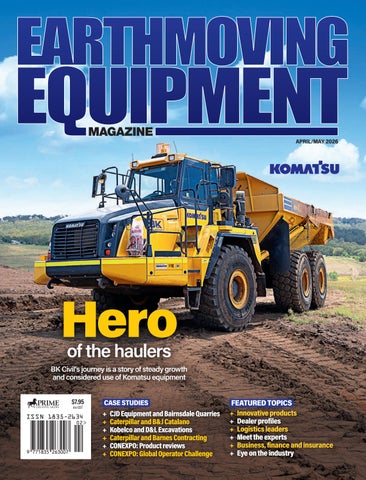
Create a flipbook